window.__IS_SSR__=true
window.__INITIAL_STATE__={
"attachmentsReducer": {
"audio_0": {
"type": "attachments",
"id": "audio_0",
"imgSizes": {
"kqedFullSize": {
"file": "https://ww2.kqed.org/news/wp-content/themes/KQED-unified/img/audio_bgs/background0.jpg"
}
}
},
"audio_1": {
"type": "attachments",
"id": "audio_1",
"imgSizes": {
"kqedFullSize": {
"file": "https://ww2.kqed.org/news/wp-content/themes/KQED-unified/img/audio_bgs/background1.jpg"
}
}
},
"audio_2": {
"type": "attachments",
"id": "audio_2",
"imgSizes": {
"kqedFullSize": {
"file": "https://ww2.kqed.org/news/wp-content/themes/KQED-unified/img/audio_bgs/background2.jpg"
}
}
},
"audio_3": {
"type": "attachments",
"id": "audio_3",
"imgSizes": {
"kqedFullSize": {
"file": "https://ww2.kqed.org/news/wp-content/themes/KQED-unified/img/audio_bgs/background3.jpg"
}
}
},
"audio_4": {
"type": "attachments",
"id": "audio_4",
"imgSizes": {
"kqedFullSize": {
"file": "https://ww2.kqed.org/news/wp-content/themes/KQED-unified/img/audio_bgs/background4.jpg"
}
}
},
"placeholder": {
"type": "attachments",
"id": "placeholder",
"imgSizes": {
"thumbnail": {
"file": "https://cdn.kqed.org/wp-content/uploads/2024/12/KQED-Default-Image-816638274-2000x1333-1-160x107.jpg",
"width": 160,
"height": 107,
"mimeType": "image/jpeg"
},
"medium": {
"file": "https://cdn.kqed.org/wp-content/uploads/2024/12/KQED-Default-Image-816638274-2000x1333-1-800x533.jpg",
"width": 800,
"height": 533,
"mimeType": "image/jpeg"
},
"medium_large": {
"file": "https://cdn.kqed.org/wp-content/uploads/2024/12/KQED-Default-Image-816638274-2000x1333-1-768x512.jpg",
"width": 768,
"height": 512,
"mimeType": "image/jpeg"
},
"large": {
"file": "https://cdn.kqed.org/wp-content/uploads/2024/12/KQED-Default-Image-816638274-2000x1333-1-1020x680.jpg",
"width": 1020,
"height": 680,
"mimeType": "image/jpeg"
},
"1536x1536": {
"file": "https://cdn.kqed.org/wp-content/uploads/2024/12/KQED-Default-Image-816638274-2000x1333-1-1536x1024.jpg",
"width": 1536,
"height": 1024,
"mimeType": "image/jpeg"
},
"fd-lrg": {
"file": "https://cdn.kqed.org/wp-content/uploads/2024/12/KQED-Default-Image-816638274-2000x1333-1-1536x1024.jpg",
"width": 1536,
"height": 1024,
"mimeType": "image/jpeg"
},
"fd-med": {
"file": "https://cdn.kqed.org/wp-content/uploads/2024/12/KQED-Default-Image-816638274-2000x1333-1-1020x680.jpg",
"width": 1020,
"height": 680,
"mimeType": "image/jpeg"
},
"fd-sm": {
"file": "https://cdn.kqed.org/wp-content/uploads/2024/12/KQED-Default-Image-816638274-2000x1333-1-800x533.jpg",
"width": 800,
"height": 533,
"mimeType": "image/jpeg"
},
"post-thumbnail": {
"file": "https://cdn.kqed.org/wp-content/uploads/2024/12/KQED-Default-Image-816638274-2000x1333-1-672x372.jpg",
"width": 672,
"height": 372,
"mimeType": "image/jpeg"
},
"twentyfourteen-full-width": {
"file": "https://cdn.kqed.org/wp-content/uploads/2024/12/KQED-Default-Image-816638274-2000x1333-1-1038x576.jpg",
"width": 1038,
"height": 576,
"mimeType": "image/jpeg"
},
"xxsmall": {
"file": "https://cdn.kqed.org/wp-content/uploads/2024/12/KQED-Default-Image-816638274-2000x1333-1-160x107.jpg",
"width": 160,
"height": 107,
"mimeType": "image/jpeg"
},
"xsmall": {
"file": "https://cdn.kqed.org/wp-content/uploads/2024/12/KQED-Default-Image-816638274-2000x1333-1-672x372.jpg",
"width": 672,
"height": 372,
"mimeType": "image/jpeg"
},
"small": {
"file": "https://cdn.kqed.org/wp-content/uploads/2024/12/KQED-Default-Image-816638274-2000x1333-1-672x372.jpg",
"width": 672,
"height": 372,
"mimeType": "image/jpeg"
},
"xlarge": {
"file": "https://cdn.kqed.org/wp-content/uploads/2024/12/KQED-Default-Image-816638274-2000x1333-1-1020x680.jpg",
"width": 1020,
"height": 680,
"mimeType": "image/jpeg"
},
"full-width": {
"file": "https://cdn.kqed.org/wp-content/uploads/2024/12/KQED-Default-Image-816638274-2000x1333-1-1920x1280.jpg",
"width": 1920,
"height": 1280,
"mimeType": "image/jpeg"
},
"guest-author-32": {
"file": "https://cdn.kqed.org/wp-content/uploads/2025/01/KQED-Default-Image-816638274-1333x1333-1-160x160.jpg",
"width": 32,
"height": 32,
"mimeType": "image/jpeg"
},
"guest-author-50": {
"file": "https://cdn.kqed.org/wp-content/uploads/2025/01/KQED-Default-Image-816638274-1333x1333-1-160x160.jpg",
"width": 50,
"height": 50,
"mimeType": "image/jpeg"
},
"guest-author-64": {
"file": "https://cdn.kqed.org/wp-content/uploads/2025/01/KQED-Default-Image-816638274-1333x1333-1-160x160.jpg",
"width": 64,
"height": 64,
"mimeType": "image/jpeg"
},
"guest-author-96": {
"file": "https://cdn.kqed.org/wp-content/uploads/2025/01/KQED-Default-Image-816638274-1333x1333-1-160x160.jpg",
"width": 96,
"height": 96,
"mimeType": "image/jpeg"
},
"guest-author-128": {
"file": "https://cdn.kqed.org/wp-content/uploads/2025/01/KQED-Default-Image-816638274-1333x1333-1-160x160.jpg",
"width": 128,
"height": 128,
"mimeType": "image/jpeg"
},
"detail": {
"file": "https://cdn.kqed.org/wp-content/uploads/2025/01/KQED-Default-Image-816638274-1333x1333-1-160x160.jpg",
"width": 160,
"height": 160,
"mimeType": "image/jpeg"
},
"kqedFullSize": {
"file": "https://cdn.kqed.org/wp-content/uploads/2024/12/KQED-Default-Image-816638274-2000x1333-1.jpg",
"width": 2000,
"height": 1333
}
}
},
"news_11907264": {
"type": "attachments",
"id": "news_11907264",
"meta": {
"index": "attachments_1716263798",
"site": "news",
"id": "11907264",
"found": true
},
"parent": 11907263,
"imgSizes": {
"twentyfourteen-full-width": {
"file": "https://ww2.kqed.org/app/uploads/sites/10/2022/03/020322-UC-Berkeley-TJ-CM-58-1038x576.jpeg",
"width": 1038,
"mimeType": "image/jpeg",
"height": 576
},
"thumbnail": {
"file": "https://ww2.kqed.org/app/uploads/sites/10/2022/03/020322-UC-Berkeley-TJ-CM-58-160x107.jpeg",
"width": 160,
"mimeType": "image/jpeg",
"height": 107
},
"post-thumbnail": {
"file": "https://ww2.kqed.org/app/uploads/sites/10/2022/03/020322-UC-Berkeley-TJ-CM-58-672x372.jpeg",
"width": 672,
"mimeType": "image/jpeg",
"height": 372
},
"kqedFullSize": {
"file": "https://ww2.kqed.org/app/uploads/sites/10/2022/03/020322-UC-Berkeley-TJ-CM-58-e1646437034828.jpeg",
"width": 1920,
"height": 1280
},
"large": {
"file": "https://ww2.kqed.org/app/uploads/sites/10/2022/03/020322-UC-Berkeley-TJ-CM-58-1020x680.jpeg",
"width": 1020,
"mimeType": "image/jpeg",
"height": 680
},
"1536x1536": {
"file": "https://ww2.kqed.org/app/uploads/sites/10/2022/03/020322-UC-Berkeley-TJ-CM-58-1536x1024.jpeg",
"width": 1536,
"mimeType": "image/jpeg",
"height": 1024
},
"full-width": {
"file": "https://ww2.kqed.org/app/uploads/sites/10/2022/03/020322-UC-Berkeley-TJ-CM-58-1920x1280.jpeg",
"width": 1920,
"mimeType": "image/jpeg",
"height": 1280
},
"medium": {
"file": "https://ww2.kqed.org/app/uploads/sites/10/2022/03/020322-UC-Berkeley-TJ-CM-58-800x533.jpeg",
"width": 800,
"mimeType": "image/jpeg",
"height": 533
}
},
"publishDate": 1646437018,
"modified": 1657927991,
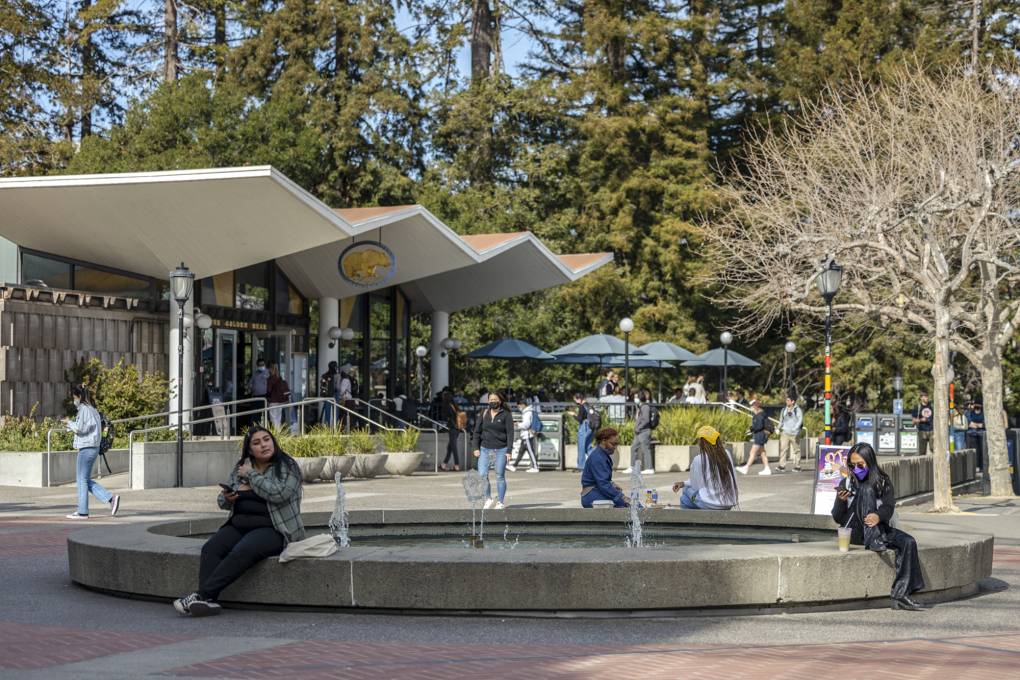
"caption": "Ludwig's Fountain and the Golden Bear Cafe at the University of California, Berkeley, campus on Feb. 3, 2022.",
"description": null,
"title": "020322-UC-Berkeley-TJ-CM-58",
"credit": "Thalia Juarez/CalMatters",
"status": "inherit",
"altTag": "Students seated at Ludwig's Fountain at UC Berkeley",
"isLoading": false,
"fetchFailed": false
},
"news_11898722": {
"type": "attachments",
"id": "news_11898722",
"meta": {
"index": "attachments_1716263798",
"site": "news",
"id": "11898722",
"found": true
},
"parent": 11898058,
"imgSizes": {
"twentyfourteen-full-width": {
"file": "https://ww2.kqed.org/app/uploads/sites/10/2021/12/ksuzuki-harassment-8-1038x576.jpg",
"width": 1038,
"mimeType": "image/jpeg",
"height": 576
},
"thumbnail": {
"file": "https://ww2.kqed.org/app/uploads/sites/10/2021/12/ksuzuki-harassment-8-160x107.jpg",
"width": 160,
"mimeType": "image/jpeg",
"height": 107
},
"post-thumbnail": {
"file": "https://ww2.kqed.org/app/uploads/sites/10/2021/12/ksuzuki-harassment-8-672x372.jpg",
"width": 672,
"mimeType": "image/jpeg",
"height": 372
},
"kqedFullSize": {
"file": "https://ww2.kqed.org/app/uploads/sites/10/2021/12/ksuzuki-harassment-8-scaled.jpg",
"width": 2560,
"height": 1707
},
"2048x2048": {
"file": "https://ww2.kqed.org/app/uploads/sites/10/2021/12/ksuzuki-harassment-8-2048x1365.jpg",
"width": 2048,
"mimeType": "image/jpeg",
"height": 1365
},
"large": {
"file": "https://ww2.kqed.org/app/uploads/sites/10/2021/12/ksuzuki-harassment-8-1020x680.jpg",
"width": 1020,
"mimeType": "image/jpeg",
"height": 680
},
"1536x1536": {
"file": "https://ww2.kqed.org/app/uploads/sites/10/2021/12/ksuzuki-harassment-8-1536x1024.jpg",
"width": 1536,
"mimeType": "image/jpeg",
"height": 1024
},
"full-width": {
"file": "https://ww2.kqed.org/app/uploads/sites/10/2021/12/ksuzuki-harassment-8-1920x1280.jpg",
"width": 1920,
"mimeType": "image/jpeg",
"height": 1280
},
"medium": {
"file": "https://ww2.kqed.org/app/uploads/sites/10/2021/12/ksuzuki-harassment-8-800x533.jpg",
"width": 800,
"mimeType": "image/jpeg",
"height": 533
}
},
"publishDate": 1639164034,
"modified": 1639176202,
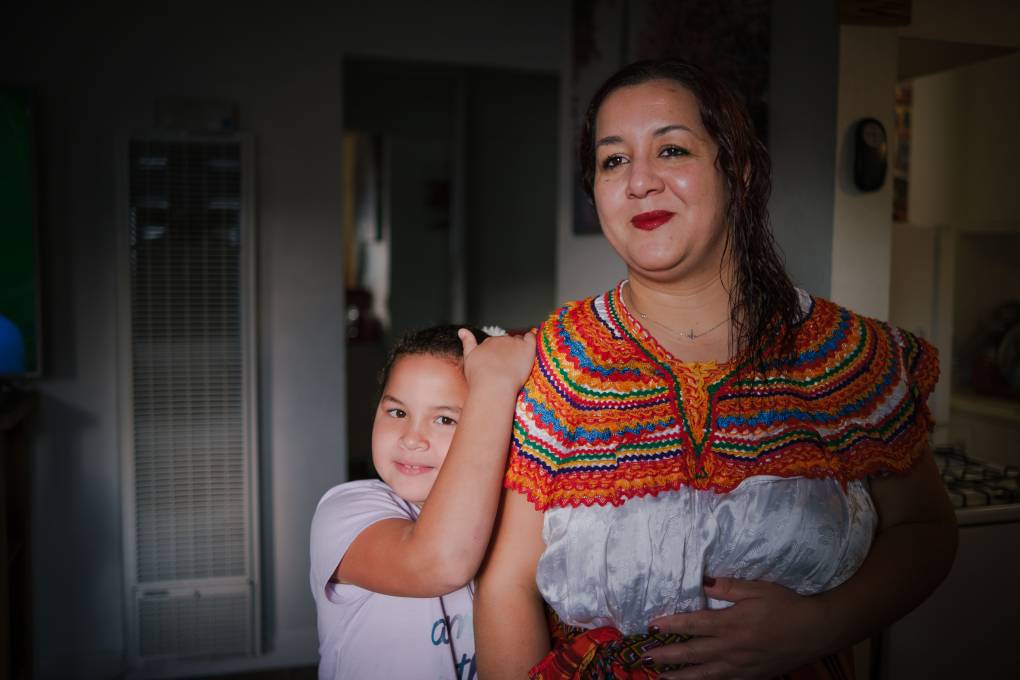
"caption": "Dahbia Benakli with her 7-year-old daughter, Leah, in her Walnut Creek apartment on Nov. 6, 2021.",
"description": null,
"title": "ksuzuki-harassment-8",
"credit": "Kori Suzuki/KQED",
"status": "inherit",
"altTag": "A woman and her young child in a darkened room.",
"isLoading": false,
"fetchFailed": false
},
"news_11897962": {
"type": "attachments",
"id": "news_11897962",
"meta": {
"index": "attachments_1716263798",
"site": "news",
"id": "11897962",
"found": true
},
"parent": 11897959,
"imgSizes": {
"twentyfourteen-full-width": {
"file": "https://ww2.kqed.org/app/uploads/sites/10/2021/12/Matthew-Cadiagn-Hearn-1038x576.png",
"width": 1038,
"mimeType": "image/png",
"height": 576
},
"thumbnail": {
"file": "https://ww2.kqed.org/app/uploads/sites/10/2021/12/Matthew-Cadiagn-Hearn-160x128.png",
"width": 160,
"mimeType": "image/png",
"height": 128
},
"post-thumbnail": {
"file": "https://ww2.kqed.org/app/uploads/sites/10/2021/12/Matthew-Cadiagn-Hearn-672x372.png",
"width": 672,
"mimeType": "image/png",
"height": 372
},
"kqedFullSize": {
"file": "https://ww2.kqed.org/app/uploads/sites/10/2021/12/Matthew-Cadiagn-Hearn.png",
"width": 1872,
"height": 1494
},
"large": {
"file": "https://ww2.kqed.org/app/uploads/sites/10/2021/12/Matthew-Cadiagn-Hearn-1020x814.png",
"width": 1020,
"mimeType": "image/png",
"height": 814
},
"1536x1536": {
"file": "https://ww2.kqed.org/app/uploads/sites/10/2021/12/Matthew-Cadiagn-Hearn-1536x1226.png",
"width": 1536,
"mimeType": "image/png",
"height": 1226
},
"medium": {
"file": "https://ww2.kqed.org/app/uploads/sites/10/2021/12/Matthew-Cadiagn-Hearn-800x638.png",
"width": 800,
"mimeType": "image/png",
"height": 638
}
},
"publishDate": 1638495380,
"modified": 1638901995,
"caption": "Matthew Cadigan Hearn at Big Wave Farm, an intentional community designed to provide adults with intellectual and developmental disabilities the opportunity to live a fulfilling, independent life among their peers.",
"description": "Matthew Cadigan Hearn at Big Wave Farm, an intentional community designed to provide adults with intellectual and developmental disabilities the opportunity to live a fulfilling, independent life among their peers.",
"title": "Matthew Cadigan Hearn at Big Wave Farm.",
"credit": "KQED/Polly Stryker",
"status": "inherit",
"altTag": "A man with curly, blond hair stands in the center frame of a photo wearing glasses and a COVID mask.",
"isLoading": false,
"fetchFailed": false
},
"news_11897580": {
"type": "attachments",
"id": "news_11897580",
"meta": {
"index": "attachments_1716263798",
"site": "news",
"id": "11897580",
"found": true
},
"parent": 11897550,
"imgSizes": {
"twentyfourteen-full-width": {
"file": "https://ww2.kqed.org/app/uploads/sites/10/2021/11/GettyImages-1234628222-1024x576.jpg",
"width": 1024,
"mimeType": "image/jpeg",
"height": 576
},
"thumbnail": {
"file": "https://ww2.kqed.org/app/uploads/sites/10/2021/11/GettyImages-1234628222-160x107.jpg",
"width": 160,
"mimeType": "image/jpeg",
"height": 107
},
"post-thumbnail": {
"file": "https://ww2.kqed.org/app/uploads/sites/10/2021/11/GettyImages-1234628222-672x372.jpg",
"width": 672,
"mimeType": "image/jpeg",
"height": 372
},
"kqedFullSize": {
"file": "https://ww2.kqed.org/app/uploads/sites/10/2021/11/GettyImages-1234628222.jpg",
"width": 1024,
"height": 683
},
"large": {
"file": "https://ww2.kqed.org/app/uploads/sites/10/2021/11/GettyImages-1234628222-1020x680.jpg",
"width": 1020,
"mimeType": "image/jpeg",
"height": 680
},
"medium": {
"file": "https://ww2.kqed.org/app/uploads/sites/10/2021/11/GettyImages-1234628222-800x534.jpg",
"width": 800,
"mimeType": "image/jpeg",
"height": 534
}
},
"publishDate": 1638217244,
"modified": 1638230688,
"caption": "People walk on the California State University Long Beach campus before the return of students for fall classes on Aug. 11, 2021, in Long Beach.",
"description": null,
"title": "US-HEALTH-VIRUS-EDUCATION-CALIFORNIA",
"credit": "Patrick T. Fallon/AFP via Getty Images",
"status": "inherit",
"altTag": "A young man is walking across a campus with a blue pyramid building, fountain and trees in the background.",
"isLoading": false,
"fetchFailed": false
},
"news_11897360": {
"type": "attachments",
"id": "news_11897360",
"meta": {
"index": "attachments_1716263798",
"site": "news",
"id": "11897360",
"found": true
},
"parent": 11897353,
"imgSizes": {
"twentyfourteen-full-width": {
"file": "https://ww2.kqed.org/app/uploads/sites/10/2021/11/KQEDLIVE21SoldOut-258-1038x576.jpg",
"width": 1038,
"mimeType": "image/jpeg",
"height": 576
},
"thumbnail": {
"file": "https://ww2.kqed.org/app/uploads/sites/10/2021/11/KQEDLIVE21SoldOut-258-160x106.jpg",
"width": 160,
"mimeType": "image/jpeg",
"height": 106
},
"post-thumbnail": {
"file": "https://ww2.kqed.org/app/uploads/sites/10/2021/11/KQEDLIVE21SoldOut-258-672x372.jpg",
"width": 672,
"mimeType": "image/jpeg",
"height": 372
},
"kqedFullSize": {
"file": "https://ww2.kqed.org/app/uploads/sites/10/2021/11/KQEDLIVE21SoldOut-258-scaled.jpg",
"width": 2560,
"height": 1703
},
"2048x2048": {
"file": "https://ww2.kqed.org/app/uploads/sites/10/2021/11/KQEDLIVE21SoldOut-258-2048x1363.jpg",
"width": 2048,
"mimeType": "image/jpeg",
"height": 1363
},
"large": {
"file": "https://ww2.kqed.org/app/uploads/sites/10/2021/11/KQEDLIVE21SoldOut-258-1020x679.jpg",
"width": 1020,
"mimeType": "image/jpeg",
"height": 679
},
"1536x1536": {
"file": "https://ww2.kqed.org/app/uploads/sites/10/2021/11/KQEDLIVE21SoldOut-258-1536x1022.jpg",
"width": 1536,
"mimeType": "image/jpeg",
"height": 1022
},
"full-width": {
"file": "https://ww2.kqed.org/app/uploads/sites/10/2021/11/KQEDLIVE21SoldOut-258-1920x1277.jpg",
"width": 1920,
"mimeType": "image/jpeg",
"height": 1277
},
"medium": {
"file": "https://ww2.kqed.org/app/uploads/sites/10/2021/11/KQEDLIVE21SoldOut-258-800x532.jpg",
"width": 800,
"mimeType": "image/jpeg",
"height": 532
}
},
"publishDate": 1637795674,
"modified": 1637796337,
"caption": "KQED's Molly Solomon and Erin Baldassari, hosts of SOLD OUT:Rethinking Housing in America podcast, sit with Anne Tamiko Omura, Executive Director of the Eviction Defense Center, Krista Gulbransen, Executive Director of Berkeley Rental Housing Coalition, and Tim Thomas, Research Director of the Urban Displacement Project at UC Berkeley (left to right), for the podcast's Nov. 13, 2021 conversation about evictions in San Francisco, CA.",
"description": "KQED's Molly Solomon and Erin Baldassari, hosts of SOLD OUT:Rethinking Housing in America podcast, sit with Anne Tamiko Omura, Executive Director of the Eviction Defense Center, Krista Gulbransen, Executive Director of Berkeley Rental Housing Coalition, and Tim Thomas, Research Director of the Urban Displacement Project at UC Berkeley (left to right), for the podcast's Nov. 13, 2021 conversation about evictions in San Francisco, CA.",
"title": "KQEDLIVE21SoldOut-258",
"credit": "Alain McLaughlin/KQED",
"status": "inherit",
"altTag": null,
"isLoading": false,
"fetchFailed": false
},
"news_11890153": {
"type": "attachments",
"id": "news_11890153",
"meta": {
"index": "attachments_1716263798",
"site": "news",
"id": "11890153",
"found": true
},
"parent": 11890071,
"imgSizes": {
"twentyfourteen-full-width": {
"file": "https://ww2.kqed.org/app/uploads/sites/10/2021/09/GettyImages-1232853188-1038x576.jpg",
"width": 1038,
"mimeType": "image/jpeg",
"height": 576
},
"thumbnail": {
"file": "https://ww2.kqed.org/app/uploads/sites/10/2021/09/GettyImages-1232853188-160x107.jpg",
"width": 160,
"mimeType": "image/jpeg",
"height": 107
},
"post-thumbnail": {
"file": "https://ww2.kqed.org/app/uploads/sites/10/2021/09/GettyImages-1232853188-672x372.jpg",
"width": 672,
"mimeType": "image/jpeg",
"height": 372
},
"kqedFullSize": {
"file": "https://ww2.kqed.org/app/uploads/sites/10/2021/09/GettyImages-1232853188-scaled.jpg",
"width": 2560,
"height": 1707
},
"2048x2048": {
"file": "https://ww2.kqed.org/app/uploads/sites/10/2021/09/GettyImages-1232853188-2048x1365.jpg",
"width": 2048,
"mimeType": "image/jpeg",
"height": 1365
},
"large": {
"file": "https://ww2.kqed.org/app/uploads/sites/10/2021/09/GettyImages-1232853188-1020x680.jpg",
"width": 1020,
"mimeType": "image/jpeg",
"height": 680
},
"1536x1536": {
"file": "https://ww2.kqed.org/app/uploads/sites/10/2021/09/GettyImages-1232853188-1536x1024.jpg",
"width": 1536,
"mimeType": "image/jpeg",
"height": 1024
},
"full-width": {
"file": "https://ww2.kqed.org/app/uploads/sites/10/2021/09/GettyImages-1232853188-1920x1280.jpg",
"width": 1920,
"mimeType": "image/jpeg",
"height": 1280
},
"medium": {
"file": "https://ww2.kqed.org/app/uploads/sites/10/2021/09/GettyImages-1232853188-800x533.jpg",
"width": 800,
"mimeType": "image/jpeg",
"height": 533
}
},
"publishDate": 1632786586,
"modified": 1632792313,
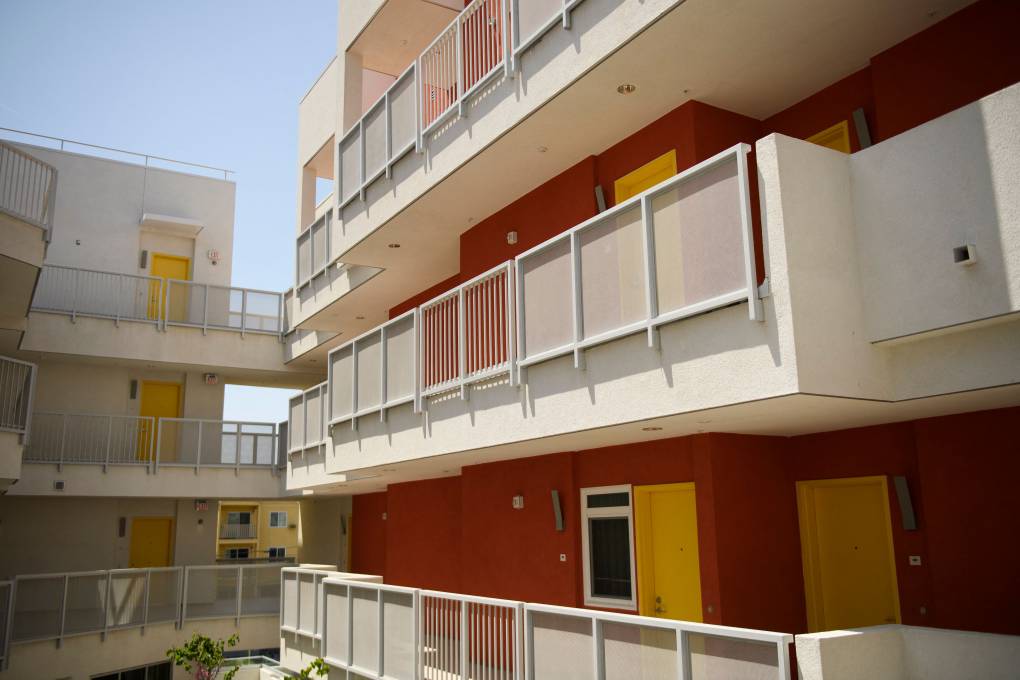
"caption": "View of the apartment units at the RiSE Apartments, an affordable apartment community for people experiencing homelessness on May 12, 2021, in Los Angeles. The statewide eviction moratorium ends this Thursday, and officials are urging tenants who haven't done so to apply for rent aid through Housing Is Key.",
"description": "View of the apartment units at the RISE Apartments, an affordable apartment community for people experiencing homelessness on May 12, 2021 in Los Angeles.",
"title": "US-SOCIAL-HOMELESSNESS",
"credit": "Patrick T. Fallon/AFP via Getty Images",
"status": "inherit",
"altTag": "An exterior view of bright, modern-looking balconies on a high rise apartment building.",
"isLoading": false,
"fetchFailed": false
},
"news_11889740": {
"type": "attachments",
"id": "news_11889740",
"meta": {
"index": "attachments_1716263798",
"site": "news",
"id": "11889740",
"found": true
},
"parent": 11889739,
"imgSizes": {
"twentyfourteen-full-width": {
"file": "https://ww2.kqed.org/app/uploads/sites/10/2021/09/RS41301_IMG_6684IG-qut-1038x576.jpg",
"width": 1038,
"mimeType": "image/jpeg",
"height": 576
},
"thumbnail": {
"file": "https://ww2.kqed.org/app/uploads/sites/10/2021/09/RS41301_IMG_6684IG-qut-160x107.jpg",
"width": 160,
"mimeType": "image/jpeg",
"height": 107
},
"post-thumbnail": {
"file": "https://ww2.kqed.org/app/uploads/sites/10/2021/09/RS41301_IMG_6684IG-qut-672x372.jpg",
"width": 672,
"mimeType": "image/jpeg",
"height": 372
},
"kqedFullSize": {
"file": "https://ww2.kqed.org/app/uploads/sites/10/2021/09/RS41301_IMG_6684IG-qut.jpg",
"width": 1600,
"height": 1067
},
"large": {
"file": "https://ww2.kqed.org/app/uploads/sites/10/2021/09/RS41301_IMG_6684IG-qut-1020x680.jpg",
"width": 1020,
"mimeType": "image/jpeg",
"height": 680
},
"1536x1536": {
"file": "https://ww2.kqed.org/app/uploads/sites/10/2021/09/RS41301_IMG_6684IG-qut-1536x1024.jpg",
"width": 1536,
"mimeType": "image/jpeg",
"height": 1024
},
"medium": {
"file": "https://ww2.kqed.org/app/uploads/sites/10/2021/09/RS41301_IMG_6684IG-qut-800x534.jpg",
"width": 800,
"mimeType": "image/jpeg",
"height": 534
}
},
"publishDate": 1632430872,
"modified": 1632430905,
"caption": "An apartment building next to a single family home in Oakland.",
"description": null,
"title": "RS41301_IMG_6684IG-qut",
"credit": "A.J. Ruiz/KQED",
"status": "inherit",
"altTag": null,
"isLoading": false,
"fetchFailed": false
},
"news_11889138": {
"type": "attachments",
"id": "news_11889138",
"meta": {
"index": "attachments_1716263798",
"site": "news",
"id": "11889138",
"found": true
},
"parent": 11889113,
"imgSizes": {
"twentyfourteen-full-width": {
"file": "https://ww2.kqed.org/app/uploads/sites/10/2021/09/GettyImages-1321379102-1038x576.jpg",
"width": 1038,
"mimeType": "image/jpeg",
"height": 576
},
"thumbnail": {
"file": "https://ww2.kqed.org/app/uploads/sites/10/2021/09/GettyImages-1321379102-160x109.jpg",
"width": 160,
"mimeType": "image/jpeg",
"height": 109
},
"post-thumbnail": {
"file": "https://ww2.kqed.org/app/uploads/sites/10/2021/09/GettyImages-1321379102-672x372.jpg",
"width": 672,
"mimeType": "image/jpeg",
"height": 372
},
"kqedFullSize": {
"file": "https://ww2.kqed.org/app/uploads/sites/10/2021/09/GettyImages-1321379102-scaled.jpg",
"width": 2560,
"height": 1739
},
"2048x2048": {
"file": "https://ww2.kqed.org/app/uploads/sites/10/2021/09/GettyImages-1321379102-2048x1392.jpg",
"width": 2048,
"mimeType": "image/jpeg",
"height": 1392
},
"large": {
"file": "https://ww2.kqed.org/app/uploads/sites/10/2021/09/GettyImages-1321379102-1020x693.jpg",
"width": 1020,
"mimeType": "image/jpeg",
"height": 693
},
"1536x1536": {
"file": "https://ww2.kqed.org/app/uploads/sites/10/2021/09/GettyImages-1321379102-1536x1044.jpg",
"width": 1536,
"mimeType": "image/jpeg",
"height": 1044
},
"full-width": {
"file": "https://ww2.kqed.org/app/uploads/sites/10/2021/09/GettyImages-1321379102-1920x1305.jpg",
"width": 1920,
"mimeType": "image/jpeg",
"height": 1305
},
"medium": {
"file": "https://ww2.kqed.org/app/uploads/sites/10/2021/09/GettyImages-1321379102-800x544.jpg",
"width": 800,
"mimeType": "image/jpeg",
"height": 544
}
},
"publishDate": 1632165955,
"modified": 1644435895,
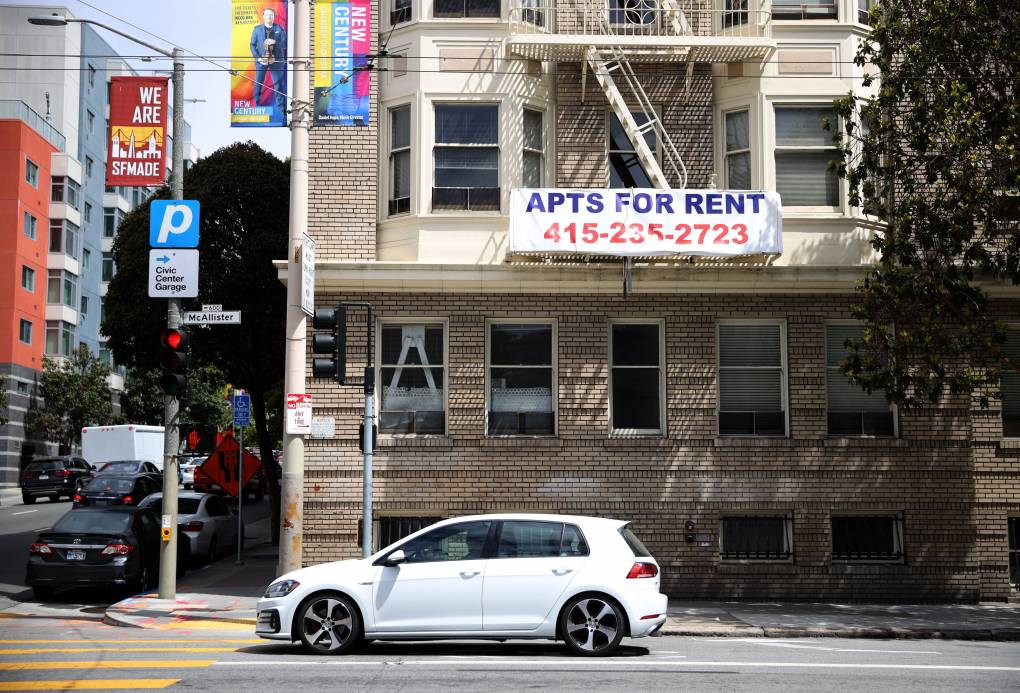
"caption": "A \"For Rent\" sign posted on the exterior of an apartment building on June 2, 2021, in San Francisco.",
"description": "A \"For Rent\" sign posted on the exterior of an apartment building on June 2, 2021, in San Francisco.",
"title": "Rents Rebound In San Francisco After Pandemic-Related Decline",
"credit": "Justin Sullivan/Getty Images",
"status": "inherit",
"altTag": "A \"For Rent\" sign posted on the exterior of an apartment building. A white car is parked in front of the building.",
"isLoading": false,
"fetchFailed": false
},
"news_11887893": {
"type": "attachments",
"id": "news_11887893",
"meta": {
"index": "attachments_1716263798",
"site": "news",
"id": "11887893",
"found": true
},
"parent": 11887815,
"imgSizes": {
"twentyfourteen-full-width": {
"file": "https://ww2.kqed.org/app/uploads/sites/10/2021/09/GettyImages-1233456190-1038x576.jpg",
"width": 1038,
"mimeType": "image/jpeg",
"height": 576
},
"thumbnail": {
"file": "https://ww2.kqed.org/app/uploads/sites/10/2021/09/GettyImages-1233456190-160x107.jpg",
"width": 160,
"mimeType": "image/jpeg",
"height": 107
},
"post-thumbnail": {
"file": "https://ww2.kqed.org/app/uploads/sites/10/2021/09/GettyImages-1233456190-672x372.jpg",
"width": 672,
"mimeType": "image/jpeg",
"height": 372
},
"kqedFullSize": {
"file": "https://ww2.kqed.org/app/uploads/sites/10/2021/09/GettyImages-1233456190-scaled.jpg",
"width": 2560,
"height": 1707
},
"2048x2048": {
"file": "https://ww2.kqed.org/app/uploads/sites/10/2021/09/GettyImages-1233456190-2048x1366.jpg",
"width": 2048,
"mimeType": "image/jpeg",
"height": 1366
},
"large": {
"file": "https://ww2.kqed.org/app/uploads/sites/10/2021/09/GettyImages-1233456190-1020x680.jpg",
"width": 1020,
"mimeType": "image/jpeg",
"height": 680
},
"1536x1536": {
"file": "https://ww2.kqed.org/app/uploads/sites/10/2021/09/GettyImages-1233456190-1536x1024.jpg",
"width": 1536,
"mimeType": "image/jpeg",
"height": 1024
},
"full-width": {
"file": "https://ww2.kqed.org/app/uploads/sites/10/2021/09/GettyImages-1233456190-1920x1280.jpg",
"width": 1920,
"mimeType": "image/jpeg",
"height": 1280
},
"medium": {
"file": "https://ww2.kqed.org/app/uploads/sites/10/2021/09/GettyImages-1233456190-800x533.jpg",
"width": 800,
"mimeType": "image/jpeg",
"height": 533
}
},
"publishDate": 1631164204,
"modified": 1631236098,
"caption": "Mishel Herrera from CORE (Community Organized Relief Effort) speaks with an unhoused resident of Los Angeles before he receives his one-shot Johnson & Johnson COVID-19 vaccine administered by members of the Los Angeles Fire Department's Outreach unit on June 14, 2021. Over the next five years, California is plowing nearly $6 billion into expanding Medi-Cal services for the most high-needs patients, including unhoused Californians, heavy users of hospital emergency rooms, children and seniors with complicated physical and mental health conditions and others.",
"description": "Mishel Herrera from CORE (Community Organized Relief Effort) speaks with Eduardo Vasquez, homeless on the streets of Los Angeles since 1992, before he receives his one-shot Johnson and Johnson's Janssen Covid-19 vaccine administered by members of the Los Angeles Fire Department's Covid Outreach unit on June 14, 2021 in Los Angeles. - With more than 40 million vaccine doses administered, California is one of the last state's to fully reopen its economy, though businesses have been open at reduced capacity for months.",
"title": "US-HEALTH-VIRUS-PANDEMIC",
"credit": "Frederic J. Brown/AFP via Getty Images",
"status": "inherit",
"altTag": "Woman in baseball cap and mask, holding clipboard, leans over to talk to man in baseball cap near two ambulances parked on a street.",
"isLoading": false,
"fetchFailed": false
},
"news_11887329": {
"type": "attachments",
"id": "news_11887329",
"meta": {
"index": "attachments_1716263798",
"site": "news",
"id": "11887329",
"found": true
},
"parent": 11887328,
"imgSizes": {
"twentyfourteen-full-width": {
"file": "https://ww2.kqed.org/app/uploads/sites/10/2021/09/Image-from-iOS-4-1038x576.jpg",
"width": 1038,
"mimeType": "image/jpeg",
"height": 576
},
"thumbnail": {
"file": "https://ww2.kqed.org/app/uploads/sites/10/2021/09/Image-from-iOS-4-160x120.jpg",
"width": 160,
"mimeType": "image/jpeg",
"height": 120
},
"post-thumbnail": {
"file": "https://ww2.kqed.org/app/uploads/sites/10/2021/09/Image-from-iOS-4-672x372.jpg",
"width": 672,
"mimeType": "image/jpeg",
"height": 372
},
"kqedFullSize": {
"file": "https://ww2.kqed.org/app/uploads/sites/10/2021/09/Image-from-iOS-4-scaled-e1630697795815.jpg",
"width": 1920,
"height": 1440
},
"2048x2048": {
"file": "https://ww2.kqed.org/app/uploads/sites/10/2021/09/Image-from-iOS-4-2048x1536.jpg",
"width": 2048,
"mimeType": "image/jpeg",
"height": 1536
},
"large": {
"file": "https://ww2.kqed.org/app/uploads/sites/10/2021/09/Image-from-iOS-4-1020x765.jpg",
"width": 1020,
"mimeType": "image/jpeg",
"height": 765
},
"1536x1536": {
"file": "https://ww2.kqed.org/app/uploads/sites/10/2021/09/Image-from-iOS-4-1536x1152.jpg",
"width": 1536,
"mimeType": "image/jpeg",
"height": 1152
},
"full-width": {
"file": "https://ww2.kqed.org/app/uploads/sites/10/2021/09/Image-from-iOS-4-1920x1440.jpg",
"width": 1920,
"mimeType": "image/jpeg",
"height": 1440
},
"medium": {
"file": "https://ww2.kqed.org/app/uploads/sites/10/2021/09/Image-from-iOS-4-800x600.jpg",
"width": 800,
"mimeType": "image/jpeg",
"height": 600
}
},
"publishDate": 1630539350,
"modified": 1630708724,
"caption": "Jose Mora (right) and Henry Jose Mendoza, both construction workers, fled South Lake Tahoe on Monday, taking shelter at an evacuation center in Carson City, Nevada.",
"description": null,
"title": "Image from iOS (4)",
"credit": "Ezra David Romero/KQED",
"status": "inherit",
"altTag": "Two men wearing masks and sweatshirts pose between two parked vehicles.",
"isLoading": false,
"fetchFailed": false
},
"news_11873406": {
"type": "attachments",
"id": "news_11873406",
"meta": {
"index": "attachments_1716263798",
"site": "news",
"id": "11873406",
"found": true
},
"parent": 11873396,
"imgSizes": {
"twentyfourteen-full-width": {
"file": "https://ww2.kqed.org/app/uploads/sites/10/2021/05/RS48514_023_BoulderCreek_FireVictims_04092021-qut-1038x576.jpeg",
"width": 1038,
"mimeType": "image/jpeg",
"height": 576
},
"thumbnail": {
"file": "https://ww2.kqed.org/app/uploads/sites/10/2021/05/RS48514_023_BoulderCreek_FireVictims_04092021-qut-160x107.jpeg",
"width": 160,
"mimeType": "image/jpeg",
"height": 107
},
"post-thumbnail": {
"file": "https://ww2.kqed.org/app/uploads/sites/10/2021/05/RS48514_023_BoulderCreek_FireVictims_04092021-qut-672x372.jpeg",
"width": 672,
"mimeType": "image/jpeg",
"height": 372
},
"kqedFullSize": {
"file": "https://ww2.kqed.org/app/uploads/sites/10/2021/05/RS48514_023_BoulderCreek_FireVictims_04092021-qut.jpeg",
"width": 1920,
"height": 1280
},
"large": {
"file": "https://ww2.kqed.org/app/uploads/sites/10/2021/05/RS48514_023_BoulderCreek_FireVictims_04092021-qut-1020x680.jpeg",
"width": 1020,
"mimeType": "image/jpeg",
"height": 680
},
"1536x1536": {
"file": "https://ww2.kqed.org/app/uploads/sites/10/2021/05/RS48514_023_BoulderCreek_FireVictims_04092021-qut-1536x1024.jpeg",
"width": 1536,
"mimeType": "image/jpeg",
"height": 1024
},
"medium": {
"file": "https://ww2.kqed.org/app/uploads/sites/10/2021/05/RS48514_023_BoulderCreek_FireVictims_04092021-qut-800x533.jpeg",
"width": 800,
"mimeType": "image/jpeg",
"height": 533
}
},
"publishDate": 1620853983,
"modified": 1625099664,
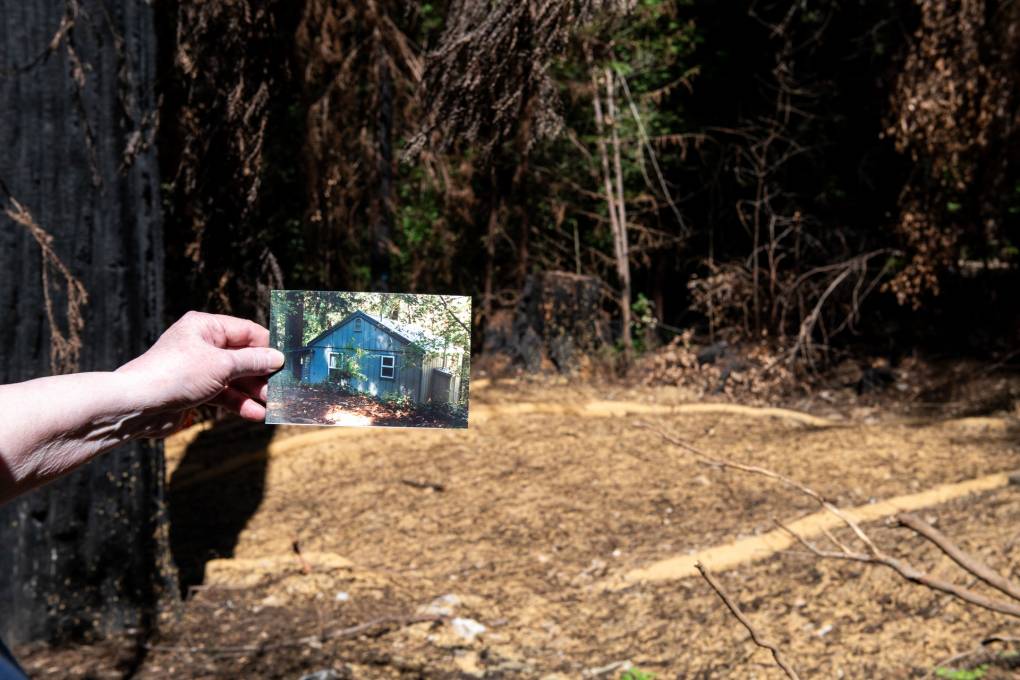
"caption": "Catherine Wilson holds a photo of her rental cabin in Boulder Creek at the the site where it stood before it was destroyed during the CZU Lightning Complex fires last August.",
"description": "Catherine Wilson holds a photo of her rental cabin in Boulder Creek at the the site where it stood before it was destroyed during the CZU Lightning Complex Fires last August.",
"title": "RS48514_023_BoulderCreek_FireVictims_04092021-qut",
"credit": "Beth LaBerge/KQED",
"status": "inherit",
"altTag": null,
"isLoading": false,
"fetchFailed": false
},
"news_11879739": {
"type": "attachments",
"id": "news_11879739",
"meta": {
"index": "attachments_1716263798",
"site": "news",
"id": "11879739",
"found": true
},
"parent": 11879725,
"imgSizes": {
"twentyfourteen-full-width": {
"file": "https://ww2.kqed.org/app/uploads/sites/10/2021/06/RS46911_017_SanJose_AntiEvictionProtest_01272021-qut-1038x576.jpg",
"width": 1038,
"mimeType": "image/jpeg",
"height": 576
},
"thumbnail": {
"file": "https://ww2.kqed.org/app/uploads/sites/10/2021/06/RS46911_017_SanJose_AntiEvictionProtest_01272021-qut-160x107.jpg",
"width": 160,
"mimeType": "image/jpeg",
"height": 107
},
"post-thumbnail": {
"file": "https://ww2.kqed.org/app/uploads/sites/10/2021/06/RS46911_017_SanJose_AntiEvictionProtest_01272021-qut-672x372.jpg",
"width": 672,
"mimeType": "image/jpeg",
"height": 372
},
"kqedFullSize": {
"file": "https://ww2.kqed.org/app/uploads/sites/10/2021/06/RS46911_017_SanJose_AntiEvictionProtest_01272021-qut.jpg",
"width": 1920,
"height": 1280
},
"large": {
"file": "https://ww2.kqed.org/app/uploads/sites/10/2021/06/RS46911_017_SanJose_AntiEvictionProtest_01272021-qut-1020x680.jpg",
"width": 1020,
"mimeType": "image/jpeg",
"height": 680
},
"1536x1536": {
"file": "https://ww2.kqed.org/app/uploads/sites/10/2021/06/RS46911_017_SanJose_AntiEvictionProtest_01272021-qut-1536x1024.jpg",
"width": 1536,
"mimeType": "image/jpeg",
"height": 1024
},
"medium": {
"file": "https://ww2.kqed.org/app/uploads/sites/10/2021/06/RS46911_017_SanJose_AntiEvictionProtest_01272021-qut-800x533.jpg",
"width": 800,
"mimeType": "image/jpeg",
"height": 533
}
},
"publishDate": 1624994714,
"modified": 1624994770,
"caption": "An anti-eviction protester stands in front of Santa Clara County Superior Court on Jan. 27, 2021, during a demonstration calling for stronger statewide eviction protections.",
"description": null,
"title": "RS46911_017_SanJose_AntiEvictionProtest_01272021-qut",
"credit": "Beth LaBerge/KQED",
"status": "inherit",
"altTag": null,
"isLoading": false,
"fetchFailed": false
}
},
"audioPlayerReducer": {
"postId": "stream_live",
"isPaused": true,
"isPlaying": false,
"pfsActive": false,
"pledgeModalIsOpen": true,
"playerDrawerIsOpen": false,
"liveAudioPlayStartedAt": 0,
"liveAudioPlayContext": ""
},
"authorsReducer": {
"byline_news_11907263": {
"type": "authors",
"id": "byline_news_11907263",
"meta": {
"override": true
},
"slug": "byline_news_11907263",
"name": "Mikhail Zinshteyn, \u003ca href=\"https://calmatters.org/education/higher-education/2022/03/uc-berkeley-enrollment-cap/\">CalMatters\u003c/a>",
"isLoading": false
},
"byline_news_11898058": {
"type": "authors",
"id": "byline_news_11898058",
"meta": {
"override": true
},
"slug": "byline_news_11898058",
"name": "Kori Suzuki",
"isLoading": false
},
"byline_news_11897550": {
"type": "authors",
"id": "byline_news_11897550",
"meta": {
"override": true
},
"slug": "byline_news_11897550",
"name": "Mikhail Zinshteyn",
"isLoading": false
},
"byline_news_11890071": {
"type": "authors",
"id": "byline_news_11890071",
"meta": {
"override": true
},
"slug": "byline_news_11890071",
"name": "Eli Walsh\u003cbr>Bay City News",
"isLoading": false
},
"byline_news_11889113": {
"type": "authors",
"id": "byline_news_11889113",
"meta": {
"override": true
},
"slug": "byline_news_11889113",
"name": "\u003ca href=\"https://calmatters.org/author/manuela-tobias/\">Manuela Tobias\u003c/a>",
"isLoading": false
},
"byline_news_11887815": {
"type": "authors",
"id": "byline_news_11887815",
"meta": {
"override": true
},
"slug": "byline_news_11887815",
"name": "\u003ca href=\"https://californiahealthline.org/news/author/angela-hart/\">Angela Hart\u003c/a>",
"isLoading": false
},
"pollystryker": {
"type": "authors",
"id": "250",
"meta": {
"index": "authors_1716337520",
"id": "250",
"found": true
},
"name": "Polly Stryker",
"firstName": "Polly",
"lastName": "Stryker",
"slug": "pollystryker",
"email": "pstryker@kqed.org",
"display_author_email": false,
"staff_mastheads": [
"science"
],
"title": "Editor",
"bio": "Polly Stryker is a former editor for KQED's Science desk. She and reporter/host Rachael Myrow produced the KQED podcast, \u003ca href=\"http://www.npr.org/podcasts/448072249/love-in-the-digital-age\">Love in the Digital Age\u003c/a>.\r\n\r\nPolly has worked for a variety of news and public affairs programs, including most recently as editor of \u003cem>The California Report\u003c/em>. She also edited \u003ca href=\"https://ww2.kqed.org/news/programs/the-california-report\" target=\"_blank\" rel=\"noopener noreferrer\">\u003cem>The California Report'\u003c/em>s\u003c/a> \u003ca href=\"http://www.californiareport.org/healthdialogues/\" target=\"_blank\" rel=\"noopener noreferrer\">“Health Dialogues.”\u003c/a> Before that, she was a producer on \u003cem>\u003ca href=\"http://www.scpr.org/programs/airtalk/\" target=\"_blank\" rel=\"noopener noreferrer\">AirTalk\u003c/a>\u003c/em> with Larry Mantle on \u003ca href=\"http://www.scpr.org/\" target=\"_blank\" rel=\"noopener noreferrer\">KPCC\u003c/a> radio, and \u003cem>\u003ca href=\"http://www.kpbs.org/news/midday-edition/\">These Days\u003c/a>\u003c/em> on KPBS. Polly’s work has won awards from the Radio and Television News Directors Association of Northern California, the Society of Professional Journalists (Southern California and Northern California chapters), the Radio and Television News Association. She's also won a Taste Award.\r\n\r\nShe considers herself to be a citizen of the world, having grown up in Cairo before coming to the United States. Polly speaks Arabic and can say, \"I’d like a martini, please\" in Swahili.",
"avatar": "https://secure.gravatar.com/avatar/5012854a99868cb15a517a876d88f736?s=600&d=blank&r=g",
"twitter": null,
"facebook": null,
"instagram": null,
"linkedin": null,
"sites": [
{
"site": "",
"roles": [
"editor"
]
},
{
"site": "arts",
"roles": [
"administrator"
]
},
{
"site": "news",
"roles": [
"subscriber"
]
},
{
"site": "stateofhealth",
"roles": [
"author"
]
},
{
"site": "science",
"roles": [
"editor"
]
},
{
"site": "forum",
"roles": [
"editor"
]
}
],
"headData": {
"title": "Polly Stryker | KQED",
"description": "Editor",
"ogImgSrc": "https://secure.gravatar.com/avatar/5012854a99868cb15a517a876d88f736?s=600&d=blank&r=g",
"twImgSrc": "https://secure.gravatar.com/avatar/5012854a99868cb15a517a876d88f736?s=600&d=blank&r=g"
},
"isLoading": false,
"link": "/author/pollystryker"
},
"matthewgreen": {
"type": "authors",
"id": "1263",
"meta": {
"index": "authors_1716337520",
"id": "1263",
"found": true
},
"name": "Matthew Green",
"firstName": "Matthew",
"lastName": "Green",
"slug": "matthewgreen",
"email": "mgreen@kqed.org",
"display_author_email": false,
"staff_mastheads": [],
"title": "KQED Editor/Reporter",
"bio": "Matthew Green is a digital media producer for KQED News. He previously produced \u003ca href=\"http://www.kqed.org/lowdown\">The Lowdown\u003c/a>, KQED’s multimedia news education blog. Matthew's written for numerous Bay Area publications, including the Oakland Tribune and San Francisco Chronicle. He also taught journalism classes at Fremont High School in East Oakland.\r\n\r\nEmail: mgreen@kqed.org; Twitter: @MGreenKQED",
"avatar": "https://secure.gravatar.com/avatar/3bf498d1267ca02c8494f33d8cfc575e?s=600&d=blank&r=g",
"twitter": "MGreenKQED",
"facebook": null,
"instagram": null,
"linkedin": null,
"sites": [
{
"site": "news",
"roles": []
},
{
"site": "lowdown",
"roles": []
},
{
"site": "science",
"roles": []
},
{
"site": "education",
"roles": []
},
{
"site": "quest",
"roles": []
},
{
"site": "liveblog",
"roles": []
}
],
"headData": {
"title": "Matthew Green | KQED",
"description": "KQED Editor/Reporter",
"ogImgSrc": "https://secure.gravatar.com/avatar/3bf498d1267ca02c8494f33d8cfc575e?s=600&d=blank&r=g",
"twImgSrc": "https://secure.gravatar.com/avatar/3bf498d1267ca02c8494f33d8cfc575e?s=600&d=blank&r=g"
},
"isLoading": false,
"link": "/author/matthewgreen"
},
"ekelly": {
"type": "authors",
"id": "3211",
"meta": {
"index": "authors_1716337520",
"id": "3211",
"found": true
},
"name": "Erika Kelly",
"firstName": "Erika",
"lastName": "Kelly",
"slug": "ekelly",
"email": "ekelly@KQED.org",
"display_author_email": true,
"staff_mastheads": [
"news"
],
"title": "Deputy Managing Editor",
"bio": "Erika Kelly is deputy managing editor of KQED's newsroom, working with teams covering housing, climate, health, labor and the arts. Previously, she was the senior editor of KQED’s housing affordability desk, leading the team that produced the award winning podcast Sold Out: Rethinking Housing in America. She is a graduate of the Medill School of Journalism and a native of the Greater Chicagoland Area.",
"avatar": "https://secure.gravatar.com/avatar/3653973f475e2af06d52444628a0023a48f83905a9d7ce3a4e45e5ecebcb4230?s=600&d=blank&r=g",
"twitter": null,
"bluesky": null,
"facebook": null,
"instagram": null,
"linkedin": null,
"sites": [
{
"site": "",
"roles": [
"editor"
]
},
{
"site": "arts",
"roles": [
"administrator"
]
},
{
"site": "news",
"roles": [
"administrator"
]
},
{
"site": "science",
"roles": [
"administrator"
]
},
{
"site": "liveblog",
"roles": [
"administrator"
]
}
],
"headData": {
"title": "Erika Kelly | KQED",
"description": "Deputy Managing Editor",
"ogImgSrc": "https://secure.gravatar.com/avatar/3653973f475e2af06d52444628a0023a48f83905a9d7ce3a4e45e5ecebcb4230?s=600&d=blank&r=g",
"twImgSrc": "https://secure.gravatar.com/avatar/3653973f475e2af06d52444628a0023a48f83905a9d7ce3a4e45e5ecebcb4230?s=600&d=blank&r=g"
},
"isLoading": false,
"link": "/author/ekelly"
},
"ecruzguevarra": {
"type": "authors",
"id": "8654",
"meta": {
"index": "authors_1716337520",
"id": "8654",
"found": true
},
"name": "Ericka Cruz Guevarra",
"firstName": "Ericka",
"lastName": "Cruz Guevarra",
"slug": "ecruzguevarra",
"email": "ecruzguevarra@kqed.org",
"display_author_email": true,
"staff_mastheads": [
"news"
],
"title": "Producer, The Bay Podcast",
"bio": "Ericka Cruz Guevarra is host of \u003ca href=\"https://www.kqed.org/podcasts/thebay\">\u003cem>The Bay\u003c/em>\u003c/a> podcast at KQED. Before host, she was the show’s producer. Her work in that capacity includes a three-part reported series on policing in Vallejo, which won a 2020 excellence in journalism award from the Society of Professional Journalists. Ericka has worked as a breaking news reporter at Oregon Public Broadcasting, helped produce the Code Switch podcast, and was KQED’s inaugural Raul Ramirez Diversity Fund intern. She’s also an alumna of NPR’s Next Generation Radio program. Send her an email if you have strong feelings about whether Fairfield and Suisun City are the Bay. Ericka is represented by SAG-AFTRA.",
"avatar": "https://secure.gravatar.com/avatar/accefc1de4bafc7e234b69bcb9b6f6536c130fd84709bc3069ef11a78787e1bb?s=600&d=blank&r=g",
"twitter": "NotoriousECG",
"bluesky": null,
"facebook": null,
"instagram": null,
"linkedin": null,
"sites": [
{
"site": "arts",
"roles": [
"subscriber"
]
},
{
"site": "news",
"roles": [
"editor",
"manage_categories"
]
},
{
"site": "futureofyou",
"roles": [
"subscriber"
]
},
{
"site": "stateofhealth",
"roles": [
"subscriber"
]
},
{
"site": "science",
"roles": [
"editor"
]
},
{
"site": "forum",
"roles": [
"subscriber"
]
}
],
"headData": {
"title": "Ericka Cruz Guevarra | KQED",
"description": "Producer, The Bay Podcast",
"ogImgSrc": "https://secure.gravatar.com/avatar/accefc1de4bafc7e234b69bcb9b6f6536c130fd84709bc3069ef11a78787e1bb?s=600&d=blank&r=g",
"twImgSrc": "https://secure.gravatar.com/avatar/accefc1de4bafc7e234b69bcb9b6f6536c130fd84709bc3069ef11a78787e1bb?s=600&d=blank&r=g"
},
"isLoading": false,
"link": "/author/ecruzguevarra"
},
"mfharvin": {
"type": "authors",
"id": "11583",
"meta": {
"index": "authors_1716337520",
"id": "11583",
"found": true
},
"name": "Mary Franklin Harvin",
"firstName": "Mary Franklin",
"lastName": "Harvin",
"slug": "mfharvin",
"email": "mfharvin@KQED.org",
"display_author_email": false,
"staff_mastheads": [
"news"
],
"title": "KQED Contributor",
"bio": null,
"avatar": "https://secure.gravatar.com/avatar/0e53510a7d48cfbdebfc9b11357d845f?s=600&d=blank&r=g",
"twitter": "EmEffHarvin",
"facebook": null,
"instagram": null,
"linkedin": null,
"sites": [
{
"site": "news",
"roles": [
"author",
"edit_others_posts"
]
},
{
"site": "science",
"roles": [
"editor"
]
}
],
"headData": {
"title": "Mary Franklin Harvin | KQED",
"description": "KQED Contributor",
"ogImgSrc": "https://secure.gravatar.com/avatar/0e53510a7d48cfbdebfc9b11357d845f?s=600&d=blank&r=g",
"twImgSrc": "https://secure.gravatar.com/avatar/0e53510a7d48cfbdebfc9b11357d845f?s=600&d=blank&r=g"
},
"isLoading": false,
"link": "/author/mfharvin"
},
"lsarah": {
"type": "authors",
"id": "11626",
"meta": {
"index": "authors_1716337520",
"id": "11626",
"found": true
},
"name": "Lakshmi Sarah",
"firstName": "Lakshmi",
"lastName": "Sarah",
"slug": "lsarah",
"email": "lsarah@kqed.org",
"display_author_email": false,
"staff_mastheads": [],
"title": "Digital Producer",
"bio": "Lakshmi Sarah is an educator, author and journalist with a focus on innovative storytelling. She has worked with newspapers, radio and magazines from Ahmedabad, India to Los Angeles, California. She has written and produced for Die Zeit, Global Voices, AJ+, KQED, Fusion Media Group and the New York Times.",
"avatar": "https://secure.gravatar.com/avatar/652dcaecd8b28826fc17a8b2d6bb4e93?s=600&d=blank&r=g",
"twitter": "lakitalki",
"facebook": null,
"instagram": "https://www.instagram.com/laki.talki/",
"linkedin": "https://www.linkedin.com/in/lakisarah/",
"sites": [
{
"site": "arts",
"roles": []
},
{
"site": "news",
"roles": []
},
{
"site": "bayareabites",
"roles": []
},
{
"site": "science",
"roles": []
}
],
"headData": {
"title": "Lakshmi Sarah | KQED",
"description": "Digital Producer",
"ogImgSrc": "https://secure.gravatar.com/avatar/652dcaecd8b28826fc17a8b2d6bb4e93?s=600&d=blank&r=g",
"twImgSrc": "https://secure.gravatar.com/avatar/652dcaecd8b28826fc17a8b2d6bb4e93?s=600&d=blank&r=g"
},
"isLoading": false,
"link": "/author/lsarah"
},
"kmoghadam": {
"type": "authors",
"id": "11637",
"meta": {
"index": "authors_1716337520",
"id": "11637",
"found": true
},
"name": "Kyana Moghadam",
"firstName": "Kyana",
"lastName": "Moghadam",
"slug": "kmoghadam",
"email": "kmoghadam@kqed.org",
"display_author_email": false,
"staff_mastheads": [
"news"
],
"title": "Senior Producer ",
"bio": "Kyana Moghadam is a senior producer at KQED. Prior to joining KQED, she was an audio producer and editor with Al Jazeera, Jetty Studios, VOX Media, Democracy Now!, and Global Press.",
"avatar": "https://secure.gravatar.com/avatar/cdbd6cb0b9e99deaa9eb618abdba56f265d374a2c614710aebeb4e58decbc5f0?s=600&d=blank&r=g",
"twitter": null,
"bluesky": null,
"facebook": null,
"instagram": null,
"linkedin": "https://www.linkedin.com/in/kyanamoghadam/",
"sites": [
{
"site": "",
"roles": [
"editor"
]
},
{
"site": "arts",
"roles": [
"editor"
]
},
{
"site": "news",
"roles": [
"administrator"
]
},
{
"site": "pop",
"roles": [
"editor"
]
},
{
"site": "about",
"roles": [
"editor"
]
},
{
"site": "forum",
"roles": [
"editor"
]
},
{
"site": "perspectives",
"roles": [
"editor"
]
},
{
"site": "podcasts",
"roles": [
"administrator"
]
}
],
"headData": {
"title": "Kyana Moghadam | KQED",
"description": "Senior Producer ",
"ogImgSrc": "https://secure.gravatar.com/avatar/cdbd6cb0b9e99deaa9eb618abdba56f265d374a2c614710aebeb4e58decbc5f0?s=600&d=blank&r=g",
"twImgSrc": "https://secure.gravatar.com/avatar/cdbd6cb0b9e99deaa9eb618abdba56f265d374a2c614710aebeb4e58decbc5f0?s=600&d=blank&r=g"
},
"isLoading": false,
"link": "/author/kmoghadam"
},
"amontecillo": {
"type": "authors",
"id": "11649",
"meta": {
"index": "authors_1716337520",
"id": "11649",
"found": true
},
"name": "Alan Montecillo",
"firstName": "Alan",
"lastName": "Montecillo",
"slug": "amontecillo",
"email": "amontecillo@kqed.org",
"display_author_email": false,
"staff_mastheads": [
"news"
],
"title": "KQED Contributor",
"bio": "Alan Montecillo is the senior editor of \u003cem>\u003ca href=\"http://kqed.org/thebay\">The Bay\u003c/a>, \u003c/em> KQED's local news podcast. Before moving to the Bay Area, he worked as a senior talk show producer for WILL in Champaign-Urbana, Illinois and at Oregon Public Broadcasting in Portland, Oregon. He has won journalism awards from the Society of Professional Journalists Northern California, the Public Media Journalists Association, The Signal Awards, and has also received a regional Edward R. Murrow award. Alan is a Filipino American from Hong Kong and a graduate of Reed College.",
"avatar": "https://secure.gravatar.com/avatar/268f53a2066899ea9efdd8a5900218b17c822d9862cbc9326cccec53ef41d349?s=600&d=blank&r=g",
"twitter": "alanmontecillo",
"bluesky": null,
"facebook": null,
"instagram": null,
"linkedin": null,
"sites": [
{
"site": "",
"roles": [
"editor"
]
},
{
"site": "news",
"roles": [
"editor",
"manage_categories"
]
}
],
"headData": {
"title": "Alan Montecillo | KQED",
"description": "KQED Contributor",
"ogImgSrc": "https://secure.gravatar.com/avatar/268f53a2066899ea9efdd8a5900218b17c822d9862cbc9326cccec53ef41d349?s=600&d=blank&r=g",
"twImgSrc": "https://secure.gravatar.com/avatar/268f53a2066899ea9efdd8a5900218b17c822d9862cbc9326cccec53ef41d349?s=600&d=blank&r=g"
},
"isLoading": false,
"link": "/author/amontecillo"
},
"msolomon": {
"type": "authors",
"id": "11651",
"meta": {
"index": "authors_1716337520",
"id": "11651",
"found": true
},
"name": "Molly Solomon",
"firstName": "Molly",
"lastName": "Solomon",
"slug": "msolomon",
"email": "msolomon@KQED.org",
"display_author_email": false,
"staff_mastheads": [
"news"
],
"title": "Senior Editor",
"bio": "Molly Solomon is the senior editor of KQED's California Politics and Government Desk. Previously, she was the station's editor-at-large, with a focus on editing early childhood education, politics, and criminal justice. Before that, she managed and edited statewide election coverage for The California Newsroom, a collaboration of local public radio stations, CalMatters and NPR. Molly joined KQED in 2019 to launch the station’s housing affordability desk, where she reported on homelessness, evictions and is the co-host of KQED’s housing podcast, SOLD OUT: Rethinking Housing in America. Before that, she was the Southwest Washington Bureau Chief for Oregon Public Broadcasting and a reporter at Hawaii Public Radio. Her stories have aired on NPR’s \u003cem>Morning Edition\u003c/em>, \u003cem>All Things Considered\u003c/em>, \u003cem>Here & Now\u003c/em>, \u003cem>Science Friday\u003c/em> and \u003cem>Marketplace\u003c/em>. Molly's award-winning reporting has been honored by the Best of the West, Edward R. Murrow awards, Society of Professional Journalists, National Headliner Awards, and the Asian American Journalists Association. Born and raised in Berkeley, Molly is a big fan of burritos and her scruffy terrier, Ollie.",
"avatar": "https://secure.gravatar.com/avatar/9ad9794616923d81c9a79897161545bd?s=600&d=blank&r=g",
"twitter": "solomonout",
"facebook": null,
"instagram": null,
"linkedin": null,
"sites": [
{
"site": "news",
"roles": [
"editor"
]
},
{
"site": "science",
"roles": [
"editor"
]
}
],
"headData": {
"title": "Molly Solomon | KQED",
"description": "Senior Editor",
"ogImgSrc": "https://secure.gravatar.com/avatar/9ad9794616923d81c9a79897161545bd?s=600&d=blank&r=g",
"twImgSrc": "https://secure.gravatar.com/avatar/9ad9794616923d81c9a79897161545bd?s=600&d=blank&r=g"
},
"isLoading": false,
"link": "/author/msolomon"
},
"ebaldassari": {
"type": "authors",
"id": "11652",
"meta": {
"index": "authors_1716337520",
"id": "11652",
"found": true
},
"name": "Erin Baldassari",
"firstName": "Erin",
"lastName": "Baldassari",
"slug": "ebaldassari",
"email": "ebaldassari@KQED.org",
"display_author_email": true,
"staff_mastheads": [
"news"
],
"title": "Staff Writer",
"bio": "Erin Baldassari covers housing for KQED. She's a former print journalist and most recently worked as the transportation reporter for the \u003cem>Mercury News\u003c/em> and \u003cem>East Bay Times. \u003c/em>There, she focused on how the Bay Area’s housing shortage has changed the way people move around the region. She also served on the \u003cem>East Bay Times\u003c/em>’ 2017 Pulitzer Prize-winning team for coverage of the Ghost Ship Fire in Oakland. Prior to that, Erin worked as a breaking news and general assignment reporter for a variety of outlets in the Bay Area and the greater Boston area. A Tufts University alumna, Erin grew up in the foothills of the Sierra Nevada mountains and in Sonoma County. She is a life-long KQED listener.",
"avatar": "https://secure.gravatar.com/avatar/5e95cad64a8ca08288082212e199d2b0cbeb4fd8e8ef5339395f361032bbe005?s=600&d=blank&r=g",
"twitter": "e_baldi",
"bluesky": null,
"facebook": null,
"instagram": null,
"linkedin": null,
"sites": [
{
"site": "news",
"roles": [
"edit_others_posts",
"editor"
]
},
{
"site": "science",
"roles": [
"editor"
]
},
{
"site": "liveblog",
"roles": [
"editor"
]
}
],
"headData": {
"title": "Erin Baldassari | KQED",
"description": "Staff Writer",
"ogImgSrc": "https://secure.gravatar.com/avatar/5e95cad64a8ca08288082212e199d2b0cbeb4fd8e8ef5339395f361032bbe005?s=600&d=blank&r=g",
"twImgSrc": "https://secure.gravatar.com/avatar/5e95cad64a8ca08288082212e199d2b0cbeb4fd8e8ef5339395f361032bbe005?s=600&d=blank&r=g"
},
"isLoading": false,
"link": "/author/ebaldassari"
},
"eromero": {
"type": "authors",
"id": "11746",
"meta": {
"index": "authors_1716337520",
"id": "11746",
"found": true
},
"name": "Ezra David Romero",
"firstName": "Ezra David",
"lastName": "Romero",
"slug": "eromero",
"email": "eromero@kqed.org",
"display_author_email": true,
"staff_mastheads": [
"news",
"science"
],
"title": "Climate Reporter",
"bio": "Ezra David Romero is a climate reporter for KQED News. He covers the absence and excess of water in the Bay Area — think sea level rise, flooding and drought. For nearly a decade he’s covered how warming temperatures are altering the lives of Californians. He’s reported on farmers worried their pistachio trees aren’t getting enough sleep, families desperate for water, scientists studying dying giant sequoias, and alongside firefighters containing wildfires. His work has appeared on local stations across California and nationally on public radio shows like Morning Edition, Here and Now, All Things Considered and Science Friday. ",
"avatar": "https://secure.gravatar.com/avatar/c76404d287c10ed40224227551ac36e24352c7306f106632caf6fead76f8801f?s=600&d=blank&r=g",
"twitter": "ezraromero",
"bluesky": null,
"facebook": null,
"instagram": null,
"linkedin": null,
"sites": [
{
"site": "arts",
"roles": [
"editor"
]
},
{
"site": "news",
"roles": [
"editor"
]
},
{
"site": "science",
"roles": [
"editor"
]
},
{
"site": "liveblog",
"roles": [
"author"
]
}
],
"headData": {
"title": "Ezra David Romero | KQED",
"description": "Climate Reporter",
"ogImgSrc": "https://secure.gravatar.com/avatar/c76404d287c10ed40224227551ac36e24352c7306f106632caf6fead76f8801f?s=600&d=blank&r=g",
"twImgSrc": "https://secure.gravatar.com/avatar/c76404d287c10ed40224227551ac36e24352c7306f106632caf6fead76f8801f?s=600&d=blank&r=g"
},
"isLoading": false,
"link": "/author/eromero"
}
},
"pagesReducer": {
"news_tag_affordable-housing": {
"type": "terms",
"id": "news_3921",
"meta": {
"index": "terms_1716263798",
"site": "news",
"id": "3921",
"score": 9.304576
},
"featImg": null,
"name": "affordable housing",
"description": null,
"taxonomy": "tag",
"headData": {
"twImgId": null,
"twTitle": null,
"ogTitle": null,
"ogImgId": null,
"twDescription": null,
"description": null,
"title": "affordable housing Archives | KQED News",
"ogDescription": null
},
"ttid": 3940,
"slug": "affordable-housing",
"isLoading": false,
"title": "affordable housing",
"pageMeta": {
"site": "news",
"WpPageTemplate": "page-topic-editorial",
"currentPage": 29
},
"blocks": [
{
"blockName": "kqed/post-list",
"attrs": {
"layout": "cardArticle2",
"query": "posts/news?tag=affordable-housing",
"seeMore": false,
"paginated": true,
"page": 29
}
},
{
"blockName": "kqed/ad"
}
]
}
},
"pfsSessionReducer": {},
"postsReducer": {
"stream_live": {
"type": "live",
"id": "stream_live",
"audioUrl": "https://streams.kqed.org/kqedradio",
"title": "Live Stream",
"excerpt": "Live Stream information currently unavailable.",
"link": "/radio",
"featImg": "",
"label": {
"name": "KQED Live",
"link": "/"
}
},
"stream_kqedNewscast": {
"type": "posts",
"id": "stream_kqedNewscast",
"audioUrl": "https://www.kqed.org/.stream/anon/radio/RDnews/newscast.mp3?_=1",
"title": "KQED Newscast",
"featImg": "",
"label": {
"name": "88.5 FM",
"link": "/"
}
},
"news_11907263": {
"type": "posts",
"id": "news_11907263",
"meta": {
"index": "posts_1716263798",
"site": "news",
"id": "11907263",
"score": null,
"sort": [
1646438090000
]
},
"guestAuthors": [],
"slug": "uc-berkeley-enrollment-cap-means-deferred-admissions-and-online-classes-for-affected-new-students",
"title": "UC Berkeley Enrollment Capped, but Few Students Turned Away by State Supreme Court Decision",
"publishDate": 1646438090,
"format": "standard",
"headTitle": "UC Berkeley Enrollment Capped, but Few Students Turned Away by State Supreme Court Decision | KQED",
"labelTerm": {
"term": 18481,
"site": "news"
},
"content": "\u003cp>\u003cem>Updated 4:00 p.m. March 6\u003c/em>\u003c/p>\n\u003cp>\u003cem>Earlier versions of this story included outdated enrollment impact estimates, which were supplied by UC Berkeley officials to CalMatters. The story has been updated to reflect revised numbers from UC Berkeley, which indicate a less dire impact on new students than the university’s past statements and projections had suggested. \u003c/em>\u003c/p>\n\u003cp>UC Berkeley will be able to enroll almost all the roughly 9,200 students it planned for this coming academic year, even though the California Supreme Court Thursday refused to strike down a lower court’s order that the university cut its campus enrollment.\u003c/p>\n\u003cp>“All the undergraduates we planned to enroll will be enrolled next year,” said Dan Mogulof, assistant vice chancellor of public affairs at UC Berkeley, during a phone interview with CalMatters Friday.\u003c/p>\n\u003cp>While the lower court said UC Berkeley must whittle down its campus enrollment by about 3,000 students, that still leaves room for new students to attend online in the fall or start their classes next spring, when the campus population declines as other students graduate early.\u003c/p>\n\u003cp>[ad fullwidth]\u003c/p>\n\u003cp>By asking roughly 1,000 new students to take all their classes online in the fall and another 650 to begin their UC Berkeley educations in spring of 2023, the university won’t have to leave any students behind in the 2022-23 academic year.\u003c/p>\n\u003cp>Still, the campus will miss some enrollment targets. Because some of the 125 graduate school programs hadn’t yet sent out their admissions offers, the enrollment cap means 400 fewer new graduate students in engineering, business and law programs will attend the university next year, Mogulof said.\u003c/p>\n\u003cp>That’s a different degree of fallout than campus officials warned could happen. That UC Berkeley has to cut its campus population at all stems from Alameda Superior Court Judge Brad Seligman’s \u003ca href=\"https://calmatters.org/education/higher-education/2022/02/uc-berkeley-admissions-cuts-prioritize-californians/\">order last year to hold UC Berkeley’s enrollment at 2020-21 levels\u003c/a>, after residents in the city of Berkeley sued the university, challenging the impact the school’s enrollment growth would have on city services, scarce local housing and noise.\u003c/p>\n\u003cp>The basis of that suit and court decisions, the 1970 California Environmental Quality Act, centers anew the state’s marquee environmental protection law as either a source of ire for backers of urban density and housing developers or as a chief weapon to preserve communities and the surrounding environments.\u003c/p>\n\u003cp>On Thursday, a statement from UC Berkeley said the state Supreme Court’s decision not to intervene “is devastating news for the thousands of students who have worked so hard for and have earned a seat in our fall 2022 class.”\u003c/p>\n\u003cp>A new press statement from Mogulof on Friday said, “[T]he harm caused by this court decision extends beyond the students who should be offered an in-person seat in our fall 2022 class. It impacts prospective students generally, our campus operations, and the university’s ability to serve students by meeting the enrollment targets set by the state.”\u003c/p>\n\u003cp>The decision wasn’t unanimous. In a dissenting statement, Justice Goodwin Liu wrote that he would have granted UC Berkeley’s request to block the enrollment cap. He urged the sides to try to quickly resolve the case.\u003c/p>\n\u003cp>On Thursday, Phil Bokovoy, president of Save Berkeley’s Neighborhoods, the group that brought the suit against UC Berkeley, said he was “pleased” with the Supreme Court’s decision but that “we’d like to assure deserving California high school students that we are as disappointed as they are that UC has tried to use them as pawns in UC’s attempts to avoid mitigating the impacts from the massive enrollment increases over the past few years.”\u003c/p>\n\u003cp>In response to Liu’s comments, \u003ca href=\"http://saveberkeleysneighborhoods.org/wp-content/uploads/2022/03/Press-release-Save-Berkeleys-Neighborhoods-offers-partial-relief-to-UC-5-March-22.pdf\">Save Berkeley’s Neighborhoods proposed a compromise deal\u003c/a> in a press release on Saturday, March 5. The group’s proposal would allow UC Berkeley to enroll a total of 43,347 students, instead of the 42,347 allowed under the Supreme Court’s ruling, but it would be conditional. The group would require that 90% of new undergraduates be California residents (in 2021, \u003ca href=\"https://pages.github.berkeley.edu/OPA/our-berkeley/100-students.html\" target=\"_blank\" rel=\"noopener noreferrer\">73% \u003c/a>of newly matriculated students were), and UC Berkeley would not be allowed to seek further legal action on this matter in the courts or state Legislature.\u003c/p>\n\u003cp>Mogulof told KQED that UC Berkeley officials take issue with the proposal.\u003c/p>\n\u003cp>“What this small group of litigants is asking for is authority to determine enrollment at the University of California, Berkeley,” Mogulof said. He went on to say, “Enrollment decisions of the universities should not be in the hands of a small group of private citizens who have no accountability and no expertise in this area.”\u003c/p>\n\u003cp>After telling CalMatters that all the undergraduates the university had planned to enroll will be able to attend, Mogulof emailed a short time later to clarify that most of, but not all, the students would be able to attend.\u003c/p>\n\u003cp>“None of this is exact,” he said. “These are all rounded numbers that fluctuate year to year. Yes, we usually hover around 9,500 new undergrads a year. … This year, before the court ruling, we originally planned on on 9,310 … and now we’re looking at 9,144 plus an expanded wait list of 150 that will provide us with more flexibility in potentially enrolling additional students if, for example, there is a legislative fix.”\u003c/p>\n\u003cp>The question becomes where might those students who would have been admitted to Berkeley end up going.\u003c/p>\n\u003cp>Now those fears are largely neutralized because the enrollment cap isn’t reducing the total number of new students the university will be able to enroll this coming academic year. There’s still tumult for students and the university, though. For the 1,650 students who’ll have to start online or in the fall, the start of their academic careers “is going to look nothing like what they wanted and hoped for,” Mogulof said.\u003c/p>\n\u003cp>The campus has some wiggle room with the enrollment cap because the campus population typically goes down marginally in the spring as students graduate early or attend off-campus programs in cities like Sacramento and Washington, D.C.\u003c/p>\n\u003cp>For its new students starting this fall and in person, the university will also prioritize in-state students over students who don’t have residency in California. In the past few years, about a quarter of undergraduates have typically come from out of state. But UC Berkeley will aim to lower that ratio substantially for this year — just 9% of students, or 641, will be nonresidents, and the remaining 6,334 new students will be Californians. Overall, 7,171 of the new 9,144 undergraduates, about 79%, who are expected to enter next year will be Californians.\u003c/p>\n\u003cp>This follows a CalMatters analysis that the campus could find a way to \u003ca href=\"https://calmatters.org/education/higher-education/2022/02/uc-berkeley-admissions-cuts-prioritize-californians/\">enroll more Californians by excluding some out-of-state students\u003c/a>.\u003c/p>\n\u003cp>UC Berkeley said Friday its in-person campus population has to go down by roughly 2,600 students, not the 3,000 it previously estimated.\u003c/p>\n\u003cp>Some lawmakers and legal scholars had previously said that if the state Supreme Court kept Seligman’s order in place, it would open the door for other communities to sue campuses for their enrollment growth.\u003c/p>\n\u003cp>“This is an enormous limit on what any UC school, any Cal State school, any public school system can do,” said Erwin Chemerinsky, dean of UC Berkeley’s law school, in a conversation with CalMatters before the Supreme Court issued its decision Thursday.\u003c/p>\n\u003cp>Still, Thursday’s court decision wasn’t about the full merits of the case but instead was about Seligman’s decision to cap enrollment. A state court of appeals is expected to hear the full case later this year.\u003c/p>\n\u003cp>Lawmakers could try to fast-track a bill to exempt campus enrollment from the state’s environmental quality act, a lawmaker said last month. But UC Berkeley is supposed to inform students by March 24 whether they’re admitted and some were already informed Feb. 11. Meanwhile, May 1 is the deadline for students to put down deposits to attend the campus — and the typical deadline for colleges across the country.\u003c/p>\n\u003cp>Lawmakers “don’t need much time to put that together,” texted Assemblymember Kevin McCarty, a Democrat from Sacramento. “We’re on the case and aware of the deadlines.”\u003c/p>\n\u003cp>Such a law would be a “missed opportunity,” said UC Davis law professor Chris Elmendorf, because it wouldn’t address what he says is the environmental act’s major flaw: It views population growth of any kind as pollution in urban settings.\u003c/p>\n\u003cp>UC Berkeley’s \u003ca href=\"https://docs.google.com/document/d/12KMGguyqRPfNjmRTNEkFK_E0pUNRnEfSnerfTcRN_qE/edit\">student government implored the state Legislature\u003c/a> today to exempt campus enrollment from the environmental act’s restrictions. In the past, Berkeley students were critical of the university’s housing plans because they threatened to displace lower-income city residents. The campus has already \u003ca href=\"https://www.berkeleyside.org/2021/12/16/student-housing-uc-berkeley-walnut-street-demolition\">demolished an eight-unit rent-controlled building\u003c/a> to make room for a new student housing complex. The students fear less revenue from fewer students will make it harder for the campus to meet its student housing goals.\u003c/p>\n\u003cp>But the act’s backers say it \u003ca href=\"https://calmatters.org/commentary/2022/02/ceqa-advances-environmental-justice-so-why-all-the-hate/\">protects communities from pollution\u003c/a> and is unfairly pilloried by public agencies and developers who want to build housing.\u003c/p>\n\u003cp>UC Berkeley argued in court filings that if it could not enroll the 3,000 students previously expected to be excluded this fall, it would lose out on $57 million in annual tuition payments for at least four years. The actual hit to UC’s bottom line will be much less now that it can enroll almost every student it sought for this coming fall. The students starting in the spring and the lower number of graduate students will lead to revenue declines.\u003c/p>\n\u003cp>Though the current lawsuit technically concerns a housing and academic development for the Goldman School of Public Policy, the larger issue is whether UC Berkeley failed to adequately measure the impact its enrollment growth would have on the city.\u003c/p>\n\u003cp>Berkeley said in its 2005 multiyear construction plan that its 2020 enrollment would be around 33,000 students. But the campus actually hit nearly 43,000 students in the fall of 2020. While the campus far exceeded its enrollment caps, UC Berkeley built fewer housing slots for students than it had anticipated. By 2020 the campus said it would have 10,790 beds but to date can house just 9,800 students.\u003c/p>\n\u003cp>The lawsuit brought forth by Save Berkeley’s Neighborhoods argues UC Berkeley never did a proper assessment of how that added enrollment growth affects the surrounding area. And without that analysis, the campus can’t proceed with any other construction plan.\u003c/p>\n\u003cp>Seligman agreed. And the state Supreme Court agreed with him.\u003c/p>\n\u003cp>UC Berkeley contends budget shortfalls caused by the Great Recession and declining state support for much of that period meant less money to invest in student housing. The campus also spent “a significant amount of its housing reserves to seismically retrofit three of our existing residential facilities,” said Mogulof, the UC Berkeley spokesperson. And, he said, while the campus had identified land for as many as \u003ca href=\"https://evcp.berkeley.edu/sites/default/files/housing_master_plan_task_force_final_draft_january_2017.pdf\">5,000 beds in a 2017 report\u003c/a>, those properties already included existing structures like parking lots and academic buildings that would have to be torn down.\u003c/p>\n\u003cp>Lawmakers in the past year have proposed or approved \u003ca href=\"https://calmatters.org/education/2022/01/student-housing-2/\">$7 billion in campus housing loans and grants\u003c/a>.\u003c/p>\n\u003cp>Other legal scholars say enrollment growth isn’t an issue that’s relevant to the case. “The trial court’s ruling was wrong on many levels. The court had no jurisdiction in deciding the Goldman School case to impose limits on Berkeley’s student population; that was simply not at issue,” wrote Chemerinsky in a Sacramento Bee essay.\u003c/p>\n\u003cp>Public officials, most prominently Gov. Gavin Newsom, said students will be locked out of an elite education. Denying enrollment at UC Berkeley “would be irreparably damaging” and “also undermine the State’s broad interest in expanding access to higher education, especially at the State’s flagship undergraduate institutions,” Newsom’s brief to the state Supreme Court said.\u003c/p>\n\u003cp>But public data suggests nearly all UC Berkeley applicants admitted as first-year students end up at a college.\u003c/p>\n\u003cp>In 2019, just 5%, or 656, of \u003ca href=\"https://www.universityofcalifornia.edu/about-us/information-center/admit-destinations\">UC Berkeley’s admitted freshmen didn’t attend a college\u003c/a>, or their college destinations were unknown. Nearly half — 45% — who were admitted ended up attending the university. The remaining half largely made their way to strong institutions, including 16% to other UCs and 24% to selective private universities that typically have strong financial aid packages for students with lower incomes.\u003c/p>\n\u003cp>Still, those stats apply to a normal year, not when a large campus like UC Berkeley is unable to enroll the 3,000 new freshmen and transfer students officials previously feared would lose a spot. Given the popularity of the whole UC system, other campuses within the system would have struggled to accommodate those students, which could have affected enrollment capacity at other public and private colleges.\u003c/p>\n\u003cp>Bokovoy, of Save Berkeley’s Neighborhoods, pointed out during a Zoom press conference following the state Supreme Court’s decision that in the past decade, the percentage of students receiving the federal Pell grant intended for students with lower incomes dropped from 33% to 27% at UC Berkeley. He argued high rents in the community and insufficient student housing have pushed students with lower incomes out.\u003c/p>\n\u003cp>Previously, Bokovoy wrote in an email that the group “would like a legally binding agreement that ties enrollment growth to the production of housing on land UC already owns” — which would mean the campus can’t add more students until it builds more housing. In past conversations, he cited the \u003ca href=\"https://lrdp.ucsc.edu/settlement-agreement.pdf\">2008 legal settlement between UC Santa Cruz and local government\u003c/a> that tied campus enrollment growth to more housing as a model for what UC Berkeley could pursue. But that deal also came with an enrollment cap of 19,500 students for what ended up being 15 years. At the time of the deal, UC Santa Cruz’s enrollment was around 16,000 students.\u003c/p>\n\u003cp>Several times Bokovoy denied a UC Berkeley claim that he is pushing for an enrollment cap.\u003c/p>\n\u003cp>UC Berkeley won’t agree to any enrollment cap, Mogulof said. The campus struck a deal last year with the city of Berkeley that \u003ca href=\"https://www.berkeleyside.org/2021/07/14/uc-berkeley-payment-settlement-agreement\">it will pay the city $4 million a year\u003c/a> regardless of whether the campus reaches its housing production goals. The city was an initial plaintiff in the lawsuit against UC Berkeley but settled with the campus before Seligman issued his enrollment cap. \u003ca href=\"https://www.berkeleyside.org/wp-content/uploads/2022/02/2022-02-18-Amicus-Curiae-Letter-Supreme-Court-Case-No.-S273160.pdf\">The city never sought an enrollment cap\u003c/a>; in fact, its legal team wrote to the state Supreme Court in a request to side with the UC campus and lift the enrollment cap.\u003c/p>\n\u003cp>Another campus, UC Davis, made a promise to tie enrollment growth to more housing but \u003ca href=\"https://ucdavis.app.box.com/s/gq0jfianaphpgtafrzvoqe3hq5fwxlz8\">the penalty for missing its targets is $500 per bed\u003c/a>, according to a legal deal it made with the local government.\u003c/p>\n\u003cp>Bokovoy said UC Berkeley could expand its campus elsewhere in the Bay Area and not in the city of Berkeley, such as in nearby Richmond. \u003ca href=\"https://www.sfgate.com/bayarea/article/UC-Berkeley-suspends-plans-to-build-Global-Campus-9187281.php\">Early plans for a satellite campus\u003c/a> there fell through in 2016.\u003c/p>\n\u003cp>Going forward, if community groups target other campuses for their enrollment growth, those lawsuits may be short-lived if the court of appeals overturns Seligman’s ruling once it hears the full UC Berkeley case later this year.\u003c/p>\n\u003cp>Chemerinsky, the UC Berkeley law school dean, said the UC Berkeley case introduces larger questions about the state’s main environmental law at the center of the lawsuit and the role courts play in university affairs.\u003c/p>\n\u003cp>“There’s a real question of how much do we want the courts in the name of [the environmental law] to be controlling enrollment in the UC system,” he said.\u003c/p>\n\u003cp>[ad floatright]\u003c/p>\n\u003cp>\u003cem>KQED’s Haley Gray contributed to this report.\u003c/em>\u003c/p>\n\n",
"blocks": [],
"excerpt": "The California Supreme Court agreed with a lower court's order that UC Berkeley cap its enrollment. New statements from the university say it will be able to enroll almost all the students it planned for the coming academic year.",
"status": "publish",
"parent": 0,
"modified": 1725927299,
"stats": {
"hasAudio": false,
"hasVideo": false,
"hasChartOrMap": false,
"iframeSrcs": [],
"hasGoogleForm": false,
"hasGallery": false,
"hasHearkenModule": false,
"hasPolis": false,
"paragraphCount": 56,
"wordCount": 2755
},
"headData": {
"title": "UC Berkeley Enrollment Capped, but Few Students Turned Away by State Supreme Court Decision | KQED",
"description": "The California Supreme Court agreed with a lower court's order that UC Berkeley cap its enrollment. New statements from the university say it will be able to enroll almost all the students it planned for the coming academic year.",
"ogTitle": "",
"ogDescription": "",
"ogImgId": "",
"twTitle": "",
"twDescription": "",
"twImgId": "",
"schema": {
"@context": "https://schema.org",
"@type": "NewsArticle",
"headline": "UC Berkeley Enrollment Capped, but Few Students Turned Away by State Supreme Court Decision",
"datePublished": "2022-03-04T15:54:50-08:00",
"dateModified": "2024-09-09T17:14:59-07:00",
"image": "https://cdn.kqed.org/wp-content/uploads/2020/02/KQED-OG-Image@1x.png",
"isAccessibleForFree": "True",
"publisher": {
"@type": "NewsMediaOrganization",
"@id": "https://www.kqed.org/#organization",
"name": "KQED",
"logo": "https://cdn.kqed.org/wp-content/uploads/2020/02/KQED-OG-Image@1x.png",
"url": "https://www.kqed.org",
"sameAs": [
"https://www.facebook.com/KQED",
"https://twitter.com/KQED",
"https://www.instagram.com/kqed/",
"https://www.tiktok.com/@kqedofficial",
"https://www.linkedin.com/company/kqed",
"https://www.youtube.com/channel/UCeC0IOo7i1P_61zVUWbJ4nw"
]
}
}
},
"sticky": false,
"nprByline": "Mikhail Zinshteyn, \u003ca href=\"https://calmatters.org/education/higher-education/2022/03/uc-berkeley-enrollment-cap/\">CalMatters\u003c/a>",
"excludeFromSiteSearch": "Include",
"showOnAuthorArchivePages": "No",
"path": "/news/11907263/uc-berkeley-enrollment-cap-means-deferred-admissions-and-online-classes-for-affected-new-students",
"audioTrackLength": null,
"parsedContent": [
{
"type": "contentString",
"content": "\u003cdiv class=\"post-body\">\u003cp>\u003cp>\u003cem>Updated 4:00 p.m. March 6\u003c/em>\u003c/p>\n\u003cp>\u003cem>Earlier versions of this story included outdated enrollment impact estimates, which were supplied by UC Berkeley officials to CalMatters. The story has been updated to reflect revised numbers from UC Berkeley, which indicate a less dire impact on new students than the university’s past statements and projections had suggested. \u003c/em>\u003c/p>\n\u003cp>UC Berkeley will be able to enroll almost all the roughly 9,200 students it planned for this coming academic year, even though the California Supreme Court Thursday refused to strike down a lower court’s order that the university cut its campus enrollment.\u003c/p>\n\u003cp>“All the undergraduates we planned to enroll will be enrolled next year,” said Dan Mogulof, assistant vice chancellor of public affairs at UC Berkeley, during a phone interview with CalMatters Friday.\u003c/p>\n\u003cp>While the lower court said UC Berkeley must whittle down its campus enrollment by about 3,000 students, that still leaves room for new students to attend online in the fall or start their classes next spring, when the campus population declines as other students graduate early.\u003c/p>\n\u003cp>\u003c/p>\u003c/div>",
"attributes": {
"named": {},
"numeric": []
}
},
{
"type": "component",
"content": "",
"name": "ad",
"attributes": {
"named": {
"label": "fullwidth"
},
"numeric": [
"fullwidth"
]
}
},
{
"type": "contentString",
"content": "\u003cdiv class=\"post-body\">\u003cp>\u003c/p>\n\u003cp>By asking roughly 1,000 new students to take all their classes online in the fall and another 650 to begin their UC Berkeley educations in spring of 2023, the university won’t have to leave any students behind in the 2022-23 academic year.\u003c/p>\n\u003cp>Still, the campus will miss some enrollment targets. Because some of the 125 graduate school programs hadn’t yet sent out their admissions offers, the enrollment cap means 400 fewer new graduate students in engineering, business and law programs will attend the university next year, Mogulof said.\u003c/p>\n\u003cp>That’s a different degree of fallout than campus officials warned could happen. That UC Berkeley has to cut its campus population at all stems from Alameda Superior Court Judge Brad Seligman’s \u003ca href=\"https://calmatters.org/education/higher-education/2022/02/uc-berkeley-admissions-cuts-prioritize-californians/\">order last year to hold UC Berkeley’s enrollment at 2020-21 levels\u003c/a>, after residents in the city of Berkeley sued the university, challenging the impact the school’s enrollment growth would have on city services, scarce local housing and noise.\u003c/p>\n\u003cp>The basis of that suit and court decisions, the 1970 California Environmental Quality Act, centers anew the state’s marquee environmental protection law as either a source of ire for backers of urban density and housing developers or as a chief weapon to preserve communities and the surrounding environments.\u003c/p>\n\u003cp>On Thursday, a statement from UC Berkeley said the state Supreme Court’s decision not to intervene “is devastating news for the thousands of students who have worked so hard for and have earned a seat in our fall 2022 class.”\u003c/p>\n\u003cp>A new press statement from Mogulof on Friday said, “[T]he harm caused by this court decision extends beyond the students who should be offered an in-person seat in our fall 2022 class. It impacts prospective students generally, our campus operations, and the university’s ability to serve students by meeting the enrollment targets set by the state.”\u003c/p>\n\u003cp>The decision wasn’t unanimous. In a dissenting statement, Justice Goodwin Liu wrote that he would have granted UC Berkeley’s request to block the enrollment cap. He urged the sides to try to quickly resolve the case.\u003c/p>\n\u003cp>On Thursday, Phil Bokovoy, president of Save Berkeley’s Neighborhoods, the group that brought the suit against UC Berkeley, said he was “pleased” with the Supreme Court’s decision but that “we’d like to assure deserving California high school students that we are as disappointed as they are that UC has tried to use them as pawns in UC’s attempts to avoid mitigating the impacts from the massive enrollment increases over the past few years.”\u003c/p>\n\u003cp>In response to Liu’s comments, \u003ca href=\"http://saveberkeleysneighborhoods.org/wp-content/uploads/2022/03/Press-release-Save-Berkeleys-Neighborhoods-offers-partial-relief-to-UC-5-March-22.pdf\">Save Berkeley’s Neighborhoods proposed a compromise deal\u003c/a> in a press release on Saturday, March 5. The group’s proposal would allow UC Berkeley to enroll a total of 43,347 students, instead of the 42,347 allowed under the Supreme Court’s ruling, but it would be conditional. The group would require that 90% of new undergraduates be California residents (in 2021, \u003ca href=\"https://pages.github.berkeley.edu/OPA/our-berkeley/100-students.html\" target=\"_blank\" rel=\"noopener noreferrer\">73% \u003c/a>of newly matriculated students were), and UC Berkeley would not be allowed to seek further legal action on this matter in the courts or state Legislature.\u003c/p>\n\u003cp>Mogulof told KQED that UC Berkeley officials take issue with the proposal.\u003c/p>\n\u003cp>“What this small group of litigants is asking for is authority to determine enrollment at the University of California, Berkeley,” Mogulof said. He went on to say, “Enrollment decisions of the universities should not be in the hands of a small group of private citizens who have no accountability and no expertise in this area.”\u003c/p>\n\u003cp>After telling CalMatters that all the undergraduates the university had planned to enroll will be able to attend, Mogulof emailed a short time later to clarify that most of, but not all, the students would be able to attend.\u003c/p>\n\u003cp>“None of this is exact,” he said. “These are all rounded numbers that fluctuate year to year. Yes, we usually hover around 9,500 new undergrads a year. … This year, before the court ruling, we originally planned on on 9,310 … and now we’re looking at 9,144 plus an expanded wait list of 150 that will provide us with more flexibility in potentially enrolling additional students if, for example, there is a legislative fix.”\u003c/p>\n\u003cp>The question becomes where might those students who would have been admitted to Berkeley end up going.\u003c/p>\n\u003cp>Now those fears are largely neutralized because the enrollment cap isn’t reducing the total number of new students the university will be able to enroll this coming academic year. There’s still tumult for students and the university, though. For the 1,650 students who’ll have to start online or in the fall, the start of their academic careers “is going to look nothing like what they wanted and hoped for,” Mogulof said.\u003c/p>\n\u003cp>The campus has some wiggle room with the enrollment cap because the campus population typically goes down marginally in the spring as students graduate early or attend off-campus programs in cities like Sacramento and Washington, D.C.\u003c/p>\n\u003cp>For its new students starting this fall and in person, the university will also prioritize in-state students over students who don’t have residency in California. In the past few years, about a quarter of undergraduates have typically come from out of state. But UC Berkeley will aim to lower that ratio substantially for this year — just 9% of students, or 641, will be nonresidents, and the remaining 6,334 new students will be Californians. Overall, 7,171 of the new 9,144 undergraduates, about 79%, who are expected to enter next year will be Californians.\u003c/p>\n\u003cp>This follows a CalMatters analysis that the campus could find a way to \u003ca href=\"https://calmatters.org/education/higher-education/2022/02/uc-berkeley-admissions-cuts-prioritize-californians/\">enroll more Californians by excluding some out-of-state students\u003c/a>.\u003c/p>\n\u003cp>UC Berkeley said Friday its in-person campus population has to go down by roughly 2,600 students, not the 3,000 it previously estimated.\u003c/p>\n\u003cp>Some lawmakers and legal scholars had previously said that if the state Supreme Court kept Seligman’s order in place, it would open the door for other communities to sue campuses for their enrollment growth.\u003c/p>\n\u003cp>“This is an enormous limit on what any UC school, any Cal State school, any public school system can do,” said Erwin Chemerinsky, dean of UC Berkeley’s law school, in a conversation with CalMatters before the Supreme Court issued its decision Thursday.\u003c/p>\n\u003cp>Still, Thursday’s court decision wasn’t about the full merits of the case but instead was about Seligman’s decision to cap enrollment. A state court of appeals is expected to hear the full case later this year.\u003c/p>\n\u003cp>Lawmakers could try to fast-track a bill to exempt campus enrollment from the state’s environmental quality act, a lawmaker said last month. But UC Berkeley is supposed to inform students by March 24 whether they’re admitted and some were already informed Feb. 11. Meanwhile, May 1 is the deadline for students to put down deposits to attend the campus — and the typical deadline for colleges across the country.\u003c/p>\n\u003cp>Lawmakers “don’t need much time to put that together,” texted Assemblymember Kevin McCarty, a Democrat from Sacramento. “We’re on the case and aware of the deadlines.”\u003c/p>\n\u003cp>Such a law would be a “missed opportunity,” said UC Davis law professor Chris Elmendorf, because it wouldn’t address what he says is the environmental act’s major flaw: It views population growth of any kind as pollution in urban settings.\u003c/p>\n\u003cp>UC Berkeley’s \u003ca href=\"https://docs.google.com/document/d/12KMGguyqRPfNjmRTNEkFK_E0pUNRnEfSnerfTcRN_qE/edit\">student government implored the state Legislature\u003c/a> today to exempt campus enrollment from the environmental act’s restrictions. In the past, Berkeley students were critical of the university’s housing plans because they threatened to displace lower-income city residents. The campus has already \u003ca href=\"https://www.berkeleyside.org/2021/12/16/student-housing-uc-berkeley-walnut-street-demolition\">demolished an eight-unit rent-controlled building\u003c/a> to make room for a new student housing complex. The students fear less revenue from fewer students will make it harder for the campus to meet its student housing goals.\u003c/p>\n\u003cp>But the act’s backers say it \u003ca href=\"https://calmatters.org/commentary/2022/02/ceqa-advances-environmental-justice-so-why-all-the-hate/\">protects communities from pollution\u003c/a> and is unfairly pilloried by public agencies and developers who want to build housing.\u003c/p>\n\u003cp>UC Berkeley argued in court filings that if it could not enroll the 3,000 students previously expected to be excluded this fall, it would lose out on $57 million in annual tuition payments for at least four years. The actual hit to UC’s bottom line will be much less now that it can enroll almost every student it sought for this coming fall. The students starting in the spring and the lower number of graduate students will lead to revenue declines.\u003c/p>\n\u003cp>Though the current lawsuit technically concerns a housing and academic development for the Goldman School of Public Policy, the larger issue is whether UC Berkeley failed to adequately measure the impact its enrollment growth would have on the city.\u003c/p>\n\u003cp>Berkeley said in its 2005 multiyear construction plan that its 2020 enrollment would be around 33,000 students. But the campus actually hit nearly 43,000 students in the fall of 2020. While the campus far exceeded its enrollment caps, UC Berkeley built fewer housing slots for students than it had anticipated. By 2020 the campus said it would have 10,790 beds but to date can house just 9,800 students.\u003c/p>\n\u003cp>The lawsuit brought forth by Save Berkeley’s Neighborhoods argues UC Berkeley never did a proper assessment of how that added enrollment growth affects the surrounding area. And without that analysis, the campus can’t proceed with any other construction plan.\u003c/p>\n\u003cp>Seligman agreed. And the state Supreme Court agreed with him.\u003c/p>\n\u003cp>UC Berkeley contends budget shortfalls caused by the Great Recession and declining state support for much of that period meant less money to invest in student housing. The campus also spent “a significant amount of its housing reserves to seismically retrofit three of our existing residential facilities,” said Mogulof, the UC Berkeley spokesperson. And, he said, while the campus had identified land for as many as \u003ca href=\"https://evcp.berkeley.edu/sites/default/files/housing_master_plan_task_force_final_draft_january_2017.pdf\">5,000 beds in a 2017 report\u003c/a>, those properties already included existing structures like parking lots and academic buildings that would have to be torn down.\u003c/p>\n\u003cp>Lawmakers in the past year have proposed or approved \u003ca href=\"https://calmatters.org/education/2022/01/student-housing-2/\">$7 billion in campus housing loans and grants\u003c/a>.\u003c/p>\n\u003cp>Other legal scholars say enrollment growth isn’t an issue that’s relevant to the case. “The trial court’s ruling was wrong on many levels. The court had no jurisdiction in deciding the Goldman School case to impose limits on Berkeley’s student population; that was simply not at issue,” wrote Chemerinsky in a Sacramento Bee essay.\u003c/p>\n\u003cp>Public officials, most prominently Gov. Gavin Newsom, said students will be locked out of an elite education. Denying enrollment at UC Berkeley “would be irreparably damaging” and “also undermine the State’s broad interest in expanding access to higher education, especially at the State’s flagship undergraduate institutions,” Newsom’s brief to the state Supreme Court said.\u003c/p>\n\u003cp>But public data suggests nearly all UC Berkeley applicants admitted as first-year students end up at a college.\u003c/p>\n\u003cp>In 2019, just 5%, or 656, of \u003ca href=\"https://www.universityofcalifornia.edu/about-us/information-center/admit-destinations\">UC Berkeley’s admitted freshmen didn’t attend a college\u003c/a>, or their college destinations were unknown. Nearly half — 45% — who were admitted ended up attending the university. The remaining half largely made their way to strong institutions, including 16% to other UCs and 24% to selective private universities that typically have strong financial aid packages for students with lower incomes.\u003c/p>\n\u003cp>Still, those stats apply to a normal year, not when a large campus like UC Berkeley is unable to enroll the 3,000 new freshmen and transfer students officials previously feared would lose a spot. Given the popularity of the whole UC system, other campuses within the system would have struggled to accommodate those students, which could have affected enrollment capacity at other public and private colleges.\u003c/p>\n\u003cp>Bokovoy, of Save Berkeley’s Neighborhoods, pointed out during a Zoom press conference following the state Supreme Court’s decision that in the past decade, the percentage of students receiving the federal Pell grant intended for students with lower incomes dropped from 33% to 27% at UC Berkeley. He argued high rents in the community and insufficient student housing have pushed students with lower incomes out.\u003c/p>\n\u003cp>Previously, Bokovoy wrote in an email that the group “would like a legally binding agreement that ties enrollment growth to the production of housing on land UC already owns” — which would mean the campus can’t add more students until it builds more housing. In past conversations, he cited the \u003ca href=\"https://lrdp.ucsc.edu/settlement-agreement.pdf\">2008 legal settlement between UC Santa Cruz and local government\u003c/a> that tied campus enrollment growth to more housing as a model for what UC Berkeley could pursue. But that deal also came with an enrollment cap of 19,500 students for what ended up being 15 years. At the time of the deal, UC Santa Cruz’s enrollment was around 16,000 students.\u003c/p>\n\u003cp>Several times Bokovoy denied a UC Berkeley claim that he is pushing for an enrollment cap.\u003c/p>\n\u003cp>UC Berkeley won’t agree to any enrollment cap, Mogulof said. The campus struck a deal last year with the city of Berkeley that \u003ca href=\"https://www.berkeleyside.org/2021/07/14/uc-berkeley-payment-settlement-agreement\">it will pay the city $4 million a year\u003c/a> regardless of whether the campus reaches its housing production goals. The city was an initial plaintiff in the lawsuit against UC Berkeley but settled with the campus before Seligman issued his enrollment cap. \u003ca href=\"https://www.berkeleyside.org/wp-content/uploads/2022/02/2022-02-18-Amicus-Curiae-Letter-Supreme-Court-Case-No.-S273160.pdf\">The city never sought an enrollment cap\u003c/a>; in fact, its legal team wrote to the state Supreme Court in a request to side with the UC campus and lift the enrollment cap.\u003c/p>\n\u003cp>Another campus, UC Davis, made a promise to tie enrollment growth to more housing but \u003ca href=\"https://ucdavis.app.box.com/s/gq0jfianaphpgtafrzvoqe3hq5fwxlz8\">the penalty for missing its targets is $500 per bed\u003c/a>, according to a legal deal it made with the local government.\u003c/p>\n\u003cp>Bokovoy said UC Berkeley could expand its campus elsewhere in the Bay Area and not in the city of Berkeley, such as in nearby Richmond. \u003ca href=\"https://www.sfgate.com/bayarea/article/UC-Berkeley-suspends-plans-to-build-Global-Campus-9187281.php\">Early plans for a satellite campus\u003c/a> there fell through in 2016.\u003c/p>\n\u003cp>Going forward, if community groups target other campuses for their enrollment growth, those lawsuits may be short-lived if the court of appeals overturns Seligman’s ruling once it hears the full UC Berkeley case later this year.\u003c/p>\n\u003cp>Chemerinsky, the UC Berkeley law school dean, said the UC Berkeley case introduces larger questions about the state’s main environmental law at the center of the lawsuit and the role courts play in university affairs.\u003c/p>\n\u003cp>“There’s a real question of how much do we want the courts in the name of [the environmental law] to be controlling enrollment in the UC system,” he said.\u003c/p>\n\u003cp>\u003c/p>\u003c/div>",
"attributes": {
"named": {},
"numeric": []
}
},
{
"type": "component",
"content": "",
"name": "ad",
"attributes": {
"named": {
"label": "floatright"
},
"numeric": [
"floatright"
]
}
},
{
"type": "contentString",
"content": "\u003cdiv class=\"post-body\">\u003cp>\u003c/p>\n\u003cp>\u003cem>KQED’s Haley Gray contributed to this report.\u003c/em>\u003c/p>\n\n\u003c/div>\u003c/p>",
"attributes": {
"named": {},
"numeric": []
}
}
],
"link": "/news/11907263/uc-berkeley-enrollment-cap-means-deferred-admissions-and-online-classes-for-affected-new-students",
"authors": [
"byline_news_11907263"
],
"categories": [
"news_18540",
"news_6266",
"news_8"
],
"tags": [
"news_3921",
"news_22810",
"news_25160",
"news_17597"
],
"affiliates": [
"news_18481"
],
"featImg": "news_11907264",
"label": "news_18481"
},
"news_11898058": {
"type": "posts",
"id": "news_11898058",
"meta": {
"index": "posts_1716263798",
"site": "news",
"id": "11898058",
"score": null,
"sort": [
1639172396000
]
},
"guestAuthors": [],
"slug": "is-he-going-to-kick-us-to-the-street-a-walnut-creek-mom-fights-to-keep-her-apartment-amid-alleged-landlord-harassment",
"title": "'Is He Going to Kick Us to the Street?': A Walnut Creek Mom Fights to Keep Her Apartment Amid Alleged Landlord Harassment",
"publishDate": 1639172396,
"format": "standard",
"headTitle": "‘Is He Going to Kick Us to the Street?’: A Walnut Creek Mom Fights to Keep Her Apartment Amid Alleged Landlord Harassment | KQED",
"labelTerm": {
"term": 26731,
"site": "news"
},
"content": "\u003cp>The past few years have been long and stressful for Dahbia Benakli.\u003c/p>\n\u003cp>At the end of 2019, she got divorced. With no one to help take care of her two young daughters, she was forced to quit her job as a preschool teacher. Her father helped her buy a car so she could drive for Uber and DoorDash to make rent.\u003c/p>\n\u003cp>Then the coronavirus pandemic hit, and ride-hailing work dried up. Together with unemployment insurance, Benakli was making just over $2,000 a month — almost half of which she was using to pay the rent for the one-bedroom Walnut Creek apartment she’s lived in for the last 10 years.\u003c/p>\n\u003cp>In May 2021, as officials began easing COVID-19 restrictions, Benakli began planning a trip to visit her parents in Algeria, where she grew up. She hadn’t been back in five years, and she couldn’t wait to return, with her daughters in tow.\u003c/p>\n\u003cp>But that’s also when Benakli says the new landlord and owner of her building began harassing her and other tenants in an effort to push them out, even though she insists she had consistently paid her rent on time and had not in any way violated her lease.\u003c/p>\n\u003cp>The new owner — a local real estate investor named Steven Pinza, president of the Pinza Group — sent Benakli a letter, ordering her to move out by July 31, under the pretense of having to conduct major building repairs.\u003c/p>\n\u003cfigure id=\"attachment_11898712\" class=\"wp-caption aligncenter\" style=\"max-width: 2560px\">\u003ca href=\"https://ww2.kqed.org/app/uploads/sites/10/2021/12/ksuzuki-harassment-3-1-scaled.jpg\">\u003cimg loading=\"lazy\" decoding=\"async\" class=\"size-full wp-image-11898712\" src=\"https://ww2.kqed.org/app/uploads/sites/10/2021/12/ksuzuki-harassment-3-1-scaled.jpg\" alt=\"A view of a kitchen and a living room, with a woman and her two daughters.\" width=\"2560\" height=\"1707\" srcset=\"https://cdn.kqed.org/wp-content/uploads/sites/10/2021/12/ksuzuki-harassment-3-1-scaled.jpg 2560w, https://cdn.kqed.org/wp-content/uploads/sites/10/2021/12/ksuzuki-harassment-3-1-800x533.jpg 800w, https://cdn.kqed.org/wp-content/uploads/sites/10/2021/12/ksuzuki-harassment-3-1-1020x680.jpg 1020w, https://cdn.kqed.org/wp-content/uploads/sites/10/2021/12/ksuzuki-harassment-3-1-160x107.jpg 160w, https://cdn.kqed.org/wp-content/uploads/sites/10/2021/12/ksuzuki-harassment-3-1-1536x1024.jpg 1536w, https://cdn.kqed.org/wp-content/uploads/sites/10/2021/12/ksuzuki-harassment-3-1-2048x1365.jpg 2048w, https://cdn.kqed.org/wp-content/uploads/sites/10/2021/12/ksuzuki-harassment-3-1-1920x1280.jpg 1920w\" sizes=\"auto, (max-width: 2560px) 100vw, 2560px\">\u003c/a>\u003cfigcaption class=\"wp-caption-text\">Dahbia Benakli with her two daughters in their small one-bedroom apartment in Walnut Creek. \u003ccite>(Kori Suzuki/KQED)\u003c/cite>\u003c/figcaption>\u003c/figure>\n\u003cp>“While we wish these repairs were not necessary or could be done without you moving out, it is not possible,” he wrote. “We have received multiple opinions, including from our insurance representatives, which state that these must be remediated.”\u003c/p>\n\u003cp>Pinza sent these notices to tenants in 11 of the building’s 18 units. Many of those tenants, Benakli said, were people of color.\u003c/p>\n\u003cp>Pinza gave them the option to temporarily relocate for two months at their own expense “while renovations are made,” then pay an additional $600 per month when they returned — a proposition she could not afford.\u003c/p>\n\u003cp>[aside label=\"related coverage\" tag=\"housing\"]Upon receiving the letters, most of the tenants moved out. But, as the July 31 deadline approached, Benakli and two of her neighbors decided not to leave.\u003c/p>\n\u003cp>She said Pinza refused to accept her July rent payments, removed the tables and chairs in the courtyard, and informed her and her neighbors that anything left outside — like toys and bikes — would be thrown away. And a sudden barrage of loud construction work began just outside their doors.\u003c/p>\n\u003cp>“My 7-year-old was like, ‘Mom, is he going to kick us to the street? Mom, what’s going to happen?’” said Benakli. “It’s horrible for her to hear.”\u003c/p>\n\u003cp>Pinza did not respond to requests for comment, despite multiple attempts to reach him by phone and email.\u003c/p>\n\u003cp>A growing number of California cities are moving to deter property owners from harassing their renters. Tenants’ advocates across the state say the frequency of reports of owner harassment has spiked during the pandemic — particularly after the enactment of federal and local eviction moratoriums.\u003c/p>\n\u003cp>In Oakland, for instance, Centro Legal de la Raza, a nonprofit immigrant and tenants’ rights group, reported a 70% jump in owner harassment complaints between March 2020 and June 2021. And the Concord-based nonprofit Monument Impact said the number of calls it received from renters roughly tripled during that same period.\u003c/p>\n\u003cfigure id=\"attachment_11898079\" class=\"wp-caption aligncenter\" style=\"max-width: 1920px\">\u003ca href=\"https://ww2.kqed.org/app/uploads/sites/10/2021/12/ksuzuki-harassment-4-scaled-e1638575283263.jpg\">\u003cimg loading=\"lazy\" decoding=\"async\" class=\"wp-image-11898079 size-full\" src=\"https://ww2.kqed.org/app/uploads/sites/10/2021/12/ksuzuki-harassment-4-scaled-e1638575283263.jpg\" alt=\"The exterior of a gray apartment building.\" width=\"1920\" height=\"1280\">\u003c/a>\u003cfigcaption class=\"wp-caption-text\">Benakli keeps the window shades in her apartment closed most of the day in case the property owner walks by. \u003ccite>(Kori Suzuki/KQED)\u003c/cite>\u003c/figcaption>\u003c/figure>\n\u003cp>In response, a spate of cities throughout California — including Oakland, Los Angeles and Richmond — recently have implemented stronger tenant anti-harassment laws. Richmond’s ordinance, for example, bans property owners from refusing lawful rent payments or using “coercion, fraud or intimidation” to push tenants out.\u003c/p>\n\u003cp>Without being able to lean on any similar ordinance in Walnut Creek, Benakli and her neighbors sought help from the local chapter of a tenants’ rights group called Alliance of Californians for Community Empowerment (ACCE), and \u003ca href=\"https://patch.com/california/concord-ca/concord-tenants-locked-battle-property-manager-will-appeal-council\">held a small protest outside Pinza’s home in Walnut Creek\u003c/a>.\u003c/p>\n\u003cp>ACCE Legal Director Leah Simon-Weisberg says Pinza has been on her group’s radar for some time, having a reputation for buying apartment buildings in the area and evicting tenants to remodel them and raise rents.\u003c/p>\n\u003cp>“He tends to just make money by pushing people out,” she said.\u003c/p>\n\u003cp>In 2016, a group of tenants in a Concord apartment building that Pinza managed appealed to city leaders for help, \u003ca href=\"https://patch.com/california/concord-ca/concord-tenants-locked-battle-property-manager-will-appeal-council\">alleging that he raised their rents by 30%, threatened some of the tenants and tried to evict them\u003c/a>.\u003c/p>\n\u003cfigure id=\"attachment_11898077\" class=\"wp-caption aligncenter\" style=\"max-width: 1920px\">\u003ca href=\"https://ww2.kqed.org/app/uploads/sites/10/2021/12/ksuzuki-harassment-2-scaled-e1638577421940.jpg\">\u003cimg loading=\"lazy\" decoding=\"async\" class=\"wp-image-11898077 size-full\" src=\"https://ww2.kqed.org/app/uploads/sites/10/2021/12/ksuzuki-harassment-2-scaled-e1638577421940.jpg\" alt=\"A women does the hair of the girl in a bathroom.\" width=\"1920\" height=\"1280\">\u003c/a>\u003cfigcaption class=\"wp-caption-text\">Benakli works on her daughter Leah’s hair in their bathroom. \u003ccite>(Kori Suzuki/KQED)\u003c/cite>\u003c/figcaption>\u003c/figure>\n\u003cp>Benakli says she decided to stay in her apartment and face potential eviction proceedings in court because she and her kids didn’t have anywhere else to go.\u003c/p>\n\u003cp>Fearing that Pinza would empty out her apartment if she left for any length of time, Benakli decided to cancel her trip to Algeria.\u003c/p>\n\u003cp>“I was really afraid that if we go, he comes and leaves our stuff [on] the street,” she said. “He was so harassing, he was so rude.”\u003c/p>\n\u003cp>The following month she found out both of her parents had contracted COVID-19. And while her mother eventually recovered, her father died in July. A framed photo of him now hangs in her kitchen.\u003c/p>\n\u003cp>Today, Benakli and her daughters, along with their two neighbors, are still holding out in their apartments, waiting for Pinza to take them to court.\u003c/p>\n\u003cp>She says they haven’t heard anything from him since the end of July, and haven’t paid rent since then either, despite being willing to do so.\u003c/p>\n\u003cp>It’s unclear why Pinza hasn’t moved forward with eviction proceedings, although advocates at ACCE say it may be out of concern that he doesn’t have the legal grounds to evict them and could lose in court.\u003c/p>\n\u003cfigure id=\"attachment_11898754\" class=\"wp-caption aligncenter\" style=\"max-width: 2560px\">\u003ca href=\"https://ww2.kqed.org/app/uploads/sites/10/2021/12/ksuzuki-harassment-11-scaled.jpg\">\u003cimg loading=\"lazy\" decoding=\"async\" class=\"size-full wp-image-11898754\" src=\"https://ww2.kqed.org/app/uploads/sites/10/2021/12/ksuzuki-harassment-11-scaled.jpg\" alt=\"A women sits at a table, with a photo of a man behind her.\" width=\"2560\" height=\"2484\" srcset=\"https://cdn.kqed.org/wp-content/uploads/sites/10/2021/12/ksuzuki-harassment-11-scaled.jpg 2560w, https://cdn.kqed.org/wp-content/uploads/sites/10/2021/12/ksuzuki-harassment-11-800x776.jpg 800w, https://cdn.kqed.org/wp-content/uploads/sites/10/2021/12/ksuzuki-harassment-11-1020x990.jpg 1020w, https://cdn.kqed.org/wp-content/uploads/sites/10/2021/12/ksuzuki-harassment-11-160x155.jpg 160w, https://cdn.kqed.org/wp-content/uploads/sites/10/2021/12/ksuzuki-harassment-11-1536x1491.jpg 1536w, https://cdn.kqed.org/wp-content/uploads/sites/10/2021/12/ksuzuki-harassment-11-2048x1987.jpg 2048w, https://cdn.kqed.org/wp-content/uploads/sites/10/2021/12/ksuzuki-harassment-11-1920x1863.jpg 1920w\" sizes=\"auto, (max-width: 2560px) 100vw, 2560px\">\u003c/a>\u003cfigcaption class=\"wp-caption-text\">Benakli sits in her kitchen, below a portrait of her father, who recently died from CovId-19. \u003ccite>(Kori Suzuki/KQED)\u003c/cite>\u003c/figcaption>\u003c/figure>\n\u003cp>“If he becomes human and, you know, come and talk to us and give us some more time and we’ll work it out,” Benakli said.\u003c/p>\n\u003cp>Regardless, she said she’s ready for whatever comes next.\u003c/p>\n\u003cp>Despite the uncertainty of her living situation, Benakli says things feels a bit more stable now. In September, she found a new preschool teaching job that offers child care at work.\u003c/p>\n\u003cp>“It is quite a relief,” she said.\u003c/p>\n\u003cp>Benakli says she dreams of soon being able to move into a house where her daughters can have their own rooms and a backyard to play in. She hopes she’ll also be able to save enough money to visit Algeria again, and bring her mom back to the U.S. to live with them.\u003c/p>\n\u003cp>“We’ll leave one day when we can,” she said.\u003c/p>\n\u003cp>\u003cem>Kori Suzuki is pursuing his master’s degree at the UC Berkeley Graduate School of Journalism.\u003c/em>\u003cbr>\n[ad fullwidth]\u003c/p>\n\u003cp>[ad floatright]\u003c/p>\n",
"blocks": [],
"excerpt": "Tenants' advocates across the state say the frequency of reports of owner harassment has spiked during the pandemic — particularly after the enactment of federal and local eviction moratoriums.",
"status": "publish",
"parent": 0,
"modified": 1738784579,
"stats": {
"hasAudio": false,
"hasVideo": false,
"hasChartOrMap": false,
"iframeSrcs": [],
"hasGoogleForm": false,
"hasGallery": false,
"hasHearkenModule": false,
"hasPolis": false,
"paragraphCount": 35,
"wordCount": 1248
},
"headData": {
"title": "'Is He Going to Kick Us to the Street?': A Walnut Creek Mom Fights to Keep Her Apartment Amid Alleged Landlord Harassment | KQED",
"description": "Tenants' advocates across the state say the frequency of reports of owner harassment has spiked during the pandemic — particularly after the enactment of federal and local eviction moratoriums.",
"ogTitle": "",
"ogDescription": "",
"ogImgId": "",
"twTitle": "",
"twDescription": "",
"twImgId": "",
"schema": {
"@context": "https://schema.org",
"@type": "NewsArticle",
"headline": "'Is He Going to Kick Us to the Street?': A Walnut Creek Mom Fights to Keep Her Apartment Amid Alleged Landlord Harassment",
"datePublished": "2021-12-10T13:39:56-08:00",
"dateModified": "2025-02-05T11:42:59-08:00",
"image": "https://cdn.kqed.org/wp-content/uploads/2020/02/KQED-OG-Image@1x.png",
"isAccessibleForFree": "True",
"publisher": {
"@type": "NewsMediaOrganization",
"@id": "https://www.kqed.org/#organization",
"name": "KQED",
"logo": "https://cdn.kqed.org/wp-content/uploads/2020/02/KQED-OG-Image@1x.png",
"url": "https://www.kqed.org",
"sameAs": [
"https://www.facebook.com/KQED",
"https://twitter.com/KQED",
"https://www.instagram.com/kqed/",
"https://www.tiktok.com/@kqedofficial",
"https://www.linkedin.com/company/kqed",
"https://www.youtube.com/channel/UCeC0IOo7i1P_61zVUWbJ4nw"
]
}
}
},
"audioUrl": "https://traffic.omny.fm/d/clips/0af137ef-751e-4b19-a055-aaef00d2d578/ffca7e9f-6831-41c5-bcaf-aaef00f5a073/2ca33a19-35df-4ffb-947d-adf30130eaa4/audio.mp3",
"sticky": false,
"nprByline": "Kori Suzuki",
"excludeFromSiteSearch": "Include",
"showOnAuthorArchivePages": "No",
"path": "/news/11898058/is-he-going-to-kick-us-to-the-street-a-walnut-creek-mom-fights-to-keep-her-apartment-amid-alleged-landlord-harassment",
"audioTrackLength": null,
"parsedContent": [
{
"type": "contentString",
"content": "\u003cdiv class=\"post-body\">\u003cp>\u003cp>The past few years have been long and stressful for Dahbia Benakli.\u003c/p>\n\u003cp>At the end of 2019, she got divorced. With no one to help take care of her two young daughters, she was forced to quit her job as a preschool teacher. Her father helped her buy a car so she could drive for Uber and DoorDash to make rent.\u003c/p>\n\u003cp>Then the coronavirus pandemic hit, and ride-hailing work dried up. Together with unemployment insurance, Benakli was making just over $2,000 a month — almost half of which she was using to pay the rent for the one-bedroom Walnut Creek apartment she’s lived in for the last 10 years.\u003c/p>\n\u003cp>In May 2021, as officials began easing COVID-19 restrictions, Benakli began planning a trip to visit her parents in Algeria, where she grew up. She hadn’t been back in five years, and she couldn’t wait to return, with her daughters in tow.\u003c/p>\n\u003cp>But that’s also when Benakli says the new landlord and owner of her building began harassing her and other tenants in an effort to push them out, even though she insists she had consistently paid her rent on time and had not in any way violated her lease.\u003c/p>\n\u003cp>The new owner — a local real estate investor named Steven Pinza, president of the Pinza Group — sent Benakli a letter, ordering her to move out by July 31, under the pretense of having to conduct major building repairs.\u003c/p>\n\u003cfigure id=\"attachment_11898712\" class=\"wp-caption aligncenter\" style=\"max-width: 2560px\">\u003ca href=\"https://ww2.kqed.org/app/uploads/sites/10/2021/12/ksuzuki-harassment-3-1-scaled.jpg\">\u003cimg loading=\"lazy\" decoding=\"async\" class=\"size-full wp-image-11898712\" src=\"https://ww2.kqed.org/app/uploads/sites/10/2021/12/ksuzuki-harassment-3-1-scaled.jpg\" alt=\"A view of a kitchen and a living room, with a woman and her two daughters.\" width=\"2560\" height=\"1707\" srcset=\"https://cdn.kqed.org/wp-content/uploads/sites/10/2021/12/ksuzuki-harassment-3-1-scaled.jpg 2560w, https://cdn.kqed.org/wp-content/uploads/sites/10/2021/12/ksuzuki-harassment-3-1-800x533.jpg 800w, https://cdn.kqed.org/wp-content/uploads/sites/10/2021/12/ksuzuki-harassment-3-1-1020x680.jpg 1020w, https://cdn.kqed.org/wp-content/uploads/sites/10/2021/12/ksuzuki-harassment-3-1-160x107.jpg 160w, https://cdn.kqed.org/wp-content/uploads/sites/10/2021/12/ksuzuki-harassment-3-1-1536x1024.jpg 1536w, https://cdn.kqed.org/wp-content/uploads/sites/10/2021/12/ksuzuki-harassment-3-1-2048x1365.jpg 2048w, https://cdn.kqed.org/wp-content/uploads/sites/10/2021/12/ksuzuki-harassment-3-1-1920x1280.jpg 1920w\" sizes=\"auto, (max-width: 2560px) 100vw, 2560px\">\u003c/a>\u003cfigcaption class=\"wp-caption-text\">Dahbia Benakli with her two daughters in their small one-bedroom apartment in Walnut Creek. \u003ccite>(Kori Suzuki/KQED)\u003c/cite>\u003c/figcaption>\u003c/figure>\n\u003cp>“While we wish these repairs were not necessary or could be done without you moving out, it is not possible,” he wrote. “We have received multiple opinions, including from our insurance representatives, which state that these must be remediated.”\u003c/p>\n\u003cp>Pinza sent these notices to tenants in 11 of the building’s 18 units. Many of those tenants, Benakli said, were people of color.\u003c/p>\n\u003cp>Pinza gave them the option to temporarily relocate for two months at their own expense “while renovations are made,” then pay an additional $600 per month when they returned — a proposition she could not afford.\u003c/p>\n\u003cp>\u003c/p>\u003c/div>",
"attributes": {
"named": {},
"numeric": []
}
},
{
"type": "component",
"content": "",
"name": "aside",
"attributes": {
"named": {
"label": "related coverage ",
"tag": "housing"
},
"numeric": []
}
},
{
"type": "contentString",
"content": "\u003cdiv class=\"post-body\">\u003cp>Upon receiving the letters, most of the tenants moved out. But, as the July 31 deadline approached, Benakli and two of her neighbors decided not to leave.\u003c/p>\n\u003cp>She said Pinza refused to accept her July rent payments, removed the tables and chairs in the courtyard, and informed her and her neighbors that anything left outside — like toys and bikes — would be thrown away. And a sudden barrage of loud construction work began just outside their doors.\u003c/p>\n\u003cp>“My 7-year-old was like, ‘Mom, is he going to kick us to the street? Mom, what’s going to happen?’” said Benakli. “It’s horrible for her to hear.”\u003c/p>\n\u003cp>Pinza did not respond to requests for comment, despite multiple attempts to reach him by phone and email.\u003c/p>\n\u003cp>A growing number of California cities are moving to deter property owners from harassing their renters. Tenants’ advocates across the state say the frequency of reports of owner harassment has spiked during the pandemic — particularly after the enactment of federal and local eviction moratoriums.\u003c/p>\n\u003cp>In Oakland, for instance, Centro Legal de la Raza, a nonprofit immigrant and tenants’ rights group, reported a 70% jump in owner harassment complaints between March 2020 and June 2021. And the Concord-based nonprofit Monument Impact said the number of calls it received from renters roughly tripled during that same period.\u003c/p>\n\u003cfigure id=\"attachment_11898079\" class=\"wp-caption aligncenter\" style=\"max-width: 1920px\">\u003ca href=\"https://ww2.kqed.org/app/uploads/sites/10/2021/12/ksuzuki-harassment-4-scaled-e1638575283263.jpg\">\u003cimg loading=\"lazy\" decoding=\"async\" class=\"wp-image-11898079 size-full\" src=\"https://ww2.kqed.org/app/uploads/sites/10/2021/12/ksuzuki-harassment-4-scaled-e1638575283263.jpg\" alt=\"The exterior of a gray apartment building.\" width=\"1920\" height=\"1280\">\u003c/a>\u003cfigcaption class=\"wp-caption-text\">Benakli keeps the window shades in her apartment closed most of the day in case the property owner walks by. \u003ccite>(Kori Suzuki/KQED)\u003c/cite>\u003c/figcaption>\u003c/figure>\n\u003cp>In response, a spate of cities throughout California — including Oakland, Los Angeles and Richmond — recently have implemented stronger tenant anti-harassment laws. Richmond’s ordinance, for example, bans property owners from refusing lawful rent payments or using “coercion, fraud or intimidation” to push tenants out.\u003c/p>\n\u003cp>Without being able to lean on any similar ordinance in Walnut Creek, Benakli and her neighbors sought help from the local chapter of a tenants’ rights group called Alliance of Californians for Community Empowerment (ACCE), and \u003ca href=\"https://patch.com/california/concord-ca/concord-tenants-locked-battle-property-manager-will-appeal-council\">held a small protest outside Pinza’s home in Walnut Creek\u003c/a>.\u003c/p>\n\u003cp>ACCE Legal Director Leah Simon-Weisberg says Pinza has been on her group’s radar for some time, having a reputation for buying apartment buildings in the area and evicting tenants to remodel them and raise rents.\u003c/p>\n\u003cp>“He tends to just make money by pushing people out,” she said.\u003c/p>\n\u003cp>In 2016, a group of tenants in a Concord apartment building that Pinza managed appealed to city leaders for help, \u003ca href=\"https://patch.com/california/concord-ca/concord-tenants-locked-battle-property-manager-will-appeal-council\">alleging that he raised their rents by 30%, threatened some of the tenants and tried to evict them\u003c/a>.\u003c/p>\n\u003cfigure id=\"attachment_11898077\" class=\"wp-caption aligncenter\" style=\"max-width: 1920px\">\u003ca href=\"https://ww2.kqed.org/app/uploads/sites/10/2021/12/ksuzuki-harassment-2-scaled-e1638577421940.jpg\">\u003cimg loading=\"lazy\" decoding=\"async\" class=\"wp-image-11898077 size-full\" src=\"https://ww2.kqed.org/app/uploads/sites/10/2021/12/ksuzuki-harassment-2-scaled-e1638577421940.jpg\" alt=\"A women does the hair of the girl in a bathroom.\" width=\"1920\" height=\"1280\">\u003c/a>\u003cfigcaption class=\"wp-caption-text\">Benakli works on her daughter Leah’s hair in their bathroom. \u003ccite>(Kori Suzuki/KQED)\u003c/cite>\u003c/figcaption>\u003c/figure>\n\u003cp>Benakli says she decided to stay in her apartment and face potential eviction proceedings in court because she and her kids didn’t have anywhere else to go.\u003c/p>\n\u003cp>Fearing that Pinza would empty out her apartment if she left for any length of time, Benakli decided to cancel her trip to Algeria.\u003c/p>\n\u003cp>“I was really afraid that if we go, he comes and leaves our stuff [on] the street,” she said. “He was so harassing, he was so rude.”\u003c/p>\n\u003cp>The following month she found out both of her parents had contracted COVID-19. And while her mother eventually recovered, her father died in July. A framed photo of him now hangs in her kitchen.\u003c/p>\n\u003cp>Today, Benakli and her daughters, along with their two neighbors, are still holding out in their apartments, waiting for Pinza to take them to court.\u003c/p>\n\u003cp>She says they haven’t heard anything from him since the end of July, and haven’t paid rent since then either, despite being willing to do so.\u003c/p>\n\u003cp>It’s unclear why Pinza hasn’t moved forward with eviction proceedings, although advocates at ACCE say it may be out of concern that he doesn’t have the legal grounds to evict them and could lose in court.\u003c/p>\n\u003cfigure id=\"attachment_11898754\" class=\"wp-caption aligncenter\" style=\"max-width: 2560px\">\u003ca href=\"https://ww2.kqed.org/app/uploads/sites/10/2021/12/ksuzuki-harassment-11-scaled.jpg\">\u003cimg loading=\"lazy\" decoding=\"async\" class=\"size-full wp-image-11898754\" src=\"https://ww2.kqed.org/app/uploads/sites/10/2021/12/ksuzuki-harassment-11-scaled.jpg\" alt=\"A women sits at a table, with a photo of a man behind her.\" width=\"2560\" height=\"2484\" srcset=\"https://cdn.kqed.org/wp-content/uploads/sites/10/2021/12/ksuzuki-harassment-11-scaled.jpg 2560w, https://cdn.kqed.org/wp-content/uploads/sites/10/2021/12/ksuzuki-harassment-11-800x776.jpg 800w, https://cdn.kqed.org/wp-content/uploads/sites/10/2021/12/ksuzuki-harassment-11-1020x990.jpg 1020w, https://cdn.kqed.org/wp-content/uploads/sites/10/2021/12/ksuzuki-harassment-11-160x155.jpg 160w, https://cdn.kqed.org/wp-content/uploads/sites/10/2021/12/ksuzuki-harassment-11-1536x1491.jpg 1536w, https://cdn.kqed.org/wp-content/uploads/sites/10/2021/12/ksuzuki-harassment-11-2048x1987.jpg 2048w, https://cdn.kqed.org/wp-content/uploads/sites/10/2021/12/ksuzuki-harassment-11-1920x1863.jpg 1920w\" sizes=\"auto, (max-width: 2560px) 100vw, 2560px\">\u003c/a>\u003cfigcaption class=\"wp-caption-text\">Benakli sits in her kitchen, below a portrait of her father, who recently died from CovId-19. \u003ccite>(Kori Suzuki/KQED)\u003c/cite>\u003c/figcaption>\u003c/figure>\n\u003cp>“If he becomes human and, you know, come and talk to us and give us some more time and we’ll work it out,” Benakli said.\u003c/p>\n\u003cp>Regardless, she said she’s ready for whatever comes next.\u003c/p>\n\u003cp>Despite the uncertainty of her living situation, Benakli says things feels a bit more stable now. In September, she found a new preschool teaching job that offers child care at work.\u003c/p>\n\u003cp>“It is quite a relief,” she said.\u003c/p>\n\u003cp>Benakli says she dreams of soon being able to move into a house where her daughters can have their own rooms and a backyard to play in. She hopes she’ll also be able to save enough money to visit Algeria again, and bring her mom back to the U.S. to live with them.\u003c/p>\n\u003cp>“We’ll leave one day when we can,” she said.\u003c/p>\n\u003cp>\u003cem>Kori Suzuki is pursuing his master’s degree at the UC Berkeley Graduate School of Journalism.\u003c/em>\u003cbr>\n\u003c/p>\u003c/div>",
"attributes": {
"named": {},
"numeric": []
}
},
{
"type": "component",
"content": "",
"name": "ad",
"attributes": {
"named": {
"label": "fullwidth"
},
"numeric": [
"fullwidth"
]
}
},
{
"type": "contentString",
"content": "\u003cdiv class=\"post-body\">\u003cp>\u003c/p>\n\u003cp>\u003c/p>\u003c/div>",
"attributes": {
"named": {},
"numeric": []
}
},
{
"type": "component",
"content": "",
"name": "ad",
"attributes": {
"named": {
"label": "floatright"
},
"numeric": [
"floatright"
]
}
},
{
"type": "contentString",
"content": "\u003cdiv class=\"post-body\">\u003cp>\u003c/p>\n\u003c/div>\u003c/p>",
"attributes": {
"named": {},
"numeric": []
}
}
],
"link": "/news/11898058/is-he-going-to-kick-us-to-the-street-a-walnut-creek-mom-fights-to-keep-her-apartment-amid-alleged-landlord-harassment",
"authors": [
"byline_news_11898058"
],
"programs": [
"news_26731"
],
"categories": [
"news_6266",
"news_8"
],
"tags": [
"news_3921",
"news_1775",
"news_28957",
"news_27707"
],
"featImg": "news_11898722",
"label": "news_26731"
},
"news_11897959": {
"type": "posts",
"id": "news_11897959",
"meta": {
"index": "posts_1716263798",
"site": "news",
"id": "11897959",
"score": null,
"sort": [
1638660881000
]
},
"guestAuthors": [],
"slug": "half-moon-bays-big-wave-community-welcomes-adults-with-intellectual-and-developmental-disabilities",
"title": "Half Moon Bay's 'Big Wave' Community Welcomes Adults With Intellectual and Developmental Disabilities",
"publishDate": 1638660881,
"format": "standard",
"headTitle": "Half Moon Bay’s ‘Big Wave’ Community Welcomes Adults With Intellectual and Developmental Disabilities | KQED",
"labelTerm": {
"term": 26731,
"site": "news"
},
"content": "\u003cp>For parents of children with intellectual and developmental disabilities, the fear of dying with no solid plan in place for their children’s care runs deep.\u003c/p>\n\u003cp>“There’s a clawing specter — that haunting, grinding specter — in your mind: What’s going to happen when you pass?” said Jeff Peck, founder and CEO of the \u003ca href=\"https://www.bigwaveproject.org/farm/\" target=\"_blank\" rel=\"noopener noreferrer\">Big Wave Project\u003c/a>, a community led by parents for their adult children in Half Moon Bay.[pullquote size=\"medium\" align=\"right\" citation=\"Michelle Garcia Winner, speech language pathologist\"]‘Humans are born to contribute to something greater than themselves. If a person only has a five-minute attention span and they can help for five minutes, that’s awesome, right? Because they feel like they’re part of something.’[/pullquote]\u003c/p>\n\u003cp>It all began two decades ago, with Peck and his son starting Special Olympics basketball teams in this small coastal community a half hour’s drive south of San Francisco. Peck’s daughter, Elizabeth, has emotional and intellectual disabilities.\u003c/p>\n\u003cp>Standing over six feet tall, silver hair under his baseball cap, Peck has an easy but direct way of coaching. On a foggy Saturday on a field in Half Moon Bay, Peck instructs a small group of adults huddled around him to protect the ball. Then he tells them, “When I say rebound … ,” and everyone — including his daughter — screams, “Rebound!” at the tops of their lungs.\u003c/p>\n\u003cp>The idea with these teams was for everyone to get a chance to hold the ball, to pass the ball, to aim for the backboard and, generally, have a good time with each other. The Pecks started with seven basketball players; now there are around 60, on four teams.\u003c/p>\n\u003cfigure id=\"attachment_11898281\" class=\"wp-caption aligncenter\" style=\"max-width: 2560px\">\u003cimg loading=\"lazy\" decoding=\"async\" class=\"size-full wp-image-11898281\" src=\"https://ww2.kqed.org/app/uploads/sites/10/2021/12/Daniel-and-Matt-playing-basketball-1-scaled.jpeg\" alt=\"Two young men play basketball on a field on a foggy day.\" width=\"2560\" height=\"1834\" srcset=\"https://cdn.kqed.org/wp-content/uploads/sites/10/2021/12/Daniel-and-Matt-playing-basketball-1-scaled.jpeg 2560w, https://cdn.kqed.org/wp-content/uploads/sites/10/2021/12/Daniel-and-Matt-playing-basketball-1-800x573.jpeg 800w, https://cdn.kqed.org/wp-content/uploads/sites/10/2021/12/Daniel-and-Matt-playing-basketball-1-1020x731.jpeg 1020w, https://cdn.kqed.org/wp-content/uploads/sites/10/2021/12/Daniel-and-Matt-playing-basketball-1-160x115.jpeg 160w, https://cdn.kqed.org/wp-content/uploads/sites/10/2021/12/Daniel-and-Matt-playing-basketball-1-1536x1100.jpeg 1536w, https://cdn.kqed.org/wp-content/uploads/sites/10/2021/12/Daniel-and-Matt-playing-basketball-1-2048x1467.jpeg 2048w, https://cdn.kqed.org/wp-content/uploads/sites/10/2021/12/Daniel-and-Matt-playing-basketball-1-1920x1376.jpeg 1920w\" sizes=\"(max-width: 2560px) 100vw, 2560px\">\u003cfigcaption class=\"wp-caption-text\">Daniel (with the ball) and Matthew Hearn play basketball on a field at Big Wave. \u003ccite>(KQED/Rachael Myrow)\u003c/cite>\u003c/figcaption>\u003c/figure>\n\u003cp>“They started when they were 8. Some of them are 30. Some of them started when they were 20. Now they’re in their 40s, but they keep coming back because that’s the community which they created,” Peck said.\u003c/p>\n\u003cp>[ad fullwidth]\u003c/p>\n\u003cp>As families sat in the bleachers over the years, the parents began to wonder whether these friendships could develop into something more permanent, a self-sustaining community of some kind.\u003c/p>\n\u003cp>“We have all different levels of ability on the basketball court, and the higher, better players would help the lesser players. That’s what this population is,” said Big Wave Project board member \u003ca href=\"https://www.bigwaveproject.org/kim-gainza/\">Kim Gainza\u003c/a>, mother of Emmy, who will live at Big Wave. “They support each other and help each other, and if somebody makes a basket, everybody in the gym is cheering,”\u003c/p>\n\u003cp>Gainza summarized those conversations about the future:\u003c/p>\n\u003cp>“‘Well, what’s your plan for Joey when you’re no longer here?’\u003c/p>\n\u003cp>‘Well, I don’t know.’\u003c/p>\n\u003cp>‘What’s your plan for Emmy when you’re no longer here?’”\u003c/p>\n\u003ch2>An idea takes root\u003c/h2>\n\u003cp>In 1999, Peck bought a windy, grassy plot of land, about 20 acres, across from the Half Moon Bay Airport. At the time, he was mainly interested in providing a comfortable place for sports, with a little farming on the side.\u003c/p>\n\u003cp>There are rows of crops here: strawberries, peas, lettuce, squash and lavender. Colorful chickens go about their business in a large coop. Big Wave sells fresh eggs, mainly to their families. To raise money, they also sell baskets of goodies from their garden — lavender products, flowers and eggs every second and fourth Saturday of the month.\u003c/p>\n\u003cfigure id=\"attachment_11898282\" class=\"wp-caption aligncenter\" style=\"max-width: 2560px\">\u003cimg loading=\"lazy\" decoding=\"async\" class=\"size-full wp-image-11898282\" src=\"https://ww2.kqed.org/app/uploads/sites/10/2021/12/IMG_7059-scaled.jpeg\" alt=\"A bed of strawberry plants grows.\" width=\"2560\" height=\"1919\" srcset=\"https://cdn.kqed.org/wp-content/uploads/sites/10/2021/12/IMG_7059-scaled.jpeg 2560w, https://cdn.kqed.org/wp-content/uploads/sites/10/2021/12/IMG_7059-800x600.jpeg 800w, https://cdn.kqed.org/wp-content/uploads/sites/10/2021/12/IMG_7059-1020x765.jpeg 1020w, https://cdn.kqed.org/wp-content/uploads/sites/10/2021/12/IMG_7059-160x120.jpeg 160w, https://cdn.kqed.org/wp-content/uploads/sites/10/2021/12/IMG_7059-1536x1151.jpeg 1536w, https://cdn.kqed.org/wp-content/uploads/sites/10/2021/12/IMG_7059-2048x1535.jpeg 2048w, https://cdn.kqed.org/wp-content/uploads/sites/10/2021/12/IMG_7059-1920x1439.jpeg 1920w\" sizes=\"(max-width: 2560px) 100vw, 2560px\">\u003cfigcaption class=\"wp-caption-text\">Big Wave sells produce like strawberries, peas, lettuce, squash and lavender. \u003ccite>(KQED/Rachael Myrow)\u003c/cite>\u003c/figcaption>\u003c/figure>\n\u003cp>Over the years, the parents’ ambition for the place grew. Today, it includes plans for apartments, a community café staffed by residents, and office space to rent out for income. The idea is to provide a place where their adult children and other residents who join will soon be able to live independently, in a community of their peers.\u003c/p>\n\u003cp>“You want your child to be safe, but you want your child to have opportunity, a community. You want them to have a full life,” said Peck.\u003c/p>\n\u003cp>Creating an intentional community for adults with intellectual and developmental disabilities is no small feat. Peck did well for himself as a contractor, which allowed him to buy this land 20 years ago. But it’s taken numerous hearings, environmental reviews and permit applications to get to the point where Big Wave could break ground.\u003c/p>\n\u003cp>From the beginning, there were vociferous, local objections to the development. \u003ca href=\"https://www.smharbor.com/commissioner-sabrina-brennan\" target=\"_blank\" rel=\"noopener noreferrer\" data-stringify-link=\"https://www.smharbor.com/commissioner-sabrina-brennan\" data-sk=\"tooltip_parent\">Sabrina Brennan\u003c/a>, a former San Mateo County harbor commissioner who opposed the project, said they ran the gamut\u003cstrong data-stringify-type=\"bold\">: \u003c/strong>from concerns about the property being in a \u003ca href=\"///Users/pollystryker/Downloads/Skelly%20BigWaveWelness%202021%2010.18.21.pdf\" target=\"_blank\" rel=\"noopener noreferrer\">tsunami inundation zone\u003c/a> (mitigated in consultation with the county) and too close to \u003ca href=\"http://fitzgeraldreserve.org/visit\">Fitzgerald Marine Reserve\u003c/a>, to concerns that Big Wave’s residents would be too far away from social services.\u003c/p>\n\u003cp>Another major point of contention was Big Wave’s original proposal to build a large office park nearby, the proceeds of which would support the nonprofit, according to Gainza. Big Wave eventually dropped those plans to get approval from the \u003ca href=\"https://documents.coastal.ca.gov/reports/2018/7/th6/th6-7-2018-report.pdf\" target=\"_blank\" rel=\"noopener noreferrer\" data-stringify-link=\"https://documents.coastal.ca.gov/reports/2018/7/th6/th6-7-2018-report.pdf\" data-sk=\"tooltip_parent\">California Coastal Commission\u003c/a> and San Mateo County for the mixed-use development now under construction, with permits approved in 2018 and 2020. Loans, donations and grants will cover costs instead. Concerns raised in a lawsuit by a local sanitary district were settled in 2009.\u003cbr>\n\u003cstrong data-stringify-type=\"bold\"> \u003c/strong>\u003cbr>\nIn a statement, Big Wave spokesperson Sarah Sherwood wrote that Big Wave “has been through years of examination and regulation, including the completion of an Environmental Impact Statement and full approval and permits from the California Coastal Commission (2015), which Big Wave supports, as it advocates for adults with disabilities, the environment and the natural beauty of the Coast.” She added, “100 percent of all profits from farm sales, and any mom and pop businesses on the property go directly to our nonprofit, to serve the needs of adults with developmental disabilities, such as (autism), Down’s (syndrome) and brain injuries.”\u003c/p>\n\u003cp>The green light finally came during the pandemic. Now 68, Peck knows he has a limited window of time to establish something financially sustainable that can outlast him and the other original parents. “All of the revenue from these commercial assets [will] go to keep the operating costs low,” said Peck.\u003c/p>\n\u003cp>A core group of families paid about $60,000 each for their adult child to have a place at Big Wave, although costs have risen with construction prices and county requirements, like a traffic light.\u003c/p>\n\u003cp>In addition to the 57 apartments where Elizabeth and other adults with intellectual and developmental disabilities will live, there will be office space for rent, with some tenants already slated, like a martial arts academy, a florist, a culinary academy and a public café. The café will be overseen by Julie and Paul Shenkman, who run the popular \u003ca href=\"https://www.samschowderhouse.com\" target=\"_blank\" rel=\"noopener noreferrer\">Sam’s Chowder House\u003c/a> nearby. They’re Big Wave parents, too, and their child Sam will live at Big Wave.\u003c/p>\n\u003cp>“It will be a breakfast-lunch café. It’ll be muffins and coffee and sandwiches and soups. It will provide a place for the kids to have a job,” Julie Shenkman said.\u003c/p>\n\u003cp>The model is kind of like a co-op, or an intentional community or commune, with a board — including residents — to run it all. Peck knows this is a big, expensive experiment.\u003c/p>\n\u003cp>“This is my life’s work,” he said. “When you have children that look at the world differently, you get an insight into life and death and history and spirituality and wisdom that you wouldn’t get otherwise.”\u003c/p>\n\u003ch2>\u003cb>Support for kids, but not for adults \u003c/b>\u003c/h2>\n\u003cp>California’s \u003ca href=\"https://www.dds.ca.gov/RC/\" target=\"_blank\" rel=\"noopener noreferrer\">Department of Developmental Services\u003c/a> serves more than 350,000 people with intellectual and developmental disabilities. It’s a sizable — and vulnerable — population.\u003c/p>\n\u003cp>This state is more generous than many others. But still, parents have to know how to work the system, according to Michelle Garcia Winner, a San Jos\u003cspan style=\"font-weight: 400\">é\u003c/span>-based speech language pathologist who’s worked with people on the autism spectrum for years.\u003c/p>\n\u003cp>She said there are plenty of programs for \u003cem>kids\u003c/em> with intellectual and developmental disabilities (IDDs), but fewer that are available for adults.\u003c/p>\n\u003cp>“I don’t ever see our government being able to manage the needs of adults in a meaningful way,” she said.\u003c/p>\n\u003cp>Garcia Winner said overcoming isolation and finding purpose is very important for the IDD community, just as it is for the rest of us. “Humans are born to contribute to something greater than themselves. If a person only has a five-minute attention span and they can help for five minutes, that’s awesome, right? Because they feel like they’re part of something.”\u003c/p>\n\u003cp>Dr. Lawrence Fung, an assistant professor of psychiatry and behavioral sciences at Stanford, is the proud father of a neurodiverse teenager. He directs the \u003ca href=\"https://med.stanford.edu/neurodiversity.html\" target=\"_blank\" rel=\"noopener noreferrer\">Stanford Neurodiversity Project\u003c/a>, which runs several programs including a specialized employment program for people with autism called \u003ca href=\"https://med.stanford.edu/neurodiversity/NaW.html\" target=\"_blank\" rel=\"noopener noreferrer\">Neurodiversity at Work\u003c/a>. It pairs people on the autism spectrum with jobs well-suited to their skill sets.\u003c/p>\n\u003cp>“A lot of neurodiverse people have significant strengths that can contribute much to society, if they are discovered,” Fung said. He added that it’s important for people like his son to be able to find work and build a strong sense of identity.\u003c/p>\n\u003ch2>A tale of two brothers\u003c/h2>\n\u003cfigure id=\"attachment_11898285\" class=\"wp-caption aligncenter\" style=\"max-width: 2560px\">\u003cimg loading=\"lazy\" decoding=\"async\" class=\"size-full wp-image-11898285\" src=\"https://ww2.kqed.org/app/uploads/sites/10/2021/12/MatthewL_DanielR-by-Nancy-Cadigan-2-scaled.jpeg\" alt=\"Two boys grin as they show off toy airplanes in an outdoor setting.\" width=\"2560\" height=\"1891\" srcset=\"https://cdn.kqed.org/wp-content/uploads/sites/10/2021/12/MatthewL_DanielR-by-Nancy-Cadigan-2-scaled.jpeg 2560w, https://cdn.kqed.org/wp-content/uploads/sites/10/2021/12/MatthewL_DanielR-by-Nancy-Cadigan-2-800x591.jpeg 800w, https://cdn.kqed.org/wp-content/uploads/sites/10/2021/12/MatthewL_DanielR-by-Nancy-Cadigan-2-1020x754.jpeg 1020w, https://cdn.kqed.org/wp-content/uploads/sites/10/2021/12/MatthewL_DanielR-by-Nancy-Cadigan-2-160x118.jpeg 160w, https://cdn.kqed.org/wp-content/uploads/sites/10/2021/12/MatthewL_DanielR-by-Nancy-Cadigan-2-1536x1135.jpeg 1536w, https://cdn.kqed.org/wp-content/uploads/sites/10/2021/12/MatthewL_DanielR-by-Nancy-Cadigan-2-2048x1513.jpeg 2048w, https://cdn.kqed.org/wp-content/uploads/sites/10/2021/12/MatthewL_DanielR-by-Nancy-Cadigan-2-1920x1419.jpeg 1920w\" sizes=\"(max-width: 2560px) 100vw, 2560px\">\u003cfigcaption class=\"wp-caption-text\">Matthew (left) and Daniel Hearn as children. \u003ccite>(Courtesy of Nancy Cadigan)\u003c/cite>\u003c/figcaption>\u003c/figure>\n\u003cp>Matthew Cadigan Hearn is in his mid-30s, 6 feet, 3 inches tall, with wavy brown hair and black-rimmed glasses. He’s also just 11 months older than his brother Daniel, one of the family members who keeps a close eye on Matthew.\u003c/p>\n\u003cp>“Asperger’s was the term … that Matt was diagnosed with until they kind of changed it to being on the autistic spectrum,” Daniel said. The two of them have been a part of the Big Wave Project for more than a decade. Daniel coaches the Cougars, one of four teams at Big Wave. “Some of them can’t catch the ball thrown at full speed and some can,” he said.\u003c/p>\n\u003cp>“Matt is the big man on the court. He is there to get rebounds and blocks and hopefully throw the ball back up if he catches a rebound,” said Daniel.\u003c/p>\n\u003cp>When asked what position he likes to play, Matt said, “Due to my height, I was either a power forward or center, so I was having to get in the scrimmage and be a bit of a punching bag at times.” Matthew floats through the teams and is thinking about becoming a coach himself.\u003c/p>\n\u003cp>Daniel knows the fear of what could happen to his brother Matthew one day, if the brothers get separated or, worse, if Daniel dies. Matthew lives now with an uncle in South San Francisco, but those who don’t have family willing to step up can face grim alternatives, like group homes that can feel institutional.\u003c/p>\n\u003cp>Daniel said people like his brother shouldn’t be warehoused in grim assisted-living facilities, as they often are in California. “What is schizophrenia? What is autism? What is Down syndrome?” he asks. “These [are] things that affect the community and shouldn’t be hidden away, you know? Something that’s so public … and accepting and welcoming [like Big Wave] is just so awesome,” he said.\u003c/p>\n\u003cp>Big Wave, Daniel said, has given Matthew an opportunity to explore and grow as a member of a community. “Matt has his own social circle here, people asking for advice and him really just holding his own audience when talking to a group of people. It was cool to walk into a situation where it’s not, ‘Oh, this is Daniel’s brother.’ It’s like, ‘No, I’m Matt’s brother. This is his space.’”\u003c/p>\n\u003cp>Big Wave meets people where they are. It’s OK here for Matthew to work out issues he’s struggling with, without being condemned or dismissed or patronized, said Daniel. “He’s started a bad habit of slapping his forehead when playing basketball. He’ll miss a shot and get really angry and call himself, ‘Stupid, stupid, stupid!’ And I’m like, ‘Where did that come from? Why are you doing that?’”\u003c/p>\n\u003cfigure id=\"attachment_11898008\" class=\"wp-caption aligncenter\" style=\"max-width: 2560px\">\u003cimg loading=\"lazy\" decoding=\"async\" class=\"size-full wp-image-11898008\" src=\"https://ww2.kqed.org/app/uploads/sites/10/2021/12/Big-Wave-sign-scaled.jpeg\" alt='A weather beaten sign outdoors says, \"Welcome to Bid Wave: Join Us Saturday Mornings, 2nd + 4th\"' width=\"2560\" height=\"1920\" srcset=\"https://cdn.kqed.org/wp-content/uploads/sites/10/2021/12/Big-Wave-sign-scaled.jpeg 2560w, https://cdn.kqed.org/wp-content/uploads/sites/10/2021/12/Big-Wave-sign-800x600.jpeg 800w, https://cdn.kqed.org/wp-content/uploads/sites/10/2021/12/Big-Wave-sign-1020x765.jpeg 1020w, https://cdn.kqed.org/wp-content/uploads/sites/10/2021/12/Big-Wave-sign-160x120.jpeg 160w, https://cdn.kqed.org/wp-content/uploads/sites/10/2021/12/Big-Wave-sign-1536x1152.jpeg 1536w, https://cdn.kqed.org/wp-content/uploads/sites/10/2021/12/Big-Wave-sign-2048x1536.jpeg 2048w, https://cdn.kqed.org/wp-content/uploads/sites/10/2021/12/Big-Wave-sign-1920x1440.jpeg 1920w\" sizes=\"(max-width: 2560px) 100vw, 2560px\">\u003cfigcaption class=\"wp-caption-text\">Big Wave has been a place for members to gather for two decades. The farm portion of the land sells eggs, lavender, vegetables and cut flowers. \u003ccite>(KQED/Rachael Myrow)\u003c/cite>\u003c/figcaption>\u003c/figure>\n\u003cp>Daniel said he’s grateful to Matthew for teaching him more empathy and patience. But it’s also important, Daniel said, that Matthew have a space where he gets to be the big brother. Matthew has training as a peer counselor, something he uses with this community.\u003c/p>\n\u003cp>“You know, if someone’s having a bad day, he’ll go over and chat with them,” Daniel said. “He’ll usually take them aside or have that kind of conversation to see how they’re doing and see how they’re feeling and talk it out, help them kind of process what they’re going through.”\u003c/p>\n\u003cp>The brothers share a lot of history, much of it traumatic. Their mother died of brain cancer in 2009. Daniel guides Matthew through the grief.\u003c/p>\n\u003cp>“He still feels that same kind of guilt, like, ‘Oh, I wish I could have been more supportive of things,’ and I just have to reinforce that ‘I feel the same way. You know, it’s totally fine that you feel that way. And that just means that you’re a good person.’” [aside tag=\"disability, community\" label=\"More Related Stories\"]\u003c/p>\n\u003cp>Matthew gets philosophical when thinking about his mother. “Not that I’m a big religion person, but I do like to think that some part of us that makes us unique does move on when our time here passes,” he said.\u003c/p>\n\u003cp>After their mother died, their father went through alcohol and opioid addiction. He was eventually institutionalized. And then, he died.\u003c/p>\n\u003cp>“Matthew has similar guilt [about] my mom [and] my dad of, ‘Oh, maybe I could have talked him out of drinking,’” Daniel said. “We did the best we could. And it’s stuff we talk about, you know? Guilt is there. And it’s OK to be guilty.”\u003c/p>\n\u003cp>Big Wave has been a critical solace and support to the brothers, and Daniel said he hopes to move into one of the planned caretaker apartments, to help his brother transition to independent living. He’s looking forward to helping Matthew do things like navigate his first fire drill, and cooking for himself.\u003c/p>\n\u003cp>What does Matthew hope for, as he gets ready to move into Big Wave once construction is finished?\u003c/p>\n\u003cp>[ad floatright]\u003c/p>\n\u003cp>“I am just hoping I can be a part of a community that accepts me for what I am, and not having me be something I am not,” he said.\u003c/p>\n\n",
"blocks": [],
"excerpt": "'I am just hoping I can be a part of a community that accepts me for what I am, and not having me be something I am not,' said Matthew Cadigan Hearn, who plans to live at Big Wave. ",
"status": "publish",
"parent": 0,
"modified": 1721158226,
"stats": {
"hasAudio": false,
"hasVideo": false,
"hasChartOrMap": false,
"iframeSrcs": [],
"hasGoogleForm": false,
"hasGallery": false,
"hasHearkenModule": false,
"hasPolis": false,
"paragraphCount": 52,
"wordCount": 2612
},
"headData": {
"title": "Half Moon Bay's 'Big Wave' Community Welcomes Adults With Intellectual and Developmental Disabilities | KQED",
"description": "'I am just hoping I can be a part of a community that accepts me for what I am, and not having me be something I am not,' said Matthew Cadigan Hearn, who plans to live at Big Wave. ",
"ogTitle": "",
"ogDescription": "",
"ogImgId": "",
"twTitle": "",
"twDescription": "",
"twImgId": "",
"schema": {
"@context": "https://schema.org",
"@type": "NewsArticle",
"headline": "Half Moon Bay's 'Big Wave' Community Welcomes Adults With Intellectual and Developmental Disabilities",
"datePublished": "2021-12-04T15:34:41-08:00",
"dateModified": "2024-07-16T12:30:26-07:00",
"image": "https://cdn.kqed.org/wp-content/uploads/2020/02/KQED-OG-Image@1x.png",
"isAccessibleForFree": "True",
"publisher": {
"@type": "NewsMediaOrganization",
"@id": "https://www.kqed.org/#organization",
"name": "KQED",
"logo": "https://cdn.kqed.org/wp-content/uploads/2020/02/KQED-OG-Image@1x.png",
"url": "https://www.kqed.org",
"sameAs": [
"https://www.facebook.com/KQED",
"https://twitter.com/KQED",
"https://www.instagram.com/kqed/",
"https://www.tiktok.com/@kqedofficial",
"https://www.linkedin.com/company/kqed",
"https://www.youtube.com/channel/UCeC0IOo7i1P_61zVUWbJ4nw"
]
}
}
},
"audioUrl": "https://traffic.omny.fm/d/clips/0af137ef-751e-4b19-a055-aaef00d2d578/ffca7e9f-6831-41c5-bcaf-aaef00f5a073/8e2daf15-ed8d-4422-838b-adf301316e15/audio.mp3",
"sticky": false,
"excludeFromSiteSearch": "Include",
"path": "/news/11897959/half-moon-bays-big-wave-community-welcomes-adults-with-intellectual-and-developmental-disabilities",
"audioTrackLength": null,
"parsedContent": [
{
"type": "contentString",
"content": "\u003cdiv class=\"post-body\">\u003cp>\u003cp>For parents of children with intellectual and developmental disabilities, the fear of dying with no solid plan in place for their children’s care runs deep.\u003c/p>\n\u003cp>“There’s a clawing specter — that haunting, grinding specter — in your mind: What’s going to happen when you pass?” said Jeff Peck, founder and CEO of the \u003ca href=\"https://www.bigwaveproject.org/farm/\" target=\"_blank\" rel=\"noopener noreferrer\">Big Wave Project\u003c/a>, a community led by parents for their adult children in Half Moon Bay.\u003c/p>\u003c/div>",
"attributes": {
"named": {},
"numeric": []
}
},
{
"type": "component",
"content": "‘Humans are born to contribute to something greater than themselves. If a person only has a five-minute attention span and they can help for five minutes, that’s awesome, right? Because they feel like they’re part of something.’",
"name": "pullquote",
"attributes": {
"named": {
"size": "medium",
"align": "right",
"citation": "Michelle Garcia Winner, speech language pathologist",
"label": ""
},
"numeric": []
}
},
{
"type": "contentString",
"content": "\u003cdiv class=\"post-body\">\u003cp>\u003c/p>\n\u003cp>It all began two decades ago, with Peck and his son starting Special Olympics basketball teams in this small coastal community a half hour’s drive south of San Francisco. Peck’s daughter, Elizabeth, has emotional and intellectual disabilities.\u003c/p>\n\u003cp>Standing over six feet tall, silver hair under his baseball cap, Peck has an easy but direct way of coaching. On a foggy Saturday on a field in Half Moon Bay, Peck instructs a small group of adults huddled around him to protect the ball. Then he tells them, “When I say rebound … ,” and everyone — including his daughter — screams, “Rebound!” at the tops of their lungs.\u003c/p>\n\u003cp>The idea with these teams was for everyone to get a chance to hold the ball, to pass the ball, to aim for the backboard and, generally, have a good time with each other. The Pecks started with seven basketball players; now there are around 60, on four teams.\u003c/p>\n\u003cfigure id=\"attachment_11898281\" class=\"wp-caption aligncenter\" style=\"max-width: 2560px\">\u003cimg loading=\"lazy\" decoding=\"async\" class=\"size-full wp-image-11898281\" src=\"https://ww2.kqed.org/app/uploads/sites/10/2021/12/Daniel-and-Matt-playing-basketball-1-scaled.jpeg\" alt=\"Two young men play basketball on a field on a foggy day.\" width=\"2560\" height=\"1834\" srcset=\"https://cdn.kqed.org/wp-content/uploads/sites/10/2021/12/Daniel-and-Matt-playing-basketball-1-scaled.jpeg 2560w, https://cdn.kqed.org/wp-content/uploads/sites/10/2021/12/Daniel-and-Matt-playing-basketball-1-800x573.jpeg 800w, https://cdn.kqed.org/wp-content/uploads/sites/10/2021/12/Daniel-and-Matt-playing-basketball-1-1020x731.jpeg 1020w, https://cdn.kqed.org/wp-content/uploads/sites/10/2021/12/Daniel-and-Matt-playing-basketball-1-160x115.jpeg 160w, https://cdn.kqed.org/wp-content/uploads/sites/10/2021/12/Daniel-and-Matt-playing-basketball-1-1536x1100.jpeg 1536w, https://cdn.kqed.org/wp-content/uploads/sites/10/2021/12/Daniel-and-Matt-playing-basketball-1-2048x1467.jpeg 2048w, https://cdn.kqed.org/wp-content/uploads/sites/10/2021/12/Daniel-and-Matt-playing-basketball-1-1920x1376.jpeg 1920w\" sizes=\"(max-width: 2560px) 100vw, 2560px\">\u003cfigcaption class=\"wp-caption-text\">Daniel (with the ball) and Matthew Hearn play basketball on a field at Big Wave. \u003ccite>(KQED/Rachael Myrow)\u003c/cite>\u003c/figcaption>\u003c/figure>\n\u003cp>“They started when they were 8. Some of them are 30. Some of them started when they were 20. Now they’re in their 40s, but they keep coming back because that’s the community which they created,” Peck said.\u003c/p>\n\u003cp>\u003c/p>\u003c/div>",
"attributes": {
"named": {},
"numeric": []
}
},
{
"type": "component",
"content": "",
"name": "ad",
"attributes": {
"named": {
"label": "fullwidth"
},
"numeric": [
"fullwidth"
]
}
},
{
"type": "contentString",
"content": "\u003cdiv class=\"post-body\">\u003cp>\u003c/p>\n\u003cp>As families sat in the bleachers over the years, the parents began to wonder whether these friendships could develop into something more permanent, a self-sustaining community of some kind.\u003c/p>\n\u003cp>“We have all different levels of ability on the basketball court, and the higher, better players would help the lesser players. That’s what this population is,” said Big Wave Project board member \u003ca href=\"https://www.bigwaveproject.org/kim-gainza/\">Kim Gainza\u003c/a>, mother of Emmy, who will live at Big Wave. “They support each other and help each other, and if somebody makes a basket, everybody in the gym is cheering,”\u003c/p>\n\u003cp>Gainza summarized those conversations about the future:\u003c/p>\n\u003cp>“‘Well, what’s your plan for Joey when you’re no longer here?’\u003c/p>\n\u003cp>‘Well, I don’t know.’\u003c/p>\n\u003cp>‘What’s your plan for Emmy when you’re no longer here?’”\u003c/p>\n\u003ch2>An idea takes root\u003c/h2>\n\u003cp>In 1999, Peck bought a windy, grassy plot of land, about 20 acres, across from the Half Moon Bay Airport. At the time, he was mainly interested in providing a comfortable place for sports, with a little farming on the side.\u003c/p>\n\u003cp>There are rows of crops here: strawberries, peas, lettuce, squash and lavender. Colorful chickens go about their business in a large coop. Big Wave sells fresh eggs, mainly to their families. To raise money, they also sell baskets of goodies from their garden — lavender products, flowers and eggs every second and fourth Saturday of the month.\u003c/p>\n\u003cfigure id=\"attachment_11898282\" class=\"wp-caption aligncenter\" style=\"max-width: 2560px\">\u003cimg loading=\"lazy\" decoding=\"async\" class=\"size-full wp-image-11898282\" src=\"https://ww2.kqed.org/app/uploads/sites/10/2021/12/IMG_7059-scaled.jpeg\" alt=\"A bed of strawberry plants grows.\" width=\"2560\" height=\"1919\" srcset=\"https://cdn.kqed.org/wp-content/uploads/sites/10/2021/12/IMG_7059-scaled.jpeg 2560w, https://cdn.kqed.org/wp-content/uploads/sites/10/2021/12/IMG_7059-800x600.jpeg 800w, https://cdn.kqed.org/wp-content/uploads/sites/10/2021/12/IMG_7059-1020x765.jpeg 1020w, https://cdn.kqed.org/wp-content/uploads/sites/10/2021/12/IMG_7059-160x120.jpeg 160w, https://cdn.kqed.org/wp-content/uploads/sites/10/2021/12/IMG_7059-1536x1151.jpeg 1536w, https://cdn.kqed.org/wp-content/uploads/sites/10/2021/12/IMG_7059-2048x1535.jpeg 2048w, https://cdn.kqed.org/wp-content/uploads/sites/10/2021/12/IMG_7059-1920x1439.jpeg 1920w\" sizes=\"(max-width: 2560px) 100vw, 2560px\">\u003cfigcaption class=\"wp-caption-text\">Big Wave sells produce like strawberries, peas, lettuce, squash and lavender. \u003ccite>(KQED/Rachael Myrow)\u003c/cite>\u003c/figcaption>\u003c/figure>\n\u003cp>Over the years, the parents’ ambition for the place grew. Today, it includes plans for apartments, a community café staffed by residents, and office space to rent out for income. The idea is to provide a place where their adult children and other residents who join will soon be able to live independently, in a community of their peers.\u003c/p>\n\u003cp>“You want your child to be safe, but you want your child to have opportunity, a community. You want them to have a full life,” said Peck.\u003c/p>\n\u003cp>Creating an intentional community for adults with intellectual and developmental disabilities is no small feat. Peck did well for himself as a contractor, which allowed him to buy this land 20 years ago. But it’s taken numerous hearings, environmental reviews and permit applications to get to the point where Big Wave could break ground.\u003c/p>\n\u003cp>From the beginning, there were vociferous, local objections to the development. \u003ca href=\"https://www.smharbor.com/commissioner-sabrina-brennan\" target=\"_blank\" rel=\"noopener noreferrer\" data-stringify-link=\"https://www.smharbor.com/commissioner-sabrina-brennan\" data-sk=\"tooltip_parent\">Sabrina Brennan\u003c/a>, a former San Mateo County harbor commissioner who opposed the project, said they ran the gamut\u003cstrong data-stringify-type=\"bold\">: \u003c/strong>from concerns about the property being in a \u003ca href=\"///Users/pollystryker/Downloads/Skelly%20BigWaveWelness%202021%2010.18.21.pdf\" target=\"_blank\" rel=\"noopener noreferrer\">tsunami inundation zone\u003c/a> (mitigated in consultation with the county) and too close to \u003ca href=\"http://fitzgeraldreserve.org/visit\">Fitzgerald Marine Reserve\u003c/a>, to concerns that Big Wave’s residents would be too far away from social services.\u003c/p>\n\u003cp>Another major point of contention was Big Wave’s original proposal to build a large office park nearby, the proceeds of which would support the nonprofit, according to Gainza. Big Wave eventually dropped those plans to get approval from the \u003ca href=\"https://documents.coastal.ca.gov/reports/2018/7/th6/th6-7-2018-report.pdf\" target=\"_blank\" rel=\"noopener noreferrer\" data-stringify-link=\"https://documents.coastal.ca.gov/reports/2018/7/th6/th6-7-2018-report.pdf\" data-sk=\"tooltip_parent\">California Coastal Commission\u003c/a> and San Mateo County for the mixed-use development now under construction, with permits approved in 2018 and 2020. Loans, donations and grants will cover costs instead. Concerns raised in a lawsuit by a local sanitary district were settled in 2009.\u003cbr>\n\u003cstrong data-stringify-type=\"bold\"> \u003c/strong>\u003cbr>\nIn a statement, Big Wave spokesperson Sarah Sherwood wrote that Big Wave “has been through years of examination and regulation, including the completion of an Environmental Impact Statement and full approval and permits from the California Coastal Commission (2015), which Big Wave supports, as it advocates for adults with disabilities, the environment and the natural beauty of the Coast.” She added, “100 percent of all profits from farm sales, and any mom and pop businesses on the property go directly to our nonprofit, to serve the needs of adults with developmental disabilities, such as (autism), Down’s (syndrome) and brain injuries.”\u003c/p>\n\u003cp>The green light finally came during the pandemic. Now 68, Peck knows he has a limited window of time to establish something financially sustainable that can outlast him and the other original parents. “All of the revenue from these commercial assets [will] go to keep the operating costs low,” said Peck.\u003c/p>\n\u003cp>A core group of families paid about $60,000 each for their adult child to have a place at Big Wave, although costs have risen with construction prices and county requirements, like a traffic light.\u003c/p>\n\u003cp>In addition to the 57 apartments where Elizabeth and other adults with intellectual and developmental disabilities will live, there will be office space for rent, with some tenants already slated, like a martial arts academy, a florist, a culinary academy and a public café. The café will be overseen by Julie and Paul Shenkman, who run the popular \u003ca href=\"https://www.samschowderhouse.com\" target=\"_blank\" rel=\"noopener noreferrer\">Sam’s Chowder House\u003c/a> nearby. They’re Big Wave parents, too, and their child Sam will live at Big Wave.\u003c/p>\n\u003cp>“It will be a breakfast-lunch café. It’ll be muffins and coffee and sandwiches and soups. It will provide a place for the kids to have a job,” Julie Shenkman said.\u003c/p>\n\u003cp>The model is kind of like a co-op, or an intentional community or commune, with a board — including residents — to run it all. Peck knows this is a big, expensive experiment.\u003c/p>\n\u003cp>“This is my life’s work,” he said. “When you have children that look at the world differently, you get an insight into life and death and history and spirituality and wisdom that you wouldn’t get otherwise.”\u003c/p>\n\u003ch2>\u003cb>Support for kids, but not for adults \u003c/b>\u003c/h2>\n\u003cp>California’s \u003ca href=\"https://www.dds.ca.gov/RC/\" target=\"_blank\" rel=\"noopener noreferrer\">Department of Developmental Services\u003c/a> serves more than 350,000 people with intellectual and developmental disabilities. It’s a sizable — and vulnerable — population.\u003c/p>\n\u003cp>This state is more generous than many others. But still, parents have to know how to work the system, according to Michelle Garcia Winner, a San Jos\u003cspan style=\"font-weight: 400\">é\u003c/span>-based speech language pathologist who’s worked with people on the autism spectrum for years.\u003c/p>\n\u003cp>She said there are plenty of programs for \u003cem>kids\u003c/em> with intellectual and developmental disabilities (IDDs), but fewer that are available for adults.\u003c/p>\n\u003cp>“I don’t ever see our government being able to manage the needs of adults in a meaningful way,” she said.\u003c/p>\n\u003cp>Garcia Winner said overcoming isolation and finding purpose is very important for the IDD community, just as it is for the rest of us. “Humans are born to contribute to something greater than themselves. If a person only has a five-minute attention span and they can help for five minutes, that’s awesome, right? Because they feel like they’re part of something.”\u003c/p>\n\u003cp>Dr. Lawrence Fung, an assistant professor of psychiatry and behavioral sciences at Stanford, is the proud father of a neurodiverse teenager. He directs the \u003ca href=\"https://med.stanford.edu/neurodiversity.html\" target=\"_blank\" rel=\"noopener noreferrer\">Stanford Neurodiversity Project\u003c/a>, which runs several programs including a specialized employment program for people with autism called \u003ca href=\"https://med.stanford.edu/neurodiversity/NaW.html\" target=\"_blank\" rel=\"noopener noreferrer\">Neurodiversity at Work\u003c/a>. It pairs people on the autism spectrum with jobs well-suited to their skill sets.\u003c/p>\n\u003cp>“A lot of neurodiverse people have significant strengths that can contribute much to society, if they are discovered,” Fung said. He added that it’s important for people like his son to be able to find work and build a strong sense of identity.\u003c/p>\n\u003ch2>A tale of two brothers\u003c/h2>\n\u003cfigure id=\"attachment_11898285\" class=\"wp-caption aligncenter\" style=\"max-width: 2560px\">\u003cimg loading=\"lazy\" decoding=\"async\" class=\"size-full wp-image-11898285\" src=\"https://ww2.kqed.org/app/uploads/sites/10/2021/12/MatthewL_DanielR-by-Nancy-Cadigan-2-scaled.jpeg\" alt=\"Two boys grin as they show off toy airplanes in an outdoor setting.\" width=\"2560\" height=\"1891\" srcset=\"https://cdn.kqed.org/wp-content/uploads/sites/10/2021/12/MatthewL_DanielR-by-Nancy-Cadigan-2-scaled.jpeg 2560w, https://cdn.kqed.org/wp-content/uploads/sites/10/2021/12/MatthewL_DanielR-by-Nancy-Cadigan-2-800x591.jpeg 800w, https://cdn.kqed.org/wp-content/uploads/sites/10/2021/12/MatthewL_DanielR-by-Nancy-Cadigan-2-1020x754.jpeg 1020w, https://cdn.kqed.org/wp-content/uploads/sites/10/2021/12/MatthewL_DanielR-by-Nancy-Cadigan-2-160x118.jpeg 160w, https://cdn.kqed.org/wp-content/uploads/sites/10/2021/12/MatthewL_DanielR-by-Nancy-Cadigan-2-1536x1135.jpeg 1536w, https://cdn.kqed.org/wp-content/uploads/sites/10/2021/12/MatthewL_DanielR-by-Nancy-Cadigan-2-2048x1513.jpeg 2048w, https://cdn.kqed.org/wp-content/uploads/sites/10/2021/12/MatthewL_DanielR-by-Nancy-Cadigan-2-1920x1419.jpeg 1920w\" sizes=\"(max-width: 2560px) 100vw, 2560px\">\u003cfigcaption class=\"wp-caption-text\">Matthew (left) and Daniel Hearn as children. \u003ccite>(Courtesy of Nancy Cadigan)\u003c/cite>\u003c/figcaption>\u003c/figure>\n\u003cp>Matthew Cadigan Hearn is in his mid-30s, 6 feet, 3 inches tall, with wavy brown hair and black-rimmed glasses. He’s also just 11 months older than his brother Daniel, one of the family members who keeps a close eye on Matthew.\u003c/p>\n\u003cp>“Asperger’s was the term … that Matt was diagnosed with until they kind of changed it to being on the autistic spectrum,” Daniel said. The two of them have been a part of the Big Wave Project for more than a decade. Daniel coaches the Cougars, one of four teams at Big Wave. “Some of them can’t catch the ball thrown at full speed and some can,” he said.\u003c/p>\n\u003cp>“Matt is the big man on the court. He is there to get rebounds and blocks and hopefully throw the ball back up if he catches a rebound,” said Daniel.\u003c/p>\n\u003cp>When asked what position he likes to play, Matt said, “Due to my height, I was either a power forward or center, so I was having to get in the scrimmage and be a bit of a punching bag at times.” Matthew floats through the teams and is thinking about becoming a coach himself.\u003c/p>\n\u003cp>Daniel knows the fear of what could happen to his brother Matthew one day, if the brothers get separated or, worse, if Daniel dies. Matthew lives now with an uncle in South San Francisco, but those who don’t have family willing to step up can face grim alternatives, like group homes that can feel institutional.\u003c/p>\n\u003cp>Daniel said people like his brother shouldn’t be warehoused in grim assisted-living facilities, as they often are in California. “What is schizophrenia? What is autism? What is Down syndrome?” he asks. “These [are] things that affect the community and shouldn’t be hidden away, you know? Something that’s so public … and accepting and welcoming [like Big Wave] is just so awesome,” he said.\u003c/p>\n\u003cp>Big Wave, Daniel said, has given Matthew an opportunity to explore and grow as a member of a community. “Matt has his own social circle here, people asking for advice and him really just holding his own audience when talking to a group of people. It was cool to walk into a situation where it’s not, ‘Oh, this is Daniel’s brother.’ It’s like, ‘No, I’m Matt’s brother. This is his space.’”\u003c/p>\n\u003cp>Big Wave meets people where they are. It’s OK here for Matthew to work out issues he’s struggling with, without being condemned or dismissed or patronized, said Daniel. “He’s started a bad habit of slapping his forehead when playing basketball. He’ll miss a shot and get really angry and call himself, ‘Stupid, stupid, stupid!’ And I’m like, ‘Where did that come from? Why are you doing that?’”\u003c/p>\n\u003cfigure id=\"attachment_11898008\" class=\"wp-caption aligncenter\" style=\"max-width: 2560px\">\u003cimg loading=\"lazy\" decoding=\"async\" class=\"size-full wp-image-11898008\" src=\"https://ww2.kqed.org/app/uploads/sites/10/2021/12/Big-Wave-sign-scaled.jpeg\" alt='A weather beaten sign outdoors says, \"Welcome to Bid Wave: Join Us Saturday Mornings, 2nd + 4th\"' width=\"2560\" height=\"1920\" srcset=\"https://cdn.kqed.org/wp-content/uploads/sites/10/2021/12/Big-Wave-sign-scaled.jpeg 2560w, https://cdn.kqed.org/wp-content/uploads/sites/10/2021/12/Big-Wave-sign-800x600.jpeg 800w, https://cdn.kqed.org/wp-content/uploads/sites/10/2021/12/Big-Wave-sign-1020x765.jpeg 1020w, https://cdn.kqed.org/wp-content/uploads/sites/10/2021/12/Big-Wave-sign-160x120.jpeg 160w, https://cdn.kqed.org/wp-content/uploads/sites/10/2021/12/Big-Wave-sign-1536x1152.jpeg 1536w, https://cdn.kqed.org/wp-content/uploads/sites/10/2021/12/Big-Wave-sign-2048x1536.jpeg 2048w, https://cdn.kqed.org/wp-content/uploads/sites/10/2021/12/Big-Wave-sign-1920x1440.jpeg 1920w\" sizes=\"(max-width: 2560px) 100vw, 2560px\">\u003cfigcaption class=\"wp-caption-text\">Big Wave has been a place for members to gather for two decades. The farm portion of the land sells eggs, lavender, vegetables and cut flowers. \u003ccite>(KQED/Rachael Myrow)\u003c/cite>\u003c/figcaption>\u003c/figure>\n\u003cp>Daniel said he’s grateful to Matthew for teaching him more empathy and patience. But it’s also important, Daniel said, that Matthew have a space where he gets to be the big brother. Matthew has training as a peer counselor, something he uses with this community.\u003c/p>\n\u003cp>“You know, if someone’s having a bad day, he’ll go over and chat with them,” Daniel said. “He’ll usually take them aside or have that kind of conversation to see how they’re doing and see how they’re feeling and talk it out, help them kind of process what they’re going through.”\u003c/p>\n\u003cp>The brothers share a lot of history, much of it traumatic. Their mother died of brain cancer in 2009. Daniel guides Matthew through the grief.\u003c/p>\n\u003cp>“He still feels that same kind of guilt, like, ‘Oh, I wish I could have been more supportive of things,’ and I just have to reinforce that ‘I feel the same way. You know, it’s totally fine that you feel that way. And that just means that you’re a good person.’” \u003c/p>\u003c/div>",
"attributes": {
"named": {},
"numeric": []
}
},
{
"type": "component",
"content": "",
"name": "aside",
"attributes": {
"named": {
"tag": "disability, community",
"label": "More Related Stories "
},
"numeric": []
}
},
{
"type": "contentString",
"content": "\u003cdiv class=\"post-body\">\u003cp>\u003c/p>\n\u003cp>Matthew gets philosophical when thinking about his mother. “Not that I’m a big religion person, but I do like to think that some part of us that makes us unique does move on when our time here passes,” he said.\u003c/p>\n\u003cp>After their mother died, their father went through alcohol and opioid addiction. He was eventually institutionalized. And then, he died.\u003c/p>\n\u003cp>“Matthew has similar guilt [about] my mom [and] my dad of, ‘Oh, maybe I could have talked him out of drinking,’” Daniel said. “We did the best we could. And it’s stuff we talk about, you know? Guilt is there. And it’s OK to be guilty.”\u003c/p>\n\u003cp>Big Wave has been a critical solace and support to the brothers, and Daniel said he hopes to move into one of the planned caretaker apartments, to help his brother transition to independent living. He’s looking forward to helping Matthew do things like navigate his first fire drill, and cooking for himself.\u003c/p>\n\u003cp>What does Matthew hope for, as he gets ready to move into Big Wave once construction is finished?\u003c/p>\n\u003cp>\u003c/p>\u003c/div>",
"attributes": {
"named": {},
"numeric": []
}
},
{
"type": "component",
"content": "",
"name": "ad",
"attributes": {
"named": {
"label": "floatright"
},
"numeric": [
"floatright"
]
}
},
{
"type": "contentString",
"content": "\u003cdiv class=\"post-body\">\u003cp>\u003c/p>\n\u003cp>“I am just hoping I can be a part of a community that accepts me for what I am, and not having me be something I am not,” he said.\u003c/p>\n\n\u003c/div>\u003c/p>",
"attributes": {
"named": {},
"numeric": []
}
}
],
"link": "/news/11897959/half-moon-bays-big-wave-community-welcomes-adults-with-intellectual-and-developmental-disabilities",
"authors": [
"250"
],
"programs": [
"news_26731"
],
"categories": [
"news_6266",
"news_28250",
"news_8"
],
"tags": [
"news_3921",
"news_980",
"news_1164"
],
"featImg": "news_11897962",
"label": "news_26731"
},
"news_11897550": {
"type": "posts",
"id": "news_11897550",
"meta": {
"index": "posts_1716263798",
"site": "news",
"id": "11897550",
"score": null,
"sort": [
1638222755000
]
},
"guestAuthors": [],
"slug": "student-housing-may-be-in-jeopardy-because-of-cal-states-mistake",
"title": "Student Housing May Be in Jeopardy Because of Cal State's Mistake",
"publishDate": 1638222755,
"format": "standard",
"headTitle": "Student Housing May Be in Jeopardy Because of Cal State’s Mistake | KQED",
"labelTerm": {},
"content": "\u003cp>Thousands of students at California State University may lose out on affordable housing because the Cal State system misread the fine print of a new state student housing program.\u003c/p>\n\u003cp>The error — uncovered by CalMatters and acknowledged by Cal State officials — is straightforward but costly. In filling out paperwork required to get its portion of the \u003ca href=\"https://calmatters.org/education/higher-education/2021/09/affordable-student-housing/\">$2 billion Gov. Gavin Newsom set aside for student housing\u003c/a>, Cal State incorrectly assumed that it could use that money — and only that money — to build dorms and apartments for lower-income students.\u003c/p>\n\u003cp>In reality, state rules allow Cal State to combine this limited pot of state money with outside funds, such as dollars from bonds the university regularly issues. Using a mix of funds allows a campus to either build larger structures to include more beds or combine projects to house more students.\u003c/p>\n\u003cp>The consequence for Cal State’s blunder: Unless state lawmakers intervene, as many as 3,000 students will be deprived of affordable housing.\u003c/p>\n\u003cp>CalMatters discovered the discrepancy by reviewing building applications, official correspondence and other documents related to the three-year, $2 billion Higher Education Student Housing Grant Program that the Legislature approved in this year’s state budget. Over that three-year period, Cal State is slated to receive $600 million from the grant program to build housing at low rents for students.[pullquote size=\"medium\" align=\"right\" citation=\"Assemblymember Phil Ting\"]‘If CSU erroneously submitted their application based on a bureaucratic misunderstanding, we should give them every opportunity to correct it.’[/pullquote]\u003c/p>\n\u003cp>The error comes after a Cal State vice chancellor implored the state to change the rules to accommodate more flexible spending.\u003c/p>\n\u003cp>The state housing program is seen as one way to defray much of the costs of college attendance. More than half of Cal State and UC students from California don’t pay for tuition, but campus rent can tack on as much as $11,000 a year for Cal State students, though federal grants can help cover those expenses.\u003c/p>\n\u003cp>Arguably hundreds of thousands of California university and \u003ca href=\"https://calmatters.org/education/higher-education/2021/09/affordable-student-housing/\">community college students struggle to afford a stable place to live\u003c/a>. University housing is typically cheaper than off-campus housing in the surrounding communities.\u003c/p>\n\u003ch3 id=\"h-fixing-cal-state-s-snafu-may-be-difficult\">Fixing Cal State’s snafu may be difficult\u003c/h3>\n\u003cp>The Cal State paperwork snafu directly affects the initial $150 million portion of funds carved out for the university system in this year’s state budget. Applications for using the funds were due by Oct. 31. Because the deadline came and went, a do-over for Cal State is tricky, said Rebecca Kirk, a project manager at the Department of Finance, an agency of Gov. Gavin Newsom’s administration that is overseeing management of the student housing grant money.\u003c/p>\n\u003cp>“Because that initial filing round had an established deadline of October 31, that was kind of the cutoff on the initial rounds,” she said in an interview. Fixing the error would be “a pretty significant potential change” to the proposals, Kirk said.\u003c/p>\n\u003cp>The department has until March 1 of next year to submit to the Legislature a list of recommended housing projects the state should fund. From there, lawmakers and the governor will ultimately decide what gets funded in either the state’s budget process or a standalone bill.\u003c/p>\n\u003cp>It’s unclear whether lawmakers could allow Cal State to come up with new construction plans to make better use of the money. \u003ca href=\"https://leginfo.legislature.ca.gov/faces/billNavClient.xhtml?bill_id=202120220SB169\">The law governing these funds\u003c/a> is silent on whether lawmakers can deviate from what campuses initially proposed in their applications.\u003c/p>\n\u003cp>“If CSU erroneously submitted their application based on a bureaucratic misunderstanding, we should give them every opportunity to correct it,” said Assemblymember Phil Ting, a Democrat from San Francisco who is chair of the Assembly’s budget committee, one of the two committees that will receive the Department of Finance’s recommendations. “Student housing is too important of an issue to let bureaucracy stand in the way.”\u003c/p>\n\u003cp>The speed at which the decisions have to be made is intentional: The law prioritizes affordable student housing projects that can start construction by the end of 2022.\u003c/p>\n\u003cp>The Cal State system owned up to its error when asked by CalMatters. The university “misinterpreted” \u003ca href=\"https://calmatters.org/wp-content/uploads/2021/11/Higher-Education-Student-Housing-Grant-Program-FAQs.pdf\">the guidance that the Department of Finance gave campuses\u003c/a> as “intending for the program to fund the student housing grant project in its entirety,” Vi San Juan, Cal State’s vice chancellor in charge of construction, wrote in a statement. The Department of Finance’s guidance, shared with the state’s public higher education systems Oct. 7, said that “proposals that include funding contributions from other sources will be considered.”\u003c/p>\n\u003cp>Kirk said the system could revise its remaining proposals that aren’t funded in the first year of the program in the funding rounds for 2022 and 2023.\u003c/p>\n\u003ch3 id=\"h-mixing-state-and-outside-funds-can-mean-more-student-housing\">Mixing state and outside funds can mean more student housing\u003c/h3>\n\u003cp>The potentially massive setback for students comes as a result of a misunderstanding of the rules by the Cal State system that has persisted for weeks. On Nov. 8, Robert Eaton, the Cal State vice chancellor who oversees financing, \u003ca href=\"https://www.assembly.ca.gov/media/assembly-budget-subcommittee-2-education-finance-20211108/video?time%5Bassembly-budget-subcommittee-2-education-finance-20211108%5D=7177.313904\">mistakenly told lawmakers in a public hearing that the student housing grant program’s funds cannot be combined with other money\u003c/a>. He then urged lawmakers to change the program’s rules to allow for that.\u003c/p>\n\u003cp>Doing so “would spread the grant dollars over a larger number of projects, thereby potentially providing affordability benefits to an even greater number of students,” Eaton said. The Cal State system can easily borrow money through its existing construction bond program. Eaton said that already about a third of Cal State’s $8.8 billion construction bond debt is for financing student housing.\u003c/p>\n\u003cp>Experts say now’s an especially ripe time to plan for housing construction because borrowing rates are so low. The savings from near-zero interest plus state housing dollars drive down the cost of construction, which leads to student savings because campuses can charge less for housing.\u003c/p>\n\u003cp>Jack McGrory, a Cal State trustee, said in an interview that if the system were allowed to use a mix of funds, it could build 5,000 to 6,000 beds rather than the roughly 3,300 it proposed. McGrory, a building developer in San Diego, spoke with CalMatters before it became clear that the flexibility Cal State sought was already built into the state student housing program.\u003c/p>\n\u003cp>It’s a tactic the University of California knew to pursue in its state student housing applications. UCLA, for example, wants to use $35 million in state grant money and $29 million of its own \u003ca href=\"https://calmatters.org/wp-content/uploads/2021/11/UCLA-SB169-Suppl-App.pdf\">to build 179 doubles with private bathrooms\u003c/a>. Because of the new housing grant’s affordability rules, rents per student will be $600 a month when the project is completed in 2025 — about a third of what UCLA typically charges for such accommodations, the UC application said.\u003c/p>\n\u003cp>\u003ca href=\"https://calmatters.org/wp-content/uploads/2021/11/UCB-SB169-Suppl-App.pdf\">UC Berkeley plans to use $100 million in state housing money\u003c/a> in conjunction with about $200 million in UC bond money to bring down the rents students will eventually pay. Mixing the two pots of funds would allow the campus to add 300 additional beds at rents of $1,100 — about a third less than what other campus students pay.\u003c/p>\n\u003cp>The community college system, California’s largest public university system, does not typically build student housing.\u003c/p>\n\u003ch3 id=\"h-a-history-of-housing-shortages\">A history of housing shortages\u003c/h3>\n\u003cp>California’s foray into financing student housing is new. Previously, lawmakers approved some money for campuses to cover short-term rent or hotel fees for students experiencing homelessness.\u003c/p>\n\u003cp>Lawmakers’ growing interest in student housing is a reflection of their bid to have the UC and Cal State enroll more California students. The state plans to \u003ca href=\"https://calmatters.org/education/2021/06/california-college-budget/\">up enrollment by 15,000 students at the two systems next year\u003c/a> — and more students means more pressure to house them.\u003c/p>\n\u003cp>Hundreds of \u003ca href=\"https://calmatters.org/education/higher-education/college-beat-higher-education/2021/11/uc-housing-crisis-students-hotels/\">UC students have resorted to living in hotels\u003c/a> because campuses have no space for them and nearby apartments off-campus are either too expensive or unavailable. Eight UC campuses this fall had \u003ca href=\"https://abgt.assembly.ca.gov/sites/abgt.assembly.ca.gov/files/Nov%208%20LAO%20Student%20Housing%20Handout.pdf\">7,500 students on housing wait lists\u003c/a>. The Cal State system reported 8,700 students wait-listed for housing.\u003c/p>\n\u003cp>Two UC campuses — at Davis and Santa Cruz — are locked into legally binding deals with their local governments to expand enrollment only if they can add an equal amount of new beds. Legal disputes such as these have led to \u003ca href=\"https://www.assembly.ca.gov/media/assembly-budget-subcommittee-2-education-finance-20211108/video?time%5Bassembly-budget-subcommittee-2-education-finance-20211108%5D=10149.975537\">housing construction delays at UC Santa Cruz\u003c/a> and an \u003ca href=\"https://www.berkeleyside.org/2021/08/24/judge-freezes-uc-berkeleys-student-enrollment-at-2020-21-levels\">outright ban on expanding enrollment at UC Berkeley\u003c/a>.\u003c/p>\n\u003cp>The housing squeeze exists despite the fact that Cal State and UC combined have built enough new housing for some 36,000 students since 2015 and plan to add another 21,000 slots in the near future.\u003c/p>\n\u003ch3 id=\"h-another-student-housing-solution\">Another student housing solution\u003c/h3>\n\u003cp>At the same November hearing where Cal State’s Robert Eaton incorrectly interpreted housing financing rules, the UC told lawmakers that it would benefit from a program in which the state gives the university system interest-free loans to build housing as another way to expand the affordable student housing stock. An influential lawmaker in higher education, Sacramento Democratic Assemblymember Kevin McCarty, proposed such a bill this year but it was heavily revised and \u003ca href=\"https://leginfo.legislature.ca.gov/faces/billVersionsCompareClient.xhtml?bill_id=202120220AB1377&cversion=20210AB137798AMD\">excluded the loan aspect when it finally passed\u003c/a>.\u003c/p>\n\u003cp>UC San Diego Chancellor Pradeep K. Khosla said his campus would benefit from added state investment because it’s coming close to maxing out the amount of money it can borrow from the bond market. UC San Diego wants to build enough student housing to offer a four-year housing guarantee to all undergraduates with rents that are at least 20% below market rate. The campus has been in a construction frenzy to get there: Khosla said the campus has built 6,000 new beds since 2013 and plans another 10,000 by 2030. A “revolving loan” from the state at 0% interest would lead to enough savings for UC San Diego to reduce campus rents to 38% below market rate for the campus’s lowest-income students, Khosla said.\u003c/p>\n\u003cp>But other campuses are running out of land to build more housing. That may mean tearing down existing buildings to build taller ones. It’s another scenario in which the state’s increasing footprint in campus housing may play a key role.\u003c/p>\n\u003cp>And with \u003ca href=\"https://lao.ca.gov/Publications/Report/4472\">another year of record-high tax revenue appearing likely next year\u003c/a>, the state’s lawmakers will have a lot of options to fund a new batch of big projects.\u003c/p>\n\u003cp>[ad fullwidth]\u003c/p>\n\u003cp>[ad floatright]\u003c/p>\n",
"blocks": [],
"excerpt": "Thousands of affordable student housing slots are in jeopardy after the Cal State system misread the fine print for a new $2 billion state student housing program. With the deadline for applications passed, a solution remains unclear.",
"status": "publish",
"parent": 0,
"modified": 1725927302,
"stats": {
"hasAudio": false,
"hasVideo": false,
"hasChartOrMap": false,
"iframeSrcs": [],
"hasGoogleForm": false,
"hasGallery": false,
"hasHearkenModule": false,
"hasPolis": false,
"paragraphCount": 34,
"wordCount": 1790
},
"headData": {
"title": "Student Housing May Be in Jeopardy Because of Cal State's Mistake | KQED",
"description": "Thousands of affordable student housing slots are in jeopardy after the Cal State system misread the fine print for a new $2 billion state student housing program. With the deadline for applications passed, a solution remains unclear.",
"ogTitle": "",
"ogDescription": "",
"ogImgId": "",
"twTitle": "",
"twDescription": "",
"twImgId": "",
"schema": {
"@context": "https://schema.org",
"@type": "NewsArticle",
"headline": "Student Housing May Be in Jeopardy Because of Cal State's Mistake",
"datePublished": "2021-11-29T13:52:35-08:00",
"dateModified": "2024-09-09T17:15:02-07:00",
"image": "https://cdn.kqed.org/wp-content/uploads/2020/02/KQED-OG-Image@1x.png",
"isAccessibleForFree": "True",
"publisher": {
"@type": "NewsMediaOrganization",
"@id": "https://www.kqed.org/#organization",
"name": "KQED",
"logo": "https://cdn.kqed.org/wp-content/uploads/2020/02/KQED-OG-Image@1x.png",
"url": "https://www.kqed.org",
"sameAs": [
"https://www.facebook.com/KQED",
"https://twitter.com/KQED",
"https://www.instagram.com/kqed/",
"https://www.tiktok.com/@kqedofficial",
"https://www.linkedin.com/company/kqed",
"https://www.youtube.com/channel/UCeC0IOo7i1P_61zVUWbJ4nw"
]
}
}
},
"source": "CalMatters",
"sticky": false,
"nprByline": "Mikhail Zinshteyn",
"excludeFromSiteSearch": "Include",
"showOnAuthorArchivePages": "No",
"path": "/news/11897550/student-housing-may-be-in-jeopardy-because-of-cal-states-mistake",
"audioTrackLength": null,
"parsedContent": [
{
"type": "contentString",
"content": "\u003cdiv class=\"post-body\">\u003cp>\u003cp>Thousands of students at California State University may lose out on affordable housing because the Cal State system misread the fine print of a new state student housing program.\u003c/p>\n\u003cp>The error — uncovered by CalMatters and acknowledged by Cal State officials — is straightforward but costly. In filling out paperwork required to get its portion of the \u003ca href=\"https://calmatters.org/education/higher-education/2021/09/affordable-student-housing/\">$2 billion Gov. Gavin Newsom set aside for student housing\u003c/a>, Cal State incorrectly assumed that it could use that money — and only that money — to build dorms and apartments for lower-income students.\u003c/p>\n\u003cp>In reality, state rules allow Cal State to combine this limited pot of state money with outside funds, such as dollars from bonds the university regularly issues. Using a mix of funds allows a campus to either build larger structures to include more beds or combine projects to house more students.\u003c/p>\n\u003cp>The consequence for Cal State’s blunder: Unless state lawmakers intervene, as many as 3,000 students will be deprived of affordable housing.\u003c/p>\n\u003cp>CalMatters discovered the discrepancy by reviewing building applications, official correspondence and other documents related to the three-year, $2 billion Higher Education Student Housing Grant Program that the Legislature approved in this year’s state budget. Over that three-year period, Cal State is slated to receive $600 million from the grant program to build housing at low rents for students.\u003c/p>\u003c/div>",
"attributes": {
"named": {},
"numeric": []
}
},
{
"type": "component",
"content": "‘If CSU erroneously submitted their application based on a bureaucratic misunderstanding, we should give them every opportunity to correct it.’",
"name": "pullquote",
"attributes": {
"named": {
"size": "medium",
"align": "right",
"citation": "Assemblymember Phil Ting",
"label": ""
},
"numeric": []
}
},
{
"type": "contentString",
"content": "\u003cdiv class=\"post-body\">\u003cp>\u003c/p>\n\u003cp>The error comes after a Cal State vice chancellor implored the state to change the rules to accommodate more flexible spending.\u003c/p>\n\u003cp>The state housing program is seen as one way to defray much of the costs of college attendance. More than half of Cal State and UC students from California don’t pay for tuition, but campus rent can tack on as much as $11,000 a year for Cal State students, though federal grants can help cover those expenses.\u003c/p>\n\u003cp>Arguably hundreds of thousands of California university and \u003ca href=\"https://calmatters.org/education/higher-education/2021/09/affordable-student-housing/\">community college students struggle to afford a stable place to live\u003c/a>. University housing is typically cheaper than off-campus housing in the surrounding communities.\u003c/p>\n\u003ch3 id=\"h-fixing-cal-state-s-snafu-may-be-difficult\">Fixing Cal State’s snafu may be difficult\u003c/h3>\n\u003cp>The Cal State paperwork snafu directly affects the initial $150 million portion of funds carved out for the university system in this year’s state budget. Applications for using the funds were due by Oct. 31. Because the deadline came and went, a do-over for Cal State is tricky, said Rebecca Kirk, a project manager at the Department of Finance, an agency of Gov. Gavin Newsom’s administration that is overseeing management of the student housing grant money.\u003c/p>\n\u003cp>“Because that initial filing round had an established deadline of October 31, that was kind of the cutoff on the initial rounds,” she said in an interview. Fixing the error would be “a pretty significant potential change” to the proposals, Kirk said.\u003c/p>\n\u003cp>The department has until March 1 of next year to submit to the Legislature a list of recommended housing projects the state should fund. From there, lawmakers and the governor will ultimately decide what gets funded in either the state’s budget process or a standalone bill.\u003c/p>\n\u003cp>It’s unclear whether lawmakers could allow Cal State to come up with new construction plans to make better use of the money. \u003ca href=\"https://leginfo.legislature.ca.gov/faces/billNavClient.xhtml?bill_id=202120220SB169\">The law governing these funds\u003c/a> is silent on whether lawmakers can deviate from what campuses initially proposed in their applications.\u003c/p>\n\u003cp>“If CSU erroneously submitted their application based on a bureaucratic misunderstanding, we should give them every opportunity to correct it,” said Assemblymember Phil Ting, a Democrat from San Francisco who is chair of the Assembly’s budget committee, one of the two committees that will receive the Department of Finance’s recommendations. “Student housing is too important of an issue to let bureaucracy stand in the way.”\u003c/p>\n\u003cp>The speed at which the decisions have to be made is intentional: The law prioritizes affordable student housing projects that can start construction by the end of 2022.\u003c/p>\n\u003cp>The Cal State system owned up to its error when asked by CalMatters. The university “misinterpreted” \u003ca href=\"https://calmatters.org/wp-content/uploads/2021/11/Higher-Education-Student-Housing-Grant-Program-FAQs.pdf\">the guidance that the Department of Finance gave campuses\u003c/a> as “intending for the program to fund the student housing grant project in its entirety,” Vi San Juan, Cal State’s vice chancellor in charge of construction, wrote in a statement. The Department of Finance’s guidance, shared with the state’s public higher education systems Oct. 7, said that “proposals that include funding contributions from other sources will be considered.”\u003c/p>\n\u003cp>Kirk said the system could revise its remaining proposals that aren’t funded in the first year of the program in the funding rounds for 2022 and 2023.\u003c/p>\n\u003ch3 id=\"h-mixing-state-and-outside-funds-can-mean-more-student-housing\">Mixing state and outside funds can mean more student housing\u003c/h3>\n\u003cp>The potentially massive setback for students comes as a result of a misunderstanding of the rules by the Cal State system that has persisted for weeks. On Nov. 8, Robert Eaton, the Cal State vice chancellor who oversees financing, \u003ca href=\"https://www.assembly.ca.gov/media/assembly-budget-subcommittee-2-education-finance-20211108/video?time%5Bassembly-budget-subcommittee-2-education-finance-20211108%5D=7177.313904\">mistakenly told lawmakers in a public hearing that the student housing grant program’s funds cannot be combined with other money\u003c/a>. He then urged lawmakers to change the program’s rules to allow for that.\u003c/p>\n\u003cp>Doing so “would spread the grant dollars over a larger number of projects, thereby potentially providing affordability benefits to an even greater number of students,” Eaton said. The Cal State system can easily borrow money through its existing construction bond program. Eaton said that already about a third of Cal State’s $8.8 billion construction bond debt is for financing student housing.\u003c/p>\n\u003cp>Experts say now’s an especially ripe time to plan for housing construction because borrowing rates are so low. The savings from near-zero interest plus state housing dollars drive down the cost of construction, which leads to student savings because campuses can charge less for housing.\u003c/p>\n\u003cp>Jack McGrory, a Cal State trustee, said in an interview that if the system were allowed to use a mix of funds, it could build 5,000 to 6,000 beds rather than the roughly 3,300 it proposed. McGrory, a building developer in San Diego, spoke with CalMatters before it became clear that the flexibility Cal State sought was already built into the state student housing program.\u003c/p>\n\u003cp>It’s a tactic the University of California knew to pursue in its state student housing applications. UCLA, for example, wants to use $35 million in state grant money and $29 million of its own \u003ca href=\"https://calmatters.org/wp-content/uploads/2021/11/UCLA-SB169-Suppl-App.pdf\">to build 179 doubles with private bathrooms\u003c/a>. Because of the new housing grant’s affordability rules, rents per student will be $600 a month when the project is completed in 2025 — about a third of what UCLA typically charges for such accommodations, the UC application said.\u003c/p>\n\u003cp>\u003ca href=\"https://calmatters.org/wp-content/uploads/2021/11/UCB-SB169-Suppl-App.pdf\">UC Berkeley plans to use $100 million in state housing money\u003c/a> in conjunction with about $200 million in UC bond money to bring down the rents students will eventually pay. Mixing the two pots of funds would allow the campus to add 300 additional beds at rents of $1,100 — about a third less than what other campus students pay.\u003c/p>\n\u003cp>The community college system, California’s largest public university system, does not typically build student housing.\u003c/p>\n\u003ch3 id=\"h-a-history-of-housing-shortages\">A history of housing shortages\u003c/h3>\n\u003cp>California’s foray into financing student housing is new. Previously, lawmakers approved some money for campuses to cover short-term rent or hotel fees for students experiencing homelessness.\u003c/p>\n\u003cp>Lawmakers’ growing interest in student housing is a reflection of their bid to have the UC and Cal State enroll more California students. The state plans to \u003ca href=\"https://calmatters.org/education/2021/06/california-college-budget/\">up enrollment by 15,000 students at the two systems next year\u003c/a> — and more students means more pressure to house them.\u003c/p>\n\u003cp>Hundreds of \u003ca href=\"https://calmatters.org/education/higher-education/college-beat-higher-education/2021/11/uc-housing-crisis-students-hotels/\">UC students have resorted to living in hotels\u003c/a> because campuses have no space for them and nearby apartments off-campus are either too expensive or unavailable. Eight UC campuses this fall had \u003ca href=\"https://abgt.assembly.ca.gov/sites/abgt.assembly.ca.gov/files/Nov%208%20LAO%20Student%20Housing%20Handout.pdf\">7,500 students on housing wait lists\u003c/a>. The Cal State system reported 8,700 students wait-listed for housing.\u003c/p>\n\u003cp>Two UC campuses — at Davis and Santa Cruz — are locked into legally binding deals with their local governments to expand enrollment only if they can add an equal amount of new beds. Legal disputes such as these have led to \u003ca href=\"https://www.assembly.ca.gov/media/assembly-budget-subcommittee-2-education-finance-20211108/video?time%5Bassembly-budget-subcommittee-2-education-finance-20211108%5D=10149.975537\">housing construction delays at UC Santa Cruz\u003c/a> and an \u003ca href=\"https://www.berkeleyside.org/2021/08/24/judge-freezes-uc-berkeleys-student-enrollment-at-2020-21-levels\">outright ban on expanding enrollment at UC Berkeley\u003c/a>.\u003c/p>\n\u003cp>The housing squeeze exists despite the fact that Cal State and UC combined have built enough new housing for some 36,000 students since 2015 and plan to add another 21,000 slots in the near future.\u003c/p>\n\u003ch3 id=\"h-another-student-housing-solution\">Another student housing solution\u003c/h3>\n\u003cp>At the same November hearing where Cal State’s Robert Eaton incorrectly interpreted housing financing rules, the UC told lawmakers that it would benefit from a program in which the state gives the university system interest-free loans to build housing as another way to expand the affordable student housing stock. An influential lawmaker in higher education, Sacramento Democratic Assemblymember Kevin McCarty, proposed such a bill this year but it was heavily revised and \u003ca href=\"https://leginfo.legislature.ca.gov/faces/billVersionsCompareClient.xhtml?bill_id=202120220AB1377&cversion=20210AB137798AMD\">excluded the loan aspect when it finally passed\u003c/a>.\u003c/p>\n\u003cp>UC San Diego Chancellor Pradeep K. Khosla said his campus would benefit from added state investment because it’s coming close to maxing out the amount of money it can borrow from the bond market. UC San Diego wants to build enough student housing to offer a four-year housing guarantee to all undergraduates with rents that are at least 20% below market rate. The campus has been in a construction frenzy to get there: Khosla said the campus has built 6,000 new beds since 2013 and plans another 10,000 by 2030. A “revolving loan” from the state at 0% interest would lead to enough savings for UC San Diego to reduce campus rents to 38% below market rate for the campus’s lowest-income students, Khosla said.\u003c/p>\n\u003cp>But other campuses are running out of land to build more housing. That may mean tearing down existing buildings to build taller ones. It’s another scenario in which the state’s increasing footprint in campus housing may play a key role.\u003c/p>\n\u003cp>And with \u003ca href=\"https://lao.ca.gov/Publications/Report/4472\">another year of record-high tax revenue appearing likely next year\u003c/a>, the state’s lawmakers will have a lot of options to fund a new batch of big projects.\u003c/p>\n\u003cp>\u003c/p>\u003c/div>",
"attributes": {
"named": {},
"numeric": []
}
},
{
"type": "component",
"content": "",
"name": "ad",
"attributes": {
"named": {
"label": "fullwidth"
},
"numeric": [
"fullwidth"
]
}
},
{
"type": "contentString",
"content": "\u003cdiv class=\"post-body\">\u003cp>\u003c/p>\n\u003cp>\u003c/p>\u003c/div>",
"attributes": {
"named": {},
"numeric": []
}
},
{
"type": "component",
"content": "",
"name": "ad",
"attributes": {
"named": {
"label": "floatright"
},
"numeric": [
"floatright"
]
}
},
{
"type": "contentString",
"content": "\u003cdiv class=\"post-body\">\u003cp>\u003c/p>\n\u003c/div>\u003c/p>",
"attributes": {
"named": {},
"numeric": []
}
}
],
"link": "/news/11897550/student-housing-may-be-in-jeopardy-because-of-cal-states-mistake",
"authors": [
"byline_news_11897550"
],
"categories": [
"news_18540",
"news_6266",
"news_8"
],
"tags": [
"news_3921",
"news_20013",
"news_797"
],
"featImg": "news_11897580",
"label": "source_news_11897550"
},
"news_11897353": {
"type": "posts",
"id": "news_11897353",
"meta": {
"index": "posts_1716263798",
"site": "news",
"id": "11897353",
"score": null,
"sort": [
1638172899000
]
},
"guestAuthors": [],
"slug": "sold-out-live-evictions-moratoriums-and-rent-relief",
"title": "SOLD OUT LIVE: Evictions, Moratoriums and Rent Relief",
"publishDate": 1638172899,
"format": "standard",
"headTitle": "SOLD OUT LIVE: Evictions, Moratoriums and Rent Relief | KQED",
"labelTerm": {
"term": 33522,
"site": "news"
},
"content": "\u003cp>\u003cspan style=\"font-weight: 400\">The coronavirus pandemic brought millions of people to the edge of losing their housing. When the economy ground to a halt, it became very clear that many people who lost their jobs wouldn’t be able to pay rent, and would face eviction. \u003c/span>\u003cspan style=\"font-weight: 400\"> \u003c/span>\u003c/p>\n\u003cp>\u003cspan style=\"font-weight: 400\">The pandemic also sparked a national conversation about the connection between housing and health. Without a safe place to live, and the ability to shelter-in-place, many people would become more vulnerable to getting sick. \u003c/span>\u003c/p>\n\u003cp>\u003cspan style=\"font-weight: 400\">The response was unprecedented: the federal government announced an eviction moratorium. Many states like California and local governments here in the Bay Area went even further and passed stronger eviction protections. Still some people were left out, and as those protections expire and the effects of the pandemic linger on, many more could face eviction again. \u003c/span>\u003c/p>\n\u003cp>\u003c!-- iframe plugin v.4.3 wordpress.org/plugins/iframe/ -->\u003cbr>\n\u003ciframe loading=\"lazy\" frameborder=\"0\" height=\"200\" scrolling=\"no\" src=\"https://playlist.megaphone.fm?e=KQINC1913861928&light=true\" width=\"100%\" class=\"iframe-class\">\u003c/iframe>\u003c/p>\n\u003cp>\u003cspan style=\"font-weight: 400\">For a second season of SOLD OUT: Rethinking Housing in America, we’re investigating the system of evictions. Evictions are in no way new; they impact 3 million people a year. And as pandemic-related protections have expired, a growing number of tenants, advocates, and political leaders are questioning the system of evictions and searching for ways to overhaul it and keep people housed. \u003c/span>\u003c/p>\n\u003cp>[ad fullwidth]\u003c/p>\n\u003cp>\u003cspan style=\"font-weight: 400\">In advance of the new season (coming in February 2022) we held a a live event at KQED’s San Francisco headquarters with \u003c/span>\u003ca href=\"https://timathomas.github.io/\" target=\"_blank\" rel=\"noopener noreferrer\">\u003cspan style=\"font-weight: 400\">Tim Thomas\u003c/span>\u003c/a>\u003cspan style=\"font-weight: 400\">, Research Director of the \u003c/span>\u003ca href=\"https://www.urbandisplacement.org/\" target=\"_blank\" rel=\"noopener noreferrer\">\u003cspan style=\"font-weight: 400\">Urban Displacement Project\u003c/span>\u003c/a>\u003cspan style=\"font-weight: 400\"> at UC Berkeley, Anne Tamiko Omura, Executive Director of the \u003c/span>\u003ca href=\"https://www.evictiondefensecenteroakland.org/\" target=\"_blank\" rel=\"noopener noreferrer\">\u003cspan style=\"font-weight: 400\">Eviction Defense Center\u003c/span>\u003c/a>\u003cspan style=\"font-weight: 400\">, and \u003c/span>\u003ca href=\"http://www.thebrhc.org/leadership.html\" target=\"_blank\" rel=\"noopener noreferrer\">\u003cspan style=\"font-weight: 400\">Krista Gulbransen\u003c/span>\u003c/a>\u003cspan style=\"font-weight: 400\">, Executive Director of \u003c/span>\u003ca href=\"http://www.thebrhc.org/home.html\" target=\"_blank\" rel=\"noopener noreferrer\">\u003cspan style=\"font-weight: 400\">Berkeley Rental Housing Coalition\u003c/span>\u003c/a>\u003cspan style=\"font-weight: 400\">.\u003c/span>\u003c/p>\n\u003cp>\u003cspan style=\"font-weight: 400\">We discussed racial disparities in evictions and housing, the recent eviction moratoriums, the struggles to get rent relief to those who need it most, and the intersection of property rights and the human right to housing. \u003c/span>\u003cspan style=\"font-weight: 400\">\u003cbr>\n\u003c!-- iframe plugin v.4.3 wordpress.org/plugins/iframe/ -->\u003cbr>\n\u003ciframe loading=\"lazy\" width=\"560\" height=\"315\" src=\"https://www.youtube.com/embed/NIwODvf3NkQ\" title=\"YouTube video player\" frameborder=\"0\" allow=\"accelerometer; autoplay; clipboard-write; encrypted-media; gyroscope; picture-in-picture\" scrolling=\"yes\" class=\"iframe-class\">\u003c/iframe>\u003cbr>\n\u003c/span>\u003c/p>\n\u003cp>\u003cspan style=\"font-weight: 400\">Have a listen to the conversation (or watch the video of the event on KQED’s \u003ca href=\"https://youtu.be/NIwODvf3NkQ\" target=\"_blank\" rel=\"noopener noreferrer\">Youtube\u003c/a> above), and follow SOLD OUT wherever you listen to podcasts. The first episode of the new season comes out on February 14, 2022. \u003c/span>\u003c/p>\n\u003cp>\u003c/p>\n\u003cp>\u003cstrong>\u003cem>Got a story about housing you want to share with the SOLD OUT team? Email us or send us a voice memo to housing@kqed.org. Or leave us a voicemail at 415-553-3308. \u003c/em>\u003c/strong>\u003c/p>\n\n",
"blocks": [],
"excerpt": null,
"status": "publish",
"parent": 0,
"modified": 1739919854,
"stats": {
"hasAudio": true,
"hasVideo": true,
"hasChartOrMap": false,
"iframeSrcs": [],
"hasGoogleForm": false,
"hasGallery": false,
"hasHearkenModule": false,
"hasPolis": false,
"paragraphCount": 11,
"wordCount": 378
},
"headData": {
"title": "SOLD OUT LIVE: Evictions, Moratoriums and Rent Relief | KQED",
"description": "The coronavirus pandemic brought millions of people to the edge of losing their housing. When the economy ground to a halt, it became very clear that many people who lost their jobs wouldn’t be able to pay rent, and would face eviction. The pandemic also sparked a national conversation about the connection between housing and health. Without a safe place to live, and the ability to shelter-in-place, many people would become more vulnerable to getting sick. The response was unprecedented: the federal government announced an eviction moratorium. Many states like California and local governments here in the Bay Area went",
"ogTitle": "",
"ogDescription": "",
"ogImgId": "",
"twTitle": "",
"twDescription": "",
"twImgId": "",
"schema": {
"@context": "https://schema.org",
"@type": "NewsArticle",
"headline": "SOLD OUT LIVE: Evictions, Moratoriums and Rent Relief",
"datePublished": "2021-11-29T00:01:39-08:00",
"dateModified": "2025-02-18T15:04:14-08:00",
"image": "https://cdn.kqed.org/wp-content/uploads/2020/02/KQED-OG-Image@1x.png",
"isAccessibleForFree": "True",
"publisher": {
"@type": "NewsMediaOrganization",
"@id": "https://www.kqed.org/#organization",
"name": "KQED",
"logo": "https://cdn.kqed.org/wp-content/uploads/2020/02/KQED-OG-Image@1x.png",
"url": "https://www.kqed.org",
"sameAs": [
"https://www.facebook.com/KQED",
"https://twitter.com/KQED",
"https://www.instagram.com/kqed/",
"https://www.tiktok.com/@kqedofficial",
"https://www.linkedin.com/company/kqed",
"https://www.youtube.com/channel/UCeC0IOo7i1P_61zVUWbJ4nw"
]
}
}
},
"audioUrl": "https://www.podtrac.com/pts/redirect.mp3/traffic.megaphone.fm/KQINC1913861928.mp3?updated=1637793975",
"sticky": false,
"excludeFromSiteSearch": "Include",
"path": "/news/11897353/sold-out-live-evictions-moratoriums-and-rent-relief",
"audioTrackLength": null,
"parsedContent": [
{
"type": "contentString",
"content": "\u003cdiv class=\"post-body\">\u003cp>\u003cp>\u003cspan style=\"font-weight: 400\">The coronavirus pandemic brought millions of people to the edge of losing their housing. When the economy ground to a halt, it became very clear that many people who lost their jobs wouldn’t be able to pay rent, and would face eviction. \u003c/span>\u003cspan style=\"font-weight: 400\"> \u003c/span>\u003c/p>\n\u003cp>\u003cspan style=\"font-weight: 400\">The pandemic also sparked a national conversation about the connection between housing and health. Without a safe place to live, and the ability to shelter-in-place, many people would become more vulnerable to getting sick. \u003c/span>\u003c/p>\n\u003cp>\u003cspan style=\"font-weight: 400\">The response was unprecedented: the federal government announced an eviction moratorium. Many states like California and local governments here in the Bay Area went even further and passed stronger eviction protections. Still some people were left out, and as those protections expire and the effects of the pandemic linger on, many more could face eviction again. \u003c/span>\u003c/p>\n\u003cp>\u003c!-- iframe plugin v.4.3 wordpress.org/plugins/iframe/ -->\u003cbr>\n\u003ciframe loading=\"lazy\" frameborder=\"0\" height=\"200\" scrolling=\"no\" src=\"https://playlist.megaphone.fm?e=KQINC1913861928&light=true\" width=\"100%\" class=\"iframe-class\">\u003c/iframe>\u003c/p>\n\u003cp>\u003cspan style=\"font-weight: 400\">For a second season of SOLD OUT: Rethinking Housing in America, we’re investigating the system of evictions. Evictions are in no way new; they impact 3 million people a year. And as pandemic-related protections have expired, a growing number of tenants, advocates, and political leaders are questioning the system of evictions and searching for ways to overhaul it and keep people housed. \u003c/span>\u003c/p>\n\u003cp>\u003c/p>\u003c/div>",
"attributes": {
"named": {},
"numeric": []
}
},
{
"type": "component",
"content": "",
"name": "ad",
"attributes": {
"named": {
"label": "fullwidth"
},
"numeric": [
"fullwidth"
]
}
},
{
"type": "contentString",
"content": "\u003cdiv class=\"post-body\">\u003cp>\u003c/p>\n\u003cp>\u003cspan style=\"font-weight: 400\">In advance of the new season (coming in February 2022) we held a a live event at KQED’s San Francisco headquarters with \u003c/span>\u003ca href=\"https://timathomas.github.io/\" target=\"_blank\" rel=\"noopener noreferrer\">\u003cspan style=\"font-weight: 400\">Tim Thomas\u003c/span>\u003c/a>\u003cspan style=\"font-weight: 400\">, Research Director of the \u003c/span>\u003ca href=\"https://www.urbandisplacement.org/\" target=\"_blank\" rel=\"noopener noreferrer\">\u003cspan style=\"font-weight: 400\">Urban Displacement Project\u003c/span>\u003c/a>\u003cspan style=\"font-weight: 400\"> at UC Berkeley, Anne Tamiko Omura, Executive Director of the \u003c/span>\u003ca href=\"https://www.evictiondefensecenteroakland.org/\" target=\"_blank\" rel=\"noopener noreferrer\">\u003cspan style=\"font-weight: 400\">Eviction Defense Center\u003c/span>\u003c/a>\u003cspan style=\"font-weight: 400\">, and \u003c/span>\u003ca href=\"http://www.thebrhc.org/leadership.html\" target=\"_blank\" rel=\"noopener noreferrer\">\u003cspan style=\"font-weight: 400\">Krista Gulbransen\u003c/span>\u003c/a>\u003cspan style=\"font-weight: 400\">, Executive Director of \u003c/span>\u003ca href=\"http://www.thebrhc.org/home.html\" target=\"_blank\" rel=\"noopener noreferrer\">\u003cspan style=\"font-weight: 400\">Berkeley Rental Housing Coalition\u003c/span>\u003c/a>\u003cspan style=\"font-weight: 400\">.\u003c/span>\u003c/p>\n\u003cp>\u003cspan style=\"font-weight: 400\">We discussed racial disparities in evictions and housing, the recent eviction moratoriums, the struggles to get rent relief to those who need it most, and the intersection of property rights and the human right to housing. \u003c/span>\u003cspan style=\"font-weight: 400\">\u003cbr>\n\u003c!-- iframe plugin v.4.3 wordpress.org/plugins/iframe/ -->\u003cbr>\n\u003ciframe loading=\"lazy\" width=\"560\" height=\"315\" src=\"https://www.youtube.com/embed/NIwODvf3NkQ\" title=\"YouTube video player\" frameborder=\"0\" allow=\"accelerometer; autoplay; clipboard-write; encrypted-media; gyroscope; picture-in-picture\" scrolling=\"yes\" class=\"iframe-class\">\u003c/iframe>\u003cbr>\n\u003c/span>\u003c/p>\n\u003cp>\u003cspan style=\"font-weight: 400\">Have a listen to the conversation (or watch the video of the event on KQED’s \u003ca href=\"https://youtu.be/NIwODvf3NkQ\" target=\"_blank\" rel=\"noopener noreferrer\">Youtube\u003c/a> above), and follow SOLD OUT wherever you listen to podcasts. The first episode of the new season comes out on February 14, 2022. \u003c/span>\u003c/p>\n\u003cp>\u003c/p>\n\u003cp>\u003cstrong>\u003cem>Got a story about housing you want to share with the SOLD OUT team? Email us or send us a voice memo to housing@kqed.org. Or leave us a voicemail at 415-553-3308. \u003c/em>\u003c/strong>\u003c/p>\n\n\u003c/div>\u003c/p>",
"attributes": {
"named": {},
"numeric": []
}
}
],
"link": "/news/11897353/sold-out-live-evictions-moratoriums-and-rent-relief",
"authors": [
"11651",
"11652",
"3211",
"11637"
],
"programs": [
"news_33522"
],
"categories": [
"news_6266",
"news_8",
"news_33520",
"news_30302"
],
"tags": [
"news_3921",
"news_27350",
"news_27701",
"news_18372",
"news_1775",
"news_21358",
"news_28957",
"news_27660",
"news_20967",
"news_28541",
"news_27707"
],
"featImg": "news_11897360",
"label": "news_33522"
},
"news_11890071": {
"type": "posts",
"id": "news_11890071",
"meta": {
"index": "posts_1716263798",
"site": "news",
"id": "11890071",
"score": null,
"sort": [
1632787227000
]
},
"guestAuthors": [],
"slug": "residents-urged-to-apply-for-rent-relief-before-statewide-eviction-moratorium-ends-this-week",
"title": "Residents Urged to Apply for Rent Relief Before Statewide Eviction Moratorium Ends This Week",
"publishDate": 1632787227,
"format": "standard",
"headTitle": "Residents Urged to Apply for Rent Relief Before Statewide Eviction Moratorium Ends This Week | KQED",
"labelTerm": {
"site": "news"
},
"content": "\u003cp>State officials urged residents across the state Monday to seek COVID-19 rent relief funding in advance of the state’s eviction moratorium ending later this week.\u003c/p>\n\u003cp>[pullquote align=\"right\" size=\"medium\" citation=\"Lourdes Castro Ramírez, State Business, Consumer Services and Housing Agency Secretary\"]‘Applying for rental assistance is the best way to protect yourself against being evicted.’[/pullquote]The moratorium, which ends Thursday, has prevented property owners from evicting tenants who have lost income due to the pandemic and subsequently missed rent payments, provided they pay a quarter of their rent each month.\u003c/p>\n\u003cp>On Monday, state Business, Consumer Services and Housing Agency Secretary Lourdes Castro Ramírez urged renters to take advantage of the more than $7 billion the state has made available for rent and utility payment assistance.\u003c/p>\n\u003cp>“Applying for rental assistance is the best way to protect yourself against being evicted,” Castro Ramírez said during a briefing at Shelter Inc. in Concord, an organization seeking to prevent homelessness.\u003c/p>\n\u003cp>In addition to the state moratorium ending, some local eviction moratoria are also set to expire Thursday, including one in Contra Costa County. Roughly 4,800 Contra Costa County residents have sought rent relief funding, totaling roughly $55 million, Castro Ramírez said.\u003c/p>\n\u003cp>[aside postID=\"news_11889738\" hero=\"https://ww2.kqed.org/app/uploads/sites/10/2021/09/pexels-andrew-neel-4134784-1020x679.jpg\"]Statewide, $1.69 billion in funding has been dispersed in support of households who are behind on their rent or utility payments, according to state officials.\u003c/p>\n\u003cp>State legislators had previously extended the moratorium multiple times, but were unable to do so again this month, before the state’s legislative session ended.\u003c/p>\n\u003cp>Some state officials and tenants’ rights advocates have warned that the state will inevitably cross over an “eviction cliff” due to the sheer number of residents across the state who faced difficulty paying their bills during the pandemic and now owe multiple months of back rent.\u003c/p>\n\u003cp>Assemblymember David Chiu, D-San Francisco, called on local governments earlier this month to do everything in their power to prevent renters from losing their homes and facing the eviction lawsuit process on their own.\u003c/p>\n\u003cp>Chiu, who helped author the previous extensions of the eviction moratorium, said he had initially hoped that the state would extend it well into 2022.\u003c/p>\n\u003cp>“Things are not going to end on Sept. 30. In fact, things could get much worse,” Chiu said in a virtual discussion with tenants’ rights activists on Sept. 17. “So we really need to do everything we can to make sure that California does not see an eviction tsunami that we’ve all been worried about.”\u003c/p>\n\u003cp>[aside postID=\"news_11864513\" hero=\"https://ww2.kqed.org/app/uploads/sites/10/2021/03/pexels-karolina-grabowska-4386433-1536x960.jpg\"]Chiu added that while eviction proceedings will be allowed to begin starting Friday, tenants who apply for relief funding by March 31, 2022, could have their proceedings paused to allow for the funds to disperse.\u003c/p>\n\u003cp>Both property owners and renters can apply directly to the state’s rent relief program, which considers applicants regardless of their immigration status. Relief funds are then paid directly to the person or organization to whom the outstanding payment is owed.\u003c/p>\n\u003cp>Applications will be accepted on a rolling basis until the entirety of the funds have been allocated, according to the state. \u003ca href=\"https://housing.ca.gov/\">The rent and utility relief application can be accessed through \u003c/a>\u003ca href=\"https://housing.ca.gov/\">Housing Is Key\u003c/a>\u003ca href=\"https://housing.ca.gov/\">.\u003c/a>\u003cbr>\n[ad fullwidth]\u003c/p>\n\u003cp>\u003c/p>\n",
"blocks": [],
"excerpt": "The statewide eviction moratorium ends this Thursday and officials are encouraging tenants to apply for assistance with Housing Is Key as soon as possible.",
"status": "publish",
"parent": 0,
"modified": 1725928127,
"stats": {
"hasAudio": false,
"hasVideo": false,
"hasChartOrMap": false,
"iframeSrcs": [],
"hasGoogleForm": false,
"hasGallery": false,
"hasHearkenModule": false,
"hasPolis": false,
"paragraphCount": 15,
"wordCount": 591
},
"headData": {
"title": "Residents Urged to Apply for Rent Relief Before Statewide Eviction Moratorium Ends This Week | KQED",
"description": "The statewide eviction moratorium ends this Thursday and officials are encouraging tenants to apply for assistance with Housing Is Key as soon as possible.",
"ogTitle": "",
"ogDescription": "",
"ogImgId": "",
"twTitle": "",
"twDescription": "",
"twImgId": "",
"schema": {
"@context": "https://schema.org",
"@type": "NewsArticle",
"headline": "Residents Urged to Apply for Rent Relief Before Statewide Eviction Moratorium Ends This Week",
"datePublished": "2021-09-27T17:00:27-07:00",
"dateModified": "2024-09-09T17:28:47-07:00",
"image": "https://cdn.kqed.org/wp-content/uploads/2020/02/KQED-OG-Image@1x.png",
"isAccessibleForFree": "True",
"publisher": {
"@type": "NewsMediaOrganization",
"@id": "https://www.kqed.org/#organization",
"name": "KQED",
"logo": "https://cdn.kqed.org/wp-content/uploads/2020/02/KQED-OG-Image@1x.png",
"url": "https://www.kqed.org",
"sameAs": [
"https://www.facebook.com/KQED",
"https://twitter.com/KQED",
"https://www.instagram.com/kqed/",
"https://www.tiktok.com/@kqedofficial",
"https://www.linkedin.com/company/kqed",
"https://www.youtube.com/channel/UCeC0IOo7i1P_61zVUWbJ4nw"
]
}
}
},
"sticky": false,
"nprByline": "Eli Walsh\u003cbr>Bay City News",
"path": "/news/11890071/residents-urged-to-apply-for-rent-relief-before-statewide-eviction-moratorium-ends-this-week",
"audioTrackLength": null,
"parsedContent": [
{
"type": "contentString",
"content": "\u003cdiv class=\"post-body\">\u003cp>\u003cp>State officials urged residents across the state Monday to seek COVID-19 rent relief funding in advance of the state’s eviction moratorium ending later this week.\u003c/p>\n\u003cp>\u003c/p>\u003c/div>",
"attributes": {
"named": {},
"numeric": []
}
},
{
"type": "component",
"content": "‘Applying for rental assistance is the best way to protect yourself against being evicted.’",
"name": "pullquote",
"attributes": {
"named": {
"align": "right",
"size": "medium",
"citation": "Lourdes Castro Ramírez, State Business, Consumer Services and Housing Agency Secretary",
"label": ""
},
"numeric": []
}
},
{
"type": "contentString",
"content": "\u003cdiv class=\"post-body\">\u003cp>The moratorium, which ends Thursday, has prevented property owners from evicting tenants who have lost income due to the pandemic and subsequently missed rent payments, provided they pay a quarter of their rent each month.\u003c/p>\n\u003cp>On Monday, state Business, Consumer Services and Housing Agency Secretary Lourdes Castro Ramírez urged renters to take advantage of the more than $7 billion the state has made available for rent and utility payment assistance.\u003c/p>\n\u003cp>“Applying for rental assistance is the best way to protect yourself against being evicted,” Castro Ramírez said during a briefing at Shelter Inc. in Concord, an organization seeking to prevent homelessness.\u003c/p>\n\u003cp>In addition to the state moratorium ending, some local eviction moratoria are also set to expire Thursday, including one in Contra Costa County. Roughly 4,800 Contra Costa County residents have sought rent relief funding, totaling roughly $55 million, Castro Ramírez said.\u003c/p>\n\u003cp>\u003c/p>\u003c/div>",
"attributes": {
"named": {},
"numeric": []
}
},
{
"type": "component",
"content": "",
"name": "aside",
"attributes": {
"named": {
"postid": "news_11889738",
"hero": "https://ww2.kqed.org/app/uploads/sites/10/2021/09/pexels-andrew-neel-4134784-1020x679.jpg",
"label": ""
},
"numeric": []
}
},
{
"type": "contentString",
"content": "\u003cdiv class=\"post-body\">\u003cp>Statewide, $1.69 billion in funding has been dispersed in support of households who are behind on their rent or utility payments, according to state officials.\u003c/p>\n\u003cp>State legislators had previously extended the moratorium multiple times, but were unable to do so again this month, before the state’s legislative session ended.\u003c/p>\n\u003cp>Some state officials and tenants’ rights advocates have warned that the state will inevitably cross over an “eviction cliff” due to the sheer number of residents across the state who faced difficulty paying their bills during the pandemic and now owe multiple months of back rent.\u003c/p>\n\u003cp>Assemblymember David Chiu, D-San Francisco, called on local governments earlier this month to do everything in their power to prevent renters from losing their homes and facing the eviction lawsuit process on their own.\u003c/p>\n\u003cp>Chiu, who helped author the previous extensions of the eviction moratorium, said he had initially hoped that the state would extend it well into 2022.\u003c/p>\n\u003cp>“Things are not going to end on Sept. 30. In fact, things could get much worse,” Chiu said in a virtual discussion with tenants’ rights activists on Sept. 17. “So we really need to do everything we can to make sure that California does not see an eviction tsunami that we’ve all been worried about.”\u003c/p>\n\u003cp>\u003c/p>\u003c/div>",
"attributes": {
"named": {},
"numeric": []
}
},
{
"type": "component",
"content": "",
"name": "aside",
"attributes": {
"named": {
"postid": "news_11864513",
"hero": "https://ww2.kqed.org/app/uploads/sites/10/2021/03/pexels-karolina-grabowska-4386433-1536x960.jpg",
"label": ""
},
"numeric": []
}
},
{
"type": "contentString",
"content": "\u003cdiv class=\"post-body\">\u003cp>Chiu added that while eviction proceedings will be allowed to begin starting Friday, tenants who apply for relief funding by March 31, 2022, could have their proceedings paused to allow for the funds to disperse.\u003c/p>\n\u003cp>Both property owners and renters can apply directly to the state’s rent relief program, which considers applicants regardless of their immigration status. Relief funds are then paid directly to the person or organization to whom the outstanding payment is owed.\u003c/p>\n\u003cp>Applications will be accepted on a rolling basis until the entirety of the funds have been allocated, according to the state. \u003ca href=\"https://housing.ca.gov/\">The rent and utility relief application can be accessed through \u003c/a>\u003ca href=\"https://housing.ca.gov/\">Housing Is Key\u003c/a>\u003ca href=\"https://housing.ca.gov/\">.\u003c/a>\u003cbr>\n\u003c/p>\u003c/div>",
"attributes": {
"named": {},
"numeric": []
}
},
{
"type": "component",
"content": "",
"name": "ad",
"attributes": {
"named": {
"label": "fullwidth"
},
"numeric": [
"fullwidth"
]
}
},
{
"type": "contentString",
"content": "\u003cdiv class=\"post-body\">\u003cp>\u003c/p>\n\u003cp>\u003c/p>\n\u003c/div>\u003c/p>",
"attributes": {
"named": {},
"numeric": []
}
}
],
"link": "/news/11890071/residents-urged-to-apply-for-rent-relief-before-statewide-eviction-moratorium-ends-this-week",
"authors": [
"byline_news_11890071"
],
"categories": [
"news_6266",
"news_8"
],
"tags": [
"news_3921",
"news_24805",
"news_27701",
"news_18372",
"news_4613",
"news_1775",
"news_27208",
"news_21358"
],
"featImg": "news_11890153",
"label": "news"
},
"news_11889739": {
"type": "posts",
"id": "news_11889739",
"meta": {
"index": "posts_1716263798",
"site": "news",
"id": "11889739",
"score": null,
"sort": [
1632477622000
]
},
"guestAuthors": [],
"slug": "california-passes-law-to-end-single-family-zoning",
"title": "California Passed a Law to End Single-Family Zoning",
"publishDate": 1632477622,
"format": "audio",
"headTitle": "California Passed a Law to End Single-Family Zoning | KQED",
"labelTerm": {},
"content": "\u003cp>\u003cspan style=\"font-weight: 400\">Two days after the recall election, Gov. Gavin Newsom signed Senate Bill 9, which effectively ends single-family zoning in California. The law is part of a larger effort to increase the supply of housing, at a time when prices are at an all-time high and rents remain unaffordable for many people.\u003cbr>\n\u003c/span>\u003c/p>\n\u003cp id=\"embed-code\" class=\"inconsolata\">\n\u003c!-- iframe plugin v.4.3 wordpress.org/plugins/iframe/ -->\u003cbr>\n\u003ciframe loading=\"lazy\" frameborder=\"0\" height=\"200\" scrolling=\"no\" src=\"https://playlist.megaphone.fm?e=KQINC7787745357&light=true\" width=\"100%\" class=\"iframe-class\">\u003c/iframe>\n\u003c/p>\n\u003cp>\u003cb>Guest\u003c/b>\u003cspan style=\"font-weight: 400\">: \u003ca href=\"https://twitter.com/erikakelly100\">Erika Kelly,\u003c/a> senior editor of KQED’s housing affordability desk\u003c/span>\u003c/p>\n\u003cp>\u003ca href=\"https://bit.ly/2W84lZ0\">Episode transcript\u003c/a>\u003c/p>\n\u003cp>\u003ci>Follow \u003c/i>\u003ca href=\"https://www.kqed.org/news/tag/the-bay\">\u003ci>The Bay\u003c/i>\u003c/a>\u003ci> to hear more local Bay Area stories like this one. New episodes are released Monday, Wednesday and Friday at 3 a.m. Find The Bay on \u003c/i>\u003ca href=\"https://podcasts.apple.com/us/podcast/the-bay/id1350043452?mt=2\">\u003ci>Apple Podcasts\u003c/i>\u003c/a>\u003ci>, \u003c/i>\u003ca href=\"https://open.spotify.com/show/4BIKBKIujizLHlIlBNaAqQ\">\u003ci>Spotify\u003c/i>\u003c/a>\u003ci>, \u003c/i>\u003ca href=\"https://www.stitcher.com/podcast/kqed/the-bay\">\u003ci>Stitcher\u003c/i>\u003c/a>\u003ci>, NPR One or via \u003c/i>\u003ca href=\"https://www.amazon.com/KQED-The-Bay-Flash-Briefing/dp/B07H6YYV23\">\u003ci>Alexa\u003c/i>\u003c/a>.\u003c/p>\n\u003cp>[ad fullwidth]\u003c/p>\u003cp>\u003c/p>\n",
"blocks": [],
"excerpt": null,
"status": "publish",
"parent": 0,
"modified": 1725928130,
"stats": {
"hasAudio": true,
"hasVideo": false,
"hasChartOrMap": false,
"iframeSrcs": [],
"hasGoogleForm": false,
"hasGallery": false,
"hasHearkenModule": false,
"hasPolis": false,
"paragraphCount": 6,
"wordCount": 107
},
"headData": {
"title": "California Passed a Law to End Single-Family Zoning | KQED",
"description": "Two days after the recall election, Gov. Gavin Newsom signed Senate Bill 9, which effectively ends single-family zoning in California. The law is part of a larger effort to increase the supply of housing, at a time when prices are at an all-time high and rents remain unaffordable for many people. Guest: Erika Kelly, senior editor of KQED’s housing affordability desk Episode transcript Follow The Bay to hear more local Bay Area stories like this one. New episodes are released Monday, Wednesday and Friday at 3 a.m. Find The Bay on Apple Podcasts, Spotify, Stitcher, NPR One or via Alexa.",
"ogTitle": "",
"ogDescription": "",
"ogImgId": "",
"twTitle": "",
"twDescription": "",
"twImgId": "",
"schema": {
"@context": "https://schema.org",
"@type": "NewsArticle",
"headline": "California Passed a Law to End Single-Family Zoning",
"datePublished": "2021-09-24T03:00:22-07:00",
"dateModified": "2024-09-09T17:28:50-07:00",
"image": "https://cdn.kqed.org/wp-content/uploads/2020/02/KQED-OG-Image@1x.png",
"isAccessibleForFree": "True",
"publisher": {
"@type": "NewsMediaOrganization",
"@id": "https://www.kqed.org/#organization",
"name": "KQED",
"logo": "https://cdn.kqed.org/wp-content/uploads/2020/02/KQED-OG-Image@1x.png",
"url": "https://www.kqed.org",
"sameAs": [
"https://www.facebook.com/KQED",
"https://twitter.com/KQED",
"https://www.instagram.com/kqed/",
"https://www.tiktok.com/@kqedofficial",
"https://www.linkedin.com/company/kqed",
"https://www.youtube.com/channel/UCeC0IOo7i1P_61zVUWbJ4nw"
]
}
}
},
"source": "The Bay",
"sourceUrl": "https://www.kqed.org/podcasts/thebay",
"audioUrl": "https://www.podtrac.com/pts/redirect.mp3/traffic.megaphone.fm/KQINC7787745357.mp3?updated=1632447763",
"sticky": false,
"path": "/news/11889739/california-passes-law-to-end-single-family-zoning",
"audioTrackLength": null,
"parsedContent": [
{
"type": "contentString",
"content": "\u003cdiv class=\"post-body\">\u003cp>\u003cp>\u003cspan style=\"font-weight: 400\">Two days after the recall election, Gov. Gavin Newsom signed Senate Bill 9, which effectively ends single-family zoning in California. The law is part of a larger effort to increase the supply of housing, at a time when prices are at an all-time high and rents remain unaffordable for many people.\u003cbr>\n\u003c/span>\u003c/p>\n\u003cp id=\"embed-code\" class=\"inconsolata\">\n\u003c!-- iframe plugin v.4.3 wordpress.org/plugins/iframe/ -->\u003cbr>\n\u003ciframe loading=\"lazy\" frameborder=\"0\" height=\"200\" scrolling=\"no\" src=\"https://playlist.megaphone.fm?e=KQINC7787745357&light=true\" width=\"100%\" class=\"iframe-class\">\u003c/iframe>\n\u003c/p>\n\u003cp>\u003cb>Guest\u003c/b>\u003cspan style=\"font-weight: 400\">: \u003ca href=\"https://twitter.com/erikakelly100\">Erika Kelly,\u003c/a> senior editor of KQED’s housing affordability desk\u003c/span>\u003c/p>\n\u003cp>\u003ca href=\"https://bit.ly/2W84lZ0\">Episode transcript\u003c/a>\u003c/p>\n\u003cp>\u003ci>Follow \u003c/i>\u003ca href=\"https://www.kqed.org/news/tag/the-bay\">\u003ci>The Bay\u003c/i>\u003c/a>\u003ci> to hear more local Bay Area stories like this one. New episodes are released Monday, Wednesday and Friday at 3 a.m. Find The Bay on \u003c/i>\u003ca href=\"https://podcasts.apple.com/us/podcast/the-bay/id1350043452?mt=2\">\u003ci>Apple Podcasts\u003c/i>\u003c/a>\u003ci>, \u003c/i>\u003ca href=\"https://open.spotify.com/show/4BIKBKIujizLHlIlBNaAqQ\">\u003ci>Spotify\u003c/i>\u003c/a>\u003ci>, \u003c/i>\u003ca href=\"https://www.stitcher.com/podcast/kqed/the-bay\">\u003ci>Stitcher\u003c/i>\u003c/a>\u003ci>, NPR One or via \u003c/i>\u003ca href=\"https://www.amazon.com/KQED-The-Bay-Flash-Briefing/dp/B07H6YYV23\">\u003ci>Alexa\u003c/i>\u003c/a>.\u003c/p>\n\u003cp>\u003c/p>\u003c/div>",
"attributes": {
"named": {},
"numeric": []
}
},
{
"type": "component",
"content": "",
"name": "ad",
"attributes": {
"named": {
"label": "fullwidth"
},
"numeric": [
"fullwidth"
]
}
},
{
"type": "contentString",
"content": "\u003cdiv class=\"post-body\">\u003cp>\u003c/p>\u003cp>\u003c/p>\n\u003c/div>\u003c/p>",
"attributes": {
"named": {},
"numeric": []
}
}
],
"link": "/news/11889739/california-passes-law-to-end-single-family-zoning",
"authors": [
"11649",
"3211",
"11583",
"8654"
],
"programs": [
"news_28779"
],
"categories": [
"news_6266",
"news_8",
"news_33520"
],
"tags": [
"news_3921",
"news_129",
"news_1775",
"news_27208",
"news_22598"
],
"featImg": "news_11889740",
"label": "source_news_11889739"
},
"news_11889113": {
"type": "posts",
"id": "news_11889113",
"meta": {
"index": "posts_1716263798",
"site": "news",
"id": "11889113",
"score": null,
"sort": [
1632171632000
]
},
"guestAuthors": [],
"slug": "in-one-week-newsom-signed-three-major-housing-bills-heres-what-they-mean",
"title": "In One Week, Newsom Signed Three Major Housing Bills. Here's What They Mean",
"publishDate": 1632171632,
"format": "standard",
"headTitle": "In One Week, Newsom Signed Three Major Housing Bills. Here’s What They Mean | KQED",
"labelTerm": {},
"content": "\u003cp>Less than a week has passed since the recall election and Gov. Gavin Newsom already has signed some of the biggest housing bills in years, including a measure that allows more than one house to be built on the single-family lots that comprise the vast majority of California’s developable land.\u003c/p>\n\u003cp>“The housing affordability crisis is undermining the California Dream for families across the state, and threatens our long-term growth and prosperity,” \u003ca href=\"https://www.gov.ca.gov/2021/09/16/governor-newsom-signs-historic-legislation-to-boost-californias-housing-supply-and-fight-the-housing-crisis/\">Newsom said in a bill-signing statement \u003c/a>on Sept. 16 . “Making a meaningful impact on this crisis will take bold investments, strong collaboration across sectors and political courage from our leaders and communities to do the right thing and build housing for all.”\u003c/p>\n\u003cp>[pullquote align=\"right\" size=\"medium\" citation=\"David Garcia, Terner Center for Housing Innovation, UC Berkeley\"]‘Lawmakers are willing to take on the traditional sacred cows of housing and single-family zoning.’[/pullquote]Two days after Californians gave him a vote of confidence by \u003ca href=\"https://calmatters.org/politics/2021/09/california-recall-election-results/\">rejecting the recall\u003c/a>, Newsom chose to return to \u003ca href=\"https://calmatters.org/explainers/housing-costs-high-california/\">the state’s housing crisis as his first significant policy action\u003c/a>, with \u003ca href=\"https://calmatters.org/explainers/california-legislature-bills-passed-2021/\">700-odd bills on his desk\u003c/a> awaiting action.\u003c/p>\n\u003cp>But what do these new laws mean for housing affordability in a state whose \u003ca href=\"https://www.sacbee.com/news/business/real-estate-news/article253695308.html\">median home prices\u003c/a> have already shot past $800,000?\u003c/p>\n\u003cp>Not as much as the governor promoted, according to Dan Dunmoyer, president and CEO of the \u003ca href=\"https://cbia.org/\">California Building Industry Association\u003c/a>.\u003c/p>\n\u003cp>“We’re not going to build, like, 500,000 homes next year. We’re still going to build 100,000, and we need 180,000 just to break even,” he told CalMatters. “So as far as production moving enormously, that’s not going to happen, because there are so many other levers.”\u003c/p>\n\u003cp>It’s going to take a few years to translate the legislation into ramped-up construction, but this is a meaningful start, according to David Garcia, policy director for the \u003ca href=\"https://ternercenter.berkeley.edu/\">Terner Center for Housing Innovation at UC Berkeley\u003c/a>.\u003c/p>\n\u003cp>“It signals that lawmakers are willing to take on the traditional sacred cows of housing and single-family zoning. From a political standpoint, that’s a pretty significant shift in the housing landscape,” he said.\u003c/p>\n\u003cp>The League of California Cities urged Newsom to veto these bills, calling them a “top-down mandate that disregards local voices and decision-making.” After the bill signing was announced, the league said it would “explore all options to ensure local governments have the necessary tools and resources to plan for the types of housing actually needed in their communities.”\u003c/p>\n\u003cp>Opponents calling themselves \u003ca href=\"https://www.communitiesforchoice.org/\">Californians for Community Planning\u003c/a> are already seeking to qualify a \u003ca href=\"https://oag.ca.gov/system/files/initiatives/pdfs/21-0016%20%28Local%20Land%20Use%29.pdf\">proposed constitutional amendment for the November 2022 ballot\u003c/a> to reassert local control over zoning and land-use decisions.\u003c/p>\n\u003cp>More sweeping bills to reduce local control over zoning and \u003ca href=\"https://calmatters.org/california-divide/2021/03/california-affordable-housing-bills/\">create more affordable housing failed in 2018, 2019 and 2020\u003c/a>.\u003cbr>\n[ad fullwidth]\u003c/p>\n\u003ch3>What are the new laws?\u003c/h3>\n\u003cp>\u003ca href=\"https://leginfo.legislature.ca.gov/faces/billNavClient.xhtml?bill_id=202120220SB9\">Senate Bill 9\u003c/a> — introduced by Senate leader Toni Atkins, a San Diego Democrat, as the centerpiece of her affordable housing package — will allow most homeowners to build two homes or a duplex on a plot zoned for a single house and, in some cases, split their lot and build two additional homes, starting on Jan. 1. The total number of units on a single lot is limited to four.\u003c/p>\n\u003cp>[aside postID=\"news_11864513\" hero=\"https://ww2.kqed.org/app/uploads/sites/10/2021/03/pexels-karolina-grabowska-4386433-1536x960.jpg\"]“It shows the governor is walking the walk as it relates to this housing crisis,” said Kendra Noel Lewis, executive director of the Sacramento Housing Alliance, who has been campaigning to \u003ca href=\"https://www.sacbee.com/news/local/article248544635.html\">allow duplexes, triplexes and fourplexes\u003c/a> throughout the city. “This takes a little pressure off at the local level.”\u003c/p>\n\u003cp>The list of criteria for eligible homes is pretty lengthy, and notably excludes those in environmentally sensitive areas and in historic districts, as well as those that are subject to deed restrictions or rent control, or that have been occupied by a tenant in the last three years. To split a lot, neither of the parcels can be smaller than 1,200 square feet, and the homeowner must sign an affidavit that they will remain in the house for the subsequent three years — designed as a guardrail against potential speculation.\u003c/p>\n\u003cp>While a city could deny some projects, specifically those that pose a threat to health or safety, it would have to issue findings that meet a whole host of criteria, too, according to Moira O’Neill, a law professor at UC Berkeley.\u003c/p>\n\u003cp>Given current land and construction costs, the Terner Center estimates the new law could lead to about\u003ca href=\"https://ternercenter.berkeley.edu/wp-content/uploads/2021/07/SB-9-Brief-July-2021-Final.pdf\"> 660,000 new housing units across the state over several years\u003c/a> — a sizable fraction of the 1.8 million to 3.5 million units that experts say California needs to meet its housing shortage.\u003c/p>\n\u003cp>But it would be up to eligible homeowners to decide to turn their houses into duplexes or fourplexes.\u003c/p>\n\u003cp>And despite opponents’ warnings that the law will radically remake the traditional single-family neighborhoods the state is so famous for, the same study estimates less than 5% of the state’s 7.5 million single-family lots will be changed.\u003c/p>\n\u003cp>[pullquote align=\"right\" size=\"medium\" citation=\"Ritu Raj Sharma, DAHLIN Group Architecture Planning\"]‘[SB 9] will give [older homeowners] an opportunity to stay in the same neighborhoods without having to move out, because previously, the option was you would cash out and move to a different neighborhood or a different state.’[/pullquote]Ritu Raj Sharma, a senior planner with Bay Area-based \u003ca href=\"https://www.dahlingroup.com/\">DAHLIN Group Architecture Planning\u003c/a>, predicts that mostly older homeowners will take advantage of the law.\u003c/p>\n\u003cp>“It will give them an opportunity to stay in the same neighborhoods without having to move out, because previously, the option was you would cash out and move to a different neighborhood or a different state,” Sharma said.\u003c/p>\n\u003cp>But the new law doesn’t cap the cost of the new units, leading vocal opponents to argue it will only exacerbate the state’s affordability crisis. The law’s supporters, however, argue that adding a unit affordable to a middle-class family opens up a less expensive unit for a family one step below them on the economic ladder. And \u003ca href=\"https://calmatters.org/housing/2021/08/california-housing-crisis-zoning-bill/\">keeping it illegal to build housing in most areas of the state won’t necessarily block gentrification\u003c/a>, either.\u003c/p>\n\u003ch3>A historic investment\u003c/h3>\n\u003cp>In signing the bill to address the California housing crisis, \u003ca href=\"https://twitter.com/cagovernor/status/1439325049702391809?s=11\">Newsom also promoted the $10.3 billion for housing in his “California Comeback Plan,”\u003c/a> which he said would produce 40,000 housing units. That plan also \u003ca href=\"https://calmatters.org/housing/homeless/2021/05/newsom-end-homelessness-pandemic-lessons/\">includes $12 billion to create more than 44,000 new housing units\u003c/a> and treatment beds for people experiencing homelessness.\u003cbr>\nhttps://twitter.com/GavinNewsom/status/1438683084765888519\u003c/p>\n\u003cp>Newsom also signed \u003ca href=\"https://leginfo.legislature.ca.gov/faces/billNavClient.xhtml?bill_id=202120220SB10\">SB 10\u003c/a>, authored by Sen. Scott Wiener, a Democrat from San Francisco, which allows a city to bypass environmental review to build as many as 10 units on a single-family parcel near a transit hub or urban infill developments.\u003c/p>\n\u003cp>This new law likely will have a considerably smaller impact, Sharma predicts, because the onus to take advantage of it is on the very cities that usually oppose more dense development.\u003c/p>\n\u003cp>“It seems a little counterintuitive that we have this problem created by the same folks, and now we are asking them to make that change,” he said.\u003c/p>\n\u003cp>[aside label ='Related Coverage' tag='housing]“Berkeley wants to zone for fourplexes in single-family neighborhoods, so they may use SB 10 to expedite that. But I bet you have other places that may go all the way up to 10 units in some neighborhoods and we just don’t know where they’re going to decide to do that,” Garcia said.\u003c/p>\n\u003cp>And the \u003ca href=\"https://leginfo.legislature.ca.gov/faces/billNavClient.xhtml?bill_id=202120220SB8\">governor signed SB 8\u003c/a>, which extends through 2030 an existing law that accelerates the approval process for housing projects and limits fee increases on housing applications at the local level.\u003c/p>\n\u003cp>Dunmoyer, from the California Building Industry Association, said he believes this more technical bill might have the biggest impact by making building more predictable, “which encourages investment, which encourages purchase production,” he said.\u003c/p>\n\u003cp>“It doesn’t have any of the gnashing of teeth that SB 9 or SB 10 did, but SB 8 is a positive continuation of a new approach to housing production and approval, and we think it’s starting to have some positive effect,” he added.\u003cbr>\n[ad fullwidth]\u003c/p>\n\u003cp>[ad floatright]\u003c/p>\n",
"blocks": [],
"excerpt": "SB 9 and SB 10 are only two of the many bills Gov. Gavin Newsom signed this month to increase housing supply in California and potentially bring down housing costs and rents.\r\n",
"status": "publish",
"parent": 0,
"modified": 1725928135,
"stats": {
"hasAudio": false,
"hasVideo": false,
"hasChartOrMap": false,
"iframeSrcs": [],
"hasGoogleForm": false,
"hasGallery": false,
"hasHearkenModule": false,
"hasPolis": false,
"paragraphCount": 30,
"wordCount": 1446
},
"headData": {
"title": "In One Week, Newsom Signed Three Major Housing Bills. Here's What They Mean | KQED",
"description": "SB 9 and SB 10 are only two of the many bills Gov. Gavin Newsom signed this month to increase housing supply in California and potentially bring down housing costs and rents.\r\n",
"ogTitle": "",
"ogDescription": "",
"ogImgId": "",
"twTitle": "",
"twDescription": "",
"twImgId": "",
"schema": {
"@context": "https://schema.org",
"@type": "NewsArticle",
"headline": "In One Week, Newsom Signed Three Major Housing Bills. Here's What They Mean",
"datePublished": "2021-09-20T14:00:32-07:00",
"dateModified": "2024-09-09T17:28:55-07:00",
"image": "https://cdn.kqed.org/wp-content/uploads/2020/02/KQED-OG-Image@1x.png",
"isAccessibleForFree": "True",
"publisher": {
"@type": "NewsMediaOrganization",
"@id": "https://www.kqed.org/#organization",
"name": "KQED",
"logo": "https://cdn.kqed.org/wp-content/uploads/2020/02/KQED-OG-Image@1x.png",
"url": "https://www.kqed.org",
"sameAs": [
"https://www.facebook.com/KQED",
"https://twitter.com/KQED",
"https://www.instagram.com/kqed/",
"https://www.tiktok.com/@kqedofficial",
"https://www.linkedin.com/company/kqed",
"https://www.youtube.com/channel/UCeC0IOo7i1P_61zVUWbJ4nw"
]
}
}
},
"source": "CalMatters",
"sourceUrl": "https://calmatters.org/",
"sticky": false,
"nprByline": "\u003ca href=\"https://calmatters.org/author/manuela-tobias/\">Manuela Tobias\u003c/a>",
"path": "/news/11889113/in-one-week-newsom-signed-three-major-housing-bills-heres-what-they-mean",
"audioTrackLength": null,
"parsedContent": [
{
"type": "contentString",
"content": "\u003cdiv class=\"post-body\">\u003cp>\u003cp>Less than a week has passed since the recall election and Gov. Gavin Newsom already has signed some of the biggest housing bills in years, including a measure that allows more than one house to be built on the single-family lots that comprise the vast majority of California’s developable land.\u003c/p>\n\u003cp>“The housing affordability crisis is undermining the California Dream for families across the state, and threatens our long-term growth and prosperity,” \u003ca href=\"https://www.gov.ca.gov/2021/09/16/governor-newsom-signs-historic-legislation-to-boost-californias-housing-supply-and-fight-the-housing-crisis/\">Newsom said in a bill-signing statement \u003c/a>on Sept. 16 . “Making a meaningful impact on this crisis will take bold investments, strong collaboration across sectors and political courage from our leaders and communities to do the right thing and build housing for all.”\u003c/p>\n\u003cp>\u003c/p>\u003c/div>",
"attributes": {
"named": {},
"numeric": []
}
},
{
"type": "component",
"content": "‘Lawmakers are willing to take on the traditional sacred cows of housing and single-family zoning.’",
"name": "pullquote",
"attributes": {
"named": {
"align": "right",
"size": "medium",
"citation": "David Garcia, Terner Center for Housing Innovation, UC Berkeley",
"label": ""
},
"numeric": []
}
},
{
"type": "contentString",
"content": "\u003cdiv class=\"post-body\">\u003cp>Two days after Californians gave him a vote of confidence by \u003ca href=\"https://calmatters.org/politics/2021/09/california-recall-election-results/\">rejecting the recall\u003c/a>, Newsom chose to return to \u003ca href=\"https://calmatters.org/explainers/housing-costs-high-california/\">the state’s housing crisis as his first significant policy action\u003c/a>, with \u003ca href=\"https://calmatters.org/explainers/california-legislature-bills-passed-2021/\">700-odd bills on his desk\u003c/a> awaiting action.\u003c/p>\n\u003cp>But what do these new laws mean for housing affordability in a state whose \u003ca href=\"https://www.sacbee.com/news/business/real-estate-news/article253695308.html\">median home prices\u003c/a> have already shot past $800,000?\u003c/p>\n\u003cp>Not as much as the governor promoted, according to Dan Dunmoyer, president and CEO of the \u003ca href=\"https://cbia.org/\">California Building Industry Association\u003c/a>.\u003c/p>\n\u003cp>“We’re not going to build, like, 500,000 homes next year. We’re still going to build 100,000, and we need 180,000 just to break even,” he told CalMatters. “So as far as production moving enormously, that’s not going to happen, because there are so many other levers.”\u003c/p>\n\u003cp>It’s going to take a few years to translate the legislation into ramped-up construction, but this is a meaningful start, according to David Garcia, policy director for the \u003ca href=\"https://ternercenter.berkeley.edu/\">Terner Center for Housing Innovation at UC Berkeley\u003c/a>.\u003c/p>\n\u003cp>“It signals that lawmakers are willing to take on the traditional sacred cows of housing and single-family zoning. From a political standpoint, that’s a pretty significant shift in the housing landscape,” he said.\u003c/p>\n\u003cp>The League of California Cities urged Newsom to veto these bills, calling them a “top-down mandate that disregards local voices and decision-making.” After the bill signing was announced, the league said it would “explore all options to ensure local governments have the necessary tools and resources to plan for the types of housing actually needed in their communities.”\u003c/p>\n\u003cp>Opponents calling themselves \u003ca href=\"https://www.communitiesforchoice.org/\">Californians for Community Planning\u003c/a> are already seeking to qualify a \u003ca href=\"https://oag.ca.gov/system/files/initiatives/pdfs/21-0016%20%28Local%20Land%20Use%29.pdf\">proposed constitutional amendment for the November 2022 ballot\u003c/a> to reassert local control over zoning and land-use decisions.\u003c/p>\n\u003cp>More sweeping bills to reduce local control over zoning and \u003ca href=\"https://calmatters.org/california-divide/2021/03/california-affordable-housing-bills/\">create more affordable housing failed in 2018, 2019 and 2020\u003c/a>.\u003cbr>\n\u003c/p>\u003c/div>",
"attributes": {
"named": {},
"numeric": []
}
},
{
"type": "component",
"content": "",
"name": "ad",
"attributes": {
"named": {
"label": "fullwidth"
},
"numeric": [
"fullwidth"
]
}
},
{
"type": "contentString",
"content": "\u003cdiv class=\"post-body\">\u003cp>\u003c/p>\n\u003ch3>What are the new laws?\u003c/h3>\n\u003cp>\u003ca href=\"https://leginfo.legislature.ca.gov/faces/billNavClient.xhtml?bill_id=202120220SB9\">Senate Bill 9\u003c/a> — introduced by Senate leader Toni Atkins, a San Diego Democrat, as the centerpiece of her affordable housing package — will allow most homeowners to build two homes or a duplex on a plot zoned for a single house and, in some cases, split their lot and build two additional homes, starting on Jan. 1. The total number of units on a single lot is limited to four.\u003c/p>\n\u003cp>\u003c/p>\u003c/div>",
"attributes": {
"named": {},
"numeric": []
}
},
{
"type": "component",
"content": "",
"name": "aside",
"attributes": {
"named": {
"postid": "news_11864513",
"hero": "https://ww2.kqed.org/app/uploads/sites/10/2021/03/pexels-karolina-grabowska-4386433-1536x960.jpg",
"label": ""
},
"numeric": []
}
},
{
"type": "contentString",
"content": "\u003cdiv class=\"post-body\">\u003cp>“It shows the governor is walking the walk as it relates to this housing crisis,” said Kendra Noel Lewis, executive director of the Sacramento Housing Alliance, who has been campaigning to \u003ca href=\"https://www.sacbee.com/news/local/article248544635.html\">allow duplexes, triplexes and fourplexes\u003c/a> throughout the city. “This takes a little pressure off at the local level.”\u003c/p>\n\u003cp>The list of criteria for eligible homes is pretty lengthy, and notably excludes those in environmentally sensitive areas and in historic districts, as well as those that are subject to deed restrictions or rent control, or that have been occupied by a tenant in the last three years. To split a lot, neither of the parcels can be smaller than 1,200 square feet, and the homeowner must sign an affidavit that they will remain in the house for the subsequent three years — designed as a guardrail against potential speculation.\u003c/p>\n\u003cp>While a city could deny some projects, specifically those that pose a threat to health or safety, it would have to issue findings that meet a whole host of criteria, too, according to Moira O’Neill, a law professor at UC Berkeley.\u003c/p>\n\u003cp>Given current land and construction costs, the Terner Center estimates the new law could lead to about\u003ca href=\"https://ternercenter.berkeley.edu/wp-content/uploads/2021/07/SB-9-Brief-July-2021-Final.pdf\"> 660,000 new housing units across the state over several years\u003c/a> — a sizable fraction of the 1.8 million to 3.5 million units that experts say California needs to meet its housing shortage.\u003c/p>\n\u003cp>But it would be up to eligible homeowners to decide to turn their houses into duplexes or fourplexes.\u003c/p>\n\u003cp>And despite opponents’ warnings that the law will radically remake the traditional single-family neighborhoods the state is so famous for, the same study estimates less than 5% of the state’s 7.5 million single-family lots will be changed.\u003c/p>\n\u003cp>\u003c/p>\u003c/div>",
"attributes": {
"named": {},
"numeric": []
}
},
{
"type": "component",
"content": "‘[SB 9] will give [older homeowners] an opportunity to stay in the same neighborhoods without having to move out, because previously, the option was you would cash out and move to a different neighborhood or a different state.’",
"name": "pullquote",
"attributes": {
"named": {
"align": "right",
"size": "medium",
"citation": "Ritu Raj Sharma, DAHLIN Group Architecture Planning",
"label": ""
},
"numeric": []
}
},
{
"type": "contentString",
"content": "\u003cdiv class=\"post-body\">\u003cp>Ritu Raj Sharma, a senior planner with Bay Area-based \u003ca href=\"https://www.dahlingroup.com/\">DAHLIN Group Architecture Planning\u003c/a>, predicts that mostly older homeowners will take advantage of the law.\u003c/p>\n\u003cp>“It will give them an opportunity to stay in the same neighborhoods without having to move out, because previously, the option was you would cash out and move to a different neighborhood or a different state,” Sharma said.\u003c/p>\n\u003cp>But the new law doesn’t cap the cost of the new units, leading vocal opponents to argue it will only exacerbate the state’s affordability crisis. The law’s supporters, however, argue that adding a unit affordable to a middle-class family opens up a less expensive unit for a family one step below them on the economic ladder. And \u003ca href=\"https://calmatters.org/housing/2021/08/california-housing-crisis-zoning-bill/\">keeping it illegal to build housing in most areas of the state won’t necessarily block gentrification\u003c/a>, either.\u003c/p>\n\u003ch3>A historic investment\u003c/h3>\n\u003cp>In signing the bill to address the California housing crisis, \u003ca href=\"https://twitter.com/cagovernor/status/1439325049702391809?s=11\">Newsom also promoted the $10.3 billion for housing in his “California Comeback Plan,”\u003c/a> which he said would produce 40,000 housing units. That plan also \u003ca href=\"https://calmatters.org/housing/homeless/2021/05/newsom-end-homelessness-pandemic-lessons/\">includes $12 billion to create more than 44,000 new housing units\u003c/a> and treatment beds for people experiencing homelessness.\u003cbr>\u003c/p>\u003c/div>",
"attributes": {
"named": {},
"numeric": []
}
},
{
"type": "component",
"content": "",
"name": "singleTwitterStatus",
"attributes": {
"named": {
"id": "1438683084765888519"
},
"numeric": []
}
},
{
"type": "contentString",
"content": "\u003cdiv class=\"post-body\">\u003cp>\n\u003cp>Newsom also signed \u003ca href=\"https://leginfo.legislature.ca.gov/faces/billNavClient.xhtml?bill_id=202120220SB10\">SB 10\u003c/a>, authored by Sen. Scott Wiener, a Democrat from San Francisco, which allows a city to bypass environmental review to build as many as 10 units on a single-family parcel near a transit hub or urban infill developments.\u003c/p>\n\u003cp>This new law likely will have a considerably smaller impact, Sharma predicts, because the onus to take advantage of it is on the very cities that usually oppose more dense development.\u003c/p>\n\u003cp>“It seems a little counterintuitive that we have this problem created by the same folks, and now we are asking them to make that change,” he said.\u003c/p>\n\u003cp>\u003c/p>\u003c/div>",
"attributes": {
"named": {},
"numeric": []
}
},
{
"type": "component",
"content": "",
"name": "aside",
"attributes": {
"named": {
"label": "Related Coverage tag='housing"
},
"numeric": [
"tag='housing"
]
}
},
{
"type": "contentString",
"content": "\u003cdiv class=\"post-body\">\u003cp>“Berkeley wants to zone for fourplexes in single-family neighborhoods, so they may use SB 10 to expedite that. But I bet you have other places that may go all the way up to 10 units in some neighborhoods and we just don’t know where they’re going to decide to do that,” Garcia said.\u003c/p>\n\u003cp>And the \u003ca href=\"https://leginfo.legislature.ca.gov/faces/billNavClient.xhtml?bill_id=202120220SB8\">governor signed SB 8\u003c/a>, which extends through 2030 an existing law that accelerates the approval process for housing projects and limits fee increases on housing applications at the local level.\u003c/p>\n\u003cp>Dunmoyer, from the California Building Industry Association, said he believes this more technical bill might have the biggest impact by making building more predictable, “which encourages investment, which encourages purchase production,” he said.\u003c/p>\n\u003cp>“It doesn’t have any of the gnashing of teeth that SB 9 or SB 10 did, but SB 8 is a positive continuation of a new approach to housing production and approval, and we think it’s starting to have some positive effect,” he added.\u003cbr>\n\u003c/p>\u003c/div>",
"attributes": {
"named": {},
"numeric": []
}
},
{
"type": "component",
"content": "",
"name": "ad",
"attributes": {
"named": {
"label": "fullwidth"
},
"numeric": [
"fullwidth"
]
}
},
{
"type": "contentString",
"content": "\u003cdiv class=\"post-body\">\u003cp>\u003c/p>\n\u003cp>\u003c/p>\u003c/div>",
"attributes": {
"named": {},
"numeric": []
}
},
{
"type": "component",
"content": "",
"name": "ad",
"attributes": {
"named": {
"label": "floatright"
},
"numeric": [
"floatright"
]
}
},
{
"type": "contentString",
"content": "\u003cdiv class=\"post-body\">\u003cp>\u003c/p>\n\u003c/div>\u003c/p>",
"attributes": {
"named": {},
"numeric": []
}
}
],
"link": "/news/11889113/in-one-week-newsom-signed-three-major-housing-bills-heres-what-they-mean",
"authors": [
"byline_news_11889113"
],
"categories": [
"news_1758",
"news_6266",
"news_8"
],
"tags": [
"news_3921",
"news_24805",
"news_18538",
"news_20472",
"news_27626",
"news_16",
"news_4613",
"news_1775",
"news_27208",
"news_21358"
],
"affiliates": [
"news_18481"
],
"featImg": "news_11889138",
"label": "source_news_11889113"
},
"news_11887815": {
"type": "posts",
"id": "news_11887815",
"meta": {
"index": "posts_1716263798",
"site": "news",
"id": "11887815",
"score": null,
"sort": [
1631192412000
]
},
"guestAuthors": [],
"slug": "billions-in-public-money-aimed-at-curing-homelessness-and-caring-for-whole-body-politic",
"title": "'Whole Person Care': A Major Shift in Medi-Cal's Scope Targets Those Most in Need",
"publishDate": 1631192412,
"format": "standard",
"headTitle": "‘Whole Person Care’: A Major Shift in Medi-Cal’s Scope Targets Those Most in Need | KQED",
"labelTerm": {},
"content": "\u003cp>Living unmedicated with schizophrenia and bipolar disorder, Eugenia Hunter has a hard time recalling how long she’s been staying in the tent she calls home at the bustling intersection of San Pablo Avenue and Martin Luther King Jr. Way in Oakland’s Uptown neighborhood. Craft coffee shops and weed dispensaries are plentiful here, and one-bedroom apartments push $3,000 per month.\u003c/p>\n\u003cp>“At least the rats aren’t all over me in here,” the 59-year-old Oakland native said on a bright August afternoon, stretching her arm to grab the zipper to her front door.\u003c/p>\n\u003cp>It was hot inside and the stench of wildfire smoke hung in the air. Still, after sleeping on a nearby bench for the better part of a year, she felt safer here, Hunter explained as she rolled a joint she’d use to ease the pain from also living with what she said is untreated pancreatic cancer.\u003c/p>\n\u003cfigure id=\"attachment_11887857\" class=\"wp-caption alignnone\" style=\"max-width: 1350px\">\u003cimg loading=\"lazy\" decoding=\"async\" class=\"wp-image-11887857 size-full\" src=\"https://ww2.kqed.org/app/uploads/sites/10/2021/09/Hunter03.jpg\" alt=\"Woman with no hair sits in door of a tent on a bedframe, looking tired.\" width=\"1350\" height=\"900\" srcset=\"https://cdn.kqed.org/wp-content/uploads/sites/10/2021/09/Hunter03.jpg 1350w, https://cdn.kqed.org/wp-content/uploads/sites/10/2021/09/Hunter03-800x533.jpg 800w, https://cdn.kqed.org/wp-content/uploads/sites/10/2021/09/Hunter03-1020x680.jpg 1020w, https://cdn.kqed.org/wp-content/uploads/sites/10/2021/09/Hunter03-160x107.jpg 160w\" sizes=\"auto, (max-width: 1350px) 100vw, 1350px\">\u003cfigcaption class=\"wp-caption-text\">Eugenia Hunter lives in Oakland’s Uptown neighborhood surrounded by upscale apartments and hip eateries. She can’t find a place she can afford on the $930 per month she receives in federal disability payments. \u003ccite>(Angela Hart/KHN)\u003c/cite>\u003c/figcaption>\u003c/figure>\n\u003cp>Hunter has been hospitalized repeatedly, including once last summer after she overdosed on alcohol and lay unconscious on a sidewalk until someone stopped to help. But she is reluctant to see a doctor or use Medi-Cal, California’s health insurance program for low-income and disabled people, largely because it would force her to leave her tent.\u003c/p>\n\u003cp>“My stuff keeps on getting taken when I’m not around and, besides, I’m waiting until I got a place to live to start taking my medication again,” Hunter said, tearing up. “I can’t get anything right out here.”\u003c/p>\n\u003cp>Hunter’s long and complex list of ailments, combined with her mistrust of the health care system, make her an incredibly difficult and expensive patient to treat. But she is exactly the kind of person California intends to prioritize under an ambitious experiment to move Medi-Cal beyond traditional doctor visits and hospital stays into the realm of social services.\u003c/p>\n\u003cfigure id=\"attachment_11887890\" class=\"wp-caption alignnone\" style=\"max-width: 1350px\">\u003cimg loading=\"lazy\" decoding=\"async\" class=\"wp-image-11887890 size-full\" src=\"https://ww2.kqed.org/app/uploads/sites/10/2021/09/Hunter06.jpg\" alt=\"A row of tents alongside a cement sidewalk in an urban park surrounded by buildings.\" width=\"1350\" height=\"900\" srcset=\"https://cdn.kqed.org/wp-content/uploads/sites/10/2021/09/Hunter06.jpg 1350w, https://cdn.kqed.org/wp-content/uploads/sites/10/2021/09/Hunter06-800x533.jpg 800w, https://cdn.kqed.org/wp-content/uploads/sites/10/2021/09/Hunter06-1020x680.jpg 1020w, https://cdn.kqed.org/wp-content/uploads/sites/10/2021/09/Hunter06-160x107.jpg 160w\" sizes=\"auto, (max-width: 1350px) 100vw, 1350px\">\u003cfigcaption class=\"wp-caption-text\">Staying in a tent in Oakland’s Uptown neighborhood has been a safer experience for Eugenia Hunter than sleeping on a nearby bench, which was her living situation for most of the year. However, she is reluctant to see a doctor or use Medi-Cal, largely because it would force her to leave her tent. When she has left her tent in the past, her belongings have been stolen. \u003ccite>(Angela Hart/KHN)\u003c/cite>\u003c/figcaption>\u003c/figure>\n\u003cp>Under the program, vulnerable patients like Hunter will be assigned a personal care manager to coordinate their health care treatments and daily needs, like paying bills and buying groceries. And they will receive \u003ca href=\"https://californiahealthline.org/wp-content/uploads/sites/3/2021/09/CalAIM-Nontraditional-Services-2022.pdf\">services that aren’t typically covered by health insurance plans\u003c/a>, such as getting security deposits paid, receiving deliveries of fruits and vegetables, and having toxic mold removed from homes to reduce asthma flare-ups.\u003c/p>\n\u003cp>Over the next five years, California is plowing nearly $6 billion in state and federal money into the plan, which will target just a sliver of the 14 million low-income Californians enrolled in Medi-Cal: unhoused individuals or those at risk of losing their homes; heavy users of hospital emergency rooms; children and seniors with complicated physical and mental health conditions; and people in — or at risk of landing in — expensive institutions like jails, nursing homes or mental health crisis centers.\u003c/p>\n\u003cp>[pullquote size='large' align='right']Under the program, vulnerable patients like Hunter will be assigned a personal care manager to coordinate their health care treatments and daily needs, like paying bills and buying groceries.[/pullquote]\u003c/p>\n\u003cp>Gov. Gavin Newsom is trumpeting the first-in-the-nation initiative as the centerpiece of his ambitious health care agenda — and vows it will help fix the mental health and addiction crisis on the streets and get people into housing, all while saving taxpayer money. His top health care advisers have even \u003ca href=\"https://www.dhcs.ca.gov/Documents/MCQMD/CalAIM-Role-in-Addressing-Homelessness-Fact-Sheet-%26-Letter-4-9-21.pdf\">cast it as an antidote to California’s worsening homelessness crisis\u003c/a>.\u003c/p>\n\u003cp>But the first-term Democrat, who faces a Sept. 14 recall election, is making a risky bet.\u003c/p>\n\u003cp>California does not have the evidence to prove this approach will work statewide, nor the workforce or infrastructure to make it happen on such a large scale.\u003c/p>\n\u003cp>[aside postID=\"news_11883165\" hero=\"https://ww2.kqed.org/app/uploads/sites/10/2021/07/041021_FacebookVaccine_AW_09-1020x680.jpeg\"]Critics also fear the program will do nothing to improve care for the millions of other Medi-Cal enrollees who won’t get help from this initiative. Medi-Cal has been slammed for failing to provide basic services, \u003ca href=\"https://www.auditor.ca.gov/pdfs/reports/2018-111.pdf\">including vaccinations for kids\u003c/a>, \u003ca href=\"https://www.auditor.ca.gov/pdfs/reports/2018-122.pdf\">timely appointments for rural residents\u003c/a> and \u003ca href=\"https://californiahealthline.org/wp-content/uploads/sites/3/2021/09/Newsom_begins_mental_health_care_crackdown_with_county_sanctions.pdf\">adequate mental health treatment\u003c/a> for Californians in crisis.\u003c/p>\n\u003cp>Yet the managed-care insurance companies responsible for most enrollees’ health will nonetheless be given massive new power as they implement this experiment. The insurers will decide which services to offer and which high-needs patients to target, likely creating disparities across regions and further contributing to an unequal system of care in California.\u003c/p>\n\u003cp>“This will leave a lot of people behind,” said Linda Nguy, a policy advocate at the Western Center on Law & Poverty.\u003c/p>\n\u003cp>“We haven’t seen health plans excel in even providing basic preventative services to healthy people,” she said. “I mean, do your basic job first. How can they be expected to successfully take on these additional responsibilities for people with very high health needs?”\u003c/p>\n\u003cp>This revolution in Medi-Cal’s scope and mission is taking place alongside a parallel initiative to hold insurance companies more accountable for providing quality health care.\u003c/p>\n\u003cp>[pullquote size='large' align='right']If California’s experiment succeeds, other states will likely follow … but if the richest state in the country can’t pull off better health outcomes and cost savings, the movement to put health insurers into the business of social work will falter.[/pullquote]\u003c/p>\n\u003cp>State health officials are forcing Medi-Cal managed-care plans to reapply and meet stricter standards if they want to continue doing business in the program. Together, these initiatives will fundamentally reinvent the biggest Medicaid program in the country, which serves about one-third of the state population at a cost of $124 billion this fiscal year.\u003c/p>\n\u003cp>If California’s \u003ca href=\"https://www.dhcs.ca.gov/provgovpart/Documents/CalAIM-Proposal-03-23-2021.pdf\">experiment succeeds\u003c/a>, other states will likely follow, national Medicaid experts say. But if the richest state in the country can’t pull off better health outcomes and cost savings, the movement to put health insurers into the business of social work will falter.\u003cbr>\n[ad fullwidth]\u003c/p>\n\u003ch3>What it takes to provide ‘whole person care’\u003c/h3>\n\u003cp>When Newsom signed the “California Advancing and Innovating Medi-Cal” initiative into law in late July — “CalAIM” for short — he celebrated it as a “once-in-a-generation opportunity to completely transform the Medicaid system in California.” He declined an interview request.\u003c/p>\n\u003cp>[aside postID=\"news_11877000\" hero=\"https://ww2.kqed.org/app/uploads/sites/10/2021/06/RS49414_028_SanRafael_ProjectHomekey_05172021-qut-1020x680.jpg\"]Beginning next year, public and private managed health care plans will pick high-needs Medi-Cal enrollees to receive nontraditional services from among \u003ca href=\"https://www.dhcs.ca.gov/Documents/MCQMD/MCP-ECM-and-ILOS-Contract-Template-Provisions.pdf\">14 broad categories, including housing and food benefits, addiction care and home repairs\u003c/a>.\u003c/p>\n\u003cp>The approach is known as “whole person care,” and insurers will be required to assign patients a personal care manager to help them navigate the system. Insurers will receive incentive payments to offer new services and boost provider networks and, over time, the program will expand to more people and services. For instance, members of Native American tribes will eventually be eligible to receive treatment for substance use disorder, and incarcerated people will be enrolled in Medi-Cal automatically upon release.\u003c/p>\n\u003cp>The insurers — currently 25 are participating — will focus most intensely on developing housing programs to combat the state’s \u003ca href=\"https://www.dhcs.ca.gov/Documents/MCQMD/CalAIM-Role-in-Addressing-Homelessness-Fact-Sheet-%26-Letter-4-9-21.pdf\">worsening homelessness epidemic\u003c/a>. The state was home to at least 162,000 unhoused people in 2020, a 6.8% increase since Newsom took office in 2019.\u003c/p>\n\u003cp>[pullquote align=\"right\" size=\"medium\" citation=\"Jacey Cooper, director of Medicaid for California\"]‘If you generally focus on [the most vulnerable], you will be able to yield better health outcomes for those individuals and, ultimately, cost savings.’[/pullquote]Jacey Cooper, the state’s Medicaid director, said \u003ca href=\"https://www.dhcs.ca.gov/Documents/MCQMD/CalAIM-Role-in-Addressing-Homelessness-Fact-Sheet-%26-Letter-4-9-21.pdf\">all Medi-Cal members will eventually be eligible for housing services\u003c/a>. Initially, though, they will be available only to the costliest patients. State Medi-Cal expenditure data shows that 1% of Medi-Cal enrollees, many of the unhoused patients who frequently land in hospitals, account for a staggering 21% of overall spending. And 5% account for 44% of the budget.\u003c/p>\n\u003cp>“You really need to focus on your top 1% to 5% of utilizers — that’s your most vulnerable,” Cooper said. “If you generally focus on that group, you will be able to yield better health outcomes for those individuals and, ultimately, cost savings.”\u003c/p>\n\u003cp>State officials do not have a savings estimate for the program, nor a projection of how many people will be enrolled.\u003c/p>\n\u003cp>The plan, Cooper said, builds on more than \u003ca href=\"https://healthpolicy.ucla.edu/publications/Documents/PDF/2020/wholepersoncare-report-jan2020.pdf\">25 successful regional experiments underway since 2016\u003c/a>. From Los Angeles to rural Shasta, big and small counties have provided vulnerable Medi-Cal patients with different services based on their communities’ needs, from job placement services to providing a safe place for an unhoused person to get sober.\u003c/p>\n\u003cp>Cooper highlighted \u003ca href=\"https://healthpolicy.ucla.edu/publications/Documents/PDF/2020/wholepersoncare-report-jan2020.pdf\">interim data from the experiments\u003c/a> that showed patients hospitalized due to mental illness were more likely to receive follow-up care, obtain treatment for substance abuse, avoid hospitalizations and emergency department visits, and see improvements in chronic diseases like diabetes.\u003c/p>\n\u003cp>She argued that data — even though it is not comprehensive — is enough to prove the initiative will work on a statewide scale.\u003c/p>\n\u003cp>[aside postID=\"news_11870625\" hero=\"https://ww2.kqed.org/app/uploads/sites/10/2021/04/RS43040_011_KQED_SanFrancisco_TentEncampments_05052020-qut-1020x680.jpg\"]However, studies of similar programs elsewhere have yielded mixed results. New York provided housing services to high-cost Medicaid enrollees with chronic diseases and mental health and substance use disorders and found major reductions in hospital admissions and emergency department visits between 2012 and 2017, and saw a \u003ca href=\"https://www.health.ny.gov/health_care/medicaid/redesign/supportive_housing/evaluation.htm\">15% reduction in Medicaid spending.\u003c/a>\u003c/p>\n\u003cp>In Camden, New Jersey, \u003ca href=\"https://californiahealthline.org/news/despite-new-doubts-hotspotting-help-for-heavy-health-care-users-marches-on/\">an early test of the “whole person care” approach\u003c/a> provided expensive Medicaid patients with intensive care coordination, but not nontraditional services. A \u003ca href=\"https://www.nejm.org/doi/full/10.1056/NEJMsa1906848\">study concluded in 2020 that it hadn’t lowered hospital readmissions\u003c/a> — and thus didn’t save health care dollars.\u003c/p>\n\u003cp>“We found we just couldn’t help people with housing as quickly as they needed help,” said Kathleen Noonan, CEO of the Camden Coalition of Healthcare Providers. “Many of these clients have bad credit, they may have a record, and they’re still using. Those are huge challenges.”\u003c/p>\n\u003cp>California may find success where the coalition hadn’t because it will offer social services, she said, which the coalition has also started doing.\u003c/p>\n\u003cp>But it will take time. California will have five years to prove to the federal government it can save money and improve health care quality. Insurers will be required to track health outcomes and savings, and can boost services over time or drop programs that don’t work.\u003c/p>\n\u003cp>So far, the regional experiments have failed to serve low-income Black and Latino residents, according to the interim assessments conducted by Nadereh Pourat, director of the UCLA Center for Health Policy Research. She concluded that they have \u003ca href=\"https://healthpolicy.ucla.edu/publications/Documents/PDF/2020/wholepersoncare-report-jan2020.pdf\">primarily benefited white, English-speaking, middle-aged men\u003c/a>.\u003c/p>\n\u003cp>[aside postID=\"news_11877585\" hero=\"https://ww2.kqed.org/app/uploads/sites/10/2021/06/RS49286_002_LakeCounty_ProjectHomekey_05142021-qut-1020x680.jpg\"]Cooper said \u003ca href=\"https://www.dhcs.ca.gov/provgovpart/Documents/CalAIM-Proposal-03-23-2021.pdf\">the statewide initiative will tackle “systemic racism,” \u003c/a>initially as it targets \u003ca href=\"https://endhomelessness.org/resource/racial-inequalities-homelessness-numbers/\">unhoused individuals, who are disproportionately Black\u003c/a>.\u003c/p>\n\u003cp>Consider Eugenia Hunter, who is African American, and whose many untreated mental and physical illnesses, intertwined with her addictions, mean it will take a herculean effort — and cost — to get her off the street.\u003c/p>\n\u003cp>Hunter has gone without a stable housing situation for at least three years. Or maybe it’s five; her mental illness clouds her memory, and she erupts in anger when pressed for details. She eases her frustration sometimes with sleep, sometimes by smoking crystal meth.\u003c/p>\n\u003cp>A stack of unopened health insurance letters sat beside Hunter one evening in late August. Her eyes were glassy when she struggled to remember when she received a cancer diagnosis — if she ever did at all.\u003c/p>\n\u003ch3>Bringing stakeholders on board\u003c/h3>\n\u003cp>Health insurers will not be required to offer social services to patients like Hunter because federal law requires nontraditional Medicaid services to be optional. But California is enticing insurers with bigger payouts and higher state rankings.\u003c/p>\n\u003cp>“We are asking the plans and providers to stretch. We’re asking them to reform,” Cooper said.\u003c/p>\n\u003cp>[pullquote align=\"right\" size=\"medium\" citation=\"Jacey Cooper, director of Medicaid for California\"]‘We are asking the plans and providers to stretch. We’re asking them to reform.’[/pullquote]The state is urging insurers to start with the roughly 130,500 Medi-Cal patients already enrolled in the local experiments. To prepare, they are cobbling together networks of nonprofits and social service organizations to provide food, housing and other services — much as they do with doctors and hospitals contracted to deliver medical care.\u003c/p>\n\u003cp>\u003ca href=\"https://californiahealthline.org/wp-content/uploads/sites/3/2021/09/CalAIM-Nontraditional-Services-2022.pdf\">Services will also vary by insurer and region.\u003c/a>\u003c/p>\n\u003cp>The Inland Empire Health Plan, for example, will offer some patients home repairs that reduce asthma triggers, such as mold removal and installing air filters. But Partnership HealthPlan of California will not offer those benefits in its wildfire-prone Northern California region because it doesn’t have an adequate network of organizations equipped to provide those services.\u003c/p>\n\u003cp>In interviews with nearly all of California’s Medi-Cal managed-care plans, executives said they support the dual goals of helping patients get healthier while saving money, but “it is a lot to take on,” said Richard Sanchez, CEO of CalOptima, which serves Orange County and will start modestly, primarily with housing services.\u003c/p>\n\u003cp>[pullquote size='large' align='right']Nearly all the health plans will offer housing services right away, focusing on three categories of aid: helping enrollees secure housing and rent subsidies; providing temporary rent and security deposit payments; and helping tenants stay housed.[/pullquote]\u003c/p>\n\u003cp>“The last thing I want to do is make promises that we can do all these things and not come through,” he said.\u003c/p>\n\u003cp>Nearly all the health plans will offer housing services right away, focusing on three categories of aid: helping enrollees secure housing and rent subsidies; providing temporary rent and security deposit payments; and helping tenants stay housed, like intervening with a landlord if a patient misses rent.\u003c/p>\n\u003cp>[pullquote align=\"right\" size=\"medium\" citation=\"Dr. Robert Moore, chief medical officer of Partnership HealthPlan\"]‘It’s a great deal of money for a small number of members … we are building something extraordinarily ambitious quickly, without the infrastructure in place to make it successful.’[/pullquote]Partnership HealthPlan, which serves 616,000 Medi-Cal patients in 14 Northern California counties, will prioritize its most at-risk enrollees with housing services, food deliveries and a “homemaker” benefit to help them cook dinner, do laundry and pay bills.\u003c/p>\n\u003cp>“It’s a great deal of money for a small number of members and, frankly, there’s no guarantee it’s going to work,” said Dr. Robert Moore, the plan’s chief medical officer. “We are building something extraordinarily ambitious quickly, without the infrastructure in place to make it successful.”\u003c/p>\n\u003cp>Even if offering new services costs more money than it saves, it’s a worthwhile investment, said John Baackes, CEO of L.A. Care Health Plan, the largest Medi-Cal plan, which serves more than 2 million patients in Los Angeles County.\u003c/p>\n\u003cp>“When somebody has congestive heart failure, their diet should be structured around alleviating that chronic condition,” he said, explaining his plan to offer patients healthful food. “What are we going to do — let them eat ramen noodles for the rest of their lives?”\u003c/p>\n\u003cp>In Alameda County, two plans are available to serve Hunter. The Alameda Alliance for Health, a public insurer established by the county, and Anthem Blue Cross, a private insurance company, will expand housing services.\u003c/p>\n\u003cp>[aside label ='Related Coverage' tag='healthcare, health care']“People like Eugenia Hunter are exactly who we want to serve, and we’re prepared to go out and help her,” said Scott Coffin, CEO of the Alameda Alliance for Health, who is also on a local street medicine team.\u003c/p>\n\u003cp>But they’d have to find her first — chaos and homeless encampment sweeps force her to move her tent frequently. And then they’d have to win her trust.\u003c/p>\n\u003cp>In one moment, Hunter angrily described how health plans have tried to enroll her in services, but she declined, mistrustful of their motives. In the next moment, fighting back voices in her head, she said she desperately wants care.\u003c/p>\n\u003cp>“Someone is going to help me?” she asked. “All I want to do is pay my rent and succeed.”\u003c/p>\n\u003cp>\u003cem>Kaiser Health News is a national newsroom that produces in-depth journalism about health issues. Together with Policy Analysis and Polling, KHN is one of the three major operating programs at Kaiser Family Foundation, an endowed nonprofit providing information on health issues.\u003c/em>\u003cbr>\n[ad fullwidth]\u003c/p>\n\u003cp>[ad floatright]\u003c/p>\n",
"blocks": [],
"excerpt": "Under an ambitious Medi-Cal experiment, personal care managers will be assigned to high-needs patients to help with daily needs like paying bills and buying groceries.",
"status": "publish",
"parent": 0,
"modified": 1740614782,
"stats": {
"hasAudio": false,
"hasVideo": false,
"hasChartOrMap": false,
"iframeSrcs": [],
"hasGoogleForm": false,
"hasGallery": false,
"hasHearkenModule": false,
"hasPolis": false,
"paragraphCount": 60,
"wordCount": 2972
},
"headData": {
"title": "'Whole Person Care': A Major Shift in Medi-Cal's Scope Targets Those Most in Need | KQED",
"description": "Under an ambitious Medi-Cal experiment, personal care managers will be assigned to high-needs patients to help with daily needs like paying bills and buying groceries.",
"ogTitle": "",
"ogDescription": "",
"ogImgId": "",
"twTitle": "",
"twDescription": "",
"twImgId": "",
"schema": {
"@context": "https://schema.org",
"@type": "NewsArticle",
"headline": "'Whole Person Care': A Major Shift in Medi-Cal's Scope Targets Those Most in Need",
"datePublished": "2021-09-09T06:00:12-07:00",
"dateModified": "2025-02-26T16:06:22-08:00",
"image": "https://cdn.kqed.org/wp-content/uploads/2020/02/KQED-OG-Image@1x.png",
"isAccessibleForFree": "True",
"publisher": {
"@type": "NewsMediaOrganization",
"@id": "https://www.kqed.org/#organization",
"name": "KQED",
"logo": "https://cdn.kqed.org/wp-content/uploads/2020/02/KQED-OG-Image@1x.png",
"url": "https://www.kqed.org",
"sameAs": [
"https://www.facebook.com/KQED",
"https://twitter.com/KQED",
"https://www.instagram.com/kqed/",
"https://www.tiktok.com/@kqedofficial",
"https://www.linkedin.com/company/kqed",
"https://www.youtube.com/channel/UCeC0IOo7i1P_61zVUWbJ4nw"
]
}
}
},
"source": "Kaiser Health News",
"sourceUrl": "https://khn.org/",
"sticky": false,
"nprByline": "\u003ca href=\"https://californiahealthline.org/news/author/angela-hart/\">Angela Hart\u003c/a>",
"path": "/news/11887815/billions-in-public-money-aimed-at-curing-homelessness-and-caring-for-whole-body-politic",
"audioTrackLength": null,
"parsedContent": [
{
"type": "contentString",
"content": "\u003cdiv class=\"post-body\">\u003cp>\u003cp>Living unmedicated with schizophrenia and bipolar disorder, Eugenia Hunter has a hard time recalling how long she’s been staying in the tent she calls home at the bustling intersection of San Pablo Avenue and Martin Luther King Jr. Way in Oakland’s Uptown neighborhood. Craft coffee shops and weed dispensaries are plentiful here, and one-bedroom apartments push $3,000 per month.\u003c/p>\n\u003cp>“At least the rats aren’t all over me in here,” the 59-year-old Oakland native said on a bright August afternoon, stretching her arm to grab the zipper to her front door.\u003c/p>\n\u003cp>It was hot inside and the stench of wildfire smoke hung in the air. Still, after sleeping on a nearby bench for the better part of a year, she felt safer here, Hunter explained as she rolled a joint she’d use to ease the pain from also living with what she said is untreated pancreatic cancer.\u003c/p>\n\u003cfigure id=\"attachment_11887857\" class=\"wp-caption alignnone\" style=\"max-width: 1350px\">\u003cimg loading=\"lazy\" decoding=\"async\" class=\"wp-image-11887857 size-full\" src=\"https://ww2.kqed.org/app/uploads/sites/10/2021/09/Hunter03.jpg\" alt=\"Woman with no hair sits in door of a tent on a bedframe, looking tired.\" width=\"1350\" height=\"900\" srcset=\"https://cdn.kqed.org/wp-content/uploads/sites/10/2021/09/Hunter03.jpg 1350w, https://cdn.kqed.org/wp-content/uploads/sites/10/2021/09/Hunter03-800x533.jpg 800w, https://cdn.kqed.org/wp-content/uploads/sites/10/2021/09/Hunter03-1020x680.jpg 1020w, https://cdn.kqed.org/wp-content/uploads/sites/10/2021/09/Hunter03-160x107.jpg 160w\" sizes=\"auto, (max-width: 1350px) 100vw, 1350px\">\u003cfigcaption class=\"wp-caption-text\">Eugenia Hunter lives in Oakland’s Uptown neighborhood surrounded by upscale apartments and hip eateries. She can’t find a place she can afford on the $930 per month she receives in federal disability payments. \u003ccite>(Angela Hart/KHN)\u003c/cite>\u003c/figcaption>\u003c/figure>\n\u003cp>Hunter has been hospitalized repeatedly, including once last summer after she overdosed on alcohol and lay unconscious on a sidewalk until someone stopped to help. But she is reluctant to see a doctor or use Medi-Cal, California’s health insurance program for low-income and disabled people, largely because it would force her to leave her tent.\u003c/p>\n\u003cp>“My stuff keeps on getting taken when I’m not around and, besides, I’m waiting until I got a place to live to start taking my medication again,” Hunter said, tearing up. “I can’t get anything right out here.”\u003c/p>\n\u003cp>Hunter’s long and complex list of ailments, combined with her mistrust of the health care system, make her an incredibly difficult and expensive patient to treat. But she is exactly the kind of person California intends to prioritize under an ambitious experiment to move Medi-Cal beyond traditional doctor visits and hospital stays into the realm of social services.\u003c/p>\n\u003cfigure id=\"attachment_11887890\" class=\"wp-caption alignnone\" style=\"max-width: 1350px\">\u003cimg loading=\"lazy\" decoding=\"async\" class=\"wp-image-11887890 size-full\" src=\"https://ww2.kqed.org/app/uploads/sites/10/2021/09/Hunter06.jpg\" alt=\"A row of tents alongside a cement sidewalk in an urban park surrounded by buildings.\" width=\"1350\" height=\"900\" srcset=\"https://cdn.kqed.org/wp-content/uploads/sites/10/2021/09/Hunter06.jpg 1350w, https://cdn.kqed.org/wp-content/uploads/sites/10/2021/09/Hunter06-800x533.jpg 800w, https://cdn.kqed.org/wp-content/uploads/sites/10/2021/09/Hunter06-1020x680.jpg 1020w, https://cdn.kqed.org/wp-content/uploads/sites/10/2021/09/Hunter06-160x107.jpg 160w\" sizes=\"auto, (max-width: 1350px) 100vw, 1350px\">\u003cfigcaption class=\"wp-caption-text\">Staying in a tent in Oakland’s Uptown neighborhood has been a safer experience for Eugenia Hunter than sleeping on a nearby bench, which was her living situation for most of the year. However, she is reluctant to see a doctor or use Medi-Cal, largely because it would force her to leave her tent. When she has left her tent in the past, her belongings have been stolen. \u003ccite>(Angela Hart/KHN)\u003c/cite>\u003c/figcaption>\u003c/figure>\n\u003cp>Under the program, vulnerable patients like Hunter will be assigned a personal care manager to coordinate their health care treatments and daily needs, like paying bills and buying groceries. And they will receive \u003ca href=\"https://californiahealthline.org/wp-content/uploads/sites/3/2021/09/CalAIM-Nontraditional-Services-2022.pdf\">services that aren’t typically covered by health insurance plans\u003c/a>, such as getting security deposits paid, receiving deliveries of fruits and vegetables, and having toxic mold removed from homes to reduce asthma flare-ups.\u003c/p>\n\u003cp>Over the next five years, California is plowing nearly $6 billion in state and federal money into the plan, which will target just a sliver of the 14 million low-income Californians enrolled in Medi-Cal: unhoused individuals or those at risk of losing their homes; heavy users of hospital emergency rooms; children and seniors with complicated physical and mental health conditions; and people in — or at risk of landing in — expensive institutions like jails, nursing homes or mental health crisis centers.\u003c/p>\n\u003cp>\u003c/p>\u003c/div>",
"attributes": {
"named": {},
"numeric": []
}
},
{
"type": "component",
"content": "Under the program, vulnerable patients like Hunter will be assigned a personal care manager to coordinate their health care treatments and daily needs, like paying bills and buying groceries.",
"name": "pullquote",
"attributes": {
"named": {
"size": "large",
"align": "right",
"label": ""
},
"numeric": []
}
},
{
"type": "contentString",
"content": "\u003cdiv class=\"post-body\">\u003cp>\u003c/p>\n\u003cp>Gov. Gavin Newsom is trumpeting the first-in-the-nation initiative as the centerpiece of his ambitious health care agenda — and vows it will help fix the mental health and addiction crisis on the streets and get people into housing, all while saving taxpayer money. His top health care advisers have even \u003ca href=\"https://www.dhcs.ca.gov/Documents/MCQMD/CalAIM-Role-in-Addressing-Homelessness-Fact-Sheet-%26-Letter-4-9-21.pdf\">cast it as an antidote to California’s worsening homelessness crisis\u003c/a>.\u003c/p>\n\u003cp>But the first-term Democrat, who faces a Sept. 14 recall election, is making a risky bet.\u003c/p>\n\u003cp>California does not have the evidence to prove this approach will work statewide, nor the workforce or infrastructure to make it happen on such a large scale.\u003c/p>\n\u003cp>\u003c/p>\u003c/div>",
"attributes": {
"named": {},
"numeric": []
}
},
{
"type": "component",
"content": "",
"name": "aside",
"attributes": {
"named": {
"postid": "news_11883165",
"hero": "https://ww2.kqed.org/app/uploads/sites/10/2021/07/041021_FacebookVaccine_AW_09-1020x680.jpeg",
"label": ""
},
"numeric": []
}
},
{
"type": "contentString",
"content": "\u003cdiv class=\"post-body\">\u003cp>Critics also fear the program will do nothing to improve care for the millions of other Medi-Cal enrollees who won’t get help from this initiative. Medi-Cal has been slammed for failing to provide basic services, \u003ca href=\"https://www.auditor.ca.gov/pdfs/reports/2018-111.pdf\">including vaccinations for kids\u003c/a>, \u003ca href=\"https://www.auditor.ca.gov/pdfs/reports/2018-122.pdf\">timely appointments for rural residents\u003c/a> and \u003ca href=\"https://californiahealthline.org/wp-content/uploads/sites/3/2021/09/Newsom_begins_mental_health_care_crackdown_with_county_sanctions.pdf\">adequate mental health treatment\u003c/a> for Californians in crisis.\u003c/p>\n\u003cp>Yet the managed-care insurance companies responsible for most enrollees’ health will nonetheless be given massive new power as they implement this experiment. The insurers will decide which services to offer and which high-needs patients to target, likely creating disparities across regions and further contributing to an unequal system of care in California.\u003c/p>\n\u003cp>“This will leave a lot of people behind,” said Linda Nguy, a policy advocate at the Western Center on Law & Poverty.\u003c/p>\n\u003cp>“We haven’t seen health plans excel in even providing basic preventative services to healthy people,” she said. “I mean, do your basic job first. How can they be expected to successfully take on these additional responsibilities for people with very high health needs?”\u003c/p>\n\u003cp>This revolution in Medi-Cal’s scope and mission is taking place alongside a parallel initiative to hold insurance companies more accountable for providing quality health care.\u003c/p>\n\u003cp>\u003c/p>\u003c/div>",
"attributes": {
"named": {},
"numeric": []
}
},
{
"type": "component",
"content": "If California’s experiment succeeds, other states will likely follow … but if the richest state in the country can’t pull off better health outcomes and cost savings, the movement to put health insurers into the business of social work will falter.",
"name": "pullquote",
"attributes": {
"named": {
"size": "large",
"align": "right",
"label": ""
},
"numeric": []
}
},
{
"type": "contentString",
"content": "\u003cdiv class=\"post-body\">\u003cp>\u003c/p>\n\u003cp>State health officials are forcing Medi-Cal managed-care plans to reapply and meet stricter standards if they want to continue doing business in the program. Together, these initiatives will fundamentally reinvent the biggest Medicaid program in the country, which serves about one-third of the state population at a cost of $124 billion this fiscal year.\u003c/p>\n\u003cp>If California’s \u003ca href=\"https://www.dhcs.ca.gov/provgovpart/Documents/CalAIM-Proposal-03-23-2021.pdf\">experiment succeeds\u003c/a>, other states will likely follow, national Medicaid experts say. But if the richest state in the country can’t pull off better health outcomes and cost savings, the movement to put health insurers into the business of social work will falter.\u003cbr>\n\u003c/p>\u003c/div>",
"attributes": {
"named": {},
"numeric": []
}
},
{
"type": "component",
"content": "",
"name": "ad",
"attributes": {
"named": {
"label": "fullwidth"
},
"numeric": [
"fullwidth"
]
}
},
{
"type": "contentString",
"content": "\u003cdiv class=\"post-body\">\u003cp>\u003c/p>\n\u003ch3>What it takes to provide ‘whole person care’\u003c/h3>\n\u003cp>When Newsom signed the “California Advancing and Innovating Medi-Cal” initiative into law in late July — “CalAIM” for short — he celebrated it as a “once-in-a-generation opportunity to completely transform the Medicaid system in California.” He declined an interview request.\u003c/p>\n\u003cp>\u003c/p>\u003c/div>",
"attributes": {
"named": {},
"numeric": []
}
},
{
"type": "component",
"content": "",
"name": "aside",
"attributes": {
"named": {
"postid": "news_11877000",
"hero": "https://ww2.kqed.org/app/uploads/sites/10/2021/06/RS49414_028_SanRafael_ProjectHomekey_05172021-qut-1020x680.jpg",
"label": ""
},
"numeric": []
}
},
{
"type": "contentString",
"content": "\u003cdiv class=\"post-body\">\u003cp>Beginning next year, public and private managed health care plans will pick high-needs Medi-Cal enrollees to receive nontraditional services from among \u003ca href=\"https://www.dhcs.ca.gov/Documents/MCQMD/MCP-ECM-and-ILOS-Contract-Template-Provisions.pdf\">14 broad categories, including housing and food benefits, addiction care and home repairs\u003c/a>.\u003c/p>\n\u003cp>The approach is known as “whole person care,” and insurers will be required to assign patients a personal care manager to help them navigate the system. Insurers will receive incentive payments to offer new services and boost provider networks and, over time, the program will expand to more people and services. For instance, members of Native American tribes will eventually be eligible to receive treatment for substance use disorder, and incarcerated people will be enrolled in Medi-Cal automatically upon release.\u003c/p>\n\u003cp>The insurers — currently 25 are participating — will focus most intensely on developing housing programs to combat the state’s \u003ca href=\"https://www.dhcs.ca.gov/Documents/MCQMD/CalAIM-Role-in-Addressing-Homelessness-Fact-Sheet-%26-Letter-4-9-21.pdf\">worsening homelessness epidemic\u003c/a>. The state was home to at least 162,000 unhoused people in 2020, a 6.8% increase since Newsom took office in 2019.\u003c/p>\n\u003cp>\u003c/p>\u003c/div>",
"attributes": {
"named": {},
"numeric": []
}
},
{
"type": "component",
"content": "‘If you generally focus on [the most vulnerable], you will be able to yield better health outcomes for those individuals and, ultimately, cost savings.’",
"name": "pullquote",
"attributes": {
"named": {
"align": "right",
"size": "medium",
"citation": "Jacey Cooper, director of Medicaid for California",
"label": ""
},
"numeric": []
}
},
{
"type": "contentString",
"content": "\u003cdiv class=\"post-body\">\u003cp>Jacey Cooper, the state’s Medicaid director, said \u003ca href=\"https://www.dhcs.ca.gov/Documents/MCQMD/CalAIM-Role-in-Addressing-Homelessness-Fact-Sheet-%26-Letter-4-9-21.pdf\">all Medi-Cal members will eventually be eligible for housing services\u003c/a>. Initially, though, they will be available only to the costliest patients. State Medi-Cal expenditure data shows that 1% of Medi-Cal enrollees, many of the unhoused patients who frequently land in hospitals, account for a staggering 21% of overall spending. And 5% account for 44% of the budget.\u003c/p>\n\u003cp>“You really need to focus on your top 1% to 5% of utilizers — that’s your most vulnerable,” Cooper said. “If you generally focus on that group, you will be able to yield better health outcomes for those individuals and, ultimately, cost savings.”\u003c/p>\n\u003cp>State officials do not have a savings estimate for the program, nor a projection of how many people will be enrolled.\u003c/p>\n\u003cp>The plan, Cooper said, builds on more than \u003ca href=\"https://healthpolicy.ucla.edu/publications/Documents/PDF/2020/wholepersoncare-report-jan2020.pdf\">25 successful regional experiments underway since 2016\u003c/a>. From Los Angeles to rural Shasta, big and small counties have provided vulnerable Medi-Cal patients with different services based on their communities’ needs, from job placement services to providing a safe place for an unhoused person to get sober.\u003c/p>\n\u003cp>Cooper highlighted \u003ca href=\"https://healthpolicy.ucla.edu/publications/Documents/PDF/2020/wholepersoncare-report-jan2020.pdf\">interim data from the experiments\u003c/a> that showed patients hospitalized due to mental illness were more likely to receive follow-up care, obtain treatment for substance abuse, avoid hospitalizations and emergency department visits, and see improvements in chronic diseases like diabetes.\u003c/p>\n\u003cp>She argued that data — even though it is not comprehensive — is enough to prove the initiative will work on a statewide scale.\u003c/p>\n\u003cp>\u003c/p>\u003c/div>",
"attributes": {
"named": {},
"numeric": []
}
},
{
"type": "component",
"content": "",
"name": "aside",
"attributes": {
"named": {
"postid": "news_11870625",
"hero": "https://ww2.kqed.org/app/uploads/sites/10/2021/04/RS43040_011_KQED_SanFrancisco_TentEncampments_05052020-qut-1020x680.jpg",
"label": ""
},
"numeric": []
}
},
{
"type": "contentString",
"content": "\u003cdiv class=\"post-body\">\u003cp>However, studies of similar programs elsewhere have yielded mixed results. New York provided housing services to high-cost Medicaid enrollees with chronic diseases and mental health and substance use disorders and found major reductions in hospital admissions and emergency department visits between 2012 and 2017, and saw a \u003ca href=\"https://www.health.ny.gov/health_care/medicaid/redesign/supportive_housing/evaluation.htm\">15% reduction in Medicaid spending.\u003c/a>\u003c/p>\n\u003cp>In Camden, New Jersey, \u003ca href=\"https://californiahealthline.org/news/despite-new-doubts-hotspotting-help-for-heavy-health-care-users-marches-on/\">an early test of the “whole person care” approach\u003c/a> provided expensive Medicaid patients with intensive care coordination, but not nontraditional services. A \u003ca href=\"https://www.nejm.org/doi/full/10.1056/NEJMsa1906848\">study concluded in 2020 that it hadn’t lowered hospital readmissions\u003c/a> — and thus didn’t save health care dollars.\u003c/p>\n\u003cp>“We found we just couldn’t help people with housing as quickly as they needed help,” said Kathleen Noonan, CEO of the Camden Coalition of Healthcare Providers. “Many of these clients have bad credit, they may have a record, and they’re still using. Those are huge challenges.”\u003c/p>\n\u003cp>California may find success where the coalition hadn’t because it will offer social services, she said, which the coalition has also started doing.\u003c/p>\n\u003cp>But it will take time. California will have five years to prove to the federal government it can save money and improve health care quality. Insurers will be required to track health outcomes and savings, and can boost services over time or drop programs that don’t work.\u003c/p>\n\u003cp>So far, the regional experiments have failed to serve low-income Black and Latino residents, according to the interim assessments conducted by Nadereh Pourat, director of the UCLA Center for Health Policy Research. She concluded that they have \u003ca href=\"https://healthpolicy.ucla.edu/publications/Documents/PDF/2020/wholepersoncare-report-jan2020.pdf\">primarily benefited white, English-speaking, middle-aged men\u003c/a>.\u003c/p>\n\u003cp>\u003c/p>\u003c/div>",
"attributes": {
"named": {},
"numeric": []
}
},
{
"type": "component",
"content": "",
"name": "aside",
"attributes": {
"named": {
"postid": "news_11877585",
"hero": "https://ww2.kqed.org/app/uploads/sites/10/2021/06/RS49286_002_LakeCounty_ProjectHomekey_05142021-qut-1020x680.jpg",
"label": ""
},
"numeric": []
}
},
{
"type": "contentString",
"content": "\u003cdiv class=\"post-body\">\u003cp>Cooper said \u003ca href=\"https://www.dhcs.ca.gov/provgovpart/Documents/CalAIM-Proposal-03-23-2021.pdf\">the statewide initiative will tackle “systemic racism,” \u003c/a>initially as it targets \u003ca href=\"https://endhomelessness.org/resource/racial-inequalities-homelessness-numbers/\">unhoused individuals, who are disproportionately Black\u003c/a>.\u003c/p>\n\u003cp>Consider Eugenia Hunter, who is African American, and whose many untreated mental and physical illnesses, intertwined with her addictions, mean it will take a herculean effort — and cost — to get her off the street.\u003c/p>\n\u003cp>Hunter has gone without a stable housing situation for at least three years. Or maybe it’s five; her mental illness clouds her memory, and she erupts in anger when pressed for details. She eases her frustration sometimes with sleep, sometimes by smoking crystal meth.\u003c/p>\n\u003cp>A stack of unopened health insurance letters sat beside Hunter one evening in late August. Her eyes were glassy when she struggled to remember when she received a cancer diagnosis — if she ever did at all.\u003c/p>\n\u003ch3>Bringing stakeholders on board\u003c/h3>\n\u003cp>Health insurers will not be required to offer social services to patients like Hunter because federal law requires nontraditional Medicaid services to be optional. But California is enticing insurers with bigger payouts and higher state rankings.\u003c/p>\n\u003cp>“We are asking the plans and providers to stretch. We’re asking them to reform,” Cooper said.\u003c/p>\n\u003cp>\u003c/p>\u003c/div>",
"attributes": {
"named": {},
"numeric": []
}
},
{
"type": "component",
"content": "‘We are asking the plans and providers to stretch. We’re asking them to reform.’",
"name": "pullquote",
"attributes": {
"named": {
"align": "right",
"size": "medium",
"citation": "Jacey Cooper, director of Medicaid for California",
"label": ""
},
"numeric": []
}
},
{
"type": "contentString",
"content": "\u003cdiv class=\"post-body\">\u003cp>The state is urging insurers to start with the roughly 130,500 Medi-Cal patients already enrolled in the local experiments. To prepare, they are cobbling together networks of nonprofits and social service organizations to provide food, housing and other services — much as they do with doctors and hospitals contracted to deliver medical care.\u003c/p>\n\u003cp>\u003ca href=\"https://californiahealthline.org/wp-content/uploads/sites/3/2021/09/CalAIM-Nontraditional-Services-2022.pdf\">Services will also vary by insurer and region.\u003c/a>\u003c/p>\n\u003cp>The Inland Empire Health Plan, for example, will offer some patients home repairs that reduce asthma triggers, such as mold removal and installing air filters. But Partnership HealthPlan of California will not offer those benefits in its wildfire-prone Northern California region because it doesn’t have an adequate network of organizations equipped to provide those services.\u003c/p>\n\u003cp>In interviews with nearly all of California’s Medi-Cal managed-care plans, executives said they support the dual goals of helping patients get healthier while saving money, but “it is a lot to take on,” said Richard Sanchez, CEO of CalOptima, which serves Orange County and will start modestly, primarily with housing services.\u003c/p>\n\u003cp>\u003c/p>\u003c/div>",
"attributes": {
"named": {},
"numeric": []
}
},
{
"type": "component",
"content": "Nearly all the health plans will offer housing services right away, focusing on three categories of aid: helping enrollees secure housing and rent subsidies; providing temporary rent and security deposit payments; and helping tenants stay housed.",
"name": "pullquote",
"attributes": {
"named": {
"size": "large",
"align": "right",
"label": ""
},
"numeric": []
}
},
{
"type": "contentString",
"content": "\u003cdiv class=\"post-body\">\u003cp>\u003c/p>\n\u003cp>“The last thing I want to do is make promises that we can do all these things and not come through,” he said.\u003c/p>\n\u003cp>Nearly all the health plans will offer housing services right away, focusing on three categories of aid: helping enrollees secure housing and rent subsidies; providing temporary rent and security deposit payments; and helping tenants stay housed, like intervening with a landlord if a patient misses rent.\u003c/p>\n\u003cp>\u003c/p>\u003c/div>",
"attributes": {
"named": {},
"numeric": []
}
},
{
"type": "component",
"content": "‘It’s a great deal of money for a small number of members … we are building something extraordinarily ambitious quickly, without the infrastructure in place to make it successful.’",
"name": "pullquote",
"attributes": {
"named": {
"align": "right",
"size": "medium",
"citation": "Dr. Robert Moore, chief medical officer of Partnership HealthPlan",
"label": ""
},
"numeric": []
}
},
{
"type": "contentString",
"content": "\u003cdiv class=\"post-body\">\u003cp>Partnership HealthPlan, which serves 616,000 Medi-Cal patients in 14 Northern California counties, will prioritize its most at-risk enrollees with housing services, food deliveries and a “homemaker” benefit to help them cook dinner, do laundry and pay bills.\u003c/p>\n\u003cp>“It’s a great deal of money for a small number of members and, frankly, there’s no guarantee it’s going to work,” said Dr. Robert Moore, the plan’s chief medical officer. “We are building something extraordinarily ambitious quickly, without the infrastructure in place to make it successful.”\u003c/p>\n\u003cp>Even if offering new services costs more money than it saves, it’s a worthwhile investment, said John Baackes, CEO of L.A. Care Health Plan, the largest Medi-Cal plan, which serves more than 2 million patients in Los Angeles County.\u003c/p>\n\u003cp>“When somebody has congestive heart failure, their diet should be structured around alleviating that chronic condition,” he said, explaining his plan to offer patients healthful food. “What are we going to do — let them eat ramen noodles for the rest of their lives?”\u003c/p>\n\u003cp>In Alameda County, two plans are available to serve Hunter. The Alameda Alliance for Health, a public insurer established by the county, and Anthem Blue Cross, a private insurance company, will expand housing services.\u003c/p>\n\u003cp>\u003c/p>\u003c/div>",
"attributes": {
"named": {},
"numeric": []
}
},
{
"type": "component",
"content": "",
"name": "aside",
"attributes": {
"named": {
"label": "Related Coverage ",
"tag": "healthcare, health care"
},
"numeric": []
}
},
{
"type": "contentString",
"content": "\u003cdiv class=\"post-body\">\u003cp>“People like Eugenia Hunter are exactly who we want to serve, and we’re prepared to go out and help her,” said Scott Coffin, CEO of the Alameda Alliance for Health, who is also on a local street medicine team.\u003c/p>\n\u003cp>But they’d have to find her first — chaos and homeless encampment sweeps force her to move her tent frequently. And then they’d have to win her trust.\u003c/p>\n\u003cp>In one moment, Hunter angrily described how health plans have tried to enroll her in services, but she declined, mistrustful of their motives. In the next moment, fighting back voices in her head, she said she desperately wants care.\u003c/p>\n\u003cp>“Someone is going to help me?” she asked. “All I want to do is pay my rent and succeed.”\u003c/p>\n\u003cp>\u003cem>Kaiser Health News is a national newsroom that produces in-depth journalism about health issues. Together with Policy Analysis and Polling, KHN is one of the three major operating programs at Kaiser Family Foundation, an endowed nonprofit providing information on health issues.\u003c/em>\u003cbr>\n\u003c/p>\u003c/div>",
"attributes": {
"named": {},
"numeric": []
}
},
{
"type": "component",
"content": "",
"name": "ad",
"attributes": {
"named": {
"label": "fullwidth"
},
"numeric": [
"fullwidth"
]
}
},
{
"type": "contentString",
"content": "\u003cdiv class=\"post-body\">\u003cp>\u003c/p>\n\u003cp>\u003c/p>\u003c/div>",
"attributes": {
"named": {},
"numeric": []
}
},
{
"type": "component",
"content": "",
"name": "ad",
"attributes": {
"named": {
"label": "floatright"
},
"numeric": [
"floatright"
]
}
},
{
"type": "contentString",
"content": "\u003cdiv class=\"post-body\">\u003cp>\u003c/p>\n\u003c/div>\u003c/p>",
"attributes": {
"named": {},
"numeric": []
}
}
],
"link": "/news/11887815/billions-in-public-money-aimed-at-curing-homelessness-and-caring-for-whole-body-politic",
"authors": [
"byline_news_11887815"
],
"categories": [
"news_18540",
"news_457",
"news_6266",
"news_8"
],
"tags": [
"news_3921",
"news_1153",
"news_28801",
"news_20013",
"news_4020",
"news_1775",
"news_2605",
"news_19960"
],
"featImg": "news_11887893",
"label": "source_news_11887815"
},
"news_11887328": {
"type": "posts",
"id": "news_11887328",
"meta": {
"index": "posts_1716263798",
"site": "news",
"id": "11887328",
"score": null,
"sort": [
1630699445000
]
},
"guestAuthors": [],
"slug": "for-many-low-income-tahoe-residents-losing-a-home-to-fire-could-mean-never-coming-back",
"title": "For Many Lower-Income Tahoe Residents, Losing a Home to Fire Could Mean Never Coming Back",
"publishDate": 1630699445,
"format": "standard",
"headTitle": "For Many Lower-Income Tahoe Residents, Losing a Home to Fire Could Mean Never Coming Back | KQED",
"labelTerm": {
"site": "news"
},
"content": "\u003cp>Longtime South Lake Tahoe resident Bill Schaeffer has been unhoused, on and off, for years.\u003c/p>\n\u003cp>But just two weeks ago, in a stroke of luck, a local support group for unhoused people helped him move into a small affordable unit in town.[pullquote align=\"right\" size=\"medium\" citation=\"Chelsea Cunningham, South Lake Tahoe resident\"]‘If it burns, then I can’t afford to live in Tahoe anymore, which is unfortunate, because I was born and raised there.’[/pullquote]“It was like hitting the lottery to find a place for $350 a month, which I can afford on my social security check,” said Schaeffer, 68, who first settled by the lake nearly 50 years ago. “Bought a lot of things to fix it up. Hopefully it’ll still be there.”\u003c/p>\n\u003cp>Now, with \u003ca href=\"https://www.kqed.org/news/11886590/despite-containment-gains-caldor-fire-continues-march-toward-tahoe-basin\">the Caldor Fire\u003c/a> burning in the Tahoe basin, Schaeffer is once again temporarily without a home. Since Monday, when all 22,000 South Lake Tahoe residents were ordered to leave, he’s been staying at an evacuation center in Carson City, across the border in Nevada.\u003c/p>\n\u003cp>“If I lose my place to live, then I’m going to probably be forced back to being homeless again,” he said, noting that rents here, like elsewhere throughout California, have risen to be “sky high.” While tiny by big-city standards, the \u003ca href=\"https://6cb80729-440c-4afe-b99d-5ce53610bec0.filesusr.com/ugd/f089b3_c27be1a605434fd894ff1cd5cdcb5234.pdf\">unhoused population in and around South Lake Tahoe\u003c/a> has increased with the rents, numbering roughly 110 at last official count.\u003c/p>\n\u003cfigure id=\"attachment_11887574\" class=\"wp-caption aligncenter\" style=\"max-width: 1898px\">\u003ca href=\"https://ww2.kqed.org/app/uploads/sites/10/2021/09/Image-from-iOS-2-1.jpg\">\u003cimg loading=\"lazy\" decoding=\"async\" class=\"wp-image-11887574 size-full\" src=\"https://ww2.kqed.org/app/uploads/sites/10/2021/09/Image-from-iOS-2-1.jpg\" alt=\"Man with long gray hair and beard reclines on a grassy lawn, facing the camera and holding a cellphone.\" width=\"1898\" height=\"1760\" srcset=\"https://cdn.kqed.org/wp-content/uploads/sites/10/2021/09/Image-from-iOS-2-1.jpg 1898w, https://cdn.kqed.org/wp-content/uploads/sites/10/2021/09/Image-from-iOS-2-1-800x742.jpg 800w, https://cdn.kqed.org/wp-content/uploads/sites/10/2021/09/Image-from-iOS-2-1-1020x946.jpg 1020w, https://cdn.kqed.org/wp-content/uploads/sites/10/2021/09/Image-from-iOS-2-1-160x148.jpg 160w, https://cdn.kqed.org/wp-content/uploads/sites/10/2021/09/Image-from-iOS-2-1-1536x1424.jpg 1536w\" sizes=\"(max-width: 1898px) 100vw, 1898px\">\u003c/a>\u003cfigcaption class=\"wp-caption-text\">South Lake Tahoe resident Bill Schaeffer, 68, who was formerly unhoused, evacuated on Monday, just two weeks after moving into an affordable housing unit in town. \u003ccite>(Ezra David Romero/KQED)\u003c/cite>\u003c/figcaption>\u003c/figure>\n\u003cp>Tahoe is known for its million-dollar ski villas and sleek Airbnbs — and, more recently, as a pandemic escape for city dwellers. But thousands of lower-income workers live here year round, keeping this tourist destination operating.\u003c/p>\n\u003cp>And if their homes are lost in the fire, many fear they won’t have the luxury of moving back.\u003c/p>\n\u003cp>That concern was evident this week among some residents staying in the evacuation center in Carson City.\u003c/p>\n\u003cp>Among them is José Mora, a 37-year-old construction worker from South Lake Tahoe\u003cstrong>,\u003c/strong> who waited until Monday’s evacuation order to flee in his car with just a bag of clothes. Mora moved here as a young child from his native Jalisco, Mexico, a region many of South Lake’s Latino residents come from.\u003c/p>\n\u003cp>\u003ca href=\"https://www.census.gov/quickfacts/southlaketahoecitycalifornia\">The Latino community here\u003c/a>, which has grown markedly in recent years, now makes up more than 30% of the city’s population. Many work low-wage construction and service jobs, which only since the pandemic have more widely come to be recognized as “essential.”\u003c/p>\n\u003cp>Mora says if the area is hit hard by the fire, he’ll likely have to relocate in search of work.\u003c/p>\n\u003cp>“If it burns, it’s going to be hard, a lot of years to recover, and it’s not going to be the same,” he said. “It’s going to take years to be where we’re at right now.”\u003c/p>\n\u003cfigure id=\"attachment_11887577\" class=\"wp-caption aligncenter\" style=\"max-width: 2560px\">\u003ca href=\"https://ww2.kqed.org/app/uploads/sites/10/2021/09/Image-from-iOS-3-1-scaled.jpg\">\u003cimg loading=\"lazy\" decoding=\"async\" class=\"wp-image-11887577 size-full\" src=\"https://ww2.kqed.org/app/uploads/sites/10/2021/09/Image-from-iOS-3-1-scaled.jpg\" alt=\"Four people, one holding a dog, stand on a grassy island alongside a parking lot in front of a large camping tent.\" width=\"2560\" height=\"1886\" srcset=\"https://cdn.kqed.org/wp-content/uploads/sites/10/2021/09/Image-from-iOS-3-1-scaled.jpg 2560w, https://cdn.kqed.org/wp-content/uploads/sites/10/2021/09/Image-from-iOS-3-1-800x590.jpg 800w, https://cdn.kqed.org/wp-content/uploads/sites/10/2021/09/Image-from-iOS-3-1-1020x752.jpg 1020w, https://cdn.kqed.org/wp-content/uploads/sites/10/2021/09/Image-from-iOS-3-1-160x118.jpg 160w, https://cdn.kqed.org/wp-content/uploads/sites/10/2021/09/Image-from-iOS-3-1-1536x1132.jpg 1536w, https://cdn.kqed.org/wp-content/uploads/sites/10/2021/09/Image-from-iOS-3-1-2048x1509.jpg 2048w, https://cdn.kqed.org/wp-content/uploads/sites/10/2021/09/Image-from-iOS-3-1-1920x1415.jpg 1920w\" sizes=\"(max-width: 2560px) 100vw, 2560px\">\u003c/a>\u003cfigcaption class=\"wp-caption-text\">The Cunningham family, who left their homes in South Lake Tahoe and Meyers on Monday, are waiting out the blaze at the Carson City evacuation center. \u003ccite>(Ezra David Romero/KQED)\u003c/cite>\u003c/figcaption>\u003c/figure>\n\u003cp>That’s the same possibility 34-year-old Chelsea Cunningham foresees. A South Lake Tahoe native, she lives with her husband in a trailer they rent for $600 a month.\u003c/p>\n\u003cp>“If it burns, then I can’t afford to live in Tahoe anymore, which is unfortunate, because I was born and raised there,” she said. “Tahoe has changed drastically over the course of my time being there. And it makes me sad to say that I can’t live in the place where I was born.”\u003c/p>\n\u003cp>Cunningham evacuated earlier this week with her parents, who live in nearby Meyers.\u003c/p>\n\u003cp>[aside postID=news_11886903 hero='https://ww2.kqed.org/app/uploads/sites/10/2021/08/RS51240_GettyImages-1337303910-qut-1020x674.jpg']Her father, Clay Cunningham, says he’s frustrated fire managers didn’t expect the blaze to breach the summit and cascade into the basin, as it did Monday.\u003c/p>\n\u003cp>“I think that they just really were overly confident,” he said. “They really thought they had a handle on this. That’s what they kept saying on the news. That’s why a lot of people were not prepared. And just nothing they told us really came out to be what was really happening.”\u003c/p>\n\u003cp>Notwithstanding, Cunningham credited the heroic work of fire crews, who have so far successfully steered the flames away from South Lake and protected scores of houses in neighboring communities.\u003c/p>\n\u003cp>Now, he says, there’s a real possibility the blaze could wipe out a large chunk of the region’s increasingly scarce and pricey housing stock, leaves those on the lower end of the economic spectrum in the lurch.\u003c/p>\n\u003cp>“There’s a real housing shortage in Lake Tahoe,” he said. “So now when you get rid of this much more housing, where’s everybody gonna live?”\u003c/p>\n\u003cp>He says there are already plenty of restaurants and other businesses around town that can’t find enough employees to stay open full time.\u003c/p>\n\u003cp>“It’s gonna put a real damper on business in Lake Tahoe when there’s no housing — you’ll have no employees to take care of people when they come up here.”\u003cbr>\n[ad fullwidth]\u003c/p>\n\u003cp>\u003c/p>\n",
"blocks": [],
"excerpt": "Tahoe is known for its million-dollar ski villas and sleek Airbnbs, but thousands of lower-income workers keep the tourist destination humming — and worry the Caldor Fire could wipe out more of the region's scarce affordable housing stock.",
"status": "publish",
"parent": 0,
"modified": 1725927305,
"stats": {
"hasAudio": false,
"hasVideo": false,
"hasChartOrMap": false,
"iframeSrcs": [],
"hasGoogleForm": false,
"hasGallery": false,
"hasHearkenModule": false,
"hasPolis": false,
"paragraphCount": 22,
"wordCount": 950
},
"headData": {
"title": "For Many Lower-Income Tahoe Residents, Losing a Home to Fire Could Mean Never Coming Back | KQED",
"description": "Tahoe is known for its million-dollar ski villas and sleek Airbnbs, but thousands of lower-income workers keep the tourist destination humming — and worry the Caldor Fire could wipe out more of the region's scarce affordable housing stock.",
"ogTitle": "",
"ogDescription": "",
"ogImgId": "",
"twTitle": "",
"twDescription": "",
"twImgId": "",
"schema": {
"@context": "https://schema.org",
"@type": "NewsArticle",
"headline": "For Many Lower-Income Tahoe Residents, Losing a Home to Fire Could Mean Never Coming Back",
"datePublished": "2021-09-03T13:04:05-07:00",
"dateModified": "2024-09-09T17:15:05-07:00",
"image": "https://cdn.kqed.org/wp-content/uploads/2020/02/KQED-OG-Image@1x.png",
"isAccessibleForFree": "True",
"publisher": {
"@type": "NewsMediaOrganization",
"@id": "https://www.kqed.org/#organization",
"name": "KQED",
"logo": "https://cdn.kqed.org/wp-content/uploads/2020/02/KQED-OG-Image@1x.png",
"url": "https://www.kqed.org",
"sameAs": [
"https://www.facebook.com/KQED",
"https://twitter.com/KQED",
"https://www.instagram.com/kqed/",
"https://www.tiktok.com/@kqedofficial",
"https://www.linkedin.com/company/kqed",
"https://www.youtube.com/channel/UCeC0IOo7i1P_61zVUWbJ4nw"
]
}
}
},
"sticky": false,
"path": "/news/11887328/for-many-low-income-tahoe-residents-losing-a-home-to-fire-could-mean-never-coming-back",
"audioTrackLength": null,
"parsedContent": [
{
"type": "contentString",
"content": "\u003cdiv class=\"post-body\">\u003cp>\u003cp>Longtime South Lake Tahoe resident Bill Schaeffer has been unhoused, on and off, for years.\u003c/p>\n\u003cp>But just two weeks ago, in a stroke of luck, a local support group for unhoused people helped him move into a small affordable unit in town.\u003c/p>\u003c/div>",
"attributes": {
"named": {},
"numeric": []
}
},
{
"type": "component",
"content": "‘If it burns, then I can’t afford to live in Tahoe anymore, which is unfortunate, because I was born and raised there.’",
"name": "pullquote",
"attributes": {
"named": {
"align": "right",
"size": "medium",
"citation": "Chelsea Cunningham, South Lake Tahoe resident",
"label": ""
},
"numeric": []
}
},
{
"type": "contentString",
"content": "\u003cdiv class=\"post-body\">\u003cp>“It was like hitting the lottery to find a place for $350 a month, which I can afford on my social security check,” said Schaeffer, 68, who first settled by the lake nearly 50 years ago. “Bought a lot of things to fix it up. Hopefully it’ll still be there.”\u003c/p>\n\u003cp>Now, with \u003ca href=\"https://www.kqed.org/news/11886590/despite-containment-gains-caldor-fire-continues-march-toward-tahoe-basin\">the Caldor Fire\u003c/a> burning in the Tahoe basin, Schaeffer is once again temporarily without a home. Since Monday, when all 22,000 South Lake Tahoe residents were ordered to leave, he’s been staying at an evacuation center in Carson City, across the border in Nevada.\u003c/p>\n\u003cp>“If I lose my place to live, then I’m going to probably be forced back to being homeless again,” he said, noting that rents here, like elsewhere throughout California, have risen to be “sky high.” While tiny by big-city standards, the \u003ca href=\"https://6cb80729-440c-4afe-b99d-5ce53610bec0.filesusr.com/ugd/f089b3_c27be1a605434fd894ff1cd5cdcb5234.pdf\">unhoused population in and around South Lake Tahoe\u003c/a> has increased with the rents, numbering roughly 110 at last official count.\u003c/p>\n\u003cfigure id=\"attachment_11887574\" class=\"wp-caption aligncenter\" style=\"max-width: 1898px\">\u003ca href=\"https://ww2.kqed.org/app/uploads/sites/10/2021/09/Image-from-iOS-2-1.jpg\">\u003cimg loading=\"lazy\" decoding=\"async\" class=\"wp-image-11887574 size-full\" src=\"https://ww2.kqed.org/app/uploads/sites/10/2021/09/Image-from-iOS-2-1.jpg\" alt=\"Man with long gray hair and beard reclines on a grassy lawn, facing the camera and holding a cellphone.\" width=\"1898\" height=\"1760\" srcset=\"https://cdn.kqed.org/wp-content/uploads/sites/10/2021/09/Image-from-iOS-2-1.jpg 1898w, https://cdn.kqed.org/wp-content/uploads/sites/10/2021/09/Image-from-iOS-2-1-800x742.jpg 800w, https://cdn.kqed.org/wp-content/uploads/sites/10/2021/09/Image-from-iOS-2-1-1020x946.jpg 1020w, https://cdn.kqed.org/wp-content/uploads/sites/10/2021/09/Image-from-iOS-2-1-160x148.jpg 160w, https://cdn.kqed.org/wp-content/uploads/sites/10/2021/09/Image-from-iOS-2-1-1536x1424.jpg 1536w\" sizes=\"(max-width: 1898px) 100vw, 1898px\">\u003c/a>\u003cfigcaption class=\"wp-caption-text\">South Lake Tahoe resident Bill Schaeffer, 68, who was formerly unhoused, evacuated on Monday, just two weeks after moving into an affordable housing unit in town. \u003ccite>(Ezra David Romero/KQED)\u003c/cite>\u003c/figcaption>\u003c/figure>\n\u003cp>Tahoe is known for its million-dollar ski villas and sleek Airbnbs — and, more recently, as a pandemic escape for city dwellers. But thousands of lower-income workers live here year round, keeping this tourist destination operating.\u003c/p>\n\u003cp>And if their homes are lost in the fire, many fear they won’t have the luxury of moving back.\u003c/p>\n\u003cp>That concern was evident this week among some residents staying in the evacuation center in Carson City.\u003c/p>\n\u003cp>Among them is José Mora, a 37-year-old construction worker from South Lake Tahoe\u003cstrong>,\u003c/strong> who waited until Monday’s evacuation order to flee in his car with just a bag of clothes. Mora moved here as a young child from his native Jalisco, Mexico, a region many of South Lake’s Latino residents come from.\u003c/p>\n\u003cp>\u003ca href=\"https://www.census.gov/quickfacts/southlaketahoecitycalifornia\">The Latino community here\u003c/a>, which has grown markedly in recent years, now makes up more than 30% of the city’s population. Many work low-wage construction and service jobs, which only since the pandemic have more widely come to be recognized as “essential.”\u003c/p>\n\u003cp>Mora says if the area is hit hard by the fire, he’ll likely have to relocate in search of work.\u003c/p>\n\u003cp>“If it burns, it’s going to be hard, a lot of years to recover, and it’s not going to be the same,” he said. “It’s going to take years to be where we’re at right now.”\u003c/p>\n\u003cfigure id=\"attachment_11887577\" class=\"wp-caption aligncenter\" style=\"max-width: 2560px\">\u003ca href=\"https://ww2.kqed.org/app/uploads/sites/10/2021/09/Image-from-iOS-3-1-scaled.jpg\">\u003cimg loading=\"lazy\" decoding=\"async\" class=\"wp-image-11887577 size-full\" src=\"https://ww2.kqed.org/app/uploads/sites/10/2021/09/Image-from-iOS-3-1-scaled.jpg\" alt=\"Four people, one holding a dog, stand on a grassy island alongside a parking lot in front of a large camping tent.\" width=\"2560\" height=\"1886\" srcset=\"https://cdn.kqed.org/wp-content/uploads/sites/10/2021/09/Image-from-iOS-3-1-scaled.jpg 2560w, https://cdn.kqed.org/wp-content/uploads/sites/10/2021/09/Image-from-iOS-3-1-800x590.jpg 800w, https://cdn.kqed.org/wp-content/uploads/sites/10/2021/09/Image-from-iOS-3-1-1020x752.jpg 1020w, https://cdn.kqed.org/wp-content/uploads/sites/10/2021/09/Image-from-iOS-3-1-160x118.jpg 160w, https://cdn.kqed.org/wp-content/uploads/sites/10/2021/09/Image-from-iOS-3-1-1536x1132.jpg 1536w, https://cdn.kqed.org/wp-content/uploads/sites/10/2021/09/Image-from-iOS-3-1-2048x1509.jpg 2048w, https://cdn.kqed.org/wp-content/uploads/sites/10/2021/09/Image-from-iOS-3-1-1920x1415.jpg 1920w\" sizes=\"(max-width: 2560px) 100vw, 2560px\">\u003c/a>\u003cfigcaption class=\"wp-caption-text\">The Cunningham family, who left their homes in South Lake Tahoe and Meyers on Monday, are waiting out the blaze at the Carson City evacuation center. \u003ccite>(Ezra David Romero/KQED)\u003c/cite>\u003c/figcaption>\u003c/figure>\n\u003cp>That’s the same possibility 34-year-old Chelsea Cunningham foresees. A South Lake Tahoe native, she lives with her husband in a trailer they rent for $600 a month.\u003c/p>\n\u003cp>“If it burns, then I can’t afford to live in Tahoe anymore, which is unfortunate, because I was born and raised there,” she said. “Tahoe has changed drastically over the course of my time being there. And it makes me sad to say that I can’t live in the place where I was born.”\u003c/p>\n\u003cp>Cunningham evacuated earlier this week with her parents, who live in nearby Meyers.\u003c/p>\n\u003cp>\u003c/p>\u003c/div>",
"attributes": {
"named": {},
"numeric": []
}
},
{
"type": "component",
"content": "",
"name": "aside",
"attributes": {
"named": {
"postid": "news_11886903",
"hero": "https://ww2.kqed.org/app/uploads/sites/10/2021/08/RS51240_GettyImages-1337303910-qut-1020x674.jpg",
"label": ""
},
"numeric": []
}
},
{
"type": "contentString",
"content": "\u003cdiv class=\"post-body\">\u003cp>Her father, Clay Cunningham, says he’s frustrated fire managers didn’t expect the blaze to breach the summit and cascade into the basin, as it did Monday.\u003c/p>\n\u003cp>“I think that they just really were overly confident,” he said. “They really thought they had a handle on this. That’s what they kept saying on the news. That’s why a lot of people were not prepared. And just nothing they told us really came out to be what was really happening.”\u003c/p>\n\u003cp>Notwithstanding, Cunningham credited the heroic work of fire crews, who have so far successfully steered the flames away from South Lake and protected scores of houses in neighboring communities.\u003c/p>\n\u003cp>Now, he says, there’s a real possibility the blaze could wipe out a large chunk of the region’s increasingly scarce and pricey housing stock, leaves those on the lower end of the economic spectrum in the lurch.\u003c/p>\n\u003cp>“There’s a real housing shortage in Lake Tahoe,” he said. “So now when you get rid of this much more housing, where’s everybody gonna live?”\u003c/p>\n\u003cp>He says there are already plenty of restaurants and other businesses around town that can’t find enough employees to stay open full time.\u003c/p>\n\u003cp>“It’s gonna put a real damper on business in Lake Tahoe when there’s no housing — you’ll have no employees to take care of people when they come up here.”\u003cbr>\n\u003c/p>\u003c/div>",
"attributes": {
"named": {},
"numeric": []
}
},
{
"type": "component",
"content": "",
"name": "ad",
"attributes": {
"named": {
"label": "fullwidth"
},
"numeric": [
"fullwidth"
]
}
},
{
"type": "contentString",
"content": "\u003cdiv class=\"post-body\">\u003cp>\u003c/p>\n\u003cp>\u003c/p>\n\u003c/div>\u003c/p>",
"attributes": {
"named": {},
"numeric": []
}
}
],
"link": "/news/11887328/for-many-low-income-tahoe-residents-losing-a-home-to-fire-could-mean-never-coming-back",
"authors": [
"1263",
"11746"
],
"categories": [
"news_6266",
"news_8"
],
"tags": [
"news_3921",
"news_29842",
"news_25259",
"news_29871",
"news_4463"
],
"featImg": "news_11887329",
"label": "news"
},
"news_11873396": {
"type": "posts",
"id": "news_11873396",
"meta": {
"index": "posts_1716263798",
"site": "news",
"id": "11873396",
"score": null,
"sort": [
1625144483000
]
},
"guestAuthors": [],
"slug": "i-cant-abandon-this-community-months-after-czu-fires-survivors-struggle-to-rebuild",
"title": "'I Can't Abandon This Community': Months After CZU Fires, Survivors Struggle to Rebuild",
"publishDate": 1625144483,
"format": "standard",
"headTitle": "‘I Can’t Abandon This Community’: Months After CZU Fires, Survivors Struggle to Rebuild | KQED",
"labelTerm": {
"site": "news"
},
"content": "\u003cp>[dropcap]S[/dropcap]ylvie Fraley describes the home she lived in with her mother and younger sister in the Santa Cruz Mountains community of Bonny Doon as “incredibly unique.” Her mom, Leigh-Anne Lehrman said “it was built by hippies, for sure.” Not only was it a beautiful home, but it had become a community gathering space — the place every high school after-prom party was hosted, every graduation, and every birthday, even special occasions for those outside their family.\u003c/p>\n\u003cp>On the night of Aug. 15, 2020, the power went out at Fraley’s home as rare \u003ca href=\"https://www.kqed.org/news/11833586/photos-rare-august-thunderstorm-sees-lightning-streak-across-bay-area\" target=\"_blank\" rel=\"noopener noreferrer\">lightning storms\u003c/a> approached. Then 18 years old, she was home with her younger sister while her mom stayed in Woodside undergoing cancer treatment. Fraley, bored without electricity, busied herself by walking through the house collecting items, just in case they would need to leave — if the lightning storms ignited a fire.\u003c/p>\n\u003cp>“The only reason we took anything was because I was bored and had nothing else to do except to walk through the house and put stuff in a trash bag,” she said.\u003c/p>\n\u003cp>The family is familiar with fire — in 2017, Fraley’s grandfather lost his North Bay home in the deadly and massively destructive \u003ca href=\"https://www.kqed.org/news/tag/tubbs-fire/\">Tubbs Fire\u003c/a>. Still, when Fraley and her sister left in the early hours of Aug. 16, after her mom sent a neighbor to look for them, they fully expected to return.\u003c/p>\n\u003cp>By the time many people woke up on Aug. 16, the widespread lightning storms had ignited numerous fires in and around the Santa Cruz Mountains, blazes that would later become known as the CZU Lightning Complex fires. In a March 2021 community meeting, Cal Fire said the CZU fires were the largest in the recorded history of Santa Cruz County. They killed one person, forced the evacuation of over 77,000 people in Santa Cruz and San Mateo counties and destroyed 911 homes.\u003c/p>\n\u003cp>[ad fullwidth]\u003c/p>\n\u003cp>Not long after the CZU fires began, just a few miles away from Fraley’s home in the San Lorenzo Valley, Antoñia Bradford rushed around her house gathering her kids and dogs while frantically texting her husband who was in San Jose.\u003c/p>\n\u003cp>“I packed up my five kids and my two dogs and grabbed my father’s ashes and some paintings,” Bradford said, but, “the way that we were reading things, the fire was moving away from us.”\u003c/p>\n\u003cp>A couple of days later, Bradford’s home – and Fraley’s – had been transformed into rubble and ash.\u003c/p>\n\u003ch3>‘I Can’t Abandon This Community’\u003c/h3>\n\u003cp>Over 10 months after the CZU fires, many are still working to process and rebuild their lives — both physically and emotionally.\u003c/p>\n\u003cp>Bradford, who has lived in the Santa Cruz Mountains for 13 years and appreciates how down-to-earth people are, is still mourning the losses. But she is committed to staying and rebuilding.\u003c/p>\n\u003cp>“I can’t even express how challenging it is. The grief is so deep,” she said. “I can’t abandon this community.”\u003c/p>\n\u003cp>[pullquote size=\"medium\" align=\"right\" citation=\"Leigh-Anne Lehrman, CZU fires survivor\"]‘Of all the things we lost in 2020, and there were a lot of them, the thing that I miss the most — that I don’t think I’ll ever, ever replicate in my life — is our community up there.’[/pullquote]A few days before KQED spoke to her, Bradford said a neighbor had dropped off soup for her — someone she had never met before. “The people here are amazing, and I feel like I would be really hard pressed to find that anywhere else.”\u003c/p>\n\u003cp>Leigh-Anne Lehrman, Fraley’s mom, ranked the loss of community as the one she feels most keenly.\u003c/p>\n\u003cp>“Of all the things we lost in 2020, and there were a lot of them, the thing that I miss the most — that I don’t think I’ll ever, ever replicate in my life — is our community up there,” she said.\u003c/p>\n\u003ch3>Priced Out\u003c/h3>\n\u003cp>Fraley and Lehrman, who were renters, said they were priced out after losing their home to the CZU fires. Lehrman said they had a hard time finding a place, even though they had financial assistance in the form of insurance money.\u003c/p>\n\u003cp>“The rent’s just shot up,” she said, adding that they were lucky to have found the place they did.\u003c/p>\n\u003cp>Lehrman said it was the 40th place she contacted before someone responded. If they didn’t have the insurance money, she said there’s no way they would be able to afford it. Since the fire, she’s been renting a place in Aptos for $6,500 per month. The Bonny Doon home she rented before it burned cost $3,000 per month.\u003c/p>\n\u003cp>But it’s not just the cost of rent that’s kept her away from her close-knit community. Lehrman said she hasn’t been back to the neighborhood since the fires for personal reasons. “I’ve chosen not to ever go back up there,” she said. She doesn’t want to ruin the memories she has.\u003c/p>\n\u003ch3>‘Gone in an Instant’ – Loss of Home, and Income\u003c/h3>\n\u003cp>For others, the fires took away not only a home, but a source of income.\u003c/p>\n\u003cp>“I am 76 years old, disabled, a lung cancer survivor, and I will probably end up living in a trailer,” said CZU fires survivor Catherine Wilson. She has owned her home since she was 23. “I worked my whole life to have the property I had in Boulder Creek,” she said.\u003c/p>\n\u003cp>[pullquote size=\"medium\" align=\"right\" citation=\"Catherine Wilson, CZU fires survivor\"]‘I believe that people who can’t afford to rebuild will sell for what they can get, and this county will become a county of rich people.’[/pullquote]Wilson’s property consists of a third of an acre with an 800-square-foot one-bedroom house that she used as her own residence, and a smaller one-bedroom cabin she rented out. Both structures were completely destroyed by fire. She told KQED she had no mortgage payments and said the cabin rent basically served as her pension.\u003c/p>\n\u003cp>Wilson had insurance for both structures – but despite receiving policy limits for both homes, she said it may not be enough to rebuild even one structure. Even if she is able to rebuild one house, she said she’ll probably have to sell because she’s lost her income.\u003c/p>\n\u003cfigure id=\"attachment_11873799\" class=\"wp-caption aligncenter\" style=\"max-width: 1920px\">\u003cimg loading=\"lazy\" decoding=\"async\" class=\"size-full wp-image-11873799\" src=\"https://ww2.kqed.org/app/uploads/sites/10/2021/05/RS48509_018_BoulderCreek_FireVictims_04092021-qut.jpeg\" alt=\"\" width=\"1920\" height=\"1280\" srcset=\"https://cdn.kqed.org/wp-content/uploads/sites/10/2021/05/RS48509_018_BoulderCreek_FireVictims_04092021-qut.jpeg 1920w, https://cdn.kqed.org/wp-content/uploads/sites/10/2021/05/RS48509_018_BoulderCreek_FireVictims_04092021-qut-800x533.jpeg 800w, https://cdn.kqed.org/wp-content/uploads/sites/10/2021/05/RS48509_018_BoulderCreek_FireVictims_04092021-qut-1020x680.jpeg 1020w, https://cdn.kqed.org/wp-content/uploads/sites/10/2021/05/RS48509_018_BoulderCreek_FireVictims_04092021-qut-160x107.jpeg 160w, https://cdn.kqed.org/wp-content/uploads/sites/10/2021/05/RS48509_018_BoulderCreek_FireVictims_04092021-qut-1536x1024.jpeg 1536w\" sizes=\"(max-width: 1920px) 100vw, 1920px\">\u003cfigcaption class=\"wp-caption-text\">Catherine Wilson stands on the Boulder Creek property where her home and a smaller cabin once stood, on April 9, 2021. Both were destroyed by the CZU fires last August. \u003ccite>(Beth LaBerge/KQED)\u003c/cite>\u003c/figcaption>\u003c/figure>\n\u003cp>Wilson applied to the Federal Emergency Management Agency for assistance, but got sent to the Small Business Administration since FEMA said she was a business.\u003c/p>\n\u003cp>The SBA then bounced her back and forth between its homeowner and business sides.\u003c/p>\n\u003cp>“I qualified for $40,000 but it had to be spent only on personal property and only after I have used my insurance proceeds,” she said. “Here’s the thing: I need a house before I can buy any personal property to put into it.”\u003c/p>\n\u003cfigure id=\"attachment_11873445\" class=\"wp-caption aligncenter\" style=\"max-width: 1920px\">\u003cimg loading=\"lazy\" decoding=\"async\" class=\"size-full wp-image-11873445\" src=\"https://ww2.kqed.org/app/uploads/sites/10/2021/05/RS48498_007_BoulderCreek_FireVictims_04092021-qut.jpeg\" alt=\"\" width=\"1920\" height=\"1280\" srcset=\"https://cdn.kqed.org/wp-content/uploads/sites/10/2021/05/RS48498_007_BoulderCreek_FireVictims_04092021-qut.jpeg 1920w, https://cdn.kqed.org/wp-content/uploads/sites/10/2021/05/RS48498_007_BoulderCreek_FireVictims_04092021-qut-800x533.jpeg 800w, https://cdn.kqed.org/wp-content/uploads/sites/10/2021/05/RS48498_007_BoulderCreek_FireVictims_04092021-qut-1020x680.jpeg 1020w, https://cdn.kqed.org/wp-content/uploads/sites/10/2021/05/RS48498_007_BoulderCreek_FireVictims_04092021-qut-160x107.jpeg 160w, https://cdn.kqed.org/wp-content/uploads/sites/10/2021/05/RS48498_007_BoulderCreek_FireVictims_04092021-qut-1536x1024.jpeg 1536w\" sizes=\"(max-width: 1920px) 100vw, 1920px\">\u003cfigcaption class=\"wp-caption-text\">Catherine Wilson holds the only item she was able to recover from her home – a sword – after the CZU fires destroyed both her home and her rental cabin last August. \u003ccite>(Beth LaBerge/KQED)\u003c/cite>\u003c/figcaption>\u003c/figure>\n\u003cp>Wilson is continuing to work on the rebuilding process, but she’s not sure if she’ll ever be able to get back to the life she had before — a secure residence she could live in, and a small income from her rental property that provided enough to live on.\u003c/p>\n\u003cp>“It took me 50 years to get those things,” she said. “And they were gone in an instant.”\u003c/p>\n\u003ch3>Challenges to Rebuilding\u003c/h3>\n\u003cp>Wilson said there are many CZU fire survivors worse off than she is, and she worries that for many, the county approvals and regulations necessary to rebuild will prove insurmountable barriers.\u003c/p>\n\u003cp>“I believe that people who can’t afford to rebuild will sell for what they can get, and this county will become a county of rich people,” Wilson said.\u003c/p>\n\u003cp>Because of the challenging topography of the Santa Cruz Mountains, many fire survivors must undergo a geologic survey of their properties – conducted by the county – before they can rebuild.\u003c/p>\n\u003cp>“The fire-burned soil doesn’t hold together and doesn’t cling to the hillside,” said Kirsten Flynn, a fire survivor who has been working to rebuild a family home in Boulder Creek that was used as a rental for the last few years.\u003c/p>\n\u003cp>Jason Hoppin, communications manager for Santa Cruz County, echoed Flynn in describing how after a big fire, the ground is unable to absorb water and rainfall can create rivers of mud and debris flows, “which have the capability of taking out cars, houses and lives — anything in its path.” So these geologic surveys are essential to ensure the ground is ready to be rebuilt on.\u003c/p>\n\u003cp>Hoppin said the risk from debris flow can be greater than the fire itself. A more in-depth explanation of debris flow can be found on the \u003ca href=\"https://www.santacruzcounty.us/FireRecovery/DebrisFlow.aspx\" target=\"_blank\" rel=\"noopener noreferrer\">county website\u003c/a>.\u003c/p>\n\u003cp>For Flynn and many others hoping to rebuild, the geologic surveys have delayed them from moving to the next step in the process. Depending on the complexity of a property, survey fees can add up to thousands of dollars.\u003c/p>\n\u003cp>[pullquote size=\"medium\" align=\"right\" citation=\"Kirsten Flynn, CZU fire survivor on the complicated rebuilding process\"]‘It’s like the worst game of Chutes and Ladders you have ever played.’[/pullquote]In addition to the geologic survey, homeowners must also pass a county-conducted fire safety check to ensure the fire department would be able to safely access the building in a future emergency, in addition to an environmental health assessment.\u003c/p>\n\u003cp>Flynn said the fire safety, environmental and geologic pre-clearances cost her $1,254. But for final clearances it can cost much more. Bradford said costs can skyrocket to over $5,000 if the county requires advanced surveys by an outside geologist in addition to the county review fee.\u003c/p>\n\u003cp>“There’s issues beyond what we can control,” Flynn said. “It’s not like just getting a plan and building something.”\u003c/p>\n\u003cp>To make things slightly more complicated, the environmental health assessment is conducted by the same overburdened county department that has been handling the county’s response to COVID.\u003c/p>\n\u003cp>“A catastrophe [the fire] occurred, on top of a global pandemic,” said Flynn. “For different reasons. The county is struggling and the fire victims are struggling.”\u003c/p>\n\u003cp>In an effort to clearly track all of the labyrinthine steps she’s had to go through, Flynn created a graphic to share with others.\u003c/p>\n\u003cp>“It’s like the worst game of Chutes and Ladders you have ever played,” she said, describing the nightmare process of getting all the checks needed to rebuild.\u003c/p>\n\u003cfigure id=\"attachment_11876469\" class=\"wp-caption aligncenter\" style=\"max-width: 631px\">\u003cimg loading=\"lazy\" decoding=\"async\" class=\"size-full wp-image-11876469\" src=\"https://ww2.kqed.org/app/uploads/sites/10/2021/06/Flow-chart-to-rebuild7.jpeg\" alt=\"\" width=\"631\" height=\"481\" srcset=\"https://cdn.kqed.org/wp-content/uploads/sites/10/2021/06/Flow-chart-to-rebuild7.jpeg 631w, https://cdn.kqed.org/wp-content/uploads/sites/10/2021/06/Flow-chart-to-rebuild7-160x122.jpeg 160w\" sizes=\"(max-width: 631px) 100vw, 631px\">\u003cfigcaption class=\"wp-caption-text\">CZU fires survivor Kirsten Flynn created this flow chart to illustrate the complexity of the rebuilding process. \u003ccite>(Courtesy of Kirsten Flynn)\u003c/cite>\u003c/figcaption>\u003c/figure>\n\u003cp>For others, like Brian and Emma Dean, who lost their Boulder Creek home to the CZU fires, the cost of materials is proving another barrier to rebuilding.\u003c/p>\n\u003cp>The Deans got insurance money and are in the process of rebuilding – but because of the significant increase in the cost of lumber (\u003ca href=\"https://markets.businessinsider.com/news/stocks/lumber-price-outlook-futures-shortage-demand-commodity-inflation-2021-6-1030537230\" target=\"_blank\" rel=\"noopener noreferrer\">up 400% at some points over the past year\u003c/a>), the insurance doesn’t cover their current rebuilding cost estimate.\u003c/p>\n\u003cp>At the beginning of June, Brian Dean estimated they’re short up to $300,000 – almost double the original rebuilding estimate they received. They’re waiting for lumber prices to go down before they attempt to rebuild.\u003c/p>\n\u003cfigure id=\"attachment_11873449\" class=\"wp-caption alignnone\" style=\"max-width: 800px\">\u003cimg loading=\"lazy\" decoding=\"async\" class=\"size-medium wp-image-11873449\" src=\"https://ww2.kqed.org/app/uploads/sites/10/2021/05/RS48497_006_BoulderCreek_FireVictims_04092021-qut-800x533.jpeg\" alt=\"\" width=\"800\" height=\"533\" srcset=\"https://cdn.kqed.org/wp-content/uploads/sites/10/2021/05/RS48497_006_BoulderCreek_FireVictims_04092021-qut-800x533.jpeg 800w, https://cdn.kqed.org/wp-content/uploads/sites/10/2021/05/RS48497_006_BoulderCreek_FireVictims_04092021-qut-1020x680.jpeg 1020w, https://cdn.kqed.org/wp-content/uploads/sites/10/2021/05/RS48497_006_BoulderCreek_FireVictims_04092021-qut-160x107.jpeg 160w, https://cdn.kqed.org/wp-content/uploads/sites/10/2021/05/RS48497_006_BoulderCreek_FireVictims_04092021-qut-1536x1024.jpeg 1536w, https://cdn.kqed.org/wp-content/uploads/sites/10/2021/05/RS48497_006_BoulderCreek_FireVictims_04092021-qut.jpeg 1920w\" sizes=\"(max-width: 800px) 100vw, 800px\">\u003cfigcaption class=\"wp-caption-text\">Brian and Emma Dean hold a photo of their house at the property in Boulder Creek on April 9, 2021, where the home stood before it was destroyed by the CZU Lighting Complex fire. \u003ccite>(Beth LaBerge/KQED)\u003c/cite>\u003c/figcaption>\u003c/figure>\n\u003cp>On top of all of this are proposed \u003ca href=\"https://www.santacruzsentinel.com/2021/03/06/santa-cruz-community-pushes-for-answers-on-fire-regulations/\" target=\"_blank\" rel=\"noopener noreferrer\">draft fire safety rules from the state\u003c/a>.\u003c/p>\n\u003cp>When finalized, those regulations could significantly impact how fire survivors across the state can rebuild. In the Santa Cruz Mountains, the regulations could result in new guidelines on how wide the region’s notoriously narrow, winding residential roads need to be in order to safely accommodate emergency vehicles – and additional costs could wind up being the responsibility of homeowners. Public comment on the draft regulations \u003ca href=\"https://www.santacruzsentinel.com/2021/04/27/coast-line-comment-period-opened-on-fire-safe-regs/\">just closed on June 22\u003c/a>.\u003c/p>\n\u003cp>“My fear is that the longer you wait, the more politics there will be,” Brian Dean said.\u003c/p>\n\u003ch3>Preparing for the Future\u003c/h3>\n\u003cp>As California’s drought continues to worsen and temperatures increase over the summer, fuel moisture levels in many areas are far lower than usual for this time of year. Researchers who have been \u003ca href=\"https://www.kqed.org/science/1975505/bone-dry-bay-area-forests-portend-fierce-fire-season\" target=\"_blank\" rel=\"noopener noreferrer\">measuring moisture levels\u003c/a> in the forest and chaparral of the Santa Cruz Mountains said levels are lower than they’ve ever seen since they began measuring eight years ago.\u003c/p>\n\u003cp>[aside postID=science_1975505 hero='https://ww2.kqed.org/app/uploads/sites/35/2021/06/RS50133_GettyImages-610889522-qut-1020x627.jpg']In mid-April, Santa Cruz County launched a new \u003ca href=\"http://www.santacruzcounty.us/OR3.aspx\" target=\"_blank\" rel=\"noopener noreferrer\">disaster preparedness website\u003c/a>, which provides resources and information on ongoing recovery efforts, as well as how to prepare for a disaster. The site will also be a home for information on county efforts on climate change.\u003c/p>\n\u003cp>Cal Fire Deputy Chief Nate Armstrong said San Mateo and Santa Cruz counties have taken proactive steps regarding prevention efforts. And one of the biggest local efforts is through education, including \u003ca href=\"https://www.facebook.com/watch/live/?v=311054987312700&ref=watch_permalink\" target=\"_blank\" rel=\"noopener noreferrer\">online webinars\u003c/a> as well as an increase in defensible space inspectors.\u003c/p>\n\u003cp>For Bradford, who is still mourning the loss of her home while working to rebuild, she would like to see more community efforts for fire preparation. With this in mind, she started a \u003ca href=\"https://www.facebook.com/groups/735503167085946\" target=\"_blank\" rel=\"noopener noreferrer\">Facebook group\u003c/a> dedicated to fire prevention in the Santa Cruz Mountains.\u003c/p>\n\u003cp>“We’re choosing to live here,” she said. “We need to be proactive about what fire safety means and really engaging with nature.”\u003c/p>\n\u003cp>Bradford feels like the county and state have already forgotten the people that lost everything.\u003c/p>\n\u003cp>“Part of my anxiety around all of this — I’m not seeing a proactive stance taken by the state, taken by the county to protect us,” she said.\u003c/p>\n\u003cp>\u003cstrong>Resources:\u003c/strong>\u003c/p>\n\u003cul>\n\u003cli>Santa Cruz County \u003ca href=\"http://www.santacruzcounty.us/OR3.aspx\" target=\"_blank\" rel=\"noopener noreferrer\">disaster preparedness website\u003c/a>\u003c/li>\n\u003cli>How to Help: \u003ca href=\"http://www.santacruzcounty.us/OR3/About/HowYouCanHelp.aspx\" target=\"_blank\" rel=\"noopener noreferrer\">Information on donating and volunteering\u003c/a>\u003c/li>\n\u003cli>Facebook \u003ca href=\"https://www.facebook.com/groups/680978849295753\" target=\"_blank\" rel=\"noopener noreferrer\">SLV Support Group for Home Loss-CZU Lightning Complex fires\u003c/a>.\u003c/li>\n\u003c/ul>\n\u003cp>\u003cem>KQED’s David Marks contributed to this story.\u003c/em>\u003c/p>\n\u003cp>[ad floatright]\u003c/p>\n",
"blocks": [],
"excerpt": "Over 10 months since the CZU fires, many in the Santa Cruz Mountains are still working to process and rebuild their lives — both physically and emotionally.",
"status": "publish",
"parent": 0,
"modified": 1726001038,
"stats": {
"hasAudio": false,
"hasVideo": false,
"hasChartOrMap": false,
"iframeSrcs": [],
"hasGoogleForm": false,
"hasGallery": false,
"hasHearkenModule": false,
"hasPolis": false,
"paragraphCount": 58,
"wordCount": 2520
},
"headData": {
"title": "'I Can't Abandon This Community': Months After CZU Fires, Survivors Struggle to Rebuild | KQED",
"description": "Over 10 months since the CZU fires, many in the Santa Cruz Mountains are still working to process and rebuild their lives — both physically and emotionally.",
"ogTitle": "",
"ogDescription": "",
"ogImgId": "",
"twTitle": "",
"twDescription": "",
"twImgId": "",
"schema": {
"@context": "https://schema.org",
"@type": "NewsArticle",
"headline": "'I Can't Abandon This Community': Months After CZU Fires, Survivors Struggle to Rebuild",
"datePublished": "2021-07-01T06:01:23-07:00",
"dateModified": "2024-09-10T13:43:58-07:00",
"image": "https://cdn.kqed.org/wp-content/uploads/2020/02/KQED-OG-Image@1x.png",
"isAccessibleForFree": "True",
"publisher": {
"@type": "NewsMediaOrganization",
"@id": "https://www.kqed.org/#organization",
"name": "KQED",
"logo": "https://cdn.kqed.org/wp-content/uploads/2020/02/KQED-OG-Image@1x.png",
"url": "https://www.kqed.org",
"sameAs": [
"https://www.facebook.com/KQED",
"https://twitter.com/KQED",
"https://www.instagram.com/kqed/",
"https://www.tiktok.com/@kqedofficial",
"https://www.linkedin.com/company/kqed",
"https://www.youtube.com/channel/UCeC0IOo7i1P_61zVUWbJ4nw"
]
}
}
},
"sticky": false,
"path": "/news/11873396/i-cant-abandon-this-community-months-after-czu-fires-survivors-struggle-to-rebuild",
"audioTrackLength": null,
"parsedContent": [
{
"type": "contentString",
"content": "\u003cdiv class=\"post-body\">\u003cp>\u003cp>\u003c/p>\u003cp>\u003cspan class=\"utils-parseShortcode-shortcodes-__dropcapShortcode__dropcap\">S\u003c/span>\u003c/p>\u003cp>ylvie Fraley describes the home she lived in with her mother and younger sister in the Santa Cruz Mountains community of Bonny Doon as “incredibly unique.” Her mom, Leigh-Anne Lehrman said “it was built by hippies, for sure.” Not only was it a beautiful home, but it had become a community gathering space — the place every high school after-prom party was hosted, every graduation, and every birthday, even special occasions for those outside their family.\u003c/p>\n\u003cp>On the night of Aug. 15, 2020, the power went out at Fraley’s home as rare \u003ca href=\"https://www.kqed.org/news/11833586/photos-rare-august-thunderstorm-sees-lightning-streak-across-bay-area\" target=\"_blank\" rel=\"noopener noreferrer\">lightning storms\u003c/a> approached. Then 18 years old, she was home with her younger sister while her mom stayed in Woodside undergoing cancer treatment. Fraley, bored without electricity, busied herself by walking through the house collecting items, just in case they would need to leave — if the lightning storms ignited a fire.\u003c/p>\n\u003cp>“The only reason we took anything was because I was bored and had nothing else to do except to walk through the house and put stuff in a trash bag,” she said.\u003c/p>\n\u003cp>The family is familiar with fire — in 2017, Fraley’s grandfather lost his North Bay home in the deadly and massively destructive \u003ca href=\"https://www.kqed.org/news/tag/tubbs-fire/\">Tubbs Fire\u003c/a>. Still, when Fraley and her sister left in the early hours of Aug. 16, after her mom sent a neighbor to look for them, they fully expected to return.\u003c/p>\n\u003cp>By the time many people woke up on Aug. 16, the widespread lightning storms had ignited numerous fires in and around the Santa Cruz Mountains, blazes that would later become known as the CZU Lightning Complex fires. In a March 2021 community meeting, Cal Fire said the CZU fires were the largest in the recorded history of Santa Cruz County. They killed one person, forced the evacuation of over 77,000 people in Santa Cruz and San Mateo counties and destroyed 911 homes.\u003c/p>\n\u003cp>\u003c/p>\u003c/div>",
"attributes": {
"named": {},
"numeric": []
}
},
{
"type": "component",
"content": "",
"name": "ad",
"attributes": {
"named": {
"label": "fullwidth"
},
"numeric": [
"fullwidth"
]
}
},
{
"type": "contentString",
"content": "\u003cdiv class=\"post-body\">\u003cp>\u003c/p>\n\u003cp>Not long after the CZU fires began, just a few miles away from Fraley’s home in the San Lorenzo Valley, Antoñia Bradford rushed around her house gathering her kids and dogs while frantically texting her husband who was in San Jose.\u003c/p>\n\u003cp>“I packed up my five kids and my two dogs and grabbed my father’s ashes and some paintings,” Bradford said, but, “the way that we were reading things, the fire was moving away from us.”\u003c/p>\n\u003cp>A couple of days later, Bradford’s home – and Fraley’s – had been transformed into rubble and ash.\u003c/p>\n\u003ch3>‘I Can’t Abandon This Community’\u003c/h3>\n\u003cp>Over 10 months after the CZU fires, many are still working to process and rebuild their lives — both physically and emotionally.\u003c/p>\n\u003cp>Bradford, who has lived in the Santa Cruz Mountains for 13 years and appreciates how down-to-earth people are, is still mourning the losses. But she is committed to staying and rebuilding.\u003c/p>\n\u003cp>“I can’t even express how challenging it is. The grief is so deep,” she said. “I can’t abandon this community.”\u003c/p>\n\u003cp>\u003c/p>\u003c/div>",
"attributes": {
"named": {},
"numeric": []
}
},
{
"type": "component",
"content": "‘Of all the things we lost in 2020, and there were a lot of them, the thing that I miss the most — that I don’t think I’ll ever, ever replicate in my life — is our community up there.’",
"name": "pullquote",
"attributes": {
"named": {
"size": "medium",
"align": "right",
"citation": "Leigh-Anne Lehrman, CZU fires survivor",
"label": ""
},
"numeric": []
}
},
{
"type": "contentString",
"content": "\u003cdiv class=\"post-body\">\u003cp>A few days before KQED spoke to her, Bradford said a neighbor had dropped off soup for her — someone she had never met before. “The people here are amazing, and I feel like I would be really hard pressed to find that anywhere else.”\u003c/p>\n\u003cp>Leigh-Anne Lehrman, Fraley’s mom, ranked the loss of community as the one she feels most keenly.\u003c/p>\n\u003cp>“Of all the things we lost in 2020, and there were a lot of them, the thing that I miss the most — that I don’t think I’ll ever, ever replicate in my life — is our community up there,” she said.\u003c/p>\n\u003ch3>Priced Out\u003c/h3>\n\u003cp>Fraley and Lehrman, who were renters, said they were priced out after losing their home to the CZU fires. Lehrman said they had a hard time finding a place, even though they had financial assistance in the form of insurance money.\u003c/p>\n\u003cp>“The rent’s just shot up,” she said, adding that they were lucky to have found the place they did.\u003c/p>\n\u003cp>Lehrman said it was the 40th place she contacted before someone responded. If they didn’t have the insurance money, she said there’s no way they would be able to afford it. Since the fire, she’s been renting a place in Aptos for $6,500 per month. The Bonny Doon home she rented before it burned cost $3,000 per month.\u003c/p>\n\u003cp>But it’s not just the cost of rent that’s kept her away from her close-knit community. Lehrman said she hasn’t been back to the neighborhood since the fires for personal reasons. “I’ve chosen not to ever go back up there,” she said. She doesn’t want to ruin the memories she has.\u003c/p>\n\u003ch3>‘Gone in an Instant’ – Loss of Home, and Income\u003c/h3>\n\u003cp>For others, the fires took away not only a home, but a source of income.\u003c/p>\n\u003cp>“I am 76 years old, disabled, a lung cancer survivor, and I will probably end up living in a trailer,” said CZU fires survivor Catherine Wilson. She has owned her home since she was 23. “I worked my whole life to have the property I had in Boulder Creek,” she said.\u003c/p>\n\u003cp>\u003c/p>\u003c/div>",
"attributes": {
"named": {},
"numeric": []
}
},
{
"type": "component",
"content": "‘I believe that people who can’t afford to rebuild will sell for what they can get, and this county will become a county of rich people.’",
"name": "pullquote",
"attributes": {
"named": {
"size": "medium",
"align": "right",
"citation": "Catherine Wilson, CZU fires survivor",
"label": ""
},
"numeric": []
}
},
{
"type": "contentString",
"content": "\u003cdiv class=\"post-body\">\u003cp>Wilson’s property consists of a third of an acre with an 800-square-foot one-bedroom house that she used as her own residence, and a smaller one-bedroom cabin she rented out. Both structures were completely destroyed by fire. She told KQED she had no mortgage payments and said the cabin rent basically served as her pension.\u003c/p>\n\u003cp>Wilson had insurance for both structures – but despite receiving policy limits for both homes, she said it may not be enough to rebuild even one structure. Even if she is able to rebuild one house, she said she’ll probably have to sell because she’s lost her income.\u003c/p>\n\u003cfigure id=\"attachment_11873799\" class=\"wp-caption aligncenter\" style=\"max-width: 1920px\">\u003cimg loading=\"lazy\" decoding=\"async\" class=\"size-full wp-image-11873799\" src=\"https://ww2.kqed.org/app/uploads/sites/10/2021/05/RS48509_018_BoulderCreek_FireVictims_04092021-qut.jpeg\" alt=\"\" width=\"1920\" height=\"1280\" srcset=\"https://cdn.kqed.org/wp-content/uploads/sites/10/2021/05/RS48509_018_BoulderCreek_FireVictims_04092021-qut.jpeg 1920w, https://cdn.kqed.org/wp-content/uploads/sites/10/2021/05/RS48509_018_BoulderCreek_FireVictims_04092021-qut-800x533.jpeg 800w, https://cdn.kqed.org/wp-content/uploads/sites/10/2021/05/RS48509_018_BoulderCreek_FireVictims_04092021-qut-1020x680.jpeg 1020w, https://cdn.kqed.org/wp-content/uploads/sites/10/2021/05/RS48509_018_BoulderCreek_FireVictims_04092021-qut-160x107.jpeg 160w, https://cdn.kqed.org/wp-content/uploads/sites/10/2021/05/RS48509_018_BoulderCreek_FireVictims_04092021-qut-1536x1024.jpeg 1536w\" sizes=\"(max-width: 1920px) 100vw, 1920px\">\u003cfigcaption class=\"wp-caption-text\">Catherine Wilson stands on the Boulder Creek property where her home and a smaller cabin once stood, on April 9, 2021. Both were destroyed by the CZU fires last August. \u003ccite>(Beth LaBerge/KQED)\u003c/cite>\u003c/figcaption>\u003c/figure>\n\u003cp>Wilson applied to the Federal Emergency Management Agency for assistance, but got sent to the Small Business Administration since FEMA said she was a business.\u003c/p>\n\u003cp>The SBA then bounced her back and forth between its homeowner and business sides.\u003c/p>\n\u003cp>“I qualified for $40,000 but it had to be spent only on personal property and only after I have used my insurance proceeds,” she said. “Here’s the thing: I need a house before I can buy any personal property to put into it.”\u003c/p>\n\u003cfigure id=\"attachment_11873445\" class=\"wp-caption aligncenter\" style=\"max-width: 1920px\">\u003cimg loading=\"lazy\" decoding=\"async\" class=\"size-full wp-image-11873445\" src=\"https://ww2.kqed.org/app/uploads/sites/10/2021/05/RS48498_007_BoulderCreek_FireVictims_04092021-qut.jpeg\" alt=\"\" width=\"1920\" height=\"1280\" srcset=\"https://cdn.kqed.org/wp-content/uploads/sites/10/2021/05/RS48498_007_BoulderCreek_FireVictims_04092021-qut.jpeg 1920w, https://cdn.kqed.org/wp-content/uploads/sites/10/2021/05/RS48498_007_BoulderCreek_FireVictims_04092021-qut-800x533.jpeg 800w, https://cdn.kqed.org/wp-content/uploads/sites/10/2021/05/RS48498_007_BoulderCreek_FireVictims_04092021-qut-1020x680.jpeg 1020w, https://cdn.kqed.org/wp-content/uploads/sites/10/2021/05/RS48498_007_BoulderCreek_FireVictims_04092021-qut-160x107.jpeg 160w, https://cdn.kqed.org/wp-content/uploads/sites/10/2021/05/RS48498_007_BoulderCreek_FireVictims_04092021-qut-1536x1024.jpeg 1536w\" sizes=\"(max-width: 1920px) 100vw, 1920px\">\u003cfigcaption class=\"wp-caption-text\">Catherine Wilson holds the only item she was able to recover from her home – a sword – after the CZU fires destroyed both her home and her rental cabin last August. \u003ccite>(Beth LaBerge/KQED)\u003c/cite>\u003c/figcaption>\u003c/figure>\n\u003cp>Wilson is continuing to work on the rebuilding process, but she’s not sure if she’ll ever be able to get back to the life she had before — a secure residence she could live in, and a small income from her rental property that provided enough to live on.\u003c/p>\n\u003cp>“It took me 50 years to get those things,” she said. “And they were gone in an instant.”\u003c/p>\n\u003ch3>Challenges to Rebuilding\u003c/h3>\n\u003cp>Wilson said there are many CZU fire survivors worse off than she is, and she worries that for many, the county approvals and regulations necessary to rebuild will prove insurmountable barriers.\u003c/p>\n\u003cp>“I believe that people who can’t afford to rebuild will sell for what they can get, and this county will become a county of rich people,” Wilson said.\u003c/p>\n\u003cp>Because of the challenging topography of the Santa Cruz Mountains, many fire survivors must undergo a geologic survey of their properties – conducted by the county – before they can rebuild.\u003c/p>\n\u003cp>“The fire-burned soil doesn’t hold together and doesn’t cling to the hillside,” said Kirsten Flynn, a fire survivor who has been working to rebuild a family home in Boulder Creek that was used as a rental for the last few years.\u003c/p>\n\u003cp>Jason Hoppin, communications manager for Santa Cruz County, echoed Flynn in describing how after a big fire, the ground is unable to absorb water and rainfall can create rivers of mud and debris flows, “which have the capability of taking out cars, houses and lives — anything in its path.” So these geologic surveys are essential to ensure the ground is ready to be rebuilt on.\u003c/p>\n\u003cp>Hoppin said the risk from debris flow can be greater than the fire itself. A more in-depth explanation of debris flow can be found on the \u003ca href=\"https://www.santacruzcounty.us/FireRecovery/DebrisFlow.aspx\" target=\"_blank\" rel=\"noopener noreferrer\">county website\u003c/a>.\u003c/p>\n\u003cp>For Flynn and many others hoping to rebuild, the geologic surveys have delayed them from moving to the next step in the process. Depending on the complexity of a property, survey fees can add up to thousands of dollars.\u003c/p>\n\u003cp>\u003c/p>\u003c/div>",
"attributes": {
"named": {},
"numeric": []
}
},
{
"type": "component",
"content": "‘It’s like the worst game of Chutes and Ladders you have ever played.’",
"name": "pullquote",
"attributes": {
"named": {
"size": "medium",
"align": "right",
"citation": "Kirsten Flynn, CZU fire survivor on the complicated rebuilding process",
"label": ""
},
"numeric": []
}
},
{
"type": "contentString",
"content": "\u003cdiv class=\"post-body\">\u003cp>In addition to the geologic survey, homeowners must also pass a county-conducted fire safety check to ensure the fire department would be able to safely access the building in a future emergency, in addition to an environmental health assessment.\u003c/p>\n\u003cp>Flynn said the fire safety, environmental and geologic pre-clearances cost her $1,254. But for final clearances it can cost much more. Bradford said costs can skyrocket to over $5,000 if the county requires advanced surveys by an outside geologist in addition to the county review fee.\u003c/p>\n\u003cp>“There’s issues beyond what we can control,” Flynn said. “It’s not like just getting a plan and building something.”\u003c/p>\n\u003cp>To make things slightly more complicated, the environmental health assessment is conducted by the same overburdened county department that has been handling the county’s response to COVID.\u003c/p>\n\u003cp>“A catastrophe [the fire] occurred, on top of a global pandemic,” said Flynn. “For different reasons. The county is struggling and the fire victims are struggling.”\u003c/p>\n\u003cp>In an effort to clearly track all of the labyrinthine steps she’s had to go through, Flynn created a graphic to share with others.\u003c/p>\n\u003cp>“It’s like the worst game of Chutes and Ladders you have ever played,” she said, describing the nightmare process of getting all the checks needed to rebuild.\u003c/p>\n\u003cfigure id=\"attachment_11876469\" class=\"wp-caption aligncenter\" style=\"max-width: 631px\">\u003cimg loading=\"lazy\" decoding=\"async\" class=\"size-full wp-image-11876469\" src=\"https://ww2.kqed.org/app/uploads/sites/10/2021/06/Flow-chart-to-rebuild7.jpeg\" alt=\"\" width=\"631\" height=\"481\" srcset=\"https://cdn.kqed.org/wp-content/uploads/sites/10/2021/06/Flow-chart-to-rebuild7.jpeg 631w, https://cdn.kqed.org/wp-content/uploads/sites/10/2021/06/Flow-chart-to-rebuild7-160x122.jpeg 160w\" sizes=\"(max-width: 631px) 100vw, 631px\">\u003cfigcaption class=\"wp-caption-text\">CZU fires survivor Kirsten Flynn created this flow chart to illustrate the complexity of the rebuilding process. \u003ccite>(Courtesy of Kirsten Flynn)\u003c/cite>\u003c/figcaption>\u003c/figure>\n\u003cp>For others, like Brian and Emma Dean, who lost their Boulder Creek home to the CZU fires, the cost of materials is proving another barrier to rebuilding.\u003c/p>\n\u003cp>The Deans got insurance money and are in the process of rebuilding – but because of the significant increase in the cost of lumber (\u003ca href=\"https://markets.businessinsider.com/news/stocks/lumber-price-outlook-futures-shortage-demand-commodity-inflation-2021-6-1030537230\" target=\"_blank\" rel=\"noopener noreferrer\">up 400% at some points over the past year\u003c/a>), the insurance doesn’t cover their current rebuilding cost estimate.\u003c/p>\n\u003cp>At the beginning of June, Brian Dean estimated they’re short up to $300,000 – almost double the original rebuilding estimate they received. They’re waiting for lumber prices to go down before they attempt to rebuild.\u003c/p>\n\u003cfigure id=\"attachment_11873449\" class=\"wp-caption alignnone\" style=\"max-width: 800px\">\u003cimg loading=\"lazy\" decoding=\"async\" class=\"size-medium wp-image-11873449\" src=\"https://ww2.kqed.org/app/uploads/sites/10/2021/05/RS48497_006_BoulderCreek_FireVictims_04092021-qut-800x533.jpeg\" alt=\"\" width=\"800\" height=\"533\" srcset=\"https://cdn.kqed.org/wp-content/uploads/sites/10/2021/05/RS48497_006_BoulderCreek_FireVictims_04092021-qut-800x533.jpeg 800w, https://cdn.kqed.org/wp-content/uploads/sites/10/2021/05/RS48497_006_BoulderCreek_FireVictims_04092021-qut-1020x680.jpeg 1020w, https://cdn.kqed.org/wp-content/uploads/sites/10/2021/05/RS48497_006_BoulderCreek_FireVictims_04092021-qut-160x107.jpeg 160w, https://cdn.kqed.org/wp-content/uploads/sites/10/2021/05/RS48497_006_BoulderCreek_FireVictims_04092021-qut-1536x1024.jpeg 1536w, https://cdn.kqed.org/wp-content/uploads/sites/10/2021/05/RS48497_006_BoulderCreek_FireVictims_04092021-qut.jpeg 1920w\" sizes=\"(max-width: 800px) 100vw, 800px\">\u003cfigcaption class=\"wp-caption-text\">Brian and Emma Dean hold a photo of their house at the property in Boulder Creek on April 9, 2021, where the home stood before it was destroyed by the CZU Lighting Complex fire. \u003ccite>(Beth LaBerge/KQED)\u003c/cite>\u003c/figcaption>\u003c/figure>\n\u003cp>On top of all of this are proposed \u003ca href=\"https://www.santacruzsentinel.com/2021/03/06/santa-cruz-community-pushes-for-answers-on-fire-regulations/\" target=\"_blank\" rel=\"noopener noreferrer\">draft fire safety rules from the state\u003c/a>.\u003c/p>\n\u003cp>When finalized, those regulations could significantly impact how fire survivors across the state can rebuild. In the Santa Cruz Mountains, the regulations could result in new guidelines on how wide the region’s notoriously narrow, winding residential roads need to be in order to safely accommodate emergency vehicles – and additional costs could wind up being the responsibility of homeowners. Public comment on the draft regulations \u003ca href=\"https://www.santacruzsentinel.com/2021/04/27/coast-line-comment-period-opened-on-fire-safe-regs/\">just closed on June 22\u003c/a>.\u003c/p>\n\u003cp>“My fear is that the longer you wait, the more politics there will be,” Brian Dean said.\u003c/p>\n\u003ch3>Preparing for the Future\u003c/h3>\n\u003cp>As California’s drought continues to worsen and temperatures increase over the summer, fuel moisture levels in many areas are far lower than usual for this time of year. Researchers who have been \u003ca href=\"https://www.kqed.org/science/1975505/bone-dry-bay-area-forests-portend-fierce-fire-season\" target=\"_blank\" rel=\"noopener noreferrer\">measuring moisture levels\u003c/a> in the forest and chaparral of the Santa Cruz Mountains said levels are lower than they’ve ever seen since they began measuring eight years ago.\u003c/p>\n\u003cp>\u003c/p>\u003c/div>",
"attributes": {
"named": {},
"numeric": []
}
},
{
"type": "component",
"content": "",
"name": "aside",
"attributes": {
"named": {
"postid": "science_1975505",
"hero": "https://ww2.kqed.org/app/uploads/sites/35/2021/06/RS50133_GettyImages-610889522-qut-1020x627.jpg",
"label": ""
},
"numeric": []
}
},
{
"type": "contentString",
"content": "\u003cdiv class=\"post-body\">\u003cp>In mid-April, Santa Cruz County launched a new \u003ca href=\"http://www.santacruzcounty.us/OR3.aspx\" target=\"_blank\" rel=\"noopener noreferrer\">disaster preparedness website\u003c/a>, which provides resources and information on ongoing recovery efforts, as well as how to prepare for a disaster. The site will also be a home for information on county efforts on climate change.\u003c/p>\n\u003cp>Cal Fire Deputy Chief Nate Armstrong said San Mateo and Santa Cruz counties have taken proactive steps regarding prevention efforts. And one of the biggest local efforts is through education, including \u003ca href=\"https://www.facebook.com/watch/live/?v=311054987312700&ref=watch_permalink\" target=\"_blank\" rel=\"noopener noreferrer\">online webinars\u003c/a> as well as an increase in defensible space inspectors.\u003c/p>\n\u003cp>For Bradford, who is still mourning the loss of her home while working to rebuild, she would like to see more community efforts for fire preparation. With this in mind, she started a \u003ca href=\"https://www.facebook.com/groups/735503167085946\" target=\"_blank\" rel=\"noopener noreferrer\">Facebook group\u003c/a> dedicated to fire prevention in the Santa Cruz Mountains.\u003c/p>\n\u003cp>“We’re choosing to live here,” she said. “We need to be proactive about what fire safety means and really engaging with nature.”\u003c/p>\n\u003cp>Bradford feels like the county and state have already forgotten the people that lost everything.\u003c/p>\n\u003cp>“Part of my anxiety around all of this — I’m not seeing a proactive stance taken by the state, taken by the county to protect us,” she said.\u003c/p>\n\u003cp>\u003cstrong>Resources:\u003c/strong>\u003c/p>\n\u003cul>\n\u003cli>Santa Cruz County \u003ca href=\"http://www.santacruzcounty.us/OR3.aspx\" target=\"_blank\" rel=\"noopener noreferrer\">disaster preparedness website\u003c/a>\u003c/li>\n\u003cli>How to Help: \u003ca href=\"http://www.santacruzcounty.us/OR3/About/HowYouCanHelp.aspx\" target=\"_blank\" rel=\"noopener noreferrer\">Information on donating and volunteering\u003c/a>\u003c/li>\n\u003cli>Facebook \u003ca href=\"https://www.facebook.com/groups/680978849295753\" target=\"_blank\" rel=\"noopener noreferrer\">SLV Support Group for Home Loss-CZU Lightning Complex fires\u003c/a>.\u003c/li>\n\u003c/ul>\n\u003cp>\u003cem>KQED’s David Marks contributed to this story.\u003c/em>\u003c/p>\n\u003cp>\u003c/p>\u003c/div>",
"attributes": {
"named": {},
"numeric": []
}
},
{
"type": "component",
"content": "",
"name": "ad",
"attributes": {
"named": {
"label": "floatright"
},
"numeric": [
"floatright"
]
}
},
{
"type": "contentString",
"content": "\u003cdiv class=\"post-body\">\u003cp>\u003c/p>\n\u003c/div>\u003c/p>",
"attributes": {
"named": {},
"numeric": []
}
}
],
"link": "/news/11873396/i-cant-abandon-this-community-months-after-czu-fires-survivors-struggle-to-rebuild",
"authors": [
"11626"
],
"categories": [
"news_34165",
"news_1758",
"news_19906",
"news_6266",
"news_28250",
"news_8"
],
"tags": [
"news_3921",
"news_18538",
"news_255",
"news_28442",
"news_212",
"news_1775",
"news_19192",
"news_721",
"news_4463"
],
"featImg": "news_11873406",
"label": "news"
},
"news_11879725": {
"type": "posts",
"id": "news_11879725",
"meta": {
"index": "posts_1716263798",
"site": "news",
"id": "11879725",
"score": null,
"sort": [
1625058008000
]
},
"guestAuthors": [],
"slug": "california-passed-an-eviction-moratorium-more-than-1000-people-were-evicted-anyway-in-the-bay-area",
"title": "Santa Clara, Contra Costa Top Bay Area Counties With Most Evictions During Pandemic",
"publishDate": 1625058008,
"format": "standard",
"headTitle": "Santa Clara, Contra Costa Top Bay Area Counties With Most Evictions During Pandemic | KQED",
"labelTerm": {
"site": "news"
},
"content": "\u003cp>\u003cem>Corrections: We adjusted our overall number of evictions after removing 6 duplicate records and 5 evictions at commercial properties.\u003c/em>\u003c/p>\n\u003cp>As California’s eviction protections neared their expiration on June 30 and concern rose about a wave of evictions, the governor signed legislation this week to \u003ca href=\"https://www.kqed.org/news/11879337/california-to-extend-eviction-moratorium-with-rent-relief-and-back-rent-for-tenants\" target=\"_blank\" rel=\"noopener noreferrer\">extend the moratorium\u003c/a>, allowing more time to get relief into the hands of struggling renters and landlords.\u003c/p>\n\u003cp>But even as the state and local moratoriums have been in place during the pandemic, more than 1,000 Bay Area residents were evicted from their homes, according to an analysis of public records from sheriff’s offices in nine counties.\u003c/p>\n\u003cp>The data includes only instances when sheriff’s deputies were called to physically remove someone from their home, which experts say represents only a small fraction of total evictions.\u003c/p>\n\u003cp>But the data — compiled and analyzed by KQED and researchers at UC Berkeley’s Urban Displacement Project — provides insight into where those evictions are happening, who is most vulnerable and the effectiveness of tenant protections.\u003c/p>\n\u003ctable style=\"border-spacing: 10px;border: thin solid grey\">\n\u003ctbody>\n\u003ctr>\n\u003ctd>\n\u003ch2>\u003ca href=\"https://www.kqed.org/news/11879725\">See Where People Were Evicted in the Bay Area\u003c/a>\u003c/h2>\n\u003cp>Click on the map below to see how many people were evicted from March 19, 2020 to March 31, 2021 by county, city or census tract.\u003cbr>\n\u003ca href=\"https://shiny.demog.berkeley.edu/alexramiller/kqed-evictions/\">\u003cimg loading=\"lazy\" decoding=\"async\" class=\"aligncenter size-medium wp-image-11879745\" src=\"https://ww2.kqed.org/app/uploads/sites/10/2021/06/Screen-Shot-2021-06-29-at-12.57.34-PM-800x408.png\" alt=\"\" width=\"800\" height=\"408\" srcset=\"https://cdn.kqed.org/wp-content/uploads/sites/10/2021/06/Screen-Shot-2021-06-29-at-12.57.34-PM-800x408.png 800w, https://cdn.kqed.org/wp-content/uploads/sites/10/2021/06/Screen-Shot-2021-06-29-at-12.57.34-PM-160x82.png 160w, https://cdn.kqed.org/wp-content/uploads/sites/10/2021/06/Screen-Shot-2021-06-29-at-12.57.34-PM.png 981w\" sizes=\"(max-width: 800px) 100vw, 800px\">\u003c/a>\u003c/p>\u003c/td>\n\u003c/tr>\n\u003c/tbody>\n\u003c/table>\n\u003cp>Roughly half of the 1,012 lockouts occurred in two counties, with 270 in Santa Clara County and 227 in Contra Costa County. Comparatively, in Alameda County, which has half a million more residents than in Contra Costa, sheriff’s deputies performed 25 lockouts, the lowest of all nine counties.\u003c/p>\n\u003cp>The disparity is largely due to differences in protections for tenants that county and city officials enacted during the pandemic, said Anne Tamiko Omura, the executive director of the Eviction Defense Center. The legal services organization counsels tenants in Alameda County and parts of Contra Costa County.\u003c/p>\n\u003cp>“It quantifies what we experience day in and day out,” she said, “which is the huge disparity between tenants who live in Alameda and Contra Costa counties.”\u003c/p>\n\u003cp>Alameda County \u003ca href=\"http://www.acgov.org/cda/hcd/documents/Item27O-2020-41.pdf\" target=\"_blank\" rel=\"noopener noreferrer\">allows only evictions\u003c/a> for health and safety violations or if a landlord is taking their property off the rental market, Tamiko Omura said, making its moratorium one of the strongest in the state. By contrast, Contra Costa’s tenant protections are more narrowly focused on blocking evictions for nonpayment of rent. It allows other evictions, including, for instance, breaches of the lease or nuisance allegations.\u003c/p>\n\u003cp>The same is true in Santa Clara County, said Caryn Hreha, a staff attorney at the Law Foundation of Silicon Valley. Hreha said her office now mostly sees nuisance claims as the grounds cited for an eviction, in part because it’s one of the few ways landlords can evict tenants.\u003c/p>\n\u003cp>“We have cases where it’s the sound of running and jumping from children because it happens frequently, backyards that aren’t cleaned up, parking disputes over who is parking in what spots,” Hreha said. “Those are things landlords are calling nuisances, and those are the cases that are going forward.”\u003c/p>\n\u003cp>\u003c!-- iframe plugin v.4.3 wordpress.org/plugins/iframe/ -->\u003cbr>\n\u003ciframe loading=\"lazy\" title=\"Where Bay Area Sheriffs Evicted People in the Pandemic's First Year \" aria-label=\"Bar Chart\" id=\"datawrapper-chart-DRkC1\" src=\"https://datawrapper.dwcdn.net/DRkC1/7/\" scrolling=\"no\" frameborder=\"0\" style=\"width: 0; min-width: 100% !important; border: none;\" height=\"450\" width=\"100%\" class=\"iframe-class\">\u003c/iframe>\u003c/p>\n\u003cp>The data also points to racial disparities in evictions, said Tim Thomas, research director at UC Berkeley’s Urban Displacement Project. He estimates that Black renters were twice as likely to be evicted than white renters, a finding that is \u003ca href=\"https://journals.sagepub.com/doi/full/10.1177/23780231211009983\" target=\"_blank\" rel=\"noopener noreferrer\">in keeping with national studies\u003c/a>.\u003c/p>\n\u003cp>The data does not include racial demographic information for the people who were evicted. But Thomas and graduate student Alex Ramiller used an algorithm that combines last names with neighborhood demographic information and applied it to 658 eviction records to predict the race of an individual evicted.\u003c/p>\n\u003cp>Tenants who were evicted were also more likely to be living in neighborhoods that have higher poverty rates, lower median rents and have slightly higher levels of rent burden — meaning renters pay more than a third of their income toward rent.[aside postID='news_11879040' label='Bay Area Eviction Dashboard']\u003c/p>\n\u003cp>What is most startling about the data KQED collected, Thomas said, was that it pointed to the effectiveness of Alameda County’s tenant protections. The Urban Displacement Project on Monday released a \u003ca href=\"https://www.urbandisplacement.org/us-regions/housing-precarity-risk-model\">new map and modeling tool to predict where residents are most at risk of eviction\u003c/a>.\u003c/p>\n\u003cp>Tenants in parts of West and East Oakland, Hayward and elsewhere in Alameda County were at high risk of eviction because of the levels of poverty, unemployment and rent burden among residents, Thomas said. But sheriff lockouts remained low.\u003c/p>\n\u003cp>“If that doesn’t make you a believer that policy has an impact,” Thomas said, “I don’t know what will.”\u003c/p>\n\u003ch2>As Coronavirus Cases Surged, So Did Lockouts\u003c/h2>\n\u003cp>Across the Bay Area, sheriff’s lockouts began picking up in the fall, jumping from 39 in September to 104 in October. They peaked in December with 171, as a \u003ca href=\"https://www.sfchronicle.com/projects/coronavirus-map/\" target=\"_blank\" rel=\"noopener noreferrer\">deadly surge in coronavirus cases\u003c/a> was sweeping the region.\u003c/p>\n\u003cp>Suzanne Dershowitz, a housing policy attorney at Legal Aid of Sonoma County, said the uptick in lockouts might be attributed to the expiration of the Judicial Council of California’s eviction moratorium. It was in effect between \u003ca href=\"https://newsroom.courts.ca.gov/news/judicial-council-adopts-new-rules-lower-jail-population-suspend-evictions-and-foreclosures\" target=\"_blank\" rel=\"noopener noreferrer\">April 6\u003c/a> and \u003ca href=\"https://www.kqed.org/news/11833268/california-eviction-moratorium-to-end-on-sept-1-court-says\" target=\"_blank\" rel=\"noopener noreferrer\">Aug. 31\u003c/a> last year and prohibited eviction cases from moving forward, except for health and safety violations.\u003c/p>\n\u003cp>When the Judicial Council’s order expired, the California Legislature \u003ca href=\"https://www.kqed.org/news/11836164/statewide-eviction-protections-approved-by-state-lawmakers-but-tenant-groups-still-fear-eviction-wave\" target=\"_blank\" rel=\"noopener noreferrer\">enacted new statewide tenant protections\u003c/a>, which went into effect on Sept. 1. The law, Assembly Bill 3088, prohibited evictions for nonpayment of rent if the tenant could demonstrate they lost income due to the pandemic.\u003c/p>\n\u003cp>But it left other grounds for eviction in place, such as when an owner wants to remove a property from the rental market, or move themselves or a family member into the property. It also allows evictions for nuisance claims, breaches of the lease or health and safety allegations.\u003c/p>\n\u003cp>“That was a big turning point for us,” Dershowitz said. “As soon as (the Judicial Council’s order) was lifted and the state law went into effect, we saw evictions taking place that had previously been protected.”\u003c/p>\n\u003cp>\u003c!-- iframe plugin v.4.3 wordpress.org/plugins/iframe/ -->\u003cbr>\n\u003ciframe loading=\"lazy\" title=\"People Evicted by Bay Area Sheriffs Since the Start of the Pandemic\" aria-label=\"Interactive line chart\" id=\"datawrapper-chart-lXcNW\" src=\"https://datawrapper.dwcdn.net/lXcNW/7/\" scrolling=\"no\" frameborder=\"0\" style=\"width: 0; min-width: 100% !important; border: none;\" height=\"400\" width=\"100%\" class=\"iframe-class\">\u003c/iframe>\u003cbr>\n[datawrapper]\u003c/p>\n\u003cp>Cases that had been put on hold during the first months of the pandemic began to move forward, and new cases that were now permitted under the new state rules were added to the queue, said the Eviction Defense Center’s Anne Tamiko Omura.\u003c/p>\n\u003cp>“I don’t think it’s a coincidence that the peak happened a couple months after the courts reopened,” she said.\u003c/p>\n\u003cp>After KQED reported its first findings in January on sheriff’s lockouts, Dershowitz said her organization, along with others, were able to successfully lobby the Sonoma County Board of Supervisors to amend the county’s existing tenant protections. The legislation, \u003ca href=\"https://sonomacounty.ca.gov/CAO/Press-Releases/Supervisors-strengthen-protections-regarding-evictions-and-sick-leave-during-pandemic/\" target=\"_blank\" rel=\"noopener noreferrer\">adopted Feb. 9\u003c/a>, added protections for more tenants by only allowing evictions when a landlord wants to remove a property from the rental market and for health and safety violations.\u003c/p>\n\u003cp>“The argument we were making was a public health argument,” Dershowtiz said, “that evictions for nonpayment of rent spreads COVID just as much as an eviction for a lease violation.”\u003c/p>\n\u003cp>The new legislation appears to have had some impact. Sheriff’s lockouts in Sonoma County decreased nearly 60% between January and March of this year, dropping from 37 to 16, according to records from the Sonoma County Sheriff’s Office.\u003cbr>\n[ad fullwidth]\u003c/p>\n\u003ch2>Protections for Renters, Pressure on Landlords\u003c/h2>\n\u003cp>Despite the more than 1,000 sheriff lockouts across the Bay Area, evictions were significantly down from previous years, tenant attorneys said. Pre-pandemic eviction numbers are not widely available, but in Contra Costa County, for example, the \u003ca href=\"http://64.166.146.245/docs/2020/BOS/20200414_1601/41623_Sheriff%27s%20Department%20Eviction%20Report.pdf\" target=\"_blank\" rel=\"noopener noreferrer\">Sheriff’s Office reported\u003c/a> enforcing roughly 30 evictions per week in the 18 months prior to the pandemic, compared to an average 4.5 per week between March 19, 2020 and March 31, 2021.\u003c/p>\n\u003cp>“It’s historic, the levels of protections” for tenants, said Dershowitz. “All of our clients have been impacted by COVID in one way or another, and these protections have been absolutely critical to keeping clients housed.”\u003c/p>\n\u003cp>[pullquote align='right' citation='Jim Siegel']‘Everybody always thinks landlords are rich, but we have lots of expenses.’[/pullquote]But not having the option of evicting tenants has also put some landlords in a bind. Jim Siegel operates 10 rental units across six properties in San Francisco and Sonoma counties. He said he’s owed roughly $150,300 from tenants who haven’t paid rent and said he plans to evict some of them if they aren’t able to pay the back rent once the state and local moratoriums lift.\u003c/p>\n\u003cp>He owns a retail store in San Francisco that reduced its hours significantly, and he said he had to go on unemployment as a result.\u003c/p>\n\u003cp>“Everybody always thinks landlords are rich, but we have lots of expenses,” Siegel said. “We have mortgages, property taxes, insurance, utilities, we have upkeep on the buildings.”\u003c/p>\n\u003cp>Paying all those costs has bled his bank account, Siegel said. He had been using any profit from his buildings to fund his retirement. Now, he said he’ll have to keep working for another couple years.\u003c/p>\n\u003cp>“To keep continually extending the eviction moratorium, it’s just making the tenants’ debt worse,” Siegel said. “Eventually, there will be a reckoning day.”\u003c/p>\n\u003cfigure id=\"attachment_11879729\" class=\"wp-caption aligncenter\" style=\"max-width: 1920px\">\u003ca href=\"https://ww2.kqed.org/app/uploads/sites/10/2021/06/RS46914_020_SanJose_AntiEvictionProtest_01272021-qut.jpg\">\u003cimg loading=\"lazy\" decoding=\"async\" class=\"size-full wp-image-11879729\" src=\"https://ww2.kqed.org/app/uploads/sites/10/2021/06/RS46914_020_SanJose_AntiEvictionProtest_01272021-qut.jpg\" alt=\"\" width=\"1920\" height=\"1280\" srcset=\"https://cdn.kqed.org/wp-content/uploads/sites/10/2021/06/RS46914_020_SanJose_AntiEvictionProtest_01272021-qut.jpg 1920w, https://cdn.kqed.org/wp-content/uploads/sites/10/2021/06/RS46914_020_SanJose_AntiEvictionProtest_01272021-qut-800x533.jpg 800w, https://cdn.kqed.org/wp-content/uploads/sites/10/2021/06/RS46914_020_SanJose_AntiEvictionProtest_01272021-qut-1020x680.jpg 1020w, https://cdn.kqed.org/wp-content/uploads/sites/10/2021/06/RS46914_020_SanJose_AntiEvictionProtest_01272021-qut-160x107.jpg 160w, https://cdn.kqed.org/wp-content/uploads/sites/10/2021/06/RS46914_020_SanJose_AntiEvictionProtest_01272021-qut-1536x1024.jpg 1536w\" sizes=\"(max-width: 1920px) 100vw, 1920px\">\u003c/a>\u003cfigcaption class=\"wp-caption-text\">Protesters rally in front of Santa Clara County Superior Court in San Jose on Jan. 27, 2021, demanding stronger state eviction protections. \u003ccite>(Beth LaBerge/KQED)\u003c/cite>\u003c/figcaption>\u003c/figure>\n\u003cp>Siegel and his tenants in San Francisco and Sonoma counties have applied for rent relief but haven’t received any response.\u003c/p>\n\u003cp>Rent relief has been slow to go out across the state. Cities and counties are administering about half of the $5.2 billion in federal stimulus funds dedicated to rent relief in California, and the state’s Department of Housing and Community Development is administering the other half.\u003cbr>\n[aside label=\"Statewide Evictions\" link1=\"https://calmatters.org/housing/2021/07/california-eviction-moratorium-tenants/,CalMatters: Where Are Tenants Falling Through the Cracks of California Eviction Ban?\"]\u003cbr>\nBut according to the department, as of Tuesday, the state had received 92,749 completed applications for its portion of the rent relief program, requesting more than $722 million in rental assistance. The state had paid out a little more than $73 million — or about 10% of the requested amount — to 6,610 households.\u003c/p>\n\u003cp>With the passage of AB 832, the latest extension of the statewide eviction moratorium through Sept. 30, Tamiko Omura said she’s hopeful those extra months will allow enough time to get the money into the hands of renters and landlords.\u003c/p>\n\u003cp>“I just hope we can forestall all of these evictions long enough,” she said, “to get the bulk of this money pushed out.”\u003c/p>\n\u003chr>\n\u003ch2>How We Did It\u003c/h2>\n\u003cp>When the state enacted its first statewide tenant protections, AB 3088, in September 2020, the housing desk at KQED started wondering: What happens when the moratoriums end?\u003c/p>\n\u003cp>\u003ca href=\"https://calmatters.org/\">CalMatters\u003c/a> had \u003ca href=\"https://calmatters.org/housing/2020/08/californians-evicted-coronavirus-pandemic/?_gl=1*1fnj54d*_ga*NzM2MjI2MTgyLjE1NzM2MDYwNzk\">gathered eviction data from 44 county sheriff’s departments\u003c/a> across California and shared that with KQED and other newsrooms in August 2020. The data included sheriff lockouts from March through June of 2020.\u003c/p>\n\u003cp>KQED reporters began requesting monthly sheriff lockout data from Alameda, Contra Costa, Marin, Napa, San Francisco, San Mateo, Santa Clara, Solano and Sonoma counties for lockouts beginning in July 2020. We have continued submitting records requests every month since.\u003cbr>\n[aside tag='evictions' label='Evictions']\u003c/p>\n\u003cp>A sheriff lockout is a court order to physically remove tenants from a household after they have lost their eviction case. Tenant attorneys say it represents only a small fraction of total evictions since most tenants agree to leave the house or apartment before sheriff’s deputies are called. But it is one of the few ways to determine how many evictions are taking place and provides information about who was evicted and where those evictions have occurred. \u003c/p>\n\u003cp>In most cases, the data provided by the sheriff’s offices included the names of people being evicted and the landlord, the address, and the date of the lockout. The data does not include information about why someone was evicted (i.e., breach of lease, non-payment of rent, nuisance, owner move-in, etc.). We are not publishing people’s names or record level data.\u003c/p>\n\u003cp>KQED and researchers at the Urban Displacement Project converted the records into data and cleaned the results, omitting where possible any lockouts for commercial buildings, duplicate records, cancelled and stayed lockouts. In cases where sheriff’s offices included “post and mail” and “personal” service records, we only included “personal” records. This means that a sheriff’s deputies physically showed up at someone’s home to remove them, whereas “post and mail” indicates the sheriff’s deputies posted a notice for an upcoming eviction on someone’s door. \u003c/p>\n\u003cp>Then Urban Displacement researchers used an algorithm that combines last names with neighborhood demographic information to determine the likely race and ethnicity of evictees. This algorithm has been used to estimate eviction data without race by academics at \u003ca href=\"https://evictions.study/washington/\">UC Berkeley\u003c/a> and \u003ca href=\"https://evictionlab.org/demographics-of-eviction/\">Princeton\u003c/a>.\u003c/p>\n\u003cp>The Urban Displacement Project researchers also used data from the American Community Survey to analyze the characteristics of the neighborhoods where evictions occurred, including median rent, median household income and the racial demographics of residents in those neighborhoods.\u003c/p>\n\u003cp>\u003ca href=\"https://docs.google.com/spreadsheets/d/1osuqwVOt8GcqD_cKmpqS8Y1ZGHrADZgy-sFu1sq48EE/edit#gid=224868833\">You can download aggregated data here.\u003c/a>\u003c/p>\n\u003cp>[ad floatright]\u003c/p>\n",
"blocks": [],
"excerpt": "More than 1,000 people were evicted across the Bay Area during the pandemic’s first year, according to an analysis of public records from sheriff's offices in nine counties. ",
"status": "publish",
"parent": 0,
"modified": 1726006299,
"stats": {
"hasAudio": false,
"hasVideo": false,
"hasChartOrMap": true,
"iframeSrcs": [
"https://datawrapper.dwcdn.net/DRkC1/7/",
"https://datawrapper.dwcdn.net/lXcNW/7/"
],
"hasGoogleForm": false,
"hasGallery": false,
"hasHearkenModule": false,
"hasPolis": false,
"paragraphCount": 51,
"wordCount": 2267
},
"headData": {
"title": "Santa Clara, Contra Costa Top Bay Area Counties With Most Evictions During Pandemic | KQED",
"description": "More than 1,000 people were evicted across the Bay Area during the pandemic’s first year, according to an analysis of public records from sheriff's offices in nine counties. ",
"ogTitle": "",
"ogDescription": "",
"ogImgId": "",
"twTitle": "",
"twDescription": "",
"twImgId": "",
"schema": {
"@context": "https://schema.org",
"@type": "NewsArticle",
"headline": "Santa Clara, Contra Costa Top Bay Area Counties With Most Evictions During Pandemic",
"datePublished": "2021-06-30T06:00:08-07:00",
"dateModified": "2024-09-10T15:11:39-07:00",
"image": "https://cdn.kqed.org/wp-content/uploads/2020/02/KQED-OG-Image@1x.png",
"isAccessibleForFree": "True",
"publisher": {
"@type": "NewsMediaOrganization",
"@id": "https://www.kqed.org/#organization",
"name": "KQED",
"logo": "https://cdn.kqed.org/wp-content/uploads/2020/02/KQED-OG-Image@1x.png",
"url": "https://www.kqed.org",
"sameAs": [
"https://www.facebook.com/KQED",
"https://twitter.com/KQED",
"https://www.instagram.com/kqed/",
"https://www.tiktok.com/@kqedofficial",
"https://www.linkedin.com/company/kqed",
"https://www.youtube.com/channel/UCeC0IOo7i1P_61zVUWbJ4nw"
]
}
}
},
"sticky": false,
"excludeFromSiteSearch": "Include",
"path": "/news/11879725/california-passed-an-eviction-moratorium-more-than-1000-people-were-evicted-anyway-in-the-bay-area",
"audioTrackLength": null,
"parsedContent": [
{
"type": "contentString",
"content": "\u003cdiv class=\"post-body\">\u003cp>\u003cp>\u003cem>Corrections: We adjusted our overall number of evictions after removing 6 duplicate records and 5 evictions at commercial properties.\u003c/em>\u003c/p>\n\u003cp>As California’s eviction protections neared their expiration on June 30 and concern rose about a wave of evictions, the governor signed legislation this week to \u003ca href=\"https://www.kqed.org/news/11879337/california-to-extend-eviction-moratorium-with-rent-relief-and-back-rent-for-tenants\" target=\"_blank\" rel=\"noopener noreferrer\">extend the moratorium\u003c/a>, allowing more time to get relief into the hands of struggling renters and landlords.\u003c/p>\n\u003cp>But even as the state and local moratoriums have been in place during the pandemic, more than 1,000 Bay Area residents were evicted from their homes, according to an analysis of public records from sheriff’s offices in nine counties.\u003c/p>\n\u003cp>The data includes only instances when sheriff’s deputies were called to physically remove someone from their home, which experts say represents only a small fraction of total evictions.\u003c/p>\n\u003cp>But the data — compiled and analyzed by KQED and researchers at UC Berkeley’s Urban Displacement Project — provides insight into where those evictions are happening, who is most vulnerable and the effectiveness of tenant protections.\u003c/p>\n\u003ctable style=\"border-spacing: 10px;border: thin solid grey\">\n\u003ctbody>\n\u003ctr>\n\u003ctd>\n\u003ch2>\u003ca href=\"https://www.kqed.org/news/11879725\">See Where People Were Evicted in the Bay Area\u003c/a>\u003c/h2>\n\u003cp>Click on the map below to see how many people were evicted from March 19, 2020 to March 31, 2021 by county, city or census tract.\u003cbr>\n\u003ca href=\"https://shiny.demog.berkeley.edu/alexramiller/kqed-evictions/\">\u003cimg loading=\"lazy\" decoding=\"async\" class=\"aligncenter size-medium wp-image-11879745\" src=\"https://ww2.kqed.org/app/uploads/sites/10/2021/06/Screen-Shot-2021-06-29-at-12.57.34-PM-800x408.png\" alt=\"\" width=\"800\" height=\"408\" srcset=\"https://cdn.kqed.org/wp-content/uploads/sites/10/2021/06/Screen-Shot-2021-06-29-at-12.57.34-PM-800x408.png 800w, https://cdn.kqed.org/wp-content/uploads/sites/10/2021/06/Screen-Shot-2021-06-29-at-12.57.34-PM-160x82.png 160w, https://cdn.kqed.org/wp-content/uploads/sites/10/2021/06/Screen-Shot-2021-06-29-at-12.57.34-PM.png 981w\" sizes=\"(max-width: 800px) 100vw, 800px\">\u003c/a>\u003c/p>\u003c/td>\n\u003c/tr>\n\u003c/tbody>\n\u003c/table>\n\u003cp>Roughly half of the 1,012 lockouts occurred in two counties, with 270 in Santa Clara County and 227 in Contra Costa County. Comparatively, in Alameda County, which has half a million more residents than in Contra Costa, sheriff’s deputies performed 25 lockouts, the lowest of all nine counties.\u003c/p>\n\u003cp>The disparity is largely due to differences in protections for tenants that county and city officials enacted during the pandemic, said Anne Tamiko Omura, the executive director of the Eviction Defense Center. The legal services organization counsels tenants in Alameda County and parts of Contra Costa County.\u003c/p>\n\u003cp>“It quantifies what we experience day in and day out,” she said, “which is the huge disparity between tenants who live in Alameda and Contra Costa counties.”\u003c/p>\n\u003cp>Alameda County \u003ca href=\"http://www.acgov.org/cda/hcd/documents/Item27O-2020-41.pdf\" target=\"_blank\" rel=\"noopener noreferrer\">allows only evictions\u003c/a> for health and safety violations or if a landlord is taking their property off the rental market, Tamiko Omura said, making its moratorium one of the strongest in the state. By contrast, Contra Costa’s tenant protections are more narrowly focused on blocking evictions for nonpayment of rent. It allows other evictions, including, for instance, breaches of the lease or nuisance allegations.\u003c/p>\n\u003cp>The same is true in Santa Clara County, said Caryn Hreha, a staff attorney at the Law Foundation of Silicon Valley. Hreha said her office now mostly sees nuisance claims as the grounds cited for an eviction, in part because it’s one of the few ways landlords can evict tenants.\u003c/p>\n\u003cp>“We have cases where it’s the sound of running and jumping from children because it happens frequently, backyards that aren’t cleaned up, parking disputes over who is parking in what spots,” Hreha said. “Those are things landlords are calling nuisances, and those are the cases that are going forward.”\u003c/p>\n\u003cp>\u003c!-- iframe plugin v.4.3 wordpress.org/plugins/iframe/ -->\u003cbr>\n\u003ciframe loading=\"lazy\" title=\"Where Bay Area Sheriffs Evicted People in the Pandemic's First Year \" aria-label=\"Bar Chart\" id=\"datawrapper-chart-DRkC1\" src=\"https://datawrapper.dwcdn.net/DRkC1/7/\" scrolling=\"no\" frameborder=\"0\" style=\"width: 0; min-width: 100% !important; border: none;\" height=\"450\" width=\"100%\" class=\"iframe-class\">\u003c/iframe>\u003c/p>\n\u003cp>The data also points to racial disparities in evictions, said Tim Thomas, research director at UC Berkeley’s Urban Displacement Project. He estimates that Black renters were twice as likely to be evicted than white renters, a finding that is \u003ca href=\"https://journals.sagepub.com/doi/full/10.1177/23780231211009983\" target=\"_blank\" rel=\"noopener noreferrer\">in keeping with national studies\u003c/a>.\u003c/p>\n\u003cp>The data does not include racial demographic information for the people who were evicted. But Thomas and graduate student Alex Ramiller used an algorithm that combines last names with neighborhood demographic information and applied it to 658 eviction records to predict the race of an individual evicted.\u003c/p>\n\u003cp>Tenants who were evicted were also more likely to be living in neighborhoods that have higher poverty rates, lower median rents and have slightly higher levels of rent burden — meaning renters pay more than a third of their income toward rent.\u003c/p>\u003c/div>",
"attributes": {
"named": {},
"numeric": []
}
},
{
"type": "component",
"content": "",
"name": "aside",
"attributes": {
"named": {
"postid": "news_11879040",
"label": "Bay Area Eviction Dashboard "
},
"numeric": []
}
},
{
"type": "contentString",
"content": "\u003cdiv class=\"post-body\">\u003cp>\u003c/p>\n\u003cp>What is most startling about the data KQED collected, Thomas said, was that it pointed to the effectiveness of Alameda County’s tenant protections. The Urban Displacement Project on Monday released a \u003ca href=\"https://www.urbandisplacement.org/us-regions/housing-precarity-risk-model\">new map and modeling tool to predict where residents are most at risk of eviction\u003c/a>.\u003c/p>\n\u003cp>Tenants in parts of West and East Oakland, Hayward and elsewhere in Alameda County were at high risk of eviction because of the levels of poverty, unemployment and rent burden among residents, Thomas said. But sheriff lockouts remained low.\u003c/p>\n\u003cp>“If that doesn’t make you a believer that policy has an impact,” Thomas said, “I don’t know what will.”\u003c/p>\n\u003ch2>As Coronavirus Cases Surged, So Did Lockouts\u003c/h2>\n\u003cp>Across the Bay Area, sheriff’s lockouts began picking up in the fall, jumping from 39 in September to 104 in October. They peaked in December with 171, as a \u003ca href=\"https://www.sfchronicle.com/projects/coronavirus-map/\" target=\"_blank\" rel=\"noopener noreferrer\">deadly surge in coronavirus cases\u003c/a> was sweeping the region.\u003c/p>\n\u003cp>Suzanne Dershowitz, a housing policy attorney at Legal Aid of Sonoma County, said the uptick in lockouts might be attributed to the expiration of the Judicial Council of California’s eviction moratorium. It was in effect between \u003ca href=\"https://newsroom.courts.ca.gov/news/judicial-council-adopts-new-rules-lower-jail-population-suspend-evictions-and-foreclosures\" target=\"_blank\" rel=\"noopener noreferrer\">April 6\u003c/a> and \u003ca href=\"https://www.kqed.org/news/11833268/california-eviction-moratorium-to-end-on-sept-1-court-says\" target=\"_blank\" rel=\"noopener noreferrer\">Aug. 31\u003c/a> last year and prohibited eviction cases from moving forward, except for health and safety violations.\u003c/p>\n\u003cp>When the Judicial Council’s order expired, the California Legislature \u003ca href=\"https://www.kqed.org/news/11836164/statewide-eviction-protections-approved-by-state-lawmakers-but-tenant-groups-still-fear-eviction-wave\" target=\"_blank\" rel=\"noopener noreferrer\">enacted new statewide tenant protections\u003c/a>, which went into effect on Sept. 1. The law, Assembly Bill 3088, prohibited evictions for nonpayment of rent if the tenant could demonstrate they lost income due to the pandemic.\u003c/p>\n\u003cp>But it left other grounds for eviction in place, such as when an owner wants to remove a property from the rental market, or move themselves or a family member into the property. It also allows evictions for nuisance claims, breaches of the lease or health and safety allegations.\u003c/p>\n\u003cp>“That was a big turning point for us,” Dershowitz said. “As soon as (the Judicial Council’s order) was lifted and the state law went into effect, we saw evictions taking place that had previously been protected.”\u003c/p>\n\u003cp>\u003c!-- iframe plugin v.4.3 wordpress.org/plugins/iframe/ -->\u003cbr>\n\u003ciframe loading=\"lazy\" title=\"People Evicted by Bay Area Sheriffs Since the Start of the Pandemic\" aria-label=\"Interactive line chart\" id=\"datawrapper-chart-lXcNW\" src=\"https://datawrapper.dwcdn.net/lXcNW/7/\" scrolling=\"no\" frameborder=\"0\" style=\"width: 0; min-width: 100% !important; border: none;\" height=\"400\" width=\"100%\" class=\"iframe-class\">\u003c/iframe>\u003cbr>\n\u003c/p>\u003c/div>",
"attributes": {
"named": {},
"numeric": []
}
},
{
"type": "component",
"content": "",
"name": "datawrapper",
"attributes": {
"named": {
"label": ""
},
"numeric": []
}
},
{
"type": "contentString",
"content": "\u003cdiv class=\"post-body\">\u003cp>\u003c/p>\n\u003cp>Cases that had been put on hold during the first months of the pandemic began to move forward, and new cases that were now permitted under the new state rules were added to the queue, said the Eviction Defense Center’s Anne Tamiko Omura.\u003c/p>\n\u003cp>“I don’t think it’s a coincidence that the peak happened a couple months after the courts reopened,” she said.\u003c/p>\n\u003cp>After KQED reported its first findings in January on sheriff’s lockouts, Dershowitz said her organization, along with others, were able to successfully lobby the Sonoma County Board of Supervisors to amend the county’s existing tenant protections. The legislation, \u003ca href=\"https://sonomacounty.ca.gov/CAO/Press-Releases/Supervisors-strengthen-protections-regarding-evictions-and-sick-leave-during-pandemic/\" target=\"_blank\" rel=\"noopener noreferrer\">adopted Feb. 9\u003c/a>, added protections for more tenants by only allowing evictions when a landlord wants to remove a property from the rental market and for health and safety violations.\u003c/p>\n\u003cp>“The argument we were making was a public health argument,” Dershowtiz said, “that evictions for nonpayment of rent spreads COVID just as much as an eviction for a lease violation.”\u003c/p>\n\u003cp>The new legislation appears to have had some impact. Sheriff’s lockouts in Sonoma County decreased nearly 60% between January and March of this year, dropping from 37 to 16, according to records from the Sonoma County Sheriff’s Office.\u003cbr>\n\u003c/p>\u003c/div>",
"attributes": {
"named": {},
"numeric": []
}
},
{
"type": "component",
"content": "",
"name": "ad",
"attributes": {
"named": {
"label": "fullwidth"
},
"numeric": [
"fullwidth"
]
}
},
{
"type": "contentString",
"content": "\u003cdiv class=\"post-body\">\u003cp>\u003c/p>\n\u003ch2>Protections for Renters, Pressure on Landlords\u003c/h2>\n\u003cp>Despite the more than 1,000 sheriff lockouts across the Bay Area, evictions were significantly down from previous years, tenant attorneys said. Pre-pandemic eviction numbers are not widely available, but in Contra Costa County, for example, the \u003ca href=\"http://64.166.146.245/docs/2020/BOS/20200414_1601/41623_Sheriff%27s%20Department%20Eviction%20Report.pdf\" target=\"_blank\" rel=\"noopener noreferrer\">Sheriff’s Office reported\u003c/a> enforcing roughly 30 evictions per week in the 18 months prior to the pandemic, compared to an average 4.5 per week between March 19, 2020 and March 31, 2021.\u003c/p>\n\u003cp>“It’s historic, the levels of protections” for tenants, said Dershowitz. “All of our clients have been impacted by COVID in one way or another, and these protections have been absolutely critical to keeping clients housed.”\u003c/p>\n\u003cp>\u003c/p>\u003c/div>",
"attributes": {
"named": {},
"numeric": []
}
},
{
"type": "component",
"content": "‘Everybody always thinks landlords are rich, but we have lots of expenses.’",
"name": "pullquote",
"attributes": {
"named": {
"align": "right",
"citation": "Jim Siegel",
"label": ""
},
"numeric": []
}
},
{
"type": "contentString",
"content": "\u003cdiv class=\"post-body\">\u003cp>But not having the option of evicting tenants has also put some landlords in a bind. Jim Siegel operates 10 rental units across six properties in San Francisco and Sonoma counties. He said he’s owed roughly $150,300 from tenants who haven’t paid rent and said he plans to evict some of them if they aren’t able to pay the back rent once the state and local moratoriums lift.\u003c/p>\n\u003cp>He owns a retail store in San Francisco that reduced its hours significantly, and he said he had to go on unemployment as a result.\u003c/p>\n\u003cp>“Everybody always thinks landlords are rich, but we have lots of expenses,” Siegel said. “We have mortgages, property taxes, insurance, utilities, we have upkeep on the buildings.”\u003c/p>\n\u003cp>Paying all those costs has bled his bank account, Siegel said. He had been using any profit from his buildings to fund his retirement. Now, he said he’ll have to keep working for another couple years.\u003c/p>\n\u003cp>“To keep continually extending the eviction moratorium, it’s just making the tenants’ debt worse,” Siegel said. “Eventually, there will be a reckoning day.”\u003c/p>\n\u003cfigure id=\"attachment_11879729\" class=\"wp-caption aligncenter\" style=\"max-width: 1920px\">\u003ca href=\"https://ww2.kqed.org/app/uploads/sites/10/2021/06/RS46914_020_SanJose_AntiEvictionProtest_01272021-qut.jpg\">\u003cimg loading=\"lazy\" decoding=\"async\" class=\"size-full wp-image-11879729\" src=\"https://ww2.kqed.org/app/uploads/sites/10/2021/06/RS46914_020_SanJose_AntiEvictionProtest_01272021-qut.jpg\" alt=\"\" width=\"1920\" height=\"1280\" srcset=\"https://cdn.kqed.org/wp-content/uploads/sites/10/2021/06/RS46914_020_SanJose_AntiEvictionProtest_01272021-qut.jpg 1920w, https://cdn.kqed.org/wp-content/uploads/sites/10/2021/06/RS46914_020_SanJose_AntiEvictionProtest_01272021-qut-800x533.jpg 800w, https://cdn.kqed.org/wp-content/uploads/sites/10/2021/06/RS46914_020_SanJose_AntiEvictionProtest_01272021-qut-1020x680.jpg 1020w, https://cdn.kqed.org/wp-content/uploads/sites/10/2021/06/RS46914_020_SanJose_AntiEvictionProtest_01272021-qut-160x107.jpg 160w, https://cdn.kqed.org/wp-content/uploads/sites/10/2021/06/RS46914_020_SanJose_AntiEvictionProtest_01272021-qut-1536x1024.jpg 1536w\" sizes=\"(max-width: 1920px) 100vw, 1920px\">\u003c/a>\u003cfigcaption class=\"wp-caption-text\">Protesters rally in front of Santa Clara County Superior Court in San Jose on Jan. 27, 2021, demanding stronger state eviction protections. \u003ccite>(Beth LaBerge/KQED)\u003c/cite>\u003c/figcaption>\u003c/figure>\n\u003cp>Siegel and his tenants in San Francisco and Sonoma counties have applied for rent relief but haven’t received any response.\u003c/p>\n\u003cp>Rent relief has been slow to go out across the state. Cities and counties are administering about half of the $5.2 billion in federal stimulus funds dedicated to rent relief in California, and the state’s Department of Housing and Community Development is administering the other half.\u003cbr>\n\u003c/p>\u003c/div>",
"attributes": {
"named": {},
"numeric": []
}
},
{
"type": "component",
"content": "",
"name": "aside",
"attributes": {
"named": {
"label": "Statewide Evictions ",
"link1": "https://calmatters.org/housing/2021/07/california-eviction-moratorium-tenants/,CalMatters: Where Are Tenants Falling Through the Cracks of California Eviction Ban?"
},
"numeric": []
}
},
{
"type": "contentString",
"content": "\u003cdiv class=\"post-body\">\u003cp>\u003cbr>\nBut according to the department, as of Tuesday, the state had received 92,749 completed applications for its portion of the rent relief program, requesting more than $722 million in rental assistance. The state had paid out a little more than $73 million — or about 10% of the requested amount — to 6,610 households.\u003c/p>\n\u003cp>With the passage of AB 832, the latest extension of the statewide eviction moratorium through Sept. 30, Tamiko Omura said she’s hopeful those extra months will allow enough time to get the money into the hands of renters and landlords.\u003c/p>\n\u003cp>“I just hope we can forestall all of these evictions long enough,” she said, “to get the bulk of this money pushed out.”\u003c/p>\n\u003chr>\n\u003ch2>How We Did It\u003c/h2>\n\u003cp>When the state enacted its first statewide tenant protections, AB 3088, in September 2020, the housing desk at KQED started wondering: What happens when the moratoriums end?\u003c/p>\n\u003cp>\u003ca href=\"https://calmatters.org/\">CalMatters\u003c/a> had \u003ca href=\"https://calmatters.org/housing/2020/08/californians-evicted-coronavirus-pandemic/?_gl=1*1fnj54d*_ga*NzM2MjI2MTgyLjE1NzM2MDYwNzk\">gathered eviction data from 44 county sheriff’s departments\u003c/a> across California and shared that with KQED and other newsrooms in August 2020. The data included sheriff lockouts from March through June of 2020.\u003c/p>\n\u003cp>KQED reporters began requesting monthly sheriff lockout data from Alameda, Contra Costa, Marin, Napa, San Francisco, San Mateo, Santa Clara, Solano and Sonoma counties for lockouts beginning in July 2020. We have continued submitting records requests every month since.\u003cbr>\n\u003c/p>\u003c/div>",
"attributes": {
"named": {},
"numeric": []
}
},
{
"type": "component",
"content": "",
"name": "aside",
"attributes": {
"named": {
"tag": "evictions",
"label": "Evictions "
},
"numeric": []
}
},
{
"type": "contentString",
"content": "\u003cdiv class=\"post-body\">\u003cp>\u003c/p>\n\u003cp>A sheriff lockout is a court order to physically remove tenants from a household after they have lost their eviction case. Tenant attorneys say it represents only a small fraction of total evictions since most tenants agree to leave the house or apartment before sheriff’s deputies are called. But it is one of the few ways to determine how many evictions are taking place and provides information about who was evicted and where those evictions have occurred. \u003c/p>\n\u003cp>In most cases, the data provided by the sheriff’s offices included the names of people being evicted and the landlord, the address, and the date of the lockout. The data does not include information about why someone was evicted (i.e., breach of lease, non-payment of rent, nuisance, owner move-in, etc.). We are not publishing people’s names or record level data.\u003c/p>\n\u003cp>KQED and researchers at the Urban Displacement Project converted the records into data and cleaned the results, omitting where possible any lockouts for commercial buildings, duplicate records, cancelled and stayed lockouts. In cases where sheriff’s offices included “post and mail” and “personal” service records, we only included “personal” records. This means that a sheriff’s deputies physically showed up at someone’s home to remove them, whereas “post and mail” indicates the sheriff’s deputies posted a notice for an upcoming eviction on someone’s door. \u003c/p>\n\u003cp>Then Urban Displacement researchers used an algorithm that combines last names with neighborhood demographic information to determine the likely race and ethnicity of evictees. This algorithm has been used to estimate eviction data without race by academics at \u003ca href=\"https://evictions.study/washington/\">UC Berkeley\u003c/a> and \u003ca href=\"https://evictionlab.org/demographics-of-eviction/\">Princeton\u003c/a>.\u003c/p>\n\u003cp>The Urban Displacement Project researchers also used data from the American Community Survey to analyze the characteristics of the neighborhoods where evictions occurred, including median rent, median household income and the racial demographics of residents in those neighborhoods.\u003c/p>\n\u003cp>\u003ca href=\"https://docs.google.com/spreadsheets/d/1osuqwVOt8GcqD_cKmpqS8Y1ZGHrADZgy-sFu1sq48EE/edit#gid=224868833\">You can download aggregated data here.\u003c/a>\u003c/p>\n\u003cp>\u003c/p>\u003c/div>",
"attributes": {
"named": {},
"numeric": []
}
},
{
"type": "component",
"content": "",
"name": "ad",
"attributes": {
"named": {
"label": "floatright"
},
"numeric": [
"floatright"
]
}
},
{
"type": "contentString",
"content": "\u003cdiv class=\"post-body\">\u003cp>\u003c/p>\n\u003c/div>\u003c/p>",
"attributes": {
"named": {},
"numeric": []
}
}
],
"link": "/news/11879725/california-passed-an-eviction-moratorium-more-than-1000-people-were-evicted-anyway-in-the-bay-area",
"authors": [
"11652",
"11651"
],
"categories": [
"news_457",
"news_6266",
"news_8"
],
"tags": [
"news_3921",
"news_18538",
"news_18372",
"news_18543",
"news_1775"
],
"featImg": "news_11879739",
"label": "news"
}
},
"podcastsReducer": {
"isFetching": false,
"fetchFailed": false,
"hasFetched": false,
"podcasts": {}
},
"radioProgramsReducer": {
"isFetching": false,
"fetchFailed": false,
"hasFetched": false,
"radioPrograms": {}
},
"radioSearchSegmentsReducer": {},
"programsReducer": {
"all-things-considered": {
"id": "all-things-considered",
"title": "All Things Considered",
"info": "Every weekday, \u003cem>All Things Considered\u003c/em> hosts Robert Siegel, Audie Cornish, Ari Shapiro, and Kelly McEvers present the program's trademark mix of news, interviews, commentaries, reviews, and offbeat features. Michel Martin hosts on the weekends.",
"airtime": "MON-FRI 1pm-2pm, 4:30pm-6:30pm\u003cbr />SAT-SUN 5pm-6pm",
"imageSrc": "https://cdn.kqed.org/wp-content/uploads/2024/04/All-Things-Considered-Podcast-Tile-360x360-1.jpg",
"officialWebsiteLink": "https://www.npr.org/programs/all-things-considered/",
"meta": {
"site": "news",
"source": "npr"
},
"link": "/radio/program/all-things-considered"
},
"american-suburb-podcast": {
"id": "american-suburb-podcast",
"title": "American Suburb: The Podcast",
"tagline": "The flip side of gentrification, told through one town",
"info": "Gentrification is changing cities across America, forcing people from neighborhoods they have long called home. Call them the displaced. Now those priced out of the Bay Area are looking for a better life in an unlikely place. American Suburb follows this migration to one California town along the Delta, 45 miles from San Francisco. But is this once sleepy suburb ready for them?",
"imageSrc": "https://cdn.kqed.org/wp-content/uploads/2024/04/American-Suburb-Podcast-Tile-703x703-1.jpg",
"officialWebsiteLink": "/news/series/american-suburb-podcast",
"meta": {
"site": "news",
"source": "kqed",
"order": 19
},
"link": "/news/series/american-suburb-podcast/",
"subscribe": {
"npr": "https://rpb3r.app.goo.gl/RBrW",
"apple": "https://itunes.apple.com/WebObjects/MZStore.woa/wa/viewPodcast?mt=2&id=1287748328",
"tuneIn": "https://tunein.com/radio/American-Suburb-p1086805/",
"rss": "https://ww2.kqed.org/news/series/american-suburb-podcast/feed/podcast",
"google": "https://podcasts.google.com/feed/aHR0cHM6Ly9mZWVkcy5tZWdhcGhvbmUuZm0vS1FJTkMzMDExODgxNjA5"
}
},
"baycurious": {
"id": "baycurious",
"title": "Bay Curious",
"tagline": "Exploring the Bay Area, one question at a time",
"info": "KQED’s new podcast, Bay Curious, gets to the bottom of the mysteries — both profound and peculiar — that give the Bay Area its unique identity. And we’ll do it with your help! You ask the questions. You decide what Bay Curious investigates. And you join us on the journey to find the answers.",
"imageSrc": "https://cdn.kqed.org/wp-content/uploads/2024/04/Bay-Curious-Podcast-Tile-703x703-1.jpg",
"imageAlt": "KQED Bay Curious",
"officialWebsiteLink": "/news/series/baycurious",
"meta": {
"site": "news",
"source": "kqed",
"order": 3
},
"link": "/podcasts/baycurious",
"subscribe": {
"apple": "https://podcasts.apple.com/us/podcast/bay-curious/id1172473406",
"npr": "https://www.npr.org/podcasts/500557090/bay-curious",
"rss": "https://ww2.kqed.org/news/category/bay-curious-podcast/feed/podcast",
"amazon": "https://music.amazon.com/podcasts/9a90d476-aa04-455d-9a4c-0871ed6216d4/bay-curious",
"stitcher": "https://www.stitcher.com/podcast/kqed/bay-curious",
"spotify": "https://open.spotify.com/show/6O76IdmhixfijmhTZLIJ8k"
}
},
"bbc-world-service": {
"id": "bbc-world-service",
"title": "BBC World Service",
"info": "The day's top stories from BBC News compiled twice daily in the week, once at weekends.",
"airtime": "MON-FRI 9pm-10pm, TUE-FRI 1am-2am",
"imageSrc": "https://cdn.kqed.org/wp-content/uploads/2024/04/BBC-World-Service-Podcast-Tile-360x360-1.jpg",
"officialWebsiteLink": "https://www.bbc.co.uk/sounds/play/live:bbc_world_service",
"meta": {
"site": "news",
"source": "BBC World Service"
},
"link": "/radio/program/bbc-world-service",
"subscribe": {
"apple": "https://itunes.apple.com/us/podcast/global-news-podcast/id135067274?mt=2",
"tuneIn": "https://tunein.com/radio/BBC-World-Service-p455581/",
"rss": "https://podcasts.files.bbci.co.uk/p02nq0gn.rss"
}
},
"californiareport": {
"id": "californiareport",
"title": "The California Report",
"tagline": "California, day by day",
"info": "KQED’s statewide radio news program providing daily coverage of issues, trends and public policy decisions.",
"imageSrc": "https://cdn.kqed.org/wp-content/uploads/2024/04/The-California-Report-Podcast-Tile-703x703-1.jpg",
"imageAlt": "KQED The California Report",
"officialWebsiteLink": "/californiareport",
"meta": {
"site": "news",
"source": "kqed",
"order": 8
},
"link": "/californiareport",
"subscribe": {
"apple": "https://podcasts.apple.com/us/podcast/kqeds-the-california-report/id79681292",
"amazon": "https://music.amazon.com/podcasts/26099305-72af-4542-9dde-ac1807fe36d5/kqed-s-the-california-report",
"npr": "https://www.npr.org/podcasts/432285393/the-california-report",
"stitcher": "https://www.stitcher.com/podcast/kqedfm-kqeds-the-california-report-podcast-8838",
"rss": "https://ww2.kqed.org/news/tag/tcram/feed/podcast"
}
},
"californiareportmagazine": {
"id": "californiareportmagazine",
"title": "The California Report Magazine",
"tagline": "Your state, your stories",
"info": "Every week, The California Report Magazine takes you on a road trip for the ears: to visit the places and meet the people who make California unique. The in-depth storytelling podcast from the California Report.",
"airtime": "FRI 4:30pm-5pm, 6:30pm-7pm, 11pm-11:30pm",
"imageSrc": "https://cdn.kqed.org/wp-content/uploads/2024/04/The-California-Report-Magazine-Podcast-Tile-703x703-1.jpg",
"imageAlt": "KQED The California Report Magazine",
"officialWebsiteLink": "/californiareportmagazine",
"meta": {
"site": "news",
"source": "kqed",
"order": 10
},
"link": "/californiareportmagazine",
"subscribe": {
"apple": "https://podcasts.apple.com/us/podcast/the-california-report-magazine/id1314750545",
"google": "https://podcasts.google.com/feed/aHR0cHM6Ly9mZWVkcy5tZWdhcGhvbmUuZm0vS1FJTkM3NjkwNjk1OTAz",
"npr": "https://www.npr.org/podcasts/564733126/the-california-report-magazine",
"stitcher": "https://www.stitcher.com/podcast/kqed/the-california-report-magazine",
"rss": "https://ww2.kqed.org/news/tag/tcrmag/feed/podcast"
}
},
"city-arts": {
"id": "city-arts",
"title": "City Arts & Lectures",
"info": "A one-hour radio program to hear celebrated writers, artists and thinkers address contemporary ideas and values, often discussing the creative process. Please note: tapes or transcripts are not available",
"imageSrc": "https://ww2.kqed.org/radio/wp-content/uploads/sites/50/2018/05/cityartsandlecture-300x300.jpg",
"officialWebsiteLink": "https://www.cityarts.net/",
"airtime": "SUN 1pm-2pm, TUE 10pm, WED 1am",
"meta": {
"site": "news",
"source": "City Arts & Lectures"
},
"link": "https://www.cityarts.net",
"subscribe": {
"tuneIn": "https://tunein.com/radio/City-Arts-and-Lectures-p692/",
"rss": "https://www.cityarts.net/feed/"
}
},
"closealltabs": {
"id": "closealltabs",
"title": "Close All Tabs",
"tagline": "Your irreverent guide to the trends redefining our world",
"info": "Close All Tabs breaks down how digital culture shapes our world through thoughtful insights and irreverent humor.",
"imageSrc": "https://cdn.kqed.org/wp-content/uploads/2025/02/CAT_2_Tile-scaled.jpg",
"imageAlt": "KQED Close All Tabs",
"officialWebsiteLink": "/podcasts/closealltabs",
"meta": {
"site": "news",
"source": "kqed",
"order": 1
},
"link": "/podcasts/closealltabs",
"subscribe": {
"apple": "https://podcasts.apple.com/us/podcast/close-all-tabs/id214663465",
"rss": "https://feeds.megaphone.fm/KQINC6993880386",
"amazon": "https://music.amazon.com/podcasts/92d9d4ac-67a3-4eed-b10a-fb45d45b1ef2/close-all-tabs",
"spotify": "https://open.spotify.com/show/6LAJFHnGK1pYXYzv6SIol6?si=deb0cae19813417c"
}
},
"code-switch-life-kit": {
"id": "code-switch-life-kit",
"title": "Code Switch / Life Kit",
"info": "\u003cem>Code Switch\u003c/em>, which listeners will hear in the first part of the hour, has fearless and much-needed conversations about race. Hosted by journalists of color, the show tackles the subject of race head-on, exploring how it impacts every part of society — from politics and pop culture to history, sports and more.\u003cbr />\u003cbr />\u003cem>Life Kit\u003c/em>, which will be in the second part of the hour, guides you through spaces and feelings no one prepares you for — from finances to mental health, from workplace microaggressions to imposter syndrome, from relationships to parenting. The show features experts with real world experience and shares their knowledge. Because everyone needs a little help being human.\u003cbr />\u003cbr />\u003ca href=\"https://www.npr.org/podcasts/510312/codeswitch\">\u003cem>Code Switch\u003c/em> offical site and podcast\u003c/a>\u003cbr />\u003ca href=\"https://www.npr.org/lifekit\">\u003cem>Life Kit\u003c/em> offical site and podcast\u003c/a>\u003cbr />",
"airtime": "SUN 9pm-10pm",
"imageSrc": "https://cdn.kqed.org/wp-content/uploads/2024/04/Code-Switch-Life-Kit-Podcast-Tile-360x360-1.jpg",
"meta": {
"site": "radio",
"source": "npr"
},
"link": "/radio/program/code-switch-life-kit",
"subscribe": {
"apple": "https://podcasts.apple.com/podcast/1112190608?mt=2&at=11l79Y&ct=nprdirectory",
"google": "https://podcasts.google.com/feed/aHR0cHM6Ly93d3cubnByLm9yZy9yc3MvcG9kY2FzdC5waHA_aWQ9NTEwMzEy",
"spotify": "https://open.spotify.com/show/3bExJ9JQpkwNhoHvaIIuyV",
"rss": "https://feeds.npr.org/510312/podcast.xml"
}
},
"commonwealth-club": {
"id": "commonwealth-club",
"title": "Commonwealth Club of California Podcast",
"info": "The Commonwealth Club of California is the nation's oldest and largest public affairs forum. As a non-partisan forum, The Club brings to the public airwaves diverse viewpoints on important topics. The Club's weekly radio broadcast - the oldest in the U.S., dating back to 1924 - is carried across the nation on public radio stations and is now podcasting. Our website archive features audio of our recent programs, as well as selected speeches from our long and distinguished history. This podcast feed is usually updated twice a week and is always un-edited.",
"airtime": "THU 10pm, FRI 1am",
"imageSrc": "https://cdn.kqed.org/wp-content/uploads/2024/04/Commonwealth-Club-Podcast-Tile-360x360-1.jpg",
"officialWebsiteLink": "https://www.commonwealthclub.org/podcasts",
"meta": {
"site": "news",
"source": "Commonwealth Club of California"
},
"link": "/radio/program/commonwealth-club",
"subscribe": {
"apple": "https://itunes.apple.com/us/podcast/commonwealth-club-of-california-podcast/id976334034?mt=2",
"google": "https://podcasts.google.com/feed/aHR0cDovL3d3dy5jb21tb253ZWFsdGhjbHViLm9yZy9hdWRpby9wb2RjYXN0L3dlZWtseS54bWw",
"tuneIn": "https://tunein.com/radio/Commonwealth-Club-of-California-p1060/"
}
},
"forum": {
"id": "forum",
"title": "Forum",
"tagline": "The conversation starts here",
"info": "KQED’s live call-in program discussing local, state, national and international issues, as well as in-depth interviews.",
"airtime": "MON-FRI 9am-11am, 10pm-11pm",
"imageSrc": "https://cdn.kqed.org/wp-content/uploads/2024/04/Forum-Podcast-Tile-703x703-1.jpg",
"imageAlt": "KQED Forum with Mina Kim and Alexis Madrigal",
"officialWebsiteLink": "/forum",
"meta": {
"site": "news",
"source": "kqed",
"order": 9
},
"link": "/forum",
"subscribe": {
"apple": "https://podcasts.apple.com/us/podcast/kqeds-forum/id73329719",
"google": "https://podcasts.google.com/feed/aHR0cHM6Ly9mZWVkcy5tZWdhcGhvbmUuZm0vS1FJTkM5NTU3MzgxNjMz",
"npr": "https://www.npr.org/podcasts/432307980/forum",
"stitcher": "https://www.stitcher.com/podcast/kqedfm-kqeds-forum-podcast",
"rss": "https://feeds.megaphone.fm/KQINC9557381633"
}
},
"freakonomics-radio": {
"id": "freakonomics-radio",
"title": "Freakonomics Radio",
"info": "Freakonomics Radio is a one-hour award-winning podcast and public-radio project hosted by Stephen Dubner, with co-author Steve Levitt as a regular guest. It is produced in partnership with WNYC.",
"imageSrc": "https://ww2.kqed.org/news/wp-content/uploads/sites/10/2018/05/freakonomicsRadio.png",
"officialWebsiteLink": "http://freakonomics.com/",
"airtime": "SUN 1am-2am, SAT 3pm-4pm",
"meta": {
"site": "radio",
"source": "WNYC"
},
"link": "/radio/program/freakonomics-radio",
"subscribe": {
"npr": "https://rpb3r.app.goo.gl/4s8b",
"apple": "https://itunes.apple.com/us/podcast/freakonomics-radio/id354668519",
"tuneIn": "https://tunein.com/podcasts/WNYC-Podcasts/Freakonomics-Radio-p272293/",
"rss": "https://feeds.feedburner.com/freakonomicsradio"
}
},
"fresh-air": {
"id": "fresh-air",
"title": "Fresh Air",
"info": "Hosted by Terry Gross, \u003cem>Fresh Air from WHYY\u003c/em> is the Peabody Award-winning weekday magazine of contemporary arts and issues. One of public radio's most popular programs, Fresh Air features intimate conversations with today's biggest luminaries.",
"airtime": "MON-FRI 7pm-8pm",
"imageSrc": "https://cdn.kqed.org/wp-content/uploads/2024/04/Fresh-Air-Podcast-Tile-360x360-1.jpg",
"officialWebsiteLink": "https://www.npr.org/programs/fresh-air/",
"meta": {
"site": "radio",
"source": "npr"
},
"link": "/radio/program/fresh-air",
"subscribe": {
"npr": "https://rpb3r.app.goo.gl/4s8b",
"apple": "https://itunes.apple.com/WebObjects/MZStore.woa/wa/viewPodcast?s=143441&mt=2&id=214089682&at=11l79Y&ct=nprdirectory",
"tuneIn": "https://tunein.com/radio/Fresh-Air-p17/",
"rss": "https://feeds.npr.org/381444908/podcast.xml"
}
},
"here-and-now": {
"id": "here-and-now",
"title": "Here & Now",
"info": "A live production of NPR and WBUR Boston, in collaboration with stations across the country, Here & Now reflects the fluid world of news as it's happening in the middle of the day, with timely, in-depth news, interviews and conversation. Hosted by Robin Young, Jeremy Hobson and Tonya Mosley.",
"airtime": "MON-THU 11am-12pm",
"imageSrc": "https://cdn.kqed.org/wp-content/uploads/2024/04/Here-And-Now-Podcast-Tile-360x360-1.jpg",
"officialWebsiteLink": "http://www.wbur.org/hereandnow",
"meta": {
"site": "news",
"source": "npr"
},
"link": "/radio/program/here-and-now",
"subsdcribe": {
"apple": "https://itunes.apple.com/WebObjects/MZStore.woa/wa/viewPodcast?mt=2&id=426698661",
"tuneIn": "https://tunein.com/radio/Here--Now-p211/",
"rss": "https://feeds.npr.org/510051/podcast.xml"
}
},
"hidden-brain": {
"id": "hidden-brain",
"title": "Hidden Brain",
"info": "Shankar Vedantam uses science and storytelling to reveal the unconscious patterns that drive human behavior, shape our choices and direct our relationships.",
"imageSrc": "https://ww2.kqed.org/radio/wp-content/uploads/sites/50/2018/05/hiddenbrain.jpg",
"officialWebsiteLink": "https://www.npr.org/series/423302056/hidden-brain",
"airtime": "SUN 7pm-8pm",
"meta": {
"site": "news",
"source": "NPR"
},
"link": "/radio/program/hidden-brain",
"subscribe": {
"apple": "https://itunes.apple.com/us/podcast/hidden-brain/id1028908750?mt=2",
"tuneIn": "https://tunein.com/podcasts/Science-Podcasts/Hidden-Brain-p787503/",
"rss": "https://feeds.npr.org/510308/podcast.xml"
}
},
"how-i-built-this": {
"id": "how-i-built-this",
"title": "How I Built This with Guy Raz",
"info": "Guy Raz dives into the stories behind some of the world's best known companies. How I Built This weaves a narrative journey about innovators, entrepreneurs and idealists—and the movements they built.",
"imageSrc": "https://ww2.kqed.org/news/wp-content/uploads/sites/10/2018/05/howIBuiltThis.png",
"officialWebsiteLink": "https://www.npr.org/podcasts/510313/how-i-built-this",
"airtime": "SUN 7:30pm-8pm",
"meta": {
"site": "news",
"source": "npr"
},
"link": "/radio/program/how-i-built-this",
"subscribe": {
"npr": "https://rpb3r.app.goo.gl/3zxy",
"apple": "https://itunes.apple.com/us/podcast/how-i-built-this-with-guy-raz/id1150510297?mt=2",
"tuneIn": "https://tunein.com/podcasts/Arts--Culture-Podcasts/How-I-Built-This-p910896/",
"rss": "https://feeds.npr.org/510313/podcast.xml"
}
},
"hyphenacion": {
"id": "hyphenacion",
"title": "Hyphenación",
"tagline": "Where conversation and cultura meet",
"info": "What kind of no sabo word is Hyphenación? For us, it’s about living within a hyphenation. Like being a third-gen Mexican-American from the Texas border now living that Bay Area Chicano life. Like Xorje! Each week we bring together a couple of hyphenated Latinos to talk all about personal life choices: family, careers, relationships, belonging … everything is on the table. ",
"imageSrc": "https://cdn.kqed.org/wp-content/uploads/2025/03/Hyphenacion_FinalAssets_PodcastTile.png",
"imageAlt": "KQED Hyphenación",
"officialWebsiteLink": "/podcasts/hyphenacion",
"meta": {
"site": "news",
"source": "kqed",
"order": 15
},
"link": "/podcasts/hyphenacion",
"subscribe": {
"apple": "https://podcasts.apple.com/us/podcast/hyphenaci%C3%B3n/id1191591838",
"spotify": "https://open.spotify.com/show/2p3Fifq96nw9BPcmFdIq0o?si=39209f7b25774f38",
"youtube": "https://www.youtube.com/c/kqedarts",
"amazon": "https://music.amazon.com/podcasts/6c3dd23c-93fb-4aab-97ba-1725fa6315f1/hyphenaci%C3%B3n",
"rss": "https://feeds.megaphone.fm/KQINC2275451163"
}
},
"jerrybrown": {
"id": "jerrybrown",
"title": "The Political Mind of Jerry Brown",
"tagline": "Lessons from a lifetime in politics",
"info": "The Political Mind of Jerry Brown brings listeners the wisdom of the former Governor, Mayor, and presidential candidate. Scott Shafer interviewed Brown for more than 40 hours, covering the former governor's life and half-century in the political game – and Brown has some lessons he'd like to share. ",
"imageSrc": "https://cdn.kqed.org/wp-content/uploads/2024/04/The-Political-Mind-of-Jerry-Brown-Podcast-Tile-703x703-1.jpg",
"imageAlt": "KQED The Political Mind of Jerry Brown",
"officialWebsiteLink": "/podcasts/jerrybrown",
"meta": {
"site": "news",
"source": "kqed",
"order": 18
},
"link": "/podcasts/jerrybrown",
"subscribe": {
"npr": "https://www.npr.org/podcasts/790253322/the-political-mind-of-jerry-brown",
"apple": "https://itunes.apple.com/us/podcast/id1492194549",
"rss": "https://ww2.kqed.org/news/series/jerrybrown/feed/podcast/",
"tuneIn": "http://tun.in/pjGcK",
"stitcher": "https://www.stitcher.com/podcast/kqed/the-political-mind-of-jerry-brown",
"spotify": "https://open.spotify.com/show/54C1dmuyFyKMFttY6X2j6r?si=K8SgRCoISNK6ZbjpXrX5-w",
"amazon": "https://music.amazon.com/podcasts/44420f75-3b0e-4301-ab3b-16da6b09e543/the-political-mind-of-jerry-brown"
}
},
"latino-usa": {
"id": "latino-usa",
"title": "Latino USA",
"airtime": "MON 1am-2am, SUN 6pm-7pm",
"info": "Latino USA, the radio journal of news and culture, is the only national, English-language radio program produced from a Latino perspective.",
"imageSrc": "https://ww2.kqed.org/radio/wp-content/uploads/sites/50/2018/04/latinoUsa.jpg",
"officialWebsiteLink": "http://latinousa.org/",
"meta": {
"site": "news",
"source": "npr"
},
"link": "/radio/program/latino-usa",
"subscribe": {
"npr": "https://rpb3r.app.goo.gl/xtTd",
"apple": "https://itunes.apple.com/WebObjects/MZStore.woa/wa/viewPodcast?s=143441&mt=2&id=79681317&at=11l79Y&ct=nprdirectory",
"tuneIn": "https://tunein.com/radio/Latino-USA-p621/",
"rss": "https://feeds.npr.org/510016/podcast.xml"
}
},
"marketplace": {
"id": "marketplace",
"title": "Marketplace",
"info": "Our flagship program, helmed by Kai Ryssdal, examines what the day in money delivered, through stories, conversations, newsworthy numbers and more. Updated Monday through Friday at about 3:30 p.m. PT.",
"airtime": "MON-FRI 4pm-4:30pm, MON-WED 6:30pm-7pm",
"imageSrc": "https://cdn.kqed.org/wp-content/uploads/2024/04/Marketplace-Podcast-Tile-360x360-1.jpg",
"officialWebsiteLink": "https://www.marketplace.org/",
"meta": {
"site": "news",
"source": "American Public Media"
},
"link": "/radio/program/marketplace",
"subscribe": {
"apple": "https://itunes.apple.com/WebObjects/MZStore.woa/wa/viewPodcast?s=143441&mt=2&id=201853034&at=11l79Y&ct=nprdirectory",
"tuneIn": "https://tunein.com/radio/APM-Marketplace-p88/",
"rss": "https://feeds.publicradio.org/public_feeds/marketplace-pm/rss/rss"
}
},
"masters-of-scale": {
"id": "masters-of-scale",
"title": "Masters of Scale",
"info": "Masters of Scale is an original podcast in which LinkedIn co-founder and Greylock Partner Reid Hoffman sets out to describe and prove theories that explain how great entrepreneurs take their companies from zero to a gazillion in ingenious fashion.",
"airtime": "Every other Wednesday June 12 through October 16 at 8pm (repeats Thursdays at 2am)",
"imageSrc": "https://cdn.kqed.org/wp-content/uploads/2024/04/Masters-of-Scale-Podcast-Tile-360x360-1.jpg",
"officialWebsiteLink": "https://mastersofscale.com/",
"meta": {
"site": "radio",
"source": "WaitWhat"
},
"link": "/radio/program/masters-of-scale",
"subscribe": {
"apple": "http://mastersofscale.app.link/",
"rss": "https://rss.art19.com/masters-of-scale"
}
},
"mindshift": {
"id": "mindshift",
"title": "MindShift",
"tagline": "A podcast about the future of learning and how we raise our kids",
"info": "The MindShift podcast explores the innovations in education that are shaping how kids learn. Hosts Ki Sung and Katrina Schwartz introduce listeners to educators, researchers, parents and students who are developing effective ways to improve how kids learn. We cover topics like how fed-up administrators are developing surprising tactics to deal with classroom disruptions; how listening to podcasts are helping kids develop reading skills; the consequences of overparenting; and why interdisciplinary learning can engage students on all ends of the traditional achievement spectrum. This podcast is part of the MindShift education site, a division of KQED News. KQED is an NPR/PBS member station based in San Francisco. You can also visit the MindShift website for episodes and supplemental blog posts or tweet us \u003ca href=\"https://twitter.com/MindShiftKQED\">@MindShiftKQED\u003c/a> or visit us at \u003ca href=\"/mindshift\">MindShift.KQED.org\u003c/a>",
"imageSrc": "https://cdn.kqed.org/wp-content/uploads/2024/04/Mindshift-Podcast-Tile-703x703-1.jpg",
"imageAlt": "KQED MindShift: How We Will Learn",
"officialWebsiteLink": "/mindshift/",
"meta": {
"site": "news",
"source": "kqed",
"order": 12
},
"link": "/podcasts/mindshift",
"subscribe": {
"apple": "https://podcasts.apple.com/us/podcast/mindshift-podcast/id1078765985",
"google": "https://podcasts.google.com/feed/aHR0cHM6Ly9mZWVkcy5tZWdhcGhvbmUuZm0vS1FJTkM1NzY0NjAwNDI5",
"npr": "https://www.npr.org/podcasts/464615685/mind-shift-podcast",
"stitcher": "https://www.stitcher.com/podcast/kqed/stories-teachers-share",
"spotify": "https://open.spotify.com/show/0MxSpNYZKNprFLCl7eEtyx"
}
},
"morning-edition": {
"id": "morning-edition",
"title": "Morning Edition",
"info": "\u003cem>Morning Edition\u003c/em> takes listeners around the country and the world with multi-faceted stories and commentaries every weekday. Hosts Steve Inskeep, David Greene and Rachel Martin bring you the latest breaking news and features to prepare you for the day.",
"airtime": "MON-FRI 3am-9am",
"imageSrc": "https://cdn.kqed.org/wp-content/uploads/2024/04/Morning-Edition-Podcast-Tile-360x360-1.jpg",
"officialWebsiteLink": "https://www.npr.org/programs/morning-edition/",
"meta": {
"site": "news",
"source": "npr"
},
"link": "/radio/program/morning-edition"
},
"onourwatch": {
"id": "onourwatch",
"title": "On Our Watch",
"tagline": "Deeply-reported investigative journalism",
"info": "For decades, the process for how police police themselves has been inconsistent – if not opaque. In some states, like California, these proceedings were completely hidden. After a new police transparency law unsealed scores of internal affairs files, our reporters set out to examine these cases and the shadow world of police discipline. On Our Watch brings listeners into the rooms where officers are questioned and witnesses are interrogated to find out who this system is really protecting. Is it the officers, or the public they've sworn to serve?",
"imageSrc": "https://cdn.kqed.org/wp-content/uploads/2024/04/On-Our-Watch-Podcast-Tile-703x703-1.jpg",
"imageAlt": "On Our Watch from NPR and KQED",
"officialWebsiteLink": "/podcasts/onourwatch",
"meta": {
"site": "news",
"source": "kqed",
"order": 11
},
"link": "/podcasts/onourwatch",
"subscribe": {
"apple": "https://podcasts.apple.com/podcast/id1567098962",
"google": "https://podcasts.google.com/feed/aHR0cHM6Ly9mZWVkcy5ucHIub3JnLzUxMDM2MC9wb2RjYXN0LnhtbD9zYz1nb29nbGVwb2RjYXN0cw",
"npr": "https://rpb3r.app.goo.gl/onourwatch",
"spotify": "https://open.spotify.com/show/0OLWoyizopu6tY1XiuX70x",
"tuneIn": "https://tunein.com/radio/On-Our-Watch-p1436229/",
"stitcher": "https://www.stitcher.com/show/on-our-watch",
"rss": "https://feeds.npr.org/510360/podcast.xml"
}
},
"on-the-media": {
"id": "on-the-media",
"title": "On The Media",
"info": "Our weekly podcast explores how the media 'sausage' is made, casts an incisive eye on fluctuations in the marketplace of ideas, and examines threats to the freedom of information and expression in America and abroad. For one hour a week, the show tries to lift the veil from the process of \"making media,\" especially news media, because it's through that lens that we see the world and the world sees us",
"airtime": "SUN 2pm-3pm, MON 12am-1am",
"imageSrc": "https://ww2.kqed.org/radio/wp-content/uploads/sites/50/2018/04/onTheMedia.png",
"officialWebsiteLink": "https://www.wnycstudios.org/shows/otm",
"meta": {
"site": "news",
"source": "wnyc"
},
"link": "/radio/program/on-the-media",
"subscribe": {
"apple": "https://itunes.apple.com/us/podcast/on-the-media/id73330715?mt=2",
"tuneIn": "https://tunein.com/radio/On-the-Media-p69/",
"rss": "http://feeds.wnyc.org/onthemedia"
}
},
"pbs-newshour": {
"id": "pbs-newshour",
"title": "PBS NewsHour",
"info": "Analysis, background reports and updates from the PBS NewsHour putting today's news in context.",
"airtime": "MON-FRI 3pm-4pm",
"imageSrc": "https://cdn.kqed.org/wp-content/uploads/2024/04/PBS-News-Hour-Podcast-Tile-360x360-1.jpg",
"officialWebsiteLink": "https://www.pbs.org/newshour/",
"meta": {
"site": "news",
"source": "pbs"
},
"link": "/radio/program/pbs-newshour",
"subscribe": {
"apple": "https://itunes.apple.com/us/podcast/pbs-newshour-full-show/id394432287?mt=2",
"tuneIn": "https://tunein.com/radio/PBS-NewsHour---Full-Show-p425698/",
"rss": "https://www.pbs.org/newshour/feeds/rss/podcasts/show"
}
},
"perspectives": {
"id": "perspectives",
"title": "Perspectives",
"tagline": "KQED's series of daily listener commentaries since 1991",
"info": "KQED's series of daily listener commentaries since 1991.",
"imageSrc": "https://cdn.kqed.org/wp-content/uploads/2025/01/Perspectives_Tile_Final.jpg",
"imageAlt": "KQED Perspectives",
"officialWebsiteLink": "/perspectives/",
"meta": {
"site": "radio",
"source": "kqed",
"order": 14
},
"link": "/perspectives",
"subscribe": {
"apple": "https://podcasts.apple.com/us/podcast/id73801135",
"npr": "https://www.npr.org/podcasts/432309616/perspectives",
"rss": "https://ww2.kqed.org/perspectives/category/perspectives/feed/",
"google": "https://podcasts.google.com/feed/aHR0cHM6Ly93dzIua3FlZC5vcmcvcGVyc3BlY3RpdmVzL2NhdGVnb3J5L3BlcnNwZWN0aXZlcy9mZWVkLw"
}
},
"planet-money": {
"id": "planet-money",
"title": "Planet Money",
"info": "The economy explained. Imagine you could call up a friend and say, Meet me at the bar and tell me what's going on with the economy. Now imagine that's actually a fun evening.",
"airtime": "SUN 3pm-4pm",
"imageSrc": "https://ww2.kqed.org/radio/wp-content/uploads/sites/50/2018/04/planetmoney.jpg",
"officialWebsiteLink": "https://www.npr.org/sections/money/",
"meta": {
"site": "news",
"source": "npr"
},
"link": "/radio/program/planet-money",
"subscribe": {
"npr": "https://rpb3r.app.goo.gl/M4f5",
"apple": "https://itunes.apple.com/us/podcast/planet-money/id290783428?mt=2",
"tuneIn": "https://tunein.com/podcasts/Business--Economics-Podcasts/Planet-Money-p164680/",
"rss": "https://feeds.npr.org/510289/podcast.xml"
}
},
"politicalbreakdown": {
"id": "politicalbreakdown",
"title": "Political Breakdown",
"tagline": "Politics from a personal perspective",
"info": "Political Breakdown is a new series that explores the political intersection of California and the nation. Each week hosts Scott Shafer and Marisa Lagos are joined with a new special guest to unpack politics -- with personality — and offer an insider’s glimpse at how politics happens.",
"airtime": "THU 6:30pm-7pm",
"imageSrc": "https://cdn.kqed.org/wp-content/uploads/2024/04/Political-Breakdown-2024-Podcast-Tile-703x703-1.jpg",
"imageAlt": "KQED Political Breakdown",
"officialWebsiteLink": "/podcasts/politicalbreakdown",
"meta": {
"site": "radio",
"source": "kqed",
"order": 5
},
"link": "/podcasts/politicalbreakdown",
"subscribe": {
"apple": "https://podcasts.apple.com/us/podcast/political-breakdown/id1327641087",
"amazon": "https://music.amazon.com/podcasts/e0c2d153-ad36-4c8d-901d-f1da6a724824/political-breakdown",
"npr": "https://www.npr.org/podcasts/572155894/political-breakdown",
"stitcher": "https://www.stitcher.com/podcast/kqed/political-breakdown",
"spotify": "https://open.spotify.com/show/07RVyIjIdk2WDuVehvBMoN",
"rss": "https://ww2.kqed.org/news/tag/political-breakdown/feed/podcast"
}
},
"possible": {
"id": "possible",
"title": "Possible",
"info": "Possible is hosted by entrepreneur Reid Hoffman and writer Aria Finger. Together in Possible, Hoffman and Finger lead enlightening discussions about building a brighter collective future. The show features interviews with visionary guests like Trevor Noah, Sam Altman and Janette Sadik-Khan. Possible paints an optimistic portrait of the world we can create through science, policy, business, art and our shared humanity. It asks: What if everything goes right for once? How can we get there? Each episode also includes a short fiction story generated by advanced AI GPT-4, serving as a thought-provoking springboard to speculate how humanity could leverage technology for good.",
"airtime": "SUN 2pm",
"imageSrc": "https://cdn.kqed.org/wp-content/uploads/2024/04/Possible-Podcast-Tile-360x360-1.jpg",
"officialWebsiteLink": "https://www.possible.fm/",
"meta": {
"site": "news",
"source": "Possible"
},
"link": "/radio/program/possible",
"subscribe": {
"apple": "https://podcasts.apple.com/us/podcast/possible/id1677184070",
"spotify": "https://open.spotify.com/show/730YpdUSNlMyPQwNnyjp4k"
}
},
"pri-the-world": {
"id": "pri-the-world",
"title": "PRI's The World: Latest Edition",
"info": "Each weekday, host Marco Werman and his team of producers bring you the world's most interesting stories in an hour of radio that reminds us just how small our planet really is.",
"airtime": "MON-FRI 2pm-3pm",
"imageSrc": "https://cdn.kqed.org/wp-content/uploads/2024/04/The-World-Podcast-Tile-360x360-1.jpg",
"officialWebsiteLink": "https://www.pri.org/programs/the-world",
"meta": {
"site": "news",
"source": "PRI"
},
"link": "/radio/program/pri-the-world",
"subscribe": {
"apple": "https://itunes.apple.com/us/podcast/pris-the-world-latest-edition/id278196007?mt=2",
"tuneIn": "https://tunein.com/podcasts/News--Politics-Podcasts/PRIs-The-World-p24/",
"rss": "http://feeds.feedburner.com/pri/theworld"
}
},
"radiolab": {
"id": "radiolab",
"title": "Radiolab",
"info": "A two-time Peabody Award-winner, Radiolab is an investigation told through sounds and stories, and centered around one big idea. In the Radiolab world, information sounds like music and science and culture collide. Hosted by Jad Abumrad and Robert Krulwich, the show is designed for listeners who demand skepticism, but appreciate wonder. WNYC Studios is the producer of other leading podcasts including Freakonomics Radio, Death, Sex & Money, On the Media and many more.",
"airtime": "SUN 12am-1am, SAT 2pm-3pm",
"imageSrc": "https://ww2.kqed.org/radio/wp-content/uploads/sites/50/2018/04/radiolab1400.png",
"officialWebsiteLink": "https://www.wnycstudios.org/shows/radiolab/",
"meta": {
"site": "science",
"source": "WNYC"
},
"link": "/radio/program/radiolab",
"subscribe": {
"apple": "https://itunes.apple.com/us/podcast/radiolab/id152249110?mt=2",
"tuneIn": "https://tunein.com/radio/RadioLab-p68032/",
"rss": "https://feeds.wnyc.org/radiolab"
}
},
"reveal": {
"id": "reveal",
"title": "Reveal",
"info": "Created by The Center for Investigative Reporting and PRX, Reveal is public radios first one-hour weekly radio show and podcast dedicated to investigative reporting. Credible, fact based and without a partisan agenda, Reveal combines the power and artistry of driveway moment storytelling with data-rich reporting on critically important issues. The result is stories that inform and inspire, arming our listeners with information to right injustices, hold the powerful accountable and improve lives.Reveal is hosted by Al Letson and showcases the award-winning work of CIR and newsrooms large and small across the nation. In a radio and podcast market crowded with choices, Reveal focuses on important and often surprising stories that illuminate the world for our listeners.",
"airtime": "SAT 4pm-5pm",
"imageSrc": "https://ww2.kqed.org/radio/wp-content/uploads/sites/50/2018/04/reveal300px.png",
"officialWebsiteLink": "https://www.revealnews.org/episodes/",
"meta": {
"site": "news",
"source": "npr"
},
"link": "/radio/program/reveal",
"subscribe": {
"apple": "https://itunes.apple.com/us/podcast/reveal/id886009669",
"tuneIn": "https://tunein.com/radio/Reveal-p679597/",
"rss": "http://feeds.revealradio.org/revealpodcast"
}
},
"rightnowish": {
"id": "rightnowish",
"title": "Rightnowish",
"tagline": "Art is where you find it",
"info": "Rightnowish digs into life in the Bay Area right now… ish. Journalist Pendarvis Harshaw takes us to galleries painted on the sides of liquor stores in West Oakland. We'll dance in warehouses in the Bayview, make smoothies with kids in South Berkeley, and listen to classical music in a 1984 Cutlass Supreme in Richmond. Every week, Pen talks to movers and shakers about how the Bay Area shapes what they create, and how they shape the place we call home.",
"imageSrc": "https://cdn.kqed.org/wp-content/uploads/2024/04/Rightnowish-Podcast-Tile-500x500-1.jpg",
"imageAlt": "KQED Rightnowish with Pendarvis Harshaw",
"officialWebsiteLink": "/podcasts/rightnowish",
"meta": {
"site": "arts",
"source": "kqed",
"order": 16
},
"link": "/podcasts/rightnowish",
"subscribe": {
"npr": "https://www.npr.org/podcasts/721590300/rightnowish",
"rss": "https://ww2.kqed.org/arts/programs/rightnowish/feed/podcast",
"apple": "https://podcasts.apple.com/us/podcast/rightnowish/id1482187648",
"stitcher": "https://www.stitcher.com/podcast/kqed/rightnowish",
"google": "https://podcasts.google.com/feed/aHR0cHM6Ly9mZWVkcy5tZWdhcGhvbmUuZm0vS1FJTkMxMjU5MTY3NDc4",
"spotify": "https://open.spotify.com/show/7kEJuafTzTVan7B78ttz1I"
}
},
"science-friday": {
"id": "science-friday",
"title": "Science Friday",
"info": "Science Friday is a weekly science talk show, broadcast live over public radio stations nationwide. Each week, the show focuses on science topics that are in the news and tries to bring an educated, balanced discussion to bear on the scientific issues at hand. Panels of expert guests join host Ira Flatow, a veteran science journalist, to discuss science and to take questions from listeners during the call-in portion of the program.",
"airtime": "FRI 11am-1pm",
"imageSrc": "https://cdn.kqed.org/wp-content/uploads/2024/04/Science-Friday-Podcast-Tile-360x360-1.jpg",
"officialWebsiteLink": "https://www.wnycstudios.org/shows/science-friday",
"meta": {
"site": "news",
"source": "npr"
},
"link": "/radio/program/science-friday",
"subscribe": {
"apple": "https://itunes.apple.com/WebObjects/MZStore.woa/wa/viewPodcast?s=143441&mt=2&id=73329284&at=11l79Y&ct=nprdirectory",
"tuneIn": "https://tunein.com/radio/Science-Friday-p394/",
"rss": "http://feeds.wnyc.org/science-friday"
}
},
"snap-judgment": {
"id": "snap-judgment",
"title": "Snap Judgment",
"tagline": "Real stories with killer beats",
"info": "The Snap Judgment radio show and podcast mixes real stories with killer beats to produce cinematic, dramatic radio. Snap's musical brand of storytelling dares listeners to see the world through the eyes of another. This is storytelling... with a BEAT!! Snap first aired on public radio stations nationwide in July 2010. Today, Snap Judgment airs on over 450 public radio stations and is brought to the airwaves by KQED & PRX.",
"airtime": "SAT 1pm-2pm, 9pm-10pm",
"imageSrc": "https://cdn.kqed.org/wp-content/uploads/2024/05/Snap-Judgment-Podcast-Tile-703x703-1.jpg",
"imageAlt": "KQED Snap Judgment",
"officialWebsiteLink": "https://snapjudgment.org",
"meta": {
"site": "arts",
"source": "kqed",
"order": 4
},
"link": "https://snapjudgment.org",
"subscribe": {
"apple": "https://podcasts.apple.com/us/podcast/snap-judgment/id283657561",
"npr": "https://www.npr.org/podcasts/449018144/snap-judgment",
"stitcher": "https://www.pandora.com/podcast/snap-judgment/PC:241?source=stitcher-sunset",
"spotify": "https://open.spotify.com/show/3Cct7ZWmxHNAtLgBTqjC5v",
"rss": "https://snap.feed.snapjudgment.org/"
}
},
"soldout": {
"id": "soldout",
"title": "SOLD OUT: Rethinking Housing in America",
"tagline": "A new future for housing",
"info": "Sold Out: Rethinking Housing in America",
"imageSrc": "https://cdn.kqed.org/wp-content/uploads/2024/04/Sold-Out-Podcast-Tile-703x703-1.jpg",
"imageAlt": "KQED Sold Out: Rethinking Housing in America",
"officialWebsiteLink": "/podcasts/soldout",
"meta": {
"site": "news",
"source": "kqed",
"order": 13
},
"link": "/podcasts/soldout",
"subscribe": {
"npr": "https://www.npr.org/podcasts/911586047/s-o-l-d-o-u-t-a-new-future-for-housing",
"apple": "https://podcasts.apple.com/us/podcast/introducing-sold-out-rethinking-housing-in-america/id1531354937",
"rss": "https://feeds.megaphone.fm/soldout",
"spotify": "https://open.spotify.com/show/38dTBSk2ISFoPiyYNoKn1X",
"stitcher": "https://www.stitcher.com/podcast/kqed/sold-out-rethinking-housing-in-america",
"tunein": "https://tunein.com/radio/SOLD-OUT-Rethinking-Housing-in-America-p1365871/"
}
},
"spooked": {
"id": "spooked",
"title": "Spooked",
"tagline": "True-life supernatural stories",
"info": "",
"imageSrc": "https://cdn.kqed.org/wp-content/uploads/2024/10/Spooked-Podcast-Tile-703x703-1.jpg",
"imageAlt": "KQED Spooked",
"officialWebsiteLink": "https://spookedpodcast.org/",
"meta": {
"site": "news",
"source": "kqed",
"order": 7
},
"link": "https://spookedpodcast.org/",
"subscribe": {
"apple": "https://podcasts.apple.com/us/podcast/spooked/id1279361017",
"npr": "https://www.npr.org/podcasts/549547848/snap-judgment-presents-spooked",
"spotify": "https://open.spotify.com/show/76571Rfl3m7PLJQZKQIGCT",
"rss": "https://feeds.simplecast.com/TBotaapn"
}
},
"tech-nation": {
"id": "tech-nation",
"title": "Tech Nation Radio Podcast",
"info": "Tech Nation is a weekly public radio program, hosted by Dr. Moira Gunn. Founded in 1993, it has grown from a simple interview show to a multi-faceted production, featuring conversations with noted technology and science leaders, and a weekly science and technology-related commentary.",
"airtime": "FRI 10pm",
"imageSrc": "https://cdn.kqed.org/wp-content/uploads/2024/04/Tech-Nation-Radio-Podcast-Tile-360x360-1.jpg",
"officialWebsiteLink": "http://technation.podomatic.com/",
"meta": {
"site": "science",
"source": "Tech Nation Media"
},
"link": "/radio/program/tech-nation",
"subscribe": {
"rss": "https://technation.podomatic.com/rss2.xml"
}
},
"ted-radio-hour": {
"id": "ted-radio-hour",
"title": "TED Radio Hour",
"info": "The TED Radio Hour is a journey through fascinating ideas, astonishing inventions, fresh approaches to old problems, and new ways to think and create.",
"airtime": "SUN 3pm-4pm, SAT 10pm-11pm",
"imageSrc": "https://ww2.kqed.org/radio/wp-content/uploads/sites/50/2018/04/tedRadioHour.jpg",
"officialWebsiteLink": "https://www.npr.org/programs/ted-radio-hour/?showDate=2018-06-22",
"meta": {
"site": "news",
"source": "npr"
},
"link": "/radio/program/ted-radio-hour",
"subscribe": {
"npr": "https://rpb3r.app.goo.gl/8vsS",
"apple": "https://itunes.apple.com/WebObjects/MZStore.woa/wa/viewPodcast?s=143441&mt=2&id=523121474&at=11l79Y&ct=nprdirectory",
"tuneIn": "https://tunein.com/radio/TED-Radio-Hour-p418021/",
"rss": "https://feeds.npr.org/510298/podcast.xml"
}
},
"thebay": {
"id": "thebay",
"title": "The Bay",
"tagline": "Local news to keep you rooted",
"info": "Host Devin Katayama walks you through the biggest story of the day with reporters and newsmakers.",
"imageSrc": "https://cdn.kqed.org/wp-content/uploads/2024/04/The-Bay-Podcast-Tile-703x703-1.jpg",
"imageAlt": "KQED The Bay",
"officialWebsiteLink": "/podcasts/thebay",
"meta": {
"site": "radio",
"source": "kqed",
"order": 2
},
"link": "/podcasts/thebay",
"subscribe": {
"apple": "https://podcasts.apple.com/us/podcast/the-bay/id1350043452",
"amazon": "https://music.amazon.com/podcasts/d800ea4c-7a2c-42f2-b861-edaf78a5db0b/the-bay",
"npr": "https://www.npr.org/podcasts/586725995/the-bay",
"stitcher": "https://www.stitcher.com/podcast/kqed/the-bay",
"spotify": "https://open.spotify.com/show/4BIKBKIujizLHlIlBNaAqQ",
"rss": "https://feeds.megaphone.fm/KQINC8259786327"
}
},
"thelatest": {
"id": "thelatest",
"title": "The Latest",
"tagline": "Trusted local news in real time",
"info": "",
"imageSrc": "https://cdn.kqed.org/wp-content/uploads/2025/05/The-Latest-2025-Podcast-Tile-703x703-1.jpg",
"imageAlt": "KQED The Latest",
"officialWebsiteLink": "/thelatest",
"meta": {
"site": "news",
"source": "kqed",
"order": 6
},
"link": "/thelatest",
"subscribe": {
"apple": "https://podcasts.apple.com/us/podcast/the-latest-from-kqed/id1197721799",
"npr": "https://www.npr.org/podcasts/1257949365/the-latest-from-k-q-e-d",
"spotify": "https://open.spotify.com/show/5KIIXMgM9GTi5AepwOYvIZ?si=bd3053fec7244dba",
"rss": "https://feeds.megaphone.fm/KQINC9137121918"
}
},
"theleap": {
"id": "theleap",
"title": "The Leap",
"tagline": "What if you closed your eyes, and jumped?",
"info": "Stories about people making dramatic, risky changes, told by award-winning public radio reporter Judy Campbell.",
"imageSrc": "https://cdn.kqed.org/wp-content/uploads/2024/04/The-Leap-Podcast-Tile-703x703-1.jpg",
"imageAlt": "KQED The Leap",
"officialWebsiteLink": "/podcasts/theleap",
"meta": {
"site": "news",
"source": "kqed",
"order": 17
},
"link": "/podcasts/theleap",
"subscribe": {
"apple": "https://podcasts.apple.com/us/podcast/the-leap/id1046668171",
"npr": "https://www.npr.org/podcasts/447248267/the-leap",
"stitcher": "https://www.stitcher.com/podcast/kqed/the-leap",
"spotify": "https://open.spotify.com/show/3sSlVHHzU0ytLwuGs1SD1U",
"rss": "https://ww2.kqed.org/news/programs/the-leap/feed/podcast"
}
},
"the-moth-radio-hour": {
"id": "the-moth-radio-hour",
"title": "The Moth Radio Hour",
"info": "Since its launch in 1997, The Moth has presented thousands of true stories, told live and without notes, to standing-room-only crowds worldwide. Moth storytellers stand alone, under a spotlight, with only a microphone and a roomful of strangers. The storyteller and the audience embark on a high-wire act of shared experience which is both terrifying and exhilarating. Since 2008, The Moth podcast has featured many of our favorite stories told live on Moth stages around the country. For information on all of our programs and live events, visit themoth.org.",
"airtime": "SAT 8pm-9pm and SUN 11am-12pm",
"imageSrc": "https://ww2.kqed.org/radio/wp-content/uploads/sites/50/2018/04/theMoth.jpg",
"officialWebsiteLink": "https://themoth.org/",
"meta": {
"site": "arts",
"source": "prx"
},
"link": "/radio/program/the-moth-radio-hour",
"subscribe": {
"apple": "https://itunes.apple.com/us/podcast/the-moth-podcast/id275699983?mt=2",
"tuneIn": "https://tunein.com/radio/The-Moth-p273888/",
"rss": "http://feeds.themoth.org/themothpodcast"
}
},
"the-new-yorker-radio-hour": {
"id": "the-new-yorker-radio-hour",
"title": "The New Yorker Radio Hour",
"info": "The New Yorker Radio Hour is a weekly program presented by the magazine's editor, David Remnick, and produced by WNYC Studios and The New Yorker. Each episode features a diverse mix of interviews, profiles, storytelling, and an occasional burst of humor inspired by the magazine, and shaped by its writers, artists, and editors. This isn't a radio version of a magazine, but something all its own, reflecting the rich possibilities of audio storytelling and conversation. Theme music for the show was composed and performed by Merrill Garbus of tUnE-YArDs.",
"airtime": "SAT 10am-11am",
"imageSrc": "https://cdn.kqed.org/wp-content/uploads/2024/04/The-New-Yorker-Podcast-Tile-360x360-1.jpg",
"officialWebsiteLink": "https://www.wnycstudios.org/shows/tnyradiohour",
"meta": {
"site": "arts",
"source": "WNYC"
},
"link": "/radio/program/the-new-yorker-radio-hour",
"subscribe": {
"apple": "https://itunes.apple.com/us/podcast/id1050430296",
"tuneIn": "https://tunein.com/podcasts/WNYC-Podcasts/New-Yorker-Radio-Hour-p803804/",
"rss": "https://feeds.feedburner.com/newyorkerradiohour"
}
},
"the-sam-sanders-show": {
"id": "the-sam-sanders-show",
"title": "The Sam Sanders Show",
"info": "One of public radio's most dynamic voices, Sam Sanders helped launch The NPR Politics Podcast and hosted NPR's hit show It's Been A Minute. Now, the award-winning host returns with something brand new, The Sam Sanders Show. Every week, Sam Sanders and friends dig into the culture that shapes our lives: what's driving the biggest trends, how artists really think, and even the memes you can't stop scrolling past. Sam is beloved for his way of unpacking the world and bringing you up close to fresh currents and engaging conversations. The Sam Sanders Show is smart, funny and always a good time.",
"airtime": "FRI 12-1pm AND SAT 11am-12pm",
"imageSrc": "https://cdn.kqed.org/wp-content/uploads/2025/11/The-Sam-Sanders-Show-Podcast-Tile-400x400-1.jpg",
"officialWebsiteLink": "https://www.kcrw.com/shows/the-sam-sanders-show/latest",
"meta": {
"site": "arts",
"source": "KCRW"
},
"link": "https://www.kcrw.com/shows/the-sam-sanders-show/latest",
"subscribe": {
"rss": "https://feed.cdnstream1.com/zjb/feed/download/ac/28/59/ac28594c-e1d0-4231-8728-61865cdc80e8.xml"
}
},
"the-splendid-table": {
"id": "the-splendid-table",
"title": "The Splendid Table",
"info": "\u003cem>The Splendid Table\u003c/em> hosts our nation's conversations about cooking, sustainability and food culture.",
"imageSrc": "https://cdn.kqed.org/wp-content/uploads/2024/04/The-Splendid-Table-Podcast-Tile-360x360-1.jpg",
"officialWebsiteLink": "https://www.splendidtable.org/",
"airtime": "SUN 10-11 pm",
"meta": {
"site": "radio",
"source": "npr"
},
"link": "/radio/program/the-splendid-table"
},
"this-american-life": {
"id": "this-american-life",
"title": "This American Life",
"info": "This American Life is a weekly public radio show, heard by 2.2 million people on more than 500 stations. Another 2.5 million people download the weekly podcast. It is hosted by Ira Glass, produced in collaboration with Chicago Public Media, delivered to stations by PRX The Public Radio Exchange, and has won all of the major broadcasting awards.",
"airtime": "SAT 12pm-1pm, 7pm-8pm",
"imageSrc": "https://ww2.kqed.org/radio/wp-content/uploads/sites/50/2018/04/thisAmericanLife.png",
"officialWebsiteLink": "https://www.thisamericanlife.org/",
"meta": {
"site": "news",
"source": "wbez"
},
"link": "/radio/program/this-american-life",
"subscribe": {
"apple": "https://itunes.apple.com/WebObjects/MZStore.woa/wa/viewPodcast?s=143441&mt=2&id=201671138&at=11l79Y&ct=nprdirectory",
"rss": "https://www.thisamericanlife.org/podcast/rss.xml"
}
},
"tinydeskradio": {
"id": "tinydeskradio",
"title": "Tiny Desk Radio",
"info": "We're bringing the best of Tiny Desk to the airwaves, only on public radio.",
"airtime": "SUN 8pm and SAT 9pm",
"imageSrc": "https://cdn.kqed.org/wp-content/uploads/2025/04/300x300-For-Member-Station-Logo-Tiny-Desk-Radio-@2x.png",
"officialWebsiteLink": "https://www.npr.org/series/g-s1-52030/tiny-desk-radio",
"meta": {
"site": "news",
"source": "npr"
},
"link": "/radio/program/tinydeskradio",
"subscribe": {
"rss": "https://feeds.npr.org/g-s1-52030/rss.xml"
}
},
"wait-wait-dont-tell-me": {
"id": "wait-wait-dont-tell-me",
"title": "Wait Wait... Don't Tell Me!",
"info": "Peter Sagal and Bill Kurtis host the weekly NPR News quiz show alongside some of the best and brightest news and entertainment personalities.",
"airtime": "SUN 10am-11am, SAT 11am-12pm, SAT 6pm-7pm",
"imageSrc": "https://cdn.kqed.org/wp-content/uploads/2024/04/Wait-Wait-Podcast-Tile-300x300-1.jpg",
"officialWebsiteLink": "https://www.npr.org/programs/wait-wait-dont-tell-me/",
"meta": {
"site": "news",
"source": "npr"
},
"link": "/radio/program/wait-wait-dont-tell-me",
"subscribe": {
"npr": "https://rpb3r.app.goo.gl/Xogv",
"apple": "https://itunes.apple.com/WebObjects/MZStore.woa/wa/viewPodcast?s=143441&mt=2&id=121493804&at=11l79Y&ct=nprdirectory",
"tuneIn": "https://tunein.com/radio/Wait-Wait-Dont-Tell-Me-p46/",
"rss": "https://feeds.npr.org/344098539/podcast.xml"
}
},
"weekend-edition-saturday": {
"id": "weekend-edition-saturday",
"title": "Weekend Edition Saturday",
"info": "Weekend Edition Saturday wraps up the week's news and offers a mix of analysis and features on a wide range of topics, including arts, sports, entertainment, and human interest stories. The two-hour program is hosted by NPR's Peabody Award-winning Scott Simon.",
"airtime": "SAT 5am-10am",
"imageSrc": "https://cdn.kqed.org/wp-content/uploads/2024/04/Weekend-Edition-Podcast-Tile-360x360-1.jpg",
"officialWebsiteLink": "https://www.npr.org/programs/weekend-edition-saturday/",
"meta": {
"site": "news",
"source": "npr"
},
"link": "/radio/program/weekend-edition-saturday"
},
"weekend-edition-sunday": {
"id": "weekend-edition-sunday",
"title": "Weekend Edition Sunday",
"info": "Weekend Edition Sunday features interviews with newsmakers, artists, scientists, politicians, musicians, writers, theologians and historians. The program has covered news events from Nelson Mandela's 1990 release from a South African prison to the capture of Saddam Hussein.",
"airtime": "SUN 5am-10am",
"imageSrc": "https://cdn.kqed.org/wp-content/uploads/2024/04/Weekend-Edition-Podcast-Tile-360x360-1.jpg",
"officialWebsiteLink": "https://www.npr.org/programs/weekend-edition-sunday/",
"meta": {
"site": "news",
"source": "npr"
},
"link": "/radio/program/weekend-edition-sunday"
}
},
"racesReducer": {},
"racesGenElectionReducer": {},
"racesGenElection2026Reducer": {},
"radioSchedulesReducer": {},
"listsReducer": {
"posts/news?tag=affordable-housing": {
"isFetching": false,
"latestQuery": {
"from": 336,
"size": 12
},
"vitalsOnly": false,
"totalRequested": 12,
"isLoading": false,
"isLoadingMore": true,
"total": {
"value": 645,
"relation": "eq"
},
"items": [
"news_11907263",
"news_11898058",
"news_11897959",
"news_11897550",
"news_11897353",
"news_11890071",
"news_11889739",
"news_11889113",
"news_11887815",
"news_11887328",
"news_11873396",
"news_11879725"
],
"complete": true
}
},
"recallGuideReducer": {
"intros": {},
"policy": {},
"candidates": {}
},
"savedArticleReducer": {
"articles": [],
"status": {}
},
"newslettersReducer": {
"isFetching": false,
"fetchFailed": false,
"hasFetched": false,
"newsletters": {},
"isSubscribing": false,
"isUnsubscribing": false,
"subscribedNewsletters": {}
},
"termsReducer": {
"about": {
"name": "About",
"type": "terms",
"id": "about",
"slug": "about",
"link": "/about",
"taxonomy": "site"
},
"arts": {
"name": "Arts & Culture",
"grouping": [
"arts",
"pop",
"trulyca"
],
"description": "KQED Arts provides daily in-depth coverage of the Bay Area's music, art, film, performing arts, literature and arts news, as well as cultural commentary and criticism.",
"type": "terms",
"id": "arts",
"slug": "arts",
"link": "/arts",
"taxonomy": "site"
},
"artschool": {
"name": "Art School",
"parent": "arts",
"type": "terms",
"id": "artschool",
"slug": "artschool",
"link": "/artschool",
"taxonomy": "site"
},
"bayareabites": {
"name": "KQED food",
"grouping": [
"food",
"bayareabites",
"checkplease"
],
"parent": "food",
"type": "terms",
"id": "bayareabites",
"slug": "bayareabites",
"link": "/food",
"taxonomy": "site"
},
"bayareahiphop": {
"name": "Bay Area Hiphop",
"type": "terms",
"id": "bayareahiphop",
"slug": "bayareahiphop",
"link": "/bayareahiphop",
"taxonomy": "site"
},
"campaign21": {
"name": "Campaign 21",
"type": "terms",
"id": "campaign21",
"slug": "campaign21",
"link": "/campaign21",
"taxonomy": "site"
},
"careers": {
"name": "Careers",
"type": "terms",
"id": "careers",
"slug": "careers",
"link": "/careers",
"taxonomy": "site"
},
"checkplease": {
"name": "KQED food",
"grouping": [
"food",
"bayareabites",
"checkplease"
],
"parent": "food",
"type": "terms",
"id": "checkplease",
"slug": "checkplease",
"link": "/food",
"taxonomy": "site"
},
"education": {
"name": "Education",
"grouping": [
"education"
],
"type": "terms",
"id": "education",
"slug": "education",
"link": "/education",
"taxonomy": "site"
},
"elections": {
"name": "Elections",
"type": "terms",
"id": "elections",
"slug": "elections",
"link": "/elections",
"taxonomy": "site"
},
"events": {
"name": "Events",
"type": "terms",
"id": "events",
"slug": "events",
"link": "/events",
"taxonomy": "site"
},
"event": {
"name": "Event",
"alias": "events",
"type": "terms",
"id": "event",
"slug": "event",
"link": "/event",
"taxonomy": "site"
},
"filmschoolshorts": {
"name": "Film School Shorts",
"type": "terms",
"id": "filmschoolshorts",
"slug": "filmschoolshorts",
"link": "/filmschoolshorts",
"taxonomy": "site"
},
"food": {
"name": "KQED food",
"grouping": [
"food",
"bayareabites",
"checkplease"
],
"type": "terms",
"id": "food",
"slug": "food",
"link": "/food",
"taxonomy": "site"
},
"forum": {
"name": "Forum",
"relatedContentQuery": "posts/forum?",
"parent": "news",
"type": "terms",
"id": "forum",
"slug": "forum",
"link": "/forum",
"taxonomy": "site"
},
"futureofyou": {
"name": "Future of You",
"grouping": [
"science",
"futureofyou"
],
"parent": "science",
"type": "terms",
"id": "futureofyou",
"slug": "futureofyou",
"link": "/futureofyou",
"taxonomy": "site"
},
"jpepinheart": {
"name": "KQED food",
"relatedContentQuery": "posts/food,bayareabites,checkplease",
"parent": "food",
"type": "terms",
"id": "jpepinheart",
"slug": "jpepinheart",
"link": "/food",
"taxonomy": "site"
},
"liveblog": {
"name": "Live Blog",
"type": "terms",
"id": "liveblog",
"slug": "liveblog",
"link": "/liveblog",
"taxonomy": "site"
},
"livetv": {
"name": "Live TV",
"parent": "tv",
"type": "terms",
"id": "livetv",
"slug": "livetv",
"link": "/livetv",
"taxonomy": "site"
},
"lowdown": {
"name": "The Lowdown",
"relatedContentQuery": "posts/lowdown?",
"parent": "news",
"type": "terms",
"id": "lowdown",
"slug": "lowdown",
"link": "/lowdown",
"taxonomy": "site"
},
"mindshift": {
"name": "Mindshift",
"parent": "news",
"description": "MindShift explores the future of education by highlighting the innovative – and sometimes counterintuitive – ways educators and parents are helping all children succeed.",
"type": "terms",
"id": "mindshift",
"slug": "mindshift",
"link": "/mindshift",
"taxonomy": "site"
},
"news": {
"name": "News",
"grouping": [
"news",
"forum"
],
"type": "terms",
"id": "news",
"slug": "news",
"link": "/news",
"taxonomy": "site"
},
"newsletters": {
"name": "newsletters",
"type": "terms",
"id": "newsletters",
"slug": "newsletters",
"link": "/newsletters",
"taxonomy": "site"
},
"perspectives": {
"name": "Perspectives",
"parent": "radio",
"type": "terms",
"id": "perspectives",
"slug": "perspectives",
"link": "/perspectives",
"taxonomy": "site"
},
"podcasts": {
"name": "Podcasts",
"type": "terms",
"id": "podcasts",
"slug": "podcasts",
"link": "/podcasts",
"taxonomy": "site"
},
"pop": {
"name": "Pop",
"parent": "arts",
"type": "terms",
"id": "pop",
"slug": "pop",
"link": "/pop",
"taxonomy": "site"
},
"pressroom": {
"name": "Pressroom",
"type": "terms",
"id": "pressroom",
"slug": "pressroom",
"link": "/pressroom",
"taxonomy": "site"
},
"quest": {
"name": "Quest",
"parent": "science",
"type": "terms",
"id": "quest",
"slug": "quest",
"link": "/quest",
"taxonomy": "site"
},
"radio": {
"name": "Radio",
"grouping": [
"forum",
"perspectives"
],
"description": "Listen to KQED Public Radio – home of Forum and The California Report – on 88.5 FM in San Francisco, 89.3 FM in Sacramento, 88.3 FM in Santa Rosa and 88.1 FM in Martinez.",
"type": "terms",
"id": "radio",
"slug": "radio",
"link": "/radio",
"taxonomy": "site"
},
"root": {
"name": "KQED",
"image": "https://ww2.kqed.org/app/uploads/2020/02/KQED-OG-Image@1x.png",
"imageWidth": 1200,
"imageHeight": 630,
"headData": {
"title": "KQED | News, Radio, Podcasts, TV | Public Media for Northern California",
"description": "KQED provides public radio, television, and independent reporting on issues that matter to the Bay Area. We’re the NPR and PBS member station for Northern California."
},
"type": "terms",
"id": "root",
"slug": "root",
"link": "/root",
"taxonomy": "site"
},
"science": {
"name": "Science",
"grouping": [
"science",
"futureofyou"
],
"description": "KQED Science brings you award-winning science and environment coverage from the Bay Area and beyond.",
"type": "terms",
"id": "science",
"slug": "science",
"link": "/science",
"taxonomy": "site"
},
"stateofhealth": {
"name": "State of Health",
"parent": "science",
"type": "terms",
"id": "stateofhealth",
"slug": "stateofhealth",
"link": "/stateofhealth",
"taxonomy": "site"
},
"support": {
"name": "Support",
"type": "terms",
"id": "support",
"slug": "support",
"link": "/support",
"taxonomy": "site"
},
"thedolist": {
"name": "The Do List",
"parent": "arts",
"type": "terms",
"id": "thedolist",
"slug": "thedolist",
"link": "/thedolist",
"taxonomy": "site"
},
"trulyca": {
"name": "Truly CA",
"grouping": [
"arts",
"pop",
"trulyca"
],
"parent": "arts",
"type": "terms",
"id": "trulyca",
"slug": "trulyca",
"link": "/trulyca",
"taxonomy": "site"
},
"tv": {
"name": "TV",
"type": "terms",
"id": "tv",
"slug": "tv",
"link": "/tv",
"taxonomy": "site"
},
"voterguide": {
"name": "Voter Guide",
"parent": "elections",
"alias": "elections",
"type": "terms",
"id": "voterguide",
"slug": "voterguide",
"link": "/voterguide",
"taxonomy": "site"
},
"guiaelectoral": {
"name": "Guia Electoral",
"parent": "elections",
"alias": "elections",
"type": "terms",
"id": "guiaelectoral",
"slug": "guiaelectoral",
"link": "/guiaelectoral",
"taxonomy": "site"
},
"news_tag_affordable-housing": {
"isLoading": true
},
"news_3921": {
"type": "terms",
"id": "news_3921",
"meta": {
"index": "terms_1716263798",
"site": "news",
"id": "3921",
"found": true
},
"relationships": {},
"featImg": null,
"name": "affordable housing",
"description": null,
"taxonomy": "tag",
"headData": {
"twImgId": null,
"twTitle": null,
"ogTitle": null,
"ogImgId": null,
"twDescription": null,
"description": null,
"title": "affordable housing Archives | KQED News",
"ogDescription": null
},
"ttid": 3940,
"slug": "affordable-housing",
"isLoading": false,
"link": "/news/tag/affordable-housing"
},
"source_news_11897550": {
"type": "terms",
"id": "source_news_11897550",
"meta": {
"override": true
},
"name": "CalMatters",
"isLoading": false
},
"source_news_11889739": {
"type": "terms",
"id": "source_news_11889739",
"meta": {
"override": true
},
"name": "The Bay",
"link": "https://www.kqed.org/podcasts/thebay",
"isLoading": false
},
"source_news_11889113": {
"type": "terms",
"id": "source_news_11889113",
"meta": {
"override": true
},
"name": "CalMatters",
"link": "https://calmatters.org/",
"isLoading": false
},
"source_news_11887815": {
"type": "terms",
"id": "source_news_11887815",
"meta": {
"override": true
},
"name": "Kaiser Health News",
"link": "https://khn.org/",
"isLoading": false
},
"news_18540": {
"type": "terms",
"id": "news_18540",
"meta": {
"index": "terms_1716263798",
"site": "news",
"id": "18540",
"found": true
},
"relationships": {},
"featImg": null,
"name": "Education",
"description": null,
"taxonomy": "category",
"headData": {
"twImgId": null,
"twTitle": null,
"ogTitle": null,
"ogImgId": null,
"twDescription": null,
"description": null,
"title": "Education Archives | KQED News",
"ogDescription": null
},
"ttid": 2595,
"slug": "education",
"isLoading": false,
"link": "/news/category/education"
},
"news_6266": {
"type": "terms",
"id": "news_6266",
"meta": {
"index": "terms_1716263798",
"site": "news",
"id": "6266",
"found": true
},
"relationships": {},
"featImg": null,
"name": "Housing",
"description": null,
"taxonomy": "category",
"headData": {
"twImgId": null,
"twTitle": null,
"ogTitle": null,
"ogImgId": null,
"twDescription": null,
"description": null,
"title": "Housing Archives | KQED News",
"ogDescription": null
},
"ttid": 6290,
"slug": "housing",
"isLoading": false,
"link": "/news/category/housing"
},
"news_8": {
"type": "terms",
"id": "news_8",
"meta": {
"index": "terms_1716263798",
"site": "news",
"id": "8",
"found": true
},
"relationships": {},
"featImg": null,
"name": "News",
"description": null,
"taxonomy": "category",
"headData": {
"twImgId": null,
"twTitle": null,
"ogTitle": null,
"ogImgId": null,
"twDescription": null,
"description": null,
"title": "News Archives | KQED News",
"ogDescription": null
},
"ttid": 8,
"slug": "news",
"isLoading": false,
"link": "/news/category/news"
},
"news_22810": {
"type": "terms",
"id": "news_22810",
"meta": {
"index": "terms_1716263798",
"site": "news",
"id": "22810",
"found": true
},
"relationships": {},
"featImg": null,
"name": "college access",
"description": null,
"taxonomy": "tag",
"headData": {
"twImgId": null,
"twTitle": null,
"ogTitle": null,
"ogImgId": null,
"twDescription": null,
"description": null,
"title": "college access Archives | KQED News",
"ogDescription": null
},
"ttid": 22827,
"slug": "college-access",
"isLoading": false,
"link": "/news/tag/college-access"
},
"news_25160": {
"type": "terms",
"id": "news_25160",
"meta": {
"index": "terms_1716263798",
"site": "news",
"id": "25160",
"found": true
},
"relationships": {},
"featImg": null,
"name": "NIMBY",
"description": null,
"taxonomy": "tag",
"headData": {
"twImgId": null,
"twTitle": null,
"ogTitle": null,
"ogImgId": null,
"twDescription": null,
"description": null,
"title": "NIMBY Archives | KQED News",
"ogDescription": null
},
"ttid": 25177,
"slug": "nimby",
"isLoading": false,
"link": "/news/tag/nimby"
},
"news_17597": {
"type": "terms",
"id": "news_17597",
"meta": {
"index": "terms_1716263798",
"site": "news",
"id": "17597",
"found": true
},
"relationships": {},
"featImg": null,
"name": "UC Berkeley",
"description": null,
"taxonomy": "tag",
"headData": {
"twImgId": null,
"twTitle": null,
"ogTitle": null,
"ogImgId": null,
"twDescription": null,
"description": null,
"title": "UC Berkeley Archives | KQED News",
"ogDescription": null
},
"ttid": 17631,
"slug": "uc-berkeley",
"isLoading": false,
"link": "/news/tag/uc-berkeley"
},
"news_18481": {
"type": "terms",
"id": "news_18481",
"meta": {
"index": "terms_1716263798",
"site": "news",
"id": "18481",
"found": true
},
"relationships": {},
"featImg": null,
"name": "CALmatters",
"description": null,
"taxonomy": "affiliate",
"headData": {
"twImgId": null,
"twTitle": null,
"ogTitle": null,
"ogImgId": null,
"twDescription": null,
"description": null,
"title": "CALmatters Archives | KQED Arts",
"ogDescription": null
},
"ttid": 18515,
"slug": "calmatters",
"isLoading": false,
"link": "/news/affiliate/calmatters"
},
"news_26731": {
"type": "terms",
"id": "news_26731",
"meta": {
"index": "terms_1716263798",
"site": "news",
"id": "26731",
"found": true
},
"relationships": {},
"featImg": null,
"name": "The California Report Magazine",
"description": null,
"taxonomy": "program",
"headData": {
"twImgId": null,
"twTitle": null,
"ogTitle": null,
"ogImgId": null,
"twDescription": null,
"description": null,
"title": "The California Report Magazine Archives | KQED News",
"ogDescription": null
},
"ttid": 26748,
"slug": "the-california-report-magazine",
"isLoading": false,
"link": "/news/program/the-california-report-magazine"
},
"news_1775": {
"type": "terms",
"id": "news_1775",
"meta": {
"index": "terms_1716263798",
"site": "news",
"id": "1775",
"found": true
},
"relationships": {},
"featImg": null,
"name": "housing",
"description": null,
"taxonomy": "tag",
"headData": {
"twImgId": null,
"twTitle": null,
"ogTitle": null,
"ogImgId": null,
"twDescription": null,
"description": null,
"title": "housing Archives | KQED News",
"ogDescription": null
},
"ttid": 1790,
"slug": "housing",
"isLoading": false,
"link": "/news/tag/housing"
},
"news_28957": {
"type": "terms",
"id": "news_28957",
"meta": {
"index": "terms_1716263798",
"site": "news",
"id": "28957",
"found": true
},
"relationships": {},
"featImg": null,
"name": "landlords",
"description": null,
"taxonomy": "tag",
"headData": {
"twImgId": null,
"twTitle": null,
"ogTitle": null,
"ogImgId": null,
"twDescription": null,
"description": null,
"title": "landlords Archives | KQED News",
"ogDescription": null
},
"ttid": 28974,
"slug": "landlords",
"isLoading": false,
"link": "/news/tag/landlords"
},
"news_27707": {
"type": "terms",
"id": "news_27707",
"meta": {
"index": "terms_1716263798",
"site": "news",
"id": "27707",
"found": true
},
"relationships": {},
"featImg": null,
"name": "tenants",
"description": null,
"taxonomy": "tag",
"headData": {
"twImgId": null,
"twTitle": null,
"ogTitle": null,
"ogImgId": null,
"twDescription": null,
"description": null,
"title": "tenants Archives | KQED News",
"ogDescription": null
},
"ttid": 27724,
"slug": "tenants",
"isLoading": false,
"link": "/news/tag/tenants"
},
"news_28250": {
"type": "terms",
"id": "news_28250",
"meta": {
"index": "terms_1716263798",
"site": "news",
"id": "28250",
"found": true
},
"relationships": {},
"featImg": null,
"name": "Local",
"description": null,
"taxonomy": "category",
"headData": {
"twImgId": null,
"twTitle": null,
"ogTitle": null,
"ogImgId": null,
"twDescription": null,
"description": null,
"title": "Local Archives | KQED News",
"ogDescription": null
},
"ttid": 28267,
"slug": "local",
"isLoading": false,
"link": "/news/category/local"
},
"news_980": {
"type": "terms",
"id": "news_980",
"meta": {
"index": "terms_1716263798",
"site": "news",
"id": "980",
"found": true
},
"relationships": {},
"featImg": null,
"name": "autism",
"description": null,
"taxonomy": "tag",
"headData": {
"twImgId": null,
"twTitle": null,
"ogTitle": null,
"ogImgId": null,
"twDescription": null,
"description": null,
"title": "autism Archives | KQED News",
"ogDescription": null
},
"ttid": 990,
"slug": "autism",
"isLoading": false,
"link": "/news/tag/autism"
},
"news_1164": {
"type": "terms",
"id": "news_1164",
"meta": {
"index": "terms_1716263798",
"site": "news",
"id": "1164",
"found": true
},
"relationships": {},
"featImg": null,
"name": "Half Moon Bay",
"description": null,
"taxonomy": "tag",
"headData": {
"twImgId": null,
"twTitle": null,
"ogTitle": null,
"ogImgId": null,
"twDescription": null,
"description": null,
"title": "Half Moon Bay Archives | KQED News",
"ogDescription": null
},
"ttid": 1175,
"slug": "half-moon-bay",
"isLoading": false,
"link": "/news/tag/half-moon-bay"
},
"news_20013": {
"type": "terms",
"id": "news_20013",
"meta": {
"index": "terms_1716263798",
"site": "news",
"id": "20013",
"found": true
},
"relationships": {},
"featImg": null,
"name": "education",
"description": null,
"taxonomy": "tag",
"headData": {
"twImgId": null,
"twTitle": null,
"ogTitle": null,
"ogImgId": null,
"twDescription": null,
"description": null,
"title": "education Archives | KQED News",
"ogDescription": null
},
"ttid": 20030,
"slug": "education",
"isLoading": false,
"link": "/news/tag/education"
},
"news_797": {
"type": "terms",
"id": "news_797",
"meta": {
"index": "terms_1716263798",
"site": "news",
"id": "797",
"found": true
},
"relationships": {},
"featImg": null,
"name": "tuition",
"description": null,
"taxonomy": "tag",
"headData": {
"twImgId": null,
"twTitle": null,
"ogTitle": null,
"ogImgId": null,
"twDescription": null,
"description": null,
"title": "tuition Archives | KQED News",
"ogDescription": null
},
"ttid": 807,
"slug": "tuition",
"isLoading": false,
"link": "/news/tag/tuition"
},
"news_33522": {
"type": "terms",
"id": "news_33522",
"meta": {
"index": "terms_1716263798",
"site": "news",
"id": "33522",
"found": true
},
"relationships": {},
"featImg": null,
"name": "SOLD OUT",
"description": null,
"taxonomy": "program",
"headData": {
"twImgId": null,
"twTitle": null,
"ogTitle": null,
"ogImgId": null,
"twDescription": null,
"description": null,
"title": "SOLD OUT Archives | KQED News",
"ogDescription": null
},
"ttid": 33539,
"slug": "sold-out",
"isLoading": false,
"link": "/news/program/sold-out"
},
"news_33520": {
"type": "terms",
"id": "news_33520",
"meta": {
"index": "terms_1716263798",
"site": "news",
"id": "33520",
"found": true
},
"relationships": {},
"featImg": null,
"name": "Podcast",
"description": null,
"taxonomy": "category",
"headData": {
"twImgId": null,
"twTitle": null,
"ogTitle": null,
"ogImgId": null,
"twDescription": null,
"description": null,
"title": "Podcast Archives | KQED News",
"ogDescription": null
},
"ttid": 33537,
"slug": "podcast",
"isLoading": false,
"link": "/news/category/podcast"
},
"news_30302": {
"type": "terms",
"id": "news_30302",
"meta": {
"index": "terms_1716263798",
"site": "news",
"id": "30302",
"found": true
},
"relationships": {},
"featImg": null,
"name": "Sold Out",
"description": null,
"taxonomy": "category",
"headData": {
"twImgId": null,
"twTitle": null,
"ogTitle": null,
"ogImgId": null,
"twDescription": null,
"description": null,
"title": "Sold Out Archives | KQED News",
"ogDescription": null
},
"ttid": 30319,
"slug": "sold-out",
"isLoading": false,
"link": "/news/category/sold-out"
},
"news_27350": {
"type": "terms",
"id": "news_27350",
"meta": {
"index": "terms_1716263798",
"site": "news",
"id": "27350",
"found": true
},
"relationships": {},
"featImg": null,
"name": "coronavirus",
"description": null,
"taxonomy": "tag",
"headData": {
"twImgId": null,
"twTitle": null,
"ogTitle": null,
"ogImgId": null,
"twDescription": null,
"description": null,
"title": "coronavirus Archives | KQED News",
"ogDescription": null
},
"ttid": 27367,
"slug": "coronavirus",
"isLoading": false,
"link": "/news/tag/coronavirus"
},
"news_27701": {
"type": "terms",
"id": "news_27701",
"meta": {
"index": "terms_1716263798",
"site": "news",
"id": "27701",
"found": true
},
"relationships": {},
"featImg": null,
"name": "eviction moratorium",
"description": null,
"taxonomy": "tag",
"headData": {
"twImgId": null,
"twTitle": null,
"ogTitle": null,
"ogImgId": null,
"twDescription": null,
"description": null,
"title": "eviction moratorium Archives | KQED News",
"ogDescription": null
},
"ttid": 27718,
"slug": "eviction-moratorium",
"isLoading": false,
"link": "/news/tag/eviction-moratorium"
},
"news_18372": {
"type": "terms",
"id": "news_18372",
"meta": {
"index": "terms_1716263798",
"site": "news",
"id": "18372",
"found": true
},
"relationships": {},
"featImg": null,
"name": "evictions",
"description": null,
"taxonomy": "tag",
"headData": {
"twImgId": null,
"twTitle": null,
"ogTitle": null,
"ogImgId": null,
"twDescription": null,
"description": null,
"title": "evictions Archives | KQED News",
"ogDescription": null
},
"ttid": 18406,
"slug": "evictions",
"isLoading": false,
"link": "/news/tag/evictions"
},
"news_21358": {
"type": "terms",
"id": "news_21358",
"meta": {
"index": "terms_1716263798",
"site": "news",
"id": "21358",
"found": true
},
"relationships": {},
"featImg": null,
"name": "housing crisis",
"description": null,
"taxonomy": "tag",
"headData": {
"twImgId": null,
"twTitle": null,
"ogTitle": null,
"ogImgId": null,
"twDescription": null,
"description": null,
"title": "housing crisis Archives | KQED News",
"ogDescription": null
},
"ttid": 21375,
"slug": "housing-crisis",
"isLoading": false,
"link": "/news/tag/housing-crisis"
},
"news_27660": {
"type": "terms",
"id": "news_27660",
"meta": {
"index": "terms_1716263798",
"site": "news",
"id": "27660",
"found": true
},
"relationships": {},
"featImg": null,
"name": "pandemic",
"description": null,
"taxonomy": "tag",
"headData": {
"twImgId": null,
"twTitle": null,
"ogTitle": null,
"ogImgId": null,
"twDescription": null,
"description": null,
"title": "pandemic Archives | KQED News",
"ogDescription": null
},
"ttid": 27677,
"slug": "pandemic",
"isLoading": false,
"link": "/news/tag/pandemic"
},
"news_20967": {
"type": "terms",
"id": "news_20967",
"meta": {
"index": "terms_1716263798",
"site": "news",
"id": "20967",
"found": true
},
"relationships": {},
"featImg": null,
"name": "Rent",
"description": null,
"taxonomy": "tag",
"headData": {
"twImgId": null,
"twTitle": null,
"ogTitle": null,
"ogImgId": null,
"twDescription": null,
"description": null,
"title": "Rent Archives | KQED News",
"ogDescription": null
},
"ttid": 20984,
"slug": "rent",
"isLoading": false,
"link": "/news/tag/rent"
},
"news_28541": {
"type": "terms",
"id": "news_28541",
"meta": {
"index": "terms_1716263798",
"site": "news",
"id": "28541",
"found": true
},
"relationships": {},
"featImg": null,
"name": "sold out",
"description": null,
"taxonomy": "tag",
"headData": {
"twImgId": null,
"twTitle": null,
"ogTitle": null,
"ogImgId": null,
"twDescription": null,
"description": null,
"title": "sold out Archives | KQED News",
"ogDescription": null
},
"ttid": 28558,
"slug": "sold-out",
"isLoading": false,
"link": "/news/tag/sold-out"
},
"news_24805": {
"type": "terms",
"id": "news_24805",
"meta": {
"index": "terms_1716263798",
"site": "news",
"id": "24805",
"found": true
},
"relationships": {},
"featImg": null,
"name": "affordable housing crisis",
"description": null,
"taxonomy": "tag",
"headData": {
"twImgId": null,
"twTitle": null,
"ogTitle": null,
"ogImgId": null,
"twDescription": null,
"description": null,
"title": "affordable housing crisis Archives | KQED News",
"ogDescription": null
},
"ttid": 24822,
"slug": "affordable-housing-crisis",
"isLoading": false,
"link": "/news/tag/affordable-housing-crisis"
},
"news_4613": {
"type": "terms",
"id": "news_4613",
"meta": {
"index": "terms_1716263798",
"site": "news",
"id": "4613",
"found": true
},
"relationships": {},
"featImg": null,
"name": "gentrification",
"description": null,
"taxonomy": "tag",
"headData": {
"twImgId": null,
"twTitle": null,
"ogTitle": null,
"ogImgId": null,
"twDescription": null,
"description": null,
"title": "gentrification Archives | KQED News",
"ogDescription": null
},
"ttid": 4632,
"slug": "gentrification",
"isLoading": false,
"link": "/news/tag/gentrification"
},
"news_27208": {
"type": "terms",
"id": "news_27208",
"meta": {
"index": "terms_1716263798",
"site": "news",
"id": "27208",
"found": true
},
"relationships": {},
"featImg": null,
"name": "housing affordability",
"description": null,
"taxonomy": "tag",
"headData": {
"twImgId": null,
"twTitle": null,
"ogTitle": null,
"ogImgId": null,
"twDescription": null,
"description": null,
"title": "housing affordability Archives | KQED News",
"ogDescription": null
},
"ttid": 27225,
"slug": "housing-affordability",
"isLoading": false,
"link": "/news/tag/housing-affordability"
},
"news_28779": {
"type": "terms",
"id": "news_28779",
"meta": {
"index": "terms_1716263798",
"site": "news",
"id": "28779",
"found": true
},
"relationships": {},
"featImg": null,
"name": "The Bay",
"description": null,
"taxonomy": "program",
"headData": {
"twImgId": null,
"twTitle": null,
"ogTitle": null,
"ogImgId": null,
"twDescription": null,
"description": "The Bay is a daily news and culture program from KQED that covers the latest headlines, trends, and stories that matter to the Bay Area.",
"title": "The Bay Area Archives | KQED",
"ogDescription": null
},
"ttid": 28796,
"slug": "the-bay",
"isLoading": false,
"link": "/news/program/the-bay"
},
"news_129": {
"type": "terms",
"id": "news_129",
"meta": {
"index": "terms_1716263798",
"site": "news",
"id": "129",
"found": true
},
"relationships": {},
"featImg": null,
"name": "Berkeley",
"description": null,
"taxonomy": "tag",
"headData": {
"twImgId": null,
"twTitle": null,
"ogTitle": null,
"ogImgId": null,
"twDescription": null,
"description": null,
"title": "Berkeley Archives | KQED News",
"ogDescription": null
},
"ttid": 133,
"slug": "berkeley",
"isLoading": false,
"link": "/news/tag/berkeley"
},
"news_22598": {
"type": "terms",
"id": "news_22598",
"meta": {
"index": "terms_1716263798",
"site": "news",
"id": "22598",
"found": true
},
"relationships": {},
"featImg": null,
"name": "The Bay",
"description": "\u003cimg class=\"alignnone size-medium wp-image-11638190\" src=\"https://ww2.kqed.org/news/wp-content/uploads/sites/10/2018/02/TheBay_1200x6301.png\" alt=\"\" />\r\n\u003cbr/>\r\n\r\nEvery good story starts local. So that’s where we start. \u003ci>The Bay\u003c/i> is storytelling for daily news. KQED host Devin Katayama talks with reporters to help us make sense of what’s happening in the Bay Area. One story. One conversation. One idea.\r\n\r\n\u003cstrong>Subscribe to The Bay:\u003c/strong>\r\n\r\n\u003ca href=\"https://itunes.apple.com/us/podcast/the-bay/id1350043452?mt=2\">\u003cimg src=\"https://ww2.kqed.org/news/wp-content/uploads/sites/10/2018/01/Listen_on_Apple_Podcasts_sRGB_US-e1515635079510.png\" />\u003c/a>",
"taxonomy": "tag",
"headData": {
"twImgId": null,
"twTitle": null,
"ogTitle": null,
"ogImgId": null,
"twDescription": null,
"description": "Every good story starts local. So that’s where we start. The Bay is storytelling for daily news. KQED host Devin Katayama talks with reporters to help us make sense of what’s happening in the Bay Area. One story. One conversation. One idea. Subscribe to The Bay:",
"title": "The Bay Archives | KQED News",
"ogDescription": null
},
"ttid": 22615,
"slug": "the-bay",
"isLoading": false,
"link": "/news/tag/the-bay"
},
"news_1758": {
"type": "terms",
"id": "news_1758",
"meta": {
"index": "terms_1716263798",
"site": "news",
"id": "1758",
"found": true
},
"relationships": {},
"featImg": null,
"name": "Economy",
"description": null,
"taxonomy": "category",
"headData": {
"twImgId": null,
"twTitle": null,
"ogTitle": null,
"ogImgId": null,
"twDescription": null,
"description": "Full coverage of the economy",
"title": "Economy Archives | KQED News",
"ogDescription": null
},
"ttid": 2648,
"slug": "economy",
"isLoading": false,
"link": "/news/category/economy"
},
"news_18538": {
"type": "terms",
"id": "news_18538",
"meta": {
"index": "terms_1716263798",
"site": "news",
"id": "18538",
"found": true
},
"relationships": {},
"featImg": null,
"name": "California",
"description": null,
"taxonomy": "tag",
"headData": {
"twImgId": null,
"twTitle": null,
"ogTitle": null,
"ogImgId": null,
"twDescription": null,
"description": null,
"title": "California Archives | KQED News",
"ogDescription": null
},
"ttid": 31,
"slug": "california",
"isLoading": false,
"link": "/news/tag/california"
},
"news_20472": {
"type": "terms",
"id": "news_20472",
"meta": {
"index": "terms_1716263798",
"site": "news",
"id": "20472",
"found": true
},
"relationships": {},
"featImg": null,
"name": "california housing",
"description": null,
"taxonomy": "tag",
"headData": {
"twImgId": null,
"twTitle": null,
"ogTitle": null,
"ogImgId": null,
"twDescription": null,
"description": null,
"title": "california housing Archives | KQED News",
"ogDescription": null
},
"ttid": 20489,
"slug": "california-housing",
"isLoading": false,
"link": "/news/tag/california-housing"
},
"news_27626": {
"type": "terms",
"id": "news_27626",
"meta": {
"index": "terms_1716263798",
"site": "news",
"id": "27626",
"found": true
},
"relationships": {},
"featImg": null,
"name": "featured-news",
"description": null,
"taxonomy": "tag",
"headData": {
"twImgId": null,
"twTitle": null,
"ogTitle": null,
"ogImgId": null,
"twDescription": null,
"description": null,
"title": "featured-news Archives | KQED News",
"ogDescription": null
},
"ttid": 27643,
"slug": "featured-news",
"isLoading": false,
"link": "/news/tag/featured-news"
},
"news_16": {
"type": "terms",
"id": "news_16",
"meta": {
"index": "terms_1716263798",
"site": "news",
"id": "16",
"found": true
},
"relationships": {},
"featImg": null,
"name": "Gavin Newsom",
"description": null,
"taxonomy": "tag",
"headData": {
"twImgId": null,
"twTitle": null,
"ogTitle": null,
"ogImgId": null,
"twDescription": null,
"description": null,
"title": "Gavin Newsom Archives | KQED News",
"ogDescription": null
},
"ttid": 16,
"slug": "gavin-newsom",
"isLoading": false,
"link": "/news/tag/gavin-newsom"
},
"news_457": {
"type": "terms",
"id": "news_457",
"meta": {
"index": "terms_1716263798",
"site": "news",
"id": "457",
"found": true
},
"relationships": {},
"featImg": null,
"name": "Health",
"description": null,
"taxonomy": "category",
"headData": {
"twImgId": null,
"twTitle": null,
"ogTitle": null,
"ogImgId": null,
"twDescription": null,
"description": null,
"title": "Health Archives | KQED News",
"ogDescription": null
},
"ttid": 16998,
"slug": "health",
"isLoading": false,
"link": "/news/category/health"
},
"news_1153": {
"type": "terms",
"id": "news_1153",
"meta": {
"index": "terms_1716263798",
"site": "news",
"id": "1153",
"found": true
},
"relationships": {},
"featImg": null,
"name": "California Department of Public Health",
"description": null,
"taxonomy": "tag",
"headData": {
"twImgId": null,
"twTitle": null,
"ogTitle": null,
"ogImgId": null,
"twDescription": null,
"description": null,
"title": "California Department of Public Health Archives | KQED News",
"ogDescription": null
},
"ttid": 1164,
"slug": "california-department-of-public-health",
"isLoading": false,
"link": "/news/tag/california-department-of-public-health"
},
"news_28801": {
"type": "terms",
"id": "news_28801",
"meta": {
"index": "terms_1716263798",
"site": "news",
"id": "28801",
"found": true
},
"relationships": {},
"name": "COVID vaccines",
"slug": "covid-vaccines",
"taxonomy": "tag",
"description": null,
"featImg": null,
"headData": {
"title": "COVID vaccines | KQED News",
"description": null,
"ogTitle": null,
"ogDescription": null,
"ogImgId": null,
"twTitle": null,
"twDescription": null,
"twImgId": null
},
"ttid": 28818,
"isLoading": false,
"link": "/news/tag/covid-vaccines"
},
"news_4020": {
"type": "terms",
"id": "news_4020",
"meta": {
"index": "terms_1716263798",
"site": "news",
"id": "4020",
"found": true
},
"relationships": {},
"name": "Homelessness",
"slug": "homelessness",
"taxonomy": "tag",
"description": null,
"featImg": null,
"headData": {
"title": "Homelessness | KQED News",
"description": null,
"ogTitle": null,
"ogDescription": null,
"ogImgId": null,
"twTitle": null,
"twDescription": null,
"twImgId": null,
"metaRobotsNoIndex": "index"
},
"ttid": 4039,
"isLoading": false,
"link": "/news/tag/homelessness"
},
"news_2605": {
"type": "terms",
"id": "news_2605",
"meta": {
"index": "terms_1716263798",
"site": "news",
"id": "2605",
"found": true
},
"relationships": {},
"featImg": null,
"name": "Medi-Cal",
"description": null,
"taxonomy": "tag",
"headData": {
"twImgId": null,
"twTitle": null,
"ogTitle": null,
"ogImgId": null,
"twDescription": null,
"description": null,
"title": "Medi-Cal Archives | KQED News",
"ogDescription": null
},
"ttid": 2621,
"slug": "medi-cal",
"isLoading": false,
"link": "/news/tag/medi-cal"
},
"news_19960": {
"type": "terms",
"id": "news_19960",
"meta": {
"index": "terms_1716263798",
"site": "news",
"id": "19960",
"found": true
},
"relationships": {},
"featImg": null,
"name": "public health",
"description": null,
"taxonomy": "tag",
"headData": {
"twImgId": null,
"twTitle": null,
"ogTitle": null,
"ogImgId": null,
"twDescription": null,
"description": null,
"title": "public health Archives | KQED News",
"ogDescription": null
},
"ttid": 19977,
"slug": "public-health",
"isLoading": false,
"link": "/news/tag/public-health"
},
"news_29842": {
"type": "terms",
"id": "news_29842",
"meta": {
"index": "terms_1716263798",
"site": "news",
"id": "29842",
"found": true
},
"relationships": {},
"featImg": null,
"name": "caldor fire",
"description": null,
"taxonomy": "tag",
"headData": {
"twImgId": null,
"twTitle": null,
"ogTitle": null,
"ogImgId": null,
"twDescription": null,
"description": null,
"title": "caldor fire Archives | KQED News",
"ogDescription": null
},
"ttid": 29859,
"slug": "caldor-fire",
"isLoading": false,
"link": "/news/tag/caldor-fire"
},
"news_25259": {
"type": "terms",
"id": "news_25259",
"meta": {
"index": "terms_1716263798",
"site": "news",
"id": "25259",
"found": true
},
"relationships": {},
"featImg": null,
"name": "South Lake Tahoe",
"description": null,
"taxonomy": "tag",
"headData": {
"twImgId": null,
"twTitle": null,
"ogTitle": null,
"ogImgId": null,
"twDescription": null,
"description": null,
"title": "South Lake Tahoe Archives | KQED News",
"ogDescription": null
},
"ttid": 25276,
"slug": "south-lake-tahoe",
"isLoading": false,
"link": "/news/tag/south-lake-tahoe"
},
"news_29871": {
"type": "terms",
"id": "news_29871",
"meta": {
"index": "terms_1716263798",
"site": "news",
"id": "29871",
"found": true
},
"relationships": {},
"featImg": null,
"name": "tahoe",
"description": null,
"taxonomy": "tag",
"headData": {
"twImgId": null,
"twTitle": null,
"ogTitle": null,
"ogImgId": null,
"twDescription": null,
"description": null,
"title": "tahoe Archives | KQED News",
"ogDescription": null
},
"ttid": 29888,
"slug": "tahoe",
"isLoading": false,
"link": "/news/tag/tahoe"
},
"news_4463": {
"type": "terms",
"id": "news_4463",
"meta": {
"index": "terms_1716263798",
"site": "news",
"id": "4463",
"found": true
},
"relationships": {},
"featImg": null,
"name": "wildfires",
"description": null,
"taxonomy": "tag",
"headData": {
"twImgId": null,
"twTitle": null,
"ogTitle": null,
"ogImgId": null,
"twDescription": null,
"description": null,
"title": "wildfires Archives | KQED News",
"ogDescription": null
},
"ttid": 4482,
"slug": "wildfires",
"isLoading": false,
"link": "/news/tag/wildfires"
},
"news_34165": {
"type": "terms",
"id": "news_34165",
"meta": {
"index": "terms_1716263798",
"site": "news",
"id": "34165",
"found": true
},
"relationships": {},
"name": "Climate",
"slug": "climate",
"taxonomy": "category",
"description": null,
"featImg": null,
"headData": {
"title": "Climate Archives | KQED News",
"description": null,
"ogTitle": null,
"ogDescription": null,
"ogImgId": null,
"twTitle": null,
"twDescription": null,
"twImgId": null
},
"ttid": 34182,
"isLoading": false,
"link": "/news/category/climate"
},
"news_19906": {
"type": "terms",
"id": "news_19906",
"meta": {
"index": "terms_1716263798",
"site": "news",
"id": "19906",
"found": true
},
"relationships": {},
"featImg": null,
"name": "Environment",
"description": null,
"taxonomy": "category",
"headData": {
"twImgId": null,
"twTitle": null,
"ogTitle": null,
"ogImgId": null,
"twDescription": null,
"description": null,
"title": "Environment Archives | KQED News",
"ogDescription": null
},
"ttid": 19923,
"slug": "environment",
"isLoading": false,
"link": "/news/category/environment"
},
"news_255": {
"type": "terms",
"id": "news_255",
"meta": {
"index": "terms_1716263798",
"site": "news",
"id": "255",
"found": true
},
"relationships": {},
"featImg": null,
"name": "climate change",
"description": null,
"taxonomy": "tag",
"headData": {
"twImgId": null,
"twTitle": null,
"ogTitle": null,
"ogImgId": null,
"twDescription": null,
"description": null,
"title": "climate change Archives | KQED News",
"ogDescription": null
},
"ttid": 263,
"slug": "climate-change",
"isLoading": false,
"link": "/news/tag/climate-change"
},
"news_28442": {
"type": "terms",
"id": "news_28442",
"meta": {
"index": "terms_1716263798",
"site": "news",
"id": "28442",
"found": true
},
"relationships": {},
"featImg": null,
"name": "CZULightningcomplex",
"description": null,
"taxonomy": "tag",
"headData": {
"twImgId": null,
"twTitle": null,
"ogTitle": null,
"ogImgId": null,
"twDescription": null,
"description": null,
"title": "CZULightningcomplex Archives | KQED News",
"ogDescription": null
},
"ttid": 28459,
"slug": "czulightningcomplex",
"isLoading": false,
"link": "/news/tag/czulightningcomplex"
},
"news_212": {
"type": "terms",
"id": "news_212",
"meta": {
"index": "terms_1716263798",
"site": "news",
"id": "212",
"found": true
},
"relationships": {},
"featImg": null,
"name": "Fire",
"description": null,
"taxonomy": "tag",
"headData": {
"twImgId": null,
"twTitle": null,
"ogTitle": null,
"ogImgId": null,
"twDescription": null,
"description": null,
"title": "Fire Archives | KQED News",
"ogDescription": null
},
"ttid": 220,
"slug": "fire",
"isLoading": false,
"link": "/news/tag/fire"
},
"news_19192": {
"type": "terms",
"id": "news_19192",
"meta": {
"index": "terms_1716263798",
"site": "news",
"id": "19192",
"found": true
},
"relationships": {},
"featImg": null,
"name": "San Mateo",
"description": null,
"taxonomy": "tag",
"headData": {
"twImgId": null,
"twTitle": null,
"ogTitle": null,
"ogImgId": null,
"twDescription": null,
"description": null,
"title": "San Mateo Archives | KQED News",
"ogDescription": null
},
"ttid": 19209,
"slug": "san-mateo",
"isLoading": false,
"link": "/news/tag/san-mateo"
},
"news_721": {
"type": "terms",
"id": "news_721",
"meta": {
"index": "terms_1716263798",
"site": "news",
"id": "721",
"found": true
},
"relationships": {},
"featImg": null,
"name": "Santa Cruz",
"description": null,
"taxonomy": "tag",
"headData": {
"twImgId": null,
"twTitle": null,
"ogTitle": null,
"ogImgId": null,
"twDescription": null,
"description": null,
"title": "Santa Cruz Archives | KQED News",
"ogDescription": null
},
"ttid": 730,
"slug": "santa-cruz",
"isLoading": false,
"link": "/news/tag/santa-cruz"
},
"news_18543": {
"type": "terms",
"id": "news_18543",
"meta": {
"index": "terms_1716263798",
"site": "news",
"id": "18543",
"found": true
},
"relationships": {},
"featImg": null,
"name": "Health",
"description": null,
"taxonomy": "tag",
"headData": {
"twImgId": null,
"twTitle": null,
"ogTitle": null,
"ogImgId": null,
"twDescription": null,
"description": null,
"title": "Health Archives | KQED News",
"ogDescription": null
},
"ttid": 466,
"slug": "health",
"isLoading": false,
"link": "/news/tag/health"
}
},
"userPermissionsReducer": {
"wpLoggedIn": false
},
"eventsReducer": {},
"fssReducer": {},
"tvDailyScheduleReducer": {},
"tvWeeklyScheduleReducer": {},
"tvPrimetimeScheduleReducer": {},
"tvMonthlyScheduleReducer": {},
"userAccountReducer": {
"user": {
"email": null,
"emailStatus": "EMAIL_UNVALIDATED",
"loggedStatus": "LOGGED_OUT",
"loggingChecked": false,
"articles": [],
"firstName": null,
"lastName": null,
"phoneNumber": null,
"fetchingMembership": false,
"membershipError": false,
"memberships": [
{
"id": null,
"startDate": null,
"firstName": null,
"lastName": null,
"familyNumber": null,
"memberNumber": null,
"memberSince": null,
"expirationDate": null,
"pfsEligible": false,
"isSustaining": false,
"membershipLevel": "Prospect",
"membershipStatus": "Non Member",
"lastGiftDate": null,
"renewalDate": null,
"lastDonationAmount": null
}
]
},
"authModal": {
"isOpen": false,
"view": "LANDING_VIEW"
},
"error": null
},
"youthMediaReducer": {},
"checkPleaseReducer": {
"filterData": {
"region": {
"key": "Restaurant Region",
"filters": [
"Any Region"
]
},
"cuisine": {
"key": "Restaurant Cuisine",
"filters": [
"Any Cuisine"
]
}
},
"restaurantDataById": {},
"restaurantIdsSorted": [],
"error": null
},
"userAgentReducer": {
"userAgent": "Mozilla/5.0 AppleWebKit/537.36 (KHTML, like Gecko; compatible; ClaudeBot/1.0; +claudebot@anthropic.com)",
"isBot": true
},
"requestOutcomesReducer": {
"notFound": []
}
}