window.__IS_SSR__=true
window.__INITIAL_STATE__={
"attachmentsReducer": {
"audio_0": {
"type": "attachments",
"id": "audio_0",
"imgSizes": {
"kqedFullSize": {
"file": "https://ww2.kqed.org/news/wp-content/themes/KQED-unified/img/audio_bgs/background0.jpg"
}
}
},
"audio_1": {
"type": "attachments",
"id": "audio_1",
"imgSizes": {
"kqedFullSize": {
"file": "https://ww2.kqed.org/news/wp-content/themes/KQED-unified/img/audio_bgs/background1.jpg"
}
}
},
"audio_2": {
"type": "attachments",
"id": "audio_2",
"imgSizes": {
"kqedFullSize": {
"file": "https://ww2.kqed.org/news/wp-content/themes/KQED-unified/img/audio_bgs/background2.jpg"
}
}
},
"audio_3": {
"type": "attachments",
"id": "audio_3",
"imgSizes": {
"kqedFullSize": {
"file": "https://ww2.kqed.org/news/wp-content/themes/KQED-unified/img/audio_bgs/background3.jpg"
}
}
},
"audio_4": {
"type": "attachments",
"id": "audio_4",
"imgSizes": {
"kqedFullSize": {
"file": "https://ww2.kqed.org/news/wp-content/themes/KQED-unified/img/audio_bgs/background4.jpg"
}
}
},
"placeholder": {
"type": "attachments",
"id": "placeholder",
"imgSizes": {
"thumbnail": {
"file": "https://cdn.kqed.org/wp-content/uploads/2024/12/KQED-Default-Image-816638274-2000x1333-1-160x107.jpg",
"width": 160,
"height": 107,
"mimeType": "image/jpeg"
},
"medium": {
"file": "https://cdn.kqed.org/wp-content/uploads/2024/12/KQED-Default-Image-816638274-2000x1333-1-800x533.jpg",
"width": 800,
"height": 533,
"mimeType": "image/jpeg"
},
"medium_large": {
"file": "https://cdn.kqed.org/wp-content/uploads/2024/12/KQED-Default-Image-816638274-2000x1333-1-768x512.jpg",
"width": 768,
"height": 512,
"mimeType": "image/jpeg"
},
"large": {
"file": "https://cdn.kqed.org/wp-content/uploads/2024/12/KQED-Default-Image-816638274-2000x1333-1-1020x680.jpg",
"width": 1020,
"height": 680,
"mimeType": "image/jpeg"
},
"1536x1536": {
"file": "https://cdn.kqed.org/wp-content/uploads/2024/12/KQED-Default-Image-816638274-2000x1333-1-1536x1024.jpg",
"width": 1536,
"height": 1024,
"mimeType": "image/jpeg"
},
"fd-lrg": {
"file": "https://cdn.kqed.org/wp-content/uploads/2024/12/KQED-Default-Image-816638274-2000x1333-1-1536x1024.jpg",
"width": 1536,
"height": 1024,
"mimeType": "image/jpeg"
},
"fd-med": {
"file": "https://cdn.kqed.org/wp-content/uploads/2024/12/KQED-Default-Image-816638274-2000x1333-1-1020x680.jpg",
"width": 1020,
"height": 680,
"mimeType": "image/jpeg"
},
"fd-sm": {
"file": "https://cdn.kqed.org/wp-content/uploads/2024/12/KQED-Default-Image-816638274-2000x1333-1-800x533.jpg",
"width": 800,
"height": 533,
"mimeType": "image/jpeg"
},
"post-thumbnail": {
"file": "https://cdn.kqed.org/wp-content/uploads/2024/12/KQED-Default-Image-816638274-2000x1333-1-672x372.jpg",
"width": 672,
"height": 372,
"mimeType": "image/jpeg"
},
"twentyfourteen-full-width": {
"file": "https://cdn.kqed.org/wp-content/uploads/2024/12/KQED-Default-Image-816638274-2000x1333-1-1038x576.jpg",
"width": 1038,
"height": 576,
"mimeType": "image/jpeg"
},
"xxsmall": {
"file": "https://cdn.kqed.org/wp-content/uploads/2024/12/KQED-Default-Image-816638274-2000x1333-1-160x107.jpg",
"width": 160,
"height": 107,
"mimeType": "image/jpeg"
},
"xsmall": {
"file": "https://cdn.kqed.org/wp-content/uploads/2024/12/KQED-Default-Image-816638274-2000x1333-1-672x372.jpg",
"width": 672,
"height": 372,
"mimeType": "image/jpeg"
},
"small": {
"file": "https://cdn.kqed.org/wp-content/uploads/2024/12/KQED-Default-Image-816638274-2000x1333-1-672x372.jpg",
"width": 672,
"height": 372,
"mimeType": "image/jpeg"
},
"xlarge": {
"file": "https://cdn.kqed.org/wp-content/uploads/2024/12/KQED-Default-Image-816638274-2000x1333-1-1020x680.jpg",
"width": 1020,
"height": 680,
"mimeType": "image/jpeg"
},
"full-width": {
"file": "https://cdn.kqed.org/wp-content/uploads/2024/12/KQED-Default-Image-816638274-2000x1333-1-1920x1280.jpg",
"width": 1920,
"height": 1280,
"mimeType": "image/jpeg"
},
"guest-author-32": {
"file": "https://cdn.kqed.org/wp-content/uploads/2025/01/KQED-Default-Image-816638274-1333x1333-1-160x160.jpg",
"width": 32,
"height": 32,
"mimeType": "image/jpeg"
},
"guest-author-50": {
"file": "https://cdn.kqed.org/wp-content/uploads/2025/01/KQED-Default-Image-816638274-1333x1333-1-160x160.jpg",
"width": 50,
"height": 50,
"mimeType": "image/jpeg"
},
"guest-author-64": {
"file": "https://cdn.kqed.org/wp-content/uploads/2025/01/KQED-Default-Image-816638274-1333x1333-1-160x160.jpg",
"width": 64,
"height": 64,
"mimeType": "image/jpeg"
},
"guest-author-96": {
"file": "https://cdn.kqed.org/wp-content/uploads/2025/01/KQED-Default-Image-816638274-1333x1333-1-160x160.jpg",
"width": 96,
"height": 96,
"mimeType": "image/jpeg"
},
"guest-author-128": {
"file": "https://cdn.kqed.org/wp-content/uploads/2025/01/KQED-Default-Image-816638274-1333x1333-1-160x160.jpg",
"width": 128,
"height": 128,
"mimeType": "image/jpeg"
},
"detail": {
"file": "https://cdn.kqed.org/wp-content/uploads/2025/01/KQED-Default-Image-816638274-1333x1333-1-160x160.jpg",
"width": 160,
"height": 160,
"mimeType": "image/jpeg"
},
"kqedFullSize": {
"file": "https://cdn.kqed.org/wp-content/uploads/2024/12/KQED-Default-Image-816638274-2000x1333-1.jpg",
"width": 2000,
"height": 1333
}
}
},
"news_11917093": {
"type": "attachments",
"id": "news_11917093",
"meta": {
"index": "attachments_1716263798",
"site": "news",
"id": "11917093",
"found": true
},
"parent": 11917071,
"imgSizes": {
"twentyfourteen-full-width": {
"file": "https://ww2.kqed.org/app/uploads/sites/10/2022/06/RS56622_20220609_TenantsRally-14-1038x576.jpg",
"width": 1038,
"mimeType": "image/jpeg",
"height": 576
},
"thumbnail": {
"file": "https://ww2.kqed.org/app/uploads/sites/10/2022/06/RS56622_20220609_TenantsRally-14-160x109.jpg",
"width": 160,
"mimeType": "image/jpeg",
"height": 109
},
"post-thumbnail": {
"file": "https://ww2.kqed.org/app/uploads/sites/10/2022/06/RS56622_20220609_TenantsRally-14-672x372.jpg",
"width": 672,
"mimeType": "image/jpeg",
"height": 372
},
"kqedFullSize": {
"file": "https://ww2.kqed.org/app/uploads/sites/10/2022/06/RS56622_20220609_TenantsRally-14-e1655239212652.jpg",
"width": 1920,
"height": 1302
},
"large": {
"file": "https://ww2.kqed.org/app/uploads/sites/10/2022/06/RS56622_20220609_TenantsRally-14-1020x692.jpg",
"width": 1020,
"mimeType": "image/jpeg",
"height": 692
},
"1536x1536": {
"file": "https://ww2.kqed.org/app/uploads/sites/10/2022/06/RS56622_20220609_TenantsRally-14-1536x1042.jpg",
"width": 1536,
"mimeType": "image/jpeg",
"height": 1042
},
"medium": {
"file": "https://ww2.kqed.org/app/uploads/sites/10/2022/06/RS56622_20220609_TenantsRally-14-800x543.jpg",
"width": 800,
"mimeType": "image/jpeg",
"height": 543
}
},
"publishDate": 1655239165,
"modified": 1655256793,
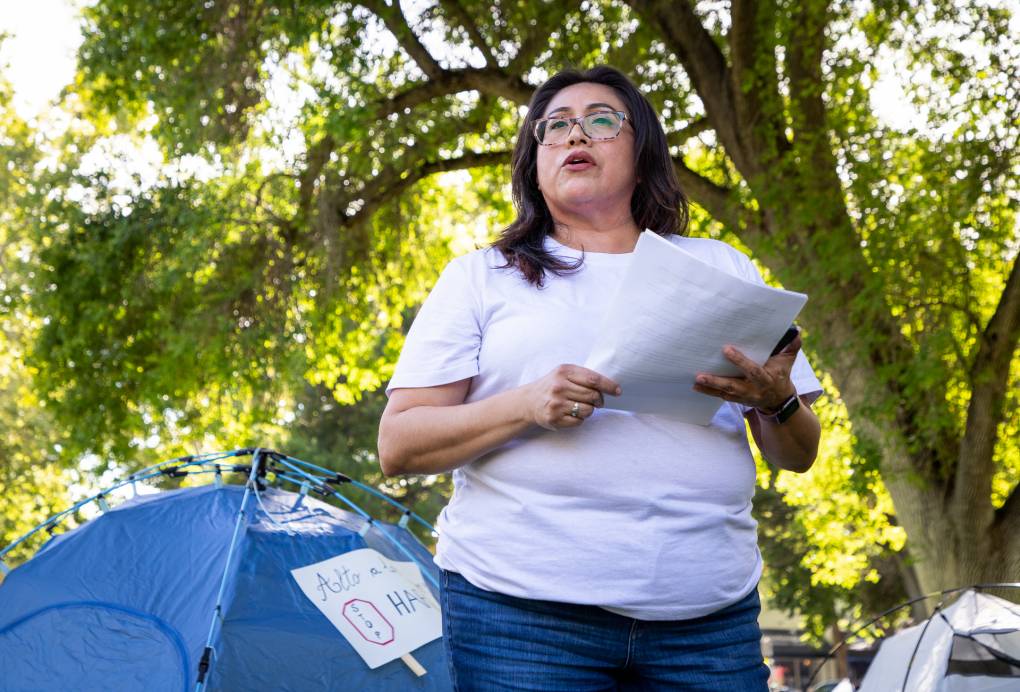
"caption": "Betty Gabaldon, a tenant organizer with the East Bay Alliance for a Sustainable Economy, speaks during a rally and vigil in support of Concord's proposed tenant anti-harassment ordinance at Todos Santos Plaza in Concord on June 9, 2022. Gabaldon spoke about being evicted from her Concord apartment in 2016 after she and other tenants organized for better living conditions.",
"description": null,
"title": "RS56622_20220609_TenantsRally-14",
"credit": "Amaya Nicole Edwards/KQED",
"status": "inherit",
"altTag": "A middle-aged Latina with long, brown hair, tortoiseshell glasses, and matte red lipstick stands outside beneath a lush, green, backlit tree, wearing a white T-shirt and blue jeans, a gold ring on her right hand and a watch on her left wrist. She holds a sheaf of papers and what might be a phone in both hands as she speaks to what might be an unseen audience beyond and to the right of the camera. Behind her, to her left, is a dark blue tent with a handwritten sign on top. The words visible are \"Alto a ... \" on the top line and \"Stop ... \" on the bottom line. Behind her, to her right, is the top of a second, white tent. Barely visible in the background is what looks like a storefront, indicating this might be in a city park.",
"isLoading": false,
"fetchFailed": false
},
"news_11916850": {
"type": "attachments",
"id": "news_11916850",
"meta": {
"index": "attachments_1716263798",
"site": "news",
"id": "11916850",
"found": true
},
"parent": 11916729,
"imgSizes": {
"twentyfourteen-full-width": {
"file": "https://ww2.kqed.org/app/uploads/sites/10/2022/06/RS56053_20220402_SJFleaMarket_RamosWhites-07-2-qut-1038x576.jpg",
"width": 1038,
"mimeType": "image/jpeg",
"height": 576
},
"thumbnail": {
"file": "https://ww2.kqed.org/app/uploads/sites/10/2022/06/RS56053_20220402_SJFleaMarket_RamosWhites-07-2-qut-160x107.jpg",
"width": 160,
"mimeType": "image/jpeg",
"height": 107
},
"post-thumbnail": {
"file": "https://ww2.kqed.org/app/uploads/sites/10/2022/06/RS56053_20220402_SJFleaMarket_RamosWhites-07-2-qut-672x372.jpg",
"width": 672,
"mimeType": "image/jpeg",
"height": 372
},
"kqedFullSize": {
"file": "https://ww2.kqed.org/app/uploads/sites/10/2022/06/RS56053_20220402_SJFleaMarket_RamosWhites-07-2-qut.jpg",
"width": 1920,
"height": 1280
},
"large": {
"file": "https://ww2.kqed.org/app/uploads/sites/10/2022/06/RS56053_20220402_SJFleaMarket_RamosWhites-07-2-qut-1020x680.jpg",
"width": 1020,
"mimeType": "image/jpeg",
"height": 680
},
"1536x1536": {
"file": "https://ww2.kqed.org/app/uploads/sites/10/2022/06/RS56053_20220402_SJFleaMarket_RamosWhites-07-2-qut-1536x1024.jpg",
"width": 1536,
"mimeType": "image/jpeg",
"height": 1024
},
"medium": {
"file": "https://ww2.kqed.org/app/uploads/sites/10/2022/06/RS56053_20220402_SJFleaMarket_RamosWhites-07-2-qut-800x533.jpg",
"width": 800,
"mimeType": "image/jpeg",
"height": 533
}
},
"publishDate": 1654903337,
"modified": 1655152356,
"caption": "Katrina Ramos White closes up the vending stall she runs with her husband on April 2, 2022. Ramos White took over the family business in 2020 after her parents retired.",
"description": null,
"title": "RS56053_20220402_SJFleaMarket_RamosWhites-07-2-qut",
"credit": "Amaya Edwards/KQED",
"status": "inherit",
"altTag": null,
"isLoading": false,
"fetchFailed": false
},
"news_11914875": {
"type": "attachments",
"id": "news_11914875",
"meta": {
"index": "attachments_1716263798",
"site": "news",
"id": "11914875",
"found": true
},
"parent": 11914873,
"imgSizes": {
"twentyfourteen-full-width": {
"file": "https://ww2.kqed.org/app/uploads/sites/10/2022/05/RS16522_GettyImages-73453883-qut-1038x576.jpg",
"width": 1038,
"mimeType": "image/jpeg",
"height": 576
},
"thumbnail": {
"file": "https://ww2.kqed.org/app/uploads/sites/10/2022/05/RS16522_GettyImages-73453883-qut-160x107.jpg",
"width": 160,
"mimeType": "image/jpeg",
"height": 107
},
"post-thumbnail": {
"file": "https://ww2.kqed.org/app/uploads/sites/10/2022/05/RS16522_GettyImages-73453883-qut-672x372.jpg",
"width": 672,
"mimeType": "image/jpeg",
"height": 372
},
"kqedFullSize": {
"file": "https://ww2.kqed.org/app/uploads/sites/10/2022/05/RS16522_GettyImages-73453883-qut.jpg",
"width": 1920,
"height": 1283
},
"large": {
"file": "https://ww2.kqed.org/app/uploads/sites/10/2022/05/RS16522_GettyImages-73453883-qut-1020x682.jpg",
"width": 1020,
"mimeType": "image/jpeg",
"height": 682
},
"1536x1536": {
"file": "https://ww2.kqed.org/app/uploads/sites/10/2022/05/RS16522_GettyImages-73453883-qut-1536x1026.jpg",
"width": 1536,
"mimeType": "image/jpeg",
"height": 1026
},
"medium": {
"file": "https://ww2.kqed.org/app/uploads/sites/10/2022/05/RS16522_GettyImages-73453883-qut-800x535.jpg",
"width": 800,
"mimeType": "image/jpeg",
"height": 535
}
},
"publishDate": 1653338089,
"modified": 1667914436,
"caption": null,
"description": "A man walks by two homeless people sleeping in the park across from San Francisco city hall February 28, 2007 in San Francisco, California. Governor Gavin Newsom's CARE Court proposal aims to get 7,000 to 12,000 people with sever mental illness into court-ordered treatment programs, including many who are experiencing homelessness. (Justin Sullivan/Getty Images)",
"title": null,
"credit": "Justin Sullivan/Getty Images",
"status": "inherit",
"altTag": "Daytime in San Francisco's Civic Center Plaza, with the monolithic Bill Graham Auditorium (a block-long, maybe two-story building with a cement brick face) as the backdrop. A man strides between the trunks of two trees, his long shadow falling behind him on one of them, toward two figures lying on the sidewalk, at the edge of a green lawn.",
"isLoading": false,
"fetchFailed": false
},
"news_11904436": {
"type": "attachments",
"id": "news_11904436",
"meta": {
"index": "attachments_1716263798",
"site": "news",
"id": "11904436",
"found": true
},
"parent": 11904356,
"imgSizes": {
"twentyfourteen-full-width": {
"file": "https://ww2.kqed.org/app/uploads/sites/10/2022/02/GettyImages-1236267426-1038x576.jpg",
"width": 1038,
"mimeType": "image/jpeg",
"height": 576
},
"thumbnail": {
"file": "https://ww2.kqed.org/app/uploads/sites/10/2022/02/GettyImages-1236267426-160x107.jpg",
"width": 160,
"mimeType": "image/jpeg",
"height": 107
},
"post-thumbnail": {
"file": "https://ww2.kqed.org/app/uploads/sites/10/2022/02/GettyImages-1236267426-672x372.jpg",
"width": 672,
"mimeType": "image/jpeg",
"height": 372
},
"kqedFullSize": {
"file": "https://ww2.kqed.org/app/uploads/sites/10/2022/02/GettyImages-1236267426-scaled-e1652820336498.jpg",
"width": 1920,
"height": 1280
},
"2048x2048": {
"file": "https://ww2.kqed.org/app/uploads/sites/10/2022/02/GettyImages-1236267426-2048x1365.jpg",
"width": 2048,
"mimeType": "image/jpeg",
"height": 1365
},
"large": {
"file": "https://ww2.kqed.org/app/uploads/sites/10/2022/02/GettyImages-1236267426-1020x680.jpg",
"width": 1020,
"mimeType": "image/jpeg",
"height": 680
},
"1536x1536": {
"file": "https://ww2.kqed.org/app/uploads/sites/10/2022/02/GettyImages-1236267426-1536x1024.jpg",
"width": 1536,
"mimeType": "image/jpeg",
"height": 1024
},
"full-width": {
"file": "https://ww2.kqed.org/app/uploads/sites/10/2022/02/GettyImages-1236267426-1920x1280.jpg",
"width": 1920,
"mimeType": "image/jpeg",
"height": 1280
},
"medium": {
"file": "https://ww2.kqed.org/app/uploads/sites/10/2022/02/GettyImages-1236267426-800x533.jpg",
"width": 800,
"mimeType": "image/jpeg",
"height": 533
}
},
"publishDate": 1644288136,
"modified": 1671482744,
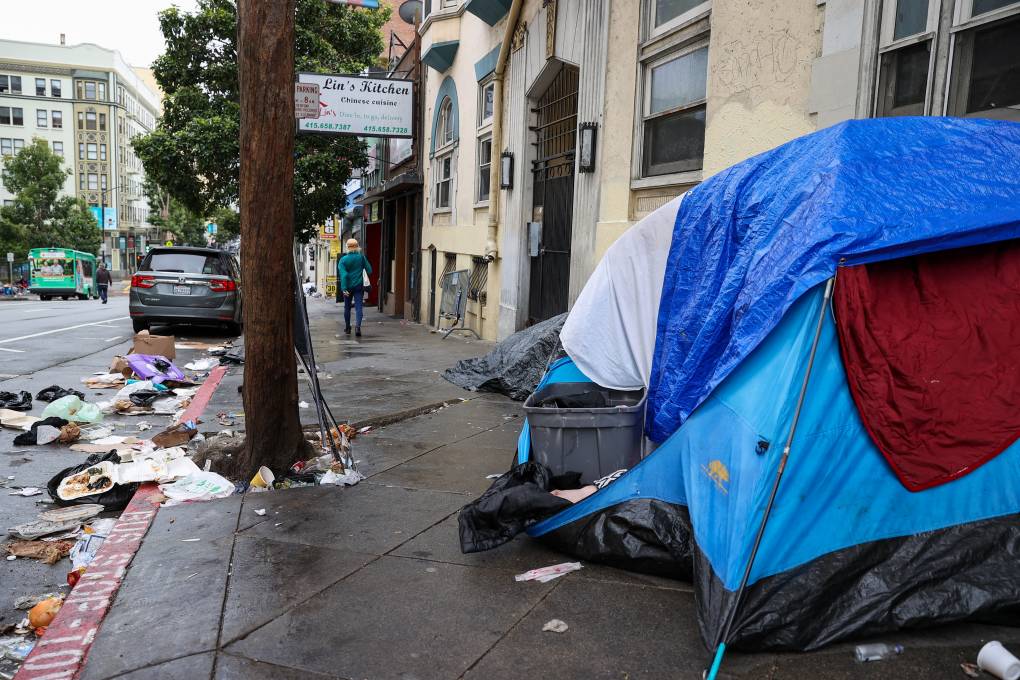
"caption": "An encampment of unhoused people on the streets of the Tenderloin in San Francisco on Oct. 30, 2021. The Biden administration has announced a new federal initiative to combat homelessness.",
"description": "An encampment of unhoused people on the streets of the Tenderloin in San Francisco on October 30, 2021.",
"title": "Homelessness in San Francisco",
"credit": "Tayfun Coskun/Anadolu Agency via Getty Images",
"status": "inherit",
"altTag": "A blue tent has been set up along the wall of a building on a rainy sidewalk on a busy city street. The parking spaces nearest the tent are filled with trash – plastic bags, open takeout containers full of food, a paper cup – and additional trash is piled at the base of a tree next to the tent. In the background, a person in a green jacket walks away down the street.",
"isLoading": false,
"fetchFailed": false
},
"news_11837953": {
"type": "attachments",
"id": "news_11837953",
"meta": {
"index": "attachments_1716263798",
"site": "news",
"id": "11837953",
"found": true
},
"parent": 11837939,
"imgSizes": {
"apple_news_ca_square_4_0": {
"file": "https://ww2.kqed.org/app/uploads/sites/10/2020/09/RS44904_SOLD-OUT-Web-Banners__Tune-In_656x336-sfi-470x328.jpg",
"width": 470,
"mimeType": "image/jpeg",
"height": 328
},
"thumbnail": {
"file": "https://ww2.kqed.org/app/uploads/sites/10/2020/09/RS44904_SOLD-OUT-Web-Banners__Tune-In_656x336-sfi-160x82.jpg",
"width": 160,
"mimeType": "image/jpeg",
"height": 82
},
"kqedFullSize": {
"file": "https://ww2.kqed.org/app/uploads/sites/10/2020/09/RS44904_SOLD-OUT-Web-Banners__Tune-In_656x336-sfi.jpg",
"width": 640,
"height": 328
},
"apple_news_ca_landscape_4_7": {
"file": "https://ww2.kqed.org/app/uploads/sites/10/2020/09/RS44904_SOLD-OUT-Web-Banners__Tune-In_656x336-sfi-632x328.jpg",
"width": 632,
"mimeType": "image/jpeg",
"height": 328
},
"apple_news_ca_portrait_4_7": {
"file": "https://ww2.kqed.org/app/uploads/sites/10/2020/09/RS44904_SOLD-OUT-Web-Banners__Tune-In_656x336-sfi-414x328.jpg",
"width": 414,
"mimeType": "image/jpeg",
"height": 328
},
"apple_news_ca_square_4_7": {
"file": "https://ww2.kqed.org/app/uploads/sites/10/2020/09/RS44904_SOLD-OUT-Web-Banners__Tune-In_656x336-sfi-550x328.jpg",
"width": 550,
"mimeType": "image/jpeg",
"height": 328
},
"apple_news_ca_landscape_4_0": {
"file": "https://ww2.kqed.org/app/uploads/sites/10/2020/09/RS44904_SOLD-OUT-Web-Banners__Tune-In_656x336-sfi-536x328.jpg",
"width": 536,
"mimeType": "image/jpeg",
"height": 328
},
"apple_news_ca_portrait_4_0": {
"file": "https://ww2.kqed.org/app/uploads/sites/10/2020/09/RS44904_SOLD-OUT-Web-Banners__Tune-In_656x336-sfi-354x328.jpg",
"width": 354,
"mimeType": "image/jpeg",
"height": 328
}
},
"publishDate": 1600132494,
"modified": 1600132530,
"caption": null,
"description": "This is the podcast banner for SOLD OUT from KQED. ",
"title": "RS44904_SOLD-OUT-Web-Banners__Tune-In_656x336-sfi",
"credit": "KQED",
"status": "inherit",
"isLoading": false,
"fetchFailed": false
},
"news_11909167": {
"type": "attachments",
"id": "news_11909167",
"meta": {
"index": "attachments_1716263798",
"site": "news",
"id": "11909167",
"found": true
},
"parent": 11909141,
"imgSizes": {
"twentyfourteen-full-width": {
"file": "https://cdn.kqed.org/wp-content/uploads/sites/10/2022/03/RS50490_007_SanFrancisco_Housing_07292021-qut-1038x576.jpg",
"width": 1038,
"mimeType": "image/jpeg",
"height": 576
},
"thumbnail": {
"file": "https://cdn.kqed.org/wp-content/uploads/sites/10/2022/03/RS50490_007_SanFrancisco_Housing_07292021-qut-160x107.jpg",
"width": 160,
"mimeType": "image/jpeg",
"height": 107
},
"post-thumbnail": {
"file": "https://cdn.kqed.org/wp-content/uploads/sites/10/2022/03/RS50490_007_SanFrancisco_Housing_07292021-qut-672x372.jpg",
"width": 672,
"mimeType": "image/jpeg",
"height": 372
},
"kqedFullSize": {
"file": "https://cdn.kqed.org/wp-content/uploads/sites/10/2022/03/RS50490_007_SanFrancisco_Housing_07292021-qut.jpg",
"width": 1920,
"height": 1280
},
"large": {
"file": "https://cdn.kqed.org/wp-content/uploads/sites/10/2022/03/RS50490_007_SanFrancisco_Housing_07292021-qut-1020x680.jpg",
"width": 1020,
"mimeType": "image/jpeg",
"height": 680
},
"1536x1536": {
"file": "https://cdn.kqed.org/wp-content/uploads/sites/10/2022/03/RS50490_007_SanFrancisco_Housing_07292021-qut-1536x1024.jpg",
"width": 1536,
"mimeType": "image/jpeg",
"height": 1024
},
"medium": {
"file": "https://cdn.kqed.org/wp-content/uploads/sites/10/2022/03/RS50490_007_SanFrancisco_Housing_07292021-qut-800x533.jpg",
"width": 800,
"mimeType": "image/jpeg",
"height": 533
}
},
"publishDate": 1648154076,
"modified": 1714503292,
"caption": "A 'For Rent' sign hangs in the window of an apartment building in Nob Hill in San Francisco on July 29, 2021.",
"description": "A 'For Rent' sign hangs in the window of an apartment building in Nob Hill in San Francisco on July 29, 2021. In the first full year of the pandemic, San Francisco, New York, Los Angeles and Chicago saw the greatest population losses in the nation, according to data from the U.S. Census Bureau released Thursday.",
"title": "RS50490_007_SanFrancisco_Housing_07292021-qut",
"credit": "Beth LaBerge/KQED",
"status": "inherit",
"altTag": "A red 'for rent' sign hangs in the window of a classic SF Victorian building, with the downtown skyline in the background.",
"isLoading": false,
"fetchFailed": false
},
"news_11908810": {
"type": "attachments",
"id": "news_11908810",
"meta": {
"index": "attachments_1716263798",
"site": "news",
"id": "11908810",
"found": true
},
"parent": 11908640,
"imgSizes": {
"twentyfourteen-full-width": {
"file": "https://ww2.kqed.org/app/uploads/sites/10/2022/03/pexels-thuongdaihua-4203996-1038x576.png",
"width": 1038,
"mimeType": "image/png",
"height": 576
},
"thumbnail": {
"file": "https://ww2.kqed.org/app/uploads/sites/10/2022/03/pexels-thuongdaihua-4203996-160x107.png",
"width": 160,
"mimeType": "image/png",
"height": 107
},
"post-thumbnail": {
"file": "https://ww2.kqed.org/app/uploads/sites/10/2022/03/pexels-thuongdaihua-4203996-672x372.png",
"width": 672,
"mimeType": "image/png",
"height": 372
},
"kqedFullSize": {
"file": "https://ww2.kqed.org/app/uploads/sites/10/2022/03/pexels-thuongdaihua-4203996.png",
"width": 1920,
"height": 1280
},
"large": {
"file": "https://ww2.kqed.org/app/uploads/sites/10/2022/03/pexels-thuongdaihua-4203996-1020x680.png",
"width": 1020,
"mimeType": "image/png",
"height": 680
},
"1536x1536": {
"file": "https://ww2.kqed.org/app/uploads/sites/10/2022/03/pexels-thuongdaihua-4203996-1536x1024.png",
"width": 1536,
"mimeType": "image/png",
"height": 1024
},
"medium": {
"file": "https://ww2.kqed.org/app/uploads/sites/10/2022/03/pexels-thuongdaihua-4203996-800x533.png",
"width": 800,
"mimeType": "image/png",
"height": 533
}
},
"publishDate": 1647903040,
"modified": 1648851467,
"caption": "Wondering how long COVID rent relief takes to process? You're one of hundreds of thousands of people in the same situation across California right now.",
"description": null,
"title": "pexels-thuongdaihua-4203996",
"credit": "ThuongDaiHua/Pexels",
"status": "inherit",
"altTag": "An Asian man wearing a black hoodie and a blue cloth face mask, with sunglasses balanced on the top of his head, gazes at a cellphone he holds in both hands",
"isLoading": false,
"fetchFailed": false
},
"news_11909296": {
"type": "attachments",
"id": "news_11909296",
"meta": {
"index": "attachments_1716263798",
"site": "news",
"id": "11909296",
"found": true
},
"parent": 11909254,
"imgSizes": {
"twentyfourteen-full-width": {
"file": "https://ww2.kqed.org/app/uploads/sites/10/2022/03/RS46925_034_SanJose_AntiEvictionProtest_01272021-qut-1038x576.jpg",
"width": 1038,
"mimeType": "image/jpeg",
"height": 576
},
"thumbnail": {
"file": "https://ww2.kqed.org/app/uploads/sites/10/2022/03/RS46925_034_SanJose_AntiEvictionProtest_01272021-qut-160x107.jpg",
"width": 160,
"mimeType": "image/jpeg",
"height": 107
},
"post-thumbnail": {
"file": "https://ww2.kqed.org/app/uploads/sites/10/2022/03/RS46925_034_SanJose_AntiEvictionProtest_01272021-qut-672x372.jpg",
"width": 672,
"mimeType": "image/jpeg",
"height": 372
},
"kqedFullSize": {
"file": "https://ww2.kqed.org/app/uploads/sites/10/2022/03/RS46925_034_SanJose_AntiEvictionProtest_01272021-qut.jpg",
"width": 1920,
"height": 1280
},
"large": {
"file": "https://ww2.kqed.org/app/uploads/sites/10/2022/03/RS46925_034_SanJose_AntiEvictionProtest_01272021-qut-1020x680.jpg",
"width": 1020,
"mimeType": "image/jpeg",
"height": 680
},
"1536x1536": {
"file": "https://ww2.kqed.org/app/uploads/sites/10/2022/03/RS46925_034_SanJose_AntiEvictionProtest_01272021-qut-1536x1024.jpg",
"width": 1536,
"mimeType": "image/jpeg",
"height": 1024
},
"medium": {
"file": "https://ww2.kqed.org/app/uploads/sites/10/2022/03/RS46925_034_SanJose_AntiEvictionProtest_01272021-qut-800x533.jpg",
"width": 800,
"mimeType": "image/jpeg",
"height": 533
}
},
"publishDate": 1648234367,
"modified": 1648243103,
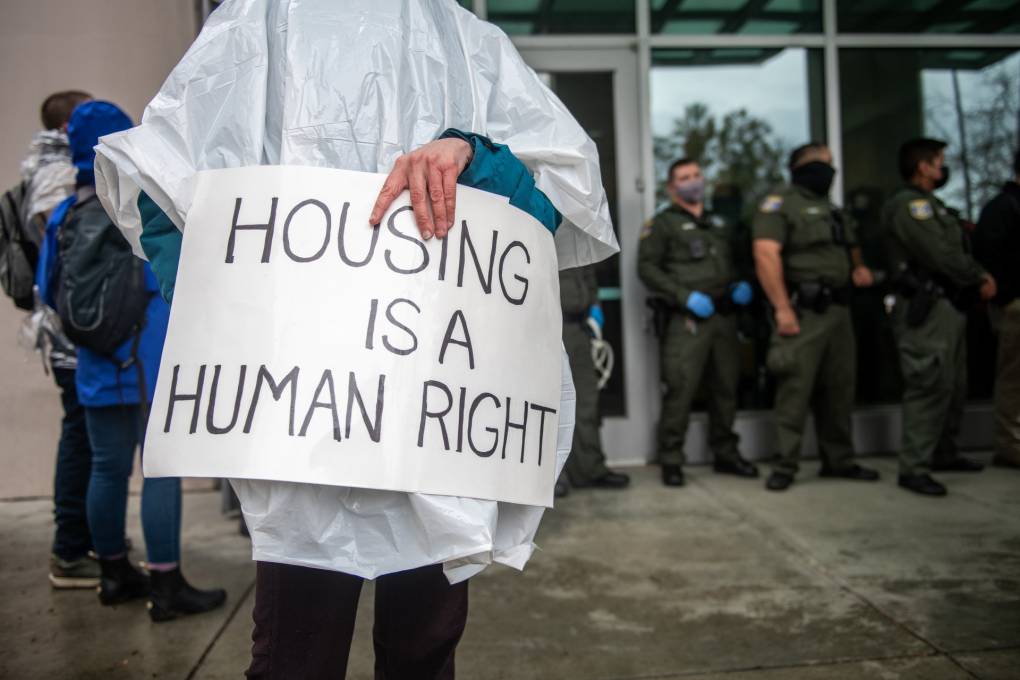
"caption": "A demonstrator holds a sign in front of the Santa Clara County Superior Court in San Jose on Jan. 27, 2021, during a protest calling for stronger eviction protections in California. Hundreds of thousands of California renters facing eviction could get another three months of protection under a bill introduced Thursday.",
"description": null,
"title": "RS46925_034_SanJose_AntiEvictionProtest_01272021-qut",
"credit": "Beth LaBerge/KQED",
"status": "inherit",
"altTag": "A demonstrator holds a sign that says 'Housing Is A Human Right'",
"isLoading": false,
"fetchFailed": false
},
"news_11889787": {
"type": "attachments",
"id": "news_11889787",
"meta": {
"index": "attachments_1716263798",
"site": "news",
"id": "11889787",
"found": true
},
"parent": 11889738,
"imgSizes": {
"twentyfourteen-full-width": {
"file": "https://ww2.kqed.org/app/uploads/sites/10/2021/09/pexels-andrew-neel-4134784-1038x576.jpg",
"width": 1038,
"mimeType": "image/jpeg",
"height": 576
},
"thumbnail": {
"file": "https://ww2.kqed.org/app/uploads/sites/10/2021/09/pexels-andrew-neel-4134784-160x107.jpg",
"width": 160,
"mimeType": "image/jpeg",
"height": 107
},
"post-thumbnail": {
"file": "https://ww2.kqed.org/app/uploads/sites/10/2021/09/pexels-andrew-neel-4134784-672x372.jpg",
"width": 672,
"mimeType": "image/jpeg",
"height": 372
},
"kqedFullSize": {
"file": "https://ww2.kqed.org/app/uploads/sites/10/2021/09/pexels-andrew-neel-4134784.jpg",
"width": 1920,
"height": 1279
},
"large": {
"file": "https://ww2.kqed.org/app/uploads/sites/10/2021/09/pexels-andrew-neel-4134784-1020x679.jpg",
"width": 1020,
"mimeType": "image/jpeg",
"height": 679
},
"1536x1536": {
"file": "https://ww2.kqed.org/app/uploads/sites/10/2021/09/pexels-andrew-neel-4134784-1536x1023.jpg",
"width": 1536,
"mimeType": "image/jpeg",
"height": 1023
},
"medium": {
"file": "https://ww2.kqed.org/app/uploads/sites/10/2021/09/pexels-andrew-neel-4134784-800x533.jpg",
"width": 800,
"mimeType": "image/jpeg",
"height": 533
}
},
"publishDate": 1632438367,
"modified": 1650036197,
"caption": "Low income Californians could get some tax relief with a legislative proposal to boost benefits for renters. ",
"description": null,
"title": "rent-relief-eviction-moratorium",
"credit": "Andrew Neel/Pexels",
"status": "inherit",
"altTag": "A person in a gray sweater sits cross-legged on hardwood floors, using a laptop computer",
"isLoading": false,
"fetchFailed": false
},
"news_11908295": {
"type": "attachments",
"id": "news_11908295",
"meta": {
"index": "attachments_1716263798",
"site": "news",
"id": "11908295",
"found": true
},
"parent": 11908289,
"imgSizes": {
"twentyfourteen-full-width": {
"file": "https://ww2.kqed.org/app/uploads/sites/10/2022/03/limby_031522_final-1038x576.png",
"width": 1038,
"mimeType": "image/png",
"height": 576
},
"thumbnail": {
"file": "https://ww2.kqed.org/app/uploads/sites/10/2022/03/limby_031522_final-160x112.png",
"width": 160,
"mimeType": "image/png",
"height": 112
},
"post-thumbnail": {
"file": "https://ww2.kqed.org/app/uploads/sites/10/2022/03/limby_031522_final-672x372.png",
"width": 672,
"mimeType": "image/png",
"height": 372
},
"kqedFullSize": {
"file": "https://ww2.kqed.org/app/uploads/sites/10/2022/03/limby_031522_final.png",
"width": 1920,
"height": 1341
},
"large": {
"file": "https://ww2.kqed.org/app/uploads/sites/10/2022/03/limby_031522_final-1020x712.png",
"width": 1020,
"mimeType": "image/png",
"height": 712
},
"1536x1536": {
"file": "https://ww2.kqed.org/app/uploads/sites/10/2022/03/limby_031522_final-1536x1073.png",
"width": 1536,
"mimeType": "image/png",
"height": 1073
},
"medium": {
"file": "https://ww2.kqed.org/app/uploads/sites/10/2022/03/limby_031522_final-800x559.png",
"width": 800,
"mimeType": "image/png",
"height": 559
}
},
"publishDate": 1647386588,
"modified": 1647386659,
"caption": null,
"description": null,
"title": "limby_031522_final",
"credit": null,
"status": "inherit",
"altTag": "Cartoon: California's bear flag shows the bear holding a \"LIMBY\" sign that reads, \"learning in my backyard\" while the Cal mascot, Oski, smiles.",
"isLoading": false,
"fetchFailed": false
},
"news_11908146": {
"type": "attachments",
"id": "news_11908146",
"meta": {
"index": "attachments_1716263798",
"site": "news",
"id": "11908146",
"found": true
},
"parent": 11907727,
"imgSizes": {
"twentyfourteen-full-width": {
"file": "https://ww2.kqed.org/app/uploads/sites/10/2022/03/RS54278_001_KQED_Kemanie_03112022-qut-1038x576.jpg",
"width": 1038,
"mimeType": "image/jpeg",
"height": 576
},
"thumbnail": {
"file": "https://ww2.kqed.org/app/uploads/sites/10/2022/03/RS54278_001_KQED_Kemanie_03112022-qut-160x107.jpg",
"width": 160,
"mimeType": "image/jpeg",
"height": 107
},
"post-thumbnail": {
"file": "https://ww2.kqed.org/app/uploads/sites/10/2022/03/RS54278_001_KQED_Kemanie_03112022-qut-672x372.jpg",
"width": 672,
"mimeType": "image/jpeg",
"height": 372
},
"kqedFullSize": {
"file": "https://ww2.kqed.org/app/uploads/sites/10/2022/03/RS54278_001_KQED_Kemanie_03112022-qut.jpg",
"width": 1920,
"height": 1280
},
"large": {
"file": "https://ww2.kqed.org/app/uploads/sites/10/2022/03/RS54278_001_KQED_Kemanie_03112022-qut-1020x680.jpg",
"width": 1020,
"mimeType": "image/jpeg",
"height": 680
},
"1536x1536": {
"file": "https://ww2.kqed.org/app/uploads/sites/10/2022/03/RS54278_001_KQED_Kemanie_03112022-qut-1536x1024.jpg",
"width": 1536,
"mimeType": "image/jpeg",
"height": 1024
},
"medium": {
"file": "https://ww2.kqed.org/app/uploads/sites/10/2022/03/RS54278_001_KQED_Kemanie_03112022-qut-800x533.jpg",
"width": 800,
"mimeType": "image/jpeg",
"height": 533
}
},
"publishDate": 1647295226,
"modified": 1647303572,
"caption": "Kemanie and his family rent their home in this Novato neighborhood with the help of a Section 8 housing voucher. Like many, they were stuck on a waiting list for years before they were able to get a voucher.",
"description": null,
"title": "Kemanie poses for a portrait in his Novato neighborhood on March 11, 2022.",
"credit": "Beth LaBerge/KQED",
"status": "inherit",
"altTag": null,
"isLoading": false,
"fetchFailed": false
},
"news_11907094": {
"type": "attachments",
"id": "news_11907094",
"meta": {
"index": "attachments_1716263798",
"site": "news",
"id": "11907094",
"found": true
},
"parent": 11907091,
"imgSizes": {
"twentyfourteen-full-width": {
"file": "https://ww2.kqed.org/app/uploads/sites/10/2022/03/IMG_7976-1-1038x576.jpg",
"width": 1038,
"mimeType": "image/jpeg",
"height": 576
},
"thumbnail": {
"file": "https://ww2.kqed.org/app/uploads/sites/10/2022/03/IMG_7976-1-160x107.jpg",
"width": 160,
"mimeType": "image/jpeg",
"height": 107
},
"post-thumbnail": {
"file": "https://ww2.kqed.org/app/uploads/sites/10/2022/03/IMG_7976-1-672x372.jpg",
"width": 672,
"mimeType": "image/jpeg",
"height": 372
},
"kqedFullSize": {
"file": "https://ww2.kqed.org/app/uploads/sites/10/2022/03/IMG_7976-1.jpg",
"width": 5472,
"height": 3648
},
"2048x2048": {
"file": "https://ww2.kqed.org/app/uploads/sites/10/2022/03/IMG_7976-1-2048x1365.jpg",
"width": 2048,
"mimeType": "image/jpeg",
"height": 1365
},
"large": {
"file": "https://ww2.kqed.org/app/uploads/sites/10/2022/03/IMG_7976-1-1020x680.jpg",
"width": 1020,
"mimeType": "image/jpeg",
"height": 680
},
"1536x1536": {
"file": "https://ww2.kqed.org/app/uploads/sites/10/2022/03/IMG_7976-1-1536x1024.jpg",
"width": 1536,
"mimeType": "image/jpeg",
"height": 1024
},
"full-width": {
"file": "https://ww2.kqed.org/app/uploads/sites/10/2022/03/IMG_7976-1-1920x1280.jpg",
"width": 1920,
"mimeType": "image/jpeg",
"height": 1280
},
"medium": {
"file": "https://ww2.kqed.org/app/uploads/sites/10/2022/03/IMG_7976-1-800x533.jpg",
"width": 800,
"mimeType": "image/jpeg",
"height": 533
}
},
"publishDate": 1646337409,
"modified": 1646337512,
"caption": "Fresno renter Jessica Ramirez has an eviction on her record and knows how hard it can be to find new housing. She's now part of a growing movement of renters in Fresno pushing for a right to counsel.",
"description": null,
"title": "SO S2 EP 4: IMG_7976 (1)",
"credit": "Alex Hall/KQED",
"status": "inherit",
"altTag": "A woman stands in a park, wearing a green shirt that says, \"#HomesGuarantee!\"\"",
"isLoading": false,
"fetchFailed": false
}
},
"audioPlayerReducer": {
"postId": "stream_live",
"isPaused": true,
"isPlaying": false,
"pfsActive": false,
"pledgeModalIsOpen": true,
"playerDrawerIsOpen": false,
"liveAudioPlayStartedAt": 0,
"liveAudioPlayContext": ""
},
"authorsReducer": {
"byline_news_11909254": {
"type": "authors",
"id": "byline_news_11909254",
"meta": {
"override": true
},
"slug": "byline_news_11909254",
"name": "Adam Beam\u003cbr>The Associated Press",
"isLoading": false
},
"matthewgreen": {
"type": "authors",
"id": "1263",
"meta": {
"index": "authors_1716337520",
"id": "1263",
"found": true
},
"name": "Matthew Green",
"firstName": "Matthew",
"lastName": "Green",
"slug": "matthewgreen",
"email": "mgreen@kqed.org",
"display_author_email": false,
"staff_mastheads": [],
"title": "KQED Editor/Reporter",
"bio": "Matthew Green is a digital media producer for KQED News. He previously produced \u003ca href=\"http://www.kqed.org/lowdown\">The Lowdown\u003c/a>, KQED’s multimedia news education blog. Matthew's written for numerous Bay Area publications, including the Oakland Tribune and San Francisco Chronicle. He also taught journalism classes at Fremont High School in East Oakland.\r\n\r\nEmail: mgreen@kqed.org; Twitter: @MGreenKQED",
"avatar": "https://secure.gravatar.com/avatar/3bf498d1267ca02c8494f33d8cfc575e?s=600&d=blank&r=g",
"twitter": "MGreenKQED",
"facebook": null,
"instagram": null,
"linkedin": null,
"sites": [
{
"site": "news",
"roles": []
},
{
"site": "lowdown",
"roles": []
},
{
"site": "science",
"roles": []
},
{
"site": "education",
"roles": []
},
{
"site": "quest",
"roles": []
},
{
"site": "liveblog",
"roles": []
}
],
"headData": {
"title": "Matthew Green | KQED",
"description": "KQED Editor/Reporter",
"ogImgSrc": "https://secure.gravatar.com/avatar/3bf498d1267ca02c8494f33d8cfc575e?s=600&d=blank&r=g",
"twImgSrc": "https://secure.gravatar.com/avatar/3bf498d1267ca02c8494f33d8cfc575e?s=600&d=blank&r=g"
},
"isLoading": false,
"link": "/author/matthewgreen"
},
"ekelly": {
"type": "authors",
"id": "3211",
"meta": {
"index": "authors_1716337520",
"id": "3211",
"found": true
},
"name": "Erika Kelly",
"firstName": "Erika",
"lastName": "Kelly",
"slug": "ekelly",
"email": "ekelly@KQED.org",
"display_author_email": true,
"staff_mastheads": [
"news"
],
"title": "Deputy Managing Editor",
"bio": "Erika Kelly is deputy managing editor of KQED's newsroom, working with teams covering housing, climate, health, labor and the arts. Previously, she was the senior editor of KQED’s housing affordability desk, leading the team that produced the award winning podcast Sold Out: Rethinking Housing in America. She is a graduate of the Medill School of Journalism and a native of the Greater Chicagoland Area.",
"avatar": "https://secure.gravatar.com/avatar/3653973f475e2af06d52444628a0023a48f83905a9d7ce3a4e45e5ecebcb4230?s=600&d=blank&r=g",
"twitter": null,
"bluesky": null,
"facebook": null,
"instagram": null,
"linkedin": null,
"sites": [
{
"site": "",
"roles": [
"editor"
]
},
{
"site": "arts",
"roles": [
"administrator"
]
},
{
"site": "news",
"roles": [
"administrator"
]
},
{
"site": "science",
"roles": [
"administrator"
]
},
{
"site": "liveblog",
"roles": [
"administrator"
]
}
],
"headData": {
"title": "Erika Kelly | KQED",
"description": "Deputy Managing Editor",
"ogImgSrc": "https://secure.gravatar.com/avatar/3653973f475e2af06d52444628a0023a48f83905a9d7ce3a4e45e5ecebcb4230?s=600&d=blank&r=g",
"twImgSrc": "https://secure.gravatar.com/avatar/3653973f475e2af06d52444628a0023a48f83905a9d7ce3a4e45e5ecebcb4230?s=600&d=blank&r=g"
},
"isLoading": false,
"link": "/author/ekelly"
},
"markfiore": {
"type": "authors",
"id": "3236",
"meta": {
"index": "authors_1716337520",
"id": "3236",
"found": true
},
"name": "Mark Fiore",
"firstName": "Mark",
"lastName": "Fiore",
"slug": "markfiore",
"email": "mark@markfiore.com",
"display_author_email": false,
"staff_mastheads": [
"news"
],
"title": "KQED News Cartoonist",
"bio": "\u003ca href=\"http://www.MarkFiore.com\">MarkFiore.com\u003c/a> | \u003ca href=\"https://twitter.com/markfiore\">Follow on Twitter\u003c/a> | \u003ca href=\"https://www.facebook.com/pages/Mark-Fiore-Animated-Political-Cartoons/94451707396?ref=bookmarks\">Facebook\u003c/a> | \u003ca href=\"mailto:mark@markfiore.com\">email\u003c/a>\r\n\r\nPulitzer Prize-winner, Mark Fiore, who the Wall Street Journal has called “the undisputed guru of the form,” creates animated political cartoons in San Francisco, where his work has been featured regularly on the San Francisco Chronicle’s web site, SFGate.com. His work has appeared on Newsweek.com, Slate.com, CBSNews.com, MotherJones.com, DailyKos.com and NPR’s web site. Fiore’s political animation has appeared on CNN, Frontline, Bill Moyers Journal, Salon.com and cable and broadcast outlets across the globe.\r\n\r\nBeginning his professional life by drawing traditional political cartoons for newspapers, Fiore’s work appeared in publications ranging from the Washington Post to the Los Angeles Times. In the late 1990s, he began to experiment with animating political cartoons and, after a short stint at the San Jose Mercury News as their staff cartoonist, Fiore devoted all his energies to animation.\r\nGrowing up in California, Fiore also spent a good portion of his life in the backwoods of Idaho. It was this combination that shaped him politically. Mark majored in political science at Colorado College, where, in a perfect send-off for a cartoonist, he received his diploma in 1991 as commencement speaker Dick Cheney smiled approvingly.\r\nMark Fiore was awarded the Pulitzer Prize for political cartooning in 2010, a Robert F. Kennedy Journalism Award in 2004 and has twice received an Online Journalism Award for commentary from the Online News Association (2002, 2008). Fiore has received two awards for his work in new media from the National Cartoonists Society (2001, 2002), and in 2006 received The James Madison Freedom of Information Award from The Society of Professional Journalists.",
"avatar": "https://secure.gravatar.com/avatar/fc4e2a612b15b67bad0c6f0e1db4ca9b?s=600&d=blank&r=g",
"twitter": "MarkFiore",
"facebook": null,
"instagram": "https://www.instagram.com/markfiore/?hl=en",
"linkedin": null,
"sites": [
{
"site": "arts",
"roles": [
"contributor"
]
},
{
"site": "news",
"roles": [
"editor"
]
},
{
"site": "futureofyou",
"roles": [
"editor"
]
},
{
"site": "science",
"roles": [
"editor"
]
}
],
"headData": {
"title": "Mark Fiore | KQED",
"description": "KQED News Cartoonist",
"ogImgSrc": "https://secure.gravatar.com/avatar/fc4e2a612b15b67bad0c6f0e1db4ca9b?s=600&d=blank&r=g",
"twImgSrc": "https://secure.gravatar.com/avatar/fc4e2a612b15b67bad0c6f0e1db4ca9b?s=600&d=blank&r=g"
},
"isLoading": false,
"link": "/author/markfiore"
},
"carlysevern": {
"type": "authors",
"id": "3243",
"meta": {
"index": "authors_1716337520",
"id": "3243",
"found": true
},
"name": "Carly Severn",
"firstName": "Carly",
"lastName": "Severn",
"slug": "carlysevern",
"email": "csevern@kqed.org",
"display_author_email": false,
"staff_mastheads": [
"news"
],
"title": "Senior Editor, Audience News ",
"bio": "Carly is KQED's Senior Editor of Audience News on the Digital News team, and has reported for the California Report Magazine, Bay Curious and KQED Arts. She's formerly the host of \u003ca href=\"http://ww2.kqed.org/pop/category/the-cooler/\" rel=\"noopener noreferrer\">The Cooler\u003c/a> podcast.",
"avatar": "https://secure.gravatar.com/avatar/54037bf5c128fe678f0ef26cec97a93f2e7f220a22d7285703328f12c42c1b1d?s=600&d=blank&r=g",
"twitter": "teacupinthebay",
"bluesky": null,
"facebook": null,
"instagram": null,
"linkedin": null,
"sites": [
{
"site": "",
"roles": [
"editor"
]
},
{
"site": "arts",
"roles": [
"editor"
]
},
{
"site": "news",
"roles": [
"administrator"
]
},
{
"site": "pop",
"roles": [
"editor"
]
},
{
"site": "futureofyou",
"roles": [
"editor"
]
},
{
"site": "about",
"roles": [
"administrator"
]
},
{
"site": "mindshift",
"roles": [
"editor"
]
},
{
"site": "bayareabites",
"roles": [
"editor"
]
},
{
"site": "stateofhealth",
"roles": [
"editor"
]
},
{
"site": "science",
"roles": [
"editor"
]
},
{
"site": "food",
"roles": [
"contributor"
]
},
{
"site": "forum",
"roles": [
"editor"
]
},
{
"site": "perspectives",
"roles": [
"administrator"
]
},
{
"site": "liveblog",
"roles": [
"editor"
]
}
],
"headData": {
"title": "Carly Severn | KQED",
"description": "Senior Editor, Audience News ",
"ogImgSrc": "https://secure.gravatar.com/avatar/54037bf5c128fe678f0ef26cec97a93f2e7f220a22d7285703328f12c42c1b1d?s=600&d=blank&r=g",
"twImgSrc": "https://secure.gravatar.com/avatar/54037bf5c128fe678f0ef26cec97a93f2e7f220a22d7285703328f12c42c1b1d?s=600&d=blank&r=g"
},
"isLoading": false,
"link": "/author/carlysevern"
},
"katewolffe": {
"type": "authors",
"id": "11523",
"meta": {
"index": "authors_1716337520",
"id": "11523",
"found": true
},
"name": "Kate Wolffe",
"firstName": "Kate",
"lastName": "Wolffe",
"slug": "katewolffe",
"email": "kwolffe@kqed.org",
"display_author_email": true,
"staff_mastheads": [
"news"
],
"title": "KQED Reporter + Weekend Host",
"bio": "Kate Wolffe reports on local Bay Area happenings for KQED, and hosts the news on weekend afternoons. She joined KQED in 2018 as an intern on the Forum team, before moving to cover topics ranging from politics to criminal justice to homelessness. A Bay Area native and UC Berkeley graduate, Kate loves to discover new corners of the region.",
"avatar": "https://secure.gravatar.com/avatar/22455f14db824a03ee252f73052fe939?s=600&d=blank&r=g",
"twitter": "katewolffe",
"facebook": null,
"instagram": null,
"linkedin": null,
"sites": [
{
"site": "arts",
"roles": [
"editor"
]
},
{
"site": "news",
"roles": [
"author",
"edit_others_posts"
]
},
{
"site": "forum",
"roles": [
"editor"
]
}
],
"headData": {
"title": "Kate Wolffe | KQED",
"description": "KQED Reporter + Weekend Host",
"ogImgSrc": "https://secure.gravatar.com/avatar/22455f14db824a03ee252f73052fe939?s=600&d=blank&r=g",
"twImgSrc": "https://secure.gravatar.com/avatar/22455f14db824a03ee252f73052fe939?s=600&d=blank&r=g"
},
"isLoading": false,
"link": "/author/katewolffe"
},
"kmoghadam": {
"type": "authors",
"id": "11637",
"meta": {
"index": "authors_1716337520",
"id": "11637",
"found": true
},
"name": "Kyana Moghadam",
"firstName": "Kyana",
"lastName": "Moghadam",
"slug": "kmoghadam",
"email": "kmoghadam@kqed.org",
"display_author_email": false,
"staff_mastheads": [
"news"
],
"title": "Senior Producer ",
"bio": "Kyana Moghadam is a senior producer at KQED. Prior to joining KQED, she was an audio producer and editor with Al Jazeera, Jetty Studios, VOX Media, Democracy Now!, and Global Press.",
"avatar": "https://secure.gravatar.com/avatar/cdbd6cb0b9e99deaa9eb618abdba56f265d374a2c614710aebeb4e58decbc5f0?s=600&d=blank&r=g",
"twitter": null,
"bluesky": null,
"facebook": null,
"instagram": null,
"linkedin": "https://www.linkedin.com/in/kyanamoghadam/",
"sites": [
{
"site": "",
"roles": [
"editor"
]
},
{
"site": "arts",
"roles": [
"editor"
]
},
{
"site": "news",
"roles": [
"administrator"
]
},
{
"site": "pop",
"roles": [
"editor"
]
},
{
"site": "about",
"roles": [
"editor"
]
},
{
"site": "forum",
"roles": [
"editor"
]
},
{
"site": "perspectives",
"roles": [
"editor"
]
},
{
"site": "podcasts",
"roles": [
"administrator"
]
}
],
"headData": {
"title": "Kyana Moghadam | KQED",
"description": "Senior Producer ",
"ogImgSrc": "https://secure.gravatar.com/avatar/cdbd6cb0b9e99deaa9eb618abdba56f265d374a2c614710aebeb4e58decbc5f0?s=600&d=blank&r=g",
"twImgSrc": "https://secure.gravatar.com/avatar/cdbd6cb0b9e99deaa9eb618abdba56f265d374a2c614710aebeb4e58decbc5f0?s=600&d=blank&r=g"
},
"isLoading": false,
"link": "/author/kmoghadam"
},
"msolomon": {
"type": "authors",
"id": "11651",
"meta": {
"index": "authors_1716337520",
"id": "11651",
"found": true
},
"name": "Molly Solomon",
"firstName": "Molly",
"lastName": "Solomon",
"slug": "msolomon",
"email": "msolomon@KQED.org",
"display_author_email": false,
"staff_mastheads": [
"news"
],
"title": "Senior Editor",
"bio": "Molly Solomon is the senior editor of KQED's California Politics and Government Desk. Previously, she was the station's editor-at-large, with a focus on editing early childhood education, politics, and criminal justice. Before that, she managed and edited statewide election coverage for The California Newsroom, a collaboration of local public radio stations, CalMatters and NPR. Molly joined KQED in 2019 to launch the station’s housing affordability desk, where she reported on homelessness, evictions and is the co-host of KQED’s housing podcast, SOLD OUT: Rethinking Housing in America. Before that, she was the Southwest Washington Bureau Chief for Oregon Public Broadcasting and a reporter at Hawaii Public Radio. Her stories have aired on NPR’s \u003cem>Morning Edition\u003c/em>, \u003cem>All Things Considered\u003c/em>, \u003cem>Here & Now\u003c/em>, \u003cem>Science Friday\u003c/em> and \u003cem>Marketplace\u003c/em>. Molly's award-winning reporting has been honored by the Best of the West, Edward R. Murrow awards, Society of Professional Journalists, National Headliner Awards, and the Asian American Journalists Association. Born and raised in Berkeley, Molly is a big fan of burritos and her scruffy terrier, Ollie.",
"avatar": "https://secure.gravatar.com/avatar/9ad9794616923d81c9a79897161545bd?s=600&d=blank&r=g",
"twitter": "solomonout",
"facebook": null,
"instagram": null,
"linkedin": null,
"sites": [
{
"site": "news",
"roles": [
"editor"
]
},
{
"site": "science",
"roles": [
"editor"
]
}
],
"headData": {
"title": "Molly Solomon | KQED",
"description": "Senior Editor",
"ogImgSrc": "https://secure.gravatar.com/avatar/9ad9794616923d81c9a79897161545bd?s=600&d=blank&r=g",
"twImgSrc": "https://secure.gravatar.com/avatar/9ad9794616923d81c9a79897161545bd?s=600&d=blank&r=g"
},
"isLoading": false,
"link": "/author/msolomon"
},
"ebaldassari": {
"type": "authors",
"id": "11652",
"meta": {
"index": "authors_1716337520",
"id": "11652",
"found": true
},
"name": "Erin Baldassari",
"firstName": "Erin",
"lastName": "Baldassari",
"slug": "ebaldassari",
"email": "ebaldassari@KQED.org",
"display_author_email": true,
"staff_mastheads": [
"news"
],
"title": "Staff Writer",
"bio": "Erin Baldassari covers housing for KQED. She's a former print journalist and most recently worked as the transportation reporter for the \u003cem>Mercury News\u003c/em> and \u003cem>East Bay Times. \u003c/em>There, she focused on how the Bay Area’s housing shortage has changed the way people move around the region. She also served on the \u003cem>East Bay Times\u003c/em>’ 2017 Pulitzer Prize-winning team for coverage of the Ghost Ship Fire in Oakland. Prior to that, Erin worked as a breaking news and general assignment reporter for a variety of outlets in the Bay Area and the greater Boston area. A Tufts University alumna, Erin grew up in the foothills of the Sierra Nevada mountains and in Sonoma County. She is a life-long KQED listener.",
"avatar": "https://secure.gravatar.com/avatar/5e95cad64a8ca08288082212e199d2b0cbeb4fd8e8ef5339395f361032bbe005?s=600&d=blank&r=g",
"twitter": "e_baldi",
"bluesky": null,
"facebook": null,
"instagram": null,
"linkedin": null,
"sites": [
{
"site": "news",
"roles": [
"edit_others_posts",
"editor"
]
},
{
"site": "science",
"roles": [
"editor"
]
},
{
"site": "liveblog",
"roles": [
"editor"
]
}
],
"headData": {
"title": "Erin Baldassari | KQED",
"description": "Staff Writer",
"ogImgSrc": "https://secure.gravatar.com/avatar/5e95cad64a8ca08288082212e199d2b0cbeb4fd8e8ef5339395f361032bbe005?s=600&d=blank&r=g",
"twImgSrc": "https://secure.gravatar.com/avatar/5e95cad64a8ca08288082212e199d2b0cbeb4fd8e8ef5339395f361032bbe005?s=600&d=blank&r=g"
},
"isLoading": false,
"link": "/author/ebaldassari"
},
"abandlamudi": {
"type": "authors",
"id": "11672",
"meta": {
"index": "authors_1716337520",
"id": "11672",
"found": true
},
"name": "Adhiti Bandlamudi",
"firstName": "Adhiti",
"lastName": "Bandlamudi",
"slug": "abandlamudi",
"email": "abandlamudi@kqed.org",
"display_author_email": false,
"staff_mastheads": [
"news"
],
"title": "KQED Housing Reporter",
"bio": "Adhiti Bandlamudi reports for KQED's Housing desk. She focuses on how housing gets built across the Bay Area. Before joining KQED in 2020, she reported for WUNC in Durham, North Carolina, WABE in Atlanta, Georgia and Capital Public Radio in Sacramento. In 2017, she was awarded a Kroc Fellowship at NPR where she reported on everything from sprinkles to the Golden State Killer's arrest. When she's not reporting, she's baking new recipes in her kitchen or watching movies with friends and family. She's originally from Georgia and has strong opinions about Great British Bake Off.",
"avatar": "https://secure.gravatar.com/avatar/868129c8b257bb99a3500e2c86a65400?s=600&d=mm&r=g",
"twitter": "oddity_adhiti",
"facebook": null,
"instagram": null,
"linkedin": null,
"sites": [
{
"site": "arts",
"roles": [
"author"
]
},
{
"site": "news",
"roles": [
"editor"
]
},
{
"site": "liveblog",
"roles": [
"author"
]
}
],
"headData": {
"title": "Adhiti Bandlamudi | KQED",
"description": "KQED Housing Reporter",
"ogImgSrc": "https://secure.gravatar.com/avatar/868129c8b257bb99a3500e2c86a65400?s=600&d=mm&r=g",
"twImgSrc": "https://secure.gravatar.com/avatar/868129c8b257bb99a3500e2c86a65400?s=600&d=mm&r=g"
},
"isLoading": false,
"link": "/author/abandlamudi"
},
"ccabreralomeli": {
"type": "authors",
"id": "11708",
"meta": {
"index": "authors_1716337520",
"id": "11708",
"found": true
},
"name": "Carlos Cabrera-Lomelí",
"firstName": "Carlos",
"lastName": "Cabrera-Lomelí",
"slug": "ccabreralomeli",
"email": "ccabreralomeli@KQED.org",
"display_author_email": true,
"staff_mastheads": [
"news"
],
"title": "Community Reporter",
"bio": "Carlos Cabrera-Lomelí is a community reporter with KQED's digital engagement team. He also reports and co-produces for KQED's bilingual news hub KQED en Español. He grew up in San Francisco's Mission District and has previously worked with Univision, 48 Hills and REFORMA in Mexico City.",
"avatar": "https://secure.gravatar.com/avatar/c309be9665e484f887b818c89e273ecc673004f426f36b24d00a4d813a2e0518?s=600&d=blank&r=g",
"twitter": "@LomeliCabrera",
"bluesky": null,
"facebook": null,
"instagram": null,
"linkedin": null,
"sites": [
{
"site": "arts",
"roles": [
"editor"
]
},
{
"site": "news",
"roles": [
"editor"
]
},
{
"site": "about",
"roles": [
"editor"
]
},
{
"site": "science",
"roles": [
"editor"
]
},
{
"site": "perspectives",
"roles": [
"editor"
]
},
{
"site": "elections",
"roles": [
"editor"
]
},
{
"site": "liveblog",
"roles": [
"contributor"
]
}
],
"headData": {
"title": "Carlos Cabrera-Lomelí | KQED",
"description": "Community Reporter",
"ogImgSrc": "https://secure.gravatar.com/avatar/c309be9665e484f887b818c89e273ecc673004f426f36b24d00a4d813a2e0518?s=600&d=blank&r=g",
"twImgSrc": "https://secure.gravatar.com/avatar/c309be9665e484f887b818c89e273ecc673004f426f36b24d00a4d813a2e0518?s=600&d=blank&r=g"
},
"isLoading": false,
"link": "/author/ccabreralomeli"
},
"naldana": {
"type": "authors",
"id": "11793",
"meta": {
"index": "authors_1716337520",
"id": "11793",
"found": true
},
"name": "Natalia Aldana",
"firstName": "Natalia",
"lastName": "Aldana",
"slug": "naldana",
"email": "naldana@kqed.org",
"display_author_email": false,
"staff_mastheads": [],
"title": "KQED Producer",
"bio": "Natalia Aldana is the senior engagement producer for KQED podcasts.",
"avatar": "https://secure.gravatar.com/avatar/c784d8a94359b38cc84991c1a7a565b2?s=600&d=blank&r=g",
"twitter": null,
"facebook": null,
"instagram": null,
"linkedin": null,
"sites": [
{
"site": "news",
"roles": [
"editor"
]
}
],
"headData": {
"title": "Natalia Aldana | KQED",
"description": "KQED Producer",
"ogImgSrc": "https://secure.gravatar.com/avatar/c784d8a94359b38cc84991c1a7a565b2?s=600&d=blank&r=g",
"twImgSrc": "https://secure.gravatar.com/avatar/c784d8a94359b38cc84991c1a7a565b2?s=600&d=blank&r=g"
},
"isLoading": false,
"link": "/author/naldana"
}
},
"pagesReducer": {
"news_tag_affordable-housing": {
"type": "terms",
"id": "news_3921",
"meta": {
"index": "terms_1716263798",
"site": "news",
"id": "3921",
"score": 9.304576
},
"featImg": null,
"name": "affordable housing",
"description": null,
"taxonomy": "tag",
"headData": {
"twImgId": null,
"twTitle": null,
"ogTitle": null,
"ogImgId": null,
"twDescription": null,
"description": null,
"title": "affordable housing Archives | KQED News",
"ogDescription": null
},
"ttid": 3940,
"slug": "affordable-housing",
"isLoading": false,
"title": "affordable housing",
"pageMeta": {
"site": "news",
"WpPageTemplate": "page-topic-editorial",
"currentPage": 28
},
"blocks": [
{
"blockName": "kqed/post-list",
"attrs": {
"layout": "cardArticle2",
"query": "posts/news?tag=affordable-housing",
"seeMore": false,
"paginated": true,
"page": 28
}
},
{
"blockName": "kqed/ad"
}
]
}
},
"pfsSessionReducer": {},
"postsReducer": {
"stream_live": {
"type": "live",
"id": "stream_live",
"audioUrl": "https://streams.kqed.org/kqedradio",
"title": "Live Stream",
"excerpt": "Live Stream information currently unavailable.",
"link": "/radio",
"featImg": "",
"label": {
"name": "KQED Live",
"link": "/"
}
},
"stream_kqedNewscast": {
"type": "posts",
"id": "stream_kqedNewscast",
"audioUrl": "https://www.kqed.org/.stream/anon/radio/RDnews/newscast.mp3?_=1",
"title": "KQED Newscast",
"featImg": "",
"label": {
"name": "88.5 FM",
"link": "/"
}
},
"news_11917071": {
"type": "posts",
"id": "news_11917071",
"meta": {
"index": "posts_1716263798",
"site": "news",
"id": "11917071",
"score": null,
"sort": [
1655244240000
]
},
"guestAuthors": [],
"slug": "more-california-cities-are-outlawing-harassment-by-landlords",
"title": "More California Cities Are Outlawing Harassment by Landlords",
"publishDate": 1655244240,
"format": "standard",
"headTitle": "More California Cities Are Outlawing Harassment by Landlords | KQED",
"labelTerm": {
"term": 72,
"site": "news"
},
"content": "\u003cp>When Araceli Guerra moved into her small, two-bedroom apartment in Concord three years ago, it wasn’t in the best shape.\u003c/p>\n\u003cp>There were cockroaches and mice. Some of the kitchen cabinets were missing doors. Still, Guerra was having trouble finding somewhere she could afford and was running out of time on her lease.\u003c/p>\n\u003cp>“We were almost homeless,” she said in Spanish. “And the landlord didn’t ask for a security deposit or anything like that.”\u003c/p>\n\u003cp>So, she and her five children moved in. The landlord would periodically bring someone to fumigate the building, but it didn’t seem to matter.\u003c/p>\n\u003cp>“The cockroaches, the mice,” she said, “they never go.”\u003c/p>\n\u003cp>[pullquote size=\"medium\" align=\"right\" citation=\"Shanti Singh, spokesperson, Tenants Together\"]‘As people get pushed out further and further, often inland, they’re moving to places where they don’t have any protections, and they’re trying to organize in those places.’[/pullquote]\u003c/p>\n\u003cp>Then, about three months ago, Guerra said things got really bad. Some new tenants moved in. They drink a lot. And Guerra said they use the alley behind the building to urinate, right below her apartment, which she said brought in even more vermin.\u003c/p>\n\u003cp>So last month, Guerra called the city’s building inspector. A few days later, she got an eviction notice. She thinks it’s retaliation. KQED could not reach Guerra’s landlord for comment.\u003c/p>\n\u003cp>Now, Guerra says she’s getting headaches from the stress of thinking about where she and her family are going to live.\u003c/p>\n\u003cp>“I don’t know what to do,” she said.\u003c/p>\n\u003cp>[ad fullwidth]\u003c/p>\n\u003cp>She may have new recourse under new tenant anti-harassment rules the Concord City Council approved Tuesday. The city is now the latest in a handful of cities across California to adopt such policies since the start of the pandemic.\u003c/p>\n\u003cp>\u003ca href=\"https://housing.lacity.org/residents/tenant-anti-harassment\" target=\"_blank\" rel=\"noopener noreferrer\">Los Angeles\u003c/a>, \u003ca href=\"https://longbeach.legistar.com/View.ashx?M=M&ID=813432&GUID=280A311A-0B63-4965-8CDD-BE64B3D9540C\" target=\"_blank\" rel=\"noopener noreferrer\">Long Beach\u003c/a> and \u003ca href=\"http://www.ci.richmond.ca.us/ArchiveCenter/ViewFile/Item/11320\" target=\"_blank\" rel=\"noopener noreferrer\">Richmond\u003c/a> all have approved new rules to stop landlords from harassing their tenants. And councilmembers in Antioch and Chula Vista are considering similar legislation.\u003c/p>\n\u003cfigure id=\"attachment_11917097\" class=\"wp-caption aligncenter\" style=\"max-width: 1920px\">\u003cimg loading=\"lazy\" decoding=\"async\" class=\"wp-image-11917097 size-full\" src=\"https://ww2.kqed.org/app/uploads/sites/10/2022/06/RS56616_20220609_TenantsRally-06-e1655239617317.jpg\" alt=\"A close-up of three paper hearts -- white, pastel pink, and pastel purple -- with handwritten notes in red and purple pen, clipped with tiny blue and red wooden clothespins to multicolored ribbons: red, green, sheer, dark pink. The backdrop is a shimmery, crimson tablecloth with a paisley border, and blurry below it, on the other side of what must be a table, is a green lawn and what looks like a pair of ankles.\" width=\"1920\" height=\"1360\">\u003cfigcaption class=\"wp-caption-text\">Prayers written on cut-out paper hearts hang from an altar during a tenants rally at Todos Santos Plaza in Concord on June 9, 2022. Tenants and their supporters gathered at the plaza in support of Concord’s proposed tenant anti-harassment ordinance. \u003ccite>(Amaya Nicole Edwards/KQED)\u003c/cite>\u003c/figcaption>\u003c/figure>\n\u003cp>Tenants’ rights organizations say the pandemic fueled an increase in calls about landlord harassment. They say they saw landlords shutting off utilities, threatening to call Immigration and Customs Enforcement, changing the locks, or taking other actions meant to intimidate tenants into leaving.\u003c/p>\n\u003cp>Shanti Singh, a spokesperson for the statewide organization Tenants Together, said the group’s tenant hotline was overwhelmed with calls during the pandemic – many of them complaints about alleged harassment.\u003c/p>\n\u003cp>“Harassment really, really went up during COVID from the beginning,” Singh said, “but especially as the rent relief program sort of wore on and people were waiting.”\u003c/p>\n\u003cp>[aside postID=news_11911666,news_11906451,news_11905386 label='Related Coverage']She said the slow rollout of rent relief, coupled with the eviction moratorium, meant frustrated landlords were looking for other ways to get their tenants to pay or leave.\u003c/p>\n\u003cp>But Singh said another reason more tenants in cities like Concord are pushing for these proposals is that, over the past decade, \u003ca href=\"https://www.kqed.org/news/11904495/a-suburb-with-an-eviction-problem\" target=\"_blank\" rel=\"noopener noreferrer\">more people of color and especially lower-income renters\u003c/a> have been moving away from expensive coastal cities in search of housing they can afford.\u003c/p>\n\u003cp>“As people get pushed out further and further, often inland,” she said, “they’re moving to places where they don’t have any protections, and they’re trying to organize in those places.”\u003c/p>\n\u003cp>Landlord advocates have been pushing back against these new local policies, saying they’re unnecessary since the state already has \u003ca href=\"https://www.tobenerlaw.com/landlord-harassment/\">laws that prohibit landlords from harassing their tenants\u003c/a>. Joshua Howard, with the California Apartment Association, criticized the local policies for being overly broad.\u003c/p>\n\u003cp>“What these ordinances do is they invite excessive penalties on landlords for making what could be considered an innocent mistake,” he said.\u003c/p>\n\u003cfigure id=\"attachment_11917109\" class=\"wp-caption aligncenter\" style=\"max-width: 1918px\">\u003cimg loading=\"lazy\" decoding=\"async\" class=\"wp-image-11917109 size-full\" src=\"https://ww2.kqed.org/app/uploads/sites/10/2022/06/RS56627_20220609_TenantsRally-18-e1655243996802.jpg\" alt=\"Three people stand in a row outdoors before a backdrop of lush, green trees. The woman in the center, a middle-aged Latina with curly, shoulder-length black hair and wireless glasses, wears a short-sleeved black cassock with a white clerical collar, and a bright stole of a warm yellow that turns to orange, then pink, then purple on both sides. She has her eyes closed and her arms held out, palms up, and appears to be speaking. On both sides of her stands a middle-aged women, one with short gray hair, the other with white gray hair. Both are dressed casually in short-sleeved tops. The woman to her right stands slightly behind her, looking at her as she speaks, sunglasses tucked into her rose T-shirt and a purse hanging from one shoulder. The woman on her left bows her head, hands behind her back, the white wires of headphones coming from both ears.\" width=\"1918\" height=\"1279\">\u003cfigcaption class=\"wp-caption-text\">Rev. Leslie Taylor of the First Christian Church (Disciples of Christ) in Concord offers a prayer during a tenants rally and vigil at Todos Santos Plaza in Concord on June 9, 2022. \u003ccite>(Amaya Nicole Edwards/KQED)\u003c/cite>\u003c/figcaption>\u003c/figure>\n\u003cp>The local ordinances expand the definition of what can be considered harassment beyond what’s already allowed in \u003ca href=\"https://www.ocf.berkeley.edu/~asucrla/Harassment%20by%20Your%20Landlord\" target=\"_blank\" rel=\"noopener noreferrer\">state law\u003c/a>. In Concord, \u003ca href=\"https://stream.ci.concord.ca.us/OnBaseAgendaOnline/Documents/ViewDocument/Regular_Meeting_816_Agenda_Packet_6_14_2022_5_30_00_PM.pdf?meetingId=816&documentType=AgendaPacket&itemId=0&publishId=0&isSection=false\">that includes behaviors like\u003c/a> failing to accept rent payments, failing to make timely repairs, or entering the rental unit outside business hours unless requested to do so by the tenant.\u003c/p>\n\u003cp>They also add penalties — up to \u003ca href=\"https://housing.lacity.org/residents/tenant-anti-harassment\">$10,000 in Los Angeles\u003c/a> or \u003ca href=\"https://stream.ci.concord.ca.us/OnBaseAgendaOnline/Documents/ViewDocument/Regular_Meeting_816_Agenda_Packet_6_14_2022_5_30_00_PM.pdf?meetingId=816&documentType=AgendaPacket&itemId=0&publishId=0&isSection=false\">$5,000 in Concord\u003c/a> — for violating the city’s anti-harassment policy, on top of the \u003ca href=\"https://leginfo.legislature.ca.gov/faces/codes_displaySection.xhtml?sectionNum=1940.2.&lawCode=CIV\">$2,000 allowed under state law\u003c/a>.\u003c/p>\n\u003cp>“So not only could the landlord be sued under state law, but they could also be sued now under the local law,” Howard said, blasting these policies as excessively punitive. “It creates a double penalty and a second mechanism to sue the owner and impose some significant fines, fees and penalties.”\u003c/p>\n\u003cp>Tenant organizers say those penalties are necessary to send a strong message to landlords and property managers that harassment won’t be tolerated.\u003c/p>\n\u003cp>“It really does empower tenants,” Singh said. “What they know instinctively is that this [behavior] is wrong, but for it to be wrong legally actually gives them a lot of strength.”\u003c/p>\n\u003cp>\u003c/p>\n",
"blocks": [],
"excerpt": "Tenant advocates say eviction moratoriums and the slow rollout of rent relief have led to a spike in harassment by landlords during the pandemic.",
"status": "publish",
"parent": 0,
"modified": 1738784570,
"stats": {
"hasAudio": false,
"hasVideo": false,
"hasChartOrMap": false,
"iframeSrcs": [],
"hasGoogleForm": false,
"hasGallery": false,
"hasHearkenModule": false,
"hasPolis": false,
"paragraphCount": 27,
"wordCount": 940
},
"headData": {
"title": "More California Cities Are Outlawing Harassment by Landlords | KQED",
"description": "Tenant advocates say eviction moratoriums and the slow rollout of rent relief have led to a spike in harassment by landlords during the pandemic.",
"ogTitle": "",
"ogDescription": "",
"ogImgId": "",
"twTitle": "",
"twDescription": "",
"twImgId": "",
"schema": {
"@context": "https://schema.org",
"@type": "NewsArticle",
"headline": "More California Cities Are Outlawing Harassment by Landlords",
"datePublished": "2022-06-14T15:04:00-07:00",
"dateModified": "2025-02-05T11:42:50-08:00",
"image": "https://cdn.kqed.org/wp-content/uploads/2020/02/KQED-OG-Image@1x.png",
"isAccessibleForFree": "True",
"publisher": {
"@type": "NewsMediaOrganization",
"@id": "https://www.kqed.org/#organization",
"name": "KQED",
"logo": "https://cdn.kqed.org/wp-content/uploads/2020/02/KQED-OG-Image@1x.png",
"url": "https://www.kqed.org",
"sameAs": [
"https://www.facebook.com/KQED",
"https://twitter.com/KQED",
"https://www.instagram.com/kqed/",
"https://www.tiktok.com/@kqedofficial",
"https://www.linkedin.com/company/kqed",
"https://www.youtube.com/channel/UCeC0IOo7i1P_61zVUWbJ4nw"
]
}
}
},
"audioUrl": "https://traffic.omny.fm/d/clips/0af137ef-751e-4b19-a055-aaef00d2d578/ffca7e9f-6831-41c5-bcaf-aaef00f5a073/8cadaf7e-d672-4dd0-b6a7-aeb40108674e/audio.mp3",
"sticky": false,
"excludeFromSiteSearch": "Include",
"path": "/news/11917071/more-california-cities-are-outlawing-harassment-by-landlords",
"audioTrackLength": null,
"parsedContent": [
{
"type": "contentString",
"content": "\u003cdiv class=\"post-body\">\u003cp>\u003cp>When Araceli Guerra moved into her small, two-bedroom apartment in Concord three years ago, it wasn’t in the best shape.\u003c/p>\n\u003cp>There were cockroaches and mice. Some of the kitchen cabinets were missing doors. Still, Guerra was having trouble finding somewhere she could afford and was running out of time on her lease.\u003c/p>\n\u003cp>“We were almost homeless,” she said in Spanish. “And the landlord didn’t ask for a security deposit or anything like that.”\u003c/p>\n\u003cp>So, she and her five children moved in. The landlord would periodically bring someone to fumigate the building, but it didn’t seem to matter.\u003c/p>\n\u003cp>“The cockroaches, the mice,” she said, “they never go.”\u003c/p>\n\u003cp>\u003c/p>\u003c/div>",
"attributes": {
"named": {},
"numeric": []
}
},
{
"type": "component",
"content": "‘As people get pushed out further and further, often inland, they’re moving to places where they don’t have any protections, and they’re trying to organize in those places.’",
"name": "pullquote",
"attributes": {
"named": {
"size": "medium",
"align": "right",
"citation": "Shanti Singh, spokesperson, Tenants Together",
"label": ""
},
"numeric": []
}
},
{
"type": "contentString",
"content": "\u003cdiv class=\"post-body\">\u003cp>\u003c/p>\n\u003cp>Then, about three months ago, Guerra said things got really bad. Some new tenants moved in. They drink a lot. And Guerra said they use the alley behind the building to urinate, right below her apartment, which she said brought in even more vermin.\u003c/p>\n\u003cp>So last month, Guerra called the city’s building inspector. A few days later, she got an eviction notice. She thinks it’s retaliation. KQED could not reach Guerra’s landlord for comment.\u003c/p>\n\u003cp>Now, Guerra says she’s getting headaches from the stress of thinking about where she and her family are going to live.\u003c/p>\n\u003cp>“I don’t know what to do,” she said.\u003c/p>\n\u003cp>\u003c/p>\u003c/div>",
"attributes": {
"named": {},
"numeric": []
}
},
{
"type": "component",
"content": "",
"name": "ad",
"attributes": {
"named": {
"label": "fullwidth"
},
"numeric": [
"fullwidth"
]
}
},
{
"type": "contentString",
"content": "\u003cdiv class=\"post-body\">\u003cp>\u003c/p>\n\u003cp>She may have new recourse under new tenant anti-harassment rules the Concord City Council approved Tuesday. The city is now the latest in a handful of cities across California to adopt such policies since the start of the pandemic.\u003c/p>\n\u003cp>\u003ca href=\"https://housing.lacity.org/residents/tenant-anti-harassment\" target=\"_blank\" rel=\"noopener noreferrer\">Los Angeles\u003c/a>, \u003ca href=\"https://longbeach.legistar.com/View.ashx?M=M&ID=813432&GUID=280A311A-0B63-4965-8CDD-BE64B3D9540C\" target=\"_blank\" rel=\"noopener noreferrer\">Long Beach\u003c/a> and \u003ca href=\"http://www.ci.richmond.ca.us/ArchiveCenter/ViewFile/Item/11320\" target=\"_blank\" rel=\"noopener noreferrer\">Richmond\u003c/a> all have approved new rules to stop landlords from harassing their tenants. And councilmembers in Antioch and Chula Vista are considering similar legislation.\u003c/p>\n\u003cfigure id=\"attachment_11917097\" class=\"wp-caption aligncenter\" style=\"max-width: 1920px\">\u003cimg loading=\"lazy\" decoding=\"async\" class=\"wp-image-11917097 size-full\" src=\"https://ww2.kqed.org/app/uploads/sites/10/2022/06/RS56616_20220609_TenantsRally-06-e1655239617317.jpg\" alt=\"A close-up of three paper hearts -- white, pastel pink, and pastel purple -- with handwritten notes in red and purple pen, clipped with tiny blue and red wooden clothespins to multicolored ribbons: red, green, sheer, dark pink. The backdrop is a shimmery, crimson tablecloth with a paisley border, and blurry below it, on the other side of what must be a table, is a green lawn and what looks like a pair of ankles.\" width=\"1920\" height=\"1360\">\u003cfigcaption class=\"wp-caption-text\">Prayers written on cut-out paper hearts hang from an altar during a tenants rally at Todos Santos Plaza in Concord on June 9, 2022. Tenants and their supporters gathered at the plaza in support of Concord’s proposed tenant anti-harassment ordinance. \u003ccite>(Amaya Nicole Edwards/KQED)\u003c/cite>\u003c/figcaption>\u003c/figure>\n\u003cp>Tenants’ rights organizations say the pandemic fueled an increase in calls about landlord harassment. They say they saw landlords shutting off utilities, threatening to call Immigration and Customs Enforcement, changing the locks, or taking other actions meant to intimidate tenants into leaving.\u003c/p>\n\u003cp>Shanti Singh, a spokesperson for the statewide organization Tenants Together, said the group’s tenant hotline was overwhelmed with calls during the pandemic – many of them complaints about alleged harassment.\u003c/p>\n\u003cp>“Harassment really, really went up during COVID from the beginning,” Singh said, “but especially as the rent relief program sort of wore on and people were waiting.”\u003c/p>\n\u003cp>\u003c/p>\u003c/div>",
"attributes": {
"named": {},
"numeric": []
}
},
{
"type": "component",
"content": "",
"name": "aside",
"attributes": {
"named": {
"postid": "news_11911666,news_11906451,news_11905386",
"label": "Related Coverage "
},
"numeric": []
}
},
{
"type": "contentString",
"content": "\u003cdiv class=\"post-body\">\u003cp>She said the slow rollout of rent relief, coupled with the eviction moratorium, meant frustrated landlords were looking for other ways to get their tenants to pay or leave.\u003c/p>\n\u003cp>But Singh said another reason more tenants in cities like Concord are pushing for these proposals is that, over the past decade, \u003ca href=\"https://www.kqed.org/news/11904495/a-suburb-with-an-eviction-problem\" target=\"_blank\" rel=\"noopener noreferrer\">more people of color and especially lower-income renters\u003c/a> have been moving away from expensive coastal cities in search of housing they can afford.\u003c/p>\n\u003cp>“As people get pushed out further and further, often inland,” she said, “they’re moving to places where they don’t have any protections, and they’re trying to organize in those places.”\u003c/p>\n\u003cp>Landlord advocates have been pushing back against these new local policies, saying they’re unnecessary since the state already has \u003ca href=\"https://www.tobenerlaw.com/landlord-harassment/\">laws that prohibit landlords from harassing their tenants\u003c/a>. Joshua Howard, with the California Apartment Association, criticized the local policies for being overly broad.\u003c/p>\n\u003cp>“What these ordinances do is they invite excessive penalties on landlords for making what could be considered an innocent mistake,” he said.\u003c/p>\n\u003cfigure id=\"attachment_11917109\" class=\"wp-caption aligncenter\" style=\"max-width: 1918px\">\u003cimg loading=\"lazy\" decoding=\"async\" class=\"wp-image-11917109 size-full\" src=\"https://ww2.kqed.org/app/uploads/sites/10/2022/06/RS56627_20220609_TenantsRally-18-e1655243996802.jpg\" alt=\"Three people stand in a row outdoors before a backdrop of lush, green trees. The woman in the center, a middle-aged Latina with curly, shoulder-length black hair and wireless glasses, wears a short-sleeved black cassock with a white clerical collar, and a bright stole of a warm yellow that turns to orange, then pink, then purple on both sides. She has her eyes closed and her arms held out, palms up, and appears to be speaking. On both sides of her stands a middle-aged women, one with short gray hair, the other with white gray hair. Both are dressed casually in short-sleeved tops. The woman to her right stands slightly behind her, looking at her as she speaks, sunglasses tucked into her rose T-shirt and a purse hanging from one shoulder. The woman on her left bows her head, hands behind her back, the white wires of headphones coming from both ears.\" width=\"1918\" height=\"1279\">\u003cfigcaption class=\"wp-caption-text\">Rev. Leslie Taylor of the First Christian Church (Disciples of Christ) in Concord offers a prayer during a tenants rally and vigil at Todos Santos Plaza in Concord on June 9, 2022. \u003ccite>(Amaya Nicole Edwards/KQED)\u003c/cite>\u003c/figcaption>\u003c/figure>\n\u003cp>The local ordinances expand the definition of what can be considered harassment beyond what’s already allowed in \u003ca href=\"https://www.ocf.berkeley.edu/~asucrla/Harassment%20by%20Your%20Landlord\" target=\"_blank\" rel=\"noopener noreferrer\">state law\u003c/a>. In Concord, \u003ca href=\"https://stream.ci.concord.ca.us/OnBaseAgendaOnline/Documents/ViewDocument/Regular_Meeting_816_Agenda_Packet_6_14_2022_5_30_00_PM.pdf?meetingId=816&documentType=AgendaPacket&itemId=0&publishId=0&isSection=false\">that includes behaviors like\u003c/a> failing to accept rent payments, failing to make timely repairs, or entering the rental unit outside business hours unless requested to do so by the tenant.\u003c/p>\n\u003cp>They also add penalties — up to \u003ca href=\"https://housing.lacity.org/residents/tenant-anti-harassment\">$10,000 in Los Angeles\u003c/a> or \u003ca href=\"https://stream.ci.concord.ca.us/OnBaseAgendaOnline/Documents/ViewDocument/Regular_Meeting_816_Agenda_Packet_6_14_2022_5_30_00_PM.pdf?meetingId=816&documentType=AgendaPacket&itemId=0&publishId=0&isSection=false\">$5,000 in Concord\u003c/a> — for violating the city’s anti-harassment policy, on top of the \u003ca href=\"https://leginfo.legislature.ca.gov/faces/codes_displaySection.xhtml?sectionNum=1940.2.&lawCode=CIV\">$2,000 allowed under state law\u003c/a>.\u003c/p>\n\u003cp>“So not only could the landlord be sued under state law, but they could also be sued now under the local law,” Howard said, blasting these policies as excessively punitive. “It creates a double penalty and a second mechanism to sue the owner and impose some significant fines, fees and penalties.”\u003c/p>\n\u003cp>Tenant organizers say those penalties are necessary to send a strong message to landlords and property managers that harassment won’t be tolerated.\u003c/p>\n\u003cp>“It really does empower tenants,” Singh said. “What they know instinctively is that this [behavior] is wrong, but for it to be wrong legally actually gives them a lot of strength.”\u003c/p>\n\u003cp>\u003c/p>\n\u003c/div>\u003c/p>",
"attributes": {
"named": {},
"numeric": []
}
}
],
"link": "/news/11917071/more-california-cities-are-outlawing-harassment-by-landlords",
"authors": [
"11652"
],
"programs": [
"news_72"
],
"categories": [
"news_6266",
"news_8",
"news_33520"
],
"tags": [
"news_3921",
"news_18538",
"news_27701",
"news_18372",
"news_27626",
"news_21892",
"news_1775",
"news_28957",
"news_27707"
],
"featImg": "news_11917093",
"label": "news_72"
},
"news_11916729": {
"type": "posts",
"id": "news_11916729",
"meta": {
"index": "posts_1716263798",
"site": "news",
"id": "11916729",
"score": null,
"sort": [
1655035282000
]
},
"guestAuthors": [],
"slug": "my-roots-are-at-the-flea-market-as-la-pulga-closure-looms-over-vendors-one-san-jose-family-weighs-the-future",
"title": "'My Roots Are at the Flea Market': As La Pulga Closure Looms Over Vendors, One San José Family Weighs the Future",
"publishDate": 1655035282,
"format": "audio",
"headTitle": "‘My Roots Are at the Flea Market’: As La Pulga Closure Looms Over Vendors, One San José Family Weighs the Future | KQED",
"labelTerm": {
"site": "news"
},
"content": "\u003cp>Katrina Ramos White pulls open the gate of the stall that houses her family’s toy business.\u003c/p>\n\u003cp>It’s 8 a.m. on a Saturday at San José’s Berryessa Flea Market and dozens of other businesses are already up and running at this swap meet — one of the biggest in the country.\u003c/p>\n\u003cp>Ramos White and her husband, Russ White, quickly set up their stall: assembling several tables where they place rows of colorful toys of all sizes, plush figurines, board games and bright backpacks all over the stall and winding up mechanical toys so kids walking by can play with them.\u003c/p>\n\u003cp>\u003c!-- iframe plugin v.4.3 wordpress.org/plugins/iframe/ -->\u003cbr>\n\u003ciframe loading=\"lazy\" frameborder=\"0\" height=\"200\" scrolling=\"no\" src=\"https://playlist.megaphone.fm?e=KQINC8709579774\" width=\"100%\" class=\"iframe-class\">\u003c/iframe>\u003c/p>\n\u003cp>Ramos White’s parents, Kim and Tony Ramos, opened up the stand in 1984 and worked there on the weekends for extra income. Monday through Friday, they both worked at Texas Instruments.\u003c/p>\n\u003cp>Ramos White and her siblings grew up running around the dozens of aisles of La Pulga, as the 61-year-old market is also known, making friends with the kids of other vendors. Their stall, one of more than 700 that make up the market, is now run by Katrina and Russ, who operate it on the weekends and work full-time tech jobs during the week.\u003c/p>\n\u003cfigure class=\"wp-caption alignnone\" style=\"max-width: 2046px\">\u003cimg loading=\"lazy\" decoding=\"async\" class=\"size-full wp-image-11916752\" src=\"https://ww2.kqed.org/app/uploads/sites/10/2022/06/Image-from-iOS-2.jpg\" alt=\"\" width=\"2046\" height=\"1363\" srcset=\"https://cdn.kqed.org/wp-content/uploads/sites/10/2022/06/Image-from-iOS-2.jpg 2046w, https://cdn.kqed.org/wp-content/uploads/sites/10/2022/06/Image-from-iOS-2-800x533.jpg 800w, https://cdn.kqed.org/wp-content/uploads/sites/10/2022/06/Image-from-iOS-2-1020x680.jpg 1020w, https://cdn.kqed.org/wp-content/uploads/sites/10/2022/06/Image-from-iOS-2-160x107.jpg 160w, https://cdn.kqed.org/wp-content/uploads/sites/10/2022/06/Image-from-iOS-2-1536x1023.jpg 1536w, https://cdn.kqed.org/wp-content/uploads/sites/10/2022/06/Image-from-iOS-2-1920x1279.jpg 1920w\" sizes=\"auto, (max-width: 2046px) 100vw, 2046px\">\u003cfigcaption class=\"wp-caption-text\">Katrina Ramos White and her husband, Russ White, pose for a portrait outside their home in San José. The couple is part of a younger generation of San José residents who entered the tech industry to have financial stability — but still have to work several jobs to get close to achieving their dream of owning their own home.\u003c/figcaption>\u003c/figure>\n\u003cp>“The flea market is one of those places where you can still see the same vendors’ faces, you can get a bag of roasted peanuts,” Ramos White said. “It’s those little parts of what made up San José’s energy.”\u003c/p>\n\u003cp>But La Pulga is only a couple years away from closing down and restructuring itself within the new Berryessa BART Urban Village — construction of which is set to begin in the summer of 2024. San José officials and members of the Bumb family, which owns the 60 acres of land the flea market sits on, have repeatedly told vendors that \u003ca href=\"https://sanjosespotlight.com/san-jose-berryessa-flea-market-fees-frustrate-vendors/\">the market won’t close forever\u003c/a>, but instead will shrink to a space of just 5 acres. Office buildings, condominiums and new shops will be built on the remaining space.\u003c/p>\n\u003cp>[pullquote align=\"right\" size=\"medium\" citation=\"Katrina Ramos White, flea market vendor\"]‘The flea market is one of those places where you can still see the same vendors’ faces … it’s those little parts of what made up San José’s energy.’[/pullquote]City officials \u003ca href=\"https://www.sanjoseca.gov/your-government/departments/planning-building-code-enforcement/planning-division/citywide-planning/urban-villages/urban-village-plans-under-development/berryessa-bart\">approved this plan last summer\u003c/a>, but since then, property developers have not provided much information on how hundreds of stalls — which provide an extensive range of goods including furniture, produce, crafts and clothing — will fit inside the much smaller space. This leaves many vendors feeling they have no other choice but to develop their own exit strategies if their business is not included in the transition.\u003c/p>\n\u003cp>Ramos White is part of a younger generation of San José residents who grew up at the market and are now employed in the tech industry — balancing two sides of San José. “It just feels like Big Tech is coming in and steamrolling all the little people out,” she said, “which is hard to say because I work in Big Tech. But my roots are at the flea market.”\u003c/p>\n\u003cfigure id=\"attachment_11916753\" class=\"wp-caption aligncenter\" style=\"max-width: 2047px\">\u003cimg loading=\"lazy\" decoding=\"async\" class=\"size-full wp-image-11916753\" src=\"https://ww2.kqed.org/app/uploads/sites/10/2022/06/Image-from-iOS-12.jpg\" alt=\"Katrina Ramos White and Russell White stand inside their stall moving metal hangers around and hanging plush figurines. They are surrounded by toys of many shapes, sizes and colors.\" width=\"2047\" height=\"1364\" srcset=\"https://cdn.kqed.org/wp-content/uploads/sites/10/2022/06/Image-from-iOS-12.jpg 2047w, https://cdn.kqed.org/wp-content/uploads/sites/10/2022/06/Image-from-iOS-12-800x533.jpg 800w, https://cdn.kqed.org/wp-content/uploads/sites/10/2022/06/Image-from-iOS-12-1020x680.jpg 1020w, https://cdn.kqed.org/wp-content/uploads/sites/10/2022/06/Image-from-iOS-12-160x107.jpg 160w, https://cdn.kqed.org/wp-content/uploads/sites/10/2022/06/Image-from-iOS-12-1536x1023.jpg 1536w, https://cdn.kqed.org/wp-content/uploads/sites/10/2022/06/Image-from-iOS-12-1920x1279.jpg 1920w\" sizes=\"auto, (max-width: 2047px) 100vw, 2047px\">\u003cfigcaption class=\"wp-caption-text\">Ramos White and her siblings grew up running around the dozens of aisles of La Pulga, while their parents worked at the toy stall. Her parents, Kim and Tony Ramos, are now retired. They worked for decades at the flea market on the weekends at the same time they had full-time jobs during weekdays. \u003ccite>(Amaya Edwards/KQED)\u003c/cite>\u003c/figcaption>\u003c/figure>\n\u003ch2>\u003cstrong>A safety net\u003c/strong>\u003c/h2>\n\u003cp>When Kim and Tony Ramos retired at the start of 2020 from both their full-time jobs and the flea market, they gave their children the option of either continuing to run their stall until La Pulga eventually closes, or close it before then, and sell off the inventory. Ramos White wasn’t ready to say goodbye to the stall, so she and her husband have kept the family business open — at least, for now.\u003c/p>\n\u003cp>“This is something that we could do for the next few years, especially with the end kind of nearing,” Ramos White said.\u003c/p>\n\u003cp>[aside postID=\"arts_13905374\" hero=\"https://ww2.kqed.org/app/uploads/sites/2/2021/10/006_SanJose_BerryessaFleaMarket_10222021-1920x1280.jpg\"]Ramos White is a community product manager at MyHealthTeam, a social networking app for people who have similar chronic illnesses to cultivate communities. White works in marketing for Dripto, a new cryptocurrency company. Both are in their late 20s, and they want to start a family in a home of their own.\u003c/p>\n\u003cp>The couple currently lives at home with Ramos White’s parents, just a few miles away from the flea market. By working at both their full-time jobs and at La Pulga on the weekends, they are saving as much as they can to afford buying a house of their own someday — but when they drive around San José today, a future there feels unattainable.\u003c/p>\n\u003cfigure id=\"attachment_11916754\" class=\"wp-caption aligncenter\" style=\"max-width: 2048px\">\u003cimg loading=\"lazy\" decoding=\"async\" class=\"size-full wp-image-11916754\" src=\"https://ww2.kqed.org/app/uploads/sites/10/2022/06/Image-from-iOS-3.jpg\" alt=\"\" width=\"2048\" height=\"1366\" srcset=\"https://cdn.kqed.org/wp-content/uploads/sites/10/2022/06/Image-from-iOS-3.jpg 2048w, https://cdn.kqed.org/wp-content/uploads/sites/10/2022/06/Image-from-iOS-3-800x534.jpg 800w, https://cdn.kqed.org/wp-content/uploads/sites/10/2022/06/Image-from-iOS-3-1020x680.jpg 1020w, https://cdn.kqed.org/wp-content/uploads/sites/10/2022/06/Image-from-iOS-3-160x107.jpg 160w, https://cdn.kqed.org/wp-content/uploads/sites/10/2022/06/Image-from-iOS-3-1536x1025.jpg 1536w, https://cdn.kqed.org/wp-content/uploads/sites/10/2022/06/Image-from-iOS-3-1920x1281.jpg 1920w\" sizes=\"auto, (max-width: 2048px) 100vw, 2048px\">\u003cfigcaption class=\"wp-caption-text\">Kim and Tony Ramos (front) have seen many of their children leave the Bay Area due to the high cost of living. ‘I don’t have any little grandkids around me anymore, like I used to,’ Kim Ramos said. \u003ccite>(Amaya Edwards/KQED)\u003c/cite>\u003c/figcaption>\u003c/figure>\n\u003cp>“Right down the street from where I grew up, these luxury condos and townhouses are popping up,” Ramos White said. “My husband and I, who make a decent amount, still wouldn’t be able to afford a one-bedroom apartment. I always dreamed about living in the same neighborhood, sending my kids to the same schools I went to. That’s not a reality unless we want to just live with my parents.”\u003c/p>\n\u003cp>In 2021, only 32% of potential first-time home buyers could afford a median-priced home in Santa Clara County, \u003ca href=\"https://jointventure.org/download-the-2022-index#:~:text=Download%20the%202022%20Silicon%20Valley%20Index&text=Updated%20annually%2C%20it%20is%20a,for%20leadership%20and%20decision%20making\">according to an annual report from Joint Venture Silicon Valley\u003c/a>, a think tank organization based in the South Bay. Over the past few years, Ramos White’s older siblings have moved out of California to find cheaper real estate. Now the family gets together a few times a year, as opposed to every night when everyone was living in the Bay Area. It’s been hard for her mom, Kim, to adjust to.\u003c/p>\n\u003cp>“I don’t have any little grandkids around me anymore, like I used to,” Kim Ramos said. “I used to look forward to getting out of work and going to pick up the two little ones and bring them home.”\u003c/p>\n\u003cp>[pullquote align=\"right\" size=\"medium\" citation=\"Katrina Ramos White, flea market vendor\"]‘I always dreamed about living in the same neighborhood, sending my kids to the same schools I went to. That’s not a reality unless we want to just live with my parents.’[/pullquote]It would have been impossible for Kim and Tony Ramos to buy their own home and raise their kids without the income from their toy stall, said Tony. The stall served as a sort of safety net that helped smooth over rough patches when their weekday jobs cut back on hours or expenses went up.\u003c/p>\n\u003cp>“I went to San José State. My older brother and older sister went to San José State, and the flea market paid for all of that,” Ramos White said. “Especially during the recession in 2008. My mom always says that the flea market really kept our family afloat.”\u003c/p>\n\u003cp>Kim and Tony are now enjoying retirement after decades of working every weekend at the toy stall. They are happy that Ramos White and her siblings went to college and have stable jobs, but realize their family’s relationship with the flea market is different from that of other families who solely rely on the flea market to pay the bills.\u003c/p>\n\u003cp>“We see people who are totally dependent on the flea market and it’s a different kind of scenario [for them],” said Tony. “There is no way out. They are hurting, but for us, we’re maintaining it [for] those times that Silicon Valley is up and down.”\u003c/p>\n\u003cfigure id=\"attachment_11916758\" class=\"wp-caption aligncenter\" style=\"max-width: 2048px\">\u003cimg loading=\"lazy\" decoding=\"async\" class=\"size-full wp-image-11916758\" src=\"https://ww2.kqed.org/app/uploads/sites/10/2022/06/Image-from-iOS-21.jpg\" alt=\"\" width=\"2048\" height=\"1366\" srcset=\"https://cdn.kqed.org/wp-content/uploads/sites/10/2022/06/Image-from-iOS-21.jpg 2048w, https://cdn.kqed.org/wp-content/uploads/sites/10/2022/06/Image-from-iOS-21-800x534.jpg 800w, https://cdn.kqed.org/wp-content/uploads/sites/10/2022/06/Image-from-iOS-21-1020x680.jpg 1020w, https://cdn.kqed.org/wp-content/uploads/sites/10/2022/06/Image-from-iOS-21-160x107.jpg 160w, https://cdn.kqed.org/wp-content/uploads/sites/10/2022/06/Image-from-iOS-21-1536x1025.jpg 1536w, https://cdn.kqed.org/wp-content/uploads/sites/10/2022/06/Image-from-iOS-21-1920x1281.jpg 1920w\" sizes=\"auto, (max-width: 2048px) 100vw, 2048px\">\u003cfigcaption class=\"wp-caption-text\">When the end of the day draws near, Katrina and Russ begin to pack up their stall, including hundreds of toys. Russ worries that a lot of the original essence of La Pulga will be lost if it becomes a digital marketplace. ‘How many vendors at the flea market are going to be selling their fruits online?’ he asks. \u003ccite>(Amaya Edwards/KQED)\u003c/cite>\u003c/figcaption>\u003c/figure>\n\u003ch2>\u003cstrong>An online flea market? It’s just not the same\u003c/strong>\u003c/h2>\n\u003cp>The Bumb family and the city of San José have been negotiating about how to downsize the flea market since 2007. That’s when the city voted to rezone the land as a “mixed-use transit village,” surrounding the new BART station, which opened last year.\u003c/p>\n\u003cp>At the start of 2020, a group of vendors formed the \u003ca href=\"https://www.facebook.com/berryessafleamarketvendorsassociation\">Berryessa Flea Market Vendor Association\u003c/a>, a nonprofit that has \u003ca href=\"https://www.kqed.org/news/11878548/san-jose-flea-market-leaders-end-hunger-strike-but-future-of-la-pulga-still-hangs-in-the-balance\">organized extensively to ensure that no vendors are displaced\u003c/a> as the Berryessa BART Urban Village is developed. City officials have been trying to work with vendors to potentially move their small businesses to an online marketplace, in case they do not have a spot in the reimagined indoor marketplace within the Urban Village.\u003c/p>\n\u003cp>[aside postID=\"news_11879717\" hero=\"https://ww2.kqed.org/app/uploads/sites/10/2021/06/RS49568_014_SanJose_FleaMarket_05262021-qut-1-1020x680.jpg\"]While a few vendors are embracing the shift to a digital marketplace, many lament what will be lost when the sights, sounds, smells and conversations that can be enjoyed in a huge, bustling flea market give way to something much smaller, much more sedate, sandwiched inside a mixed-use development.\u003c/p>\n\u003cp>“How many vendors at the flea market are going to be selling their fruits online?” asked White. “People will literally drive two hours from home to go to the San José flea market. [Closing it] will forever change things.”\u003c/p>\n\u003cp>Unlike his wife, White didn’t grow up going to the flea market each weekend; he started working at the toy stall as an adult. In his time working at the stall, he’s learned how other vendors and customers barter and haggle, skills that he believes give swap meets their character and energy — and that can’t be easily substituted online.\u003c/p>\n\u003cp>La Pulga is a place where so many immigrant families and their children come together to make their dreams of financial stability a reality, Ramos White said. Waking up at dawn, knowing how to pull in customers, haggling to never lose a sale and staying past sunset to clean up — that’s the hustle culture that she says defines the energy of both the market and the families that have made it into a San José landmark.\u003c/p>\n\u003cp>[aside label='More Stories from the South Bay' tag='san-jose']“Being children of immigrants, we know that they came to this country to give us a better life and everything that we do was built on their backs,” she said. “If you need to make money, you need to make money.”\u003c/p>\n\u003cp>She’s inherited this mentality from her parents, but has also incorporated what she’s learned from her own experiences at La Pulga. As she and Russ prepare for potentially letting go of their stall in a couple years, they’re not letting go of their dream of buying a home.\u003c/p>\n\u003cp>She says that the hundreds of families who work at the flea market are going to keep hustling to survive in the Bay Area, with or without La Pulga. “People’s backs are going to be up against the wall and they are going to make it happen because that’s all we know how to do,” she said.\u003c/p>\n\u003cp>[ad fullwidth]\u003c/p>\n\u003cp>[ad floatright]\u003c/p>\n",
"blocks": [],
"excerpt": "In two years, San José's Berryessa Flea Market, or La Pulga, will transform into an 'urban village,' potentially displacing hundreds of vendors. Here's how one family that's sold there for decades is preparing.",
"status": "publish",
"parent": 0,
"modified": 1767830249,
"stats": {
"hasAudio": true,
"hasVideo": false,
"hasChartOrMap": false,
"iframeSrcs": [],
"hasGoogleForm": false,
"hasGallery": false,
"hasHearkenModule": false,
"hasPolis": false,
"paragraphCount": 32,
"wordCount": 2077
},
"headData": {
"title": "'My Roots Are at the Flea Market': As La Pulga Closure Looms Over Vendors, One San José Family Weighs the Future | KQED",
"description": "In two years, San José's Berryessa Flea Market, or La Pulga, will transform into an 'urban village,' potentially displacing hundreds of vendors. Here's how one family that's sold there for decades is preparing.",
"ogTitle": "",
"ogDescription": "",
"ogImgId": "",
"twTitle": "",
"twDescription": "",
"twImgId": "",
"schema": {
"@context": "https://schema.org",
"@type": "NewsArticle",
"headline": "'My Roots Are at the Flea Market': As La Pulga Closure Looms Over Vendors, One San José Family Weighs the Future",
"datePublished": "2022-06-12T05:01:22-07:00",
"dateModified": "2026-01-07T15:57:29-08:00",
"image": "https://cdn.kqed.org/wp-content/uploads/2020/02/KQED-OG-Image@1x.png",
"isAccessibleForFree": "True",
"publisher": {
"@type": "NewsMediaOrganization",
"@id": "https://www.kqed.org/#organization",
"name": "KQED",
"logo": "https://cdn.kqed.org/wp-content/uploads/2020/02/KQED-OG-Image@1x.png",
"url": "https://www.kqed.org",
"sameAs": [
"https://www.facebook.com/KQED",
"https://twitter.com/KQED",
"https://www.instagram.com/kqed/",
"https://www.tiktok.com/@kqedofficial",
"https://www.linkedin.com/company/kqed",
"https://www.youtube.com/channel/UCeC0IOo7i1P_61zVUWbJ4nw"
]
}
}
},
"primaryCategory": {
"termId": 8,
"slug": "news",
"name": "News"
},
"audioUrl": "https://www.podtrac.com/pts/redirect.mp3/traffic.megaphone.fm/KQINC8709579774.mp3?updated=1651611820",
"sticky": false,
"templateType": "standard",
"featuredImageType": "standard",
"excludeFromSiteSearch": "Include",
"articleAge": "0",
"path": "/news/11916729/my-roots-are-at-the-flea-market-as-la-pulga-closure-looms-over-vendors-one-san-jose-family-weighs-the-future",
"audioTrackLength": null,
"parsedContent": [
{
"type": "contentString",
"content": "\u003cdiv class=\"post-body\">\u003cp>\u003cp>Katrina Ramos White pulls open the gate of the stall that houses her family’s toy business.\u003c/p>\n\u003cp>It’s 8 a.m. on a Saturday at San José’s Berryessa Flea Market and dozens of other businesses are already up and running at this swap meet — one of the biggest in the country.\u003c/p>\n\u003cp>Ramos White and her husband, Russ White, quickly set up their stall: assembling several tables where they place rows of colorful toys of all sizes, plush figurines, board games and bright backpacks all over the stall and winding up mechanical toys so kids walking by can play with them.\u003c/p>\n\u003cp>\u003c!-- iframe plugin v.4.3 wordpress.org/plugins/iframe/ -->\u003cbr>\n\u003ciframe loading=\"lazy\" frameborder=\"0\" height=\"200\" scrolling=\"no\" src=\"https://playlist.megaphone.fm?e=KQINC8709579774\" width=\"100%\" class=\"iframe-class\">\u003c/iframe>\u003c/p>\n\u003cp>Ramos White’s parents, Kim and Tony Ramos, opened up the stand in 1984 and worked there on the weekends for extra income. Monday through Friday, they both worked at Texas Instruments.\u003c/p>\n\u003cp>Ramos White and her siblings grew up running around the dozens of aisles of La Pulga, as the 61-year-old market is also known, making friends with the kids of other vendors. Their stall, one of more than 700 that make up the market, is now run by Katrina and Russ, who operate it on the weekends and work full-time tech jobs during the week.\u003c/p>\n\u003cfigure class=\"wp-caption alignnone\" style=\"max-width: 2046px\">\u003cimg loading=\"lazy\" decoding=\"async\" class=\"size-full wp-image-11916752\" src=\"https://ww2.kqed.org/app/uploads/sites/10/2022/06/Image-from-iOS-2.jpg\" alt=\"\" width=\"2046\" height=\"1363\" srcset=\"https://cdn.kqed.org/wp-content/uploads/sites/10/2022/06/Image-from-iOS-2.jpg 2046w, https://cdn.kqed.org/wp-content/uploads/sites/10/2022/06/Image-from-iOS-2-800x533.jpg 800w, https://cdn.kqed.org/wp-content/uploads/sites/10/2022/06/Image-from-iOS-2-1020x680.jpg 1020w, https://cdn.kqed.org/wp-content/uploads/sites/10/2022/06/Image-from-iOS-2-160x107.jpg 160w, https://cdn.kqed.org/wp-content/uploads/sites/10/2022/06/Image-from-iOS-2-1536x1023.jpg 1536w, https://cdn.kqed.org/wp-content/uploads/sites/10/2022/06/Image-from-iOS-2-1920x1279.jpg 1920w\" sizes=\"auto, (max-width: 2046px) 100vw, 2046px\">\u003cfigcaption class=\"wp-caption-text\">Katrina Ramos White and her husband, Russ White, pose for a portrait outside their home in San José. The couple is part of a younger generation of San José residents who entered the tech industry to have financial stability — but still have to work several jobs to get close to achieving their dream of owning their own home.\u003c/figcaption>\u003c/figure>\n\u003cp>“The flea market is one of those places where you can still see the same vendors’ faces, you can get a bag of roasted peanuts,” Ramos White said. “It’s those little parts of what made up San José’s energy.”\u003c/p>\n\u003cp>But La Pulga is only a couple years away from closing down and restructuring itself within the new Berryessa BART Urban Village — construction of which is set to begin in the summer of 2024. San José officials and members of the Bumb family, which owns the 60 acres of land the flea market sits on, have repeatedly told vendors that \u003ca href=\"https://sanjosespotlight.com/san-jose-berryessa-flea-market-fees-frustrate-vendors/\">the market won’t close forever\u003c/a>, but instead will shrink to a space of just 5 acres. Office buildings, condominiums and new shops will be built on the remaining space.\u003c/p>\n\u003cp>\u003c/p>\u003c/div>",
"attributes": {
"named": {},
"numeric": []
}
},
{
"type": "component",
"content": "‘The flea market is one of those places where you can still see the same vendors’ faces … it’s those little parts of what made up San José’s energy.’",
"name": "pullquote",
"attributes": {
"named": {
"align": "right",
"size": "medium",
"citation": "Katrina Ramos White, flea market vendor",
"label": ""
},
"numeric": []
}
},
{
"type": "contentString",
"content": "\u003cdiv class=\"post-body\">\u003cp>City officials \u003ca href=\"https://www.sanjoseca.gov/your-government/departments/planning-building-code-enforcement/planning-division/citywide-planning/urban-villages/urban-village-plans-under-development/berryessa-bart\">approved this plan last summer\u003c/a>, but since then, property developers have not provided much information on how hundreds of stalls — which provide an extensive range of goods including furniture, produce, crafts and clothing — will fit inside the much smaller space. This leaves many vendors feeling they have no other choice but to develop their own exit strategies if their business is not included in the transition.\u003c/p>\n\u003cp>Ramos White is part of a younger generation of San José residents who grew up at the market and are now employed in the tech industry — balancing two sides of San José. “It just feels like Big Tech is coming in and steamrolling all the little people out,” she said, “which is hard to say because I work in Big Tech. But my roots are at the flea market.”\u003c/p>\n\u003cfigure id=\"attachment_11916753\" class=\"wp-caption aligncenter\" style=\"max-width: 2047px\">\u003cimg loading=\"lazy\" decoding=\"async\" class=\"size-full wp-image-11916753\" src=\"https://ww2.kqed.org/app/uploads/sites/10/2022/06/Image-from-iOS-12.jpg\" alt=\"Katrina Ramos White and Russell White stand inside their stall moving metal hangers around and hanging plush figurines. They are surrounded by toys of many shapes, sizes and colors.\" width=\"2047\" height=\"1364\" srcset=\"https://cdn.kqed.org/wp-content/uploads/sites/10/2022/06/Image-from-iOS-12.jpg 2047w, https://cdn.kqed.org/wp-content/uploads/sites/10/2022/06/Image-from-iOS-12-800x533.jpg 800w, https://cdn.kqed.org/wp-content/uploads/sites/10/2022/06/Image-from-iOS-12-1020x680.jpg 1020w, https://cdn.kqed.org/wp-content/uploads/sites/10/2022/06/Image-from-iOS-12-160x107.jpg 160w, https://cdn.kqed.org/wp-content/uploads/sites/10/2022/06/Image-from-iOS-12-1536x1023.jpg 1536w, https://cdn.kqed.org/wp-content/uploads/sites/10/2022/06/Image-from-iOS-12-1920x1279.jpg 1920w\" sizes=\"auto, (max-width: 2047px) 100vw, 2047px\">\u003cfigcaption class=\"wp-caption-text\">Ramos White and her siblings grew up running around the dozens of aisles of La Pulga, while their parents worked at the toy stall. Her parents, Kim and Tony Ramos, are now retired. They worked for decades at the flea market on the weekends at the same time they had full-time jobs during weekdays. \u003ccite>(Amaya Edwards/KQED)\u003c/cite>\u003c/figcaption>\u003c/figure>\n\u003ch2>\u003cstrong>A safety net\u003c/strong>\u003c/h2>\n\u003cp>When Kim and Tony Ramos retired at the start of 2020 from both their full-time jobs and the flea market, they gave their children the option of either continuing to run their stall until La Pulga eventually closes, or close it before then, and sell off the inventory. Ramos White wasn’t ready to say goodbye to the stall, so she and her husband have kept the family business open — at least, for now.\u003c/p>\n\u003cp>“This is something that we could do for the next few years, especially with the end kind of nearing,” Ramos White said.\u003c/p>\n\u003cp>\u003c/p>\u003c/div>",
"attributes": {
"named": {},
"numeric": []
}
},
{
"type": "component",
"content": "",
"name": "aside",
"attributes": {
"named": {
"postid": "arts_13905374",
"hero": "https://ww2.kqed.org/app/uploads/sites/2/2021/10/006_SanJose_BerryessaFleaMarket_10222021-1920x1280.jpg",
"label": ""
},
"numeric": []
}
},
{
"type": "contentString",
"content": "\u003cdiv class=\"post-body\">\u003cp>Ramos White is a community product manager at MyHealthTeam, a social networking app for people who have similar chronic illnesses to cultivate communities. White works in marketing for Dripto, a new cryptocurrency company. Both are in their late 20s, and they want to start a family in a home of their own.\u003c/p>\n\u003cp>The couple currently lives at home with Ramos White’s parents, just a few miles away from the flea market. By working at both their full-time jobs and at La Pulga on the weekends, they are saving as much as they can to afford buying a house of their own someday — but when they drive around San José today, a future there feels unattainable.\u003c/p>\n\u003cfigure id=\"attachment_11916754\" class=\"wp-caption aligncenter\" style=\"max-width: 2048px\">\u003cimg loading=\"lazy\" decoding=\"async\" class=\"size-full wp-image-11916754\" src=\"https://ww2.kqed.org/app/uploads/sites/10/2022/06/Image-from-iOS-3.jpg\" alt=\"\" width=\"2048\" height=\"1366\" srcset=\"https://cdn.kqed.org/wp-content/uploads/sites/10/2022/06/Image-from-iOS-3.jpg 2048w, https://cdn.kqed.org/wp-content/uploads/sites/10/2022/06/Image-from-iOS-3-800x534.jpg 800w, https://cdn.kqed.org/wp-content/uploads/sites/10/2022/06/Image-from-iOS-3-1020x680.jpg 1020w, https://cdn.kqed.org/wp-content/uploads/sites/10/2022/06/Image-from-iOS-3-160x107.jpg 160w, https://cdn.kqed.org/wp-content/uploads/sites/10/2022/06/Image-from-iOS-3-1536x1025.jpg 1536w, https://cdn.kqed.org/wp-content/uploads/sites/10/2022/06/Image-from-iOS-3-1920x1281.jpg 1920w\" sizes=\"auto, (max-width: 2048px) 100vw, 2048px\">\u003cfigcaption class=\"wp-caption-text\">Kim and Tony Ramos (front) have seen many of their children leave the Bay Area due to the high cost of living. ‘I don’t have any little grandkids around me anymore, like I used to,’ Kim Ramos said. \u003ccite>(Amaya Edwards/KQED)\u003c/cite>\u003c/figcaption>\u003c/figure>\n\u003cp>“Right down the street from where I grew up, these luxury condos and townhouses are popping up,” Ramos White said. “My husband and I, who make a decent amount, still wouldn’t be able to afford a one-bedroom apartment. I always dreamed about living in the same neighborhood, sending my kids to the same schools I went to. That’s not a reality unless we want to just live with my parents.”\u003c/p>\n\u003cp>In 2021, only 32% of potential first-time home buyers could afford a median-priced home in Santa Clara County, \u003ca href=\"https://jointventure.org/download-the-2022-index#:~:text=Download%20the%202022%20Silicon%20Valley%20Index&text=Updated%20annually%2C%20it%20is%20a,for%20leadership%20and%20decision%20making\">according to an annual report from Joint Venture Silicon Valley\u003c/a>, a think tank organization based in the South Bay. Over the past few years, Ramos White’s older siblings have moved out of California to find cheaper real estate. Now the family gets together a few times a year, as opposed to every night when everyone was living in the Bay Area. It’s been hard for her mom, Kim, to adjust to.\u003c/p>\n\u003cp>“I don’t have any little grandkids around me anymore, like I used to,” Kim Ramos said. “I used to look forward to getting out of work and going to pick up the two little ones and bring them home.”\u003c/p>\n\u003cp>\u003c/p>\u003c/div>",
"attributes": {
"named": {},
"numeric": []
}
},
{
"type": "component",
"content": "‘I always dreamed about living in the same neighborhood, sending my kids to the same schools I went to. That’s not a reality unless we want to just live with my parents.’",
"name": "pullquote",
"attributes": {
"named": {
"align": "right",
"size": "medium",
"citation": "Katrina Ramos White, flea market vendor",
"label": ""
},
"numeric": []
}
},
{
"type": "contentString",
"content": "\u003cdiv class=\"post-body\">\u003cp>It would have been impossible for Kim and Tony Ramos to buy their own home and raise their kids without the income from their toy stall, said Tony. The stall served as a sort of safety net that helped smooth over rough patches when their weekday jobs cut back on hours or expenses went up.\u003c/p>\n\u003cp>“I went to San José State. My older brother and older sister went to San José State, and the flea market paid for all of that,” Ramos White said. “Especially during the recession in 2008. My mom always says that the flea market really kept our family afloat.”\u003c/p>\n\u003cp>Kim and Tony are now enjoying retirement after decades of working every weekend at the toy stall. They are happy that Ramos White and her siblings went to college and have stable jobs, but realize their family’s relationship with the flea market is different from that of other families who solely rely on the flea market to pay the bills.\u003c/p>\n\u003cp>“We see people who are totally dependent on the flea market and it’s a different kind of scenario [for them],” said Tony. “There is no way out. They are hurting, but for us, we’re maintaining it [for] those times that Silicon Valley is up and down.”\u003c/p>\n\u003cfigure id=\"attachment_11916758\" class=\"wp-caption aligncenter\" style=\"max-width: 2048px\">\u003cimg loading=\"lazy\" decoding=\"async\" class=\"size-full wp-image-11916758\" src=\"https://ww2.kqed.org/app/uploads/sites/10/2022/06/Image-from-iOS-21.jpg\" alt=\"\" width=\"2048\" height=\"1366\" srcset=\"https://cdn.kqed.org/wp-content/uploads/sites/10/2022/06/Image-from-iOS-21.jpg 2048w, https://cdn.kqed.org/wp-content/uploads/sites/10/2022/06/Image-from-iOS-21-800x534.jpg 800w, https://cdn.kqed.org/wp-content/uploads/sites/10/2022/06/Image-from-iOS-21-1020x680.jpg 1020w, https://cdn.kqed.org/wp-content/uploads/sites/10/2022/06/Image-from-iOS-21-160x107.jpg 160w, https://cdn.kqed.org/wp-content/uploads/sites/10/2022/06/Image-from-iOS-21-1536x1025.jpg 1536w, https://cdn.kqed.org/wp-content/uploads/sites/10/2022/06/Image-from-iOS-21-1920x1281.jpg 1920w\" sizes=\"auto, (max-width: 2048px) 100vw, 2048px\">\u003cfigcaption class=\"wp-caption-text\">When the end of the day draws near, Katrina and Russ begin to pack up their stall, including hundreds of toys. Russ worries that a lot of the original essence of La Pulga will be lost if it becomes a digital marketplace. ‘How many vendors at the flea market are going to be selling their fruits online?’ he asks. \u003ccite>(Amaya Edwards/KQED)\u003c/cite>\u003c/figcaption>\u003c/figure>\n\u003ch2>\u003cstrong>An online flea market? It’s just not the same\u003c/strong>\u003c/h2>\n\u003cp>The Bumb family and the city of San José have been negotiating about how to downsize the flea market since 2007. That’s when the city voted to rezone the land as a “mixed-use transit village,” surrounding the new BART station, which opened last year.\u003c/p>\n\u003cp>At the start of 2020, a group of vendors formed the \u003ca href=\"https://www.facebook.com/berryessafleamarketvendorsassociation\">Berryessa Flea Market Vendor Association\u003c/a>, a nonprofit that has \u003ca href=\"https://www.kqed.org/news/11878548/san-jose-flea-market-leaders-end-hunger-strike-but-future-of-la-pulga-still-hangs-in-the-balance\">organized extensively to ensure that no vendors are displaced\u003c/a> as the Berryessa BART Urban Village is developed. City officials have been trying to work with vendors to potentially move their small businesses to an online marketplace, in case they do not have a spot in the reimagined indoor marketplace within the Urban Village.\u003c/p>\n\u003cp>\u003c/p>\u003c/div>",
"attributes": {
"named": {},
"numeric": []
}
},
{
"type": "component",
"content": "",
"name": "aside",
"attributes": {
"named": {
"postid": "news_11879717",
"hero": "https://ww2.kqed.org/app/uploads/sites/10/2021/06/RS49568_014_SanJose_FleaMarket_05262021-qut-1-1020x680.jpg",
"label": ""
},
"numeric": []
}
},
{
"type": "contentString",
"content": "\u003cdiv class=\"post-body\">\u003cp>While a few vendors are embracing the shift to a digital marketplace, many lament what will be lost when the sights, sounds, smells and conversations that can be enjoyed in a huge, bustling flea market give way to something much smaller, much more sedate, sandwiched inside a mixed-use development.\u003c/p>\n\u003cp>“How many vendors at the flea market are going to be selling their fruits online?” asked White. “People will literally drive two hours from home to go to the San José flea market. [Closing it] will forever change things.”\u003c/p>\n\u003cp>Unlike his wife, White didn’t grow up going to the flea market each weekend; he started working at the toy stall as an adult. In his time working at the stall, he’s learned how other vendors and customers barter and haggle, skills that he believes give swap meets their character and energy — and that can’t be easily substituted online.\u003c/p>\n\u003cp>La Pulga is a place where so many immigrant families and their children come together to make their dreams of financial stability a reality, Ramos White said. Waking up at dawn, knowing how to pull in customers, haggling to never lose a sale and staying past sunset to clean up — that’s the hustle culture that she says defines the energy of both the market and the families that have made it into a San José landmark.\u003c/p>\n\u003cp>\u003c/p>\u003c/div>",
"attributes": {
"named": {},
"numeric": []
}
},
{
"type": "component",
"content": "",
"name": "aside",
"attributes": {
"named": {
"label": "More Stories from the South Bay ",
"tag": "san-jose"
},
"numeric": []
}
},
{
"type": "contentString",
"content": "\u003cdiv class=\"post-body\">\u003cp>“Being children of immigrants, we know that they came to this country to give us a better life and everything that we do was built on their backs,” she said. “If you need to make money, you need to make money.”\u003c/p>\n\u003cp>She’s inherited this mentality from her parents, but has also incorporated what she’s learned from her own experiences at La Pulga. As she and Russ prepare for potentially letting go of their stall in a couple years, they’re not letting go of their dream of buying a home.\u003c/p>\n\u003cp>She says that the hundreds of families who work at the flea market are going to keep hustling to survive in the Bay Area, with or without La Pulga. “People’s backs are going to be up against the wall and they are going to make it happen because that’s all we know how to do,” she said.\u003c/p>\n\u003cp>\u003c/p>\u003c/div>",
"attributes": {
"named": {},
"numeric": []
}
},
{
"type": "component",
"content": "",
"name": "ad",
"attributes": {
"named": {
"label": "fullwidth"
},
"numeric": [
"fullwidth"
]
}
},
{
"type": "contentString",
"content": "\u003cdiv class=\"post-body\">\u003cp>\u003c/p>\n\u003cp>\u003c/p>\u003c/div>",
"attributes": {
"named": {},
"numeric": []
}
},
{
"type": "component",
"content": "",
"name": "ad",
"attributes": {
"named": {
"label": "floatright"
},
"numeric": [
"floatright"
]
}
},
{
"type": "contentString",
"content": "\u003cdiv class=\"post-body\">\u003cp>\u003c/p>\n\u003c/div>\u003c/p>",
"attributes": {
"named": {},
"numeric": []
}
}
],
"link": "/news/11916729/my-roots-are-at-the-flea-market-as-la-pulga-closure-looms-over-vendors-one-san-jose-family-weighs-the-future",
"authors": [
"11708",
"11672"
],
"categories": [
"news_223",
"news_6266",
"news_28250",
"news_8"
],
"tags": [
"news_3921",
"news_269",
"news_20519",
"news_21405",
"news_23333",
"news_27626",
"news_4613",
"news_1775",
"news_29596",
"news_25409",
"news_18541",
"news_29632",
"news_21285"
],
"featImg": "news_11916850",
"label": "news"
},
"news_11914873": {
"type": "posts",
"id": "news_11914873",
"meta": {
"index": "posts_1716263798",
"site": "news",
"id": "11914873",
"score": null,
"sort": [
1653404451000
]
},
"guestAuthors": [],
"slug": "newsoms-care-court-faces-foe-shortage-of-treatment-beds-housing",
"title": "Newsom's 'Care Court' Passes Senate but Still Faces Shortage of Treatment Beds, Housing",
"publishDate": 1653404451,
"format": "standard",
"headTitle": "Newsom’s ‘Care Court’ Passes Senate but Still Faces Shortage of Treatment Beds, Housing | KQED",
"labelTerm": {
"site": "news"
},
"content": "\u003cp>On a cold day in March, Shahada Hull admitted herself to the hospital.\u003c/p>\n\u003cp>She had been sleeping outside in San Francisco’s Tenderloin neighborhood for months, ever since she was evicted in December from the affordable studio apartment she’d rented near the Presidio. Her feet felt numb, her back sore from the concrete sidewalk.[pullquote size=\"medium\" align=\"right\" citation=\"Shahada Hull, San Francisco resident\"]‘Wanting to force people that are homeless and on drugs into treatment and to housing, that’s just forcing. That’s still not giving them a chance to talk.’[/pullquote]\u003c/p>\n\u003cp>“After a while, I was like, look, I’m going to 5150 myself,” Hull said, referring to the civic code to place someone on an emergency, 72-hour psychiatric hold. Hull has been diagnosed with obsessive-compulsive disorder, anxiety, PTSD and depression.\u003c/p>\n\u003cp>But on that particular day, it wasn’t the intrusive thoughts that sometimes cloud her mind that brought her to Sutter Health’s Street Care Center. She was just looking to get off the street.\u003c/p>\n\u003cp>“I was praying, like, please just let them help me today,” Hull said. “Please let there be resources open today, just anything.”\u003c/p>\n\u003cp>After she spent a week in the psychiatric ward, the on-site social worker produced a sheet of paper. On it was a list of shelters.\u003c/p>\n\u003cp>“They were going to take me back out into the streets because they felt that I didn’t need any further help,” Hull said. She was upset. “Like, really? You can clearly see that I’m not really in the right state of mind right now.”\u003c/p>\n\u003cfigure id=\"attachment_11914876\" class=\"wp-caption alignright\" style=\"max-width: 160px\">\u003ca href=\"https://ww2.kqed.org/app/uploads/sites/10/2022/05/Shahada-Hull_selfie-1.jpg\">\u003cimg loading=\"lazy\" decoding=\"async\" class=\"wp-image-11914876 size-thumbnail\" src=\"https://ww2.kqed.org/app/uploads/sites/10/2022/05/Shahada-Hull_selfie-1-160x213.jpg\" alt=\"A young Black woman with long Black hair, tossed over her right shoulder, smiles at the camera. She has sculpted eyebrows and wears a red or pink sleeveless top. The image has a filter on it so that her skin and the wall behind her appear yellow.\" width=\"160\" height=\"213\" srcset=\"https://cdn.kqed.org/wp-content/uploads/sites/10/2022/05/Shahada-Hull_selfie-1-160x213.jpg 160w, https://cdn.kqed.org/wp-content/uploads/sites/10/2022/05/Shahada-Hull_selfie-1.jpg 480w\" sizes=\"auto, (max-width: 160px) 100vw, 160px\">\u003c/a>\u003cfigcaption class=\"wp-caption-text\">Shahada Hull, 30, poses for a portrait in this undated photo. She has a dual diagnosis of substance use disorder and mental illness and might qualify for court-ordered treatment under Gov. Gavin Newsom’s CARE Court proposal, which is currently making its way through the Legislature. \u003ccite>(Courtesy Shahada Hull)\u003c/cite>\u003c/figcaption>\u003c/figure>\n\u003cp>Throughout her life, Hull, 30, has had around 160 mental health episodes, documented in a thick case file. At 13 months old, the San Francisco resident was placed in foster care. And she’s been in “the system” ever since — cycling in and out of affordable housing placements, the courts and county behavioral health services.\u003c/p>\n\u003cp>In many ways, she’s the archetypal candidate for CARE Court, part of a sweeping new proposal to address mental health care in California. The state Senate voted Wednesday to approve the legislation, \u003ca href=\"https://leginfo.legislature.ca.gov/faces/billTextClient.xhtml?bill_id=202120220SB1338\" target=\"_blank\" rel=\"noopener noreferrer\">SB 1338\u003c/a>. It now heads to the Assembly for a vote.\u003c/p>\n\u003cp>When Gov. Gavin Newsom unveiled CARE Court in March, he said it’s designed to help people like Hull, who move between emergency psychiatric treatment and homelessness.\u003c/p>\n\u003cp>“This approach with the courts allows … a pathway to actually develop a strategy and a plan with oversight and accountability, with housing supports, that are a component of this, to achieve some more permanency and success as opposed to episodic experiences through the 5150,” Newsom said.\u003c/p>\n\u003cp>Under the governor’s Community Assistance, Recovery, and Empowerment Court, Hull would be able to enter into a civil process with a judge to oversee her mental health treatment.\u003c/p>\n\u003cp>She’d have a public defender and a supporter to help her make decisions about what sorts of treatment programs she would like, with a care plan lasting up to two years. In turn, the county behavioral health department would be compelled to provide her with treatment or face fines if they do not.\u003c/p>\n\u003cp>Ideally, the program would enable Hull to reach her goals, all the things she had wanted to achieve by the time she turned 30: her GED, a job, stable housing, a car.\u003c/p>\n\u003cp>But Hull is skeptical the program really would help. She sat at a café in San Francisco’s Civic Center on a recent afternoon and looked toward City Hall.\u003c/p>\n\u003cp>“Wanting to force people that are homeless and on drugs into treatment and to housing, that’s just forcing,” she said. “That’s still not giving them a chance to talk.”\u003c/p>\n\u003cp>Newsom and officials in his administration say the treatment is voluntary. But the legislation also comes with a threat: Continued refusal to participate in CARE Court could be used as justification for conservatorship, where people could be forced into care against their will.\u003c/p>\n\u003cp>That has provoked harsh criticism from civil rights advocates who say compelling people into care is not only less effective, it undermines the kind of trust-building needed to actually bring people into treatment successfully.[pullquote size=\"medium\" align=\"right\" citation=\"Dr. Le Ondra Clark Harvey, CEO, California Council of Community Behavioral Health Agencies\"]‘We need to be able to have dependable, well-trained workers within this CARE Court system to make it successful.’[/pullquote]\u003c/p>\n\u003cp>“It seems to just undercut a lot of the principles of disability rights, the right to self-determination, the need for services to accommodate people with disabilities,” said Lili Graham, a lawyer with Disability Rights California. “And there is this coercive component to it because it’s under the court’s mandate.”\u003c/p>\n\u003cp>But Hull is also optimistic. If there’s a chance that CARE Court could help, she’d welcome the change.\u003c/p>\n\u003cp>“Sometimes there’s a lot of things that you don’t like and you have to do it,” Hull said. “So, yeah, if it’s a chance for somebody to be housed and get their word out, I’m all for it.”\u003c/p>\n\u003cp>Newsom’s administration poured $12 billion into homelessness and mental health programs last year — with another $2 billion proposed this year. But the state still faces serious shortages in behavioral health care workers, treatment programs and housing. And Hull’s most recent experience seeking help illustrates the hurdles CARE Court will have to clear to ensure that Hull, and others with a similar experience, can break the cycle of homelessness and succeed in treatment.\u003c/p>\n\u003ch2>A slow process\u003c/h2>\n\u003cp>When Hull realized the hospital staff were going to discharge her to the streets, she called her godfather in a panic. He called the Coalition on Homelessness in San Francisco.\u003c/p>\n\u003cp>That’s how Hull first met Christin Evans, who owns the Booksmith, an independent bookstore in San Francisco, and also volunteers with the coalition. Evans stepped in as an advocate to help Hull find someplace to stay.\u003c/p>\n\u003cp>Hull has a paid social worker, appointed by the city. But with a heavy caseload, Evans said, the city social worker isn’t always able to give Hull as much time as she needs.\u003c/p>\n\u003cp>Across California, the behavioral health care industry faces a worker shortage, and it’s expected to grow. A 2018 University of California San Francisco study found that \u003ca href=\"https://healthforce.ucsf.edu/sites/healthforce.ucsf.edu/files/publication-pdf/California%E2%80%99s%20Current%20and%20Future%20Behavioral%20Health%20Workforce.pdf\">by 2028, California will have 50% fewer psychiatrists and 28% fewer psychologists, licensed therapists and social workers than needed\u003c/a>, due to retirement and attrition.\u003c/p>\n\u003cp>The pandemic only exacerbated that shortage, said Dr. Le Ondra Clark Harvey, CEO of the California Council of Community Behavioral Health Agencies. And Newsom’s administration estimates that 7,000 to 12,000 people will qualify for CARE Court each year, adding to that caseload. All of these people will be, by definition, high-needs cases.\u003c/p>\n\u003cp>“As the system currently stands, we’re already struggling,” Harvey said. “We need to be able to have dependable, well-trained workers within this CARE Court system to make it successful.”\u003c/p>\n\u003cp>Without Evans volunteering support, Hull said she would have been lost.\u003c/p>\n\u003cp>“I would be downtown, going to see case manager after case manager, praying that there’s an opening somewhere, praying that I’ll be safe, sleeping in doorways,” Hull said.\u003c/p>\n\u003cp>Evans was able to spring into action. She started by convincing the hospital to keep Hull for a few more days — days that Evans spent trying to find housing.\u003c/p>\n\u003cp>She couldn’t place Hull at an emergency shelter in the Tenderloin, where Hull knew the heroin dealers. Sober for a week, Hull didn’t want to be tempted to use again.\u003c/p>\n\u003cp>“The options for her for emergency shelter were really limited,” Evans said.\u003c/p>\n\u003cp>She found a substance use treatment program that agreed to do an intake assessment, but not right away.\u003c/p>\n\u003cp>In the meantime, the hospital did discharge Hull, who was able to stay with her godparents over the weekend. That wasn’t a long-term option, though, because they only let Hull stay with them when she’s sober and getting into treatment.\u003c/p>\n\u003cp>When it came time for the program to do the intake assessment, however, the staff determined Hull needed more care than they could provide. She wouldn’t be getting a bed there. So, Evans started over, searching for a place that could provide both substance use and mental health treatment for Hull’s dual diagnoses.\u003c/p>\n\u003cp>“We started cold-calling, basically,” Evans said. “We were informed that there really weren’t dual-diagnosis beds readily available that she could go into that night.”\u003c/p>\n\u003cp>To get into dual-diagnosis programs, Hull needed to fill out a five-page application, get a TB test and get a referral from a primary care physician, all of which took several days. Hull spent those nights with her godparents and at an overnight urgent care facility.\u003c/p>\n\u003cp>Finally, she got into The Avenues Transitional Care Center. But it was only temporary.\u003c/p>\n\u003cp>She had to wait another couple weeks until a bed opened at Baker Places Inc., which operates a 90-day treatment program in San Francisco. The whole process took about a month.\u003c/p>\n\u003cp>“I really do believe that in her case, she’s not service-resistant,” Evans said. “The system is resistant to serving her.”\u003c/p>\n\u003cfigure id=\"attachment_11914879\" class=\"wp-caption aligncenter\" style=\"max-width: 1440px\">\u003ca href=\"https://ww2.kqed.org/app/uploads/sites/10/2022/05/RS13773_20141218_homeless_jt_001.JPG-qut.jpg\">\u003cimg loading=\"lazy\" decoding=\"async\" class=\"wp-image-11914879 size-full\" src=\"https://ww2.kqed.org/app/uploads/sites/10/2022/05/RS13773_20141218_homeless_jt_001.JPG-qut.jpg\" alt=\"A line of six people, all presenting as white or Asian, hold a long, white, lit candle in one hand and what seems to be a paper program in the other. Some look down at the program, and others look up at a focal point beyond and to the left of the camera. Behind them is the south half of the facade of San Francisco City Hall (facing what would be the plaza), the rotunda lit up in red, and the wall beneath it lighted in alternating columns of red and green. The sky, which takes up most of the top half of the photo, is a deep blue, as after sunset.\" width=\"1440\" height=\"961\" srcset=\"https://cdn.kqed.org/wp-content/uploads/sites/10/2022/05/RS13773_20141218_homeless_jt_001.JPG-qut.jpg 1440w, https://cdn.kqed.org/wp-content/uploads/sites/10/2022/05/RS13773_20141218_homeless_jt_001.JPG-qut-800x534.jpg 800w, https://cdn.kqed.org/wp-content/uploads/sites/10/2022/05/RS13773_20141218_homeless_jt_001.JPG-qut-1020x681.jpg 1020w, https://cdn.kqed.org/wp-content/uploads/sites/10/2022/05/RS13773_20141218_homeless_jt_001.JPG-qut-160x107.jpg 160w\" sizes=\"auto, (max-width: 1440px) 100vw, 1440px\">\u003c/a>\u003cfigcaption class=\"wp-caption-text\">Mourners gather in Civic Center Plaza to commemorate unhoused people who died in San Francisco, on Dec. 18, 2014. Supporters of CARE Court say it’s about preventing deaths for people who are living on the street with untreated mental illness. \u003ccite>(James Tensuan/KQED)\u003c/cite>\u003c/figcaption>\u003c/figure>\n\u003cp>California faces \u003ca href=\"https://www.rand.org/pubs/research_reports/RRA1824-1-v2.html\">a shortfall of nearly 5,000 psychiatric beds\u003c/a> for short- and medium-term care, according to the RAND Institute, as well as nearly 3,000 long-term care beds.\u003c/p>\n\u003cp>Last year, the \u003ca href=\"https://www.chhs.ca.gov/wp-content/uploads/2022/04/Public-Community-Behavioral-Health-Funding-4.20.22.pdf\">state budget included $2.2 billion to create or acquire residential treatment facilities\u003c/a>, including board and care homes for people with mental health issues. This year’s proposed budget includes another $1.5 billion for short-term housing for people exiting homelessness and entering behavioral health treatment programs.\u003c/p>\n\u003cp>But Michelle Doty Cabrera, executive director of the County Behavioral Health Directors Association of California, said all those facilities will need ongoing funding.\u003c/p>\n\u003cp>“Those are buildings. They’re not the people to work in the buildings,” Cabrera said. “We still have not expanded funding at the state level to support the expanded services that would be needed to go along with those buildings.”\u003c/p>\n\u003cp>\u003ca href=\"https://www.ebudget.ca.gov/budget/2022-23MR/#/Home\">The governor’s proposed budget includes $65 million to implement CARE Court\u003c/a>, including $39 million to facilitate proceedings in county courts, $10 million to finance a supporter program through the state’s Department of Aging and $15 million to provide county governments with training and technical assistance.\u003c/p>\n\u003cp>It doesn’t specify any additional funds to increase services for new CARE Court enrollees. But it does include \u003ca href=\"https://www.chhs.ca.gov/wp-content/uploads/2022/04/Public-Community-Behavioral-Health-Funding-4.20.22.pdf\">a projected $11.6 billion for county behavioral health departments\u003c/a>, which are charged with providing services to people on Medi-Cal. That would be a nearly 50% increase from the prior year’s budget, if actual revenues match the projections.\u003c/p>\n\u003cp>Health and Human Services Secretary Dr. Mark Ghaly said in an interview it’s about prioritization.\u003c/p>\n\u003cp>“Our focus [is] on prioritizing this population,” Ghaly said, “not just making sure that they are no longer out of the line, but that they are towards the front of the line and getting these services in a prioritized way.”\u003c/p>\n\u003ch2>Housing shortage\u003c/h2>\n\u003cp>Hull isn’t sure where she will go when her treatment program ends in early July. Evans is worried that all the work done to get Hull sober and stabilized will be undone if she goes back to homelessness.\u003c/p>\n\u003cp>The shortage of affordable housing remains a huge problem in California, particularly for people who often need on-site services to help them remain stably housed. Nearly 14,000 people experiencing homelessness voluntarily sought mental health services last year, but only half were placed into housing, according to a survey conducted earlier this year by the County Behavioral Health Directors Association of California.\u003c/p>\n\u003cp>For the other half, there simply weren’t enough affordable options that could accommodate people with complex behavioral health needs.\u003c/p>\n\u003cp>“We’ve sort of been casualties of the hot housing market in California,” Cabrera said, noting the state has lost many residential treatment facilities in recent years. “We have very limited resources ourselves to support our clients’ housing needs.”\u003c/p>\n\u003cp>An early draft of the CARE Court legislation didn’t guarantee housing as part of the plan. But recent amendments to the bill now require county staff to identify an available housing placement for CARE Court enrollees. And courts could order other government agencies to provide that housing.\u003c/p>\n\u003cp>Hull tries not to think about what will happen to her in July, “because I don’t want to get into a depression,” she said.\u003c/p>\n\u003cp>She’ll be 31 in September, and she’s still a long way from her goals. Sitting at the café in San Francisco’s Civic Center, she said she knows that, ultimately, getting there is up to her.\u003c/p>\n\u003cp>“At the end of the day, the government has this and they have that,” she said. “It’s really up to you to fight for that.”\u003c/p>\n\u003cp>She turned her face toward the gilded dome on top of City Hall.\u003c/p>\n\u003cp>“But the fight shouldn’t be this hard,” she said.\u003c/p>\n\u003cp>[ad fullwidth]\u003c/p>\n\u003cp>[ad floatright]\u003c/p>\n",
"blocks": [],
"excerpt": "As Gov. Gavin Newsom's CARE Court proposal nears a crucial Senate vote, questions remain about whether the state's mental health care industry has the workforce, treatment beds and housing needed to sustain the effort.",
"status": "publish",
"parent": 0,
"modified": 1740518004,
"stats": {
"hasAudio": false,
"hasVideo": false,
"hasChartOrMap": false,
"iframeSrcs": [],
"hasGoogleForm": false,
"hasGallery": false,
"hasHearkenModule": false,
"hasPolis": false,
"paragraphCount": 61,
"wordCount": 2397
},
"headData": {
"title": "Newsom's 'Care Court' Passes Senate but Still Faces Shortage of Treatment Beds, Housing | KQED",
"description": "As Gov. Gavin Newsom's CARE Court proposal nears a crucial Senate vote, questions remain about whether the state's mental health care industry has the workforce, treatment beds and housing needed to sustain the effort.",
"ogTitle": "Newsom's 'Care Court' Passes Senate but Still Faces Shortage of Treatment Beds, Housing",
"ogDescription": "",
"ogImgId": "",
"twTitle": "Newsom's 'Care Court' Passes Senate but Still Faces Shortage of Treatment Beds, Housing",
"twDescription": "",
"twImgId": "",
"schema": {
"@context": "https://schema.org",
"@type": "NewsArticle",
"headline": "Newsom's 'Care Court' Passes Senate but Still Faces Shortage of Treatment Beds, Housing",
"datePublished": "2022-05-24T08:00:51-07:00",
"dateModified": "2025-02-25T13:13:24-08:00",
"image": "https://cdn.kqed.org/wp-content/uploads/2020/02/KQED-OG-Image@1x.png",
"isAccessibleForFree": "True",
"publisher": {
"@type": "NewsMediaOrganization",
"@id": "https://www.kqed.org/#organization",
"name": "KQED",
"logo": "https://cdn.kqed.org/wp-content/uploads/2020/02/KQED-OG-Image@1x.png",
"url": "https://www.kqed.org",
"sameAs": [
"https://www.facebook.com/KQED",
"https://twitter.com/KQED",
"https://www.instagram.com/kqed/",
"https://www.tiktok.com/@kqedofficial",
"https://www.linkedin.com/company/kqed",
"https://www.youtube.com/channel/UCeC0IOo7i1P_61zVUWbJ4nw"
]
}
}
},
"sticky": false,
"excludeFromSiteSearch": "Include",
"articleAge": "0",
"path": "/news/11914873/newsoms-care-court-faces-foe-shortage-of-treatment-beds-housing",
"audioTrackLength": null,
"parsedContent": [
{
"type": "contentString",
"content": "\u003cdiv class=\"post-body\">\u003cp>\u003cp>On a cold day in March, Shahada Hull admitted herself to the hospital.\u003c/p>\n\u003cp>She had been sleeping outside in San Francisco’s Tenderloin neighborhood for months, ever since she was evicted in December from the affordable studio apartment she’d rented near the Presidio. Her feet felt numb, her back sore from the concrete sidewalk.\u003c/p>\u003c/div>",
"attributes": {
"named": {},
"numeric": []
}
},
{
"type": "component",
"content": "‘Wanting to force people that are homeless and on drugs into treatment and to housing, that’s just forcing. That’s still not giving them a chance to talk.’",
"name": "pullquote",
"attributes": {
"named": {
"size": "medium",
"align": "right",
"citation": "Shahada Hull, San Francisco resident",
"label": ""
},
"numeric": []
}
},
{
"type": "contentString",
"content": "\u003cdiv class=\"post-body\">\u003cp>\u003c/p>\n\u003cp>“After a while, I was like, look, I’m going to 5150 myself,” Hull said, referring to the civic code to place someone on an emergency, 72-hour psychiatric hold. Hull has been diagnosed with obsessive-compulsive disorder, anxiety, PTSD and depression.\u003c/p>\n\u003cp>But on that particular day, it wasn’t the intrusive thoughts that sometimes cloud her mind that brought her to Sutter Health’s Street Care Center. She was just looking to get off the street.\u003c/p>\n\u003cp>“I was praying, like, please just let them help me today,” Hull said. “Please let there be resources open today, just anything.”\u003c/p>\n\u003cp>After she spent a week in the psychiatric ward, the on-site social worker produced a sheet of paper. On it was a list of shelters.\u003c/p>\n\u003cp>“They were going to take me back out into the streets because they felt that I didn’t need any further help,” Hull said. She was upset. “Like, really? You can clearly see that I’m not really in the right state of mind right now.”\u003c/p>\n\u003cfigure id=\"attachment_11914876\" class=\"wp-caption alignright\" style=\"max-width: 160px\">\u003ca href=\"https://ww2.kqed.org/app/uploads/sites/10/2022/05/Shahada-Hull_selfie-1.jpg\">\u003cimg loading=\"lazy\" decoding=\"async\" class=\"wp-image-11914876 size-thumbnail\" src=\"https://ww2.kqed.org/app/uploads/sites/10/2022/05/Shahada-Hull_selfie-1-160x213.jpg\" alt=\"A young Black woman with long Black hair, tossed over her right shoulder, smiles at the camera. She has sculpted eyebrows and wears a red or pink sleeveless top. The image has a filter on it so that her skin and the wall behind her appear yellow.\" width=\"160\" height=\"213\" srcset=\"https://cdn.kqed.org/wp-content/uploads/sites/10/2022/05/Shahada-Hull_selfie-1-160x213.jpg 160w, https://cdn.kqed.org/wp-content/uploads/sites/10/2022/05/Shahada-Hull_selfie-1.jpg 480w\" sizes=\"auto, (max-width: 160px) 100vw, 160px\">\u003c/a>\u003cfigcaption class=\"wp-caption-text\">Shahada Hull, 30, poses for a portrait in this undated photo. She has a dual diagnosis of substance use disorder and mental illness and might qualify for court-ordered treatment under Gov. Gavin Newsom’s CARE Court proposal, which is currently making its way through the Legislature. \u003ccite>(Courtesy Shahada Hull)\u003c/cite>\u003c/figcaption>\u003c/figure>\n\u003cp>Throughout her life, Hull, 30, has had around 160 mental health episodes, documented in a thick case file. At 13 months old, the San Francisco resident was placed in foster care. And she’s been in “the system” ever since — cycling in and out of affordable housing placements, the courts and county behavioral health services.\u003c/p>\n\u003cp>In many ways, she’s the archetypal candidate for CARE Court, part of a sweeping new proposal to address mental health care in California. The state Senate voted Wednesday to approve the legislation, \u003ca href=\"https://leginfo.legislature.ca.gov/faces/billTextClient.xhtml?bill_id=202120220SB1338\" target=\"_blank\" rel=\"noopener noreferrer\">SB 1338\u003c/a>. It now heads to the Assembly for a vote.\u003c/p>\n\u003cp>When Gov. Gavin Newsom unveiled CARE Court in March, he said it’s designed to help people like Hull, who move between emergency psychiatric treatment and homelessness.\u003c/p>\n\u003cp>“This approach with the courts allows … a pathway to actually develop a strategy and a plan with oversight and accountability, with housing supports, that are a component of this, to achieve some more permanency and success as opposed to episodic experiences through the 5150,” Newsom said.\u003c/p>\n\u003cp>Under the governor’s Community Assistance, Recovery, and Empowerment Court, Hull would be able to enter into a civil process with a judge to oversee her mental health treatment.\u003c/p>\n\u003cp>She’d have a public defender and a supporter to help her make decisions about what sorts of treatment programs she would like, with a care plan lasting up to two years. In turn, the county behavioral health department would be compelled to provide her with treatment or face fines if they do not.\u003c/p>\n\u003cp>Ideally, the program would enable Hull to reach her goals, all the things she had wanted to achieve by the time she turned 30: her GED, a job, stable housing, a car.\u003c/p>\n\u003cp>But Hull is skeptical the program really would help. She sat at a café in San Francisco’s Civic Center on a recent afternoon and looked toward City Hall.\u003c/p>\n\u003cp>“Wanting to force people that are homeless and on drugs into treatment and to housing, that’s just forcing,” she said. “That’s still not giving them a chance to talk.”\u003c/p>\n\u003cp>Newsom and officials in his administration say the treatment is voluntary. But the legislation also comes with a threat: Continued refusal to participate in CARE Court could be used as justification for conservatorship, where people could be forced into care against their will.\u003c/p>\n\u003cp>That has provoked harsh criticism from civil rights advocates who say compelling people into care is not only less effective, it undermines the kind of trust-building needed to actually bring people into treatment successfully.\u003c/p>\u003c/div>",
"attributes": {
"named": {},
"numeric": []
}
},
{
"type": "component",
"content": "‘We need to be able to have dependable, well-trained workers within this CARE Court system to make it successful.’",
"name": "pullquote",
"attributes": {
"named": {
"size": "medium",
"align": "right",
"citation": "Dr. Le Ondra Clark Harvey, CEO, California Council of Community Behavioral Health Agencies",
"label": ""
},
"numeric": []
}
},
{
"type": "contentString",
"content": "\u003cdiv class=\"post-body\">\u003cp>\u003c/p>\n\u003cp>“It seems to just undercut a lot of the principles of disability rights, the right to self-determination, the need for services to accommodate people with disabilities,” said Lili Graham, a lawyer with Disability Rights California. “And there is this coercive component to it because it’s under the court’s mandate.”\u003c/p>\n\u003cp>But Hull is also optimistic. If there’s a chance that CARE Court could help, she’d welcome the change.\u003c/p>\n\u003cp>“Sometimes there’s a lot of things that you don’t like and you have to do it,” Hull said. “So, yeah, if it’s a chance for somebody to be housed and get their word out, I’m all for it.”\u003c/p>\n\u003cp>Newsom’s administration poured $12 billion into homelessness and mental health programs last year — with another $2 billion proposed this year. But the state still faces serious shortages in behavioral health care workers, treatment programs and housing. And Hull’s most recent experience seeking help illustrates the hurdles CARE Court will have to clear to ensure that Hull, and others with a similar experience, can break the cycle of homelessness and succeed in treatment.\u003c/p>\n\u003ch2>A slow process\u003c/h2>\n\u003cp>When Hull realized the hospital staff were going to discharge her to the streets, she called her godfather in a panic. He called the Coalition on Homelessness in San Francisco.\u003c/p>\n\u003cp>That’s how Hull first met Christin Evans, who owns the Booksmith, an independent bookstore in San Francisco, and also volunteers with the coalition. Evans stepped in as an advocate to help Hull find someplace to stay.\u003c/p>\n\u003cp>Hull has a paid social worker, appointed by the city. But with a heavy caseload, Evans said, the city social worker isn’t always able to give Hull as much time as she needs.\u003c/p>\n\u003cp>Across California, the behavioral health care industry faces a worker shortage, and it’s expected to grow. A 2018 University of California San Francisco study found that \u003ca href=\"https://healthforce.ucsf.edu/sites/healthforce.ucsf.edu/files/publication-pdf/California%E2%80%99s%20Current%20and%20Future%20Behavioral%20Health%20Workforce.pdf\">by 2028, California will have 50% fewer psychiatrists and 28% fewer psychologists, licensed therapists and social workers than needed\u003c/a>, due to retirement and attrition.\u003c/p>\n\u003cp>The pandemic only exacerbated that shortage, said Dr. Le Ondra Clark Harvey, CEO of the California Council of Community Behavioral Health Agencies. And Newsom’s administration estimates that 7,000 to 12,000 people will qualify for CARE Court each year, adding to that caseload. All of these people will be, by definition, high-needs cases.\u003c/p>\n\u003cp>“As the system currently stands, we’re already struggling,” Harvey said. “We need to be able to have dependable, well-trained workers within this CARE Court system to make it successful.”\u003c/p>\n\u003cp>Without Evans volunteering support, Hull said she would have been lost.\u003c/p>\n\u003cp>“I would be downtown, going to see case manager after case manager, praying that there’s an opening somewhere, praying that I’ll be safe, sleeping in doorways,” Hull said.\u003c/p>\n\u003cp>Evans was able to spring into action. She started by convincing the hospital to keep Hull for a few more days — days that Evans spent trying to find housing.\u003c/p>\n\u003cp>She couldn’t place Hull at an emergency shelter in the Tenderloin, where Hull knew the heroin dealers. Sober for a week, Hull didn’t want to be tempted to use again.\u003c/p>\n\u003cp>“The options for her for emergency shelter were really limited,” Evans said.\u003c/p>\n\u003cp>She found a substance use treatment program that agreed to do an intake assessment, but not right away.\u003c/p>\n\u003cp>In the meantime, the hospital did discharge Hull, who was able to stay with her godparents over the weekend. That wasn’t a long-term option, though, because they only let Hull stay with them when she’s sober and getting into treatment.\u003c/p>\n\u003cp>When it came time for the program to do the intake assessment, however, the staff determined Hull needed more care than they could provide. She wouldn’t be getting a bed there. So, Evans started over, searching for a place that could provide both substance use and mental health treatment for Hull’s dual diagnoses.\u003c/p>\n\u003cp>“We started cold-calling, basically,” Evans said. “We were informed that there really weren’t dual-diagnosis beds readily available that she could go into that night.”\u003c/p>\n\u003cp>To get into dual-diagnosis programs, Hull needed to fill out a five-page application, get a TB test and get a referral from a primary care physician, all of which took several days. Hull spent those nights with her godparents and at an overnight urgent care facility.\u003c/p>\n\u003cp>Finally, she got into The Avenues Transitional Care Center. But it was only temporary.\u003c/p>\n\u003cp>She had to wait another couple weeks until a bed opened at Baker Places Inc., which operates a 90-day treatment program in San Francisco. The whole process took about a month.\u003c/p>\n\u003cp>“I really do believe that in her case, she’s not service-resistant,” Evans said. “The system is resistant to serving her.”\u003c/p>\n\u003cfigure id=\"attachment_11914879\" class=\"wp-caption aligncenter\" style=\"max-width: 1440px\">\u003ca href=\"https://ww2.kqed.org/app/uploads/sites/10/2022/05/RS13773_20141218_homeless_jt_001.JPG-qut.jpg\">\u003cimg loading=\"lazy\" decoding=\"async\" class=\"wp-image-11914879 size-full\" src=\"https://ww2.kqed.org/app/uploads/sites/10/2022/05/RS13773_20141218_homeless_jt_001.JPG-qut.jpg\" alt=\"A line of six people, all presenting as white or Asian, hold a long, white, lit candle in one hand and what seems to be a paper program in the other. Some look down at the program, and others look up at a focal point beyond and to the left of the camera. Behind them is the south half of the facade of San Francisco City Hall (facing what would be the plaza), the rotunda lit up in red, and the wall beneath it lighted in alternating columns of red and green. The sky, which takes up most of the top half of the photo, is a deep blue, as after sunset.\" width=\"1440\" height=\"961\" srcset=\"https://cdn.kqed.org/wp-content/uploads/sites/10/2022/05/RS13773_20141218_homeless_jt_001.JPG-qut.jpg 1440w, https://cdn.kqed.org/wp-content/uploads/sites/10/2022/05/RS13773_20141218_homeless_jt_001.JPG-qut-800x534.jpg 800w, https://cdn.kqed.org/wp-content/uploads/sites/10/2022/05/RS13773_20141218_homeless_jt_001.JPG-qut-1020x681.jpg 1020w, https://cdn.kqed.org/wp-content/uploads/sites/10/2022/05/RS13773_20141218_homeless_jt_001.JPG-qut-160x107.jpg 160w\" sizes=\"auto, (max-width: 1440px) 100vw, 1440px\">\u003c/a>\u003cfigcaption class=\"wp-caption-text\">Mourners gather in Civic Center Plaza to commemorate unhoused people who died in San Francisco, on Dec. 18, 2014. Supporters of CARE Court say it’s about preventing deaths for people who are living on the street with untreated mental illness. \u003ccite>(James Tensuan/KQED)\u003c/cite>\u003c/figcaption>\u003c/figure>\n\u003cp>California faces \u003ca href=\"https://www.rand.org/pubs/research_reports/RRA1824-1-v2.html\">a shortfall of nearly 5,000 psychiatric beds\u003c/a> for short- and medium-term care, according to the RAND Institute, as well as nearly 3,000 long-term care beds.\u003c/p>\n\u003cp>Last year, the \u003ca href=\"https://www.chhs.ca.gov/wp-content/uploads/2022/04/Public-Community-Behavioral-Health-Funding-4.20.22.pdf\">state budget included $2.2 billion to create or acquire residential treatment facilities\u003c/a>, including board and care homes for people with mental health issues. This year’s proposed budget includes another $1.5 billion for short-term housing for people exiting homelessness and entering behavioral health treatment programs.\u003c/p>\n\u003cp>But Michelle Doty Cabrera, executive director of the County Behavioral Health Directors Association of California, said all those facilities will need ongoing funding.\u003c/p>\n\u003cp>“Those are buildings. They’re not the people to work in the buildings,” Cabrera said. “We still have not expanded funding at the state level to support the expanded services that would be needed to go along with those buildings.”\u003c/p>\n\u003cp>\u003ca href=\"https://www.ebudget.ca.gov/budget/2022-23MR/#/Home\">The governor’s proposed budget includes $65 million to implement CARE Court\u003c/a>, including $39 million to facilitate proceedings in county courts, $10 million to finance a supporter program through the state’s Department of Aging and $15 million to provide county governments with training and technical assistance.\u003c/p>\n\u003cp>It doesn’t specify any additional funds to increase services for new CARE Court enrollees. But it does include \u003ca href=\"https://www.chhs.ca.gov/wp-content/uploads/2022/04/Public-Community-Behavioral-Health-Funding-4.20.22.pdf\">a projected $11.6 billion for county behavioral health departments\u003c/a>, which are charged with providing services to people on Medi-Cal. That would be a nearly 50% increase from the prior year’s budget, if actual revenues match the projections.\u003c/p>\n\u003cp>Health and Human Services Secretary Dr. Mark Ghaly said in an interview it’s about prioritization.\u003c/p>\n\u003cp>“Our focus [is] on prioritizing this population,” Ghaly said, “not just making sure that they are no longer out of the line, but that they are towards the front of the line and getting these services in a prioritized way.”\u003c/p>\n\u003ch2>Housing shortage\u003c/h2>\n\u003cp>Hull isn’t sure where she will go when her treatment program ends in early July. Evans is worried that all the work done to get Hull sober and stabilized will be undone if she goes back to homelessness.\u003c/p>\n\u003cp>The shortage of affordable housing remains a huge problem in California, particularly for people who often need on-site services to help them remain stably housed. Nearly 14,000 people experiencing homelessness voluntarily sought mental health services last year, but only half were placed into housing, according to a survey conducted earlier this year by the County Behavioral Health Directors Association of California.\u003c/p>\n\u003cp>For the other half, there simply weren’t enough affordable options that could accommodate people with complex behavioral health needs.\u003c/p>\n\u003cp>“We’ve sort of been casualties of the hot housing market in California,” Cabrera said, noting the state has lost many residential treatment facilities in recent years. “We have very limited resources ourselves to support our clients’ housing needs.”\u003c/p>\n\u003cp>An early draft of the CARE Court legislation didn’t guarantee housing as part of the plan. But recent amendments to the bill now require county staff to identify an available housing placement for CARE Court enrollees. And courts could order other government agencies to provide that housing.\u003c/p>\n\u003cp>Hull tries not to think about what will happen to her in July, “because I don’t want to get into a depression,” she said.\u003c/p>\n\u003cp>She’ll be 31 in September, and she’s still a long way from her goals. Sitting at the café in San Francisco’s Civic Center, she said she knows that, ultimately, getting there is up to her.\u003c/p>\n\u003cp>“At the end of the day, the government has this and they have that,” she said. “It’s really up to you to fight for that.”\u003c/p>\n\u003cp>She turned her face toward the gilded dome on top of City Hall.\u003c/p>\n\u003cp>“But the fight shouldn’t be this hard,” she said.\u003c/p>\n\u003cp>\u003c/p>\u003c/div>",
"attributes": {
"named": {},
"numeric": []
}
},
{
"type": "component",
"content": "",
"name": "ad",
"attributes": {
"named": {
"label": "fullwidth"
},
"numeric": [
"fullwidth"
]
}
},
{
"type": "contentString",
"content": "\u003cdiv class=\"post-body\">\u003cp>\u003c/p>\n\u003cp>\u003c/p>\u003c/div>",
"attributes": {
"named": {},
"numeric": []
}
},
{
"type": "component",
"content": "",
"name": "ad",
"attributes": {
"named": {
"label": "floatright"
},
"numeric": [
"floatright"
]
}
},
{
"type": "contentString",
"content": "\u003cdiv class=\"post-body\">\u003cp>\u003c/p>\n\u003c/div>\u003c/p>",
"attributes": {
"named": {},
"numeric": []
}
}
],
"link": "/news/11914873/newsoms-care-court-faces-foe-shortage-of-treatment-beds-housing",
"authors": [
"11652"
],
"categories": [
"news_457",
"news_6266",
"news_8"
],
"tags": [
"news_3921",
"news_27626",
"news_16",
"news_18543",
"news_4020",
"news_1775",
"news_27208",
"news_2109"
],
"featImg": "news_11914875",
"label": "news"
},
"news_11914346": {
"type": "posts",
"id": "news_11914346",
"meta": {
"index": "posts_1716263798",
"site": "news",
"id": "11914346",
"score": null,
"sort": [
1652832542000
]
},
"guestAuthors": [],
"slug": "more-people-became-unhoused-across-the-bay-area-over-last-3-years-except-in-sf",
"title": "More People Became Unhoused Across the Bay Area Over Last 3 Years — Except in SF",
"publishDate": 1652832542,
"format": "standard",
"headTitle": "More People Became Unhoused Across the Bay Area Over Last 3 Years — Except in SF | KQED",
"labelTerm": {
"site": "news"
},
"content": "\u003cp>\u003cem>Updated 12:30 p.m. Friday\u003c/em>\u003c/p>\n\u003cp>Despite a flood of federal and state dollars spent to keep people off the streets during the coronavirus pandemic, homelessness in the Bay Area continued to increase in the last three years — although not by as much as many had feared.\u003c/p>\n\u003cp>The population of housed and unhoused people increased by a total of almost 9% — to more than 35,000 people — across the seven Bay Area counties that reported preliminary data on Monday.\u003c/p>\n\u003cp>Among them, only San Francisco reported a slight decrease, of about 3.5%, even as the city still counted more than 7,700 unhoused people. The city’s unsheltered population — people sleeping outside and in vehicles — dropped by 15%, while those living in shelters and transitional housing grew by 18%.\u003c/p>\n\u003cp>“We have a lot of work to do, but this shows that we are moving in the right direction,” Mayor London Breed said in a statement. “The investments we have made and will continue to make, as well as our improvements in strategy around outreach and connecting people to resources are all working together to help get more people off the street.”\u003c/p>\n\u003cp>\u003c!-- iframe plugin v.4.3 wordpress.org/plugins/iframe/ -->\u003cbr>\n\u003ciframe loading=\"lazy\" title=\"Percent Change in Unhoused Population from 2019 to 2022\" aria-label=\"Grouped Bars\" id=\"datawrapper-chart-q3arM\" src=\"https://datawrapper.dwcdn.net/q3arM/1/\" scrolling=\"no\" frameborder=\"0\" style=\"border: none;\" width=\"800\" height=\"400\" class=\"iframe-class\">\u003c/iframe>\u003c/p>\n\u003cp>Contra Costa County saw the region’s steepest spike since the 2019 count, with the number of unhoused people up nearly 35% (to almost 3,100). In neighboring Alameda County, homelessness jumped nearly 22% (to more than 9,700), including a 24% increase in Oakland.\u003c/p>\n\u003cp>Meanwhile, Santa Clara County, the largest county in the region, reported a more than 3% uptick, with an 11% jump in the city of San José.\u003c/p>\n\u003cp>In the North Bay, Marin reported an 8.4% increase over 2019 rates, while Sonoma and Napa counties saw 5% and 6.5% increases, respectively, over their last counts in early 2020.\u003c/p>\n\u003cp>In San Mateo County, where officials have said they are seeking to “functionally” end homelessness by 2023, the number of unhoused people increased by nearly 20% since the 2019 county, topping 1,800, the county reported on Friday.\u003c/p>\n\u003cp>Solano County is expected to report its preliminary numbers later this summer.\u003c/p>\n\u003cp>\u003c!-- iframe plugin v.4.3 wordpress.org/plugins/iframe/ -->\u003cbr>\n\u003ciframe loading=\"lazy\" title=\"Total Point-in-Time Counts of Unhoused People in Each County \" aria-label=\"Grouped Bars\" id=\"datawrapper-chart-AywKB\" src=\"https://datawrapper.dwcdn.net/AywKB/5/\" scrolling=\"no\" frameborder=\"0\" style=\"border: none;\" width=\"800\" height=\"900\" class=\"iframe-class\">\u003c/iframe>\u003c/p>\n\u003cp>The numbers — which are generally considered a pretty significant undercount of the actual unhoused population — come from tallies of people sleeping on streets, in vehicles and in shelters on a single night in February. Counties must complete the count every two years to determine funding for homelessness programs (the 2021 count was postponed due to the pandemic).\u003c/p>\n\u003cp>More detailed information about each county’s unhoused populations, including age and racial demographics, is expected to come out this summer.\u003c/p>\n\u003cp>[aside label=\"related coverage\" tag=\"homelessness\"]“I’m saddened that more people are homeless and a lot of that can be attributed to the pandemic,” said Contra Costa County Supervisor Karen Mitchoff, emphasizing the need for substantially more affordable housing. “I’m not surprised because I see them … I see people camping out there. I see people in the underpasses. I hear from constituents. So we know it’s a big problem. But, you know, it’s not just Contra Costa County. It’s everywhere.”\u003c/p>\n\u003cp>Yet, many local officials and advocates for the unhoused said the numbers could have been much worse if not for the emergency programs implemented during the pandemic. And while the number of unhoused people in the region did grow, the rate of increase was considerably lower than the nearly 26% jump between 2017 and 2019.\u003c/p>\n\u003cp>The Bay Area “staved off a catastrophic increase in homelessness” over the last three years, said Tomiquia Moss, CEO of All Home, a regional housing and anti-poverty group that helped coordinate the counts. “Bay Area governments and nonprofits played deep defense on homelessness during the pandemic and we have more or less held the line — but now we need to go on offense and end the suffering on our streets.”\u003c/p>\n\u003cp>Moss credited an array of local and state efforts, including eviction moratoriums, emergency rental assistance and Gov. Gavin Newsom’s \u003ca href=\"https://www.cdss.ca.gov/inforesources/cdss-programs/housing-programs/project-roomkey\">Roomkey and Homekey programs\u003c/a>, which have allowed thousands of unhoused people to temporarily live in hotel and motel rooms, with some units being converted into permanent housing.\u003c/p>\n\u003cp>“Those types of solutions are happening all across our region and we believe help to minimize how many more folks were experiencing this challenge during this period of time,” she said.\u003c/p>\n\u003cp>\u003c!-- iframe plugin v.4.3 wordpress.org/plugins/iframe/ -->\u003cbr>\n\u003ciframe loading=\"lazy\" title=\"Sheltered/Unsheltered Unhoused Populations, 2019/20 & 2022\" aria-label=\"Stacked Bars\" id=\"datawrapper-chart-Z0UKH\" src=\"https://datawrapper.dwcdn.net/Z0UKH/1/\" scrolling=\"no\" frameborder=\"0\" style=\"border: none;\" width=\"800\" height=\"890\" class=\"iframe-class\">\u003c/iframe>\u003c/p>\n\u003cp>But advocates and local officials fear that funding for many pandemic aid programs that have helped get people off the streets will soon dry up, and are imploring state leaders to continue supporting them.\u003c/p>\n\u003cp>Moss also stressed the need to focus on the deep roots of the region’s homelessness crisis, and address the structural racism and severe lack of affordable housing that have fueled it.\u003c/p>\n\u003cp>“Although the numbers in the point-in-time count are better than we anticipated, homelessness still continues to be our region’s and our state’s biggest challenge,” she said. “We have much work to do.”\u003c/p>\n\u003cp>[ad fullwidth]\u003c/p>\n\u003cp>\u003c/p>\n",
"blocks": [],
"excerpt": "The population of unhoused people in most of the Bay Area increased by a total of almost 9% in the last three years — to more than 35,000 people. San Francisco was the only county in the region to report a slight decline.",
"status": "publish",
"parent": 0,
"modified": 1740516742,
"stats": {
"hasAudio": false,
"hasVideo": false,
"hasChartOrMap": true,
"iframeSrcs": [
"https://datawrapper.dwcdn.net/q3arM/1/",
"https://datawrapper.dwcdn.net/AywKB/5/",
"https://datawrapper.dwcdn.net/Z0UKH/1/"
],
"hasGoogleForm": false,
"hasGallery": false,
"hasHearkenModule": false,
"hasPolis": false,
"paragraphCount": 25,
"wordCount": 860
},
"headData": {
"title": "More People Became Unhoused Across the Bay Area Over Last 3 Years — Except in SF | KQED",
"description": "The population of unhoused people in most of the Bay Area increased by a total of almost 9% in the last three years — to more than 35,000 people. San Francisco was the only county in the region to report a slight decline.",
"ogTitle": "",
"ogDescription": "",
"ogImgId": "",
"twTitle": "",
"twDescription": "",
"twImgId": "",
"schema": {
"@context": "https://schema.org",
"@type": "NewsArticle",
"headline": "More People Became Unhoused Across the Bay Area Over Last 3 Years — Except in SF",
"datePublished": "2022-05-17T17:09:02-07:00",
"dateModified": "2025-02-25T12:52:22-08:00",
"image": "https://cdn.kqed.org/wp-content/uploads/2020/02/KQED-OG-Image@1x.png",
"isAccessibleForFree": "True",
"publisher": {
"@type": "NewsMediaOrganization",
"@id": "https://www.kqed.org/#organization",
"name": "KQED",
"logo": "https://cdn.kqed.org/wp-content/uploads/2020/02/KQED-OG-Image@1x.png",
"url": "https://www.kqed.org",
"sameAs": [
"https://www.facebook.com/KQED",
"https://twitter.com/KQED",
"https://www.instagram.com/kqed/",
"https://www.tiktok.com/@kqedofficial",
"https://www.linkedin.com/company/kqed",
"https://www.youtube.com/channel/UCeC0IOo7i1P_61zVUWbJ4nw"
]
}
}
},
"sticky": false,
"excludeFromSiteSearch": "Include",
"path": "/news/11914346/more-people-became-unhoused-across-the-bay-area-over-last-3-years-except-in-sf",
"audioTrackLength": null,
"parsedContent": [
{
"type": "contentString",
"content": "\u003cdiv class=\"post-body\">\u003cp>\u003cp>\u003cem>Updated 12:30 p.m. Friday\u003c/em>\u003c/p>\n\u003cp>Despite a flood of federal and state dollars spent to keep people off the streets during the coronavirus pandemic, homelessness in the Bay Area continued to increase in the last three years — although not by as much as many had feared.\u003c/p>\n\u003cp>The population of housed and unhoused people increased by a total of almost 9% — to more than 35,000 people — across the seven Bay Area counties that reported preliminary data on Monday.\u003c/p>\n\u003cp>Among them, only San Francisco reported a slight decrease, of about 3.5%, even as the city still counted more than 7,700 unhoused people. The city’s unsheltered population — people sleeping outside and in vehicles — dropped by 15%, while those living in shelters and transitional housing grew by 18%.\u003c/p>\n\u003cp>“We have a lot of work to do, but this shows that we are moving in the right direction,” Mayor London Breed said in a statement. “The investments we have made and will continue to make, as well as our improvements in strategy around outreach and connecting people to resources are all working together to help get more people off the street.”\u003c/p>\n\u003cp>\u003c!-- iframe plugin v.4.3 wordpress.org/plugins/iframe/ -->\u003cbr>\n\u003ciframe loading=\"lazy\" title=\"Percent Change in Unhoused Population from 2019 to 2022\" aria-label=\"Grouped Bars\" id=\"datawrapper-chart-q3arM\" src=\"https://datawrapper.dwcdn.net/q3arM/1/\" scrolling=\"no\" frameborder=\"0\" style=\"border: none;\" width=\"800\" height=\"400\" class=\"iframe-class\">\u003c/iframe>\u003c/p>\n\u003cp>Contra Costa County saw the region’s steepest spike since the 2019 count, with the number of unhoused people up nearly 35% (to almost 3,100). In neighboring Alameda County, homelessness jumped nearly 22% (to more than 9,700), including a 24% increase in Oakland.\u003c/p>\n\u003cp>Meanwhile, Santa Clara County, the largest county in the region, reported a more than 3% uptick, with an 11% jump in the city of San José.\u003c/p>\n\u003cp>In the North Bay, Marin reported an 8.4% increase over 2019 rates, while Sonoma and Napa counties saw 5% and 6.5% increases, respectively, over their last counts in early 2020.\u003c/p>\n\u003cp>In San Mateo County, where officials have said they are seeking to “functionally” end homelessness by 2023, the number of unhoused people increased by nearly 20% since the 2019 county, topping 1,800, the county reported on Friday.\u003c/p>\n\u003cp>Solano County is expected to report its preliminary numbers later this summer.\u003c/p>\n\u003cp>\u003c!-- iframe plugin v.4.3 wordpress.org/plugins/iframe/ -->\u003cbr>\n\u003ciframe loading=\"lazy\" title=\"Total Point-in-Time Counts of Unhoused People in Each County \" aria-label=\"Grouped Bars\" id=\"datawrapper-chart-AywKB\" src=\"https://datawrapper.dwcdn.net/AywKB/5/\" scrolling=\"no\" frameborder=\"0\" style=\"border: none;\" width=\"800\" height=\"900\" class=\"iframe-class\">\u003c/iframe>\u003c/p>\n\u003cp>The numbers — which are generally considered a pretty significant undercount of the actual unhoused population — come from tallies of people sleeping on streets, in vehicles and in shelters on a single night in February. Counties must complete the count every two years to determine funding for homelessness programs (the 2021 count was postponed due to the pandemic).\u003c/p>\n\u003cp>More detailed information about each county’s unhoused populations, including age and racial demographics, is expected to come out this summer.\u003c/p>\n\u003cp>\u003c/p>\u003c/div>",
"attributes": {
"named": {},
"numeric": []
}
},
{
"type": "component",
"content": "",
"name": "aside",
"attributes": {
"named": {
"label": "related coverage ",
"tag": "homelessness"
},
"numeric": []
}
},
{
"type": "contentString",
"content": "\u003cdiv class=\"post-body\">\u003cp>“I’m saddened that more people are homeless and a lot of that can be attributed to the pandemic,” said Contra Costa County Supervisor Karen Mitchoff, emphasizing the need for substantially more affordable housing. “I’m not surprised because I see them … I see people camping out there. I see people in the underpasses. I hear from constituents. So we know it’s a big problem. But, you know, it’s not just Contra Costa County. It’s everywhere.”\u003c/p>\n\u003cp>Yet, many local officials and advocates for the unhoused said the numbers could have been much worse if not for the emergency programs implemented during the pandemic. And while the number of unhoused people in the region did grow, the rate of increase was considerably lower than the nearly 26% jump between 2017 and 2019.\u003c/p>\n\u003cp>The Bay Area “staved off a catastrophic increase in homelessness” over the last three years, said Tomiquia Moss, CEO of All Home, a regional housing and anti-poverty group that helped coordinate the counts. “Bay Area governments and nonprofits played deep defense on homelessness during the pandemic and we have more or less held the line — but now we need to go on offense and end the suffering on our streets.”\u003c/p>\n\u003cp>Moss credited an array of local and state efforts, including eviction moratoriums, emergency rental assistance and Gov. Gavin Newsom’s \u003ca href=\"https://www.cdss.ca.gov/inforesources/cdss-programs/housing-programs/project-roomkey\">Roomkey and Homekey programs\u003c/a>, which have allowed thousands of unhoused people to temporarily live in hotel and motel rooms, with some units being converted into permanent housing.\u003c/p>\n\u003cp>“Those types of solutions are happening all across our region and we believe help to minimize how many more folks were experiencing this challenge during this period of time,” she said.\u003c/p>\n\u003cp>\u003c!-- iframe plugin v.4.3 wordpress.org/plugins/iframe/ -->\u003cbr>\n\u003ciframe loading=\"lazy\" title=\"Sheltered/Unsheltered Unhoused Populations, 2019/20 & 2022\" aria-label=\"Stacked Bars\" id=\"datawrapper-chart-Z0UKH\" src=\"https://datawrapper.dwcdn.net/Z0UKH/1/\" scrolling=\"no\" frameborder=\"0\" style=\"border: none;\" width=\"800\" height=\"890\" class=\"iframe-class\">\u003c/iframe>\u003c/p>\n\u003cp>But advocates and local officials fear that funding for many pandemic aid programs that have helped get people off the streets will soon dry up, and are imploring state leaders to continue supporting them.\u003c/p>\n\u003cp>Moss also stressed the need to focus on the deep roots of the region’s homelessness crisis, and address the structural racism and severe lack of affordable housing that have fueled it.\u003c/p>\n\u003cp>“Although the numbers in the point-in-time count are better than we anticipated, homelessness still continues to be our region’s and our state’s biggest challenge,” she said. “We have much work to do.”\u003c/p>\n\u003cp>\u003c/p>\u003c/div>",
"attributes": {
"named": {},
"numeric": []
}
},
{
"type": "component",
"content": "",
"name": "ad",
"attributes": {
"named": {
"label": "fullwidth"
},
"numeric": [
"fullwidth"
]
}
},
{
"type": "contentString",
"content": "\u003cdiv class=\"post-body\">\u003cp>\u003c/p>\n\u003cp>\u003c/p>\n\u003c/div>\u003c/p>",
"attributes": {
"named": {},
"numeric": []
}
}
],
"link": "/news/11914346/more-people-became-unhoused-across-the-bay-area-over-last-3-years-except-in-sf",
"authors": [
"1263",
"3211"
],
"categories": [
"news_6266",
"news_8"
],
"tags": [
"news_3921",
"news_27626",
"news_4020",
"news_1775",
"news_27208",
"news_29607"
],
"featImg": "news_11904436",
"label": "news"
},
"news_11911130": {
"type": "posts",
"id": "news_11911130",
"meta": {
"index": "posts_1716263798",
"site": "news",
"id": "11911130",
"score": null,
"sort": [
1650915313000
]
},
"guestAuthors": [],
"slug": "bonus-your-stories-and-solutions-for-the-housing-crisis",
"title": "Bonus: Your Stories and Solutions for the Housing Crisis",
"publishDate": 1650915313,
"format": "audio",
"headTitle": "Bonus: Your Stories and Solutions for the Housing Crisis | KQED",
"labelTerm": {},
"content": "\u003cp>\u003cspan style=\"font-weight: 400\">What are your biggest ideas on how to solve the housing crisis? How has housing shaped your life?\u003c/span>\u003c/p>\n\u003cp>\u003cspan style=\"font-weight: 400\">Throughout this season, we wanted to hear from you — the Sold Out audience. We asked you to get in touch, and you came through!\u003c/span>\u003c/p>\n\u003cp>\u003cspan style=\"font-weight: 400\">From voice memos to emails and social media, dozens of listeners reached out and shared stories of housing insecurity and loss, advocacy work, and visions for an equitable housing future.\u003c/span>\u003c/p>\n\u003cp>\u003cspan style=\"font-weight: 400\">In this bonus episode, hear from seven people for whom housing is at the center of everything. \u003c/span>\u003c/p>\n\u003ch5 id=\"embed-code\" class=\"inconsolata\">\n\u003c!-- iframe plugin v.4.3 wordpress.org/plugins/iframe/ -->\u003cbr>\n\u003ciframe loading=\"lazy\" frameborder=\"0\" height=\"200\" scrolling=\"no\" src=\"https://playlist.megaphone.fm?e=KQINC9285725518&light=true\" width=\"100%\" class=\"iframe-class\">\u003c/iframe>\u003cbr>\n\u003c/h5>\n\u003chr>\n\u003cp>\u003cb>[TRANSCRIPT]\u003c/b>\u003c/p>\n\u003cp>\u003cstrong>MOLLY SOLOMON: \u003c/strong>Hi! I’m Molly Solomon.\u003c/p>\n\u003cp>[ad fullwidth]\u003c/p>\n\u003cp>\u003cstrong>ERIN BALDASSARI: \u003c/strong>\u003cspan style=\"font-weight: 400\">And I’m Erin Baldassari. You’re listening to Sold Out: Rethinking Housing in America, and today we’ve got something special for you from producer Natalia Aldana.\u003c/span>\u003c/p>\n\u003cp>\u003cspan style=\"font-weight: 400\">Take it away, Natalia.\u003c/span>\u003c/p>\n\u003cp>\u003cb>[SOLD OUT THEME MUSIC BEGINS]\u003c/b>\u003c/p>\n\u003cfigure id=\"attachment_11841421\" class=\"wp-caption aligncenter\" style=\"max-width: 451px\">\u003cimg loading=\"lazy\" decoding=\"async\" class=\" wp-image-11841421\" src=\"https://ww2.kqed.org/app/uploads/sites/10/2020/10/RS16247_GettyImages-150582090-qut-800x530.jpg\" alt=\"\" width=\"451\" height=\"299\" srcset=\"https://cdn.kqed.org/wp-content/uploads/sites/10/2020/10/RS16247_GettyImages-150582090-qut-800x530.jpg 800w, https://cdn.kqed.org/wp-content/uploads/sites/10/2020/10/RS16247_GettyImages-150582090-qut-1020x676.jpg 1020w, https://cdn.kqed.org/wp-content/uploads/sites/10/2020/10/RS16247_GettyImages-150582090-qut-160x106.jpg 160w, https://cdn.kqed.org/wp-content/uploads/sites/10/2020/10/RS16247_GettyImages-150582090-qut-1536x1018.jpg 1536w, https://cdn.kqed.org/wp-content/uploads/sites/10/2020/10/RS16247_GettyImages-150582090-qut.jpg 1920w\" sizes=\"auto, (max-width: 451px) 100vw, 451px\">\u003cfigcaption class=\"wp-caption-text\">A red for sale sign outside a home with a “sold pending” sticker posted across the front. \u003ccite>(Justin Sullivan/KQED)\u003c/cite>\u003c/figcaption>\u003c/figure>\n\u003cp>\u003cb>NATALIA ALDANA:\u003c/b>\u003cspan style=\"font-weight: 400\"> When it comes to the housing crisis, every Californian has something to say about it.\u003c/span>\u003c/p>\n\u003cp>\u003cb>MARGOT RINALDO: \u003c/b>\u003cspan style=\"font-weight: 400\">Man, it’s like — it’s like the air we breathe. It is literally, like, a fact of life if you live in California.\u003c/span>\u003c/p>\n\u003cp>\u003cspan style=\"font-weight: 400\">\u003cstrong>NATALIA: \u003c/strong>We can all point to how it’s impacted us — affected our families, our neighborhoods, and our livelihoods.\u003c/span>\u003c/p>\n\u003cp>\u003cspan style=\"font-weight: 400\">Throughout this season of Sold Out, we’ve been asking for your thoughts and experiences when it comes to housing. \u003c/span>\u003c/p>\n\u003cp>\u003cspan style=\"font-weight: 400\">So many of you got in touch. And today, you’ll hear from seven people whose stories might challenge you, empathize with you, and hopefully, inspire you.\u003c/span>\u003c/p>\n\u003cp>\u003cb>[MUSIC – DECK LOFI]\u003c/b>\u003c/p>\n\u003cp>\u003cspan style=\"font-weight: 400\">First up, we have a listener who wants us to rethink how we live — literally\u003c/span> \u003cspan style=\"font-weight: 400\">who we share a roof with, and how the \u003c/span>\u003cspan style=\"font-weight: 400\">way \u003c/span>\u003cspan style=\"font-weight: 400\">we understand family impacts our housing.\u003c/span>\u003c/p>\n\u003cp>\u003cspan style=\"font-weight: 400\">Cam Coulter rents an apartment with his partner in San Jose. And Cam thinks the housing system favors homeowners. \u003c/span>\u003c/p>\n\u003cp>\u003cb>CAM COULTER: \u003c/b>\u003cspan style=\"font-weight: 400\">This is probably a little hot-take, but I wish I could write off my rent payments as tax-deductible.\u003c/span>\u003c/p>\n\u003cp>\u003cb>NATALIA: \u003c/b>\u003cspan style=\"font-weight: 400\">Cam recognizes that tax incentives are meant to motivate homeownership. \u003c/span>\u003c/p>\n\u003cp>\u003cb>CAM:\u003c/b>\u003cspan style=\"font-weight: 400\"> And that might work in other parts of the country. But here I feel like it really just punishes the people who can’t afford to buy a home.\u003c/span>\u003c/p>\n\u003cp>\u003cb>NATALIA: \u003c/b>\u003cspan style=\"font-weight: 400\">Although rent is not tax-deductible in California — the state does award a $60 renters tax credit for qualifying single filers who earn less than $43,533 a year. Since Cam and I last spoke, \u003ca href=\"https://www.msn.com/en-us/news/us/californias-renter-tax-credit-has-remained-unchanged-for-43-years-it-could-soon-increase/ar-AAW402s\">a state bill has been proposed that could potentially increase that credit to $500.\u003c/a>\u003c/span>\u003c/p>\n\u003cp>\u003cb>[MUSIC OUT – DECK LOFI OUT]\u003c/b>\u003c/p>\n\u003cp>\u003cspan style=\"font-weight: 400\">While Cam\u003c/span>\u003cspan style=\"font-weight: 400\"> doesn’t really want to buy a h\u003c/span>\u003cspan style=\"font-weight: 400\">ome, they do want to build equity.\u003c/span>\u003c/p>\n\u003cp>\u003cb>CAM: \u003c/b>\u003cspan style=\"font-weight: 400\">So I see the way that the desire to own a home is sort of constructed by the fact that it’s a great way to build wealth and have long-term stability. But I wish there were other ways to achieve that.\u003c/span>\u003c/p>\n\u003cfigure id=\"attachment_11911686\" class=\"wp-caption alignright\" style=\"max-width: 334px\">\u003cimg loading=\"lazy\" decoding=\"async\" class=\" wp-image-11911686\" src=\"https://ww2.kqed.org/app/uploads/sites/10/2022/04/Cam-Coulter-800x800.jpeg\" alt=\"A person sits on the grass.\" width=\"334\" height=\"334\" srcset=\"https://cdn.kqed.org/wp-content/uploads/sites/10/2022/04/Cam-Coulter-800x800.jpeg 800w, https://cdn.kqed.org/wp-content/uploads/sites/10/2022/04/Cam-Coulter-1020x1020.jpeg 1020w, https://cdn.kqed.org/wp-content/uploads/sites/10/2022/04/Cam-Coulter-160x160.jpeg 160w, https://cdn.kqed.org/wp-content/uploads/sites/10/2022/04/Cam-Coulter-1536x1536.jpeg 1536w, https://cdn.kqed.org/wp-content/uploads/sites/10/2022/04/Cam-Coulter-1920x1920.jpeg 1920w, https://cdn.kqed.org/wp-content/uploads/sites/10/2022/04/Cam-Coulter.jpeg 2048w\" sizes=\"auto, (max-width: 334px) 100vw, 334px\">\u003cfigcaption class=\"wp-caption-text\">Cam Coulter wants KQED listeners to reimagine who we consider family, and how that might improve the housing crisis. \u003ccite>(Courtesy of Cam Coulter)\u003c/cite>\u003c/figcaption>\u003c/figure>\n\u003cp>\u003cb>NATALIA:\u003c/b>\u003cspan style=\"font-weight: 400\"> As for their other pie in the sky: Cam wants more \u003c/span>\u003ca href=\"https://www.ic.org/what-is-an-intentional-community-30th-birthday-day-13/\">\u003cspan style=\"font-weight: 400\">intentional housing or co-housing communities\u003c/span>\u003c/a>\u003cspan style=\"font-weight: 400\">.\u003c/span>\u003c/p>\n\u003cp>\u003cspan style=\"font-weight: 400\"> \u003c/span>\u003cb>CAM: \u003c/b>\u003cspan style=\"font-weight: 400\">When I stop and dream about what, like, a beautiful, sustainable, healthy future would look like, I see housing that looks more like this.\u003c/span>\u003c/p>\n\u003cp>\u003cspan style=\"font-weight: 400\">I’ve lived in intentional community before, and I’d like to do that again in the future.\u003c/span>\u003c/p>\n\u003cp>\u003cb>[MUSIC IN – \u003c/b>\u003cb>SUNKISSED]\u003c/b>\u003c/p>\n\u003cp>\u003cspan style=\"font-weight: 400\">Live not just with my own, how to say, like, nuclear family, but with other people, and to share space with them, share grocery budgets, do communal activities.\u003c/span>\u003c/p>\n\u003cp>\u003cspan style=\"font-weight: 400\">I would love to live in a co-housing community where my partner and I could have some of our own space but also share common spaces with community. I would love to live in, like, a larger, multi-family home where maybe four to 10 adults, or kids, could comfortably live together without overcrowding.\u003c/span>\u003c/p>\n\u003cp>\u003cspan style=\"font-weight: 400\">And this could benefit a lot of multi-generational families who I know are already overcrowded in their small single-family home. I think we have too few of those options.\u003c/span>\u003c/p>\n\u003cp>\u003cb>[MUSIC OUT – \u003c/b>\u003cb>SUNKISSED]\u003c/b>\u003c/p>\n\u003cp>\u003cb>NATALIA: \u003c/b>\u003cspan style=\"font-weight: 400\">Cam is nonbinary, and says the connection between queer and trans folks living in found families has probably influenced this perspective.\u003c/span>\u003c/p>\n\u003cp>\u003cb>CAM: \u003c/b>\u003cspan style=\"font-weight: 400\">One thing that makes me frustrated is that so many of the housing units we have are designed for a nuclear family. Or perhaps, you know, you can have maybe grandparents or something, but they’re really designed as like single-family homes or small apartments, or just one or a couple of people. But that’s not really what I want.\u003c/span>\u003c/p>\n\u003cp>\u003cb>NATALIA: \u003c/b>\u003cspan style=\"font-weight: 400\">One of the largest barriers to\u003c/span> \u003cspan style=\"font-weight: 400\">building more co-housing is, no surprise, money. But,\u003c/span> \u003cspan style=\"font-weight: 400\">Cam is cheering on organizations like the \u003c/span>\u003ca href=\"https://southbayclt.org/\">\u003cspan style=\"font-weight: 400\">South Bay Community Land Trust\u003c/span>\u003c/a>\u003cspan style=\"font-weight: 400\">, which is working on acquiring their \u003c/span>\u003ca href=\"https://southbayclt.org/capital-campaign-reed-st-acquisition/\">\u003cspan style=\"font-weight: 400\">first community-owned house in San Jose\u003c/span>\u003c/a>\u003cspan style=\"font-weight: 400\">.\u003c/span>\u003c/p>\n\u003cp>\u003cspan style=\"font-weight: 400\">Cam believes co-housing can have additional benefits, like boosting our social health.\u003c/span>\u003c/p>\n\u003cp>\u003cb>CAM: \u003c/b>\u003cspan style=\"font-weight: 400\">That’s like a really big issue these days, is that so many people are isolated. And when I lived in community before, I really loved just constantly having people around. \u003c/span>\u003c/p>\n\u003cp>\u003cspan style=\"font-weight: 400\">It did a lot of good for me.\u003c/span>\u003c/p>\n\u003cp>\u003cb>[MUSIC IN – SEARCHING FOR TREASURE]\u003c/b>\u003c/p>\n\u003cp>\u003cb>NATALIA: \u003c/b>\u003cspan style=\"font-weight: 400\">Our next listener knows that\u003c/span> \u003cspan style=\"font-weight: 400\">the housing crisis should be attacked on every single front. So Santa Cruz renter Ernesto Anguiano is setting his sights on a culprit that some might consider a friend.\u003c/span>\u003c/p>\n\u003cp>\u003cspan style=\"font-weight: 400\">You see… Ernesto wants to see cities change their zoning laws to allow for more multi-family housing. And he wants to see Bay Area cities built denser. He thinks one way to achieve that is by rethinking parking.\u003c/span>\u003c/p>\n\u003cfigure id=\"attachment_11911347\" class=\"wp-caption alignleft\" style=\"max-width: 536px\">\u003cimg loading=\"lazy\" decoding=\"async\" class=\"wp-image-11911347 \" src=\"https://ww2.kqed.org/app/uploads/sites/10/2022/04/ErnestoA-1020x689.jpg\" alt=\"A man stands on a mountainside with a board.\" width=\"536\" height=\"362\" srcset=\"https://cdn.kqed.org/wp-content/uploads/sites/10/2022/04/ErnestoA-1020x689.jpg 1020w, https://cdn.kqed.org/wp-content/uploads/sites/10/2022/04/ErnestoA-800x540.jpg 800w, https://cdn.kqed.org/wp-content/uploads/sites/10/2022/04/ErnestoA-160x108.jpg 160w, https://cdn.kqed.org/wp-content/uploads/sites/10/2022/04/ErnestoA-1536x1038.jpg 1536w, https://cdn.kqed.org/wp-content/uploads/sites/10/2022/04/ErnestoA.jpg 1818w\" sizes=\"auto, (max-width: 536px) 100vw, 536px\">\u003cfigcaption class=\"wp-caption-text\">Ernesto Anguiano rents in Santa Cruz and wants listeners to consider how their car might impact the housing crisis. \u003ccite>(Courtesy of Ernesto Anguiano)\u003c/cite>\u003c/figcaption>\u003c/figure>\n\u003cp>\u003cb>[MUSIC OUT – SEARCHING FOR TREASURE]\u003c/b>\u003c/p>\n\u003cp>\u003cb>ERNESTO: \u003c/b>\u003cspan style=\"font-weight: 400\">There’s a lot of things that affect your ability to purchase a home. And the parking one was a unique aspect on it\u003c/span>\u003ci>\u003cspan style=\"font-weight: 400\">.\u003c/span>\u003c/i>\u003c/p>\n\u003cp>\u003cb>NATALIA: \u003c/b>\u003cspan style=\"font-weight: 400\">When there are parking minimums for housing developments\u003c/span>\u003cspan style=\"font-weight: 400\">, spaces for cars eat up what could be spaces for housing.\u003c/span>\u003c/p>\n\u003cp>\u003cb>ERNESTO: \u003c/b>\u003cspan style=\"font-weight: 400\">So you’re essentially subsidizing that parking space that you could be building valuable housing in.\u003c/span>\u003c/p>\n\u003cp>\u003cb>NATALIA: \u003c/b>\u003cspan style=\"font-weight: 400\">As Ernesto sees it, denser cities create more transit options, so reducing a dependency on cars can help the environment, \u003c/span>\u003cspan style=\"font-weight: 400\">and makes it possible to afford a home. \u003c/span>\u003c/p>\n\u003cp>\u003cspan style=\"font-weight: 400\">All of these changes can help the housing crisis.\u003c/span>\u003cspan style=\"font-weight: 400\"> \u003c/span>\u003c/p>\n\u003cp>\u003cb>ERNESTO: \u003c/b>\u003cspan style=\"font-weight: 400\">You know, everybody should have the opportunity and the ability to live where they want to live. \u003c/span>\u003c/p>\n\u003cp>\u003cspan style=\"font-weight: 400\">And if you want to have, you know, your single-family home, or your single-family neighborhood, you know, I can respect that. But at the same time, you have to give others the opportunity to live in that same neighborhood.\u003c/span>\u003c/p>\n\u003cp>\u003cb>[MUSIC IN: WURLY REGGAETON]\u003c/b>\u003c/p>\n\u003cp>\u003cb>NATALIA: \u003c/b>\u003cspan style=\"font-weight: 400\">Ernesto knows folks have a reliance on cars, but he hopes he’s planted the seed for more conversations in the future.\u003c/span>\u003c/p>\n\u003cp>\u003cspan style=\"font-weight: 400\">Next, we turn to Eva Hopkins who has a vision for Oakland, her hometown. She has big thoughts on gentrification and ways to address it.\u003c/span>\u003c/p>\n\u003cp>\u003cb>EVA HOPKINS:\u003c/b>\u003cspan style=\"font-weight: 400\"> You have to at least have one point something million dollars to get a good house, in a good area, in Oakland. And I essentially got priced out of Oakland.\u003c/span>\u003c/p>\n\u003cp>\u003cb>NATALIA: \u003c/b>\u003cspan style=\"font-weight: 400\">When we spoke Eva had just sold her condo in Emeryville and was preparing to move into her new home in Hercules. \u003c/span>\u003c/p>\n\u003cp>\u003cb>[MUSIC OUT: WURLY REGGAETON]\u003c/b>\u003c/p>\n\u003cp>\u003cspan style=\"font-weight: 400\">She sees how Oakland has changed. \u003c/span>\u003c/p>\n\u003cfigure id=\"attachment_11830938\" class=\"wp-caption aligncenter\" style=\"max-width: 800px\">\u003cimg loading=\"lazy\" decoding=\"async\" class=\"size-medium wp-image-11830938\" src=\"https://ww2.kqed.org/app/uploads/sites/10/2020/07/RS41536_009_KQED_Housing_Oakland_02212020_3511-qut-800x533.jpg\" alt=\"\" width=\"800\" height=\"533\" srcset=\"https://cdn.kqed.org/wp-content/uploads/sites/10/2020/07/RS41536_009_KQED_Housing_Oakland_02212020_3511-qut-800x533.jpg 800w, https://cdn.kqed.org/wp-content/uploads/sites/10/2020/07/RS41536_009_KQED_Housing_Oakland_02212020_3511-qut-1020x680.jpg 1020w, https://cdn.kqed.org/wp-content/uploads/sites/10/2020/07/RS41536_009_KQED_Housing_Oakland_02212020_3511-qut-160x107.jpg 160w, https://cdn.kqed.org/wp-content/uploads/sites/10/2020/07/RS41536_009_KQED_Housing_Oakland_02212020_3511-qut-1536x1024.jpg 1536w, https://cdn.kqed.org/wp-content/uploads/sites/10/2020/07/RS41536_009_KQED_Housing_Oakland_02212020_3511-qut.jpg 1920w\" sizes=\"auto, (max-width: 800px) 100vw, 800px\">\u003cfigcaption class=\"wp-caption-text\">Single-family homes near MacArthur BART station in Oakland, on Feb. 21, 2020. \u003ccite>(Beth LaBerge/KQED)\u003c/cite>\u003c/figcaption>\u003c/figure>\n\u003cp>\u003cb>EVA: \u003c/b>\u003cspan style=\"font-weight: 400\">All these developers coming in, and I’m going to say, white developers, coming in and kicking us all out, rebuilding stuff, and making it unaffordable for the people that were there before. \u003c/span>\u003c/p>\n\u003cp>\u003cspan style=\"font-weight: 400\">Where you could have been paying $1,000 for rent, now you’re paying $4,000 for rent.\u003c/span>\u003c/p>\n\u003cp>\u003cb>[MUSIC IN: DIZZY]\u003c/b>\u003c/p>\n\u003cp>\u003cspan style=\"font-weight: 400\">Because if you talk about poverty, and stuff like that, you’re pushing us into poverty because we can’t afford this, and people don’t have anywhere to go. So where does that push them? When you push them out, that pushes them on the streets, and there’s poverty right there, right? So it’s basically keeping us from rising on top, and pushing us straight to the bottom.\u003c/span>\u003c/p>\n\u003cp>\u003cspan style=\"font-weight: 400\">It’s really important that when there are major developers coming in and redeveloping places, that they are community-driven. Get those construction companies that are in the community that you’re building in and get those residents working somehow, someway on this project so that they can live in the places that they build.\u003c/span>\u003c/p>\n\u003cp>\u003cb>NATALIA: \u003c/b>\u003cspan style=\"font-weight: 400\">And it’s not just Oakland\u003c/span>\u003cb> — \u003c/b>\u003cspan style=\"font-weight: 400\">Eva works at a non-profit in San Francisco, and points to the \u003c/span>\u003ca href=\"https://sf-hrc.org/sites/default/files/Dream%20Keeper%20Initiative_One%20Pager.pdf\">\u003cspan style=\"font-weight: 400\">Dream Keeper Initiative\u003c/span>\u003c/a>\u003cspan style=\"font-weight: 400\"> as one tool to address gentrification there.\u003c/span>\u003c/p>\n\u003cp>\u003cb>[MUSIC OUT: DIZZY]\u003c/b>\u003c/p>\n\u003cp>\u003cspan style=\"font-weight: 400\">It’s a city-wide effort to reinvest $120 million from law enforcement into San Francisco’s Black community. $10 million is allocated for housing and homeownership.\u003c/span>\u003c/p>\n\u003cp>\u003cspan style=\"font-weight: 400\">As Eva navigated the buyer and seller’s market these past few months, she said similar programs and initiatives really helped her, and she hopes prospective home buyers will take advantage of resources out there.\u003c/span>\u003c/p>\n\u003cp>\u003cb>EVA: \u003c/b>\u003cspan style=\"font-weight: 400\">They are making it possible for people of color, and you know us, to buy homes, so take advantage of it.\u003c/span>\u003c/p>\n\u003cp>\u003cb>NATALIA: \u003c/b>\u003cspan style=\"font-weight: 400\">Taking advantage of programs is just one way to stabilize communities. But while that may not have been enough to help Eva own in Oakland, she said she’s proud to live in a Bay Area city and remain near her mom and brother.\u003c/span>\u003c/p>\n\u003cp>\u003cb>[MUSIC TRANSITION]\u003c/b>\u003c/p>\n\u003cp>\u003cb>NATALIA:\u003c/b>\u003cspan style=\"font-weight: 400\"> We’re going to take a quick break. Coming up, one listener points to some legislation they think could make waves in affordability, a landlord who considered leaving the business, and someone who shows us the devastating effects of displacement.\u003c/span>\u003c/p>\n\u003cp>\u003cb>[MIDROLL – ADVERTISEMENT]\u003c/b>\u003c/p>\n\u003cp>\u003cb>NATALIA: \u003c/b>\u003cspan style=\"font-weight: 400\">Sean Ripley emailed us wanting to talk about a controversial policy in his city. \u003c/span>\u003c/p>\n\u003cp>\u003cspan style=\"font-weight: 400\">The Opportunity to Purchase Act, or OPA, would give current tenants, as well as qualifying nonprofits, the first shot at buying certain residential properties.\u003c/span>\u003c/p>\n\u003cp>\u003cb>SEAN RIPLEY: \u003c/b>\u003cspan style=\"font-weight: 400\">The hope is that this will create housing that has a permanent affordability to it, like the housing preservation that will happen over time.\u003c/span>\u003c/p>\n\u003cp>\u003cb>NATALIA: \u003c/b>\u003cspan style=\"font-weight: 400\">Although OPA has been discussed in the city since \u003c/span>\u003ca href=\"https://www.cityofepa.org/sites/default/files/fileattachments/housing/page/20967/2021.10.05_ppt_epa_opportunity_to_purchase_act_final.pdf\">\u003cspan style=\"font-weight: 400\">2018\u003c/span>\u003c/a>\u003cspan style=\"font-weight: 400\">, it was first formally considered by the East Palo Alto City Council in \u003c/span>\u003ca href=\"https://www.cityofepa.org/sites/default/files/fileattachments/housing/page/20967/2021.10.05_ppt_epa_opportunity_to_purchase_act_final.pdf\">\u003cspan style=\"font-weight: 400\">October 2021\u003c/span>\u003c/a>\u003cspan style=\"font-weight: 400\"> — and the disagreements soon followed, through Facebook forums and city protests.\u003c/span>\u003c/p>\n\u003cp>\u003cspan style=\"font-weight: 400\">According to the \u003c/span>\u003ca href=\"https://www.noepaopa.com/home\">\u003cspan style=\"font-weight: 400\">NO to EPA OPA\u003c/span>\u003c/a>\u003cspan style=\"font-weight: 400\"> website, one of the arguments against this ordinance is that it could damage the single-family housing market and property values.\u003c/span>\u003c/p>\n\u003cfigure id=\"attachment_11911350\" class=\"wp-caption alignright\" style=\"max-width: 332px\">\u003cimg loading=\"lazy\" decoding=\"async\" class=\"wp-image-11911350 \" src=\"https://ww2.kqed.org/app/uploads/sites/10/2022/04/Sean-Ripley-Day-of-Love-1020x1530.jpeg\" alt=\"A man smiles at the camera while wearing a bright red jacket, in front of a wall of bright red flowers.\" width=\"332\" height=\"498\" srcset=\"https://cdn.kqed.org/wp-content/uploads/sites/10/2022/04/Sean-Ripley-Day-of-Love-1020x1530.jpeg 1020w, https://cdn.kqed.org/wp-content/uploads/sites/10/2022/04/Sean-Ripley-Day-of-Love-800x1200.jpeg 800w, https://cdn.kqed.org/wp-content/uploads/sites/10/2022/04/Sean-Ripley-Day-of-Love-160x240.jpeg 160w, https://cdn.kqed.org/wp-content/uploads/sites/10/2022/04/Sean-Ripley-Day-of-Love-1024x1536.jpeg 1024w, https://cdn.kqed.org/wp-content/uploads/sites/10/2022/04/Sean-Ripley-Day-of-Love.jpeg 1365w\" sizes=\"auto, (max-width: 332px) 100vw, 332px\">\u003cfigcaption class=\"wp-caption-text\">Sean Ripley, seen here posing for a local event, wants KQED listeners to know what’s happening in his city of East Palo Alto. \u003ccite>(Jerry Chang, courtesy of Sean Ripley)\u003c/cite>\u003c/figcaption>\u003c/figure>\n\u003cp>\u003cb>SEAN: \u003c/b>\u003cspan style=\"font-weight: 400\">It’s kind of that part of the conversation, the financial argument on one side, against the kind of, housing and restorative justice aspect on the other side.\u003c/span>\u003c/p>\n\u003cp>\u003cb>NATALIA: \u003c/b>\u003cspan style=\"font-weight: 400\">Sean and his wife own a single-family home in East Palo Alto. As a homeowner, he recognizes that his property value could fall, but in the end, he says he wants to see everyone in his community have an equitable opportunity to grow and thrive.\u003c/span>\u003c/p>\n\u003cp>\u003cb>SEAN: \u003c/b>\u003cspan style=\"font-weight: 400\">I do care about the value of my house. But I would be willing to take a hit to that value if I knew that the neighbors around me would be able to be uplifted.\u003c/span>\u003c/p>\n\u003cp>\u003cb>[MUSIC IN: ALWAYS ON THE UP HIP HOP]\u003c/b>\u003c/p>\n\u003cp>\u003cspan style=\"font-weight: 400\">Because I know that them being uplifted raises everything, including myself. I don’t have to just focus on my property, in my silo, in my small piece of the world — I live in something bigger. \u003c/span>\u003cspan style=\"font-weight: 400\"> \u003c/span>\u003c/p>\n\u003cp>\u003cb>NATALIA: \u003c/b>\u003cspan style=\"font-weight: 400\">When I spoke to Sean in February, a vote was expected on OPA on March 1st, \u003c/span>\u003ca href=\"https://www.mercurynews.com/2022/03/02/east-palo-alto-tables-considers-diluting-controversial-tenants-rights-ordinance/\">\u003cspan style=\"font-weight: 400\">but it’s since been postponed, likely, for up to 10 months.\u003c/span>\u003c/a>\u003cspan style=\"font-weight: 400\"> \u003c/span>\u003c/p>\n\u003cp>\u003cspan style=\"font-weight: 400\">This season of Sold Out talked about the loss of small landlords, and how the rise of corporate landlords has led to more evictions. But what makes a small landlord want to stop being a landlord?\u003c/span>\u003c/p>\n\u003cp>\u003cspan style=\"font-weight: 400\">Jenny Johnston says so much of being a landlord has changed, and recently, she considered leaving the business.\u003c/span>\u003c/p>\n\u003cp>\u003cspan style=\"font-weight: 400\">Jenny lives in a Berkeley duplex she and her husband purchased in 2003, and they started renting it out to help pay their mortgage.\u003c/span>\u003c/p>\n\u003cp>\u003cspan style=\"font-weight: 400\">Back then, she says identifying a tenant was a lot easier. \u003c/span>\u003c/p>\n\u003cp>\u003cb>[MUSIC OUT: ALWAYS ON THE UP HIP HOP]\u003c/b>\u003c/p>\n\u003cp>\u003cb>JENNY JOHNSTON: \u003c/b>\u003cspan style=\"font-weight: 400\">And at that time, we interviewed people and we did a background check, and we checked and saw what they were earning. We kind of basically just said, “Well, I don’t know, did you get a good feeling from those people or not?”\u003c/span>\u003c/p>\n\u003cp>\u003cb>NATALIA: \u003c/b>\u003cspan style=\"font-weight: 400\">But now, she says the pandemic’s impacts on the economy, plus the eviction moratorium have made it much more challenging to be a landlord.\u003c/span>\u003c/p>\n\u003cfigure id=\"attachment_11809882\" class=\"wp-caption aligncenter\" style=\"max-width: 800px\">\u003cimg loading=\"lazy\" decoding=\"async\" class=\"size-medium wp-image-11809882\" src=\"https://ww2.kqed.org/app/uploads/sites/10/2020/04/RS612_foreclosure20120511-800x523.jpg\" alt=\"Two houses, side by side, one with boarded-up windows.\" width=\"800\" height=\"523\" srcset=\"https://cdn.kqed.org/wp-content/uploads/sites/10/2020/04/RS612_foreclosure20120511-800x523.jpg 800w, https://cdn.kqed.org/wp-content/uploads/sites/10/2020/04/RS612_foreclosure20120511-160x105.jpg 160w, https://cdn.kqed.org/wp-content/uploads/sites/10/2020/04/RS612_foreclosure20120511-1020x666.jpg 1020w, https://cdn.kqed.org/wp-content/uploads/sites/10/2020/04/RS612_foreclosure20120511-1920x1254.jpg 1920w\" sizes=\"auto, (max-width: 800px) 100vw, 800px\">\u003cfigcaption class=\"wp-caption-text\">Gov. Gavin Newsom’s moratorium on evictions came after advocacy organizations and some state lawmakers made repeated calls to the governor to provide protection to renters when residents were told to shelter in place. \u003ccite>(Justin Sullivan/Getty Images)\u003c/cite>\u003c/figcaption>\u003c/figure>\n\u003cp>\u003cb>JENNY: \u003c/b>\u003cspan style=\"font-weight: 400\">The criteria have gotten stricter. I needed to make sure that people had almost like an extra cushion, that they would be able to, you know — and maybe I’m very careful — like, you know, what if somebody was working for a restaurant or a bakery? Well, you know, it could shut down if business wasn’t good, right?\u003c/span>\u003c/p>\n\u003cp>\u003cb>NATALIA:\u003c/b>\u003cspan style=\"font-weight: 400\"> It even made Jenny question whether this was still a sustainable source of income.\u003c/span>\u003c/p>\n\u003cp>\u003cb>JENNY: \u003c/b>\u003cspan style=\"font-weight: 400\">If I look back that far and I say, hey, if I had gotten out of this and just put the money into some mutual fund in the stock market or something, I would have actually done better.\u003c/span>\u003c/p>\n\u003cp>\u003cb>[MUSIC IN: PASTIME]\u003c/b>\u003c/p>\n\u003cp>\u003cspan style=\"font-weight: 400\"> \u003c/span>\u003cb>NATALIA: \u003c/b>\u003cspan style=\"font-weight: 400\">Today, companies own at least two-thirds of apartment buildings nationwide — a big change from the late 80’s when a majority of landlords were considered “mom and pop” shops.\u003c/span>\u003c/p>\n\u003cp>\u003cspan style=\"font-weight: 400\">Jenny says she knows of other property owners who have stopped renting because the process has become too difficult to manage.\u003c/span>\u003c/p>\n\u003cp>\u003cb>JENNY:\u003c/b>\u003cspan style=\"font-weight: 400\"> I mean, I understand that during the pandemic the government didn’t want people to be kicked out of their housing because of the lack of rent, but I’ve heard of several cases of other friends of mine who have units who just stopped renting them because they didn’t want to rent out without knowing that they had some control over what was happening on their property.\u003c/span>\u003c/p>\n\u003cp>\u003cb>NATALIA: \u003c/b>\u003cspan style=\"font-weight: 400\">Jenny says regulations like eviction protections and rent payment postponement, have made renting more labor-intensive, and financially riskier for her.\u003c/span>\u003c/p>\n\u003cp>\u003cb>[MUSIC OUT: PASTIME]\u003c/b>\u003c/p>\n\u003cp>\u003cspan style=\"font-weight: 400\">She believes a way out of the crisis is to build more housing, rather than placing more restrictions on the limited housing available.\u003c/span>\u003c/p>\n\u003cp>\u003cb>JENNY:\u003c/b>\u003cspan style=\"font-weight: 400\"> If you take a number of places that already exist and start to make a lot of rules about how people can offer those, it doesn’t make more places for people to live, it actually makes it harder.\u003c/span>\u003c/p>\n\u003cp>\u003cspan style=\"font-weight: 400\">I don’t hear that point of view very often. And I know that, you know, different people see this in different ways and that, you know, some protections are important, but just trying to make people offer their units in a certain way is not going to create new units or places for people to live.\u003c/span>\u003c/p>\n\u003cp>\u003cb>NATALIA: \u003c/b>\u003cspan style=\"font-weight: 400\">Jenny continues to rent out her place in Berkeley, and says seeing more houses built in her East Bay community gives her hope.\u003c/span>\u003c/p>\n\u003cp>\u003cb>[MUSIC IN: Lo Fi Fun Rap]\u003c/b>\u003c/p>\n\u003cp>\u003cb>NATALIA: \u003c/b>\u003cspan style=\"font-weight: 400\">Next, we’ll hear from two organizers — the experiences that brought them to this work, and the issues they’re determined to solve.\u003c/span>\u003c/p>\n\u003cp>\u003cb>ALEX MELENDREZ: \u003c/b>\u003cspan style=\"font-weight: 400\">Housing is a human right.\u003c/span>\u003c/p>\n\u003cp>\u003cb>NATALIA: \u003c/b>\u003cspan style=\"font-weight: 400\">Alex Melendrez lives with his parents in San Bruno, where he pays rent.\u003c/span>\u003c/p>\n\u003cp>\u003cspan style=\"font-weight: 400\">And he has a guiding principle for his work.\u003c/span>\u003c/p>\n\u003cp>\u003cspan style=\"font-weight: 400\"> \u003c/span>\u003cb>ALEX: \u003c/b>\u003cspan style=\"font-weight: 400\">Everyone deserves a stable home.\u003c/span>\u003c/p>\n\u003cp>\u003cb>[MUSIC OUT: Lo Fi Fun Rap]\u003c/b>\u003cb>\u003cbr>\n\u003c/b>\u003c/p>\n\u003cp>\u003cb>NATALIA: \u003c/b>\u003cspan style=\"font-weight: 400\">As the son of Mexican and Afghan immigrants, Alex is concerned with how the housing crisis has led to overcrowding in immigrant and refugee communities.\u003c/span>\u003c/p>\n\u003cp>\u003cb>ALEX: \u003c/b>\u003cspan style=\"font-weight: 400\">Many of them will tell you finding permanently affordable housing is the biggest challenge to stabilizing community members who already face large barriers and cultural changes that make adjusting difficult.\u003c/span>\u003c/p>\n\u003cp>\u003cspan style=\"font-weight: 400\">It’s not a recipe for success if you do not have a stable home.\u003c/span>\u003cb>\u003cbr>\n\u003c/b>\u003c/p>\n\u003cfigure id=\"attachment_11911688\" class=\"wp-caption alignleft\" style=\"max-width: 372px\">\u003cimg loading=\"lazy\" decoding=\"async\" class=\" wp-image-11911688\" src=\"https://ww2.kqed.org/app/uploads/sites/10/2022/04/Alex-Melendrez-800x1000.jpg\" alt=\"A young man stands in the snow.\" width=\"372\" height=\"465\" srcset=\"https://cdn.kqed.org/wp-content/uploads/sites/10/2022/04/Alex-Melendrez-800x1000.jpg 800w, https://cdn.kqed.org/wp-content/uploads/sites/10/2022/04/Alex-Melendrez-1020x1275.jpg 1020w, https://cdn.kqed.org/wp-content/uploads/sites/10/2022/04/Alex-Melendrez-160x200.jpg 160w, https://cdn.kqed.org/wp-content/uploads/sites/10/2022/04/Alex-Melendrez-1229x1536.jpg 1229w, https://cdn.kqed.org/wp-content/uploads/sites/10/2022/04/Alex-Melendrez.jpg 1440w\" sizes=\"auto, (max-width: 372px) 100vw, 372px\">\u003cfigcaption class=\"wp-caption-text\">Alex Melendrez wrote to KQED wanting to talk about the effects the housing crisis has had on refugee communities. \u003ccite>(Courtesy of Alex Melendrez)\u003c/cite>\u003c/figcaption>\u003c/figure>\n\u003cp>\u003cb>NATALIA:\u003c/b>\u003cspan style=\"font-weight: 400\"> Despite all the challenges surrounding the housing crisis, Alex remains hopeful.\u003c/span>\u003c/p>\n\u003cp>\u003cb>[MUSIC IN: PEACEFUL WONDER]\u003c/b>\u003c/p>\n\u003cp>\u003cb>ALEX: \u003c/b>\u003cspan style=\"font-weight: 400\">As cheesy as it sounds, never underestimate your power to be part of the solution. Sending an email, making public comments, participating in an upcoming housing discussion.\u003c/span>\u003c/p>\n\u003cp>\u003cspan style=\"font-weight: 400\">I like to say any good organizer who loves policies or the debates around these conversations knows that policy isn’t what organizes people — it’s stories and impact.\u003c/span>\u003c/p>\n\u003cp>\u003cb>NATALIA\u003c/b>\u003cspan style=\"font-weight: 400\">: With that, we turn to our final conversation with someone who has experienced eviction very young — Margot Rinaldo.\u003c/span>\u003c/p>\n\u003cp>\u003cspan style=\"font-weight: 400\">Knowing its effects firsthand has been a huge motivation in Margot’s work today, and it gives her a unique perspective on politics.\u003c/span>\u003c/p>\n\u003cp>\u003cspan style=\"font-weight: 400\">Her story starts in San Jose — the place where she last felt stability during her childhood.\u003c/span>\u003c/p>\n\u003cp>\u003cb>MARGOT RINALDO: \u003c/b>\u003cspan style=\"font-weight: 400\">It was a two-story house. It was like a white building with, like, blue roofs.\u003c/span>\u003c/p>\n\u003cp>\u003cspan style=\"font-weight: 400\">I lived in that house until I was 11. What I really remember about that home was like, it was ours, like, it was ours.\u003c/span>\u003c/p>\n\u003cp>\u003cspan style=\"font-weight: 400\">All of that started changing around 2007, which is when my dad started receiving lots of calls from the bank.\u003c/span>\u003c/p>\n\u003cp>\u003cb>[MUSIC OUT: PEACEFUL WONDER]\u003c/b>\u003c/p>\n\u003cp>\u003cspan style=\"font-weight: 400\">And then finally, in like 2008, I remember one day my dad telling us, we’re going to lose the house.\u003c/span>\u003c/p>\n\u003cp>\u003cb>NATALIA: \u003c/b>\u003cspan style=\"font-weight: 400\">This was during the Great Recession. Without an immediate place to go, her dad put their belongings in a storage unit.\u003c/span>\u003cspan style=\"font-weight: 400\">\u003cbr>\n\u003c/span>\u003cspan style=\"font-weight: 400\">\u003cbr>\n\u003c/span>\u003cb>MARGOT:\u003c/b>\u003cspan style=\"font-weight: 400\"> And I remember, like, just staring at a pile of my toys and thinking to myself, like, I’m not going to be able to take all of these with me.\u003c/span>\u003c/p>\n\u003cp>\u003cb>NATALIA: \u003c/b>\u003cspan style=\"font-weight: 400\">As a child, Margot says she didn’t understand the foreclosure crisis, or why the things that comforted her were now going away.\u003c/span>\u003c/p>\n\u003cp>\u003cspan style=\"font-weight: 400\">She has a strong memory of sitting in her dad’s car.\u003c/span>\u003c/p>\n\u003cp>\u003cb>MARGOT: \u003c/b>\u003cspan style=\"font-weight: 400\">And like looking up at the sky and being like, I hope to God he finds a house soon. Like, that we can be a family again.\u003c/span>\u003c/p>\n\u003cp>\u003cb>NATALIA: \u003c/b>\u003cspan style=\"font-weight: 400\">Margot moved around a lot over the next few years — 4 different cities, 3 different high schools, and many different homes.\u003c/span>\u003c/p>\n\u003cp>\u003cspan style=\"font-weight: 400\">She told me about the place they moved into after losing her childhood home.\u003c/span>\u003c/p>\n\u003cp>\u003cb>MARGOT:\u003c/b>\u003cspan style=\"font-weight: 400\"> The only house we could get was not equipped for people to be living in.\u003c/span>\u003c/p>\n\u003cp>\u003cspan style=\"font-weight: 400\">I just remember like constantly, like, scratching at my ankles, and like these open sores would be on my ankles for, like, days because of all the flea bites. And we also didn’t have any furniture in that house.\u003c/span>\u003c/p>\n\u003cp>\u003cb>NATALIA:\u003c/b>\u003cspan style=\"font-weight: 400\"> Margot says housing instability dominoed into every part of her life.\u003c/span>\u003c/p>\n\u003cp>\u003cb>MARGOT: \u003c/b>\u003cspan style=\"font-weight: 400\">It’s largely like a lack of security, a lack of the ability to feel calm, a lack of the ability to relax or, you know, feel confident in your future.\u003c/span>\u003c/p>\n\u003cp>\u003cb>NATALIA: \u003c/b>\u003cspan style=\"font-weight: 400\">That lack of security affected\u003c/span> \u003cspan style=\"font-weight: 400\">Margot’s grades and social life. She remembers getting a D in Spanish class, despite being a native speaker.\u003c/span>\u003c/p>\n\u003cp>\u003cb>MARGOT: \u003c/b>\u003cspan style=\"font-weight: 400\">I remember sitting at the Caltrain and, like, thinking, like, there’s no future for me to go to college or anything like that.\u003c/span>\u003c/p>\n\u003cp>\u003cb>NATALIA: \u003c/b>\u003cspan style=\"font-weight: 400\">But Margot remained determined to continue her education.\u003c/span> \u003cspan style=\"font-weight: 400\">In her senior year of high school, she worked 40 hours a week to save enough money for the first few months of rent in the college dorms.\u003c/span>\u003c/p>\n\u003cp>\u003cb>MARGOT: \u003c/b>\u003cspan style=\"font-weight: 400\">Then for my 18th birthday present, my dad bought me a chance to take the S.A.T. and so that was my — I remember that was my 18th birthday present.\u003c/span>\u003c/p>\n\u003cp>\u003cb>NATALIA: \u003c/b>\u003cspan style=\"font-weight: 400\">Margot’s experiences with the housing crisis set her on her life path.\u003c/span>\u003c/p>\n\u003cfigure id=\"attachment_11911349\" class=\"wp-caption alignright\" style=\"max-width: 342px\">\u003cimg loading=\"lazy\" decoding=\"async\" class=\"wp-image-11911349 \" src=\"https://ww2.kqed.org/app/uploads/sites/10/2022/04/IMG_5823-1020x1360.jpeg\" alt=\"A young woman with red glasses takes a selfie while in a room decorated with books.\" width=\"342\" height=\"456\" srcset=\"https://cdn.kqed.org/wp-content/uploads/sites/10/2022/04/IMG_5823-1020x1360.jpeg 1020w, https://cdn.kqed.org/wp-content/uploads/sites/10/2022/04/IMG_5823-800x1067.jpeg 800w, https://cdn.kqed.org/wp-content/uploads/sites/10/2022/04/IMG_5823-160x213.jpeg 160w, https://cdn.kqed.org/wp-content/uploads/sites/10/2022/04/IMG_5823-1152x1536.jpeg 1152w, https://cdn.kqed.org/wp-content/uploads/sites/10/2022/04/IMG_5823-1536x2048.jpeg 1536w, https://cdn.kqed.org/wp-content/uploads/sites/10/2022/04/IMG_5823-scaled.jpeg 1920w\" sizes=\"auto, (max-width: 342px) 100vw, 342px\">\u003cfigcaption class=\"wp-caption-text\">Margot Rinaldo wrote to KQED wanting to share how her childhood shaped her views on housing issues. \u003ccite>(Courtesy of Margot Rinaldo)\u003c/cite>\u003c/figcaption>\u003c/figure>\n\u003cp>\u003cb>[MUSIC IN: NEW INQUIRY]\u003c/b>\u003c/p>\n\u003cp>\u003cspan style=\"font-weight: 400\">She graduated from Sacramento State in December 2021 with a degree in political science. She now lives in Sacramento and is a community organizer.\u003c/span>\u003c/p>\n\u003cp>\u003cspan style=\"font-weight: 400\">She’s \u003c/span>\u003cspan style=\"font-weight: 400\">also\u003c/span>\u003cspan style=\"font-weight: 400\"> a regular at City Council meetings.\u003c/span>\u003c/p>\n\u003cp>\u003cb>MARGOT: \u003c/b>\u003cspan style=\"font-weight: 400\">If you’re a homeowner, you’re listened to when you call into the City Council meetings and you tell them you don’t like the look of unhoused people living near your neighborhood. They’ll go and sweep those people because you’re a homeowner, like, you matter.\u003c/span>\u003c/p>\n\u003cp>\u003cspan style=\"font-weight: 400\">What’s clear to me is, like, certain people’s housing is a priority.\u003c/span>\u003c/p>\n\u003cp>\u003cb>[MUSIC OUT: NEW INQUIRY]\u003c/b>\u003c/p>\n\u003cp>\u003cb>NATALIA:\u003c/b>\u003cspan style=\"font-weight: 400\"> \u003c/span>\u003cspan style=\"font-weight: 400\">What Margot has learned throughout her childhood, her studies and her involvement in the community is that housing instability and displacement is not a failure of individuals.\u003c/span>\u003c/p>\n\u003cp>\u003cb>MARGOT: \u003c/b>\u003cspan style=\"font-weight: 400\">It’s a collective failure of our society. Especially for folks who have gone through so much housing insecurity like it’s really important to like, reclaim your sense of self.\u003c/span>\u003c/p>\n\u003cp>\u003cb>NATALIA: \u003c/b>\u003cspan style=\"font-weight: 400\">As for solutions, Margot has a lot of ideas on how we can begin to chip away at the housing crisis, starting with more action from government leaders.\u003c/span>\u003c/p>\n\u003cp>\u003cb>MARGOT: \u003c/b>You know, o\u003cspan style=\"font-weight: 400\">ur local representatives need to start advocating at the state level. If they are being burdened by state policies that are not allowing them to move quickly enough for renters or for unhoused people, like, they need to start advocating at the state level. \u003c/span>\u003c/p>\n\u003cp>\u003cb>NATALIA: \u003c/b>\u003cspan style=\"font-weight: 400\">And she’s got some advice on how to get started.\u003c/span>\u003c/p>\n\u003cp>\u003cb>MARGOT: \u003c/b>\u003cspan style=\"font-weight: 400\">I hope if any young people are listening like you have power — you do have power. It takes a bit to organize and to, like, get to know where your supporters are in your community, but they’re there.\u003c/span>\u003c/p>\n\u003cp>\u003cspan style=\"font-weight: 400\">Not only should you join an organization, but you should also be, like, reevaluating possibly how your individual circumstances are connected to the larger community around you.\u003c/span>\u003c/p>\n\u003cp>\u003cb>[MUSIC IN: LEAVING THE CITY]\u003c/b>\u003cspan style=\"font-weight: 400\">\u003cbr>\n\u003c/span>\u003c/p>\n\u003cp>\u003cb>MARGOT:\u003c/b>\u003cspan style=\"font-weight: 400\"> When I think of home, I think about how every time I go to the Bay now, I take the Amtrak. When I get off the Amtrak, the bus transfer is right in front of the biggest Chase Bank building you’ve ever seen. When I sit across the street from that building, I wonder who is allowed in the highest levels of that building?\u003c/span>\u003c/p>\n\u003cp>\u003cspan style=\"font-weight: 400\">I know that my view of San Francisco is really different than theirs. And so in those moments, I’m really overcome with, like, bittersweet homesickness. That reminds me of when I was growing up there.\u003c/span>\u003c/p>\n\u003cp>\u003cspan style=\"font-weight: 400\">I feel like the Bay Area for me has always been an art gallery, where the paintings are placed really high so only the tallest people are ever able to see them. And then as I’ve gotten older, I’ve been able to identify that the place that I’ve always considered home has always seemed to reject me.\u003c/span>\u003c/p>\n\u003cp>\u003cb>NATALIA: \u003c/b>\u003cspan style=\"font-weight: 400\">Margot has been dedicating her energy on political education, by organizing teach-ins on Sacramento’s history of housing segregation, how housing policies work, and how to inspire greater local advocacy.\u003c/span>\u003c/p>\n\u003cp>\u003cspan style=\"font-weight: 400\">Thank you to everyone who shared their stories with me. That’s Cam Coulter, Ernesto Anguiano, Eva Hopkins, and Sean Ripley, Jenny Johnston, Alex Melendrez, and Margot Rinaldo.\u003c/span>\u003c/p>\n\u003cp>\u003cb>[MUSIC OUT: LEAVING THE CITY]\u003c/b>\u003c/p>\n\u003cp>\u003cspan style=\"font-weight: 400\">And to the many others who shared their housing experiences — thank you.\u003c/span>\u003c/p>\n\u003cp>\u003cb>[THEME MUSIC IN] \u003c/b>\u003c/p>\n\u003cp>\u003cspan style=\"font-weight: 400\">For those of you who haven’t gotten in touch — and still want to — we’re here! Send us an email at \u003ca href=\"mailto:housing@kqed.org\">housing@kqed.org\u003c/a>\u003c/span>\u003c/p>\n\u003cp>\u003cspan style=\"font-weight: 400\">We always want to hear your experiences and your biggest, boldest and wildest idea for the future of housing.\u003c/span>\u003c/p>\n\u003cp>\u003cb>ERIN: \u003c/b>\u003cspan style=\"font-weight: 400\">That was Sold Out producer Natalia Aldana.\u003c/span>\u003cspan style=\"font-weight: 400\"> \u003c/span>\u003c/p>\n\u003cp>\u003cspan style=\"font-weight: 400\">Thank you to everyone who shared a tweet, Instagram post, or called and emailed us.\u003c/span>\u003c/p>\n\u003cp>\u003cspan style=\"font-weight: 400\">Sold Out is a production of KQED. Natalia Aldana reported and produced this story. Editing by Kyana Moghadam and Jessica Placzek. Additional support came from Erika Kelly, Molly Solomon, and me, Erin Baldassari.\u003c/span>\u003c/p>\n\u003cp>\u003cspan style=\"font-weight: 400\">\u003cstrong>MOLLY: \u003c/strong>Brendan Willard is our sound engineer. And Rob Speight wrote our theme song. Gerald Fermin is our engagement intern.\u003c/span>\u003c/p>\n\u003cp>\u003cspan style=\"font-weight: 400\">We couldn’t have made this season without Ethan Toven-Lindsey, Holly Kernan, Erika Aguilar and Vinnee Tong.\u003c/span>\u003c/p>\n\u003cp>\u003cspan style=\"font-weight: 400\">\u003cstrong>ERIN: \u003c/strong>Thanks so much for listening. That’s a wrap!\u003c/span>\u003c/p>\n\u003cp>[ad floatright]\u003c/p>\n\u003cp>\u003cb>[THEME MUSIC OUT]\u003c/b>\u003c/p>\n\n",
"blocks": [],
"excerpt": null,
"status": "publish",
"parent": 0,
"modified": 1739919820,
"stats": {
"hasAudio": true,
"hasVideo": false,
"hasChartOrMap": false,
"iframeSrcs": [],
"hasGoogleForm": false,
"hasGallery": false,
"hasHearkenModule": false,
"hasPolis": false,
"paragraphCount": 168,
"wordCount": 4285
},
"headData": {
"title": "Bonus: Your Stories and Solutions for the Housing Crisis | KQED",
"description": "What are your biggest ideas on how to solve the housing crisis? How has housing shaped your life? Throughout this season, we wanted to hear from you — the Sold Out audience. We asked you to get in touch, and you came through! From voice memos to emails and social media, dozens of listeners reached out and shared stories of housing insecurity and loss, advocacy work, and visions for an equitable housing future. In this bonus episode, hear from seven people for whom housing is at the center of everything. MOLLY SOLOMON: Hi! I’m Molly Solomon. ERIN BALDASSARI: And",
"ogTitle": "",
"ogDescription": "",
"ogImgId": "",
"twTitle": "",
"twDescription": "",
"twImgId": "",
"schema": {
"@context": "https://schema.org",
"@type": "NewsArticle",
"headline": "Bonus: Your Stories and Solutions for the Housing Crisis",
"datePublished": "2022-04-25T12:35:13-07:00",
"dateModified": "2025-02-18T15:03:40-08:00",
"image": "https://cdn.kqed.org/wp-content/uploads/2020/02/KQED-OG-Image@1x.png",
"isAccessibleForFree": "True",
"publisher": {
"@type": "NewsMediaOrganization",
"@id": "https://www.kqed.org/#organization",
"name": "KQED",
"logo": "https://cdn.kqed.org/wp-content/uploads/2020/02/KQED-OG-Image@1x.png",
"url": "https://www.kqed.org",
"sameAs": [
"https://www.facebook.com/KQED",
"https://twitter.com/KQED",
"https://www.instagram.com/kqed/",
"https://www.tiktok.com/@kqedofficial",
"https://www.linkedin.com/company/kqed",
"https://www.youtube.com/channel/UCeC0IOo7i1P_61zVUWbJ4nw"
]
}
}
},
"source": "SOLD OUT",
"sourceUrl": "https://www.kqed.org/podcasts/soldout",
"audioUrl": "https://www.podtrac.com/pts/redirect.mp3/traffic.megaphone.fm/KQINC9285725518.mp3?updated=1650648347",
"sticky": false,
"excludeFromSiteSearch": "Include",
"path": "/news/11911130/bonus-your-stories-and-solutions-for-the-housing-crisis",
"audioTrackLength": null,
"parsedContent": [
{
"type": "contentString",
"content": "\u003cdiv class=\"post-body\">\u003cp>\u003cp>\u003cspan style=\"font-weight: 400\">What are your biggest ideas on how to solve the housing crisis? How has housing shaped your life?\u003c/span>\u003c/p>\n\u003cp>\u003cspan style=\"font-weight: 400\">Throughout this season, we wanted to hear from you — the Sold Out audience. We asked you to get in touch, and you came through!\u003c/span>\u003c/p>\n\u003cp>\u003cspan style=\"font-weight: 400\">From voice memos to emails and social media, dozens of listeners reached out and shared stories of housing insecurity and loss, advocacy work, and visions for an equitable housing future.\u003c/span>\u003c/p>\n\u003cp>\u003cspan style=\"font-weight: 400\">In this bonus episode, hear from seven people for whom housing is at the center of everything. \u003c/span>\u003c/p>\n\u003ch5 id=\"embed-code\" class=\"inconsolata\">\n\u003c!-- iframe plugin v.4.3 wordpress.org/plugins/iframe/ -->\u003cbr>\n\u003ciframe loading=\"lazy\" frameborder=\"0\" height=\"200\" scrolling=\"no\" src=\"https://playlist.megaphone.fm?e=KQINC9285725518&light=true\" width=\"100%\" class=\"iframe-class\">\u003c/iframe>\u003cbr>\n\u003c/h5>\n\u003chr>\n\u003cp>\u003cb>[TRANSCRIPT]\u003c/b>\u003c/p>\n\u003cp>\u003cstrong>MOLLY SOLOMON: \u003c/strong>Hi! I’m Molly Solomon.\u003c/p>\n\u003cp>\u003c/p>\u003c/div>",
"attributes": {
"named": {},
"numeric": []
}
},
{
"type": "component",
"content": "",
"name": "ad",
"attributes": {
"named": {
"label": "fullwidth"
},
"numeric": [
"fullwidth"
]
}
},
{
"type": "contentString",
"content": "\u003cdiv class=\"post-body\">\u003cp>\u003c/p>\n\u003cp>\u003cstrong>ERIN BALDASSARI: \u003c/strong>\u003cspan style=\"font-weight: 400\">And I’m Erin Baldassari. You’re listening to Sold Out: Rethinking Housing in America, and today we’ve got something special for you from producer Natalia Aldana.\u003c/span>\u003c/p>\n\u003cp>\u003cspan style=\"font-weight: 400\">Take it away, Natalia.\u003c/span>\u003c/p>\n\u003cp>\u003cb>[SOLD OUT THEME MUSIC BEGINS]\u003c/b>\u003c/p>\n\u003cfigure id=\"attachment_11841421\" class=\"wp-caption aligncenter\" style=\"max-width: 451px\">\u003cimg loading=\"lazy\" decoding=\"async\" class=\" wp-image-11841421\" src=\"https://ww2.kqed.org/app/uploads/sites/10/2020/10/RS16247_GettyImages-150582090-qut-800x530.jpg\" alt=\"\" width=\"451\" height=\"299\" srcset=\"https://cdn.kqed.org/wp-content/uploads/sites/10/2020/10/RS16247_GettyImages-150582090-qut-800x530.jpg 800w, https://cdn.kqed.org/wp-content/uploads/sites/10/2020/10/RS16247_GettyImages-150582090-qut-1020x676.jpg 1020w, https://cdn.kqed.org/wp-content/uploads/sites/10/2020/10/RS16247_GettyImages-150582090-qut-160x106.jpg 160w, https://cdn.kqed.org/wp-content/uploads/sites/10/2020/10/RS16247_GettyImages-150582090-qut-1536x1018.jpg 1536w, https://cdn.kqed.org/wp-content/uploads/sites/10/2020/10/RS16247_GettyImages-150582090-qut.jpg 1920w\" sizes=\"auto, (max-width: 451px) 100vw, 451px\">\u003cfigcaption class=\"wp-caption-text\">A red for sale sign outside a home with a “sold pending” sticker posted across the front. \u003ccite>(Justin Sullivan/KQED)\u003c/cite>\u003c/figcaption>\u003c/figure>\n\u003cp>\u003cb>NATALIA ALDANA:\u003c/b>\u003cspan style=\"font-weight: 400\"> When it comes to the housing crisis, every Californian has something to say about it.\u003c/span>\u003c/p>\n\u003cp>\u003cb>MARGOT RINALDO: \u003c/b>\u003cspan style=\"font-weight: 400\">Man, it’s like — it’s like the air we breathe. It is literally, like, a fact of life if you live in California.\u003c/span>\u003c/p>\n\u003cp>\u003cspan style=\"font-weight: 400\">\u003cstrong>NATALIA: \u003c/strong>We can all point to how it’s impacted us — affected our families, our neighborhoods, and our livelihoods.\u003c/span>\u003c/p>\n\u003cp>\u003cspan style=\"font-weight: 400\">Throughout this season of Sold Out, we’ve been asking for your thoughts and experiences when it comes to housing. \u003c/span>\u003c/p>\n\u003cp>\u003cspan style=\"font-weight: 400\">So many of you got in touch. And today, you’ll hear from seven people whose stories might challenge you, empathize with you, and hopefully, inspire you.\u003c/span>\u003c/p>\n\u003cp>\u003cb>[MUSIC – DECK LOFI]\u003c/b>\u003c/p>\n\u003cp>\u003cspan style=\"font-weight: 400\">First up, we have a listener who wants us to rethink how we live — literally\u003c/span> \u003cspan style=\"font-weight: 400\">who we share a roof with, and how the \u003c/span>\u003cspan style=\"font-weight: 400\">way \u003c/span>\u003cspan style=\"font-weight: 400\">we understand family impacts our housing.\u003c/span>\u003c/p>\n\u003cp>\u003cspan style=\"font-weight: 400\">Cam Coulter rents an apartment with his partner in San Jose. And Cam thinks the housing system favors homeowners. \u003c/span>\u003c/p>\n\u003cp>\u003cb>CAM COULTER: \u003c/b>\u003cspan style=\"font-weight: 400\">This is probably a little hot-take, but I wish I could write off my rent payments as tax-deductible.\u003c/span>\u003c/p>\n\u003cp>\u003cb>NATALIA: \u003c/b>\u003cspan style=\"font-weight: 400\">Cam recognizes that tax incentives are meant to motivate homeownership. \u003c/span>\u003c/p>\n\u003cp>\u003cb>CAM:\u003c/b>\u003cspan style=\"font-weight: 400\"> And that might work in other parts of the country. But here I feel like it really just punishes the people who can’t afford to buy a home.\u003c/span>\u003c/p>\n\u003cp>\u003cb>NATALIA: \u003c/b>\u003cspan style=\"font-weight: 400\">Although rent is not tax-deductible in California — the state does award a $60 renters tax credit for qualifying single filers who earn less than $43,533 a year. Since Cam and I last spoke, \u003ca href=\"https://www.msn.com/en-us/news/us/californias-renter-tax-credit-has-remained-unchanged-for-43-years-it-could-soon-increase/ar-AAW402s\">a state bill has been proposed that could potentially increase that credit to $500.\u003c/a>\u003c/span>\u003c/p>\n\u003cp>\u003cb>[MUSIC OUT – DECK LOFI OUT]\u003c/b>\u003c/p>\n\u003cp>\u003cspan style=\"font-weight: 400\">While Cam\u003c/span>\u003cspan style=\"font-weight: 400\"> doesn’t really want to buy a h\u003c/span>\u003cspan style=\"font-weight: 400\">ome, they do want to build equity.\u003c/span>\u003c/p>\n\u003cp>\u003cb>CAM: \u003c/b>\u003cspan style=\"font-weight: 400\">So I see the way that the desire to own a home is sort of constructed by the fact that it’s a great way to build wealth and have long-term stability. But I wish there were other ways to achieve that.\u003c/span>\u003c/p>\n\u003cfigure id=\"attachment_11911686\" class=\"wp-caption alignright\" style=\"max-width: 334px\">\u003cimg loading=\"lazy\" decoding=\"async\" class=\" wp-image-11911686\" src=\"https://ww2.kqed.org/app/uploads/sites/10/2022/04/Cam-Coulter-800x800.jpeg\" alt=\"A person sits on the grass.\" width=\"334\" height=\"334\" srcset=\"https://cdn.kqed.org/wp-content/uploads/sites/10/2022/04/Cam-Coulter-800x800.jpeg 800w, https://cdn.kqed.org/wp-content/uploads/sites/10/2022/04/Cam-Coulter-1020x1020.jpeg 1020w, https://cdn.kqed.org/wp-content/uploads/sites/10/2022/04/Cam-Coulter-160x160.jpeg 160w, https://cdn.kqed.org/wp-content/uploads/sites/10/2022/04/Cam-Coulter-1536x1536.jpeg 1536w, https://cdn.kqed.org/wp-content/uploads/sites/10/2022/04/Cam-Coulter-1920x1920.jpeg 1920w, https://cdn.kqed.org/wp-content/uploads/sites/10/2022/04/Cam-Coulter.jpeg 2048w\" sizes=\"auto, (max-width: 334px) 100vw, 334px\">\u003cfigcaption class=\"wp-caption-text\">Cam Coulter wants KQED listeners to reimagine who we consider family, and how that might improve the housing crisis. \u003ccite>(Courtesy of Cam Coulter)\u003c/cite>\u003c/figcaption>\u003c/figure>\n\u003cp>\u003cb>NATALIA:\u003c/b>\u003cspan style=\"font-weight: 400\"> As for their other pie in the sky: Cam wants more \u003c/span>\u003ca href=\"https://www.ic.org/what-is-an-intentional-community-30th-birthday-day-13/\">\u003cspan style=\"font-weight: 400\">intentional housing or co-housing communities\u003c/span>\u003c/a>\u003cspan style=\"font-weight: 400\">.\u003c/span>\u003c/p>\n\u003cp>\u003cspan style=\"font-weight: 400\"> \u003c/span>\u003cb>CAM: \u003c/b>\u003cspan style=\"font-weight: 400\">When I stop and dream about what, like, a beautiful, sustainable, healthy future would look like, I see housing that looks more like this.\u003c/span>\u003c/p>\n\u003cp>\u003cspan style=\"font-weight: 400\">I’ve lived in intentional community before, and I’d like to do that again in the future.\u003c/span>\u003c/p>\n\u003cp>\u003cb>[MUSIC IN – \u003c/b>\u003cb>SUNKISSED]\u003c/b>\u003c/p>\n\u003cp>\u003cspan style=\"font-weight: 400\">Live not just with my own, how to say, like, nuclear family, but with other people, and to share space with them, share grocery budgets, do communal activities.\u003c/span>\u003c/p>\n\u003cp>\u003cspan style=\"font-weight: 400\">I would love to live in a co-housing community where my partner and I could have some of our own space but also share common spaces with community. I would love to live in, like, a larger, multi-family home where maybe four to 10 adults, or kids, could comfortably live together without overcrowding.\u003c/span>\u003c/p>\n\u003cp>\u003cspan style=\"font-weight: 400\">And this could benefit a lot of multi-generational families who I know are already overcrowded in their small single-family home. I think we have too few of those options.\u003c/span>\u003c/p>\n\u003cp>\u003cb>[MUSIC OUT – \u003c/b>\u003cb>SUNKISSED]\u003c/b>\u003c/p>\n\u003cp>\u003cb>NATALIA: \u003c/b>\u003cspan style=\"font-weight: 400\">Cam is nonbinary, and says the connection between queer and trans folks living in found families has probably influenced this perspective.\u003c/span>\u003c/p>\n\u003cp>\u003cb>CAM: \u003c/b>\u003cspan style=\"font-weight: 400\">One thing that makes me frustrated is that so many of the housing units we have are designed for a nuclear family. Or perhaps, you know, you can have maybe grandparents or something, but they’re really designed as like single-family homes or small apartments, or just one or a couple of people. But that’s not really what I want.\u003c/span>\u003c/p>\n\u003cp>\u003cb>NATALIA: \u003c/b>\u003cspan style=\"font-weight: 400\">One of the largest barriers to\u003c/span> \u003cspan style=\"font-weight: 400\">building more co-housing is, no surprise, money. But,\u003c/span> \u003cspan style=\"font-weight: 400\">Cam is cheering on organizations like the \u003c/span>\u003ca href=\"https://southbayclt.org/\">\u003cspan style=\"font-weight: 400\">South Bay Community Land Trust\u003c/span>\u003c/a>\u003cspan style=\"font-weight: 400\">, which is working on acquiring their \u003c/span>\u003ca href=\"https://southbayclt.org/capital-campaign-reed-st-acquisition/\">\u003cspan style=\"font-weight: 400\">first community-owned house in San Jose\u003c/span>\u003c/a>\u003cspan style=\"font-weight: 400\">.\u003c/span>\u003c/p>\n\u003cp>\u003cspan style=\"font-weight: 400\">Cam believes co-housing can have additional benefits, like boosting our social health.\u003c/span>\u003c/p>\n\u003cp>\u003cb>CAM: \u003c/b>\u003cspan style=\"font-weight: 400\">That’s like a really big issue these days, is that so many people are isolated. And when I lived in community before, I really loved just constantly having people around. \u003c/span>\u003c/p>\n\u003cp>\u003cspan style=\"font-weight: 400\">It did a lot of good for me.\u003c/span>\u003c/p>\n\u003cp>\u003cb>[MUSIC IN – SEARCHING FOR TREASURE]\u003c/b>\u003c/p>\n\u003cp>\u003cb>NATALIA: \u003c/b>\u003cspan style=\"font-weight: 400\">Our next listener knows that\u003c/span> \u003cspan style=\"font-weight: 400\">the housing crisis should be attacked on every single front. So Santa Cruz renter Ernesto Anguiano is setting his sights on a culprit that some might consider a friend.\u003c/span>\u003c/p>\n\u003cp>\u003cspan style=\"font-weight: 400\">You see… Ernesto wants to see cities change their zoning laws to allow for more multi-family housing. And he wants to see Bay Area cities built denser. He thinks one way to achieve that is by rethinking parking.\u003c/span>\u003c/p>\n\u003cfigure id=\"attachment_11911347\" class=\"wp-caption alignleft\" style=\"max-width: 536px\">\u003cimg loading=\"lazy\" decoding=\"async\" class=\"wp-image-11911347 \" src=\"https://ww2.kqed.org/app/uploads/sites/10/2022/04/ErnestoA-1020x689.jpg\" alt=\"A man stands on a mountainside with a board.\" width=\"536\" height=\"362\" srcset=\"https://cdn.kqed.org/wp-content/uploads/sites/10/2022/04/ErnestoA-1020x689.jpg 1020w, https://cdn.kqed.org/wp-content/uploads/sites/10/2022/04/ErnestoA-800x540.jpg 800w, https://cdn.kqed.org/wp-content/uploads/sites/10/2022/04/ErnestoA-160x108.jpg 160w, https://cdn.kqed.org/wp-content/uploads/sites/10/2022/04/ErnestoA-1536x1038.jpg 1536w, https://cdn.kqed.org/wp-content/uploads/sites/10/2022/04/ErnestoA.jpg 1818w\" sizes=\"auto, (max-width: 536px) 100vw, 536px\">\u003cfigcaption class=\"wp-caption-text\">Ernesto Anguiano rents in Santa Cruz and wants listeners to consider how their car might impact the housing crisis. \u003ccite>(Courtesy of Ernesto Anguiano)\u003c/cite>\u003c/figcaption>\u003c/figure>\n\u003cp>\u003cb>[MUSIC OUT – SEARCHING FOR TREASURE]\u003c/b>\u003c/p>\n\u003cp>\u003cb>ERNESTO: \u003c/b>\u003cspan style=\"font-weight: 400\">There’s a lot of things that affect your ability to purchase a home. And the parking one was a unique aspect on it\u003c/span>\u003ci>\u003cspan style=\"font-weight: 400\">.\u003c/span>\u003c/i>\u003c/p>\n\u003cp>\u003cb>NATALIA: \u003c/b>\u003cspan style=\"font-weight: 400\">When there are parking minimums for housing developments\u003c/span>\u003cspan style=\"font-weight: 400\">, spaces for cars eat up what could be spaces for housing.\u003c/span>\u003c/p>\n\u003cp>\u003cb>ERNESTO: \u003c/b>\u003cspan style=\"font-weight: 400\">So you’re essentially subsidizing that parking space that you could be building valuable housing in.\u003c/span>\u003c/p>\n\u003cp>\u003cb>NATALIA: \u003c/b>\u003cspan style=\"font-weight: 400\">As Ernesto sees it, denser cities create more transit options, so reducing a dependency on cars can help the environment, \u003c/span>\u003cspan style=\"font-weight: 400\">and makes it possible to afford a home. \u003c/span>\u003c/p>\n\u003cp>\u003cspan style=\"font-weight: 400\">All of these changes can help the housing crisis.\u003c/span>\u003cspan style=\"font-weight: 400\"> \u003c/span>\u003c/p>\n\u003cp>\u003cb>ERNESTO: \u003c/b>\u003cspan style=\"font-weight: 400\">You know, everybody should have the opportunity and the ability to live where they want to live. \u003c/span>\u003c/p>\n\u003cp>\u003cspan style=\"font-weight: 400\">And if you want to have, you know, your single-family home, or your single-family neighborhood, you know, I can respect that. But at the same time, you have to give others the opportunity to live in that same neighborhood.\u003c/span>\u003c/p>\n\u003cp>\u003cb>[MUSIC IN: WURLY REGGAETON]\u003c/b>\u003c/p>\n\u003cp>\u003cb>NATALIA: \u003c/b>\u003cspan style=\"font-weight: 400\">Ernesto knows folks have a reliance on cars, but he hopes he’s planted the seed for more conversations in the future.\u003c/span>\u003c/p>\n\u003cp>\u003cspan style=\"font-weight: 400\">Next, we turn to Eva Hopkins who has a vision for Oakland, her hometown. She has big thoughts on gentrification and ways to address it.\u003c/span>\u003c/p>\n\u003cp>\u003cb>EVA HOPKINS:\u003c/b>\u003cspan style=\"font-weight: 400\"> You have to at least have one point something million dollars to get a good house, in a good area, in Oakland. And I essentially got priced out of Oakland.\u003c/span>\u003c/p>\n\u003cp>\u003cb>NATALIA: \u003c/b>\u003cspan style=\"font-weight: 400\">When we spoke Eva had just sold her condo in Emeryville and was preparing to move into her new home in Hercules. \u003c/span>\u003c/p>\n\u003cp>\u003cb>[MUSIC OUT: WURLY REGGAETON]\u003c/b>\u003c/p>\n\u003cp>\u003cspan style=\"font-weight: 400\">She sees how Oakland has changed. \u003c/span>\u003c/p>\n\u003cfigure id=\"attachment_11830938\" class=\"wp-caption aligncenter\" style=\"max-width: 800px\">\u003cimg loading=\"lazy\" decoding=\"async\" class=\"size-medium wp-image-11830938\" src=\"https://ww2.kqed.org/app/uploads/sites/10/2020/07/RS41536_009_KQED_Housing_Oakland_02212020_3511-qut-800x533.jpg\" alt=\"\" width=\"800\" height=\"533\" srcset=\"https://cdn.kqed.org/wp-content/uploads/sites/10/2020/07/RS41536_009_KQED_Housing_Oakland_02212020_3511-qut-800x533.jpg 800w, https://cdn.kqed.org/wp-content/uploads/sites/10/2020/07/RS41536_009_KQED_Housing_Oakland_02212020_3511-qut-1020x680.jpg 1020w, https://cdn.kqed.org/wp-content/uploads/sites/10/2020/07/RS41536_009_KQED_Housing_Oakland_02212020_3511-qut-160x107.jpg 160w, https://cdn.kqed.org/wp-content/uploads/sites/10/2020/07/RS41536_009_KQED_Housing_Oakland_02212020_3511-qut-1536x1024.jpg 1536w, https://cdn.kqed.org/wp-content/uploads/sites/10/2020/07/RS41536_009_KQED_Housing_Oakland_02212020_3511-qut.jpg 1920w\" sizes=\"auto, (max-width: 800px) 100vw, 800px\">\u003cfigcaption class=\"wp-caption-text\">Single-family homes near MacArthur BART station in Oakland, on Feb. 21, 2020. \u003ccite>(Beth LaBerge/KQED)\u003c/cite>\u003c/figcaption>\u003c/figure>\n\u003cp>\u003cb>EVA: \u003c/b>\u003cspan style=\"font-weight: 400\">All these developers coming in, and I’m going to say, white developers, coming in and kicking us all out, rebuilding stuff, and making it unaffordable for the people that were there before. \u003c/span>\u003c/p>\n\u003cp>\u003cspan style=\"font-weight: 400\">Where you could have been paying $1,000 for rent, now you’re paying $4,000 for rent.\u003c/span>\u003c/p>\n\u003cp>\u003cb>[MUSIC IN: DIZZY]\u003c/b>\u003c/p>\n\u003cp>\u003cspan style=\"font-weight: 400\">Because if you talk about poverty, and stuff like that, you’re pushing us into poverty because we can’t afford this, and people don’t have anywhere to go. So where does that push them? When you push them out, that pushes them on the streets, and there’s poverty right there, right? So it’s basically keeping us from rising on top, and pushing us straight to the bottom.\u003c/span>\u003c/p>\n\u003cp>\u003cspan style=\"font-weight: 400\">It’s really important that when there are major developers coming in and redeveloping places, that they are community-driven. Get those construction companies that are in the community that you’re building in and get those residents working somehow, someway on this project so that they can live in the places that they build.\u003c/span>\u003c/p>\n\u003cp>\u003cb>NATALIA: \u003c/b>\u003cspan style=\"font-weight: 400\">And it’s not just Oakland\u003c/span>\u003cb> — \u003c/b>\u003cspan style=\"font-weight: 400\">Eva works at a non-profit in San Francisco, and points to the \u003c/span>\u003ca href=\"https://sf-hrc.org/sites/default/files/Dream%20Keeper%20Initiative_One%20Pager.pdf\">\u003cspan style=\"font-weight: 400\">Dream Keeper Initiative\u003c/span>\u003c/a>\u003cspan style=\"font-weight: 400\"> as one tool to address gentrification there.\u003c/span>\u003c/p>\n\u003cp>\u003cb>[MUSIC OUT: DIZZY]\u003c/b>\u003c/p>\n\u003cp>\u003cspan style=\"font-weight: 400\">It’s a city-wide effort to reinvest $120 million from law enforcement into San Francisco’s Black community. $10 million is allocated for housing and homeownership.\u003c/span>\u003c/p>\n\u003cp>\u003cspan style=\"font-weight: 400\">As Eva navigated the buyer and seller’s market these past few months, she said similar programs and initiatives really helped her, and she hopes prospective home buyers will take advantage of resources out there.\u003c/span>\u003c/p>\n\u003cp>\u003cb>EVA: \u003c/b>\u003cspan style=\"font-weight: 400\">They are making it possible for people of color, and you know us, to buy homes, so take advantage of it.\u003c/span>\u003c/p>\n\u003cp>\u003cb>NATALIA: \u003c/b>\u003cspan style=\"font-weight: 400\">Taking advantage of programs is just one way to stabilize communities. But while that may not have been enough to help Eva own in Oakland, she said she’s proud to live in a Bay Area city and remain near her mom and brother.\u003c/span>\u003c/p>\n\u003cp>\u003cb>[MUSIC TRANSITION]\u003c/b>\u003c/p>\n\u003cp>\u003cb>NATALIA:\u003c/b>\u003cspan style=\"font-weight: 400\"> We’re going to take a quick break. Coming up, one listener points to some legislation they think could make waves in affordability, a landlord who considered leaving the business, and someone who shows us the devastating effects of displacement.\u003c/span>\u003c/p>\n\u003cp>\u003cb>[MIDROLL – ADVERTISEMENT]\u003c/b>\u003c/p>\n\u003cp>\u003cb>NATALIA: \u003c/b>\u003cspan style=\"font-weight: 400\">Sean Ripley emailed us wanting to talk about a controversial policy in his city. \u003c/span>\u003c/p>\n\u003cp>\u003cspan style=\"font-weight: 400\">The Opportunity to Purchase Act, or OPA, would give current tenants, as well as qualifying nonprofits, the first shot at buying certain residential properties.\u003c/span>\u003c/p>\n\u003cp>\u003cb>SEAN RIPLEY: \u003c/b>\u003cspan style=\"font-weight: 400\">The hope is that this will create housing that has a permanent affordability to it, like the housing preservation that will happen over time.\u003c/span>\u003c/p>\n\u003cp>\u003cb>NATALIA: \u003c/b>\u003cspan style=\"font-weight: 400\">Although OPA has been discussed in the city since \u003c/span>\u003ca href=\"https://www.cityofepa.org/sites/default/files/fileattachments/housing/page/20967/2021.10.05_ppt_epa_opportunity_to_purchase_act_final.pdf\">\u003cspan style=\"font-weight: 400\">2018\u003c/span>\u003c/a>\u003cspan style=\"font-weight: 400\">, it was first formally considered by the East Palo Alto City Council in \u003c/span>\u003ca href=\"https://www.cityofepa.org/sites/default/files/fileattachments/housing/page/20967/2021.10.05_ppt_epa_opportunity_to_purchase_act_final.pdf\">\u003cspan style=\"font-weight: 400\">October 2021\u003c/span>\u003c/a>\u003cspan style=\"font-weight: 400\"> — and the disagreements soon followed, through Facebook forums and city protests.\u003c/span>\u003c/p>\n\u003cp>\u003cspan style=\"font-weight: 400\">According to the \u003c/span>\u003ca href=\"https://www.noepaopa.com/home\">\u003cspan style=\"font-weight: 400\">NO to EPA OPA\u003c/span>\u003c/a>\u003cspan style=\"font-weight: 400\"> website, one of the arguments against this ordinance is that it could damage the single-family housing market and property values.\u003c/span>\u003c/p>\n\u003cfigure id=\"attachment_11911350\" class=\"wp-caption alignright\" style=\"max-width: 332px\">\u003cimg loading=\"lazy\" decoding=\"async\" class=\"wp-image-11911350 \" src=\"https://ww2.kqed.org/app/uploads/sites/10/2022/04/Sean-Ripley-Day-of-Love-1020x1530.jpeg\" alt=\"A man smiles at the camera while wearing a bright red jacket, in front of a wall of bright red flowers.\" width=\"332\" height=\"498\" srcset=\"https://cdn.kqed.org/wp-content/uploads/sites/10/2022/04/Sean-Ripley-Day-of-Love-1020x1530.jpeg 1020w, https://cdn.kqed.org/wp-content/uploads/sites/10/2022/04/Sean-Ripley-Day-of-Love-800x1200.jpeg 800w, https://cdn.kqed.org/wp-content/uploads/sites/10/2022/04/Sean-Ripley-Day-of-Love-160x240.jpeg 160w, https://cdn.kqed.org/wp-content/uploads/sites/10/2022/04/Sean-Ripley-Day-of-Love-1024x1536.jpeg 1024w, https://cdn.kqed.org/wp-content/uploads/sites/10/2022/04/Sean-Ripley-Day-of-Love.jpeg 1365w\" sizes=\"auto, (max-width: 332px) 100vw, 332px\">\u003cfigcaption class=\"wp-caption-text\">Sean Ripley, seen here posing for a local event, wants KQED listeners to know what’s happening in his city of East Palo Alto. \u003ccite>(Jerry Chang, courtesy of Sean Ripley)\u003c/cite>\u003c/figcaption>\u003c/figure>\n\u003cp>\u003cb>SEAN: \u003c/b>\u003cspan style=\"font-weight: 400\">It’s kind of that part of the conversation, the financial argument on one side, against the kind of, housing and restorative justice aspect on the other side.\u003c/span>\u003c/p>\n\u003cp>\u003cb>NATALIA: \u003c/b>\u003cspan style=\"font-weight: 400\">Sean and his wife own a single-family home in East Palo Alto. As a homeowner, he recognizes that his property value could fall, but in the end, he says he wants to see everyone in his community have an equitable opportunity to grow and thrive.\u003c/span>\u003c/p>\n\u003cp>\u003cb>SEAN: \u003c/b>\u003cspan style=\"font-weight: 400\">I do care about the value of my house. But I would be willing to take a hit to that value if I knew that the neighbors around me would be able to be uplifted.\u003c/span>\u003c/p>\n\u003cp>\u003cb>[MUSIC IN: ALWAYS ON THE UP HIP HOP]\u003c/b>\u003c/p>\n\u003cp>\u003cspan style=\"font-weight: 400\">Because I know that them being uplifted raises everything, including myself. I don’t have to just focus on my property, in my silo, in my small piece of the world — I live in something bigger. \u003c/span>\u003cspan style=\"font-weight: 400\"> \u003c/span>\u003c/p>\n\u003cp>\u003cb>NATALIA: \u003c/b>\u003cspan style=\"font-weight: 400\">When I spoke to Sean in February, a vote was expected on OPA on March 1st, \u003c/span>\u003ca href=\"https://www.mercurynews.com/2022/03/02/east-palo-alto-tables-considers-diluting-controversial-tenants-rights-ordinance/\">\u003cspan style=\"font-weight: 400\">but it’s since been postponed, likely, for up to 10 months.\u003c/span>\u003c/a>\u003cspan style=\"font-weight: 400\"> \u003c/span>\u003c/p>\n\u003cp>\u003cspan style=\"font-weight: 400\">This season of Sold Out talked about the loss of small landlords, and how the rise of corporate landlords has led to more evictions. But what makes a small landlord want to stop being a landlord?\u003c/span>\u003c/p>\n\u003cp>\u003cspan style=\"font-weight: 400\">Jenny Johnston says so much of being a landlord has changed, and recently, she considered leaving the business.\u003c/span>\u003c/p>\n\u003cp>\u003cspan style=\"font-weight: 400\">Jenny lives in a Berkeley duplex she and her husband purchased in 2003, and they started renting it out to help pay their mortgage.\u003c/span>\u003c/p>\n\u003cp>\u003cspan style=\"font-weight: 400\">Back then, she says identifying a tenant was a lot easier. \u003c/span>\u003c/p>\n\u003cp>\u003cb>[MUSIC OUT: ALWAYS ON THE UP HIP HOP]\u003c/b>\u003c/p>\n\u003cp>\u003cb>JENNY JOHNSTON: \u003c/b>\u003cspan style=\"font-weight: 400\">And at that time, we interviewed people and we did a background check, and we checked and saw what they were earning. We kind of basically just said, “Well, I don’t know, did you get a good feeling from those people or not?”\u003c/span>\u003c/p>\n\u003cp>\u003cb>NATALIA: \u003c/b>\u003cspan style=\"font-weight: 400\">But now, she says the pandemic’s impacts on the economy, plus the eviction moratorium have made it much more challenging to be a landlord.\u003c/span>\u003c/p>\n\u003cfigure id=\"attachment_11809882\" class=\"wp-caption aligncenter\" style=\"max-width: 800px\">\u003cimg loading=\"lazy\" decoding=\"async\" class=\"size-medium wp-image-11809882\" src=\"https://ww2.kqed.org/app/uploads/sites/10/2020/04/RS612_foreclosure20120511-800x523.jpg\" alt=\"Two houses, side by side, one with boarded-up windows.\" width=\"800\" height=\"523\" srcset=\"https://cdn.kqed.org/wp-content/uploads/sites/10/2020/04/RS612_foreclosure20120511-800x523.jpg 800w, https://cdn.kqed.org/wp-content/uploads/sites/10/2020/04/RS612_foreclosure20120511-160x105.jpg 160w, https://cdn.kqed.org/wp-content/uploads/sites/10/2020/04/RS612_foreclosure20120511-1020x666.jpg 1020w, https://cdn.kqed.org/wp-content/uploads/sites/10/2020/04/RS612_foreclosure20120511-1920x1254.jpg 1920w\" sizes=\"auto, (max-width: 800px) 100vw, 800px\">\u003cfigcaption class=\"wp-caption-text\">Gov. Gavin Newsom’s moratorium on evictions came after advocacy organizations and some state lawmakers made repeated calls to the governor to provide protection to renters when residents were told to shelter in place. \u003ccite>(Justin Sullivan/Getty Images)\u003c/cite>\u003c/figcaption>\u003c/figure>\n\u003cp>\u003cb>JENNY: \u003c/b>\u003cspan style=\"font-weight: 400\">The criteria have gotten stricter. I needed to make sure that people had almost like an extra cushion, that they would be able to, you know — and maybe I’m very careful — like, you know, what if somebody was working for a restaurant or a bakery? Well, you know, it could shut down if business wasn’t good, right?\u003c/span>\u003c/p>\n\u003cp>\u003cb>NATALIA:\u003c/b>\u003cspan style=\"font-weight: 400\"> It even made Jenny question whether this was still a sustainable source of income.\u003c/span>\u003c/p>\n\u003cp>\u003cb>JENNY: \u003c/b>\u003cspan style=\"font-weight: 400\">If I look back that far and I say, hey, if I had gotten out of this and just put the money into some mutual fund in the stock market or something, I would have actually done better.\u003c/span>\u003c/p>\n\u003cp>\u003cb>[MUSIC IN: PASTIME]\u003c/b>\u003c/p>\n\u003cp>\u003cspan style=\"font-weight: 400\"> \u003c/span>\u003cb>NATALIA: \u003c/b>\u003cspan style=\"font-weight: 400\">Today, companies own at least two-thirds of apartment buildings nationwide — a big change from the late 80’s when a majority of landlords were considered “mom and pop” shops.\u003c/span>\u003c/p>\n\u003cp>\u003cspan style=\"font-weight: 400\">Jenny says she knows of other property owners who have stopped renting because the process has become too difficult to manage.\u003c/span>\u003c/p>\n\u003cp>\u003cb>JENNY:\u003c/b>\u003cspan style=\"font-weight: 400\"> I mean, I understand that during the pandemic the government didn’t want people to be kicked out of their housing because of the lack of rent, but I’ve heard of several cases of other friends of mine who have units who just stopped renting them because they didn’t want to rent out without knowing that they had some control over what was happening on their property.\u003c/span>\u003c/p>\n\u003cp>\u003cb>NATALIA: \u003c/b>\u003cspan style=\"font-weight: 400\">Jenny says regulations like eviction protections and rent payment postponement, have made renting more labor-intensive, and financially riskier for her.\u003c/span>\u003c/p>\n\u003cp>\u003cb>[MUSIC OUT: PASTIME]\u003c/b>\u003c/p>\n\u003cp>\u003cspan style=\"font-weight: 400\">She believes a way out of the crisis is to build more housing, rather than placing more restrictions on the limited housing available.\u003c/span>\u003c/p>\n\u003cp>\u003cb>JENNY:\u003c/b>\u003cspan style=\"font-weight: 400\"> If you take a number of places that already exist and start to make a lot of rules about how people can offer those, it doesn’t make more places for people to live, it actually makes it harder.\u003c/span>\u003c/p>\n\u003cp>\u003cspan style=\"font-weight: 400\">I don’t hear that point of view very often. And I know that, you know, different people see this in different ways and that, you know, some protections are important, but just trying to make people offer their units in a certain way is not going to create new units or places for people to live.\u003c/span>\u003c/p>\n\u003cp>\u003cb>NATALIA: \u003c/b>\u003cspan style=\"font-weight: 400\">Jenny continues to rent out her place in Berkeley, and says seeing more houses built in her East Bay community gives her hope.\u003c/span>\u003c/p>\n\u003cp>\u003cb>[MUSIC IN: Lo Fi Fun Rap]\u003c/b>\u003c/p>\n\u003cp>\u003cb>NATALIA: \u003c/b>\u003cspan style=\"font-weight: 400\">Next, we’ll hear from two organizers — the experiences that brought them to this work, and the issues they’re determined to solve.\u003c/span>\u003c/p>\n\u003cp>\u003cb>ALEX MELENDREZ: \u003c/b>\u003cspan style=\"font-weight: 400\">Housing is a human right.\u003c/span>\u003c/p>\n\u003cp>\u003cb>NATALIA: \u003c/b>\u003cspan style=\"font-weight: 400\">Alex Melendrez lives with his parents in San Bruno, where he pays rent.\u003c/span>\u003c/p>\n\u003cp>\u003cspan style=\"font-weight: 400\">And he has a guiding principle for his work.\u003c/span>\u003c/p>\n\u003cp>\u003cspan style=\"font-weight: 400\"> \u003c/span>\u003cb>ALEX: \u003c/b>\u003cspan style=\"font-weight: 400\">Everyone deserves a stable home.\u003c/span>\u003c/p>\n\u003cp>\u003cb>[MUSIC OUT: Lo Fi Fun Rap]\u003c/b>\u003cb>\u003cbr>\n\u003c/b>\u003c/p>\n\u003cp>\u003cb>NATALIA: \u003c/b>\u003cspan style=\"font-weight: 400\">As the son of Mexican and Afghan immigrants, Alex is concerned with how the housing crisis has led to overcrowding in immigrant and refugee communities.\u003c/span>\u003c/p>\n\u003cp>\u003cb>ALEX: \u003c/b>\u003cspan style=\"font-weight: 400\">Many of them will tell you finding permanently affordable housing is the biggest challenge to stabilizing community members who already face large barriers and cultural changes that make adjusting difficult.\u003c/span>\u003c/p>\n\u003cp>\u003cspan style=\"font-weight: 400\">It’s not a recipe for success if you do not have a stable home.\u003c/span>\u003cb>\u003cbr>\n\u003c/b>\u003c/p>\n\u003cfigure id=\"attachment_11911688\" class=\"wp-caption alignleft\" style=\"max-width: 372px\">\u003cimg loading=\"lazy\" decoding=\"async\" class=\" wp-image-11911688\" src=\"https://ww2.kqed.org/app/uploads/sites/10/2022/04/Alex-Melendrez-800x1000.jpg\" alt=\"A young man stands in the snow.\" width=\"372\" height=\"465\" srcset=\"https://cdn.kqed.org/wp-content/uploads/sites/10/2022/04/Alex-Melendrez-800x1000.jpg 800w, https://cdn.kqed.org/wp-content/uploads/sites/10/2022/04/Alex-Melendrez-1020x1275.jpg 1020w, https://cdn.kqed.org/wp-content/uploads/sites/10/2022/04/Alex-Melendrez-160x200.jpg 160w, https://cdn.kqed.org/wp-content/uploads/sites/10/2022/04/Alex-Melendrez-1229x1536.jpg 1229w, https://cdn.kqed.org/wp-content/uploads/sites/10/2022/04/Alex-Melendrez.jpg 1440w\" sizes=\"auto, (max-width: 372px) 100vw, 372px\">\u003cfigcaption class=\"wp-caption-text\">Alex Melendrez wrote to KQED wanting to talk about the effects the housing crisis has had on refugee communities. \u003ccite>(Courtesy of Alex Melendrez)\u003c/cite>\u003c/figcaption>\u003c/figure>\n\u003cp>\u003cb>NATALIA:\u003c/b>\u003cspan style=\"font-weight: 400\"> Despite all the challenges surrounding the housing crisis, Alex remains hopeful.\u003c/span>\u003c/p>\n\u003cp>\u003cb>[MUSIC IN: PEACEFUL WONDER]\u003c/b>\u003c/p>\n\u003cp>\u003cb>ALEX: \u003c/b>\u003cspan style=\"font-weight: 400\">As cheesy as it sounds, never underestimate your power to be part of the solution. Sending an email, making public comments, participating in an upcoming housing discussion.\u003c/span>\u003c/p>\n\u003cp>\u003cspan style=\"font-weight: 400\">I like to say any good organizer who loves policies or the debates around these conversations knows that policy isn’t what organizes people — it’s stories and impact.\u003c/span>\u003c/p>\n\u003cp>\u003cb>NATALIA\u003c/b>\u003cspan style=\"font-weight: 400\">: With that, we turn to our final conversation with someone who has experienced eviction very young — Margot Rinaldo.\u003c/span>\u003c/p>\n\u003cp>\u003cspan style=\"font-weight: 400\">Knowing its effects firsthand has been a huge motivation in Margot’s work today, and it gives her a unique perspective on politics.\u003c/span>\u003c/p>\n\u003cp>\u003cspan style=\"font-weight: 400\">Her story starts in San Jose — the place where she last felt stability during her childhood.\u003c/span>\u003c/p>\n\u003cp>\u003cb>MARGOT RINALDO: \u003c/b>\u003cspan style=\"font-weight: 400\">It was a two-story house. It was like a white building with, like, blue roofs.\u003c/span>\u003c/p>\n\u003cp>\u003cspan style=\"font-weight: 400\">I lived in that house until I was 11. What I really remember about that home was like, it was ours, like, it was ours.\u003c/span>\u003c/p>\n\u003cp>\u003cspan style=\"font-weight: 400\">All of that started changing around 2007, which is when my dad started receiving lots of calls from the bank.\u003c/span>\u003c/p>\n\u003cp>\u003cb>[MUSIC OUT: PEACEFUL WONDER]\u003c/b>\u003c/p>\n\u003cp>\u003cspan style=\"font-weight: 400\">And then finally, in like 2008, I remember one day my dad telling us, we’re going to lose the house.\u003c/span>\u003c/p>\n\u003cp>\u003cb>NATALIA: \u003c/b>\u003cspan style=\"font-weight: 400\">This was during the Great Recession. Without an immediate place to go, her dad put their belongings in a storage unit.\u003c/span>\u003cspan style=\"font-weight: 400\">\u003cbr>\n\u003c/span>\u003cspan style=\"font-weight: 400\">\u003cbr>\n\u003c/span>\u003cb>MARGOT:\u003c/b>\u003cspan style=\"font-weight: 400\"> And I remember, like, just staring at a pile of my toys and thinking to myself, like, I’m not going to be able to take all of these with me.\u003c/span>\u003c/p>\n\u003cp>\u003cb>NATALIA: \u003c/b>\u003cspan style=\"font-weight: 400\">As a child, Margot says she didn’t understand the foreclosure crisis, or why the things that comforted her were now going away.\u003c/span>\u003c/p>\n\u003cp>\u003cspan style=\"font-weight: 400\">She has a strong memory of sitting in her dad’s car.\u003c/span>\u003c/p>\n\u003cp>\u003cb>MARGOT: \u003c/b>\u003cspan style=\"font-weight: 400\">And like looking up at the sky and being like, I hope to God he finds a house soon. Like, that we can be a family again.\u003c/span>\u003c/p>\n\u003cp>\u003cb>NATALIA: \u003c/b>\u003cspan style=\"font-weight: 400\">Margot moved around a lot over the next few years — 4 different cities, 3 different high schools, and many different homes.\u003c/span>\u003c/p>\n\u003cp>\u003cspan style=\"font-weight: 400\">She told me about the place they moved into after losing her childhood home.\u003c/span>\u003c/p>\n\u003cp>\u003cb>MARGOT:\u003c/b>\u003cspan style=\"font-weight: 400\"> The only house we could get was not equipped for people to be living in.\u003c/span>\u003c/p>\n\u003cp>\u003cspan style=\"font-weight: 400\">I just remember like constantly, like, scratching at my ankles, and like these open sores would be on my ankles for, like, days because of all the flea bites. And we also didn’t have any furniture in that house.\u003c/span>\u003c/p>\n\u003cp>\u003cb>NATALIA:\u003c/b>\u003cspan style=\"font-weight: 400\"> Margot says housing instability dominoed into every part of her life.\u003c/span>\u003c/p>\n\u003cp>\u003cb>MARGOT: \u003c/b>\u003cspan style=\"font-weight: 400\">It’s largely like a lack of security, a lack of the ability to feel calm, a lack of the ability to relax or, you know, feel confident in your future.\u003c/span>\u003c/p>\n\u003cp>\u003cb>NATALIA: \u003c/b>\u003cspan style=\"font-weight: 400\">That lack of security affected\u003c/span> \u003cspan style=\"font-weight: 400\">Margot’s grades and social life. She remembers getting a D in Spanish class, despite being a native speaker.\u003c/span>\u003c/p>\n\u003cp>\u003cb>MARGOT: \u003c/b>\u003cspan style=\"font-weight: 400\">I remember sitting at the Caltrain and, like, thinking, like, there’s no future for me to go to college or anything like that.\u003c/span>\u003c/p>\n\u003cp>\u003cb>NATALIA: \u003c/b>\u003cspan style=\"font-weight: 400\">But Margot remained determined to continue her education.\u003c/span> \u003cspan style=\"font-weight: 400\">In her senior year of high school, she worked 40 hours a week to save enough money for the first few months of rent in the college dorms.\u003c/span>\u003c/p>\n\u003cp>\u003cb>MARGOT: \u003c/b>\u003cspan style=\"font-weight: 400\">Then for my 18th birthday present, my dad bought me a chance to take the S.A.T. and so that was my — I remember that was my 18th birthday present.\u003c/span>\u003c/p>\n\u003cp>\u003cb>NATALIA: \u003c/b>\u003cspan style=\"font-weight: 400\">Margot’s experiences with the housing crisis set her on her life path.\u003c/span>\u003c/p>\n\u003cfigure id=\"attachment_11911349\" class=\"wp-caption alignright\" style=\"max-width: 342px\">\u003cimg loading=\"lazy\" decoding=\"async\" class=\"wp-image-11911349 \" src=\"https://ww2.kqed.org/app/uploads/sites/10/2022/04/IMG_5823-1020x1360.jpeg\" alt=\"A young woman with red glasses takes a selfie while in a room decorated with books.\" width=\"342\" height=\"456\" srcset=\"https://cdn.kqed.org/wp-content/uploads/sites/10/2022/04/IMG_5823-1020x1360.jpeg 1020w, https://cdn.kqed.org/wp-content/uploads/sites/10/2022/04/IMG_5823-800x1067.jpeg 800w, https://cdn.kqed.org/wp-content/uploads/sites/10/2022/04/IMG_5823-160x213.jpeg 160w, https://cdn.kqed.org/wp-content/uploads/sites/10/2022/04/IMG_5823-1152x1536.jpeg 1152w, https://cdn.kqed.org/wp-content/uploads/sites/10/2022/04/IMG_5823-1536x2048.jpeg 1536w, https://cdn.kqed.org/wp-content/uploads/sites/10/2022/04/IMG_5823-scaled.jpeg 1920w\" sizes=\"auto, (max-width: 342px) 100vw, 342px\">\u003cfigcaption class=\"wp-caption-text\">Margot Rinaldo wrote to KQED wanting to share how her childhood shaped her views on housing issues. \u003ccite>(Courtesy of Margot Rinaldo)\u003c/cite>\u003c/figcaption>\u003c/figure>\n\u003cp>\u003cb>[MUSIC IN: NEW INQUIRY]\u003c/b>\u003c/p>\n\u003cp>\u003cspan style=\"font-weight: 400\">She graduated from Sacramento State in December 2021 with a degree in political science. She now lives in Sacramento and is a community organizer.\u003c/span>\u003c/p>\n\u003cp>\u003cspan style=\"font-weight: 400\">She’s \u003c/span>\u003cspan style=\"font-weight: 400\">also\u003c/span>\u003cspan style=\"font-weight: 400\"> a regular at City Council meetings.\u003c/span>\u003c/p>\n\u003cp>\u003cb>MARGOT: \u003c/b>\u003cspan style=\"font-weight: 400\">If you’re a homeowner, you’re listened to when you call into the City Council meetings and you tell them you don’t like the look of unhoused people living near your neighborhood. They’ll go and sweep those people because you’re a homeowner, like, you matter.\u003c/span>\u003c/p>\n\u003cp>\u003cspan style=\"font-weight: 400\">What’s clear to me is, like, certain people’s housing is a priority.\u003c/span>\u003c/p>\n\u003cp>\u003cb>[MUSIC OUT: NEW INQUIRY]\u003c/b>\u003c/p>\n\u003cp>\u003cb>NATALIA:\u003c/b>\u003cspan style=\"font-weight: 400\"> \u003c/span>\u003cspan style=\"font-weight: 400\">What Margot has learned throughout her childhood, her studies and her involvement in the community is that housing instability and displacement is not a failure of individuals.\u003c/span>\u003c/p>\n\u003cp>\u003cb>MARGOT: \u003c/b>\u003cspan style=\"font-weight: 400\">It’s a collective failure of our society. Especially for folks who have gone through so much housing insecurity like it’s really important to like, reclaim your sense of self.\u003c/span>\u003c/p>\n\u003cp>\u003cb>NATALIA: \u003c/b>\u003cspan style=\"font-weight: 400\">As for solutions, Margot has a lot of ideas on how we can begin to chip away at the housing crisis, starting with more action from government leaders.\u003c/span>\u003c/p>\n\u003cp>\u003cb>MARGOT: \u003c/b>You know, o\u003cspan style=\"font-weight: 400\">ur local representatives need to start advocating at the state level. If they are being burdened by state policies that are not allowing them to move quickly enough for renters or for unhoused people, like, they need to start advocating at the state level. \u003c/span>\u003c/p>\n\u003cp>\u003cb>NATALIA: \u003c/b>\u003cspan style=\"font-weight: 400\">And she’s got some advice on how to get started.\u003c/span>\u003c/p>\n\u003cp>\u003cb>MARGOT: \u003c/b>\u003cspan style=\"font-weight: 400\">I hope if any young people are listening like you have power — you do have power. It takes a bit to organize and to, like, get to know where your supporters are in your community, but they’re there.\u003c/span>\u003c/p>\n\u003cp>\u003cspan style=\"font-weight: 400\">Not only should you join an organization, but you should also be, like, reevaluating possibly how your individual circumstances are connected to the larger community around you.\u003c/span>\u003c/p>\n\u003cp>\u003cb>[MUSIC IN: LEAVING THE CITY]\u003c/b>\u003cspan style=\"font-weight: 400\">\u003cbr>\n\u003c/span>\u003c/p>\n\u003cp>\u003cb>MARGOT:\u003c/b>\u003cspan style=\"font-weight: 400\"> When I think of home, I think about how every time I go to the Bay now, I take the Amtrak. When I get off the Amtrak, the bus transfer is right in front of the biggest Chase Bank building you’ve ever seen. When I sit across the street from that building, I wonder who is allowed in the highest levels of that building?\u003c/span>\u003c/p>\n\u003cp>\u003cspan style=\"font-weight: 400\">I know that my view of San Francisco is really different than theirs. And so in those moments, I’m really overcome with, like, bittersweet homesickness. That reminds me of when I was growing up there.\u003c/span>\u003c/p>\n\u003cp>\u003cspan style=\"font-weight: 400\">I feel like the Bay Area for me has always been an art gallery, where the paintings are placed really high so only the tallest people are ever able to see them. And then as I’ve gotten older, I’ve been able to identify that the place that I’ve always considered home has always seemed to reject me.\u003c/span>\u003c/p>\n\u003cp>\u003cb>NATALIA: \u003c/b>\u003cspan style=\"font-weight: 400\">Margot has been dedicating her energy on political education, by organizing teach-ins on Sacramento’s history of housing segregation, how housing policies work, and how to inspire greater local advocacy.\u003c/span>\u003c/p>\n\u003cp>\u003cspan style=\"font-weight: 400\">Thank you to everyone who shared their stories with me. That’s Cam Coulter, Ernesto Anguiano, Eva Hopkins, and Sean Ripley, Jenny Johnston, Alex Melendrez, and Margot Rinaldo.\u003c/span>\u003c/p>\n\u003cp>\u003cb>[MUSIC OUT: LEAVING THE CITY]\u003c/b>\u003c/p>\n\u003cp>\u003cspan style=\"font-weight: 400\">And to the many others who shared their housing experiences — thank you.\u003c/span>\u003c/p>\n\u003cp>\u003cb>[THEME MUSIC IN] \u003c/b>\u003c/p>\n\u003cp>\u003cspan style=\"font-weight: 400\">For those of you who haven’t gotten in touch — and still want to — we’re here! Send us an email at \u003ca href=\"mailto:housing@kqed.org\">housing@kqed.org\u003c/a>\u003c/span>\u003c/p>\n\u003cp>\u003cspan style=\"font-weight: 400\">We always want to hear your experiences and your biggest, boldest and wildest idea for the future of housing.\u003c/span>\u003c/p>\n\u003cp>\u003cb>ERIN: \u003c/b>\u003cspan style=\"font-weight: 400\">That was Sold Out producer Natalia Aldana.\u003c/span>\u003cspan style=\"font-weight: 400\"> \u003c/span>\u003c/p>\n\u003cp>\u003cspan style=\"font-weight: 400\">Thank you to everyone who shared a tweet, Instagram post, or called and emailed us.\u003c/span>\u003c/p>\n\u003cp>\u003cspan style=\"font-weight: 400\">Sold Out is a production of KQED. Natalia Aldana reported and produced this story. Editing by Kyana Moghadam and Jessica Placzek. Additional support came from Erika Kelly, Molly Solomon, and me, Erin Baldassari.\u003c/span>\u003c/p>\n\u003cp>\u003cspan style=\"font-weight: 400\">\u003cstrong>MOLLY: \u003c/strong>Brendan Willard is our sound engineer. And Rob Speight wrote our theme song. Gerald Fermin is our engagement intern.\u003c/span>\u003c/p>\n\u003cp>\u003cspan style=\"font-weight: 400\">We couldn’t have made this season without Ethan Toven-Lindsey, Holly Kernan, Erika Aguilar and Vinnee Tong.\u003c/span>\u003c/p>\n\u003cp>\u003cspan style=\"font-weight: 400\">\u003cstrong>ERIN: \u003c/strong>Thanks so much for listening. That’s a wrap!\u003c/span>\u003c/p>\n\u003cp>\u003c/p>\u003c/div>",
"attributes": {
"named": {},
"numeric": []
}
},
{
"type": "component",
"content": "",
"name": "ad",
"attributes": {
"named": {
"label": "floatright"
},
"numeric": [
"floatright"
]
}
},
{
"type": "contentString",
"content": "\u003cdiv class=\"post-body\">\u003cp>\u003c/p>\n\u003cp>\u003cb>[THEME MUSIC OUT]\u003c/b>\u003c/p>\n\n\u003c/div>\u003c/p>",
"attributes": {
"named": {},
"numeric": []
}
}
],
"link": "/news/11911130/bonus-your-stories-and-solutions-for-the-housing-crisis",
"authors": [
"11793",
"11637"
],
"programs": [
"news_33522"
],
"categories": [
"news_18540",
"news_6266",
"news_8",
"news_33520"
],
"tags": [
"news_3921",
"news_129",
"news_18538",
"news_22960",
"news_4612",
"news_20013",
"news_19542",
"news_27626",
"news_4020",
"news_1775",
"news_21358",
"news_28082",
"news_28426",
"news_20967",
"news_95",
"news_38",
"news_18541",
"news_28541",
"news_21285",
"news_423"
],
"featImg": "news_11837953",
"label": "source_news_11911130"
},
"news_11911256": {
"type": "posts",
"id": "news_11911256",
"meta": {
"index": "posts_1716263798",
"site": "news",
"id": "11911256",
"score": null,
"sort": [
1650286801000
]
},
"guestAuthors": [],
"slug": "california-bill-would-boost-renter-tax-credit-for-first-time-in-40-years",
"title": "California Bill Would Boost Renter Tax Credit for First Time in 40 Years",
"publishDate": 1650286801,
"format": "standard",
"headTitle": "California Bill Would Boost Renter Tax Credit for First Time in 40 Years | KQED",
"labelTerm": {
"site": "news"
},
"content": "\u003cp>More than 3 million Californians with lower incomes could get a break on their taxes under a bill that would significantly increase the credit for renters for the first time in more than 40 years.\u003c/p>\n\u003cp>Single filers who make less than $43,533 or joint filers making less than $87,066 currently receive $60 or $120, respectively – amounts that \u003ca href=\"https://leginfo.legislature.ca.gov/faces/billAnalysisClient.xhtml?bill_id=201920200SB248\" target=\"_blank\" rel=\"noopener noreferrer\">haven’t been increased since 1979\u003c/a>, despite \u003ca href=\"https://www.apartmentlist.com/research/rent-growth-since-1960\" target=\"_blank\" rel=\"noopener noreferrer\">rents that continue to soar\u003c/a>.\u003c/p>\n\u003cp>The bill, \u003ca href=\"https://sd07.senate.ca.gov/news/2022-01-12-40-legislators-call-increase-renters-tax-credit\" target=\"_blank\" rel=\"noopener noreferrer\">SB 843\u003c/a>, by state Sen. Steve Glazer (D-Orinda), would increase that credit to $500 for single filers and $1,000 for single parents and couples filing jointly.\u003c/p>\n\u003cp>It would also make the credit refundable and adjust it annually for inflation. Currently, it’s \u003ca href=\"https://www.taxpolicycenter.org/briefing-book/what-difference-between-refundable-and-nonrefundable-credits#:~:text=If%20a%20refundable%20credit%20exceeds,owed%2C%20the%20excess%20is%20lost.\" target=\"_blank\" rel=\"noopener noreferrer\">nonrefundable\u003c/a>; meaning it can reduce the amount a renter owes on their taxes, but it doesn’t add to their refund.\u003c/p>\n\u003cp>Glazer says the bill is about making the tax code fairer for renters. California homeowners receive more than $9 billion in \u003ca href=\"https://data.ftb.ca.gov/Other/Tax-Expenditure-Report-2018/ueye-s7t2\" target=\"_blank\" rel=\"noopener noreferrer\">property tax, capital gains and mortgage interest deductions\u003c/a>. The renters’ credit adds up to just $160 million, according to the state’s \u003ca href=\"https://data.ftb.ca.gov/Other/Tax-Expenditure-Report-2018/ueye-s7t2\" target=\"_blank\" rel=\"noopener noreferrer\">Franchise Tax Board\u003c/a>.\u003c/p>\n\u003cp>[ad fullwidth]\u003c/p>\n\u003cp>“It’s a massive disparity,” Glazer said. “And yet everyone would recognize that a homeowner, given the equity benefit, is likely to be in much better financial shape than a renter is.”\u003c/p>\n\u003cp>The proposed change would bring the subsidy for renters to about $2.5 billion, according to 2019 Franchise Tax Board estimates that Glazer’s office provided.\u003c/p>\n\u003cp>“That, of course, means $2.5 billion in the pocket of the most vulnerable people in our state,” Glazer said.\u003c/p>\n\u003cp>Renters are more likely than homeowners to be \u003ca href=\"https://calbudgetcenter.org/app/uploads/2021/01/IB-Renters-Remediated.pdf\" target=\"_blank\" rel=\"noopener noreferrer\">low-income\u003c/a> and are also more likely to be “cost-burdened,” meaning they pay more than a third of their income on housing.\u003c/p>\n\u003cp>[aside tag=\"renters\" label=\"Related Coverage\"]The average rent for a two-bedroom apartment in the state is about $2,000, according to the \u003ca href=\"https://storymaps.arcgis.com/stories/94729ab1648d43b1811c1698a748c136\" target=\"_blank\" rel=\"noopener noreferrer\">California Department of Housing and Community Development\u003c/a>. But the real estate website \u003ca href=\"https://www.redfin.com/news/redfin-rental-report-december-2021/\" target=\"_blank\" rel=\"noopener noreferrer\">Redfin\u003c/a> put the estimate much higher for some of the state’s largest metros: $3,520 in San Francisco and Oakland, $3,394 in Los Angeles and $3,077 in San Diego.\u003c/p>\n\u003cp>Jackie Lowery, 55, pays around $3,000 a month for a four-bedroom home in Antioch, where she lives with her husband, adult son and his girlfriend. She says the tax credit won’t go very far in covering her monthly rent – but it would help.\u003c/p>\n\u003cp>“For far too long, renters have always got the short end of the stick on everything,” she said. “It’s high time that renters are able to get something back.”\u003c/p>\n\u003cp>It’s Glazer’s third attempt at increasing the renter tax credit. Despite receiving \u003ca href=\"https://calmatters.org/politics/2019/03/most-popular-bill-california-legislature-bipartisan-coauthors/\" target=\"_blank\" rel=\"noopener noreferrer\">strong bipartisan support\u003c/a>, his previous attempts — in the \u003ca href=\"https://leginfo.legislature.ca.gov/faces/billAnalysisClient.xhtml?bill_id=201920200SB248\" target=\"_blank\" rel=\"noopener noreferrer\">2019\u003c/a> and \u003ca href=\"https://leginfo.legislature.ca.gov/faces/billHistoryClient.xhtml?bill_id=201720180SB1182\" target=\"_blank\" rel=\"noopener noreferrer\">2017\u003c/a> legislative sessions — failed in the Assembly.\u003c/p>\n\u003cp>But now, with \u003ca href=\"https://www.kqed.org/news/tag/eviction-moratorium\" target=\"_blank\" rel=\"noopener noreferrer\">eviction moratoriums\u003c/a> and \u003ca href=\"https://www.kqed.org/news/11889738/covid-rent-relief-what-renters-and-landlords-need-to-know-as-californias-eviction-moratorium-ends\" target=\"_blank\" rel=\"noopener noreferrer\">rent relief\u003c/a> during the pandemic, Glazer said there’s been more attention than ever on the plight of renters in the state.\u003c/p>\n\u003cp>“So, I’m hoping that will make the difference” in getting the bill signed, he said.\u003c/p>\n\u003cp>Rob Wiener, the executive director of the California Coalition for Rural Housing, which represents many low-income renters, said his organization generally supports the bill.\u003c/p>\n\u003cp>But he said, “It’s not a lot of money at all. I mean, what can you get with $500?”\u003c/p>\n\u003cp>Wiener wondered whether the money would be better spent increasing the amount of permanently affordable housing across the state or preserving existing affordable housing developments.\u003c/p>\n\u003cp>“It’s not a game changer,” Wiener said, “and we need game-changers.”\u003c/p>\n\u003cp>Between 2019 and 2020, the state \u003ca href=\"https://1p08d91kd0c03rlxhmhtydpr-wpengine.netdna-ssl.com/wp-content/uploads/2021/03/CaliforniaHousingNeedsReport_2021-CHPC.pdf\" target=\"_blank\" rel=\"noopener noreferrer\">more than doubled production\u003c/a> of new, affordable housing, said Matt Schwartz, CEO of the California Housing Partnership. But, he said, it’s still about 100,000 homes short annually of what it needs to end homelessness in California.\u003c/p>\n\u003cp>At last count, more than \u003ca href=\"https://files.hudexchange.info/reports/published/CoC_PopSub_State_CA_2020.pdf\" target=\"_blank\" rel=\"noopener noreferrer\">161,000 Californians were homeless\u003c/a>, representing \u003ca href=\"https://www.huduser.gov/portal/sites/default/files/pdf/2020-AHAR-Part-1.pdf\" target=\"_blank\" rel=\"noopener noreferrer\">more than a quarter of the nation’s homeless population\u003c/a>.\u003c/p>\n\u003cp>“Sure, credit for low income renters is helpful to those renters who receive it,” Schwartz said, “but it is not going to fundamentally change the production levels that we need to dramatically increase for California to get out of this crisis.”\u003c/p>\n\u003cp>\u003c/p>\n\u003cp>The bill heads to the \u003ca href=\"https://www.senate.ca.gov/calendar?startdate=4-18-2022&enddate=4-18-2022\" target=\"_blank\" rel=\"noopener noreferrer\">Senate Appropriations Committee\u003c/a> on Monday.\u003c/p>\n\n",
"blocks": [],
"excerpt": "The legislation proposes increasing the tax from $60 to $500 for single filers and from $120 to $1,000 for single parents and couples. ",
"status": "publish",
"parent": 0,
"modified": 1738783863,
"stats": {
"hasAudio": false,
"hasVideo": false,
"hasChartOrMap": false,
"iframeSrcs": [],
"hasGoogleForm": false,
"hasGallery": false,
"hasHearkenModule": false,
"hasPolis": false,
"paragraphCount": 25,
"wordCount": 760
},
"headData": {
"title": "California Bill Would Boost Renter Tax Credit for First Time in 40 Years | KQED",
"description": "The legislation proposes increasing the tax from $60 to $500 for single filers and from $120 to $1,000 for single parents and couples. ",
"ogTitle": "",
"ogDescription": "",
"ogImgId": "",
"twTitle": "",
"twDescription": "",
"twImgId": "",
"schema": {
"@context": "https://schema.org",
"@type": "NewsArticle",
"headline": "California Bill Would Boost Renter Tax Credit for First Time in 40 Years",
"datePublished": "2022-04-18T06:00:01-07:00",
"dateModified": "2025-02-05T11:31:03-08:00",
"image": "https://cdn.kqed.org/wp-content/uploads/2020/02/KQED-OG-Image@1x.png",
"isAccessibleForFree": "True",
"publisher": {
"@type": "NewsMediaOrganization",
"@id": "https://www.kqed.org/#organization",
"name": "KQED",
"logo": "https://cdn.kqed.org/wp-content/uploads/2020/02/KQED-OG-Image@1x.png",
"url": "https://www.kqed.org",
"sameAs": [
"https://www.facebook.com/KQED",
"https://twitter.com/KQED",
"https://www.instagram.com/kqed/",
"https://www.tiktok.com/@kqedofficial",
"https://www.linkedin.com/company/kqed",
"https://www.youtube.com/channel/UCeC0IOo7i1P_61zVUWbJ4nw"
]
}
}
},
"audioUrl": "https://traffic.omny.fm/d/clips/0af137ef-751e-4b19-a055-aaef00d2d578/ffca7e9f-6831-4[…]f-aaef00f5a073/265bea79-2e94-462e-b4a1-ae7b00f4023f/audio.mp3",
"sticky": false,
"excludeFromSiteSearch": "Include",
"path": "/news/11911256/california-bill-would-boost-renter-tax-credit-for-first-time-in-40-years",
"audioTrackLength": null,
"parsedContent": [
{
"type": "contentString",
"content": "\u003cdiv class=\"post-body\">\u003cp>\u003cp>More than 3 million Californians with lower incomes could get a break on their taxes under a bill that would significantly increase the credit for renters for the first time in more than 40 years.\u003c/p>\n\u003cp>Single filers who make less than $43,533 or joint filers making less than $87,066 currently receive $60 or $120, respectively – amounts that \u003ca href=\"https://leginfo.legislature.ca.gov/faces/billAnalysisClient.xhtml?bill_id=201920200SB248\" target=\"_blank\" rel=\"noopener noreferrer\">haven’t been increased since 1979\u003c/a>, despite \u003ca href=\"https://www.apartmentlist.com/research/rent-growth-since-1960\" target=\"_blank\" rel=\"noopener noreferrer\">rents that continue to soar\u003c/a>.\u003c/p>\n\u003cp>The bill, \u003ca href=\"https://sd07.senate.ca.gov/news/2022-01-12-40-legislators-call-increase-renters-tax-credit\" target=\"_blank\" rel=\"noopener noreferrer\">SB 843\u003c/a>, by state Sen. Steve Glazer (D-Orinda), would increase that credit to $500 for single filers and $1,000 for single parents and couples filing jointly.\u003c/p>\n\u003cp>It would also make the credit refundable and adjust it annually for inflation. Currently, it’s \u003ca href=\"https://www.taxpolicycenter.org/briefing-book/what-difference-between-refundable-and-nonrefundable-credits#:~:text=If%20a%20refundable%20credit%20exceeds,owed%2C%20the%20excess%20is%20lost.\" target=\"_blank\" rel=\"noopener noreferrer\">nonrefundable\u003c/a>; meaning it can reduce the amount a renter owes on their taxes, but it doesn’t add to their refund.\u003c/p>\n\u003cp>Glazer says the bill is about making the tax code fairer for renters. California homeowners receive more than $9 billion in \u003ca href=\"https://data.ftb.ca.gov/Other/Tax-Expenditure-Report-2018/ueye-s7t2\" target=\"_blank\" rel=\"noopener noreferrer\">property tax, capital gains and mortgage interest deductions\u003c/a>. The renters’ credit adds up to just $160 million, according to the state’s \u003ca href=\"https://data.ftb.ca.gov/Other/Tax-Expenditure-Report-2018/ueye-s7t2\" target=\"_blank\" rel=\"noopener noreferrer\">Franchise Tax Board\u003c/a>.\u003c/p>\n\u003cp>\u003c/p>\u003c/div>",
"attributes": {
"named": {},
"numeric": []
}
},
{
"type": "component",
"content": "",
"name": "ad",
"attributes": {
"named": {
"label": "fullwidth"
},
"numeric": [
"fullwidth"
]
}
},
{
"type": "contentString",
"content": "\u003cdiv class=\"post-body\">\u003cp>\u003c/p>\n\u003cp>“It’s a massive disparity,” Glazer said. “And yet everyone would recognize that a homeowner, given the equity benefit, is likely to be in much better financial shape than a renter is.”\u003c/p>\n\u003cp>The proposed change would bring the subsidy for renters to about $2.5 billion, according to 2019 Franchise Tax Board estimates that Glazer’s office provided.\u003c/p>\n\u003cp>“That, of course, means $2.5 billion in the pocket of the most vulnerable people in our state,” Glazer said.\u003c/p>\n\u003cp>Renters are more likely than homeowners to be \u003ca href=\"https://calbudgetcenter.org/app/uploads/2021/01/IB-Renters-Remediated.pdf\" target=\"_blank\" rel=\"noopener noreferrer\">low-income\u003c/a> and are also more likely to be “cost-burdened,” meaning they pay more than a third of their income on housing.\u003c/p>\n\u003cp>\u003c/p>\u003c/div>",
"attributes": {
"named": {},
"numeric": []
}
},
{
"type": "component",
"content": "",
"name": "aside",
"attributes": {
"named": {
"tag": "renters",
"label": "Related Coverage "
},
"numeric": []
}
},
{
"type": "contentString",
"content": "\u003cdiv class=\"post-body\">\u003cp>The average rent for a two-bedroom apartment in the state is about $2,000, according to the \u003ca href=\"https://storymaps.arcgis.com/stories/94729ab1648d43b1811c1698a748c136\" target=\"_blank\" rel=\"noopener noreferrer\">California Department of Housing and Community Development\u003c/a>. But the real estate website \u003ca href=\"https://www.redfin.com/news/redfin-rental-report-december-2021/\" target=\"_blank\" rel=\"noopener noreferrer\">Redfin\u003c/a> put the estimate much higher for some of the state’s largest metros: $3,520 in San Francisco and Oakland, $3,394 in Los Angeles and $3,077 in San Diego.\u003c/p>\n\u003cp>Jackie Lowery, 55, pays around $3,000 a month for a four-bedroom home in Antioch, where she lives with her husband, adult son and his girlfriend. She says the tax credit won’t go very far in covering her monthly rent – but it would help.\u003c/p>\n\u003cp>“For far too long, renters have always got the short end of the stick on everything,” she said. “It’s high time that renters are able to get something back.”\u003c/p>\n\u003cp>It’s Glazer’s third attempt at increasing the renter tax credit. Despite receiving \u003ca href=\"https://calmatters.org/politics/2019/03/most-popular-bill-california-legislature-bipartisan-coauthors/\" target=\"_blank\" rel=\"noopener noreferrer\">strong bipartisan support\u003c/a>, his previous attempts — in the \u003ca href=\"https://leginfo.legislature.ca.gov/faces/billAnalysisClient.xhtml?bill_id=201920200SB248\" target=\"_blank\" rel=\"noopener noreferrer\">2019\u003c/a> and \u003ca href=\"https://leginfo.legislature.ca.gov/faces/billHistoryClient.xhtml?bill_id=201720180SB1182\" target=\"_blank\" rel=\"noopener noreferrer\">2017\u003c/a> legislative sessions — failed in the Assembly.\u003c/p>\n\u003cp>But now, with \u003ca href=\"https://www.kqed.org/news/tag/eviction-moratorium\" target=\"_blank\" rel=\"noopener noreferrer\">eviction moratoriums\u003c/a> and \u003ca href=\"https://www.kqed.org/news/11889738/covid-rent-relief-what-renters-and-landlords-need-to-know-as-californias-eviction-moratorium-ends\" target=\"_blank\" rel=\"noopener noreferrer\">rent relief\u003c/a> during the pandemic, Glazer said there’s been more attention than ever on the plight of renters in the state.\u003c/p>\n\u003cp>“So, I’m hoping that will make the difference” in getting the bill signed, he said.\u003c/p>\n\u003cp>Rob Wiener, the executive director of the California Coalition for Rural Housing, which represents many low-income renters, said his organization generally supports the bill.\u003c/p>\n\u003cp>But he said, “It’s not a lot of money at all. I mean, what can you get with $500?”\u003c/p>\n\u003cp>Wiener wondered whether the money would be better spent increasing the amount of permanently affordable housing across the state or preserving existing affordable housing developments.\u003c/p>\n\u003cp>“It’s not a game changer,” Wiener said, “and we need game-changers.”\u003c/p>\n\u003cp>Between 2019 and 2020, the state \u003ca href=\"https://1p08d91kd0c03rlxhmhtydpr-wpengine.netdna-ssl.com/wp-content/uploads/2021/03/CaliforniaHousingNeedsReport_2021-CHPC.pdf\" target=\"_blank\" rel=\"noopener noreferrer\">more than doubled production\u003c/a> of new, affordable housing, said Matt Schwartz, CEO of the California Housing Partnership. But, he said, it’s still about 100,000 homes short annually of what it needs to end homelessness in California.\u003c/p>\n\u003cp>At last count, more than \u003ca href=\"https://files.hudexchange.info/reports/published/CoC_PopSub_State_CA_2020.pdf\" target=\"_blank\" rel=\"noopener noreferrer\">161,000 Californians were homeless\u003c/a>, representing \u003ca href=\"https://www.huduser.gov/portal/sites/default/files/pdf/2020-AHAR-Part-1.pdf\" target=\"_blank\" rel=\"noopener noreferrer\">more than a quarter of the nation’s homeless population\u003c/a>.\u003c/p>\n\u003cp>“Sure, credit for low income renters is helpful to those renters who receive it,” Schwartz said, “but it is not going to fundamentally change the production levels that we need to dramatically increase for California to get out of this crisis.”\u003c/p>\n\u003cp>\u003c/p>\n\u003cp>The bill heads to the \u003ca href=\"https://www.senate.ca.gov/calendar?startdate=4-18-2022&enddate=4-18-2022\" target=\"_blank\" rel=\"noopener noreferrer\">Senate Appropriations Committee\u003c/a> on Monday.\u003c/p>\n\n\u003c/div>\u003c/p>",
"attributes": {
"named": {},
"numeric": []
}
}
],
"link": "/news/11911256/california-bill-would-boost-renter-tax-credit-for-first-time-in-40-years",
"authors": [
"11652"
],
"categories": [
"news_6266",
"news_8"
],
"tags": [
"news_3921",
"news_27626",
"news_1775",
"news_21358",
"news_27707"
],
"featImg": "news_11909167",
"label": "news"
},
"news_11908640": {
"type": "posts",
"id": "news_11908640",
"meta": {
"index": "posts_1716263798",
"site": "news",
"id": "11908640",
"score": null,
"sort": [
1648840555000
]
},
"guestAuthors": [],
"slug": "covid-rent-relief-taking-a-long-time-to-process-what-you-can-do-if-youre-waiting",
"title": "COVID Rent Relief: Already Applied and Still Waiting? Here's What You (and Your Landlord) Can Do Now",
"publishDate": 1648840555,
"format": "standard",
"headTitle": "COVID Rent Relief: Already Applied and Still Waiting? Here’s What You (and Your Landlord) Can Do Now | KQED",
"labelTerm": {
"site": "news"
},
"content": "\u003cp>\u003ca href=\"https://www.kqed.org/news/11909493/que-hacer-si-su-tramite-para-recibir-ayuda-para-la-renta-de-california-se-esta-demorando\">\u003cem>Leer en español\u003c/em>\u003c/a>\u003c/p>\n\u003cp>At the very last minute, \u003ca href=\"https://www.kqed.org/news/11909880/california-lawmakers-extend-eviction-protections-for-tenants-awaiting-rent-relief\">California extended eviction protections\u003c/a> for people who applied for the state’s COVID-19 Rent Relief program by the deadline of March 31.\u003c/p>\n\u003cp>This means that if you’re a tenant who applied for the program to receive help with your back rent — either in partnership with your landlord, or by yourself — the fact that you’ve applied will technically continue to protect you against eviction through June 30.\u003c/p>\n\u003cp>But more than half a million people have applied to the state’s emergency rent relief program — called \u003ca href=\"https://housing.ca.gov/\">Housing Is Key\u003c/a> — since it launched in March 2021, and \u003ca href=\"https://housing.ca.gov/covid_rr/dashboard.html\">fewer than half of those applicants have received payments\u003c/a>, according to the state’s own dashboard.\u003c/p>\n\u003cp>So if you’re one of those who’ve applied and are still waiting on your money, what can you practically do during this time? And what can your landlord do while you’re waiting for news on your application? Read on.\u003c/p>\n\u003ch2>Does this extension of eviction protections mean there’s a statewide eviction moratorium again?\u003c/h2>\n\u003cp>No. California’s statewide moratorium on evictions expired last fall, on Sept. 30, 2021.\u003c/p>\n\u003cp>But the state’s COVID Rent Relief program has afforded its own kind of eviction protections, which started on Oct. 1, 2021. That’s because, since that date, \u003ca href=\"https://housing.ca.gov/tenant/protection_guidelines.html\">any landlord wanting to evict a tenant for failing to pay rent as a result of COVID hardship needs to first apply for rental relief\u003c/a> before continuing with an eviction lawsuit. And renters affected by COVID hardship can prevent an eviction from moving forward if they show they’ve applied for the rent relief program as a defense in court.\u003c/p>\n\u003cp>\u003ca href=\"https://www.kqed.org/news/11909880/california-lawmakers-extend-eviction-protections-for-tenants-awaiting-rent-relief\">These protections would have expired on March 31\u003c/a>, but now have been extended through June 30 by California’s new legislation — although that’s only for people who applied for the rent relief program by March 31.\u003c/p>\n\u003cp>Several cities and counties across the state had their own rent-related eviction moratoriums that stayed in place after the state moratorium expired. \u003ca href=\"https://www.kqed.org/news/11889738/covid-rent-relief-what-renters-and-landlords-need-to-know-as-californias-eviction-moratorium-ends#renters\">See if your Bay Area county still has an eviction moratorium.\u003c/a>\u003c/p>\n\u003cfigure id=\"attachment_11888869\" class=\"wp-caption alignnone\" style=\"max-width: 1920px\">\u003cimg loading=\"lazy\" decoding=\"async\" class=\"size-full wp-image-11888869\" src=\"https://ww2.kqed.org/app/uploads/sites/10/2021/09/EDD-UNEMPLOYMENT.jpg\" alt=\"A woman in a green sweater sits on a couch using a laptop.\" width=\"1920\" height=\"1280\" srcset=\"https://cdn.kqed.org/wp-content/uploads/sites/10/2021/09/EDD-UNEMPLOYMENT.jpg 1920w, https://cdn.kqed.org/wp-content/uploads/sites/10/2021/09/EDD-UNEMPLOYMENT-800x533.jpg 800w, https://cdn.kqed.org/wp-content/uploads/sites/10/2021/09/EDD-UNEMPLOYMENT-1020x680.jpg 1020w, https://cdn.kqed.org/wp-content/uploads/sites/10/2021/09/EDD-UNEMPLOYMENT-160x107.jpg 160w, https://cdn.kqed.org/wp-content/uploads/sites/10/2021/09/EDD-UNEMPLOYMENT-1536x1024.jpg 1536w\" sizes=\"auto, (max-width: 1920px) 100vw, 1920px\">\u003cfigcaption class=\"wp-caption-text\">For renters and property owners who’ve applied for rent relief, there are still several important things to know about eviction protections. \u003ccite>(Liza Summer/Pexels)\u003c/cite>\u003c/figcaption>\u003c/figure>\n\u003ch2>I applied for rent relief before March 31. Am I guaranteed to get the money?\u003c/h2>\n\u003cp>The state says that “\u003ca href=\"https://housing.ca.gov/covid_rr/resources.html\">all eligible applications received on or before March 31, 2022, for rent or utilities owed between April 1, 2020 through March 31, 2022, will be paid.\u003c/a>”\u003c/p>\n\u003cp>But, although the Department of Housing and Community Development maintains that their goal is to turn applications around in 30 days, \u003ca href=\"https://nationalequityatlas.org/CARentalAssistance\">the average wait time is much longer — four months, on average\u003c/a>, according to a recent report by the National Equity Atlas.\u003c/p>\n\u003cp>The state says as long as you’ve submitted your application by March 31, \u003ca href=\"https://housing.ca.gov/covid_rr/resources.html\">you’ll still be able to access your application after that date\u003c/a> “to check the status, respond to tasks, and provide additional information requested by your case manager.”\u003c/p>\n\u003ch2>If I applied by the deadline, is there any chance my landlord could still try to evict me?\u003c/h2>\n\u003cp>When the law is working as it should, if you filled out an application and hit “submit” on or before March 31, you should be protected from eviction under this law. But, that doesn’t mean the law always works as it should.\u003c/p>\n\u003cp>Some tenant attorneys and advocates have reported clients who submitted an application that was still under review but received an eviction notice anyway. Usually, this is because the landlord either was not aware the tenant had applied or was falsely claiming their tenant hadn’t filed all the required documentation for the application.\u003c/p>\n\u003cp>In late March, the state attorney general’s office sent warning letters to 91 law firms representing landlords across the state, reminding them that filing false declarations is against the law.[pullquote size=\"large\" align=\"left\"]With the new state legislation, you can’t be evicted for not paying rent before March 31 — but you \u003cem>can\u003c/em> be evicted for nonpayment after that date.[/pullquote]“Filing false averments in court violates multiple state laws,” wrote Deputy Attorney General Hunter Landerholm, “as does maintaining such a case after learning that the declaration used to initiate it is false.”\u003c/p>\n\u003cp>The letter encouraged those law firms to “review” the eviction cases on file to “ensure that they comply with the law.”\u003c/p>\n\u003cp>Evictions \u003cem>are\u003c/em> still happening, said Madeline Howard, senior attorney at the Western Center on Law and Poverty, “because the protections are imperfect. And it’s really hard to enforce them without an attorney.”\u003c/p>\n\u003cp>Typically, a lawyer \u003cem>can\u003c/em> help a tenant combat these claims. So, if you applied for rent relief on or before March 31 and the application is still pending, but you’re getting an eviction notice, contact a lawyer. \u003ca href=\"https://www.lawhelpca.org/legal-information\">Find a legal aid office near you.\u003c/a>\u003c/p>\n\u003cp>If your landlord is asking for proof that you’ve applied to the rent relief program, Howard advises that you download your application document on the Housing Is Key website, and send that to them, to “make it very clear that you have applied.”\u003c/p>\n\u003cp>A key thing to remember: For most tenants in California, starting April 1, landlords will still be able to take their tenants to court and start eviction proceedings over missed rent. That’s because \u003ca href=\"https://www.kqed.org/news/11909880/california-lawmakers-extend-eviction-protections-for-tenants-awaiting-rent-relief\">this new state legislation\u003c/a> means a landlord can’t evict you for not paying rent you owed before March 31 — but it doesn’t protect you from eviction for not paying rent after that date.\u003c/p>\n\u003ch2>My city lets me apply for rent relief after March 31. Could I be evicted while waiting for funds?\u003c/h2>\n\u003cp>If you apply for rent relief, the funds will come either from the state or your own county, depending on where you live. You also can be eligible for both. When you \u003ca href=\"https://housing.ca.gov/covid_rr/index.html\">applied through the state’s COVID rent relief portal\u003c/a>, you would have been directed to the right place to apply depending on your location, whether it’s state assistance or local assistance.\u003c/p>\n\u003cp>\u003ca href=\"https://www.kqed.org/news/11909880/california-lawmakers-extend-eviction-protections-for-tenants-awaiting-rent-relief\">The state’s extension of eviction protections\u003c/a> only applies to tenants who applied for rent relief on or before March 31. That means that if you live in a jurisdiction where your city or county is administering the rent relief program (and it’s \u003cem>not\u003c/em> going through the state’s Housing Is Key program), and they allow you to submit an application for rent relief \u003cem>after\u003c/em> April 1, you could still be evicted even if you’re waiting on rent relief from your city or county.\u003c/p>\n\u003cfigure id=\"attachment_11864604\" class=\"wp-caption alignnone\" style=\"max-width: 1920px\">\u003cimg loading=\"lazy\" decoding=\"async\" class=\"wp-image-11864604 size-full\" src=\"https://ww2.kqed.org/app/uploads/sites/10/2021/03/pexels-karolina-grabowska-4386433.jpg\" alt=\"A person's hands touching money in a wallet\" width=\"1920\" height=\"1200\" srcset=\"https://cdn.kqed.org/wp-content/uploads/sites/10/2021/03/pexels-karolina-grabowska-4386433.jpg 1920w, https://cdn.kqed.org/wp-content/uploads/sites/10/2021/03/pexels-karolina-grabowska-4386433-800x500.jpg 800w, https://cdn.kqed.org/wp-content/uploads/sites/10/2021/03/pexels-karolina-grabowska-4386433-1020x638.jpg 1020w, https://cdn.kqed.org/wp-content/uploads/sites/10/2021/03/pexels-karolina-grabowska-4386433-160x100.jpg 160w, https://cdn.kqed.org/wp-content/uploads/sites/10/2021/03/pexels-karolina-grabowska-4386433-1536x960.jpg 1536w\" sizes=\"auto, (max-width: 1920px) 100vw, 1920px\">\u003cfigcaption class=\"wp-caption-text\">Landlords can still take tenants to court after April 1 for rent not paid after that date. \u003ccite>(Karolina Grabowska/Pexels)\u003c/cite>\u003c/figcaption>\u003c/figure>\n\u003ch2>What if my landlord \u003cem>is\u003c/em> threatening to evict me?\u003c/h2>\n\u003cp>Howard said if you do get an eviction notice, “Please contact a legal aid office as soon as you can, because those cases move very, very quickly.” \u003ca href=\"https://www.lawhelpca.org/legal-information\">Find a legal aid office near you.\u003c/a>\u003c/p>\n\u003cp>Remember, since the official state eviction moratorium expired Sept. 30, 2021, renters affected by COVID hardship could prevent an eviction from moving forward if they presented their pending relief application as a defense in court — and this new extension of eviction protections means that’ll now stay true through June 30.\u003c/p>\n\u003cp>“One of the problems with the statewide protections is they’re very complicated and it’s really hard for a tenant to use the state protections if they don’t have an attorney,” Howard said. “And most tenants who face eviction have to go to court without an attorney.”\u003c/p>\n\u003cp>According to the ACLU, \u003ca href=\"https://www.aclu.org/news/racial-justice/tenants-right-to-counsel-is-critical-to-fight-mass-evictions-and-advance-race-equity-during-the-pandemic-and-beyond/\">10% of tenants have an attorney in court, compared with 90% of landlords\u003c/a>.\u003c/p>\n\u003cp>Howard’s colleague Lorraine López, senior attorney with the Western Center on Law and Poverty, recommends that you also look up community organizations and nonprofit legal services that assist tenants and access their information sheets, workshops and clinics to educate you about your rights in the event your landlord issues you with a legal notice. \u003ca href=\"https://www.lawhelpca.org/legal-information\">Find a legal aid office near you\u003c/a>.\u003c/p>\n\u003cp>It’s also critical that you \u003cem>don’t move out\u003c/em>, said López. “We call this ‘self-eviction,'” she explains, and said while “many tenants think that a notice is enough to evict them, in California a landlord needs to get a court order to remove you from your home.”\u003c/p>\n\u003cp>So until a court has issued an order telling you to move? Don’t leave.\u003c/p>\n\u003cp>“In some cities and counties, a landlord can face not only criminal penalties if they forcibly remove you from your home without a court order, but also monetary penalties if the tenant files a lawsuit. The moment you leave, you lose many valuable protections and you may even end up with a judgment against you,” said López.\u003c/p>\n\u003ch2>If it’s taking so long to process the claims, what happens if I’m still waiting by June 30?\u003c/h2>\n\u003cp>If your application is still pending after this extension expires, yes: You could be evicted.\u003c/p>\n\u003cp>And it’s likely that many — tens of thousands of people — will find themselves in this category. Howard noted that an analysis of the rent relief program by the research group PolicyLink shows that at the current rate applications are being approved, \u003ca href=\"https://nationalequityatlas.org/CARentalAssistance\">some applicants will still be waiting for a decision at Thanksgiving\u003c/a>.\u003c/p>\n\u003cp>That said, there are some things lawyers can do to help. If you find yourself in that situation — with a pending rent relief application and an eviction notice — you should contact a lawyer. \u003ca href=\"https://www.lawhelpca.org/legal-information\">Find a legal aid office near you\u003c/a>.\u003c/p>\n\u003ch2>Is there anything I can do to speed up my application?\u003c/h2>\n\u003cp>“If you have an application in already and you’re just waiting, I would suggest reaching out to HCD [the Housing and Community Development Department],” Howard said. She recommends calling the help line at (833) 430-2122.\u003c/p>\n\u003cp>If you’ve gotten a “pay or quit” eviction notice from your landlord, Howard recommends telling HCD you need them to expedite your application. The department operates off a prioritization list, and your application could be considered sooner if you’re in an emergency situation.\u003c/p>\n\u003cfigure id=\"attachment_11909167\" class=\"wp-caption alignnone\" style=\"max-width: 1920px\">\u003cimg loading=\"lazy\" decoding=\"async\" class=\"size-full wp-image-11909167\" src=\"https://ww2.kqed.org/app/uploads/sites/10/2022/03/RS50490_007_SanFrancisco_Housing_07292021-qut.jpg\" alt=\"red sign hangs in window of classic SF victorian building with downtown skyline in background\" width=\"1920\" height=\"1280\" srcset=\"https://cdn.kqed.org/wp-content/uploads/sites/10/2022/03/RS50490_007_SanFrancisco_Housing_07292021-qut.jpg 1920w, https://cdn.kqed.org/wp-content/uploads/sites/10/2022/03/RS50490_007_SanFrancisco_Housing_07292021-qut-800x533.jpg 800w, https://cdn.kqed.org/wp-content/uploads/sites/10/2022/03/RS50490_007_SanFrancisco_Housing_07292021-qut-1020x680.jpg 1020w, https://cdn.kqed.org/wp-content/uploads/sites/10/2022/03/RS50490_007_SanFrancisco_Housing_07292021-qut-160x107.jpg 160w, https://cdn.kqed.org/wp-content/uploads/sites/10/2022/03/RS50490_007_SanFrancisco_Housing_07292021-qut-1536x1024.jpg 1536w\" sizes=\"auto, (max-width: 1920px) 100vw, 1920px\">\u003cfigcaption class=\"wp-caption-text\">A ‘For Rent’ sign hangs in the window of an apartment building in Nob Hill in San Francisco on July 29, 2021. In the first full year of the pandemic, San Francisco, New York, Los Angeles and Chicago saw the greatest population losses in the nation, according to data from the U.S. Census Bureau released Thursday. \u003ccite>(Beth LaBerge/KQED)\u003c/cite>\u003c/figcaption>\u003c/figure>\n\u003ch2>My county is rolling out its own eviction protections on April 1. Do they overrule the state’s laws?\u003c/h2>\n\u003cp>This is where things get really complicated.\u003c/p>\n\u003cp>If your local jurisdiction enacted eviction protections before Aug. 19, 2020, those protections are grandfathered in and will remain in place. This includes those passed in Alameda County, Oakland and the city of Los Angeles.\u003c/p>\n\u003cp>If your local jurisdiction enacted stronger local protections after that date, you are \u003cem>not\u003c/em> grandfathered in. That means residents in San Francisco and Los Angeles County who would have been protected under new local regulations will no longer be protected.\u003c/p>\n\u003cp>If this strikes you as counterintuitive, you’re not alone. Howard questions the “fundamental mismatch” in how California is effectively now “blocking these local protections that would have helped people for a time period that is not covered at all or addressed at all by the state law.”\u003c/p>\n\u003ch2>I missed the rent relief application deadline of March 31. Is there anything I can do?\u003c/h2>\n\u003cp>It depends.\u003c/p>\n\u003cp>If you have not submitted an application to Housing Is Key, you will not be able to submit a new one after March 31.\u003c/p>\n\u003cp>If you’ve already submitted a Housing Is Key application, it’s possible the state may allow you to reapply for additional funds, including for prospective months.\u003c/p>\n\u003cp>If you live in a jurisdiction with its own rent relief program (like Sacramento, Oakland and Fresno), your local program may continue accepting applications beyond March 31.\u003c/p>\n\u003cp>That said, there may also be local resources that can help you with your rent. If you live in the Bay Area, call 311 to find out more.\u003c/p>\n\u003cp>[ad fullwidth]\u003c/p>\n\u003ch2>What other financial assistance is available?\u003c/h2>\n\u003cp>The CalFresh food program is California’s version of the federal Supplemental Nutrition Assistance Program, or SNAP, which provides food benefits (also known as food stamps) to lower-income families. New CalFresh applicants can \u003ca href=\"https://www.getcalfresh.org/\" target=\"_blank\" rel=\"noopener noreferrer\">start their application online in English, Spanish or Chinese\u003c/a> using the state’s official site, or by calling (877) 847-3663. You also can apply in person at your county’s designated CalFresh office.\u003c/p>\n\u003cp>The state says that if you receive assistance from its COVID-19 Rent Relief program, \u003ca href=\"https://housing.ca.gov/covid_rr/program_overview.html\">this won’t disqualify you from any other state benefit assistance programs like CalFresh\u003c/a>.\u003c/p>\n\u003cp>\u003cem>A version of this story was originally published on March 21, 2022. This story includes reporting from The Associated Press.\u003c/em>\u003c/p>\n\u003cp>[ad floatright]\u003c/p>\n",
"blocks": [],
"excerpt": "With the extension of eviction protections from AB 2179, here's what happens while you wait on your Housing Is Key application for COVID rent relief in California.",
"status": "publish",
"parent": 0,
"modified": 1738785394,
"stats": {
"hasAudio": false,
"hasVideo": false,
"hasChartOrMap": false,
"iframeSrcs": [],
"hasGoogleForm": false,
"hasGallery": false,
"hasHearkenModule": false,
"hasPolis": false,
"paragraphCount": 49,
"wordCount": 2260
},
"headData": {
"title": "COVID Rent Relief: Already Applied and Still Waiting? Here's What You (and Your Landlord) Can Do Now | KQED",
"description": "With the extension of eviction protections from AB 2179, here's what happens while you wait on your Housing Is Key application for COVID rent relief in California.",
"ogTitle": "",
"ogDescription": "",
"ogImgId": "",
"twTitle": "",
"twDescription": "",
"twImgId": "",
"schema": {
"@context": "https://schema.org",
"@type": "NewsArticle",
"headline": "COVID Rent Relief: Already Applied and Still Waiting? Here's What You (and Your Landlord) Can Do Now",
"datePublished": "2022-04-01T12:15:55-07:00",
"dateModified": "2025-02-05T11:56:34-08:00",
"image": "https://cdn.kqed.org/wp-content/uploads/2020/02/KQED-OG-Image@1x.png",
"isAccessibleForFree": "True",
"publisher": {
"@type": "NewsMediaOrganization",
"@id": "https://www.kqed.org/#organization",
"name": "KQED",
"logo": "https://cdn.kqed.org/wp-content/uploads/2020/02/KQED-OG-Image@1x.png",
"url": "https://www.kqed.org",
"sameAs": [
"https://www.facebook.com/KQED",
"https://twitter.com/KQED",
"https://www.instagram.com/kqed/",
"https://www.tiktok.com/@kqedofficial",
"https://www.linkedin.com/company/kqed",
"https://www.youtube.com/channel/UCeC0IOo7i1P_61zVUWbJ4nw"
]
}
}
},
"sticky": false,
"excludeFromSiteSearch": "Include",
"path": "/news/11908640/covid-rent-relief-taking-a-long-time-to-process-what-you-can-do-if-youre-waiting",
"audioTrackLength": null,
"parsedContent": [
{
"type": "contentString",
"content": "\u003cdiv class=\"post-body\">\u003cp>\u003cp>\u003ca href=\"https://www.kqed.org/news/11909493/que-hacer-si-su-tramite-para-recibir-ayuda-para-la-renta-de-california-se-esta-demorando\">\u003cem>Leer en español\u003c/em>\u003c/a>\u003c/p>\n\u003cp>At the very last minute, \u003ca href=\"https://www.kqed.org/news/11909880/california-lawmakers-extend-eviction-protections-for-tenants-awaiting-rent-relief\">California extended eviction protections\u003c/a> for people who applied for the state’s COVID-19 Rent Relief program by the deadline of March 31.\u003c/p>\n\u003cp>This means that if you’re a tenant who applied for the program to receive help with your back rent — either in partnership with your landlord, or by yourself — the fact that you’ve applied will technically continue to protect you against eviction through June 30.\u003c/p>\n\u003cp>But more than half a million people have applied to the state’s emergency rent relief program — called \u003ca href=\"https://housing.ca.gov/\">Housing Is Key\u003c/a> — since it launched in March 2021, and \u003ca href=\"https://housing.ca.gov/covid_rr/dashboard.html\">fewer than half of those applicants have received payments\u003c/a>, according to the state’s own dashboard.\u003c/p>\n\u003cp>So if you’re one of those who’ve applied and are still waiting on your money, what can you practically do during this time? And what can your landlord do while you’re waiting for news on your application? Read on.\u003c/p>\n\u003ch2>Does this extension of eviction protections mean there’s a statewide eviction moratorium again?\u003c/h2>\n\u003cp>No. California’s statewide moratorium on evictions expired last fall, on Sept. 30, 2021.\u003c/p>\n\u003cp>But the state’s COVID Rent Relief program has afforded its own kind of eviction protections, which started on Oct. 1, 2021. That’s because, since that date, \u003ca href=\"https://housing.ca.gov/tenant/protection_guidelines.html\">any landlord wanting to evict a tenant for failing to pay rent as a result of COVID hardship needs to first apply for rental relief\u003c/a> before continuing with an eviction lawsuit. And renters affected by COVID hardship can prevent an eviction from moving forward if they show they’ve applied for the rent relief program as a defense in court.\u003c/p>\n\u003cp>\u003ca href=\"https://www.kqed.org/news/11909880/california-lawmakers-extend-eviction-protections-for-tenants-awaiting-rent-relief\">These protections would have expired on March 31\u003c/a>, but now have been extended through June 30 by California’s new legislation — although that’s only for people who applied for the rent relief program by March 31.\u003c/p>\n\u003cp>Several cities and counties across the state had their own rent-related eviction moratoriums that stayed in place after the state moratorium expired. \u003ca href=\"https://www.kqed.org/news/11889738/covid-rent-relief-what-renters-and-landlords-need-to-know-as-californias-eviction-moratorium-ends#renters\">See if your Bay Area county still has an eviction moratorium.\u003c/a>\u003c/p>\n\u003cfigure id=\"attachment_11888869\" class=\"wp-caption alignnone\" style=\"max-width: 1920px\">\u003cimg loading=\"lazy\" decoding=\"async\" class=\"size-full wp-image-11888869\" src=\"https://ww2.kqed.org/app/uploads/sites/10/2021/09/EDD-UNEMPLOYMENT.jpg\" alt=\"A woman in a green sweater sits on a couch using a laptop.\" width=\"1920\" height=\"1280\" srcset=\"https://cdn.kqed.org/wp-content/uploads/sites/10/2021/09/EDD-UNEMPLOYMENT.jpg 1920w, https://cdn.kqed.org/wp-content/uploads/sites/10/2021/09/EDD-UNEMPLOYMENT-800x533.jpg 800w, https://cdn.kqed.org/wp-content/uploads/sites/10/2021/09/EDD-UNEMPLOYMENT-1020x680.jpg 1020w, https://cdn.kqed.org/wp-content/uploads/sites/10/2021/09/EDD-UNEMPLOYMENT-160x107.jpg 160w, https://cdn.kqed.org/wp-content/uploads/sites/10/2021/09/EDD-UNEMPLOYMENT-1536x1024.jpg 1536w\" sizes=\"auto, (max-width: 1920px) 100vw, 1920px\">\u003cfigcaption class=\"wp-caption-text\">For renters and property owners who’ve applied for rent relief, there are still several important things to know about eviction protections. \u003ccite>(Liza Summer/Pexels)\u003c/cite>\u003c/figcaption>\u003c/figure>\n\u003ch2>I applied for rent relief before March 31. Am I guaranteed to get the money?\u003c/h2>\n\u003cp>The state says that “\u003ca href=\"https://housing.ca.gov/covid_rr/resources.html\">all eligible applications received on or before March 31, 2022, for rent or utilities owed between April 1, 2020 through March 31, 2022, will be paid.\u003c/a>”\u003c/p>\n\u003cp>But, although the Department of Housing and Community Development maintains that their goal is to turn applications around in 30 days, \u003ca href=\"https://nationalequityatlas.org/CARentalAssistance\">the average wait time is much longer — four months, on average\u003c/a>, according to a recent report by the National Equity Atlas.\u003c/p>\n\u003cp>The state says as long as you’ve submitted your application by March 31, \u003ca href=\"https://housing.ca.gov/covid_rr/resources.html\">you’ll still be able to access your application after that date\u003c/a> “to check the status, respond to tasks, and provide additional information requested by your case manager.”\u003c/p>\n\u003ch2>If I applied by the deadline, is there any chance my landlord could still try to evict me?\u003c/h2>\n\u003cp>When the law is working as it should, if you filled out an application and hit “submit” on or before March 31, you should be protected from eviction under this law. But, that doesn’t mean the law always works as it should.\u003c/p>\n\u003cp>Some tenant attorneys and advocates have reported clients who submitted an application that was still under review but received an eviction notice anyway. Usually, this is because the landlord either was not aware the tenant had applied or was falsely claiming their tenant hadn’t filed all the required documentation for the application.\u003c/p>\n\u003cp>In late March, the state attorney general’s office sent warning letters to 91 law firms representing landlords across the state, reminding them that filing false declarations is against the law.\u003c/p>\u003c/div>",
"attributes": {
"named": {},
"numeric": []
}
},
{
"type": "component",
"content": "With the new state legislation, you can’t be evicted for not paying rent before March 31 — but you \u003cem>can\u003c/em> be evicted for nonpayment after that date.",
"name": "pullquote",
"attributes": {
"named": {
"size": "large",
"align": "left",
"label": ""
},
"numeric": []
}
},
{
"type": "contentString",
"content": "\u003cdiv class=\"post-body\">\u003cp>“Filing false averments in court violates multiple state laws,” wrote Deputy Attorney General Hunter Landerholm, “as does maintaining such a case after learning that the declaration used to initiate it is false.”\u003c/p>\n\u003cp>The letter encouraged those law firms to “review” the eviction cases on file to “ensure that they comply with the law.”\u003c/p>\n\u003cp>Evictions \u003cem>are\u003c/em> still happening, said Madeline Howard, senior attorney at the Western Center on Law and Poverty, “because the protections are imperfect. And it’s really hard to enforce them without an attorney.”\u003c/p>\n\u003cp>Typically, a lawyer \u003cem>can\u003c/em> help a tenant combat these claims. So, if you applied for rent relief on or before March 31 and the application is still pending, but you’re getting an eviction notice, contact a lawyer. \u003ca href=\"https://www.lawhelpca.org/legal-information\">Find a legal aid office near you.\u003c/a>\u003c/p>\n\u003cp>If your landlord is asking for proof that you’ve applied to the rent relief program, Howard advises that you download your application document on the Housing Is Key website, and send that to them, to “make it very clear that you have applied.”\u003c/p>\n\u003cp>A key thing to remember: For most tenants in California, starting April 1, landlords will still be able to take their tenants to court and start eviction proceedings over missed rent. That’s because \u003ca href=\"https://www.kqed.org/news/11909880/california-lawmakers-extend-eviction-protections-for-tenants-awaiting-rent-relief\">this new state legislation\u003c/a> means a landlord can’t evict you for not paying rent you owed before March 31 — but it doesn’t protect you from eviction for not paying rent after that date.\u003c/p>\n\u003ch2>My city lets me apply for rent relief after March 31. Could I be evicted while waiting for funds?\u003c/h2>\n\u003cp>If you apply for rent relief, the funds will come either from the state or your own county, depending on where you live. You also can be eligible for both. When you \u003ca href=\"https://housing.ca.gov/covid_rr/index.html\">applied through the state’s COVID rent relief portal\u003c/a>, you would have been directed to the right place to apply depending on your location, whether it’s state assistance or local assistance.\u003c/p>\n\u003cp>\u003ca href=\"https://www.kqed.org/news/11909880/california-lawmakers-extend-eviction-protections-for-tenants-awaiting-rent-relief\">The state’s extension of eviction protections\u003c/a> only applies to tenants who applied for rent relief on or before March 31. That means that if you live in a jurisdiction where your city or county is administering the rent relief program (and it’s \u003cem>not\u003c/em> going through the state’s Housing Is Key program), and they allow you to submit an application for rent relief \u003cem>after\u003c/em> April 1, you could still be evicted even if you’re waiting on rent relief from your city or county.\u003c/p>\n\u003cfigure id=\"attachment_11864604\" class=\"wp-caption alignnone\" style=\"max-width: 1920px\">\u003cimg loading=\"lazy\" decoding=\"async\" class=\"wp-image-11864604 size-full\" src=\"https://ww2.kqed.org/app/uploads/sites/10/2021/03/pexels-karolina-grabowska-4386433.jpg\" alt=\"A person's hands touching money in a wallet\" width=\"1920\" height=\"1200\" srcset=\"https://cdn.kqed.org/wp-content/uploads/sites/10/2021/03/pexels-karolina-grabowska-4386433.jpg 1920w, https://cdn.kqed.org/wp-content/uploads/sites/10/2021/03/pexels-karolina-grabowska-4386433-800x500.jpg 800w, https://cdn.kqed.org/wp-content/uploads/sites/10/2021/03/pexels-karolina-grabowska-4386433-1020x638.jpg 1020w, https://cdn.kqed.org/wp-content/uploads/sites/10/2021/03/pexels-karolina-grabowska-4386433-160x100.jpg 160w, https://cdn.kqed.org/wp-content/uploads/sites/10/2021/03/pexels-karolina-grabowska-4386433-1536x960.jpg 1536w\" sizes=\"auto, (max-width: 1920px) 100vw, 1920px\">\u003cfigcaption class=\"wp-caption-text\">Landlords can still take tenants to court after April 1 for rent not paid after that date. \u003ccite>(Karolina Grabowska/Pexels)\u003c/cite>\u003c/figcaption>\u003c/figure>\n\u003ch2>What if my landlord \u003cem>is\u003c/em> threatening to evict me?\u003c/h2>\n\u003cp>Howard said if you do get an eviction notice, “Please contact a legal aid office as soon as you can, because those cases move very, very quickly.” \u003ca href=\"https://www.lawhelpca.org/legal-information\">Find a legal aid office near you.\u003c/a>\u003c/p>\n\u003cp>Remember, since the official state eviction moratorium expired Sept. 30, 2021, renters affected by COVID hardship could prevent an eviction from moving forward if they presented their pending relief application as a defense in court — and this new extension of eviction protections means that’ll now stay true through June 30.\u003c/p>\n\u003cp>“One of the problems with the statewide protections is they’re very complicated and it’s really hard for a tenant to use the state protections if they don’t have an attorney,” Howard said. “And most tenants who face eviction have to go to court without an attorney.”\u003c/p>\n\u003cp>According to the ACLU, \u003ca href=\"https://www.aclu.org/news/racial-justice/tenants-right-to-counsel-is-critical-to-fight-mass-evictions-and-advance-race-equity-during-the-pandemic-and-beyond/\">10% of tenants have an attorney in court, compared with 90% of landlords\u003c/a>.\u003c/p>\n\u003cp>Howard’s colleague Lorraine López, senior attorney with the Western Center on Law and Poverty, recommends that you also look up community organizations and nonprofit legal services that assist tenants and access their information sheets, workshops and clinics to educate you about your rights in the event your landlord issues you with a legal notice. \u003ca href=\"https://www.lawhelpca.org/legal-information\">Find a legal aid office near you\u003c/a>.\u003c/p>\n\u003cp>It’s also critical that you \u003cem>don’t move out\u003c/em>, said López. “We call this ‘self-eviction,'” she explains, and said while “many tenants think that a notice is enough to evict them, in California a landlord needs to get a court order to remove you from your home.”\u003c/p>\n\u003cp>So until a court has issued an order telling you to move? Don’t leave.\u003c/p>\n\u003cp>“In some cities and counties, a landlord can face not only criminal penalties if they forcibly remove you from your home without a court order, but also monetary penalties if the tenant files a lawsuit. The moment you leave, you lose many valuable protections and you may even end up with a judgment against you,” said López.\u003c/p>\n\u003ch2>If it’s taking so long to process the claims, what happens if I’m still waiting by June 30?\u003c/h2>\n\u003cp>If your application is still pending after this extension expires, yes: You could be evicted.\u003c/p>\n\u003cp>And it’s likely that many — tens of thousands of people — will find themselves in this category. Howard noted that an analysis of the rent relief program by the research group PolicyLink shows that at the current rate applications are being approved, \u003ca href=\"https://nationalequityatlas.org/CARentalAssistance\">some applicants will still be waiting for a decision at Thanksgiving\u003c/a>.\u003c/p>\n\u003cp>That said, there are some things lawyers can do to help. If you find yourself in that situation — with a pending rent relief application and an eviction notice — you should contact a lawyer. \u003ca href=\"https://www.lawhelpca.org/legal-information\">Find a legal aid office near you\u003c/a>.\u003c/p>\n\u003ch2>Is there anything I can do to speed up my application?\u003c/h2>\n\u003cp>“If you have an application in already and you’re just waiting, I would suggest reaching out to HCD [the Housing and Community Development Department],” Howard said. She recommends calling the help line at (833) 430-2122.\u003c/p>\n\u003cp>If you’ve gotten a “pay or quit” eviction notice from your landlord, Howard recommends telling HCD you need them to expedite your application. The department operates off a prioritization list, and your application could be considered sooner if you’re in an emergency situation.\u003c/p>\n\u003cfigure id=\"attachment_11909167\" class=\"wp-caption alignnone\" style=\"max-width: 1920px\">\u003cimg loading=\"lazy\" decoding=\"async\" class=\"size-full wp-image-11909167\" src=\"https://ww2.kqed.org/app/uploads/sites/10/2022/03/RS50490_007_SanFrancisco_Housing_07292021-qut.jpg\" alt=\"red sign hangs in window of classic SF victorian building with downtown skyline in background\" width=\"1920\" height=\"1280\" srcset=\"https://cdn.kqed.org/wp-content/uploads/sites/10/2022/03/RS50490_007_SanFrancisco_Housing_07292021-qut.jpg 1920w, https://cdn.kqed.org/wp-content/uploads/sites/10/2022/03/RS50490_007_SanFrancisco_Housing_07292021-qut-800x533.jpg 800w, https://cdn.kqed.org/wp-content/uploads/sites/10/2022/03/RS50490_007_SanFrancisco_Housing_07292021-qut-1020x680.jpg 1020w, https://cdn.kqed.org/wp-content/uploads/sites/10/2022/03/RS50490_007_SanFrancisco_Housing_07292021-qut-160x107.jpg 160w, https://cdn.kqed.org/wp-content/uploads/sites/10/2022/03/RS50490_007_SanFrancisco_Housing_07292021-qut-1536x1024.jpg 1536w\" sizes=\"auto, (max-width: 1920px) 100vw, 1920px\">\u003cfigcaption class=\"wp-caption-text\">A ‘For Rent’ sign hangs in the window of an apartment building in Nob Hill in San Francisco on July 29, 2021. In the first full year of the pandemic, San Francisco, New York, Los Angeles and Chicago saw the greatest population losses in the nation, according to data from the U.S. Census Bureau released Thursday. \u003ccite>(Beth LaBerge/KQED)\u003c/cite>\u003c/figcaption>\u003c/figure>\n\u003ch2>My county is rolling out its own eviction protections on April 1. Do they overrule the state’s laws?\u003c/h2>\n\u003cp>This is where things get really complicated.\u003c/p>\n\u003cp>If your local jurisdiction enacted eviction protections before Aug. 19, 2020, those protections are grandfathered in and will remain in place. This includes those passed in Alameda County, Oakland and the city of Los Angeles.\u003c/p>\n\u003cp>If your local jurisdiction enacted stronger local protections after that date, you are \u003cem>not\u003c/em> grandfathered in. That means residents in San Francisco and Los Angeles County who would have been protected under new local regulations will no longer be protected.\u003c/p>\n\u003cp>If this strikes you as counterintuitive, you’re not alone. Howard questions the “fundamental mismatch” in how California is effectively now “blocking these local protections that would have helped people for a time period that is not covered at all or addressed at all by the state law.”\u003c/p>\n\u003ch2>I missed the rent relief application deadline of March 31. Is there anything I can do?\u003c/h2>\n\u003cp>It depends.\u003c/p>\n\u003cp>If you have not submitted an application to Housing Is Key, you will not be able to submit a new one after March 31.\u003c/p>\n\u003cp>If you’ve already submitted a Housing Is Key application, it’s possible the state may allow you to reapply for additional funds, including for prospective months.\u003c/p>\n\u003cp>If you live in a jurisdiction with its own rent relief program (like Sacramento, Oakland and Fresno), your local program may continue accepting applications beyond March 31.\u003c/p>\n\u003cp>That said, there may also be local resources that can help you with your rent. If you live in the Bay Area, call 311 to find out more.\u003c/p>\n\u003cp>\u003c/p>\u003c/div>",
"attributes": {
"named": {},
"numeric": []
}
},
{
"type": "component",
"content": "",
"name": "ad",
"attributes": {
"named": {
"label": "fullwidth"
},
"numeric": [
"fullwidth"
]
}
},
{
"type": "contentString",
"content": "\u003cdiv class=\"post-body\">\u003cp>\u003c/p>\n\u003ch2>What other financial assistance is available?\u003c/h2>\n\u003cp>The CalFresh food program is California’s version of the federal Supplemental Nutrition Assistance Program, or SNAP, which provides food benefits (also known as food stamps) to lower-income families. New CalFresh applicants can \u003ca href=\"https://www.getcalfresh.org/\" target=\"_blank\" rel=\"noopener noreferrer\">start their application online in English, Spanish or Chinese\u003c/a> using the state’s official site, or by calling (877) 847-3663. You also can apply in person at your county’s designated CalFresh office.\u003c/p>\n\u003cp>The state says that if you receive assistance from its COVID-19 Rent Relief program, \u003ca href=\"https://housing.ca.gov/covid_rr/program_overview.html\">this won’t disqualify you from any other state benefit assistance programs like CalFresh\u003c/a>.\u003c/p>\n\u003cp>\u003cem>A version of this story was originally published on March 21, 2022. This story includes reporting from The Associated Press.\u003c/em>\u003c/p>\n\u003cp>\u003c/p>\u003c/div>",
"attributes": {
"named": {},
"numeric": []
}
},
{
"type": "component",
"content": "",
"name": "ad",
"attributes": {
"named": {
"label": "floatright"
},
"numeric": [
"floatright"
]
}
},
{
"type": "contentString",
"content": "\u003cdiv class=\"post-body\">\u003cp>\u003c/p>\n\u003c/div>\u003c/p>",
"attributes": {
"named": {},
"numeric": []
}
}
],
"link": "/news/11908640/covid-rent-relief-taking-a-long-time-to-process-what-you-can-do-if-youre-waiting",
"authors": [
"11523",
"11652",
"3243"
],
"categories": [
"news_6266",
"news_8"
],
"tags": [
"news_3921",
"news_27989",
"news_21883",
"news_27626",
"news_20967"
],
"featImg": "news_11908810",
"label": "news"
},
"news_11909254": {
"type": "posts",
"id": "news_11909254",
"meta": {
"index": "posts_1716263798",
"site": "news",
"id": "11909254",
"score": null,
"sort": [
1648234807000
]
},
"guestAuthors": [],
"slug": "california-poised-to-extend-eviction-protections-but-you-must-apply-for-covid-rent-relief-by-march-31",
"title": "California Poised to Extend Eviction Protections — but You Must Apply for COVID Rent Relief by March 31",
"publishDate": 1648234807,
"format": "standard",
"headTitle": "California Poised to Extend Eviction Protections — but You Must Apply for COVID Rent Relief by March 31 | KQED",
"labelTerm": {
"site": "news"
},
"content": "\u003cp>Hundreds of thousands of California renters facing eviction next week could get another three months of protection under a bill top legislative leaders endorsed on Thursday.\u003c/p>\n\u003cp>The federal government sent billions of dollars to the states to help people who fell behind on their rent payments during the pandemic. California’s program will pay for 100% of people’s unpaid rent if they meet certain income requirements.\u003c/p>\n\u003cp>State law says tenants cannot be evicted as long as they have an application pending for rental assistance. But that law is set to expire on March 31. Meanwhile, so many people have applied for assistance that it is taking state officials longer than they thought to hand out the money.\u003c/p>\n\u003cp>As of Tuesday, just over 275,600 people had applications still pending, according to the California Business, Consumer Services and Housing Agency. That number doesn’t include assistance programs operated by local governments. State officials won’t be able to approve all those applications by March 31. Starting April 1, anyone who has unpaid rent can be evicted.\u003c/p>\n\u003cp>[aside postID=news_11889738 hero='https://ww2.kqed.org/app/uploads/sites/10/2021/09/pexels-andrew-neel-4134784-1020x679.jpg']At the last moment, state lawmakers have decided to intervene. On Thursday, two lawmakers — Assemblymembers Tim Grayson and Buffy Wicks, both Democrats — introduced a bill that would extend eviction protections for people with pending applications through the end of June. Lawmakers plan to have public hearings on the bill next week before voting to send it to Gov. Gavin Newsom on March 31.\u003c/p>\n\u003cp>“The Governor strongly supports an extension that continues to protect tenants well into the summer and ensures that every eligible applicant is protected under this nation-leading rent relief program as it winds down,” Newsom’s office said in an email Thursday.\u003c/p>\n\u003cp>The state has extended eviction protections multiple times during the pandemic, always over the objections of landlords who say they are being squeezed by, in some cases, going more than a year without receiving rent payments. Last year, Newsom said the chances of extending protections again were “very modest.”\u003c/p>\n\u003cp>Reactions to the bill were mixed. The largest landlord group, the California Apartment Association, supports the bill because, along with preventing some evictions, it also would stop local governments from passing their own, more stringent eviction laws.\u003c/p>\n\u003cp>“Consistency is very important,” said Debra Carlton, the California Apartment Association’s executive vice president for state government affairs and compliance.\u003c/p>\n\u003cp>[ad fullwidth]\u003c/p>\n\u003cp>California’s eviction assistance program will stop taking new applications on April 1, so the proposed law would only protect people who have applied for assistance by that date. The Alliance of Californians for Community Empowerment, a group that represents tenants, said lawmakers should also give people more time to apply. Anything less, they said, would be “a landlord bailout that results in thousands of families on the streets.”\u003c/p>\n\u003cp>[aside postID=news_11908640 hero='https://ww2.kqed.org/app/uploads/sites/10/2022/03/pexels-thuongdaihua-4203996-1020x680.png']The bill is expected to move quickly through the Legislature. On Thursday, the Legislature’s top two leaders — Assembly Speaker Anthony Rendon and Senate President Pro Tempore Toni Atkins, both Democrats — released a joint statement saying the bill “will receive quick action.”\u003c/p>\n\u003cp>“We made a commitment to those who are in line and they shouldn’t be harmed because of how long the process is taking,” Rendon and Atkins said in a joint statement.\u003c/p>\n\u003cp>The extension will benefit people like Jenise Dixon, whose application for rental assistance has been pending since October. Dixon says she has lived in the same rent-controlled Los Angeles apartment for 19 years. She said she worked in the entertainment industry, but hasn’t had steady work since the pandemic started and soon fell behind on her rent payments.\u003c/p>\n\u003cp>“I’m one step away from homelessness,” she said.\u003c/p>\n\u003cp>But her application for rental assistance is stuck because neither she nor her landlord can produce a lease. She said she’s submitted utility bills and other evidence to prove she lives in the apartment, but to no avail.\u003c/p>\n\u003cp>“Even if I’m approved, it’s not going to cover all the months that I’m behind,” she said Tuesday during a news conference organized by housing advocates urging for an extension of eviction protections. “I’m just asking the people at the top, the lawmakers, to give the system a chance to catch up so that people like me don’t fall through the cracks.”\u003c/p>\n\u003cp>So far, California has paid out nearly $2.5 billion in rental assistance to just over 214,000 households, for an average assistance of $11,488. State officials say most of the money has gone to very low- or extremely low-income households that earn less than 50% of their area’s median income. The program could soon run out of money. State officials had asked for an additional $1.9 billion from the federal government, but so far have received only about $200 million.\u003c/p>\n\u003cp>But tenants shouldn’t have to worry. Last month, Newsom signed a law allowing state money to cover the costs of the program should the federal money not cover all of it.\u003c/p>\n\u003cp>\u003c/p>\n",
"blocks": [],
"excerpt": "Hundreds of thousands of California renters facing eviction could get another three months of protection under a bill introduced Thursday.",
"status": "publish",
"parent": 0,
"modified": 1721132348,
"stats": {
"hasAudio": false,
"hasVideo": false,
"hasChartOrMap": false,
"iframeSrcs": [],
"hasGoogleForm": false,
"hasGallery": false,
"hasHearkenModule": false,
"hasPolis": false,
"paragraphCount": 20,
"wordCount": 905
},
"headData": {
"title": "California Poised to Extend Eviction Protections — but You Must Apply for COVID Rent Relief by March 31 | KQED",
"description": "Hundreds of thousands of California renters facing eviction could get another three months of protection under a bill introduced Thursday.",
"ogTitle": "",
"ogDescription": "",
"ogImgId": "",
"twTitle": "",
"twDescription": "",
"twImgId": "",
"schema": {
"@context": "https://schema.org",
"@type": "NewsArticle",
"headline": "California Poised to Extend Eviction Protections — but You Must Apply for COVID Rent Relief by March 31",
"datePublished": "2022-03-25T12:00:07-07:00",
"dateModified": "2024-07-16T05:19:08-07:00",
"image": "https://cdn.kqed.org/wp-content/uploads/2020/02/KQED-OG-Image@1x.png",
"isAccessibleForFree": "True",
"publisher": {
"@type": "NewsMediaOrganization",
"@id": "https://www.kqed.org/#organization",
"name": "KQED",
"logo": "https://cdn.kqed.org/wp-content/uploads/2020/02/KQED-OG-Image@1x.png",
"url": "https://www.kqed.org",
"sameAs": [
"https://www.facebook.com/KQED",
"https://twitter.com/KQED",
"https://www.instagram.com/kqed/",
"https://www.tiktok.com/@kqedofficial",
"https://www.linkedin.com/company/kqed",
"https://www.youtube.com/channel/UCeC0IOo7i1P_61zVUWbJ4nw"
]
}
}
},
"sticky": false,
"nprByline": "Adam Beam\u003cbr>The Associated Press",
"excludeFromSiteSearch": "Include",
"showOnAuthorArchivePages": "No",
"path": "/news/11909254/california-poised-to-extend-eviction-protections-but-you-must-apply-for-covid-rent-relief-by-march-31",
"audioTrackLength": null,
"parsedContent": [
{
"type": "contentString",
"content": "\u003cdiv class=\"post-body\">\u003cp>\u003cp>Hundreds of thousands of California renters facing eviction next week could get another three months of protection under a bill top legislative leaders endorsed on Thursday.\u003c/p>\n\u003cp>The federal government sent billions of dollars to the states to help people who fell behind on their rent payments during the pandemic. California’s program will pay for 100% of people’s unpaid rent if they meet certain income requirements.\u003c/p>\n\u003cp>State law says tenants cannot be evicted as long as they have an application pending for rental assistance. But that law is set to expire on March 31. Meanwhile, so many people have applied for assistance that it is taking state officials longer than they thought to hand out the money.\u003c/p>\n\u003cp>As of Tuesday, just over 275,600 people had applications still pending, according to the California Business, Consumer Services and Housing Agency. That number doesn’t include assistance programs operated by local governments. State officials won’t be able to approve all those applications by March 31. Starting April 1, anyone who has unpaid rent can be evicted.\u003c/p>\n\u003cp>\u003c/p>\u003c/div>",
"attributes": {
"named": {},
"numeric": []
}
},
{
"type": "component",
"content": "",
"name": "aside",
"attributes": {
"named": {
"postid": "news_11889738",
"hero": "https://ww2.kqed.org/app/uploads/sites/10/2021/09/pexels-andrew-neel-4134784-1020x679.jpg",
"label": ""
},
"numeric": []
}
},
{
"type": "contentString",
"content": "\u003cdiv class=\"post-body\">\u003cp>At the last moment, state lawmakers have decided to intervene. On Thursday, two lawmakers — Assemblymembers Tim Grayson and Buffy Wicks, both Democrats — introduced a bill that would extend eviction protections for people with pending applications through the end of June. Lawmakers plan to have public hearings on the bill next week before voting to send it to Gov. Gavin Newsom on March 31.\u003c/p>\n\u003cp>“The Governor strongly supports an extension that continues to protect tenants well into the summer and ensures that every eligible applicant is protected under this nation-leading rent relief program as it winds down,” Newsom’s office said in an email Thursday.\u003c/p>\n\u003cp>The state has extended eviction protections multiple times during the pandemic, always over the objections of landlords who say they are being squeezed by, in some cases, going more than a year without receiving rent payments. Last year, Newsom said the chances of extending protections again were “very modest.”\u003c/p>\n\u003cp>Reactions to the bill were mixed. The largest landlord group, the California Apartment Association, supports the bill because, along with preventing some evictions, it also would stop local governments from passing their own, more stringent eviction laws.\u003c/p>\n\u003cp>“Consistency is very important,” said Debra Carlton, the California Apartment Association’s executive vice president for state government affairs and compliance.\u003c/p>\n\u003cp>\u003c/p>\u003c/div>",
"attributes": {
"named": {},
"numeric": []
}
},
{
"type": "component",
"content": "",
"name": "ad",
"attributes": {
"named": {
"label": "fullwidth"
},
"numeric": [
"fullwidth"
]
}
},
{
"type": "contentString",
"content": "\u003cdiv class=\"post-body\">\u003cp>\u003c/p>\n\u003cp>California’s eviction assistance program will stop taking new applications on April 1, so the proposed law would only protect people who have applied for assistance by that date. The Alliance of Californians for Community Empowerment, a group that represents tenants, said lawmakers should also give people more time to apply. Anything less, they said, would be “a landlord bailout that results in thousands of families on the streets.”\u003c/p>\n\u003cp>\u003c/p>\u003c/div>",
"attributes": {
"named": {},
"numeric": []
}
},
{
"type": "component",
"content": "",
"name": "aside",
"attributes": {
"named": {
"postid": "news_11908640",
"hero": "https://ww2.kqed.org/app/uploads/sites/10/2022/03/pexels-thuongdaihua-4203996-1020x680.png",
"label": ""
},
"numeric": []
}
},
{
"type": "contentString",
"content": "\u003cdiv class=\"post-body\">\u003cp>The bill is expected to move quickly through the Legislature. On Thursday, the Legislature’s top two leaders — Assembly Speaker Anthony Rendon and Senate President Pro Tempore Toni Atkins, both Democrats — released a joint statement saying the bill “will receive quick action.”\u003c/p>\n\u003cp>“We made a commitment to those who are in line and they shouldn’t be harmed because of how long the process is taking,” Rendon and Atkins said in a joint statement.\u003c/p>\n\u003cp>The extension will benefit people like Jenise Dixon, whose application for rental assistance has been pending since October. Dixon says she has lived in the same rent-controlled Los Angeles apartment for 19 years. She said she worked in the entertainment industry, but hasn’t had steady work since the pandemic started and soon fell behind on her rent payments.\u003c/p>\n\u003cp>“I’m one step away from homelessness,” she said.\u003c/p>\n\u003cp>But her application for rental assistance is stuck because neither she nor her landlord can produce a lease. She said she’s submitted utility bills and other evidence to prove she lives in the apartment, but to no avail.\u003c/p>\n\u003cp>“Even if I’m approved, it’s not going to cover all the months that I’m behind,” she said Tuesday during a news conference organized by housing advocates urging for an extension of eviction protections. “I’m just asking the people at the top, the lawmakers, to give the system a chance to catch up so that people like me don’t fall through the cracks.”\u003c/p>\n\u003cp>So far, California has paid out nearly $2.5 billion in rental assistance to just over 214,000 households, for an average assistance of $11,488. State officials say most of the money has gone to very low- or extremely low-income households that earn less than 50% of their area’s median income. The program could soon run out of money. State officials had asked for an additional $1.9 billion from the federal government, but so far have received only about $200 million.\u003c/p>\n\u003cp>But tenants shouldn’t have to worry. Last month, Newsom signed a law allowing state money to cover the costs of the program should the federal money not cover all of it.\u003c/p>\n\u003cp>\u003c/p>\n\u003c/div>\u003c/p>",
"attributes": {
"named": {},
"numeric": []
}
}
],
"link": "/news/11909254/california-poised-to-extend-eviction-protections-but-you-must-apply-for-covid-rent-relief-by-march-31",
"authors": [
"byline_news_11909254"
],
"categories": [
"news_1758",
"news_6266",
"news_8"
],
"tags": [
"news_3921",
"news_18538",
"news_21883",
"news_27701",
"news_1775",
"news_17968"
],
"featImg": "news_11909296",
"label": "news"
},
"news_11889738": {
"type": "posts",
"id": "news_11889738",
"meta": {
"index": "posts_1716263798",
"site": "news",
"id": "11889738",
"score": null,
"sort": [
1647964510000
]
},
"guestAuthors": [],
"slug": "covid-rent-relief-what-renters-and-landlords-need-to-know-as-californias-eviction-moratorium-ends",
"title": "COVID Rent Relief: What Renters and Owners Need to Know Ahead of March 31 Deadline",
"publishDate": 1647964510,
"format": "standard",
"headTitle": "COVID Rent Relief: What Renters and Owners Need to Know Ahead of March 31 Deadline | KQED",
"labelTerm": {
"site": "news"
},
"content": "\u003cp>\u003ca href=\"https://www.kqed.org/news/11892641/ayuda-para-la-renta-durante-covid-19-lo-que-los-inquilinos-y-los-propietarios-deben-saber\">\u003cem>Leer en español.\u003c/em>\u003c/a>\u003c/p>\n\u003cp>\u003cstrong>Update, 1 p.m. April 1:\u003c/strong> At the very last minute, \u003ca href=\"https://www.kqed.org/news/11909880/california-lawmakers-extend-eviction-protections-for-tenants-awaiting-rent-relief\">California extended eviction protections\u003c/a> for people who applied for the state’s COVID-19 Rent Relief program by the deadline of March 31.\u003c/p>\n\u003cp>This means that if you’re a tenant who applied for the program to receive help with your back rent — either in partnership with your landlord, or by yourself — the fact that you’ve applied will technically continue to protect you against eviction through June 30. But for most tenants in California, starting April 1, landlords will still be able to start eviction proceedings for any rent not paid after March 31.\u003c/p>\n\u003cp>Applications to the state’s rent relief program are now officially closed, and we won’t be updating this post further. If you applied before the deadline and you’re still waiting on your application,\u003ca href=\"https://www.kqed.org/news/11908640/covid-rent-relief-taking-a-long-time-to-process-what-you-can-do-if-youre-waiting\"> read our guide for what you can now do before June 30\u003c/a>.\u003c/p>\n\u003cp>\u003cb>Original post, 9 a.m. March 22.\u003c/b>\u003c/p>\n\u003cp>\u003cstrong>Skip straight to:\u003c/strong>\u003c/p>\n\u003cul>\n\u003cli>\u003cstrong>\u003ca href=\"#renters\">Guide to rent relief for renters\u003c/a>\u003c/strong>\u003c/li>\n\u003cli>\u003cstrong>\u003ca href=\"#owners\">Guide to rent relief for property owners\u003c/a>\u003c/strong>\u003c/li>\n\u003c/ul>\n\u003cp>California’s eviction moratorium — the state’s protections for renters who have been unable to pay their rent — expired at the end of September.\u003c/p>\n\u003cp>This means that, as of October 1, 2021, property owners in many places in California could once again evict tenants for not paying their rent. And to avoid being evicted, renters who have been financially affected by COVID-19 must pay a portion of their back rent, and can apply for rent relief through state or local programs. But the deadline to apply — March 31, 2022 — is fast approaching.\u003cspan style=\"font-weight: 400\">[aside postID=news_11908640 hero='https://ww2.kqed.org/app/uploads/sites/10/2022/03/pexels-thuongdaihua-4203996-1020x680.png']\u003c/span>\u003c/p>\n\u003cp>“If you think you might qualify for rent relief, then apply for it — and you’re always better off doing it sooner rather than later,” Russ Heimerich, spokesperson for the Business, Consumer Services and Housing Agency, said back in September 2021.\u003c/p>\n\u003cp>Heimerich said then that the agency understood that between 800,000 and 1.5 million households in the state were financially burdened by the coronavirus pandemic, and had lost income because their hours were reduced or they got sick, were laid off or had extra care responsibilities. \u003ca href=\"https://www.kqed.org/news/11907165/only-16-of-californias-rent-relief-applicants-have-received-checks-new-study-finds\">The state, however, has been slow to distribute rent relief.\u003c/a>\u003c/p>\n\u003cp>Advocates advise people not only to apply for rent relief, but also to seek legal aid if they’re facing eviction. However, they’ve warned that you might have to be patient, as both the rent relief programs and legal aid groups are handling a lot of demand.\u003c/p>\n\u003cp>Keep reading for what renters need to know about applying for rent relief, or skip to \u003ca href=\"#owners\">rent relief advice for property owners\u003c/a>. And remember: After March 31, you won’t be able to apply for rent relief.\u003c/p>\n\u003ch3>\u003ca id=\"renters\">\u003c/a>Rent relief: What renters should know\u003c/h3>\n\u003cp>\u003cstrong>How do I know whether I qualify for rent relief?\u003c/strong>\u003c/p>\n\u003cp>You qualify for rent relief if you have been financially affected by the pandemic and you earn less than 80% of your area’s median income. \u003ca href=\"https://housing.ca.gov/covid_rr/index.html\">Check to see whether you qualify, and apply for help.\u003c/a>\u003c/p>\n\u003cfigure id=\"attachment_11889138\" class=\"wp-caption alignnone\" style=\"max-width: 2560px\">\u003cimg loading=\"lazy\" decoding=\"async\" class=\"size-full wp-image-11889138\" src=\"https://ww2.kqed.org/app/uploads/sites/10/2021/09/GettyImages-1321379102-scaled.jpg\" alt=\"\" width=\"2560\" height=\"1739\" srcset=\"https://cdn.kqed.org/wp-content/uploads/sites/10/2021/09/GettyImages-1321379102-scaled.jpg 2560w, https://cdn.kqed.org/wp-content/uploads/sites/10/2021/09/GettyImages-1321379102-800x544.jpg 800w, https://cdn.kqed.org/wp-content/uploads/sites/10/2021/09/GettyImages-1321379102-1020x693.jpg 1020w, https://cdn.kqed.org/wp-content/uploads/sites/10/2021/09/GettyImages-1321379102-160x109.jpg 160w, https://cdn.kqed.org/wp-content/uploads/sites/10/2021/09/GettyImages-1321379102-1536x1044.jpg 1536w, https://cdn.kqed.org/wp-content/uploads/sites/10/2021/09/GettyImages-1321379102-2048x1392.jpg 2048w, https://cdn.kqed.org/wp-content/uploads/sites/10/2021/09/GettyImages-1321379102-1920x1305.jpg 1920w\" sizes=\"auto, (max-width: 2560px) 100vw, 2560px\">\u003cfigcaption class=\"wp-caption-text\">A ‘For Rent’ sign posted on the exterior of an apartment building on June 2, 2021, in San Francisco. \u003ccite>(Justin Sullivan/Getty Images)\u003c/cite>\u003c/figcaption>\u003c/figure>\n\u003cp>\u003cstrong>Do I need to be a U.S. citizen to qualify for rent relief?\u003c/strong>\u003c/p>\n\u003cp>No, you do \u003cem>not\u003c/em> need to be a citizen to qualify. Your legal status will not be disclosed to any other government agency.\u003c/p>\n\u003cp>\u003cstrong>Is it possible to apply for rent relief in languages other than English?\u003c/strong>\u003c/p>\n\u003cp>Yes, there are applications available in \u003ca href=\"https://housing.ca.gov/covid_rr/index_esp.html\">Spanish\u003c/a>,\u003ca href=\"https://housing.ca.gov/covid_rr/index_ch.html\">Chinese\u003c/a>,\u003ca href=\"https://housing.ca.gov/covid_rr/index_kor.html\">Korean\u003c/a>, \u003ca href=\"https://housing.ca.gov/covid_rr/index_vt.html\">Vietnamese\u003c/a> and \u003ca href=\"https://housing.ca.gov/covid_rr/index_tag.html\">Tagalog\u003c/a>.\u003c/p>\n\u003cp>\u003cstrong>Where will my rent relief come from?\u003c/strong>\u003c/p>\n\u003cp>If you apply for rent relief, the funds will come either from the state or your own county, depending on where you live. You also can be eligible for both.\u003c/p>\n\u003cp>When you \u003ca href=\"https://housing.ca.gov/covid_rr/index.html\">apply through the state’s COVID rent relief portal\u003c/a>, you’ll be directed to the right place to apply depending on your location, whether it’s state assistance or local assistance. You also can use the following state map to see whether you’re eligible for state or local rent assistance, or both:\u003c/p>\n\u003cp>\u003c!-- iframe plugin v.4.3 wordpress.org/plugins/iframe/ -->\u003cbr>\n\u003ciframe loading=\"lazy\" src=\"https://www.arcgis.com/apps/instant/lookup/index.html?appid=f32435102af34d24a7420ffc432a33a6\" height=\"800\" width=\"100%\" scrolling=\"yes\" class=\"iframe-class\" frameborder=\"0\">\u003c/iframe>\u003c/p>\n\u003cp>\u003cstrong>Is the rent relief a loan? Do I need to pay back the money I get?\u003c/strong>\u003c/p>\n\u003cp>No, you do not need to pay the state or your county back for the relief money they give you.\u003c/p>\n\u003cp>\u003cstrong>Is there still a statewide eviction moratorium?\u003c/strong>\u003c/p>\n\u003cp>California’s statewide moratorium on evictions expired last fall, on Sept. 30, 2021.\u003c/p>\n\u003cp>But the state’s COVID Rent Relief program has afforded its own kind of eviction protections starting Oct. 1, 2021. That’s because since that date, \u003ca href=\"https://housing.ca.gov/tenant/protection_guidelines.html\">any landlord wanting to evict a tenant for failing to pay rent as a result of COVID hardship needs to first apply\u003c/a> for rental relief before continuing with an eviction lawsuit. (\u003ca href=\"#owners\">Read more about rent relief for property owners.\u003c/a>) And renters affected by COVID hardship could prevent an eviction from moving forward, if they showed they’ve applied for the rent relief program as a defense in court.\u003c/p>\n\u003cp>Because the deadline to apply for California’s rent relief program is on March 31, 2022, this means that on April 1, these eviction protections put in place by the program are no longer in effect. This is why it’s really important to apply for rent relief before the deadline at the end of the month.\u003c/p>\n\u003cp>\u003cstrong>My city or county has its own eviction moratorium. Is that expiring, too?\u003c/strong>\u003c/p>\n\u003cp>Several cities and counties across the state had their own rent-related eviction moratoriums that stayed in place after the state moratorium expired. In the Bay Area, those places are:\u003c/p>\n\u003cul>\n\u003cli>\u003ca href=\"https://www.acgov.org/cda/hcd/\">Alameda County\u003c/a>: The eviction moratorium ordinance will remain in effect until 60 days after the local health emergency is lifted. \u003ca href=\"https://www.acgov.org/cda/hcd/\">Read more about Alameda County’s eviction moratorium.\u003c/a>\u003c/li>\n\u003cli>\u003ca href=\"https://www.cityofberkeley.info/Rent_Stabilization_Board/Home/Can_t_Pay_Rent_Due_to_COVID-19_.aspx\">City of Berkeley\u003c/a>: Berkeley’s eviction moratorium will end once the local COVID-19 emergency order is lifted. \u003ca href=\"https://www.cityofberkeley.info/Rent_Stabilization_Board/Home/Can_t_Pay_Rent_Due_to_COVID-19_.aspx\">Read more about the city of Berkeley’s eviction moratorium.\u003c/a>\u003c/li>\n\u003cli>\u003ca href=\"https://www.oaklandca.gov/news/2021/state-extends-eviction-moratorium-what-this-means-for-oakland-tenants-and-property-managers\">City of Oakland\u003c/a>: Oakland’s moratorium on evictions and rent increases will last until the local emergency is terminated by the Oakland City Council. \u003ca href=\"https://www.oaklandca.gov/news/2021/state-extends-eviction-moratorium-what-this-means-for-oakland-tenants-and-property-managers\">Read more about the city of Oakland’s eviction moratorium.\u003c/a>\u003c/li>\n\u003cli>\u003ca href=\"https://www.solanocounty.com/depts/ph/coronavirus_links/faq___eviction_moratorium.asp\">Solano County\u003c/a>: Solano County’s ban on COVID-19-related evictions will extend for an additional 90 days once the county’s state of emergency has been lifted. \u003ca href=\"https://www.solanocounty.com/depts/ph/coronavirus_links/faq___eviction_moratorium.asp\">Read more about Solano County’s eviction moratorium.\u003c/a>\u003c/li>\n\u003c/ul>\n\u003cp>San Francisco’s local rules continue to ban evictions for a number of reasons, including owner move-in, condo conversion, breach of contract, capital improvements and demolition. But \u003ca href=\"https://sfrb.org/temporary-eviction-moratorium\">evictions in San Francisco \u003cem>can\u003c/em> move forward for nonpayment of rent\u003c/a>, for health or safety issues, or if the owner decides to remove the property from the rental market. San Francisco will be\u003ca href=\"https://sf.gov/information/covid-19-emergency-tenant-protections\"> introducing new eviction protections for renters starting April 1\u003c/a>.\u003c/p>\n\u003cp>\u003cstrong>I have applied for rent relief. Can I still get evicted while I’m waiting?\u003c/strong>\u003c/p>\n\u003cp>Since the official eviction moratorium expired on Sept. 30, 2021, renters affected by COVID hardship could prevent an eviction from moving forward if they presented their pending relief application as a defense in court.\u003c/p>\n\u003cp>That remains true for renters whose applications have been approved. However, on April 1, if you are one of the people whose applications are still pending or under review, you can no longer legally use that defense in court.\u003c/p>\n\u003cp>\u003cstrong>I haven’t applied for rent relief. Can I still apply?\u003c/strong>\u003c/p>\n\u003cp>Yes, but the last day to apply is March 31. So \u003ca href=\"https://housing.ca.gov/covid_rr/index.html\">get your application in as soon as you can\u003c/a>.\u003c/p>\n\u003cp>[ad fullwidth]\u003c/p>\n\u003cp>\u003cstrong>My rent relief application has been approved, but I haven’t gotten notice that it’s been paid. What should I do?\u003c/strong>\u003c/p>\n\u003cp>You’re not alone. \u003ca href=\"https://www.kqed.org/news/11907165/only-16-of-californias-rent-relief-applicants-have-received-checks-new-study-finds\">Rent relief is taking a \u003cem>long\u003c/em> time to be distributed\u003c/a>, because California is far behind in its efforts to help people with COVID-19-related hardships pay their back rent.\u003c/p>\n\u003cp>That’s backed up by a \u003ca href=\"https://nationalequityatlas.org/CARentalAssistance\">report out earlier this month from the National Equity Atlas\u003c/a>, which found that a year into the state’s rent relief program, only 16% of applicants have received any money, largely due to bureaucratic delays.\u003c/p>\n\u003cp>Advocates recommend being patient and contacting the HCD (Housing and Community Development Department) through the CA COVID-19 Rent Relief Call Center at (833) 430-2122.\u003c/p>\n\u003cp>Madeline Howard, senior attorney at the Western Center on Law and Poverty, says that if you’ve gotten a “pay or quit” notice or an eviction notice from your landlord, she recommends telling HCD you need them to expedite your application. The department operates off a prioritization list, and your application could be considered sooner if you’re in an emergency situation.\u003c/p>\n\u003cp>The state’s housing website also has a \u003ca href=\"https://housing.ca.gov/covid_rr/get_help.html#lpn\">tool to look up local organizations and aid groups in your county offering assistance for renters\u003c/a>.\u003c/p>\n\u003cp>\u003ca href=\"https://www.kqed.org/news/11908640/covid-rent-relief-taking-a-long-time-to-process-what-you-can-do-if-youre-waiting\">Read more about what you can do if you’re waiting for COVID rent relief.\u003c/a>\u003c/p>\n\u003cp>\u003cstrong>Why is it taking so long to distribute rent relief?\u003c/strong>\u003c/p>\n\u003cp>The system was slow to get up and running. In September 2021, Heimerich of the Business, Consumer Services and Housing Agency said the agency had hired more staff to go through the applications and process payments more quickly. Heimerich also said that applications are much less complicated than they once were, and should take applicants from between 30 minutes to an hour.\u003c/p>\n\u003cp>The Department of Housing and Community Development maintains that their goal is to turn applications around in 30 days, but \u003ca href=\"https://nationalequityatlas.org/CARentalAssistance\">the average wait time is much longer — four months, on average\u003c/a>, according to a recent report by the National Equity Atlas.\u003c/p>\n\u003cp>\u003ca href=\"https://www.kqed.org/news/11907165/only-16-of-californias-rent-relief-applicants-have-received-checks-new-study-finds\">Read more about the delays faced by rent relief applicants.\u003c/a>\u003c/p>\n\u003cfigure id=\"attachment_11883639\" class=\"wp-caption alignnone\" style=\"max-width: 1024px\">\u003cimg loading=\"lazy\" decoding=\"async\" class=\"wp-image-11883639 size-full\" src=\"https://ww2.kqed.org/app/uploads/sites/10/2021/08/GettyImages-1228140778.jpg\" alt='A woman holds up a big sign that says \"Cancel Rents of People Die.\"' width=\"1024\" height=\"683\" srcset=\"https://cdn.kqed.org/wp-content/uploads/sites/10/2021/08/GettyImages-1228140778.jpg 1024w, https://cdn.kqed.org/wp-content/uploads/sites/10/2021/08/GettyImages-1228140778-800x534.jpg 800w, https://cdn.kqed.org/wp-content/uploads/sites/10/2021/08/GettyImages-1228140778-1020x680.jpg 1020w, https://cdn.kqed.org/wp-content/uploads/sites/10/2021/08/GettyImages-1228140778-160x107.jpg 160w\" sizes=\"auto, (max-width: 1024px) 100vw, 1024px\">\u003cfigcaption class=\"wp-caption-text\">Los Angeles renters and housing advocates demonstrate on Aug. 21, 2020, against evictions in the region. \u003ccite>(Valerie Macon/AFP via Getty Images)\u003c/cite>\u003c/figcaption>\u003c/figure>\n\u003cp>\u003cstrong>What should I do if the property owner is harassing me to leave because I haven’t paid rent?\u003c/strong>\u003c/p>\n\u003cp>“Your landlord is not allowed to harass you. That is against the law. And you should contact legal aid and stay in your home,” says the Western Center on Law and Poverty’s Madeline Howard.\u003c/p>\n\u003cp>Howard recommends finding a local legal aid group that can help you advocate for yourself. The state’s housing website has a \u003ca href=\"https://housing.ca.gov/covid_rr/get_help.html#lpn\">tool to look up local organizations and aid groups in your county offering assistance for renters\u003c/a>.\u003c/p>\n\u003cp>\u003cstrong>What should I do if I get a notice to “pay or quit” (i.e., an eviction notice)?\u003c/strong>\u003c/p>\n\u003cp>As far as concrete steps to take, Lorraine López, senior attorney with the Western Center on Law and Poverty, says that your first, immediate action should be to \u003ca class=\"c-link\" href=\"https://housing.ca.gov/covid_rr/index.html\" target=\"_blank\" rel=\"noopener noreferrer\" data-stringify-link=\"https://housing.ca.gov/covid_rr/index.html\" data-sk=\"tooltip_parent\" data-remove-tab-index=\"true\">apply for rental assistance\u003c/a>. “Even right now, having an application that is pending provides tenants with a layer of protection and can halt any eviction proceedings,” she says.\u003c/p>\n\u003cp>Second, López recommends that you look up \u003ca class=\"c-link\" href=\"https://housing.ca.gov/covid_rr/get_help.html#lpn\" target=\"_blank\" rel=\"noopener noreferrer\" data-stringify-link=\"https://housing.ca.gov/covid_rr/get_help.html#lpn\" data-sk=\"tooltip_parent\" data-remove-tab-index=\"true\">community organizations and nonprofit legal services agencies that assist tenants\u003c/a> and access their information sheets, workshops and clinics to educate you about your rights.\u003c/p>\n\u003cp>Third, \u003cem>don’t move out\u003c/em>, says López. “We call this ‘self-eviction,'” she explains, and says while “many tenants think that a notice is enough to evict them, in California a landlord needs to get a court order to remove you from your home.” So until a court has issued an order telling you to move? Don’t leave.\u003c/p>\n\u003cp>“In some cities and counties, a landlord can face not only criminal penalties if they forcibly remove you from your home without a court order, but also monetary penalties if the tenant files a lawsuit. The moment you leave, you lose many valuable protections and you may even end up with a judgment against you,” says López.\u003c/p>\n\u003cp>\u003cstrong>What if I got denied for rent relief?\u003c/strong>\u003c/p>\n\u003cp>Heimerich of the Business, Consumer Services and Housing Agency says it’s very rare for people to get denied for rent relief, happening in less than 1% of cases.\u003c/p>\n\u003cp>However, the Western Center on Law and Poverty’s Madeline Howard says if you were denied and you believe you should qualify, you should \u003ca href=\"https://housing.ca.gov/covid_rr/get_help.html#lpn\">call your local legal aid group\u003c/a> with the denial from the state, and they can help you file an appeal.\u003c/p>\n\u003cp>\u003cstrong>Can I get help with my utilities?\u003c/strong>\u003c/p>\n\u003cp>If you’ve had a COVID-19 hardship and you earn less than 80% of your county’s area median income, \u003ca href=\"https://housing.ca.gov/covid_rr/index.html\">you can also apply to have your utilities paid for\u003c/a>.\u003c/p>\n\u003cp>\u003cstrong>What if I don’t have a traditional lease agreement? Can I still apply for rent relief?\u003c/strong>\u003c/p>\n\u003cp>Yes, you can still \u003ca href=\"https://housing.ca.gov/covid_rr/index.html\">apply for rent relief\u003c/a> even if you have only an informal or oral agreement, according to Howard. You just need to indicate on the application the monthly rent you have agreed to pay, and the total amount of back rent you owe.\u003c/p>\n\u003cp>Howard emphasized that “the state agency does accept rental assistance applications from units that are sort of nontraditional housing, whether it’s a converted garage, or some kind of housing in the back, an RV or whatever it is.”\u003c/p>\n\u003cp>\u003cstrong>I can’t pay this month’s rent. Can I get help with that?\u003c/strong>\u003c/p>\n\u003cp>Yes. If you are struggling to pay the rent due to a COVID-related hardship, \u003ca href=\"https://housing.ca.gov/covid_rr/index.html\">you can get rent relief\u003c/a> that will help you pay your future rent for up to three months. But remember: The deadline to apply is March 31.\u003c/p>\n\u003cfigure id=\"attachment_11888869\" class=\"wp-caption alignnone\" style=\"max-width: 1920px\">\u003cimg loading=\"lazy\" decoding=\"async\" class=\"size-full wp-image-11888869\" src=\"https://ww2.kqed.org/app/uploads/sites/10/2021/09/EDD-UNEMPLOYMENT.jpg\" alt=\"A woman in a green sweater sits on a couch using a laptop.\" width=\"1920\" height=\"1280\" srcset=\"https://cdn.kqed.org/wp-content/uploads/sites/10/2021/09/EDD-UNEMPLOYMENT.jpg 1920w, https://cdn.kqed.org/wp-content/uploads/sites/10/2021/09/EDD-UNEMPLOYMENT-800x533.jpg 800w, https://cdn.kqed.org/wp-content/uploads/sites/10/2021/09/EDD-UNEMPLOYMENT-1020x680.jpg 1020w, https://cdn.kqed.org/wp-content/uploads/sites/10/2021/09/EDD-UNEMPLOYMENT-160x107.jpg 160w, https://cdn.kqed.org/wp-content/uploads/sites/10/2021/09/EDD-UNEMPLOYMENT-1536x1024.jpg 1536w\" sizes=\"auto, (max-width: 1920px) 100vw, 1920px\">\u003cfigcaption class=\"wp-caption-text\">For renters and property owners applying for rent relief, time is of the essence. \u003ccite>(Liza Summer/Pexels)\u003c/cite>\u003c/figcaption>\u003c/figure>\n\u003ch3>\u003ca id=\"owners\">\u003c/a>Rent relief: What property owners should know\u003c/h3>\n\u003cp>\u003cstrong>Where can I apply for rent relief?\u003c/strong>\u003c/p>\n\u003cp>\u003ca href=\"https://housing.ca.gov/covid_rr/index.html\">You and your tenant can apply in the same place, at HousingIsKey.org.\u003c/a>\u003c/p>\n\u003cp>If your property is in \u003ca href=\"http://www.preventhomelessness.org/\">Santa Clara County\u003c/a>, \u003ca href=\"https://www.ac-housingsecure.org/?locale=en\">Alameda County\u003c/a> or \u003ca href=\"https://socoemergency.org/emergency/novel-coronavirus/finance-housing/housing-and-renter-support/\">Sonoma County\u003c/a>, you and your tenant also may be able to get assistance through a local rent relief program.\u003c/p>\n\u003cp>\u003cstrong>What do I need to do to file an eviction starting on Oct. 1, 2021?\u003c/strong>\u003c/p>\n\u003cp>“Beginning October 1, rental property owners who have not received rent from their tenants will be allowed to proceed with an eviction. However, it’s not the same way in which evictions proceeded prior to the pandemic,” says Debra Carlton, executive vice president of state government affairs and compliance for the California Apartment Association.\u003c/p>\n\u003cp>\u003ca href=\"https://housing.ca.gov/landlord/forms.html\">Property owners can issue a three-day notice to “pay or quit,”\u003c/a> but must notify the tenant that they have a right to apply for rental assistance. The law gives tenants 15 days to apply for rent relief and submit a COVID-hardship form.\u003c/p>\n\u003cp>If the tenant doesn’t apply for rent relief, the property owner must apply for it themselves. The court will not issue a summons if the owner of the property hasn’t applied for relief. However, the tenant still needs to fill out an application. If the owner has applied for relief and the tenant doesn’t fill out their application within 20 days, or if they don’t end up qualifying, then the owner can proceed with an eviction.\u003c/p>\n\u003cp>\u003cstrong>What if my tenant and I have applied for rent relief but the application hasn’t been approved yet?\u003c/strong>\u003c/p>\n\u003cp>Experts advise that you hang tight and wait for your application to be processed.\u003c/p>\n\u003cp>If the tenant can prove that they are waiting on determination for their rent relief application, or waiting for funds to be distributed, they can use that as a defense in eviction court proceedings through March 31.\u003c/p>\n\u003cp>\u003cstrong>What if my tenant hasn’t been paying but has refused to participate in applying for rent relief?\u003c/strong>\u003c/p>\n\u003cp>In this case, the rental property owner can proceed with an eviction.\u003c/p>\n\u003cfigure id=\"attachment_11809882\" class=\"wp-caption alignnone\" style=\"max-width: 3000px\">\u003cimg loading=\"lazy\" decoding=\"async\" class=\"wp-image-11809882 size-full\" src=\"https://ww2.kqed.org/app/uploads/sites/10/2020/04/RS612_foreclosure20120511.jpg\" alt=\"Two houses, side by side, one with boarded-up windows.\" width=\"3000\" height=\"1960\" srcset=\"https://cdn.kqed.org/wp-content/uploads/sites/10/2020/04/RS612_foreclosure20120511.jpg 3000w, https://cdn.kqed.org/wp-content/uploads/sites/10/2020/04/RS612_foreclosure20120511-160x105.jpg 160w, https://cdn.kqed.org/wp-content/uploads/sites/10/2020/04/RS612_foreclosure20120511-800x523.jpg 800w, https://cdn.kqed.org/wp-content/uploads/sites/10/2020/04/RS612_foreclosure20120511-1020x666.jpg 1020w, https://cdn.kqed.org/wp-content/uploads/sites/10/2020/04/RS612_foreclosure20120511-1920x1254.jpg 1920w\" sizes=\"auto, (max-width: 3000px) 100vw, 3000px\">\u003cfigcaption class=\"wp-caption-text\">Gov. Gavin Newsom’s moratorium on evictions came after advocacy organizations and some state lawmakers made repeated calls to the governor to provide protection to renters when residents were told to shelter in place. \u003ccite>(Justin Sullivan/Getty Images)\u003c/cite>\u003c/figcaption>\u003c/figure>\n\u003cp>\u003cstrong>\u003ca href=\"https://leginfo.legislature.ca.gov/faces/billNavClient.xhtml?bill_id=202120220AB832\">The recent law, AB 832\u003c/a>, said property owners would receive 100% of the back rent. Does this mean I’m guaranteed to get 100% of my back rent?\u003c/strong>\u003c/p>\n\u003cp>If your tenant qualifies, in that they have been affected by COVID-19 \u003cem>and\u003c/em> they make below 80% of the area median income, you will receive 100% of your back rent.\u003c/p>\n\u003cp>\u003cem>This story originally published on September 23, 2021, and includes reporting by KQED’s Carly Severn and the Associated Press.\u003c/em>\u003c/p>\n\u003cp>\u003ci data-stringify-type=\"italic\">A previous version of this story said that an eviction could proceed if the state did not make a determination on a landlord’s rent relief application after 20 days. This has been corrected to say that an eviction \u003c/i>\u003cem>can\u003c/em> \u003ci data-stringify-type=\"italic\">proceed if, after a landlord applies for rent relief, the tenant doesn’t also apply within 20 days.\u003c/i>\u003c/p>\n\u003cp>[ad floatright]\u003c/p>\n",
"blocks": [],
"excerpt": "What to know about applying for rent relief before the March 31 deadline, whether you're a renter or a property owner.",
"status": "publish",
"parent": 0,
"modified": 1738785412,
"stats": {
"hasAudio": false,
"hasVideo": false,
"hasChartOrMap": true,
"iframeSrcs": [
"https://www.arcgis.com/apps/instant/lookup/index.html"
],
"hasGoogleForm": false,
"hasGallery": false,
"hasHearkenModule": false,
"hasPolis": false,
"paragraphCount": 83,
"wordCount": 2889
},
"headData": {
"title": "COVID Rent Relief: What Renters and Owners Need to Know Ahead of March 31 Deadline | KQED",
"description": "What to know about applying for rent relief before the March 31 deadline, whether you're a renter or a property owner.",
"ogTitle": "",
"ogDescription": "",
"ogImgId": "",
"twTitle": "",
"twDescription": "",
"twImgId": "",
"schema": {
"@context": "https://schema.org",
"@type": "NewsArticle",
"headline": "COVID Rent Relief: What Renters and Owners Need to Know Ahead of March 31 Deadline",
"datePublished": "2022-03-22T08:55:10-07:00",
"dateModified": "2025-02-05T11:56:52-08:00",
"image": "https://cdn.kqed.org/wp-content/uploads/2020/02/KQED-OG-Image@1x.png",
"isAccessibleForFree": "True",
"publisher": {
"@type": "NewsMediaOrganization",
"@id": "https://www.kqed.org/#organization",
"name": "KQED",
"logo": "https://cdn.kqed.org/wp-content/uploads/2020/02/KQED-OG-Image@1x.png",
"url": "https://www.kqed.org",
"sameAs": [
"https://www.facebook.com/KQED",
"https://twitter.com/KQED",
"https://www.instagram.com/kqed/",
"https://www.tiktok.com/@kqedofficial",
"https://www.linkedin.com/company/kqed",
"https://www.youtube.com/channel/UCeC0IOo7i1P_61zVUWbJ4nw"
]
}
}
},
"sticky": false,
"excludeFromSiteSearch": "Include",
"path": "/news/11889738/covid-rent-relief-what-renters-and-landlords-need-to-know-as-californias-eviction-moratorium-ends",
"audioTrackLength": null,
"parsedContent": [
{
"type": "contentString",
"content": "\u003cdiv class=\"post-body\">\u003cp>\u003cp>\u003ca href=\"https://www.kqed.org/news/11892641/ayuda-para-la-renta-durante-covid-19-lo-que-los-inquilinos-y-los-propietarios-deben-saber\">\u003cem>Leer en español.\u003c/em>\u003c/a>\u003c/p>\n\u003cp>\u003cstrong>Update, 1 p.m. April 1:\u003c/strong> At the very last minute, \u003ca href=\"https://www.kqed.org/news/11909880/california-lawmakers-extend-eviction-protections-for-tenants-awaiting-rent-relief\">California extended eviction protections\u003c/a> for people who applied for the state’s COVID-19 Rent Relief program by the deadline of March 31.\u003c/p>\n\u003cp>This means that if you’re a tenant who applied for the program to receive help with your back rent — either in partnership with your landlord, or by yourself — the fact that you’ve applied will technically continue to protect you against eviction through June 30. But for most tenants in California, starting April 1, landlords will still be able to start eviction proceedings for any rent not paid after March 31.\u003c/p>\n\u003cp>Applications to the state’s rent relief program are now officially closed, and we won’t be updating this post further. If you applied before the deadline and you’re still waiting on your application,\u003ca href=\"https://www.kqed.org/news/11908640/covid-rent-relief-taking-a-long-time-to-process-what-you-can-do-if-youre-waiting\"> read our guide for what you can now do before June 30\u003c/a>.\u003c/p>\n\u003cp>\u003cb>Original post, 9 a.m. March 22.\u003c/b>\u003c/p>\n\u003cp>\u003cstrong>Skip straight to:\u003c/strong>\u003c/p>\n\u003cul>\n\u003cli>\u003cstrong>\u003ca href=\"#renters\">Guide to rent relief for renters\u003c/a>\u003c/strong>\u003c/li>\n\u003cli>\u003cstrong>\u003ca href=\"#owners\">Guide to rent relief for property owners\u003c/a>\u003c/strong>\u003c/li>\n\u003c/ul>\n\u003cp>California’s eviction moratorium — the state’s protections for renters who have been unable to pay their rent — expired at the end of September.\u003c/p>\n\u003cp>This means that, as of October 1, 2021, property owners in many places in California could once again evict tenants for not paying their rent. And to avoid being evicted, renters who have been financially affected by COVID-19 must pay a portion of their back rent, and can apply for rent relief through state or local programs. But the deadline to apply — March 31, 2022 — is fast approaching.\u003cspan style=\"font-weight: 400\">\u003c/p>\u003c/div>",
"attributes": {
"named": {},
"numeric": []
}
},
{
"type": "component",
"content": "",
"name": "aside",
"attributes": {
"named": {
"postid": "news_11908640",
"hero": "https://ww2.kqed.org/app/uploads/sites/10/2022/03/pexels-thuongdaihua-4203996-1020x680.png",
"label": ""
},
"numeric": []
}
},
{
"type": "contentString",
"content": "\u003cdiv class=\"post-body\">\u003cp>\u003c/span>\u003c/p>\n\u003cp>“If you think you might qualify for rent relief, then apply for it — and you’re always better off doing it sooner rather than later,” Russ Heimerich, spokesperson for the Business, Consumer Services and Housing Agency, said back in September 2021.\u003c/p>\n\u003cp>Heimerich said then that the agency understood that between 800,000 and 1.5 million households in the state were financially burdened by the coronavirus pandemic, and had lost income because their hours were reduced or they got sick, were laid off or had extra care responsibilities. \u003ca href=\"https://www.kqed.org/news/11907165/only-16-of-californias-rent-relief-applicants-have-received-checks-new-study-finds\">The state, however, has been slow to distribute rent relief.\u003c/a>\u003c/p>\n\u003cp>Advocates advise people not only to apply for rent relief, but also to seek legal aid if they’re facing eviction. However, they’ve warned that you might have to be patient, as both the rent relief programs and legal aid groups are handling a lot of demand.\u003c/p>\n\u003cp>Keep reading for what renters need to know about applying for rent relief, or skip to \u003ca href=\"#owners\">rent relief advice for property owners\u003c/a>. And remember: After March 31, you won’t be able to apply for rent relief.\u003c/p>\n\u003ch3>\u003ca id=\"renters\">\u003c/a>Rent relief: What renters should know\u003c/h3>\n\u003cp>\u003cstrong>How do I know whether I qualify for rent relief?\u003c/strong>\u003c/p>\n\u003cp>You qualify for rent relief if you have been financially affected by the pandemic and you earn less than 80% of your area’s median income. \u003ca href=\"https://housing.ca.gov/covid_rr/index.html\">Check to see whether you qualify, and apply for help.\u003c/a>\u003c/p>\n\u003cfigure id=\"attachment_11889138\" class=\"wp-caption alignnone\" style=\"max-width: 2560px\">\u003cimg loading=\"lazy\" decoding=\"async\" class=\"size-full wp-image-11889138\" src=\"https://ww2.kqed.org/app/uploads/sites/10/2021/09/GettyImages-1321379102-scaled.jpg\" alt=\"\" width=\"2560\" height=\"1739\" srcset=\"https://cdn.kqed.org/wp-content/uploads/sites/10/2021/09/GettyImages-1321379102-scaled.jpg 2560w, https://cdn.kqed.org/wp-content/uploads/sites/10/2021/09/GettyImages-1321379102-800x544.jpg 800w, https://cdn.kqed.org/wp-content/uploads/sites/10/2021/09/GettyImages-1321379102-1020x693.jpg 1020w, https://cdn.kqed.org/wp-content/uploads/sites/10/2021/09/GettyImages-1321379102-160x109.jpg 160w, https://cdn.kqed.org/wp-content/uploads/sites/10/2021/09/GettyImages-1321379102-1536x1044.jpg 1536w, https://cdn.kqed.org/wp-content/uploads/sites/10/2021/09/GettyImages-1321379102-2048x1392.jpg 2048w, https://cdn.kqed.org/wp-content/uploads/sites/10/2021/09/GettyImages-1321379102-1920x1305.jpg 1920w\" sizes=\"auto, (max-width: 2560px) 100vw, 2560px\">\u003cfigcaption class=\"wp-caption-text\">A ‘For Rent’ sign posted on the exterior of an apartment building on June 2, 2021, in San Francisco. \u003ccite>(Justin Sullivan/Getty Images)\u003c/cite>\u003c/figcaption>\u003c/figure>\n\u003cp>\u003cstrong>Do I need to be a U.S. citizen to qualify for rent relief?\u003c/strong>\u003c/p>\n\u003cp>No, you do \u003cem>not\u003c/em> need to be a citizen to qualify. Your legal status will not be disclosed to any other government agency.\u003c/p>\n\u003cp>\u003cstrong>Is it possible to apply for rent relief in languages other than English?\u003c/strong>\u003c/p>\n\u003cp>Yes, there are applications available in \u003ca href=\"https://housing.ca.gov/covid_rr/index_esp.html\">Spanish\u003c/a>,\u003ca href=\"https://housing.ca.gov/covid_rr/index_ch.html\">Chinese\u003c/a>,\u003ca href=\"https://housing.ca.gov/covid_rr/index_kor.html\">Korean\u003c/a>, \u003ca href=\"https://housing.ca.gov/covid_rr/index_vt.html\">Vietnamese\u003c/a> and \u003ca href=\"https://housing.ca.gov/covid_rr/index_tag.html\">Tagalog\u003c/a>.\u003c/p>\n\u003cp>\u003cstrong>Where will my rent relief come from?\u003c/strong>\u003c/p>\n\u003cp>If you apply for rent relief, the funds will come either from the state or your own county, depending on where you live. You also can be eligible for both.\u003c/p>\n\u003cp>When you \u003ca href=\"https://housing.ca.gov/covid_rr/index.html\">apply through the state’s COVID rent relief portal\u003c/a>, you’ll be directed to the right place to apply depending on your location, whether it’s state assistance or local assistance. You also can use the following state map to see whether you’re eligible for state or local rent assistance, or both:\u003c/p>\n\u003cp>\u003c!-- iframe plugin v.4.3 wordpress.org/plugins/iframe/ -->\u003cbr>\n\u003ciframe loading=\"lazy\" src=\"https://www.arcgis.com/apps/instant/lookup/index.html?appid=f32435102af34d24a7420ffc432a33a6\" height=\"800\" width=\"100%\" scrolling=\"yes\" class=\"iframe-class\" frameborder=\"0\">\u003c/iframe>\u003c/p>\n\u003cp>\u003cstrong>Is the rent relief a loan? Do I need to pay back the money I get?\u003c/strong>\u003c/p>\n\u003cp>No, you do not need to pay the state or your county back for the relief money they give you.\u003c/p>\n\u003cp>\u003cstrong>Is there still a statewide eviction moratorium?\u003c/strong>\u003c/p>\n\u003cp>California’s statewide moratorium on evictions expired last fall, on Sept. 30, 2021.\u003c/p>\n\u003cp>But the state’s COVID Rent Relief program has afforded its own kind of eviction protections starting Oct. 1, 2021. That’s because since that date, \u003ca href=\"https://housing.ca.gov/tenant/protection_guidelines.html\">any landlord wanting to evict a tenant for failing to pay rent as a result of COVID hardship needs to first apply\u003c/a> for rental relief before continuing with an eviction lawsuit. (\u003ca href=\"#owners\">Read more about rent relief for property owners.\u003c/a>) And renters affected by COVID hardship could prevent an eviction from moving forward, if they showed they’ve applied for the rent relief program as a defense in court.\u003c/p>\n\u003cp>Because the deadline to apply for California’s rent relief program is on March 31, 2022, this means that on April 1, these eviction protections put in place by the program are no longer in effect. This is why it’s really important to apply for rent relief before the deadline at the end of the month.\u003c/p>\n\u003cp>\u003cstrong>My city or county has its own eviction moratorium. Is that expiring, too?\u003c/strong>\u003c/p>\n\u003cp>Several cities and counties across the state had their own rent-related eviction moratoriums that stayed in place after the state moratorium expired. In the Bay Area, those places are:\u003c/p>\n\u003cul>\n\u003cli>\u003ca href=\"https://www.acgov.org/cda/hcd/\">Alameda County\u003c/a>: The eviction moratorium ordinance will remain in effect until 60 days after the local health emergency is lifted. \u003ca href=\"https://www.acgov.org/cda/hcd/\">Read more about Alameda County’s eviction moratorium.\u003c/a>\u003c/li>\n\u003cli>\u003ca href=\"https://www.cityofberkeley.info/Rent_Stabilization_Board/Home/Can_t_Pay_Rent_Due_to_COVID-19_.aspx\">City of Berkeley\u003c/a>: Berkeley’s eviction moratorium will end once the local COVID-19 emergency order is lifted. \u003ca href=\"https://www.cityofberkeley.info/Rent_Stabilization_Board/Home/Can_t_Pay_Rent_Due_to_COVID-19_.aspx\">Read more about the city of Berkeley’s eviction moratorium.\u003c/a>\u003c/li>\n\u003cli>\u003ca href=\"https://www.oaklandca.gov/news/2021/state-extends-eviction-moratorium-what-this-means-for-oakland-tenants-and-property-managers\">City of Oakland\u003c/a>: Oakland’s moratorium on evictions and rent increases will last until the local emergency is terminated by the Oakland City Council. \u003ca href=\"https://www.oaklandca.gov/news/2021/state-extends-eviction-moratorium-what-this-means-for-oakland-tenants-and-property-managers\">Read more about the city of Oakland’s eviction moratorium.\u003c/a>\u003c/li>\n\u003cli>\u003ca href=\"https://www.solanocounty.com/depts/ph/coronavirus_links/faq___eviction_moratorium.asp\">Solano County\u003c/a>: Solano County’s ban on COVID-19-related evictions will extend for an additional 90 days once the county’s state of emergency has been lifted. \u003ca href=\"https://www.solanocounty.com/depts/ph/coronavirus_links/faq___eviction_moratorium.asp\">Read more about Solano County’s eviction moratorium.\u003c/a>\u003c/li>\n\u003c/ul>\n\u003cp>San Francisco’s local rules continue to ban evictions for a number of reasons, including owner move-in, condo conversion, breach of contract, capital improvements and demolition. But \u003ca href=\"https://sfrb.org/temporary-eviction-moratorium\">evictions in San Francisco \u003cem>can\u003c/em> move forward for nonpayment of rent\u003c/a>, for health or safety issues, or if the owner decides to remove the property from the rental market. San Francisco will be\u003ca href=\"https://sf.gov/information/covid-19-emergency-tenant-protections\"> introducing new eviction protections for renters starting April 1\u003c/a>.\u003c/p>\n\u003cp>\u003cstrong>I have applied for rent relief. Can I still get evicted while I’m waiting?\u003c/strong>\u003c/p>\n\u003cp>Since the official eviction moratorium expired on Sept. 30, 2021, renters affected by COVID hardship could prevent an eviction from moving forward if they presented their pending relief application as a defense in court.\u003c/p>\n\u003cp>That remains true for renters whose applications have been approved. However, on April 1, if you are one of the people whose applications are still pending or under review, you can no longer legally use that defense in court.\u003c/p>\n\u003cp>\u003cstrong>I haven’t applied for rent relief. Can I still apply?\u003c/strong>\u003c/p>\n\u003cp>Yes, but the last day to apply is March 31. So \u003ca href=\"https://housing.ca.gov/covid_rr/index.html\">get your application in as soon as you can\u003c/a>.\u003c/p>\n\u003cp>\u003c/p>\u003c/div>",
"attributes": {
"named": {},
"numeric": []
}
},
{
"type": "component",
"content": "",
"name": "ad",
"attributes": {
"named": {
"label": "fullwidth"
},
"numeric": [
"fullwidth"
]
}
},
{
"type": "contentString",
"content": "\u003cdiv class=\"post-body\">\u003cp>\u003c/p>\n\u003cp>\u003cstrong>My rent relief application has been approved, but I haven’t gotten notice that it’s been paid. What should I do?\u003c/strong>\u003c/p>\n\u003cp>You’re not alone. \u003ca href=\"https://www.kqed.org/news/11907165/only-16-of-californias-rent-relief-applicants-have-received-checks-new-study-finds\">Rent relief is taking a \u003cem>long\u003c/em> time to be distributed\u003c/a>, because California is far behind in its efforts to help people with COVID-19-related hardships pay their back rent.\u003c/p>\n\u003cp>That’s backed up by a \u003ca href=\"https://nationalequityatlas.org/CARentalAssistance\">report out earlier this month from the National Equity Atlas\u003c/a>, which found that a year into the state’s rent relief program, only 16% of applicants have received any money, largely due to bureaucratic delays.\u003c/p>\n\u003cp>Advocates recommend being patient and contacting the HCD (Housing and Community Development Department) through the CA COVID-19 Rent Relief Call Center at (833) 430-2122.\u003c/p>\n\u003cp>Madeline Howard, senior attorney at the Western Center on Law and Poverty, says that if you’ve gotten a “pay or quit” notice or an eviction notice from your landlord, she recommends telling HCD you need them to expedite your application. The department operates off a prioritization list, and your application could be considered sooner if you’re in an emergency situation.\u003c/p>\n\u003cp>The state’s housing website also has a \u003ca href=\"https://housing.ca.gov/covid_rr/get_help.html#lpn\">tool to look up local organizations and aid groups in your county offering assistance for renters\u003c/a>.\u003c/p>\n\u003cp>\u003ca href=\"https://www.kqed.org/news/11908640/covid-rent-relief-taking-a-long-time-to-process-what-you-can-do-if-youre-waiting\">Read more about what you can do if you’re waiting for COVID rent relief.\u003c/a>\u003c/p>\n\u003cp>\u003cstrong>Why is it taking so long to distribute rent relief?\u003c/strong>\u003c/p>\n\u003cp>The system was slow to get up and running. In September 2021, Heimerich of the Business, Consumer Services and Housing Agency said the agency had hired more staff to go through the applications and process payments more quickly. Heimerich also said that applications are much less complicated than they once were, and should take applicants from between 30 minutes to an hour.\u003c/p>\n\u003cp>The Department of Housing and Community Development maintains that their goal is to turn applications around in 30 days, but \u003ca href=\"https://nationalequityatlas.org/CARentalAssistance\">the average wait time is much longer — four months, on average\u003c/a>, according to a recent report by the National Equity Atlas.\u003c/p>\n\u003cp>\u003ca href=\"https://www.kqed.org/news/11907165/only-16-of-californias-rent-relief-applicants-have-received-checks-new-study-finds\">Read more about the delays faced by rent relief applicants.\u003c/a>\u003c/p>\n\u003cfigure id=\"attachment_11883639\" class=\"wp-caption alignnone\" style=\"max-width: 1024px\">\u003cimg loading=\"lazy\" decoding=\"async\" class=\"wp-image-11883639 size-full\" src=\"https://ww2.kqed.org/app/uploads/sites/10/2021/08/GettyImages-1228140778.jpg\" alt='A woman holds up a big sign that says \"Cancel Rents of People Die.\"' width=\"1024\" height=\"683\" srcset=\"https://cdn.kqed.org/wp-content/uploads/sites/10/2021/08/GettyImages-1228140778.jpg 1024w, https://cdn.kqed.org/wp-content/uploads/sites/10/2021/08/GettyImages-1228140778-800x534.jpg 800w, https://cdn.kqed.org/wp-content/uploads/sites/10/2021/08/GettyImages-1228140778-1020x680.jpg 1020w, https://cdn.kqed.org/wp-content/uploads/sites/10/2021/08/GettyImages-1228140778-160x107.jpg 160w\" sizes=\"auto, (max-width: 1024px) 100vw, 1024px\">\u003cfigcaption class=\"wp-caption-text\">Los Angeles renters and housing advocates demonstrate on Aug. 21, 2020, against evictions in the region. \u003ccite>(Valerie Macon/AFP via Getty Images)\u003c/cite>\u003c/figcaption>\u003c/figure>\n\u003cp>\u003cstrong>What should I do if the property owner is harassing me to leave because I haven’t paid rent?\u003c/strong>\u003c/p>\n\u003cp>“Your landlord is not allowed to harass you. That is against the law. And you should contact legal aid and stay in your home,” says the Western Center on Law and Poverty’s Madeline Howard.\u003c/p>\n\u003cp>Howard recommends finding a local legal aid group that can help you advocate for yourself. The state’s housing website has a \u003ca href=\"https://housing.ca.gov/covid_rr/get_help.html#lpn\">tool to look up local organizations and aid groups in your county offering assistance for renters\u003c/a>.\u003c/p>\n\u003cp>\u003cstrong>What should I do if I get a notice to “pay or quit” (i.e., an eviction notice)?\u003c/strong>\u003c/p>\n\u003cp>As far as concrete steps to take, Lorraine López, senior attorney with the Western Center on Law and Poverty, says that your first, immediate action should be to \u003ca class=\"c-link\" href=\"https://housing.ca.gov/covid_rr/index.html\" target=\"_blank\" rel=\"noopener noreferrer\" data-stringify-link=\"https://housing.ca.gov/covid_rr/index.html\" data-sk=\"tooltip_parent\" data-remove-tab-index=\"true\">apply for rental assistance\u003c/a>. “Even right now, having an application that is pending provides tenants with a layer of protection and can halt any eviction proceedings,” she says.\u003c/p>\n\u003cp>Second, López recommends that you look up \u003ca class=\"c-link\" href=\"https://housing.ca.gov/covid_rr/get_help.html#lpn\" target=\"_blank\" rel=\"noopener noreferrer\" data-stringify-link=\"https://housing.ca.gov/covid_rr/get_help.html#lpn\" data-sk=\"tooltip_parent\" data-remove-tab-index=\"true\">community organizations and nonprofit legal services agencies that assist tenants\u003c/a> and access their information sheets, workshops and clinics to educate you about your rights.\u003c/p>\n\u003cp>Third, \u003cem>don’t move out\u003c/em>, says López. “We call this ‘self-eviction,'” she explains, and says while “many tenants think that a notice is enough to evict them, in California a landlord needs to get a court order to remove you from your home.” So until a court has issued an order telling you to move? Don’t leave.\u003c/p>\n\u003cp>“In some cities and counties, a landlord can face not only criminal penalties if they forcibly remove you from your home without a court order, but also monetary penalties if the tenant files a lawsuit. The moment you leave, you lose many valuable protections and you may even end up with a judgment against you,” says López.\u003c/p>\n\u003cp>\u003cstrong>What if I got denied for rent relief?\u003c/strong>\u003c/p>\n\u003cp>Heimerich of the Business, Consumer Services and Housing Agency says it’s very rare for people to get denied for rent relief, happening in less than 1% of cases.\u003c/p>\n\u003cp>However, the Western Center on Law and Poverty’s Madeline Howard says if you were denied and you believe you should qualify, you should \u003ca href=\"https://housing.ca.gov/covid_rr/get_help.html#lpn\">call your local legal aid group\u003c/a> with the denial from the state, and they can help you file an appeal.\u003c/p>\n\u003cp>\u003cstrong>Can I get help with my utilities?\u003c/strong>\u003c/p>\n\u003cp>If you’ve had a COVID-19 hardship and you earn less than 80% of your county’s area median income, \u003ca href=\"https://housing.ca.gov/covid_rr/index.html\">you can also apply to have your utilities paid for\u003c/a>.\u003c/p>\n\u003cp>\u003cstrong>What if I don’t have a traditional lease agreement? Can I still apply for rent relief?\u003c/strong>\u003c/p>\n\u003cp>Yes, you can still \u003ca href=\"https://housing.ca.gov/covid_rr/index.html\">apply for rent relief\u003c/a> even if you have only an informal or oral agreement, according to Howard. You just need to indicate on the application the monthly rent you have agreed to pay, and the total amount of back rent you owe.\u003c/p>\n\u003cp>Howard emphasized that “the state agency does accept rental assistance applications from units that are sort of nontraditional housing, whether it’s a converted garage, or some kind of housing in the back, an RV or whatever it is.”\u003c/p>\n\u003cp>\u003cstrong>I can’t pay this month’s rent. Can I get help with that?\u003c/strong>\u003c/p>\n\u003cp>Yes. If you are struggling to pay the rent due to a COVID-related hardship, \u003ca href=\"https://housing.ca.gov/covid_rr/index.html\">you can get rent relief\u003c/a> that will help you pay your future rent for up to three months. But remember: The deadline to apply is March 31.\u003c/p>\n\u003cfigure id=\"attachment_11888869\" class=\"wp-caption alignnone\" style=\"max-width: 1920px\">\u003cimg loading=\"lazy\" decoding=\"async\" class=\"size-full wp-image-11888869\" src=\"https://ww2.kqed.org/app/uploads/sites/10/2021/09/EDD-UNEMPLOYMENT.jpg\" alt=\"A woman in a green sweater sits on a couch using a laptop.\" width=\"1920\" height=\"1280\" srcset=\"https://cdn.kqed.org/wp-content/uploads/sites/10/2021/09/EDD-UNEMPLOYMENT.jpg 1920w, https://cdn.kqed.org/wp-content/uploads/sites/10/2021/09/EDD-UNEMPLOYMENT-800x533.jpg 800w, https://cdn.kqed.org/wp-content/uploads/sites/10/2021/09/EDD-UNEMPLOYMENT-1020x680.jpg 1020w, https://cdn.kqed.org/wp-content/uploads/sites/10/2021/09/EDD-UNEMPLOYMENT-160x107.jpg 160w, https://cdn.kqed.org/wp-content/uploads/sites/10/2021/09/EDD-UNEMPLOYMENT-1536x1024.jpg 1536w\" sizes=\"auto, (max-width: 1920px) 100vw, 1920px\">\u003cfigcaption class=\"wp-caption-text\">For renters and property owners applying for rent relief, time is of the essence. \u003ccite>(Liza Summer/Pexels)\u003c/cite>\u003c/figcaption>\u003c/figure>\n\u003ch3>\u003ca id=\"owners\">\u003c/a>Rent relief: What property owners should know\u003c/h3>\n\u003cp>\u003cstrong>Where can I apply for rent relief?\u003c/strong>\u003c/p>\n\u003cp>\u003ca href=\"https://housing.ca.gov/covid_rr/index.html\">You and your tenant can apply in the same place, at HousingIsKey.org.\u003c/a>\u003c/p>\n\u003cp>If your property is in \u003ca href=\"http://www.preventhomelessness.org/\">Santa Clara County\u003c/a>, \u003ca href=\"https://www.ac-housingsecure.org/?locale=en\">Alameda County\u003c/a> or \u003ca href=\"https://socoemergency.org/emergency/novel-coronavirus/finance-housing/housing-and-renter-support/\">Sonoma County\u003c/a>, you and your tenant also may be able to get assistance through a local rent relief program.\u003c/p>\n\u003cp>\u003cstrong>What do I need to do to file an eviction starting on Oct. 1, 2021?\u003c/strong>\u003c/p>\n\u003cp>“Beginning October 1, rental property owners who have not received rent from their tenants will be allowed to proceed with an eviction. However, it’s not the same way in which evictions proceeded prior to the pandemic,” says Debra Carlton, executive vice president of state government affairs and compliance for the California Apartment Association.\u003c/p>\n\u003cp>\u003ca href=\"https://housing.ca.gov/landlord/forms.html\">Property owners can issue a three-day notice to “pay or quit,”\u003c/a> but must notify the tenant that they have a right to apply for rental assistance. The law gives tenants 15 days to apply for rent relief and submit a COVID-hardship form.\u003c/p>\n\u003cp>If the tenant doesn’t apply for rent relief, the property owner must apply for it themselves. The court will not issue a summons if the owner of the property hasn’t applied for relief. However, the tenant still needs to fill out an application. If the owner has applied for relief and the tenant doesn’t fill out their application within 20 days, or if they don’t end up qualifying, then the owner can proceed with an eviction.\u003c/p>\n\u003cp>\u003cstrong>What if my tenant and I have applied for rent relief but the application hasn’t been approved yet?\u003c/strong>\u003c/p>\n\u003cp>Experts advise that you hang tight and wait for your application to be processed.\u003c/p>\n\u003cp>If the tenant can prove that they are waiting on determination for their rent relief application, or waiting for funds to be distributed, they can use that as a defense in eviction court proceedings through March 31.\u003c/p>\n\u003cp>\u003cstrong>What if my tenant hasn’t been paying but has refused to participate in applying for rent relief?\u003c/strong>\u003c/p>\n\u003cp>In this case, the rental property owner can proceed with an eviction.\u003c/p>\n\u003cfigure id=\"attachment_11809882\" class=\"wp-caption alignnone\" style=\"max-width: 3000px\">\u003cimg loading=\"lazy\" decoding=\"async\" class=\"wp-image-11809882 size-full\" src=\"https://ww2.kqed.org/app/uploads/sites/10/2020/04/RS612_foreclosure20120511.jpg\" alt=\"Two houses, side by side, one with boarded-up windows.\" width=\"3000\" height=\"1960\" srcset=\"https://cdn.kqed.org/wp-content/uploads/sites/10/2020/04/RS612_foreclosure20120511.jpg 3000w, https://cdn.kqed.org/wp-content/uploads/sites/10/2020/04/RS612_foreclosure20120511-160x105.jpg 160w, https://cdn.kqed.org/wp-content/uploads/sites/10/2020/04/RS612_foreclosure20120511-800x523.jpg 800w, https://cdn.kqed.org/wp-content/uploads/sites/10/2020/04/RS612_foreclosure20120511-1020x666.jpg 1020w, https://cdn.kqed.org/wp-content/uploads/sites/10/2020/04/RS612_foreclosure20120511-1920x1254.jpg 1920w\" sizes=\"auto, (max-width: 3000px) 100vw, 3000px\">\u003cfigcaption class=\"wp-caption-text\">Gov. Gavin Newsom’s moratorium on evictions came after advocacy organizations and some state lawmakers made repeated calls to the governor to provide protection to renters when residents were told to shelter in place. \u003ccite>(Justin Sullivan/Getty Images)\u003c/cite>\u003c/figcaption>\u003c/figure>\n\u003cp>\u003cstrong>\u003ca href=\"https://leginfo.legislature.ca.gov/faces/billNavClient.xhtml?bill_id=202120220AB832\">The recent law, AB 832\u003c/a>, said property owners would receive 100% of the back rent. Does this mean I’m guaranteed to get 100% of my back rent?\u003c/strong>\u003c/p>\n\u003cp>If your tenant qualifies, in that they have been affected by COVID-19 \u003cem>and\u003c/em> they make below 80% of the area median income, you will receive 100% of your back rent.\u003c/p>\n\u003cp>\u003cem>This story originally published on September 23, 2021, and includes reporting by KQED’s Carly Severn and the Associated Press.\u003c/em>\u003c/p>\n\u003cp>\u003ci data-stringify-type=\"italic\">A previous version of this story said that an eviction could proceed if the state did not make a determination on a landlord’s rent relief application after 20 days. This has been corrected to say that an eviction \u003c/i>\u003cem>can\u003c/em> \u003ci data-stringify-type=\"italic\">proceed if, after a landlord applies for rent relief, the tenant doesn’t also apply within 20 days.\u003c/i>\u003c/p>\n\u003cp>\u003c/p>\u003c/div>",
"attributes": {
"named": {},
"numeric": []
}
},
{
"type": "component",
"content": "",
"name": "ad",
"attributes": {
"named": {
"label": "floatright"
},
"numeric": [
"floatright"
]
}
},
{
"type": "contentString",
"content": "\u003cdiv class=\"post-body\">\u003cp>\u003c/p>\n\u003c/div>\u003c/p>",
"attributes": {
"named": {},
"numeric": []
}
}
],
"link": "/news/11889738/covid-rent-relief-what-renters-and-landlords-need-to-know-as-californias-eviction-moratorium-ends",
"authors": [
"11523"
],
"categories": [
"news_6266"
],
"tags": [
"news_3921",
"news_27989",
"news_27701",
"news_18372",
"news_1775",
"news_27208",
"news_20967"
],
"featImg": "news_11889787",
"label": "news"
},
"news_11908289": {
"type": "posts",
"id": "news_11908289",
"meta": {
"index": "posts_1716263798",
"site": "news",
"id": "11908289",
"score": null,
"sort": [
1647387926000
]
},
"guestAuthors": [],
"slug": "bears-of-a-feather",
"title": "Bears of a Feather",
"publishDate": 1647387926,
"format": "aside",
"headTitle": "Bears of a Feather | KQED",
"labelTerm": {
"term": 18515,
"site": "news"
},
"content": "\u003cp>\u003ca href=\"https://ww2.kqed.org/app/uploads/sites/10/2022/03/limby_031522_final.png\">\u003cimg loading=\"lazy\" decoding=\"async\" class=\"alignnone size-full wp-image-11908295\" src=\"https://ww2.kqed.org/app/uploads/sites/10/2022/03/limby_031522_final.png\" alt=\"Cartoon: California's bear flag shows the bear holding a "LIMBY" sign that reads, "learning in my backyard" while the Cal mascot, Oski, smiles.\" width=\"1920\" height=\"1341\" srcset=\"https://cdn.kqed.org/wp-content/uploads/sites/10/2022/03/limby_031522_final.png 1920w, https://cdn.kqed.org/wp-content/uploads/sites/10/2022/03/limby_031522_final-800x559.png 800w, https://cdn.kqed.org/wp-content/uploads/sites/10/2022/03/limby_031522_final-1020x712.png 1020w, https://cdn.kqed.org/wp-content/uploads/sites/10/2022/03/limby_031522_final-160x112.png 160w, https://cdn.kqed.org/wp-content/uploads/sites/10/2022/03/limby_031522_final-1536x1073.png 1536w\" sizes=\"(max-width: 1920px) 100vw, 1920px\">\u003c/a>California legislators \u003ca href=\"https://bit.ly/fioreucenrollment\">unanimously passed a bill on Monday that overrides a judge’s ruling that capped enrollment\u003c/a> at UC Berkeley.\u003c/p>\n\u003cp>Neighborhood NIMBY activists had sued to effectively force the university to cut enrollment, using the California Environmental Quality Act to win in court.\u003c/p>\n\u003cp>The legislation that Gov. Gavin Newsom signed Monday tinkers with CEQA so enrollment alone no longer triggers environmental restrictions.\u003c/p>\n\u003cp>Now if only affordable housing could be as unanimous and instantaneous as this bill.\u003c/p>\n\u003cp>[ad fullwidth]\u003c/p>\n\u003cp>\u003c/p>\n",
"blocks": [],
"excerpt": "California legislators unanimously passed a bill on Monday overriding a judge's ruling that capped enrollment at UC Berkeley.",
"status": "publish",
"parent": 0,
"modified": 1721120009,
"stats": {
"hasAudio": false,
"hasVideo": false,
"hasChartOrMap": false,
"iframeSrcs": [],
"hasGoogleForm": false,
"hasGallery": false,
"hasHearkenModule": false,
"hasPolis": false,
"paragraphCount": 6,
"wordCount": 79
},
"headData": {
"title": "Bears of a Feather | KQED",
"description": "California legislators unanimously passed a bill on Monday overriding a judge's ruling that capped enrollment at UC Berkeley.",
"ogTitle": "",
"ogDescription": "",
"ogImgId": "",
"twTitle": "",
"twDescription": "",
"twImgId": "",
"schema": {
"@context": "https://schema.org",
"@type": "NewsArticle",
"headline": "Bears of a Feather",
"datePublished": "2022-03-15T16:45:26-07:00",
"dateModified": "2024-07-16T01:53:29-07:00",
"image": "https://cdn.kqed.org/wp-content/uploads/2020/02/KQED-OG-Image@1x.png",
"isAccessibleForFree": "True",
"publisher": {
"@type": "NewsMediaOrganization",
"@id": "https://www.kqed.org/#organization",
"name": "KQED",
"logo": "https://cdn.kqed.org/wp-content/uploads/2020/02/KQED-OG-Image@1x.png",
"url": "https://www.kqed.org",
"sameAs": [
"https://www.facebook.com/KQED",
"https://twitter.com/KQED",
"https://www.instagram.com/kqed/",
"https://www.tiktok.com/@kqedofficial",
"https://www.linkedin.com/company/kqed",
"https://www.youtube.com/channel/UCeC0IOo7i1P_61zVUWbJ4nw"
]
}
}
},
"sticky": false,
"excludeFromSiteSearch": "Include",
"path": "/news/11908289/bears-of-a-feather",
"audioTrackLength": null,
"parsedContent": [
{
"type": "contentString",
"content": "\u003cdiv class=\"post-body\">\u003cp>\u003cp>\u003ca href=\"https://ww2.kqed.org/app/uploads/sites/10/2022/03/limby_031522_final.png\">\u003cimg loading=\"lazy\" decoding=\"async\" class=\"alignnone size-full wp-image-11908295\" src=\"https://ww2.kqed.org/app/uploads/sites/10/2022/03/limby_031522_final.png\" alt=\"Cartoon: California's bear flag shows the bear holding a "LIMBY" sign that reads, "learning in my backyard" while the Cal mascot, Oski, smiles.\" width=\"1920\" height=\"1341\" srcset=\"https://cdn.kqed.org/wp-content/uploads/sites/10/2022/03/limby_031522_final.png 1920w, https://cdn.kqed.org/wp-content/uploads/sites/10/2022/03/limby_031522_final-800x559.png 800w, https://cdn.kqed.org/wp-content/uploads/sites/10/2022/03/limby_031522_final-1020x712.png 1020w, https://cdn.kqed.org/wp-content/uploads/sites/10/2022/03/limby_031522_final-160x112.png 160w, https://cdn.kqed.org/wp-content/uploads/sites/10/2022/03/limby_031522_final-1536x1073.png 1536w\" sizes=\"(max-width: 1920px) 100vw, 1920px\">\u003c/a>California legislators \u003ca href=\"https://bit.ly/fioreucenrollment\">unanimously passed a bill on Monday that overrides a judge’s ruling that capped enrollment\u003c/a> at UC Berkeley.\u003c/p>\n\u003cp>Neighborhood NIMBY activists had sued to effectively force the university to cut enrollment, using the California Environmental Quality Act to win in court.\u003c/p>\n\u003cp>The legislation that Gov. Gavin Newsom signed Monday tinkers with CEQA so enrollment alone no longer triggers environmental restrictions.\u003c/p>\n\u003cp>Now if only affordable housing could be as unanimous and instantaneous as this bill.\u003c/p>\n\u003cp>\u003c/p>\u003c/div>",
"attributes": {
"named": {},
"numeric": []
}
},
{
"type": "component",
"content": "",
"name": "ad",
"attributes": {
"named": {
"label": "fullwidth"
},
"numeric": [
"fullwidth"
]
}
},
{
"type": "contentString",
"content": "\u003cdiv class=\"post-body\">\u003cp>\u003c/p>\n\u003cp>\u003c/p>\n\u003c/div>\u003c/p>",
"attributes": {
"named": {},
"numeric": []
}
}
],
"link": "/news/11908289/bears-of-a-feather",
"authors": [
"3236"
],
"series": [
"news_18515"
],
"categories": [
"news_18540",
"news_6266",
"news_6188",
"news_13"
],
"tags": [
"news_3921",
"news_129",
"news_1775",
"news_20949",
"news_25160",
"news_17597",
"news_206",
"news_2854"
],
"featImg": "news_11908295",
"label": "news_18515"
},
"news_11907727": {
"type": "posts",
"id": "news_11907727",
"meta": {
"index": "posts_1716263798",
"site": "news",
"id": "11907727",
"score": null,
"sort": [
1647273249000
]
},
"guestAuthors": [],
"slug": "reknitting-the-safety-net-help-pay-the-rent",
"title": "Reknitting the Safety Net: Help Pay the Rent",
"publishDate": 1647273249,
"format": "audio",
"headTitle": "Reknitting the Safety Net: Help Pay the Rent | KQED",
"labelTerm": {},
"content": "\u003cp>\u003cspan style=\"font-weight: 400\">Falling behind on rent is the primary reason that people are evicted. So how do you keep people from falling behind in the first place? Help them pay their rent. \u003c/span>\u003c/p>\n\u003cp>\u003cspan style=\"font-weight: 400\">In this final episode of the season, we’ll look at the promise, the problems and the history of Section 8, as well as the push for guaranteed income.\u003c/span>\u003c/p>\n\u003ch5 id=\"embed-code\" class=\"inconsolata\">\n\u003c!-- iframe plugin v.4.3 wordpress.org/plugins/iframe/ -->\u003cbr>\n\u003ciframe loading=\"lazy\" frameborder=\"0\" height=\"200\" scrolling=\"no\" src=\"https://playlist.megaphone.fm?e=KQINC1525875908&light=true\" width=\"100%\" class=\"iframe-class\">\u003c/iframe>\u003cbr>\n\u003c/h5>\n\u003chr>\n\u003cp>\u003cb>THE RENT EATS FIRST [TRANSCRIPT]\u003c/b>\u003c/p>\n\u003cp>\u003cb>ERIN BALDASSARI, HOST\u003c/b>:\u003cspan style=\"font-weight: 400\"> Kemanie and his wife were like a lot of young couples just starting out. \u003c/span>\u003c/p>\n\u003cp>\u003cspan style=\"font-weight: 400\">It was the early 2000s. He had recently started his career as a carpenter. She was a teacher. They were both in their mid-20s.\u003c/span>\u003c/p>\n\u003cp>[ad fullwidth]\u003c/p>\n\u003cp>\u003cspan style=\"font-weight: 400\">But even with two incomes, they could barely make ends meet. \u003c/span>\u003c/p>\n\u003cp>\u003cb>KEMANIE\u003c/b>: \u003cspan style=\"font-weight: 400\">We were living in a, like, a small, tiny little one-bedroom apartment with roaches, like basically a little small ghetto.\u003c/span>\u003c/p>\n\u003cp>\u003cb>ERIN\u003c/b>:\u003cspan style=\"font-weight: 400\"> Then their son was born. His wife stopped working to take care of him. And their budget got even tighter. \u003c/span>\u003c/p>\n\u003cp>\u003cb>KEMANIE\u003c/b>: \u003cspan style=\"font-weight: 400\">And things was hard, but we started falling behind on rent.\u003c/span>\u003c/p>\n\u003cp>\u003cb>ERIN\u003c/b>: \u003cspan style=\"font-weight: 400\">How far behind were you on rent at that time?\u003c/span>\u003c/p>\n\u003cp>\u003cb>KEMANIE\u003c/b>:\u003cspan style=\"font-weight: 400\"> I was $4,000 behind on rent at the time.\u003c/span>\u003c/p>\n\u003cp>\u003cb>MOLLY SOLOMON, HOST\u003c/b>:\u003cspan style=\"font-weight: 400\"> They were living where they both grew up in Marin County, just across the Golden Gate Bridge from San Francisco.\u003c/span>\u003c/p>\n\u003cp>\u003cb>KEMANIE\u003c/b>: \u003cspan style=\"font-weight: 400\">At that point in time there was no way for us to survive in Marin County.\u003c/span>\u003cb> \u003c/b>\u003c/p>\n\u003cp>\u003cb>MOLLY\u003c/b>: \u003cspan style=\"font-weight: 400\">It didn’t help that it’s one of the \u003c/span>\u003ca href=\"https://www.california.com/the-most-expensive-counties-in-the-us/\">\u003cspan style=\"font-weight: 400\">wealthiest counties in the country\u003c/span>\u003c/a>\u003cspan style=\"font-weight: 400\">. Or that their landlord was planning on selling the apartment they were renting.\u003c/span>\u003c/p>\n\u003cp>They couldn’t figure out how they were going to pay the back rent and still have money for a deposit to move somewhere new.\u003c/p>\n\u003cp>\u003cb>KEMANIE\u003c/b>: \u003cspan style=\"font-weight: 400\">We would have been homeless\u003c/span>. You know, it would have been really bad.\u003c/p>\n\u003cp>\u003cb>MOLLY\u003c/b>:\u003cspan style=\"font-weight: 400\"> They thought about moving in with one of their parents or leaving Marin County altogether. Then, they got some good news. \u003c/span>\u003c/p>\n\u003cp>\u003cb>KEMANIE\u003c/b>: \u003cspan style=\"font-weight: 400\">So we got it, we were out doing something — running an errand — and on the way back, my wife got the email.\u003c/span>\u003c/p>\n\u003cp>\u003cem>(Music in)\u003c/em>\u003c/p>\n\u003cp>\u003cb>ERIN\u003c/b>:\u003cspan style=\"font-weight: 400\"> They got what some have called a “golden ticket” — a Section 8 housing voucher.\u003c/span>\u003c/p>\n\u003cp>\u003cspan style=\"font-weight: 400\">Section 8 is a federal program that helps low-income people afford rent on the private market.\u003c/span>\u003c/p>\n\u003cp>\u003cspan style=\"font-weight: 400\">Kemanie and his wife had put in their application nearly \u003c/span>\u003cspan style=\"font-weight: 400\">a decade\u003c/span>\u003cspan style=\"font-weight: 400\"> ago. And they’d been stuck on a waiting list that never seemed to budge. When they finally got the news, it was like winning the lottery. \u003c/span>\u003c/p>\n\u003cp>\u003cb>KEMANIE\u003c/b>: \u003cspan style=\"font-weight: 400\">We both looked at each other. And was, like, yes. I mean, it was like perfect timing.\u003c/span>\u003c/p>\n\u003cp>\u003cb>MOLLY\u003c/b>:\u003cspan style=\"font-weight: 400\"> It was a huge opportunity for them. With Section 8, they would only have to pay 30% of their income towards rent. \u003c/span>\u003c/p>\n\u003cp>\u003cstrong>KEMANIE\u003c/strong>: \u003cspan style=\"font-weight: 400\">It was an epiphany for us because it was like, life can go on now, like we — there’s a path forward. \u003c/span>\u003c/p>\n\u003cp>\u003cb>MOLLY\u003c/b>:\u003cspan style=\"font-weight: 400\"> They wouldn’t fall behind on bills. And they’d have a chance to catch up. They’d have some room to breathe. \u003c/span>\u003c/p>\n\u003cp>\u003cb>ERIN\u003c/b>\u003cspan style=\"font-weight: 400\">: So, they started looking for a new place to live. \u003c/span>\u003c/p>\n\u003cp>\u003cem>(Music out)\u003c/em>\u003c/p>\n\u003cp>\u003cb>KEMANIE\u003c/b>: \u003cspan style=\"font-weight: 400\">And we searched and searched and searched, and went and visited and talked to people, and knowing that we had the housing voucher, we thought it was going to be easier because it was a guarantee. \u003c/span>\u003c/p>\n\u003cp>\u003cb>ERIN\u003c/b>\u003cspan style=\"font-weight: 400\">: A guarantee because most of the rent money comes from the federal government. It’s usually deposited straight into the landlord’s bank account.\u003c/span>\u003c/p>\n\u003cp>\u003cb>KEMANIE\u003c/b>: \u003cspan style=\"font-weight: 400\">And we found out that it was more of a hindrance than anything. \u003c/span>\u003c/p>\n\u003cp>\u003cem>\u003cspan style=\"font-weight: 400\">(Sold Out theme song begins.)\u003c/span>\u003c/em>\u003c/p>\n\u003cp>\u003cb>ERIN\u003c/b>: It’s what most Section 8 tenants discover — the voucher is not only hard to get, it’s hard to use.\u003c/p>\n\u003cp>\u003cb>MOLLY\u003c/b>:\u003cspan style=\"font-weight: 400\"> These problems aren’t new. And neither is Section 8. But over the past half century, it’s become the No. 1 way we subsidize rent in this country.\u003c/span>\u003c/p>\n\u003cp>As rents climb higher, advocates say we need to fix the problems with Section 8 and expand it. To make it work for more people.\u003c/p>\n\u003cp>\u003cspan style=\"font-weight: 400\">I’m Molly Solomon.\u003c/span>\u003c/p>\n\u003cp>\u003cb>ERIN\u003c/b>:\u003cspan style=\"font-weight: 400\"> And I’m Erin Baldassari. From KQED, this is Sold Out: Rethinking Housing in America. \u003c/span>\u003c/p>\n\u003cp>Today, the final chapter in our series on evictions.\u003c/p>\n\u003cp>How to keep people from getting evicted? Help pay the rent.\u003c/p>\n\u003cp>\u003cem>\u003cspan style=\"font-weight: 400\">(Sold Out theme song ends.)\u003c/span>\u003c/em>\u003c/p>\n\u003cfigure id=\"attachment_11908148\" class=\"wp-caption aligncenter\" style=\"max-width: 800px\">\u003cimg loading=\"lazy\" decoding=\"async\" class=\"size-medium wp-image-11908148\" src=\"https://ww2.kqed.org/app/uploads/sites/10/2022/03/RS54286_009_KQED_Kemanie_03112022-qut-800x533.jpg\" alt=\"\" width=\"800\" height=\"533\" srcset=\"https://cdn.kqed.org/wp-content/uploads/sites/10/2022/03/RS54286_009_KQED_Kemanie_03112022-qut-800x533.jpg 800w, https://cdn.kqed.org/wp-content/uploads/sites/10/2022/03/RS54286_009_KQED_Kemanie_03112022-qut-1020x680.jpg 1020w, https://cdn.kqed.org/wp-content/uploads/sites/10/2022/03/RS54286_009_KQED_Kemanie_03112022-qut-160x107.jpg 160w, https://cdn.kqed.org/wp-content/uploads/sites/10/2022/03/RS54286_009_KQED_Kemanie_03112022-qut-1536x1024.jpg 1536w, https://cdn.kqed.org/wp-content/uploads/sites/10/2022/03/RS54286_009_KQED_Kemanie_03112022-qut.jpg 1920w\" sizes=\"auto, (max-width: 800px) 100vw, 800px\">\u003cfigcaption class=\"wp-caption-text\">Kemanie holds the keys to his Novato home. \u003ccite>(Beth LaBerge/KQED)\u003c/cite>\u003c/figcaption>\u003c/figure>\n\u003cdiv class=\"mceTemp\">\u003c/div>\n\u003cp>\u003cb>MOLLY\u003c/b>:\u003cspan style=\"font-weight: 400\"> Kemanie and his wife have had a housing voucher for nearly two decades now. And anytime they’ve had to move, it’s always the same thing. \u003c/span>\u003c/p>\n\u003cp>\u003cspan style=\"font-weight: 400\">They apply to dozens of places, visit a ton of apartments and get the same answers.\u003c/span>\u003c/p>\n\u003cp>\u003cb>KEMANIE\u003c/b>: \u003cspan style=\"font-weight: 400\">And every single time it was like, no, nope, no, no.\u003c/span>\u003c/p>\n\u003cp>\u003cb>MOLLY\u003c/b>:\u003cspan style=\"font-weight: 400\"> It didn’t seem to matter that they had good references from past landlords, even letters from neighbors. \u003c/span>\u003c/p>\n\u003cp>\u003cb>KEMANIE\u003c/b>: \u003cspan style=\"font-weight: 400\">As soon as Section 8 comes up, you see like a glaze go over their eyes like, OK, I got to deal with this conversation and move on to the next person.\u003c/span>\u003c/p>\n\u003cp>\u003cem>(Music in)\u003c/em>\u003c/p>\n\u003cp>\u003cb>ERIN\u003c/b>:\u003cspan style=\"font-weight: 400\"> Some landlords told them point-blank they wouldn’t accept Section 8, even though that’s illegal in California and a handful of other states. \u003c/span>\u003c/p>\n\u003cp>\u003cspan style=\"font-weight: 400\">Those laws are hard to enforce, though. And landlords find all sorts of ways of getting around them — like requiring a credit score of 700 or above.\u003c/span>\u003c/p>\n\u003cp>\u003cb>KEMANIE\u003c/b>: \u003cspan style=\"font-weight: 400\">You know, it was kind of, smile in our face, “Oh, yeah, but your credit score is low.” But the bottom line is most people are on Section 8 because they’re having issues financially and their credit is not very good.\u003c/span>\u003cb> \u003c/b>\u003c/p>\n\u003cp>\u003cb>MOLLY\u003c/b>:\u003cspan style=\"font-weight: 400\"> Or, landlords would ask them to have an income that’s at least three times the rent.\u003c/span>\u003c/p>\n\u003cp>\u003cb>KEMANIE\u003c/b>: \u003cspan style=\"font-weight: 400\">It’s like, if I make three times the monthly amount, I’m buying my own place. P\u003c/span>\u003cspan style=\"font-weight: 400\">eriod, that’s it.\u003c/span>\u003c/p>\n\u003cp>\u003cb>MOLLY\u003c/b>:\u003cspan style=\"font-weight: 400\"> Other times there was an online application, but no box to check to say they had Section 8. \u003c/span>\u003c/p>\n\u003cp>\u003cb>KEMANIE\u003c/b>:\u003cspan style=\"font-weight: 400\"> Right? And you don’t even get to talk to anybody or even see anybody or state your case. And it doesn’t say you have Section 8 on the app, so you can’t fill that out. \u003c/span>\u003c/p>\n\u003cp>\u003cb>MOLLY\u003c/b>:\u003cspan style=\"font-weight: 400\"> Usually, though, they just never heard back. There was no explanation at all.\u003c/span>\u003c/p>\n\u003cp>\u003cem>(Music out)\u003c/em>\u003c/p>\n\u003cp>\u003cb>ERIN\u003c/b>:\u003cspan style=\"font-weight: 400\"> So, Kemanie and his wife tried harder. They wrote cover letters. And organized all their references and documentation into nice, neat little folders.\u003c/span>\u003c/p>\n\u003cp>\u003cb>KEMANIE\u003c/b>: \u003cspan style=\"font-weight: 400\">We would put a little picture, a nice little cute picture of our Black family for people to accept and like and maybe, you know, feel sorry for us.\u003c/span>\u003c/p>\n\u003cp>\u003cb>ERIN\u003c/b>:\u003cspan style=\"font-weight: 400\"> It was frustrating and stressful. \u003c/span>\u003cspan style=\"font-weight: 400\">To Kemanie, it felt racist.\u003c/span>\u003c/p>\n\u003cp>\u003cb>KEMANIE\u003c/b>: \u003cspan style=\"font-weight: 400\">And it really felt like redlining. Is, that’s how I felt about it, because they’re just like, no, you know.\u003c/span>\u003c/p>\n\u003cp>\u003cb>MOLLY\u003c/b>:\u003cspan style=\"font-weight: 400\"> Racial discrimination can be hard to prove, but a recent audit found it’s a pervasive problem.\u003c/span>\u003c/p>\n\u003cp>\u003cspan style=\"font-weight: 400\">The Fair Housing Advocates of Northern California conducted paired tests of white and Black renters. \u003c/span>\u003cspan style=\"font-weight: 400\">And found that \u003c/span>\u003ca href=\"https://www.scribd.com/document/398920895/raceaudit2016-17?secret_password=A5Sg4qdij47q2erNlj3X#fullscreen&from_embed\">\u003cspan style=\"font-weight: 400\">nearly 70% of the time\u003c/span>\u003c/a>\u003cspan style=\"font-weight: 400\">, landlords in the county where Kemanie lives refused to rent to Black tenants, or used more subtle behaviors, like leaving someone on hold for hours, never calling back or steering Black applicants away from certain neighborhoods. \u003ca href=\"https://www.scribd.com/document/504967414/no-and-soi-audit-2019-20-report?secret_password=wY0jrrhNpcBCBhEVm0zi#download&from_embed\">More than half the time\u003c/a>, landlords did the same for voucher holders.\u003c/span>\u003c/p>\n\u003cp>\u003cb>ERIN\u003c/b>:\u003cspan style=\"font-weight: 400\"> To Kemanie, this was not news. \u003c/span>\u003c/p>\n\u003cp>\u003cspan style=\"font-weight: 400\">He and his wife had lived their whole lives in Marin County — a community where more than 70% of the residents are white, and where the average household makes over $115,000 a year. \u003c/span>\u003c/p>\n\u003cp>\u003cem>(Music in)\u003c/em>\u003c/p>\n\u003cp>\u003cb>KEMANIE\u003c/b>:\u003cspan style=\"font-weight: 400\"> It’s hard to explain it to other people. We’re Black in America. \u003c/span>\u003c/p>\n\u003cp>\u003cspan style=\"font-weight: 400\">Every day, especially also for me, being a Black man and being very intimidating to a lot of people. Every single day, when I meet somebody, I got to put a smile on my face to like, look, I’m not threatening.\u003c/span>\u003c/p>\n\u003cp>\u003cb>ERIN\u003c/b>:\u003cspan style=\"font-weight: 400\"> Holding a Section 8 voucher in his hands worsens the daily strain of trying to find acceptance. \u003c/span>\u003c/p>\n\u003cp>\u003cb>KEMANIE\u003c/b>:\u003cspan style=\"font-weight: 400\"> And it felt like that times 10, because this time we’re looking for everyone’s approval and it’s — we’re trying to dress us up as the best we can to get accepted by people that we know maybe aren’t racist, but just aren’t as inclined to want us to be there. \u003c/span>\u003c/p>\n\u003cp>\u003cspan style=\"font-weight: 400\">That was very, very, very hard. And that was, I think, probably the most defeating part of the whole thing for us.\u003c/span>\u003c/p>\n\u003cp>\u003cem>(Music out)\u003c/em>\u003c/p>\n\u003cp>\u003cspan style=\"font-weight: 400\">\u003cstrong>MOLLY\u003c/strong>: This discrimination is why we aren’t using Kemanie’s full name. Or his wife’s name.\u003c/span>\u003c/p>\n\u003cp>\u003cspan style=\"font-weight: 400\">The experience of looking for a place to live has been so traumatic, they’re afraid to do anything that might hurt their chances of finding a home the next time they have to start looking. \u003c/span>\u003cspan style=\"font-weight: 400\">Their struggles with Section 8 highlight two of the program’s biggest failures.\u003c/span>\u003c/p>\n\u003cp>\u003cb>ERIN\u003c/b>:\u003cspan style=\"font-weight: 400\"> Only \u003c/span>\u003ca href=\"https://www.urban.org/sites/default/files/publication/94146/trends-in-housing-problems-and-federal-housing-assistance.pdf\">\u003cspan style=\"font-weight: 400\">1 in 5\u003c/span>\u003c/a>\u003cspan style=\"font-weight: 400\"> who qualify for rental assistance actually receives it. Meaning most people are stuck on waitlists for years — \u003c/span>\u003ca href=\"https://www.cbpp.org/research/housing/long-waitlists-for-housing-vouchers-show-pressing-unmet-need-for-assistance\">\u003cspan style=\"font-weight: 400\">even decades\u003c/span>\u003c/a>\u003cspan style=\"font-weight: 400\">. \u003c/span>\u003c/p>\n\u003cp>\u003cspan style=\"font-weight: 400\">And when people do get off those waitlists, \u003c/span>\u003ca href=\"https://www.huduser.gov/portal/publications/pdf/sec8success_1.pdf\">\u003cspan style=\"font-weight: 400\">roughly a third\u003c/span>\u003c/a> \u003cspan style=\"font-weight: 400\">lose \u003c/span>\u003cspan style=\"font-weight: 400\">their vouchers because they can’t find any landlord willing to take them. \u003c/span>\u003c/p>\n\u003cp>\u003cb>MOLLY\u003c/b>:\u003cspan style=\"font-weight: 400\"> That’s partly because there’s an unfair stigma around Section 8, even if it isn’t backed up by evidence. \u003c/span>\u003c/p>\n\u003cp>\u003cspan style=\"font-weight: 400\">\u003ca href=\"https://twitter.com/eva_rosen?lang=en\">Eva Rosen\u003c/a> is an assistant professor at Georgetown University, and she \u003c/span>\u003ca href=\"https://press.princeton.edu/books/hardcover/9780691172569/the-voucher-promise\">\u003cspan style=\"font-weight: 400\">wrote a book on Section 8\u003c/span>\u003c/a>\u003ci>\u003cspan style=\"font-weight: 400\">.\u003c/span>\u003c/i>\u003cspan style=\"font-weight: 400\"> \u003c/span>\u003c/p>\n\u003cp>\u003cb>EVA ROSEN\u003c/b>:\u003cspan style=\"font-weight: 400\"> Landlords sometimes don’t want to rent to big families. They often worry that voucher-holders might be more likely to do damage to the home \u003c/span>\u003cspan style=\"font-weight: 400\">or that they might be noisier tenants. \u003c/span>\u003cspan style=\"font-weight: 400\">And again, none of this is really backed up by any kind of data, but the stigma itself is very real.\u003c/span>\u003c/p>\n\u003cp>\u003cb>ERIN\u003c/b>: \u003cspan style=\"font-weight: 400\">This unfair stigma is made worse when you add in racism — the kind that Kemanie and his family felt. \u003c/span>\u003c/p>\n\u003cp>\u003cspan style=\"font-weight: 400\">Nationally, \u003c/span>\u003ca href=\"https://www.huduser.gov/portal/datasets/assthsg.html#2009-2021_query\">\u003cspan style=\"font-weight: 400\">about two-thirds of voucher holders\u003c/span>\u003c/a>\u003cspan style=\"font-weight: 400\"> are people of color.\u003c/span>\u003cspan style=\"font-weight: 400\"> \u003c/span>\u003c/p>\n\u003cp>\u003cb>EVA\u003c/b>:\u003cspan style=\"font-weight: 400\"> In my research with landlords, they say things like, well, I couldn’t rent to a Black person in this neighborhood because all of my other tenants are white and they would not like that.\u003c/span>\u003c/p>\n\u003cp>\u003cspan style=\"font-weight: 400\">I think racism is a big part of the reticence that we see from landlords.\u003c/span>\u003c/p>\n\u003cp>\u003cb>MOLLY\u003c/b>:\u003cspan style=\"font-weight: 400\"> Despite all these barriers, Kemanie and his family \u003c/span>\u003cspan style=\"font-weight: 400\">were \u003c/span>\u003cspan style=\"font-weight: 400\">able to find a place to live. \u003c/span>\u003cspan style=\"font-weight: 400\">They’ve been at their current home for three and a half years now. \u003c/span>\u003c/p>\n\u003cp>\u003cspan style=\"font-weight: 400\">And in the world of Section 8, it’s kind of a unicorn. \u003c/span>\u003cspan style=\"font-weight: 400\">It’s a single-family home on a quiet cul-de-sac in Novato, a wealthy suburb north of San Francisco. \u003c/span>\u003c/p>\n\u003cp>\u003cb>KEMANIE\u003c/b>: \u003cspan style=\"font-weight: 400\">This is literally everything we could ask for. This is — we’re so incredibly happy here right now in the place that we have. \u003c/span>\u003c/p>\n\u003cp>\u003cb>ERIN\u003c/b>\u003cspan style=\"font-weight: 400\">: It’s got three bedrooms, a two-car garage, and a big, tree-lined backyard.\u003c/span>\u003c/p>\n\u003cp>\u003cspan style=\"font-weight: 400\">There are parks nearby and great schools for their kids. And, they feel safe here. \u003c/span>\u003c/p>\n\u003cp>\u003cb>KEMANIE\u003c/b>: \u003cspan style=\"font-weight: 400\">Safety at school, safety coming home from school, you know, safety on the weekends, playing with their friends, you know, all of that.\u003c/span>\u003c/p>\n\u003cp>\u003cb>ERIN\u003c/b>:\u003cspan style=\"font-weight: 400\"> Only \u003c/span>\u003ca href=\"https://www.cbpp.org/research/housing/where-families-with-children-use-housing-vouchers\">\u003cspan style=\"font-weight: 400\">14% of voucher holders\u003c/span>\u003c/a>\u003cspan style=\"font-weight: 400\"> live in affluent neighborhoods like this. \u003c/span>\u003c/p>\n\u003cp>\u003cspan style=\"font-weight: 400\">Kemanie and his wife know just how rare it is. \u003c/span>\u003c/p>\n\u003cp>\u003cb>KEMANIE\u003c/b>:\u003cspan style=\"font-weight: 400\"> It’s like we’re living in a dream that we know are about to wake up from. We know at some point someone’s going to shake us and be like, “Hey, wake up.”\u003c/span>\u003c/p>\n\u003cp>\u003cb>MOLLY\u003c/b>:\u003cspan style=\"font-weight: 400\"> That wake-up call could come in just a few months.\u003c/span>\u003c/p>\n\u003cp>\u003cspan style=\"font-weight: 400\">Their landlord told them they’re thinking about selling. And their current lease lasts only until September. \u003c/span>\u003cspan style=\"font-weight: 400\">After that, there are no guarantees.\u003c/span>\u003c/p>\n\u003cp>\u003cb>KEMANIE\u003c/b>: \u003cspan style=\"font-weight: 400\">It’s all up in the air. Everything’s very unsettled for us. \u003c/span>\u003c/p>\n\u003cp>\u003cem>(Music in)\u003c/em>\u003c/p>\n\u003cp>\u003cb>ERIN\u003c/b>:\u003cspan style=\"font-weight: 400\"> When that time comes, they’ll have to find another landlord willing to take them. \u003c/span>\u003cspan style=\"font-weight: 400\">They know from experience it won’t be easy. \u003c/span>\u003c/p>\n\u003cp>\u003cspan style=\"font-weight: 400\">To make the system better for tenants, we need to get more landlords on board. \u003c/span>\u003c/p>\n\u003cp>\u003cspan style=\"font-weight: 400\">We’ll tell you how, coming up.\u003c/span>\u003c/p>\n\u003cfigure id=\"attachment_11908149\" class=\"wp-caption alignright\" style=\"max-width: 800px\">\u003cimg loading=\"lazy\" decoding=\"async\" class=\"size-medium wp-image-11908149\" src=\"https://ww2.kqed.org/app/uploads/sites/10/2022/03/RS54283_006_KQED_Kemanie_03112022-qut-800x533.jpg\" alt=\"\" width=\"800\" height=\"533\" srcset=\"https://cdn.kqed.org/wp-content/uploads/sites/10/2022/03/RS54283_006_KQED_Kemanie_03112022-qut-800x533.jpg 800w, https://cdn.kqed.org/wp-content/uploads/sites/10/2022/03/RS54283_006_KQED_Kemanie_03112022-qut-1020x680.jpg 1020w, https://cdn.kqed.org/wp-content/uploads/sites/10/2022/03/RS54283_006_KQED_Kemanie_03112022-qut-160x107.jpg 160w, https://cdn.kqed.org/wp-content/uploads/sites/10/2022/03/RS54283_006_KQED_Kemanie_03112022-qut-1536x1024.jpg 1536w, https://cdn.kqed.org/wp-content/uploads/sites/10/2022/03/RS54283_006_KQED_Kemanie_03112022-qut.jpg 1920w\" sizes=\"auto, (max-width: 800px) 100vw, 800px\">\u003cfigcaption class=\"wp-caption-text\">A ‘Welcome’ sign hangs by the door to the home Kemanie shares with his family in Novato. \u003ccite>(Beth LaBerge/KQED)\u003c/cite>\u003c/figcaption>\u003c/figure>\n\u003cp>\u003cem>(Music out)\u003c/em>\u003c/p>\n\u003cp>\u003cspan style=\"font-weight: 400\">\u003cstrong>ERIN\u003c/strong>: When the Pruitt-Igoe public housing development in St. Louis, Missouri, opened in 1954, \u003c/span>\u003ca href=\"https://www.youtube.com/watch?v=1_zFIg8N9Rw\">\u003cspan style=\"font-weight: 400\">it was celebrated\u003c/span>\u003c/a>\u003cspan style=\"font-weight: 400\"> as a marvel of modern architecture: 33 towers, each 11 stories tall. \u003c/span>\u003c/p>\n\u003cp>\u003ca href=\"https://www.youtube.com/watch?v=1_zFIg8N9Rw\">\u003cb>\u003cem>COMMERCIAL FOR PRUITT-IGOE HOUSING DEVELOPMENT\u003c/em>\u003c/b>\u003c/a>:\u003cspan style=\"font-weight: 400\"> With indoor plumbing, electric lights, fresh-plastered walls and the rest of the conveniences that are expected in the 20th century. \u003c/span>\u003c/p>\n\u003cp>\u003cem>\u003cspan style=\"font-weight: 400\">(Music in)\u003c/span>\u003c/em>\u003c/p>\n\u003cp>\u003cb>ERIN\u003c/b>:\u003cspan style=\"font-weight: 400\"> But just a decade later, it was falling apart and had become a symbol of government mismanagement and neglect, drawing national attention for its horrible living conditions. \u003c/span>\u003c/p>\n\u003cp>\u003cspan style=\"font-weight: 400\">Take \u003c/span>\u003ca href=\"https://www.youtube.com/watch?v=t-cfjqh1sSY&t=23s\">\u003cspan style=\"font-weight: 400\">this newscast\u003c/span>\u003c/a>\u003cspan style=\"font-weight: 400\">, from 1968: \u003c/span>\u003c/p>\n\u003cp>\u003ca href=\"https://www.youtube.com/watch?v=t-cfjqh1sSY&t=23s\">\u003cb>\u003cem>KMOX NEWS REPORT\u003c/em>\u003c/b>\u003c/a>: \u003cspan style=\"font-weight: 400\">When the temperatures dropped below freezing this week, water lines in several of the Pruitt-Igoe apartment buildings broke and the subsequent flow of water turned into ice. At 2311 Dixon, a sewer line is broken, and now raw sewage bubbles out of the ground like a malevolent spring. \u003c/span>\u003c/p>\n\u003cp>\u003cspan style=\"font-weight: 400\">\u003cstrong>ERIN\u003c/strong>: On \u003c/span>\u003ca href=\"https://www.greyscape.com/modernism-was-framed-the-truth-about-pruitt-igoe/\">\u003cspan style=\"font-weight: 400\">March 16, 1972\u003c/span>\u003c/a>\u003cspan style=\"font-weight: 400\">, the first of its 33 towers was demolished. \u003c/span>\u003c/p>\n\u003cp>\u003cem>(Sounds: A building is being demolished; Pruitt-Igoe implodes.)\u003c/em>\u003c/p>\n\u003cp>\u003cem>\u003ca href=\"https://www.youtube.com/watch?v=738WpY2_JV8\">\u003cb>PRUITT-IGOE IMPLOSION\u003c/b>\u003c/a>\u003c/em>: \u003cspan style=\"font-weight: 400\"> Not only St. Louis, but the rest of the nation is viewing with great interest the results of this experiment.\u003c/span>\u003c/p>\n\u003cp>\u003cem>\u003cspan style=\"font-weight: 400\">(Music out)\u003c/span>\u003c/em>\u003c/p>\n\u003cp>\u003cb>MOLLY\u003c/b>:\u003cspan style=\"font-weight: 400\"> President Richard Nixon saw the growing frustration with public housing failures like Pruitt-Igoe. And so he took a turn towards the private market instead. \u003c/span>\u003c/p>\n\u003cp>\u003cspan style=\"font-weight: 400\">Two years after that demolition, Nixon introduced Section 8. \u003c/span>\u003cspan style=\"font-weight: 400\">Again, here’s Georgetown University professor Eva Rosen.\u003c/span>\u003c/p>\n\u003cp>\u003cb>EVA\u003c/b>: \u003cspan style=\"font-weight: 400\">You’re not having to build public housing, you’re not having to maintain or renovate a public housing stock. And so it is this sort of very, in theory, economically efficient tool.\u003c/span>\u003c/p>\n\u003cp>\u003cb>ERIN\u003c/b>:\u003cspan style=\"font-weight: 400\"> Under Nixon, Section 8 was just a pilot program.\u003c/span>\u003c/p>\n\u003cp>\u003cspan style=\"font-weight: 400\">But by the 1990s, the stage was set for it to grow. Public housing had gotten a real bad rap, and that’s when President Bill Clinton really ramped up Section 8.\u003c/span>\u003c/p>\n\u003cp>\u003cb>PRESIDENT BILL CLINTON\u003c/b>: \u003cspan style=\"font-weight: 400\">Today I had the honor of signing the budget for programs to help the homeless to give housing vouchers to empower the poor.\u003c/span>\u003c/p>\n\u003cp>\u003cem>(Music in)\u003c/em>\u003c/p>\n\u003cp>\u003cb>MOLLY\u003c/b>:\u003cspan style=\"font-weight: 400\"> His administration changed the name from Section 8 to \u003c/span>\u003ca href=\"https://www.hud.gov/program_offices/public_indian_housing/phr/about\">\u003cspan style=\"font-weight: 400\">Housing Choice Vouchers\u003c/span>\u003c/a>\u003cspan style=\"font-weight: 400\">. \u003c/span>\u003c/p>\n\u003cp>\u003cb>EVA\u003c/b>: \u003cspan style=\"font-weight: 400\">And actually in the title, you can very much notice this emphasis on choice.\u003c/span>\u003c/p>\n\u003cp>\u003cspan style=\"font-weight: 400\">\u003cb>MOLLY\u003c/b>: Eva says that reflects one of the goals for the program. \u003c/span>\u003c/p>\n\u003cp>The hope was that people could use their vouchers to move to more affluent neighborhoods. Neighborhoods with more resources, better schools and more jobs.\u003c/p>\n\u003cp>\u003cspan style=\"font-weight: 400\">\u003cstrong>ERIN\u003c/strong>: Public housing had become extremely segregated. \u003c/span>\u003c/p>\n\u003cp>\u003cspan style=\"font-weight: 400\">By 1989, \u003c/span>\u003ca href=\"https://www.huduser.gov/portal//Publications/pdf/HUD-5961.pdf\">\u003cspan style=\"font-weight: 400\">nearly 70% of the households \u003c/span>\u003c/a>\u003cspan style=\"font-weight: 400\">of the residents were people of color. Mostly women-led, Black and Latinx households.\u003c/span>\u003c/p>\n\u003cp>\u003cspan style=\"font-weight: 400\">And most of the housing developments were also in segregated and impoverished neighborhoods. \u003c/span>\u003c/p>\n\u003cp>\u003cb>EVA\u003c/b>: \u003cspan style=\"font-weight: 400\">And that was causing all kinds of problems. And it was leaving public housing residents with very little choice about where they ended up.\u003c/span>\u003c/p>\n\u003cp>\u003cb>ERIN\u003c/b>\u003cspan style=\"font-weight: 400\">: \u003c/span>\u003cspan style=\"font-weight: 400\">But Eva says the program hasn’t lived up to its promise of giving voucher holders a real choice of where to live. \u003c/span>\u003cspan style=\"font-weight: 400\">And a lot of that comes down to landlords: when \u003c/span>\u003cspan style=\"font-weight: 400\">they \u003c/span>\u003cspan style=\"font-weight: 400\">choose to participate, and why.\u003c/span>\u003c/p>\n\u003cp>\u003cem>(Music out)\u003c/em>\u003c/p>\n\u003cp>\u003cb>EVA\u003c/b>: \u003cspan style=\"font-weight: 400\">When we introduced these private landlords into this system, we sort of just assumed that they would play along, that they would want to participate. \u003c/span>\u003cspan style=\"font-weight: 400\">And that tends not always to be the case.\u003c/span>\u003c/p>\n\u003cp>\u003cb>MOLLY\u003c/b>: \u003cspan style=\"font-weight: 400\">For \u003c/span>\u003cspan style=\"font-weight: 400\">some \u003c/span>\u003cspan style=\"font-weight: 400\">landlords, Section 8 works really well.\u003c/span>\u003c/p>\n\u003cp>\u003cspan style=\"font-weight: 400\">Eugene Zinchik and his brother own a real estate and property management company in San Francisco. \u003c/span>\u003cspan style=\"font-weight: 400\">And he’s been renting to voucher holders for about six or seven years now.\u003c/span>\u003c/p>\n\u003cp>\u003cb>EUGENE\u003c/b> \u003cstrong>ZINCHIK\u003c/strong>: \u003cspan style=\"font-weight: 400\">There’s more stability in knowing that your rent checks are going to be coming, you know, whatever it is that happens. \u003c/span>\u003c/p>\n\u003cp>\u003cb>MOLLY\u003c/b>: \u003cspan style=\"font-weight: 400\">During the pandemic, most of Eugene’s Section 8 tenants stayed put, and their rent checks kept flowing in. But a lot of his tenants who didn’t have vouchers — they left.\u003c/span>\u003c/p>\n\u003cp>\u003cspan style=\"font-weight: 400\">Even without the coronavirus, Eugene says voucher holders just stick around longer. \u003c/span>\u003c/p>\n\u003cp>\u003cb>EUGENE\u003c/b>: \u003cspan style=\"font-weight: 400\">There’s less turnover for a landlord. If there’s less turnover, there’s no rent that they’re losing.\u003c/span>\u003c/p>\n\u003cp>\u003cb>ERIN\u003c/b>\u003cspan style=\"font-weight: 400\">: But Eugene says the\u003c/span>\u003cspan style=\"font-weight: 400\"> real \u003c/span>\u003cspan style=\"font-weight: 400\">benefit\u003c/span>\u003cspan style=\"font-weight: 400\"> to landlords \u003ca href=\"https://www.huduser.gov/portal/sites/default/files/pdf/Urban-Landlords-HCV-Program.pdf\">depends a lot on where the property is\u003c/a>.\u003c/span>\u003c/p>\n\u003cp>\u003cem>(Music in)\u003c/em>\u003c/p>\n\u003cp>\u003cspan style=\"font-weight: 400\">He points to a new building he’s managing in San Francisco’s Bayview neighborhood. Even though he hasn’t found a tenant yet, Eugene already knows it’ll be someone on Section 8. \u003c/span>\u003c/p>\n\u003cp>\u003cb>EUGENE\u003c/b>:\u003cspan style=\"font-weight: 400\"> Part of San Francisco is extremely, extremely expensive. Bayview is still semi-affordable for maybe, still, for a blue-collar family. \u003c/span>\u003c/p>\n\u003cp>\u003cb>ERIN\u003c/b>: He says r\u003cspan style=\"font-weight: 400\">ents here are about $1,000 lower than in other parts of the city. \u003c/span>\u003c/p>\n\u003cp>\u003cspan style=\"font-weight: 400\">But landlords can actually \u003c/span>\u003ca href=\"https://scholar.harvard.edu/files/mdesmond/files/desmondperkins.cc_.2016.pdf\">\u003cspan style=\"font-weight: 400\">charge a Section 8 \u003c/span>\u003cspan style=\"font-weight: 400\">more\u003c/span>\u003c/a>\u003cspan style=\"font-weight: 400\"> than they would with someone without a voucher.\u003c/span>\u003c/p>\n\u003cp>\u003cb>MOLLY\u003c/b>: \u003cspan style=\"font-weight: 400\">That’s because when the government decides how much it’s willing to pay for each voucher, it doesn’t vary the amounts by neighborhood. It sets one standard for the whole city.\u003c/span>\u003c/p>\n\u003cp>\u003cspan style=\"font-weight: 400\">So it’s a pretty good deal for landlords in places like Bayview.\u003c/span>\u003c/p>\n\u003cp>\u003cb>EUGENE\u003c/b>: \u003cspan style=\"font-weight: 400\">So in Bayview, in my experience, the amounts that Section 8 pays are pretty much competitive.\u003c/span>\u003c/p>\n\u003cp>\u003cem>(Music out)\u003c/em>\u003c/p>\n\u003cp>\u003cspan style=\"font-weight: 400\">But landlords in high-rent places could actually \u003c/span>\u003cspan style=\"font-weight: 400\">lose \u003c/span>\u003cspan style=\"font-weight: 400\">money. \u003c/span>\u003c/p>\n\u003cp>\u003cb>EUGENE\u003c/b>: \u003cspan style=\"font-weight: 400\">In at least half the neighborhoods in San Francisco, Section 8 what they pay per unit is just not compatible with the market rent.\u003c/span>\u003c/p>\n\u003cp>\u003cstrong>ERIN\u003c/strong>: Eva says those incentives have created an unintended consequence: Most Section 8 tenants are trapped in low-income neighborhoods.\u003c/p>\n\u003cp>\u003cb>EVA\u003c/b>: \u003cspan style=\"font-weight: 400\">And this is where you start to understand how the program, which was designed and very much hoped to provide tenants choice, actually creates sort of an opposite scenario where they’re being pushed away from the kind of neighborhoods that they might want to end up in and forced into neighborhoods that they don’t necessarily want to be in.\u003c/span>\u003c/p>\n\u003cp>\u003cb>ERIN\u003c/b>:\u003cspan style=\"font-weight: 400\"> Eugene says even when landlords \u003c/span>\u003cspan style=\"font-weight: 400\">want \u003c/span>\u003cspan style=\"font-weight: 400\">to rent to a voucher holder, it’s not that easy. \u003c/span>\u003cspan style=\"font-weight: 400\">You have to jump through a lot of hoops. \u003c/span>\u003cspan style=\"font-weight: 400\">What kind of hoops? Well, let’s take a look.\u003c/span>\u003c/p>\n\u003cp>\u003cem>(Music in)\u003c/em>\u003c/p>\n\u003cp>\u003cb>MOLLY\u003c/b>: \u003cspan style=\"font-weight: 400\">First, there are the forms. For both tenants and landlords. \u003c/span>\u003c/p>\n\u003cp>\u003cb>EUGENE\u003c/b>: \u003cspan style=\"font-weight: 400\">You know, forms could be scary if you’ve never seen this form before.\u003c/span>\u003c/p>\n\u003cp>\u003cb>ERIN\u003c/b>\u003cspan style=\"font-weight: 400\">: Let’s say you do fill them out correctly. \u003c/span>\u003c/p>\n\u003cp>\u003cb>EUGENE\u003c/b>:\u003cspan style=\"font-weight: 400\"> For about two weeks, you probably hear nothing.\u003c/span>\u003c/p>\n\u003cp>\u003cb>MOLLY\u003c/b>: \u003cspan style=\"font-weight: 400\">Then, hopefully, you get a call for an inspection. The housing authority needs to make sure these buildings are up to code. \u003c/span>\u003cspan style=\"font-weight: 400\">For that, you’ll need to take the day off work. \u003c/span>\u003c/p>\n\u003cp>\u003cb>EUGENE\u003c/b>: \u003cspan style=\"font-weight: 400\">A lot of times you get a four-hour window for the inspector to come in.\u003c/span>\u003c/p>\n\u003cp>\u003cb>ERIN\u003c/b>:\u003cspan style=\"font-weight: 400\"> And if you have any questions, don’t try to get anyone on the phone. \u003c/span>\u003c/p>\n\u003cp>\u003cb>EUGENE\u003c/b>: \u003cspan style=\"font-weight: 400\">Just talking to somebody, you’d be waiting on hold for an hour.\u003c/span>\u003c/p>\n\u003cp>\u003cb>MOLLY\u003c/b>: \u003cspan style=\"font-weight: 400\">Eugene says it’s like dealing with the DMV.\u003c/span>\u003c/p>\n\u003cp>\u003cem>(Music out)\u003c/em>\u003c/p>\n\u003cp>\u003cb>EUGENE\u003c/b>: \u003cspan style=\"font-weight: 400\">You know, we’ve all been there, but you know, we don’t really want to do that unless we have to.\u003c/span>\u003c/p>\n\u003cp>\u003cb>MOLLY\u003c/b>: \u003cspan style=\"font-weight: 400\">The federal Department of Housing and Urban Development held \u003c/span>\u003ca href=\"https://www.hud.gov/sites/dfiles/PIH/documents/ListeningForumsPublicSummary012320.pdf\">\u003cspan style=\"font-weight: 400\">listening sessions\u003c/span>\u003c/a>\u003cspan style=\"font-weight: 400\"> with property owners across the country back in 2018. \u003c/span>\u003c/p>\n\u003cp>\u003cspan style=\"font-weight: 400\">Most of the sessions were taken up by complaints. Eighty-two\u003c/span>\u003cspan style=\"font-weight: 400\"> percent said they had bad experiences dealing with their local housing authority. \u003c/span>\u003c/p>\n\u003cp>\u003cb>ERIN\u003c/b>: \u003cspan style=\"font-weight: 400\">One of their biggest issues: how long it takes to sign up a new tenant. \u003c/span>\u003c/p>\n\u003cp>\u003cspan style=\"font-weight: 400\">The whole process can take a month or two — time spent without collecting rent. \u003c/span>\u003c/p>\n\u003cp>\u003cb>EUGENE\u003c/b>: \u003cspan style=\"font-weight: 400\">For a landlord to just sit and wait for that tenant is not, is not reasonable, especially if it’s an individual like a mom-and-pop type of shop.\u003c/span>\u003c/p>\n\u003cp>\u003cb>MOLLY\u003c/b>: \u003cspan style=\"font-weight: 400\">So how do we improve Section 8? \u003c/span>\u003c/p>\n\u003cp>\u003cspan style=\"font-weight: 400\">For tenants to have more choice — you know, the original goal of the program — you need more landlords with properties in more neighborhoods. Here’s Eva Rosen: \u003c/span>\u003c/p>\n\u003cp>\u003cb>EVA\u003c/b>: \u003cspan style=\"font-weight: 400\">When we think about landlord participation, I think we need to think about carrots and sticks.\u003c/span>\u003c/p>\n\u003cp>\u003cb>MOLLY\u003c/b>: \u003cspan style=\"font-weight: 400\">That means tougher laws to prevent landlords from discriminating against Section 8 tenants. And better enforcement. \u003c/span>\u003c/p>\n\u003cp>\u003cb>EVA\u003c/b>: \u003cspan style=\"font-weight: 400\">That’s sort of like a stick, right? It’s a slap on the wrist. It’s a no, you’re not allowed to do this.\u003c/span>\u003c/p>\n\u003cp>\u003cb>ERIN\u003c/b>:\u003cspan style=\"font-weight: 400\"> And, then there’s the carrot: more voucher money for properties in wealthier neighborhoods. \u003c/span>\u003c/p>\n\u003cp>\u003cspan style=\"font-weight: 400\">It’s something the federal government is already trying. They’re basing the rent on the ZIP code, instead of one standard for the whole city.\u003c/span>\u003c/p>\n\u003cp>\u003cb>EVA\u003c/b>: \u003cspan style=\"font-weight: 400\">Because there’s no way a landlord is going to participate in the program if they’re getting less rent than they would get from a market tenant, right?\u003c/span>\u003c/p>\n\u003cp>\u003cb>MOLLY\u003c/b>: \u003cspan style=\"font-weight: 400\">An early test of the program \u003c/span>\u003ca href=\"https://www.huduser.gov/portal/sites/default/files/pdf/SAFMR-Interim-Report.pdf\">\u003cspan style=\"font-weight: 400\">showed it worked\u003c/span>\u003c/a>\u003cspan style=\"font-weight: 400\">. More landlords in affluent areas opened their doors to Section 8.\u003c/span>\u003c/p>\n\u003cp>\u003cspan style=\"font-weight: 400\">But in a few cities, there was a downside, too. Some landlords in low-income neighborhoods stopped renting to voucher holders. That led to a drop in the number of homes available there. \u003c/span>\u003c/p>\n\u003cp>\u003cspan style=\"font-weight: 400\">Still, the results were still promising enough that they’ve expanded it to \u003c/span>\u003ca href=\"https://www.cbpp.org/research/housing/a-guide-to-small-area-fair-market-rents-safmrs\">\u003cspan style=\"font-weight: 400\">two dozen cities\u003c/span>\u003c/a>\u003cspan style=\"font-weight: 400\"> across the country.\u003c/span>\u003c/p>\n\u003cfigure id=\"attachment_11908157\" class=\"wp-caption alignright\" style=\"max-width: 800px\">\u003cimg loading=\"lazy\" decoding=\"async\" class=\"size-medium wp-image-11908157\" src=\"https://ww2.kqed.org/app/uploads/sites/10/2022/03/IMG_9801-800x600.jpg\" alt=\"\" width=\"800\" height=\"600\" srcset=\"https://cdn.kqed.org/wp-content/uploads/sites/10/2022/03/IMG_9801-800x600.jpg 800w, https://cdn.kqed.org/wp-content/uploads/sites/10/2022/03/IMG_9801-1020x765.jpg 1020w, https://cdn.kqed.org/wp-content/uploads/sites/10/2022/03/IMG_9801-160x120.jpg 160w, https://cdn.kqed.org/wp-content/uploads/sites/10/2022/03/IMG_9801-1536x1152.jpg 1536w, https://cdn.kqed.org/wp-content/uploads/sites/10/2022/03/IMG_9801-2048x1536.jpg 2048w, https://cdn.kqed.org/wp-content/uploads/sites/10/2022/03/IMG_9801-1920x1440.jpg 1920w\" sizes=\"auto, (max-width: 800px) 100vw, 800px\">\u003cfigcaption class=\"wp-caption-text\">Eugene Zinchik poses inside a property he manages in San Francisco’s Bayview neighborhood. \u003ccite>(Erin Baldassari/KQED)\u003c/cite>\u003c/figcaption>\u003c/figure>\n\u003cp>\u003cem>(Music in)\u003c/em>\u003c/p>\n\u003cp>\u003cb>ERIN\u003c/b>:\u003cspan style=\"font-weight: 400\"> Another way to recruit more landlords? Cut the red tape. \u003c/span>\u003c/p>\n\u003cp>\u003cb>EUGENE\u003c/b>: \u003cspan style=\"font-weight: 400\">Give those individuals that have the voucher more say of what they’re able to do. \u003c/span>\u003cspan style=\"font-weight: 400\">Give the power to that individual to sign on their own behalf to take the place or not take the place.\u003c/span>\u003c/p>\n\u003cp>\u003cb>ERIN\u003c/b>: \u003cspan style=\"font-weight: 400\">After all, Section 8 was supposed to be about choice. \u003c/span>\u003cspan style=\"font-weight: 400\">So, Eugene says, let people make their own. \u003c/span>\u003c/p>\n\u003cp>\u003cspan style=\"font-weight: 400\">Coming up: A different solution that \u003c/span>\u003cspan style=\"font-weight: 400\">is \u003c/span>\u003cspan style=\"font-weight: 400\">all about choice. And cold, hard cash. \u003c/span>\u003c/p>\n\u003cp>\u003cem>(Music out)\u003c/em>\u003c/p>\n\u003cp>\u003cb>MOLLY\u003c/b>:\u003cspan style=\"font-weight: 400\"> When the coronavirus hit — and the economy shut down — one thing was clear: People needed cash. \u003c/span>\u003c/p>\n\u003cp>\u003cspan style=\"font-weight: 400\">And the federal government stepped in. \u003c/span>\u003c/p>\n\u003cp>\u003cem>\u003ca href=\"https://www.youtube.com/watch?v=NzMNV2qH2IA\">\u003cb>WCNC\u003c/b>\u003c/a>\u003c/em>: \u003cspan style=\"font-weight: 400\">Stimulus checks are rolling in for millions of Americans today. About 80 million people are expected to receive their payments today.\u003c/span>\u003c/p>\n\u003cp>\u003ca href=\"https://www.youtube.com/watch?v=NhyfKmBfRi8\">\u003cem>\u003cb>NBC\u003c/b>\u003c/em>\u003c/a>: \u003cspan style=\"font-weight: 400\">Well, these direct payments are what everyone is talking about because 90% of American households should be getting some money. \u003c/span>\u003c/p>\n\u003cp>\u003cb>ERIN\u003c/b>:\u003cspan style=\"font-weight: 400\"> Before the pandemic, the idea of giving out free money in this country was kind of a hard sell. \u003c/span>\u003c/p>\n\u003cp>\u003cspan style=\"font-weight: 400\">\u003ca href=\"https://twitter.com/nataliefoster?ref_src=twsrc%5Egoogle%7Ctwcamp%5Eserp%7Ctwgr%5Eauthor\">Natalie Foster\u003c/a> is the president and co-founder of the Economic Security Project. \u003c/span>\u003c/p>\n\u003cp>\u003cb>NATALIE FOSTER\u003c/b>: \u003cspan style=\"font-weight: 400\">Then the pandemic hit and it became clear that cash was the currency of urgency.\u003c/span>\u003c/p>\n\u003cp>\u003cb>ERIN\u003c/b>: \u003cspan style=\"font-weight: 400\">And it wasn’t just stimulus checks. \u003c/span>\u003c/p>\n\u003cp>\u003cb>NATALIE\u003c/b>: \u003cspan style=\"font-weight: 400\">Pandemic unemployment insurance was important for supporting people in the midst of job loss, expanding tax credits like the earned income tax credit and the child tax credit. \u003c/span>\u003c/p>\n\u003cp>\u003cspan style=\"font-weight: 400\">These were all things that the government did.\u003c/span>\u003c/p>\n\u003cp>\u003cb>MOLLY\u003c/b>: \u003cspan style=\"font-weight: 400\">For a lot of families, that extra money was a lifeline. \u003c/span>\u003cspan style=\"font-weight: 400\">Despite a recession and a global pandemic, poverty in this country actually \u003c/span>\u003cspan style=\"font-weight: 400\">decreased\u003c/span>\u003cspan style=\"font-weight: 400\">. \u003c/span>\u003c/p>\n\u003cp>\u003cb>NATALIE\u003c/b>: \u003cspan style=\"font-weight: 400\">We saw a decrease in poverty, and that is because the government realized that poverty is a policy choice and we could make different choices. And so the politics of the moment allowed for us to make a different choice.\u003c/span>\u003c/p>\n\u003cp>\u003cb>ERIN\u003c/b>: \u003cspan style=\"font-weight: 400\">We also made a choice to keep more people housed, with eviction moratoriums and rent relief. \u003c/span>\u003c/p>\n\u003cp>\u003cspan style=\"font-weight: 400\">For progressives and others, those pandemic-era programs were a golden opportunity t\u003c/span>\u003cspan style=\"font-weight: 400\">o tackle poverty and housing insecurity on a grand scale. \u003c/span>\u003cspan style=\"font-weight: 400\">And test an idea that’s been gaining steam over the past couple years. \u003c/span>\u003c/p>\n\u003cp>\u003cem>\u003cb>NEWS CLIPS\u003c/b>\u003c/em>: It’s an idea known as guaranteed basic income.\u003c/p>\n\u003cp>A monthly, no-strings-attached cash payment given directly to individuals.\u003c/p>\n\u003cp>\u003cb>MOLLY\u003c/b>: \u003cspan style=\"font-weight: 400\">A guaranteed income. \u003c/span>\u003c/p>\n\u003cp>\u003cem>(Music in)\u003c/em>\u003c/p>\n\u003cp>\u003cb>MOLLY\u003c/b>\u003cspan style=\"font-weight: 400\">: Basically, if you want to solve poverty, give people money. \u003c/span>\u003c/p>\n\u003cp>\u003cspan style=\"font-weight: 400\">Here’s how it would work: The money would come from the federal government, ideally in the form of a regular, monthly payment.\u003c/span>\u003c/p>\n\u003cp>\u003cspan style=\"font-weight: 400\">The amount wouldn’t make you rich, but it could help pay for your housing, your food or whatever else you need. \u003c/span>\u003c/p>\n\u003cp>\u003cb>ERIN\u003c/b>: F\u003cspan style=\"font-weight: 400\">or all the excitement around guaranteed income today, it’s not actually a new idea. \u003c/span>\u003c/p>\n\u003cp>\u003cspan style=\"font-weight: 400\">Thomas Paine argued for it way back in the 18th century. \u003c/span>\u003cspan style=\"font-weight: 400\">And over the years, its supporters have come from all over the political spectrum.\u003c/span>\u003c/p>\n\u003cp>\u003cspan style=\"font-weight: 400\">From the Black Panthers, to President Richard Nixon. \u003c/span>\u003c/p>\n\u003cp>\u003cem>\u003cb>RECORDING OF PRESIDENT RICHARD NIXON DISCUSSING GUARANTEED INCOME\u003c/b>\u003c/em>: \u003cspan style=\"font-weight: 400\">What I am proposing is that the federal government build a foundation under the income of every American family with dependent children that cannot care for itself.\u003c/span>\u003c/p>\n\u003cp>\u003cspan style=\"font-weight: 400\">From libertarian economist Milton Friedman to civil rights leader Martin Luther King Jr. \u003c/span>\u003c/p>\n\u003cp>\u003cspan style=\"font-weight: 400\">It seems to me that the civil rights movement must now begin to organize for the guaranteed annual income, begin to organize people all over our country and mobilize forces, so that we can bring to the attention of our nation, this need and this something which I believe will go a long, long way toward dealing with the Negros’ economic problem and the economic problem with many other poor people confronting our nation.\u003c/span>\u003c/p>\n\u003cp>\u003cem>(Music out)\u003c/em>\u003c/p>\n\u003cp>\u003cb>MOLLY\u003c/b>:\u003cspan style=\"font-weight: 400\"> Alaska’s been doing this \u003c/span>\u003ca href=\"https://pfd.alaska.gov/Division-Info/historical-timeline\">\u003cspan style=\"font-weight: 400\">since the 1980s\u003c/span>\u003c/a>\u003cspan style=\"font-weight: 400\">, paying out oil dividends to all its residents — on average, about $1,600 a year. \u003c/span>\u003c/p>\n\u003cp>\u003cspan style=\"font-weight: 400\">But more recently, about 90 guaranteed-income experiments have popped up across the country. Most were inspired by one city: Stockton, California.\u003c/span>\u003c/p>\n\u003cp>\u003cb>MICHAEL TUBBS\u003c/b>:\u003cspan style=\"font-weight: 400\"> Hello, my name is \u003ca href=\"https://twitter.com/MichaelDTubbs?ref_src=twsrc%5Egoogle%7Ctwcamp%5Eserp%7Ctwgr%5Eauthor\">Michael Tubbs\u003c/a>. I am the former mayor of the city of Stockton, California. I’m the founder of \u003ca href=\"https://www.mayorsforagi.org/\">Mayors for a Guaranteed Income\u003c/a> and of \u003ca href=\"https://calmatters.org/california-divide/2022/02/former-stockton-mayor-launches-nonprofit-to-end-poverty-in-california/\">End Poverty in California.\u003c/a>\u003c/span>\u003c/p>\n\u003cp>\u003cb>ERIN\u003c/b>: \u003cspan style=\"font-weight: 400\">Michael led Stockton’s guaranteed-income program back in 2019. He says a lot of the issues that came across his desk all came back to the same thing.\u003c/span>\u003c/p>\n\u003cp>\u003cb>MICHAEL\u003c/b>: \u003cspan style=\"font-weight: 400\">Issues of poverty and lack and pervasive poverty and generational poverty.\u003c/span>\u003c/p>\n\u003cp>\u003cb>ERIN\u003c/b>: \u003cspan style=\"font-weight: 400\">Stockton was the \u003c/span>\u003ca href=\"https://www.theguardian.com/business/2008/jul/28/subprimecrisis.useconomy\">\u003cspan style=\"font-weight: 400\">foreclosure capital\u003c/span>\u003c/a>\u003cspan style=\"font-weight: 400\"> of the country during the Great Recession. It \u003c/span>\u003ca href=\"https://www.reuters.com/article/us-stockton-bankruptcy/stockton-california-files-for-bankruptcy-idUSBRE85S05120120629\">\u003cspan style=\"font-weight: 400\">declared bankruptcy\u003c/span>\u003c/a>\u003cspan style=\"font-weight: 400\"> in 2012. And today, \u003c/span>\u003ca href=\"https://www.stocktondemonstration.org/about-seed\">\u003cspan style=\"font-weight: 400\">about a quarter\u003c/span>\u003c/a>\u003cspan style=\"font-weight: 400\"> of its population lives below the poverty line. \u003c/span>\u003c/p>\n\u003cp>\u003cspan style=\"font-weight: 400\">Michael wanted to bring a guaranteed income to Stockton because the old way of addressing poverty wasn’t working. \u003c/span>\u003c/p>\n\u003cp>\u003cspan style=\"font-weight: 400\">The programs we have now — like welfare or food stamps or housing vouchers — they have a lot of rules and regulations. \u003c/span>\u003c/p>\n\u003cfigure id=\"attachment_11882364\" class=\"wp-caption alignnone\" style=\"max-width: 800px\">\u003cimg loading=\"lazy\" decoding=\"async\" class=\"size-medium wp-image-11882364\" src=\"https://ww2.kqed.org/app/uploads/sites/10/2021/07/RS46086_GettyImages-1208192668-qut-800x533.jpeg\" alt=\"\" width=\"800\" height=\"533\" srcset=\"https://cdn.kqed.org/wp-content/uploads/sites/10/2021/07/RS46086_GettyImages-1208192668-qut-800x533.jpeg 800w, https://cdn.kqed.org/wp-content/uploads/sites/10/2021/07/RS46086_GettyImages-1208192668-qut-1020x680.jpeg 1020w, https://cdn.kqed.org/wp-content/uploads/sites/10/2021/07/RS46086_GettyImages-1208192668-qut-160x107.jpeg 160w, https://cdn.kqed.org/wp-content/uploads/sites/10/2021/07/RS46086_GettyImages-1208192668-qut-1536x1024.jpeg 1536w, https://cdn.kqed.org/wp-content/uploads/sites/10/2021/07/RS46086_GettyImages-1208192668-qut.jpeg 1920w\" sizes=\"auto, (max-width: 800px) 100vw, 800px\">\u003cfigcaption class=\"wp-caption-text\">Michael Tubbs, former mayor of Stockton, is seen at his office in Stockton on Feb. 7, 2020. As mayor, with the help of the Stockton Economic Empowerment Demonstration, he implemented an 18-month trial of universal basic income for 125 residents of his city. The concept has recently been gaining ground. \u003ccite>(Nick Otto/AFP via Getty Images))\u003c/cite>\u003c/figcaption>\u003c/figure>\n\u003cp>\u003cb>MICHAEL\u003c/b>: \u003cspan style=\"font-weight: 400\">When you’re on welfare, you have to spend so much time being with case managers, filling out forms, doing this, doing that, which robs you of the ability to do all the other things you need to do. \u003c/span>\u003c/p>\n\u003cp>\u003cb>MOLLY\u003c/b>:\u003cspan style=\"font-weight: 400\"> Guaranteed-income programs don’t require all that micromanagement, which frees up people’s time. \u003c/span>\u003c/p>\n\u003cp>\u003cspan style=\"font-weight: 400\">And, they have another benefit: You can spend the money however you need. \u003c/span>\u003c/p>\n\u003cp>\u003cem>(Music in)\u003c/em>\u003c/p>\n\u003cp>\u003cb>MICHAEL\u003c/b>: \u003cspan style=\"font-weight: 400\">Whether it’s on new tires, a transmission, a new washer and dryer, school clothes, a wedding, going to visit your parents you haven’t seen in a while.\u003c/span>\u003c/p>\n\u003cp>\u003cb>MOLLY\u003c/b>:\u003cspan style=\"font-weight: 400\"> When people in Stockton were given the choice of how to use the $500 they got each month, they tended to spend it on food and other essentials.\u003c/span>\u003c/p>\n\u003cp>\u003cspan style=\"font-weight: 400\">Some also used it to help pay for housing. \u003c/span>\u003c/p>\n\u003cp>\u003cb>MICHAEL\u003c/b>: \u003cspan style=\"font-weight: 400\">They were able to sort of save up for a down payment to move to safer living conditions. Or some people use it to cope with sort of small rises in rent that occur: $50 here or $100 here, $125 here. \u003c/span>\u003c/p>\n\u003cp>\u003cb>ERIN\u003c/b>: \u003cspan style=\"font-weight: 400\">Researchers in Stockton didn’t look specifically at the impact of a guaranteed income on evictions. But the small stipend could help. \u003c/span>\u003c/p>\n\u003cp>\u003ca href=\"https://www.nytimes.com/2019/12/12/upshot/eviction-prevention-solutions-government.html\">\u003cspan style=\"font-weight: 400\">Most people get evicted for $600 or less\u003c/span>\u003c/a>\u003cspan style=\"font-weight: 400\">, according to a New York Times analysis. \u003c/span>\u003c/p>\n\u003cp>\u003cspan style=\"font-weight: 400\">Just knowing you have enough money to get to the end of the month also goes a long way for your mental health.\u003c/span>\u003c/p>\n\u003cp>\u003cb>MICHAEL\u003c/b>: \u003cspan style=\"font-weight: 400\">Folks who received the guaranteed income went from elevated levels of stress to regular levels of stress. And that just was like, wow, like money really sort of affects health and mental health and well-being and how we show up in the world. \u003c/span>\u003c/p>\n\u003cp>\u003cem>(Music out)\u003c/em>\u003c/p>\n\u003cp>\u003cb>MOLLY\u003c/b>:\u003cspan style=\"font-weight: 400\"> But probably one of the biggest findings from Stockton: \u003c/span>\u003cspan style=\"font-weight: 400\">It challenged a widely held criticism of guaranteed income, that it would cause people to stop working. \u003c/span>\u003c/p>\n\u003cp>\u003cspan style=\"font-weight: 400\">The money actually had the opposite effect. \u003c/span>\u003ca href=\"https://www.stocktondemonstration.org/employment\">\u003cspan style=\"font-weight: 400\">People worked \u003c/span>\u003cspan style=\"font-weight: 400\">more.\u003c/span>\u003c/a>\u003cspan style=\"font-weight: 400\"> \u003c/span>\u003c/p>\n\u003cp>\u003cspan style=\"font-weight: 400\">About \u003c/span>\u003ca href=\"https://www.stocktondemonstration.org/employment\">\u003cspan style=\"font-weight: 400\">12% went from part-time to full-time work\u003c/span>\u003c/a>\u003cspan style=\"font-weight: 400\">. That’s more than double the control group. And participants were less likely to be unemployed. \u003c/span>\u003c/p>\n\u003cp>\u003cb>MICHAEL\u003c/b>: \u003cspan style=\"font-weight: 400\">And I wasn’t surprised, but I’m glad the data validated this belief that that $500 was not going to make anyone stop working, that people still worked.\u003c/span>\u003c/p>\n\u003cp>\u003cb>ERIN\u003c/b>: \u003cspan style=\"font-weight: 400\">Michael says that’s because it wasn’t enough to live on. But it gave people some breathing room. It allowed them to quit one of their part-time jobs and look for full-time work.\u003c/span>\u003c/p>\n\u003cp>\u003cspan style=\"font-weight: 400\">Or go back to school to change careers. \u003c/span>\u003c/p>\n\u003cp>\u003cb>MICHAEL\u003c/b>: \u003cspan style=\"font-weight: 400\">It allowed people the chance to live. And live a life, and live a life beyond just going through the motions and working and going to sleep and working, going to sleep. \u003c/span>\u003c/p>\n\u003cp>\u003cb>ERIN\u003c/b>: \u003cspan style=\"font-weight: 400\">Still, critics say you shouldn’t draw too many conclusions from one small pilot program — with only 125 participants. \u003c/span>\u003c/p>\n\u003cp>\u003cspan style=\"font-weight: 400\">Rolling out a guaranteed income nationally could have a much bigger impact on the economy. And many worry that all that extra cash would only cause prices to rise, setting off higher inflation. \u003c/span>\u003c/p>\n\u003cp>\u003cb>MOLLY\u003c/b>: \u003cspan style=\"font-weight: 400\">Guaranteed income also does nothing to solve a larger problem. \u003c/span>\u003c/p>\n\u003cp>\u003cspan style=\"font-weight: 400\">The thing we \u003ca href=\"https://www.bls.gov/news.release/cesan.nr0.htm#:~:text=%2D%2DHousing%20expenditures%20increased%203.5,dwellings%20were%20down%200.5%20percent.\">spend the most money on is housing\u003c/a>. And that just keeps going up. Taking a \u003c/span>\u003ca href=\"https://www.cnbc.com/2021/11/10/home-prices-are-now-rising-much-faster-than-incomes-studies-show.html\">\u003cspan style=\"font-weight: 400\">bigger and bigger piece\u003c/span>\u003c/a>\u003cspan style=\"font-weight: 400\"> out of our paychecks.\u003c/span>\u003c/p>\n\u003cp>\u003cb>MICHAEL\u003c/b>: \u003cspan style=\"font-weight: 400\">Guaranteed income is great, but we don’t want all that money to be spent on housing because people have other needs, right? So I think a guaranteed income is a powerful tool. But like any toolbox, you need more than one tool to really get the job done. \u003c/span>\u003c/p>\n\u003cp>\u003cem>(Music in)\u003c/em>\u003c/p>\n\u003cp>\u003cb>MOLLY\u003c/b>:\u003cspan style=\"font-weight: 400\"> Guaranteed income can’t solve poverty on its own. But Michael says it’s a good place to start if we want to solve other big problems, like evictions. \u003c/span>\u003c/p>\n\u003cp>\u003cspan style=\"font-weight: 400\">Evictions perpetuate inequality, a\u003c/span>\u003cspan style=\"font-weight: 400\">nd they push more people into poverty. \u003c/span>\u003c/p>\n\u003cp>\u003cb>ERIN\u003c/b>:\u003cspan style=\"font-weight: 400\"> When you’re evicted, you lose your neighborhood, your school, your support network. \u003c/span>\u003cspan style=\"font-weight: 400\">You can be trapped in a cycle of debt, even become homeless. \u003c/span>\u003c/p>\n\u003cp>\u003cspan style=\"font-weight: 400\">But the solutions are within our reach, and people are already pushing for them. \u003c/span>\u003c/p>\n\u003cp>\u003cb>MOLLY\u003c/b>:\u003cspan style=\"font-weight: 400\"> Activists in Fresno are fighting for a fair shot in court. \u003c/span>\u003c/p>\n\u003cp>\u003cspan style=\"font-weight: 400\">Tenants in Antioch are demanding more protection against rising rents. \u003c/span>\u003c/p>\n\u003cp>\u003cspan style=\"font-weight: 400\">And women like \u003ca href=\"https://www.kqed.org/news/11905386/why-black-women-are-more-likely-to-face-eviction\">Jean [Kendrick, from Episode 2]\u003c/a> are sharing their stories and calling attention to inequities we can’t unsee. \u003c/span>\u003c/p>\n\u003cp>\u003cb>ERIN\u003c/b>:\u003cspan style=\"font-weight: 400\"> Evictions reflect our housing system: who reaps the profit and who suffers the pain.\u003c/span>\u003c/p>\n\u003cp>\u003cspan style=\"font-weight: 400\">But we have an opportunity to make the system more fair, to invest in people’s success, not just for a few, but for all. \u003c/span>\u003c/p>\n\u003cp>\u003cspan style=\"font-weight: 400\">The question is, will we take it? \u003c/span>\u003cspan style=\"font-weight: 400\">I’m Erin Baldassari.\u003c/span>\u003c/p>\n\u003cp>\u003cb>MOLLY\u003c/b>: \u003cspan style=\"font-weight: 400\">And I’m Molly Solomon. Thank you so much for listening to Sold Out: Rethinking Housing in America. \u003c/span>\u003c/p>\n\u003cp>\u003cspan style=\"font-weight: 400\">If you like what you hear, please leave us a review on Apple Podcasts — and share it with a friend!\u003c/span>\u003c/p>\n\u003cp>\u003cb>ERIN\u003c/b>:\u003cspan style=\"font-weight: 400\"> We’ve got one more thing that we’re working on. It’s a bonus episode full of stories from you. That’ll drop in a few weeks, so stay tuned. \u003c/span>\u003c/p>\n\u003cp>\u003cspan style=\"font-weight: 400\">Sold Out is a production of KQED. This episode was written and reported by us: Molly Solomon and Erin Baldassari.\u003c/span>\u003c/p>\n\u003cp>\u003cb>MOLLY\u003c/b>:\u003cspan style=\"font-weight: 400\"> Adhiti Bandlamudi produced this episode. Kyana Moghadam is our senior producer. Brendan Willard is our sound engineer. And Rob Speight wrote our theme song.\u003c/span>\u003c/p>\n\u003cp>\u003cspan style=\"font-weight: 400\">Natalia Aldana is our senior engagement producer and Gerald Fermin is our engagement intern.\u003c/span>\u003c/p>\n\u003cp>\u003cb>ERIN\u003c/b>:\u003cspan style=\"font-weight: 400\"> Thank you to our editor, Erika Kelly. Additional editing from Jessica Placzek and Otis Taylor Jr.\u003c/span>\u003c/p>\n\u003cp>\u003cspan style=\"font-weight: 400\">We couldn’t have made this season without Ethan Toven-Lindsey, Holly Kernan, Erika Aguilar and Vinnee Tong. \u003c/span>\u003c/p>\n\u003cp>\u003cspan style=\"font-weight: 400\">Thank you for listening! \u003c/span>\u003c/p>\n\u003cp>\u003cem>(Music out)\u003c/em>\u003c/p>\n\u003cp>[ad floatright]\u003c/p>\n\u003cp>\u003cstrong>Let us know what you think of the show by \u003ca href=\"https://survey.alchemer.com/s3/6755022/f959eb5782fc\" target=\"_blank\" rel=\"noopener noreferrer\">taking a quick survey\u003c/a>\u003c/strong>.\u003c/p>\n\n",
"blocks": [],
"excerpt": "To many renters, a Section 8 housing voucher is seen as a \"golden ticket,\" a federal subsidy that ensures only 30% of their income goes to rent. But actually using it is a struggle. We talk to renters and landlords about why.",
"status": "publish",
"parent": 0,
"modified": 1739919830,
"stats": {
"hasAudio": true,
"hasVideo": false,
"hasChartOrMap": false,
"iframeSrcs": [],
"hasGoogleForm": false,
"hasGallery": false,
"hasHearkenModule": false,
"hasPolis": false,
"paragraphCount": 266,
"wordCount": 5725
},
"headData": {
"title": "Reknitting the Safety Net: Help Pay the Rent | KQED",
"description": "To many renters, a Section 8 housing voucher is seen as a "golden ticket," a federal subsidy that ensures only 30% of their income goes to rent. But actually using it is a struggle. We talk to renters and landlords about why.",
"ogTitle": "",
"ogDescription": "",
"ogImgId": "",
"twTitle": "",
"twDescription": "",
"twImgId": "",
"schema": {
"@context": "https://schema.org",
"@type": "NewsArticle",
"headline": "Reknitting the Safety Net: Help Pay the Rent",
"datePublished": "2022-03-14T08:54:09-07:00",
"dateModified": "2025-02-18T15:03:50-08:00",
"image": "https://cdn.kqed.org/wp-content/uploads/2020/02/KQED-OG-Image@1x.png",
"isAccessibleForFree": "True",
"publisher": {
"@type": "NewsMediaOrganization",
"@id": "https://www.kqed.org/#organization",
"name": "KQED",
"logo": "https://cdn.kqed.org/wp-content/uploads/2020/02/KQED-OG-Image@1x.png",
"url": "https://www.kqed.org",
"sameAs": [
"https://www.facebook.com/KQED",
"https://twitter.com/KQED",
"https://www.instagram.com/kqed/",
"https://www.tiktok.com/@kqedofficial",
"https://www.linkedin.com/company/kqed",
"https://www.youtube.com/channel/UCeC0IOo7i1P_61zVUWbJ4nw"
]
}
}
},
"source": "SOLD OUT",
"sourceUrl": "https://www.kqed.org/podcasts/soldout",
"audioUrl": "https://www.podtrac.com/pts/redirect.mp3/traffic.megaphone.fm/KQINC1525875908.mp3",
"sticky": false,
"excludeFromSiteSearch": "Include",
"path": "/news/11907727/reknitting-the-safety-net-help-pay-the-rent",
"audioTrackLength": null,
"parsedContent": [
{
"type": "contentString",
"content": "\u003cdiv class=\"post-body\">\u003cp>\u003cp>\u003cspan style=\"font-weight: 400\">Falling behind on rent is the primary reason that people are evicted. So how do you keep people from falling behind in the first place? Help them pay their rent. \u003c/span>\u003c/p>\n\u003cp>\u003cspan style=\"font-weight: 400\">In this final episode of the season, we’ll look at the promise, the problems and the history of Section 8, as well as the push for guaranteed income.\u003c/span>\u003c/p>\n\u003ch5 id=\"embed-code\" class=\"inconsolata\">\n\u003c!-- iframe plugin v.4.3 wordpress.org/plugins/iframe/ -->\u003cbr>\n\u003ciframe loading=\"lazy\" frameborder=\"0\" height=\"200\" scrolling=\"no\" src=\"https://playlist.megaphone.fm?e=KQINC1525875908&light=true\" width=\"100%\" class=\"iframe-class\">\u003c/iframe>\u003cbr>\n\u003c/h5>\n\u003chr>\n\u003cp>\u003cb>THE RENT EATS FIRST [TRANSCRIPT]\u003c/b>\u003c/p>\n\u003cp>\u003cb>ERIN BALDASSARI, HOST\u003c/b>:\u003cspan style=\"font-weight: 400\"> Kemanie and his wife were like a lot of young couples just starting out. \u003c/span>\u003c/p>\n\u003cp>\u003cspan style=\"font-weight: 400\">It was the early 2000s. He had recently started his career as a carpenter. She was a teacher. They were both in their mid-20s.\u003c/span>\u003c/p>\n\u003cp>\u003c/p>\u003c/div>",
"attributes": {
"named": {},
"numeric": []
}
},
{
"type": "component",
"content": "",
"name": "ad",
"attributes": {
"named": {
"label": "fullwidth"
},
"numeric": [
"fullwidth"
]
}
},
{
"type": "contentString",
"content": "\u003cdiv class=\"post-body\">\u003cp>\u003c/p>\n\u003cp>\u003cspan style=\"font-weight: 400\">But even with two incomes, they could barely make ends meet. \u003c/span>\u003c/p>\n\u003cp>\u003cb>KEMANIE\u003c/b>: \u003cspan style=\"font-weight: 400\">We were living in a, like, a small, tiny little one-bedroom apartment with roaches, like basically a little small ghetto.\u003c/span>\u003c/p>\n\u003cp>\u003cb>ERIN\u003c/b>:\u003cspan style=\"font-weight: 400\"> Then their son was born. His wife stopped working to take care of him. And their budget got even tighter. \u003c/span>\u003c/p>\n\u003cp>\u003cb>KEMANIE\u003c/b>: \u003cspan style=\"font-weight: 400\">And things was hard, but we started falling behind on rent.\u003c/span>\u003c/p>\n\u003cp>\u003cb>ERIN\u003c/b>: \u003cspan style=\"font-weight: 400\">How far behind were you on rent at that time?\u003c/span>\u003c/p>\n\u003cp>\u003cb>KEMANIE\u003c/b>:\u003cspan style=\"font-weight: 400\"> I was $4,000 behind on rent at the time.\u003c/span>\u003c/p>\n\u003cp>\u003cb>MOLLY SOLOMON, HOST\u003c/b>:\u003cspan style=\"font-weight: 400\"> They were living where they both grew up in Marin County, just across the Golden Gate Bridge from San Francisco.\u003c/span>\u003c/p>\n\u003cp>\u003cb>KEMANIE\u003c/b>: \u003cspan style=\"font-weight: 400\">At that point in time there was no way for us to survive in Marin County.\u003c/span>\u003cb> \u003c/b>\u003c/p>\n\u003cp>\u003cb>MOLLY\u003c/b>: \u003cspan style=\"font-weight: 400\">It didn’t help that it’s one of the \u003c/span>\u003ca href=\"https://www.california.com/the-most-expensive-counties-in-the-us/\">\u003cspan style=\"font-weight: 400\">wealthiest counties in the country\u003c/span>\u003c/a>\u003cspan style=\"font-weight: 400\">. Or that their landlord was planning on selling the apartment they were renting.\u003c/span>\u003c/p>\n\u003cp>They couldn’t figure out how they were going to pay the back rent and still have money for a deposit to move somewhere new.\u003c/p>\n\u003cp>\u003cb>KEMANIE\u003c/b>: \u003cspan style=\"font-weight: 400\">We would have been homeless\u003c/span>. You know, it would have been really bad.\u003c/p>\n\u003cp>\u003cb>MOLLY\u003c/b>:\u003cspan style=\"font-weight: 400\"> They thought about moving in with one of their parents or leaving Marin County altogether. Then, they got some good news. \u003c/span>\u003c/p>\n\u003cp>\u003cb>KEMANIE\u003c/b>: \u003cspan style=\"font-weight: 400\">So we got it, we were out doing something — running an errand — and on the way back, my wife got the email.\u003c/span>\u003c/p>\n\u003cp>\u003cem>(Music in)\u003c/em>\u003c/p>\n\u003cp>\u003cb>ERIN\u003c/b>:\u003cspan style=\"font-weight: 400\"> They got what some have called a “golden ticket” — a Section 8 housing voucher.\u003c/span>\u003c/p>\n\u003cp>\u003cspan style=\"font-weight: 400\">Section 8 is a federal program that helps low-income people afford rent on the private market.\u003c/span>\u003c/p>\n\u003cp>\u003cspan style=\"font-weight: 400\">Kemanie and his wife had put in their application nearly \u003c/span>\u003cspan style=\"font-weight: 400\">a decade\u003c/span>\u003cspan style=\"font-weight: 400\"> ago. And they’d been stuck on a waiting list that never seemed to budge. When they finally got the news, it was like winning the lottery. \u003c/span>\u003c/p>\n\u003cp>\u003cb>KEMANIE\u003c/b>: \u003cspan style=\"font-weight: 400\">We both looked at each other. And was, like, yes. I mean, it was like perfect timing.\u003c/span>\u003c/p>\n\u003cp>\u003cb>MOLLY\u003c/b>:\u003cspan style=\"font-weight: 400\"> It was a huge opportunity for them. With Section 8, they would only have to pay 30% of their income towards rent. \u003c/span>\u003c/p>\n\u003cp>\u003cstrong>KEMANIE\u003c/strong>: \u003cspan style=\"font-weight: 400\">It was an epiphany for us because it was like, life can go on now, like we — there’s a path forward. \u003c/span>\u003c/p>\n\u003cp>\u003cb>MOLLY\u003c/b>:\u003cspan style=\"font-weight: 400\"> They wouldn’t fall behind on bills. And they’d have a chance to catch up. They’d have some room to breathe. \u003c/span>\u003c/p>\n\u003cp>\u003cb>ERIN\u003c/b>\u003cspan style=\"font-weight: 400\">: So, they started looking for a new place to live. \u003c/span>\u003c/p>\n\u003cp>\u003cem>(Music out)\u003c/em>\u003c/p>\n\u003cp>\u003cb>KEMANIE\u003c/b>: \u003cspan style=\"font-weight: 400\">And we searched and searched and searched, and went and visited and talked to people, and knowing that we had the housing voucher, we thought it was going to be easier because it was a guarantee. \u003c/span>\u003c/p>\n\u003cp>\u003cb>ERIN\u003c/b>\u003cspan style=\"font-weight: 400\">: A guarantee because most of the rent money comes from the federal government. It’s usually deposited straight into the landlord’s bank account.\u003c/span>\u003c/p>\n\u003cp>\u003cb>KEMANIE\u003c/b>: \u003cspan style=\"font-weight: 400\">And we found out that it was more of a hindrance than anything. \u003c/span>\u003c/p>\n\u003cp>\u003cem>\u003cspan style=\"font-weight: 400\">(Sold Out theme song begins.)\u003c/span>\u003c/em>\u003c/p>\n\u003cp>\u003cb>ERIN\u003c/b>: It’s what most Section 8 tenants discover — the voucher is not only hard to get, it’s hard to use.\u003c/p>\n\u003cp>\u003cb>MOLLY\u003c/b>:\u003cspan style=\"font-weight: 400\"> These problems aren’t new. And neither is Section 8. But over the past half century, it’s become the No. 1 way we subsidize rent in this country.\u003c/span>\u003c/p>\n\u003cp>As rents climb higher, advocates say we need to fix the problems with Section 8 and expand it. To make it work for more people.\u003c/p>\n\u003cp>\u003cspan style=\"font-weight: 400\">I’m Molly Solomon.\u003c/span>\u003c/p>\n\u003cp>\u003cb>ERIN\u003c/b>:\u003cspan style=\"font-weight: 400\"> And I’m Erin Baldassari. From KQED, this is Sold Out: Rethinking Housing in America. \u003c/span>\u003c/p>\n\u003cp>Today, the final chapter in our series on evictions.\u003c/p>\n\u003cp>How to keep people from getting evicted? Help pay the rent.\u003c/p>\n\u003cp>\u003cem>\u003cspan style=\"font-weight: 400\">(Sold Out theme song ends.)\u003c/span>\u003c/em>\u003c/p>\n\u003cfigure id=\"attachment_11908148\" class=\"wp-caption aligncenter\" style=\"max-width: 800px\">\u003cimg loading=\"lazy\" decoding=\"async\" class=\"size-medium wp-image-11908148\" src=\"https://ww2.kqed.org/app/uploads/sites/10/2022/03/RS54286_009_KQED_Kemanie_03112022-qut-800x533.jpg\" alt=\"\" width=\"800\" height=\"533\" srcset=\"https://cdn.kqed.org/wp-content/uploads/sites/10/2022/03/RS54286_009_KQED_Kemanie_03112022-qut-800x533.jpg 800w, https://cdn.kqed.org/wp-content/uploads/sites/10/2022/03/RS54286_009_KQED_Kemanie_03112022-qut-1020x680.jpg 1020w, https://cdn.kqed.org/wp-content/uploads/sites/10/2022/03/RS54286_009_KQED_Kemanie_03112022-qut-160x107.jpg 160w, https://cdn.kqed.org/wp-content/uploads/sites/10/2022/03/RS54286_009_KQED_Kemanie_03112022-qut-1536x1024.jpg 1536w, https://cdn.kqed.org/wp-content/uploads/sites/10/2022/03/RS54286_009_KQED_Kemanie_03112022-qut.jpg 1920w\" sizes=\"auto, (max-width: 800px) 100vw, 800px\">\u003cfigcaption class=\"wp-caption-text\">Kemanie holds the keys to his Novato home. \u003ccite>(Beth LaBerge/KQED)\u003c/cite>\u003c/figcaption>\u003c/figure>\n\u003cdiv class=\"mceTemp\">\u003c/div>\n\u003cp>\u003cb>MOLLY\u003c/b>:\u003cspan style=\"font-weight: 400\"> Kemanie and his wife have had a housing voucher for nearly two decades now. And anytime they’ve had to move, it’s always the same thing. \u003c/span>\u003c/p>\n\u003cp>\u003cspan style=\"font-weight: 400\">They apply to dozens of places, visit a ton of apartments and get the same answers.\u003c/span>\u003c/p>\n\u003cp>\u003cb>KEMANIE\u003c/b>: \u003cspan style=\"font-weight: 400\">And every single time it was like, no, nope, no, no.\u003c/span>\u003c/p>\n\u003cp>\u003cb>MOLLY\u003c/b>:\u003cspan style=\"font-weight: 400\"> It didn’t seem to matter that they had good references from past landlords, even letters from neighbors. \u003c/span>\u003c/p>\n\u003cp>\u003cb>KEMANIE\u003c/b>: \u003cspan style=\"font-weight: 400\">As soon as Section 8 comes up, you see like a glaze go over their eyes like, OK, I got to deal with this conversation and move on to the next person.\u003c/span>\u003c/p>\n\u003cp>\u003cem>(Music in)\u003c/em>\u003c/p>\n\u003cp>\u003cb>ERIN\u003c/b>:\u003cspan style=\"font-weight: 400\"> Some landlords told them point-blank they wouldn’t accept Section 8, even though that’s illegal in California and a handful of other states. \u003c/span>\u003c/p>\n\u003cp>\u003cspan style=\"font-weight: 400\">Those laws are hard to enforce, though. And landlords find all sorts of ways of getting around them — like requiring a credit score of 700 or above.\u003c/span>\u003c/p>\n\u003cp>\u003cb>KEMANIE\u003c/b>: \u003cspan style=\"font-weight: 400\">You know, it was kind of, smile in our face, “Oh, yeah, but your credit score is low.” But the bottom line is most people are on Section 8 because they’re having issues financially and their credit is not very good.\u003c/span>\u003cb> \u003c/b>\u003c/p>\n\u003cp>\u003cb>MOLLY\u003c/b>:\u003cspan style=\"font-weight: 400\"> Or, landlords would ask them to have an income that’s at least three times the rent.\u003c/span>\u003c/p>\n\u003cp>\u003cb>KEMANIE\u003c/b>: \u003cspan style=\"font-weight: 400\">It’s like, if I make three times the monthly amount, I’m buying my own place. P\u003c/span>\u003cspan style=\"font-weight: 400\">eriod, that’s it.\u003c/span>\u003c/p>\n\u003cp>\u003cb>MOLLY\u003c/b>:\u003cspan style=\"font-weight: 400\"> Other times there was an online application, but no box to check to say they had Section 8. \u003c/span>\u003c/p>\n\u003cp>\u003cb>KEMANIE\u003c/b>:\u003cspan style=\"font-weight: 400\"> Right? And you don’t even get to talk to anybody or even see anybody or state your case. And it doesn’t say you have Section 8 on the app, so you can’t fill that out. \u003c/span>\u003c/p>\n\u003cp>\u003cb>MOLLY\u003c/b>:\u003cspan style=\"font-weight: 400\"> Usually, though, they just never heard back. There was no explanation at all.\u003c/span>\u003c/p>\n\u003cp>\u003cem>(Music out)\u003c/em>\u003c/p>\n\u003cp>\u003cb>ERIN\u003c/b>:\u003cspan style=\"font-weight: 400\"> So, Kemanie and his wife tried harder. They wrote cover letters. And organized all their references and documentation into nice, neat little folders.\u003c/span>\u003c/p>\n\u003cp>\u003cb>KEMANIE\u003c/b>: \u003cspan style=\"font-weight: 400\">We would put a little picture, a nice little cute picture of our Black family for people to accept and like and maybe, you know, feel sorry for us.\u003c/span>\u003c/p>\n\u003cp>\u003cb>ERIN\u003c/b>:\u003cspan style=\"font-weight: 400\"> It was frustrating and stressful. \u003c/span>\u003cspan style=\"font-weight: 400\">To Kemanie, it felt racist.\u003c/span>\u003c/p>\n\u003cp>\u003cb>KEMANIE\u003c/b>: \u003cspan style=\"font-weight: 400\">And it really felt like redlining. Is, that’s how I felt about it, because they’re just like, no, you know.\u003c/span>\u003c/p>\n\u003cp>\u003cb>MOLLY\u003c/b>:\u003cspan style=\"font-weight: 400\"> Racial discrimination can be hard to prove, but a recent audit found it’s a pervasive problem.\u003c/span>\u003c/p>\n\u003cp>\u003cspan style=\"font-weight: 400\">The Fair Housing Advocates of Northern California conducted paired tests of white and Black renters. \u003c/span>\u003cspan style=\"font-weight: 400\">And found that \u003c/span>\u003ca href=\"https://www.scribd.com/document/398920895/raceaudit2016-17?secret_password=A5Sg4qdij47q2erNlj3X#fullscreen&from_embed\">\u003cspan style=\"font-weight: 400\">nearly 70% of the time\u003c/span>\u003c/a>\u003cspan style=\"font-weight: 400\">, landlords in the county where Kemanie lives refused to rent to Black tenants, or used more subtle behaviors, like leaving someone on hold for hours, never calling back or steering Black applicants away from certain neighborhoods. \u003ca href=\"https://www.scribd.com/document/504967414/no-and-soi-audit-2019-20-report?secret_password=wY0jrrhNpcBCBhEVm0zi#download&from_embed\">More than half the time\u003c/a>, landlords did the same for voucher holders.\u003c/span>\u003c/p>\n\u003cp>\u003cb>ERIN\u003c/b>:\u003cspan style=\"font-weight: 400\"> To Kemanie, this was not news. \u003c/span>\u003c/p>\n\u003cp>\u003cspan style=\"font-weight: 400\">He and his wife had lived their whole lives in Marin County — a community where more than 70% of the residents are white, and where the average household makes over $115,000 a year. \u003c/span>\u003c/p>\n\u003cp>\u003cem>(Music in)\u003c/em>\u003c/p>\n\u003cp>\u003cb>KEMANIE\u003c/b>:\u003cspan style=\"font-weight: 400\"> It’s hard to explain it to other people. We’re Black in America. \u003c/span>\u003c/p>\n\u003cp>\u003cspan style=\"font-weight: 400\">Every day, especially also for me, being a Black man and being very intimidating to a lot of people. Every single day, when I meet somebody, I got to put a smile on my face to like, look, I’m not threatening.\u003c/span>\u003c/p>\n\u003cp>\u003cb>ERIN\u003c/b>:\u003cspan style=\"font-weight: 400\"> Holding a Section 8 voucher in his hands worsens the daily strain of trying to find acceptance. \u003c/span>\u003c/p>\n\u003cp>\u003cb>KEMANIE\u003c/b>:\u003cspan style=\"font-weight: 400\"> And it felt like that times 10, because this time we’re looking for everyone’s approval and it’s — we’re trying to dress us up as the best we can to get accepted by people that we know maybe aren’t racist, but just aren’t as inclined to want us to be there. \u003c/span>\u003c/p>\n\u003cp>\u003cspan style=\"font-weight: 400\">That was very, very, very hard. And that was, I think, probably the most defeating part of the whole thing for us.\u003c/span>\u003c/p>\n\u003cp>\u003cem>(Music out)\u003c/em>\u003c/p>\n\u003cp>\u003cspan style=\"font-weight: 400\">\u003cstrong>MOLLY\u003c/strong>: This discrimination is why we aren’t using Kemanie’s full name. Or his wife’s name.\u003c/span>\u003c/p>\n\u003cp>\u003cspan style=\"font-weight: 400\">The experience of looking for a place to live has been so traumatic, they’re afraid to do anything that might hurt their chances of finding a home the next time they have to start looking. \u003c/span>\u003cspan style=\"font-weight: 400\">Their struggles with Section 8 highlight two of the program’s biggest failures.\u003c/span>\u003c/p>\n\u003cp>\u003cb>ERIN\u003c/b>:\u003cspan style=\"font-weight: 400\"> Only \u003c/span>\u003ca href=\"https://www.urban.org/sites/default/files/publication/94146/trends-in-housing-problems-and-federal-housing-assistance.pdf\">\u003cspan style=\"font-weight: 400\">1 in 5\u003c/span>\u003c/a>\u003cspan style=\"font-weight: 400\"> who qualify for rental assistance actually receives it. Meaning most people are stuck on waitlists for years — \u003c/span>\u003ca href=\"https://www.cbpp.org/research/housing/long-waitlists-for-housing-vouchers-show-pressing-unmet-need-for-assistance\">\u003cspan style=\"font-weight: 400\">even decades\u003c/span>\u003c/a>\u003cspan style=\"font-weight: 400\">. \u003c/span>\u003c/p>\n\u003cp>\u003cspan style=\"font-weight: 400\">And when people do get off those waitlists, \u003c/span>\u003ca href=\"https://www.huduser.gov/portal/publications/pdf/sec8success_1.pdf\">\u003cspan style=\"font-weight: 400\">roughly a third\u003c/span>\u003c/a> \u003cspan style=\"font-weight: 400\">lose \u003c/span>\u003cspan style=\"font-weight: 400\">their vouchers because they can’t find any landlord willing to take them. \u003c/span>\u003c/p>\n\u003cp>\u003cb>MOLLY\u003c/b>:\u003cspan style=\"font-weight: 400\"> That’s partly because there’s an unfair stigma around Section 8, even if it isn’t backed up by evidence. \u003c/span>\u003c/p>\n\u003cp>\u003cspan style=\"font-weight: 400\">\u003ca href=\"https://twitter.com/eva_rosen?lang=en\">Eva Rosen\u003c/a> is an assistant professor at Georgetown University, and she \u003c/span>\u003ca href=\"https://press.princeton.edu/books/hardcover/9780691172569/the-voucher-promise\">\u003cspan style=\"font-weight: 400\">wrote a book on Section 8\u003c/span>\u003c/a>\u003ci>\u003cspan style=\"font-weight: 400\">.\u003c/span>\u003c/i>\u003cspan style=\"font-weight: 400\"> \u003c/span>\u003c/p>\n\u003cp>\u003cb>EVA ROSEN\u003c/b>:\u003cspan style=\"font-weight: 400\"> Landlords sometimes don’t want to rent to big families. They often worry that voucher-holders might be more likely to do damage to the home \u003c/span>\u003cspan style=\"font-weight: 400\">or that they might be noisier tenants. \u003c/span>\u003cspan style=\"font-weight: 400\">And again, none of this is really backed up by any kind of data, but the stigma itself is very real.\u003c/span>\u003c/p>\n\u003cp>\u003cb>ERIN\u003c/b>: \u003cspan style=\"font-weight: 400\">This unfair stigma is made worse when you add in racism — the kind that Kemanie and his family felt. \u003c/span>\u003c/p>\n\u003cp>\u003cspan style=\"font-weight: 400\">Nationally, \u003c/span>\u003ca href=\"https://www.huduser.gov/portal/datasets/assthsg.html#2009-2021_query\">\u003cspan style=\"font-weight: 400\">about two-thirds of voucher holders\u003c/span>\u003c/a>\u003cspan style=\"font-weight: 400\"> are people of color.\u003c/span>\u003cspan style=\"font-weight: 400\"> \u003c/span>\u003c/p>\n\u003cp>\u003cb>EVA\u003c/b>:\u003cspan style=\"font-weight: 400\"> In my research with landlords, they say things like, well, I couldn’t rent to a Black person in this neighborhood because all of my other tenants are white and they would not like that.\u003c/span>\u003c/p>\n\u003cp>\u003cspan style=\"font-weight: 400\">I think racism is a big part of the reticence that we see from landlords.\u003c/span>\u003c/p>\n\u003cp>\u003cb>MOLLY\u003c/b>:\u003cspan style=\"font-weight: 400\"> Despite all these barriers, Kemanie and his family \u003c/span>\u003cspan style=\"font-weight: 400\">were \u003c/span>\u003cspan style=\"font-weight: 400\">able to find a place to live. \u003c/span>\u003cspan style=\"font-weight: 400\">They’ve been at their current home for three and a half years now. \u003c/span>\u003c/p>\n\u003cp>\u003cspan style=\"font-weight: 400\">And in the world of Section 8, it’s kind of a unicorn. \u003c/span>\u003cspan style=\"font-weight: 400\">It’s a single-family home on a quiet cul-de-sac in Novato, a wealthy suburb north of San Francisco. \u003c/span>\u003c/p>\n\u003cp>\u003cb>KEMANIE\u003c/b>: \u003cspan style=\"font-weight: 400\">This is literally everything we could ask for. This is — we’re so incredibly happy here right now in the place that we have. \u003c/span>\u003c/p>\n\u003cp>\u003cb>ERIN\u003c/b>\u003cspan style=\"font-weight: 400\">: It’s got three bedrooms, a two-car garage, and a big, tree-lined backyard.\u003c/span>\u003c/p>\n\u003cp>\u003cspan style=\"font-weight: 400\">There are parks nearby and great schools for their kids. And, they feel safe here. \u003c/span>\u003c/p>\n\u003cp>\u003cb>KEMANIE\u003c/b>: \u003cspan style=\"font-weight: 400\">Safety at school, safety coming home from school, you know, safety on the weekends, playing with their friends, you know, all of that.\u003c/span>\u003c/p>\n\u003cp>\u003cb>ERIN\u003c/b>:\u003cspan style=\"font-weight: 400\"> Only \u003c/span>\u003ca href=\"https://www.cbpp.org/research/housing/where-families-with-children-use-housing-vouchers\">\u003cspan style=\"font-weight: 400\">14% of voucher holders\u003c/span>\u003c/a>\u003cspan style=\"font-weight: 400\"> live in affluent neighborhoods like this. \u003c/span>\u003c/p>\n\u003cp>\u003cspan style=\"font-weight: 400\">Kemanie and his wife know just how rare it is. \u003c/span>\u003c/p>\n\u003cp>\u003cb>KEMANIE\u003c/b>:\u003cspan style=\"font-weight: 400\"> It’s like we’re living in a dream that we know are about to wake up from. We know at some point someone’s going to shake us and be like, “Hey, wake up.”\u003c/span>\u003c/p>\n\u003cp>\u003cb>MOLLY\u003c/b>:\u003cspan style=\"font-weight: 400\"> That wake-up call could come in just a few months.\u003c/span>\u003c/p>\n\u003cp>\u003cspan style=\"font-weight: 400\">Their landlord told them they’re thinking about selling. And their current lease lasts only until September. \u003c/span>\u003cspan style=\"font-weight: 400\">After that, there are no guarantees.\u003c/span>\u003c/p>\n\u003cp>\u003cb>KEMANIE\u003c/b>: \u003cspan style=\"font-weight: 400\">It’s all up in the air. Everything’s very unsettled for us. \u003c/span>\u003c/p>\n\u003cp>\u003cem>(Music in)\u003c/em>\u003c/p>\n\u003cp>\u003cb>ERIN\u003c/b>:\u003cspan style=\"font-weight: 400\"> When that time comes, they’ll have to find another landlord willing to take them. \u003c/span>\u003cspan style=\"font-weight: 400\">They know from experience it won’t be easy. \u003c/span>\u003c/p>\n\u003cp>\u003cspan style=\"font-weight: 400\">To make the system better for tenants, we need to get more landlords on board. \u003c/span>\u003c/p>\n\u003cp>\u003cspan style=\"font-weight: 400\">We’ll tell you how, coming up.\u003c/span>\u003c/p>\n\u003cfigure id=\"attachment_11908149\" class=\"wp-caption alignright\" style=\"max-width: 800px\">\u003cimg loading=\"lazy\" decoding=\"async\" class=\"size-medium wp-image-11908149\" src=\"https://ww2.kqed.org/app/uploads/sites/10/2022/03/RS54283_006_KQED_Kemanie_03112022-qut-800x533.jpg\" alt=\"\" width=\"800\" height=\"533\" srcset=\"https://cdn.kqed.org/wp-content/uploads/sites/10/2022/03/RS54283_006_KQED_Kemanie_03112022-qut-800x533.jpg 800w, https://cdn.kqed.org/wp-content/uploads/sites/10/2022/03/RS54283_006_KQED_Kemanie_03112022-qut-1020x680.jpg 1020w, https://cdn.kqed.org/wp-content/uploads/sites/10/2022/03/RS54283_006_KQED_Kemanie_03112022-qut-160x107.jpg 160w, https://cdn.kqed.org/wp-content/uploads/sites/10/2022/03/RS54283_006_KQED_Kemanie_03112022-qut-1536x1024.jpg 1536w, https://cdn.kqed.org/wp-content/uploads/sites/10/2022/03/RS54283_006_KQED_Kemanie_03112022-qut.jpg 1920w\" sizes=\"auto, (max-width: 800px) 100vw, 800px\">\u003cfigcaption class=\"wp-caption-text\">A ‘Welcome’ sign hangs by the door to the home Kemanie shares with his family in Novato. \u003ccite>(Beth LaBerge/KQED)\u003c/cite>\u003c/figcaption>\u003c/figure>\n\u003cp>\u003cem>(Music out)\u003c/em>\u003c/p>\n\u003cp>\u003cspan style=\"font-weight: 400\">\u003cstrong>ERIN\u003c/strong>: When the Pruitt-Igoe public housing development in St. Louis, Missouri, opened in 1954, \u003c/span>\u003ca href=\"https://www.youtube.com/watch?v=1_zFIg8N9Rw\">\u003cspan style=\"font-weight: 400\">it was celebrated\u003c/span>\u003c/a>\u003cspan style=\"font-weight: 400\"> as a marvel of modern architecture: 33 towers, each 11 stories tall. \u003c/span>\u003c/p>\n\u003cp>\u003ca href=\"https://www.youtube.com/watch?v=1_zFIg8N9Rw\">\u003cb>\u003cem>COMMERCIAL FOR PRUITT-IGOE HOUSING DEVELOPMENT\u003c/em>\u003c/b>\u003c/a>:\u003cspan style=\"font-weight: 400\"> With indoor plumbing, electric lights, fresh-plastered walls and the rest of the conveniences that are expected in the 20th century. \u003c/span>\u003c/p>\n\u003cp>\u003cem>\u003cspan style=\"font-weight: 400\">(Music in)\u003c/span>\u003c/em>\u003c/p>\n\u003cp>\u003cb>ERIN\u003c/b>:\u003cspan style=\"font-weight: 400\"> But just a decade later, it was falling apart and had become a symbol of government mismanagement and neglect, drawing national attention for its horrible living conditions. \u003c/span>\u003c/p>\n\u003cp>\u003cspan style=\"font-weight: 400\">Take \u003c/span>\u003ca href=\"https://www.youtube.com/watch?v=t-cfjqh1sSY&t=23s\">\u003cspan style=\"font-weight: 400\">this newscast\u003c/span>\u003c/a>\u003cspan style=\"font-weight: 400\">, from 1968: \u003c/span>\u003c/p>\n\u003cp>\u003ca href=\"https://www.youtube.com/watch?v=t-cfjqh1sSY&t=23s\">\u003cb>\u003cem>KMOX NEWS REPORT\u003c/em>\u003c/b>\u003c/a>: \u003cspan style=\"font-weight: 400\">When the temperatures dropped below freezing this week, water lines in several of the Pruitt-Igoe apartment buildings broke and the subsequent flow of water turned into ice. At 2311 Dixon, a sewer line is broken, and now raw sewage bubbles out of the ground like a malevolent spring. \u003c/span>\u003c/p>\n\u003cp>\u003cspan style=\"font-weight: 400\">\u003cstrong>ERIN\u003c/strong>: On \u003c/span>\u003ca href=\"https://www.greyscape.com/modernism-was-framed-the-truth-about-pruitt-igoe/\">\u003cspan style=\"font-weight: 400\">March 16, 1972\u003c/span>\u003c/a>\u003cspan style=\"font-weight: 400\">, the first of its 33 towers was demolished. \u003c/span>\u003c/p>\n\u003cp>\u003cem>(Sounds: A building is being demolished; Pruitt-Igoe implodes.)\u003c/em>\u003c/p>\n\u003cp>\u003cem>\u003ca href=\"https://www.youtube.com/watch?v=738WpY2_JV8\">\u003cb>PRUITT-IGOE IMPLOSION\u003c/b>\u003c/a>\u003c/em>: \u003cspan style=\"font-weight: 400\"> Not only St. Louis, but the rest of the nation is viewing with great interest the results of this experiment.\u003c/span>\u003c/p>\n\u003cp>\u003cem>\u003cspan style=\"font-weight: 400\">(Music out)\u003c/span>\u003c/em>\u003c/p>\n\u003cp>\u003cb>MOLLY\u003c/b>:\u003cspan style=\"font-weight: 400\"> President Richard Nixon saw the growing frustration with public housing failures like Pruitt-Igoe. And so he took a turn towards the private market instead. \u003c/span>\u003c/p>\n\u003cp>\u003cspan style=\"font-weight: 400\">Two years after that demolition, Nixon introduced Section 8. \u003c/span>\u003cspan style=\"font-weight: 400\">Again, here’s Georgetown University professor Eva Rosen.\u003c/span>\u003c/p>\n\u003cp>\u003cb>EVA\u003c/b>: \u003cspan style=\"font-weight: 400\">You’re not having to build public housing, you’re not having to maintain or renovate a public housing stock. And so it is this sort of very, in theory, economically efficient tool.\u003c/span>\u003c/p>\n\u003cp>\u003cb>ERIN\u003c/b>:\u003cspan style=\"font-weight: 400\"> Under Nixon, Section 8 was just a pilot program.\u003c/span>\u003c/p>\n\u003cp>\u003cspan style=\"font-weight: 400\">But by the 1990s, the stage was set for it to grow. Public housing had gotten a real bad rap, and that’s when President Bill Clinton really ramped up Section 8.\u003c/span>\u003c/p>\n\u003cp>\u003cb>PRESIDENT BILL CLINTON\u003c/b>: \u003cspan style=\"font-weight: 400\">Today I had the honor of signing the budget for programs to help the homeless to give housing vouchers to empower the poor.\u003c/span>\u003c/p>\n\u003cp>\u003cem>(Music in)\u003c/em>\u003c/p>\n\u003cp>\u003cb>MOLLY\u003c/b>:\u003cspan style=\"font-weight: 400\"> His administration changed the name from Section 8 to \u003c/span>\u003ca href=\"https://www.hud.gov/program_offices/public_indian_housing/phr/about\">\u003cspan style=\"font-weight: 400\">Housing Choice Vouchers\u003c/span>\u003c/a>\u003cspan style=\"font-weight: 400\">. \u003c/span>\u003c/p>\n\u003cp>\u003cb>EVA\u003c/b>: \u003cspan style=\"font-weight: 400\">And actually in the title, you can very much notice this emphasis on choice.\u003c/span>\u003c/p>\n\u003cp>\u003cspan style=\"font-weight: 400\">\u003cb>MOLLY\u003c/b>: Eva says that reflects one of the goals for the program. \u003c/span>\u003c/p>\n\u003cp>The hope was that people could use their vouchers to move to more affluent neighborhoods. Neighborhoods with more resources, better schools and more jobs.\u003c/p>\n\u003cp>\u003cspan style=\"font-weight: 400\">\u003cstrong>ERIN\u003c/strong>: Public housing had become extremely segregated. \u003c/span>\u003c/p>\n\u003cp>\u003cspan style=\"font-weight: 400\">By 1989, \u003c/span>\u003ca href=\"https://www.huduser.gov/portal//Publications/pdf/HUD-5961.pdf\">\u003cspan style=\"font-weight: 400\">nearly 70% of the households \u003c/span>\u003c/a>\u003cspan style=\"font-weight: 400\">of the residents were people of color. Mostly women-led, Black and Latinx households.\u003c/span>\u003c/p>\n\u003cp>\u003cspan style=\"font-weight: 400\">And most of the housing developments were also in segregated and impoverished neighborhoods. \u003c/span>\u003c/p>\n\u003cp>\u003cb>EVA\u003c/b>: \u003cspan style=\"font-weight: 400\">And that was causing all kinds of problems. And it was leaving public housing residents with very little choice about where they ended up.\u003c/span>\u003c/p>\n\u003cp>\u003cb>ERIN\u003c/b>\u003cspan style=\"font-weight: 400\">: \u003c/span>\u003cspan style=\"font-weight: 400\">But Eva says the program hasn’t lived up to its promise of giving voucher holders a real choice of where to live. \u003c/span>\u003cspan style=\"font-weight: 400\">And a lot of that comes down to landlords: when \u003c/span>\u003cspan style=\"font-weight: 400\">they \u003c/span>\u003cspan style=\"font-weight: 400\">choose to participate, and why.\u003c/span>\u003c/p>\n\u003cp>\u003cem>(Music out)\u003c/em>\u003c/p>\n\u003cp>\u003cb>EVA\u003c/b>: \u003cspan style=\"font-weight: 400\">When we introduced these private landlords into this system, we sort of just assumed that they would play along, that they would want to participate. \u003c/span>\u003cspan style=\"font-weight: 400\">And that tends not always to be the case.\u003c/span>\u003c/p>\n\u003cp>\u003cb>MOLLY\u003c/b>: \u003cspan style=\"font-weight: 400\">For \u003c/span>\u003cspan style=\"font-weight: 400\">some \u003c/span>\u003cspan style=\"font-weight: 400\">landlords, Section 8 works really well.\u003c/span>\u003c/p>\n\u003cp>\u003cspan style=\"font-weight: 400\">Eugene Zinchik and his brother own a real estate and property management company in San Francisco. \u003c/span>\u003cspan style=\"font-weight: 400\">And he’s been renting to voucher holders for about six or seven years now.\u003c/span>\u003c/p>\n\u003cp>\u003cb>EUGENE\u003c/b> \u003cstrong>ZINCHIK\u003c/strong>: \u003cspan style=\"font-weight: 400\">There’s more stability in knowing that your rent checks are going to be coming, you know, whatever it is that happens. \u003c/span>\u003c/p>\n\u003cp>\u003cb>MOLLY\u003c/b>: \u003cspan style=\"font-weight: 400\">During the pandemic, most of Eugene’s Section 8 tenants stayed put, and their rent checks kept flowing in. But a lot of his tenants who didn’t have vouchers — they left.\u003c/span>\u003c/p>\n\u003cp>\u003cspan style=\"font-weight: 400\">Even without the coronavirus, Eugene says voucher holders just stick around longer. \u003c/span>\u003c/p>\n\u003cp>\u003cb>EUGENE\u003c/b>: \u003cspan style=\"font-weight: 400\">There’s less turnover for a landlord. If there’s less turnover, there’s no rent that they’re losing.\u003c/span>\u003c/p>\n\u003cp>\u003cb>ERIN\u003c/b>\u003cspan style=\"font-weight: 400\">: But Eugene says the\u003c/span>\u003cspan style=\"font-weight: 400\"> real \u003c/span>\u003cspan style=\"font-weight: 400\">benefit\u003c/span>\u003cspan style=\"font-weight: 400\"> to landlords \u003ca href=\"https://www.huduser.gov/portal/sites/default/files/pdf/Urban-Landlords-HCV-Program.pdf\">depends a lot on where the property is\u003c/a>.\u003c/span>\u003c/p>\n\u003cp>\u003cem>(Music in)\u003c/em>\u003c/p>\n\u003cp>\u003cspan style=\"font-weight: 400\">He points to a new building he’s managing in San Francisco’s Bayview neighborhood. Even though he hasn’t found a tenant yet, Eugene already knows it’ll be someone on Section 8. \u003c/span>\u003c/p>\n\u003cp>\u003cb>EUGENE\u003c/b>:\u003cspan style=\"font-weight: 400\"> Part of San Francisco is extremely, extremely expensive. Bayview is still semi-affordable for maybe, still, for a blue-collar family. \u003c/span>\u003c/p>\n\u003cp>\u003cb>ERIN\u003c/b>: He says r\u003cspan style=\"font-weight: 400\">ents here are about $1,000 lower than in other parts of the city. \u003c/span>\u003c/p>\n\u003cp>\u003cspan style=\"font-weight: 400\">But landlords can actually \u003c/span>\u003ca href=\"https://scholar.harvard.edu/files/mdesmond/files/desmondperkins.cc_.2016.pdf\">\u003cspan style=\"font-weight: 400\">charge a Section 8 \u003c/span>\u003cspan style=\"font-weight: 400\">more\u003c/span>\u003c/a>\u003cspan style=\"font-weight: 400\"> than they would with someone without a voucher.\u003c/span>\u003c/p>\n\u003cp>\u003cb>MOLLY\u003c/b>: \u003cspan style=\"font-weight: 400\">That’s because when the government decides how much it’s willing to pay for each voucher, it doesn’t vary the amounts by neighborhood. It sets one standard for the whole city.\u003c/span>\u003c/p>\n\u003cp>\u003cspan style=\"font-weight: 400\">So it’s a pretty good deal for landlords in places like Bayview.\u003c/span>\u003c/p>\n\u003cp>\u003cb>EUGENE\u003c/b>: \u003cspan style=\"font-weight: 400\">So in Bayview, in my experience, the amounts that Section 8 pays are pretty much competitive.\u003c/span>\u003c/p>\n\u003cp>\u003cem>(Music out)\u003c/em>\u003c/p>\n\u003cp>\u003cspan style=\"font-weight: 400\">But landlords in high-rent places could actually \u003c/span>\u003cspan style=\"font-weight: 400\">lose \u003c/span>\u003cspan style=\"font-weight: 400\">money. \u003c/span>\u003c/p>\n\u003cp>\u003cb>EUGENE\u003c/b>: \u003cspan style=\"font-weight: 400\">In at least half the neighborhoods in San Francisco, Section 8 what they pay per unit is just not compatible with the market rent.\u003c/span>\u003c/p>\n\u003cp>\u003cstrong>ERIN\u003c/strong>: Eva says those incentives have created an unintended consequence: Most Section 8 tenants are trapped in low-income neighborhoods.\u003c/p>\n\u003cp>\u003cb>EVA\u003c/b>: \u003cspan style=\"font-weight: 400\">And this is where you start to understand how the program, which was designed and very much hoped to provide tenants choice, actually creates sort of an opposite scenario where they’re being pushed away from the kind of neighborhoods that they might want to end up in and forced into neighborhoods that they don’t necessarily want to be in.\u003c/span>\u003c/p>\n\u003cp>\u003cb>ERIN\u003c/b>:\u003cspan style=\"font-weight: 400\"> Eugene says even when landlords \u003c/span>\u003cspan style=\"font-weight: 400\">want \u003c/span>\u003cspan style=\"font-weight: 400\">to rent to a voucher holder, it’s not that easy. \u003c/span>\u003cspan style=\"font-weight: 400\">You have to jump through a lot of hoops. \u003c/span>\u003cspan style=\"font-weight: 400\">What kind of hoops? Well, let’s take a look.\u003c/span>\u003c/p>\n\u003cp>\u003cem>(Music in)\u003c/em>\u003c/p>\n\u003cp>\u003cb>MOLLY\u003c/b>: \u003cspan style=\"font-weight: 400\">First, there are the forms. For both tenants and landlords. \u003c/span>\u003c/p>\n\u003cp>\u003cb>EUGENE\u003c/b>: \u003cspan style=\"font-weight: 400\">You know, forms could be scary if you’ve never seen this form before.\u003c/span>\u003c/p>\n\u003cp>\u003cb>ERIN\u003c/b>\u003cspan style=\"font-weight: 400\">: Let’s say you do fill them out correctly. \u003c/span>\u003c/p>\n\u003cp>\u003cb>EUGENE\u003c/b>:\u003cspan style=\"font-weight: 400\"> For about two weeks, you probably hear nothing.\u003c/span>\u003c/p>\n\u003cp>\u003cb>MOLLY\u003c/b>: \u003cspan style=\"font-weight: 400\">Then, hopefully, you get a call for an inspection. The housing authority needs to make sure these buildings are up to code. \u003c/span>\u003cspan style=\"font-weight: 400\">For that, you’ll need to take the day off work. \u003c/span>\u003c/p>\n\u003cp>\u003cb>EUGENE\u003c/b>: \u003cspan style=\"font-weight: 400\">A lot of times you get a four-hour window for the inspector to come in.\u003c/span>\u003c/p>\n\u003cp>\u003cb>ERIN\u003c/b>:\u003cspan style=\"font-weight: 400\"> And if you have any questions, don’t try to get anyone on the phone. \u003c/span>\u003c/p>\n\u003cp>\u003cb>EUGENE\u003c/b>: \u003cspan style=\"font-weight: 400\">Just talking to somebody, you’d be waiting on hold for an hour.\u003c/span>\u003c/p>\n\u003cp>\u003cb>MOLLY\u003c/b>: \u003cspan style=\"font-weight: 400\">Eugene says it’s like dealing with the DMV.\u003c/span>\u003c/p>\n\u003cp>\u003cem>(Music out)\u003c/em>\u003c/p>\n\u003cp>\u003cb>EUGENE\u003c/b>: \u003cspan style=\"font-weight: 400\">You know, we’ve all been there, but you know, we don’t really want to do that unless we have to.\u003c/span>\u003c/p>\n\u003cp>\u003cb>MOLLY\u003c/b>: \u003cspan style=\"font-weight: 400\">The federal Department of Housing and Urban Development held \u003c/span>\u003ca href=\"https://www.hud.gov/sites/dfiles/PIH/documents/ListeningForumsPublicSummary012320.pdf\">\u003cspan style=\"font-weight: 400\">listening sessions\u003c/span>\u003c/a>\u003cspan style=\"font-weight: 400\"> with property owners across the country back in 2018. \u003c/span>\u003c/p>\n\u003cp>\u003cspan style=\"font-weight: 400\">Most of the sessions were taken up by complaints. Eighty-two\u003c/span>\u003cspan style=\"font-weight: 400\"> percent said they had bad experiences dealing with their local housing authority. \u003c/span>\u003c/p>\n\u003cp>\u003cb>ERIN\u003c/b>: \u003cspan style=\"font-weight: 400\">One of their biggest issues: how long it takes to sign up a new tenant. \u003c/span>\u003c/p>\n\u003cp>\u003cspan style=\"font-weight: 400\">The whole process can take a month or two — time spent without collecting rent. \u003c/span>\u003c/p>\n\u003cp>\u003cb>EUGENE\u003c/b>: \u003cspan style=\"font-weight: 400\">For a landlord to just sit and wait for that tenant is not, is not reasonable, especially if it’s an individual like a mom-and-pop type of shop.\u003c/span>\u003c/p>\n\u003cp>\u003cb>MOLLY\u003c/b>: \u003cspan style=\"font-weight: 400\">So how do we improve Section 8? \u003c/span>\u003c/p>\n\u003cp>\u003cspan style=\"font-weight: 400\">For tenants to have more choice — you know, the original goal of the program — you need more landlords with properties in more neighborhoods. Here’s Eva Rosen: \u003c/span>\u003c/p>\n\u003cp>\u003cb>EVA\u003c/b>: \u003cspan style=\"font-weight: 400\">When we think about landlord participation, I think we need to think about carrots and sticks.\u003c/span>\u003c/p>\n\u003cp>\u003cb>MOLLY\u003c/b>: \u003cspan style=\"font-weight: 400\">That means tougher laws to prevent landlords from discriminating against Section 8 tenants. And better enforcement. \u003c/span>\u003c/p>\n\u003cp>\u003cb>EVA\u003c/b>: \u003cspan style=\"font-weight: 400\">That’s sort of like a stick, right? It’s a slap on the wrist. It’s a no, you’re not allowed to do this.\u003c/span>\u003c/p>\n\u003cp>\u003cb>ERIN\u003c/b>:\u003cspan style=\"font-weight: 400\"> And, then there’s the carrot: more voucher money for properties in wealthier neighborhoods. \u003c/span>\u003c/p>\n\u003cp>\u003cspan style=\"font-weight: 400\">It’s something the federal government is already trying. They’re basing the rent on the ZIP code, instead of one standard for the whole city.\u003c/span>\u003c/p>\n\u003cp>\u003cb>EVA\u003c/b>: \u003cspan style=\"font-weight: 400\">Because there’s no way a landlord is going to participate in the program if they’re getting less rent than they would get from a market tenant, right?\u003c/span>\u003c/p>\n\u003cp>\u003cb>MOLLY\u003c/b>: \u003cspan style=\"font-weight: 400\">An early test of the program \u003c/span>\u003ca href=\"https://www.huduser.gov/portal/sites/default/files/pdf/SAFMR-Interim-Report.pdf\">\u003cspan style=\"font-weight: 400\">showed it worked\u003c/span>\u003c/a>\u003cspan style=\"font-weight: 400\">. More landlords in affluent areas opened their doors to Section 8.\u003c/span>\u003c/p>\n\u003cp>\u003cspan style=\"font-weight: 400\">But in a few cities, there was a downside, too. Some landlords in low-income neighborhoods stopped renting to voucher holders. That led to a drop in the number of homes available there. \u003c/span>\u003c/p>\n\u003cp>\u003cspan style=\"font-weight: 400\">Still, the results were still promising enough that they’ve expanded it to \u003c/span>\u003ca href=\"https://www.cbpp.org/research/housing/a-guide-to-small-area-fair-market-rents-safmrs\">\u003cspan style=\"font-weight: 400\">two dozen cities\u003c/span>\u003c/a>\u003cspan style=\"font-weight: 400\"> across the country.\u003c/span>\u003c/p>\n\u003cfigure id=\"attachment_11908157\" class=\"wp-caption alignright\" style=\"max-width: 800px\">\u003cimg loading=\"lazy\" decoding=\"async\" class=\"size-medium wp-image-11908157\" src=\"https://ww2.kqed.org/app/uploads/sites/10/2022/03/IMG_9801-800x600.jpg\" alt=\"\" width=\"800\" height=\"600\" srcset=\"https://cdn.kqed.org/wp-content/uploads/sites/10/2022/03/IMG_9801-800x600.jpg 800w, https://cdn.kqed.org/wp-content/uploads/sites/10/2022/03/IMG_9801-1020x765.jpg 1020w, https://cdn.kqed.org/wp-content/uploads/sites/10/2022/03/IMG_9801-160x120.jpg 160w, https://cdn.kqed.org/wp-content/uploads/sites/10/2022/03/IMG_9801-1536x1152.jpg 1536w, https://cdn.kqed.org/wp-content/uploads/sites/10/2022/03/IMG_9801-2048x1536.jpg 2048w, https://cdn.kqed.org/wp-content/uploads/sites/10/2022/03/IMG_9801-1920x1440.jpg 1920w\" sizes=\"auto, (max-width: 800px) 100vw, 800px\">\u003cfigcaption class=\"wp-caption-text\">Eugene Zinchik poses inside a property he manages in San Francisco’s Bayview neighborhood. \u003ccite>(Erin Baldassari/KQED)\u003c/cite>\u003c/figcaption>\u003c/figure>\n\u003cp>\u003cem>(Music in)\u003c/em>\u003c/p>\n\u003cp>\u003cb>ERIN\u003c/b>:\u003cspan style=\"font-weight: 400\"> Another way to recruit more landlords? Cut the red tape. \u003c/span>\u003c/p>\n\u003cp>\u003cb>EUGENE\u003c/b>: \u003cspan style=\"font-weight: 400\">Give those individuals that have the voucher more say of what they’re able to do. \u003c/span>\u003cspan style=\"font-weight: 400\">Give the power to that individual to sign on their own behalf to take the place or not take the place.\u003c/span>\u003c/p>\n\u003cp>\u003cb>ERIN\u003c/b>: \u003cspan style=\"font-weight: 400\">After all, Section 8 was supposed to be about choice. \u003c/span>\u003cspan style=\"font-weight: 400\">So, Eugene says, let people make their own. \u003c/span>\u003c/p>\n\u003cp>\u003cspan style=\"font-weight: 400\">Coming up: A different solution that \u003c/span>\u003cspan style=\"font-weight: 400\">is \u003c/span>\u003cspan style=\"font-weight: 400\">all about choice. And cold, hard cash. \u003c/span>\u003c/p>\n\u003cp>\u003cem>(Music out)\u003c/em>\u003c/p>\n\u003cp>\u003cb>MOLLY\u003c/b>:\u003cspan style=\"font-weight: 400\"> When the coronavirus hit — and the economy shut down — one thing was clear: People needed cash. \u003c/span>\u003c/p>\n\u003cp>\u003cspan style=\"font-weight: 400\">And the federal government stepped in. \u003c/span>\u003c/p>\n\u003cp>\u003cem>\u003ca href=\"https://www.youtube.com/watch?v=NzMNV2qH2IA\">\u003cb>WCNC\u003c/b>\u003c/a>\u003c/em>: \u003cspan style=\"font-weight: 400\">Stimulus checks are rolling in for millions of Americans today. About 80 million people are expected to receive their payments today.\u003c/span>\u003c/p>\n\u003cp>\u003ca href=\"https://www.youtube.com/watch?v=NhyfKmBfRi8\">\u003cem>\u003cb>NBC\u003c/b>\u003c/em>\u003c/a>: \u003cspan style=\"font-weight: 400\">Well, these direct payments are what everyone is talking about because 90% of American households should be getting some money. \u003c/span>\u003c/p>\n\u003cp>\u003cb>ERIN\u003c/b>:\u003cspan style=\"font-weight: 400\"> Before the pandemic, the idea of giving out free money in this country was kind of a hard sell. \u003c/span>\u003c/p>\n\u003cp>\u003cspan style=\"font-weight: 400\">\u003ca href=\"https://twitter.com/nataliefoster?ref_src=twsrc%5Egoogle%7Ctwcamp%5Eserp%7Ctwgr%5Eauthor\">Natalie Foster\u003c/a> is the president and co-founder of the Economic Security Project. \u003c/span>\u003c/p>\n\u003cp>\u003cb>NATALIE FOSTER\u003c/b>: \u003cspan style=\"font-weight: 400\">Then the pandemic hit and it became clear that cash was the currency of urgency.\u003c/span>\u003c/p>\n\u003cp>\u003cb>ERIN\u003c/b>: \u003cspan style=\"font-weight: 400\">And it wasn’t just stimulus checks. \u003c/span>\u003c/p>\n\u003cp>\u003cb>NATALIE\u003c/b>: \u003cspan style=\"font-weight: 400\">Pandemic unemployment insurance was important for supporting people in the midst of job loss, expanding tax credits like the earned income tax credit and the child tax credit. \u003c/span>\u003c/p>\n\u003cp>\u003cspan style=\"font-weight: 400\">These were all things that the government did.\u003c/span>\u003c/p>\n\u003cp>\u003cb>MOLLY\u003c/b>: \u003cspan style=\"font-weight: 400\">For a lot of families, that extra money was a lifeline. \u003c/span>\u003cspan style=\"font-weight: 400\">Despite a recession and a global pandemic, poverty in this country actually \u003c/span>\u003cspan style=\"font-weight: 400\">decreased\u003c/span>\u003cspan style=\"font-weight: 400\">. \u003c/span>\u003c/p>\n\u003cp>\u003cb>NATALIE\u003c/b>: \u003cspan style=\"font-weight: 400\">We saw a decrease in poverty, and that is because the government realized that poverty is a policy choice and we could make different choices. And so the politics of the moment allowed for us to make a different choice.\u003c/span>\u003c/p>\n\u003cp>\u003cb>ERIN\u003c/b>: \u003cspan style=\"font-weight: 400\">We also made a choice to keep more people housed, with eviction moratoriums and rent relief. \u003c/span>\u003c/p>\n\u003cp>\u003cspan style=\"font-weight: 400\">For progressives and others, those pandemic-era programs were a golden opportunity t\u003c/span>\u003cspan style=\"font-weight: 400\">o tackle poverty and housing insecurity on a grand scale. \u003c/span>\u003cspan style=\"font-weight: 400\">And test an idea that’s been gaining steam over the past couple years. \u003c/span>\u003c/p>\n\u003cp>\u003cem>\u003cb>NEWS CLIPS\u003c/b>\u003c/em>: It’s an idea known as guaranteed basic income.\u003c/p>\n\u003cp>A monthly, no-strings-attached cash payment given directly to individuals.\u003c/p>\n\u003cp>\u003cb>MOLLY\u003c/b>: \u003cspan style=\"font-weight: 400\">A guaranteed income. \u003c/span>\u003c/p>\n\u003cp>\u003cem>(Music in)\u003c/em>\u003c/p>\n\u003cp>\u003cb>MOLLY\u003c/b>\u003cspan style=\"font-weight: 400\">: Basically, if you want to solve poverty, give people money. \u003c/span>\u003c/p>\n\u003cp>\u003cspan style=\"font-weight: 400\">Here’s how it would work: The money would come from the federal government, ideally in the form of a regular, monthly payment.\u003c/span>\u003c/p>\n\u003cp>\u003cspan style=\"font-weight: 400\">The amount wouldn’t make you rich, but it could help pay for your housing, your food or whatever else you need. \u003c/span>\u003c/p>\n\u003cp>\u003cb>ERIN\u003c/b>: F\u003cspan style=\"font-weight: 400\">or all the excitement around guaranteed income today, it’s not actually a new idea. \u003c/span>\u003c/p>\n\u003cp>\u003cspan style=\"font-weight: 400\">Thomas Paine argued for it way back in the 18th century. \u003c/span>\u003cspan style=\"font-weight: 400\">And over the years, its supporters have come from all over the political spectrum.\u003c/span>\u003c/p>\n\u003cp>\u003cspan style=\"font-weight: 400\">From the Black Panthers, to President Richard Nixon. \u003c/span>\u003c/p>\n\u003cp>\u003cem>\u003cb>RECORDING OF PRESIDENT RICHARD NIXON DISCUSSING GUARANTEED INCOME\u003c/b>\u003c/em>: \u003cspan style=\"font-weight: 400\">What I am proposing is that the federal government build a foundation under the income of every American family with dependent children that cannot care for itself.\u003c/span>\u003c/p>\n\u003cp>\u003cspan style=\"font-weight: 400\">From libertarian economist Milton Friedman to civil rights leader Martin Luther King Jr. \u003c/span>\u003c/p>\n\u003cp>\u003cspan style=\"font-weight: 400\">It seems to me that the civil rights movement must now begin to organize for the guaranteed annual income, begin to organize people all over our country and mobilize forces, so that we can bring to the attention of our nation, this need and this something which I believe will go a long, long way toward dealing with the Negros’ economic problem and the economic problem with many other poor people confronting our nation.\u003c/span>\u003c/p>\n\u003cp>\u003cem>(Music out)\u003c/em>\u003c/p>\n\u003cp>\u003cb>MOLLY\u003c/b>:\u003cspan style=\"font-weight: 400\"> Alaska’s been doing this \u003c/span>\u003ca href=\"https://pfd.alaska.gov/Division-Info/historical-timeline\">\u003cspan style=\"font-weight: 400\">since the 1980s\u003c/span>\u003c/a>\u003cspan style=\"font-weight: 400\">, paying out oil dividends to all its residents — on average, about $1,600 a year. \u003c/span>\u003c/p>\n\u003cp>\u003cspan style=\"font-weight: 400\">But more recently, about 90 guaranteed-income experiments have popped up across the country. Most were inspired by one city: Stockton, California.\u003c/span>\u003c/p>\n\u003cp>\u003cb>MICHAEL TUBBS\u003c/b>:\u003cspan style=\"font-weight: 400\"> Hello, my name is \u003ca href=\"https://twitter.com/MichaelDTubbs?ref_src=twsrc%5Egoogle%7Ctwcamp%5Eserp%7Ctwgr%5Eauthor\">Michael Tubbs\u003c/a>. I am the former mayor of the city of Stockton, California. I’m the founder of \u003ca href=\"https://www.mayorsforagi.org/\">Mayors for a Guaranteed Income\u003c/a> and of \u003ca href=\"https://calmatters.org/california-divide/2022/02/former-stockton-mayor-launches-nonprofit-to-end-poverty-in-california/\">End Poverty in California.\u003c/a>\u003c/span>\u003c/p>\n\u003cp>\u003cb>ERIN\u003c/b>: \u003cspan style=\"font-weight: 400\">Michael led Stockton’s guaranteed-income program back in 2019. He says a lot of the issues that came across his desk all came back to the same thing.\u003c/span>\u003c/p>\n\u003cp>\u003cb>MICHAEL\u003c/b>: \u003cspan style=\"font-weight: 400\">Issues of poverty and lack and pervasive poverty and generational poverty.\u003c/span>\u003c/p>\n\u003cp>\u003cb>ERIN\u003c/b>: \u003cspan style=\"font-weight: 400\">Stockton was the \u003c/span>\u003ca href=\"https://www.theguardian.com/business/2008/jul/28/subprimecrisis.useconomy\">\u003cspan style=\"font-weight: 400\">foreclosure capital\u003c/span>\u003c/a>\u003cspan style=\"font-weight: 400\"> of the country during the Great Recession. It \u003c/span>\u003ca href=\"https://www.reuters.com/article/us-stockton-bankruptcy/stockton-california-files-for-bankruptcy-idUSBRE85S05120120629\">\u003cspan style=\"font-weight: 400\">declared bankruptcy\u003c/span>\u003c/a>\u003cspan style=\"font-weight: 400\"> in 2012. And today, \u003c/span>\u003ca href=\"https://www.stocktondemonstration.org/about-seed\">\u003cspan style=\"font-weight: 400\">about a quarter\u003c/span>\u003c/a>\u003cspan style=\"font-weight: 400\"> of its population lives below the poverty line. \u003c/span>\u003c/p>\n\u003cp>\u003cspan style=\"font-weight: 400\">Michael wanted to bring a guaranteed income to Stockton because the old way of addressing poverty wasn’t working. \u003c/span>\u003c/p>\n\u003cp>\u003cspan style=\"font-weight: 400\">The programs we have now — like welfare or food stamps or housing vouchers — they have a lot of rules and regulations. \u003c/span>\u003c/p>\n\u003cfigure id=\"attachment_11882364\" class=\"wp-caption alignnone\" style=\"max-width: 800px\">\u003cimg loading=\"lazy\" decoding=\"async\" class=\"size-medium wp-image-11882364\" src=\"https://ww2.kqed.org/app/uploads/sites/10/2021/07/RS46086_GettyImages-1208192668-qut-800x533.jpeg\" alt=\"\" width=\"800\" height=\"533\" srcset=\"https://cdn.kqed.org/wp-content/uploads/sites/10/2021/07/RS46086_GettyImages-1208192668-qut-800x533.jpeg 800w, https://cdn.kqed.org/wp-content/uploads/sites/10/2021/07/RS46086_GettyImages-1208192668-qut-1020x680.jpeg 1020w, https://cdn.kqed.org/wp-content/uploads/sites/10/2021/07/RS46086_GettyImages-1208192668-qut-160x107.jpeg 160w, https://cdn.kqed.org/wp-content/uploads/sites/10/2021/07/RS46086_GettyImages-1208192668-qut-1536x1024.jpeg 1536w, https://cdn.kqed.org/wp-content/uploads/sites/10/2021/07/RS46086_GettyImages-1208192668-qut.jpeg 1920w\" sizes=\"auto, (max-width: 800px) 100vw, 800px\">\u003cfigcaption class=\"wp-caption-text\">Michael Tubbs, former mayor of Stockton, is seen at his office in Stockton on Feb. 7, 2020. As mayor, with the help of the Stockton Economic Empowerment Demonstration, he implemented an 18-month trial of universal basic income for 125 residents of his city. The concept has recently been gaining ground. \u003ccite>(Nick Otto/AFP via Getty Images))\u003c/cite>\u003c/figcaption>\u003c/figure>\n\u003cp>\u003cb>MICHAEL\u003c/b>: \u003cspan style=\"font-weight: 400\">When you’re on welfare, you have to spend so much time being with case managers, filling out forms, doing this, doing that, which robs you of the ability to do all the other things you need to do. \u003c/span>\u003c/p>\n\u003cp>\u003cb>MOLLY\u003c/b>:\u003cspan style=\"font-weight: 400\"> Guaranteed-income programs don’t require all that micromanagement, which frees up people’s time. \u003c/span>\u003c/p>\n\u003cp>\u003cspan style=\"font-weight: 400\">And, they have another benefit: You can spend the money however you need. \u003c/span>\u003c/p>\n\u003cp>\u003cem>(Music in)\u003c/em>\u003c/p>\n\u003cp>\u003cb>MICHAEL\u003c/b>: \u003cspan style=\"font-weight: 400\">Whether it’s on new tires, a transmission, a new washer and dryer, school clothes, a wedding, going to visit your parents you haven’t seen in a while.\u003c/span>\u003c/p>\n\u003cp>\u003cb>MOLLY\u003c/b>:\u003cspan style=\"font-weight: 400\"> When people in Stockton were given the choice of how to use the $500 they got each month, they tended to spend it on food and other essentials.\u003c/span>\u003c/p>\n\u003cp>\u003cspan style=\"font-weight: 400\">Some also used it to help pay for housing. \u003c/span>\u003c/p>\n\u003cp>\u003cb>MICHAEL\u003c/b>: \u003cspan style=\"font-weight: 400\">They were able to sort of save up for a down payment to move to safer living conditions. Or some people use it to cope with sort of small rises in rent that occur: $50 here or $100 here, $125 here. \u003c/span>\u003c/p>\n\u003cp>\u003cb>ERIN\u003c/b>: \u003cspan style=\"font-weight: 400\">Researchers in Stockton didn’t look specifically at the impact of a guaranteed income on evictions. But the small stipend could help. \u003c/span>\u003c/p>\n\u003cp>\u003ca href=\"https://www.nytimes.com/2019/12/12/upshot/eviction-prevention-solutions-government.html\">\u003cspan style=\"font-weight: 400\">Most people get evicted for $600 or less\u003c/span>\u003c/a>\u003cspan style=\"font-weight: 400\">, according to a New York Times analysis. \u003c/span>\u003c/p>\n\u003cp>\u003cspan style=\"font-weight: 400\">Just knowing you have enough money to get to the end of the month also goes a long way for your mental health.\u003c/span>\u003c/p>\n\u003cp>\u003cb>MICHAEL\u003c/b>: \u003cspan style=\"font-weight: 400\">Folks who received the guaranteed income went from elevated levels of stress to regular levels of stress. And that just was like, wow, like money really sort of affects health and mental health and well-being and how we show up in the world. \u003c/span>\u003c/p>\n\u003cp>\u003cem>(Music out)\u003c/em>\u003c/p>\n\u003cp>\u003cb>MOLLY\u003c/b>:\u003cspan style=\"font-weight: 400\"> But probably one of the biggest findings from Stockton: \u003c/span>\u003cspan style=\"font-weight: 400\">It challenged a widely held criticism of guaranteed income, that it would cause people to stop working. \u003c/span>\u003c/p>\n\u003cp>\u003cspan style=\"font-weight: 400\">The money actually had the opposite effect. \u003c/span>\u003ca href=\"https://www.stocktondemonstration.org/employment\">\u003cspan style=\"font-weight: 400\">People worked \u003c/span>\u003cspan style=\"font-weight: 400\">more.\u003c/span>\u003c/a>\u003cspan style=\"font-weight: 400\"> \u003c/span>\u003c/p>\n\u003cp>\u003cspan style=\"font-weight: 400\">About \u003c/span>\u003ca href=\"https://www.stocktondemonstration.org/employment\">\u003cspan style=\"font-weight: 400\">12% went from part-time to full-time work\u003c/span>\u003c/a>\u003cspan style=\"font-weight: 400\">. That’s more than double the control group. And participants were less likely to be unemployed. \u003c/span>\u003c/p>\n\u003cp>\u003cb>MICHAEL\u003c/b>: \u003cspan style=\"font-weight: 400\">And I wasn’t surprised, but I’m glad the data validated this belief that that $500 was not going to make anyone stop working, that people still worked.\u003c/span>\u003c/p>\n\u003cp>\u003cb>ERIN\u003c/b>: \u003cspan style=\"font-weight: 400\">Michael says that’s because it wasn’t enough to live on. But it gave people some breathing room. It allowed them to quit one of their part-time jobs and look for full-time work.\u003c/span>\u003c/p>\n\u003cp>\u003cspan style=\"font-weight: 400\">Or go back to school to change careers. \u003c/span>\u003c/p>\n\u003cp>\u003cb>MICHAEL\u003c/b>: \u003cspan style=\"font-weight: 400\">It allowed people the chance to live. And live a life, and live a life beyond just going through the motions and working and going to sleep and working, going to sleep. \u003c/span>\u003c/p>\n\u003cp>\u003cb>ERIN\u003c/b>: \u003cspan style=\"font-weight: 400\">Still, critics say you shouldn’t draw too many conclusions from one small pilot program — with only 125 participants. \u003c/span>\u003c/p>\n\u003cp>\u003cspan style=\"font-weight: 400\">Rolling out a guaranteed income nationally could have a much bigger impact on the economy. And many worry that all that extra cash would only cause prices to rise, setting off higher inflation. \u003c/span>\u003c/p>\n\u003cp>\u003cb>MOLLY\u003c/b>: \u003cspan style=\"font-weight: 400\">Guaranteed income also does nothing to solve a larger problem. \u003c/span>\u003c/p>\n\u003cp>\u003cspan style=\"font-weight: 400\">The thing we \u003ca href=\"https://www.bls.gov/news.release/cesan.nr0.htm#:~:text=%2D%2DHousing%20expenditures%20increased%203.5,dwellings%20were%20down%200.5%20percent.\">spend the most money on is housing\u003c/a>. And that just keeps going up. Taking a \u003c/span>\u003ca href=\"https://www.cnbc.com/2021/11/10/home-prices-are-now-rising-much-faster-than-incomes-studies-show.html\">\u003cspan style=\"font-weight: 400\">bigger and bigger piece\u003c/span>\u003c/a>\u003cspan style=\"font-weight: 400\"> out of our paychecks.\u003c/span>\u003c/p>\n\u003cp>\u003cb>MICHAEL\u003c/b>: \u003cspan style=\"font-weight: 400\">Guaranteed income is great, but we don’t want all that money to be spent on housing because people have other needs, right? So I think a guaranteed income is a powerful tool. But like any toolbox, you need more than one tool to really get the job done. \u003c/span>\u003c/p>\n\u003cp>\u003cem>(Music in)\u003c/em>\u003c/p>\n\u003cp>\u003cb>MOLLY\u003c/b>:\u003cspan style=\"font-weight: 400\"> Guaranteed income can’t solve poverty on its own. But Michael says it’s a good place to start if we want to solve other big problems, like evictions. \u003c/span>\u003c/p>\n\u003cp>\u003cspan style=\"font-weight: 400\">Evictions perpetuate inequality, a\u003c/span>\u003cspan style=\"font-weight: 400\">nd they push more people into poverty. \u003c/span>\u003c/p>\n\u003cp>\u003cb>ERIN\u003c/b>:\u003cspan style=\"font-weight: 400\"> When you’re evicted, you lose your neighborhood, your school, your support network. \u003c/span>\u003cspan style=\"font-weight: 400\">You can be trapped in a cycle of debt, even become homeless. \u003c/span>\u003c/p>\n\u003cp>\u003cspan style=\"font-weight: 400\">But the solutions are within our reach, and people are already pushing for them. \u003c/span>\u003c/p>\n\u003cp>\u003cb>MOLLY\u003c/b>:\u003cspan style=\"font-weight: 400\"> Activists in Fresno are fighting for a fair shot in court. \u003c/span>\u003c/p>\n\u003cp>\u003cspan style=\"font-weight: 400\">Tenants in Antioch are demanding more protection against rising rents. \u003c/span>\u003c/p>\n\u003cp>\u003cspan style=\"font-weight: 400\">And women like \u003ca href=\"https://www.kqed.org/news/11905386/why-black-women-are-more-likely-to-face-eviction\">Jean [Kendrick, from Episode 2]\u003c/a> are sharing their stories and calling attention to inequities we can’t unsee. \u003c/span>\u003c/p>\n\u003cp>\u003cb>ERIN\u003c/b>:\u003cspan style=\"font-weight: 400\"> Evictions reflect our housing system: who reaps the profit and who suffers the pain.\u003c/span>\u003c/p>\n\u003cp>\u003cspan style=\"font-weight: 400\">But we have an opportunity to make the system more fair, to invest in people’s success, not just for a few, but for all. \u003c/span>\u003c/p>\n\u003cp>\u003cspan style=\"font-weight: 400\">The question is, will we take it? \u003c/span>\u003cspan style=\"font-weight: 400\">I’m Erin Baldassari.\u003c/span>\u003c/p>\n\u003cp>\u003cb>MOLLY\u003c/b>: \u003cspan style=\"font-weight: 400\">And I’m Molly Solomon. Thank you so much for listening to Sold Out: Rethinking Housing in America. \u003c/span>\u003c/p>\n\u003cp>\u003cspan style=\"font-weight: 400\">If you like what you hear, please leave us a review on Apple Podcasts — and share it with a friend!\u003c/span>\u003c/p>\n\u003cp>\u003cb>ERIN\u003c/b>:\u003cspan style=\"font-weight: 400\"> We’ve got one more thing that we’re working on. It’s a bonus episode full of stories from you. That’ll drop in a few weeks, so stay tuned. \u003c/span>\u003c/p>\n\u003cp>\u003cspan style=\"font-weight: 400\">Sold Out is a production of KQED. This episode was written and reported by us: Molly Solomon and Erin Baldassari.\u003c/span>\u003c/p>\n\u003cp>\u003cb>MOLLY\u003c/b>:\u003cspan style=\"font-weight: 400\"> Adhiti Bandlamudi produced this episode. Kyana Moghadam is our senior producer. Brendan Willard is our sound engineer. And Rob Speight wrote our theme song.\u003c/span>\u003c/p>\n\u003cp>\u003cspan style=\"font-weight: 400\">Natalia Aldana is our senior engagement producer and Gerald Fermin is our engagement intern.\u003c/span>\u003c/p>\n\u003cp>\u003cb>ERIN\u003c/b>:\u003cspan style=\"font-weight: 400\"> Thank you to our editor, Erika Kelly. Additional editing from Jessica Placzek and Otis Taylor Jr.\u003c/span>\u003c/p>\n\u003cp>\u003cspan style=\"font-weight: 400\">We couldn’t have made this season without Ethan Toven-Lindsey, Holly Kernan, Erika Aguilar and Vinnee Tong. \u003c/span>\u003c/p>\n\u003cp>\u003cspan style=\"font-weight: 400\">Thank you for listening! \u003c/span>\u003c/p>\n\u003cp>\u003cem>(Music out)\u003c/em>\u003c/p>\n\u003cp>\u003c/p>\u003c/div>",
"attributes": {
"named": {},
"numeric": []
}
},
{
"type": "component",
"content": "",
"name": "ad",
"attributes": {
"named": {
"label": "floatright"
},
"numeric": [
"floatright"
]
}
},
{
"type": "contentString",
"content": "\u003cdiv class=\"post-body\">\u003cp>\u003c/p>\n\u003cp>\u003cstrong>Let us know what you think of the show by \u003ca href=\"https://survey.alchemer.com/s3/6755022/f959eb5782fc\" target=\"_blank\" rel=\"noopener noreferrer\">taking a quick survey\u003c/a>\u003c/strong>.\u003c/p>\n\n\u003c/div>\u003c/p>",
"attributes": {
"named": {},
"numeric": []
}
}
],
"link": "/news/11907727/reknitting-the-safety-net-help-pay-the-rent",
"authors": [
"11652",
"11651"
],
"programs": [
"news_33522"
],
"categories": [
"news_6266",
"news_8",
"news_33520"
],
"tags": [
"news_3921",
"news_19122",
"news_1386",
"news_18538",
"news_1775",
"news_21358",
"news_9",
"news_20903",
"news_28979",
"news_28426",
"news_1585",
"news_20967",
"news_20809",
"news_28541",
"news_784",
"news_19961",
"news_30777"
],
"featImg": "news_11908146",
"label": "source_news_11907727"
},
"news_11907091": {
"type": "posts",
"id": "news_11907091",
"meta": {
"index": "posts_1716263798",
"site": "news",
"id": "11907091",
"score": null,
"sort": [
1646650891000
]
},
"guestAuthors": [],
"slug": "power-in-the-courts-when-tenants-fight-back",
"title": "Power in the Courts: When Tenants Fight Back",
"publishDate": 1646650891,
"format": "audio",
"headTitle": "Power in the Courts: When Tenants Fight Back | KQED",
"labelTerm": {},
"content": "\u003cp>\u003cspan style=\"font-weight: 400\">When it comes to eviction court, tenants are far less likely than property owners to be represented by an attorney. That makes it especially difficult for them to understand their rights and navigate the complex system. \u003c/span>\u003c/p>\n\u003cp>\u003cspan style=\"font-weight: 400\">The right to counsel is something that tenant advocates are pushing for across the country, and more cities and states are considering it, especially in light of the economic hardship caused by the COVID-19 pandemic. \u003c/span>\u003c/p>\n\u003cp>\u003cspan style=\"font-weight: 400\">In this episode of Sold Out, we’ll go to Fresno in California’s Central Valley, where rents are rising, and meet tenant advocates who have organized to push for a right to counsel. And we’ll also visit New York, where this movement took off, and speak to the activists behind it.\u003c/span>\u003c/p>\n\u003ch5 id=\"embed-code\" class=\"inconsolata\">\n\u003c!-- iframe plugin v.4.3 wordpress.org/plugins/iframe/ -->\u003cbr>\n\u003ciframe loading=\"lazy\" frameborder=\"0\" height=\"200\" scrolling=\"no\" src=\"https://playlist.megaphone.fm?e=KQINC6308765795&light=true\" width=\"100%\" class=\"iframe-class\">\u003c/iframe>\u003cbr>\n\u003c/h5>\n\u003chr>\n\u003cp>\u003cstrong>LANDLORD V. TENANT [TRANSCRIPT]\u003c/strong>\u003c/p>\n\u003cp>\u003cstrong>ERIKA KELLY, EDITOR\u003c/strong>: I’m Erika Kelly, the editor of Sold Out: Rethinking Housing in America, here to say thank you for listening to the show.\u003c/p>\n\u003cp>[ad fullwidth]\u003c/p>\n\u003cp>Our team is wrapping up the season, and we’d love to know what you thought about it, what you liked, what you didn’t like. Most importantly, we’d like to know a little more about you, our listener. What issues or stories [do] you want to hear more of in the future?\u003c/p>\n\u003cp>Head over to \u003ca href=\"https://survey.alchemer.com/s3/6755022/f959eb5782fc\">kqed.org/soldoutsurvey\u003c/a> to leave us some feedback.\u003c/p>\n\u003cp>Thanks so much!\u003c/p>\n\u003cp>\u003cem>(KQED music in)\u003c/em>\u003c/p>\n\u003cp>\u003ci>\u003cspan style=\"font-weight: 400\">(Music in)\u003c/span>\u003c/i>\u003c/p>\n\u003cp>\u003cb>MOLLY SOLOMON, HOST\u003c/b>:\u003cspan style=\"font-weight: 400\"> Hey, I’m Molly Solomon.\u003c/span>\u003c/p>\n\u003cp>\u003cb>ERIN BALDASSARI, HOST\u003c/b>:\u003cspan style=\"font-weight: 400\"> And I’m Erin Baldassari. From KQED this is Sold Out: Rethinking Housing in America.\u003c/span>\u003c/p>\n\u003cp>\u003cspan style=\"font-weight: 400\">This season we’ve been exploring evictions. If you’ve been following along, you already know the system is stacked against tenants. And that evictions have devastating consequences. \u003c/span>\u003c/p>\n\u003cp>\u003cb>MOLLY\u003c/b>:\u003cspan style=\"font-weight: 400\"> Nowhere is that more clear than in eviction court. It’s where most cases end up, and it’s where a push for reform is growing.\u003c/span>\u003c/p>\n\u003cp>\u003cspan style=\"font-weight: 400\">On today’s episode: a fight to balance the scales. \u003c/span>\u003c/p>\n\u003cp>\u003ci>\u003cspan style=\"font-weight: 400\">(Music out)\u003c/span>\u003c/i>\u003c/p>\n\u003cp>\u003ci>\u003cspan style=\"font-weight: 400\">(Sounds: City streets. \u003c/span>\u003c/i>\u003ci>\u003cspan style=\"font-weight: 400\">Molly Solomon is walking and speaks into her recorder.)\u003c/span>\u003c/i>\u003c/p>\n\u003cp>\u003cstrong>MOLLY IN FRESNO\u003c/strong>: OK. We’re on O Street, downtown Fresno.\u003c/p>\n\u003cp>\u003cspan style=\"font-weight: 400\">\u003cstrong>MOLLY\u003c/strong>: Last fall I drove out to California’s Central Valley, and pulled up to a mid-century modern building in the middle of downtown, the Fresno County Superior Courthouse.\u003c/span>\u003c/p>\n\u003cp>\u003cb>MOLLY IN FRESNO\u003c/b>: \u003cspan style=\"font-weight: 400\">There is already a line of people that are getting ready to check in through the front door.\u003c/span>\u003c/p>\n\u003cp>\u003cb>MOLLY\u003c/b>: \u003cspan style=\"font-weight: 400\">A security guard milled around outside. The crisp early morning air was starting to warm as the sun peeked out from behind the building. \u003c/span>\u003c/p>\n\u003cp>\u003cspan style=\"font-weight: 400\">I’m trying to look for Robert Cortez. He’s going to help me out today check out eviction court. \u003c/span>\u003c/p>\n\u003cp>\u003cb>MOLLY\u003c/b>: \u003cspan style=\"font-weight: 400\">Are you Robert? Hi, I’m Molly. \u003c/span>\u003c/p>\n\u003cp>\u003cb>ROBERT CORTEZ\u003c/b>: \u003cspan style=\"font-weight: 400\">Hi, nice to meet you.\u003c/span>\u003c/p>\n\u003cp>\u003cb>MOLLY\u003c/b>: \u003cspan style=\"font-weight: 400\">Robert is an attorney who represents tenants. His law firm, \u003ca href=\"https://www.centralcallegal.org/\">Central California Legal Services\u003c/a>, handles the vast majority of eviction defense cases in Fresno.\u003c/span>\u003c/p>\n\u003cp>\u003cspan style=\"font-weight: 400\">We head up to the fourth floor where eviction hearings start every Tuesday morning at 8:30. Today, there are about 20 cases on the docket. \u003c/span>\u003c/p>\n\u003cfigure id=\"attachment_11907099\" class=\"wp-caption alignnone\" style=\"max-width: 800px\">\u003cimg loading=\"lazy\" decoding=\"async\" class=\"size-medium wp-image-11907099\" src=\"https://ww2.kqed.org/app/uploads/sites/10/2022/03/IMG_7937-1-800x533.jpg\" alt=\"A gray and tan building with various columns, and two people passing in front of it.\" width=\"800\" height=\"533\" srcset=\"https://cdn.kqed.org/wp-content/uploads/sites/10/2022/03/IMG_7937-1-800x533.jpg 800w, https://cdn.kqed.org/wp-content/uploads/sites/10/2022/03/IMG_7937-1-1020x680.jpg 1020w, https://cdn.kqed.org/wp-content/uploads/sites/10/2022/03/IMG_7937-1-160x107.jpg 160w, https://cdn.kqed.org/wp-content/uploads/sites/10/2022/03/IMG_7937-1-1536x1024.jpg 1536w, https://cdn.kqed.org/wp-content/uploads/sites/10/2022/03/IMG_7937-1-2048x1365.jpg 2048w, https://cdn.kqed.org/wp-content/uploads/sites/10/2022/03/IMG_7937-1-1920x1280.jpg 1920w\" sizes=\"auto, (max-width: 800px) 100vw, 800px\">\u003cfigcaption class=\"wp-caption-text\">The Fresno County Superior Courthouse in downtown Fresno. \u003ccite>(Alex Hall/KQED)\u003c/cite>\u003c/figcaption>\u003c/figure>\n\u003cp>\u003cb>ROBERT\u003c/b>: \u003cspan style=\"font-weight: 400\">So 90% of the time we’re in 404, which is just down the hall.\u003c/span>\u003c/p>\n\u003cp>\u003cb>MOLLY\u003c/b>: \u003cspan style=\"font-weight: 400\">The room is small, no windows. There are a few rows of benches that are about half full. It’s not as packed as it was before the pandemic. Many hearings are still happening on Zoom. Robert points out some lawyers in the room. He calls them the regulars.\u003c/span>\u003c/p>\n\u003cp>\u003cb>ROBERT\u003c/b>: A\u003cspan style=\"font-weight: 400\">bout four or five regular landlord attorneys are here every day.\u003c/span>\u003c/p>\n\u003cp>\u003cb>MOLLY\u003c/b>: \u003cspan style=\"font-weight: 400\">Robert tells me one of the attorneys also serves as a debt collector for the landlords he represents. He collects past due rent from tenants who’ve been evicted. \u003c/span>\u003c/p>\n\u003cp>\u003cb>ROBERT\u003c/b>: \u003cspan style=\"font-weight: 400\">He gets these unrepresented clients to agree to these deals that are payment plans basically. And they go on for years, like five, six, seven years. \u003c/span>\u003c/p>\n\u003cp>\u003ci>\u003cspan style=\"font-weight: 400\">(Music in)\u003c/span>\u003c/i>\u003c/p>\n\u003cp>\u003cb>MOLLY\u003c/b>: \u003cspan style=\"font-weight: 400\">I couldn’t record inside the courtroom while trials were underway. But I’ll say — you didn’t miss much. There’s a reason you never see TV shows about eviction courts. There’s not a lot of drama. Usually, you don’t call witnesses or present evidence. And a lot of times, evictions aren’t even decided in the courtroom.\u003c/span>\u003c/p>\n\u003cp>\u003cem>(Music out)\u003c/em>\u003c/p>\n\u003cp>\u003cspan style=\"font-weight: 400\">The action is out in the hallway.\u003c/span>\u003c/p>\n\u003cp>\u003ci>\u003cspan style=\"font-weight: 400\">(Sounds: Door opens and closes.)\u003c/span>\u003c/i>\u003c/p>\n\u003cp>\u003cb>ROBERT\u003c/b>: \u003cspan style=\"font-weight: 400\">You’ll see a lot of dealmaking out here in the hallways. A lot of times attorneys will come outside and, you know, see if there’s a deal to be made. \u003c/span>\u003c/p>\n\u003cp>\u003cb>ERIN\u003c/b>:\u003cspan style=\"font-weight: 400\"> That’s how most cases end up: in deals or settlements. And that’s what Robert’s trying to do for his client Lea Esparza. Lea came to Robert after the court had already issued a default judgment against her, which is basically an automatic win for the landlord. It happens when tenants don’t show up or don’t file their paperwork in time. \u003c/span>\u003c/p>\n\u003cp>\u003cspan style=\"font-weight: 400\">In Lea’s case, she tried to file her paperwork. The problem was she’d hired a paralegal off of Craigslist to help her fill it out.\u003c/span>\u003c/p>\n\u003cp>\u003cb>LEA ESPARZA\u003c/b>: \u003cspan style=\"font-weight: 400\">She charged me $500 and she didn’t turn in the paperwork. That’s why we ended up with the lockout.\u003c/span>\u003c/p>\n\u003cp>\u003cb>ROBERT\u003c/b>: \u003cspan style=\"font-weight: 400\">So the sheriff is scheduled to come to the residence on Thursday. So what I’m trying to get the judge to do is delay that sheriff.\u003c/span>\u003c/p>\n\u003cp>\u003cb>LEA\u003c/b>: \u003cspan style=\"font-weight: 400\">Yes, they said they were going to come at 6 a.m. and lock me out.\u003c/span>\u003c/p>\n\u003cp>\u003ci>\u003cspan style=\"font-weight: 400\">(Music in) \u003c/span>\u003c/i>\u003c/p>\n\u003cp>\u003cb>MOLLY\u003c/b>:\u003cspan style=\"font-weight: 400\"> Lea had to stop working about a year ago after she was diagnosed with cancer.\u003c/span>\u003c/p>\n\u003cp>\u003cb>LEA\u003c/b>: \u003cspan style=\"font-weight: 400\">I am battling cervical cancer and I’m also battling — I just had a surgery three months ago.\u003c/span>\u003c/p>\n\u003cp>\u003cb>MOLLY\u003c/b>: \u003cspan style=\"font-weight: 400\">She says after this morning’s hearing she’s going back to the hospital for another surgery. And if her eviction goes through, she doesn’t know where she and her kids will go.\u003c/span>\u003c/p>\n\u003cp>\u003cb>LEA\u003c/b>: \u003cspan style=\"font-weight: 400\">I got four daughters and myself and like I said, I do, I am battling my health, so I don’t think I have anywhere to go. I don’t got family around here.\u003c/span>\u003c/p>\n\u003cp>\u003ci>\u003cspan style=\"font-weight: 400\">(Music out)\u003c/span>\u003c/i>\u003c/p>\n\u003cp>\u003cb>MOLLY\u003c/b>: \u003cspan style=\"font-weight: 400\">Robert has just come out of a small mediators’ room with the landlord’s attorney. He and Lea huddle in a corner of the hallway, and keep their voices low. He’s got good news: Lea can stay through the end of the year, 109 more days. He’s also gotten her rent payments lowered to about $2 a day.\u003c/span>\u003c/p>\n\u003cp>\u003cb>ROBERT\u003c/b>: \u003cspan style=\"font-weight: 400\">A lot of this work is delaying the inevitable. Sometimes eviction is inevitable. But we just try to get as much time as possible, so the client’s not on the street.\u003c/span>\u003c/p>\n\u003cp>\u003cb>ERIN\u003c/b>: \u003cspan style=\"font-weight: 400\">Lea will\u003c/span> \u003cspan style=\"font-weight: 400\">eventually \u003c/span>\u003cspan style=\"font-weight: 400\">have to leave. But the deal is way better than what she could have negotiated on her own.\u003c/span>\u003c/p>\n\u003cp>\u003cspan style=\"font-weight: 400\">Most people don’t have someone like Robert on their side. These eviction cases move quickly and play out in courtrooms every day. And wherever you go, there’s the same imbalance: Landlords have attorneys. And tenants don’t.\u003c/span>\u003c/p>\n\u003cp>\u003cb>JOHN POLLOCK\u003c/b>: \u003cspan style=\"font-weight: 400\">And that kind of representational imbalance yields the kind of results you would expect, which is it’s just completely one-sided.\u003c/span>\u003c/p>\n\u003cp>\u003cb>MOLLY\u003c/b>:\u003cspan style=\"font-weight: 400\"> John Pollock is with the \u003c/span>\u003ca href=\"http://civilrighttocounsel.org/\">\u003cspan style=\"font-weight: 400\">National Coalition for a Civil Right to Counsel\u003c/span>\u003c/a>\u003cspan style=\"font-weight: 400\">. Their data shows that across the country, 81% of landlords have a lawyer, but only 3% of tenants do.\u003c/span>\u003cb> \u003c/b>\u003c/p>\n\u003cp>\u003cb>JOHN\u003c/b>: \u003cspan style=\"font-weight: 400\">The tenants always lose, and half of them don’t even participate in the process because it is such a hopeless, disempowering process right now.\u003c/span>\u003c/p>\n\u003cp>\u003cb>MOLLY\u003c/b>:\u003cspan style=\"font-weight: 400\"> He says many tenants get pushed into deals that are on the landlord’s terms. And that’s why Pollock says tenants need attorneys, too. \u003c/span>\u003c/p>\n\u003cp>\u003ci>\u003cspan style=\"font-weight: 400\">(Sold Out theme song begins.)\u003c/span>\u003c/i>\u003c/p>\n\u003cp>\u003cspan style=\"font-weight: 400\">\u003cstrong>MOLLY\u003c/strong>: Think of it this way: We grant defendants a right to an attorney in criminal cases. Why should it be any different for housing court?\u003c/span>\u003c/p>\n\u003cp>\u003cb>JOHN\u003c/b>: \u003cspan style=\"font-weight: 400\">From our perspective, these are very serious proceedings on par with criminal ones in terms of the consequences. \u003c/span>\u003c/p>\n\u003cp>\u003cb>ERIN\u003c/b>: \u003cspan style=\"font-weight: 400\">Now, the eviction protections put in place during the pandemic are expiring. And, eviction courts are filling up again. As they do, the calls for change are getting louder. \u003c/span>\u003cspan style=\"font-weight: 400\">Because tenants and their allies say the current system isn’t fair, and it needs to change.\u003c/span>\u003c/p>\n\u003cp>\u003ci>\u003cspan style=\"font-weight: 400\">(Sold Out theme song ends.)\u003c/span>\u003c/i>\u003c/p>\n\u003cfigure id=\"attachment_11843281\" class=\"wp-caption alignnone\" style=\"max-width: 657px\">\u003cimg loading=\"lazy\" decoding=\"async\" class=\"size-full wp-image-11843281\" src=\"https://ww2.kqed.org/app/uploads/sites/10/2020/10/SOLD-OUT-Web-Banners__Tune-In_656x336.png\" alt=\"\" width=\"657\" height=\"337\" srcset=\"https://cdn.kqed.org/wp-content/uploads/sites/10/2020/10/SOLD-OUT-Web-Banners__Tune-In_656x336.png 657w, https://cdn.kqed.org/wp-content/uploads/sites/10/2020/10/SOLD-OUT-Web-Banners__Tune-In_656x336-160x82.png 160w\" sizes=\"auto, (max-width: 657px) 100vw, 657px\">\u003cfigcaption class=\"wp-caption-text\">Sold Out: Rethinking Housing In America is a five-part series reimagining what housing could be by examining California, the epicenter of the nation’s housing affordability crisis.\u003c/figcaption>\u003c/figure>\n\u003cp>\u003cb>ERIN\u003c/b>: \u003cspan style=\"font-weight: 400\">On a windy morning last spring, a couple dozen people gathered outside Fresno City Hall.\u003c/span>\u003c/p>\n\u003cp>\u003cspan style=\"font-weight: 400\">There were tenants, faith leaders and housing advocates. And they were there to call attention to evictions in their neighborhoods.\u003c/span>\u003c/p>\n\u003cp>\u003cb>A SPEAKER AT CITY HALL\u003c/b>: \u003cspan style=\"font-weight: 400\">What is a home when one is renting from a landlord who abuses their power dynamic and refuses to fix these conditions and then threatens to evict tenants who complain? \u003c/span>\u003c/p>\n\u003cp>\u003cb>ERIN\u003c/b>: \u003cspan style=\"font-weight: 400\">They directed their protest to the city council, which was meeting inside the gleaming stainless steel building. On their agenda was a proposal to help tenants avoid eviction. Outside, a local pastor, D.J. Criner, took the mic.\u003c/span>\u003c/p>\n\u003cp>\u003cb>D.J. CRINER\u003c/b>: \u003cspan style=\"font-weight: 400\">Are you going to hold landlords just as accountable as landlords think they’re holding residents? Are you going to give individuals an opportunity to have legal aid? \u003c/span>\u003c/p>\n\u003cp>\u003cb>MOLLY\u003c/b>:\u003cspan style=\"font-weight: 400\"> Renters held signs and shared their stories about the rent going up, about being forced to move, about worrying for their children. One of them was Jessica Ramirez, a mother of five who was born and raised in Fresno.\u003c/span>\u003c/p>\n\u003cp>\u003ci>\u003cspan style=\"font-weight: 400\">(Music in)\u003c/span>\u003c/i>\u003c/p>\n\u003cp>\u003cspan style=\"font-weight: 400\">She was evicted a few years ago and didn’t have an attorney to help her out. Now with that on her record, it’s almost impossible to find new housing. Speaking to the crowd, she held up her eviction papers. \u003c/span>\u003c/p>\n\u003cp>\u003cb>JESSICA RAMIREZ\u003c/b>: \u003cspan style=\"font-weight: 400\">This is why I’m here today, I’m here to raise my voice. You know, this voice that I have is not for one, but for many.\u003c/span>\u003c/p>\n\u003cp>\u003cb>MOLLY\u003c/b>: \u003cspan style=\"font-weight: 400\">She shared how she and her family had to live in their car. How her kids had to bathe themselves in the restrooms of a public park.\u003c/span>\u003c/p>\n\u003cp>\u003cb>JESSICA\u003c/b>: \u003cspan style=\"font-weight: 400\">You know, many out here in this world. You know, I live. This is a struggle. I’m in pain. You know, you guys don’t know how it is, living in the streets. \u003c/span>\u003c/p>\n\u003cp>\u003cb>MOLLY\u003c/b>: \u003cspan style=\"font-weight: 400\">Pastor Criner called on the city council to protect renters like Jessica. \u003c/span>\u003c/p>\n\u003cp>\u003cb>D.J.\u003c/b>: \u003cspan style=\"font-weight: 400\">This is about a call to action. Speak for this young lady and mother of five that is praying for an opportunity to raise her children in the same decent housing you’re able to raise yours in. So we studied the problem. We found the solution. We wrote the proposal, and the money has already been found. The question is now, are you listening and are you going to do something about it?\u003c/span>\u003c/p>\n\u003cp>\u003ci>\u003cspan style=\"font-weight: 400\">(Music out)\u003c/span>\u003c/i>\u003c/p>\n\u003cp>\u003cb>ERIN\u003c/b>:\u003cspan style=\"font-weight: 400\"> Fresno City Hall is in the middle of downtown. It’s densely packed with tall office buildings. But you don’t have to drive far before you’re surrounded by farmland.\u003c/span>\u003c/p>\n\u003cp>\u003cspan style=\"font-weight: 400\">Fresno sits at the center of California’s San Joaquin Valley. Founded as a railroad town, it’s grown into an agricultural powerhouse. It’s also been an affordable city in an extremely unaffordable state, at least until recently.\u003c/span>\u003c/p>\n\u003cp>\u003cb>CLIPS FROM FRESNO RENT NEWSCASTS\u003c/b>: “\u003cem>The real estate market is buzzing in the valley.”\u003c/em>\u003c/p>\n\u003cp>\u003cem>“According to a story in The Los Angeles Times called Fresno the hottest market in the country.”\u003c/em>\u003c/p>\n\u003cp>\u003cem>“\u003c/em>\u003cem>Monthly rent in Fresno has soared over the last year — experts cite high demand and low inventory.”\u003c/em>\u003c/p>\n\u003cp>\u003cb>ERIN\u003c/b>:\u003cspan style=\"font-weight: 400\"> In the last year alone, \u003c/span>\u003ca href=\"https://www.fresnobee.com/fresnoland/article258073823.html\">\u003cspan style=\"font-weight: 400\">rents spiked 28%\u003c/span>\u003c/a>\u003cspan style=\"font-weight: 400\">. Now, the average one-bedroom is over \u003c/span>\u003ca href=\"https://www.zumper.com/rent-research/fresno-ca\">\u003cspan style=\"font-weight: 400\">$1,400 a month\u003c/span>\u003c/a>\u003cspan style=\"font-weight: 400\">. \u003c/span>\u003ca href=\"https://www.fresnobee.com/article252425493.html\">\u003cspan style=\"font-weight: 400\">And home prices are way up, too\u003c/span>\u003c/a>\u003cspan style=\"font-weight: 400\">. \u003c/span>\u003c/p>\n\u003cp>\u003cb>MOLLY\u003c/b>: \u003cspan style=\"font-weight: 400\">Driving around Fresno, you can almost feel the hype. Everywhere you go, there are these advertisements for new housing developments. \u003c/span>\u003c/p>\n\u003cp>\u003cspan style=\"font-weight: 400\">Alexandra Alvarado has felt it, too. \u003c/span>\u003c/p>\n\u003cp>\u003cb>ALEXANDRA ALVARADO\u003c/b>:\u003cb> \u003cspan style=\"font-weight: 400\">The Central Valley has this myth of affordability that, like, people can just come in and afford it and be able to buy houses.\u003c/span>\u003c/b>\u003c/p>\n\u003cp>\u003cb>MOLLY\u003c/b>: \u003cspan style=\"font-weight: 400\">She’s always lived around Fresno. She grew up in a small town nearby, moved here for college. Alexandra is now a community organizer with a group called \u003c/span>\u003ca href=\"https://faithinthevalley.org/\">\u003cspan style=\"font-weight: 400\">Faith in the Valley\u003c/span>\u003c/a>\u003cspan style=\"font-weight: 400\"> — the same group that organized the tenant protest outside City Hall. She says the idea of Fresno as an affordable place … is part of what’s driving up prices.\u003c/span>\u003c/p>\n\u003cp>\u003cb>ALEXANDRA\u003c/b>: \u003cspan style=\"font-weight: 400\">Especially during the pandemic, when people were working from home, we were running across stories of people from the bay or from LA that were saying, oh, I could buy two houses in Fresno.\u003c/span>\u003c/p>\n\u003cp>\u003cb>ERIN\u003c/b>: \u003cspan style=\"font-weight: 400\">Fresno might be cheaper than San Francisco or Los Angeles, but it’s also \u003c/span>\u003ca href=\"https://www.fresnobee.com/news/local/article209826869.html\">\u003cspan style=\"font-weight: 400\">one of the poorest cities in the country\u003c/span>\u003c/a>\u003cspan style=\"font-weight: 400\">. \u003c/span>\u003ca href=\"https://www.census.gov/quickfacts/fact/table/fresnocitycalifornia/INC110219\">\u003cspan style=\"font-weight: 400\">One in four families\u003c/span>\u003c/a>\u003cspan style=\"font-weight: 400\"> here live below the federal poverty line.\u003c/span>\u003c/p>\n\u003cp>\u003cspan style=\"font-weight: 400\">As prices rise, it’s becoming harder for people to find safe housing. \u003c/span>\u003c/p>\n\u003cp>\u003cb>ALEXANDRA\u003c/b>: \u003cspan style=\"font-weight: 400\">What they end up being pushed to is what they can afford.\u003c/span>\u003c/p>\n\u003cp>\u003cb>[HOST]\u003c/b>: \u003cspan style=\"font-weight: 400\">An investigation\u003c/span>\u003cspan style=\"font-weight: 400\"> by local newspaper The Fresno Bee found that \u003ca href=\"https://www.fresnobee.com/fresnoland/article249299005.html\">some tenants were living in terrible conditions\u003c/a>: with no heat, leaky pipes, and mold. And when they complained, they were often threatened with an eviction.\u003c/span>\u003c/p>\n\u003cp>\u003ci>\u003cspan style=\"font-weight: 400\">(Music in)\u003c/span>\u003c/i>\u003c/p>\n\u003cp>\u003cb>MOLLY\u003c/b>:\u003cspan style=\"font-weight: 400\"> Even before the pandemic, there are anywhere from three [thousand] to 4,000 eviction filings in Fresno each year. That’s according to a 2019 report from two researchers at Fresno State University.\u003c/span>\u003c/p>\n\u003cp>\u003cb>AMBER CROWELL\u003c/b>: \u003cspan style=\"font-weight: 400\">So that’s a lot of people. And it was, you know, 200 or 300 families a month. \u003c/span>\u003c/p>\n\u003cp>\u003cb>MOLLY\u003c/b>: \u003cspan style=\"font-weight: 400\">That’s Amber Crowell. She wrote the report with her colleague Janine Nkosi. They also work on housing advocacy with Faith in the Valley.\u003c/span>\u003c/p>\n\u003cp>\u003cspan style=\"font-weight: 400\">Janine and Amber spent months observing eviction hearings at the Fresno courthouse, the same place I met up with Robert and Lea. And they saw a lot of the same disparities that I did. Landlords had lawyers, and tenants didn’t. Here’s Janine:\u003c/span>\u003c/p>\n\u003cp>\u003cb>JANINE NKOSI\u003c/b>: \u003cspan style=\"font-weight: 400\">I could literally cry right now when I think about it. Three, like maybe three people, were able to get some type of legal representation in housing court.\u003c/span>\u003c/p>\n\u003cp>\u003cb>ERIN\u003c/b>: \u003cspan style=\"font-weight: 400\">According to the \u003c/span>\u003cspan style=\"font-weight: 400\">most recent data from Eviction Lab\u003c/span>\u003cspan style=\"font-weight: 400\">, \u003ca href=\"https://evictionlab.org/map/#/2016?geography=counties&bounds=-122.192,35.603,-116.28,37.847&type=er&locations=06019,-119.443,36.916\">Fresno has one of the highest eviction rates in the state\u003c/a>. Far higher than in Los Angeles and San Francisco. \u003c/span>\u003cspan style=\"font-weight: 400\">But there’s only one legal aid organization in Fresno. And about half of the residents here are renters. \u003c/span>\u003c/p>\n\u003cp>\u003cb>JANINE\u003c/b>: \u003cspan style=\"font-weight: 400\">The challenges that we are experiencing, they are not so different than what folks in the Bay Area, right, or Northern California, are experiencing, or in Southern California, but they are happening at an accelerated rate. We have the highest need and the fewest amount of resources.\u003c/span>\u003c/p>\n\u003cp>\u003ci>\u003cspan style=\"font-weight: 400\">(Music out)\u003c/span>\u003c/i>\u003c/p>\n\u003cp>\u003cb>[HOST]\u003c/b>: \u003cspan style=\"font-weight: 400\">What Janine and Amber found inspired a growing coalition of renters, faith leaders and students — one that only grew as economic shutdowns during the pandemic made it harder for tenants to pay their rent, tenants like Shar Thompson.\u003c/span>\u003c/p>\n\u003cp>\u003cb>SHAR THOMPSON\u003c/b>: \u003cspan style=\"font-weight: 400\">I’m a single mom that works two jobs. So, you know, it’s really tough.\u003c/span>\u003c/p>\n\u003cp>\u003cb>MOLLY\u003c/b>: \u003cspan style=\"font-weight: 400\">Shar works part time at Costco. When her shift ends in the afternoon, she heads to her second job at Walmart, where she works overnight stocking shelves. Shar’s from the Central Valley. She grew up in a small farming town nearby called Coalinga.\u003c/span>\u003c/p>\n\u003cp>\u003cb>SHAR\u003c/b>: \u003cspan style=\"font-weight: 400\">If you drive down I-5 and smell the fresh air of cow manure, that’s Coalinga. \u003c/span>\u003c/p>\n\u003cp>\u003cb>MOLLY\u003c/b>: \u003cspan style=\"font-weight: 400\">She moved to Fresno during the pandemic and was having trouble paying her rent. She found Faith in the Valley when she Googled local rent assistance programs.\u003c/span> \u003cspan style=\"font-weight: 400\">Then she started showing up at meetings, learning about her rights as a tenant, and discovered what was possible when she worked alongside other renters.\u003c/span>\u003c/p>\n\u003cp>\u003ci>\u003cspan style=\"font-weight: 400\">(Music in)\u003c/span>\u003c/i>\u003c/p>\n\u003cp>\u003cb>SHAR\u003c/b>: There’s passion behind it from everybody. And I love the fact that we’re all from different walks of life, but we all have the same main goal and that’s to make a whole new housing system.\u003c/p>\n\u003cp>\u003cb>ERIN\u003c/b>: Shar and the ot\u003cspan style=\"font-weight: 400\">her Fresno renters had specific demands for the city. They wanted every tenant fighting an eviction to have an attorney: a\u003c/span>\u003ca href=\"https://leadershipcounsel.org/wp-content/uploads/2021/01/Fresno-Right-to-Counsel-Coalition-Community-Proposal.pdf\">\u003cspan style=\"font-weight: 400\"> right to counsel\u003c/span>\u003c/a>\u003cspan style=\"font-weight: 400\">. \u003c/span>\u003c/p>\n\u003cp>\u003cspan style=\"font-weight: 400\">But they took it even further. They wanted the city to connect tenants with rent relief. And create a diversion program to help tenants and\u003c/span> \u003cspan style=\"font-weight: 400\">landlords avoid the courtroom altogether. By early last year, their proposal was ready for the city council.\u003c/span>\u003c/p>\n\u003cp>\u003cb>SPEAKER AT CITY COUNCIL\u003c/b>: \u003cspan style=\"font-weight: 400\">Thank you. Last item — that’s public item that we have is 4-B, it’s a workshop to discuss right-to-counsel proposal.\u003c/span>\u003c/p>\n\u003cfigure id=\"attachment_11907097\" class=\"wp-caption alignnone\" style=\"max-width: 800px\">\u003cimg loading=\"lazy\" decoding=\"async\" class=\"wp-image-11907097 size-medium\" src=\"https://ww2.kqed.org/app/uploads/sites/10/2022/03/IMG_7983-800x533.jpg\" alt=\"A woman stares pensively off into the distance, she wears a green shirt.\" width=\"800\" height=\"533\" srcset=\"https://cdn.kqed.org/wp-content/uploads/sites/10/2022/03/IMG_7983-800x533.jpg 800w, https://cdn.kqed.org/wp-content/uploads/sites/10/2022/03/IMG_7983-1020x680.jpg 1020w, https://cdn.kqed.org/wp-content/uploads/sites/10/2022/03/IMG_7983-160x107.jpg 160w, https://cdn.kqed.org/wp-content/uploads/sites/10/2022/03/IMG_7983-1536x1024.jpg 1536w, https://cdn.kqed.org/wp-content/uploads/sites/10/2022/03/IMG_7983-2048x1365.jpg 2048w, https://cdn.kqed.org/wp-content/uploads/sites/10/2022/03/IMG_7983-1920x1280.jpg 1920w\" sizes=\"auto, (max-width: 800px) 100vw, 800px\">\u003cfigcaption class=\"wp-caption-text\">Fresno renter Jessica Ramirez. \u003ccite>(Alex Hall/KQED)\u003c/cite>\u003c/figcaption>\u003c/figure>\n\u003cp>\u003cb>MOLLY\u003c/b>: \u003cspan style=\"font-weight: 400\">Jessica Ramirez, the same renter who spoke outside City Hall, called into this meeting, too. \u003c/span>\u003c/p>\n\u003cp>\u003cb>JESSICA\u003c/b>: \u003cspan style=\"font-weight: 400\">I am one of many that are speaking out asking for help because I know it only takes one eviction on someone’s record to change their lives forever.\u003c/span>\u003c/p>\n\u003cp>\u003cb>MOLLY\u003c/b>: \u003cspan style=\"font-weight: 400\">But there’s pushback from landlords and within City Hall. Here’s City Council member Garry Bredefeld.\u003c/span>\u003c/p>\n\u003cp>\u003cb>GARRY BREDEFELD\u003c/b>: \u003cspan style=\"font-weight: 400\">So I know. Imagine, I guess we’re pretty flush with money at the City of Fresno, and now we’re going into the rental tenant defense business. I don’t see any way that I will support these kinds of things. I don’t think this is what we should be doing. \u003c/span>\u003c/p>\n\u003cp>\u003cb>[HOST]\u003c/b>: \u003cspan style=\"font-weight: 400\">Renters continued to pressure the city for months to vote on their proposal. But eventually, it became clear: A true right to counsel was not going to pass. \u003c/span>\u003c/p>\n\u003cp>\u003ci>\u003cspan style=\"font-weight: 400\">(Music out)\u003c/span>\u003c/i>\u003c/p>\n\u003cp>\u003cspan style=\"font-weight: 400\">Here’s Amber Crowell, the eviction researcher at Fresno State.\u003c/span>\u003c/p>\n\u003cp>\u003cb>AMBER\u003c/b>: It was tough. It was a tough battle. And we didn’t get everything we wanted.\u003c/p>\n\u003cp>\u003cb>ERIN\u003c/b>:\u003cspan style=\"font-weight: 400\"> What they got was something of a compromise. The city calls it the Eviction Protection Program. \u003c/span>\u003cspan style=\"font-weight: 400\">It’s not for all tenants — just the ones who are being wrongfully evicted, like if their landlord’s retaliating against them, or illegally locking them out. \u003c/span>\u003c/p>\n\u003cp>\u003cspan style=\"font-weight: 400\">Amber and other housing activists think only a small number of tenants will qualify or even know the program exists, leaving many still vulnerable.\u003c/span>\u003c/p>\n\u003cp>\u003cb>MOLLY\u003c/b>: \u003cspan style=\"font-weight: 400\">But City Councilmember Tyler Maxwell is more optimistic.\u003c/span>\u003c/p>\n\u003cp>\u003cb>TYLER MAXWELL\u003c/b>: \u003cspan style=\"font-weight: 400\">I can tell you, it is an uphill battle to get where we’re at today. I’m happy we’re able to get our foot in the door.\u003c/span>\u003c/p>\n\u003cp>\u003cb>MOLLY\u003c/b>: \u003cspan style=\"font-weight: 400\">He helped introduce the Eviction Protection Program. \u003c/span>\u003ca href=\"https://www.fresnobee.com/fresnoland/article258184263.html\">\u003cspan style=\"font-weight: 400\">It’s already helped 180 people get free legal help.\u003c/span>\u003c/a>\u003cspan style=\"font-weight: 400\"> \u003c/span>\u003c/p>\n\u003cp>\u003cspan style=\"font-weight: 400\">Nearly all of them were able to avoid trial. For the few who did go, most were able to get the eviction off their record. And that’s important, because having an eviction on your record can lock you out of new housing. \u003c/span>\u003c/p>\n\u003cfigure id=\"attachment_11907096\" class=\"wp-caption alignnone\" style=\"max-width: 800px\">\u003cimg loading=\"lazy\" decoding=\"async\" class=\"size-medium wp-image-11907096\" src=\"https://ww2.kqed.org/app/uploads/sites/10/2022/03/IMG_7874-800x533.jpg\" alt=\"\" width=\"800\" height=\"533\" srcset=\"https://cdn.kqed.org/wp-content/uploads/sites/10/2022/03/IMG_7874-800x533.jpg 800w, https://cdn.kqed.org/wp-content/uploads/sites/10/2022/03/IMG_7874-1020x680.jpg 1020w, https://cdn.kqed.org/wp-content/uploads/sites/10/2022/03/IMG_7874-160x107.jpg 160w, https://cdn.kqed.org/wp-content/uploads/sites/10/2022/03/IMG_7874-1536x1024.jpg 1536w, https://cdn.kqed.org/wp-content/uploads/sites/10/2022/03/IMG_7874-2048x1365.jpg 2048w, https://cdn.kqed.org/wp-content/uploads/sites/10/2022/03/IMG_7874-1920x1280.jpg 1920w\" sizes=\"auto, (max-width: 800px) 100vw, 800px\">\u003cfigcaption class=\"wp-caption-text\">A mural in downtown Fresno. \u003ccite>(Alex Hall/KQED)\u003c/cite>\u003c/figcaption>\u003c/figure>\n\u003cp>\u003cb>ERIN\u003c/b>:\u003cspan style=\"font-weight: 400\"> The program is only funded for one year and Tyler hopes they’ll extend it. But a right to counsel is still a pretty radical idea for Fresno, and he thinks there’s always going to be some people questioning whether it’s worth it.\u003c/span>\u003c/p>\n\u003cp>\u003cb>TYLER\u003c/b>: \u003cspan style=\"font-weight: 400\">Why are we giving away free things? You know, why? Why are we providing something for free for people? You know they need to pick themselves up from the bootstraps, which, representing a district like I do, I know that’s a bunch of B.S. — picking yourself up by the bootstraps doesn’t work when you can’t afford the bootstraps. \u003c/span>\u003c/p>\n\u003cp>\u003ci>\u003cspan style=\"font-weight: 400\">(Music in)\u003c/span>\u003c/i>\u003c/p>\n\u003cp>\u003cb>MOLLY\u003c/b>: \u003cspan style=\"font-weight: 400\">This story isn’t over. \u003c/span>\u003c/p>\n\u003cp>\u003cspan style=\"font-weight: 400\">A couple months ago, \u003c/span>\u003ca href=\"https://www.fresnobee.com/news/politics-government/article256467491.html\">\u003cspan style=\"font-weight: 400\">150 people showed up at City Hall to demand the city use federal COVID dollars\u003c/span>\u003c/a>\u003cspan style=\"font-weight: 400\"> to pass a true right to counsel, rent control and more eviction protections. \u003c/span>\u003c/p>\n\u003cp>\u003cspan style=\"font-weight: 400\">Amber Crowell and Janine Nkosi say renters in Fresno can’t back down now, even if it feels like a battle between David and Goliath. \u003c/span>\u003c/p>\n\u003cp>\u003cb>AMBER\u003c/b>: \u003cspan style=\"font-weight: 400\">The groups that represent property owners are much more powerful politically than the groups that represent tenants. And so that’s just an ideology that we’re always fighting against.\u003c/span>\u003c/p>\n\u003cp>\u003cb>JANINE\u003c/b>: \u003cspan style=\"font-weight: 400\">You know, it’s always a battle between individual rights versus, like, collective care and collective responsibility. \u003c/span>\u003c/p>\n\u003cp>\u003cb>MOLLY\u003c/b>: \u003cspan style=\"font-weight: 400\">They say it’s a battle worth fighting. And you can’t win anything if you don’t ask for it.\u003c/span>\u003c/p>\n\u003cp>\u003cb>JANINE\u003c/b>: \u003cspan style=\"font-weight: 400\">We are made to believe that these are big asks, but we should be dreaming much, much bigger than we ever have been. \u003c/span>\u003c/p>\n\u003cp>\u003cb>ERIN\u003c/b>:\u003cspan style=\"font-weight: 400\"> Fresno isn’t the only place to fight for a right to counsel. \u003c/span>\u003c/p>\n\u003cp>\u003cspan style=\"font-weight: 400\">Coming up on Sold Out: where the movement first began.\u003c/span>\u003c/p>\n\u003cp>\u003ci>\u003cspan style=\"font-weight: 400\">(Music out)\u003c/span>\u003c/i>\u003c/p>\n\u003cp>\u003cb>CROWD CHANTING\u003c/b>: \u003cspan style=\"font-weight: 400\">Housing is a human right. Fight, fight, fight.\u003c/span>\u003c/p>\n\u003cp>\u003cb>RANDY DILLARD\u003c/b>: \u003cspan style=\"font-weight: 400\">Good morning, good morning, good morning. My name is Randy Dillard and we are facing an eviction crisis in the Bronx.\u003c/span>\u003c/p>\n\u003cp>\u003cb>MOLLY\u003c/b>: \u003cspan style=\"font-weight: 400\">Randy Dillard wears a bright orange T-shirt. On it is a fist thrust in the air. He energizes the crowd outside New York City Hall in lower Manhattan. It’s 2013 and he’s part of a tenants group in the South Bronx.\u003c/span>\u003c/p>\n\u003cp>\u003cb>RANDY\u003c/b>: \u003cspan style=\"font-weight: 400\">Representation for tenants in housing court should be a right.\u003c/span>\u003c/p>\n\u003cp>\u003cb>MOLLY\u003c/b>: \u003cspan style=\"font-weight: 400\">Randy was familiar with housing court. Before he was an organizer, he worked as a bricklayer. A single dad with five kids, Randy was on Section 8, but his apartment was not up to code. \u003c/span>\u003c/p>\n\u003cp>\u003cb>RANDY\u003c/b>: \u003cspan style=\"font-weight: 400\">We have mold all over the apartment. We had leaks coming from up above into an open-light fixture in the bathroom that could have started a fire. We had to put plastic bags up.\u003c/span>\u003c/p>\n\u003cp>\u003cb>ERIN\u003c/b>: \u003cspan style=\"font-weight: 400\">He said the leaks were so bad, sometimes they had to use an umbrella inside the house to keep from getting wet. \u003c/span>\u003c/p>\n\u003cp>\u003cspan style=\"font-weight: 400\">Because of the conditions, Randy’s home failed a Section 8 inspection, so the government program stopped making payments to his landlord. And then he developed emphysema and ended up in the hospital. \u003c/span>\u003c/p>\n\u003cp>\u003cb>RANDY\u003c/b>: \u003cspan style=\"font-weight: 400\">And they was getting ready to put me on a breathing machine ’cause my lungs was getting ready to collapse. I almost, almost died.\u003c/span>\u003c/p>\n\u003cp>\u003cb>ERIN\u003c/b>: \u003cspan style=\"font-weight: 400\">He was in the hospital for two months. Three days after he got out, he got a knock on his door.\u003c/span>\u003c/p>\n\u003cp>\u003cb>RANDY\u003c/b>: \u003cspan style=\"font-weight: 400\">My landlord’s lawyer served me with eviction papers.\u003c/span>\u003c/p>\n\u003cp>\u003cb>MOLLY\u003c/b>: \u003cspan style=\"font-weight: 400\">Randy says going to housing court to fight his eviction was confusing and scary. When he got there, he was met with long lines and little information.\u003c/span>\u003c/p>\n\u003cp>\u003cb>RANDY\u003c/b>: \u003cspan style=\"font-weight: 400\">It leaves you numb, and empty inside. As soon as you get there first, you don’t know what to look for and you’ve got a long line of people. And some of them are emotional, crying, you know, while you waiting in line to go through the metal detector to get in there.\u003c/span>\u003c/p>\n\u003cp>\u003cb>MOLLY\u003c/b>: \u003cspan style=\"font-weight: 400\">At that time, \u003c/span>\u003ca href=\"https://newsettlement.org/wp-content/uploads/2018/01/CDP.WEB_.doc_Report_CASA-TippingScales-full_201303.pdf\">\u003cspan style=\"font-weight: 400\">about 2,000 tenants were showing up at the Bronx housing court \u003c/span>\u003c/a>\u003cspan style=\"font-weight: 400\">every day. It was the busiest eviction courtroom in all five boroughs. \u003c/span>\u003c/p>\n\u003cp>\u003cspan style=\"font-weight: 400\">Ultimately, Randy did end up getting an attorney. He found someone through a legal help group in his neighborhood. His case took almost two years, but he eventually won, an outcome he says would have been impossible without his attorney. \u003c/span>\u003c/p>\n\u003cp>\u003cb>RANDY\u003c/b>: \u003cspan style=\"font-weight: 400\">I don’t think no tenant should have to go through what me and my kids went through, and no tenant should have to stand before a judge and not know what their rights are. \u003c/span>\u003c/p>\n\u003cp>\u003cb>ERIN\u003c/b>:\u003cspan style=\"font-weight: 400\"> Randy got involved with the group \u003c/span>\u003ca href=\"https://newsettlement.org/casa/\">\u003cspan style=\"font-weight: 400\">Community Action for Safe Apartments, or CASA\u003c/span>\u003c/a>\u003cspan style=\"font-weight: 400\">. \u003c/span>\u003c/p>\n\u003cp>\u003cspan style=\"font-weight: 400\">CASA and a coalition of housing groups pressured the city to adopt a right to counsel. Organizers made the moral case that no one should have to face something as life-altering as losing your home without the benefit of an attorney.\u003c/span>\u003c/p>\n\u003cp>\u003cspan style=\"font-weight: 400\">Susanna Blankley was the group’s director at the time.\u003c/span>\u003c/p>\n\u003cp>\u003cb>SUSANNA BLANKLEY\u003c/b>: \u003cspan style=\"font-weight: 400\">It meant the right to not face eviction alone. It meant the right to know that you would be protected. It meant the right to have power within the court system.\u003c/span>\u003c/p>\n\u003cp>\u003ci>\u003cspan style=\"font-weight: 400\">(Music in)\u003c/span>\u003c/i>\u003c/p>\n\u003cp>\u003cb>MOLLY\u003c/b>: \u003cspan style=\"font-weight: 400\">The coalition kept pushing, whipping up support wherever they could. First at a neighborhood board meeting, then City Council hearings, delivering a petition with 7,000 signatures to the mayor’s office. They even got the chief judge of the New York court system to testify in support of a right to counsel.\u003c/span>\u003c/p>\n\u003cp>\u003cspan style=\"font-weight: 400\">Until finally, after three years of organizing, New York City tenants made history. And won something that didn’t exist anywhere else in America: a right to counsel.\u003c/span>\u003c/p>\n\u003cp>\u003cb>ERIN\u003c/b>: \u003cspan style=\"font-weight: 400\">When the program rolled out in 2017, it guaranteed most low-income tenants access to an attorney if they’re facing eviction. Former Mayor Bill de Blasio signed the legislation at CASA’s offices in the Bronx. Standing beside him was Randy Dillard.\u003c/span>\u003c/p>\n\u003cp>\u003ci>\u003cspan style=\"font-weight: 400\">(Sounds from the moments when Mayor Bill de Blasio was signing the legislation.) \u003c/span>\u003c/i>\u003c/p>\n\u003cp>\u003cb>RANDY\u003c/b>: \u003cspan style=\"font-weight: 400\">The reason why I’m here today, you wouldn’t be able to see me if I didn’t have an attorney. That’s why I’m standing up here. That’s why I’ve been fighting with the coalition and with CASA to make this possible.\u003c/span>\u003c/p>\n\u003cp>\u003cb>MOLLY\u003c/b>:\u003cspan style=\"font-weight: 400\"> In a video of the signing, Randy has this big smile on his face. Afterward, de Blasio turns to him and hands him the pen. He still has it today, framed on his wall.\u003c/span>\u003c/p>\n\u003cp>\u003cb>RANDY\u003c/b>: \u003cspan style=\"font-weight: 400\">I introduced the mayor and I, and I spoke. They let me speak. It was powerful. \u003c/span>\u003c/p>\n\u003cp>\u003cspan style=\"font-weight: 400\">It was something that I had never imagined. Something that big that I will be a part of. I never looked at it starting out when we was fighting for it. I only looked at it, that is something that needed to be done. \u003c/span>\u003c/p>\n\u003cp>\u003ci>\u003cspan style=\"font-weight: 400\">(Music out)\u003c/span>\u003c/i>\u003c/p>\n\u003cp>\u003cb>MOLLY\u003c/b>: \u003ca href=\"https://protect-us.mimecast.com/s/EKYbCM890xsxzEyOiQa3O9?domain=www1.nyc.gov\">\u003cspan style=\"font-weight: 400\">And early results show it’s working.\u003c/span>\u003c/a>\u003cspan style=\"font-weight: 400\"> Since a right to counsel passed in 2017, more than half a million New Yorkers have gotten legal representation. And 84% of them were able to stay in their homes.\u003c/span>\u003c/p>\n\u003cp>\u003cb>ERIN\u003c/b>:\u003cspan style=\"font-weight: 400\"> Fewer evictions means fewer households falling into homelessness.\u003c/span>\u003ca href=\"https://cdn2.hubspot.net/hubfs/4408380/PDF/Cost-Benefit-Impact-Studies/SRR%20Report%20-%20Eviction%20Right%20to%20Counsel%20%203%2016%2016.pdf\">\u003cspan style=\"font-weight: 400\"> A cost-benefit analysis\u003c/span>\u003c/a>\u003cspan style=\"font-weight: 400\"> on New York City predicted it would save $320 million, most of it in emergency shelter costs.\u003c/span>\u003c/p>\n\u003cp>\u003cspan style=\"font-weight: 400\">When a tenant is guaranteed an attorney, it also changes the way landlords use eviction courts. \u003c/span>\u003c/p>\n\u003cp>\u003ca href=\"https://protect-us.mimecast.com/s/EKYbCM890xsxzEyOiQa3O9?domain=www1.nyc.gov\">\u003cspan style=\"font-weight: 400\">Since 2013, eviction filings have dropped by about 40%, and bogus cases are thrown out quickly.\u003c/span>\u003c/a>\u003cspan style=\"font-weight: 400\"> \u003c/span>\u003c/p>\n\u003cp>\u003cspan style=\"font-weight: 400\">Again, here’s Susanna Blankley:\u003c/span>\u003c/p>\n\u003cp>\u003cb>SUSANNA\u003c/b>: \u003cspan style=\"font-weight: 400\">We’ve seen filings go down. It means landlords are suing people less. You see people show up to court way more because they believe that they have a chance to win. \u003c/span>\u003c/p>\n\u003cp>\u003cb>MOLLY\u003c/b>:\u003cspan style=\"font-weight: 400\"> It might not be surprising to hear that landlords don’t welcome the right-to-counsel laws. Sam Gilboard is the senior manager of public policy at the \u003c/span>\u003ca href=\"https://apartmentalize.naahq.org/?utm_medium=cpc&utm_source=google&utm_campaign=apt22&utm_term=national-apartment-association&utm_content=responsive-search&gclid=Cj0KCQiA64GRBhCZARIsAHOLriL66LfyCp8d1UMwyleBNAQfzwlSf7ohYlCMaPJNOEqaQm5f-RJEuUoaAiYpEALw_wcB\">\u003cspan style=\"font-weight: 400\">National Apartment Association\u003c/span>\u003c/a>.\u003c/p>\n\u003cp>\u003cb>SAM GILBOARD\u003c/b>:\u003cspan style=\"font-weight: 400\"> It prolongs an already lengthy process. When you have a right to counsel, you’re prolonging an experience that is stressful. It’s costly. \u003c/span>\u003c/p>\n\u003cp>\u003cb>MOLLY\u003c/b>: \u003cspan style=\"font-weight: 400\">Sam says landlords try to avoid evictions whenever possible.\u003c/span>\u003c/p>\n\u003cp>\u003cb>SAM\u003c/b>: \u003cspan style=\"font-weight: 400\">Evictions are the only legal pathway that a housing provider has to dealing with issues of nonpayment or breach of lease. It’s a last-resort measure that is used in only the most dire of circumstances. \u003c/span>\u003c/p>\n\u003cp>\u003cb>MOLLY\u003c/b>: \u003cspan style=\"font-weight: 400\">Instead, Gilboard advocates for different solutions — like more rental assistance. \u003c/span>\u003c/p>\n\u003cp>\u003cb>ERIN\u003c/b>: \u003cspan style=\"font-weight: 400\">But landlord opposition isn’t the only challenge. Legal defense programs are expensive. New York City budgeted $166 million for right to counsel this year. And not every city has that kind of money.\u003c/span>\u003c/p>\n\u003cp>\u003cspan style=\"font-weight: 400\">Brandi Snow is the legal director with \u003c/span>\u003ca href=\"https://www.centralcallegal.org/\">\u003cspan style=\"font-weight: 400\">Central California Legal Services.\u003c/span>\u003c/a>\u003c/p>\n\u003cp>\u003cb>BRANDI SNOW\u003c/b>: \u003cspan style=\"font-weight: 400\">It obviously costs money to pay lawyers to do that, somebody has to pay for it. And there is a resistance in some places to the idea of using taxpayer money to assist those who didn’t pay their rent.\u003c/span>\u003c/p>\n\u003cp>\u003cb>ERIN\u003c/b>: \u003cspan style=\"font-weight: 400\">The other issue is bandwidth, and having enough tenant attorneys to make sure they can actually take those cases. \u003c/span>\u003c/p>\n\u003cp>\u003cb>BRANDI\u003c/b>: \u003cspan style=\"font-weight: 400\">When you’re lacking enough attorneys for it now, you’ve created this right to something that you can’t provide.\u003c/span>\u003c/p>\n\u003cp>\u003cb>MOLLY\u003c/b>:\u003cspan style=\"font-weight: 400\"> But that isn’t stopping this idea from taking off.\u003c/span>\u003c/p>\n\u003cp>\u003cb>BRANDI\u003c/b>: \u003cspan style=\"font-weight: 400\">Across the country, you’re seeing more of these right-to-counsel programs pop up that are doing amazing things. You know, New York has it, Cleveland has it, San Francisco has this also, and so does LA.\u003c/span>\u003c/p>\n\u003cp>\u003cb>MOLLY\u003c/b>: \u003cspan style=\"font-weight: 400\">Last year\u003c/span>\u003cspan style=\"font-weight: 400\">, \u003c/span>\u003cspan style=\"font-weight: 400\">Washington became the first state\u003c/span> \u003cspan style=\"font-weight: 400\">to pass it. John Pollock with the National Coalition for a Civil Right to Counsel says that’s a big deal. \u003c/span>\u003c/p>\n\u003cp>\u003cb>JOHN\u003c/b>: \u003cspan style=\"font-weight: 400\">It’s everything. It’s the fact that we went from having no jurisdiction with the right to counsel, to having 13. \u003c/span>\u003cspan style=\"font-weight: 400\">So, you know, from a movement standpoint, I think it’s really come to a high point.\u003c/span>\u003c/p>\n\u003cp>\u003cb>MOLLY\u003c/b>: \u003cspan style=\"font-weight: 400\">In the last year, 11 more states have introduced the idea. John says the pandemic is driving a lot of the interest.\u003c/span>\u003c/p>\n\u003cp>\u003cb>ERIN\u003c/b>:\u003cspan style=\"font-weight: 400\"> Even President Joe Biden is paying attention. Right to counsel and other court diversion programs were the focus of a White House summit last year.\u003c/span>\u003c/p>\n\u003cp>\u003ci>\u003cspan style=\"font-weight: 400\">(Music in)\u003c/span>\u003c/i>\u003c/p>\n\u003cp>\u003cspan style=\"font-weight: 400\">And that’s the biggest win for tenants like Randy Dillard, who started this fight — that it didn’t stop with New York City.\u003c/span>\u003c/p>\n\u003cp>\u003cb>RANDY\u003c/b>: For other cities to follow, to me, is a great achievement, and I never knew that I would ever be a part of something so great. I feel good. I really do. And you know, knowing that somebody like me that was getting ready to go in front of a judge can sleep a little bit peaceful at night because they got somebody fighting for them.\u003c/p>\n\u003cp>\u003cb>MOLLY\u003c/b>:\u003cspan style=\"font-weight: 400\"> It’s a reminder that movements don’t happen overnight. They’re usually built on small victories. But sometimes they turn into something bigger that shifts the power and changes the narrative, and gives tenants the right to a fighting chance to stay in their homes.\u003c/span>\u003c/p>\n\u003cp>\u003ci>\u003c/i>\u003ci>\u003cspan style=\"font-weight: 400\">(Music out)\u003c/span>\u003c/i>\u003c/p>\n\u003cp>\u003ci>\u003cspan style=\"font-weight: 400\">(Sold Out theme song begins.)\u003c/span>\u003c/i>\u003c/p>\n\u003cp>\u003cb>ERIN\u003c/b>:\u003cspan style=\"font-weight: 400\"> Next time on Sold Out: We go to the root of the problem — how to keep people housed when they can’t pay the rent.\u003c/span>\u003c/p>\n\u003cp>\u003cb>KEMANIE\u003c/b>: \u003cspan style=\"font-weight: 400\">Knowing that we had the housing voucher, we thought it was going to be easier because it was a guarantee.\u003c/span>\u003c/p>\n\u003cp>\u003cb>EVA ROSEN\u003c/b>: \u003cspan style=\"font-weight: 400\">It can be really hard to find a place to live with that voucher at all.\u003c/span>\u003c/p>\n\u003cp>\u003cb>EUGENE ZINCHIK\u003c/b>:\u003cspan style=\"font-weight: 400\"> It’s like dealing with the DMV. It’s, you know, we’ve all been there, but you know, we don’t really want to do that, unless we have to.\u003c/span>\u003c/p>\n\u003cp>\u003cb>ERIN\u003c/b>: \u003cspan style=\"font-weight: 400\">I’m Erin Baldassari.\u003c/span>\u003c/p>\n\u003cp>\u003cb>MOLLY\u003c/b>: \u003cspan style=\"font-weight: 400\">And I’m Molly Solomon. You’ve been listening to Sold Out: Rethinking Housing in America. \u003c/span>\u003c/p>\n\u003cp>\u003cspan style=\"font-weight: 400\">If you like what you hear, please leave us a review on Apple Podcasts — and tell a friend about the show!\u003c/span>\u003c/p>\n\u003cp>\u003cspan style=\"font-weight: 400\">Sold Out is a production of KQED. This episode was written and reported by us: Molly Solomon and Erin Baldassari.\u003c/span>\u003c/p>\n\u003cp>\u003cb>ERIN\u003c/b>: \u003cspan style=\"font-weight: 400\">Adhiti Bandlamudi produced this episode. Kyana Moghadam is our senior producer. Brendan Willard is our sound engineer. And Rob Speight wrote our theme song. \u003c/span>\u003c/p>\n\u003cp>\u003cspan style=\"font-weight: 400\">Natalia Aldana is our senior engagement producer and Gerald Fermin is our engagement intern.\u003c/span>\u003c/p>\n\u003cp>\u003cspan style=\"font-weight: 400\">Thank you to our editor, Erika Kelly. Additional editing from Jessica Placzek and Otis Taylor Jr.\u003c/span>\u003c/p>\n\u003cp>[ad floatright]\u003c/p>\n\u003cp>\u003cb>MOLLY\u003c/b>: \u003cspan style=\"font-weight: 400\">We couldn’t have made this season without Ethan Toven-Lindsey, Holly Kernan, Erika Aguilar and Vinnee Tong. Thanks so much for listening. We’ll see you next week.\u003c/span>\u003c/p>\n\n",
"blocks": [],
"excerpt": "In this episode of Sold Out, we'll go to Fresno in California's Central Valley and meet tenant advocates who are pushing for a right to counsel. And we'll also visit New York, where this movement took off, and speak to the activists behind it.",
"status": "publish",
"parent": 0,
"modified": 1739919841,
"stats": {
"hasAudio": true,
"hasVideo": false,
"hasChartOrMap": false,
"iframeSrcs": [],
"hasGoogleForm": false,
"hasGallery": false,
"hasHearkenModule": false,
"hasPolis": false,
"paragraphCount": 208,
"wordCount": 5510
},
"headData": {
"title": "Power in the Courts: When Tenants Fight Back | KQED",
"description": "In this episode of Sold Out, we'll go to Fresno in California's Central Valley and meet tenant advocates who are pushing for a right to counsel. And we'll also visit New York, where this movement took off, and speak to the activists behind it.",
"ogTitle": "",
"ogDescription": "",
"ogImgId": "",
"twTitle": "",
"twDescription": "",
"twImgId": "",
"schema": {
"@context": "https://schema.org",
"@type": "NewsArticle",
"headline": "Power in the Courts: When Tenants Fight Back",
"datePublished": "2022-03-07T03:01:31-08:00",
"dateModified": "2025-02-18T15:04:01-08:00",
"image": "https://cdn.kqed.org/wp-content/uploads/2020/02/KQED-OG-Image@1x.png",
"isAccessibleForFree": "True",
"publisher": {
"@type": "NewsMediaOrganization",
"@id": "https://www.kqed.org/#organization",
"name": "KQED",
"logo": "https://cdn.kqed.org/wp-content/uploads/2020/02/KQED-OG-Image@1x.png",
"url": "https://www.kqed.org",
"sameAs": [
"https://www.facebook.com/KQED",
"https://twitter.com/KQED",
"https://www.instagram.com/kqed/",
"https://www.tiktok.com/@kqedofficial",
"https://www.linkedin.com/company/kqed",
"https://www.youtube.com/channel/UCeC0IOo7i1P_61zVUWbJ4nw"
]
}
}
},
"source": "SOLD OUT",
"sourceUrl": "https://www.kqed.org/podcasts/soldout",
"audioUrl": "https://www.podtrac.com/pts/redirect.mp3/traffic.megaphone.fm/KQINC6308765795.mp3?updated=1646440197",
"sticky": false,
"excludeFromSiteSearch": "Include",
"path": "/news/11907091/power-in-the-courts-when-tenants-fight-back",
"audioTrackLength": null,
"parsedContent": [
{
"type": "contentString",
"content": "\u003cdiv class=\"post-body\">\u003cp>\u003cp>\u003cspan style=\"font-weight: 400\">When it comes to eviction court, tenants are far less likely than property owners to be represented by an attorney. That makes it especially difficult for them to understand their rights and navigate the complex system. \u003c/span>\u003c/p>\n\u003cp>\u003cspan style=\"font-weight: 400\">The right to counsel is something that tenant advocates are pushing for across the country, and more cities and states are considering it, especially in light of the economic hardship caused by the COVID-19 pandemic. \u003c/span>\u003c/p>\n\u003cp>\u003cspan style=\"font-weight: 400\">In this episode of Sold Out, we’ll go to Fresno in California’s Central Valley, where rents are rising, and meet tenant advocates who have organized to push for a right to counsel. And we’ll also visit New York, where this movement took off, and speak to the activists behind it.\u003c/span>\u003c/p>\n\u003ch5 id=\"embed-code\" class=\"inconsolata\">\n\u003c!-- iframe plugin v.4.3 wordpress.org/plugins/iframe/ -->\u003cbr>\n\u003ciframe loading=\"lazy\" frameborder=\"0\" height=\"200\" scrolling=\"no\" src=\"https://playlist.megaphone.fm?e=KQINC6308765795&light=true\" width=\"100%\" class=\"iframe-class\">\u003c/iframe>\u003cbr>\n\u003c/h5>\n\u003chr>\n\u003cp>\u003cstrong>LANDLORD V. TENANT [TRANSCRIPT]\u003c/strong>\u003c/p>\n\u003cp>\u003cstrong>ERIKA KELLY, EDITOR\u003c/strong>: I’m Erika Kelly, the editor of Sold Out: Rethinking Housing in America, here to say thank you for listening to the show.\u003c/p>\n\u003cp>\u003c/p>\u003c/div>",
"attributes": {
"named": {},
"numeric": []
}
},
{
"type": "component",
"content": "",
"name": "ad",
"attributes": {
"named": {
"label": "fullwidth"
},
"numeric": [
"fullwidth"
]
}
},
{
"type": "contentString",
"content": "\u003cdiv class=\"post-body\">\u003cp>\u003c/p>\n\u003cp>Our team is wrapping up the season, and we’d love to know what you thought about it, what you liked, what you didn’t like. Most importantly, we’d like to know a little more about you, our listener. What issues or stories [do] you want to hear more of in the future?\u003c/p>\n\u003cp>Head over to \u003ca href=\"https://survey.alchemer.com/s3/6755022/f959eb5782fc\">kqed.org/soldoutsurvey\u003c/a> to leave us some feedback.\u003c/p>\n\u003cp>Thanks so much!\u003c/p>\n\u003cp>\u003cem>(KQED music in)\u003c/em>\u003c/p>\n\u003cp>\u003ci>\u003cspan style=\"font-weight: 400\">(Music in)\u003c/span>\u003c/i>\u003c/p>\n\u003cp>\u003cb>MOLLY SOLOMON, HOST\u003c/b>:\u003cspan style=\"font-weight: 400\"> Hey, I’m Molly Solomon.\u003c/span>\u003c/p>\n\u003cp>\u003cb>ERIN BALDASSARI, HOST\u003c/b>:\u003cspan style=\"font-weight: 400\"> And I’m Erin Baldassari. From KQED this is Sold Out: Rethinking Housing in America.\u003c/span>\u003c/p>\n\u003cp>\u003cspan style=\"font-weight: 400\">This season we’ve been exploring evictions. If you’ve been following along, you already know the system is stacked against tenants. And that evictions have devastating consequences. \u003c/span>\u003c/p>\n\u003cp>\u003cb>MOLLY\u003c/b>:\u003cspan style=\"font-weight: 400\"> Nowhere is that more clear than in eviction court. It’s where most cases end up, and it’s where a push for reform is growing.\u003c/span>\u003c/p>\n\u003cp>\u003cspan style=\"font-weight: 400\">On today’s episode: a fight to balance the scales. \u003c/span>\u003c/p>\n\u003cp>\u003ci>\u003cspan style=\"font-weight: 400\">(Music out)\u003c/span>\u003c/i>\u003c/p>\n\u003cp>\u003ci>\u003cspan style=\"font-weight: 400\">(Sounds: City streets. \u003c/span>\u003c/i>\u003ci>\u003cspan style=\"font-weight: 400\">Molly Solomon is walking and speaks into her recorder.)\u003c/span>\u003c/i>\u003c/p>\n\u003cp>\u003cstrong>MOLLY IN FRESNO\u003c/strong>: OK. We’re on O Street, downtown Fresno.\u003c/p>\n\u003cp>\u003cspan style=\"font-weight: 400\">\u003cstrong>MOLLY\u003c/strong>: Last fall I drove out to California’s Central Valley, and pulled up to a mid-century modern building in the middle of downtown, the Fresno County Superior Courthouse.\u003c/span>\u003c/p>\n\u003cp>\u003cb>MOLLY IN FRESNO\u003c/b>: \u003cspan style=\"font-weight: 400\">There is already a line of people that are getting ready to check in through the front door.\u003c/span>\u003c/p>\n\u003cp>\u003cb>MOLLY\u003c/b>: \u003cspan style=\"font-weight: 400\">A security guard milled around outside. The crisp early morning air was starting to warm as the sun peeked out from behind the building. \u003c/span>\u003c/p>\n\u003cp>\u003cspan style=\"font-weight: 400\">I’m trying to look for Robert Cortez. He’s going to help me out today check out eviction court. \u003c/span>\u003c/p>\n\u003cp>\u003cb>MOLLY\u003c/b>: \u003cspan style=\"font-weight: 400\">Are you Robert? Hi, I’m Molly. \u003c/span>\u003c/p>\n\u003cp>\u003cb>ROBERT CORTEZ\u003c/b>: \u003cspan style=\"font-weight: 400\">Hi, nice to meet you.\u003c/span>\u003c/p>\n\u003cp>\u003cb>MOLLY\u003c/b>: \u003cspan style=\"font-weight: 400\">Robert is an attorney who represents tenants. His law firm, \u003ca href=\"https://www.centralcallegal.org/\">Central California Legal Services\u003c/a>, handles the vast majority of eviction defense cases in Fresno.\u003c/span>\u003c/p>\n\u003cp>\u003cspan style=\"font-weight: 400\">We head up to the fourth floor where eviction hearings start every Tuesday morning at 8:30. Today, there are about 20 cases on the docket. \u003c/span>\u003c/p>\n\u003cfigure id=\"attachment_11907099\" class=\"wp-caption alignnone\" style=\"max-width: 800px\">\u003cimg loading=\"lazy\" decoding=\"async\" class=\"size-medium wp-image-11907099\" src=\"https://ww2.kqed.org/app/uploads/sites/10/2022/03/IMG_7937-1-800x533.jpg\" alt=\"A gray and tan building with various columns, and two people passing in front of it.\" width=\"800\" height=\"533\" srcset=\"https://cdn.kqed.org/wp-content/uploads/sites/10/2022/03/IMG_7937-1-800x533.jpg 800w, https://cdn.kqed.org/wp-content/uploads/sites/10/2022/03/IMG_7937-1-1020x680.jpg 1020w, https://cdn.kqed.org/wp-content/uploads/sites/10/2022/03/IMG_7937-1-160x107.jpg 160w, https://cdn.kqed.org/wp-content/uploads/sites/10/2022/03/IMG_7937-1-1536x1024.jpg 1536w, https://cdn.kqed.org/wp-content/uploads/sites/10/2022/03/IMG_7937-1-2048x1365.jpg 2048w, https://cdn.kqed.org/wp-content/uploads/sites/10/2022/03/IMG_7937-1-1920x1280.jpg 1920w\" sizes=\"auto, (max-width: 800px) 100vw, 800px\">\u003cfigcaption class=\"wp-caption-text\">The Fresno County Superior Courthouse in downtown Fresno. \u003ccite>(Alex Hall/KQED)\u003c/cite>\u003c/figcaption>\u003c/figure>\n\u003cp>\u003cb>ROBERT\u003c/b>: \u003cspan style=\"font-weight: 400\">So 90% of the time we’re in 404, which is just down the hall.\u003c/span>\u003c/p>\n\u003cp>\u003cb>MOLLY\u003c/b>: \u003cspan style=\"font-weight: 400\">The room is small, no windows. There are a few rows of benches that are about half full. It’s not as packed as it was before the pandemic. Many hearings are still happening on Zoom. Robert points out some lawyers in the room. He calls them the regulars.\u003c/span>\u003c/p>\n\u003cp>\u003cb>ROBERT\u003c/b>: A\u003cspan style=\"font-weight: 400\">bout four or five regular landlord attorneys are here every day.\u003c/span>\u003c/p>\n\u003cp>\u003cb>MOLLY\u003c/b>: \u003cspan style=\"font-weight: 400\">Robert tells me one of the attorneys also serves as a debt collector for the landlords he represents. He collects past due rent from tenants who’ve been evicted. \u003c/span>\u003c/p>\n\u003cp>\u003cb>ROBERT\u003c/b>: \u003cspan style=\"font-weight: 400\">He gets these unrepresented clients to agree to these deals that are payment plans basically. And they go on for years, like five, six, seven years. \u003c/span>\u003c/p>\n\u003cp>\u003ci>\u003cspan style=\"font-weight: 400\">(Music in)\u003c/span>\u003c/i>\u003c/p>\n\u003cp>\u003cb>MOLLY\u003c/b>: \u003cspan style=\"font-weight: 400\">I couldn’t record inside the courtroom while trials were underway. But I’ll say — you didn’t miss much. There’s a reason you never see TV shows about eviction courts. There’s not a lot of drama. Usually, you don’t call witnesses or present evidence. And a lot of times, evictions aren’t even decided in the courtroom.\u003c/span>\u003c/p>\n\u003cp>\u003cem>(Music out)\u003c/em>\u003c/p>\n\u003cp>\u003cspan style=\"font-weight: 400\">The action is out in the hallway.\u003c/span>\u003c/p>\n\u003cp>\u003ci>\u003cspan style=\"font-weight: 400\">(Sounds: Door opens and closes.)\u003c/span>\u003c/i>\u003c/p>\n\u003cp>\u003cb>ROBERT\u003c/b>: \u003cspan style=\"font-weight: 400\">You’ll see a lot of dealmaking out here in the hallways. A lot of times attorneys will come outside and, you know, see if there’s a deal to be made. \u003c/span>\u003c/p>\n\u003cp>\u003cb>ERIN\u003c/b>:\u003cspan style=\"font-weight: 400\"> That’s how most cases end up: in deals or settlements. And that’s what Robert’s trying to do for his client Lea Esparza. Lea came to Robert after the court had already issued a default judgment against her, which is basically an automatic win for the landlord. It happens when tenants don’t show up or don’t file their paperwork in time. \u003c/span>\u003c/p>\n\u003cp>\u003cspan style=\"font-weight: 400\">In Lea’s case, she tried to file her paperwork. The problem was she’d hired a paralegal off of Craigslist to help her fill it out.\u003c/span>\u003c/p>\n\u003cp>\u003cb>LEA ESPARZA\u003c/b>: \u003cspan style=\"font-weight: 400\">She charged me $500 and she didn’t turn in the paperwork. That’s why we ended up with the lockout.\u003c/span>\u003c/p>\n\u003cp>\u003cb>ROBERT\u003c/b>: \u003cspan style=\"font-weight: 400\">So the sheriff is scheduled to come to the residence on Thursday. So what I’m trying to get the judge to do is delay that sheriff.\u003c/span>\u003c/p>\n\u003cp>\u003cb>LEA\u003c/b>: \u003cspan style=\"font-weight: 400\">Yes, they said they were going to come at 6 a.m. and lock me out.\u003c/span>\u003c/p>\n\u003cp>\u003ci>\u003cspan style=\"font-weight: 400\">(Music in) \u003c/span>\u003c/i>\u003c/p>\n\u003cp>\u003cb>MOLLY\u003c/b>:\u003cspan style=\"font-weight: 400\"> Lea had to stop working about a year ago after she was diagnosed with cancer.\u003c/span>\u003c/p>\n\u003cp>\u003cb>LEA\u003c/b>: \u003cspan style=\"font-weight: 400\">I am battling cervical cancer and I’m also battling — I just had a surgery three months ago.\u003c/span>\u003c/p>\n\u003cp>\u003cb>MOLLY\u003c/b>: \u003cspan style=\"font-weight: 400\">She says after this morning’s hearing she’s going back to the hospital for another surgery. And if her eviction goes through, she doesn’t know where she and her kids will go.\u003c/span>\u003c/p>\n\u003cp>\u003cb>LEA\u003c/b>: \u003cspan style=\"font-weight: 400\">I got four daughters and myself and like I said, I do, I am battling my health, so I don’t think I have anywhere to go. I don’t got family around here.\u003c/span>\u003c/p>\n\u003cp>\u003ci>\u003cspan style=\"font-weight: 400\">(Music out)\u003c/span>\u003c/i>\u003c/p>\n\u003cp>\u003cb>MOLLY\u003c/b>: \u003cspan style=\"font-weight: 400\">Robert has just come out of a small mediators’ room with the landlord’s attorney. He and Lea huddle in a corner of the hallway, and keep their voices low. He’s got good news: Lea can stay through the end of the year, 109 more days. He’s also gotten her rent payments lowered to about $2 a day.\u003c/span>\u003c/p>\n\u003cp>\u003cb>ROBERT\u003c/b>: \u003cspan style=\"font-weight: 400\">A lot of this work is delaying the inevitable. Sometimes eviction is inevitable. But we just try to get as much time as possible, so the client’s not on the street.\u003c/span>\u003c/p>\n\u003cp>\u003cb>ERIN\u003c/b>: \u003cspan style=\"font-weight: 400\">Lea will\u003c/span> \u003cspan style=\"font-weight: 400\">eventually \u003c/span>\u003cspan style=\"font-weight: 400\">have to leave. But the deal is way better than what she could have negotiated on her own.\u003c/span>\u003c/p>\n\u003cp>\u003cspan style=\"font-weight: 400\">Most people don’t have someone like Robert on their side. These eviction cases move quickly and play out in courtrooms every day. And wherever you go, there’s the same imbalance: Landlords have attorneys. And tenants don’t.\u003c/span>\u003c/p>\n\u003cp>\u003cb>JOHN POLLOCK\u003c/b>: \u003cspan style=\"font-weight: 400\">And that kind of representational imbalance yields the kind of results you would expect, which is it’s just completely one-sided.\u003c/span>\u003c/p>\n\u003cp>\u003cb>MOLLY\u003c/b>:\u003cspan style=\"font-weight: 400\"> John Pollock is with the \u003c/span>\u003ca href=\"http://civilrighttocounsel.org/\">\u003cspan style=\"font-weight: 400\">National Coalition for a Civil Right to Counsel\u003c/span>\u003c/a>\u003cspan style=\"font-weight: 400\">. Their data shows that across the country, 81% of landlords have a lawyer, but only 3% of tenants do.\u003c/span>\u003cb> \u003c/b>\u003c/p>\n\u003cp>\u003cb>JOHN\u003c/b>: \u003cspan style=\"font-weight: 400\">The tenants always lose, and half of them don’t even participate in the process because it is such a hopeless, disempowering process right now.\u003c/span>\u003c/p>\n\u003cp>\u003cb>MOLLY\u003c/b>:\u003cspan style=\"font-weight: 400\"> He says many tenants get pushed into deals that are on the landlord’s terms. And that’s why Pollock says tenants need attorneys, too. \u003c/span>\u003c/p>\n\u003cp>\u003ci>\u003cspan style=\"font-weight: 400\">(Sold Out theme song begins.)\u003c/span>\u003c/i>\u003c/p>\n\u003cp>\u003cspan style=\"font-weight: 400\">\u003cstrong>MOLLY\u003c/strong>: Think of it this way: We grant defendants a right to an attorney in criminal cases. Why should it be any different for housing court?\u003c/span>\u003c/p>\n\u003cp>\u003cb>JOHN\u003c/b>: \u003cspan style=\"font-weight: 400\">From our perspective, these are very serious proceedings on par with criminal ones in terms of the consequences. \u003c/span>\u003c/p>\n\u003cp>\u003cb>ERIN\u003c/b>: \u003cspan style=\"font-weight: 400\">Now, the eviction protections put in place during the pandemic are expiring. And, eviction courts are filling up again. As they do, the calls for change are getting louder. \u003c/span>\u003cspan style=\"font-weight: 400\">Because tenants and their allies say the current system isn’t fair, and it needs to change.\u003c/span>\u003c/p>\n\u003cp>\u003ci>\u003cspan style=\"font-weight: 400\">(Sold Out theme song ends.)\u003c/span>\u003c/i>\u003c/p>\n\u003cfigure id=\"attachment_11843281\" class=\"wp-caption alignnone\" style=\"max-width: 657px\">\u003cimg loading=\"lazy\" decoding=\"async\" class=\"size-full wp-image-11843281\" src=\"https://ww2.kqed.org/app/uploads/sites/10/2020/10/SOLD-OUT-Web-Banners__Tune-In_656x336.png\" alt=\"\" width=\"657\" height=\"337\" srcset=\"https://cdn.kqed.org/wp-content/uploads/sites/10/2020/10/SOLD-OUT-Web-Banners__Tune-In_656x336.png 657w, https://cdn.kqed.org/wp-content/uploads/sites/10/2020/10/SOLD-OUT-Web-Banners__Tune-In_656x336-160x82.png 160w\" sizes=\"auto, (max-width: 657px) 100vw, 657px\">\u003cfigcaption class=\"wp-caption-text\">Sold Out: Rethinking Housing In America is a five-part series reimagining what housing could be by examining California, the epicenter of the nation’s housing affordability crisis.\u003c/figcaption>\u003c/figure>\n\u003cp>\u003cb>ERIN\u003c/b>: \u003cspan style=\"font-weight: 400\">On a windy morning last spring, a couple dozen people gathered outside Fresno City Hall.\u003c/span>\u003c/p>\n\u003cp>\u003cspan style=\"font-weight: 400\">There were tenants, faith leaders and housing advocates. And they were there to call attention to evictions in their neighborhoods.\u003c/span>\u003c/p>\n\u003cp>\u003cb>A SPEAKER AT CITY HALL\u003c/b>: \u003cspan style=\"font-weight: 400\">What is a home when one is renting from a landlord who abuses their power dynamic and refuses to fix these conditions and then threatens to evict tenants who complain? \u003c/span>\u003c/p>\n\u003cp>\u003cb>ERIN\u003c/b>: \u003cspan style=\"font-weight: 400\">They directed their protest to the city council, which was meeting inside the gleaming stainless steel building. On their agenda was a proposal to help tenants avoid eviction. Outside, a local pastor, D.J. Criner, took the mic.\u003c/span>\u003c/p>\n\u003cp>\u003cb>D.J. CRINER\u003c/b>: \u003cspan style=\"font-weight: 400\">Are you going to hold landlords just as accountable as landlords think they’re holding residents? Are you going to give individuals an opportunity to have legal aid? \u003c/span>\u003c/p>\n\u003cp>\u003cb>MOLLY\u003c/b>:\u003cspan style=\"font-weight: 400\"> Renters held signs and shared their stories about the rent going up, about being forced to move, about worrying for their children. One of them was Jessica Ramirez, a mother of five who was born and raised in Fresno.\u003c/span>\u003c/p>\n\u003cp>\u003ci>\u003cspan style=\"font-weight: 400\">(Music in)\u003c/span>\u003c/i>\u003c/p>\n\u003cp>\u003cspan style=\"font-weight: 400\">She was evicted a few years ago and didn’t have an attorney to help her out. Now with that on her record, it’s almost impossible to find new housing. Speaking to the crowd, she held up her eviction papers. \u003c/span>\u003c/p>\n\u003cp>\u003cb>JESSICA RAMIREZ\u003c/b>: \u003cspan style=\"font-weight: 400\">This is why I’m here today, I’m here to raise my voice. You know, this voice that I have is not for one, but for many.\u003c/span>\u003c/p>\n\u003cp>\u003cb>MOLLY\u003c/b>: \u003cspan style=\"font-weight: 400\">She shared how she and her family had to live in their car. How her kids had to bathe themselves in the restrooms of a public park.\u003c/span>\u003c/p>\n\u003cp>\u003cb>JESSICA\u003c/b>: \u003cspan style=\"font-weight: 400\">You know, many out here in this world. You know, I live. This is a struggle. I’m in pain. You know, you guys don’t know how it is, living in the streets. \u003c/span>\u003c/p>\n\u003cp>\u003cb>MOLLY\u003c/b>: \u003cspan style=\"font-weight: 400\">Pastor Criner called on the city council to protect renters like Jessica. \u003c/span>\u003c/p>\n\u003cp>\u003cb>D.J.\u003c/b>: \u003cspan style=\"font-weight: 400\">This is about a call to action. Speak for this young lady and mother of five that is praying for an opportunity to raise her children in the same decent housing you’re able to raise yours in. So we studied the problem. We found the solution. We wrote the proposal, and the money has already been found. The question is now, are you listening and are you going to do something about it?\u003c/span>\u003c/p>\n\u003cp>\u003ci>\u003cspan style=\"font-weight: 400\">(Music out)\u003c/span>\u003c/i>\u003c/p>\n\u003cp>\u003cb>ERIN\u003c/b>:\u003cspan style=\"font-weight: 400\"> Fresno City Hall is in the middle of downtown. It’s densely packed with tall office buildings. But you don’t have to drive far before you’re surrounded by farmland.\u003c/span>\u003c/p>\n\u003cp>\u003cspan style=\"font-weight: 400\">Fresno sits at the center of California’s San Joaquin Valley. Founded as a railroad town, it’s grown into an agricultural powerhouse. It’s also been an affordable city in an extremely unaffordable state, at least until recently.\u003c/span>\u003c/p>\n\u003cp>\u003cb>CLIPS FROM FRESNO RENT NEWSCASTS\u003c/b>: “\u003cem>The real estate market is buzzing in the valley.”\u003c/em>\u003c/p>\n\u003cp>\u003cem>“According to a story in The Los Angeles Times called Fresno the hottest market in the country.”\u003c/em>\u003c/p>\n\u003cp>\u003cem>“\u003c/em>\u003cem>Monthly rent in Fresno has soared over the last year — experts cite high demand and low inventory.”\u003c/em>\u003c/p>\n\u003cp>\u003cb>ERIN\u003c/b>:\u003cspan style=\"font-weight: 400\"> In the last year alone, \u003c/span>\u003ca href=\"https://www.fresnobee.com/fresnoland/article258073823.html\">\u003cspan style=\"font-weight: 400\">rents spiked 28%\u003c/span>\u003c/a>\u003cspan style=\"font-weight: 400\">. Now, the average one-bedroom is over \u003c/span>\u003ca href=\"https://www.zumper.com/rent-research/fresno-ca\">\u003cspan style=\"font-weight: 400\">$1,400 a month\u003c/span>\u003c/a>\u003cspan style=\"font-weight: 400\">. \u003c/span>\u003ca href=\"https://www.fresnobee.com/article252425493.html\">\u003cspan style=\"font-weight: 400\">And home prices are way up, too\u003c/span>\u003c/a>\u003cspan style=\"font-weight: 400\">. \u003c/span>\u003c/p>\n\u003cp>\u003cb>MOLLY\u003c/b>: \u003cspan style=\"font-weight: 400\">Driving around Fresno, you can almost feel the hype. Everywhere you go, there are these advertisements for new housing developments. \u003c/span>\u003c/p>\n\u003cp>\u003cspan style=\"font-weight: 400\">Alexandra Alvarado has felt it, too. \u003c/span>\u003c/p>\n\u003cp>\u003cb>ALEXANDRA ALVARADO\u003c/b>:\u003cb> \u003cspan style=\"font-weight: 400\">The Central Valley has this myth of affordability that, like, people can just come in and afford it and be able to buy houses.\u003c/span>\u003c/b>\u003c/p>\n\u003cp>\u003cb>MOLLY\u003c/b>: \u003cspan style=\"font-weight: 400\">She’s always lived around Fresno. She grew up in a small town nearby, moved here for college. Alexandra is now a community organizer with a group called \u003c/span>\u003ca href=\"https://faithinthevalley.org/\">\u003cspan style=\"font-weight: 400\">Faith in the Valley\u003c/span>\u003c/a>\u003cspan style=\"font-weight: 400\"> — the same group that organized the tenant protest outside City Hall. She says the idea of Fresno as an affordable place … is part of what’s driving up prices.\u003c/span>\u003c/p>\n\u003cp>\u003cb>ALEXANDRA\u003c/b>: \u003cspan style=\"font-weight: 400\">Especially during the pandemic, when people were working from home, we were running across stories of people from the bay or from LA that were saying, oh, I could buy two houses in Fresno.\u003c/span>\u003c/p>\n\u003cp>\u003cb>ERIN\u003c/b>: \u003cspan style=\"font-weight: 400\">Fresno might be cheaper than San Francisco or Los Angeles, but it’s also \u003c/span>\u003ca href=\"https://www.fresnobee.com/news/local/article209826869.html\">\u003cspan style=\"font-weight: 400\">one of the poorest cities in the country\u003c/span>\u003c/a>\u003cspan style=\"font-weight: 400\">. \u003c/span>\u003ca href=\"https://www.census.gov/quickfacts/fact/table/fresnocitycalifornia/INC110219\">\u003cspan style=\"font-weight: 400\">One in four families\u003c/span>\u003c/a>\u003cspan style=\"font-weight: 400\"> here live below the federal poverty line.\u003c/span>\u003c/p>\n\u003cp>\u003cspan style=\"font-weight: 400\">As prices rise, it’s becoming harder for people to find safe housing. \u003c/span>\u003c/p>\n\u003cp>\u003cb>ALEXANDRA\u003c/b>: \u003cspan style=\"font-weight: 400\">What they end up being pushed to is what they can afford.\u003c/span>\u003c/p>\n\u003cp>\u003cb>[HOST]\u003c/b>: \u003cspan style=\"font-weight: 400\">An investigation\u003c/span>\u003cspan style=\"font-weight: 400\"> by local newspaper The Fresno Bee found that \u003ca href=\"https://www.fresnobee.com/fresnoland/article249299005.html\">some tenants were living in terrible conditions\u003c/a>: with no heat, leaky pipes, and mold. And when they complained, they were often threatened with an eviction.\u003c/span>\u003c/p>\n\u003cp>\u003ci>\u003cspan style=\"font-weight: 400\">(Music in)\u003c/span>\u003c/i>\u003c/p>\n\u003cp>\u003cb>MOLLY\u003c/b>:\u003cspan style=\"font-weight: 400\"> Even before the pandemic, there are anywhere from three [thousand] to 4,000 eviction filings in Fresno each year. That’s according to a 2019 report from two researchers at Fresno State University.\u003c/span>\u003c/p>\n\u003cp>\u003cb>AMBER CROWELL\u003c/b>: \u003cspan style=\"font-weight: 400\">So that’s a lot of people. And it was, you know, 200 or 300 families a month. \u003c/span>\u003c/p>\n\u003cp>\u003cb>MOLLY\u003c/b>: \u003cspan style=\"font-weight: 400\">That’s Amber Crowell. She wrote the report with her colleague Janine Nkosi. They also work on housing advocacy with Faith in the Valley.\u003c/span>\u003c/p>\n\u003cp>\u003cspan style=\"font-weight: 400\">Janine and Amber spent months observing eviction hearings at the Fresno courthouse, the same place I met up with Robert and Lea. And they saw a lot of the same disparities that I did. Landlords had lawyers, and tenants didn’t. Here’s Janine:\u003c/span>\u003c/p>\n\u003cp>\u003cb>JANINE NKOSI\u003c/b>: \u003cspan style=\"font-weight: 400\">I could literally cry right now when I think about it. Three, like maybe three people, were able to get some type of legal representation in housing court.\u003c/span>\u003c/p>\n\u003cp>\u003cb>ERIN\u003c/b>: \u003cspan style=\"font-weight: 400\">According to the \u003c/span>\u003cspan style=\"font-weight: 400\">most recent data from Eviction Lab\u003c/span>\u003cspan style=\"font-weight: 400\">, \u003ca href=\"https://evictionlab.org/map/#/2016?geography=counties&bounds=-122.192,35.603,-116.28,37.847&type=er&locations=06019,-119.443,36.916\">Fresno has one of the highest eviction rates in the state\u003c/a>. Far higher than in Los Angeles and San Francisco. \u003c/span>\u003cspan style=\"font-weight: 400\">But there’s only one legal aid organization in Fresno. And about half of the residents here are renters. \u003c/span>\u003c/p>\n\u003cp>\u003cb>JANINE\u003c/b>: \u003cspan style=\"font-weight: 400\">The challenges that we are experiencing, they are not so different than what folks in the Bay Area, right, or Northern California, are experiencing, or in Southern California, but they are happening at an accelerated rate. We have the highest need and the fewest amount of resources.\u003c/span>\u003c/p>\n\u003cp>\u003ci>\u003cspan style=\"font-weight: 400\">(Music out)\u003c/span>\u003c/i>\u003c/p>\n\u003cp>\u003cb>[HOST]\u003c/b>: \u003cspan style=\"font-weight: 400\">What Janine and Amber found inspired a growing coalition of renters, faith leaders and students — one that only grew as economic shutdowns during the pandemic made it harder for tenants to pay their rent, tenants like Shar Thompson.\u003c/span>\u003c/p>\n\u003cp>\u003cb>SHAR THOMPSON\u003c/b>: \u003cspan style=\"font-weight: 400\">I’m a single mom that works two jobs. So, you know, it’s really tough.\u003c/span>\u003c/p>\n\u003cp>\u003cb>MOLLY\u003c/b>: \u003cspan style=\"font-weight: 400\">Shar works part time at Costco. When her shift ends in the afternoon, she heads to her second job at Walmart, where she works overnight stocking shelves. Shar’s from the Central Valley. She grew up in a small farming town nearby called Coalinga.\u003c/span>\u003c/p>\n\u003cp>\u003cb>SHAR\u003c/b>: \u003cspan style=\"font-weight: 400\">If you drive down I-5 and smell the fresh air of cow manure, that’s Coalinga. \u003c/span>\u003c/p>\n\u003cp>\u003cb>MOLLY\u003c/b>: \u003cspan style=\"font-weight: 400\">She moved to Fresno during the pandemic and was having trouble paying her rent. She found Faith in the Valley when she Googled local rent assistance programs.\u003c/span> \u003cspan style=\"font-weight: 400\">Then she started showing up at meetings, learning about her rights as a tenant, and discovered what was possible when she worked alongside other renters.\u003c/span>\u003c/p>\n\u003cp>\u003ci>\u003cspan style=\"font-weight: 400\">(Music in)\u003c/span>\u003c/i>\u003c/p>\n\u003cp>\u003cb>SHAR\u003c/b>: There’s passion behind it from everybody. And I love the fact that we’re all from different walks of life, but we all have the same main goal and that’s to make a whole new housing system.\u003c/p>\n\u003cp>\u003cb>ERIN\u003c/b>: Shar and the ot\u003cspan style=\"font-weight: 400\">her Fresno renters had specific demands for the city. They wanted every tenant fighting an eviction to have an attorney: a\u003c/span>\u003ca href=\"https://leadershipcounsel.org/wp-content/uploads/2021/01/Fresno-Right-to-Counsel-Coalition-Community-Proposal.pdf\">\u003cspan style=\"font-weight: 400\"> right to counsel\u003c/span>\u003c/a>\u003cspan style=\"font-weight: 400\">. \u003c/span>\u003c/p>\n\u003cp>\u003cspan style=\"font-weight: 400\">But they took it even further. They wanted the city to connect tenants with rent relief. And create a diversion program to help tenants and\u003c/span> \u003cspan style=\"font-weight: 400\">landlords avoid the courtroom altogether. By early last year, their proposal was ready for the city council.\u003c/span>\u003c/p>\n\u003cp>\u003cb>SPEAKER AT CITY COUNCIL\u003c/b>: \u003cspan style=\"font-weight: 400\">Thank you. Last item — that’s public item that we have is 4-B, it’s a workshop to discuss right-to-counsel proposal.\u003c/span>\u003c/p>\n\u003cfigure id=\"attachment_11907097\" class=\"wp-caption alignnone\" style=\"max-width: 800px\">\u003cimg loading=\"lazy\" decoding=\"async\" class=\"wp-image-11907097 size-medium\" src=\"https://ww2.kqed.org/app/uploads/sites/10/2022/03/IMG_7983-800x533.jpg\" alt=\"A woman stares pensively off into the distance, she wears a green shirt.\" width=\"800\" height=\"533\" srcset=\"https://cdn.kqed.org/wp-content/uploads/sites/10/2022/03/IMG_7983-800x533.jpg 800w, https://cdn.kqed.org/wp-content/uploads/sites/10/2022/03/IMG_7983-1020x680.jpg 1020w, https://cdn.kqed.org/wp-content/uploads/sites/10/2022/03/IMG_7983-160x107.jpg 160w, https://cdn.kqed.org/wp-content/uploads/sites/10/2022/03/IMG_7983-1536x1024.jpg 1536w, https://cdn.kqed.org/wp-content/uploads/sites/10/2022/03/IMG_7983-2048x1365.jpg 2048w, https://cdn.kqed.org/wp-content/uploads/sites/10/2022/03/IMG_7983-1920x1280.jpg 1920w\" sizes=\"auto, (max-width: 800px) 100vw, 800px\">\u003cfigcaption class=\"wp-caption-text\">Fresno renter Jessica Ramirez. \u003ccite>(Alex Hall/KQED)\u003c/cite>\u003c/figcaption>\u003c/figure>\n\u003cp>\u003cb>MOLLY\u003c/b>: \u003cspan style=\"font-weight: 400\">Jessica Ramirez, the same renter who spoke outside City Hall, called into this meeting, too. \u003c/span>\u003c/p>\n\u003cp>\u003cb>JESSICA\u003c/b>: \u003cspan style=\"font-weight: 400\">I am one of many that are speaking out asking for help because I know it only takes one eviction on someone’s record to change their lives forever.\u003c/span>\u003c/p>\n\u003cp>\u003cb>MOLLY\u003c/b>: \u003cspan style=\"font-weight: 400\">But there’s pushback from landlords and within City Hall. Here’s City Council member Garry Bredefeld.\u003c/span>\u003c/p>\n\u003cp>\u003cb>GARRY BREDEFELD\u003c/b>: \u003cspan style=\"font-weight: 400\">So I know. Imagine, I guess we’re pretty flush with money at the City of Fresno, and now we’re going into the rental tenant defense business. I don’t see any way that I will support these kinds of things. I don’t think this is what we should be doing. \u003c/span>\u003c/p>\n\u003cp>\u003cb>[HOST]\u003c/b>: \u003cspan style=\"font-weight: 400\">Renters continued to pressure the city for months to vote on their proposal. But eventually, it became clear: A true right to counsel was not going to pass. \u003c/span>\u003c/p>\n\u003cp>\u003ci>\u003cspan style=\"font-weight: 400\">(Music out)\u003c/span>\u003c/i>\u003c/p>\n\u003cp>\u003cspan style=\"font-weight: 400\">Here’s Amber Crowell, the eviction researcher at Fresno State.\u003c/span>\u003c/p>\n\u003cp>\u003cb>AMBER\u003c/b>: It was tough. It was a tough battle. And we didn’t get everything we wanted.\u003c/p>\n\u003cp>\u003cb>ERIN\u003c/b>:\u003cspan style=\"font-weight: 400\"> What they got was something of a compromise. The city calls it the Eviction Protection Program. \u003c/span>\u003cspan style=\"font-weight: 400\">It’s not for all tenants — just the ones who are being wrongfully evicted, like if their landlord’s retaliating against them, or illegally locking them out. \u003c/span>\u003c/p>\n\u003cp>\u003cspan style=\"font-weight: 400\">Amber and other housing activists think only a small number of tenants will qualify or even know the program exists, leaving many still vulnerable.\u003c/span>\u003c/p>\n\u003cp>\u003cb>MOLLY\u003c/b>: \u003cspan style=\"font-weight: 400\">But City Councilmember Tyler Maxwell is more optimistic.\u003c/span>\u003c/p>\n\u003cp>\u003cb>TYLER MAXWELL\u003c/b>: \u003cspan style=\"font-weight: 400\">I can tell you, it is an uphill battle to get where we’re at today. I’m happy we’re able to get our foot in the door.\u003c/span>\u003c/p>\n\u003cp>\u003cb>MOLLY\u003c/b>: \u003cspan style=\"font-weight: 400\">He helped introduce the Eviction Protection Program. \u003c/span>\u003ca href=\"https://www.fresnobee.com/fresnoland/article258184263.html\">\u003cspan style=\"font-weight: 400\">It’s already helped 180 people get free legal help.\u003c/span>\u003c/a>\u003cspan style=\"font-weight: 400\"> \u003c/span>\u003c/p>\n\u003cp>\u003cspan style=\"font-weight: 400\">Nearly all of them were able to avoid trial. For the few who did go, most were able to get the eviction off their record. And that’s important, because having an eviction on your record can lock you out of new housing. \u003c/span>\u003c/p>\n\u003cfigure id=\"attachment_11907096\" class=\"wp-caption alignnone\" style=\"max-width: 800px\">\u003cimg loading=\"lazy\" decoding=\"async\" class=\"size-medium wp-image-11907096\" src=\"https://ww2.kqed.org/app/uploads/sites/10/2022/03/IMG_7874-800x533.jpg\" alt=\"\" width=\"800\" height=\"533\" srcset=\"https://cdn.kqed.org/wp-content/uploads/sites/10/2022/03/IMG_7874-800x533.jpg 800w, https://cdn.kqed.org/wp-content/uploads/sites/10/2022/03/IMG_7874-1020x680.jpg 1020w, https://cdn.kqed.org/wp-content/uploads/sites/10/2022/03/IMG_7874-160x107.jpg 160w, https://cdn.kqed.org/wp-content/uploads/sites/10/2022/03/IMG_7874-1536x1024.jpg 1536w, https://cdn.kqed.org/wp-content/uploads/sites/10/2022/03/IMG_7874-2048x1365.jpg 2048w, https://cdn.kqed.org/wp-content/uploads/sites/10/2022/03/IMG_7874-1920x1280.jpg 1920w\" sizes=\"auto, (max-width: 800px) 100vw, 800px\">\u003cfigcaption class=\"wp-caption-text\">A mural in downtown Fresno. \u003ccite>(Alex Hall/KQED)\u003c/cite>\u003c/figcaption>\u003c/figure>\n\u003cp>\u003cb>ERIN\u003c/b>:\u003cspan style=\"font-weight: 400\"> The program is only funded for one year and Tyler hopes they’ll extend it. But a right to counsel is still a pretty radical idea for Fresno, and he thinks there’s always going to be some people questioning whether it’s worth it.\u003c/span>\u003c/p>\n\u003cp>\u003cb>TYLER\u003c/b>: \u003cspan style=\"font-weight: 400\">Why are we giving away free things? You know, why? Why are we providing something for free for people? You know they need to pick themselves up from the bootstraps, which, representing a district like I do, I know that’s a bunch of B.S. — picking yourself up by the bootstraps doesn’t work when you can’t afford the bootstraps. \u003c/span>\u003c/p>\n\u003cp>\u003ci>\u003cspan style=\"font-weight: 400\">(Music in)\u003c/span>\u003c/i>\u003c/p>\n\u003cp>\u003cb>MOLLY\u003c/b>: \u003cspan style=\"font-weight: 400\">This story isn’t over. \u003c/span>\u003c/p>\n\u003cp>\u003cspan style=\"font-weight: 400\">A couple months ago, \u003c/span>\u003ca href=\"https://www.fresnobee.com/news/politics-government/article256467491.html\">\u003cspan style=\"font-weight: 400\">150 people showed up at City Hall to demand the city use federal COVID dollars\u003c/span>\u003c/a>\u003cspan style=\"font-weight: 400\"> to pass a true right to counsel, rent control and more eviction protections. \u003c/span>\u003c/p>\n\u003cp>\u003cspan style=\"font-weight: 400\">Amber Crowell and Janine Nkosi say renters in Fresno can’t back down now, even if it feels like a battle between David and Goliath. \u003c/span>\u003c/p>\n\u003cp>\u003cb>AMBER\u003c/b>: \u003cspan style=\"font-weight: 400\">The groups that represent property owners are much more powerful politically than the groups that represent tenants. And so that’s just an ideology that we’re always fighting against.\u003c/span>\u003c/p>\n\u003cp>\u003cb>JANINE\u003c/b>: \u003cspan style=\"font-weight: 400\">You know, it’s always a battle between individual rights versus, like, collective care and collective responsibility. \u003c/span>\u003c/p>\n\u003cp>\u003cb>MOLLY\u003c/b>: \u003cspan style=\"font-weight: 400\">They say it’s a battle worth fighting. And you can’t win anything if you don’t ask for it.\u003c/span>\u003c/p>\n\u003cp>\u003cb>JANINE\u003c/b>: \u003cspan style=\"font-weight: 400\">We are made to believe that these are big asks, but we should be dreaming much, much bigger than we ever have been. \u003c/span>\u003c/p>\n\u003cp>\u003cb>ERIN\u003c/b>:\u003cspan style=\"font-weight: 400\"> Fresno isn’t the only place to fight for a right to counsel. \u003c/span>\u003c/p>\n\u003cp>\u003cspan style=\"font-weight: 400\">Coming up on Sold Out: where the movement first began.\u003c/span>\u003c/p>\n\u003cp>\u003ci>\u003cspan style=\"font-weight: 400\">(Music out)\u003c/span>\u003c/i>\u003c/p>\n\u003cp>\u003cb>CROWD CHANTING\u003c/b>: \u003cspan style=\"font-weight: 400\">Housing is a human right. Fight, fight, fight.\u003c/span>\u003c/p>\n\u003cp>\u003cb>RANDY DILLARD\u003c/b>: \u003cspan style=\"font-weight: 400\">Good morning, good morning, good morning. My name is Randy Dillard and we are facing an eviction crisis in the Bronx.\u003c/span>\u003c/p>\n\u003cp>\u003cb>MOLLY\u003c/b>: \u003cspan style=\"font-weight: 400\">Randy Dillard wears a bright orange T-shirt. On it is a fist thrust in the air. He energizes the crowd outside New York City Hall in lower Manhattan. It’s 2013 and he’s part of a tenants group in the South Bronx.\u003c/span>\u003c/p>\n\u003cp>\u003cb>RANDY\u003c/b>: \u003cspan style=\"font-weight: 400\">Representation for tenants in housing court should be a right.\u003c/span>\u003c/p>\n\u003cp>\u003cb>MOLLY\u003c/b>: \u003cspan style=\"font-weight: 400\">Randy was familiar with housing court. Before he was an organizer, he worked as a bricklayer. A single dad with five kids, Randy was on Section 8, but his apartment was not up to code. \u003c/span>\u003c/p>\n\u003cp>\u003cb>RANDY\u003c/b>: \u003cspan style=\"font-weight: 400\">We have mold all over the apartment. We had leaks coming from up above into an open-light fixture in the bathroom that could have started a fire. We had to put plastic bags up.\u003c/span>\u003c/p>\n\u003cp>\u003cb>ERIN\u003c/b>: \u003cspan style=\"font-weight: 400\">He said the leaks were so bad, sometimes they had to use an umbrella inside the house to keep from getting wet. \u003c/span>\u003c/p>\n\u003cp>\u003cspan style=\"font-weight: 400\">Because of the conditions, Randy’s home failed a Section 8 inspection, so the government program stopped making payments to his landlord. And then he developed emphysema and ended up in the hospital. \u003c/span>\u003c/p>\n\u003cp>\u003cb>RANDY\u003c/b>: \u003cspan style=\"font-weight: 400\">And they was getting ready to put me on a breathing machine ’cause my lungs was getting ready to collapse. I almost, almost died.\u003c/span>\u003c/p>\n\u003cp>\u003cb>ERIN\u003c/b>: \u003cspan style=\"font-weight: 400\">He was in the hospital for two months. Three days after he got out, he got a knock on his door.\u003c/span>\u003c/p>\n\u003cp>\u003cb>RANDY\u003c/b>: \u003cspan style=\"font-weight: 400\">My landlord’s lawyer served me with eviction papers.\u003c/span>\u003c/p>\n\u003cp>\u003cb>MOLLY\u003c/b>: \u003cspan style=\"font-weight: 400\">Randy says going to housing court to fight his eviction was confusing and scary. When he got there, he was met with long lines and little information.\u003c/span>\u003c/p>\n\u003cp>\u003cb>RANDY\u003c/b>: \u003cspan style=\"font-weight: 400\">It leaves you numb, and empty inside. As soon as you get there first, you don’t know what to look for and you’ve got a long line of people. And some of them are emotional, crying, you know, while you waiting in line to go through the metal detector to get in there.\u003c/span>\u003c/p>\n\u003cp>\u003cb>MOLLY\u003c/b>: \u003cspan style=\"font-weight: 400\">At that time, \u003c/span>\u003ca href=\"https://newsettlement.org/wp-content/uploads/2018/01/CDP.WEB_.doc_Report_CASA-TippingScales-full_201303.pdf\">\u003cspan style=\"font-weight: 400\">about 2,000 tenants were showing up at the Bronx housing court \u003c/span>\u003c/a>\u003cspan style=\"font-weight: 400\">every day. It was the busiest eviction courtroom in all five boroughs. \u003c/span>\u003c/p>\n\u003cp>\u003cspan style=\"font-weight: 400\">Ultimately, Randy did end up getting an attorney. He found someone through a legal help group in his neighborhood. His case took almost two years, but he eventually won, an outcome he says would have been impossible without his attorney. \u003c/span>\u003c/p>\n\u003cp>\u003cb>RANDY\u003c/b>: \u003cspan style=\"font-weight: 400\">I don’t think no tenant should have to go through what me and my kids went through, and no tenant should have to stand before a judge and not know what their rights are. \u003c/span>\u003c/p>\n\u003cp>\u003cb>ERIN\u003c/b>:\u003cspan style=\"font-weight: 400\"> Randy got involved with the group \u003c/span>\u003ca href=\"https://newsettlement.org/casa/\">\u003cspan style=\"font-weight: 400\">Community Action for Safe Apartments, or CASA\u003c/span>\u003c/a>\u003cspan style=\"font-weight: 400\">. \u003c/span>\u003c/p>\n\u003cp>\u003cspan style=\"font-weight: 400\">CASA and a coalition of housing groups pressured the city to adopt a right to counsel. Organizers made the moral case that no one should have to face something as life-altering as losing your home without the benefit of an attorney.\u003c/span>\u003c/p>\n\u003cp>\u003cspan style=\"font-weight: 400\">Susanna Blankley was the group’s director at the time.\u003c/span>\u003c/p>\n\u003cp>\u003cb>SUSANNA BLANKLEY\u003c/b>: \u003cspan style=\"font-weight: 400\">It meant the right to not face eviction alone. It meant the right to know that you would be protected. It meant the right to have power within the court system.\u003c/span>\u003c/p>\n\u003cp>\u003ci>\u003cspan style=\"font-weight: 400\">(Music in)\u003c/span>\u003c/i>\u003c/p>\n\u003cp>\u003cb>MOLLY\u003c/b>: \u003cspan style=\"font-weight: 400\">The coalition kept pushing, whipping up support wherever they could. First at a neighborhood board meeting, then City Council hearings, delivering a petition with 7,000 signatures to the mayor’s office. They even got the chief judge of the New York court system to testify in support of a right to counsel.\u003c/span>\u003c/p>\n\u003cp>\u003cspan style=\"font-weight: 400\">Until finally, after three years of organizing, New York City tenants made history. And won something that didn’t exist anywhere else in America: a right to counsel.\u003c/span>\u003c/p>\n\u003cp>\u003cb>ERIN\u003c/b>: \u003cspan style=\"font-weight: 400\">When the program rolled out in 2017, it guaranteed most low-income tenants access to an attorney if they’re facing eviction. Former Mayor Bill de Blasio signed the legislation at CASA’s offices in the Bronx. Standing beside him was Randy Dillard.\u003c/span>\u003c/p>\n\u003cp>\u003ci>\u003cspan style=\"font-weight: 400\">(Sounds from the moments when Mayor Bill de Blasio was signing the legislation.) \u003c/span>\u003c/i>\u003c/p>\n\u003cp>\u003cb>RANDY\u003c/b>: \u003cspan style=\"font-weight: 400\">The reason why I’m here today, you wouldn’t be able to see me if I didn’t have an attorney. That’s why I’m standing up here. That’s why I’ve been fighting with the coalition and with CASA to make this possible.\u003c/span>\u003c/p>\n\u003cp>\u003cb>MOLLY\u003c/b>:\u003cspan style=\"font-weight: 400\"> In a video of the signing, Randy has this big smile on his face. Afterward, de Blasio turns to him and hands him the pen. He still has it today, framed on his wall.\u003c/span>\u003c/p>\n\u003cp>\u003cb>RANDY\u003c/b>: \u003cspan style=\"font-weight: 400\">I introduced the mayor and I, and I spoke. They let me speak. It was powerful. \u003c/span>\u003c/p>\n\u003cp>\u003cspan style=\"font-weight: 400\">It was something that I had never imagined. Something that big that I will be a part of. I never looked at it starting out when we was fighting for it. I only looked at it, that is something that needed to be done. \u003c/span>\u003c/p>\n\u003cp>\u003ci>\u003cspan style=\"font-weight: 400\">(Music out)\u003c/span>\u003c/i>\u003c/p>\n\u003cp>\u003cb>MOLLY\u003c/b>: \u003ca href=\"https://protect-us.mimecast.com/s/EKYbCM890xsxzEyOiQa3O9?domain=www1.nyc.gov\">\u003cspan style=\"font-weight: 400\">And early results show it’s working.\u003c/span>\u003c/a>\u003cspan style=\"font-weight: 400\"> Since a right to counsel passed in 2017, more than half a million New Yorkers have gotten legal representation. And 84% of them were able to stay in their homes.\u003c/span>\u003c/p>\n\u003cp>\u003cb>ERIN\u003c/b>:\u003cspan style=\"font-weight: 400\"> Fewer evictions means fewer households falling into homelessness.\u003c/span>\u003ca href=\"https://cdn2.hubspot.net/hubfs/4408380/PDF/Cost-Benefit-Impact-Studies/SRR%20Report%20-%20Eviction%20Right%20to%20Counsel%20%203%2016%2016.pdf\">\u003cspan style=\"font-weight: 400\"> A cost-benefit analysis\u003c/span>\u003c/a>\u003cspan style=\"font-weight: 400\"> on New York City predicted it would save $320 million, most of it in emergency shelter costs.\u003c/span>\u003c/p>\n\u003cp>\u003cspan style=\"font-weight: 400\">When a tenant is guaranteed an attorney, it also changes the way landlords use eviction courts. \u003c/span>\u003c/p>\n\u003cp>\u003ca href=\"https://protect-us.mimecast.com/s/EKYbCM890xsxzEyOiQa3O9?domain=www1.nyc.gov\">\u003cspan style=\"font-weight: 400\">Since 2013, eviction filings have dropped by about 40%, and bogus cases are thrown out quickly.\u003c/span>\u003c/a>\u003cspan style=\"font-weight: 400\"> \u003c/span>\u003c/p>\n\u003cp>\u003cspan style=\"font-weight: 400\">Again, here’s Susanna Blankley:\u003c/span>\u003c/p>\n\u003cp>\u003cb>SUSANNA\u003c/b>: \u003cspan style=\"font-weight: 400\">We’ve seen filings go down. It means landlords are suing people less. You see people show up to court way more because they believe that they have a chance to win. \u003c/span>\u003c/p>\n\u003cp>\u003cb>MOLLY\u003c/b>:\u003cspan style=\"font-weight: 400\"> It might not be surprising to hear that landlords don’t welcome the right-to-counsel laws. Sam Gilboard is the senior manager of public policy at the \u003c/span>\u003ca href=\"https://apartmentalize.naahq.org/?utm_medium=cpc&utm_source=google&utm_campaign=apt22&utm_term=national-apartment-association&utm_content=responsive-search&gclid=Cj0KCQiA64GRBhCZARIsAHOLriL66LfyCp8d1UMwyleBNAQfzwlSf7ohYlCMaPJNOEqaQm5f-RJEuUoaAiYpEALw_wcB\">\u003cspan style=\"font-weight: 400\">National Apartment Association\u003c/span>\u003c/a>.\u003c/p>\n\u003cp>\u003cb>SAM GILBOARD\u003c/b>:\u003cspan style=\"font-weight: 400\"> It prolongs an already lengthy process. When you have a right to counsel, you’re prolonging an experience that is stressful. It’s costly. \u003c/span>\u003c/p>\n\u003cp>\u003cb>MOLLY\u003c/b>: \u003cspan style=\"font-weight: 400\">Sam says landlords try to avoid evictions whenever possible.\u003c/span>\u003c/p>\n\u003cp>\u003cb>SAM\u003c/b>: \u003cspan style=\"font-weight: 400\">Evictions are the only legal pathway that a housing provider has to dealing with issues of nonpayment or breach of lease. It’s a last-resort measure that is used in only the most dire of circumstances. \u003c/span>\u003c/p>\n\u003cp>\u003cb>MOLLY\u003c/b>: \u003cspan style=\"font-weight: 400\">Instead, Gilboard advocates for different solutions — like more rental assistance. \u003c/span>\u003c/p>\n\u003cp>\u003cb>ERIN\u003c/b>: \u003cspan style=\"font-weight: 400\">But landlord opposition isn’t the only challenge. Legal defense programs are expensive. New York City budgeted $166 million for right to counsel this year. And not every city has that kind of money.\u003c/span>\u003c/p>\n\u003cp>\u003cspan style=\"font-weight: 400\">Brandi Snow is the legal director with \u003c/span>\u003ca href=\"https://www.centralcallegal.org/\">\u003cspan style=\"font-weight: 400\">Central California Legal Services.\u003c/span>\u003c/a>\u003c/p>\n\u003cp>\u003cb>BRANDI SNOW\u003c/b>: \u003cspan style=\"font-weight: 400\">It obviously costs money to pay lawyers to do that, somebody has to pay for it. And there is a resistance in some places to the idea of using taxpayer money to assist those who didn’t pay their rent.\u003c/span>\u003c/p>\n\u003cp>\u003cb>ERIN\u003c/b>: \u003cspan style=\"font-weight: 400\">The other issue is bandwidth, and having enough tenant attorneys to make sure they can actually take those cases. \u003c/span>\u003c/p>\n\u003cp>\u003cb>BRANDI\u003c/b>: \u003cspan style=\"font-weight: 400\">When you’re lacking enough attorneys for it now, you’ve created this right to something that you can’t provide.\u003c/span>\u003c/p>\n\u003cp>\u003cb>MOLLY\u003c/b>:\u003cspan style=\"font-weight: 400\"> But that isn’t stopping this idea from taking off.\u003c/span>\u003c/p>\n\u003cp>\u003cb>BRANDI\u003c/b>: \u003cspan style=\"font-weight: 400\">Across the country, you’re seeing more of these right-to-counsel programs pop up that are doing amazing things. You know, New York has it, Cleveland has it, San Francisco has this also, and so does LA.\u003c/span>\u003c/p>\n\u003cp>\u003cb>MOLLY\u003c/b>: \u003cspan style=\"font-weight: 400\">Last year\u003c/span>\u003cspan style=\"font-weight: 400\">, \u003c/span>\u003cspan style=\"font-weight: 400\">Washington became the first state\u003c/span> \u003cspan style=\"font-weight: 400\">to pass it. John Pollock with the National Coalition for a Civil Right to Counsel says that’s a big deal. \u003c/span>\u003c/p>\n\u003cp>\u003cb>JOHN\u003c/b>: \u003cspan style=\"font-weight: 400\">It’s everything. It’s the fact that we went from having no jurisdiction with the right to counsel, to having 13. \u003c/span>\u003cspan style=\"font-weight: 400\">So, you know, from a movement standpoint, I think it’s really come to a high point.\u003c/span>\u003c/p>\n\u003cp>\u003cb>MOLLY\u003c/b>: \u003cspan style=\"font-weight: 400\">In the last year, 11 more states have introduced the idea. John says the pandemic is driving a lot of the interest.\u003c/span>\u003c/p>\n\u003cp>\u003cb>ERIN\u003c/b>:\u003cspan style=\"font-weight: 400\"> Even President Joe Biden is paying attention. Right to counsel and other court diversion programs were the focus of a White House summit last year.\u003c/span>\u003c/p>\n\u003cp>\u003ci>\u003cspan style=\"font-weight: 400\">(Music in)\u003c/span>\u003c/i>\u003c/p>\n\u003cp>\u003cspan style=\"font-weight: 400\">And that’s the biggest win for tenants like Randy Dillard, who started this fight — that it didn’t stop with New York City.\u003c/span>\u003c/p>\n\u003cp>\u003cb>RANDY\u003c/b>: For other cities to follow, to me, is a great achievement, and I never knew that I would ever be a part of something so great. I feel good. I really do. And you know, knowing that somebody like me that was getting ready to go in front of a judge can sleep a little bit peaceful at night because they got somebody fighting for them.\u003c/p>\n\u003cp>\u003cb>MOLLY\u003c/b>:\u003cspan style=\"font-weight: 400\"> It’s a reminder that movements don’t happen overnight. They’re usually built on small victories. But sometimes they turn into something bigger that shifts the power and changes the narrative, and gives tenants the right to a fighting chance to stay in their homes.\u003c/span>\u003c/p>\n\u003cp>\u003ci>\u003c/i>\u003ci>\u003cspan style=\"font-weight: 400\">(Music out)\u003c/span>\u003c/i>\u003c/p>\n\u003cp>\u003ci>\u003cspan style=\"font-weight: 400\">(Sold Out theme song begins.)\u003c/span>\u003c/i>\u003c/p>\n\u003cp>\u003cb>ERIN\u003c/b>:\u003cspan style=\"font-weight: 400\"> Next time on Sold Out: We go to the root of the problem — how to keep people housed when they can’t pay the rent.\u003c/span>\u003c/p>\n\u003cp>\u003cb>KEMANIE\u003c/b>: \u003cspan style=\"font-weight: 400\">Knowing that we had the housing voucher, we thought it was going to be easier because it was a guarantee.\u003c/span>\u003c/p>\n\u003cp>\u003cb>EVA ROSEN\u003c/b>: \u003cspan style=\"font-weight: 400\">It can be really hard to find a place to live with that voucher at all.\u003c/span>\u003c/p>\n\u003cp>\u003cb>EUGENE ZINCHIK\u003c/b>:\u003cspan style=\"font-weight: 400\"> It’s like dealing with the DMV. It’s, you know, we’ve all been there, but you know, we don’t really want to do that, unless we have to.\u003c/span>\u003c/p>\n\u003cp>\u003cb>ERIN\u003c/b>: \u003cspan style=\"font-weight: 400\">I’m Erin Baldassari.\u003c/span>\u003c/p>\n\u003cp>\u003cb>MOLLY\u003c/b>: \u003cspan style=\"font-weight: 400\">And I’m Molly Solomon. You’ve been listening to Sold Out: Rethinking Housing in America. \u003c/span>\u003c/p>\n\u003cp>\u003cspan style=\"font-weight: 400\">If you like what you hear, please leave us a review on Apple Podcasts — and tell a friend about the show!\u003c/span>\u003c/p>\n\u003cp>\u003cspan style=\"font-weight: 400\">Sold Out is a production of KQED. This episode was written and reported by us: Molly Solomon and Erin Baldassari.\u003c/span>\u003c/p>\n\u003cp>\u003cb>ERIN\u003c/b>: \u003cspan style=\"font-weight: 400\">Adhiti Bandlamudi produced this episode. Kyana Moghadam is our senior producer. Brendan Willard is our sound engineer. And Rob Speight wrote our theme song. \u003c/span>\u003c/p>\n\u003cp>\u003cspan style=\"font-weight: 400\">Natalia Aldana is our senior engagement producer and Gerald Fermin is our engagement intern.\u003c/span>\u003c/p>\n\u003cp>\u003cspan style=\"font-weight: 400\">Thank you to our editor, Erika Kelly. Additional editing from Jessica Placzek and Otis Taylor Jr.\u003c/span>\u003c/p>\n\u003cp>\u003c/p>\u003c/div>",
"attributes": {
"named": {},
"numeric": []
}
},
{
"type": "component",
"content": "",
"name": "ad",
"attributes": {
"named": {
"label": "floatright"
},
"numeric": [
"floatright"
]
}
},
{
"type": "contentString",
"content": "\u003cdiv class=\"post-body\">\u003cp>\u003c/p>\n\u003cp>\u003cb>MOLLY\u003c/b>: \u003cspan style=\"font-weight: 400\">We couldn’t have made this season without Ethan Toven-Lindsey, Holly Kernan, Erika Aguilar and Vinnee Tong. Thanks so much for listening. We’ll see you next week.\u003c/span>\u003c/p>\n\n\u003c/div>\u003c/p>",
"attributes": {
"named": {},
"numeric": []
}
}
],
"link": "/news/11907091/power-in-the-courts-when-tenants-fight-back",
"authors": [
"11651",
"11652"
],
"programs": [
"news_33522"
],
"categories": [
"news_6266",
"news_8",
"news_33520"
],
"tags": [
"news_3921",
"news_18538",
"news_18372",
"news_27626",
"news_37",
"news_21216",
"news_1775",
"news_9",
"news_28426",
"news_28541"
],
"featImg": "news_11907094",
"label": "source_news_11907091"
}
},
"podcastsReducer": {
"isFetching": false,
"fetchFailed": false,
"hasFetched": false,
"podcasts": {}
},
"radioProgramsReducer": {
"isFetching": false,
"fetchFailed": false,
"hasFetched": false,
"radioPrograms": {}
},
"radioSearchSegmentsReducer": {},
"programsReducer": {
"all-things-considered": {
"id": "all-things-considered",
"title": "All Things Considered",
"info": "Every weekday, \u003cem>All Things Considered\u003c/em> hosts Robert Siegel, Audie Cornish, Ari Shapiro, and Kelly McEvers present the program's trademark mix of news, interviews, commentaries, reviews, and offbeat features. Michel Martin hosts on the weekends.",
"airtime": "MON-FRI 1pm-2pm, 4:30pm-6:30pm\u003cbr />SAT-SUN 5pm-6pm",
"imageSrc": "https://cdn.kqed.org/wp-content/uploads/2024/04/All-Things-Considered-Podcast-Tile-360x360-1.jpg",
"officialWebsiteLink": "https://www.npr.org/programs/all-things-considered/",
"meta": {
"site": "news",
"source": "npr"
},
"link": "/radio/program/all-things-considered"
},
"american-suburb-podcast": {
"id": "american-suburb-podcast",
"title": "American Suburb: The Podcast",
"tagline": "The flip side of gentrification, told through one town",
"info": "Gentrification is changing cities across America, forcing people from neighborhoods they have long called home. Call them the displaced. Now those priced out of the Bay Area are looking for a better life in an unlikely place. American Suburb follows this migration to one California town along the Delta, 45 miles from San Francisco. But is this once sleepy suburb ready for them?",
"imageSrc": "https://cdn.kqed.org/wp-content/uploads/2024/04/American-Suburb-Podcast-Tile-703x703-1.jpg",
"officialWebsiteLink": "/news/series/american-suburb-podcast",
"meta": {
"site": "news",
"source": "kqed",
"order": 19
},
"link": "/news/series/american-suburb-podcast/",
"subscribe": {
"npr": "https://rpb3r.app.goo.gl/RBrW",
"apple": "https://itunes.apple.com/WebObjects/MZStore.woa/wa/viewPodcast?mt=2&id=1287748328",
"tuneIn": "https://tunein.com/radio/American-Suburb-p1086805/",
"rss": "https://ww2.kqed.org/news/series/american-suburb-podcast/feed/podcast",
"google": "https://podcasts.google.com/feed/aHR0cHM6Ly9mZWVkcy5tZWdhcGhvbmUuZm0vS1FJTkMzMDExODgxNjA5"
}
},
"baycurious": {
"id": "baycurious",
"title": "Bay Curious",
"tagline": "Exploring the Bay Area, one question at a time",
"info": "KQED’s new podcast, Bay Curious, gets to the bottom of the mysteries — both profound and peculiar — that give the Bay Area its unique identity. And we’ll do it with your help! You ask the questions. You decide what Bay Curious investigates. And you join us on the journey to find the answers.",
"imageSrc": "https://cdn.kqed.org/wp-content/uploads/2024/04/Bay-Curious-Podcast-Tile-703x703-1.jpg",
"imageAlt": "KQED Bay Curious",
"officialWebsiteLink": "/news/series/baycurious",
"meta": {
"site": "news",
"source": "kqed",
"order": 3
},
"link": "/podcasts/baycurious",
"subscribe": {
"apple": "https://podcasts.apple.com/us/podcast/bay-curious/id1172473406",
"npr": "https://www.npr.org/podcasts/500557090/bay-curious",
"rss": "https://ww2.kqed.org/news/category/bay-curious-podcast/feed/podcast",
"amazon": "https://music.amazon.com/podcasts/9a90d476-aa04-455d-9a4c-0871ed6216d4/bay-curious",
"stitcher": "https://www.stitcher.com/podcast/kqed/bay-curious",
"spotify": "https://open.spotify.com/show/6O76IdmhixfijmhTZLIJ8k"
}
},
"bbc-world-service": {
"id": "bbc-world-service",
"title": "BBC World Service",
"info": "The day's top stories from BBC News compiled twice daily in the week, once at weekends.",
"airtime": "MON-FRI 9pm-10pm, TUE-FRI 1am-2am",
"imageSrc": "https://cdn.kqed.org/wp-content/uploads/2024/04/BBC-World-Service-Podcast-Tile-360x360-1.jpg",
"officialWebsiteLink": "https://www.bbc.co.uk/sounds/play/live:bbc_world_service",
"meta": {
"site": "news",
"source": "BBC World Service"
},
"link": "/radio/program/bbc-world-service",
"subscribe": {
"apple": "https://itunes.apple.com/us/podcast/global-news-podcast/id135067274?mt=2",
"tuneIn": "https://tunein.com/radio/BBC-World-Service-p455581/",
"rss": "https://podcasts.files.bbci.co.uk/p02nq0gn.rss"
}
},
"californiareport": {
"id": "californiareport",
"title": "The California Report",
"tagline": "California, day by day",
"info": "KQED’s statewide radio news program providing daily coverage of issues, trends and public policy decisions.",
"imageSrc": "https://cdn.kqed.org/wp-content/uploads/2024/04/The-California-Report-Podcast-Tile-703x703-1.jpg",
"imageAlt": "KQED The California Report",
"officialWebsiteLink": "/californiareport",
"meta": {
"site": "news",
"source": "kqed",
"order": 8
},
"link": "/californiareport",
"subscribe": {
"apple": "https://podcasts.apple.com/us/podcast/kqeds-the-california-report/id79681292",
"amazon": "https://music.amazon.com/podcasts/26099305-72af-4542-9dde-ac1807fe36d5/kqed-s-the-california-report",
"npr": "https://www.npr.org/podcasts/432285393/the-california-report",
"stitcher": "https://www.stitcher.com/podcast/kqedfm-kqeds-the-california-report-podcast-8838",
"rss": "https://ww2.kqed.org/news/tag/tcram/feed/podcast"
}
},
"californiareportmagazine": {
"id": "californiareportmagazine",
"title": "The California Report Magazine",
"tagline": "Your state, your stories",
"info": "Every week, The California Report Magazine takes you on a road trip for the ears: to visit the places and meet the people who make California unique. The in-depth storytelling podcast from the California Report.",
"airtime": "FRI 4:30pm-5pm, 6:30pm-7pm, 11pm-11:30pm",
"imageSrc": "https://cdn.kqed.org/wp-content/uploads/2024/04/The-California-Report-Magazine-Podcast-Tile-703x703-1.jpg",
"imageAlt": "KQED The California Report Magazine",
"officialWebsiteLink": "/californiareportmagazine",
"meta": {
"site": "news",
"source": "kqed",
"order": 10
},
"link": "/californiareportmagazine",
"subscribe": {
"apple": "https://podcasts.apple.com/us/podcast/the-california-report-magazine/id1314750545",
"google": "https://podcasts.google.com/feed/aHR0cHM6Ly9mZWVkcy5tZWdhcGhvbmUuZm0vS1FJTkM3NjkwNjk1OTAz",
"npr": "https://www.npr.org/podcasts/564733126/the-california-report-magazine",
"stitcher": "https://www.stitcher.com/podcast/kqed/the-california-report-magazine",
"rss": "https://ww2.kqed.org/news/tag/tcrmag/feed/podcast"
}
},
"city-arts": {
"id": "city-arts",
"title": "City Arts & Lectures",
"info": "A one-hour radio program to hear celebrated writers, artists and thinkers address contemporary ideas and values, often discussing the creative process. Please note: tapes or transcripts are not available",
"imageSrc": "https://ww2.kqed.org/radio/wp-content/uploads/sites/50/2018/05/cityartsandlecture-300x300.jpg",
"officialWebsiteLink": "https://www.cityarts.net/",
"airtime": "SUN 1pm-2pm, TUE 10pm, WED 1am",
"meta": {
"site": "news",
"source": "City Arts & Lectures"
},
"link": "https://www.cityarts.net",
"subscribe": {
"tuneIn": "https://tunein.com/radio/City-Arts-and-Lectures-p692/",
"rss": "https://www.cityarts.net/feed/"
}
},
"closealltabs": {
"id": "closealltabs",
"title": "Close All Tabs",
"tagline": "Your irreverent guide to the trends redefining our world",
"info": "Close All Tabs breaks down how digital culture shapes our world through thoughtful insights and irreverent humor.",
"imageSrc": "https://cdn.kqed.org/wp-content/uploads/2025/02/CAT_2_Tile-scaled.jpg",
"imageAlt": "KQED Close All Tabs",
"officialWebsiteLink": "/podcasts/closealltabs",
"meta": {
"site": "news",
"source": "kqed",
"order": 1
},
"link": "/podcasts/closealltabs",
"subscribe": {
"apple": "https://podcasts.apple.com/us/podcast/close-all-tabs/id214663465",
"rss": "https://feeds.megaphone.fm/KQINC6993880386",
"amazon": "https://music.amazon.com/podcasts/92d9d4ac-67a3-4eed-b10a-fb45d45b1ef2/close-all-tabs",
"spotify": "https://open.spotify.com/show/6LAJFHnGK1pYXYzv6SIol6?si=deb0cae19813417c"
}
},
"code-switch-life-kit": {
"id": "code-switch-life-kit",
"title": "Code Switch / Life Kit",
"info": "\u003cem>Code Switch\u003c/em>, which listeners will hear in the first part of the hour, has fearless and much-needed conversations about race. Hosted by journalists of color, the show tackles the subject of race head-on, exploring how it impacts every part of society — from politics and pop culture to history, sports and more.\u003cbr />\u003cbr />\u003cem>Life Kit\u003c/em>, which will be in the second part of the hour, guides you through spaces and feelings no one prepares you for — from finances to mental health, from workplace microaggressions to imposter syndrome, from relationships to parenting. The show features experts with real world experience and shares their knowledge. Because everyone needs a little help being human.\u003cbr />\u003cbr />\u003ca href=\"https://www.npr.org/podcasts/510312/codeswitch\">\u003cem>Code Switch\u003c/em> offical site and podcast\u003c/a>\u003cbr />\u003ca href=\"https://www.npr.org/lifekit\">\u003cem>Life Kit\u003c/em> offical site and podcast\u003c/a>\u003cbr />",
"airtime": "SUN 9pm-10pm",
"imageSrc": "https://cdn.kqed.org/wp-content/uploads/2024/04/Code-Switch-Life-Kit-Podcast-Tile-360x360-1.jpg",
"meta": {
"site": "radio",
"source": "npr"
},
"link": "/radio/program/code-switch-life-kit",
"subscribe": {
"apple": "https://podcasts.apple.com/podcast/1112190608?mt=2&at=11l79Y&ct=nprdirectory",
"google": "https://podcasts.google.com/feed/aHR0cHM6Ly93d3cubnByLm9yZy9yc3MvcG9kY2FzdC5waHA_aWQ9NTEwMzEy",
"spotify": "https://open.spotify.com/show/3bExJ9JQpkwNhoHvaIIuyV",
"rss": "https://feeds.npr.org/510312/podcast.xml"
}
},
"commonwealth-club": {
"id": "commonwealth-club",
"title": "Commonwealth Club of California Podcast",
"info": "The Commonwealth Club of California is the nation's oldest and largest public affairs forum. As a non-partisan forum, The Club brings to the public airwaves diverse viewpoints on important topics. The Club's weekly radio broadcast - the oldest in the U.S., dating back to 1924 - is carried across the nation on public radio stations and is now podcasting. Our website archive features audio of our recent programs, as well as selected speeches from our long and distinguished history. This podcast feed is usually updated twice a week and is always un-edited.",
"airtime": "THU 10pm, FRI 1am",
"imageSrc": "https://cdn.kqed.org/wp-content/uploads/2024/04/Commonwealth-Club-Podcast-Tile-360x360-1.jpg",
"officialWebsiteLink": "https://www.commonwealthclub.org/podcasts",
"meta": {
"site": "news",
"source": "Commonwealth Club of California"
},
"link": "/radio/program/commonwealth-club",
"subscribe": {
"apple": "https://itunes.apple.com/us/podcast/commonwealth-club-of-california-podcast/id976334034?mt=2",
"google": "https://podcasts.google.com/feed/aHR0cDovL3d3dy5jb21tb253ZWFsdGhjbHViLm9yZy9hdWRpby9wb2RjYXN0L3dlZWtseS54bWw",
"tuneIn": "https://tunein.com/radio/Commonwealth-Club-of-California-p1060/"
}
},
"forum": {
"id": "forum",
"title": "Forum",
"tagline": "The conversation starts here",
"info": "KQED’s live call-in program discussing local, state, national and international issues, as well as in-depth interviews.",
"airtime": "MON-FRI 9am-11am, 10pm-11pm",
"imageSrc": "https://cdn.kqed.org/wp-content/uploads/2024/04/Forum-Podcast-Tile-703x703-1.jpg",
"imageAlt": "KQED Forum with Mina Kim and Alexis Madrigal",
"officialWebsiteLink": "/forum",
"meta": {
"site": "news",
"source": "kqed",
"order": 9
},
"link": "/forum",
"subscribe": {
"apple": "https://podcasts.apple.com/us/podcast/kqeds-forum/id73329719",
"google": "https://podcasts.google.com/feed/aHR0cHM6Ly9mZWVkcy5tZWdhcGhvbmUuZm0vS1FJTkM5NTU3MzgxNjMz",
"npr": "https://www.npr.org/podcasts/432307980/forum",
"stitcher": "https://www.stitcher.com/podcast/kqedfm-kqeds-forum-podcast",
"rss": "https://feeds.megaphone.fm/KQINC9557381633"
}
},
"freakonomics-radio": {
"id": "freakonomics-radio",
"title": "Freakonomics Radio",
"info": "Freakonomics Radio is a one-hour award-winning podcast and public-radio project hosted by Stephen Dubner, with co-author Steve Levitt as a regular guest. It is produced in partnership with WNYC.",
"imageSrc": "https://ww2.kqed.org/news/wp-content/uploads/sites/10/2018/05/freakonomicsRadio.png",
"officialWebsiteLink": "http://freakonomics.com/",
"airtime": "SUN 1am-2am, SAT 3pm-4pm",
"meta": {
"site": "radio",
"source": "WNYC"
},
"link": "/radio/program/freakonomics-radio",
"subscribe": {
"npr": "https://rpb3r.app.goo.gl/4s8b",
"apple": "https://itunes.apple.com/us/podcast/freakonomics-radio/id354668519",
"tuneIn": "https://tunein.com/podcasts/WNYC-Podcasts/Freakonomics-Radio-p272293/",
"rss": "https://feeds.feedburner.com/freakonomicsradio"
}
},
"fresh-air": {
"id": "fresh-air",
"title": "Fresh Air",
"info": "Hosted by Terry Gross, \u003cem>Fresh Air from WHYY\u003c/em> is the Peabody Award-winning weekday magazine of contemporary arts and issues. One of public radio's most popular programs, Fresh Air features intimate conversations with today's biggest luminaries.",
"airtime": "MON-FRI 7pm-8pm",
"imageSrc": "https://cdn.kqed.org/wp-content/uploads/2024/04/Fresh-Air-Podcast-Tile-360x360-1.jpg",
"officialWebsiteLink": "https://www.npr.org/programs/fresh-air/",
"meta": {
"site": "radio",
"source": "npr"
},
"link": "/radio/program/fresh-air",
"subscribe": {
"npr": "https://rpb3r.app.goo.gl/4s8b",
"apple": "https://itunes.apple.com/WebObjects/MZStore.woa/wa/viewPodcast?s=143441&mt=2&id=214089682&at=11l79Y&ct=nprdirectory",
"tuneIn": "https://tunein.com/radio/Fresh-Air-p17/",
"rss": "https://feeds.npr.org/381444908/podcast.xml"
}
},
"here-and-now": {
"id": "here-and-now",
"title": "Here & Now",
"info": "A live production of NPR and WBUR Boston, in collaboration with stations across the country, Here & Now reflects the fluid world of news as it's happening in the middle of the day, with timely, in-depth news, interviews and conversation. Hosted by Robin Young, Jeremy Hobson and Tonya Mosley.",
"airtime": "MON-THU 11am-12pm",
"imageSrc": "https://cdn.kqed.org/wp-content/uploads/2024/04/Here-And-Now-Podcast-Tile-360x360-1.jpg",
"officialWebsiteLink": "http://www.wbur.org/hereandnow",
"meta": {
"site": "news",
"source": "npr"
},
"link": "/radio/program/here-and-now",
"subsdcribe": {
"apple": "https://itunes.apple.com/WebObjects/MZStore.woa/wa/viewPodcast?mt=2&id=426698661",
"tuneIn": "https://tunein.com/radio/Here--Now-p211/",
"rss": "https://feeds.npr.org/510051/podcast.xml"
}
},
"hidden-brain": {
"id": "hidden-brain",
"title": "Hidden Brain",
"info": "Shankar Vedantam uses science and storytelling to reveal the unconscious patterns that drive human behavior, shape our choices and direct our relationships.",
"imageSrc": "https://ww2.kqed.org/radio/wp-content/uploads/sites/50/2018/05/hiddenbrain.jpg",
"officialWebsiteLink": "https://www.npr.org/series/423302056/hidden-brain",
"airtime": "SUN 7pm-8pm",
"meta": {
"site": "news",
"source": "NPR"
},
"link": "/radio/program/hidden-brain",
"subscribe": {
"apple": "https://itunes.apple.com/us/podcast/hidden-brain/id1028908750?mt=2",
"tuneIn": "https://tunein.com/podcasts/Science-Podcasts/Hidden-Brain-p787503/",
"rss": "https://feeds.npr.org/510308/podcast.xml"
}
},
"how-i-built-this": {
"id": "how-i-built-this",
"title": "How I Built This with Guy Raz",
"info": "Guy Raz dives into the stories behind some of the world's best known companies. How I Built This weaves a narrative journey about innovators, entrepreneurs and idealists—and the movements they built.",
"imageSrc": "https://ww2.kqed.org/news/wp-content/uploads/sites/10/2018/05/howIBuiltThis.png",
"officialWebsiteLink": "https://www.npr.org/podcasts/510313/how-i-built-this",
"airtime": "SUN 7:30pm-8pm",
"meta": {
"site": "news",
"source": "npr"
},
"link": "/radio/program/how-i-built-this",
"subscribe": {
"npr": "https://rpb3r.app.goo.gl/3zxy",
"apple": "https://itunes.apple.com/us/podcast/how-i-built-this-with-guy-raz/id1150510297?mt=2",
"tuneIn": "https://tunein.com/podcasts/Arts--Culture-Podcasts/How-I-Built-This-p910896/",
"rss": "https://feeds.npr.org/510313/podcast.xml"
}
},
"hyphenacion": {
"id": "hyphenacion",
"title": "Hyphenación",
"tagline": "Where conversation and cultura meet",
"info": "What kind of no sabo word is Hyphenación? For us, it’s about living within a hyphenation. Like being a third-gen Mexican-American from the Texas border now living that Bay Area Chicano life. Like Xorje! Each week we bring together a couple of hyphenated Latinos to talk all about personal life choices: family, careers, relationships, belonging … everything is on the table. ",
"imageSrc": "https://cdn.kqed.org/wp-content/uploads/2025/03/Hyphenacion_FinalAssets_PodcastTile.png",
"imageAlt": "KQED Hyphenación",
"officialWebsiteLink": "/podcasts/hyphenacion",
"meta": {
"site": "news",
"source": "kqed",
"order": 15
},
"link": "/podcasts/hyphenacion",
"subscribe": {
"apple": "https://podcasts.apple.com/us/podcast/hyphenaci%C3%B3n/id1191591838",
"spotify": "https://open.spotify.com/show/2p3Fifq96nw9BPcmFdIq0o?si=39209f7b25774f38",
"youtube": "https://www.youtube.com/c/kqedarts",
"amazon": "https://music.amazon.com/podcasts/6c3dd23c-93fb-4aab-97ba-1725fa6315f1/hyphenaci%C3%B3n",
"rss": "https://feeds.megaphone.fm/KQINC2275451163"
}
},
"jerrybrown": {
"id": "jerrybrown",
"title": "The Political Mind of Jerry Brown",
"tagline": "Lessons from a lifetime in politics",
"info": "The Political Mind of Jerry Brown brings listeners the wisdom of the former Governor, Mayor, and presidential candidate. Scott Shafer interviewed Brown for more than 40 hours, covering the former governor's life and half-century in the political game – and Brown has some lessons he'd like to share. ",
"imageSrc": "https://cdn.kqed.org/wp-content/uploads/2024/04/The-Political-Mind-of-Jerry-Brown-Podcast-Tile-703x703-1.jpg",
"imageAlt": "KQED The Political Mind of Jerry Brown",
"officialWebsiteLink": "/podcasts/jerrybrown",
"meta": {
"site": "news",
"source": "kqed",
"order": 18
},
"link": "/podcasts/jerrybrown",
"subscribe": {
"npr": "https://www.npr.org/podcasts/790253322/the-political-mind-of-jerry-brown",
"apple": "https://itunes.apple.com/us/podcast/id1492194549",
"rss": "https://ww2.kqed.org/news/series/jerrybrown/feed/podcast/",
"tuneIn": "http://tun.in/pjGcK",
"stitcher": "https://www.stitcher.com/podcast/kqed/the-political-mind-of-jerry-brown",
"spotify": "https://open.spotify.com/show/54C1dmuyFyKMFttY6X2j6r?si=K8SgRCoISNK6ZbjpXrX5-w",
"amazon": "https://music.amazon.com/podcasts/44420f75-3b0e-4301-ab3b-16da6b09e543/the-political-mind-of-jerry-brown"
}
},
"latino-usa": {
"id": "latino-usa",
"title": "Latino USA",
"airtime": "MON 1am-2am, SUN 6pm-7pm",
"info": "Latino USA, the radio journal of news and culture, is the only national, English-language radio program produced from a Latino perspective.",
"imageSrc": "https://ww2.kqed.org/radio/wp-content/uploads/sites/50/2018/04/latinoUsa.jpg",
"officialWebsiteLink": "http://latinousa.org/",
"meta": {
"site": "news",
"source": "npr"
},
"link": "/radio/program/latino-usa",
"subscribe": {
"npr": "https://rpb3r.app.goo.gl/xtTd",
"apple": "https://itunes.apple.com/WebObjects/MZStore.woa/wa/viewPodcast?s=143441&mt=2&id=79681317&at=11l79Y&ct=nprdirectory",
"tuneIn": "https://tunein.com/radio/Latino-USA-p621/",
"rss": "https://feeds.npr.org/510016/podcast.xml"
}
},
"marketplace": {
"id": "marketplace",
"title": "Marketplace",
"info": "Our flagship program, helmed by Kai Ryssdal, examines what the day in money delivered, through stories, conversations, newsworthy numbers and more. Updated Monday through Friday at about 3:30 p.m. PT.",
"airtime": "MON-FRI 4pm-4:30pm, MON-WED 6:30pm-7pm",
"imageSrc": "https://cdn.kqed.org/wp-content/uploads/2024/04/Marketplace-Podcast-Tile-360x360-1.jpg",
"officialWebsiteLink": "https://www.marketplace.org/",
"meta": {
"site": "news",
"source": "American Public Media"
},
"link": "/radio/program/marketplace",
"subscribe": {
"apple": "https://itunes.apple.com/WebObjects/MZStore.woa/wa/viewPodcast?s=143441&mt=2&id=201853034&at=11l79Y&ct=nprdirectory",
"tuneIn": "https://tunein.com/radio/APM-Marketplace-p88/",
"rss": "https://feeds.publicradio.org/public_feeds/marketplace-pm/rss/rss"
}
},
"masters-of-scale": {
"id": "masters-of-scale",
"title": "Masters of Scale",
"info": "Masters of Scale is an original podcast in which LinkedIn co-founder and Greylock Partner Reid Hoffman sets out to describe and prove theories that explain how great entrepreneurs take their companies from zero to a gazillion in ingenious fashion.",
"airtime": "Every other Wednesday June 12 through October 16 at 8pm (repeats Thursdays at 2am)",
"imageSrc": "https://cdn.kqed.org/wp-content/uploads/2024/04/Masters-of-Scale-Podcast-Tile-360x360-1.jpg",
"officialWebsiteLink": "https://mastersofscale.com/",
"meta": {
"site": "radio",
"source": "WaitWhat"
},
"link": "/radio/program/masters-of-scale",
"subscribe": {
"apple": "http://mastersofscale.app.link/",
"rss": "https://rss.art19.com/masters-of-scale"
}
},
"mindshift": {
"id": "mindshift",
"title": "MindShift",
"tagline": "A podcast about the future of learning and how we raise our kids",
"info": "The MindShift podcast explores the innovations in education that are shaping how kids learn. Hosts Ki Sung and Katrina Schwartz introduce listeners to educators, researchers, parents and students who are developing effective ways to improve how kids learn. We cover topics like how fed-up administrators are developing surprising tactics to deal with classroom disruptions; how listening to podcasts are helping kids develop reading skills; the consequences of overparenting; and why interdisciplinary learning can engage students on all ends of the traditional achievement spectrum. This podcast is part of the MindShift education site, a division of KQED News. KQED is an NPR/PBS member station based in San Francisco. You can also visit the MindShift website for episodes and supplemental blog posts or tweet us \u003ca href=\"https://twitter.com/MindShiftKQED\">@MindShiftKQED\u003c/a> or visit us at \u003ca href=\"/mindshift\">MindShift.KQED.org\u003c/a>",
"imageSrc": "https://cdn.kqed.org/wp-content/uploads/2024/04/Mindshift-Podcast-Tile-703x703-1.jpg",
"imageAlt": "KQED MindShift: How We Will Learn",
"officialWebsiteLink": "/mindshift/",
"meta": {
"site": "news",
"source": "kqed",
"order": 12
},
"link": "/podcasts/mindshift",
"subscribe": {
"apple": "https://podcasts.apple.com/us/podcast/mindshift-podcast/id1078765985",
"google": "https://podcasts.google.com/feed/aHR0cHM6Ly9mZWVkcy5tZWdhcGhvbmUuZm0vS1FJTkM1NzY0NjAwNDI5",
"npr": "https://www.npr.org/podcasts/464615685/mind-shift-podcast",
"stitcher": "https://www.stitcher.com/podcast/kqed/stories-teachers-share",
"spotify": "https://open.spotify.com/show/0MxSpNYZKNprFLCl7eEtyx"
}
},
"morning-edition": {
"id": "morning-edition",
"title": "Morning Edition",
"info": "\u003cem>Morning Edition\u003c/em> takes listeners around the country and the world with multi-faceted stories and commentaries every weekday. Hosts Steve Inskeep, David Greene and Rachel Martin bring you the latest breaking news and features to prepare you for the day.",
"airtime": "MON-FRI 3am-9am",
"imageSrc": "https://cdn.kqed.org/wp-content/uploads/2024/04/Morning-Edition-Podcast-Tile-360x360-1.jpg",
"officialWebsiteLink": "https://www.npr.org/programs/morning-edition/",
"meta": {
"site": "news",
"source": "npr"
},
"link": "/radio/program/morning-edition"
},
"onourwatch": {
"id": "onourwatch",
"title": "On Our Watch",
"tagline": "Deeply-reported investigative journalism",
"info": "For decades, the process for how police police themselves has been inconsistent – if not opaque. In some states, like California, these proceedings were completely hidden. After a new police transparency law unsealed scores of internal affairs files, our reporters set out to examine these cases and the shadow world of police discipline. On Our Watch brings listeners into the rooms where officers are questioned and witnesses are interrogated to find out who this system is really protecting. Is it the officers, or the public they've sworn to serve?",
"imageSrc": "https://cdn.kqed.org/wp-content/uploads/2024/04/On-Our-Watch-Podcast-Tile-703x703-1.jpg",
"imageAlt": "On Our Watch from NPR and KQED",
"officialWebsiteLink": "/podcasts/onourwatch",
"meta": {
"site": "news",
"source": "kqed",
"order": 11
},
"link": "/podcasts/onourwatch",
"subscribe": {
"apple": "https://podcasts.apple.com/podcast/id1567098962",
"google": "https://podcasts.google.com/feed/aHR0cHM6Ly9mZWVkcy5ucHIub3JnLzUxMDM2MC9wb2RjYXN0LnhtbD9zYz1nb29nbGVwb2RjYXN0cw",
"npr": "https://rpb3r.app.goo.gl/onourwatch",
"spotify": "https://open.spotify.com/show/0OLWoyizopu6tY1XiuX70x",
"tuneIn": "https://tunein.com/radio/On-Our-Watch-p1436229/",
"stitcher": "https://www.stitcher.com/show/on-our-watch",
"rss": "https://feeds.npr.org/510360/podcast.xml"
}
},
"on-the-media": {
"id": "on-the-media",
"title": "On The Media",
"info": "Our weekly podcast explores how the media 'sausage' is made, casts an incisive eye on fluctuations in the marketplace of ideas, and examines threats to the freedom of information and expression in America and abroad. For one hour a week, the show tries to lift the veil from the process of \"making media,\" especially news media, because it's through that lens that we see the world and the world sees us",
"airtime": "SUN 2pm-3pm, MON 12am-1am",
"imageSrc": "https://ww2.kqed.org/radio/wp-content/uploads/sites/50/2018/04/onTheMedia.png",
"officialWebsiteLink": "https://www.wnycstudios.org/shows/otm",
"meta": {
"site": "news",
"source": "wnyc"
},
"link": "/radio/program/on-the-media",
"subscribe": {
"apple": "https://itunes.apple.com/us/podcast/on-the-media/id73330715?mt=2",
"tuneIn": "https://tunein.com/radio/On-the-Media-p69/",
"rss": "http://feeds.wnyc.org/onthemedia"
}
},
"pbs-newshour": {
"id": "pbs-newshour",
"title": "PBS NewsHour",
"info": "Analysis, background reports and updates from the PBS NewsHour putting today's news in context.",
"airtime": "MON-FRI 3pm-4pm",
"imageSrc": "https://cdn.kqed.org/wp-content/uploads/2024/04/PBS-News-Hour-Podcast-Tile-360x360-1.jpg",
"officialWebsiteLink": "https://www.pbs.org/newshour/",
"meta": {
"site": "news",
"source": "pbs"
},
"link": "/radio/program/pbs-newshour",
"subscribe": {
"apple": "https://itunes.apple.com/us/podcast/pbs-newshour-full-show/id394432287?mt=2",
"tuneIn": "https://tunein.com/radio/PBS-NewsHour---Full-Show-p425698/",
"rss": "https://www.pbs.org/newshour/feeds/rss/podcasts/show"
}
},
"perspectives": {
"id": "perspectives",
"title": "Perspectives",
"tagline": "KQED's series of daily listener commentaries since 1991",
"info": "KQED's series of daily listener commentaries since 1991.",
"imageSrc": "https://cdn.kqed.org/wp-content/uploads/2025/01/Perspectives_Tile_Final.jpg",
"imageAlt": "KQED Perspectives",
"officialWebsiteLink": "/perspectives/",
"meta": {
"site": "radio",
"source": "kqed",
"order": 14
},
"link": "/perspectives",
"subscribe": {
"apple": "https://podcasts.apple.com/us/podcast/id73801135",
"npr": "https://www.npr.org/podcasts/432309616/perspectives",
"rss": "https://ww2.kqed.org/perspectives/category/perspectives/feed/",
"google": "https://podcasts.google.com/feed/aHR0cHM6Ly93dzIua3FlZC5vcmcvcGVyc3BlY3RpdmVzL2NhdGVnb3J5L3BlcnNwZWN0aXZlcy9mZWVkLw"
}
},
"planet-money": {
"id": "planet-money",
"title": "Planet Money",
"info": "The economy explained. Imagine you could call up a friend and say, Meet me at the bar and tell me what's going on with the economy. Now imagine that's actually a fun evening.",
"airtime": "SUN 3pm-4pm",
"imageSrc": "https://ww2.kqed.org/radio/wp-content/uploads/sites/50/2018/04/planetmoney.jpg",
"officialWebsiteLink": "https://www.npr.org/sections/money/",
"meta": {
"site": "news",
"source": "npr"
},
"link": "/radio/program/planet-money",
"subscribe": {
"npr": "https://rpb3r.app.goo.gl/M4f5",
"apple": "https://itunes.apple.com/us/podcast/planet-money/id290783428?mt=2",
"tuneIn": "https://tunein.com/podcasts/Business--Economics-Podcasts/Planet-Money-p164680/",
"rss": "https://feeds.npr.org/510289/podcast.xml"
}
},
"politicalbreakdown": {
"id": "politicalbreakdown",
"title": "Political Breakdown",
"tagline": "Politics from a personal perspective",
"info": "Political Breakdown is a new series that explores the political intersection of California and the nation. Each week hosts Scott Shafer and Marisa Lagos are joined with a new special guest to unpack politics -- with personality — and offer an insider’s glimpse at how politics happens.",
"airtime": "THU 6:30pm-7pm",
"imageSrc": "https://cdn.kqed.org/wp-content/uploads/2024/04/Political-Breakdown-2024-Podcast-Tile-703x703-1.jpg",
"imageAlt": "KQED Political Breakdown",
"officialWebsiteLink": "/podcasts/politicalbreakdown",
"meta": {
"site": "radio",
"source": "kqed",
"order": 5
},
"link": "/podcasts/politicalbreakdown",
"subscribe": {
"apple": "https://podcasts.apple.com/us/podcast/political-breakdown/id1327641087",
"amazon": "https://music.amazon.com/podcasts/e0c2d153-ad36-4c8d-901d-f1da6a724824/political-breakdown",
"npr": "https://www.npr.org/podcasts/572155894/political-breakdown",
"stitcher": "https://www.stitcher.com/podcast/kqed/political-breakdown",
"spotify": "https://open.spotify.com/show/07RVyIjIdk2WDuVehvBMoN",
"rss": "https://ww2.kqed.org/news/tag/political-breakdown/feed/podcast"
}
},
"possible": {
"id": "possible",
"title": "Possible",
"info": "Possible is hosted by entrepreneur Reid Hoffman and writer Aria Finger. Together in Possible, Hoffman and Finger lead enlightening discussions about building a brighter collective future. The show features interviews with visionary guests like Trevor Noah, Sam Altman and Janette Sadik-Khan. Possible paints an optimistic portrait of the world we can create through science, policy, business, art and our shared humanity. It asks: What if everything goes right for once? How can we get there? Each episode also includes a short fiction story generated by advanced AI GPT-4, serving as a thought-provoking springboard to speculate how humanity could leverage technology for good.",
"airtime": "SUN 2pm",
"imageSrc": "https://cdn.kqed.org/wp-content/uploads/2024/04/Possible-Podcast-Tile-360x360-1.jpg",
"officialWebsiteLink": "https://www.possible.fm/",
"meta": {
"site": "news",
"source": "Possible"
},
"link": "/radio/program/possible",
"subscribe": {
"apple": "https://podcasts.apple.com/us/podcast/possible/id1677184070",
"spotify": "https://open.spotify.com/show/730YpdUSNlMyPQwNnyjp4k"
}
},
"pri-the-world": {
"id": "pri-the-world",
"title": "PRI's The World: Latest Edition",
"info": "Each weekday, host Marco Werman and his team of producers bring you the world's most interesting stories in an hour of radio that reminds us just how small our planet really is.",
"airtime": "MON-FRI 2pm-3pm",
"imageSrc": "https://cdn.kqed.org/wp-content/uploads/2024/04/The-World-Podcast-Tile-360x360-1.jpg",
"officialWebsiteLink": "https://www.pri.org/programs/the-world",
"meta": {
"site": "news",
"source": "PRI"
},
"link": "/radio/program/pri-the-world",
"subscribe": {
"apple": "https://itunes.apple.com/us/podcast/pris-the-world-latest-edition/id278196007?mt=2",
"tuneIn": "https://tunein.com/podcasts/News--Politics-Podcasts/PRIs-The-World-p24/",
"rss": "http://feeds.feedburner.com/pri/theworld"
}
},
"radiolab": {
"id": "radiolab",
"title": "Radiolab",
"info": "A two-time Peabody Award-winner, Radiolab is an investigation told through sounds and stories, and centered around one big idea. In the Radiolab world, information sounds like music and science and culture collide. Hosted by Jad Abumrad and Robert Krulwich, the show is designed for listeners who demand skepticism, but appreciate wonder. WNYC Studios is the producer of other leading podcasts including Freakonomics Radio, Death, Sex & Money, On the Media and many more.",
"airtime": "SUN 12am-1am, SAT 2pm-3pm",
"imageSrc": "https://ww2.kqed.org/radio/wp-content/uploads/sites/50/2018/04/radiolab1400.png",
"officialWebsiteLink": "https://www.wnycstudios.org/shows/radiolab/",
"meta": {
"site": "science",
"source": "WNYC"
},
"link": "/radio/program/radiolab",
"subscribe": {
"apple": "https://itunes.apple.com/us/podcast/radiolab/id152249110?mt=2",
"tuneIn": "https://tunein.com/radio/RadioLab-p68032/",
"rss": "https://feeds.wnyc.org/radiolab"
}
},
"reveal": {
"id": "reveal",
"title": "Reveal",
"info": "Created by The Center for Investigative Reporting and PRX, Reveal is public radios first one-hour weekly radio show and podcast dedicated to investigative reporting. Credible, fact based and without a partisan agenda, Reveal combines the power and artistry of driveway moment storytelling with data-rich reporting on critically important issues. The result is stories that inform and inspire, arming our listeners with information to right injustices, hold the powerful accountable and improve lives.Reveal is hosted by Al Letson and showcases the award-winning work of CIR and newsrooms large and small across the nation. In a radio and podcast market crowded with choices, Reveal focuses on important and often surprising stories that illuminate the world for our listeners.",
"airtime": "SAT 4pm-5pm",
"imageSrc": "https://ww2.kqed.org/radio/wp-content/uploads/sites/50/2018/04/reveal300px.png",
"officialWebsiteLink": "https://www.revealnews.org/episodes/",
"meta": {
"site": "news",
"source": "npr"
},
"link": "/radio/program/reveal",
"subscribe": {
"apple": "https://itunes.apple.com/us/podcast/reveal/id886009669",
"tuneIn": "https://tunein.com/radio/Reveal-p679597/",
"rss": "http://feeds.revealradio.org/revealpodcast"
}
},
"rightnowish": {
"id": "rightnowish",
"title": "Rightnowish",
"tagline": "Art is where you find it",
"info": "Rightnowish digs into life in the Bay Area right now… ish. Journalist Pendarvis Harshaw takes us to galleries painted on the sides of liquor stores in West Oakland. We'll dance in warehouses in the Bayview, make smoothies with kids in South Berkeley, and listen to classical music in a 1984 Cutlass Supreme in Richmond. Every week, Pen talks to movers and shakers about how the Bay Area shapes what they create, and how they shape the place we call home.",
"imageSrc": "https://cdn.kqed.org/wp-content/uploads/2024/04/Rightnowish-Podcast-Tile-500x500-1.jpg",
"imageAlt": "KQED Rightnowish with Pendarvis Harshaw",
"officialWebsiteLink": "/podcasts/rightnowish",
"meta": {
"site": "arts",
"source": "kqed",
"order": 16
},
"link": "/podcasts/rightnowish",
"subscribe": {
"npr": "https://www.npr.org/podcasts/721590300/rightnowish",
"rss": "https://ww2.kqed.org/arts/programs/rightnowish/feed/podcast",
"apple": "https://podcasts.apple.com/us/podcast/rightnowish/id1482187648",
"stitcher": "https://www.stitcher.com/podcast/kqed/rightnowish",
"google": "https://podcasts.google.com/feed/aHR0cHM6Ly9mZWVkcy5tZWdhcGhvbmUuZm0vS1FJTkMxMjU5MTY3NDc4",
"spotify": "https://open.spotify.com/show/7kEJuafTzTVan7B78ttz1I"
}
},
"science-friday": {
"id": "science-friday",
"title": "Science Friday",
"info": "Science Friday is a weekly science talk show, broadcast live over public radio stations nationwide. Each week, the show focuses on science topics that are in the news and tries to bring an educated, balanced discussion to bear on the scientific issues at hand. Panels of expert guests join host Ira Flatow, a veteran science journalist, to discuss science and to take questions from listeners during the call-in portion of the program.",
"airtime": "FRI 11am-1pm",
"imageSrc": "https://cdn.kqed.org/wp-content/uploads/2024/04/Science-Friday-Podcast-Tile-360x360-1.jpg",
"officialWebsiteLink": "https://www.wnycstudios.org/shows/science-friday",
"meta": {
"site": "news",
"source": "npr"
},
"link": "/radio/program/science-friday",
"subscribe": {
"apple": "https://itunes.apple.com/WebObjects/MZStore.woa/wa/viewPodcast?s=143441&mt=2&id=73329284&at=11l79Y&ct=nprdirectory",
"tuneIn": "https://tunein.com/radio/Science-Friday-p394/",
"rss": "http://feeds.wnyc.org/science-friday"
}
},
"snap-judgment": {
"id": "snap-judgment",
"title": "Snap Judgment",
"tagline": "Real stories with killer beats",
"info": "The Snap Judgment radio show and podcast mixes real stories with killer beats to produce cinematic, dramatic radio. Snap's musical brand of storytelling dares listeners to see the world through the eyes of another. This is storytelling... with a BEAT!! Snap first aired on public radio stations nationwide in July 2010. Today, Snap Judgment airs on over 450 public radio stations and is brought to the airwaves by KQED & PRX.",
"airtime": "SAT 1pm-2pm, 9pm-10pm",
"imageSrc": "https://cdn.kqed.org/wp-content/uploads/2024/05/Snap-Judgment-Podcast-Tile-703x703-1.jpg",
"imageAlt": "KQED Snap Judgment",
"officialWebsiteLink": "https://snapjudgment.org",
"meta": {
"site": "arts",
"source": "kqed",
"order": 4
},
"link": "https://snapjudgment.org",
"subscribe": {
"apple": "https://podcasts.apple.com/us/podcast/snap-judgment/id283657561",
"npr": "https://www.npr.org/podcasts/449018144/snap-judgment",
"stitcher": "https://www.pandora.com/podcast/snap-judgment/PC:241?source=stitcher-sunset",
"spotify": "https://open.spotify.com/show/3Cct7ZWmxHNAtLgBTqjC5v",
"rss": "https://snap.feed.snapjudgment.org/"
}
},
"soldout": {
"id": "soldout",
"title": "SOLD OUT: Rethinking Housing in America",
"tagline": "A new future for housing",
"info": "Sold Out: Rethinking Housing in America",
"imageSrc": "https://cdn.kqed.org/wp-content/uploads/2024/04/Sold-Out-Podcast-Tile-703x703-1.jpg",
"imageAlt": "KQED Sold Out: Rethinking Housing in America",
"officialWebsiteLink": "/podcasts/soldout",
"meta": {
"site": "news",
"source": "kqed",
"order": 13
},
"link": "/podcasts/soldout",
"subscribe": {
"npr": "https://www.npr.org/podcasts/911586047/s-o-l-d-o-u-t-a-new-future-for-housing",
"apple": "https://podcasts.apple.com/us/podcast/introducing-sold-out-rethinking-housing-in-america/id1531354937",
"rss": "https://feeds.megaphone.fm/soldout",
"spotify": "https://open.spotify.com/show/38dTBSk2ISFoPiyYNoKn1X",
"stitcher": "https://www.stitcher.com/podcast/kqed/sold-out-rethinking-housing-in-america",
"tunein": "https://tunein.com/radio/SOLD-OUT-Rethinking-Housing-in-America-p1365871/"
}
},
"spooked": {
"id": "spooked",
"title": "Spooked",
"tagline": "True-life supernatural stories",
"info": "",
"imageSrc": "https://cdn.kqed.org/wp-content/uploads/2024/10/Spooked-Podcast-Tile-703x703-1.jpg",
"imageAlt": "KQED Spooked",
"officialWebsiteLink": "https://spookedpodcast.org/",
"meta": {
"site": "news",
"source": "kqed",
"order": 7
},
"link": "https://spookedpodcast.org/",
"subscribe": {
"apple": "https://podcasts.apple.com/us/podcast/spooked/id1279361017",
"npr": "https://www.npr.org/podcasts/549547848/snap-judgment-presents-spooked",
"spotify": "https://open.spotify.com/show/76571Rfl3m7PLJQZKQIGCT",
"rss": "https://feeds.simplecast.com/TBotaapn"
}
},
"tech-nation": {
"id": "tech-nation",
"title": "Tech Nation Radio Podcast",
"info": "Tech Nation is a weekly public radio program, hosted by Dr. Moira Gunn. Founded in 1993, it has grown from a simple interview show to a multi-faceted production, featuring conversations with noted technology and science leaders, and a weekly science and technology-related commentary.",
"airtime": "FRI 10pm",
"imageSrc": "https://cdn.kqed.org/wp-content/uploads/2024/04/Tech-Nation-Radio-Podcast-Tile-360x360-1.jpg",
"officialWebsiteLink": "http://technation.podomatic.com/",
"meta": {
"site": "science",
"source": "Tech Nation Media"
},
"link": "/radio/program/tech-nation",
"subscribe": {
"rss": "https://technation.podomatic.com/rss2.xml"
}
},
"ted-radio-hour": {
"id": "ted-radio-hour",
"title": "TED Radio Hour",
"info": "The TED Radio Hour is a journey through fascinating ideas, astonishing inventions, fresh approaches to old problems, and new ways to think and create.",
"airtime": "SUN 3pm-4pm, SAT 10pm-11pm",
"imageSrc": "https://ww2.kqed.org/radio/wp-content/uploads/sites/50/2018/04/tedRadioHour.jpg",
"officialWebsiteLink": "https://www.npr.org/programs/ted-radio-hour/?showDate=2018-06-22",
"meta": {
"site": "news",
"source": "npr"
},
"link": "/radio/program/ted-radio-hour",
"subscribe": {
"npr": "https://rpb3r.app.goo.gl/8vsS",
"apple": "https://itunes.apple.com/WebObjects/MZStore.woa/wa/viewPodcast?s=143441&mt=2&id=523121474&at=11l79Y&ct=nprdirectory",
"tuneIn": "https://tunein.com/radio/TED-Radio-Hour-p418021/",
"rss": "https://feeds.npr.org/510298/podcast.xml"
}
},
"thebay": {
"id": "thebay",
"title": "The Bay",
"tagline": "Local news to keep you rooted",
"info": "Host Devin Katayama walks you through the biggest story of the day with reporters and newsmakers.",
"imageSrc": "https://cdn.kqed.org/wp-content/uploads/2024/04/The-Bay-Podcast-Tile-703x703-1.jpg",
"imageAlt": "KQED The Bay",
"officialWebsiteLink": "/podcasts/thebay",
"meta": {
"site": "radio",
"source": "kqed",
"order": 2
},
"link": "/podcasts/thebay",
"subscribe": {
"apple": "https://podcasts.apple.com/us/podcast/the-bay/id1350043452",
"amazon": "https://music.amazon.com/podcasts/d800ea4c-7a2c-42f2-b861-edaf78a5db0b/the-bay",
"npr": "https://www.npr.org/podcasts/586725995/the-bay",
"stitcher": "https://www.stitcher.com/podcast/kqed/the-bay",
"spotify": "https://open.spotify.com/show/4BIKBKIujizLHlIlBNaAqQ",
"rss": "https://feeds.megaphone.fm/KQINC8259786327"
}
},
"thelatest": {
"id": "thelatest",
"title": "The Latest",
"tagline": "Trusted local news in real time",
"info": "",
"imageSrc": "https://cdn.kqed.org/wp-content/uploads/2025/05/The-Latest-2025-Podcast-Tile-703x703-1.jpg",
"imageAlt": "KQED The Latest",
"officialWebsiteLink": "/thelatest",
"meta": {
"site": "news",
"source": "kqed",
"order": 6
},
"link": "/thelatest",
"subscribe": {
"apple": "https://podcasts.apple.com/us/podcast/the-latest-from-kqed/id1197721799",
"npr": "https://www.npr.org/podcasts/1257949365/the-latest-from-k-q-e-d",
"spotify": "https://open.spotify.com/show/5KIIXMgM9GTi5AepwOYvIZ?si=bd3053fec7244dba",
"rss": "https://feeds.megaphone.fm/KQINC9137121918"
}
},
"theleap": {
"id": "theleap",
"title": "The Leap",
"tagline": "What if you closed your eyes, and jumped?",
"info": "Stories about people making dramatic, risky changes, told by award-winning public radio reporter Judy Campbell.",
"imageSrc": "https://cdn.kqed.org/wp-content/uploads/2024/04/The-Leap-Podcast-Tile-703x703-1.jpg",
"imageAlt": "KQED The Leap",
"officialWebsiteLink": "/podcasts/theleap",
"meta": {
"site": "news",
"source": "kqed",
"order": 17
},
"link": "/podcasts/theleap",
"subscribe": {
"apple": "https://podcasts.apple.com/us/podcast/the-leap/id1046668171",
"npr": "https://www.npr.org/podcasts/447248267/the-leap",
"stitcher": "https://www.stitcher.com/podcast/kqed/the-leap",
"spotify": "https://open.spotify.com/show/3sSlVHHzU0ytLwuGs1SD1U",
"rss": "https://ww2.kqed.org/news/programs/the-leap/feed/podcast"
}
},
"the-moth-radio-hour": {
"id": "the-moth-radio-hour",
"title": "The Moth Radio Hour",
"info": "Since its launch in 1997, The Moth has presented thousands of true stories, told live and without notes, to standing-room-only crowds worldwide. Moth storytellers stand alone, under a spotlight, with only a microphone and a roomful of strangers. The storyteller and the audience embark on a high-wire act of shared experience which is both terrifying and exhilarating. Since 2008, The Moth podcast has featured many of our favorite stories told live on Moth stages around the country. For information on all of our programs and live events, visit themoth.org.",
"airtime": "SAT 8pm-9pm and SUN 11am-12pm",
"imageSrc": "https://ww2.kqed.org/radio/wp-content/uploads/sites/50/2018/04/theMoth.jpg",
"officialWebsiteLink": "https://themoth.org/",
"meta": {
"site": "arts",
"source": "prx"
},
"link": "/radio/program/the-moth-radio-hour",
"subscribe": {
"apple": "https://itunes.apple.com/us/podcast/the-moth-podcast/id275699983?mt=2",
"tuneIn": "https://tunein.com/radio/The-Moth-p273888/",
"rss": "http://feeds.themoth.org/themothpodcast"
}
},
"the-new-yorker-radio-hour": {
"id": "the-new-yorker-radio-hour",
"title": "The New Yorker Radio Hour",
"info": "The New Yorker Radio Hour is a weekly program presented by the magazine's editor, David Remnick, and produced by WNYC Studios and The New Yorker. Each episode features a diverse mix of interviews, profiles, storytelling, and an occasional burst of humor inspired by the magazine, and shaped by its writers, artists, and editors. This isn't a radio version of a magazine, but something all its own, reflecting the rich possibilities of audio storytelling and conversation. Theme music for the show was composed and performed by Merrill Garbus of tUnE-YArDs.",
"airtime": "SAT 10am-11am",
"imageSrc": "https://cdn.kqed.org/wp-content/uploads/2024/04/The-New-Yorker-Podcast-Tile-360x360-1.jpg",
"officialWebsiteLink": "https://www.wnycstudios.org/shows/tnyradiohour",
"meta": {
"site": "arts",
"source": "WNYC"
},
"link": "/radio/program/the-new-yorker-radio-hour",
"subscribe": {
"apple": "https://itunes.apple.com/us/podcast/id1050430296",
"tuneIn": "https://tunein.com/podcasts/WNYC-Podcasts/New-Yorker-Radio-Hour-p803804/",
"rss": "https://feeds.feedburner.com/newyorkerradiohour"
}
},
"the-sam-sanders-show": {
"id": "the-sam-sanders-show",
"title": "The Sam Sanders Show",
"info": "One of public radio's most dynamic voices, Sam Sanders helped launch The NPR Politics Podcast and hosted NPR's hit show It's Been A Minute. Now, the award-winning host returns with something brand new, The Sam Sanders Show. Every week, Sam Sanders and friends dig into the culture that shapes our lives: what's driving the biggest trends, how artists really think, and even the memes you can't stop scrolling past. Sam is beloved for his way of unpacking the world and bringing you up close to fresh currents and engaging conversations. The Sam Sanders Show is smart, funny and always a good time.",
"airtime": "FRI 12-1pm AND SAT 11am-12pm",
"imageSrc": "https://cdn.kqed.org/wp-content/uploads/2025/11/The-Sam-Sanders-Show-Podcast-Tile-400x400-1.jpg",
"officialWebsiteLink": "https://www.kcrw.com/shows/the-sam-sanders-show/latest",
"meta": {
"site": "arts",
"source": "KCRW"
},
"link": "https://www.kcrw.com/shows/the-sam-sanders-show/latest",
"subscribe": {
"rss": "https://feed.cdnstream1.com/zjb/feed/download/ac/28/59/ac28594c-e1d0-4231-8728-61865cdc80e8.xml"
}
},
"the-splendid-table": {
"id": "the-splendid-table",
"title": "The Splendid Table",
"info": "\u003cem>The Splendid Table\u003c/em> hosts our nation's conversations about cooking, sustainability and food culture.",
"imageSrc": "https://cdn.kqed.org/wp-content/uploads/2024/04/The-Splendid-Table-Podcast-Tile-360x360-1.jpg",
"officialWebsiteLink": "https://www.splendidtable.org/",
"airtime": "SUN 10-11 pm",
"meta": {
"site": "radio",
"source": "npr"
},
"link": "/radio/program/the-splendid-table"
},
"this-american-life": {
"id": "this-american-life",
"title": "This American Life",
"info": "This American Life is a weekly public radio show, heard by 2.2 million people on more than 500 stations. Another 2.5 million people download the weekly podcast. It is hosted by Ira Glass, produced in collaboration with Chicago Public Media, delivered to stations by PRX The Public Radio Exchange, and has won all of the major broadcasting awards.",
"airtime": "SAT 12pm-1pm, 7pm-8pm",
"imageSrc": "https://ww2.kqed.org/radio/wp-content/uploads/sites/50/2018/04/thisAmericanLife.png",
"officialWebsiteLink": "https://www.thisamericanlife.org/",
"meta": {
"site": "news",
"source": "wbez"
},
"link": "/radio/program/this-american-life",
"subscribe": {
"apple": "https://itunes.apple.com/WebObjects/MZStore.woa/wa/viewPodcast?s=143441&mt=2&id=201671138&at=11l79Y&ct=nprdirectory",
"rss": "https://www.thisamericanlife.org/podcast/rss.xml"
}
},
"tinydeskradio": {
"id": "tinydeskradio",
"title": "Tiny Desk Radio",
"info": "We're bringing the best of Tiny Desk to the airwaves, only on public radio.",
"airtime": "SUN 8pm and SAT 9pm",
"imageSrc": "https://cdn.kqed.org/wp-content/uploads/2025/04/300x300-For-Member-Station-Logo-Tiny-Desk-Radio-@2x.png",
"officialWebsiteLink": "https://www.npr.org/series/g-s1-52030/tiny-desk-radio",
"meta": {
"site": "news",
"source": "npr"
},
"link": "/radio/program/tinydeskradio",
"subscribe": {
"rss": "https://feeds.npr.org/g-s1-52030/rss.xml"
}
},
"wait-wait-dont-tell-me": {
"id": "wait-wait-dont-tell-me",
"title": "Wait Wait... Don't Tell Me!",
"info": "Peter Sagal and Bill Kurtis host the weekly NPR News quiz show alongside some of the best and brightest news and entertainment personalities.",
"airtime": "SUN 10am-11am, SAT 11am-12pm, SAT 6pm-7pm",
"imageSrc": "https://cdn.kqed.org/wp-content/uploads/2024/04/Wait-Wait-Podcast-Tile-300x300-1.jpg",
"officialWebsiteLink": "https://www.npr.org/programs/wait-wait-dont-tell-me/",
"meta": {
"site": "news",
"source": "npr"
},
"link": "/radio/program/wait-wait-dont-tell-me",
"subscribe": {
"npr": "https://rpb3r.app.goo.gl/Xogv",
"apple": "https://itunes.apple.com/WebObjects/MZStore.woa/wa/viewPodcast?s=143441&mt=2&id=121493804&at=11l79Y&ct=nprdirectory",
"tuneIn": "https://tunein.com/radio/Wait-Wait-Dont-Tell-Me-p46/",
"rss": "https://feeds.npr.org/344098539/podcast.xml"
}
},
"weekend-edition-saturday": {
"id": "weekend-edition-saturday",
"title": "Weekend Edition Saturday",
"info": "Weekend Edition Saturday wraps up the week's news and offers a mix of analysis and features on a wide range of topics, including arts, sports, entertainment, and human interest stories. The two-hour program is hosted by NPR's Peabody Award-winning Scott Simon.",
"airtime": "SAT 5am-10am",
"imageSrc": "https://cdn.kqed.org/wp-content/uploads/2024/04/Weekend-Edition-Podcast-Tile-360x360-1.jpg",
"officialWebsiteLink": "https://www.npr.org/programs/weekend-edition-saturday/",
"meta": {
"site": "news",
"source": "npr"
},
"link": "/radio/program/weekend-edition-saturday"
},
"weekend-edition-sunday": {
"id": "weekend-edition-sunday",
"title": "Weekend Edition Sunday",
"info": "Weekend Edition Sunday features interviews with newsmakers, artists, scientists, politicians, musicians, writers, theologians and historians. The program has covered news events from Nelson Mandela's 1990 release from a South African prison to the capture of Saddam Hussein.",
"airtime": "SUN 5am-10am",
"imageSrc": "https://cdn.kqed.org/wp-content/uploads/2024/04/Weekend-Edition-Podcast-Tile-360x360-1.jpg",
"officialWebsiteLink": "https://www.npr.org/programs/weekend-edition-sunday/",
"meta": {
"site": "news",
"source": "npr"
},
"link": "/radio/program/weekend-edition-sunday"
}
},
"racesReducer": {},
"racesGenElectionReducer": {},
"racesGenElection2026Reducer": {},
"radioSchedulesReducer": {},
"listsReducer": {
"posts/news?tag=affordable-housing": {
"isFetching": false,
"latestQuery": {
"from": 324,
"size": 12
},
"vitalsOnly": false,
"totalRequested": 12,
"isLoading": false,
"isLoadingMore": true,
"total": {
"value": 645,
"relation": "eq"
},
"items": [
"news_11917071",
"news_11916729",
"news_11914873",
"news_11914346",
"news_11911130",
"news_11911256",
"news_11908640",
"news_11909254",
"news_11889738",
"news_11908289",
"news_11907727",
"news_11907091"
],
"complete": true
}
},
"recallGuideReducer": {
"intros": {},
"policy": {},
"candidates": {}
},
"savedArticleReducer": {
"articles": [],
"status": {}
},
"newslettersReducer": {
"isFetching": false,
"fetchFailed": false,
"hasFetched": false,
"newsletters": {},
"isSubscribing": false,
"isUnsubscribing": false,
"subscribedNewsletters": {}
},
"termsReducer": {
"about": {
"name": "About",
"type": "terms",
"id": "about",
"slug": "about",
"link": "/about",
"taxonomy": "site"
},
"arts": {
"name": "Arts & Culture",
"grouping": [
"arts",
"pop",
"trulyca"
],
"description": "KQED Arts provides daily in-depth coverage of the Bay Area's music, art, film, performing arts, literature and arts news, as well as cultural commentary and criticism.",
"type": "terms",
"id": "arts",
"slug": "arts",
"link": "/arts",
"taxonomy": "site"
},
"artschool": {
"name": "Art School",
"parent": "arts",
"type": "terms",
"id": "artschool",
"slug": "artschool",
"link": "/artschool",
"taxonomy": "site"
},
"bayareabites": {
"name": "KQED food",
"grouping": [
"food",
"bayareabites",
"checkplease"
],
"parent": "food",
"type": "terms",
"id": "bayareabites",
"slug": "bayareabites",
"link": "/food",
"taxonomy": "site"
},
"bayareahiphop": {
"name": "Bay Area Hiphop",
"type": "terms",
"id": "bayareahiphop",
"slug": "bayareahiphop",
"link": "/bayareahiphop",
"taxonomy": "site"
},
"campaign21": {
"name": "Campaign 21",
"type": "terms",
"id": "campaign21",
"slug": "campaign21",
"link": "/campaign21",
"taxonomy": "site"
},
"careers": {
"name": "Careers",
"type": "terms",
"id": "careers",
"slug": "careers",
"link": "/careers",
"taxonomy": "site"
},
"checkplease": {
"name": "KQED food",
"grouping": [
"food",
"bayareabites",
"checkplease"
],
"parent": "food",
"type": "terms",
"id": "checkplease",
"slug": "checkplease",
"link": "/food",
"taxonomy": "site"
},
"education": {
"name": "Education",
"grouping": [
"education"
],
"type": "terms",
"id": "education",
"slug": "education",
"link": "/education",
"taxonomy": "site"
},
"elections": {
"name": "Elections",
"type": "terms",
"id": "elections",
"slug": "elections",
"link": "/elections",
"taxonomy": "site"
},
"events": {
"name": "Events",
"type": "terms",
"id": "events",
"slug": "events",
"link": "/events",
"taxonomy": "site"
},
"event": {
"name": "Event",
"alias": "events",
"type": "terms",
"id": "event",
"slug": "event",
"link": "/event",
"taxonomy": "site"
},
"filmschoolshorts": {
"name": "Film School Shorts",
"type": "terms",
"id": "filmschoolshorts",
"slug": "filmschoolshorts",
"link": "/filmschoolshorts",
"taxonomy": "site"
},
"food": {
"name": "KQED food",
"grouping": [
"food",
"bayareabites",
"checkplease"
],
"type": "terms",
"id": "food",
"slug": "food",
"link": "/food",
"taxonomy": "site"
},
"forum": {
"name": "Forum",
"relatedContentQuery": "posts/forum?",
"parent": "news",
"type": "terms",
"id": "forum",
"slug": "forum",
"link": "/forum",
"taxonomy": "site"
},
"futureofyou": {
"name": "Future of You",
"grouping": [
"science",
"futureofyou"
],
"parent": "science",
"type": "terms",
"id": "futureofyou",
"slug": "futureofyou",
"link": "/futureofyou",
"taxonomy": "site"
},
"jpepinheart": {
"name": "KQED food",
"relatedContentQuery": "posts/food,bayareabites,checkplease",
"parent": "food",
"type": "terms",
"id": "jpepinheart",
"slug": "jpepinheart",
"link": "/food",
"taxonomy": "site"
},
"liveblog": {
"name": "Live Blog",
"type": "terms",
"id": "liveblog",
"slug": "liveblog",
"link": "/liveblog",
"taxonomy": "site"
},
"livetv": {
"name": "Live TV",
"parent": "tv",
"type": "terms",
"id": "livetv",
"slug": "livetv",
"link": "/livetv",
"taxonomy": "site"
},
"lowdown": {
"name": "The Lowdown",
"relatedContentQuery": "posts/lowdown?",
"parent": "news",
"type": "terms",
"id": "lowdown",
"slug": "lowdown",
"link": "/lowdown",
"taxonomy": "site"
},
"mindshift": {
"name": "Mindshift",
"parent": "news",
"description": "MindShift explores the future of education by highlighting the innovative – and sometimes counterintuitive – ways educators and parents are helping all children succeed.",
"type": "terms",
"id": "mindshift",
"slug": "mindshift",
"link": "/mindshift",
"taxonomy": "site"
},
"news": {
"name": "News",
"grouping": [
"news",
"forum"
],
"type": "terms",
"id": "news",
"slug": "news",
"link": "/news",
"taxonomy": "site"
},
"newsletters": {
"name": "newsletters",
"type": "terms",
"id": "newsletters",
"slug": "newsletters",
"link": "/newsletters",
"taxonomy": "site"
},
"perspectives": {
"name": "Perspectives",
"parent": "radio",
"type": "terms",
"id": "perspectives",
"slug": "perspectives",
"link": "/perspectives",
"taxonomy": "site"
},
"podcasts": {
"name": "Podcasts",
"type": "terms",
"id": "podcasts",
"slug": "podcasts",
"link": "/podcasts",
"taxonomy": "site"
},
"pop": {
"name": "Pop",
"parent": "arts",
"type": "terms",
"id": "pop",
"slug": "pop",
"link": "/pop",
"taxonomy": "site"
},
"pressroom": {
"name": "Pressroom",
"type": "terms",
"id": "pressroom",
"slug": "pressroom",
"link": "/pressroom",
"taxonomy": "site"
},
"quest": {
"name": "Quest",
"parent": "science",
"type": "terms",
"id": "quest",
"slug": "quest",
"link": "/quest",
"taxonomy": "site"
},
"radio": {
"name": "Radio",
"grouping": [
"forum",
"perspectives"
],
"description": "Listen to KQED Public Radio – home of Forum and The California Report – on 88.5 FM in San Francisco, 89.3 FM in Sacramento, 88.3 FM in Santa Rosa and 88.1 FM in Martinez.",
"type": "terms",
"id": "radio",
"slug": "radio",
"link": "/radio",
"taxonomy": "site"
},
"root": {
"name": "KQED",
"image": "https://ww2.kqed.org/app/uploads/2020/02/KQED-OG-Image@1x.png",
"imageWidth": 1200,
"imageHeight": 630,
"headData": {
"title": "KQED | News, Radio, Podcasts, TV | Public Media for Northern California",
"description": "KQED provides public radio, television, and independent reporting on issues that matter to the Bay Area. We’re the NPR and PBS member station for Northern California."
},
"type": "terms",
"id": "root",
"slug": "root",
"link": "/root",
"taxonomy": "site"
},
"science": {
"name": "Science",
"grouping": [
"science",
"futureofyou"
],
"description": "KQED Science brings you award-winning science and environment coverage from the Bay Area and beyond.",
"type": "terms",
"id": "science",
"slug": "science",
"link": "/science",
"taxonomy": "site"
},
"stateofhealth": {
"name": "State of Health",
"parent": "science",
"type": "terms",
"id": "stateofhealth",
"slug": "stateofhealth",
"link": "/stateofhealth",
"taxonomy": "site"
},
"support": {
"name": "Support",
"type": "terms",
"id": "support",
"slug": "support",
"link": "/support",
"taxonomy": "site"
},
"thedolist": {
"name": "The Do List",
"parent": "arts",
"type": "terms",
"id": "thedolist",
"slug": "thedolist",
"link": "/thedolist",
"taxonomy": "site"
},
"trulyca": {
"name": "Truly CA",
"grouping": [
"arts",
"pop",
"trulyca"
],
"parent": "arts",
"type": "terms",
"id": "trulyca",
"slug": "trulyca",
"link": "/trulyca",
"taxonomy": "site"
},
"tv": {
"name": "TV",
"type": "terms",
"id": "tv",
"slug": "tv",
"link": "/tv",
"taxonomy": "site"
},
"voterguide": {
"name": "Voter Guide",
"parent": "elections",
"alias": "elections",
"type": "terms",
"id": "voterguide",
"slug": "voterguide",
"link": "/voterguide",
"taxonomy": "site"
},
"guiaelectoral": {
"name": "Guia Electoral",
"parent": "elections",
"alias": "elections",
"type": "terms",
"id": "guiaelectoral",
"slug": "guiaelectoral",
"link": "/guiaelectoral",
"taxonomy": "site"
},
"news_tag_affordable-housing": {
"isLoading": true
},
"news_3921": {
"type": "terms",
"id": "news_3921",
"meta": {
"index": "terms_1716263798",
"site": "news",
"id": "3921",
"found": true
},
"relationships": {},
"featImg": null,
"name": "affordable housing",
"description": null,
"taxonomy": "tag",
"headData": {
"twImgId": null,
"twTitle": null,
"ogTitle": null,
"ogImgId": null,
"twDescription": null,
"description": null,
"title": "affordable housing Archives | KQED News",
"ogDescription": null
},
"ttid": 3940,
"slug": "affordable-housing",
"isLoading": false,
"link": "/news/tag/affordable-housing"
},
"source_news_11911130": {
"type": "terms",
"id": "source_news_11911130",
"meta": {
"override": true
},
"name": "SOLD OUT",
"link": "https://www.kqed.org/podcasts/soldout",
"isLoading": false
},
"source_news_11907727": {
"type": "terms",
"id": "source_news_11907727",
"meta": {
"override": true
},
"name": "SOLD OUT",
"link": "https://www.kqed.org/podcasts/soldout",
"isLoading": false
},
"source_news_11907091": {
"type": "terms",
"id": "source_news_11907091",
"meta": {
"override": true
},
"name": "SOLD OUT",
"link": "https://www.kqed.org/podcasts/soldout",
"isLoading": false
},
"news_72": {
"type": "terms",
"id": "news_72",
"meta": {
"index": "terms_1716263798",
"site": "news",
"id": "72",
"found": true
},
"relationships": {},
"featImg": "https://ww2.kqed.org/app/uploads/sites/10/2014/10/TCR-2-Logo-Web-Banners-03.png",
"name": "The California Report",
"description": null,
"taxonomy": "program",
"headData": {
"twImgId": null,
"twTitle": null,
"ogTitle": null,
"ogImgId": null,
"twDescription": null,
"description": null,
"title": "The California Report Archives | KQED News",
"ogDescription": null
},
"ttid": 6969,
"slug": "the-california-report",
"isLoading": false,
"link": "/news/program/the-california-report"
},
"news_6266": {
"type": "terms",
"id": "news_6266",
"meta": {
"index": "terms_1716263798",
"site": "news",
"id": "6266",
"found": true
},
"relationships": {},
"featImg": null,
"name": "Housing",
"description": null,
"taxonomy": "category",
"headData": {
"twImgId": null,
"twTitle": null,
"ogTitle": null,
"ogImgId": null,
"twDescription": null,
"description": null,
"title": "Housing Archives | KQED News",
"ogDescription": null
},
"ttid": 6290,
"slug": "housing",
"isLoading": false,
"link": "/news/category/housing"
},
"news_8": {
"type": "terms",
"id": "news_8",
"meta": {
"index": "terms_1716263798",
"site": "news",
"id": "8",
"found": true
},
"relationships": {},
"featImg": null,
"name": "News",
"description": null,
"taxonomy": "category",
"headData": {
"twImgId": null,
"twTitle": null,
"ogTitle": null,
"ogImgId": null,
"twDescription": null,
"description": null,
"title": "News Archives | KQED News",
"ogDescription": null
},
"ttid": 8,
"slug": "news",
"isLoading": false,
"link": "/news/category/news"
},
"news_33520": {
"type": "terms",
"id": "news_33520",
"meta": {
"index": "terms_1716263798",
"site": "news",
"id": "33520",
"found": true
},
"relationships": {},
"featImg": null,
"name": "Podcast",
"description": null,
"taxonomy": "category",
"headData": {
"twImgId": null,
"twTitle": null,
"ogTitle": null,
"ogImgId": null,
"twDescription": null,
"description": null,
"title": "Podcast Archives | KQED News",
"ogDescription": null
},
"ttid": 33537,
"slug": "podcast",
"isLoading": false,
"link": "/news/category/podcast"
},
"news_18538": {
"type": "terms",
"id": "news_18538",
"meta": {
"index": "terms_1716263798",
"site": "news",
"id": "18538",
"found": true
},
"relationships": {},
"featImg": null,
"name": "California",
"description": null,
"taxonomy": "tag",
"headData": {
"twImgId": null,
"twTitle": null,
"ogTitle": null,
"ogImgId": null,
"twDescription": null,
"description": null,
"title": "California Archives | KQED News",
"ogDescription": null
},
"ttid": 31,
"slug": "california",
"isLoading": false,
"link": "/news/tag/california"
},
"news_27701": {
"type": "terms",
"id": "news_27701",
"meta": {
"index": "terms_1716263798",
"site": "news",
"id": "27701",
"found": true
},
"relationships": {},
"featImg": null,
"name": "eviction moratorium",
"description": null,
"taxonomy": "tag",
"headData": {
"twImgId": null,
"twTitle": null,
"ogTitle": null,
"ogImgId": null,
"twDescription": null,
"description": null,
"title": "eviction moratorium Archives | KQED News",
"ogDescription": null
},
"ttid": 27718,
"slug": "eviction-moratorium",
"isLoading": false,
"link": "/news/tag/eviction-moratorium"
},
"news_18372": {
"type": "terms",
"id": "news_18372",
"meta": {
"index": "terms_1716263798",
"site": "news",
"id": "18372",
"found": true
},
"relationships": {},
"featImg": null,
"name": "evictions",
"description": null,
"taxonomy": "tag",
"headData": {
"twImgId": null,
"twTitle": null,
"ogTitle": null,
"ogImgId": null,
"twDescription": null,
"description": null,
"title": "evictions Archives | KQED News",
"ogDescription": null
},
"ttid": 18406,
"slug": "evictions",
"isLoading": false,
"link": "/news/tag/evictions"
},
"news_27626": {
"type": "terms",
"id": "news_27626",
"meta": {
"index": "terms_1716263798",
"site": "news",
"id": "27626",
"found": true
},
"relationships": {},
"featImg": null,
"name": "featured-news",
"description": null,
"taxonomy": "tag",
"headData": {
"twImgId": null,
"twTitle": null,
"ogTitle": null,
"ogImgId": null,
"twDescription": null,
"description": null,
"title": "featured-news Archives | KQED News",
"ogDescription": null
},
"ttid": 27643,
"slug": "featured-news",
"isLoading": false,
"link": "/news/tag/featured-news"
},
"news_21892": {
"type": "terms",
"id": "news_21892",
"meta": {
"index": "terms_1716263798",
"site": "news",
"id": "21892",
"found": true
},
"relationships": {},
"featImg": null,
"name": "Harassment",
"description": null,
"taxonomy": "tag",
"headData": {
"twImgId": null,
"twTitle": null,
"ogTitle": null,
"ogImgId": null,
"twDescription": null,
"description": null,
"title": "Harassment Archives | KQED News",
"ogDescription": null
},
"ttid": 21909,
"slug": "harassment",
"isLoading": false,
"link": "/news/tag/harassment"
},
"news_1775": {
"type": "terms",
"id": "news_1775",
"meta": {
"index": "terms_1716263798",
"site": "news",
"id": "1775",
"found": true
},
"relationships": {},
"featImg": null,
"name": "housing",
"description": null,
"taxonomy": "tag",
"headData": {
"twImgId": null,
"twTitle": null,
"ogTitle": null,
"ogImgId": null,
"twDescription": null,
"description": null,
"title": "housing Archives | KQED News",
"ogDescription": null
},
"ttid": 1790,
"slug": "housing",
"isLoading": false,
"link": "/news/tag/housing"
},
"news_28957": {
"type": "terms",
"id": "news_28957",
"meta": {
"index": "terms_1716263798",
"site": "news",
"id": "28957",
"found": true
},
"relationships": {},
"featImg": null,
"name": "landlords",
"description": null,
"taxonomy": "tag",
"headData": {
"twImgId": null,
"twTitle": null,
"ogTitle": null,
"ogImgId": null,
"twDescription": null,
"description": null,
"title": "landlords Archives | KQED News",
"ogDescription": null
},
"ttid": 28974,
"slug": "landlords",
"isLoading": false,
"link": "/news/tag/landlords"
},
"news_27707": {
"type": "terms",
"id": "news_27707",
"meta": {
"index": "terms_1716263798",
"site": "news",
"id": "27707",
"found": true
},
"relationships": {},
"featImg": null,
"name": "tenants",
"description": null,
"taxonomy": "tag",
"headData": {
"twImgId": null,
"twTitle": null,
"ogTitle": null,
"ogImgId": null,
"twDescription": null,
"description": null,
"title": "tenants Archives | KQED News",
"ogDescription": null
},
"ttid": 27724,
"slug": "tenants",
"isLoading": false,
"link": "/news/tag/tenants"
},
"news_223": {
"type": "terms",
"id": "news_223",
"meta": {
"index": "terms_1716263798",
"site": "news",
"id": "223",
"found": true
},
"relationships": {},
"featImg": null,
"name": "Arts and Culture",
"description": null,
"taxonomy": "category",
"headData": {
"twImgId": null,
"twTitle": null,
"ogTitle": null,
"ogImgId": null,
"twDescription": null,
"description": null,
"title": "Arts and Culture Archives | KQED News",
"ogDescription": null
},
"ttid": 231,
"slug": "arts-and-culture",
"isLoading": false,
"link": "/news/category/arts-and-culture"
},
"news_28250": {
"type": "terms",
"id": "news_28250",
"meta": {
"index": "terms_1716263798",
"site": "news",
"id": "28250",
"found": true
},
"relationships": {},
"featImg": null,
"name": "Local",
"description": null,
"taxonomy": "category",
"headData": {
"twImgId": null,
"twTitle": null,
"ogTitle": null,
"ogImgId": null,
"twDescription": null,
"description": null,
"title": "Local Archives | KQED News",
"ogDescription": null
},
"ttid": 28267,
"slug": "local",
"isLoading": false,
"link": "/news/category/local"
},
"news_269": {
"type": "terms",
"id": "news_269",
"meta": {
"index": "terms_1716263798",
"site": "news",
"id": "269",
"found": true
},
"relationships": {},
"featImg": null,
"name": "BART",
"description": null,
"taxonomy": "tag",
"headData": {
"twImgId": null,
"twTitle": null,
"ogTitle": null,
"ogImgId": null,
"twDescription": null,
"description": null,
"title": "BART Archives | KQED News",
"ogDescription": null
},
"ttid": 277,
"slug": "bart",
"isLoading": false,
"link": "/news/tag/bart"
},
"news_20519": {
"type": "terms",
"id": "news_20519",
"meta": {
"index": "terms_1716263798",
"site": "news",
"id": "20519",
"found": true
},
"relationships": {},
"featImg": null,
"name": "displacement",
"description": null,
"taxonomy": "tag",
"headData": {
"twImgId": null,
"twTitle": null,
"ogTitle": null,
"ogImgId": null,
"twDescription": null,
"description": null,
"title": "displacement Archives | KQED News",
"ogDescription": null
},
"ttid": 20536,
"slug": "displacement",
"isLoading": false,
"link": "/news/tag/displacement"
},
"news_21405": {
"type": "terms",
"id": "news_21405",
"meta": {
"index": "terms_1716263798",
"site": "news",
"id": "21405",
"found": true
},
"relationships": {},
"featImg": null,
"name": "equity",
"description": null,
"taxonomy": "tag",
"headData": {
"twImgId": null,
"twTitle": null,
"ogTitle": null,
"ogImgId": null,
"twDescription": null,
"description": null,
"title": "equity Archives | KQED News",
"ogDescription": null
},
"ttid": 21422,
"slug": "equity",
"isLoading": false,
"link": "/news/tag/equity"
},
"news_23333": {
"type": "terms",
"id": "news_23333",
"meta": {
"index": "terms_1716263798",
"site": "news",
"id": "23333",
"found": true
},
"relationships": {},
"featImg": null,
"name": "families",
"description": null,
"taxonomy": "tag",
"headData": {
"twImgId": null,
"twTitle": null,
"ogTitle": null,
"ogImgId": null,
"twDescription": null,
"description": null,
"title": "families Archives | KQED News",
"ogDescription": null
},
"ttid": 23350,
"slug": "families",
"isLoading": false,
"link": "/news/tag/families"
},
"news_4613": {
"type": "terms",
"id": "news_4613",
"meta": {
"index": "terms_1716263798",
"site": "news",
"id": "4613",
"found": true
},
"relationships": {},
"featImg": null,
"name": "gentrification",
"description": null,
"taxonomy": "tag",
"headData": {
"twImgId": null,
"twTitle": null,
"ogTitle": null,
"ogImgId": null,
"twDescription": null,
"description": null,
"title": "gentrification Archives | KQED News",
"ogDescription": null
},
"ttid": 4632,
"slug": "gentrification",
"isLoading": false,
"link": "/news/tag/gentrification"
},
"news_29596": {
"type": "terms",
"id": "news_29596",
"meta": {
"index": "terms_1716263798",
"site": "news",
"id": "29596",
"found": true
},
"relationships": {},
"featImg": null,
"name": "la pulga",
"description": null,
"taxonomy": "tag",
"headData": {
"twImgId": null,
"twTitle": null,
"ogTitle": null,
"ogImgId": null,
"twDescription": null,
"description": null,
"title": "la pulga Archives | KQED News",
"ogDescription": null
},
"ttid": 29613,
"slug": "la-pulga",
"isLoading": false,
"link": "/news/tag/la-pulga"
},
"news_25409": {
"type": "terms",
"id": "news_25409",
"meta": {
"index": "terms_1716263798",
"site": "news",
"id": "25409",
"found": true
},
"relationships": {},
"featImg": null,
"name": "Latinx",
"description": null,
"taxonomy": "tag",
"headData": {
"twImgId": null,
"twTitle": null,
"ogTitle": null,
"ogImgId": null,
"twDescription": null,
"description": null,
"title": "Latinx Archives | KQED News",
"ogDescription": null
},
"ttid": 25426,
"slug": "latinx",
"isLoading": false,
"link": "/news/tag/latinx"
},
"news_18541": {
"type": "terms",
"id": "news_18541",
"meta": {
"index": "terms_1716263798",
"site": "news",
"id": "18541",
"found": true
},
"relationships": {},
"featImg": null,
"name": "San Jose",
"description": null,
"taxonomy": "tag",
"headData": {
"twImgId": null,
"twTitle": null,
"ogTitle": null,
"ogImgId": null,
"twDescription": null,
"description": null,
"title": "San Jose Archives | KQED News",
"ogDescription": null
},
"ttid": 91,
"slug": "san-jose",
"isLoading": false,
"link": "/news/tag/san-jose"
},
"news_29632": {
"type": "terms",
"id": "news_29632",
"meta": {
"index": "terms_1716263798",
"site": "news",
"id": "29632",
"found": true
},
"relationships": {},
"name": "san jose flea market",
"slug": "san-jose-flea-market",
"taxonomy": "tag",
"description": null,
"featImg": null,
"headData": {
"title": "san jose flea market | KQED News",
"description": null,
"ogTitle": null,
"ogDescription": null,
"ogImgId": null,
"twTitle": null,
"twDescription": null,
"twImgId": null,
"metaRobotsNoIndex": "noindex"
},
"ttid": 29649,
"isLoading": false,
"link": "/news/tag/san-jose-flea-market"
},
"news_21285": {
"type": "terms",
"id": "news_21285",
"meta": {
"index": "terms_1716263798",
"site": "news",
"id": "21285",
"found": true
},
"relationships": {},
"featImg": null,
"name": "South Bay",
"description": null,
"taxonomy": "tag",
"headData": {
"twImgId": null,
"twTitle": null,
"ogTitle": null,
"ogImgId": null,
"twDescription": null,
"description": null,
"title": "South Bay Archives | KQED News",
"ogDescription": null
},
"ttid": 21302,
"slug": "south-bay",
"isLoading": false,
"link": "/news/tag/south-bay"
},
"news_457": {
"type": "terms",
"id": "news_457",
"meta": {
"index": "terms_1716263798",
"site": "news",
"id": "457",
"found": true
},
"relationships": {},
"featImg": null,
"name": "Health",
"description": null,
"taxonomy": "category",
"headData": {
"twImgId": null,
"twTitle": null,
"ogTitle": null,
"ogImgId": null,
"twDescription": null,
"description": null,
"title": "Health Archives | KQED News",
"ogDescription": null
},
"ttid": 16998,
"slug": "health",
"isLoading": false,
"link": "/news/category/health"
},
"news_16": {
"type": "terms",
"id": "news_16",
"meta": {
"index": "terms_1716263798",
"site": "news",
"id": "16",
"found": true
},
"relationships": {},
"featImg": null,
"name": "Gavin Newsom",
"description": null,
"taxonomy": "tag",
"headData": {
"twImgId": null,
"twTitle": null,
"ogTitle": null,
"ogImgId": null,
"twDescription": null,
"description": null,
"title": "Gavin Newsom Archives | KQED News",
"ogDescription": null
},
"ttid": 16,
"slug": "gavin-newsom",
"isLoading": false,
"link": "/news/tag/gavin-newsom"
},
"news_18543": {
"type": "terms",
"id": "news_18543",
"meta": {
"index": "terms_1716263798",
"site": "news",
"id": "18543",
"found": true
},
"relationships": {},
"featImg": null,
"name": "Health",
"description": null,
"taxonomy": "tag",
"headData": {
"twImgId": null,
"twTitle": null,
"ogTitle": null,
"ogImgId": null,
"twDescription": null,
"description": null,
"title": "Health Archives | KQED News",
"ogDescription": null
},
"ttid": 466,
"slug": "health",
"isLoading": false,
"link": "/news/tag/health"
},
"news_4020": {
"type": "terms",
"id": "news_4020",
"meta": {
"index": "terms_1716263798",
"site": "news",
"id": "4020",
"found": true
},
"relationships": {},
"name": "Homelessness",
"slug": "homelessness",
"taxonomy": "tag",
"description": null,
"featImg": null,
"headData": {
"title": "Homelessness | KQED News",
"description": null,
"ogTitle": null,
"ogDescription": null,
"ogImgId": null,
"twTitle": null,
"twDescription": null,
"twImgId": null,
"metaRobotsNoIndex": "index"
},
"ttid": 4039,
"isLoading": false,
"link": "/news/tag/homelessness"
},
"news_27208": {
"type": "terms",
"id": "news_27208",
"meta": {
"index": "terms_1716263798",
"site": "news",
"id": "27208",
"found": true
},
"relationships": {},
"featImg": null,
"name": "housing affordability",
"description": null,
"taxonomy": "tag",
"headData": {
"twImgId": null,
"twTitle": null,
"ogTitle": null,
"ogImgId": null,
"twDescription": null,
"description": null,
"title": "housing affordability Archives | KQED News",
"ogDescription": null
},
"ttid": 27225,
"slug": "housing-affordability",
"isLoading": false,
"link": "/news/tag/housing-affordability"
},
"news_2109": {
"type": "terms",
"id": "news_2109",
"meta": {
"index": "terms_1716263798",
"site": "news",
"id": "2109",
"found": true
},
"relationships": {},
"featImg": null,
"name": "mental health",
"description": null,
"taxonomy": "tag",
"headData": {
"twImgId": null,
"twTitle": null,
"ogTitle": null,
"ogImgId": null,
"twDescription": null,
"description": null,
"title": "mental health Archives | KQED News",
"ogDescription": null
},
"ttid": 2124,
"slug": "mental-health",
"isLoading": false,
"link": "/news/tag/mental-health"
},
"news_29607": {
"type": "terms",
"id": "news_29607",
"meta": {
"index": "terms_1716263798",
"site": "news",
"id": "29607",
"found": true
},
"relationships": {},
"featImg": null,
"name": "unhoused",
"description": null,
"taxonomy": "tag",
"headData": {
"twImgId": null,
"twTitle": null,
"ogTitle": null,
"ogImgId": null,
"twDescription": null,
"description": null,
"title": "unhoused Archives | KQED News",
"ogDescription": null
},
"ttid": 29624,
"slug": "unhoused",
"isLoading": false,
"link": "/news/tag/unhoused"
},
"news_33522": {
"type": "terms",
"id": "news_33522",
"meta": {
"index": "terms_1716263798",
"site": "news",
"id": "33522",
"found": true
},
"relationships": {},
"featImg": null,
"name": "SOLD OUT",
"description": null,
"taxonomy": "program",
"headData": {
"twImgId": null,
"twTitle": null,
"ogTitle": null,
"ogImgId": null,
"twDescription": null,
"description": null,
"title": "SOLD OUT Archives | KQED News",
"ogDescription": null
},
"ttid": 33539,
"slug": "sold-out",
"isLoading": false,
"link": "/news/program/sold-out"
},
"news_18540": {
"type": "terms",
"id": "news_18540",
"meta": {
"index": "terms_1716263798",
"site": "news",
"id": "18540",
"found": true
},
"relationships": {},
"featImg": null,
"name": "Education",
"description": null,
"taxonomy": "category",
"headData": {
"twImgId": null,
"twTitle": null,
"ogTitle": null,
"ogImgId": null,
"twDescription": null,
"description": null,
"title": "Education Archives | KQED News",
"ogDescription": null
},
"ttid": 2595,
"slug": "education",
"isLoading": false,
"link": "/news/category/education"
},
"news_129": {
"type": "terms",
"id": "news_129",
"meta": {
"index": "terms_1716263798",
"site": "news",
"id": "129",
"found": true
},
"relationships": {},
"featImg": null,
"name": "Berkeley",
"description": null,
"taxonomy": "tag",
"headData": {
"twImgId": null,
"twTitle": null,
"ogTitle": null,
"ogImgId": null,
"twDescription": null,
"description": null,
"title": "Berkeley Archives | KQED News",
"ogDescription": null
},
"ttid": 133,
"slug": "berkeley",
"isLoading": false,
"link": "/news/tag/berkeley"
},
"news_22960": {
"type": "terms",
"id": "news_22960",
"meta": {
"index": "terms_1716263798",
"site": "news",
"id": "22960",
"found": true
},
"relationships": {},
"featImg": null,
"name": "community",
"description": null,
"taxonomy": "tag",
"headData": {
"twImgId": null,
"twTitle": null,
"ogTitle": null,
"ogImgId": null,
"twDescription": null,
"description": null,
"title": "community Archives | KQED News",
"ogDescription": null
},
"ttid": 22977,
"slug": "community",
"isLoading": false,
"link": "/news/tag/community"
},
"news_4612": {
"type": "terms",
"id": "news_4612",
"meta": {
"index": "terms_1716263798",
"site": "news",
"id": "4612",
"found": true
},
"relationships": {},
"featImg": null,
"name": "East Palo Alto",
"description": null,
"taxonomy": "tag",
"headData": {
"twImgId": null,
"twTitle": null,
"ogTitle": null,
"ogImgId": null,
"twDescription": null,
"description": null,
"title": "East Palo Alto Archives | KQED News",
"ogDescription": null
},
"ttid": 4631,
"slug": "east-palo-alto",
"isLoading": false,
"link": "/news/tag/east-palo-alto"
},
"news_20013": {
"type": "terms",
"id": "news_20013",
"meta": {
"index": "terms_1716263798",
"site": "news",
"id": "20013",
"found": true
},
"relationships": {},
"featImg": null,
"name": "education",
"description": null,
"taxonomy": "tag",
"headData": {
"twImgId": null,
"twTitle": null,
"ogTitle": null,
"ogImgId": null,
"twDescription": null,
"description": null,
"title": "education Archives | KQED News",
"ogDescription": null
},
"ttid": 20030,
"slug": "education",
"isLoading": false,
"link": "/news/tag/education"
},
"news_19542": {
"type": "terms",
"id": "news_19542",
"meta": {
"index": "terms_1716263798",
"site": "news",
"id": "19542",
"found": true
},
"relationships": {},
"featImg": null,
"name": "featured",
"description": null,
"taxonomy": "tag",
"headData": {
"twImgId": null,
"twTitle": null,
"ogTitle": null,
"ogImgId": null,
"twDescription": null,
"description": null,
"title": "featured Archives | KQED News",
"ogDescription": null
},
"ttid": 19559,
"slug": "featured",
"isLoading": false,
"link": "/news/tag/featured"
},
"news_21358": {
"type": "terms",
"id": "news_21358",
"meta": {
"index": "terms_1716263798",
"site": "news",
"id": "21358",
"found": true
},
"relationships": {},
"featImg": null,
"name": "housing crisis",
"description": null,
"taxonomy": "tag",
"headData": {
"twImgId": null,
"twTitle": null,
"ogTitle": null,
"ogImgId": null,
"twDescription": null,
"description": null,
"title": "housing crisis Archives | KQED News",
"ogDescription": null
},
"ttid": 21375,
"slug": "housing-crisis",
"isLoading": false,
"link": "/news/tag/housing-crisis"
},
"news_28082": {
"type": "terms",
"id": "news_28082",
"meta": {
"index": "terms_1716263798",
"site": "news",
"id": "28082",
"found": true
},
"relationships": {},
"featImg": null,
"name": "landlord",
"description": null,
"taxonomy": "tag",
"headData": {
"twImgId": null,
"twTitle": null,
"ogTitle": null,
"ogImgId": null,
"twDescription": null,
"description": null,
"title": "landlord Archives | KQED News",
"ogDescription": null
},
"ttid": 28099,
"slug": "landlord",
"isLoading": false,
"link": "/news/tag/landlord"
},
"news_28426": {
"type": "terms",
"id": "news_28426",
"meta": {
"index": "terms_1716263798",
"site": "news",
"id": "28426",
"found": true
},
"relationships": {},
"featImg": null,
"name": "podcast",
"description": null,
"taxonomy": "tag",
"headData": {
"twImgId": null,
"twTitle": null,
"ogTitle": null,
"ogImgId": null,
"twDescription": null,
"description": null,
"title": "podcast Archives | KQED News",
"ogDescription": null
},
"ttid": 28443,
"slug": "podcast",
"isLoading": false,
"link": "/news/tag/podcast"
},
"news_20967": {
"type": "terms",
"id": "news_20967",
"meta": {
"index": "terms_1716263798",
"site": "news",
"id": "20967",
"found": true
},
"relationships": {},
"featImg": null,
"name": "Rent",
"description": null,
"taxonomy": "tag",
"headData": {
"twImgId": null,
"twTitle": null,
"ogTitle": null,
"ogImgId": null,
"twDescription": null,
"description": null,
"title": "Rent Archives | KQED News",
"ogDescription": null
},
"ttid": 20984,
"slug": "rent",
"isLoading": false,
"link": "/news/tag/rent"
},
"news_95": {
"type": "terms",
"id": "news_95",
"meta": {
"index": "terms_1716263798",
"site": "news",
"id": "95",
"found": true
},
"relationships": {},
"featImg": null,
"name": "Sacramento",
"description": null,
"taxonomy": "tag",
"headData": {
"twImgId": null,
"twTitle": null,
"ogTitle": null,
"ogImgId": null,
"twDescription": null,
"description": null,
"title": "Sacramento Archives | KQED News",
"ogDescription": null
},
"ttid": 411,
"slug": "sacramento",
"isLoading": false,
"link": "/news/tag/sacramento"
},
"news_38": {
"type": "terms",
"id": "news_38",
"meta": {
"index": "terms_1716263798",
"site": "news",
"id": "38",
"found": true
},
"relationships": {},
"featImg": null,
"name": "San Francisco",
"description": null,
"taxonomy": "tag",
"headData": {
"twImgId": null,
"twTitle": null,
"ogTitle": null,
"ogImgId": null,
"twDescription": null,
"description": null,
"title": "San Francisco Archives | KQED News",
"ogDescription": null
},
"ttid": 58,
"slug": "san-francisco",
"isLoading": false,
"link": "/news/tag/san-francisco"
},
"news_28541": {
"type": "terms",
"id": "news_28541",
"meta": {
"index": "terms_1716263798",
"site": "news",
"id": "28541",
"found": true
},
"relationships": {},
"featImg": null,
"name": "sold out",
"description": null,
"taxonomy": "tag",
"headData": {
"twImgId": null,
"twTitle": null,
"ogTitle": null,
"ogImgId": null,
"twDescription": null,
"description": null,
"title": "sold out Archives | KQED News",
"ogDescription": null
},
"ttid": 28558,
"slug": "sold-out",
"isLoading": false,
"link": "/news/tag/sold-out"
},
"news_423": {
"type": "terms",
"id": "news_423",
"meta": {
"index": "terms_1716263798",
"site": "news",
"id": "423",
"found": true
},
"relationships": {},
"featImg": null,
"name": "taxes",
"description": null,
"taxonomy": "tag",
"headData": {
"twImgId": null,
"twTitle": null,
"ogTitle": null,
"ogImgId": null,
"twDescription": null,
"description": null,
"title": "taxes Archives | KQED News",
"ogDescription": null
},
"ttid": 432,
"slug": "taxes",
"isLoading": false,
"link": "/news/tag/taxes"
},
"news_27989": {
"type": "terms",
"id": "news_27989",
"meta": {
"index": "terms_1716263798",
"site": "news",
"id": "27989",
"found": true
},
"relationships": {},
"featImg": null,
"name": "covid",
"description": null,
"taxonomy": "tag",
"headData": {
"twImgId": null,
"twTitle": null,
"ogTitle": null,
"ogImgId": null,
"twDescription": null,
"description": null,
"title": "covid Archives | KQED News",
"ogDescription": null
},
"ttid": 28006,
"slug": "covid",
"isLoading": false,
"link": "/news/tag/covid"
},
"news_21883": {
"type": "terms",
"id": "news_21883",
"meta": {
"index": "terms_1716263798",
"site": "news",
"id": "21883",
"found": true
},
"relationships": {},
"featImg": null,
"name": "eviction",
"description": null,
"taxonomy": "tag",
"headData": {
"twImgId": null,
"twTitle": null,
"ogTitle": null,
"ogImgId": null,
"twDescription": null,
"description": null,
"title": "eviction Archives | KQED News",
"ogDescription": null
},
"ttid": 21900,
"slug": "eviction",
"isLoading": false,
"link": "/news/tag/eviction"
},
"news_1758": {
"type": "terms",
"id": "news_1758",
"meta": {
"index": "terms_1716263798",
"site": "news",
"id": "1758",
"found": true
},
"relationships": {},
"featImg": null,
"name": "Economy",
"description": null,
"taxonomy": "category",
"headData": {
"twImgId": null,
"twTitle": null,
"ogTitle": null,
"ogImgId": null,
"twDescription": null,
"description": "Full coverage of the economy",
"title": "Economy Archives | KQED News",
"ogDescription": null
},
"ttid": 2648,
"slug": "economy",
"isLoading": false,
"link": "/news/category/economy"
},
"news_17968": {
"type": "terms",
"id": "news_17968",
"meta": {
"index": "terms_1716263798",
"site": "news",
"id": "17968",
"found": true
},
"relationships": {},
"name": "Politics",
"slug": "politics",
"taxonomy": "tag",
"description": null,
"featImg": null,
"headData": {
"title": "Politics | KQED News",
"description": null,
"ogTitle": null,
"ogDescription": null,
"ogImgId": null,
"twTitle": null,
"twDescription": null,
"twImgId": null
},
"ttid": 18002,
"isLoading": false,
"link": "/news/tag/politics"
},
"news_18515": {
"type": "terms",
"id": "news_18515",
"meta": {
"index": "terms_1716263798",
"site": "news",
"id": "18515",
"found": true
},
"relationships": {},
"featImg": "https://ww2.kqed.org/app/uploads/sites/10/2015/09/DrawnBayHeader.jpg",
"name": "Mark Fiore: Drawn to the Bay",
"description": "\"Mark Fiore: Drawn to the Bay\" is a look at the Bay Area through the eyes of a longtime local cartoonist. Sometimes current, sometimes quirky, always interesting and engaging, you can find Drawn to the Bay here and on KQED’s Facebook, Twitter and Instagram feeds Monday through Friday. Mark Fiore is a Pulitzer Prize-winning political animator and cartoonist who hatched in California before the Intertubes were even invented.\r\n",
"taxonomy": "series",
"headData": {
"twImgId": null,
"twTitle": null,
"ogTitle": null,
"ogImgId": null,
"twDescription": null,
"description": "\"Mark Fiore: Drawn to the Bay\" is a look at the Bay Area through the eyes of a longtime local cartoonist. Sometimes current, sometimes quirky, always interesting and engaging, you can find Drawn to the Bay here and on KQED’s Facebook, Twitter and Instagram feeds Monday through Friday. Mark Fiore is a Pulitzer Prize-winning political animator and cartoonist who hatched in California before the Intertubes were even invented.",
"title": "Mark Fiore: Drawn to the Bay Archives | KQED News",
"ogDescription": null
},
"ttid": 18549,
"slug": "mark-fiore-drawn-to-the-bay",
"isLoading": false,
"link": "/news/series/mark-fiore-drawn-to-the-bay"
},
"news_6188": {
"type": "terms",
"id": "news_6188",
"meta": {
"index": "terms_1716263798",
"site": "news",
"id": "6188",
"found": true
},
"relationships": {},
"featImg": null,
"name": "Law and Justice",
"description": null,
"taxonomy": "category",
"headData": {
"twImgId": null,
"twTitle": null,
"ogTitle": null,
"ogImgId": null,
"twDescription": null,
"description": null,
"title": "Law and Justice Archives | KQED News",
"ogDescription": null
},
"ttid": 6212,
"slug": "law-and-justice",
"isLoading": false,
"link": "/news/category/law-and-justice"
},
"news_13": {
"type": "terms",
"id": "news_13",
"meta": {
"index": "terms_1716263798",
"site": "news",
"id": "13",
"found": true
},
"relationships": {},
"name": "Politics",
"slug": "politics",
"taxonomy": "category",
"description": null,
"featImg": null,
"headData": {
"title": "Politics | KQED News",
"description": null,
"ogTitle": null,
"ogDescription": null,
"ogImgId": null,
"twTitle": null,
"twDescription": null,
"twImgId": null
},
"ttid": 13,
"isLoading": false,
"link": "/news/category/politics"
},
"news_20949": {
"type": "terms",
"id": "news_20949",
"meta": {
"index": "terms_1716263798",
"site": "news",
"id": "20949",
"found": true
},
"relationships": {},
"featImg": null,
"name": "mark-fiore-drawn-to-the-bay-featured",
"description": null,
"taxonomy": "tag",
"headData": {
"twImgId": null,
"twTitle": null,
"ogTitle": null,
"ogImgId": null,
"twDescription": null,
"description": null,
"title": "mark-fiore-drawn-to-the-bay-featured Archives | KQED News",
"ogDescription": null
},
"ttid": 20966,
"slug": "mark-fiore-drawn-to-the-bay-featured",
"isLoading": false,
"link": "/news/tag/mark-fiore-drawn-to-the-bay-featured"
},
"news_25160": {
"type": "terms",
"id": "news_25160",
"meta": {
"index": "terms_1716263798",
"site": "news",
"id": "25160",
"found": true
},
"relationships": {},
"featImg": null,
"name": "NIMBY",
"description": null,
"taxonomy": "tag",
"headData": {
"twImgId": null,
"twTitle": null,
"ogTitle": null,
"ogImgId": null,
"twDescription": null,
"description": null,
"title": "NIMBY Archives | KQED News",
"ogDescription": null
},
"ttid": 25177,
"slug": "nimby",
"isLoading": false,
"link": "/news/tag/nimby"
},
"news_17597": {
"type": "terms",
"id": "news_17597",
"meta": {
"index": "terms_1716263798",
"site": "news",
"id": "17597",
"found": true
},
"relationships": {},
"featImg": null,
"name": "UC Berkeley",
"description": null,
"taxonomy": "tag",
"headData": {
"twImgId": null,
"twTitle": null,
"ogTitle": null,
"ogImgId": null,
"twDescription": null,
"description": null,
"title": "UC Berkeley Archives | KQED News",
"ogDescription": null
},
"ttid": 17631,
"slug": "uc-berkeley",
"isLoading": false,
"link": "/news/tag/uc-berkeley"
},
"news_206": {
"type": "terms",
"id": "news_206",
"meta": {
"index": "terms_1716263798",
"site": "news",
"id": "206",
"found": true
},
"relationships": {},
"featImg": null,
"name": "University of California",
"description": null,
"taxonomy": "tag",
"headData": {
"twImgId": null,
"twTitle": null,
"ogTitle": null,
"ogImgId": null,
"twDescription": null,
"description": null,
"title": "University of California Archives | KQED News",
"ogDescription": null
},
"ttid": 214,
"slug": "university-of-california",
"isLoading": false,
"link": "/news/tag/university-of-california"
},
"news_2854": {
"type": "terms",
"id": "news_2854",
"meta": {
"index": "terms_1716263798",
"site": "news",
"id": "2854",
"found": true
},
"relationships": {},
"featImg": null,
"name": "University of California Berkeley",
"description": null,
"taxonomy": "tag",
"headData": {
"twImgId": null,
"twTitle": null,
"ogTitle": null,
"ogImgId": null,
"twDescription": null,
"description": null,
"title": "University of California Berkeley Archives | KQED News",
"ogDescription": null
},
"ttid": 2872,
"slug": "university-of-california-berkeley",
"isLoading": false,
"link": "/news/tag/university-of-california-berkeley"
},
"news_19122": {
"type": "terms",
"id": "news_19122",
"meta": {
"index": "terms_1716263798",
"site": "news",
"id": "19122",
"found": true
},
"relationships": {},
"featImg": null,
"name": "Antioch",
"description": null,
"taxonomy": "tag",
"headData": {
"twImgId": null,
"twTitle": null,
"ogTitle": null,
"ogImgId": null,
"twDescription": null,
"description": null,
"title": "Antioch Archives | KQED News",
"ogDescription": null
},
"ttid": 19139,
"slug": "antioch",
"isLoading": false,
"link": "/news/tag/antioch"
},
"news_1386": {
"type": "terms",
"id": "news_1386",
"meta": {
"index": "terms_1716263798",
"site": "news",
"id": "1386",
"found": true
},
"relationships": {},
"featImg": null,
"name": "Bay Area",
"description": null,
"taxonomy": "tag",
"headData": {
"twImgId": null,
"twTitle": null,
"ogTitle": null,
"ogImgId": null,
"twDescription": null,
"description": null,
"title": "Bay Area Archives | KQED News",
"ogDescription": null
},
"ttid": 1398,
"slug": "bay-area",
"isLoading": false,
"link": "/news/tag/bay-area"
},
"news_9": {
"type": "terms",
"id": "news_9",
"meta": {
"index": "terms_1716263798",
"site": "news",
"id": "9",
"found": true
},
"relationships": {},
"featImg": null,
"name": "KQED",
"description": null,
"taxonomy": "tag",
"headData": {
"twImgId": null,
"twTitle": null,
"ogTitle": null,
"ogImgId": null,
"twDescription": null,
"description": null,
"title": "KQED Archives | KQED News",
"ogDescription": null
},
"ttid": 150,
"slug": "kqed",
"isLoading": false,
"link": "/news/tag/kqed"
},
"news_20903": {
"type": "terms",
"id": "news_20903",
"meta": {
"index": "terms_1716263798",
"site": "news",
"id": "20903",
"found": true
},
"relationships": {},
"featImg": null,
"name": "Michael Tubbs",
"description": null,
"taxonomy": "tag",
"headData": {
"twImgId": null,
"twTitle": null,
"ogTitle": null,
"ogImgId": null,
"twDescription": null,
"description": null,
"title": "Michael Tubbs Archives | KQED News",
"ogDescription": null
},
"ttid": 20920,
"slug": "michael-tubbs",
"isLoading": false,
"link": "/news/tag/michael-tubbs"
},
"news_28979": {
"type": "terms",
"id": "news_28979",
"meta": {
"index": "terms_1716263798",
"site": "news",
"id": "28979",
"found": true
},
"relationships": {},
"name": "novato",
"slug": "novato",
"taxonomy": "tag",
"description": null,
"featImg": null,
"headData": {
"title": "novato | KQED News",
"description": null,
"ogTitle": null,
"ogDescription": null,
"ogImgId": null,
"twTitle": null,
"twDescription": null,
"twImgId": null,
"metaRobotsNoIndex": "noindex"
},
"ttid": 28996,
"isLoading": false,
"link": "/news/tag/novato"
},
"news_1585": {
"type": "terms",
"id": "news_1585",
"meta": {
"index": "terms_1716263798",
"site": "news",
"id": "1585",
"found": true
},
"relationships": {},
"featImg": null,
"name": "poverty",
"description": null,
"taxonomy": "tag",
"headData": {
"twImgId": null,
"twTitle": null,
"ogTitle": null,
"ogImgId": null,
"twDescription": null,
"description": null,
"title": "poverty Archives | KQED News",
"ogDescription": null
},
"ttid": 1597,
"slug": "poverty",
"isLoading": false,
"link": "/news/tag/poverty"
},
"news_20809": {
"type": "terms",
"id": "news_20809",
"meta": {
"index": "terms_1716263798",
"site": "news",
"id": "20809",
"found": true
},
"relationships": {},
"featImg": null,
"name": "Section 8",
"description": null,
"taxonomy": "tag",
"headData": {
"twImgId": null,
"twTitle": null,
"ogTitle": null,
"ogImgId": null,
"twDescription": null,
"description": null,
"title": "Section 8 Archives | KQED News",
"ogDescription": null
},
"ttid": 20826,
"slug": "section-8",
"isLoading": false,
"link": "/news/tag/section-8"
},
"news_784": {
"type": "terms",
"id": "news_784",
"meta": {
"index": "terms_1716263798",
"site": "news",
"id": "784",
"found": true
},
"relationships": {},
"featImg": null,
"name": "Stockton",
"description": null,
"taxonomy": "tag",
"headData": {
"twImgId": null,
"twTitle": null,
"ogTitle": null,
"ogImgId": null,
"twDescription": null,
"description": null,
"title": "Stockton Archives | KQED News",
"ogDescription": null
},
"ttid": 794,
"slug": "stockton",
"isLoading": false,
"link": "/news/tag/stockton"
},
"news_19961": {
"type": "terms",
"id": "news_19961",
"meta": {
"index": "terms_1716263798",
"site": "news",
"id": "19961",
"found": true
},
"relationships": {},
"featImg": null,
"name": "universal basic income",
"description": null,
"taxonomy": "tag",
"headData": {
"twImgId": null,
"twTitle": null,
"ogTitle": null,
"ogImgId": null,
"twDescription": null,
"description": null,
"title": "universal basic income Archives | KQED News",
"ogDescription": null
},
"ttid": 19978,
"slug": "universal-basic-income",
"isLoading": false,
"link": "/news/tag/universal-basic-income"
},
"news_30777": {
"type": "terms",
"id": "news_30777",
"meta": {
"index": "terms_1716263798",
"site": "news",
"id": "30777",
"found": true
},
"relationships": {},
"featImg": null,
"name": "vouchers",
"description": null,
"taxonomy": "tag",
"headData": {
"twImgId": null,
"twTitle": null,
"ogTitle": null,
"ogImgId": null,
"twDescription": null,
"description": null,
"title": "vouchers Archives | KQED News",
"ogDescription": null
},
"ttid": 30794,
"slug": "vouchers",
"isLoading": false,
"link": "/news/tag/vouchers"
},
"news_37": {
"type": "terms",
"id": "news_37",
"meta": {
"index": "terms_1716263798",
"site": "news",
"id": "37",
"found": true
},
"relationships": {},
"featImg": null,
"name": "Fresno",
"description": null,
"taxonomy": "tag",
"headData": {
"twImgId": null,
"twTitle": null,
"ogTitle": null,
"ogImgId": null,
"twDescription": null,
"description": null,
"title": "Fresno Archives | KQED News",
"ogDescription": null
},
"ttid": 37,
"slug": "fresno",
"isLoading": false,
"link": "/news/tag/fresno"
},
"news_21216": {
"type": "terms",
"id": "news_21216",
"meta": {
"index": "terms_1716263798",
"site": "news",
"id": "21216",
"found": true
},
"relationships": {},
"featImg": null,
"name": "Fresno County",
"description": null,
"taxonomy": "tag",
"headData": {
"twImgId": null,
"twTitle": null,
"ogTitle": null,
"ogImgId": null,
"twDescription": null,
"description": null,
"title": "Fresno County Archives | KQED News",
"ogDescription": null
},
"ttid": 21233,
"slug": "fresno-county",
"isLoading": false,
"link": "/news/tag/fresno-county"
}
},
"userPermissionsReducer": {
"wpLoggedIn": false
},
"eventsReducer": {},
"fssReducer": {},
"tvDailyScheduleReducer": {},
"tvWeeklyScheduleReducer": {},
"tvPrimetimeScheduleReducer": {},
"tvMonthlyScheduleReducer": {},
"userAccountReducer": {
"user": {
"email": null,
"emailStatus": "EMAIL_UNVALIDATED",
"loggedStatus": "LOGGED_OUT",
"loggingChecked": false,
"articles": [],
"firstName": null,
"lastName": null,
"phoneNumber": null,
"fetchingMembership": false,
"membershipError": false,
"memberships": [
{
"id": null,
"startDate": null,
"firstName": null,
"lastName": null,
"familyNumber": null,
"memberNumber": null,
"memberSince": null,
"expirationDate": null,
"pfsEligible": false,
"isSustaining": false,
"membershipLevel": "Prospect",
"membershipStatus": "Non Member",
"lastGiftDate": null,
"renewalDate": null,
"lastDonationAmount": null
}
]
},
"authModal": {
"isOpen": false,
"view": "LANDING_VIEW"
},
"error": null
},
"youthMediaReducer": {},
"checkPleaseReducer": {
"filterData": {
"region": {
"key": "Restaurant Region",
"filters": [
"Any Region"
]
},
"cuisine": {
"key": "Restaurant Cuisine",
"filters": [
"Any Cuisine"
]
}
},
"restaurantDataById": {},
"restaurantIdsSorted": [],
"error": null
},
"userAgentReducer": {
"userAgent": "Mozilla/5.0 AppleWebKit/537.36 (KHTML, like Gecko; compatible; ClaudeBot/1.0; +claudebot@anthropic.com)",
"isBot": true
},
"requestOutcomesReducer": {
"notFound": []
}
}