window.__IS_SSR__=true
window.__INITIAL_STATE__={
"attachmentsReducer": {
"audio_0": {
"type": "attachments",
"id": "audio_0",
"imgSizes": {
"kqedFullSize": {
"file": "https://ww2.kqed.org/news/wp-content/themes/KQED-unified/img/audio_bgs/background0.jpg"
}
}
},
"audio_1": {
"type": "attachments",
"id": "audio_1",
"imgSizes": {
"kqedFullSize": {
"file": "https://ww2.kqed.org/news/wp-content/themes/KQED-unified/img/audio_bgs/background1.jpg"
}
}
},
"audio_2": {
"type": "attachments",
"id": "audio_2",
"imgSizes": {
"kqedFullSize": {
"file": "https://ww2.kqed.org/news/wp-content/themes/KQED-unified/img/audio_bgs/background2.jpg"
}
}
},
"audio_3": {
"type": "attachments",
"id": "audio_3",
"imgSizes": {
"kqedFullSize": {
"file": "https://ww2.kqed.org/news/wp-content/themes/KQED-unified/img/audio_bgs/background3.jpg"
}
}
},
"audio_4": {
"type": "attachments",
"id": "audio_4",
"imgSizes": {
"kqedFullSize": {
"file": "https://ww2.kqed.org/news/wp-content/themes/KQED-unified/img/audio_bgs/background4.jpg"
}
}
},
"placeholder": {
"type": "attachments",
"id": "placeholder",
"imgSizes": {
"thumbnail": {
"file": "https://cdn.kqed.org/wp-content/uploads/2024/12/KQED-Default-Image-816638274-2000x1333-1-160x107.jpg",
"width": 160,
"height": 107,
"mimeType": "image/jpeg"
},
"medium": {
"file": "https://cdn.kqed.org/wp-content/uploads/2024/12/KQED-Default-Image-816638274-2000x1333-1-800x533.jpg",
"width": 800,
"height": 533,
"mimeType": "image/jpeg"
},
"medium_large": {
"file": "https://cdn.kqed.org/wp-content/uploads/2024/12/KQED-Default-Image-816638274-2000x1333-1-768x512.jpg",
"width": 768,
"height": 512,
"mimeType": "image/jpeg"
},
"large": {
"file": "https://cdn.kqed.org/wp-content/uploads/2024/12/KQED-Default-Image-816638274-2000x1333-1-1020x680.jpg",
"width": 1020,
"height": 680,
"mimeType": "image/jpeg"
},
"1536x1536": {
"file": "https://cdn.kqed.org/wp-content/uploads/2024/12/KQED-Default-Image-816638274-2000x1333-1-1536x1024.jpg",
"width": 1536,
"height": 1024,
"mimeType": "image/jpeg"
},
"fd-lrg": {
"file": "https://cdn.kqed.org/wp-content/uploads/2024/12/KQED-Default-Image-816638274-2000x1333-1-1536x1024.jpg",
"width": 1536,
"height": 1024,
"mimeType": "image/jpeg"
},
"fd-med": {
"file": "https://cdn.kqed.org/wp-content/uploads/2024/12/KQED-Default-Image-816638274-2000x1333-1-1020x680.jpg",
"width": 1020,
"height": 680,
"mimeType": "image/jpeg"
},
"fd-sm": {
"file": "https://cdn.kqed.org/wp-content/uploads/2024/12/KQED-Default-Image-816638274-2000x1333-1-800x533.jpg",
"width": 800,
"height": 533,
"mimeType": "image/jpeg"
},
"post-thumbnail": {
"file": "https://cdn.kqed.org/wp-content/uploads/2024/12/KQED-Default-Image-816638274-2000x1333-1-672x372.jpg",
"width": 672,
"height": 372,
"mimeType": "image/jpeg"
},
"twentyfourteen-full-width": {
"file": "https://cdn.kqed.org/wp-content/uploads/2024/12/KQED-Default-Image-816638274-2000x1333-1-1038x576.jpg",
"width": 1038,
"height": 576,
"mimeType": "image/jpeg"
},
"xxsmall": {
"file": "https://cdn.kqed.org/wp-content/uploads/2024/12/KQED-Default-Image-816638274-2000x1333-1-160x107.jpg",
"width": 160,
"height": 107,
"mimeType": "image/jpeg"
},
"xsmall": {
"file": "https://cdn.kqed.org/wp-content/uploads/2024/12/KQED-Default-Image-816638274-2000x1333-1-672x372.jpg",
"width": 672,
"height": 372,
"mimeType": "image/jpeg"
},
"small": {
"file": "https://cdn.kqed.org/wp-content/uploads/2024/12/KQED-Default-Image-816638274-2000x1333-1-672x372.jpg",
"width": 672,
"height": 372,
"mimeType": "image/jpeg"
},
"xlarge": {
"file": "https://cdn.kqed.org/wp-content/uploads/2024/12/KQED-Default-Image-816638274-2000x1333-1-1020x680.jpg",
"width": 1020,
"height": 680,
"mimeType": "image/jpeg"
},
"full-width": {
"file": "https://cdn.kqed.org/wp-content/uploads/2024/12/KQED-Default-Image-816638274-2000x1333-1-1920x1280.jpg",
"width": 1920,
"height": 1280,
"mimeType": "image/jpeg"
},
"guest-author-32": {
"file": "https://cdn.kqed.org/wp-content/uploads/2025/01/KQED-Default-Image-816638274-1333x1333-1-160x160.jpg",
"width": 32,
"height": 32,
"mimeType": "image/jpeg"
},
"guest-author-50": {
"file": "https://cdn.kqed.org/wp-content/uploads/2025/01/KQED-Default-Image-816638274-1333x1333-1-160x160.jpg",
"width": 50,
"height": 50,
"mimeType": "image/jpeg"
},
"guest-author-64": {
"file": "https://cdn.kqed.org/wp-content/uploads/2025/01/KQED-Default-Image-816638274-1333x1333-1-160x160.jpg",
"width": 64,
"height": 64,
"mimeType": "image/jpeg"
},
"guest-author-96": {
"file": "https://cdn.kqed.org/wp-content/uploads/2025/01/KQED-Default-Image-816638274-1333x1333-1-160x160.jpg",
"width": 96,
"height": 96,
"mimeType": "image/jpeg"
},
"guest-author-128": {
"file": "https://cdn.kqed.org/wp-content/uploads/2025/01/KQED-Default-Image-816638274-1333x1333-1-160x160.jpg",
"width": 128,
"height": 128,
"mimeType": "image/jpeg"
},
"detail": {
"file": "https://cdn.kqed.org/wp-content/uploads/2025/01/KQED-Default-Image-816638274-1333x1333-1-160x160.jpg",
"width": 160,
"height": 160,
"mimeType": "image/jpeg"
},
"kqedFullSize": {
"file": "https://cdn.kqed.org/wp-content/uploads/2024/12/KQED-Default-Image-816638274-2000x1333-1.jpg",
"width": 2000,
"height": 1333
}
}
},
"news_12028909": {
"type": "attachments",
"id": "news_12028909",
"meta": {
"index": "attachments_1716263798",
"site": "news",
"id": "12028909",
"found": true
},
"title": "20250220_PtRichmondFairyHouses_GC-39",
"publishDate": 1740648643,
"status": "inherit",
"parent": 0,
"modified": 1740648710,
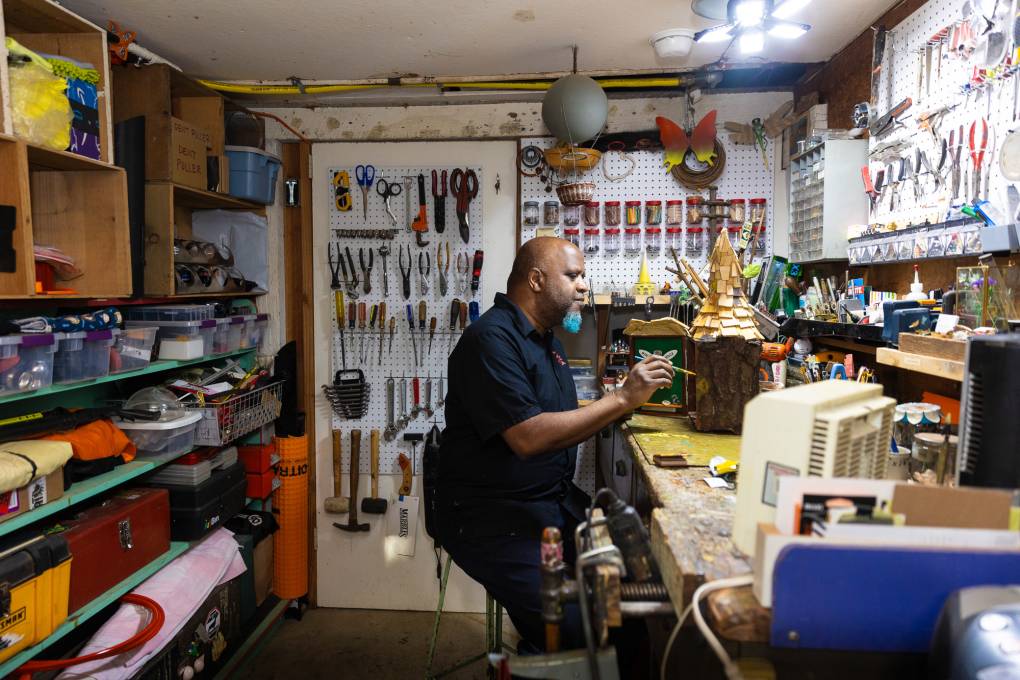
"caption": "Jimmie Robinson works on a fairy house in his workshop in Richmond on Feb. 20, 2025. He has built over 30 houses for his neighbors along the street.",
"credit": "Gina Castro/KQED",
"altTag": null,
"description": null,
"imgSizes": {
"medium": {
"file": "https://cdn.kqed.org/wp-content/uploads/sites/10/2025/02/20250220_PtRichmondFairyHouses_GC-39-800x533.jpg",
"width": 800,
"height": 533,
"mimeType": "image/jpeg"
},
"large": {
"file": "https://cdn.kqed.org/wp-content/uploads/sites/10/2025/02/20250220_PtRichmondFairyHouses_GC-39-1020x680.jpg",
"width": 1020,
"height": 680,
"mimeType": "image/jpeg"
},
"thumbnail": {
"file": "https://cdn.kqed.org/wp-content/uploads/sites/10/2025/02/20250220_PtRichmondFairyHouses_GC-39-160x107.jpg",
"width": 160,
"height": 107,
"mimeType": "image/jpeg"
},
"1536x1536": {
"file": "https://cdn.kqed.org/wp-content/uploads/sites/10/2025/02/20250220_PtRichmondFairyHouses_GC-39-1536x1024.jpg",
"width": 1536,
"height": 1024,
"mimeType": "image/jpeg"
},
"post-thumbnail": {
"file": "https://cdn.kqed.org/wp-content/uploads/sites/10/2025/02/20250220_PtRichmondFairyHouses_GC-39-672x372.jpg",
"width": 672,
"height": 372,
"mimeType": "image/jpeg"
},
"twentyfourteen-full-width": {
"file": "https://cdn.kqed.org/wp-content/uploads/sites/10/2025/02/20250220_PtRichmondFairyHouses_GC-39-1038x576.jpg",
"width": 1038,
"height": 576,
"mimeType": "image/jpeg"
},
"full-width": {
"file": "https://cdn.kqed.org/wp-content/uploads/sites/10/2025/02/20250220_PtRichmondFairyHouses_GC-39-1920x1280.jpg",
"width": 1920,
"height": 1280,
"mimeType": "image/jpeg"
},
"kqedFullSize": {
"file": "https://cdn.kqed.org/wp-content/uploads/sites/10/2025/02/20250220_PtRichmondFairyHouses_GC-39.jpg",
"width": 2000,
"height": 1333
}
},
"isLoading": false,
"fetchFailed": false
},
"news_12029577": {
"type": "attachments",
"id": "news_12029577",
"meta": {
"index": "attachments_1716263798",
"site": "news",
"id": "12029577",
"found": true
},
"title": "250205-WildSideWest-21-BL_qed",
"publishDate": 1741112042,
"status": "inherit",
"parent": 12029551,
"modified": 1741112085,
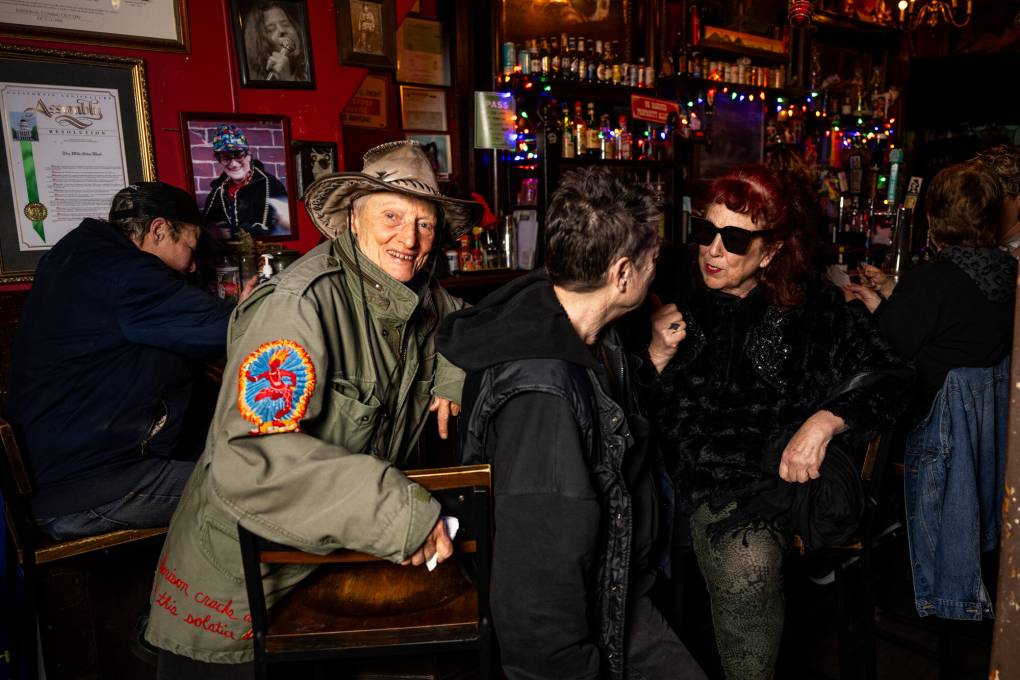
"caption": "(From left) Timotha Doane, Beth Stephens, and Annie Sprinkle sit at the bar at Wild Side West in San Francisco’s Bernal Heights neighborhood on Feb. 6, 2025. Founded in 1962, Wild Side West is a historic lesbian bar that began in Oakland before relocating to San Francisco, where it became a gathering space known for its eclectic decor, lush garden, and deep roots in the LGBTQ+ community.",
"credit": "Beth LaBerge/KQED",
"altTag": null,
"description": null,
"imgSizes": {
"medium": {
"file": "https://cdn.kqed.org/wp-content/uploads/sites/10/2025/03/250205-WildSideWest-21-BL_qed-800x533.jpg",
"width": 800,
"height": 533,
"mimeType": "image/jpeg"
},
"large": {
"file": "https://cdn.kqed.org/wp-content/uploads/sites/10/2025/03/250205-WildSideWest-21-BL_qed-1020x680.jpg",
"width": 1020,
"height": 680,
"mimeType": "image/jpeg"
},
"thumbnail": {
"file": "https://cdn.kqed.org/wp-content/uploads/sites/10/2025/03/250205-WildSideWest-21-BL_qed-160x107.jpg",
"width": 160,
"height": 107,
"mimeType": "image/jpeg"
},
"1536x1536": {
"file": "https://cdn.kqed.org/wp-content/uploads/sites/10/2025/03/250205-WildSideWest-21-BL_qed-1536x1024.jpg",
"width": 1536,
"height": 1024,
"mimeType": "image/jpeg"
},
"post-thumbnail": {
"file": "https://cdn.kqed.org/wp-content/uploads/sites/10/2025/03/250205-WildSideWest-21-BL_qed-672x372.jpg",
"width": 672,
"height": 372,
"mimeType": "image/jpeg"
},
"twentyfourteen-full-width": {
"file": "https://cdn.kqed.org/wp-content/uploads/sites/10/2025/03/250205-WildSideWest-21-BL_qed-1038x576.jpg",
"width": 1038,
"height": 576,
"mimeType": "image/jpeg"
},
"full-width": {
"file": "https://cdn.kqed.org/wp-content/uploads/sites/10/2025/03/250205-WildSideWest-21-BL_qed-1920x1280.jpg",
"width": 1920,
"height": 1280,
"mimeType": "image/jpeg"
},
"kqedFullSize": {
"file": "https://cdn.kqed.org/wp-content/uploads/sites/10/2025/03/250205-WildSideWest-21-BL_qed.jpg",
"width": 2000,
"height": 1333
}
},
"isLoading": false,
"fetchFailed": false
},
"news_12028781": {
"type": "attachments",
"id": "news_12028781",
"meta": {
"index": "attachments_1716263798",
"site": "news",
"id": "12028781",
"found": true
},
"title": "250226-FriscoBiscuits-16-BL",
"publishDate": 1740602416,
"status": "inherit",
"parent": 0,
"modified": 1740603642,
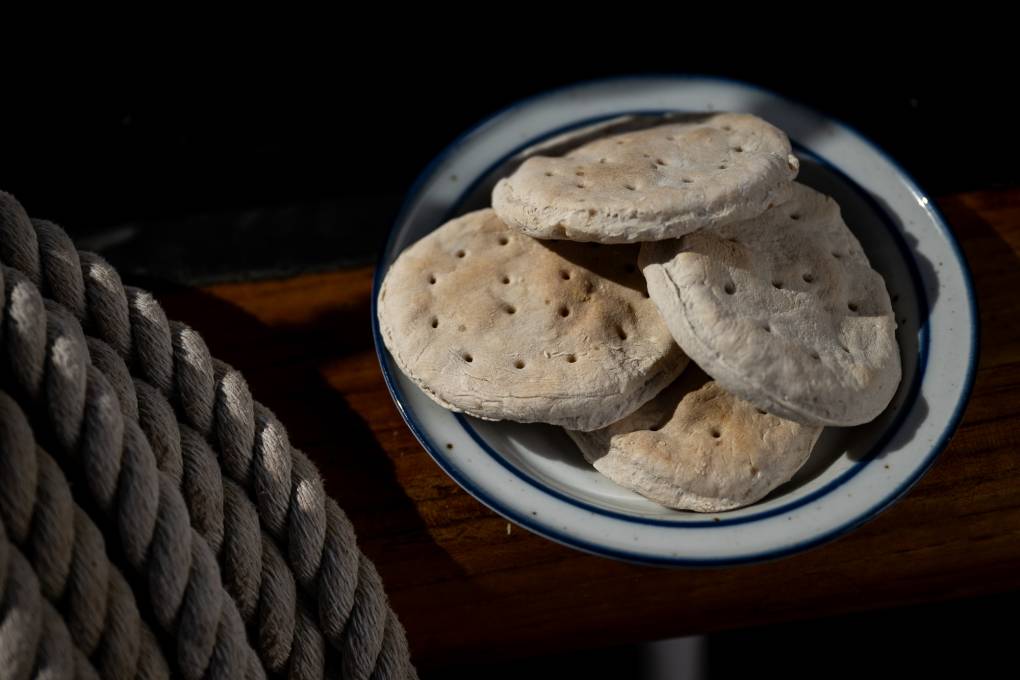
"caption": "A plate of 'Frisco Biscuits sits on the Balclutha in San Francisco Maritime National Historical Park on Feb. 26, 2025. The Balclutha is a historic three-masted, steel-hulled sailing ship built in 1886, now preserved as a museum at the park.",
"credit": "Beth LaBerge/KQED",
"altTag": null,
"description": null,
"imgSizes": {
"medium": {
"file": "https://cdn.kqed.org/wp-content/uploads/sites/10/2025/02/250226-FriscoBiscuits-16-BL-800x533.jpg",
"width": 800,
"height": 533,
"mimeType": "image/jpeg"
},
"large": {
"file": "https://cdn.kqed.org/wp-content/uploads/sites/10/2025/02/250226-FriscoBiscuits-16-BL-1020x680.jpg",
"width": 1020,
"height": 680,
"mimeType": "image/jpeg"
},
"thumbnail": {
"file": "https://cdn.kqed.org/wp-content/uploads/sites/10/2025/02/250226-FriscoBiscuits-16-BL-160x107.jpg",
"width": 160,
"height": 107,
"mimeType": "image/jpeg"
},
"1536x1536": {
"file": "https://cdn.kqed.org/wp-content/uploads/sites/10/2025/02/250226-FriscoBiscuits-16-BL-1536x1024.jpg",
"width": 1536,
"height": 1024,
"mimeType": "image/jpeg"
},
"post-thumbnail": {
"file": "https://cdn.kqed.org/wp-content/uploads/sites/10/2025/02/250226-FriscoBiscuits-16-BL-672x372.jpg",
"width": 672,
"height": 372,
"mimeType": "image/jpeg"
},
"twentyfourteen-full-width": {
"file": "https://cdn.kqed.org/wp-content/uploads/sites/10/2025/02/250226-FriscoBiscuits-16-BL-1038x576.jpg",
"width": 1038,
"height": 576,
"mimeType": "image/jpeg"
},
"full-width": {
"file": "https://cdn.kqed.org/wp-content/uploads/sites/10/2025/02/250226-FriscoBiscuits-16-BL-1920x1280.jpg",
"width": 1920,
"height": 1280,
"mimeType": "image/jpeg"
},
"kqedFullSize": {
"file": "https://cdn.kqed.org/wp-content/uploads/sites/10/2025/02/250226-FriscoBiscuits-16-BL.jpg",
"width": 2000,
"height": 1333
}
},
"isLoading": false,
"fetchFailed": false
},
"news_12027793": {
"type": "attachments",
"id": "news_12027793",
"meta": {
"index": "attachments_1716263798",
"site": "news",
"id": "12027793",
"found": true
},
"title": "Couple Dating in San Francisco",
"publishDate": 1740009595,
"status": "inherit",
"parent": 12027723,
"modified": 1740009762,
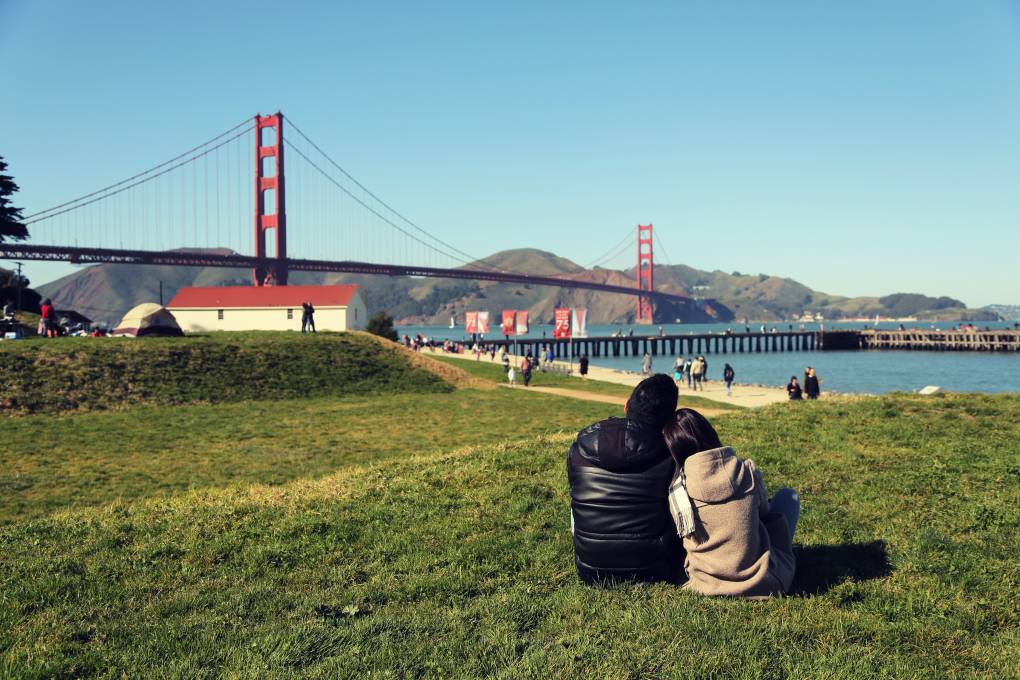
"caption": "Dating in the Bay Area comes with its own set of challenges, listeners told us.",
"credit": "Bryan Leung/Getty Images",
"altTag": "A couple leans on each other as they sit on the grass and overlook the Golden Gate Bridge.",
"description": "A couple leans on each other as they sit on the grass and overlook the Golden Gate Bridge.",
"imgSizes": {
"medium": {
"file": "https://cdn.kqed.org/wp-content/uploads/sites/10/2025/02/GettyImages-167083248-800x533.jpg",
"width": 800,
"height": 533,
"mimeType": "image/jpeg"
},
"large": {
"file": "https://cdn.kqed.org/wp-content/uploads/sites/10/2025/02/GettyImages-167083248-1020x680.jpg",
"width": 1020,
"height": 680,
"mimeType": "image/jpeg"
},
"thumbnail": {
"file": "https://cdn.kqed.org/wp-content/uploads/sites/10/2025/02/GettyImages-167083248-160x107.jpg",
"width": 160,
"height": 107,
"mimeType": "image/jpeg"
},
"1536x1536": {
"file": "https://cdn.kqed.org/wp-content/uploads/sites/10/2025/02/GettyImages-167083248-1536x1024.jpg",
"width": 1536,
"height": 1024,
"mimeType": "image/jpeg"
},
"2048x2048": {
"file": "https://cdn.kqed.org/wp-content/uploads/sites/10/2025/02/GettyImages-167083248-2048x1365.jpg",
"width": 2048,
"height": 1365,
"mimeType": "image/jpeg"
},
"post-thumbnail": {
"file": "https://cdn.kqed.org/wp-content/uploads/sites/10/2025/02/GettyImages-167083248-672x372.jpg",
"width": 672,
"height": 372,
"mimeType": "image/jpeg"
},
"twentyfourteen-full-width": {
"file": "https://cdn.kqed.org/wp-content/uploads/sites/10/2025/02/GettyImages-167083248-1038x576.jpg",
"width": 1038,
"height": 576,
"mimeType": "image/jpeg"
},
"full-width": {
"file": "https://cdn.kqed.org/wp-content/uploads/sites/10/2025/02/GettyImages-167083248-1920x1280.jpg",
"width": 1920,
"height": 1280,
"mimeType": "image/jpeg"
},
"kqedFullSize": {
"file": "https://cdn.kqed.org/wp-content/uploads/sites/10/2025/02/GettyImages-167083248-scaled-e1747866058937.jpg",
"width": 2000,
"height": 1334
}
},
"isLoading": false,
"fetchFailed": false
},
"news_11910896": {
"type": "attachments",
"id": "news_11910896",
"meta": {
"index": "attachments_1716263798",
"site": "news",
"id": "11910896",
"found": true
},
"parent": 11910890,
"imgSizes": {
"twentyfourteen-full-width": {
"file": "https://ww2.kqed.org/app/uploads/sites/10/2022/04/16thStreetStationOakland_02162022-qut-1038x576.jpg",
"width": 1038,
"mimeType": "image/jpeg",
"height": 576
},
"thumbnail": {
"file": "https://ww2.kqed.org/app/uploads/sites/10/2022/04/16thStreetStationOakland_02162022-qut-160x107.jpg",
"width": 160,
"mimeType": "image/jpeg",
"height": 107
},
"post-thumbnail": {
"file": "https://ww2.kqed.org/app/uploads/sites/10/2022/04/16thStreetStationOakland_02162022-qut-672x372.jpg",
"width": 672,
"mimeType": "image/jpeg",
"height": 372
},
"kqedFullSize": {
"file": "https://ww2.kqed.org/app/uploads/sites/10/2022/04/16thStreetStationOakland_02162022-qut.jpg",
"width": 1920,
"height": 1280
},
"large": {
"file": "https://ww2.kqed.org/app/uploads/sites/10/2022/04/16thStreetStationOakland_02162022-qut-1020x680.jpg",
"width": 1020,
"mimeType": "image/jpeg",
"height": 680
},
"1536x1536": {
"file": "https://ww2.kqed.org/app/uploads/sites/10/2022/04/16thStreetStationOakland_02162022-qut-1536x1024.jpg",
"width": 1536,
"mimeType": "image/jpeg",
"height": 1024
},
"medium": {
"file": "https://ww2.kqed.org/app/uploads/sites/10/2022/04/16thStreetStationOakland_02162022-qut-800x533.jpg",
"width": 800,
"mimeType": "image/jpeg",
"height": 533
}
},
"publishDate": 1649789007,
"modified": 1649789048,
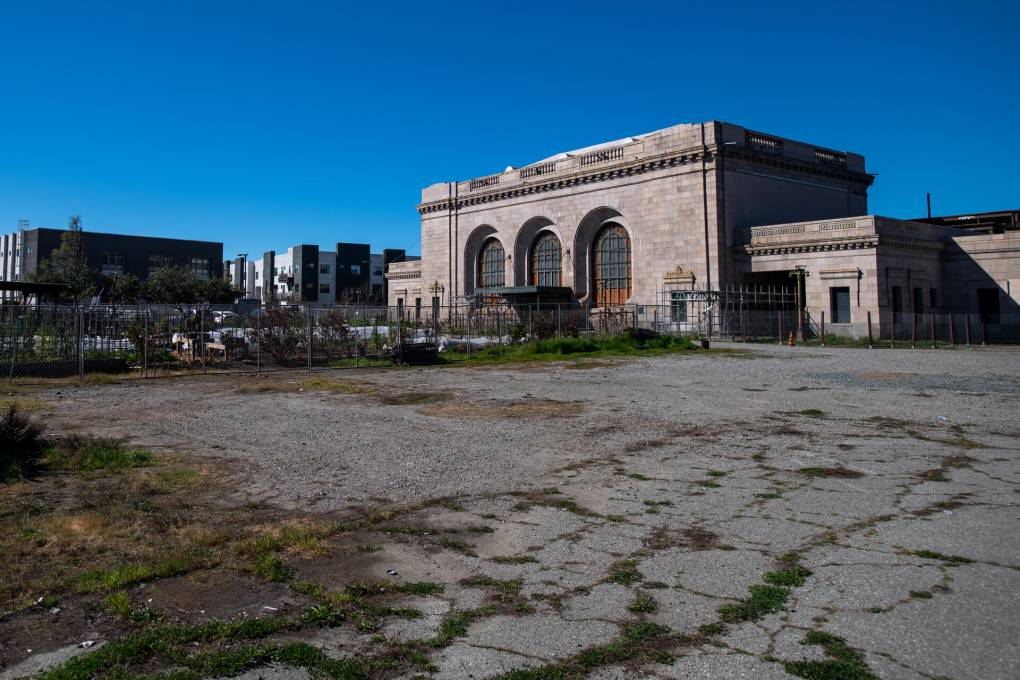
"caption": "16th Street Station in West Oakland on Feb. 16, 2022.",
"description": null,
"title": "16th Street Station in West Oakland on Feb. 16, 2022.",
"credit": "Beth LaBerge/KQED",
"status": "inherit",
"altTag": "A huge, imposing stone building sits in a vacant lot. It has three massive arched windows and a terracotta roof.",
"isLoading": false,
"fetchFailed": false
},
"news_11920961": {
"type": "attachments",
"id": "news_11920961",
"meta": {
"index": "attachments_1716263798",
"site": "news",
"id": "11920961",
"found": true
},
"title": "RS57479_pexels-anastassiya-golovko-8659561-qut",
"publishDate": 1659128046,
"status": "inherit",
"parent": 11920867,
"modified": 1778794019,
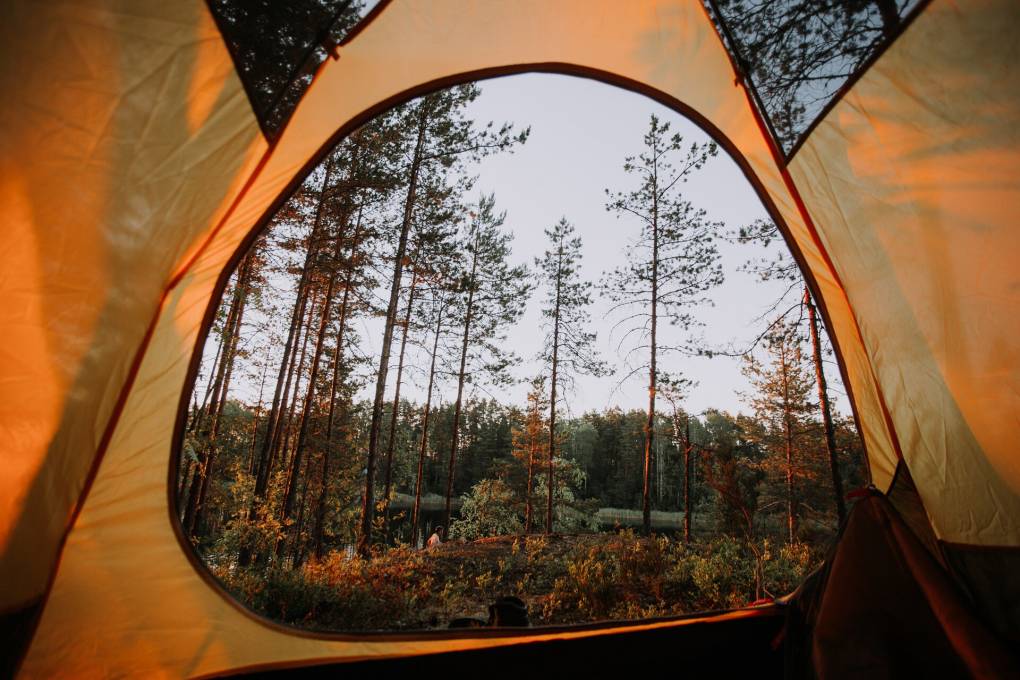
"caption": "Dispersed camping is a great way to stay in California's national forests, and it's free.",
"credit": "Anastassiya Golovko/Pexels",
"altTag": "A forest scene with thin trees reaching into the sky, photographed from inside a yellow-orange tent.",
"description": null,
"imgSizes": {
"medium": {
"file": "https://cdn.kqed.org/wp-content/uploads/sites/10/2022/07/RS57479_pexels-anastassiya-golovko-8659561-qut-800x533.jpg",
"width": 800,
"height": 533,
"mimeType": "image/jpeg"
},
"large": {
"file": "https://cdn.kqed.org/wp-content/uploads/sites/10/2022/07/RS57479_pexels-anastassiya-golovko-8659561-qut-1020x680.jpg",
"width": 1020,
"height": 680,
"mimeType": "image/jpeg"
},
"thumbnail": {
"file": "https://cdn.kqed.org/wp-content/uploads/sites/10/2022/07/RS57479_pexels-anastassiya-golovko-8659561-qut-160x107.jpg",
"width": 160,
"height": 107,
"mimeType": "image/jpeg"
},
"1536x1536": {
"file": "https://cdn.kqed.org/wp-content/uploads/sites/10/2022/07/RS57479_pexels-anastassiya-golovko-8659561-qut-1536x1024.jpg",
"width": 1536,
"height": 1024,
"mimeType": "image/jpeg"
},
"post-thumbnail": {
"file": "https://cdn.kqed.org/wp-content/uploads/sites/10/2022/07/RS57479_pexels-anastassiya-golovko-8659561-qut-672x372.jpg",
"width": 672,
"height": 372,
"mimeType": "image/jpeg"
},
"twentyfourteen-full-width": {
"file": "https://cdn.kqed.org/wp-content/uploads/sites/10/2022/07/RS57479_pexels-anastassiya-golovko-8659561-qut-1038x576.jpg",
"width": 1038,
"height": 576,
"mimeType": "image/jpeg"
},
"kqedFullSize": {
"file": "https://cdn.kqed.org/wp-content/uploads/sites/10/2022/07/RS57479_pexels-anastassiya-golovko-8659561-qut.jpg",
"width": 1920,
"height": 1280
}
},
"isLoading": false,
"fetchFailed": false
},
"news_12024362": {
"type": "attachments",
"id": "news_12024362",
"meta": {
"index": "attachments_1716263798",
"site": "news",
"id": "12024362",
"found": true
},
"title": "250127-BrooksIsland-38-BL",
"publishDate": 1738090707,
"status": "inherit",
"parent": 0,
"modified": 1738175463,
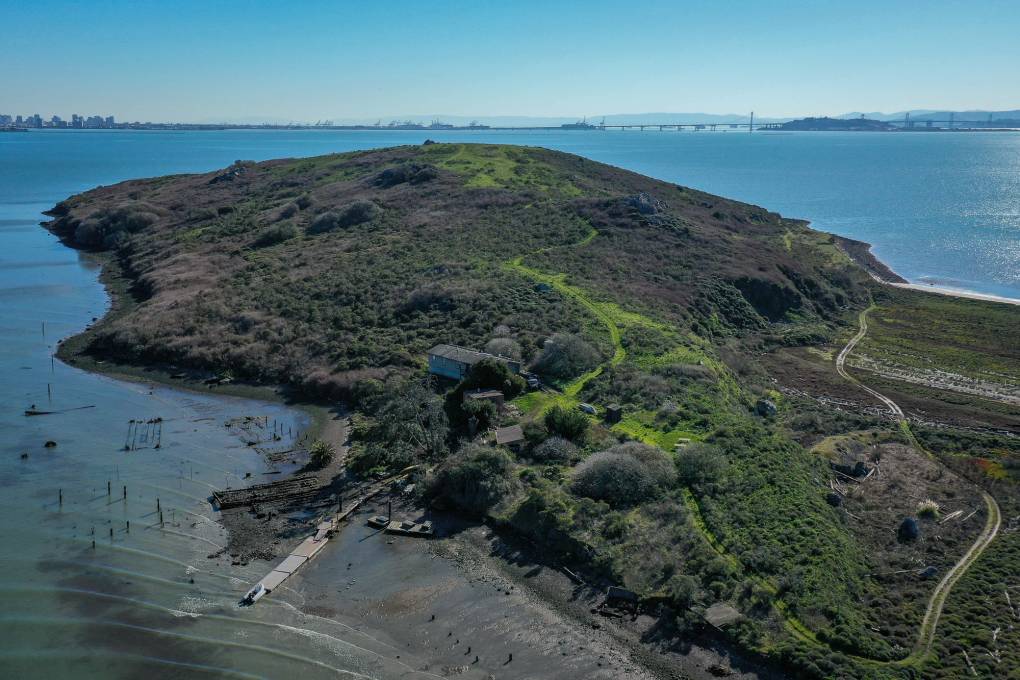
"caption": "An aerial view of Brooks Island Regional Preserve, a 373-acre bird sanctuary and habitat for native plants and wildlife in San Francisco Bay near Richmond, on Jan. 27, 2025.",
"credit": "Beth LaBerge/KQED",
"altTag": null,
"description": null,
"imgSizes": {
"medium": {
"file": "https://cdn.kqed.org/wp-content/uploads/sites/10/2025/01/250127-BrooksIsland-38-BL-800x533.jpg",
"width": 800,
"height": 533,
"mimeType": "image/jpeg"
},
"large": {
"file": "https://cdn.kqed.org/wp-content/uploads/sites/10/2025/01/250127-BrooksIsland-38-BL-1020x680.jpg",
"width": 1020,
"height": 680,
"mimeType": "image/jpeg"
},
"thumbnail": {
"file": "https://cdn.kqed.org/wp-content/uploads/sites/10/2025/01/250127-BrooksIsland-38-BL-160x107.jpg",
"width": 160,
"height": 107,
"mimeType": "image/jpeg"
},
"1536x1536": {
"file": "https://cdn.kqed.org/wp-content/uploads/sites/10/2025/01/250127-BrooksIsland-38-BL-1536x1024.jpg",
"width": 1536,
"height": 1024,
"mimeType": "image/jpeg"
},
"post-thumbnail": {
"file": "https://cdn.kqed.org/wp-content/uploads/sites/10/2025/01/250127-BrooksIsland-38-BL-672x372.jpg",
"width": 672,
"height": 372,
"mimeType": "image/jpeg"
},
"twentyfourteen-full-width": {
"file": "https://cdn.kqed.org/wp-content/uploads/sites/10/2025/01/250127-BrooksIsland-38-BL-1038x576.jpg",
"width": 1038,
"height": 576,
"mimeType": "image/jpeg"
},
"full-width": {
"file": "https://cdn.kqed.org/wp-content/uploads/sites/10/2025/01/250127-BrooksIsland-38-BL-1920x1280.jpg",
"width": 1920,
"height": 1280,
"mimeType": "image/jpeg"
},
"kqedFullSize": {
"file": "https://cdn.kqed.org/wp-content/uploads/sites/10/2025/01/250127-BrooksIsland-38-BL.jpg",
"width": 2000,
"height": 1333
}
},
"isLoading": false,
"fetchFailed": false
},
"news_12023512": {
"type": "attachments",
"id": "news_12023512",
"meta": {
"index": "attachments_1716263798",
"site": "news",
"id": "12023512",
"found": true
},
"title": "20250114_Mare-Island_DMB_00190",
"publishDate": 1737577232,
"status": "inherit",
"parent": 12069959,
"modified": 1768525535,
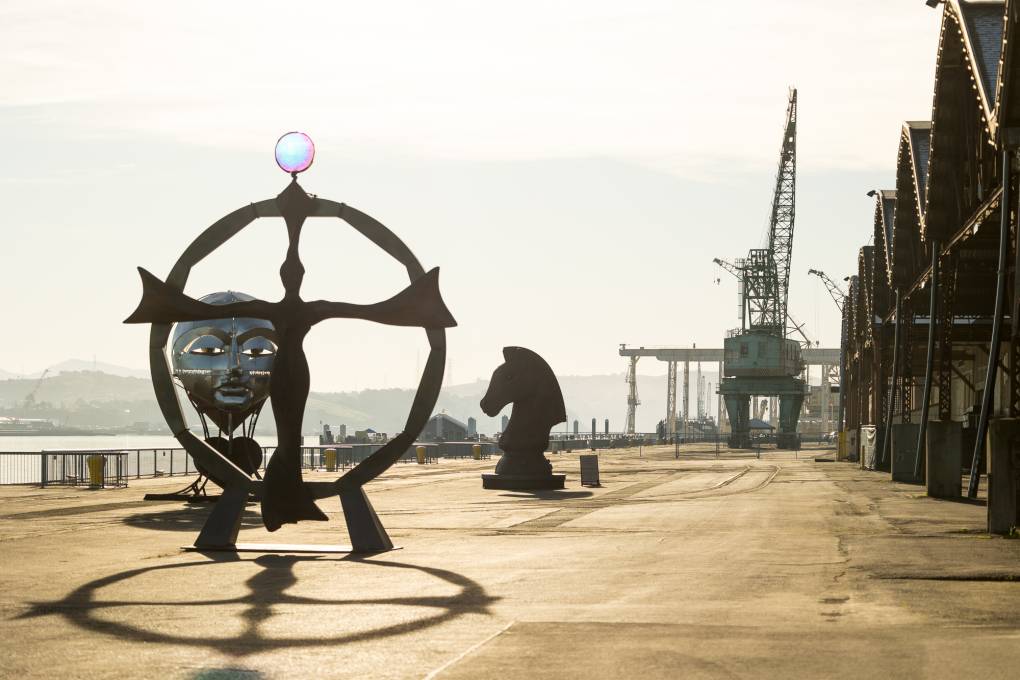
"caption": "Sculptures and defunct cranes occupy the waterfront facing the Napa River on Mare Island in the city of Vallejo, Tuesday, Jan. 14, 2025.",
"credit": "David M. Barreda/KQED",
"altTag": null,
"description": null,
"imgSizes": {
"medium": {
"file": "https://cdn.kqed.org/wp-content/uploads/sites/10/2025/01/20250114_Mare-Island_DMB_00190-800x533.jpg",
"width": 800,
"height": 533,
"mimeType": "image/jpeg"
},
"large": {
"file": "https://cdn.kqed.org/wp-content/uploads/sites/10/2025/01/20250114_Mare-Island_DMB_00190-1020x680.jpg",
"width": 1020,
"height": 680,
"mimeType": "image/jpeg"
},
"thumbnail": {
"file": "https://cdn.kqed.org/wp-content/uploads/sites/10/2025/01/20250114_Mare-Island_DMB_00190-160x107.jpg",
"width": 160,
"height": 107,
"mimeType": "image/jpeg"
},
"1536x1536": {
"file": "https://cdn.kqed.org/wp-content/uploads/sites/10/2025/01/20250114_Mare-Island_DMB_00190-1536x1024.jpg",
"width": 1536,
"height": 1024,
"mimeType": "image/jpeg"
},
"post-thumbnail": {
"file": "https://cdn.kqed.org/wp-content/uploads/sites/10/2025/01/20250114_Mare-Island_DMB_00190-672x372.jpg",
"width": 672,
"height": 372,
"mimeType": "image/jpeg"
},
"twentyfourteen-full-width": {
"file": "https://cdn.kqed.org/wp-content/uploads/sites/10/2025/01/20250114_Mare-Island_DMB_00190-1038x576.jpg",
"width": 1038,
"height": 576,
"mimeType": "image/jpeg"
},
"full-width": {
"file": "https://cdn.kqed.org/wp-content/uploads/sites/10/2025/01/20250114_Mare-Island_DMB_00190-1920x1280.jpg",
"width": 1920,
"height": 1280,
"mimeType": "image/jpeg"
},
"kqedFullSize": {
"file": "https://cdn.kqed.org/wp-content/uploads/sites/10/2025/01/20250114_Mare-Island_DMB_00190.jpg",
"width": 2000,
"height": 1333
}
},
"isLoading": false,
"fetchFailed": false
},
"news_12023514": {
"type": "attachments",
"id": "news_12023514",
"meta": {
"index": "attachments_1716263798",
"site": "news",
"id": "12023514",
"found": true
},
"title": "20250114_Mare-Island_DMB_00333",
"publishDate": 1737577243,
"status": "inherit",
"parent": 12082668,
"modified": 1778174427,
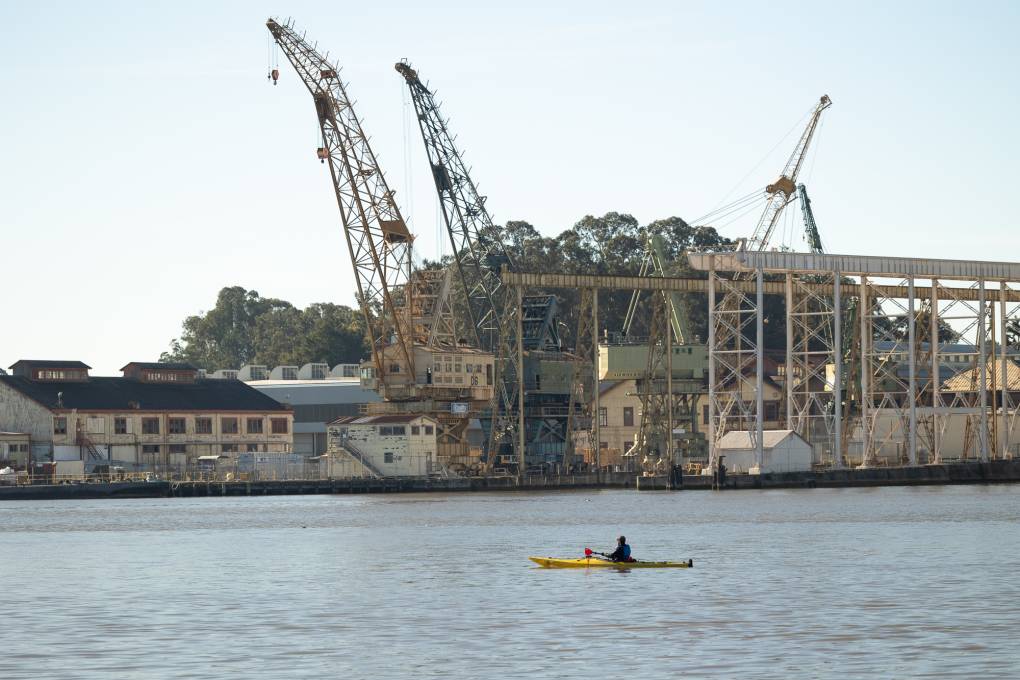
"caption": "A kayaker floats down the Napa River past the Navy Yard of Mare Island in the city of Vallejo, Tuesday, Jan. 14, 2025.",
"credit": "David M. Barreda/KQED",
"altTag": null,
"description": null,
"imgSizes": {
"medium": {
"file": "https://cdn.kqed.org/wp-content/uploads/sites/10/2025/01/20250114_Mare-Island_DMB_00333-800x533.jpg",
"width": 800,
"height": 533,
"mimeType": "image/jpeg"
},
"large": {
"file": "https://cdn.kqed.org/wp-content/uploads/sites/10/2025/01/20250114_Mare-Island_DMB_00333-1020x680.jpg",
"width": 1020,
"height": 680,
"mimeType": "image/jpeg"
},
"thumbnail": {
"file": "https://cdn.kqed.org/wp-content/uploads/sites/10/2025/01/20250114_Mare-Island_DMB_00333-160x107.jpg",
"width": 160,
"height": 107,
"mimeType": "image/jpeg"
},
"1536x1536": {
"file": "https://cdn.kqed.org/wp-content/uploads/sites/10/2025/01/20250114_Mare-Island_DMB_00333-1536x1024.jpg",
"width": 1536,
"height": 1024,
"mimeType": "image/jpeg"
},
"post-thumbnail": {
"file": "https://cdn.kqed.org/wp-content/uploads/sites/10/2025/01/20250114_Mare-Island_DMB_00333-672x372.jpg",
"width": 672,
"height": 372,
"mimeType": "image/jpeg"
},
"twentyfourteen-full-width": {
"file": "https://cdn.kqed.org/wp-content/uploads/sites/10/2025/01/20250114_Mare-Island_DMB_00333-1038x576.jpg",
"width": 1038,
"height": 576,
"mimeType": "image/jpeg"
},
"full-width": {
"file": "https://cdn.kqed.org/wp-content/uploads/sites/10/2025/01/20250114_Mare-Island_DMB_00333-1920x1280.jpg",
"width": 1920,
"height": 1280,
"mimeType": "image/jpeg"
},
"kqedFullSize": {
"file": "https://cdn.kqed.org/wp-content/uploads/sites/10/2025/01/20250114_Mare-Island_DMB_00333.jpg",
"width": 2000,
"height": 1333
}
},
"isLoading": false,
"fetchFailed": false
},
"news_12020584": {
"type": "attachments",
"id": "news_12020584",
"meta": {
"index": "attachments_1716263798",
"site": "news",
"id": "12020584",
"found": true
},
"title": "Bay-Curious",
"publishDate": 1736277189,
"status": "inherit",
"parent": 0,
"modified": 1736357943,
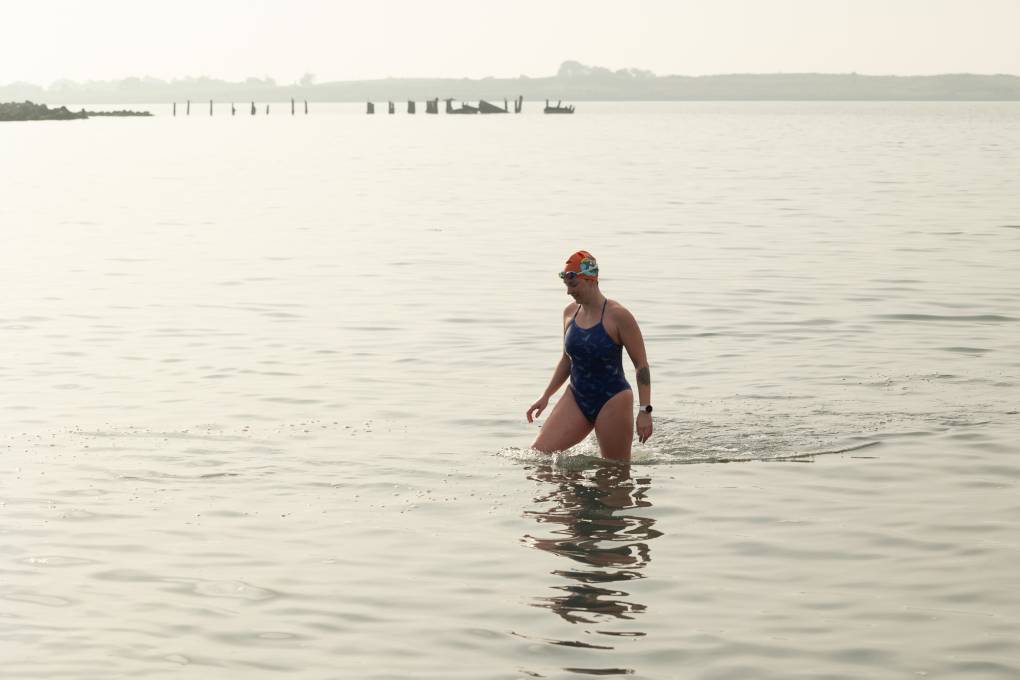
"caption": "Kerianne Brownlie poses for a portrait during an interview for KQED at Albany Beach in Albany, Calif., Friday, Dec. 20, 2024.",
"credit": "David M. Barreda/KQED",
"altTag": "A woman in a bathing suit and swim cap wades out into a vast body of water.",
"description": null,
"imgSizes": {
"medium": {
"file": "https://cdn.kqed.org/wp-content/uploads/sites/10/2025/01/20241220_BaySwim_DMB_00710-800x533.jpg",
"width": 800,
"height": 533,
"mimeType": "image/jpeg"
},
"large": {
"file": "https://cdn.kqed.org/wp-content/uploads/sites/10/2025/01/20241220_BaySwim_DMB_00710-1020x680.jpg",
"width": 1020,
"height": 680,
"mimeType": "image/jpeg"
},
"thumbnail": {
"file": "https://cdn.kqed.org/wp-content/uploads/sites/10/2025/01/20241220_BaySwim_DMB_00710-160x107.jpg",
"width": 160,
"height": 107,
"mimeType": "image/jpeg"
},
"1536x1536": {
"file": "https://cdn.kqed.org/wp-content/uploads/sites/10/2025/01/20241220_BaySwim_DMB_00710-1536x1024.jpg",
"width": 1536,
"height": 1024,
"mimeType": "image/jpeg"
},
"post-thumbnail": {
"file": "https://cdn.kqed.org/wp-content/uploads/sites/10/2025/01/20241220_BaySwim_DMB_00710-672x372.jpg",
"width": 672,
"height": 372,
"mimeType": "image/jpeg"
},
"twentyfourteen-full-width": {
"file": "https://cdn.kqed.org/wp-content/uploads/sites/10/2025/01/20241220_BaySwim_DMB_00710-1038x576.jpg",
"width": 1038,
"height": 576,
"mimeType": "image/jpeg"
},
"full-width": {
"file": "https://cdn.kqed.org/wp-content/uploads/sites/10/2025/01/20241220_BaySwim_DMB_00710-1920x1280.jpg",
"width": 1920,
"height": 1280,
"mimeType": "image/jpeg"
},
"kqedFullSize": {
"file": "https://cdn.kqed.org/wp-content/uploads/sites/10/2025/01/20241220_BaySwim_DMB_00710.jpg",
"width": 2000,
"height": 1333
}
},
"isLoading": false,
"fetchFailed": false
},
"news_12018903": {
"type": "attachments",
"id": "news_12018903",
"meta": {
"index": "attachments_1716263798",
"site": "news",
"id": "12018903",
"found": true
},
"title": "241214-Fernet-09-BL",
"publishDate": 1734560639,
"status": "inherit",
"parent": 0,
"modified": 1734645459,
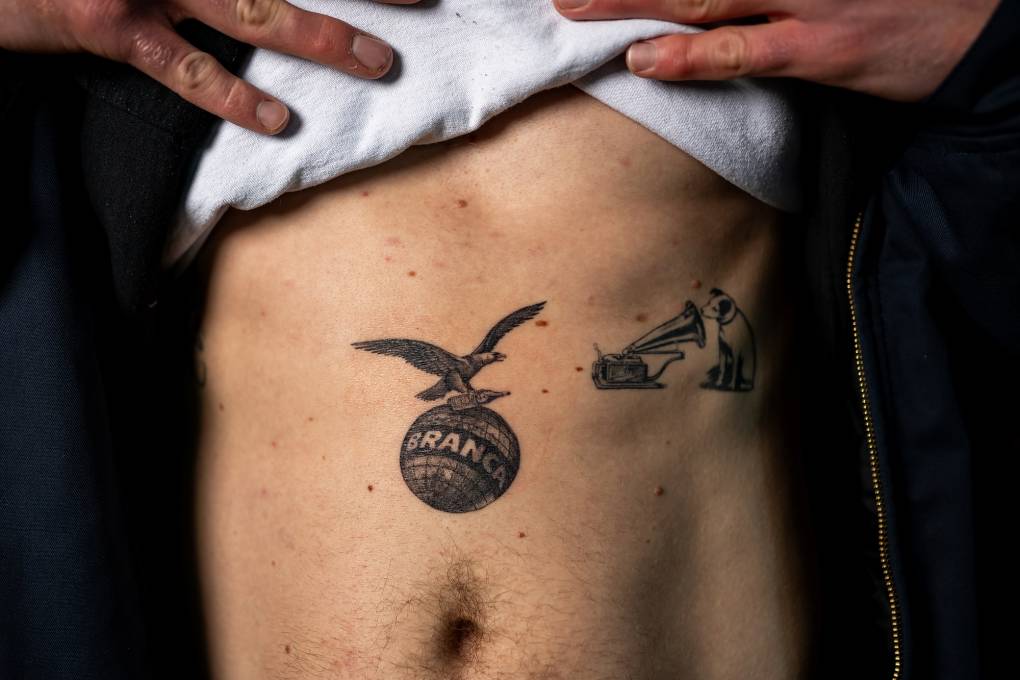
"caption": "Bay Area native Joseph Latham holds his shirt up to show a new Fernet tattoo at Bender’s Bar & Grill in San Francisco on Dec. 14, 2024. “It’s definitely a San Francisco drink,” he said.",
"credit": "Beth LaBerge/KQED",
"altTag": null,
"description": null,
"imgSizes": {
"medium": {
"file": "https://cdn.kqed.org/wp-content/uploads/sites/10/2024/12/241214-Fernet-09-BL-800x533.jpg",
"width": 800,
"height": 533,
"mimeType": "image/jpeg"
},
"large": {
"file": "https://cdn.kqed.org/wp-content/uploads/sites/10/2024/12/241214-Fernet-09-BL-1020x680.jpg",
"width": 1020,
"height": 680,
"mimeType": "image/jpeg"
},
"thumbnail": {
"file": "https://cdn.kqed.org/wp-content/uploads/sites/10/2024/12/241214-Fernet-09-BL-160x107.jpg",
"width": 160,
"height": 107,
"mimeType": "image/jpeg"
},
"1536x1536": {
"file": "https://cdn.kqed.org/wp-content/uploads/sites/10/2024/12/241214-Fernet-09-BL-1536x1024.jpg",
"width": 1536,
"height": 1024,
"mimeType": "image/jpeg"
},
"post-thumbnail": {
"file": "https://cdn.kqed.org/wp-content/uploads/sites/10/2024/12/241214-Fernet-09-BL-672x372.jpg",
"width": 672,
"height": 372,
"mimeType": "image/jpeg"
},
"twentyfourteen-full-width": {
"file": "https://cdn.kqed.org/wp-content/uploads/sites/10/2024/12/241214-Fernet-09-BL-1038x576.jpg",
"width": 1038,
"height": 576,
"mimeType": "image/jpeg"
},
"full-width": {
"file": "https://cdn.kqed.org/wp-content/uploads/sites/10/2024/12/241214-Fernet-09-BL-1920x1280.jpg",
"width": 1920,
"height": 1280,
"mimeType": "image/jpeg"
},
"kqedFullSize": {
"file": "https://cdn.kqed.org/wp-content/uploads/sites/10/2024/12/241214-Fernet-09-BL.jpg",
"width": 2000,
"height": 1333
}
},
"isLoading": false,
"fetchFailed": false
},
"news_12017724": {
"type": "attachments",
"id": "news_12017724",
"meta": {
"index": "attachments_1716263798",
"site": "news",
"id": "12017724",
"found": true
},
"title": "San Francisco Cable Car",
"publishDate": 1733949771,
"status": "inherit",
"parent": 12017713,
"modified": 1733949771,
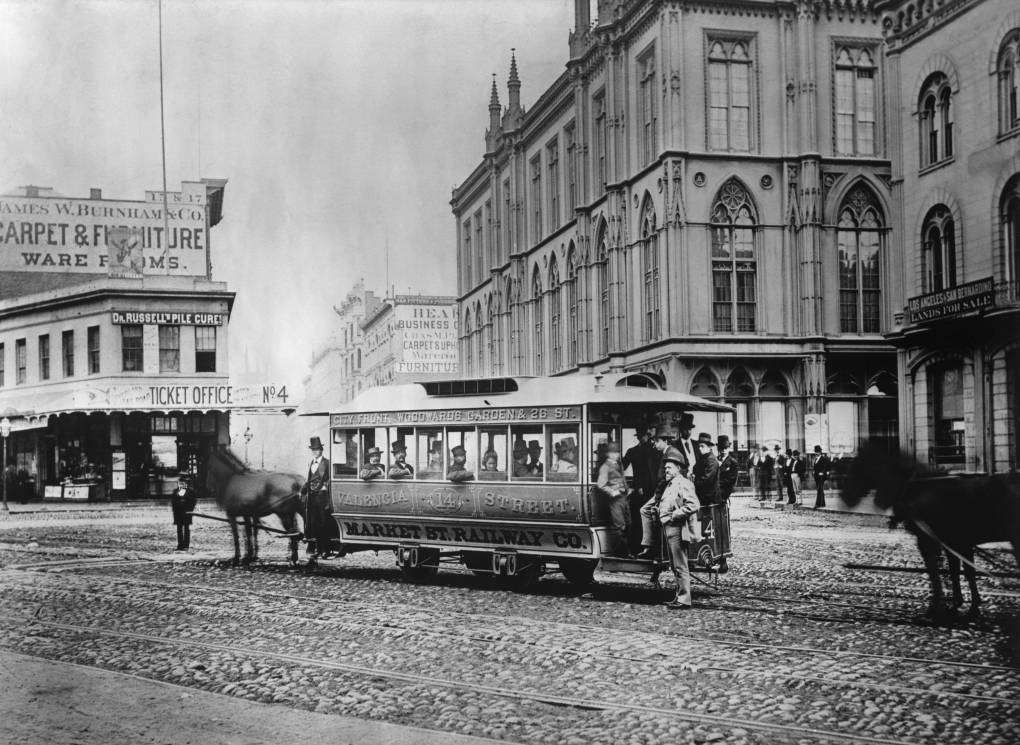
"caption": "(Original Caption) San Francisco cable car at Market, Post and Montgomery Streets. Photograph, 1880.",
"credit": null,
"altTag": null,
"description": null,
"imgSizes": {
"medium": {
"file": "https://cdn.kqed.org/wp-content/uploads/sites/10/2024/12/GettyImages-515209980-800x584.jpg",
"width": 800,
"height": 584,
"mimeType": "image/jpeg"
},
"large": {
"file": "https://cdn.kqed.org/wp-content/uploads/sites/10/2024/12/GettyImages-515209980-1020x745.jpg",
"width": 1020,
"height": 745,
"mimeType": "image/jpeg"
},
"thumbnail": {
"file": "https://cdn.kqed.org/wp-content/uploads/sites/10/2024/12/GettyImages-515209980-160x117.jpg",
"width": 160,
"height": 117,
"mimeType": "image/jpeg"
},
"1536x1536": {
"file": "https://cdn.kqed.org/wp-content/uploads/sites/10/2024/12/GettyImages-515209980-1536x1122.jpg",
"width": 1536,
"height": 1122,
"mimeType": "image/jpeg"
},
"2048x2048": {
"file": "https://cdn.kqed.org/wp-content/uploads/sites/10/2024/12/GettyImages-515209980-2048x1496.jpg",
"width": 2048,
"height": 1496,
"mimeType": "image/jpeg"
},
"post-thumbnail": {
"file": "https://cdn.kqed.org/wp-content/uploads/sites/10/2024/12/GettyImages-515209980-672x372.jpg",
"width": 672,
"height": 372,
"mimeType": "image/jpeg"
},
"twentyfourteen-full-width": {
"file": "https://cdn.kqed.org/wp-content/uploads/sites/10/2024/12/GettyImages-515209980-1038x576.jpg",
"width": 1038,
"height": 576,
"mimeType": "image/jpeg"
},
"full-width": {
"file": "https://cdn.kqed.org/wp-content/uploads/sites/10/2024/12/GettyImages-515209980-1920x1402.jpg",
"width": 1920,
"height": 1402,
"mimeType": "image/jpeg"
},
"kqedFullSize": {
"file": "https://cdn.kqed.org/wp-content/uploads/sites/10/2024/12/GettyImages-515209980-scaled-e1733949826441.jpg",
"width": 1920,
"height": 1403
}
},
"isLoading": false,
"fetchFailed": false
}
},
"audioPlayerReducer": {
"postId": "stream_live",
"isPaused": true,
"isPlaying": false,
"pfsActive": false,
"pledgeModalIsOpen": true,
"playerDrawerIsOpen": false,
"liveAudioPlayStartedAt": 0,
"liveAudioPlayContext": ""
},
"authorsReducer": {
"ohubertallen": {
"type": "authors",
"id": "102",
"meta": {
"index": "authors_1716337520",
"id": "102",
"found": true
},
"name": "Olivia Allen-Price",
"firstName": "Olivia",
"lastName": "Allen-Price",
"slug": "ohubertallen",
"email": "oallenprice@kqed.org",
"display_author_email": false,
"staff_mastheads": [
"news"
],
"title": "Senior Editor",
"bio": "Olivia Allen-Price is senior editor and host of the award-winning Bay Curious podcast. Prior to joining KQED in 2013, Olivia worked at The Baltimore Sun and The Virginian-Pilot in Norfolk, Va. She holds degrees in journalism and political science from Elon University. Her work has earned awards from the Society of Professional Journalists, the Hearst Foundation and Hearken. She loves to talk about running and curly hair.\r\n\r\nFollow: \u003ca href=\"https://twitter.com/oallenprice\">@oallenprice\u003c/a>\r\nEmail: \u003ca href=\"mailto:oallenprice@kqed.org\">oallenprice@kqed.org\u003c/a>",
"avatar": "https://secure.gravatar.com/avatar/07f7803c1f6be56f3be58ef276dfa64dce898502e0554408ef4858451a8294f7?s=600&d=blank&r=g",
"twitter": "oallenprice",
"bluesky": null,
"facebook": null,
"instagram": null,
"linkedin": null,
"sites": [
{
"site": "",
"roles": [
"editor"
]
},
{
"site": "arts",
"roles": [
"subscriber"
]
},
{
"site": "news",
"roles": [
"administrator"
]
},
{
"site": "pop",
"roles": [
"administrator"
]
},
{
"site": "bayareabites",
"roles": [
"contributor"
]
},
{
"site": "stateofhealth",
"roles": [
"administrator"
]
},
{
"site": "science",
"roles": [
"editor"
]
}
],
"headData": {
"title": "Olivia Allen-Price | KQED",
"description": "Senior Editor",
"ogImgSrc": "https://secure.gravatar.com/avatar/07f7803c1f6be56f3be58ef276dfa64dce898502e0554408ef4858451a8294f7?s=600&d=blank&r=g",
"twImgSrc": "https://secure.gravatar.com/avatar/07f7803c1f6be56f3be58ef276dfa64dce898502e0554408ef4858451a8294f7?s=600&d=blank&r=g"
},
"isLoading": false,
"link": "/author/ohubertallen"
},
"katrinaschwartz": {
"type": "authors",
"id": "234",
"meta": {
"index": "authors_1716337520",
"id": "234",
"found": true
},
"name": "Katrina Schwartz",
"firstName": "Katrina",
"lastName": "Schwartz",
"slug": "katrinaschwartz",
"email": "kschwartz@kqed.org",
"display_author_email": false,
"staff_mastheads": [
"news"
],
"title": "Producer",
"bio": "Katrina Schwartz is a journalist based in San Francisco. She's worked at KPCC public radio in LA and has reported on air and online for KQED since 2010. She covered how teaching and learning is changing for MindShift between 2012 and 2020. She is the co-host of the MindShift podcast and now produces KQED's Bay Curious podcast.",
"avatar": "https://secure.gravatar.com/avatar/edb4ee79070447a018538c9aae6eeecf28786515b8a0c30e43b6b7dce5aa44c8?s=600&d=blank&r=g",
"twitter": "kschwart",
"bluesky": null,
"facebook": null,
"instagram": null,
"linkedin": null,
"sites": [
{
"site": "",
"roles": [
"editor"
]
},
{
"site": "news",
"roles": [
"editor"
]
},
{
"site": "mindshift",
"roles": [
"administrator"
]
},
{
"site": "stateofhealth",
"roles": [
"author"
]
},
{
"site": "science",
"roles": [
"editor"
]
}
],
"headData": {
"title": "Katrina Schwartz | KQED",
"description": "Producer",
"ogImgSrc": "https://secure.gravatar.com/avatar/edb4ee79070447a018538c9aae6eeecf28786515b8a0c30e43b6b7dce5aa44c8?s=600&d=blank&r=g",
"twImgSrc": "https://secure.gravatar.com/avatar/edb4ee79070447a018538c9aae6eeecf28786515b8a0c30e43b6b7dce5aa44c8?s=600&d=blank&r=g"
},
"isLoading": false,
"link": "/author/katrinaschwartz"
},
"rachael-myrow": {
"type": "authors",
"id": "251",
"meta": {
"index": "authors_1716337520",
"id": "251",
"found": true
},
"name": "Rachael Myrow",
"firstName": "Rachael",
"lastName": "Myrow",
"slug": "rachael-myrow",
"email": "rmyrow@kqed.org",
"display_author_email": true,
"staff_mastheads": [
"news"
],
"title": "Senior Editor of KQED's Silicon Valley News Desk",
"bio": "• I write and edit stories about how Silicon Valley power and policies shape everyday life in California. I’m also passionate about making Bay Area history and culture more accessible to a broad public. • I’ve been a journalist for most of my life, starting in high school with The Franklin Press in Los Angeles, where I grew up. While earning my first degree in English at UC Berkeley, I got my start in public radio at KALX-FM. After completing a second degree in journalism at Cal, I landed my first professional job at Marketplace, then moved on to KPCC (now LAist), and then KQED, where I hosted The California Report for more than seven years. • My reporting has appeared on NPR, The World, WBUR’s \u003ci>Here & Now\u003c/i>, and the BBC. I also guest host for KQED’s \u003ci>Forum\u003c/i>, as well as the Commonwealth Club in San Francisco. • I speak periodically on media, democracy and technology issues, and do voiceover work for documentaries and educational video projects. • Outside of the studio, you'll find me hiking Bay Area trails and whipping up Insta-ready meals in my kitchen. • I do not accept gifts, money, or favors from anyone connected to my reporting, I don't pay people for information, and I do not support or donate to political causes. • I strive to treat the people I report on with fairness, honesty, and respect. I also recognize there are often multiple sides to a story and work to verify information through multiple sources and documentation. If I get something wrong, I correct it.",
"avatar": "https://secure.gravatar.com/avatar/3ed8a3c5f26025e4a805ba634cda8cd764906b97438a6d9ce216b044e340da4e?s=600&d=blank&r=g",
"twitter": "rachaelmyrow",
"bluesky": null,
"facebook": null,
"instagram": null,
"linkedin": "https://www.linkedin.com/in/rachaelmyrow/",
"sites": [
{
"site": "arts",
"roles": [
"administrator"
]
},
{
"site": "news",
"roles": [
"edit_others_posts",
"editor"
]
},
{
"site": "futureofyou",
"roles": [
"editor"
]
},
{
"site": "bayareabites",
"roles": [
"editor"
]
},
{
"site": "stateofhealth",
"roles": [
"editor"
]
},
{
"site": "science",
"roles": [
"editor"
]
},
{
"site": "food",
"roles": [
"editor"
]
},
{
"site": "forum",
"roles": [
"editor"
]
},
{
"site": "liveblog",
"roles": [
"author"
]
}
],
"headData": {
"title": "Rachael Myrow | KQED",
"description": "Senior Editor of KQED's Silicon Valley News Desk",
"ogImgSrc": "https://secure.gravatar.com/avatar/3ed8a3c5f26025e4a805ba634cda8cd764906b97438a6d9ce216b044e340da4e?s=600&d=blank&r=g",
"twImgSrc": "https://secure.gravatar.com/avatar/3ed8a3c5f26025e4a805ba634cda8cd764906b97438a6d9ce216b044e340da4e?s=600&d=blank&r=g"
},
"isLoading": false,
"link": "/author/rachael-myrow"
},
"afont": {
"type": "authors",
"id": "8637",
"meta": {
"index": "authors_1716337520",
"id": "8637",
"found": true
},
"name": "Amanda Font",
"firstName": "Amanda",
"lastName": "Font",
"slug": "afont",
"email": "afont@kqed.org",
"display_author_email": false,
"staff_mastheads": [],
"title": "KQED Contributor",
"bio": "Amanda Font is a producer on \u003cem>The Latest\u003c/em> podcast, and the host and co-producer of the series \u003cem>Audible Cosmos\u003c/em>. She has previously worked as a producer and reporter on the \u003cem>Bay Curious\u003c/em> podcast, and director of \u003cem>The California Report Magazine\u003c/em>. She grew up in the deserts of Southern California and moved north for the trees. Amanda earned a B.A. from the BECA program at San Francisco State, where she worked in the university's radio station. Amanda Font is represented by SAG-AFTRA.",
"avatar": "https://secure.gravatar.com/avatar/d9e81cf0117d5849b9cfb7ab4b1422f1?s=600&d=blank&r=g",
"twitter": null,
"facebook": null,
"instagram": null,
"linkedin": null,
"sites": [
{
"site": "news",
"roles": [
"add_users",
"create_users"
]
},
{
"site": "science",
"roles": []
},
{
"site": "forum",
"roles": [
"administrator"
]
},
{
"site": "perspectives",
"roles": [
"administrator"
]
},
{
"site": "radio",
"roles": [
"administrator"
]
}
],
"headData": {
"title": "Amanda Font | KQED",
"description": "KQED Contributor",
"ogImgSrc": "https://secure.gravatar.com/avatar/d9e81cf0117d5849b9cfb7ab4b1422f1?s=600&d=blank&r=g",
"twImgSrc": "https://secure.gravatar.com/avatar/d9e81cf0117d5849b9cfb7ab4b1422f1?s=600&d=blank&r=g"
},
"isLoading": false,
"link": "/author/afont"
},
"dcronin": {
"type": "authors",
"id": "11362",
"meta": {
"index": "authors_1716337520",
"id": "11362",
"found": true
},
"name": "Dana Cronin",
"firstName": "Dana",
"lastName": "Cronin",
"slug": "dcronin",
"email": "dcronin@KQED.org",
"display_author_email": true,
"staff_mastheads": [],
"title": "KQED Contributor",
"bio": "Dana Cronin is a reporter for KQED News. She loves writing stories about climate change, environmental issues, food and agriculture. She's reported across the country, from Colorado to Washington D.C. to Illinois, and has won numerous awards for her coverage. Her work is regularly featured on national broadcasts, including NPR’s Morning Edition, All Things Considered, PBS Newshour and Science Friday. She lives in Oakland and has an avocado tree in her back yard.",
"avatar": "https://secure.gravatar.com/avatar/bcf89e3455ff7235f96ab6fa7258dd95?s=600&d=blank&r=g",
"twitter": "DanaHCronin",
"facebook": null,
"instagram": null,
"linkedin": null,
"sites": [
{
"site": "arts",
"roles": [
"author"
]
},
{
"site": "news",
"roles": [
"editor"
]
},
{
"site": "science",
"roles": [
"author"
]
},
{
"site": "liveblog",
"roles": [
"author"
]
}
],
"headData": {
"title": "Dana Cronin | KQED",
"description": "KQED Contributor",
"ogImgSrc": "https://secure.gravatar.com/avatar/bcf89e3455ff7235f96ab6fa7258dd95?s=600&d=blank&r=g",
"twImgSrc": "https://secure.gravatar.com/avatar/bcf89e3455ff7235f96ab6fa7258dd95?s=600&d=blank&r=g"
},
"isLoading": false,
"link": "/author/dcronin"
},
"adahlstromeckman": {
"type": "authors",
"id": "11785",
"meta": {
"index": "authors_1716337520",
"id": "11785",
"found": true
},
"name": "Azul Dahlstrom-Eckman",
"firstName": "Azul",
"lastName": "Dahlstrom-Eckman",
"slug": "adahlstromeckman",
"email": "adahlstrom-eckman@kqed.org",
"display_author_email": true,
"staff_mastheads": [],
"title": "Reporter",
"bio": "Azul is a reporter for KQED focusing on transportation and features. He joined KQED in 2021 as an alumna of KALW's Audio Academy radio journalism training program.",
"avatar": "https://secure.gravatar.com/avatar/9cb750298435add7815a777f55bf1f46845c1386bb8452555c60a7b820b5aba3?s=600&d=blank&r=g",
"twitter": "@zuliemann",
"bluesky": "@azul415.bsky.social",
"facebook": null,
"instagram": null,
"linkedin": null,
"sites": [
{
"site": "arts",
"roles": [
"editor"
]
},
{
"site": "news",
"roles": [
"editor"
]
},
{
"site": "science",
"roles": [
"editor"
]
},
{
"site": "liveblog",
"roles": [
"author"
]
}
],
"headData": {
"title": "Azul Dahlstrom-Eckman | KQED",
"description": "Reporter",
"ogImgSrc": "https://secure.gravatar.com/avatar/9cb750298435add7815a777f55bf1f46845c1386bb8452555c60a7b820b5aba3?s=600&d=blank&r=g",
"twImgSrc": "https://secure.gravatar.com/avatar/9cb750298435add7815a777f55bf1f46845c1386bb8452555c60a7b820b5aba3?s=600&d=blank&r=g"
},
"isLoading": false,
"link": "/author/adahlstromeckman"
},
"kmonahan": {
"type": "authors",
"id": "11842",
"meta": {
"index": "authors_1716337520",
"id": "11842",
"found": true
},
"name": "Katherine Monahan",
"firstName": "Katherine",
"lastName": "Monahan",
"slug": "kmonahan",
"email": "kmonahan@kqed.org",
"display_author_email": true,
"staff_mastheads": [],
"title": "Reporter / Sound Engineer",
"bio": "I cover state and local news. I’m also a sound engineer at the station, mixing stories and running live broadcasts. I link to source materials so that readers can draw their own conclusions, and seek comment from a range of perspectives, including from people directly affected by events. Awards received include from the Society of Professional Journalists, Northern California chapter and the Alaska Press Club. I speak multiple languages and have reported and engineered in the Bay Area, Alaska, West Africa and Latin America.",
"avatar": "https://secure.gravatar.com/avatar/ff257b3a5da88893781a3d3266904b2d2f91c7f0e1bbf728f61f5fb81b74a669?s=600&d=blank&r=g",
"twitter": null,
"bluesky": null,
"facebook": null,
"instagram": null,
"linkedin": null,
"sites": [
{
"site": "news",
"roles": [
"editor"
]
},
{
"site": "science",
"roles": [
"contributor"
]
}
],
"headData": {
"title": "Katherine Monahan | KQED",
"description": "Reporter / Sound Engineer",
"ogImgSrc": "https://secure.gravatar.com/avatar/ff257b3a5da88893781a3d3266904b2d2f91c7f0e1bbf728f61f5fb81b74a669?s=600&d=blank&r=g",
"twImgSrc": "https://secure.gravatar.com/avatar/ff257b3a5da88893781a3d3266904b2d2f91c7f0e1bbf728f61f5fb81b74a669?s=600&d=blank&r=g"
},
"isLoading": false,
"link": "/author/kmonahan"
},
"pbartolone": {
"type": "authors",
"id": "11879",
"meta": {
"index": "authors_1716337520",
"id": "11879",
"found": true
},
"name": "Pauline Bartolone",
"firstName": "Pauline",
"lastName": "Bartolone",
"slug": "pbartolone",
"email": "pbartolone@kqed.org",
"display_author_email": false,
"staff_mastheads": [],
"title": "KQED Contributor",
"bio": "Pauline Bartolone has been a journalist for two decades, specializing in longform audio storytelling. Before editing and producing for podcasts like Bay Curious, she was a health care journalist for public radio and print outlets such as CalMatters and Kaiser Health News. Her reporting has won several regional Edward R. Murrow awards, national recognition from the Society of Professional Journalists and a first-place prize from the Association of Health Care Journalists.\r\n\r\nPauline’s work has aired frequently on National Public Radio, and bylines have appeared in The Los Angeles Times, CNN.com, Washingtonpost.com, USA Today and Scientific American.\r\n\r\nPauline has lived in Northern California for 20 years. Her other passions are crafts (now done in collaboration with her daughter) and the Brazilian martial art of capoeira.",
"avatar": "https://secure.gravatar.com/avatar/95001c30374b0d3878007af9cf1e120a?s=600&d=blank&r=g",
"twitter": "pbartolone",
"facebook": null,
"instagram": null,
"linkedin": null,
"sites": [
{
"site": "news",
"roles": [
"editor"
]
},
{
"site": "podcasts",
"roles": [
"subscriber"
]
}
],
"headData": {
"title": "Pauline Bartolone | KQED",
"description": "KQED Contributor",
"ogImgSrc": "https://secure.gravatar.com/avatar/95001c30374b0d3878007af9cf1e120a?s=600&d=blank&r=g",
"twImgSrc": "https://secure.gravatar.com/avatar/95001c30374b0d3878007af9cf1e120a?s=600&d=blank&r=g"
},
"isLoading": false,
"link": "/author/pbartolone"
},
"gglueck": {
"type": "authors",
"id": "11946",
"meta": {
"index": "authors_1716337520",
"id": "11946",
"found": true
},
"name": "Gabriela Glueck",
"firstName": "Gabriela",
"lastName": "Glueck",
"slug": "gglueck",
"email": "gglueck@kqed.org",
"display_author_email": false,
"staff_mastheads": [
"news"
],
"title": "KQED Contributor",
"bio": null,
"avatar": "https://secure.gravatar.com/avatar/ec62b7e3f7727ce1070cc7046dde80271d1e63cf2178d6194f68bb8d1440f841?s=600&d=blank&r=g",
"twitter": null,
"bluesky": null,
"facebook": null,
"instagram": null,
"linkedin": null,
"sites": [
{
"site": "news",
"roles": [
"editor"
]
}
],
"headData": {
"title": "Gabriela Glueck | KQED",
"description": "KQED Contributor",
"ogImgSrc": "https://secure.gravatar.com/avatar/ec62b7e3f7727ce1070cc7046dde80271d1e63cf2178d6194f68bb8d1440f841?s=600&d=blank&r=g",
"twImgSrc": "https://secure.gravatar.com/avatar/ec62b7e3f7727ce1070cc7046dde80271d1e63cf2178d6194f68bb8d1440f841?s=600&d=blank&r=g"
},
"isLoading": false,
"link": "/author/gglueck"
},
"aamaral": {
"type": "authors",
"id": "11947",
"meta": {
"index": "authors_1716337520",
"id": "11947",
"found": true
},
"name": "Ana De Almeida Amaral",
"firstName": "Ana",
"lastName": "De Almeida Amaral",
"slug": "aamaral",
"email": "aamaral@kqed.org",
"display_author_email": false,
"staff_mastheads": [],
"title": "KQED Contributor",
"bio": null,
"avatar": "https://secure.gravatar.com/avatar/eb08e0e3effedf89fc5153d5f7416228a3359f82750571d5de728615b88e8c32?s=600&d=blank&r=g",
"twitter": null,
"bluesky": null,
"facebook": null,
"instagram": null,
"linkedin": null,
"sites": [
{
"site": "arts",
"roles": [
"editor"
]
},
{
"site": "news",
"roles": [
"editor"
]
},
{
"site": "forum",
"roles": [
"editor"
]
}
],
"headData": {
"title": "Ana De Almeida Amaral | KQED",
"description": "KQED Contributor",
"ogImgSrc": "https://secure.gravatar.com/avatar/eb08e0e3effedf89fc5153d5f7416228a3359f82750571d5de728615b88e8c32?s=600&d=blank&r=g",
"twImgSrc": "https://secure.gravatar.com/avatar/eb08e0e3effedf89fc5153d5f7416228a3359f82750571d5de728615b88e8c32?s=600&d=blank&r=g"
},
"isLoading": false,
"link": "/author/aamaral"
}
},
"pagesReducer": {
"news_program_bay-curious": {
"type": "terms",
"id": "news_33523",
"meta": {
"index": "terms_1716263798",
"site": "news",
"id": "33523",
"score": 15.085616
},
"featImg": null,
"name": "Bay Curious",
"description": null,
"taxonomy": "program",
"headData": {
"twImgId": null,
"twTitle": null,
"ogTitle": null,
"ogImgId": null,
"twDescription": null,
"description": null,
"title": "Bay Curious Archives | KQED News",
"ogDescription": null
},
"ttid": 33540,
"slug": "bay-curious",
"isLoading": false,
"title": "Bay Curious",
"pageMeta": {
"site": "news",
"WpPageTemplate": "page-topic-editorial",
"currentPage": 8
},
"blocks": [
{
"blockName": "kqed/post-list",
"attrs": {
"layout": "cardArticle2",
"query": "posts/news?program=bay-curious",
"seeMore": false,
"paginated": true,
"page": 8
}
},
{
"blockName": "kqed/ad"
}
]
}
},
"pfsSessionReducer": {},
"postsReducer": {
"stream_live": {
"type": "live",
"id": "stream_live",
"audioUrl": "https://streams.kqed.org/kqedradio",
"title": "Live Stream",
"excerpt": "Live Stream information currently unavailable.",
"link": "/radio",
"featImg": "",
"label": {
"name": "KQED Live",
"link": "/"
}
},
"stream_kqedNewscast": {
"type": "posts",
"id": "stream_kqedNewscast",
"audioUrl": "https://www.kqed.org/.stream/anon/radio/RDnews/newscast.mp3?_=1",
"title": "KQED Newscast",
"featImg": "",
"label": {
"name": "88.5 FM",
"link": "/"
}
},
"news_12030231": {
"type": "posts",
"id": "news_12030231",
"meta": {
"index": "posts_1716263798",
"site": "news",
"id": "12030231",
"score": null,
"sort": [
1741860002000
]
},
"guestAuthors": [],
"slug": "point-richmonds-fairy-houses-miniature-worlds-of-whimsy",
"title": "Fairy Houses Enchant Point Richmond With Miniature Worlds of Whimsy",
"publishDate": 1741860002,
"format": "standard",
"headTitle": "Fairy Houses Enchant Point Richmond With Miniature Worlds of Whimsy | KQED",
"labelTerm": {
"term": 33523,
"site": "news"
},
"content": "\u003cp>\u003ci>\u003ca href=\"#A\">View the full episode transcript.\u003c/a>\u003c/i>\u003c/p>\n\u003cp>Residents of the artsy East Bay neighborhood of Point Richmond have at least 30 fun reasons to take a walk around their neighborhood.\u003c/p>\n\u003cp>[baycuriousbug]\u003c/p>\n\u003cp>Dozens of little fairy dwellings are scattered along three blocks of Washington Avenue, inviting pedestrians to delight in their magical worlds.\u003c/p>\n\u003cp>Bay Curious listener Laura Benitez’s toddler spotted one right after they moved to the area a few years ago. During a stroll downtown, her daughter noticed a wee fire station right outside the building for human firefighters.\u003c/p>\n\u003cp>“It was just the cutest thing,” Benitez said. “She played with it for like half an hour.”\u003c/p>\n\u003cp>[ad fullwidth]\u003c/p>\n\u003cfigure id=\"attachment_12028902\" class=\"wp-caption aligncenter\" style=\"max-width: 2000px\">\u003cimg loading=\"lazy\" decoding=\"async\" class=\"size-full wp-image-12028902\" src=\"https://cdn.kqed.org/wp-content/uploads/sites/10/2025/02/20250220_PtRichmondFairyHouses_GC-15.jpg\" alt=\"\" width=\"2000\" height=\"1333\" srcset=\"https://cdn.kqed.org/wp-content/uploads/sites/10/2025/02/20250220_PtRichmondFairyHouses_GC-15.jpg 2000w, https://cdn.kqed.org/wp-content/uploads/sites/10/2025/02/20250220_PtRichmondFairyHouses_GC-15-800x533.jpg 800w, https://cdn.kqed.org/wp-content/uploads/sites/10/2025/02/20250220_PtRichmondFairyHouses_GC-15-1020x680.jpg 1020w, https://cdn.kqed.org/wp-content/uploads/sites/10/2025/02/20250220_PtRichmondFairyHouses_GC-15-160x107.jpg 160w, https://cdn.kqed.org/wp-content/uploads/sites/10/2025/02/20250220_PtRichmondFairyHouses_GC-15-1536x1024.jpg 1536w, https://cdn.kqed.org/wp-content/uploads/sites/10/2025/02/20250220_PtRichmondFairyHouses_GC-15-1920x1280.jpg 1920w\" sizes=\"auto, (max-width: 2000px) 100vw, 2000px\">\u003cfigcaption class=\"wp-caption-text\">The Fairy Fire Department fairy installation on Washington Avenue, on Feb. 20, 2025. \u003ccite>(Gina Castro/KQED)\u003c/cite>\u003c/figcaption>\u003c/figure>\n\u003cfigure id=\"attachment_12030373\" class=\"wp-caption aligncenter\" style=\"max-width: 2500px\">\u003cimg loading=\"lazy\" decoding=\"async\" class=\"size-full wp-image-12030373\" src=\"https://cdn.kqed.org/wp-content/uploads/sites/10/2025/03/Copy-of-KQED-side-by-side-downpage-image-6.jpg\" alt=\"\" width=\"2500\" height=\"833\" srcset=\"https://cdn.kqed.org/wp-content/uploads/sites/10/2025/03/Copy-of-KQED-side-by-side-downpage-image-6.jpg 2500w, https://cdn.kqed.org/wp-content/uploads/sites/10/2025/03/Copy-of-KQED-side-by-side-downpage-image-6-800x267.jpg 800w, https://cdn.kqed.org/wp-content/uploads/sites/10/2025/03/Copy-of-KQED-side-by-side-downpage-image-6-1020x340.jpg 1020w, https://cdn.kqed.org/wp-content/uploads/sites/10/2025/03/Copy-of-KQED-side-by-side-downpage-image-6-160x53.jpg 160w, https://cdn.kqed.org/wp-content/uploads/sites/10/2025/03/Copy-of-KQED-side-by-side-downpage-image-6-1536x512.jpg 1536w, https://cdn.kqed.org/wp-content/uploads/sites/10/2025/03/Copy-of-KQED-side-by-side-downpage-image-6-2048x682.jpg 2048w, https://cdn.kqed.org/wp-content/uploads/sites/10/2025/03/Copy-of-KQED-side-by-side-downpage-image-6-1920x640.jpg 1920w\" sizes=\"auto, (max-width: 2500px) 100vw, 2500px\">\u003cfigcaption class=\"wp-caption-text\">Left: Marc’s Arts fairy house on Washington Avenue. Right: The ‘Little Louvre,’ a newly built fairy museum, also on Washington Avenue. \u003ccite>(Gina Castro/KQED)\u003c/cite>\u003c/figcaption>\u003c/figure>\n\u003cp>Benitez soon learned that the fire station was part of an entire village of miniature fairy houses nearby. Ever since, she’s been taking her daughter to “Little Point Richmond,” the stretch of small dollhouse-like dwellings made of gourds, popsicle sticks and sawed-off baskets.\u003c/p>\n\u003cp>Benitez was curious about this fairy amusement park that had been such a treat to her and her daughter.\u003c/p>\n\u003cp>“I would love to know where the idea came from\u003cem>,” \u003c/em>Benitez said. “I appreciate all things whimsical and artistic.”\u003c/p>\n\u003cfigure id=\"attachment_12030372\" class=\"wp-caption aligncenter\" style=\"max-width: 2560px\">\u003cimg loading=\"lazy\" decoding=\"async\" class=\"size-full wp-image-12030372\" src=\"https://cdn.kqed.org/wp-content/uploads/sites/10/2025/03/LittlePointRichmond-scaled.jpg\" alt=\"\" width=\"2560\" height=\"1920\" srcset=\"https://cdn.kqed.org/wp-content/uploads/sites/10/2025/03/LittlePointRichmond-scaled.jpg 2560w, https://cdn.kqed.org/wp-content/uploads/sites/10/2025/03/LittlePointRichmond-800x600.jpg 800w, https://cdn.kqed.org/wp-content/uploads/sites/10/2025/03/LittlePointRichmond-1020x765.jpg 1020w, https://cdn.kqed.org/wp-content/uploads/sites/10/2025/03/LittlePointRichmond-160x120.jpg 160w, https://cdn.kqed.org/wp-content/uploads/sites/10/2025/03/LittlePointRichmond-1536x1152.jpg 1536w, https://cdn.kqed.org/wp-content/uploads/sites/10/2025/03/LittlePointRichmond-2048x1536.jpg 2048w, https://cdn.kqed.org/wp-content/uploads/sites/10/2025/03/LittlePointRichmond-1920x1440.jpg 1920w\" sizes=\"auto, (max-width: 2560px) 100vw, 2560px\">\u003cfigcaption class=\"wp-caption-text\">A fairy installation with a ‘Little Point Richmond’ welcome billboard. \u003ccite>(Pauline Bartolone/KQED)\u003c/cite>\u003c/figcaption>\u003c/figure>\n\u003ch2>\u003cstrong>Popping up like mushrooms after a good rain\u003c/strong>\u003c/h2>\n\u003cp>Taking a stroll down Washington Street feels like going on an easter egg hunt. Foot-high fairy dwellings flank the sidewalk. Some are hidden under branches, others are in plain sight, resting on a tree stump or a concrete wall.\u003c/p>\n\u003cp>Each house opens up into a miniature world of whimsy. There’s a 1-inch salmon dinner, a stool made out of a bottle cap, and thumbnail-sized mailboxes.\u003c/p>\n\u003cp>Neighbors say the magical dwellings just appear like mushrooms after a good rain. But there is indeed one artist behind them who often works when no one is looking.\u003c/p>\n\u003cfigure id=\"attachment_12028904\" class=\"wp-caption aligncenter\" style=\"max-width: 2000px\">\u003cimg loading=\"lazy\" decoding=\"async\" class=\"size-full wp-image-12028904\" src=\"https://cdn.kqed.org/wp-content/uploads/sites/10/2025/02/20250220_PtRichmondFairyHouses_GC-18.jpg\" alt=\"\" width=\"2000\" height=\"1333\" srcset=\"https://cdn.kqed.org/wp-content/uploads/sites/10/2025/02/20250220_PtRichmondFairyHouses_GC-18.jpg 2000w, https://cdn.kqed.org/wp-content/uploads/sites/10/2025/02/20250220_PtRichmondFairyHouses_GC-18-800x533.jpg 800w, https://cdn.kqed.org/wp-content/uploads/sites/10/2025/02/20250220_PtRichmondFairyHouses_GC-18-1020x680.jpg 1020w, https://cdn.kqed.org/wp-content/uploads/sites/10/2025/02/20250220_PtRichmondFairyHouses_GC-18-160x107.jpg 160w, https://cdn.kqed.org/wp-content/uploads/sites/10/2025/02/20250220_PtRichmondFairyHouses_GC-18-1536x1024.jpg 1536w, https://cdn.kqed.org/wp-content/uploads/sites/10/2025/02/20250220_PtRichmondFairyHouses_GC-18-1920x1280.jpg 1920w\" sizes=\"auto, (max-width: 2000px) 100vw, 2000px\">\u003cfigcaption class=\"wp-caption-text\">Jimmie Robinson installs the ‘Little Louvre’ at a neighbor’s house on Washington Avenue in Richmond on Feb. 20, 2025. \u003ccite>(Gina Castro/KQED)\u003c/cite>\u003c/figcaption>\u003c/figure>\n\u003cp>His name is Jimmie Robinson. He’s a professional illustrator and \u003ca href=\"https://imagecomics.com/creators/jimmie-robinson\">comic book artist\u003c/a> who lives with the humans in “Little Point Richmond.” And he’s been making the houses for about eight years now.\u003c/p>\n\u003cp>“I’ve been hiding for so long,” Robinson said with a laugh.\u003c/p>\n\u003cp>Due to some social anxiety, and a little humility, Jimmie hasn’t wanted attention for his creations. He likes surprising his neighbors with each new addition to the neighborhood. He puts the houses up at night or in the early hours of the morning so people don’t see him.\u003c/p>\n\u003cp>“I do not want the spotlight,” Jimmie said. “I wanted people to see the fairy houses but not see me.”\u003c/p>\n\u003cfigure id=\"attachment_12028907\" class=\"wp-caption aligncenter\" style=\"max-width: 2000px\">\u003ca href=\"https://cdn.kqed.org/wp-content/uploads/sites/10/2025/02/20250220_PtRichmondFairyHouses_GC-33.jpg\">\u003cimg loading=\"lazy\" decoding=\"async\" class=\"size-full wp-image-12028907\" src=\"https://cdn.kqed.org/wp-content/uploads/sites/10/2025/02/20250220_PtRichmondFairyHouses_GC-33.jpg\" alt=\"\" width=\"2000\" height=\"1333\" srcset=\"https://cdn.kqed.org/wp-content/uploads/sites/10/2025/02/20250220_PtRichmondFairyHouses_GC-33.jpg 2000w, https://cdn.kqed.org/wp-content/uploads/sites/10/2025/02/20250220_PtRichmondFairyHouses_GC-33-800x533.jpg 800w, https://cdn.kqed.org/wp-content/uploads/sites/10/2025/02/20250220_PtRichmondFairyHouses_GC-33-1020x680.jpg 1020w, https://cdn.kqed.org/wp-content/uploads/sites/10/2025/02/20250220_PtRichmondFairyHouses_GC-33-160x107.jpg 160w, https://cdn.kqed.org/wp-content/uploads/sites/10/2025/02/20250220_PtRichmondFairyHouses_GC-33-1536x1024.jpg 1536w, https://cdn.kqed.org/wp-content/uploads/sites/10/2025/02/20250220_PtRichmondFairyHouses_GC-33-1920x1280.jpg 1920w\" sizes=\"auto, (max-width: 2000px) 100vw, 2000px\">\u003c/a>\u003cfigcaption class=\"wp-caption-text\">Jimmie Robinson poses for a photo at his home in Richmond on Feb. 20, 2025. \u003ccite>(Gina Castro/KQED)\u003c/cite>\u003c/figcaption>\u003c/figure>\n\u003cfigure id=\"attachment_12030722\" class=\"wp-caption aligncenter\" style=\"max-width: 2500px\">\u003ca href=\"https://cdn.kqed.org/wp-content/uploads/sites/10/2025/03/Copy-of-KQED-side-by-side-downpage-image-9.jpg\">\u003cimg loading=\"lazy\" decoding=\"async\" class=\"size-full wp-image-12030722\" src=\"https://cdn.kqed.org/wp-content/uploads/sites/10/2025/03/Copy-of-KQED-side-by-side-downpage-image-9.jpg\" alt=\"\" width=\"2500\" height=\"833\" srcset=\"https://cdn.kqed.org/wp-content/uploads/sites/10/2025/03/Copy-of-KQED-side-by-side-downpage-image-9.jpg 2500w, https://cdn.kqed.org/wp-content/uploads/sites/10/2025/03/Copy-of-KQED-side-by-side-downpage-image-9-800x267.jpg 800w, https://cdn.kqed.org/wp-content/uploads/sites/10/2025/03/Copy-of-KQED-side-by-side-downpage-image-9-1020x340.jpg 1020w, https://cdn.kqed.org/wp-content/uploads/sites/10/2025/03/Copy-of-KQED-side-by-side-downpage-image-9-160x53.jpg 160w, https://cdn.kqed.org/wp-content/uploads/sites/10/2025/03/Copy-of-KQED-side-by-side-downpage-image-9-1536x512.jpg 1536w, https://cdn.kqed.org/wp-content/uploads/sites/10/2025/03/Copy-of-KQED-side-by-side-downpage-image-9-2048x682.jpg 2048w, https://cdn.kqed.org/wp-content/uploads/sites/10/2025/03/Copy-of-KQED-side-by-side-downpage-image-9-1920x640.jpg 1920w\" sizes=\"auto, (max-width: 2500px) 100vw, 2500px\">\u003c/a>\u003cfigcaption class=\"wp-caption-text\">Left: Robinson works on a fairy house in his workshop. Right: Robinson looks at the site where he installed fairy houses on Washington Avenue. \u003ccite>(Gina Castro/KQED)\u003c/cite>\u003c/figcaption>\u003c/figure>\n\u003cp>The public art project started on a whim, he said, when all the flowers had died in one of the planter boxes outside his home. To temporarily fill the void, Robinson put a tiny gnome-sized garden shed there.\u003c/p>\n\u003cp>“The flowers never came back, but I just kept building off of the garden shed,” Jimmie said. He added a pathway for the shed that connects to a house — the inaugural fairy house. “People would stop and look at it, and it was funny,” Robinson said.\u003c/p>\n\u003cp>Soon after that, he built a tiny house for his neighbor. And then another neighbor. He’s friendly with people on his block, so he caters his creations to their specific jobs and interests.\u003c/p>\n\u003cp>“I already knew that Rosa was a librarian, that Eveline was from France,” he said. “It just kept going and going.”\u003c/p>\n\u003cfigure id=\"attachment_12030439\" class=\"wp-caption aligncenter\" style=\"max-width: 2000px\">\u003cimg loading=\"lazy\" decoding=\"async\" class=\"size-full wp-image-12030439\" src=\"https://cdn.kqed.org/wp-content/uploads/sites/10/2025/03/20250220_PtRichmondFairyHouses_GC-32_qed.jpg\" alt=\"\" width=\"2000\" height=\"1333\" srcset=\"https://cdn.kqed.org/wp-content/uploads/sites/10/2025/03/20250220_PtRichmondFairyHouses_GC-32_qed.jpg 2000w, https://cdn.kqed.org/wp-content/uploads/sites/10/2025/03/20250220_PtRichmondFairyHouses_GC-32_qed-800x533.jpg 800w, https://cdn.kqed.org/wp-content/uploads/sites/10/2025/03/20250220_PtRichmondFairyHouses_GC-32_qed-1020x680.jpg 1020w, https://cdn.kqed.org/wp-content/uploads/sites/10/2025/03/20250220_PtRichmondFairyHouses_GC-32_qed-160x107.jpg 160w, https://cdn.kqed.org/wp-content/uploads/sites/10/2025/03/20250220_PtRichmondFairyHouses_GC-32_qed-1536x1024.jpg 1536w, https://cdn.kqed.org/wp-content/uploads/sites/10/2025/03/20250220_PtRichmondFairyHouses_GC-32_qed-1920x1280.jpg 1920w\" sizes=\"auto, (max-width: 2000px) 100vw, 2000px\">\u003cfigcaption class=\"wp-caption-text\">The inside of Robinson’s Little Point School of Magic. \u003ccite>(Gina Castro/KQED)\u003c/cite>\u003c/figcaption>\u003c/figure>\n\u003cp>When the daughter of a neighbor joined the Air Force, Jimmie installed a hanging toy helicopter outside their house. The real estate agents on the block got a modern tiny — tiny — home with a realtor sign. And when he included a sign in Lao script for his Laotian neighbor, she was so excited that she brought all her friends and neighbors over to see it.\u003c/p>\n\u003cp>It takes Jimmie about a month to craft each structure. He often works late into the night when he’s especially into a project.\u003c/p>\n\u003cp>Little Point Richmond became more of a \u003cem>fairy village\u003c/em> when Jimmie started crafting mini-public services. There’s now a fire station, a post office, a school and a little library with, yes, miniature books and pages to turn.\u003c/p>\n\u003cfigure id=\"attachment_12030436\" class=\"wp-caption aligncenter\" style=\"max-width: 2560px\">\u003cimg loading=\"lazy\" decoding=\"async\" class=\"size-full wp-image-12030436\" src=\"https://cdn.kqed.org/wp-content/uploads/sites/10/2025/03/IMG_1842-scaled.jpg\" alt=\"\" width=\"2560\" height=\"1920\" srcset=\"https://cdn.kqed.org/wp-content/uploads/sites/10/2025/03/IMG_1842-scaled.jpg 2560w, https://cdn.kqed.org/wp-content/uploads/sites/10/2025/03/IMG_1842-800x600.jpg 800w, https://cdn.kqed.org/wp-content/uploads/sites/10/2025/03/IMG_1842-1020x765.jpg 1020w, https://cdn.kqed.org/wp-content/uploads/sites/10/2025/03/IMG_1842-160x120.jpg 160w, https://cdn.kqed.org/wp-content/uploads/sites/10/2025/03/IMG_1842-1536x1152.jpg 1536w, https://cdn.kqed.org/wp-content/uploads/sites/10/2025/03/IMG_1842-2048x1536.jpg 2048w, https://cdn.kqed.org/wp-content/uploads/sites/10/2025/03/IMG_1842-1920x1440.jpg 1920w\" sizes=\"auto, (max-width: 2560px) 100vw, 2560px\">\u003cfigcaption class=\"wp-caption-text\">The miniature fairy book created by Robinson. \u003ccite>(Pauline Bartolone/KQED)\u003c/cite>\u003c/figcaption>\u003c/figure>\n\u003cfigure id=\"attachment_12030739\" class=\"wp-caption aligncenter\" style=\"max-width: 2000px\">\u003cimg loading=\"lazy\" decoding=\"async\" class=\"size-full wp-image-12030739\" src=\"https://cdn.kqed.org/wp-content/uploads/sites/10/2025/03/20250220_PtRichmondFairyHouses_GC-29_qed.jpg\" alt=\"\" width=\"2000\" height=\"1234\" srcset=\"https://cdn.kqed.org/wp-content/uploads/sites/10/2025/03/20250220_PtRichmondFairyHouses_GC-29_qed.jpg 2000w, https://cdn.kqed.org/wp-content/uploads/sites/10/2025/03/20250220_PtRichmondFairyHouses_GC-29_qed-800x494.jpg 800w, https://cdn.kqed.org/wp-content/uploads/sites/10/2025/03/20250220_PtRichmondFairyHouses_GC-29_qed-1020x629.jpg 1020w, https://cdn.kqed.org/wp-content/uploads/sites/10/2025/03/20250220_PtRichmondFairyHouses_GC-29_qed-160x99.jpg 160w, https://cdn.kqed.org/wp-content/uploads/sites/10/2025/03/20250220_PtRichmondFairyHouses_GC-29_qed-1536x948.jpg 1536w, https://cdn.kqed.org/wp-content/uploads/sites/10/2025/03/20250220_PtRichmondFairyHouses_GC-29_qed-1920x1185.jpg 1920w\" sizes=\"auto, (max-width: 2000px) 100vw, 2000px\">\u003cfigcaption class=\"wp-caption-text\">A fairy clothesline built by Robinson on Washington Avenue. \u003ccite>(Gina Castro/KQED)\u003c/cite>\u003c/figcaption>\u003c/figure>\n\u003ch2>\u003cstrong>A different type of creative work\u003c/strong>\u003c/h2>\n\u003cp>Robinson grew up in Oakland. His mother was a seamstress and infused creativity into his life. He said, growing up, he was always tinkering with something. And as an only child, his imagination was everything.\u003c/p>\n\u003cp>“I didn’t have brothers and sisters to play with. I had to create worlds,” he said.\u003c/p>\n\u003cp>Building fairy houses is different from his two-dimensional illustration work, he said. With comic books, he completes the story for the reader. But fairy houses invite people to create their own stories.\u003c/p>\n\u003cp>“Fairy houses are open-ended,” he said. “There’s no figures. There’s just the house. You don’t know what it does; what lives there, how it lives, what it eats.”\u003c/p>\n\u003cfigure id=\"attachment_12030440\" class=\"wp-caption aligncenter\" style=\"max-width: 2500px\">\u003cimg loading=\"lazy\" decoding=\"async\" class=\"size-full wp-image-12030440\" src=\"https://cdn.kqed.org/wp-content/uploads/sites/10/2025/03/Copy-of-KQED-side-by-side-downpage-image-8.jpg\" alt=\"\" width=\"2500\" height=\"833\" srcset=\"https://cdn.kqed.org/wp-content/uploads/sites/10/2025/03/Copy-of-KQED-side-by-side-downpage-image-8.jpg 2500w, https://cdn.kqed.org/wp-content/uploads/sites/10/2025/03/Copy-of-KQED-side-by-side-downpage-image-8-800x267.jpg 800w, https://cdn.kqed.org/wp-content/uploads/sites/10/2025/03/Copy-of-KQED-side-by-side-downpage-image-8-1020x340.jpg 1020w, https://cdn.kqed.org/wp-content/uploads/sites/10/2025/03/Copy-of-KQED-side-by-side-downpage-image-8-160x53.jpg 160w, https://cdn.kqed.org/wp-content/uploads/sites/10/2025/03/Copy-of-KQED-side-by-side-downpage-image-8-1536x512.jpg 1536w, https://cdn.kqed.org/wp-content/uploads/sites/10/2025/03/Copy-of-KQED-side-by-side-downpage-image-8-2048x682.jpg 2048w, https://cdn.kqed.org/wp-content/uploads/sites/10/2025/03/Copy-of-KQED-side-by-side-downpage-image-8-1920x640.jpg 1920w\" sizes=\"auto, (max-width: 2500px) 100vw, 2500px\">\u003cfigcaption class=\"wp-caption-text\">Left: The Little Point School of Magic. Right: A fairy house under repair. \u003ccite>(Gina Castro/KQED)\u003c/cite>\u003c/figcaption>\u003c/figure>\n\u003ch2>\u003cstrong>Repairing little worlds \u003c/strong>\u003c/h2>\n\u003cp>About once a week, Jimmie checks on the houses to make repairs. Weather and grabby hands cause wear and tear. So sometimes, he needs to glue a sign back on, refasten a door, or fix a broken ladder.\u003c/p>\n\u003cp>“It’s public art … these things happen,” he said.\u003c/p>\n\u003cp>Sometimes, his creations are dismantled or stolen. But people contribute as well, leaving offerings of fairy figurines and less desirable pebbles and candy wrappers. Other times, he finds a stranger has added a whole other structure to a cluster of fairy houses.\u003c/p>\n\u003cfigure id=\"attachment_12030442\" class=\"wp-caption aligncenter\" style=\"max-width: 2560px\">\u003cimg loading=\"lazy\" decoding=\"async\" class=\"size-full wp-image-12030442\" src=\"https://cdn.kqed.org/wp-content/uploads/sites/10/2025/03/IMG_1853-scaled.jpg\" alt=\"\" width=\"2560\" height=\"1920\" srcset=\"https://cdn.kqed.org/wp-content/uploads/sites/10/2025/03/IMG_1853-scaled.jpg 2560w, https://cdn.kqed.org/wp-content/uploads/sites/10/2025/03/IMG_1853-800x600.jpg 800w, https://cdn.kqed.org/wp-content/uploads/sites/10/2025/03/IMG_1853-1020x765.jpg 1020w, https://cdn.kqed.org/wp-content/uploads/sites/10/2025/03/IMG_1853-160x120.jpg 160w, https://cdn.kqed.org/wp-content/uploads/sites/10/2025/03/IMG_1853-1536x1152.jpg 1536w, https://cdn.kqed.org/wp-content/uploads/sites/10/2025/03/IMG_1853-2048x1536.jpg 2048w, https://cdn.kqed.org/wp-content/uploads/sites/10/2025/03/IMG_1853-1920x1440.jpg 1920w\" sizes=\"auto, (max-width: 2560px) 100vw, 2560px\">\u003cfigcaption class=\"wp-caption-text\">A miniature map to Little Point Richmond. \u003ccite>(Pauline Bartolone/KQED)\u003c/cite>\u003c/figcaption>\u003c/figure>\n\u003cp>The way people interact with the art inspires Jimmie, too. He created a marble slide when he learned that glass balls were rolling down the sidewalk when kids played with one of his toy landscapes.\u003c/p>\n\u003cp>But Jimmie’s world isn’t just for children. He wants everyone to feel they’re walking into an “interactive experience.” And busloads of fairy tourists are coming for it. The Little Point Richmond fairy houses are on Google Maps now.\u003c/p>\n\u003cfigure id=\"attachment_12028910\" class=\"wp-caption aligncenter\" style=\"max-width: 2000px\">\u003cimg loading=\"lazy\" decoding=\"async\" class=\"size-full wp-image-12028910\" src=\"https://cdn.kqed.org/wp-content/uploads/sites/10/2025/02/20250220_PtRichmondFairyHouses_GC-41.jpg\" alt=\"\" width=\"2000\" height=\"1333\" srcset=\"https://cdn.kqed.org/wp-content/uploads/sites/10/2025/02/20250220_PtRichmondFairyHouses_GC-41.jpg 2000w, https://cdn.kqed.org/wp-content/uploads/sites/10/2025/02/20250220_PtRichmondFairyHouses_GC-41-800x533.jpg 800w, https://cdn.kqed.org/wp-content/uploads/sites/10/2025/02/20250220_PtRichmondFairyHouses_GC-41-1020x680.jpg 1020w, https://cdn.kqed.org/wp-content/uploads/sites/10/2025/02/20250220_PtRichmondFairyHouses_GC-41-160x107.jpg 160w, https://cdn.kqed.org/wp-content/uploads/sites/10/2025/02/20250220_PtRichmondFairyHouses_GC-41-1536x1024.jpg 1536w, https://cdn.kqed.org/wp-content/uploads/sites/10/2025/02/20250220_PtRichmondFairyHouses_GC-41-1920x1280.jpg 1920w\" sizes=\"auto, (max-width: 2000px) 100vw, 2000px\">\u003cfigcaption class=\"wp-caption-text\">Fairy houses that Robinson built and installed on a tree on Washington Avenue on Feb. 20, 2025. \u003ccite>(Gina Castro/KQED)\u003c/cite>\u003c/figcaption>\u003c/figure>\n\u003cfigure id=\"attachment_12030730\" class=\"wp-caption aligncenter\" style=\"max-width: 2500px\">\u003cimg loading=\"lazy\" decoding=\"async\" class=\"size-full wp-image-12030730\" src=\"https://cdn.kqed.org/wp-content/uploads/sites/10/2025/03/Copy-of-KQED-side-by-side-downpage-image-10.jpg\" alt=\"\" width=\"2500\" height=\"833\" srcset=\"https://cdn.kqed.org/wp-content/uploads/sites/10/2025/03/Copy-of-KQED-side-by-side-downpage-image-10.jpg 2500w, https://cdn.kqed.org/wp-content/uploads/sites/10/2025/03/Copy-of-KQED-side-by-side-downpage-image-10-800x267.jpg 800w, https://cdn.kqed.org/wp-content/uploads/sites/10/2025/03/Copy-of-KQED-side-by-side-downpage-image-10-1020x340.jpg 1020w, https://cdn.kqed.org/wp-content/uploads/sites/10/2025/03/Copy-of-KQED-side-by-side-downpage-image-10-160x53.jpg 160w, https://cdn.kqed.org/wp-content/uploads/sites/10/2025/03/Copy-of-KQED-side-by-side-downpage-image-10-1536x512.jpg 1536w, https://cdn.kqed.org/wp-content/uploads/sites/10/2025/03/Copy-of-KQED-side-by-side-downpage-image-10-2048x682.jpg 2048w, https://cdn.kqed.org/wp-content/uploads/sites/10/2025/03/Copy-of-KQED-side-by-side-downpage-image-10-1920x640.jpg 1920w\" sizes=\"auto, (max-width: 2500px) 100vw, 2500px\">\u003cfigcaption class=\"wp-caption-text\">Fairy houses by Robinson along Washington Avenue on Feb. 20, 2025. \u003ccite>(Gina Castro/KQED)\u003c/cite>\u003c/figcaption>\u003c/figure>\n\u003cp>\u003cem>Pauline Bartolone first reported on the Point Richmond fairy houses for Craftsmanship Magazine.\u003c/em>\u003c/p>\n\u003cp>[baycuriousquestion]\u003c/p>\n\u003ch2>\u003ca id=\"A\">\u003c/a>Episode Transcript\u003c/h2>\n\u003cp>\u003cem>This is a computer-generated transcript. While our team has reviewed it, there may be errors. \u003c/em>\u003c/p>\n\u003cp>\u003cstrong>Olivia Allen-Price: \u003c/strong>Hey everyone, I’m Olivia Allen-Price. And this is Bay Curious, the show that answers listener questions about the San Francisco Bay Area.\u003c/p>\n\u003cp>Today’s show takes us to the city of Richmond where something magical is happening within the small bayside neighborhood of Point Richmond. That’s where a Bay Curious listener, who also happens to be a KQED employee, Laura Benitez lives. She was on a stroll with her toddler, passing the local fire station when…\u003c/p>\n\u003cp>\u003cstrong>Laura Benitez:\u003c/strong> Next to the fire station, there was a tiny fairy house fire station. And it was just the cutest thing. And she played with it for like half an hour. And I then kind of heard from other people in the neighborhood that there was a whole series of fairy houses.\u003c/p>\n\u003cp>\u003cstrong>Olivia Allen-Price: \u003c/strong>Sprinkled all up and down Washington Street you’ll find more miniature homes and the public services to support them. They’re all brimming with the personality of their imaginary fairy inhabitants and highly detailed.\u003c/p>\n\u003cp>The wee buildings have been dubbed “Little Point Richmond” and Laura loves them.\u003c/p>\n\u003cp>\u003cstrong>Laura Benitez:\u003c/strong> I appreciate all things whimsical and artistic and those little things that make life more meaningful.\u003c/p>\n\u003cp>\u003cstrong>Olivia Allen-Price: \u003c/strong>But she wants to know: where did this little fairy amusement park come from? Who is behind it?\u003c/p>\n\u003cp>Today on the show we explore some of the hidden treasures you’ve been wondering about as you explore your neighborhoods. We’ll start in the tucked away community of Point Richmond in the East Bay and then make our way to Golden Gate Park in San Francisco to visit a very green waterfall. Stay with us.\u003c/p>\n\u003cp>Sponsor break\u003c/p>\n\u003cp>\u003cstrong>Laura Benitez:\u003c/strong> Scattered across the Point Richmond neighborhood are dozens of intricate fairy houses. KQED reporter Pauline Bartolone set out to discover who is behind them all.\u003c/p>\n\u003cp>\u003cem>Sounds of kids running\u003c/em>\u003c/p>\n\u003cp>\u003cstrong>Kid 1:\u003c/strong> “Oh I found something!”\u003c/p>\n\u003cp>\u003cstrong>Pauline Bartolone:\u003c/strong> Every time my five year old daughter and I go to Little Point Richmond, there’s something new to explore. On a recent Saturday with one of her buddies it felt like we were on an easter egg hunt.\u003c/p>\n\u003cp>\u003cstrong>Kid 2:\u003c/strong> Over here!\u003c/p>\n\u003cp>\u003cstrong>Pauline Bartolone:\u003c/strong> At least thirty magical creations, in all shapes and colors, flank the sidewalks. Some are hidden under branches, others are on the ground in plain sight.\u003c/p>\n\u003cp>\u003cstrong>Kid 1: \u003c/strong>Ahhh! Fairyhouse…\u003c/p>\n\u003cp>\u003cstrong>Kid 2: \u003c/strong>Ah… there’s too many of them…\u003c/p>\n\u003cp>\u003cstrong>Pauline Bartolone: \u003c/strong>They jut out from tree trunks, or perched on stumps and concrete walls. When found, they’re a total delight.\u003c/p>\n\u003cp>\u003cstrong>Kid 1:\u003c/strong> Another fairyhouse… Pretty…\u003c/p>\n\u003cp>\u003cstrong>Kid 2:\u003c/strong> Let’s go!\u003c/p>\n\u003cp>\u003cstrong>Pauline Bartolone: \u003c/strong>They’re like tiny dollhouses made of gourds, popsicle sticks, or sawed-off baskets. Each has their own theme.\u003c/p>\n\u003cp>\u003cstrong>Kid 2:\u003c/strong> We gotta ring the bell!\u003c/p>\n\u003cp>\u003cstrong>Pauline Bartolone: \u003c/strong>And there’s plenty to interact with… windchimes, marble slides…\u003c/p>\n\u003cp>\u003cstrong>Kid 2:\u003c/strong> See how it goes?\u003c/p>\n\u003cp>\u003cem>Sounds of a bell ringing and a marble rolling down a shoot.\u003c/em>\u003c/p>\n\u003cp>\u003cstrong>Pauline Bartolone: \u003c/strong>Open up a tiny door and you’ll peak into a miniature world of whimsy. Furniture crafted with found things, like a stool made with a bottle cap. You’ll find a one inch salmon dinner and thumbnail-sized mailboxes. The scenes make these preschoolers bust out into song.\u003c/p>\n\u003cp>\u003cstrong>Kid 1 singing: \u003c/strong>Go on the bench and go in your cozy fairy house and sit on your little chair. Close the fairy house house and you’re all ready now.\u003c/p>\n\u003cp>\u003cstrong>Pauline Bartolone: \u003c/strong>Just a few minutes of playing with the wee dwellings inspire deep questions:\u003c/p>\n\u003cp>\u003cstrong>Kid 2:\u003c/strong> Who made these?\u003c/p>\n\u003cp>\u003cstrong>Pauline Bartolone: \u003c/strong>Neighbors say the fairy houses just pop up like mushrooms after a good rain. But there is indeed one artist behind them, who so far has been pretty elusive.\u003c/p>\n\u003cp>\u003cstrong>Jimmie Robinson:\u003c/strong> I’ve been hiding for so long \u003cem>(laughs)\u003c/em>\u003c/p>\n\u003cp>\u003cstrong>Pauline Bartolone:\u003c/strong> Jimmie Robinson. He’s a professional illustrator and successful comic book artist. He lives on the street with all the fairy houses, but he doesn’t sign his works. And this is the first time he’s publicly spoken about being the fairy house creator.\u003c/p>\n\u003cp>\u003cstrong>Jimmie Robinson:\u003c/strong> Just here in the basement is my little workshop of sorts.\u003c/p>\n\u003cp>\u003cstrong>Pauline Bartolone:\u003c/strong> Call it social anxiety, or maybe humility, Jimmie prefers the work space underneath his house over being seen outside with his creations.\u003c/p>\n\u003cp>\u003cstrong>Jimmie Robinson:\u003c/strong> I do not want the spotlight. This is true. I wanted people to see the fairy houses, but not see me.\u003c/p>\n\u003cp>\u003cstrong>Pauline Bartolone:\u003c/strong> Jimmie says this public art project, it all started about eight years ago. On a wall outside his own house. All the flowers had died in one of his planter boxes.\u003c/p>\n\u003cp>\u003cstrong>Jimmie Robinson: \u003c/strong>I put this little tiny garden shed, like a gnome garden shed there as if, you know, “Hey, I’m working on new flowers. Don’t worry.” And the flowers never came back, but I just kept building off of the garden shed. So made a little pathway for it. And then a house for the garden shed. People would stop and look at it and it was funny. That’s where it all started.\u003c/p>\n\u003cp>\u003cstrong>Pauline Bartolone:\u003c/strong> Then he built one for his neighbor. And then another one. He’s friendly with people on the block so he knew enough about them to cater his creations to their specific jobs and interests.\u003c/p>\n\u003cp>\u003cstrong>Jimmie Robinson:\u003c/strong> So I already knew that Rosa was a librarian, that, you know, that Aveline was from France.\u003c/p>\n\u003cp>\u003cstrong>Pauline Bartolone:\u003c/strong> He says some of his neighbors are touched when fairy houses pop up in their yards.\u003c/p>\n\u003cp>\u003cstrong>Jimmie Robinson: \u003c/strong>You know, Tien, she’s from Laos, she’s Laotian and when I did the Laotian flag and I researched how to make the numbers. And so I did them in their native language and they were just like, they’re bringing all their friends and neighbors and family over to see it.\u003c/p>\n\u003cp>\u003cstrong>Pauline Bartolone:\u003c/strong> But most of the time, he doesn’t see their reactions. Because he’s often putting the houses up at night, when no one is looking.\u003c/p>\n\u003cp>\u003cstrong>Jimmie Robinson:\u003c/strong> I do get notes. I get letters. I get stuff left in the mailbox.\u003c/p>\n\u003cp>\u003cstrong>Pauline Bartolone:\u003c/strong> Little Point Richmond became more of a town for fairies a few years ago when Jimmie started crafting mini public services. There’s now a fire station, a post office, a school and a little library, with yes, miniature books and pages to turn.\u003c/p>\n\u003cp>It takes Jimmie about a month to craft a fairy dwelling. But each project is different.\u003c/p>\n\u003cp>\u003cstrong>Jimmie Robinson: \u003c/strong>And I’ll be down here six hours a day, all day, or barely at all.\u003c/p>\n\u003cp>\u003cstrong>Pauline Bartolone:\u003c/strong> Jimmie says he’s always been a tinkerer, back to when he was growing up in Oakland.\u003c/p>\n\u003cp>\u003cstrong>Jimmie Robinson: \u003c/strong>I’m an only child. My mom’s very creative herself as a seamstress and so I didn’t have brothers and sisters to play with. I had to create worlds. I had to imagine my own places, uh, or build things that had a story as well.\u003c/p>\n\u003cp>\u003cstrong>Pauline Bartolone: \u003c/strong>He says building fairy houses is different from his two-dimensional work as an illustrator. With comic books, he completes the story for the reader. But fairy houses invite people to imagine their own stories.\u003c/p>\n\u003cp>\u003cstrong>Jimmie Robinson: \u003c/strong>Fairy houses are open ended. They’re, you know, open for interpretation and all that. There’s no figures. There’s just the house. You don’t know what it does, what lives there, how it lives, what it eats, what it does.\u003c/p>\n\u003cp>\u003cstrong>Jimmie Robinson:\u003c/strong> Ooh, this one’s going to need some work.\u003c/p>\n\u003cp>\u003cstrong>Pauline Bartolone: \u003c/strong>On a walk down the fairy house street, Jimmie shows me all the things people add to the houses.\u003c/p>\n\u003cp>\u003cstrong>Jimmie Robinson: \u003c/strong>Oh, yeah. See somebody’s added a bunch of stuff here.\u003c/p>\n\u003cp>\u003cstrong>Pauline Bartolone: \u003c/strong>People leave a lot of fairy figurines, of course, but unexpected treasures show up too.\u003c/p>\n\u003cp>\u003cstrong>Jimmie Robinson:\u003c/strong> Yeah, there’s salamanders and little glass rocks and pebbles and a candy wrapper. There’s a little nut back there.\u003c/p>\n\u003cp>\u003cstrong>Pauline Bartolone: \u003c/strong>Jimmie has to make a lot of repairs to these little worlds…he checks on them once a week. But the way visitors interact with them gives him new ideas, too. …Like the marble slide.\u003c/p>\n\u003cp>\u003cstrong>Jimmie Robinson:\u003c/strong> I was finding marbles, they were part of this little landscape and the thing was the kids would mess with them and the marbles would roll down the hill. And so that’s when I came up with making my own marble run.\u003c/p>\n\u003cp>\u003cstrong>Pauline Bartolone: \u003c/strong>Jimmie says, Little Point Richmond is all about inclusivity.\u003c/p>\n\u003cp>\u003cstrong>Jimmie Robinson: \u003c/strong>The houses aren’t just for fairies — gnomes and insects can live here too.\u003c/p>\n\u003cp>And to be a fairy tourist, you don’t have to be a kid. In fact, lately, people of all ages come by the bus load. It’s on Google Maps.\u003c/p>\n\u003cp>\u003cstrong>Jimmie Robinson:\u003c/strong> My intention with the fairy houses is to make an environment that you can walk into an interactive experience. That’s what I want. I don’t care if it’s a kid or adult or whatever or my neighbors. It is you’re walking into an area that’s now Little Point Richmond.\u003c/p>\n\u003cp>\u003cstrong>Pauline Bartolone: \u003c/strong>The latest addition to the neighborhood? A mini Louvre, as in the French national art museum, where visitors can contribute bite-sized works of art.\u003c/p>\n\u003cp>\u003cstrong>Olivia Allen-Price: \u003c/strong>That was KQED reporter Pauline Bartalone. She first reported on the fairy houses for Craftsmanship Magazine. Thanks also to Eli Rosenberg.\u003c/p>\n\u003cp>Those fairy homes are quite the draw for kids. We’re currently working on an episode about other kid-friendly places and activities in the Bay Area and we want to hear from you. If you have kids in your life, what are some of your favorite places to have fun? Whether it’s a business, outdoor space, cultural center or an offbeat hidden gem — we want to hear about it and why you love it. Use your phone to send a voice memo to \u003ca href=\"mailto:baycurious@kqed.org\">baycurious@kqed.org\u003c/a> or leave us a voicemail. Just call 415-553-3334.\u003c/p>\n\u003cp>Next up we’re heading across the Bay Bridge to San Francisco’s Golden Gate Park where another listener question is waiting for us.\u003c/p>\n\u003cp>\u003cstrong>Persie Nakonechny:\u003c/strong> I’ve lived in San Francisco for over 30 years but my husband and I moved to the Richmond district a couple of years ago and during COVID, it was awesome to get out into the park and be around other people, but at a distance.\u003c/p>\n\u003cp>\u003cstrong>Olivia Allen-Price: \u003c/strong>This is Persie Nakonechny.\u003c/p>\n\u003cp>\u003cstrong>Persie Nakonechny:\u003c/strong> That’s when we really took a closer look at a lot of the little hollows, the museums, the little areas that are made, you know, just for people to enjoy and hang out.\u003c/p>\n\u003cp>\u003cstrong>Olivia Allen-Price: \u003c/strong>There’s one particular feature in Golden Gate Park that Persie has wondered about whenever she passes it. Rainbow Falls… a man-made waterfall on John F. Kennedy Promenade near Crossover Drive.\u003c/p>\n\u003cp>\u003cstrong>Persie Nakonechny:\u003c/strong> the water at Rainbow Falls and the creek that runs from it into Lloyd Lake is sometimes an alarming shade of green. with a weird foam. I’m not sure if it’s algae or an attempt to stop people from being tempted to drink it or something else.\u003c/p>\n\u003cp>\u003cstrong>Olivia Allen-Price: \u003c/strong>We passed this one along to KQED editor Chris Hambrick.\u003c/p>\n\u003cp>\u003cem>Sounds of a stream gurgling, birds singing, wind\u003c/em>\u003c/p>\n\u003cp>\u003cstrong>Chris Hambrick:\u003c/strong> I had to see this green waterfall for myself. Even though it’s man-made, the area is serene with trees, tall grasses and bushes bordering the lake. I even saw a few ducks.\u003c/p>\n\u003cp>\u003cstrong>Chris Hambrick in tape: \u003c/strong>Time to hang out with the ducks. \u003cem>(Sounds of wings flapping) \u003c/em>\u003c/p>\n\u003cp>\u003cstrong>Chris Hambrick: \u003c/strong>This spot used to be a quarry. Many of the original roads in Golden Gate Park were built with rock from here. When the quarry closed, neighbors wanted something beautiful and Park Superintendent John McLaren listened. The Falls opened in 1930. General Electric lit up the water with multicolored lights for the dedication, thus the name “Rainbow Falls.”\u003c/p>\n\u003cp>The lights don’t work nowadays, but both the waterfall and the pool below it are green, bright green. I talked to someone who can tell me why.\u003c/p>\n\u003cp>\u003cstrong>Dave Iribarne: \u003c/strong>My name is Dave Iribarne. I’m the superintendent of Golden Gate Park for the San Francisco Recreation and Parks Department.\u003c/p>\n\u003cp>\u003cstrong>Chris Hambrick in tape:\u003c/strong> What color would you call this green?\u003c/p>\n\u003cp>\u003cstrong>Dave Iribarne: \u003c/strong>I would say it’s definitely neon green with a hint of lime.\u003c/p>\n\u003cp>\u003cstrong>Chris Hambrick in tape: \u003c/strong>What causes water in this lake and the corresponding falls to be this shade of green?\u003c/p>\n\u003cp>\u003cstrong>Dave Iribarne:\u003c/strong> Basically, it’s just a natural algae bloom. it’s just an alarming shade. So it kind of freaks people out, but there’s really nothing harmful about it.\u003c/p>\n\u003cp>\u003cstrong>Chris Hambrick: \u003c/strong>Dave tells me that the shade of green changes depending on what’s going on with the algae, and today when I arrive, I see that he and his crew are draining the falls for maintenance.\u003c/p>\n\u003cp>\u003cstrong>Dave Iribarne:\u003c/strong> We’re right now in the process of, uh, installing aeration in Lloyd Lake, which feeds Rainbow Falls. And then we’re going to put some flocculant. It’s like a powder that gets poured in, and it actually grabs onto the algae and weighs it down and sinks it down to the bottom so that it can’t keep reproducing.\u003c/p>\n\u003cp>\u003cstrong>Chris Hambrick:\u003c/strong> To help control algae growth, they also add in some microbiotics, which are living organisms that actually feed on the algae.\u003c/p>\n\u003cp>\u003cstrong>Dave Iribarne:\u003c/strong> And then we put in a dye, like a green dye. It’s pretty unnatural looking. We have it in many of our lakes in the park. But the dye prevents the sunlight from feeding the algae.\u003c/p>\n\u003cp>\u003cstrong>Chris Hambrick in tape: \u003c/strong>Okay, but it is like for sure for sure it’s the algae that causes this color.\u003c/p>\n\u003cp>\u003cstrong>Dave Iribarne:\u003c/strong> 100 percent it’s the algae that causes the color.\u003c/p>\n\u003cp>\u003cstrong>Chris Hambrick in tape:\u003c/strong> That’s so interesting.\u003c/p>\n\u003cp>\u003cstrong>Dave Iribarne: \u003c/strong>Yeah, we’re actually getting ready for St. Patrick’s Day. So, you know, we just dye it green. Just kidding.\u003c/p>\n\u003cp>\u003cstrong>Chris Hambrick:\u003c/strong> I take all this info back to Persie to see what she thinks.\u003c/p>\n\u003cp>\u003cstrong>Persie Nakonechny:\u003c/strong> So that’s natural. And maybe the change in the color would make sense to that, like in the summer, when there’s more sunlight that it’s growing more, and that’s why it turns that fluorescent green. It’s so funny to me that it’s a natural substance. But nature’s weird.\u003c/p>\n\u003cp>\u003cstrong>Chris Hambrick: \u003c/strong>Indeed, it is.\u003c/p>\n\u003cp>\u003cstrong>Olivia Allen-Price:\u003c/strong> That was KQED editor Chris Hambrick.\u003c/p>\n\u003cp>Bay Curious is made in San Francisco at member-supported KQED.\u003c/p>\n\u003cp>Our show is produced by Katrina Schwartz, Christopher Beale, and me, Olivia Allen-Price.\u003c/p>\n\u003cp>Extra support from Jen Chien, Katie Sprenger, Maha Senad, Alana Walker, Holly Kernan and everyone at team KQED.\u003c/p>\n\u003cp>I’m Olivia Allen-Price, have a great week.\u003c/p>\n\u003cp>[ad floatright]\u003c/p>\n",
"blocks": [],
"excerpt": "A Bay Area artist in Richmond has been stealthily building and placing fairy houses around his neighborhood. His creations bring 'endless fun and fascination' to the East Bay town.",
"status": "publish",
"parent": 0,
"modified": 1741885598,
"stats": {
"hasAudio": false,
"hasVideo": false,
"hasChartOrMap": false,
"iframeSrcs": [],
"hasGoogleForm": false,
"hasGallery": false,
"hasHearkenModule": true,
"hasPolis": false,
"paragraphCount": 134,
"wordCount": 3925
},
"headData": {
"title": "Fairy Houses Enchant Point Richmond With Miniature Worlds of Whimsy | KQED",
"description": "A Bay Area artist in Richmond has been stealthily building and placing fairy houses around his neighborhood. His creations bring 'endless fun and fascination' to the East Bay town.",
"ogTitle": "",
"ogDescription": "",
"ogImgId": "",
"twTitle": "",
"twDescription": "",
"twImgId": "",
"schema": {
"@context": "https://schema.org",
"@type": "NewsArticle",
"headline": "Fairy Houses Enchant Point Richmond With Miniature Worlds of Whimsy",
"datePublished": "2025-03-13T03:00:02-07:00",
"dateModified": "2025-03-13T10:06:38-07:00",
"image": "https://cdn.kqed.org/wp-content/uploads/2020/02/KQED-OG-Image@1x.png",
"isAccessibleForFree": "True",
"publisher": {
"@type": "NewsMediaOrganization",
"@id": "https://www.kqed.org/#organization",
"name": "KQED",
"logo": "https://cdn.kqed.org/wp-content/uploads/2020/02/KQED-OG-Image@1x.png",
"url": "https://www.kqed.org",
"sameAs": [
"https://www.facebook.com/KQED",
"https://twitter.com/KQED",
"https://www.instagram.com/kqed/",
"https://www.tiktok.com/@kqedofficial",
"https://www.linkedin.com/company/kqed",
"https://www.youtube.com/channel/UCeC0IOo7i1P_61zVUWbJ4nw"
]
}
}
},
"audioUrl": "https://dcs-spotify.megaphone.fm/KQINC5463046254.mp3?key=c5753897de712162910a0c1037283662&request_event_id=ab650031-c112-4d73-8824-f4a822cf025e&timetoken=1741823550_26999BC15B699F280D4DB9683400A936",
"sticky": false,
"nprStoryId": "kqed-12030231",
"templateType": "standard",
"featuredImageType": "standard",
"excludeFromSiteSearch": "Include",
"articleAge": "0",
"path": "/news/12030231/point-richmonds-fairy-houses-miniature-worlds-of-whimsy",
"audioTrackLength": null,
"parsedContent": [
{
"type": "contentString",
"content": "\u003cdiv class=\"post-body\">\u003cp>\u003cp>\u003ci>\u003ca href=\"#A\">View the full episode transcript.\u003c/a>\u003c/i>\u003c/p>\n\u003cp>Residents of the artsy East Bay neighborhood of Point Richmond have at least 30 fun reasons to take a walk around their neighborhood.\u003c/p>\n\u003cp>\u003c/p>\u003cp>\u003caside class=\"alignleft utils-parseShortcode-shortcodes-__bayCuriousPodcastShortcode__bayCurious\">\u003cimg src=https://cdn.kqed.org/wp-content/uploads/2023/02/bayCuriousLogo.png alt=\"Bay Curious Podcast\" loading=\"lazy\" />\n What do you wonder about the Bay Area, its culture or people that you want KQED to investigate?\n \u003ca href=\"/news/series/baycurious\">Ask Bay Curious.\u003c/a>\u003c/aside>\u003c/p>\u003cp>\u003c/p>\n\u003cp>Dozens of little fairy dwellings are scattered along three blocks of Washington Avenue, inviting pedestrians to delight in their magical worlds.\u003c/p>\n\u003cp>Bay Curious listener Laura Benitez’s toddler spotted one right after they moved to the area a few years ago. During a stroll downtown, her daughter noticed a wee fire station right outside the building for human firefighters.\u003c/p>\n\u003cp>“It was just the cutest thing,” Benitez said. “She played with it for like half an hour.”\u003c/p>\n\u003cp>\u003c/p>\u003c/div>",
"attributes": {
"named": {},
"numeric": []
}
},
{
"type": "component",
"content": "",
"name": "ad",
"attributes": {
"named": {
"label": "fullwidth"
},
"numeric": [
"fullwidth"
]
}
},
{
"type": "contentString",
"content": "\u003cdiv class=\"post-body\">\u003cp>\u003c/p>\n\u003cfigure id=\"attachment_12028902\" class=\"wp-caption aligncenter\" style=\"max-width: 2000px\">\u003cimg loading=\"lazy\" decoding=\"async\" class=\"size-full wp-image-12028902\" src=\"https://cdn.kqed.org/wp-content/uploads/sites/10/2025/02/20250220_PtRichmondFairyHouses_GC-15.jpg\" alt=\"\" width=\"2000\" height=\"1333\" srcset=\"https://cdn.kqed.org/wp-content/uploads/sites/10/2025/02/20250220_PtRichmondFairyHouses_GC-15.jpg 2000w, https://cdn.kqed.org/wp-content/uploads/sites/10/2025/02/20250220_PtRichmondFairyHouses_GC-15-800x533.jpg 800w, https://cdn.kqed.org/wp-content/uploads/sites/10/2025/02/20250220_PtRichmondFairyHouses_GC-15-1020x680.jpg 1020w, https://cdn.kqed.org/wp-content/uploads/sites/10/2025/02/20250220_PtRichmondFairyHouses_GC-15-160x107.jpg 160w, https://cdn.kqed.org/wp-content/uploads/sites/10/2025/02/20250220_PtRichmondFairyHouses_GC-15-1536x1024.jpg 1536w, https://cdn.kqed.org/wp-content/uploads/sites/10/2025/02/20250220_PtRichmondFairyHouses_GC-15-1920x1280.jpg 1920w\" sizes=\"auto, (max-width: 2000px) 100vw, 2000px\">\u003cfigcaption class=\"wp-caption-text\">The Fairy Fire Department fairy installation on Washington Avenue, on Feb. 20, 2025. \u003ccite>(Gina Castro/KQED)\u003c/cite>\u003c/figcaption>\u003c/figure>\n\u003cfigure id=\"attachment_12030373\" class=\"wp-caption aligncenter\" style=\"max-width: 2500px\">\u003cimg loading=\"lazy\" decoding=\"async\" class=\"size-full wp-image-12030373\" src=\"https://cdn.kqed.org/wp-content/uploads/sites/10/2025/03/Copy-of-KQED-side-by-side-downpage-image-6.jpg\" alt=\"\" width=\"2500\" height=\"833\" srcset=\"https://cdn.kqed.org/wp-content/uploads/sites/10/2025/03/Copy-of-KQED-side-by-side-downpage-image-6.jpg 2500w, https://cdn.kqed.org/wp-content/uploads/sites/10/2025/03/Copy-of-KQED-side-by-side-downpage-image-6-800x267.jpg 800w, https://cdn.kqed.org/wp-content/uploads/sites/10/2025/03/Copy-of-KQED-side-by-side-downpage-image-6-1020x340.jpg 1020w, https://cdn.kqed.org/wp-content/uploads/sites/10/2025/03/Copy-of-KQED-side-by-side-downpage-image-6-160x53.jpg 160w, https://cdn.kqed.org/wp-content/uploads/sites/10/2025/03/Copy-of-KQED-side-by-side-downpage-image-6-1536x512.jpg 1536w, https://cdn.kqed.org/wp-content/uploads/sites/10/2025/03/Copy-of-KQED-side-by-side-downpage-image-6-2048x682.jpg 2048w, https://cdn.kqed.org/wp-content/uploads/sites/10/2025/03/Copy-of-KQED-side-by-side-downpage-image-6-1920x640.jpg 1920w\" sizes=\"auto, (max-width: 2500px) 100vw, 2500px\">\u003cfigcaption class=\"wp-caption-text\">Left: Marc’s Arts fairy house on Washington Avenue. Right: The ‘Little Louvre,’ a newly built fairy museum, also on Washington Avenue. \u003ccite>(Gina Castro/KQED)\u003c/cite>\u003c/figcaption>\u003c/figure>\n\u003cp>Benitez soon learned that the fire station was part of an entire village of miniature fairy houses nearby. Ever since, she’s been taking her daughter to “Little Point Richmond,” the stretch of small dollhouse-like dwellings made of gourds, popsicle sticks and sawed-off baskets.\u003c/p>\n\u003cp>Benitez was curious about this fairy amusement park that had been such a treat to her and her daughter.\u003c/p>\n\u003cp>“I would love to know where the idea came from\u003cem>,” \u003c/em>Benitez said. “I appreciate all things whimsical and artistic.”\u003c/p>\n\u003cfigure id=\"attachment_12030372\" class=\"wp-caption aligncenter\" style=\"max-width: 2560px\">\u003cimg loading=\"lazy\" decoding=\"async\" class=\"size-full wp-image-12030372\" src=\"https://cdn.kqed.org/wp-content/uploads/sites/10/2025/03/LittlePointRichmond-scaled.jpg\" alt=\"\" width=\"2560\" height=\"1920\" srcset=\"https://cdn.kqed.org/wp-content/uploads/sites/10/2025/03/LittlePointRichmond-scaled.jpg 2560w, https://cdn.kqed.org/wp-content/uploads/sites/10/2025/03/LittlePointRichmond-800x600.jpg 800w, https://cdn.kqed.org/wp-content/uploads/sites/10/2025/03/LittlePointRichmond-1020x765.jpg 1020w, https://cdn.kqed.org/wp-content/uploads/sites/10/2025/03/LittlePointRichmond-160x120.jpg 160w, https://cdn.kqed.org/wp-content/uploads/sites/10/2025/03/LittlePointRichmond-1536x1152.jpg 1536w, https://cdn.kqed.org/wp-content/uploads/sites/10/2025/03/LittlePointRichmond-2048x1536.jpg 2048w, https://cdn.kqed.org/wp-content/uploads/sites/10/2025/03/LittlePointRichmond-1920x1440.jpg 1920w\" sizes=\"auto, (max-width: 2560px) 100vw, 2560px\">\u003cfigcaption class=\"wp-caption-text\">A fairy installation with a ‘Little Point Richmond’ welcome billboard. \u003ccite>(Pauline Bartolone/KQED)\u003c/cite>\u003c/figcaption>\u003c/figure>\n\u003ch2>\u003cstrong>Popping up like mushrooms after a good rain\u003c/strong>\u003c/h2>\n\u003cp>Taking a stroll down Washington Street feels like going on an easter egg hunt. Foot-high fairy dwellings flank the sidewalk. Some are hidden under branches, others are in plain sight, resting on a tree stump or a concrete wall.\u003c/p>\n\u003cp>Each house opens up into a miniature world of whimsy. There’s a 1-inch salmon dinner, a stool made out of a bottle cap, and thumbnail-sized mailboxes.\u003c/p>\n\u003cp>Neighbors say the magical dwellings just appear like mushrooms after a good rain. But there is indeed one artist behind them who often works when no one is looking.\u003c/p>\n\u003cfigure id=\"attachment_12028904\" class=\"wp-caption aligncenter\" style=\"max-width: 2000px\">\u003cimg loading=\"lazy\" decoding=\"async\" class=\"size-full wp-image-12028904\" src=\"https://cdn.kqed.org/wp-content/uploads/sites/10/2025/02/20250220_PtRichmondFairyHouses_GC-18.jpg\" alt=\"\" width=\"2000\" height=\"1333\" srcset=\"https://cdn.kqed.org/wp-content/uploads/sites/10/2025/02/20250220_PtRichmondFairyHouses_GC-18.jpg 2000w, https://cdn.kqed.org/wp-content/uploads/sites/10/2025/02/20250220_PtRichmondFairyHouses_GC-18-800x533.jpg 800w, https://cdn.kqed.org/wp-content/uploads/sites/10/2025/02/20250220_PtRichmondFairyHouses_GC-18-1020x680.jpg 1020w, https://cdn.kqed.org/wp-content/uploads/sites/10/2025/02/20250220_PtRichmondFairyHouses_GC-18-160x107.jpg 160w, https://cdn.kqed.org/wp-content/uploads/sites/10/2025/02/20250220_PtRichmondFairyHouses_GC-18-1536x1024.jpg 1536w, https://cdn.kqed.org/wp-content/uploads/sites/10/2025/02/20250220_PtRichmondFairyHouses_GC-18-1920x1280.jpg 1920w\" sizes=\"auto, (max-width: 2000px) 100vw, 2000px\">\u003cfigcaption class=\"wp-caption-text\">Jimmie Robinson installs the ‘Little Louvre’ at a neighbor’s house on Washington Avenue in Richmond on Feb. 20, 2025. \u003ccite>(Gina Castro/KQED)\u003c/cite>\u003c/figcaption>\u003c/figure>\n\u003cp>His name is Jimmie Robinson. He’s a professional illustrator and \u003ca href=\"https://imagecomics.com/creators/jimmie-robinson\">comic book artist\u003c/a> who lives with the humans in “Little Point Richmond.” And he’s been making the houses for about eight years now.\u003c/p>\n\u003cp>“I’ve been hiding for so long,” Robinson said with a laugh.\u003c/p>\n\u003cp>Due to some social anxiety, and a little humility, Jimmie hasn’t wanted attention for his creations. He likes surprising his neighbors with each new addition to the neighborhood. He puts the houses up at night or in the early hours of the morning so people don’t see him.\u003c/p>\n\u003cp>“I do not want the spotlight,” Jimmie said. “I wanted people to see the fairy houses but not see me.”\u003c/p>\n\u003cfigure id=\"attachment_12028907\" class=\"wp-caption aligncenter\" style=\"max-width: 2000px\">\u003ca href=\"https://cdn.kqed.org/wp-content/uploads/sites/10/2025/02/20250220_PtRichmondFairyHouses_GC-33.jpg\">\u003cimg loading=\"lazy\" decoding=\"async\" class=\"size-full wp-image-12028907\" src=\"https://cdn.kqed.org/wp-content/uploads/sites/10/2025/02/20250220_PtRichmondFairyHouses_GC-33.jpg\" alt=\"\" width=\"2000\" height=\"1333\" srcset=\"https://cdn.kqed.org/wp-content/uploads/sites/10/2025/02/20250220_PtRichmondFairyHouses_GC-33.jpg 2000w, https://cdn.kqed.org/wp-content/uploads/sites/10/2025/02/20250220_PtRichmondFairyHouses_GC-33-800x533.jpg 800w, https://cdn.kqed.org/wp-content/uploads/sites/10/2025/02/20250220_PtRichmondFairyHouses_GC-33-1020x680.jpg 1020w, https://cdn.kqed.org/wp-content/uploads/sites/10/2025/02/20250220_PtRichmondFairyHouses_GC-33-160x107.jpg 160w, https://cdn.kqed.org/wp-content/uploads/sites/10/2025/02/20250220_PtRichmondFairyHouses_GC-33-1536x1024.jpg 1536w, https://cdn.kqed.org/wp-content/uploads/sites/10/2025/02/20250220_PtRichmondFairyHouses_GC-33-1920x1280.jpg 1920w\" sizes=\"auto, (max-width: 2000px) 100vw, 2000px\">\u003c/a>\u003cfigcaption class=\"wp-caption-text\">Jimmie Robinson poses for a photo at his home in Richmond on Feb. 20, 2025. \u003ccite>(Gina Castro/KQED)\u003c/cite>\u003c/figcaption>\u003c/figure>\n\u003cfigure id=\"attachment_12030722\" class=\"wp-caption aligncenter\" style=\"max-width: 2500px\">\u003ca href=\"https://cdn.kqed.org/wp-content/uploads/sites/10/2025/03/Copy-of-KQED-side-by-side-downpage-image-9.jpg\">\u003cimg loading=\"lazy\" decoding=\"async\" class=\"size-full wp-image-12030722\" src=\"https://cdn.kqed.org/wp-content/uploads/sites/10/2025/03/Copy-of-KQED-side-by-side-downpage-image-9.jpg\" alt=\"\" width=\"2500\" height=\"833\" srcset=\"https://cdn.kqed.org/wp-content/uploads/sites/10/2025/03/Copy-of-KQED-side-by-side-downpage-image-9.jpg 2500w, https://cdn.kqed.org/wp-content/uploads/sites/10/2025/03/Copy-of-KQED-side-by-side-downpage-image-9-800x267.jpg 800w, https://cdn.kqed.org/wp-content/uploads/sites/10/2025/03/Copy-of-KQED-side-by-side-downpage-image-9-1020x340.jpg 1020w, https://cdn.kqed.org/wp-content/uploads/sites/10/2025/03/Copy-of-KQED-side-by-side-downpage-image-9-160x53.jpg 160w, https://cdn.kqed.org/wp-content/uploads/sites/10/2025/03/Copy-of-KQED-side-by-side-downpage-image-9-1536x512.jpg 1536w, https://cdn.kqed.org/wp-content/uploads/sites/10/2025/03/Copy-of-KQED-side-by-side-downpage-image-9-2048x682.jpg 2048w, https://cdn.kqed.org/wp-content/uploads/sites/10/2025/03/Copy-of-KQED-side-by-side-downpage-image-9-1920x640.jpg 1920w\" sizes=\"auto, (max-width: 2500px) 100vw, 2500px\">\u003c/a>\u003cfigcaption class=\"wp-caption-text\">Left: Robinson works on a fairy house in his workshop. Right: Robinson looks at the site where he installed fairy houses on Washington Avenue. \u003ccite>(Gina Castro/KQED)\u003c/cite>\u003c/figcaption>\u003c/figure>\n\u003cp>The public art project started on a whim, he said, when all the flowers had died in one of the planter boxes outside his home. To temporarily fill the void, Robinson put a tiny gnome-sized garden shed there.\u003c/p>\n\u003cp>“The flowers never came back, but I just kept building off of the garden shed,” Jimmie said. He added a pathway for the shed that connects to a house — the inaugural fairy house. “People would stop and look at it, and it was funny,” Robinson said.\u003c/p>\n\u003cp>Soon after that, he built a tiny house for his neighbor. And then another neighbor. He’s friendly with people on his block, so he caters his creations to their specific jobs and interests.\u003c/p>\n\u003cp>“I already knew that Rosa was a librarian, that Eveline was from France,” he said. “It just kept going and going.”\u003c/p>\n\u003cfigure id=\"attachment_12030439\" class=\"wp-caption aligncenter\" style=\"max-width: 2000px\">\u003cimg loading=\"lazy\" decoding=\"async\" class=\"size-full wp-image-12030439\" src=\"https://cdn.kqed.org/wp-content/uploads/sites/10/2025/03/20250220_PtRichmondFairyHouses_GC-32_qed.jpg\" alt=\"\" width=\"2000\" height=\"1333\" srcset=\"https://cdn.kqed.org/wp-content/uploads/sites/10/2025/03/20250220_PtRichmondFairyHouses_GC-32_qed.jpg 2000w, https://cdn.kqed.org/wp-content/uploads/sites/10/2025/03/20250220_PtRichmondFairyHouses_GC-32_qed-800x533.jpg 800w, https://cdn.kqed.org/wp-content/uploads/sites/10/2025/03/20250220_PtRichmondFairyHouses_GC-32_qed-1020x680.jpg 1020w, https://cdn.kqed.org/wp-content/uploads/sites/10/2025/03/20250220_PtRichmondFairyHouses_GC-32_qed-160x107.jpg 160w, https://cdn.kqed.org/wp-content/uploads/sites/10/2025/03/20250220_PtRichmondFairyHouses_GC-32_qed-1536x1024.jpg 1536w, https://cdn.kqed.org/wp-content/uploads/sites/10/2025/03/20250220_PtRichmondFairyHouses_GC-32_qed-1920x1280.jpg 1920w\" sizes=\"auto, (max-width: 2000px) 100vw, 2000px\">\u003cfigcaption class=\"wp-caption-text\">The inside of Robinson’s Little Point School of Magic. \u003ccite>(Gina Castro/KQED)\u003c/cite>\u003c/figcaption>\u003c/figure>\n\u003cp>When the daughter of a neighbor joined the Air Force, Jimmie installed a hanging toy helicopter outside their house. The real estate agents on the block got a modern tiny — tiny — home with a realtor sign. And when he included a sign in Lao script for his Laotian neighbor, she was so excited that she brought all her friends and neighbors over to see it.\u003c/p>\n\u003cp>It takes Jimmie about a month to craft each structure. He often works late into the night when he’s especially into a project.\u003c/p>\n\u003cp>Little Point Richmond became more of a \u003cem>fairy village\u003c/em> when Jimmie started crafting mini-public services. There’s now a fire station, a post office, a school and a little library with, yes, miniature books and pages to turn.\u003c/p>\n\u003cfigure id=\"attachment_12030436\" class=\"wp-caption aligncenter\" style=\"max-width: 2560px\">\u003cimg loading=\"lazy\" decoding=\"async\" class=\"size-full wp-image-12030436\" src=\"https://cdn.kqed.org/wp-content/uploads/sites/10/2025/03/IMG_1842-scaled.jpg\" alt=\"\" width=\"2560\" height=\"1920\" srcset=\"https://cdn.kqed.org/wp-content/uploads/sites/10/2025/03/IMG_1842-scaled.jpg 2560w, https://cdn.kqed.org/wp-content/uploads/sites/10/2025/03/IMG_1842-800x600.jpg 800w, https://cdn.kqed.org/wp-content/uploads/sites/10/2025/03/IMG_1842-1020x765.jpg 1020w, https://cdn.kqed.org/wp-content/uploads/sites/10/2025/03/IMG_1842-160x120.jpg 160w, https://cdn.kqed.org/wp-content/uploads/sites/10/2025/03/IMG_1842-1536x1152.jpg 1536w, https://cdn.kqed.org/wp-content/uploads/sites/10/2025/03/IMG_1842-2048x1536.jpg 2048w, https://cdn.kqed.org/wp-content/uploads/sites/10/2025/03/IMG_1842-1920x1440.jpg 1920w\" sizes=\"auto, (max-width: 2560px) 100vw, 2560px\">\u003cfigcaption class=\"wp-caption-text\">The miniature fairy book created by Robinson. \u003ccite>(Pauline Bartolone/KQED)\u003c/cite>\u003c/figcaption>\u003c/figure>\n\u003cfigure id=\"attachment_12030739\" class=\"wp-caption aligncenter\" style=\"max-width: 2000px\">\u003cimg loading=\"lazy\" decoding=\"async\" class=\"size-full wp-image-12030739\" src=\"https://cdn.kqed.org/wp-content/uploads/sites/10/2025/03/20250220_PtRichmondFairyHouses_GC-29_qed.jpg\" alt=\"\" width=\"2000\" height=\"1234\" srcset=\"https://cdn.kqed.org/wp-content/uploads/sites/10/2025/03/20250220_PtRichmondFairyHouses_GC-29_qed.jpg 2000w, https://cdn.kqed.org/wp-content/uploads/sites/10/2025/03/20250220_PtRichmondFairyHouses_GC-29_qed-800x494.jpg 800w, https://cdn.kqed.org/wp-content/uploads/sites/10/2025/03/20250220_PtRichmondFairyHouses_GC-29_qed-1020x629.jpg 1020w, https://cdn.kqed.org/wp-content/uploads/sites/10/2025/03/20250220_PtRichmondFairyHouses_GC-29_qed-160x99.jpg 160w, https://cdn.kqed.org/wp-content/uploads/sites/10/2025/03/20250220_PtRichmondFairyHouses_GC-29_qed-1536x948.jpg 1536w, https://cdn.kqed.org/wp-content/uploads/sites/10/2025/03/20250220_PtRichmondFairyHouses_GC-29_qed-1920x1185.jpg 1920w\" sizes=\"auto, (max-width: 2000px) 100vw, 2000px\">\u003cfigcaption class=\"wp-caption-text\">A fairy clothesline built by Robinson on Washington Avenue. \u003ccite>(Gina Castro/KQED)\u003c/cite>\u003c/figcaption>\u003c/figure>\n\u003ch2>\u003cstrong>A different type of creative work\u003c/strong>\u003c/h2>\n\u003cp>Robinson grew up in Oakland. His mother was a seamstress and infused creativity into his life. He said, growing up, he was always tinkering with something. And as an only child, his imagination was everything.\u003c/p>\n\u003cp>“I didn’t have brothers and sisters to play with. I had to create worlds,” he said.\u003c/p>\n\u003cp>Building fairy houses is different from his two-dimensional illustration work, he said. With comic books, he completes the story for the reader. But fairy houses invite people to create their own stories.\u003c/p>\n\u003cp>“Fairy houses are open-ended,” he said. “There’s no figures. There’s just the house. You don’t know what it does; what lives there, how it lives, what it eats.”\u003c/p>\n\u003cfigure id=\"attachment_12030440\" class=\"wp-caption aligncenter\" style=\"max-width: 2500px\">\u003cimg loading=\"lazy\" decoding=\"async\" class=\"size-full wp-image-12030440\" src=\"https://cdn.kqed.org/wp-content/uploads/sites/10/2025/03/Copy-of-KQED-side-by-side-downpage-image-8.jpg\" alt=\"\" width=\"2500\" height=\"833\" srcset=\"https://cdn.kqed.org/wp-content/uploads/sites/10/2025/03/Copy-of-KQED-side-by-side-downpage-image-8.jpg 2500w, https://cdn.kqed.org/wp-content/uploads/sites/10/2025/03/Copy-of-KQED-side-by-side-downpage-image-8-800x267.jpg 800w, https://cdn.kqed.org/wp-content/uploads/sites/10/2025/03/Copy-of-KQED-side-by-side-downpage-image-8-1020x340.jpg 1020w, https://cdn.kqed.org/wp-content/uploads/sites/10/2025/03/Copy-of-KQED-side-by-side-downpage-image-8-160x53.jpg 160w, https://cdn.kqed.org/wp-content/uploads/sites/10/2025/03/Copy-of-KQED-side-by-side-downpage-image-8-1536x512.jpg 1536w, https://cdn.kqed.org/wp-content/uploads/sites/10/2025/03/Copy-of-KQED-side-by-side-downpage-image-8-2048x682.jpg 2048w, https://cdn.kqed.org/wp-content/uploads/sites/10/2025/03/Copy-of-KQED-side-by-side-downpage-image-8-1920x640.jpg 1920w\" sizes=\"auto, (max-width: 2500px) 100vw, 2500px\">\u003cfigcaption class=\"wp-caption-text\">Left: The Little Point School of Magic. Right: A fairy house under repair. \u003ccite>(Gina Castro/KQED)\u003c/cite>\u003c/figcaption>\u003c/figure>\n\u003ch2>\u003cstrong>Repairing little worlds \u003c/strong>\u003c/h2>\n\u003cp>About once a week, Jimmie checks on the houses to make repairs. Weather and grabby hands cause wear and tear. So sometimes, he needs to glue a sign back on, refasten a door, or fix a broken ladder.\u003c/p>\n\u003cp>“It’s public art … these things happen,” he said.\u003c/p>\n\u003cp>Sometimes, his creations are dismantled or stolen. But people contribute as well, leaving offerings of fairy figurines and less desirable pebbles and candy wrappers. Other times, he finds a stranger has added a whole other structure to a cluster of fairy houses.\u003c/p>\n\u003cfigure id=\"attachment_12030442\" class=\"wp-caption aligncenter\" style=\"max-width: 2560px\">\u003cimg loading=\"lazy\" decoding=\"async\" class=\"size-full wp-image-12030442\" src=\"https://cdn.kqed.org/wp-content/uploads/sites/10/2025/03/IMG_1853-scaled.jpg\" alt=\"\" width=\"2560\" height=\"1920\" srcset=\"https://cdn.kqed.org/wp-content/uploads/sites/10/2025/03/IMG_1853-scaled.jpg 2560w, https://cdn.kqed.org/wp-content/uploads/sites/10/2025/03/IMG_1853-800x600.jpg 800w, https://cdn.kqed.org/wp-content/uploads/sites/10/2025/03/IMG_1853-1020x765.jpg 1020w, https://cdn.kqed.org/wp-content/uploads/sites/10/2025/03/IMG_1853-160x120.jpg 160w, https://cdn.kqed.org/wp-content/uploads/sites/10/2025/03/IMG_1853-1536x1152.jpg 1536w, https://cdn.kqed.org/wp-content/uploads/sites/10/2025/03/IMG_1853-2048x1536.jpg 2048w, https://cdn.kqed.org/wp-content/uploads/sites/10/2025/03/IMG_1853-1920x1440.jpg 1920w\" sizes=\"auto, (max-width: 2560px) 100vw, 2560px\">\u003cfigcaption class=\"wp-caption-text\">A miniature map to Little Point Richmond. \u003ccite>(Pauline Bartolone/KQED)\u003c/cite>\u003c/figcaption>\u003c/figure>\n\u003cp>The way people interact with the art inspires Jimmie, too. He created a marble slide when he learned that glass balls were rolling down the sidewalk when kids played with one of his toy landscapes.\u003c/p>\n\u003cp>But Jimmie’s world isn’t just for children. He wants everyone to feel they’re walking into an “interactive experience.” And busloads of fairy tourists are coming for it. The Little Point Richmond fairy houses are on Google Maps now.\u003c/p>\n\u003cfigure id=\"attachment_12028910\" class=\"wp-caption aligncenter\" style=\"max-width: 2000px\">\u003cimg loading=\"lazy\" decoding=\"async\" class=\"size-full wp-image-12028910\" src=\"https://cdn.kqed.org/wp-content/uploads/sites/10/2025/02/20250220_PtRichmondFairyHouses_GC-41.jpg\" alt=\"\" width=\"2000\" height=\"1333\" srcset=\"https://cdn.kqed.org/wp-content/uploads/sites/10/2025/02/20250220_PtRichmondFairyHouses_GC-41.jpg 2000w, https://cdn.kqed.org/wp-content/uploads/sites/10/2025/02/20250220_PtRichmondFairyHouses_GC-41-800x533.jpg 800w, https://cdn.kqed.org/wp-content/uploads/sites/10/2025/02/20250220_PtRichmondFairyHouses_GC-41-1020x680.jpg 1020w, https://cdn.kqed.org/wp-content/uploads/sites/10/2025/02/20250220_PtRichmondFairyHouses_GC-41-160x107.jpg 160w, https://cdn.kqed.org/wp-content/uploads/sites/10/2025/02/20250220_PtRichmondFairyHouses_GC-41-1536x1024.jpg 1536w, https://cdn.kqed.org/wp-content/uploads/sites/10/2025/02/20250220_PtRichmondFairyHouses_GC-41-1920x1280.jpg 1920w\" sizes=\"auto, (max-width: 2000px) 100vw, 2000px\">\u003cfigcaption class=\"wp-caption-text\">Fairy houses that Robinson built and installed on a tree on Washington Avenue on Feb. 20, 2025. \u003ccite>(Gina Castro/KQED)\u003c/cite>\u003c/figcaption>\u003c/figure>\n\u003cfigure id=\"attachment_12030730\" class=\"wp-caption aligncenter\" style=\"max-width: 2500px\">\u003cimg loading=\"lazy\" decoding=\"async\" class=\"size-full wp-image-12030730\" src=\"https://cdn.kqed.org/wp-content/uploads/sites/10/2025/03/Copy-of-KQED-side-by-side-downpage-image-10.jpg\" alt=\"\" width=\"2500\" height=\"833\" srcset=\"https://cdn.kqed.org/wp-content/uploads/sites/10/2025/03/Copy-of-KQED-side-by-side-downpage-image-10.jpg 2500w, https://cdn.kqed.org/wp-content/uploads/sites/10/2025/03/Copy-of-KQED-side-by-side-downpage-image-10-800x267.jpg 800w, https://cdn.kqed.org/wp-content/uploads/sites/10/2025/03/Copy-of-KQED-side-by-side-downpage-image-10-1020x340.jpg 1020w, https://cdn.kqed.org/wp-content/uploads/sites/10/2025/03/Copy-of-KQED-side-by-side-downpage-image-10-160x53.jpg 160w, https://cdn.kqed.org/wp-content/uploads/sites/10/2025/03/Copy-of-KQED-side-by-side-downpage-image-10-1536x512.jpg 1536w, https://cdn.kqed.org/wp-content/uploads/sites/10/2025/03/Copy-of-KQED-side-by-side-downpage-image-10-2048x682.jpg 2048w, https://cdn.kqed.org/wp-content/uploads/sites/10/2025/03/Copy-of-KQED-side-by-side-downpage-image-10-1920x640.jpg 1920w\" sizes=\"auto, (max-width: 2500px) 100vw, 2500px\">\u003cfigcaption class=\"wp-caption-text\">Fairy houses by Robinson along Washington Avenue on Feb. 20, 2025. \u003ccite>(Gina Castro/KQED)\u003c/cite>\u003c/figcaption>\u003c/figure>\n\u003cp>\u003cem>Pauline Bartolone first reported on the Point Richmond fairy houses for Craftsmanship Magazine.\u003c/em>\u003c/p>\n\u003cp>\u003c/p>\u003c/div>",
"attributes": {
"named": {},
"numeric": []
}
},
{
"type": "component",
"content": "",
"name": "baycuriousquestion",
"attributes": {
"named": {
"label": ""
},
"numeric": []
}
},
{
"type": "contentString",
"content": "\u003cdiv class=\"post-body\">\u003cp>\u003c/p>\n\u003ch2>\u003ca id=\"A\">\u003c/a>Episode Transcript\u003c/h2>\n\u003cp>\u003cem>This is a computer-generated transcript. While our team has reviewed it, there may be errors. \u003c/em>\u003c/p>\n\u003cp>\u003cstrong>Olivia Allen-Price: \u003c/strong>Hey everyone, I’m Olivia Allen-Price. And this is Bay Curious, the show that answers listener questions about the San Francisco Bay Area.\u003c/p>\n\u003cp>Today’s show takes us to the city of Richmond where something magical is happening within the small bayside neighborhood of Point Richmond. That’s where a Bay Curious listener, who also happens to be a KQED employee, Laura Benitez lives. She was on a stroll with her toddler, passing the local fire station when…\u003c/p>\n\u003cp>\u003cstrong>Laura Benitez:\u003c/strong> Next to the fire station, there was a tiny fairy house fire station. And it was just the cutest thing. And she played with it for like half an hour. And I then kind of heard from other people in the neighborhood that there was a whole series of fairy houses.\u003c/p>\n\u003cp>\u003cstrong>Olivia Allen-Price: \u003c/strong>Sprinkled all up and down Washington Street you’ll find more miniature homes and the public services to support them. They’re all brimming with the personality of their imaginary fairy inhabitants and highly detailed.\u003c/p>\n\u003cp>The wee buildings have been dubbed “Little Point Richmond” and Laura loves them.\u003c/p>\n\u003cp>\u003cstrong>Laura Benitez:\u003c/strong> I appreciate all things whimsical and artistic and those little things that make life more meaningful.\u003c/p>\n\u003cp>\u003cstrong>Olivia Allen-Price: \u003c/strong>But she wants to know: where did this little fairy amusement park come from? Who is behind it?\u003c/p>\n\u003cp>Today on the show we explore some of the hidden treasures you’ve been wondering about as you explore your neighborhoods. We’ll start in the tucked away community of Point Richmond in the East Bay and then make our way to Golden Gate Park in San Francisco to visit a very green waterfall. Stay with us.\u003c/p>\n\u003cp>Sponsor break\u003c/p>\n\u003cp>\u003cstrong>Laura Benitez:\u003c/strong> Scattered across the Point Richmond neighborhood are dozens of intricate fairy houses. KQED reporter Pauline Bartolone set out to discover who is behind them all.\u003c/p>\n\u003cp>\u003cem>Sounds of kids running\u003c/em>\u003c/p>\n\u003cp>\u003cstrong>Kid 1:\u003c/strong> “Oh I found something!”\u003c/p>\n\u003cp>\u003cstrong>Pauline Bartolone:\u003c/strong> Every time my five year old daughter and I go to Little Point Richmond, there’s something new to explore. On a recent Saturday with one of her buddies it felt like we were on an easter egg hunt.\u003c/p>\n\u003cp>\u003cstrong>Kid 2:\u003c/strong> Over here!\u003c/p>\n\u003cp>\u003cstrong>Pauline Bartolone:\u003c/strong> At least thirty magical creations, in all shapes and colors, flank the sidewalks. Some are hidden under branches, others are on the ground in plain sight.\u003c/p>\n\u003cp>\u003cstrong>Kid 1: \u003c/strong>Ahhh! Fairyhouse…\u003c/p>\n\u003cp>\u003cstrong>Kid 2: \u003c/strong>Ah… there’s too many of them…\u003c/p>\n\u003cp>\u003cstrong>Pauline Bartolone: \u003c/strong>They jut out from tree trunks, or perched on stumps and concrete walls. When found, they’re a total delight.\u003c/p>\n\u003cp>\u003cstrong>Kid 1:\u003c/strong> Another fairyhouse… Pretty…\u003c/p>\n\u003cp>\u003cstrong>Kid 2:\u003c/strong> Let’s go!\u003c/p>\n\u003cp>\u003cstrong>Pauline Bartolone: \u003c/strong>They’re like tiny dollhouses made of gourds, popsicle sticks, or sawed-off baskets. Each has their own theme.\u003c/p>\n\u003cp>\u003cstrong>Kid 2:\u003c/strong> We gotta ring the bell!\u003c/p>\n\u003cp>\u003cstrong>Pauline Bartolone: \u003c/strong>And there’s plenty to interact with… windchimes, marble slides…\u003c/p>\n\u003cp>\u003cstrong>Kid 2:\u003c/strong> See how it goes?\u003c/p>\n\u003cp>\u003cem>Sounds of a bell ringing and a marble rolling down a shoot.\u003c/em>\u003c/p>\n\u003cp>\u003cstrong>Pauline Bartolone: \u003c/strong>Open up a tiny door and you’ll peak into a miniature world of whimsy. Furniture crafted with found things, like a stool made with a bottle cap. You’ll find a one inch salmon dinner and thumbnail-sized mailboxes. The scenes make these preschoolers bust out into song.\u003c/p>\n\u003cp>\u003cstrong>Kid 1 singing: \u003c/strong>Go on the bench and go in your cozy fairy house and sit on your little chair. Close the fairy house house and you’re all ready now.\u003c/p>\n\u003cp>\u003cstrong>Pauline Bartolone: \u003c/strong>Just a few minutes of playing with the wee dwellings inspire deep questions:\u003c/p>\n\u003cp>\u003cstrong>Kid 2:\u003c/strong> Who made these?\u003c/p>\n\u003cp>\u003cstrong>Pauline Bartolone: \u003c/strong>Neighbors say the fairy houses just pop up like mushrooms after a good rain. But there is indeed one artist behind them, who so far has been pretty elusive.\u003c/p>\n\u003cp>\u003cstrong>Jimmie Robinson:\u003c/strong> I’ve been hiding for so long \u003cem>(laughs)\u003c/em>\u003c/p>\n\u003cp>\u003cstrong>Pauline Bartolone:\u003c/strong> Jimmie Robinson. He’s a professional illustrator and successful comic book artist. He lives on the street with all the fairy houses, but he doesn’t sign his works. And this is the first time he’s publicly spoken about being the fairy house creator.\u003c/p>\n\u003cp>\u003cstrong>Jimmie Robinson:\u003c/strong> Just here in the basement is my little workshop of sorts.\u003c/p>\n\u003cp>\u003cstrong>Pauline Bartolone:\u003c/strong> Call it social anxiety, or maybe humility, Jimmie prefers the work space underneath his house over being seen outside with his creations.\u003c/p>\n\u003cp>\u003cstrong>Jimmie Robinson:\u003c/strong> I do not want the spotlight. This is true. I wanted people to see the fairy houses, but not see me.\u003c/p>\n\u003cp>\u003cstrong>Pauline Bartolone:\u003c/strong> Jimmie says this public art project, it all started about eight years ago. On a wall outside his own house. All the flowers had died in one of his planter boxes.\u003c/p>\n\u003cp>\u003cstrong>Jimmie Robinson: \u003c/strong>I put this little tiny garden shed, like a gnome garden shed there as if, you know, “Hey, I’m working on new flowers. Don’t worry.” And the flowers never came back, but I just kept building off of the garden shed. So made a little pathway for it. And then a house for the garden shed. People would stop and look at it and it was funny. That’s where it all started.\u003c/p>\n\u003cp>\u003cstrong>Pauline Bartolone:\u003c/strong> Then he built one for his neighbor. And then another one. He’s friendly with people on the block so he knew enough about them to cater his creations to their specific jobs and interests.\u003c/p>\n\u003cp>\u003cstrong>Jimmie Robinson:\u003c/strong> So I already knew that Rosa was a librarian, that, you know, that Aveline was from France.\u003c/p>\n\u003cp>\u003cstrong>Pauline Bartolone:\u003c/strong> He says some of his neighbors are touched when fairy houses pop up in their yards.\u003c/p>\n\u003cp>\u003cstrong>Jimmie Robinson: \u003c/strong>You know, Tien, she’s from Laos, she’s Laotian and when I did the Laotian flag and I researched how to make the numbers. And so I did them in their native language and they were just like, they’re bringing all their friends and neighbors and family over to see it.\u003c/p>\n\u003cp>\u003cstrong>Pauline Bartolone:\u003c/strong> But most of the time, he doesn’t see their reactions. Because he’s often putting the houses up at night, when no one is looking.\u003c/p>\n\u003cp>\u003cstrong>Jimmie Robinson:\u003c/strong> I do get notes. I get letters. I get stuff left in the mailbox.\u003c/p>\n\u003cp>\u003cstrong>Pauline Bartolone:\u003c/strong> Little Point Richmond became more of a town for fairies a few years ago when Jimmie started crafting mini public services. There’s now a fire station, a post office, a school and a little library, with yes, miniature books and pages to turn.\u003c/p>\n\u003cp>It takes Jimmie about a month to craft a fairy dwelling. But each project is different.\u003c/p>\n\u003cp>\u003cstrong>Jimmie Robinson: \u003c/strong>And I’ll be down here six hours a day, all day, or barely at all.\u003c/p>\n\u003cp>\u003cstrong>Pauline Bartolone:\u003c/strong> Jimmie says he’s always been a tinkerer, back to when he was growing up in Oakland.\u003c/p>\n\u003cp>\u003cstrong>Jimmie Robinson: \u003c/strong>I’m an only child. My mom’s very creative herself as a seamstress and so I didn’t have brothers and sisters to play with. I had to create worlds. I had to imagine my own places, uh, or build things that had a story as well.\u003c/p>\n\u003cp>\u003cstrong>Pauline Bartolone: \u003c/strong>He says building fairy houses is different from his two-dimensional work as an illustrator. With comic books, he completes the story for the reader. But fairy houses invite people to imagine their own stories.\u003c/p>\n\u003cp>\u003cstrong>Jimmie Robinson: \u003c/strong>Fairy houses are open ended. They’re, you know, open for interpretation and all that. There’s no figures. There’s just the house. You don’t know what it does, what lives there, how it lives, what it eats, what it does.\u003c/p>\n\u003cp>\u003cstrong>Jimmie Robinson:\u003c/strong> Ooh, this one’s going to need some work.\u003c/p>\n\u003cp>\u003cstrong>Pauline Bartolone: \u003c/strong>On a walk down the fairy house street, Jimmie shows me all the things people add to the houses.\u003c/p>\n\u003cp>\u003cstrong>Jimmie Robinson: \u003c/strong>Oh, yeah. See somebody’s added a bunch of stuff here.\u003c/p>\n\u003cp>\u003cstrong>Pauline Bartolone: \u003c/strong>People leave a lot of fairy figurines, of course, but unexpected treasures show up too.\u003c/p>\n\u003cp>\u003cstrong>Jimmie Robinson:\u003c/strong> Yeah, there’s salamanders and little glass rocks and pebbles and a candy wrapper. There’s a little nut back there.\u003c/p>\n\u003cp>\u003cstrong>Pauline Bartolone: \u003c/strong>Jimmie has to make a lot of repairs to these little worlds…he checks on them once a week. But the way visitors interact with them gives him new ideas, too. …Like the marble slide.\u003c/p>\n\u003cp>\u003cstrong>Jimmie Robinson:\u003c/strong> I was finding marbles, they were part of this little landscape and the thing was the kids would mess with them and the marbles would roll down the hill. And so that’s when I came up with making my own marble run.\u003c/p>\n\u003cp>\u003cstrong>Pauline Bartolone: \u003c/strong>Jimmie says, Little Point Richmond is all about inclusivity.\u003c/p>\n\u003cp>\u003cstrong>Jimmie Robinson: \u003c/strong>The houses aren’t just for fairies — gnomes and insects can live here too.\u003c/p>\n\u003cp>And to be a fairy tourist, you don’t have to be a kid. In fact, lately, people of all ages come by the bus load. It’s on Google Maps.\u003c/p>\n\u003cp>\u003cstrong>Jimmie Robinson:\u003c/strong> My intention with the fairy houses is to make an environment that you can walk into an interactive experience. That’s what I want. I don’t care if it’s a kid or adult or whatever or my neighbors. It is you’re walking into an area that’s now Little Point Richmond.\u003c/p>\n\u003cp>\u003cstrong>Pauline Bartolone: \u003c/strong>The latest addition to the neighborhood? A mini Louvre, as in the French national art museum, where visitors can contribute bite-sized works of art.\u003c/p>\n\u003cp>\u003cstrong>Olivia Allen-Price: \u003c/strong>That was KQED reporter Pauline Bartalone. She first reported on the fairy houses for Craftsmanship Magazine. Thanks also to Eli Rosenberg.\u003c/p>\n\u003cp>Those fairy homes are quite the draw for kids. We’re currently working on an episode about other kid-friendly places and activities in the Bay Area and we want to hear from you. If you have kids in your life, what are some of your favorite places to have fun? Whether it’s a business, outdoor space, cultural center or an offbeat hidden gem — we want to hear about it and why you love it. Use your phone to send a voice memo to \u003ca href=\"mailto:baycurious@kqed.org\">baycurious@kqed.org\u003c/a> or leave us a voicemail. Just call 415-553-3334.\u003c/p>\n\u003cp>Next up we’re heading across the Bay Bridge to San Francisco’s Golden Gate Park where another listener question is waiting for us.\u003c/p>\n\u003cp>\u003cstrong>Persie Nakonechny:\u003c/strong> I’ve lived in San Francisco for over 30 years but my husband and I moved to the Richmond district a couple of years ago and during COVID, it was awesome to get out into the park and be around other people, but at a distance.\u003c/p>\n\u003cp>\u003cstrong>Olivia Allen-Price: \u003c/strong>This is Persie Nakonechny.\u003c/p>\n\u003cp>\u003cstrong>Persie Nakonechny:\u003c/strong> That’s when we really took a closer look at a lot of the little hollows, the museums, the little areas that are made, you know, just for people to enjoy and hang out.\u003c/p>\n\u003cp>\u003cstrong>Olivia Allen-Price: \u003c/strong>There’s one particular feature in Golden Gate Park that Persie has wondered about whenever she passes it. Rainbow Falls… a man-made waterfall on John F. Kennedy Promenade near Crossover Drive.\u003c/p>\n\u003cp>\u003cstrong>Persie Nakonechny:\u003c/strong> the water at Rainbow Falls and the creek that runs from it into Lloyd Lake is sometimes an alarming shade of green. with a weird foam. I’m not sure if it’s algae or an attempt to stop people from being tempted to drink it or something else.\u003c/p>\n\u003cp>\u003cstrong>Olivia Allen-Price: \u003c/strong>We passed this one along to KQED editor Chris Hambrick.\u003c/p>\n\u003cp>\u003cem>Sounds of a stream gurgling, birds singing, wind\u003c/em>\u003c/p>\n\u003cp>\u003cstrong>Chris Hambrick:\u003c/strong> I had to see this green waterfall for myself. Even though it’s man-made, the area is serene with trees, tall grasses and bushes bordering the lake. I even saw a few ducks.\u003c/p>\n\u003cp>\u003cstrong>Chris Hambrick in tape: \u003c/strong>Time to hang out with the ducks. \u003cem>(Sounds of wings flapping) \u003c/em>\u003c/p>\n\u003cp>\u003cstrong>Chris Hambrick: \u003c/strong>This spot used to be a quarry. Many of the original roads in Golden Gate Park were built with rock from here. When the quarry closed, neighbors wanted something beautiful and Park Superintendent John McLaren listened. The Falls opened in 1930. General Electric lit up the water with multicolored lights for the dedication, thus the name “Rainbow Falls.”\u003c/p>\n\u003cp>The lights don’t work nowadays, but both the waterfall and the pool below it are green, bright green. I talked to someone who can tell me why.\u003c/p>\n\u003cp>\u003cstrong>Dave Iribarne: \u003c/strong>My name is Dave Iribarne. I’m the superintendent of Golden Gate Park for the San Francisco Recreation and Parks Department.\u003c/p>\n\u003cp>\u003cstrong>Chris Hambrick in tape:\u003c/strong> What color would you call this green?\u003c/p>\n\u003cp>\u003cstrong>Dave Iribarne: \u003c/strong>I would say it’s definitely neon green with a hint of lime.\u003c/p>\n\u003cp>\u003cstrong>Chris Hambrick in tape: \u003c/strong>What causes water in this lake and the corresponding falls to be this shade of green?\u003c/p>\n\u003cp>\u003cstrong>Dave Iribarne:\u003c/strong> Basically, it’s just a natural algae bloom. it’s just an alarming shade. So it kind of freaks people out, but there’s really nothing harmful about it.\u003c/p>\n\u003cp>\u003cstrong>Chris Hambrick: \u003c/strong>Dave tells me that the shade of green changes depending on what’s going on with the algae, and today when I arrive, I see that he and his crew are draining the falls for maintenance.\u003c/p>\n\u003cp>\u003cstrong>Dave Iribarne:\u003c/strong> We’re right now in the process of, uh, installing aeration in Lloyd Lake, which feeds Rainbow Falls. And then we’re going to put some flocculant. It’s like a powder that gets poured in, and it actually grabs onto the algae and weighs it down and sinks it down to the bottom so that it can’t keep reproducing.\u003c/p>\n\u003cp>\u003cstrong>Chris Hambrick:\u003c/strong> To help control algae growth, they also add in some microbiotics, which are living organisms that actually feed on the algae.\u003c/p>\n\u003cp>\u003cstrong>Dave Iribarne:\u003c/strong> And then we put in a dye, like a green dye. It’s pretty unnatural looking. We have it in many of our lakes in the park. But the dye prevents the sunlight from feeding the algae.\u003c/p>\n\u003cp>\u003cstrong>Chris Hambrick in tape: \u003c/strong>Okay, but it is like for sure for sure it’s the algae that causes this color.\u003c/p>\n\u003cp>\u003cstrong>Dave Iribarne:\u003c/strong> 100 percent it’s the algae that causes the color.\u003c/p>\n\u003cp>\u003cstrong>Chris Hambrick in tape:\u003c/strong> That’s so interesting.\u003c/p>\n\u003cp>\u003cstrong>Dave Iribarne: \u003c/strong>Yeah, we’re actually getting ready for St. Patrick’s Day. So, you know, we just dye it green. Just kidding.\u003c/p>\n\u003cp>\u003cstrong>Chris Hambrick:\u003c/strong> I take all this info back to Persie to see what she thinks.\u003c/p>\n\u003cp>\u003cstrong>Persie Nakonechny:\u003c/strong> So that’s natural. And maybe the change in the color would make sense to that, like in the summer, when there’s more sunlight that it’s growing more, and that’s why it turns that fluorescent green. It’s so funny to me that it’s a natural substance. But nature’s weird.\u003c/p>\n\u003cp>\u003cstrong>Chris Hambrick: \u003c/strong>Indeed, it is.\u003c/p>\n\u003cp>\u003cstrong>Olivia Allen-Price:\u003c/strong> That was KQED editor Chris Hambrick.\u003c/p>\n\u003cp>Bay Curious is made in San Francisco at member-supported KQED.\u003c/p>\n\u003cp>Our show is produced by Katrina Schwartz, Christopher Beale, and me, Olivia Allen-Price.\u003c/p>\n\u003cp>Extra support from Jen Chien, Katie Sprenger, Maha Senad, Alana Walker, Holly Kernan and everyone at team KQED.\u003c/p>\n\u003cp>I’m Olivia Allen-Price, have a great week.\u003c/p>\n\u003cp>\u003c/p>\u003c/div>",
"attributes": {
"named": {},
"numeric": []
}
},
{
"type": "component",
"content": "",
"name": "ad",
"attributes": {
"named": {
"label": "floatright"
},
"numeric": [
"floatright"
]
}
},
{
"type": "contentString",
"content": "\u003cdiv class=\"post-body\">\u003cp>\u003c/p>\n\u003c/div>\u003c/p>",
"attributes": {
"named": {},
"numeric": []
}
}
],
"link": "/news/12030231/point-richmonds-fairy-houses-miniature-worlds-of-whimsy",
"authors": [
"11879"
],
"programs": [
"news_33523"
],
"series": [
"news_17986"
],
"categories": [
"news_29992",
"news_223",
"news_28250",
"news_8"
],
"tags": [
"news_19133",
"news_32662",
"news_18426",
"news_579"
],
"featImg": "news_12028909",
"label": "news_33523"
},
"news_12029551": {
"type": "posts",
"id": "news_12029551",
"meta": {
"index": "posts_1716263798",
"site": "news",
"id": "12029551",
"score": null,
"sort": [
1741258826000
]
},
"guestAuthors": [],
"slug": "san-franciscos-oldest-lesbian-bar-has-been-a-safe-space-for-more-than-60-years",
"title": "San Francisco’s Oldest Lesbian Bar Has Been a Safe Space for More Than 60 Years",
"publishDate": 1741258826,
"format": "standard",
"headTitle": "San Francisco’s Oldest Lesbian Bar Has Been a Safe Space for More Than 60 Years | KQED",
"labelTerm": {
"term": 33523,
"site": "news"
},
"content": "\u003cp>\u003cem>\u003ca href=\"#A\">View the full episode transcript.\u003c/a>\u003c/em>\u003c/p>\n\u003cp>San Francisco has long been an epicenter for lesbian life and culture. Even back in the 1930s, spots like Mona’s 440 Club were known as hubs for lesbians to enjoy drag king performances and socialize. But in the past 30 years, the number of lesbian bars all over the country has seen \u003ca href=\"https://www.kqed.org/forum/2010101895055/why-are-there-so-few-lesbian-bars\">a steep decline\u003c/a>.\u003c/p>\n\u003cp>[baycuriouspodcastinfo]\u003c/p>\n\u003cp>Of the few remaining lesbian bars in San Francisco, there’s one spot that stands out for its longevity. The Wild Side West has been a staple of lesbian culture in the city for the past 63 years.\u003c/p>\n\u003cp>Located in the Bernal Heights neighborhood of San Francisco, The Wild Side West is an iconic spot. Inside, the bar feels like it’s always been this way, with women playing pool, kegs lining the walls, and paintings of nude women hanging from the ceiling.\u003c/p>\n\u003cp>And if there is one person who knows this bar well, it’s Timotha Doane, an 80-year-old lesbian who has been a regular at the bar since she was 24. When she walks into the bar, everyone seems to know her.\u003c/p>\n\u003cfigure id=\"attachment_12029582\" class=\"wp-caption aligncenter\" style=\"max-width: 2000px\">\u003ca href=\"https://cdn.kqed.org/wp-content/uploads/sites/10/2025/03/250205-WildSideWest-15-BL_qed.jpg\">\u003cimg loading=\"lazy\" decoding=\"async\" class=\"size-full wp-image-12029582\" src=\"https://cdn.kqed.org/wp-content/uploads/sites/10/2025/03/250205-WildSideWest-15-BL_qed.jpg\" alt=\"\" width=\"2000\" height=\"1333\" srcset=\"https://cdn.kqed.org/wp-content/uploads/sites/10/2025/03/250205-WildSideWest-15-BL_qed.jpg 2000w, https://cdn.kqed.org/wp-content/uploads/sites/10/2025/03/250205-WildSideWest-15-BL_qed-800x533.jpg 800w, https://cdn.kqed.org/wp-content/uploads/sites/10/2025/03/250205-WildSideWest-15-BL_qed-1020x680.jpg 1020w, https://cdn.kqed.org/wp-content/uploads/sites/10/2025/03/250205-WildSideWest-15-BL_qed-160x107.jpg 160w, https://cdn.kqed.org/wp-content/uploads/sites/10/2025/03/250205-WildSideWest-15-BL_qed-1536x1024.jpg 1536w, https://cdn.kqed.org/wp-content/uploads/sites/10/2025/03/250205-WildSideWest-15-BL_qed-1920x1280.jpg 1920w\" sizes=\"auto, (max-width: 2000px) 100vw, 2000px\">\u003c/a>\u003cfigcaption class=\"wp-caption-text\">Bartender Heather Dunham works at the Wild Side West on Feb. 6, 2025. \u003ccite>(Beth LaBerge/KQED)\u003c/cite>\u003c/figcaption>\u003c/figure>\n\u003cfigure id=\"attachment_12029585\" class=\"wp-caption aligncenter\" style=\"max-width: 2500px\">\u003ca href=\"https://cdn.kqed.org/wp-content/uploads/sites/10/2025/03/Copy-of-KQED-side-by-side-downpage-image-2.jpg\">\u003cimg loading=\"lazy\" decoding=\"async\" class=\"size-full wp-image-12029585\" src=\"https://cdn.kqed.org/wp-content/uploads/sites/10/2025/03/Copy-of-KQED-side-by-side-downpage-image-2.jpg\" alt=\"\" width=\"2500\" height=\"833\" srcset=\"https://cdn.kqed.org/wp-content/uploads/sites/10/2025/03/Copy-of-KQED-side-by-side-downpage-image-2.jpg 2500w, https://cdn.kqed.org/wp-content/uploads/sites/10/2025/03/Copy-of-KQED-side-by-side-downpage-image-2-800x267.jpg 800w, https://cdn.kqed.org/wp-content/uploads/sites/10/2025/03/Copy-of-KQED-side-by-side-downpage-image-2-1020x340.jpg 1020w, https://cdn.kqed.org/wp-content/uploads/sites/10/2025/03/Copy-of-KQED-side-by-side-downpage-image-2-160x53.jpg 160w, https://cdn.kqed.org/wp-content/uploads/sites/10/2025/03/Copy-of-KQED-side-by-side-downpage-image-2-1536x512.jpg 1536w, https://cdn.kqed.org/wp-content/uploads/sites/10/2025/03/Copy-of-KQED-side-by-side-downpage-image-2-2048x682.jpg 2048w, https://cdn.kqed.org/wp-content/uploads/sites/10/2025/03/Copy-of-KQED-side-by-side-downpage-image-2-1920x640.jpg 1920w\" sizes=\"auto, (max-width: 2500px) 100vw, 2500px\">\u003c/a>\u003cfigcaption class=\"wp-caption-text\">Left: The exterior of The Wild Side West. Right: Timotha Doane talks with fellow patrons at the Wild Side West on Jan. 28, 2025. \u003ccite>(Beth LaBerge/KQED)\u003c/cite>\u003c/figcaption>\u003c/figure>\n\u003cp>“I come here almost every day,” Doane said with a laugh. “Sometimes I take a break. I don’t want to encourage too much drinking.”\u003c/p>\n\u003cp>Doane said she’s had some wild nights here over the decades. She remembers when Janis Joplin was a regular and had stories to tell about many past girlfriends.\u003c/p>\n\u003cp>“There’s just so much history [here],” she said.\u003c/p>\n\u003cp>Originally called The Wild Side, Pat Ramseyer and Nancy White were lesbian partners who founded this bar in North Oakland in 1962. Shortly after opening, they relocated the business to San Francisco and became The Wild Side \u003cem>West\u003c/em>, laying down roots in the North Beach neighborhood on Broadway.\u003c/p>\n\u003cfigure id=\"attachment_12029588\" class=\"wp-caption aligncenter\" style=\"max-width: 2000px\">\u003ca href=\"https://cdn.kqed.org/wp-content/uploads/sites/10/2025/03/250205-WildSideWest-01-BL_qed.jpg\">\u003cimg loading=\"lazy\" decoding=\"async\" class=\"size-full wp-image-12029588\" src=\"https://cdn.kqed.org/wp-content/uploads/sites/10/2025/03/250205-WildSideWest-01-BL_qed.jpg\" alt=\"\" width=\"2000\" height=\"1333\" srcset=\"https://cdn.kqed.org/wp-content/uploads/sites/10/2025/03/250205-WildSideWest-01-BL_qed.jpg 2000w, https://cdn.kqed.org/wp-content/uploads/sites/10/2025/03/250205-WildSideWest-01-BL_qed-800x533.jpg 800w, https://cdn.kqed.org/wp-content/uploads/sites/10/2025/03/250205-WildSideWest-01-BL_qed-1020x680.jpg 1020w, https://cdn.kqed.org/wp-content/uploads/sites/10/2025/03/250205-WildSideWest-01-BL_qed-160x107.jpg 160w, https://cdn.kqed.org/wp-content/uploads/sites/10/2025/03/250205-WildSideWest-01-BL_qed-1536x1024.jpg 1536w, https://cdn.kqed.org/wp-content/uploads/sites/10/2025/03/250205-WildSideWest-01-BL_qed-1920x1280.jpg 1920w\" sizes=\"auto, (max-width: 2000px) 100vw, 2000px\">\u003c/a>\u003cfigcaption class=\"wp-caption-text\">Paintings hang on the wall at The Wild Side West. \u003ccite>(Beth LaBerge/KQED)\u003c/cite>\u003c/figcaption>\u003c/figure>\n\u003cp>While San Francisco at the time was already becoming a cultural hub for the LGBTQ community, queerness during the early 1960s was still marked by policing, discrimination and violence.\u003c/p>\n\u003cp>Even in the most progressive cities, the dominant narrative around LGBTQ was that homosexuality was a sickness, a problem that needed to be handled. Doane remembers one time in New York City in the ’60s when she was targeted for her lesbian identity and masculine presentation. Several young men beat her up in broad daylight.\u003c/p>\n\u003cp>At the time The Wild Side West opened, consensual acts between same-sex individuals were still criminalized in California, and it was illegal to employ women bartenders. In San Francisco, well-known gay and lesbian watering holes were often raided by police. Officers would arrest patrons and were known to extort money from bar and club owners.\u003c/p>\n\u003cfigure id=\"attachment_12029589\" class=\"wp-caption aligncenter\" style=\"max-width: 2500px\">\u003ca href=\"https://cdn.kqed.org/wp-content/uploads/sites/10/2025/03/Copy-of-KQED-side-by-side-downpage-image-3.jpg\">\u003cimg loading=\"lazy\" decoding=\"async\" class=\"size-full wp-image-12029589\" src=\"https://cdn.kqed.org/wp-content/uploads/sites/10/2025/03/Copy-of-KQED-side-by-side-downpage-image-3.jpg\" alt=\"\" width=\"2500\" height=\"833\" srcset=\"https://cdn.kqed.org/wp-content/uploads/sites/10/2025/03/Copy-of-KQED-side-by-side-downpage-image-3.jpg 2500w, https://cdn.kqed.org/wp-content/uploads/sites/10/2025/03/Copy-of-KQED-side-by-side-downpage-image-3-800x267.jpg 800w, https://cdn.kqed.org/wp-content/uploads/sites/10/2025/03/Copy-of-KQED-side-by-side-downpage-image-3-1020x340.jpg 1020w, https://cdn.kqed.org/wp-content/uploads/sites/10/2025/03/Copy-of-KQED-side-by-side-downpage-image-3-160x53.jpg 160w, https://cdn.kqed.org/wp-content/uploads/sites/10/2025/03/Copy-of-KQED-side-by-side-downpage-image-3-1536x512.jpg 1536w, https://cdn.kqed.org/wp-content/uploads/sites/10/2025/03/Copy-of-KQED-side-by-side-downpage-image-3-2048x682.jpg 2048w, https://cdn.kqed.org/wp-content/uploads/sites/10/2025/03/Copy-of-KQED-side-by-side-downpage-image-3-1920x640.jpg 1920w\" sizes=\"auto, (max-width: 2500px) 100vw, 2500px\">\u003c/a>\u003cfigcaption class=\"wp-caption-text\">Left: Patrons play pool at Wild Side West on Jan. 28, 2025. Right: The wall behind a pool table is filled with posters and photos at The Wild Side West. \u003ccite>(Beth LaBerge/KQED)\u003c/cite>\u003c/figcaption>\u003c/figure>\n\u003cp>In this climate, a bar owned by lesbians, catering to the lesbian community, was bold.\u003c/p>\n\u003cp>The Wild Side West quickly became a space of joy and community for many women. It was a place where dancers from the nearby strip clubs gathered, where lesbians could find safety, and where an eccentric crowd of artists drank.\u003c/p>\n\u003cp>[ad fullwidth]\u003c/p>\n\u003cp>“It’s hard to express what it means to find a refuge and respect,” Doane said. “A place where you can have fun and not worry about being attacked.”\u003c/p>\n\u003cp>But anti-gay sentiment was still alive in San Francisco just outside the doors of the bar.[aside postID=forum_2010101906556 hero='https://cdn.kqed.org/wp-content/uploads/sites/43/2024/07/M6A1369_qed-1020x680.jpg']When The Wild Side West moved to its current Bernal Heights location in 1976, some neighbors weren’t happy about it. It was not uncommon for trash, broken toilets, and bathtubs to be dumped against the door of the bar.\u003c/p>\n\u003cp>“On a very, very regular basis, [Pat and Nancy] would have to move all of those things in order to get the bar open,” said long-time regular Mimi Caesar.\u003c/p>\n\u003cp>Pat Ramseyer and Nancy White would drag the broken sinks and bathtubs to the back of the bar and turn them into art pieces or planters. Decades later, those pieces make unique seating areas for patrons, adorned with vines and surrounded by eclectic statues.\u003c/p>\n\u003cfigure id=\"attachment_12029593\" class=\"wp-caption aligncenter\" style=\"max-width: 2000px\">\u003ca href=\"https://cdn.kqed.org/wp-content/uploads/sites/10/2025/03/250128-WildSideWest-09-BL_qed.jpg\">\u003cimg loading=\"lazy\" decoding=\"async\" class=\"size-full wp-image-12029593\" src=\"https://cdn.kqed.org/wp-content/uploads/sites/10/2025/03/250128-WildSideWest-09-BL_qed.jpg\" alt=\"\" width=\"2000\" height=\"1333\" srcset=\"https://cdn.kqed.org/wp-content/uploads/sites/10/2025/03/250128-WildSideWest-09-BL_qed.jpg 2000w, https://cdn.kqed.org/wp-content/uploads/sites/10/2025/03/250128-WildSideWest-09-BL_qed-800x533.jpg 800w, https://cdn.kqed.org/wp-content/uploads/sites/10/2025/03/250128-WildSideWest-09-BL_qed-1020x680.jpg 1020w, https://cdn.kqed.org/wp-content/uploads/sites/10/2025/03/250128-WildSideWest-09-BL_qed-160x107.jpg 160w, https://cdn.kqed.org/wp-content/uploads/sites/10/2025/03/250128-WildSideWest-09-BL_qed-1536x1024.jpg 1536w, https://cdn.kqed.org/wp-content/uploads/sites/10/2025/03/250128-WildSideWest-09-BL_qed-1920x1280.jpg 1920w\" sizes=\"auto, (max-width: 2000px) 100vw, 2000px\">\u003c/a>\u003cfigcaption class=\"wp-caption-text\">The bar opens to a sculpture-filled garden at The Wild Side West. \u003ccite>(Beth LaBerge/KQED)\u003c/cite>\u003c/figcaption>\u003c/figure>\n\u003cp>In recent years, many lesbian establishments across San Francisco\u003ca href=\"https://www.kqed.org/arts/13929998/historic-lesbian-bars-san-francisco-mauds-pegs-front-anns-monas-440-tommy-vasu\"> have closed\u003c/a>, but it’s hard to know exactly why. Some people think that the rise of dating apps has made it easier to meet romantic partners, rendering physical lesbian bars less necessary. Some former lesbian bar owners cite gentrification as a root cause. Or, it could be that in a city as expensive as San Francisco, it’s hard for bars to stay afloat if they cater exclusively to women — especially gay women, many of whom have\u003ca href=\"https://www.kqed.org/forum/2010101895055/why-are-there-so-few-lesbian-bars\"> faced discrimination in the workplace \u003c/a>for both gender and sexuality, which can lower earnings and limit spending power.\u003c/p>\n\u003cp>But The Wild Side West has managed to stay open. One reason it has survived is the committed clientele. Some people have been consistently coming to the bar for 10, 20, or even 50 years, like Timotha Doane. It might also be that in recent years, more men have started going to the bar. Either way, The Wild Side West has continued to be a refuge for lesbians in a time where the LGBTQ community faces a new wave of attacks.\u003c/p>\n\u003cp>“Women come here, and they feel safe to be whoever they are, however they want to be,” Doane said. “And to me, that is a treasure that cannot be praised highly enough.”\u003c/p>\n\u003cp>[baycuriousquestion]\u003c/p>\n\u003ch2>\u003ca id=\"A\">\u003c/a>Episode Transcript\u003c/h2>\n\u003cp>\u003cem>This is a computer-generated transcript. While our team has reviewed it, there may be errors.\u003c/em>\u003c/p>\n\u003cp>\u003cstrong>Olivia Allen-Price:\u003c/strong> Maybe you’ve seen this iconic picture of San Francisco history — two women, walking proudly in San Francisco’s gay freedom parade in 1979.\u003c/p>\n\u003cp>\u003cem>Sounds of a parade\u003c/em>\u003c/p>\n\u003cp>\u003cstrong>Olivia Allen-Price: \u003c/strong>They’re holding up a huge banner that says: “A day without lesbians is like a day without sunshine.”\u003c/p>\n\u003cp>The Bay Area has long been known as an epicenter for queer life — and queer women have been building community in San Francisco for almost \u003cem>100 years\u003c/em>.\u003c/p>\n\u003cp>\u003cem>1930s era music starts playing\u003c/em>\u003c/p>\n\u003cp>Even way back in the 1930’s San Francisco already had places like Mona’s 440 Club.\u003c/p>\n\u003cp>\u003cstrong>Olivia Allen-Price:\u003c/strong> It was known as the first lesbian night club in San Francisco and it was \u003cem>the \u003c/em>destination for genderfluid lesbians. At Mona’s, drag king performances were front and center, and the club was advertised as a place “Where girls can be boys.”\u003c/p>\n\u003cp>Since then, San Francisco has seen a lot of lesbian establishments come and go. But, there is one spot that has survived the longest — The Wild Side West.\u003c/p>\n\u003cp>This week on Bay Curious, we’re heading to the Bernal Heights bar that has been serving lesbians since 1962. We meet a longtime patron who has seen the culture of the city and the lesbian community transform over the decades.\u003c/p>\n\u003cp>I’m Olivia Allen-Price, stay with us.\u003c/p>\n\u003cp>\u003cem>Music ends\u003c/em>\u003c/p>\n\u003cp>\u003cem>[SPONSOR MESSAGE]\u003c/em>\u003c/p>\n\u003cp>\u003cstrong>Olivia Allen-Price: \u003c/strong>To tell us about lesbian history in San Francisco, we’re passing it to our very own queer reporter Ana De Almeida Amaral.\u003c/p>\n\u003cp>\u003cstrong>Ana De Almeida Amaral: \u003c/strong>The Wild Side West has been around for over 60 years. And while so much has changed in the decades since it opened, the inside of the bar feels like it’s always been this way. Kegs lined up against the wall, old portraits of nude women hanging from the ceiling. But the\u003cem> defining\u003c/em> characteristic of the Wild Side West is the garden. To get there you walk through the bar, out the back door and down a steep flight of wooden stairs.\u003c/p>\n\u003cp>\u003cstrong>Ana De Almeida Amaral in tape: \u003c/strong>So there’s a sign that says Pat’s magical garden. And there is just already so many really odd pieces of art. A lot of frog statues … quite a few mannequin limbs. And then over here, there’s like an old bathtub that has been turned into a planter and it has a bunch of plants growing out of it.\u003c/p>\n\u003cp>\u003cstrong>Ana De Almeida Amaral: \u003c/strong>People sit and chat among a maze of greenery and statues. The space feels whimsical and intimate.\u003c/p>\n\u003cp>The Wild Side West is located in the Bernal Heights neighborhood of San Francisco, which for a while was known as a lesbian enclave. And while today, some may consider it to be a neighborhood dive bar, the identity of this place and the commitment of its patrons make it an institution.\u003c/p>\n\u003cp>And if there is anyone who can tell us about the history and spirit of this bar, it is Timotha Doane.\u003c/p>\n\u003cp>\u003cstrong>Timotha Doane: \u003c/strong>I am talking to you in the oldest lesbian bar in San Francisco, and I’m the oldest lesbian in it \u003cem>(laughs)\u003c/em>.\u003c/p>\n\u003cp>\u003cstrong>Ana De Almeida Amaral: \u003c/strong>Timotha is 80 years old and has been coming to this bar for 57 years. The original owners of The Wild Side West have passed away, so Timotha is one of few people who have been coming here since its very early days. She’s someone who can talk about what it was like to be a lesbian at the time this bar was founded.\u003c/p>\n\u003cp>I met Timotha at the bar on a weekday afternoon.\u003c/p>\n\u003cp>\u003cem>Music and sounds of the bar start \u003c/em>\u003c/p>\n\u003cp>\u003cstrong>Timotha Doane: \u003c/strong>I come here almost every day. Sometimes I take a break. I don’t want to encourage too much drinking \u003cem>(laughs)\u003c/em>.\u003c/p>\n\u003cp>\u003cstrong>Ana De Almeida Amaral: \u003c/strong>We sit down next to a painting of a topless woman and she starts telling me about herself.\u003c/p>\n\u003cp>\u003cstrong>Timotha Doane: \u003c/strong>I came out when I was 18, in 1962.\u003c/p>\n\u003cp>\u003cstrong>Ana De Almeida Amaral: \u003c/strong>She says there were moments when being as open as she is made her a target for violence\u003cem>. \u003c/em>She told me about one instance in New York City, when she was in college in the 60’s, just a short time after she came out.\u003c/p>\n\u003cp>\u003cstrong>Timotha Doane:\u003c/strong> I don’t know why this is coming up in my mind right now, but it is — walking down MacDougal Street and me and my butch self, I’ve got two women, one on each arm. On the other side of the street is a group of men my same age, 18, 19 years old. And they came across the street, got in my face. You think you don’t need a man, bitch? And beat the shit out of me.\u003c/p>\n\u003cp>\u003cstrong>Ana De Almeida Amaral: \u003c/strong>Timotha says this was a pivotal moment of awakening for her.\u003c/p>\n\u003cp>\u003cstrong>Timotha Doane: \u003c/strong>So that was the beginning of it. And I just felt like I need to make being a lesbian a safe, reasonable, honest thing to do.\u003c/p>\n\u003cp>\u003cem>Sounds of the bar fade out\u003c/em>\u003c/p>\n\u003cp>\u003cstrong>Ana De Almeida Amaral: \u003c/strong>Being openly lesbian, like Timotha, was still a radical act in the 1960s. And even in the most progressive cities like New York and San Francisco, queer people faced discrimination and violence.\u003c/p>\n\u003cp>\u003cem>Cascade of archival news tape\u003c/em>\u003c/p>\n\u003cp>\u003cstrong>Clip 1: \u003c/strong>During the year 1964, we arrested 3,000 homosexuals. Don’t think you won’t get caught because this is one thing you will not get away with. And the rest of your life will be a living hell.\u003c/p>\n\u003cp>\u003cstrong>Clip 2: \u003c/strong>The problem of homosexuality …\u003c/p>\n\u003cp>\u003cstrong>Clip 3: \u003c/strong>We do not employ homosexuals and if we discover homosexuals in our department, we discharge them.\u003c/p>\n\u003cp>\u003cem>Music starts\u003c/em>\u003c/p>\n\u003cp>\u003cstrong>Ana De Almeida Amaral: \u003c/strong>The dominant narrative around gay people was that they were sick or a problem to be dealt with. And it was in this climate, in 1962, that Pat Ramseyer and Nancy White opened The Wild Side in North Oakland.\u003c/p>\n\u003cp>A few years later it moved to San Francisco and became the Wild Side West. Pat and Nancy were lesbians and life partners who managed to open the bar during a time when it was still illegal to employ women as bartenders in California. They’ve both since passed away, but Timotha remembers them fondly.\u003c/p>\n\u003cp>\u003cstrong>Timotha Doane: \u003c/strong>They were wild women, but they were also good business women. And we respected them for that. And at the time, having places for women only took courage.\u003c/p>\n\u003cp>\u003cem>Music fades out\u003c/em>\u003c/p>\n\u003cp>\u003cstrong>Ana De Almeida Amaral: \u003c/strong>When the bar set up shop on Broadway in North Beach, the relationship between the LGBT community and the city was … complicated. On one hand, San Francisco had already been established as a capital for gay life. But even here, the policing of queer life was pervasive and consensual acts between same-sex adults were criminalized. The police were known to extort money from gay and lesbian establishments and often raided them to arrest patrons. All of this was part of a playbook to keep queer people from freely socializing. So a bar owned by lesbians, catering to lesbians was bold.\u003c/p>\n\u003cp>\u003cem>Music starts\u003c/em>\u003c/p>\n\u003cp>During this era, Timotha moved to SF and found The Wild Side West.\u003c/p>\n\u003cp>\u003cstrong>Timotha Doane: \u003c/strong>And I started coming to this bar when I was 24 years old. I was working as a stripper on Broadway. Just two doors up the street. So on my breaks, I would put a trench coat on over my G-string and trot on up the street.\u003c/p>\n\u003cp>\u003cstrong>Ana De Almeida Amaral: \u003c/strong>Since then, Wild Side West has been a place of joy and community for her. It’s where dancers gathered, where lesbians could flirt and hang out, and where an eccentric crowd of artists drank with friends.\u003c/p>\n\u003cp>\u003cem>Music posts\u003c/em>\u003c/p>\n\u003cp>\u003cstrong>Timotha Doane:\u003c/strong> It’s hard to express what it means to find a refuge. And respect and a place where you can have fun and not worry about being attacked.\u003c/p>\n\u003cp>\u003cstrong>Ana De Almeida Amaral: \u003c/strong>But anti-gay sentiment was still-alive just outside the doors of the bar.\u003c/p>\n\u003cp>\u003cem>Music starts\u003c/em>\u003c/p>\n\u003cp>\u003cstrong>Ana De Almeida Amaral: \u003c/strong>In 1976, the bar moved to its current Bernal Heights location and some neighbors weren’t happy about it. Mimi, a long-time regular, remembers this era.\u003c/p>\n\u003cp>\u003cstrong>Mimi: \u003c/strong>The folks up there who did not want a lesbian bar, would pretty much show up every morning before opening and put toilet bowls and bathtubs and sinks up against the door so that they couldn’t open it. And on a very, very regular basis, they would have to move all of those things in order to get the bar open.\u003c/p>\n\u003cp>\u003cstrong>Ana De Almeida Amaral: \u003c/strong>Nancy and Pat would lug the toilets and broken sinks to the backyard and transform them into planters, becoming the first pieces in their eccentric backyard collection.\u003c/p>\n\u003cp>Today, The Wild Side West is one of three dedicated lesbian bars in San Francisco. But there used to be many more.\u003c/p>\n\u003cp>Here’s Mimi again:\u003c/p>\n\u003cp>\u003cstrong>Mimi: \u003c/strong>When I first got here, there were 10 or 11, seven-day-a-week lesbian bars. And one by one by one drifted. But almost every neighborhood in this city had them, and they all had a different flavor. But that did change.\u003c/p>\n\u003cp>\u003cstrong>Ana De Almeida Amaral: \u003c/strong>It’s hard to know why lesbian bars have been going out of business over the last 20 years.\u003c/p>\n\u003cp>\u003cem>Music starts\u003c/em>\u003c/p>\n\u003cp>Some people think dating apps have made it easier to meet romantic partners, making physical lesbian bars less necessary. Others say our culture has changed and lots of spaces now feel safe to queer folks. Or, it could be that in a city as expensive as San Francisco, it’s hard for bars to stay afloat if they cater exclusively to women.\u003c/p>\n\u003cp>But the Wild Side West has endured despite the odds. One obvious explanation is the committed clientele. I mean, there are regulars who’ve been coming here 10, 20 … even 50 years … like Timotha. And in more recent years, it’s also not uncommon to see men here.\u003c/p>\n\u003cp>\u003cem>Music fades out\u003c/em>\u003c/p>\n\u003cp>\u003cstrong>Timotha Doane: \u003c/strong>At the time I started coming here there weren’t any men. But economically, the dyke community couldn’t have supported it to become what it is now.\u003c/p>\n\u003cp>\u003cstrong>Ana De Almeida Amaral: \u003c/strong>Either way, the gritty and tough spirit of this bar perseveres.\u003c/p>\n\u003cp>\u003cem>Music starts\u003c/em>\u003c/p>\n\u003cp>The Wild Side West is a staple of lesbian history in San Francisco and it’s the oldest, still standing lesbian bar in the city. Lesbians have gathered here for decades. It’s always been a refuge from the violence and discrimination of the outside world.\u003c/p>\n\u003cp>\u003cstrong>Timotha Doane: \u003c/strong>Women come here and they feel safe. And to me, that is a treasure that cannot be praised highly enough.\u003c/p>\n\u003cp>\u003cstrong>Ana De Almeida Amaral: \u003c/strong>As the LGBT community faces a new wave of attacks, regulars like Timotha are once again reminded of how powerful a sanctuary like this can be. They hope the Wild Side West remains a safe place for generations of lesbians to come.\u003c/p>\n\u003cp>\u003cstrong>Olivia Allen-Price: \u003c/strong>That was KQED’s Ana De Almeida Amaral.\u003c/p>\n\u003cp>\u003cem>Music ends\u003c/em>\u003c/p>\n\u003cp>Special thanks to Caroline Smith, who collected tape for this episode.\u003c/p>\n\u003cp>Bay Curious is made in San Francisco at member-supported KQED. Individual support from our audience means more than ever right now. If you’d like to help keep shows like Bay Curious going, head to \u003ca href=\"http://kqed.org/donate\">KQED.org/donate\u003c/a>. Every bit does help. Thanks!\u003c/p>\n\u003cp>Our show is made by: Katrina Schwartz, Christopher Beale, and me, Olivia Allen-Price.\u003c/p>\n\u003cp>Additional engineering this week by Brian Douglas.\u003c/p>\n\u003cp>Special thanks to those in the KQED podcasting department: Maha Sanad, Katie Springer, Alana Wilson, Jen Chien, Holly Kernan, and everyone on Team KQED.\u003c/p>\n\u003cp>Some members of the KQED podcast team are represented by The Screen Actors Guild, American Federation of Television and Radio Artists. San Francisco Northern California Local.\u003c/p>\n\u003cp>I’m Olivia Allen-Price. Have a great week!\u003c/p>\n\u003cp>[ad floatright]\u003c/p>\n",
"blocks": [],
"excerpt": "How The Wild Side West continues to be a mainstay — while many lesbian bars in the city are closing.",
"status": "publish",
"parent": 0,
"modified": 1758150843,
"stats": {
"hasAudio": false,
"hasVideo": false,
"hasChartOrMap": false,
"iframeSrcs": [],
"hasGoogleForm": false,
"hasGallery": false,
"hasHearkenModule": true,
"hasPolis": false,
"paragraphCount": 101,
"wordCount": 3095
},
"headData": {
"title": "San Francisco’s Oldest Lesbian Bar Has Been a Safe Space for More Than 60 Years | KQED",
"description": "How The Wild Side West continues to be a mainstay — while many lesbian bars in the city are closing.",
"ogTitle": "",
"ogDescription": "",
"ogImgId": "",
"twTitle": "",
"twDescription": "",
"twImgId": "",
"schema": {
"@context": "https://schema.org",
"@type": "NewsArticle",
"headline": "San Francisco’s Oldest Lesbian Bar Has Been a Safe Space for More Than 60 Years",
"datePublished": "2025-03-06T03:00:26-08:00",
"dateModified": "2025-09-17T16:14:03-07:00",
"image": "https://cdn.kqed.org/wp-content/uploads/2020/02/KQED-OG-Image@1x.png",
"isAccessibleForFree": "True",
"publisher": {
"@type": "NewsMediaOrganization",
"@id": "https://www.kqed.org/#organization",
"name": "KQED",
"logo": "https://cdn.kqed.org/wp-content/uploads/2020/02/KQED-OG-Image@1x.png",
"url": "https://www.kqed.org",
"sameAs": [
"https://www.facebook.com/KQED",
"https://twitter.com/KQED",
"https://www.instagram.com/kqed/",
"https://www.tiktok.com/@kqedofficial",
"https://www.linkedin.com/company/kqed",
"https://www.youtube.com/channel/UCeC0IOo7i1P_61zVUWbJ4nw"
]
}
}
},
"primaryCategory": {
"termId": 223,
"slug": "arts-and-culture",
"name": "Arts and Culture"
},
"audioUrl": "https://dcs-spotify.megaphone.fm/KQINC1610734152.mp3?key=d9b84d5296135d56b38ca88e57fb29f1&request_event_id=65dbf155-2105-4f27-ae60-7f201a572be1&timetoken=1741230334_8A7696EA77224CFCFB8F60B89C1B635E",
"sticky": false,
"nprStoryId": "kqed-12029551",
"templateType": "standard",
"featuredImageType": "standard",
"excludeFromSiteSearch": "Include",
"showOnAuthorArchivePages": "No",
"articleAge": "0",
"path": "/news/12029551/san-franciscos-oldest-lesbian-bar-has-been-a-safe-space-for-more-than-60-years",
"audioTrackLength": null,
"parsedContent": [
{
"type": "contentString",
"content": "\u003cdiv class=\"post-body\">\u003cp>\u003cp>\u003cem>\u003ca href=\"#A\">View the full episode transcript.\u003c/a>\u003c/em>\u003c/p>\n\u003cp>San Francisco has long been an epicenter for lesbian life and culture. Even back in the 1930s, spots like Mona’s 440 Club were known as hubs for lesbians to enjoy drag king performances and socialize. But in the past 30 years, the number of lesbian bars all over the country has seen \u003ca href=\"https://www.kqed.org/forum/2010101895055/why-are-there-so-few-lesbian-bars\">a steep decline\u003c/a>.\u003c/p>\n\u003cp>\u003c/p>\u003cp>\u003caside class=\"alignleft utils-parseShortcode-shortcodes-__bayCuriousPodcastShortcode__bayCurious\">\u003cimg src=https://cdn.kqed.org/wp-content/uploads/2023/02/bayCuriousLogo.png alt=\"Bay Curious Podcast\" loading=\"lazy\" />\n \u003ca href=\"/news/series/baycurious\">Bay Curious\u003c/a> is a podcast that answers your questions about the Bay Area.\n Subscribe on \u003ca href=\"https://itunes.apple.com/us/podcast/bay-curious/id1172473406\" target=\"_blank\" rel=\"noopener noreferrer\">Apple Podcasts\u003c/a>,\n \u003ca href=\"http://www.npr.org/podcasts/500557090/bay-curious\" target=\"_blank\" rel=\"noopener noreferrer\">NPR One\u003c/a> or your favorite podcast platform.\u003c/aside>\u003c/p>\u003cp>\u003c/p>\n\u003cp>Of the few remaining lesbian bars in San Francisco, there’s one spot that stands out for its longevity. The Wild Side West has been a staple of lesbian culture in the city for the past 63 years.\u003c/p>\n\u003cp>Located in the Bernal Heights neighborhood of San Francisco, The Wild Side West is an iconic spot. Inside, the bar feels like it’s always been this way, with women playing pool, kegs lining the walls, and paintings of nude women hanging from the ceiling.\u003c/p>\n\u003cp>And if there is one person who knows this bar well, it’s Timotha Doane, an 80-year-old lesbian who has been a regular at the bar since she was 24. When she walks into the bar, everyone seems to know her.\u003c/p>\n\u003cfigure id=\"attachment_12029582\" class=\"wp-caption aligncenter\" style=\"max-width: 2000px\">\u003ca href=\"https://cdn.kqed.org/wp-content/uploads/sites/10/2025/03/250205-WildSideWest-15-BL_qed.jpg\">\u003cimg loading=\"lazy\" decoding=\"async\" class=\"size-full wp-image-12029582\" src=\"https://cdn.kqed.org/wp-content/uploads/sites/10/2025/03/250205-WildSideWest-15-BL_qed.jpg\" alt=\"\" width=\"2000\" height=\"1333\" srcset=\"https://cdn.kqed.org/wp-content/uploads/sites/10/2025/03/250205-WildSideWest-15-BL_qed.jpg 2000w, https://cdn.kqed.org/wp-content/uploads/sites/10/2025/03/250205-WildSideWest-15-BL_qed-800x533.jpg 800w, https://cdn.kqed.org/wp-content/uploads/sites/10/2025/03/250205-WildSideWest-15-BL_qed-1020x680.jpg 1020w, https://cdn.kqed.org/wp-content/uploads/sites/10/2025/03/250205-WildSideWest-15-BL_qed-160x107.jpg 160w, https://cdn.kqed.org/wp-content/uploads/sites/10/2025/03/250205-WildSideWest-15-BL_qed-1536x1024.jpg 1536w, https://cdn.kqed.org/wp-content/uploads/sites/10/2025/03/250205-WildSideWest-15-BL_qed-1920x1280.jpg 1920w\" sizes=\"auto, (max-width: 2000px) 100vw, 2000px\">\u003c/a>\u003cfigcaption class=\"wp-caption-text\">Bartender Heather Dunham works at the Wild Side West on Feb. 6, 2025. \u003ccite>(Beth LaBerge/KQED)\u003c/cite>\u003c/figcaption>\u003c/figure>\n\u003cfigure id=\"attachment_12029585\" class=\"wp-caption aligncenter\" style=\"max-width: 2500px\">\u003ca href=\"https://cdn.kqed.org/wp-content/uploads/sites/10/2025/03/Copy-of-KQED-side-by-side-downpage-image-2.jpg\">\u003cimg loading=\"lazy\" decoding=\"async\" class=\"size-full wp-image-12029585\" src=\"https://cdn.kqed.org/wp-content/uploads/sites/10/2025/03/Copy-of-KQED-side-by-side-downpage-image-2.jpg\" alt=\"\" width=\"2500\" height=\"833\" srcset=\"https://cdn.kqed.org/wp-content/uploads/sites/10/2025/03/Copy-of-KQED-side-by-side-downpage-image-2.jpg 2500w, https://cdn.kqed.org/wp-content/uploads/sites/10/2025/03/Copy-of-KQED-side-by-side-downpage-image-2-800x267.jpg 800w, https://cdn.kqed.org/wp-content/uploads/sites/10/2025/03/Copy-of-KQED-side-by-side-downpage-image-2-1020x340.jpg 1020w, https://cdn.kqed.org/wp-content/uploads/sites/10/2025/03/Copy-of-KQED-side-by-side-downpage-image-2-160x53.jpg 160w, https://cdn.kqed.org/wp-content/uploads/sites/10/2025/03/Copy-of-KQED-side-by-side-downpage-image-2-1536x512.jpg 1536w, https://cdn.kqed.org/wp-content/uploads/sites/10/2025/03/Copy-of-KQED-side-by-side-downpage-image-2-2048x682.jpg 2048w, https://cdn.kqed.org/wp-content/uploads/sites/10/2025/03/Copy-of-KQED-side-by-side-downpage-image-2-1920x640.jpg 1920w\" sizes=\"auto, (max-width: 2500px) 100vw, 2500px\">\u003c/a>\u003cfigcaption class=\"wp-caption-text\">Left: The exterior of The Wild Side West. Right: Timotha Doane talks with fellow patrons at the Wild Side West on Jan. 28, 2025. \u003ccite>(Beth LaBerge/KQED)\u003c/cite>\u003c/figcaption>\u003c/figure>\n\u003cp>“I come here almost every day,” Doane said with a laugh. “Sometimes I take a break. I don’t want to encourage too much drinking.”\u003c/p>\n\u003cp>Doane said she’s had some wild nights here over the decades. She remembers when Janis Joplin was a regular and had stories to tell about many past girlfriends.\u003c/p>\n\u003cp>“There’s just so much history [here],” she said.\u003c/p>\n\u003cp>Originally called The Wild Side, Pat Ramseyer and Nancy White were lesbian partners who founded this bar in North Oakland in 1962. Shortly after opening, they relocated the business to San Francisco and became The Wild Side \u003cem>West\u003c/em>, laying down roots in the North Beach neighborhood on Broadway.\u003c/p>\n\u003cfigure id=\"attachment_12029588\" class=\"wp-caption aligncenter\" style=\"max-width: 2000px\">\u003ca href=\"https://cdn.kqed.org/wp-content/uploads/sites/10/2025/03/250205-WildSideWest-01-BL_qed.jpg\">\u003cimg loading=\"lazy\" decoding=\"async\" class=\"size-full wp-image-12029588\" src=\"https://cdn.kqed.org/wp-content/uploads/sites/10/2025/03/250205-WildSideWest-01-BL_qed.jpg\" alt=\"\" width=\"2000\" height=\"1333\" srcset=\"https://cdn.kqed.org/wp-content/uploads/sites/10/2025/03/250205-WildSideWest-01-BL_qed.jpg 2000w, https://cdn.kqed.org/wp-content/uploads/sites/10/2025/03/250205-WildSideWest-01-BL_qed-800x533.jpg 800w, https://cdn.kqed.org/wp-content/uploads/sites/10/2025/03/250205-WildSideWest-01-BL_qed-1020x680.jpg 1020w, https://cdn.kqed.org/wp-content/uploads/sites/10/2025/03/250205-WildSideWest-01-BL_qed-160x107.jpg 160w, https://cdn.kqed.org/wp-content/uploads/sites/10/2025/03/250205-WildSideWest-01-BL_qed-1536x1024.jpg 1536w, https://cdn.kqed.org/wp-content/uploads/sites/10/2025/03/250205-WildSideWest-01-BL_qed-1920x1280.jpg 1920w\" sizes=\"auto, (max-width: 2000px) 100vw, 2000px\">\u003c/a>\u003cfigcaption class=\"wp-caption-text\">Paintings hang on the wall at The Wild Side West. \u003ccite>(Beth LaBerge/KQED)\u003c/cite>\u003c/figcaption>\u003c/figure>\n\u003cp>While San Francisco at the time was already becoming a cultural hub for the LGBTQ community, queerness during the early 1960s was still marked by policing, discrimination and violence.\u003c/p>\n\u003cp>Even in the most progressive cities, the dominant narrative around LGBTQ was that homosexuality was a sickness, a problem that needed to be handled. Doane remembers one time in New York City in the ’60s when she was targeted for her lesbian identity and masculine presentation. Several young men beat her up in broad daylight.\u003c/p>\n\u003cp>At the time The Wild Side West opened, consensual acts between same-sex individuals were still criminalized in California, and it was illegal to employ women bartenders. In San Francisco, well-known gay and lesbian watering holes were often raided by police. Officers would arrest patrons and were known to extort money from bar and club owners.\u003c/p>\n\u003cfigure id=\"attachment_12029589\" class=\"wp-caption aligncenter\" style=\"max-width: 2500px\">\u003ca href=\"https://cdn.kqed.org/wp-content/uploads/sites/10/2025/03/Copy-of-KQED-side-by-side-downpage-image-3.jpg\">\u003cimg loading=\"lazy\" decoding=\"async\" class=\"size-full wp-image-12029589\" src=\"https://cdn.kqed.org/wp-content/uploads/sites/10/2025/03/Copy-of-KQED-side-by-side-downpage-image-3.jpg\" alt=\"\" width=\"2500\" height=\"833\" srcset=\"https://cdn.kqed.org/wp-content/uploads/sites/10/2025/03/Copy-of-KQED-side-by-side-downpage-image-3.jpg 2500w, https://cdn.kqed.org/wp-content/uploads/sites/10/2025/03/Copy-of-KQED-side-by-side-downpage-image-3-800x267.jpg 800w, https://cdn.kqed.org/wp-content/uploads/sites/10/2025/03/Copy-of-KQED-side-by-side-downpage-image-3-1020x340.jpg 1020w, https://cdn.kqed.org/wp-content/uploads/sites/10/2025/03/Copy-of-KQED-side-by-side-downpage-image-3-160x53.jpg 160w, https://cdn.kqed.org/wp-content/uploads/sites/10/2025/03/Copy-of-KQED-side-by-side-downpage-image-3-1536x512.jpg 1536w, https://cdn.kqed.org/wp-content/uploads/sites/10/2025/03/Copy-of-KQED-side-by-side-downpage-image-3-2048x682.jpg 2048w, https://cdn.kqed.org/wp-content/uploads/sites/10/2025/03/Copy-of-KQED-side-by-side-downpage-image-3-1920x640.jpg 1920w\" sizes=\"auto, (max-width: 2500px) 100vw, 2500px\">\u003c/a>\u003cfigcaption class=\"wp-caption-text\">Left: Patrons play pool at Wild Side West on Jan. 28, 2025. Right: The wall behind a pool table is filled with posters and photos at The Wild Side West. \u003ccite>(Beth LaBerge/KQED)\u003c/cite>\u003c/figcaption>\u003c/figure>\n\u003cp>In this climate, a bar owned by lesbians, catering to the lesbian community, was bold.\u003c/p>\n\u003cp>The Wild Side West quickly became a space of joy and community for many women. It was a place where dancers from the nearby strip clubs gathered, where lesbians could find safety, and where an eccentric crowd of artists drank.\u003c/p>\n\u003cp>\u003c/p>\u003c/div>",
"attributes": {
"named": {},
"numeric": []
}
},
{
"type": "component",
"content": "",
"name": "ad",
"attributes": {
"named": {
"label": "fullwidth"
},
"numeric": [
"fullwidth"
]
}
},
{
"type": "contentString",
"content": "\u003cdiv class=\"post-body\">\u003cp>\u003c/p>\n\u003cp>“It’s hard to express what it means to find a refuge and respect,” Doane said. “A place where you can have fun and not worry about being attacked.”\u003c/p>\n\u003cp>But anti-gay sentiment was still alive in San Francisco just outside the doors of the bar.\u003c/p>\u003c/div>",
"attributes": {
"named": {},
"numeric": []
}
},
{
"type": "component",
"content": "",
"name": "aside",
"attributes": {
"named": {
"postid": "forum_2010101906556",
"hero": "https://cdn.kqed.org/wp-content/uploads/sites/43/2024/07/M6A1369_qed-1020x680.jpg",
"label": ""
},
"numeric": []
}
},
{
"type": "contentString",
"content": "\u003cdiv class=\"post-body\">\u003cp>When The Wild Side West moved to its current Bernal Heights location in 1976, some neighbors weren’t happy about it. It was not uncommon for trash, broken toilets, and bathtubs to be dumped against the door of the bar.\u003c/p>\n\u003cp>“On a very, very regular basis, [Pat and Nancy] would have to move all of those things in order to get the bar open,” said long-time regular Mimi Caesar.\u003c/p>\n\u003cp>Pat Ramseyer and Nancy White would drag the broken sinks and bathtubs to the back of the bar and turn them into art pieces or planters. Decades later, those pieces make unique seating areas for patrons, adorned with vines and surrounded by eclectic statues.\u003c/p>\n\u003cfigure id=\"attachment_12029593\" class=\"wp-caption aligncenter\" style=\"max-width: 2000px\">\u003ca href=\"https://cdn.kqed.org/wp-content/uploads/sites/10/2025/03/250128-WildSideWest-09-BL_qed.jpg\">\u003cimg loading=\"lazy\" decoding=\"async\" class=\"size-full wp-image-12029593\" src=\"https://cdn.kqed.org/wp-content/uploads/sites/10/2025/03/250128-WildSideWest-09-BL_qed.jpg\" alt=\"\" width=\"2000\" height=\"1333\" srcset=\"https://cdn.kqed.org/wp-content/uploads/sites/10/2025/03/250128-WildSideWest-09-BL_qed.jpg 2000w, https://cdn.kqed.org/wp-content/uploads/sites/10/2025/03/250128-WildSideWest-09-BL_qed-800x533.jpg 800w, https://cdn.kqed.org/wp-content/uploads/sites/10/2025/03/250128-WildSideWest-09-BL_qed-1020x680.jpg 1020w, https://cdn.kqed.org/wp-content/uploads/sites/10/2025/03/250128-WildSideWest-09-BL_qed-160x107.jpg 160w, https://cdn.kqed.org/wp-content/uploads/sites/10/2025/03/250128-WildSideWest-09-BL_qed-1536x1024.jpg 1536w, https://cdn.kqed.org/wp-content/uploads/sites/10/2025/03/250128-WildSideWest-09-BL_qed-1920x1280.jpg 1920w\" sizes=\"auto, (max-width: 2000px) 100vw, 2000px\">\u003c/a>\u003cfigcaption class=\"wp-caption-text\">The bar opens to a sculpture-filled garden at The Wild Side West. \u003ccite>(Beth LaBerge/KQED)\u003c/cite>\u003c/figcaption>\u003c/figure>\n\u003cp>In recent years, many lesbian establishments across San Francisco\u003ca href=\"https://www.kqed.org/arts/13929998/historic-lesbian-bars-san-francisco-mauds-pegs-front-anns-monas-440-tommy-vasu\"> have closed\u003c/a>, but it’s hard to know exactly why. Some people think that the rise of dating apps has made it easier to meet romantic partners, rendering physical lesbian bars less necessary. Some former lesbian bar owners cite gentrification as a root cause. Or, it could be that in a city as expensive as San Francisco, it’s hard for bars to stay afloat if they cater exclusively to women — especially gay women, many of whom have\u003ca href=\"https://www.kqed.org/forum/2010101895055/why-are-there-so-few-lesbian-bars\"> faced discrimination in the workplace \u003c/a>for both gender and sexuality, which can lower earnings and limit spending power.\u003c/p>\n\u003cp>But The Wild Side West has managed to stay open. One reason it has survived is the committed clientele. Some people have been consistently coming to the bar for 10, 20, or even 50 years, like Timotha Doane. It might also be that in recent years, more men have started going to the bar. Either way, The Wild Side West has continued to be a refuge for lesbians in a time where the LGBTQ community faces a new wave of attacks.\u003c/p>\n\u003cp>“Women come here, and they feel safe to be whoever they are, however they want to be,” Doane said. “And to me, that is a treasure that cannot be praised highly enough.”\u003c/p>\n\u003cp>\u003c/p>\u003c/div>",
"attributes": {
"named": {},
"numeric": []
}
},
{
"type": "component",
"content": "",
"name": "baycuriousquestion",
"attributes": {
"named": {
"label": ""
},
"numeric": []
}
},
{
"type": "contentString",
"content": "\u003cdiv class=\"post-body\">\u003cp>\u003c/p>\n\u003ch2>\u003ca id=\"A\">\u003c/a>Episode Transcript\u003c/h2>\n\u003cp>\u003cem>This is a computer-generated transcript. While our team has reviewed it, there may be errors.\u003c/em>\u003c/p>\n\u003cp>\u003cstrong>Olivia Allen-Price:\u003c/strong> Maybe you’ve seen this iconic picture of San Francisco history — two women, walking proudly in San Francisco’s gay freedom parade in 1979.\u003c/p>\n\u003cp>\u003cem>Sounds of a parade\u003c/em>\u003c/p>\n\u003cp>\u003cstrong>Olivia Allen-Price: \u003c/strong>They’re holding up a huge banner that says: “A day without lesbians is like a day without sunshine.”\u003c/p>\n\u003cp>The Bay Area has long been known as an epicenter for queer life — and queer women have been building community in San Francisco for almost \u003cem>100 years\u003c/em>.\u003c/p>\n\u003cp>\u003cem>1930s era music starts playing\u003c/em>\u003c/p>\n\u003cp>Even way back in the 1930’s San Francisco already had places like Mona’s 440 Club.\u003c/p>\n\u003cp>\u003cstrong>Olivia Allen-Price:\u003c/strong> It was known as the first lesbian night club in San Francisco and it was \u003cem>the \u003c/em>destination for genderfluid lesbians. At Mona’s, drag king performances were front and center, and the club was advertised as a place “Where girls can be boys.”\u003c/p>\n\u003cp>Since then, San Francisco has seen a lot of lesbian establishments come and go. But, there is one spot that has survived the longest — The Wild Side West.\u003c/p>\n\u003cp>This week on Bay Curious, we’re heading to the Bernal Heights bar that has been serving lesbians since 1962. We meet a longtime patron who has seen the culture of the city and the lesbian community transform over the decades.\u003c/p>\n\u003cp>I’m Olivia Allen-Price, stay with us.\u003c/p>\n\u003cp>\u003cem>Music ends\u003c/em>\u003c/p>\n\u003cp>\u003cem>[SPONSOR MESSAGE]\u003c/em>\u003c/p>\n\u003cp>\u003cstrong>Olivia Allen-Price: \u003c/strong>To tell us about lesbian history in San Francisco, we’re passing it to our very own queer reporter Ana De Almeida Amaral.\u003c/p>\n\u003cp>\u003cstrong>Ana De Almeida Amaral: \u003c/strong>The Wild Side West has been around for over 60 years. And while so much has changed in the decades since it opened, the inside of the bar feels like it’s always been this way. Kegs lined up against the wall, old portraits of nude women hanging from the ceiling. But the\u003cem> defining\u003c/em> characteristic of the Wild Side West is the garden. To get there you walk through the bar, out the back door and down a steep flight of wooden stairs.\u003c/p>\n\u003cp>\u003cstrong>Ana De Almeida Amaral in tape: \u003c/strong>So there’s a sign that says Pat’s magical garden. And there is just already so many really odd pieces of art. A lot of frog statues … quite a few mannequin limbs. And then over here, there’s like an old bathtub that has been turned into a planter and it has a bunch of plants growing out of it.\u003c/p>\n\u003cp>\u003cstrong>Ana De Almeida Amaral: \u003c/strong>People sit and chat among a maze of greenery and statues. The space feels whimsical and intimate.\u003c/p>\n\u003cp>The Wild Side West is located in the Bernal Heights neighborhood of San Francisco, which for a while was known as a lesbian enclave. And while today, some may consider it to be a neighborhood dive bar, the identity of this place and the commitment of its patrons make it an institution.\u003c/p>\n\u003cp>And if there is anyone who can tell us about the history and spirit of this bar, it is Timotha Doane.\u003c/p>\n\u003cp>\u003cstrong>Timotha Doane: \u003c/strong>I am talking to you in the oldest lesbian bar in San Francisco, and I’m the oldest lesbian in it \u003cem>(laughs)\u003c/em>.\u003c/p>\n\u003cp>\u003cstrong>Ana De Almeida Amaral: \u003c/strong>Timotha is 80 years old and has been coming to this bar for 57 years. The original owners of The Wild Side West have passed away, so Timotha is one of few people who have been coming here since its very early days. She’s someone who can talk about what it was like to be a lesbian at the time this bar was founded.\u003c/p>\n\u003cp>I met Timotha at the bar on a weekday afternoon.\u003c/p>\n\u003cp>\u003cem>Music and sounds of the bar start \u003c/em>\u003c/p>\n\u003cp>\u003cstrong>Timotha Doane: \u003c/strong>I come here almost every day. Sometimes I take a break. I don’t want to encourage too much drinking \u003cem>(laughs)\u003c/em>.\u003c/p>\n\u003cp>\u003cstrong>Ana De Almeida Amaral: \u003c/strong>We sit down next to a painting of a topless woman and she starts telling me about herself.\u003c/p>\n\u003cp>\u003cstrong>Timotha Doane: \u003c/strong>I came out when I was 18, in 1962.\u003c/p>\n\u003cp>\u003cstrong>Ana De Almeida Amaral: \u003c/strong>She says there were moments when being as open as she is made her a target for violence\u003cem>. \u003c/em>She told me about one instance in New York City, when she was in college in the 60’s, just a short time after she came out.\u003c/p>\n\u003cp>\u003cstrong>Timotha Doane:\u003c/strong> I don’t know why this is coming up in my mind right now, but it is — walking down MacDougal Street and me and my butch self, I’ve got two women, one on each arm. On the other side of the street is a group of men my same age, 18, 19 years old. And they came across the street, got in my face. You think you don’t need a man, bitch? And beat the shit out of me.\u003c/p>\n\u003cp>\u003cstrong>Ana De Almeida Amaral: \u003c/strong>Timotha says this was a pivotal moment of awakening for her.\u003c/p>\n\u003cp>\u003cstrong>Timotha Doane: \u003c/strong>So that was the beginning of it. And I just felt like I need to make being a lesbian a safe, reasonable, honest thing to do.\u003c/p>\n\u003cp>\u003cem>Sounds of the bar fade out\u003c/em>\u003c/p>\n\u003cp>\u003cstrong>Ana De Almeida Amaral: \u003c/strong>Being openly lesbian, like Timotha, was still a radical act in the 1960s. And even in the most progressive cities like New York and San Francisco, queer people faced discrimination and violence.\u003c/p>\n\u003cp>\u003cem>Cascade of archival news tape\u003c/em>\u003c/p>\n\u003cp>\u003cstrong>Clip 1: \u003c/strong>During the year 1964, we arrested 3,000 homosexuals. Don’t think you won’t get caught because this is one thing you will not get away with. And the rest of your life will be a living hell.\u003c/p>\n\u003cp>\u003cstrong>Clip 2: \u003c/strong>The problem of homosexuality …\u003c/p>\n\u003cp>\u003cstrong>Clip 3: \u003c/strong>We do not employ homosexuals and if we discover homosexuals in our department, we discharge them.\u003c/p>\n\u003cp>\u003cem>Music starts\u003c/em>\u003c/p>\n\u003cp>\u003cstrong>Ana De Almeida Amaral: \u003c/strong>The dominant narrative around gay people was that they were sick or a problem to be dealt with. And it was in this climate, in 1962, that Pat Ramseyer and Nancy White opened The Wild Side in North Oakland.\u003c/p>\n\u003cp>A few years later it moved to San Francisco and became the Wild Side West. Pat and Nancy were lesbians and life partners who managed to open the bar during a time when it was still illegal to employ women as bartenders in California. They’ve both since passed away, but Timotha remembers them fondly.\u003c/p>\n\u003cp>\u003cstrong>Timotha Doane: \u003c/strong>They were wild women, but they were also good business women. And we respected them for that. And at the time, having places for women only took courage.\u003c/p>\n\u003cp>\u003cem>Music fades out\u003c/em>\u003c/p>\n\u003cp>\u003cstrong>Ana De Almeida Amaral: \u003c/strong>When the bar set up shop on Broadway in North Beach, the relationship between the LGBT community and the city was … complicated. On one hand, San Francisco had already been established as a capital for gay life. But even here, the policing of queer life was pervasive and consensual acts between same-sex adults were criminalized. The police were known to extort money from gay and lesbian establishments and often raided them to arrest patrons. All of this was part of a playbook to keep queer people from freely socializing. So a bar owned by lesbians, catering to lesbians was bold.\u003c/p>\n\u003cp>\u003cem>Music starts\u003c/em>\u003c/p>\n\u003cp>During this era, Timotha moved to SF and found The Wild Side West.\u003c/p>\n\u003cp>\u003cstrong>Timotha Doane: \u003c/strong>And I started coming to this bar when I was 24 years old. I was working as a stripper on Broadway. Just two doors up the street. So on my breaks, I would put a trench coat on over my G-string and trot on up the street.\u003c/p>\n\u003cp>\u003cstrong>Ana De Almeida Amaral: \u003c/strong>Since then, Wild Side West has been a place of joy and community for her. It’s where dancers gathered, where lesbians could flirt and hang out, and where an eccentric crowd of artists drank with friends.\u003c/p>\n\u003cp>\u003cem>Music posts\u003c/em>\u003c/p>\n\u003cp>\u003cstrong>Timotha Doane:\u003c/strong> It’s hard to express what it means to find a refuge. And respect and a place where you can have fun and not worry about being attacked.\u003c/p>\n\u003cp>\u003cstrong>Ana De Almeida Amaral: \u003c/strong>But anti-gay sentiment was still-alive just outside the doors of the bar.\u003c/p>\n\u003cp>\u003cem>Music starts\u003c/em>\u003c/p>\n\u003cp>\u003cstrong>Ana De Almeida Amaral: \u003c/strong>In 1976, the bar moved to its current Bernal Heights location and some neighbors weren’t happy about it. Mimi, a long-time regular, remembers this era.\u003c/p>\n\u003cp>\u003cstrong>Mimi: \u003c/strong>The folks up there who did not want a lesbian bar, would pretty much show up every morning before opening and put toilet bowls and bathtubs and sinks up against the door so that they couldn’t open it. And on a very, very regular basis, they would have to move all of those things in order to get the bar open.\u003c/p>\n\u003cp>\u003cstrong>Ana De Almeida Amaral: \u003c/strong>Nancy and Pat would lug the toilets and broken sinks to the backyard and transform them into planters, becoming the first pieces in their eccentric backyard collection.\u003c/p>\n\u003cp>Today, The Wild Side West is one of three dedicated lesbian bars in San Francisco. But there used to be many more.\u003c/p>\n\u003cp>Here’s Mimi again:\u003c/p>\n\u003cp>\u003cstrong>Mimi: \u003c/strong>When I first got here, there were 10 or 11, seven-day-a-week lesbian bars. And one by one by one drifted. But almost every neighborhood in this city had them, and they all had a different flavor. But that did change.\u003c/p>\n\u003cp>\u003cstrong>Ana De Almeida Amaral: \u003c/strong>It’s hard to know why lesbian bars have been going out of business over the last 20 years.\u003c/p>\n\u003cp>\u003cem>Music starts\u003c/em>\u003c/p>\n\u003cp>Some people think dating apps have made it easier to meet romantic partners, making physical lesbian bars less necessary. Others say our culture has changed and lots of spaces now feel safe to queer folks. Or, it could be that in a city as expensive as San Francisco, it’s hard for bars to stay afloat if they cater exclusively to women.\u003c/p>\n\u003cp>But the Wild Side West has endured despite the odds. One obvious explanation is the committed clientele. I mean, there are regulars who’ve been coming here 10, 20 … even 50 years … like Timotha. And in more recent years, it’s also not uncommon to see men here.\u003c/p>\n\u003cp>\u003cem>Music fades out\u003c/em>\u003c/p>\n\u003cp>\u003cstrong>Timotha Doane: \u003c/strong>At the time I started coming here there weren’t any men. But economically, the dyke community couldn’t have supported it to become what it is now.\u003c/p>\n\u003cp>\u003cstrong>Ana De Almeida Amaral: \u003c/strong>Either way, the gritty and tough spirit of this bar perseveres.\u003c/p>\n\u003cp>\u003cem>Music starts\u003c/em>\u003c/p>\n\u003cp>The Wild Side West is a staple of lesbian history in San Francisco and it’s the oldest, still standing lesbian bar in the city. Lesbians have gathered here for decades. It’s always been a refuge from the violence and discrimination of the outside world.\u003c/p>\n\u003cp>\u003cstrong>Timotha Doane: \u003c/strong>Women come here and they feel safe. And to me, that is a treasure that cannot be praised highly enough.\u003c/p>\n\u003cp>\u003cstrong>Ana De Almeida Amaral: \u003c/strong>As the LGBT community faces a new wave of attacks, regulars like Timotha are once again reminded of how powerful a sanctuary like this can be. They hope the Wild Side West remains a safe place for generations of lesbians to come.\u003c/p>\n\u003cp>\u003cstrong>Olivia Allen-Price: \u003c/strong>That was KQED’s Ana De Almeida Amaral.\u003c/p>\n\u003cp>\u003cem>Music ends\u003c/em>\u003c/p>\n\u003cp>Special thanks to Caroline Smith, who collected tape for this episode.\u003c/p>\n\u003cp>Bay Curious is made in San Francisco at member-supported KQED. Individual support from our audience means more than ever right now. If you’d like to help keep shows like Bay Curious going, head to \u003ca href=\"http://kqed.org/donate\">KQED.org/donate\u003c/a>. Every bit does help. Thanks!\u003c/p>\n\u003cp>Our show is made by: Katrina Schwartz, Christopher Beale, and me, Olivia Allen-Price.\u003c/p>\n\u003cp>Additional engineering this week by Brian Douglas.\u003c/p>\n\u003cp>Special thanks to those in the KQED podcasting department: Maha Sanad, Katie Springer, Alana Wilson, Jen Chien, Holly Kernan, and everyone on Team KQED.\u003c/p>\n\u003cp>Some members of the KQED podcast team are represented by The Screen Actors Guild, American Federation of Television and Radio Artists. San Francisco Northern California Local.\u003c/p>\n\u003cp>I’m Olivia Allen-Price. Have a great week!\u003c/p>\n\u003cp>\u003c/p>\u003c/div>",
"attributes": {
"named": {},
"numeric": []
}
},
{
"type": "component",
"content": "",
"name": "ad",
"attributes": {
"named": {
"label": "floatright"
},
"numeric": [
"floatright"
]
}
},
{
"type": "contentString",
"content": "\u003cdiv class=\"post-body\">\u003cp>\u003c/p>\n\u003c/div>\u003c/p>",
"attributes": {
"named": {},
"numeric": []
}
}
],
"link": "/news/12029551/san-franciscos-oldest-lesbian-bar-has-been-a-safe-space-for-more-than-60-years",
"authors": [
"11947"
],
"programs": [
"news_33523"
],
"series": [
"news_17986"
],
"categories": [
"news_223",
"news_34169",
"news_8"
],
"tags": [
"news_24050",
"news_18426",
"news_20004",
"news_20003",
"news_38"
],
"featImg": "news_12029577",
"label": "news_33523"
},
"news_12028752": {
"type": "posts",
"id": "news_12028752",
"meta": {
"index": "posts_1716263798",
"site": "news",
"id": "12028752",
"score": null,
"sort": [
1740654039000
]
},
"guestAuthors": [],
"slug": "ever-heard-of-a-frisco-biscuit-neither-had-many-maritime-historians",
"title": "Ever Heard of a 'Frisco Biscuit'? Neither Had Many Maritime Historians",
"publishDate": 1740654039,
"format": "image",
"headTitle": "Ever Heard of a ‘Frisco Biscuit’? Neither Had Many Maritime Historians | KQED",
"labelTerm": {},
"content": "\u003cp>\u003cem>\u003ca href=\"#episode-transcript\">View the full episode transcript.\u003c/a>\u003c/em>\u003c/p>\n\u003cp>Carl Merritt is a history buff. He doesn’t just watch YouTube videos about World War II, he reads the comments. This time around, he was watching a video about the evacuation of Dunkirk when he came across a fascinating character: Charles Lightoller.\u003c/p>\n\u003cp>[baycuriouspodcastinfo]Lightoller was a retired Royal Navy Commander who rescued troops from the beaches of Dunkirk on his private yacht. And, Merritt discovered, he was also the most senior officer to survive the sinking of the Titanic.\u003c/p>\n\u003cp>Merritt was intrigued, so he went out and found Lightoller’s autobiography, \u003cem>Titanic and Other Ships\u003c/em>. In it, Merritt learned that Lightoller had visited San Francisco in the 1880s when he was a teenager. That experience left a lasting impression:\u003c/p>\n\u003cblockquote>\u003cp>What a strange mixture we found in that city of mushroom growth. Beautiful broad streets and magnificent buildings, but almost entirely without law or order, – unless you could pay for it.\u003c/p>\u003c/blockquote>\n\u003cp>San Francisco’s port at the time was a chaotic, dangerous place. And in his autobiography, Lightoller doesn’t skimp on the details:\u003c/p>\n\u003cblockquote>\u003cp>‘Frisco at this time, had the honour of bearing the worst reputation of any sea port in the world for lawlessness, not excepting New York. It was bad enough for the landsman to be on the streets at night, if it was even suspected that he was carrying more than a very few dollars. Even in broad daylight it was no uncommon thing for a man to be sandbagged and robbed.\u003c/p>\u003c/blockquote>\n\u003cfigure id=\"attachment_12028796\" class=\"wp-caption aligncenter\" style=\"max-width: 1519px\">\u003cimg loading=\"lazy\" decoding=\"async\" class=\"size-full wp-image-12028796\" src=\"https://cdn.kqed.org/wp-content/uploads/sites/10/2025/02/GettyImages-1450430052.jpg\" alt=\"\" width=\"1519\" height=\"2064\" srcset=\"https://cdn.kqed.org/wp-content/uploads/sites/10/2025/02/GettyImages-1450430052.jpg 1519w, https://cdn.kqed.org/wp-content/uploads/sites/10/2025/02/GettyImages-1450430052-800x1087.jpg 800w, https://cdn.kqed.org/wp-content/uploads/sites/10/2025/02/GettyImages-1450430052-1020x1386.jpg 1020w, https://cdn.kqed.org/wp-content/uploads/sites/10/2025/02/GettyImages-1450430052-160x217.jpg 160w, https://cdn.kqed.org/wp-content/uploads/sites/10/2025/02/GettyImages-1450430052-1130x1536.jpg 1130w, https://cdn.kqed.org/wp-content/uploads/sites/10/2025/02/GettyImages-1450430052-1507x2048.jpg 1507w\" sizes=\"auto, (max-width: 1519px) 100vw, 1519px\">\u003cfigcaption class=\"wp-caption-text\">Commander Charles Herbert Lightoller, right, and his son Lieutenant F. R. Lightoller, who both helped in the evacuation from Dunkirk in 1940. \u003ccite>(Daily Mirror/Mirrorpix via Getty Images)\u003c/cite>\u003c/figcaption>\u003c/figure>\n\u003cp>The Maritime Research Center at San Francisco Maritime National Historical Park houses a vast collection documenting the port’s tumultuous history. Reference librarian Gina Bardi knows this time period well. According to Bardi, there are “lots of stories of people… walking down the street and somebody offering them a drink or conking them on the crown.” Next thing they know, Gina said, “They wake up, and they’re on a ship halfway out to sea.”\u003c/p>\n\u003cp>[ad fullwidth]\u003c/p>\n\u003cp>This practice, known as shanghaiing, was common at San Francisco’s port. Crimping — aka kidnapping sailors, forcing them onto ships, and stealing their wages — was also widespread. Lightoller describes it all firsthand:\u003c/p>\n\u003cblockquote>\u003cp>The water front of ‘Frisco was held and run by a lot of soulless crimps. These human vultures didn’t wait for a man to get as far as the Shipping Office; in fact they were indifferent as to whether a man was even paying off or not. All they wanted was his body, and they would fight amongst themselves for possession.\u003c/p>\u003c/blockquote>\n\u003cp>“There’s even stories of people supplying dead sailors,” Bardi said, “and just saying he’s drunk, but he was actually dead and getting the money for that.”\u003c/p>\n\u003cfigure id=\"attachment_12028793\" class=\"wp-caption aligncenter\" style=\"max-width: 2246px\">\u003cimg loading=\"lazy\" decoding=\"async\" class=\"size-full wp-image-12028793\" src=\"https://cdn.kqed.org/wp-content/uploads/sites/10/2025/02/San-Francisco-docks_duo.jpg\" alt=\"\" width=\"2246\" height=\"820\" srcset=\"https://cdn.kqed.org/wp-content/uploads/sites/10/2025/02/San-Francisco-docks_duo.jpg 2246w, https://cdn.kqed.org/wp-content/uploads/sites/10/2025/02/San-Francisco-docks_duo-800x292.jpg 800w, https://cdn.kqed.org/wp-content/uploads/sites/10/2025/02/San-Francisco-docks_duo-1020x372.jpg 1020w, https://cdn.kqed.org/wp-content/uploads/sites/10/2025/02/San-Francisco-docks_duo-160x58.jpg 160w, https://cdn.kqed.org/wp-content/uploads/sites/10/2025/02/San-Francisco-docks_duo-1536x561.jpg 1536w, https://cdn.kqed.org/wp-content/uploads/sites/10/2025/02/San-Francisco-docks_duo-2048x748.jpg 2048w, https://cdn.kqed.org/wp-content/uploads/sites/10/2025/02/San-Francisco-docks_duo-1920x701.jpg 1920w\" sizes=\"auto, (max-width: 2246px) 100vw, 2246px\">\u003cfigcaption class=\"wp-caption-text\">(left) A photograph of Green Street Wharf in San Francisco, Calif., circa 1894. (right) The docks of San Francisco’s port circa 1885. \u003ccite>(U.S. National Park Service)\u003c/cite>\u003c/figcaption>\u003c/figure>\n\u003cp>For Lightoller, the best part of San Francisco was leaving it. The only other notable positive? The “‘Frisco biscuits.”\u003c/p>\n\u003cblockquote>\u003cp>The only good thing about ‘Frisco as far as I, a first voyager with an eternal hunger, could see, was the biscuits. ‘”‘Frisco biscuits’” are known the world over. Big, crisp and eatable. A good six inches across, and even the ship’s margarine could not altogether spoil their flavour… In fact, the outstanding feature of my first voyage seems to have been the state of semi-starvation we boys lived in, until we got the ‘Frisco biscuits.\u003c/p>\u003c/blockquote>\n\u003cp>For something “known the world over,” tracking down a definition proved surprisingly difficult.\u003c/p>\n\u003cp>“I went through all my maritime dictionaries,” Bardi said. “I went through a bunch of cookbooks that we have… and I have just not come across it anywhere.”\u003c/p>\n\u003cfigure id=\"attachment_12028778\" class=\"wp-caption aligncenter\" style=\"max-width: 2000px\">\u003cimg loading=\"lazy\" decoding=\"async\" class=\"size-full wp-image-12028778\" src=\"https://cdn.kqed.org/wp-content/uploads/sites/10/2025/02/250226-FriscoBiscuits-06-BL.jpg\" alt=\"\" width=\"2000\" height=\"1333\" srcset=\"https://cdn.kqed.org/wp-content/uploads/sites/10/2025/02/250226-FriscoBiscuits-06-BL.jpg 2000w, https://cdn.kqed.org/wp-content/uploads/sites/10/2025/02/250226-FriscoBiscuits-06-BL-800x533.jpg 800w, https://cdn.kqed.org/wp-content/uploads/sites/10/2025/02/250226-FriscoBiscuits-06-BL-1020x680.jpg 1020w, https://cdn.kqed.org/wp-content/uploads/sites/10/2025/02/250226-FriscoBiscuits-06-BL-160x107.jpg 160w, https://cdn.kqed.org/wp-content/uploads/sites/10/2025/02/250226-FriscoBiscuits-06-BL-1536x1024.jpg 1536w, https://cdn.kqed.org/wp-content/uploads/sites/10/2025/02/250226-FriscoBiscuits-06-BL-1920x1280.jpg 1920w\" sizes=\"auto, (max-width: 2000px) 100vw, 2000px\">\u003cfigcaption class=\"wp-caption-text\">Katherine Hijar (left), park historian, and Gina Bardi, reference librarian, pose for a portrait on the Balclutha at the San Francisco Maritime National Historical Park on Feb. 26, 2025. The Balclutha is a historic three-masted, steel-hulled sailing ship built in 1886, now preserved as a museum at the park. \u003ccite>(Beth LaBerge/KQED)\u003c/cite>\u003c/figcaption>\u003c/figure>\n\u003cp>But Bardi did have a few educated guesses. Theory number one: maybe the biscuits had something to do with sourdough? Theory number two: maybe, in Lightoller’s British English, he was actually referring to a cookie? Theory number three: ‘Frisco biscuits were a form of hardtack.\u003c/p>\n\u003cp>Since sourdough wouldn’t have been a good long-term provision and there was no evidence for the cookie theory, hardtack seemed like the most likely answer.\u003c/p>\n\u003ch2>What is hardtack?\u003c/h2>\n\u003cp>Also known as ship’s biscuits, hardtack was a staple in a sailor’s diet. It is essentially a flour and water cracker baked to a crisp. When ships were provisioned in port, this nonperishable staple was an essential item.\u003c/p>\n\u003cp>The flavor of hardtack is somewhere in between sand and cardboard. You can’t even bite it with your front teeth; you have to gnaw. The biscuits were so durable in fact, that sailors sometimes wrote messages on them.\u003c/p>\n\u003cfigure id=\"attachment_12028771\" class=\"wp-caption aligncenter\" style=\"max-width: 1280px\">\u003cimg loading=\"lazy\" decoding=\"async\" class=\"size-full wp-image-12028771\" src=\"https://cdn.kqed.org/wp-content/uploads/sites/10/2025/02/Hardtack-MaritimeMuseum.jpg\" alt=\"\" width=\"1280\" height=\"1211\" srcset=\"https://cdn.kqed.org/wp-content/uploads/sites/10/2025/02/Hardtack-MaritimeMuseum.jpg 1280w, https://cdn.kqed.org/wp-content/uploads/sites/10/2025/02/Hardtack-MaritimeMuseum-800x757.jpg 800w, https://cdn.kqed.org/wp-content/uploads/sites/10/2025/02/Hardtack-MaritimeMuseum-1020x965.jpg 1020w, https://cdn.kqed.org/wp-content/uploads/sites/10/2025/02/Hardtack-MaritimeMuseum-160x151.jpg 160w\" sizes=\"auto, (max-width: 1280px) 100vw, 1280px\">\u003cfigcaption class=\"wp-caption-text\">Ship’s biscuit with message: “Betsy Dunnet, given to her by her true love, Thomas Hart, January 4th, in the year of 1842.” \u003ccite>(National Maritime Museum, Greenwich, London)\u003c/cite>\u003c/figcaption>\u003c/figure>\n\u003cp>The London-based National Maritime Museum has a handful of biscuits dating back as far as the 1700s. In 2018, \u003ca href=\"https://www.atlasobscura.com/articles/buy-an-old-biscuit\">a 212-year old British biscuit — still uncracked — went on auction for $3,580\u003c/a>. While not exactly appetizing, a starving sailor might beg to differ. And a few actually did.\u003c/p>\n\u003ch2>Evidence for the hardtack theory\u003c/h2>\n\u003cp>To check Bardi’s hardtack theory, I headed over to the San Francisco Maritime Museum, right on the water at Aquatic Park. It looks like a cruise ship that ran aground, threw in the towel, and decided it’d be easier to call itself a building. Katherine Hijar, the resident historian, found two additional references to the biscuits in the biographies of British sailors. Lightoller finally had company.\u003c/p>\n\u003cp>In \u003cem>Knocking Around\u003c/em>, by Frank H. Shaw, he recalls “nibbling rare, palatable ‘Frisco biscuits lavishly smeared with real salt butter out of \u003cem>bona fide\u003c/em> tins.” His boat was anchored off the coast of Chile at the time. For something provisioned in California to stay edible all the way to Chile, it has to be nonperishable. For Hijar, that was a point for the hardtack theory.\u003c/p>\n\u003cfigure id=\"attachment_12028780\" class=\"wp-caption aligncenter\" style=\"max-width: 2000px\">\u003cimg loading=\"lazy\" decoding=\"async\" class=\"size-full wp-image-12028780\" src=\"https://cdn.kqed.org/wp-content/uploads/sites/10/2025/02/250226-FriscoBiscuits-22-BL.jpg\" alt=\"\" width=\"2000\" height=\"1333\" srcset=\"https://cdn.kqed.org/wp-content/uploads/sites/10/2025/02/250226-FriscoBiscuits-22-BL.jpg 2000w, https://cdn.kqed.org/wp-content/uploads/sites/10/2025/02/250226-FriscoBiscuits-22-BL-800x533.jpg 800w, https://cdn.kqed.org/wp-content/uploads/sites/10/2025/02/250226-FriscoBiscuits-22-BL-1020x680.jpg 1020w, https://cdn.kqed.org/wp-content/uploads/sites/10/2025/02/250226-FriscoBiscuits-22-BL-160x107.jpg 160w, https://cdn.kqed.org/wp-content/uploads/sites/10/2025/02/250226-FriscoBiscuits-22-BL-1536x1024.jpg 1536w, https://cdn.kqed.org/wp-content/uploads/sites/10/2025/02/250226-FriscoBiscuits-22-BL-1920x1280.jpg 1920w\" sizes=\"auto, (max-width: 2000px) 100vw, 2000px\">\u003cfigcaption class=\"wp-caption-text\">Katherine Hijar (left) and Gina Bardi sample a plate of ‘Frisco Biscuits on the Balclutha in San Francisco Maritime National Historical Park. \u003ccite>(Beth LaBerge/KQED)\u003c/cite>\u003c/figcaption>\u003c/figure>\n\u003cp>In \u003cem>Round The Horn and Before The Mast\u003c/em>, Hijar found yet another biscuit reference. The author, A. Basil Lubbock, begins by describing running out of “Kobe biscuits, which are nearly all rice.” He then remembers how relieved he was to receive “splendid American hardtack… I don’t think I have ever eaten better biscuit than this Frisco bread.”\u003c/p>\n\u003cp>With the evidence mounting, Hijar offered her final conclusion: \u003cem>A ‘Frisco biscuit was hardtack provisioned at San Francisco’s port\u003c/em>.\u003c/p>\n\u003ch2>‘Known the world over?’\u003c/h2>\n\u003cp>For something “known the world over,” ‘Frisco biscuits proved fairly elusive. Several maritime historians had never heard of a ‘Frisco biscuit, and Hijar had to really dig to find a few sources.\u003c/p>\n\u003cp>The most likely explanation for the biscuit’s obscurity? Sailor slang.\u003c/p>\n\u003cp>“[Sailors] had their own language… words that you and I would never understand because they were particular to this world of sailors at sea,” Hijar said.\u003c/p>\n\u003cp>Like so many forgotten pieces of history, it comes down to who gets to tell the story. Most sailors in the 1880s didn’t have typewriters or book deals. Their version of events was rarely recorded, and for those of us who love some good slang, that’s a big loss.\u003c/p>\n\u003cp>Lightoller’s biography is full of sailor lingo. Reading it taught our question asker, Carl Merritt, some new vocabulary — like crocodile pearls. (It’s a much more exciting way to say… avocados.)\u003c/p>\n\u003cp>If Merritt’s question has got you hankering to try some hardtack, \u003ca href=\"https://www.rmg.co.uk/stories/blog/how-make-ships-biscuit\">here’s a recipe so you can whip up your very own batch of ‘Frisco biscuits\u003c/a>. Or, you could imagine yourself a sailor at sea on ship’s rations, indulging in biscuit-based delicacies like “Dandy Funk” and “Cracker Hash.” You’re welcome.\u003c/p>\n\u003cp>[baycuriousquestion]\u003c/p>\n\u003ch2 id=\"episode-transcript\">Episode Transcript\u003c/h2>\n\u003cp>\u003cstrong>Olivia Allen-Price\u003c/strong>: Hey everyone, Olivia Allen-Price here, and you’re listening to Bay Curious.\u003c/p>\n\u003cp>Here’s a thing about me: I love a good biscuit. I grew up in North Carolina, where biscuits are a point of pride. It seems like everyone has a grandma who makes a good one, but don’t bother asking for the recipe because there isn’t one. It’s all done by feel — eyeballing the flour in the bowl, the texture of the dough between your fingers.\u003c/p>\n\u003cp>So when a biscuit question arrived in our Bay Curious mailbox, it grabbed my attention right away.\u003c/p>\n\u003cp>\u003cstrong>Carl Merritt\u003c/strong>: Frisco biscuits? I need your help on that one.\u003c/p>\n\u003cp>\u003cstrong>Olivia Allen-Price\u003c/strong>: This is Carl Merritt — our question-asker this week. A while back, he was reading the biography of a storied sailor when he came across the term Frisco Biscuit. It left him feeling stumped.\u003c/p>\n\u003cp>\u003cstrong>Carl Merritt\u003c/strong>: He describes it as crispy and six inches in diameter. He says it’s known the world over. So, so I was hoping maybe you can find something.\u003c/p>\n\u003cp>\u003cstrong>Olivia Allen-Price\u003c/strong>: But for something known the world over, a quick internet search didn’t turn much up.\u003c/p>\n\u003cp>\u003cstrong>Carl Merritt\u003c/strong>: Well, I’m glad I threw you a curveball. That’s great news.\u003c/p>\n\u003cp>\u003cstrong>Olivia Allen-Price\u003c/strong>: When I passed off the question to one of our Bay Curious reporters, I was secretly hoping they’d crack the code quickly, get some local chefs to give the recipe a whirl — And give me a taste test.\u003c/p>\n\u003cp>But turns out my dream of a flaky, buttery, crispy San Francisco-made biscuit was destined to remain a dream.\u003c/p>\n\u003cp>\u003cem>Bay Curious theme music starts\u003c/em>\u003c/p>\n\u003cp>This week — a culinary, history, maritime mystery. What is a Frisco Biscuit?\u003c/p>\n\u003cp>That’s all coming up! Stay with us.\u003c/p>\n\u003cp>\u003cem>Theme music ends\u003c/em>\u003c/p>\n\u003cp>\u003cstrong>Olivia Allen-Price\u003c/strong>: To help us answer Carl’s question — what is a Frisco Biscuit? — we’ve put Bay Curious reporter Gabriela Glueck on the job. Her first step? Find the source in question — the book where ‘Frisco Biscuit’ makes its appearance — and get to know a bit more about the guy who wrote it.\u003c/p>\n\u003cp>A man by the name of Charles Lightoller.\u003c/p>\n\u003cp>\u003cstrong>Gabriela Glueck\u003c/strong>: Charles Lightoller was a sailor, as true a seaman at heart as it is possible to be. And in his biography, he tells his story of life on the water. Born in England in the late 1800s and effectively orphaned at age 13, ships were all he’d really ever know.\u003c/p>\n\u003cp>While you might not recognize his name, you’re probably more familiar with him than you think.\u003c/p>\n\u003cp>\u003cstrong>Charles Lightoller\u003c/strong>: Several of us scrambled up onto the slippery bottom of the raft. And it was from there I saw the Titanic sink. It was from there I saw the Titanic sink.\u003c/p>\n\u003cp>\u003cstrong>Gabriela Glueck\u003c/strong>: That’s Lightoller, recounting the sinking of the Titanic in a BBC radio interview following the disaster. He was the most senior officer to survive.\u003c/p>\n\u003cp>\u003cstrong>Charles Lightoller\u003c/strong>: As she vanished, everyone around me on the upturned boat, as though they could hardly believe it, just said, she’s gone.\u003c/p>\n\u003cp>\u003cstrong>Gabriela Glueck\u003c/strong>: Lightoller waited on the Titanic until it was nearly under, shepherding others onto the remaining lifeboats before he himself took a seat.\u003c/p>\n\u003cp>But even a shipwreck — perhaps the world’s most infamous one — couldn’t keep him away from the sea for too long. He tells all this in his life story, his book, “Titanic and Other Ships.”\u003c/p>\n\u003cp>When a seaman like that mentions a “Frisco Biscuit” and calls it, quote, “known the world over,” you kinda take his word for it. But tracking down the term was actually a bit of a challenge.\u003c/p>\n\u003cp>We will get to the biscuit, I promise, but first, just a little more context. We know the man we’re working with. Step two is understanding the place he’s talking about: The port of San Francisco in the 1880s.\u003c/p>\n\u003cp>In his book, Lightoller sets the scene.\u003c/p>\n\u003cp>\u003cstrong>Voice Over for Lightoller\u003c/strong>: What a strange mixture we found in that city of mushroom growth. Beautiful broad streets and magnificent buildings, but almost entirely without law or order, unless you could pay for it.\u003c/p>\n\u003cp>Sounds of waves, seagulls, shipbuilding sounds, wind\u003c/p>\n\u003cp>\u003cstrong>Gina Bardi\u003c/strong>: Here are some men just hanging out on the wharf. You would have seen a lot of people hanging out on the wharf looking for work.\u003c/p>\n\u003cp>\u003cstrong>Gabriela Glueck\u003c/strong>: That’s Gina Bardi. She’s a reference librarian at San Francisco Maritime National Historical Park Research Center. I met up with her to get a better sense of what the port was like back in the day.\u003c/p>\n\u003cp>\u003cstrong>Gina Bardi\u003c/strong>: You would have seen a lot of smoke… It was very dirty and dusty. You would have seen insurance agents, merchants, everybody buying and selling wares, so it would have been really vibrant, loud… there was um, ships being built, ships being torn apart, so all, all sounds and noises associated with that.\u003c/p>\n\u003cp>\u003cstrong>Gabriela\u003c/strong> \u003cstrong>Glueck\u003c/strong>: Lightoller was just a teenager when he arrived in the city, but San Francisco made a lasting impression on him. Safe to say, not a very positive one.\u003c/p>\n\u003cp>\u003cstrong>Voice Over for Lightoller\u003c/strong>: ‘Frisco, at this time, had the honor of bearing the worst reputation of any seaport in the world for lawlessness.\u003c/p>\n\u003cp>\u003cstrong>Gabriela Glueck\u003c/strong>: Gina told me that a sailor coming into port around that time was likely to have a tough go.\u003c/p>\n\u003cp>\u003cstrong>Gina Bardi\u003c/strong>: People being kidnapped is absolutely true. There’s news reports of it. We have lots of stories of people being, you know, walking down the street and somebody offering them a drink or conking them on the crown, and the next thing they know, they wake up, and they’re on a ship halfway up to sea.\u003c/p>\n\u003cp>\u003cstrong>Gabriela Glueck\u003c/strong>: It was a place that Lightoller was, quite frankly, delighted to leave when the time came.\u003c/p>\n\u003cp>\u003cstrong>Voice Over for Lightoller\u003c/strong>: Hard, bitter hard, though ship life often was, yet we were glad to see the Golden Gates, with all they stood for, fading away and finally disappearing below the horizon. At least the sea was clean.\u003c/p>\n\u003cp>\u003cstrong>Gabriela Glueck\u003c/strong>: Harsh.\u003c/p>\n\u003cp>\u003cstrong>Voice Over for Lightoller\u003c/strong>: The only good thing about ‘Frisco, as far as I, a first voyager with an eternal hunger, could see, was the biscuits. “‘Frisco biscuits” are known the world over. Big, crisp and eatable. A good six inches across, and even the ship’s margarine could not altogether spoil their flavor… In fact, the outstanding feature of my first voyage seems to have been the state of semi-starvation we boys lived in, until we got the ‘Frisco biscuits.\u003c/p>\n\u003cp>\u003cstrong>Gabriela Glueck\u003c/strong>: So, what is a Frisco biscuit?\u003c/p>\n\u003cp>\u003cstrong>Gina Bardi\u003c/strong>: I have no idea.\u003c/p>\n\u003cp>\u003cstrong>Gabriela Glueck\u003c/strong>: That’s reference librarian Gina Bardi again.\u003c/p>\n\u003cp>\u003cstrong>Gina Bardi\u003c/strong>: I went through all my maritime dictionaries that I have. I went through a bunch of cookbooks that we have, food ways studies that we have, and I have just not come across it anywhere.\u003c/p>\n\u003cp>\u003cstrong>Gabriela Glueck\u003c/strong>: Gina and I were stumped. Searching for Frisco Biscuits wasn’t getting us anywhere.\u003c/p>\n\u003cp>But, ship’s biscuits, also known as hardtack, were one of the main staples of a sailor’s diet. It’s basically a flour and water cracker, dried out in the oven for so long that it’s nonperishable.\u003c/p>\n\u003cp>With this clue in mind, we started tossing around theories.\u003c/p>\n\u003cp>Our first hypothesis: Frisco Biscuits were hardtack provisioned at San Francisco’s port.\u003c/p>\n\u003cp>Theory number two: these biscuits had something to do with sourdough.\u003c/p>\n\u003cp>Theory number three: Maybe, in Lightoller’s British English, he was actually referring to a cookie.\u003c/p>\n\u003cp>Thing is, sourdough wouldn’t have made a good long-term provision. And there just wasn’t any evidence for the cookie angle.\u003c/p>\n\u003cp>The hardtack hypothesis seemed like our best bet.\u003c/p>\n\u003cp>\u003cem>Music starts\u003c/em>\u003c/p>\n\u003cp>So, we went down the rabbit hole.\u003c/p>\n\u003cp>To help us test our theory — to see if hardtack could be considered big, crisp, and eatable — Gina pulled out an archival recipe and whipped up a batch.\u003c/p>\n\u003cp>\u003cstrong>Gina Bardi\u003c/strong>: You have to have upper arm strength. My poor rolling pin, I was like standing on my tiptoes. I was like mushing with all my strength, trying to get it down.\u003c/p>\n\u003cp>\u003cstrong>Gabriela Glueck\u003c/strong>: Then, she invited all her colleagues to join us for a taste test.\u003c/p>\n\u003cp>\u003cstrong>Gina Bardi\u003c/strong>: This is the fruits of my labor. Then the recipe also said I should encase it in a wooden cask. But I had no wooden casks at home, so I just put it in a zip lock and bought it here.\u003c/p>\n\u003cp>\u003cem>Sounds of people eating something very crunchy\u003c/em>\u003c/p>\n\u003cp>\u003cstrong>Gina Bardi\u003c/strong>: Don’t bite in with your front teeth because I don’t think that’ll work. Maybe gnaw on the side a little bit and then dip.\u003c/p>\n\u003cp>\u003cstrong>Taste tester #1\u003c/strong>: Oh, my God, I think I just lost a tooth. (sounds of chewing)\u003cbr>\n\u003cstrong>Test tester #2\u003c/strong>: Cardboard, a little taste, a little hint of cardboard. It just tastes like flour. It tastes like dry. That’s what it tastes like, like a mouthful of sand.\u003cbr>\n\u003cstrong>Taste tester #3\u003c/strong>: I’m not gonna lie, I would eat this. It does not have much of a flavor, but I kind of just like gnawing on it.\u003c/p>\n\u003cp>\u003cstrong>Gabriela Glueck\u003c/strong>: Fair enough. Maybe San Francisco was such a miserable time that something so bad ended up being the best part. Or maybe to a starving sailor, Frisco biscuits were just a little bit tastier than average.\u003c/p>\n\u003cp>Those seemed like solid guesses, but still just guesses.\u003c/p>\n\u003cp>Gina and I felt like we needed to do a bit more digging. Her suggestion? Turn it over to the big guns. AKA, the center’s maritime historian, Katherine Hijar.\u003c/p>\n\u003cp>\u003cstrong>Gabriela Glueck in tape\u003c/strong>: First thing I want to ask you is, did you figure it out?\u003c/p>\n\u003cp>\u003cstrong>Katherine Hijar\u003c/strong>: I think I did. Yes, I think I did. As you probably know already, sea biscuits, ships biscuits, Frisco biscuits, hardtack those are all the same thing.\u003c/p>\n\u003cp>\u003cstrong>Gabriela Glueck\u003c/strong>: After scouring the archives, Katherine told me she’d finally found something. Two additional references to Frisco biscuits.\u003c/p>\n\u003cp>Again, in the biographies and diaries of British sailors.\u003c/p>\n\u003cp>\u003cstrong>Katherine Hijar\u003c/strong>: Describing a journey from San Francisco to Europe, it was before the Panama Canal, so that it was around Cape Horn off the coast of Chile, uh, they spent some time on a ship called the Star of Italy. On that ship, Frank Shaw and some of his fellow sailors ate, quote, rare palatable Frisco biscuits lavishly smeared with real salt butter out of bona fide tins.\u003c/p>\n\u003cp>\u003cstrong>Gabriela Glueck\u003c/strong>: For something provisioned in California to stay edible all the way to Chile, it’s gotta be nonperishable. That’s a point for the hardtack theory. Plus, hardtack was very often stored away in tins.\u003c/p>\n\u003cp>The next clue came from another sailor’s diary dated September 1899.\u003c/p>\n\u003cp>\u003cstrong>Katherine Hijar\u003c/strong>: He wrote, today, we came to an end of the Kobe biscuits, which are nearly all rice. So, Kobe biscuits, one thing we get from that right away, is that they have provisioned in Japan, possibly the biscuits came from Kobe. They’ve probably loaded in boxes and boxes of these. And these rice flour-based biscuits are now done. And he’s not a fan. He says, At last, we have got the splendid American hardtack served out to us. I don’t think I have ever eaten better biscuit than this Frisco bread.\u003c/p>\n\u003cp>\u003cstrong>Gabriela Glueck\u003c/strong>: Sailors often referred to hardtack as their daily bread, so don’t let that throw you off. This clue is pivotal.\u003c/p>\n\u003cp>It puts it all in simple terms, when ships provision at ports, they buy the local version of hardtack. Kobe biscuits from Kobe, Frisco biscuits from Frisco. A 1 to 1.\u003c/p>\n\u003cp>American hardtack, Frisco bread. Another 1 to 1.\u003c/p>\n\u003cp>Of that, Katherine had convinced me.\u003c/p>\n\u003cp>But why does Lightoller claim that Frisco biscuits are, quote, “known the world over?” From what I can tell, they’re hardly known at all. Several maritime experts I spoke with hadn’t heard of them. And Katherine had to do some serious digging to find even a few mentions.\u003c/p>\n\u003cp>\u003cstrong>Katherine Hijar\u003c/strong>: Definitely slang, absolutely yes.\u003c/p>\n\u003cp>\u003cstrong>Gabriela Glueck\u003c/strong>: Katherine’s best guess — “Frisco biscuit” is sailor speak.\u003c/p>\n\u003cp>\u003cstrong>Katherine Hijar\u003c/strong>: They had their own language, different words that you and I, even if we could get in a time machine, and go back to the 19th-century words that you and I would never understand because they were particular to this world of sailors at sea.\u003c/p>\n\u003cp>\u003cstrong>Gabriela Glueck\u003c/strong>: And within the sailor community, Frisco Biscuits might have been known the world over. But sailors at sea in the 1800s weren’t the ones with typewriters and publishing deals.\u003c/p>\n\u003cp>\u003cstrong>Katherine Hijar\u003c/strong>: So many of the absences and the silences in history have to do with who had the ability to actually leave a permanent record. So when we’re talking about life at sea and the life of sailors, we’re talking about a population that is mostly very poor at best, their working class, and those are just not the people who whose experiences were considered important at the time.\u003c/p>\n\u003cp>\u003cstrong>Olivia Allen-Price\u003c/strong>: Reporter Gabriela Glueck, thanks!\u003c/p>\n\u003cp>\u003cstrong>Gabriela Glueck\u003c/strong>: Thank you. It was quite a fun mystery.\u003c/p>\n\u003cp>\u003cstrong>Olivia Allen-Price\u003c/strong>: Big thanks to our question-asker, Carl Merritt, for sending us on this winding adventure. His question was chosen by listeners in a public voting round at BayCurious.org. There’s a new one up now, so head on over and cast your vote for what you’d like us to cover next.\u003c/p>\n\u003cp>\u003cstrong>Carl Merritt\u003c/strong>: Bay Curious is made in San Francisco at member-supported KQED.\u003c/p>\n\u003cp>\u003cstrong>Olivia Allen-Price\u003c/strong>: Did you know: KQED relies on your financial support to keep shows like Bay Curious going? More than half of KQED’s budget comes from donations from our audience. It is truly journalism made for the public, powered by the public, which is just the way we like it.\u003c/p>\n\u003cp>If you’re in a position to give, please visit \u003ca href=\"http://kqed.org/donate\">KQED.org/donate\u003c/a>. There are options for one-time gifts, or you can level up and become a sustaining member by giving each month. Your support keeps local news in the Bay Area alive at a time when it is under threat. Again, head to \u003ca href=\"http://kqed.org/donate\">KQED.org/donate\u003c/a> to give. And from all us at Bay Curious, a deep, heartfelt thank you.\u003cbr>\nOur show is produced by…\u003cbr>\nKatrina Schwartz\u003cbr>\nChristopher Beale\u003cbr>\nAnd me, Olivia Allen-Price\u003c/p>\n\u003cp>Additional Support From:\u003cbr>\nMaha Sanad\u003cbr>\nKatie Springer\u003cbr>\nJen Chien\u003cbr>\nAlana Walker\u003cbr>\nHolly Kernan\u003cbr>\nAnd everyone on Team KQED.\u003c/p>\n\u003cp>[ad floatright]\u003c/p>\n\u003cp>I’m Olivia Allen-Price. Have a great week. And if you try making a Frisco biscuit of your own, don’t break a tooth!\u003c/p>\n\n",
"blocks": [],
"excerpt": "Several British sailors who visited San Francisco in the 1800s and 1900s refer to ‘Frisco biscuits' in their memoirs. But what exactly are they?",
"status": "publish",
"parent": 0,
"modified": 1740613234,
"stats": {
"hasAudio": false,
"hasVideo": false,
"hasChartOrMap": false,
"iframeSrcs": [],
"hasGoogleForm": false,
"hasGallery": false,
"hasHearkenModule": true,
"hasPolis": false,
"paragraphCount": 122,
"wordCount": 4044
},
"headData": {
"title": "Ever Heard of a 'Frisco Biscuit'? Neither Had Many Maritime Historians | KQED",
"description": "Several British sailors who visited San Francisco in the 1800s and 1900s refer to ‘Frisco biscuits' in their memoirs. But what exactly are they?",
"ogTitle": "",
"ogDescription": "",
"ogImgId": "",
"twTitle": "",
"twDescription": "",
"twImgId": "",
"schema": {
"@context": "https://schema.org",
"@type": "NewsArticle",
"headline": "Ever Heard of a 'Frisco Biscuit'? Neither Had Many Maritime Historians",
"datePublished": "2025-02-27T03:00:39-08:00",
"dateModified": "2025-02-26T15:40:34-08:00",
"image": "https://cdn.kqed.org/wp-content/uploads/2020/02/KQED-OG-Image@1x.png",
"isAccessibleForFree": "True",
"publisher": {
"@type": "NewsMediaOrganization",
"@id": "https://www.kqed.org/#organization",
"name": "KQED",
"logo": "https://cdn.kqed.org/wp-content/uploads/2020/02/KQED-OG-Image@1x.png",
"url": "https://www.kqed.org",
"sameAs": [
"https://www.facebook.com/KQED",
"https://twitter.com/KQED",
"https://www.instagram.com/kqed/",
"https://www.tiktok.com/@kqedofficial",
"https://www.linkedin.com/company/kqed",
"https://www.youtube.com/channel/UCeC0IOo7i1P_61zVUWbJ4nw"
]
}
}
},
"source": "Bay Curious",
"sourceUrl": "https://www.kqed.org/podcasts/baycurious/",
"audioUrl": "https://dcs-spotify.megaphone.fm/KQINC2013627486.mp3?key=1e042310dfa993e205db3ebd609c89ac&request_event_id=c6497616-8b1b-44bd-a629-20f34c7bf2d5&timetoken=1740601756_CC8BE71007255C4D23D18A3C794C16F3",
"sticky": false,
"excludeFromSiteSearch": "Include",
"articleAge": "0",
"path": "/news/12028752/ever-heard-of-a-frisco-biscuit-neither-had-many-maritime-historians",
"audioTrackLength": null,
"parsedContent": [
{
"type": "contentString",
"content": "\u003cdiv class=\"post-body\">\u003cp>\u003cp>\u003cem>\u003ca href=\"#episode-transcript\">View the full episode transcript.\u003c/a>\u003c/em>\u003c/p>\n\u003cp>Carl Merritt is a history buff. He doesn’t just watch YouTube videos about World War II, he reads the comments. This time around, he was watching a video about the evacuation of Dunkirk when he came across a fascinating character: Charles Lightoller.\u003c/p>\n\u003cp>\u003c/p>\u003cp>\u003caside class=\"alignleft utils-parseShortcode-shortcodes-__bayCuriousPodcastShortcode__bayCurious\">\u003cimg src=https://cdn.kqed.org/wp-content/uploads/2023/02/bayCuriousLogo.png alt=\"Bay Curious Podcast\" loading=\"lazy\" />\n \u003ca href=\"/news/series/baycurious\">Bay Curious\u003c/a> is a podcast that answers your questions about the Bay Area.\n Subscribe on \u003ca href=\"https://itunes.apple.com/us/podcast/bay-curious/id1172473406\" target=\"_blank\" rel=\"noopener noreferrer\">Apple Podcasts\u003c/a>,\n \u003ca href=\"http://www.npr.org/podcasts/500557090/bay-curious\" target=\"_blank\" rel=\"noopener noreferrer\">NPR One\u003c/a> or your favorite podcast platform.\u003c/aside>\u003c/p>\u003cp>Lightoller was a retired Royal Navy Commander who rescued troops from the beaches of Dunkirk on his private yacht. And, Merritt discovered, he was also the most senior officer to survive the sinking of the Titanic.\u003c/p>\n\u003cp>Merritt was intrigued, so he went out and found Lightoller’s autobiography, \u003cem>Titanic and Other Ships\u003c/em>. In it, Merritt learned that Lightoller had visited San Francisco in the 1880s when he was a teenager. That experience left a lasting impression:\u003c/p>\n\u003cblockquote>\u003cp>What a strange mixture we found in that city of mushroom growth. Beautiful broad streets and magnificent buildings, but almost entirely without law or order, – unless you could pay for it.\u003c/p>\u003c/blockquote>\n\u003cp>San Francisco’s port at the time was a chaotic, dangerous place. And in his autobiography, Lightoller doesn’t skimp on the details:\u003c/p>\n\u003cblockquote>\u003cp>‘Frisco at this time, had the honour of bearing the worst reputation of any sea port in the world for lawlessness, not excepting New York. It was bad enough for the landsman to be on the streets at night, if it was even suspected that he was carrying more than a very few dollars. Even in broad daylight it was no uncommon thing for a man to be sandbagged and robbed.\u003c/p>\u003c/blockquote>\n\u003cfigure id=\"attachment_12028796\" class=\"wp-caption aligncenter\" style=\"max-width: 1519px\">\u003cimg loading=\"lazy\" decoding=\"async\" class=\"size-full wp-image-12028796\" src=\"https://cdn.kqed.org/wp-content/uploads/sites/10/2025/02/GettyImages-1450430052.jpg\" alt=\"\" width=\"1519\" height=\"2064\" srcset=\"https://cdn.kqed.org/wp-content/uploads/sites/10/2025/02/GettyImages-1450430052.jpg 1519w, https://cdn.kqed.org/wp-content/uploads/sites/10/2025/02/GettyImages-1450430052-800x1087.jpg 800w, https://cdn.kqed.org/wp-content/uploads/sites/10/2025/02/GettyImages-1450430052-1020x1386.jpg 1020w, https://cdn.kqed.org/wp-content/uploads/sites/10/2025/02/GettyImages-1450430052-160x217.jpg 160w, https://cdn.kqed.org/wp-content/uploads/sites/10/2025/02/GettyImages-1450430052-1130x1536.jpg 1130w, https://cdn.kqed.org/wp-content/uploads/sites/10/2025/02/GettyImages-1450430052-1507x2048.jpg 1507w\" sizes=\"auto, (max-width: 1519px) 100vw, 1519px\">\u003cfigcaption class=\"wp-caption-text\">Commander Charles Herbert Lightoller, right, and his son Lieutenant F. R. Lightoller, who both helped in the evacuation from Dunkirk in 1940. \u003ccite>(Daily Mirror/Mirrorpix via Getty Images)\u003c/cite>\u003c/figcaption>\u003c/figure>\n\u003cp>The Maritime Research Center at San Francisco Maritime National Historical Park houses a vast collection documenting the port’s tumultuous history. Reference librarian Gina Bardi knows this time period well. According to Bardi, there are “lots of stories of people… walking down the street and somebody offering them a drink or conking them on the crown.” Next thing they know, Gina said, “They wake up, and they’re on a ship halfway out to sea.”\u003c/p>\n\u003cp>\u003c/p>\u003c/div>",
"attributes": {
"named": {},
"numeric": []
}
},
{
"type": "component",
"content": "",
"name": "ad",
"attributes": {
"named": {
"label": "fullwidth"
},
"numeric": [
"fullwidth"
]
}
},
{
"type": "contentString",
"content": "\u003cdiv class=\"post-body\">\u003cp>\u003c/p>\n\u003cp>This practice, known as shanghaiing, was common at San Francisco’s port. Crimping — aka kidnapping sailors, forcing them onto ships, and stealing their wages — was also widespread. Lightoller describes it all firsthand:\u003c/p>\n\u003cblockquote>\u003cp>The water front of ‘Frisco was held and run by a lot of soulless crimps. These human vultures didn’t wait for a man to get as far as the Shipping Office; in fact they were indifferent as to whether a man was even paying off or not. All they wanted was his body, and they would fight amongst themselves for possession.\u003c/p>\u003c/blockquote>\n\u003cp>“There’s even stories of people supplying dead sailors,” Bardi said, “and just saying he’s drunk, but he was actually dead and getting the money for that.”\u003c/p>\n\u003cfigure id=\"attachment_12028793\" class=\"wp-caption aligncenter\" style=\"max-width: 2246px\">\u003cimg loading=\"lazy\" decoding=\"async\" class=\"size-full wp-image-12028793\" src=\"https://cdn.kqed.org/wp-content/uploads/sites/10/2025/02/San-Francisco-docks_duo.jpg\" alt=\"\" width=\"2246\" height=\"820\" srcset=\"https://cdn.kqed.org/wp-content/uploads/sites/10/2025/02/San-Francisco-docks_duo.jpg 2246w, https://cdn.kqed.org/wp-content/uploads/sites/10/2025/02/San-Francisco-docks_duo-800x292.jpg 800w, https://cdn.kqed.org/wp-content/uploads/sites/10/2025/02/San-Francisco-docks_duo-1020x372.jpg 1020w, https://cdn.kqed.org/wp-content/uploads/sites/10/2025/02/San-Francisco-docks_duo-160x58.jpg 160w, https://cdn.kqed.org/wp-content/uploads/sites/10/2025/02/San-Francisco-docks_duo-1536x561.jpg 1536w, https://cdn.kqed.org/wp-content/uploads/sites/10/2025/02/San-Francisco-docks_duo-2048x748.jpg 2048w, https://cdn.kqed.org/wp-content/uploads/sites/10/2025/02/San-Francisco-docks_duo-1920x701.jpg 1920w\" sizes=\"auto, (max-width: 2246px) 100vw, 2246px\">\u003cfigcaption class=\"wp-caption-text\">(left) A photograph of Green Street Wharf in San Francisco, Calif., circa 1894. (right) The docks of San Francisco’s port circa 1885. \u003ccite>(U.S. National Park Service)\u003c/cite>\u003c/figcaption>\u003c/figure>\n\u003cp>For Lightoller, the best part of San Francisco was leaving it. The only other notable positive? The “‘Frisco biscuits.”\u003c/p>\n\u003cblockquote>\u003cp>The only good thing about ‘Frisco as far as I, a first voyager with an eternal hunger, could see, was the biscuits. ‘”‘Frisco biscuits’” are known the world over. Big, crisp and eatable. A good six inches across, and even the ship’s margarine could not altogether spoil their flavour… In fact, the outstanding feature of my first voyage seems to have been the state of semi-starvation we boys lived in, until we got the ‘Frisco biscuits.\u003c/p>\u003c/blockquote>\n\u003cp>For something “known the world over,” tracking down a definition proved surprisingly difficult.\u003c/p>\n\u003cp>“I went through all my maritime dictionaries,” Bardi said. “I went through a bunch of cookbooks that we have… and I have just not come across it anywhere.”\u003c/p>\n\u003cfigure id=\"attachment_12028778\" class=\"wp-caption aligncenter\" style=\"max-width: 2000px\">\u003cimg loading=\"lazy\" decoding=\"async\" class=\"size-full wp-image-12028778\" src=\"https://cdn.kqed.org/wp-content/uploads/sites/10/2025/02/250226-FriscoBiscuits-06-BL.jpg\" alt=\"\" width=\"2000\" height=\"1333\" srcset=\"https://cdn.kqed.org/wp-content/uploads/sites/10/2025/02/250226-FriscoBiscuits-06-BL.jpg 2000w, https://cdn.kqed.org/wp-content/uploads/sites/10/2025/02/250226-FriscoBiscuits-06-BL-800x533.jpg 800w, https://cdn.kqed.org/wp-content/uploads/sites/10/2025/02/250226-FriscoBiscuits-06-BL-1020x680.jpg 1020w, https://cdn.kqed.org/wp-content/uploads/sites/10/2025/02/250226-FriscoBiscuits-06-BL-160x107.jpg 160w, https://cdn.kqed.org/wp-content/uploads/sites/10/2025/02/250226-FriscoBiscuits-06-BL-1536x1024.jpg 1536w, https://cdn.kqed.org/wp-content/uploads/sites/10/2025/02/250226-FriscoBiscuits-06-BL-1920x1280.jpg 1920w\" sizes=\"auto, (max-width: 2000px) 100vw, 2000px\">\u003cfigcaption class=\"wp-caption-text\">Katherine Hijar (left), park historian, and Gina Bardi, reference librarian, pose for a portrait on the Balclutha at the San Francisco Maritime National Historical Park on Feb. 26, 2025. The Balclutha is a historic three-masted, steel-hulled sailing ship built in 1886, now preserved as a museum at the park. \u003ccite>(Beth LaBerge/KQED)\u003c/cite>\u003c/figcaption>\u003c/figure>\n\u003cp>But Bardi did have a few educated guesses. Theory number one: maybe the biscuits had something to do with sourdough? Theory number two: maybe, in Lightoller’s British English, he was actually referring to a cookie? Theory number three: ‘Frisco biscuits were a form of hardtack.\u003c/p>\n\u003cp>Since sourdough wouldn’t have been a good long-term provision and there was no evidence for the cookie theory, hardtack seemed like the most likely answer.\u003c/p>\n\u003ch2>What is hardtack?\u003c/h2>\n\u003cp>Also known as ship’s biscuits, hardtack was a staple in a sailor’s diet. It is essentially a flour and water cracker baked to a crisp. When ships were provisioned in port, this nonperishable staple was an essential item.\u003c/p>\n\u003cp>The flavor of hardtack is somewhere in between sand and cardboard. You can’t even bite it with your front teeth; you have to gnaw. The biscuits were so durable in fact, that sailors sometimes wrote messages on them.\u003c/p>\n\u003cfigure id=\"attachment_12028771\" class=\"wp-caption aligncenter\" style=\"max-width: 1280px\">\u003cimg loading=\"lazy\" decoding=\"async\" class=\"size-full wp-image-12028771\" src=\"https://cdn.kqed.org/wp-content/uploads/sites/10/2025/02/Hardtack-MaritimeMuseum.jpg\" alt=\"\" width=\"1280\" height=\"1211\" srcset=\"https://cdn.kqed.org/wp-content/uploads/sites/10/2025/02/Hardtack-MaritimeMuseum.jpg 1280w, https://cdn.kqed.org/wp-content/uploads/sites/10/2025/02/Hardtack-MaritimeMuseum-800x757.jpg 800w, https://cdn.kqed.org/wp-content/uploads/sites/10/2025/02/Hardtack-MaritimeMuseum-1020x965.jpg 1020w, https://cdn.kqed.org/wp-content/uploads/sites/10/2025/02/Hardtack-MaritimeMuseum-160x151.jpg 160w\" sizes=\"auto, (max-width: 1280px) 100vw, 1280px\">\u003cfigcaption class=\"wp-caption-text\">Ship’s biscuit with message: “Betsy Dunnet, given to her by her true love, Thomas Hart, January 4th, in the year of 1842.” \u003ccite>(National Maritime Museum, Greenwich, London)\u003c/cite>\u003c/figcaption>\u003c/figure>\n\u003cp>The London-based National Maritime Museum has a handful of biscuits dating back as far as the 1700s. In 2018, \u003ca href=\"https://www.atlasobscura.com/articles/buy-an-old-biscuit\">a 212-year old British biscuit — still uncracked — went on auction for $3,580\u003c/a>. While not exactly appetizing, a starving sailor might beg to differ. And a few actually did.\u003c/p>\n\u003ch2>Evidence for the hardtack theory\u003c/h2>\n\u003cp>To check Bardi’s hardtack theory, I headed over to the San Francisco Maritime Museum, right on the water at Aquatic Park. It looks like a cruise ship that ran aground, threw in the towel, and decided it’d be easier to call itself a building. Katherine Hijar, the resident historian, found two additional references to the biscuits in the biographies of British sailors. Lightoller finally had company.\u003c/p>\n\u003cp>In \u003cem>Knocking Around\u003c/em>, by Frank H. Shaw, he recalls “nibbling rare, palatable ‘Frisco biscuits lavishly smeared with real salt butter out of \u003cem>bona fide\u003c/em> tins.” His boat was anchored off the coast of Chile at the time. For something provisioned in California to stay edible all the way to Chile, it has to be nonperishable. For Hijar, that was a point for the hardtack theory.\u003c/p>\n\u003cfigure id=\"attachment_12028780\" class=\"wp-caption aligncenter\" style=\"max-width: 2000px\">\u003cimg loading=\"lazy\" decoding=\"async\" class=\"size-full wp-image-12028780\" src=\"https://cdn.kqed.org/wp-content/uploads/sites/10/2025/02/250226-FriscoBiscuits-22-BL.jpg\" alt=\"\" width=\"2000\" height=\"1333\" srcset=\"https://cdn.kqed.org/wp-content/uploads/sites/10/2025/02/250226-FriscoBiscuits-22-BL.jpg 2000w, https://cdn.kqed.org/wp-content/uploads/sites/10/2025/02/250226-FriscoBiscuits-22-BL-800x533.jpg 800w, https://cdn.kqed.org/wp-content/uploads/sites/10/2025/02/250226-FriscoBiscuits-22-BL-1020x680.jpg 1020w, https://cdn.kqed.org/wp-content/uploads/sites/10/2025/02/250226-FriscoBiscuits-22-BL-160x107.jpg 160w, https://cdn.kqed.org/wp-content/uploads/sites/10/2025/02/250226-FriscoBiscuits-22-BL-1536x1024.jpg 1536w, https://cdn.kqed.org/wp-content/uploads/sites/10/2025/02/250226-FriscoBiscuits-22-BL-1920x1280.jpg 1920w\" sizes=\"auto, (max-width: 2000px) 100vw, 2000px\">\u003cfigcaption class=\"wp-caption-text\">Katherine Hijar (left) and Gina Bardi sample a plate of ‘Frisco Biscuits on the Balclutha in San Francisco Maritime National Historical Park. \u003ccite>(Beth LaBerge/KQED)\u003c/cite>\u003c/figcaption>\u003c/figure>\n\u003cp>In \u003cem>Round The Horn and Before The Mast\u003c/em>, Hijar found yet another biscuit reference. The author, A. Basil Lubbock, begins by describing running out of “Kobe biscuits, which are nearly all rice.” He then remembers how relieved he was to receive “splendid American hardtack… I don’t think I have ever eaten better biscuit than this Frisco bread.”\u003c/p>\n\u003cp>With the evidence mounting, Hijar offered her final conclusion: \u003cem>A ‘Frisco biscuit was hardtack provisioned at San Francisco’s port\u003c/em>.\u003c/p>\n\u003ch2>‘Known the world over?’\u003c/h2>\n\u003cp>For something “known the world over,” ‘Frisco biscuits proved fairly elusive. Several maritime historians had never heard of a ‘Frisco biscuit, and Hijar had to really dig to find a few sources.\u003c/p>\n\u003cp>The most likely explanation for the biscuit’s obscurity? Sailor slang.\u003c/p>\n\u003cp>“[Sailors] had their own language… words that you and I would never understand because they were particular to this world of sailors at sea,” Hijar said.\u003c/p>\n\u003cp>Like so many forgotten pieces of history, it comes down to who gets to tell the story. Most sailors in the 1880s didn’t have typewriters or book deals. Their version of events was rarely recorded, and for those of us who love some good slang, that’s a big loss.\u003c/p>\n\u003cp>Lightoller’s biography is full of sailor lingo. Reading it taught our question asker, Carl Merritt, some new vocabulary — like crocodile pearls. (It’s a much more exciting way to say… avocados.)\u003c/p>\n\u003cp>If Merritt’s question has got you hankering to try some hardtack, \u003ca href=\"https://www.rmg.co.uk/stories/blog/how-make-ships-biscuit\">here’s a recipe so you can whip up your very own batch of ‘Frisco biscuits\u003c/a>. Or, you could imagine yourself a sailor at sea on ship’s rations, indulging in biscuit-based delicacies like “Dandy Funk” and “Cracker Hash.” You’re welcome.\u003c/p>\n\u003cp>\u003c/p>\u003c/div>",
"attributes": {
"named": {},
"numeric": []
}
},
{
"type": "component",
"content": "",
"name": "baycuriousquestion",
"attributes": {
"named": {
"label": ""
},
"numeric": []
}
},
{
"type": "contentString",
"content": "\u003cdiv class=\"post-body\">\u003c/div>",
"attributes": {
"named": {},
"numeric": []
}
},
{
"type": "contentString",
"content": "\u003cdiv class=\"post-content post-body\">\u003ch2 id=\"episode-transcript\">Episode Transcript\u003c/h2>\n\u003cp>\u003cstrong>Olivia Allen-Price\u003c/strong>: Hey everyone, Olivia Allen-Price here, and you’re listening to Bay Curious.\u003c/p>\n\u003cp>Here’s a thing about me: I love a good biscuit. I grew up in North Carolina, where biscuits are a point of pride. It seems like everyone has a grandma who makes a good one, but don’t bother asking for the recipe because there isn’t one. It’s all done by feel — eyeballing the flour in the bowl, the texture of the dough between your fingers.\u003c/p>\n\u003cp>So when a biscuit question arrived in our Bay Curious mailbox, it grabbed my attention right away.\u003c/p>\n\u003cp>\u003cstrong>Carl Merritt\u003c/strong>: Frisco biscuits? I need your help on that one.\u003c/p>\n\u003cp>\u003cstrong>Olivia Allen-Price\u003c/strong>: This is Carl Merritt — our question-asker this week. A while back, he was reading the biography of a storied sailor when he came across the term Frisco Biscuit. It left him feeling stumped.\u003c/p>\n\u003cp>\u003cstrong>Carl Merritt\u003c/strong>: He describes it as crispy and six inches in diameter. He says it’s known the world over. So, so I was hoping maybe you can find something.\u003c/p>\n\u003cp>\u003cstrong>Olivia Allen-Price\u003c/strong>: But for something known the world over, a quick internet search didn’t turn much up.\u003c/p>\n\u003cp>\u003cstrong>Carl Merritt\u003c/strong>: Well, I’m glad I threw you a curveball. That’s great news.\u003c/p>\n\u003cp>\u003cstrong>Olivia Allen-Price\u003c/strong>: When I passed off the question to one of our Bay Curious reporters, I was secretly hoping they’d crack the code quickly, get some local chefs to give the recipe a whirl — And give me a taste test.\u003c/p>\n\u003cp>But turns out my dream of a flaky, buttery, crispy San Francisco-made biscuit was destined to remain a dream.\u003c/p>\n\u003cp>\u003cem>Bay Curious theme music starts\u003c/em>\u003c/p>\n\u003cp>This week — a culinary, history, maritime mystery. What is a Frisco Biscuit?\u003c/p>\n\u003cp>That’s all coming up! Stay with us.\u003c/p>\n\u003cp>\u003cem>Theme music ends\u003c/em>\u003c/p>\n\u003cp>\u003cstrong>Olivia Allen-Price\u003c/strong>: To help us answer Carl’s question — what is a Frisco Biscuit? — we’ve put Bay Curious reporter Gabriela Glueck on the job. Her first step? Find the source in question — the book where ‘Frisco Biscuit’ makes its appearance — and get to know a bit more about the guy who wrote it.\u003c/p>\n\u003cp>A man by the name of Charles Lightoller.\u003c/p>\n\u003cp>\u003cstrong>Gabriela Glueck\u003c/strong>: Charles Lightoller was a sailor, as true a seaman at heart as it is possible to be. And in his biography, he tells his story of life on the water. Born in England in the late 1800s and effectively orphaned at age 13, ships were all he’d really ever know.\u003c/p>\n\u003cp>While you might not recognize his name, you’re probably more familiar with him than you think.\u003c/p>\n\u003cp>\u003cstrong>Charles Lightoller\u003c/strong>: Several of us scrambled up onto the slippery bottom of the raft. And it was from there I saw the Titanic sink. It was from there I saw the Titanic sink.\u003c/p>\n\u003cp>\u003cstrong>Gabriela Glueck\u003c/strong>: That’s Lightoller, recounting the sinking of the Titanic in a BBC radio interview following the disaster. He was the most senior officer to survive.\u003c/p>\n\u003cp>\u003cstrong>Charles Lightoller\u003c/strong>: As she vanished, everyone around me on the upturned boat, as though they could hardly believe it, just said, she’s gone.\u003c/p>\n\u003cp>\u003cstrong>Gabriela Glueck\u003c/strong>: Lightoller waited on the Titanic until it was nearly under, shepherding others onto the remaining lifeboats before he himself took a seat.\u003c/p>\n\u003cp>But even a shipwreck — perhaps the world’s most infamous one — couldn’t keep him away from the sea for too long. He tells all this in his life story, his book, “Titanic and Other Ships.”\u003c/p>\n\u003cp>When a seaman like that mentions a “Frisco Biscuit” and calls it, quote, “known the world over,” you kinda take his word for it. But tracking down the term was actually a bit of a challenge.\u003c/p>\n\u003cp>We will get to the biscuit, I promise, but first, just a little more context. We know the man we’re working with. Step two is understanding the place he’s talking about: The port of San Francisco in the 1880s.\u003c/p>\n\u003cp>In his book, Lightoller sets the scene.\u003c/p>\n\u003cp>\u003cstrong>Voice Over for Lightoller\u003c/strong>: What a strange mixture we found in that city of mushroom growth. Beautiful broad streets and magnificent buildings, but almost entirely without law or order, unless you could pay for it.\u003c/p>\n\u003cp>Sounds of waves, seagulls, shipbuilding sounds, wind\u003c/p>\n\u003cp>\u003cstrong>Gina Bardi\u003c/strong>: Here are some men just hanging out on the wharf. You would have seen a lot of people hanging out on the wharf looking for work.\u003c/p>\n\u003cp>\u003cstrong>Gabriela Glueck\u003c/strong>: That’s Gina Bardi. She’s a reference librarian at San Francisco Maritime National Historical Park Research Center. I met up with her to get a better sense of what the port was like back in the day.\u003c/p>\n\u003cp>\u003cstrong>Gina Bardi\u003c/strong>: You would have seen a lot of smoke… It was very dirty and dusty. You would have seen insurance agents, merchants, everybody buying and selling wares, so it would have been really vibrant, loud… there was um, ships being built, ships being torn apart, so all, all sounds and noises associated with that.\u003c/p>\n\u003cp>\u003cstrong>Gabriela\u003c/strong> \u003cstrong>Glueck\u003c/strong>: Lightoller was just a teenager when he arrived in the city, but San Francisco made a lasting impression on him. Safe to say, not a very positive one.\u003c/p>\n\u003cp>\u003cstrong>Voice Over for Lightoller\u003c/strong>: ‘Frisco, at this time, had the honor of bearing the worst reputation of any seaport in the world for lawlessness.\u003c/p>\n\u003cp>\u003cstrong>Gabriela Glueck\u003c/strong>: Gina told me that a sailor coming into port around that time was likely to have a tough go.\u003c/p>\n\u003cp>\u003cstrong>Gina Bardi\u003c/strong>: People being kidnapped is absolutely true. There’s news reports of it. We have lots of stories of people being, you know, walking down the street and somebody offering them a drink or conking them on the crown, and the next thing they know, they wake up, and they’re on a ship halfway up to sea.\u003c/p>\n\u003cp>\u003cstrong>Gabriela Glueck\u003c/strong>: It was a place that Lightoller was, quite frankly, delighted to leave when the time came.\u003c/p>\n\u003cp>\u003cstrong>Voice Over for Lightoller\u003c/strong>: Hard, bitter hard, though ship life often was, yet we were glad to see the Golden Gates, with all they stood for, fading away and finally disappearing below the horizon. At least the sea was clean.\u003c/p>\n\u003cp>\u003cstrong>Gabriela Glueck\u003c/strong>: Harsh.\u003c/p>\n\u003cp>\u003cstrong>Voice Over for Lightoller\u003c/strong>: The only good thing about ‘Frisco, as far as I, a first voyager with an eternal hunger, could see, was the biscuits. “‘Frisco biscuits” are known the world over. Big, crisp and eatable. A good six inches across, and even the ship’s margarine could not altogether spoil their flavor… In fact, the outstanding feature of my first voyage seems to have been the state of semi-starvation we boys lived in, until we got the ‘Frisco biscuits.\u003c/p>\n\u003cp>\u003cstrong>Gabriela Glueck\u003c/strong>: So, what is a Frisco biscuit?\u003c/p>\n\u003cp>\u003cstrong>Gina Bardi\u003c/strong>: I have no idea.\u003c/p>\n\u003cp>\u003cstrong>Gabriela Glueck\u003c/strong>: That’s reference librarian Gina Bardi again.\u003c/p>\n\u003cp>\u003cstrong>Gina Bardi\u003c/strong>: I went through all my maritime dictionaries that I have. I went through a bunch of cookbooks that we have, food ways studies that we have, and I have just not come across it anywhere.\u003c/p>\n\u003cp>\u003cstrong>Gabriela Glueck\u003c/strong>: Gina and I were stumped. Searching for Frisco Biscuits wasn’t getting us anywhere.\u003c/p>\n\u003cp>But, ship’s biscuits, also known as hardtack, were one of the main staples of a sailor’s diet. It’s basically a flour and water cracker, dried out in the oven for so long that it’s nonperishable.\u003c/p>\n\u003cp>With this clue in mind, we started tossing around theories.\u003c/p>\n\u003cp>Our first hypothesis: Frisco Biscuits were hardtack provisioned at San Francisco’s port.\u003c/p>\n\u003cp>Theory number two: these biscuits had something to do with sourdough.\u003c/p>\n\u003cp>Theory number three: Maybe, in Lightoller’s British English, he was actually referring to a cookie.\u003c/p>\n\u003cp>Thing is, sourdough wouldn’t have made a good long-term provision. And there just wasn’t any evidence for the cookie angle.\u003c/p>\n\u003cp>The hardtack hypothesis seemed like our best bet.\u003c/p>\n\u003cp>\u003cem>Music starts\u003c/em>\u003c/p>\n\u003cp>So, we went down the rabbit hole.\u003c/p>\n\u003cp>To help us test our theory — to see if hardtack could be considered big, crisp, and eatable — Gina pulled out an archival recipe and whipped up a batch.\u003c/p>\n\u003cp>\u003cstrong>Gina Bardi\u003c/strong>: You have to have upper arm strength. My poor rolling pin, I was like standing on my tiptoes. I was like mushing with all my strength, trying to get it down.\u003c/p>\n\u003cp>\u003cstrong>Gabriela Glueck\u003c/strong>: Then, she invited all her colleagues to join us for a taste test.\u003c/p>\n\u003cp>\u003cstrong>Gina Bardi\u003c/strong>: This is the fruits of my labor. Then the recipe also said I should encase it in a wooden cask. But I had no wooden casks at home, so I just put it in a zip lock and bought it here.\u003c/p>\n\u003cp>\u003cem>Sounds of people eating something very crunchy\u003c/em>\u003c/p>\n\u003cp>\u003cstrong>Gina Bardi\u003c/strong>: Don’t bite in with your front teeth because I don’t think that’ll work. Maybe gnaw on the side a little bit and then dip.\u003c/p>\n\u003cp>\u003cstrong>Taste tester #1\u003c/strong>: Oh, my God, I think I just lost a tooth. (sounds of chewing)\u003cbr>\n\u003cstrong>Test tester #2\u003c/strong>: Cardboard, a little taste, a little hint of cardboard. It just tastes like flour. It tastes like dry. That’s what it tastes like, like a mouthful of sand.\u003cbr>\n\u003cstrong>Taste tester #3\u003c/strong>: I’m not gonna lie, I would eat this. It does not have much of a flavor, but I kind of just like gnawing on it.\u003c/p>\n\u003cp>\u003cstrong>Gabriela Glueck\u003c/strong>: Fair enough. Maybe San Francisco was such a miserable time that something so bad ended up being the best part. Or maybe to a starving sailor, Frisco biscuits were just a little bit tastier than average.\u003c/p>\n\u003cp>Those seemed like solid guesses, but still just guesses.\u003c/p>\n\u003cp>Gina and I felt like we needed to do a bit more digging. Her suggestion? Turn it over to the big guns. AKA, the center’s maritime historian, Katherine Hijar.\u003c/p>\n\u003cp>\u003cstrong>Gabriela Glueck in tape\u003c/strong>: First thing I want to ask you is, did you figure it out?\u003c/p>\n\u003cp>\u003cstrong>Katherine Hijar\u003c/strong>: I think I did. Yes, I think I did. As you probably know already, sea biscuits, ships biscuits, Frisco biscuits, hardtack those are all the same thing.\u003c/p>\n\u003cp>\u003cstrong>Gabriela Glueck\u003c/strong>: After scouring the archives, Katherine told me she’d finally found something. Two additional references to Frisco biscuits.\u003c/p>\n\u003cp>Again, in the biographies and diaries of British sailors.\u003c/p>\n\u003cp>\u003cstrong>Katherine Hijar\u003c/strong>: Describing a journey from San Francisco to Europe, it was before the Panama Canal, so that it was around Cape Horn off the coast of Chile, uh, they spent some time on a ship called the Star of Italy. On that ship, Frank Shaw and some of his fellow sailors ate, quote, rare palatable Frisco biscuits lavishly smeared with real salt butter out of bona fide tins.\u003c/p>\n\u003cp>\u003cstrong>Gabriela Glueck\u003c/strong>: For something provisioned in California to stay edible all the way to Chile, it’s gotta be nonperishable. That’s a point for the hardtack theory. Plus, hardtack was very often stored away in tins.\u003c/p>\n\u003cp>The next clue came from another sailor’s diary dated September 1899.\u003c/p>\n\u003cp>\u003cstrong>Katherine Hijar\u003c/strong>: He wrote, today, we came to an end of the Kobe biscuits, which are nearly all rice. So, Kobe biscuits, one thing we get from that right away, is that they have provisioned in Japan, possibly the biscuits came from Kobe. They’ve probably loaded in boxes and boxes of these. And these rice flour-based biscuits are now done. And he’s not a fan. He says, At last, we have got the splendid American hardtack served out to us. I don’t think I have ever eaten better biscuit than this Frisco bread.\u003c/p>\n\u003cp>\u003cstrong>Gabriela Glueck\u003c/strong>: Sailors often referred to hardtack as their daily bread, so don’t let that throw you off. This clue is pivotal.\u003c/p>\n\u003cp>It puts it all in simple terms, when ships provision at ports, they buy the local version of hardtack. Kobe biscuits from Kobe, Frisco biscuits from Frisco. A 1 to 1.\u003c/p>\n\u003cp>American hardtack, Frisco bread. Another 1 to 1.\u003c/p>\n\u003cp>Of that, Katherine had convinced me.\u003c/p>\n\u003cp>But why does Lightoller claim that Frisco biscuits are, quote, “known the world over?” From what I can tell, they’re hardly known at all. Several maritime experts I spoke with hadn’t heard of them. And Katherine had to do some serious digging to find even a few mentions.\u003c/p>\n\u003cp>\u003cstrong>Katherine Hijar\u003c/strong>: Definitely slang, absolutely yes.\u003c/p>\n\u003cp>\u003cstrong>Gabriela Glueck\u003c/strong>: Katherine’s best guess — “Frisco biscuit” is sailor speak.\u003c/p>\n\u003cp>\u003cstrong>Katherine Hijar\u003c/strong>: They had their own language, different words that you and I, even if we could get in a time machine, and go back to the 19th-century words that you and I would never understand because they were particular to this world of sailors at sea.\u003c/p>\n\u003cp>\u003cstrong>Gabriela Glueck\u003c/strong>: And within the sailor community, Frisco Biscuits might have been known the world over. But sailors at sea in the 1800s weren’t the ones with typewriters and publishing deals.\u003c/p>\n\u003cp>\u003cstrong>Katherine Hijar\u003c/strong>: So many of the absences and the silences in history have to do with who had the ability to actually leave a permanent record. So when we’re talking about life at sea and the life of sailors, we’re talking about a population that is mostly very poor at best, their working class, and those are just not the people who whose experiences were considered important at the time.\u003c/p>\n\u003cp>\u003cstrong>Olivia Allen-Price\u003c/strong>: Reporter Gabriela Glueck, thanks!\u003c/p>\n\u003cp>\u003cstrong>Gabriela Glueck\u003c/strong>: Thank you. It was quite a fun mystery.\u003c/p>\n\u003cp>\u003cstrong>Olivia Allen-Price\u003c/strong>: Big thanks to our question-asker, Carl Merritt, for sending us on this winding adventure. His question was chosen by listeners in a public voting round at BayCurious.org. There’s a new one up now, so head on over and cast your vote for what you’d like us to cover next.\u003c/p>\n\u003cp>\u003cstrong>Carl Merritt\u003c/strong>: Bay Curious is made in San Francisco at member-supported KQED.\u003c/p>\n\u003cp>\u003cstrong>Olivia Allen-Price\u003c/strong>: Did you know: KQED relies on your financial support to keep shows like Bay Curious going? More than half of KQED’s budget comes from donations from our audience. It is truly journalism made for the public, powered by the public, which is just the way we like it.\u003c/p>\n\u003cp>If you’re in a position to give, please visit \u003ca href=\"http://kqed.org/donate\">KQED.org/donate\u003c/a>. There are options for one-time gifts, or you can level up and become a sustaining member by giving each month. Your support keeps local news in the Bay Area alive at a time when it is under threat. Again, head to \u003ca href=\"http://kqed.org/donate\">KQED.org/donate\u003c/a> to give. And from all us at Bay Curious, a deep, heartfelt thank you.\u003cbr>\nOur show is produced by…\u003cbr>\nKatrina Schwartz\u003cbr>\nChristopher Beale\u003cbr>\nAnd me, Olivia Allen-Price\u003c/p>\n\u003cp>Additional Support From:\u003cbr>\nMaha Sanad\u003cbr>\nKatie Springer\u003cbr>\nJen Chien\u003cbr>\nAlana Walker\u003cbr>\nHolly Kernan\u003cbr>\nAnd everyone on Team KQED.\u003c/p>\n\u003cp>\u003c/p>\n\u003cp>I’m Olivia Allen-Price. Have a great week. And if you try making a Frisco biscuit of your own, don’t break a tooth!\u003c/p>\n\n\u003c/div>"
}
],
"link": "/news/12028752/ever-heard-of-a-frisco-biscuit-neither-had-many-maritime-historians",
"authors": [
"11946"
],
"programs": [
"news_33523",
"news_34552"
],
"series": [
"news_17986"
],
"categories": [
"news_223",
"news_24114",
"news_28250",
"news_8",
"news_33520"
],
"tags": [
"news_333",
"news_160",
"news_38"
],
"featImg": "news_12028781",
"label": "source_news_12028752"
},
"news_12027723": {
"type": "posts",
"id": "news_12027723",
"meta": {
"index": "posts_1716263798",
"site": "news",
"id": "12027723",
"score": null,
"sort": [
1740049254000
]
},
"guestAuthors": [],
"slug": "dating-in-the-bay-area-your-stories",
"title": "Dating in the Bay Area: Your Stories",
"publishDate": 1740049254,
"format": "standard",
"headTitle": "Dating in the Bay Area: Your Stories | KQED",
"labelTerm": {
"term": 34552,
"site": "news"
},
"content": "\u003cp>A few weeks back we shared a call out from another KQED podcast, \u003ca href=\"https://www.kqed.org/news/program/the-bay\">The Bay\u003c/a>. They were wanting to hear about your experiences of dating in the Bay Area … and let’s just say you \u003cem>really\u003c/em> delivered. This week on Bay Curious, we share their episode featuring your stories. We’ll meet some daters from all around the region and hear how they’re navigating the highs and lows of the Bay Area dating scene.\u003c/p>\n\u003cp>\u003ciframe loading=\"lazy\" src=\"https://playlist.megaphone.fm?e=KQINC6905794791&light=true\" width=\"100%\" height=\"200\" frameborder=\"0\" scrolling=\"no\">\u003c/iframe>\u003c/p>\n\u003cp>\u003cem>Some members of the KQED podcast team are represented by The Screen Actors Guild, American Federation of Television and Radio Artists. San Francisco Northern California Local.\u003cbr>\n\u003c/em>\u003c/p>\n\u003ch2 id=\"episode-transcript\">Episode Transcript\u003c/h2>\n\u003cp>\u003cstrong>Olivia Allen-Price:\u003c/strong> I’m Olivia Allen-Price, and this is Bay Curious, the podcast that answers questions about the Bay Area, including it’s people and culture…\u003c/p>\n\u003cp>Today, we’re tackling a topic I know a lot of you are wading through right now: dating in the Bay Area. A few weeks back we shared a call out from another KQED podcast, The Bay. They were wanting to hear about your experiences of dating here… and let’s just say you really delivered.\u003c/p>\n\u003cp>[ad fullwidth]\u003c/p>\n\u003cp>\u003cstrong>Voice 1:\u003c/strong> It just seems like men are kind of sleeping with everyone and have a very short attention span. It doesn’t really seem worth it to be honest.\u003c/p>\n\u003cp>\u003cstrong>Voice 2:\u003c/strong> I met someone who was online, it ended up getting so bad. Contracted three STDs from the guy, when he said he was monogamous and STD free. And then I ended up taking him to court after we had broken up.\u003c/p>\n\u003cp>\u003cstrong>Voice 3:\u003c/strong> My last decent dinner date was 1997.\u003c/p>\n\u003cp>\u003cstrong>Voice 4:\u003c/strong> Tinder, Bumble, Hinge, OK Cupid, Coffee Meets Bagel..\u003c/p>\n\u003cp>\u003cstrong>Voice 5:\u003c/strong> I started with dating websites, it evolved into several dating apps. I finally met my husband in Golden Gate Park where we were walking our dogs.\u003c/p>\n\u003cp>\u003cstrong>Olivia Allen-Price:\u003c/strong> From navigating the apps to trying to meet people in real life, we heard a lot about the highs and lows of the Bay Area dating scene. Today, we’re sharing The Bay’s episode to dig a little deeper into what it takes to find love here. That’s all just ahead after this quick break.\u003c/p>\n\u003cp>\u003cem>Sponsor Message\u003c/em>\u003c/p>\n\u003cp>\u003cstrong>Olivia Allen-Price:\u003c/strong> Alright, let’s talk dating. I’m handing the baton off to The Bay’s Jessica Kariisa, in conversation with KQED’s community engagement reporter Carlos Cabrera-Lomelí.\u003c/p>\n\u003cp>\u003cstrong>Jessica Kariisa: \u003c/strong>Hey, Carlos.\u003c/p>\n\u003cp>\u003cstrong>Cabrera-Lomelí:\u003c/strong> Hi, Jessica.\u003c/p>\n\u003cp>\u003cstrong>Jessica Kariisa: \u003c/strong>I’m so excited to talk to you today. Can you maybe start by telling us a bit about the people that you spoke to?\u003c/p>\n\u003cp>\u003cstrong>Carlos Cabrera-Lomelí:\u003c/strong> For this story, I spoke to folks all over the Bay Area. We wanted to make sure that we understood the experiences of what it’s like to be single, of what it’s like to date. Most of the folks we spoke to were born and raised in the Bay Area. I also spoke to a couple of folks who had moved from other places and loved the Bay, but they told me that, hey, this little region that we call home has a very particular energy that sometimes takes a while to get used to.\u003c/p>\n\u003cp>\u003cstrong>Jessica Kariisa:\u003c/strong> Sounds like we got a lot of really great perspectives and also there’s you, Carlos. You’re a dater in the Bay Area. Can you tell us a little bit about yourself?\u003c/p>\n\u003cp>\u003cstrong>Carlos Cabrera-Lomelí\u003c/strong>: 5’8, deep dark brown eyes, melanated and marinated.\u003c/p>\n\u003cp>\u003cstrong>Jessica Kariisa: \u003c/strong>There you go.\u003c/p>\n\u003cp>\u003cstrong>Carlos Cabrera-Lomelí:\u003c/strong> I started using the apps, specifically Tinder, since I was able to. You know at that age, I was trying to figure out, like, hey, do I like girls, and I was like, oh, wait, I like both. And San Francisco is a place where I felt very comfortable and just being able to tell people that. I’ve met a lot of characters, a lot, a lot of characters, and I’m sure many of them can say the same about me.\u003c/p>\n\u003cp>\u003cstrong>Jessica Kariisa:\u003c/strong> Speaking of the apps, you mentioned the apps, and honestly, that’s the first thing I think of when I think of dating, especially in the past five, 10 years. And I’m curious, what’s your experience been like on the apps?\u003c/p>\n\u003cp>\u003cstrong>Carlos Cabrera-Lomelí:\u003c/strong> I’m a very spontaneous, instinctual person, and over time, I’ve learned that they’re tools, they’re helpful tools, but they’re also imperfect tools. But also, they make it really hard to just accurately express what you’re feeling, the energy, and also understand the other person. And also, it’s, you know, six, seven photos with maybe like two or three sentences. Right, right. How much are you going to get out of that?\u003c/p>\n\u003cp>\u003cstrong>Jessica Kariisa:\u003c/strong> Like you said, the apps are a tool. There’s good experiences to be had. There’s also not so great experiences to be had. But it seems like it’s just kind of an inevitable part of dating. And I want to get into the story of someone you talk to named Brenda. Can you tell me who she is and what her story is?\u003c/p>\n\u003cp>\u003cstrong>Carlos Cabrera-Lomelí:\u003c/strong> Brenda B is a teacher. For privacy reasons, we’re only going to be using the first letter of her last name. She is from Walnut Creek. She’s in her late 30s. She’s been in the apps and online dating for about 20 years, since she was 15.\u003c/p>\n\u003cp>\u003cstrong>Brenda B:\u003c/strong> So that’s mostly how I’ve been able to meet people. And I also like make sure, like on my profile, that I say exactly like what I’m looking for.\u003c/p>\n\u003cp>\u003cstrong>Jessica Kariisa:\u003c/strong> What did she tell you about what her overall experience has been like on the apps?\u003c/p>\n\u003cp>\u003cstrong>Carlos Cabrera-Lomelí:\u003c/strong> You know, one of the issues that comes up for her is that a lot of the guys she talks to, it’s just that they either don’t know what they want or they don’t want what she wants.\u003c/p>\n\u003cp>\u003cstrong>Brenda B:\u003c/strong> A lot of people are interested in polyamory and/or non-monogamy. And so at my age and then wanting monogamy is really hard to find. I think in particular, that’s a unique trait of this area.\u003c/p>\n\u003cp>\u003cstrong>Jessica Kariisa: \u003c/strong>Wow, I mean, I didn’t realize monogamy was out of style. Maybe I’m out of touch. But I’m curious, you know, when Brenda does meet people who are also interested in monogamy, has she had good experiences?\u003c/p>\n\u003cp>\u003cstrong>Carlos Cabrera-Lomelí:\u003c/strong> She puts the best of herself out there. She’s very intentional. And she reminds me a lot of my female besties who go out to meet someone and they are putting so much thought into where the date’s gonna be, what they’re gonna wear, what they’re gonna talk about. And then they leave the house so excited and then a few hours later they come back and they’re like, the guy just didn’t measure up.\u003c/p>\n\u003cp>\u003cstrong>Brenda B:\u003c/strong> Single guys in the bay, I feel like if you put in a little bit of effort, it will be appreciated. Don’t waste people’s time. If you’re not interested in dating anyone, just delete your app, please.\u003c/p>\n\u003cp>\u003cstrong>Carlos Cabrera-Lomelí:\u003c/strong> Something else that bothers her is that she might go out with someone three, four, five times, start building a bit of a connection with them and then the guy’s like, “Wait a minute. This is not something I was ready for. I don’t know what I want. Let’s just stop seeing each other.” Brenda said it very clear. “Hey, it’s okay if you don’t wanna date or if you don’t want something serious, but communicate that from the beginning. The other person might be cool with that. But just don’t lead them along.”\u003c/p>\n\u003cp>\u003cstrong>Jessica Kariisa:\u003c/strong> People obviously resort to the apps because meeting people in real life is hard. I mean, even just making friends in real life is hard. But people are still managing to meet people IRL and I’m curious, based on the people you spoke to, what did you hear about that?\u003c/p>\n\u003cp>\u003cstrong>Carlos Cabrera-Lomelí:\u003c/strong> I spoke to Bri Fritz. She’s from Napa, works at a community college and dates queer people.\u003c/p>\n\u003cp>\u003cstrong>Bri Fritz:\u003c/strong> There are a couple queer people out here but it is very slim picking. For me, what I have found really successful is I joined sports leagues. Now, I’m not a sporty person. I had never played soccer, never played sports, but I went and they were so welcoming and through that, I met other people.\u003c/p>\n\u003cp>\u003cstrong>Carlos Cabrera-Lomelí:\u003c/strong> She’s been able to form really cool networks of queer women and she’s been really intentional about this.\u003c/p>\n\u003cp>\u003cstrong>Jessica Kariisa: \u003c/strong>I really wish I was a sporty girl, but I would get so intimidated. I would definitely be the worst on the team. How did Bri choose sports?\u003c/p>\n\u003cp>\u003cstrong>Carlos Cabrera-Lomelí:\u003c/strong> These kind of spaces work really well for Bri because she’s not a drinker. She tries not to drink and wants to seek out spaces where drinking isn’t the center of what people are doing.\u003c/p>\n\u003cp>\u003cstrong>Bri Fritz:\u003c/strong> The thing with the queer community is there’s a lot of focus on drinking and going to the bars and that’s not really my scene. I don’t like to just randomly approach people. I get pretty nervous.\u003c/p>\n\u003cp>\u003cstrong>Carlos Cabrera-Lomelí:\u003c/strong> There’s a lot of really fun sports leagues for queer women, queer men, trans and non-binary folks all over the Bay Area and it can make meeting people a lot less daunting and even if you don’t meet someone that you’re romantically interested in, you’re now just gonna have a bigger network of people, of friends.\u003c/p>\n\u003cp>\u003cstrong>Jessica Kariisa:\u003c/strong> I mean, it honestly sounds like a win -win. You know, she’s doing, she’s being active. She’s, you know, doing these fun activities. She’s meeting super cool people. I wonder, is Brie running into any challenges? Yes.\u003c/p>\n\u003cp>\u003cstrong>Carlos Cabrera-Lomelí:\u003c/strong> The Bay Area is a huge place. It’s nine counties. But what that means is like, you know, you can meet someone at a bar or an app or something that might tell you, oh yeah, I live in the Bay too. And you might live in Marin and they’re like, and I live in San Jose. So you’re like, okay, how am I gonna make this work? Especially if you’re interested in them.\u003c/p>\n\u003cp>\u003cstrong>Bri Fritz:\u003c/strong> I met actually somebody who’s originally from Napa, lived in Walnut Creek and then moved to Fremont and they were asking if I was okay with the commute. Luckily, I love to drive. I have a little Honda Fit. And so for me, that commute was okay. We would sometimes meet halfway but it was kind of difficult.\u003c/p>\n\u003cp>\u003cstrong>Jessica Kariisa:\u003c/strong> I feel the commuting pain point. I live in San Jose. I obviously work here in San Francisco. I feel like I’m in a long distance relationship with the rest of the Bay team. But I’m curious, you know, besides joining a sports league which is super cool. What are some other good ways you heard from the people that you spoke to about meeting people in real life?\u003c/p>\n\u003cp>\u003cstrong>Carlos Cabrera-Lomelí:\u003c/strong> Yeah, I spoke about that with Tim Huey. He’s in his 30s, living in Oakland and working as an organizer.\u003c/p>\n\u003cp>\u003cstrong>Tim Huey:\u003c/strong> When it comes to meeting people in real life that’s certainly something that is maybe a little bit of a lost art. And so for myself, one of those spaces is kind of within community organizing, activism and advocacy.\u003c/p>\n\u003cp>\u003cstrong>Carlos Cabrera-Lomelí: \u003c/strong>Something that’s really important to Tim are the values, what the other person believes. Tim mentioned is that it helps you build trust with that person. That’s, I mean, in any relationship if you already have that, that makes things a lot stronger.\u003c/p>\n\u003cp>\u003cstrong>Tim Huey:\u003c/strong> You’re sitting in city hall for five hours for a meeting and you’re trying to wait for your turn to speak to you and making friends with people around you.\u003c/p>\n\u003cp>\u003cstrong>Jessica Kariisa: \u003c/strong>Has this worked out romantically for Tim as well?\u003c/p>\n\u003cp>\u003cstrong>Carlos Cabrera-Lomelí: \u003c/strong>In his case, it hasn’t worked out just because with the folks he’s met they mentioned that it’s best to not date within the movements.\u003c/p>\n\u003cp>\u003cstrong>Tim Huey:\u003c/strong> A lot of these spaces are very close -knit doing a lot of important and stressful work. So adding romantic relationships into that element can and has in some cases been a little bit more drama than maybe it’s worth to some people.\u003c/p>\n\u003cp>\u003cstrong>Jessica Kariisa:\u003c/strong> Yeah, like dating within a particular community if it’s small or if it overlaps with your work like it definitely sounds like there are some real pitfalls there.\u003c/p>\n\u003cp>\u003cstrong>Carlos Cabrera-Lomelí:\u003c/strong> Yeah, no, it makes things messy.\u003c/p>\n\u003cp>\u003cstrong>Jessica Kariisa:\u003c/strong> Just to wrap up, Carlos, I know you asked each of these daters for their best advice and I’m curious, what did they tell you?\u003c/p>\n\u003cp>\u003cstrong>Carlos Cabrera-Lomelí:\u003c/strong> I loved asking folks this question because what they told me it just made me smile. Like Bri, she actually printed out little business cards with her Instagram, funny facts, cool things about her that when she meets someone at a bar she’ll actually pass this card to them.\u003c/p>\n\u003cp>\u003cstrong>Bri Fritz:\u003c/strong> It’s such a power move to be like, oh yeah, here, contact me. Everybody I’ve ever given one to they say that their friends think it’s so funny. It’s such a power move.\u003c/p>\n\u003cp>\u003cstrong>Jessica Kariisa:\u003c/strong> I love that. I might take that idea, honestly. Business cards, we need to bring those back.\u003c/p>\n\u003cp>\u003cstrong>Carlos Cabrera-Lomelí:\u003c/strong> Me too! Me too. Me too. And other folks had kind of like bigger suggestions. Brenda, she really recommends to other women to be clear about what you want from the beginning.\u003c/p>\n\u003cp>\u003cstrong>Brenda B:\u003c/strong> I think women in particular have been taught to like kind of just smile and be happy and that we’re like too much and I think I bought into that and I’ve learned as I’ve dated more and as I’ve matured and gone to therapy that no, it’s really important to say like, hey, this is bothering me or this is something I’ve noticed.\u003c/p>\n\u003cp>\u003cstrong>Carlos Cabrera-Lomelí:\u003c/strong> She mentioned that sometimes if you say, “Hey, I want something serious” or “I want kids” or “I don’t want kids” at the beginning it might be daunting because you’re like, hey, is the other person going to be turned off by that or are they just going to leave? But she pointed out that if they leave or they step away once you mention what you want, that’s just how it’s meant to be, right? You don’t want to be with someone who’s not interested in the same things or doesn’t have the same goal in mind as you are.\u003c/p>\n\u003cp>\u003cstrong>Jessica Kariisa:\u003c/strong> That’s all such great advice. What about advice for the general dating pool? Were there any no-nos, anything that we should be leaving behind in 2025?\u003c/p>\n\u003cp>\u003cstrong>Carlos Cabrera-Lomelí:\u003c/strong> Yeah, I really, really like what Tim said, that we need to get better at closure.\u003c/p>\n\u003cp>\u003cstrong>Tim Huey: \u003c/strong>Especially in this day and age with social media and digital communication or it can be seen as disposable or really ready to kind of move on to the next thing. There’s something to be said for messaging. Some may say I’m just not feeling it but I wish you the best on finding your person. Something simple like that rather than just ghosting. I think that’s the big thing that a lot of people have either experienced or have done themselves.\u003c/p>\n\u003cp>\u003cstrong>Carlos Cabrera-Lomelí:\u003c/strong> You don’t have to be besties with everyone who you date, right? But at least in my case, I do appreciate when someone lets me know what they’re thinking and they’re honest that it’s not going to work out.\u003c/p>\n\u003cp>\u003cstrong>Jessica Kariisa:\u003c/strong> Carlos, what is your takeaway from all these conversations, would you say?\u003c/p>\n\u003cp>\u003cstrong>Carlos Cabrera-Lomelí:\u003c/strong> Every person I spoke to has a completely different background experience than I do. But hearing someone who lives in Walnut Creek is a teacher or lives in Napa or is an organizer but has gone through similar things as I have that has been ghosted or has dated someone who turned out to be in a committed relationship and didn’t communicate that to you or where you’ve been maybe not the good person. I think that’s really good to know that someone out there here in the Bay is going exactly through something that you’re going through right now. I mean, it’s not just affirming, but it’s like, okay, whoa, it’s not just about me.\u003c/p>\n\u003cp>\u003cstrong>Jessica Kariisa:\u003c/strong> I love that so much and I’ve really, really loved this conversation. Thank you so much, Carlos.\u003c/p>\n\u003cp>\u003cstrong>Carlos Cabrera-Lomelí:\u003c/strong> Thank you, Jessica.\u003c/p>\n\u003cp>[ad floatright]\u003c/p>\n\u003cp>\u003cstrong>Jessica Kariisa:\u003c/strong> That was Carlos Cabrera-Lomelí, a community reporter for KQED. This conversation was cut down and edited by our intern Mel Velasquez. Dana Cronin added all the music and the tape. Alan Montecillo is our editor. Some members of the KQED podcast team are represented by the Screen Actors Guild American Federation of Television and Radio Artists San Francisco, Northern California Local. Music courtesy of Audio Network and Blue Dot Sessions. Funding for The Bay is provided in part by the Osher Production Fund. Engineering support from Brian Douglas. I’m Jessica Kariisa, in for Erica Cruz Guevarra. Thanks for listening!\u003c/p>\n\n",
"blocks": [],
"excerpt": null,
"status": "publish",
"parent": 0,
"modified": 1740009818,
"stats": {
"hasAudio": true,
"hasVideo": false,
"hasChartOrMap": false,
"iframeSrcs": [],
"hasGoogleForm": false,
"hasGallery": false,
"hasHearkenModule": false,
"hasPolis": false,
"paragraphCount": 72,
"wordCount": 3230
},
"headData": {
"title": "Dating in the Bay Area: Your Stories | KQED",
"description": "A few weeks back we shared a call out from another KQED podcast, The Bay. They were wanting to hear about your experiences of dating in the Bay Area … and let’s just say you really delivered. This week on Bay Curious, we share their episode featuring your stories. We’ll meet some daters from all",
"ogTitle": "",
"ogDescription": "",
"ogImgId": "",
"twTitle": "",
"twDescription": "",
"twImgId": "",
"schema": {
"@context": "https://schema.org",
"@type": "NewsArticle",
"headline": "Dating in the Bay Area: Your Stories",
"datePublished": "2025-02-20T03:00:54-08:00",
"dateModified": "2025-02-19T16:03:38-08:00",
"image": "https://cdn.kqed.org/wp-content/uploads/2020/02/KQED-OG-Image@1x.png",
"isAccessibleForFree": "True",
"publisher": {
"@type": "NewsMediaOrganization",
"@id": "https://www.kqed.org/#organization",
"name": "KQED",
"logo": "https://cdn.kqed.org/wp-content/uploads/2020/02/KQED-OG-Image@1x.png",
"url": "https://www.kqed.org",
"sameAs": [
"https://www.facebook.com/KQED",
"https://twitter.com/KQED",
"https://www.instagram.com/kqed/",
"https://www.tiktok.com/@kqedofficial",
"https://www.linkedin.com/company/kqed",
"https://www.youtube.com/channel/UCeC0IOo7i1P_61zVUWbJ4nw"
]
}
}
},
"audioUrl": "https://www.podtrac.com/pts/redirect.mp3/pdst.fm/e/chrt.fm/track/G6C7C3/traffic.megaphone.fm/KQINC6905794791.mp3?updated=1739995996",
"sticky": false,
"excludeFromSiteSearch": "Include",
"articleAge": "0",
"path": "/news/12027723/dating-in-the-bay-area-your-stories",
"audioTrackLength": null,
"parsedContent": [
{
"type": "contentString",
"content": "\u003cdiv class=\"post-body\">\u003cp>\u003cp>A few weeks back we shared a call out from another KQED podcast, \u003ca href=\"https://www.kqed.org/news/program/the-bay\">The Bay\u003c/a>. They were wanting to hear about your experiences of dating in the Bay Area … and let’s just say you \u003cem>really\u003c/em> delivered. This week on Bay Curious, we share their episode featuring your stories. We’ll meet some daters from all around the region and hear how they’re navigating the highs and lows of the Bay Area dating scene.\u003c/p>\n\u003cp>\u003ciframe loading=\"lazy\" src=\"https://playlist.megaphone.fm?e=KQINC6905794791&light=true\" width=\"100%\" height=\"200\" frameborder=\"0\" scrolling=\"no\">\u003c/iframe>\u003c/p>\n\u003cp>\u003cem>Some members of the KQED podcast team are represented by The Screen Actors Guild, American Federation of Television and Radio Artists. San Francisco Northern California Local.\u003cbr>\n\u003c/em>\u003c/div>",
"attributes": {
"named": {},
"numeric": []
}
},
{
"type": "contentString",
"content": "\u003cdiv class=\"post-content post-body\">\u003ch2 id=\"episode-transcript\">Episode Transcript\u003c/h2>\n\u003cp>\u003cstrong>Olivia Allen-Price:\u003c/strong> I’m Olivia Allen-Price, and this is Bay Curious, the podcast that answers questions about the Bay Area, including it’s people and culture…\u003c/p>\n\u003cp>Today, we’re tackling a topic I know a lot of you are wading through right now: dating in the Bay Area. A few weeks back we shared a call out from another KQED podcast, The Bay. They were wanting to hear about your experiences of dating here… and let’s just say you really delivered.\u003c/p>\n\u003cp>\u003c/p>\n\u003cp>\u003cstrong>Voice 1:\u003c/strong> It just seems like men are kind of sleeping with everyone and have a very short attention span. It doesn’t really seem worth it to be honest.\u003c/p>\n\u003cp>\u003cstrong>Voice 2:\u003c/strong> I met someone who was online, it ended up getting so bad. Contracted three STDs from the guy, when he said he was monogamous and STD free. And then I ended up taking him to court after we had broken up.\u003c/p>\n\u003cp>\u003cstrong>Voice 3:\u003c/strong> My last decent dinner date was 1997.\u003c/p>\n\u003cp>\u003cstrong>Voice 4:\u003c/strong> Tinder, Bumble, Hinge, OK Cupid, Coffee Meets Bagel..\u003c/p>\n\u003cp>\u003cstrong>Voice 5:\u003c/strong> I started with dating websites, it evolved into several dating apps. I finally met my husband in Golden Gate Park where we were walking our dogs.\u003c/p>\n\u003cp>\u003cstrong>Olivia Allen-Price:\u003c/strong> From navigating the apps to trying to meet people in real life, we heard a lot about the highs and lows of the Bay Area dating scene. Today, we’re sharing The Bay’s episode to dig a little deeper into what it takes to find love here. That’s all just ahead after this quick break.\u003c/p>\n\u003cp>\u003cem>Sponsor Message\u003c/em>\u003c/p>\n\u003cp>\u003cstrong>Olivia Allen-Price:\u003c/strong> Alright, let’s talk dating. I’m handing the baton off to The Bay’s Jessica Kariisa, in conversation with KQED’s community engagement reporter Carlos Cabrera-Lomelí.\u003c/p>\n\u003cp>\u003cstrong>Jessica Kariisa: \u003c/strong>Hey, Carlos.\u003c/p>\n\u003cp>\u003cstrong>Cabrera-Lomelí:\u003c/strong> Hi, Jessica.\u003c/p>\n\u003cp>\u003cstrong>Jessica Kariisa: \u003c/strong>I’m so excited to talk to you today. Can you maybe start by telling us a bit about the people that you spoke to?\u003c/p>\n\u003cp>\u003cstrong>Carlos Cabrera-Lomelí:\u003c/strong> For this story, I spoke to folks all over the Bay Area. We wanted to make sure that we understood the experiences of what it’s like to be single, of what it’s like to date. Most of the folks we spoke to were born and raised in the Bay Area. I also spoke to a couple of folks who had moved from other places and loved the Bay, but they told me that, hey, this little region that we call home has a very particular energy that sometimes takes a while to get used to.\u003c/p>\n\u003cp>\u003cstrong>Jessica Kariisa:\u003c/strong> Sounds like we got a lot of really great perspectives and also there’s you, Carlos. You’re a dater in the Bay Area. Can you tell us a little bit about yourself?\u003c/p>\n\u003cp>\u003cstrong>Carlos Cabrera-Lomelí\u003c/strong>: 5’8, deep dark brown eyes, melanated and marinated.\u003c/p>\n\u003cp>\u003cstrong>Jessica Kariisa: \u003c/strong>There you go.\u003c/p>\n\u003cp>\u003cstrong>Carlos Cabrera-Lomelí:\u003c/strong> I started using the apps, specifically Tinder, since I was able to. You know at that age, I was trying to figure out, like, hey, do I like girls, and I was like, oh, wait, I like both. And San Francisco is a place where I felt very comfortable and just being able to tell people that. I’ve met a lot of characters, a lot, a lot of characters, and I’m sure many of them can say the same about me.\u003c/p>\n\u003cp>\u003cstrong>Jessica Kariisa:\u003c/strong> Speaking of the apps, you mentioned the apps, and honestly, that’s the first thing I think of when I think of dating, especially in the past five, 10 years. And I’m curious, what’s your experience been like on the apps?\u003c/p>\n\u003cp>\u003cstrong>Carlos Cabrera-Lomelí:\u003c/strong> I’m a very spontaneous, instinctual person, and over time, I’ve learned that they’re tools, they’re helpful tools, but they’re also imperfect tools. But also, they make it really hard to just accurately express what you’re feeling, the energy, and also understand the other person. And also, it’s, you know, six, seven photos with maybe like two or three sentences. Right, right. How much are you going to get out of that?\u003c/p>\n\u003cp>\u003cstrong>Jessica Kariisa:\u003c/strong> Like you said, the apps are a tool. There’s good experiences to be had. There’s also not so great experiences to be had. But it seems like it’s just kind of an inevitable part of dating. And I want to get into the story of someone you talk to named Brenda. Can you tell me who she is and what her story is?\u003c/p>\n\u003cp>\u003cstrong>Carlos Cabrera-Lomelí:\u003c/strong> Brenda B is a teacher. For privacy reasons, we’re only going to be using the first letter of her last name. She is from Walnut Creek. She’s in her late 30s. She’s been in the apps and online dating for about 20 years, since she was 15.\u003c/p>\n\u003cp>\u003cstrong>Brenda B:\u003c/strong> So that’s mostly how I’ve been able to meet people. And I also like make sure, like on my profile, that I say exactly like what I’m looking for.\u003c/p>\n\u003cp>\u003cstrong>Jessica Kariisa:\u003c/strong> What did she tell you about what her overall experience has been like on the apps?\u003c/p>\n\u003cp>\u003cstrong>Carlos Cabrera-Lomelí:\u003c/strong> You know, one of the issues that comes up for her is that a lot of the guys she talks to, it’s just that they either don’t know what they want or they don’t want what she wants.\u003c/p>\n\u003cp>\u003cstrong>Brenda B:\u003c/strong> A lot of people are interested in polyamory and/or non-monogamy. And so at my age and then wanting monogamy is really hard to find. I think in particular, that’s a unique trait of this area.\u003c/p>\n\u003cp>\u003cstrong>Jessica Kariisa: \u003c/strong>Wow, I mean, I didn’t realize monogamy was out of style. Maybe I’m out of touch. But I’m curious, you know, when Brenda does meet people who are also interested in monogamy, has she had good experiences?\u003c/p>\n\u003cp>\u003cstrong>Carlos Cabrera-Lomelí:\u003c/strong> She puts the best of herself out there. She’s very intentional. And she reminds me a lot of my female besties who go out to meet someone and they are putting so much thought into where the date’s gonna be, what they’re gonna wear, what they’re gonna talk about. And then they leave the house so excited and then a few hours later they come back and they’re like, the guy just didn’t measure up.\u003c/p>\n\u003cp>\u003cstrong>Brenda B:\u003c/strong> Single guys in the bay, I feel like if you put in a little bit of effort, it will be appreciated. Don’t waste people’s time. If you’re not interested in dating anyone, just delete your app, please.\u003c/p>\n\u003cp>\u003cstrong>Carlos Cabrera-Lomelí:\u003c/strong> Something else that bothers her is that she might go out with someone three, four, five times, start building a bit of a connection with them and then the guy’s like, “Wait a minute. This is not something I was ready for. I don’t know what I want. Let’s just stop seeing each other.” Brenda said it very clear. “Hey, it’s okay if you don’t wanna date or if you don’t want something serious, but communicate that from the beginning. The other person might be cool with that. But just don’t lead them along.”\u003c/p>\n\u003cp>\u003cstrong>Jessica Kariisa:\u003c/strong> People obviously resort to the apps because meeting people in real life is hard. I mean, even just making friends in real life is hard. But people are still managing to meet people IRL and I’m curious, based on the people you spoke to, what did you hear about that?\u003c/p>\n\u003cp>\u003cstrong>Carlos Cabrera-Lomelí:\u003c/strong> I spoke to Bri Fritz. She’s from Napa, works at a community college and dates queer people.\u003c/p>\n\u003cp>\u003cstrong>Bri Fritz:\u003c/strong> There are a couple queer people out here but it is very slim picking. For me, what I have found really successful is I joined sports leagues. Now, I’m not a sporty person. I had never played soccer, never played sports, but I went and they were so welcoming and through that, I met other people.\u003c/p>\n\u003cp>\u003cstrong>Carlos Cabrera-Lomelí:\u003c/strong> She’s been able to form really cool networks of queer women and she’s been really intentional about this.\u003c/p>\n\u003cp>\u003cstrong>Jessica Kariisa: \u003c/strong>I really wish I was a sporty girl, but I would get so intimidated. I would definitely be the worst on the team. How did Bri choose sports?\u003c/p>\n\u003cp>\u003cstrong>Carlos Cabrera-Lomelí:\u003c/strong> These kind of spaces work really well for Bri because she’s not a drinker. She tries not to drink and wants to seek out spaces where drinking isn’t the center of what people are doing.\u003c/p>\n\u003cp>\u003cstrong>Bri Fritz:\u003c/strong> The thing with the queer community is there’s a lot of focus on drinking and going to the bars and that’s not really my scene. I don’t like to just randomly approach people. I get pretty nervous.\u003c/p>\n\u003cp>\u003cstrong>Carlos Cabrera-Lomelí:\u003c/strong> There’s a lot of really fun sports leagues for queer women, queer men, trans and non-binary folks all over the Bay Area and it can make meeting people a lot less daunting and even if you don’t meet someone that you’re romantically interested in, you’re now just gonna have a bigger network of people, of friends.\u003c/p>\n\u003cp>\u003cstrong>Jessica Kariisa:\u003c/strong> I mean, it honestly sounds like a win -win. You know, she’s doing, she’s being active. She’s, you know, doing these fun activities. She’s meeting super cool people. I wonder, is Brie running into any challenges? Yes.\u003c/p>\n\u003cp>\u003cstrong>Carlos Cabrera-Lomelí:\u003c/strong> The Bay Area is a huge place. It’s nine counties. But what that means is like, you know, you can meet someone at a bar or an app or something that might tell you, oh yeah, I live in the Bay too. And you might live in Marin and they’re like, and I live in San Jose. So you’re like, okay, how am I gonna make this work? Especially if you’re interested in them.\u003c/p>\n\u003cp>\u003cstrong>Bri Fritz:\u003c/strong> I met actually somebody who’s originally from Napa, lived in Walnut Creek and then moved to Fremont and they were asking if I was okay with the commute. Luckily, I love to drive. I have a little Honda Fit. And so for me, that commute was okay. We would sometimes meet halfway but it was kind of difficult.\u003c/p>\n\u003cp>\u003cstrong>Jessica Kariisa:\u003c/strong> I feel the commuting pain point. I live in San Jose. I obviously work here in San Francisco. I feel like I’m in a long distance relationship with the rest of the Bay team. But I’m curious, you know, besides joining a sports league which is super cool. What are some other good ways you heard from the people that you spoke to about meeting people in real life?\u003c/p>\n\u003cp>\u003cstrong>Carlos Cabrera-Lomelí:\u003c/strong> Yeah, I spoke about that with Tim Huey. He’s in his 30s, living in Oakland and working as an organizer.\u003c/p>\n\u003cp>\u003cstrong>Tim Huey:\u003c/strong> When it comes to meeting people in real life that’s certainly something that is maybe a little bit of a lost art. And so for myself, one of those spaces is kind of within community organizing, activism and advocacy.\u003c/p>\n\u003cp>\u003cstrong>Carlos Cabrera-Lomelí: \u003c/strong>Something that’s really important to Tim are the values, what the other person believes. Tim mentioned is that it helps you build trust with that person. That’s, I mean, in any relationship if you already have that, that makes things a lot stronger.\u003c/p>\n\u003cp>\u003cstrong>Tim Huey:\u003c/strong> You’re sitting in city hall for five hours for a meeting and you’re trying to wait for your turn to speak to you and making friends with people around you.\u003c/p>\n\u003cp>\u003cstrong>Jessica Kariisa: \u003c/strong>Has this worked out romantically for Tim as well?\u003c/p>\n\u003cp>\u003cstrong>Carlos Cabrera-Lomelí: \u003c/strong>In his case, it hasn’t worked out just because with the folks he’s met they mentioned that it’s best to not date within the movements.\u003c/p>\n\u003cp>\u003cstrong>Tim Huey:\u003c/strong> A lot of these spaces are very close -knit doing a lot of important and stressful work. So adding romantic relationships into that element can and has in some cases been a little bit more drama than maybe it’s worth to some people.\u003c/p>\n\u003cp>\u003cstrong>Jessica Kariisa:\u003c/strong> Yeah, like dating within a particular community if it’s small or if it overlaps with your work like it definitely sounds like there are some real pitfalls there.\u003c/p>\n\u003cp>\u003cstrong>Carlos Cabrera-Lomelí:\u003c/strong> Yeah, no, it makes things messy.\u003c/p>\n\u003cp>\u003cstrong>Jessica Kariisa:\u003c/strong> Just to wrap up, Carlos, I know you asked each of these daters for their best advice and I’m curious, what did they tell you?\u003c/p>\n\u003cp>\u003cstrong>Carlos Cabrera-Lomelí:\u003c/strong> I loved asking folks this question because what they told me it just made me smile. Like Bri, she actually printed out little business cards with her Instagram, funny facts, cool things about her that when she meets someone at a bar she’ll actually pass this card to them.\u003c/p>\n\u003cp>\u003cstrong>Bri Fritz:\u003c/strong> It’s such a power move to be like, oh yeah, here, contact me. Everybody I’ve ever given one to they say that their friends think it’s so funny. It’s such a power move.\u003c/p>\n\u003cp>\u003cstrong>Jessica Kariisa:\u003c/strong> I love that. I might take that idea, honestly. Business cards, we need to bring those back.\u003c/p>\n\u003cp>\u003cstrong>Carlos Cabrera-Lomelí:\u003c/strong> Me too! Me too. Me too. And other folks had kind of like bigger suggestions. Brenda, she really recommends to other women to be clear about what you want from the beginning.\u003c/p>\n\u003cp>\u003cstrong>Brenda B:\u003c/strong> I think women in particular have been taught to like kind of just smile and be happy and that we’re like too much and I think I bought into that and I’ve learned as I’ve dated more and as I’ve matured and gone to therapy that no, it’s really important to say like, hey, this is bothering me or this is something I’ve noticed.\u003c/p>\n\u003cp>\u003cstrong>Carlos Cabrera-Lomelí:\u003c/strong> She mentioned that sometimes if you say, “Hey, I want something serious” or “I want kids” or “I don’t want kids” at the beginning it might be daunting because you’re like, hey, is the other person going to be turned off by that or are they just going to leave? But she pointed out that if they leave or they step away once you mention what you want, that’s just how it’s meant to be, right? You don’t want to be with someone who’s not interested in the same things or doesn’t have the same goal in mind as you are.\u003c/p>\n\u003cp>\u003cstrong>Jessica Kariisa:\u003c/strong> That’s all such great advice. What about advice for the general dating pool? Were there any no-nos, anything that we should be leaving behind in 2025?\u003c/p>\n\u003cp>\u003cstrong>Carlos Cabrera-Lomelí:\u003c/strong> Yeah, I really, really like what Tim said, that we need to get better at closure.\u003c/p>\n\u003cp>\u003cstrong>Tim Huey: \u003c/strong>Especially in this day and age with social media and digital communication or it can be seen as disposable or really ready to kind of move on to the next thing. There’s something to be said for messaging. Some may say I’m just not feeling it but I wish you the best on finding your person. Something simple like that rather than just ghosting. I think that’s the big thing that a lot of people have either experienced or have done themselves.\u003c/p>\n\u003cp>\u003cstrong>Carlos Cabrera-Lomelí:\u003c/strong> You don’t have to be besties with everyone who you date, right? But at least in my case, I do appreciate when someone lets me know what they’re thinking and they’re honest that it’s not going to work out.\u003c/p>\n\u003cp>\u003cstrong>Jessica Kariisa:\u003c/strong> Carlos, what is your takeaway from all these conversations, would you say?\u003c/p>\n\u003cp>\u003cstrong>Carlos Cabrera-Lomelí:\u003c/strong> Every person I spoke to has a completely different background experience than I do. But hearing someone who lives in Walnut Creek is a teacher or lives in Napa or is an organizer but has gone through similar things as I have that has been ghosted or has dated someone who turned out to be in a committed relationship and didn’t communicate that to you or where you’ve been maybe not the good person. I think that’s really good to know that someone out there here in the Bay is going exactly through something that you’re going through right now. I mean, it’s not just affirming, but it’s like, okay, whoa, it’s not just about me.\u003c/p>\n\u003cp>\u003cstrong>Jessica Kariisa:\u003c/strong> I love that so much and I’ve really, really loved this conversation. Thank you so much, Carlos.\u003c/p>\n\u003cp>\u003cstrong>Carlos Cabrera-Lomelí:\u003c/strong> Thank you, Jessica.\u003c/p>\n\u003cp>\u003c/p>\n\u003cp>\u003cstrong>Jessica Kariisa:\u003c/strong> That was Carlos Cabrera-Lomelí, a community reporter for KQED. This conversation was cut down and edited by our intern Mel Velasquez. Dana Cronin added all the music and the tape. Alan Montecillo is our editor. Some members of the KQED podcast team are represented by the Screen Actors Guild American Federation of Television and Radio Artists San Francisco, Northern California Local. Music courtesy of Audio Network and Blue Dot Sessions. Funding for The Bay is provided in part by the Osher Production Fund. Engineering support from Brian Douglas. I’m Jessica Kariisa, in for Erica Cruz Guevarra. Thanks for listening!\u003c/p>\n\n\u003c/div>"
}
],
"link": "/news/12027723/dating-in-the-bay-area-your-stories",
"authors": [
"102"
],
"programs": [
"news_33523",
"news_34552"
],
"series": [
"news_17986"
],
"categories": [
"news_8"
],
"featImg": "news_12027793",
"label": "news_34552"
},
"news_11910890": {
"type": "posts",
"id": "news_11910890",
"meta": {
"index": "posts_1716263798",
"site": "news",
"id": "11910890",
"score": null,
"sort": [
1739444485000
]
},
"guestAuthors": [],
"slug": "how-oaklands-16th-street-train-station-helped-build-west-oakland-and-the-modern-civil-rights-movement",
"title": "How Oakland's 16th Street Train Station Helped Build West Oakland and the Modern Civil Rights Movement",
"publishDate": 1739444485,
"format": "image",
"headTitle": "How Oakland’s 16th Street Train Station Helped Build West Oakland and the Modern Civil Rights Movement | KQED",
"labelTerm": {},
"content": "\u003cp>\u003ca href=\"#episode-transcript\">\u003ci>View the full episode transcript. \u003c/i>\u003c/a>\u003cem>This story was first published on April 14, 2022, and updated on Feb. 13, 2025.\u003c/em>\u003c/p>\n\u003cp>If you’re in Oakland, take 16th Street west from downtown like you’re heading to the freeway. As you travel, single-family homes will give way to vacant lots, industrial warehouses and shiny new condominiums. Pretty soon you’ll see the 880 freeway roaring above you. You’ve hit a dead end, and you’ll be staring up at Oakland’s 16th Street Station.\u003c/p>\n\u003cp>It’s a massive, 40-foot-high stone structure covered in terra-cotta tiles. Designed in the Beaux Arts style, it’s elegant, with three large arched windows over the main door. There’s a wide parking lot, an old control tower and what looks like the skeleton of an elevated train line.\u003c/p>\n\u003cp>[baycuriouspodcastinfo]\u003c/p>\n\u003cp>For all its grandeur, it clearly has been left to the slow decay of time. Local graffiti artists have covered its once bright walls, the perimeter is encircled by cyclone fencing and weeds grow everywhere.\u003c/p>\n\u003cp>“It definitely could have been cared for better,” says Tadd Williams, our question asker. He drives by the station on 880 every day and often wonders about the lives it has lived. “What’s the deal with the 16th Street station?” he wanted to know.\u003c/p>\n\u003cp>[ad fullwidth]\u003c/p>\n\u003cp>As it happens, the 16th Street station played a crucial role in the Bay Area’s transportation infrastructure during the golden age of rail travel, helped establish a working-class Black community in West Oakland and was a major organizing force behind America’s first Black union.\u003c/p>\n\u003ch2>The golden age of rail travel\u003c/h2>\n\u003cp>The 16th Street station opened in 1912. Trains were the way to get around, and Oakland soon became a major hub for the Southern Pacific Railroad, which operated a rail yard there. In the decades following its opening, the station boomed.\u003c/p>\n\u003cfigure id=\"attachment_11910937\" class=\"wp-caption alignnone\" style=\"max-width: 800px\">\u003cimg loading=\"lazy\" decoding=\"async\" class=\"size-medium wp-image-11910937\" src=\"https://ww2.kqed.org/app/uploads/sites/10/2022/04/Busy_scene_on_the_Southern_Pacific_RR_Oakland_Pier_San_Francisco_CJ_Allen_Steel_Highway_1928-800x479.jpeg\" alt=\"Black and white photo of multiple rail lines and trains exiting a busy train station.\" width=\"800\" height=\"479\" srcset=\"https://cdn.kqed.org/wp-content/uploads/sites/10/2022/04/Busy_scene_on_the_Southern_Pacific_RR_Oakland_Pier_San_Francisco_CJ_Allen_Steel_Highway_1928-800x479.jpeg 800w, https://cdn.kqed.org/wp-content/uploads/sites/10/2022/04/Busy_scene_on_the_Southern_Pacific_RR_Oakland_Pier_San_Francisco_CJ_Allen_Steel_Highway_1928-160x96.jpeg 160w, https://cdn.kqed.org/wp-content/uploads/sites/10/2022/04/Busy_scene_on_the_Southern_Pacific_RR_Oakland_Pier_San_Francisco_CJ_Allen_Steel_Highway_1928.jpeg 803w\" sizes=\"auto, (max-width: 800px) 100vw, 800px\">\u003cfigcaption class=\"wp-caption-text\">Southern Pacific lines approaching Oakland Pier Terminal in 1928. \u003ccite>(\u003ca href=\"https://upload.wikimedia.org/wikipedia/commons/c/c6/Busy_scene_on_the_Southern_Pacific_RR%2C_Oakland_Pier%2C_San_Francisco_%28CJ_Allen%2C_Steel_Highway%2C_1928%29.jpg\">Wikimedia Commons\u003c/a>)\u003c/cite>\u003c/figcaption>\u003c/figure>\n\u003cp>“It was like an airport is today,” said Mitchell Schwarzer, a professor at California College of the Arts and author of the book “\u003ca href=\"https://www.ucpress.edu/book/9780520391536/hella-town\">Hella Town: Oakland’s History of Development and Disruption\u003c/a>.” “Back in the day, there would have been 50 or more trains coming into the station from long distances every day.”\u003c/p>\n\u003cp>Hundreds of interurban trains would pass through from all over the East Bay, as would hundreds more street cars. Some trains ran on the first elevated train tracks to be constructed west of the Mississippi.\u003c/p>\n\u003cp>The Bay Bridge wasn’t constructed until 1936, so for many years the 16th Street station was a passthrough for travelers headed to San Francisco. Trains took passengers out onto “\u003ca href=\"https://www.youtube.com/watch?v=zXbicSxD0_g\">moles\u003c/a>” — essentially, wooden piers built far out into the bay. Riders then would transfer to a ferry for the final leg of their journey.\u003c/p>\n\u003cfigure id=\"attachment_11910936\" class=\"wp-caption aligncenter\" style=\"max-width: 1600px\">\u003ca href=\"https://commons.wikimedia.org/wiki/File:Key_Route_Pier_postcard_(3).jpg\">\u003cimg loading=\"lazy\" decoding=\"async\" class=\"size-full wp-image-11910936\" src=\"https://ww2.kqed.org/app/uploads/sites/10/2022/04/Key_Route_Pier_postcard_3.jpeg\" alt=\"A color drawing shows ferries and other boats out in the Bay with a long stretch of rail tracks connecting back to the mainland.\" width=\"1600\" height=\"1002\" srcset=\"https://cdn.kqed.org/wp-content/uploads/sites/10/2022/04/Key_Route_Pier_postcard_3.jpeg 1600w, https://cdn.kqed.org/wp-content/uploads/sites/10/2022/04/Key_Route_Pier_postcard_3-800x501.jpeg 800w, https://cdn.kqed.org/wp-content/uploads/sites/10/2022/04/Key_Route_Pier_postcard_3-1020x639.jpeg 1020w, https://cdn.kqed.org/wp-content/uploads/sites/10/2022/04/Key_Route_Pier_postcard_3-160x100.jpeg 160w, https://cdn.kqed.org/wp-content/uploads/sites/10/2022/04/Key_Route_Pier_postcard_3-1536x962.jpeg 1536w\" sizes=\"auto, (max-width: 1600px) 100vw, 1600px\">\u003c/a>\u003cfigcaption class=\"wp-caption-text\">Postcard circa 1915-1930: “The Key Route Pier: San Francisco-Oakland-Berkeley, Cal.” \u003ccite>(\u003ca href=\"https://commons.wikimedia.org/wiki/File:Key_Route_Pier_postcard_(3).jpg\">Wikimedia Commons\u003c/a>)\u003c/cite>\u003c/figcaption>\u003c/figure>\n\u003cp>Perhaps even more surprising, two lanes of traffic on the lower deck of the Bay Bridge were once devoted to rail travel. From 1936, the year the Bay Bridge opened, until 1941, riders could board a train at 16th Street station and take it across the bridge into San Francisco.\u003c/p>\n\u003cp>The Southern Pacific Railroad was a major employer in Oakland, and workers migrated from all over the country to live and work in West Oakland near the station.\u003c/p>\n\u003cp>Levy Laird arrived in Oakland in the 1920s, and found a job working as a cook on trains. Like many Black people at the time, he was looking for a better life away from the Jim Crow South. The first steps of this new life were into Oakland’s 16th Street Station.\u003c/p>\n\u003cp>“Oakland was a golden doorway to a new life,” said Alan Laird, Levy’s son. “When the doors opened up, and the passengers were departing the train, the engine would let off this last blast of steam. It was like a sigh of relief, like hope is here, we made it, and now we are in a new home.”\u003c/p>\n\u003ch2>Pullman car porters make their mark on West Oakland\u003c/h2>\n\u003cp>Cross-country rail travel could be long, harsh and uncomfortable. So, it was only a matter of time until companies started catering to the wealthy who wanted to travel in style. The Pullman Palace Car Company was known for its luxury sleeping cars, like hotels on wheels.\u003c/p>\n\u003cfigure id=\"attachment_11910920\" class=\"wp-caption aligncenter\" style=\"max-width: 2288px\">\u003ca href=\"https://lccn.loc.gov/2012649450\">\u003cimg loading=\"lazy\" decoding=\"async\" class=\"size-full wp-image-11910920\" src=\"https://ww2.kqed.org/app/uploads/sites/10/2022/04/SleepingCar.png\" alt=\"Black and white photo of a woman in early 20th century clothing reading while lying down in a sleeping birth on a train. A small hammock for belongings hands abvoe her.\" width=\"2288\" height=\"858\" srcset=\"https://cdn.kqed.org/wp-content/uploads/sites/10/2022/04/SleepingCar.png 2288w, https://cdn.kqed.org/wp-content/uploads/sites/10/2022/04/SleepingCar-800x300.png 800w, https://cdn.kqed.org/wp-content/uploads/sites/10/2022/04/SleepingCar-1020x383.png 1020w, https://cdn.kqed.org/wp-content/uploads/sites/10/2022/04/SleepingCar-160x60.png 160w, https://cdn.kqed.org/wp-content/uploads/sites/10/2022/04/SleepingCar-1536x576.png 1536w, https://cdn.kqed.org/wp-content/uploads/sites/10/2022/04/SleepingCar-2048x768.png 2048w, https://cdn.kqed.org/wp-content/uploads/sites/10/2022/04/SleepingCar-1920x720.png 1920w\" sizes=\"auto, (max-width: 2288px) 100vw, 2288px\">\u003c/a>\u003cfigcaption class=\"wp-caption-text\">A woman reading in bed in a Pullman car berth with curtains up, circa 1905. \u003ccite>(\u003ca href=\"https://lccn.loc.gov/2012649450\">Geo. R. Lawrence Co./Library of Congress\u003c/a>)\u003c/cite>\u003c/figcaption>\u003c/figure>\n\u003cp>Imagine travelers sitting on plush seats, chandeliers hanging from ceilings, windows with silk curtains and dark walnut woodwork. Travelers could get almost anything on a Pullman car, and it took an army of employees to deliver that experience.\u003c/p>\n\u003cp>Pullman employed maids, waiters and cooks to provide top-quality service. But the porters were the most renowned part of the operation. They would carry luggage, shine shoes and wait on passengers’ every need. The Pullman Palace Car Company hired almost exclusively Black men for these jobs.\u003c/p>\n\u003cp>“There was this racist idea of Blacks serving whites in a subsidiary role,” Schwarzer said.\u003c/p>\n\u003cp>\u003ca href=\"https://interactive.wttw.com/a/chicago-stories-pullman-porters\">Pullman managers expected porters to work 20-hour shifts.\u003c/a> They were at the beck and call of passengers at any time, day or night. Many customers wouldn’t even call the porters by their given names, instead referring to them all as “George,” after the company’s founder, George Pullman.\u003c/p>\n\u003cp>Conditions didn’t improve over time. One report from 1935 found that the porters made just $0.278 per hour, whereas workers in manufacturing or federally funded New Deal projects made twice that. Yet despite the terrible working conditions, being a porter was considered a good job. It was one of the few opportunities Black people had to travel and earn a steady income.\u003c/p>\n\u003cfigure id=\"attachment_11911065\" class=\"wp-caption alignnone\" style=\"max-width: 800px\">\u003cimg loading=\"lazy\" decoding=\"async\" class=\"wp-image-11911065 size-medium\" src=\"https://ww2.kqed.org/app/uploads/sites/10/2022/04/MS189_1319-800x1073.jpg\" alt=\"A very old and poor quality image shows a man wearing a pullman porters uniform holding 2 pieces of luggage at a train station.\" width=\"800\" height=\"1073\" srcset=\"https://cdn.kqed.org/wp-content/uploads/sites/10/2022/04/MS189_1319-800x1073.jpg 800w, https://cdn.kqed.org/wp-content/uploads/sites/10/2022/04/MS189_1319-1020x1368.jpg 1020w, https://cdn.kqed.org/wp-content/uploads/sites/10/2022/04/MS189_1319-160x215.jpg 160w, https://cdn.kqed.org/wp-content/uploads/sites/10/2022/04/MS189_1319-1145x1536.jpg 1145w, https://cdn.kqed.org/wp-content/uploads/sites/10/2022/04/MS189_1319.jpg 1267w\" sizes=\"auto, (max-width: 800px) 100vw, 800px\">\u003cfigcaption class=\"wp-caption-text\">Clinton Jones stands at a railroad station wearing a porter’s uniform and holding two pieces of luggage, circa 1920. \u003ccite>(Cottrell Laurence Dellums papers/African American Museum and Library at Oakland)\u003c/cite>\u003c/figcaption>\u003c/figure>\n\u003cp>“It was a huge source of employment for Blacks around the country,” Schwarzer said. “The porters had a kind of role as ambassadors of information throughout the United States to Black communities.”\u003c/p>\n\u003cp>\u003ca href=\"https://www.pbs.org/blackpress/news_bios/defender.html\">Porters often distributed the Chicago Defender\u003c/a> — the largest Black newspaper at the time — across the country, including to the American South, where the paper was banned in some places. The Defender helped fuel the Great Migration out of the South by informing people of opportunities elsewhere.\u003c/p>\n\u003cp>The porters also were talking to each other on their long trips, and organizing to take on the systemic racism in the railroad business. In 1925, the porters announced they wanted to form a union. It would come to be known as the Brotherhood of Sleeping Car Porters — the first Black union in the country. It was based in Chicago.\u003c/p>\n\u003cp>“But the vice president, C.L. Dellums, was based in Oakland,” Schwarzer said. “So Oakland takes on a very large role within the brotherhood. It’s kind of the secondary headquarters of the brotherhood.”\u003c/p>\n\u003cp>\u003ca href=\"https://www.britannica.com/topic/Brotherhood-of-Sleeping-Car-Porters\">The struggle to unionize was a long one, taking 12 years.\u003c/a> The Pullman company fired workers who tried to organize, and did everything they could to discourage the union. But in the end, the porters were successful, and Oakland played no small part.\u003c/p>\n\u003cfigure id=\"attachment_11911063\" class=\"wp-caption alignnone\" style=\"max-width: 800px\">\u003cimg loading=\"lazy\" decoding=\"async\" class=\"size-medium wp-image-11911063\" src=\"https://ww2.kqed.org/app/uploads/sites/10/2022/04/MS014_B12_F11_048-800x654.jpg\" alt=\"A photo shows three black men in suits and ties standing in front of a banner for the Brotherhood of Sleeping Car Porters\" width=\"800\" height=\"654\" srcset=\"https://cdn.kqed.org/wp-content/uploads/sites/10/2022/04/MS014_B12_F11_048-800x654.jpg 800w, https://cdn.kqed.org/wp-content/uploads/sites/10/2022/04/MS014_B12_F11_048-1020x834.jpg 1020w, https://cdn.kqed.org/wp-content/uploads/sites/10/2022/04/MS014_B12_F11_048-160x131.jpg 160w, https://cdn.kqed.org/wp-content/uploads/sites/10/2022/04/MS014_B12_F11_048.jpg 1252w\" sizes=\"auto, (max-width: 800px) 100vw, 800px\">\u003cfigcaption class=\"wp-caption-text\">From left, C.L. Dellums, vice president of the Brotherhood of Sleeping Car Porters; A. Philip Randolph, president; and unidentified man, at the 28th anniversary of the union, in 1953. \u003ccite>(Cottrell Laurence Dellums papers/African American Museum and Library at Oakland)\u003c/cite>\u003c/figcaption>\u003c/figure>\n\u003cp>“It’s widely reported that the branch that was the most steadfast, that had the largest membership, who supported ongoing union efforts, was the Oakland branch under C.L. Dellums,” Schwarzer said.\u003c/p>\n\u003cp>The Brotherhood of Sleeping Car Porters is credited with helping to establish the Black middle class in America, as well as the modern civil rights movement. \u003ca href=\"https://www.zinnedproject.org/news/tdih/a-philip-randolph-first-call-mow/\">In 1941, the porters threatened to march on Washington to protest employment discrimination.\u003c/a> This was more than 20 years before the March on Washington where Martin Luther King Jr. made his “I Have a Dream” speech.\u003c/p>\n\u003cp>The \u003ca href=\"https://www.npr.org/templates/story/story.php?storyId=103880184#:~:text=Pullman%20Porters%20Helped%20Build%20Black%20Middle%20Class%20Porters%20combined%20their,for%20the%20civil%20rights%20movement.\">porter’s offspring\u003c/a> also made their mark on history. Former San Francisco Mayor Willie Brown and former Supreme Court Justice Thurgood Marshall both are descendants of Pullman porters. C.L. Dellums’s nephew, Ron Dellums, served both as the mayor of Oakland and a U.S. Representative of California in Congress.\u003c/p>\n\u003cp>“If you look at Oakland’s history of civil rights activism, this is really the start,” Schwarzer said. “If you think about the Occupy movement in the 2010s, the Black Panthers in the ’60s and ’70s, or \u003ca href=\"https://moms4housing.org/\">Moms 4 Housing\u003c/a> now, it all goes back to the Brotherhood of Sleeping Car Porters.”\u003c/p>\n\u003cp>The good railroad jobs offered at Oakland’s 16th Street Station, along with the nearby Army base, helped the community to thrive. West Oakland had a vibrant business district, swinging nightclubs and plenty of people who owned homes. Alan Laird remembers going to the porters’ union hall with his father. He looked up to the men there.\u003c/p>\n\u003cp>“It was a vibration there,” Laird said. “It felt like I was getting vitamins from them. It was like I was a sponge receiving it all.”\u003c/p>\n\u003ch2>Redevelopment guts West Oakland\u003c/h2>\n\u003cfigure id=\"attachment_11910898\" class=\"wp-caption aligncenter\" style=\"max-width: 1920px\">\u003cimg loading=\"lazy\" decoding=\"async\" class=\"size-full wp-image-11910898\" src=\"https://ww2.kqed.org/app/uploads/sites/10/2022/04/LamarMcDaniel_16thStreetStationOakland_02162022-qut.jpg\" alt=\"An older Black man wearing an athletic jacket, necklace and white hat stands in the hall of an old building. Sunlight pores through a window behind him, spotlighting the floor.\" width=\"1920\" height=\"1280\" srcset=\"https://cdn.kqed.org/wp-content/uploads/sites/10/2022/04/LamarMcDaniel_16thStreetStationOakland_02162022-qut.jpg 1920w, https://cdn.kqed.org/wp-content/uploads/sites/10/2022/04/LamarMcDaniel_16thStreetStationOakland_02162022-qut-800x533.jpg 800w, https://cdn.kqed.org/wp-content/uploads/sites/10/2022/04/LamarMcDaniel_16thStreetStationOakland_02162022-qut-1020x680.jpg 1020w, https://cdn.kqed.org/wp-content/uploads/sites/10/2022/04/LamarMcDaniel_16thStreetStationOakland_02162022-qut-160x107.jpg 160w, https://cdn.kqed.org/wp-content/uploads/sites/10/2022/04/LamarMcDaniel_16thStreetStationOakland_02162022-qut-1536x1024.jpg 1536w\" sizes=\"auto, (max-width: 1920px) 100vw, 1920px\">\u003cfigcaption class=\"wp-caption-text\">Former Amtrak employee Lamar McDaniel poses for a portrait in the Main Hall of the 16th Street station in West Oakland on Feb. 16, 2022. McDaniel toured the station with KQED’s Azul Dahlstrom-Eckman and shared his memories on the podcast. \u003ccite>(Beth LaBerge/KQED)\u003c/cite>\u003c/figcaption>\u003c/figure>\n\u003cp>In the 1950s, Oakland leaders approved two major infrastructure projects that leveled hundreds of homes and businesses, displacing thousands of mostly Black West Oakland residents. In little more than a decade, the neighborhood suffered the construction of the Cypress viaduct (part of the 880 freeway), a huge regional post office, a BART line and several other “\u003ca href=\"https://www.oaklandca.gov/topics/oaklands-history-of-resistance-to-racism\">urban renewal\u003c/a>” projects.\u003c/p>\n\u003cp>“There’s no place in the Bay Area that received more abuse than West Oakland,” Schwarzer said.\u003c/p>\n\u003cp>Without a business district, the economy of West Oakland began to decline. At the same time, the rising popularity of the automobile made the 16th Street station less relevant. By the late 1980s, just a few trains a day stopped there. In 1989, the Loma Prieta earthquake badly damaged the structure, forcing it to close. The last train rolled past it in 1994.\u003c/p>\n\u003cp>Without regular visitors, people squatted inside the building and stripped its once immaculate interior of anything useful. The tracks themselves disappeared, dug up and sold for scrap, leaving the station disconnected from the world.\u003c/p>\n\u003cp>Instead of fixing the station’s aging structure, Amtrak opened two new stations serving the Oakland area: the Jack London Square station in 1994, and the Emeryville station in 1993. The 16th Street station and West Oakland’s prosperous past became a distant memory.\u003c/p>\n\u003ch2>What’s next for the station?\u003c/h2>\n\u003cfigure id=\"attachment_11910935\" class=\"wp-caption aligncenter\" style=\"max-width: 1920px\">\u003cimg loading=\"lazy\" decoding=\"async\" class=\"size-full wp-image-11910935\" src=\"https://ww2.kqed.org/app/uploads/sites/10/2022/04/Hall_16thStreetStationOakland_02162022-qut.jpg\" alt=\"A once grand hall stands dilapidated and empty. A stairway leads up to the left and light streams in through huge windows.\" width=\"1920\" height=\"1280\" srcset=\"https://cdn.kqed.org/wp-content/uploads/sites/10/2022/04/Hall_16thStreetStationOakland_02162022-qut.jpg 1920w, https://cdn.kqed.org/wp-content/uploads/sites/10/2022/04/Hall_16thStreetStationOakland_02162022-qut-800x533.jpg 800w, https://cdn.kqed.org/wp-content/uploads/sites/10/2022/04/Hall_16thStreetStationOakland_02162022-qut-1020x680.jpg 1020w, https://cdn.kqed.org/wp-content/uploads/sites/10/2022/04/Hall_16thStreetStationOakland_02162022-qut-160x107.jpg 160w, https://cdn.kqed.org/wp-content/uploads/sites/10/2022/04/Hall_16thStreetStationOakland_02162022-qut-1536x1024.jpg 1536w\" sizes=\"auto, (max-width: 1920px) 100vw, 1920px\">\u003cfigcaption class=\"wp-caption-text\">Light shines through windows in the main hall of the now abandoned 16th Street station in West Oakland on Feb. 16, 2022. \u003ccite>(Beth LaBerge/KQED)\u003c/cite>\u003c/figcaption>\u003c/figure>\n\u003cp>Nowadays, the station stands in a strange limbo. BRIDGE Housing, a large affordable housing nonprofit, bought the station in 2005. But after nearly two decades in their care, the station still stands vacant and in disrepair.\u003c/p>\n\u003cp>“We’re not just a housing developer, we try to develop community,” said Jim Mather, chief investment officer for BRIDGE. “I think this was seen as something that could benefit the community and something that could help bring West Oakland back.”\u003c/p>\n\u003cp>But it hasn’t gone according to plan. The building needs over $50 million dollars worth of seismic retrofitting and historic restoration. BRIDGE hoped to get help footing that massive bill from local redevelopment agencies, but the 2008 recession dashed those dreams.\u003c/p>\n\u003cfigure id=\"attachment_11910897\" class=\"wp-caption aligncenter\" style=\"max-width: 1920px\">\u003cimg loading=\"lazy\" decoding=\"async\" class=\"size-full wp-image-11910897\" src=\"https://ww2.kqed.org/app/uploads/sites/10/2022/04/Disrepair_16thStreetStationOakland_02162022-qut.jpg\" alt=\"A close up of one wall shows the plaster is crumbling away and bricks can be seen underneath.\" width=\"1920\" height=\"1280\" srcset=\"https://cdn.kqed.org/wp-content/uploads/sites/10/2022/04/Disrepair_16thStreetStationOakland_02162022-qut.jpg 1920w, https://cdn.kqed.org/wp-content/uploads/sites/10/2022/04/Disrepair_16thStreetStationOakland_02162022-qut-800x533.jpg 800w, https://cdn.kqed.org/wp-content/uploads/sites/10/2022/04/Disrepair_16thStreetStationOakland_02162022-qut-1020x680.jpg 1020w, https://cdn.kqed.org/wp-content/uploads/sites/10/2022/04/Disrepair_16thStreetStationOakland_02162022-qut-160x107.jpg 160w, https://cdn.kqed.org/wp-content/uploads/sites/10/2022/04/Disrepair_16thStreetStationOakland_02162022-qut-1536x1024.jpg 1536w\" sizes=\"auto, (max-width: 1920px) 100vw, 1920px\">\u003cfigcaption class=\"wp-caption-text\">Plaster has crumbled to reveal brick in the Main Hall of 16th Street Station in West Oakland, Feb. 16, 2022. \u003ccite>(Beth LaBerge/KQED)\u003c/cite>\u003c/figcaption>\u003c/figure>\n\u003cp>“We’re on hold, trying to find the financing,” Mather said. “So if there are any billionaires listening who want a project, here it is.”\u003c/p>\n\u003cp>BRIDGE used to rent the station out for events. A few \u003ca href=\"https://www.youtube.com/watch?v=2GZbaXdK8Js\">music videos\u003c/a> were shot there. But even those uses are a thing of the past. Pieces of the ceiling can fall without warning, Mather said, and the city of Oakland won’t grant BRIDGE permits anymore.\u003c/p>\n\u003cp>“The liability is too high,” Mather said.\u003c/p>\n\u003cp>Some people want the station turned into a museum for the railroad and the porters; others want it to be an event space. Community advocates, historians and West Oaklanders who remember the building’s former glory don’t want any part of it torn down.\u003c/p>\n\u003cp>“Whatever happens here, BRIDGE is going to recognize and honor the history behind the station and its significance to the African American community of Oakland,” Mather said.\u003c/p>\n\u003cp>You may never hear a train pull into 16th Street Station again, but it’s possible the site could have a new beginning, just like the people who passed through it all those years ago.\u003c/p>\n\u003cp>\u003cstrong>Updates:\u003c/strong> The 16th Street Station was \u003ca href=\"https://www.kqed.org/news/12024819/historic-landmark-status-boosts-push-restore-iconic-west-oakland-train-station\">added to the National Register of Historic Places on Jan. 21.\u003c/a> BRIDGE Housing sold the property to City Ventures, a housing developer based in San Francisco and Irvine, in 2022.\u003c/p>\n\u003cp>[baycuriousquestion]\u003c/p>\n\u003ch2 id=\"episode-transcript\">Episode Transcript\u003c/h2>\n\u003cp>\u003cb>Olivia Allen-Price: \u003c/b>\u003cspan style=\"font-weight: 400\">Bay Curious listener Tadd Williams often finds himself driving on the 880 freeway in West Oakland. There’s this one building that’s visible from the road that he’s always wondered about…\u003c/span>\u003c/p>\n\u003cp>\u003cb>Tadd Williams:\u003c/b>\u003cspan style=\"font-weight: 400\"> It seemed like such a beautiful structure. I guess that was the first thing that kinda caught my eye. \u003c/span>\u003c/p>\n\u003cp>\u003cb>Olivia Allen-Price: \u003c/b>\u003cspan style=\"font-weight: 400\">It’s an impressive building, in a beaux arts style that looks stately and European. The front is dominated by three grand arched windows, positioned over the entrance. Everything is very symmetrical.\u003c/span>\u003c/p>\n\u003cp>\u003cspan style=\"font-weight: 400\">But the outside is routinely covered with graffiti, and this place is surrounded by a perimeter of chain link fencing … Because it’s been abandoned for more than 3 decades.\u003c/span>\u003c/p>\n\u003cp>\u003cb>Tadd Williams:\u003c/b>\u003cspan style=\"font-weight: 400\"> It’s something I’ve always seen from the freeway and I just wanted to understand more about its background, you know, its history, its purpose.\u003c/span>\u003c/p>\n\u003cp>\u003cb>Olivia Allen-Price: \u003c/b>\u003cspan style=\"font-weight: 400\">Turns out the building Tadd has been eyeing is the 16th street train station in West Oakland. It’s got a storied legacy that can hardly be overstated. It helped give rise to West Oakland’s Black community … and laid a foundation for activism in the town. But with all these accolades, why does it sit empty today? \u003c/span>\u003c/p>\n\u003cp>\u003cspan style=\"font-weight: 400\">On today’s show, we go inside the once grand, now derelict 16th Street Station.This episode first ran on Bay Curious in 2022, but there’s been an exciting update. So we’re bringing it back to refresh your memory. Hang out at the end for what’s new. That’s all just ahead on Bay Curious. I’m Olivia Allen-Price. \u003c/span>\u003c/p>\n\u003cp>\u003cb>SPONSOR MESSAGE\u003c/b>\u003c/p>\n\u003cp>\u003cb>Olivia Allen-Price: \u003c/b>\u003cspan style=\"font-weight: 400\">Question asker, Tadd Williams, sent us on a journey to learn about the impressive, and neglected, 16th Street Train Station in West Oakland. Reporter Azul Dahlstrom-Eckman found that for many coming to California, it was the end of the line. The opening scene in your next chapter …\u003c/span>\u003c/p>\n\u003cp>\u003cb>Alan Laird:\u003c/b>\u003cspan style=\"font-weight: 400\"> Oakland was a golden doorway to a new life \u003c/span>\u003c/p>\n\u003cp>\u003cb>Azul Dahlstrom-Eckman: \u003c/b>\u003cspan style=\"font-weight: 400\">This is Alan Laird, he was born in Oakland, but before he was born, his father made the journey from Mississippi to California.\u003c/span>\u003c/p>\n\u003cp>\u003cb>Alan Laird:\u003c/b>\u003cspan style=\"font-weight: 400\"> And leaving the south. Um, Uh, brown paper bags and baskets worth of fried chicken and things just to make the journey. And chairs, chair cars that would not give sometimes and your back would ache and your rock and you think, and all the time about making it to that place.\u003c/span>\u003c/p>\n\u003cp>\u003cb>Azul Dahlstrom-Eckman: \u003c/b>\u003cspan style=\"font-weight: 400\">It was an opportunity to start a\u003c/span> \u003cspan style=\"font-weight: 400\">life away from the Jim Crow South. \u003c/span>\u003c/p>\n\u003cp>\u003cb>Alan Laird:\u003c/b>\u003cspan style=\"font-weight: 400\"> When the doors opened up the engine led off this last blast of steam. Ahh. You almost hear a sigh of relief, like hope is here. We made it on time. We made it all the way through that. And now we are at home, a new home. \u003c/span>\u003c/p>\n\u003cp>\u003cb>Azul Dahlstrom-Eckman: \u003c/b>\u003cspan style=\"font-weight: 400\">For many people, the first steps of this new life would be into the 16th street station. \u003c/span>\u003c/p>\n\u003cp>\u003cb>Alan Laird:\u003c/b>\u003cspan style=\"font-weight: 400\"> And they stop and pause for a minute, getting off the train, gazing around, not knowing what to expect beyond those, uh, highly polished brass plated doors.\u003c/span>\u003c/p>\n\u003cp>\u003cb>Azul Dahlstrom-Eckman:\u003c/b>\u003cspan style=\"font-weight: 400\"> Laird’s father worked as a cook on the Southern Pacific Railroad. So Laird was there a lot in the 50’s when he was a boy.\u003c/span>\u003c/p>\n\u003cp>\u003cb>Alan Laird:\u003c/b>\u003cspan style=\"font-weight: 400\"> I remember the smell of the hot dogs and the hot peanuts and things from it, from the little snack shop there that had all the books that you could buy to read and…\u003c/span>\u003c/p>\n\u003cp>\u003cb>Azul Dahlstrom-Eckman: \u003c/b>\u003cspan style=\"font-weight: 400\">He says the marble floors were so polished, you could see the reflection of the chandeliers when you looked down. \u003c/span>\u003c/p>\n\u003cp>\u003cb>Alan Laird:\u003c/b>\u003cspan style=\"font-weight: 400\"> So I had a love affair with that station. \u003c/span>\u003c/p>\n\u003cp>\u003cspan style=\"font-weight: 400\">(music bridge)\u003c/span>\u003c/p>\n\u003cp>\u003cb>Azul Dahlstrom-Eckman:\u003c/b>\u003cspan style=\"font-weight: 400\"> It was built in 1912, during the golden age of rail travel. For decades, the station was as busy as an airport is today. There would be \u003c/span>\u003cspan style=\"font-weight: 400\">dozens of long distance trains\u003c/span>\u003cspan style=\"font-weight: 400\"> arriving every day.\u003c/span>\u003c/p>\n\u003cp>\u003cb>Alan Laird:\u003c/b>\u003cspan style=\"font-weight: 400\"> “Now on train number track 22. That Shasta Daylight coming in, now arriving.” And depending on what train my father was on, it was extra exciting.\u003c/span>\u003c/p>\n\u003cp>\u003cspan style=\"font-weight: 400\">(Music ends)\u003c/span>\u003c/p>\n\u003cp>\u003cb>Mitchell Schwarzer: \u003c/b>\u003cspan style=\"font-weight: 400\">It was the grandest railroad station ever designed in the San Francisco Bay Area. That includes San Francisco, Oakland, and all the cities around. This was the big station. \u003c/span>\u003c/p>\n\u003cp>\u003cb>Azul Dahlstrom-Eckman: \u003c/b>\u003cspan style=\"font-weight: 400\">That’s Mitchell Schwarzer, professor and author of the book \u003c/span>\u003ci>\u003cspan style=\"font-weight: 400\">“Hella Town: Oakland’s History of Development and Disruption.” \u003c/span>\u003c/i>\u003cspan style=\"font-weight: 400\">He says that the station was also home to a huge network of local trains and streetcars.\u003c/span>\u003c/p>\n\u003cp>\u003cb>Mitchell Schwarzer: T\u003c/b>\u003cspan style=\"font-weight: 400\">here would have been hundreds – 500 or more – electric interurban trains arriving from various parts of the East Bay. There would have been about 200 street cars arriving and departing every day as well.\u003c/span>\u003c/p>\n\u003cp>\u003cb>Azul Dahlstrom-Eckman: \u003c/b>\u003cspan style=\"font-weight: 400\">Before the Bay Bridge was built you could take a train from 16th street station to something called the Mole. Essentially a pier that took trains out into the bay, to a terminal where people transferred to a ferry to get to San Francisco. Later, for about five years, you could even take a train across the lower deck of the Bay Bridge into San Francisco. \u003c/span>\u003c/p>\n\u003cp>\u003cspan style=\"font-weight: 400\">(Music bridge)\u003c/span>\u003c/p>\n\u003cp>\u003cb>Azul Dahlstrom-Eckman: \u003c/b>\u003cspan style=\"font-weight: 400\">In the decades after the station was built, throughout the early 1900’s, you’d see all sorts of trains, but the most luxurious were Pullman Palace Cars. \u003c/span>\u003c/p>\n\u003cp>\u003cb>Archival tape: \u003c/b>\u003cspan style=\"font-weight: 400\">By day or by night, Pullman offers complete rest and relaxation cleanliness, safety, and comfortable transportation for the American public.\u003c/span>\u003c/p>\n\u003cp>\u003cb>Azul Dahlstrom-Eckman: \u003c/b>\u003cspan style=\"font-weight: 400\">These trains were \u003c/span>\u003ca href=\"https://www.smithsonianmag.com/arts-culture/traveling-style-and-comfort-pullman-sleeping-car-180949300/\">\u003cspan style=\"font-weight: 400\">luxury sleeping cars\u003c/span>\u003c/a>\u003cspan style=\"font-weight: 400\">, like hotels on wheels, designed for wealthy people to make the long transcontinental railroad trip in comfort. Imagine well-to-do travelers sitting on plush seats, chandeliers hanging from ceilings, windows with silk curtains and dark walnut woodwork. \u003c/span>\u003c/p>\n\u003cp>\u003cb>Archival tape: \u003c/b>\u003cspan style=\"font-weight: 400\">It takes a great army of men and women to maintain Pullman standards. The yards and shops storerooms and offices work smoothly day and night.\u003c/span>\u003c/p>\n\u003cp>\u003cb>Azul Dahlstrom-Eckman: \u003c/b>\u003cspan style=\"font-weight: 400\">It was an operation. Pullman employed maids, waiters, and cooks to provide top quality service. But the porters were the most renowned part of the operation. \u003c/span>\u003c/p>\n\u003cp>\u003cb>Archival tape: \u003c/b>\u003cspan style=\"font-weight: 400\">And electric bell with which to summon the porter at any hour. \u003c/span>\u003c/p>\n\u003cp>\u003cb>Azul Dahlstrom-Eckman: \u003c/b>\u003cspan style=\"font-weight: 400\">They would carry luggage, shine shoes, and basically wait on passengers every need. \u003c/span>\u003c/p>\n\u003cp>\u003cb>Archival tape: \u003c/b>\u003cspan style=\"font-weight: 400\">PORTER! PORTER!\u003c/span>\u003c/p>\n\u003cp>\u003cb>Azul Dahlstrom-Eckman: \u003c/b>\u003cspan style=\"font-weight: 400\">And the Pullman Palace Car company almost exclusively hired Black men for these jobs. \u003c/span>\u003c/p>\n\u003cp>\u003cb>Mitchell Schwarzer: \u003c/b>\u003cspan style=\"font-weight: 400\">So there was that kind of racist idea of Blacks serving whites in a subsidiary role. \u003c/span>\u003c/p>\n\u003cp>\u003cb>Azul Dahlstrom-Eckman: \u003c/b>\u003cspan style=\"font-weight: 400\">They were expected to work hard, 20 hour shifts. Many customers wouldn’t even call the porters by their name, they just referred to them as George, after the founder, George Pullman. Calling someone the name of their enslaver was a tradition carried over from slavery. \u003c/span>\u003c/p>\n\u003cp>\u003cb>Mitchell Schwarzer: \u003c/b>\u003cspan style=\"font-weight: 400\">But at the same time, it gave a great source of employment for Blacks around the country. \u003c/span>\u003c/p>\n\u003cp>\u003cb>Azul Dahlstrom-Eckman: \u003c/b>\u003cspan style=\"font-weight: 400\">The combination of a steady income and the ability to travel around the country was almost unheard of for Black people at the time.\u003c/span>\u003c/p>\n\u003cp>\u003cspan style=\"font-weight: 400\">(Music)\u003c/span>\u003c/p>\n\u003cp>\u003cb>Mitchell Schwarzer:\u003c/b>\u003cspan style=\"font-weight: 400\"> So the porters have a kind of role as ambassadors of information, right throughout the United States to Black communities.\u003c/span>\u003c/p>\n\u003cp>\u003cb>Azul Dahlstrom-Eckman: \u003c/b>\u003cspan style=\"font-weight: 400\">Porters were known for distributing the Chicago Defender, the largest Black newspaper at the time, across the country, including to the south, where the paper was banned in some places. The paper helped fuel The Great Migration out of the south by informing people of opportunities elsewhere.\u003c/span>\u003c/p>\n\u003cp>\u003cb>Mitchell Schwarzer: \u003c/b>\u003cspan style=\"font-weight: 400\">So they’re both, they have relatively well-paying jobs, stable jobs. They’re moving around the United States. And basically communicating to other Black communities cause they’re getting off and sleeping and then getting back on.\u003c/span>\u003c/p>\n\u003cp>\u003cb>Azul Dahlstrom-Eckman: \u003c/b>\u003cspan style=\"font-weight: 400\">Because of the hard working conditions and the systemic racism, in 1925, the Porters announced they wanted to form a union. The first Black union in the country, called the Brotherhood of Sleepingcar Porters. They were based in Chicago\u003c/span>\u003c/p>\n\u003cp>\u003cb>Mitchell Schwarzer: \u003c/b>\u003cspan style=\"font-weight: 400\">But the vice-president C.L. Dellums was based in Oakland. \u003c/span>\u003cspan style=\"font-weight: 400\">\u003cbr>\n\u003c/span>\u003cspan style=\"font-weight: 400\">\u003cbr>\n\u003c/span>\u003cspan style=\"font-weight: 400\">(Music)\u003c/span>\u003cspan style=\"font-weight: 400\">\u003cbr>\n\u003c/span>\u003cspan style=\"font-weight: 400\">\u003cbr>\n\u003c/span>\u003cb>Mitchell Schwarzer: \u003c/b>\u003cspan style=\"font-weight: 400\">So Oakland takes on a very large role within the brotherhood. You know, it’s kind of, it’s kind of what the secondary headquarters of the brotherhood.\u003c/span>\u003c/p>\n\u003cp>\u003cb>Azul Dahlstrom-Eckman: \u003c/b>\u003cspan style=\"font-weight: 400\">But the struggle to unionize was a long one. It took 12 years. The Pullman company fired workers who tried to organize, and did everything they could to discourage the union. But in the end, the porters were successful, and Oakland played no small part. \u003c/span>\u003c/p>\n\u003cp>\u003cb>Mitchell Schwarzer: \u003c/b>\u003cspan style=\"font-weight: 400\">The branch that was the most steadfast, that had the largest membership who supported ongoing union efforts was the Oakland branch under C.L. Dellums.\u003c/span>\u003c/p>\n\u003cp>\u003cb>Azul Dahlstrom-Eckman: \u003c/b>\u003cspan style=\"font-weight: 400\">The porters are credited with helping to found the Black middle class in America, as well as the modern civil rights movement. In 1941, they threaten a march on Washington to protest employment discrimination. This is more than 20 years before the March on Washington where Martin Luther King makes his “I have a dream” speech.\u003c/span>\u003c/p>\n\u003cp>\u003cb>Azul Dahlstrom-Eckman: \u003c/b>\u003cspan style=\"font-weight: 400\">Schwarzer says the community organizing that continues in West Oakland today, groups like Moms 4 Housing, are part of a legacy started by the Brotherhood. \u003c/span>\u003c/p>\n\u003cp>\u003cb>Mitchell Schwarzer: \u003c/b>\u003cspan style=\"font-weight: 400\">If you look at Oakland’s history of civil rights activism, this is really the kind of start, you know. You think about the occupy movement in the 2010s, and the Black panthers in the 60s and 70s. It all goes back to the brotherhood of sleeping car porters. \u003c/span>\u003c/p>\n\u003cp>\u003cb>Azul Dahlstrom-Eckman: \u003c/b>\u003cspan style=\"font-weight: 400\">These railroad jobs were the foundation for a neighborhood of black owned businesses, nightclubs, and homes in West Oakland. Alan Laird remembers going to the porters union hall with his father and seeing a flourishing community. \u003c/span>\u003c/p>\n\u003cp>\u003cb>Alan Laird: \u003c/b>\u003cspan style=\"font-weight: 400\">So in that community, we had all our own businesses and finances. I remember my barber shop, Stovall Barber Shop, was right there on Seventh Street. It was vibrant. It was people walking on both sides of the street going and coming with shopping bags and different things.\u003c/span>\u003c/p>\n\u003cp>\u003cb>Azul Dahlstrom-Eckman: \u003c/b>\u003cspan style=\"font-weight: 400\">West Oakland, and the 16th Street Station, were thriving. But all that starts to change in the late 1950s. The construction of the 880 freeway and later, the BART line, demolished a lot of those West Oakland businesses. And as the economy of West Oakland begins to decline, so does the 16th street station. The golden age of railroads comes to an end. Cars and airplanes become more popular and all those streetcars and suburban trains ceased to exist. By the late 80’s, just a few trains a day stopped at 16th Street Station. \u003c/span>\u003c/p>\n\u003cp>\u003cspan style=\"font-weight: 400\">Alan Laird remembers seeing the station in disrepair.\u003c/span>\u003c/p>\n\u003cp>\u003cb>Alan Laird: \u003c/b>\u003cspan style=\"font-weight: 400\">When I pass by and it’s just a hulk, with a million memories, you know, the windowpanes looked as though they’d been in steady tears. And say, “Won’t, they notice me can’t they see me don’t they know who I was,” you know?\u003c/span>\u003c/p>\n\u003cp>\u003cb>Azul Dahlstrom-Eckman: \u003c/b>\u003cspan style=\"font-weight: 400\">In 1989 the Loma Prieta Earthquake badly damaged the structure of the station, and it was closed. The last train rolled past it in 1994.\u003c/span>\u003c/p>\n\u003cp>\u003cspan style=\"font-weight: 400\">The station sat vacant and abandoned for 11 years. People squatted in it, covered it in graffiti, and stripped the interior. In 2005 it was bought by BRIDGE housing, an non-profit affordable housing developer. They wanted to turn the station into something the community could use, but like other redevelopment plans in West Oakland… \u003c/span>\u003c/p>\n\u003cp>\u003cb>Jim Mather: \u003c/b>\u003cspan style=\"font-weight: 400\">A lot of those plans have been derailed by at least two major recessions during that time. I mean, the dot com bust was one, then the big recession.\u003c/span>\u003c/p>\n\u003cp>\u003cb>Azul Dahlstrom-Eckman: \u003c/b>\u003cspan style=\"font-weight: 400\">That’s Jim Mather, the Chief Investment Officer for BRIDGE. I met him outside the station. He says those recessions dried up a lot of the funding that the station needed. And the price tag for the restoration and seismic retrofitting the station needs is at least $50 million dollars. So the station is in limbo.\u003c/span>\u003c/p>\n\u003cp>\u003cb>Jim Mather: \u003c/b>\u003cspan style=\"font-weight: 400\">We’re on hold. I mean, it’s really trying to find the financing. Any billionaires listening who want to want a project here, here it is. \u003c/span>\u003c/p>\n\u003cp>\u003cb>Frankie Whitman: \u003c/b>\u003cspan style=\"font-weight: 400\">I like to say we’re looking for, uh, somebody with deep pockets who says, this is my legacy to Oakland.\u003c/span>\u003c/p>\n\u003cp>\u003cb>Azul Dahlstrom-Eckman: \u003c/b>\u003cspan style=\"font-weight: 400\">Also here is, Frankie Whitman a consultant for BRIDGE.\u003c/span> \u003cspan style=\"font-weight: 400\">We’re going to go inside the station, for a chance to peek at some history most Oaklander’s never get to see. So I brought someone along who knows the station firsthand.\u003c/span>\u003c/p>\n\u003cp>\u003cem>\u003cspan style=\"font-weight: 400\">Recordings outside the station: \u003c/span>\u003c/em>\u003c/p>\n\u003cp>\u003cem>\u003cb>Azul Dahlstrom-Eckman: \u003c/b>\u003cspan style=\"font-weight: 400\">Hey, nice to meet you, man.\u003c/span>\u003c/em>\u003c/p>\n\u003cp>\u003cem>\u003cb>Lamar MacDaniel: \u003c/b>\u003cspan style=\"font-weight: 400\">Hey, Am I late?\u003c/span>\u003c/em>\u003c/p>\n\u003cp>\u003cem>\u003cb>Azul Dahlstrom-Eckman: \u003c/b>\u003cspan style=\"font-weight: 400\">No, you’re right on time. Perfect timing. So welcome back.\u003c/span>\u003c/em>\u003c/p>\n\u003cp>\u003cem>\u003cb>Lamar MacDaniel: \u003c/b>\u003cspan style=\"font-weight: 400\">Alright alright\u003c/span>\u003c/em>\u003c/p>\n\u003cp>\u003cem>\u003cb>Azul Dahlstrom-Eckman: \u003c/b>\u003cspan style=\"font-weight: 400\">How’s it feel to be back? \u003c/span>\u003c/em>\u003c/p>\n\u003cp>\u003cem>\u003cb>Lamar MacDaniel: \u003c/b>\u003cspan style=\"font-weight: 400\">Oh man, I just got a little chill.\u003c/span>\u003c/em>\u003c/p>\n\u003cp>\u003cb>Azul Dahlstrom-Eckman: \u003c/b>\u003cspan style=\"font-weight: 400\">This is Lamar MacDaniel. He started working out of the station in 1973. He’s 71 now. He walks a bit slowly, which he credits to working on the railroad.\u003c/span>\u003c/p>\n\u003cp>\u003cb>Lamar MacDaniel: \u003c/b>\u003cspan style=\"font-weight: 400\">By the time you leave the railroad, walking on the train, serving, waiting tables and taking all that rocking and rolling, You’d be wowed, you’ll feel like you’ve been in football game for the last 27 years. \u003c/span>\u003c/p>\n\u003cp>\u003cb>Azul Dahlstrom-Eckman: \u003c/b>\u003cspan style=\"font-weight: 400\">When he started, MacDaniel was trained by some of the last of the Pullman Porters to work on the railroads. He started as a waiter and worked his way up. \u003c/span>\u003c/p>\n\u003cp>\u003cb>Lamar MacDaniel: \u003c/b>\u003cspan style=\"font-weight: 400\">And I was the one that got, you know, I got taught a lot. That’s how I ended up being a maitre’d, which was the job that a Black guy didn’t have during the Pullman days. \u003c/span>\u003c/p>\n\u003cp>\u003cb>Azul Dahlstrom-Eckman: \u003c/b>\u003cspan style=\"font-weight: 400\">He hasn’t been inside since the station was closed.\u003c/span>\u003c/p>\n\u003cp>\u003ci>\u003cspan style=\"font-weight: 400\">Sound of door being unlocked\u003c/span>\u003c/i>\u003c/p>\n\u003cp>\u003cb>Azul Dahlstrom-Eckman: \u003c/b>\u003cspan style=\"font-weight: 400\">But today we get to go in.\u003c/span>\u003c/p>\n\u003cp>\u003ci>\u003cspan style=\"font-weight: 400\">Sound of everyone “wow” as they enter the station\u003c/span>\u003c/i>\u003c/p>\n\u003cp>\u003cb>Azul Dahlstrom-Eckman: \u003c/b>\u003cspan style=\"font-weight: 400\">The inside is jaw dropping. The ceilings are 40 feet high, adorned with intricate plaster work. Golden light filters in through arched windows. MacDaniel remembers some of the same things that made Alan Laird’s eyes big as a kid …\u003c/span>\u003c/p>\n\u003cp>\u003cb>Lamar MacDaniel: \u003c/b>\u003cspan style=\"font-weight: 400\">They used to have a guy over there that was shine shoes … and over in that corner was a snack stand. \u003c/span>\u003c/p>\n\u003cp>\u003cb>Azul Dahlstrom-Eckman: \u003c/b>\u003cspan style=\"font-weight: 400\">But the grand clocks and chandeliers that Alan Laird told me about are gone. Somethings off.\u003c/span>\u003c/p>\n\u003cp>\u003cb>Frankie Whitman: \u003c/b>\u003cspan style=\"font-weight: 400\">But you could even see here, even though it looks very distressed, it’s very evenly distressed.\u003c/span>\u003c/p>\n\u003cp>\u003cb>Azul Dahlstrom-Eckman: \u003c/b>\u003cspan style=\"font-weight: 400\">Since BRIDGE has owned the station, they’ve rented it out to companies like HBO and Netflix for TV and movies, and those companies have left a lot of their sets behind. \u003c/span>\u003c/p>\n\u003cp>\u003cb>Frankie Whitman: \u003c/b>\u003cspan style=\"font-weight: 400\">All the wainscoting, the door treatment, the window treatment, the valances … those are not elevators cause there’s no second floor. All movie set. \u003c/span>\u003c/p>\n\u003cp>\u003cb>Azul Dahlstrom-Eckman: \u003c/b>\u003cspan style=\"font-weight: 400\">More than one music video has been filmed here as well. So in the same spot where porters once carried luggage, E-40 told us how to go dumb in the Tell Me When To Go Music video.\u003c/span>\u003c/p>\n\u003cp>\u003ci>\u003cspan style=\"font-weight: 400\">Clip from “Tell Me When To Go”\u003c/span>\u003c/i>\u003c/p>\n\u003cp>\u003cb>Azul Dahlstrom-Eckman: \u003c/b>\u003cspan style=\"font-weight: 400\">Mumford and Son’s did a video here too, and it has hosted Burning Man inspired parties. But BRIDGE can’t even do that anymore. \u003c/span>\u003c/p>\n\u003cp>\u003cb>Frankie Whitman: \u003c/b>\u003cspan style=\"font-weight: 400\">This, this, this is new\u003c/span>\u003c/p>\n\u003cp>\u003cb>Azul Dahlstrom-Eckman: \u003c/b>\u003cspan style=\"font-weight: 400\">Back in the main hall, Whitman points to a pile of debris on the floor. \u003c/span>\u003c/p>\n\u003cp>\u003cem>In the train station:\u003c/em>\u003c/p>\n\u003cp>Azul Dahlstrom-Eckman: \u003cspan style=\"font-weight: 400\">Where do you think that fell from? \u003c/span>\u003c/p>\n\u003cp>\u003cem>Jim Mather: \u003cspan style=\"font-weight: 400\">Right up there. \u003c/span>\u003c/em>\u003c/p>\n\u003cp>\u003cem>Azul Dahlstrom-Eckman: \u003cspan style=\"font-weight: 400\">Wow. So the, the ceilings like actively crumbling, huh?\u003c/span>\u003c/em>\u003c/p>\n\u003cp>\u003cem>Jim Mather: \u003cspan style=\"font-weight: 400\">Yes. Another reason we don’t have, I mean, it’s part of the liability thing. Why we not having events in here anymore.\u003c/span>\u003c/em>\u003c/p>\n\u003cp>\u003cb>Azul Dahlstrom-Eckman: \u003c/b>\u003cspan style=\"font-weight: 400\">We walk out of the main hall, through a dark corridor, to the old baggage wing. \u003c/span>\u003c/p>\n\u003cp>\u003cb>Lamar MacDaniel:\u003c/b>\u003cspan style=\"font-weight: 400\"> I’m going to need my flashlight\u003c/span>\u003c/p>\n\u003cp>\u003cb>Azul Dahlstrom-Eckman: \u003c/b>\u003cspan style=\"font-weight: 400\">Yeah, it’s pretty dark here.\u003c/span>\u003c/p>\n\u003cp>\u003cb>Azul Dahlstrom-Eckman: \u003c/b>\u003cspan style=\"font-weight: 400\">The baggage wing is thick with history. There’s an old scale for weighing luggage, and a large rolling door where passengers used to wait for their things. The first elevated tracks west of the Mississippi are directly over our heads. I walk with Lamar over to another small room. It’s the utility room, where the porters would hang out between shifts.\u003c/span>\u003c/p>\n\u003cp>\u003cb>Lamar MacDaniel:\u003c/b>\u003cspan style=\"font-weight: 400\"> There would be luggage all over the place. Guys would be here, when there wasn’t a train to be ready to be serving. The red caps would just hang out, back here and shoot the breeze, tell jokes and all kinds of stuff. \u003c/span>\u003c/p>\n\u003cp>\u003cb>Azul Dahlstrom-Eckman: \u003c/b>\u003cspan style=\"font-weight: 400\">Some people want the station turned into a museum for the railroad and the porters, others want it to be an event space. Jim Mather from Bridge. \u003c/span>\u003c/p>\n\u003cp>\u003cb>Jim Mather: \u003c/b>\u003cspan style=\"font-weight: 400\">Whatever happens here, BRIDGE is going to recognize and honor the history behind the station and its significance to the African-American community of Oakland. \u003c/span>\u003c/p>\n\u003cp>\u003cb>Azul Dahlstrom-Eckman: \u003c/b>\u003cspan style=\"font-weight: 400\">Just When the doors of the 16th Street Station will reopen again is unclear. \u003c/span>\u003c/p>\n\u003cp>\u003ci>\u003cspan style=\"font-weight: 400\">Sound of freeway\u003c/span>\u003c/i>\u003c/p>\n\u003cp>\u003cb>Azul Dahlstrom-Eckman: \u003c/b>\u003cspan style=\"font-weight: 400\">To complete the tour we walk out to the back of the station. \u003c/span>\u003c/p>\n\u003cp>\u003cspan style=\"font-weight: 400\">Where once there was the shore of the bay, there’s the 880 freeway. Instead of trains, semi’s run in and out of the Port of Oakland. There are no tracks connected to 16th Street Station anymore. They’ve been dug up and taken away. It’s reminiscent of how this station has been disconnected from Oakland, the building neglected, the history obscured. Alan Laird again.\u003c/span>\u003c/p>\n\u003cp>\u003cb>Lamar MacDaniel:\u003c/b>\u003cspan style=\"font-weight: 400\"> It was like losing a friend, you know, but, you see the shadow of it right there and you want to run and tell people: “I remember when that was a palace! And that was filled with thriving hearts and minds and souls and energy and hope was waiting for you as you got off the train.”\u003c/span>\u003c/p>\n\u003cp>\u003cb>Azul Dahlstrom-Eckman: \u003c/b>\u003cspan style=\"font-weight: 400\">You’ll never hear a train pull into 16th Street Station again, but it’s still possible the station could have a new beginning, just like the people that passed through it all those years ago. \u003c/span>\u003cspan style=\"font-weight: 400\">\u003cbr>\n\u003c/span>\u003cspan style=\"font-weight: 400\">\u003cbr>\n\u003c/span>\u003cspan style=\"font-weight: 400\">(music bridge)\u003c/span>\u003c/p>\n\u003cp>\u003cb>Olivia Allen-Price:\u003c/b>\u003cspan style=\"font-weight: 400\"> So, Azul, as we mentioned earlier this story first aired in 2022, and there have been some recent developments. What’s happening now?\u003c/span>\u003c/p>\n\u003cp>\u003cb>Azul Dahlstrom-Eckman: \u003c/b>\u003cspan style=\"font-weight: 400\">So the big news is that the 16th Street Station has been added to the National Register of Historic Places. A non-profit group called the Oakland Heritage Alliance submitted the application for the station, which basically outlined the stations significance for three things; its importance to local transportation, its architectural significance, and its relation to C.L. Dellums, and that’s the labor organizer you heard about in this story. The station was one of the first places to be recognized for this newly created category within the register, that recognizes the history of African Americans in California. I spoke to Feleciai Favroth, whose the treasurer with the Oakland Heritage Alliance, about this, she said she was ecstatic.\u003c/span>\u003c/p>\n\u003cp>\u003cb>Feleciai Favroth:\u003c/b>\u003cspan style=\"font-weight: 400\"> This could be the key to make the station a viable rehab project. \u003c/span>\u003c/p>\n\u003cp>\u003cb>Azul Dahlstrom-Eckman: \u003c/b>\u003cspan style=\"font-weight: 400\">The Alliance is really hoping this will turn the tide in the battle to get the station repaired. \u003c/span>\u003c/p>\n\u003cp>\u003cb>Olivia Allen-Price: \u003c/b>\u003cspan style=\"font-weight: 400\">Historic sites make me think the building is like going to get a fancy plaque that has a little bit of history written on it. But what does historic designation mean practically?\u003c/span>\u003c/p>\n\u003cp>\u003cb>Azul Dahlstrom-Eckman: \u003c/b>\u003cspan style=\"font-weight: 400\">So yes there is a lot of notoriety and national recognition that comes with being added to the register, but a really big thing that’s tangible is that it also opens the station up to a 20% federal income tax credit. And a developer could use that towards restoration of the station. This has actually worked in the Bay Area before. Like say, have you ever been to the Fox Theater in Oakland?\u003c/span>\u003c/p>\n\u003cp>\u003cb>Olivia Allen-Price: \u003c/b>\u003cspan style=\"font-weight: 400\">Oh yeah, I’ve seen some great shows there and I always marvel at the ceiling in that place …\u003c/span>\u003c/p>\n\u003cp>\u003cb>Azul Dahlstrom-Eckman: \u003c/b>\u003cspan style=\"font-weight: 400\">Yeah, well the Fox is on the National Register, and received a federal tax credit toward its rehabilitation, including that really nice ceiling. So advocates are hoping this will happen to the 16th Street Station as well. But again this is all still just theoretical. There’s no money that has been committed yet. \u003c/span>\u003c/p>\n\u003cp>\u003cb>Olivia Allen-Price: \u003c/b>\u003cspan style=\"font-weight: 400\">So it’s not like the station is suddenly saved necessarily…\u003c/span>\u003c/p>\n\u003cp>\u003cb>Azul Dahlstrom-Eckman: \u003c/b>\u003cspan style=\"font-weight: 400\">No. There still aren’t any plans to restore the station itself. And another change is that BRIDGE Housing no longer owns the station, they sold it to City Ventures, a housing developer based in San Francisco and Irvine in 2022. \u003c/span>\u003c/p>\n\u003cp>\u003cspan style=\"font-weight: 400\">City Ventures has submitted plans to the city of Oakland to build a 77-unit townhome-style development — called “Signal House” — on the area around the station, but there’s no plan to rehabilitate the station itself.\u003c/span>\u003c/p>\n\u003cp>\u003cspan style=\"font-weight: 400\">To that end, City Ventures has hired a consulting group called OE Consulting to explore finding someone or some group to fund the rehabilitation of the station, separate from this housing project. They’re still trying to find someone to fund that. And even what the space could become is still open ended. Members of the Oakland Heritage Alliance have suggested a business incubator, or an events space, and something that highlights the history of the station, but as of now, those are all just ideas.\u003c/span>\u003c/p>\n\u003cp>\u003cb>Olivia Allen-Price: \u003c/b>\u003cspan style=\"font-weight: 400\">Alright. Azul Dahlstrom-Eckman, KQED Features Reporter – thank you.\u003c/span>\u003c/p>\n\u003cp>\u003cb>Azul Dahlstrom-Eckman: \u003c/b>\u003cspan style=\"font-weight: 400\">You’re welcome.\u003c/span>\u003c/p>\n\u003cp>\u003cspan style=\"font-weight: 400\">(Music bridge)\u003c/span>\u003c/p>\n\u003cp>\u003cb>Olivia Allen-Price:\u003c/b>\u003cspan style=\"font-weight: 400\"> If you want to see some pictures of 16th Street Station, including some from our tour inside, head to BayCurious.org. We’ll drop a link in the show notes too.\u003c/span>\u003c/p>\n\u003cp>\u003cspan style=\"font-weight: 400\">Special thanks to Dan Brekke and Paul Lancour for their help on this episode.\u003c/span>\u003c/p>\n\u003cp>\u003cspan style=\"font-weight: 400\">This episode was made by Katrina Schwartz, Sebastian Miño-Bucheli, Brendan Willard and me, Olivia Allen-Price. Additional engineering from Christopher Beale.\u003c/span>\u003c/p>\n\u003cp>\u003cspan style=\"font-weight: 400\">Bay Curious is produced at member-supported KQED in San Francisco.\u003c/span>\u003c/p>\n\u003cp>\u003cspan style=\"font-weight: 400\">I’m Olivia Allen-Price. Have a good one!\u003c/span>\u003c/p>\n\u003cp>[ad floatright]\u003c/p>\n",
"blocks": [],
"excerpt": "Oakland's 16th Street Station used to be a hub of transcontinental rail travel. Its presence in West Oakland helped build a thriving Black community and business district, before 1950s redevelopment, along with a new reliance on the automobile, disrupted everything.",
"status": "publish",
"parent": 0,
"modified": 1741118069,
"stats": {
"hasAudio": false,
"hasVideo": false,
"hasChartOrMap": false,
"iframeSrcs": [],
"hasGoogleForm": false,
"hasGallery": false,
"hasHearkenModule": true,
"hasPolis": false,
"paragraphCount": 179,
"wordCount": 6241
},
"headData": {
"title": "How Oakland's 16th Street Train Station Helped Build West Oakland and the Modern Civil Rights Movement | KQED",
"description": "Oakland's 16th Street Station used to be a hub of transcontinental rail travel. Its presence in West Oakland helped build a thriving Black community and business district, before 1950s redevelopment, along with a new reliance on the automobile, disrupted everything.",
"ogTitle": "",
"ogDescription": "",
"ogImgId": "",
"twTitle": "",
"twDescription": "",
"twImgId": "",
"schema": {
"@context": "https://schema.org",
"@type": "NewsArticle",
"headline": "How Oakland's 16th Street Train Station Helped Build West Oakland and the Modern Civil Rights Movement",
"datePublished": "2025-02-13T03:01:25-08:00",
"dateModified": "2025-03-04T11:54:29-08:00",
"image": "https://cdn.kqed.org/wp-content/uploads/2020/02/KQED-OG-Image@1x.png",
"isAccessibleForFree": "True",
"publisher": {
"@type": "NewsMediaOrganization",
"@id": "https://www.kqed.org/#organization",
"name": "KQED",
"logo": "https://cdn.kqed.org/wp-content/uploads/2020/02/KQED-OG-Image@1x.png",
"url": "https://www.kqed.org",
"sameAs": [
"https://www.facebook.com/KQED",
"https://twitter.com/KQED",
"https://www.instagram.com/kqed/",
"https://www.tiktok.com/@kqedofficial",
"https://www.linkedin.com/company/kqed",
"https://www.youtube.com/channel/UCeC0IOo7i1P_61zVUWbJ4nw"
]
}
}
},
"source": "Bay Curious",
"sourceUrl": "https://www.kqed.org/podcasts/baycurious",
"audioUrl": "https://www.podtrac.com/pts/redirect.mp3/pdst.fm/e/chrt.fm/track/G6C7C3/traffic.megaphone.fm/KQINC1944625343.mp3?updated=1739391716",
"sticky": false,
"templateType": "standard",
"featuredImageType": "standard",
"excludeFromSiteSearch": "Include",
"articleAge": "0",
"path": "/news/11910890/how-oaklands-16th-street-train-station-helped-build-west-oakland-and-the-modern-civil-rights-movement",
"audioTrackLength": null,
"parsedContent": [
{
"type": "contentString",
"content": "\u003cdiv class=\"post-body\">\u003cp>\u003cp>\u003ca href=\"#episode-transcript\">\u003ci>View the full episode transcript. \u003c/i>\u003c/a>\u003cem>This story was first published on April 14, 2022, and updated on Feb. 13, 2025.\u003c/em>\u003c/p>\n\u003cp>If you’re in Oakland, take 16th Street west from downtown like you’re heading to the freeway. As you travel, single-family homes will give way to vacant lots, industrial warehouses and shiny new condominiums. Pretty soon you’ll see the 880 freeway roaring above you. You’ve hit a dead end, and you’ll be staring up at Oakland’s 16th Street Station.\u003c/p>\n\u003cp>It’s a massive, 40-foot-high stone structure covered in terra-cotta tiles. Designed in the Beaux Arts style, it’s elegant, with three large arched windows over the main door. There’s a wide parking lot, an old control tower and what looks like the skeleton of an elevated train line.\u003c/p>\n\u003cp>\u003c/p>\u003cp>\u003caside class=\"alignleft utils-parseShortcode-shortcodes-__bayCuriousPodcastShortcode__bayCurious\">\u003cimg src=https://cdn.kqed.org/wp-content/uploads/2023/02/bayCuriousLogo.png alt=\"Bay Curious Podcast\" loading=\"lazy\" />\n \u003ca href=\"/news/series/baycurious\">Bay Curious\u003c/a> is a podcast that answers your questions about the Bay Area.\n Subscribe on \u003ca href=\"https://itunes.apple.com/us/podcast/bay-curious/id1172473406\" target=\"_blank\" rel=\"noopener noreferrer\">Apple Podcasts\u003c/a>,\n \u003ca href=\"http://www.npr.org/podcasts/500557090/bay-curious\" target=\"_blank\" rel=\"noopener noreferrer\">NPR One\u003c/a> or your favorite podcast platform.\u003c/aside>\u003c/p>\u003cp>\u003c/p>\n\u003cp>For all its grandeur, it clearly has been left to the slow decay of time. Local graffiti artists have covered its once bright walls, the perimeter is encircled by cyclone fencing and weeds grow everywhere.\u003c/p>\n\u003cp>“It definitely could have been cared for better,” says Tadd Williams, our question asker. He drives by the station on 880 every day and often wonders about the lives it has lived. “What’s the deal with the 16th Street station?” he wanted to know.\u003c/p>\n\u003cp>\u003c/p>\u003c/div>",
"attributes": {
"named": {},
"numeric": []
}
},
{
"type": "component",
"content": "",
"name": "ad",
"attributes": {
"named": {
"label": "fullwidth"
},
"numeric": [
"fullwidth"
]
}
},
{
"type": "contentString",
"content": "\u003cdiv class=\"post-body\">\u003cp>\u003c/p>\n\u003cp>As it happens, the 16th Street station played a crucial role in the Bay Area’s transportation infrastructure during the golden age of rail travel, helped establish a working-class Black community in West Oakland and was a major organizing force behind America’s first Black union.\u003c/p>\n\u003ch2>The golden age of rail travel\u003c/h2>\n\u003cp>The 16th Street station opened in 1912. Trains were the way to get around, and Oakland soon became a major hub for the Southern Pacific Railroad, which operated a rail yard there. In the decades following its opening, the station boomed.\u003c/p>\n\u003cfigure id=\"attachment_11910937\" class=\"wp-caption alignnone\" style=\"max-width: 800px\">\u003cimg loading=\"lazy\" decoding=\"async\" class=\"size-medium wp-image-11910937\" src=\"https://ww2.kqed.org/app/uploads/sites/10/2022/04/Busy_scene_on_the_Southern_Pacific_RR_Oakland_Pier_San_Francisco_CJ_Allen_Steel_Highway_1928-800x479.jpeg\" alt=\"Black and white photo of multiple rail lines and trains exiting a busy train station.\" width=\"800\" height=\"479\" srcset=\"https://cdn.kqed.org/wp-content/uploads/sites/10/2022/04/Busy_scene_on_the_Southern_Pacific_RR_Oakland_Pier_San_Francisco_CJ_Allen_Steel_Highway_1928-800x479.jpeg 800w, https://cdn.kqed.org/wp-content/uploads/sites/10/2022/04/Busy_scene_on_the_Southern_Pacific_RR_Oakland_Pier_San_Francisco_CJ_Allen_Steel_Highway_1928-160x96.jpeg 160w, https://cdn.kqed.org/wp-content/uploads/sites/10/2022/04/Busy_scene_on_the_Southern_Pacific_RR_Oakland_Pier_San_Francisco_CJ_Allen_Steel_Highway_1928.jpeg 803w\" sizes=\"auto, (max-width: 800px) 100vw, 800px\">\u003cfigcaption class=\"wp-caption-text\">Southern Pacific lines approaching Oakland Pier Terminal in 1928. \u003ccite>(\u003ca href=\"https://upload.wikimedia.org/wikipedia/commons/c/c6/Busy_scene_on_the_Southern_Pacific_RR%2C_Oakland_Pier%2C_San_Francisco_%28CJ_Allen%2C_Steel_Highway%2C_1928%29.jpg\">Wikimedia Commons\u003c/a>)\u003c/cite>\u003c/figcaption>\u003c/figure>\n\u003cp>“It was like an airport is today,” said Mitchell Schwarzer, a professor at California College of the Arts and author of the book “\u003ca href=\"https://www.ucpress.edu/book/9780520391536/hella-town\">Hella Town: Oakland’s History of Development and Disruption\u003c/a>.” “Back in the day, there would have been 50 or more trains coming into the station from long distances every day.”\u003c/p>\n\u003cp>Hundreds of interurban trains would pass through from all over the East Bay, as would hundreds more street cars. Some trains ran on the first elevated train tracks to be constructed west of the Mississippi.\u003c/p>\n\u003cp>The Bay Bridge wasn’t constructed until 1936, so for many years the 16th Street station was a passthrough for travelers headed to San Francisco. Trains took passengers out onto “\u003ca href=\"https://www.youtube.com/watch?v=zXbicSxD0_g\">moles\u003c/a>” — essentially, wooden piers built far out into the bay. Riders then would transfer to a ferry for the final leg of their journey.\u003c/p>\n\u003cfigure id=\"attachment_11910936\" class=\"wp-caption aligncenter\" style=\"max-width: 1600px\">\u003ca href=\"https://commons.wikimedia.org/wiki/File:Key_Route_Pier_postcard_(3).jpg\">\u003cimg loading=\"lazy\" decoding=\"async\" class=\"size-full wp-image-11910936\" src=\"https://ww2.kqed.org/app/uploads/sites/10/2022/04/Key_Route_Pier_postcard_3.jpeg\" alt=\"A color drawing shows ferries and other boats out in the Bay with a long stretch of rail tracks connecting back to the mainland.\" width=\"1600\" height=\"1002\" srcset=\"https://cdn.kqed.org/wp-content/uploads/sites/10/2022/04/Key_Route_Pier_postcard_3.jpeg 1600w, https://cdn.kqed.org/wp-content/uploads/sites/10/2022/04/Key_Route_Pier_postcard_3-800x501.jpeg 800w, https://cdn.kqed.org/wp-content/uploads/sites/10/2022/04/Key_Route_Pier_postcard_3-1020x639.jpeg 1020w, https://cdn.kqed.org/wp-content/uploads/sites/10/2022/04/Key_Route_Pier_postcard_3-160x100.jpeg 160w, https://cdn.kqed.org/wp-content/uploads/sites/10/2022/04/Key_Route_Pier_postcard_3-1536x962.jpeg 1536w\" sizes=\"auto, (max-width: 1600px) 100vw, 1600px\">\u003c/a>\u003cfigcaption class=\"wp-caption-text\">Postcard circa 1915-1930: “The Key Route Pier: San Francisco-Oakland-Berkeley, Cal.” \u003ccite>(\u003ca href=\"https://commons.wikimedia.org/wiki/File:Key_Route_Pier_postcard_(3).jpg\">Wikimedia Commons\u003c/a>)\u003c/cite>\u003c/figcaption>\u003c/figure>\n\u003cp>Perhaps even more surprising, two lanes of traffic on the lower deck of the Bay Bridge were once devoted to rail travel. From 1936, the year the Bay Bridge opened, until 1941, riders could board a train at 16th Street station and take it across the bridge into San Francisco.\u003c/p>\n\u003cp>The Southern Pacific Railroad was a major employer in Oakland, and workers migrated from all over the country to live and work in West Oakland near the station.\u003c/p>\n\u003cp>Levy Laird arrived in Oakland in the 1920s, and found a job working as a cook on trains. Like many Black people at the time, he was looking for a better life away from the Jim Crow South. The first steps of this new life were into Oakland’s 16th Street Station.\u003c/p>\n\u003cp>“Oakland was a golden doorway to a new life,” said Alan Laird, Levy’s son. “When the doors opened up, and the passengers were departing the train, the engine would let off this last blast of steam. It was like a sigh of relief, like hope is here, we made it, and now we are in a new home.”\u003c/p>\n\u003ch2>Pullman car porters make their mark on West Oakland\u003c/h2>\n\u003cp>Cross-country rail travel could be long, harsh and uncomfortable. So, it was only a matter of time until companies started catering to the wealthy who wanted to travel in style. The Pullman Palace Car Company was known for its luxury sleeping cars, like hotels on wheels.\u003c/p>\n\u003cfigure id=\"attachment_11910920\" class=\"wp-caption aligncenter\" style=\"max-width: 2288px\">\u003ca href=\"https://lccn.loc.gov/2012649450\">\u003cimg loading=\"lazy\" decoding=\"async\" class=\"size-full wp-image-11910920\" src=\"https://ww2.kqed.org/app/uploads/sites/10/2022/04/SleepingCar.png\" alt=\"Black and white photo of a woman in early 20th century clothing reading while lying down in a sleeping birth on a train. A small hammock for belongings hands abvoe her.\" width=\"2288\" height=\"858\" srcset=\"https://cdn.kqed.org/wp-content/uploads/sites/10/2022/04/SleepingCar.png 2288w, https://cdn.kqed.org/wp-content/uploads/sites/10/2022/04/SleepingCar-800x300.png 800w, https://cdn.kqed.org/wp-content/uploads/sites/10/2022/04/SleepingCar-1020x383.png 1020w, https://cdn.kqed.org/wp-content/uploads/sites/10/2022/04/SleepingCar-160x60.png 160w, https://cdn.kqed.org/wp-content/uploads/sites/10/2022/04/SleepingCar-1536x576.png 1536w, https://cdn.kqed.org/wp-content/uploads/sites/10/2022/04/SleepingCar-2048x768.png 2048w, https://cdn.kqed.org/wp-content/uploads/sites/10/2022/04/SleepingCar-1920x720.png 1920w\" sizes=\"auto, (max-width: 2288px) 100vw, 2288px\">\u003c/a>\u003cfigcaption class=\"wp-caption-text\">A woman reading in bed in a Pullman car berth with curtains up, circa 1905. \u003ccite>(\u003ca href=\"https://lccn.loc.gov/2012649450\">Geo. R. Lawrence Co./Library of Congress\u003c/a>)\u003c/cite>\u003c/figcaption>\u003c/figure>\n\u003cp>Imagine travelers sitting on plush seats, chandeliers hanging from ceilings, windows with silk curtains and dark walnut woodwork. Travelers could get almost anything on a Pullman car, and it took an army of employees to deliver that experience.\u003c/p>\n\u003cp>Pullman employed maids, waiters and cooks to provide top-quality service. But the porters were the most renowned part of the operation. They would carry luggage, shine shoes and wait on passengers’ every need. The Pullman Palace Car Company hired almost exclusively Black men for these jobs.\u003c/p>\n\u003cp>“There was this racist idea of Blacks serving whites in a subsidiary role,” Schwarzer said.\u003c/p>\n\u003cp>\u003ca href=\"https://interactive.wttw.com/a/chicago-stories-pullman-porters\">Pullman managers expected porters to work 20-hour shifts.\u003c/a> They were at the beck and call of passengers at any time, day or night. Many customers wouldn’t even call the porters by their given names, instead referring to them all as “George,” after the company’s founder, George Pullman.\u003c/p>\n\u003cp>Conditions didn’t improve over time. One report from 1935 found that the porters made just $0.278 per hour, whereas workers in manufacturing or federally funded New Deal projects made twice that. Yet despite the terrible working conditions, being a porter was considered a good job. It was one of the few opportunities Black people had to travel and earn a steady income.\u003c/p>\n\u003cfigure id=\"attachment_11911065\" class=\"wp-caption alignnone\" style=\"max-width: 800px\">\u003cimg loading=\"lazy\" decoding=\"async\" class=\"wp-image-11911065 size-medium\" src=\"https://ww2.kqed.org/app/uploads/sites/10/2022/04/MS189_1319-800x1073.jpg\" alt=\"A very old and poor quality image shows a man wearing a pullman porters uniform holding 2 pieces of luggage at a train station.\" width=\"800\" height=\"1073\" srcset=\"https://cdn.kqed.org/wp-content/uploads/sites/10/2022/04/MS189_1319-800x1073.jpg 800w, https://cdn.kqed.org/wp-content/uploads/sites/10/2022/04/MS189_1319-1020x1368.jpg 1020w, https://cdn.kqed.org/wp-content/uploads/sites/10/2022/04/MS189_1319-160x215.jpg 160w, https://cdn.kqed.org/wp-content/uploads/sites/10/2022/04/MS189_1319-1145x1536.jpg 1145w, https://cdn.kqed.org/wp-content/uploads/sites/10/2022/04/MS189_1319.jpg 1267w\" sizes=\"auto, (max-width: 800px) 100vw, 800px\">\u003cfigcaption class=\"wp-caption-text\">Clinton Jones stands at a railroad station wearing a porter’s uniform and holding two pieces of luggage, circa 1920. \u003ccite>(Cottrell Laurence Dellums papers/African American Museum and Library at Oakland)\u003c/cite>\u003c/figcaption>\u003c/figure>\n\u003cp>“It was a huge source of employment for Blacks around the country,” Schwarzer said. “The porters had a kind of role as ambassadors of information throughout the United States to Black communities.”\u003c/p>\n\u003cp>\u003ca href=\"https://www.pbs.org/blackpress/news_bios/defender.html\">Porters often distributed the Chicago Defender\u003c/a> — the largest Black newspaper at the time — across the country, including to the American South, where the paper was banned in some places. The Defender helped fuel the Great Migration out of the South by informing people of opportunities elsewhere.\u003c/p>\n\u003cp>The porters also were talking to each other on their long trips, and organizing to take on the systemic racism in the railroad business. In 1925, the porters announced they wanted to form a union. It would come to be known as the Brotherhood of Sleeping Car Porters — the first Black union in the country. It was based in Chicago.\u003c/p>\n\u003cp>“But the vice president, C.L. Dellums, was based in Oakland,” Schwarzer said. “So Oakland takes on a very large role within the brotherhood. It’s kind of the secondary headquarters of the brotherhood.”\u003c/p>\n\u003cp>\u003ca href=\"https://www.britannica.com/topic/Brotherhood-of-Sleeping-Car-Porters\">The struggle to unionize was a long one, taking 12 years.\u003c/a> The Pullman company fired workers who tried to organize, and did everything they could to discourage the union. But in the end, the porters were successful, and Oakland played no small part.\u003c/p>\n\u003cfigure id=\"attachment_11911063\" class=\"wp-caption alignnone\" style=\"max-width: 800px\">\u003cimg loading=\"lazy\" decoding=\"async\" class=\"size-medium wp-image-11911063\" src=\"https://ww2.kqed.org/app/uploads/sites/10/2022/04/MS014_B12_F11_048-800x654.jpg\" alt=\"A photo shows three black men in suits and ties standing in front of a banner for the Brotherhood of Sleeping Car Porters\" width=\"800\" height=\"654\" srcset=\"https://cdn.kqed.org/wp-content/uploads/sites/10/2022/04/MS014_B12_F11_048-800x654.jpg 800w, https://cdn.kqed.org/wp-content/uploads/sites/10/2022/04/MS014_B12_F11_048-1020x834.jpg 1020w, https://cdn.kqed.org/wp-content/uploads/sites/10/2022/04/MS014_B12_F11_048-160x131.jpg 160w, https://cdn.kqed.org/wp-content/uploads/sites/10/2022/04/MS014_B12_F11_048.jpg 1252w\" sizes=\"auto, (max-width: 800px) 100vw, 800px\">\u003cfigcaption class=\"wp-caption-text\">From left, C.L. Dellums, vice president of the Brotherhood of Sleeping Car Porters; A. Philip Randolph, president; and unidentified man, at the 28th anniversary of the union, in 1953. \u003ccite>(Cottrell Laurence Dellums papers/African American Museum and Library at Oakland)\u003c/cite>\u003c/figcaption>\u003c/figure>\n\u003cp>“It’s widely reported that the branch that was the most steadfast, that had the largest membership, who supported ongoing union efforts, was the Oakland branch under C.L. Dellums,” Schwarzer said.\u003c/p>\n\u003cp>The Brotherhood of Sleeping Car Porters is credited with helping to establish the Black middle class in America, as well as the modern civil rights movement. \u003ca href=\"https://www.zinnedproject.org/news/tdih/a-philip-randolph-first-call-mow/\">In 1941, the porters threatened to march on Washington to protest employment discrimination.\u003c/a> This was more than 20 years before the March on Washington where Martin Luther King Jr. made his “I Have a Dream” speech.\u003c/p>\n\u003cp>The \u003ca href=\"https://www.npr.org/templates/story/story.php?storyId=103880184#:~:text=Pullman%20Porters%20Helped%20Build%20Black%20Middle%20Class%20Porters%20combined%20their,for%20the%20civil%20rights%20movement.\">porter’s offspring\u003c/a> also made their mark on history. Former San Francisco Mayor Willie Brown and former Supreme Court Justice Thurgood Marshall both are descendants of Pullman porters. C.L. Dellums’s nephew, Ron Dellums, served both as the mayor of Oakland and a U.S. Representative of California in Congress.\u003c/p>\n\u003cp>“If you look at Oakland’s history of civil rights activism, this is really the start,” Schwarzer said. “If you think about the Occupy movement in the 2010s, the Black Panthers in the ’60s and ’70s, or \u003ca href=\"https://moms4housing.org/\">Moms 4 Housing\u003c/a> now, it all goes back to the Brotherhood of Sleeping Car Porters.”\u003c/p>\n\u003cp>The good railroad jobs offered at Oakland’s 16th Street Station, along with the nearby Army base, helped the community to thrive. West Oakland had a vibrant business district, swinging nightclubs and plenty of people who owned homes. Alan Laird remembers going to the porters’ union hall with his father. He looked up to the men there.\u003c/p>\n\u003cp>“It was a vibration there,” Laird said. “It felt like I was getting vitamins from them. It was like I was a sponge receiving it all.”\u003c/p>\n\u003ch2>Redevelopment guts West Oakland\u003c/h2>\n\u003cfigure id=\"attachment_11910898\" class=\"wp-caption aligncenter\" style=\"max-width: 1920px\">\u003cimg loading=\"lazy\" decoding=\"async\" class=\"size-full wp-image-11910898\" src=\"https://ww2.kqed.org/app/uploads/sites/10/2022/04/LamarMcDaniel_16thStreetStationOakland_02162022-qut.jpg\" alt=\"An older Black man wearing an athletic jacket, necklace and white hat stands in the hall of an old building. Sunlight pores through a window behind him, spotlighting the floor.\" width=\"1920\" height=\"1280\" srcset=\"https://cdn.kqed.org/wp-content/uploads/sites/10/2022/04/LamarMcDaniel_16thStreetStationOakland_02162022-qut.jpg 1920w, https://cdn.kqed.org/wp-content/uploads/sites/10/2022/04/LamarMcDaniel_16thStreetStationOakland_02162022-qut-800x533.jpg 800w, https://cdn.kqed.org/wp-content/uploads/sites/10/2022/04/LamarMcDaniel_16thStreetStationOakland_02162022-qut-1020x680.jpg 1020w, https://cdn.kqed.org/wp-content/uploads/sites/10/2022/04/LamarMcDaniel_16thStreetStationOakland_02162022-qut-160x107.jpg 160w, https://cdn.kqed.org/wp-content/uploads/sites/10/2022/04/LamarMcDaniel_16thStreetStationOakland_02162022-qut-1536x1024.jpg 1536w\" sizes=\"auto, (max-width: 1920px) 100vw, 1920px\">\u003cfigcaption class=\"wp-caption-text\">Former Amtrak employee Lamar McDaniel poses for a portrait in the Main Hall of the 16th Street station in West Oakland on Feb. 16, 2022. McDaniel toured the station with KQED’s Azul Dahlstrom-Eckman and shared his memories on the podcast. \u003ccite>(Beth LaBerge/KQED)\u003c/cite>\u003c/figcaption>\u003c/figure>\n\u003cp>In the 1950s, Oakland leaders approved two major infrastructure projects that leveled hundreds of homes and businesses, displacing thousands of mostly Black West Oakland residents. In little more than a decade, the neighborhood suffered the construction of the Cypress viaduct (part of the 880 freeway), a huge regional post office, a BART line and several other “\u003ca href=\"https://www.oaklandca.gov/topics/oaklands-history-of-resistance-to-racism\">urban renewal\u003c/a>” projects.\u003c/p>\n\u003cp>“There’s no place in the Bay Area that received more abuse than West Oakland,” Schwarzer said.\u003c/p>\n\u003cp>Without a business district, the economy of West Oakland began to decline. At the same time, the rising popularity of the automobile made the 16th Street station less relevant. By the late 1980s, just a few trains a day stopped there. In 1989, the Loma Prieta earthquake badly damaged the structure, forcing it to close. The last train rolled past it in 1994.\u003c/p>\n\u003cp>Without regular visitors, people squatted inside the building and stripped its once immaculate interior of anything useful. The tracks themselves disappeared, dug up and sold for scrap, leaving the station disconnected from the world.\u003c/p>\n\u003cp>Instead of fixing the station’s aging structure, Amtrak opened two new stations serving the Oakland area: the Jack London Square station in 1994, and the Emeryville station in 1993. The 16th Street station and West Oakland’s prosperous past became a distant memory.\u003c/p>\n\u003ch2>What’s next for the station?\u003c/h2>\n\u003cfigure id=\"attachment_11910935\" class=\"wp-caption aligncenter\" style=\"max-width: 1920px\">\u003cimg loading=\"lazy\" decoding=\"async\" class=\"size-full wp-image-11910935\" src=\"https://ww2.kqed.org/app/uploads/sites/10/2022/04/Hall_16thStreetStationOakland_02162022-qut.jpg\" alt=\"A once grand hall stands dilapidated and empty. A stairway leads up to the left and light streams in through huge windows.\" width=\"1920\" height=\"1280\" srcset=\"https://cdn.kqed.org/wp-content/uploads/sites/10/2022/04/Hall_16thStreetStationOakland_02162022-qut.jpg 1920w, https://cdn.kqed.org/wp-content/uploads/sites/10/2022/04/Hall_16thStreetStationOakland_02162022-qut-800x533.jpg 800w, https://cdn.kqed.org/wp-content/uploads/sites/10/2022/04/Hall_16thStreetStationOakland_02162022-qut-1020x680.jpg 1020w, https://cdn.kqed.org/wp-content/uploads/sites/10/2022/04/Hall_16thStreetStationOakland_02162022-qut-160x107.jpg 160w, https://cdn.kqed.org/wp-content/uploads/sites/10/2022/04/Hall_16thStreetStationOakland_02162022-qut-1536x1024.jpg 1536w\" sizes=\"auto, (max-width: 1920px) 100vw, 1920px\">\u003cfigcaption class=\"wp-caption-text\">Light shines through windows in the main hall of the now abandoned 16th Street station in West Oakland on Feb. 16, 2022. \u003ccite>(Beth LaBerge/KQED)\u003c/cite>\u003c/figcaption>\u003c/figure>\n\u003cp>Nowadays, the station stands in a strange limbo. BRIDGE Housing, a large affordable housing nonprofit, bought the station in 2005. But after nearly two decades in their care, the station still stands vacant and in disrepair.\u003c/p>\n\u003cp>“We’re not just a housing developer, we try to develop community,” said Jim Mather, chief investment officer for BRIDGE. “I think this was seen as something that could benefit the community and something that could help bring West Oakland back.”\u003c/p>\n\u003cp>But it hasn’t gone according to plan. The building needs over $50 million dollars worth of seismic retrofitting and historic restoration. BRIDGE hoped to get help footing that massive bill from local redevelopment agencies, but the 2008 recession dashed those dreams.\u003c/p>\n\u003cfigure id=\"attachment_11910897\" class=\"wp-caption aligncenter\" style=\"max-width: 1920px\">\u003cimg loading=\"lazy\" decoding=\"async\" class=\"size-full wp-image-11910897\" src=\"https://ww2.kqed.org/app/uploads/sites/10/2022/04/Disrepair_16thStreetStationOakland_02162022-qut.jpg\" alt=\"A close up of one wall shows the plaster is crumbling away and bricks can be seen underneath.\" width=\"1920\" height=\"1280\" srcset=\"https://cdn.kqed.org/wp-content/uploads/sites/10/2022/04/Disrepair_16thStreetStationOakland_02162022-qut.jpg 1920w, https://cdn.kqed.org/wp-content/uploads/sites/10/2022/04/Disrepair_16thStreetStationOakland_02162022-qut-800x533.jpg 800w, https://cdn.kqed.org/wp-content/uploads/sites/10/2022/04/Disrepair_16thStreetStationOakland_02162022-qut-1020x680.jpg 1020w, https://cdn.kqed.org/wp-content/uploads/sites/10/2022/04/Disrepair_16thStreetStationOakland_02162022-qut-160x107.jpg 160w, https://cdn.kqed.org/wp-content/uploads/sites/10/2022/04/Disrepair_16thStreetStationOakland_02162022-qut-1536x1024.jpg 1536w\" sizes=\"auto, (max-width: 1920px) 100vw, 1920px\">\u003cfigcaption class=\"wp-caption-text\">Plaster has crumbled to reveal brick in the Main Hall of 16th Street Station in West Oakland, Feb. 16, 2022. \u003ccite>(Beth LaBerge/KQED)\u003c/cite>\u003c/figcaption>\u003c/figure>\n\u003cp>“We’re on hold, trying to find the financing,” Mather said. “So if there are any billionaires listening who want a project, here it is.”\u003c/p>\n\u003cp>BRIDGE used to rent the station out for events. A few \u003ca href=\"https://www.youtube.com/watch?v=2GZbaXdK8Js\">music videos\u003c/a> were shot there. But even those uses are a thing of the past. Pieces of the ceiling can fall without warning, Mather said, and the city of Oakland won’t grant BRIDGE permits anymore.\u003c/p>\n\u003cp>“The liability is too high,” Mather said.\u003c/p>\n\u003cp>Some people want the station turned into a museum for the railroad and the porters; others want it to be an event space. Community advocates, historians and West Oaklanders who remember the building’s former glory don’t want any part of it torn down.\u003c/p>\n\u003cp>“Whatever happens here, BRIDGE is going to recognize and honor the history behind the station and its significance to the African American community of Oakland,” Mather said.\u003c/p>\n\u003cp>You may never hear a train pull into 16th Street Station again, but it’s possible the site could have a new beginning, just like the people who passed through it all those years ago.\u003c/p>\n\u003cp>\u003cstrong>Updates:\u003c/strong> The 16th Street Station was \u003ca href=\"https://www.kqed.org/news/12024819/historic-landmark-status-boosts-push-restore-iconic-west-oakland-train-station\">added to the National Register of Historic Places on Jan. 21.\u003c/a> BRIDGE Housing sold the property to City Ventures, a housing developer based in San Francisco and Irvine, in 2022.\u003c/p>\n\u003cp>\u003c/p>\u003c/div>",
"attributes": {
"named": {},
"numeric": []
}
},
{
"type": "component",
"content": "",
"name": "baycuriousquestion",
"attributes": {
"named": {
"label": ""
},
"numeric": []
}
},
{
"type": "contentString",
"content": "\u003cdiv class=\"post-body\">\u003c/div>",
"attributes": {
"named": {},
"numeric": []
}
},
{
"type": "contentString",
"content": "\u003cdiv class=\"post-content post-body\">\u003ch2 id=\"episode-transcript\">Episode Transcript\u003c/h2>\n\u003cp>\u003cb>Olivia Allen-Price: \u003c/b>\u003cspan style=\"font-weight: 400\">Bay Curious listener Tadd Williams often finds himself driving on the 880 freeway in West Oakland. There’s this one building that’s visible from the road that he’s always wondered about…\u003c/span>\u003c/p>\n\u003cp>\u003cb>Tadd Williams:\u003c/b>\u003cspan style=\"font-weight: 400\"> It seemed like such a beautiful structure. I guess that was the first thing that kinda caught my eye. \u003c/span>\u003c/p>\n\u003cp>\u003cb>Olivia Allen-Price: \u003c/b>\u003cspan style=\"font-weight: 400\">It’s an impressive building, in a beaux arts style that looks stately and European. The front is dominated by three grand arched windows, positioned over the entrance. Everything is very symmetrical.\u003c/span>\u003c/p>\n\u003cp>\u003cspan style=\"font-weight: 400\">But the outside is routinely covered with graffiti, and this place is surrounded by a perimeter of chain link fencing … Because it’s been abandoned for more than 3 decades.\u003c/span>\u003c/p>\n\u003cp>\u003cb>Tadd Williams:\u003c/b>\u003cspan style=\"font-weight: 400\"> It’s something I’ve always seen from the freeway and I just wanted to understand more about its background, you know, its history, its purpose.\u003c/span>\u003c/p>\n\u003cp>\u003cb>Olivia Allen-Price: \u003c/b>\u003cspan style=\"font-weight: 400\">Turns out the building Tadd has been eyeing is the 16th street train station in West Oakland. It’s got a storied legacy that can hardly be overstated. It helped give rise to West Oakland’s Black community … and laid a foundation for activism in the town. But with all these accolades, why does it sit empty today? \u003c/span>\u003c/p>\n\u003cp>\u003cspan style=\"font-weight: 400\">On today’s show, we go inside the once grand, now derelict 16th Street Station.This episode first ran on Bay Curious in 2022, but there’s been an exciting update. So we’re bringing it back to refresh your memory. Hang out at the end for what’s new. That’s all just ahead on Bay Curious. I’m Olivia Allen-Price. \u003c/span>\u003c/p>\n\u003cp>\u003cb>SPONSOR MESSAGE\u003c/b>\u003c/p>\n\u003cp>\u003cb>Olivia Allen-Price: \u003c/b>\u003cspan style=\"font-weight: 400\">Question asker, Tadd Williams, sent us on a journey to learn about the impressive, and neglected, 16th Street Train Station in West Oakland. Reporter Azul Dahlstrom-Eckman found that for many coming to California, it was the end of the line. The opening scene in your next chapter …\u003c/span>\u003c/p>\n\u003cp>\u003cb>Alan Laird:\u003c/b>\u003cspan style=\"font-weight: 400\"> Oakland was a golden doorway to a new life \u003c/span>\u003c/p>\n\u003cp>\u003cb>Azul Dahlstrom-Eckman: \u003c/b>\u003cspan style=\"font-weight: 400\">This is Alan Laird, he was born in Oakland, but before he was born, his father made the journey from Mississippi to California.\u003c/span>\u003c/p>\n\u003cp>\u003cb>Alan Laird:\u003c/b>\u003cspan style=\"font-weight: 400\"> And leaving the south. Um, Uh, brown paper bags and baskets worth of fried chicken and things just to make the journey. And chairs, chair cars that would not give sometimes and your back would ache and your rock and you think, and all the time about making it to that place.\u003c/span>\u003c/p>\n\u003cp>\u003cb>Azul Dahlstrom-Eckman: \u003c/b>\u003cspan style=\"font-weight: 400\">It was an opportunity to start a\u003c/span> \u003cspan style=\"font-weight: 400\">life away from the Jim Crow South. \u003c/span>\u003c/p>\n\u003cp>\u003cb>Alan Laird:\u003c/b>\u003cspan style=\"font-weight: 400\"> When the doors opened up the engine led off this last blast of steam. Ahh. You almost hear a sigh of relief, like hope is here. We made it on time. We made it all the way through that. And now we are at home, a new home. \u003c/span>\u003c/p>\n\u003cp>\u003cb>Azul Dahlstrom-Eckman: \u003c/b>\u003cspan style=\"font-weight: 400\">For many people, the first steps of this new life would be into the 16th street station. \u003c/span>\u003c/p>\n\u003cp>\u003cb>Alan Laird:\u003c/b>\u003cspan style=\"font-weight: 400\"> And they stop and pause for a minute, getting off the train, gazing around, not knowing what to expect beyond those, uh, highly polished brass plated doors.\u003c/span>\u003c/p>\n\u003cp>\u003cb>Azul Dahlstrom-Eckman:\u003c/b>\u003cspan style=\"font-weight: 400\"> Laird’s father worked as a cook on the Southern Pacific Railroad. So Laird was there a lot in the 50’s when he was a boy.\u003c/span>\u003c/p>\n\u003cp>\u003cb>Alan Laird:\u003c/b>\u003cspan style=\"font-weight: 400\"> I remember the smell of the hot dogs and the hot peanuts and things from it, from the little snack shop there that had all the books that you could buy to read and…\u003c/span>\u003c/p>\n\u003cp>\u003cb>Azul Dahlstrom-Eckman: \u003c/b>\u003cspan style=\"font-weight: 400\">He says the marble floors were so polished, you could see the reflection of the chandeliers when you looked down. \u003c/span>\u003c/p>\n\u003cp>\u003cb>Alan Laird:\u003c/b>\u003cspan style=\"font-weight: 400\"> So I had a love affair with that station. \u003c/span>\u003c/p>\n\u003cp>\u003cspan style=\"font-weight: 400\">(music bridge)\u003c/span>\u003c/p>\n\u003cp>\u003cb>Azul Dahlstrom-Eckman:\u003c/b>\u003cspan style=\"font-weight: 400\"> It was built in 1912, during the golden age of rail travel. For decades, the station was as busy as an airport is today. There would be \u003c/span>\u003cspan style=\"font-weight: 400\">dozens of long distance trains\u003c/span>\u003cspan style=\"font-weight: 400\"> arriving every day.\u003c/span>\u003c/p>\n\u003cp>\u003cb>Alan Laird:\u003c/b>\u003cspan style=\"font-weight: 400\"> “Now on train number track 22. That Shasta Daylight coming in, now arriving.” And depending on what train my father was on, it was extra exciting.\u003c/span>\u003c/p>\n\u003cp>\u003cspan style=\"font-weight: 400\">(Music ends)\u003c/span>\u003c/p>\n\u003cp>\u003cb>Mitchell Schwarzer: \u003c/b>\u003cspan style=\"font-weight: 400\">It was the grandest railroad station ever designed in the San Francisco Bay Area. That includes San Francisco, Oakland, and all the cities around. This was the big station. \u003c/span>\u003c/p>\n\u003cp>\u003cb>Azul Dahlstrom-Eckman: \u003c/b>\u003cspan style=\"font-weight: 400\">That’s Mitchell Schwarzer, professor and author of the book \u003c/span>\u003ci>\u003cspan style=\"font-weight: 400\">“Hella Town: Oakland’s History of Development and Disruption.” \u003c/span>\u003c/i>\u003cspan style=\"font-weight: 400\">He says that the station was also home to a huge network of local trains and streetcars.\u003c/span>\u003c/p>\n\u003cp>\u003cb>Mitchell Schwarzer: T\u003c/b>\u003cspan style=\"font-weight: 400\">here would have been hundreds – 500 or more – electric interurban trains arriving from various parts of the East Bay. There would have been about 200 street cars arriving and departing every day as well.\u003c/span>\u003c/p>\n\u003cp>\u003cb>Azul Dahlstrom-Eckman: \u003c/b>\u003cspan style=\"font-weight: 400\">Before the Bay Bridge was built you could take a train from 16th street station to something called the Mole. Essentially a pier that took trains out into the bay, to a terminal where people transferred to a ferry to get to San Francisco. Later, for about five years, you could even take a train across the lower deck of the Bay Bridge into San Francisco. \u003c/span>\u003c/p>\n\u003cp>\u003cspan style=\"font-weight: 400\">(Music bridge)\u003c/span>\u003c/p>\n\u003cp>\u003cb>Azul Dahlstrom-Eckman: \u003c/b>\u003cspan style=\"font-weight: 400\">In the decades after the station was built, throughout the early 1900’s, you’d see all sorts of trains, but the most luxurious were Pullman Palace Cars. \u003c/span>\u003c/p>\n\u003cp>\u003cb>Archival tape: \u003c/b>\u003cspan style=\"font-weight: 400\">By day or by night, Pullman offers complete rest and relaxation cleanliness, safety, and comfortable transportation for the American public.\u003c/span>\u003c/p>\n\u003cp>\u003cb>Azul Dahlstrom-Eckman: \u003c/b>\u003cspan style=\"font-weight: 400\">These trains were \u003c/span>\u003ca href=\"https://www.smithsonianmag.com/arts-culture/traveling-style-and-comfort-pullman-sleeping-car-180949300/\">\u003cspan style=\"font-weight: 400\">luxury sleeping cars\u003c/span>\u003c/a>\u003cspan style=\"font-weight: 400\">, like hotels on wheels, designed for wealthy people to make the long transcontinental railroad trip in comfort. Imagine well-to-do travelers sitting on plush seats, chandeliers hanging from ceilings, windows with silk curtains and dark walnut woodwork. \u003c/span>\u003c/p>\n\u003cp>\u003cb>Archival tape: \u003c/b>\u003cspan style=\"font-weight: 400\">It takes a great army of men and women to maintain Pullman standards. The yards and shops storerooms and offices work smoothly day and night.\u003c/span>\u003c/p>\n\u003cp>\u003cb>Azul Dahlstrom-Eckman: \u003c/b>\u003cspan style=\"font-weight: 400\">It was an operation. Pullman employed maids, waiters, and cooks to provide top quality service. But the porters were the most renowned part of the operation. \u003c/span>\u003c/p>\n\u003cp>\u003cb>Archival tape: \u003c/b>\u003cspan style=\"font-weight: 400\">And electric bell with which to summon the porter at any hour. \u003c/span>\u003c/p>\n\u003cp>\u003cb>Azul Dahlstrom-Eckman: \u003c/b>\u003cspan style=\"font-weight: 400\">They would carry luggage, shine shoes, and basically wait on passengers every need. \u003c/span>\u003c/p>\n\u003cp>\u003cb>Archival tape: \u003c/b>\u003cspan style=\"font-weight: 400\">PORTER! PORTER!\u003c/span>\u003c/p>\n\u003cp>\u003cb>Azul Dahlstrom-Eckman: \u003c/b>\u003cspan style=\"font-weight: 400\">And the Pullman Palace Car company almost exclusively hired Black men for these jobs. \u003c/span>\u003c/p>\n\u003cp>\u003cb>Mitchell Schwarzer: \u003c/b>\u003cspan style=\"font-weight: 400\">So there was that kind of racist idea of Blacks serving whites in a subsidiary role. \u003c/span>\u003c/p>\n\u003cp>\u003cb>Azul Dahlstrom-Eckman: \u003c/b>\u003cspan style=\"font-weight: 400\">They were expected to work hard, 20 hour shifts. Many customers wouldn’t even call the porters by their name, they just referred to them as George, after the founder, George Pullman. Calling someone the name of their enslaver was a tradition carried over from slavery. \u003c/span>\u003c/p>\n\u003cp>\u003cb>Mitchell Schwarzer: \u003c/b>\u003cspan style=\"font-weight: 400\">But at the same time, it gave a great source of employment for Blacks around the country. \u003c/span>\u003c/p>\n\u003cp>\u003cb>Azul Dahlstrom-Eckman: \u003c/b>\u003cspan style=\"font-weight: 400\">The combination of a steady income and the ability to travel around the country was almost unheard of for Black people at the time.\u003c/span>\u003c/p>\n\u003cp>\u003cspan style=\"font-weight: 400\">(Music)\u003c/span>\u003c/p>\n\u003cp>\u003cb>Mitchell Schwarzer:\u003c/b>\u003cspan style=\"font-weight: 400\"> So the porters have a kind of role as ambassadors of information, right throughout the United States to Black communities.\u003c/span>\u003c/p>\n\u003cp>\u003cb>Azul Dahlstrom-Eckman: \u003c/b>\u003cspan style=\"font-weight: 400\">Porters were known for distributing the Chicago Defender, the largest Black newspaper at the time, across the country, including to the south, where the paper was banned in some places. The paper helped fuel The Great Migration out of the south by informing people of opportunities elsewhere.\u003c/span>\u003c/p>\n\u003cp>\u003cb>Mitchell Schwarzer: \u003c/b>\u003cspan style=\"font-weight: 400\">So they’re both, they have relatively well-paying jobs, stable jobs. They’re moving around the United States. And basically communicating to other Black communities cause they’re getting off and sleeping and then getting back on.\u003c/span>\u003c/p>\n\u003cp>\u003cb>Azul Dahlstrom-Eckman: \u003c/b>\u003cspan style=\"font-weight: 400\">Because of the hard working conditions and the systemic racism, in 1925, the Porters announced they wanted to form a union. The first Black union in the country, called the Brotherhood of Sleepingcar Porters. They were based in Chicago\u003c/span>\u003c/p>\n\u003cp>\u003cb>Mitchell Schwarzer: \u003c/b>\u003cspan style=\"font-weight: 400\">But the vice-president C.L. Dellums was based in Oakland. \u003c/span>\u003cspan style=\"font-weight: 400\">\u003cbr>\n\u003c/span>\u003cspan style=\"font-weight: 400\">\u003cbr>\n\u003c/span>\u003cspan style=\"font-weight: 400\">(Music)\u003c/span>\u003cspan style=\"font-weight: 400\">\u003cbr>\n\u003c/span>\u003cspan style=\"font-weight: 400\">\u003cbr>\n\u003c/span>\u003cb>Mitchell Schwarzer: \u003c/b>\u003cspan style=\"font-weight: 400\">So Oakland takes on a very large role within the brotherhood. You know, it’s kind of, it’s kind of what the secondary headquarters of the brotherhood.\u003c/span>\u003c/p>\n\u003cp>\u003cb>Azul Dahlstrom-Eckman: \u003c/b>\u003cspan style=\"font-weight: 400\">But the struggle to unionize was a long one. It took 12 years. The Pullman company fired workers who tried to organize, and did everything they could to discourage the union. But in the end, the porters were successful, and Oakland played no small part. \u003c/span>\u003c/p>\n\u003cp>\u003cb>Mitchell Schwarzer: \u003c/b>\u003cspan style=\"font-weight: 400\">The branch that was the most steadfast, that had the largest membership who supported ongoing union efforts was the Oakland branch under C.L. Dellums.\u003c/span>\u003c/p>\n\u003cp>\u003cb>Azul Dahlstrom-Eckman: \u003c/b>\u003cspan style=\"font-weight: 400\">The porters are credited with helping to found the Black middle class in America, as well as the modern civil rights movement. In 1941, they threaten a march on Washington to protest employment discrimination. This is more than 20 years before the March on Washington where Martin Luther King makes his “I have a dream” speech.\u003c/span>\u003c/p>\n\u003cp>\u003cb>Azul Dahlstrom-Eckman: \u003c/b>\u003cspan style=\"font-weight: 400\">Schwarzer says the community organizing that continues in West Oakland today, groups like Moms 4 Housing, are part of a legacy started by the Brotherhood. \u003c/span>\u003c/p>\n\u003cp>\u003cb>Mitchell Schwarzer: \u003c/b>\u003cspan style=\"font-weight: 400\">If you look at Oakland’s history of civil rights activism, this is really the kind of start, you know. You think about the occupy movement in the 2010s, and the Black panthers in the 60s and 70s. It all goes back to the brotherhood of sleeping car porters. \u003c/span>\u003c/p>\n\u003cp>\u003cb>Azul Dahlstrom-Eckman: \u003c/b>\u003cspan style=\"font-weight: 400\">These railroad jobs were the foundation for a neighborhood of black owned businesses, nightclubs, and homes in West Oakland. Alan Laird remembers going to the porters union hall with his father and seeing a flourishing community. \u003c/span>\u003c/p>\n\u003cp>\u003cb>Alan Laird: \u003c/b>\u003cspan style=\"font-weight: 400\">So in that community, we had all our own businesses and finances. I remember my barber shop, Stovall Barber Shop, was right there on Seventh Street. It was vibrant. It was people walking on both sides of the street going and coming with shopping bags and different things.\u003c/span>\u003c/p>\n\u003cp>\u003cb>Azul Dahlstrom-Eckman: \u003c/b>\u003cspan style=\"font-weight: 400\">West Oakland, and the 16th Street Station, were thriving. But all that starts to change in the late 1950s. The construction of the 880 freeway and later, the BART line, demolished a lot of those West Oakland businesses. And as the economy of West Oakland begins to decline, so does the 16th street station. The golden age of railroads comes to an end. Cars and airplanes become more popular and all those streetcars and suburban trains ceased to exist. By the late 80’s, just a few trains a day stopped at 16th Street Station. \u003c/span>\u003c/p>\n\u003cp>\u003cspan style=\"font-weight: 400\">Alan Laird remembers seeing the station in disrepair.\u003c/span>\u003c/p>\n\u003cp>\u003cb>Alan Laird: \u003c/b>\u003cspan style=\"font-weight: 400\">When I pass by and it’s just a hulk, with a million memories, you know, the windowpanes looked as though they’d been in steady tears. And say, “Won’t, they notice me can’t they see me don’t they know who I was,” you know?\u003c/span>\u003c/p>\n\u003cp>\u003cb>Azul Dahlstrom-Eckman: \u003c/b>\u003cspan style=\"font-weight: 400\">In 1989 the Loma Prieta Earthquake badly damaged the structure of the station, and it was closed. The last train rolled past it in 1994.\u003c/span>\u003c/p>\n\u003cp>\u003cspan style=\"font-weight: 400\">The station sat vacant and abandoned for 11 years. People squatted in it, covered it in graffiti, and stripped the interior. In 2005 it was bought by BRIDGE housing, an non-profit affordable housing developer. They wanted to turn the station into something the community could use, but like other redevelopment plans in West Oakland… \u003c/span>\u003c/p>\n\u003cp>\u003cb>Jim Mather: \u003c/b>\u003cspan style=\"font-weight: 400\">A lot of those plans have been derailed by at least two major recessions during that time. I mean, the dot com bust was one, then the big recession.\u003c/span>\u003c/p>\n\u003cp>\u003cb>Azul Dahlstrom-Eckman: \u003c/b>\u003cspan style=\"font-weight: 400\">That’s Jim Mather, the Chief Investment Officer for BRIDGE. I met him outside the station. He says those recessions dried up a lot of the funding that the station needed. And the price tag for the restoration and seismic retrofitting the station needs is at least $50 million dollars. So the station is in limbo.\u003c/span>\u003c/p>\n\u003cp>\u003cb>Jim Mather: \u003c/b>\u003cspan style=\"font-weight: 400\">We’re on hold. I mean, it’s really trying to find the financing. Any billionaires listening who want to want a project here, here it is. \u003c/span>\u003c/p>\n\u003cp>\u003cb>Frankie Whitman: \u003c/b>\u003cspan style=\"font-weight: 400\">I like to say we’re looking for, uh, somebody with deep pockets who says, this is my legacy to Oakland.\u003c/span>\u003c/p>\n\u003cp>\u003cb>Azul Dahlstrom-Eckman: \u003c/b>\u003cspan style=\"font-weight: 400\">Also here is, Frankie Whitman a consultant for BRIDGE.\u003c/span> \u003cspan style=\"font-weight: 400\">We’re going to go inside the station, for a chance to peek at some history most Oaklander’s never get to see. So I brought someone along who knows the station firsthand.\u003c/span>\u003c/p>\n\u003cp>\u003cem>\u003cspan style=\"font-weight: 400\">Recordings outside the station: \u003c/span>\u003c/em>\u003c/p>\n\u003cp>\u003cem>\u003cb>Azul Dahlstrom-Eckman: \u003c/b>\u003cspan style=\"font-weight: 400\">Hey, nice to meet you, man.\u003c/span>\u003c/em>\u003c/p>\n\u003cp>\u003cem>\u003cb>Lamar MacDaniel: \u003c/b>\u003cspan style=\"font-weight: 400\">Hey, Am I late?\u003c/span>\u003c/em>\u003c/p>\n\u003cp>\u003cem>\u003cb>Azul Dahlstrom-Eckman: \u003c/b>\u003cspan style=\"font-weight: 400\">No, you’re right on time. Perfect timing. So welcome back.\u003c/span>\u003c/em>\u003c/p>\n\u003cp>\u003cem>\u003cb>Lamar MacDaniel: \u003c/b>\u003cspan style=\"font-weight: 400\">Alright alright\u003c/span>\u003c/em>\u003c/p>\n\u003cp>\u003cem>\u003cb>Azul Dahlstrom-Eckman: \u003c/b>\u003cspan style=\"font-weight: 400\">How’s it feel to be back? \u003c/span>\u003c/em>\u003c/p>\n\u003cp>\u003cem>\u003cb>Lamar MacDaniel: \u003c/b>\u003cspan style=\"font-weight: 400\">Oh man, I just got a little chill.\u003c/span>\u003c/em>\u003c/p>\n\u003cp>\u003cb>Azul Dahlstrom-Eckman: \u003c/b>\u003cspan style=\"font-weight: 400\">This is Lamar MacDaniel. He started working out of the station in 1973. He’s 71 now. He walks a bit slowly, which he credits to working on the railroad.\u003c/span>\u003c/p>\n\u003cp>\u003cb>Lamar MacDaniel: \u003c/b>\u003cspan style=\"font-weight: 400\">By the time you leave the railroad, walking on the train, serving, waiting tables and taking all that rocking and rolling, You’d be wowed, you’ll feel like you’ve been in football game for the last 27 years. \u003c/span>\u003c/p>\n\u003cp>\u003cb>Azul Dahlstrom-Eckman: \u003c/b>\u003cspan style=\"font-weight: 400\">When he started, MacDaniel was trained by some of the last of the Pullman Porters to work on the railroads. He started as a waiter and worked his way up. \u003c/span>\u003c/p>\n\u003cp>\u003cb>Lamar MacDaniel: \u003c/b>\u003cspan style=\"font-weight: 400\">And I was the one that got, you know, I got taught a lot. That’s how I ended up being a maitre’d, which was the job that a Black guy didn’t have during the Pullman days. \u003c/span>\u003c/p>\n\u003cp>\u003cb>Azul Dahlstrom-Eckman: \u003c/b>\u003cspan style=\"font-weight: 400\">He hasn’t been inside since the station was closed.\u003c/span>\u003c/p>\n\u003cp>\u003ci>\u003cspan style=\"font-weight: 400\">Sound of door being unlocked\u003c/span>\u003c/i>\u003c/p>\n\u003cp>\u003cb>Azul Dahlstrom-Eckman: \u003c/b>\u003cspan style=\"font-weight: 400\">But today we get to go in.\u003c/span>\u003c/p>\n\u003cp>\u003ci>\u003cspan style=\"font-weight: 400\">Sound of everyone “wow” as they enter the station\u003c/span>\u003c/i>\u003c/p>\n\u003cp>\u003cb>Azul Dahlstrom-Eckman: \u003c/b>\u003cspan style=\"font-weight: 400\">The inside is jaw dropping. The ceilings are 40 feet high, adorned with intricate plaster work. Golden light filters in through arched windows. MacDaniel remembers some of the same things that made Alan Laird’s eyes big as a kid …\u003c/span>\u003c/p>\n\u003cp>\u003cb>Lamar MacDaniel: \u003c/b>\u003cspan style=\"font-weight: 400\">They used to have a guy over there that was shine shoes … and over in that corner was a snack stand. \u003c/span>\u003c/p>\n\u003cp>\u003cb>Azul Dahlstrom-Eckman: \u003c/b>\u003cspan style=\"font-weight: 400\">But the grand clocks and chandeliers that Alan Laird told me about are gone. Somethings off.\u003c/span>\u003c/p>\n\u003cp>\u003cb>Frankie Whitman: \u003c/b>\u003cspan style=\"font-weight: 400\">But you could even see here, even though it looks very distressed, it’s very evenly distressed.\u003c/span>\u003c/p>\n\u003cp>\u003cb>Azul Dahlstrom-Eckman: \u003c/b>\u003cspan style=\"font-weight: 400\">Since BRIDGE has owned the station, they’ve rented it out to companies like HBO and Netflix for TV and movies, and those companies have left a lot of their sets behind. \u003c/span>\u003c/p>\n\u003cp>\u003cb>Frankie Whitman: \u003c/b>\u003cspan style=\"font-weight: 400\">All the wainscoting, the door treatment, the window treatment, the valances … those are not elevators cause there’s no second floor. All movie set. \u003c/span>\u003c/p>\n\u003cp>\u003cb>Azul Dahlstrom-Eckman: \u003c/b>\u003cspan style=\"font-weight: 400\">More than one music video has been filmed here as well. So in the same spot where porters once carried luggage, E-40 told us how to go dumb in the Tell Me When To Go Music video.\u003c/span>\u003c/p>\n\u003cp>\u003ci>\u003cspan style=\"font-weight: 400\">Clip from “Tell Me When To Go”\u003c/span>\u003c/i>\u003c/p>\n\u003cp>\u003cb>Azul Dahlstrom-Eckman: \u003c/b>\u003cspan style=\"font-weight: 400\">Mumford and Son’s did a video here too, and it has hosted Burning Man inspired parties. But BRIDGE can’t even do that anymore. \u003c/span>\u003c/p>\n\u003cp>\u003cb>Frankie Whitman: \u003c/b>\u003cspan style=\"font-weight: 400\">This, this, this is new\u003c/span>\u003c/p>\n\u003cp>\u003cb>Azul Dahlstrom-Eckman: \u003c/b>\u003cspan style=\"font-weight: 400\">Back in the main hall, Whitman points to a pile of debris on the floor. \u003c/span>\u003c/p>\n\u003cp>\u003cem>In the train station:\u003c/em>\u003c/p>\n\u003cp>Azul Dahlstrom-Eckman: \u003cspan style=\"font-weight: 400\">Where do you think that fell from? \u003c/span>\u003c/p>\n\u003cp>\u003cem>Jim Mather: \u003cspan style=\"font-weight: 400\">Right up there. \u003c/span>\u003c/em>\u003c/p>\n\u003cp>\u003cem>Azul Dahlstrom-Eckman: \u003cspan style=\"font-weight: 400\">Wow. So the, the ceilings like actively crumbling, huh?\u003c/span>\u003c/em>\u003c/p>\n\u003cp>\u003cem>Jim Mather: \u003cspan style=\"font-weight: 400\">Yes. Another reason we don’t have, I mean, it’s part of the liability thing. Why we not having events in here anymore.\u003c/span>\u003c/em>\u003c/p>\n\u003cp>\u003cb>Azul Dahlstrom-Eckman: \u003c/b>\u003cspan style=\"font-weight: 400\">We walk out of the main hall, through a dark corridor, to the old baggage wing. \u003c/span>\u003c/p>\n\u003cp>\u003cb>Lamar MacDaniel:\u003c/b>\u003cspan style=\"font-weight: 400\"> I’m going to need my flashlight\u003c/span>\u003c/p>\n\u003cp>\u003cb>Azul Dahlstrom-Eckman: \u003c/b>\u003cspan style=\"font-weight: 400\">Yeah, it’s pretty dark here.\u003c/span>\u003c/p>\n\u003cp>\u003cb>Azul Dahlstrom-Eckman: \u003c/b>\u003cspan style=\"font-weight: 400\">The baggage wing is thick with history. There’s an old scale for weighing luggage, and a large rolling door where passengers used to wait for their things. The first elevated tracks west of the Mississippi are directly over our heads. I walk with Lamar over to another small room. It’s the utility room, where the porters would hang out between shifts.\u003c/span>\u003c/p>\n\u003cp>\u003cb>Lamar MacDaniel:\u003c/b>\u003cspan style=\"font-weight: 400\"> There would be luggage all over the place. Guys would be here, when there wasn’t a train to be ready to be serving. The red caps would just hang out, back here and shoot the breeze, tell jokes and all kinds of stuff. \u003c/span>\u003c/p>\n\u003cp>\u003cb>Azul Dahlstrom-Eckman: \u003c/b>\u003cspan style=\"font-weight: 400\">Some people want the station turned into a museum for the railroad and the porters, others want it to be an event space. Jim Mather from Bridge. \u003c/span>\u003c/p>\n\u003cp>\u003cb>Jim Mather: \u003c/b>\u003cspan style=\"font-weight: 400\">Whatever happens here, BRIDGE is going to recognize and honor the history behind the station and its significance to the African-American community of Oakland. \u003c/span>\u003c/p>\n\u003cp>\u003cb>Azul Dahlstrom-Eckman: \u003c/b>\u003cspan style=\"font-weight: 400\">Just When the doors of the 16th Street Station will reopen again is unclear. \u003c/span>\u003c/p>\n\u003cp>\u003ci>\u003cspan style=\"font-weight: 400\">Sound of freeway\u003c/span>\u003c/i>\u003c/p>\n\u003cp>\u003cb>Azul Dahlstrom-Eckman: \u003c/b>\u003cspan style=\"font-weight: 400\">To complete the tour we walk out to the back of the station. \u003c/span>\u003c/p>\n\u003cp>\u003cspan style=\"font-weight: 400\">Where once there was the shore of the bay, there’s the 880 freeway. Instead of trains, semi’s run in and out of the Port of Oakland. There are no tracks connected to 16th Street Station anymore. They’ve been dug up and taken away. It’s reminiscent of how this station has been disconnected from Oakland, the building neglected, the history obscured. Alan Laird again.\u003c/span>\u003c/p>\n\u003cp>\u003cb>Lamar MacDaniel:\u003c/b>\u003cspan style=\"font-weight: 400\"> It was like losing a friend, you know, but, you see the shadow of it right there and you want to run and tell people: “I remember when that was a palace! And that was filled with thriving hearts and minds and souls and energy and hope was waiting for you as you got off the train.”\u003c/span>\u003c/p>\n\u003cp>\u003cb>Azul Dahlstrom-Eckman: \u003c/b>\u003cspan style=\"font-weight: 400\">You’ll never hear a train pull into 16th Street Station again, but it’s still possible the station could have a new beginning, just like the people that passed through it all those years ago. \u003c/span>\u003cspan style=\"font-weight: 400\">\u003cbr>\n\u003c/span>\u003cspan style=\"font-weight: 400\">\u003cbr>\n\u003c/span>\u003cspan style=\"font-weight: 400\">(music bridge)\u003c/span>\u003c/p>\n\u003cp>\u003cb>Olivia Allen-Price:\u003c/b>\u003cspan style=\"font-weight: 400\"> So, Azul, as we mentioned earlier this story first aired in 2022, and there have been some recent developments. What’s happening now?\u003c/span>\u003c/p>\n\u003cp>\u003cb>Azul Dahlstrom-Eckman: \u003c/b>\u003cspan style=\"font-weight: 400\">So the big news is that the 16th Street Station has been added to the National Register of Historic Places. A non-profit group called the Oakland Heritage Alliance submitted the application for the station, which basically outlined the stations significance for three things; its importance to local transportation, its architectural significance, and its relation to C.L. Dellums, and that’s the labor organizer you heard about in this story. The station was one of the first places to be recognized for this newly created category within the register, that recognizes the history of African Americans in California. I spoke to Feleciai Favroth, whose the treasurer with the Oakland Heritage Alliance, about this, she said she was ecstatic.\u003c/span>\u003c/p>\n\u003cp>\u003cb>Feleciai Favroth:\u003c/b>\u003cspan style=\"font-weight: 400\"> This could be the key to make the station a viable rehab project. \u003c/span>\u003c/p>\n\u003cp>\u003cb>Azul Dahlstrom-Eckman: \u003c/b>\u003cspan style=\"font-weight: 400\">The Alliance is really hoping this will turn the tide in the battle to get the station repaired. \u003c/span>\u003c/p>\n\u003cp>\u003cb>Olivia Allen-Price: \u003c/b>\u003cspan style=\"font-weight: 400\">Historic sites make me think the building is like going to get a fancy plaque that has a little bit of history written on it. But what does historic designation mean practically?\u003c/span>\u003c/p>\n\u003cp>\u003cb>Azul Dahlstrom-Eckman: \u003c/b>\u003cspan style=\"font-weight: 400\">So yes there is a lot of notoriety and national recognition that comes with being added to the register, but a really big thing that’s tangible is that it also opens the station up to a 20% federal income tax credit. And a developer could use that towards restoration of the station. This has actually worked in the Bay Area before. Like say, have you ever been to the Fox Theater in Oakland?\u003c/span>\u003c/p>\n\u003cp>\u003cb>Olivia Allen-Price: \u003c/b>\u003cspan style=\"font-weight: 400\">Oh yeah, I’ve seen some great shows there and I always marvel at the ceiling in that place …\u003c/span>\u003c/p>\n\u003cp>\u003cb>Azul Dahlstrom-Eckman: \u003c/b>\u003cspan style=\"font-weight: 400\">Yeah, well the Fox is on the National Register, and received a federal tax credit toward its rehabilitation, including that really nice ceiling. So advocates are hoping this will happen to the 16th Street Station as well. But again this is all still just theoretical. There’s no money that has been committed yet. \u003c/span>\u003c/p>\n\u003cp>\u003cb>Olivia Allen-Price: \u003c/b>\u003cspan style=\"font-weight: 400\">So it’s not like the station is suddenly saved necessarily…\u003c/span>\u003c/p>\n\u003cp>\u003cb>Azul Dahlstrom-Eckman: \u003c/b>\u003cspan style=\"font-weight: 400\">No. There still aren’t any plans to restore the station itself. And another change is that BRIDGE Housing no longer owns the station, they sold it to City Ventures, a housing developer based in San Francisco and Irvine in 2022. \u003c/span>\u003c/p>\n\u003cp>\u003cspan style=\"font-weight: 400\">City Ventures has submitted plans to the city of Oakland to build a 77-unit townhome-style development — called “Signal House” — on the area around the station, but there’s no plan to rehabilitate the station itself.\u003c/span>\u003c/p>\n\u003cp>\u003cspan style=\"font-weight: 400\">To that end, City Ventures has hired a consulting group called OE Consulting to explore finding someone or some group to fund the rehabilitation of the station, separate from this housing project. They’re still trying to find someone to fund that. And even what the space could become is still open ended. Members of the Oakland Heritage Alliance have suggested a business incubator, or an events space, and something that highlights the history of the station, but as of now, those are all just ideas.\u003c/span>\u003c/p>\n\u003cp>\u003cb>Olivia Allen-Price: \u003c/b>\u003cspan style=\"font-weight: 400\">Alright. Azul Dahlstrom-Eckman, KQED Features Reporter – thank you.\u003c/span>\u003c/p>\n\u003cp>\u003cb>Azul Dahlstrom-Eckman: \u003c/b>\u003cspan style=\"font-weight: 400\">You’re welcome.\u003c/span>\u003c/p>\n\u003cp>\u003cspan style=\"font-weight: 400\">(Music bridge)\u003c/span>\u003c/p>\n\u003cp>\u003cb>Olivia Allen-Price:\u003c/b>\u003cspan style=\"font-weight: 400\"> If you want to see some pictures of 16th Street Station, including some from our tour inside, head to BayCurious.org. We’ll drop a link in the show notes too.\u003c/span>\u003c/p>\n\u003cp>\u003cspan style=\"font-weight: 400\">Special thanks to Dan Brekke and Paul Lancour for their help on this episode.\u003c/span>\u003c/p>\n\u003cp>\u003cspan style=\"font-weight: 400\">This episode was made by Katrina Schwartz, Sebastian Miño-Bucheli, Brendan Willard and me, Olivia Allen-Price. Additional engineering from Christopher Beale.\u003c/span>\u003c/p>\n\u003cp>\u003cspan style=\"font-weight: 400\">Bay Curious is produced at member-supported KQED in San Francisco.\u003c/span>\u003c/p>\n\u003cp>\u003cspan style=\"font-weight: 400\">I’m Olivia Allen-Price. Have a good one!\u003c/span>\u003c/p>\n\u003cp>\u003c/p>\n\u003c/div>"
}
],
"link": "/news/11910890/how-oaklands-16th-street-train-station-helped-build-west-oakland-and-the-modern-civil-rights-movement",
"authors": [
"11785"
],
"programs": [
"news_33523",
"news_34552",
"news_28779"
],
"series": [
"news_17986"
],
"categories": [
"news_28250",
"news_8",
"news_33520"
],
"tags": [
"news_17657",
"news_27626",
"news_2266",
"news_20517",
"news_2318"
],
"featImg": "news_11910896",
"label": "source_news_11910890"
},
"news_12025848": {
"type": "posts",
"id": "news_12025848",
"meta": {
"index": "posts_1716263798",
"site": "news",
"id": "12025848",
"score": null,
"sort": [
1738839691000
]
},
"guestAuthors": [],
"slug": "tips-and-tricks-to-snag-a-california-campsite",
"title": "Tips and Tricks to Snag A California Campsite",
"publishDate": 1738839691,
"format": "standard",
"headTitle": "Tips and Tricks to Snag A California Campsite | KQED",
"labelTerm": {},
"content": "\u003cp>\u003ca href=\"#episode-transcript\">\u003cem>View the full episode transcript.\u003c/em>\u003c/a>\u003c/p>\n\u003cp>Reserving campsites in California can be daunting. Many book up as soon as they become available, so if you don’t plan ahead – sometimes you’re out of luck! And figuring out where and how to reserve a campsite can be confusing. But there are some tips and tricks that can help you snag that ideal spot. We break it all down to help you get out of your house and into nature this year.\u003c/p>\n\u003cp>And if you’re looking for more info about camping, \u003ca href=\"https://www.kqed.org/explainers\">KQED’s Audience Desk has you covered\u003c/a>:\u003c/p>\n\u003cul>\n\u003cli>\u003ca href=\"https://www.kqed.org/news/11973183/want-to-go-camping-near-the-bay-area-this-summer-make-your-reservations-now\">Want To Go Camping Near the Bay Area This Summer? Make Your Reservations Now (Seriously)\u003c/a>\u003c/li>\n\u003cli>\u003ca href=\"https://www.kqed.org/news/11953853/how-to-find-a-camping-spot-in-california-when-they-always-seem-to-be-fully-booked\">How to Find a Camping Spot in California (When They Always Seem to Be Fully Booked)\u003c/a>\u003c/li>\n\u003cli>\u003ca href=\"https://www.kqed.org/news/11920867/how-to-find-free-camping-in-californias-national-forests\">How to Find Free Camping in California’s National Forests\u003c/a>\u003c/li>\n\u003cli>\u003ca href=\"https://www.kqed.org/news/11988380/want-to-go-camping-in-big-sur-this-summer-what-to-know\">Want to Go Camping In Big Sur This Summer? What to Know\u003c/a>\u003c/li>\n\u003c/ul>\n\u003cp>\u003ciframe loading=\"lazy\" src=\"https://playlist.megaphone.fm?e=KQINC6949756646&light=true\" width=\"100%\" height=\"200\" frameborder=\"0\" scrolling=\"no\">\u003c/iframe>\u003c/p>\n\u003ch2 id=\"episode-transcript\">Episode Transcript\u003c/h2>\n\u003cp>\u003ci>This is a computer-generated transcript. While our team has reviewed it, there may be errors.\u003c/i>\u003c/p>\n\u003cp>\u003cb>Olivia Allen-Price: \u003c/b>This is Bay Curious. I’m your host, Olivia Allen-Price and today we are demystifying something that should be … simple! … camping.\u003c/p>\n\u003cp>\u003cb>Tim Schwartz: \u003c/b>My family did a lot of camping together in the state of Montana.\u003c/p>\n\u003cp>\u003cb>Olivia Allen-Price: \u003c/b>This is Tim Schwartz … father of Bay Curious producer Katrina Schwartz.\u003c/p>\n\u003cp>\u003cb>Tim Schwartz: \u003c/b>And we would just drive into a campsite and find something and throw our sleeping bags down. There was no reservations at all. But it also wasn’t that popular.\u003c/p>\n\u003cp>\u003cb>Olivia Allen-Price: \u003c/b>Tim is retired now and wants to take advantage of the free time to explore more around California. Up until now he’s relied on Katrina to make reservations for him … but he’s trying to get the hang of doing it himself.\u003c/p>\n\u003cp>\u003cb>Tim Schwartz: \u003c/b>Let’s try logging in right now. So you need an email and a password, which I don’t think I remember.\u003c/p>\n\u003cp>\u003cb>Olivia Allen-Price: \u003c/b>Mmm yeah, I’ve been there.\u003c/p>\n\u003cp>\u003cb>Tim Schwartz: \u003c/b>Now it’s asking me to create a new password. So let’s just do something simple. Oh, hold on.\u003c/p>\n\u003cp>\u003cb>Katrina Schwartz: \u003c/b>Too simple!\u003c/p>\n\u003cp>\u003cb>Tim Schwartz: \u003c/b>Too simple. You gotta have special characters.\u003c/p>\n\u003cp>\u003cb>Olivia Allen-Price: \u003c/b>Reserving campsites in California can be daunting. Many book up as soon as they become available, so if you don’t plan ahead – sometimes you find yourself out of luck!\u003c/p>\n\u003cp>\u003cb>Tim Schwartz: \u003c/b>The first time I tried it, I was looking up on websites what campsites people liked and why they liked them. And I found one I liked! But by the time I’d done that it was already 8:30 and campsites were already disappearing.\u003c/p>\n\u003cp>\u003cb>Olivia Allen-Price: \u003c/b>Tim is not alone. Figuring out \u003ci>where\u003c/i> to reserve a campsite can be confusing for anyone. But there are some tips and tricks that can help you snag that ideal spot. Today on the show, we’re breaking it all down to help you get out of your house and into nature this year. That’s all ahead, stay with us.\u003c/p>\n\u003cp>[ad fullwidth]\u003c/p>\n\u003cp>\u003cb>Olivia Allen-Price: \u003c/b>Here to help us break down what it takes to nab a good campsite in California is KQED’s Senior Editor of Audience News Carly seven. Hey, Carly.\u003c/p>\n\u003cp>\u003cb>Carly Severn: \u003c/b>Hello, Olivia.\u003c/p>\n\u003cp>\u003cb>Olivia Allen-Price: \u003c/b>So I can’t help but notice, but here we are in the middle of winter. It’s cold outside. The days are short. This is not the time of year I would normally associate with camping. And yet it’s top of your mind right now. Tell me why.\u003c/p>\n\u003cp>\u003cb>Carly Severn: \u003c/b>It’s because, and I’m just going to cut to the chase, many camping spots open up six months in advance. So you’re in the depths of winter and you’re already thinking about summer and making these reservations, which I know can be a little bit counterintuitive. And it’s a little bit like when the dentist asks you, like, what are you doing in six months time at 4 p.m.? Like, you don’t know. But if you want to make a camping reservation, it is good to get yourself in the mind frame of doing this now.\u003c/p>\n\u003cp>\u003cb>Olivia Allen-Price: \u003c/b>Yeah. I feel like camping has become a competitive sport in California and it really favors people who can plan ahead. So we’re talking about this today so that you, Dear Bay Curious listener, can be one of those people. I’ve been camping in California for, I don’t know, more than a decade. And it just feels like every year it gets harder and harder to get my hands on whatever spot I’m trying to get.\u003c/p>\n\u003cp>\u003cb>Carly Severn: \u003c/b>So this is not just you. It’s not just your impression. There are more people camping. There’s this franchise called Kampgrounds with a K of America, better known as KOA. They run private campsites, and for more than ten years they have been researching who camps and the kinds of experiences that people want. And the most recent report in 2024 found that almost 53.6 million households across the country identify as active campers, and that is a 68% increase since 2014.\u003c/p>\n\u003cp>\u003cb>Olivia Allen-Price: \u003c/b>That’s huge. Why so much growth?\u003c/p>\n\u003cp>\u003cb>Carly Severn: \u003c/b>There are a lot of factors, including camping is no longer this simple throw-your-tent-in-the-car and go. There’s everything from glamping, where you have a ton of amenities, all the way to backpacking — super simple — and everything in between. There are just a lot more options, which means that more to appeal to different people now. Another huge thing, obviously the Covid pandemic has really influenced this market to rise. REI sales went up by 35% from 2020 when you know, a lot of folks physically couldn’t leave the house. A lot of parks were straight up closed, you couldn’t get those camping spots. By the time it got to 2021, they were up 35%.\u003c/p>\n\u003cp>\u003cb>Olivia Allen-Price: \u003c/b>Wow. Yeah. I mean, I will admit, the first trip that I took during the Covid pandemic was a camping trip to the Trinity Alps. And it felt kind of like the safest way to get out of my house. Where you’re still going to be socially distanced from people in our little pod.\u003c/p>\n\u003cp>\u003cb>Carly Severn: \u003c/b>Felt like doing the right thing, right? Yeah.\u003c/p>\n\u003cp>\u003cb>Olivia Allen-Price: \u003c/b>You’re you’re among the trees instead of, you know, in your living room for the 300th day straight. So this growth in popularity, I guess it’s you know, it’s made it pretty competitive to get a campsite. I know some years ago there were issues with bots reserving campsites. We actually had a Bay Curious episode about that. Is it still an issue?\u003c/p>\n\u003cp>\u003cb>Carly Severn: \u003c/b>So a few years ago, the frustration with the sheer competitiveness of snagging a campsite, it was leading a lot of folks to assume that it was bots scooping up all your spots. And it was actually hard to assess how much of that competitiveness around camping generally was actually bots. But one thing we do know, is it sounds like the California state park system, at least, took it pretty seriously, especially after they moved to this third party online reservation system. So eventually some security features for users were added to the process for anyone logging in. And they also did this big analysis of, like, IP addresses and timestamps for all the reservations coming in. And after that they officially concluded that bots are no longer an issue, at least on the state parks system. And in large part, it really does just seem to be a supply and demand issue. Not enough campsites, too many people who want to camp. I don’t know. Is that is that good news? Is that bad news?\u003c/p>\n\u003cp>\u003cb>Olivia Allen-Price: \u003c/b>I would say good news. I would say good news. But yeah, let’s break it down from here. So let’s say I’m a first time camper. I’m looking to book a campsite. Walk me through a little bit of the matrix that I’m going to be navigating as I’m looking to make a reservation.\u003c/p>\n\u003cp>\u003cb>Carly Severn: \u003c/b>Okay. First of all, a plug. I’m the senior editor of the audience news desk at KQED, which is basically explainers and guides. So we love talking about this kind of stuff. If you’re interested in it, you can go to \u003ca href=\"https://www.kqed.org/explainers\">KQED dot org slash explainers\u003c/a>. We have all these tips. And I do want to say, these tips that I’m about to give you, the creme de la creme of what we have published so far, come from our reporter Kelly O’Mara, who has been diving deep into how to snag a camping spot. The process to making camping reservations in California…it depends where the campgrounds are located and what agency operates the campsite. This is the boring stuff, but it really helps if you understand because you’re going to be able to navigate the system a lot quicker and snap up your campsite.\u003c/p>\n\u003cp>\u003cb>Olivia Allen-Price: \u003c/b>Right? Understanding where you’re camping makes all the difference.\u003c/p>\n\u003cp>\u003cb>Carly Severn: \u003c/b>Exactly. There are different reservation systems, essentially, and different timelines for making reservations for national parks, tate parks, and just to complicate things there are also private campgrounds. You’ve got a lot in the mix, but essentially in a nutshell, you can camp in California’s national parks. So that is spots like the Golden Gate National Recreation Area, Point Reyes. And to do that, you make reservations on recreation.gov.\u003c/p>\n\u003cp>You can camp in California State Parks. You can make that reservation at reservecalifornia.gov. That’s stuff like Mt. Tam, Mount Diablo, Angel Island and a lot of Tahoe spots. There’s a huge amount of California State Parks, 279 units with campsites. And then you also have camping in California regional parks. That includes things like the East Bay Regional Park System. And all of these regional park systems have their own websites and their own booking methods. And the cherry on top, you’ve also got BLM land. That is Bureau of Land Management camping, where you can do what’s called dispersed camping, sometimes without the usual amenities like potable water, bathrooms, etc.. And sometimes BLM campgrounds require a reservation, but sometimes they don’t.\u003c/p>\n\u003cp>\u003cb>Olivia Allen-Price: \u003c/b>I will definitely add that BLM camping is maybe the best avenue to try if you have procrastinated at booking a site. I’ve had a lot of luck there in the past. But yeah, in general, block off some time on your calendar to really go through and figure out where you want to camp. Who’s in charge of it? What you need to do to reserve it. It’s an effort.\u003c/p>\n\u003cp>\u003cb>Carly Severn: \u003c/b>Yeah. Because I think a lot of people, even ones who like camping, they might not know that the sites open up six months in advance. And if they’re thinking, you know, I didn’t get my spot this year, it’s because someone was so on it and they weren’t. The system is meant to give everyone this chance to book, but there are challenges for folks who say, don’t have access to reliable WiFi. Or don’t have access to a computer. Or they just don’t have free time to get up and mark their calendar, secure the spot. Plus planning three months, six months in advance like it lends itself to a certain type of person, shall we say.\u003c/p>\n\u003cp>\u003cb>Olivia Allen-Price: \u003c/b>Well, you think of camping as like, I don’t know, I think of it as sort of a last minute thing, you know, what should we do this weekend? We don’t have plans. Let’s go camping. That is not the case at a lot of these campgrounds in California. It is almost like taking an international trip where you really need to be thinking about it and planning your way ahead.\u003c/p>\n\u003cp>\u003cb>Carly Severn:\u003c/b> Yeah.\u003c/p>\n\u003cp>\u003cb>Olivia Allen-Price:\u003c/b> Help us increase our chances at getting one of those spots. Kali, please.\u003c/p>\n\u003cp>\u003cb>Carly Severn: \u003c/b>Okay, so these are some of the tips, just some of the tips we have been sharing online at KQED. The first one, it sounds so obvious, but just be ready with all your information ahead of time. Ready to make that booking. Create your account on the reservation site, have your credit card ready, even know, like, what’s my vehicle license plate? I don’t know about you, I always forget what my license plate is. But the reservation system, when you book for your campground, it’s probably going to ask you what the car looks like that you’re going to be showing up in. So be logged in as well so that you are ready before that time slot opens and you won’t have to, like, reset your password because you forgot it. I’m talking to myself. I always have to reset my passwords because I forget them.\u003c/p>\n\u003cp>\u003cb>Olivia Allen-Price: \u003c/b>This sounds almost like you’re going to, you know, like a Taylor Swift concert or something.\u003c/p>\n\u003cp>\u003cb>Carly Severn: \u003c/b>Nailed it. That’s exactly what it feels like sometimes.\u003c/p>\n\u003cp>\u003cb>Olivia Allen-Price: \u003c/b>So as soon as the reservation system opens and your campsite becomes available, you need to be ready to hit purchase.\u003c/p>\n\u003cp>\u003cb>Carly Severn: \u003c/b>So another tip, keep an eye out for cancellations. You can even set up an alert on the reservation site to let you know if something opens up. Similar to what you can do in, like, Open Table or something for, like, a dinner reservation you want to make. On the Reserve California site, there’s like a little notify me button that you can click when you search for a particular camping spot. It’s really handy. You know, someone else’s change of plans could be your gain.\u003c/p>\n\u003cp>\u003cb>Olivia Allen-Price: \u003c/b>I will vouch for this, not a campsite, but I did score last minute half dome hiking permits because somebody canceled. That’s so cool. Yeah, I only got that experience because somebody canceled.\u003c/p>\n\u003cp>\u003cb>Carly Severn: \u003c/b>Yeah. When it works, it works really well. Another thing that works well when it works is knowing about day of spots and walk-in sites. Point Reyes National Seashore, for example, they hold back a handful of campsites to give out two weeks beforehand and also a few to hand out each day. You still need to reserve them. You know, the spots open up at 7 a.m. There’s still, like, a certain methodology to it. So, it’s not loosey goosey, but you may have more luck taking this approach. Another thing about walk-ins, many popular campgrounds are also operating first come, first serve sites, which you can typically claim if you get there by noon-ish. Obviously, if you want the site for a busy weekend, then you probably need to be there on Friday morning or even Thursday evening for long weekends. Be prepared to be flexible as well. You may have your heart set on this like one Tahoe campground. You might not be hitting that campground this year. Keep your mind and your heart open for lesser known campgrounds. The Reserve California site actually has this recommendation engine which will show you other parks nearby that have availability when you put your dates in. So it’s a good thing to give it a try.\u003c/p>\n\u003cp>\u003cb>Olivia Allen-Price: \u003c/b>Donner State Park… still holding a candle to make my way out there someday.\u003c/p>\n\u003cp>\u003cb>Carly Severn: \u003c/b>Okay, Olivia, we’ve gone through some pretty straightforward tips. Are you ready to come to the dark side with me?\u003c/p>\n\u003cp>\u003cb>Olivia Allen-Price: \u003c/b>Oh my. Am I ready? Yes. Yes. Take me there.\u003c/p>\n\u003cp>\u003cb>Carly Severn: \u003c/b>I like to just sound the metaphorical unethical klaxon because some of the tips that have been shared with us, there are some things that, you know, might stray beyond the boundaries of acceptability. Not everyone might be comfortable making them, basically. So I offer them in that spirit, not necessarily endorsing them, but just telling you what some campers do to get spots.\u003c/p>\n\u003cp>\u003cb>Olivia Allen-Price: \u003c/b>There’s no gatekeeping here, we’re going to the dark side. Okay.\u003c/p>\n\u003cp>\u003cb>Carly Severn: \u003c/b>With those caveats. One way that dedicated campers try to reserve those really coveted weekend spots is by deliberately starting their reservation a few days before the weekend. Because remember, the reservations open several months in advance and you can book multiple nights. So reservations for trips that start on the Wednesday or the Thursday of that week that you’re hoping to visit, they’ll open before the weekend reservations. So you could log on as soon as Wednesday reservations open and reserve a trip that starts then and lasts four nights and thereby snag your weekend camping spot before the reservations for Friday or Saturday even open.\u003c/p>\n\u003cp>So you might be saying, what is the problem here? If someone is just planning a lovely longer camping trip and they are happening to benefit from the way the reservation system works? I’ll tell you the problem. Some people do this and then they just don’t show up for those first couple of nights. They just roll up for the weekend dates that they really wanted that are included in their reservation. And if you’re thinking about trying this, you should be very careful because not only have different campsites always had different rules about giving your spot away, if you no-show after a certain day or time it is actually now California law that a state park will give your campsite away if you don’t show up on day one of your reservation. And if, you no-show more than three times in one year, you could be banned from making any more reservations within the California state park system entirely.\u003c/p>\n\u003cp>\u003cb>Olivia Allen-Price: \u003c/b>Yeah, I do feel weird about this tip, just thinking about the possibility for empty campsites when people are not planning to be there. But what if you modified your dates after the booking?\u003c/p>\n\u003cp>\u003cb>Carly Severn: \u003c/b>You could totally do that, to essentially remove the earlier dates and keep the weekend. It is undoubtedly more ethical to cancel the nights you are not planning to be there and let someone else have the fun. This new California law is all about trying to encourage more ethical, generous camper behavior and not hogging all the coveted spots for yourself.\u003c/p>\n\u003cp>\u003cb>Olivia Allen-Price: \u003c/b>And of course, once you get there, be a respectful camper so that you can have others enjoy their stay as well. You know, don’t make noise after quiet hours. Don’t leave your trash out. Like, just be a good person.\u003c/p>\n\u003cp>\u003cb>Carly Severn: \u003c/b>Yeah. And also check the specific place you’re going for any fire regulations. Wildfires have been started by people who are lighting illegal campfires that got out of control. So it’s really, really important that we all take those risks seriously.\u003c/p>\n\u003cp>\u003cb>Olivia Allen-Price: \u003c/b>Carly Severn, thank you so much. We are going to go home tonight and get on our summer plans because of this conversation, so thanks again.\u003c/p>\n\u003cp>\u003cb>Carly Severn: \u003c/b>See you at the campground.\u003c/p>\n\u003cp>\u003cb>Olivia Allen-Price:\u003c/b> Remember you can find all kinds of tips for camping at \u003ca href=\"http://kqed.org/guides\">kqed.org/\u003c/a>explainers. Special thanks this week to Katrina’s Dad. He’s taking Carly’s advice to heart.\u003c/p>\n\u003cp>\u003cb>Tim Schwartz: \u003c/b>I’ve never tried to modify a reservation before, so I’m not quite sure…\u003c/p>\n\u003cp>\u003cb>Olivia Allen-Price:\u003c/b> Bay Curious is made by…. Katrina Schwartz, Christopher Beale, and Olivia Allen-Price.\u003c/p>\n\u003cp>\u003cb>Tim Schwartz: \u003c/b>So what I’d like to do is delete the first day because I don’t think I can make it up there in time. I’m trying to be accurate and a good citizen and return the day to somebody else.\u003c/p>\n\u003cp>\u003cb>Olivia Allen-Price:\u003c/b> With extra support from…Amanda Font, Katie Sprenger, Maha Sanad, Jen Chien, Holly Kernan and everyone on Team KQED.\u003c/p>\n\u003cp>\u003cb>Katrina Schwartz: \u003c/b>Yay you did it!\u003cbr>\n\u003cb>Tim Schwartz: \u003c/b>So we achieved our modification.\u003c/p>\n\u003cp>\u003cb>Olivia Allen-Price:\u003c/b> Our colleagues at The Bay are working on a podcast episode about dating in the Bay Area — the good, the bad, and everything in between — and we’d love to hear from you. What’s your experience been like? What’s dating like in your city? Do you have a wild story? Leave a voicemail at 415-710-9223, or send a voice memo to thebay@kqed.org. Tell them your name, your city, and your story.\u003c/p>\n\u003cp>Thanks for listening. See you next week.\u003c/p>\n\u003cp>[baycuriousquestion]\u003c/p>\n\u003cp>[ad floatright]\u003c/p>\n",
"blocks": [],
"excerpt": "To snag a California campsite you have to be organized and on your game. We help you learn how.",
"status": "publish",
"parent": 0,
"modified": 1738794285,
"stats": {
"hasAudio": true,
"hasVideo": false,
"hasChartOrMap": false,
"iframeSrcs": [],
"hasGoogleForm": false,
"hasGallery": false,
"hasHearkenModule": true,
"hasPolis": false,
"paragraphCount": 71,
"wordCount": 3637
},
"headData": {
"title": "Tips and Tricks to Snag A California Campsite | KQED",
"description": "To snag a California campsite you have to be organized and on your game. We help you learn how.",
"ogTitle": "",
"ogDescription": "",
"ogImgId": "",
"twTitle": "",
"twDescription": "",
"twImgId": "",
"schema": {
"@context": "https://schema.org",
"@type": "NewsArticle",
"headline": "Tips and Tricks to Snag A California Campsite",
"datePublished": "2025-02-06T03:01:31-08:00",
"dateModified": "2025-02-05T14:24:45-08:00",
"image": "https://cdn.kqed.org/wp-content/uploads/2020/02/KQED-OG-Image@1x.png",
"isAccessibleForFree": "True",
"publisher": {
"@type": "NewsMediaOrganization",
"@id": "https://www.kqed.org/#organization",
"name": "KQED",
"logo": "https://cdn.kqed.org/wp-content/uploads/2020/02/KQED-OG-Image@1x.png",
"url": "https://www.kqed.org",
"sameAs": [
"https://www.facebook.com/KQED",
"https://twitter.com/KQED",
"https://www.instagram.com/kqed/",
"https://www.tiktok.com/@kqedofficial",
"https://www.linkedin.com/company/kqed",
"https://www.youtube.com/channel/UCeC0IOo7i1P_61zVUWbJ4nw"
]
}
}
},
"source": "Bay Curious",
"audioUrl": "https://www.podtrac.com/pts/redirect.mp3/pdst.fm/e/chrt.fm/track/G6C7C3/traffic.megaphone.fm/KQINC6949756646.mp3?updated=1738790300",
"sticky": false,
"excludeFromSiteSearch": "Include",
"articleAge": "0",
"path": "/news/12025848/tips-and-tricks-to-snag-a-california-campsite",
"audioTrackLength": null,
"parsedContent": [
{
"type": "contentString",
"content": "\u003cdiv class=\"post-body\">\u003cp>\u003cp>\u003ca href=\"#episode-transcript\">\u003cem>View the full episode transcript.\u003c/em>\u003c/a>\u003c/p>\n\u003cp>Reserving campsites in California can be daunting. Many book up as soon as they become available, so if you don’t plan ahead – sometimes you’re out of luck! And figuring out where and how to reserve a campsite can be confusing. But there are some tips and tricks that can help you snag that ideal spot. We break it all down to help you get out of your house and into nature this year.\u003c/p>\n\u003cp>And if you’re looking for more info about camping, \u003ca href=\"https://www.kqed.org/explainers\">KQED’s Audience Desk has you covered\u003c/a>:\u003c/p>\n\u003cul>\n\u003cli>\u003ca href=\"https://www.kqed.org/news/11973183/want-to-go-camping-near-the-bay-area-this-summer-make-your-reservations-now\">Want To Go Camping Near the Bay Area This Summer? Make Your Reservations Now (Seriously)\u003c/a>\u003c/li>\n\u003cli>\u003ca href=\"https://www.kqed.org/news/11953853/how-to-find-a-camping-spot-in-california-when-they-always-seem-to-be-fully-booked\">How to Find a Camping Spot in California (When They Always Seem to Be Fully Booked)\u003c/a>\u003c/li>\n\u003cli>\u003ca href=\"https://www.kqed.org/news/11920867/how-to-find-free-camping-in-californias-national-forests\">How to Find Free Camping in California’s National Forests\u003c/a>\u003c/li>\n\u003cli>\u003ca href=\"https://www.kqed.org/news/11988380/want-to-go-camping-in-big-sur-this-summer-what-to-know\">Want to Go Camping In Big Sur This Summer? What to Know\u003c/a>\u003c/li>\n\u003c/ul>\n\u003cp>\u003ciframe loading=\"lazy\" src=\"https://playlist.megaphone.fm?e=KQINC6949756646&light=true\" width=\"100%\" height=\"200\" frameborder=\"0\" scrolling=\"no\">\u003c/iframe>\u003c/div>",
"attributes": {
"named": {},
"numeric": []
}
},
{
"type": "contentString",
"content": "\u003cdiv class=\"post-content post-body\">\u003ch2 id=\"episode-transcript\">Episode Transcript\u003c/h2>\n\u003cp>\u003ci>This is a computer-generated transcript. While our team has reviewed it, there may be errors.\u003c/i>\u003c/p>\n\u003cp>\u003cb>Olivia Allen-Price: \u003c/b>This is Bay Curious. I’m your host, Olivia Allen-Price and today we are demystifying something that should be … simple! … camping.\u003c/p>\n\u003cp>\u003cb>Tim Schwartz: \u003c/b>My family did a lot of camping together in the state of Montana.\u003c/p>\n\u003cp>\u003cb>Olivia Allen-Price: \u003c/b>This is Tim Schwartz … father of Bay Curious producer Katrina Schwartz.\u003c/p>\n\u003cp>\u003cb>Tim Schwartz: \u003c/b>And we would just drive into a campsite and find something and throw our sleeping bags down. There was no reservations at all. But it also wasn’t that popular.\u003c/p>\n\u003cp>\u003cb>Olivia Allen-Price: \u003c/b>Tim is retired now and wants to take advantage of the free time to explore more around California. Up until now he’s relied on Katrina to make reservations for him … but he’s trying to get the hang of doing it himself.\u003c/p>\n\u003cp>\u003cb>Tim Schwartz: \u003c/b>Let’s try logging in right now. So you need an email and a password, which I don’t think I remember.\u003c/p>\n\u003cp>\u003cb>Olivia Allen-Price: \u003c/b>Mmm yeah, I’ve been there.\u003c/p>\n\u003cp>\u003cb>Tim Schwartz: \u003c/b>Now it’s asking me to create a new password. So let’s just do something simple. Oh, hold on.\u003c/p>\n\u003cp>\u003cb>Katrina Schwartz: \u003c/b>Too simple!\u003c/p>\n\u003cp>\u003cb>Tim Schwartz: \u003c/b>Too simple. You gotta have special characters.\u003c/p>\n\u003cp>\u003cb>Olivia Allen-Price: \u003c/b>Reserving campsites in California can be daunting. Many book up as soon as they become available, so if you don’t plan ahead – sometimes you find yourself out of luck!\u003c/p>\n\u003cp>\u003cb>Tim Schwartz: \u003c/b>The first time I tried it, I was looking up on websites what campsites people liked and why they liked them. And I found one I liked! But by the time I’d done that it was already 8:30 and campsites were already disappearing.\u003c/p>\n\u003cp>\u003cb>Olivia Allen-Price: \u003c/b>Tim is not alone. Figuring out \u003ci>where\u003c/i> to reserve a campsite can be confusing for anyone. But there are some tips and tricks that can help you snag that ideal spot. Today on the show, we’re breaking it all down to help you get out of your house and into nature this year. That’s all ahead, stay with us.\u003c/p>\n\u003cp>\u003c/p>\n\u003cp>\u003cb>Olivia Allen-Price: \u003c/b>Here to help us break down what it takes to nab a good campsite in California is KQED’s Senior Editor of Audience News Carly seven. Hey, Carly.\u003c/p>\n\u003cp>\u003cb>Carly Severn: \u003c/b>Hello, Olivia.\u003c/p>\n\u003cp>\u003cb>Olivia Allen-Price: \u003c/b>So I can’t help but notice, but here we are in the middle of winter. It’s cold outside. The days are short. This is not the time of year I would normally associate with camping. And yet it’s top of your mind right now. Tell me why.\u003c/p>\n\u003cp>\u003cb>Carly Severn: \u003c/b>It’s because, and I’m just going to cut to the chase, many camping spots open up six months in advance. So you’re in the depths of winter and you’re already thinking about summer and making these reservations, which I know can be a little bit counterintuitive. And it’s a little bit like when the dentist asks you, like, what are you doing in six months time at 4 p.m.? Like, you don’t know. But if you want to make a camping reservation, it is good to get yourself in the mind frame of doing this now.\u003c/p>\n\u003cp>\u003cb>Olivia Allen-Price: \u003c/b>Yeah. I feel like camping has become a competitive sport in California and it really favors people who can plan ahead. So we’re talking about this today so that you, Dear Bay Curious listener, can be one of those people. I’ve been camping in California for, I don’t know, more than a decade. And it just feels like every year it gets harder and harder to get my hands on whatever spot I’m trying to get.\u003c/p>\n\u003cp>\u003cb>Carly Severn: \u003c/b>So this is not just you. It’s not just your impression. There are more people camping. There’s this franchise called Kampgrounds with a K of America, better known as KOA. They run private campsites, and for more than ten years they have been researching who camps and the kinds of experiences that people want. And the most recent report in 2024 found that almost 53.6 million households across the country identify as active campers, and that is a 68% increase since 2014.\u003c/p>\n\u003cp>\u003cb>Olivia Allen-Price: \u003c/b>That’s huge. Why so much growth?\u003c/p>\n\u003cp>\u003cb>Carly Severn: \u003c/b>There are a lot of factors, including camping is no longer this simple throw-your-tent-in-the-car and go. There’s everything from glamping, where you have a ton of amenities, all the way to backpacking — super simple — and everything in between. There are just a lot more options, which means that more to appeal to different people now. Another huge thing, obviously the Covid pandemic has really influenced this market to rise. REI sales went up by 35% from 2020 when you know, a lot of folks physically couldn’t leave the house. A lot of parks were straight up closed, you couldn’t get those camping spots. By the time it got to 2021, they were up 35%.\u003c/p>\n\u003cp>\u003cb>Olivia Allen-Price: \u003c/b>Wow. Yeah. I mean, I will admit, the first trip that I took during the Covid pandemic was a camping trip to the Trinity Alps. And it felt kind of like the safest way to get out of my house. Where you’re still going to be socially distanced from people in our little pod.\u003c/p>\n\u003cp>\u003cb>Carly Severn: \u003c/b>Felt like doing the right thing, right? Yeah.\u003c/p>\n\u003cp>\u003cb>Olivia Allen-Price: \u003c/b>You’re you’re among the trees instead of, you know, in your living room for the 300th day straight. So this growth in popularity, I guess it’s you know, it’s made it pretty competitive to get a campsite. I know some years ago there were issues with bots reserving campsites. We actually had a Bay Curious episode about that. Is it still an issue?\u003c/p>\n\u003cp>\u003cb>Carly Severn: \u003c/b>So a few years ago, the frustration with the sheer competitiveness of snagging a campsite, it was leading a lot of folks to assume that it was bots scooping up all your spots. And it was actually hard to assess how much of that competitiveness around camping generally was actually bots. But one thing we do know, is it sounds like the California state park system, at least, took it pretty seriously, especially after they moved to this third party online reservation system. So eventually some security features for users were added to the process for anyone logging in. And they also did this big analysis of, like, IP addresses and timestamps for all the reservations coming in. And after that they officially concluded that bots are no longer an issue, at least on the state parks system. And in large part, it really does just seem to be a supply and demand issue. Not enough campsites, too many people who want to camp. I don’t know. Is that is that good news? Is that bad news?\u003c/p>\n\u003cp>\u003cb>Olivia Allen-Price: \u003c/b>I would say good news. I would say good news. But yeah, let’s break it down from here. So let’s say I’m a first time camper. I’m looking to book a campsite. Walk me through a little bit of the matrix that I’m going to be navigating as I’m looking to make a reservation.\u003c/p>\n\u003cp>\u003cb>Carly Severn: \u003c/b>Okay. First of all, a plug. I’m the senior editor of the audience news desk at KQED, which is basically explainers and guides. So we love talking about this kind of stuff. If you’re interested in it, you can go to \u003ca href=\"https://www.kqed.org/explainers\">KQED dot org slash explainers\u003c/a>. We have all these tips. And I do want to say, these tips that I’m about to give you, the creme de la creme of what we have published so far, come from our reporter Kelly O’Mara, who has been diving deep into how to snag a camping spot. The process to making camping reservations in California…it depends where the campgrounds are located and what agency operates the campsite. This is the boring stuff, but it really helps if you understand because you’re going to be able to navigate the system a lot quicker and snap up your campsite.\u003c/p>\n\u003cp>\u003cb>Olivia Allen-Price: \u003c/b>Right? Understanding where you’re camping makes all the difference.\u003c/p>\n\u003cp>\u003cb>Carly Severn: \u003c/b>Exactly. There are different reservation systems, essentially, and different timelines for making reservations for national parks, tate parks, and just to complicate things there are also private campgrounds. You’ve got a lot in the mix, but essentially in a nutshell, you can camp in California’s national parks. So that is spots like the Golden Gate National Recreation Area, Point Reyes. And to do that, you make reservations on recreation.gov.\u003c/p>\n\u003cp>You can camp in California State Parks. You can make that reservation at reservecalifornia.gov. That’s stuff like Mt. Tam, Mount Diablo, Angel Island and a lot of Tahoe spots. There’s a huge amount of California State Parks, 279 units with campsites. And then you also have camping in California regional parks. That includes things like the East Bay Regional Park System. And all of these regional park systems have their own websites and their own booking methods. And the cherry on top, you’ve also got BLM land. That is Bureau of Land Management camping, where you can do what’s called dispersed camping, sometimes without the usual amenities like potable water, bathrooms, etc.. And sometimes BLM campgrounds require a reservation, but sometimes they don’t.\u003c/p>\n\u003cp>\u003cb>Olivia Allen-Price: \u003c/b>I will definitely add that BLM camping is maybe the best avenue to try if you have procrastinated at booking a site. I’ve had a lot of luck there in the past. But yeah, in general, block off some time on your calendar to really go through and figure out where you want to camp. Who’s in charge of it? What you need to do to reserve it. It’s an effort.\u003c/p>\n\u003cp>\u003cb>Carly Severn: \u003c/b>Yeah. Because I think a lot of people, even ones who like camping, they might not know that the sites open up six months in advance. And if they’re thinking, you know, I didn’t get my spot this year, it’s because someone was so on it and they weren’t. The system is meant to give everyone this chance to book, but there are challenges for folks who say, don’t have access to reliable WiFi. Or don’t have access to a computer. Or they just don’t have free time to get up and mark their calendar, secure the spot. Plus planning three months, six months in advance like it lends itself to a certain type of person, shall we say.\u003c/p>\n\u003cp>\u003cb>Olivia Allen-Price: \u003c/b>Well, you think of camping as like, I don’t know, I think of it as sort of a last minute thing, you know, what should we do this weekend? We don’t have plans. Let’s go camping. That is not the case at a lot of these campgrounds in California. It is almost like taking an international trip where you really need to be thinking about it and planning your way ahead.\u003c/p>\n\u003cp>\u003cb>Carly Severn:\u003c/b> Yeah.\u003c/p>\n\u003cp>\u003cb>Olivia Allen-Price:\u003c/b> Help us increase our chances at getting one of those spots. Kali, please.\u003c/p>\n\u003cp>\u003cb>Carly Severn: \u003c/b>Okay, so these are some of the tips, just some of the tips we have been sharing online at KQED. The first one, it sounds so obvious, but just be ready with all your information ahead of time. Ready to make that booking. Create your account on the reservation site, have your credit card ready, even know, like, what’s my vehicle license plate? I don’t know about you, I always forget what my license plate is. But the reservation system, when you book for your campground, it’s probably going to ask you what the car looks like that you’re going to be showing up in. So be logged in as well so that you are ready before that time slot opens and you won’t have to, like, reset your password because you forgot it. I’m talking to myself. I always have to reset my passwords because I forget them.\u003c/p>\n\u003cp>\u003cb>Olivia Allen-Price: \u003c/b>This sounds almost like you’re going to, you know, like a Taylor Swift concert or something.\u003c/p>\n\u003cp>\u003cb>Carly Severn: \u003c/b>Nailed it. That’s exactly what it feels like sometimes.\u003c/p>\n\u003cp>\u003cb>Olivia Allen-Price: \u003c/b>So as soon as the reservation system opens and your campsite becomes available, you need to be ready to hit purchase.\u003c/p>\n\u003cp>\u003cb>Carly Severn: \u003c/b>So another tip, keep an eye out for cancellations. You can even set up an alert on the reservation site to let you know if something opens up. Similar to what you can do in, like, Open Table or something for, like, a dinner reservation you want to make. On the Reserve California site, there’s like a little notify me button that you can click when you search for a particular camping spot. It’s really handy. You know, someone else’s change of plans could be your gain.\u003c/p>\n\u003cp>\u003cb>Olivia Allen-Price: \u003c/b>I will vouch for this, not a campsite, but I did score last minute half dome hiking permits because somebody canceled. That’s so cool. Yeah, I only got that experience because somebody canceled.\u003c/p>\n\u003cp>\u003cb>Carly Severn: \u003c/b>Yeah. When it works, it works really well. Another thing that works well when it works is knowing about day of spots and walk-in sites. Point Reyes National Seashore, for example, they hold back a handful of campsites to give out two weeks beforehand and also a few to hand out each day. You still need to reserve them. You know, the spots open up at 7 a.m. There’s still, like, a certain methodology to it. So, it’s not loosey goosey, but you may have more luck taking this approach. Another thing about walk-ins, many popular campgrounds are also operating first come, first serve sites, which you can typically claim if you get there by noon-ish. Obviously, if you want the site for a busy weekend, then you probably need to be there on Friday morning or even Thursday evening for long weekends. Be prepared to be flexible as well. You may have your heart set on this like one Tahoe campground. You might not be hitting that campground this year. Keep your mind and your heart open for lesser known campgrounds. The Reserve California site actually has this recommendation engine which will show you other parks nearby that have availability when you put your dates in. So it’s a good thing to give it a try.\u003c/p>\n\u003cp>\u003cb>Olivia Allen-Price: \u003c/b>Donner State Park… still holding a candle to make my way out there someday.\u003c/p>\n\u003cp>\u003cb>Carly Severn: \u003c/b>Okay, Olivia, we’ve gone through some pretty straightforward tips. Are you ready to come to the dark side with me?\u003c/p>\n\u003cp>\u003cb>Olivia Allen-Price: \u003c/b>Oh my. Am I ready? Yes. Yes. Take me there.\u003c/p>\n\u003cp>\u003cb>Carly Severn: \u003c/b>I like to just sound the metaphorical unethical klaxon because some of the tips that have been shared with us, there are some things that, you know, might stray beyond the boundaries of acceptability. Not everyone might be comfortable making them, basically. So I offer them in that spirit, not necessarily endorsing them, but just telling you what some campers do to get spots.\u003c/p>\n\u003cp>\u003cb>Olivia Allen-Price: \u003c/b>There’s no gatekeeping here, we’re going to the dark side. Okay.\u003c/p>\n\u003cp>\u003cb>Carly Severn: \u003c/b>With those caveats. One way that dedicated campers try to reserve those really coveted weekend spots is by deliberately starting their reservation a few days before the weekend. Because remember, the reservations open several months in advance and you can book multiple nights. So reservations for trips that start on the Wednesday or the Thursday of that week that you’re hoping to visit, they’ll open before the weekend reservations. So you could log on as soon as Wednesday reservations open and reserve a trip that starts then and lasts four nights and thereby snag your weekend camping spot before the reservations for Friday or Saturday even open.\u003c/p>\n\u003cp>So you might be saying, what is the problem here? If someone is just planning a lovely longer camping trip and they are happening to benefit from the way the reservation system works? I’ll tell you the problem. Some people do this and then they just don’t show up for those first couple of nights. They just roll up for the weekend dates that they really wanted that are included in their reservation. And if you’re thinking about trying this, you should be very careful because not only have different campsites always had different rules about giving your spot away, if you no-show after a certain day or time it is actually now California law that a state park will give your campsite away if you don’t show up on day one of your reservation. And if, you no-show more than three times in one year, you could be banned from making any more reservations within the California state park system entirely.\u003c/p>\n\u003cp>\u003cb>Olivia Allen-Price: \u003c/b>Yeah, I do feel weird about this tip, just thinking about the possibility for empty campsites when people are not planning to be there. But what if you modified your dates after the booking?\u003c/p>\n\u003cp>\u003cb>Carly Severn: \u003c/b>You could totally do that, to essentially remove the earlier dates and keep the weekend. It is undoubtedly more ethical to cancel the nights you are not planning to be there and let someone else have the fun. This new California law is all about trying to encourage more ethical, generous camper behavior and not hogging all the coveted spots for yourself.\u003c/p>\n\u003cp>\u003cb>Olivia Allen-Price: \u003c/b>And of course, once you get there, be a respectful camper so that you can have others enjoy their stay as well. You know, don’t make noise after quiet hours. Don’t leave your trash out. Like, just be a good person.\u003c/p>\n\u003cp>\u003cb>Carly Severn: \u003c/b>Yeah. And also check the specific place you’re going for any fire regulations. Wildfires have been started by people who are lighting illegal campfires that got out of control. So it’s really, really important that we all take those risks seriously.\u003c/p>\n\u003cp>\u003cb>Olivia Allen-Price: \u003c/b>Carly Severn, thank you so much. We are going to go home tonight and get on our summer plans because of this conversation, so thanks again.\u003c/p>\n\u003cp>\u003cb>Carly Severn: \u003c/b>See you at the campground.\u003c/p>\n\u003cp>\u003cb>Olivia Allen-Price:\u003c/b> Remember you can find all kinds of tips for camping at \u003ca href=\"http://kqed.org/guides\">kqed.org/\u003c/a>explainers. Special thanks this week to Katrina’s Dad. He’s taking Carly’s advice to heart.\u003c/p>\n\u003cp>\u003cb>Tim Schwartz: \u003c/b>I’ve never tried to modify a reservation before, so I’m not quite sure…\u003c/p>\n\u003cp>\u003cb>Olivia Allen-Price:\u003c/b> Bay Curious is made by…. Katrina Schwartz, Christopher Beale, and Olivia Allen-Price.\u003c/p>\n\u003cp>\u003cb>Tim Schwartz: \u003c/b>So what I’d like to do is delete the first day because I don’t think I can make it up there in time. I’m trying to be accurate and a good citizen and return the day to somebody else.\u003c/p>\n\u003cp>\u003cb>Olivia Allen-Price:\u003c/b> With extra support from…Amanda Font, Katie Sprenger, Maha Sanad, Jen Chien, Holly Kernan and everyone on Team KQED.\u003c/p>\n\u003cp>\u003cb>Katrina Schwartz: \u003c/b>Yay you did it!\u003cbr>\n\u003cb>Tim Schwartz: \u003c/b>So we achieved our modification.\u003c/p>\n\u003cp>\u003cb>Olivia Allen-Price:\u003c/b> Our colleagues at The Bay are working on a podcast episode about dating in the Bay Area — the good, the bad, and everything in between — and we’d love to hear from you. What’s your experience been like? What’s dating like in your city? Do you have a wild story? Leave a voicemail at 415-710-9223, or send a voice memo to thebay@kqed.org. Tell them your name, your city, and your story.\u003c/p>\n\u003cp>Thanks for listening. See you next week.\u003c/p>\n\u003cp>\u003c/p>\n\u003cp>\u003c/p>\n\u003c/div>\u003c/div>"
},
{
"type": "component",
"content": "",
"name": "baycuriousquestion",
"attributes": {
"named": {
"label": ""
},
"numeric": []
}
}
],
"link": "/news/12025848/tips-and-tricks-to-snag-a-california-campsite",
"authors": [
"234"
],
"programs": [
"news_33523"
],
"series": [
"news_17986"
],
"categories": [
"news_8"
],
"featImg": "news_11920961",
"label": "source_news_12025848"
},
"news_12024562": {
"type": "posts",
"id": "news_12024562",
"meta": {
"index": "posts_1716263798",
"site": "news",
"id": "12024562",
"score": null,
"sort": [
1738234846000
]
},
"guestAuthors": [],
"slug": "brooks-island-a-scenic-surprise-in-san-francisco-bay",
"title": "Discovering Brooks Island, a Scenic Surprise in San Francisco Bay",
"publishDate": 1738234846,
"format": "standard",
"headTitle": "Discovering Brooks Island, a Scenic Surprise in San Francisco Bay | KQED",
"labelTerm": {
"term": 33523,
"site": "news"
},
"content": "\u003cp>\u003cem>\u003ca href=\"#A\">View the full episode transcript.\u003c/a>\u003c/em>\u003c/p>\n\u003cp>As we cross the Bay Area’s bridges and stroll along its shoreline, we pass many islands. In fact there are more than 15 of them within 20 miles of San Francisco. Some are big or famous, like Alcatraz or Alameda, but others are uninhabited and bare, and as we go about our lives they fade into the backdrop.\u003c/p>\n\u003cp>[baycuriouspodcastinfo]\u003c/p>\n\u003cp>For Bay Curious listener David Stein, one lesser-known island kept grabbing his attention. During his daily walk along the Bay Trail in Richmond he kept noticing a smallish island that rose to a low peak, about half a mile offshore — Brooks Island.\u003c/p>\n\u003cp>“How do you get out there?” Stein wondered. “Could I paddle out there in a kayak maybe? Would I get turned away?”\u003c/p>\n\u003cp>He’s also noticed a small house on the island and is curious if anybody lives there — like a caretaker.\u003c/p>\n\u003cp>“It’s got to be one of the loneliest jobs in the city,” he said.\u003c/p>\n\u003ch2>A journey to the island\u003c/h2>\n\u003cfigure id=\"attachment_12024363\" class=\"wp-caption aligncenter\" style=\"max-width: 2000px\">\u003cimg loading=\"lazy\" decoding=\"async\" class=\"size-full wp-image-12024363\" src=\"https://cdn.kqed.org/wp-content/uploads/sites/10/2025/01/250127-BrooksIsland-42-BL.jpg\" alt=\"\" width=\"2000\" height=\"1333\" srcset=\"https://cdn.kqed.org/wp-content/uploads/sites/10/2025/01/250127-BrooksIsland-42-BL.jpg 2000w, https://cdn.kqed.org/wp-content/uploads/sites/10/2025/01/250127-BrooksIsland-42-BL-800x533.jpg 800w, https://cdn.kqed.org/wp-content/uploads/sites/10/2025/01/250127-BrooksIsland-42-BL-1020x680.jpg 1020w, https://cdn.kqed.org/wp-content/uploads/sites/10/2025/01/250127-BrooksIsland-42-BL-160x107.jpg 160w, https://cdn.kqed.org/wp-content/uploads/sites/10/2025/01/250127-BrooksIsland-42-BL-1536x1024.jpg 1536w, https://cdn.kqed.org/wp-content/uploads/sites/10/2025/01/250127-BrooksIsland-42-BL-1920x1280.jpg 1920w\" sizes=\"auto, (max-width: 2000px) 100vw, 2000px\">\u003cfigcaption class=\"wp-caption-text\">A boat sails near Brooks Island Regional Preserve, a 373-acre bird sanctuary and habitat for native plants and wildlife in San Francisco Bay near Richmond, on Jan. 27, 2025, with the San Francisco skyline in the background. \u003ccite>(Beth LaBerge/KQED)\u003c/cite>\u003c/figcaption>\u003c/figure>\n\u003cp>It turns out you \u003cem>can\u003c/em> visit, but only on a guided tour with the East Bay Regional Parks District. The boat and kayak tours are infrequent, and get canceled often due to bad weather, so it can take a couple of tries to get out there. But it’s worth it. The seemingly quiet little scrap of land has an active series of past lives and is home to hundreds of species of native plants and birds.\u003c/p>\n\u003cp>The kayak tour starts at the Richmond Marina and after about half an hour of paddling, nears the island’s shore. Rotting pilings and bits of rebar jut up from the bay floor.\u003c/p>\n\u003cp>“There’s a lot of debris in the water that’ll slice a boat open,” said Brooks Island caretaker Matthew Steven Allen.\u003c/p>\n\u003cfigure id=\"attachment_12024632\" class=\"wp-caption aligncenter\" style=\"max-width: 1575px\">\u003cimg loading=\"lazy\" decoding=\"async\" class=\"size-full wp-image-12024632\" src=\"https://cdn.kqed.org/wp-content/uploads/sites/10/2025/01/IMG_1915-e1738182588726.jpg\" alt=\"\" width=\"1575\" height=\"976\" srcset=\"https://cdn.kqed.org/wp-content/uploads/sites/10/2025/01/IMG_1915-e1738182588726.jpg 1575w, https://cdn.kqed.org/wp-content/uploads/sites/10/2025/01/IMG_1915-e1738182588726-800x496.jpg 800w, https://cdn.kqed.org/wp-content/uploads/sites/10/2025/01/IMG_1915-e1738182588726-1020x632.jpg 1020w, https://cdn.kqed.org/wp-content/uploads/sites/10/2025/01/IMG_1915-e1738182588726-160x99.jpg 160w, https://cdn.kqed.org/wp-content/uploads/sites/10/2025/01/IMG_1915-e1738182588726-1536x952.jpg 1536w\" sizes=\"auto, (max-width: 1575px) 100vw, 1575px\">\u003cfigcaption class=\"wp-caption-text\">A kayak tour to Brooks Island is about to set off from Richmond Marina. \u003ccite>(Courtesy of Toby Fray)\u003c/cite>\u003c/figcaption>\u003c/figure>\n\u003cp>Allen is the island’s sole resident. A Navy veteran and former motorcycle mechanic, he lives with his pitbull Honey in the tan, rectangular house just above the landing area. It has solar power, a compost toilet and well water.\u003c/p>\n\u003cp>Allen regularly turns away kayakers and boaters who try to come to the island on their own. He said the tides and the debris make it dangerous to land.\u003c/p>\n\u003cp>“My job is to make sure people are protected and safe,” said Allen, “and keep the island as rural as possible so that it stays the way it was 4,000 years ago.”\u003c/p>\n\u003cp>Indigenous Ohlone people lived here first, at least seasonally. They fished, gathered shellfish and hunted birds. Along a 2-mile loop that wraps around Brooks Island, you can spot many of the native plants the Ohlone used, like buckeye and soap root.\u003c/p>\n\u003cp>Reaching the island’s 160-foot rocky peak, you’ll find a 360-degree view of the bay.\u003c/p>\n\u003cfigure id=\"attachment_12024361\" class=\"wp-caption aligncenter\" style=\"max-width: 2000px\">\u003cimg loading=\"lazy\" decoding=\"async\" class=\"size-full wp-image-12024361\" src=\"https://cdn.kqed.org/wp-content/uploads/sites/10/2025/01/250127-BrooksIsland-33-BL.jpg\" alt=\"\" width=\"2000\" height=\"1333\" srcset=\"https://cdn.kqed.org/wp-content/uploads/sites/10/2025/01/250127-BrooksIsland-33-BL.jpg 2000w, https://cdn.kqed.org/wp-content/uploads/sites/10/2025/01/250127-BrooksIsland-33-BL-800x533.jpg 800w, https://cdn.kqed.org/wp-content/uploads/sites/10/2025/01/250127-BrooksIsland-33-BL-1020x680.jpg 1020w, https://cdn.kqed.org/wp-content/uploads/sites/10/2025/01/250127-BrooksIsland-33-BL-160x107.jpg 160w, https://cdn.kqed.org/wp-content/uploads/sites/10/2025/01/250127-BrooksIsland-33-BL-1536x1024.jpg 1536w, https://cdn.kqed.org/wp-content/uploads/sites/10/2025/01/250127-BrooksIsland-33-BL-1920x1280.jpg 1920w\" sizes=\"auto, (max-width: 2000px) 100vw, 2000px\">\u003cfigcaption class=\"wp-caption-text\">An aerial view of Brooks Island Regional Preserve, a 373-acre bird sanctuary and habitat for native plants and wildlife in San Francisco Bay near Richmond, on Jan. 27, 2025. \u003ccite>(Beth LaBerge/KQED)\u003c/cite>\u003c/figcaption>\u003c/figure>\n\u003cp>\u003c!-- iframe plugin v.4.3 wordpress.org/plugins/iframe/ -->\u003cbr>\n\u003ciframe loading=\"lazy\" frameborder=\"0\" height=\"200\" scrolling=\"no\" src=\"https://playlist.megaphone.fm?e=KQINC4382592108\" width=\"100%\" class=\"iframe-class\">\u003c/iframe>\u003c/p>\n\u003ch2>\u003cstrong>The former lives of Brooks Island\u003c/strong>\u003c/h2>\n\u003cp>When the Spanish mapped the region in the 1700s, they called the island “Isla de Carmen.” By 1850 (by which time California was American territory), it was called Brooks Island on maps, but no record of who Brooks was remains.\u003c/p>\n\u003cp>In the late 1800s, a Croatian man called Luccas Gargurevich settled on the island with his wife and raised 10 children. They grew grapes and raised goats. In something of an inside joke, Gargurevich called the place Sheep Island because somebody was raising sheep on Treasure Island at the time and calling it Goat Island.\u003c/p>\n\u003cp>On the back side of the island there’s a rocky beach where strange objects wash ashore from all over the Pacific. There’s an entire gray whale skeleton — baleen and all — and all manner of garbage, from plastic dinosaurs to coolers.\u003c/p>\n\u003cp>“Anything that floats will show up here,” said East Bay Regional Parks District recreation leader Tony Mistretta. “It just collects.”\u003c/p>\n\u003cfigure id=\"attachment_12024627\" class=\"wp-caption aligncenter\" style=\"max-width: 2560px\">\u003cimg loading=\"lazy\" decoding=\"async\" class=\"size-full wp-image-12024627\" src=\"https://cdn.kqed.org/wp-content/uploads/sites/10/2025/01/IMG_7244-scaled.jpeg\" alt=\"\" width=\"2560\" height=\"1920\" srcset=\"https://cdn.kqed.org/wp-content/uploads/sites/10/2025/01/IMG_7244-scaled.jpeg 2560w, https://cdn.kqed.org/wp-content/uploads/sites/10/2025/01/IMG_7244-800x600.jpeg 800w, https://cdn.kqed.org/wp-content/uploads/sites/10/2025/01/IMG_7244-1020x765.jpeg 1020w, https://cdn.kqed.org/wp-content/uploads/sites/10/2025/01/IMG_7244-160x120.jpeg 160w, https://cdn.kqed.org/wp-content/uploads/sites/10/2025/01/IMG_7244-1536x1152.jpeg 1536w, https://cdn.kqed.org/wp-content/uploads/sites/10/2025/01/IMG_7244-2048x1536.jpeg 2048w, https://cdn.kqed.org/wp-content/uploads/sites/10/2025/01/IMG_7244-1920x1440.jpeg 1920w\" sizes=\"auto, (max-width: 2560px) 100vw, 2560px\">\u003cfigcaption class=\"wp-caption-text\">The skeleton of a gray whale that has washed ashore on Brooks Island. \u003ccite>(Courtesy of John Sappington)\u003c/cite>\u003c/figcaption>\u003c/figure>\n\u003cfigure id=\"attachment_12024650\" class=\"wp-caption aligncenter\" style=\"max-width: 2500px\">\u003cimg loading=\"lazy\" decoding=\"async\" class=\"size-full wp-image-12024650\" src=\"https://cdn.kqed.org/wp-content/uploads/sites/10/2025/01/Copy-of-KQED-side-by-side-downpage-image-4.jpg\" alt=\"\" width=\"2500\" height=\"833\" srcset=\"https://cdn.kqed.org/wp-content/uploads/sites/10/2025/01/Copy-of-KQED-side-by-side-downpage-image-4.jpg 2500w, https://cdn.kqed.org/wp-content/uploads/sites/10/2025/01/Copy-of-KQED-side-by-side-downpage-image-4-800x267.jpg 800w, https://cdn.kqed.org/wp-content/uploads/sites/10/2025/01/Copy-of-KQED-side-by-side-downpage-image-4-1020x340.jpg 1020w, https://cdn.kqed.org/wp-content/uploads/sites/10/2025/01/Copy-of-KQED-side-by-side-downpage-image-4-160x53.jpg 160w, https://cdn.kqed.org/wp-content/uploads/sites/10/2025/01/Copy-of-KQED-side-by-side-downpage-image-4-1536x512.jpg 1536w, https://cdn.kqed.org/wp-content/uploads/sites/10/2025/01/Copy-of-KQED-side-by-side-downpage-image-4-2048x682.jpg 2048w, https://cdn.kqed.org/wp-content/uploads/sites/10/2025/01/Copy-of-KQED-side-by-side-downpage-image-4-1920x640.jpg 1920w\" sizes=\"auto, (max-width: 2500px) 100vw, 2500px\">\u003cfigcaption class=\"wp-caption-text\">A tour group led by East Bay Recreation and Parks Department naturalist Erin Blackwell (left) explores Brooks Island. \u003ccite>(Courtesy of Toby Fray)\u003c/cite>\u003c/figcaption>\u003c/figure>\n\u003cp>But Brooks Island wasn’t always this deserted and quiet. Continuing along the hiking loop, you’ll see a massive crescent-shaped scar on the south face of the island. It’s an old rock quarry where workers blasted out stone and hauled it off to build San Francisco’s great seawall around the Embarcadero, and later the Carquinez Bridge, Bay Bridge toll plaza, and the Berkeley Marina.\u003c/p>\n\u003cp>During World War I there were plans to connect the island to Point Isabel, to make a battleship harbor, but the Navy chose Hunter’s Point instead.\u003c/p>\n\u003cp>And in the 1960s some famous people turned this island into a private bird hunting reserve.\u003c/p>\n\u003cp>Singer Bing Crosby was one of the members of the exclusive Sheep Island Gun Club, and so was Trader Vic — the self-proclaimed inventor of the mai tai. They kept a houseboat docked here. They’d boat over from Richmond, release pheasants and other exotic birds, and shoot them.\u003c/p>\n\u003cfigure id=\"attachment_12024358\" class=\"wp-caption aligncenter\" style=\"max-width: 2000px\">\u003cimg loading=\"lazy\" decoding=\"async\" class=\"size-full wp-image-12024358\" src=\"https://cdn.kqed.org/wp-content/uploads/sites/10/2025/01/250127-BrooksIsland-13-BL.jpg\" alt=\"\" width=\"2000\" height=\"1333\" srcset=\"https://cdn.kqed.org/wp-content/uploads/sites/10/2025/01/250127-BrooksIsland-13-BL.jpg 2000w, https://cdn.kqed.org/wp-content/uploads/sites/10/2025/01/250127-BrooksIsland-13-BL-800x533.jpg 800w, https://cdn.kqed.org/wp-content/uploads/sites/10/2025/01/250127-BrooksIsland-13-BL-1020x680.jpg 1020w, https://cdn.kqed.org/wp-content/uploads/sites/10/2025/01/250127-BrooksIsland-13-BL-160x107.jpg 160w, https://cdn.kqed.org/wp-content/uploads/sites/10/2025/01/250127-BrooksIsland-13-BL-1536x1024.jpg 1536w, https://cdn.kqed.org/wp-content/uploads/sites/10/2025/01/250127-BrooksIsland-13-BL-1920x1280.jpg 1920w\" sizes=\"auto, (max-width: 2000px) 100vw, 2000px\">\u003cfigcaption class=\"wp-caption-text\">An aerial view of Brooks Island Regional Preserve, a 373-acre bird sanctuary and habitat for native plants and wildlife in San Francisco Bay near Richmond, on Jan. 27, 2025. \u003ccite>(Beth LaBerge/KQED)\u003c/cite>\u003c/figcaption>\u003c/figure>\n\u003cp>“They probably cooked them right up right there,” said EBRPD naturalist Erin Blackwell, pointing at an old barbecue grill tucked behind one of Brooks Island’s freshwater ponds.\u003c/p>\n\u003cp>The island’s current incarnation kicked off in 1968 when the East Bay Regional Parks District bought it, promising residents a new public park with swimming and boating and camping facilities. But the district kept leasing the island to the gun club for another 20 years. Finally, in 1988, it bowed to public pressure and told the rich and famous hunters it was time to go.\u003c/p>\n\u003cp>Two years later this became Brooks Island Regional Preserve: a sanctuary for birds and native plants. Nowhere is that more visible than at the last stop on the tour, a sandspit that extends from the island’s northern tip. It’s a nesting site for the Caspian tern, a mostly white bird with a bright orange beak.\u003c/p>\n\u003cp>“These are birds that were eating a lot of salmon up in Oregon and Washington,” said Blackwell.\u003c/p>\n\u003cfigure id=\"attachment_12024357\" class=\"wp-caption aligncenter\" style=\"max-width: 2000px\">\u003cimg loading=\"lazy\" decoding=\"async\" class=\"size-full wp-image-12024357\" src=\"https://cdn.kqed.org/wp-content/uploads/sites/10/2025/01/250127-BrooksIsland-08-BL.jpg\" alt=\"\" width=\"2000\" height=\"1333\" srcset=\"https://cdn.kqed.org/wp-content/uploads/sites/10/2025/01/250127-BrooksIsland-08-BL.jpg 2000w, https://cdn.kqed.org/wp-content/uploads/sites/10/2025/01/250127-BrooksIsland-08-BL-800x533.jpg 800w, https://cdn.kqed.org/wp-content/uploads/sites/10/2025/01/250127-BrooksIsland-08-BL-1020x680.jpg 1020w, https://cdn.kqed.org/wp-content/uploads/sites/10/2025/01/250127-BrooksIsland-08-BL-160x107.jpg 160w, https://cdn.kqed.org/wp-content/uploads/sites/10/2025/01/250127-BrooksIsland-08-BL-1536x1024.jpg 1536w, https://cdn.kqed.org/wp-content/uploads/sites/10/2025/01/250127-BrooksIsland-08-BL-1920x1280.jpg 1920w\" sizes=\"auto, (max-width: 2000px) 100vw, 2000px\">\u003cfigcaption class=\"wp-caption-text\">An aerial view of Brooks Island Regional Preserve, a 373-acre bird sanctuary and habitat for native plants and wildlife in San Francisco Bay near Richmond, on Jan. 27, 2025. \u003ccite>(Beth LaBerge/KQED)\u003c/cite>\u003c/figcaption>\u003c/figure>\n\u003cp>To protect the salmon, wildlife officials up there slowly chased off the terns. The birds eventually made their way here, where they started eating local salmon but still enjoyed some protections. They’re one of the many species that find a home on Brooks Island.\u003c/p>\n\u003cp>For Allen, the sole human inhabitant, the island’s natural beauty and timeless feeling make living there well worth the isolation.\u003c/p>\n\u003cp>“Everything is a little different and it’s just a little special,” he said. “And so I like protecting it. So I’ll be there for a while.”\u003c/p>\n\u003cp>[baycuriousquestion]\u003c/p>\n\u003ch2>\u003ca id=\"A\">\u003c/a>Episode Transcript\u003c/h2>\n\u003cp>\u003ci>This is a computer-generated transcript. While our team has reviewed it, there may be errors.\u003c/i>\u003c/p>\n\u003cp>\u003cstrong>Olivia Allen-Price:\u003c/strong> Let’s start today’s episode in the East Bay with our question-asker…\u003c/p>\n\u003cp>\u003cstrong>David Stein:\u003c/strong> My name is David Stein and I live in Richmond, California.\u003c/p>\n\u003cp>\u003cstrong>Olivia Allen-Price:\u003c/strong> David loves spending time along the Richmond shoreline, overlooking the San Francisco Bay.\u003c/p>\n\u003cp>\u003cstrong>David Stein:\u003c/strong> I do a daily walk along the Bay Trail, and every day, sometimes twice a day, I always see this island that’s right offshore.\u003c/p>\n\u003cp>\u003cstrong>Olivia Allen-Price:\u003c/strong> The island is wide — more than a mile from end to end at low tide. But it’s low, reaching a little more than 100 feet tall.\u003c/p>\n\u003cp>\u003cstrong>David Stein:\u003c/strong> And there’s one house on it. I never see any people out there. Maybe there’s a caretaker. It’s got to be like one of the loneliest jobs in the city.\u003c/p>\n\u003cp>\u003cstrong>Olivia Allen-Price:\u003c/strong> This island, the little house — It’s all got David wondering…\u003c/p>\n\u003cp>\u003cstrong>David Stein:\u003c/strong> How do you get out there? Are people allowed to go out there? Could I paddle out there in a kayak maybe? [Laughs] Would I get turned away?\u003c/p>\n\u003cp>[ad fullwidth]\u003c/p>\n\u003cp>\u003cstrong>Olivia Allen-Price:\u003c/strong> This is Bay Curious, the podcast that answers listener questions about the San Francisco Bay Area. I’m Olivia Allen-Price. Today we’ll find out about how this seemingly quiet little scrap of land has an active series of past lives. And we’ll meet the guy with one of the loneliest jobs in the Bay Area. Stick with us…\u003c/p>\n\u003cp>[Sponsor message]\u003c/p>\n\u003cp>\u003cstrong>Olivia Allen-Price:\u003c/strong> So, spoiler alert — you can paddle to Brooks Island. But it has to be on a guided tour with the East Bay Regional Parks District. The tours get canceled a lot due to bad weather, so it took a couple of tries for us to get out there. But finally, a calm, sunny day came along, and Bay Curious reporter Katherine Monahan put her microphone in a dry bag and climbed into a kayak.\u003c/p>\n\u003cp>\u003cem>[Sounds of paddling kayaks on the water “Yeah, it’s a little tippy right now. There you go.”] \u003c/em>\u003c/p>\n\u003cp>\u003cstrong>Katherine Monahan:\u003c/strong> About 20 of us are launching out from the Richmond Marina towards this long, low island. It’s beautiful. Just a strip of grey and green against a fresh blue sky. After paddling about half a mile, we’re close to the shore where some wicked rotting pilings and bits of rebar are jutting out of the bay bottom.\u003c/p>\n\u003cp>\u003cem>[Paddling continues, “I see how it is. Oh!”]\u003c/em>\u003c/p>\n\u003cp>\u003cstrong>Katherine Monahan:\u003c/strong> We steer carefully through them, into the narrow landing area, and climb onto Brooks Island.\u003c/p>\n\u003cp>\u003cem>[People walking on shore, birds chirping]\u003c/em>\u003c/p>\n\u003cp>\u003cstrong>Katherine Monahan:\u003c/strong> Above us is a rectangular, tan-colored house — the one our question-asker David has spotted from shore. It’s the only home on the island, which has a population of one: caretaker Matthew Steven Allen. He says those pilings we just passed are dangerous.\u003c/p>\n\u003cp>\u003cstrong>Matthew Steven Allen:\u003c/strong> There’s a lot of debris in the water that’ll slice a boat open, slice your leg open, that you can run your boat into and then crash your boat.\u003c/p>\n\u003cp>\u003cstrong>Katherine Monahan:\u003c/strong> So, part of his job is to turn away kayakers who try to come on their own.\u003c/p>\n\u003cp>\u003cstrong>Matthew Steven Allen:\u003c/strong> COVID was bad. Every single group of people I talked to: “I just got this three days ago. I didn’t know.” Well, that’s why I’m here. My job is to make sure people are protected and safe and keep the island as rural as possible so that it stays the way it was 4,000 years ago.\u003c/p>\n\u003cp>\u003cstrong>Katherine Monahan:\u003c/strong> Allen likes it like that. He says he applied for this job with the East Bay Regional Parks District in 2011 after a motorcycle accident left him too injured to continue working as a mechanic.\u003c/p>\n\u003cp>\u003cstrong>Matthew Steven Allen:\u003c/strong> They came out and showed me the island and the house. And the only question they asked me was, uh, ‘Have we scared you off yet?’ And I said, nope.\u003c/p>\n\u003cp>\u003cstrong>Katherine Monahan:\u003c/strong> [Laughing] That sounds like a great job interview.\u003c/p>\n\u003cp>\u003cstrong>Matthew Steven Allen:\u003c/strong> Yeah\u003c/p>\n\u003cp>\u003cstrong>Katherine Monahan:\u003c/strong> He was told that the previous caretakers had had mental health issues — presumably made worse by the isolation.\u003c/p>\n\u003cp>\u003cstrong>Matthew Steven Allen:\u003c/strong> When I got the job, like everybody all the way up to the board members, “You’re doing great. Don’t go crazy,” Verbatim. “Don’t go crazy.” I’m like, OK.\u003c/p>\n\u003cp>\u003cstrong>Katherine Monahan:\u003c/strong> And so far so good. He lives out here with his pit bull Honey. He’s got well water and solar power and a compost toilet. He boats over to Richmond when it’s time for groceries, and he finds all kinds of strange objects on the shores.\u003c/p>\n\u003cp>To kick off our tour, naturalist Erin Blackwood with the East Bay Regional Parks District leads us to where Allen has laid out some of those curiosities — on a picnic table next to a big buckeye tree.\u003c/p>\n\u003cp>\u003cstrong>Erin Blackwood:\u003c/strong> Including this message in the bottle, which, who knows where this came from.\u003c/p>\n\u003cp>\u003cstrong>Katherine Monahan:\u003c/strong> She pulls out a mildewed sheet of paper and starts to read.\u003c/p>\n\u003cp>\u003cstrong>Erin Blackwood:\u003c/strong> [Reading letter] “To the seeker. Love is like a UFO traveling faster than the speed of light. Don’t hide in the shadows.”\u003c/p>\n\u003cp>\u003cstrong>Katherine Monahan:\u003c/strong> …OK. There’s also buoys on the table and bones.\u003c/p>\n\u003cp>\u003cstrong>Erin Blackwood:\u003c/strong> This is a harbor seal skull. This one, however, is a California sea lion skull, male.\u003c/p>\n\u003cp>\u003cstrong>Katherine Monahan:\u003c/strong> There’s the skull of a young deer — one of three that swam out to the island together a few years ago. Raccoons sometimes swim ashore, and there’s a resident population of voles — basically field mice — that escaped from a scientific study. And that’s about it for land mammals on the island.\u003c/p>\n\u003cp>But there are over a hundred different species of birds that come through. And while Blackwood talks, a swallowtail butterfly flutters down and lands on her.\u003c/p>\n\u003cp>\u003cstrong>Erin Blackwood:\u003c/strong> Oh, look at that iridescence on the back.\u003c/p>\n\u003cp>\u003cstrong>Katherine Monahan:\u003c/strong> …And then takes off.\u003c/p>\n\u003cp>\u003cstrong>Erin Blackwood:\u003c/strong> There she goes! Alright, we’ll follow her.\u003c/p>\n\u003cp>\u003cstrong>Katherine Monahan:\u003c/strong> We set off on the hike — a 2-mile loop to the top of the island and then down the other side and back around. It’s a narrow, rocky trail, and Blackwood points out the native plants around us.\u003c/p>\n\u003cp>\u003cstrong>Erin Blackwood:\u003c/strong> Oh, here’s a soap root. And there’s another buckeye.\u003c/p>\n\u003cp>\u003cstrong>Katherine Monahan:\u003c/strong> The indigenous Ohlone people used these plants while living here, at least seasonally, for thousands of years. Fishing, gathering shellfish, and hunting birds. The top, when we reach it, is about 160 feet above sea level.\u003c/p>\n\u003cp>\u003cstrong>Erin Blackwood:\u003c/strong> Oh man, another great view! Look at this.\u003c/p>\n\u003cp>\u003cstrong>Katherine Monahan:\u003c/strong> There are no trees up here, so you can see 360 degrees.\u003c/p>\n\u003cp>\u003cstrong>Erin Blackwood:\u003c/strong> Golden Gate Bridge, Angel Island, Marin Headlands…\u003c/p>\n\u003cp>\u003cstrong>Katherine Monahan:\u003c/strong> This island has had different names over the years. When the Spanish arrived in the 1700s, they called it Isla de Carmen. By 1850, it was called Brooks Island on the maps, but…\u003c/p>\n\u003cp>\u003cstrong>Erin Blackwood:\u003c/strong> I still haven’t found any information about why it was called Brooks Island. Who’s Brooks?\u003c/p>\n\u003cp>\u003cstrong>Katherine Monahan:\u003c/strong> And as we look out at Yerba Buena Island, Blackwell tells us about another old name — kind of a weird historical inside joke.\u003c/p>\n\u003cp>\u003cstrong>Erin Blackwood:\u003c/strong> In the 1800s, there were sheep on Yerba Buena Island and it was called Goat Island.\u003c/p>\n\u003cp>\u003cstrong>Katherine Monahan:\u003c/strong> Around then a Croatian man called Luccas Gargurevich settled here and raised 10 children with his wife.\u003c/p>\n\u003cp>\u003cstrong>Erin Blackwood:\u003c/strong> And he had goats on this island. What do you think he called this island? \u003cem>[“Sheep Island?”]\u003c/em> Sheep Island. See?\u003c/p>\n\u003cp>\u003cem>[Music]\u003c/em>\u003c/p>\n\u003cp>\u003cstrong>Erin Blackwood:\u003c/strong> OK, it’s a little steep right here, watch your step.\u003c/p>\n\u003cp>\u003cstrong>Katherine Monahan:\u003c/strong> We head down the other side, to where the trail levels out and runs along the south shore. And as we walk, we see, right next to us in the grass … an entire whale skeleton.\u003c/p>\n\u003cp>\u003cstrong>Erin Blackwood:\u003c/strong> This was from 2020. This is recent. Yeah. So it’s been, it’s been, it’s decayed, decayed quite well. Oh, there’s a little bit. You can see there’s a little bit of stuff on that rib right there.\u003c/p>\n\u003cp>\u003cstrong>Katherine Monahan:\u003c/strong> It’s over 30 feet long with a full chain of vertebrae.\u003c/p>\n\u003cp>\u003cem>[Sounds of people examining the skeleton, “These fissures are so beautiful.”]\u003c/em>\u003c/p>\n\u003cp>\u003cstrong>Katherine Monahan:\u003c/strong> We find a piece of baleen — the whale’s equivalent of teeth — it looks kind of like a comb, but as big as your arm.\u003c/p>\n\u003cp>\u003cstrong>Erin Blackwood:\u003c/strong> Oh, there’s a little bit of baleen! Oh! Wow! [People ooh and ahh]\u003c/p>\n\u003cp>\u003cstrong>Katherine Monahan:\u003c/strong> Recreation coordinator Stuart Reed remembers when the whale first washed ashore.\u003c/p>\n\u003cp>\u003cstrong>Stuart Reed:\u003c/strong> The smell was just horrible. But when you paddled to the other side, you could, like, get a great view of it and not smell any of it because the wind was coming from your back. So every week I was like seeing it decay and it was just, like, really cool.\u003c/p>\n\u003cp>\u003cstrong>Katherine Monahan:\u003c/strong> Nowadays, that’s about as big as the action gets here on Brooks Island.\u003c/p>\n\u003cp>\u003cem>[Sound of waves crashing on the shore] \u003c/em>\u003c/p>\n\u003cp>\u003cstrong>Katherine Monahan:\u003c/strong> That and the weird garbage that washes up. We head out on the rocky beach to take a look.\u003c/p>\n\u003cp>\u003cstrong>Katherine Monahan:\u003c/strong> What you got? \u003cem>[“Something gooey.”] \u003c/em>Gooey? Yeah.\u003c/p>\n\u003cp>\u003cstrong>Tony Mistretta:\u003c/strong> Anything that floats will show up here. Yeah. Because there’s nobody here to pick it up. It just collects\u003c/p>\n\u003cp>\u003cstrong>Katherine Monahan:\u003c/strong> Recreation leader Tony Mistretta points at one of those playmate coolers — the ones with the rotating top. And as we amble down the beach we find a plastic triceratops … a needle … plenty of trash.\u003c/p>\n\u003cp>\u003cstrong>Tony Mistretta:\u003c/strong> Like normally, there would be people on the other shores, and they pick up, you know, like all the cool shells and all the cool stuff, or they’re doing a cleanup. But because there’s no one on the island, it just collects unless Matt’s picking it up.\u003c/p>\n\u003cp>\u003cstrong>Katherine Monahan:\u003c/strong> But Brooks Island wasn’t always this deserted and quiet. As we continue our loop, naturalist Erin Blackwell points out a massive crescent-shaped scar in the south face of the island. It’s an old rock quarry — mostly grown over now with coyote brush and fennel, but greywacke boulders are still scattered around.\u003c/p>\n\u003cp>\u003cstrong>Erin Blackwell:\u003c/strong> Looks like a lot of the quarried rocks were just like, left behind.\u003c/p>\n\u003cp>\u003cstrong>Katherine Monahan:\u003c/strong> In the late 1800s this was a major industrial operation. Workers blasted out stone and hauled it off to build San Francisco’s great seawall around the Embarcadero, and later the Carquinez Bridge and the Bay Bridge toll plaza and the Berkeley Marina.\u003c/p>\n\u003cp>\u003cstrong>Erin Blackwell:\u003c/strong> Also a part of San Quentin was used, uh, from this rock.\u003c/p>\n\u003cp>\u003cstrong>Katherine Monahan:\u003c/strong> There was also an oyster farm out here.\u003c/p>\n\u003cp>\u003cstrong>Erin Blackwell:\u003c/strong> They imported oysters from Washington State. So it was not the native oysters, it was the larger oysters that most people are familiar with eating.\u003c/p>\n\u003cp>\u003cstrong>Katherine Monahan:\u003c/strong> That lasted until the early 1900s when the bay got too dirty. And then the world wars began.\u003c/p>\n\u003cp>\u003cstrong>Erin Blackwell:\u003c/strong> There were plans to make this into a naval base. And so they were basically going to level the island.\u003c/p>\n\u003cp>The idea was to connect it to Point Isabel to make a battleship harbor. But the Navy chose Hunter’s Point instead. And then things took a recreational turn in the 1960s, when some famous people turned this island into a private bird hunting reserve.\u003c/p>\n\u003cp>\u003cem>[Bing Crosby’s “Mr. Meadowlark” plays: “I’m out in the country but I don’t know why. Cause I’m strictly a city-lovin’ guy. Just sittin’ there when a little bird flies my way…]\u003c/em>\u003c/p>\n\u003cp>\u003cstrong>Katherine Monahan:\u003c/strong> Singer Bing Crosby was one of the members of the exclusive Sheep Island Gun Club. and so was Trader Vic — the self-proclaimed inventor of the mai tai. They kept a houseboat on the island, and they’d boat over from Richmond, release pheasants and other exotic birds, and shoot them.\u003c/p>\n\u003cp>\u003cstrong>Erin Blackwell:\u003c/strong> I don’t know, you might see some shotgun shells around, so keep your eye out.\u003c/p>\n\u003cp>\u003cstrong>Katherine Monahan:\u003c/strong> Blackwell shows us what looks kind of like a Boy Scouts fire ring, with an old barbecue grill, tucked behind one of Brooks Island’s freshwater ponds.\u003c/p>\n\u003cp>\u003cstrong>Erin Blackwell:\u003c/strong> They probably, you know, cooked them right up right there.\u003c/p>\n\u003cp>\u003cstrong>Katherine Monahan:\u003c/strong> And then Bing Crosby usually wanted to go get a drink at the Hotel Mac in Point Richmond around 2 p.m. Apparently, they tried to stock the island with deer as well, but the deer kept swimming back to shore.\u003c/p>\n\u003cp>\u003cem>[Bing Crosby’s “Mr. Meadowlark” plays:\u003c/em> \u003cem>“(whistling) That’s where you come in. Mr. Meadowlark, now you should cop a gander when I’m kissing my chick”]\u003c/em>\u003c/p>\n\u003cp>\u003cstrong>Katherine Monahan:\u003c/strong> The island’s current incarnation kicked off in 1968 when the East Bay Regional Parks District bought it, promising residents a new public park with swimming and boating and camping facilities. But the district kept leasing the island to the gun club for another 20 years. Finally, it bowed to public pressure and told the rich and famous hunters it was time to go.\u003c/p>\n\u003cp>\u003cstrong>Erin Blackwell:\u003c/strong> They were finally evicted in 1988.\u003c/p>\n\u003cp>\u003cstrong>Katherine Monahan:\u003c/strong> And in 1990, Brooks Island became a public park. By then, the parks district had changed the vision from recreation to conservation: The island would be a bird sanctuary and a place for native plants to thrive.\u003c/p>\n\u003cp>Which brings us to our final stop on the tour — a long sand spit that extends out from the northwest tip of the island. It’s a nesting site for the Caspian tern — a mostly white bird with a bright orange beak.\u003c/p>\n\u003cp>\u003cstrong>Erin Blackwell:\u003c/strong> These are birds that were eating a lot of salmon up in Oregon and Washington.\u003c/p>\n\u003cp>\u003cstrong>Katherine Monahan:\u003c/strong> So to protect the salmon, wildlife officials slowly chased off the terns.\u003c/p>\n\u003cp>\u003cstrong>Erin Blackwell:\u003c/strong> And then they eventually made their way here.\u003c/p>\n\u003cp>\u003cstrong>Katherine Monahan:\u003c/strong> Where they started eating the local salmon. But they still enjoy some protection. Matthew Steven Allen, the caretaker, says the tip of the spit is the one part of the island where people are allowed to come ashore on their own. But only in the winter, when the Caspian terns aren’t nesting there. And even then, he says, it’s really not a good idea.\u003c/p>\n\u003cp>\u003cstrong>Matthew Steven Allen:\u003c/strong> The silt has no bottom. So if you get out of your boat and say the water line’s like a hundred feet away, that hundred foot of silt is quicksand and it’ll just take you, until your waist.\u003c/p>\n\u003cp>\u003cstrong>Katherine Monahan:\u003c/strong> As we reach the end of our tour and paddle back toward the mainland, we pass a flock of pelicans and a seal. And it feels right that Brooks Island stays pretty untouched by humans.\u003c/p>\n\u003cp>\u003cstrong>Matthew Steven Allen:\u003c/strong> Everything is a little different, and it’s just a little special, and so I like, I like protecting it. So I’ll be there for a while.\u003c/p>\n\u003cp>\u003cem>[Sounds of water flowing, gentle music] \u003c/em>\u003c/p>\n\u003cp>\u003cstrong>Olivia Allen-Price:\u003c/strong> That story was reported by KQED’s Katherine Monahan.\u003c/p>\n\u003cp>If you want to take a boat or kayak tour out to Brooks Island, head to the Brooks Island page on the East Bay Parks website for details. We’ll put a link in our show notes too.\u003c/p>\n\u003cp>Our colleagues at The Bay are working on a podcast episode about dating in the Bay Area — the good, the bad, and everything in between — and we’d love to hear from you. What’s your experience been like? What’s dating like in your city? Do you have a wild story? Leave a voicemail at 415-710-9223, or send a voice memo to thebay@kqed.org. Tell them your name, your city, and your story.\u003c/p>\n\u003cp>\u003cstrong>David Stein:\u003c/strong> Bay Curious is made in San Francisco at member-supported KQED.\u003c/p>\n\u003cp>\u003cstrong>Olivia Allen-Price:\u003c/strong> Our show is produced by Amanda Font, Katrina Schwartz, Christopher Beale and me, Olivia Allen-Price.\u003c/p>\n\u003cp>Extra Support From Jen Chien, Katie Sprenger, Maha Senad, Holly Kernan, Alana Walker and everyone at Team KQED.\u003c/p>\n\u003cp>I’m Olivia Allen-Price. Have a great week.\u003c/p>\n\u003cp>[ad floatright]\u003c/p>\n",
"blocks": [],
"excerpt": "One of San Francisco’s lesser-known islands has a regional preserve, a lone inhabitant and incredible 360-degree views of the Bay.",
"status": "publish",
"parent": 0,
"modified": 1738259449,
"stats": {
"hasAudio": true,
"hasVideo": false,
"hasChartOrMap": false,
"iframeSrcs": [],
"hasGoogleForm": false,
"hasGallery": false,
"hasHearkenModule": true,
"hasPolis": false,
"paragraphCount": 137,
"wordCount": 4180
},
"headData": {
"title": "Discovering Brooks Island, a Scenic Surprise in San Francisco Bay | KQED",
"description": "One of San Francisco’s lesser-known islands has a regional preserve, a lone inhabitant and incredible 360-degree views of the Bay.",
"ogTitle": "",
"ogDescription": "",
"ogImgId": "",
"twTitle": "",
"twDescription": "",
"twImgId": "",
"schema": {
"@context": "https://schema.org",
"@type": "NewsArticle",
"headline": "Discovering Brooks Island, a Scenic Surprise in San Francisco Bay",
"datePublished": "2025-01-30T03:00:46-08:00",
"dateModified": "2025-01-30T09:50:49-08:00",
"image": "https://cdn.kqed.org/wp-content/uploads/2020/02/KQED-OG-Image@1x.png",
"isAccessibleForFree": "True",
"publisher": {
"@type": "NewsMediaOrganization",
"@id": "https://www.kqed.org/#organization",
"name": "KQED",
"logo": "https://cdn.kqed.org/wp-content/uploads/2020/02/KQED-OG-Image@1x.png",
"url": "https://www.kqed.org",
"sameAs": [
"https://www.facebook.com/KQED",
"https://twitter.com/KQED",
"https://www.instagram.com/kqed/",
"https://www.tiktok.com/@kqedofficial",
"https://www.linkedin.com/company/kqed",
"https://www.youtube.com/channel/UCeC0IOo7i1P_61zVUWbJ4nw"
]
}
}
},
"audioUrl": "https://cdn.kqed.org/wp-content/uploads/sites/10/2025/01/KQINC4382592108.mp3",
"sticky": false,
"nprStoryId": "kqed-12024562",
"excludeFromSiteSearch": "Include",
"articleAge": "0",
"path": "/news/12024562/brooks-island-a-scenic-surprise-in-san-francisco-bay",
"audioTrackLength": null,
"parsedContent": [
{
"type": "contentString",
"content": "\u003cdiv class=\"post-body\">\u003cp>\u003cp>\u003cem>\u003ca href=\"#A\">View the full episode transcript.\u003c/a>\u003c/em>\u003c/p>\n\u003cp>As we cross the Bay Area’s bridges and stroll along its shoreline, we pass many islands. In fact there are more than 15 of them within 20 miles of San Francisco. Some are big or famous, like Alcatraz or Alameda, but others are uninhabited and bare, and as we go about our lives they fade into the backdrop.\u003c/p>\n\u003cp>\u003c/p>\u003cp>\u003caside class=\"alignleft utils-parseShortcode-shortcodes-__bayCuriousPodcastShortcode__bayCurious\">\u003cimg src=https://cdn.kqed.org/wp-content/uploads/2023/02/bayCuriousLogo.png alt=\"Bay Curious Podcast\" loading=\"lazy\" />\n \u003ca href=\"/news/series/baycurious\">Bay Curious\u003c/a> is a podcast that answers your questions about the Bay Area.\n Subscribe on \u003ca href=\"https://itunes.apple.com/us/podcast/bay-curious/id1172473406\" target=\"_blank\" rel=\"noopener noreferrer\">Apple Podcasts\u003c/a>,\n \u003ca href=\"http://www.npr.org/podcasts/500557090/bay-curious\" target=\"_blank\" rel=\"noopener noreferrer\">NPR One\u003c/a> or your favorite podcast platform.\u003c/aside>\u003c/p>\u003cp>\u003c/p>\n\u003cp>For Bay Curious listener David Stein, one lesser-known island kept grabbing his attention. During his daily walk along the Bay Trail in Richmond he kept noticing a smallish island that rose to a low peak, about half a mile offshore — Brooks Island.\u003c/p>\n\u003cp>“How do you get out there?” Stein wondered. “Could I paddle out there in a kayak maybe? Would I get turned away?”\u003c/p>\n\u003cp>He’s also noticed a small house on the island and is curious if anybody lives there — like a caretaker.\u003c/p>\n\u003cp>“It’s got to be one of the loneliest jobs in the city,” he said.\u003c/p>\n\u003ch2>A journey to the island\u003c/h2>\n\u003cfigure id=\"attachment_12024363\" class=\"wp-caption aligncenter\" style=\"max-width: 2000px\">\u003cimg loading=\"lazy\" decoding=\"async\" class=\"size-full wp-image-12024363\" src=\"https://cdn.kqed.org/wp-content/uploads/sites/10/2025/01/250127-BrooksIsland-42-BL.jpg\" alt=\"\" width=\"2000\" height=\"1333\" srcset=\"https://cdn.kqed.org/wp-content/uploads/sites/10/2025/01/250127-BrooksIsland-42-BL.jpg 2000w, https://cdn.kqed.org/wp-content/uploads/sites/10/2025/01/250127-BrooksIsland-42-BL-800x533.jpg 800w, https://cdn.kqed.org/wp-content/uploads/sites/10/2025/01/250127-BrooksIsland-42-BL-1020x680.jpg 1020w, https://cdn.kqed.org/wp-content/uploads/sites/10/2025/01/250127-BrooksIsland-42-BL-160x107.jpg 160w, https://cdn.kqed.org/wp-content/uploads/sites/10/2025/01/250127-BrooksIsland-42-BL-1536x1024.jpg 1536w, https://cdn.kqed.org/wp-content/uploads/sites/10/2025/01/250127-BrooksIsland-42-BL-1920x1280.jpg 1920w\" sizes=\"auto, (max-width: 2000px) 100vw, 2000px\">\u003cfigcaption class=\"wp-caption-text\">A boat sails near Brooks Island Regional Preserve, a 373-acre bird sanctuary and habitat for native plants and wildlife in San Francisco Bay near Richmond, on Jan. 27, 2025, with the San Francisco skyline in the background. \u003ccite>(Beth LaBerge/KQED)\u003c/cite>\u003c/figcaption>\u003c/figure>\n\u003cp>It turns out you \u003cem>can\u003c/em> visit, but only on a guided tour with the East Bay Regional Parks District. The boat and kayak tours are infrequent, and get canceled often due to bad weather, so it can take a couple of tries to get out there. But it’s worth it. The seemingly quiet little scrap of land has an active series of past lives and is home to hundreds of species of native plants and birds.\u003c/p>\n\u003cp>The kayak tour starts at the Richmond Marina and after about half an hour of paddling, nears the island’s shore. Rotting pilings and bits of rebar jut up from the bay floor.\u003c/p>\n\u003cp>“There’s a lot of debris in the water that’ll slice a boat open,” said Brooks Island caretaker Matthew Steven Allen.\u003c/p>\n\u003cfigure id=\"attachment_12024632\" class=\"wp-caption aligncenter\" style=\"max-width: 1575px\">\u003cimg loading=\"lazy\" decoding=\"async\" class=\"size-full wp-image-12024632\" src=\"https://cdn.kqed.org/wp-content/uploads/sites/10/2025/01/IMG_1915-e1738182588726.jpg\" alt=\"\" width=\"1575\" height=\"976\" srcset=\"https://cdn.kqed.org/wp-content/uploads/sites/10/2025/01/IMG_1915-e1738182588726.jpg 1575w, https://cdn.kqed.org/wp-content/uploads/sites/10/2025/01/IMG_1915-e1738182588726-800x496.jpg 800w, https://cdn.kqed.org/wp-content/uploads/sites/10/2025/01/IMG_1915-e1738182588726-1020x632.jpg 1020w, https://cdn.kqed.org/wp-content/uploads/sites/10/2025/01/IMG_1915-e1738182588726-160x99.jpg 160w, https://cdn.kqed.org/wp-content/uploads/sites/10/2025/01/IMG_1915-e1738182588726-1536x952.jpg 1536w\" sizes=\"auto, (max-width: 1575px) 100vw, 1575px\">\u003cfigcaption class=\"wp-caption-text\">A kayak tour to Brooks Island is about to set off from Richmond Marina. \u003ccite>(Courtesy of Toby Fray)\u003c/cite>\u003c/figcaption>\u003c/figure>\n\u003cp>Allen is the island’s sole resident. A Navy veteran and former motorcycle mechanic, he lives with his pitbull Honey in the tan, rectangular house just above the landing area. It has solar power, a compost toilet and well water.\u003c/p>\n\u003cp>Allen regularly turns away kayakers and boaters who try to come to the island on their own. He said the tides and the debris make it dangerous to land.\u003c/p>\n\u003cp>“My job is to make sure people are protected and safe,” said Allen, “and keep the island as rural as possible so that it stays the way it was 4,000 years ago.”\u003c/p>\n\u003cp>Indigenous Ohlone people lived here first, at least seasonally. They fished, gathered shellfish and hunted birds. Along a 2-mile loop that wraps around Brooks Island, you can spot many of the native plants the Ohlone used, like buckeye and soap root.\u003c/p>\n\u003cp>Reaching the island’s 160-foot rocky peak, you’ll find a 360-degree view of the bay.\u003c/p>\n\u003cfigure id=\"attachment_12024361\" class=\"wp-caption aligncenter\" style=\"max-width: 2000px\">\u003cimg loading=\"lazy\" decoding=\"async\" class=\"size-full wp-image-12024361\" src=\"https://cdn.kqed.org/wp-content/uploads/sites/10/2025/01/250127-BrooksIsland-33-BL.jpg\" alt=\"\" width=\"2000\" height=\"1333\" srcset=\"https://cdn.kqed.org/wp-content/uploads/sites/10/2025/01/250127-BrooksIsland-33-BL.jpg 2000w, https://cdn.kqed.org/wp-content/uploads/sites/10/2025/01/250127-BrooksIsland-33-BL-800x533.jpg 800w, https://cdn.kqed.org/wp-content/uploads/sites/10/2025/01/250127-BrooksIsland-33-BL-1020x680.jpg 1020w, https://cdn.kqed.org/wp-content/uploads/sites/10/2025/01/250127-BrooksIsland-33-BL-160x107.jpg 160w, https://cdn.kqed.org/wp-content/uploads/sites/10/2025/01/250127-BrooksIsland-33-BL-1536x1024.jpg 1536w, https://cdn.kqed.org/wp-content/uploads/sites/10/2025/01/250127-BrooksIsland-33-BL-1920x1280.jpg 1920w\" sizes=\"auto, (max-width: 2000px) 100vw, 2000px\">\u003cfigcaption class=\"wp-caption-text\">An aerial view of Brooks Island Regional Preserve, a 373-acre bird sanctuary and habitat for native plants and wildlife in San Francisco Bay near Richmond, on Jan. 27, 2025. \u003ccite>(Beth LaBerge/KQED)\u003c/cite>\u003c/figcaption>\u003c/figure>\n\u003cp>\u003c!-- iframe plugin v.4.3 wordpress.org/plugins/iframe/ -->\u003cbr>\n\u003ciframe loading=\"lazy\" frameborder=\"0\" height=\"200\" scrolling=\"no\" src=\"https://playlist.megaphone.fm?e=KQINC4382592108\" width=\"100%\" class=\"iframe-class\">\u003c/iframe>\u003c/p>\n\u003ch2>\u003cstrong>The former lives of Brooks Island\u003c/strong>\u003c/h2>\n\u003cp>When the Spanish mapped the region in the 1700s, they called the island “Isla de Carmen.” By 1850 (by which time California was American territory), it was called Brooks Island on maps, but no record of who Brooks was remains.\u003c/p>\n\u003cp>In the late 1800s, a Croatian man called Luccas Gargurevich settled on the island with his wife and raised 10 children. They grew grapes and raised goats. In something of an inside joke, Gargurevich called the place Sheep Island because somebody was raising sheep on Treasure Island at the time and calling it Goat Island.\u003c/p>\n\u003cp>On the back side of the island there’s a rocky beach where strange objects wash ashore from all over the Pacific. There’s an entire gray whale skeleton — baleen and all — and all manner of garbage, from plastic dinosaurs to coolers.\u003c/p>\n\u003cp>“Anything that floats will show up here,” said East Bay Regional Parks District recreation leader Tony Mistretta. “It just collects.”\u003c/p>\n\u003cfigure id=\"attachment_12024627\" class=\"wp-caption aligncenter\" style=\"max-width: 2560px\">\u003cimg loading=\"lazy\" decoding=\"async\" class=\"size-full wp-image-12024627\" src=\"https://cdn.kqed.org/wp-content/uploads/sites/10/2025/01/IMG_7244-scaled.jpeg\" alt=\"\" width=\"2560\" height=\"1920\" srcset=\"https://cdn.kqed.org/wp-content/uploads/sites/10/2025/01/IMG_7244-scaled.jpeg 2560w, https://cdn.kqed.org/wp-content/uploads/sites/10/2025/01/IMG_7244-800x600.jpeg 800w, https://cdn.kqed.org/wp-content/uploads/sites/10/2025/01/IMG_7244-1020x765.jpeg 1020w, https://cdn.kqed.org/wp-content/uploads/sites/10/2025/01/IMG_7244-160x120.jpeg 160w, https://cdn.kqed.org/wp-content/uploads/sites/10/2025/01/IMG_7244-1536x1152.jpeg 1536w, https://cdn.kqed.org/wp-content/uploads/sites/10/2025/01/IMG_7244-2048x1536.jpeg 2048w, https://cdn.kqed.org/wp-content/uploads/sites/10/2025/01/IMG_7244-1920x1440.jpeg 1920w\" sizes=\"auto, (max-width: 2560px) 100vw, 2560px\">\u003cfigcaption class=\"wp-caption-text\">The skeleton of a gray whale that has washed ashore on Brooks Island. \u003ccite>(Courtesy of John Sappington)\u003c/cite>\u003c/figcaption>\u003c/figure>\n\u003cfigure id=\"attachment_12024650\" class=\"wp-caption aligncenter\" style=\"max-width: 2500px\">\u003cimg loading=\"lazy\" decoding=\"async\" class=\"size-full wp-image-12024650\" src=\"https://cdn.kqed.org/wp-content/uploads/sites/10/2025/01/Copy-of-KQED-side-by-side-downpage-image-4.jpg\" alt=\"\" width=\"2500\" height=\"833\" srcset=\"https://cdn.kqed.org/wp-content/uploads/sites/10/2025/01/Copy-of-KQED-side-by-side-downpage-image-4.jpg 2500w, https://cdn.kqed.org/wp-content/uploads/sites/10/2025/01/Copy-of-KQED-side-by-side-downpage-image-4-800x267.jpg 800w, https://cdn.kqed.org/wp-content/uploads/sites/10/2025/01/Copy-of-KQED-side-by-side-downpage-image-4-1020x340.jpg 1020w, https://cdn.kqed.org/wp-content/uploads/sites/10/2025/01/Copy-of-KQED-side-by-side-downpage-image-4-160x53.jpg 160w, https://cdn.kqed.org/wp-content/uploads/sites/10/2025/01/Copy-of-KQED-side-by-side-downpage-image-4-1536x512.jpg 1536w, https://cdn.kqed.org/wp-content/uploads/sites/10/2025/01/Copy-of-KQED-side-by-side-downpage-image-4-2048x682.jpg 2048w, https://cdn.kqed.org/wp-content/uploads/sites/10/2025/01/Copy-of-KQED-side-by-side-downpage-image-4-1920x640.jpg 1920w\" sizes=\"auto, (max-width: 2500px) 100vw, 2500px\">\u003cfigcaption class=\"wp-caption-text\">A tour group led by East Bay Recreation and Parks Department naturalist Erin Blackwell (left) explores Brooks Island. \u003ccite>(Courtesy of Toby Fray)\u003c/cite>\u003c/figcaption>\u003c/figure>\n\u003cp>But Brooks Island wasn’t always this deserted and quiet. Continuing along the hiking loop, you’ll see a massive crescent-shaped scar on the south face of the island. It’s an old rock quarry where workers blasted out stone and hauled it off to build San Francisco’s great seawall around the Embarcadero, and later the Carquinez Bridge, Bay Bridge toll plaza, and the Berkeley Marina.\u003c/p>\n\u003cp>During World War I there were plans to connect the island to Point Isabel, to make a battleship harbor, but the Navy chose Hunter’s Point instead.\u003c/p>\n\u003cp>And in the 1960s some famous people turned this island into a private bird hunting reserve.\u003c/p>\n\u003cp>Singer Bing Crosby was one of the members of the exclusive Sheep Island Gun Club, and so was Trader Vic — the self-proclaimed inventor of the mai tai. They kept a houseboat docked here. They’d boat over from Richmond, release pheasants and other exotic birds, and shoot them.\u003c/p>\n\u003cfigure id=\"attachment_12024358\" class=\"wp-caption aligncenter\" style=\"max-width: 2000px\">\u003cimg loading=\"lazy\" decoding=\"async\" class=\"size-full wp-image-12024358\" src=\"https://cdn.kqed.org/wp-content/uploads/sites/10/2025/01/250127-BrooksIsland-13-BL.jpg\" alt=\"\" width=\"2000\" height=\"1333\" srcset=\"https://cdn.kqed.org/wp-content/uploads/sites/10/2025/01/250127-BrooksIsland-13-BL.jpg 2000w, https://cdn.kqed.org/wp-content/uploads/sites/10/2025/01/250127-BrooksIsland-13-BL-800x533.jpg 800w, https://cdn.kqed.org/wp-content/uploads/sites/10/2025/01/250127-BrooksIsland-13-BL-1020x680.jpg 1020w, https://cdn.kqed.org/wp-content/uploads/sites/10/2025/01/250127-BrooksIsland-13-BL-160x107.jpg 160w, https://cdn.kqed.org/wp-content/uploads/sites/10/2025/01/250127-BrooksIsland-13-BL-1536x1024.jpg 1536w, https://cdn.kqed.org/wp-content/uploads/sites/10/2025/01/250127-BrooksIsland-13-BL-1920x1280.jpg 1920w\" sizes=\"auto, (max-width: 2000px) 100vw, 2000px\">\u003cfigcaption class=\"wp-caption-text\">An aerial view of Brooks Island Regional Preserve, a 373-acre bird sanctuary and habitat for native plants and wildlife in San Francisco Bay near Richmond, on Jan. 27, 2025. \u003ccite>(Beth LaBerge/KQED)\u003c/cite>\u003c/figcaption>\u003c/figure>\n\u003cp>“They probably cooked them right up right there,” said EBRPD naturalist Erin Blackwell, pointing at an old barbecue grill tucked behind one of Brooks Island’s freshwater ponds.\u003c/p>\n\u003cp>The island’s current incarnation kicked off in 1968 when the East Bay Regional Parks District bought it, promising residents a new public park with swimming and boating and camping facilities. But the district kept leasing the island to the gun club for another 20 years. Finally, in 1988, it bowed to public pressure and told the rich and famous hunters it was time to go.\u003c/p>\n\u003cp>Two years later this became Brooks Island Regional Preserve: a sanctuary for birds and native plants. Nowhere is that more visible than at the last stop on the tour, a sandspit that extends from the island’s northern tip. It’s a nesting site for the Caspian tern, a mostly white bird with a bright orange beak.\u003c/p>\n\u003cp>“These are birds that were eating a lot of salmon up in Oregon and Washington,” said Blackwell.\u003c/p>\n\u003cfigure id=\"attachment_12024357\" class=\"wp-caption aligncenter\" style=\"max-width: 2000px\">\u003cimg loading=\"lazy\" decoding=\"async\" class=\"size-full wp-image-12024357\" src=\"https://cdn.kqed.org/wp-content/uploads/sites/10/2025/01/250127-BrooksIsland-08-BL.jpg\" alt=\"\" width=\"2000\" height=\"1333\" srcset=\"https://cdn.kqed.org/wp-content/uploads/sites/10/2025/01/250127-BrooksIsland-08-BL.jpg 2000w, https://cdn.kqed.org/wp-content/uploads/sites/10/2025/01/250127-BrooksIsland-08-BL-800x533.jpg 800w, https://cdn.kqed.org/wp-content/uploads/sites/10/2025/01/250127-BrooksIsland-08-BL-1020x680.jpg 1020w, https://cdn.kqed.org/wp-content/uploads/sites/10/2025/01/250127-BrooksIsland-08-BL-160x107.jpg 160w, https://cdn.kqed.org/wp-content/uploads/sites/10/2025/01/250127-BrooksIsland-08-BL-1536x1024.jpg 1536w, https://cdn.kqed.org/wp-content/uploads/sites/10/2025/01/250127-BrooksIsland-08-BL-1920x1280.jpg 1920w\" sizes=\"auto, (max-width: 2000px) 100vw, 2000px\">\u003cfigcaption class=\"wp-caption-text\">An aerial view of Brooks Island Regional Preserve, a 373-acre bird sanctuary and habitat for native plants and wildlife in San Francisco Bay near Richmond, on Jan. 27, 2025. \u003ccite>(Beth LaBerge/KQED)\u003c/cite>\u003c/figcaption>\u003c/figure>\n\u003cp>To protect the salmon, wildlife officials up there slowly chased off the terns. The birds eventually made their way here, where they started eating local salmon but still enjoyed some protections. They’re one of the many species that find a home on Brooks Island.\u003c/p>\n\u003cp>For Allen, the sole human inhabitant, the island’s natural beauty and timeless feeling make living there well worth the isolation.\u003c/p>\n\u003cp>“Everything is a little different and it’s just a little special,” he said. “And so I like protecting it. So I’ll be there for a while.”\u003c/p>\n\u003cp>\u003c/p>\u003c/div>",
"attributes": {
"named": {},
"numeric": []
}
},
{
"type": "component",
"content": "",
"name": "baycuriousquestion",
"attributes": {
"named": {
"label": ""
},
"numeric": []
}
},
{
"type": "contentString",
"content": "\u003cdiv class=\"post-body\">\u003cp>\u003c/p>\n\u003ch2>\u003ca id=\"A\">\u003c/a>Episode Transcript\u003c/h2>\n\u003cp>\u003ci>This is a computer-generated transcript. While our team has reviewed it, there may be errors.\u003c/i>\u003c/p>\n\u003cp>\u003cstrong>Olivia Allen-Price:\u003c/strong> Let’s start today’s episode in the East Bay with our question-asker…\u003c/p>\n\u003cp>\u003cstrong>David Stein:\u003c/strong> My name is David Stein and I live in Richmond, California.\u003c/p>\n\u003cp>\u003cstrong>Olivia Allen-Price:\u003c/strong> David loves spending time along the Richmond shoreline, overlooking the San Francisco Bay.\u003c/p>\n\u003cp>\u003cstrong>David Stein:\u003c/strong> I do a daily walk along the Bay Trail, and every day, sometimes twice a day, I always see this island that’s right offshore.\u003c/p>\n\u003cp>\u003cstrong>Olivia Allen-Price:\u003c/strong> The island is wide — more than a mile from end to end at low tide. But it’s low, reaching a little more than 100 feet tall.\u003c/p>\n\u003cp>\u003cstrong>David Stein:\u003c/strong> And there’s one house on it. I never see any people out there. Maybe there’s a caretaker. It’s got to be like one of the loneliest jobs in the city.\u003c/p>\n\u003cp>\u003cstrong>Olivia Allen-Price:\u003c/strong> This island, the little house — It’s all got David wondering…\u003c/p>\n\u003cp>\u003cstrong>David Stein:\u003c/strong> How do you get out there? Are people allowed to go out there? Could I paddle out there in a kayak maybe? [Laughs] Would I get turned away?\u003c/p>\n\u003cp>\u003c/p>\u003c/div>",
"attributes": {
"named": {},
"numeric": []
}
},
{
"type": "component",
"content": "",
"name": "ad",
"attributes": {
"named": {
"label": "fullwidth"
},
"numeric": [
"fullwidth"
]
}
},
{
"type": "contentString",
"content": "\u003cdiv class=\"post-body\">\u003cp>\u003c/p>\n\u003cp>\u003cstrong>Olivia Allen-Price:\u003c/strong> This is Bay Curious, the podcast that answers listener questions about the San Francisco Bay Area. I’m Olivia Allen-Price. Today we’ll find out about how this seemingly quiet little scrap of land has an active series of past lives. And we’ll meet the guy with one of the loneliest jobs in the Bay Area. Stick with us…\u003c/p>\n\u003cp>[Sponsor message]\u003c/p>\n\u003cp>\u003cstrong>Olivia Allen-Price:\u003c/strong> So, spoiler alert — you can paddle to Brooks Island. But it has to be on a guided tour with the East Bay Regional Parks District. The tours get canceled a lot due to bad weather, so it took a couple of tries for us to get out there. But finally, a calm, sunny day came along, and Bay Curious reporter Katherine Monahan put her microphone in a dry bag and climbed into a kayak.\u003c/p>\n\u003cp>\u003cem>[Sounds of paddling kayaks on the water “Yeah, it’s a little tippy right now. There you go.”] \u003c/em>\u003c/p>\n\u003cp>\u003cstrong>Katherine Monahan:\u003c/strong> About 20 of us are launching out from the Richmond Marina towards this long, low island. It’s beautiful. Just a strip of grey and green against a fresh blue sky. After paddling about half a mile, we’re close to the shore where some wicked rotting pilings and bits of rebar are jutting out of the bay bottom.\u003c/p>\n\u003cp>\u003cem>[Paddling continues, “I see how it is. Oh!”]\u003c/em>\u003c/p>\n\u003cp>\u003cstrong>Katherine Monahan:\u003c/strong> We steer carefully through them, into the narrow landing area, and climb onto Brooks Island.\u003c/p>\n\u003cp>\u003cem>[People walking on shore, birds chirping]\u003c/em>\u003c/p>\n\u003cp>\u003cstrong>Katherine Monahan:\u003c/strong> Above us is a rectangular, tan-colored house — the one our question-asker David has spotted from shore. It’s the only home on the island, which has a population of one: caretaker Matthew Steven Allen. He says those pilings we just passed are dangerous.\u003c/p>\n\u003cp>\u003cstrong>Matthew Steven Allen:\u003c/strong> There’s a lot of debris in the water that’ll slice a boat open, slice your leg open, that you can run your boat into and then crash your boat.\u003c/p>\n\u003cp>\u003cstrong>Katherine Monahan:\u003c/strong> So, part of his job is to turn away kayakers who try to come on their own.\u003c/p>\n\u003cp>\u003cstrong>Matthew Steven Allen:\u003c/strong> COVID was bad. Every single group of people I talked to: “I just got this three days ago. I didn’t know.” Well, that’s why I’m here. My job is to make sure people are protected and safe and keep the island as rural as possible so that it stays the way it was 4,000 years ago.\u003c/p>\n\u003cp>\u003cstrong>Katherine Monahan:\u003c/strong> Allen likes it like that. He says he applied for this job with the East Bay Regional Parks District in 2011 after a motorcycle accident left him too injured to continue working as a mechanic.\u003c/p>\n\u003cp>\u003cstrong>Matthew Steven Allen:\u003c/strong> They came out and showed me the island and the house. And the only question they asked me was, uh, ‘Have we scared you off yet?’ And I said, nope.\u003c/p>\n\u003cp>\u003cstrong>Katherine Monahan:\u003c/strong> [Laughing] That sounds like a great job interview.\u003c/p>\n\u003cp>\u003cstrong>Matthew Steven Allen:\u003c/strong> Yeah\u003c/p>\n\u003cp>\u003cstrong>Katherine Monahan:\u003c/strong> He was told that the previous caretakers had had mental health issues — presumably made worse by the isolation.\u003c/p>\n\u003cp>\u003cstrong>Matthew Steven Allen:\u003c/strong> When I got the job, like everybody all the way up to the board members, “You’re doing great. Don’t go crazy,” Verbatim. “Don’t go crazy.” I’m like, OK.\u003c/p>\n\u003cp>\u003cstrong>Katherine Monahan:\u003c/strong> And so far so good. He lives out here with his pit bull Honey. He’s got well water and solar power and a compost toilet. He boats over to Richmond when it’s time for groceries, and he finds all kinds of strange objects on the shores.\u003c/p>\n\u003cp>To kick off our tour, naturalist Erin Blackwood with the East Bay Regional Parks District leads us to where Allen has laid out some of those curiosities — on a picnic table next to a big buckeye tree.\u003c/p>\n\u003cp>\u003cstrong>Erin Blackwood:\u003c/strong> Including this message in the bottle, which, who knows where this came from.\u003c/p>\n\u003cp>\u003cstrong>Katherine Monahan:\u003c/strong> She pulls out a mildewed sheet of paper and starts to read.\u003c/p>\n\u003cp>\u003cstrong>Erin Blackwood:\u003c/strong> [Reading letter] “To the seeker. Love is like a UFO traveling faster than the speed of light. Don’t hide in the shadows.”\u003c/p>\n\u003cp>\u003cstrong>Katherine Monahan:\u003c/strong> …OK. There’s also buoys on the table and bones.\u003c/p>\n\u003cp>\u003cstrong>Erin Blackwood:\u003c/strong> This is a harbor seal skull. This one, however, is a California sea lion skull, male.\u003c/p>\n\u003cp>\u003cstrong>Katherine Monahan:\u003c/strong> There’s the skull of a young deer — one of three that swam out to the island together a few years ago. Raccoons sometimes swim ashore, and there’s a resident population of voles — basically field mice — that escaped from a scientific study. And that’s about it for land mammals on the island.\u003c/p>\n\u003cp>But there are over a hundred different species of birds that come through. And while Blackwood talks, a swallowtail butterfly flutters down and lands on her.\u003c/p>\n\u003cp>\u003cstrong>Erin Blackwood:\u003c/strong> Oh, look at that iridescence on the back.\u003c/p>\n\u003cp>\u003cstrong>Katherine Monahan:\u003c/strong> …And then takes off.\u003c/p>\n\u003cp>\u003cstrong>Erin Blackwood:\u003c/strong> There she goes! Alright, we’ll follow her.\u003c/p>\n\u003cp>\u003cstrong>Katherine Monahan:\u003c/strong> We set off on the hike — a 2-mile loop to the top of the island and then down the other side and back around. It’s a narrow, rocky trail, and Blackwood points out the native plants around us.\u003c/p>\n\u003cp>\u003cstrong>Erin Blackwood:\u003c/strong> Oh, here’s a soap root. And there’s another buckeye.\u003c/p>\n\u003cp>\u003cstrong>Katherine Monahan:\u003c/strong> The indigenous Ohlone people used these plants while living here, at least seasonally, for thousands of years. Fishing, gathering shellfish, and hunting birds. The top, when we reach it, is about 160 feet above sea level.\u003c/p>\n\u003cp>\u003cstrong>Erin Blackwood:\u003c/strong> Oh man, another great view! Look at this.\u003c/p>\n\u003cp>\u003cstrong>Katherine Monahan:\u003c/strong> There are no trees up here, so you can see 360 degrees.\u003c/p>\n\u003cp>\u003cstrong>Erin Blackwood:\u003c/strong> Golden Gate Bridge, Angel Island, Marin Headlands…\u003c/p>\n\u003cp>\u003cstrong>Katherine Monahan:\u003c/strong> This island has had different names over the years. When the Spanish arrived in the 1700s, they called it Isla de Carmen. By 1850, it was called Brooks Island on the maps, but…\u003c/p>\n\u003cp>\u003cstrong>Erin Blackwood:\u003c/strong> I still haven’t found any information about why it was called Brooks Island. Who’s Brooks?\u003c/p>\n\u003cp>\u003cstrong>Katherine Monahan:\u003c/strong> And as we look out at Yerba Buena Island, Blackwell tells us about another old name — kind of a weird historical inside joke.\u003c/p>\n\u003cp>\u003cstrong>Erin Blackwood:\u003c/strong> In the 1800s, there were sheep on Yerba Buena Island and it was called Goat Island.\u003c/p>\n\u003cp>\u003cstrong>Katherine Monahan:\u003c/strong> Around then a Croatian man called Luccas Gargurevich settled here and raised 10 children with his wife.\u003c/p>\n\u003cp>\u003cstrong>Erin Blackwood:\u003c/strong> And he had goats on this island. What do you think he called this island? \u003cem>[“Sheep Island?”]\u003c/em> Sheep Island. See?\u003c/p>\n\u003cp>\u003cem>[Music]\u003c/em>\u003c/p>\n\u003cp>\u003cstrong>Erin Blackwood:\u003c/strong> OK, it’s a little steep right here, watch your step.\u003c/p>\n\u003cp>\u003cstrong>Katherine Monahan:\u003c/strong> We head down the other side, to where the trail levels out and runs along the south shore. And as we walk, we see, right next to us in the grass … an entire whale skeleton.\u003c/p>\n\u003cp>\u003cstrong>Erin Blackwood:\u003c/strong> This was from 2020. This is recent. Yeah. So it’s been, it’s been, it’s decayed, decayed quite well. Oh, there’s a little bit. You can see there’s a little bit of stuff on that rib right there.\u003c/p>\n\u003cp>\u003cstrong>Katherine Monahan:\u003c/strong> It’s over 30 feet long with a full chain of vertebrae.\u003c/p>\n\u003cp>\u003cem>[Sounds of people examining the skeleton, “These fissures are so beautiful.”]\u003c/em>\u003c/p>\n\u003cp>\u003cstrong>Katherine Monahan:\u003c/strong> We find a piece of baleen — the whale’s equivalent of teeth — it looks kind of like a comb, but as big as your arm.\u003c/p>\n\u003cp>\u003cstrong>Erin Blackwood:\u003c/strong> Oh, there’s a little bit of baleen! Oh! Wow! [People ooh and ahh]\u003c/p>\n\u003cp>\u003cstrong>Katherine Monahan:\u003c/strong> Recreation coordinator Stuart Reed remembers when the whale first washed ashore.\u003c/p>\n\u003cp>\u003cstrong>Stuart Reed:\u003c/strong> The smell was just horrible. But when you paddled to the other side, you could, like, get a great view of it and not smell any of it because the wind was coming from your back. So every week I was like seeing it decay and it was just, like, really cool.\u003c/p>\n\u003cp>\u003cstrong>Katherine Monahan:\u003c/strong> Nowadays, that’s about as big as the action gets here on Brooks Island.\u003c/p>\n\u003cp>\u003cem>[Sound of waves crashing on the shore] \u003c/em>\u003c/p>\n\u003cp>\u003cstrong>Katherine Monahan:\u003c/strong> That and the weird garbage that washes up. We head out on the rocky beach to take a look.\u003c/p>\n\u003cp>\u003cstrong>Katherine Monahan:\u003c/strong> What you got? \u003cem>[“Something gooey.”] \u003c/em>Gooey? Yeah.\u003c/p>\n\u003cp>\u003cstrong>Tony Mistretta:\u003c/strong> Anything that floats will show up here. Yeah. Because there’s nobody here to pick it up. It just collects\u003c/p>\n\u003cp>\u003cstrong>Katherine Monahan:\u003c/strong> Recreation leader Tony Mistretta points at one of those playmate coolers — the ones with the rotating top. And as we amble down the beach we find a plastic triceratops … a needle … plenty of trash.\u003c/p>\n\u003cp>\u003cstrong>Tony Mistretta:\u003c/strong> Like normally, there would be people on the other shores, and they pick up, you know, like all the cool shells and all the cool stuff, or they’re doing a cleanup. But because there’s no one on the island, it just collects unless Matt’s picking it up.\u003c/p>\n\u003cp>\u003cstrong>Katherine Monahan:\u003c/strong> But Brooks Island wasn’t always this deserted and quiet. As we continue our loop, naturalist Erin Blackwell points out a massive crescent-shaped scar in the south face of the island. It’s an old rock quarry — mostly grown over now with coyote brush and fennel, but greywacke boulders are still scattered around.\u003c/p>\n\u003cp>\u003cstrong>Erin Blackwell:\u003c/strong> Looks like a lot of the quarried rocks were just like, left behind.\u003c/p>\n\u003cp>\u003cstrong>Katherine Monahan:\u003c/strong> In the late 1800s this was a major industrial operation. Workers blasted out stone and hauled it off to build San Francisco’s great seawall around the Embarcadero, and later the Carquinez Bridge and the Bay Bridge toll plaza and the Berkeley Marina.\u003c/p>\n\u003cp>\u003cstrong>Erin Blackwell:\u003c/strong> Also a part of San Quentin was used, uh, from this rock.\u003c/p>\n\u003cp>\u003cstrong>Katherine Monahan:\u003c/strong> There was also an oyster farm out here.\u003c/p>\n\u003cp>\u003cstrong>Erin Blackwell:\u003c/strong> They imported oysters from Washington State. So it was not the native oysters, it was the larger oysters that most people are familiar with eating.\u003c/p>\n\u003cp>\u003cstrong>Katherine Monahan:\u003c/strong> That lasted until the early 1900s when the bay got too dirty. And then the world wars began.\u003c/p>\n\u003cp>\u003cstrong>Erin Blackwell:\u003c/strong> There were plans to make this into a naval base. And so they were basically going to level the island.\u003c/p>\n\u003cp>The idea was to connect it to Point Isabel to make a battleship harbor. But the Navy chose Hunter’s Point instead. And then things took a recreational turn in the 1960s, when some famous people turned this island into a private bird hunting reserve.\u003c/p>\n\u003cp>\u003cem>[Bing Crosby’s “Mr. Meadowlark” plays: “I’m out in the country but I don’t know why. Cause I’m strictly a city-lovin’ guy. Just sittin’ there when a little bird flies my way…]\u003c/em>\u003c/p>\n\u003cp>\u003cstrong>Katherine Monahan:\u003c/strong> Singer Bing Crosby was one of the members of the exclusive Sheep Island Gun Club. and so was Trader Vic — the self-proclaimed inventor of the mai tai. They kept a houseboat on the island, and they’d boat over from Richmond, release pheasants and other exotic birds, and shoot them.\u003c/p>\n\u003cp>\u003cstrong>Erin Blackwell:\u003c/strong> I don’t know, you might see some shotgun shells around, so keep your eye out.\u003c/p>\n\u003cp>\u003cstrong>Katherine Monahan:\u003c/strong> Blackwell shows us what looks kind of like a Boy Scouts fire ring, with an old barbecue grill, tucked behind one of Brooks Island’s freshwater ponds.\u003c/p>\n\u003cp>\u003cstrong>Erin Blackwell:\u003c/strong> They probably, you know, cooked them right up right there.\u003c/p>\n\u003cp>\u003cstrong>Katherine Monahan:\u003c/strong> And then Bing Crosby usually wanted to go get a drink at the Hotel Mac in Point Richmond around 2 p.m. Apparently, they tried to stock the island with deer as well, but the deer kept swimming back to shore.\u003c/p>\n\u003cp>\u003cem>[Bing Crosby’s “Mr. Meadowlark” plays:\u003c/em> \u003cem>“(whistling) That’s where you come in. Mr. Meadowlark, now you should cop a gander when I’m kissing my chick”]\u003c/em>\u003c/p>\n\u003cp>\u003cstrong>Katherine Monahan:\u003c/strong> The island’s current incarnation kicked off in 1968 when the East Bay Regional Parks District bought it, promising residents a new public park with swimming and boating and camping facilities. But the district kept leasing the island to the gun club for another 20 years. Finally, it bowed to public pressure and told the rich and famous hunters it was time to go.\u003c/p>\n\u003cp>\u003cstrong>Erin Blackwell:\u003c/strong> They were finally evicted in 1988.\u003c/p>\n\u003cp>\u003cstrong>Katherine Monahan:\u003c/strong> And in 1990, Brooks Island became a public park. By then, the parks district had changed the vision from recreation to conservation: The island would be a bird sanctuary and a place for native plants to thrive.\u003c/p>\n\u003cp>Which brings us to our final stop on the tour — a long sand spit that extends out from the northwest tip of the island. It’s a nesting site for the Caspian tern — a mostly white bird with a bright orange beak.\u003c/p>\n\u003cp>\u003cstrong>Erin Blackwell:\u003c/strong> These are birds that were eating a lot of salmon up in Oregon and Washington.\u003c/p>\n\u003cp>\u003cstrong>Katherine Monahan:\u003c/strong> So to protect the salmon, wildlife officials slowly chased off the terns.\u003c/p>\n\u003cp>\u003cstrong>Erin Blackwell:\u003c/strong> And then they eventually made their way here.\u003c/p>\n\u003cp>\u003cstrong>Katherine Monahan:\u003c/strong> Where they started eating the local salmon. But they still enjoy some protection. Matthew Steven Allen, the caretaker, says the tip of the spit is the one part of the island where people are allowed to come ashore on their own. But only in the winter, when the Caspian terns aren’t nesting there. And even then, he says, it’s really not a good idea.\u003c/p>\n\u003cp>\u003cstrong>Matthew Steven Allen:\u003c/strong> The silt has no bottom. So if you get out of your boat and say the water line’s like a hundred feet away, that hundred foot of silt is quicksand and it’ll just take you, until your waist.\u003c/p>\n\u003cp>\u003cstrong>Katherine Monahan:\u003c/strong> As we reach the end of our tour and paddle back toward the mainland, we pass a flock of pelicans and a seal. And it feels right that Brooks Island stays pretty untouched by humans.\u003c/p>\n\u003cp>\u003cstrong>Matthew Steven Allen:\u003c/strong> Everything is a little different, and it’s just a little special, and so I like, I like protecting it. So I’ll be there for a while.\u003c/p>\n\u003cp>\u003cem>[Sounds of water flowing, gentle music] \u003c/em>\u003c/p>\n\u003cp>\u003cstrong>Olivia Allen-Price:\u003c/strong> That story was reported by KQED’s Katherine Monahan.\u003c/p>\n\u003cp>If you want to take a boat or kayak tour out to Brooks Island, head to the Brooks Island page on the East Bay Parks website for details. We’ll put a link in our show notes too.\u003c/p>\n\u003cp>Our colleagues at The Bay are working on a podcast episode about dating in the Bay Area — the good, the bad, and everything in between — and we’d love to hear from you. What’s your experience been like? What’s dating like in your city? Do you have a wild story? Leave a voicemail at 415-710-9223, or send a voice memo to thebay@kqed.org. Tell them your name, your city, and your story.\u003c/p>\n\u003cp>\u003cstrong>David Stein:\u003c/strong> Bay Curious is made in San Francisco at member-supported KQED.\u003c/p>\n\u003cp>\u003cstrong>Olivia Allen-Price:\u003c/strong> Our show is produced by Amanda Font, Katrina Schwartz, Christopher Beale and me, Olivia Allen-Price.\u003c/p>\n\u003cp>Extra Support From Jen Chien, Katie Sprenger, Maha Senad, Holly Kernan, Alana Walker and everyone at Team KQED.\u003c/p>\n\u003cp>I’m Olivia Allen-Price. Have a great week.\u003c/p>\n\u003cp>\u003c/p>\u003c/div>",
"attributes": {
"named": {},
"numeric": []
}
},
{
"type": "component",
"content": "",
"name": "ad",
"attributes": {
"named": {
"label": "floatright"
},
"numeric": [
"floatright"
]
}
},
{
"type": "contentString",
"content": "\u003cdiv class=\"post-body\">\u003cp>\u003c/p>\n\u003c/div>\u003c/p>",
"attributes": {
"named": {},
"numeric": []
}
}
],
"link": "/news/12024562/brooks-island-a-scenic-surprise-in-san-francisco-bay",
"authors": [
"11842"
],
"programs": [
"news_33523"
],
"series": [
"news_17986"
],
"categories": [
"news_8"
],
"tags": [
"news_18426",
"news_20023",
"news_579",
"news_1861"
],
"featImg": "news_12024362",
"label": "news_33523"
},
"news_12023708": {
"type": "posts",
"id": "news_12023708",
"meta": {
"index": "posts_1716263798",
"site": "news",
"id": "12023708",
"score": null,
"sort": [
1737658855000
]
},
"guestAuthors": [],
"slug": "surprising-ways-former-bay-area-military-bases-are-transforming-and-why-it-takes-so-long",
"title": "Surprising Ways Former Bay Area Military Bases Are Transforming (and Why It Takes So Long)",
"publishDate": 1737658855,
"format": "standard",
"headTitle": "Surprising Ways Former Bay Area Military Bases Are Transforming (and Why It Takes So Long) | KQED",
"labelTerm": {
"term": 33523,
"site": "news"
},
"content": "\u003cp>\u003ci>\u003ca href=\"#A\">View the full episode transcript.\u003c/a>\u003c/i>\u003c/p>\n\u003cp>If you live in the Bay Area — or even just visited — chances are you’ve set foot on a former military base.\u003c/p>\n\u003cp>Most people know the Presidio, which dates back to the Spanish, and Fort Mason, which launched over a million troops into the Pacific during World War II. The sites are now a mix of commerce, open space, and homes.\u003c/p>\n\u003cp>Then there are other popular places — that you may not have known used to be old military stomping grounds — like the Bay Area Discovery Museum in Sausalito.\u003c/p>\n\u003cp>[baycuriouspodcastinfo]\u003c/p>\n\u003cp>Other military sites have been collecting dust for decades, like Point Molate in Richmond, which is vacant and closed off to the public.\u003c/p>\n\u003cp>Bay Curious listener Cameron Tobey wanted to know why there are so many abandoned military bases in the Bay Area, and what is being done with them now (check out our other story about \u003ca href=\"https://www.kqed.org/news/12022479/why-are-there-so-many-abandoned-military-bases-in-the-bay-area\">the rise and fall of the military in the Bay Area\u003c/a>).\u003c/p>\n\u003cp>Decades after the military shuttered operations, many of these sites are mired in the drawn out process of being repurposed, redeveloped, razed and re-envisioned.\u003c/p>\n\u003cp>\u003c!-- iframe plugin v.4.3 wordpress.org/plugins/iframe/ -->\u003cbr>\n\u003ciframe loading=\"lazy\" frameborder=\"0\" height=\"200\" scrolling=\"no\" src=\"https://playlist.megaphone.fm?e=KQINC8389321979\" width=\"100%\" class=\"iframe-class\">\u003c/iframe>\u003c/p>\n\u003ch2>The case of Mare Island\u003c/h2>\n\u003cp>There are dozens of former military sites around the Bay Area — according to author and historian \u003ca href=\"http://drelouise.com\">Elouise Epstein\u003c/a> — and they all have their own redevelopment story.\u003c/p>\n\u003cp>The former Mare Island Naval Shipyard in Vallejo is one of several former military sites that’s still in some stage of transition. \u003ca href=\"https://www.history.navy.mil/browse-by-topic/organization-and-administration/historic-bases/mare-island.html\">Opened back in 1854\u003c/a>, it was one of the most active navy yards in the world during World War II. But in 1996, the base was closed, along with many other Bay Area sites, \u003ca href=\"https://www.kqed.org/news/12022479/why-are-there-so-many-abandoned-military-bases-in-the-bay-area\">during the Base Realignment and Closure (BRAC) process\u003c/a>.\u003c/p>\n\u003cfigure id=\"attachment_12023596\" class=\"wp-caption aligncenter\" style=\"max-width: 1148px\">\u003ca href=\"https://cdn.kqed.org/wp-content/uploads/sites/10/2025/01/Pie-Wagon.jpg\">\u003cimg loading=\"lazy\" decoding=\"async\" class=\"size-full wp-image-12023596\" src=\"https://cdn.kqed.org/wp-content/uploads/sites/10/2025/01/Pie-Wagon.jpg\" alt=\"\" width=\"1148\" height=\"717\" srcset=\"https://cdn.kqed.org/wp-content/uploads/sites/10/2025/01/Pie-Wagon.jpg 1148w, https://cdn.kqed.org/wp-content/uploads/sites/10/2025/01/Pie-Wagon-800x500.jpg 800w, https://cdn.kqed.org/wp-content/uploads/sites/10/2025/01/Pie-Wagon-1020x637.jpg 1020w, https://cdn.kqed.org/wp-content/uploads/sites/10/2025/01/Pie-Wagon-160x100.jpg 160w\" sizes=\"auto, (max-width: 1148px) 100vw, 1148px\">\u003c/a>\u003cfigcaption class=\"wp-caption-text\">A US Navy vehicle tows ‘pie wagons’ that carried food from the cafeterias to the individual shops to feed the workers during WW2 on Mare Island. This photograph is dated April 3, 1944. \u003ccite>(Courtesy of Mare Island Historic Park Foundation)\u003c/cite>\u003c/figcaption>\u003c/figure>\n\u003cp>Now, Mare Island (which is actually a peninsula) is open to the public, and spans 5,000 acres. It’s a combination of vast open space, a few hundred homes tucked away in clusters, and a handful of retail businesses. The most active area is in the warehouse district, which hosts manufacturers like high-end furniture makers and modular home builders.\u003c/p>\n\u003cp>Visitors to the island will see a post-industrial landscape with some intriguing charm. There are beautifully restored historic buildings right next to abandoned lots and randomly placed palm trees.\u003c/p>\n\u003cfigure id=\"attachment_12023741\" class=\"wp-caption aligncenter\" style=\"max-width: 2500px\">\u003ca href=\"https://cdn.kqed.org/wp-content/uploads/sites/10/2025/01/Copy-of-KQED-side-by-side-downpage-image-2.jpg\">\u003cimg loading=\"lazy\" decoding=\"async\" class=\"size-full wp-image-12023741\" src=\"https://cdn.kqed.org/wp-content/uploads/sites/10/2025/01/Copy-of-KQED-side-by-side-downpage-image-2.jpg\" alt=\"\" width=\"2500\" height=\"833\" srcset=\"https://cdn.kqed.org/wp-content/uploads/sites/10/2025/01/Copy-of-KQED-side-by-side-downpage-image-2.jpg 2500w, https://cdn.kqed.org/wp-content/uploads/sites/10/2025/01/Copy-of-KQED-side-by-side-downpage-image-2-800x267.jpg 800w, https://cdn.kqed.org/wp-content/uploads/sites/10/2025/01/Copy-of-KQED-side-by-side-downpage-image-2-1020x340.jpg 1020w, https://cdn.kqed.org/wp-content/uploads/sites/10/2025/01/Copy-of-KQED-side-by-side-downpage-image-2-160x53.jpg 160w, https://cdn.kqed.org/wp-content/uploads/sites/10/2025/01/Copy-of-KQED-side-by-side-downpage-image-2-1536x512.jpg 1536w, https://cdn.kqed.org/wp-content/uploads/sites/10/2025/01/Copy-of-KQED-side-by-side-downpage-image-2-2048x682.jpg 2048w, https://cdn.kqed.org/wp-content/uploads/sites/10/2025/01/Copy-of-KQED-side-by-side-downpage-image-2-1920x640.jpg 1920w\" sizes=\"auto, (max-width: 2500px) 100vw, 2500px\">\u003c/a>\u003cfigcaption class=\"wp-caption-text\">Left: The main door on Building 85 on Mare Island was expanded to remove a piece of machinery built inside in this undated archival image. Right: Inside Building 85, an old warehouse where submarines and other machines were made, sits empty on Mare Island, Vallejo, Tuesday, Jan. 14, 2025. \u003ccite>(Left: Courtesy of Mare Island Historic Park Foundation Right: David M. Barreda/KQED)\u003c/cite>\u003c/figcaption>\u003c/figure>\n\u003cp>“It’s been this sort of hidden thing for a long, long time,” \u003cem>s\u003c/em>ays Kent Fortner, a resident, founder of the Mare Island Brewing Company, and board president of the \u003ca href=\"https://www.mihpf.org/\">Mare Island Historic Park Foundation\u003c/a>.\u003c/p>\n\u003cp>“If you have any desire to know Naval history from particularly World War I and World War II, this place makes your hair stand on end,” he said.\u003c/p>\n\u003cp>On a tour of the island, Fortner pointed out the signs of Navy life all over the place — cannons\u003cem>, \u003c/em>a giant metal anchor hidden in the bushes, an ammunition bunker and a firing range. The most impressive remnants are the huge rusty metal cranes on the main historic wharf that were used to repair and build large warships.\u003c/p>\n\u003cp>“It’s mind-boggling how large these ships were,” Fortner said.\u003c/p>\n\u003cfigure id=\"attachment_12023733\" class=\"wp-caption aligncenter\" style=\"max-width: 558px\">\u003ca href=\"https://cdn.kqed.org/wp-content/uploads/sites/10/2025/01/Launch-of-Ship-e1737657619989.jpg\">\u003cimg loading=\"lazy\" decoding=\"async\" class=\"size-full wp-image-12023733\" src=\"https://cdn.kqed.org/wp-content/uploads/sites/10/2025/01/Launch-of-Ship-e1737657619989.jpg\" alt=\"\" width=\"558\" height=\"630\" srcset=\"https://cdn.kqed.org/wp-content/uploads/sites/10/2025/01/Launch-of-Ship-e1737657619989.jpg 558w, https://cdn.kqed.org/wp-content/uploads/sites/10/2025/01/Launch-of-Ship-e1737657619989-160x181.jpg 160w\" sizes=\"auto, (max-width: 558px) 100vw, 558px\">\u003c/a>\u003cfigcaption class=\"wp-caption-text\">The USS Chicago being prepared for launching at Mare Island, Vallejo, April 8, 1930. \u003ccite>(Courtesy of Mare Island Historic Park Foundation)\u003c/cite>\u003c/figcaption>\u003c/figure>\n\u003cp>Even though Navy contamination has mostly been cleaned up, and Hollywood regularly drops in (see TV shows \u003ca href=\"https://www.imdb.com/title/tt0383126/\">\u003cem>Mythbusters\u003c/em>\u003c/a>, \u003ca href=\"https://www.imdb.com/title/tt1837492/\">\u003cem>13 Reasons Why\u003c/em>\u003c/a>, and the movie \u003ca href=\"https://www.imdb.com/title/tt4701182/\">\u003cem>Bumblebee\u003c/em>\u003c/a>), the former Navy base still doesn’t have enough amenities to make it a big residential draw.\u003c/p>\n\u003cp>“I can’t say that it’s thriving right now,” said Fortner about the lack of retail businesses, modern parks and walkable neighborhoods. “I mean, converting these naval bases is so complex.”\u003c/p>\n\u003ch2>Why does it take so long to redevelop military sites?\u003c/h2>\n\u003cp>Navy shipyards like the ones on Mare Island, Hunters Point and in Concord closed decades ago. So why is it taking so long to reinvent them?\u003c/p>\n\u003cp>Regional planners and developers agree the environmental clean up from the military can take decades.\u003c/p>\n\u003cp>“The military have never been famous for their environmental stewardship,” said Matt Regan, senior vice president for public policy at the Bay Area Council. “So there’s definitely cleanup challenges, which is expensive.\u003cem>”\u003cbr>\n\u003c/em>\u003c/p>\n\u003cp>[ad fullwidth]\u003c/p>\n\u003cp>After the Navy left, Mare Island grappled with mercury and PCB contamination, petroleum in the soil, and underground fuel tanks.\u003c/p>\n\u003cp>The Hunters Point Naval Shipyard in San Francisco’s Bayview was declared one of the nation’s most contaminated sites in 1989. The city wants to put 10,000 homes there, but it’s been mired in a host of cleanup controversies. The Navy has spent decades cleaning there, but the work isn’t done (\u003ca href=\"https://www.kqed.org/news/12005257/the-hunters-point-cranes-legacy-is-both-majestic-and-troubling\">check out the Bay Curious episode on this\u003c/a>).\u003c/p>\n\u003cp>Soliciting public input on plans for redevelopment is another process that takes a long time. In the former Concord Naval Weapons Station’s case, that took seven years.[aside postID=news_12022479 hero='https://cdn.kqed.org/wp-content/uploads/sites/10/2025/01/20250114_Mare-Island_DMB_00333-1020x680.jpg']“We had a whole series of options and there were eight alternatives,” said Guy Bjerke, who is directing the base reuse project for the city of Concord. “So the process of developing community consensus is a challenge.”\u003c/p>\n\u003cp>A third major factor complicating the reinvention of these spaces is keeping private developers onboard.\u003c/p>\n\u003cp>Private developers assume a lot of financial risk when they take on massive naval base reuse projects, according to Mark Shorett, a principal regional planner with the Association of Bay Area Governments and Metropolitan Transportation Commission (ABAG/MTC).\u003c/p>\n\u003cp>Developers often pay for and install basic infrastructure like sewer, water and electricity for these sites, before they even start building “vertical” infrastructure like buildings. Because the environmental cleanup, community input process and regulatory processes take many years, developers may decide it doesn’t “pencil out” — and then walk away.\u003c/p>\n\u003cp>“They’re trying to create a profitable project and in some cases it’s very challenging for them to do that in the context of a long-range plan,” Shorett said.\u003c/p>\n\u003cp>And he points out that in other countries private developers don’t typically get involved in the creation of infrastructure.\u003c/p>\n\u003cfigure id=\"attachment_12023761\" class=\"wp-caption aligncenter\" style=\"max-width: 2000px\">\u003ca href=\"https://cdn.kqed.org/wp-content/uploads/sites/10/2025/01/038_KQED_BaykeeperBayviewHuntersPoint_03082022_qed.jpg\">\u003cimg loading=\"lazy\" decoding=\"async\" class=\"size-full wp-image-12023761\" src=\"https://cdn.kqed.org/wp-content/uploads/sites/10/2025/01/038_KQED_BaykeeperBayviewHuntersPoint_03082022_qed.jpg\" alt=\"\" width=\"2000\" height=\"1331\" srcset=\"https://cdn.kqed.org/wp-content/uploads/sites/10/2025/01/038_KQED_BaykeeperBayviewHuntersPoint_03082022_qed.jpg 2000w, https://cdn.kqed.org/wp-content/uploads/sites/10/2025/01/038_KQED_BaykeeperBayviewHuntersPoint_03082022_qed-800x532.jpg 800w, https://cdn.kqed.org/wp-content/uploads/sites/10/2025/01/038_KQED_BaykeeperBayviewHuntersPoint_03082022_qed-1020x679.jpg 1020w, https://cdn.kqed.org/wp-content/uploads/sites/10/2025/01/038_KQED_BaykeeperBayviewHuntersPoint_03082022_qed-160x106.jpg 160w, https://cdn.kqed.org/wp-content/uploads/sites/10/2025/01/038_KQED_BaykeeperBayviewHuntersPoint_03082022_qed-1536x1022.jpg 1536w, https://cdn.kqed.org/wp-content/uploads/sites/10/2025/01/038_KQED_BaykeeperBayviewHuntersPoint_03082022_qed-1920x1278.jpg 1920w\" sizes=\"auto, (max-width: 2000px) 100vw, 2000px\">\u003c/a>\u003cfigcaption class=\"wp-caption-text\">Abandoned buildings at the Hunters Point Naval Shipyard in San Francisco on March 8, 2022. \u003ccite>(Beth LaBerge/KQED)\u003c/cite>\u003c/figcaption>\u003c/figure>\n\u003cfigure id=\"attachment_12023764\" class=\"wp-caption aligncenter\" style=\"max-width: 2500px\">\u003ca href=\"https://cdn.kqed.org/wp-content/uploads/sites/10/2025/01/Copy-of-KQED-side-by-side-downpage-image-3.jpg\">\u003cimg loading=\"lazy\" decoding=\"async\" class=\"size-full wp-image-12023764\" src=\"https://cdn.kqed.org/wp-content/uploads/sites/10/2025/01/Copy-of-KQED-side-by-side-downpage-image-3.jpg\" alt=\"\" width=\"2500\" height=\"833\" srcset=\"https://cdn.kqed.org/wp-content/uploads/sites/10/2025/01/Copy-of-KQED-side-by-side-downpage-image-3.jpg 2500w, https://cdn.kqed.org/wp-content/uploads/sites/10/2025/01/Copy-of-KQED-side-by-side-downpage-image-3-800x267.jpg 800w, https://cdn.kqed.org/wp-content/uploads/sites/10/2025/01/Copy-of-KQED-side-by-side-downpage-image-3-1020x340.jpg 1020w, https://cdn.kqed.org/wp-content/uploads/sites/10/2025/01/Copy-of-KQED-side-by-side-downpage-image-3-160x53.jpg 160w, https://cdn.kqed.org/wp-content/uploads/sites/10/2025/01/Copy-of-KQED-side-by-side-downpage-image-3-1536x512.jpg 1536w, https://cdn.kqed.org/wp-content/uploads/sites/10/2025/01/Copy-of-KQED-side-by-side-downpage-image-3-2048x682.jpg 2048w, https://cdn.kqed.org/wp-content/uploads/sites/10/2025/01/Copy-of-KQED-side-by-side-downpage-image-3-1920x640.jpg 1920w\" sizes=\"auto, (max-width: 2500px) 100vw, 2500px\">\u003c/a>\u003cfigcaption class=\"wp-caption-text\">Left: An abandoned building at the Hunters Point Naval Shipyard in San Francisco on March 8, 2022. Right: Apartment buildings in the Bayview sit behind the Hunters Point Naval Shipyard in San Francisco on March 8, 2022. \u003ccite>(Beth LaBerge/KQED)\u003c/cite>\u003c/figcaption>\u003c/figure>\n\u003cp>The Concord base reuse project is, again, an example of incurring delays because of trouble with developers.\u003c/p>\n\u003cp>Their base closed in 2005, and the site is now working with its third developer. The first company left after labor disputes. The second one was essentially dismissed by the city council. The current reuse plan includes 12,000 housing units, a sports complex and a college campus.\u003c/p>\n\u003cp>“Finding a master developer who is willing to meet community expectations around how the project should develop [has] been a complicated process,” said Bjerke, adding that it will probably be another four to six years before anything is built above ground in Concord.\u003c/p>\n\u003ch2>Is there a larger vision connecting different military sites?\u003c/h2>\n\u003cp>There’s a strong desire to create new housing on the Bay Area’s former military sites, especially the Navy bases, according to Shorett with ABAG/MTC, the planning agency for the Bay Area’s 101 cities. Not only are these sites valuable because of their sheer size, but because they’re transit friendly. They can help meet the area’s affordable housing and climate goals by keeping people where they work.\u003c/p>\n\u003cp>Housing has already successfully been built on former bases. Treasure Island was once Navy stomping grounds and now has a lot of apartments, with more on the way.\u003c/p>\n\u003cp>The \u003ca href=\"https://www.novato.org/our-town/hamilton-field#:~:text=Constructed%20in%20the%20early%201930's,open%20space%2C%20and%20civic%20uses.\">new residential community on the former Hamilton Air Force Base in Novato\u003c/a> is another example.\u003c/p>\n\u003cp>Shorett said the redevelopment success at the Presidio and Fort Mason have no doubt been related to the fact that they’re on national park land.\u003c/p>\n\u003cp>“The federal government is able to continue to be involved over the long term with less constraints around needing to make a profit,” said Shorett.\u003c/p>\n\u003cp>He said one way to speed up development on some of these naval sites is to divide up big parcels of land so all the financial risk doesn’t fall on one developer. That way, multiple agencies can move forward with different projects at the same time.\u003c/p>\n\u003cp>\u003c!-- iframe plugin v.4.3 wordpress.org/plugins/iframe/ -->\u003cbr>\n\u003ciframe loading=\"lazy\" frameborder=\"0\" height=\"200\" scrolling=\"no\" src=\"https://playlist.megaphone.fm?e=KQINC1512985227\" width=\"100%\" class=\"iframe-class\">\u003c/iframe>\u003c/p>\n\u003ch2>Artists are using the abandoned spaces\u003c/h2>\n\u003cp>While regional planners are eyeing the former military sites for housing, other people like them just how they are. History buffs, artists and makers like them raw, industrial, with lots of open space to create.\u003c/p>\n\u003cp>“We find ourselves pretty at home here,” said Kevin Corcoran, one of the founders of \u003ca href=\"https://www.re-sound.net/new-events-1\">Re: Sound\u003cem>, \u003c/em>a group of experimental sound artists\u003c/a> that have been holding performances at Mare Island for 10 years.\u003c/p>\n\u003cp>Recently, a cellist from Seattle, Lori Goldston, played in an empty metal storage shed right on the historic dock, surrounded by giant rusty cranes.\u003c/p>\n\u003cp>She is just one of many people here who have found a new purpose for the historic navy architecture.\u003c/p>\n\u003cp>“It’s nice to see all this infrastructure being put to good use,” she said. “I’ve seen a lot of empty space and wonder why there aren’t more things happening here\u003cem>.\u003c/em>”\u003c/p>\n\u003cp>While it might seem like the sprawling military bases found throughout the Bay Area are just sitting, in reality many of them are making their way through some kind of redevelopment process. But cleaning up after the military takes time. We’ll likely see more built on these sites — probably housing — but it’s going to take a while.\u003c/p>\n\u003cp>[baycuriousquestion]\u003c/p>\n\u003ch2>\u003ca id=\"A\">\u003c/a>Episode Transcript:\u003c/h2>\n\u003cp>\u003ci>\u003cspan style=\"font-weight: 400;\">This is a computer-generated transcript. While our team has reviewed it, there may be errors.\u003c/span>\u003c/i>\u003c/p>\n\u003cp>\u003cstrong>Olivia Allen-Price:\u003c/strong> Hey everyone. This is Olivia Allen-Price. And last week on Bay Curious, we heard all about how the Bay Area went from military powerhouse to being left with dozens of vacant facilities. All to answer this question from listener Cameron Tobey…\u003c/p>\n\u003cp>\u003cstrong>Cameron Tobey: \u003c/strong>Why are there so many abandoned military bases around the Bay Area? And what’s the future plans for these bases?\u003c/p>\n\u003cp>\u003cstrong>Olivia Allen-Price:\u003c/strong> If you didn’t hear the episode, go give it a listen. It gets into the rise and fall of the military presence here. Today, we’re focusing on the future — what’s next for these spaces? Cameron is especially interested in if they can be used for housing.\u003c/p>\n\u003cp>\u003cstrong>Cameron Toby: \u003c/strong>You have a lot of abandoned homes in these. Do they plan on redeveloping those homes? Cuz we’re in desperate need of housing here in the Bay Area.\u003c/p>\n\u003cp>\u003cstrong>Olivia Allen-Price:\u003c/strong> Today we’ll see how some old military sites are being repurposed, redeveloped, razed and re-envisioned. Sometimes in really creative ways.\u003c/p>\n\u003cp>\u003cstrong>Pauline Bartolone speaking on site during a musical performance at Mare Island: \u003c/strong>Here we go, we’re going to walk inside this warehouse where the performance is going to be…\u003c/p>\n\u003cp>\u003cem>Sound of cello music reverberating in an old military building made of metal\u003c/em>\u003c/p>\n\u003cp>\u003cstrong>Olivia Allen-Price: \u003c/strong>We’re also going to delve into why decades after the armed forces left, many of these spaces are still stuck in the long process of reinventing themselves.\u003c/p>\n\u003cp>\u003cstrong>Kent Fortner: \u003c/strong>I don’t think anybody has a playbook for this. I mean, converting these naval bases is so complex…\u003c/p>\n\u003cp>\u003cstrong>Olivia Allen-Price: \u003c/strong>That’s all ahead on Bay Curious. Just after the break.\u003c/p>\n\u003cp>\u003cem>Sponsor Message Break\u003c/em>\u003c/p>\n\u003cp>\u003cstrong>Olivia Allen-Price: \u003c/strong>Here to help us look at what is happening at the decommissioned military sites around the Bay Area is Pauline Bartolone. Welcome, Pauline!\u003c/p>\n\u003cp>\u003cstrong>Pauline Bartolone:\u003c/strong> Hey Olivia. Great to be here!\u003c/p>\n\u003cp>\u003cstrong>Olivia Allen-Price: \u003c/strong>So, before we dive in, let’s acknowledge that there are dozens of former military sites around the Bay Area, and they all have their own story in terms of being redeveloped. So we’re going to talk about a few of them specifically, and then also broader trends.\u003c/p>\n\u003cp>\u003cstrong>Pauline Bartolone: \u003c/strong>Right! Some of these military sites are relatively small, like a swath of World War II barracks, and others are huge Navy bases covering several square miles. Chances are you’ve probably set foot on one without even realizing it.\u003c/p>\n\u003cp>Many people know the Presidio, and Fort Mason in San Francisco, which is now a mix of commercial, open space, and homes. There are other popular places like the Bay Area Discovery Museum in Sausalito, which is on a former army site. But then places mostly closed off to the public, like Point Molate in Richmond, which looks like it’s been collecting dust for decades.\u003c/p>\n\u003cp>\u003cstrong>Olivia Allen-Price: \u003c/strong>So some of these sites have been successfully redeveloped?\u003c/p>\n\u003cp>\u003cstrong>Pauline Bartolone: \u003c/strong>Yeah. Another would be Treasure Island. It was once Navy stomping grounds and now has a lot of apartments, with more on the way. Way more. But a lot of the spots I learned about were very much in some stage of transition. Especially the former big Navy bases, like Mare Island in Vallejo.\u003c/p>\n\u003cp>You heard a lot about the Mare Island Naval Shipyard on the last episode. It opened more than 150 years ago, just after the Gold Rush, and was one of the most active Navy yards in the world during World War II. But 30 years ago, the Navy stopped maintaining ships and submarines there.\u003c/p>\n\u003cp>The contamination from the Navy has mostly been cleaned up, but it hasn’t really taken shape as a new viable, residential community. The whole swath of land, which by the way is actually a peninsula … long story … is about 5000 acres.\u003c/p>\n\u003cp>\u003cem>Ambiance from the base fades up\u003c/em>\u003c/p>\n\u003cp>Right now, there are just a few hundred homes there, a handful of retail businesses and a pretty active industrial sector. Anyone who takes a tour of it — which I did, it’s open to the public — will see it’s an eclectic mix of revitalization, and decay. But it has an intriguing charm. It’s a vast post-industrial landscape with beautifully restored historic buildings, right next to abandoned lots and warehouses.\u003c/p>\n\u003cp>\u003cstrong>Kent Fortner: \u003c/strong>It’s been this sort of hidden thing for a long, long time.\u003c/p>\n\u003cp>\u003cstrong>Pauline Bartolone: \u003c/strong>Kent Fortner is a perfect person to show me around. He’s a resident, and a business owner here. He converted an old Navy coal shed and turned it into the Mare Island Brewing Company. When he’s not brewing beer, he’s researching the area’s history through the local historic association.\u003c/p>\n\u003cp>\u003cstrong>Kent Fortner: \u003c/strong>if you have any desire to know naval history from particularly World War I and World War II, this place makes your hair stand on end…\u003c/p>\n\u003cp>\u003cem>Sound of car door slamming\u003c/em>\u003c/p>\n\u003cp>\u003cstrong>Kent Fortner: \u003c/strong>So we’ll drive through the old officers road down here…\u003c/p>\n\u003cp>\u003cstrong>Pauline Bartolone: \u003c/strong>The residential neighborhoods are mostly tucked away in a couple of clusters. So you can drive for a block or two and see nothing but pavement on each side, then, a randomly placed palm tree. Actually, the trees here are a sight to see. Apparently the Navy collected saplings from all over the world.\u003c/p>\n\u003cp>\u003cstrong>Kent Fortner: \u003c/strong>Arborists from all over come to look at all of this.\u003c/p>\n\u003cp>\u003cstrong>Pauline Bartolone: \u003c/strong>There are more signs of Navy life all over the place. Kent pointed a lot of them out during our drive. Like cannons…\u003c/p>\n\u003cp>\u003cstrong>Kent Fortner: \u003c/strong>The cannons you see over here…\u003c/p>\n\u003cp>\u003cstrong>Pauline Bartolone: \u003c/strong>And giant metal anchors taller than most of us.\u003c/p>\n\u003cp>\u003cstrong>Kent Fortner: \u003c/strong>…Hidden in the bushes over here.\u003c/p>\n\u003cp>\u003cstrong>Pauline Bartolone: \u003c/strong>An ammunition bunker and a firing range…\u003c/p>\n\u003cp>\u003cstrong>Kent Fortner: \u003c/strong>There’s still bullet casings and potentially unexploded bullets in the soil. So that needs to be cleaned up.\u003c/p>\n\u003cp>\u003cstrong>Pauline Bartolone: \u003c/strong>Then, an old Navy hospital that specialized in lost limbs.\u003c/p>\n\u003cp>\u003cstrong>Kent Fortner: \u003c/strong>This is where you came to get your prosthetic fixed.\u003c/p>\n\u003cp>\u003cstrong>Pauline Bartolone: \u003c/strong>But the most glaring remnants of the Navy are the huge rusty metal cranes on the main historic wharf. There’s a row of them — towering several stories high, with massive empty concrete dry dock for the ships below.\u003c/p>\n\u003cp>\u003cstrong>Kent Fortner: \u003c/strong>Those are cranes that can lift incredible amounts of weight and that’s how they would assemble the ships back in the day … it’s mind boggling how large these ships were.\u003c/p>\n\u003cp>\u003cstrong>Pauline Bartolone: \u003c/strong>A number of Hollywood producers have been drawn in by the patchwork of landscapes here, using Mare Island as a backdrop for movies and TV shows.\u003c/p>\n\u003cp>\u003cem>Movie sound effect of robot transforming\u003c/em>\u003c/p>\n\u003cp>\u003cstrong>Pauline Bartolone: \u003c/strong>Like \u003cem>Bumblebee\u003c/em>, the transformer movie.\u003c/p>\n\u003cp>\u003cem>Clip from \u003c/em>13 Reasons Why\u003cem>: “Omg … What are you?”\u003c/em>\u003c/p>\n\u003cp>And the more quiet teenage thriller, \u003cem>13 Reasons Why\u003c/em> on Netflix.\u003c/p>\n\u003cp>\u003cem>Clip from \u003c/em>13 Reasons Why\u003cem>: Voice 1 “I’m not going, not now, not ever.” Voice 2: “Why didn’t you say this to me when I was alive?”\u003c/em>\u003c/p>\n\u003cp>\u003cstrong>Pauline Bartolone: \u003c/strong>But it’s not all military ruins. There are signs of rebirth too. Touro University bought the Navy hospital and holds classes there. Dozens of manufacturing-type businesses have set up here — high end furniture makers, modular home builders, and alcohol entrepreneurs, like Kent. But in terms of amenities for everyday living, like stores, modern parks and walkable neighborhoods … the former military base is not there.\u003c/p>\n\u003cp>\u003cstrong>Kent Fortner: \u003c/strong>I can’t say that it’s thriving right now. But we’re in this weird seam between when all the cleanup had to get done and when the new stuff is all going to start getting developed.\u003c/p>\n\u003cp>\u003cem>Music\u003c/em>\u003c/p>\n\u003cp>\u003cstrong>Olivia Allen-Price: \u003c/strong>So Pauline … the Mare Island Navy Shipyard closed back in the mid 1990s. Other bases also closed decades ago. Why does it take so long to reinvent them?\u003c/p>\n\u003cp>\u003cstrong>Pauline Bartolone: \u003c/strong>Well I talked to regional planners, developers and city officials and heard some common things.\u003c/p>\n\u003cp>Number one is there is just a lot of environmental clean up to do on military sites. In Mare Island’s case, things like mercury, petroleum, underground fuel tanks, PCBs (those are chemicals in electrical equipment that were banned in the ’70s.) And this clean up takes a really long time. Like decades. Mare island’s not fully done with it.\u003c/p>\n\u003cp>Another process that takes a long time is public input to come up with a new plan for the site. In one case I heard, that took 7 years.\u003c/p>\n\u003cp>And a third factor is, it’s hard to keep private developers in the game. The developers are for-profit, and they assume a lot of risk and front-end costs in these massive projects. They take on basic infrastructure like sewer, water and electricity for these sites. They have to prove to their shareholders that the project will “pencil out” over a long period. One regional planner I talked to says the amount of investment private developers take on in these projects is pretty unique to the U.S. — he says in other countries the private sector wouldn’t be as involved at the infrastructure stage.\u003c/p>\n\u003cp>\u003cstrong>Olivia Allen-Price: \u003c/strong>That’s interesting. Can you tell me more about this problem keeping private developers engaged?\u003c/p>\n\u003cp>\u003cstrong>Pauline Bartolone: \u003c/strong>Yeah, the former Concord Naval Weapons Station is a perfect example of this. Their base closed in 2005, and they’re on their third private developer. The first developer left after labor disputes. The second developer was essentially booted by the city council. Now they have an ambitious plan for 12,000 housing units, a sports complex, even a college campus on the former site.\u003c/p>\n\u003cp>I talked to Guy Bjerke with the City of Concord about their drawn out process, and he says there are many regulatory steps they have to wait out.\u003c/p>\n\u003cp>\u003cstrong>Guy Bjerke: \u003c/strong>The need to get all of the resource permitting for wetlands and endangered species, and cultural sites right and the burial grounds. and those sorts of things. The need to work with the Navy to both monitor and facilitate how they’re cleaning up the sites so it can be turned into housing. So these are all complicated issues.\u003c/p>\n\u003cp>\u003cstrong>Pauline Bartolone: \u003c/strong>Bjerke says it’s probably going to be another 4–6 years before people see anything built above ground on the former Concord base. And again it closed 20 years ago.\u003c/p>\n\u003cp>\u003cstrong>Olivia Allen-Price: \u003c/strong>As for some of the other military sites … what are some of the plans for development there?\u003c/p>\n\u003cp>\u003cstrong>Pauline Bartolone: \u003c/strong>Well in general there’s a strong desire to create new housing on these sites, especially on the five major Navy bases like Mare Island, Alameda and Concord. Not only do these sites have a lot of acreage, but they’re also transit friendly, so they can help meet the area’s affordable housing and climate goals by keeping people where they work as opposed to commuting from Tracy.\u003c/p>\n\u003cp>There are examples of housing built on military sites. The former Hamilton Air Force Base in Novato, in Marin County, is just one example, and of course, Treasure Island.\u003c/p>\n\u003cp>\u003cstrong>Olivia Allen-Price: \u003c/strong>One note here — We’ve done some reporting on the redevelopment of the Hunters Point Naval Shipyard in San Francisco’s Bayview, another massive project in the works. The base was declared one of the nation’s most contaminated sites in 1989. The city wants to put 10,000 homes on the land … but it’s been mired in a host of cleanup controversies. The Navy has spent decades cleaning there, but the work isn’t done. There are major concerns about contaminants they may have missed, and how sea-level rise could cause deeply buried toxins to resurface. Additional clean up is planned. There’s a lot to that story, more than we can get into right now, but we’ll link to some resources in our show notes.\u003c/p>\n\u003cp>Pauline, What can we learn from the sites that have been successfully redeveloped?\u003c/p>\n\u003cp>\u003cstrong>Pauline Bartolone: \u003c/strong>Well I’m told places like the Presidio and Fort Mason have really benefited from being on national park land. They’ve had one consistent owner with steady revenue — the federal government — which can see through a long term vision for the place. For the other spaces, one proposal I heard for speeding up the development is to essentially divide the projects up so a collection of groups can move things along at the same time.\u003c/p>\n\u003cp>\u003cstrong>Olivia Allen-Price: \u003c/strong>Sounds like reinventing these sites is very complicated and involves a lot of different players, but perhaps that’s not surprising.\u003c/p>\n\u003cp>\u003cstrong>Pauline Bartolone: \u003c/strong>Right … I do want to say that some people like the bases just how they are: raw, industrial, with lots of open space. History buffs for sure, and artists and makers. There’s plenty of space to create. In fact, a group of sound artists have been holding performances regularly at Mare Island for 10 years.\u003c/p>\n\u003cp>\u003cem>Sound of a crowd gathering in a big room. A voice says “Hello everybody”\u003c/em>\u003c/p>\n\u003cp>\u003cstrong>Pauline Bartolone: \u003c/strong>They call the series Re:Sound … And it’s pretty experimental.\u003c/p>\n\u003cp>\u003cem>Music played with a cello\u003c/em>\u003c/p>\n\u003cp>\u003cstrong>Pauline Bartolone: \u003c/strong>The day I went, a cellist named Lori Goldston from Seattle was playing … improvising of course.\u003c/p>\n\u003cp>\u003cem>Music played with a cello\u003c/em>\u003c/p>\n\u003cp>\u003cstrong>Pauline Bartolone: \u003c/strong>She performed in an empty metal storage shed right on the historic dock. The giant rusty cranes were all around us. The Navy architecture was part of the show … the metal walls creaked with the breeze. The audience sat on the concrete floor, which was once covered with military supplies.\u003c/p>\n\u003cp>\u003cem>Distant birds with cello music\u003c/em>\u003c/p>\n\u003cp>\u003cstrong>Pauline Bartolone: \u003c/strong>Many listened with their eyes closed, almost in a trance, taking in the string music and the birds in the distance.\u003c/p>\n\u003cp>Artists like Lori Goldston are among many people here who are working with the island’s rich history just as it is, while finding a new purpose for it at the same time.\u003c/p>\n\u003cp>\u003cstrong>Lori Goldston: \u003c/strong>It’s nice to see all this infrastructure being put to good use. I’ve seen a lot of empty space and wonder why there aren’t more things happening here.\u003c/p>\n\u003cp>\u003cstrong>Pauline Bartolone: \u003c/strong>We’ll see more built on these military bases. Probably housing. But it’s going to take a while.\u003c/p>\n\u003cp>\u003cstrong>Olivia Allen-Price: \u003c/strong>Pauline Bartolone, thank you!\u003c/p>\n\u003cp>\u003cstrong>Pauline Bartolone: \u003c/strong>My pleasure.\u003c/p>\n\u003cp>\u003cstrong>Olivia Allen-Price: \u003c/strong>Thanks to listener Cameron Tobey for asking the question that sparked this two-part story. And a special thanks to Matt Regan of the Bay Area Council and Mark Shorett of the Association of Bay Area Governments for their expertise.\u003c/p>\n\u003cp>Bay Curious is made in SF at member-supported KQED. Find out more about becoming a member, and supported the work of Bay Curious, at \u003ca href=\"http://kqed.org/donate\">KQED.org/donate\u003c/a>.\u003c/p>\n\u003cp>Bay Curious is made by Amanda Font, Katrina Schwartz, Christopher Beale, and me, Olivia Allen-Price.\u003c/p>\n\u003cp>Additional Support from Jen Chien, Katie Sprenger, Maha Sanad, Holly Kernan and everyone on Team KQED. Thanks for listening!\u003c/p>\n\u003cp>[ad floatright]\u003c/p>\n",
"blocks": [],
"excerpt": "Why are there so many abandoned military bases in the Bay Area, and what is being done with them now?",
"status": "publish",
"parent": 0,
"modified": 1738005891,
"stats": {
"hasAudio": true,
"hasVideo": false,
"hasChartOrMap": false,
"iframeSrcs": [],
"hasGoogleForm": false,
"hasGallery": false,
"hasHearkenModule": true,
"hasPolis": false,
"paragraphCount": 133,
"wordCount": 4421
},
"headData": {
"title": "Surprising Ways Former Bay Area Military Bases Are Transforming (and Why It Takes So Long) | KQED",
"description": "Why are there so many abandoned military bases in the Bay Area, and what is being done with them now?",
"ogTitle": "",
"ogDescription": "",
"ogImgId": "",
"twTitle": "",
"twDescription": "",
"twImgId": "",
"schema": {
"@context": "https://schema.org",
"@type": "NewsArticle",
"headline": "Surprising Ways Former Bay Area Military Bases Are Transforming (and Why It Takes So Long)",
"datePublished": "2025-01-23T11:00:55-08:00",
"dateModified": "2025-01-27T11:24:51-08:00",
"image": "https://cdn.kqed.org/wp-content/uploads/2020/02/KQED-OG-Image@1x.png",
"isAccessibleForFree": "True",
"publisher": {
"@type": "NewsMediaOrganization",
"@id": "https://www.kqed.org/#organization",
"name": "KQED",
"logo": "https://cdn.kqed.org/wp-content/uploads/2020/02/KQED-OG-Image@1x.png",
"url": "https://www.kqed.org",
"sameAs": [
"https://www.facebook.com/KQED",
"https://twitter.com/KQED",
"https://www.instagram.com/kqed/",
"https://www.tiktok.com/@kqedofficial",
"https://www.linkedin.com/company/kqed",
"https://www.youtube.com/channel/UCeC0IOo7i1P_61zVUWbJ4nw"
]
}
}
},
"audioUrl": "https://www.podtrac.com/pts/redirect.mp3/pdst.fm/e/chrt.fm/track/G6C7C3/traffic.megaphone.fm/KQINC8389321979.mp3?updated=1737662452",
"sticky": false,
"nprStoryId": "kqed-12023708",
"excludeFromSiteSearch": "Include",
"articleAge": "0",
"path": "/news/12023708/surprising-ways-former-bay-area-military-bases-are-transforming-and-why-it-takes-so-long",
"audioTrackLength": null,
"parsedContent": [
{
"type": "contentString",
"content": "\u003cdiv class=\"post-body\">\u003cp>\u003cp>\u003ci>\u003ca href=\"#A\">View the full episode transcript.\u003c/a>\u003c/i>\u003c/p>\n\u003cp>If you live in the Bay Area — or even just visited — chances are you’ve set foot on a former military base.\u003c/p>\n\u003cp>Most people know the Presidio, which dates back to the Spanish, and Fort Mason, which launched over a million troops into the Pacific during World War II. The sites are now a mix of commerce, open space, and homes.\u003c/p>\n\u003cp>Then there are other popular places — that you may not have known used to be old military stomping grounds — like the Bay Area Discovery Museum in Sausalito.\u003c/p>\n\u003cp>\u003c/p>\u003cp>\u003caside class=\"alignleft utils-parseShortcode-shortcodes-__bayCuriousPodcastShortcode__bayCurious\">\u003cimg src=https://cdn.kqed.org/wp-content/uploads/2023/02/bayCuriousLogo.png alt=\"Bay Curious Podcast\" loading=\"lazy\" />\n \u003ca href=\"/news/series/baycurious\">Bay Curious\u003c/a> is a podcast that answers your questions about the Bay Area.\n Subscribe on \u003ca href=\"https://itunes.apple.com/us/podcast/bay-curious/id1172473406\" target=\"_blank\" rel=\"noopener noreferrer\">Apple Podcasts\u003c/a>,\n \u003ca href=\"http://www.npr.org/podcasts/500557090/bay-curious\" target=\"_blank\" rel=\"noopener noreferrer\">NPR One\u003c/a> or your favorite podcast platform.\u003c/aside>\u003c/p>\u003cp>\u003c/p>\n\u003cp>Other military sites have been collecting dust for decades, like Point Molate in Richmond, which is vacant and closed off to the public.\u003c/p>\n\u003cp>Bay Curious listener Cameron Tobey wanted to know why there are so many abandoned military bases in the Bay Area, and what is being done with them now (check out our other story about \u003ca href=\"https://www.kqed.org/news/12022479/why-are-there-so-many-abandoned-military-bases-in-the-bay-area\">the rise and fall of the military in the Bay Area\u003c/a>).\u003c/p>\n\u003cp>Decades after the military shuttered operations, many of these sites are mired in the drawn out process of being repurposed, redeveloped, razed and re-envisioned.\u003c/p>\n\u003cp>\u003c!-- iframe plugin v.4.3 wordpress.org/plugins/iframe/ -->\u003cbr>\n\u003ciframe loading=\"lazy\" frameborder=\"0\" height=\"200\" scrolling=\"no\" src=\"https://playlist.megaphone.fm?e=KQINC8389321979\" width=\"100%\" class=\"iframe-class\">\u003c/iframe>\u003c/p>\n\u003ch2>The case of Mare Island\u003c/h2>\n\u003cp>There are dozens of former military sites around the Bay Area — according to author and historian \u003ca href=\"http://drelouise.com\">Elouise Epstein\u003c/a> — and they all have their own redevelopment story.\u003c/p>\n\u003cp>The former Mare Island Naval Shipyard in Vallejo is one of several former military sites that’s still in some stage of transition. \u003ca href=\"https://www.history.navy.mil/browse-by-topic/organization-and-administration/historic-bases/mare-island.html\">Opened back in 1854\u003c/a>, it was one of the most active navy yards in the world during World War II. But in 1996, the base was closed, along with many other Bay Area sites, \u003ca href=\"https://www.kqed.org/news/12022479/why-are-there-so-many-abandoned-military-bases-in-the-bay-area\">during the Base Realignment and Closure (BRAC) process\u003c/a>.\u003c/p>\n\u003cfigure id=\"attachment_12023596\" class=\"wp-caption aligncenter\" style=\"max-width: 1148px\">\u003ca href=\"https://cdn.kqed.org/wp-content/uploads/sites/10/2025/01/Pie-Wagon.jpg\">\u003cimg loading=\"lazy\" decoding=\"async\" class=\"size-full wp-image-12023596\" src=\"https://cdn.kqed.org/wp-content/uploads/sites/10/2025/01/Pie-Wagon.jpg\" alt=\"\" width=\"1148\" height=\"717\" srcset=\"https://cdn.kqed.org/wp-content/uploads/sites/10/2025/01/Pie-Wagon.jpg 1148w, https://cdn.kqed.org/wp-content/uploads/sites/10/2025/01/Pie-Wagon-800x500.jpg 800w, https://cdn.kqed.org/wp-content/uploads/sites/10/2025/01/Pie-Wagon-1020x637.jpg 1020w, https://cdn.kqed.org/wp-content/uploads/sites/10/2025/01/Pie-Wagon-160x100.jpg 160w\" sizes=\"auto, (max-width: 1148px) 100vw, 1148px\">\u003c/a>\u003cfigcaption class=\"wp-caption-text\">A US Navy vehicle tows ‘pie wagons’ that carried food from the cafeterias to the individual shops to feed the workers during WW2 on Mare Island. This photograph is dated April 3, 1944. \u003ccite>(Courtesy of Mare Island Historic Park Foundation)\u003c/cite>\u003c/figcaption>\u003c/figure>\n\u003cp>Now, Mare Island (which is actually a peninsula) is open to the public, and spans 5,000 acres. It’s a combination of vast open space, a few hundred homes tucked away in clusters, and a handful of retail businesses. The most active area is in the warehouse district, which hosts manufacturers like high-end furniture makers and modular home builders.\u003c/p>\n\u003cp>Visitors to the island will see a post-industrial landscape with some intriguing charm. There are beautifully restored historic buildings right next to abandoned lots and randomly placed palm trees.\u003c/p>\n\u003cfigure id=\"attachment_12023741\" class=\"wp-caption aligncenter\" style=\"max-width: 2500px\">\u003ca href=\"https://cdn.kqed.org/wp-content/uploads/sites/10/2025/01/Copy-of-KQED-side-by-side-downpage-image-2.jpg\">\u003cimg loading=\"lazy\" decoding=\"async\" class=\"size-full wp-image-12023741\" src=\"https://cdn.kqed.org/wp-content/uploads/sites/10/2025/01/Copy-of-KQED-side-by-side-downpage-image-2.jpg\" alt=\"\" width=\"2500\" height=\"833\" srcset=\"https://cdn.kqed.org/wp-content/uploads/sites/10/2025/01/Copy-of-KQED-side-by-side-downpage-image-2.jpg 2500w, https://cdn.kqed.org/wp-content/uploads/sites/10/2025/01/Copy-of-KQED-side-by-side-downpage-image-2-800x267.jpg 800w, https://cdn.kqed.org/wp-content/uploads/sites/10/2025/01/Copy-of-KQED-side-by-side-downpage-image-2-1020x340.jpg 1020w, https://cdn.kqed.org/wp-content/uploads/sites/10/2025/01/Copy-of-KQED-side-by-side-downpage-image-2-160x53.jpg 160w, https://cdn.kqed.org/wp-content/uploads/sites/10/2025/01/Copy-of-KQED-side-by-side-downpage-image-2-1536x512.jpg 1536w, https://cdn.kqed.org/wp-content/uploads/sites/10/2025/01/Copy-of-KQED-side-by-side-downpage-image-2-2048x682.jpg 2048w, https://cdn.kqed.org/wp-content/uploads/sites/10/2025/01/Copy-of-KQED-side-by-side-downpage-image-2-1920x640.jpg 1920w\" sizes=\"auto, (max-width: 2500px) 100vw, 2500px\">\u003c/a>\u003cfigcaption class=\"wp-caption-text\">Left: The main door on Building 85 on Mare Island was expanded to remove a piece of machinery built inside in this undated archival image. Right: Inside Building 85, an old warehouse where submarines and other machines were made, sits empty on Mare Island, Vallejo, Tuesday, Jan. 14, 2025. \u003ccite>(Left: Courtesy of Mare Island Historic Park Foundation Right: David M. Barreda/KQED)\u003c/cite>\u003c/figcaption>\u003c/figure>\n\u003cp>“It’s been this sort of hidden thing for a long, long time,” \u003cem>s\u003c/em>ays Kent Fortner, a resident, founder of the Mare Island Brewing Company, and board president of the \u003ca href=\"https://www.mihpf.org/\">Mare Island Historic Park Foundation\u003c/a>.\u003c/p>\n\u003cp>“If you have any desire to know Naval history from particularly World War I and World War II, this place makes your hair stand on end,” he said.\u003c/p>\n\u003cp>On a tour of the island, Fortner pointed out the signs of Navy life all over the place — cannons\u003cem>, \u003c/em>a giant metal anchor hidden in the bushes, an ammunition bunker and a firing range. The most impressive remnants are the huge rusty metal cranes on the main historic wharf that were used to repair and build large warships.\u003c/p>\n\u003cp>“It’s mind-boggling how large these ships were,” Fortner said.\u003c/p>\n\u003cfigure id=\"attachment_12023733\" class=\"wp-caption aligncenter\" style=\"max-width: 558px\">\u003ca href=\"https://cdn.kqed.org/wp-content/uploads/sites/10/2025/01/Launch-of-Ship-e1737657619989.jpg\">\u003cimg loading=\"lazy\" decoding=\"async\" class=\"size-full wp-image-12023733\" src=\"https://cdn.kqed.org/wp-content/uploads/sites/10/2025/01/Launch-of-Ship-e1737657619989.jpg\" alt=\"\" width=\"558\" height=\"630\" srcset=\"https://cdn.kqed.org/wp-content/uploads/sites/10/2025/01/Launch-of-Ship-e1737657619989.jpg 558w, https://cdn.kqed.org/wp-content/uploads/sites/10/2025/01/Launch-of-Ship-e1737657619989-160x181.jpg 160w\" sizes=\"auto, (max-width: 558px) 100vw, 558px\">\u003c/a>\u003cfigcaption class=\"wp-caption-text\">The USS Chicago being prepared for launching at Mare Island, Vallejo, April 8, 1930. \u003ccite>(Courtesy of Mare Island Historic Park Foundation)\u003c/cite>\u003c/figcaption>\u003c/figure>\n\u003cp>Even though Navy contamination has mostly been cleaned up, and Hollywood regularly drops in (see TV shows \u003ca href=\"https://www.imdb.com/title/tt0383126/\">\u003cem>Mythbusters\u003c/em>\u003c/a>, \u003ca href=\"https://www.imdb.com/title/tt1837492/\">\u003cem>13 Reasons Why\u003c/em>\u003c/a>, and the movie \u003ca href=\"https://www.imdb.com/title/tt4701182/\">\u003cem>Bumblebee\u003c/em>\u003c/a>), the former Navy base still doesn’t have enough amenities to make it a big residential draw.\u003c/p>\n\u003cp>“I can’t say that it’s thriving right now,” said Fortner about the lack of retail businesses, modern parks and walkable neighborhoods. “I mean, converting these naval bases is so complex.”\u003c/p>\n\u003ch2>Why does it take so long to redevelop military sites?\u003c/h2>\n\u003cp>Navy shipyards like the ones on Mare Island, Hunters Point and in Concord closed decades ago. So why is it taking so long to reinvent them?\u003c/p>\n\u003cp>Regional planners and developers agree the environmental clean up from the military can take decades.\u003c/p>\n\u003cp>“The military have never been famous for their environmental stewardship,” said Matt Regan, senior vice president for public policy at the Bay Area Council. “So there’s definitely cleanup challenges, which is expensive.\u003cem>”\u003cbr>\n\u003c/em>\u003c/p>\n\u003cp>\u003c/p>\u003c/div>",
"attributes": {
"named": {},
"numeric": []
}
},
{
"type": "component",
"content": "",
"name": "ad",
"attributes": {
"named": {
"label": "fullwidth"
},
"numeric": [
"fullwidth"
]
}
},
{
"type": "contentString",
"content": "\u003cdiv class=\"post-body\">\u003cp>\u003c/p>\n\u003cp>After the Navy left, Mare Island grappled with mercury and PCB contamination, petroleum in the soil, and underground fuel tanks.\u003c/p>\n\u003cp>The Hunters Point Naval Shipyard in San Francisco’s Bayview was declared one of the nation’s most contaminated sites in 1989. The city wants to put 10,000 homes there, but it’s been mired in a host of cleanup controversies. The Navy has spent decades cleaning there, but the work isn’t done (\u003ca href=\"https://www.kqed.org/news/12005257/the-hunters-point-cranes-legacy-is-both-majestic-and-troubling\">check out the Bay Curious episode on this\u003c/a>).\u003c/p>\n\u003cp>Soliciting public input on plans for redevelopment is another process that takes a long time. In the former Concord Naval Weapons Station’s case, that took seven years.\u003c/p>\u003c/div>",
"attributes": {
"named": {},
"numeric": []
}
},
{
"type": "component",
"content": "",
"name": "aside",
"attributes": {
"named": {
"postid": "news_12022479",
"hero": "https://cdn.kqed.org/wp-content/uploads/sites/10/2025/01/20250114_Mare-Island_DMB_00333-1020x680.jpg",
"label": ""
},
"numeric": []
}
},
{
"type": "contentString",
"content": "\u003cdiv class=\"post-body\">\u003cp>“We had a whole series of options and there were eight alternatives,” said Guy Bjerke, who is directing the base reuse project for the city of Concord. “So the process of developing community consensus is a challenge.”\u003c/p>\n\u003cp>A third major factor complicating the reinvention of these spaces is keeping private developers onboard.\u003c/p>\n\u003cp>Private developers assume a lot of financial risk when they take on massive naval base reuse projects, according to Mark Shorett, a principal regional planner with the Association of Bay Area Governments and Metropolitan Transportation Commission (ABAG/MTC).\u003c/p>\n\u003cp>Developers often pay for and install basic infrastructure like sewer, water and electricity for these sites, before they even start building “vertical” infrastructure like buildings. Because the environmental cleanup, community input process and regulatory processes take many years, developers may decide it doesn’t “pencil out” — and then walk away.\u003c/p>\n\u003cp>“They’re trying to create a profitable project and in some cases it’s very challenging for them to do that in the context of a long-range plan,” Shorett said.\u003c/p>\n\u003cp>And he points out that in other countries private developers don’t typically get involved in the creation of infrastructure.\u003c/p>\n\u003cfigure id=\"attachment_12023761\" class=\"wp-caption aligncenter\" style=\"max-width: 2000px\">\u003ca href=\"https://cdn.kqed.org/wp-content/uploads/sites/10/2025/01/038_KQED_BaykeeperBayviewHuntersPoint_03082022_qed.jpg\">\u003cimg loading=\"lazy\" decoding=\"async\" class=\"size-full wp-image-12023761\" src=\"https://cdn.kqed.org/wp-content/uploads/sites/10/2025/01/038_KQED_BaykeeperBayviewHuntersPoint_03082022_qed.jpg\" alt=\"\" width=\"2000\" height=\"1331\" srcset=\"https://cdn.kqed.org/wp-content/uploads/sites/10/2025/01/038_KQED_BaykeeperBayviewHuntersPoint_03082022_qed.jpg 2000w, https://cdn.kqed.org/wp-content/uploads/sites/10/2025/01/038_KQED_BaykeeperBayviewHuntersPoint_03082022_qed-800x532.jpg 800w, https://cdn.kqed.org/wp-content/uploads/sites/10/2025/01/038_KQED_BaykeeperBayviewHuntersPoint_03082022_qed-1020x679.jpg 1020w, https://cdn.kqed.org/wp-content/uploads/sites/10/2025/01/038_KQED_BaykeeperBayviewHuntersPoint_03082022_qed-160x106.jpg 160w, https://cdn.kqed.org/wp-content/uploads/sites/10/2025/01/038_KQED_BaykeeperBayviewHuntersPoint_03082022_qed-1536x1022.jpg 1536w, https://cdn.kqed.org/wp-content/uploads/sites/10/2025/01/038_KQED_BaykeeperBayviewHuntersPoint_03082022_qed-1920x1278.jpg 1920w\" sizes=\"auto, (max-width: 2000px) 100vw, 2000px\">\u003c/a>\u003cfigcaption class=\"wp-caption-text\">Abandoned buildings at the Hunters Point Naval Shipyard in San Francisco on March 8, 2022. \u003ccite>(Beth LaBerge/KQED)\u003c/cite>\u003c/figcaption>\u003c/figure>\n\u003cfigure id=\"attachment_12023764\" class=\"wp-caption aligncenter\" style=\"max-width: 2500px\">\u003ca href=\"https://cdn.kqed.org/wp-content/uploads/sites/10/2025/01/Copy-of-KQED-side-by-side-downpage-image-3.jpg\">\u003cimg loading=\"lazy\" decoding=\"async\" class=\"size-full wp-image-12023764\" src=\"https://cdn.kqed.org/wp-content/uploads/sites/10/2025/01/Copy-of-KQED-side-by-side-downpage-image-3.jpg\" alt=\"\" width=\"2500\" height=\"833\" srcset=\"https://cdn.kqed.org/wp-content/uploads/sites/10/2025/01/Copy-of-KQED-side-by-side-downpage-image-3.jpg 2500w, https://cdn.kqed.org/wp-content/uploads/sites/10/2025/01/Copy-of-KQED-side-by-side-downpage-image-3-800x267.jpg 800w, https://cdn.kqed.org/wp-content/uploads/sites/10/2025/01/Copy-of-KQED-side-by-side-downpage-image-3-1020x340.jpg 1020w, https://cdn.kqed.org/wp-content/uploads/sites/10/2025/01/Copy-of-KQED-side-by-side-downpage-image-3-160x53.jpg 160w, https://cdn.kqed.org/wp-content/uploads/sites/10/2025/01/Copy-of-KQED-side-by-side-downpage-image-3-1536x512.jpg 1536w, https://cdn.kqed.org/wp-content/uploads/sites/10/2025/01/Copy-of-KQED-side-by-side-downpage-image-3-2048x682.jpg 2048w, https://cdn.kqed.org/wp-content/uploads/sites/10/2025/01/Copy-of-KQED-side-by-side-downpage-image-3-1920x640.jpg 1920w\" sizes=\"auto, (max-width: 2500px) 100vw, 2500px\">\u003c/a>\u003cfigcaption class=\"wp-caption-text\">Left: An abandoned building at the Hunters Point Naval Shipyard in San Francisco on March 8, 2022. Right: Apartment buildings in the Bayview sit behind the Hunters Point Naval Shipyard in San Francisco on March 8, 2022. \u003ccite>(Beth LaBerge/KQED)\u003c/cite>\u003c/figcaption>\u003c/figure>\n\u003cp>The Concord base reuse project is, again, an example of incurring delays because of trouble with developers.\u003c/p>\n\u003cp>Their base closed in 2005, and the site is now working with its third developer. The first company left after labor disputes. The second one was essentially dismissed by the city council. The current reuse plan includes 12,000 housing units, a sports complex and a college campus.\u003c/p>\n\u003cp>“Finding a master developer who is willing to meet community expectations around how the project should develop [has] been a complicated process,” said Bjerke, adding that it will probably be another four to six years before anything is built above ground in Concord.\u003c/p>\n\u003ch2>Is there a larger vision connecting different military sites?\u003c/h2>\n\u003cp>There’s a strong desire to create new housing on the Bay Area’s former military sites, especially the Navy bases, according to Shorett with ABAG/MTC, the planning agency for the Bay Area’s 101 cities. Not only are these sites valuable because of their sheer size, but because they’re transit friendly. They can help meet the area’s affordable housing and climate goals by keeping people where they work.\u003c/p>\n\u003cp>Housing has already successfully been built on former bases. Treasure Island was once Navy stomping grounds and now has a lot of apartments, with more on the way.\u003c/p>\n\u003cp>The \u003ca href=\"https://www.novato.org/our-town/hamilton-field#:~:text=Constructed%20in%20the%20early%201930's,open%20space%2C%20and%20civic%20uses.\">new residential community on the former Hamilton Air Force Base in Novato\u003c/a> is another example.\u003c/p>\n\u003cp>Shorett said the redevelopment success at the Presidio and Fort Mason have no doubt been related to the fact that they’re on national park land.\u003c/p>\n\u003cp>“The federal government is able to continue to be involved over the long term with less constraints around needing to make a profit,” said Shorett.\u003c/p>\n\u003cp>He said one way to speed up development on some of these naval sites is to divide up big parcels of land so all the financial risk doesn’t fall on one developer. That way, multiple agencies can move forward with different projects at the same time.\u003c/p>\n\u003cp>\u003c!-- iframe plugin v.4.3 wordpress.org/plugins/iframe/ -->\u003cbr>\n\u003ciframe loading=\"lazy\" frameborder=\"0\" height=\"200\" scrolling=\"no\" src=\"https://playlist.megaphone.fm?e=KQINC1512985227\" width=\"100%\" class=\"iframe-class\">\u003c/iframe>\u003c/p>\n\u003ch2>Artists are using the abandoned spaces\u003c/h2>\n\u003cp>While regional planners are eyeing the former military sites for housing, other people like them just how they are. History buffs, artists and makers like them raw, industrial, with lots of open space to create.\u003c/p>\n\u003cp>“We find ourselves pretty at home here,” said Kevin Corcoran, one of the founders of \u003ca href=\"https://www.re-sound.net/new-events-1\">Re: Sound\u003cem>, \u003c/em>a group of experimental sound artists\u003c/a> that have been holding performances at Mare Island for 10 years.\u003c/p>\n\u003cp>Recently, a cellist from Seattle, Lori Goldston, played in an empty metal storage shed right on the historic dock, surrounded by giant rusty cranes.\u003c/p>\n\u003cp>She is just one of many people here who have found a new purpose for the historic navy architecture.\u003c/p>\n\u003cp>“It’s nice to see all this infrastructure being put to good use,” she said. “I’ve seen a lot of empty space and wonder why there aren’t more things happening here\u003cem>.\u003c/em>”\u003c/p>\n\u003cp>While it might seem like the sprawling military bases found throughout the Bay Area are just sitting, in reality many of them are making their way through some kind of redevelopment process. But cleaning up after the military takes time. We’ll likely see more built on these sites — probably housing — but it’s going to take a while.\u003c/p>\n\u003cp>\u003c/p>\u003c/div>",
"attributes": {
"named": {},
"numeric": []
}
},
{
"type": "component",
"content": "",
"name": "baycuriousquestion",
"attributes": {
"named": {
"label": ""
},
"numeric": []
}
},
{
"type": "contentString",
"content": "\u003cdiv class=\"post-body\">\u003cp>\u003c/p>\n\u003ch2>\u003ca id=\"A\">\u003c/a>Episode Transcript:\u003c/h2>\n\u003cp>\u003ci>\u003cspan style=\"font-weight: 400;\">This is a computer-generated transcript. While our team has reviewed it, there may be errors.\u003c/span>\u003c/i>\u003c/p>\n\u003cp>\u003cstrong>Olivia Allen-Price:\u003c/strong> Hey everyone. This is Olivia Allen-Price. And last week on Bay Curious, we heard all about how the Bay Area went from military powerhouse to being left with dozens of vacant facilities. All to answer this question from listener Cameron Tobey…\u003c/p>\n\u003cp>\u003cstrong>Cameron Tobey: \u003c/strong>Why are there so many abandoned military bases around the Bay Area? And what’s the future plans for these bases?\u003c/p>\n\u003cp>\u003cstrong>Olivia Allen-Price:\u003c/strong> If you didn’t hear the episode, go give it a listen. It gets into the rise and fall of the military presence here. Today, we’re focusing on the future — what’s next for these spaces? Cameron is especially interested in if they can be used for housing.\u003c/p>\n\u003cp>\u003cstrong>Cameron Toby: \u003c/strong>You have a lot of abandoned homes in these. Do they plan on redeveloping those homes? Cuz we’re in desperate need of housing here in the Bay Area.\u003c/p>\n\u003cp>\u003cstrong>Olivia Allen-Price:\u003c/strong> Today we’ll see how some old military sites are being repurposed, redeveloped, razed and re-envisioned. Sometimes in really creative ways.\u003c/p>\n\u003cp>\u003cstrong>Pauline Bartolone speaking on site during a musical performance at Mare Island: \u003c/strong>Here we go, we’re going to walk inside this warehouse where the performance is going to be…\u003c/p>\n\u003cp>\u003cem>Sound of cello music reverberating in an old military building made of metal\u003c/em>\u003c/p>\n\u003cp>\u003cstrong>Olivia Allen-Price: \u003c/strong>We’re also going to delve into why decades after the armed forces left, many of these spaces are still stuck in the long process of reinventing themselves.\u003c/p>\n\u003cp>\u003cstrong>Kent Fortner: \u003c/strong>I don’t think anybody has a playbook for this. I mean, converting these naval bases is so complex…\u003c/p>\n\u003cp>\u003cstrong>Olivia Allen-Price: \u003c/strong>That’s all ahead on Bay Curious. Just after the break.\u003c/p>\n\u003cp>\u003cem>Sponsor Message Break\u003c/em>\u003c/p>\n\u003cp>\u003cstrong>Olivia Allen-Price: \u003c/strong>Here to help us look at what is happening at the decommissioned military sites around the Bay Area is Pauline Bartolone. Welcome, Pauline!\u003c/p>\n\u003cp>\u003cstrong>Pauline Bartolone:\u003c/strong> Hey Olivia. Great to be here!\u003c/p>\n\u003cp>\u003cstrong>Olivia Allen-Price: \u003c/strong>So, before we dive in, let’s acknowledge that there are dozens of former military sites around the Bay Area, and they all have their own story in terms of being redeveloped. So we’re going to talk about a few of them specifically, and then also broader trends.\u003c/p>\n\u003cp>\u003cstrong>Pauline Bartolone: \u003c/strong>Right! Some of these military sites are relatively small, like a swath of World War II barracks, and others are huge Navy bases covering several square miles. Chances are you’ve probably set foot on one without even realizing it.\u003c/p>\n\u003cp>Many people know the Presidio, and Fort Mason in San Francisco, which is now a mix of commercial, open space, and homes. There are other popular places like the Bay Area Discovery Museum in Sausalito, which is on a former army site. But then places mostly closed off to the public, like Point Molate in Richmond, which looks like it’s been collecting dust for decades.\u003c/p>\n\u003cp>\u003cstrong>Olivia Allen-Price: \u003c/strong>So some of these sites have been successfully redeveloped?\u003c/p>\n\u003cp>\u003cstrong>Pauline Bartolone: \u003c/strong>Yeah. Another would be Treasure Island. It was once Navy stomping grounds and now has a lot of apartments, with more on the way. Way more. But a lot of the spots I learned about were very much in some stage of transition. Especially the former big Navy bases, like Mare Island in Vallejo.\u003c/p>\n\u003cp>You heard a lot about the Mare Island Naval Shipyard on the last episode. It opened more than 150 years ago, just after the Gold Rush, and was one of the most active Navy yards in the world during World War II. But 30 years ago, the Navy stopped maintaining ships and submarines there.\u003c/p>\n\u003cp>The contamination from the Navy has mostly been cleaned up, but it hasn’t really taken shape as a new viable, residential community. The whole swath of land, which by the way is actually a peninsula … long story … is about 5000 acres.\u003c/p>\n\u003cp>\u003cem>Ambiance from the base fades up\u003c/em>\u003c/p>\n\u003cp>Right now, there are just a few hundred homes there, a handful of retail businesses and a pretty active industrial sector. Anyone who takes a tour of it — which I did, it’s open to the public — will see it’s an eclectic mix of revitalization, and decay. But it has an intriguing charm. It’s a vast post-industrial landscape with beautifully restored historic buildings, right next to abandoned lots and warehouses.\u003c/p>\n\u003cp>\u003cstrong>Kent Fortner: \u003c/strong>It’s been this sort of hidden thing for a long, long time.\u003c/p>\n\u003cp>\u003cstrong>Pauline Bartolone: \u003c/strong>Kent Fortner is a perfect person to show me around. He’s a resident, and a business owner here. He converted an old Navy coal shed and turned it into the Mare Island Brewing Company. When he’s not brewing beer, he’s researching the area’s history through the local historic association.\u003c/p>\n\u003cp>\u003cstrong>Kent Fortner: \u003c/strong>if you have any desire to know naval history from particularly World War I and World War II, this place makes your hair stand on end…\u003c/p>\n\u003cp>\u003cem>Sound of car door slamming\u003c/em>\u003c/p>\n\u003cp>\u003cstrong>Kent Fortner: \u003c/strong>So we’ll drive through the old officers road down here…\u003c/p>\n\u003cp>\u003cstrong>Pauline Bartolone: \u003c/strong>The residential neighborhoods are mostly tucked away in a couple of clusters. So you can drive for a block or two and see nothing but pavement on each side, then, a randomly placed palm tree. Actually, the trees here are a sight to see. Apparently the Navy collected saplings from all over the world.\u003c/p>\n\u003cp>\u003cstrong>Kent Fortner: \u003c/strong>Arborists from all over come to look at all of this.\u003c/p>\n\u003cp>\u003cstrong>Pauline Bartolone: \u003c/strong>There are more signs of Navy life all over the place. Kent pointed a lot of them out during our drive. Like cannons…\u003c/p>\n\u003cp>\u003cstrong>Kent Fortner: \u003c/strong>The cannons you see over here…\u003c/p>\n\u003cp>\u003cstrong>Pauline Bartolone: \u003c/strong>And giant metal anchors taller than most of us.\u003c/p>\n\u003cp>\u003cstrong>Kent Fortner: \u003c/strong>…Hidden in the bushes over here.\u003c/p>\n\u003cp>\u003cstrong>Pauline Bartolone: \u003c/strong>An ammunition bunker and a firing range…\u003c/p>\n\u003cp>\u003cstrong>Kent Fortner: \u003c/strong>There’s still bullet casings and potentially unexploded bullets in the soil. So that needs to be cleaned up.\u003c/p>\n\u003cp>\u003cstrong>Pauline Bartolone: \u003c/strong>Then, an old Navy hospital that specialized in lost limbs.\u003c/p>\n\u003cp>\u003cstrong>Kent Fortner: \u003c/strong>This is where you came to get your prosthetic fixed.\u003c/p>\n\u003cp>\u003cstrong>Pauline Bartolone: \u003c/strong>But the most glaring remnants of the Navy are the huge rusty metal cranes on the main historic wharf. There’s a row of them — towering several stories high, with massive empty concrete dry dock for the ships below.\u003c/p>\n\u003cp>\u003cstrong>Kent Fortner: \u003c/strong>Those are cranes that can lift incredible amounts of weight and that’s how they would assemble the ships back in the day … it’s mind boggling how large these ships were.\u003c/p>\n\u003cp>\u003cstrong>Pauline Bartolone: \u003c/strong>A number of Hollywood producers have been drawn in by the patchwork of landscapes here, using Mare Island as a backdrop for movies and TV shows.\u003c/p>\n\u003cp>\u003cem>Movie sound effect of robot transforming\u003c/em>\u003c/p>\n\u003cp>\u003cstrong>Pauline Bartolone: \u003c/strong>Like \u003cem>Bumblebee\u003c/em>, the transformer movie.\u003c/p>\n\u003cp>\u003cem>Clip from \u003c/em>13 Reasons Why\u003cem>: “Omg … What are you?”\u003c/em>\u003c/p>\n\u003cp>And the more quiet teenage thriller, \u003cem>13 Reasons Why\u003c/em> on Netflix.\u003c/p>\n\u003cp>\u003cem>Clip from \u003c/em>13 Reasons Why\u003cem>: Voice 1 “I’m not going, not now, not ever.” Voice 2: “Why didn’t you say this to me when I was alive?”\u003c/em>\u003c/p>\n\u003cp>\u003cstrong>Pauline Bartolone: \u003c/strong>But it’s not all military ruins. There are signs of rebirth too. Touro University bought the Navy hospital and holds classes there. Dozens of manufacturing-type businesses have set up here — high end furniture makers, modular home builders, and alcohol entrepreneurs, like Kent. But in terms of amenities for everyday living, like stores, modern parks and walkable neighborhoods … the former military base is not there.\u003c/p>\n\u003cp>\u003cstrong>Kent Fortner: \u003c/strong>I can’t say that it’s thriving right now. But we’re in this weird seam between when all the cleanup had to get done and when the new stuff is all going to start getting developed.\u003c/p>\n\u003cp>\u003cem>Music\u003c/em>\u003c/p>\n\u003cp>\u003cstrong>Olivia Allen-Price: \u003c/strong>So Pauline … the Mare Island Navy Shipyard closed back in the mid 1990s. Other bases also closed decades ago. Why does it take so long to reinvent them?\u003c/p>\n\u003cp>\u003cstrong>Pauline Bartolone: \u003c/strong>Well I talked to regional planners, developers and city officials and heard some common things.\u003c/p>\n\u003cp>Number one is there is just a lot of environmental clean up to do on military sites. In Mare Island’s case, things like mercury, petroleum, underground fuel tanks, PCBs (those are chemicals in electrical equipment that were banned in the ’70s.) And this clean up takes a really long time. Like decades. Mare island’s not fully done with it.\u003c/p>\n\u003cp>Another process that takes a long time is public input to come up with a new plan for the site. In one case I heard, that took 7 years.\u003c/p>\n\u003cp>And a third factor is, it’s hard to keep private developers in the game. The developers are for-profit, and they assume a lot of risk and front-end costs in these massive projects. They take on basic infrastructure like sewer, water and electricity for these sites. They have to prove to their shareholders that the project will “pencil out” over a long period. One regional planner I talked to says the amount of investment private developers take on in these projects is pretty unique to the U.S. — he says in other countries the private sector wouldn’t be as involved at the infrastructure stage.\u003c/p>\n\u003cp>\u003cstrong>Olivia Allen-Price: \u003c/strong>That’s interesting. Can you tell me more about this problem keeping private developers engaged?\u003c/p>\n\u003cp>\u003cstrong>Pauline Bartolone: \u003c/strong>Yeah, the former Concord Naval Weapons Station is a perfect example of this. Their base closed in 2005, and they’re on their third private developer. The first developer left after labor disputes. The second developer was essentially booted by the city council. Now they have an ambitious plan for 12,000 housing units, a sports complex, even a college campus on the former site.\u003c/p>\n\u003cp>I talked to Guy Bjerke with the City of Concord about their drawn out process, and he says there are many regulatory steps they have to wait out.\u003c/p>\n\u003cp>\u003cstrong>Guy Bjerke: \u003c/strong>The need to get all of the resource permitting for wetlands and endangered species, and cultural sites right and the burial grounds. and those sorts of things. The need to work with the Navy to both monitor and facilitate how they’re cleaning up the sites so it can be turned into housing. So these are all complicated issues.\u003c/p>\n\u003cp>\u003cstrong>Pauline Bartolone: \u003c/strong>Bjerke says it’s probably going to be another 4–6 years before people see anything built above ground on the former Concord base. And again it closed 20 years ago.\u003c/p>\n\u003cp>\u003cstrong>Olivia Allen-Price: \u003c/strong>As for some of the other military sites … what are some of the plans for development there?\u003c/p>\n\u003cp>\u003cstrong>Pauline Bartolone: \u003c/strong>Well in general there’s a strong desire to create new housing on these sites, especially on the five major Navy bases like Mare Island, Alameda and Concord. Not only do these sites have a lot of acreage, but they’re also transit friendly, so they can help meet the area’s affordable housing and climate goals by keeping people where they work as opposed to commuting from Tracy.\u003c/p>\n\u003cp>There are examples of housing built on military sites. The former Hamilton Air Force Base in Novato, in Marin County, is just one example, and of course, Treasure Island.\u003c/p>\n\u003cp>\u003cstrong>Olivia Allen-Price: \u003c/strong>One note here — We’ve done some reporting on the redevelopment of the Hunters Point Naval Shipyard in San Francisco’s Bayview, another massive project in the works. The base was declared one of the nation’s most contaminated sites in 1989. The city wants to put 10,000 homes on the land … but it’s been mired in a host of cleanup controversies. The Navy has spent decades cleaning there, but the work isn’t done. There are major concerns about contaminants they may have missed, and how sea-level rise could cause deeply buried toxins to resurface. Additional clean up is planned. There’s a lot to that story, more than we can get into right now, but we’ll link to some resources in our show notes.\u003c/p>\n\u003cp>Pauline, What can we learn from the sites that have been successfully redeveloped?\u003c/p>\n\u003cp>\u003cstrong>Pauline Bartolone: \u003c/strong>Well I’m told places like the Presidio and Fort Mason have really benefited from being on national park land. They’ve had one consistent owner with steady revenue — the federal government — which can see through a long term vision for the place. For the other spaces, one proposal I heard for speeding up the development is to essentially divide the projects up so a collection of groups can move things along at the same time.\u003c/p>\n\u003cp>\u003cstrong>Olivia Allen-Price: \u003c/strong>Sounds like reinventing these sites is very complicated and involves a lot of different players, but perhaps that’s not surprising.\u003c/p>\n\u003cp>\u003cstrong>Pauline Bartolone: \u003c/strong>Right … I do want to say that some people like the bases just how they are: raw, industrial, with lots of open space. History buffs for sure, and artists and makers. There’s plenty of space to create. In fact, a group of sound artists have been holding performances regularly at Mare Island for 10 years.\u003c/p>\n\u003cp>\u003cem>Sound of a crowd gathering in a big room. A voice says “Hello everybody”\u003c/em>\u003c/p>\n\u003cp>\u003cstrong>Pauline Bartolone: \u003c/strong>They call the series Re:Sound … And it’s pretty experimental.\u003c/p>\n\u003cp>\u003cem>Music played with a cello\u003c/em>\u003c/p>\n\u003cp>\u003cstrong>Pauline Bartolone: \u003c/strong>The day I went, a cellist named Lori Goldston from Seattle was playing … improvising of course.\u003c/p>\n\u003cp>\u003cem>Music played with a cello\u003c/em>\u003c/p>\n\u003cp>\u003cstrong>Pauline Bartolone: \u003c/strong>She performed in an empty metal storage shed right on the historic dock. The giant rusty cranes were all around us. The Navy architecture was part of the show … the metal walls creaked with the breeze. The audience sat on the concrete floor, which was once covered with military supplies.\u003c/p>\n\u003cp>\u003cem>Distant birds with cello music\u003c/em>\u003c/p>\n\u003cp>\u003cstrong>Pauline Bartolone: \u003c/strong>Many listened with their eyes closed, almost in a trance, taking in the string music and the birds in the distance.\u003c/p>\n\u003cp>Artists like Lori Goldston are among many people here who are working with the island’s rich history just as it is, while finding a new purpose for it at the same time.\u003c/p>\n\u003cp>\u003cstrong>Lori Goldston: \u003c/strong>It’s nice to see all this infrastructure being put to good use. I’ve seen a lot of empty space and wonder why there aren’t more things happening here.\u003c/p>\n\u003cp>\u003cstrong>Pauline Bartolone: \u003c/strong>We’ll see more built on these military bases. Probably housing. But it’s going to take a while.\u003c/p>\n\u003cp>\u003cstrong>Olivia Allen-Price: \u003c/strong>Pauline Bartolone, thank you!\u003c/p>\n\u003cp>\u003cstrong>Pauline Bartolone: \u003c/strong>My pleasure.\u003c/p>\n\u003cp>\u003cstrong>Olivia Allen-Price: \u003c/strong>Thanks to listener Cameron Tobey for asking the question that sparked this two-part story. And a special thanks to Matt Regan of the Bay Area Council and Mark Shorett of the Association of Bay Area Governments for their expertise.\u003c/p>\n\u003cp>Bay Curious is made in SF at member-supported KQED. Find out more about becoming a member, and supported the work of Bay Curious, at \u003ca href=\"http://kqed.org/donate\">KQED.org/donate\u003c/a>.\u003c/p>\n\u003cp>Bay Curious is made by Amanda Font, Katrina Schwartz, Christopher Beale, and me, Olivia Allen-Price.\u003c/p>\n\u003cp>Additional Support from Jen Chien, Katie Sprenger, Maha Sanad, Holly Kernan and everyone on Team KQED. Thanks for listening!\u003c/p>\n\u003cp>\u003c/p>\u003c/div>",
"attributes": {
"named": {},
"numeric": []
}
},
{
"type": "component",
"content": "",
"name": "ad",
"attributes": {
"named": {
"label": "floatright"
},
"numeric": [
"floatright"
]
}
},
{
"type": "contentString",
"content": "\u003cdiv class=\"post-body\">\u003cp>\u003c/p>\n\u003c/div>\u003c/p>",
"attributes": {
"named": {},
"numeric": []
}
}
],
"link": "/news/12023708/surprising-ways-former-bay-area-military-bases-are-transforming-and-why-it-takes-so-long",
"authors": [
"11879"
],
"programs": [
"news_33523"
],
"series": [
"news_17986"
],
"categories": [
"news_223",
"news_8"
],
"tags": [
"news_18426",
"news_27626",
"news_160"
],
"featImg": "news_12023512",
"label": "news_33523"
},
"news_12022479": {
"type": "posts",
"id": "news_12022479",
"meta": {
"index": "posts_1716263798",
"site": "news",
"id": "12022479",
"score": null,
"sort": [
1737594915000
]
},
"guestAuthors": [],
"slug": "why-are-there-so-many-abandoned-military-bases-in-the-bay-area",
"title": "Why Are There So Many Abandoned Military Bases in the Bay Area?",
"publishDate": 1737594915,
"format": "standard",
"headTitle": "Why Are There So Many Abandoned Military Bases in the Bay Area? | KQED",
"labelTerm": {
"term": 33523,
"site": "news"
},
"content": "\u003cp>\u003ci>\u003ca href=\"#A\">View the full episode transcript.\u003c/a>\u003c/i>\u003c/p>\n\u003cp>Every October, navy planes rip through San Francisco skies, giant warships barrel through the Bay, and hundreds of uniformed officers fill Marina Green. Then, a week later, they’re all gone. It’s all part of \u003ca href=\"https://fleetweeksf.org/bay-area-military-history/\">Fleet Week, a 40-year-old military tradition in San Francisco.\u003c/a>\u003c/p>\n\u003cp>These days, Fleet Week is likely the only time Bay Area residents see armed forces in uniform. Although the military’s presence in the Bay Area was once huge, the Department of Defense began a national effort to downsize in the late 1980s, leaving many former military sites vacant and in need of cleanup.\u003c/p>\n\u003cp>[baycuriouspodcastinfo]\u003c/p>\n\u003cp>Bay Curious listener Cameron Tobey wondered about this history while exploring the former Mare Island Naval Shipyard in Vallejo.\u003c/p>\n\u003cp>“It seems at one point that every branch of the military had a base here, and now they’re all sitting empty,” Tobey said. “So what happened to them, and what’s the future plans for these bases?”\u003c/p>\n\u003ch2>\u003cstrong>The Bay Area was once a military powerhouse\u003c/strong>\u003c/h2>\n\u003cp>Dating back all the way to Spanish colonizers who built the Presidio, San Francisco was a strategic place for military defense. When the United States took over, it grew into one of the biggest military centers in the world.\u003c/p>\n\u003cp>“San Francisco was the overwhelming center of U.S. settlement, economy and power in the western U.S. in the 19th century,” said Dick Walker, professor emeritus in geography at UC Berkeley and author of several books on California history.\u003c/p>\n\u003cp>By the end of World War II, the U.S. military had established dozens of sites, everything from shipyards and air stations to barracks and weapons stations.\u003c/p>\n\u003cfigure id=\"attachment_12023512\" class=\"wp-caption aligncenter\" style=\"max-width: 2000px\">\u003ca href=\"https://cdn.kqed.org/wp-content/uploads/sites/10/2025/01/20250114_Mare-Island_DMB_00190.jpg\">\u003cimg loading=\"lazy\" decoding=\"async\" class=\"size-full wp-image-12023512\" src=\"https://cdn.kqed.org/wp-content/uploads/sites/10/2025/01/20250114_Mare-Island_DMB_00190.jpg\" alt=\"\" width=\"2000\" height=\"1333\" srcset=\"https://cdn.kqed.org/wp-content/uploads/sites/10/2025/01/20250114_Mare-Island_DMB_00190.jpg 2000w, https://cdn.kqed.org/wp-content/uploads/sites/10/2025/01/20250114_Mare-Island_DMB_00190-800x533.jpg 800w, https://cdn.kqed.org/wp-content/uploads/sites/10/2025/01/20250114_Mare-Island_DMB_00190-1020x680.jpg 1020w, https://cdn.kqed.org/wp-content/uploads/sites/10/2025/01/20250114_Mare-Island_DMB_00190-160x107.jpg 160w, https://cdn.kqed.org/wp-content/uploads/sites/10/2025/01/20250114_Mare-Island_DMB_00190-1536x1024.jpg 1536w, https://cdn.kqed.org/wp-content/uploads/sites/10/2025/01/20250114_Mare-Island_DMB_00190-1920x1280.jpg 1920w\" sizes=\"auto, (max-width: 2000px) 100vw, 2000px\">\u003c/a>\u003cfigcaption class=\"wp-caption-text\">Sculptures and defunct cranes occupy the waterfront facing the Napa River on Mare Island in the city of Vallejo on Tuesday, Jan. 14, 2025. \u003ccite>(David M. Barreda/KQED)\u003c/cite>\u003c/figcaption>\u003c/figure>\n\u003cp>Many former military sites have become iconic Bay Area landmarks. Alcatraz was once a \u003ca href=\"https://www.bop.gov/about/history/alcatraz.jsp\">military prison\u003c/a>; Treasure Island housed Navy bunkers and San Francisco’s Fort Mason was a launching point for over a million soldiers heading to the Pacific.\u003c/p>\n\u003cp>But the military presence reaches far beyond these well-known places. During World War II, the Hunters Point Naval Shipyard repaired warships. In the Marin headlands, soldiers lived at \u003ca href=\"https://www.nps.gov/goga/learn/historyculture/fort-baker.htm\">Fort Baker\u003c/a> and\u003ca href=\"https://www.nps.gov/goga/planyourvisit/focr.htm\"> Fort Cronkhite\u003c/a>, and the \u003ca href=\"https://www.nps.gov/goga/learn/historyculture/cold-war.htm\">Nike Missile Site\u003c/a> was ready to strike down Russian H-bombs during the Cold War.\u003c/p>\n\u003cp>In the East Bay, \u003ca href=\"https://www.lib.berkeley.edu/visit/bancroft/oral-history-center/projects/oakland-army-base\">Oakland’s Army Base\u003c/a> sent soldiers and supplies overseas. And Camp Parks in Dublin was a home base for the Seabees, the navy’s construction crew. At the \u003ca href=\"https://www.bracpmo.navy.mil/BRAC-Bases/California/Former-Naval-Weapons-Station-Seal-Beach-Detachment-Concord/\">Concord Naval Weapons Station\u003c/a> crews loaded and shipped massive quantities of explosives. And Alameda’s Naval Air Station was called the Navy’s “aviation gateway to the Pacific.”\u003c/p>\n\u003cp>In the South Bay, the \u003ca href=\"https://historicproperties.arc.nasa.gov/h3historysite/six/\">Naval Air Station at Moffett Field\u003c/a> specialized in anti-submarine warfare. And in addition to all the military personnel stationed at these sites, far more Bay Area residents were involved with producing the materials and supplies they needed.\u003c/p>\n\u003cfigure id=\"attachment_12023509\" class=\"wp-caption aligncenter\" style=\"max-width: 2000px\">\u003ca href=\"https://cdn.kqed.org/wp-content/uploads/sites/10/2025/01/20250114_Mare-Island_DMB_00028.jpg\">\u003cimg loading=\"lazy\" decoding=\"async\" class=\"size-full wp-image-12023509\" src=\"https://cdn.kqed.org/wp-content/uploads/sites/10/2025/01/20250114_Mare-Island_DMB_00028.jpg\" alt=\"\" width=\"2000\" height=\"1333\" srcset=\"https://cdn.kqed.org/wp-content/uploads/sites/10/2025/01/20250114_Mare-Island_DMB_00028.jpg 2000w, https://cdn.kqed.org/wp-content/uploads/sites/10/2025/01/20250114_Mare-Island_DMB_00028-800x533.jpg 800w, https://cdn.kqed.org/wp-content/uploads/sites/10/2025/01/20250114_Mare-Island_DMB_00028-1020x680.jpg 1020w, https://cdn.kqed.org/wp-content/uploads/sites/10/2025/01/20250114_Mare-Island_DMB_00028-160x107.jpg 160w, https://cdn.kqed.org/wp-content/uploads/sites/10/2025/01/20250114_Mare-Island_DMB_00028-1536x1024.jpg 1536w, https://cdn.kqed.org/wp-content/uploads/sites/10/2025/01/20250114_Mare-Island_DMB_00028-1920x1280.jpg 1920w\" sizes=\"auto, (max-width: 2000px) 100vw, 2000px\">\u003c/a>\u003cfigcaption class=\"wp-caption-text\">The defunct Naval shipyard seen at dawn on Mare Island in the city of Vallejo on Tuesday, Jan. 14, 2025. \u003ccite>(David M. Barreda/KQED)\u003c/cite>\u003c/figcaption>\u003c/figure>\n\u003ch2>\u003cstrong>World War II transformed the Bay Area \u003c/strong>\u003c/h2>\n\u003cp>World War II was the heyday for the military in the Bay Area. Shipbuilding was a major industry and people migrated here from all over the country to take wartime jobs. The population ballooned and became more diverse. \u003ca href=\"https://www.nps.gov/safr/learn/historyculture/africanamericanhistory.htm?_hsenc=p2ANqtz-9wkqUSY91EVWSCV7eso2X2Z3N55ygMphCrdnyKNRxxXrcErKDI6ghZerUSnkX9mpCNK6Fs\">The Black population tripled in just a few years as African Americans from the South\u003c/a> moved to the area to work for the war effort.\u003c/p>\n\u003cp>The Henry J. Kaiser shipyards fueled the growth of Richmond, which went from a small industrial city to more than 100,000 people, Walker said. “It just grew like a mushroom.”\u003c/p>\n\u003cp>And Bay Area shipyards were some of the biggest employers of \u003ca href=\"https://www.nps.gov/articles/000/tending-the-homefront.htm#:~:text=The%20Bay%20Area's%20numerous%20shipyards,the%20Moore%20shipyard%20in%20Oakland.\">women defense workers\u003c/a> in the U.S. More than a quarter of Richmond’s shipyard workers were women.\u003c/p>\n\u003cp>\u003ca href=\"https://www.history.navy.mil/browse-by-topic/organization-and-administration/historic-bases/mare-island.html\">Mare Island\u003c/a> in Vallejo was once one of the largest Navy sites in the world — more than 100,000 people built and repaired ships there in the 1940s.\u003c/p>\n\u003cfigure id=\"attachment_12023592\" class=\"wp-caption aligncenter\" style=\"max-width: 740px\">\u003ca href=\"https://cdn.kqed.org/wp-content/uploads/sites/10/2025/01/011419.jpg\">\u003cimg loading=\"lazy\" decoding=\"async\" class=\"size-full wp-image-12023592\" src=\"https://cdn.kqed.org/wp-content/uploads/sites/10/2025/01/011419.jpg\" alt=\"\" width=\"740\" height=\"520\" srcset=\"https://cdn.kqed.org/wp-content/uploads/sites/10/2025/01/011419.jpg 740w, https://cdn.kqed.org/wp-content/uploads/sites/10/2025/01/011419-160x112.jpg 160w\" sizes=\"auto, (max-width: 740px) 100vw, 740px\">\u003c/a>\u003cfigcaption class=\"wp-caption-text\">Six destroyers from the 36th Division docked in Dry Dock No. 2 at Mare Island Navy Yards, circa 1920s. \u003ccite>(Courtesy of Mare Island Historic Park Foundation)\u003c/cite>\u003c/figcaption>\u003c/figure>\n\u003cfigure id=\"attachment_12023630\" class=\"wp-caption aligncenter\" style=\"max-width: 2500px\">\u003ca href=\"https://cdn.kqed.org/wp-content/uploads/sites/10/3000/01/Copy-of-KQED-side-by-side-downpage-image.jpg\">\u003cimg loading=\"lazy\" decoding=\"async\" class=\"size-full wp-image-12023630\" src=\"https://cdn.kqed.org/wp-content/uploads/sites/10/3000/01/Copy-of-KQED-side-by-side-downpage-image.jpg\" alt=\"\" width=\"2500\" height=\"833\" srcset=\"https://cdn.kqed.org/wp-content/uploads/sites/10/3000/01/Copy-of-KQED-side-by-side-downpage-image.jpg 2500w, https://cdn.kqed.org/wp-content/uploads/sites/10/3000/01/Copy-of-KQED-side-by-side-downpage-image-800x267.jpg 800w, https://cdn.kqed.org/wp-content/uploads/sites/10/3000/01/Copy-of-KQED-side-by-side-downpage-image-1020x340.jpg 1020w, https://cdn.kqed.org/wp-content/uploads/sites/10/3000/01/Copy-of-KQED-side-by-side-downpage-image-160x53.jpg 160w, https://cdn.kqed.org/wp-content/uploads/sites/10/3000/01/Copy-of-KQED-side-by-side-downpage-image-1536x512.jpg 1536w, https://cdn.kqed.org/wp-content/uploads/sites/10/3000/01/Copy-of-KQED-side-by-side-downpage-image-2048x682.jpg 2048w, https://cdn.kqed.org/wp-content/uploads/sites/10/3000/01/Copy-of-KQED-side-by-side-downpage-image-1920x640.jpg 1920w\" sizes=\"auto, (max-width: 2500px) 100vw, 2500px\">\u003c/a>\u003cfigcaption class=\"wp-caption-text\">Left: The USS CHicaco being launched on April 10, 1930 at Mare Island. Right: The current Coal Shed parking lot with B85 in the background, was known as ‘Gun Park’ in maps of the time as seen in this post-Civil War photograph. \u003ccite>(Courtesy of Mare Island Historic Park Foundation)\u003c/cite>\u003c/figcaption>\u003c/figure>\n\u003cp>In the decades after World War II, Bay Area bases supported two more Pacific wars — the Korean War and the Vietnam War.\u003c/p>\n\u003cp>“I still remember my first day [on Mare Island] because I came from a small town in Michigan,” said Dennis Kelly, who started working at the shipyard in 1974. “You walked down to the waterfront and there were just people going everywhere on bicycles, cars, trucks, cranes.”\u003c/p>\n\u003cp>Kelly was a nuclear engineer on the base, helping to refuel nuclear-powered submarines.\u003c/p>\n\u003cp>“I liked the complexity of the ships,” he said. “They were probably some of the most complex things ever built by man.”\u003c/p>\n\u003cp>But in the 1980s, the nature of international conflict was changing. The Cold War with Russia was ending. The federal government wanted to shrink its defense budget and restructure the armed forces. That meant closing many bases nationwide — a thorny political issue. Closing any given base would mean laying off a sizable portion of a community and cutting off stable federal funding.\u003c/p>\n\u003cfigure id=\"attachment_12023511\" class=\"wp-caption aligncenter\" style=\"max-width: 2000px\">\u003ca href=\"https://cdn.kqed.org/wp-content/uploads/sites/10/2025/01/20250114_Mare-Island_DMB_00147.jpg\">\u003cimg loading=\"lazy\" decoding=\"async\" class=\"size-full wp-image-12023511\" src=\"https://cdn.kqed.org/wp-content/uploads/sites/10/2025/01/20250114_Mare-Island_DMB_00147.jpg\" alt=\"\" width=\"2000\" height=\"1333\" srcset=\"https://cdn.kqed.org/wp-content/uploads/sites/10/2025/01/20250114_Mare-Island_DMB_00147.jpg 2000w, https://cdn.kqed.org/wp-content/uploads/sites/10/2025/01/20250114_Mare-Island_DMB_00147-800x533.jpg 800w, https://cdn.kqed.org/wp-content/uploads/sites/10/2025/01/20250114_Mare-Island_DMB_00147-1020x680.jpg 1020w, https://cdn.kqed.org/wp-content/uploads/sites/10/2025/01/20250114_Mare-Island_DMB_00147-160x107.jpg 160w, https://cdn.kqed.org/wp-content/uploads/sites/10/2025/01/20250114_Mare-Island_DMB_00147-1536x1024.jpg 1536w, https://cdn.kqed.org/wp-content/uploads/sites/10/2025/01/20250114_Mare-Island_DMB_00147-1920x1280.jpg 1920w\" sizes=\"auto, (max-width: 2000px) 100vw, 2000px\">\u003c/a>\u003cfigcaption class=\"wp-caption-text\">Newer homes built in the last two decades along Flagship Drive on Mare Island in the city of Vallejo on Tuesday, Jan. 14, 2025. \u003ccite>(David M. Barreda/KQED)\u003c/cite>\u003c/figcaption>\u003c/figure>\n\u003cp>Federal officials created the \u003ca href=\"https://comptroller.defense.gov/Portals/45/Documents/defbudget/fy2023/budget_justification/pdfs/05_BRAC/FY2023_BRAC_Overview.pdf\">Base Realignment and Closure Commission\u003c/a> (BRAC), an \u003ca href=\"https://www.af.mil/News/Article-Display/Article/134487/brac-recommendations-follow-lengthy-process/\">independent body of experts\u003c/a> tasked with determining which bases should close.\u003c/p>\n\u003cp>There were several waves of BRAC closure decisions between 1988 and 1995. As a result, \u003ca href=\"https://www.calinst.org/files/defense/base1a.pdf\">30 major California bases closed\u003c/a>, accounting for more than half of the laid-off military personnel nationwide. To many, it seemed \u003ca href=\"https://www.rand.org/pubs/research_briefs/RB7511.html\">California was dealt a heavier hand\u003c/a> than the rest of the states.\u003c/p>\n\u003cp>By the mid-1990s, the Bay Area military base presence was \u003ca href=\"https://www.calinst.org/files/defense/base1a.pdf\">nearly wiped out entirely\u003c/a>.\u003c/p>\n\u003cp>\u003c!-- iframe plugin v.4.3 wordpress.org/plugins/iframe/ -->\u003cbr>\n\u003ciframe loading=\"lazy\" frameborder=\"0\" height=\"200\" scrolling=\"no\" src=\"https://playlist.megaphone.fm?e=KQINC1512985227\" width=\"100%\" class=\"iframe-class\">\u003c/iframe>\u003c/p>\n\u003ch2>\u003cstrong>Punishment for left-wing politics? \u003c/strong>\u003c/h2>\n\u003cp>Mare Island, which had been building and fixing warships for 150 years, was one of the Bay Area bases closed in 1996 as part of the BRAC process. Its closure had wide-reaching economic impacts on Vallejo that are still felt today. And more broadly, \u003ca href=\"https://www.calinst.org/files/defense/base1a.pdf\">the base closures meant about 45,000 people in the Bay Area lost their jobs\u003c/a>.\u003c/p>\n\u003cp>“Why did the Bay Area get targeted? It’s clearly political,” said Kelly, who said the BRAC process was just for show. “The analyses were cooked up to support the decision and that was the end of it.”\u003c/p>\n\u003cp>Kelly and others said congresspeople at the time — Diane Feinstein, Barbara Boxer and Ron Dellums — didn’t fight to keep bases in the Bay Area.\u003c/p>\n\u003cfigure id=\"attachment_12023520\" class=\"wp-caption aligncenter\" style=\"max-width: 2000px\">\u003ca href=\"https://cdn.kqed.org/wp-content/uploads/sites/10/2025/01/20250114_Mare-Island2_DMB_01294.jpg\">\u003cimg loading=\"lazy\" decoding=\"async\" class=\"size-full wp-image-12023520\" src=\"https://cdn.kqed.org/wp-content/uploads/sites/10/2025/01/20250114_Mare-Island2_DMB_01294.jpg\" alt=\"\" width=\"2000\" height=\"1333\" srcset=\"https://cdn.kqed.org/wp-content/uploads/sites/10/2025/01/20250114_Mare-Island2_DMB_01294.jpg 2000w, https://cdn.kqed.org/wp-content/uploads/sites/10/2025/01/20250114_Mare-Island2_DMB_01294-800x533.jpg 800w, https://cdn.kqed.org/wp-content/uploads/sites/10/2025/01/20250114_Mare-Island2_DMB_01294-1020x680.jpg 1020w, https://cdn.kqed.org/wp-content/uploads/sites/10/2025/01/20250114_Mare-Island2_DMB_01294-160x107.jpg 160w, https://cdn.kqed.org/wp-content/uploads/sites/10/2025/01/20250114_Mare-Island2_DMB_01294-1536x1024.jpg 1536w, https://cdn.kqed.org/wp-content/uploads/sites/10/2025/01/20250114_Mare-Island2_DMB_01294-1920x1280.jpg 1920w\" sizes=\"auto, (max-width: 2000px) 100vw, 2000px\">\u003c/a>\u003cfigcaption class=\"wp-caption-text\">The Admiral’s Mansion on Mare Island in the city of Vallejo on Tuesday, Jan. 14, 2025. \u003ccite>(David M. Barreda/KQED)\u003c/cite>\u003c/figcaption>\u003c/figure>\n\u003cp>But people often cite another reason for the closures — that San Francisco was being punished for its left-wing, anti-military politics.\u003c/p>\n\u003cp>In the 1980s, there was a high-profile, ongoing political dispute after San Francisco officials voted not to homeport a massive battleship called the USS Missouri in the Bay.\u003c/p>\n\u003cp>“It was a very clear message back to Washington, ‘no, we don’t want your battleship; we don’t need the military,’” said \u003ca href=\"https://www.drelouise.com\">author and historian Elouise Epstein\u003c/a>, who did her doctoral research about the Bay Area base closures.\u003c/p>\n\u003cp>But Epstein said it’s too simplistic to pin all the military closures on politics.\u003c/p>\n\u003cp>“The bases were closed because they were out of date,” she said. “They had fundamental issues. There [were] economic problems, environmental problems and so forth.”\u003c/p>\n\u003cfigure id=\"attachment_12023519\" class=\"wp-caption aligncenter\" style=\"max-width: 2000px\">\u003ca href=\"https://cdn.kqed.org/wp-content/uploads/sites/10/2025/01/20250114_Mare-Island2_DMB_00817.jpg\">\u003cimg loading=\"lazy\" decoding=\"async\" class=\"size-full wp-image-12023519\" src=\"https://cdn.kqed.org/wp-content/uploads/sites/10/2025/01/20250114_Mare-Island2_DMB_00817.jpg\" alt=\"\" width=\"2000\" height=\"1333\" srcset=\"https://cdn.kqed.org/wp-content/uploads/sites/10/2025/01/20250114_Mare-Island2_DMB_00817.jpg 2000w, https://cdn.kqed.org/wp-content/uploads/sites/10/2025/01/20250114_Mare-Island2_DMB_00817-800x533.jpg 800w, https://cdn.kqed.org/wp-content/uploads/sites/10/2025/01/20250114_Mare-Island2_DMB_00817-1020x680.jpg 1020w, https://cdn.kqed.org/wp-content/uploads/sites/10/2025/01/20250114_Mare-Island2_DMB_00817-160x107.jpg 160w, https://cdn.kqed.org/wp-content/uploads/sites/10/2025/01/20250114_Mare-Island2_DMB_00817-1536x1024.jpg 1536w, https://cdn.kqed.org/wp-content/uploads/sites/10/2025/01/20250114_Mare-Island2_DMB_00817-1920x1280.jpg 1920w\" sizes=\"auto, (max-width: 2000px) 100vw, 2000px\">\u003c/a>\u003cfigcaption class=\"wp-caption-text\">One of the defunct dry docks on Mare Island in the city of Vallejo on Tuesday, Jan. 14, 2025. Part of ‘Bumblebee’ from the Transformers series was filmed here. \u003ccite>(David M. Barreda/KQED)\u003c/cite>\u003c/figcaption>\u003c/figure>\n\u003cp>As the population of the Bay Area expanded, housing was scarce and expensive for soldiers. And military operations caused tensions with civilians. Alameda residents complained about the noise at the neighboring Naval Air Station. The Oakland airport was expanding and adding flights to serve the growing city. It became harder and harder for military planes coming in and out of the East Bay.\u003c/p>\n\u003cp>Also in the ’70s and ’80s, state and local governments started requiring the military to follow environmental protection laws, making it more costly and difficult to operate bases in the Bay Area.\u003c/p>\n\u003cp>“The Navy was by far the biggest polluter in the Bay Area,” Epstein said. “Civic activism really took on the military and pushed them to do the right thing, which then, of course, created more cost and more complexity, which made it harder to run these bases.”\u003c/p>\n\u003cp>Also, military technology was evolving, transforming the very nature of war. Maybe at the turn of the 19th century, physical forts — with cannons pointed at the bay — were best practice, but after World War II, the military used radar, satellite and thermonuclear weapons to protect the coastline.\u003c/p>\n\u003cfigure id=\"attachment_12023647\" class=\"wp-caption aligncenter\" style=\"max-width: 2000px\">\u003ca href=\"https://cdn.kqed.org/wp-content/uploads/sites/10/2025/01/20250114_Mare-Island_DMB_00211.jpg\">\u003cimg loading=\"lazy\" decoding=\"async\" class=\"size-full wp-image-12023647\" src=\"https://cdn.kqed.org/wp-content/uploads/sites/10/3000/01/20250114_Mare-Island_DMB_00211.jpg\" alt=\"\" width=\"2000\" height=\"1333\" srcset=\"https://cdn.kqed.org/wp-content/uploads/sites/10/3000/01/20250114_Mare-Island_DMB_00211.jpg 2000w, https://cdn.kqed.org/wp-content/uploads/sites/10/3000/01/20250114_Mare-Island_DMB_00211-800x533.jpg 800w, https://cdn.kqed.org/wp-content/uploads/sites/10/3000/01/20250114_Mare-Island_DMB_00211-1020x680.jpg 1020w, https://cdn.kqed.org/wp-content/uploads/sites/10/3000/01/20250114_Mare-Island_DMB_00211-160x107.jpg 160w, https://cdn.kqed.org/wp-content/uploads/sites/10/3000/01/20250114_Mare-Island_DMB_00211-1536x1024.jpg 1536w, https://cdn.kqed.org/wp-content/uploads/sites/10/3000/01/20250114_Mare-Island_DMB_00211-1920x1280.jpg 1920w\" sizes=\"auto, (max-width: 2000px) 100vw, 2000px\">\u003c/a>\u003cfigcaption class=\"wp-caption-text\">A line of old factory buildings on Mare Island in the city of Vallejo on Tuesday, Jan. 14, 2025. \u003ccite>(David M. Barreda/KQED)\u003c/cite>\u003c/figcaption>\u003c/figure>\n\u003cfigure id=\"attachment_12023516\" class=\"wp-caption aligncenter\" style=\"max-width: 2000px\">\u003ca href=\"https://cdn.kqed.org/wp-content/uploads/sites/10/2025/01/20250114_Mare-Island_DMB_00099.jpg\">\u003cimg loading=\"lazy\" decoding=\"async\" class=\"size-full wp-image-12023516\" src=\"https://cdn.kqed.org/wp-content/uploads/sites/10/2025/01/20250114_Mare-Island2_DMB_00205.jpg\" alt=\"\" width=\"2000\" height=\"1333\" srcset=\"https://cdn.kqed.org/wp-content/uploads/sites/10/2025/01/20250114_Mare-Island2_DMB_00205.jpg 2000w, https://cdn.kqed.org/wp-content/uploads/sites/10/2025/01/20250114_Mare-Island2_DMB_00205-800x533.jpg 800w, https://cdn.kqed.org/wp-content/uploads/sites/10/2025/01/20250114_Mare-Island2_DMB_00205-1020x680.jpg 1020w, https://cdn.kqed.org/wp-content/uploads/sites/10/2025/01/20250114_Mare-Island2_DMB_00205-160x107.jpg 160w, https://cdn.kqed.org/wp-content/uploads/sites/10/2025/01/20250114_Mare-Island2_DMB_00205-1536x1024.jpg 1536w, https://cdn.kqed.org/wp-content/uploads/sites/10/2025/01/20250114_Mare-Island2_DMB_00205-1920x1280.jpg 1920w\" sizes=\"auto, (max-width: 2000px) 100vw, 2000px\">\u003c/a>\u003cfigcaption class=\"wp-caption-text\">The Mare Island Naval Cemetery looks out over the former Naval grounds in the city of Vallejo on Tuesday, Jan. 14, 2025. \u003ccite>(David M. Barreda/KQED)\u003c/cite>\u003c/figcaption>\u003c/figure>\n\u003cp>“[The military doesn’t] want to maintain old weapons,” Epstein said. “You don’t want to maintain a tank from 30 or 40 or 50 years ago.”\u003c/p>\n\u003cp>Lastly, in the 1980s, the computer age began to take off and Silicon Valley was at the center. With new jobs and industry springing up, the Bay Area wasn’t as reliant on the federal government for jobs.\u003c/p>\n\u003cp>“In aggregate, there’s not a huge political or an economic need for the bases anymore,” Epstein said.\u003c/p>\n\u003cp>However, not all communities were able to bounce back after the closures. Black residents of Hunters Point protested in 1973 when their shipyard was slated for closure. \u003ca href=\"https://antievictionmap.com/bayview-hunters-point\">Most of the people who lost jobs\u003c/a> there were African American. Vallejo was also hit hard when Mare Island closed. “Vallejo basically grew up around the shipyard,” Dennis Kelly said. “Vallejo ultimately went bankrupt and it still struggles today.”\u003c/p>\n\u003cp>Almost 30 years later, Mare Island is starting to develop a new identity with new homes and businesses opening. It has taken many decades, but the former military base may one day be a different kind of economic boon to the local community.\u003c/p>\n\u003cp>For more on the opportunities and challenges of redeveloping former military sites, \u003ca href=\"https://www.kqed.org/news/12023708/surprising-ways-former-bay-area-military-bases-are-transforming-and-why-it-takes-so-long\">read part two of this series\u003c/a>.\u003c/p>\n\u003cp>[baycuriousquestion]\u003c/p>\n\u003ch2>\u003ca id=\"A\">\u003c/a>Episode Transcript:\u003c/h2>\n\u003cp>\u003cem>This is a computer-generated transcript. While our team has reviewed it, there may be errors.\u003c/em>\u003c/p>\n\u003cp>\u003cstrong>Olivia Allen-Price:\u003c/strong> It’s hard to imagine now, but during World War II, the Bay Area was a major center of military activity in the United States … with dozens of military installations all over the region.\u003c/p>\n\u003cp>\u003cstrong>Archival tape:\u003c/strong> “The United States becomes at least a two-ocean naval power as this mighty fleet takes its station in the mightiest of oceans.”\u003c/p>\n\u003cp>\u003cstrong>Olivia Allen-Price:\u003c/strong> Hundreds of thousands of people here worked in the armed forces at the time — building ships, manufacturing supplies, training soldiers, and so much more.\u003c/p>\n\u003cp>But today that robust military presence is largely gone, and what’s left behind is mostly … real estate and wide open space.\u003c/p>\n\u003cp>Back when he was in college, Bay Curious listener Cameron Tobey liked to explore one of those spaces — Mare Island, the huge abandoned navy shipyard near Vallejo.\u003c/p>\n\u003cp>\u003cstrong>Cameron Tobey:\u003c/strong> My friends and I used to go out there, check out the abandoned buildings … there used to be these warehouses with, like, submarine silhouettes painted on the side. And there was this huge tower with a radar dish on it.\u003c/p>\n\u003cp>[ad fullwidth]\u003c/p>\n\u003cp>\u003cstrong>Olivia Allen-Price:\u003c/strong> Tobey says all that time on Mare Island got him thinking…\u003c/p>\n\u003cp>Cameron Tobey: Why are there so many abandoned military bases around the Bay Area? It seems at one point that every branch of the military had a base here and now they’re all sitting empty. So what happened to them, and what’s the future plans for these bases?\u003c/p>\n\u003cp>\u003cem>[Theme song]\u003c/em>\u003c/p>\n\u003cp>Olivia Allen-Price: I’m Olivia Allen-Price and this is Bay Curious, the podcast that answers listener questions about the San Francisco Bay Area. This week: How did the military go from boom to bust in the Bay Area? Stay with us.\u003c/p>\n\u003cp>\u003cem>[BREAK]\u003c/em>\u003c/p>\n\u003cp>\u003cstrong>Olivia Allen-Price:\u003c/strong> Our listener Cameron Tobey wants to know how so many military bases came to be in the San Francisco Bay Area at one time. And why were they abandoned decades ago? KQED’s Pauline Bartolone found out.\u003c/p>\n\u003cp>\u003cstrong>Pauline Bartolone:\u003c/strong> If you’ve ever been in San Francisco during one of the first weekends of October, you may have covered your ears at the sound of this…\u003c/p>\n\u003cp>\u003cem>[Sound of blue angels flying]\u003c/em>\u003c/p>\n\u003cp>\u003cstrong>Pauline Bartolone:\u003c/strong> Navy planes, the Blue Angels, flying past so fast in the sky you may want to run the other way. Every year in San Francisco they show up during Fleet Week. That’s the way it’s been for over 40 years.\u003c/p>\n\u003cp>\u003cem>[sounds of people milling around outdoors]\u003c/em>\u003c/p>\n\u003cp>\u003cstrong>Pauline Bartolone:\u003c/strong> On San Francisco’s Marina Green, dozens of uniformed officers have set up tents. The Navy, Coast Guard, Marines… They’re mingling with dog walkers and kids.\u003c/p>\n\u003cp>\u003cem>Pauline (outside): It’s a really beautiful day. Kind of feels like a cross between a county fair. And a recruitment event.\u003c/em>\u003c/p>\n\u003cp>\u003cem>[a band plays the Star Spangled Banner]\u003c/em>\u003c/p>\n\u003cp>\u003cstrong>Pauline Bartolone:\u003c/strong> Lt. Cmdr. Chloe Morgan.\u003c/p>\n\u003cp>\u003cstrong>Chloe Morgan:\u003c/strong> So the purpose of Fleet Week is really to let you know. … Americans meet their military, see us come on our ship, see the equipment, meet our people.\u003c/p>\n\u003cp>\u003cstrong>Pauline Bartolone:\u003c/strong> Meet our people. Fleet Week may literally be the only time people in the Bay Area actually see uniformed officers or hear those jets. But decades ago, it was another story. Dating back all the way to Spanish colonizers who built the Presidio, San Francisco was a strategic place for military defense. Then after the United States took over, it kept growing as a major center for armed forces.\u003c/p>\n\u003cp>\u003cstrong>Dick Walker:\u003c/strong> This becomes one of the biggest military centers in the world.\u003c/p>\n\u003cp>\u003cstrong>Pauline Bartolone:\u003c/strong> Dick Walker would know. He’s the author of several books about California history.\u003c/p>\n\u003cp>\u003cstrong>Dick Walker:\u003c/strong> San Francisco was the center, the overwhelming center of U.S. settlement, economy and power in the western U. S. in the 19th century. So from the gold rush on. So it made sense that very early that the American government put military installations in San Francisco and around the bay.\u003c/p>\n\u003cp>\u003cem>[military drumming music]\u003c/em>\u003c/p>\n\u003cp>\u003cstrong>Pauline Bartolone:\u003c/strong> The U.S. built dozens of military sites from the mid-late 1800s through the Second World War. Shipyards, air stations, bunkers, barracks, weapons stations, there are too many to list. But there are a few notables.\u003c/p>\n\u003cp>\u003cstrong>Voice 1:\u003c/strong> Alcatraz, a military prison\u003cbr>\n\u003cstrong>Voice 2:\u003c/strong> Treasure Island — Navy bunkers…\u003cbr>\n\u003cstrong>Voice 3:\u003c/strong> San Francisco’s Fort Mason … where over a million soldiers embarked for the Pacific War.\u003cbr>\n\u003cstrong>Voice 1:\u003c/strong> Hunters Point Naval Shipyard … ship repair during WW2.\u003cbr>\n\u003cstrong>Voice 2:\u003c/strong> In the Marin headlands: Fort Baker, permanent housing for army soldiers…\u003cbr>\n\u003cstrong>Dick Walker:\u003c/strong> Hamilton Air Force Base … smallish base..interior coast of Marin.\u003cbr>\n\u003cstrong>Voice 1:\u003c/strong> Fort Cronkhite, military housing during the Pacific War…\u003cbr>\n\u003cstrong>Voice 3:\u003c/strong> … and Nike Missile Sites, to strike down Russian H-bombs during the Cold War.\u003cbr>\n\u003cstrong>Voice 1: \u003c/strong>Oakland Army Base … sent soldiers and supplies overseas.\u003cbr>\n\u003cstrong>Voice 2:\u003c/strong> In Dublin, Camp Parks … Home base for the ‘Seabees’, the navy’s construction crew.\u003cbr>\n\u003cstrong>Voice 3:\u003c/strong> Concord Naval Weapons station — maneuvered massive quantities of explosives.\u003cbr>\n\u003cstrong>Voice 1:\u003c/strong> Alameda’s Naval Air station, called the Navy’s “Aviation Gateway to the Pacific.”\u003c/p>\n\u003cp>\u003cstrong>Dick Walker:\u003c/strong> Then in the South Bay, there’s Moffett Field, which was very specialized around anti-submarine warfare.\u003c/p>\n\u003cp>\u003cem>[military music out]\u003c/em>\u003c/p>\n\u003cp>\u003cstrong>Pauline Bartolone:\u003c/strong> You get the picture. The Bay Area became a depot not just for warships and marine training, but all the personnel and materials that support them.\u003c/p>\n\u003cp>\u003cstrong>Dick Walker:\u003c/strong> Logistics. You have to supply those ships. You have to supply the men. You have to supply the ammunition. And that everything from, production of explosives and ammunition and projectiles to food, blankets, clothing, uniforms and so on.\u003c/p>\n\u003cp>\u003cem>[Instrumental music]\u003c/em>\u003c/p>\n\u003cp>\u003cstrong>Pauline Bartolone:\u003c/strong> By World War II, when the U.S. was at war with Japan, the San Francisco Bay Area was the staging area for soldiers going off to war.\u003c/p>\n\u003cp>\u003cem>[Mare Island Centennial film: “No Navy anytime anywhere, has ever been stronger than its supports. The kind of support given by Navy yards…(fades out)”\u003c/em> \u003cstrong>Pauline Bartolone:\u003c/strong> Shipbuilding for the Navy during the war was a huge economic boon for the Bay Area. The region became a national hotspot for people looking for wartime jobs, like African Americans from the South. The Black population tripled in the Bay Area in just a few years, largely because of that shipbuilding work. Mare Island in Vallejo was one of the largest Navy sites in the world — more than 100,000 people built and repaired ships there in the 1940s. \u003cem>[Mare Island Centennial film: “Mare Island is well situated. Located in the North East of San Francisco Bay … One of the finest Naval anchorages in the world.”]\u003c/em>\u003c/p>\n\u003cp>\u003cstrong>Pauline Bartolone:\u003c/strong> Shipbuilding was also happening on private yards, like Kaiser in Richmond … This was the Rosie the Riveter era. The Bay Area shipyards were some of the biggest employers of women defense workers in the U.S. More than a quarter of Richmond’s shipyard workers were women.\u003c/p>\n\u003cp>[Rosie the Riveter Song: \u003cem>“All the day long, whether rain or shine,\u003c/em> \u003cem>She’s a part of the assembly line.\u003c/em> \u003cem>She’s making history, working for victory\u003c/em> \u003cem>Rosie the Riveter”\u003c/em>]\u003c/p>\n\u003cp>\u003cstrong>Dick Walker:\u003c/strong> Richmond became quite a went from a pretty small industrial city to a bigger … to like 100,000 people during World War II. It just grew like a mushroom. It changed the racial makeup. A lot of Filipinos in the American Navy. You had a lot of African Americans come in to work, not just in the shipyards, although that was a major source because Henry Kaiser, who ran the shipyards, was a very open-minded capitalist who recognized good, cheap labor when he saw it.\u003c/p>\n\u003cp>\u003cem>[Song of the Victory Fleet (1945)]\u003c/em>\u003c/p>\n\u003cp>\u003cstrong>Pauline Bartolone:\u003c/strong> By many accounts, World War II was the Heyday for the military in the Bay Area. But in the decades that followed, Bay Area bases supported two more Pacific Wars, the Korean War and Vietnam. In 1974, when Dennis Kelley first started working on Mare Island, he said it was still a bustling place.\u003c/p>\n\u003cp>\u003cstrong>Dennis Kelley:\u003c/strong> I still remember my first day because I came from a small town in Michigan. And you walked down to the waterfront and there were just people going everywhere on bicycles, cars, trucks, cranes. You know there was 10,000 people working here.\u003c/p>\n\u003cp>\u003cstrong>Pauline Bartolone:\u003c/strong> Kelley was a nuclear engineer on the base, helping with the refueling of nuclear-powered submarines. He loved working on that massive base … Shipbuilding cranes as high as city office buildings, and berths as long as a stadium.\u003c/p>\n\u003cp>\u003cstrong>Dennis Kelley:\u003c/strong> I like the complexity of the ships. You know, they were probably some of the most complex things, you know, things ever built by man. I mean, it was fun, you know. And at the end of the day, we were basically fielding these weapons of war at a time, you know, when the Cold War was going on.\u003c/p>\n\u003cp>\u003cstrong>Pauline Bartolone:\u003c/strong> But by the 1980s, the specter of war waned. The Cold War with Russia was ending. The federal government wanted to shrink its defense budget and restructure the armed forces. That meant closing many bases nationwide … a thorny political issue for politicians. Closing any given base would mean laying off a sizable portion of a community and cutting off stable federal funding.\u003c/p>\n\u003cp>So federal officials created BRAC — the Base Realignment and Closure Commission — an independent body of experts, which met over several rounds in the late ’80s and ’90s.\u003c/p>\n\u003cp>[Video of 1995 BRAC hearings: \u003cem>“As most of you know, this commission is heading into its final three weeks of its difficult task of recommending to the president which domestic bases should be closed or realigned…”\u003c/em>]\u003c/p>\n\u003cp>\u003cstrong>Pauline Bartolone:\u003c/strong> Chairman Alan Dixon held countless hearings about the base closures, to deliberate cuts recommended by the Department of Defense.\u003c/p>\n\u003cp>[Video of 1995 BRAC hearings:\u003cem> “The commissioners have held 10 hearings here in Washington, 16 hearings across the country, and have made 200 visits…”\u003c/em>]\u003c/p>\n\u003cp>\u003cstrong>Pauline Bartolone:\u003c/strong> Because of the BRAC decisions between 1988 and 1995, 30 major California bases closed, accounting for more than half of the laid-off military personnel nationwide. By many accounts, California was dealt a heavier hand than the rest of the states. President Bill Clinton visited the Alameda Naval Air Station in 1993 just before it closed as if to soften the blow.\u003c/p>\n\u003cp>[Pres. Clinton speech:\u003cem> “Thank you for helping to win the Cold War.\u003c/em>”]\u003c/p>\n\u003cp>\u003cstrong>Pauline Bartolone:\u003c/strong> With a massive ship as his backdrop, Clinton spoke to dozens of uniformed navy seamen wearing white hats.\u003c/p>\n\u003cp>[Pres. Clinton speech:\u003cem> “You have done the right thing by your country as a result of that it has become possible indeed it has become necessary to downsize the defense establishment of the United States to more importantly reorganize it so it can maintain its dominance in a world …\u003c/em>(fades under)”]\u003c/p>\n\u003cp>\u003cstrong>Pauline Bartolone:\u003c/strong> By the mid-1990s, the Bay Area military base presence was nearly wiped out entirely. Many other areas of California lost their military might, too, like L.A. But as the armed forces were forced to downsize and consolidate, San Diego emerged as California’s new navy city on the coast.\u003c/p>\n\u003cp>\u003cem>[Music break]\u003c/em>\u003c/p>\n\u003cp>\u003cstrong>Pauline Bartolone\u003c/strong>: The Bay Area’s Mare Island, which had been building and fixing warships for 150 years, closed. Dennis Kelley said even though the BRAC process was meant to take politics out of the decision-making, it was basically for show.\u003c/p>\n\u003cp>\u003cstrong>Dennis Kelley:\u003c/strong> Now, why did the Bay Area get targeted? It’s clearly political.\u003c/p>\n\u003cp>\u003cstrong>Pauline Bartolone:\u003c/strong> To this day, the popular story about the Bay Area base closures — what led to a loss of at least 45,000 jobs locally — was that San Francisco was being punished for its left-wing, anti-military politics.\u003c/p>\n\u003cp>\u003cstrong>Dennis Kelley:\u003c/strong> I think the decision was made. The analyses were cooked up to support the decision, and that was the end of it. It’s crying over spilt milk now.\u003c/p>\n\u003cp>\u003cstrong>Eloise Epstein:\u003c/strong> There is this narrative that the military have had it in for the quote-unquote, liberal Bay area and punish them. But I found no evidence of that, even though that’s a very great story.\u003c/p>\n\u003cp>\u003cstrong>Pauline Bartolone\u003c/strong>: Eloise Epstein did her doctoral research on the Bay Area base closures. She said the reasons for the closures here were actually more practical and complicated.\u003c/p>\n\u003cp>\u003cstrong>Eloise Epstein:\u003c/strong> Predominantly the bases were closed because they were out of date. They had fundamental issues. There were economic problems, environmental problems and so forth.\u003c/p>\n\u003cp>\u003cstrong>Pauline Bartolone:\u003c/strong> The Bay Area was getting bigger. So the military was grappling with more and more urban problems. Even back then, housing was scarce and expensive for soldiers. Alameda residents complained about the noise at the neighboring Naval Air station. Oakland had big urban development plans, and commercial flight traffic was picking up. So it got harder and harder for military planes coming in and out of the East Bay.\u003c/p>\n\u003cp>\u003cstrong>Eloise Epstein:\u003c/strong> SFO goes through a massive number of passenger increases during that time, and Oakland airport same thing, and you have San Jose that’s getting popular too at the time. And so you have these air constraints. So you can’t just like fly in.\u003c/p>\n\u003cp>\u003cstrong>Pauline Bartolone:\u003c/strong> Also, in the ’70s and ’80s, state and local governments started to assert environmental protections on federal lands. Making it more costly and difficult to operate bases in the Bay Area.\u003c/p>\n\u003cp>\u003cstrong>Eloise Epstein:\u003c/strong> Here in the Bay Area, we very much value our clean air and clean water. It’s part of our identity here. And so the Navy was by far the biggest polluter in the Bay Area and for decades. And so that’s where civic activism really took on the military and pushed them to do the right thing, which then, of course, created more cost and more complexity, which made it harder to run these bases.\u003c/p>\n\u003cp>\u003cstrong>Pauline Bartolone:\u003c/strong> Then, you have changing military technology transforming the very nature of war. Epstein says, maybe at the turn of the 19th century, you needed physical forts, with cannons pointed at the Bay, perhaps to protect the shore from invading ships. But not now.\u003c/p>\n\u003cp>\u003cstrong>Eloise Epstein:\u003c/strong> After World War II, you get the emergence of radar. Shortly thereafter, in the ’50s, you get satellites, and of course, you have the emergence of thermonuclear weapons.\u003c/p>\n\u003cp>\u003cstrong>Pauline Bartolone:\u003c/strong> And Epstein says, military planners want these new cool weapons.\u003c/p>\n\u003cp>\u003cstrong>Eloise Epstein:\u003c/strong> They don’t want to maintain old weapons … You want the super radar and computers and hacking and all the stuff that we think about today. You don’t want to maintain a tank from 30 or 40 or 50 years ago.\u003c/p>\n\u003cp>\u003cstrong>Pauline Bartolone:\u003c/strong> Finally, the Bay Area just wasn’t as reliant on steady federal revenue and government jobs as it was before.\u003c/p>\n\u003cp>\u003cstrong>Eloise Epstein:\u003c/strong> The Bay Area was booming. It was booming in the ’80s … you have this first generation of Silicon Valley just bringing massive prosperity … And so what you end up with is … There’s not a huge political or an economic need for the bases anymore.\u003c/p>\n\u003cp>\u003cstrong>Pauline Bartolone:\u003c/strong> So when the Oakland Army Base closed, Oakland city planners were at the ready to find a new use for it. Treasure Island’s navy bunkers eventually became luxury housing.\u003c/p>\n\u003cp>\u003cem>[Recording of Hunters Point closure protests]\u003c/em>\u003c/p>\n\u003cp>\u003cstrong>Pauline Bartolone:\u003c/strong> But not all communities were able to bounce back after the closures. Black residents of Hunters Point protested in 1973 when their shipyard was slated for closure. Most of the people who lost jobs there were African American. On Mare Island, Dennis Kelley says that closure was particularly challenging because of its massive size.\u003c/p>\n\u003cp>\u003cstrong>Dennis Kelley:\u003c/strong> Vallejo basically grew up around the shipyard. And so it was a huge hit when the shipyard closed. And as you probably know, Vallejo ultimately went bankrupt. But 10 years after the shipyard closed, and it still struggles today.\u003c/p>\n\u003cp>\u003cstrong>Pauline Bartolone:\u003c/strong> So if you live here in the Bay Area, chances are good you’ve driven past or walked through a former military site — even if you didn’t realize it. Some have been redeveloped into public parks. Businesses have moved in, or housing has been built. But some areas are still sitting empty … waiting for cleanup, caught in red tape…\u003c/p>\n\u003cp>\u003cstrong>Olivia Allen-Price:\u003c/strong> On next week’s episode of Bay Curious — what has become of the spaces once occupied by the military in the Bay Area? Make sure you’re subscribed so you don’t miss it.\u003c/p>\n\u003cp>Today’s story was reported by Pauline Bartolone. Thanks to UC Davis Geographer Javier Arbona for his insights. Bay Curious is made in San Francisco at member-supported KQED.\u003c/p>\n\u003cp>Our show is produced by Katrina Schwartz, Amanda Font, Christopher Beale and Olivia Allen-Price. Extra support from Paul Lancour, Jen Chien, Katie Sprenger, Maha Senad, Holly Kernan and the whole KQED family.\u003c/p>\n\u003cp>I’m Olivia Allen-Price. Have a good week!\u003c/p>\n\u003cp>[ad floatright]\u003c/p>\n",
"blocks": [],
"excerpt": "Treasure Island, Fort Mason, Mare Island, the Presidio — all former military bases. This two-part series looks at the rise and fall of the Bay Area’s military bases and the challenges of redeveloping them.",
"status": "publish",
"parent": 0,
"modified": 1737664760,
"stats": {
"hasAudio": true,
"hasVideo": false,
"hasChartOrMap": false,
"iframeSrcs": [],
"hasGoogleForm": false,
"hasGallery": false,
"hasHearkenModule": true,
"hasPolis": false,
"paragraphCount": 128,
"wordCount": 4817
},
"headData": {
"title": "Why Are There So Many Abandoned Military Bases in the Bay Area? | KQED",
"description": "Treasure Island, Fort Mason, Mare Island, the Presidio — all former military bases. This two-part series looks at the rise and fall of the Bay Area’s military bases and the challenges of redeveloping them.",
"ogTitle": "",
"ogDescription": "",
"ogImgId": "",
"twTitle": "",
"twDescription": "",
"twImgId": "",
"schema": {
"@context": "https://schema.org",
"@type": "NewsArticle",
"headline": "Why Are There So Many Abandoned Military Bases in the Bay Area?",
"datePublished": "2025-01-22T17:15:15-08:00",
"dateModified": "2025-01-23T12:39:20-08:00",
"image": "https://cdn.kqed.org/wp-content/uploads/2020/02/KQED-OG-Image@1x.png",
"isAccessibleForFree": "True",
"publisher": {
"@type": "NewsMediaOrganization",
"@id": "https://www.kqed.org/#organization",
"name": "KQED",
"logo": "https://cdn.kqed.org/wp-content/uploads/2020/02/KQED-OG-Image@1x.png",
"url": "https://www.kqed.org",
"sameAs": [
"https://www.facebook.com/KQED",
"https://twitter.com/KQED",
"https://www.instagram.com/kqed/",
"https://www.tiktok.com/@kqedofficial",
"https://www.linkedin.com/company/kqed",
"https://www.youtube.com/channel/UCeC0IOo7i1P_61zVUWbJ4nw"
]
}
}
},
"audioUrl": "https://www.podtrac.com/pts/redirect.mp3/pdst.fm/e/chrt.fm/track/G6C7C3/traffic.megaphone.fm/KQINC1512985227.mp3?updated=1736989031",
"sticky": false,
"nprStoryId": "kqed-12022479",
"excludeFromSiteSearch": "Include",
"articleAge": "0",
"path": "/news/12022479/why-are-there-so-many-abandoned-military-bases-in-the-bay-area",
"audioTrackLength": null,
"parsedContent": [
{
"type": "contentString",
"content": "\u003cdiv class=\"post-body\">\u003cp>\u003cp>\u003ci>\u003ca href=\"#A\">View the full episode transcript.\u003c/a>\u003c/i>\u003c/p>\n\u003cp>Every October, navy planes rip through San Francisco skies, giant warships barrel through the Bay, and hundreds of uniformed officers fill Marina Green. Then, a week later, they’re all gone. It’s all part of \u003ca href=\"https://fleetweeksf.org/bay-area-military-history/\">Fleet Week, a 40-year-old military tradition in San Francisco.\u003c/a>\u003c/p>\n\u003cp>These days, Fleet Week is likely the only time Bay Area residents see armed forces in uniform. Although the military’s presence in the Bay Area was once huge, the Department of Defense began a national effort to downsize in the late 1980s, leaving many former military sites vacant and in need of cleanup.\u003c/p>\n\u003cp>\u003c/p>\u003cp>\u003caside class=\"alignleft utils-parseShortcode-shortcodes-__bayCuriousPodcastShortcode__bayCurious\">\u003cimg src=https://cdn.kqed.org/wp-content/uploads/2023/02/bayCuriousLogo.png alt=\"Bay Curious Podcast\" loading=\"lazy\" />\n \u003ca href=\"/news/series/baycurious\">Bay Curious\u003c/a> is a podcast that answers your questions about the Bay Area.\n Subscribe on \u003ca href=\"https://itunes.apple.com/us/podcast/bay-curious/id1172473406\" target=\"_blank\" rel=\"noopener noreferrer\">Apple Podcasts\u003c/a>,\n \u003ca href=\"http://www.npr.org/podcasts/500557090/bay-curious\" target=\"_blank\" rel=\"noopener noreferrer\">NPR One\u003c/a> or your favorite podcast platform.\u003c/aside>\u003c/p>\u003cp>\u003c/p>\n\u003cp>Bay Curious listener Cameron Tobey wondered about this history while exploring the former Mare Island Naval Shipyard in Vallejo.\u003c/p>\n\u003cp>“It seems at one point that every branch of the military had a base here, and now they’re all sitting empty,” Tobey said. “So what happened to them, and what’s the future plans for these bases?”\u003c/p>\n\u003ch2>\u003cstrong>The Bay Area was once a military powerhouse\u003c/strong>\u003c/h2>\n\u003cp>Dating back all the way to Spanish colonizers who built the Presidio, San Francisco was a strategic place for military defense. When the United States took over, it grew into one of the biggest military centers in the world.\u003c/p>\n\u003cp>“San Francisco was the overwhelming center of U.S. settlement, economy and power in the western U.S. in the 19th century,” said Dick Walker, professor emeritus in geography at UC Berkeley and author of several books on California history.\u003c/p>\n\u003cp>By the end of World War II, the U.S. military had established dozens of sites, everything from shipyards and air stations to barracks and weapons stations.\u003c/p>\n\u003cfigure id=\"attachment_12023512\" class=\"wp-caption aligncenter\" style=\"max-width: 2000px\">\u003ca href=\"https://cdn.kqed.org/wp-content/uploads/sites/10/2025/01/20250114_Mare-Island_DMB_00190.jpg\">\u003cimg loading=\"lazy\" decoding=\"async\" class=\"size-full wp-image-12023512\" src=\"https://cdn.kqed.org/wp-content/uploads/sites/10/2025/01/20250114_Mare-Island_DMB_00190.jpg\" alt=\"\" width=\"2000\" height=\"1333\" srcset=\"https://cdn.kqed.org/wp-content/uploads/sites/10/2025/01/20250114_Mare-Island_DMB_00190.jpg 2000w, https://cdn.kqed.org/wp-content/uploads/sites/10/2025/01/20250114_Mare-Island_DMB_00190-800x533.jpg 800w, https://cdn.kqed.org/wp-content/uploads/sites/10/2025/01/20250114_Mare-Island_DMB_00190-1020x680.jpg 1020w, https://cdn.kqed.org/wp-content/uploads/sites/10/2025/01/20250114_Mare-Island_DMB_00190-160x107.jpg 160w, https://cdn.kqed.org/wp-content/uploads/sites/10/2025/01/20250114_Mare-Island_DMB_00190-1536x1024.jpg 1536w, https://cdn.kqed.org/wp-content/uploads/sites/10/2025/01/20250114_Mare-Island_DMB_00190-1920x1280.jpg 1920w\" sizes=\"auto, (max-width: 2000px) 100vw, 2000px\">\u003c/a>\u003cfigcaption class=\"wp-caption-text\">Sculptures and defunct cranes occupy the waterfront facing the Napa River on Mare Island in the city of Vallejo on Tuesday, Jan. 14, 2025. \u003ccite>(David M. Barreda/KQED)\u003c/cite>\u003c/figcaption>\u003c/figure>\n\u003cp>Many former military sites have become iconic Bay Area landmarks. Alcatraz was once a \u003ca href=\"https://www.bop.gov/about/history/alcatraz.jsp\">military prison\u003c/a>; Treasure Island housed Navy bunkers and San Francisco’s Fort Mason was a launching point for over a million soldiers heading to the Pacific.\u003c/p>\n\u003cp>But the military presence reaches far beyond these well-known places. During World War II, the Hunters Point Naval Shipyard repaired warships. In the Marin headlands, soldiers lived at \u003ca href=\"https://www.nps.gov/goga/learn/historyculture/fort-baker.htm\">Fort Baker\u003c/a> and\u003ca href=\"https://www.nps.gov/goga/planyourvisit/focr.htm\"> Fort Cronkhite\u003c/a>, and the \u003ca href=\"https://www.nps.gov/goga/learn/historyculture/cold-war.htm\">Nike Missile Site\u003c/a> was ready to strike down Russian H-bombs during the Cold War.\u003c/p>\n\u003cp>In the East Bay, \u003ca href=\"https://www.lib.berkeley.edu/visit/bancroft/oral-history-center/projects/oakland-army-base\">Oakland’s Army Base\u003c/a> sent soldiers and supplies overseas. And Camp Parks in Dublin was a home base for the Seabees, the navy’s construction crew. At the \u003ca href=\"https://www.bracpmo.navy.mil/BRAC-Bases/California/Former-Naval-Weapons-Station-Seal-Beach-Detachment-Concord/\">Concord Naval Weapons Station\u003c/a> crews loaded and shipped massive quantities of explosives. And Alameda’s Naval Air Station was called the Navy’s “aviation gateway to the Pacific.”\u003c/p>\n\u003cp>In the South Bay, the \u003ca href=\"https://historicproperties.arc.nasa.gov/h3historysite/six/\">Naval Air Station at Moffett Field\u003c/a> specialized in anti-submarine warfare. And in addition to all the military personnel stationed at these sites, far more Bay Area residents were involved with producing the materials and supplies they needed.\u003c/p>\n\u003cfigure id=\"attachment_12023509\" class=\"wp-caption aligncenter\" style=\"max-width: 2000px\">\u003ca href=\"https://cdn.kqed.org/wp-content/uploads/sites/10/2025/01/20250114_Mare-Island_DMB_00028.jpg\">\u003cimg loading=\"lazy\" decoding=\"async\" class=\"size-full wp-image-12023509\" src=\"https://cdn.kqed.org/wp-content/uploads/sites/10/2025/01/20250114_Mare-Island_DMB_00028.jpg\" alt=\"\" width=\"2000\" height=\"1333\" srcset=\"https://cdn.kqed.org/wp-content/uploads/sites/10/2025/01/20250114_Mare-Island_DMB_00028.jpg 2000w, https://cdn.kqed.org/wp-content/uploads/sites/10/2025/01/20250114_Mare-Island_DMB_00028-800x533.jpg 800w, https://cdn.kqed.org/wp-content/uploads/sites/10/2025/01/20250114_Mare-Island_DMB_00028-1020x680.jpg 1020w, https://cdn.kqed.org/wp-content/uploads/sites/10/2025/01/20250114_Mare-Island_DMB_00028-160x107.jpg 160w, https://cdn.kqed.org/wp-content/uploads/sites/10/2025/01/20250114_Mare-Island_DMB_00028-1536x1024.jpg 1536w, https://cdn.kqed.org/wp-content/uploads/sites/10/2025/01/20250114_Mare-Island_DMB_00028-1920x1280.jpg 1920w\" sizes=\"auto, (max-width: 2000px) 100vw, 2000px\">\u003c/a>\u003cfigcaption class=\"wp-caption-text\">The defunct Naval shipyard seen at dawn on Mare Island in the city of Vallejo on Tuesday, Jan. 14, 2025. \u003ccite>(David M. Barreda/KQED)\u003c/cite>\u003c/figcaption>\u003c/figure>\n\u003ch2>\u003cstrong>World War II transformed the Bay Area \u003c/strong>\u003c/h2>\n\u003cp>World War II was the heyday for the military in the Bay Area. Shipbuilding was a major industry and people migrated here from all over the country to take wartime jobs. The population ballooned and became more diverse. \u003ca href=\"https://www.nps.gov/safr/learn/historyculture/africanamericanhistory.htm?_hsenc=p2ANqtz-9wkqUSY91EVWSCV7eso2X2Z3N55ygMphCrdnyKNRxxXrcErKDI6ghZerUSnkX9mpCNK6Fs\">The Black population tripled in just a few years as African Americans from the South\u003c/a> moved to the area to work for the war effort.\u003c/p>\n\u003cp>The Henry J. Kaiser shipyards fueled the growth of Richmond, which went from a small industrial city to more than 100,000 people, Walker said. “It just grew like a mushroom.”\u003c/p>\n\u003cp>And Bay Area shipyards were some of the biggest employers of \u003ca href=\"https://www.nps.gov/articles/000/tending-the-homefront.htm#:~:text=The%20Bay%20Area's%20numerous%20shipyards,the%20Moore%20shipyard%20in%20Oakland.\">women defense workers\u003c/a> in the U.S. More than a quarter of Richmond’s shipyard workers were women.\u003c/p>\n\u003cp>\u003ca href=\"https://www.history.navy.mil/browse-by-topic/organization-and-administration/historic-bases/mare-island.html\">Mare Island\u003c/a> in Vallejo was once one of the largest Navy sites in the world — more than 100,000 people built and repaired ships there in the 1940s.\u003c/p>\n\u003cfigure id=\"attachment_12023592\" class=\"wp-caption aligncenter\" style=\"max-width: 740px\">\u003ca href=\"https://cdn.kqed.org/wp-content/uploads/sites/10/2025/01/011419.jpg\">\u003cimg loading=\"lazy\" decoding=\"async\" class=\"size-full wp-image-12023592\" src=\"https://cdn.kqed.org/wp-content/uploads/sites/10/2025/01/011419.jpg\" alt=\"\" width=\"740\" height=\"520\" srcset=\"https://cdn.kqed.org/wp-content/uploads/sites/10/2025/01/011419.jpg 740w, https://cdn.kqed.org/wp-content/uploads/sites/10/2025/01/011419-160x112.jpg 160w\" sizes=\"auto, (max-width: 740px) 100vw, 740px\">\u003c/a>\u003cfigcaption class=\"wp-caption-text\">Six destroyers from the 36th Division docked in Dry Dock No. 2 at Mare Island Navy Yards, circa 1920s. \u003ccite>(Courtesy of Mare Island Historic Park Foundation)\u003c/cite>\u003c/figcaption>\u003c/figure>\n\u003cfigure id=\"attachment_12023630\" class=\"wp-caption aligncenter\" style=\"max-width: 2500px\">\u003ca href=\"https://cdn.kqed.org/wp-content/uploads/sites/10/3000/01/Copy-of-KQED-side-by-side-downpage-image.jpg\">\u003cimg loading=\"lazy\" decoding=\"async\" class=\"size-full wp-image-12023630\" src=\"https://cdn.kqed.org/wp-content/uploads/sites/10/3000/01/Copy-of-KQED-side-by-side-downpage-image.jpg\" alt=\"\" width=\"2500\" height=\"833\" srcset=\"https://cdn.kqed.org/wp-content/uploads/sites/10/3000/01/Copy-of-KQED-side-by-side-downpage-image.jpg 2500w, https://cdn.kqed.org/wp-content/uploads/sites/10/3000/01/Copy-of-KQED-side-by-side-downpage-image-800x267.jpg 800w, https://cdn.kqed.org/wp-content/uploads/sites/10/3000/01/Copy-of-KQED-side-by-side-downpage-image-1020x340.jpg 1020w, https://cdn.kqed.org/wp-content/uploads/sites/10/3000/01/Copy-of-KQED-side-by-side-downpage-image-160x53.jpg 160w, https://cdn.kqed.org/wp-content/uploads/sites/10/3000/01/Copy-of-KQED-side-by-side-downpage-image-1536x512.jpg 1536w, https://cdn.kqed.org/wp-content/uploads/sites/10/3000/01/Copy-of-KQED-side-by-side-downpage-image-2048x682.jpg 2048w, https://cdn.kqed.org/wp-content/uploads/sites/10/3000/01/Copy-of-KQED-side-by-side-downpage-image-1920x640.jpg 1920w\" sizes=\"auto, (max-width: 2500px) 100vw, 2500px\">\u003c/a>\u003cfigcaption class=\"wp-caption-text\">Left: The USS CHicaco being launched on April 10, 1930 at Mare Island. Right: The current Coal Shed parking lot with B85 in the background, was known as ‘Gun Park’ in maps of the time as seen in this post-Civil War photograph. \u003ccite>(Courtesy of Mare Island Historic Park Foundation)\u003c/cite>\u003c/figcaption>\u003c/figure>\n\u003cp>In the decades after World War II, Bay Area bases supported two more Pacific wars — the Korean War and the Vietnam War.\u003c/p>\n\u003cp>“I still remember my first day [on Mare Island] because I came from a small town in Michigan,” said Dennis Kelly, who started working at the shipyard in 1974. “You walked down to the waterfront and there were just people going everywhere on bicycles, cars, trucks, cranes.”\u003c/p>\n\u003cp>Kelly was a nuclear engineer on the base, helping to refuel nuclear-powered submarines.\u003c/p>\n\u003cp>“I liked the complexity of the ships,” he said. “They were probably some of the most complex things ever built by man.”\u003c/p>\n\u003cp>But in the 1980s, the nature of international conflict was changing. The Cold War with Russia was ending. The federal government wanted to shrink its defense budget and restructure the armed forces. That meant closing many bases nationwide — a thorny political issue. Closing any given base would mean laying off a sizable portion of a community and cutting off stable federal funding.\u003c/p>\n\u003cfigure id=\"attachment_12023511\" class=\"wp-caption aligncenter\" style=\"max-width: 2000px\">\u003ca href=\"https://cdn.kqed.org/wp-content/uploads/sites/10/2025/01/20250114_Mare-Island_DMB_00147.jpg\">\u003cimg loading=\"lazy\" decoding=\"async\" class=\"size-full wp-image-12023511\" src=\"https://cdn.kqed.org/wp-content/uploads/sites/10/2025/01/20250114_Mare-Island_DMB_00147.jpg\" alt=\"\" width=\"2000\" height=\"1333\" srcset=\"https://cdn.kqed.org/wp-content/uploads/sites/10/2025/01/20250114_Mare-Island_DMB_00147.jpg 2000w, https://cdn.kqed.org/wp-content/uploads/sites/10/2025/01/20250114_Mare-Island_DMB_00147-800x533.jpg 800w, https://cdn.kqed.org/wp-content/uploads/sites/10/2025/01/20250114_Mare-Island_DMB_00147-1020x680.jpg 1020w, https://cdn.kqed.org/wp-content/uploads/sites/10/2025/01/20250114_Mare-Island_DMB_00147-160x107.jpg 160w, https://cdn.kqed.org/wp-content/uploads/sites/10/2025/01/20250114_Mare-Island_DMB_00147-1536x1024.jpg 1536w, https://cdn.kqed.org/wp-content/uploads/sites/10/2025/01/20250114_Mare-Island_DMB_00147-1920x1280.jpg 1920w\" sizes=\"auto, (max-width: 2000px) 100vw, 2000px\">\u003c/a>\u003cfigcaption class=\"wp-caption-text\">Newer homes built in the last two decades along Flagship Drive on Mare Island in the city of Vallejo on Tuesday, Jan. 14, 2025. \u003ccite>(David M. Barreda/KQED)\u003c/cite>\u003c/figcaption>\u003c/figure>\n\u003cp>Federal officials created the \u003ca href=\"https://comptroller.defense.gov/Portals/45/Documents/defbudget/fy2023/budget_justification/pdfs/05_BRAC/FY2023_BRAC_Overview.pdf\">Base Realignment and Closure Commission\u003c/a> (BRAC), an \u003ca href=\"https://www.af.mil/News/Article-Display/Article/134487/brac-recommendations-follow-lengthy-process/\">independent body of experts\u003c/a> tasked with determining which bases should close.\u003c/p>\n\u003cp>There were several waves of BRAC closure decisions between 1988 and 1995. As a result, \u003ca href=\"https://www.calinst.org/files/defense/base1a.pdf\">30 major California bases closed\u003c/a>, accounting for more than half of the laid-off military personnel nationwide. To many, it seemed \u003ca href=\"https://www.rand.org/pubs/research_briefs/RB7511.html\">California was dealt a heavier hand\u003c/a> than the rest of the states.\u003c/p>\n\u003cp>By the mid-1990s, the Bay Area military base presence was \u003ca href=\"https://www.calinst.org/files/defense/base1a.pdf\">nearly wiped out entirely\u003c/a>.\u003c/p>\n\u003cp>\u003c!-- iframe plugin v.4.3 wordpress.org/plugins/iframe/ -->\u003cbr>\n\u003ciframe loading=\"lazy\" frameborder=\"0\" height=\"200\" scrolling=\"no\" src=\"https://playlist.megaphone.fm?e=KQINC1512985227\" width=\"100%\" class=\"iframe-class\">\u003c/iframe>\u003c/p>\n\u003ch2>\u003cstrong>Punishment for left-wing politics? \u003c/strong>\u003c/h2>\n\u003cp>Mare Island, which had been building and fixing warships for 150 years, was one of the Bay Area bases closed in 1996 as part of the BRAC process. Its closure had wide-reaching economic impacts on Vallejo that are still felt today. And more broadly, \u003ca href=\"https://www.calinst.org/files/defense/base1a.pdf\">the base closures meant about 45,000 people in the Bay Area lost their jobs\u003c/a>.\u003c/p>\n\u003cp>“Why did the Bay Area get targeted? It’s clearly political,” said Kelly, who said the BRAC process was just for show. “The analyses were cooked up to support the decision and that was the end of it.”\u003c/p>\n\u003cp>Kelly and others said congresspeople at the time — Diane Feinstein, Barbara Boxer and Ron Dellums — didn’t fight to keep bases in the Bay Area.\u003c/p>\n\u003cfigure id=\"attachment_12023520\" class=\"wp-caption aligncenter\" style=\"max-width: 2000px\">\u003ca href=\"https://cdn.kqed.org/wp-content/uploads/sites/10/2025/01/20250114_Mare-Island2_DMB_01294.jpg\">\u003cimg loading=\"lazy\" decoding=\"async\" class=\"size-full wp-image-12023520\" src=\"https://cdn.kqed.org/wp-content/uploads/sites/10/2025/01/20250114_Mare-Island2_DMB_01294.jpg\" alt=\"\" width=\"2000\" height=\"1333\" srcset=\"https://cdn.kqed.org/wp-content/uploads/sites/10/2025/01/20250114_Mare-Island2_DMB_01294.jpg 2000w, https://cdn.kqed.org/wp-content/uploads/sites/10/2025/01/20250114_Mare-Island2_DMB_01294-800x533.jpg 800w, https://cdn.kqed.org/wp-content/uploads/sites/10/2025/01/20250114_Mare-Island2_DMB_01294-1020x680.jpg 1020w, https://cdn.kqed.org/wp-content/uploads/sites/10/2025/01/20250114_Mare-Island2_DMB_01294-160x107.jpg 160w, https://cdn.kqed.org/wp-content/uploads/sites/10/2025/01/20250114_Mare-Island2_DMB_01294-1536x1024.jpg 1536w, https://cdn.kqed.org/wp-content/uploads/sites/10/2025/01/20250114_Mare-Island2_DMB_01294-1920x1280.jpg 1920w\" sizes=\"auto, (max-width: 2000px) 100vw, 2000px\">\u003c/a>\u003cfigcaption class=\"wp-caption-text\">The Admiral’s Mansion on Mare Island in the city of Vallejo on Tuesday, Jan. 14, 2025. \u003ccite>(David M. Barreda/KQED)\u003c/cite>\u003c/figcaption>\u003c/figure>\n\u003cp>But people often cite another reason for the closures — that San Francisco was being punished for its left-wing, anti-military politics.\u003c/p>\n\u003cp>In the 1980s, there was a high-profile, ongoing political dispute after San Francisco officials voted not to homeport a massive battleship called the USS Missouri in the Bay.\u003c/p>\n\u003cp>“It was a very clear message back to Washington, ‘no, we don’t want your battleship; we don’t need the military,’” said \u003ca href=\"https://www.drelouise.com\">author and historian Elouise Epstein\u003c/a>, who did her doctoral research about the Bay Area base closures.\u003c/p>\n\u003cp>But Epstein said it’s too simplistic to pin all the military closures on politics.\u003c/p>\n\u003cp>“The bases were closed because they were out of date,” she said. “They had fundamental issues. There [were] economic problems, environmental problems and so forth.”\u003c/p>\n\u003cfigure id=\"attachment_12023519\" class=\"wp-caption aligncenter\" style=\"max-width: 2000px\">\u003ca href=\"https://cdn.kqed.org/wp-content/uploads/sites/10/2025/01/20250114_Mare-Island2_DMB_00817.jpg\">\u003cimg loading=\"lazy\" decoding=\"async\" class=\"size-full wp-image-12023519\" src=\"https://cdn.kqed.org/wp-content/uploads/sites/10/2025/01/20250114_Mare-Island2_DMB_00817.jpg\" alt=\"\" width=\"2000\" height=\"1333\" srcset=\"https://cdn.kqed.org/wp-content/uploads/sites/10/2025/01/20250114_Mare-Island2_DMB_00817.jpg 2000w, https://cdn.kqed.org/wp-content/uploads/sites/10/2025/01/20250114_Mare-Island2_DMB_00817-800x533.jpg 800w, https://cdn.kqed.org/wp-content/uploads/sites/10/2025/01/20250114_Mare-Island2_DMB_00817-1020x680.jpg 1020w, https://cdn.kqed.org/wp-content/uploads/sites/10/2025/01/20250114_Mare-Island2_DMB_00817-160x107.jpg 160w, https://cdn.kqed.org/wp-content/uploads/sites/10/2025/01/20250114_Mare-Island2_DMB_00817-1536x1024.jpg 1536w, https://cdn.kqed.org/wp-content/uploads/sites/10/2025/01/20250114_Mare-Island2_DMB_00817-1920x1280.jpg 1920w\" sizes=\"auto, (max-width: 2000px) 100vw, 2000px\">\u003c/a>\u003cfigcaption class=\"wp-caption-text\">One of the defunct dry docks on Mare Island in the city of Vallejo on Tuesday, Jan. 14, 2025. Part of ‘Bumblebee’ from the Transformers series was filmed here. \u003ccite>(David M. Barreda/KQED)\u003c/cite>\u003c/figcaption>\u003c/figure>\n\u003cp>As the population of the Bay Area expanded, housing was scarce and expensive for soldiers. And military operations caused tensions with civilians. Alameda residents complained about the noise at the neighboring Naval Air Station. The Oakland airport was expanding and adding flights to serve the growing city. It became harder and harder for military planes coming in and out of the East Bay.\u003c/p>\n\u003cp>Also in the ’70s and ’80s, state and local governments started requiring the military to follow environmental protection laws, making it more costly and difficult to operate bases in the Bay Area.\u003c/p>\n\u003cp>“The Navy was by far the biggest polluter in the Bay Area,” Epstein said. “Civic activism really took on the military and pushed them to do the right thing, which then, of course, created more cost and more complexity, which made it harder to run these bases.”\u003c/p>\n\u003cp>Also, military technology was evolving, transforming the very nature of war. Maybe at the turn of the 19th century, physical forts — with cannons pointed at the bay — were best practice, but after World War II, the military used radar, satellite and thermonuclear weapons to protect the coastline.\u003c/p>\n\u003cfigure id=\"attachment_12023647\" class=\"wp-caption aligncenter\" style=\"max-width: 2000px\">\u003ca href=\"https://cdn.kqed.org/wp-content/uploads/sites/10/2025/01/20250114_Mare-Island_DMB_00211.jpg\">\u003cimg loading=\"lazy\" decoding=\"async\" class=\"size-full wp-image-12023647\" src=\"https://cdn.kqed.org/wp-content/uploads/sites/10/3000/01/20250114_Mare-Island_DMB_00211.jpg\" alt=\"\" width=\"2000\" height=\"1333\" srcset=\"https://cdn.kqed.org/wp-content/uploads/sites/10/3000/01/20250114_Mare-Island_DMB_00211.jpg 2000w, https://cdn.kqed.org/wp-content/uploads/sites/10/3000/01/20250114_Mare-Island_DMB_00211-800x533.jpg 800w, https://cdn.kqed.org/wp-content/uploads/sites/10/3000/01/20250114_Mare-Island_DMB_00211-1020x680.jpg 1020w, https://cdn.kqed.org/wp-content/uploads/sites/10/3000/01/20250114_Mare-Island_DMB_00211-160x107.jpg 160w, https://cdn.kqed.org/wp-content/uploads/sites/10/3000/01/20250114_Mare-Island_DMB_00211-1536x1024.jpg 1536w, https://cdn.kqed.org/wp-content/uploads/sites/10/3000/01/20250114_Mare-Island_DMB_00211-1920x1280.jpg 1920w\" sizes=\"auto, (max-width: 2000px) 100vw, 2000px\">\u003c/a>\u003cfigcaption class=\"wp-caption-text\">A line of old factory buildings on Mare Island in the city of Vallejo on Tuesday, Jan. 14, 2025. \u003ccite>(David M. Barreda/KQED)\u003c/cite>\u003c/figcaption>\u003c/figure>\n\u003cfigure id=\"attachment_12023516\" class=\"wp-caption aligncenter\" style=\"max-width: 2000px\">\u003ca href=\"https://cdn.kqed.org/wp-content/uploads/sites/10/2025/01/20250114_Mare-Island_DMB_00099.jpg\">\u003cimg loading=\"lazy\" decoding=\"async\" class=\"size-full wp-image-12023516\" src=\"https://cdn.kqed.org/wp-content/uploads/sites/10/2025/01/20250114_Mare-Island2_DMB_00205.jpg\" alt=\"\" width=\"2000\" height=\"1333\" srcset=\"https://cdn.kqed.org/wp-content/uploads/sites/10/2025/01/20250114_Mare-Island2_DMB_00205.jpg 2000w, https://cdn.kqed.org/wp-content/uploads/sites/10/2025/01/20250114_Mare-Island2_DMB_00205-800x533.jpg 800w, https://cdn.kqed.org/wp-content/uploads/sites/10/2025/01/20250114_Mare-Island2_DMB_00205-1020x680.jpg 1020w, https://cdn.kqed.org/wp-content/uploads/sites/10/2025/01/20250114_Mare-Island2_DMB_00205-160x107.jpg 160w, https://cdn.kqed.org/wp-content/uploads/sites/10/2025/01/20250114_Mare-Island2_DMB_00205-1536x1024.jpg 1536w, https://cdn.kqed.org/wp-content/uploads/sites/10/2025/01/20250114_Mare-Island2_DMB_00205-1920x1280.jpg 1920w\" sizes=\"auto, (max-width: 2000px) 100vw, 2000px\">\u003c/a>\u003cfigcaption class=\"wp-caption-text\">The Mare Island Naval Cemetery looks out over the former Naval grounds in the city of Vallejo on Tuesday, Jan. 14, 2025. \u003ccite>(David M. Barreda/KQED)\u003c/cite>\u003c/figcaption>\u003c/figure>\n\u003cp>“[The military doesn’t] want to maintain old weapons,” Epstein said. “You don’t want to maintain a tank from 30 or 40 or 50 years ago.”\u003c/p>\n\u003cp>Lastly, in the 1980s, the computer age began to take off and Silicon Valley was at the center. With new jobs and industry springing up, the Bay Area wasn’t as reliant on the federal government for jobs.\u003c/p>\n\u003cp>“In aggregate, there’s not a huge political or an economic need for the bases anymore,” Epstein said.\u003c/p>\n\u003cp>However, not all communities were able to bounce back after the closures. Black residents of Hunters Point protested in 1973 when their shipyard was slated for closure. \u003ca href=\"https://antievictionmap.com/bayview-hunters-point\">Most of the people who lost jobs\u003c/a> there were African American. Vallejo was also hit hard when Mare Island closed. “Vallejo basically grew up around the shipyard,” Dennis Kelly said. “Vallejo ultimately went bankrupt and it still struggles today.”\u003c/p>\n\u003cp>Almost 30 years later, Mare Island is starting to develop a new identity with new homes and businesses opening. It has taken many decades, but the former military base may one day be a different kind of economic boon to the local community.\u003c/p>\n\u003cp>For more on the opportunities and challenges of redeveloping former military sites, \u003ca href=\"https://www.kqed.org/news/12023708/surprising-ways-former-bay-area-military-bases-are-transforming-and-why-it-takes-so-long\">read part two of this series\u003c/a>.\u003c/p>\n\u003cp>\u003c/p>\u003c/div>",
"attributes": {
"named": {},
"numeric": []
}
},
{
"type": "component",
"content": "",
"name": "baycuriousquestion",
"attributes": {
"named": {
"label": ""
},
"numeric": []
}
},
{
"type": "contentString",
"content": "\u003cdiv class=\"post-body\">\u003cp>\u003c/p>\n\u003ch2>\u003ca id=\"A\">\u003c/a>Episode Transcript:\u003c/h2>\n\u003cp>\u003cem>This is a computer-generated transcript. While our team has reviewed it, there may be errors.\u003c/em>\u003c/p>\n\u003cp>\u003cstrong>Olivia Allen-Price:\u003c/strong> It’s hard to imagine now, but during World War II, the Bay Area was a major center of military activity in the United States … with dozens of military installations all over the region.\u003c/p>\n\u003cp>\u003cstrong>Archival tape:\u003c/strong> “The United States becomes at least a two-ocean naval power as this mighty fleet takes its station in the mightiest of oceans.”\u003c/p>\n\u003cp>\u003cstrong>Olivia Allen-Price:\u003c/strong> Hundreds of thousands of people here worked in the armed forces at the time — building ships, manufacturing supplies, training soldiers, and so much more.\u003c/p>\n\u003cp>But today that robust military presence is largely gone, and what’s left behind is mostly … real estate and wide open space.\u003c/p>\n\u003cp>Back when he was in college, Bay Curious listener Cameron Tobey liked to explore one of those spaces — Mare Island, the huge abandoned navy shipyard near Vallejo.\u003c/p>\n\u003cp>\u003cstrong>Cameron Tobey:\u003c/strong> My friends and I used to go out there, check out the abandoned buildings … there used to be these warehouses with, like, submarine silhouettes painted on the side. And there was this huge tower with a radar dish on it.\u003c/p>\n\u003cp>\u003c/p>\u003c/div>",
"attributes": {
"named": {},
"numeric": []
}
},
{
"type": "component",
"content": "",
"name": "ad",
"attributes": {
"named": {
"label": "fullwidth"
},
"numeric": [
"fullwidth"
]
}
},
{
"type": "contentString",
"content": "\u003cdiv class=\"post-body\">\u003cp>\u003c/p>\n\u003cp>\u003cstrong>Olivia Allen-Price:\u003c/strong> Tobey says all that time on Mare Island got him thinking…\u003c/p>\n\u003cp>Cameron Tobey: Why are there so many abandoned military bases around the Bay Area? It seems at one point that every branch of the military had a base here and now they’re all sitting empty. So what happened to them, and what’s the future plans for these bases?\u003c/p>\n\u003cp>\u003cem>[Theme song]\u003c/em>\u003c/p>\n\u003cp>Olivia Allen-Price: I’m Olivia Allen-Price and this is Bay Curious, the podcast that answers listener questions about the San Francisco Bay Area. This week: How did the military go from boom to bust in the Bay Area? Stay with us.\u003c/p>\n\u003cp>\u003cem>[BREAK]\u003c/em>\u003c/p>\n\u003cp>\u003cstrong>Olivia Allen-Price:\u003c/strong> Our listener Cameron Tobey wants to know how so many military bases came to be in the San Francisco Bay Area at one time. And why were they abandoned decades ago? KQED’s Pauline Bartolone found out.\u003c/p>\n\u003cp>\u003cstrong>Pauline Bartolone:\u003c/strong> If you’ve ever been in San Francisco during one of the first weekends of October, you may have covered your ears at the sound of this…\u003c/p>\n\u003cp>\u003cem>[Sound of blue angels flying]\u003c/em>\u003c/p>\n\u003cp>\u003cstrong>Pauline Bartolone:\u003c/strong> Navy planes, the Blue Angels, flying past so fast in the sky you may want to run the other way. Every year in San Francisco they show up during Fleet Week. That’s the way it’s been for over 40 years.\u003c/p>\n\u003cp>\u003cem>[sounds of people milling around outdoors]\u003c/em>\u003c/p>\n\u003cp>\u003cstrong>Pauline Bartolone:\u003c/strong> On San Francisco’s Marina Green, dozens of uniformed officers have set up tents. The Navy, Coast Guard, Marines… They’re mingling with dog walkers and kids.\u003c/p>\n\u003cp>\u003cem>Pauline (outside): It’s a really beautiful day. Kind of feels like a cross between a county fair. And a recruitment event.\u003c/em>\u003c/p>\n\u003cp>\u003cem>[a band plays the Star Spangled Banner]\u003c/em>\u003c/p>\n\u003cp>\u003cstrong>Pauline Bartolone:\u003c/strong> Lt. Cmdr. Chloe Morgan.\u003c/p>\n\u003cp>\u003cstrong>Chloe Morgan:\u003c/strong> So the purpose of Fleet Week is really to let you know. … Americans meet their military, see us come on our ship, see the equipment, meet our people.\u003c/p>\n\u003cp>\u003cstrong>Pauline Bartolone:\u003c/strong> Meet our people. Fleet Week may literally be the only time people in the Bay Area actually see uniformed officers or hear those jets. But decades ago, it was another story. Dating back all the way to Spanish colonizers who built the Presidio, San Francisco was a strategic place for military defense. Then after the United States took over, it kept growing as a major center for armed forces.\u003c/p>\n\u003cp>\u003cstrong>Dick Walker:\u003c/strong> This becomes one of the biggest military centers in the world.\u003c/p>\n\u003cp>\u003cstrong>Pauline Bartolone:\u003c/strong> Dick Walker would know. He’s the author of several books about California history.\u003c/p>\n\u003cp>\u003cstrong>Dick Walker:\u003c/strong> San Francisco was the center, the overwhelming center of U.S. settlement, economy and power in the western U. S. in the 19th century. So from the gold rush on. So it made sense that very early that the American government put military installations in San Francisco and around the bay.\u003c/p>\n\u003cp>\u003cem>[military drumming music]\u003c/em>\u003c/p>\n\u003cp>\u003cstrong>Pauline Bartolone:\u003c/strong> The U.S. built dozens of military sites from the mid-late 1800s through the Second World War. Shipyards, air stations, bunkers, barracks, weapons stations, there are too many to list. But there are a few notables.\u003c/p>\n\u003cp>\u003cstrong>Voice 1:\u003c/strong> Alcatraz, a military prison\u003cbr>\n\u003cstrong>Voice 2:\u003c/strong> Treasure Island — Navy bunkers…\u003cbr>\n\u003cstrong>Voice 3:\u003c/strong> San Francisco’s Fort Mason … where over a million soldiers embarked for the Pacific War.\u003cbr>\n\u003cstrong>Voice 1:\u003c/strong> Hunters Point Naval Shipyard … ship repair during WW2.\u003cbr>\n\u003cstrong>Voice 2:\u003c/strong> In the Marin headlands: Fort Baker, permanent housing for army soldiers…\u003cbr>\n\u003cstrong>Dick Walker:\u003c/strong> Hamilton Air Force Base … smallish base..interior coast of Marin.\u003cbr>\n\u003cstrong>Voice 1:\u003c/strong> Fort Cronkhite, military housing during the Pacific War…\u003cbr>\n\u003cstrong>Voice 3:\u003c/strong> … and Nike Missile Sites, to strike down Russian H-bombs during the Cold War.\u003cbr>\n\u003cstrong>Voice 1: \u003c/strong>Oakland Army Base … sent soldiers and supplies overseas.\u003cbr>\n\u003cstrong>Voice 2:\u003c/strong> In Dublin, Camp Parks … Home base for the ‘Seabees’, the navy’s construction crew.\u003cbr>\n\u003cstrong>Voice 3:\u003c/strong> Concord Naval Weapons station — maneuvered massive quantities of explosives.\u003cbr>\n\u003cstrong>Voice 1:\u003c/strong> Alameda’s Naval Air station, called the Navy’s “Aviation Gateway to the Pacific.”\u003c/p>\n\u003cp>\u003cstrong>Dick Walker:\u003c/strong> Then in the South Bay, there’s Moffett Field, which was very specialized around anti-submarine warfare.\u003c/p>\n\u003cp>\u003cem>[military music out]\u003c/em>\u003c/p>\n\u003cp>\u003cstrong>Pauline Bartolone:\u003c/strong> You get the picture. The Bay Area became a depot not just for warships and marine training, but all the personnel and materials that support them.\u003c/p>\n\u003cp>\u003cstrong>Dick Walker:\u003c/strong> Logistics. You have to supply those ships. You have to supply the men. You have to supply the ammunition. And that everything from, production of explosives and ammunition and projectiles to food, blankets, clothing, uniforms and so on.\u003c/p>\n\u003cp>\u003cem>[Instrumental music]\u003c/em>\u003c/p>\n\u003cp>\u003cstrong>Pauline Bartolone:\u003c/strong> By World War II, when the U.S. was at war with Japan, the San Francisco Bay Area was the staging area for soldiers going off to war.\u003c/p>\n\u003cp>\u003cem>[Mare Island Centennial film: “No Navy anytime anywhere, has ever been stronger than its supports. The kind of support given by Navy yards…(fades out)”\u003c/em> \u003cstrong>Pauline Bartolone:\u003c/strong> Shipbuilding for the Navy during the war was a huge economic boon for the Bay Area. The region became a national hotspot for people looking for wartime jobs, like African Americans from the South. The Black population tripled in the Bay Area in just a few years, largely because of that shipbuilding work. Mare Island in Vallejo was one of the largest Navy sites in the world — more than 100,000 people built and repaired ships there in the 1940s. \u003cem>[Mare Island Centennial film: “Mare Island is well situated. Located in the North East of San Francisco Bay … One of the finest Naval anchorages in the world.”]\u003c/em>\u003c/p>\n\u003cp>\u003cstrong>Pauline Bartolone:\u003c/strong> Shipbuilding was also happening on private yards, like Kaiser in Richmond … This was the Rosie the Riveter era. The Bay Area shipyards were some of the biggest employers of women defense workers in the U.S. More than a quarter of Richmond’s shipyard workers were women.\u003c/p>\n\u003cp>[Rosie the Riveter Song: \u003cem>“All the day long, whether rain or shine,\u003c/em> \u003cem>She’s a part of the assembly line.\u003c/em> \u003cem>She’s making history, working for victory\u003c/em> \u003cem>Rosie the Riveter”\u003c/em>]\u003c/p>\n\u003cp>\u003cstrong>Dick Walker:\u003c/strong> Richmond became quite a went from a pretty small industrial city to a bigger … to like 100,000 people during World War II. It just grew like a mushroom. It changed the racial makeup. A lot of Filipinos in the American Navy. You had a lot of African Americans come in to work, not just in the shipyards, although that was a major source because Henry Kaiser, who ran the shipyards, was a very open-minded capitalist who recognized good, cheap labor when he saw it.\u003c/p>\n\u003cp>\u003cem>[Song of the Victory Fleet (1945)]\u003c/em>\u003c/p>\n\u003cp>\u003cstrong>Pauline Bartolone:\u003c/strong> By many accounts, World War II was the Heyday for the military in the Bay Area. But in the decades that followed, Bay Area bases supported two more Pacific Wars, the Korean War and Vietnam. In 1974, when Dennis Kelley first started working on Mare Island, he said it was still a bustling place.\u003c/p>\n\u003cp>\u003cstrong>Dennis Kelley:\u003c/strong> I still remember my first day because I came from a small town in Michigan. And you walked down to the waterfront and there were just people going everywhere on bicycles, cars, trucks, cranes. You know there was 10,000 people working here.\u003c/p>\n\u003cp>\u003cstrong>Pauline Bartolone:\u003c/strong> Kelley was a nuclear engineer on the base, helping with the refueling of nuclear-powered submarines. He loved working on that massive base … Shipbuilding cranes as high as city office buildings, and berths as long as a stadium.\u003c/p>\n\u003cp>\u003cstrong>Dennis Kelley:\u003c/strong> I like the complexity of the ships. You know, they were probably some of the most complex things, you know, things ever built by man. I mean, it was fun, you know. And at the end of the day, we were basically fielding these weapons of war at a time, you know, when the Cold War was going on.\u003c/p>\n\u003cp>\u003cstrong>Pauline Bartolone:\u003c/strong> But by the 1980s, the specter of war waned. The Cold War with Russia was ending. The federal government wanted to shrink its defense budget and restructure the armed forces. That meant closing many bases nationwide … a thorny political issue for politicians. Closing any given base would mean laying off a sizable portion of a community and cutting off stable federal funding.\u003c/p>\n\u003cp>So federal officials created BRAC — the Base Realignment and Closure Commission — an independent body of experts, which met over several rounds in the late ’80s and ’90s.\u003c/p>\n\u003cp>[Video of 1995 BRAC hearings: \u003cem>“As most of you know, this commission is heading into its final three weeks of its difficult task of recommending to the president which domestic bases should be closed or realigned…”\u003c/em>]\u003c/p>\n\u003cp>\u003cstrong>Pauline Bartolone:\u003c/strong> Chairman Alan Dixon held countless hearings about the base closures, to deliberate cuts recommended by the Department of Defense.\u003c/p>\n\u003cp>[Video of 1995 BRAC hearings:\u003cem> “The commissioners have held 10 hearings here in Washington, 16 hearings across the country, and have made 200 visits…”\u003c/em>]\u003c/p>\n\u003cp>\u003cstrong>Pauline Bartolone:\u003c/strong> Because of the BRAC decisions between 1988 and 1995, 30 major California bases closed, accounting for more than half of the laid-off military personnel nationwide. By many accounts, California was dealt a heavier hand than the rest of the states. President Bill Clinton visited the Alameda Naval Air Station in 1993 just before it closed as if to soften the blow.\u003c/p>\n\u003cp>[Pres. Clinton speech:\u003cem> “Thank you for helping to win the Cold War.\u003c/em>”]\u003c/p>\n\u003cp>\u003cstrong>Pauline Bartolone:\u003c/strong> With a massive ship as his backdrop, Clinton spoke to dozens of uniformed navy seamen wearing white hats.\u003c/p>\n\u003cp>[Pres. Clinton speech:\u003cem> “You have done the right thing by your country as a result of that it has become possible indeed it has become necessary to downsize the defense establishment of the United States to more importantly reorganize it so it can maintain its dominance in a world …\u003c/em>(fades under)”]\u003c/p>\n\u003cp>\u003cstrong>Pauline Bartolone:\u003c/strong> By the mid-1990s, the Bay Area military base presence was nearly wiped out entirely. Many other areas of California lost their military might, too, like L.A. But as the armed forces were forced to downsize and consolidate, San Diego emerged as California’s new navy city on the coast.\u003c/p>\n\u003cp>\u003cem>[Music break]\u003c/em>\u003c/p>\n\u003cp>\u003cstrong>Pauline Bartolone\u003c/strong>: The Bay Area’s Mare Island, which had been building and fixing warships for 150 years, closed. Dennis Kelley said even though the BRAC process was meant to take politics out of the decision-making, it was basically for show.\u003c/p>\n\u003cp>\u003cstrong>Dennis Kelley:\u003c/strong> Now, why did the Bay Area get targeted? It’s clearly political.\u003c/p>\n\u003cp>\u003cstrong>Pauline Bartolone:\u003c/strong> To this day, the popular story about the Bay Area base closures — what led to a loss of at least 45,000 jobs locally — was that San Francisco was being punished for its left-wing, anti-military politics.\u003c/p>\n\u003cp>\u003cstrong>Dennis Kelley:\u003c/strong> I think the decision was made. The analyses were cooked up to support the decision, and that was the end of it. It’s crying over spilt milk now.\u003c/p>\n\u003cp>\u003cstrong>Eloise Epstein:\u003c/strong> There is this narrative that the military have had it in for the quote-unquote, liberal Bay area and punish them. But I found no evidence of that, even though that’s a very great story.\u003c/p>\n\u003cp>\u003cstrong>Pauline Bartolone\u003c/strong>: Eloise Epstein did her doctoral research on the Bay Area base closures. She said the reasons for the closures here were actually more practical and complicated.\u003c/p>\n\u003cp>\u003cstrong>Eloise Epstein:\u003c/strong> Predominantly the bases were closed because they were out of date. They had fundamental issues. There were economic problems, environmental problems and so forth.\u003c/p>\n\u003cp>\u003cstrong>Pauline Bartolone:\u003c/strong> The Bay Area was getting bigger. So the military was grappling with more and more urban problems. Even back then, housing was scarce and expensive for soldiers. Alameda residents complained about the noise at the neighboring Naval Air station. Oakland had big urban development plans, and commercial flight traffic was picking up. So it got harder and harder for military planes coming in and out of the East Bay.\u003c/p>\n\u003cp>\u003cstrong>Eloise Epstein:\u003c/strong> SFO goes through a massive number of passenger increases during that time, and Oakland airport same thing, and you have San Jose that’s getting popular too at the time. And so you have these air constraints. So you can’t just like fly in.\u003c/p>\n\u003cp>\u003cstrong>Pauline Bartolone:\u003c/strong> Also, in the ’70s and ’80s, state and local governments started to assert environmental protections on federal lands. Making it more costly and difficult to operate bases in the Bay Area.\u003c/p>\n\u003cp>\u003cstrong>Eloise Epstein:\u003c/strong> Here in the Bay Area, we very much value our clean air and clean water. It’s part of our identity here. And so the Navy was by far the biggest polluter in the Bay Area and for decades. And so that’s where civic activism really took on the military and pushed them to do the right thing, which then, of course, created more cost and more complexity, which made it harder to run these bases.\u003c/p>\n\u003cp>\u003cstrong>Pauline Bartolone:\u003c/strong> Then, you have changing military technology transforming the very nature of war. Epstein says, maybe at the turn of the 19th century, you needed physical forts, with cannons pointed at the Bay, perhaps to protect the shore from invading ships. But not now.\u003c/p>\n\u003cp>\u003cstrong>Eloise Epstein:\u003c/strong> After World War II, you get the emergence of radar. Shortly thereafter, in the ’50s, you get satellites, and of course, you have the emergence of thermonuclear weapons.\u003c/p>\n\u003cp>\u003cstrong>Pauline Bartolone:\u003c/strong> And Epstein says, military planners want these new cool weapons.\u003c/p>\n\u003cp>\u003cstrong>Eloise Epstein:\u003c/strong> They don’t want to maintain old weapons … You want the super radar and computers and hacking and all the stuff that we think about today. You don’t want to maintain a tank from 30 or 40 or 50 years ago.\u003c/p>\n\u003cp>\u003cstrong>Pauline Bartolone:\u003c/strong> Finally, the Bay Area just wasn’t as reliant on steady federal revenue and government jobs as it was before.\u003c/p>\n\u003cp>\u003cstrong>Eloise Epstein:\u003c/strong> The Bay Area was booming. It was booming in the ’80s … you have this first generation of Silicon Valley just bringing massive prosperity … And so what you end up with is … There’s not a huge political or an economic need for the bases anymore.\u003c/p>\n\u003cp>\u003cstrong>Pauline Bartolone:\u003c/strong> So when the Oakland Army Base closed, Oakland city planners were at the ready to find a new use for it. Treasure Island’s navy bunkers eventually became luxury housing.\u003c/p>\n\u003cp>\u003cem>[Recording of Hunters Point closure protests]\u003c/em>\u003c/p>\n\u003cp>\u003cstrong>Pauline Bartolone:\u003c/strong> But not all communities were able to bounce back after the closures. Black residents of Hunters Point protested in 1973 when their shipyard was slated for closure. Most of the people who lost jobs there were African American. On Mare Island, Dennis Kelley says that closure was particularly challenging because of its massive size.\u003c/p>\n\u003cp>\u003cstrong>Dennis Kelley:\u003c/strong> Vallejo basically grew up around the shipyard. And so it was a huge hit when the shipyard closed. And as you probably know, Vallejo ultimately went bankrupt. But 10 years after the shipyard closed, and it still struggles today.\u003c/p>\n\u003cp>\u003cstrong>Pauline Bartolone:\u003c/strong> So if you live here in the Bay Area, chances are good you’ve driven past or walked through a former military site — even if you didn’t realize it. Some have been redeveloped into public parks. Businesses have moved in, or housing has been built. But some areas are still sitting empty … waiting for cleanup, caught in red tape…\u003c/p>\n\u003cp>\u003cstrong>Olivia Allen-Price:\u003c/strong> On next week’s episode of Bay Curious — what has become of the spaces once occupied by the military in the Bay Area? Make sure you’re subscribed so you don’t miss it.\u003c/p>\n\u003cp>Today’s story was reported by Pauline Bartolone. Thanks to UC Davis Geographer Javier Arbona for his insights. Bay Curious is made in San Francisco at member-supported KQED.\u003c/p>\n\u003cp>Our show is produced by Katrina Schwartz, Amanda Font, Christopher Beale and Olivia Allen-Price. Extra support from Paul Lancour, Jen Chien, Katie Sprenger, Maha Senad, Holly Kernan and the whole KQED family.\u003c/p>\n\u003cp>I’m Olivia Allen-Price. Have a good week!\u003c/p>\n\u003cp>\u003c/p>\u003c/div>",
"attributes": {
"named": {},
"numeric": []
}
},
{
"type": "component",
"content": "",
"name": "ad",
"attributes": {
"named": {
"label": "floatright"
},
"numeric": [
"floatright"
]
}
},
{
"type": "contentString",
"content": "\u003cdiv class=\"post-body\">\u003cp>\u003c/p>\n\u003c/div>\u003c/p>",
"attributes": {
"named": {},
"numeric": []
}
}
],
"link": "/news/12022479/why-are-there-so-many-abandoned-military-bases-in-the-bay-area",
"authors": [
"11879"
],
"programs": [
"news_33523"
],
"series": [
"news_17986"
],
"categories": [
"news_8"
],
"tags": [
"news_18426",
"news_160"
],
"featImg": "news_12023514",
"label": "news_33523"
},
"news_12020761": {
"type": "posts",
"id": "news_12020761",
"meta": {
"index": "posts_1716263798",
"site": "news",
"id": "12020761",
"score": null,
"sort": [
1736420406000
]
},
"guestAuthors": [],
"slug": "is-it-safe-to-swim-in-the-bay-braving-the-cold-and-sometimes-dirty-water",
"title": "Is It Safe to Swim in the Bay? Braving the Cold (and Sometimes Dirty) Water",
"publishDate": 1736420406,
"format": "standard",
"headTitle": "Is It Safe to Swim in the Bay? Braving the Cold (and Sometimes Dirty) Water | KQED",
"labelTerm": {},
"content": "\u003cp>\u003ca href=\"#episode-transcript\">\u003ci>View the full episode transcript.\u003c/i>\u003c/a>\u003c/p>\n\u003cp>Swimming in the San Francisco Bay is more than a hobby or a form of exercise for the avid community of swimmers who show up regularly to take a dip. It’s practically a spiritual experience.\u003c/p>\n\u003cp>“I work a pretty stressful job as a cardiac ICU nurse. Being in the water is the time that my mind is quiet and I’m able to just be in the present moment,” said Kerianne Brownlie, who regularly swims at Albany Beach, among other spots around the region. “It’s just you and the water. You feel every little piece of seaweed touching you. You feel the full chilliness of whatever the temperature is that day. And you get really in tune with your body in a way that I haven’t found in other sports on land.”\u003c/p>\n\u003cp>Brownlie swims without a wetsuit — it’s less to fuss with — and doesn’t worry too much about water quality. But that’s not the case for Bay Curious listener Robbe Verhofste. He’s been curious about swimming in the bay since he moved here five years ago, but he’s been hesitant.\u003c/p>\n\u003cp>Robbe grew up in Iowa, where agriculture pollution is a big problem in lakes and rivers. It can make water dangerous — even lethal — for swimmers. So, he’s always cautious of water so close to industry.\u003c/p>\n\u003cp>[ad fullwidth]\u003c/p>\n\u003cp>“[In Iowa], it was really clear when the water was safe and the water was not safe,” he said. He finds the question a lot murkier in the Bay Area.\u003c/p>\n\u003cp>“For some reason, I’m always drawn to jumping into the waters that face the Pacific, so Stinson Beach or Pacifica or Ocean Beach,” Robbe said. “I’m quite a bit more timid to jump in around the interior of the bay itself.”\u003c/p>\n\u003cp>Is Robbe right to be timid? Is it safe to swim in the bay? And if so, are there certain areas or times of year to avoid?\u003c/p>\n\u003cp>\u003cb>Cleaner than it was in the ‘60s\u003c/b>\u003c/p>\n\u003cp>Before diving (pun intended) into \u003ci>current \u003c/i>water quality in the bay, let’s take a step back in order to appreciate how far we’ve come.\u003c/p>\n\u003cp>Sixty years ago, the answer to Robbe’s question would have unequivocally been: No, it’s not safe to swim in the bay. That’s because, in the 1960s, raw sewage from treatment plants flowed directly into the bay, untreated. In other words, when residents flushed the toilet, it essentially went straight into the bay. Refineries and industrial facilities also pumped their waste directly into San Francisco bay.\u003c/p>\n\u003cp>However, all that started to change in 1972 with the passage of the Clean Water Act, which required wastewater treatment plants to do a secondary treatment before discharging water into the bay.\u003c/p>\n\u003cp>“I think we should feel proud,” said Eileen White, executive officer with the San Francisco Bay Regional Water Quality Control Board, \u003ca href=\"https://www.waterboards.ca.gov/sanfranciscobay/\">the local agency in charge of regulating\u003c/a> what goes into the bay. “We’ve come a long way.”\u003c/p>\n\u003cp>According to White, back in the 1960s, the bay met national water quality standards only 20% of the time. Now, she estimates that number is closer to 95%.\u003c/p>\n\u003cp>\u003cb>Toxic algae is the biggest threat\u003c/b>\u003c/p>\n\u003cp>Raw sewage may no longer be pumping into the bay, but now there’s a new challenge — harmful algae blooms, which are \u003ca href=\"https://www.kqed.org/science/1983631/last-summers-fish-killing-algae-bloom-is-back-in-the-bay\">cropping up more often\u003c/a> due in part to human-caused climate change.\u003c/p>\n\u003cfigure id=\"attachment_12020588\" class=\"wp-caption aligncenter\" style=\"max-width: 2000px\">\u003cimg loading=\"lazy\" decoding=\"async\" class=\"size-full wp-image-12020588\" src=\"https://cdn.kqed.org/wp-content/uploads/sites/10/2025/01/20250106_BaySwim_DMB_00138.jpg\" alt=\"Three people with lanterns stand in a body of dark water.\" width=\"2000\" height=\"1333\" srcset=\"https://cdn.kqed.org/wp-content/uploads/sites/10/2025/01/20250106_BaySwim_DMB_00138.jpg 2000w, https://cdn.kqed.org/wp-content/uploads/sites/10/2025/01/20250106_BaySwim_DMB_00138-800x533.jpg 800w, https://cdn.kqed.org/wp-content/uploads/sites/10/2025/01/20250106_BaySwim_DMB_00138-1020x680.jpg 1020w, https://cdn.kqed.org/wp-content/uploads/sites/10/2025/01/20250106_BaySwim_DMB_00138-160x107.jpg 160w, https://cdn.kqed.org/wp-content/uploads/sites/10/2025/01/20250106_BaySwim_DMB_00138-1536x1024.jpg 1536w, https://cdn.kqed.org/wp-content/uploads/sites/10/2025/01/20250106_BaySwim_DMB_00138-1920x1280.jpg 1920w\" sizes=\"auto, (max-width: 2000px) 100vw, 2000px\">\u003cfigcaption class=\"wp-caption-text\">(from left) Alison LaBonte, of Berkeley, David Meyer of Berkeley, Kerianne Brownlie, and Maja Harren, of Oakland, meet at Albany Beach for an early morning swim in Albany, Calif., Monday, Jan. 6, 2025. The group meets at 6 a.m. to get a swim in before work. The swimmers wear lights on their heads and inside floatations attached to their bodies for increased visibility. \u003ccite>(David M. Barreda/KQED)\u003c/cite>\u003c/figcaption>\u003c/figure>\n\u003cp>Algae blooms occur when the water is warm and calm and the algae has plenty of nitrogen and phosphorus to eat. Algae is a naturally occurring plant in the bay, and when it blooms, it’s not always a bad thing. However, certain algae blooms produce toxins that are dangerous to animals and humans. Other types of algae blooms are not toxic, but they eat up all the oxygen in the water, which suffocates fish and other wildlife living there.\u003c/p>\n\u003cp>That’s what happened in Oakland’s Lake Merritt in 2022, when an algae bloom killed tens of thousands of fish and other aquatic critters.\u003c/p>\n\u003cp>“You could see corpses everywhere,” said Kristina Yoshida, environmental scientist with the San Francisco Bay Regional Water Quality Control Board. “That was a sad day.”\u003c/p>\n\u003cp>Lake Merritt is a tidal estuary, meaning it’s not fully enclosed and is fed by both salt and freshwater. It’s connected to — and is essentially an extension of — the bay.\u003c/p>\n\u003cp>And while the city of Oakland \u003ca href=\"https://www.kqed.org/news/10900605/what-would-it-take-to-make-lake-merritt-swimmable\">does \u003ci>not \u003c/i>recommend humans swim\u003c/a> in Lake Merritt, the lake is home to plenty of aquatic creatures.\u003c/p>\n\u003cp>“I think it took the fish kill for people to realize how much was in here when they saw all the dead sharks and the bat rays and the huge striped bass,” Yoshida said.\u003c/p>\n\u003cp>She and her team recently started collecting nutrient samples around Lake Merritt in order to help the city of Oakland establish a nutrient management plan. The plan, still in its infancy, aims to minimize the impacts of future algae blooms.\u003c/p>\n\u003cp>“We’re trying to get baseline data to help us inform what sort of management plan we’re going to do for the lake,” Yoshida said. “We’re trying to understand the system better.”\u003c/p>\n\u003cp>Algae blooms are becoming more common in the Bay Area for a variety of reasons. Climate change is a major contributor.\u003c/p>\n\u003cp>“We have longer, warmer summers and less precipitation. And so those situations set up perfect conditions for these algae blooms to occur,” Yoshida said.\u003c/p>\n\u003cp>Blooms are largely fed by nutrient runoff from sewage treatment plants. Although treatment plants have improved their water cleanup strategies since the 1960s, they are still the top contributors of nutrients into the bay, \u003ca href=\"https://baykeeper.org/harmful-algae-blooms/\">according to San Francisco Baykeeper\u003c/a>. And in fact, the San Francisco bay has some of the highest levels of nutrient pollutants of any estuary in the world.\u003c/p>\n\u003cp>Nutrients on their own aren’t a bad thing, but they can increase the frequency and severity of algae blooms – like wind fueling a wildfire. That’s why the local water quality control board is working to cut down on that pollution by setting limits on wastewater discharge. And treatment agencies themselves are also piloting projects to reduce nutrient output.\u003c/p>\n\u003cp>“We understand that nutrient discharges from wastewater treatment plants need to be reduced,” said Alicia Chakrabarti, manager of the Waste Water Environmental Services Division at the East Bay Municipal Utility District (EMBUD). “Because whatever factors are causing increased algal blooms and less resilience to the nutrients is clearly changing.”\u003c/p>\n\u003cp>\u003cb>So… is it safe to swim in the bay?\u003c/b>\u003c/p>\n\u003cp>The short answer to Robbe’s question is: Yes — with some caveats.\u003c/p>\n\u003cfigure id=\"attachment_12020582\" class=\"wp-caption aligncenter\" style=\"max-width: 2000px\">\u003cimg loading=\"lazy\" decoding=\"async\" class=\"size-full wp-image-12020582\" src=\"https://cdn.kqed.org/wp-content/uploads/sites/10/2025/01/20241220_BaySwim_DMB_00422.jpg\" alt=\"A swimmer in an orange cap cuts through a large open body of water.\" width=\"2000\" height=\"1333\" srcset=\"https://cdn.kqed.org/wp-content/uploads/sites/10/2025/01/20241220_BaySwim_DMB_00422.jpg 2000w, https://cdn.kqed.org/wp-content/uploads/sites/10/2025/01/20241220_BaySwim_DMB_00422-800x533.jpg 800w, https://cdn.kqed.org/wp-content/uploads/sites/10/2025/01/20241220_BaySwim_DMB_00422-1020x680.jpg 1020w, https://cdn.kqed.org/wp-content/uploads/sites/10/2025/01/20241220_BaySwim_DMB_00422-160x107.jpg 160w, https://cdn.kqed.org/wp-content/uploads/sites/10/2025/01/20241220_BaySwim_DMB_00422-1536x1024.jpg 1536w, https://cdn.kqed.org/wp-content/uploads/sites/10/2025/01/20241220_BaySwim_DMB_00422-1920x1280.jpg 1920w\" sizes=\"auto, (max-width: 2000px) 100vw, 2000px\">\u003cfigcaption class=\"wp-caption-text\">Kerianne Brownlie swims in the bay near Albany Beach in Albany, Calif., Friday, Dec. 20, 2024. \u003ccite>(David M. Barreda/KQED)\u003c/cite>\u003c/figcaption>\u003c/figure>\n\u003cp>White does \u003ci>not \u003c/i>recommend swimming after the first big rainstorm of the year.\u003c/p>\n\u003cp>“The first storm of the year usually brings a lot of pollutants into the bay because it’s washing down all that stuff that’s been there, accumulating all summer and all fall,” White said.\u003c/p>\n\u003cp>Rain washes trash, bird and dog poop and oil from the roads into the bay, increasing the risk of infections and skin rashes for swimmers.\u003c/p>\n\u003cp>And those big rainstorms are becoming more frequent and intense in the Bay Area. Multiple atmospheric rivers — which can transport \u003ca href=\"https://www.kqed.org/science/1935067/rivers-in-the-sky-what-you-need-to-know-about-atmospheric-river-storms\">more than 25 times the moisture\u003c/a> that flows through the mouth of the Mississippi River — have hit our region over the past several years, bringing with them \u003ca href=\"https://www.kqed.org/news/12016676/intense-california-storm-caused-2-6-million-damage-sonoma-county\">intense flooding and storm damage\u003c/a>.\u003c/p>\n\u003cp>Storms not only increase stormwater runoff, they can also overwhelm our wastewater treatment facilities. They don’t have the storage to handle all the incoming water and, as a result, bacteria can end up in parts of the bay, according to White.\u003c/p>\n\u003cp>San Francisco is the only coastal city in California with a \u003ca href=\"https://www.sfpuc.gov/about-us/our-systems/sewer-system/our-combined-sewer\">combined stormwater and wastewater system\u003c/a>. That means there’s only one set of pipes for both sewage and storm runoff, making it particularly vulnerable to big storms.\u003c/p>\n\u003cp>Each year, San Francisco discharges nearly 2 billion gallons of combined stormwater and raw sewage into the bay. That poses a big public health risk for those who recreate in the bay — especially swimmers.\u003c/p>\n\u003cp>The Environmental Protection Agency is currently suing San Francisco for what it says are repeated violations of the Clean Water Act. San Francisco, in turn, is suing the EPA, saying the agency’s restrictions on how much sewage it can discharge are too vague.\u003c/p>\n\u003cp>That lawsuit \u003ca href=\"https://www.kqed.org/news/12009496/san-francisco-challenges-epa-in-supreme-court-over-water-pollution-standards\">made it all the way to the Supreme Court\u003c/a> this year. The justices heard arguments in October and are expected to present a decision by the time the term ends in June 2025.\u003c/p>\n\u003cp>In the meantime, wastewater agencies are required to conduct tests after they accidentally leak sewage. They’re also required to put up signs in affected areas, which can be anywhere around the bay, including right offshore.\u003c/p>\n\u003cp>White’s advice? Look for signs on the beach and check local news and \u003ca href=\"https://webapps.sfpuc.org/sapps/beachesandbay.html\">city websites\u003c/a> before you dive in.\u003c/p>\n\u003cp>That’s exactly what question asker Robbe Verhofste did when he decided to take a plunge into the bay after hearing this report. When he saw that water conditions were considered safe near Albany Beach, he stripped down to his bathing suit and braved the cold water.\u003c/p>\n\u003cfigure id=\"attachment_12020816\" class=\"wp-caption aligncenter\" style=\"max-width: 1920px\">\u003cimg loading=\"lazy\" decoding=\"async\" class=\"size-full wp-image-12020816\" src=\"https://cdn.kqed.org/wp-content/uploads/sites/10/2025/01/Robbe-sized.jpg\" alt=\"A man gives the thumbs up sign standing on a beach next to a large body of water.\" width=\"1920\" height=\"1040\" srcset=\"https://cdn.kqed.org/wp-content/uploads/sites/10/2025/01/Robbe-sized.jpg 1920w, https://cdn.kqed.org/wp-content/uploads/sites/10/2025/01/Robbe-sized-800x433.jpg 800w, https://cdn.kqed.org/wp-content/uploads/sites/10/2025/01/Robbe-sized-1020x553.jpg 1020w, https://cdn.kqed.org/wp-content/uploads/sites/10/2025/01/Robbe-sized-160x87.jpg 160w, https://cdn.kqed.org/wp-content/uploads/sites/10/2025/01/Robbe-sized-1536x832.jpg 1536w\" sizes=\"auto, (max-width: 1920px) 100vw, 1920px\">\u003cfigcaption class=\"wp-caption-text\">Robbe Verhofste takes the plunge into the bay after learning the water is often safe for swimming. \u003ccite>(Dana Cronin/KQED)\u003c/cite>\u003c/figcaption>\u003c/figure>\n\u003cp>“My whole body’s kind of tingling,” he said. “It’s definitely a little chilly, but, yeah, I’d recommend others who are curious to give it a shot.”\u003c/p>\n\u003cfigure id=\"attachment_12020818\" class=\"wp-caption aligncenter\" style=\"max-width: 1920px\">\u003cimg loading=\"lazy\" decoding=\"async\" class=\"size-full wp-image-12020818\" src=\"https://cdn.kqed.org/wp-content/uploads/sites/10/2025/01/Robbe-sunset-sized.jpg\" alt=\"The silhouette of man standing out in a large body of water, looking at the sunset behind a cityscape.\" width=\"1920\" height=\"1040\" srcset=\"https://cdn.kqed.org/wp-content/uploads/sites/10/2025/01/Robbe-sunset-sized.jpg 1920w, https://cdn.kqed.org/wp-content/uploads/sites/10/2025/01/Robbe-sunset-sized-800x433.jpg 800w, https://cdn.kqed.org/wp-content/uploads/sites/10/2025/01/Robbe-sunset-sized-1020x553.jpg 1020w, https://cdn.kqed.org/wp-content/uploads/sites/10/2025/01/Robbe-sunset-sized-160x87.jpg 160w, https://cdn.kqed.org/wp-content/uploads/sites/10/2025/01/Robbe-sunset-sized-1536x832.jpg 1536w\" sizes=\"auto, (max-width: 1920px) 100vw, 1920px\">\u003cfigcaption class=\"wp-caption-text\">Robbe Verhofste takes in the sunset after a swim in San Francisco Bay. \u003ccite>(Dana Cronin/KQED)\u003c/cite>\u003c/figcaption>\u003c/figure>\n\u003cp>In fact, as he trains for an upcoming triathlon, he’s thinking the bay will be the perfect place to get some open-water swimming experience.\u003c/p>\n\u003cp>[baycuriousquestion]\u003c/p>\n\u003ch2 id=\"episode-transcript\">Episode Transcript\u003c/h2>\n\u003cp>\u003cb>Olivia Allen-Price:\u003c/b> It’s a brisk winter day on Albany Beach in the East Bay. Kerianne Brownlie and I are sitting on a piece of driftwood, overlooking a calm and flat San Francisco Bay. I’m wearing my big winter puffy jacket. Kerianne? She’s in a swimsuit.\u003c/p>\n\u003cp>\u003cb>Kerianne Brownlie: \u003c/b>In 2020, I had made the decision to get back into swimming. I wanted to join a pool team, and with everything closed, I just decided, well, we have a bay right here. That water seems to be open. And so I actually went down to the Berkeley Marina one day on my own and just hopped in.\u003c/p>\n\u003cp>\u003cb>\u003c/b>\u003ci>Stepping into water sounds\u003c/i>\u003c/p>\n\u003cp>\u003cb>\u003c/b>\u003cb>Kerianne Brownlie: \u003c/b>I remember just getting in and thinking like, okay, this is cold, but it feels okay.\u003c/p>\n\u003cp>\u003cb>Olivia Allen-Price: \u003c/b>She picked a landmark about 500 yards away, put her head down and started swimming toward it. By the time she returned to where she started, she knew she’d discovered something special.\u003c/p>\n\u003cp>\u003cb>Kerianne Brownlie: \u003c/b>And then I felt totally hooked.\u003c/p>\n\u003cp>\u003ci>Bring up swimming ambi \u003c/i>\u003c/p>\n\u003cp>\u003cb>Kerianne Brownlie: \u003c/b>So I work a pretty stressful job as a cardiac ICU nurse. And so really being in the water is the time that my mind is quiet and all of those thoughts shut off and I’m able to just be in the present moment. You feel every little piece of seaweed touching you. You know, you feel the full chilliness of of whatever the temperature is that day. And you get really in tune with your body in a way that I haven’t found in other sports on land.\u003c/p>\n\u003cp>\u003cb>Olivia Allen-Price: \u003c/b>Swimming in the Bay is more than a hobby or a form of exercise. It’s practically a spiritual experience.\u003c/p>\n\u003cp>Kerianne started out swimming 20, 30 minutes, but was soon drawn to longer swims. Right now, she’s training to swim the English Channel — some 21 miles.\u003c/p>\n\u003cp>All that brings us to our question asker this week, Robbe Verhofste. He’s taken notice of swimmers in the Bay like Kerianne. He’s been curious about giving it a try himself since he moved here 5 years ago. But, he’s been hesitant.\u003c/p>\n\u003cp>\u003cb>Robbe Verhofste: \u003c/b>For some reason, I’m always drawn to jumping into the waters that face the Pacific. So Stinson Beach or Pacifica or Ocean Beach, and I’m quite a bit more timid to jump in around the interior of the bay itself.\u003c/p>\n\u003cp>\u003cb>Olivia Allen-Price: \u003c/b>Timid because he’s not sure whether it’s safe! No, he’s not afraid of sharks or the cold water.\u003c/p>\n\u003cp>Robbe grew up in Iowa, where \u003ci>agriculture \u003c/i>pollution is a big problem. It can make water dangerous — even lethal — to swim in. So he’s used to thinking twice before jumping into a body of water.\u003c/p>\n\u003cp>\u003cb>Robbe Verhofste: \u003c/b>There it was really clear when the water was safe and the water was not safe.\u003c/p>\n\u003cp>\u003cb>Olivia Allen-Price: \u003c/b>So he’s wondering: what about the bay? Is it safe to swim in?\u003c/p>\n\u003cp>\u003cb>Robbe Verhofste: \u003c/b>If I knew that I was going to come out without issue I would absolutely love to spend more time in this body of water.\u003c/p>\n\u003cp>\u003ci>Bay Curious theme music begins\u003c/i>\u003c/p>\n\u003cp>\u003cb>Olivia Allen-Price: \u003c/b>I’m Olivia Allen-Price, and on today’s episode of Bay Curious: Is it safe to swim in the Bay? Are there certain areas, or times of year, to avoid? Can we convince Robbe to take the plunge? Or will what we find scare him away? That’s all coming up, after this quick break.\u003c/p>\n\u003cp>\u003cb>Olivia Allen-Price: \u003c/b>To find out more about water quality in the bay and to advise Robbe on whether or not to take the plunge we sent out reporter Dana Cronin.\u003c/p>\n\u003cp>\u003cb>Dana Cronin:\u003c/b> Before we get into the \u003ci>current \u003c/i>water quality in the bay, I think we need to back up to appreciate how far we’ve come.\u003c/p>\n\u003cp>Because 60 years ago the answer to Robbe’s question would unequivocally have been “No.”\u003c/p>\n\u003cp>\u003cb>Eileen White: \u003c/b>Back in the 60s, raw sewage from the various treatment plants in the Bay area were going untreated into San Francisco Bay.\u003c/p>\n\u003cp>\u003cb>Dana Cronin: \u003c/b>Eileen White is the executive officer for the San Francisco Bay Regional Water Quality Control Board. That’s the local agency in charge of tracking and regulating what goes into the bay.\u003c/p>\n\u003cp>And yes, she’s saying that, 60 years ago, when you flushed the toilet, it essentially went straight into the bay. Refineries and industrial facilities also pumped their waste directly into the bay.\u003c/p>\n\u003cp>But we’ve come a long way since then, in large part because of the passage of the Clean Water Act in 1972.\u003c/p>\n\u003cp>\u003cb>Eileen White: \u003c/b>That required the wastewater treatment plants to do secondary treatment and monitoring, and really cleaned up San Francisco Bay.\u003c/p>\n\u003cp>\u003cb>Dana Cronin: \u003c/b>Now, Eileen estimates that 95 percent of the time, the bay meets national water quality standards. Sixty years ago that number was closer to 20 percent.\u003c/p>\n\u003cp>So we’ve come a long way!\u003c/p>\n\u003cp>But, if you’ve been paying attention lately, you know that the bay still has some big problems.\u003c/p>\n\u003cp>\u003cb>News Clip 1:\u003c/b> This is the scene folks up and down the San Francisco Bay have been witnessing for the past two weeks as a harmful algae bloom has taken off.\u003c/p>\n\u003cp>\u003cb>News Clip 2:\u003c/b> Enviro groups say the toxic algae bloom is acting like a deadly wildfire underwater.\u003c/p>\n\u003cp>\u003cb>News Clip 3:\u003c/b> The algae has been found along the shoreline along the shoreline from Emeryville to Albany.\u003c/p>\n\u003cp>\u003cb>News Clip 4: \u003c/b>Algae blooms closing down lakes not in late AUgust or September, but in the beginning of July. That’s unusual.\u003c/p>\n\u003cp>\u003cb>Dana Cronin: \u003c/b>Algae blooms occur when conditions are right: the water’s warm and calm, and the algae has nutrients — like sewage or other runoff — to feed on. Algae is a naturally occurring plant in the bay, and when it blooms, it’s not always a bad thing. But certain algae blooms produce toxins that make them dangerous for animals and humans. Other algae blooms are not toxic, but they eat up all the oxygen in the water, which suffocates fish and other wildlife living there.\u003c/p>\n\u003cp>That’s what happened two years ago at Lake Merritt in Oakland, when tens of thousands of dead fish and other aquatic critters started washing up on shore. Tests later confirmed, it was an algae bloom, and it killed almost \u003ci>everything \u003c/i>living in Lake Merritt.\u003c/p>\n\u003cp>Environmental scientist Kristina Yoshida remembers it well.\u003c/p>\n\u003cp>\u003cb>Kristina Yoshida: \u003c/b>Honestly, I think it took the fish kills for people to realize how much was in here when they saw all the dead sharks and the bat rays. And there’s the huge striped bass.\u003c/p>\n\u003cp>\u003cb>Dana Cronin: \u003c/b>Lake Merritt is a tidal estuary, meaning it’s not fully enclosed, and is fed by both salt and freshwater. It’s basically an extension of the bay.\u003c/p>\n\u003cp>I meet Kristina at a boat launch on Lake Merritt. And soon after we get there, we spot what Kristina thinks are tunicates, chunky, worm-like creatures suctioned onto the concrete launch pad.\u003c/p>\n\u003cp>\u003cb>Kristina Yoshida: \u003c/b>It’s sure exciting to see how much the wildlife has come back after the fish kill in 2022, when most of everything died in here.\u003c/p>\n\u003cp>\u003cb>Dana Cronin: \u003c/b>Recently, Kristina and her team started collecting nutrient samples at various locations around the lake to help put together a nutrient management plan, to try to avoid — or at least minimize the impacts — of future algae blooms.\u003c/p>\n\u003cp>\u003ci>Sounds of a speed boat\u003c/i>\u003c/p>\n\u003cp>\u003cb>Dana Cronin: \u003c/b>We launch a small speed boat and start slowly cruising around the lake, going from site to site to collect samples and take down some measurements.\u003c/p>\n\u003cp>\u003cb>Kristina Yoshida: \u003c/b>Here’s your bottles. And I’m going to grab coordinates so we know where we are.\u003c/p>\n\u003cp>\u003cb>Dana Cronin: \u003c/b>She pulls a device hooked to a buoy out of the water, which tracks things like temperature, dissolved oxygen and pH.\u003c/p>\n\u003cp>\u003cb>Kristina Yoshida: \u003c/b>Temperature right now is 21.6.\u003c/p>\n\u003cp>\u003cb>Dana Cronin: \u003c/b>That’s celsius. And it’s cooler than Kristina was expecting. Because we went out in October, just days after an intense heat wave, which warms up the water and can ripen it for an algae bloom.\u003c/p>\n\u003cp>\u003cb>Kristina Yoshida: \u003c/b>I was worried with the heat wave that we were going to get another red tide or algae bloom. Yesterday I got three calls for harmful algal blooms in our region.\u003c/p>\n\u003cp>\u003cb>Dana Cronin: \u003c/b>Luckily, this year, Lake Merritt — and most of the bay — was spared. But algae blooms pop up every year, all over the Bay Area, and they’re getting worse.\u003c/p>\n\u003cp>It’s another consequence of, you guessed it, climate change.\u003c/p>\n\u003cp>\u003cb>Kristina Yoshida: \u003c/b>We have longer, warmer summers, less precipitation. And so those situations set up perfect conditions for these algae blooms to occur.\u003c/p>\n\u003cp>\u003cb>Dana Cronin: \u003c/b>Kristina says Lake Merritt is primed for another big algae bloom.\u003c/p>\n\u003cp>And that’s why the sampling is so important because it’s going to help the city take on a plan to make it more resilient to these blooms. The plan is still in its infancy, but the idea is to try to come up with ways to save as many creatures as possible when the next inevitable algae bloom hits.\u003c/p>\n\u003cp>Quick little disclaimer here, the city of Oakland does not recommend swimming in Lake Merritt. Its relatively small surface area and urban surroundings make it more polluted than other parts of the bay and accidentally ingesting the lake water could be dangerous.\u003c/p>\n\u003cp>\u003ci>Music starts\u003c/i>\u003c/p>\n\u003cp>\u003cb>Dana Cronin: \u003c/b>Let’s get back now to Robbe’s question: Is it safe to swim in the bay? I asked Eileen White, with the water quality control board.\u003c/p>\n\u003cp>\u003cb>Eileen White: \u003c/b>I would say yes, the bay is definitely swimmable…\u003c/p>\n\u003cp>\u003cb>Dana Cronin: \u003c/b>You may sense the caveats coming.\u003c/p>\n\u003cp>Eileen says she would not recommend swimming in the bay after the first big rainstorm of the year.\u003c/p>\n\u003cp>\u003cb>Eileen White: \u003c/b>The first storm of the year usually brings a lot of pollutants into the bay because it’s washing down all that stuff that’s been there, accumulating all summer and all fall.\u003c/p>\n\u003cp>\u003cb>Dana Cronin: \u003c/b>Things like:\u003c/p>\n\u003cp>\u003cb>Eileen White: \u003c/b>It can be litter. It can be bird poop. It can be dog poop.\u003c/p>\n\u003cp>\u003cb>Dana Cronin: \u003c/b>After any big rain storm, really, Eileen says swimming is riskier.\u003c/p>\n\u003cp>And in the Bay Area, those big rain storms are becoming more common and more intense with climate change. So-called atmospheric rivers, which park themselves in the sky and can dump feet of rain within a few days, cause even more stormwater to runoff into the bay.\u003c/p>\n\u003cp>And, Eileen says, that can complicate things for our wastewater treatment agencies. Especially in San Francisco, which has a \u003ci>combined \u003c/i>stormwater and wastewater system. That means they have one set of pipes underground through which all water flows out of your toilet, and your storm drain.\u003c/p>\n\u003cp>That system can get easily overwhelmed, Eileen says.\u003c/p>\n\u003cp>\u003cb>Eileen White: \u003c/b>When they get these really big storms, they can’t store enough, you know, that the runoff is coming. And so not all the stormwater can get treated and the wastewater, full treatment at their plants. And so that can result in some bacteria in the bay in certain parts of the bay.\u003c/p>\n\u003cp>\u003cb>Dana Cronin: \u003c/b>That happens about 10 times per year on average. In total, San Francisco discharges nearly 2 billion gallons of combined stormwater and raw sewage each year.\u003c/p>\n\u003cp>And that poses a big public health risk for those who recreate in the bay… especially swimmers.\u003c/p>\n\u003cp>The Environmental Protection Agency along with local environmental groups are currently suing San Francisco for what they say are repeated violations of the Clean Water Act.\u003c/p>\n\u003cp>San Francisco, in turn, is suing the EPA, saying the agency’s restrictions on how much sewage it can discharge are too vague.\u003c/p>\n\u003cp>That lawsuit made it all the way to the Supreme Court last year. The justices heard arguments in October, and are expected to present a decision by the time the current term ends in June 2025.\u003c/p>\n\u003cp>\u003ci>Music starts\u003c/i>\u003c/p>\n\u003cp>\u003cb>Dana Cronin: \u003c/b>In the meantime, Eileen says wastewater agencies are required to conduct tests after they accidentally leak sewage and also put up signs in affected areas, which can be anywhere around the bay, including right offshore.\u003c/p>\n\u003cp>But that doesn’t always deter everyone.\u003c/p>\n\u003cp>\u003cb>Eileen White: \u003c/b>Some swimmers will still decide, you know, they’re the diehard swimmers in the bay. And they may risk getting some skin rash or an infection if they swim in the bay.\u003c/p>\n\u003cp>\u003cb>Dana Cronin: \u003c/b>It might not kill you, but swimming in contaminated water could lead to a fever, vomiting and diarrhea.\u003c/p>\n\u003cp>My advice? Check local news, city and wastewater agency websites… and look for signs on the beach before you dive in.\u003c/p>\n\u003cp>There’s no real satisfying yes-or-no answer to Robbe’s question. It’s more like yes, \u003ci>sometimes \u003c/i>and no \u003ci>sometimes. \u003c/i>It’s yes in \u003ci>some \u003c/i>places and no in others.\u003c/p>\n\u003cp>Is that enough to convince Robbe to take the plunge?\u003c/p>\n\u003cp>\u003ci>Sounds of waves breaking softly\u003c/i>\u003c/p>\n\u003cp>\u003cb>Dana Cronin: \u003c/b>Maybe you could just start off kind of telling me, like, where we are right now and. And what we’re here to do.\u003c/p>\n\u003cp>\u003cb>Robbe Verhofste: \u003c/b>Yeah, we’re on Albany Beach, near sunset, and I’m about to probably jump into the water here.\u003c/p>\n\u003cp>\u003cb>Dana Cronin: \u003c/b>After listening to this episode, Robbe very bravely agreed to meet up with me for his first-ever swim in the bay.\u003c/p>\n\u003cp>But first, we had to check if the conditions were safe.\u003c/p>\n\u003cp>\u003cb>Robbe Verhofste: \u003c/b>I haven’t seen any signs posted, but I was curious to check out if there are any swim advisories. I just looked up water quality East Bay, and there’s this great website with all of these different parks around the advisories.\u003c/p>\n\u003cp>\u003cb>Dana Cronin: \u003c/b>Robbe pulls out his phone and pulls up the East Bay parks website, which has a map of different sampling points around the East Bay.\u003c/p>\n\u003cp>\u003cb>Robbe Verhofste: \u003c/b>Let’s see, swim beach conditions. It opens as a PDF… All right! Low risk. It’s green.\u003c/p>\n\u003cp>\u003cb>Dana Cronin: \u003c/b>And with that, Robbe takes off his shoes, strips down to his bathing suit and starts walking down toward the water.\u003c/p>\n\u003cp>He stands on the edge of where the waves are breaking.\u003c/p>\n\u003cp>\u003cb>Robbe Verhofste: \u003c/b>It’s cleaner than I thought at the edge. From a distance it looks a lot more muddy.\u003c/p>\n\u003cp>\u003cb>Dana Cronin: \u003c/b>He wades out, until the water is up to his stomach, almost beyond the reach of my microphone.\u003c/p>\n\u003cp>He seems ready to plunge, so I give him a countdown.\u003c/p>\n\u003cp>\u003cb>Dana Cronin: Three, two, one. \u003c/b>\u003c/p>\n\u003cp>\u003ci>Sounds of splashing\u003c/i>\u003c/p>\n\u003cp>\u003cb>Dana Cronin: \u003c/b>How’s it feel?\u003c/p>\n\u003cp>\u003cb>Robbe Verhofste: \u003c/b>It’s a bit colder. But I kind of want some more!\u003c/p>\n\u003cp>\u003cb>Dana Cronin: \u003c/b>Yeah!\u003c/p>\n\u003cp>\u003cb>Dana Cronin: \u003c/b>Robbe swims freestyle a few lengths, seems to be enjoying himself. But the cold eventually gets the best of him, and he sloshes back out.\u003c/p>\n\u003cp>\u003cb>Dana Cronin: \u003c/b>Man, How does that feel?\u003c/p>\n\u003cp>\u003cb>Robbe Verhofste: \u003c/b>Exhilarating. Yeah, it’s my whole body’s kind of tingling. It’s definitely a little chilly, but, yeah, I’d recommend others who are curious to give it a shot.\u003c/p>\n\u003cp>\u003cb>Dana Cronin:\u003c/b> Robbe told me he recently signed up for a triathlon. And now that he knows it’s safe to swim in — most of the time — the bay may have just become his new training ground.\u003c/p>\n\u003cp>\u003cb>Olivia Allen-Price:\u003c/b> That was KQED’s Dana Cronin.\u003c/p>\n\u003cp>After a little hiatus in December, we are back with a new voting round this January. Head online to BayCurious.org to cast your vote — no signing up or annoying hoops to jump through. Here are your options:\u003c/p>\n\u003cp>\u003cb>Voice Over 1:\u003c/b> Who is “Stevens” and why is Stevens Creek in San Jose and Cupertino named after him or her?\u003c/p>\n\u003cp>\u003cb>Voice Over 2:\u003c/b> Why does San Jose have such a high concentration of Vietnamese people?\u003c/p>\n\u003cp>\u003cb>Voice Over 3:\u003c/b> I see peacocks sometimes in the East Foothills of San Jose. They certainly are not native to California. How did they get here?\u003c/p>\n\u003cp>\u003cb>Olivia Allen-Price:\u003c/b> Bay Curious is made by Amanda Font, Christopher Beale and me, Olivia Allen-Price. Katrina Schwartz rejoins us this week after her maternity leave, and we’ve got a new Bay Curious team member — baby Esme.\u003c/p>\n\u003cp>\u003ci>Sounds of baby babbling\u003c/i>\u003c/p>\n\u003cp>We get additional support from Jen Chien, Katie Sprenger, Maha Sanad, Holly Kernan and the whole KQED Family.\u003c/p>\n\u003cp>[ad floatright]\u003c/p>\n\u003cp>We hope you’ve had a great start to 2025. I’m Olivia Allen-Price. Thanks for listening!\u003c/p>\n\n",
"blocks": [],
"excerpt": null,
"status": "publish",
"parent": 0,
"modified": 1736962624,
"stats": {
"hasAudio": false,
"hasVideo": false,
"hasChartOrMap": false,
"iframeSrcs": [],
"hasGoogleForm": false,
"hasGallery": false,
"hasHearkenModule": true,
"hasPolis": false,
"paragraphCount": 160,
"wordCount": 4660
},
"headData": {
"title": "Is It Safe to Swim in the Bay? Braving the Cold (and Sometimes Dirty) Water | KQED",
"description": "View the full episode transcript. Swimming in the San Francisco Bay is more than a hobby or a form of exercise for the avid community of swimmers who show up regularly to take a dip. It’s practically a spiritual experience. "I work a pretty stressful job as a cardiac ICU nurse. Being in the water is the time that my mind is quiet and I'm able to just be in the present moment,” said Kerianne Brownlie, who regularly swims at Albany Beach, among other spots around the region. “It's just you and the water. You feel every little piece of",
"ogTitle": "",
"ogDescription": "",
"ogImgId": "",
"twTitle": "",
"twDescription": "",
"twImgId": "",
"schema": {
"@context": "https://schema.org",
"@type": "NewsArticle",
"headline": "Is It Safe to Swim in the Bay? Braving the Cold (and Sometimes Dirty) Water",
"datePublished": "2025-01-09T03:00:06-08:00",
"dateModified": "2025-01-15T09:37:04-08:00",
"image": "https://cdn.kqed.org/wp-content/uploads/2020/02/KQED-OG-Image@1x.png",
"isAccessibleForFree": "True",
"publisher": {
"@type": "NewsMediaOrganization",
"@id": "https://www.kqed.org/#organization",
"name": "KQED",
"logo": "https://cdn.kqed.org/wp-content/uploads/2020/02/KQED-OG-Image@1x.png",
"url": "https://www.kqed.org",
"sameAs": [
"https://www.facebook.com/KQED",
"https://twitter.com/KQED",
"https://www.instagram.com/kqed/",
"https://www.tiktok.com/@kqedofficial",
"https://www.linkedin.com/company/kqed",
"https://www.youtube.com/channel/UCeC0IOo7i1P_61zVUWbJ4nw"
]
}
}
},
"source": "Bay Curious",
"sourceUrl": "https://www.kqed.org/podcasts/baycurious",
"audioUrl": "https://dcs-spotify.megaphone.fm/KQINC8148952088.mp3?key=c147e7359652a74756ac1e647bea0fb6&request_event_id=2ff4f911-a4f5-4e5f-8e5c-6351cedaf846&timetoken=1736969708_187BAD935578E2C978BD058FC17BB270",
"sticky": false,
"nprStoryId": "kqed-12020761",
"excludeFromSiteSearch": "Include",
"articleAge": "0",
"path": "/news/12020761/is-it-safe-to-swim-in-the-bay-braving-the-cold-and-sometimes-dirty-water",
"audioTrackLength": null,
"parsedContent": [
{
"type": "contentString",
"content": "\u003cdiv class=\"post-body\">\u003cp>\u003cp>\u003ca href=\"#episode-transcript\">\u003ci>View the full episode transcript.\u003c/i>\u003c/a>\u003c/p>\n\u003cp>Swimming in the San Francisco Bay is more than a hobby or a form of exercise for the avid community of swimmers who show up regularly to take a dip. It’s practically a spiritual experience.\u003c/p>\n\u003cp>“I work a pretty stressful job as a cardiac ICU nurse. Being in the water is the time that my mind is quiet and I’m able to just be in the present moment,” said Kerianne Brownlie, who regularly swims at Albany Beach, among other spots around the region. “It’s just you and the water. You feel every little piece of seaweed touching you. You feel the full chilliness of whatever the temperature is that day. And you get really in tune with your body in a way that I haven’t found in other sports on land.”\u003c/p>\n\u003cp>Brownlie swims without a wetsuit — it’s less to fuss with — and doesn’t worry too much about water quality. But that’s not the case for Bay Curious listener Robbe Verhofste. He’s been curious about swimming in the bay since he moved here five years ago, but he’s been hesitant.\u003c/p>\n\u003cp>Robbe grew up in Iowa, where agriculture pollution is a big problem in lakes and rivers. It can make water dangerous — even lethal — for swimmers. So, he’s always cautious of water so close to industry.\u003c/p>\n\u003cp>\u003c/p>\u003c/div>",
"attributes": {
"named": {},
"numeric": []
}
},
{
"type": "component",
"content": "",
"name": "ad",
"attributes": {
"named": {
"label": "fullwidth"
},
"numeric": [
"fullwidth"
]
}
},
{
"type": "contentString",
"content": "\u003cdiv class=\"post-body\">\u003cp>\u003c/p>\n\u003cp>“[In Iowa], it was really clear when the water was safe and the water was not safe,” he said. He finds the question a lot murkier in the Bay Area.\u003c/p>\n\u003cp>“For some reason, I’m always drawn to jumping into the waters that face the Pacific, so Stinson Beach or Pacifica or Ocean Beach,” Robbe said. “I’m quite a bit more timid to jump in around the interior of the bay itself.”\u003c/p>\n\u003cp>Is Robbe right to be timid? Is it safe to swim in the bay? And if so, are there certain areas or times of year to avoid?\u003c/p>\n\u003cp>\u003cb>Cleaner than it was in the ‘60s\u003c/b>\u003c/p>\n\u003cp>Before diving (pun intended) into \u003ci>current \u003c/i>water quality in the bay, let’s take a step back in order to appreciate how far we’ve come.\u003c/p>\n\u003cp>Sixty years ago, the answer to Robbe’s question would have unequivocally been: No, it’s not safe to swim in the bay. That’s because, in the 1960s, raw sewage from treatment plants flowed directly into the bay, untreated. In other words, when residents flushed the toilet, it essentially went straight into the bay. Refineries and industrial facilities also pumped their waste directly into San Francisco bay.\u003c/p>\n\u003cp>However, all that started to change in 1972 with the passage of the Clean Water Act, which required wastewater treatment plants to do a secondary treatment before discharging water into the bay.\u003c/p>\n\u003cp>“I think we should feel proud,” said Eileen White, executive officer with the San Francisco Bay Regional Water Quality Control Board, \u003ca href=\"https://www.waterboards.ca.gov/sanfranciscobay/\">the local agency in charge of regulating\u003c/a> what goes into the bay. “We’ve come a long way.”\u003c/p>\n\u003cp>According to White, back in the 1960s, the bay met national water quality standards only 20% of the time. Now, she estimates that number is closer to 95%.\u003c/p>\n\u003cp>\u003cb>Toxic algae is the biggest threat\u003c/b>\u003c/p>\n\u003cp>Raw sewage may no longer be pumping into the bay, but now there’s a new challenge — harmful algae blooms, which are \u003ca href=\"https://www.kqed.org/science/1983631/last-summers-fish-killing-algae-bloom-is-back-in-the-bay\">cropping up more often\u003c/a> due in part to human-caused climate change.\u003c/p>\n\u003cfigure id=\"attachment_12020588\" class=\"wp-caption aligncenter\" style=\"max-width: 2000px\">\u003cimg loading=\"lazy\" decoding=\"async\" class=\"size-full wp-image-12020588\" src=\"https://cdn.kqed.org/wp-content/uploads/sites/10/2025/01/20250106_BaySwim_DMB_00138.jpg\" alt=\"Three people with lanterns stand in a body of dark water.\" width=\"2000\" height=\"1333\" srcset=\"https://cdn.kqed.org/wp-content/uploads/sites/10/2025/01/20250106_BaySwim_DMB_00138.jpg 2000w, https://cdn.kqed.org/wp-content/uploads/sites/10/2025/01/20250106_BaySwim_DMB_00138-800x533.jpg 800w, https://cdn.kqed.org/wp-content/uploads/sites/10/2025/01/20250106_BaySwim_DMB_00138-1020x680.jpg 1020w, https://cdn.kqed.org/wp-content/uploads/sites/10/2025/01/20250106_BaySwim_DMB_00138-160x107.jpg 160w, https://cdn.kqed.org/wp-content/uploads/sites/10/2025/01/20250106_BaySwim_DMB_00138-1536x1024.jpg 1536w, https://cdn.kqed.org/wp-content/uploads/sites/10/2025/01/20250106_BaySwim_DMB_00138-1920x1280.jpg 1920w\" sizes=\"auto, (max-width: 2000px) 100vw, 2000px\">\u003cfigcaption class=\"wp-caption-text\">(from left) Alison LaBonte, of Berkeley, David Meyer of Berkeley, Kerianne Brownlie, and Maja Harren, of Oakland, meet at Albany Beach for an early morning swim in Albany, Calif., Monday, Jan. 6, 2025. The group meets at 6 a.m. to get a swim in before work. The swimmers wear lights on their heads and inside floatations attached to their bodies for increased visibility. \u003ccite>(David M. Barreda/KQED)\u003c/cite>\u003c/figcaption>\u003c/figure>\n\u003cp>Algae blooms occur when the water is warm and calm and the algae has plenty of nitrogen and phosphorus to eat. Algae is a naturally occurring plant in the bay, and when it blooms, it’s not always a bad thing. However, certain algae blooms produce toxins that are dangerous to animals and humans. Other types of algae blooms are not toxic, but they eat up all the oxygen in the water, which suffocates fish and other wildlife living there.\u003c/p>\n\u003cp>That’s what happened in Oakland’s Lake Merritt in 2022, when an algae bloom killed tens of thousands of fish and other aquatic critters.\u003c/p>\n\u003cp>“You could see corpses everywhere,” said Kristina Yoshida, environmental scientist with the San Francisco Bay Regional Water Quality Control Board. “That was a sad day.”\u003c/p>\n\u003cp>Lake Merritt is a tidal estuary, meaning it’s not fully enclosed and is fed by both salt and freshwater. It’s connected to — and is essentially an extension of — the bay.\u003c/p>\n\u003cp>And while the city of Oakland \u003ca href=\"https://www.kqed.org/news/10900605/what-would-it-take-to-make-lake-merritt-swimmable\">does \u003ci>not \u003c/i>recommend humans swim\u003c/a> in Lake Merritt, the lake is home to plenty of aquatic creatures.\u003c/p>\n\u003cp>“I think it took the fish kill for people to realize how much was in here when they saw all the dead sharks and the bat rays and the huge striped bass,” Yoshida said.\u003c/p>\n\u003cp>She and her team recently started collecting nutrient samples around Lake Merritt in order to help the city of Oakland establish a nutrient management plan. The plan, still in its infancy, aims to minimize the impacts of future algae blooms.\u003c/p>\n\u003cp>“We’re trying to get baseline data to help us inform what sort of management plan we’re going to do for the lake,” Yoshida said. “We’re trying to understand the system better.”\u003c/p>\n\u003cp>Algae blooms are becoming more common in the Bay Area for a variety of reasons. Climate change is a major contributor.\u003c/p>\n\u003cp>“We have longer, warmer summers and less precipitation. And so those situations set up perfect conditions for these algae blooms to occur,” Yoshida said.\u003c/p>\n\u003cp>Blooms are largely fed by nutrient runoff from sewage treatment plants. Although treatment plants have improved their water cleanup strategies since the 1960s, they are still the top contributors of nutrients into the bay, \u003ca href=\"https://baykeeper.org/harmful-algae-blooms/\">according to San Francisco Baykeeper\u003c/a>. And in fact, the San Francisco bay has some of the highest levels of nutrient pollutants of any estuary in the world.\u003c/p>\n\u003cp>Nutrients on their own aren’t a bad thing, but they can increase the frequency and severity of algae blooms – like wind fueling a wildfire. That’s why the local water quality control board is working to cut down on that pollution by setting limits on wastewater discharge. And treatment agencies themselves are also piloting projects to reduce nutrient output.\u003c/p>\n\u003cp>“We understand that nutrient discharges from wastewater treatment plants need to be reduced,” said Alicia Chakrabarti, manager of the Waste Water Environmental Services Division at the East Bay Municipal Utility District (EMBUD). “Because whatever factors are causing increased algal blooms and less resilience to the nutrients is clearly changing.”\u003c/p>\n\u003cp>\u003cb>So… is it safe to swim in the bay?\u003c/b>\u003c/p>\n\u003cp>The short answer to Robbe’s question is: Yes — with some caveats.\u003c/p>\n\u003cfigure id=\"attachment_12020582\" class=\"wp-caption aligncenter\" style=\"max-width: 2000px\">\u003cimg loading=\"lazy\" decoding=\"async\" class=\"size-full wp-image-12020582\" src=\"https://cdn.kqed.org/wp-content/uploads/sites/10/2025/01/20241220_BaySwim_DMB_00422.jpg\" alt=\"A swimmer in an orange cap cuts through a large open body of water.\" width=\"2000\" height=\"1333\" srcset=\"https://cdn.kqed.org/wp-content/uploads/sites/10/2025/01/20241220_BaySwim_DMB_00422.jpg 2000w, https://cdn.kqed.org/wp-content/uploads/sites/10/2025/01/20241220_BaySwim_DMB_00422-800x533.jpg 800w, https://cdn.kqed.org/wp-content/uploads/sites/10/2025/01/20241220_BaySwim_DMB_00422-1020x680.jpg 1020w, https://cdn.kqed.org/wp-content/uploads/sites/10/2025/01/20241220_BaySwim_DMB_00422-160x107.jpg 160w, https://cdn.kqed.org/wp-content/uploads/sites/10/2025/01/20241220_BaySwim_DMB_00422-1536x1024.jpg 1536w, https://cdn.kqed.org/wp-content/uploads/sites/10/2025/01/20241220_BaySwim_DMB_00422-1920x1280.jpg 1920w\" sizes=\"auto, (max-width: 2000px) 100vw, 2000px\">\u003cfigcaption class=\"wp-caption-text\">Kerianne Brownlie swims in the bay near Albany Beach in Albany, Calif., Friday, Dec. 20, 2024. \u003ccite>(David M. Barreda/KQED)\u003c/cite>\u003c/figcaption>\u003c/figure>\n\u003cp>White does \u003ci>not \u003c/i>recommend swimming after the first big rainstorm of the year.\u003c/p>\n\u003cp>“The first storm of the year usually brings a lot of pollutants into the bay because it’s washing down all that stuff that’s been there, accumulating all summer and all fall,” White said.\u003c/p>\n\u003cp>Rain washes trash, bird and dog poop and oil from the roads into the bay, increasing the risk of infections and skin rashes for swimmers.\u003c/p>\n\u003cp>And those big rainstorms are becoming more frequent and intense in the Bay Area. Multiple atmospheric rivers — which can transport \u003ca href=\"https://www.kqed.org/science/1935067/rivers-in-the-sky-what-you-need-to-know-about-atmospheric-river-storms\">more than 25 times the moisture\u003c/a> that flows through the mouth of the Mississippi River — have hit our region over the past several years, bringing with them \u003ca href=\"https://www.kqed.org/news/12016676/intense-california-storm-caused-2-6-million-damage-sonoma-county\">intense flooding and storm damage\u003c/a>.\u003c/p>\n\u003cp>Storms not only increase stormwater runoff, they can also overwhelm our wastewater treatment facilities. They don’t have the storage to handle all the incoming water and, as a result, bacteria can end up in parts of the bay, according to White.\u003c/p>\n\u003cp>San Francisco is the only coastal city in California with a \u003ca href=\"https://www.sfpuc.gov/about-us/our-systems/sewer-system/our-combined-sewer\">combined stormwater and wastewater system\u003c/a>. That means there’s only one set of pipes for both sewage and storm runoff, making it particularly vulnerable to big storms.\u003c/p>\n\u003cp>Each year, San Francisco discharges nearly 2 billion gallons of combined stormwater and raw sewage into the bay. That poses a big public health risk for those who recreate in the bay — especially swimmers.\u003c/p>\n\u003cp>The Environmental Protection Agency is currently suing San Francisco for what it says are repeated violations of the Clean Water Act. San Francisco, in turn, is suing the EPA, saying the agency’s restrictions on how much sewage it can discharge are too vague.\u003c/p>\n\u003cp>That lawsuit \u003ca href=\"https://www.kqed.org/news/12009496/san-francisco-challenges-epa-in-supreme-court-over-water-pollution-standards\">made it all the way to the Supreme Court\u003c/a> this year. The justices heard arguments in October and are expected to present a decision by the time the term ends in June 2025.\u003c/p>\n\u003cp>In the meantime, wastewater agencies are required to conduct tests after they accidentally leak sewage. They’re also required to put up signs in affected areas, which can be anywhere around the bay, including right offshore.\u003c/p>\n\u003cp>White’s advice? Look for signs on the beach and check local news and \u003ca href=\"https://webapps.sfpuc.org/sapps/beachesandbay.html\">city websites\u003c/a> before you dive in.\u003c/p>\n\u003cp>That’s exactly what question asker Robbe Verhofste did when he decided to take a plunge into the bay after hearing this report. When he saw that water conditions were considered safe near Albany Beach, he stripped down to his bathing suit and braved the cold water.\u003c/p>\n\u003cfigure id=\"attachment_12020816\" class=\"wp-caption aligncenter\" style=\"max-width: 1920px\">\u003cimg loading=\"lazy\" decoding=\"async\" class=\"size-full wp-image-12020816\" src=\"https://cdn.kqed.org/wp-content/uploads/sites/10/2025/01/Robbe-sized.jpg\" alt=\"A man gives the thumbs up sign standing on a beach next to a large body of water.\" width=\"1920\" height=\"1040\" srcset=\"https://cdn.kqed.org/wp-content/uploads/sites/10/2025/01/Robbe-sized.jpg 1920w, https://cdn.kqed.org/wp-content/uploads/sites/10/2025/01/Robbe-sized-800x433.jpg 800w, https://cdn.kqed.org/wp-content/uploads/sites/10/2025/01/Robbe-sized-1020x553.jpg 1020w, https://cdn.kqed.org/wp-content/uploads/sites/10/2025/01/Robbe-sized-160x87.jpg 160w, https://cdn.kqed.org/wp-content/uploads/sites/10/2025/01/Robbe-sized-1536x832.jpg 1536w\" sizes=\"auto, (max-width: 1920px) 100vw, 1920px\">\u003cfigcaption class=\"wp-caption-text\">Robbe Verhofste takes the plunge into the bay after learning the water is often safe for swimming. \u003ccite>(Dana Cronin/KQED)\u003c/cite>\u003c/figcaption>\u003c/figure>\n\u003cp>“My whole body’s kind of tingling,” he said. “It’s definitely a little chilly, but, yeah, I’d recommend others who are curious to give it a shot.”\u003c/p>\n\u003cfigure id=\"attachment_12020818\" class=\"wp-caption aligncenter\" style=\"max-width: 1920px\">\u003cimg loading=\"lazy\" decoding=\"async\" class=\"size-full wp-image-12020818\" src=\"https://cdn.kqed.org/wp-content/uploads/sites/10/2025/01/Robbe-sunset-sized.jpg\" alt=\"The silhouette of man standing out in a large body of water, looking at the sunset behind a cityscape.\" width=\"1920\" height=\"1040\" srcset=\"https://cdn.kqed.org/wp-content/uploads/sites/10/2025/01/Robbe-sunset-sized.jpg 1920w, https://cdn.kqed.org/wp-content/uploads/sites/10/2025/01/Robbe-sunset-sized-800x433.jpg 800w, https://cdn.kqed.org/wp-content/uploads/sites/10/2025/01/Robbe-sunset-sized-1020x553.jpg 1020w, https://cdn.kqed.org/wp-content/uploads/sites/10/2025/01/Robbe-sunset-sized-160x87.jpg 160w, https://cdn.kqed.org/wp-content/uploads/sites/10/2025/01/Robbe-sunset-sized-1536x832.jpg 1536w\" sizes=\"auto, (max-width: 1920px) 100vw, 1920px\">\u003cfigcaption class=\"wp-caption-text\">Robbe Verhofste takes in the sunset after a swim in San Francisco Bay. \u003ccite>(Dana Cronin/KQED)\u003c/cite>\u003c/figcaption>\u003c/figure>\n\u003cp>In fact, as he trains for an upcoming triathlon, he’s thinking the bay will be the perfect place to get some open-water swimming experience.\u003c/p>\n\u003cp>\u003c/p>\u003c/div>",
"attributes": {
"named": {},
"numeric": []
}
},
{
"type": "component",
"content": "",
"name": "baycuriousquestion",
"attributes": {
"named": {
"label": ""
},
"numeric": []
}
},
{
"type": "contentString",
"content": "\u003cdiv class=\"post-body\">\u003c/div>",
"attributes": {
"named": {},
"numeric": []
}
},
{
"type": "contentString",
"content": "\u003cdiv class=\"post-content post-body\">\u003ch2 id=\"episode-transcript\">Episode Transcript\u003c/h2>\n\u003cp>\u003cb>Olivia Allen-Price:\u003c/b> It’s a brisk winter day on Albany Beach in the East Bay. Kerianne Brownlie and I are sitting on a piece of driftwood, overlooking a calm and flat San Francisco Bay. I’m wearing my big winter puffy jacket. Kerianne? She’s in a swimsuit.\u003c/p>\n\u003cp>\u003cb>Kerianne Brownlie: \u003c/b>In 2020, I had made the decision to get back into swimming. I wanted to join a pool team, and with everything closed, I just decided, well, we have a bay right here. That water seems to be open. And so I actually went down to the Berkeley Marina one day on my own and just hopped in.\u003c/p>\n\u003cp>\u003cb>\u003c/b>\u003ci>Stepping into water sounds\u003c/i>\u003c/p>\n\u003cp>\u003cb>\u003c/b>\u003cb>Kerianne Brownlie: \u003c/b>I remember just getting in and thinking like, okay, this is cold, but it feels okay.\u003c/p>\n\u003cp>\u003cb>Olivia Allen-Price: \u003c/b>She picked a landmark about 500 yards away, put her head down and started swimming toward it. By the time she returned to where she started, she knew she’d discovered something special.\u003c/p>\n\u003cp>\u003cb>Kerianne Brownlie: \u003c/b>And then I felt totally hooked.\u003c/p>\n\u003cp>\u003ci>Bring up swimming ambi \u003c/i>\u003c/p>\n\u003cp>\u003cb>Kerianne Brownlie: \u003c/b>So I work a pretty stressful job as a cardiac ICU nurse. And so really being in the water is the time that my mind is quiet and all of those thoughts shut off and I’m able to just be in the present moment. You feel every little piece of seaweed touching you. You know, you feel the full chilliness of of whatever the temperature is that day. And you get really in tune with your body in a way that I haven’t found in other sports on land.\u003c/p>\n\u003cp>\u003cb>Olivia Allen-Price: \u003c/b>Swimming in the Bay is more than a hobby or a form of exercise. It’s practically a spiritual experience.\u003c/p>\n\u003cp>Kerianne started out swimming 20, 30 minutes, but was soon drawn to longer swims. Right now, she’s training to swim the English Channel — some 21 miles.\u003c/p>\n\u003cp>All that brings us to our question asker this week, Robbe Verhofste. He’s taken notice of swimmers in the Bay like Kerianne. He’s been curious about giving it a try himself since he moved here 5 years ago. But, he’s been hesitant.\u003c/p>\n\u003cp>\u003cb>Robbe Verhofste: \u003c/b>For some reason, I’m always drawn to jumping into the waters that face the Pacific. So Stinson Beach or Pacifica or Ocean Beach, and I’m quite a bit more timid to jump in around the interior of the bay itself.\u003c/p>\n\u003cp>\u003cb>Olivia Allen-Price: \u003c/b>Timid because he’s not sure whether it’s safe! No, he’s not afraid of sharks or the cold water.\u003c/p>\n\u003cp>Robbe grew up in Iowa, where \u003ci>agriculture \u003c/i>pollution is a big problem. It can make water dangerous — even lethal — to swim in. So he’s used to thinking twice before jumping into a body of water.\u003c/p>\n\u003cp>\u003cb>Robbe Verhofste: \u003c/b>There it was really clear when the water was safe and the water was not safe.\u003c/p>\n\u003cp>\u003cb>Olivia Allen-Price: \u003c/b>So he’s wondering: what about the bay? Is it safe to swim in?\u003c/p>\n\u003cp>\u003cb>Robbe Verhofste: \u003c/b>If I knew that I was going to come out without issue I would absolutely love to spend more time in this body of water.\u003c/p>\n\u003cp>\u003ci>Bay Curious theme music begins\u003c/i>\u003c/p>\n\u003cp>\u003cb>Olivia Allen-Price: \u003c/b>I’m Olivia Allen-Price, and on today’s episode of Bay Curious: Is it safe to swim in the Bay? Are there certain areas, or times of year, to avoid? Can we convince Robbe to take the plunge? Or will what we find scare him away? That’s all coming up, after this quick break.\u003c/p>\n\u003cp>\u003cb>Olivia Allen-Price: \u003c/b>To find out more about water quality in the bay and to advise Robbe on whether or not to take the plunge we sent out reporter Dana Cronin.\u003c/p>\n\u003cp>\u003cb>Dana Cronin:\u003c/b> Before we get into the \u003ci>current \u003c/i>water quality in the bay, I think we need to back up to appreciate how far we’ve come.\u003c/p>\n\u003cp>Because 60 years ago the answer to Robbe’s question would unequivocally have been “No.”\u003c/p>\n\u003cp>\u003cb>Eileen White: \u003c/b>Back in the 60s, raw sewage from the various treatment plants in the Bay area were going untreated into San Francisco Bay.\u003c/p>\n\u003cp>\u003cb>Dana Cronin: \u003c/b>Eileen White is the executive officer for the San Francisco Bay Regional Water Quality Control Board. That’s the local agency in charge of tracking and regulating what goes into the bay.\u003c/p>\n\u003cp>And yes, she’s saying that, 60 years ago, when you flushed the toilet, it essentially went straight into the bay. Refineries and industrial facilities also pumped their waste directly into the bay.\u003c/p>\n\u003cp>But we’ve come a long way since then, in large part because of the passage of the Clean Water Act in 1972.\u003c/p>\n\u003cp>\u003cb>Eileen White: \u003c/b>That required the wastewater treatment plants to do secondary treatment and monitoring, and really cleaned up San Francisco Bay.\u003c/p>\n\u003cp>\u003cb>Dana Cronin: \u003c/b>Now, Eileen estimates that 95 percent of the time, the bay meets national water quality standards. Sixty years ago that number was closer to 20 percent.\u003c/p>\n\u003cp>So we’ve come a long way!\u003c/p>\n\u003cp>But, if you’ve been paying attention lately, you know that the bay still has some big problems.\u003c/p>\n\u003cp>\u003cb>News Clip 1:\u003c/b> This is the scene folks up and down the San Francisco Bay have been witnessing for the past two weeks as a harmful algae bloom has taken off.\u003c/p>\n\u003cp>\u003cb>News Clip 2:\u003c/b> Enviro groups say the toxic algae bloom is acting like a deadly wildfire underwater.\u003c/p>\n\u003cp>\u003cb>News Clip 3:\u003c/b> The algae has been found along the shoreline along the shoreline from Emeryville to Albany.\u003c/p>\n\u003cp>\u003cb>News Clip 4: \u003c/b>Algae blooms closing down lakes not in late AUgust or September, but in the beginning of July. That’s unusual.\u003c/p>\n\u003cp>\u003cb>Dana Cronin: \u003c/b>Algae blooms occur when conditions are right: the water’s warm and calm, and the algae has nutrients — like sewage or other runoff — to feed on. Algae is a naturally occurring plant in the bay, and when it blooms, it’s not always a bad thing. But certain algae blooms produce toxins that make them dangerous for animals and humans. Other algae blooms are not toxic, but they eat up all the oxygen in the water, which suffocates fish and other wildlife living there.\u003c/p>\n\u003cp>That’s what happened two years ago at Lake Merritt in Oakland, when tens of thousands of dead fish and other aquatic critters started washing up on shore. Tests later confirmed, it was an algae bloom, and it killed almost \u003ci>everything \u003c/i>living in Lake Merritt.\u003c/p>\n\u003cp>Environmental scientist Kristina Yoshida remembers it well.\u003c/p>\n\u003cp>\u003cb>Kristina Yoshida: \u003c/b>Honestly, I think it took the fish kills for people to realize how much was in here when they saw all the dead sharks and the bat rays. And there’s the huge striped bass.\u003c/p>\n\u003cp>\u003cb>Dana Cronin: \u003c/b>Lake Merritt is a tidal estuary, meaning it’s not fully enclosed, and is fed by both salt and freshwater. It’s basically an extension of the bay.\u003c/p>\n\u003cp>I meet Kristina at a boat launch on Lake Merritt. And soon after we get there, we spot what Kristina thinks are tunicates, chunky, worm-like creatures suctioned onto the concrete launch pad.\u003c/p>\n\u003cp>\u003cb>Kristina Yoshida: \u003c/b>It’s sure exciting to see how much the wildlife has come back after the fish kill in 2022, when most of everything died in here.\u003c/p>\n\u003cp>\u003cb>Dana Cronin: \u003c/b>Recently, Kristina and her team started collecting nutrient samples at various locations around the lake to help put together a nutrient management plan, to try to avoid — or at least minimize the impacts — of future algae blooms.\u003c/p>\n\u003cp>\u003ci>Sounds of a speed boat\u003c/i>\u003c/p>\n\u003cp>\u003cb>Dana Cronin: \u003c/b>We launch a small speed boat and start slowly cruising around the lake, going from site to site to collect samples and take down some measurements.\u003c/p>\n\u003cp>\u003cb>Kristina Yoshida: \u003c/b>Here’s your bottles. And I’m going to grab coordinates so we know where we are.\u003c/p>\n\u003cp>\u003cb>Dana Cronin: \u003c/b>She pulls a device hooked to a buoy out of the water, which tracks things like temperature, dissolved oxygen and pH.\u003c/p>\n\u003cp>\u003cb>Kristina Yoshida: \u003c/b>Temperature right now is 21.6.\u003c/p>\n\u003cp>\u003cb>Dana Cronin: \u003c/b>That’s celsius. And it’s cooler than Kristina was expecting. Because we went out in October, just days after an intense heat wave, which warms up the water and can ripen it for an algae bloom.\u003c/p>\n\u003cp>\u003cb>Kristina Yoshida: \u003c/b>I was worried with the heat wave that we were going to get another red tide or algae bloom. Yesterday I got three calls for harmful algal blooms in our region.\u003c/p>\n\u003cp>\u003cb>Dana Cronin: \u003c/b>Luckily, this year, Lake Merritt — and most of the bay — was spared. But algae blooms pop up every year, all over the Bay Area, and they’re getting worse.\u003c/p>\n\u003cp>It’s another consequence of, you guessed it, climate change.\u003c/p>\n\u003cp>\u003cb>Kristina Yoshida: \u003c/b>We have longer, warmer summers, less precipitation. And so those situations set up perfect conditions for these algae blooms to occur.\u003c/p>\n\u003cp>\u003cb>Dana Cronin: \u003c/b>Kristina says Lake Merritt is primed for another big algae bloom.\u003c/p>\n\u003cp>And that’s why the sampling is so important because it’s going to help the city take on a plan to make it more resilient to these blooms. The plan is still in its infancy, but the idea is to try to come up with ways to save as many creatures as possible when the next inevitable algae bloom hits.\u003c/p>\n\u003cp>Quick little disclaimer here, the city of Oakland does not recommend swimming in Lake Merritt. Its relatively small surface area and urban surroundings make it more polluted than other parts of the bay and accidentally ingesting the lake water could be dangerous.\u003c/p>\n\u003cp>\u003ci>Music starts\u003c/i>\u003c/p>\n\u003cp>\u003cb>Dana Cronin: \u003c/b>Let’s get back now to Robbe’s question: Is it safe to swim in the bay? I asked Eileen White, with the water quality control board.\u003c/p>\n\u003cp>\u003cb>Eileen White: \u003c/b>I would say yes, the bay is definitely swimmable…\u003c/p>\n\u003cp>\u003cb>Dana Cronin: \u003c/b>You may sense the caveats coming.\u003c/p>\n\u003cp>Eileen says she would not recommend swimming in the bay after the first big rainstorm of the year.\u003c/p>\n\u003cp>\u003cb>Eileen White: \u003c/b>The first storm of the year usually brings a lot of pollutants into the bay because it’s washing down all that stuff that’s been there, accumulating all summer and all fall.\u003c/p>\n\u003cp>\u003cb>Dana Cronin: \u003c/b>Things like:\u003c/p>\n\u003cp>\u003cb>Eileen White: \u003c/b>It can be litter. It can be bird poop. It can be dog poop.\u003c/p>\n\u003cp>\u003cb>Dana Cronin: \u003c/b>After any big rain storm, really, Eileen says swimming is riskier.\u003c/p>\n\u003cp>And in the Bay Area, those big rain storms are becoming more common and more intense with climate change. So-called atmospheric rivers, which park themselves in the sky and can dump feet of rain within a few days, cause even more stormwater to runoff into the bay.\u003c/p>\n\u003cp>And, Eileen says, that can complicate things for our wastewater treatment agencies. Especially in San Francisco, which has a \u003ci>combined \u003c/i>stormwater and wastewater system. That means they have one set of pipes underground through which all water flows out of your toilet, and your storm drain.\u003c/p>\n\u003cp>That system can get easily overwhelmed, Eileen says.\u003c/p>\n\u003cp>\u003cb>Eileen White: \u003c/b>When they get these really big storms, they can’t store enough, you know, that the runoff is coming. And so not all the stormwater can get treated and the wastewater, full treatment at their plants. And so that can result in some bacteria in the bay in certain parts of the bay.\u003c/p>\n\u003cp>\u003cb>Dana Cronin: \u003c/b>That happens about 10 times per year on average. In total, San Francisco discharges nearly 2 billion gallons of combined stormwater and raw sewage each year.\u003c/p>\n\u003cp>And that poses a big public health risk for those who recreate in the bay… especially swimmers.\u003c/p>\n\u003cp>The Environmental Protection Agency along with local environmental groups are currently suing San Francisco for what they say are repeated violations of the Clean Water Act.\u003c/p>\n\u003cp>San Francisco, in turn, is suing the EPA, saying the agency’s restrictions on how much sewage it can discharge are too vague.\u003c/p>\n\u003cp>That lawsuit made it all the way to the Supreme Court last year. The justices heard arguments in October, and are expected to present a decision by the time the current term ends in June 2025.\u003c/p>\n\u003cp>\u003ci>Music starts\u003c/i>\u003c/p>\n\u003cp>\u003cb>Dana Cronin: \u003c/b>In the meantime, Eileen says wastewater agencies are required to conduct tests after they accidentally leak sewage and also put up signs in affected areas, which can be anywhere around the bay, including right offshore.\u003c/p>\n\u003cp>But that doesn’t always deter everyone.\u003c/p>\n\u003cp>\u003cb>Eileen White: \u003c/b>Some swimmers will still decide, you know, they’re the diehard swimmers in the bay. And they may risk getting some skin rash or an infection if they swim in the bay.\u003c/p>\n\u003cp>\u003cb>Dana Cronin: \u003c/b>It might not kill you, but swimming in contaminated water could lead to a fever, vomiting and diarrhea.\u003c/p>\n\u003cp>My advice? Check local news, city and wastewater agency websites… and look for signs on the beach before you dive in.\u003c/p>\n\u003cp>There’s no real satisfying yes-or-no answer to Robbe’s question. It’s more like yes, \u003ci>sometimes \u003c/i>and no \u003ci>sometimes. \u003c/i>It’s yes in \u003ci>some \u003c/i>places and no in others.\u003c/p>\n\u003cp>Is that enough to convince Robbe to take the plunge?\u003c/p>\n\u003cp>\u003ci>Sounds of waves breaking softly\u003c/i>\u003c/p>\n\u003cp>\u003cb>Dana Cronin: \u003c/b>Maybe you could just start off kind of telling me, like, where we are right now and. And what we’re here to do.\u003c/p>\n\u003cp>\u003cb>Robbe Verhofste: \u003c/b>Yeah, we’re on Albany Beach, near sunset, and I’m about to probably jump into the water here.\u003c/p>\n\u003cp>\u003cb>Dana Cronin: \u003c/b>After listening to this episode, Robbe very bravely agreed to meet up with me for his first-ever swim in the bay.\u003c/p>\n\u003cp>But first, we had to check if the conditions were safe.\u003c/p>\n\u003cp>\u003cb>Robbe Verhofste: \u003c/b>I haven’t seen any signs posted, but I was curious to check out if there are any swim advisories. I just looked up water quality East Bay, and there’s this great website with all of these different parks around the advisories.\u003c/p>\n\u003cp>\u003cb>Dana Cronin: \u003c/b>Robbe pulls out his phone and pulls up the East Bay parks website, which has a map of different sampling points around the East Bay.\u003c/p>\n\u003cp>\u003cb>Robbe Verhofste: \u003c/b>Let’s see, swim beach conditions. It opens as a PDF… All right! Low risk. It’s green.\u003c/p>\n\u003cp>\u003cb>Dana Cronin: \u003c/b>And with that, Robbe takes off his shoes, strips down to his bathing suit and starts walking down toward the water.\u003c/p>\n\u003cp>He stands on the edge of where the waves are breaking.\u003c/p>\n\u003cp>\u003cb>Robbe Verhofste: \u003c/b>It’s cleaner than I thought at the edge. From a distance it looks a lot more muddy.\u003c/p>\n\u003cp>\u003cb>Dana Cronin: \u003c/b>He wades out, until the water is up to his stomach, almost beyond the reach of my microphone.\u003c/p>\n\u003cp>He seems ready to plunge, so I give him a countdown.\u003c/p>\n\u003cp>\u003cb>Dana Cronin: Three, two, one. \u003c/b>\u003c/p>\n\u003cp>\u003ci>Sounds of splashing\u003c/i>\u003c/p>\n\u003cp>\u003cb>Dana Cronin: \u003c/b>How’s it feel?\u003c/p>\n\u003cp>\u003cb>Robbe Verhofste: \u003c/b>It’s a bit colder. But I kind of want some more!\u003c/p>\n\u003cp>\u003cb>Dana Cronin: \u003c/b>Yeah!\u003c/p>\n\u003cp>\u003cb>Dana Cronin: \u003c/b>Robbe swims freestyle a few lengths, seems to be enjoying himself. But the cold eventually gets the best of him, and he sloshes back out.\u003c/p>\n\u003cp>\u003cb>Dana Cronin: \u003c/b>Man, How does that feel?\u003c/p>\n\u003cp>\u003cb>Robbe Verhofste: \u003c/b>Exhilarating. Yeah, it’s my whole body’s kind of tingling. It’s definitely a little chilly, but, yeah, I’d recommend others who are curious to give it a shot.\u003c/p>\n\u003cp>\u003cb>Dana Cronin:\u003c/b> Robbe told me he recently signed up for a triathlon. And now that he knows it’s safe to swim in — most of the time — the bay may have just become his new training ground.\u003c/p>\n\u003cp>\u003cb>Olivia Allen-Price:\u003c/b> That was KQED’s Dana Cronin.\u003c/p>\n\u003cp>After a little hiatus in December, we are back with a new voting round this January. Head online to BayCurious.org to cast your vote — no signing up or annoying hoops to jump through. Here are your options:\u003c/p>\n\u003cp>\u003cb>Voice Over 1:\u003c/b> Who is “Stevens” and why is Stevens Creek in San Jose and Cupertino named after him or her?\u003c/p>\n\u003cp>\u003cb>Voice Over 2:\u003c/b> Why does San Jose have such a high concentration of Vietnamese people?\u003c/p>\n\u003cp>\u003cb>Voice Over 3:\u003c/b> I see peacocks sometimes in the East Foothills of San Jose. They certainly are not native to California. How did they get here?\u003c/p>\n\u003cp>\u003cb>Olivia Allen-Price:\u003c/b> Bay Curious is made by Amanda Font, Christopher Beale and me, Olivia Allen-Price. Katrina Schwartz rejoins us this week after her maternity leave, and we’ve got a new Bay Curious team member — baby Esme.\u003c/p>\n\u003cp>\u003ci>Sounds of baby babbling\u003c/i>\u003c/p>\n\u003cp>We get additional support from Jen Chien, Katie Sprenger, Maha Sanad, Holly Kernan and the whole KQED Family.\u003c/p>\n\u003cp>\u003c/p>\n\u003cp>We hope you’ve had a great start to 2025. I’m Olivia Allen-Price. Thanks for listening!\u003c/p>\n\n\u003c/div>"
}
],
"link": "/news/12020761/is-it-safe-to-swim-in-the-bay-braving-the-cold-and-sometimes-dirty-water",
"authors": [
"11362"
],
"programs": [
"news_33523"
],
"series": [
"news_17986"
],
"categories": [
"news_19906",
"news_457",
"news_28250",
"news_33520"
],
"tags": [
"news_18383"
],
"featImg": "news_12020584",
"label": "source_news_12020761"
},
"news_12018881": {
"type": "posts",
"id": "news_12018881",
"meta": {
"index": "posts_1716263798",
"site": "news",
"id": "12018881",
"score": null,
"sort": [
1734706827000
]
},
"guestAuthors": [],
"slug": "how-fernet-branca-became-san-franciscos-favorite-spirit",
"title": "How Fernet-Branca Became San Francisco's Favorite Spirit",
"publishDate": 1734706827,
"format": "standard",
"headTitle": "How Fernet-Branca Became San Francisco’s Favorite Spirit | KQED",
"labelTerm": {
"term": 33523,
"site": "news"
},
"content": "\u003cp>\u003ca href=\"#episode-transcript\">\u003ci>View the full episode transcript.\u003c/i>\u003c/a>\u003c/p>\n\u003cp>Can a place be defined by a beverage? If I mention champagne, you must think of France. If I say mint julep, you’re thinking of the South. If you hear Malört, and you \u003ca href=\"https://www.nytimes.com/2024/11/15/dining/drinks/malort.html\">know what that is\u003c/a>, you know I’m talking about Chicago. So, what’s San Francisco’s defining drink? If you ask some people, especially bartenders, it’s Fernet-Branca. [baycuriousbug]\u003c/p>\n\u003cp>The difference between Fernet and those other examples is this drink is not a product of San Francisco or even of California. But it’s certainly very beloved here. It’s estimated that more than 35% of the Fernet imported into the U.S. is consumed within San Francisco city limits. The only other place that drinks more Fernet-Branca is the whole country of Argentina, where \u003ca href=\"https://en.wikipedia.org/wiki/Fernet_con_coca\">Fernet and cola\u003c/a> is a very popular drink.\u003c/p>\n\u003cp>So, how did it become so wildly popular in this particular place?\u003c/p>\n\u003ch2>What’s ‘Fernet’?\u003c/h2>\n\u003cp>Fernet is a type of amaro, a neutral spirit mixed with a unique blend of herbs, aromatic barks, roots or flowers. They’re typically used as a digestif — something meant to be sipped at the end of a large meal to help settle the stomach. The spirit must be made in Italy to be called an \u003cem>amaro\u003c/em> (which means “bitter” in Italian) but there are similar types of digestifs produced in countries throughout Europe. Think Jägermeister from Germany or Bénédictine from France.\u003c/p>\n\u003cp>[ad fullwidth]\u003c/p>\n\u003cp>Fernet-Branca, the most popular brand in San Francisco, has been made in Italy since 1845. The company is headquartered in Milan, and Branca is the surname of the family who founded and \u003ca href=\"https://www.sfgate.com/bars/article/fernet-branca-san-francisco-antoinette-cattani-16237024.php\">still own and operate it\u003c/a>. The drink was originally marketed as a medicinal tonic, allegedly treating everything from stomach problems to menstrual cramps. This was a time when a lot of cure-all ‘health tonics’ contained a bunch of herbs and things like opium and alcohol — which, let’s be honest, were doing most of the heavy lifting to make ailing consumers feel better. As such, Fernet’s appearance in San Francisco can be traced back to prohibition, when it was sold in pharmacies.\u003c/p>\n\u003cfigure id=\"attachment_12018902\" class=\"wp-caption aligncenter\" style=\"max-width: 800px\">\u003ca href=\"https://cdn.kqed.org/wp-content/uploads/sites/10/2024/12/241214-Fernet-07-BL.jpg\">\u003cimg loading=\"lazy\" decoding=\"async\" class=\"size-medium wp-image-12018902\" src=\"https://cdn.kqed.org/wp-content/uploads/sites/10/2024/12/241214-Fernet-07-BL-800x533.jpg\" alt=\"\" width=\"800\" height=\"533\" srcset=\"https://cdn.kqed.org/wp-content/uploads/sites/10/2024/12/241214-Fernet-07-BL-800x533.jpg 800w, https://cdn.kqed.org/wp-content/uploads/sites/10/2024/12/241214-Fernet-07-BL-1020x680.jpg 1020w, https://cdn.kqed.org/wp-content/uploads/sites/10/2024/12/241214-Fernet-07-BL-160x107.jpg 160w, https://cdn.kqed.org/wp-content/uploads/sites/10/2024/12/241214-Fernet-07-BL-1536x1024.jpg 1536w, https://cdn.kqed.org/wp-content/uploads/sites/10/2024/12/241214-Fernet-07-BL-1920x1280.jpg 1920w, https://cdn.kqed.org/wp-content/uploads/sites/10/2024/12/241214-Fernet-07-BL.jpg 2000w\" sizes=\"auto, (max-width: 800px) 100vw, 800px\">\u003c/a>\u003cfigcaption class=\"wp-caption-text\">Fernet bottles sit on a shelf behind the bar at Bender’s Bar & Grill in San Francisco on Dec. 14, 2024. \u003ccite>(Beth LaBerge/KQED)\u003c/cite>\u003c/figcaption>\u003c/figure>\n\u003cp>Over the years, it became popular among the city’s old-school bartenders for the light, clean buzz you get when drinking it.\u003c/p>\n\u003cp>“It was something that they drank behind the bar because it was more of a high,” said Antoinette Cattani, former sales and marketing rep for Fernet-Branca, “You didn’t really get drunk on Fernet. I mean, I’m sure if you drink a bottle, you could be sloppy drunk. But Fernet kind of takes the edge off…You can still count your money, you could still function, you’re not sloppy. And there was just something about it that the bartenders really liked.”\u003c/p>\n\u003cp>The truth of how Fernet-Branca went from niche Italian sipper, to a drink cool, tattooed bar-goers take huge shots of in San Francisco dives has a lot to do with Antoinette Cattani and her particular marketing skills.\u003c/p>\n\u003ch2>A Marketing Blitz\u003c/h2>\n\u003cp>In the ’90s, Cattani lived in Los Angeles and worked for Southern Wine and Spirits, the distributor that sold Fernet-Branca in California. The story goes that a former colleague of hers who originally hired her to market Jägermeister had gone to work for Fernet-Branca, and he asked her to come meet him in a parking lot in Orange County to try something special.[aside postID=news_12047129 hero='https://cdn.kqed.org/wp-content/uploads/sites/10/2025/07/55950722_qed.jpg']“He opens his trunk … and he pulls out a little tiny bottle of Fernet, and he said, ‘Drink it!’ He’s like, ‘Take the whole thing!’ And I was like, OK. So I took it down. And then I was like, ‘Ugh, what was that?’ And then, as I was walking away, I felt that immediate, like I call it, the glow Fernet brings. It’s like this glowy, warm, fuzzy feeling. And I just, like, immediately got it.”\u003c/p>\n\u003cp>Cattani was excited about Fernet-Branca and went to work for them. But her initial response to the spirit turns out to be a common one. If there’s one thing people will tell you about Fernet-Branca, it’s that it’s very much an acquired taste. It is a dark, syrupy-looking liqueur with a strongly medicinal smell and taste, and unlike other similar herbal digestifs, it is not sweet at all. Even though she was passionate about selling it, Cattani was not getting the kind of enthusiasm she expected back from bartenders she was pitching it to.\u003c/p>\n\u003cp>She said she’ll never forget the time she was at the legendary Key Club in Los Angeles and when she gave someone a shot of Fernet-Branca, “This guy literally wiped his tongue and said, ‘Why would you do that to me?’”\u003c/p>\n\u003cp>But she got the exact opposite reaction when she came to San Francisco. The bartenders here seemed to share her delight. So, Cattani moved up north and got to work. She immediately received a warm welcome from some influential people in the bar and restaurant industry and signed some big accounts. Then she got to work hitting bars around the city. Along with a partner, Cattani started hosting as many promotional events and parties as possible.\u003c/p>\n\u003cp>The focus wasn’t just on getting bar patrons to like it. Cattani knew if she wanted people to sell it, the bartenders had to love it. Bars that committed to ordering 20 cases of Fernet at a time would be part of a “Pouring ’20s” club and get a plaque to display. She threw huge parties for the bars that sold the most Fernet and events specifically for bartenders in the city. Fernet sponsored art showings and drink specials during rock shows at places like Thee Parkside.\u003c/p>\n\u003cp>“Bartenders, art and music, always with Fernet-Branca. I knew if I married it into that community that it would be endless.”\u003c/p>\n\u003cfigure id=\"attachment_12018905\" class=\"wp-caption aligncenter\" style=\"max-width: 800px\">\u003ca href=\"https://cdn.kqed.org/wp-content/uploads/sites/10/2024/12/241214-Fernet-18-BL.jpg\">\u003cimg loading=\"lazy\" decoding=\"async\" class=\"size-medium wp-image-12018905\" src=\"https://cdn.kqed.org/wp-content/uploads/sites/10/2024/12/241214-Fernet-18-BL-800x1201.jpg\" alt=\"\" width=\"800\" height=\"1201\" srcset=\"https://cdn.kqed.org/wp-content/uploads/sites/10/2024/12/241214-Fernet-18-BL-800x1201.jpg 800w, https://cdn.kqed.org/wp-content/uploads/sites/10/2024/12/241214-Fernet-18-BL-1020x1532.jpg 1020w, https://cdn.kqed.org/wp-content/uploads/sites/10/2024/12/241214-Fernet-18-BL-160x240.jpg 160w, https://cdn.kqed.org/wp-content/uploads/sites/10/2024/12/241214-Fernet-18-BL-1023x1536.jpg 1023w, https://cdn.kqed.org/wp-content/uploads/sites/10/2024/12/241214-Fernet-18-BL.jpg 1332w\" sizes=\"auto, (max-width: 800px) 100vw, 800px\">\u003c/a>\u003cfigcaption class=\"wp-caption-text\">Bartender Felix Connor pours shots of Fernet for customers at Bender’s Bar & Grill in San Francisco on Dec. 14, 2024. \u003ccite>(Beth LaBerge/KQED)\u003c/cite>\u003c/figcaption>\u003c/figure>\n\u003ch2>The San Francisco Drink\u003c/h2>\n\u003cp>Cattani said when she started working for Fernet the company sold 18,000 cases a year nationally. By her third year, they were up to 44,000, with a good chunk of that in San Francisco. It wasn’t long until Fernet-Branca became synonymous with San Francisco’s bar community. You might even hear it referred to locally as the ‘bartender’s handshake.’\u003c/p>\n\u003cp>“We’d get a group of bartenders, and we’d go to New York…or even in Louisiana,” Cattani said. “We’d walk in and be like, ‘Can we get a shot of Fernet?’ And they’re like, ‘Oh, bartenders from San Francisco!’”\u003c/p>\n\u003cp>Cattani no longer works for Fernet-Branca, but the impact of her time at the company has lasted. Fernet is now firmly rooted in the city as a spirit that’s cool because bartenders drink it, and thus, ordering it as a bar patron makes you cool by association. It also really does grow on you. But the company hasn’t given up its marketing strategy.\u003c/p>\n\u003cp>“We actually had a Fernet raffle earlier this year where they gifted us a skateboard,” said Felix Connor, a bartender at Bender’s Bar and Grill on South Van Ness, “It was a beautiful Fernet skateboard, so we raffled it off to people who bought a shot of Fernet.”\u003c/p>\n\u003cfigure id=\"attachment_12018904\" class=\"wp-caption aligncenter\" style=\"max-width: 800px\">\u003ca href=\"https://cdn.kqed.org/wp-content/uploads/sites/10/2024/12/241214-Fernet-10-BL.jpg\">\u003cimg loading=\"lazy\" decoding=\"async\" class=\"size-medium wp-image-12018904\" src=\"https://cdn.kqed.org/wp-content/uploads/sites/10/2024/12/241214-Fernet-10-BL-800x533.jpg\" alt=\"\" width=\"800\" height=\"533\" srcset=\"https://cdn.kqed.org/wp-content/uploads/sites/10/2024/12/241214-Fernet-10-BL-800x533.jpg 800w, https://cdn.kqed.org/wp-content/uploads/sites/10/2024/12/241214-Fernet-10-BL-1020x679.jpg 1020w, https://cdn.kqed.org/wp-content/uploads/sites/10/2024/12/241214-Fernet-10-BL-160x107.jpg 160w, https://cdn.kqed.org/wp-content/uploads/sites/10/2024/12/241214-Fernet-10-BL-1536x1023.jpg 1536w, https://cdn.kqed.org/wp-content/uploads/sites/10/2024/12/241214-Fernet-10-BL-1920x1279.jpg 1920w, https://cdn.kqed.org/wp-content/uploads/sites/10/2024/12/241214-Fernet-10-BL.jpg 2000w\" sizes=\"auto, (max-width: 800px) 100vw, 800px\">\u003c/a>\u003cfigcaption class=\"wp-caption-text\">Bartender Felix Connor talks with customers at Bender’s Bar & Grill in San Francisco on Dec. 14, 2024. \u003ccite>(Beth LaBerge/KQED)\u003c/cite>\u003c/figcaption>\u003c/figure>\n\u003cp>Connor said they sell a ton of Fernet at Bender’s, and as a bartender, it’s one of their go-to drinks. They also mentioned things like the Fernet Barback Olympics, where industry professionals compete by racing to tap kegs or see how much glassware they can carry. It’s an event the company has hosted annually for over a decade and was started in San Francisco. They also mentioned these very cool-sounding \u003ca href=\"https://www.fernetbranca.com/en/fernet-branca-world/fernet-branca-mints-coins\">Fernet-Branca coins\u003c/a> that are only given to bartenders at Fernet-sponsored events and seem to be very exclusive.\u003c/p>\n\u003cp>“And so bartenders in the industry, we all know about the coins. Like, ‘I’ve never had a coin, but I’ve touched one before, and I want one.’ And so there’s like all this really great lore,” Connor said. “They’ve built this brand up, and I mean, that’s fun. You all want to be a part of something secret.”\u003c/p>\n\u003cp>And, of course, Connor said, they love pouring shots of Fernet-Branca for tourists visiting San Francisco who’ve never tried it. Though reactions, as you might expect, are mixed.\u003c/p>\n\u003cp>\u003cem>Kelly O’Mara contributed to this story.\u003c/em>\u003c/p>\n\u003cp>[baycuriousquestion]\u003c/p>\n\u003ch2 id=\"episode-transcript\">Episode Transcript\u003c/h2>\n\u003cp>\u003cb>Olivia Allen-Price: \u003c/b>\u003cspan style=\"font-weight: 400;\">The San Francisco Bay Area has a rich history with cocktails and spirits. We claim to be the originators of the Martini and the Mai Tai, after all. But when it comes to spirits specifically, I’d argue only one has become quintessentially San Franciscan: Fernet-Branca. \u003c/span>\u003c/p>\n\u003cp>\u003cspan style=\"font-weight: 400;\">It’s estimated that upwards of 35% of all the Fernet imported into the U.S. is consumed in San Francisco alone. Which — is surprising! If you know Fernet, you know it can be kind of a polarizing beverage, as we found when doing a taste test around the KQED office earlier this week …\u003c/span>\u003cspan style=\"font-weight: 400;\">\u003cbr>\n\u003c/span>\u003cspan style=\"font-weight: 400;\">\u003cbr>\n\u003c/span>\u003ci>\u003cspan style=\"font-weight: 400;\">Music\u003c/span>\u003c/i>\u003c/p>\n\u003cp>\u003ci>\u003cspan style=\"font-weight: 400;\">[waterfall of people saying they like it or hate it?] \u003c/span>\u003c/i>\u003c/p>\n\u003cp>\u003cb>Olivia Allen-Price: \u003c/b>\u003cspan style=\"font-weight: 400;\">How did this bitter, herbal spirit become so popular in San Francisco? This week on Bay Curious, we’re going to find out. I’m Olivia Allen-Price. We’ll be right back.\u003c/span>\u003c/p>\n\u003cp>\u003cspan style=\"font-weight: 400;\">SPONSOR BREAK\u003c/span>\u003c/p>\n\u003cp>\u003cb>Olivia Allen-Price: \u003c/b>\u003cspan style=\"font-weight: 400;\">We decided to give this story to the person on the Bay Curious team who most likes Fernet-Branca… Producer Amanda Font.\u003c/span>\u003c/p>\n\u003cp>\u003cb>Amanda Font: \u003c/b>\u003cspan style=\"font-weight: 400;\">If you’ve never had Fernet, let me describe it for you. It’s a dark, syrupy-looking liqueur with an intense herbal and strongly alcoholic aroma. It’s somewhat bitter and medicinal tasting with no sweetness and has sort of a cooling, numbing effect on the tongue. Personally, I kind of like it, but yeah, it’s an acquired taste. \u003c/span>\u003c/p>\n\u003cp>\u003cspan style=\"font-weight: 400;\">Fernet is a type of amaro or Italian digestif, something meant to be sipped in small amounts at the end of a meal. Amaros are basically alcohol infused with different blends of herbs, barks or flowers, giving each one a unique flavor. The word \u003cem>amaro\u003c/em> means ‘bitter’ in Italian.\u003c/span>\u003c/p>\n\u003cp>\u003cspan style=\"font-weight: 400;\">Though Fernet is a designation given to a type of liqueur, from here on out, we’ll be talking about one specific brand… the most popular one in San Francisco: Fernet-Branca. \u003c/span>\u003c/p>\n\u003cp>\u003cb>Felix Connor: \u003c/b>\u003cspan style=\"font-weight: 400;\">It’s like a nice red wine where it’s not always soft and easy drinking, but it is always tasty.\u003c/span>\u003c/p>\n\u003cp>\u003cb>Amanda Font: \u003c/b>\u003cspan style=\"font-weight: 400;\">This is Felix Connor.\u003c/span>\u003c/p>\n\u003cp>\u003cb>Felix Connor:\u003c/b>\u003cspan style=\"font-weight: 400;\"> I have been a bartender for just about ten years. Over ten years in San Francisco. And I’ve lived here for 12 of them. \u003c/span>\u003c/p>\n\u003cp>\u003cb>Amanda Font: \u003c/b>\u003cspan style=\"font-weight: 400;\">Felix tends bar at a couple places, including Bender’s Bar and Grill on South Van Ness in San Francisco’s Mission District. I met them there on a recent rainy afternoon because a lot of the lore around this spirit in San Francisco focuses on bartenders. It’s become so popular with folks in the bar industry that people sometimes refer to a shot of Fernet as the “Bartender’s handshake.” It’s like a little wink and nod that you’re compatriots.\u003c/span>\u003c/p>\n\u003cp>\u003cb>Felix Connor: \u003c/b>\u003cspan style=\"font-weight: 400;\">It’s something that is an acquired taste, and you have to know about it. And so there’s almost this like pride that comes with being like, no, I drink Fernet, and I like Fernet. And if I’m ordering Fernet, the person who’s pouring me a Fernet knows I’m probably a bartender or knows that I’ve been in the industry.\u003c/span>\u003c/p>\n\u003cp>\u003cb>Amanda Font:\u003c/b>\u003cspan style=\"font-weight: 400;\"> Felix enjoys Fernet-Branca. But, and this turns out to be a pretty common story, they did NOT like it the first time they tried it. \u003c/span>\u003c/p>\n\u003cp>\u003cb>Felix Connor: \u003c/b>\u003cspan style=\"font-weight: 400;\">The first shot of Fernet I ever had was when I must have been 21 or 22 bar backing, and it was given to me by the bartender I was bar backing for, and I shot that shot, and… it was horrible. and I did not like it very much. And so the first 4 or 5 times I had Fernet was definitely… I didn’t like it.\u003c/span>\u003c/p>\n\u003cp>\u003cb>Amanda Font:\u003c/b>\u003cspan style=\"font-weight: 400;\"> But it eventually grew on them. Now, they say, it’s definitely one of their go-to drinks. \u003c/span>\u003c/p>\n\u003cp>\u003cb>Felix Connor: \u003c/b>\u003cspan style=\"font-weight: 400;\">It’s very like herbaceous, and it does have that menthol aspect, but it’s subtle, and it’s got just so many layers of flavor. \u003c/span>\u003c/p>\n\u003cp>\u003cb>Amanda Font:\u003c/b>\u003cspan style=\"font-weight: 400;\"> And they say that Bender’s serves a ton of it. \u003c/span>\u003c/p>\n\u003cp>\u003cb>Felix Connor:\u003c/b>\u003cspan style=\"font-weight: 400;\"> I know that definitely a lot of people who are transplants to San Francisco are getting into it. Partially, I think, because it’s, it’s cool. You know, like people know, the bartenders do it, and the bartenders have been like key holders to the city for a long time in San Francisco. \u003c/span>\u003c/p>\n\u003cp>\u003cb>Amanda Font:\u003c/b>\u003cspan style=\"font-weight: 400;\"> People know SF bartenders like Fernet, so that makes it kind of cool, and then patrons drink it and feel like they’re in the loop. And all this adds up to San Francisco consuming a boatload of the stuff. The city is second in consumption only to the entire country of Argentina, where they mostly drink it mixed with Coca-Cola. But why do bartenders here like it so much in the first place? \u003c/span>\u003c/p>\n\u003cp>\u003cb>Felix Connor:\u003c/b>\u003cspan style=\"font-weight: 400;\"> I don’t know why or how it spread. But I do know it’s been like 25 years of this, at least, in the city.\u003c/span>\u003c/p>\n\u003cp>\u003cb>Amanda Font:\u003c/b>\u003cspan style=\"font-weight: 400;\"> Yeah, about 25 years. So did all the San Francisco bartenders simultaneously have a dream one night in the late 90s where an angel told them to start drinking Fernet-Branca?\u003c/span>\u003c/p>\n\u003cp>\u003cb>Antoinette Cattani: \u003c/b>\u003cspan style=\"font-weight: 400;\">I’m sorry that my Italian voice cuts through cement. You got to tell me when I’m at a ten to just keep it to a five. I’m very aware.\u003c/span>\u003c/p>\n\u003cp>\u003cb>Amanda Font:\u003c/b>\u003cspan style=\"font-weight: 400;\"> Of course not! This is America, baby. The real answer is brilliant marketing. \u003c/span>\u003c/p>\n\u003cp>\u003cb>Antoinette Cattani: \u003c/b>\u003cspan style=\"font-weight: 400;\">When I found Fernet, I was still in Los Angeles and I was working for the distributor that had it at the time, which was Southern Wine and Spirits.\u003c/span>\u003c/p>\n\u003cp>\u003cb>Amanda Font:\u003c/b>\u003cspan style=\"font-weight: 400;\"> This is Antoinette Cattani. The evangelist bearing the joy of Fernet to the fine people of San Francisco. Early in her career, Antoinette had done sales and marketing for Jägermeister (you may have heard of it.) It’s a kind of German cousin to herbal Italian amaros like Fernet, but sweet.\u003c/span>\u003c/p>\n\u003cp>\u003cb>Antoinette Cattani:\u003c/b>\u003cspan style=\"font-weight: 400;\"> And the gentleman who hired me for Jägermeister in the early nineties had just left Jägermeister and went to Fernet-Branca. And he said, Hey kiddo, you got to come in and talk to me about this brand. I’ve got something good for you.\u003c/span>\u003c/p>\n\u003cp>\u003cb>Amanda Font:\u003c/b>\u003cspan style=\"font-weight: 400;\"> He tells her, “Drive out of LA, and come meet me in this parking lot in Orange County.” \u003c/span>\u003c/p>\n\u003cp>\u003cb>Antoinette Cattani:\u003c/b>\u003cspan style=\"font-weight: 400;\"> So I go to Orange County. And he pulls out a little tiny bottle of Fernet and he says, Drink it. And so I downed it. He says take the whole thing. And I was like, okay. And then I was like, Oh, what was that like? My immediate response was like, What the (beep) was that? \u003c/span>\u003c/p>\n\u003cp>\u003cb>Amanda Font:\u003c/b>\u003cspan style=\"font-weight: 400;\"> But within minutes, Antoinette says she knew there was something special about Fernet-Branca.\u003c/span>\u003cspan style=\"font-weight: 400;\">\u003cbr>\n\u003c/span>\u003cspan style=\"font-weight: 400;\">\u003cbr>\n\u003c/span>\u003cb>Antoinette Cattani:\u003c/b>\u003cspan style=\"font-weight: 400;\"> And then as I was walking away, I felt that immediate, like I call it, the glow Fernet brings. It’s like this glowy, like warm, fuzzy feeling. And I just, like, immediately got it.\u003c/span>\u003c/p>\n\u003cp>\u003cb>Amanda Font:\u003c/b>\u003cspan style=\"font-weight: 400;\"> Even though it meant taking a big pay cut, she went to work for Fernet-Branca in sales and marketing, first in her home city of Los Angeles. But she wasn’t really getting the response she expected when she went out to sell it. \u003c/span>\u003c/p>\n\u003cp>\u003cb>Antoinette Cattani:\u003c/b>\u003cspan style=\"font-weight: 400;\"> People hated me because I was so excited and so passionate about it that I would go into these restaurants and bars and talk to people about it. So they were like waiting to taste this amazing, like delicious… And I was at the Key Club and this guy literally wiped his tongue and said, ‘Why would you do that to me?’ \u003c/span>\u003c/p>\n\u003cp>\u003cb>Amanda Font:\u003c/b>\u003cspan style=\"font-weight: 400;\"> Antoinette says that kind of reaction was not uncommon. She got it \u003c/span>\u003ci>\u003cspan style=\"font-weight: 400;\">over and over \u003c/span>\u003c/i>\u003cspan style=\"font-weight: 400;\">from bartenders in L.A. \u003c/span>\u003c/p>\n\u003cp>\u003cb>Antoinette Cattani: \u003c/b>\u003cspan style=\"font-weight: 400;\">And every time I came to San Francisco, it was the exact opposite. So my boss looked at me like we both had that moment. He’s like, You just need to move to San Francisco. And I was like, ‘I would love to move to San Francisco.’ \u003c/span>\u003c/p>\n\u003cp>\u003cb>Amanda Font:\u003c/b>\u003cspan style=\"font-weight: 400;\"> So she did. She was put in touch with some influential folks in the restaurant and bar industry, and they opened doors for her. She signed a few contracts with some high profile restaurant clients. And then, she started doing footwork at bars around the city. \u003c/span>\u003c/p>\n\u003cp>\u003cb>Antoinette Cattani: \u003c/b>\u003cspan style=\"font-weight: 400;\">My job was to know all the right bartenders, work with those bartenders and then do whatever I needed to do to get it behind the bar. \u003c/span>\u003c/p>\n\u003cp>\u003cb>Amanda Font:\u003c/b>\u003cspan style=\"font-weight: 400;\"> Now, this is not to say that none of the bartenders here drank Fernet-Branca before Antoinette showed up. It had some history in San Francisco, going back to prohibition when it was sold in pharmacies as a medicinal tonic for stomach issues. A lot of quote-unquote tonics back in the day contained a bunch of herbs, and oh, just something to help take the edge off your pain… like opium or alcohol. So in the late ’90s, when Antoinette moved to San Francisco, it was already being enjoyed by the city’s old-school bartenders. \u003c/span>\u003c/p>\n\u003cp>\u003cb>Antoinette Cattani: \u003c/b>\u003cspan style=\"font-weight: 400;\">It was something that they drank behind the bar because it was more of a high. You didn’t really get drunk like Fernet. I mean, I’m sure if you drink a bottle, you could be sloppy drunk. But like Fernet was more of like, kind of takes the edge off and you get this high from it. You can still count your money, you could still function, you’re not sloppy. And there was just something about it that the bartenders really liked.\u003c/span>\u003c/p>\n\u003cp>\u003cb>Amanda Font:\u003c/b>\u003cspan style=\"font-weight: 400;\"> But Antionette knew she had to make it popular among a younger, hipper crowd. So she, along with another woman she worked with, started making the rounds and doing promotion events. They handed out shots at the Bay to Breakers race. Or they’d sponsor Fernet drink specials during rock shows at Thee Parkside. \u003c/span>\u003c/p>\n\u003cp>\u003cb>Antoinette Cattani: \u003c/b>\u003cspan style=\"font-weight: 400;\">It was bartenders, art and music, always with Fernet-Branca. I knew if I married it into that community that, it would be endless.\u003c/span>\u003c/p>\n\u003cp>\u003cb>Amanda Font:\u003c/b>\u003cspan style=\"font-weight: 400;\"> And when most liquor companies were just sending 2 hot girls into bars to do promotions, Antoinette was like, “No.” \u003c/span>\u003c/p>\n\u003cp>\u003cb>Antoinette Cattani: \u003c/b>\u003cspan style=\"font-weight: 400;\">And our thing was like, why are we just going to send 2 girls? Isn’t there as many women in the bar as there are men? So we were like sending in either two guys or one guy and a girl. We didn’t just send in two girls and do it that way. So we were very different in everything we did.\u003c/span>\u003c/p>\n\u003cp>\u003cb>Amanda Font:\u003c/b>\u003cspan style=\"font-weight: 400;\"> She says they were approachable, energetic, and when they went to a bar to host an event, they’d get people really fired up about Fernet. \u003c/span>\u003c/p>\n\u003cp>\u003cb>Antoinette Cattani: \u003c/b>\u003cspan style=\"font-weight: 400;\">And then, and it is really contagious because whatever we’d be doing at this side of the bar, all of a sudden, everybody at the other end of the bar is interested. So next thing, you know, I’ve made my way down to every single barstool and I’ve talked to every single person in the bar, and every single person in the bar had a shot of Fernet.\u003c/span>\u003c/p>\n\u003cp>\u003cb>Amanda Font:\u003c/b>\u003cspan style=\"font-weight: 400;\"> It started to become more popular among bar patrons, but the focus was still really on getting the bartenders and owners to love Fernet. If a bar would commit to buying 20 cases of Fernet at a time, they’d be part of the “Pouring ’20’s Club” and all the bartenders would get invited to this huge party once a year.\u003c/span>\u003c/p>\n\u003cp>\u003cb>Antoinette Cattani: \u003c/b>\u003cspan style=\"font-weight: 400;\">And so I had old school cars and everybody would dress up and really good deejays.\u003c/span>\u003c/p>\n\u003cp>\u003cb>Amanda Font:\u003c/b>\u003cspan style=\"font-weight: 400;\"> Antoinette says when she started working for Fernet-Branca they were selling about 18,000 cases a year nationally. By her third year, they were up to 44,000. A good chunk of that increase was sales in San Francisco. Fernet-Branca and San Francisco were inextricably linked. \u003c/span>\u003c/p>\n\u003cp>\u003cb>Antoinette Cattani: \u003c/b>\u003cspan style=\"font-weight: 400;\">We’d get a group of bartenders and we’d go to New York or something like that, we’d walk in or even in Louisiana, we’d walk in and be like, Can we get a shot of Fernet? They’re like, Oh, bartenders from San Francisco. \u003c/span>\u003c/p>\n\u003cp>\u003cb>Amanda Font:\u003c/b>\u003cspan style=\"font-weight: 400;\"> So there you have it. Antoinette no longer works for Fernet-Branca, but the impact of the marketing blitz she helped create has lasted. This nearly 180-year-old, strongly medicinal-tasting Italian spirit is a drink imbibed by cool people in the know. And even though Fernet-Branca’s popularity seems like it might be self-sustaining now, it doesn’t mean they’ve stopped marketing it to bartenders. Back at Bender’s in the Mission, bartender Felix tells me about the kind of things Fernet is still doing. \u003c/span>\u003c/p>\n\u003cp>\u003cb>Felix Connor: \u003c/b>\u003cspan style=\"font-weight: 400;\">We actually had a Fernet raffle earlier this year where they gifted us a skateboard as merchandise. So it was a beautiful Fernet skateboard,\u003c/span> \u003cspan style=\"font-weight: 400;\">So we raffled it off to people who bought a shot of Fernet.\u003c/span>\u003c/p>\n\u003cp>\u003cb>Amanda Font:\u003c/b>\u003cspan style=\"font-weight: 400;\"> And Felix mentioned these very cool-sounding metal coins minted by Fernet-Branca that can only be given to bartenders by Fernet at special events or promotions. And, like, it’s very exclusive. \u003c/span>\u003c/p>\n\u003cp>\u003cb>Felix Connor: \u003c/b>\u003cspan style=\"font-weight: 400;\">And so, like bartenders in the industry, we all know about the coins. Like, “I’ve never had a coin, but I’ve touched one before, and I want one.” And so there’s like all this really great lore. They’ve built this brand up, and I mean, that’s fun. You all want to be a part of something secret. You want a secret coin. \u003c/span>\u003c/p>\n\u003cp>\u003cb>Amanda Font:\u003c/b>\u003cspan style=\"font-weight: 400;\"> Hey, Fernet, if you’re listening… I think Felix over at Bender’s deserves a coin, don’t you? \u003c/span>\u003c/p>\n\u003cp>\u003cb>Felix Connor: \u003c/b>\u003cspan style=\"font-weight: 400;\">One of my favorite things to do with tourists is to make them drink Fernet. So, like, no matter which bar, if I’m, like, talking to somebody and they’ve never been to San Francisco before, I’ll just be like, so you’ve never had Fernet before?\u003c/span>\u003c/p>\n\u003cp>\u003cb>Amanda Font:\u003c/b>\u003cspan style=\"font-weight: 400;\"> Reactions, as you might guess, are mixed. So, as you’re out with friends this holiday season, maybe toast with a shot of Fernet-Branca…and get that warm and fuzzy glow people refer to. Or, if you’re one of the haters… Felix and I will toast for you. \u003c/span>\u003c/p>\n\u003cp>\u003cspan style=\"font-weight: 400;\">(Felix and Amanda cheers)\u003c/span>\u003c/p>\n\u003cp>\u003cb>Olivia Allen-Price:\u003c/b>\u003cspan style=\"font-weight: 400;\"> That was Bay Curious producer Amanda Font. Big thanks to Kelly O’Mara and Ana De Almeida Amaral for their help on this story.\u003c/span>\u003c/p>\n\u003cp>\u003cb>Olivia Allen-Price:\u003c/b>\u003cspan style=\"font-weight: 400;\"> That’s a wrap for Bay Curious in 2024. The show will be off next week. Back in your feeds on Jan. 2. In the meantime, why not listen back through the Bay Curious archive? Did you know we’ve made more than 400 episodes! Just head to your favorite podcast app, and scroll back, scroll back — and see what goodies you can find.\u003c/span>\u003c/p>\n\u003cp>\u003cb>Olivia Allen-Price:\u003c/b>\u003cspan style=\"font-weight: 400;\"> Bay Curious is made in San Francisco at member-supported KQED. Our show is produced by Amanda Font, Ana De Almeida Amaral, Christopher Beale and me, Olivia Allen-Price. Extra support from Jen Chien, Katie Sprenger, Maha Sanad, Holly Kernan and the whole KQED Family.\u003c/span>\u003c/p>\n\u003cp>\u003cb>Olivia Allen-Price:\u003c/b>\u003cspan style=\"font-weight: 400;\"> We hope you have a joyful holiday season and do something special to ring in the New Year. Might we suggest … a shot of Fernet?\u003c/span>\u003c/p>\n\u003cp>[ad floatright]\u003c/p>\n\u003cp>\u003cb>Olivia Allen-Price:\u003c/b>\u003cspan style=\"font-weight: 400;\"> Here’s to 2025! Cheers.\u003c/span>\u003cspan style=\"font-weight: 400;\">\u003cbr>\n\u003c/span>\u003cspan style=\"font-weight: 400;\">\u003cbr>\n\u003c/span>\u003cem>\u003cspan style=\"font-weight: 400;\">(Takes a sip of Fernet and yelps)\u003c/span>\u003c/em>\u003cspan style=\"font-weight: 400;\">\u003cbr>\n\u003c/span>\u003cspan style=\"font-weight: 400;\">\u003cbr>\n\u003c/span>\u003cb>Olivia Allen-Price:\u003c/b>\u003cspan style=\"font-weight: 400;\"> Wow.\u003c/span>\u003c/p>\n\n",
"blocks": [],
"excerpt": "Fernet-Branca is a polarizing drink, to say the least. How did it become so beloved by San Francisco's bar community? ",
"status": "publish",
"parent": 0,
"modified": 1755030610,
"stats": {
"hasAudio": false,
"hasVideo": false,
"hasChartOrMap": false,
"iframeSrcs": [],
"hasGoogleForm": false,
"hasGallery": false,
"hasHearkenModule": true,
"hasPolis": false,
"paragraphCount": 88,
"wordCount": 4405
},
"headData": {
"title": "How Fernet-Branca Became San Francisco's Favorite Spirit | KQED",
"description": "Fernet-Branca is a polarizing drink, to say the least. How did it become so beloved by San Francisco's bar community? ",
"ogTitle": "",
"ogDescription": "",
"ogImgId": "",
"twTitle": "",
"twDescription": "",
"twImgId": "",
"schema": {
"@context": "https://schema.org",
"@type": "NewsArticle",
"headline": "How Fernet-Branca Became San Francisco's Favorite Spirit",
"datePublished": "2024-12-20T07:00:27-08:00",
"dateModified": "2025-08-12T13:30:10-07:00",
"image": "https://cdn.kqed.org/wp-content/uploads/2020/02/KQED-OG-Image@1x.png",
"isAccessibleForFree": "True",
"publisher": {
"@type": "NewsMediaOrganization",
"@id": "https://www.kqed.org/#organization",
"name": "KQED",
"logo": "https://cdn.kqed.org/wp-content/uploads/2020/02/KQED-OG-Image@1x.png",
"url": "https://www.kqed.org",
"sameAs": [
"https://www.facebook.com/KQED",
"https://twitter.com/KQED",
"https://www.instagram.com/kqed/",
"https://www.tiktok.com/@kqedofficial",
"https://www.linkedin.com/company/kqed",
"https://www.youtube.com/channel/UCeC0IOo7i1P_61zVUWbJ4nw"
]
}
}
},
"audioUrl": "https://www.podtrac.com/pts/redirect.mp3/pdst.fm/e/chrt.fm/track/G6C7C3/traffic.megaphone.fm/KQINC5805766373.mp3?updated=1734548710",
"sticky": false,
"nprStoryId": "kqed-12018881",
"templateType": "standard",
"featuredImageType": "standard",
"excludeFromSiteSearch": "Include",
"articleAge": "0",
"path": "/news/12018881/how-fernet-branca-became-san-franciscos-favorite-spirit",
"audioTrackLength": null,
"parsedContent": [
{
"type": "contentString",
"content": "\u003cdiv class=\"post-body\">\u003cp>\u003cp>\u003ca href=\"#episode-transcript\">\u003ci>View the full episode transcript.\u003c/i>\u003c/a>\u003c/p>\n\u003cp>Can a place be defined by a beverage? If I mention champagne, you must think of France. If I say mint julep, you’re thinking of the South. If you hear Malört, and you \u003ca href=\"https://www.nytimes.com/2024/11/15/dining/drinks/malort.html\">know what that is\u003c/a>, you know I’m talking about Chicago. So, what’s San Francisco’s defining drink? If you ask some people, especially bartenders, it’s Fernet-Branca. \u003c/p>\u003cp>\u003caside class=\"alignleft utils-parseShortcode-shortcodes-__bayCuriousPodcastShortcode__bayCurious\">\u003cimg src=https://cdn.kqed.org/wp-content/uploads/2023/02/bayCuriousLogo.png alt=\"Bay Curious Podcast\" loading=\"lazy\" />\n What do you wonder about the Bay Area, its culture or people that you want KQED to investigate?\n \u003ca href=\"/news/series/baycurious\">Ask Bay Curious.\u003c/a>\u003c/aside>\u003c/p>\u003cp>\u003c/p>\n\u003cp>The difference between Fernet and those other examples is this drink is not a product of San Francisco or even of California. But it’s certainly very beloved here. It’s estimated that more than 35% of the Fernet imported into the U.S. is consumed within San Francisco city limits. The only other place that drinks more Fernet-Branca is the whole country of Argentina, where \u003ca href=\"https://en.wikipedia.org/wiki/Fernet_con_coca\">Fernet and cola\u003c/a> is a very popular drink.\u003c/p>\n\u003cp>So, how did it become so wildly popular in this particular place?\u003c/p>\n\u003ch2>What’s ‘Fernet’?\u003c/h2>\n\u003cp>Fernet is a type of amaro, a neutral spirit mixed with a unique blend of herbs, aromatic barks, roots or flowers. They’re typically used as a digestif — something meant to be sipped at the end of a large meal to help settle the stomach. The spirit must be made in Italy to be called an \u003cem>amaro\u003c/em> (which means “bitter” in Italian) but there are similar types of digestifs produced in countries throughout Europe. Think Jägermeister from Germany or Bénédictine from France.\u003c/p>\n\u003cp>\u003c/p>\u003c/div>",
"attributes": {
"named": {},
"numeric": []
}
},
{
"type": "component",
"content": "",
"name": "ad",
"attributes": {
"named": {
"label": "fullwidth"
},
"numeric": [
"fullwidth"
]
}
},
{
"type": "contentString",
"content": "\u003cdiv class=\"post-body\">\u003cp>\u003c/p>\n\u003cp>Fernet-Branca, the most popular brand in San Francisco, has been made in Italy since 1845. The company is headquartered in Milan, and Branca is the surname of the family who founded and \u003ca href=\"https://www.sfgate.com/bars/article/fernet-branca-san-francisco-antoinette-cattani-16237024.php\">still own and operate it\u003c/a>. The drink was originally marketed as a medicinal tonic, allegedly treating everything from stomach problems to menstrual cramps. This was a time when a lot of cure-all ‘health tonics’ contained a bunch of herbs and things like opium and alcohol — which, let’s be honest, were doing most of the heavy lifting to make ailing consumers feel better. As such, Fernet’s appearance in San Francisco can be traced back to prohibition, when it was sold in pharmacies.\u003c/p>\n\u003cfigure id=\"attachment_12018902\" class=\"wp-caption aligncenter\" style=\"max-width: 800px\">\u003ca href=\"https://cdn.kqed.org/wp-content/uploads/sites/10/2024/12/241214-Fernet-07-BL.jpg\">\u003cimg loading=\"lazy\" decoding=\"async\" class=\"size-medium wp-image-12018902\" src=\"https://cdn.kqed.org/wp-content/uploads/sites/10/2024/12/241214-Fernet-07-BL-800x533.jpg\" alt=\"\" width=\"800\" height=\"533\" srcset=\"https://cdn.kqed.org/wp-content/uploads/sites/10/2024/12/241214-Fernet-07-BL-800x533.jpg 800w, https://cdn.kqed.org/wp-content/uploads/sites/10/2024/12/241214-Fernet-07-BL-1020x680.jpg 1020w, https://cdn.kqed.org/wp-content/uploads/sites/10/2024/12/241214-Fernet-07-BL-160x107.jpg 160w, https://cdn.kqed.org/wp-content/uploads/sites/10/2024/12/241214-Fernet-07-BL-1536x1024.jpg 1536w, https://cdn.kqed.org/wp-content/uploads/sites/10/2024/12/241214-Fernet-07-BL-1920x1280.jpg 1920w, https://cdn.kqed.org/wp-content/uploads/sites/10/2024/12/241214-Fernet-07-BL.jpg 2000w\" sizes=\"auto, (max-width: 800px) 100vw, 800px\">\u003c/a>\u003cfigcaption class=\"wp-caption-text\">Fernet bottles sit on a shelf behind the bar at Bender’s Bar & Grill in San Francisco on Dec. 14, 2024. \u003ccite>(Beth LaBerge/KQED)\u003c/cite>\u003c/figcaption>\u003c/figure>\n\u003cp>Over the years, it became popular among the city’s old-school bartenders for the light, clean buzz you get when drinking it.\u003c/p>\n\u003cp>“It was something that they drank behind the bar because it was more of a high,” said Antoinette Cattani, former sales and marketing rep for Fernet-Branca, “You didn’t really get drunk on Fernet. I mean, I’m sure if you drink a bottle, you could be sloppy drunk. But Fernet kind of takes the edge off…You can still count your money, you could still function, you’re not sloppy. And there was just something about it that the bartenders really liked.”\u003c/p>\n\u003cp>The truth of how Fernet-Branca went from niche Italian sipper, to a drink cool, tattooed bar-goers take huge shots of in San Francisco dives has a lot to do with Antoinette Cattani and her particular marketing skills.\u003c/p>\n\u003ch2>A Marketing Blitz\u003c/h2>\n\u003cp>In the ’90s, Cattani lived in Los Angeles and worked for Southern Wine and Spirits, the distributor that sold Fernet-Branca in California. The story goes that a former colleague of hers who originally hired her to market Jägermeister had gone to work for Fernet-Branca, and he asked her to come meet him in a parking lot in Orange County to try something special.\u003c/p>\u003c/div>",
"attributes": {
"named": {},
"numeric": []
}
},
{
"type": "component",
"content": "",
"name": "aside",
"attributes": {
"named": {
"postid": "news_12047129",
"hero": "https://cdn.kqed.org/wp-content/uploads/sites/10/2025/07/55950722_qed.jpg",
"label": ""
},
"numeric": []
}
},
{
"type": "contentString",
"content": "\u003cdiv class=\"post-body\">\u003cp>“He opens his trunk … and he pulls out a little tiny bottle of Fernet, and he said, ‘Drink it!’ He’s like, ‘Take the whole thing!’ And I was like, OK. So I took it down. And then I was like, ‘Ugh, what was that?’ And then, as I was walking away, I felt that immediate, like I call it, the glow Fernet brings. It’s like this glowy, warm, fuzzy feeling. And I just, like, immediately got it.”\u003c/p>\n\u003cp>Cattani was excited about Fernet-Branca and went to work for them. But her initial response to the spirit turns out to be a common one. If there’s one thing people will tell you about Fernet-Branca, it’s that it’s very much an acquired taste. It is a dark, syrupy-looking liqueur with a strongly medicinal smell and taste, and unlike other similar herbal digestifs, it is not sweet at all. Even though she was passionate about selling it, Cattani was not getting the kind of enthusiasm she expected back from bartenders she was pitching it to.\u003c/p>\n\u003cp>She said she’ll never forget the time she was at the legendary Key Club in Los Angeles and when she gave someone a shot of Fernet-Branca, “This guy literally wiped his tongue and said, ‘Why would you do that to me?’”\u003c/p>\n\u003cp>But she got the exact opposite reaction when she came to San Francisco. The bartenders here seemed to share her delight. So, Cattani moved up north and got to work. She immediately received a warm welcome from some influential people in the bar and restaurant industry and signed some big accounts. Then she got to work hitting bars around the city. Along with a partner, Cattani started hosting as many promotional events and parties as possible.\u003c/p>\n\u003cp>The focus wasn’t just on getting bar patrons to like it. Cattani knew if she wanted people to sell it, the bartenders had to love it. Bars that committed to ordering 20 cases of Fernet at a time would be part of a “Pouring ’20s” club and get a plaque to display. She threw huge parties for the bars that sold the most Fernet and events specifically for bartenders in the city. Fernet sponsored art showings and drink specials during rock shows at places like Thee Parkside.\u003c/p>\n\u003cp>“Bartenders, art and music, always with Fernet-Branca. I knew if I married it into that community that it would be endless.”\u003c/p>\n\u003cfigure id=\"attachment_12018905\" class=\"wp-caption aligncenter\" style=\"max-width: 800px\">\u003ca href=\"https://cdn.kqed.org/wp-content/uploads/sites/10/2024/12/241214-Fernet-18-BL.jpg\">\u003cimg loading=\"lazy\" decoding=\"async\" class=\"size-medium wp-image-12018905\" src=\"https://cdn.kqed.org/wp-content/uploads/sites/10/2024/12/241214-Fernet-18-BL-800x1201.jpg\" alt=\"\" width=\"800\" height=\"1201\" srcset=\"https://cdn.kqed.org/wp-content/uploads/sites/10/2024/12/241214-Fernet-18-BL-800x1201.jpg 800w, https://cdn.kqed.org/wp-content/uploads/sites/10/2024/12/241214-Fernet-18-BL-1020x1532.jpg 1020w, https://cdn.kqed.org/wp-content/uploads/sites/10/2024/12/241214-Fernet-18-BL-160x240.jpg 160w, https://cdn.kqed.org/wp-content/uploads/sites/10/2024/12/241214-Fernet-18-BL-1023x1536.jpg 1023w, https://cdn.kqed.org/wp-content/uploads/sites/10/2024/12/241214-Fernet-18-BL.jpg 1332w\" sizes=\"auto, (max-width: 800px) 100vw, 800px\">\u003c/a>\u003cfigcaption class=\"wp-caption-text\">Bartender Felix Connor pours shots of Fernet for customers at Bender’s Bar & Grill in San Francisco on Dec. 14, 2024. \u003ccite>(Beth LaBerge/KQED)\u003c/cite>\u003c/figcaption>\u003c/figure>\n\u003ch2>The San Francisco Drink\u003c/h2>\n\u003cp>Cattani said when she started working for Fernet the company sold 18,000 cases a year nationally. By her third year, they were up to 44,000, with a good chunk of that in San Francisco. It wasn’t long until Fernet-Branca became synonymous with San Francisco’s bar community. You might even hear it referred to locally as the ‘bartender’s handshake.’\u003c/p>\n\u003cp>“We’d get a group of bartenders, and we’d go to New York…or even in Louisiana,” Cattani said. “We’d walk in and be like, ‘Can we get a shot of Fernet?’ And they’re like, ‘Oh, bartenders from San Francisco!’”\u003c/p>\n\u003cp>Cattani no longer works for Fernet-Branca, but the impact of her time at the company has lasted. Fernet is now firmly rooted in the city as a spirit that’s cool because bartenders drink it, and thus, ordering it as a bar patron makes you cool by association. It also really does grow on you. But the company hasn’t given up its marketing strategy.\u003c/p>\n\u003cp>“We actually had a Fernet raffle earlier this year where they gifted us a skateboard,” said Felix Connor, a bartender at Bender’s Bar and Grill on South Van Ness, “It was a beautiful Fernet skateboard, so we raffled it off to people who bought a shot of Fernet.”\u003c/p>\n\u003cfigure id=\"attachment_12018904\" class=\"wp-caption aligncenter\" style=\"max-width: 800px\">\u003ca href=\"https://cdn.kqed.org/wp-content/uploads/sites/10/2024/12/241214-Fernet-10-BL.jpg\">\u003cimg loading=\"lazy\" decoding=\"async\" class=\"size-medium wp-image-12018904\" src=\"https://cdn.kqed.org/wp-content/uploads/sites/10/2024/12/241214-Fernet-10-BL-800x533.jpg\" alt=\"\" width=\"800\" height=\"533\" srcset=\"https://cdn.kqed.org/wp-content/uploads/sites/10/2024/12/241214-Fernet-10-BL-800x533.jpg 800w, https://cdn.kqed.org/wp-content/uploads/sites/10/2024/12/241214-Fernet-10-BL-1020x679.jpg 1020w, https://cdn.kqed.org/wp-content/uploads/sites/10/2024/12/241214-Fernet-10-BL-160x107.jpg 160w, https://cdn.kqed.org/wp-content/uploads/sites/10/2024/12/241214-Fernet-10-BL-1536x1023.jpg 1536w, https://cdn.kqed.org/wp-content/uploads/sites/10/2024/12/241214-Fernet-10-BL-1920x1279.jpg 1920w, https://cdn.kqed.org/wp-content/uploads/sites/10/2024/12/241214-Fernet-10-BL.jpg 2000w\" sizes=\"auto, (max-width: 800px) 100vw, 800px\">\u003c/a>\u003cfigcaption class=\"wp-caption-text\">Bartender Felix Connor talks with customers at Bender’s Bar & Grill in San Francisco on Dec. 14, 2024. \u003ccite>(Beth LaBerge/KQED)\u003c/cite>\u003c/figcaption>\u003c/figure>\n\u003cp>Connor said they sell a ton of Fernet at Bender’s, and as a bartender, it’s one of their go-to drinks. They also mentioned things like the Fernet Barback Olympics, where industry professionals compete by racing to tap kegs or see how much glassware they can carry. It’s an event the company has hosted annually for over a decade and was started in San Francisco. They also mentioned these very cool-sounding \u003ca href=\"https://www.fernetbranca.com/en/fernet-branca-world/fernet-branca-mints-coins\">Fernet-Branca coins\u003c/a> that are only given to bartenders at Fernet-sponsored events and seem to be very exclusive.\u003c/p>\n\u003cp>“And so bartenders in the industry, we all know about the coins. Like, ‘I’ve never had a coin, but I’ve touched one before, and I want one.’ And so there’s like all this really great lore,” Connor said. “They’ve built this brand up, and I mean, that’s fun. You all want to be a part of something secret.”\u003c/p>\n\u003cp>And, of course, Connor said, they love pouring shots of Fernet-Branca for tourists visiting San Francisco who’ve never tried it. Though reactions, as you might expect, are mixed.\u003c/p>\n\u003cp>\u003cem>Kelly O’Mara contributed to this story.\u003c/em>\u003c/p>\n\u003cp>\u003c/p>\u003c/div>",
"attributes": {
"named": {},
"numeric": []
}
},
{
"type": "component",
"content": "",
"name": "baycuriousquestion",
"attributes": {
"named": {
"label": ""
},
"numeric": []
}
},
{
"type": "contentString",
"content": "\u003cdiv class=\"post-body\">\u003c/div>",
"attributes": {
"named": {},
"numeric": []
}
},
{
"type": "contentString",
"content": "\u003cdiv class=\"post-content post-body\">\u003ch2 id=\"episode-transcript\">Episode Transcript\u003c/h2>\n\u003cp>\u003cb>Olivia Allen-Price: \u003c/b>\u003cspan style=\"font-weight: 400;\">The San Francisco Bay Area has a rich history with cocktails and spirits. We claim to be the originators of the Martini and the Mai Tai, after all. But when it comes to spirits specifically, I’d argue only one has become quintessentially San Franciscan: Fernet-Branca. \u003c/span>\u003c/p>\n\u003cp>\u003cspan style=\"font-weight: 400;\">It’s estimated that upwards of 35% of all the Fernet imported into the U.S. is consumed in San Francisco alone. Which — is surprising! If you know Fernet, you know it can be kind of a polarizing beverage, as we found when doing a taste test around the KQED office earlier this week …\u003c/span>\u003cspan style=\"font-weight: 400;\">\u003cbr>\n\u003c/span>\u003cspan style=\"font-weight: 400;\">\u003cbr>\n\u003c/span>\u003ci>\u003cspan style=\"font-weight: 400;\">Music\u003c/span>\u003c/i>\u003c/p>\n\u003cp>\u003ci>\u003cspan style=\"font-weight: 400;\">[waterfall of people saying they like it or hate it?] \u003c/span>\u003c/i>\u003c/p>\n\u003cp>\u003cb>Olivia Allen-Price: \u003c/b>\u003cspan style=\"font-weight: 400;\">How did this bitter, herbal spirit become so popular in San Francisco? This week on Bay Curious, we’re going to find out. I’m Olivia Allen-Price. We’ll be right back.\u003c/span>\u003c/p>\n\u003cp>\u003cspan style=\"font-weight: 400;\">SPONSOR BREAK\u003c/span>\u003c/p>\n\u003cp>\u003cb>Olivia Allen-Price: \u003c/b>\u003cspan style=\"font-weight: 400;\">We decided to give this story to the person on the Bay Curious team who most likes Fernet-Branca… Producer Amanda Font.\u003c/span>\u003c/p>\n\u003cp>\u003cb>Amanda Font: \u003c/b>\u003cspan style=\"font-weight: 400;\">If you’ve never had Fernet, let me describe it for you. It’s a dark, syrupy-looking liqueur with an intense herbal and strongly alcoholic aroma. It’s somewhat bitter and medicinal tasting with no sweetness and has sort of a cooling, numbing effect on the tongue. Personally, I kind of like it, but yeah, it’s an acquired taste. \u003c/span>\u003c/p>\n\u003cp>\u003cspan style=\"font-weight: 400;\">Fernet is a type of amaro or Italian digestif, something meant to be sipped in small amounts at the end of a meal. Amaros are basically alcohol infused with different blends of herbs, barks or flowers, giving each one a unique flavor. The word \u003cem>amaro\u003c/em> means ‘bitter’ in Italian.\u003c/span>\u003c/p>\n\u003cp>\u003cspan style=\"font-weight: 400;\">Though Fernet is a designation given to a type of liqueur, from here on out, we’ll be talking about one specific brand… the most popular one in San Francisco: Fernet-Branca. \u003c/span>\u003c/p>\n\u003cp>\u003cb>Felix Connor: \u003c/b>\u003cspan style=\"font-weight: 400;\">It’s like a nice red wine where it’s not always soft and easy drinking, but it is always tasty.\u003c/span>\u003c/p>\n\u003cp>\u003cb>Amanda Font: \u003c/b>\u003cspan style=\"font-weight: 400;\">This is Felix Connor.\u003c/span>\u003c/p>\n\u003cp>\u003cb>Felix Connor:\u003c/b>\u003cspan style=\"font-weight: 400;\"> I have been a bartender for just about ten years. Over ten years in San Francisco. And I’ve lived here for 12 of them. \u003c/span>\u003c/p>\n\u003cp>\u003cb>Amanda Font: \u003c/b>\u003cspan style=\"font-weight: 400;\">Felix tends bar at a couple places, including Bender’s Bar and Grill on South Van Ness in San Francisco’s Mission District. I met them there on a recent rainy afternoon because a lot of the lore around this spirit in San Francisco focuses on bartenders. It’s become so popular with folks in the bar industry that people sometimes refer to a shot of Fernet as the “Bartender’s handshake.” It’s like a little wink and nod that you’re compatriots.\u003c/span>\u003c/p>\n\u003cp>\u003cb>Felix Connor: \u003c/b>\u003cspan style=\"font-weight: 400;\">It’s something that is an acquired taste, and you have to know about it. And so there’s almost this like pride that comes with being like, no, I drink Fernet, and I like Fernet. And if I’m ordering Fernet, the person who’s pouring me a Fernet knows I’m probably a bartender or knows that I’ve been in the industry.\u003c/span>\u003c/p>\n\u003cp>\u003cb>Amanda Font:\u003c/b>\u003cspan style=\"font-weight: 400;\"> Felix enjoys Fernet-Branca. But, and this turns out to be a pretty common story, they did NOT like it the first time they tried it. \u003c/span>\u003c/p>\n\u003cp>\u003cb>Felix Connor: \u003c/b>\u003cspan style=\"font-weight: 400;\">The first shot of Fernet I ever had was when I must have been 21 or 22 bar backing, and it was given to me by the bartender I was bar backing for, and I shot that shot, and… it was horrible. and I did not like it very much. And so the first 4 or 5 times I had Fernet was definitely… I didn’t like it.\u003c/span>\u003c/p>\n\u003cp>\u003cb>Amanda Font:\u003c/b>\u003cspan style=\"font-weight: 400;\"> But it eventually grew on them. Now, they say, it’s definitely one of their go-to drinks. \u003c/span>\u003c/p>\n\u003cp>\u003cb>Felix Connor: \u003c/b>\u003cspan style=\"font-weight: 400;\">It’s very like herbaceous, and it does have that menthol aspect, but it’s subtle, and it’s got just so many layers of flavor. \u003c/span>\u003c/p>\n\u003cp>\u003cb>Amanda Font:\u003c/b>\u003cspan style=\"font-weight: 400;\"> And they say that Bender’s serves a ton of it. \u003c/span>\u003c/p>\n\u003cp>\u003cb>Felix Connor:\u003c/b>\u003cspan style=\"font-weight: 400;\"> I know that definitely a lot of people who are transplants to San Francisco are getting into it. Partially, I think, because it’s, it’s cool. You know, like people know, the bartenders do it, and the bartenders have been like key holders to the city for a long time in San Francisco. \u003c/span>\u003c/p>\n\u003cp>\u003cb>Amanda Font:\u003c/b>\u003cspan style=\"font-weight: 400;\"> People know SF bartenders like Fernet, so that makes it kind of cool, and then patrons drink it and feel like they’re in the loop. And all this adds up to San Francisco consuming a boatload of the stuff. The city is second in consumption only to the entire country of Argentina, where they mostly drink it mixed with Coca-Cola. But why do bartenders here like it so much in the first place? \u003c/span>\u003c/p>\n\u003cp>\u003cb>Felix Connor:\u003c/b>\u003cspan style=\"font-weight: 400;\"> I don’t know why or how it spread. But I do know it’s been like 25 years of this, at least, in the city.\u003c/span>\u003c/p>\n\u003cp>\u003cb>Amanda Font:\u003c/b>\u003cspan style=\"font-weight: 400;\"> Yeah, about 25 years. So did all the San Francisco bartenders simultaneously have a dream one night in the late 90s where an angel told them to start drinking Fernet-Branca?\u003c/span>\u003c/p>\n\u003cp>\u003cb>Antoinette Cattani: \u003c/b>\u003cspan style=\"font-weight: 400;\">I’m sorry that my Italian voice cuts through cement. You got to tell me when I’m at a ten to just keep it to a five. I’m very aware.\u003c/span>\u003c/p>\n\u003cp>\u003cb>Amanda Font:\u003c/b>\u003cspan style=\"font-weight: 400;\"> Of course not! This is America, baby. The real answer is brilliant marketing. \u003c/span>\u003c/p>\n\u003cp>\u003cb>Antoinette Cattani: \u003c/b>\u003cspan style=\"font-weight: 400;\">When I found Fernet, I was still in Los Angeles and I was working for the distributor that had it at the time, which was Southern Wine and Spirits.\u003c/span>\u003c/p>\n\u003cp>\u003cb>Amanda Font:\u003c/b>\u003cspan style=\"font-weight: 400;\"> This is Antoinette Cattani. The evangelist bearing the joy of Fernet to the fine people of San Francisco. Early in her career, Antoinette had done sales and marketing for Jägermeister (you may have heard of it.) It’s a kind of German cousin to herbal Italian amaros like Fernet, but sweet.\u003c/span>\u003c/p>\n\u003cp>\u003cb>Antoinette Cattani:\u003c/b>\u003cspan style=\"font-weight: 400;\"> And the gentleman who hired me for Jägermeister in the early nineties had just left Jägermeister and went to Fernet-Branca. And he said, Hey kiddo, you got to come in and talk to me about this brand. I’ve got something good for you.\u003c/span>\u003c/p>\n\u003cp>\u003cb>Amanda Font:\u003c/b>\u003cspan style=\"font-weight: 400;\"> He tells her, “Drive out of LA, and come meet me in this parking lot in Orange County.” \u003c/span>\u003c/p>\n\u003cp>\u003cb>Antoinette Cattani:\u003c/b>\u003cspan style=\"font-weight: 400;\"> So I go to Orange County. And he pulls out a little tiny bottle of Fernet and he says, Drink it. And so I downed it. He says take the whole thing. And I was like, okay. And then I was like, Oh, what was that like? My immediate response was like, What the (beep) was that? \u003c/span>\u003c/p>\n\u003cp>\u003cb>Amanda Font:\u003c/b>\u003cspan style=\"font-weight: 400;\"> But within minutes, Antoinette says she knew there was something special about Fernet-Branca.\u003c/span>\u003cspan style=\"font-weight: 400;\">\u003cbr>\n\u003c/span>\u003cspan style=\"font-weight: 400;\">\u003cbr>\n\u003c/span>\u003cb>Antoinette Cattani:\u003c/b>\u003cspan style=\"font-weight: 400;\"> And then as I was walking away, I felt that immediate, like I call it, the glow Fernet brings. It’s like this glowy, like warm, fuzzy feeling. And I just, like, immediately got it.\u003c/span>\u003c/p>\n\u003cp>\u003cb>Amanda Font:\u003c/b>\u003cspan style=\"font-weight: 400;\"> Even though it meant taking a big pay cut, she went to work for Fernet-Branca in sales and marketing, first in her home city of Los Angeles. But she wasn’t really getting the response she expected when she went out to sell it. \u003c/span>\u003c/p>\n\u003cp>\u003cb>Antoinette Cattani:\u003c/b>\u003cspan style=\"font-weight: 400;\"> People hated me because I was so excited and so passionate about it that I would go into these restaurants and bars and talk to people about it. So they were like waiting to taste this amazing, like delicious… And I was at the Key Club and this guy literally wiped his tongue and said, ‘Why would you do that to me?’ \u003c/span>\u003c/p>\n\u003cp>\u003cb>Amanda Font:\u003c/b>\u003cspan style=\"font-weight: 400;\"> Antoinette says that kind of reaction was not uncommon. She got it \u003c/span>\u003ci>\u003cspan style=\"font-weight: 400;\">over and over \u003c/span>\u003c/i>\u003cspan style=\"font-weight: 400;\">from bartenders in L.A. \u003c/span>\u003c/p>\n\u003cp>\u003cb>Antoinette Cattani: \u003c/b>\u003cspan style=\"font-weight: 400;\">And every time I came to San Francisco, it was the exact opposite. So my boss looked at me like we both had that moment. He’s like, You just need to move to San Francisco. And I was like, ‘I would love to move to San Francisco.’ \u003c/span>\u003c/p>\n\u003cp>\u003cb>Amanda Font:\u003c/b>\u003cspan style=\"font-weight: 400;\"> So she did. She was put in touch with some influential folks in the restaurant and bar industry, and they opened doors for her. She signed a few contracts with some high profile restaurant clients. And then, she started doing footwork at bars around the city. \u003c/span>\u003c/p>\n\u003cp>\u003cb>Antoinette Cattani: \u003c/b>\u003cspan style=\"font-weight: 400;\">My job was to know all the right bartenders, work with those bartenders and then do whatever I needed to do to get it behind the bar. \u003c/span>\u003c/p>\n\u003cp>\u003cb>Amanda Font:\u003c/b>\u003cspan style=\"font-weight: 400;\"> Now, this is not to say that none of the bartenders here drank Fernet-Branca before Antoinette showed up. It had some history in San Francisco, going back to prohibition when it was sold in pharmacies as a medicinal tonic for stomach issues. A lot of quote-unquote tonics back in the day contained a bunch of herbs, and oh, just something to help take the edge off your pain… like opium or alcohol. So in the late ’90s, when Antoinette moved to San Francisco, it was already being enjoyed by the city’s old-school bartenders. \u003c/span>\u003c/p>\n\u003cp>\u003cb>Antoinette Cattani: \u003c/b>\u003cspan style=\"font-weight: 400;\">It was something that they drank behind the bar because it was more of a high. You didn’t really get drunk like Fernet. I mean, I’m sure if you drink a bottle, you could be sloppy drunk. But like Fernet was more of like, kind of takes the edge off and you get this high from it. You can still count your money, you could still function, you’re not sloppy. And there was just something about it that the bartenders really liked.\u003c/span>\u003c/p>\n\u003cp>\u003cb>Amanda Font:\u003c/b>\u003cspan style=\"font-weight: 400;\"> But Antionette knew she had to make it popular among a younger, hipper crowd. So she, along with another woman she worked with, started making the rounds and doing promotion events. They handed out shots at the Bay to Breakers race. Or they’d sponsor Fernet drink specials during rock shows at Thee Parkside. \u003c/span>\u003c/p>\n\u003cp>\u003cb>Antoinette Cattani: \u003c/b>\u003cspan style=\"font-weight: 400;\">It was bartenders, art and music, always with Fernet-Branca. I knew if I married it into that community that, it would be endless.\u003c/span>\u003c/p>\n\u003cp>\u003cb>Amanda Font:\u003c/b>\u003cspan style=\"font-weight: 400;\"> And when most liquor companies were just sending 2 hot girls into bars to do promotions, Antoinette was like, “No.” \u003c/span>\u003c/p>\n\u003cp>\u003cb>Antoinette Cattani: \u003c/b>\u003cspan style=\"font-weight: 400;\">And our thing was like, why are we just going to send 2 girls? Isn’t there as many women in the bar as there are men? So we were like sending in either two guys or one guy and a girl. We didn’t just send in two girls and do it that way. So we were very different in everything we did.\u003c/span>\u003c/p>\n\u003cp>\u003cb>Amanda Font:\u003c/b>\u003cspan style=\"font-weight: 400;\"> She says they were approachable, energetic, and when they went to a bar to host an event, they’d get people really fired up about Fernet. \u003c/span>\u003c/p>\n\u003cp>\u003cb>Antoinette Cattani: \u003c/b>\u003cspan style=\"font-weight: 400;\">And then, and it is really contagious because whatever we’d be doing at this side of the bar, all of a sudden, everybody at the other end of the bar is interested. So next thing, you know, I’ve made my way down to every single barstool and I’ve talked to every single person in the bar, and every single person in the bar had a shot of Fernet.\u003c/span>\u003c/p>\n\u003cp>\u003cb>Amanda Font:\u003c/b>\u003cspan style=\"font-weight: 400;\"> It started to become more popular among bar patrons, but the focus was still really on getting the bartenders and owners to love Fernet. If a bar would commit to buying 20 cases of Fernet at a time, they’d be part of the “Pouring ’20’s Club” and all the bartenders would get invited to this huge party once a year.\u003c/span>\u003c/p>\n\u003cp>\u003cb>Antoinette Cattani: \u003c/b>\u003cspan style=\"font-weight: 400;\">And so I had old school cars and everybody would dress up and really good deejays.\u003c/span>\u003c/p>\n\u003cp>\u003cb>Amanda Font:\u003c/b>\u003cspan style=\"font-weight: 400;\"> Antoinette says when she started working for Fernet-Branca they were selling about 18,000 cases a year nationally. By her third year, they were up to 44,000. A good chunk of that increase was sales in San Francisco. Fernet-Branca and San Francisco were inextricably linked. \u003c/span>\u003c/p>\n\u003cp>\u003cb>Antoinette Cattani: \u003c/b>\u003cspan style=\"font-weight: 400;\">We’d get a group of bartenders and we’d go to New York or something like that, we’d walk in or even in Louisiana, we’d walk in and be like, Can we get a shot of Fernet? They’re like, Oh, bartenders from San Francisco. \u003c/span>\u003c/p>\n\u003cp>\u003cb>Amanda Font:\u003c/b>\u003cspan style=\"font-weight: 400;\"> So there you have it. Antoinette no longer works for Fernet-Branca, but the impact of the marketing blitz she helped create has lasted. This nearly 180-year-old, strongly medicinal-tasting Italian spirit is a drink imbibed by cool people in the know. And even though Fernet-Branca’s popularity seems like it might be self-sustaining now, it doesn’t mean they’ve stopped marketing it to bartenders. Back at Bender’s in the Mission, bartender Felix tells me about the kind of things Fernet is still doing. \u003c/span>\u003c/p>\n\u003cp>\u003cb>Felix Connor: \u003c/b>\u003cspan style=\"font-weight: 400;\">We actually had a Fernet raffle earlier this year where they gifted us a skateboard as merchandise. So it was a beautiful Fernet skateboard,\u003c/span> \u003cspan style=\"font-weight: 400;\">So we raffled it off to people who bought a shot of Fernet.\u003c/span>\u003c/p>\n\u003cp>\u003cb>Amanda Font:\u003c/b>\u003cspan style=\"font-weight: 400;\"> And Felix mentioned these very cool-sounding metal coins minted by Fernet-Branca that can only be given to bartenders by Fernet at special events or promotions. And, like, it’s very exclusive. \u003c/span>\u003c/p>\n\u003cp>\u003cb>Felix Connor: \u003c/b>\u003cspan style=\"font-weight: 400;\">And so, like bartenders in the industry, we all know about the coins. Like, “I’ve never had a coin, but I’ve touched one before, and I want one.” And so there’s like all this really great lore. They’ve built this brand up, and I mean, that’s fun. You all want to be a part of something secret. You want a secret coin. \u003c/span>\u003c/p>\n\u003cp>\u003cb>Amanda Font:\u003c/b>\u003cspan style=\"font-weight: 400;\"> Hey, Fernet, if you’re listening… I think Felix over at Bender’s deserves a coin, don’t you? \u003c/span>\u003c/p>\n\u003cp>\u003cb>Felix Connor: \u003c/b>\u003cspan style=\"font-weight: 400;\">One of my favorite things to do with tourists is to make them drink Fernet. So, like, no matter which bar, if I’m, like, talking to somebody and they’ve never been to San Francisco before, I’ll just be like, so you’ve never had Fernet before?\u003c/span>\u003c/p>\n\u003cp>\u003cb>Amanda Font:\u003c/b>\u003cspan style=\"font-weight: 400;\"> Reactions, as you might guess, are mixed. So, as you’re out with friends this holiday season, maybe toast with a shot of Fernet-Branca…and get that warm and fuzzy glow people refer to. Or, if you’re one of the haters… Felix and I will toast for you. \u003c/span>\u003c/p>\n\u003cp>\u003cspan style=\"font-weight: 400;\">(Felix and Amanda cheers)\u003c/span>\u003c/p>\n\u003cp>\u003cb>Olivia Allen-Price:\u003c/b>\u003cspan style=\"font-weight: 400;\"> That was Bay Curious producer Amanda Font. Big thanks to Kelly O’Mara and Ana De Almeida Amaral for their help on this story.\u003c/span>\u003c/p>\n\u003cp>\u003cb>Olivia Allen-Price:\u003c/b>\u003cspan style=\"font-weight: 400;\"> That’s a wrap for Bay Curious in 2024. The show will be off next week. Back in your feeds on Jan. 2. In the meantime, why not listen back through the Bay Curious archive? Did you know we’ve made more than 400 episodes! Just head to your favorite podcast app, and scroll back, scroll back — and see what goodies you can find.\u003c/span>\u003c/p>\n\u003cp>\u003cb>Olivia Allen-Price:\u003c/b>\u003cspan style=\"font-weight: 400;\"> Bay Curious is made in San Francisco at member-supported KQED. Our show is produced by Amanda Font, Ana De Almeida Amaral, Christopher Beale and me, Olivia Allen-Price. Extra support from Jen Chien, Katie Sprenger, Maha Sanad, Holly Kernan and the whole KQED Family.\u003c/span>\u003c/p>\n\u003cp>\u003cb>Olivia Allen-Price:\u003c/b>\u003cspan style=\"font-weight: 400;\"> We hope you have a joyful holiday season and do something special to ring in the New Year. Might we suggest … a shot of Fernet?\u003c/span>\u003c/p>\n\u003cp>\u003c/p>\n\u003cp>\u003cb>Olivia Allen-Price:\u003c/b>\u003cspan style=\"font-weight: 400;\"> Here’s to 2025! Cheers.\u003c/span>\u003cspan style=\"font-weight: 400;\">\u003cbr>\n\u003c/span>\u003cspan style=\"font-weight: 400;\">\u003cbr>\n\u003c/span>\u003cem>\u003cspan style=\"font-weight: 400;\">(Takes a sip of Fernet and yelps)\u003c/span>\u003c/em>\u003cspan style=\"font-weight: 400;\">\u003cbr>\n\u003c/span>\u003cspan style=\"font-weight: 400;\">\u003cbr>\n\u003c/span>\u003cb>Olivia Allen-Price:\u003c/b>\u003cspan style=\"font-weight: 400;\"> Wow.\u003c/span>\u003c/p>\n\n\u003c/div>"
}
],
"link": "/news/12018881/how-fernet-branca-became-san-franciscos-favorite-spirit",
"authors": [
"8637"
],
"programs": [
"news_33523"
],
"series": [
"news_17986"
],
"categories": [
"news_8"
],
"featImg": "news_12018903",
"label": "news_33523"
},
"news_12017713": {
"type": "posts",
"id": "news_12017713",
"meta": {
"index": "posts_1716263798",
"site": "news",
"id": "12017713",
"score": null,
"sort": [
1734001243000
]
},
"guestAuthors": [],
"slug": "lost-sounds-of-san-francisco",
"title": "Lost Sounds of San Francisco",
"publishDate": 1734001243,
"format": "audio",
"headTitle": "Lost Sounds of San Francisco | KQED",
"labelTerm": {
"term": 33523,
"site": "news"
},
"content": "\u003cp>Our lives are full of sounds. The rumble of car engines, a particular birdsong, the ‘ding’ of phone alerts, even the voices of our friends and family — these everyday noises become so regular we don’t even consider that you might hear them for the last time one day and then never again.\u003c/p>\n\u003cp>[baycuriousbug] While Bay Curious listener Brent Silver was watching that famous silent film clip of a “\u003ca href=\"https://en.wikipedia.org/wiki/File:A_Trip_down_market_street_(1906).webm\">Trip Down Market Street\u003c/a>” he started to imagine the sounds of horse hooves on the road, the original cable car bells, the rumble of buggies driving by… and it got him wondering about what other sounds from the city’s past we no longer hear anymore.\u003c/p>\n\u003cp>This week, KQED’s Rachael Myrow takes us back in time to explore some memories of sounds from San Francisco’s history.\u003c/p>\n\u003cp>\u003c!-- iframe plugin v.4.3 wordpress.org/plugins/iframe/ -->\u003cbr>\n\u003ciframe loading=\"lazy\" frameborder=\"0\" height=\"200\" scrolling=\"no\" src=\"https://playlist.megaphone.fm?e=KQINC3472239318\" width=\"100%\" class=\"iframe-class\">\u003c/iframe>\u003c/p>\n\u003ch2>Episode Transcript\u003c/h2>\n\u003cp>\u003cb>Olivia Allen-Price: \u003c/b>\u003cspan style=\"font-weight: 400\">Our everyday lives are full of sounds. Some welcome, like the ding of your oven when dinner is ready. [\u003c/span>\u003ci>\u003cspan style=\"font-weight: 400\">Ding\u003c/span>\u003c/i>\u003cspan style=\"font-weight: 400\">] Or the voice of an adoring parent.\u003c/span>\u003c/p>\n\u003cp>[ad fullwidth]\u003c/p>\n\u003cp>\u003cb>Olivia’s mom\u003c/b>\u003cspan style=\"font-weight: 400\">: \u003c/span>\u003ci>\u003cspan style=\"font-weight: 400\">[singing]\u003c/span>\u003c/i>\u003cspan style=\"font-weight: 400\"> Happy birthday dear Olivia, Happy birthday to you!\u003c/span>\u003c/p>\n\u003cp>\u003cb>Olivia Allen-Price: \u003c/b>\u003cspan style=\"font-weight: 400\">Thanks, Mom.\u003c/span> \u003cspan style=\"font-weight: 400\">Some are less welcome, like the startling trill of your alarm clock at 6 a.m. \u003c/span>\u003ci>\u003cspan style=\"font-weight: 400\">[iPhone Alarm]\u003c/span>\u003c/i>\u003cspan style=\"font-weight: 400\"> Or those ubiquitous leaf blowers in many suburban neighborhoods. [\u003c/span>\u003ci>\u003cspan style=\"font-weight: 400\">Leaf blowers sounds\u003c/span>\u003c/i>\u003cspan style=\"font-weight: 400\">] \u003c/span>\u003c/p>\n\u003cp>\u003cspan style=\"font-weight: 400\">Okay, those are both legitimately giving me a stress reaction. But these sounds become so much a part of the soundtrack of our lives it’s hard to imagine a time when we won’t hear them. But if you cast your gaze far enough into the future, that’s almost certain to be the case. It’s probably only a matter of time before any given sound becomes… lost. I’ve been thinking about this a lot ever since we got this question from longtime listener Brent Silver.\u003c/span>\u003c/p>\n\u003cp>\u003cb>Brent Silver:\u003c/b>\u003cspan style=\"font-weight: 400\"> I’m interested in learning about what sounds are no longer heard in the San Francisco Bay Area, that used to be heard by people living here?\u003c/span>\u003c/p>\n\u003cp>\u003ci>\u003c/i>\u003cb>Olivia Allen-Price: \u003c/b>\u003cspan style=\"font-weight: 400\">He was inspired by that famous silent film clip going down Market Street in San Francisco just before the massive earthquake and fire of 1906. If you haven’t seen it, definitely go check it out. On YouTube, you’ll find the footage paired with an imagined, but pretty credible soundtrack.\u003c/span>\u003c/p>\n\u003cp>\u003cb>Brent Silver: \u003c/b>\u003cspan style=\"font-weight: 400\">They showed people on horseback and in carriages and on trolleys, and there was sound attached to it. Which made me think about what a modern drive down Market Street sounds like today and how different it is. \u003c/span>\u003c/p>\n\u003cp>\u003cb>Olivia Allen-Price: \u003c/b>\u003cspan style=\"font-weight: 400\">No clip-clopping of horses, but the hydraulics on a Muni Bus instead…\u003c/span>\u003c/p>\n\u003cp>\u003ci>\u003cspan style=\"font-weight: 400\">[sound of Muni bus brakes]\u003c/span>\u003c/i>\u003c/p>\n\u003cp>\u003cb>Olivia Allen-Price: \u003c/b>\u003cspan style=\"font-weight: 400\">This week, we’re digging into the archives to find some\u003c/span> \u003cspan style=\"font-weight: 400\">of the “lost sounds” of the Bay Area – most of which you’ve almost certainly never heard. I’m Olivia Allen-Price. This is Bay Curious. Stay with us.\u003c/span>\u003cspan style=\"font-weight: 400\">\u003cbr>\n\u003c/span>\u003c/p>\n\u003cp>\u003ci>\u003cspan style=\"font-weight: 400\">[SPONSOR MESSAGE]\u003c/span>\u003c/i>\u003c/p>\n\u003cp>\u003cb>Olivia Allen-Price:\u003c/b>\u003cspan style=\"font-weight: 400\"> OK, so Brent wants to dip into the archives to explore some lost sounds of the Bay Area. But, let’s be honest here. The number extends to something like infinity. So, here to walk us through a \u003c/span>\u003ci>\u003cspan style=\"font-weight: 400\">few \u003c/span>\u003c/i>\u003cspan style=\"font-weight: 400\">is KQED’s Rachael Myrow.\u003c/span>\u003c/p>\n\u003cp>\u003cb>Rachael Myrow:\u003c/b>\u003cspan style=\"font-weight: 400\"> I’ve done a lot of Bay Curious stories over the years, but Brent’s question threw me for a loop. Think about it: You need the backstory behind each lost sound, to understand what’s special about each one. What it was, when it was, why we don’t hear it anymore, and why we should care. So I called Brent up and asked him to elaborate.\u003c/span>\u003c/p>\n\u003cp>\u003cb>Brent Silver: \u003c/b>\u003cspan style=\"font-weight: 400\">I was curious to learn whether there are any other sounds besides, maybe horse steps, that are not something that people hear on their day to day experience. And as I started thinking about it, I thought of other examples. \u003c/span>\u003c/p>\n\u003cp>\u003cb>Rachael Myrow: \u003c/b>\u003cspan style=\"font-weight: 400\">Do you have favorites? \u003c/span>\u003c/p>\n\u003cp>\u003cb>Brent Silver: \u003c/b>\u003cspan style=\"font-weight: 400\">Obviously, the sound of technology has changed, so we no longer hear rotary phones. \u003c/span>\u003ci>\u003cspan style=\"font-weight: 400\">[sound of rotary phone rotating]\u003c/span>\u003c/i>\u003c/p>\n\u003cp>\u003cb>Brent Silver: \u003c/b>\u003cspan style=\"font-weight: 400\">Umm, the bells and whistles that you might hear on cable cars and trolleys are different. \u003c/span>\u003ci>\u003cspan style=\"font-weight: 400\">[cable car bells]\u003c/span>\u003c/i>\u003c/p>\n\u003cp>\u003cb>Rachael Myrow: \u003c/b>\u003cspan style=\"font-weight: 400\">No doubt, Brent. We’ve been through several generations of cable cars and trolleys now, as that history started in 1873. He had more ideas. So many ideas! This turns out to be a huge question, Brent. \u003c/span>\u003c/p>\n\u003cp>\u003ci>\u003cspan style=\"font-weight: 400\">[sound of rotary phone rotating]\u003c/span>\u003c/i>\u003c/p>\n\u003cp>\u003cspan style=\"font-weight: 400\">I decided to dial up – well, metaphorically speaking – Sam Green, a documentary filmmaker who lived in San Francisco for 20 years, from the early 1990s to the early 2010s.\u003c/span>\u003c/p>\n\u003cp>\u003cb>Sam Green: \u003c/b>\u003cspan style=\"font-weight: 400\">I love San Francisco and I love sounds, so this is all fun and exciting…\u003c/span>\u003c/p>\n\u003cp>\u003cb>Rachael Myrow: \u003c/b>\u003cspan style=\"font-weight: 400\">Green made a movie called “32 Sounds,” released in 2022, so he loved this question from Brent about evocative old sounds from the San Francisco Bay Area and beyond, many of which are lost to time.\u003c/span>\u003c/p>\n\u003cp>\u003cb>Sam Green: \u003c/b>\u003cspan style=\"font-weight: 400\">People you loved who are gone… Their voices still exist, somewhere in you. So there’s that, and then there are sounds you never heard, but you know about, you know, you can imagine. Those are different things, I think. But related. \u003c/span>\u003c/p>\n\u003cp>\u003cb>Rachael Myrow: \u003c/b>\u003cspan style=\"font-weight: 400\">I love that idea about “lost sounds” including the sounds of people who don’t exist anymore. Like, here’s a clip of my Grandma Bea, singing to my dad when he was two years old.\u003c/span>\u003c/p>\n\u003cp>\u003cb>Grandma Bea: \u003c/b>\u003cspan style=\"font-weight: 400\">There is a little boy, whose name I do not know, \u003c/span>\u003ci>\u003cspan style=\"font-weight: 400\">[child babbles] \u003c/span>\u003c/i>\u003cspan style=\"font-weight: 400\">He stands on the corner every night, night, night.\u003c/span>\u003c/p>\n\u003cp>\u003cb>Rachael Myrow: \u003c/b>\u003cspan style=\"font-weight: 400\">It’s not just that my grandma and my dad aren’t here any more, but you also hear in those voices the lost worlds they existed in. Because people– their accents, the way they lived and thought– makes a place, as much as any technology does. As it happens, Green’s personal list of favorite lost sounds of San Francisco includes just such a lost voice, Harold Gilliam’s voice. He was a San Francisco-based environmental journalist who wrote for the \u003c/span>\u003ci>\u003cspan style=\"font-weight: 400\">Chronicle\u003c/span>\u003c/i>\u003cspan style=\"font-weight: 400\"> and the \u003c/span>\u003ci>\u003cspan style=\"font-weight: 400\">Examiner\u003c/span>\u003c/i>\u003cspan style=\"font-weight: 400\">. Gillam \u003c/span>\u003cspan style=\"font-weight: 400\">died in \u003c/span>\u003cspan style=\"font-weight: 400\">2016\u003c/span>\u003cspan style=\"font-weight: 400\"> at the age of 98, and Green interviewed him for another film in 2013, about fog in San Francisco. \u003c/span>\u003c/p>\n\u003cp>\u003cb>Harold Gilliam:\u003c/b>\u003cspan style=\"font-weight: 400\"> Giving a sense of the Bay, that there are ships out there in the Bay, that the ocean is rolling out there, and that the earth is turning. \u003c/span>\u003c/p>\n\u003cp>\u003cb>Sam Green: \u003c/b>\u003cspan style=\"font-weight: 400\">Often people just say, sort of like, predictable things, and he started talking about the foghorns late at night, and being awake, and how that made him feel a connection to the tides, and the mariners out on the Bay, and the spinning of the earth and the changing of the seasons, and it’s a powerful thought and a beautiful thought.\u003c/span>\u003c/p>\n\u003cp>\u003cb>Harold Gilliam:\u003c/b>\u003cspan style=\"font-weight: 400\"> It’s a deep feeling that’s hard to explain. A feeling of community with the turning of the earth and the apparent motions of the stars, and the motions of the tides. \u003c/span>\u003cspan style=\"font-weight: 400\">\u003cbr>\n\u003c/span>\u003cb>\u003cbr>\n\u003c/b>\u003cb>Rachael Myrow: \u003c/b>\u003cspan style=\"font-weight: 400\">Gilliam was one of those people who helped describe and define the city for others. His columns – and interviews – explained a lot of the natural phenomena we observe around us but don’t necessarily understand, that are nonetheless moving us in profound ways. \u003c/span>\u003c/p>\n\u003cp>\u003ci>\u003cspan style=\"font-weight: 400\">[foghorn rings]\u003c/span>\u003c/i>\u003c/p>\n\u003cp>\u003cspan style=\"font-weight: 400\">The foghorns are\u003c/span> \u003cspan style=\"font-weight: 400\">perhaps the most iconic sound attached to San Francisco and thankfully one that is not lost yet, even as technology has relegated them to more of a backup system. \u003c/span>\u003c/p>\n\u003cp>\u003cspan style=\"font-weight: 400\">Speaking of backup systems, here’s one that doesn’t work anymore. The San Francisco Outdoor Warning System, AKA the Tuesday noon siren. \u003c/span>\u003c/p>\n\u003cp>\u003ci>\u003cspan style=\"font-weight: 400\">[siren wails]\u003c/span>\u003c/i>\u003c/p>\n\u003cp>\u003cb>Rachael Myrow: \u003c/b>\u003cspan style=\"font-weight: 400\">Brent also asked about this one, which is a lost sound because \u003c/span>\u003cspan style=\"font-weight: 400\">the 119 sirens have been silent since late 2019, due to cybersecurity concerns — and really, the city’s failure to fork over the money for a revamp. Green, like many people who’ve lived in San Francisco, recalls the sirens fondly.\u003c/span>\u003c/p>\n\u003cp>\u003cb>Sam Green: \u003c/b>\u003cspan style=\"font-weight: 400\">There’s speakers all over the city and it would be this weird voice saying, like, “This is a test.”\u003c/span>\u003c/p>\n\u003cp>\u003cb>Voice over loudspeaker:\u003c/b>\u003cspan style=\"font-weight: 400\"> This is a test of the outdoor warning system. This is only a test.\u003c/span>\u003c/p>\n\u003cp>\u003cb>Rachael Myrow: \u003c/b>\u003cspan style=\"font-weight: 400\">Of course, people and defunct technologies are just two categories of lost sounds. Another key category–music. Green made a short film about a musical group that many fans think are distinctively Bay Area. It’s called “Meet the Kronos Quartet.” \u003c/span>\u003c/p>\n\u003cp>\u003ci>\u003cspan style=\"font-weight: 400\">[classical music]\u003c/span>\u003c/i>\u003c/p>\n\u003cp>\u003cspan style=\"font-weight: 400\">This \u003c/span>\u003cspan style=\"font-weight: 400\">string quartet based in San Francisco for 50 years \u003c/span>\u003cspan style=\"font-weight: 400\">with a rotating cast of musicians is famous for their passion playing — not just classical music — but many other kinds, too. \u003c/span>\u003cspan style=\"font-weight: 400\">Green loved their early sound, with the original musicians.\u003c/span>\u003c/p>\n\u003cp>\u003cb>Sam Green:\u003c/b> \u003cspan style=\"font-weight: 400\">We would travel together all over the world, showing this film together. It was a film that didn’t exist on Netflix or YouTube. And every time we’d do it, I would sit there on stage and listen to them play. And it just was, you know, it never got old. It was always a deep and profound thrill. \u003c/span>\u003c/p>\n\u003cp>\u003cb>Rachael Myrow: \u003c/b>\u003cspan style=\"font-weight: 400\">Let’s power through a couple more lost sounds I found while nosing around for this story– sounds few people who were there are still alive to remember. They’re from San Francisco’s radio airwaves, long gone here on earth though still out there somewhere, travelling deep into outer space. \u003c/span>\u003c/p>\n\u003cp>\u003cspan style=\"font-weight: 400\">Here, for instance, is\u003c/span>\u003cspan style=\"font-weight: 400\"> Paul Robeson, the iconic bass-baritone singer and social justice activist, recorded giving a speech in May of 1946 to the Marine Cooks & Stewards Union during a banquet held in his honor.\u003c/span>\u003c/p>\n\u003cp>\u003cb>Paul Robeson:\u003c/b>\u003cspan style=\"font-weight: 400\"> I come from a slave father. Not grandfather, a slave father, born in Eastern North Carolina in 1843. Escaped from slavery in 1858. A contemporary co fighter with Fredrick Douglas, Harriet Tubman, John Brown, Sojourner Truth and William Lloyd Garrison.\u003c/span>\u003c/p>\n\u003cp>\u003cb>Rachael Myrow: \u003c/b>\u003cspan style=\"font-weight: 400\">Would I have loved to be a fly on the wall in that hall, just to see him speak live. Among other things, Robeson praised that union for its progressive efforts to organize around racial equity– another reminder that social activism in the Bay Area didn’t start in the 1960s. OK, number two, here’s something that used to be quite common in San Francisco, but now, not so much: LIVE jazz on the radio. \u003c/span>\u003c/p>\n\u003cp>\u003ci>\u003cspan style=\"font-weight: 400\">[Jazz ensemble playing]\u003c/span>\u003c/i>\u003c/p>\n\u003cp>\u003cb>Rachael Myrow: \u003c/b>\u003cspan style=\"font-weight: 400\">This is the Anson Weeks Orchestra, playing the 1929 hit song, “Singin’ in the Rain.” From 1929 to 1932, the Anson Weeks Orchestra broadcast weekly from the Mark Hopkins Hotel, which as luck would have it is still there, on the top of Nob Hill.\u003c/span>\u003c/p>\n\u003cp>\u003cspan style=\"font-weight: 400\">I gotta thank you, Brent, for sending me down this particular sonic rabbit hole. The journey got me thinking about how at any given point in time a city’s soundscape, like that of San Francisco’s, is an ephemeral blend of its people and the technologies they used to move through their days and the music that formed the soundtrack to their lives. Right now, at this very moment, we’re all awash in sounds that will recede into the mists of memory as we travel on this river of time that never passes the same way twice. \u003c/span>\u003c/p>\n\u003cp>\u003ci>\u003cspan style=\"font-weight: 400\">[Collage of sounds] \u003c/span>\u003c/i>\u003ci>\u003cspan style=\"font-weight: 400\">\u003cbr>\n\u003c/span>\u003c/i>\u003ci>\u003cspan style=\"font-weight: 400\">\u003cbr>\n\u003c/span>\u003c/i>\u003cb>Olivia Allen-Price:\u003c/b>\u003cspan style=\"font-weight: 400\"> That was Rachael Myrow, Senior Editor of KQED’s Silicon Valley Desk.\u003c/span>\u003c/p>\n\u003cp>\u003cspan style=\"font-weight: 400\">We are deep into planning for the podcast in 2025, and we’d really like to do some stories about climate change. So if you’ve got a question about how it’s affecting the Bay Area, or steps we can take to solve it that impact anything from the energy we use, the transit we take, to the food we eat – we are all ears. Submit your question at BayCurious.org. \u003c/span>\u003cspan style=\"font-weight: 400\">\u003cbr>\n\u003c/span>\u003cspan style=\"font-weight: 400\">\u003cbr>\n\u003c/span>\u003cspan style=\"font-weight: 400\">Bay Curious is made in San Francisco at member-supported KQED. In this giving time of year, please consider becoming a KQED member. Donations of any size make a difference and help support programs like this one. Thanks!\u003c/span>\u003c/p>\n\u003cp>\u003cspan style=\"font-weight: 400\">Bay Curious is made by Amanda Font, Ana De Almeida Amaral, Christopher Beale, and me, Olivia Allen-Price. Extra support from Kaitie Sprenger, Jen Chien, Maha Sanad, Holly Kernan, and the whole KQED family.\u003c/span>\u003c/p>\n\u003cp>\u003cspan style=\"font-weight: 400\">I’m Olivia Allen-Price. Have a wonderful week!\u003c/span>\u003c/p>\n\u003cp>[ad floatright]\u003c/p>\n\u003cp>[baycuriousquestion]\u003c/p>\n\n",
"blocks": [],
"excerpt": "Our lives are so filled with sound we often take it for granted. But even the noises we hear every day might one day cease to exist. ",
"status": "publish",
"parent": 0,
"modified": 1733956408,
"stats": {
"hasAudio": true,
"hasVideo": false,
"hasChartOrMap": false,
"iframeSrcs": [],
"hasGoogleForm": false,
"hasGallery": false,
"hasHearkenModule": true,
"hasPolis": false,
"paragraphCount": 58,
"wordCount": 2168
},
"headData": {
"title": "Lost Sounds of San Francisco | KQED",
"description": "Our lives are so filled with sound we often take it for granted. But even the noises we hear every day might one day cease to exist. ",
"ogTitle": "",
"ogDescription": "",
"ogImgId": "",
"twTitle": "",
"twDescription": "",
"twImgId": "",
"schema": {
"@context": "https://schema.org",
"@type": "NewsArticle",
"headline": "Lost Sounds of San Francisco",
"datePublished": "2024-12-12T03:00:43-08:00",
"dateModified": "2024-12-11T14:33:28-08:00",
"image": "https://cdn.kqed.org/wp-content/uploads/2020/02/KQED-OG-Image@1x.png",
"isAccessibleForFree": "True",
"publisher": {
"@type": "NewsMediaOrganization",
"@id": "https://www.kqed.org/#organization",
"name": "KQED",
"logo": "https://cdn.kqed.org/wp-content/uploads/2020/02/KQED-OG-Image@1x.png",
"url": "https://www.kqed.org",
"sameAs": [
"https://www.facebook.com/KQED",
"https://twitter.com/KQED",
"https://www.instagram.com/kqed/",
"https://www.tiktok.com/@kqedofficial",
"https://www.linkedin.com/company/kqed",
"https://www.youtube.com/channel/UCeC0IOo7i1P_61zVUWbJ4nw"
]
}
}
},
"audioUrl": "https://www.podtrac.com/pts/redirect.mp3/pdst.fm/e/chrt.fm/track/G6C7C3/traffic.megaphone.fm/KQINC3472239318.mp3?updated=1733953078",
"sticky": false,
"excludeFromSiteSearch": "Include",
"articleAge": "0",
"path": "/news/12017713/lost-sounds-of-san-francisco",
"audioTrackLength": null,
"parsedContent": [
{
"type": "contentString",
"content": "\u003cdiv class=\"post-body\">\u003cp>\u003cp>Our lives are full of sounds. The rumble of car engines, a particular birdsong, the ‘ding’ of phone alerts, even the voices of our friends and family — these everyday noises become so regular we don’t even consider that you might hear them for the last time one day and then never again.\u003c/p>\n\u003cp>\u003c/p>\u003cp>\u003caside class=\"alignleft utils-parseShortcode-shortcodes-__bayCuriousPodcastShortcode__bayCurious\">\u003cimg src=https://cdn.kqed.org/wp-content/uploads/2023/02/bayCuriousLogo.png alt=\"Bay Curious Podcast\" loading=\"lazy\" />\n What do you wonder about the Bay Area, its culture or people that you want KQED to investigate?\n \u003ca href=\"/news/series/baycurious\">Ask Bay Curious.\u003c/a>\u003c/aside>\u003c/p>\u003cp> While Bay Curious listener Brent Silver was watching that famous silent film clip of a “\u003ca href=\"https://en.wikipedia.org/wiki/File:A_Trip_down_market_street_(1906).webm\">Trip Down Market Street\u003c/a>” he started to imagine the sounds of horse hooves on the road, the original cable car bells, the rumble of buggies driving by… and it got him wondering about what other sounds from the city’s past we no longer hear anymore.\u003c/p>\n\u003cp>This week, KQED’s Rachael Myrow takes us back in time to explore some memories of sounds from San Francisco’s history.\u003c/p>\n\u003cp>\u003c!-- iframe plugin v.4.3 wordpress.org/plugins/iframe/ -->\u003cbr>\n\u003ciframe loading=\"lazy\" frameborder=\"0\" height=\"200\" scrolling=\"no\" src=\"https://playlist.megaphone.fm?e=KQINC3472239318\" width=\"100%\" class=\"iframe-class\">\u003c/iframe>\u003c/p>\n\u003ch2>Episode Transcript\u003c/h2>\n\u003cp>\u003cb>Olivia Allen-Price: \u003c/b>\u003cspan style=\"font-weight: 400\">Our everyday lives are full of sounds. Some welcome, like the ding of your oven when dinner is ready. [\u003c/span>\u003ci>\u003cspan style=\"font-weight: 400\">Ding\u003c/span>\u003c/i>\u003cspan style=\"font-weight: 400\">] Or the voice of an adoring parent.\u003c/span>\u003c/p>\n\u003cp>\u003c/p>\u003c/div>",
"attributes": {
"named": {},
"numeric": []
}
},
{
"type": "component",
"content": "",
"name": "ad",
"attributes": {
"named": {
"label": "fullwidth"
},
"numeric": [
"fullwidth"
]
}
},
{
"type": "contentString",
"content": "\u003cdiv class=\"post-body\">\u003cp>\u003c/p>\n\u003cp>\u003cb>Olivia’s mom\u003c/b>\u003cspan style=\"font-weight: 400\">: \u003c/span>\u003ci>\u003cspan style=\"font-weight: 400\">[singing]\u003c/span>\u003c/i>\u003cspan style=\"font-weight: 400\"> Happy birthday dear Olivia, Happy birthday to you!\u003c/span>\u003c/p>\n\u003cp>\u003cb>Olivia Allen-Price: \u003c/b>\u003cspan style=\"font-weight: 400\">Thanks, Mom.\u003c/span> \u003cspan style=\"font-weight: 400\">Some are less welcome, like the startling trill of your alarm clock at 6 a.m. \u003c/span>\u003ci>\u003cspan style=\"font-weight: 400\">[iPhone Alarm]\u003c/span>\u003c/i>\u003cspan style=\"font-weight: 400\"> Or those ubiquitous leaf blowers in many suburban neighborhoods. [\u003c/span>\u003ci>\u003cspan style=\"font-weight: 400\">Leaf blowers sounds\u003c/span>\u003c/i>\u003cspan style=\"font-weight: 400\">] \u003c/span>\u003c/p>\n\u003cp>\u003cspan style=\"font-weight: 400\">Okay, those are both legitimately giving me a stress reaction. But these sounds become so much a part of the soundtrack of our lives it’s hard to imagine a time when we won’t hear them. But if you cast your gaze far enough into the future, that’s almost certain to be the case. It’s probably only a matter of time before any given sound becomes… lost. I’ve been thinking about this a lot ever since we got this question from longtime listener Brent Silver.\u003c/span>\u003c/p>\n\u003cp>\u003cb>Brent Silver:\u003c/b>\u003cspan style=\"font-weight: 400\"> I’m interested in learning about what sounds are no longer heard in the San Francisco Bay Area, that used to be heard by people living here?\u003c/span>\u003c/p>\n\u003cp>\u003ci>\u003c/i>\u003cb>Olivia Allen-Price: \u003c/b>\u003cspan style=\"font-weight: 400\">He was inspired by that famous silent film clip going down Market Street in San Francisco just before the massive earthquake and fire of 1906. If you haven’t seen it, definitely go check it out. On YouTube, you’ll find the footage paired with an imagined, but pretty credible soundtrack.\u003c/span>\u003c/p>\n\u003cp>\u003cb>Brent Silver: \u003c/b>\u003cspan style=\"font-weight: 400\">They showed people on horseback and in carriages and on trolleys, and there was sound attached to it. Which made me think about what a modern drive down Market Street sounds like today and how different it is. \u003c/span>\u003c/p>\n\u003cp>\u003cb>Olivia Allen-Price: \u003c/b>\u003cspan style=\"font-weight: 400\">No clip-clopping of horses, but the hydraulics on a Muni Bus instead…\u003c/span>\u003c/p>\n\u003cp>\u003ci>\u003cspan style=\"font-weight: 400\">[sound of Muni bus brakes]\u003c/span>\u003c/i>\u003c/p>\n\u003cp>\u003cb>Olivia Allen-Price: \u003c/b>\u003cspan style=\"font-weight: 400\">This week, we’re digging into the archives to find some\u003c/span> \u003cspan style=\"font-weight: 400\">of the “lost sounds” of the Bay Area – most of which you’ve almost certainly never heard. I’m Olivia Allen-Price. This is Bay Curious. Stay with us.\u003c/span>\u003cspan style=\"font-weight: 400\">\u003cbr>\n\u003c/span>\u003c/p>\n\u003cp>\u003ci>\u003cspan style=\"font-weight: 400\">[SPONSOR MESSAGE]\u003c/span>\u003c/i>\u003c/p>\n\u003cp>\u003cb>Olivia Allen-Price:\u003c/b>\u003cspan style=\"font-weight: 400\"> OK, so Brent wants to dip into the archives to explore some lost sounds of the Bay Area. But, let’s be honest here. The number extends to something like infinity. So, here to walk us through a \u003c/span>\u003ci>\u003cspan style=\"font-weight: 400\">few \u003c/span>\u003c/i>\u003cspan style=\"font-weight: 400\">is KQED’s Rachael Myrow.\u003c/span>\u003c/p>\n\u003cp>\u003cb>Rachael Myrow:\u003c/b>\u003cspan style=\"font-weight: 400\"> I’ve done a lot of Bay Curious stories over the years, but Brent’s question threw me for a loop. Think about it: You need the backstory behind each lost sound, to understand what’s special about each one. What it was, when it was, why we don’t hear it anymore, and why we should care. So I called Brent up and asked him to elaborate.\u003c/span>\u003c/p>\n\u003cp>\u003cb>Brent Silver: \u003c/b>\u003cspan style=\"font-weight: 400\">I was curious to learn whether there are any other sounds besides, maybe horse steps, that are not something that people hear on their day to day experience. And as I started thinking about it, I thought of other examples. \u003c/span>\u003c/p>\n\u003cp>\u003cb>Rachael Myrow: \u003c/b>\u003cspan style=\"font-weight: 400\">Do you have favorites? \u003c/span>\u003c/p>\n\u003cp>\u003cb>Brent Silver: \u003c/b>\u003cspan style=\"font-weight: 400\">Obviously, the sound of technology has changed, so we no longer hear rotary phones. \u003c/span>\u003ci>\u003cspan style=\"font-weight: 400\">[sound of rotary phone rotating]\u003c/span>\u003c/i>\u003c/p>\n\u003cp>\u003cb>Brent Silver: \u003c/b>\u003cspan style=\"font-weight: 400\">Umm, the bells and whistles that you might hear on cable cars and trolleys are different. \u003c/span>\u003ci>\u003cspan style=\"font-weight: 400\">[cable car bells]\u003c/span>\u003c/i>\u003c/p>\n\u003cp>\u003cb>Rachael Myrow: \u003c/b>\u003cspan style=\"font-weight: 400\">No doubt, Brent. We’ve been through several generations of cable cars and trolleys now, as that history started in 1873. He had more ideas. So many ideas! This turns out to be a huge question, Brent. \u003c/span>\u003c/p>\n\u003cp>\u003ci>\u003cspan style=\"font-weight: 400\">[sound of rotary phone rotating]\u003c/span>\u003c/i>\u003c/p>\n\u003cp>\u003cspan style=\"font-weight: 400\">I decided to dial up – well, metaphorically speaking – Sam Green, a documentary filmmaker who lived in San Francisco for 20 years, from the early 1990s to the early 2010s.\u003c/span>\u003c/p>\n\u003cp>\u003cb>Sam Green: \u003c/b>\u003cspan style=\"font-weight: 400\">I love San Francisco and I love sounds, so this is all fun and exciting…\u003c/span>\u003c/p>\n\u003cp>\u003cb>Rachael Myrow: \u003c/b>\u003cspan style=\"font-weight: 400\">Green made a movie called “32 Sounds,” released in 2022, so he loved this question from Brent about evocative old sounds from the San Francisco Bay Area and beyond, many of which are lost to time.\u003c/span>\u003c/p>\n\u003cp>\u003cb>Sam Green: \u003c/b>\u003cspan style=\"font-weight: 400\">People you loved who are gone… Their voices still exist, somewhere in you. So there’s that, and then there are sounds you never heard, but you know about, you know, you can imagine. Those are different things, I think. But related. \u003c/span>\u003c/p>\n\u003cp>\u003cb>Rachael Myrow: \u003c/b>\u003cspan style=\"font-weight: 400\">I love that idea about “lost sounds” including the sounds of people who don’t exist anymore. Like, here’s a clip of my Grandma Bea, singing to my dad when he was two years old.\u003c/span>\u003c/p>\n\u003cp>\u003cb>Grandma Bea: \u003c/b>\u003cspan style=\"font-weight: 400\">There is a little boy, whose name I do not know, \u003c/span>\u003ci>\u003cspan style=\"font-weight: 400\">[child babbles] \u003c/span>\u003c/i>\u003cspan style=\"font-weight: 400\">He stands on the corner every night, night, night.\u003c/span>\u003c/p>\n\u003cp>\u003cb>Rachael Myrow: \u003c/b>\u003cspan style=\"font-weight: 400\">It’s not just that my grandma and my dad aren’t here any more, but you also hear in those voices the lost worlds they existed in. Because people– their accents, the way they lived and thought– makes a place, as much as any technology does. As it happens, Green’s personal list of favorite lost sounds of San Francisco includes just such a lost voice, Harold Gilliam’s voice. He was a San Francisco-based environmental journalist who wrote for the \u003c/span>\u003ci>\u003cspan style=\"font-weight: 400\">Chronicle\u003c/span>\u003c/i>\u003cspan style=\"font-weight: 400\"> and the \u003c/span>\u003ci>\u003cspan style=\"font-weight: 400\">Examiner\u003c/span>\u003c/i>\u003cspan style=\"font-weight: 400\">. Gillam \u003c/span>\u003cspan style=\"font-weight: 400\">died in \u003c/span>\u003cspan style=\"font-weight: 400\">2016\u003c/span>\u003cspan style=\"font-weight: 400\"> at the age of 98, and Green interviewed him for another film in 2013, about fog in San Francisco. \u003c/span>\u003c/p>\n\u003cp>\u003cb>Harold Gilliam:\u003c/b>\u003cspan style=\"font-weight: 400\"> Giving a sense of the Bay, that there are ships out there in the Bay, that the ocean is rolling out there, and that the earth is turning. \u003c/span>\u003c/p>\n\u003cp>\u003cb>Sam Green: \u003c/b>\u003cspan style=\"font-weight: 400\">Often people just say, sort of like, predictable things, and he started talking about the foghorns late at night, and being awake, and how that made him feel a connection to the tides, and the mariners out on the Bay, and the spinning of the earth and the changing of the seasons, and it’s a powerful thought and a beautiful thought.\u003c/span>\u003c/p>\n\u003cp>\u003cb>Harold Gilliam:\u003c/b>\u003cspan style=\"font-weight: 400\"> It’s a deep feeling that’s hard to explain. A feeling of community with the turning of the earth and the apparent motions of the stars, and the motions of the tides. \u003c/span>\u003cspan style=\"font-weight: 400\">\u003cbr>\n\u003c/span>\u003cb>\u003cbr>\n\u003c/b>\u003cb>Rachael Myrow: \u003c/b>\u003cspan style=\"font-weight: 400\">Gilliam was one of those people who helped describe and define the city for others. His columns – and interviews – explained a lot of the natural phenomena we observe around us but don’t necessarily understand, that are nonetheless moving us in profound ways. \u003c/span>\u003c/p>\n\u003cp>\u003ci>\u003cspan style=\"font-weight: 400\">[foghorn rings]\u003c/span>\u003c/i>\u003c/p>\n\u003cp>\u003cspan style=\"font-weight: 400\">The foghorns are\u003c/span> \u003cspan style=\"font-weight: 400\">perhaps the most iconic sound attached to San Francisco and thankfully one that is not lost yet, even as technology has relegated them to more of a backup system. \u003c/span>\u003c/p>\n\u003cp>\u003cspan style=\"font-weight: 400\">Speaking of backup systems, here’s one that doesn’t work anymore. The San Francisco Outdoor Warning System, AKA the Tuesday noon siren. \u003c/span>\u003c/p>\n\u003cp>\u003ci>\u003cspan style=\"font-weight: 400\">[siren wails]\u003c/span>\u003c/i>\u003c/p>\n\u003cp>\u003cb>Rachael Myrow: \u003c/b>\u003cspan style=\"font-weight: 400\">Brent also asked about this one, which is a lost sound because \u003c/span>\u003cspan style=\"font-weight: 400\">the 119 sirens have been silent since late 2019, due to cybersecurity concerns — and really, the city’s failure to fork over the money for a revamp. Green, like many people who’ve lived in San Francisco, recalls the sirens fondly.\u003c/span>\u003c/p>\n\u003cp>\u003cb>Sam Green: \u003c/b>\u003cspan style=\"font-weight: 400\">There’s speakers all over the city and it would be this weird voice saying, like, “This is a test.”\u003c/span>\u003c/p>\n\u003cp>\u003cb>Voice over loudspeaker:\u003c/b>\u003cspan style=\"font-weight: 400\"> This is a test of the outdoor warning system. This is only a test.\u003c/span>\u003c/p>\n\u003cp>\u003cb>Rachael Myrow: \u003c/b>\u003cspan style=\"font-weight: 400\">Of course, people and defunct technologies are just two categories of lost sounds. Another key category–music. Green made a short film about a musical group that many fans think are distinctively Bay Area. It’s called “Meet the Kronos Quartet.” \u003c/span>\u003c/p>\n\u003cp>\u003ci>\u003cspan style=\"font-weight: 400\">[classical music]\u003c/span>\u003c/i>\u003c/p>\n\u003cp>\u003cspan style=\"font-weight: 400\">This \u003c/span>\u003cspan style=\"font-weight: 400\">string quartet based in San Francisco for 50 years \u003c/span>\u003cspan style=\"font-weight: 400\">with a rotating cast of musicians is famous for their passion playing — not just classical music — but many other kinds, too. \u003c/span>\u003cspan style=\"font-weight: 400\">Green loved their early sound, with the original musicians.\u003c/span>\u003c/p>\n\u003cp>\u003cb>Sam Green:\u003c/b> \u003cspan style=\"font-weight: 400\">We would travel together all over the world, showing this film together. It was a film that didn’t exist on Netflix or YouTube. And every time we’d do it, I would sit there on stage and listen to them play. And it just was, you know, it never got old. It was always a deep and profound thrill. \u003c/span>\u003c/p>\n\u003cp>\u003cb>Rachael Myrow: \u003c/b>\u003cspan style=\"font-weight: 400\">Let’s power through a couple more lost sounds I found while nosing around for this story– sounds few people who were there are still alive to remember. They’re from San Francisco’s radio airwaves, long gone here on earth though still out there somewhere, travelling deep into outer space. \u003c/span>\u003c/p>\n\u003cp>\u003cspan style=\"font-weight: 400\">Here, for instance, is\u003c/span>\u003cspan style=\"font-weight: 400\"> Paul Robeson, the iconic bass-baritone singer and social justice activist, recorded giving a speech in May of 1946 to the Marine Cooks & Stewards Union during a banquet held in his honor.\u003c/span>\u003c/p>\n\u003cp>\u003cb>Paul Robeson:\u003c/b>\u003cspan style=\"font-weight: 400\"> I come from a slave father. Not grandfather, a slave father, born in Eastern North Carolina in 1843. Escaped from slavery in 1858. A contemporary co fighter with Fredrick Douglas, Harriet Tubman, John Brown, Sojourner Truth and William Lloyd Garrison.\u003c/span>\u003c/p>\n\u003cp>\u003cb>Rachael Myrow: \u003c/b>\u003cspan style=\"font-weight: 400\">Would I have loved to be a fly on the wall in that hall, just to see him speak live. Among other things, Robeson praised that union for its progressive efforts to organize around racial equity– another reminder that social activism in the Bay Area didn’t start in the 1960s. OK, number two, here’s something that used to be quite common in San Francisco, but now, not so much: LIVE jazz on the radio. \u003c/span>\u003c/p>\n\u003cp>\u003ci>\u003cspan style=\"font-weight: 400\">[Jazz ensemble playing]\u003c/span>\u003c/i>\u003c/p>\n\u003cp>\u003cb>Rachael Myrow: \u003c/b>\u003cspan style=\"font-weight: 400\">This is the Anson Weeks Orchestra, playing the 1929 hit song, “Singin’ in the Rain.” From 1929 to 1932, the Anson Weeks Orchestra broadcast weekly from the Mark Hopkins Hotel, which as luck would have it is still there, on the top of Nob Hill.\u003c/span>\u003c/p>\n\u003cp>\u003cspan style=\"font-weight: 400\">I gotta thank you, Brent, for sending me down this particular sonic rabbit hole. The journey got me thinking about how at any given point in time a city’s soundscape, like that of San Francisco’s, is an ephemeral blend of its people and the technologies they used to move through their days and the music that formed the soundtrack to their lives. Right now, at this very moment, we’re all awash in sounds that will recede into the mists of memory as we travel on this river of time that never passes the same way twice. \u003c/span>\u003c/p>\n\u003cp>\u003ci>\u003cspan style=\"font-weight: 400\">[Collage of sounds] \u003c/span>\u003c/i>\u003ci>\u003cspan style=\"font-weight: 400\">\u003cbr>\n\u003c/span>\u003c/i>\u003ci>\u003cspan style=\"font-weight: 400\">\u003cbr>\n\u003c/span>\u003c/i>\u003cb>Olivia Allen-Price:\u003c/b>\u003cspan style=\"font-weight: 400\"> That was Rachael Myrow, Senior Editor of KQED’s Silicon Valley Desk.\u003c/span>\u003c/p>\n\u003cp>\u003cspan style=\"font-weight: 400\">We are deep into planning for the podcast in 2025, and we’d really like to do some stories about climate change. So if you’ve got a question about how it’s affecting the Bay Area, or steps we can take to solve it that impact anything from the energy we use, the transit we take, to the food we eat – we are all ears. Submit your question at BayCurious.org. \u003c/span>\u003cspan style=\"font-weight: 400\">\u003cbr>\n\u003c/span>\u003cspan style=\"font-weight: 400\">\u003cbr>\n\u003c/span>\u003cspan style=\"font-weight: 400\">Bay Curious is made in San Francisco at member-supported KQED. In this giving time of year, please consider becoming a KQED member. Donations of any size make a difference and help support programs like this one. Thanks!\u003c/span>\u003c/p>\n\u003cp>\u003cspan style=\"font-weight: 400\">Bay Curious is made by Amanda Font, Ana De Almeida Amaral, Christopher Beale, and me, Olivia Allen-Price. Extra support from Kaitie Sprenger, Jen Chien, Maha Sanad, Holly Kernan, and the whole KQED family.\u003c/span>\u003c/p>\n\u003cp>\u003cspan style=\"font-weight: 400\">I’m Olivia Allen-Price. Have a wonderful week!\u003c/span>\u003c/p>\n\u003cp>\u003c/p>\u003c/div>",
"attributes": {
"named": {},
"numeric": []
}
},
{
"type": "component",
"content": "",
"name": "ad",
"attributes": {
"named": {
"label": "floatright"
},
"numeric": [
"floatright"
]
}
},
{
"type": "contentString",
"content": "\u003cdiv class=\"post-body\">\u003cp>\u003c/p>\n\u003cp>\u003c/p>\u003c/div>",
"attributes": {
"named": {},
"numeric": []
}
},
{
"type": "component",
"content": "",
"name": "baycuriousquestion",
"attributes": {
"named": {
"label": ""
},
"numeric": []
}
},
{
"type": "contentString",
"content": "\u003cdiv class=\"post-body\">\u003cp>\u003c/p>\n\n\u003c/div>\u003c/p>",
"attributes": {
"named": {},
"numeric": []
}
}
],
"link": "/news/12017713/lost-sounds-of-san-francisco",
"authors": [
"251"
],
"programs": [
"news_33523"
],
"series": [
"news_17986"
],
"categories": [
"news_8"
],
"featImg": "news_12017724",
"label": "news_33523"
}
},
"podcastsReducer": {
"isFetching": false,
"fetchFailed": false,
"hasFetched": false,
"podcasts": {}
},
"radioProgramsReducer": {
"isFetching": false,
"fetchFailed": false,
"hasFetched": false,
"radioPrograms": {}
},
"radioSearchSegmentsReducer": {},
"programsReducer": {
"all-things-considered": {
"id": "all-things-considered",
"title": "All Things Considered",
"info": "Every weekday, \u003cem>All Things Considered\u003c/em> hosts Robert Siegel, Audie Cornish, Ari Shapiro, and Kelly McEvers present the program's trademark mix of news, interviews, commentaries, reviews, and offbeat features. Michel Martin hosts on the weekends.",
"airtime": "MON-FRI 1pm-2pm, 4:30pm-6:30pm\u003cbr />SAT-SUN 5pm-6pm",
"imageSrc": "https://cdn.kqed.org/wp-content/uploads/2024/04/All-Things-Considered-Podcast-Tile-360x360-1.jpg",
"officialWebsiteLink": "https://www.npr.org/programs/all-things-considered/",
"meta": {
"site": "news",
"source": "npr"
},
"link": "/radio/program/all-things-considered"
},
"american-suburb-podcast": {
"id": "american-suburb-podcast",
"title": "American Suburb: The Podcast",
"tagline": "The flip side of gentrification, told through one town",
"info": "Gentrification is changing cities across America, forcing people from neighborhoods they have long called home. Call them the displaced. Now those priced out of the Bay Area are looking for a better life in an unlikely place. American Suburb follows this migration to one California town along the Delta, 45 miles from San Francisco. But is this once sleepy suburb ready for them?",
"imageSrc": "https://cdn.kqed.org/wp-content/uploads/2024/04/American-Suburb-Podcast-Tile-703x703-1.jpg",
"officialWebsiteLink": "/news/series/american-suburb-podcast",
"meta": {
"site": "news",
"source": "kqed",
"order": 19
},
"link": "/news/series/american-suburb-podcast/",
"subscribe": {
"npr": "https://rpb3r.app.goo.gl/RBrW",
"apple": "https://itunes.apple.com/WebObjects/MZStore.woa/wa/viewPodcast?mt=2&id=1287748328",
"tuneIn": "https://tunein.com/radio/American-Suburb-p1086805/",
"rss": "https://ww2.kqed.org/news/series/american-suburb-podcast/feed/podcast",
"google": "https://podcasts.google.com/feed/aHR0cHM6Ly9mZWVkcy5tZWdhcGhvbmUuZm0vS1FJTkMzMDExODgxNjA5"
}
},
"baycurious": {
"id": "baycurious",
"title": "Bay Curious",
"tagline": "Exploring the Bay Area, one question at a time",
"info": "KQED’s new podcast, Bay Curious, gets to the bottom of the mysteries — both profound and peculiar — that give the Bay Area its unique identity. And we’ll do it with your help! You ask the questions. You decide what Bay Curious investigates. And you join us on the journey to find the answers.",
"imageSrc": "https://cdn.kqed.org/wp-content/uploads/2024/04/Bay-Curious-Podcast-Tile-703x703-1.jpg",
"imageAlt": "KQED Bay Curious",
"officialWebsiteLink": "/news/series/baycurious",
"meta": {
"site": "news",
"source": "kqed",
"order": 3
},
"link": "/podcasts/baycurious",
"subscribe": {
"apple": "https://podcasts.apple.com/us/podcast/bay-curious/id1172473406",
"npr": "https://www.npr.org/podcasts/500557090/bay-curious",
"rss": "https://ww2.kqed.org/news/category/bay-curious-podcast/feed/podcast",
"amazon": "https://music.amazon.com/podcasts/9a90d476-aa04-455d-9a4c-0871ed6216d4/bay-curious",
"stitcher": "https://www.stitcher.com/podcast/kqed/bay-curious",
"spotify": "https://open.spotify.com/show/6O76IdmhixfijmhTZLIJ8k"
}
},
"bbc-world-service": {
"id": "bbc-world-service",
"title": "BBC World Service",
"info": "The day's top stories from BBC News compiled twice daily in the week, once at weekends.",
"airtime": "MON-FRI 9pm-10pm, TUE-FRI 1am-2am",
"imageSrc": "https://cdn.kqed.org/wp-content/uploads/2024/04/BBC-World-Service-Podcast-Tile-360x360-1.jpg",
"officialWebsiteLink": "https://www.bbc.co.uk/sounds/play/live:bbc_world_service",
"meta": {
"site": "news",
"source": "BBC World Service"
},
"link": "/radio/program/bbc-world-service",
"subscribe": {
"apple": "https://itunes.apple.com/us/podcast/global-news-podcast/id135067274?mt=2",
"tuneIn": "https://tunein.com/radio/BBC-World-Service-p455581/",
"rss": "https://podcasts.files.bbci.co.uk/p02nq0gn.rss"
}
},
"californiareport": {
"id": "californiareport",
"title": "The California Report",
"tagline": "California, day by day",
"info": "KQED’s statewide radio news program providing daily coverage of issues, trends and public policy decisions.",
"imageSrc": "https://cdn.kqed.org/wp-content/uploads/2024/04/The-California-Report-Podcast-Tile-703x703-1.jpg",
"imageAlt": "KQED The California Report",
"officialWebsiteLink": "/californiareport",
"meta": {
"site": "news",
"source": "kqed",
"order": 8
},
"link": "/californiareport",
"subscribe": {
"apple": "https://podcasts.apple.com/us/podcast/kqeds-the-california-report/id79681292",
"amazon": "https://music.amazon.com/podcasts/26099305-72af-4542-9dde-ac1807fe36d5/kqed-s-the-california-report",
"npr": "https://www.npr.org/podcasts/432285393/the-california-report",
"stitcher": "https://www.stitcher.com/podcast/kqedfm-kqeds-the-california-report-podcast-8838",
"rss": "https://ww2.kqed.org/news/tag/tcram/feed/podcast"
}
},
"californiareportmagazine": {
"id": "californiareportmagazine",
"title": "The California Report Magazine",
"tagline": "Your state, your stories",
"info": "Every week, The California Report Magazine takes you on a road trip for the ears: to visit the places and meet the people who make California unique. The in-depth storytelling podcast from the California Report.",
"airtime": "FRI 4:30pm-5pm, 6:30pm-7pm, 11pm-11:30pm",
"imageSrc": "https://cdn.kqed.org/wp-content/uploads/2024/04/The-California-Report-Magazine-Podcast-Tile-703x703-1.jpg",
"imageAlt": "KQED The California Report Magazine",
"officialWebsiteLink": "/californiareportmagazine",
"meta": {
"site": "news",
"source": "kqed",
"order": 10
},
"link": "/californiareportmagazine",
"subscribe": {
"apple": "https://podcasts.apple.com/us/podcast/the-california-report-magazine/id1314750545",
"google": "https://podcasts.google.com/feed/aHR0cHM6Ly9mZWVkcy5tZWdhcGhvbmUuZm0vS1FJTkM3NjkwNjk1OTAz",
"npr": "https://www.npr.org/podcasts/564733126/the-california-report-magazine",
"stitcher": "https://www.stitcher.com/podcast/kqed/the-california-report-magazine",
"rss": "https://ww2.kqed.org/news/tag/tcrmag/feed/podcast"
}
},
"city-arts": {
"id": "city-arts",
"title": "City Arts & Lectures",
"info": "A one-hour radio program to hear celebrated writers, artists and thinkers address contemporary ideas and values, often discussing the creative process. Please note: tapes or transcripts are not available",
"imageSrc": "https://ww2.kqed.org/radio/wp-content/uploads/sites/50/2018/05/cityartsandlecture-300x300.jpg",
"officialWebsiteLink": "https://www.cityarts.net/",
"airtime": "SUN 1pm-2pm, TUE 10pm, WED 1am",
"meta": {
"site": "news",
"source": "City Arts & Lectures"
},
"link": "https://www.cityarts.net",
"subscribe": {
"tuneIn": "https://tunein.com/radio/City-Arts-and-Lectures-p692/",
"rss": "https://www.cityarts.net/feed/"
}
},
"closealltabs": {
"id": "closealltabs",
"title": "Close All Tabs",
"tagline": "Your irreverent guide to the trends redefining our world",
"info": "Close All Tabs breaks down how digital culture shapes our world through thoughtful insights and irreverent humor.",
"imageSrc": "https://cdn.kqed.org/wp-content/uploads/2025/02/CAT_2_Tile-scaled.jpg",
"imageAlt": "KQED Close All Tabs",
"officialWebsiteLink": "/podcasts/closealltabs",
"meta": {
"site": "news",
"source": "kqed",
"order": 1
},
"link": "/podcasts/closealltabs",
"subscribe": {
"apple": "https://podcasts.apple.com/us/podcast/close-all-tabs/id214663465",
"rss": "https://feeds.megaphone.fm/KQINC6993880386",
"amazon": "https://music.amazon.com/podcasts/92d9d4ac-67a3-4eed-b10a-fb45d45b1ef2/close-all-tabs",
"spotify": "https://open.spotify.com/show/6LAJFHnGK1pYXYzv6SIol6?si=deb0cae19813417c"
}
},
"code-switch-life-kit": {
"id": "code-switch-life-kit",
"title": "Code Switch / Life Kit",
"info": "\u003cem>Code Switch\u003c/em>, which listeners will hear in the first part of the hour, has fearless and much-needed conversations about race. Hosted by journalists of color, the show tackles the subject of race head-on, exploring how it impacts every part of society — from politics and pop culture to history, sports and more.\u003cbr />\u003cbr />\u003cem>Life Kit\u003c/em>, which will be in the second part of the hour, guides you through spaces and feelings no one prepares you for — from finances to mental health, from workplace microaggressions to imposter syndrome, from relationships to parenting. The show features experts with real world experience and shares their knowledge. Because everyone needs a little help being human.\u003cbr />\u003cbr />\u003ca href=\"https://www.npr.org/podcasts/510312/codeswitch\">\u003cem>Code Switch\u003c/em> offical site and podcast\u003c/a>\u003cbr />\u003ca href=\"https://www.npr.org/lifekit\">\u003cem>Life Kit\u003c/em> offical site and podcast\u003c/a>\u003cbr />",
"airtime": "SUN 9pm-10pm",
"imageSrc": "https://cdn.kqed.org/wp-content/uploads/2024/04/Code-Switch-Life-Kit-Podcast-Tile-360x360-1.jpg",
"meta": {
"site": "radio",
"source": "npr"
},
"link": "/radio/program/code-switch-life-kit",
"subscribe": {
"apple": "https://podcasts.apple.com/podcast/1112190608?mt=2&at=11l79Y&ct=nprdirectory",
"google": "https://podcasts.google.com/feed/aHR0cHM6Ly93d3cubnByLm9yZy9yc3MvcG9kY2FzdC5waHA_aWQ9NTEwMzEy",
"spotify": "https://open.spotify.com/show/3bExJ9JQpkwNhoHvaIIuyV",
"rss": "https://feeds.npr.org/510312/podcast.xml"
}
},
"commonwealth-club": {
"id": "commonwealth-club",
"title": "Commonwealth Club of California Podcast",
"info": "The Commonwealth Club of California is the nation's oldest and largest public affairs forum. As a non-partisan forum, The Club brings to the public airwaves diverse viewpoints on important topics. The Club's weekly radio broadcast - the oldest in the U.S., dating back to 1924 - is carried across the nation on public radio stations and is now podcasting. Our website archive features audio of our recent programs, as well as selected speeches from our long and distinguished history. This podcast feed is usually updated twice a week and is always un-edited.",
"airtime": "THU 10pm, FRI 1am",
"imageSrc": "https://cdn.kqed.org/wp-content/uploads/2024/04/Commonwealth-Club-Podcast-Tile-360x360-1.jpg",
"officialWebsiteLink": "https://www.commonwealthclub.org/podcasts",
"meta": {
"site": "news",
"source": "Commonwealth Club of California"
},
"link": "/radio/program/commonwealth-club",
"subscribe": {
"apple": "https://itunes.apple.com/us/podcast/commonwealth-club-of-california-podcast/id976334034?mt=2",
"google": "https://podcasts.google.com/feed/aHR0cDovL3d3dy5jb21tb253ZWFsdGhjbHViLm9yZy9hdWRpby9wb2RjYXN0L3dlZWtseS54bWw",
"tuneIn": "https://tunein.com/radio/Commonwealth-Club-of-California-p1060/"
}
},
"forum": {
"id": "forum",
"title": "Forum",
"tagline": "The conversation starts here",
"info": "KQED’s live call-in program discussing local, state, national and international issues, as well as in-depth interviews.",
"airtime": "MON-FRI 9am-11am, 10pm-11pm",
"imageSrc": "https://cdn.kqed.org/wp-content/uploads/2024/04/Forum-Podcast-Tile-703x703-1.jpg",
"imageAlt": "KQED Forum with Mina Kim and Alexis Madrigal",
"officialWebsiteLink": "/forum",
"meta": {
"site": "news",
"source": "kqed",
"order": 9
},
"link": "/forum",
"subscribe": {
"apple": "https://podcasts.apple.com/us/podcast/kqeds-forum/id73329719",
"google": "https://podcasts.google.com/feed/aHR0cHM6Ly9mZWVkcy5tZWdhcGhvbmUuZm0vS1FJTkM5NTU3MzgxNjMz",
"npr": "https://www.npr.org/podcasts/432307980/forum",
"stitcher": "https://www.stitcher.com/podcast/kqedfm-kqeds-forum-podcast",
"rss": "https://feeds.megaphone.fm/KQINC9557381633"
}
},
"freakonomics-radio": {
"id": "freakonomics-radio",
"title": "Freakonomics Radio",
"info": "Freakonomics Radio is a one-hour award-winning podcast and public-radio project hosted by Stephen Dubner, with co-author Steve Levitt as a regular guest. It is produced in partnership with WNYC.",
"imageSrc": "https://ww2.kqed.org/news/wp-content/uploads/sites/10/2018/05/freakonomicsRadio.png",
"officialWebsiteLink": "http://freakonomics.com/",
"airtime": "SUN 1am-2am, SAT 3pm-4pm",
"meta": {
"site": "radio",
"source": "WNYC"
},
"link": "/radio/program/freakonomics-radio",
"subscribe": {
"npr": "https://rpb3r.app.goo.gl/4s8b",
"apple": "https://itunes.apple.com/us/podcast/freakonomics-radio/id354668519",
"tuneIn": "https://tunein.com/podcasts/WNYC-Podcasts/Freakonomics-Radio-p272293/",
"rss": "https://feeds.feedburner.com/freakonomicsradio"
}
},
"fresh-air": {
"id": "fresh-air",
"title": "Fresh Air",
"info": "Hosted by Terry Gross, \u003cem>Fresh Air from WHYY\u003c/em> is the Peabody Award-winning weekday magazine of contemporary arts and issues. One of public radio's most popular programs, Fresh Air features intimate conversations with today's biggest luminaries.",
"airtime": "MON-FRI 7pm-8pm",
"imageSrc": "https://cdn.kqed.org/wp-content/uploads/2024/04/Fresh-Air-Podcast-Tile-360x360-1.jpg",
"officialWebsiteLink": "https://www.npr.org/programs/fresh-air/",
"meta": {
"site": "radio",
"source": "npr"
},
"link": "/radio/program/fresh-air",
"subscribe": {
"npr": "https://rpb3r.app.goo.gl/4s8b",
"apple": "https://itunes.apple.com/WebObjects/MZStore.woa/wa/viewPodcast?s=143441&mt=2&id=214089682&at=11l79Y&ct=nprdirectory",
"tuneIn": "https://tunein.com/radio/Fresh-Air-p17/",
"rss": "https://feeds.npr.org/381444908/podcast.xml"
}
},
"here-and-now": {
"id": "here-and-now",
"title": "Here & Now",
"info": "A live production of NPR and WBUR Boston, in collaboration with stations across the country, Here & Now reflects the fluid world of news as it's happening in the middle of the day, with timely, in-depth news, interviews and conversation. Hosted by Robin Young, Jeremy Hobson and Tonya Mosley.",
"airtime": "MON-THU 11am-12pm",
"imageSrc": "https://cdn.kqed.org/wp-content/uploads/2024/04/Here-And-Now-Podcast-Tile-360x360-1.jpg",
"officialWebsiteLink": "http://www.wbur.org/hereandnow",
"meta": {
"site": "news",
"source": "npr"
},
"link": "/radio/program/here-and-now",
"subsdcribe": {
"apple": "https://itunes.apple.com/WebObjects/MZStore.woa/wa/viewPodcast?mt=2&id=426698661",
"tuneIn": "https://tunein.com/radio/Here--Now-p211/",
"rss": "https://feeds.npr.org/510051/podcast.xml"
}
},
"hidden-brain": {
"id": "hidden-brain",
"title": "Hidden Brain",
"info": "Shankar Vedantam uses science and storytelling to reveal the unconscious patterns that drive human behavior, shape our choices and direct our relationships.",
"imageSrc": "https://ww2.kqed.org/radio/wp-content/uploads/sites/50/2018/05/hiddenbrain.jpg",
"officialWebsiteLink": "https://www.npr.org/series/423302056/hidden-brain",
"airtime": "SUN 7pm-8pm",
"meta": {
"site": "news",
"source": "NPR"
},
"link": "/radio/program/hidden-brain",
"subscribe": {
"apple": "https://itunes.apple.com/us/podcast/hidden-brain/id1028908750?mt=2",
"tuneIn": "https://tunein.com/podcasts/Science-Podcasts/Hidden-Brain-p787503/",
"rss": "https://feeds.npr.org/510308/podcast.xml"
}
},
"how-i-built-this": {
"id": "how-i-built-this",
"title": "How I Built This with Guy Raz",
"info": "Guy Raz dives into the stories behind some of the world's best known companies. How I Built This weaves a narrative journey about innovators, entrepreneurs and idealists—and the movements they built.",
"imageSrc": "https://ww2.kqed.org/news/wp-content/uploads/sites/10/2018/05/howIBuiltThis.png",
"officialWebsiteLink": "https://www.npr.org/podcasts/510313/how-i-built-this",
"airtime": "SUN 7:30pm-8pm",
"meta": {
"site": "news",
"source": "npr"
},
"link": "/radio/program/how-i-built-this",
"subscribe": {
"npr": "https://rpb3r.app.goo.gl/3zxy",
"apple": "https://itunes.apple.com/us/podcast/how-i-built-this-with-guy-raz/id1150510297?mt=2",
"tuneIn": "https://tunein.com/podcasts/Arts--Culture-Podcasts/How-I-Built-This-p910896/",
"rss": "https://feeds.npr.org/510313/podcast.xml"
}
},
"hyphenacion": {
"id": "hyphenacion",
"title": "Hyphenación",
"tagline": "Where conversation and cultura meet",
"info": "What kind of no sabo word is Hyphenación? For us, it’s about living within a hyphenation. Like being a third-gen Mexican-American from the Texas border now living that Bay Area Chicano life. Like Xorje! Each week we bring together a couple of hyphenated Latinos to talk all about personal life choices: family, careers, relationships, belonging … everything is on the table. ",
"imageSrc": "https://cdn.kqed.org/wp-content/uploads/2025/03/Hyphenacion_FinalAssets_PodcastTile.png",
"imageAlt": "KQED Hyphenación",
"officialWebsiteLink": "/podcasts/hyphenacion",
"meta": {
"site": "news",
"source": "kqed",
"order": 15
},
"link": "/podcasts/hyphenacion",
"subscribe": {
"apple": "https://podcasts.apple.com/us/podcast/hyphenaci%C3%B3n/id1191591838",
"spotify": "https://open.spotify.com/show/2p3Fifq96nw9BPcmFdIq0o?si=39209f7b25774f38",
"youtube": "https://www.youtube.com/c/kqedarts",
"amazon": "https://music.amazon.com/podcasts/6c3dd23c-93fb-4aab-97ba-1725fa6315f1/hyphenaci%C3%B3n",
"rss": "https://feeds.megaphone.fm/KQINC2275451163"
}
},
"jerrybrown": {
"id": "jerrybrown",
"title": "The Political Mind of Jerry Brown",
"tagline": "Lessons from a lifetime in politics",
"info": "The Political Mind of Jerry Brown brings listeners the wisdom of the former Governor, Mayor, and presidential candidate. Scott Shafer interviewed Brown for more than 40 hours, covering the former governor's life and half-century in the political game – and Brown has some lessons he'd like to share. ",
"imageSrc": "https://cdn.kqed.org/wp-content/uploads/2024/04/The-Political-Mind-of-Jerry-Brown-Podcast-Tile-703x703-1.jpg",
"imageAlt": "KQED The Political Mind of Jerry Brown",
"officialWebsiteLink": "/podcasts/jerrybrown",
"meta": {
"site": "news",
"source": "kqed",
"order": 18
},
"link": "/podcasts/jerrybrown",
"subscribe": {
"npr": "https://www.npr.org/podcasts/790253322/the-political-mind-of-jerry-brown",
"apple": "https://itunes.apple.com/us/podcast/id1492194549",
"rss": "https://ww2.kqed.org/news/series/jerrybrown/feed/podcast/",
"tuneIn": "http://tun.in/pjGcK",
"stitcher": "https://www.stitcher.com/podcast/kqed/the-political-mind-of-jerry-brown",
"spotify": "https://open.spotify.com/show/54C1dmuyFyKMFttY6X2j6r?si=K8SgRCoISNK6ZbjpXrX5-w",
"amazon": "https://music.amazon.com/podcasts/44420f75-3b0e-4301-ab3b-16da6b09e543/the-political-mind-of-jerry-brown"
}
},
"latino-usa": {
"id": "latino-usa",
"title": "Latino USA",
"airtime": "MON 1am-2am, SUN 6pm-7pm",
"info": "Latino USA, the radio journal of news and culture, is the only national, English-language radio program produced from a Latino perspective.",
"imageSrc": "https://ww2.kqed.org/radio/wp-content/uploads/sites/50/2018/04/latinoUsa.jpg",
"officialWebsiteLink": "http://latinousa.org/",
"meta": {
"site": "news",
"source": "npr"
},
"link": "/radio/program/latino-usa",
"subscribe": {
"npr": "https://rpb3r.app.goo.gl/xtTd",
"apple": "https://itunes.apple.com/WebObjects/MZStore.woa/wa/viewPodcast?s=143441&mt=2&id=79681317&at=11l79Y&ct=nprdirectory",
"tuneIn": "https://tunein.com/radio/Latino-USA-p621/",
"rss": "https://feeds.npr.org/510016/podcast.xml"
}
},
"marketplace": {
"id": "marketplace",
"title": "Marketplace",
"info": "Our flagship program, helmed by Kai Ryssdal, examines what the day in money delivered, through stories, conversations, newsworthy numbers and more. Updated Monday through Friday at about 3:30 p.m. PT.",
"airtime": "MON-FRI 4pm-4:30pm, MON-WED 6:30pm-7pm",
"imageSrc": "https://cdn.kqed.org/wp-content/uploads/2024/04/Marketplace-Podcast-Tile-360x360-1.jpg",
"officialWebsiteLink": "https://www.marketplace.org/",
"meta": {
"site": "news",
"source": "American Public Media"
},
"link": "/radio/program/marketplace",
"subscribe": {
"apple": "https://itunes.apple.com/WebObjects/MZStore.woa/wa/viewPodcast?s=143441&mt=2&id=201853034&at=11l79Y&ct=nprdirectory",
"tuneIn": "https://tunein.com/radio/APM-Marketplace-p88/",
"rss": "https://feeds.publicradio.org/public_feeds/marketplace-pm/rss/rss"
}
},
"masters-of-scale": {
"id": "masters-of-scale",
"title": "Masters of Scale",
"info": "Masters of Scale is an original podcast in which LinkedIn co-founder and Greylock Partner Reid Hoffman sets out to describe and prove theories that explain how great entrepreneurs take their companies from zero to a gazillion in ingenious fashion.",
"airtime": "Every other Wednesday June 12 through October 16 at 8pm (repeats Thursdays at 2am)",
"imageSrc": "https://cdn.kqed.org/wp-content/uploads/2024/04/Masters-of-Scale-Podcast-Tile-360x360-1.jpg",
"officialWebsiteLink": "https://mastersofscale.com/",
"meta": {
"site": "radio",
"source": "WaitWhat"
},
"link": "/radio/program/masters-of-scale",
"subscribe": {
"apple": "http://mastersofscale.app.link/",
"rss": "https://rss.art19.com/masters-of-scale"
}
},
"mindshift": {
"id": "mindshift",
"title": "MindShift",
"tagline": "A podcast about the future of learning and how we raise our kids",
"info": "The MindShift podcast explores the innovations in education that are shaping how kids learn. Hosts Ki Sung and Katrina Schwartz introduce listeners to educators, researchers, parents and students who are developing effective ways to improve how kids learn. We cover topics like how fed-up administrators are developing surprising tactics to deal with classroom disruptions; how listening to podcasts are helping kids develop reading skills; the consequences of overparenting; and why interdisciplinary learning can engage students on all ends of the traditional achievement spectrum. This podcast is part of the MindShift education site, a division of KQED News. KQED is an NPR/PBS member station based in San Francisco. You can also visit the MindShift website for episodes and supplemental blog posts or tweet us \u003ca href=\"https://twitter.com/MindShiftKQED\">@MindShiftKQED\u003c/a> or visit us at \u003ca href=\"/mindshift\">MindShift.KQED.org\u003c/a>",
"imageSrc": "https://cdn.kqed.org/wp-content/uploads/2024/04/Mindshift-Podcast-Tile-703x703-1.jpg",
"imageAlt": "KQED MindShift: How We Will Learn",
"officialWebsiteLink": "/mindshift/",
"meta": {
"site": "news",
"source": "kqed",
"order": 12
},
"link": "/podcasts/mindshift",
"subscribe": {
"apple": "https://podcasts.apple.com/us/podcast/mindshift-podcast/id1078765985",
"google": "https://podcasts.google.com/feed/aHR0cHM6Ly9mZWVkcy5tZWdhcGhvbmUuZm0vS1FJTkM1NzY0NjAwNDI5",
"npr": "https://www.npr.org/podcasts/464615685/mind-shift-podcast",
"stitcher": "https://www.stitcher.com/podcast/kqed/stories-teachers-share",
"spotify": "https://open.spotify.com/show/0MxSpNYZKNprFLCl7eEtyx"
}
},
"morning-edition": {
"id": "morning-edition",
"title": "Morning Edition",
"info": "\u003cem>Morning Edition\u003c/em> takes listeners around the country and the world with multi-faceted stories and commentaries every weekday. Hosts Steve Inskeep, David Greene and Rachel Martin bring you the latest breaking news and features to prepare you for the day.",
"airtime": "MON-FRI 3am-9am",
"imageSrc": "https://cdn.kqed.org/wp-content/uploads/2024/04/Morning-Edition-Podcast-Tile-360x360-1.jpg",
"officialWebsiteLink": "https://www.npr.org/programs/morning-edition/",
"meta": {
"site": "news",
"source": "npr"
},
"link": "/radio/program/morning-edition"
},
"onourwatch": {
"id": "onourwatch",
"title": "On Our Watch",
"tagline": "Deeply-reported investigative journalism",
"info": "For decades, the process for how police police themselves has been inconsistent – if not opaque. In some states, like California, these proceedings were completely hidden. After a new police transparency law unsealed scores of internal affairs files, our reporters set out to examine these cases and the shadow world of police discipline. On Our Watch brings listeners into the rooms where officers are questioned and witnesses are interrogated to find out who this system is really protecting. Is it the officers, or the public they've sworn to serve?",
"imageSrc": "https://cdn.kqed.org/wp-content/uploads/2024/04/On-Our-Watch-Podcast-Tile-703x703-1.jpg",
"imageAlt": "On Our Watch from NPR and KQED",
"officialWebsiteLink": "/podcasts/onourwatch",
"meta": {
"site": "news",
"source": "kqed",
"order": 11
},
"link": "/podcasts/onourwatch",
"subscribe": {
"apple": "https://podcasts.apple.com/podcast/id1567098962",
"google": "https://podcasts.google.com/feed/aHR0cHM6Ly9mZWVkcy5ucHIub3JnLzUxMDM2MC9wb2RjYXN0LnhtbD9zYz1nb29nbGVwb2RjYXN0cw",
"npr": "https://rpb3r.app.goo.gl/onourwatch",
"spotify": "https://open.spotify.com/show/0OLWoyizopu6tY1XiuX70x",
"tuneIn": "https://tunein.com/radio/On-Our-Watch-p1436229/",
"stitcher": "https://www.stitcher.com/show/on-our-watch",
"rss": "https://feeds.npr.org/510360/podcast.xml"
}
},
"on-the-media": {
"id": "on-the-media",
"title": "On The Media",
"info": "Our weekly podcast explores how the media 'sausage' is made, casts an incisive eye on fluctuations in the marketplace of ideas, and examines threats to the freedom of information and expression in America and abroad. For one hour a week, the show tries to lift the veil from the process of \"making media,\" especially news media, because it's through that lens that we see the world and the world sees us",
"airtime": "SUN 2pm-3pm, MON 12am-1am",
"imageSrc": "https://ww2.kqed.org/radio/wp-content/uploads/sites/50/2018/04/onTheMedia.png",
"officialWebsiteLink": "https://www.wnycstudios.org/shows/otm",
"meta": {
"site": "news",
"source": "wnyc"
},
"link": "/radio/program/on-the-media",
"subscribe": {
"apple": "https://itunes.apple.com/us/podcast/on-the-media/id73330715?mt=2",
"tuneIn": "https://tunein.com/radio/On-the-Media-p69/",
"rss": "http://feeds.wnyc.org/onthemedia"
}
},
"pbs-newshour": {
"id": "pbs-newshour",
"title": "PBS NewsHour",
"info": "Analysis, background reports and updates from the PBS NewsHour putting today's news in context.",
"airtime": "MON-FRI 3pm-4pm",
"imageSrc": "https://cdn.kqed.org/wp-content/uploads/2024/04/PBS-News-Hour-Podcast-Tile-360x360-1.jpg",
"officialWebsiteLink": "https://www.pbs.org/newshour/",
"meta": {
"site": "news",
"source": "pbs"
},
"link": "/radio/program/pbs-newshour",
"subscribe": {
"apple": "https://itunes.apple.com/us/podcast/pbs-newshour-full-show/id394432287?mt=2",
"tuneIn": "https://tunein.com/radio/PBS-NewsHour---Full-Show-p425698/",
"rss": "https://www.pbs.org/newshour/feeds/rss/podcasts/show"
}
},
"perspectives": {
"id": "perspectives",
"title": "Perspectives",
"tagline": "KQED's series of daily listener commentaries since 1991",
"info": "KQED's series of daily listener commentaries since 1991.",
"imageSrc": "https://cdn.kqed.org/wp-content/uploads/2025/01/Perspectives_Tile_Final.jpg",
"imageAlt": "KQED Perspectives",
"officialWebsiteLink": "/perspectives/",
"meta": {
"site": "radio",
"source": "kqed",
"order": 14
},
"link": "/perspectives",
"subscribe": {
"apple": "https://podcasts.apple.com/us/podcast/id73801135",
"npr": "https://www.npr.org/podcasts/432309616/perspectives",
"rss": "https://ww2.kqed.org/perspectives/category/perspectives/feed/",
"google": "https://podcasts.google.com/feed/aHR0cHM6Ly93dzIua3FlZC5vcmcvcGVyc3BlY3RpdmVzL2NhdGVnb3J5L3BlcnNwZWN0aXZlcy9mZWVkLw"
}
},
"planet-money": {
"id": "planet-money",
"title": "Planet Money",
"info": "The economy explained. Imagine you could call up a friend and say, Meet me at the bar and tell me what's going on with the economy. Now imagine that's actually a fun evening.",
"airtime": "SUN 3pm-4pm",
"imageSrc": "https://ww2.kqed.org/radio/wp-content/uploads/sites/50/2018/04/planetmoney.jpg",
"officialWebsiteLink": "https://www.npr.org/sections/money/",
"meta": {
"site": "news",
"source": "npr"
},
"link": "/radio/program/planet-money",
"subscribe": {
"npr": "https://rpb3r.app.goo.gl/M4f5",
"apple": "https://itunes.apple.com/us/podcast/planet-money/id290783428?mt=2",
"tuneIn": "https://tunein.com/podcasts/Business--Economics-Podcasts/Planet-Money-p164680/",
"rss": "https://feeds.npr.org/510289/podcast.xml"
}
},
"politicalbreakdown": {
"id": "politicalbreakdown",
"title": "Political Breakdown",
"tagline": "Politics from a personal perspective",
"info": "Political Breakdown is a new series that explores the political intersection of California and the nation. Each week hosts Scott Shafer and Marisa Lagos are joined with a new special guest to unpack politics -- with personality — and offer an insider’s glimpse at how politics happens.",
"airtime": "THU 6:30pm-7pm",
"imageSrc": "https://cdn.kqed.org/wp-content/uploads/2024/04/Political-Breakdown-2024-Podcast-Tile-703x703-1.jpg",
"imageAlt": "KQED Political Breakdown",
"officialWebsiteLink": "/podcasts/politicalbreakdown",
"meta": {
"site": "radio",
"source": "kqed",
"order": 5
},
"link": "/podcasts/politicalbreakdown",
"subscribe": {
"apple": "https://podcasts.apple.com/us/podcast/political-breakdown/id1327641087",
"amazon": "https://music.amazon.com/podcasts/e0c2d153-ad36-4c8d-901d-f1da6a724824/political-breakdown",
"npr": "https://www.npr.org/podcasts/572155894/political-breakdown",
"stitcher": "https://www.stitcher.com/podcast/kqed/political-breakdown",
"spotify": "https://open.spotify.com/show/07RVyIjIdk2WDuVehvBMoN",
"rss": "https://ww2.kqed.org/news/tag/political-breakdown/feed/podcast"
}
},
"possible": {
"id": "possible",
"title": "Possible",
"info": "Possible is hosted by entrepreneur Reid Hoffman and writer Aria Finger. Together in Possible, Hoffman and Finger lead enlightening discussions about building a brighter collective future. The show features interviews with visionary guests like Trevor Noah, Sam Altman and Janette Sadik-Khan. Possible paints an optimistic portrait of the world we can create through science, policy, business, art and our shared humanity. It asks: What if everything goes right for once? How can we get there? Each episode also includes a short fiction story generated by advanced AI GPT-4, serving as a thought-provoking springboard to speculate how humanity could leverage technology for good.",
"airtime": "SUN 2pm",
"imageSrc": "https://cdn.kqed.org/wp-content/uploads/2024/04/Possible-Podcast-Tile-360x360-1.jpg",
"officialWebsiteLink": "https://www.possible.fm/",
"meta": {
"site": "news",
"source": "Possible"
},
"link": "/radio/program/possible",
"subscribe": {
"apple": "https://podcasts.apple.com/us/podcast/possible/id1677184070",
"spotify": "https://open.spotify.com/show/730YpdUSNlMyPQwNnyjp4k"
}
},
"pri-the-world": {
"id": "pri-the-world",
"title": "PRI's The World: Latest Edition",
"info": "Each weekday, host Marco Werman and his team of producers bring you the world's most interesting stories in an hour of radio that reminds us just how small our planet really is.",
"airtime": "MON-FRI 2pm-3pm",
"imageSrc": "https://cdn.kqed.org/wp-content/uploads/2024/04/The-World-Podcast-Tile-360x360-1.jpg",
"officialWebsiteLink": "https://www.pri.org/programs/the-world",
"meta": {
"site": "news",
"source": "PRI"
},
"link": "/radio/program/pri-the-world",
"subscribe": {
"apple": "https://itunes.apple.com/us/podcast/pris-the-world-latest-edition/id278196007?mt=2",
"tuneIn": "https://tunein.com/podcasts/News--Politics-Podcasts/PRIs-The-World-p24/",
"rss": "http://feeds.feedburner.com/pri/theworld"
}
},
"radiolab": {
"id": "radiolab",
"title": "Radiolab",
"info": "A two-time Peabody Award-winner, Radiolab is an investigation told through sounds and stories, and centered around one big idea. In the Radiolab world, information sounds like music and science and culture collide. Hosted by Jad Abumrad and Robert Krulwich, the show is designed for listeners who demand skepticism, but appreciate wonder. WNYC Studios is the producer of other leading podcasts including Freakonomics Radio, Death, Sex & Money, On the Media and many more.",
"airtime": "SUN 12am-1am, SAT 2pm-3pm",
"imageSrc": "https://ww2.kqed.org/radio/wp-content/uploads/sites/50/2018/04/radiolab1400.png",
"officialWebsiteLink": "https://www.wnycstudios.org/shows/radiolab/",
"meta": {
"site": "science",
"source": "WNYC"
},
"link": "/radio/program/radiolab",
"subscribe": {
"apple": "https://itunes.apple.com/us/podcast/radiolab/id152249110?mt=2",
"tuneIn": "https://tunein.com/radio/RadioLab-p68032/",
"rss": "https://feeds.wnyc.org/radiolab"
}
},
"reveal": {
"id": "reveal",
"title": "Reveal",
"info": "Created by The Center for Investigative Reporting and PRX, Reveal is public radios first one-hour weekly radio show and podcast dedicated to investigative reporting. Credible, fact based and without a partisan agenda, Reveal combines the power and artistry of driveway moment storytelling with data-rich reporting on critically important issues. The result is stories that inform and inspire, arming our listeners with information to right injustices, hold the powerful accountable and improve lives.Reveal is hosted by Al Letson and showcases the award-winning work of CIR and newsrooms large and small across the nation. In a radio and podcast market crowded with choices, Reveal focuses on important and often surprising stories that illuminate the world for our listeners.",
"airtime": "SAT 4pm-5pm",
"imageSrc": "https://ww2.kqed.org/radio/wp-content/uploads/sites/50/2018/04/reveal300px.png",
"officialWebsiteLink": "https://www.revealnews.org/episodes/",
"meta": {
"site": "news",
"source": "npr"
},
"link": "/radio/program/reveal",
"subscribe": {
"apple": "https://itunes.apple.com/us/podcast/reveal/id886009669",
"tuneIn": "https://tunein.com/radio/Reveal-p679597/",
"rss": "http://feeds.revealradio.org/revealpodcast"
}
},
"rightnowish": {
"id": "rightnowish",
"title": "Rightnowish",
"tagline": "Art is where you find it",
"info": "Rightnowish digs into life in the Bay Area right now… ish. Journalist Pendarvis Harshaw takes us to galleries painted on the sides of liquor stores in West Oakland. We'll dance in warehouses in the Bayview, make smoothies with kids in South Berkeley, and listen to classical music in a 1984 Cutlass Supreme in Richmond. Every week, Pen talks to movers and shakers about how the Bay Area shapes what they create, and how they shape the place we call home.",
"imageSrc": "https://cdn.kqed.org/wp-content/uploads/2024/04/Rightnowish-Podcast-Tile-500x500-1.jpg",
"imageAlt": "KQED Rightnowish with Pendarvis Harshaw",
"officialWebsiteLink": "/podcasts/rightnowish",
"meta": {
"site": "arts",
"source": "kqed",
"order": 16
},
"link": "/podcasts/rightnowish",
"subscribe": {
"npr": "https://www.npr.org/podcasts/721590300/rightnowish",
"rss": "https://ww2.kqed.org/arts/programs/rightnowish/feed/podcast",
"apple": "https://podcasts.apple.com/us/podcast/rightnowish/id1482187648",
"stitcher": "https://www.stitcher.com/podcast/kqed/rightnowish",
"google": "https://podcasts.google.com/feed/aHR0cHM6Ly9mZWVkcy5tZWdhcGhvbmUuZm0vS1FJTkMxMjU5MTY3NDc4",
"spotify": "https://open.spotify.com/show/7kEJuafTzTVan7B78ttz1I"
}
},
"science-friday": {
"id": "science-friday",
"title": "Science Friday",
"info": "Science Friday is a weekly science talk show, broadcast live over public radio stations nationwide. Each week, the show focuses on science topics that are in the news and tries to bring an educated, balanced discussion to bear on the scientific issues at hand. Panels of expert guests join host Ira Flatow, a veteran science journalist, to discuss science and to take questions from listeners during the call-in portion of the program.",
"airtime": "FRI 11am-1pm",
"imageSrc": "https://cdn.kqed.org/wp-content/uploads/2024/04/Science-Friday-Podcast-Tile-360x360-1.jpg",
"officialWebsiteLink": "https://www.wnycstudios.org/shows/science-friday",
"meta": {
"site": "news",
"source": "npr"
},
"link": "/radio/program/science-friday",
"subscribe": {
"apple": "https://itunes.apple.com/WebObjects/MZStore.woa/wa/viewPodcast?s=143441&mt=2&id=73329284&at=11l79Y&ct=nprdirectory",
"tuneIn": "https://tunein.com/radio/Science-Friday-p394/",
"rss": "http://feeds.wnyc.org/science-friday"
}
},
"snap-judgment": {
"id": "snap-judgment",
"title": "Snap Judgment",
"tagline": "Real stories with killer beats",
"info": "The Snap Judgment radio show and podcast mixes real stories with killer beats to produce cinematic, dramatic radio. Snap's musical brand of storytelling dares listeners to see the world through the eyes of another. This is storytelling... with a BEAT!! Snap first aired on public radio stations nationwide in July 2010. Today, Snap Judgment airs on over 450 public radio stations and is brought to the airwaves by KQED & PRX.",
"airtime": "SAT 1pm-2pm, 9pm-10pm",
"imageSrc": "https://cdn.kqed.org/wp-content/uploads/2024/05/Snap-Judgment-Podcast-Tile-703x703-1.jpg",
"imageAlt": "KQED Snap Judgment",
"officialWebsiteLink": "https://snapjudgment.org",
"meta": {
"site": "arts",
"source": "kqed",
"order": 4
},
"link": "https://snapjudgment.org",
"subscribe": {
"apple": "https://podcasts.apple.com/us/podcast/snap-judgment/id283657561",
"npr": "https://www.npr.org/podcasts/449018144/snap-judgment",
"stitcher": "https://www.pandora.com/podcast/snap-judgment/PC:241?source=stitcher-sunset",
"spotify": "https://open.spotify.com/show/3Cct7ZWmxHNAtLgBTqjC5v",
"rss": "https://snap.feed.snapjudgment.org/"
}
},
"soldout": {
"id": "soldout",
"title": "SOLD OUT: Rethinking Housing in America",
"tagline": "A new future for housing",
"info": "Sold Out: Rethinking Housing in America",
"imageSrc": "https://cdn.kqed.org/wp-content/uploads/2024/04/Sold-Out-Podcast-Tile-703x703-1.jpg",
"imageAlt": "KQED Sold Out: Rethinking Housing in America",
"officialWebsiteLink": "/podcasts/soldout",
"meta": {
"site": "news",
"source": "kqed",
"order": 13
},
"link": "/podcasts/soldout",
"subscribe": {
"npr": "https://www.npr.org/podcasts/911586047/s-o-l-d-o-u-t-a-new-future-for-housing",
"apple": "https://podcasts.apple.com/us/podcast/introducing-sold-out-rethinking-housing-in-america/id1531354937",
"rss": "https://feeds.megaphone.fm/soldout",
"spotify": "https://open.spotify.com/show/38dTBSk2ISFoPiyYNoKn1X",
"stitcher": "https://www.stitcher.com/podcast/kqed/sold-out-rethinking-housing-in-america",
"tunein": "https://tunein.com/radio/SOLD-OUT-Rethinking-Housing-in-America-p1365871/"
}
},
"spooked": {
"id": "spooked",
"title": "Spooked",
"tagline": "True-life supernatural stories",
"info": "",
"imageSrc": "https://cdn.kqed.org/wp-content/uploads/2024/10/Spooked-Podcast-Tile-703x703-1.jpg",
"imageAlt": "KQED Spooked",
"officialWebsiteLink": "https://spookedpodcast.org/",
"meta": {
"site": "news",
"source": "kqed",
"order": 7
},
"link": "https://spookedpodcast.org/",
"subscribe": {
"apple": "https://podcasts.apple.com/us/podcast/spooked/id1279361017",
"npr": "https://www.npr.org/podcasts/549547848/snap-judgment-presents-spooked",
"spotify": "https://open.spotify.com/show/76571Rfl3m7PLJQZKQIGCT",
"rss": "https://feeds.simplecast.com/TBotaapn"
}
},
"tech-nation": {
"id": "tech-nation",
"title": "Tech Nation Radio Podcast",
"info": "Tech Nation is a weekly public radio program, hosted by Dr. Moira Gunn. Founded in 1993, it has grown from a simple interview show to a multi-faceted production, featuring conversations with noted technology and science leaders, and a weekly science and technology-related commentary.",
"airtime": "FRI 10pm",
"imageSrc": "https://cdn.kqed.org/wp-content/uploads/2024/04/Tech-Nation-Radio-Podcast-Tile-360x360-1.jpg",
"officialWebsiteLink": "http://technation.podomatic.com/",
"meta": {
"site": "science",
"source": "Tech Nation Media"
},
"link": "/radio/program/tech-nation",
"subscribe": {
"rss": "https://technation.podomatic.com/rss2.xml"
}
},
"ted-radio-hour": {
"id": "ted-radio-hour",
"title": "TED Radio Hour",
"info": "The TED Radio Hour is a journey through fascinating ideas, astonishing inventions, fresh approaches to old problems, and new ways to think and create.",
"airtime": "SUN 3pm-4pm, SAT 10pm-11pm",
"imageSrc": "https://ww2.kqed.org/radio/wp-content/uploads/sites/50/2018/04/tedRadioHour.jpg",
"officialWebsiteLink": "https://www.npr.org/programs/ted-radio-hour/?showDate=2018-06-22",
"meta": {
"site": "news",
"source": "npr"
},
"link": "/radio/program/ted-radio-hour",
"subscribe": {
"npr": "https://rpb3r.app.goo.gl/8vsS",
"apple": "https://itunes.apple.com/WebObjects/MZStore.woa/wa/viewPodcast?s=143441&mt=2&id=523121474&at=11l79Y&ct=nprdirectory",
"tuneIn": "https://tunein.com/radio/TED-Radio-Hour-p418021/",
"rss": "https://feeds.npr.org/510298/podcast.xml"
}
},
"thebay": {
"id": "thebay",
"title": "The Bay",
"tagline": "Local news to keep you rooted",
"info": "Host Devin Katayama walks you through the biggest story of the day with reporters and newsmakers.",
"imageSrc": "https://cdn.kqed.org/wp-content/uploads/2024/04/The-Bay-Podcast-Tile-703x703-1.jpg",
"imageAlt": "KQED The Bay",
"officialWebsiteLink": "/podcasts/thebay",
"meta": {
"site": "radio",
"source": "kqed",
"order": 2
},
"link": "/podcasts/thebay",
"subscribe": {
"apple": "https://podcasts.apple.com/us/podcast/the-bay/id1350043452",
"amazon": "https://music.amazon.com/podcasts/d800ea4c-7a2c-42f2-b861-edaf78a5db0b/the-bay",
"npr": "https://www.npr.org/podcasts/586725995/the-bay",
"stitcher": "https://www.stitcher.com/podcast/kqed/the-bay",
"spotify": "https://open.spotify.com/show/4BIKBKIujizLHlIlBNaAqQ",
"rss": "https://feeds.megaphone.fm/KQINC8259786327"
}
},
"thelatest": {
"id": "thelatest",
"title": "The Latest",
"tagline": "Trusted local news in real time",
"info": "",
"imageSrc": "https://cdn.kqed.org/wp-content/uploads/2025/05/The-Latest-2025-Podcast-Tile-703x703-1.jpg",
"imageAlt": "KQED The Latest",
"officialWebsiteLink": "/thelatest",
"meta": {
"site": "news",
"source": "kqed",
"order": 6
},
"link": "/thelatest",
"subscribe": {
"apple": "https://podcasts.apple.com/us/podcast/the-latest-from-kqed/id1197721799",
"npr": "https://www.npr.org/podcasts/1257949365/the-latest-from-k-q-e-d",
"spotify": "https://open.spotify.com/show/5KIIXMgM9GTi5AepwOYvIZ?si=bd3053fec7244dba",
"rss": "https://feeds.megaphone.fm/KQINC9137121918"
}
},
"theleap": {
"id": "theleap",
"title": "The Leap",
"tagline": "What if you closed your eyes, and jumped?",
"info": "Stories about people making dramatic, risky changes, told by award-winning public radio reporter Judy Campbell.",
"imageSrc": "https://cdn.kqed.org/wp-content/uploads/2024/04/The-Leap-Podcast-Tile-703x703-1.jpg",
"imageAlt": "KQED The Leap",
"officialWebsiteLink": "/podcasts/theleap",
"meta": {
"site": "news",
"source": "kqed",
"order": 17
},
"link": "/podcasts/theleap",
"subscribe": {
"apple": "https://podcasts.apple.com/us/podcast/the-leap/id1046668171",
"npr": "https://www.npr.org/podcasts/447248267/the-leap",
"stitcher": "https://www.stitcher.com/podcast/kqed/the-leap",
"spotify": "https://open.spotify.com/show/3sSlVHHzU0ytLwuGs1SD1U",
"rss": "https://ww2.kqed.org/news/programs/the-leap/feed/podcast"
}
},
"the-moth-radio-hour": {
"id": "the-moth-radio-hour",
"title": "The Moth Radio Hour",
"info": "Since its launch in 1997, The Moth has presented thousands of true stories, told live and without notes, to standing-room-only crowds worldwide. Moth storytellers stand alone, under a spotlight, with only a microphone and a roomful of strangers. The storyteller and the audience embark on a high-wire act of shared experience which is both terrifying and exhilarating. Since 2008, The Moth podcast has featured many of our favorite stories told live on Moth stages around the country. For information on all of our programs and live events, visit themoth.org.",
"airtime": "SAT 8pm-9pm and SUN 11am-12pm",
"imageSrc": "https://ww2.kqed.org/radio/wp-content/uploads/sites/50/2018/04/theMoth.jpg",
"officialWebsiteLink": "https://themoth.org/",
"meta": {
"site": "arts",
"source": "prx"
},
"link": "/radio/program/the-moth-radio-hour",
"subscribe": {
"apple": "https://itunes.apple.com/us/podcast/the-moth-podcast/id275699983?mt=2",
"tuneIn": "https://tunein.com/radio/The-Moth-p273888/",
"rss": "http://feeds.themoth.org/themothpodcast"
}
},
"the-new-yorker-radio-hour": {
"id": "the-new-yorker-radio-hour",
"title": "The New Yorker Radio Hour",
"info": "The New Yorker Radio Hour is a weekly program presented by the magazine's editor, David Remnick, and produced by WNYC Studios and The New Yorker. Each episode features a diverse mix of interviews, profiles, storytelling, and an occasional burst of humor inspired by the magazine, and shaped by its writers, artists, and editors. This isn't a radio version of a magazine, but something all its own, reflecting the rich possibilities of audio storytelling and conversation. Theme music for the show was composed and performed by Merrill Garbus of tUnE-YArDs.",
"airtime": "SAT 10am-11am",
"imageSrc": "https://cdn.kqed.org/wp-content/uploads/2024/04/The-New-Yorker-Podcast-Tile-360x360-1.jpg",
"officialWebsiteLink": "https://www.wnycstudios.org/shows/tnyradiohour",
"meta": {
"site": "arts",
"source": "WNYC"
},
"link": "/radio/program/the-new-yorker-radio-hour",
"subscribe": {
"apple": "https://itunes.apple.com/us/podcast/id1050430296",
"tuneIn": "https://tunein.com/podcasts/WNYC-Podcasts/New-Yorker-Radio-Hour-p803804/",
"rss": "https://feeds.feedburner.com/newyorkerradiohour"
}
},
"the-sam-sanders-show": {
"id": "the-sam-sanders-show",
"title": "The Sam Sanders Show",
"info": "One of public radio's most dynamic voices, Sam Sanders helped launch The NPR Politics Podcast and hosted NPR's hit show It's Been A Minute. Now, the award-winning host returns with something brand new, The Sam Sanders Show. Every week, Sam Sanders and friends dig into the culture that shapes our lives: what's driving the biggest trends, how artists really think, and even the memes you can't stop scrolling past. Sam is beloved for his way of unpacking the world and bringing you up close to fresh currents and engaging conversations. The Sam Sanders Show is smart, funny and always a good time.",
"airtime": "FRI 12-1pm AND SAT 11am-12pm",
"imageSrc": "https://cdn.kqed.org/wp-content/uploads/2025/11/The-Sam-Sanders-Show-Podcast-Tile-400x400-1.jpg",
"officialWebsiteLink": "https://www.kcrw.com/shows/the-sam-sanders-show/latest",
"meta": {
"site": "arts",
"source": "KCRW"
},
"link": "https://www.kcrw.com/shows/the-sam-sanders-show/latest",
"subscribe": {
"rss": "https://feed.cdnstream1.com/zjb/feed/download/ac/28/59/ac28594c-e1d0-4231-8728-61865cdc80e8.xml"
}
},
"the-splendid-table": {
"id": "the-splendid-table",
"title": "The Splendid Table",
"info": "\u003cem>The Splendid Table\u003c/em> hosts our nation's conversations about cooking, sustainability and food culture.",
"imageSrc": "https://cdn.kqed.org/wp-content/uploads/2024/04/The-Splendid-Table-Podcast-Tile-360x360-1.jpg",
"officialWebsiteLink": "https://www.splendidtable.org/",
"airtime": "SUN 10-11 pm",
"meta": {
"site": "radio",
"source": "npr"
},
"link": "/radio/program/the-splendid-table"
},
"this-american-life": {
"id": "this-american-life",
"title": "This American Life",
"info": "This American Life is a weekly public radio show, heard by 2.2 million people on more than 500 stations. Another 2.5 million people download the weekly podcast. It is hosted by Ira Glass, produced in collaboration with Chicago Public Media, delivered to stations by PRX The Public Radio Exchange, and has won all of the major broadcasting awards.",
"airtime": "SAT 12pm-1pm, 7pm-8pm",
"imageSrc": "https://ww2.kqed.org/radio/wp-content/uploads/sites/50/2018/04/thisAmericanLife.png",
"officialWebsiteLink": "https://www.thisamericanlife.org/",
"meta": {
"site": "news",
"source": "wbez"
},
"link": "/radio/program/this-american-life",
"subscribe": {
"apple": "https://itunes.apple.com/WebObjects/MZStore.woa/wa/viewPodcast?s=143441&mt=2&id=201671138&at=11l79Y&ct=nprdirectory",
"rss": "https://www.thisamericanlife.org/podcast/rss.xml"
}
},
"tinydeskradio": {
"id": "tinydeskradio",
"title": "Tiny Desk Radio",
"info": "We're bringing the best of Tiny Desk to the airwaves, only on public radio.",
"airtime": "SUN 8pm and SAT 9pm",
"imageSrc": "https://cdn.kqed.org/wp-content/uploads/2025/04/300x300-For-Member-Station-Logo-Tiny-Desk-Radio-@2x.png",
"officialWebsiteLink": "https://www.npr.org/series/g-s1-52030/tiny-desk-radio",
"meta": {
"site": "news",
"source": "npr"
},
"link": "/radio/program/tinydeskradio",
"subscribe": {
"rss": "https://feeds.npr.org/g-s1-52030/rss.xml"
}
},
"wait-wait-dont-tell-me": {
"id": "wait-wait-dont-tell-me",
"title": "Wait Wait... Don't Tell Me!",
"info": "Peter Sagal and Bill Kurtis host the weekly NPR News quiz show alongside some of the best and brightest news and entertainment personalities.",
"airtime": "SUN 10am-11am, SAT 11am-12pm, SAT 6pm-7pm",
"imageSrc": "https://cdn.kqed.org/wp-content/uploads/2024/04/Wait-Wait-Podcast-Tile-300x300-1.jpg",
"officialWebsiteLink": "https://www.npr.org/programs/wait-wait-dont-tell-me/",
"meta": {
"site": "news",
"source": "npr"
},
"link": "/radio/program/wait-wait-dont-tell-me",
"subscribe": {
"npr": "https://rpb3r.app.goo.gl/Xogv",
"apple": "https://itunes.apple.com/WebObjects/MZStore.woa/wa/viewPodcast?s=143441&mt=2&id=121493804&at=11l79Y&ct=nprdirectory",
"tuneIn": "https://tunein.com/radio/Wait-Wait-Dont-Tell-Me-p46/",
"rss": "https://feeds.npr.org/344098539/podcast.xml"
}
},
"weekend-edition-saturday": {
"id": "weekend-edition-saturday",
"title": "Weekend Edition Saturday",
"info": "Weekend Edition Saturday wraps up the week's news and offers a mix of analysis and features on a wide range of topics, including arts, sports, entertainment, and human interest stories. The two-hour program is hosted by NPR's Peabody Award-winning Scott Simon.",
"airtime": "SAT 5am-10am",
"imageSrc": "https://cdn.kqed.org/wp-content/uploads/2024/04/Weekend-Edition-Podcast-Tile-360x360-1.jpg",
"officialWebsiteLink": "https://www.npr.org/programs/weekend-edition-saturday/",
"meta": {
"site": "news",
"source": "npr"
},
"link": "/radio/program/weekend-edition-saturday"
},
"weekend-edition-sunday": {
"id": "weekend-edition-sunday",
"title": "Weekend Edition Sunday",
"info": "Weekend Edition Sunday features interviews with newsmakers, artists, scientists, politicians, musicians, writers, theologians and historians. The program has covered news events from Nelson Mandela's 1990 release from a South African prison to the capture of Saddam Hussein.",
"airtime": "SUN 5am-10am",
"imageSrc": "https://cdn.kqed.org/wp-content/uploads/2024/04/Weekend-Edition-Podcast-Tile-360x360-1.jpg",
"officialWebsiteLink": "https://www.npr.org/programs/weekend-edition-sunday/",
"meta": {
"site": "news",
"source": "npr"
},
"link": "/radio/program/weekend-edition-sunday"
}
},
"racesReducer": {},
"racesGenElectionReducer": {},
"racesGenElection2026Reducer": {},
"radioSchedulesReducer": {},
"listsReducer": {
"posts/news?program=bay-curious": {
"isFetching": false,
"latestQuery": {
"from": 84,
"size": 12
},
"vitalsOnly": false,
"totalRequested": 12,
"isLoading": false,
"isLoadingMore": true,
"total": {
"value": 497,
"relation": "eq"
},
"items": [
"news_12030231",
"news_12029551",
"news_12028752",
"news_12027723",
"news_11910890",
"news_12025848",
"news_12024562",
"news_12023708",
"news_12022479",
"news_12020761",
"news_12018881",
"news_12017713"
],
"complete": true
}
},
"recallGuideReducer": {
"intros": {},
"policy": {},
"candidates": {}
},
"savedArticleReducer": {
"articles": [],
"status": {}
},
"newslettersReducer": {
"isFetching": false,
"fetchFailed": false,
"hasFetched": false,
"newsletters": {},
"isSubscribing": false,
"isUnsubscribing": false,
"subscribedNewsletters": {}
},
"termsReducer": {
"about": {
"name": "About",
"type": "terms",
"id": "about",
"slug": "about",
"link": "/about",
"taxonomy": "site"
},
"arts": {
"name": "Arts & Culture",
"grouping": [
"arts",
"pop",
"trulyca"
],
"description": "KQED Arts provides daily in-depth coverage of the Bay Area's music, art, film, performing arts, literature and arts news, as well as cultural commentary and criticism.",
"type": "terms",
"id": "arts",
"slug": "arts",
"link": "/arts",
"taxonomy": "site"
},
"artschool": {
"name": "Art School",
"parent": "arts",
"type": "terms",
"id": "artschool",
"slug": "artschool",
"link": "/artschool",
"taxonomy": "site"
},
"bayareabites": {
"name": "KQED food",
"grouping": [
"food",
"bayareabites",
"checkplease"
],
"parent": "food",
"type": "terms",
"id": "bayareabites",
"slug": "bayareabites",
"link": "/food",
"taxonomy": "site"
},
"bayareahiphop": {
"name": "Bay Area Hiphop",
"type": "terms",
"id": "bayareahiphop",
"slug": "bayareahiphop",
"link": "/bayareahiphop",
"taxonomy": "site"
},
"campaign21": {
"name": "Campaign 21",
"type": "terms",
"id": "campaign21",
"slug": "campaign21",
"link": "/campaign21",
"taxonomy": "site"
},
"careers": {
"name": "Careers",
"type": "terms",
"id": "careers",
"slug": "careers",
"link": "/careers",
"taxonomy": "site"
},
"checkplease": {
"name": "KQED food",
"grouping": [
"food",
"bayareabites",
"checkplease"
],
"parent": "food",
"type": "terms",
"id": "checkplease",
"slug": "checkplease",
"link": "/food",
"taxonomy": "site"
},
"education": {
"name": "Education",
"grouping": [
"education"
],
"type": "terms",
"id": "education",
"slug": "education",
"link": "/education",
"taxonomy": "site"
},
"elections": {
"name": "Elections",
"type": "terms",
"id": "elections",
"slug": "elections",
"link": "/elections",
"taxonomy": "site"
},
"events": {
"name": "Events",
"type": "terms",
"id": "events",
"slug": "events",
"link": "/events",
"taxonomy": "site"
},
"event": {
"name": "Event",
"alias": "events",
"type": "terms",
"id": "event",
"slug": "event",
"link": "/event",
"taxonomy": "site"
},
"filmschoolshorts": {
"name": "Film School Shorts",
"type": "terms",
"id": "filmschoolshorts",
"slug": "filmschoolshorts",
"link": "/filmschoolshorts",
"taxonomy": "site"
},
"food": {
"name": "KQED food",
"grouping": [
"food",
"bayareabites",
"checkplease"
],
"type": "terms",
"id": "food",
"slug": "food",
"link": "/food",
"taxonomy": "site"
},
"forum": {
"name": "Forum",
"relatedContentQuery": "posts/forum?",
"parent": "news",
"type": "terms",
"id": "forum",
"slug": "forum",
"link": "/forum",
"taxonomy": "site"
},
"futureofyou": {
"name": "Future of You",
"grouping": [
"science",
"futureofyou"
],
"parent": "science",
"type": "terms",
"id": "futureofyou",
"slug": "futureofyou",
"link": "/futureofyou",
"taxonomy": "site"
},
"jpepinheart": {
"name": "KQED food",
"relatedContentQuery": "posts/food,bayareabites,checkplease",
"parent": "food",
"type": "terms",
"id": "jpepinheart",
"slug": "jpepinheart",
"link": "/food",
"taxonomy": "site"
},
"liveblog": {
"name": "Live Blog",
"type": "terms",
"id": "liveblog",
"slug": "liveblog",
"link": "/liveblog",
"taxonomy": "site"
},
"livetv": {
"name": "Live TV",
"parent": "tv",
"type": "terms",
"id": "livetv",
"slug": "livetv",
"link": "/livetv",
"taxonomy": "site"
},
"lowdown": {
"name": "The Lowdown",
"relatedContentQuery": "posts/lowdown?",
"parent": "news",
"type": "terms",
"id": "lowdown",
"slug": "lowdown",
"link": "/lowdown",
"taxonomy": "site"
},
"mindshift": {
"name": "Mindshift",
"parent": "news",
"description": "MindShift explores the future of education by highlighting the innovative – and sometimes counterintuitive – ways educators and parents are helping all children succeed.",
"type": "terms",
"id": "mindshift",
"slug": "mindshift",
"link": "/mindshift",
"taxonomy": "site"
},
"news": {
"name": "News",
"grouping": [
"news",
"forum"
],
"type": "terms",
"id": "news",
"slug": "news",
"link": "/news",
"taxonomy": "site"
},
"newsletters": {
"name": "newsletters",
"type": "terms",
"id": "newsletters",
"slug": "newsletters",
"link": "/newsletters",
"taxonomy": "site"
},
"perspectives": {
"name": "Perspectives",
"parent": "radio",
"type": "terms",
"id": "perspectives",
"slug": "perspectives",
"link": "/perspectives",
"taxonomy": "site"
},
"podcasts": {
"name": "Podcasts",
"type": "terms",
"id": "podcasts",
"slug": "podcasts",
"link": "/podcasts",
"taxonomy": "site"
},
"pop": {
"name": "Pop",
"parent": "arts",
"type": "terms",
"id": "pop",
"slug": "pop",
"link": "/pop",
"taxonomy": "site"
},
"pressroom": {
"name": "Pressroom",
"type": "terms",
"id": "pressroom",
"slug": "pressroom",
"link": "/pressroom",
"taxonomy": "site"
},
"quest": {
"name": "Quest",
"parent": "science",
"type": "terms",
"id": "quest",
"slug": "quest",
"link": "/quest",
"taxonomy": "site"
},
"radio": {
"name": "Radio",
"grouping": [
"forum",
"perspectives"
],
"description": "Listen to KQED Public Radio – home of Forum and The California Report – on 88.5 FM in San Francisco, 89.3 FM in Sacramento, 88.3 FM in Santa Rosa and 88.1 FM in Martinez.",
"type": "terms",
"id": "radio",
"slug": "radio",
"link": "/radio",
"taxonomy": "site"
},
"root": {
"name": "KQED",
"image": "https://ww2.kqed.org/app/uploads/2020/02/KQED-OG-Image@1x.png",
"imageWidth": 1200,
"imageHeight": 630,
"headData": {
"title": "KQED | News, Radio, Podcasts, TV | Public Media for Northern California",
"description": "KQED provides public radio, television, and independent reporting on issues that matter to the Bay Area. We’re the NPR and PBS member station for Northern California."
},
"type": "terms",
"id": "root",
"slug": "root",
"link": "/root",
"taxonomy": "site"
},
"science": {
"name": "Science",
"grouping": [
"science",
"futureofyou"
],
"description": "KQED Science brings you award-winning science and environment coverage from the Bay Area and beyond.",
"type": "terms",
"id": "science",
"slug": "science",
"link": "/science",
"taxonomy": "site"
},
"stateofhealth": {
"name": "State of Health",
"parent": "science",
"type": "terms",
"id": "stateofhealth",
"slug": "stateofhealth",
"link": "/stateofhealth",
"taxonomy": "site"
},
"support": {
"name": "Support",
"type": "terms",
"id": "support",
"slug": "support",
"link": "/support",
"taxonomy": "site"
},
"thedolist": {
"name": "The Do List",
"parent": "arts",
"type": "terms",
"id": "thedolist",
"slug": "thedolist",
"link": "/thedolist",
"taxonomy": "site"
},
"trulyca": {
"name": "Truly CA",
"grouping": [
"arts",
"pop",
"trulyca"
],
"parent": "arts",
"type": "terms",
"id": "trulyca",
"slug": "trulyca",
"link": "/trulyca",
"taxonomy": "site"
},
"tv": {
"name": "TV",
"type": "terms",
"id": "tv",
"slug": "tv",
"link": "/tv",
"taxonomy": "site"
},
"voterguide": {
"name": "Voter Guide",
"parent": "elections",
"alias": "elections",
"type": "terms",
"id": "voterguide",
"slug": "voterguide",
"link": "/voterguide",
"taxonomy": "site"
},
"guiaelectoral": {
"name": "Guia Electoral",
"parent": "elections",
"alias": "elections",
"type": "terms",
"id": "guiaelectoral",
"slug": "guiaelectoral",
"link": "/guiaelectoral",
"taxonomy": "site"
},
"news_program_bay-curious": {
"isLoading": true
},
"news_33523": {
"type": "terms",
"id": "news_33523",
"meta": {
"index": "terms_1716263798",
"site": "news",
"id": "33523",
"found": true
},
"relationships": {},
"featImg": null,
"name": "Bay Curious",
"description": null,
"taxonomy": "program",
"headData": {
"twImgId": null,
"twTitle": null,
"ogTitle": null,
"ogImgId": null,
"twDescription": null,
"description": null,
"title": "Bay Curious Archives | KQED News",
"ogDescription": null
},
"ttid": 33540,
"slug": "bay-curious",
"isLoading": false,
"link": "/news/program/bay-curious"
},
"source_news_12028752": {
"type": "terms",
"id": "source_news_12028752",
"meta": {
"override": true
},
"name": "Bay Curious",
"link": "https://www.kqed.org/podcasts/baycurious/",
"isLoading": false
},
"source_news_11910890": {
"type": "terms",
"id": "source_news_11910890",
"meta": {
"override": true
},
"name": "Bay Curious",
"link": "https://www.kqed.org/podcasts/baycurious",
"isLoading": false
},
"source_news_12025848": {
"type": "terms",
"id": "source_news_12025848",
"meta": {
"override": true
},
"name": "Bay Curious",
"isLoading": false
},
"source_news_12020761": {
"type": "terms",
"id": "source_news_12020761",
"meta": {
"override": true
},
"name": "Bay Curious",
"link": "https://www.kqed.org/podcasts/baycurious",
"isLoading": false
},
"news_17986": {
"type": "terms",
"id": "news_17986",
"meta": {
"index": "terms_1716263798",
"site": "news",
"id": "17986",
"found": true
},
"relationships": {},
"featImg": "https://ww2.kqed.org/app/uploads/sites/10/2016/11/BayCuriousLogoFinal01-e1493662037229.png",
"name": "Bay Curious",
"description": "\u003ch2>A podcast exploring the Bay Area one question at a time\u003c/h2>\r\n\r\n\u003caside>\r\n\u003cdiv style=\"width: 100%; padding-right: 20px;\">\r\n\r\nKQED’s \u003cstrong>Bay Curious\u003c/strong> gets to the bottom of the mysteries — both profound and peculiar — that give the Bay Area its unique identity. And we’ll do it with your help! You ask the questions. You decide what Bay Curious investigates. And you join us on the journey to find the answers.\r\n\u003cbr />\r\n\u003cspan class=\"alignleft\">\u003ca href=\"https://itunes.apple.com/us/podcast/id1172473406\">\u003cimg width=\"75px\" src=\"https://ww2.kqed.org/news/wp-content/uploads/sites/10/2016/11/DownloadOniTunes_100x100.png\">\u003c/a> \u003ca href=\"https://goo.gl/app/playmusic?ibi=com.google.PlayMusic&isi=691797987&ius=googleplaymusic&link=https://play.google.com/music/m/Ipi2mc5aqfen4nr2daayiziiyuy?t%3DBay_Curious\">\u003cimg width=\"75px\" src=\"https://ww2.kqed.org/news/wp-content/uploads/sites/10/2016/11/Google_Play_100x100.png\">\u003c/a>\u003c/span>\u003c/div>\r\n\u003c/aside> \r\n\u003ch2>What's your question?\u003c/h2>\r\n\u003cdiv id=\"huxq6\" class=\"curiosity-module\" data-pym-src=\"//modules.wearehearken.com/kqed/curiosity_modules/133\">\u003c/div>\r\n\u003cscript src=\"//assets.wearehearken.com/production/thirdparty/p.m.js\">\u003c/script>\r\n\u003ch2>Bay Curious monthly newsletter\u003c/h2>\r\nWe're launching it soon! \u003ca href=\"https://docs.google.com/forms/d/e/1FAIpQLSdEtzbyNbSQkRHCCAkKhoGiAl3Bd0zWxhk0ZseJ1KH_o_ZDjQ/viewform\" target=\"_blank\">Sign up\u003c/a> so you don't miss it when it drops.\r\n",
"taxonomy": "series",
"headData": {
"twImgId": null,
"twTitle": null,
"ogTitle": null,
"ogImgId": null,
"twDescription": null,
"description": "A podcast exploring the Bay Area one question at a time KQED’s Bay Curious gets to the bottom of the mysteries — both profound and peculiar — that give the Bay Area its unique identity. And we’ll do it with your help! You ask the questions. You decide what Bay Curious investigates. And you join us on the journey to find the answers. What's your question? Bay Curious monthly newsletter We're launching it soon! Sign up so you don't miss it when it drops.",
"title": "Bay Curious Archives | KQED News",
"ogDescription": null
},
"ttid": 18020,
"slug": "baycurious",
"isLoading": false,
"link": "/news/series/baycurious"
},
"news_29992": {
"type": "terms",
"id": "news_29992",
"meta": {
"index": "terms_1716263798",
"site": "news",
"id": "29992",
"found": true
},
"relationships": {},
"featImg": null,
"name": "Arts",
"description": null,
"taxonomy": "category",
"headData": {
"twImgId": null,
"twTitle": null,
"ogTitle": null,
"ogImgId": null,
"twDescription": null,
"description": null,
"title": "Arts Archives | KQED News",
"ogDescription": null
},
"ttid": 30009,
"slug": "arts",
"isLoading": false,
"link": "/news/category/arts"
},
"news_223": {
"type": "terms",
"id": "news_223",
"meta": {
"index": "terms_1716263798",
"site": "news",
"id": "223",
"found": true
},
"relationships": {},
"featImg": null,
"name": "Arts and Culture",
"description": null,
"taxonomy": "category",
"headData": {
"twImgId": null,
"twTitle": null,
"ogTitle": null,
"ogImgId": null,
"twDescription": null,
"description": null,
"title": "Arts and Culture Archives | KQED News",
"ogDescription": null
},
"ttid": 231,
"slug": "arts-and-culture",
"isLoading": false,
"link": "/news/category/arts-and-culture"
},
"news_28250": {
"type": "terms",
"id": "news_28250",
"meta": {
"index": "terms_1716263798",
"site": "news",
"id": "28250",
"found": true
},
"relationships": {},
"featImg": null,
"name": "Local",
"description": null,
"taxonomy": "category",
"headData": {
"twImgId": null,
"twTitle": null,
"ogTitle": null,
"ogImgId": null,
"twDescription": null,
"description": null,
"title": "Local Archives | KQED News",
"ogDescription": null
},
"ttid": 28267,
"slug": "local",
"isLoading": false,
"link": "/news/category/local"
},
"news_8": {
"type": "terms",
"id": "news_8",
"meta": {
"index": "terms_1716263798",
"site": "news",
"id": "8",
"found": true
},
"relationships": {},
"featImg": null,
"name": "News",
"description": null,
"taxonomy": "category",
"headData": {
"twImgId": null,
"twTitle": null,
"ogTitle": null,
"ogImgId": null,
"twDescription": null,
"description": null,
"title": "News Archives | KQED News",
"ogDescription": null
},
"ttid": 8,
"slug": "news",
"isLoading": false,
"link": "/news/category/news"
},
"news_19133": {
"type": "terms",
"id": "news_19133",
"meta": {
"index": "terms_1716263798",
"site": "news",
"id": "19133",
"found": true
},
"relationships": {},
"featImg": null,
"name": "Arts",
"description": null,
"taxonomy": "tag",
"headData": {
"twImgId": null,
"twTitle": null,
"ogTitle": null,
"ogImgId": null,
"twDescription": null,
"description": null,
"title": "Arts Archives | KQED News",
"ogDescription": null
},
"ttid": 19150,
"slug": "arts",
"isLoading": false,
"link": "/news/tag/arts"
},
"news_32662": {
"type": "terms",
"id": "news_32662",
"meta": {
"index": "terms_1716263798",
"site": "news",
"id": "32662",
"found": true
},
"relationships": {},
"featImg": null,
"name": "arts and culture",
"description": null,
"taxonomy": "tag",
"headData": {
"twImgId": null,
"twTitle": null,
"ogTitle": null,
"ogImgId": null,
"twDescription": null,
"description": null,
"title": "arts and culture Archives | KQED News",
"ogDescription": null
},
"ttid": 32679,
"slug": "arts-and-culture",
"isLoading": false,
"link": "/news/tag/arts-and-culture"
},
"news_18426": {
"type": "terms",
"id": "news_18426",
"meta": {
"index": "terms_1716263798",
"site": "news",
"id": "18426",
"found": true
},
"relationships": {},
"featImg": null,
"name": "Bay Curious",
"description": null,
"taxonomy": "tag",
"headData": {
"twImgId": null,
"twTitle": null,
"ogTitle": null,
"ogImgId": null,
"twDescription": null,
"description": null,
"title": "Bay Curious Archives | KQED News",
"ogDescription": null
},
"ttid": 18460,
"slug": "bay-curious",
"isLoading": false,
"link": "/news/tag/bay-curious"
},
"news_579": {
"type": "terms",
"id": "news_579",
"meta": {
"index": "terms_1716263798",
"site": "news",
"id": "579",
"found": true
},
"relationships": {},
"featImg": null,
"name": "Richmond",
"description": null,
"taxonomy": "tag",
"headData": {
"twImgId": null,
"twTitle": null,
"ogTitle": null,
"ogImgId": null,
"twDescription": null,
"description": null,
"title": "Richmond Archives | KQED News",
"ogDescription": null
},
"ttid": 2717,
"slug": "richmond",
"isLoading": false,
"link": "/news/tag/richmond"
},
"news_33736": {
"type": "terms",
"id": "news_33736",
"meta": {
"index": "terms_1716263798",
"site": "news",
"id": "33736",
"found": true
},
"relationships": {},
"featImg": null,
"name": "Arts and Culture",
"description": null,
"taxonomy": "interest",
"headData": {
"twImgId": null,
"twTitle": null,
"ogTitle": null,
"ogImgId": null,
"twDescription": null,
"description": null,
"title": "Arts and Culture Archives | KQED News",
"ogDescription": null
},
"ttid": 33753,
"slug": "arts-and-culture",
"isLoading": false,
"link": "/news/interest/arts-and-culture"
},
"news_33733": {
"type": "terms",
"id": "news_33733",
"meta": {
"index": "terms_1716263798",
"site": "news",
"id": "33733",
"found": true
},
"relationships": {},
"featImg": null,
"name": "News",
"description": null,
"taxonomy": "interest",
"headData": {
"twImgId": null,
"twTitle": null,
"ogTitle": null,
"ogImgId": null,
"twDescription": null,
"description": null,
"title": "News Archives | KQED News",
"ogDescription": null
},
"ttid": 33750,
"slug": "news",
"isLoading": false,
"link": "/news/interest/news"
},
"news_34169": {
"type": "terms",
"id": "news_34169",
"meta": {
"index": "terms_1716263798",
"site": "news",
"id": "34169",
"found": true
},
"relationships": {},
"name": "Cultural Commentary",
"slug": "cultural-commentary",
"taxonomy": "category",
"description": null,
"featImg": null,
"headData": {
"title": "Cultural Commentary Archives | KQED News",
"description": null,
"ogTitle": null,
"ogDescription": null,
"ogImgId": null,
"twTitle": null,
"twDescription": null,
"twImgId": null
},
"ttid": 34186,
"isLoading": false,
"link": "/news/category/cultural-commentary"
},
"news_24050": {
"type": "terms",
"id": "news_24050",
"meta": {
"index": "terms_1716263798",
"site": "news",
"id": "24050",
"found": true
},
"relationships": {},
"featImg": null,
"name": "bars",
"description": null,
"taxonomy": "tag",
"headData": {
"twImgId": null,
"twTitle": null,
"ogTitle": null,
"ogImgId": null,
"twDescription": null,
"description": null,
"title": "bars Archives | KQED News",
"ogDescription": null
},
"ttid": 24067,
"slug": "bars",
"isLoading": false,
"link": "/news/tag/bars"
},
"news_20004": {
"type": "terms",
"id": "news_20004",
"meta": {
"index": "terms_1716263798",
"site": "news",
"id": "20004",
"found": true
},
"relationships": {},
"featImg": null,
"name": "LGBTQ",
"description": null,
"taxonomy": "tag",
"headData": {
"twImgId": null,
"twTitle": null,
"ogTitle": null,
"ogImgId": null,
"twDescription": null,
"description": null,
"title": "LGBTQ Archives | KQED News",
"ogDescription": null
},
"ttid": 20021,
"slug": "lgbtq",
"isLoading": false,
"link": "/news/tag/lgbtq"
},
"news_20003": {
"type": "terms",
"id": "news_20003",
"meta": {
"index": "terms_1716263798",
"site": "news",
"id": "20003",
"found": true
},
"relationships": {},
"featImg": null,
"name": "LGBTQ community",
"description": null,
"taxonomy": "tag",
"headData": {
"twImgId": null,
"twTitle": null,
"ogTitle": null,
"ogImgId": null,
"twDescription": null,
"description": null,
"title": "LGBTQ community Archives | KQED News",
"ogDescription": null
},
"ttid": 20020,
"slug": "lgbtq-community",
"isLoading": false,
"link": "/news/tag/lgbtq-community"
},
"news_38": {
"type": "terms",
"id": "news_38",
"meta": {
"index": "terms_1716263798",
"site": "news",
"id": "38",
"found": true
},
"relationships": {},
"featImg": null,
"name": "San Francisco",
"description": null,
"taxonomy": "tag",
"headData": {
"twImgId": null,
"twTitle": null,
"ogTitle": null,
"ogImgId": null,
"twDescription": null,
"description": null,
"title": "San Francisco Archives | KQED News",
"ogDescription": null
},
"ttid": 58,
"slug": "san-francisco",
"isLoading": false,
"link": "/news/tag/san-francisco"
},
"news_33749": {
"type": "terms",
"id": "news_33749",
"meta": {
"index": "terms_1716263798",
"site": "news",
"id": "33749",
"found": true
},
"relationships": {},
"featImg": null,
"name": "Entertainment",
"description": null,
"taxonomy": "interest",
"headData": {
"twImgId": null,
"twTitle": null,
"ogTitle": null,
"ogImgId": null,
"twDescription": null,
"description": null,
"title": "Entertainment Archives | KQED News",
"ogDescription": null
},
"ttid": 33766,
"slug": "entertainment",
"isLoading": false,
"link": "/news/interest/entertainment"
},
"news_33735": {
"type": "terms",
"id": "news_33735",
"meta": {
"index": "terms_1716263798",
"site": "news",
"id": "33735",
"found": true
},
"relationships": {},
"featImg": null,
"name": "Food and Drink",
"description": null,
"taxonomy": "interest",
"headData": {
"twImgId": null,
"twTitle": null,
"ogTitle": null,
"ogImgId": null,
"twDescription": null,
"description": null,
"title": "Food and Drink Archives | KQED News",
"ogDescription": null
},
"ttid": 33752,
"slug": "food-and-drink",
"isLoading": false,
"link": "/news/interest/food-and-drink"
},
"news_33729": {
"type": "terms",
"id": "news_33729",
"meta": {
"index": "terms_1716263798",
"site": "news",
"id": "33729",
"found": true
},
"relationships": {},
"featImg": null,
"name": "San Francisco",
"description": null,
"taxonomy": "interest",
"headData": {
"twImgId": null,
"twTitle": null,
"ogTitle": null,
"ogImgId": null,
"twDescription": null,
"description": null,
"title": "San Francisco Archives | KQED News",
"ogDescription": null
},
"ttid": 33746,
"slug": "san-francisco",
"isLoading": false,
"link": "/news/interest/san-francisco"
},
"news_34552": {
"type": "terms",
"id": "news_34552",
"meta": {
"index": "terms_1716263798",
"site": "news",
"id": "34552",
"found": true
},
"relationships": {},
"name": "baycurious",
"slug": "baycurious",
"taxonomy": "program",
"description": null,
"featImg": null,
"headData": {
"title": "baycurious | KQED News",
"description": null,
"ogTitle": null,
"ogDescription": null,
"ogImgId": null,
"twTitle": null,
"twDescription": null,
"twImgId": null
},
"ttid": 34569,
"isLoading": false,
"link": "/news/program/baycurious"
},
"news_24114": {
"type": "terms",
"id": "news_24114",
"meta": {
"index": "terms_1716263798",
"site": "news",
"id": "24114",
"found": true
},
"relationships": {},
"featImg": null,
"name": "Food",
"description": null,
"taxonomy": "category",
"headData": {
"twImgId": null,
"twTitle": null,
"ogTitle": null,
"ogImgId": null,
"twDescription": null,
"description": null,
"title": "Food Archives | KQED News",
"ogDescription": null
},
"ttid": 24131,
"slug": "food",
"isLoading": false,
"link": "/news/category/food"
},
"news_33520": {
"type": "terms",
"id": "news_33520",
"meta": {
"index": "terms_1716263798",
"site": "news",
"id": "33520",
"found": true
},
"relationships": {},
"featImg": null,
"name": "Podcast",
"description": null,
"taxonomy": "category",
"headData": {
"twImgId": null,
"twTitle": null,
"ogTitle": null,
"ogImgId": null,
"twDescription": null,
"description": null,
"title": "Podcast Archives | KQED News",
"ogDescription": null
},
"ttid": 33537,
"slug": "podcast",
"isLoading": false,
"link": "/news/category/podcast"
},
"news_333": {
"type": "terms",
"id": "news_333",
"meta": {
"index": "terms_1716263798",
"site": "news",
"id": "333",
"found": true
},
"relationships": {},
"featImg": null,
"name": "Food",
"description": null,
"taxonomy": "tag",
"headData": {
"twImgId": null,
"twTitle": null,
"ogTitle": null,
"ogImgId": null,
"twDescription": null,
"description": null,
"title": "Food Archives | KQED News",
"ogDescription": null
},
"ttid": 341,
"slug": "food",
"isLoading": false,
"link": "/news/tag/food"
},
"news_160": {
"type": "terms",
"id": "news_160",
"meta": {
"index": "terms_1716263798",
"site": "news",
"id": "160",
"found": true
},
"relationships": {},
"featImg": null,
"name": "history",
"description": null,
"taxonomy": "tag",
"headData": {
"twImgId": null,
"twTitle": null,
"ogTitle": null,
"ogImgId": null,
"twDescription": null,
"description": null,
"title": "history Archives | KQED News",
"ogDescription": null
},
"ttid": 167,
"slug": "history",
"isLoading": false,
"link": "/news/tag/history"
},
"news_33738": {
"type": "terms",
"id": "news_33738",
"meta": {
"index": "terms_1716263798",
"site": "news",
"id": "33738",
"found": true
},
"relationships": {},
"featImg": null,
"name": "California",
"description": null,
"taxonomy": "interest",
"headData": {
"twImgId": null,
"twTitle": null,
"ogTitle": null,
"ogImgId": null,
"twDescription": null,
"description": null,
"title": "California Archives | KQED News",
"ogDescription": null
},
"ttid": 33755,
"slug": "california",
"isLoading": false,
"link": "/news/interest/california"
},
"news_28779": {
"type": "terms",
"id": "news_28779",
"meta": {
"index": "terms_1716263798",
"site": "news",
"id": "28779",
"found": true
},
"relationships": {},
"featImg": null,
"name": "The Bay",
"description": null,
"taxonomy": "program",
"headData": {
"twImgId": null,
"twTitle": null,
"ogTitle": null,
"ogImgId": null,
"twDescription": null,
"description": "The Bay is a daily news and culture program from KQED that covers the latest headlines, trends, and stories that matter to the Bay Area.",
"title": "The Bay Area Archives | KQED",
"ogDescription": null
},
"ttid": 28796,
"slug": "the-bay",
"isLoading": false,
"link": "/news/program/the-bay"
},
"news_17657": {
"type": "terms",
"id": "news_17657",
"meta": {
"index": "terms_1716263798",
"site": "news",
"id": "17657",
"found": true
},
"relationships": {},
"featImg": null,
"name": "architecture",
"description": null,
"taxonomy": "tag",
"headData": {
"twImgId": null,
"twTitle": null,
"ogTitle": null,
"ogImgId": null,
"twDescription": null,
"description": null,
"title": "architecture Archives | KQED News",
"ogDescription": null
},
"ttid": 17691,
"slug": "architecture",
"isLoading": false,
"link": "/news/tag/architecture"
},
"news_27626": {
"type": "terms",
"id": "news_27626",
"meta": {
"index": "terms_1716263798",
"site": "news",
"id": "27626",
"found": true
},
"relationships": {},
"featImg": null,
"name": "featured-news",
"description": null,
"taxonomy": "tag",
"headData": {
"twImgId": null,
"twTitle": null,
"ogTitle": null,
"ogImgId": null,
"twDescription": null,
"description": null,
"title": "featured-news Archives | KQED News",
"ogDescription": null
},
"ttid": 27643,
"slug": "featured-news",
"isLoading": false,
"link": "/news/tag/featured-news"
},
"news_2266": {
"type": "terms",
"id": "news_2266",
"meta": {
"index": "terms_1716263798",
"site": "news",
"id": "2266",
"found": true
},
"relationships": {},
"featImg": null,
"name": "Oakland history",
"description": null,
"taxonomy": "tag",
"headData": {
"twImgId": null,
"twTitle": null,
"ogTitle": null,
"ogImgId": null,
"twDescription": null,
"description": null,
"title": "Oakland history Archives | KQED News",
"ogDescription": null
},
"ttid": 2281,
"slug": "oakland-history",
"isLoading": false,
"link": "/news/tag/oakland-history"
},
"news_20517": {
"type": "terms",
"id": "news_20517",
"meta": {
"index": "terms_1716263798",
"site": "news",
"id": "20517",
"found": true
},
"relationships": {},
"featImg": null,
"name": "transportation",
"description": null,
"taxonomy": "tag",
"headData": {
"twImgId": null,
"twTitle": null,
"ogTitle": null,
"ogImgId": null,
"twDescription": null,
"description": null,
"title": "transportation Archives | KQED News",
"ogDescription": null
},
"ttid": 20534,
"slug": "transportation",
"isLoading": false,
"link": "/news/tag/transportation"
},
"news_2318": {
"type": "terms",
"id": "news_2318",
"meta": {
"index": "terms_1716263798",
"site": "news",
"id": "2318",
"found": true
},
"relationships": {},
"featImg": null,
"name": "West Oakland",
"description": null,
"taxonomy": "tag",
"headData": {
"twImgId": null,
"twTitle": null,
"ogTitle": null,
"ogImgId": null,
"twDescription": null,
"description": null,
"title": "West Oakland Archives | KQED News",
"ogDescription": null
},
"ttid": 2333,
"slug": "west-oakland",
"isLoading": false,
"link": "/news/tag/west-oakland"
},
"news_20023": {
"type": "terms",
"id": "news_20023",
"meta": {
"index": "terms_1716263798",
"site": "news",
"id": "20023",
"found": true
},
"relationships": {},
"featImg": null,
"name": "environment",
"description": null,
"taxonomy": "tag",
"headData": {
"twImgId": null,
"twTitle": null,
"ogTitle": null,
"ogImgId": null,
"twDescription": null,
"description": null,
"title": "environment Archives | KQED News",
"ogDescription": null
},
"ttid": 20040,
"slug": "environment",
"isLoading": false,
"link": "/news/tag/environment"
},
"news_1861": {
"type": "terms",
"id": "news_1861",
"meta": {
"index": "terms_1716263798",
"site": "news",
"id": "1861",
"found": true
},
"relationships": {},
"featImg": null,
"name": "San Francisco Bay",
"description": null,
"taxonomy": "tag",
"headData": {
"twImgId": null,
"twTitle": null,
"ogTitle": null,
"ogImgId": null,
"twDescription": null,
"description": null,
"title": "San Francisco Bay Archives | KQED News",
"ogDescription": null
},
"ttid": 1876,
"slug": "san-francisco-bay",
"isLoading": false,
"link": "/news/tag/san-francisco-bay"
},
"news_33741": {
"type": "terms",
"id": "news_33741",
"meta": {
"index": "terms_1716263798",
"site": "news",
"id": "33741",
"found": true
},
"relationships": {},
"featImg": null,
"name": "East Bay",
"description": null,
"taxonomy": "interest",
"headData": {
"twImgId": null,
"twTitle": null,
"ogTitle": null,
"ogImgId": null,
"twDescription": null,
"description": null,
"title": "East Bay Archives | KQED News",
"ogDescription": null
},
"ttid": 33758,
"slug": "east-bay",
"isLoading": false,
"link": "/news/interest/east-bay"
},
"news_33743": {
"type": "terms",
"id": "news_33743",
"meta": {
"index": "terms_1716263798",
"site": "news",
"id": "33743",
"found": true
},
"relationships": {},
"featImg": null,
"name": "North Bay",
"description": null,
"taxonomy": "interest",
"headData": {
"twImgId": null,
"twTitle": null,
"ogTitle": null,
"ogImgId": null,
"twDescription": null,
"description": null,
"title": "North Bay Archives | KQED News",
"ogDescription": null
},
"ttid": 33760,
"slug": "north-bay",
"isLoading": false,
"link": "/news/interest/north-bay"
},
"news_33730": {
"type": "terms",
"id": "news_33730",
"meta": {
"index": "terms_1716263798",
"site": "news",
"id": "33730",
"found": true
},
"relationships": {},
"featImg": null,
"name": "Oakland",
"description": null,
"taxonomy": "interest",
"headData": {
"twImgId": null,
"twTitle": null,
"ogTitle": null,
"ogImgId": null,
"twDescription": null,
"description": null,
"title": "Oakland Archives | KQED News",
"ogDescription": null
},
"ttid": 33747,
"slug": "oakland",
"isLoading": false,
"link": "/news/interest/oakland"
},
"news_19906": {
"type": "terms",
"id": "news_19906",
"meta": {
"index": "terms_1716263798",
"site": "news",
"id": "19906",
"found": true
},
"relationships": {},
"featImg": null,
"name": "Environment",
"description": null,
"taxonomy": "category",
"headData": {
"twImgId": null,
"twTitle": null,
"ogTitle": null,
"ogImgId": null,
"twDescription": null,
"description": null,
"title": "Environment Archives | KQED News",
"ogDescription": null
},
"ttid": 19923,
"slug": "environment",
"isLoading": false,
"link": "/news/category/environment"
},
"news_457": {
"type": "terms",
"id": "news_457",
"meta": {
"index": "terms_1716263798",
"site": "news",
"id": "457",
"found": true
},
"relationships": {},
"featImg": null,
"name": "Health",
"description": null,
"taxonomy": "category",
"headData": {
"twImgId": null,
"twTitle": null,
"ogTitle": null,
"ogImgId": null,
"twDescription": null,
"description": null,
"title": "Health Archives | KQED News",
"ogDescription": null
},
"ttid": 16998,
"slug": "health",
"isLoading": false,
"link": "/news/category/health"
},
"news_18383": {
"type": "terms",
"id": "news_18383",
"meta": {
"index": "terms_1716263798",
"site": "news",
"id": "18383",
"found": true
},
"relationships": {},
"featImg": null,
"name": "swimming",
"description": null,
"taxonomy": "tag",
"headData": {
"twImgId": null,
"twTitle": null,
"ogTitle": null,
"ogImgId": null,
"twDescription": null,
"description": null,
"title": "swimming Archives | KQED News",
"ogDescription": null
},
"ttid": 18417,
"slug": "swimming",
"isLoading": false,
"link": "/news/tag/swimming"
}
},
"userPermissionsReducer": {
"wpLoggedIn": false
},
"eventsReducer": {},
"fssReducer": {},
"tvDailyScheduleReducer": {},
"tvWeeklyScheduleReducer": {},
"tvPrimetimeScheduleReducer": {},
"tvMonthlyScheduleReducer": {},
"userAccountReducer": {
"user": {
"email": null,
"emailStatus": "EMAIL_UNVALIDATED",
"loggedStatus": "LOGGED_OUT",
"loggingChecked": false,
"articles": [],
"firstName": null,
"lastName": null,
"phoneNumber": null,
"fetchingMembership": false,
"membershipError": false,
"memberships": [
{
"id": null,
"startDate": null,
"firstName": null,
"lastName": null,
"familyNumber": null,
"memberNumber": null,
"memberSince": null,
"expirationDate": null,
"pfsEligible": false,
"isSustaining": false,
"membershipLevel": "Prospect",
"membershipStatus": "Non Member",
"lastGiftDate": null,
"renewalDate": null,
"lastDonationAmount": null
}
]
},
"authModal": {
"isOpen": false,
"view": "LANDING_VIEW"
},
"error": null
},
"youthMediaReducer": {},
"checkPleaseReducer": {
"filterData": {
"region": {
"key": "Restaurant Region",
"filters": [
"Any Region"
]
},
"cuisine": {
"key": "Restaurant Cuisine",
"filters": [
"Any Cuisine"
]
}
},
"restaurantDataById": {},
"restaurantIdsSorted": [],
"error": null
},
"userAgentReducer": {
"userAgent": "Mozilla/5.0 AppleWebKit/537.36 (KHTML, like Gecko; compatible; ClaudeBot/1.0; +claudebot@anthropic.com)",
"isBot": true
},
"requestOutcomesReducer": {
"notFound": []
}
}