window.__IS_SSR__=true
window.__INITIAL_STATE__={
"attachmentsReducer": {
"audio_0": {
"type": "attachments",
"id": "audio_0",
"imgSizes": {
"kqedFullSize": {
"file": "https://ww2.kqed.org/news/wp-content/themes/KQED-unified/img/audio_bgs/background0.jpg"
}
}
},
"audio_1": {
"type": "attachments",
"id": "audio_1",
"imgSizes": {
"kqedFullSize": {
"file": "https://ww2.kqed.org/news/wp-content/themes/KQED-unified/img/audio_bgs/background1.jpg"
}
}
},
"audio_2": {
"type": "attachments",
"id": "audio_2",
"imgSizes": {
"kqedFullSize": {
"file": "https://ww2.kqed.org/news/wp-content/themes/KQED-unified/img/audio_bgs/background2.jpg"
}
}
},
"audio_3": {
"type": "attachments",
"id": "audio_3",
"imgSizes": {
"kqedFullSize": {
"file": "https://ww2.kqed.org/news/wp-content/themes/KQED-unified/img/audio_bgs/background3.jpg"
}
}
},
"audio_4": {
"type": "attachments",
"id": "audio_4",
"imgSizes": {
"kqedFullSize": {
"file": "https://ww2.kqed.org/news/wp-content/themes/KQED-unified/img/audio_bgs/background4.jpg"
}
}
},
"placeholder": {
"type": "attachments",
"id": "placeholder",
"imgSizes": {
"thumbnail": {
"file": "https://cdn.kqed.org/wp-content/uploads/2024/12/KQED-Default-Image-816638274-2000x1333-1-160x107.jpg",
"width": 160,
"height": 107,
"mimeType": "image/jpeg"
},
"medium": {
"file": "https://cdn.kqed.org/wp-content/uploads/2024/12/KQED-Default-Image-816638274-2000x1333-1-800x533.jpg",
"width": 800,
"height": 533,
"mimeType": "image/jpeg"
},
"medium_large": {
"file": "https://cdn.kqed.org/wp-content/uploads/2024/12/KQED-Default-Image-816638274-2000x1333-1-768x512.jpg",
"width": 768,
"height": 512,
"mimeType": "image/jpeg"
},
"large": {
"file": "https://cdn.kqed.org/wp-content/uploads/2024/12/KQED-Default-Image-816638274-2000x1333-1-1020x680.jpg",
"width": 1020,
"height": 680,
"mimeType": "image/jpeg"
},
"1536x1536": {
"file": "https://cdn.kqed.org/wp-content/uploads/2024/12/KQED-Default-Image-816638274-2000x1333-1-1536x1024.jpg",
"width": 1536,
"height": 1024,
"mimeType": "image/jpeg"
},
"fd-lrg": {
"file": "https://cdn.kqed.org/wp-content/uploads/2024/12/KQED-Default-Image-816638274-2000x1333-1-1536x1024.jpg",
"width": 1536,
"height": 1024,
"mimeType": "image/jpeg"
},
"fd-med": {
"file": "https://cdn.kqed.org/wp-content/uploads/2024/12/KQED-Default-Image-816638274-2000x1333-1-1020x680.jpg",
"width": 1020,
"height": 680,
"mimeType": "image/jpeg"
},
"fd-sm": {
"file": "https://cdn.kqed.org/wp-content/uploads/2024/12/KQED-Default-Image-816638274-2000x1333-1-800x533.jpg",
"width": 800,
"height": 533,
"mimeType": "image/jpeg"
},
"post-thumbnail": {
"file": "https://cdn.kqed.org/wp-content/uploads/2024/12/KQED-Default-Image-816638274-2000x1333-1-672x372.jpg",
"width": 672,
"height": 372,
"mimeType": "image/jpeg"
},
"twentyfourteen-full-width": {
"file": "https://cdn.kqed.org/wp-content/uploads/2024/12/KQED-Default-Image-816638274-2000x1333-1-1038x576.jpg",
"width": 1038,
"height": 576,
"mimeType": "image/jpeg"
},
"xxsmall": {
"file": "https://cdn.kqed.org/wp-content/uploads/2024/12/KQED-Default-Image-816638274-2000x1333-1-160x107.jpg",
"width": 160,
"height": 107,
"mimeType": "image/jpeg"
},
"xsmall": {
"file": "https://cdn.kqed.org/wp-content/uploads/2024/12/KQED-Default-Image-816638274-2000x1333-1-672x372.jpg",
"width": 672,
"height": 372,
"mimeType": "image/jpeg"
},
"small": {
"file": "https://cdn.kqed.org/wp-content/uploads/2024/12/KQED-Default-Image-816638274-2000x1333-1-672x372.jpg",
"width": 672,
"height": 372,
"mimeType": "image/jpeg"
},
"xlarge": {
"file": "https://cdn.kqed.org/wp-content/uploads/2024/12/KQED-Default-Image-816638274-2000x1333-1-1020x680.jpg",
"width": 1020,
"height": 680,
"mimeType": "image/jpeg"
},
"full-width": {
"file": "https://cdn.kqed.org/wp-content/uploads/2024/12/KQED-Default-Image-816638274-2000x1333-1-1920x1280.jpg",
"width": 1920,
"height": 1280,
"mimeType": "image/jpeg"
},
"guest-author-32": {
"file": "https://cdn.kqed.org/wp-content/uploads/2025/01/KQED-Default-Image-816638274-1333x1333-1-160x160.jpg",
"width": 32,
"height": 32,
"mimeType": "image/jpeg"
},
"guest-author-50": {
"file": "https://cdn.kqed.org/wp-content/uploads/2025/01/KQED-Default-Image-816638274-1333x1333-1-160x160.jpg",
"width": 50,
"height": 50,
"mimeType": "image/jpeg"
},
"guest-author-64": {
"file": "https://cdn.kqed.org/wp-content/uploads/2025/01/KQED-Default-Image-816638274-1333x1333-1-160x160.jpg",
"width": 64,
"height": 64,
"mimeType": "image/jpeg"
},
"guest-author-96": {
"file": "https://cdn.kqed.org/wp-content/uploads/2025/01/KQED-Default-Image-816638274-1333x1333-1-160x160.jpg",
"width": 96,
"height": 96,
"mimeType": "image/jpeg"
},
"guest-author-128": {
"file": "https://cdn.kqed.org/wp-content/uploads/2025/01/KQED-Default-Image-816638274-1333x1333-1-160x160.jpg",
"width": 128,
"height": 128,
"mimeType": "image/jpeg"
},
"detail": {
"file": "https://cdn.kqed.org/wp-content/uploads/2025/01/KQED-Default-Image-816638274-1333x1333-1-160x160.jpg",
"width": 160,
"height": 160,
"mimeType": "image/jpeg"
},
"kqedFullSize": {
"file": "https://cdn.kqed.org/wp-content/uploads/2024/12/KQED-Default-Image-816638274-2000x1333-1.jpg",
"width": 2000,
"height": 1333
}
}
},
"news_11883672": {
"type": "attachments",
"id": "news_11883672",
"meta": {
"index": "attachments_1716263798",
"site": "news",
"id": "11883672",
"found": true
},
"parent": 11883382,
"imgSizes": {
"twentyfourteen-full-width": {
"file": "https://ww2.kqed.org/app/uploads/sites/10/2021/08/Josie-Manalo-leaving-for-America-1920x1080-1-1038x576.jpg",
"width": 1038,
"mimeType": "image/jpeg",
"height": 576
},
"thumbnail": {
"file": "https://ww2.kqed.org/app/uploads/sites/10/2021/08/Josie-Manalo-leaving-for-America-1920x1080-1-160x90.jpg",
"width": 160,
"mimeType": "image/jpeg",
"height": 90
},
"post-thumbnail": {
"file": "https://ww2.kqed.org/app/uploads/sites/10/2021/08/Josie-Manalo-leaving-for-America-1920x1080-1-672x372.jpg",
"width": 672,
"mimeType": "image/jpeg",
"height": 372
},
"kqedFullSize": {
"file": "https://ww2.kqed.org/app/uploads/sites/10/2021/08/Josie-Manalo-leaving-for-America-1920x1080-1.jpg",
"width": 1920,
"height": 1080
},
"large": {
"file": "https://ww2.kqed.org/app/uploads/sites/10/2021/08/Josie-Manalo-leaving-for-America-1920x1080-1-1020x574.jpg",
"width": 1020,
"mimeType": "image/jpeg",
"height": 574
},
"1536x1536": {
"file": "https://ww2.kqed.org/app/uploads/sites/10/2021/08/Josie-Manalo-leaving-for-America-1920x1080-1-1536x864.jpg",
"width": 1536,
"mimeType": "image/jpeg",
"height": 864
},
"medium": {
"file": "https://ww2.kqed.org/app/uploads/sites/10/2021/08/Josie-Manalo-leaving-for-America-1920x1080-1-800x450.jpg",
"width": 800,
"mimeType": "image/jpeg",
"height": 450
}
},
"publishDate": 1628084533,
"modified": 1628176740,
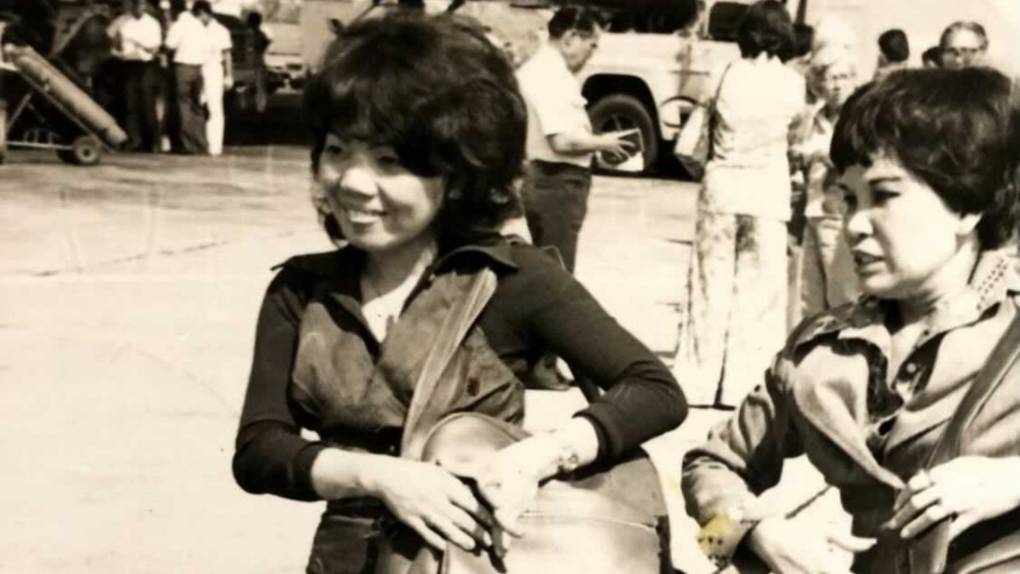
"caption": "Josie Manalo, the mother of Daly City Mayor Juslyn Manalo, getting ready to board her flight from the Philippines to the United States in 1973.",
"description": "A young woman smiles while carrying a large bag over her shoulder. She wears a collared top. There is an airplane in the background.",
"title": "Josie Manalo leaving for America 1920x1080",
"credit": "Courtesy of Juslyn Manalo",
"status": "inherit",
"altTag": "A young woman smiles while carrying a large bag over her shoulder. She wears a collared top. There is an airplane in the background.",
"isLoading": false,
"fetchFailed": false
},
"news_12048401": {
"type": "attachments",
"id": "news_12048401",
"meta": {
"index": "attachments_1716263798",
"site": "news",
"id": "12048401",
"found": true
},
"title": "250716-CherrylandUnincorporated-11-BL_qed",
"publishDate": 1752704081,
"status": "inherit",
"parent": 0,
"modified": 1752704174,
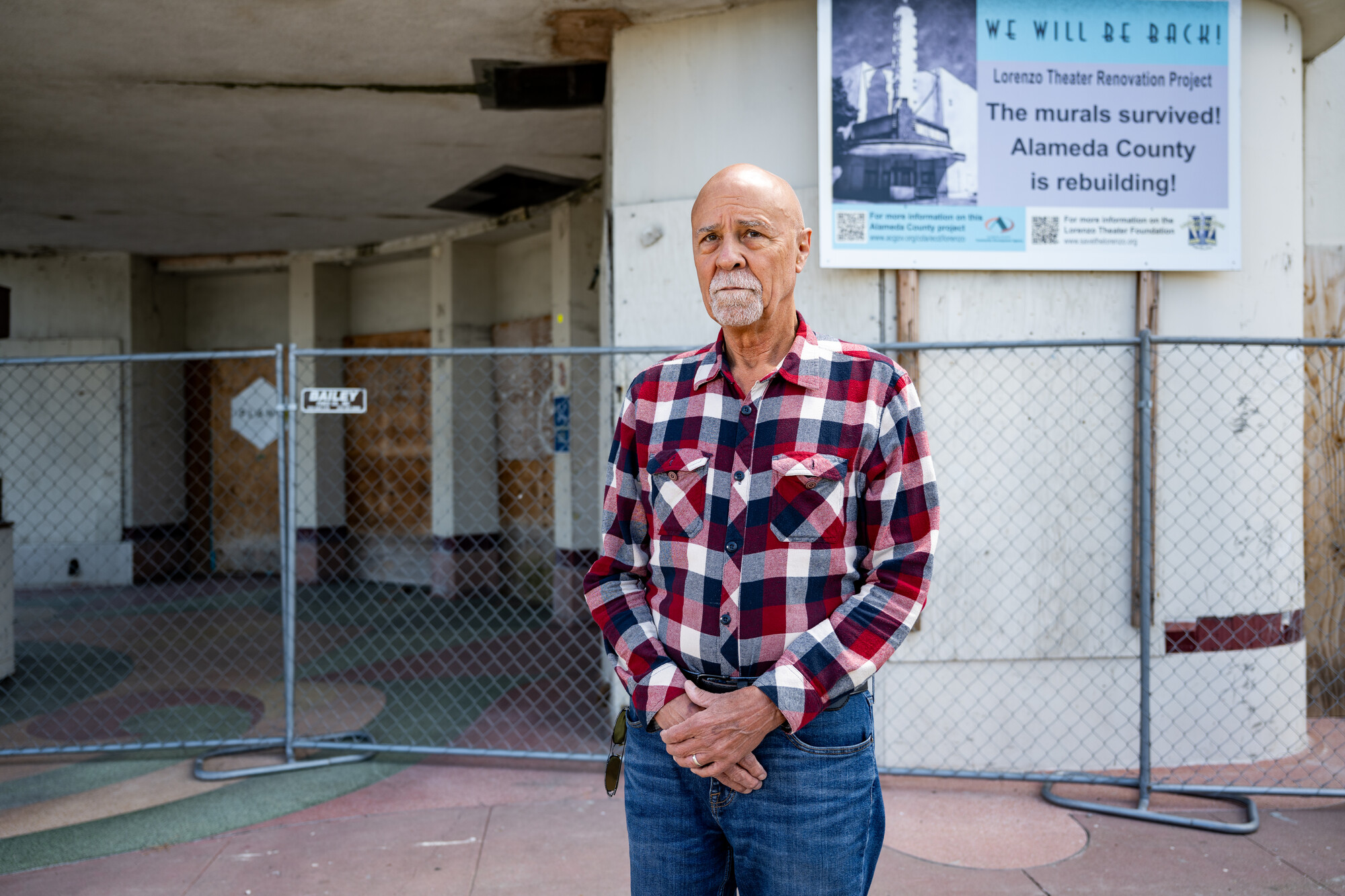
"caption": "Keith Barros, a longtime San Lorenzo resident and community advocate, stands outside the historic Lorenzo Theatre in the unincorporated area of Alameda County on July 16, 2025.",
"credit": "Beth LaBerge/KQED",
"altTag": null,
"description": null,
"imgSizes": {
"thumbnail": {
"file": "https://cdn.kqed.org/wp-content/uploads/sites/10/2025/07/250716-CherrylandUnincorporated-11-BL_qed-160x107.jpg",
"width": 160,
"height": 107,
"mimeType": "image/jpeg"
},
"1536x1536": {
"file": "https://cdn.kqed.org/wp-content/uploads/sites/10/2025/07/250716-CherrylandUnincorporated-11-BL_qed-1536x1024.jpg",
"width": 1536,
"height": 1024,
"mimeType": "image/jpeg"
},
"post-thumbnail": {
"file": "https://cdn.kqed.org/wp-content/uploads/sites/10/2025/07/250716-CherrylandUnincorporated-11-BL_qed-672x372.jpg",
"width": 672,
"height": 372,
"mimeType": "image/jpeg"
},
"twentyfourteen-full-width": {
"file": "https://cdn.kqed.org/wp-content/uploads/sites/10/2025/07/250716-CherrylandUnincorporated-11-BL_qed-1038x576.jpg",
"width": 1038,
"height": 576,
"mimeType": "image/jpeg"
},
"kqedFullSize": {
"file": "https://cdn.kqed.org/wp-content/uploads/sites/10/2025/07/250716-CherrylandUnincorporated-11-BL_qed.jpg",
"width": 2000,
"height": 1333
}
},
"isLoading": false,
"fetchFailed": false
},
"news_12018787": {
"type": "attachments",
"id": "news_12018787",
"meta": {
"index": "attachments_1716263798",
"site": "news",
"id": "12018787",
"found": true
},
"title": "CSRM-Roster-Cochiti-Dining_2024-03-27_A7R5393_HighRes",
"publishDate": 1734543193,
"status": "inherit",
"parent": 12029560,
"modified": 1741882860,
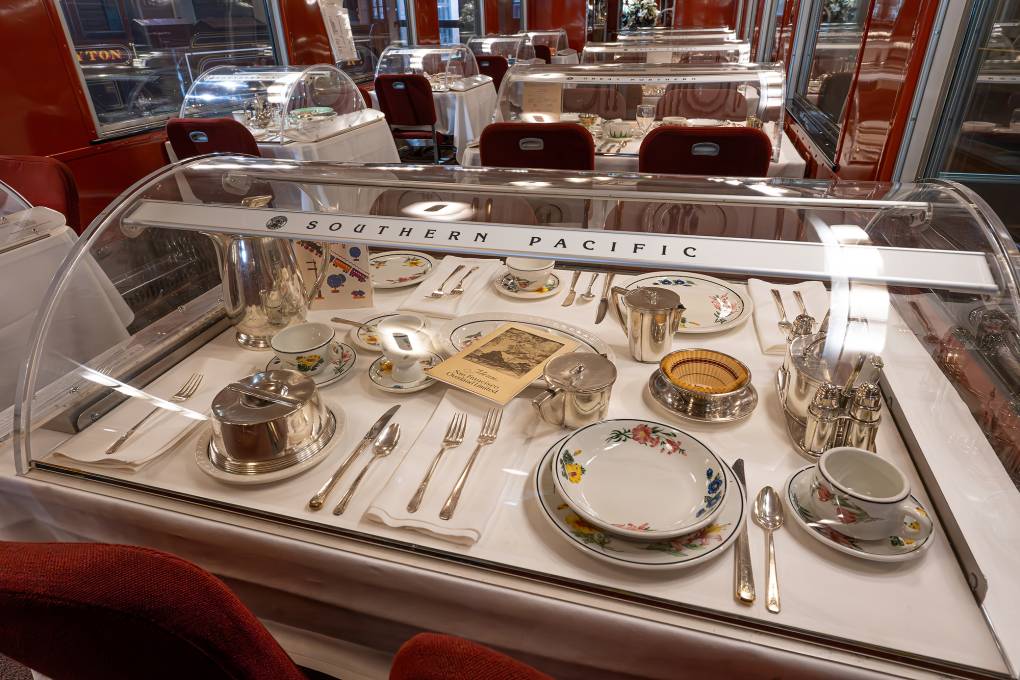
"caption": "Place settings in a dining car on display on Dec. 18, 2024 at the California State Railroad Museum.",
"credit": "Kelly B. Huston/California State Railroad Museum",
"altTag": null,
"description": null,
"imgSizes": {
"medium": {
"file": "https://cdn.kqed.org/wp-content/uploads/sites/10/2024/12/CSRM-Roster-Cochiti-Dining_2024-03-27_A7R5393_HighRes-800x534.jpg",
"width": 800,
"height": 534,
"mimeType": "image/jpeg"
},
"large": {
"file": "https://cdn.kqed.org/wp-content/uploads/sites/10/2024/12/CSRM-Roster-Cochiti-Dining_2024-03-27_A7R5393_HighRes-1020x680.jpg",
"width": 1020,
"height": 680,
"mimeType": "image/jpeg"
},
"thumbnail": {
"file": "https://cdn.kqed.org/wp-content/uploads/sites/10/2024/12/CSRM-Roster-Cochiti-Dining_2024-03-27_A7R5393_HighRes-160x107.jpg",
"width": 160,
"height": 107,
"mimeType": "image/jpeg"
},
"1536x1536": {
"file": "https://cdn.kqed.org/wp-content/uploads/sites/10/2024/12/CSRM-Roster-Cochiti-Dining_2024-03-27_A7R5393_HighRes-1536x1025.jpg",
"width": 1536,
"height": 1025,
"mimeType": "image/jpeg"
},
"post-thumbnail": {
"file": "https://cdn.kqed.org/wp-content/uploads/sites/10/2024/12/CSRM-Roster-Cochiti-Dining_2024-03-27_A7R5393_HighRes-672x372.jpg",
"width": 672,
"height": 372,
"mimeType": "image/jpeg"
},
"twentyfourteen-full-width": {
"file": "https://cdn.kqed.org/wp-content/uploads/sites/10/2024/12/CSRM-Roster-Cochiti-Dining_2024-03-27_A7R5393_HighRes-1038x576.jpg",
"width": 1038,
"height": 576,
"mimeType": "image/jpeg"
},
"full-width": {
"file": "https://cdn.kqed.org/wp-content/uploads/sites/10/2024/12/CSRM-Roster-Cochiti-Dining_2024-03-27_A7R5393_HighRes-1920x1281.jpg",
"width": 1920,
"height": 1281,
"mimeType": "image/jpeg"
},
"kqedFullSize": {
"file": "https://cdn.kqed.org/wp-content/uploads/sites/10/2024/12/CSRM-Roster-Cochiti-Dining_2024-03-27_A7R5393_HighRes.jpg",
"width": 2000,
"height": 1334
}
},
"isLoading": false,
"fetchFailed": false
},
"news_12045813": {
"type": "attachments",
"id": "news_12045813",
"meta": {
"index": "attachments_1716263798",
"site": "news",
"id": "12045813",
"found": true
},
"title": "ATK6-KQED",
"publishDate": 1750807427,
"status": "inherit",
"parent": 0,
"modified": 1750807504,
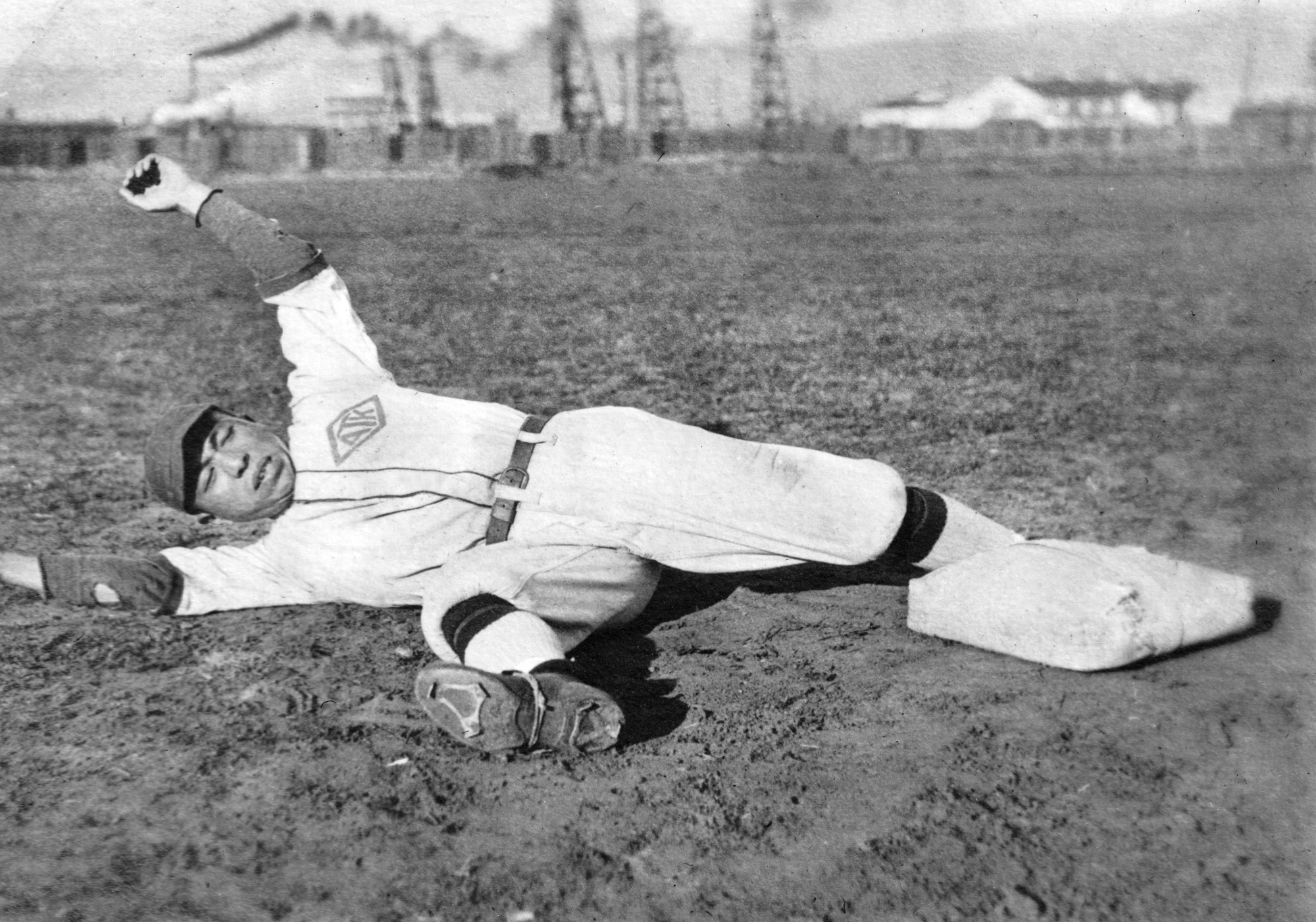
"caption": "An Alameda Taiiku Kai player slidies into base for this posed photograph.ATK field was on a lot adjacent to the northeast corner of McKinley Park at the end of Walnut St and Clement Ave, Alameda, CA. circa 1916-1920s",
"credit": "Courtesy of the Alameda Japanese American History Project",
"altTag": null,
"description": null,
"imgSizes": {
"thumbnail": {
"file": "https://cdn.kqed.org/wp-content/uploads/sites/10/2025/06/ATK6-KQED-160x112.jpg",
"width": 160,
"height": 112,
"mimeType": "image/jpeg"
},
"1536x1536": {
"file": "https://cdn.kqed.org/wp-content/uploads/sites/10/2025/06/ATK6-KQED-1536x1076.jpg",
"width": 1536,
"height": 1076,
"mimeType": "image/jpeg"
},
"post-thumbnail": {
"file": "https://cdn.kqed.org/wp-content/uploads/sites/10/2025/06/ATK6-KQED-672x372.jpg",
"width": 672,
"height": 372,
"mimeType": "image/jpeg"
},
"twentyfourteen-full-width": {
"file": "https://cdn.kqed.org/wp-content/uploads/sites/10/2025/06/ATK6-KQED-1038x576.jpg",
"width": 1038,
"height": 576,
"mimeType": "image/jpeg"
},
"kqedFullSize": {
"file": "https://cdn.kqed.org/wp-content/uploads/sites/10/2025/06/ATK6-KQED.jpg",
"width": 2000,
"height": 1401
}
},
"isLoading": false,
"fetchFailed": false
},
"news_11934147": {
"type": "attachments",
"id": "news_11934147",
"meta": {
"index": "attachments_1716263798",
"site": "news",
"id": "11934147",
"found": true
},
"parent": 11934056,
"imgSizes": {
"twentyfourteen-full-width": {
"file": "https://ww2.kqed.org/app/uploads/sites/10/2022/12/RS61490_022_KQED_TransamericaPyramid_11302022-qut-1038x576.jpg",
"width": 1038,
"mimeType": "image/jpeg",
"height": 576
},
"thumbnail": {
"file": "https://ww2.kqed.org/app/uploads/sites/10/2022/12/RS61490_022_KQED_TransamericaPyramid_11302022-qut-160x107.jpg",
"width": 160,
"mimeType": "image/jpeg",
"height": 107
},
"post-thumbnail": {
"file": "https://ww2.kqed.org/app/uploads/sites/10/2022/12/RS61490_022_KQED_TransamericaPyramid_11302022-qut-672x372.jpg",
"width": 672,
"mimeType": "image/jpeg",
"height": 372
},
"kqedFullSize": {
"file": "https://ww2.kqed.org/app/uploads/sites/10/2022/12/RS61490_022_KQED_TransamericaPyramid_11302022-qut.jpg",
"width": 1920,
"height": 1280
},
"large": {
"file": "https://ww2.kqed.org/app/uploads/sites/10/2022/12/RS61490_022_KQED_TransamericaPyramid_11302022-qut-1020x680.jpg",
"width": 1020,
"mimeType": "image/jpeg",
"height": 680
},
"1536x1536": {
"file": "https://ww2.kqed.org/app/uploads/sites/10/2022/12/RS61490_022_KQED_TransamericaPyramid_11302022-qut-1536x1024.jpg",
"width": 1536,
"mimeType": "image/jpeg",
"height": 1024
},
"medium": {
"file": "https://ww2.kqed.org/app/uploads/sites/10/2022/12/RS61490_022_KQED_TransamericaPyramid_11302022-qut-800x533.jpg",
"width": 800,
"mimeType": "image/jpeg",
"height": 533
}
},
"publishDate": 1670273356,
"modified": 1670521968,
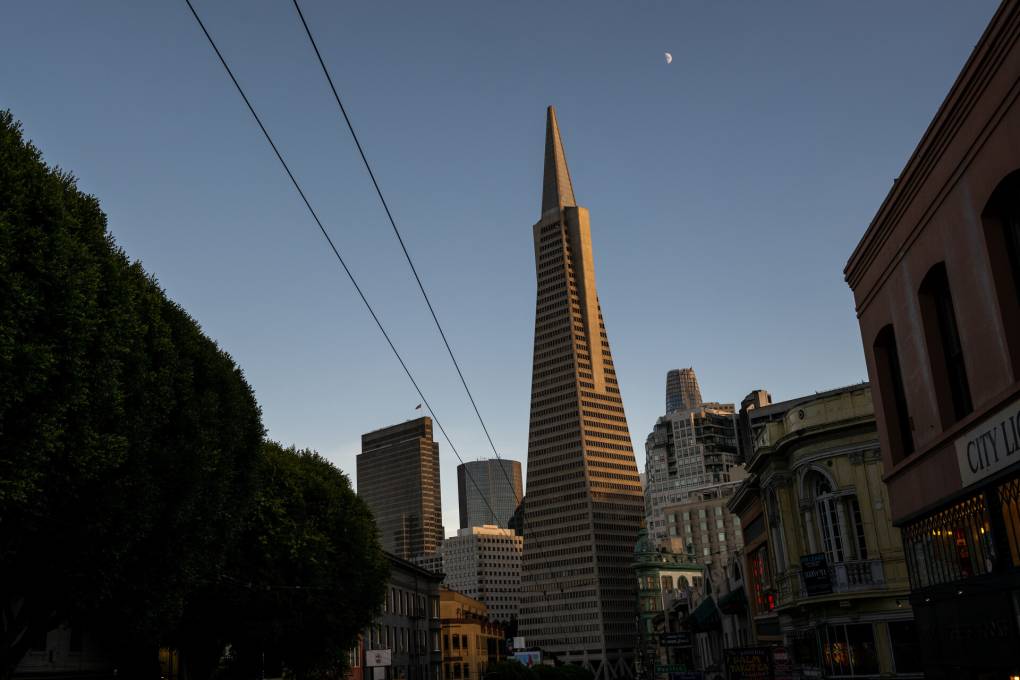
"caption": "The moon rises near the Transamerica Pyramid in San Francisco on Nov. 30, 2022.",
"description": null,
"title": "The moon rises near the Transamerica Pyramid in San Francisco on Nov. 30, 2022.",
"credit": "Beth LaBerge/KQED",
"status": "inherit",
"altTag": "An early-evening shot of a very tall, narrow pyramid-shaped building taken from a low angle, surrounded by other smaller buildings. The low light of a winter sunset is hitting the building from the right, making it a warm gold color.",
"isLoading": false,
"fetchFailed": false
},
"news_12032816": {
"type": "attachments",
"id": "news_12032816",
"meta": {
"index": "attachments_1716263798",
"site": "news",
"id": "12032816",
"found": true
},
"title": "250320-THORNTONBEACH-06-BL-KQED",
"publishDate": 1742853402,
"status": "inherit",
"parent": 0,
"modified": 1742854875,
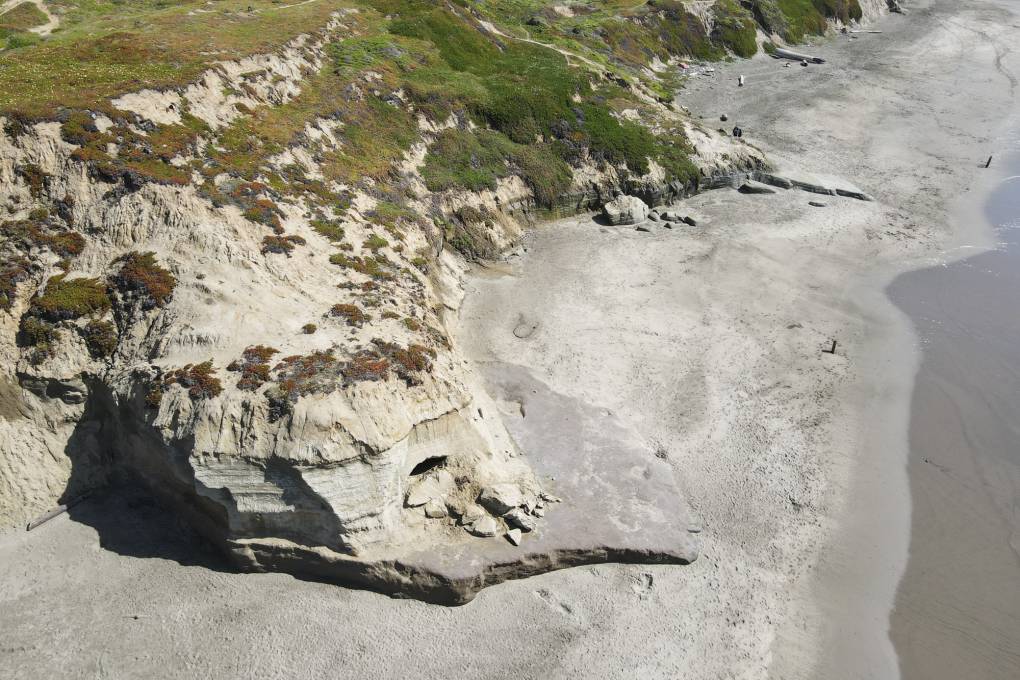
"caption": "Rocks cover a tunnel entrance at Phillip Burton Memorial Beach, located between Thornton State Beach and Fort Funston Beach, in San Francisco on March 21, 2025.",
"credit": "Beth LaBerge/KQED",
"altTag": null,
"description": null,
"imgSizes": {
"medium": {
"file": "https://cdn.kqed.org/wp-content/uploads/sites/10/2025/03/250320-THORNTONBEACH-06-BL-KQED-800x534.jpg",
"width": 800,
"height": 534,
"mimeType": "image/jpeg"
},
"large": {
"file": "https://cdn.kqed.org/wp-content/uploads/sites/10/2025/03/250320-THORNTONBEACH-06-BL-KQED-1020x680.jpg",
"width": 1020,
"height": 680,
"mimeType": "image/jpeg"
},
"thumbnail": {
"file": "https://cdn.kqed.org/wp-content/uploads/sites/10/2025/03/250320-THORNTONBEACH-06-BL-KQED-160x107.jpg",
"width": 160,
"height": 107,
"mimeType": "image/jpeg"
},
"1536x1536": {
"file": "https://cdn.kqed.org/wp-content/uploads/sites/10/2025/03/250320-THORNTONBEACH-06-BL-KQED-1536x1025.jpg",
"width": 1536,
"height": 1025,
"mimeType": "image/jpeg"
},
"post-thumbnail": {
"file": "https://cdn.kqed.org/wp-content/uploads/sites/10/2025/03/250320-THORNTONBEACH-06-BL-KQED-672x372.jpg",
"width": 672,
"height": 372,
"mimeType": "image/jpeg"
},
"twentyfourteen-full-width": {
"file": "https://cdn.kqed.org/wp-content/uploads/sites/10/2025/03/250320-THORNTONBEACH-06-BL-KQED-1038x576.jpg",
"width": 1038,
"height": 576,
"mimeType": "image/jpeg"
},
"full-width": {
"file": "https://cdn.kqed.org/wp-content/uploads/sites/10/2025/03/250320-THORNTONBEACH-06-BL-KQED-1920x1281.jpg",
"width": 1920,
"height": 1281,
"mimeType": "image/jpeg"
},
"kqedFullSize": {
"file": "https://cdn.kqed.org/wp-content/uploads/sites/10/2025/03/250320-THORNTONBEACH-06-BL-KQED.jpg",
"width": 2000,
"height": 1334
}
},
"isLoading": false,
"fetchFailed": false
},
"news_12041359": {
"type": "attachments",
"id": "news_12041359",
"meta": {
"index": "attachments_1716263798",
"site": "news",
"id": "12041359",
"found": true
},
"title": "250522-PAYPAL MAFIA-KQED",
"publishDate": 1747952172,
"status": "inherit",
"parent": 0,
"modified": 1748470320,
"caption": "Peter Thiel, David Sacks and Elon Musk (left to right) have all become powerful political players. But they started out working together in Silicon Valley.",
"credit": "Marco Bello/Getty Images; Anna Moneymaker/Getty Images; Kevork Djansezian/Getty Images",
"altTag": null,
"description": null,
"imgSizes": {
"medium": {
"file": "https://cdn.kqed.org/wp-content/uploads/sites/10/2025/05/250522-PAYPAL-MAFIA-KQED-800x533.jpg",
"width": 800,
"height": 533,
"mimeType": "image/jpeg"
},
"large": {
"file": "https://cdn.kqed.org/wp-content/uploads/sites/10/2025/05/250522-PAYPAL-MAFIA-KQED-1020x680.jpg",
"width": 1020,
"height": 680,
"mimeType": "image/jpeg"
},
"thumbnail": {
"file": "https://cdn.kqed.org/wp-content/uploads/sites/10/2025/05/250522-PAYPAL-MAFIA-KQED-160x107.jpg",
"width": 160,
"height": 107,
"mimeType": "image/jpeg"
},
"1536x1536": {
"file": "https://cdn.kqed.org/wp-content/uploads/sites/10/2025/05/250522-PAYPAL-MAFIA-KQED-1536x1024.jpg",
"width": 1536,
"height": 1024,
"mimeType": "image/jpeg"
},
"post-thumbnail": {
"file": "https://cdn.kqed.org/wp-content/uploads/sites/10/2025/05/250522-PAYPAL-MAFIA-KQED-672x372.jpg",
"width": 672,
"height": 372,
"mimeType": "image/jpeg"
},
"twentyfourteen-full-width": {
"file": "https://cdn.kqed.org/wp-content/uploads/sites/10/2025/05/250522-PAYPAL-MAFIA-KQED-1038x576.jpg",
"width": 1038,
"height": 576,
"mimeType": "image/jpeg"
},
"full-width": {
"file": "https://cdn.kqed.org/wp-content/uploads/sites/10/2025/05/250522-PAYPAL-MAFIA-KQED-1920x1280.jpg",
"width": 1920,
"height": 1280,
"mimeType": "image/jpeg"
},
"kqedFullSize": {
"file": "https://cdn.kqed.org/wp-content/uploads/sites/10/2025/05/250522-PAYPAL-MAFIA-KQED.jpg",
"width": 2000,
"height": 1333
}
},
"isLoading": false,
"fetchFailed": false
},
"news_12037928": {
"type": "attachments",
"id": "news_12037928",
"meta": {
"index": "attachments_1716263798",
"site": "news",
"id": "12037928",
"found": true
},
"title": "250424-DANGERDOGS-10-BL-KQED",
"publishDate": 1745867189,
"status": "inherit",
"parent": 12038600,
"modified": 1747427071,
"caption": "A vendor sells bacon-wrapped hot dogs at Fisherman’s Wharf in San Francisco on April 24, 2025.",
"credit": "Beth LaBerge/KQED",
"altTag": null,
"description": null,
"imgSizes": {
"medium": {
"file": "https://cdn.kqed.org/wp-content/uploads/sites/10/2025/04/250424-DANGERDOGS-10-BL-KQED-800x533.jpg",
"width": 800,
"height": 533,
"mimeType": "image/jpeg"
},
"large": {
"file": "https://cdn.kqed.org/wp-content/uploads/sites/10/2025/04/250424-DANGERDOGS-10-BL-KQED-1020x680.jpg",
"width": 1020,
"height": 680,
"mimeType": "image/jpeg"
},
"thumbnail": {
"file": "https://cdn.kqed.org/wp-content/uploads/sites/10/2025/04/250424-DANGERDOGS-10-BL-KQED-160x107.jpg",
"width": 160,
"height": 107,
"mimeType": "image/jpeg"
},
"1536x1536": {
"file": "https://cdn.kqed.org/wp-content/uploads/sites/10/2025/04/250424-DANGERDOGS-10-BL-KQED-1536x1024.jpg",
"width": 1536,
"height": 1024,
"mimeType": "image/jpeg"
},
"post-thumbnail": {
"file": "https://cdn.kqed.org/wp-content/uploads/sites/10/2025/04/250424-DANGERDOGS-10-BL-KQED-672x372.jpg",
"width": 672,
"height": 372,
"mimeType": "image/jpeg"
},
"twentyfourteen-full-width": {
"file": "https://cdn.kqed.org/wp-content/uploads/sites/10/2025/04/250424-DANGERDOGS-10-BL-KQED-1038x576.jpg",
"width": 1038,
"height": 576,
"mimeType": "image/jpeg"
},
"full-width": {
"file": "https://cdn.kqed.org/wp-content/uploads/sites/10/2025/04/250424-DANGERDOGS-10-BL-KQED-1920x1280.jpg",
"width": 1920,
"height": 1280,
"mimeType": "image/jpeg"
},
"kqedFullSize": {
"file": "https://cdn.kqed.org/wp-content/uploads/sites/10/2025/04/250424-DANGERDOGS-10-BL-KQED.jpg",
"width": 2000,
"height": 1333
}
},
"isLoading": false,
"fetchFailed": false
},
"news_12039980": {
"type": "attachments",
"id": "news_12039980",
"meta": {
"index": "attachments_1716263798",
"site": "news",
"id": "12039980",
"found": true
},
"title": "250513-GREAT MALL OF MILPITAS-ARCHIVAL-1-KQED",
"publishDate": 1747179409,
"status": "inherit",
"parent": 0,
"modified": 1747251594,
"caption": "Workers on the assembly line at the San Jose Assembly Plant, 1974. ",
"credit": "Courtesy of the Ford Motor Company",
"altTag": null,
"description": null,
"imgSizes": {
"medium": {
"file": "https://cdn.kqed.org/wp-content/uploads/sites/10/2025/05/250513-GREAT-MALL-OF-MILPITAS-ARCHIVAL-1-KQED-800x618.jpg",
"width": 800,
"height": 618,
"mimeType": "image/jpeg"
},
"large": {
"file": "https://cdn.kqed.org/wp-content/uploads/sites/10/2025/05/250513-GREAT-MALL-OF-MILPITAS-ARCHIVAL-1-KQED-1020x788.jpg",
"width": 1020,
"height": 788,
"mimeType": "image/jpeg"
},
"thumbnail": {
"file": "https://cdn.kqed.org/wp-content/uploads/sites/10/2025/05/250513-GREAT-MALL-OF-MILPITAS-ARCHIVAL-1-KQED-160x124.jpg",
"width": 160,
"height": 124,
"mimeType": "image/jpeg"
},
"1536x1536": {
"file": "https://cdn.kqed.org/wp-content/uploads/sites/10/2025/05/250513-GREAT-MALL-OF-MILPITAS-ARCHIVAL-1-KQED-1536x1187.jpg",
"width": 1536,
"height": 1187,
"mimeType": "image/jpeg"
},
"post-thumbnail": {
"file": "https://cdn.kqed.org/wp-content/uploads/sites/10/2025/05/250513-GREAT-MALL-OF-MILPITAS-ARCHIVAL-1-KQED-672x372.jpg",
"width": 672,
"height": 372,
"mimeType": "image/jpeg"
},
"twentyfourteen-full-width": {
"file": "https://cdn.kqed.org/wp-content/uploads/sites/10/2025/05/250513-GREAT-MALL-OF-MILPITAS-ARCHIVAL-1-KQED-1038x576.jpg",
"width": 1038,
"height": 576,
"mimeType": "image/jpeg"
},
"full-width": {
"file": "https://cdn.kqed.org/wp-content/uploads/sites/10/2025/05/250513-GREAT-MALL-OF-MILPITAS-ARCHIVAL-1-KQED-1920x1483.jpg",
"width": 1920,
"height": 1483,
"mimeType": "image/jpeg"
},
"kqedFullSize": {
"file": "https://cdn.kqed.org/wp-content/uploads/sites/10/2025/05/250513-GREAT-MALL-OF-MILPITAS-ARCHIVAL-1-KQED.jpg",
"width": 2000,
"height": 1545
}
},
"isLoading": false,
"fetchFailed": false
},
"news_12039215": {
"type": "attachments",
"id": "news_12039215",
"meta": {
"index": "attachments_1716263798",
"site": "news",
"id": "12039215",
"found": true
},
"title": "Signage for the Tadich Grill is seen on Wednesday, July 29, 2020 in San Francisco, Calif. The Tadich Grill, San Franciscoís oldest restaurant, is temporarily closing this Friday about a month after launching their takeout operation.",
"publishDate": 1746653594,
"status": "inherit",
"parent": 12039171,
"modified": 1746653625,
"caption": "Signage for the Tadich Grill is seen on Wednesday, July 29, 2020 in San Francisco.",
"credit": "Lea Suzuki/The San Francisco Chronicle via Getty Images",
"altTag": null,
"description": null,
"imgSizes": {
"medium": {
"file": "https://cdn.kqed.org/wp-content/uploads/sites/10/2025/05/GettyImages-1322394309-800x534.jpg",
"width": 800,
"height": 534,
"mimeType": "image/jpeg"
},
"large": {
"file": "https://cdn.kqed.org/wp-content/uploads/sites/10/2025/05/GettyImages-1322394309-1020x680.jpg",
"width": 1020,
"height": 680,
"mimeType": "image/jpeg"
},
"thumbnail": {
"file": "https://cdn.kqed.org/wp-content/uploads/sites/10/2025/05/GettyImages-1322394309-160x107.jpg",
"width": 160,
"height": 107,
"mimeType": "image/jpeg"
},
"post-thumbnail": {
"file": "https://cdn.kqed.org/wp-content/uploads/sites/10/2025/05/GettyImages-1322394309-672x372.jpg",
"width": 672,
"height": 372,
"mimeType": "image/jpeg"
},
"twentyfourteen-full-width": {
"file": "https://cdn.kqed.org/wp-content/uploads/sites/10/2025/05/GettyImages-1322394309-1024x576.jpg",
"width": 1024,
"height": 576,
"mimeType": "image/jpeg"
},
"kqedFullSize": {
"file": "https://cdn.kqed.org/wp-content/uploads/sites/10/2025/05/GettyImages-1322394309.jpg",
"width": 1024,
"height": 683
}
},
"isLoading": false,
"fetchFailed": false
},
"news_12032353": {
"type": "attachments",
"id": "news_12032353",
"meta": {
"index": "attachments_1716263798",
"site": "news",
"id": "12032353",
"found": true
},
"title": "250318-PRIVATESCHOOLRATES-23-BL-KQED",
"publishDate": 1742509686,
"status": "inherit",
"parent": 0,
"modified": 1742510127,
"caption": "Second grade teacher Tira Sims works with students during class at Alta Vista School in San Francisco on March 18, 2025.",
"credit": "Beth LaBerge/KQED",
"altTag": null,
"description": null,
"imgSizes": {
"medium": {
"file": "https://cdn.kqed.org/wp-content/uploads/sites/10/2025/03/250318-PRIVATESCHOOLRATES-23-BL-KQED-800x533.jpg",
"width": 800,
"height": 533,
"mimeType": "image/jpeg"
},
"large": {
"file": "https://cdn.kqed.org/wp-content/uploads/sites/10/2025/03/250318-PRIVATESCHOOLRATES-23-BL-KQED-1020x680.jpg",
"width": 1020,
"height": 680,
"mimeType": "image/jpeg"
},
"thumbnail": {
"file": "https://cdn.kqed.org/wp-content/uploads/sites/10/2025/03/250318-PRIVATESCHOOLRATES-23-BL-KQED-160x107.jpg",
"width": 160,
"height": 107,
"mimeType": "image/jpeg"
},
"1536x1536": {
"file": "https://cdn.kqed.org/wp-content/uploads/sites/10/2025/03/250318-PRIVATESCHOOLRATES-23-BL-KQED-1536x1024.jpg",
"width": 1536,
"height": 1024,
"mimeType": "image/jpeg"
},
"post-thumbnail": {
"file": "https://cdn.kqed.org/wp-content/uploads/sites/10/2025/03/250318-PRIVATESCHOOLRATES-23-BL-KQED-672x372.jpg",
"width": 672,
"height": 372,
"mimeType": "image/jpeg"
},
"twentyfourteen-full-width": {
"file": "https://cdn.kqed.org/wp-content/uploads/sites/10/2025/03/250318-PRIVATESCHOOLRATES-23-BL-KQED-1038x576.jpg",
"width": 1038,
"height": 576,
"mimeType": "image/jpeg"
},
"full-width": {
"file": "https://cdn.kqed.org/wp-content/uploads/sites/10/2025/03/250318-PRIVATESCHOOLRATES-23-BL-KQED-1920x1280.jpg",
"width": 1920,
"height": 1280,
"mimeType": "image/jpeg"
},
"kqedFullSize": {
"file": "https://cdn.kqed.org/wp-content/uploads/sites/10/2025/03/250318-PRIVATESCHOOLRATES-23-BL-KQED.jpg",
"width": 2000,
"height": 1333
}
},
"isLoading": false,
"fetchFailed": false
},
"news_12037173": {
"type": "attachments",
"id": "news_12037173",
"meta": {
"index": "attachments_1716263798",
"site": "news",
"id": "12037173",
"found": true
},
"title": "teen-podcaster-illustration",
"publishDate": 1745360083,
"status": "inherit",
"parent": 12037170,
"modified": 1745360169,
"caption": "Four Bay Area teenagers have been sharing their thoughts on life with us for the past semester.",
"credit": "Nadya Ustyuzhantseva/iStock",
"altTag": "Graphic illustration of a young woman with curly hair sitting in front of a computer, with a microphone and headphones on.",
"description": null,
"imgSizes": {
"medium": {
"file": "https://cdn.kqed.org/wp-content/uploads/sites/10/2025/04/teen-podcaster-illustration-800x450.jpg",
"width": 800,
"height": 450,
"mimeType": "image/jpeg"
},
"large": {
"file": "https://cdn.kqed.org/wp-content/uploads/sites/10/2025/04/teen-podcaster-illustration-1020x574.jpg",
"width": 1020,
"height": 574,
"mimeType": "image/jpeg"
},
"thumbnail": {
"file": "https://cdn.kqed.org/wp-content/uploads/sites/10/2025/04/teen-podcaster-illustration-160x90.jpg",
"width": 160,
"height": 90,
"mimeType": "image/jpeg"
},
"1536x1536": {
"file": "https://cdn.kqed.org/wp-content/uploads/sites/10/2025/04/teen-podcaster-illustration-1536x864.jpg",
"width": 1536,
"height": 864,
"mimeType": "image/jpeg"
},
"post-thumbnail": {
"file": "https://cdn.kqed.org/wp-content/uploads/sites/10/2025/04/teen-podcaster-illustration-672x372.jpg",
"width": 672,
"height": 372,
"mimeType": "image/jpeg"
},
"twentyfourteen-full-width": {
"file": "https://cdn.kqed.org/wp-content/uploads/sites/10/2025/04/teen-podcaster-illustration-1038x576.jpg",
"width": 1038,
"height": 576,
"mimeType": "image/jpeg"
},
"kqedFullSize": {
"file": "https://cdn.kqed.org/wp-content/uploads/sites/10/2025/04/teen-podcaster-illustration.jpg",
"width": 1920,
"height": 1080
}
},
"isLoading": false,
"fetchFailed": false
}
},
"audioPlayerReducer": {
"postId": "stream_live",
"isPaused": true,
"isPlaying": false,
"pfsActive": false,
"pledgeModalIsOpen": true,
"playerDrawerIsOpen": false,
"liveAudioPlayStartedAt": 0,
"liveAudioPlayContext": ""
},
"authorsReducer": {
"astupi": {
"type": "authors",
"id": "70",
"meta": {
"index": "authors_1716337520",
"id": "70",
"found": true
},
"name": "Amanda Stupi",
"firstName": "Amanda",
"lastName": "Stupi",
"slug": "astupi",
"email": "astupi@kqed.org",
"display_author_email": false,
"staff_mastheads": [],
"title": "Senior Engagement Producer",
"bio": "Amanda joined KQED Science’s engagement team as a Senior Audience Engagement Strategist in the spring of 2019. She has helped craft messaging around wildfires, the coronavirus pandemic, climate change and many other stories. She has also brought KQED Science to new platforms such as Reddit’s Ask Me Anything series. Prior to joining KQED Science, Amanda spent seven years as an engagement producer with Forum, KQED’s daily live call-in show. She got her start in radio at KALW's weekly call in show, City Visions, before going on to an internship and stint at NPR's Talk of the Nation.\r\n\r\nPrior to journalism, Amanda taught English at Lowell High School. She's a native of Petaluma and currently lives under the \"South San Francisco the Industrial City\" sign in South City. She believes that engagement is vital to news’s future and that good journalism listens as much as it asks questions.",
"avatar": "https://secure.gravatar.com/avatar/e981c503e5c162da701dcaccfbf87e35?s=600&d=blank&r=g",
"twitter": null,
"facebook": null,
"instagram": null,
"linkedin": null,
"sites": [
{
"site": "arts",
"roles": [
"Contributor"
]
},
{
"site": "news",
"roles": [
"editor"
]
},
{
"site": "pop",
"roles": [
"contributor"
]
},
{
"site": "stateofhealth",
"roles": [
"editor"
]
},
{
"site": "science",
"roles": []
},
{
"site": "perspectives",
"roles": [
"editor"
]
}
],
"headData": {
"title": "Amanda Stupi | KQED",
"description": "Senior Engagement Producer",
"ogImgSrc": "https://secure.gravatar.com/avatar/e981c503e5c162da701dcaccfbf87e35?s=600&d=blank&r=g",
"twImgSrc": "https://secure.gravatar.com/avatar/e981c503e5c162da701dcaccfbf87e35?s=600&d=blank&r=g"
},
"isLoading": false,
"link": "/author/astupi"
},
"ohubertallen": {
"type": "authors",
"id": "102",
"meta": {
"index": "authors_1716337520",
"id": "102",
"found": true
},
"name": "Olivia Allen-Price",
"firstName": "Olivia",
"lastName": "Allen-Price",
"slug": "ohubertallen",
"email": "oallenprice@kqed.org",
"display_author_email": false,
"staff_mastheads": [
"news"
],
"title": "Senior Editor",
"bio": "Olivia Allen-Price is senior editor and host of the award-winning Bay Curious podcast. Prior to joining KQED in 2013, Olivia worked at The Baltimore Sun and The Virginian-Pilot in Norfolk, Va. She holds degrees in journalism and political science from Elon University. Her work has earned awards from the Society of Professional Journalists, the Hearst Foundation and Hearken. She loves to talk about running and curly hair.\r\n\r\nFollow: \u003ca href=\"https://twitter.com/oallenprice\">@oallenprice\u003c/a>\r\nEmail: \u003ca href=\"mailto:oallenprice@kqed.org\">oallenprice@kqed.org\u003c/a>",
"avatar": "https://secure.gravatar.com/avatar/07f7803c1f6be56f3be58ef276dfa64dce898502e0554408ef4858451a8294f7?s=600&d=blank&r=g",
"twitter": "oallenprice",
"bluesky": null,
"facebook": null,
"instagram": null,
"linkedin": null,
"sites": [
{
"site": "",
"roles": [
"editor"
]
},
{
"site": "arts",
"roles": [
"subscriber"
]
},
{
"site": "news",
"roles": [
"administrator"
]
},
{
"site": "pop",
"roles": [
"administrator"
]
},
{
"site": "bayareabites",
"roles": [
"contributor"
]
},
{
"site": "stateofhealth",
"roles": [
"administrator"
]
},
{
"site": "science",
"roles": [
"editor"
]
}
],
"headData": {
"title": "Olivia Allen-Price | KQED",
"description": "Senior Editor",
"ogImgSrc": "https://secure.gravatar.com/avatar/07f7803c1f6be56f3be58ef276dfa64dce898502e0554408ef4858451a8294f7?s=600&d=blank&r=g",
"twImgSrc": "https://secure.gravatar.com/avatar/07f7803c1f6be56f3be58ef276dfa64dce898502e0554408ef4858451a8294f7?s=600&d=blank&r=g"
},
"isLoading": false,
"link": "/author/ohubertallen"
},
"katrinaschwartz": {
"type": "authors",
"id": "234",
"meta": {
"index": "authors_1716337520",
"id": "234",
"found": true
},
"name": "Katrina Schwartz",
"firstName": "Katrina",
"lastName": "Schwartz",
"slug": "katrinaschwartz",
"email": "kschwartz@kqed.org",
"display_author_email": false,
"staff_mastheads": [
"news"
],
"title": "Producer",
"bio": "Katrina Schwartz is a journalist based in San Francisco. She's worked at KPCC public radio in LA and has reported on air and online for KQED since 2010. She covered how teaching and learning is changing for MindShift between 2012 and 2020. She is the co-host of the MindShift podcast and now produces KQED's Bay Curious podcast.",
"avatar": "https://secure.gravatar.com/avatar/edb4ee79070447a018538c9aae6eeecf28786515b8a0c30e43b6b7dce5aa44c8?s=600&d=blank&r=g",
"twitter": "kschwart",
"bluesky": null,
"facebook": null,
"instagram": null,
"linkedin": null,
"sites": [
{
"site": "news",
"roles": [
"editor"
]
},
{
"site": "mindshift",
"roles": [
"administrator"
]
},
{
"site": "stateofhealth",
"roles": [
"author"
]
},
{
"site": "science",
"roles": [
"editor"
]
}
],
"headData": {
"title": "Katrina Schwartz | KQED",
"description": "Producer",
"ogImgSrc": "https://secure.gravatar.com/avatar/edb4ee79070447a018538c9aae6eeecf28786515b8a0c30e43b6b7dce5aa44c8?s=600&d=blank&r=g",
"twImgSrc": "https://secure.gravatar.com/avatar/edb4ee79070447a018538c9aae6eeecf28786515b8a0c30e43b6b7dce5aa44c8?s=600&d=blank&r=g"
},
"isLoading": false,
"link": "/author/katrinaschwartz"
},
"kqed": {
"type": "authors",
"id": "236",
"meta": {
"index": "authors_1716337520",
"id": "236",
"found": true
},
"name": "KQED News Staff",
"firstName": "KQED News Staff",
"lastName": null,
"slug": "kqed",
"email": "faq@kqed.org",
"display_author_email": false,
"staff_mastheads": [],
"title": null,
"bio": null,
"avatar": "https://secure.gravatar.com/avatar/ef0e801a68c4c54afa9180db14084167?s=600&d=blank&r=g",
"twitter": null,
"facebook": null,
"instagram": null,
"linkedin": null,
"sites": [
{
"site": "arts",
"roles": [
"contributor"
]
},
{
"site": "news",
"roles": [
"editor"
]
},
{
"site": "futureofyou",
"roles": [
"author"
]
}
],
"headData": {
"title": "KQED News Staff | KQED",
"description": null,
"ogImgSrc": "https://secure.gravatar.com/avatar/ef0e801a68c4c54afa9180db14084167?s=600&d=blank&r=g",
"twImgSrc": "https://secure.gravatar.com/avatar/ef0e801a68c4c54afa9180db14084167?s=600&d=blank&r=g"
},
"isLoading": false,
"link": "/author/kqed"
},
"carlysevern": {
"type": "authors",
"id": "3243",
"meta": {
"index": "authors_1716337520",
"id": "3243",
"found": true
},
"name": "Carly Severn",
"firstName": "Carly",
"lastName": "Severn",
"slug": "carlysevern",
"email": "csevern@kqed.org",
"display_author_email": false,
"staff_mastheads": [
"news"
],
"title": "Senior Editor, Audience News ",
"bio": "Carly is KQED's Senior Editor of Audience News on the Digital News team, and has reported for the California Report Magazine, Bay Curious and KQED Arts. She's formerly the host of \u003ca href=\"http://ww2.kqed.org/pop/category/the-cooler/\" rel=\"noopener noreferrer\">The Cooler\u003c/a> podcast.",
"avatar": "https://secure.gravatar.com/avatar/2d8d6765f186e64c798cf7f0c8088a41?s=600&d=blank&r=g",
"twitter": "teacupinthebay",
"facebook": null,
"instagram": null,
"linkedin": null,
"sites": [
{
"site": "",
"roles": [
"editor"
]
},
{
"site": "arts",
"roles": [
"editor"
]
},
{
"site": "news",
"roles": [
"administrator"
]
},
{
"site": "pop",
"roles": [
"editor"
]
},
{
"site": "futureofyou",
"roles": [
"editor"
]
},
{
"site": "about",
"roles": [
"administrator"
]
},
{
"site": "mindshift",
"roles": [
"editor"
]
},
{
"site": "bayareabites",
"roles": [
"editor"
]
},
{
"site": "stateofhealth",
"roles": [
"editor"
]
},
{
"site": "science",
"roles": [
"editor"
]
},
{
"site": "food",
"roles": [
"contributor"
]
},
{
"site": "forum",
"roles": [
"editor"
]
},
{
"site": "perspectives",
"roles": [
"administrator"
]
},
{
"site": "liveblog",
"roles": [
"editor"
]
}
],
"headData": {
"title": "Carly Severn | KQED",
"description": "Senior Editor, Audience News ",
"ogImgSrc": "https://secure.gravatar.com/avatar/2d8d6765f186e64c798cf7f0c8088a41?s=600&d=blank&r=g",
"twImgSrc": "https://secure.gravatar.com/avatar/2d8d6765f186e64c798cf7f0c8088a41?s=600&d=blank&r=g"
},
"isLoading": false,
"link": "/author/carlysevern"
},
"ecruzguevarra": {
"type": "authors",
"id": "8654",
"meta": {
"index": "authors_1716337520",
"id": "8654",
"found": true
},
"name": "Ericka Cruz Guevarra",
"firstName": "Ericka",
"lastName": "Cruz Guevarra",
"slug": "ecruzguevarra",
"email": "ecruzguevarra@kqed.org",
"display_author_email": true,
"staff_mastheads": [
"news"
],
"title": "Producer, The Bay Podcast",
"bio": "Ericka Cruz Guevarra is host of \u003ca href=\"https://www.kqed.org/podcasts/thebay\">\u003cem>The Bay\u003c/em>\u003c/a> podcast at KQED. Before host, she was the show’s producer. Her work in that capacity includes a three-part reported series on policing in Vallejo, which won a 2020 excellence in journalism award from the Society of Professional Journalists. Ericka has worked as a breaking news reporter at Oregon Public Broadcasting, helped produce the Code Switch podcast, and was KQED’s inaugural Raul Ramirez Diversity Fund intern. She’s also an alumna of NPR’s Next Generation Radio program. Send her an email if you have strong feelings about whether Fairfield and Suisun City are the Bay. Ericka is represented by SAG-AFTRA.",
"avatar": "https://secure.gravatar.com/avatar/accefc1de4bafc7e234b69bcb9b6f6536c130fd84709bc3069ef11a78787e1bb?s=600&d=blank&r=g",
"twitter": "NotoriousECG",
"bluesky": null,
"facebook": null,
"instagram": null,
"linkedin": null,
"sites": [
{
"site": "arts",
"roles": [
"subscriber"
]
},
{
"site": "news",
"roles": [
"editor",
"manage_categories"
]
},
{
"site": "futureofyou",
"roles": [
"subscriber"
]
},
{
"site": "stateofhealth",
"roles": [
"subscriber"
]
},
{
"site": "science",
"roles": [
"editor"
]
},
{
"site": "forum",
"roles": [
"subscriber"
]
}
],
"headData": {
"title": "Ericka Cruz Guevarra | KQED",
"description": "Producer, The Bay Podcast",
"ogImgSrc": "https://secure.gravatar.com/avatar/accefc1de4bafc7e234b69bcb9b6f6536c130fd84709bc3069ef11a78787e1bb?s=600&d=blank&r=g",
"twImgSrc": "https://secure.gravatar.com/avatar/accefc1de4bafc7e234b69bcb9b6f6536c130fd84709bc3069ef11a78787e1bb?s=600&d=blank&r=g"
},
"isLoading": false,
"link": "/author/ecruzguevarra"
},
"bwatt": {
"type": "authors",
"id": "11238",
"meta": {
"index": "authors_1716337520",
"id": "11238",
"found": true
},
"name": "Brian Watt",
"firstName": "Brian",
"lastName": "Watt",
"slug": "bwatt",
"email": "bwatt@KQED.org",
"display_author_email": false,
"staff_mastheads": [
"news"
],
"title": "Morning News Anchor",
"bio": "Brian Watt is KQED's morning radio news anchor. He joined the KQED News team in April of 2016. Prior to that, he worked as a Reporter for KPCC in Los Angeles and a producer at \u003cem>Marketplace.\u003c/em>\r\n\r\nDuring eight years at KPCC, Brian covered business and economics, and his work won several awards. In 2008, he won the Los Angeles Press Club’s first-place award for Business and Financial Reporting, Broadcast. He’s also received honorable mention and been first runner up for the Press Club’s Radio Journalist of the Year. He won two Golden Mike awards from the Radio and TV News Association of Southern California.\r\n\r\nBrian holds degrees in theater from Yale University and the Sorbonne, and has worked as an actor in France, Italy, Brazil, Hungary and . . . Hollywood. He appeared in a few television shows, including \u003cem>The West Wing, Judging Amy\u003c/em> and \u003cem>The District.\u003c/em>\r\n\r\nEmail: bwatt@KQED.org Twitter: @RadioBWatt",
"avatar": "https://secure.gravatar.com/avatar/55393ff57ed34e2be773ba4789dd6a19?s=600&d=blank&r=g",
"twitter": "@RadioBWatt",
"facebook": null,
"instagram": null,
"linkedin": null,
"sites": [
{
"site": "arts",
"roles": [
"contributor"
]
},
{
"site": "news",
"roles": [
"editor"
]
}
],
"headData": {
"title": "Brian Watt | KQED",
"description": "Morning News Anchor",
"ogImgSrc": "https://secure.gravatar.com/avatar/55393ff57ed34e2be773ba4789dd6a19?s=600&d=blank&r=g",
"twImgSrc": "https://secure.gravatar.com/avatar/55393ff57ed34e2be773ba4789dd6a19?s=600&d=blank&r=g"
},
"isLoading": false,
"link": "/author/bwatt"
},
"amontecillo": {
"type": "authors",
"id": "11649",
"meta": {
"index": "authors_1716337520",
"id": "11649",
"found": true
},
"name": "Alan Montecillo",
"firstName": "Alan",
"lastName": "Montecillo",
"slug": "amontecillo",
"email": "amontecillo@kqed.org",
"display_author_email": false,
"staff_mastheads": [
"news"
],
"title": "KQED Contributor",
"bio": "Alan Montecillo is the senior editor of \u003cem>\u003ca href=\"http://kqed.org/thebay\">The Bay\u003c/a>, \u003c/em> KQED's local news podcast. Before moving to the Bay Area, he worked as a senior talk show producer for WILL in Champaign-Urbana, Illinois and at Oregon Public Broadcasting in Portland, Oregon. He has won journalism awards from the Society of Professional Journalists Northern California, the Public Media Journalists Association, The Signal Awards, and has also received a regional Edward R. Murrow award. Alan is a Filipino American from Hong Kong and a graduate of Reed College.",
"avatar": "https://secure.gravatar.com/avatar/268f53a2066899ea9efdd8a5900218b17c822d9862cbc9326cccec53ef41d349?s=600&d=blank&r=g",
"twitter": "alanmontecillo",
"bluesky": null,
"facebook": null,
"instagram": null,
"linkedin": null,
"sites": [
{
"site": "",
"roles": [
"editor"
]
},
{
"site": "news",
"roles": [
"editor",
"manage_categories"
]
}
],
"headData": {
"title": "Alan Montecillo | KQED",
"description": "KQED Contributor",
"ogImgSrc": "https://secure.gravatar.com/avatar/268f53a2066899ea9efdd8a5900218b17c822d9862cbc9326cccec53ef41d349?s=600&d=blank&r=g",
"twImgSrc": "https://secure.gravatar.com/avatar/268f53a2066899ea9efdd8a5900218b17c822d9862cbc9326cccec53ef41d349?s=600&d=blank&r=g"
},
"isLoading": false,
"link": "/author/amontecillo"
},
"adahlstromeckman": {
"type": "authors",
"id": "11785",
"meta": {
"index": "authors_1716337520",
"id": "11785",
"found": true
},
"name": "Azul Dahlstrom-Eckman",
"firstName": "Azul",
"lastName": "Dahlstrom-Eckman",
"slug": "adahlstromeckman",
"email": "adahlstrom-eckman@kqed.org",
"display_author_email": true,
"staff_mastheads": [],
"title": "Reporter",
"bio": "Azul is a reporter for KQED focusing on transportation and features. He joined KQED in 2021 as an alumna of KALW's Audio Academy radio journalism training program.",
"avatar": "https://secure.gravatar.com/avatar/9cb750298435add7815a777f55bf1f46845c1386bb8452555c60a7b820b5aba3?s=600&d=blank&r=g",
"twitter": "@zuliemann",
"bluesky": "@azul415.bsky.social",
"facebook": null,
"instagram": null,
"linkedin": null,
"sites": [
{
"site": "arts",
"roles": [
"editor"
]
},
{
"site": "news",
"roles": [
"editor"
]
},
{
"site": "science",
"roles": [
"editor"
]
},
{
"site": "liveblog",
"roles": [
"author"
]
}
],
"headData": {
"title": "Azul Dahlstrom-Eckman | KQED",
"description": "Reporter",
"ogImgSrc": "https://secure.gravatar.com/avatar/9cb750298435add7815a777f55bf1f46845c1386bb8452555c60a7b820b5aba3?s=600&d=blank&r=g",
"twImgSrc": "https://secure.gravatar.com/avatar/9cb750298435add7815a777f55bf1f46845c1386bb8452555c60a7b820b5aba3?s=600&d=blank&r=g"
},
"isLoading": false,
"link": "/author/adahlstromeckman"
},
"jessicakariisa": {
"type": "authors",
"id": "11831",
"meta": {
"index": "authors_1716337520",
"id": "11831",
"found": true
},
"name": "Jessica Kariisa",
"firstName": "Jessica",
"lastName": "Kariisa",
"slug": "jessicakariisa",
"email": "jkariisa@kqed.org",
"display_author_email": false,
"staff_mastheads": [],
"title": "Producer, The Bay",
"bio": "Jessica Kariisa is the producer of The Bay. She first joined KQED as an intern for The California Report Magazine, after which she became an on-call producer. She reported a Bay Curious episode on the use of rap lyrics in criminal trials which won a Society of Professional Journalists award in 2023 for Excellence in Features Journalism and the 2023 Signal Award for Best Conversation Starter. She’s worked on podcasts for Snap Judgment and American Public Media. Before embarking on her audio career, she was a music journalist.\r\n\r\nJessica Kariisa is represented by SAG-AFTRA.",
"avatar": "https://secure.gravatar.com/avatar/522e97b28ac0b3d411621c0fde8f3419c7b71ea2c5c262c57c4bb600963f328c?s=600&d=blank&r=g",
"twitter": null,
"bluesky": null,
"facebook": null,
"instagram": null,
"linkedin": null,
"sites": [
{
"site": "arts",
"roles": [
"author"
]
},
{
"site": "news",
"roles": [
"editor",
"manage_categories"
]
}
],
"headData": {
"title": "Jessica Kariisa | KQED",
"description": "Producer, The Bay",
"ogImgSrc": "https://secure.gravatar.com/avatar/522e97b28ac0b3d411621c0fde8f3419c7b71ea2c5c262c57c4bb600963f328c?s=600&d=blank&r=g",
"twImgSrc": "https://secure.gravatar.com/avatar/522e97b28ac0b3d411621c0fde8f3419c7b71ea2c5c262c57c4bb600963f328c?s=600&d=blank&r=g"
},
"isLoading": false,
"link": "/author/jessicakariisa"
},
"kmonahan": {
"type": "authors",
"id": "11842",
"meta": {
"index": "authors_1716337520",
"id": "11842",
"found": true
},
"name": "Katherine Monahan",
"firstName": "Katherine",
"lastName": "Monahan",
"slug": "kmonahan",
"email": "kmonahan@kqed.org",
"display_author_email": true,
"staff_mastheads": [],
"title": "Reporter / Sound Engineer",
"bio": "I cover state and local news. I’m also a sound engineer at the station, mixing stories and running live broadcasts. I link to source materials so that readers can draw their own conclusions, and seek comment from a range of perspectives, including from people directly affected by events. Awards received include from the Society of Professional Journalists, Northern California chapter and the Alaska Press Club. I speak multiple languages and have reported and engineered in the Bay Area, Alaska, West Africa and Latin America.",
"avatar": "https://secure.gravatar.com/avatar/ff257b3a5da88893781a3d3266904b2d2f91c7f0e1bbf728f61f5fb81b74a669?s=600&d=blank&r=g",
"twitter": null,
"bluesky": null,
"facebook": null,
"instagram": null,
"linkedin": null,
"sites": [
{
"site": "news",
"roles": [
"editor"
]
},
{
"site": "science",
"roles": [
"contributor"
]
}
],
"headData": {
"title": "Katherine Monahan | KQED",
"description": "Reporter / Sound Engineer",
"ogImgSrc": "https://secure.gravatar.com/avatar/ff257b3a5da88893781a3d3266904b2d2f91c7f0e1bbf728f61f5fb81b74a669?s=600&d=blank&r=g",
"twImgSrc": "https://secure.gravatar.com/avatar/ff257b3a5da88893781a3d3266904b2d2f91c7f0e1bbf728f61f5fb81b74a669?s=600&d=blank&r=g"
},
"isLoading": false,
"link": "/author/kmonahan"
},
"pbartolone": {
"type": "authors",
"id": "11879",
"meta": {
"index": "authors_1716337520",
"id": "11879",
"found": true
},
"name": "Pauline Bartolone",
"firstName": "Pauline",
"lastName": "Bartolone",
"slug": "pbartolone",
"email": "pbartolone@kqed.org",
"display_author_email": false,
"staff_mastheads": [],
"title": "KQED Contributor",
"bio": "Pauline Bartolone has been a journalist for two decades, specializing in longform audio storytelling. Before editing and producing for podcasts like Bay Curious, she was a health care journalist for public radio and print outlets such as CalMatters and Kaiser Health News. Her reporting has won several regional Edward R. Murrow awards, national recognition from the Society of Professional Journalists and a first-place prize from the Association of Health Care Journalists.\r\n\r\nPauline’s work has aired frequently on National Public Radio, and bylines have appeared in The Los Angeles Times, CNN.com, Washingtonpost.com, USA Today and Scientific American.\r\n\r\nPauline has lived in Northern California for 20 years. Her other passions are crafts (now done in collaboration with her daughter) and the Brazilian martial art of capoeira.",
"avatar": "https://secure.gravatar.com/avatar/95001c30374b0d3878007af9cf1e120a?s=600&d=blank&r=g",
"twitter": "pbartolone",
"facebook": null,
"instagram": null,
"linkedin": null,
"sites": [
{
"site": "news",
"roles": [
"editor"
]
},
{
"site": "podcasts",
"roles": [
"subscriber"
]
}
],
"headData": {
"title": "Pauline Bartolone | KQED",
"description": "KQED Contributor",
"ogImgSrc": "https://secure.gravatar.com/avatar/95001c30374b0d3878007af9cf1e120a?s=600&d=blank&r=g",
"twImgSrc": "https://secure.gravatar.com/avatar/95001c30374b0d3878007af9cf1e120a?s=600&d=blank&r=g"
},
"isLoading": false,
"link": "/author/pbartolone"
},
"bkrans": {
"type": "authors",
"id": "11923",
"meta": {
"index": "authors_1716337520",
"id": "11923",
"found": true
},
"name": "Brian Krans",
"firstName": "Brian",
"lastName": "Krans",
"slug": "bkrans",
"email": "bkrans@kqed.org",
"display_author_email": false,
"staff_mastheads": [
"news"
],
"title": "KQED Contributing Reporter",
"bio": "Brian Krans is an award-winning local news and investigative reporter who has been proudly working as a general assignment reporter for KQED since August 2023. He lives in Richmond, where he also reports on air pollution for Richmondside. He is also a founding member of the Vallejo Sun.",
"avatar": "https://secure.gravatar.com/avatar/d1014d604089314a94807d2c4f2d3e06?s=600&d=blank&r=g",
"twitter": "citizenkrans",
"facebook": null,
"instagram": null,
"linkedin": null,
"sites": [
{
"site": "news",
"roles": [
"editor"
]
}
],
"headData": {
"title": "Brian Krans | KQED",
"description": "KQED Contributing Reporter",
"ogImgSrc": "https://secure.gravatar.com/avatar/d1014d604089314a94807d2c4f2d3e06?s=600&d=blank&r=g",
"twImgSrc": "https://secure.gravatar.com/avatar/d1014d604089314a94807d2c4f2d3e06?s=600&d=blank&r=g"
},
"isLoading": false,
"link": "/author/bkrans"
},
"gglueck": {
"type": "authors",
"id": "11946",
"meta": {
"index": "authors_1716337520",
"id": "11946",
"found": true
},
"name": "Gabriela Glueck",
"firstName": "Gabriela",
"lastName": "Glueck",
"slug": "gglueck",
"email": "gglueck@kqed.org",
"display_author_email": false,
"staff_mastheads": [
"news"
],
"title": "KQED Contributor",
"bio": null,
"avatar": "https://secure.gravatar.com/avatar/ec62b7e3f7727ce1070cc7046dde80271d1e63cf2178d6194f68bb8d1440f841?s=600&d=blank&r=g",
"twitter": null,
"bluesky": null,
"facebook": null,
"instagram": null,
"linkedin": null,
"sites": [
{
"site": "news",
"roles": [
"editor"
]
}
],
"headData": {
"title": "Gabriela Glueck | KQED",
"description": "KQED Contributor",
"ogImgSrc": "https://secure.gravatar.com/avatar/ec62b7e3f7727ce1070cc7046dde80271d1e63cf2178d6194f68bb8d1440f841?s=600&d=blank&r=g",
"twImgSrc": "https://secure.gravatar.com/avatar/ec62b7e3f7727ce1070cc7046dde80271d1e63cf2178d6194f68bb8d1440f841?s=600&d=blank&r=g"
},
"isLoading": false,
"link": "/author/gglueck"
}
},
"pagesReducer": {
"news_program_bay-curious": {
"type": "terms",
"id": "news_33523",
"meta": {
"index": "terms_1716263798",
"site": "news",
"id": "33523",
"score": 15.08906
},
"featImg": null,
"name": "Bay Curious",
"description": null,
"taxonomy": "program",
"headData": {
"twImgId": null,
"twTitle": null,
"ogTitle": null,
"ogImgId": null,
"twDescription": null,
"description": null,
"title": "Bay Curious Archives | KQED News",
"ogDescription": null
},
"ttid": 33540,
"slug": "bay-curious",
"isLoading": false,
"title": "Bay Curious",
"pageMeta": {
"site": "news",
"WpPageTemplate": "page-topic-editorial",
"currentPage": 6
},
"blocks": [
{
"blockName": "kqed/post-list",
"attrs": {
"layout": "cardArticle2",
"query": "posts/news?program=bay-curious",
"seeMore": false,
"paginated": true,
"page": 6
}
},
{
"blockName": "kqed/ad"
}
]
}
},
"pfsSessionReducer": {},
"postsReducer": {
"stream_live": {
"type": "live",
"id": "stream_live",
"audioUrl": "https://streams.kqed.org/kqedradio",
"title": "Live Stream",
"excerpt": "Live Stream information currently unavailable.",
"link": "/radio",
"featImg": "",
"label": {
"name": "KQED Live",
"link": "/"
}
},
"stream_kqedNewscast": {
"type": "posts",
"id": "stream_kqedNewscast",
"audioUrl": "https://www.kqed.org/.stream/anon/radio/RDnews/newscast.mp3?_=1",
"title": "KQED Newscast",
"featImg": "",
"label": {
"name": "88.5 FM",
"link": "/"
}
},
"news_11883382": {
"type": "posts",
"id": "news_11883382",
"meta": {
"index": "posts_1716263798",
"site": "news",
"id": "11883382",
"score": null,
"sort": [
1753351218000
]
},
"guestAuthors": [],
"slug": "in-daly-city-the-bayanihan-spirit-is-alive-and-well",
"title": "In Daly City, the Bayanihan Spirit Is Alive and Well",
"publishDate": 1753351218,
"format": "image",
"headTitle": "In Daly City, the Bayanihan Spirit Is Alive and Well | KQED",
"labelTerm": {},
"content": "\u003cp>\u003cem>\u003ca href=\"#episode-transcript\">View the full episode transcript.\u003c/a>\u003c/em>\u003c/p>\n\u003cp>\u003cem>This article first published August 5, 2021. Since then, Juslyn Manalo finished her term as mayor and has transitioned back onto the city council.\u003c/em>\u003c/p>\n\u003cp>Whether it’s the smells of señorita bread wafting from Ling Nam Starbread, or storefronts advertising \u003ca href=\"https://www.latimes.com/local/lanow/la-me-balikbayan-boxes-20180428-htmlstory.html\">balikbayan boxes\u003c/a> — Filipinos and Filipino Americans often find something familiar in Daly City.\u003c/p>\n\u003cp>Nearly one in three Daly City residents identify as Filipino, \u003ca href=\"https://data.census.gov/cedsci/table?q=Daly%20City&tid=ACSDP1Y2019.DP05&hidePreview=false\">according to 2019 Census data\u003c/a>. But it wasn’t always this way. After World War II, a lot of \u003ca href=\"https://www.kqed.org/news/11882379/how-daly-city-became-one-of-the-most-densely-populated-cities-in-the-country\">the houses built in Daly City were in whites-only developments like Westlake\u003c/a>.\u003c/p>\n\u003cp>Ricky Tjandra works for a language school in San Francisco, and used to be in charge of finding families for students to live with. Often the retired couples who hosted students were living in Daly City. And more often than not, they were Filipino American.\u003c/p>\n\u003cp>[ad fullwidth]\u003c/p>\n\u003cp>This got Ricky wondering about the connection between Daly City and the Philippines.\u003c/p>\n\u003cp>[baycuriouspodcastinfo]\u003c/p>\n\u003cp>“I notice that there’s a large Filipino community in Daly City, and I’m just wondering how that came to be,” he asked.\u003c/p>\n\u003ch3>Golden Gate Nursery\u003c/h3>\n\u003cp>Why have so many Filipino immigrants and Filipino Americans chosen Daly City, as opposed to say Berkeley or Oakland?\u003c/p>\n\u003cp>“There was a big nursery, one of the biggest in Northern California,” said Dan Gonzales, who teaches Asian American Studies at San Francisco State University. “It was called the Golden Gate Nursery. And the anchor crew was mostly Filipino.”\u003c/p>\n\u003cp>The nursery ran along Hillside Boulevard opposite the \u003ca href=\"https://www.kqed.org/news/10779164/why-are-so-many-dead-people-in-colma-and-so-few-in-san-francisco\">cemeteries in Colma\u003c/a>. It was a major supplier of cut flowers to the cemeteries and florists in the area, said Gonzales. His mother and father worked there alongside some of the first Filipino families to buy homes in Daly City.\u003c/p>\n\u003cfigure id=\"attachment_11882808\" class=\"wp-caption aligncenter\" style=\"max-width: 2500px\">\u003cimg loading=\"lazy\" decoding=\"async\" class=\"size-full wp-image-11882808\" src=\"https://ww2.kqed.org/app/uploads/sites/10/2021/07/07272021_MinoBucheli_DalyCity-0272.jpg\" alt=\"A view from the Saint Francis neighborhood in Daly City. \" width=\"2500\" height=\"1667\" srcset=\"https://cdn.kqed.org/wp-content/uploads/sites/10/2021/07/07272021_MinoBucheli_DalyCity-0272.jpg 2500w, https://cdn.kqed.org/wp-content/uploads/sites/10/2021/07/07272021_MinoBucheli_DalyCity-0272-800x533.jpg 800w, https://cdn.kqed.org/wp-content/uploads/sites/10/2021/07/07272021_MinoBucheli_DalyCity-0272-1020x680.jpg 1020w, https://cdn.kqed.org/wp-content/uploads/sites/10/2021/07/07272021_MinoBucheli_DalyCity-0272-160x107.jpg 160w, https://cdn.kqed.org/wp-content/uploads/sites/10/2021/07/07272021_MinoBucheli_DalyCity-0272-1536x1024.jpg 1536w, https://cdn.kqed.org/wp-content/uploads/sites/10/2021/07/07272021_MinoBucheli_DalyCity-0272-2048x1366.jpg 2048w, https://cdn.kqed.org/wp-content/uploads/sites/10/2021/07/07272021_MinoBucheli_DalyCity-0272-1920x1280.jpg 1920w\" sizes=\"auto, (max-width: 2500px) 100vw, 2500px\">\u003cfigcaption class=\"wp-caption-text\">A view from the St. Francis neighborhood in Daly City. \u003ccite>(Sebastian Miño-Bucheli/KQED)\u003c/cite>\u003c/figcaption>\u003c/figure>\n\u003cp>“[Filipinos] started moving out to Daly City as early as the mid and late ’50s, but they were relegated to the area to the east of Junipero Serra [Boulevard],” said Gonzales.\u003c/p>\n\u003cp>Those older homes were often owned by Italian immigrants and were not part of redlined developments like Westlake where \u003ca href=\"https://www.kqed.org/news/11882379/how-daly-city-became-one-of-the-most-densely-populated-cities-in-the-country\">racial covenants prevented Filipinos or anyone of color from buying\u003c/a>.\u003c/p>\n\u003cp>As those first families left Daly City for jobs and homes further down the peninsula, they often sold their homes to other Filipino families. This likely established the roots of Daly City’s Filipino American population.\u003c/p>\n\u003cp>But to fully answer Ricky’s question, we need to step back and look at the complicated relationship between the Philippines and the United States going back over 100 years.\u003c/p>\n\u003ch3>A Relationship Built on Colonialism\u003c/h3>\n\u003cp>\u003ca href=\"https://history.state.gov/milestones/1899-1913/war\" target=\"_blank\" rel=\"noopener noreferrer\">The United States took control of the Philippines\u003c/a> after driving the Spanish out of the islands in 1898. Filipinos fought U.S. occupation for three years. The war and subsequent famine and disease killed an estimated 200,000 Filipino civilians.\u003c/p>\n\u003cp>It wasn’t long before English was being taught in Filipino elementary schools, American nurses were \u003ca href=\"https://www.zocalopublicsquare.org/2019/09/30/why-are-there-so-many-filipino-nurses-in-california/ideas/essay/\" target=\"_blank\" rel=\"noopener noreferrer\">teaching Western methods to students\u003c/a> and American businesses used the islands as a source of cheap labor.\u003c/p>\n\u003cp>https://www.youtube.com/watch?v=yw8a8n7ZAZg\u003c/p>\n\u003cp>That labor connection has driven a lot of emigration from the Philippines to the U.S., which occurred in three major waves.\u003c/p>\n\u003ch3>A Bachelor Society\u003c/h3>\n\u003cp>The first large wave of Filipino immigrants arrived in the early 1900s — thousands of single men answered the call for agricultural labor in Hawaii and California.\u003c/p>\n\u003cp>These men created a so-called bachelor society in California’s Central Valley, including a “Little Manila” neighborhood in Stockton.\u003c/p>\n\u003cp>“That group was really the beginning of really substantial arrival and settlement in the United States,” said Gonzales.\u003c/p>\n\u003cp>https://www.youtube.com/watch?v=FNCZ8sGJs8I\u003c/p>\n\u003ch3>Home From War\u003c/h3>\n\u003cp>Thousands of Filipinos joined the United States military to liberate the Philippines from the Japanese during World War II and to defend the United States.\u003c/p>\n\u003cp>“My father was one of them, my wife’s father. In my generation, just about all of our fathers” joined the war effort, said Gonzales.\u003c/p>\n\u003cp>Many of the soldiers stationed in the Philippines brought wives and children home with them, creating another spike in immigration from the islands.\u003c/p>\n\u003cfigure id=\"attachment_11883676\" class=\"wp-caption aligncenter\" style=\"max-width: 756px\">\u003cimg loading=\"lazy\" decoding=\"async\" class=\"wp-image-11883676 size-full\" src=\"https://ww2.kqed.org/app/uploads/sites/10/2021/08/Soledad-and-Julian-Gonzales-1959-in-front-of-their-house-in-SF.png\" alt=\"A well-dressed Filipino couple stop for a photo in front of their house in 1959.\" width=\"756\" height=\"755\" srcset=\"https://cdn.kqed.org/wp-content/uploads/sites/10/2021/08/Soledad-and-Julian-Gonzales-1959-in-front-of-their-house-in-SF.png 756w, https://cdn.kqed.org/wp-content/uploads/sites/10/2021/08/Soledad-and-Julian-Gonzales-1959-in-front-of-their-house-in-SF-160x160.png 160w\" sizes=\"auto, (max-width: 756px) 100vw, 756px\">\u003cfigcaption class=\"wp-caption-text\">Soledad and Julian Gonzales met during World War II when Julian was in the Army and stationed in the Philippines. \u003ccite>(Courtesy of Dan Gonzales)\u003c/cite>\u003c/figcaption>\u003c/figure>\n\u003cp>In Gonzales’ case, his mother, Soledad, married his father, Julian, several years after the war, giving him time to save up money for a wedding. After marrying in the Philippines, they moved to a small apartment in San Francisco’s South of Market neighborhood, but eventually bought a house in the Excelsior/Crocker Amazon neighborhood.\u003c/p>\n\u003cp>“I have really vivid recollections of segregation,” said Gonzales. “There was always an issue of, you know, will the white people let you live there? I mean, it was it was very clear that white people had the power to exclude.”\u003c/p>\n\u003cfigure id=\"attachment_11883682\" class=\"wp-caption aligncenter\" style=\"max-width: 756px\">\u003cimg loading=\"lazy\" decoding=\"async\" class=\"wp-image-11883682 size-full\" src=\"https://ww2.kqed.org/app/uploads/sites/10/2021/08/Dan-Gonzales-1960.png\" alt=\"A young Filipino boy straddles a bike in front of a house in 1960.\" width=\"756\" height=\"1008\" srcset=\"https://cdn.kqed.org/wp-content/uploads/sites/10/2021/08/Dan-Gonzales-1960.png 756w, https://cdn.kqed.org/wp-content/uploads/sites/10/2021/08/Dan-Gonzales-1960-160x213.png 160w\" sizes=\"auto, (max-width: 756px) 100vw, 756px\">\u003cfigcaption class=\"wp-caption-text\">Dan Gonzales grew up around a community of Filipino immigrants and Filipino Americans. He said discrimination was common, so the community relied on one another for help and support. \u003ccite>(Courtesy Dan Gonzales)\u003c/cite>\u003c/figcaption>\u003c/figure>\n\u003cp>He recalls one time when he and his parents were driving around San Francisco and they stopped to look at a house that was for sale.\u003c/p>\n\u003cp>“The [real estate agent] ran up the stairs and he was really eager to talk to the owner to see whether or not he would show the house to my parents,” said Gonzales. “He talked to the owner for a couple of moments, walked down the stairs very slowly and he walked up to the driver’s side of the car where my father was sitting and said, ‘I’m sorry, Mr. and Mrs. Gonzales, but the owner refuses to show you the house and he has the right to do that.’ ”\u003c/p>\n\u003cp>Gonzales said that his dad, who had been in the U.S. since before the war, wasn’t surprised. But his mother was shocked. “I think she cried for three days. … She never missed work,” said Gonzales, “but she didn’t go to work the next day.”\u003c/p>\n\u003ch3>A Change in Policy\u003c/h3>\n\u003cp>“People refer to the third wave very commonly as the 1965 group,” Gonzales said. “Post 65. Those are the big numbers.”\u003c/p>\n\u003cp>The third large wave of immigrants from the Philippines came after the \u003ca href=\"https://history.house.gov/Historical-Highlights/1951-2000/Immigration-and-Nationality-Act-of-1965/\">Immigration and Nationality Act of 1965\u003c/a>, which changed United States policy from one focused on country of origin to one that prioritized people with desirable skills and family already in the U.S. Many Filipinos had both, due in part to the Americanization of their culture during the U.S occupation of the Philippines.\u003c/p>\n\u003cp>Juslyn Manalo grew up in Daly City and is now mayor. Her mother, Josie, came to the U.S. by herself in 1973 with plans to teach. \u003ca href=\"https://www.zocalopublicsquare.org/2019/09/30/why-are-there-so-many-filipino-nurses-in-california/ideas/essay/\">Like nursing\u003c/a>, teaching is a profession for which many Filipinos are recruited to come to the U.S.\u003c/p>\n\u003cfigure id=\"attachment_11883670\" class=\"wp-caption aligncenter\" style=\"max-width: 1125px\">\u003cimg loading=\"lazy\" decoding=\"async\" class=\"size-full wp-image-11883670\" src=\"https://ww2.kqed.org/app/uploads/sites/10/2021/08/Image-from-iOS-3.jpg\" alt=\"A Filipino American family poses for a photograph. They are wearing clothes and have hairstyles that were popular in the 1990s.\" width=\"1125\" height=\"1370\" srcset=\"https://cdn.kqed.org/wp-content/uploads/sites/10/2021/08/Image-from-iOS-3.jpg 1125w, https://cdn.kqed.org/wp-content/uploads/sites/10/2021/08/Image-from-iOS-3-800x974.jpg 800w, https://cdn.kqed.org/wp-content/uploads/sites/10/2021/08/Image-from-iOS-3-1020x1242.jpg 1020w, https://cdn.kqed.org/wp-content/uploads/sites/10/2021/08/Image-from-iOS-3-160x195.jpg 160w\" sizes=\"auto, (max-width: 1125px) 100vw, 1125px\">\u003cfigcaption class=\"wp-caption-text\">Daly City Mayor Juslyn Manalo’s family poses for a photo in their Daly City home during the 1990s. \u003ccite>(Courtesy Juslyn Manalo)\u003c/cite>\u003c/figcaption>\u003c/figure>\n\u003cp>Manalo recalls her mother’s classroom experience with laughter: “And at that point, you know, she’s 5 feet. She got the sixth grade class. And unfortunately, she was like, ‘Oh, my goodness!’ She was in culture shock.”\u003c/p>\n\u003cp>Manalo’s father, Carlito, moved to San Francisco several years later, on the day that Manalo was born.\u003c/p>\n\u003cp>They also lived in an apartment in San Francisco before buying a house in Daly City, which they chose for it’s short commute to the city, Manalo said.\u003c/p>\n\u003cfigure id=\"attachment_11883705\" class=\"wp-caption aligncenter\" style=\"max-width: 1920px\">\u003cimg loading=\"lazy\" decoding=\"async\" class=\"size-full wp-image-11883705\" src=\"https://ww2.kqed.org/app/uploads/sites/10/2021/08/JuslynManaloCityHall.jpg\" alt=\"Daly City Mayor Juslyn Manalo points to a wall of past mayors on the wall of City Hall. For many years white men dominated, but more recently the city's diverse community is represented here too.\" width=\"1920\" height=\"1080\" srcset=\"https://cdn.kqed.org/wp-content/uploads/sites/10/2021/08/JuslynManaloCityHall.jpg 1920w, https://cdn.kqed.org/wp-content/uploads/sites/10/2021/08/JuslynManaloCityHall-800x450.jpg 800w, https://cdn.kqed.org/wp-content/uploads/sites/10/2021/08/JuslynManaloCityHall-1020x574.jpg 1020w, https://cdn.kqed.org/wp-content/uploads/sites/10/2021/08/JuslynManaloCityHall-160x90.jpg 160w, https://cdn.kqed.org/wp-content/uploads/sites/10/2021/08/JuslynManaloCityHall-1536x864.jpg 1536w\" sizes=\"auto, (max-width: 1920px) 100vw, 1920px\">\u003cfigcaption class=\"wp-caption-text\">Daly City Mayor Juslyn Manalo points to a wall of past mayors on the wall of City Hall. For many years white men dominated, but more recently the city’s diverse community has been represented here, too. \u003ccite>(Sebastian Miño-Bucheli/KQED)\u003c/cite>\u003c/figcaption>\u003c/figure>\n\u003cp>Manalo’s parents worked hard to pay their mortgage and support the family. They didn’t get involved in local politics, but Manalo said her desire to represent her community is built on the shoulders of leaders who came before her.\u003c/p>\n\u003cp>“There was and is a robust, civically engaged group of Filipino Americans that, you know, my parents probably weren’t involved in,” said Manalo. She cites the decades-old Filipino American Democratic Club of San Mateo County and Alice Peña Bulos, the “Godmother of Filipino American politics.”\u003c/p>\n\u003ch3>Daly City’s International Name Recognition\u003c/h3>\n\u003cfigure id=\"attachment_11883701\" class=\"wp-caption aligncenter\" style=\"max-width: 1920px\">\u003cimg loading=\"lazy\" decoding=\"async\" class=\"size-full wp-image-11883701\" src=\"https://ww2.kqed.org/app/uploads/sites/10/2021/08/Jollibees.jpg\" alt=\"There are now 37 Jollibees locations across the U.S., but the first one opened in Daly City.\" width=\"1920\" height=\"1080\" srcset=\"https://cdn.kqed.org/wp-content/uploads/sites/10/2021/08/Jollibees.jpg 1920w, https://cdn.kqed.org/wp-content/uploads/sites/10/2021/08/Jollibees-800x450.jpg 800w, https://cdn.kqed.org/wp-content/uploads/sites/10/2021/08/Jollibees-1020x574.jpg 1020w, https://cdn.kqed.org/wp-content/uploads/sites/10/2021/08/Jollibees-160x90.jpg 160w, https://cdn.kqed.org/wp-content/uploads/sites/10/2021/08/Jollibees-1536x864.jpg 1536w\" sizes=\"auto, (max-width: 1920px) 100vw, 1920px\">\u003cfigcaption class=\"wp-caption-text\">There are now 37 Jollibee locations across the U.S., but the first one opened in Daly City. \u003ccite>(Sebastian Muño-Bucheli/KQEDii)\u003c/cite>\u003c/figcaption>\u003c/figure>\n\u003cp>“A lot of it is just a matter of practicality,” said James Zarsadiaz, director of the University of San Francisco’s \u003ca href=\"https://www.usfca.edu/arts-sciences/undergraduate-programs/philippine-studies\">Yuchengco Philippine Studies Program\u003c/a>, when asked why so many Filipino Americans have settled in Daly City. He’s right: From those first homebuyers who worked at the Colma nursery, to Juslyn Manalo and Dan Gonzales’ parents, proximity to work and a desire for more space has brought a lot of people to this particular suburb.\u003c/p>\n\u003cp>And Daly City is certainly not alone in having a large Filipino American population. Large Filipino American communities exist in Southern California, in New York and in Seattle. According to 2019 census data, 4.2 million people who identify as Filipino or Filipino and another race live in the United States.\u003c/p>\n\u003cp>But Daly City has something those cities don’t have: name recognition.\u003c/p>\n\u003cp>“Among Filipino Americans and Filipinos around the world, you can say Daly City and they know where that is because they probably have a friend, a relative, some family member or connection that lives in Daly City,” Zarsadiaz said.\u003c/p>\n\u003cfigure id=\"attachment_11883703\" class=\"wp-caption aligncenter\" style=\"max-width: 1920px\">\u003cimg loading=\"lazy\" decoding=\"async\" class=\"size-full wp-image-11883703\" src=\"https://ww2.kqed.org/app/uploads/sites/10/2021/08/JollibeesMenu.jpg\" alt=\"\" width=\"1920\" height=\"1080\" srcset=\"https://cdn.kqed.org/wp-content/uploads/sites/10/2021/08/JollibeesMenu.jpg 1920w, https://cdn.kqed.org/wp-content/uploads/sites/10/2021/08/JollibeesMenu-800x450.jpg 800w, https://cdn.kqed.org/wp-content/uploads/sites/10/2021/08/JollibeesMenu-1020x574.jpg 1020w, https://cdn.kqed.org/wp-content/uploads/sites/10/2021/08/JollibeesMenu-160x90.jpg 160w, https://cdn.kqed.org/wp-content/uploads/sites/10/2021/08/JollibeesMenu-1536x864.jpg 1536w\" sizes=\"auto, (max-width: 1920px) 100vw, 1920px\">\u003cfigcaption class=\"wp-caption-text\">Jolly Spaghetti and ChickenJoy are just a few of the items that have made Jollibee popular around the world. \u003ccite>(Sebastian Miño-Bucheli/KQED)\u003c/cite>\u003c/figcaption>\u003c/figure>\n\u003cp>There are business connections, too. The Filipino Channel is headquartered in Daly City. And the Filipino fast food restaurant chain Jollibee picked Daly City for its first U.S. location.\u003c/p>\n\u003cp>“It may not be the Philippines itself, but you have access to the goods, to friends and social networks that make it easier [for immigrants] to feel more comfortable and to kind of ease into a new landscape and new way of life,” Zarsadiaz said.\u003c/p>\n\u003cp>Growing up as part of a large Filipino community has helped shape the identity of many younger Daly City residents who were born here or came to the U.S when they were young.\u003c/p>\n\u003cp>“They grew up with these spaces, these foods, these traditions,” said Zarsadiaz. “And it’s a big part of who they are and how they see themselves as part of a wider network and community.”\u003c/p>\n\u003cp>https://youtu.be/lEmsbjbcE8Q\u003c/p>\n\u003ch3>Bayanihan Spirit\u003c/h3>\n\u003cp>“When there is family that moved to a certain place, then other family members will move close by,” said Manalo.\u003c/p>\n\u003cp>She mentioned bayanihan, the Filipino concept of doing something for the greater good.\u003c/p>\n\u003cp>Things like running for city council, packing up a balikbayan box with your cousins’ favorite cookies, being an extra in your young neighbor’s movie, hosting a foreign language student in your home — these are all examples of the bayanihan spirit.\u003c/p>\n\u003cp>[baycuriousquestion]\u003c/p>\n\u003ch2>\u003ca id=\"episode-transcript\">\u003c/a>Episode Transcript\u003c/h2>\n\u003cp>\u003cem>This is a computer-generated transcript. While our team has reviewed it, there may be errors.\u003c/em>\u003c/p>\n\u003cp>\u003cb>Patricio Ginelsa: \u003c/b>The running joke of Daly city is that the reason why it’s so foggy is because everyone opens up the rice cookers at the same time.\u003c/p>\n\u003cp>\u003cb>Katrina Schwartz:\u003c/b> This is Patricio Ginelsa. He directed the indy cult classic \u003ci>Lumpia\u003c/i> and its sequel, \u003ci>Lumpia with a Vengeance\u003c/i>.\u003c/p>\n\u003cp>\u003cb>From Lumpia With A Vengeance Trailer: \u003c/b>All my sexy Pinoys and Pinais!\u003c/p>\n\u003cp>\u003cb>Katrina Schwartz: \u003c/b>The fictional Fogtown in the film is really his hometown…Daly City.\u003c/p>\n\u003cp>\u003cb>\u003c/b>\u003cb>From Lumpia With A Vengeance Trailer: \u003c/b>Welcome to fogtown where over 60 percent of the population is Filipino.\u003c/p>\n\u003cp>\u003cb>Katrina Schwartz: \u003c/b>Patricio shot the first Lumpia movie when he was home on summer break from USC film school. His friends are the actors, his neighbors the extras….and the Filipino food staple lumpia… his hero’s weapon of choice.\u003c/p>\n\u003cp>\u003cb>From Lumpia With A Vengeance Trailer: \u003c/b>It’s not a taquito. It’s Lumpia, the Filipino eggroll.\u003c/p>\n\u003cp>\u003cb>Katrina Schwartz: \u003c/b>It’s a very fun film…an action comedy, but deals with the sensitive issue of discrimination against newer immigrants within the Filipino community.\u003c/p>\n\u003cp>\u003cb>Patricio Ginelsa: \u003c/b>It gave me an opportunity to talk about these experiences through a wacky comic book filter.\u003c/p>\n\u003cp>\u003cb>Katrina Schwartz: \u003c/b>I met up with Patricio at his old high school, Jefferson High, where he shot scenes for both movies. Growing up he didn’t realize how unique it was to be surrounded by so many Filipino people.\u003c/p>\n\u003cp>\u003cb>Patricio Ginelsa: \u003c/b>I thought it was like this everywhere else in the United States at that point.\u003c/p>\n\u003cp>\u003cb>Katrina Schwartz: \u003c/b>But Daly City is not like everywhere else. Filipino people are not a minority here..a fact that’s apparent to anyone who works in the community. Ricky Tjandra, our question asker this week, used to help international students find homestay placements. Many families he worked with in Daly City were Filipino.\u003c/p>\n\u003cp>\u003cb>Ricky Tjandra: \u003c/b>I noticed that there’s a large Filipino population in Daly City and I was always curious about the origins of that and how it came about.\u003c/p>\n\u003cp>\u003cb>Katrina Schwartz: \u003c/b>Daly City does have a large Filipino population, about 30%. But it wasn’t always this way. After World War II, a lot of the houses built in Daly City were in whites-only developments like Westlake. We made a Bay Curious episode all about that history — I’ll put a link to it in the show notes. Check it out.\u003c/p>\n\u003cp>Today, we’re going back more than a hundred years to explain the complicated relationship between the US and the Philippines, why so many Filipino people chose to settle in Daly City, and how this place has become a cultural touchstone for Filipinos around the world. This episode first aired in August of 2021.\u003c/p>\n\u003cp>I’m Katrina Schwartz and you’re listening to Bay Curious.\u003c/p>\n\u003cp>\u003ci>Sponsor Message\u003c/i>\u003c/p>\n\u003cp>\u003cb>Katrina Schwartz: \u003c/b>Producer Amanda Stupi used to live in South San Francisco and has family in Daly City. She’s spent her fair share of time hanging out at the Serramonte Mall food court. And she’s been looking into why Daly City is such a hub for the Filipino community. Hi, Amanda.\u003c/p>\n\u003cp>\u003cb>Amanda Stupi:\u003c/b> Hi, Katrina.\u003c/p>\n\u003cp>\u003cb>Katrina Schwartz:\u003c/b> I know the relationship between the U.S. and the Philippines goes back a long way. When do we see immigration from the Philippines begin?\u003c/p>\n\u003cp>\u003cb>Amanda Stupi:\u003c/b> Filipino immigration to the US goes back to the 1890s.\u003c/p>\n\u003cp>By then, the western United States had seen a lot of immigration from Asia and many white people resented that immigrants from places like China and Japan were starting to buy land and farm.\u003c/p>\n\u003cp>\u003cb>Dan Gonzales: \u003c/b>And then in nineteen twenty four, there was a strong push nationally, not just statewide, but nationally to exclude Japanese immigrants, but what they did was they said why just exclude Japanese immigrants? Let’s exclude them all.\u003c/p>\n\u003cp>\u003cb>Amanda Stupi: \u003c/b>This is Dan Gonzales, professor of Asian American studies at San Francisco State. Back then, the Philippines were technically part of the United States because after the US military drove the Spanish out of the Philippines, the Americans decided to occupy the islands and colonize them.\u003c/p>\n\u003cp>\u003cb>Dan Gonzales:\u003c/b> Because the American flag flew over the Philippines they couldn’t be excluded, Filipinos could be restricted, but they couldn’t be excluded.\u003c/p>\n\u003cp>\u003cb>Amanda Stupi: \u003c/b>At the same time, California was becoming an agricultural powerhouse. Farmers and businesses needed cheap labor. They found it in the Philippines. Thousands of young Filipino men came to California to harvest crops like asparagus.\u003c/p>\n\u003cp>\u003cb>Dimitri Ente Jr: \u003c/b>The hardest work I ever done was asparagus. You had to get the asparagus out of the fields because during the hot day, the sun will soak up the liquid in the grass, the asparagus.\u003c/p>\n\u003cp>\u003cb>Amanda Stupi: \u003c/b>That’s Dimitri Ente Jr, who was interviewed in a PBS documentary about Stockton’s Little Manila neighborhood.\u003c/p>\n\u003cp>\u003cb>Dimitri Ente Jr:\u003c/b> When working in the grass, the wind was just blowing on that peat dust. You couldn’t see your hand in front of your face. I wore two pairs of pants, 3 shirts, a bandana over my head, a scarf and goggles.\u003c/p>\n\u003cp>\u003cb>Amanda Stupi: \u003c/b>During the Great Depression of the 1930s displaced people flooded into California looking for jobs. Jobs Filipino immigrants were already doing. That set the stage for conflict. Gonzales says that animosity spurred the US government to once again limit immigration, this time from the Philippines.\u003c/p>\n\u003cp>Dan Gonzales again.\u003c/p>\n\u003cp>\u003cb>Dan Gonzales:\u003c/b> It was just as much race, as it was for economic reasons.\u003c/p>\n\u003cp>\u003cb>Amanda Stupi: \u003c/b>Immigration from the Philippines dried to a trickle until World War 2.\u003c/p>\n\u003cp>\u003cb>Amanda Stupi: \u003c/b>By the time the war broke out…the US had seen 50 years of immigration from the Philippines. Thousands of those immigrants joined the military to fight the Japanese in the Pacific.\u003c/p>\n\u003cp>\u003cb>Dan Gonzales: \u003c/b>My father was one of them, my father, my and my wife’s father, my generation, just about all of our fathers.\u003c/p>\n\u003cp>\u003cb>Amanda Stupi: \u003c/b>Many of those soldiers… who’d fought in the Pacific… met and married wives in the Philippines. That led to a second wave of immigration…this time with women and children.\u003c/p>\n\u003cp>\u003cb>Amanda Stupi: \u003c/b>Gonzales’ mother married his father a couple of years after the war, giving him time to save up for a wedding and … Gonzales teases, for his mother to be\u003c/p>\n\u003cp>\u003cb>Dan Gonzales: \u003c/b>Courted properly. Right.\u003c/p>\n\u003cp>\u003cb>Amanda Stupi: \u003c/b> When she first arrived in San Francisco, Gonzales’ mother and father worked at Golden Gate Nursery…a huge operation that sold flowers to the Colma cemeteries.\u003c/p>\n\u003cp>\u003cb>Dan Gonzales: \u003c/b>There was a big nursery, one of the biggest in Northern California. And the anchor crew was mostly Filipino.\u003c/p>\n\u003cp>\u003cb>Amanda Stupi: \u003c/b>Gonzalez says the nursery workers were some of the first Filipinos to buy houses in Daly City. And when they moved on — often for jobs down the peninsula — they sold their houses to other Filipino families. That’s likely how Filipino Americans started to build a community in Daly City.\u003c/p>\n\u003cp>\u003cb>Dan Gonzales: \u003c/b>They started moving out to Daly City as early as the mid and late 50s, but they were relegated to the area to the east of Junipero Serra. And typically to the older homes that were built in the 20s and 30s.\u003c/p>\n\u003cp>\u003cb>Amanda Stupi: \u003c/b>These houses weren’t part of big developments…and didn’t have rules about who could…or couldn’t… live there like some Daly City neighborhoods.\u003c/p>\n\u003cp>\u003cb>Dan Gonzales:\u003c/b> There was always an issue of, you know, will the white people let you live there? I mean, it was very clear that white people had the power to exclude.\u003c/p>\n\u003cp>\u003cb>Amanda Stupi: \u003c/b>Dan Gonzalez remembers growing up in the South of Market area ….one of the few places Filipino families could rent when they arrived in San Francisco.\u003c/p>\n\u003cp>\u003cb>Dan Gonzales: \u003c/b>I have really vivid recollections of segregation.\u003c/p>\n\u003cp>\u003cb>Amanda Stupi: \u003c/b>After saving up money, his parents started thinking about moving. He remembers a time in the 1950s when they were driving around and stopped to look at a house that was for sale. The real estate agent went to ask the owner about showing it to Gonazales’ parents.\u003c/p>\n\u003cp>\u003cb>Dan Gonzales: \u003c/b>He talked to the owner for a couple of moments, walked down the stairs very slowly and he walked up to the driver’s side of the car where my father was sitting and and said, I’m sorry, Mr. and Mrs. Gonzales, but the owner refuses to show you the house and he has the right to do that.\u003c/p>\n\u003cp>\u003ci>Music starts playing\u003c/i>\u003c/p>\n\u003cp>\u003cb>Dan Gonzales: \u003c/b>And you know, my dad, who had been here since before the Second World War, he knew about that. And so he knew he had to accept that when my mother, who had not come here until after the Second World War, was shocked by it, dismayed by it. And I tell you, I think she cried for three days because one of the few times that she didn’t go to work the next day, she never missed work.\u003c/p>\n\u003cp>\u003cb>Amanda Stupi: \u003c/b>Gonzales’ family did eventually buy a home and settle down in San Francisco’s Excelsior neighborhood, now a thriving, diverse neighborhood.\u003c/p>\n\u003cp>\u003ci>Music\u003c/i>\u003c/p>\n\u003cp>A small but steady stream of Filipinos continued immigrating to the US through the 1960s. Then, immigration policy shifted in a major way.\u003c/p>\n\u003cp>In 1965, the U.S got rid of its racist immigration policy that kept Asian immigrants out. The law now favored people with education or who had family already in the United States. Many Filipinos had both.\u003c/p>\n\u003cp>\u003cb>Dan Gonzales: \u003c/b>As the Filipinos arrive after 1965, some of them are not only educated, but they are experienced. They actually have been working in their professions in the Philippines. And so they’re recruited to pretty decent jobs.\u003c/p>\n\u003cp>\u003cb>Amanda Stupi: \u003c/b>One of those people was Josie Manalo.\u003c/p>\n\u003cp>\u003cb>Juslyn Manalo: \u003c/b>My mother, Josie Manolo, she came in 1974 as a single woman and she came here, you know, of course for a better opportunity.\u003c/p>\n\u003cp>\u003cb>Amanda Stupi: \u003c/b>This is Daly City mayor Juslyn Manalo.\u003c/p>\n\u003cp>\u003cb>Juslyn Manalo: \u003c/b>She came to be a teacher over here, but her story is when she went to get her kind of first assignment, they gave her the sixth grade class. you know, she’s five feet. she was in culture shock.\u003c/p>\n\u003cp>\u003cb>Amanda Stupi: \u003c/b>Like a lot of immigrants, Juslyn’s parents moved directly to San Francisco where there was a Filipino community and jobs. And then, after saving up money, and growing tired of living in a small apartment, they moved to the closest, most affordable suburb — Daly City.\u003c/p>\n\u003cp>\u003cb>Juslyn Manalo: \u003c/b>As an eight year old I thought it was so far. I mean, going on a freeway, I was like, oh, my gosh, I’m moving so far. And in hindsight, it was actually so close.\u003c/p>\n\u003cp>\u003cb>Amanda Stupi: \u003c/b>Around this time, San Francisco planners were tearing down and “redeveloping” the Fillmore and South of Market neighborhoods. So whether they wanted to leave or not, the Filipinos living in those areas needed another affordable place to live and many found that in Daly City.\u003c/p>\n\u003cp>By this time the Fair Housing Act of 1968 had passed, making housing discrimination based on race illegal. That set the stage for Daly City to become the diverse place it is today.\u003c/p>\n\u003cp>\u003ci>Music\u003c/i>\u003c/p>\n\u003cp>\u003cb>Juslyn Manalo: \u003c/b>When there is family that moved to a certain place, then other family members will move close by. And I think that’s also, you know, how the population grew.\u003c/p>\n\u003cp>\u003cb>Amanda Stupi: \u003c/b>And people in the Filipino community help one another. It’s a cultural value called bayanihan.\u003c/p>\n\u003cp>\u003cb>J\u003c/b>\u003cb>ames Zarsadiaz:\u003c/b> So when folks say they’re doing something in the bayanihan spirit, what they’re often referring to is doing something for the greater good, for the community at large.\u003c/p>\n\u003cp>\u003cb>Amanda Stupi: \u003c/b>Here’s James Zarsadiaz, head of the Yuchengo Center for Filipino Studies at the University of San Francisco.\u003c/p>\n\u003cp>Zarzadiaz says the Bayanihan spirit has helped Daly City thrive. Now it has something a lot of other Filipino communities around the country don’t have.\u003c/p>\n\u003cp>\u003cb>J\u003c/b>\u003cb>ames Zarsadiaz: \u003c/b>International name recognition among Filipino Americans and Filipinos around the world, you can say Daly City and they know where that is because they probably have a friend, a relative, some family member or connection that lives in Daly City.\u003c/p>\n\u003cp>\u003cb>Amanda Stupi: \u003c/b>The Filipino Channel is headquartered in Daly City. There are dozens of Filipino restaurants and bakeries. And the Filipino fast food restaurant Jollibees picked Daly City for its first U.S. location.\u003c/p>\n\u003cp>\u003cb>J\u003c/b>\u003cb>ames Zarsadiaz:\u003c/b> It may not be the Philippines itself, but you have access to the goods, to friends and social networks that make it easier for them to feel more comfortable and to kind of ease into a new landscape and new way of life.\u003c/p>\n\u003cp>\u003ci>Music in\u003c/i>\u003c/p>\n\u003cp>\u003cb>Amanda Stupi: \u003c/b>Mayor Juslyn Manalo is from a generation of Filipino Americans who grew up surrounded by these tastes and sounds of Filipino culture.\u003c/p>\n\u003cp>\u003cb>J\u003c/b>\u003cb>ames Zarsadiaz:\u003c/b> It’s part of their identity. They grew up with these spaces, these foods, these traditions. And it’s a big part of who they are and how they see themselves as part of a wider network and community.\u003c/p>\n\u003cp>\u003cb>Amanda Stupi: \u003c/b>Now Manalo is committed to making Daly City a welcoming place for people of all backgrounds. She says she owes it to her elders.\u003c/p>\n\u003cp>\u003cb>Juslyn Manalo: \u003c/b>So I’m a beneficiary of those that were leaders way before my time.\u003c/p>\n\u003cp>\u003cb>Amanda Stupi: \u003c/b>The Filipino and Filipino-American roots run deep in Daly City. More than 70 years. You can see it at City Hall. There’s this wall with photos of past mayors.\u003c/p>\n\u003cp>\u003cb>Juslyn Manalo: \u003c/b>You’ll see kind of the change along the years, there was heavily Caucasian men on that wall and then finally a Caucasian woman. And then further down the line, you saw diversity. So you know, there has been that change that reflects the population.\u003c/p>\n\u003cp>\u003cb>Amanda Stupi: \u003c/b>Over the last three decades Manalo says Filipino Americans like her have been showing up on that wall.\u003c/p>\n\u003cp>\u003cb>Katrina Schwartz:\u003c/b> That was producer Amanda Stupi.\u003c/p>\n\u003cp>Be sure to check out our other episode about \u003ca href=\"https://www.kqed.org/news/11882379/how-daly-city-became-one-of-the-most-densely-populated-cities-in-the-country\">why Daly City is so densely populated\u003c/a>. We’ll put a link to it in our show notes. You’ll also see a link to donate there. As you may have heard, funding for public media is in jeopardy right now and we need folks like you to step up and support the show. Every little bit helps. We really appreciate it.\u003c/p>\n\u003cp>Bay Curious is a production of member-supported KQED in San Francisco.\u003c/p>\n\u003cp>Our show is made by Gabriela Glueck, Christopher Beale and me, Katrina Schwartz. With extra support from Maha Sanad, Katie Springer, Jen Chien and everyone at team KQED.\u003c/p>\n\u003cp>Some members of the KQED podcast team are represented by The Screen Actors Guild, American Federation of Television and Radio Artists. San Francisco Northern California Local.\u003c/p>\n\u003cp>[ad floatright]\u003c/p>\n\u003cp>Thanks for listening! Have a great week.\u003c/p>\n\n",
"blocks": [],
"excerpt": "We dig into why and how Daly City on San Francisco's southern border has an international reputation as a Filipino hub.",
"status": "publish",
"parent": 0,
"modified": 1752880890,
"stats": {
"hasAudio": false,
"hasVideo": true,
"hasChartOrMap": false,
"iframeSrcs": [],
"hasGoogleForm": false,
"hasGallery": false,
"hasHearkenModule": true,
"hasPolis": false,
"paragraphCount": 138,
"wordCount": 4508
},
"headData": {
"title": "In Daly City, the Bayanihan Spirit Is Alive and Well | KQED",
"description": "We dig into why and how Daly City on San Francisco's southern border has an international reputation as a Filipino hub.",
"ogTitle": "",
"ogDescription": "",
"ogImgId": "",
"twTitle": "",
"twDescription": "",
"twImgId": "",
"schema": {
"@context": "https://schema.org",
"@type": "NewsArticle",
"headline": "In Daly City, the Bayanihan Spirit Is Alive and Well",
"datePublished": "2025-07-24T03:00:18-07:00",
"dateModified": "2025-07-18T16:21:30-07:00",
"image": "https://cdn.kqed.org/wp-content/uploads/2020/02/KQED-OG-Image@1x.png",
"isAccessibleForFree": "True",
"publisher": {
"@type": "NewsMediaOrganization",
"@id": "https://www.kqed.org/#organization",
"name": "KQED",
"logo": "https://cdn.kqed.org/wp-content/uploads/2020/02/KQED-OG-Image@1x.png",
"url": "https://www.kqed.org",
"sameAs": [
"https://www.facebook.com/KQED",
"https://twitter.com/KQED",
"https://www.instagram.com/kqed/",
"https://www.tiktok.com/@kqedofficial",
"https://www.linkedin.com/company/kqed",
"https://www.youtube.com/channel/UCeC0IOo7i1P_61zVUWbJ4nw"
]
}
}
},
"primaryCategory": {
"termId": 223,
"slug": "arts-and-culture",
"name": "Arts and Culture"
},
"source": "Bay Curious",
"sourceUrl": "https://www.kqed.org/podcasts/baycurious",
"audioUrl": "https://www.podtrac.com/pts/redirect.mp3/pdst.fm/e/chrt.fm/track/G6C7C3/traffic.megaphone.fm/KQINC8056802343.mp3?updated=1752271547",
"sticky": false,
"templateType": "standard",
"featuredImageType": "standard",
"excludeFromSiteSearch": "Include",
"articleAge": "0",
"path": "/news/11883382/in-daly-city-the-bayanihan-spirit-is-alive-and-well",
"audioTrackLength": null,
"parsedContent": [
{
"type": "contentString",
"content": "\u003cdiv class=\"post-body\">\u003cp>\u003cp>\u003cem>\u003ca href=\"#episode-transcript\">View the full episode transcript.\u003c/a>\u003c/em>\u003c/p>\n\u003cp>\u003cem>This article first published August 5, 2021. Since then, Juslyn Manalo finished her term as mayor and has transitioned back onto the city council.\u003c/em>\u003c/p>\n\u003cp>Whether it’s the smells of señorita bread wafting from Ling Nam Starbread, or storefronts advertising \u003ca href=\"https://www.latimes.com/local/lanow/la-me-balikbayan-boxes-20180428-htmlstory.html\">balikbayan boxes\u003c/a> — Filipinos and Filipino Americans often find something familiar in Daly City.\u003c/p>\n\u003cp>Nearly one in three Daly City residents identify as Filipino, \u003ca href=\"https://data.census.gov/cedsci/table?q=Daly%20City&tid=ACSDP1Y2019.DP05&hidePreview=false\">according to 2019 Census data\u003c/a>. But it wasn’t always this way. After World War II, a lot of \u003ca href=\"https://www.kqed.org/news/11882379/how-daly-city-became-one-of-the-most-densely-populated-cities-in-the-country\">the houses built in Daly City were in whites-only developments like Westlake\u003c/a>.\u003c/p>\n\u003cp>Ricky Tjandra works for a language school in San Francisco, and used to be in charge of finding families for students to live with. Often the retired couples who hosted students were living in Daly City. And more often than not, they were Filipino American.\u003c/p>\n\u003cp>\u003c/p>\u003c/div>",
"attributes": {
"named": {},
"numeric": []
}
},
{
"type": "component",
"content": "",
"name": "ad",
"attributes": {
"named": {
"label": "fullwidth"
},
"numeric": [
"fullwidth"
]
}
},
{
"type": "contentString",
"content": "\u003cdiv class=\"post-body\">\u003cp>\u003c/p>\n\u003cp>This got Ricky wondering about the connection between Daly City and the Philippines.\u003c/p>\n\u003cp>\u003c/p>\u003cp>\u003caside class=\"alignleft utils-parseShortcode-shortcodes-__bayCuriousPodcastShortcode__bayCurious\">\u003cimg src=https://cdn.kqed.org/wp-content/uploads/2023/02/bayCuriousLogo.png alt=\"Bay Curious Podcast\" loading=\"lazy\" />\n \u003ca href=\"/news/series/baycurious\">Bay Curious\u003c/a> is a podcast that answers your questions about the Bay Area.\n Subscribe on \u003ca href=\"https://itunes.apple.com/us/podcast/bay-curious/id1172473406\" target=\"_blank\" rel=\"noopener noreferrer\">Apple Podcasts\u003c/a>,\n \u003ca href=\"http://www.npr.org/podcasts/500557090/bay-curious\" target=\"_blank\" rel=\"noopener noreferrer\">NPR One\u003c/a> or your favorite podcast platform.\u003c/aside>\u003c/p>\u003cp>\u003c/p>\n\u003cp>“I notice that there’s a large Filipino community in Daly City, and I’m just wondering how that came to be,” he asked.\u003c/p>\n\u003ch3>Golden Gate Nursery\u003c/h3>\n\u003cp>Why have so many Filipino immigrants and Filipino Americans chosen Daly City, as opposed to say Berkeley or Oakland?\u003c/p>\n\u003cp>“There was a big nursery, one of the biggest in Northern California,” said Dan Gonzales, who teaches Asian American Studies at San Francisco State University. “It was called the Golden Gate Nursery. And the anchor crew was mostly Filipino.”\u003c/p>\n\u003cp>The nursery ran along Hillside Boulevard opposite the \u003ca href=\"https://www.kqed.org/news/10779164/why-are-so-many-dead-people-in-colma-and-so-few-in-san-francisco\">cemeteries in Colma\u003c/a>. It was a major supplier of cut flowers to the cemeteries and florists in the area, said Gonzales. His mother and father worked there alongside some of the first Filipino families to buy homes in Daly City.\u003c/p>\n\u003cfigure id=\"attachment_11882808\" class=\"wp-caption aligncenter\" style=\"max-width: 2500px\">\u003cimg loading=\"lazy\" decoding=\"async\" class=\"size-full wp-image-11882808\" src=\"https://ww2.kqed.org/app/uploads/sites/10/2021/07/07272021_MinoBucheli_DalyCity-0272.jpg\" alt=\"A view from the Saint Francis neighborhood in Daly City. \" width=\"2500\" height=\"1667\" srcset=\"https://cdn.kqed.org/wp-content/uploads/sites/10/2021/07/07272021_MinoBucheli_DalyCity-0272.jpg 2500w, https://cdn.kqed.org/wp-content/uploads/sites/10/2021/07/07272021_MinoBucheli_DalyCity-0272-800x533.jpg 800w, https://cdn.kqed.org/wp-content/uploads/sites/10/2021/07/07272021_MinoBucheli_DalyCity-0272-1020x680.jpg 1020w, https://cdn.kqed.org/wp-content/uploads/sites/10/2021/07/07272021_MinoBucheli_DalyCity-0272-160x107.jpg 160w, https://cdn.kqed.org/wp-content/uploads/sites/10/2021/07/07272021_MinoBucheli_DalyCity-0272-1536x1024.jpg 1536w, https://cdn.kqed.org/wp-content/uploads/sites/10/2021/07/07272021_MinoBucheli_DalyCity-0272-2048x1366.jpg 2048w, https://cdn.kqed.org/wp-content/uploads/sites/10/2021/07/07272021_MinoBucheli_DalyCity-0272-1920x1280.jpg 1920w\" sizes=\"auto, (max-width: 2500px) 100vw, 2500px\">\u003cfigcaption class=\"wp-caption-text\">A view from the St. Francis neighborhood in Daly City. \u003ccite>(Sebastian Miño-Bucheli/KQED)\u003c/cite>\u003c/figcaption>\u003c/figure>\n\u003cp>“[Filipinos] started moving out to Daly City as early as the mid and late ’50s, but they were relegated to the area to the east of Junipero Serra [Boulevard],” said Gonzales.\u003c/p>\n\u003cp>Those older homes were often owned by Italian immigrants and were not part of redlined developments like Westlake where \u003ca href=\"https://www.kqed.org/news/11882379/how-daly-city-became-one-of-the-most-densely-populated-cities-in-the-country\">racial covenants prevented Filipinos or anyone of color from buying\u003c/a>.\u003c/p>\n\u003cp>As those first families left Daly City for jobs and homes further down the peninsula, they often sold their homes to other Filipino families. This likely established the roots of Daly City’s Filipino American population.\u003c/p>\n\u003cp>But to fully answer Ricky’s question, we need to step back and look at the complicated relationship between the Philippines and the United States going back over 100 years.\u003c/p>\n\u003ch3>A Relationship Built on Colonialism\u003c/h3>\n\u003cp>\u003ca href=\"https://history.state.gov/milestones/1899-1913/war\" target=\"_blank\" rel=\"noopener noreferrer\">The United States took control of the Philippines\u003c/a> after driving the Spanish out of the islands in 1898. Filipinos fought U.S. occupation for three years. The war and subsequent famine and disease killed an estimated 200,000 Filipino civilians.\u003c/p>\n\u003cp>It wasn’t long before English was being taught in Filipino elementary schools, American nurses were \u003ca href=\"https://www.zocalopublicsquare.org/2019/09/30/why-are-there-so-many-filipino-nurses-in-california/ideas/essay/\" target=\"_blank\" rel=\"noopener noreferrer\">teaching Western methods to students\u003c/a> and American businesses used the islands as a source of cheap labor.\u003c/p>\u003c/p>\u003cp>\u003cspan class='utils-parseShortcode-shortcodes-__youtubeShortcode__embedYoutube'>\n \u003cspan class='utils-parseShortcode-shortcodes-__youtubeShortcode__embedYoutubeInside'>\n \u003ciframe\n loading='lazy'\n class='utils-parseShortcode-shortcodes-__youtubeShortcode__youtubePlayer'\n type='text/html'\n src='//www.youtube.com/embed/yw8a8n7ZAZg'\n title='//www.youtube.com/embed/yw8a8n7ZAZg'\n allowfullscreen='true'\n style='border:0;'>\u003c/iframe>\n \u003c/span>\n \u003c/span>\u003c/p>\u003cp>\u003cp>That labor connection has driven a lot of emigration from the Philippines to the U.S., which occurred in three major waves.\u003c/p>\n\u003ch3>A Bachelor Society\u003c/h3>\n\u003cp>The first large wave of Filipino immigrants arrived in the early 1900s — thousands of single men answered the call for agricultural labor in Hawaii and California.\u003c/p>\n\u003cp>These men created a so-called bachelor society in California’s Central Valley, including a “Little Manila” neighborhood in Stockton.\u003c/p>\n\u003cp>“That group was really the beginning of really substantial arrival and settlement in the United States,” said Gonzales.\u003c/p>\u003c/p>\u003cp>\u003cspan class='utils-parseShortcode-shortcodes-__youtubeShortcode__embedYoutube'>\n \u003cspan class='utils-parseShortcode-shortcodes-__youtubeShortcode__embedYoutubeInside'>\n \u003ciframe\n loading='lazy'\n class='utils-parseShortcode-shortcodes-__youtubeShortcode__youtubePlayer'\n type='text/html'\n src='//www.youtube.com/embed/FNCZ8sGJs8I'\n title='//www.youtube.com/embed/FNCZ8sGJs8I'\n allowfullscreen='true'\n style='border:0;'>\u003c/iframe>\n \u003c/span>\n \u003c/span>\u003c/p>\u003cp>\u003ch3>Home From War\u003c/h3>\n\u003cp>Thousands of Filipinos joined the United States military to liberate the Philippines from the Japanese during World War II and to defend the United States.\u003c/p>\n\u003cp>“My father was one of them, my wife’s father. In my generation, just about all of our fathers” joined the war effort, said Gonzales.\u003c/p>\n\u003cp>Many of the soldiers stationed in the Philippines brought wives and children home with them, creating another spike in immigration from the islands.\u003c/p>\n\u003cfigure id=\"attachment_11883676\" class=\"wp-caption aligncenter\" style=\"max-width: 756px\">\u003cimg loading=\"lazy\" decoding=\"async\" class=\"wp-image-11883676 size-full\" src=\"https://ww2.kqed.org/app/uploads/sites/10/2021/08/Soledad-and-Julian-Gonzales-1959-in-front-of-their-house-in-SF.png\" alt=\"A well-dressed Filipino couple stop for a photo in front of their house in 1959.\" width=\"756\" height=\"755\" srcset=\"https://cdn.kqed.org/wp-content/uploads/sites/10/2021/08/Soledad-and-Julian-Gonzales-1959-in-front-of-their-house-in-SF.png 756w, https://cdn.kqed.org/wp-content/uploads/sites/10/2021/08/Soledad-and-Julian-Gonzales-1959-in-front-of-their-house-in-SF-160x160.png 160w\" sizes=\"auto, (max-width: 756px) 100vw, 756px\">\u003cfigcaption class=\"wp-caption-text\">Soledad and Julian Gonzales met during World War II when Julian was in the Army and stationed in the Philippines. \u003ccite>(Courtesy of Dan Gonzales)\u003c/cite>\u003c/figcaption>\u003c/figure>\n\u003cp>In Gonzales’ case, his mother, Soledad, married his father, Julian, several years after the war, giving him time to save up money for a wedding. After marrying in the Philippines, they moved to a small apartment in San Francisco’s South of Market neighborhood, but eventually bought a house in the Excelsior/Crocker Amazon neighborhood.\u003c/p>\n\u003cp>“I have really vivid recollections of segregation,” said Gonzales. “There was always an issue of, you know, will the white people let you live there? I mean, it was it was very clear that white people had the power to exclude.”\u003c/p>\n\u003cfigure id=\"attachment_11883682\" class=\"wp-caption aligncenter\" style=\"max-width: 756px\">\u003cimg loading=\"lazy\" decoding=\"async\" class=\"wp-image-11883682 size-full\" src=\"https://ww2.kqed.org/app/uploads/sites/10/2021/08/Dan-Gonzales-1960.png\" alt=\"A young Filipino boy straddles a bike in front of a house in 1960.\" width=\"756\" height=\"1008\" srcset=\"https://cdn.kqed.org/wp-content/uploads/sites/10/2021/08/Dan-Gonzales-1960.png 756w, https://cdn.kqed.org/wp-content/uploads/sites/10/2021/08/Dan-Gonzales-1960-160x213.png 160w\" sizes=\"auto, (max-width: 756px) 100vw, 756px\">\u003cfigcaption class=\"wp-caption-text\">Dan Gonzales grew up around a community of Filipino immigrants and Filipino Americans. He said discrimination was common, so the community relied on one another for help and support. \u003ccite>(Courtesy Dan Gonzales)\u003c/cite>\u003c/figcaption>\u003c/figure>\n\u003cp>He recalls one time when he and his parents were driving around San Francisco and they stopped to look at a house that was for sale.\u003c/p>\n\u003cp>“The [real estate agent] ran up the stairs and he was really eager to talk to the owner to see whether or not he would show the house to my parents,” said Gonzales. “He talked to the owner for a couple of moments, walked down the stairs very slowly and he walked up to the driver’s side of the car where my father was sitting and said, ‘I’m sorry, Mr. and Mrs. Gonzales, but the owner refuses to show you the house and he has the right to do that.’ ”\u003c/p>\n\u003cp>Gonzales said that his dad, who had been in the U.S. since before the war, wasn’t surprised. But his mother was shocked. “I think she cried for three days. … She never missed work,” said Gonzales, “but she didn’t go to work the next day.”\u003c/p>\n\u003ch3>A Change in Policy\u003c/h3>\n\u003cp>“People refer to the third wave very commonly as the 1965 group,” Gonzales said. “Post 65. Those are the big numbers.”\u003c/p>\n\u003cp>The third large wave of immigrants from the Philippines came after the \u003ca href=\"https://history.house.gov/Historical-Highlights/1951-2000/Immigration-and-Nationality-Act-of-1965/\">Immigration and Nationality Act of 1965\u003c/a>, which changed United States policy from one focused on country of origin to one that prioritized people with desirable skills and family already in the U.S. Many Filipinos had both, due in part to the Americanization of their culture during the U.S occupation of the Philippines.\u003c/p>\n\u003cp>Juslyn Manalo grew up in Daly City and is now mayor. Her mother, Josie, came to the U.S. by herself in 1973 with plans to teach. \u003ca href=\"https://www.zocalopublicsquare.org/2019/09/30/why-are-there-so-many-filipino-nurses-in-california/ideas/essay/\">Like nursing\u003c/a>, teaching is a profession for which many Filipinos are recruited to come to the U.S.\u003c/p>\n\u003cfigure id=\"attachment_11883670\" class=\"wp-caption aligncenter\" style=\"max-width: 1125px\">\u003cimg loading=\"lazy\" decoding=\"async\" class=\"size-full wp-image-11883670\" src=\"https://ww2.kqed.org/app/uploads/sites/10/2021/08/Image-from-iOS-3.jpg\" alt=\"A Filipino American family poses for a photograph. They are wearing clothes and have hairstyles that were popular in the 1990s.\" width=\"1125\" height=\"1370\" srcset=\"https://cdn.kqed.org/wp-content/uploads/sites/10/2021/08/Image-from-iOS-3.jpg 1125w, https://cdn.kqed.org/wp-content/uploads/sites/10/2021/08/Image-from-iOS-3-800x974.jpg 800w, https://cdn.kqed.org/wp-content/uploads/sites/10/2021/08/Image-from-iOS-3-1020x1242.jpg 1020w, https://cdn.kqed.org/wp-content/uploads/sites/10/2021/08/Image-from-iOS-3-160x195.jpg 160w\" sizes=\"auto, (max-width: 1125px) 100vw, 1125px\">\u003cfigcaption class=\"wp-caption-text\">Daly City Mayor Juslyn Manalo’s family poses for a photo in their Daly City home during the 1990s. \u003ccite>(Courtesy Juslyn Manalo)\u003c/cite>\u003c/figcaption>\u003c/figure>\n\u003cp>Manalo recalls her mother’s classroom experience with laughter: “And at that point, you know, she’s 5 feet. She got the sixth grade class. And unfortunately, she was like, ‘Oh, my goodness!’ She was in culture shock.”\u003c/p>\n\u003cp>Manalo’s father, Carlito, moved to San Francisco several years later, on the day that Manalo was born.\u003c/p>\n\u003cp>They also lived in an apartment in San Francisco before buying a house in Daly City, which they chose for it’s short commute to the city, Manalo said.\u003c/p>\n\u003cfigure id=\"attachment_11883705\" class=\"wp-caption aligncenter\" style=\"max-width: 1920px\">\u003cimg loading=\"lazy\" decoding=\"async\" class=\"size-full wp-image-11883705\" src=\"https://ww2.kqed.org/app/uploads/sites/10/2021/08/JuslynManaloCityHall.jpg\" alt=\"Daly City Mayor Juslyn Manalo points to a wall of past mayors on the wall of City Hall. For many years white men dominated, but more recently the city's diverse community is represented here too.\" width=\"1920\" height=\"1080\" srcset=\"https://cdn.kqed.org/wp-content/uploads/sites/10/2021/08/JuslynManaloCityHall.jpg 1920w, https://cdn.kqed.org/wp-content/uploads/sites/10/2021/08/JuslynManaloCityHall-800x450.jpg 800w, https://cdn.kqed.org/wp-content/uploads/sites/10/2021/08/JuslynManaloCityHall-1020x574.jpg 1020w, https://cdn.kqed.org/wp-content/uploads/sites/10/2021/08/JuslynManaloCityHall-160x90.jpg 160w, https://cdn.kqed.org/wp-content/uploads/sites/10/2021/08/JuslynManaloCityHall-1536x864.jpg 1536w\" sizes=\"auto, (max-width: 1920px) 100vw, 1920px\">\u003cfigcaption class=\"wp-caption-text\">Daly City Mayor Juslyn Manalo points to a wall of past mayors on the wall of City Hall. For many years white men dominated, but more recently the city’s diverse community has been represented here, too. \u003ccite>(Sebastian Miño-Bucheli/KQED)\u003c/cite>\u003c/figcaption>\u003c/figure>\n\u003cp>Manalo’s parents worked hard to pay their mortgage and support the family. They didn’t get involved in local politics, but Manalo said her desire to represent her community is built on the shoulders of leaders who came before her.\u003c/p>\n\u003cp>“There was and is a robust, civically engaged group of Filipino Americans that, you know, my parents probably weren’t involved in,” said Manalo. She cites the decades-old Filipino American Democratic Club of San Mateo County and Alice Peña Bulos, the “Godmother of Filipino American politics.”\u003c/p>\n\u003ch3>Daly City’s International Name Recognition\u003c/h3>\n\u003cfigure id=\"attachment_11883701\" class=\"wp-caption aligncenter\" style=\"max-width: 1920px\">\u003cimg loading=\"lazy\" decoding=\"async\" class=\"size-full wp-image-11883701\" src=\"https://ww2.kqed.org/app/uploads/sites/10/2021/08/Jollibees.jpg\" alt=\"There are now 37 Jollibees locations across the U.S., but the first one opened in Daly City.\" width=\"1920\" height=\"1080\" srcset=\"https://cdn.kqed.org/wp-content/uploads/sites/10/2021/08/Jollibees.jpg 1920w, https://cdn.kqed.org/wp-content/uploads/sites/10/2021/08/Jollibees-800x450.jpg 800w, https://cdn.kqed.org/wp-content/uploads/sites/10/2021/08/Jollibees-1020x574.jpg 1020w, https://cdn.kqed.org/wp-content/uploads/sites/10/2021/08/Jollibees-160x90.jpg 160w, https://cdn.kqed.org/wp-content/uploads/sites/10/2021/08/Jollibees-1536x864.jpg 1536w\" sizes=\"auto, (max-width: 1920px) 100vw, 1920px\">\u003cfigcaption class=\"wp-caption-text\">There are now 37 Jollibee locations across the U.S., but the first one opened in Daly City. \u003ccite>(Sebastian Muño-Bucheli/KQEDii)\u003c/cite>\u003c/figcaption>\u003c/figure>\n\u003cp>“A lot of it is just a matter of practicality,” said James Zarsadiaz, director of the University of San Francisco’s \u003ca href=\"https://www.usfca.edu/arts-sciences/undergraduate-programs/philippine-studies\">Yuchengco Philippine Studies Program\u003c/a>, when asked why so many Filipino Americans have settled in Daly City. He’s right: From those first homebuyers who worked at the Colma nursery, to Juslyn Manalo and Dan Gonzales’ parents, proximity to work and a desire for more space has brought a lot of people to this particular suburb.\u003c/p>\n\u003cp>And Daly City is certainly not alone in having a large Filipino American population. Large Filipino American communities exist in Southern California, in New York and in Seattle. According to 2019 census data, 4.2 million people who identify as Filipino or Filipino and another race live in the United States.\u003c/p>\n\u003cp>But Daly City has something those cities don’t have: name recognition.\u003c/p>\n\u003cp>“Among Filipino Americans and Filipinos around the world, you can say Daly City and they know where that is because they probably have a friend, a relative, some family member or connection that lives in Daly City,” Zarsadiaz said.\u003c/p>\n\u003cfigure id=\"attachment_11883703\" class=\"wp-caption aligncenter\" style=\"max-width: 1920px\">\u003cimg loading=\"lazy\" decoding=\"async\" class=\"size-full wp-image-11883703\" src=\"https://ww2.kqed.org/app/uploads/sites/10/2021/08/JollibeesMenu.jpg\" alt=\"\" width=\"1920\" height=\"1080\" srcset=\"https://cdn.kqed.org/wp-content/uploads/sites/10/2021/08/JollibeesMenu.jpg 1920w, https://cdn.kqed.org/wp-content/uploads/sites/10/2021/08/JollibeesMenu-800x450.jpg 800w, https://cdn.kqed.org/wp-content/uploads/sites/10/2021/08/JollibeesMenu-1020x574.jpg 1020w, https://cdn.kqed.org/wp-content/uploads/sites/10/2021/08/JollibeesMenu-160x90.jpg 160w, https://cdn.kqed.org/wp-content/uploads/sites/10/2021/08/JollibeesMenu-1536x864.jpg 1536w\" sizes=\"auto, (max-width: 1920px) 100vw, 1920px\">\u003cfigcaption class=\"wp-caption-text\">Jolly Spaghetti and ChickenJoy are just a few of the items that have made Jollibee popular around the world. \u003ccite>(Sebastian Miño-Bucheli/KQED)\u003c/cite>\u003c/figcaption>\u003c/figure>\n\u003cp>There are business connections, too. The Filipino Channel is headquartered in Daly City. And the Filipino fast food restaurant chain Jollibee picked Daly City for its first U.S. location.\u003c/p>\n\u003cp>“It may not be the Philippines itself, but you have access to the goods, to friends and social networks that make it easier [for immigrants] to feel more comfortable and to kind of ease into a new landscape and new way of life,” Zarsadiaz said.\u003c/p>\n\u003cp>Growing up as part of a large Filipino community has helped shape the identity of many younger Daly City residents who were born here or came to the U.S when they were young.\u003c/p>\n\u003cp>“They grew up with these spaces, these foods, these traditions,” said Zarsadiaz. “And it’s a big part of who they are and how they see themselves as part of a wider network and community.”\u003c/p>\u003c/p>\u003cp>\u003cspan class='utils-parseShortcode-shortcodes-__youtubeShortcode__embedYoutube'>\n \u003cspan class='utils-parseShortcode-shortcodes-__youtubeShortcode__embedYoutubeInside'>\n \u003ciframe\n loading='lazy'\n class='utils-parseShortcode-shortcodes-__youtubeShortcode__youtubePlayer'\n type='text/html'\n src='//www.youtube.com/embed/lEmsbjbcE8Q'\n title='//www.youtube.com/embed/lEmsbjbcE8Q'\n allowfullscreen='true'\n style='border:0;'>\u003c/iframe>\n \u003c/span>\n \u003c/span>\u003c/p>\u003cp>\u003ch3>Bayanihan Spirit\u003c/h3>\n\u003cp>“When there is family that moved to a certain place, then other family members will move close by,” said Manalo.\u003c/p>\n\u003cp>She mentioned bayanihan, the Filipino concept of doing something for the greater good.\u003c/p>\n\u003cp>Things like running for city council, packing up a balikbayan box with your cousins’ favorite cookies, being an extra in your young neighbor’s movie, hosting a foreign language student in your home — these are all examples of the bayanihan spirit.\u003c/p>\n\u003cp>\u003c/p>\u003c/div>",
"attributes": {
"named": {},
"numeric": []
}
},
{
"type": "component",
"content": "",
"name": "baycuriousquestion",
"attributes": {
"named": {
"label": ""
},
"numeric": []
}
},
{
"type": "contentString",
"content": "\u003cdiv class=\"post-body\">\u003cp>\u003c/p>\n\u003ch2>\u003ca id=\"episode-transcript\">\u003c/a>Episode Transcript\u003c/h2>\n\u003cp>\u003cem>This is a computer-generated transcript. While our team has reviewed it, there may be errors.\u003c/em>\u003c/p>\n\u003cp>\u003cb>Patricio Ginelsa: \u003c/b>The running joke of Daly city is that the reason why it’s so foggy is because everyone opens up the rice cookers at the same time.\u003c/p>\n\u003cp>\u003cb>Katrina Schwartz:\u003c/b> This is Patricio Ginelsa. He directed the indy cult classic \u003ci>Lumpia\u003c/i> and its sequel, \u003ci>Lumpia with a Vengeance\u003c/i>.\u003c/p>\n\u003cp>\u003cb>From Lumpia With A Vengeance Trailer: \u003c/b>All my sexy Pinoys and Pinais!\u003c/p>\n\u003cp>\u003cb>Katrina Schwartz: \u003c/b>The fictional Fogtown in the film is really his hometown…Daly City.\u003c/p>\n\u003cp>\u003cb>\u003c/b>\u003cb>From Lumpia With A Vengeance Trailer: \u003c/b>Welcome to fogtown where over 60 percent of the population is Filipino.\u003c/p>\n\u003cp>\u003cb>Katrina Schwartz: \u003c/b>Patricio shot the first Lumpia movie when he was home on summer break from USC film school. His friends are the actors, his neighbors the extras….and the Filipino food staple lumpia… his hero’s weapon of choice.\u003c/p>\n\u003cp>\u003cb>From Lumpia With A Vengeance Trailer: \u003c/b>It’s not a taquito. It’s Lumpia, the Filipino eggroll.\u003c/p>\n\u003cp>\u003cb>Katrina Schwartz: \u003c/b>It’s a very fun film…an action comedy, but deals with the sensitive issue of discrimination against newer immigrants within the Filipino community.\u003c/p>\n\u003cp>\u003cb>Patricio Ginelsa: \u003c/b>It gave me an opportunity to talk about these experiences through a wacky comic book filter.\u003c/p>\n\u003cp>\u003cb>Katrina Schwartz: \u003c/b>I met up with Patricio at his old high school, Jefferson High, where he shot scenes for both movies. Growing up he didn’t realize how unique it was to be surrounded by so many Filipino people.\u003c/p>\n\u003cp>\u003cb>Patricio Ginelsa: \u003c/b>I thought it was like this everywhere else in the United States at that point.\u003c/p>\n\u003cp>\u003cb>Katrina Schwartz: \u003c/b>But Daly City is not like everywhere else. Filipino people are not a minority here..a fact that’s apparent to anyone who works in the community. Ricky Tjandra, our question asker this week, used to help international students find homestay placements. Many families he worked with in Daly City were Filipino.\u003c/p>\n\u003cp>\u003cb>Ricky Tjandra: \u003c/b>I noticed that there’s a large Filipino population in Daly City and I was always curious about the origins of that and how it came about.\u003c/p>\n\u003cp>\u003cb>Katrina Schwartz: \u003c/b>Daly City does have a large Filipino population, about 30%. But it wasn’t always this way. After World War II, a lot of the houses built in Daly City were in whites-only developments like Westlake. We made a Bay Curious episode all about that history — I’ll put a link to it in the show notes. Check it out.\u003c/p>\n\u003cp>Today, we’re going back more than a hundred years to explain the complicated relationship between the US and the Philippines, why so many Filipino people chose to settle in Daly City, and how this place has become a cultural touchstone for Filipinos around the world. This episode first aired in August of 2021.\u003c/p>\n\u003cp>I’m Katrina Schwartz and you’re listening to Bay Curious.\u003c/p>\n\u003cp>\u003ci>Sponsor Message\u003c/i>\u003c/p>\n\u003cp>\u003cb>Katrina Schwartz: \u003c/b>Producer Amanda Stupi used to live in South San Francisco and has family in Daly City. She’s spent her fair share of time hanging out at the Serramonte Mall food court. And she’s been looking into why Daly City is such a hub for the Filipino community. Hi, Amanda.\u003c/p>\n\u003cp>\u003cb>Amanda Stupi:\u003c/b> Hi, Katrina.\u003c/p>\n\u003cp>\u003cb>Katrina Schwartz:\u003c/b> I know the relationship between the U.S. and the Philippines goes back a long way. When do we see immigration from the Philippines begin?\u003c/p>\n\u003cp>\u003cb>Amanda Stupi:\u003c/b> Filipino immigration to the US goes back to the 1890s.\u003c/p>\n\u003cp>By then, the western United States had seen a lot of immigration from Asia and many white people resented that immigrants from places like China and Japan were starting to buy land and farm.\u003c/p>\n\u003cp>\u003cb>Dan Gonzales: \u003c/b>And then in nineteen twenty four, there was a strong push nationally, not just statewide, but nationally to exclude Japanese immigrants, but what they did was they said why just exclude Japanese immigrants? Let’s exclude them all.\u003c/p>\n\u003cp>\u003cb>Amanda Stupi: \u003c/b>This is Dan Gonzales, professor of Asian American studies at San Francisco State. Back then, the Philippines were technically part of the United States because after the US military drove the Spanish out of the Philippines, the Americans decided to occupy the islands and colonize them.\u003c/p>\n\u003cp>\u003cb>Dan Gonzales:\u003c/b> Because the American flag flew over the Philippines they couldn’t be excluded, Filipinos could be restricted, but they couldn’t be excluded.\u003c/p>\n\u003cp>\u003cb>Amanda Stupi: \u003c/b>At the same time, California was becoming an agricultural powerhouse. Farmers and businesses needed cheap labor. They found it in the Philippines. Thousands of young Filipino men came to California to harvest crops like asparagus.\u003c/p>\n\u003cp>\u003cb>Dimitri Ente Jr: \u003c/b>The hardest work I ever done was asparagus. You had to get the asparagus out of the fields because during the hot day, the sun will soak up the liquid in the grass, the asparagus.\u003c/p>\n\u003cp>\u003cb>Amanda Stupi: \u003c/b>That’s Dimitri Ente Jr, who was interviewed in a PBS documentary about Stockton’s Little Manila neighborhood.\u003c/p>\n\u003cp>\u003cb>Dimitri Ente Jr:\u003c/b> When working in the grass, the wind was just blowing on that peat dust. You couldn’t see your hand in front of your face. I wore two pairs of pants, 3 shirts, a bandana over my head, a scarf and goggles.\u003c/p>\n\u003cp>\u003cb>Amanda Stupi: \u003c/b>During the Great Depression of the 1930s displaced people flooded into California looking for jobs. Jobs Filipino immigrants were already doing. That set the stage for conflict. Gonzales says that animosity spurred the US government to once again limit immigration, this time from the Philippines.\u003c/p>\n\u003cp>Dan Gonzales again.\u003c/p>\n\u003cp>\u003cb>Dan Gonzales:\u003c/b> It was just as much race, as it was for economic reasons.\u003c/p>\n\u003cp>\u003cb>Amanda Stupi: \u003c/b>Immigration from the Philippines dried to a trickle until World War 2.\u003c/p>\n\u003cp>\u003cb>Amanda Stupi: \u003c/b>By the time the war broke out…the US had seen 50 years of immigration from the Philippines. Thousands of those immigrants joined the military to fight the Japanese in the Pacific.\u003c/p>\n\u003cp>\u003cb>Dan Gonzales: \u003c/b>My father was one of them, my father, my and my wife’s father, my generation, just about all of our fathers.\u003c/p>\n\u003cp>\u003cb>Amanda Stupi: \u003c/b>Many of those soldiers… who’d fought in the Pacific… met and married wives in the Philippines. That led to a second wave of immigration…this time with women and children.\u003c/p>\n\u003cp>\u003cb>Amanda Stupi: \u003c/b>Gonzales’ mother married his father a couple of years after the war, giving him time to save up for a wedding and … Gonzales teases, for his mother to be\u003c/p>\n\u003cp>\u003cb>Dan Gonzales: \u003c/b>Courted properly. Right.\u003c/p>\n\u003cp>\u003cb>Amanda Stupi: \u003c/b> When she first arrived in San Francisco, Gonzales’ mother and father worked at Golden Gate Nursery…a huge operation that sold flowers to the Colma cemeteries.\u003c/p>\n\u003cp>\u003cb>Dan Gonzales: \u003c/b>There was a big nursery, one of the biggest in Northern California. And the anchor crew was mostly Filipino.\u003c/p>\n\u003cp>\u003cb>Amanda Stupi: \u003c/b>Gonzalez says the nursery workers were some of the first Filipinos to buy houses in Daly City. And when they moved on — often for jobs down the peninsula — they sold their houses to other Filipino families. That’s likely how Filipino Americans started to build a community in Daly City.\u003c/p>\n\u003cp>\u003cb>Dan Gonzales: \u003c/b>They started moving out to Daly City as early as the mid and late 50s, but they were relegated to the area to the east of Junipero Serra. And typically to the older homes that were built in the 20s and 30s.\u003c/p>\n\u003cp>\u003cb>Amanda Stupi: \u003c/b>These houses weren’t part of big developments…and didn’t have rules about who could…or couldn’t… live there like some Daly City neighborhoods.\u003c/p>\n\u003cp>\u003cb>Dan Gonzales:\u003c/b> There was always an issue of, you know, will the white people let you live there? I mean, it was very clear that white people had the power to exclude.\u003c/p>\n\u003cp>\u003cb>Amanda Stupi: \u003c/b>Dan Gonzalez remembers growing up in the South of Market area ….one of the few places Filipino families could rent when they arrived in San Francisco.\u003c/p>\n\u003cp>\u003cb>Dan Gonzales: \u003c/b>I have really vivid recollections of segregation.\u003c/p>\n\u003cp>\u003cb>Amanda Stupi: \u003c/b>After saving up money, his parents started thinking about moving. He remembers a time in the 1950s when they were driving around and stopped to look at a house that was for sale. The real estate agent went to ask the owner about showing it to Gonazales’ parents.\u003c/p>\n\u003cp>\u003cb>Dan Gonzales: \u003c/b>He talked to the owner for a couple of moments, walked down the stairs very slowly and he walked up to the driver’s side of the car where my father was sitting and and said, I’m sorry, Mr. and Mrs. Gonzales, but the owner refuses to show you the house and he has the right to do that.\u003c/p>\n\u003cp>\u003ci>Music starts playing\u003c/i>\u003c/p>\n\u003cp>\u003cb>Dan Gonzales: \u003c/b>And you know, my dad, who had been here since before the Second World War, he knew about that. And so he knew he had to accept that when my mother, who had not come here until after the Second World War, was shocked by it, dismayed by it. And I tell you, I think she cried for three days because one of the few times that she didn’t go to work the next day, she never missed work.\u003c/p>\n\u003cp>\u003cb>Amanda Stupi: \u003c/b>Gonzales’ family did eventually buy a home and settle down in San Francisco’s Excelsior neighborhood, now a thriving, diverse neighborhood.\u003c/p>\n\u003cp>\u003ci>Music\u003c/i>\u003c/p>\n\u003cp>A small but steady stream of Filipinos continued immigrating to the US through the 1960s. Then, immigration policy shifted in a major way.\u003c/p>\n\u003cp>In 1965, the U.S got rid of its racist immigration policy that kept Asian immigrants out. The law now favored people with education or who had family already in the United States. Many Filipinos had both.\u003c/p>\n\u003cp>\u003cb>Dan Gonzales: \u003c/b>As the Filipinos arrive after 1965, some of them are not only educated, but they are experienced. They actually have been working in their professions in the Philippines. And so they’re recruited to pretty decent jobs.\u003c/p>\n\u003cp>\u003cb>Amanda Stupi: \u003c/b>One of those people was Josie Manalo.\u003c/p>\n\u003cp>\u003cb>Juslyn Manalo: \u003c/b>My mother, Josie Manolo, she came in 1974 as a single woman and she came here, you know, of course for a better opportunity.\u003c/p>\n\u003cp>\u003cb>Amanda Stupi: \u003c/b>This is Daly City mayor Juslyn Manalo.\u003c/p>\n\u003cp>\u003cb>Juslyn Manalo: \u003c/b>She came to be a teacher over here, but her story is when she went to get her kind of first assignment, they gave her the sixth grade class. you know, she’s five feet. she was in culture shock.\u003c/p>\n\u003cp>\u003cb>Amanda Stupi: \u003c/b>Like a lot of immigrants, Juslyn’s parents moved directly to San Francisco where there was a Filipino community and jobs. And then, after saving up money, and growing tired of living in a small apartment, they moved to the closest, most affordable suburb — Daly City.\u003c/p>\n\u003cp>\u003cb>Juslyn Manalo: \u003c/b>As an eight year old I thought it was so far. I mean, going on a freeway, I was like, oh, my gosh, I’m moving so far. And in hindsight, it was actually so close.\u003c/p>\n\u003cp>\u003cb>Amanda Stupi: \u003c/b>Around this time, San Francisco planners were tearing down and “redeveloping” the Fillmore and South of Market neighborhoods. So whether they wanted to leave or not, the Filipinos living in those areas needed another affordable place to live and many found that in Daly City.\u003c/p>\n\u003cp>By this time the Fair Housing Act of 1968 had passed, making housing discrimination based on race illegal. That set the stage for Daly City to become the diverse place it is today.\u003c/p>\n\u003cp>\u003ci>Music\u003c/i>\u003c/p>\n\u003cp>\u003cb>Juslyn Manalo: \u003c/b>When there is family that moved to a certain place, then other family members will move close by. And I think that’s also, you know, how the population grew.\u003c/p>\n\u003cp>\u003cb>Amanda Stupi: \u003c/b>And people in the Filipino community help one another. It’s a cultural value called bayanihan.\u003c/p>\n\u003cp>\u003cb>J\u003c/b>\u003cb>ames Zarsadiaz:\u003c/b> So when folks say they’re doing something in the bayanihan spirit, what they’re often referring to is doing something for the greater good, for the community at large.\u003c/p>\n\u003cp>\u003cb>Amanda Stupi: \u003c/b>Here’s James Zarsadiaz, head of the Yuchengo Center for Filipino Studies at the University of San Francisco.\u003c/p>\n\u003cp>Zarzadiaz says the Bayanihan spirit has helped Daly City thrive. Now it has something a lot of other Filipino communities around the country don’t have.\u003c/p>\n\u003cp>\u003cb>J\u003c/b>\u003cb>ames Zarsadiaz: \u003c/b>International name recognition among Filipino Americans and Filipinos around the world, you can say Daly City and they know where that is because they probably have a friend, a relative, some family member or connection that lives in Daly City.\u003c/p>\n\u003cp>\u003cb>Amanda Stupi: \u003c/b>The Filipino Channel is headquartered in Daly City. There are dozens of Filipino restaurants and bakeries. And the Filipino fast food restaurant Jollibees picked Daly City for its first U.S. location.\u003c/p>\n\u003cp>\u003cb>J\u003c/b>\u003cb>ames Zarsadiaz:\u003c/b> It may not be the Philippines itself, but you have access to the goods, to friends and social networks that make it easier for them to feel more comfortable and to kind of ease into a new landscape and new way of life.\u003c/p>\n\u003cp>\u003ci>Music in\u003c/i>\u003c/p>\n\u003cp>\u003cb>Amanda Stupi: \u003c/b>Mayor Juslyn Manalo is from a generation of Filipino Americans who grew up surrounded by these tastes and sounds of Filipino culture.\u003c/p>\n\u003cp>\u003cb>J\u003c/b>\u003cb>ames Zarsadiaz:\u003c/b> It’s part of their identity. They grew up with these spaces, these foods, these traditions. And it’s a big part of who they are and how they see themselves as part of a wider network and community.\u003c/p>\n\u003cp>\u003cb>Amanda Stupi: \u003c/b>Now Manalo is committed to making Daly City a welcoming place for people of all backgrounds. She says she owes it to her elders.\u003c/p>\n\u003cp>\u003cb>Juslyn Manalo: \u003c/b>So I’m a beneficiary of those that were leaders way before my time.\u003c/p>\n\u003cp>\u003cb>Amanda Stupi: \u003c/b>The Filipino and Filipino-American roots run deep in Daly City. More than 70 years. You can see it at City Hall. There’s this wall with photos of past mayors.\u003c/p>\n\u003cp>\u003cb>Juslyn Manalo: \u003c/b>You’ll see kind of the change along the years, there was heavily Caucasian men on that wall and then finally a Caucasian woman. And then further down the line, you saw diversity. So you know, there has been that change that reflects the population.\u003c/p>\n\u003cp>\u003cb>Amanda Stupi: \u003c/b>Over the last three decades Manalo says Filipino Americans like her have been showing up on that wall.\u003c/p>\n\u003cp>\u003cb>Katrina Schwartz:\u003c/b> That was producer Amanda Stupi.\u003c/p>\n\u003cp>Be sure to check out our other episode about \u003ca href=\"https://www.kqed.org/news/11882379/how-daly-city-became-one-of-the-most-densely-populated-cities-in-the-country\">why Daly City is so densely populated\u003c/a>. We’ll put a link to it in our show notes. You’ll also see a link to donate there. As you may have heard, funding for public media is in jeopardy right now and we need folks like you to step up and support the show. Every little bit helps. We really appreciate it.\u003c/p>\n\u003cp>Bay Curious is a production of member-supported KQED in San Francisco.\u003c/p>\n\u003cp>Our show is made by Gabriela Glueck, Christopher Beale and me, Katrina Schwartz. With extra support from Maha Sanad, Katie Springer, Jen Chien and everyone at team KQED.\u003c/p>\n\u003cp>Some members of the KQED podcast team are represented by The Screen Actors Guild, American Federation of Television and Radio Artists. San Francisco Northern California Local.\u003c/p>\n\u003cp>\u003c/p>\u003c/div>",
"attributes": {
"named": {},
"numeric": []
}
},
{
"type": "component",
"content": "",
"name": "ad",
"attributes": {
"named": {
"label": "floatright"
},
"numeric": [
"floatright"
]
}
},
{
"type": "contentString",
"content": "\u003cdiv class=\"post-body\">\u003cp>\u003c/p>\n\u003cp>Thanks for listening! Have a great week.\u003c/p>\n\n\u003c/div>\u003c/p>",
"attributes": {
"named": {},
"numeric": []
}
}
],
"link": "/news/11883382/in-daly-city-the-bayanihan-spirit-is-alive-and-well",
"authors": [
"70"
],
"programs": [
"news_33523",
"news_34552",
"news_28779"
],
"series": [
"news_17986"
],
"categories": [
"news_223",
"news_1169",
"news_28250",
"news_8",
"news_33520"
],
"tags": [
"news_20855",
"news_5056",
"news_20202"
],
"featImg": "news_11883672",
"label": "source_news_11883382"
},
"news_12048251": {
"type": "posts",
"id": "news_12048251",
"meta": {
"index": "posts_1716263798",
"site": "news",
"id": "12048251",
"score": null,
"sort": [
1752746432000
]
},
"guestAuthors": [],
"slug": "150000-people-live-in-unincorporated-alameda-county-what-does-that-mean-for-them",
"title": "150,000 People Live in Unincorporated Alameda County. What Does That Mean for Them?",
"publishDate": 1752746432,
"format": "standard",
"headTitle": "150,000 People Live in Unincorporated Alameda County. What Does That Mean for Them? | KQED",
"labelTerm": {
"term": 33523,
"site": "news"
},
"content": "\u003cp>\u003ca href=\"#episode-transcript\">\u003ci>View the full episode transcript.\u003c/i>\u003c/a>\u003c/p>\n\u003cp>There’s a fire station in the East Bay, on Meekland Avenue, with a mosaic depicting big homes in a pastoral landscape. It evokes a time long ago when this area, the stretch of the East Bay flats sandwiched between San Leandro and Hayward, was known for its orchards. \u003ca href=\"https://cargocollective.com/davidburke/Public-Projects-by-Hungry-Ghost-Studio\">A local artist named David Burke created the mosaic\u003c/a>.\u003c/p>\n\u003cp>When the artist’s friend, Sam Hopkins, learned about the project at the Cherryland Fire Station, he remembered slogging through traffic on the 238 connector between I-580 and I-880 and seeing somewhat mystifying signs that said “entering Cherryland” and “entering Ashland.” He thought to himself, “Where’s Cherryland?” When Hopkins finally stopped by to see his friend’s work at \u003ca href=\"https://www.acgov.org/cda/ecd/projects/cherryland_fire_station.htm\">the single-engine fire station\u003c/a>, he noticed something. “It says Alameda County Fire Department,” he said.\u003c/p>\n\u003cp>When he looked it up, he realized that sprinkled throughout the densely residential East Bay flats are several unincorporated areas, two of which are called Ashland and Cherryland. Hopkins hadn’t even realized they were there.\u003c/p>\n\u003cp>[ad fullwidth]\u003c/p>\n\u003cp>He wondered: “What is the history behind Ashland and Cherryland, two unincorporated communities in the East Bay? What defines an ‘unincorporated’ community?”\u003c/p>\n\u003cp>[baycuriousbug]\u003c/p>\n\u003cp>Named for the cherry orchards and ash trees that used to grow in this area in the early 1900s, these places wedged between San Leandro and Hayward are urban now and they deal with some of the same issues as other Bay Area communities, but also come with consequences for residents’ ability to access political representation, housing protections and a sense of community identity.\u003c/p>\n\u003ch2>Welcome to unincorporated Alameda County\u003c/h2>\n\u003cp>About 10% of Alameda County’s population lives on unincorporated land. That means they aren’t part of any of the county’s cities and don’t have city departments for public services like fire, police or public works. And, they often pay lower property taxes because of this setup.\u003c/p>\n\u003cp>Instead, the roughly 150,000 people who live in unincorporated Alameda County depend on the county for those things, which often confuses new residents to the area.\u003c/p>\n\u003cfigure id=\"attachment_12048404\" class=\"wp-caption aligncenter\" style=\"max-width: 2000px\">\u003cimg loading=\"lazy\" decoding=\"async\" class=\"size-full wp-image-12048404\" src=\"https://cdn.kqed.org/wp-content/uploads/sites/10/2025/07/250716-CherrylandUnincorporated-14-BL_qed.jpg\" alt=\"\" width=\"2000\" height=\"1333\" srcset=\"https://cdn.kqed.org/wp-content/uploads/sites/10/2025/07/250716-CherrylandUnincorporated-14-BL_qed.jpg 2000w, https://cdn.kqed.org/wp-content/uploads/sites/10/2025/07/250716-CherrylandUnincorporated-14-BL_qed-160x107.jpg 160w, https://cdn.kqed.org/wp-content/uploads/sites/10/2025/07/250716-CherrylandUnincorporated-14-BL_qed-1536x1024.jpg 1536w\" sizes=\"auto, (max-width: 2000px) 100vw, 2000px\">\u003cfigcaption class=\"wp-caption-text\">Keith Barros, a longtime San Lorenzo resident and community advocate, walks through a neighborhood in the unincorporated area of Alameda County on July 16, 2025. \u003ccite>(Beth LaBerge/KQED)\u003c/cite>\u003c/figcaption>\u003c/figure>\n\u003cp>“I live in San Leandro, so I’m gonna call the San Leandro police department,” said Keith Barros, a longtime resident of Ashland, giving an example of a mixup. “[But if] you call the San Leandro Police Department, it’s like, ‘I’m sorry, you’re not in our jurisdiction. You need to call the Alameda County Sheriff.’”\u003c/p>\n\u003cp>East Bay residents who live in cities like Oakland or Hayward don’t have this problem because police and fire are among the many services provided by their city governments, funded by local taxes.\u003c/p>\n\u003cp>One big issue Barros, a former UPS driver, has been fighting for is formal recognition of their community identity on legal mail. Until recently, unincorporated residents had to list the nearest city as their official addresses.\u003c/p>\n\u003cp>So, for example, Ashland residents would list their addresses with San Leandro, even though they aren’t part of the city. Earlier this year, the \u003ca href=\"https://www.acgov.org/cda/addresschange.htm\">county successfully petitioned the U.S. Postal Service\u003c/a> to allow it to list the community, like Cherryland or Ashland, as its official address.\u003c/p>\n\u003cfigure id=\"attachment_12048410\" class=\"wp-caption aligncenter\" style=\"max-width: 2000px\">\u003cimg loading=\"lazy\" decoding=\"async\" class=\"size-full wp-image-12048410\" src=\"https://cdn.kqed.org/wp-content/uploads/sites/10/2025/07/250716-CherrylandUnincorporated-33-BL_qed.jpg\" alt=\"\" width=\"2000\" height=\"1333\" srcset=\"https://cdn.kqed.org/wp-content/uploads/sites/10/2025/07/250716-CherrylandUnincorporated-33-BL_qed.jpg 2000w, https://cdn.kqed.org/wp-content/uploads/sites/10/2025/07/250716-CherrylandUnincorporated-33-BL_qed-160x107.jpg 160w, https://cdn.kqed.org/wp-content/uploads/sites/10/2025/07/250716-CherrylandUnincorporated-33-BL_qed-1536x1024.jpg 1536w\" sizes=\"auto, (max-width: 2000px) 100vw, 2000px\">\u003cfigcaption class=\"wp-caption-text\">The Ashland Youth Center in an unincorporated area of Alameda County on July 16, 2025. \u003ccite>(Beth LaBerge/KQED)\u003c/cite>\u003c/figcaption>\u003c/figure>\n\u003cp>And there have been other wins as well. Barros advocated for building the \u003ca href=\"https://reachashland.org/\">REACH Ashland Youth Center\u003c/a> on a once-blighted property.\u003c/p>\n\u003cp>“This area has needed something like this. The youth of this area, for a long time, just didn’t have a place to go,” Barros said. “It gives them a sense of community, a sense of identity.”\u003c/p>\n\u003cp>The youth center feels like a victory on a lot of fronts because one of the most difficult aspects of being unincorporated is that there’s no hyperlocal government to reach out to for help. Instead, residents like Barros have to go to the county board of supervisors, where they’ve had limited success.\u003c/p>\n\u003cp>“Ashland and Cherryland, in particular, there’s more of a transient population that lives here,” Barros said. “A lot of renters, they’ve been kind of disenfranchised from the political process, because they haven’t really had any representation of any kind. There’s no city council, nothing like that.”\u003c/p>\n\u003cfigure id=\"attachment_12048408\" class=\"wp-caption aligncenter\" style=\"max-width: 1999px\">\u003cimg loading=\"lazy\" decoding=\"async\" class=\"size-full wp-image-12048408\" src=\"https://cdn.kqed.org/wp-content/uploads/sites/10/2025/07/250716-CherrylandUnincorporated-31-BL_qed.jpg\" alt=\"\" width=\"1999\" height=\"1333\" srcset=\"https://cdn.kqed.org/wp-content/uploads/sites/10/2025/07/250716-CherrylandUnincorporated-31-BL_qed.jpg 1999w, https://cdn.kqed.org/wp-content/uploads/sites/10/2025/07/250716-CherrylandUnincorporated-31-BL_qed-160x107.jpg 160w, https://cdn.kqed.org/wp-content/uploads/sites/10/2025/07/250716-CherrylandUnincorporated-31-BL_qed-1536x1024.jpg 1536w\" sizes=\"auto, (max-width: 1999px) 100vw, 1999px\">\u003cfigcaption class=\"wp-caption-text\">A sign for Cherryland, an unincorporated area of Alameda County, on July 16, 2025. \u003ccite>(Beth LaBerge/KQED)\u003c/cite>\u003c/figcaption>\u003c/figure>\n\u003cp>Barros said even though Alameda County supervisors are their elected representatives, they have bigger, countywide issues on their plates. Unincorporated residents said it has been hard to get them to pay attention to their local needs.\u003c/p>\n\u003cp>“I really don’t like injustice,” Barros said. “I don’t like it when things are not fair.”\u003c/p>\n\u003cp>Barros spent years organizing his neighbors to push for their own advisory council that would advocate for Ashland and Cherryland to the county board. In 2020, they formed the \u003ca href=\"https://www.acgov.org/bc/emac/aboutus.htm\">Eden Area Municipal Advisory Council\u003c/a>. The \u003ca href=\"https://www.acgov.org/edenareavision/documents/EALICommunityProfile.pdf\">Eden Area\u003c/a> is the collective term for a 25-square-mile section of unincorporated area that includes Ashland, Cherryland, Castro Valley, Fairview, and San Lorenzo.\u003c/p>\n\u003cp>“Their voices are being heard, and they’re there,” Barros said. “Their opinions are making their way up to where they need to, at the [County] Board of Supervisors, because that’s our governing body.”\u003c/p>\n\u003ch2>Organizing to protect tenants\u003c/h2>\n\u003cp>One of the first issues the council worked on was renter protections.\u003c/p>\n\u003cp>“The thing about representing the unincorporated area, when we looked at it, it had no community power,” said Claudia Albano, deputy chief of staff for Alameda County Supervisor Nate Miley, who represents most of the urban unincorporated areas. “The only people who had community power were the landlords, the real estate industry.”\u003c/p>\n\u003cfigure id=\"attachment_12048407\" class=\"wp-caption aligncenter\" style=\"max-width: 2000px\">\u003cimg loading=\"lazy\" decoding=\"async\" class=\"size-full wp-image-12048407\" src=\"https://cdn.kqed.org/wp-content/uploads/sites/10/2025/07/250716-CherrylandUnincorporated-30-BL.jpg\" alt=\"\" width=\"2000\" height=\"1333\" srcset=\"https://cdn.kqed.org/wp-content/uploads/sites/10/2025/07/250716-CherrylandUnincorporated-30-BL.jpg 2000w, https://cdn.kqed.org/wp-content/uploads/sites/10/2025/07/250716-CherrylandUnincorporated-30-BL-160x107.jpg 160w, https://cdn.kqed.org/wp-content/uploads/sites/10/2025/07/250716-CherrylandUnincorporated-30-BL-1536x1024.jpg 1536w\" sizes=\"auto, (max-width: 2000px) 100vw, 2000px\">\u003cfigcaption class=\"wp-caption-text\">A home under construction in Cherryland, an unincorporated area of Alameda County, on July 16, 2025. \u003ccite>(Beth LaBerge/KQED)\u003c/cite>\u003c/figcaption>\u003c/figure>\n\u003cp>It has been Albano’s job over the past eight years to bring different community groups together and help them advocate for themselves. And one of the biggest issues is that renters in unincorporated areas aren’t protected by rental laws that individual cities pass. They are more vulnerable to eviction in a power imbalance favoring landlords.\u003c/p>\n\u003cp>“It has been terrible,” said Elena Torres, a low-income renter in the area. “Like in my case, I have a two-year battle with my landlord.”\u003c/p>\n\u003cp>Torres said she asked her landlord to get rid of a roach infestation and to fix things like a broken furnace and water heater. Instead, he evicted her from the one-bedroom apartment she shared with her husband and daughter.[aside postID=news_12044710 hero='https://cdn.kqed.org/wp-content/uploads/sites/10/2025/06/P1000647_qed.jpg']“They have no real cause for eviction, but they decide only because you are asking [for it] to be fixed, you are out,” Torres said. “Eviction is a business practice for them, in order to not take the responsibilities. And it’s not fair.”\u003c/p>\n\u003cp>The experience prompted Torres to get involved with a social justice group called \u003ca href=\"https://www.myedenvoice.org/\">My Eden Voice\u003c/a>.\u003c/p>\n\u003cp>Two years ago, the organization \u003ca href=\"https://ebho.org/wp-content/uploads/2023/07/In-the-Shadows-of-Eden-Report.pdf\">issued a report\u003c/a> that found many residents in unincorporated areas are forced to live in housing that would normally be considered uninhabitable, endure verbal abuse from landlords, and live in fear of eviction, all while having no clear avenues to get help.\u003c/p>\n\u003cp>“If you go and make a complaint that he’s harassing you, if you call the sheriff, the sheriff can’t do anything because it’s his property,” Torres said. “So you have to go to the actual court and go through the process.”\u003c/p>\n\u003cp>Despite winning in court, Torres said her landlord was set on evicting her one way or another. She pleaded to her representatives on the county board of supervisors for help.\u003c/p>\n\u003cp>“I even sent them letters. I tell them the situation. I tell them the issues that the tenants are having and they didn’t do anything,” she said.\u003c/p>\n\u003cfigure id=\"attachment_12048399\" class=\"wp-caption aligncenter\" style=\"max-width: 2000px\">\u003cimg loading=\"lazy\" decoding=\"async\" class=\"size-full wp-image-12048399\" src=\"https://cdn.kqed.org/wp-content/uploads/sites/10/2025/07/250716-CherrylandUnincorporated-05-BL_qed.jpg\" alt=\"\" width=\"2000\" height=\"1333\" srcset=\"https://cdn.kqed.org/wp-content/uploads/sites/10/2025/07/250716-CherrylandUnincorporated-05-BL_qed.jpg 2000w, https://cdn.kqed.org/wp-content/uploads/sites/10/2025/07/250716-CherrylandUnincorporated-05-BL_qed-160x107.jpg 160w, https://cdn.kqed.org/wp-content/uploads/sites/10/2025/07/250716-CherrylandUnincorporated-05-BL_qed-1536x1024.jpg 1536w\" sizes=\"auto, (max-width: 2000px) 100vw, 2000px\">\u003cfigcaption class=\"wp-caption-text\">Elena Torres, evicted from her previous home in an unincorporated area of Alameda County, holds a drawing her daughter made during their housing struggle at their new home in Hayward on July 16, 2025. \u003ccite>(Beth LaBerge/KQED)\u003c/cite>\u003c/figcaption>\u003c/figure>\n\u003cp>Torres didn’t want to move to a nearby city with stricter rental protections already in place because her daughter is thriving at her current school.\u003c/p>\n\u003cp>“It’s not that simple because my daughter has been an honor student for eight years in a row,” she said. “The only thing I can give my daughter is education. That’s a legacy.”\u003c/p>\n\u003cp>After Torres and her family were forced out of their apartment in January of this year, she and her daughter moved in with a friend — who was also facing eviction — while her husband lived in their only car.\u003c/p>\n\u003cp>Torres kept reaching out to the county for help, but she was frustrated at their response and the slow pace of change.\u003c/p>\n\u003cfigure id=\"attachment_12048396\" class=\"wp-caption aligncenter\" style=\"max-width: 2000px\">\u003cimg loading=\"lazy\" decoding=\"async\" class=\"size-full wp-image-12048396\" src=\"https://cdn.kqed.org/wp-content/uploads/sites/10/2025/07/250716-CherrylandUnincorporated-01-BL_qed.jpg\" alt=\"\" width=\"2000\" height=\"1333\" srcset=\"https://cdn.kqed.org/wp-content/uploads/sites/10/2025/07/250716-CherrylandUnincorporated-01-BL_qed.jpg 2000w, https://cdn.kqed.org/wp-content/uploads/sites/10/2025/07/250716-CherrylandUnincorporated-01-BL_qed-160x107.jpg 160w, https://cdn.kqed.org/wp-content/uploads/sites/10/2025/07/250716-CherrylandUnincorporated-01-BL_qed-1536x1024.jpg 1536w\" sizes=\"auto, (max-width: 2000px) 100vw, 2000px\">\u003cfigcaption class=\"wp-caption-text\">Elena Torres stands outside her new home in Hayward on July 16, 2025, after being displaced from her previous home in an unincorporated area — a change that led her to get involved with My Eden Voice, where she now advocates for housing justice. \u003ccite>(Beth LaBerge/KQED)\u003c/cite>\u003c/figcaption>\u003c/figure>\n\u003cp>“We are the ones dealing with landlords,” she said. “They are not the ones losing everything. I lose everything.”\u003c/p>\n\u003cp>After five years of discussion, \u003ca href=\"https://ebho.org/eden-area-renters-win-key-vote-in-years-long-battle-for-tenants-rights/#:~:text=For%20single%20mother%20Zuleny%20Pais,Board%20can%20protect%20our%20families.%E2%80%9D\">Alameda County supervisors passed just cause protections\u003c/a> in February, which included protecting families from being evicted during the school year and ending retaliatory evictions after tenants attempt to assert their rights.\u003c/p>\n\u003cp>These “just cause” protections are rights that tenants in other Bay Area cities have long enjoyed. Renting in an unincorporated community just got a little bit easier. After six months living separately in makeshift accommodations, Torres recently found her family a new place to live together under one roof.\u003c/p>\n\u003cp>[baycuriousquestion]\u003c/p>\n\u003ch2 id=\"episode-transcript\">Episode Transcript\u003c/h2>\n\u003cp>\u003cstrong>Katrina Schwartz:\u003c/strong> On the east side of the bay, towns fan out across the flatlands, sandwiched between the East Bay hills and the water. Oakland is the biggest, of course, but drive south from there and you’re soon in San Leandro, Hayward, Union City and Fremont. But there are some far less well-known communities hidden in that same stretch.\u003c/p>\n\u003cp>\u003cstrong>Rachel Osajima: \u003c/strong>Thank you for being here for the Ashland-Cherryland community identifier ribbon cutting ceremony. \u003cem>(sounds of crowd cheering)\u003c/em>\u003c/p>\n\u003cp>\u003cstrong>Katrina Schwartz: \u003c/strong>Ashland and Cherryland are two unincorporated communities wedged between San Leandro and Hayward.\u003c/p>\n\u003cp>\u003cstrong>Bill Ouirk: \u003c/strong>They want to be recognized as communities. As Ashland, as Cherryland.\u003c/p>\n\u003cp>\u003cstrong>Katrina Schwartz: \u003c/strong>The thing is, it’s really easy to miss these places. That’s why \u003ca href=\"https://www.acgov.org/board/bos_calendar/documents/DocsAgendaReg_6_29_16/GENERAL%20ADMINISTRATION/Regular%20Calendar/Identifier_Mural_Draft_report_6_29_16.pdf\">the county commissioned a muralist \u003c/a>to paint an overpass on East 14th Street. One side reads Ashland and the other Cherryland.\u003c/p>\n\u003cp>\u003cstrong>Barisha Spriggs: \u003c/strong>We’re very proud of this accomplishment. That this will be a lasting memento to all of our unincorporated communities for years to come.\u003c/p>\n\u003cp>\u003cstrong>Katrina Schwartz:\u003c/strong> Bay Curious listener, Sam Hopkins, was one of the many people who hadn’t thought much…if ever… about these places until recently. His friend was asked to work on a mosaic at a fire station in Cherryland. When Sam heard that, he thought to himself: Where’s Cherryland? And when he saw on the map that both Ashland and Cherryland are smack in the middle of the East Bay, he got curious.\u003c/p>\n\u003cp>\u003cstrong>Sam Hopkins: \u003c/strong>What is the history behind Ashland and Cherryland, two unincorporated communities in the East Bay? What defines an “unincorporated” community?\u003c/p>\n\u003cp>\u003cstrong>Katrina Schwartz: \u003c/strong>Named for the cherry orchards and ash trees that used to grow in this area in the early 1900s, these places are definitely urban now, and they deal with some of the same issues as other Bay Area communities. Today on the show, we’ll explain what it means for an area to be “unincorporated.” It turns out living in one of these communities has big consequences for residents’ ability to access political representation and housing protections. I’m Katrina Schwartz, stay with us.\u003c/p>\n\u003cp>Alameda is the second most populous county in the Bay Area…after Santa Clara. Oakland is the biggest city, but the county stretches all the way out to Livermore in the East and Fremont in the South. It’s a big swath of land, and about half of it is “unincorporated,” including two areas known as Cherryland and Ashland. KQED reporter Brian Krans set out to discover more about the day-to-day realities of living in an unincorporated area.\u003c/p>\n\u003cp>\u003cstrong>Brian Krans:\u003c/strong> About 10% of Alameda County’s population lives on unincorporated land.\u003c/p>\n\u003cp>That means they aren’t part of any of the county’s cities and don’t have city departments for public services like fire, police or public works.\u003c/p>\n\u003cp>Instead, people who live in unincorporated communities like Cherryland and Ashland depend on the county for those things.\u003c/p>\n\u003cp>\u003cstrong>Keith Barros: \u003c/strong>This is 94578, which is a San Leandro zip code. But it’s not, it’s not the city of San Leandro.\u003c/p>\n\u003cp>\u003cstrong>Brian Krans: \u003c/strong>Keith Barros knows all about the headaches that come with being unincorporated.\u003c/p>\n\u003cp>He says a lot of times, residents themselves don’t know that \u003cem>where they live\u003c/em> is unincorporated, leading to mistakes like this one.\u003c/p>\n\u003cp>\u003cstrong>Keith Barros: \u003c/strong>So, okay, I live in San Leandro, so I’m gonna call the San Leandro police department. You call the San Leandro Police Department. It’s like, I’m sorry, you’re not in our jurisdiction. You need to call the Alameda County Sheriff.\u003c/p>\n\u003cp>\u003cstrong>Brian Krans: \u003c/strong>East Bay residents who live in cities don’t have this problem. If they need to call the police or fire department, it’s a city service. But for the roughly 150,000 people who live in unincorporated Alameda County, it’s not that simple. They depend on county-level services, like the sheriff or county fire department, in an emergency. And as so often happens, that adversity has made residents even more invested in their community.\u003c/p>\n\u003cp>\u003cstrong>Keith Barros: \u003c/strong>Because I think those of us here, number one, we want to hold on to our own identity.\u003c/p>\n\u003cp>\u003cstrong>Brian Krans: \u003c/strong>Keith is proud that he’s from unincorporated Alameda County and has worked to gain recognition for the community.\u003c/p>\n\u003cp>\u003cstrong>Keith Barros: \u003c/strong>Where we happen to be standing right now, this used to be a blighted property.\u003c/p>\n\u003cp>\u003cstrong>Brian Krans: \u003c/strong>Take the Ashland REACH center where we’re standing. Keith advocated hard to get this youth center built.\u003c/p>\n\u003cp>\u003cstrong>Keith Barros: \u003c/strong>This area has needed something like this. The youth of this area, for a long time, just didn’t have a place to go. It gives them a sense of community, a sense of identity.\u003c/p>\n\u003cp>\u003cstrong>Brian Krans: \u003c/strong>The youth center feels like a victory on a lot of fronts because one of the most difficult aspects of being unincorporated is that there’s no city council to complain to when things need doing. Instead, residents like Keith have to go to the county board of supervisors. And it’s been tough to get folks organized.\u003c/p>\n\u003cp>\u003cstrong>Keith Barros: \u003c/strong>Ashland and Cherryland, in particular, are more there’s more of a transient population that lives here. A lot of renters, and they’ve been, they’re kind of disenfranchised from the political process, because they haven’t really had any representation of any kind. There’s no city council, nothing like that.\u003c/p>\n\u003cp>\u003cstrong>Brian Krans: \u003c/strong>Keith says even though the Alameda County supervisors are their elected representatives, they have big countywide issues on their plates. It’s hard to get them to pay attention to local needs.\u003c/p>\n\u003cp>\u003cstrong>Keith Barros: \u003c/strong>I really don’t like injustice. I don’t like it when things are not fair.\u003c/p>\n\u003cp>\u003cstrong>Brian Krans: \u003c/strong>He spent years organizing his neighbors to push for their own advisory council that would advocate for Ashland and Cherryland to the county board. They finally formed the \u003ca href=\"https://www.acgov.org/bc/emac/aboutus.htm\">Eden Area Municipal Advisory Council\u003c/a> in 2020. “Eden Area” is the collective name for Ashland and Cherryland and several other nearby unincorporated areas together.\u003c/p>\n\u003cp>\u003cstrong>Keith Barros: \u003c/strong>They’re being heard. Their voices are being heard, and they’re there. Their opinions are, you know, are making their way up to where they need to, at the Board of Supervisors, because that’s our governing body.\u003c/p>\n\u003cp>\u003cstrong>Brian Krans: \u003c/strong>One of the first issues the council worked on was renter protections.\u003c/p>\n\u003cp>\u003cstrong>Claudia Albano: \u003c/strong>The thing about representing the unincorporated area, when we looked at it, it had no community power.\u003c/p>\n\u003cp>\u003cstrong>Brian Krans: \u003c/strong>Claudia Albano is the Deputy Chief of Staff for Alameda County Supervisor Nate Miley … who represents most of the urban unincorporated areas.\u003c/p>\n\u003cp>\u003cstrong>Claudia Albano: \u003c/strong>The only people who had community power were the small the landlords, the real estate industry.\u003c/p>\n\u003cp>\u003cstrong>Brian Krans: \u003c/strong>It has been Claudia’s job over the past eight years to bring together different community groups and help them advocate for themselves. And one of the biggest issues is that renters in unincorporated areas aren’t protected by rental laws that individual cities pass, making them more vulnerable to eviction. That’s left an imbalance of power in communities like Ashland and Cherryland.\u003c/p>\n\u003cp>Low-income renters like Elena Torres have paid the price.\u003c/p>\n\u003cp>\u003cstrong>Elena Torres: \u003c/strong>It has been terrible. Like in my case, I have a two-years battle with my landlord.\u003c/p>\n\u003cp>\u003cstrong>Brian Krans: \u003c/strong>She says she asked her landlord to get rid of a roach infestation and to fix things like a broken furnace and water heater. Instead, he evicted her from the one-bedroom apartment she shared with her husband and daughter.\u003c/p>\n\u003cp>\u003cstrong>Elena Torres: \u003c/strong>They have no real cause for eviction, but they decide only because you are asking to be fixed, to have any reparation. You are out. Eviction is a business practice for them, in order to not take the responsibilities. And it’s not fair.\u003c/p>\n\u003cp>\u003cstrong>Brian Krans: \u003c/strong>The experience prompted Elena to get involved with a social justice group called My Eden Voice. Two years ago, the organization issued a report that found many residents in unincorporated areas are forced to live in housing that would normally be considered uninhabitable, endure verbal abuse from landlords, and live in fear of eviction. And they don’t have clear avenues to get help.\u003c/p>\n\u003cp>\u003cstrong>Elena Torres: \u003c/strong>If you go and make a complaint, he’s harassing you, if you call the sheriff, the sheriff can’t do anything, because it’s his property. So you have to go to the court, to the actual court, and go through the process.\u003c/p>\n\u003cp>\u003cstrong>Brian Krans: \u003c/strong>Despite winning in court, Elena said her landlord was set on evicting her one way or another. She pleaded to her representatives on the county board of supervisors for help.\u003c/p>\n\u003cp>\u003cstrong>Elena Torres:\u003c/strong> I even sent them letters. I tell them the situation. I tell them the issues that the tenants are having, and they didn’t do anything.\u003c/p>\n\u003cp>\u003cstrong>Brian Krans: \u003c/strong>Elena and her family were forced out of their apartment in January of this year. She and her daughter moved in with a friend who was also facing eviction, while her husband lived in their only car. Elena kept reaching out to the county for help, but was frustrated at their response and the slow pace of change.\u003c/p>\n\u003cp>\u003cstrong>Elena Torres: \u003c/strong>We are the ones dealing with landlords. They are not the ones losing everything. I lose everything.\u003c/p>\n\u003cp>\u003cstrong>Brian Krans: \u003c/strong>Elena didn’t want to move to a nearby city with stricter rental protections already in place because her daughter is thriving at her current school.\u003c/p>\n\u003cp>\u003cstrong>Elena Torres: \u003c/strong>It’s not that simple because my daughter has been an honor student for eight years in a row. The only thing I can give my daughter is education. That’s a legacy.\u003c/p>\n\u003cp>\u003cstrong>Brian Krans: \u003c/strong>After five years of discussion, Alameda County supervisors passed just cause protections in February, which included protecting families from being evicted during the school year and ending retaliatory evictions after tenants attempt to assert their rights.\u003c/p>\n\u003cp>These “just cause” protections are rights that tenants in other Bay Area cities have long enjoyed. Living in an unincorporated community just got a little bit easier. Especially now that Elena recently found a new place for her family and they’re celebrating being under one roof together — a first in six months.\u003c/p>\n\u003cp>\u003cstrong>Katrina Schwartz:\u003c/strong> That was KQED reporter Brian Krans.\u003c/p>\n\u003cp>Thanks to our question-asker, Sam Hopkins. His question won a Bay Curious voting round. You can vote on what we cover next, by heading to \u003ca href=\"https://www.kqed.org/podcasts/baycurious\">kqed.org slash baycurious\u003c/a>. And while you’re there, consider making a donation to KQED. As you may have heard, this is a perilous time for public media and every little bit helps to support the shows you love. Thank you so much.\u003c/p>\n\u003cp>Bay Curious is produced in San Francisco at member-supported KQED. Our show is made by Gabriela Glueck, Christopher Beale and me, Katrina Schwartz. With extra support from Maha Sanad, Katie Springer, Jen Chien and everyone on team KQED.\u003c/p>\n\u003cp>Some members of the KQED podcast team are represented by the Screen Actors Guild, American Federation of Television and Radio Artists. San Francisco Northern California Local.\u003c/p>\n\u003cp>Have a great week.\u003c/p>\n\u003cp>[ad floatright]\u003c/p>\n",
"blocks": [],
"excerpt": "Alameda County’s unincorporated areas, like Ashland and Cherryland, recently received rental protections their neighbors have long enjoyed. ",
"status": "publish",
"parent": 0,
"modified": 1752771935,
"stats": {
"hasAudio": false,
"hasVideo": false,
"hasChartOrMap": false,
"iframeSrcs": [],
"hasGoogleForm": false,
"hasGallery": false,
"hasHearkenModule": true,
"hasPolis": false,
"paragraphCount": 94,
"wordCount": 3689
},
"headData": {
"title": "150,000 People Live in Unincorporated Alameda County. What Does That Mean for Them? | KQED",
"description": "Alameda County’s unincorporated areas, like Ashland and Cherryland, recently received rental protections their neighbors have long enjoyed. ",
"ogTitle": "",
"ogDescription": "",
"ogImgId": "",
"twTitle": "",
"twDescription": "",
"twImgId": "",
"schema": {
"@context": "https://schema.org",
"@type": "NewsArticle",
"headline": "150,000 People Live in Unincorporated Alameda County. What Does That Mean for Them?",
"datePublished": "2025-07-17T03:00:32-07:00",
"dateModified": "2025-07-17T10:05:35-07:00",
"image": "https://cdn.kqed.org/wp-content/uploads/2020/02/KQED-OG-Image@1x.png",
"isAccessibleForFree": "True",
"publisher": {
"@type": "NewsMediaOrganization",
"@id": "https://www.kqed.org/#organization",
"name": "KQED",
"logo": "https://cdn.kqed.org/wp-content/uploads/2020/02/KQED-OG-Image@1x.png",
"url": "https://www.kqed.org",
"sameAs": [
"https://www.facebook.com/KQED",
"https://twitter.com/KQED",
"https://www.instagram.com/kqed/",
"https://www.tiktok.com/@kqedofficial",
"https://www.linkedin.com/company/kqed",
"https://www.youtube.com/channel/UCeC0IOo7i1P_61zVUWbJ4nw"
]
}
}
},
"primaryCategory": {
"termId": 8,
"slug": "news",
"name": "News"
},
"audioUrl": "https://www.podtrac.com/pts/redirect.mp3/pdst.fm/e/chrt.fm/track/G6C7C3/traffic.megaphone.fm/KQINC7858877387.mp3?updated=1752277984",
"sticky": false,
"nprStoryId": "kqed-12048251",
"templateType": "standard",
"featuredImageType": "standard",
"excludeFromSiteSearch": "Include",
"articleAge": "0",
"path": "/news/12048251/150000-people-live-in-unincorporated-alameda-county-what-does-that-mean-for-them",
"audioTrackLength": null,
"parsedContent": [
{
"type": "contentString",
"content": "\u003cdiv class=\"post-body\">\u003cp>\u003cp>\u003ca href=\"#episode-transcript\">\u003ci>View the full episode transcript.\u003c/i>\u003c/a>\u003c/p>\n\u003cp>There’s a fire station in the East Bay, on Meekland Avenue, with a mosaic depicting big homes in a pastoral landscape. It evokes a time long ago when this area, the stretch of the East Bay flats sandwiched between San Leandro and Hayward, was known for its orchards. \u003ca href=\"https://cargocollective.com/davidburke/Public-Projects-by-Hungry-Ghost-Studio\">A local artist named David Burke created the mosaic\u003c/a>.\u003c/p>\n\u003cp>When the artist’s friend, Sam Hopkins, learned about the project at the Cherryland Fire Station, he remembered slogging through traffic on the 238 connector between I-580 and I-880 and seeing somewhat mystifying signs that said “entering Cherryland” and “entering Ashland.” He thought to himself, “Where’s Cherryland?” When Hopkins finally stopped by to see his friend’s work at \u003ca href=\"https://www.acgov.org/cda/ecd/projects/cherryland_fire_station.htm\">the single-engine fire station\u003c/a>, he noticed something. “It says Alameda County Fire Department,” he said.\u003c/p>\n\u003cp>When he looked it up, he realized that sprinkled throughout the densely residential East Bay flats are several unincorporated areas, two of which are called Ashland and Cherryland. Hopkins hadn’t even realized they were there.\u003c/p>\n\u003cp>\u003c/p>\u003c/div>",
"attributes": {
"named": {},
"numeric": []
}
},
{
"type": "component",
"content": "",
"name": "ad",
"attributes": {
"named": {
"label": "fullwidth"
},
"numeric": [
"fullwidth"
]
}
},
{
"type": "contentString",
"content": "\u003cdiv class=\"post-body\">\u003cp>\u003c/p>\n\u003cp>He wondered: “What is the history behind Ashland and Cherryland, two unincorporated communities in the East Bay? What defines an ‘unincorporated’ community?”\u003c/p>\n\u003cp>\u003c/p>\u003cp>\u003caside class=\"alignleft utils-parseShortcode-shortcodes-__bayCuriousPodcastShortcode__bayCurious\">\u003cimg src=https://cdn.kqed.org/wp-content/uploads/2023/02/bayCuriousLogo.png alt=\"Bay Curious Podcast\" loading=\"lazy\" />\n What do you wonder about the Bay Area, its culture or people that you want KQED to investigate?\n \u003ca href=\"/news/series/baycurious\">Ask Bay Curious.\u003c/a>\u003c/aside>\u003c/p>\u003cp>\u003c/p>\n\u003cp>Named for the cherry orchards and ash trees that used to grow in this area in the early 1900s, these places wedged between San Leandro and Hayward are urban now and they deal with some of the same issues as other Bay Area communities, but also come with consequences for residents’ ability to access political representation, housing protections and a sense of community identity.\u003c/p>\n\u003ch2>Welcome to unincorporated Alameda County\u003c/h2>\n\u003cp>About 10% of Alameda County’s population lives on unincorporated land. That means they aren’t part of any of the county’s cities and don’t have city departments for public services like fire, police or public works. And, they often pay lower property taxes because of this setup.\u003c/p>\n\u003cp>Instead, the roughly 150,000 people who live in unincorporated Alameda County depend on the county for those things, which often confuses new residents to the area.\u003c/p>\n\u003cfigure id=\"attachment_12048404\" class=\"wp-caption aligncenter\" style=\"max-width: 2000px\">\u003cimg loading=\"lazy\" decoding=\"async\" class=\"size-full wp-image-12048404\" src=\"https://cdn.kqed.org/wp-content/uploads/sites/10/2025/07/250716-CherrylandUnincorporated-14-BL_qed.jpg\" alt=\"\" width=\"2000\" height=\"1333\" srcset=\"https://cdn.kqed.org/wp-content/uploads/sites/10/2025/07/250716-CherrylandUnincorporated-14-BL_qed.jpg 2000w, https://cdn.kqed.org/wp-content/uploads/sites/10/2025/07/250716-CherrylandUnincorporated-14-BL_qed-160x107.jpg 160w, https://cdn.kqed.org/wp-content/uploads/sites/10/2025/07/250716-CherrylandUnincorporated-14-BL_qed-1536x1024.jpg 1536w\" sizes=\"auto, (max-width: 2000px) 100vw, 2000px\">\u003cfigcaption class=\"wp-caption-text\">Keith Barros, a longtime San Lorenzo resident and community advocate, walks through a neighborhood in the unincorporated area of Alameda County on July 16, 2025. \u003ccite>(Beth LaBerge/KQED)\u003c/cite>\u003c/figcaption>\u003c/figure>\n\u003cp>“I live in San Leandro, so I’m gonna call the San Leandro police department,” said Keith Barros, a longtime resident of Ashland, giving an example of a mixup. “[But if] you call the San Leandro Police Department, it’s like, ‘I’m sorry, you’re not in our jurisdiction. You need to call the Alameda County Sheriff.’”\u003c/p>\n\u003cp>East Bay residents who live in cities like Oakland or Hayward don’t have this problem because police and fire are among the many services provided by their city governments, funded by local taxes.\u003c/p>\n\u003cp>One big issue Barros, a former UPS driver, has been fighting for is formal recognition of their community identity on legal mail. Until recently, unincorporated residents had to list the nearest city as their official addresses.\u003c/p>\n\u003cp>So, for example, Ashland residents would list their addresses with San Leandro, even though they aren’t part of the city. Earlier this year, the \u003ca href=\"https://www.acgov.org/cda/addresschange.htm\">county successfully petitioned the U.S. Postal Service\u003c/a> to allow it to list the community, like Cherryland or Ashland, as its official address.\u003c/p>\n\u003cfigure id=\"attachment_12048410\" class=\"wp-caption aligncenter\" style=\"max-width: 2000px\">\u003cimg loading=\"lazy\" decoding=\"async\" class=\"size-full wp-image-12048410\" src=\"https://cdn.kqed.org/wp-content/uploads/sites/10/2025/07/250716-CherrylandUnincorporated-33-BL_qed.jpg\" alt=\"\" width=\"2000\" height=\"1333\" srcset=\"https://cdn.kqed.org/wp-content/uploads/sites/10/2025/07/250716-CherrylandUnincorporated-33-BL_qed.jpg 2000w, https://cdn.kqed.org/wp-content/uploads/sites/10/2025/07/250716-CherrylandUnincorporated-33-BL_qed-160x107.jpg 160w, https://cdn.kqed.org/wp-content/uploads/sites/10/2025/07/250716-CherrylandUnincorporated-33-BL_qed-1536x1024.jpg 1536w\" sizes=\"auto, (max-width: 2000px) 100vw, 2000px\">\u003cfigcaption class=\"wp-caption-text\">The Ashland Youth Center in an unincorporated area of Alameda County on July 16, 2025. \u003ccite>(Beth LaBerge/KQED)\u003c/cite>\u003c/figcaption>\u003c/figure>\n\u003cp>And there have been other wins as well. Barros advocated for building the \u003ca href=\"https://reachashland.org/\">REACH Ashland Youth Center\u003c/a> on a once-blighted property.\u003c/p>\n\u003cp>“This area has needed something like this. The youth of this area, for a long time, just didn’t have a place to go,” Barros said. “It gives them a sense of community, a sense of identity.”\u003c/p>\n\u003cp>The youth center feels like a victory on a lot of fronts because one of the most difficult aspects of being unincorporated is that there’s no hyperlocal government to reach out to for help. Instead, residents like Barros have to go to the county board of supervisors, where they’ve had limited success.\u003c/p>\n\u003cp>“Ashland and Cherryland, in particular, there’s more of a transient population that lives here,” Barros said. “A lot of renters, they’ve been kind of disenfranchised from the political process, because they haven’t really had any representation of any kind. There’s no city council, nothing like that.”\u003c/p>\n\u003cfigure id=\"attachment_12048408\" class=\"wp-caption aligncenter\" style=\"max-width: 1999px\">\u003cimg loading=\"lazy\" decoding=\"async\" class=\"size-full wp-image-12048408\" src=\"https://cdn.kqed.org/wp-content/uploads/sites/10/2025/07/250716-CherrylandUnincorporated-31-BL_qed.jpg\" alt=\"\" width=\"1999\" height=\"1333\" srcset=\"https://cdn.kqed.org/wp-content/uploads/sites/10/2025/07/250716-CherrylandUnincorporated-31-BL_qed.jpg 1999w, https://cdn.kqed.org/wp-content/uploads/sites/10/2025/07/250716-CherrylandUnincorporated-31-BL_qed-160x107.jpg 160w, https://cdn.kqed.org/wp-content/uploads/sites/10/2025/07/250716-CherrylandUnincorporated-31-BL_qed-1536x1024.jpg 1536w\" sizes=\"auto, (max-width: 1999px) 100vw, 1999px\">\u003cfigcaption class=\"wp-caption-text\">A sign for Cherryland, an unincorporated area of Alameda County, on July 16, 2025. \u003ccite>(Beth LaBerge/KQED)\u003c/cite>\u003c/figcaption>\u003c/figure>\n\u003cp>Barros said even though Alameda County supervisors are their elected representatives, they have bigger, countywide issues on their plates. Unincorporated residents said it has been hard to get them to pay attention to their local needs.\u003c/p>\n\u003cp>“I really don’t like injustice,” Barros said. “I don’t like it when things are not fair.”\u003c/p>\n\u003cp>Barros spent years organizing his neighbors to push for their own advisory council that would advocate for Ashland and Cherryland to the county board. In 2020, they formed the \u003ca href=\"https://www.acgov.org/bc/emac/aboutus.htm\">Eden Area Municipal Advisory Council\u003c/a>. The \u003ca href=\"https://www.acgov.org/edenareavision/documents/EALICommunityProfile.pdf\">Eden Area\u003c/a> is the collective term for a 25-square-mile section of unincorporated area that includes Ashland, Cherryland, Castro Valley, Fairview, and San Lorenzo.\u003c/p>\n\u003cp>“Their voices are being heard, and they’re there,” Barros said. “Their opinions are making their way up to where they need to, at the [County] Board of Supervisors, because that’s our governing body.”\u003c/p>\n\u003ch2>Organizing to protect tenants\u003c/h2>\n\u003cp>One of the first issues the council worked on was renter protections.\u003c/p>\n\u003cp>“The thing about representing the unincorporated area, when we looked at it, it had no community power,” said Claudia Albano, deputy chief of staff for Alameda County Supervisor Nate Miley, who represents most of the urban unincorporated areas. “The only people who had community power were the landlords, the real estate industry.”\u003c/p>\n\u003cfigure id=\"attachment_12048407\" class=\"wp-caption aligncenter\" style=\"max-width: 2000px\">\u003cimg loading=\"lazy\" decoding=\"async\" class=\"size-full wp-image-12048407\" src=\"https://cdn.kqed.org/wp-content/uploads/sites/10/2025/07/250716-CherrylandUnincorporated-30-BL.jpg\" alt=\"\" width=\"2000\" height=\"1333\" srcset=\"https://cdn.kqed.org/wp-content/uploads/sites/10/2025/07/250716-CherrylandUnincorporated-30-BL.jpg 2000w, https://cdn.kqed.org/wp-content/uploads/sites/10/2025/07/250716-CherrylandUnincorporated-30-BL-160x107.jpg 160w, https://cdn.kqed.org/wp-content/uploads/sites/10/2025/07/250716-CherrylandUnincorporated-30-BL-1536x1024.jpg 1536w\" sizes=\"auto, (max-width: 2000px) 100vw, 2000px\">\u003cfigcaption class=\"wp-caption-text\">A home under construction in Cherryland, an unincorporated area of Alameda County, on July 16, 2025. \u003ccite>(Beth LaBerge/KQED)\u003c/cite>\u003c/figcaption>\u003c/figure>\n\u003cp>It has been Albano’s job over the past eight years to bring different community groups together and help them advocate for themselves. And one of the biggest issues is that renters in unincorporated areas aren’t protected by rental laws that individual cities pass. They are more vulnerable to eviction in a power imbalance favoring landlords.\u003c/p>\n\u003cp>“It has been terrible,” said Elena Torres, a low-income renter in the area. “Like in my case, I have a two-year battle with my landlord.”\u003c/p>\n\u003cp>Torres said she asked her landlord to get rid of a roach infestation and to fix things like a broken furnace and water heater. Instead, he evicted her from the one-bedroom apartment she shared with her husband and daughter.\u003c/p>\u003c/div>",
"attributes": {
"named": {},
"numeric": []
}
},
{
"type": "component",
"content": "",
"name": "aside",
"attributes": {
"named": {
"postid": "news_12044710",
"hero": "https://cdn.kqed.org/wp-content/uploads/sites/10/2025/06/P1000647_qed.jpg",
"label": ""
},
"numeric": []
}
},
{
"type": "contentString",
"content": "\u003cdiv class=\"post-body\">\u003cp>“They have no real cause for eviction, but they decide only because you are asking [for it] to be fixed, you are out,” Torres said. “Eviction is a business practice for them, in order to not take the responsibilities. And it’s not fair.”\u003c/p>\n\u003cp>The experience prompted Torres to get involved with a social justice group called \u003ca href=\"https://www.myedenvoice.org/\">My Eden Voice\u003c/a>.\u003c/p>\n\u003cp>Two years ago, the organization \u003ca href=\"https://ebho.org/wp-content/uploads/2023/07/In-the-Shadows-of-Eden-Report.pdf\">issued a report\u003c/a> that found many residents in unincorporated areas are forced to live in housing that would normally be considered uninhabitable, endure verbal abuse from landlords, and live in fear of eviction, all while having no clear avenues to get help.\u003c/p>\n\u003cp>“If you go and make a complaint that he’s harassing you, if you call the sheriff, the sheriff can’t do anything because it’s his property,” Torres said. “So you have to go to the actual court and go through the process.”\u003c/p>\n\u003cp>Despite winning in court, Torres said her landlord was set on evicting her one way or another. She pleaded to her representatives on the county board of supervisors for help.\u003c/p>\n\u003cp>“I even sent them letters. I tell them the situation. I tell them the issues that the tenants are having and they didn’t do anything,” she said.\u003c/p>\n\u003cfigure id=\"attachment_12048399\" class=\"wp-caption aligncenter\" style=\"max-width: 2000px\">\u003cimg loading=\"lazy\" decoding=\"async\" class=\"size-full wp-image-12048399\" src=\"https://cdn.kqed.org/wp-content/uploads/sites/10/2025/07/250716-CherrylandUnincorporated-05-BL_qed.jpg\" alt=\"\" width=\"2000\" height=\"1333\" srcset=\"https://cdn.kqed.org/wp-content/uploads/sites/10/2025/07/250716-CherrylandUnincorporated-05-BL_qed.jpg 2000w, https://cdn.kqed.org/wp-content/uploads/sites/10/2025/07/250716-CherrylandUnincorporated-05-BL_qed-160x107.jpg 160w, https://cdn.kqed.org/wp-content/uploads/sites/10/2025/07/250716-CherrylandUnincorporated-05-BL_qed-1536x1024.jpg 1536w\" sizes=\"auto, (max-width: 2000px) 100vw, 2000px\">\u003cfigcaption class=\"wp-caption-text\">Elena Torres, evicted from her previous home in an unincorporated area of Alameda County, holds a drawing her daughter made during their housing struggle at their new home in Hayward on July 16, 2025. \u003ccite>(Beth LaBerge/KQED)\u003c/cite>\u003c/figcaption>\u003c/figure>\n\u003cp>Torres didn’t want to move to a nearby city with stricter rental protections already in place because her daughter is thriving at her current school.\u003c/p>\n\u003cp>“It’s not that simple because my daughter has been an honor student for eight years in a row,” she said. “The only thing I can give my daughter is education. That’s a legacy.”\u003c/p>\n\u003cp>After Torres and her family were forced out of their apartment in January of this year, she and her daughter moved in with a friend — who was also facing eviction — while her husband lived in their only car.\u003c/p>\n\u003cp>Torres kept reaching out to the county for help, but she was frustrated at their response and the slow pace of change.\u003c/p>\n\u003cfigure id=\"attachment_12048396\" class=\"wp-caption aligncenter\" style=\"max-width: 2000px\">\u003cimg loading=\"lazy\" decoding=\"async\" class=\"size-full wp-image-12048396\" src=\"https://cdn.kqed.org/wp-content/uploads/sites/10/2025/07/250716-CherrylandUnincorporated-01-BL_qed.jpg\" alt=\"\" width=\"2000\" height=\"1333\" srcset=\"https://cdn.kqed.org/wp-content/uploads/sites/10/2025/07/250716-CherrylandUnincorporated-01-BL_qed.jpg 2000w, https://cdn.kqed.org/wp-content/uploads/sites/10/2025/07/250716-CherrylandUnincorporated-01-BL_qed-160x107.jpg 160w, https://cdn.kqed.org/wp-content/uploads/sites/10/2025/07/250716-CherrylandUnincorporated-01-BL_qed-1536x1024.jpg 1536w\" sizes=\"auto, (max-width: 2000px) 100vw, 2000px\">\u003cfigcaption class=\"wp-caption-text\">Elena Torres stands outside her new home in Hayward on July 16, 2025, after being displaced from her previous home in an unincorporated area — a change that led her to get involved with My Eden Voice, where she now advocates for housing justice. \u003ccite>(Beth LaBerge/KQED)\u003c/cite>\u003c/figcaption>\u003c/figure>\n\u003cp>“We are the ones dealing with landlords,” she said. “They are not the ones losing everything. I lose everything.”\u003c/p>\n\u003cp>After five years of discussion, \u003ca href=\"https://ebho.org/eden-area-renters-win-key-vote-in-years-long-battle-for-tenants-rights/#:~:text=For%20single%20mother%20Zuleny%20Pais,Board%20can%20protect%20our%20families.%E2%80%9D\">Alameda County supervisors passed just cause protections\u003c/a> in February, which included protecting families from being evicted during the school year and ending retaliatory evictions after tenants attempt to assert their rights.\u003c/p>\n\u003cp>These “just cause” protections are rights that tenants in other Bay Area cities have long enjoyed. Renting in an unincorporated community just got a little bit easier. After six months living separately in makeshift accommodations, Torres recently found her family a new place to live together under one roof.\u003c/p>\n\u003cp>\u003c/p>\u003c/div>",
"attributes": {
"named": {},
"numeric": []
}
},
{
"type": "component",
"content": "",
"name": "baycuriousquestion",
"attributes": {
"named": {
"label": ""
},
"numeric": []
}
},
{
"type": "contentString",
"content": "\u003cdiv class=\"post-body\">\u003c/div>",
"attributes": {
"named": {},
"numeric": []
}
},
{
"type": "contentString",
"content": "\u003cdiv class=\"post-content post-body\">\u003ch2 id=\"episode-transcript\">Episode Transcript\u003c/h2>\n\u003cp>\u003cstrong>Katrina Schwartz:\u003c/strong> On the east side of the bay, towns fan out across the flatlands, sandwiched between the East Bay hills and the water. Oakland is the biggest, of course, but drive south from there and you’re soon in San Leandro, Hayward, Union City and Fremont. But there are some far less well-known communities hidden in that same stretch.\u003c/p>\n\u003cp>\u003cstrong>Rachel Osajima: \u003c/strong>Thank you for being here for the Ashland-Cherryland community identifier ribbon cutting ceremony. \u003cem>(sounds of crowd cheering)\u003c/em>\u003c/p>\n\u003cp>\u003cstrong>Katrina Schwartz: \u003c/strong>Ashland and Cherryland are two unincorporated communities wedged between San Leandro and Hayward.\u003c/p>\n\u003cp>\u003cstrong>Bill Ouirk: \u003c/strong>They want to be recognized as communities. As Ashland, as Cherryland.\u003c/p>\n\u003cp>\u003cstrong>Katrina Schwartz: \u003c/strong>The thing is, it’s really easy to miss these places. That’s why \u003ca href=\"https://www.acgov.org/board/bos_calendar/documents/DocsAgendaReg_6_29_16/GENERAL%20ADMINISTRATION/Regular%20Calendar/Identifier_Mural_Draft_report_6_29_16.pdf\">the county commissioned a muralist \u003c/a>to paint an overpass on East 14th Street. One side reads Ashland and the other Cherryland.\u003c/p>\n\u003cp>\u003cstrong>Barisha Spriggs: \u003c/strong>We’re very proud of this accomplishment. That this will be a lasting memento to all of our unincorporated communities for years to come.\u003c/p>\n\u003cp>\u003cstrong>Katrina Schwartz:\u003c/strong> Bay Curious listener, Sam Hopkins, was one of the many people who hadn’t thought much…if ever… about these places until recently. His friend was asked to work on a mosaic at a fire station in Cherryland. When Sam heard that, he thought to himself: Where’s Cherryland? And when he saw on the map that both Ashland and Cherryland are smack in the middle of the East Bay, he got curious.\u003c/p>\n\u003cp>\u003cstrong>Sam Hopkins: \u003c/strong>What is the history behind Ashland and Cherryland, two unincorporated communities in the East Bay? What defines an “unincorporated” community?\u003c/p>\n\u003cp>\u003cstrong>Katrina Schwartz: \u003c/strong>Named for the cherry orchards and ash trees that used to grow in this area in the early 1900s, these places are definitely urban now, and they deal with some of the same issues as other Bay Area communities. Today on the show, we’ll explain what it means for an area to be “unincorporated.” It turns out living in one of these communities has big consequences for residents’ ability to access political representation and housing protections. I’m Katrina Schwartz, stay with us.\u003c/p>\n\u003cp>Alameda is the second most populous county in the Bay Area…after Santa Clara. Oakland is the biggest city, but the county stretches all the way out to Livermore in the East and Fremont in the South. It’s a big swath of land, and about half of it is “unincorporated,” including two areas known as Cherryland and Ashland. KQED reporter Brian Krans set out to discover more about the day-to-day realities of living in an unincorporated area.\u003c/p>\n\u003cp>\u003cstrong>Brian Krans:\u003c/strong> About 10% of Alameda County’s population lives on unincorporated land.\u003c/p>\n\u003cp>That means they aren’t part of any of the county’s cities and don’t have city departments for public services like fire, police or public works.\u003c/p>\n\u003cp>Instead, people who live in unincorporated communities like Cherryland and Ashland depend on the county for those things.\u003c/p>\n\u003cp>\u003cstrong>Keith Barros: \u003c/strong>This is 94578, which is a San Leandro zip code. But it’s not, it’s not the city of San Leandro.\u003c/p>\n\u003cp>\u003cstrong>Brian Krans: \u003c/strong>Keith Barros knows all about the headaches that come with being unincorporated.\u003c/p>\n\u003cp>He says a lot of times, residents themselves don’t know that \u003cem>where they live\u003c/em> is unincorporated, leading to mistakes like this one.\u003c/p>\n\u003cp>\u003cstrong>Keith Barros: \u003c/strong>So, okay, I live in San Leandro, so I’m gonna call the San Leandro police department. You call the San Leandro Police Department. It’s like, I’m sorry, you’re not in our jurisdiction. You need to call the Alameda County Sheriff.\u003c/p>\n\u003cp>\u003cstrong>Brian Krans: \u003c/strong>East Bay residents who live in cities don’t have this problem. If they need to call the police or fire department, it’s a city service. But for the roughly 150,000 people who live in unincorporated Alameda County, it’s not that simple. They depend on county-level services, like the sheriff or county fire department, in an emergency. And as so often happens, that adversity has made residents even more invested in their community.\u003c/p>\n\u003cp>\u003cstrong>Keith Barros: \u003c/strong>Because I think those of us here, number one, we want to hold on to our own identity.\u003c/p>\n\u003cp>\u003cstrong>Brian Krans: \u003c/strong>Keith is proud that he’s from unincorporated Alameda County and has worked to gain recognition for the community.\u003c/p>\n\u003cp>\u003cstrong>Keith Barros: \u003c/strong>Where we happen to be standing right now, this used to be a blighted property.\u003c/p>\n\u003cp>\u003cstrong>Brian Krans: \u003c/strong>Take the Ashland REACH center where we’re standing. Keith advocated hard to get this youth center built.\u003c/p>\n\u003cp>\u003cstrong>Keith Barros: \u003c/strong>This area has needed something like this. The youth of this area, for a long time, just didn’t have a place to go. It gives them a sense of community, a sense of identity.\u003c/p>\n\u003cp>\u003cstrong>Brian Krans: \u003c/strong>The youth center feels like a victory on a lot of fronts because one of the most difficult aspects of being unincorporated is that there’s no city council to complain to when things need doing. Instead, residents like Keith have to go to the county board of supervisors. And it’s been tough to get folks organized.\u003c/p>\n\u003cp>\u003cstrong>Keith Barros: \u003c/strong>Ashland and Cherryland, in particular, are more there’s more of a transient population that lives here. A lot of renters, and they’ve been, they’re kind of disenfranchised from the political process, because they haven’t really had any representation of any kind. There’s no city council, nothing like that.\u003c/p>\n\u003cp>\u003cstrong>Brian Krans: \u003c/strong>Keith says even though the Alameda County supervisors are their elected representatives, they have big countywide issues on their plates. It’s hard to get them to pay attention to local needs.\u003c/p>\n\u003cp>\u003cstrong>Keith Barros: \u003c/strong>I really don’t like injustice. I don’t like it when things are not fair.\u003c/p>\n\u003cp>\u003cstrong>Brian Krans: \u003c/strong>He spent years organizing his neighbors to push for their own advisory council that would advocate for Ashland and Cherryland to the county board. They finally formed the \u003ca href=\"https://www.acgov.org/bc/emac/aboutus.htm\">Eden Area Municipal Advisory Council\u003c/a> in 2020. “Eden Area” is the collective name for Ashland and Cherryland and several other nearby unincorporated areas together.\u003c/p>\n\u003cp>\u003cstrong>Keith Barros: \u003c/strong>They’re being heard. Their voices are being heard, and they’re there. Their opinions are, you know, are making their way up to where they need to, at the Board of Supervisors, because that’s our governing body.\u003c/p>\n\u003cp>\u003cstrong>Brian Krans: \u003c/strong>One of the first issues the council worked on was renter protections.\u003c/p>\n\u003cp>\u003cstrong>Claudia Albano: \u003c/strong>The thing about representing the unincorporated area, when we looked at it, it had no community power.\u003c/p>\n\u003cp>\u003cstrong>Brian Krans: \u003c/strong>Claudia Albano is the Deputy Chief of Staff for Alameda County Supervisor Nate Miley … who represents most of the urban unincorporated areas.\u003c/p>\n\u003cp>\u003cstrong>Claudia Albano: \u003c/strong>The only people who had community power were the small the landlords, the real estate industry.\u003c/p>\n\u003cp>\u003cstrong>Brian Krans: \u003c/strong>It has been Claudia’s job over the past eight years to bring together different community groups and help them advocate for themselves. And one of the biggest issues is that renters in unincorporated areas aren’t protected by rental laws that individual cities pass, making them more vulnerable to eviction. That’s left an imbalance of power in communities like Ashland and Cherryland.\u003c/p>\n\u003cp>Low-income renters like Elena Torres have paid the price.\u003c/p>\n\u003cp>\u003cstrong>Elena Torres: \u003c/strong>It has been terrible. Like in my case, I have a two-years battle with my landlord.\u003c/p>\n\u003cp>\u003cstrong>Brian Krans: \u003c/strong>She says she asked her landlord to get rid of a roach infestation and to fix things like a broken furnace and water heater. Instead, he evicted her from the one-bedroom apartment she shared with her husband and daughter.\u003c/p>\n\u003cp>\u003cstrong>Elena Torres: \u003c/strong>They have no real cause for eviction, but they decide only because you are asking to be fixed, to have any reparation. You are out. Eviction is a business practice for them, in order to not take the responsibilities. And it’s not fair.\u003c/p>\n\u003cp>\u003cstrong>Brian Krans: \u003c/strong>The experience prompted Elena to get involved with a social justice group called My Eden Voice. Two years ago, the organization issued a report that found many residents in unincorporated areas are forced to live in housing that would normally be considered uninhabitable, endure verbal abuse from landlords, and live in fear of eviction. And they don’t have clear avenues to get help.\u003c/p>\n\u003cp>\u003cstrong>Elena Torres: \u003c/strong>If you go and make a complaint, he’s harassing you, if you call the sheriff, the sheriff can’t do anything, because it’s his property. So you have to go to the court, to the actual court, and go through the process.\u003c/p>\n\u003cp>\u003cstrong>Brian Krans: \u003c/strong>Despite winning in court, Elena said her landlord was set on evicting her one way or another. She pleaded to her representatives on the county board of supervisors for help.\u003c/p>\n\u003cp>\u003cstrong>Elena Torres:\u003c/strong> I even sent them letters. I tell them the situation. I tell them the issues that the tenants are having, and they didn’t do anything.\u003c/p>\n\u003cp>\u003cstrong>Brian Krans: \u003c/strong>Elena and her family were forced out of their apartment in January of this year. She and her daughter moved in with a friend who was also facing eviction, while her husband lived in their only car. Elena kept reaching out to the county for help, but was frustrated at their response and the slow pace of change.\u003c/p>\n\u003cp>\u003cstrong>Elena Torres: \u003c/strong>We are the ones dealing with landlords. They are not the ones losing everything. I lose everything.\u003c/p>\n\u003cp>\u003cstrong>Brian Krans: \u003c/strong>Elena didn’t want to move to a nearby city with stricter rental protections already in place because her daughter is thriving at her current school.\u003c/p>\n\u003cp>\u003cstrong>Elena Torres: \u003c/strong>It’s not that simple because my daughter has been an honor student for eight years in a row. The only thing I can give my daughter is education. That’s a legacy.\u003c/p>\n\u003cp>\u003cstrong>Brian Krans: \u003c/strong>After five years of discussion, Alameda County supervisors passed just cause protections in February, which included protecting families from being evicted during the school year and ending retaliatory evictions after tenants attempt to assert their rights.\u003c/p>\n\u003cp>These “just cause” protections are rights that tenants in other Bay Area cities have long enjoyed. Living in an unincorporated community just got a little bit easier. Especially now that Elena recently found a new place for her family and they’re celebrating being under one roof together — a first in six months.\u003c/p>\n\u003cp>\u003cstrong>Katrina Schwartz:\u003c/strong> That was KQED reporter Brian Krans.\u003c/p>\n\u003cp>Thanks to our question-asker, Sam Hopkins. His question won a Bay Curious voting round. You can vote on what we cover next, by heading to \u003ca href=\"https://www.kqed.org/podcasts/baycurious\">kqed.org slash baycurious\u003c/a>. And while you’re there, consider making a donation to KQED. As you may have heard, this is a perilous time for public media and every little bit helps to support the shows you love. Thank you so much.\u003c/p>\n\u003cp>Bay Curious is produced in San Francisco at member-supported KQED. Our show is made by Gabriela Glueck, Christopher Beale and me, Katrina Schwartz. With extra support from Maha Sanad, Katie Springer, Jen Chien and everyone on team KQED.\u003c/p>\n\u003cp>Some members of the KQED podcast team are represented by the Screen Actors Guild, American Federation of Television and Radio Artists. San Francisco Northern California Local.\u003c/p>\n\u003cp>Have a great week.\u003c/p>\n\u003cp>\u003c/p>\n\u003c/div>"
}
],
"link": "/news/12048251/150000-people-live-in-unincorporated-alameda-county-what-does-that-mean-for-them",
"authors": [
"11923"
],
"programs": [
"news_33523"
],
"series": [
"news_17986"
],
"categories": [
"news_31795",
"news_6266",
"news_28250",
"news_8"
],
"tags": [
"news_3921",
"news_260",
"news_1386",
"news_18426",
"news_18352",
"news_1775",
"news_35233",
"news_3924",
"news_35193",
"news_23276"
],
"featImg": "news_12048401",
"label": "news_33523"
},
"news_12047082": {
"type": "posts",
"id": "news_12047082",
"meta": {
"index": "posts_1716263798",
"site": "news",
"id": "12047082",
"score": null,
"sort": [
1752141622000
]
},
"guestAuthors": [],
"slug": "take-a-ride-on-the-california-railroad-freighted-with-beauty-and-history",
"title": "Take a Ride on the California Railroad Freighted With Beauty and History",
"publishDate": 1752141622,
"format": "standard",
"headTitle": "Take a Ride on the California Railroad Freighted With Beauty and History | KQED",
"labelTerm": {},
"content": "\u003cp>\u003ca href=\"https://www.kqed.org/news/12029560/the-california-railroads-surprising-impact-on-food-and-civil-rights\">Read the full California Report Magazine story here.\u003c/a>\u003c/p>\n\u003cp>\u003c!-- iframe plugin v.4.3 wordpress.org/plugins/iframe/ -->\u003cbr>\n\u003ciframe loading=\"lazy\" frameborder=\"0\" height=\"200\" scrolling=\"no\" src=\"https://playlist.megaphone.fm?e=KQINC7058098122&light=true\" width=\"100%\" class=\"iframe-class\">\u003c/iframe>\u003c/p>\n\u003ch2>Episode Transcript\u003c/h2>\n\u003cp>\u003ci>Riding the train sounds\u003c/i>\u003c/p>\n\u003cp>\u003cb>Katrina Schwartz:\u003c/b> Today, we’re starting our show on a \u003ci>train\u003c/i>! The California Zephyr. It’s Amtrak line goes from Emeryville, passes through Sacramento and Truckee, before heading east, all the way to Chicago.\u003c/p>\n\u003cp>\u003cb>Train announcement:\u003c/b> On the hillside, off to the right of the train, you may be able to pick out the old alignment…\u003c/p>\n\u003cp>[ad fullwidth]\u003c/p>\n\u003cp>\u003cb>Katrina Schwartz: \u003c/b>And actually, some of it follows a route that’s close to the first transcontinental railroad.\u003c/p>\n\u003cp>\u003cb>Train announcement:\u003c/b> The original main track up and over Donner Pass, part of the first transcontinental railroad that was frequently closed by snow and ice during the winter months…”\u003c/p>\n\u003cp>\u003cb>Katrina Schwartz: \u003c/b>There’s something very nostalgic…and cool about a train journey. And in terms of California history…the railroad and its connection to food….was hugely important. I know I’m not the only one who loves trains….and what could be better than a summer trip on the rails…for your ears?\u003c/p>\n\u003cp>[baycuriouspodcastinfo]\u003c/p>\n\u003cp>Today on the show, we’re riding the California Zephyr to learn about some of the most iconic spots on this route, the history of fine dining on trains and how Black railroad workers were a crucial part of the civil rights movement. I’m Katrina Schwartz and you’re listening to Bay Curious. Stay with us.\u003c/p>\n\u003cp>Trains have become a far less common mode of transportation than they used to be. But there’s one Amtrak line, the California Zephyr, that train enthusiasts LOVE because the route is so beautiful and historic. Reporter Lisa Morehouse hopped on the train in Emeryville to discover the connections between food and the railroad for our friends at the California Report Magazine. I’ll let Lisa take it from here.\u003c/p>\n\u003cp>\u003ci>Train sounds. A horn blares\u003c/i>\u003c/p>\n\u003cp>\u003cb>Lisa Morehouse:\u003c/b> I love riding the California Zephyr. I plan on looking out the window the whole time I’m on it.\u003c/p>\n\u003cp>\u003cb>Lisa Morehouse in scene: \u003c/b>We’ve passed Richmond…We’re right on the edge of the bay…I mean, if this window opened and I jumped out, I could be in the water. This is one of the great things about traveling on the train. you get to see parts of your world you wouldn’t just see traveling in a car.\u003c/p>\n\u003cp>\u003cb>Lisa Morehouse:\u003c/b> And yeah, I’m whispering because it’s a little early in the morning, and some of my fellow passengers are dozing. At the base of the Carquinez Bridge, we turn away from the Bay and head into the Delta, and can see its islands and snaking waterways.\u003c/p>\n\u003cp>\u003cb>Conductor announcement:\u003c/b>\u003ci> A couple other items to note, folks… \u003c/i>\u003c/p>\n\u003cp>\u003cb>Lisa Morehouse:\u003c/b> Some people are riding the California Zephyr today just to get from point A to point B. But I meet folks who are giddy about being on the train.\u003c/p>\n\u003cp>\u003cb>Toddler singing\u003c/b>: I’ve been working on the railroad”\u003c/p>\n\u003cp>\u003cb>Lisa Morehouse:\u003c/b> like this toddler marching down the aisle\u003c/p>\n\u003cp>\u003cb>Toddler singing\u003c/b>: I’ve been working…\u003ci> \u003c/i>\u003c/p>\n\u003cp>\u003cb>Conductor announcement:\u003c/b> Alright everyone, at this time, the dining car is open for lunch.\u003c/p>\n\u003cp>\u003cb>Lisa Morehouse:\u003c/b> And my lunch companions, Jamie Thomas and Shreya Jalan.\u003c/p>\n\u003cp>\u003cb>Train steward:\u003c/b> I’m going to sit you right next to this young lady here.\u003c/p>\n\u003cp>\u003cb>Lisa Morehouse:\u003c/b> We’ve been seated together in the dining car, where white table cloths and flower vases offset the plastic plates. They both tell me, riding the Zephyr has been on their bucket lists.\u003c/p>\n\u003cp>\u003cb>JamieThomas: \u003c/b>I always took trains with my dad. My fondest memories are sitting with him and, like, chatting or getting dinner together. It was a very good place to connect with people.\u003c/p>\n\u003cp>\u003cb>Lisa Morehouse:\u003c/b> Even strangers. The dining car practices “community seating.”\u003c/p>\n\u003cp>\u003cb>Shreya Jalan: \u003c/b>And the number of stories we get to hear and exchange, I think it’s really beautiful.\u003c/p>\n\u003cp>\u003cb>Lisa Morehouse: \u003c/b>On shorter routes today, a lot of trains have cafe cars, with drinks, snacks, pre-packaged food. But many of the longer \u003ca href=\"https://www.amtrak.com/onboard/meals-dining/cafe-car.html\">Amtrak \u003c/a>routes have dining cars like this one, with a full kitchen taking up the whole lower level of this train car. All three of us order the chili.\u003c/p>\n\u003cp>\u003cb>Lisa Morehouse in scene:\u003c/b> The chili’s good.\u003c/p>\n\u003cp>\u003cb>Train steward:\u003c/b> Here’s the chef!\u003ci> (Sounds of clapping)\u003c/i>\u003c/p>\n\u003cp>\u003cb>Lisa Morehouse:\u003c/b> Okay, a little history.\u003c/p>\n\u003cp>California’s portion of the transcontinental railroad was called the Central Pacific. By the time it was completed in 1869, trains with dining cars were already running out of Chicago.\u003c/p>\n\u003cp>It would take \u003ci>California \u003c/i>a while to catch up. But the four men who owned the Central Pacific — they were known as the Big Four — had big plans after the transcontinental went through. They bought another railroad line, a tiny one called the \u003ci>Southern Pacific, and \u003c/i>expanded it dramatically from the Bay Area, down to Los Angeles over hundreds of miles all the way out to Louisiana.\u003c/p>\n\u003cp>In the early days of the Southern Pacific, the Big Four had a near-monopoly in California. Riding the train was prohibitively expensive. But when a competing company — the Atchison, Topeka, and Santa Fe — later reached Los Angeles, it caused a rate war. \u003ca href=\"https://www.smithsonianmag.com/history/santa-fe-railroad-changed-america-forever-180977952/\">tickets \u003c/a>from Chicago to LA dropped from $125 to $1. Los Angeles went from cow town to boom town.\u003c/p>\n\u003cp>But in those early days on the train, there were few amenities, and people packed their own food to avoid terrible roadhouse meals.\u003c/p>\n\u003cp>\u003cb>Lawrence Dale: \u003c/b>Most of the people would make fried chicken and stuff and get on the train.\u003c/p>\n\u003cp>\u003cb>Lisa Morehouse: \u003c/b>That’s Lawrence Dale. I met up with him in Barstow, at the Western American Railroad Museum, a few months before my California Zephyr ride.\u003c/p>\n\u003cp>\u003cb>Lawrence Dale: \u003c/b>And they trade some of that fried chicken for pillows and stuff but that’s what they did. They brought their own food.\u003c/p>\n\u003cp>\u003cb>Lisa Morehouse: \u003c/b>Lawrence… has a long connection to the railroad:\u003c/p>\n\u003cp>\u003cb>Lawrence Dale: \u003c/b>I’m retired. Santa Fe BNSF railroad employee. Spent 42.5 years on this railroad.\u003c/p>\n\u003cp>\u003cb>Lisa Morehouse: \u003c/b>I’ve been learning that the further the trains went, the less practical it was for passengers to bring \u003ci>all\u003c/i> their own food on a trip. And when there’s a vacuum, someone will try to fill it. Enter businessman, Fred Harvey.\u003c/p>\n\u003cp>The museum takes up a section of what was once Barstow’s Harvey House, right off the railroad tracks: a restaurant designed for train passengers. It’s beautiful, with columns, decorative brick arches, shaded walkways…\u003c/p>\n\u003cp>\u003cb>Lisa Morehouse in scene: \u003c/b>It’s a very elegant building. if you were to pull up on a passenger train, this would look very inviting.\u003c/p>\n\u003cp>\u003cb>Lawrence Dale: \u003c/b>Oh, yeah. It’s it’s a nice building and very attractive.\u003c/p>\n\u003cp>\u003cb>Lisa Morehouse: \u003c/b>Starting in 1878, Fred Harvey built Harvey Houses in partnership with the Santa Fe railroad, every \u003ca href=\"https://www.smithsonianmag.com/history/santa-fe-railroad-changed-america-forever-180977952/\">100 \u003c/a>miles. They served fancy cheeses, oysters, fruit, sirloin, and generous slices of pie. Another big attraction: waitresses known as Harvey Girls.\u003c/p>\n\u003cp>\u003cb>Lawrence Dale: \u003c/b>All I can tell you about Harvey girls is they were young women out of the Midwest.\u003c/p>\n\u003cp>\u003cb>Movie Clip:\u003c/b> Miss Bliss? You’ve got yourself another Harvey Girl\u003c/p>\n\u003cp>\u003cb>Lisa Morehouse: \u003c/b>The 1946 musical The Harvey Girls starred Judy Garland.\u003c/p>\n\u003cp>\u003cb>Harvey Girl musical clip:\u003c/b> In this day and age girls don’t leave home, but if you get a hankering and want to roam, our advice to you is run away on the ATSF. Mr. Harvey. Fred Harvey knows exactly how to pick ‘em…we come from Dubuque….\u003c/p>\n\u003cp>\u003cb>Lisa Morehouse:\u003c/b> This film gave a romanticized view of their lives, and whitewashed this period in the West. Harvey Girls were young, single, and almost always white.\u003c/p>\n\u003cp>\u003cb>Lawrence Dale:\u003c/b> And they were brought in here by Fred Harvey and they weren’t allowed to date. They weren’t allowed to do nothing except serve the people.\u003c/p>\n\u003cp>\u003cb>Lisa Morehouse:\u003c/b> Of course, plenty of Harvey Girls did marry, and relocate to farms and ranches across the West.\u003c/p>\n\u003cp>\u003cb>Harvey Girl musical clip: \u003c/b>All aboard for Californ-i-a.\u003c/p>\n\u003cp>\u003cb>Lisa Morehouse:\u003c/b> But while they were Harvey Girls, they worked long hours, and lived in dorms, under the watchful eyes of house mothers.\u003c/p>\n\u003cp>\u003cb>Harvey Girl musical clip:\u003c/b> Perfection in the dining room, perfection in the dorm, we even want perfection in the Harvey uniform.\u003c/p>\n\u003cp>\u003cb>Lawrence Dale: \u003c/b>White gloves, white full cover apron with a black garment underneath. Bow in the back of the hair.\u003c/p>\n\u003cp>\u003cb>Harvey Girl musical clip:\u003c/b> The apron must be spotless and must have the proper swirl. That’s the first requirement of the Harvey Girl.\u003c/p>\n\u003cp>\u003cb>Lisa Morehouse: \u003c/b>This was an elevated dining experience…but it was efficient, not leisurely. Trains called in passengers’ orders ahead.\u003c/p>\n\u003cp>\u003cb>Lawrence Dale: \u003c/b>They communicated by wire, the telegraph system.\u003c/p>\n\u003cp>\u003cb>Lisa Morehouse:\u003c/b> Say a West-bound train pulled into Needles, California. The conductor would come through the cars, taking orders, and contact the next Harvey House down the line — like Barstow — letting staff know how many people planned to eat, and what time they’d arrive.\u003c/p>\n\u003cp>\u003cb>Harvey Girl musical clip:\u003c/b> Just received a service wire from train #7. Dining room for 44, counter for 11.\u003c/p>\n\u003cp>\u003cb>Lisa Morehouse:\u003c/b> Passengers disembarked, sat in the well-appointed dining room, and had a limited time to eat, before the train left the station.\u003ci> \u003c/i>\u003c/p>\n\u003cp>\u003cb>Harvey Girl musical clip: \u003c/b>(gong sounds) Dining room to the left…ample notice will be given before the departure of the train.\u003c/p>\n\u003cp>\u003cb>Lisa Morehouse:\u003c/b> Harvey Houses were kind of a precursor to fast food, and chain restaurants. And they helped change the \u003ci>intent\u003c/i> of train travel from something that was just utilitarian, to an \u003ci>experience\u003c/i>.\u003c/p>\n\u003cp>\u003ci>Sound of being on the train\u003c/i>\u003c/p>\n\u003cp>\u003cb>Train conductor announcement:\u003c/b> Thank you for taking Amtrak’s California Zephyr. Come back and ride again with us. Sacramento coming up.\u003c/p>\n\u003cp>\u003cb>Lisa Morehouse:\u003c/b> Sacramento’s loaded with railroad history. The Central Pacific started here, of course. Years earlier, during the Gold Rush, trains transported picks and shovels and other goods from the city into the foothills to the miners. And it’s home to the California State Railroad Museum.\u003c/p>\n\u003cp>\u003ci>Sounds of kids and train whistle\u003c/i>\u003c/p>\n\u003cp>\u003cb>Lisa Morehouse:\u003c/b> I visit on a field trip day, and the lobby is a chaotic scrum of 4th graders, some in conductor’s hats, some blowing train whistles.\u003c/p>\n\u003cp>\u003cb>Ty Smith:\u003c/b> There’s some right over here.\u003c/p>\n\u003cp>\u003cb>Lisa Morehouse:\u003c/b> Museum director Ty Smith points out one of the first displays you see when you walk in. It holds artifacts of a \u003ci>Chinese \u003c/i>workers camp.\u003c/p>\n\u003cp>\u003cb>Ty Smith:\u003c/b> In fact, ginger jars and tea.\u003c/p>\n\u003cp>\u003cb>Lisa Morehouse:\u003c/b> There’s a big glazed stoneware jar to store vinegars and sauces for flavoring rice.\u003c/p>\n\u003cp>\u003cb>Ty Smith: \u003c/b>You’ll see the very familiar form of the rice bowl\u003c/p>\n\u003cp>\u003cb>Lisa Morehouse:\u003c/b> Smith says, even though Chinese workers made up 90% of the labor force for the Central Pacific Railroad, they were in segregated camps.\u003c/p>\n\u003cp>\u003cb>Ty Smith: \u003c/b>The Chinese railroad workers didn’t get the same pay or. Food allowances that their Irish, and other counterparts did.\u003c/p>\n\u003cp>\u003cb>Lisa Morehouse:\u003c/b> I knew Chinese laborers built the railroads under really harsh conditions, but seeing these remnants from a segregated camp, I’m just hit in the gut with the racism baked into the building of the railroads, the difference between people who owned the railroads and the people who worked on them and those white passengers who were wealthy enough to ride them in the early days. I learn more about that at the next exhibit Smith takes me to.\u003c/p>\n\u003cp>\u003cb>Lisa Morehouse in scene:\u003c/b> Okay, where to next?\u003ci>\u003cbr>\n\u003c/i>\u003c/p>\n\u003cp>\u003cb>Ty Smith:\u003c/b> The dining car!\u003c/p>\n\u003cp>\u003cb>Lisa Morehouse: \u003c/b>But first we walk through the museum’s sleeper car.\u003c/p>\n\u003cp>\u003cb>Ty Smith: \u003c/b>And we actually have it on a rocker\u003c/p>\n\u003cp>\u003cb>Lisa Morehouse:\u003c/b> To simulate the feeling of being on a train. We climb a few stairs into the sleeping car, through a couple tight passageways…\u003c/p>\n\u003cp>\u003cb>Lisa Morehouse in scene:\u003c/b> Oh, we are rocking!\u003c/p>\n\u003cp>\u003ci>Sounds of kids walking through sleeper car\u003c/i>\u003c/p>\n\u003cp>\u003cb>Ty Smith: \u003c/b>During the day, the upper berths would be folded up. The lower berths serve as comfy seats.\u003c/p>\n\u003cp>\u003cb>Lisa Morehouse: \u003c/b>At night, porters would unfold the upper berths and convert the seats to create beds. And if passengers wanted anything, they’d press a little button, to call a porter.\u003c/p>\n\u003cp>\u003cb>Ty Smith: \u003c/b>The other iconic thing we have is the dining car.\u003c/p>\n\u003cp>\u003cb>Lisa Morehouse:\u003c/b> This 1937 car was called the \u003ca href=\"https://sfrhms.org/wp-content/uploads/2019/03/super_chief-1937.pdf\">Cochiti. \u003c/a>It ran on Santa Fe’s Super Chief train between Chicago and Los Angeles.\u003c/p>\n\u003cp>\u003cb>Ty Smith:\u003c/b> We are in the working kitchen of the Cochiti Dining Car.\u003c/p>\n\u003cp>\u003cb>Lisa Morehouse:\u003c/b> It’s so narrow, I can’t quite imagine all the people needed to work here, to prepare three gourmet meals a day for 50 people.\u003c/p>\n\u003cp>\u003cb>Ty Smith: \u003c/b>The chef, people doing prep, mise en place, you’d have to find a cadence to work within the space. A lot of gleaming stainless -steel like surfaces – knives and graters and colanders and big soup pots.\u003c/p>\n\u003cp>\u003cb>Lisa Morehouse: \u003c/b>All perfectly organized for a tiny space.\u003c/p>\n\u003cp>\u003ci>Sound of chime for dining room\u003c/i>\u003c/p>\n\u003cp>\u003cb>Lisa Morehouse:\u003c/b> Called to the dining room by chimes, passengers would sit among abundant flower arrangements and intricate art deco metalwork, eat at tables with tablecloths, and china, with patterns inspired by the route: poppies in California, animal images inspired by native american art in the Southwest.\u003c/p>\n\u003cp>\u003cb>Allen Blum: \u003c/b>Here’s a menu for the super chief. Ripe California colossal olives. Grapefruit, orange and raisin fruit.\u003c/p>\n\u003cp>\u003cb>Lisa Morehouse:\u003c/b> Allen Blum is a docent on the dining car\u003c/p>\n\u003cp>\u003cb>Allen Blum: \u003c/b>Swordfish steak. Poached salmon. Old fashioned boneless chicken pie. Small steak, $1.25.\u003c/p>\n\u003cp>\u003cb>Lisa Morehouse: \u003c/b>This California-influenced menu was typical – they reflected cuisines and ingredients along the route.\u003c/p>\n\u003cp>\u003cb>Lisa Morehouse in scene: \u003c/b>Who would who would typically be riding the train in 1937 and eating in the dining car?\u003c/p>\n\u003cp>\u003cb>Allen Blum: \u003c/b>Walt Disney would, Jack Benny, he’s a comedian, I’ve been told that Marilyn Monroe was on this train. Which would be a little later, period. Named stars and politicians.This was considered definitely first class.\u003c/p>\n\u003cp>Ty Smith explains that the businessman best known for railroad dining cars was George Pullman. He built and owned luxury train cars to appeal to passengers who wanted to travel in style, and he leased his cars to the railroads.\u003c/p>\n\u003cp>\u003cb>Lisa Morehouse:\u003c/b> Passengers on Pullman dining cars came to expect attentive service – one waiter per two tables.\u003c/p>\n\u003cp>\u003cb>Ty Smith: \u003c/b>Pullman is creating the romance of the train travel. To ride on a Pullman car means something, And, this this feeds, his ability to to lease these cars to the railroads.\u003c/p>\n\u003cp>\u003cb>Lisa Morehouse:\u003c/b> But George Pullman built this image and his business on the backs of the Black service workers he hired.\u003c/p>\n\u003cp>\u003cb>Susan Anderson: \u003c/b>It was a luxurious experience, but it was a completely racialized experience.\u003c/p>\n\u003cp>\u003cb>Lisa Morehouse:\u003c/b> Susan Anderson is history curator at the California African American Museum.\u003c/p>\n\u003cp>\u003cb>Susan Anderson: \u003c/b>From the appointment of the sleeping area to the dining car to the cuisine and the meals, the way that you were waited on, all of that was just premium. And all of it on the Pullman cars were provided by Black labor.\u003c/p>\n\u003cp>\u003cb>Lisa Morehouse:\u003c/b> White men held positions like engineer and conductor.\u003c/p>\n\u003cp>\u003cb>Susan Anderson: \u003c/b>The servant type jobs were the ones that were reserved for Black people on the trains: Porter. Steward. Cook. Maid. Waiter. George Pullman and the Pullman Company were explicit about this. They wanted white people to be waited on by Black people, because in our history, racism conflated being a slave or being a servant with being Black.\u003c/p>\n\u003cp>\u003cb>Lisa Morehouse: \u003c/b>Porters — who did everything from turning down beds, carrying luggage, and serving food — were often not addressed by their own names. They were called George, after George Pullman.\u003c/p>\n\u003cp>Susan Anderson says, the subjugation of Black workers on trains was a direct reflection of the way the U.S. economy was organized.\u003c/p>\n\u003cp>\u003cb>Susan Anderson:\u003c/b> So that’s U.S. history. But Black history is that they took these positions and they made the most out of them, and they used them to the advantage of their own people and their own families.\u003c/p>\n\u003cp>\u003cb>Lisa Morehouse:\u003c/b> Many African Americans saw railroad jobs as opportunities to broaden their horizons, bring money back home, or leave Southern states altogether and move their families elsewhere.\u003c/p>\n\u003cp>\u003cb>Susan Anderson: \u003c/b>People who worked for the railroad got a lot of respect in the community.\u003c/p>\n\u003cp>\u003ci>Sounds of singing\u003c/i>\u003c/p>\n\u003cp>\u003cb>Lisa Morehouse: \u003c/b>That was depicted in the 1933 film The Emperor Jones, based on the play by Eugene O’Neill.\u003c/p>\n\u003cp>\u003cb>Singing:\u003c/b> Way out yonder in the middle of the field, angel working at the chariot wheel.\u003c/p>\n\u003cp>\u003cb>Lisa Morehouse: \u003c/b>In his breakout film role, actor, singer and activist Paul Robeson, plays the title character, who leaves his small Southern town to be a Pullman Porter:\u003c/p>\n\u003cp>\u003cb>Singing:\u003c/b> Oh let me fly (repeat) I got a mother in the promised land. There’s your train, son. Goodbye folks.\u003c/p>\n\u003cp>\u003cb>Lisa Morehouse: \u003c/b>Museum curator Susan Anderson’s own family has railroad history.\u003c/p>\n\u003cp>\u003cb>Susan Anderson: \u003c/b>One of my great grandfathers, my mother’s father’s father was a chef on the railroad.\u003c/p>\n\u003cp>\u003cb>Lisa Morehouse: \u003c/b>A man named Edward Wilcox, whose family was originally from Louisiana.\u003c/p>\n\u003cp>\u003cb>Susan Anderson: \u003c/b>And they came to West Oakland in the late 19th century. They actually established a church in West Oakland. It’s still there, Bethlehem Lutheran Church. And that enclave was partly like a labor reserve for the Southern Pacific Railroad.\u003c/p>\n\u003cp>\u003cb>Lisa Morehouse: \u003c/b>By 1926, the Pullman Company was the largest single employer of African American workers in the country — with over 10k porters and 200 maids.\u003c/p>\n\u003cp>Anderson says, a lot of intellectuals ended up working as porters, or waiters.\u003c/p>\n\u003cp>\u003cb>Susan Anderson: \u003c/b>There were college men who had no other employment opportunities in a racist economy.\u003c/p>\n\u003cp>\u003cb>Lisa Morehouse:\u003c/b> These railroad men left a big legacy in American civic and cultural life: In his autobiography, Malcolm X wrote about selling sandwiches on trains. Renowned photographer Gordon Parks waited tables in dining cars. Thurgood Marshall, Willie Brown, Tom Bradley, and Dionne Warwick, they all had fathers who were porters.\u003c/p>\n\u003cp>Railroad workers networked with each other, across the country, sharing copies of Black-owned newspapers and other literature.\u003c/p>\n\u003cp>\u003cb>Susan Anderson: \u003c/b>And they began the effort to organize so that they could demand better wages, better working conditions for themselves, better hours.\u003c/p>\n\u003cp>\u003cb>CL Dellums: \u003c/b>There was no limit on the number of hours the company unilaterally set up the operation of the runs.\u003c/p>\n\u003cp>\u003cb>Lisa Morehouse: \u003c/b>Cottrell Laurence Dellums, known as C.L., was an Oakland-based activist. You may recognize his last name — late congressman Ron Dellums was his nephew. CL Dellums started working for the Pullman company in 1924. In an oral history interview, he said the salary at the time was $60 a month.\u003c/p>\n\u003cp>\u003cb>CL Dellums: \u003c/b>They provided what we said just enough rest between trips for the porter to be able to make one more trip.\u003c/p>\n\u003cp>\u003cb>Lisa Morehouse: \u003c/b>Hours could vary widely — from \u003ca href=\"https://www.history.com/topics/black-history/pullman-porters\">300 to over 400\u003c/a> hours a month.\u003c/p>\n\u003cp>\u003cb>CL Dellums: \u003c/b>Anybody could take the porters job and not only any kind of Pullman official from from the lowest to the highest could take his job. Anybody traveling as a passenger, even though it might be the first trip they’ve ever been on a train, they could write him up and get him fired.\u003c/p>\n\u003cp>\u003cb>Lisa Morehouse: \u003c/b> \u003ca href=\"https://www.history.com/topics/black-history/pullman-porters\">Kept out\u003c/a> of the American Railway Union, African Americans founded the Brotherhood of Sleeping Car Porters & Maids \u003ca href=\"https://guides.loc.gov/this-month-in-business-history/august/brotherhood-of-sleeping-car-porters\">in 1925\u003c/a>, and Dellums began signing up workers for the union, despite the risks.\u003c/p>\n\u003cp>\u003cb>CL Dellums:\u003c/b> I never heard of a war, that there weren’t battles and never, never heard of a battle without casualties….But I will I will be heard from. And so I did. And sure enough, of course, they did discharge me.\u003c/p>\n\u003cp>\u003cb>Lisa Morehouse: \u003c/b>He eventually became one of the union’s Vice Presidents.\u003c/p>\n\u003cp>It took years, but the Brotherhood became the first Black union to be recognized by the \u003ca href=\"https://guides.loc.gov/this-month-in-business-history/august/brotherhood-of-sleeping-car-porters\">American Federation of Labor\u003c/a>. And, in 1937, they got a contract with Pullman, the \u003ca href=\"https://www.history.com/topics/black-history/pullman-porters\">first \u003c/a>in history between a Black union and a large U.S. Company. They established an 8-hour work day, regulated work schedules, and increased pay.\u003c/p>\n\u003cp>But the Brotherhood influenced much more than service work on railroads. They helped push through the desegregation of the defense industry during WW2. And were on the ground for many efforts during the Civil Rights Movement: Montgomery Bus Boycott, the\u003ca href=\"https://guides.loc.gov/this-month-in-business-history/april/a-philip-randolph-born#:~:text=Philip%20Randolph%20(1889%2D1979),organized%20the%20March%20on%20Washington.\"> March\u003c/a> on Washington.\u003c/p>\n\u003cp>We tend to pay a lot of attention to these big moments, but they only were possible after the decades of networking and organizing by the Brotherhood of Sleeping Car Porters.\u003c/p>\n\u003cp>\u003ci>Sounds of riding the train\u003c/i>\u003c/p>\n\u003cp>\u003cb>Lisa Morehouse: \u003c/b>I’ve learned how the people behind the simple act of railroad dining changed California, and the country. Looking out the window of the California Zephyr, on the outskirts of Sacramento, I see irrigation ditches, crops in perfect rows, pear and walnut orchards. And I think about how the railroads impacted agriculture.\u003c/p>\n\u003cp>\u003cb>Benjamin Jenkins: \u003c/b>The first entire railroad car full of oranges left Los Angeles for the Midwest in 1877.\u003c/p>\n\u003cp>\u003cb>Lisa Morehouse: \u003c/b>Archivist Benjamin Jenkins is the author of \u003ca href=\"https://kansaspress.ku.edu/9780700634712/octopuss-garden/\">The Octopus’s Garden:\u003c/a> How Railroads and Citrus Transformed Southern California. Those oranges traveled by a refrigerator car, packed with ice.\u003c/p>\n\u003cp>\u003cb>Benjamin Jenkins: \u003c/b>It had to be re-iced like ten times across, going across the desert in the Badlands to make sure that the fruit didn’t spoil.\u003c/p>\n\u003cp>\u003cb>Lisa Morehouse:\u003c/b> He says, it took California’s produce industry about a decade after that to take off:\u003c/p>\n\u003cp>\u003cb>Benjamin Jenkins: \u003c/b>But once it starts, it really never looks back. So the explosion of new people, new crops as a result of the railroad bringing them in and then shipping the goods out is just utterly transformative for California.\u003c/p>\n\u003cp>\u003cb>Santa Fe Railroad promotional film:\u003c/b> The best fed nation on earth. That’s what they say. The people of the USA…whether you live in…\u003c/p>\n\u003cp>\u003cb>Lisa Morehouse:\u003c/b> Here’s a promotional film made by the Santa Fe Railroad in the mid-50s.\u003c/p>\n\u003cp>\u003cb>Santa Fe Railroad promotional film:\u003c/b> The chances are the next orange you eat or the next glass of juice you drink will be from California.\u003c/p>\n\u003cp>\u003cb>Lisa Morehouse: \u003c/b>Railroads built spur lines off the main lines to access huge parts of the state.\u003c/p>\n\u003cp>\u003cb>Benjamin Jenkins:\u003c/b> Wherever the railroad goes, land values start to increase. And so they are able to sell land at a premium.\u003c/p>\n\u003cp>\u003cb>Lisa Morehouse:\u003c/b> In many states the government had given the railroads loans, and gifts of enormous tracts of land. The idea was that, after the tracks were built, the railroads could sell off much of that land at a profit, to farmers, who’d build packing houses right on the railroad tracks. Jenkins says, there were fewer of these kinds of land grants in California, but the railroad companies still got rights of way, sometimes over native people’s reservations, and became huge landowners:\u003c/p>\n\u003cp>\u003cb>Santa Fe Railroad promotional film:\u003c/b> The development of the railroad has gone hand in hand with the development of the fruit and vegetable industry.\u003c/p>\n\u003cp>\u003cb>Lisa Morehouse:\u003c/b> Communities tried to entice railroads to come their way. Entire “citrus cities” began forming in the late 1800s along the railroads, especially in Southern California.\u003c/p>\n\u003cp>And railroads shipped out more than just produce.\u003c/p>\n\u003cp>\u003cb>Benjamin Jenkins:\u003c/b> Full color advertising starts to appear in the late 19th and early 20th centuries.\u003c/p>\n\u003cp>\u003cb>Lisa Morehouse:\u003c/b> Selling a packaged California lifestyle. The Southern Pacific Railroad launched Sunset Magazine, to draw people out west. Those labels on wooden packing crates that get shipped out?\u003c/p>\n\u003cp>\u003cb>Benjamin Jenkins: \u003c/b>All of these images show, perpetually sunny Golden State, the fruits of Paradise being grown underneath these purple snow capped mountains… really, every segment of California society, from city chambers of commerce to big businesses to farms all participate in this idea of let’s advertise California as a new Eden.\u003c/p>\n\u003cp>\u003ci>Sounds of the train\u003c/i>\u003c/p>\n\u003cp>\u003cb>Lisa Morehouse:\u003c/b> Back on the California Zephyr, we’ve started climbing into snowy, spectacular scenery.\u003c/p>\n\u003cp>\u003cb>Train announcement:\u003c/b> In approximately 15 min we will be above Donner Lake which will be visible.\u003c/p>\n\u003cp>\u003cb>Lisa Morehouse: \u003c/b>In the observation car, every seat is taken. One passenger has her sketchbook out. Others are taking videos and photos.\u003c/p>\n\u003cp>I am, too. Even though I was born and raised in California, I’m still in awe of its breathtaking beauty, and there’s no place like a train to witness it.\u003c/p>\n\u003cp>I also know that the history of California’s railroads is one of exploitation of workers and land.\u003c/p>\n\u003cp>I’m trying to hold both of these truths.\u003c/p>\n\u003cp>\u003cb>Lee, the steward:\u003c/b> Good evening ladies and gentlemen, this is Lee, your dining car steward. If you’re interested in having dinner in the dining car.\u003c/p>\n\u003cp>\u003cb>Lisa Morehouse: \u003c/b>The sun is setting, and we’re passing through a beautiful, remote landscape when the call for dinner service comes. When I enter the dining car, the steward points out the window, to shapes moving in the distance\u003c/p>\n\u003cp>\u003cb>Lee, the steward:\u003c/b> \u003cb> \u003c/b>See them up on the hill. Right to the whole herd of Look, look, look, look, look through.\u003c/p>\n\u003cp>\u003cb>Lisa Morehouse:\u003c/b> Wild horses.\u003c/p>\n\u003cp>\u003cb>Lisa Morehouse in scene: \u003c/b>My God. There are dark ones. And then they’re kind of almost caramel colored ones.\u003c/p>\n\u003cp>\u003cb>Lee, the steward:\u003c/b> You see them in National geographic…and you be like, wow!\u003c/p>\n\u003cp>\u003ci>Sounds of diners\u003c/i>\u003c/p>\n\u003cp>\u003cb>Lisa Morehouse: \u003c/b>Dining on the railroad is different now than during the height of luxury rail travel. But I don’t know where else I’d have an experience like this… I’m eating steak and chocolate cake, among a group of strangers who are all looking out the window, seeing wild horses running across the hills at sunset.\u003c/p>\n\u003cp>\u003cb>Katrina Schwartz:\u003c/b> That was reporter Lisa Morehouse. Thanks this week to the California Report Magazine for this story. Their show takes you around the state, showcasing what makes California unique. You can hear more on their podcast. Find it wherever you listen. This story was edited by Victoria Mauleon and produced by Suzie Racho and Brendan Willard with help from Sasha Khokha.\u003c/p>\n\u003cp>Bay Curious is produced in San Francisco at member-supported KQED.\u003c/p>\n\u003cp>Our show is produced by Gabriela Glueck, Christopher Beale and me, Katrina Schwartz. With extra support from Alana Walker, Maha Sanad, Katie Springer, Jen Chien and everyone on team KQED.\u003c/p>\n\u003cp>Some members of the KQED podcast team are represented by The Screen Actors Guild, American Federation of Television and Radio Artists. San Francisco Northern California Local.\u003c/p>\n\u003cp>Maybe there’s a train journey in your future! Have a great week.\u003c/p>\n\u003cp>[ad floatright]\u003c/p>\n\u003cp>[baycuriousquestion]\u003c/p>\n\n",
"blocks": [],
"excerpt": "The California Zephyr Amtrak line runs from Emeryville to Chicago and passes through some historic and beautiful places.",
"status": "publish",
"parent": 0,
"modified": 1753826606,
"stats": {
"hasAudio": true,
"hasVideo": false,
"hasChartOrMap": false,
"iframeSrcs": [],
"hasGoogleForm": false,
"hasGallery": false,
"hasHearkenModule": true,
"hasPolis": false,
"paragraphCount": 182,
"wordCount": 4553
},
"headData": {
"title": "Take a Ride on the California Railroad Freighted With Beauty and History | KQED",
"description": "The California Zephyr Amtrak line runs from Emeryville to Chicago and passes through some historic and beautiful places.",
"ogTitle": "",
"ogDescription": "",
"ogImgId": "",
"twTitle": "",
"twDescription": "",
"twImgId": "",
"schema": {
"@context": "https://schema.org",
"@type": "NewsArticle",
"headline": "Take a Ride on the California Railroad Freighted With Beauty and History",
"datePublished": "2025-07-10T03:00:22-07:00",
"dateModified": "2025-07-29T15:03:26-07:00",
"image": "https://cdn.kqed.org/wp-content/uploads/2020/02/KQED-OG-Image@1x.png",
"isAccessibleForFree": "True",
"publisher": {
"@type": "NewsMediaOrganization",
"@id": "https://www.kqed.org/#organization",
"name": "KQED",
"logo": "https://cdn.kqed.org/wp-content/uploads/2020/02/KQED-OG-Image@1x.png",
"url": "https://www.kqed.org",
"sameAs": [
"https://www.facebook.com/KQED",
"https://twitter.com/KQED",
"https://www.instagram.com/kqed/",
"https://www.tiktok.com/@kqedofficial",
"https://www.linkedin.com/company/kqed",
"https://www.youtube.com/channel/UCeC0IOo7i1P_61zVUWbJ4nw"
]
}
}
},
"source": "Bay Curious",
"sourceUrl": "https://www.kqed.org/podcasts/baycurious",
"audioUrl": "https://www.podtrac.com/pts/redirect.mp3/pdst.fm/e/chrt.fm/track/G6C7C3/traffic.megaphone.fm/KQINC7058098122.mp3?updated=1751587346",
"sticky": false,
"nprStoryId": "kqed-12047082",
"templateType": "standard",
"featuredImageType": "standard",
"excludeFromSiteSearch": "Include",
"articleAge": "0",
"path": "/news/12047082/take-a-ride-on-the-california-railroad-freighted-with-beauty-and-history",
"audioTrackLength": null,
"parsedContent": [
{
"type": "contentString",
"content": "\u003cdiv class=\"post-body\">\u003cp>\u003cp>\u003ca href=\"https://www.kqed.org/news/12029560/the-california-railroads-surprising-impact-on-food-and-civil-rights\">Read the full California Report Magazine story here.\u003c/a>\u003c/p>\n\u003cp>\u003c!-- iframe plugin v.4.3 wordpress.org/plugins/iframe/ -->\u003cbr>\n\u003ciframe loading=\"lazy\" frameborder=\"0\" height=\"200\" scrolling=\"no\" src=\"https://playlist.megaphone.fm?e=KQINC7058098122&light=true\" width=\"100%\" class=\"iframe-class\">\u003c/iframe>\u003c/p>\n\u003ch2>Episode Transcript\u003c/h2>\n\u003cp>\u003ci>Riding the train sounds\u003c/i>\u003c/p>\n\u003cp>\u003cb>Katrina Schwartz:\u003c/b> Today, we’re starting our show on a \u003ci>train\u003c/i>! The California Zephyr. It’s Amtrak line goes from Emeryville, passes through Sacramento and Truckee, before heading east, all the way to Chicago.\u003c/p>\n\u003cp>\u003cb>Train announcement:\u003c/b> On the hillside, off to the right of the train, you may be able to pick out the old alignment…\u003c/p>\n\u003cp>\u003c/p>\u003c/div>",
"attributes": {
"named": {},
"numeric": []
}
},
{
"type": "component",
"content": "",
"name": "ad",
"attributes": {
"named": {
"label": "fullwidth"
},
"numeric": [
"fullwidth"
]
}
},
{
"type": "contentString",
"content": "\u003cdiv class=\"post-body\">\u003cp>\u003c/p>\n\u003cp>\u003cb>Katrina Schwartz: \u003c/b>And actually, some of it follows a route that’s close to the first transcontinental railroad.\u003c/p>\n\u003cp>\u003cb>Train announcement:\u003c/b> The original main track up and over Donner Pass, part of the first transcontinental railroad that was frequently closed by snow and ice during the winter months…”\u003c/p>\n\u003cp>\u003cb>Katrina Schwartz: \u003c/b>There’s something very nostalgic…and cool about a train journey. And in terms of California history…the railroad and its connection to food….was hugely important. I know I’m not the only one who loves trains….and what could be better than a summer trip on the rails…for your ears?\u003c/p>\n\u003cp>\u003c/p>\u003cp>\u003caside class=\"alignleft utils-parseShortcode-shortcodes-__bayCuriousPodcastShortcode__bayCurious\">\u003cimg src=https://cdn.kqed.org/wp-content/uploads/2023/02/bayCuriousLogo.png alt=\"Bay Curious Podcast\" loading=\"lazy\" />\n \u003ca href=\"/news/series/baycurious\">Bay Curious\u003c/a> is a podcast that answers your questions about the Bay Area.\n Subscribe on \u003ca href=\"https://itunes.apple.com/us/podcast/bay-curious/id1172473406\" target=\"_blank\" rel=\"noopener noreferrer\">Apple Podcasts\u003c/a>,\n \u003ca href=\"http://www.npr.org/podcasts/500557090/bay-curious\" target=\"_blank\" rel=\"noopener noreferrer\">NPR One\u003c/a> or your favorite podcast platform.\u003c/aside>\u003c/p>\u003cp>\u003c/p>\n\u003cp>Today on the show, we’re riding the California Zephyr to learn about some of the most iconic spots on this route, the history of fine dining on trains and how Black railroad workers were a crucial part of the civil rights movement. I’m Katrina Schwartz and you’re listening to Bay Curious. Stay with us.\u003c/p>\n\u003cp>Trains have become a far less common mode of transportation than they used to be. But there’s one Amtrak line, the California Zephyr, that train enthusiasts LOVE because the route is so beautiful and historic. Reporter Lisa Morehouse hopped on the train in Emeryville to discover the connections between food and the railroad for our friends at the California Report Magazine. I’ll let Lisa take it from here.\u003c/p>\n\u003cp>\u003ci>Train sounds. A horn blares\u003c/i>\u003c/p>\n\u003cp>\u003cb>Lisa Morehouse:\u003c/b> I love riding the California Zephyr. I plan on looking out the window the whole time I’m on it.\u003c/p>\n\u003cp>\u003cb>Lisa Morehouse in scene: \u003c/b>We’ve passed Richmond…We’re right on the edge of the bay…I mean, if this window opened and I jumped out, I could be in the water. This is one of the great things about traveling on the train. you get to see parts of your world you wouldn’t just see traveling in a car.\u003c/p>\n\u003cp>\u003cb>Lisa Morehouse:\u003c/b> And yeah, I’m whispering because it’s a little early in the morning, and some of my fellow passengers are dozing. At the base of the Carquinez Bridge, we turn away from the Bay and head into the Delta, and can see its islands and snaking waterways.\u003c/p>\n\u003cp>\u003cb>Conductor announcement:\u003c/b>\u003ci> A couple other items to note, folks… \u003c/i>\u003c/p>\n\u003cp>\u003cb>Lisa Morehouse:\u003c/b> Some people are riding the California Zephyr today just to get from point A to point B. But I meet folks who are giddy about being on the train.\u003c/p>\n\u003cp>\u003cb>Toddler singing\u003c/b>: I’ve been working on the railroad”\u003c/p>\n\u003cp>\u003cb>Lisa Morehouse:\u003c/b> like this toddler marching down the aisle\u003c/p>\n\u003cp>\u003cb>Toddler singing\u003c/b>: I’ve been working…\u003ci> \u003c/i>\u003c/p>\n\u003cp>\u003cb>Conductor announcement:\u003c/b> Alright everyone, at this time, the dining car is open for lunch.\u003c/p>\n\u003cp>\u003cb>Lisa Morehouse:\u003c/b> And my lunch companions, Jamie Thomas and Shreya Jalan.\u003c/p>\n\u003cp>\u003cb>Train steward:\u003c/b> I’m going to sit you right next to this young lady here.\u003c/p>\n\u003cp>\u003cb>Lisa Morehouse:\u003c/b> We’ve been seated together in the dining car, where white table cloths and flower vases offset the plastic plates. They both tell me, riding the Zephyr has been on their bucket lists.\u003c/p>\n\u003cp>\u003cb>JamieThomas: \u003c/b>I always took trains with my dad. My fondest memories are sitting with him and, like, chatting or getting dinner together. It was a very good place to connect with people.\u003c/p>\n\u003cp>\u003cb>Lisa Morehouse:\u003c/b> Even strangers. The dining car practices “community seating.”\u003c/p>\n\u003cp>\u003cb>Shreya Jalan: \u003c/b>And the number of stories we get to hear and exchange, I think it’s really beautiful.\u003c/p>\n\u003cp>\u003cb>Lisa Morehouse: \u003c/b>On shorter routes today, a lot of trains have cafe cars, with drinks, snacks, pre-packaged food. But many of the longer \u003ca href=\"https://www.amtrak.com/onboard/meals-dining/cafe-car.html\">Amtrak \u003c/a>routes have dining cars like this one, with a full kitchen taking up the whole lower level of this train car. All three of us order the chili.\u003c/p>\n\u003cp>\u003cb>Lisa Morehouse in scene:\u003c/b> The chili’s good.\u003c/p>\n\u003cp>\u003cb>Train steward:\u003c/b> Here’s the chef!\u003ci> (Sounds of clapping)\u003c/i>\u003c/p>\n\u003cp>\u003cb>Lisa Morehouse:\u003c/b> Okay, a little history.\u003c/p>\n\u003cp>California’s portion of the transcontinental railroad was called the Central Pacific. By the time it was completed in 1869, trains with dining cars were already running out of Chicago.\u003c/p>\n\u003cp>It would take \u003ci>California \u003c/i>a while to catch up. But the four men who owned the Central Pacific — they were known as the Big Four — had big plans after the transcontinental went through. They bought another railroad line, a tiny one called the \u003ci>Southern Pacific, and \u003c/i>expanded it dramatically from the Bay Area, down to Los Angeles over hundreds of miles all the way out to Louisiana.\u003c/p>\n\u003cp>In the early days of the Southern Pacific, the Big Four had a near-monopoly in California. Riding the train was prohibitively expensive. But when a competing company — the Atchison, Topeka, and Santa Fe — later reached Los Angeles, it caused a rate war. \u003ca href=\"https://www.smithsonianmag.com/history/santa-fe-railroad-changed-america-forever-180977952/\">tickets \u003c/a>from Chicago to LA dropped from $125 to $1. Los Angeles went from cow town to boom town.\u003c/p>\n\u003cp>But in those early days on the train, there were few amenities, and people packed their own food to avoid terrible roadhouse meals.\u003c/p>\n\u003cp>\u003cb>Lawrence Dale: \u003c/b>Most of the people would make fried chicken and stuff and get on the train.\u003c/p>\n\u003cp>\u003cb>Lisa Morehouse: \u003c/b>That’s Lawrence Dale. I met up with him in Barstow, at the Western American Railroad Museum, a few months before my California Zephyr ride.\u003c/p>\n\u003cp>\u003cb>Lawrence Dale: \u003c/b>And they trade some of that fried chicken for pillows and stuff but that’s what they did. They brought their own food.\u003c/p>\n\u003cp>\u003cb>Lisa Morehouse: \u003c/b>Lawrence… has a long connection to the railroad:\u003c/p>\n\u003cp>\u003cb>Lawrence Dale: \u003c/b>I’m retired. Santa Fe BNSF railroad employee. Spent 42.5 years on this railroad.\u003c/p>\n\u003cp>\u003cb>Lisa Morehouse: \u003c/b>I’ve been learning that the further the trains went, the less practical it was for passengers to bring \u003ci>all\u003c/i> their own food on a trip. And when there’s a vacuum, someone will try to fill it. Enter businessman, Fred Harvey.\u003c/p>\n\u003cp>The museum takes up a section of what was once Barstow’s Harvey House, right off the railroad tracks: a restaurant designed for train passengers. It’s beautiful, with columns, decorative brick arches, shaded walkways…\u003c/p>\n\u003cp>\u003cb>Lisa Morehouse in scene: \u003c/b>It’s a very elegant building. if you were to pull up on a passenger train, this would look very inviting.\u003c/p>\n\u003cp>\u003cb>Lawrence Dale: \u003c/b>Oh, yeah. It’s it’s a nice building and very attractive.\u003c/p>\n\u003cp>\u003cb>Lisa Morehouse: \u003c/b>Starting in 1878, Fred Harvey built Harvey Houses in partnership with the Santa Fe railroad, every \u003ca href=\"https://www.smithsonianmag.com/history/santa-fe-railroad-changed-america-forever-180977952/\">100 \u003c/a>miles. They served fancy cheeses, oysters, fruit, sirloin, and generous slices of pie. Another big attraction: waitresses known as Harvey Girls.\u003c/p>\n\u003cp>\u003cb>Lawrence Dale: \u003c/b>All I can tell you about Harvey girls is they were young women out of the Midwest.\u003c/p>\n\u003cp>\u003cb>Movie Clip:\u003c/b> Miss Bliss? You’ve got yourself another Harvey Girl\u003c/p>\n\u003cp>\u003cb>Lisa Morehouse: \u003c/b>The 1946 musical The Harvey Girls starred Judy Garland.\u003c/p>\n\u003cp>\u003cb>Harvey Girl musical clip:\u003c/b> In this day and age girls don’t leave home, but if you get a hankering and want to roam, our advice to you is run away on the ATSF. Mr. Harvey. Fred Harvey knows exactly how to pick ‘em…we come from Dubuque….\u003c/p>\n\u003cp>\u003cb>Lisa Morehouse:\u003c/b> This film gave a romanticized view of their lives, and whitewashed this period in the West. Harvey Girls were young, single, and almost always white.\u003c/p>\n\u003cp>\u003cb>Lawrence Dale:\u003c/b> And they were brought in here by Fred Harvey and they weren’t allowed to date. They weren’t allowed to do nothing except serve the people.\u003c/p>\n\u003cp>\u003cb>Lisa Morehouse:\u003c/b> Of course, plenty of Harvey Girls did marry, and relocate to farms and ranches across the West.\u003c/p>\n\u003cp>\u003cb>Harvey Girl musical clip: \u003c/b>All aboard for Californ-i-a.\u003c/p>\n\u003cp>\u003cb>Lisa Morehouse:\u003c/b> But while they were Harvey Girls, they worked long hours, and lived in dorms, under the watchful eyes of house mothers.\u003c/p>\n\u003cp>\u003cb>Harvey Girl musical clip:\u003c/b> Perfection in the dining room, perfection in the dorm, we even want perfection in the Harvey uniform.\u003c/p>\n\u003cp>\u003cb>Lawrence Dale: \u003c/b>White gloves, white full cover apron with a black garment underneath. Bow in the back of the hair.\u003c/p>\n\u003cp>\u003cb>Harvey Girl musical clip:\u003c/b> The apron must be spotless and must have the proper swirl. That’s the first requirement of the Harvey Girl.\u003c/p>\n\u003cp>\u003cb>Lisa Morehouse: \u003c/b>This was an elevated dining experience…but it was efficient, not leisurely. Trains called in passengers’ orders ahead.\u003c/p>\n\u003cp>\u003cb>Lawrence Dale: \u003c/b>They communicated by wire, the telegraph system.\u003c/p>\n\u003cp>\u003cb>Lisa Morehouse:\u003c/b> Say a West-bound train pulled into Needles, California. The conductor would come through the cars, taking orders, and contact the next Harvey House down the line — like Barstow — letting staff know how many people planned to eat, and what time they’d arrive.\u003c/p>\n\u003cp>\u003cb>Harvey Girl musical clip:\u003c/b> Just received a service wire from train #7. Dining room for 44, counter for 11.\u003c/p>\n\u003cp>\u003cb>Lisa Morehouse:\u003c/b> Passengers disembarked, sat in the well-appointed dining room, and had a limited time to eat, before the train left the station.\u003ci> \u003c/i>\u003c/p>\n\u003cp>\u003cb>Harvey Girl musical clip: \u003c/b>(gong sounds) Dining room to the left…ample notice will be given before the departure of the train.\u003c/p>\n\u003cp>\u003cb>Lisa Morehouse:\u003c/b> Harvey Houses were kind of a precursor to fast food, and chain restaurants. And they helped change the \u003ci>intent\u003c/i> of train travel from something that was just utilitarian, to an \u003ci>experience\u003c/i>.\u003c/p>\n\u003cp>\u003ci>Sound of being on the train\u003c/i>\u003c/p>\n\u003cp>\u003cb>Train conductor announcement:\u003c/b> Thank you for taking Amtrak’s California Zephyr. Come back and ride again with us. Sacramento coming up.\u003c/p>\n\u003cp>\u003cb>Lisa Morehouse:\u003c/b> Sacramento’s loaded with railroad history. The Central Pacific started here, of course. Years earlier, during the Gold Rush, trains transported picks and shovels and other goods from the city into the foothills to the miners. And it’s home to the California State Railroad Museum.\u003c/p>\n\u003cp>\u003ci>Sounds of kids and train whistle\u003c/i>\u003c/p>\n\u003cp>\u003cb>Lisa Morehouse:\u003c/b> I visit on a field trip day, and the lobby is a chaotic scrum of 4th graders, some in conductor’s hats, some blowing train whistles.\u003c/p>\n\u003cp>\u003cb>Ty Smith:\u003c/b> There’s some right over here.\u003c/p>\n\u003cp>\u003cb>Lisa Morehouse:\u003c/b> Museum director Ty Smith points out one of the first displays you see when you walk in. It holds artifacts of a \u003ci>Chinese \u003c/i>workers camp.\u003c/p>\n\u003cp>\u003cb>Ty Smith:\u003c/b> In fact, ginger jars and tea.\u003c/p>\n\u003cp>\u003cb>Lisa Morehouse:\u003c/b> There’s a big glazed stoneware jar to store vinegars and sauces for flavoring rice.\u003c/p>\n\u003cp>\u003cb>Ty Smith: \u003c/b>You’ll see the very familiar form of the rice bowl\u003c/p>\n\u003cp>\u003cb>Lisa Morehouse:\u003c/b> Smith says, even though Chinese workers made up 90% of the labor force for the Central Pacific Railroad, they were in segregated camps.\u003c/p>\n\u003cp>\u003cb>Ty Smith: \u003c/b>The Chinese railroad workers didn’t get the same pay or. Food allowances that their Irish, and other counterparts did.\u003c/p>\n\u003cp>\u003cb>Lisa Morehouse:\u003c/b> I knew Chinese laborers built the railroads under really harsh conditions, but seeing these remnants from a segregated camp, I’m just hit in the gut with the racism baked into the building of the railroads, the difference between people who owned the railroads and the people who worked on them and those white passengers who were wealthy enough to ride them in the early days. I learn more about that at the next exhibit Smith takes me to.\u003c/p>\n\u003cp>\u003cb>Lisa Morehouse in scene:\u003c/b> Okay, where to next?\u003ci>\u003cbr>\n\u003c/i>\u003c/p>\n\u003cp>\u003cb>Ty Smith:\u003c/b> The dining car!\u003c/p>\n\u003cp>\u003cb>Lisa Morehouse: \u003c/b>But first we walk through the museum’s sleeper car.\u003c/p>\n\u003cp>\u003cb>Ty Smith: \u003c/b>And we actually have it on a rocker\u003c/p>\n\u003cp>\u003cb>Lisa Morehouse:\u003c/b> To simulate the feeling of being on a train. We climb a few stairs into the sleeping car, through a couple tight passageways…\u003c/p>\n\u003cp>\u003cb>Lisa Morehouse in scene:\u003c/b> Oh, we are rocking!\u003c/p>\n\u003cp>\u003ci>Sounds of kids walking through sleeper car\u003c/i>\u003c/p>\n\u003cp>\u003cb>Ty Smith: \u003c/b>During the day, the upper berths would be folded up. The lower berths serve as comfy seats.\u003c/p>\n\u003cp>\u003cb>Lisa Morehouse: \u003c/b>At night, porters would unfold the upper berths and convert the seats to create beds. And if passengers wanted anything, they’d press a little button, to call a porter.\u003c/p>\n\u003cp>\u003cb>Ty Smith: \u003c/b>The other iconic thing we have is the dining car.\u003c/p>\n\u003cp>\u003cb>Lisa Morehouse:\u003c/b> This 1937 car was called the \u003ca href=\"https://sfrhms.org/wp-content/uploads/2019/03/super_chief-1937.pdf\">Cochiti. \u003c/a>It ran on Santa Fe’s Super Chief train between Chicago and Los Angeles.\u003c/p>\n\u003cp>\u003cb>Ty Smith:\u003c/b> We are in the working kitchen of the Cochiti Dining Car.\u003c/p>\n\u003cp>\u003cb>Lisa Morehouse:\u003c/b> It’s so narrow, I can’t quite imagine all the people needed to work here, to prepare three gourmet meals a day for 50 people.\u003c/p>\n\u003cp>\u003cb>Ty Smith: \u003c/b>The chef, people doing prep, mise en place, you’d have to find a cadence to work within the space. A lot of gleaming stainless -steel like surfaces – knives and graters and colanders and big soup pots.\u003c/p>\n\u003cp>\u003cb>Lisa Morehouse: \u003c/b>All perfectly organized for a tiny space.\u003c/p>\n\u003cp>\u003ci>Sound of chime for dining room\u003c/i>\u003c/p>\n\u003cp>\u003cb>Lisa Morehouse:\u003c/b> Called to the dining room by chimes, passengers would sit among abundant flower arrangements and intricate art deco metalwork, eat at tables with tablecloths, and china, with patterns inspired by the route: poppies in California, animal images inspired by native american art in the Southwest.\u003c/p>\n\u003cp>\u003cb>Allen Blum: \u003c/b>Here’s a menu for the super chief. Ripe California colossal olives. Grapefruit, orange and raisin fruit.\u003c/p>\n\u003cp>\u003cb>Lisa Morehouse:\u003c/b> Allen Blum is a docent on the dining car\u003c/p>\n\u003cp>\u003cb>Allen Blum: \u003c/b>Swordfish steak. Poached salmon. Old fashioned boneless chicken pie. Small steak, $1.25.\u003c/p>\n\u003cp>\u003cb>Lisa Morehouse: \u003c/b>This California-influenced menu was typical – they reflected cuisines and ingredients along the route.\u003c/p>\n\u003cp>\u003cb>Lisa Morehouse in scene: \u003c/b>Who would who would typically be riding the train in 1937 and eating in the dining car?\u003c/p>\n\u003cp>\u003cb>Allen Blum: \u003c/b>Walt Disney would, Jack Benny, he’s a comedian, I’ve been told that Marilyn Monroe was on this train. Which would be a little later, period. Named stars and politicians.This was considered definitely first class.\u003c/p>\n\u003cp>Ty Smith explains that the businessman best known for railroad dining cars was George Pullman. He built and owned luxury train cars to appeal to passengers who wanted to travel in style, and he leased his cars to the railroads.\u003c/p>\n\u003cp>\u003cb>Lisa Morehouse:\u003c/b> Passengers on Pullman dining cars came to expect attentive service – one waiter per two tables.\u003c/p>\n\u003cp>\u003cb>Ty Smith: \u003c/b>Pullman is creating the romance of the train travel. To ride on a Pullman car means something, And, this this feeds, his ability to to lease these cars to the railroads.\u003c/p>\n\u003cp>\u003cb>Lisa Morehouse:\u003c/b> But George Pullman built this image and his business on the backs of the Black service workers he hired.\u003c/p>\n\u003cp>\u003cb>Susan Anderson: \u003c/b>It was a luxurious experience, but it was a completely racialized experience.\u003c/p>\n\u003cp>\u003cb>Lisa Morehouse:\u003c/b> Susan Anderson is history curator at the California African American Museum.\u003c/p>\n\u003cp>\u003cb>Susan Anderson: \u003c/b>From the appointment of the sleeping area to the dining car to the cuisine and the meals, the way that you were waited on, all of that was just premium. And all of it on the Pullman cars were provided by Black labor.\u003c/p>\n\u003cp>\u003cb>Lisa Morehouse:\u003c/b> White men held positions like engineer and conductor.\u003c/p>\n\u003cp>\u003cb>Susan Anderson: \u003c/b>The servant type jobs were the ones that were reserved for Black people on the trains: Porter. Steward. Cook. Maid. Waiter. George Pullman and the Pullman Company were explicit about this. They wanted white people to be waited on by Black people, because in our history, racism conflated being a slave or being a servant with being Black.\u003c/p>\n\u003cp>\u003cb>Lisa Morehouse: \u003c/b>Porters — who did everything from turning down beds, carrying luggage, and serving food — were often not addressed by their own names. They were called George, after George Pullman.\u003c/p>\n\u003cp>Susan Anderson says, the subjugation of Black workers on trains was a direct reflection of the way the U.S. economy was organized.\u003c/p>\n\u003cp>\u003cb>Susan Anderson:\u003c/b> So that’s U.S. history. But Black history is that they took these positions and they made the most out of them, and they used them to the advantage of their own people and their own families.\u003c/p>\n\u003cp>\u003cb>Lisa Morehouse:\u003c/b> Many African Americans saw railroad jobs as opportunities to broaden their horizons, bring money back home, or leave Southern states altogether and move their families elsewhere.\u003c/p>\n\u003cp>\u003cb>Susan Anderson: \u003c/b>People who worked for the railroad got a lot of respect in the community.\u003c/p>\n\u003cp>\u003ci>Sounds of singing\u003c/i>\u003c/p>\n\u003cp>\u003cb>Lisa Morehouse: \u003c/b>That was depicted in the 1933 film The Emperor Jones, based on the play by Eugene O’Neill.\u003c/p>\n\u003cp>\u003cb>Singing:\u003c/b> Way out yonder in the middle of the field, angel working at the chariot wheel.\u003c/p>\n\u003cp>\u003cb>Lisa Morehouse: \u003c/b>In his breakout film role, actor, singer and activist Paul Robeson, plays the title character, who leaves his small Southern town to be a Pullman Porter:\u003c/p>\n\u003cp>\u003cb>Singing:\u003c/b> Oh let me fly (repeat) I got a mother in the promised land. There’s your train, son. Goodbye folks.\u003c/p>\n\u003cp>\u003cb>Lisa Morehouse: \u003c/b>Museum curator Susan Anderson’s own family has railroad history.\u003c/p>\n\u003cp>\u003cb>Susan Anderson: \u003c/b>One of my great grandfathers, my mother’s father’s father was a chef on the railroad.\u003c/p>\n\u003cp>\u003cb>Lisa Morehouse: \u003c/b>A man named Edward Wilcox, whose family was originally from Louisiana.\u003c/p>\n\u003cp>\u003cb>Susan Anderson: \u003c/b>And they came to West Oakland in the late 19th century. They actually established a church in West Oakland. It’s still there, Bethlehem Lutheran Church. And that enclave was partly like a labor reserve for the Southern Pacific Railroad.\u003c/p>\n\u003cp>\u003cb>Lisa Morehouse: \u003c/b>By 1926, the Pullman Company was the largest single employer of African American workers in the country — with over 10k porters and 200 maids.\u003c/p>\n\u003cp>Anderson says, a lot of intellectuals ended up working as porters, or waiters.\u003c/p>\n\u003cp>\u003cb>Susan Anderson: \u003c/b>There were college men who had no other employment opportunities in a racist economy.\u003c/p>\n\u003cp>\u003cb>Lisa Morehouse:\u003c/b> These railroad men left a big legacy in American civic and cultural life: In his autobiography, Malcolm X wrote about selling sandwiches on trains. Renowned photographer Gordon Parks waited tables in dining cars. Thurgood Marshall, Willie Brown, Tom Bradley, and Dionne Warwick, they all had fathers who were porters.\u003c/p>\n\u003cp>Railroad workers networked with each other, across the country, sharing copies of Black-owned newspapers and other literature.\u003c/p>\n\u003cp>\u003cb>Susan Anderson: \u003c/b>And they began the effort to organize so that they could demand better wages, better working conditions for themselves, better hours.\u003c/p>\n\u003cp>\u003cb>CL Dellums: \u003c/b>There was no limit on the number of hours the company unilaterally set up the operation of the runs.\u003c/p>\n\u003cp>\u003cb>Lisa Morehouse: \u003c/b>Cottrell Laurence Dellums, known as C.L., was an Oakland-based activist. You may recognize his last name — late congressman Ron Dellums was his nephew. CL Dellums started working for the Pullman company in 1924. In an oral history interview, he said the salary at the time was $60 a month.\u003c/p>\n\u003cp>\u003cb>CL Dellums: \u003c/b>They provided what we said just enough rest between trips for the porter to be able to make one more trip.\u003c/p>\n\u003cp>\u003cb>Lisa Morehouse: \u003c/b>Hours could vary widely — from \u003ca href=\"https://www.history.com/topics/black-history/pullman-porters\">300 to over 400\u003c/a> hours a month.\u003c/p>\n\u003cp>\u003cb>CL Dellums: \u003c/b>Anybody could take the porters job and not only any kind of Pullman official from from the lowest to the highest could take his job. Anybody traveling as a passenger, even though it might be the first trip they’ve ever been on a train, they could write him up and get him fired.\u003c/p>\n\u003cp>\u003cb>Lisa Morehouse: \u003c/b> \u003ca href=\"https://www.history.com/topics/black-history/pullman-porters\">Kept out\u003c/a> of the American Railway Union, African Americans founded the Brotherhood of Sleeping Car Porters & Maids \u003ca href=\"https://guides.loc.gov/this-month-in-business-history/august/brotherhood-of-sleeping-car-porters\">in 1925\u003c/a>, and Dellums began signing up workers for the union, despite the risks.\u003c/p>\n\u003cp>\u003cb>CL Dellums:\u003c/b> I never heard of a war, that there weren’t battles and never, never heard of a battle without casualties….But I will I will be heard from. And so I did. And sure enough, of course, they did discharge me.\u003c/p>\n\u003cp>\u003cb>Lisa Morehouse: \u003c/b>He eventually became one of the union’s Vice Presidents.\u003c/p>\n\u003cp>It took years, but the Brotherhood became the first Black union to be recognized by the \u003ca href=\"https://guides.loc.gov/this-month-in-business-history/august/brotherhood-of-sleeping-car-porters\">American Federation of Labor\u003c/a>. And, in 1937, they got a contract with Pullman, the \u003ca href=\"https://www.history.com/topics/black-history/pullman-porters\">first \u003c/a>in history between a Black union and a large U.S. Company. They established an 8-hour work day, regulated work schedules, and increased pay.\u003c/p>\n\u003cp>But the Brotherhood influenced much more than service work on railroads. They helped push through the desegregation of the defense industry during WW2. And were on the ground for many efforts during the Civil Rights Movement: Montgomery Bus Boycott, the\u003ca href=\"https://guides.loc.gov/this-month-in-business-history/april/a-philip-randolph-born#:~:text=Philip%20Randolph%20(1889%2D1979),organized%20the%20March%20on%20Washington.\"> March\u003c/a> on Washington.\u003c/p>\n\u003cp>We tend to pay a lot of attention to these big moments, but they only were possible after the decades of networking and organizing by the Brotherhood of Sleeping Car Porters.\u003c/p>\n\u003cp>\u003ci>Sounds of riding the train\u003c/i>\u003c/p>\n\u003cp>\u003cb>Lisa Morehouse: \u003c/b>I’ve learned how the people behind the simple act of railroad dining changed California, and the country. Looking out the window of the California Zephyr, on the outskirts of Sacramento, I see irrigation ditches, crops in perfect rows, pear and walnut orchards. And I think about how the railroads impacted agriculture.\u003c/p>\n\u003cp>\u003cb>Benjamin Jenkins: \u003c/b>The first entire railroad car full of oranges left Los Angeles for the Midwest in 1877.\u003c/p>\n\u003cp>\u003cb>Lisa Morehouse: \u003c/b>Archivist Benjamin Jenkins is the author of \u003ca href=\"https://kansaspress.ku.edu/9780700634712/octopuss-garden/\">The Octopus’s Garden:\u003c/a> How Railroads and Citrus Transformed Southern California. Those oranges traveled by a refrigerator car, packed with ice.\u003c/p>\n\u003cp>\u003cb>Benjamin Jenkins: \u003c/b>It had to be re-iced like ten times across, going across the desert in the Badlands to make sure that the fruit didn’t spoil.\u003c/p>\n\u003cp>\u003cb>Lisa Morehouse:\u003c/b> He says, it took California’s produce industry about a decade after that to take off:\u003c/p>\n\u003cp>\u003cb>Benjamin Jenkins: \u003c/b>But once it starts, it really never looks back. So the explosion of new people, new crops as a result of the railroad bringing them in and then shipping the goods out is just utterly transformative for California.\u003c/p>\n\u003cp>\u003cb>Santa Fe Railroad promotional film:\u003c/b> The best fed nation on earth. That’s what they say. The people of the USA…whether you live in…\u003c/p>\n\u003cp>\u003cb>Lisa Morehouse:\u003c/b> Here’s a promotional film made by the Santa Fe Railroad in the mid-50s.\u003c/p>\n\u003cp>\u003cb>Santa Fe Railroad promotional film:\u003c/b> The chances are the next orange you eat or the next glass of juice you drink will be from California.\u003c/p>\n\u003cp>\u003cb>Lisa Morehouse: \u003c/b>Railroads built spur lines off the main lines to access huge parts of the state.\u003c/p>\n\u003cp>\u003cb>Benjamin Jenkins:\u003c/b> Wherever the railroad goes, land values start to increase. And so they are able to sell land at a premium.\u003c/p>\n\u003cp>\u003cb>Lisa Morehouse:\u003c/b> In many states the government had given the railroads loans, and gifts of enormous tracts of land. The idea was that, after the tracks were built, the railroads could sell off much of that land at a profit, to farmers, who’d build packing houses right on the railroad tracks. Jenkins says, there were fewer of these kinds of land grants in California, but the railroad companies still got rights of way, sometimes over native people’s reservations, and became huge landowners:\u003c/p>\n\u003cp>\u003cb>Santa Fe Railroad promotional film:\u003c/b> The development of the railroad has gone hand in hand with the development of the fruit and vegetable industry.\u003c/p>\n\u003cp>\u003cb>Lisa Morehouse:\u003c/b> Communities tried to entice railroads to come their way. Entire “citrus cities” began forming in the late 1800s along the railroads, especially in Southern California.\u003c/p>\n\u003cp>And railroads shipped out more than just produce.\u003c/p>\n\u003cp>\u003cb>Benjamin Jenkins:\u003c/b> Full color advertising starts to appear in the late 19th and early 20th centuries.\u003c/p>\n\u003cp>\u003cb>Lisa Morehouse:\u003c/b> Selling a packaged California lifestyle. The Southern Pacific Railroad launched Sunset Magazine, to draw people out west. Those labels on wooden packing crates that get shipped out?\u003c/p>\n\u003cp>\u003cb>Benjamin Jenkins: \u003c/b>All of these images show, perpetually sunny Golden State, the fruits of Paradise being grown underneath these purple snow capped mountains… really, every segment of California society, from city chambers of commerce to big businesses to farms all participate in this idea of let’s advertise California as a new Eden.\u003c/p>\n\u003cp>\u003ci>Sounds of the train\u003c/i>\u003c/p>\n\u003cp>\u003cb>Lisa Morehouse:\u003c/b> Back on the California Zephyr, we’ve started climbing into snowy, spectacular scenery.\u003c/p>\n\u003cp>\u003cb>Train announcement:\u003c/b> In approximately 15 min we will be above Donner Lake which will be visible.\u003c/p>\n\u003cp>\u003cb>Lisa Morehouse: \u003c/b>In the observation car, every seat is taken. One passenger has her sketchbook out. Others are taking videos and photos.\u003c/p>\n\u003cp>I am, too. Even though I was born and raised in California, I’m still in awe of its breathtaking beauty, and there’s no place like a train to witness it.\u003c/p>\n\u003cp>I also know that the history of California’s railroads is one of exploitation of workers and land.\u003c/p>\n\u003cp>I’m trying to hold both of these truths.\u003c/p>\n\u003cp>\u003cb>Lee, the steward:\u003c/b> Good evening ladies and gentlemen, this is Lee, your dining car steward. If you’re interested in having dinner in the dining car.\u003c/p>\n\u003cp>\u003cb>Lisa Morehouse: \u003c/b>The sun is setting, and we’re passing through a beautiful, remote landscape when the call for dinner service comes. When I enter the dining car, the steward points out the window, to shapes moving in the distance\u003c/p>\n\u003cp>\u003cb>Lee, the steward:\u003c/b> \u003cb> \u003c/b>See them up on the hill. Right to the whole herd of Look, look, look, look, look through.\u003c/p>\n\u003cp>\u003cb>Lisa Morehouse:\u003c/b> Wild horses.\u003c/p>\n\u003cp>\u003cb>Lisa Morehouse in scene: \u003c/b>My God. There are dark ones. And then they’re kind of almost caramel colored ones.\u003c/p>\n\u003cp>\u003cb>Lee, the steward:\u003c/b> You see them in National geographic…and you be like, wow!\u003c/p>\n\u003cp>\u003ci>Sounds of diners\u003c/i>\u003c/p>\n\u003cp>\u003cb>Lisa Morehouse: \u003c/b>Dining on the railroad is different now than during the height of luxury rail travel. But I don’t know where else I’d have an experience like this… I’m eating steak and chocolate cake, among a group of strangers who are all looking out the window, seeing wild horses running across the hills at sunset.\u003c/p>\n\u003cp>\u003cb>Katrina Schwartz:\u003c/b> That was reporter Lisa Morehouse. Thanks this week to the California Report Magazine for this story. Their show takes you around the state, showcasing what makes California unique. You can hear more on their podcast. Find it wherever you listen. This story was edited by Victoria Mauleon and produced by Suzie Racho and Brendan Willard with help from Sasha Khokha.\u003c/p>\n\u003cp>Bay Curious is produced in San Francisco at member-supported KQED.\u003c/p>\n\u003cp>Our show is produced by Gabriela Glueck, Christopher Beale and me, Katrina Schwartz. With extra support from Alana Walker, Maha Sanad, Katie Springer, Jen Chien and everyone on team KQED.\u003c/p>\n\u003cp>Some members of the KQED podcast team are represented by The Screen Actors Guild, American Federation of Television and Radio Artists. San Francisco Northern California Local.\u003c/p>\n\u003cp>Maybe there’s a train journey in your future! Have a great week.\u003c/p>\n\u003cp>\u003c/p>\u003c/div>",
"attributes": {
"named": {},
"numeric": []
}
},
{
"type": "component",
"content": "",
"name": "ad",
"attributes": {
"named": {
"label": "floatright"
},
"numeric": [
"floatright"
]
}
},
{
"type": "contentString",
"content": "\u003cdiv class=\"post-body\">\u003cp>\u003c/p>\n\u003cp>\u003c/p>\u003c/div>",
"attributes": {
"named": {},
"numeric": []
}
},
{
"type": "component",
"content": "",
"name": "baycuriousquestion",
"attributes": {
"named": {
"label": ""
},
"numeric": []
}
},
{
"type": "contentString",
"content": "\u003cdiv class=\"post-body\">\u003cp>\u003c/p>\n\n\u003c/div>\u003c/p>",
"attributes": {
"named": {},
"numeric": []
}
}
],
"link": "/news/12047082/take-a-ride-on-the-california-railroad-freighted-with-beauty-and-history",
"authors": [
"236"
],
"programs": [
"news_33523"
],
"series": [
"news_17986"
],
"categories": [
"news_8"
],
"featImg": "news_12018787",
"label": "source_news_12047082"
},
"news_12045917": {
"type": "posts",
"id": "news_12045917",
"meta": {
"index": "posts_1716263798",
"site": "news",
"id": "12045917",
"score": null,
"sort": [
1750932037000
]
},
"guestAuthors": [],
"slug": "rediscovering-a-japanese-american-baseball-team-in-alameda-nearly-lost-to-time",
"title": "Rediscovering a Japanese American Baseball Team in Alameda, Nearly Lost to Time",
"publishDate": 1750932037,
"format": "standard",
"headTitle": "Rediscovering a Japanese American Baseball Team in Alameda, Nearly Lost to Time | KQED",
"labelTerm": {},
"content": "\u003cp>\u003cem>\u003ca href=\"#A\">View the full episode transcript.\u003c/a>\u003c/em>\u003c/p>\n\u003cp>On the island of Alameda, just a block off the estuary between the island and Oakland, there’s a plaque on a rock that’s easy to miss if you’re not looking for it.\u003c/p>\n\u003cp>It’s across Clement Avenue from Thompson Field, where the Alameda High School Hornets play football. The rock could be mistaken for a landscaping feature, but it marks an important spot in the history of Alameda and its Japanese American community — history that goes back more than a hundred years.[baycuriouspodcastinfo]Bay Curious listener Sam Hopkins took note of the plaque while out on a run.\u003c/p>\n\u003cp>“I paused real quick and read it and noticed it was commemorating this baseball field for a Japanese American team that I had never heard of before,” Hopkins said.\u003c/p>\n\u003cp>He was surprised because he grew up in Alameda, played sports and had known that “Alameda is a really big baseball town” for a long time.\u003c/p>\n\u003cp>[ad fullwidth]\u003c/p>\n\u003cp>“But I’d never heard of this Japanese American baseball field, didn’t know it existed and it just had me wondering: who were the teams that played there and what happened to those teams?”\u003c/p>\n\u003cp>For a city so small, Alameda has indeed produced a formidable roster of great baseball players. \u003ca href=\"https://sabr.org/bioproj/person/Willie-Stargell/\">The Hall of Fame Pittsburgh Pirates slugger of the 1970s, Willie Stargell,\u003c/a> has an Alameda street named after him. Seattle Mariners starting pitcher Brian Woo played at Alameda High School — as did \u003ca href=\"https://www.sfgate.com/giants/shea/article/Reds-Speier-bonds-with-Giants-Crawford-3937721.php\">All-Star shortstop Chris Speier \u003c/a>(1972–74). And pros Jimmy Rollins and Dontrelle Willis \u003ca href=\"https://www.sfgate.com/bayarea/article/today-s-players-know-of-encinal-s-tradition-2797469.php\">played at cross-island rival Encinal High\u003c/a>.\u003c/p>\n\u003cfigure id=\"attachment_12045810\" class=\"wp-caption aligncenter\" style=\"max-width: 2000px\">\u003ca href=\"https://cdn.kqed.org/wp-content/uploads/sites/10/2025/06/ATK3-KQED.jpg\">\u003cimg loading=\"lazy\" decoding=\"async\" class=\"size-full wp-image-12045810\" src=\"https://cdn.kqed.org/wp-content/uploads/sites/10/2025/06/ATK3-KQED.jpg\" alt=\"\" width=\"2000\" height=\"1332\" srcset=\"https://cdn.kqed.org/wp-content/uploads/sites/10/2025/06/ATK3-KQED.jpg 2000w, https://cdn.kqed.org/wp-content/uploads/sites/10/2025/06/ATK3-KQED-160x107.jpg 160w, https://cdn.kqed.org/wp-content/uploads/sites/10/2025/06/ATK3-KQED-1536x1023.jpg 1536w\" sizes=\"auto, (max-width: 2000px) 100vw, 2000px\">\u003c/a>\u003cfigcaption class=\"wp-caption-text\">An Alameda Taiiku Kai ballplayer stands at home plate, circa 1920s. The location of the photo is unknown. \u003ccite>(Courtesy of the Alameda Japanese American History Project)\u003c/cite>\u003c/figcaption>\u003c/figure>\n\u003cp>But the plaque on the rock across from Thompson Field isn’t about any Major Leaguers. It reads:\u003c/p>\n\u003cp>“This was the approximate location of home plate of the Alameda Japanese American ATK baseball field.” “ATK” stands for Alameda Taiiku Kai, which the plaque translates as “Alameda Athletic Club.”\u003c/p>\n\u003cp>The ATK team played here from 1916–38 — basically from the middle of World War I to right before the start of World War II. None of the ATK players are still alive, but there are a few people who remember how important they were to the Japanese American community.\u003c/p>\n\u003ch2>A small, but mighty, community\u003c/h2>\n\u003cfigure id=\"attachment_12045809\" class=\"wp-caption aligncenter\" style=\"max-width: 2000px\">\u003ca href=\"https://cdn.kqed.org/wp-content/uploads/sites/10/2025/06/ATK2-KQED.jpg\">\u003cimg loading=\"lazy\" decoding=\"async\" class=\"size-full wp-image-12045809\" src=\"https://cdn.kqed.org/wp-content/uploads/sites/10/2025/06/ATK2-KQED.jpg\" alt=\"\" width=\"2000\" height=\"1341\" srcset=\"https://cdn.kqed.org/wp-content/uploads/sites/10/2025/06/ATK2-KQED.jpg 2000w, https://cdn.kqed.org/wp-content/uploads/sites/10/2025/06/ATK2-KQED-160x107.jpg 160w, https://cdn.kqed.org/wp-content/uploads/sites/10/2025/06/ATK2-KQED-1536x1030.jpg 1536w\" sizes=\"auto, (max-width: 2000px) 100vw, 2000px\">\u003c/a>\u003cfigcaption class=\"wp-caption-text\">L to R: Hikotaro ‘Harry’ Kono (wearing hat), Milton Kitano, Shizuto Kawamura, unknowns.\u003cbr>Enjoying a day at the park, Alamedans gather to watch a baseball game played by their hometown team, the Alameda Taiiku Kai (ATK), circa 1930. \u003ccite>(Courtesy of the Alameda Japanese American History Project)\u003c/cite>\u003c/figcaption>\u003c/figure>\n\u003cp>Alameda’s Japanese American community started out very small. Retired Alameda High School history teacher Jo Takata said that, in 1900, there were 110 Japanese people living there. Her grandparents came from Japan and settled in Alameda in 1902. By 1910, she said, the Japanese population had quadrupled. But they faced discrimination.\u003c/p>\n\u003cp>“They were gardeners, houseboys, housegirls,” Takata, now 81, said.\u003cstrong> “\u003c/strong>People could not get their hair cut, they could not eat in restaurants and so they started their own little community to serve themselves and each other.”\u003c/p>\n\u003cp>They made their own shops and businesses and lived near them, making a six-block area around Park and Oak Streets, in Alameda’s Japantown. They started families, and their growing community was anchored by two places of worship — one Methodist, one Buddhist.[aside postID=news_11821133 hero='https://cdn.kqed.org/wp-content/uploads/sites/10/2020/05/Pages-from-Kakuro-Shigenaga-File-1-NARA-San-Bruno.jpg']“Part of them went to the Buddhist temple, part of them went to the Methodist church,” Takata said. “And the thing they had in common was they didn’t like Japanese school, and they loved baseball. They loved sports, and that’s what brought them together, the two churches: it was baseball.”\u003c/p>\n\u003cp>Jo’s younger brother, Kent Takeda, said this passion for baseball wasn’t unique to Alameda’s Japanese American community.\u003c/p>\n\u003cp>“It became kind of a galvanizing, central pastime for them,” Kent said. “It feels like every community had the same kind of energy and interest around the sport.”\u003c/p>\n\u003cp>The Alameda Taiiku-Kai team, Kent explained, was essentially a combination of players from the Buddhist temple and the Methodist church. The combination allowed Alameda to compete with teams coming from other communities, like Fresno.\u003c/p>\n\u003cfigure id=\"attachment_12045901\" class=\"wp-caption aligncenter\" style=\"max-width: 2000px\">\u003ca href=\"https://cdn.kqed.org/wp-content/uploads/sites/10/2025/06/1913_ATK-BASEBALL-TEAM-WTH-BAT-AND-GLOVES-WITH-NAMES-V3-KQED-KQED-1.jpg\">\u003cimg loading=\"lazy\" decoding=\"async\" class=\"size-full wp-image-12045901\" src=\"https://cdn.kqed.org/wp-content/uploads/sites/10/2025/06/1913_ATK-BASEBALL-TEAM-WTH-BAT-AND-GLOVES-WITH-NAMES-V3-KQED-KQED-1.jpg\" alt=\"\" width=\"2000\" height=\"1316\" srcset=\"https://cdn.kqed.org/wp-content/uploads/sites/10/2025/06/1913_ATK-BASEBALL-TEAM-WTH-BAT-AND-GLOVES-WITH-NAMES-V3-KQED-KQED-1.jpg 2000w, https://cdn.kqed.org/wp-content/uploads/sites/10/2025/06/1913_ATK-BASEBALL-TEAM-WTH-BAT-AND-GLOVES-WITH-NAMES-V3-KQED-KQED-1-160x105.jpg 160w, https://cdn.kqed.org/wp-content/uploads/sites/10/2025/06/1913_ATK-BASEBALL-TEAM-WTH-BAT-AND-GLOVES-WITH-NAMES-V3-KQED-KQED-1-1536x1011.jpg 1536w\" sizes=\"auto, (max-width: 2000px) 100vw, 2000px\">\u003c/a>\u003cfigcaption class=\"wp-caption-text\">Before the Alameda Taiiku Kai baseball team (ATK) was the Buddhist Temple team, the YMBA (Young Men’s Buddhist Association), founded in 1913. The “A” on their uniform indicates this is either that team or a very early ATK team. This is one of the two earliest Alameda baseball team photos known to exist. The other was shot moments before or after this one. \u003ccite>(Courtesy of the Alameda Japanese American History Project)\u003c/cite>\u003c/figcaption>\u003c/figure>\n\u003cp>“It really took off in the late 20s to late 30s,” said Alameda sports historian James McGee, who \u003ca href=\"https://www.goodreads.com/author/list/15760041.James_Francis_McGee\">has researched and written about the ATK team \u003c/a>and some of its players in books and articles.\u003c/p>\n\u003cp>The community built a grandstand and made a baseball field on the northwest corner of Clement and Walnut Streets.\u003c/p>\n\u003cp>“The all-dirt field was bordered by the Baxter Lumber Company, where telephone poles were treated and stored, and batters would hit toward the estuary,” McGee wrote in \u003cem>The Baseball Odyssey Volume II\u003c/em>. Big games would take place right after church on Sundays.\u003c/p>\n\u003cfigure id=\"attachment_12046024\" class=\"wp-caption alignright\" style=\"max-width: 1463px\">\u003ca href=\"https://cdn.kqed.org/wp-content/uploads/sites/10/2025/06/1925-ATK-GROUP-003A-KQED-2.jpg\">\u003cimg loading=\"lazy\" decoding=\"async\" class=\"wp-image-12046024 size-full\" src=\"https://cdn.kqed.org/wp-content/uploads/sites/10/2025/06/1925-ATK-GROUP-003A-KQED-2.jpg\" alt=\"\" width=\"1463\" height=\"2000\" srcset=\"https://cdn.kqed.org/wp-content/uploads/sites/10/2025/06/1925-ATK-GROUP-003A-KQED-2.jpg 1463w, https://cdn.kqed.org/wp-content/uploads/sites/10/2025/06/1925-ATK-GROUP-003A-KQED-2-160x219.jpg 160w, https://cdn.kqed.org/wp-content/uploads/sites/10/2025/06/1925-ATK-GROUP-003A-KQED-2-1124x1536.jpg 1124w\" sizes=\"auto, (max-width: 1463px) 100vw, 1463px\">\u003c/a>\u003cfigcaption class=\"wp-caption-text\">Legendary shortstop and batter Sai Towata, of the\u003cbr>Alameda Taiiku Kai baseball (ATK) team, poses for a photo in Alameda, Calif., 1925. \u003ccite>((Courtesy of the Alameda Japanese American History Project))\u003c/cite>\u003c/figcaption>\u003c/figure>\n\u003cp>“It was the event of the week for all the Japanese in Alameda,” Jo Takata said. “The women would go in their Sunday finest, their purses, their hats and everything and picnic baskets. And they’d go every Sunday and sit in the stands and watch the teams.”\u003c/p>\n\u003cp>McGee said in the late 1920s, the ATK team was managed by Takurisu Morita and fielded several strong players, like Mas and Mike Nakano, Shizuto Kawamura, Tad Hayashi, Shug Madokoro and the legendary shortstop and batter Sai Towata.\u003c/p>\n\u003cp>“He was captain of the [Alameda High School Hornets] team in 1924 in the spring,” McGee said. “Even though he was the best player on the team and the team captain, two other players, Dick Bartell and Johnny Vergez, were offered Major League Baseball contracts. And sadly, Sai wasn’t because of his heritage, because of his race, it appears.”\u003c/p>\n\u003cp>However, Sai Towata would become a star for the ATK team.\u003c/p>\n\u003cp>He was not a big man, but his very efficient bat had a reputation. In one game, he went to bat five times and hit a triple and three singles.\u003c/p>\n\u003cp>“Sai Towata was clutch,” said Kent Takeda, who has enjoyed reading about Towata in old sports box scores and game summaries.\u003c/p>\n\u003cp>Though he couldn’t play in the Majors, McGee said Sai Towata joined a goodwill tour to promote baseball in Korea and Japan that connected with another tour that featured Major Leaguers Babe Ruth and Lou Gehrig.\u003c/p>\n\u003cp>\u003ca href=\"https://sabr.org/journal/article/san-jose-asahis-1925-tour-of-japan-and-korea/\">Baseball exchanges between Japan and the U.S. became common in the 1920s and 30s\u003c/a>, with teams traveling to and from both countries. Kent Takeda said his father-in-law, Nobi Matsumoto, took a team to Japan out of Lodi and Stockton. James McGee added that in 1937, Harry Kono of Alameda put together an all-star team that went on a baseball barnstorming tour in Japan.\u003c/p>\n\u003cfigure id=\"attachment_12045898\" class=\"wp-caption aligncenter\" style=\"max-width: 2000px\">\u003ca href=\"https://cdn.kqed.org/wp-content/uploads/sites/10/2025/06/Babe-Ruth-with-Fresno-Japanese-team-KQED.jpg\">\u003cimg loading=\"lazy\" decoding=\"async\" class=\"size-full wp-image-12045898\" src=\"https://cdn.kqed.org/wp-content/uploads/sites/10/2025/06/Babe-Ruth-with-Fresno-Japanese-team-KQED.jpg\" alt=\"\" width=\"2000\" height=\"1439\" srcset=\"https://cdn.kqed.org/wp-content/uploads/sites/10/2025/06/Babe-Ruth-with-Fresno-Japanese-team-KQED.jpg 2000w, https://cdn.kqed.org/wp-content/uploads/sites/10/2025/06/Babe-Ruth-with-Fresno-Japanese-team-KQED-160x115.jpg 160w, https://cdn.kqed.org/wp-content/uploads/sites/10/2025/06/Babe-Ruth-with-Fresno-Japanese-team-KQED-1536x1105.jpg 1536w\" sizes=\"auto, (max-width: 2000px) 100vw, 2000px\">\u003c/a>\u003cfigcaption class=\"wp-caption-text\">Major League baseball players Lou Gehrig and Babe Ruth pose with a Japanese American team in Fresno after an exhibition game in 1927. Kenichi Zenimura (third from left) was one of the best Japanese American ballplayers of his era. Babe Ruth also participated in goodwill tours in Japan, where he met players from the ATK team as well. \u003ccite>(Frank Kamiyama/Courtesy Brad Shirakawa)\u003c/cite>\u003c/figcaption>\u003c/figure>\n\u003ch2>World War II upends Japanese American life\u003c/h2>\n\u003cp>In 1939, any positive exchange between the U.S. and Japan stopped. When the Japanese bombed Pearl Harbor and the U.S. entered World War II, Japanese Americans were sent to prison camps. Siblings Jo and Kent were both born in the camp in Topaz, Utah.\u003c/p>\n\u003cp>Even in the camps, some grown-ups were determined to keep playing baseball. Sai Towata’s brother, John Towata, took the lead in organizing baseball games at Topaz.\u003c/p>\n\u003cp>“They had enough moxie and enough bravery to continue on with their American traditions, even if they were behind barbed wire and in a prison,” McGee said.\u003c/p>\n\u003cp>“During the camps, baseball was the tie that bound them together,” Jo Takata said. “The families and the young men who were really living miserable lives.”[aside postID=news_11915583 hero='https://ww2.kqed.org/app/uploads/sites/10/2022/05/JapaneseTeaGarden-1020x680.jpg']When World War II ended and the camps shut down, Japanese Americans were focused on getting back to and rebuilding the communities they’d been forced to leave. Kent and Jo remembered that their family lived in the basement of the Methodist church for five or six years while their father worked several jobs to save enough money to buy a house.\u003c/p>\n\u003cp>Other members of Alameda’s Japanese American community, like John Towata, used what they’d learned in the camps to continue investing in civic life on the outside. “[John Towata] was a good businessman, politically astute in the community,” Kent said. “He gave Jo and I our first jobs.”\u003c/p>\n\u003cp>Those jobs were at the \u003ca href=\"https://www.eastbaytimes.com/2009/10/01/after-six-decades-towata-flowers-in-alameda-closes-its-doors/\">Towata Flower Shop, which became an institution in Alameda, \u003c/a>thriving from the years after World War II until it closed in 2009.\u003c/p>\n\u003cp>On the baseball front, teams like the ATK had disbanded, their players past their prime and more focused on rebuilding their lives when the war ended. But John Towata and other prominent Japanese American businessmen wanted to revive baseball in their communities after all they’d been through. Youth leagues started up, with businesses like Towata’s sponsoring teams.\u003c/p>\n\u003cp>His brother — the great player Sai Towata — became a coach. And one of his players in the mid-1950s was a very young Kent Takeda.\u003c/p>\n\u003cp>“He was a good teacher and most of us learned to love the game from the way he coached,” Kent said. “He did a lot by example.”\u003c/p>\n\u003cfigure id=\"attachment_12045806\" class=\"wp-caption aligncenter\" style=\"max-width: 2000px\">\u003ca href=\"https://cdn.kqed.org/wp-content/uploads/sites/10/2025/06/KENTJOSMILES-KQED.jpg\">\u003cimg loading=\"lazy\" decoding=\"async\" class=\"size-full wp-image-12045806\" src=\"https://cdn.kqed.org/wp-content/uploads/sites/10/2025/06/KENTJOSMILES-KQED.jpg\" alt=\"\" width=\"2000\" height=\"1500\" srcset=\"https://cdn.kqed.org/wp-content/uploads/sites/10/2025/06/KENTJOSMILES-KQED.jpg 2000w, https://cdn.kqed.org/wp-content/uploads/sites/10/2025/06/KENTJOSMILES-KQED-160x120.jpg 160w, https://cdn.kqed.org/wp-content/uploads/sites/10/2025/06/KENTJOSMILES-KQED-1536x1152.jpg 1536w\" sizes=\"auto, (max-width: 2000px) 100vw, 2000px\">\u003c/a>\u003cfigcaption class=\"wp-caption-text\">Siblings Kent Takeda (left) and Jo Takata in Jo’s home in Alameda. \u003ccite>(Brian Watt/KQED)\u003c/cite>\u003c/figcaption>\u003c/figure>\n\u003cp>“You would never know that he could swing that bat,” Jo said. “He never even would say that he was a baseball star. We would have to bring it out of him.”\u003c/p>\n\u003cp>Jo said \u003cem>a lot\u003c/em> had to be “brought out” of her elders — the good memories and the bad. She spent time with their seniors group and remembers Sai Towata modestly celebrating his 89th or 90th birthday in 1992, the day after the plaque marking the ATK baseball field was dedicated.\u003c/p>\n\u003cp>“It’s very important for me, meaningful, that that spot meant so much to these men,” she said. “It was a time for them to shine.”\u003c/p>\n\u003cp>Despite all that came after ATK’s heyday — the war, the camps, working so hard to rebuild and move on — that baseball team will always represent a special moment in this community.\u003c/p>\n\u003cp>[baycuriousquestion]\u003c/p>\n\u003ch2>\u003ca id=\"A\">\u003c/a>Episode Transcript\u003c/h2>\n\u003cp>\u003cem>This is a computer-generated transcript. While our team has reviewed it, there may be errors.\u003c/em>\u003c/p>\n\u003cp>\u003cstrong>Katrina Schwartz:\u003c/strong> Japanese baseball players are hot. I don’t mean that the way it sounds.\u003c/p>\n\u003cp>Really, Major League Baseball’s current champion, the Dodgers, have three pitchers from Japan.\u003c/p>\n\u003cp>The most famous right now, Shohei Ohtani, was the League’s Most Valuable Player last season.\u003c/p>\n\u003cp>\u003cem>Sound of an Ohtani strikeout\u003c/em>\u003c/p>\n\u003cp>Earlier this year, the retired outfielder Ichiro Suzuki, who played in Seattle, New York and Miami, was voted almost unanimously into the Baseball Hall of Fame.\u003c/p>\n\u003cp>\u003cem>Sound of broadcaster excitement over Suzuki hit\u003c/em>\u003c/p>\n\u003cp>These are players who came from Japan to play baseball in the U.S. But there were Japanese people playing baseball here more than a century ago. They had teams that played against each other and even hosted teams from Japan.\u003c/p>\n\u003cp>And one of those teams came from the island of Alameda.\u003cbr>\nIn the place that used to be the team’s field, there’s now a modest plaque marking what would have been home plate.\u003c/p>\n\u003cp>\u003cstrong>Sam Hopkins:\u003c/strong> Nothing that really would stand out too much…\u003c/p>\n\u003cp>\u003cstrong>Katrina Schwartz:\u003c/strong> Still, it caught the eye of Bay Curious listener Sam Hopkins when he was out on a run.\u003c/p>\n\u003cp>\u003cstrong>Sam Hopkins:\u003c/strong> But I paused real quick and read it and noticed it was commemorating this baseball field for a Japanese American team that I had never heard of before. Alameda is a really big baseball town.\u003c/p>\n\u003cp>\u003cstrong>Katrina Schwartz:\u003c/strong> Sam grew up playing baseball in Alameda and knows all about the great ballplayers who came from there. The Hall-of-Fame hitter Willie Stargell has a street named after him.\u003c/p>\n\u003cp>\u003cstrong>Sam Hopkins:\u003c/strong> But I’d never heard of this Japanese American baseball field, didn’t know it existed and it just had me wondering who were the teams that played there and what happened to those teams.\u003c/p>\n\u003cp>\u003cem>Bay Curious theme starts\u003c/em>\u003c/p>\n\u003cp>\u003cstrong>Katrina Schwartz:\u003c/strong> The team that called the field home was the Alameda Taiiku-Kai. Today on Bay Curious, we’ll learn the history of the team and its star players, and get into what they meant to Alameda’s Japanese American community. I’m Katrina Schwartz; stay with us.\u003c/p>\n\u003cp>\u003cem>Bay Curious theme ends\u003cbr>\nSponsor break\u003c/em>\u003c/p>\n\u003cp>\u003cstrong>Katrina Schwartz:\u003c/strong> The island of Alameda has a long tradition of producing great baseball players. And in the early 1900s, some of them were Japanese American. But the early 20th century was a difficult time for this community. KQED’s Brian Watt went to see what role the game of baseball played in that history.\u003c/p>\n\u003cp>\u003cstrong>Brian Watt in scene:\u003c/strong> Sam’s right about that plaque. I came out here to see it, and it is pretty easy to miss if you’re not looking for it. It sits on a rock across the street from Thompson field, about a block from the estuary between Alameda and Oakland. Here’s what is says:\u003cbr>\nBrian reading: ATK baseball field. Alameda Taiku Kai. During the years 1916 to 1938, this was the approximate location of home plate of the Alameda Japanese American ATK baseball field.\u003c/p>\n\u003cp>\u003cstrong>Brian Watt in scene:\u003c/strong> Alameda Taiiku Kai basically means Alameda Athletic Club. But what I’m really stuck on here is the years: 1916 to 1938. That’s basically the middle of World War I until right before World War II started.\u003cbr>\nThere are no players from that ATK team alive today, but there are people who knew some players — Japanese Americans who grew up in Alameda and still live here.\u003c/p>\n\u003cp>\u003cstrong>Kent Takeda:\u003c/strong> Brian, Kent Takeda.\u003c/p>\n\u003cp>\u003cstrong>Brian Watt in scene:\u003c/strong> How’s it going? Good to meet you. Good to meet you too. Thanks so much. Oh, this is so great. I’ll close it.\u003c/p>\n\u003cp>\u003cstrong>Jo Takata:\u003c/strong> Oh my gosh, I listen to you. I’m Jo, and this is my house.\u003c/p>\n\u003cp>\u003cstrong>Brian Watt in scene:\u003c/strong> Hey, Jo.\u003c/p>\n\u003cp>\u003cstrong>Jo Takata:\u003c/strong> Let me look at you.\u003c/p>\n\u003cp>\u003cstrong>Brian Watt:\u003c/strong> Jo Takata invited me to her home just a couple miles from the plaque, to meet her and her brother, Kent.\u003c/p>\n\u003cp>\u003cstrong>Jo Takata:\u003c/strong> Are you hungry?\u003c/p>\n\u003cp>\u003cstrong>Brian Watt in scene:\u003c/strong> You know what? I’m okay. I might get hungry.\u003c/p>\n\u003cp>\u003cstrong>Jo Takata: \u003c/strong>I’ll get you something later.\u003cbr>\n\u003cstrong>\u003cbr>\nJo Takata: \u003c/strong>I’m a longtime resident of Alameda, 81 years, although I was born in an internment camp, as Kent was, but we came back here. I was a history teacher at Alameda High.\u003c/p>\n\u003cp>\u003cstrong>Kent Takeda: \u003c/strong>I’m Kent Takeda. I’m 80. There were six kids, three were born in Topaz, Utah, the incarceration camp that the people in the Bay Area went to. I was born in 1945.\u003c/p>\n\u003cp>\u003cstrong>Brian Watt:\u003c/strong> They’d also invited a local historian they’ve become friends with.\u003c/p>\n\u003cp>\u003cstrong>James McGee:\u003c/strong> I’m James McGee, former resident of Alameda, and I live down in Fremont now. I’m a full-time teacher, 37th year, and I’ve always loved history.\u003c/p>\n\u003cp>\u003cstrong>Brian Watt:\u003c/strong> All three of these folks are connected through their fascination with the history of the island’s Japanese American baseball scene. James has researched and written about the Alameda Taiiku Kai baseball team.\u003cbr>\nJo Takata has been determined to document the struggles of her elders before World War II and the internment camps.\u003c/p>\n\u003cp>She says in 1900, there were 110 Japanese people living in Alameda.\u003cbr>\nBy 1910, that number had quadrupled. But life was tough. They faced discrimination, worked as gardeners and houseboys and girls and cleaners.\u003c/p>\n\u003cp>They made their own shops and businesses and lived near them, making a six-block area around Park and Oak Streets, Alameda’s Japantown.\u003c/p>\n\u003cp>They started families, had children and that community was anchored by two churches — one Methodist, one Buddhist.\u003c/p>\n\u003cp>\u003cstrong>Jo Takata: \u003c/strong>Part of them went to the Buddhist temple, part of them went to the Methodist church. And the thing they had in common was they didn’t like Japanese school, and they loved baseball, they loved sports, and that’s what brought them together, the two churches. It was baseball.\u003c/p>\n\u003cp>\u003cstrong>Brian Watt:\u003c/strong> James McGee says this burgeoning of baseball was happening in Japanese American communities throughout California.\u003c/p>\n\u003cp>\u003cstrong>James McGee: \u003c/strong>The first generation immigrants from Japan, some of them already knew the game. It was in its formative years in Japan at that time, very rudimentary, and they brought some of that with them to America.\u003c/p>\n\u003cp>\u003cstrong>Kent Takeda: \u003c/strong>And it became kind of a galvanizing, central pastime for them. So it wasn’t just Alameda, but it feels like every community had the same kind of energy and interest around the sport.\u003c/p>\n\u003cp>\u003cstrong>Brian Watt:\u003c/strong> Kent Takeda says the Alameda Taiiku Kai was essentially a combination of teams from the Buddhist Temple and the Methodist Church.\u003c/p>\n\u003cp>\u003cstrong>Kent Takeda:\u003c/strong> They decided they would be better off combining and forming ATK, which allowed them to compete well with the other cities.\u003cbr>\nThey built a grandstand and made a field facing the Oakland Estuary.\u003c/p>\n\u003cp>\u003cstrong>Brian Watt:\u003c/strong> Jo says, this became the place to go on Sunday after church.\u003c/p>\n\u003cp>\u003cstrong>Jo Takata:\u003c/strong> It was the event of the week for all the Japanese in Alameda. The women would go in their Sunday finest, their purses, their hats and everything and picnic baskets and they’d go every Sunday and sit in the stands and watch the teams.\u003c/p>\n\u003cp>\u003cstrong>James McGee:\u003c/strong> It really took off in the late 20s to late 30s.\u003c/p>\n\u003cp>\u003cstrong>Brian Watt: \u003c/strong>Historian James McGee says in the late 1920s, the ATK team fielded several strong players, including legendary shortstop and batter Sai Towata, who had been a real leader on the Alameda High School baseball team.\u003cbr>\n\u003cstrong>\u003cbr>\nJames McGee:\u003c/strong> Sai was an incredible baseball player. He was captain of the team in 1924 in the spring, Alameda High School Hornets, and he was very successful, very well-liked. And even though he was the best player on the team and the team captain, two other players, Dick Bartel and Johnny Vergis, were offered Major League Baseball contracts, and sadly, Sai wasn’t, because of his heritage, because of his race, it appears.\u003c/p>\n\u003cp>\u003cstrong>Brian Watt:\u003c/strong> But Sai Towata would become a star for the ATK team. He was not a big man, but his very efficient bat had a reputation. In one game, he went to bat 5 times, hit a triple and three singles.\u003c/p>\n\u003cp>\u003cstrong>Kent Takeda:\u003c/strong> Sai Towata was clutch!\u003c/p>\n\u003cp>\u003cstrong>Brian Watt: \u003c/strong>Kent Takeda has read about him in old sports box scores and game summaries.\u003c/p>\n\u003cp>\u003cstrong>Kent Takeda: \u003c/strong>Sai Towata was clutch! Clutch. Game on the line, make the big hit, make a good play. Clutch.\u003c/p>\n\u003cp>\u003cstrong>Brian Watt:\u003c/strong> And, though he couldn’t play in the majors, he joined a Goodwill tour to promote baseball in Korea and Japan that connected with another tour that featured Major Leaguers Babe Ruth and Lou Gehrig.\u003cbr>\nBaseball exchanges between Japan and America became a thing in the 1920s and 30s, with teams traveling to and from both countries. Again, Kent Takeda.\u003c/p>\n\u003cp>\u003cstrong>Kent Takeda: \u003c/strong>So, one year they came here, the next year… My father-in-law, Nobi Matsumoto, terrific ball player, but also strong leader and manager, he also took a team to Japan. I think in mid-20s out of Lodi and Stockton.\u003c/p>\n\u003cp>\u003cstrong>Brian Watt: \u003c/strong>In 1939, any positive exchange between the U.S. and Japan stopped.\u003cbr>\nArchival newsreel: The United States of America was suddenly and deliberately attacked by naval and air forces of the Empire of Japan.\u003cbr>\n\u003cstrong>\u003cbr>\nBrian Watt:\u003c/strong> World War II started, and Japanese Americans would be sent to prison camps, like the one siblings Jo and Kent were born in.\u003cbr>\nDocumentary footage: And now we’re here at the Topaz, Utah relocation center in the desert of Utah. And rows and rows of barracks.\u003cbr>\nBut in the camps, some grown-ups were determined to keep playing baseball. James McGee says, the brother of Sai Towata, John, took the lead in organizing baseball games in Topaz, his camp.\u003c/p>\n\u003cp>\u003cstrong>James McGee:\u003c/strong> In my estimation, it proved to a lot of people, for once and for all, hopefully, that they were American just as much as anybody else, because they had enough moxie and enough bravery to continue on with their American traditions, even if they were behind barbed wire and in a prison.\u003c/p>\n\u003cp>\u003cstrong>Brian Watt:\u003c/strong> When World War II ended and the internment camps shut down, the Japanese Americans were focused on rebuilding the communities they’d been forced to leave.\u003cbr>\nKent says John Towata’s organizational skills served him well.\u003cbr>\nKent Takeda: He was a good businessman, politically astute in the community of Alameda.\u003c/p>\n\u003cp>\u003cstrong>Brian Watt in scene: \u003c/strong>This is John Towata?\u003c/p>\n\u003cp>\u003cstrong>Kent Takeda:\u003c/strong> Yeah.\u003c/p>\n\u003cp>\u003cstrong>Kent Takeda:\u003c/strong> He gave Jo and I our first jobs. We learned about working hard, or at least making it look like you were always busy, because you had to always be busy.\u003c/p>\n\u003cp>\u003cstrong>Brian Watt in scene:\u003c/strong> And where were those jobs?\u003c/p>\n\u003cp>\u003cstrong>Kent Takeda:\u003c/strong> At the flower shop. Towata Flower Shop.\u003c/p>\n\u003cp>Brian Watt: The Towata Flower Shop, by the way, became an institution in Alameda, thriving from the years after World War II until it closed in 2009.\u003cbr>\nJohn Tawata and other prominent Japanese American businessmen on the island weren’t about to let baseball die after all they’d been through.\u003cbr>\nThe ATK team had disbanded, its players past their prime by the time the war ended, so youth leagues became the thing, with businesses like Towata’s sponsoring teams. And Sai Towata became a coach.\u003c/p>\n\u003cp>\u003cstrong>Kent Takeda:\u003c/strong> He was all baseball.\u003c/p>\n\u003cp>Brian Watt: He coached Kent Takeda as a boy in the mid-1950s.\u003cbr>\nKent Takeda: He was all baseball. He was one of the kindest, soft-spoken, gentle people. You know, you have a sense of coaches being competitive, fiery, win for the Gipper, whatever you want to call it, but no, he was just very low-key. He was a good teacher and most of us learned to love the game from the way he coached and he did a lot by example.\u003c/p>\n\u003cp>\u003cstrong>Jo Takata:\u003c/strong> You would never know that he could swing that bat. He never even would say that he was a baseball star. We would have to bring it out of him.\u003c/p>\n\u003cp>\u003cstrong>Brian Watt: \u003c/strong>Jo Takata says a lot had to be “brought out” of her elders. The good memories and the bad. She spent time with their seniors group and remembers Sai Towata modestly celebrating his 89th or 90th birthday in 1992, the day after the plaque marking the ATK baseball field was dedicated.\u003c/p>\n\u003cp>\u003cstrong>Jo Takata:\u003c/strong> Where the plaque is, is where the home base was. That spot meant so much to these men. It was a time for them to shine. Not just shine watching the baseball, but bringing their picnics, they had contests, they had races. It was the event of the week for all the Japanese in Alameda. And the guys loved it because it was the camaraderie.\u003c/p>\n\u003cp>\u003cstrong>Brian Watt:\u003c/strong> And despite all that came after ATK’s heyday — the war, the camps, working so hard to rebuild and move on — Jo says that baseball team will always represent a special moment in this community.\u003c/p>\n\u003cp>\u003cem>Music plays\u003c/em>\u003c/p>\n\u003cp>\u003cstrong>Katrina Schwartz: \u003c/strong>That was KQED morning news anchor Brian Watt. There are some pretty amazing old photographs of the ATK team and those goodwill tours in Japan and Korea when Japanese American players met Babe Ruth. Head over to kqed.org/baycurious to check those out.\u003c/p>\n\u003cp>Thanks to Sam Hopkins for asking this week’s question. Remember, if you’ve got something you’ve been wondering about, you can always submit it on our website, kqed.org/bay curious.\u003c/p>\n\u003cp>Bay Curious is produced in San Francisco at member-supported KQED.\u003c/p>\n\u003cp>Our show is made by Gabriela Glueck, Christopher Beale and me, Katrina Schwartz.\u003cbr>\nWith extra support from Alana Walker, Maha Sanad, Katie Springer, Jen Chien, Holly Kernan and everyone at team KQED.\u003cbr>\nSome members of the KQED podcast team are represented by the Screen Actors Guild, American Federation of Television and Radio Artists. San Francisco Northern California Local.\u003c/p>\n\u003cp>The Bay Curious team will be off next week for the Fourth of July, but we’ll see you back here on July 10th with a brand new episode. I hope you all have a great holiday. Thanks for listening!\u003c/p>\n\u003cp>[ad floatright]\u003c/p>\n",
"blocks": [],
"excerpt": "The island of Alameda is known for producing great baseball players, including some who were Japanese American. Between World War I and II, the Alameda ATK — an all Japanese American team — thrived.",
"status": "publish",
"parent": 0,
"modified": 1752005073,
"stats": {
"hasAudio": false,
"hasVideo": false,
"hasChartOrMap": false,
"iframeSrcs": [],
"hasGoogleForm": false,
"hasGallery": false,
"hasHearkenModule": true,
"hasPolis": false,
"paragraphCount": 116,
"wordCount": 4389
},
"headData": {
"title": "Rediscovering a Japanese American Baseball Team in Alameda, Nearly Lost to Time | KQED",
"description": "The island of Alameda is known for producing great baseball players, including some who were Japanese American. Between World War I and II, the Alameda ATK — an all Japanese American team — thrived.",
"ogTitle": "",
"ogDescription": "",
"ogImgId": "",
"twTitle": "",
"twDescription": "",
"twImgId": "",
"schema": {
"@context": "https://schema.org",
"@type": "NewsArticle",
"headline": "Rediscovering a Japanese American Baseball Team in Alameda, Nearly Lost to Time",
"datePublished": "2025-06-26T03:00:37-07:00",
"dateModified": "2025-07-08T13:04:33-07:00",
"image": "https://cdn.kqed.org/wp-content/uploads/2020/02/KQED-OG-Image@1x.png",
"isAccessibleForFree": "True",
"publisher": {
"@type": "NewsMediaOrganization",
"@id": "https://www.kqed.org/#organization",
"name": "KQED",
"logo": "https://cdn.kqed.org/wp-content/uploads/2020/02/KQED-OG-Image@1x.png",
"url": "https://www.kqed.org",
"sameAs": [
"https://www.facebook.com/KQED",
"https://twitter.com/KQED",
"https://www.instagram.com/kqed/",
"https://www.tiktok.com/@kqedofficial",
"https://www.linkedin.com/company/kqed",
"https://www.youtube.com/channel/UCeC0IOo7i1P_61zVUWbJ4nw"
]
}
}
},
"source": "Bay Curious",
"sourceUrl": "https://www.kqed.org/podcasts/baycurious",
"audioUrl": "https://www.podtrac.com/pts/redirect.mp3/pdst.fm/e/chrt.fm/track/G6C7C3/traffic.megaphone.fm/KQINC4342522310.mp3?updated=1750883533",
"sticky": false,
"templateType": "standard",
"featuredImageType": "standard",
"excludeFromSiteSearch": "Include",
"articleAge": "0",
"path": "/news/12045917/rediscovering-a-japanese-american-baseball-team-in-alameda-nearly-lost-to-time",
"audioTrackLength": null,
"parsedContent": [
{
"type": "contentString",
"content": "\u003cdiv class=\"post-body\">\u003cp>\u003cp>\u003cem>\u003ca href=\"#A\">View the full episode transcript.\u003c/a>\u003c/em>\u003c/p>\n\u003cp>On the island of Alameda, just a block off the estuary between the island and Oakland, there’s a plaque on a rock that’s easy to miss if you’re not looking for it.\u003c/p>\n\u003cp>It’s across Clement Avenue from Thompson Field, where the Alameda High School Hornets play football. The rock could be mistaken for a landscaping feature, but it marks an important spot in the history of Alameda and its Japanese American community — history that goes back more than a hundred years.\u003c/p>\u003cp>\u003caside class=\"alignleft utils-parseShortcode-shortcodes-__bayCuriousPodcastShortcode__bayCurious\">\u003cimg src=https://cdn.kqed.org/wp-content/uploads/2023/02/bayCuriousLogo.png alt=\"Bay Curious Podcast\" loading=\"lazy\" />\n \u003ca href=\"/news/series/baycurious\">Bay Curious\u003c/a> is a podcast that answers your questions about the Bay Area.\n Subscribe on \u003ca href=\"https://itunes.apple.com/us/podcast/bay-curious/id1172473406\" target=\"_blank\" rel=\"noopener noreferrer\">Apple Podcasts\u003c/a>,\n \u003ca href=\"http://www.npr.org/podcasts/500557090/bay-curious\" target=\"_blank\" rel=\"noopener noreferrer\">NPR One\u003c/a> or your favorite podcast platform.\u003c/aside>\u003c/p>\u003cp>Bay Curious listener Sam Hopkins took note of the plaque while out on a run.\u003c/p>\n\u003cp>“I paused real quick and read it and noticed it was commemorating this baseball field for a Japanese American team that I had never heard of before,” Hopkins said.\u003c/p>\n\u003cp>He was surprised because he grew up in Alameda, played sports and had known that “Alameda is a really big baseball town” for a long time.\u003c/p>\n\u003cp>\u003c/p>\u003c/div>",
"attributes": {
"named": {},
"numeric": []
}
},
{
"type": "component",
"content": "",
"name": "ad",
"attributes": {
"named": {
"label": "fullwidth"
},
"numeric": [
"fullwidth"
]
}
},
{
"type": "contentString",
"content": "\u003cdiv class=\"post-body\">\u003cp>\u003c/p>\n\u003cp>“But I’d never heard of this Japanese American baseball field, didn’t know it existed and it just had me wondering: who were the teams that played there and what happened to those teams?”\u003c/p>\n\u003cp>For a city so small, Alameda has indeed produced a formidable roster of great baseball players. \u003ca href=\"https://sabr.org/bioproj/person/Willie-Stargell/\">The Hall of Fame Pittsburgh Pirates slugger of the 1970s, Willie Stargell,\u003c/a> has an Alameda street named after him. Seattle Mariners starting pitcher Brian Woo played at Alameda High School — as did \u003ca href=\"https://www.sfgate.com/giants/shea/article/Reds-Speier-bonds-with-Giants-Crawford-3937721.php\">All-Star shortstop Chris Speier \u003c/a>(1972–74). And pros Jimmy Rollins and Dontrelle Willis \u003ca href=\"https://www.sfgate.com/bayarea/article/today-s-players-know-of-encinal-s-tradition-2797469.php\">played at cross-island rival Encinal High\u003c/a>.\u003c/p>\n\u003cfigure id=\"attachment_12045810\" class=\"wp-caption aligncenter\" style=\"max-width: 2000px\">\u003ca href=\"https://cdn.kqed.org/wp-content/uploads/sites/10/2025/06/ATK3-KQED.jpg\">\u003cimg loading=\"lazy\" decoding=\"async\" class=\"size-full wp-image-12045810\" src=\"https://cdn.kqed.org/wp-content/uploads/sites/10/2025/06/ATK3-KQED.jpg\" alt=\"\" width=\"2000\" height=\"1332\" srcset=\"https://cdn.kqed.org/wp-content/uploads/sites/10/2025/06/ATK3-KQED.jpg 2000w, https://cdn.kqed.org/wp-content/uploads/sites/10/2025/06/ATK3-KQED-160x107.jpg 160w, https://cdn.kqed.org/wp-content/uploads/sites/10/2025/06/ATK3-KQED-1536x1023.jpg 1536w\" sizes=\"auto, (max-width: 2000px) 100vw, 2000px\">\u003c/a>\u003cfigcaption class=\"wp-caption-text\">An Alameda Taiiku Kai ballplayer stands at home plate, circa 1920s. The location of the photo is unknown. \u003ccite>(Courtesy of the Alameda Japanese American History Project)\u003c/cite>\u003c/figcaption>\u003c/figure>\n\u003cp>But the plaque on the rock across from Thompson Field isn’t about any Major Leaguers. It reads:\u003c/p>\n\u003cp>“This was the approximate location of home plate of the Alameda Japanese American ATK baseball field.” “ATK” stands for Alameda Taiiku Kai, which the plaque translates as “Alameda Athletic Club.”\u003c/p>\n\u003cp>The ATK team played here from 1916–38 — basically from the middle of World War I to right before the start of World War II. None of the ATK players are still alive, but there are a few people who remember how important they were to the Japanese American community.\u003c/p>\n\u003ch2>A small, but mighty, community\u003c/h2>\n\u003cfigure id=\"attachment_12045809\" class=\"wp-caption aligncenter\" style=\"max-width: 2000px\">\u003ca href=\"https://cdn.kqed.org/wp-content/uploads/sites/10/2025/06/ATK2-KQED.jpg\">\u003cimg loading=\"lazy\" decoding=\"async\" class=\"size-full wp-image-12045809\" src=\"https://cdn.kqed.org/wp-content/uploads/sites/10/2025/06/ATK2-KQED.jpg\" alt=\"\" width=\"2000\" height=\"1341\" srcset=\"https://cdn.kqed.org/wp-content/uploads/sites/10/2025/06/ATK2-KQED.jpg 2000w, https://cdn.kqed.org/wp-content/uploads/sites/10/2025/06/ATK2-KQED-160x107.jpg 160w, https://cdn.kqed.org/wp-content/uploads/sites/10/2025/06/ATK2-KQED-1536x1030.jpg 1536w\" sizes=\"auto, (max-width: 2000px) 100vw, 2000px\">\u003c/a>\u003cfigcaption class=\"wp-caption-text\">L to R: Hikotaro ‘Harry’ Kono (wearing hat), Milton Kitano, Shizuto Kawamura, unknowns.\u003cbr>Enjoying a day at the park, Alamedans gather to watch a baseball game played by their hometown team, the Alameda Taiiku Kai (ATK), circa 1930. \u003ccite>(Courtesy of the Alameda Japanese American History Project)\u003c/cite>\u003c/figcaption>\u003c/figure>\n\u003cp>Alameda’s Japanese American community started out very small. Retired Alameda High School history teacher Jo Takata said that, in 1900, there were 110 Japanese people living there. Her grandparents came from Japan and settled in Alameda in 1902. By 1910, she said, the Japanese population had quadrupled. But they faced discrimination.\u003c/p>\n\u003cp>“They were gardeners, houseboys, housegirls,” Takata, now 81, said.\u003cstrong> “\u003c/strong>People could not get their hair cut, they could not eat in restaurants and so they started their own little community to serve themselves and each other.”\u003c/p>\n\u003cp>They made their own shops and businesses and lived near them, making a six-block area around Park and Oak Streets, in Alameda’s Japantown. They started families, and their growing community was anchored by two places of worship — one Methodist, one Buddhist.\u003c/p>\u003c/div>",
"attributes": {
"named": {},
"numeric": []
}
},
{
"type": "component",
"content": "",
"name": "aside",
"attributes": {
"named": {
"postid": "news_11821133",
"hero": "https://cdn.kqed.org/wp-content/uploads/sites/10/2020/05/Pages-from-Kakuro-Shigenaga-File-1-NARA-San-Bruno.jpg",
"label": ""
},
"numeric": []
}
},
{
"type": "contentString",
"content": "\u003cdiv class=\"post-body\">\u003cp>“Part of them went to the Buddhist temple, part of them went to the Methodist church,” Takata said. “And the thing they had in common was they didn’t like Japanese school, and they loved baseball. They loved sports, and that’s what brought them together, the two churches: it was baseball.”\u003c/p>\n\u003cp>Jo’s younger brother, Kent Takeda, said this passion for baseball wasn’t unique to Alameda’s Japanese American community.\u003c/p>\n\u003cp>“It became kind of a galvanizing, central pastime for them,” Kent said. “It feels like every community had the same kind of energy and interest around the sport.”\u003c/p>\n\u003cp>The Alameda Taiiku-Kai team, Kent explained, was essentially a combination of players from the Buddhist temple and the Methodist church. The combination allowed Alameda to compete with teams coming from other communities, like Fresno.\u003c/p>\n\u003cfigure id=\"attachment_12045901\" class=\"wp-caption aligncenter\" style=\"max-width: 2000px\">\u003ca href=\"https://cdn.kqed.org/wp-content/uploads/sites/10/2025/06/1913_ATK-BASEBALL-TEAM-WTH-BAT-AND-GLOVES-WITH-NAMES-V3-KQED-KQED-1.jpg\">\u003cimg loading=\"lazy\" decoding=\"async\" class=\"size-full wp-image-12045901\" src=\"https://cdn.kqed.org/wp-content/uploads/sites/10/2025/06/1913_ATK-BASEBALL-TEAM-WTH-BAT-AND-GLOVES-WITH-NAMES-V3-KQED-KQED-1.jpg\" alt=\"\" width=\"2000\" height=\"1316\" srcset=\"https://cdn.kqed.org/wp-content/uploads/sites/10/2025/06/1913_ATK-BASEBALL-TEAM-WTH-BAT-AND-GLOVES-WITH-NAMES-V3-KQED-KQED-1.jpg 2000w, https://cdn.kqed.org/wp-content/uploads/sites/10/2025/06/1913_ATK-BASEBALL-TEAM-WTH-BAT-AND-GLOVES-WITH-NAMES-V3-KQED-KQED-1-160x105.jpg 160w, https://cdn.kqed.org/wp-content/uploads/sites/10/2025/06/1913_ATK-BASEBALL-TEAM-WTH-BAT-AND-GLOVES-WITH-NAMES-V3-KQED-KQED-1-1536x1011.jpg 1536w\" sizes=\"auto, (max-width: 2000px) 100vw, 2000px\">\u003c/a>\u003cfigcaption class=\"wp-caption-text\">Before the Alameda Taiiku Kai baseball team (ATK) was the Buddhist Temple team, the YMBA (Young Men’s Buddhist Association), founded in 1913. The “A” on their uniform indicates this is either that team or a very early ATK team. This is one of the two earliest Alameda baseball team photos known to exist. The other was shot moments before or after this one. \u003ccite>(Courtesy of the Alameda Japanese American History Project)\u003c/cite>\u003c/figcaption>\u003c/figure>\n\u003cp>“It really took off in the late 20s to late 30s,” said Alameda sports historian James McGee, who \u003ca href=\"https://www.goodreads.com/author/list/15760041.James_Francis_McGee\">has researched and written about the ATK team \u003c/a>and some of its players in books and articles.\u003c/p>\n\u003cp>The community built a grandstand and made a baseball field on the northwest corner of Clement and Walnut Streets.\u003c/p>\n\u003cp>“The all-dirt field was bordered by the Baxter Lumber Company, where telephone poles were treated and stored, and batters would hit toward the estuary,” McGee wrote in \u003cem>The Baseball Odyssey Volume II\u003c/em>. Big games would take place right after church on Sundays.\u003c/p>\n\u003cfigure id=\"attachment_12046024\" class=\"wp-caption alignright\" style=\"max-width: 1463px\">\u003ca href=\"https://cdn.kqed.org/wp-content/uploads/sites/10/2025/06/1925-ATK-GROUP-003A-KQED-2.jpg\">\u003cimg loading=\"lazy\" decoding=\"async\" class=\"wp-image-12046024 size-full\" src=\"https://cdn.kqed.org/wp-content/uploads/sites/10/2025/06/1925-ATK-GROUP-003A-KQED-2.jpg\" alt=\"\" width=\"1463\" height=\"2000\" srcset=\"https://cdn.kqed.org/wp-content/uploads/sites/10/2025/06/1925-ATK-GROUP-003A-KQED-2.jpg 1463w, https://cdn.kqed.org/wp-content/uploads/sites/10/2025/06/1925-ATK-GROUP-003A-KQED-2-160x219.jpg 160w, https://cdn.kqed.org/wp-content/uploads/sites/10/2025/06/1925-ATK-GROUP-003A-KQED-2-1124x1536.jpg 1124w\" sizes=\"auto, (max-width: 1463px) 100vw, 1463px\">\u003c/a>\u003cfigcaption class=\"wp-caption-text\">Legendary shortstop and batter Sai Towata, of the\u003cbr>Alameda Taiiku Kai baseball (ATK) team, poses for a photo in Alameda, Calif., 1925. \u003ccite>((Courtesy of the Alameda Japanese American History Project))\u003c/cite>\u003c/figcaption>\u003c/figure>\n\u003cp>“It was the event of the week for all the Japanese in Alameda,” Jo Takata said. “The women would go in their Sunday finest, their purses, their hats and everything and picnic baskets. And they’d go every Sunday and sit in the stands and watch the teams.”\u003c/p>\n\u003cp>McGee said in the late 1920s, the ATK team was managed by Takurisu Morita and fielded several strong players, like Mas and Mike Nakano, Shizuto Kawamura, Tad Hayashi, Shug Madokoro and the legendary shortstop and batter Sai Towata.\u003c/p>\n\u003cp>“He was captain of the [Alameda High School Hornets] team in 1924 in the spring,” McGee said. “Even though he was the best player on the team and the team captain, two other players, Dick Bartell and Johnny Vergez, were offered Major League Baseball contracts. And sadly, Sai wasn’t because of his heritage, because of his race, it appears.”\u003c/p>\n\u003cp>However, Sai Towata would become a star for the ATK team.\u003c/p>\n\u003cp>He was not a big man, but his very efficient bat had a reputation. In one game, he went to bat five times and hit a triple and three singles.\u003c/p>\n\u003cp>“Sai Towata was clutch,” said Kent Takeda, who has enjoyed reading about Towata in old sports box scores and game summaries.\u003c/p>\n\u003cp>Though he couldn’t play in the Majors, McGee said Sai Towata joined a goodwill tour to promote baseball in Korea and Japan that connected with another tour that featured Major Leaguers Babe Ruth and Lou Gehrig.\u003c/p>\n\u003cp>\u003ca href=\"https://sabr.org/journal/article/san-jose-asahis-1925-tour-of-japan-and-korea/\">Baseball exchanges between Japan and the U.S. became common in the 1920s and 30s\u003c/a>, with teams traveling to and from both countries. Kent Takeda said his father-in-law, Nobi Matsumoto, took a team to Japan out of Lodi and Stockton. James McGee added that in 1937, Harry Kono of Alameda put together an all-star team that went on a baseball barnstorming tour in Japan.\u003c/p>\n\u003cfigure id=\"attachment_12045898\" class=\"wp-caption aligncenter\" style=\"max-width: 2000px\">\u003ca href=\"https://cdn.kqed.org/wp-content/uploads/sites/10/2025/06/Babe-Ruth-with-Fresno-Japanese-team-KQED.jpg\">\u003cimg loading=\"lazy\" decoding=\"async\" class=\"size-full wp-image-12045898\" src=\"https://cdn.kqed.org/wp-content/uploads/sites/10/2025/06/Babe-Ruth-with-Fresno-Japanese-team-KQED.jpg\" alt=\"\" width=\"2000\" height=\"1439\" srcset=\"https://cdn.kqed.org/wp-content/uploads/sites/10/2025/06/Babe-Ruth-with-Fresno-Japanese-team-KQED.jpg 2000w, https://cdn.kqed.org/wp-content/uploads/sites/10/2025/06/Babe-Ruth-with-Fresno-Japanese-team-KQED-160x115.jpg 160w, https://cdn.kqed.org/wp-content/uploads/sites/10/2025/06/Babe-Ruth-with-Fresno-Japanese-team-KQED-1536x1105.jpg 1536w\" sizes=\"auto, (max-width: 2000px) 100vw, 2000px\">\u003c/a>\u003cfigcaption class=\"wp-caption-text\">Major League baseball players Lou Gehrig and Babe Ruth pose with a Japanese American team in Fresno after an exhibition game in 1927. Kenichi Zenimura (third from left) was one of the best Japanese American ballplayers of his era. Babe Ruth also participated in goodwill tours in Japan, where he met players from the ATK team as well. \u003ccite>(Frank Kamiyama/Courtesy Brad Shirakawa)\u003c/cite>\u003c/figcaption>\u003c/figure>\n\u003ch2>World War II upends Japanese American life\u003c/h2>\n\u003cp>In 1939, any positive exchange between the U.S. and Japan stopped. When the Japanese bombed Pearl Harbor and the U.S. entered World War II, Japanese Americans were sent to prison camps. Siblings Jo and Kent were both born in the camp in Topaz, Utah.\u003c/p>\n\u003cp>Even in the camps, some grown-ups were determined to keep playing baseball. Sai Towata’s brother, John Towata, took the lead in organizing baseball games at Topaz.\u003c/p>\n\u003cp>“They had enough moxie and enough bravery to continue on with their American traditions, even if they were behind barbed wire and in a prison,” McGee said.\u003c/p>\n\u003cp>“During the camps, baseball was the tie that bound them together,” Jo Takata said. “The families and the young men who were really living miserable lives.”\u003c/p>\u003c/div>",
"attributes": {
"named": {},
"numeric": []
}
},
{
"type": "component",
"content": "",
"name": "aside",
"attributes": {
"named": {
"postid": "news_11915583",
"hero": "https://ww2.kqed.org/app/uploads/sites/10/2022/05/JapaneseTeaGarden-1020x680.jpg",
"label": ""
},
"numeric": []
}
},
{
"type": "contentString",
"content": "\u003cdiv class=\"post-body\">\u003cp>When World War II ended and the camps shut down, Japanese Americans were focused on getting back to and rebuilding the communities they’d been forced to leave. Kent and Jo remembered that their family lived in the basement of the Methodist church for five or six years while their father worked several jobs to save enough money to buy a house.\u003c/p>\n\u003cp>Other members of Alameda’s Japanese American community, like John Towata, used what they’d learned in the camps to continue investing in civic life on the outside. “[John Towata] was a good businessman, politically astute in the community,” Kent said. “He gave Jo and I our first jobs.”\u003c/p>\n\u003cp>Those jobs were at the \u003ca href=\"https://www.eastbaytimes.com/2009/10/01/after-six-decades-towata-flowers-in-alameda-closes-its-doors/\">Towata Flower Shop, which became an institution in Alameda, \u003c/a>thriving from the years after World War II until it closed in 2009.\u003c/p>\n\u003cp>On the baseball front, teams like the ATK had disbanded, their players past their prime and more focused on rebuilding their lives when the war ended. But John Towata and other prominent Japanese American businessmen wanted to revive baseball in their communities after all they’d been through. Youth leagues started up, with businesses like Towata’s sponsoring teams.\u003c/p>\n\u003cp>His brother — the great player Sai Towata — became a coach. And one of his players in the mid-1950s was a very young Kent Takeda.\u003c/p>\n\u003cp>“He was a good teacher and most of us learned to love the game from the way he coached,” Kent said. “He did a lot by example.”\u003c/p>\n\u003cfigure id=\"attachment_12045806\" class=\"wp-caption aligncenter\" style=\"max-width: 2000px\">\u003ca href=\"https://cdn.kqed.org/wp-content/uploads/sites/10/2025/06/KENTJOSMILES-KQED.jpg\">\u003cimg loading=\"lazy\" decoding=\"async\" class=\"size-full wp-image-12045806\" src=\"https://cdn.kqed.org/wp-content/uploads/sites/10/2025/06/KENTJOSMILES-KQED.jpg\" alt=\"\" width=\"2000\" height=\"1500\" srcset=\"https://cdn.kqed.org/wp-content/uploads/sites/10/2025/06/KENTJOSMILES-KQED.jpg 2000w, https://cdn.kqed.org/wp-content/uploads/sites/10/2025/06/KENTJOSMILES-KQED-160x120.jpg 160w, https://cdn.kqed.org/wp-content/uploads/sites/10/2025/06/KENTJOSMILES-KQED-1536x1152.jpg 1536w\" sizes=\"auto, (max-width: 2000px) 100vw, 2000px\">\u003c/a>\u003cfigcaption class=\"wp-caption-text\">Siblings Kent Takeda (left) and Jo Takata in Jo’s home in Alameda. \u003ccite>(Brian Watt/KQED)\u003c/cite>\u003c/figcaption>\u003c/figure>\n\u003cp>“You would never know that he could swing that bat,” Jo said. “He never even would say that he was a baseball star. We would have to bring it out of him.”\u003c/p>\n\u003cp>Jo said \u003cem>a lot\u003c/em> had to be “brought out” of her elders — the good memories and the bad. She spent time with their seniors group and remembers Sai Towata modestly celebrating his 89th or 90th birthday in 1992, the day after the plaque marking the ATK baseball field was dedicated.\u003c/p>\n\u003cp>“It’s very important for me, meaningful, that that spot meant so much to these men,” she said. “It was a time for them to shine.”\u003c/p>\n\u003cp>Despite all that came after ATK’s heyday — the war, the camps, working so hard to rebuild and move on — that baseball team will always represent a special moment in this community.\u003c/p>\n\u003cp>\u003c/p>\u003c/div>",
"attributes": {
"named": {},
"numeric": []
}
},
{
"type": "component",
"content": "",
"name": "baycuriousquestion",
"attributes": {
"named": {
"label": ""
},
"numeric": []
}
},
{
"type": "contentString",
"content": "\u003cdiv class=\"post-body\">\u003cp>\u003c/p>\n\u003ch2>\u003ca id=\"A\">\u003c/a>Episode Transcript\u003c/h2>\n\u003cp>\u003cem>This is a computer-generated transcript. While our team has reviewed it, there may be errors.\u003c/em>\u003c/p>\n\u003cp>\u003cstrong>Katrina Schwartz:\u003c/strong> Japanese baseball players are hot. I don’t mean that the way it sounds.\u003c/p>\n\u003cp>Really, Major League Baseball’s current champion, the Dodgers, have three pitchers from Japan.\u003c/p>\n\u003cp>The most famous right now, Shohei Ohtani, was the League’s Most Valuable Player last season.\u003c/p>\n\u003cp>\u003cem>Sound of an Ohtani strikeout\u003c/em>\u003c/p>\n\u003cp>Earlier this year, the retired outfielder Ichiro Suzuki, who played in Seattle, New York and Miami, was voted almost unanimously into the Baseball Hall of Fame.\u003c/p>\n\u003cp>\u003cem>Sound of broadcaster excitement over Suzuki hit\u003c/em>\u003c/p>\n\u003cp>These are players who came from Japan to play baseball in the U.S. But there were Japanese people playing baseball here more than a century ago. They had teams that played against each other and even hosted teams from Japan.\u003c/p>\n\u003cp>And one of those teams came from the island of Alameda.\u003cbr>\nIn the place that used to be the team’s field, there’s now a modest plaque marking what would have been home plate.\u003c/p>\n\u003cp>\u003cstrong>Sam Hopkins:\u003c/strong> Nothing that really would stand out too much…\u003c/p>\n\u003cp>\u003cstrong>Katrina Schwartz:\u003c/strong> Still, it caught the eye of Bay Curious listener Sam Hopkins when he was out on a run.\u003c/p>\n\u003cp>\u003cstrong>Sam Hopkins:\u003c/strong> But I paused real quick and read it and noticed it was commemorating this baseball field for a Japanese American team that I had never heard of before. Alameda is a really big baseball town.\u003c/p>\n\u003cp>\u003cstrong>Katrina Schwartz:\u003c/strong> Sam grew up playing baseball in Alameda and knows all about the great ballplayers who came from there. The Hall-of-Fame hitter Willie Stargell has a street named after him.\u003c/p>\n\u003cp>\u003cstrong>Sam Hopkins:\u003c/strong> But I’d never heard of this Japanese American baseball field, didn’t know it existed and it just had me wondering who were the teams that played there and what happened to those teams.\u003c/p>\n\u003cp>\u003cem>Bay Curious theme starts\u003c/em>\u003c/p>\n\u003cp>\u003cstrong>Katrina Schwartz:\u003c/strong> The team that called the field home was the Alameda Taiiku-Kai. Today on Bay Curious, we’ll learn the history of the team and its star players, and get into what they meant to Alameda’s Japanese American community. I’m Katrina Schwartz; stay with us.\u003c/p>\n\u003cp>\u003cem>Bay Curious theme ends\u003cbr>\nSponsor break\u003c/em>\u003c/p>\n\u003cp>\u003cstrong>Katrina Schwartz:\u003c/strong> The island of Alameda has a long tradition of producing great baseball players. And in the early 1900s, some of them were Japanese American. But the early 20th century was a difficult time for this community. KQED’s Brian Watt went to see what role the game of baseball played in that history.\u003c/p>\n\u003cp>\u003cstrong>Brian Watt in scene:\u003c/strong> Sam’s right about that plaque. I came out here to see it, and it is pretty easy to miss if you’re not looking for it. It sits on a rock across the street from Thompson field, about a block from the estuary between Alameda and Oakland. Here’s what is says:\u003cbr>\nBrian reading: ATK baseball field. Alameda Taiku Kai. During the years 1916 to 1938, this was the approximate location of home plate of the Alameda Japanese American ATK baseball field.\u003c/p>\n\u003cp>\u003cstrong>Brian Watt in scene:\u003c/strong> Alameda Taiiku Kai basically means Alameda Athletic Club. But what I’m really stuck on here is the years: 1916 to 1938. That’s basically the middle of World War I until right before World War II started.\u003cbr>\nThere are no players from that ATK team alive today, but there are people who knew some players — Japanese Americans who grew up in Alameda and still live here.\u003c/p>\n\u003cp>\u003cstrong>Kent Takeda:\u003c/strong> Brian, Kent Takeda.\u003c/p>\n\u003cp>\u003cstrong>Brian Watt in scene:\u003c/strong> How’s it going? Good to meet you. Good to meet you too. Thanks so much. Oh, this is so great. I’ll close it.\u003c/p>\n\u003cp>\u003cstrong>Jo Takata:\u003c/strong> Oh my gosh, I listen to you. I’m Jo, and this is my house.\u003c/p>\n\u003cp>\u003cstrong>Brian Watt in scene:\u003c/strong> Hey, Jo.\u003c/p>\n\u003cp>\u003cstrong>Jo Takata:\u003c/strong> Let me look at you.\u003c/p>\n\u003cp>\u003cstrong>Brian Watt:\u003c/strong> Jo Takata invited me to her home just a couple miles from the plaque, to meet her and her brother, Kent.\u003c/p>\n\u003cp>\u003cstrong>Jo Takata:\u003c/strong> Are you hungry?\u003c/p>\n\u003cp>\u003cstrong>Brian Watt in scene:\u003c/strong> You know what? I’m okay. I might get hungry.\u003c/p>\n\u003cp>\u003cstrong>Jo Takata: \u003c/strong>I’ll get you something later.\u003cbr>\n\u003cstrong>\u003cbr>\nJo Takata: \u003c/strong>I’m a longtime resident of Alameda, 81 years, although I was born in an internment camp, as Kent was, but we came back here. I was a history teacher at Alameda High.\u003c/p>\n\u003cp>\u003cstrong>Kent Takeda: \u003c/strong>I’m Kent Takeda. I’m 80. There were six kids, three were born in Topaz, Utah, the incarceration camp that the people in the Bay Area went to. I was born in 1945.\u003c/p>\n\u003cp>\u003cstrong>Brian Watt:\u003c/strong> They’d also invited a local historian they’ve become friends with.\u003c/p>\n\u003cp>\u003cstrong>James McGee:\u003c/strong> I’m James McGee, former resident of Alameda, and I live down in Fremont now. I’m a full-time teacher, 37th year, and I’ve always loved history.\u003c/p>\n\u003cp>\u003cstrong>Brian Watt:\u003c/strong> All three of these folks are connected through their fascination with the history of the island’s Japanese American baseball scene. James has researched and written about the Alameda Taiiku Kai baseball team.\u003cbr>\nJo Takata has been determined to document the struggles of her elders before World War II and the internment camps.\u003c/p>\n\u003cp>She says in 1900, there were 110 Japanese people living in Alameda.\u003cbr>\nBy 1910, that number had quadrupled. But life was tough. They faced discrimination, worked as gardeners and houseboys and girls and cleaners.\u003c/p>\n\u003cp>They made their own shops and businesses and lived near them, making a six-block area around Park and Oak Streets, Alameda’s Japantown.\u003c/p>\n\u003cp>They started families, had children and that community was anchored by two churches — one Methodist, one Buddhist.\u003c/p>\n\u003cp>\u003cstrong>Jo Takata: \u003c/strong>Part of them went to the Buddhist temple, part of them went to the Methodist church. And the thing they had in common was they didn’t like Japanese school, and they loved baseball, they loved sports, and that’s what brought them together, the two churches. It was baseball.\u003c/p>\n\u003cp>\u003cstrong>Brian Watt:\u003c/strong> James McGee says this burgeoning of baseball was happening in Japanese American communities throughout California.\u003c/p>\n\u003cp>\u003cstrong>James McGee: \u003c/strong>The first generation immigrants from Japan, some of them already knew the game. It was in its formative years in Japan at that time, very rudimentary, and they brought some of that with them to America.\u003c/p>\n\u003cp>\u003cstrong>Kent Takeda: \u003c/strong>And it became kind of a galvanizing, central pastime for them. So it wasn’t just Alameda, but it feels like every community had the same kind of energy and interest around the sport.\u003c/p>\n\u003cp>\u003cstrong>Brian Watt:\u003c/strong> Kent Takeda says the Alameda Taiiku Kai was essentially a combination of teams from the Buddhist Temple and the Methodist Church.\u003c/p>\n\u003cp>\u003cstrong>Kent Takeda:\u003c/strong> They decided they would be better off combining and forming ATK, which allowed them to compete well with the other cities.\u003cbr>\nThey built a grandstand and made a field facing the Oakland Estuary.\u003c/p>\n\u003cp>\u003cstrong>Brian Watt:\u003c/strong> Jo says, this became the place to go on Sunday after church.\u003c/p>\n\u003cp>\u003cstrong>Jo Takata:\u003c/strong> It was the event of the week for all the Japanese in Alameda. The women would go in their Sunday finest, their purses, their hats and everything and picnic baskets and they’d go every Sunday and sit in the stands and watch the teams.\u003c/p>\n\u003cp>\u003cstrong>James McGee:\u003c/strong> It really took off in the late 20s to late 30s.\u003c/p>\n\u003cp>\u003cstrong>Brian Watt: \u003c/strong>Historian James McGee says in the late 1920s, the ATK team fielded several strong players, including legendary shortstop and batter Sai Towata, who had been a real leader on the Alameda High School baseball team.\u003cbr>\n\u003cstrong>\u003cbr>\nJames McGee:\u003c/strong> Sai was an incredible baseball player. He was captain of the team in 1924 in the spring, Alameda High School Hornets, and he was very successful, very well-liked. And even though he was the best player on the team and the team captain, two other players, Dick Bartel and Johnny Vergis, were offered Major League Baseball contracts, and sadly, Sai wasn’t, because of his heritage, because of his race, it appears.\u003c/p>\n\u003cp>\u003cstrong>Brian Watt:\u003c/strong> But Sai Towata would become a star for the ATK team. He was not a big man, but his very efficient bat had a reputation. In one game, he went to bat 5 times, hit a triple and three singles.\u003c/p>\n\u003cp>\u003cstrong>Kent Takeda:\u003c/strong> Sai Towata was clutch!\u003c/p>\n\u003cp>\u003cstrong>Brian Watt: \u003c/strong>Kent Takeda has read about him in old sports box scores and game summaries.\u003c/p>\n\u003cp>\u003cstrong>Kent Takeda: \u003c/strong>Sai Towata was clutch! Clutch. Game on the line, make the big hit, make a good play. Clutch.\u003c/p>\n\u003cp>\u003cstrong>Brian Watt:\u003c/strong> And, though he couldn’t play in the majors, he joined a Goodwill tour to promote baseball in Korea and Japan that connected with another tour that featured Major Leaguers Babe Ruth and Lou Gehrig.\u003cbr>\nBaseball exchanges between Japan and America became a thing in the 1920s and 30s, with teams traveling to and from both countries. Again, Kent Takeda.\u003c/p>\n\u003cp>\u003cstrong>Kent Takeda: \u003c/strong>So, one year they came here, the next year… My father-in-law, Nobi Matsumoto, terrific ball player, but also strong leader and manager, he also took a team to Japan. I think in mid-20s out of Lodi and Stockton.\u003c/p>\n\u003cp>\u003cstrong>Brian Watt: \u003c/strong>In 1939, any positive exchange between the U.S. and Japan stopped.\u003cbr>\nArchival newsreel: The United States of America was suddenly and deliberately attacked by naval and air forces of the Empire of Japan.\u003cbr>\n\u003cstrong>\u003cbr>\nBrian Watt:\u003c/strong> World War II started, and Japanese Americans would be sent to prison camps, like the one siblings Jo and Kent were born in.\u003cbr>\nDocumentary footage: And now we’re here at the Topaz, Utah relocation center in the desert of Utah. And rows and rows of barracks.\u003cbr>\nBut in the camps, some grown-ups were determined to keep playing baseball. James McGee says, the brother of Sai Towata, John, took the lead in organizing baseball games in Topaz, his camp.\u003c/p>\n\u003cp>\u003cstrong>James McGee:\u003c/strong> In my estimation, it proved to a lot of people, for once and for all, hopefully, that they were American just as much as anybody else, because they had enough moxie and enough bravery to continue on with their American traditions, even if they were behind barbed wire and in a prison.\u003c/p>\n\u003cp>\u003cstrong>Brian Watt:\u003c/strong> When World War II ended and the internment camps shut down, the Japanese Americans were focused on rebuilding the communities they’d been forced to leave.\u003cbr>\nKent says John Towata’s organizational skills served him well.\u003cbr>\nKent Takeda: He was a good businessman, politically astute in the community of Alameda.\u003c/p>\n\u003cp>\u003cstrong>Brian Watt in scene: \u003c/strong>This is John Towata?\u003c/p>\n\u003cp>\u003cstrong>Kent Takeda:\u003c/strong> Yeah.\u003c/p>\n\u003cp>\u003cstrong>Kent Takeda:\u003c/strong> He gave Jo and I our first jobs. We learned about working hard, or at least making it look like you were always busy, because you had to always be busy.\u003c/p>\n\u003cp>\u003cstrong>Brian Watt in scene:\u003c/strong> And where were those jobs?\u003c/p>\n\u003cp>\u003cstrong>Kent Takeda:\u003c/strong> At the flower shop. Towata Flower Shop.\u003c/p>\n\u003cp>Brian Watt: The Towata Flower Shop, by the way, became an institution in Alameda, thriving from the years after World War II until it closed in 2009.\u003cbr>\nJohn Tawata and other prominent Japanese American businessmen on the island weren’t about to let baseball die after all they’d been through.\u003cbr>\nThe ATK team had disbanded, its players past their prime by the time the war ended, so youth leagues became the thing, with businesses like Towata’s sponsoring teams. And Sai Towata became a coach.\u003c/p>\n\u003cp>\u003cstrong>Kent Takeda:\u003c/strong> He was all baseball.\u003c/p>\n\u003cp>Brian Watt: He coached Kent Takeda as a boy in the mid-1950s.\u003cbr>\nKent Takeda: He was all baseball. He was one of the kindest, soft-spoken, gentle people. You know, you have a sense of coaches being competitive, fiery, win for the Gipper, whatever you want to call it, but no, he was just very low-key. He was a good teacher and most of us learned to love the game from the way he coached and he did a lot by example.\u003c/p>\n\u003cp>\u003cstrong>Jo Takata:\u003c/strong> You would never know that he could swing that bat. He never even would say that he was a baseball star. We would have to bring it out of him.\u003c/p>\n\u003cp>\u003cstrong>Brian Watt: \u003c/strong>Jo Takata says a lot had to be “brought out” of her elders. The good memories and the bad. She spent time with their seniors group and remembers Sai Towata modestly celebrating his 89th or 90th birthday in 1992, the day after the plaque marking the ATK baseball field was dedicated.\u003c/p>\n\u003cp>\u003cstrong>Jo Takata:\u003c/strong> Where the plaque is, is where the home base was. That spot meant so much to these men. It was a time for them to shine. Not just shine watching the baseball, but bringing their picnics, they had contests, they had races. It was the event of the week for all the Japanese in Alameda. And the guys loved it because it was the camaraderie.\u003c/p>\n\u003cp>\u003cstrong>Brian Watt:\u003c/strong> And despite all that came after ATK’s heyday — the war, the camps, working so hard to rebuild and move on — Jo says that baseball team will always represent a special moment in this community.\u003c/p>\n\u003cp>\u003cem>Music plays\u003c/em>\u003c/p>\n\u003cp>\u003cstrong>Katrina Schwartz: \u003c/strong>That was KQED morning news anchor Brian Watt. There are some pretty amazing old photographs of the ATK team and those goodwill tours in Japan and Korea when Japanese American players met Babe Ruth. Head over to kqed.org/baycurious to check those out.\u003c/p>\n\u003cp>Thanks to Sam Hopkins for asking this week’s question. Remember, if you’ve got something you’ve been wondering about, you can always submit it on our website, kqed.org/bay curious.\u003c/p>\n\u003cp>Bay Curious is produced in San Francisco at member-supported KQED.\u003c/p>\n\u003cp>Our show is made by Gabriela Glueck, Christopher Beale and me, Katrina Schwartz.\u003cbr>\nWith extra support from Alana Walker, Maha Sanad, Katie Springer, Jen Chien, Holly Kernan and everyone at team KQED.\u003cbr>\nSome members of the KQED podcast team are represented by the Screen Actors Guild, American Federation of Television and Radio Artists. San Francisco Northern California Local.\u003c/p>\n\u003cp>The Bay Curious team will be off next week for the Fourth of July, but we’ll see you back here on July 10th with a brand new episode. I hope you all have a great holiday. Thanks for listening!\u003c/p>\n\u003cp>\u003c/p>\u003c/div>",
"attributes": {
"named": {},
"numeric": []
}
},
{
"type": "component",
"content": "",
"name": "ad",
"attributes": {
"named": {
"label": "floatright"
},
"numeric": [
"floatright"
]
}
},
{
"type": "contentString",
"content": "\u003cdiv class=\"post-body\">\u003cp>\u003c/p>\n\u003c/div>\u003c/p>",
"attributes": {
"named": {},
"numeric": []
}
}
],
"link": "/news/12045917/rediscovering-a-japanese-american-baseball-team-in-alameda-nearly-lost-to-time",
"authors": [
"11238"
],
"programs": [
"news_33523",
"news_34552",
"news_28779"
],
"series": [
"news_17986"
],
"categories": [
"news_8",
"news_33520"
],
"tags": [
"news_18848",
"news_260",
"news_18203",
"news_30652",
"news_27626",
"news_160",
"news_4694",
"news_2672"
],
"featImg": "news_12045813",
"label": "source_news_12045917"
},
"news_11934056": {
"type": "posts",
"id": "news_11934056",
"meta": {
"index": "posts_1716263798",
"site": "news",
"id": "11934056",
"score": null,
"sort": [
1749722510000
]
},
"guestAuthors": [],
"slug": "the-transamerica-pyramid-at-50-from-architectural-butchery-to-icon",
"title": "The Transamerica Pyramid: From 'Architectural Butchery' to Icon",
"publishDate": 1749722510,
"format": "standard",
"headTitle": "The Transamerica Pyramid: From ‘Architectural Butchery’ to Icon | KQED",
"labelTerm": {},
"content": "\u003cp>\u003cem>\u003ca href=\"#A\">View the full episode transcript.\u003c/a>\u003c/em>\u003c/p>\n\u003cp>\u003cem>This article originally published December 8, 2022. It has been updated to reflect recent changes to the building.\u003c/em>\u003c/p>\n\u003cp>The Golden Gate Bridge. The Bay Bridge. Sutro Tower. Coit Tower. Perhaps even (whisper it) the Salesforce Tower.\u003c/p>\n\u003cp>When it comes to instantly recognizable structures, San Francisco suffers no shortage. But if asked to pick their favorite, many people might go for a classic: the Transamerica Pyramid.\u003c/p>\n\u003cp>[baycuriouspodcastinfo]\u003c/p>\n\u003cp>The Pyramid — officially known as the Transamerica Pyramid Center — first opened back in 1972, making it more than 50 years old. At over 850 feet high, back then it was the tallest building San Francisco had ever seen. It has over 3,000 windows, an exterior of white quartz, and an illuminated spire at its very top, like the star on top of a Christmas tree.\u003c/p>\n\u003cfigure id=\"attachment_11934440\" class=\"wp-caption alignnone\" style=\"max-width: 1920px\">\u003cimg loading=\"lazy\" decoding=\"async\" class=\"size-full wp-image-11934440\" src=\"https://ww2.kqed.org/app/uploads/sites/10/2022/12/RS61504_001_KQED_TransamericaPyramid_12062022-qut.jpg\" alt=\"\" width=\"1920\" height=\"1280\" srcset=\"https://cdn.kqed.org/wp-content/uploads/sites/10/2022/12/RS61504_001_KQED_TransamericaPyramid_12062022-qut.jpg 1920w, https://cdn.kqed.org/wp-content/uploads/sites/10/2022/12/RS61504_001_KQED_TransamericaPyramid_12062022-qut-800x533.jpg 800w, https://cdn.kqed.org/wp-content/uploads/sites/10/2022/12/RS61504_001_KQED_TransamericaPyramid_12062022-qut-1020x680.jpg 1020w, https://cdn.kqed.org/wp-content/uploads/sites/10/2022/12/RS61504_001_KQED_TransamericaPyramid_12062022-qut-160x107.jpg 160w, https://cdn.kqed.org/wp-content/uploads/sites/10/2022/12/RS61504_001_KQED_TransamericaPyramid_12062022-qut-1536x1024.jpg 1536w\" sizes=\"auto, (max-width: 1920px) 100vw, 1920px\">\u003cfigcaption class=\"wp-caption-text\">The Transamerica Pyramid as seen from Pier 7 in San Francisco on Dec. 6, 2022. \u003ccite>(Beth LaBerge/KQED)\u003c/cite>\u003c/figcaption>\u003c/figure>\n\u003cp>The Pyramid is no longer the tallest building in San Francisco; that honor now goes to the Salesforce Tower, at 1,070 feet. But the story of how it came to be might surprise you.\u003c/p>\n\u003cp>That’s because what is now an architectural icon was once quite controversial.\u003c/p>\n\u003cfigure id=\"attachment_11934146\" class=\"wp-caption alignnone\" style=\"max-width: 1920px\">\u003cimg loading=\"lazy\" decoding=\"async\" class=\"size-full wp-image-11934146\" src=\"https://ww2.kqed.org/app/uploads/sites/10/2022/12/RS61484_016_KQED_TransamericaPyramid_11302022-qut-1.jpg\" alt=\"\" width=\"1920\" height=\"1280\" srcset=\"https://cdn.kqed.org/wp-content/uploads/sites/10/2022/12/RS61484_016_KQED_TransamericaPyramid_11302022-qut-1.jpg 1920w, https://cdn.kqed.org/wp-content/uploads/sites/10/2022/12/RS61484_016_KQED_TransamericaPyramid_11302022-qut-1-800x533.jpg 800w, https://cdn.kqed.org/wp-content/uploads/sites/10/2022/12/RS61484_016_KQED_TransamericaPyramid_11302022-qut-1-1020x680.jpg 1020w, https://cdn.kqed.org/wp-content/uploads/sites/10/2022/12/RS61484_016_KQED_TransamericaPyramid_11302022-qut-1-160x107.jpg 160w, https://cdn.kqed.org/wp-content/uploads/sites/10/2022/12/RS61484_016_KQED_TransamericaPyramid_11302022-qut-1-1536x1024.jpg 1536w\" sizes=\"auto, (max-width: 1920px) 100vw, 1920px\">\u003cfigcaption class=\"wp-caption-text\">A view from the bottom of the Transamerica Pyramid in San Francisco on Nov. 30, 2022. \u003ccite>(Beth LaBerge/KQED)\u003c/cite>\u003c/figcaption>\u003c/figure>\n\u003ch2>San Francisco before the Pyramid\u003c/h2>\n\u003cp>Like a pin in a map, the Transamerica Pyramid marks the spot where the communities of Chinatown, North Beach, Telegraph Hill and the Financial District converge. And historically speaking, the Pyramid is built on hallowed ground.\u003c/p>\n\u003cp>In the first half of the 19th century, this area of San Francisco wasn’t several blocks away from the bay, like it is now. It was the Barbary Coast, right on the water. A whaling ship called the Niantic even ran aground here in 1849 after the crew jumped ship to make their fortunes in the gold fields. Like many ships around this time, instead of being removed or torn down, the Niantic was instead absorbed into the fabric of the city: It was retrofitted into a hotel and ultimately became part of the landfill as the city expanded into the bay.\u003c/p>\n\u003cfigure id=\"attachment_11844073\" class=\"wp-caption alignnone\" style=\"max-width: 1920px\">\u003cimg loading=\"lazy\" decoding=\"async\" class=\"size-full wp-image-11844073\" src=\"https://ww2.kqed.org/app/uploads/sites/10/2020/10/1-10.png\" alt=\"\" width=\"1920\" height=\"1280\" srcset=\"https://cdn.kqed.org/wp-content/uploads/sites/10/2020/10/1-10.png 1920w, https://cdn.kqed.org/wp-content/uploads/sites/10/2020/10/1-10-800x533.png 800w, https://cdn.kqed.org/wp-content/uploads/sites/10/2020/10/1-10-1020x680.png 1020w, https://cdn.kqed.org/wp-content/uploads/sites/10/2020/10/1-10-160x107.png 160w, https://cdn.kqed.org/wp-content/uploads/sites/10/2020/10/1-10-1536x1024.png 1536w\" sizes=\"auto, (max-width: 1920px) 100vw, 1920px\">\u003cfigcaption class=\"wp-caption-text\">A view of San Francisco looking toward the bay, by Frank Marryat, ca. 1850. \u003ccite>(Library of Congress)\u003c/cite>\u003c/figcaption>\u003c/figure>\n\u003cp>Back during the Gold Rush, Montgomery Street was at the center of city life. In 1853, workers constructed a massive building — appropriately known as the Montgomery Block — on the exact spot where the Transamerica Pyramid would later be built. “At the time, it was the tallest building west of the Mississippi at a towering four stories,” said author \u003ca href=\"https://hiyaswanhuyser.wordpress.com/\">Hiya Swanhuyser\u003c/a>, who is currently writing a book about the history of the building. “[It was] built, famously, on a foundation made up of redwood logs interlaced that were floated across the bay.”\u003c/p>\n\u003cp>San Franciscans, Swanhuyser says, even called the Montgomery Block “a floating fortress.”\u003c/p>\n\u003cp>Like so many spaces through San Francisco’s history, the Block — and the people inside it — lived many lives. Originally, the space was built to be law offices and a hangout spot for San Francisco’s high society. But when the city’s business folk started to migrate south to Market Street, artists moved in. The Montgomery Block entered its creative era.\u003c/p>\n\u003cfigure id=\"attachment_11934444\" class=\"wp-caption alignnone\" style=\"max-width: 1920px\">\u003cimg loading=\"lazy\" decoding=\"async\" class=\"size-full wp-image-11934444\" src=\"https://ww2.kqed.org/app/uploads/sites/10/2022/12/Montgomery-Block.jpg\" alt=\"\" width=\"1920\" height=\"1440\" srcset=\"https://cdn.kqed.org/wp-content/uploads/sites/10/2022/12/Montgomery-Block.jpg 1920w, https://cdn.kqed.org/wp-content/uploads/sites/10/2022/12/Montgomery-Block-800x600.jpg 800w, https://cdn.kqed.org/wp-content/uploads/sites/10/2022/12/Montgomery-Block-1020x765.jpg 1020w, https://cdn.kqed.org/wp-content/uploads/sites/10/2022/12/Montgomery-Block-160x120.jpg 160w, https://cdn.kqed.org/wp-content/uploads/sites/10/2022/12/Montgomery-Block-1536x1152.jpg 1536w\" sizes=\"auto, (max-width: 1920px) 100vw, 1920px\">\u003cfigcaption class=\"wp-caption-text\">A view of the Montgomery Block in 1856, by photographer G. R. Fardon (1807–1886) \u003ccite>(Google Art Project/Wikimedia Commons)\u003c/cite>\u003c/figcaption>\u003c/figure>\n\u003cp>“They were writers and sculptors,” said Swanhuyser, “people who were inventing journalism in the mid-1860s. People like Ambrose Bierce, who, according to some, was America’s first newspaper columnist, and Mark Twain and Bret Harte. And Ina Coolbrith, who was California’s first poet laureate.”[aside postID=news_12045917 hero='https://cdn.kqed.org/wp-content/uploads/sites/10/2025/06/ATK6-KQED.jpg']This area of Montgomery Street was known for its bohemian ways, a scene that attracted freethinkers from near and far. Just a block to the north, \u003ca href=\"https://www.kqed.org/news/11848986/inside-frida-kahlo-and-diego-riveras-life-in-san-francisco\">now-iconic artists Frida Kahlo and Diego Rivera lived and worked here in the 1930s\u003c/a>. But the Montgomery Block’s influence was also ideological, says Swanhuyser, a “hotbed of painters and political people”: \u003ca href=\"http://www.tenderloinmuseum.org/public-programs-2019-1/2019/5/23/the-history-of-the-1934-general-strike\">The massive General Strike of 1934, which shut the city down for four days\u003c/a> and brought class struggles to a head, was organized, in part, right here.\u003c/p>\n\u003cp>The lights went out on the Montgomery Block’s creative chapter in 1959. That year, explained Swanhuyser, “a man named S.E. Onorato bought it and tore it down, claiming he was going to make a parking structure.” But Onorato never got to build his parking garage, and the space remained a single parking lot for almost a decade.\u003c/p>\n\u003cp>That’s when the Transamerica Corporation — and the Pyramid — came into the picture.\u003c/p>\n\u003cfigure id=\"attachment_11934143\" class=\"wp-caption alignnone\" style=\"max-width: 1920px\">\u003cimg loading=\"lazy\" decoding=\"async\" class=\"size-full wp-image-11934143\" src=\"https://ww2.kqed.org/app/uploads/sites/10/2022/12/RS61480_011_KQED_TransamericaPyramid_11302022-qut.jpg\" alt=\"\" width=\"1920\" height=\"1280\" srcset=\"https://cdn.kqed.org/wp-content/uploads/sites/10/2022/12/RS61480_011_KQED_TransamericaPyramid_11302022-qut.jpg 1920w, https://cdn.kqed.org/wp-content/uploads/sites/10/2022/12/RS61480_011_KQED_TransamericaPyramid_11302022-qut-800x533.jpg 800w, https://cdn.kqed.org/wp-content/uploads/sites/10/2022/12/RS61480_011_KQED_TransamericaPyramid_11302022-qut-1020x680.jpg 1020w, https://cdn.kqed.org/wp-content/uploads/sites/10/2022/12/RS61480_011_KQED_TransamericaPyramid_11302022-qut-160x107.jpg 160w, https://cdn.kqed.org/wp-content/uploads/sites/10/2022/12/RS61480_011_KQED_TransamericaPyramid_11302022-qut-1536x1024.jpg 1536w\" sizes=\"auto, (max-width: 1920px) 100vw, 1920px\">\u003cfigcaption class=\"wp-caption-text\">A view from the bottom of the Transamerica Pyramid in San Francisco on Nov. 30, 2022. \u003ccite>(Beth LaBerge/KQED)\u003c/cite>\u003c/figcaption>\u003c/figure>\n\u003ch2>Path to the Pyramid\u003c/h2>\n\u003cp>Transamerica is now a financial services company, concerned with insurance and investments. Its story starts back in 1904 with the founding of the Bank of Italy in San Francisco — the brainchild of San José’s A.P. Giannini. That bank would become the Bank of America in the 1930s.\u003c/p>\n\u003cp>Transamerica began as the holding company for Giannini’s various financial ventures, which had by then become legion. The original “Transamerica Building” is actually still standing — it’s \u003ca href=\"http://playfoursquare.s3.amazonaws.com/pix/7871784_ficuEsfM_7kskU64jWPZTlip36tZCTyeSNJ1tkepH4A.jpg\">that flatiron-looking building\u003c/a> that forms a junction between Montgomery Street and Columbus Avenue, just across the street from where the Pyramid now stretches into the sky.\u003c/p>\n\u003cp>Now it’s the San Francisco headquarters of the Church of Scientology, but in 1969, it was home to the corporation that wanted a new headquarters. And it turned out Transamerica wanted to build … a pyramid.\u003c/p>\n\u003cp>The corporation had brought in a Los Angeles architect named \u003ca href=\"https://www.laconservancy.org/architects/william-pereira\">William Pereira\u003c/a> who had worked as an art director in Hollywood. His brief was, apparently, to create something that allowed sunlight to filter down to ground level.\u003c/p>\n\u003cfigure id=\"attachment_11934144\" class=\"wp-caption alignnone\" style=\"max-width: 1920px\">\u003cimg loading=\"lazy\" decoding=\"async\" class=\"size-full wp-image-11934144\" src=\"https://ww2.kqed.org/app/uploads/sites/10/2022/12/RS61483_017_KQED_TransamericaPyramid_11302022-qut.jpg\" alt=\"\" width=\"1920\" height=\"1280\" srcset=\"https://cdn.kqed.org/wp-content/uploads/sites/10/2022/12/RS61483_017_KQED_TransamericaPyramid_11302022-qut.jpg 1920w, https://cdn.kqed.org/wp-content/uploads/sites/10/2022/12/RS61483_017_KQED_TransamericaPyramid_11302022-qut-800x533.jpg 800w, https://cdn.kqed.org/wp-content/uploads/sites/10/2022/12/RS61483_017_KQED_TransamericaPyramid_11302022-qut-1020x680.jpg 1020w, https://cdn.kqed.org/wp-content/uploads/sites/10/2022/12/RS61483_017_KQED_TransamericaPyramid_11302022-qut-160x107.jpg 160w, https://cdn.kqed.org/wp-content/uploads/sites/10/2022/12/RS61483_017_KQED_TransamericaPyramid_11302022-qut-1536x1024.jpg 1536w\" sizes=\"auto, (max-width: 1920px) 100vw, 1920px\">\u003cfigcaption class=\"wp-caption-text\">The moon rises near the Transamerica Pyramid in San Francisco on Nov. 30, 2022. \u003ccite>(Beth LaBerge/KQED)\u003c/cite>\u003c/figcaption>\u003c/figure>\n\u003cp>Pereira envisioned a pyramid more than 850 feet tall, with two wing-like columns running up either side to allow for an elevator shaft on one side and a stairwell on the other. Even with its pyramid structure, it would have a capacity of 763,000 square feet.\u003c/p>\n\u003cp>When the Transamerica Corporation shared the design with the public, the critics hated it. The San Francisco Chronicle’s architecture writer Allan Temko called it “authentic architectural butchery.”\u003c/p>\n\u003cp>And it wasn’t just local critics. The Washington Post said the Pyramid proposal was “a second-class World’s Fair Space Needle.” Los Angeles Times critic John Pastier called the design “antisocial architecture at its worst,” capturing a broader unease at how Transamerica was trying to smear its corporate vision on San Francisco’s skyline. “Corporations that are far more important to the city have exercised considerably more restraint in their architecture than Transamerica,” wrote Pastier, “which is blatantly attempting to put its ‘brand’ on the city.”\u003c/p>\n\u003cp>In 1969, San Franciscans protested against the Pyramid plans in the street, carrying signs that bore slogans like “Corporate Egotism” and “Stop the Shaft.” Some protesters even donned pyramid-shaped dunce hats. (You can \u003ca href=\"https://www.sfchronicle.com/oursf/article/Transamerica-Pyramid-sf-17154748.php\">see more photos from the protests in the San Francisco Chronicle’s archives\u003c/a>.)\u003c/p>\n\u003cfigure id=\"attachment_11934436\" class=\"wp-caption alignnone\" style=\"max-width: 1920px\">\u003cimg loading=\"lazy\" decoding=\"async\" class=\"size-full wp-image-11934436\" src=\"https://ww2.kqed.org/app/uploads/sites/10/2022/12/Chron-image.jpg\" alt=\"\" width=\"1920\" height=\"1539\" srcset=\"https://cdn.kqed.org/wp-content/uploads/sites/10/2022/12/Chron-image.jpg 1920w, https://cdn.kqed.org/wp-content/uploads/sites/10/2022/12/Chron-image-800x641.jpg 800w, https://cdn.kqed.org/wp-content/uploads/sites/10/2022/12/Chron-image-1020x818.jpg 1020w, https://cdn.kqed.org/wp-content/uploads/sites/10/2022/12/Chron-image-160x128.jpg 160w, https://cdn.kqed.org/wp-content/uploads/sites/10/2022/12/Chron-image-1536x1231.jpg 1536w\" sizes=\"auto, (max-width: 1920px) 100vw, 1920px\">\u003cfigcaption class=\"wp-caption-text\">Protestors at the old Transamerica Building march against the new Transamerica Pyramid, announced in 1969 and built in 1972, on July 23, 1969. \u003ccite>(Stan Creighton/San Francisco Chronicle)\u003c/cite>\u003c/figcaption>\u003c/figure>\n\u003cp>Those protesters included Hiya Swanhuyser’s mother. “She was a community-minded hippie and she didn’t think that a neighborhood was the right place for a skyscraper,” Swanhuyser said.\u003c/p>\n\u003cp>There was even a lawsuit filed by nearby residents. At a City Hall hearing about the proposal, an attorney for the Telegraph Hill Dwellers Association spoke for those residents, in language that echoed the burgeoning environmentalism of the 1960s.\u003c/p>\n\u003cp>“The curse of this country is the worship of material things,” the residents’ attorney told City Hall. “We’ve polluted our rivers, our harbors, and our lakes, and our air — and we’re now about to pollute the skyline of San Francisco, one of its greatest treasures.”\u003c/p>\n\u003cp>[ad fullwidth]\u003c/p>\n\u003cp>Yet at that same hearing, San Francisco Mayor Joseph Alioto made his support for the Pyramid — and its design — clear. Alioto urged those assembled to acknowledge the subjectivity of taste, proclaiming that the real issue was whether the Pyramid “is so bad that all reasonable men must agree.”\u003c/p>\n\u003cp>The design, Alioto said, wasn’t that bad. On the contrary, it would “add considerable interest and beauty to the San Francisco skyline.”\u003c/p>\n\u003cp>The city’s Planning Commission ultimately signed off. The Pyramid was officially coming to San Francisco.\u003c/p>\n\u003cfigure id=\"attachment_11934148\" class=\"wp-caption alignnone\" style=\"max-width: 1920px\">\u003cimg loading=\"lazy\" decoding=\"async\" class=\"size-full wp-image-11934148\" src=\"https://ww2.kqed.org/app/uploads/sites/10/2022/12/RS61493_023_KQED_TransamericaPyramid_11302022-qut.jpg\" alt=\"\" width=\"1920\" height=\"1280\" srcset=\"https://cdn.kqed.org/wp-content/uploads/sites/10/2022/12/RS61493_023_KQED_TransamericaPyramid_11302022-qut.jpg 1920w, https://cdn.kqed.org/wp-content/uploads/sites/10/2022/12/RS61493_023_KQED_TransamericaPyramid_11302022-qut-800x533.jpg 800w, https://cdn.kqed.org/wp-content/uploads/sites/10/2022/12/RS61493_023_KQED_TransamericaPyramid_11302022-qut-1020x680.jpg 1020w, https://cdn.kqed.org/wp-content/uploads/sites/10/2022/12/RS61493_023_KQED_TransamericaPyramid_11302022-qut-160x107.jpg 160w, https://cdn.kqed.org/wp-content/uploads/sites/10/2022/12/RS61493_023_KQED_TransamericaPyramid_11302022-qut-1536x1024.jpg 1536w\" sizes=\"auto, (max-width: 1920px) 100vw, 1920px\">\u003cfigcaption class=\"wp-caption-text\">The Transamerica Pyramid seen from Montgomery Street in San Francisco on Nov. 30, 2022. \u003ccite>(Beth LaBerge/KQED)\u003c/cite>\u003c/figcaption>\u003c/figure>\n\u003ch2>Darkness and light in a most strange year\u003c/h2>\n\u003cp>Construction on the Transamerica Pyramid started in 1969. And this was no ordinary year.\u003c/p>\n\u003cp>\u003ca href=\"https://www.biography.com/crime-figure/zodiac-killer\">The Zodiac Killer\u003c/a> murdered three of his four confirmed victims in 1969, in Vallejo, at Lake Berryessa and, finally, in San Francisco’s Presidio Heights neighborhood. That same year, Bay Area residents would open their morning papers to see strange symbols — ciphers that someone claiming to be the Zodiac Killer sent to the press.\u003c/p>\n\u003cp>This was also the summer that \u003ca href=\"https://www.history.com/this-day-in-history/manson-cult-kills-five-people\">Charles Manson’s so-called “family” murdered five people in Los Angeles\u003c/a>, co-opting the visual language of the occult in their heinous acts. Then, the very same month construction on the Pyramid began, the \u003ca href=\"https://www.history.com/this-day-in-history/the-altamont-festival-brings-the-1960s-to-a-violent-end\">Altamont Speedway Free Festival\u003c/a> outside Livermore turned from a celebration of the counterculture into violence, mayhem and murder.\u003c/p>\n\u003cp>https://www.youtube.com/watch?v=xY8Jrp_L7jM\u003c/p>\n\u003cp>This was the backdrop against which San Franciscans were now watching a gigantic, mysterious pyramid start to stretch into the sky: the same ancient symbol that’s loomed large in the worlds of magic, alchemy and superstition for millennia — appearing, that year of all years, between North Beach and Chinatown.\u003c/p>\n\u003cp>Some may have found it creepy. But Larry Yee, who grew up nearby, remembers it as exciting.\u003c/p>\n\u003cp>Yee is now president of the historic Chinese Consolidated Benevolent Association (also known as the \u003ca href=\"https://www.foundsf.org/index.php?title=The_Six_Companies\">Chinese Six Companies\u003c/a>), and serves on the San Francisco Police Commission. But back in 1969, growing up in \u003ca href=\"https://landezine-award.com/everyone-deserves-a-garden-ping-yuen-public-housing-rehabilitation/\">Chinatown’s Ping Yuen housing development\u003c/a>, Yee was a basketball-obsessed teen running around this part of the city with his friends.\u003c/p>\n\u003cp>“We challenged ourselves to go into some of these vacant buildings that they developed,” Yee said.\u003c/p>\n\u003cfigure id=\"attachment_11934393\" class=\"wp-caption alignnone\" style=\"max-width: 1656px\">\u003cimg loading=\"lazy\" decoding=\"async\" class=\"size-full wp-image-11934393\" src=\"https://ww2.kqed.org/app/uploads/sites/10/2022/12/RS61501_GettyImages-1206186630-qut.jpg\" alt=\"\" width=\"1656\" height=\"1007\" srcset=\"https://cdn.kqed.org/wp-content/uploads/sites/10/2022/12/RS61501_GettyImages-1206186630-qut.jpg 1656w, https://cdn.kqed.org/wp-content/uploads/sites/10/2022/12/RS61501_GettyImages-1206186630-qut-800x486.jpg 800w, https://cdn.kqed.org/wp-content/uploads/sites/10/2022/12/RS61501_GettyImages-1206186630-qut-1020x620.jpg 1020w, https://cdn.kqed.org/wp-content/uploads/sites/10/2022/12/RS61501_GettyImages-1206186630-qut-160x97.jpg 160w, https://cdn.kqed.org/wp-content/uploads/sites/10/2022/12/RS61501_GettyImages-1206186630-qut-1536x934.jpg 1536w\" sizes=\"auto, (max-width: 1656px) 100vw, 1656px\">\u003cfigcaption class=\"wp-caption-text\">Construction progresses at the Transamerica Pyramid Building, on June 3, 1971. \u003ccite>(Joe Rosenthal/San Francisco Chronicle via Getty Images)\u003c/cite>\u003c/figcaption>\u003c/figure>\n\u003cp>Yee recalls how different San Francisco looked before the Pyramid. “Yeah, it was flat!” he said, adding that it was rare to see “buildings like this, that pop up through the skyline.”\u003c/p>\n\u003cp>He and his friends were getting a front-row seat to the construction of San Francisco’s most talked-about landmark, and one of his most enduring memories is of the constant construction noise. Far louder than the rattle of the California Street cable car that ran nearby, Yee said, was workers “pounding down on the pillars: ‘bom, bom, bom, bom.’”\u003c/p>\n\u003cp>Initially, he and his friends didn’t even know it was a pyramid being built down the street. They just saw a building being built up, and up … and then up even further, getting narrower. He laughs recalling how he and his friends worried the strange new building “could tip over.”\u003c/p>\n\u003cp>Yee has still kept his enthusiasm for the Transamerica Pyramid, decades after he watched it being built. He likes what it represents, and its place in the visual fabric of the city — and the neighborhood — he’s always called home.\u003c/p>\n\u003cp>It is, he says, still “magical.”\u003c/p>\n\u003cfigure id=\"attachment_11934142\" class=\"wp-caption alignnone\" style=\"max-width: 1920px\">\u003cimg loading=\"lazy\" decoding=\"async\" class=\"size-full wp-image-11934142\" src=\"https://ww2.kqed.org/app/uploads/sites/10/2022/12/RS61473_003_KQED_TransamericaPyramid_11302022-qut.jpg\" alt=\"\" width=\"1920\" height=\"1280\" srcset=\"https://cdn.kqed.org/wp-content/uploads/sites/10/2022/12/RS61473_003_KQED_TransamericaPyramid_11302022-qut.jpg 1920w, https://cdn.kqed.org/wp-content/uploads/sites/10/2022/12/RS61473_003_KQED_TransamericaPyramid_11302022-qut-800x533.jpg 800w, https://cdn.kqed.org/wp-content/uploads/sites/10/2022/12/RS61473_003_KQED_TransamericaPyramid_11302022-qut-1020x680.jpg 1020w, https://cdn.kqed.org/wp-content/uploads/sites/10/2022/12/RS61473_003_KQED_TransamericaPyramid_11302022-qut-160x107.jpg 160w, https://cdn.kqed.org/wp-content/uploads/sites/10/2022/12/RS61473_003_KQED_TransamericaPyramid_11302022-qut-1536x1024.jpg 1536w\" sizes=\"auto, (max-width: 1920px) 100vw, 1920px\">\u003cfigcaption class=\"wp-caption-text\">The Transamerica Pyramid can be seen reflected in the front window of a 1 California Muni bus in San Francisco on Nov. 30, 2022. \u003ccite>(Beth LaBerge/KQED)\u003c/cite>\u003c/figcaption>\u003c/figure>\n\u003ch2>The more things change\u003c/h2>\n\u003cp>San Francisco is a place of relentless change, and the Pyramid’s reputation is no exception. For a building that’s literally built on the site where creative genius flourished — a structure whose design was so fiercely contentious — the Transamerica Pyramid Center is now thoroughly uncontroversial.\u003c/p>\n\u003cp>“What’s good about the Pyramid overwhelms what’s bad about it,” architect Henrik Bull told The San Francisco Chronicle on the building’s 40th anniversary. Once a loud opponent of the plan, he’d changed his mind. “It’s a wonderful building,” he said. “And what makes it wonderful is everything that we were objecting to.”\u003c/p>\n\u003cfigure id=\"attachment_11934441\" class=\"wp-caption alignnone\" style=\"max-width: 1920px\">\u003cimg loading=\"lazy\" decoding=\"async\" class=\"size-full wp-image-11934441\" src=\"https://ww2.kqed.org/app/uploads/sites/10/2022/12/RS60290_010_KQED_TransamericaPyramid_11182022-qut.jpg\" alt=\"\" width=\"1920\" height=\"1280\" srcset=\"https://cdn.kqed.org/wp-content/uploads/sites/10/2022/12/RS60290_010_KQED_TransamericaPyramid_11182022-qut.jpg 1920w, https://cdn.kqed.org/wp-content/uploads/sites/10/2022/12/RS60290_010_KQED_TransamericaPyramid_11182022-qut-800x533.jpg 800w, https://cdn.kqed.org/wp-content/uploads/sites/10/2022/12/RS60290_010_KQED_TransamericaPyramid_11182022-qut-1020x680.jpg 1020w, https://cdn.kqed.org/wp-content/uploads/sites/10/2022/12/RS60290_010_KQED_TransamericaPyramid_11182022-qut-160x107.jpg 160w, https://cdn.kqed.org/wp-content/uploads/sites/10/2022/12/RS60290_010_KQED_TransamericaPyramid_11182022-qut-1536x1024.jpg 1536w\" sizes=\"auto, (max-width: 1920px) 100vw, 1920px\">\u003cfigcaption class=\"wp-caption-text\">The Transamerica Pyramid, a 48-story skyscraper in San Francisco’s Financial District, on Nov. 18, 2022. \u003ccite>(Beth LaBerge/KQED)\u003c/cite>\u003c/figcaption>\u003c/figure>\n\u003cp>The Transamerica Pyramid is no longer the headquarters of its namesake — the corporation moved to Maryland — but its offices are still leased to financial services companies. Among insurance, wealth management and private equity, a 21st-century Montgomery Block artist’s haven this is not.\u003c/p>\n\u003cp>Here’s another thing: For the most public, visible local icon you could imagine, the Transamerica Pyramid is also not very public. First-time tourists might naturally assume that a trip up the Pyramid is one of the City’s must-see attractions — like climbing the Empire State Building in New York City, or Seattle’s Space Needle. But you can’t go inside the Pyramid Center beyond the lobby, let alone climb to the top to see the view, unless you’re visiting one of the offices inside. There used to be an observation deck up there, but it closed in the ’90s.\u003c/p>\n\u003cfigure id=\"attachment_11934438\" class=\"wp-caption alignnone\" style=\"max-width: 1920px\">\u003cimg loading=\"lazy\" decoding=\"async\" class=\"size-full wp-image-11934438\" src=\"https://ww2.kqed.org/app/uploads/sites/10/2022/12/RS61516_015_KQED_TransamericaPyramid_12062022-qut.jpg\" alt=\"\" width=\"1920\" height=\"1280\" srcset=\"https://cdn.kqed.org/wp-content/uploads/sites/10/2022/12/RS61516_015_KQED_TransamericaPyramid_12062022-qut.jpg 1920w, https://cdn.kqed.org/wp-content/uploads/sites/10/2022/12/RS61516_015_KQED_TransamericaPyramid_12062022-qut-800x533.jpg 800w, https://cdn.kqed.org/wp-content/uploads/sites/10/2022/12/RS61516_015_KQED_TransamericaPyramid_12062022-qut-1020x680.jpg 1020w, https://cdn.kqed.org/wp-content/uploads/sites/10/2022/12/RS61516_015_KQED_TransamericaPyramid_12062022-qut-160x107.jpg 160w, https://cdn.kqed.org/wp-content/uploads/sites/10/2022/12/RS61516_015_KQED_TransamericaPyramid_12062022-qut-1536x1024.jpg 1536w\" sizes=\"auto, (max-width: 1920px) 100vw, 1920px\">\u003cfigcaption class=\"wp-caption-text\">Supervisor Aaron Peskin (from left), state Sen. Scott Wiener, Deutsche Finance America partner Jason Lucas, SHVO Chairman and CEO Michael Shvo, Mayor London Breed and former Mayor Willie Brown break ground at the Transamerica Pyramid during a 50th-anniversary celebration of the building and a groundbreaking ceremony for a $400 million redevelopment of the site in San Francisco on Dec. 6, 2022. \u003ccite>(Beth LaBerge/KQED)\u003c/cite>\u003c/figcaption>\u003c/figure>\n\u003cp>The building recently underwent a $400 million-dollar renovation by Norman Foster’s architectural firm. The Pyramid’s owner, Michael Shvo, says he’s in talks to \u003ca href=\"https://www.sfchronicle.com/sf/article/A-members-only-luxury-club-with-fees-up-to-16799906.php\">bring three restaurants to the building\u003c/a>, which apparently will be open to the public.\u003c/p>\n\u003cp>But among other interior changes, the renovation will also see a\u003ca href=\"https://sfist.com/2022/01/25/just-what-downtown-sf-needs-a-new-private-club-for-the-ultra-rich/\"> high-end club moving into the Pyramid\u003c/a>.\u003c/p>\n\u003cp>It’ll be private, for members only.\u003c/p>\n\u003ch2>Present meets past\u003c/h2>\n\u003cp>For all this site’s corporate credentials, the ghosts of the original Montgomery Block and this area’s Barbary Coast roots still linger here — if you know where to look.\u003c/p>\n\u003cfigure id=\"attachment_11934439\" class=\"wp-caption alignnone\" style=\"max-width: 1920px\">\u003cimg loading=\"lazy\" decoding=\"async\" class=\"size-full wp-image-11934439\" src=\"https://ww2.kqed.org/app/uploads/sites/10/2022/12/RS61509_008_KQED_TransamericaPyramid_12062022-qut.jpg\" alt=\"\" width=\"1920\" height=\"1280\" srcset=\"https://cdn.kqed.org/wp-content/uploads/sites/10/2022/12/RS61509_008_KQED_TransamericaPyramid_12062022-qut.jpg 1920w, https://cdn.kqed.org/wp-content/uploads/sites/10/2022/12/RS61509_008_KQED_TransamericaPyramid_12062022-qut-800x533.jpg 800w, https://cdn.kqed.org/wp-content/uploads/sites/10/2022/12/RS61509_008_KQED_TransamericaPyramid_12062022-qut-1020x680.jpg 1020w, https://cdn.kqed.org/wp-content/uploads/sites/10/2022/12/RS61509_008_KQED_TransamericaPyramid_12062022-qut-160x107.jpg 160w, https://cdn.kqed.org/wp-content/uploads/sites/10/2022/12/RS61509_008_KQED_TransamericaPyramid_12062022-qut-1536x1024.jpg 1536w\" sizes=\"auto, (max-width: 1920px) 100vw, 1920px\">\u003cfigcaption class=\"wp-caption-text\">A grove of redwood trees grows at the base of the Transamerica Pyramid in San Francisco on Dec. 6, 2022. \u003ccite>(Beth LaBerge/KQED)\u003c/cite>\u003c/figcaption>\u003c/figure>\n\u003cp>Architect Pereira’s design includes a small park at the east side of the Pyramid’s base: the Transamerica Redwood Park, which was planted with 80 redwood trees shipped north from the Santa Cruz Mountains. Next to those redwoods you’ll find Mark Twain Place, named for one of the Montgomery Block’s most iconic figures.\u003c/p>\n\u003cp>When excavation began in the late ’70s for the plaza complex adjacent to the park, construction workers found none other than the remains of \u003ca href=\"https://www.nps.gov/safr/learn/historyculture/nianticpainting.htm\">the Niantic, that whaling ship that docked in 1849\u003c/a>. The vessel hadn’t been lost to time after all. Instead, it was pushed down over the decades by a city that has been compulsively remaking itself in all directions since European colonizers arrived, buried deep underground. It’s said that champagne bottles were even found resting in the ship’s hull.\u003c/p>\n\u003cfigure id=\"attachment_11934151\" class=\"wp-caption alignnone\" style=\"max-width: 1920px\">\u003cimg loading=\"lazy\" decoding=\"async\" class=\"size-full wp-image-11934151\" src=\"https://ww2.kqed.org/app/uploads/sites/10/2022/12/RS61498_030_KQED_TransamericaPyramid_11302022-qut.jpg\" alt=\"\" width=\"1920\" height=\"1280\" srcset=\"https://cdn.kqed.org/wp-content/uploads/sites/10/2022/12/RS61498_030_KQED_TransamericaPyramid_11302022-qut.jpg 1920w, https://cdn.kqed.org/wp-content/uploads/sites/10/2022/12/RS61498_030_KQED_TransamericaPyramid_11302022-qut-800x533.jpg 800w, https://cdn.kqed.org/wp-content/uploads/sites/10/2022/12/RS61498_030_KQED_TransamericaPyramid_11302022-qut-1020x680.jpg 1020w, https://cdn.kqed.org/wp-content/uploads/sites/10/2022/12/RS61498_030_KQED_TransamericaPyramid_11302022-qut-160x107.jpg 160w, https://cdn.kqed.org/wp-content/uploads/sites/10/2022/12/RS61498_030_KQED_TransamericaPyramid_11302022-qut-1536x1024.jpg 1536w\" sizes=\"auto, (max-width: 1920px) 100vw, 1920px\">\u003cfigcaption class=\"wp-caption-text\">A man stops to look at the view of the Transamerica Pyramid at dusk in San Francisco on Nov. 30, 2022. \u003ccite>(Beth LaBerge/KQED)\u003c/cite>\u003c/figcaption>\u003c/figure>\n\u003cp>And just steps away from these markers of our past is the once-hated Pyramid. It may still be a symbol of the city’s money and power. But it’s an icon that’s finally found acceptance here — even affection — nonetheless.\u003c/p>\n\u003cp>[baycuriousquestion]\u003c/p>\n\u003ch2>\u003ca id=\"A\">\u003c/a>Episode Transcript\u003c/h2>\n\u003cp>\u003cem>This is a computer-generated transcript. While our team has reviewed it, there may be errors.\u003c/em>\u003c/p>\n\u003cp>\u003cb>Katrina Schwartz:\u003c/b> The Transamerica Pyramid is one of the most recognizable parts of the San Francisco skyline, and was groundbreaking in many ways when it opened in 1972.\u003c/p>\n\u003cp>Did you know all of the building’s windows rotate nearly 360 degrees? CBS demonstrated in this news clip.\u003c/p>\n\u003cp>\u003cb>CBS newsclip: \u003c/b>Because of the building’s unique shape, architects designed windows that could be cleaned from the inside. “Yeah but you missed a spot” spritz spritz 3,676 to go…\u003c/p>\n\u003cp>\u003cb>Katrina Schwartz:\u003c/b> The pointed peak of the building is a 212 foot spire, reinforced by aluminum grating. KRON4 climbed to the top to check it out in 1998.\u003c/p>\n\u003cp>\u003cb>KRON4 newsclip: \u003c/b>This is the spire … oh my god…\u003c/p>\n\u003cp>\u003cb>Katrina Schwartz:\u003c/b> The now famous building just got a $400 million dollar makeover and in the process builders uncovered something surprising\u003c/p>\n\u003cp>\u003cb>News clip: \u003c/b>But deep within its steel bones there, construction crews discovered a time capsule.\u003c/p>\n\u003cp>\u003cb>John Krizek: \u003c/b>There was always this tradition of putting time capsules in buildings under construction. I’m John Krizek and I was the public relations manager of Transamerica Corporation from 1968 to 1977.\u003c/p>\n\u003cp>\u003cb>Katrina Schwartz:\u003c/b> John and his friend Bill Bronson, who was the editor of the California Historical Society, planted the capsule back when the Transamerica Pyramid was being built in the early 70s.\u003c/p>\n\u003cp>\u003cb>John Krizek: \u003c/b>I think it was our intent at the time that this was going to be locked up and not looked at for 50 years.\u003c/p>\n\u003cp>\u003cb>Katrina Schwartz:\u003c/b> They put in cassette tapes, photos, maps, recipes, and newspaper articles that would show whoever found the capsule how the spot where the building stands has played an important role in San Francisco history since the Gold Rush.\u003c/p>\n\u003cp>\u003cb>John Krizek: \u003c/b>We needed to save that history. And on top of that, on this sacred site, we come along with this shocking plan for this unusual building, which went through an enormous amount of controversy.\u003c/p>\n\u003cp>\u003cem>Theme starts\u003c/em>\u003c/p>\n\u003cp>\u003cb>Katrina Schwartz:\u003c/b> Today on Bay Curious, we’re digging into the history of the Transamerica Pyramid. It’s one of the most iconic San Francisco buildings and yet there’s a lot I didn’t know about it. We first aired this episode in December of 2022 in honor of the pyramid’s 50th birthday. I’m Katrina Schwartz, filling in for Olivia Allen-Price. Stay with us.\u003c/p>\n\u003cp>\u003cem>Theme ends\u003c/em>\u003c/p>\n\u003cp>\u003cb>Katrina Schwartz:\u003c/b> The Transamerica Pyramid is iconic now, but you will not be surprised to learn when it was new, people \u003ci>hated\u003c/i> it. KQED reporter Carly Severn takes us back in time to the birth of a legendary landmark.\u003c/p>\n\u003cp>\u003cb>Carly Severn:\u003c/b> Like a pin in a map, the Transamerica Pyramid marks the spot where the communities of Chinatown, North Beach, Telegraph Hill and the Financial District all converge.\u003c/p>\n\u003cp>And in terms of the city’s history, the site that the Pyramid is built on is hallowed ground.\u003c/p>\n\u003cp>In 1849, the year the Gold Rush began, this part of San Francisco was right on the water. So close, that a whaling ship called the Niantic was deliberately run aground right here after the crew abandoned ship to seek their fortunes in this wild, wily town.\u003c/p>\n\u003cp>The coast didn’t stay “the coast” for long. Landfill was used to rapidly swell the San Francisco streets further out into the Bay – swallowing that shipwreck with it.\u003c/p>\n\u003cp>But back when this part of Montgomery Street still bordered the bay — in 1853 — it was a good place to construct a huge building, one that spanned the entire block.\u003c/p>\n\u003cp>They called it the Montgomery Block. And the history of this building has long fascinated San Francisco writer Hiya Swanhuyser.\u003c/p>\n\u003cp>\u003cb>Hiya Swanhuyser: \u003c/b>It was the tallest building west of the Mississippi. At a towering four stories, it was famously built on a foundation of a so-called raft of redwood logs that had been floated across the Bay.\u003c/p>\n\u003cp>\u003cb>Carly Severn:\u003c/b> Like so many places in San Francisco, the Montgomery Block, and the people inside it, lived many lives. This space was originally built to be law offices, with a hangout spot for high society, but when the city’s business folk started to migrate to Market Street, the creatives moved in.\u003c/p>\n\u003cp>\u003cb>Hiya Swanhuyser: \u003c/b>They were writers and sculptors, people who were inventing journalism in the mid 1860s. People like Ambrose Bierce, who according to some, was America’s first newspaper columnist.\u003c/p>\n\u003cp>\u003cb>Dramatic read of Amrose Bierce writing: \u003c/b>Corporation: An ingenious device for obtaining profit without individual responsibility.\u003c/p>\n\u003cp>\u003cb>Hiya Swanhuyser: \u003c/b>And Mark Twain and Bret Harte.\u003cb> \u003c/b>\u003c/p>\n\u003cp>\u003cb>Dramatic read of Bret Harte writing: \u003c/b>The only sure thing about luck is that it will change.\u003c/p>\n\u003cp>\u003cb>Hiya Swanhuyser: \u003c/b>And Ina Coolbrith, who was California’s first poet laureate.\u003c/p>\n\u003cp>\u003cb>Dramatic read of Ina Coolbrith writing: \u003c/b>Were I to write what I know, the book would be too sensational to print, but were I to write what I think proper, it would be too dull to read.\u003c/p>\n\u003cp>\u003cb>Carly Severn: \u003c/b>Just a block to the north, now-iconic artists Frida Kahlo and Diego Rivera lived and worked here in the 1930s. It was \u003ci>a scene.\u003c/i>\u003c/p>\n\u003cp>\u003cb>Hiya Swanhuyser: \u003c/b>It sort of stayed a scene for most of its life, which ended in 1959 when someone bought it and tore it down to make a parking structure.\u003c/p>\n\u003cp>\u003cb>Carly Severn: \u003c/b>But the garage never materialized. And so the space remained a single parking lot for almost a decade.\u003c/p>\n\u003cp>Enter the Transamerica Corporation.\u003c/p>\n\u003cp>This business actually started in San Francisco back in 1904 as the Bank of Italy, courtesy of a local man called A.P. Giannini. Later, in the thirties, it would become known as Bank of America. Ever heard of it?\u003c/p>\n\u003cp>Giannini had a lot of financial schemes and he soon needed more than a bank to contain them. That’s when the Transamerica Corporation was born. By 1969 the Corporation was ready to make its mark on San Francisco with a new headquarters.\u003c/p>\n\u003cp>They brought in a Los Angeles architect named William Pereira to design it. He was told to create something that would still allow light to filter down to street level.\u003c/p>\n\u003cp>But when the design for the 763 thousand square foot pyramid dropped, the critics hated it.\u003c/p>\n\u003cp>The San Francisco Chronicle’s architecture writer Allan Temko called it\u003c/p>\n\u003cp>\u003cb>Dramatic reading of Allan Temko: \u003c/b>Authentic architectural butchery.\u003c/p>\n\u003cp>\u003cb>Carly Severn:\u003c/b> And it wasn’t just local critics. The Washington Post said Pereira’s Pyramid proposal was:\u003c/p>\n\u003cp>\u003cb>Washington Post voice over: \u003c/b>A second-class world’s fair space needle.\u003c/p>\n\u003cp>\u003cb>Pastier voice over: \u003c/b>Antisocial architecture at its worst.\u003c/p>\n\u003cp>\u003cb>Carly Severn:\u003c/b> Said Los Angeles Times critic John Pastier. He captured a broader unease about Transamerica trying to smear its corporate vision on the San Francisco skyline:\u003c/p>\n\u003cp>\u003cb>Pastier voice over: \u003c/b>Corporations that are far more important to the city have exercised considerably more restraint in their architecture than Transamerica, which is blatantly attempting to put its ‘brand’ on the city.\u003c/p>\n\u003cp>\u003cb>Carly Severn:\u003c/b> People protested against Pereira’s pyramid design, carrying signs that bore slogans like “Corporate Egotism” and “Stop the Shaft.” They even wore pyramid-shaped dunce hats.\u003c/p>\n\u003cp>These protesters actually included Hiya Swanhuyser’s own mother:\u003c/p>\n\u003cp>\u003cb>Hiya Swanhuyser: \u003c/b>She was a community minded hippie and she didn’t think that a neighborhood was the right place for a skyscraper.\u003c/p>\n\u003cp>\u003cb>Carlyn Severn:\u003c/b> Neighborhood residents even filed a lawsuit. At a City Hall hearing about the proposal, an attorney for the Telegraph Hill Dwellers Association spoke for those residents, in language that echoed the burgeoning environmentalism of the sixties:\u003c/p>\n\u003cp>\u003cb>THDA Attorney: \u003c/b>The curse of this country is the worship of material things. We’ve polluted our rivers, our harbors, and our lakes, and our air. And we’re now about to pollute the skyline of San Francisco, one of its greatest treasures.\u003c/p>\n\u003cp>\u003cb>Carlyn Severn: \u003c/b>But at that same hearing, San Francisco Mayor Joseph Alioto quoted the classics in support of the pyramid.\u003c/p>\n\u003cp>\u003cb>Joseph Alioto: \u003c/b>We have to recognize that the Latinists used to say ‘De gustibus non est disputandum’ – that there simply is no disputing tastes, and the only question is whether it is \u003ci>so \u003c/i>bad that all reasonable men must agree.\u003c/p>\n\u003cp>\u003cb>Carly Severn:\u003c/b> And this pyramid, Alioto said, wasn’t \u003ci>that \u003c/i>bad. On the contrary:\u003c/p>\n\u003cp>\u003cb>Joseph Alioto: \u003c/b>It will add considerable interest and beauty to the San Francisco skyline.\u003c/p>\n\u003cp>\u003cb>Carly Severn: \u003c/b>The city’s Planning Commission signed off on the project and the pyramid was officially coming to San Francisco.\u003c/p>\n\u003cp>Construction on the Transamerica Pyramid started in 1969, a dark year in many ways. This was the year in which three of the four confirmed murders by the Zodiac killer took place – the last one in San Francisco itself.\u003c/p>\n\u003cp>\u003cb>News clip: \u003c/b>School children are nice targets, I shall wipe out a school bus one more and then pick off the kiddies as they come bounding out. That was the threat of the zodiac killer.\u003c/p>\n\u003cp>\u003cb>Carly Severn: \u003c/b>The year that you could open the Chronicle and read the Zodiac’s cryptic letters full of codes and symbols right there at your breakfast table.\u003c/p>\n\u003cp>\u003cb>News clip: \u003c/b>They are weighing advice from astrologers on the theory that the killer who calls himself the Zodiac may be planning his next victim based on astrological signs.\u003c/p>\n\u003cp>\u003cb>Carly Severn: \u003c/b>‘69 was also the year of the gruesome Manson Family murders in LA, with all their Satanic imagery.\u003c/p>\n\u003cp>\u003cb>News clip: \u003c/b>One officer summed up the murders when he said, “in all my years, I have never seen anything like this before.\u003c/p>\n\u003cp>\u003ci>Sneak up Rolling Stones set at Altamont Festival\u003c/i>\u003c/p>\n\u003cp>\u003cb>Carly Severn: \u003c/b>Of the disastrous Altamont Festival outside Livermore\u003c/p>\n\u003cp>\u003cb>Rolling Stones: \u003c/b>Hey People!\u003c/p>\n\u003cp>\u003ci>Crowd noise\u003c/i>\u003c/p>\n\u003cp>\u003cb>Carly Severn: \u003c/b>A celebration of counterculture that devolved into violence, mayhem and murder.\u003c/p>\n\u003cp>\u003cb>Rolling Stones: Why Are we fighting? \u003c/b>\u003c/p>\n\u003cp>\u003cb>Carly Severn: \u003c/b>So I can’t help thinking how it would have felt to be living in San Francisco at the start of the 70s, bombarded with so much occult-inflected darkness in your morning paper – and seeing one of the most ancient and mysterious symbols, a pyramid, being summoned in your backyard.\u003c/p>\n\u003cp>But for many, watching a skyscraper go up was also exciting.\u003c/p>\n\u003cp>\u003cb>Larry Yee: \u003c/b>My name is Larry Yee, born and raised in San Francisco.\u003c/p>\n\u003cp>\u003cb>Carly Severn: \u003c/b>Now, Larry is the president of the historic Chinese Consolidated Benevolent Association, also known as the Chinese Six Companies. He also serves on the San Francisco Police Commission.\u003c/p>\n\u003cp>But back in 1969, growing up in Chinatown’s Ping Yuen housing development, Larry was a basketball-obsessed teen, running – or often skating – around this part of the city with his friends.\u003c/p>\n\u003cp>\u003cb>Larry Yee: \u003c/b>Play hide and seek — you know, we challenge ourselves and go into some of these vacant buildings that they developed.\u003c/p>\n\u003cp>\u003cb>Carly Severn: \u003c/b>Walking around the base of the Pyramid over 50 years later, with the sound of traffic and tourists echoing off the street corners, Larry says the San Francisco he remembers from childhood, pre-pyramid, looked quite different:\u003c/p>\n\u003cp>\u003cb>Larry Yee: \u003c/b>Yeah. It was flat! You know, there weren’t many buildings like this that pop up through the skyline.\u003c/p>\n\u003cp>\u003cb>Carly Severn: \u003c/b>This part of town was hopping, and full of the kinds of characters that had frequented the Montgomery Block years back. It was home to famous nightclubs like the Hungry I and the Purple Onion comedy cellar, where folks like Lenny Bruce were playing.\u003c/p>\n\u003cp>\u003cb>Lenny Bruce: \u003c/b>Where I’m goin’ kill it.\u003c/p>\n\u003cp>\u003cb>Carly Severn: \u003c/b>But when the Pyramid was being built, all Larry and his friends could get was a sneak peek through the holes in the plywood fencing that hid the rapidly-rising behemoth.\u003c/p>\n\u003cp>And he still remembers the sheer, constant construction noise.\u003c/p>\n\u003cp>\u003cb>Larry Yee: \u003c/b>You come home from school and you know they’re pounding down on the pillars. Bam, bam, bam, bam.\u003c/p>\n\u003cp>\u003cb>Carly Severn: \u003c/b>Initially, he and his friends didn’t even know it was a pyramid. They just saw a building being built up, and up, and then up even further, getting narrower.\u003c/p>\n\u003cp>\u003cb>Larry Yee: \u003c/b>We had concerns too, how far it’s going to go, whether it could tip over and then once they finished we said “Ah, this is a pyramid.”\u003c/p>\n\u003cp>\u003cb>Carly Severn: \u003c/b>When it was finished, Pereira’s pyramid had over 3,000 windows, an exterior of white quartz, and an illuminated spire at its very top, like the star on top of a Christmas tree.\u003c/p>\n\u003cp>Subtle, the pyramid is not. But decades on, Larry’s still a fan of this building. He says for him, it represents progress — the meeting of the old and the new. And he’s fond of its place in the visual fabric of the city, and the neighborhood, he’s always called home.\u003c/p>\n\u003cp>\u003cb>Larry Yee: \u003c/b>I don’t know. It’s magical.\u003c/p>\n\u003cp>\u003cb>Carly Severn: \u003c/b>And it’s funny. For a building that’s literally built on the site of the Montgomery Block, where creative genius flourished; a building whose design was so fiercely contentious, the Transamerica Pyramid Center is now thoroughly uncontroversial.\u003c/p>\n\u003cp>Its silhouette on our skyline has become symbolic of San Francisco. Even several of those early critics changed their minds. Henrik Bull, an architect who originally opposed the pyramid — publicly, and loudly -– told the San Francisco Chronicle on the building’s 40th anniversary that like many others, he’d switched course in the intervening decades:\u003c/p>\n\u003cp>\u003cb>Henrik Bull voice over: \u003c/b>What’s good about the Pyramid overwhelms what’s bad about it. It’s a wonderful building. And what makes it wonderful is everything that we were objecting to.\u003c/p>\n\u003cp>\u003cb>Carly Severn: \u003c/b>What started out as a corporate symbol has stayed, well, corporate. In a Financial District full of office buildings, the pyramid is in many ways just another one of them.\u003c/p>\n\u003cp>The Transamerica Pyramid isn’t even the Transamerica headquarters any more — those officially moved to Maryland. These offices are primarily leased by financial services companies dealing in wealth management and private equity. There’s even a high-end members club moving in soon. A 21st-century Montgomery Block artist’s haven this is \u003ci>not\u003c/i>.\u003c/p>\n\u003cp>But here’s another thing: For the most visible local icon you could imagine, the Transamerica Pyramid is not very public. Tourists might naturally assume that a trip up the pyramid is one of the City’s must-see attractions — like climbing the Empire State Building or the Space Needle. But you can’t go inside the Pyramid Center, let alone climb to the top to see the view, unless you’re visiting one of the offices inside. There used to be an observation deck up there, but it closed in the nineties.\u003c/p>\n\u003cp>Still, the ghosts of this site’s previous inhabitants linger here, if you know where to look.\u003c/p>\n\u003cp>If you go to the Pyramid today, and walk into the small park at its base, you’ll find Mark Twain Place, named after one of the Montgomery Block’s most iconic inhabitants.\u003c/p>\n\u003cp>And remember that old ship that ran aground here in the Gold Rush, back when all this was bayside? The Niantic?\u003c/p>\n\u003cp>It wasn’t lost to time after all. Later in the ‘70s, way after the pyramid was built, a construction team working in the park discovered what was left of that ship, right here. Pushed down over the decades by a city that has been remaking itself since Europeans arrived, buried deep underground. It’s said that champagne bottles were even found resting in its hull.\u003c/p>\n\u003cp>And just steps away from these markers of our past is the once-hated pyramid. A symbol of the city’s money and power, but an accepted icon nonetheless.\u003c/p>\n\u003cp>\u003cb>Katrina Schwartz:\u003c/b> That was KQED’s Carly Severn.\u003c/p>\n\u003cp>You can go see the items preserved in the time capsule in the lobby of the renovated building. And checkout the redwood park while you’re there.\u003c/p>\n\u003cp>Bay Curious is produced in San Francisco at member-supported KQED. Our show is made by Gabriela Glueck, Christopher Beale and me, Katrina Schwartz. With extra support from Alana Walker, Maha Sanad, Katie Springer, Jen Chien, Holly Kernan and everyone at KQED.\u003c/p>\n\u003cp>The Bay Curious team is taking next week off for Juneteenth, but we’ll be back with a brand new episode on June 26th!\u003c/p>\n\u003cp>Some members of the KQED podcast team are represented by The Screen Actors Guild, American Federation of Television and Radio Artists. San Francisco Northern California Local.\u003c/p>\n\u003cp>Thanks for listening! Have a great week.\u003c/p>\n\u003cp>[ad floatright]\u003c/p>\n",
"blocks": [],
"excerpt": "The Transamerica Pyramid recently got a makeover. And construction crews unearthed a time capsule hidden for more than 50 years. Even after half a century, there's much about the backstory of this surprisingly controversial architectural icon that you still might not know.",
"status": "publish",
"parent": 0,
"modified": 1752522356,
"stats": {
"hasAudio": false,
"hasVideo": true,
"hasChartOrMap": false,
"iframeSrcs": [],
"hasGoogleForm": false,
"hasGallery": false,
"hasHearkenModule": true,
"hasPolis": false,
"paragraphCount": 159,
"wordCount": 5655
},
"headData": {
"title": "The Transamerica Pyramid: From 'Architectural Butchery' to Icon | KQED",
"description": "The Transamerica Pyramid recently got a makeover. And construction crews unearthed a time capsule hidden for more than 50 years. Even after half a century, there's much about the backstory of this surprisingly controversial architectural icon that you still might not know.",
"ogTitle": "",
"ogDescription": "",
"ogImgId": "",
"twTitle": "",
"twDescription": "",
"twImgId": "",
"schema": {
"@context": "https://schema.org",
"@type": "NewsArticle",
"headline": "The Transamerica Pyramid: From 'Architectural Butchery' to Icon",
"datePublished": "2025-06-12T03:01:50-07:00",
"dateModified": "2025-07-14T12:45:56-07:00",
"image": "https://cdn.kqed.org/wp-content/uploads/2020/02/KQED-OG-Image@1x.png",
"isAccessibleForFree": "True",
"publisher": {
"@type": "NewsMediaOrganization",
"@id": "https://www.kqed.org/#organization",
"name": "KQED",
"logo": "https://cdn.kqed.org/wp-content/uploads/2020/02/KQED-OG-Image@1x.png",
"url": "https://www.kqed.org",
"sameAs": [
"https://www.facebook.com/KQED",
"https://twitter.com/KQED",
"https://www.instagram.com/kqed/",
"https://www.tiktok.com/@kqedofficial",
"https://www.linkedin.com/company/kqed",
"https://www.youtube.com/channel/UCeC0IOo7i1P_61zVUWbJ4nw"
]
}
}
},
"source": "Bay Curious",
"sourceUrl": "https://www.kqed.org/podcasts/baycurious",
"audioUrl": "https://www.podtrac.com/pts/redirect.mp3/pdst.fm/e/chrt.fm/track/G6C7C3/traffic.megaphone.fm/KQINC7453911225.mp3?updated=1749663597",
"sticky": false,
"templateType": "standard",
"featuredImageType": "standard",
"excludeFromSiteSearch": "Include",
"articleAge": "0",
"path": "/news/11934056/the-transamerica-pyramid-at-50-from-architectural-butchery-to-icon",
"audioTrackLength": null,
"parsedContent": [
{
"type": "contentString",
"content": "\u003cdiv class=\"post-body\">\u003cp>\u003cp>\u003cem>\u003ca href=\"#A\">View the full episode transcript.\u003c/a>\u003c/em>\u003c/p>\n\u003cp>\u003cem>This article originally published December 8, 2022. It has been updated to reflect recent changes to the building.\u003c/em>\u003c/p>\n\u003cp>The Golden Gate Bridge. The Bay Bridge. Sutro Tower. Coit Tower. Perhaps even (whisper it) the Salesforce Tower.\u003c/p>\n\u003cp>When it comes to instantly recognizable structures, San Francisco suffers no shortage. But if asked to pick their favorite, many people might go for a classic: the Transamerica Pyramid.\u003c/p>\n\u003cp>\u003c/p>\u003cp>\u003caside class=\"alignleft utils-parseShortcode-shortcodes-__bayCuriousPodcastShortcode__bayCurious\">\u003cimg src=https://cdn.kqed.org/wp-content/uploads/2023/02/bayCuriousLogo.png alt=\"Bay Curious Podcast\" loading=\"lazy\" />\n \u003ca href=\"/news/series/baycurious\">Bay Curious\u003c/a> is a podcast that answers your questions about the Bay Area.\n Subscribe on \u003ca href=\"https://itunes.apple.com/us/podcast/bay-curious/id1172473406\" target=\"_blank\" rel=\"noopener noreferrer\">Apple Podcasts\u003c/a>,\n \u003ca href=\"http://www.npr.org/podcasts/500557090/bay-curious\" target=\"_blank\" rel=\"noopener noreferrer\">NPR One\u003c/a> or your favorite podcast platform.\u003c/aside>\u003c/p>\u003cp>\u003c/p>\n\u003cp>The Pyramid — officially known as the Transamerica Pyramid Center — first opened back in 1972, making it more than 50 years old. At over 850 feet high, back then it was the tallest building San Francisco had ever seen. It has over 3,000 windows, an exterior of white quartz, and an illuminated spire at its very top, like the star on top of a Christmas tree.\u003c/p>\n\u003cfigure id=\"attachment_11934440\" class=\"wp-caption alignnone\" style=\"max-width: 1920px\">\u003cimg loading=\"lazy\" decoding=\"async\" class=\"size-full wp-image-11934440\" src=\"https://ww2.kqed.org/app/uploads/sites/10/2022/12/RS61504_001_KQED_TransamericaPyramid_12062022-qut.jpg\" alt=\"\" width=\"1920\" height=\"1280\" srcset=\"https://cdn.kqed.org/wp-content/uploads/sites/10/2022/12/RS61504_001_KQED_TransamericaPyramid_12062022-qut.jpg 1920w, https://cdn.kqed.org/wp-content/uploads/sites/10/2022/12/RS61504_001_KQED_TransamericaPyramid_12062022-qut-800x533.jpg 800w, https://cdn.kqed.org/wp-content/uploads/sites/10/2022/12/RS61504_001_KQED_TransamericaPyramid_12062022-qut-1020x680.jpg 1020w, https://cdn.kqed.org/wp-content/uploads/sites/10/2022/12/RS61504_001_KQED_TransamericaPyramid_12062022-qut-160x107.jpg 160w, https://cdn.kqed.org/wp-content/uploads/sites/10/2022/12/RS61504_001_KQED_TransamericaPyramid_12062022-qut-1536x1024.jpg 1536w\" sizes=\"auto, (max-width: 1920px) 100vw, 1920px\">\u003cfigcaption class=\"wp-caption-text\">The Transamerica Pyramid as seen from Pier 7 in San Francisco on Dec. 6, 2022. \u003ccite>(Beth LaBerge/KQED)\u003c/cite>\u003c/figcaption>\u003c/figure>\n\u003cp>The Pyramid is no longer the tallest building in San Francisco; that honor now goes to the Salesforce Tower, at 1,070 feet. But the story of how it came to be might surprise you.\u003c/p>\n\u003cp>That’s because what is now an architectural icon was once quite controversial.\u003c/p>\n\u003cfigure id=\"attachment_11934146\" class=\"wp-caption alignnone\" style=\"max-width: 1920px\">\u003cimg loading=\"lazy\" decoding=\"async\" class=\"size-full wp-image-11934146\" src=\"https://ww2.kqed.org/app/uploads/sites/10/2022/12/RS61484_016_KQED_TransamericaPyramid_11302022-qut-1.jpg\" alt=\"\" width=\"1920\" height=\"1280\" srcset=\"https://cdn.kqed.org/wp-content/uploads/sites/10/2022/12/RS61484_016_KQED_TransamericaPyramid_11302022-qut-1.jpg 1920w, https://cdn.kqed.org/wp-content/uploads/sites/10/2022/12/RS61484_016_KQED_TransamericaPyramid_11302022-qut-1-800x533.jpg 800w, https://cdn.kqed.org/wp-content/uploads/sites/10/2022/12/RS61484_016_KQED_TransamericaPyramid_11302022-qut-1-1020x680.jpg 1020w, https://cdn.kqed.org/wp-content/uploads/sites/10/2022/12/RS61484_016_KQED_TransamericaPyramid_11302022-qut-1-160x107.jpg 160w, https://cdn.kqed.org/wp-content/uploads/sites/10/2022/12/RS61484_016_KQED_TransamericaPyramid_11302022-qut-1-1536x1024.jpg 1536w\" sizes=\"auto, (max-width: 1920px) 100vw, 1920px\">\u003cfigcaption class=\"wp-caption-text\">A view from the bottom of the Transamerica Pyramid in San Francisco on Nov. 30, 2022. \u003ccite>(Beth LaBerge/KQED)\u003c/cite>\u003c/figcaption>\u003c/figure>\n\u003ch2>San Francisco before the Pyramid\u003c/h2>\n\u003cp>Like a pin in a map, the Transamerica Pyramid marks the spot where the communities of Chinatown, North Beach, Telegraph Hill and the Financial District converge. And historically speaking, the Pyramid is built on hallowed ground.\u003c/p>\n\u003cp>In the first half of the 19th century, this area of San Francisco wasn’t several blocks away from the bay, like it is now. It was the Barbary Coast, right on the water. A whaling ship called the Niantic even ran aground here in 1849 after the crew jumped ship to make their fortunes in the gold fields. Like many ships around this time, instead of being removed or torn down, the Niantic was instead absorbed into the fabric of the city: It was retrofitted into a hotel and ultimately became part of the landfill as the city expanded into the bay.\u003c/p>\n\u003cfigure id=\"attachment_11844073\" class=\"wp-caption alignnone\" style=\"max-width: 1920px\">\u003cimg loading=\"lazy\" decoding=\"async\" class=\"size-full wp-image-11844073\" src=\"https://ww2.kqed.org/app/uploads/sites/10/2020/10/1-10.png\" alt=\"\" width=\"1920\" height=\"1280\" srcset=\"https://cdn.kqed.org/wp-content/uploads/sites/10/2020/10/1-10.png 1920w, https://cdn.kqed.org/wp-content/uploads/sites/10/2020/10/1-10-800x533.png 800w, https://cdn.kqed.org/wp-content/uploads/sites/10/2020/10/1-10-1020x680.png 1020w, https://cdn.kqed.org/wp-content/uploads/sites/10/2020/10/1-10-160x107.png 160w, https://cdn.kqed.org/wp-content/uploads/sites/10/2020/10/1-10-1536x1024.png 1536w\" sizes=\"auto, (max-width: 1920px) 100vw, 1920px\">\u003cfigcaption class=\"wp-caption-text\">A view of San Francisco looking toward the bay, by Frank Marryat, ca. 1850. \u003ccite>(Library of Congress)\u003c/cite>\u003c/figcaption>\u003c/figure>\n\u003cp>Back during the Gold Rush, Montgomery Street was at the center of city life. In 1853, workers constructed a massive building — appropriately known as the Montgomery Block — on the exact spot where the Transamerica Pyramid would later be built. “At the time, it was the tallest building west of the Mississippi at a towering four stories,” said author \u003ca href=\"https://hiyaswanhuyser.wordpress.com/\">Hiya Swanhuyser\u003c/a>, who is currently writing a book about the history of the building. “[It was] built, famously, on a foundation made up of redwood logs interlaced that were floated across the bay.”\u003c/p>\n\u003cp>San Franciscans, Swanhuyser says, even called the Montgomery Block “a floating fortress.”\u003c/p>\n\u003cp>Like so many spaces through San Francisco’s history, the Block — and the people inside it — lived many lives. Originally, the space was built to be law offices and a hangout spot for San Francisco’s high society. But when the city’s business folk started to migrate south to Market Street, artists moved in. The Montgomery Block entered its creative era.\u003c/p>\n\u003cfigure id=\"attachment_11934444\" class=\"wp-caption alignnone\" style=\"max-width: 1920px\">\u003cimg loading=\"lazy\" decoding=\"async\" class=\"size-full wp-image-11934444\" src=\"https://ww2.kqed.org/app/uploads/sites/10/2022/12/Montgomery-Block.jpg\" alt=\"\" width=\"1920\" height=\"1440\" srcset=\"https://cdn.kqed.org/wp-content/uploads/sites/10/2022/12/Montgomery-Block.jpg 1920w, https://cdn.kqed.org/wp-content/uploads/sites/10/2022/12/Montgomery-Block-800x600.jpg 800w, https://cdn.kqed.org/wp-content/uploads/sites/10/2022/12/Montgomery-Block-1020x765.jpg 1020w, https://cdn.kqed.org/wp-content/uploads/sites/10/2022/12/Montgomery-Block-160x120.jpg 160w, https://cdn.kqed.org/wp-content/uploads/sites/10/2022/12/Montgomery-Block-1536x1152.jpg 1536w\" sizes=\"auto, (max-width: 1920px) 100vw, 1920px\">\u003cfigcaption class=\"wp-caption-text\">A view of the Montgomery Block in 1856, by photographer G. R. Fardon (1807–1886) \u003ccite>(Google Art Project/Wikimedia Commons)\u003c/cite>\u003c/figcaption>\u003c/figure>\n\u003cp>“They were writers and sculptors,” said Swanhuyser, “people who were inventing journalism in the mid-1860s. People like Ambrose Bierce, who, according to some, was America’s first newspaper columnist, and Mark Twain and Bret Harte. And Ina Coolbrith, who was California’s first poet laureate.”\u003c/p>\u003c/div>",
"attributes": {
"named": {},
"numeric": []
}
},
{
"type": "component",
"content": "",
"name": "aside",
"attributes": {
"named": {
"postid": "news_12045917",
"hero": "https://cdn.kqed.org/wp-content/uploads/sites/10/2025/06/ATK6-KQED.jpg",
"label": ""
},
"numeric": []
}
},
{
"type": "contentString",
"content": "\u003cdiv class=\"post-body\">\u003cp>This area of Montgomery Street was known for its bohemian ways, a scene that attracted freethinkers from near and far. Just a block to the north, \u003ca href=\"https://www.kqed.org/news/11848986/inside-frida-kahlo-and-diego-riveras-life-in-san-francisco\">now-iconic artists Frida Kahlo and Diego Rivera lived and worked here in the 1930s\u003c/a>. But the Montgomery Block’s influence was also ideological, says Swanhuyser, a “hotbed of painters and political people”: \u003ca href=\"http://www.tenderloinmuseum.org/public-programs-2019-1/2019/5/23/the-history-of-the-1934-general-strike\">The massive General Strike of 1934, which shut the city down for four days\u003c/a> and brought class struggles to a head, was organized, in part, right here.\u003c/p>\n\u003cp>The lights went out on the Montgomery Block’s creative chapter in 1959. That year, explained Swanhuyser, “a man named S.E. Onorato bought it and tore it down, claiming he was going to make a parking structure.” But Onorato never got to build his parking garage, and the space remained a single parking lot for almost a decade.\u003c/p>\n\u003cp>That’s when the Transamerica Corporation — and the Pyramid — came into the picture.\u003c/p>\n\u003cfigure id=\"attachment_11934143\" class=\"wp-caption alignnone\" style=\"max-width: 1920px\">\u003cimg loading=\"lazy\" decoding=\"async\" class=\"size-full wp-image-11934143\" src=\"https://ww2.kqed.org/app/uploads/sites/10/2022/12/RS61480_011_KQED_TransamericaPyramid_11302022-qut.jpg\" alt=\"\" width=\"1920\" height=\"1280\" srcset=\"https://cdn.kqed.org/wp-content/uploads/sites/10/2022/12/RS61480_011_KQED_TransamericaPyramid_11302022-qut.jpg 1920w, https://cdn.kqed.org/wp-content/uploads/sites/10/2022/12/RS61480_011_KQED_TransamericaPyramid_11302022-qut-800x533.jpg 800w, https://cdn.kqed.org/wp-content/uploads/sites/10/2022/12/RS61480_011_KQED_TransamericaPyramid_11302022-qut-1020x680.jpg 1020w, https://cdn.kqed.org/wp-content/uploads/sites/10/2022/12/RS61480_011_KQED_TransamericaPyramid_11302022-qut-160x107.jpg 160w, https://cdn.kqed.org/wp-content/uploads/sites/10/2022/12/RS61480_011_KQED_TransamericaPyramid_11302022-qut-1536x1024.jpg 1536w\" sizes=\"auto, (max-width: 1920px) 100vw, 1920px\">\u003cfigcaption class=\"wp-caption-text\">A view from the bottom of the Transamerica Pyramid in San Francisco on Nov. 30, 2022. \u003ccite>(Beth LaBerge/KQED)\u003c/cite>\u003c/figcaption>\u003c/figure>\n\u003ch2>Path to the Pyramid\u003c/h2>\n\u003cp>Transamerica is now a financial services company, concerned with insurance and investments. Its story starts back in 1904 with the founding of the Bank of Italy in San Francisco — the brainchild of San José’s A.P. Giannini. That bank would become the Bank of America in the 1930s.\u003c/p>\n\u003cp>Transamerica began as the holding company for Giannini’s various financial ventures, which had by then become legion. The original “Transamerica Building” is actually still standing — it’s \u003ca href=\"http://playfoursquare.s3.amazonaws.com/pix/7871784_ficuEsfM_7kskU64jWPZTlip36tZCTyeSNJ1tkepH4A.jpg\">that flatiron-looking building\u003c/a> that forms a junction between Montgomery Street and Columbus Avenue, just across the street from where the Pyramid now stretches into the sky.\u003c/p>\n\u003cp>Now it’s the San Francisco headquarters of the Church of Scientology, but in 1969, it was home to the corporation that wanted a new headquarters. And it turned out Transamerica wanted to build … a pyramid.\u003c/p>\n\u003cp>The corporation had brought in a Los Angeles architect named \u003ca href=\"https://www.laconservancy.org/architects/william-pereira\">William Pereira\u003c/a> who had worked as an art director in Hollywood. His brief was, apparently, to create something that allowed sunlight to filter down to ground level.\u003c/p>\n\u003cfigure id=\"attachment_11934144\" class=\"wp-caption alignnone\" style=\"max-width: 1920px\">\u003cimg loading=\"lazy\" decoding=\"async\" class=\"size-full wp-image-11934144\" src=\"https://ww2.kqed.org/app/uploads/sites/10/2022/12/RS61483_017_KQED_TransamericaPyramid_11302022-qut.jpg\" alt=\"\" width=\"1920\" height=\"1280\" srcset=\"https://cdn.kqed.org/wp-content/uploads/sites/10/2022/12/RS61483_017_KQED_TransamericaPyramid_11302022-qut.jpg 1920w, https://cdn.kqed.org/wp-content/uploads/sites/10/2022/12/RS61483_017_KQED_TransamericaPyramid_11302022-qut-800x533.jpg 800w, https://cdn.kqed.org/wp-content/uploads/sites/10/2022/12/RS61483_017_KQED_TransamericaPyramid_11302022-qut-1020x680.jpg 1020w, https://cdn.kqed.org/wp-content/uploads/sites/10/2022/12/RS61483_017_KQED_TransamericaPyramid_11302022-qut-160x107.jpg 160w, https://cdn.kqed.org/wp-content/uploads/sites/10/2022/12/RS61483_017_KQED_TransamericaPyramid_11302022-qut-1536x1024.jpg 1536w\" sizes=\"auto, (max-width: 1920px) 100vw, 1920px\">\u003cfigcaption class=\"wp-caption-text\">The moon rises near the Transamerica Pyramid in San Francisco on Nov. 30, 2022. \u003ccite>(Beth LaBerge/KQED)\u003c/cite>\u003c/figcaption>\u003c/figure>\n\u003cp>Pereira envisioned a pyramid more than 850 feet tall, with two wing-like columns running up either side to allow for an elevator shaft on one side and a stairwell on the other. Even with its pyramid structure, it would have a capacity of 763,000 square feet.\u003c/p>\n\u003cp>When the Transamerica Corporation shared the design with the public, the critics hated it. The San Francisco Chronicle’s architecture writer Allan Temko called it “authentic architectural butchery.”\u003c/p>\n\u003cp>And it wasn’t just local critics. The Washington Post said the Pyramid proposal was “a second-class World’s Fair Space Needle.” Los Angeles Times critic John Pastier called the design “antisocial architecture at its worst,” capturing a broader unease at how Transamerica was trying to smear its corporate vision on San Francisco’s skyline. “Corporations that are far more important to the city have exercised considerably more restraint in their architecture than Transamerica,” wrote Pastier, “which is blatantly attempting to put its ‘brand’ on the city.”\u003c/p>\n\u003cp>In 1969, San Franciscans protested against the Pyramid plans in the street, carrying signs that bore slogans like “Corporate Egotism” and “Stop the Shaft.” Some protesters even donned pyramid-shaped dunce hats. (You can \u003ca href=\"https://www.sfchronicle.com/oursf/article/Transamerica-Pyramid-sf-17154748.php\">see more photos from the protests in the San Francisco Chronicle’s archives\u003c/a>.)\u003c/p>\n\u003cfigure id=\"attachment_11934436\" class=\"wp-caption alignnone\" style=\"max-width: 1920px\">\u003cimg loading=\"lazy\" decoding=\"async\" class=\"size-full wp-image-11934436\" src=\"https://ww2.kqed.org/app/uploads/sites/10/2022/12/Chron-image.jpg\" alt=\"\" width=\"1920\" height=\"1539\" srcset=\"https://cdn.kqed.org/wp-content/uploads/sites/10/2022/12/Chron-image.jpg 1920w, https://cdn.kqed.org/wp-content/uploads/sites/10/2022/12/Chron-image-800x641.jpg 800w, https://cdn.kqed.org/wp-content/uploads/sites/10/2022/12/Chron-image-1020x818.jpg 1020w, https://cdn.kqed.org/wp-content/uploads/sites/10/2022/12/Chron-image-160x128.jpg 160w, https://cdn.kqed.org/wp-content/uploads/sites/10/2022/12/Chron-image-1536x1231.jpg 1536w\" sizes=\"auto, (max-width: 1920px) 100vw, 1920px\">\u003cfigcaption class=\"wp-caption-text\">Protestors at the old Transamerica Building march against the new Transamerica Pyramid, announced in 1969 and built in 1972, on July 23, 1969. \u003ccite>(Stan Creighton/San Francisco Chronicle)\u003c/cite>\u003c/figcaption>\u003c/figure>\n\u003cp>Those protesters included Hiya Swanhuyser’s mother. “She was a community-minded hippie and she didn’t think that a neighborhood was the right place for a skyscraper,” Swanhuyser said.\u003c/p>\n\u003cp>There was even a lawsuit filed by nearby residents. At a City Hall hearing about the proposal, an attorney for the Telegraph Hill Dwellers Association spoke for those residents, in language that echoed the burgeoning environmentalism of the 1960s.\u003c/p>\n\u003cp>“The curse of this country is the worship of material things,” the residents’ attorney told City Hall. “We’ve polluted our rivers, our harbors, and our lakes, and our air — and we’re now about to pollute the skyline of San Francisco, one of its greatest treasures.”\u003c/p>\n\u003cp>\u003c/p>\u003c/div>",
"attributes": {
"named": {},
"numeric": []
}
},
{
"type": "component",
"content": "",
"name": "ad",
"attributes": {
"named": {
"label": "fullwidth"
},
"numeric": [
"fullwidth"
]
}
},
{
"type": "contentString",
"content": "\u003cdiv class=\"post-body\">\u003cp>\u003c/p>\n\u003cp>Yet at that same hearing, San Francisco Mayor Joseph Alioto made his support for the Pyramid — and its design — clear. Alioto urged those assembled to acknowledge the subjectivity of taste, proclaiming that the real issue was whether the Pyramid “is so bad that all reasonable men must agree.”\u003c/p>\n\u003cp>The design, Alioto said, wasn’t that bad. On the contrary, it would “add considerable interest and beauty to the San Francisco skyline.”\u003c/p>\n\u003cp>The city’s Planning Commission ultimately signed off. The Pyramid was officially coming to San Francisco.\u003c/p>\n\u003cfigure id=\"attachment_11934148\" class=\"wp-caption alignnone\" style=\"max-width: 1920px\">\u003cimg loading=\"lazy\" decoding=\"async\" class=\"size-full wp-image-11934148\" src=\"https://ww2.kqed.org/app/uploads/sites/10/2022/12/RS61493_023_KQED_TransamericaPyramid_11302022-qut.jpg\" alt=\"\" width=\"1920\" height=\"1280\" srcset=\"https://cdn.kqed.org/wp-content/uploads/sites/10/2022/12/RS61493_023_KQED_TransamericaPyramid_11302022-qut.jpg 1920w, https://cdn.kqed.org/wp-content/uploads/sites/10/2022/12/RS61493_023_KQED_TransamericaPyramid_11302022-qut-800x533.jpg 800w, https://cdn.kqed.org/wp-content/uploads/sites/10/2022/12/RS61493_023_KQED_TransamericaPyramid_11302022-qut-1020x680.jpg 1020w, https://cdn.kqed.org/wp-content/uploads/sites/10/2022/12/RS61493_023_KQED_TransamericaPyramid_11302022-qut-160x107.jpg 160w, https://cdn.kqed.org/wp-content/uploads/sites/10/2022/12/RS61493_023_KQED_TransamericaPyramid_11302022-qut-1536x1024.jpg 1536w\" sizes=\"auto, (max-width: 1920px) 100vw, 1920px\">\u003cfigcaption class=\"wp-caption-text\">The Transamerica Pyramid seen from Montgomery Street in San Francisco on Nov. 30, 2022. \u003ccite>(Beth LaBerge/KQED)\u003c/cite>\u003c/figcaption>\u003c/figure>\n\u003ch2>Darkness and light in a most strange year\u003c/h2>\n\u003cp>Construction on the Transamerica Pyramid started in 1969. And this was no ordinary year.\u003c/p>\n\u003cp>\u003ca href=\"https://www.biography.com/crime-figure/zodiac-killer\">The Zodiac Killer\u003c/a> murdered three of his four confirmed victims in 1969, in Vallejo, at Lake Berryessa and, finally, in San Francisco’s Presidio Heights neighborhood. That same year, Bay Area residents would open their morning papers to see strange symbols — ciphers that someone claiming to be the Zodiac Killer sent to the press.\u003c/p>\n\u003cp>This was also the summer that \u003ca href=\"https://www.history.com/this-day-in-history/manson-cult-kills-five-people\">Charles Manson’s so-called “family” murdered five people in Los Angeles\u003c/a>, co-opting the visual language of the occult in their heinous acts. Then, the very same month construction on the Pyramid began, the \u003ca href=\"https://www.history.com/this-day-in-history/the-altamont-festival-brings-the-1960s-to-a-violent-end\">Altamont Speedway Free Festival\u003c/a> outside Livermore turned from a celebration of the counterculture into violence, mayhem and murder.\u003c/p>\u003c/p>\u003cp>\u003cspan class='utils-parseShortcode-shortcodes-__youtubeShortcode__embedYoutube'>\n \u003cspan class='utils-parseShortcode-shortcodes-__youtubeShortcode__embedYoutubeInside'>\n \u003ciframe\n loading='lazy'\n class='utils-parseShortcode-shortcodes-__youtubeShortcode__youtubePlayer'\n type='text/html'\n src='//www.youtube.com/embed/xY8Jrp_L7jM'\n title='//www.youtube.com/embed/xY8Jrp_L7jM'\n allowfullscreen='true'\n style='border:0;'>\u003c/iframe>\n \u003c/span>\n \u003c/span>\u003c/p>\u003cp>\u003cp>This was the backdrop against which San Franciscans were now watching a gigantic, mysterious pyramid start to stretch into the sky: the same ancient symbol that’s loomed large in the worlds of magic, alchemy and superstition for millennia — appearing, that year of all years, between North Beach and Chinatown.\u003c/p>\n\u003cp>Some may have found it creepy. But Larry Yee, who grew up nearby, remembers it as exciting.\u003c/p>\n\u003cp>Yee is now president of the historic Chinese Consolidated Benevolent Association (also known as the \u003ca href=\"https://www.foundsf.org/index.php?title=The_Six_Companies\">Chinese Six Companies\u003c/a>), and serves on the San Francisco Police Commission. But back in 1969, growing up in \u003ca href=\"https://landezine-award.com/everyone-deserves-a-garden-ping-yuen-public-housing-rehabilitation/\">Chinatown’s Ping Yuen housing development\u003c/a>, Yee was a basketball-obsessed teen running around this part of the city with his friends.\u003c/p>\n\u003cp>“We challenged ourselves to go into some of these vacant buildings that they developed,” Yee said.\u003c/p>\n\u003cfigure id=\"attachment_11934393\" class=\"wp-caption alignnone\" style=\"max-width: 1656px\">\u003cimg loading=\"lazy\" decoding=\"async\" class=\"size-full wp-image-11934393\" src=\"https://ww2.kqed.org/app/uploads/sites/10/2022/12/RS61501_GettyImages-1206186630-qut.jpg\" alt=\"\" width=\"1656\" height=\"1007\" srcset=\"https://cdn.kqed.org/wp-content/uploads/sites/10/2022/12/RS61501_GettyImages-1206186630-qut.jpg 1656w, https://cdn.kqed.org/wp-content/uploads/sites/10/2022/12/RS61501_GettyImages-1206186630-qut-800x486.jpg 800w, https://cdn.kqed.org/wp-content/uploads/sites/10/2022/12/RS61501_GettyImages-1206186630-qut-1020x620.jpg 1020w, https://cdn.kqed.org/wp-content/uploads/sites/10/2022/12/RS61501_GettyImages-1206186630-qut-160x97.jpg 160w, https://cdn.kqed.org/wp-content/uploads/sites/10/2022/12/RS61501_GettyImages-1206186630-qut-1536x934.jpg 1536w\" sizes=\"auto, (max-width: 1656px) 100vw, 1656px\">\u003cfigcaption class=\"wp-caption-text\">Construction progresses at the Transamerica Pyramid Building, on June 3, 1971. \u003ccite>(Joe Rosenthal/San Francisco Chronicle via Getty Images)\u003c/cite>\u003c/figcaption>\u003c/figure>\n\u003cp>Yee recalls how different San Francisco looked before the Pyramid. “Yeah, it was flat!” he said, adding that it was rare to see “buildings like this, that pop up through the skyline.”\u003c/p>\n\u003cp>He and his friends were getting a front-row seat to the construction of San Francisco’s most talked-about landmark, and one of his most enduring memories is of the constant construction noise. Far louder than the rattle of the California Street cable car that ran nearby, Yee said, was workers “pounding down on the pillars: ‘bom, bom, bom, bom.’”\u003c/p>\n\u003cp>Initially, he and his friends didn’t even know it was a pyramid being built down the street. They just saw a building being built up, and up … and then up even further, getting narrower. He laughs recalling how he and his friends worried the strange new building “could tip over.”\u003c/p>\n\u003cp>Yee has still kept his enthusiasm for the Transamerica Pyramid, decades after he watched it being built. He likes what it represents, and its place in the visual fabric of the city — and the neighborhood — he’s always called home.\u003c/p>\n\u003cp>It is, he says, still “magical.”\u003c/p>\n\u003cfigure id=\"attachment_11934142\" class=\"wp-caption alignnone\" style=\"max-width: 1920px\">\u003cimg loading=\"lazy\" decoding=\"async\" class=\"size-full wp-image-11934142\" src=\"https://ww2.kqed.org/app/uploads/sites/10/2022/12/RS61473_003_KQED_TransamericaPyramid_11302022-qut.jpg\" alt=\"\" width=\"1920\" height=\"1280\" srcset=\"https://cdn.kqed.org/wp-content/uploads/sites/10/2022/12/RS61473_003_KQED_TransamericaPyramid_11302022-qut.jpg 1920w, https://cdn.kqed.org/wp-content/uploads/sites/10/2022/12/RS61473_003_KQED_TransamericaPyramid_11302022-qut-800x533.jpg 800w, https://cdn.kqed.org/wp-content/uploads/sites/10/2022/12/RS61473_003_KQED_TransamericaPyramid_11302022-qut-1020x680.jpg 1020w, https://cdn.kqed.org/wp-content/uploads/sites/10/2022/12/RS61473_003_KQED_TransamericaPyramid_11302022-qut-160x107.jpg 160w, https://cdn.kqed.org/wp-content/uploads/sites/10/2022/12/RS61473_003_KQED_TransamericaPyramid_11302022-qut-1536x1024.jpg 1536w\" sizes=\"auto, (max-width: 1920px) 100vw, 1920px\">\u003cfigcaption class=\"wp-caption-text\">The Transamerica Pyramid can be seen reflected in the front window of a 1 California Muni bus in San Francisco on Nov. 30, 2022. \u003ccite>(Beth LaBerge/KQED)\u003c/cite>\u003c/figcaption>\u003c/figure>\n\u003ch2>The more things change\u003c/h2>\n\u003cp>San Francisco is a place of relentless change, and the Pyramid’s reputation is no exception. For a building that’s literally built on the site where creative genius flourished — a structure whose design was so fiercely contentious — the Transamerica Pyramid Center is now thoroughly uncontroversial.\u003c/p>\n\u003cp>“What’s good about the Pyramid overwhelms what’s bad about it,” architect Henrik Bull told The San Francisco Chronicle on the building’s 40th anniversary. Once a loud opponent of the plan, he’d changed his mind. “It’s a wonderful building,” he said. “And what makes it wonderful is everything that we were objecting to.”\u003c/p>\n\u003cfigure id=\"attachment_11934441\" class=\"wp-caption alignnone\" style=\"max-width: 1920px\">\u003cimg loading=\"lazy\" decoding=\"async\" class=\"size-full wp-image-11934441\" src=\"https://ww2.kqed.org/app/uploads/sites/10/2022/12/RS60290_010_KQED_TransamericaPyramid_11182022-qut.jpg\" alt=\"\" width=\"1920\" height=\"1280\" srcset=\"https://cdn.kqed.org/wp-content/uploads/sites/10/2022/12/RS60290_010_KQED_TransamericaPyramid_11182022-qut.jpg 1920w, https://cdn.kqed.org/wp-content/uploads/sites/10/2022/12/RS60290_010_KQED_TransamericaPyramid_11182022-qut-800x533.jpg 800w, https://cdn.kqed.org/wp-content/uploads/sites/10/2022/12/RS60290_010_KQED_TransamericaPyramid_11182022-qut-1020x680.jpg 1020w, https://cdn.kqed.org/wp-content/uploads/sites/10/2022/12/RS60290_010_KQED_TransamericaPyramid_11182022-qut-160x107.jpg 160w, https://cdn.kqed.org/wp-content/uploads/sites/10/2022/12/RS60290_010_KQED_TransamericaPyramid_11182022-qut-1536x1024.jpg 1536w\" sizes=\"auto, (max-width: 1920px) 100vw, 1920px\">\u003cfigcaption class=\"wp-caption-text\">The Transamerica Pyramid, a 48-story skyscraper in San Francisco’s Financial District, on Nov. 18, 2022. \u003ccite>(Beth LaBerge/KQED)\u003c/cite>\u003c/figcaption>\u003c/figure>\n\u003cp>The Transamerica Pyramid is no longer the headquarters of its namesake — the corporation moved to Maryland — but its offices are still leased to financial services companies. Among insurance, wealth management and private equity, a 21st-century Montgomery Block artist’s haven this is not.\u003c/p>\n\u003cp>Here’s another thing: For the most public, visible local icon you could imagine, the Transamerica Pyramid is also not very public. First-time tourists might naturally assume that a trip up the Pyramid is one of the City’s must-see attractions — like climbing the Empire State Building in New York City, or Seattle’s Space Needle. But you can’t go inside the Pyramid Center beyond the lobby, let alone climb to the top to see the view, unless you’re visiting one of the offices inside. There used to be an observation deck up there, but it closed in the ’90s.\u003c/p>\n\u003cfigure id=\"attachment_11934438\" class=\"wp-caption alignnone\" style=\"max-width: 1920px\">\u003cimg loading=\"lazy\" decoding=\"async\" class=\"size-full wp-image-11934438\" src=\"https://ww2.kqed.org/app/uploads/sites/10/2022/12/RS61516_015_KQED_TransamericaPyramid_12062022-qut.jpg\" alt=\"\" width=\"1920\" height=\"1280\" srcset=\"https://cdn.kqed.org/wp-content/uploads/sites/10/2022/12/RS61516_015_KQED_TransamericaPyramid_12062022-qut.jpg 1920w, https://cdn.kqed.org/wp-content/uploads/sites/10/2022/12/RS61516_015_KQED_TransamericaPyramid_12062022-qut-800x533.jpg 800w, https://cdn.kqed.org/wp-content/uploads/sites/10/2022/12/RS61516_015_KQED_TransamericaPyramid_12062022-qut-1020x680.jpg 1020w, https://cdn.kqed.org/wp-content/uploads/sites/10/2022/12/RS61516_015_KQED_TransamericaPyramid_12062022-qut-160x107.jpg 160w, https://cdn.kqed.org/wp-content/uploads/sites/10/2022/12/RS61516_015_KQED_TransamericaPyramid_12062022-qut-1536x1024.jpg 1536w\" sizes=\"auto, (max-width: 1920px) 100vw, 1920px\">\u003cfigcaption class=\"wp-caption-text\">Supervisor Aaron Peskin (from left), state Sen. Scott Wiener, Deutsche Finance America partner Jason Lucas, SHVO Chairman and CEO Michael Shvo, Mayor London Breed and former Mayor Willie Brown break ground at the Transamerica Pyramid during a 50th-anniversary celebration of the building and a groundbreaking ceremony for a $400 million redevelopment of the site in San Francisco on Dec. 6, 2022. \u003ccite>(Beth LaBerge/KQED)\u003c/cite>\u003c/figcaption>\u003c/figure>\n\u003cp>The building recently underwent a $400 million-dollar renovation by Norman Foster’s architectural firm. The Pyramid’s owner, Michael Shvo, says he’s in talks to \u003ca href=\"https://www.sfchronicle.com/sf/article/A-members-only-luxury-club-with-fees-up-to-16799906.php\">bring three restaurants to the building\u003c/a>, which apparently will be open to the public.\u003c/p>\n\u003cp>But among other interior changes, the renovation will also see a\u003ca href=\"https://sfist.com/2022/01/25/just-what-downtown-sf-needs-a-new-private-club-for-the-ultra-rich/\"> high-end club moving into the Pyramid\u003c/a>.\u003c/p>\n\u003cp>It’ll be private, for members only.\u003c/p>\n\u003ch2>Present meets past\u003c/h2>\n\u003cp>For all this site’s corporate credentials, the ghosts of the original Montgomery Block and this area’s Barbary Coast roots still linger here — if you know where to look.\u003c/p>\n\u003cfigure id=\"attachment_11934439\" class=\"wp-caption alignnone\" style=\"max-width: 1920px\">\u003cimg loading=\"lazy\" decoding=\"async\" class=\"size-full wp-image-11934439\" src=\"https://ww2.kqed.org/app/uploads/sites/10/2022/12/RS61509_008_KQED_TransamericaPyramid_12062022-qut.jpg\" alt=\"\" width=\"1920\" height=\"1280\" srcset=\"https://cdn.kqed.org/wp-content/uploads/sites/10/2022/12/RS61509_008_KQED_TransamericaPyramid_12062022-qut.jpg 1920w, https://cdn.kqed.org/wp-content/uploads/sites/10/2022/12/RS61509_008_KQED_TransamericaPyramid_12062022-qut-800x533.jpg 800w, https://cdn.kqed.org/wp-content/uploads/sites/10/2022/12/RS61509_008_KQED_TransamericaPyramid_12062022-qut-1020x680.jpg 1020w, https://cdn.kqed.org/wp-content/uploads/sites/10/2022/12/RS61509_008_KQED_TransamericaPyramid_12062022-qut-160x107.jpg 160w, https://cdn.kqed.org/wp-content/uploads/sites/10/2022/12/RS61509_008_KQED_TransamericaPyramid_12062022-qut-1536x1024.jpg 1536w\" sizes=\"auto, (max-width: 1920px) 100vw, 1920px\">\u003cfigcaption class=\"wp-caption-text\">A grove of redwood trees grows at the base of the Transamerica Pyramid in San Francisco on Dec. 6, 2022. \u003ccite>(Beth LaBerge/KQED)\u003c/cite>\u003c/figcaption>\u003c/figure>\n\u003cp>Architect Pereira’s design includes a small park at the east side of the Pyramid’s base: the Transamerica Redwood Park, which was planted with 80 redwood trees shipped north from the Santa Cruz Mountains. Next to those redwoods you’ll find Mark Twain Place, named for one of the Montgomery Block’s most iconic figures.\u003c/p>\n\u003cp>When excavation began in the late ’70s for the plaza complex adjacent to the park, construction workers found none other than the remains of \u003ca href=\"https://www.nps.gov/safr/learn/historyculture/nianticpainting.htm\">the Niantic, that whaling ship that docked in 1849\u003c/a>. The vessel hadn’t been lost to time after all. Instead, it was pushed down over the decades by a city that has been compulsively remaking itself in all directions since European colonizers arrived, buried deep underground. It’s said that champagne bottles were even found resting in the ship’s hull.\u003c/p>\n\u003cfigure id=\"attachment_11934151\" class=\"wp-caption alignnone\" style=\"max-width: 1920px\">\u003cimg loading=\"lazy\" decoding=\"async\" class=\"size-full wp-image-11934151\" src=\"https://ww2.kqed.org/app/uploads/sites/10/2022/12/RS61498_030_KQED_TransamericaPyramid_11302022-qut.jpg\" alt=\"\" width=\"1920\" height=\"1280\" srcset=\"https://cdn.kqed.org/wp-content/uploads/sites/10/2022/12/RS61498_030_KQED_TransamericaPyramid_11302022-qut.jpg 1920w, https://cdn.kqed.org/wp-content/uploads/sites/10/2022/12/RS61498_030_KQED_TransamericaPyramid_11302022-qut-800x533.jpg 800w, https://cdn.kqed.org/wp-content/uploads/sites/10/2022/12/RS61498_030_KQED_TransamericaPyramid_11302022-qut-1020x680.jpg 1020w, https://cdn.kqed.org/wp-content/uploads/sites/10/2022/12/RS61498_030_KQED_TransamericaPyramid_11302022-qut-160x107.jpg 160w, https://cdn.kqed.org/wp-content/uploads/sites/10/2022/12/RS61498_030_KQED_TransamericaPyramid_11302022-qut-1536x1024.jpg 1536w\" sizes=\"auto, (max-width: 1920px) 100vw, 1920px\">\u003cfigcaption class=\"wp-caption-text\">A man stops to look at the view of the Transamerica Pyramid at dusk in San Francisco on Nov. 30, 2022. \u003ccite>(Beth LaBerge/KQED)\u003c/cite>\u003c/figcaption>\u003c/figure>\n\u003cp>And just steps away from these markers of our past is the once-hated Pyramid. It may still be a symbol of the city’s money and power. But it’s an icon that’s finally found acceptance here — even affection — nonetheless.\u003c/p>\n\u003cp>\u003c/p>\u003c/div>",
"attributes": {
"named": {},
"numeric": []
}
},
{
"type": "component",
"content": "",
"name": "baycuriousquestion",
"attributes": {
"named": {
"label": ""
},
"numeric": []
}
},
{
"type": "contentString",
"content": "\u003cdiv class=\"post-body\">\u003cp>\u003c/p>\n\u003ch2>\u003ca id=\"A\">\u003c/a>Episode Transcript\u003c/h2>\n\u003cp>\u003cem>This is a computer-generated transcript. While our team has reviewed it, there may be errors.\u003c/em>\u003c/p>\n\u003cp>\u003cb>Katrina Schwartz:\u003c/b> The Transamerica Pyramid is one of the most recognizable parts of the San Francisco skyline, and was groundbreaking in many ways when it opened in 1972.\u003c/p>\n\u003cp>Did you know all of the building’s windows rotate nearly 360 degrees? CBS demonstrated in this news clip.\u003c/p>\n\u003cp>\u003cb>CBS newsclip: \u003c/b>Because of the building’s unique shape, architects designed windows that could be cleaned from the inside. “Yeah but you missed a spot” spritz spritz 3,676 to go…\u003c/p>\n\u003cp>\u003cb>Katrina Schwartz:\u003c/b> The pointed peak of the building is a 212 foot spire, reinforced by aluminum grating. KRON4 climbed to the top to check it out in 1998.\u003c/p>\n\u003cp>\u003cb>KRON4 newsclip: \u003c/b>This is the spire … oh my god…\u003c/p>\n\u003cp>\u003cb>Katrina Schwartz:\u003c/b> The now famous building just got a $400 million dollar makeover and in the process builders uncovered something surprising\u003c/p>\n\u003cp>\u003cb>News clip: \u003c/b>But deep within its steel bones there, construction crews discovered a time capsule.\u003c/p>\n\u003cp>\u003cb>John Krizek: \u003c/b>There was always this tradition of putting time capsules in buildings under construction. I’m John Krizek and I was the public relations manager of Transamerica Corporation from 1968 to 1977.\u003c/p>\n\u003cp>\u003cb>Katrina Schwartz:\u003c/b> John and his friend Bill Bronson, who was the editor of the California Historical Society, planted the capsule back when the Transamerica Pyramid was being built in the early 70s.\u003c/p>\n\u003cp>\u003cb>John Krizek: \u003c/b>I think it was our intent at the time that this was going to be locked up and not looked at for 50 years.\u003c/p>\n\u003cp>\u003cb>Katrina Schwartz:\u003c/b> They put in cassette tapes, photos, maps, recipes, and newspaper articles that would show whoever found the capsule how the spot where the building stands has played an important role in San Francisco history since the Gold Rush.\u003c/p>\n\u003cp>\u003cb>John Krizek: \u003c/b>We needed to save that history. And on top of that, on this sacred site, we come along with this shocking plan for this unusual building, which went through an enormous amount of controversy.\u003c/p>\n\u003cp>\u003cem>Theme starts\u003c/em>\u003c/p>\n\u003cp>\u003cb>Katrina Schwartz:\u003c/b> Today on Bay Curious, we’re digging into the history of the Transamerica Pyramid. It’s one of the most iconic San Francisco buildings and yet there’s a lot I didn’t know about it. We first aired this episode in December of 2022 in honor of the pyramid’s 50th birthday. I’m Katrina Schwartz, filling in for Olivia Allen-Price. Stay with us.\u003c/p>\n\u003cp>\u003cem>Theme ends\u003c/em>\u003c/p>\n\u003cp>\u003cb>Katrina Schwartz:\u003c/b> The Transamerica Pyramid is iconic now, but you will not be surprised to learn when it was new, people \u003ci>hated\u003c/i> it. KQED reporter Carly Severn takes us back in time to the birth of a legendary landmark.\u003c/p>\n\u003cp>\u003cb>Carly Severn:\u003c/b> Like a pin in a map, the Transamerica Pyramid marks the spot where the communities of Chinatown, North Beach, Telegraph Hill and the Financial District all converge.\u003c/p>\n\u003cp>And in terms of the city’s history, the site that the Pyramid is built on is hallowed ground.\u003c/p>\n\u003cp>In 1849, the year the Gold Rush began, this part of San Francisco was right on the water. So close, that a whaling ship called the Niantic was deliberately run aground right here after the crew abandoned ship to seek their fortunes in this wild, wily town.\u003c/p>\n\u003cp>The coast didn’t stay “the coast” for long. Landfill was used to rapidly swell the San Francisco streets further out into the Bay – swallowing that shipwreck with it.\u003c/p>\n\u003cp>But back when this part of Montgomery Street still bordered the bay — in 1853 — it was a good place to construct a huge building, one that spanned the entire block.\u003c/p>\n\u003cp>They called it the Montgomery Block. And the history of this building has long fascinated San Francisco writer Hiya Swanhuyser.\u003c/p>\n\u003cp>\u003cb>Hiya Swanhuyser: \u003c/b>It was the tallest building west of the Mississippi. At a towering four stories, it was famously built on a foundation of a so-called raft of redwood logs that had been floated across the Bay.\u003c/p>\n\u003cp>\u003cb>Carly Severn:\u003c/b> Like so many places in San Francisco, the Montgomery Block, and the people inside it, lived many lives. This space was originally built to be law offices, with a hangout spot for high society, but when the city’s business folk started to migrate to Market Street, the creatives moved in.\u003c/p>\n\u003cp>\u003cb>Hiya Swanhuyser: \u003c/b>They were writers and sculptors, people who were inventing journalism in the mid 1860s. People like Ambrose Bierce, who according to some, was America’s first newspaper columnist.\u003c/p>\n\u003cp>\u003cb>Dramatic read of Amrose Bierce writing: \u003c/b>Corporation: An ingenious device for obtaining profit without individual responsibility.\u003c/p>\n\u003cp>\u003cb>Hiya Swanhuyser: \u003c/b>And Mark Twain and Bret Harte.\u003cb> \u003c/b>\u003c/p>\n\u003cp>\u003cb>Dramatic read of Bret Harte writing: \u003c/b>The only sure thing about luck is that it will change.\u003c/p>\n\u003cp>\u003cb>Hiya Swanhuyser: \u003c/b>And Ina Coolbrith, who was California’s first poet laureate.\u003c/p>\n\u003cp>\u003cb>Dramatic read of Ina Coolbrith writing: \u003c/b>Were I to write what I know, the book would be too sensational to print, but were I to write what I think proper, it would be too dull to read.\u003c/p>\n\u003cp>\u003cb>Carly Severn: \u003c/b>Just a block to the north, now-iconic artists Frida Kahlo and Diego Rivera lived and worked here in the 1930s. It was \u003ci>a scene.\u003c/i>\u003c/p>\n\u003cp>\u003cb>Hiya Swanhuyser: \u003c/b>It sort of stayed a scene for most of its life, which ended in 1959 when someone bought it and tore it down to make a parking structure.\u003c/p>\n\u003cp>\u003cb>Carly Severn: \u003c/b>But the garage never materialized. And so the space remained a single parking lot for almost a decade.\u003c/p>\n\u003cp>Enter the Transamerica Corporation.\u003c/p>\n\u003cp>This business actually started in San Francisco back in 1904 as the Bank of Italy, courtesy of a local man called A.P. Giannini. Later, in the thirties, it would become known as Bank of America. Ever heard of it?\u003c/p>\n\u003cp>Giannini had a lot of financial schemes and he soon needed more than a bank to contain them. That’s when the Transamerica Corporation was born. By 1969 the Corporation was ready to make its mark on San Francisco with a new headquarters.\u003c/p>\n\u003cp>They brought in a Los Angeles architect named William Pereira to design it. He was told to create something that would still allow light to filter down to street level.\u003c/p>\n\u003cp>But when the design for the 763 thousand square foot pyramid dropped, the critics hated it.\u003c/p>\n\u003cp>The San Francisco Chronicle’s architecture writer Allan Temko called it\u003c/p>\n\u003cp>\u003cb>Dramatic reading of Allan Temko: \u003c/b>Authentic architectural butchery.\u003c/p>\n\u003cp>\u003cb>Carly Severn:\u003c/b> And it wasn’t just local critics. The Washington Post said Pereira’s Pyramid proposal was:\u003c/p>\n\u003cp>\u003cb>Washington Post voice over: \u003c/b>A second-class world’s fair space needle.\u003c/p>\n\u003cp>\u003cb>Pastier voice over: \u003c/b>Antisocial architecture at its worst.\u003c/p>\n\u003cp>\u003cb>Carly Severn:\u003c/b> Said Los Angeles Times critic John Pastier. He captured a broader unease about Transamerica trying to smear its corporate vision on the San Francisco skyline:\u003c/p>\n\u003cp>\u003cb>Pastier voice over: \u003c/b>Corporations that are far more important to the city have exercised considerably more restraint in their architecture than Transamerica, which is blatantly attempting to put its ‘brand’ on the city.\u003c/p>\n\u003cp>\u003cb>Carly Severn:\u003c/b> People protested against Pereira’s pyramid design, carrying signs that bore slogans like “Corporate Egotism” and “Stop the Shaft.” They even wore pyramid-shaped dunce hats.\u003c/p>\n\u003cp>These protesters actually included Hiya Swanhuyser’s own mother:\u003c/p>\n\u003cp>\u003cb>Hiya Swanhuyser: \u003c/b>She was a community minded hippie and she didn’t think that a neighborhood was the right place for a skyscraper.\u003c/p>\n\u003cp>\u003cb>Carlyn Severn:\u003c/b> Neighborhood residents even filed a lawsuit. At a City Hall hearing about the proposal, an attorney for the Telegraph Hill Dwellers Association spoke for those residents, in language that echoed the burgeoning environmentalism of the sixties:\u003c/p>\n\u003cp>\u003cb>THDA Attorney: \u003c/b>The curse of this country is the worship of material things. We’ve polluted our rivers, our harbors, and our lakes, and our air. And we’re now about to pollute the skyline of San Francisco, one of its greatest treasures.\u003c/p>\n\u003cp>\u003cb>Carlyn Severn: \u003c/b>But at that same hearing, San Francisco Mayor Joseph Alioto quoted the classics in support of the pyramid.\u003c/p>\n\u003cp>\u003cb>Joseph Alioto: \u003c/b>We have to recognize that the Latinists used to say ‘De gustibus non est disputandum’ – that there simply is no disputing tastes, and the only question is whether it is \u003ci>so \u003c/i>bad that all reasonable men must agree.\u003c/p>\n\u003cp>\u003cb>Carly Severn:\u003c/b> And this pyramid, Alioto said, wasn’t \u003ci>that \u003c/i>bad. On the contrary:\u003c/p>\n\u003cp>\u003cb>Joseph Alioto: \u003c/b>It will add considerable interest and beauty to the San Francisco skyline.\u003c/p>\n\u003cp>\u003cb>Carly Severn: \u003c/b>The city’s Planning Commission signed off on the project and the pyramid was officially coming to San Francisco.\u003c/p>\n\u003cp>Construction on the Transamerica Pyramid started in 1969, a dark year in many ways. This was the year in which three of the four confirmed murders by the Zodiac killer took place – the last one in San Francisco itself.\u003c/p>\n\u003cp>\u003cb>News clip: \u003c/b>School children are nice targets, I shall wipe out a school bus one more and then pick off the kiddies as they come bounding out. That was the threat of the zodiac killer.\u003c/p>\n\u003cp>\u003cb>Carly Severn: \u003c/b>The year that you could open the Chronicle and read the Zodiac’s cryptic letters full of codes and symbols right there at your breakfast table.\u003c/p>\n\u003cp>\u003cb>News clip: \u003c/b>They are weighing advice from astrologers on the theory that the killer who calls himself the Zodiac may be planning his next victim based on astrological signs.\u003c/p>\n\u003cp>\u003cb>Carly Severn: \u003c/b>‘69 was also the year of the gruesome Manson Family murders in LA, with all their Satanic imagery.\u003c/p>\n\u003cp>\u003cb>News clip: \u003c/b>One officer summed up the murders when he said, “in all my years, I have never seen anything like this before.\u003c/p>\n\u003cp>\u003ci>Sneak up Rolling Stones set at Altamont Festival\u003c/i>\u003c/p>\n\u003cp>\u003cb>Carly Severn: \u003c/b>Of the disastrous Altamont Festival outside Livermore\u003c/p>\n\u003cp>\u003cb>Rolling Stones: \u003c/b>Hey People!\u003c/p>\n\u003cp>\u003ci>Crowd noise\u003c/i>\u003c/p>\n\u003cp>\u003cb>Carly Severn: \u003c/b>A celebration of counterculture that devolved into violence, mayhem and murder.\u003c/p>\n\u003cp>\u003cb>Rolling Stones: Why Are we fighting? \u003c/b>\u003c/p>\n\u003cp>\u003cb>Carly Severn: \u003c/b>So I can’t help thinking how it would have felt to be living in San Francisco at the start of the 70s, bombarded with so much occult-inflected darkness in your morning paper – and seeing one of the most ancient and mysterious symbols, a pyramid, being summoned in your backyard.\u003c/p>\n\u003cp>But for many, watching a skyscraper go up was also exciting.\u003c/p>\n\u003cp>\u003cb>Larry Yee: \u003c/b>My name is Larry Yee, born and raised in San Francisco.\u003c/p>\n\u003cp>\u003cb>Carly Severn: \u003c/b>Now, Larry is the president of the historic Chinese Consolidated Benevolent Association, also known as the Chinese Six Companies. He also serves on the San Francisco Police Commission.\u003c/p>\n\u003cp>But back in 1969, growing up in Chinatown’s Ping Yuen housing development, Larry was a basketball-obsessed teen, running – or often skating – around this part of the city with his friends.\u003c/p>\n\u003cp>\u003cb>Larry Yee: \u003c/b>Play hide and seek — you know, we challenge ourselves and go into some of these vacant buildings that they developed.\u003c/p>\n\u003cp>\u003cb>Carly Severn: \u003c/b>Walking around the base of the Pyramid over 50 years later, with the sound of traffic and tourists echoing off the street corners, Larry says the San Francisco he remembers from childhood, pre-pyramid, looked quite different:\u003c/p>\n\u003cp>\u003cb>Larry Yee: \u003c/b>Yeah. It was flat! You know, there weren’t many buildings like this that pop up through the skyline.\u003c/p>\n\u003cp>\u003cb>Carly Severn: \u003c/b>This part of town was hopping, and full of the kinds of characters that had frequented the Montgomery Block years back. It was home to famous nightclubs like the Hungry I and the Purple Onion comedy cellar, where folks like Lenny Bruce were playing.\u003c/p>\n\u003cp>\u003cb>Lenny Bruce: \u003c/b>Where I’m goin’ kill it.\u003c/p>\n\u003cp>\u003cb>Carly Severn: \u003c/b>But when the Pyramid was being built, all Larry and his friends could get was a sneak peek through the holes in the plywood fencing that hid the rapidly-rising behemoth.\u003c/p>\n\u003cp>And he still remembers the sheer, constant construction noise.\u003c/p>\n\u003cp>\u003cb>Larry Yee: \u003c/b>You come home from school and you know they’re pounding down on the pillars. Bam, bam, bam, bam.\u003c/p>\n\u003cp>\u003cb>Carly Severn: \u003c/b>Initially, he and his friends didn’t even know it was a pyramid. They just saw a building being built up, and up, and then up even further, getting narrower.\u003c/p>\n\u003cp>\u003cb>Larry Yee: \u003c/b>We had concerns too, how far it’s going to go, whether it could tip over and then once they finished we said “Ah, this is a pyramid.”\u003c/p>\n\u003cp>\u003cb>Carly Severn: \u003c/b>When it was finished, Pereira’s pyramid had over 3,000 windows, an exterior of white quartz, and an illuminated spire at its very top, like the star on top of a Christmas tree.\u003c/p>\n\u003cp>Subtle, the pyramid is not. But decades on, Larry’s still a fan of this building. He says for him, it represents progress — the meeting of the old and the new. And he’s fond of its place in the visual fabric of the city, and the neighborhood, he’s always called home.\u003c/p>\n\u003cp>\u003cb>Larry Yee: \u003c/b>I don’t know. It’s magical.\u003c/p>\n\u003cp>\u003cb>Carly Severn: \u003c/b>And it’s funny. For a building that’s literally built on the site of the Montgomery Block, where creative genius flourished; a building whose design was so fiercely contentious, the Transamerica Pyramid Center is now thoroughly uncontroversial.\u003c/p>\n\u003cp>Its silhouette on our skyline has become symbolic of San Francisco. Even several of those early critics changed their minds. Henrik Bull, an architect who originally opposed the pyramid — publicly, and loudly -– told the San Francisco Chronicle on the building’s 40th anniversary that like many others, he’d switched course in the intervening decades:\u003c/p>\n\u003cp>\u003cb>Henrik Bull voice over: \u003c/b>What’s good about the Pyramid overwhelms what’s bad about it. It’s a wonderful building. And what makes it wonderful is everything that we were objecting to.\u003c/p>\n\u003cp>\u003cb>Carly Severn: \u003c/b>What started out as a corporate symbol has stayed, well, corporate. In a Financial District full of office buildings, the pyramid is in many ways just another one of them.\u003c/p>\n\u003cp>The Transamerica Pyramid isn’t even the Transamerica headquarters any more — those officially moved to Maryland. These offices are primarily leased by financial services companies dealing in wealth management and private equity. There’s even a high-end members club moving in soon. A 21st-century Montgomery Block artist’s haven this is \u003ci>not\u003c/i>.\u003c/p>\n\u003cp>But here’s another thing: For the most visible local icon you could imagine, the Transamerica Pyramid is not very public. Tourists might naturally assume that a trip up the pyramid is one of the City’s must-see attractions — like climbing the Empire State Building or the Space Needle. But you can’t go inside the Pyramid Center, let alone climb to the top to see the view, unless you’re visiting one of the offices inside. There used to be an observation deck up there, but it closed in the nineties.\u003c/p>\n\u003cp>Still, the ghosts of this site’s previous inhabitants linger here, if you know where to look.\u003c/p>\n\u003cp>If you go to the Pyramid today, and walk into the small park at its base, you’ll find Mark Twain Place, named after one of the Montgomery Block’s most iconic inhabitants.\u003c/p>\n\u003cp>And remember that old ship that ran aground here in the Gold Rush, back when all this was bayside? The Niantic?\u003c/p>\n\u003cp>It wasn’t lost to time after all. Later in the ‘70s, way after the pyramid was built, a construction team working in the park discovered what was left of that ship, right here. Pushed down over the decades by a city that has been remaking itself since Europeans arrived, buried deep underground. It’s said that champagne bottles were even found resting in its hull.\u003c/p>\n\u003cp>And just steps away from these markers of our past is the once-hated pyramid. A symbol of the city’s money and power, but an accepted icon nonetheless.\u003c/p>\n\u003cp>\u003cb>Katrina Schwartz:\u003c/b> That was KQED’s Carly Severn.\u003c/p>\n\u003cp>You can go see the items preserved in the time capsule in the lobby of the renovated building. And checkout the redwood park while you’re there.\u003c/p>\n\u003cp>Bay Curious is produced in San Francisco at member-supported KQED. Our show is made by Gabriela Glueck, Christopher Beale and me, Katrina Schwartz. With extra support from Alana Walker, Maha Sanad, Katie Springer, Jen Chien, Holly Kernan and everyone at KQED.\u003c/p>\n\u003cp>The Bay Curious team is taking next week off for Juneteenth, but we’ll be back with a brand new episode on June 26th!\u003c/p>\n\u003cp>Some members of the KQED podcast team are represented by The Screen Actors Guild, American Federation of Television and Radio Artists. San Francisco Northern California Local.\u003c/p>\n\u003cp>Thanks for listening! Have a great week.\u003c/p>\n\u003cp>\u003c/p>\u003c/div>",
"attributes": {
"named": {},
"numeric": []
}
},
{
"type": "component",
"content": "",
"name": "ad",
"attributes": {
"named": {
"label": "floatright"
},
"numeric": [
"floatright"
]
}
},
{
"type": "contentString",
"content": "\u003cdiv class=\"post-body\">\u003cp>\u003c/p>\n\u003c/div>\u003c/p>",
"attributes": {
"named": {},
"numeric": []
}
}
],
"link": "/news/11934056/the-transamerica-pyramid-at-50-from-architectural-butchery-to-icon",
"authors": [
"3243"
],
"programs": [
"news_33523",
"news_34552",
"news_28779"
],
"series": [
"news_17986"
],
"categories": [
"news_8",
"news_33520"
],
"tags": [
"news_17657",
"news_393",
"news_27626",
"news_160",
"news_1198",
"news_38",
"news_30162"
],
"featImg": "news_11934147",
"label": "source_news_11934056"
},
"news_12041355": {
"type": "posts",
"id": "news_12041355",
"meta": {
"index": "posts_1716263798",
"site": "news",
"id": "12041355",
"score": null,
"sort": [
1749117637000
]
},
"guestAuthors": [],
"slug": "what-is-that-massive-tunnel-on-the-beach-south-of-fort-funston",
"title": "What Is That Massive Tunnel on the Beach South of Fort Funston?",
"publishDate": 1749117637,
"format": "standard",
"headTitle": "What Is That Massive Tunnel on the Beach South of Fort Funston? | KQED",
"labelTerm": {
"term": 33523,
"site": "news"
},
"content": "\u003cp>\u003cem>\u003ca href=\"#A\">View the full episode transcript.\u003c/a>\u003c/em>\u003c/p>\n\u003cp>The beach just south of Fort Funston looks like many in Northern California: a wide swath of sand stretches to the surf on one side, while on the other, steep sandy bluffs with succulents rise above. But walking along \u003ca href=\"https://www.californiabeaches.com/beach/phillip-burton-memorial-beach/\">Phillip Burton Memorial Beach\u003c/a>, sandwiched between Fort Funston and Thornton Beach access points, walkers may notice something unusual.\u003c/p>\n\u003cp>[baycuriousbug]\u003c/p>\n\u003cp>“It’s a tunnel coming out of the hillside in the middle of the beach, kind of not close to anything,” said Francisco Alvarado.\u003c/p>\n\u003cp>Alvarado spotted this mysterious tunnel one day while walking his chihuahua, Little Bean, on the beach. The opening is etched into the cliff, with its floor at about head height. When Alvarado climbed up to look inside, he realized the tunnel was big, about three feet across. The roof was smooth and flat.\u003c/p>\n\u003cp>“It’s just a very mysterious tunnel and I want to know what it was used for,” he said.\u003c/p>\n\u003cp>Near the tunnel, old wood pilings jut out of the ocean. They look like the remnants of a pier, so Alvarado wondered if this tunnel could be from an old train line. Or, maybe it’s got something to do with drainage?\u003c/p>\n\u003cp>[ad fullwidth]\u003c/p>\n\u003ch2>Finding the tunnel\u003c/h2>\n\u003cp>To get to the bottom of this tunnel mystery, I enlist Katryn Wiese, a professor of geology, oceanography and paleontology at College of San Mateo.\u003c/p>\n\u003cp>She’s very familiar with this beach and regularly brings her students here on field trips.\u003c/p>\n\u003cp>“Basically this whole section of the coastline is very soft rock and it slides all the time,” says Wiese, in reference to \u003ca href=\"https://baynature.org/article/down-to-the-sea-again/\">the section of beach between San Francisco and Pacifica\u003c/a>.\u003c/p>\n\u003cp>She says most people are unaware of the landslide risk, and don’t know that beaches like this can change with the seasons.\u003c/p>\n\u003cfigure id=\"attachment_12041385\" class=\"wp-caption aligncenter\" style=\"max-width: 2000px\">\u003cimg loading=\"lazy\" decoding=\"async\" class=\"size-full wp-image-12041385\" src=\"https://cdn.kqed.org/wp-content/uploads/sites/10/2025/06/20250228_TUNNEL_DMB_0090-KQED.jpg\" alt=\"\" width=\"2000\" height=\"1334\" srcset=\"https://cdn.kqed.org/wp-content/uploads/sites/10/2025/06/20250228_TUNNEL_DMB_0090-KQED.jpg 2000w, https://cdn.kqed.org/wp-content/uploads/sites/10/2025/06/20250228_TUNNEL_DMB_0090-KQED-800x534.jpg 800w, https://cdn.kqed.org/wp-content/uploads/sites/10/2025/06/20250228_TUNNEL_DMB_0090-KQED-1020x680.jpg 1020w, https://cdn.kqed.org/wp-content/uploads/sites/10/2025/06/20250228_TUNNEL_DMB_0090-KQED-160x107.jpg 160w, https://cdn.kqed.org/wp-content/uploads/sites/10/2025/06/20250228_TUNNEL_DMB_0090-KQED-1536x1025.jpg 1536w, https://cdn.kqed.org/wp-content/uploads/sites/10/2025/06/20250228_TUNNEL_DMB_0090-KQED-1920x1281.jpg 1920w\" sizes=\"auto, (max-width: 2000px) 100vw, 2000px\">\u003cfigcaption class=\"wp-caption-text\">Philip Burton Memorial Beach in San Francisco, on Friday, Feb. 28, 2025. \u003ccite>(David Barreda/KQED)\u003c/cite>\u003c/figcaption>\u003c/figure>\n\u003cp>“So the sand piles up in the summer, and then throughout the winter, the heavier waves start excavating it,” pulling the sand back out to the ocean and uncovering rocks hidden below.\u003c/p>\n\u003cp>This means spring is the best time to see hidden treasures embedded in the rock cliff.\u003c/p>\n\u003cp>“There’s all these beautiful fossil-rich rocks right at the base of the cliff” on the north side of the stairs that take you down to the beach from the main Fort Funston parking lot, she said. “But you only can see them in the spring. Otherwise they’re covered with sand.”\u003c/p>\n\u003cp>If you look closely at the bottom of the cliff there, you can see clam fossils dating back almost a million years, Wiese says.\u003c/p>\n\u003cp>I meet Wiese at low tide, the best time to see as much of the rocky cliff as possible and hopefully reveal more clues about what this tunnel might be. We walk south down the beach in search of the mysterious tunnel. In the distance, the wood pilings Alvarado described poke out of the surf.\u003c/p>\n\u003cp>And then, we see it: a dark, cavernous opening in a part of the cliffside that juts out further than the rest. With our feet in the beach sand, looking up at the cliff, we see several layers of rock. The lowest layer is dark red and provides a slope we can climb up, like a welcome mat at the cliff’s base.\u003c/p>\n\u003cfigure id=\"attachment_12032817\" class=\"wp-caption aligncenter\" style=\"max-width: 2000px\">\u003cimg loading=\"lazy\" decoding=\"async\" class=\"size-full wp-image-12032817\" src=\"https://cdn.kqed.org/wp-content/uploads/sites/10/2025/03/250320-THORNTONBEACH-12-BL-KQED.jpg\" alt=\"\" width=\"2000\" height=\"1333\" srcset=\"https://cdn.kqed.org/wp-content/uploads/sites/10/2025/03/250320-THORNTONBEACH-12-BL-KQED.jpg 2000w, https://cdn.kqed.org/wp-content/uploads/sites/10/2025/03/250320-THORNTONBEACH-12-BL-KQED-800x533.jpg 800w, https://cdn.kqed.org/wp-content/uploads/sites/10/2025/03/250320-THORNTONBEACH-12-BL-KQED-1020x680.jpg 1020w, https://cdn.kqed.org/wp-content/uploads/sites/10/2025/03/250320-THORNTONBEACH-12-BL-KQED-160x107.jpg 160w, https://cdn.kqed.org/wp-content/uploads/sites/10/2025/03/250320-THORNTONBEACH-12-BL-KQED-1536x1024.jpg 1536w, https://cdn.kqed.org/wp-content/uploads/sites/10/2025/03/250320-THORNTONBEACH-12-BL-KQED-1920x1280.jpg 1920w\" sizes=\"auto, (max-width: 2000px) 100vw, 2000px\">\u003cfigcaption class=\"wp-caption-text\">A group of people pass by a tunnel entrance covered in rocks at Phillip Burton Memorial Beach, located between Thornton State Beach and Fort Funston Beach, in San Francisco on March 21, 2025. \u003ccite>(Beth LaBerge/KQED)\u003c/cite>\u003c/figcaption>\u003c/figure>\n\u003cp>“Whenever something sticks out on a coastline, away from everything else, it’s because it’s made of more resistant rock,” Wiese explains. “As the waves come in, they’re going to naturally excavate the softest stuff [and] leave the hardest stuff behind.”\u003c/p>\n\u003cp>While all the rock in this region is fairly sandy, some of it is denser because it was compressed over time.\u003c/p>\n\u003cp>She points out three distinct types of rock in front of us. They look like a layer cake, with the tunnel carved into the middle tier.\u003c/p>\n\u003cp>The tunnel’s mouth has partially caved in, so we scramble closer for a better view.\u003c/p>\n\u003cfigure id=\"attachment_12041336\" class=\"wp-caption aligncenter\" style=\"max-width: 1333px\">\u003cimg loading=\"lazy\" decoding=\"async\" class=\"size-full wp-image-12041336\" src=\"https://cdn.kqed.org/wp-content/uploads/sites/10/2025/05/THORNTONBEACHTUNNEL1-KQED.jpg\" alt=\"\" width=\"1333\" height=\"2000\" srcset=\"https://cdn.kqed.org/wp-content/uploads/sites/10/2025/05/THORNTONBEACHTUNNEL1-KQED.jpg 1333w, https://cdn.kqed.org/wp-content/uploads/sites/10/2025/05/THORNTONBEACHTUNNEL1-KQED-800x1200.jpg 800w, https://cdn.kqed.org/wp-content/uploads/sites/10/2025/05/THORNTONBEACHTUNNEL1-KQED-1020x1530.jpg 1020w, https://cdn.kqed.org/wp-content/uploads/sites/10/2025/05/THORNTONBEACHTUNNEL1-KQED-160x240.jpg 160w, https://cdn.kqed.org/wp-content/uploads/sites/10/2025/05/THORNTONBEACHTUNNEL1-KQED-1024x1536.jpg 1024w\" sizes=\"auto, (max-width: 1333px) 100vw, 1333px\">\u003cfigcaption class=\"wp-caption-text\">A large tunnel in the cliffside is visible from Phillip Burton Memorial Beach, just south of Fort Funston. When this photo was taken, on May 5, 2024, the tunnel mouth was unobstructed. Later, a cave-in would partially block the opening. \u003ccite>(Courtesy of Francisco Alvarado)\u003c/cite>\u003c/figcaption>\u003c/figure>\n\u003cp>We see round marks on the sides of the tunnel’s entrance, like someone took a large ice cream scooper to the walls. Wiese says that it looks like the work of a human — she’s seen similar markings at man-made tunnels near Sutro Baths.\u003c/p>\n\u003cp>But she’s puzzled by how large the tunnel is — not likely the work of locals out for some fun.\u003c/p>\n\u003cp>As we peer into the tunnel, it’s hard to see where, or if, it stops. So, I climb over the cave-in and slide down a short drop into the tunnel, where the crashing wave sounds from outside are much quieter.\u003c/p>\n\u003cp>Several feet inside, the walls of the tunnel are round and smooth. I can stand — hunched over — near the mouth, but as I go deeper into the cliffside, the tunnel narrows and I drop to my hands and knees. The tunnel’s end is roughly 30 feet from its start.\u003c/p>\n\u003cfigure id=\"attachment_12041382\" class=\"wp-caption aligncenter\" style=\"max-width: 2000px\">\u003cimg loading=\"lazy\" decoding=\"async\" class=\"size-full wp-image-12041382\" src=\"https://cdn.kqed.org/wp-content/uploads/sites/10/2025/06/IMG_5487-KQED.jpg\" alt=\"\" width=\"2000\" height=\"1333\" srcset=\"https://cdn.kqed.org/wp-content/uploads/sites/10/2025/06/IMG_5487-KQED.jpg 2000w, https://cdn.kqed.org/wp-content/uploads/sites/10/2025/06/IMG_5487-KQED-800x533.jpg 800w, https://cdn.kqed.org/wp-content/uploads/sites/10/2025/06/IMG_5487-KQED-1020x680.jpg 1020w, https://cdn.kqed.org/wp-content/uploads/sites/10/2025/06/IMG_5487-KQED-160x107.jpg 160w, https://cdn.kqed.org/wp-content/uploads/sites/10/2025/06/IMG_5487-KQED-1536x1024.jpg 1536w, https://cdn.kqed.org/wp-content/uploads/sites/10/2025/06/IMG_5487-KQED-1920x1280.jpg 1920w\" sizes=\"auto, (max-width: 2000px) 100vw, 2000px\">\u003cfigcaption class=\"wp-caption-text\">Bay Curious producer and editor Katrina Schwartz took her microphone into a tunnel on Phillip Burton Memorial Beach to see how far back it goes. \u003ccite>(Courtesy of Katryn Wiese)\u003c/cite>\u003c/figcaption>\u003c/figure>\n\u003cfigure id=\"attachment_12041409\" class=\"wp-caption aligncenter\" style=\"max-width: 2500px\">\u003cimg loading=\"lazy\" decoding=\"async\" class=\"size-full wp-image-12041409\" src=\"https://cdn.kqed.org/wp-content/uploads/sites/10/2025/06/Side-by-side-Downpage.jpg\" alt=\"\" width=\"2500\" height=\"833\" srcset=\"https://cdn.kqed.org/wp-content/uploads/sites/10/2025/06/Side-by-side-Downpage.jpg 2500w, https://cdn.kqed.org/wp-content/uploads/sites/10/2025/06/Side-by-side-Downpage-800x267.jpg 800w, https://cdn.kqed.org/wp-content/uploads/sites/10/2025/06/Side-by-side-Downpage-1020x340.jpg 1020w, https://cdn.kqed.org/wp-content/uploads/sites/10/2025/06/Side-by-side-Downpage-160x53.jpg 160w, https://cdn.kqed.org/wp-content/uploads/sites/10/2025/06/Side-by-side-Downpage-1536x512.jpg 1536w, https://cdn.kqed.org/wp-content/uploads/sites/10/2025/06/Side-by-side-Downpage-2048x682.jpg 2048w, https://cdn.kqed.org/wp-content/uploads/sites/10/2025/06/Side-by-side-Downpage-1920x640.jpg 1920w\" sizes=\"auto, (max-width: 2500px) 100vw, 2500px\">\u003cfigcaption class=\"wp-caption-text\">A tunnel on Philip Burton Memorial Beach seen from the beach (right) and up close (left) in San Francisco, on Friday, Feb. 28, 2025. \u003ccite>(David M. Barreda/KQED)\u003c/cite>\u003c/figcaption>\u003c/figure>\n\u003ch2>The tale of a beach over time\u003c/h2>\n\u003cp>Wiese immediately had a theory about the tunnel’s origins, but wanted to check it by looking at older photos of the same spot. She clicked through the many she’s taken when she brings her students there.\u003c/p>\n\u003cp>“The tunnel was not there back in 2021,” she said. But she does spot it in her 2024 photos, and believes it probably started to form naturally in 2022 or 2023.\u003c/p>\n\u003cp>“When I saw how smooth the inside was, and I felt the rock is very, very soft, I realized that the waves have actually been smoothing it out throughout this storm season,” Wiese said. “If the waves have a hole and they can go in it, they’re gonna just start digging that hole deeper and deeper. That is a typical aspect of coastal erosion.”\u003c/p>\n\u003cfigure id=\"attachment_12041337\" class=\"wp-caption aligncenter\" style=\"max-width: 1333px\">\u003cimg loading=\"lazy\" decoding=\"async\" class=\"size-full wp-image-12041337\" src=\"https://cdn.kqed.org/wp-content/uploads/sites/10/2025/05/THORNTONBEACHTUNNEL2-KQED.jpg\" alt=\"\" width=\"1333\" height=\"2000\" srcset=\"https://cdn.kqed.org/wp-content/uploads/sites/10/2025/05/THORNTONBEACHTUNNEL2-KQED.jpg 1333w, https://cdn.kqed.org/wp-content/uploads/sites/10/2025/05/THORNTONBEACHTUNNEL2-KQED-800x1200.jpg 800w, https://cdn.kqed.org/wp-content/uploads/sites/10/2025/05/THORNTONBEACHTUNNEL2-KQED-1020x1530.jpg 1020w, https://cdn.kqed.org/wp-content/uploads/sites/10/2025/05/THORNTONBEACHTUNNEL2-KQED-160x240.jpg 160w, https://cdn.kqed.org/wp-content/uploads/sites/10/2025/05/THORNTONBEACHTUNNEL2-KQED-1024x1536.jpg 1024w\" sizes=\"auto, (max-width: 1333px) 100vw, 1333px\">\u003cfigcaption class=\"wp-caption-text\">A large tunnel in the cliffside is visible from Phillip Burton Memorial Beach, just south of Fort Funston, May 5, 2024. After this photo was taken, a cave-in made the tunnel less accessible. (Courtesy Francisco Alvarado) \u003ccite>(Courtesy of Francisco Alvarado)\u003c/cite>\u003c/figcaption>\u003c/figure>\n\u003cp>In one photo from January 2021, she pointed out where the first small indentation began. Over several winters, heavy waves battered the same spot in a soft rock layer, gradually excavating it, and creating the startlingly large tunnel I scurried through.\u003c/p>\n\u003cp>“It’s excavating this softer layer, which is between two harder layers,” Wiese said. “That’s not a thin layer, it’s about 6 or 7 feet tall, so you get a large tunnel.”\u003c/p>\n\u003cp>In the end, there were no pirate lairs, no long lost railroad tunnel used to smuggle Prohibition-era booze into San Francisco (I know you were thinking it). But the tunnel’s builder — the ocean — was an equally surprising culprit. It reminds us that the beach is constantly changing. Maybe the next time Alvarado walks Little Bean here, there will be no tunnel at all.\u003c/p>\n\u003cp>[baycuriousquestion]\u003c/p>\n\u003ch2>\u003ca id=\"A\">\u003c/a>Episode Transcript\u003c/h2>\n\u003cp>\u003cem>This is a computer-generated transcript. While our team has reviewed it, there may be errors.\u003c/em>\u003c/p>\n\u003cp>\u003cstrong>Katrina Schwartz:\u003c/strong> Francisco Alvarado likes to walk his Chihuahua, Little Bean, on the beach near Fort Funston, right on the border with Daly City.\u003c/p>\n\u003cp>\u003cstrong>Francisco Alvarado: \u003c/strong>He is 13 years old. Brown big ears and we’ve been going to the beach his entire life, but he loves it down there.\u003c/p>\n\u003cp>\u003cstrong>Katrina Schwartz: \u003c/strong>One day, they strolled along a beach that will look familiar to Northern Californians: dramatic bluffs covered in sand and succulents. But then, Francisco saw something unusual.\u003c/p>\n\u003cp>\u003cstrong>Francisco Alvarado: \u003c/strong>It’s a tunnel coming out of the hillside in the middle of the beach, kind of not close to anything.\u003c/p>\n\u003cp>\u003cstrong>Katrina Schwartz: \u003c/strong>If you stand on the beach at low tide, with your back to the ocean, he says you’ll see this elevated cave-like thing in the middle of a cliff. Its floor is around head-height. He climbed up to get a better look inside. It was bigger than he thought, maybe 3-feet wide, and it’s roof is smooth and flat.\u003c/p>\n\u003cp>\u003cstrong>Francisco Alvarado: \u003c/strong>It’s just a very mysterious tunnel and I want to know what it was used for.\u003c/p>\n\u003cp>\u003cstrong>Katrina Schwartz: \u003c/strong>Since Francisco first saw this tunnel, his curiosity has consumed him. And he’s got some guesses about it.\u003c/p>\n\u003cp>\u003cstrong>Francisco Alvarado: \u003c/strong>And it has some, like, poles or maybe we used to be a platform on, on the beach. I think the tunnel is like an old train tunnel or something from way back in the day. My sister who was with me that day, she thinks it’s an old like a storm drain runoff or something.\u003c/p>\n\u003cp>\u003cem>Theme starts\u003c/em>\u003c/p>\n\u003cp>\u003cstrong>Katrina Schwartz: \u003c/strong>So we’ve got some theories. Today on Bay Curious we’ll visit Phillip Burton Memorial Beach, as it’s technically called, to see if we can find clues that tell us more about this mysterious tunnel. I’m Katrina Schwartz, you’re listening to Bay Curious. Stay with us.\u003c/p>\n\u003cp>\u003cstrong>Katrina Schwartz: \u003c/strong>Today we’re on a mission to find out more about a large tunnel carved into a cliff on the beach between Fort Funston and Thornton Beach. \u003cem>(Sounds of the beach) \u003c/em>To find some answers, I meet up with Katryn Wiese, a geology professor at College of San Mateo. We start at the large Fort Funston parking lot and pick our way down what looks to me like a huge sandy cliff.\u003c/p>\n\u003cp>\u003cstrong>Katryn Wiese: \u003c/strong>We’re walking down the massive landslide that is Fort Funston. So this, up at the top there, was the original surface of this cliff, and this whole area we’re walking down here was a big landslide.\u003c/p>\n\u003cp>\u003cstrong>Katrina Schwartz: \u003c/strong>There are logs hammered into the slope — almost like a ladder — to help hikers navigate the sliding sand.\u003c/p>\n\u003cp>\u003cstrong>Katryn Wiese: \u003c/strong>Basically this whole section of the coastline is very soft rock and it slides all the time.\u003c/p>\n\u003cp>\u003cstrong>Katrina Schwartz: \u003c/strong>Katryn tells me this beach can change dramatically depending on the season.\u003c/p>\n\u003cp>\u003cstrong>Katryn Wiese:\u003c/strong> So the sand piles up in the summer, and then throughout the winter, the heavier waves start excavating it.\u003c/p>\n\u003cp>\u003cstrong>Katrina Schwartz: \u003c/strong>That means there are hidden treasures here that can only be seen at certain times of the year.\u003c/p>\n\u003cp>\u003cstrong>Katryn Wiese: \u003c/strong>Back where we first came in at Fort Funston, there’s all these beautiful fossil-rich rocks right at the base of the cliff. But you only can see them in the spring. otherwise they’re covered with sand.\u003c/p>\n\u003cp>\u003cstrong>Katrina Schwartz: \u003c/strong>Look closely at the bottom of the cliff and you can see clam fossils dating back almost a million years, Katryn says.\u003c/p>\n\u003cp>But today, we’re on the hunt for a tunnel, not fossils. Neither Katryn nor I have seen this tunnel yet, so as we amble south down the beach we keep our eyes peeled for what Francisco described.\u003c/p>\n\u003cp>\u003cstrong>Katrina Schwartz (in tape):\u003c/strong> I wonder if this is it coming up\u003c/p>\n\u003cp>\u003cstrong>Katryn Wiese: \u003c/strong>Let’s take a look.\u003c/p>\n\u003cp>\u003cstrong>Katrina Schwartz: \u003c/strong>It’s definitely the right place. Francisco told us to look for two things: wood pilings sticking out of the nearby surf, and a cliff that juts farther into the Pacific than surrounding bluffs. Katryn and I walk over to get a closer look.\u003c/p>\n\u003cp>\u003cstrong>Katryn Wiese: \u003c/strong>When you touch it, what do you feel?\u003c/p>\n\u003cp>\u003cstrong>Katrina Schwartz (in tape): \u003c/strong>It’s pretty hard and it’s definitely very rough.\u003c/p>\n\u003cp>\u003cstrong>Katryn Wiese: \u003c/strong>What grain size would you associate with that?\u003cstrong> \u003c/strong>\u003c/p>\n\u003cp>\u003cstrong>Katrina Schwartz (in tape): \u003c/strong>Feels like sand to me.\u003c/p>\n\u003cp>\u003cstrong>Katryn Wiese: \u003c/strong>It’s very sandy, isn’t it? Yeah, so this is a sandstone.\u003c/p>\n\u003cp>\u003cstrong>Katrina Schwartz: \u003c/strong>Little sand particles brush off when we rub the stone.\u003c/p>\n\u003cp>\u003cstrong>Katryn Wiese: \u003c/strong>So whenever something sticks out on a coastline, away from everything else, it’s because it’s made of more resistant rock. So as the waves come in, they’re going to naturally excavate the softest stuff, leave the hardest stuff behind.\u003c/p>\n\u003cp>\u003cstrong>Katrina Schwartz: \u003c/strong>Katryn says with soft rock like this, any little divet in the surface of the bluff can quickly become larger as the waves crash against it.\u003c/p>\n\u003cp>\u003cstrong>Katryn Wiese: \u003c/strong>When the waves come in they’re going hit that same indentation. It’s going to funnel the water into that indentation. And it’s just going to get deeper and deeper and deeper.\u003c/p>\n\u003cp>\u003cstrong>Katrina Schwartz: \u003c/strong>Looking up the cliff, we spot it! The mouth of the tunnel is barely visible about eight feet off the sand where we stand. When Francisco first saw it, the opening was much more obvious, but since then it looks like the mouth of the tunnel has collapsed, partially blocking the entrance.\u003c/p>\n\u003cp>\u003cstrong>Katryn Wiese: \u003c/strong>I’m going to go up and take a look.\u003c/p>\n\u003cp>\u003cstrong>Katrina Schwartz: \u003c/strong>We climb up a rocky shelf that gets us close enough to peer in, over the sandy rubble. It really is big — large enough for me to stand up hunched over. And it’s deep. We debate whether it’s safe to go inside.\u003c/p>\n\u003cp>\u003cstrong>Katrina Schwartz (in tape): \u003c/strong>Well, and it certainly goes back, I mean, 12, 15 feet, from what we can even see. So, like, if you were 15 feet back and then it caved in, that would be really bad.\u003c/p>\n\u003cp>\u003cstrong>Katryn Wiese: \u003c/strong>It’s so tempting, though. And it’s not so much that I’m worried about the tunnel caving in. I’m worried about the collapse of the entrance. So this collapsed, we don’t know when, but it was recent.\u003c/p>\n\u003cp>\u003cstrong>Katrina Schwartz: \u003c/strong>Katryn admits to being let’s say \u003cem>wary\u003c/em> of confined spaces.\u003c/p>\n\u003cp>\u003cstrong>Katryn Wiese: \u003c/strong>You need to get someone who’s braver than me, because I don’t want to go back in there.\u003c/p>\n\u003cp>\u003cstrong>Katrina Schwartz: \u003c/strong>But the allure of solving this mystery is just too much for me.\u003c/p>\n\u003cp>\u003cstrong>Katrina Schwartz (in tape): \u003c/strong>I’m going into this tunnel.\u003c/p>\n\u003cp>\u003cstrong>Katrina Schwartz: \u003c/strong>I hand Katryn my backpack and clutch my recorder as I climb over the cave-in and slide down several feet of sand into near darkness.\u003c/p>\n\u003cp>\u003cstrong>Katrina Schwartz (in tape): \u003c/strong>Ok, so I’m down in here. You can hear it’s a lot quieter.\u003c/p>\n\u003cp>\u003cstrong>Katrina Schwartz: \u003c/strong>It looks like someone has used a big ice cream scoop on the side of the tunnel near the entrance. The marks look similar to ones in a tunnel from the 1800s at Sutro Baths, so Katryn’s wondering if this tunnel really could be from back then.\u003c/p>\n\u003cp>\u003cstrong>Katrina Schwartz (in tape): \u003c/strong>I’m going to go a little further back and see.\u003c/p>\n\u003cp>\u003cstrong>Katrina Schwartz: \u003c/strong>But further in, the sides of the tunnel are smooth, a strike against the 1800s theory.\u003c/p>\n\u003cp>\u003cstrong>Katrina Schwartz (in tape): \u003c/strong>It gets smaller and smaller. I think it only goes 20 or 30 feet back.\u003c/p>\n\u003cp>\u003cstrong>Katrina Schwartz: \u003c/strong>I also noticed that although the sides of the tunnel are round and smooth, the top is flat, so from the outside, the tunnel opening looks something like a trapezoid.\u003c/p>\n\u003cp>\u003cstrong>Katrina Schwartz (in tape): \u003c/strong>The top is a little flatter.\u003c/p>\n\u003cp>\u003cstrong>Katryn Wiese:\u003c/strong> I’m noticing that too.\u003c/p>\n\u003cp>\u003cstrong>Katrina Schwartz: \u003c/strong>By this time, I’d been in the tunnel for five or six minutes and to be honest, I got a little spooked. I figured the less time in there the better and made my way out.\u003c/p>\n\u003cp>\u003cstrong>Katryn Wiese: \u003c/strong>I’m glad you did it. It needed to be done. Nice one.\u003c/p>\n\u003cp>\u003cstrong>Katrina Schwartz: \u003c/strong>After examining the rock formation up close — and taking photos of me inside it — Katryn heads back to her computer. She wants to compare today’s shots with some photographs she’s taken of the same spot on the beach going back several years.\u003c/p>\n\u003cp>Later, I hopped on a call to talk about what she’d found.\u003c/p>\n\u003cp>\u003cstrong>Katryn Wiese: \u003c/strong>The tunnel was not there back in 2021.\u003c/p>\n\u003cp>\u003cstrong>Katrina Schwartz: \u003c/strong>So just four years ago, there was no tunnel.\u003c/p>\n\u003cp>\u003cstrong>Katryn Wiese: \u003c/strong>And it does appear a year ago in ’24. You know, somewhere around ’23, probably year ’22–’23 is when it started to get excavated.\u003c/p>\n\u003cp>\u003cstrong>Katrina Schwartz: \u003c/strong>That means it’s probably not an old tunnel from the 1800s. And there isn’t a lot of evidence for it being a drainage outlet either.\u003c/p>\n\u003cp>\u003cstrong>Katryn Wiese: \u003c/strong>But then when I saw how smooth the inside was, and of course, how I felt the rock is very, very soft, I realized that, well, the waves have actually been smoothing it out throughout this storm season. And of course if the waves have a hole and they can go in it, they’re gonna just start digging that hole deeper and deeper. That is a typical aspect of coastal erosion.\u003c/p>\n\u003cp>\u003cstrong>Katrina Schwartz: \u003c/strong>And in the winter, those waves are especially powerful, reaching all the way up to, and inside of, the tunnel.\u003c/p>\n\u003cp>From a photo she took in January of 2021, Katryn can even see where she thinks the first indentation started.\u003c/p>\n\u003cp>\u003cstrong>Katryn Wiese: \u003c/strong>There’s no tunnel yet, but there’s more rock on the top of it right here. But you can kind of see what looks like a little bit of an indentation.\u003c/p>\n\u003cp>\u003cstrong>Katrina Schwartz: \u003c/strong>But why is the roof so perfectly flat? The geologist has an explanation for that too. The cliff is composed of different layers of rock. The layer just above the cave is dense, but the ocean has scoured away with the rock below.\u003c/p>\n\u003cp>\u003cstrong>Katryn Wiese: \u003c/strong>So, it’s because it’s excavating this softer layer, which is between two harder layers. And it just so happens that’s not a thin layer, it’s about six or seven feet tall, so you get a large tunnel.\u003c/p>\n\u003cp>\u003cstrong>Katrina Schwartz: \u003c/strong>The marks at the opening of the tunnel that made Katryn originally think humans might have dug it — those ice cream scoops — likely are the work of curious people. But they probably didn’t dig the whole tunnel, they just widened the mouth. Their digging may have even caused the cave-in we saw.\u003c/p>\n\u003cp>\u003cstrong>Katryn Wiese: \u003c/strong>And it ends up being a natural answer, which is sort of what you would have guessed from the beginning, but it’s nice to have it confirmed.\u003c/p>\n\u003cp>\u003cstrong>Katrina Schwartz: \u003c/strong>I know, I was hoping this cave was some kind of secret rumrunners tunnel.\u003c/p>\n\u003cp>But the truth is more surprising in some ways. In a few more years this massive tunnel might no longer exist. As landslides shift the cliffs and strong waves buffet them, this beach is constantly changing.\u003c/p>\n\u003cp>So the next time Francisco brings his dog Little Bean to walk here, it could look completely different.\u003c/p>\n\u003cp>If listening to this story really made you want to see what this tunnel looks like for yourself, go check out our website … kqed.org/bay curious. We’ll put a link in our show notes too. We’ve got photos of what the tunnel looked like when Francisco saw it AND ones from after the cave in, when I was there. Honestly, it’s pretty cool.\u003c/p>\n\u003cp>Thanks to Francisco for asking this week’s question. It actually won a Bay Curious voting round. And we’ve got three new questions up on our website now, ready for you to go vote. Here are your options:\u003c/p>\n\u003cp>\u003cstrong>Question 1: \u003c/strong>The Nimitz House — an abandoned, but still-stunning 6,000 square foot mansion located literally under the Bay Bridge on Yerba Buena — is something even long-time San Francisco residents know nothing about. What’s the story of the mansion?\u003c/p>\n\u003cp>\u003cstrong>Question 2:\u003c/strong> What were the navigational trees in Oakland and how did they help sailors avoid Blossom Rock in the bay? And also, what’s the story of Blossom Rock being blown up?\u003c/p>\n\u003cp>\u003cstrong>Question 3:\u003c/strong> What the story with the “art” (read: eyesore) installation just west of the Ferry Building in San Francisco? It’s the large concrete structure with flowing, moldy mildew water (on Google maps it’s called the Vaillancourt Fountain).\u003c/p>\n\u003cp>\u003cstrong>Katrina Schwartz:\u003c/strong> Head over to kqed dot org slash bay curious to cast your vote. And, while you’re there, scroll down a little ways and sign up for our newsletter. We only send it once and month and in it we answer even more of your questions!\u003c/p>\n\u003cp>\u003cstrong>Francisco Alvarado:\u003c/strong> Bay Curious is made in San Francisco at member-supported KQED.\u003c/p>\n\u003cp>\u003cstrong>Katrina Schwartz:\u003c/strong> Our show is produced by Gabriela Glueck, Christopher Beale and me, Katrina Schwartz. With extra support from Conner, Vicky Chung, Mark Jones, Alana Walker, Maha Sanad, Katie Springer, Jen Chien, Holly Kernan and everyone at team KQED.\u003c/p>\n\u003cp>Some members of the KQED podcast team are represented by The Screen Actors Guild, American Federation of Television and Radio Artists. San Francisco Northern California Local.\u003c/p>\n\u003cp>Have a great week.\u003c/p>\n\u003cp> \u003c/p>\n\u003cp> \u003c/p>\n\u003cp> \u003c/p>\n\u003cp>[ad floatright]\u003c/p>\n",
"blocks": [],
"excerpt": "There’s a tunnel large enough for a human to stand up in on a Daly City beach just south of San Francisco’s Fort Funston. How did it get there?",
"status": "publish",
"parent": 0,
"modified": 1748541077,
"stats": {
"hasAudio": false,
"hasVideo": false,
"hasChartOrMap": false,
"iframeSrcs": [],
"hasGoogleForm": false,
"hasGallery": false,
"hasHearkenModule": true,
"hasPolis": false,
"paragraphCount": 114,
"wordCount": 3724
},
"headData": {
"title": "What Is That Massive Tunnel on the Beach South of Fort Funston? | KQED",
"description": "There’s a tunnel large enough for a human to stand up in on a Daly City beach just south of San Francisco’s Fort Funston. How did it get there?",
"ogTitle": "",
"ogDescription": "",
"ogImgId": "",
"twTitle": "",
"twDescription": "",
"twImgId": "",
"schema": {
"@context": "https://schema.org",
"@type": "NewsArticle",
"headline": "What Is That Massive Tunnel on the Beach South of Fort Funston?",
"datePublished": "2025-06-05T03:00:37-07:00",
"dateModified": "2025-05-29T10:51:17-07:00",
"image": "https://cdn.kqed.org/wp-content/uploads/2020/02/KQED-OG-Image@1x.png",
"isAccessibleForFree": "True",
"publisher": {
"@type": "NewsMediaOrganization",
"@id": "https://www.kqed.org/#organization",
"name": "KQED",
"logo": "https://cdn.kqed.org/wp-content/uploads/2020/02/KQED-OG-Image@1x.png",
"url": "https://www.kqed.org",
"sameAs": [
"https://www.facebook.com/KQED",
"https://twitter.com/KQED",
"https://www.instagram.com/kqed/",
"https://www.tiktok.com/@kqedofficial",
"https://www.linkedin.com/company/kqed",
"https://www.youtube.com/channel/UCeC0IOo7i1P_61zVUWbJ4nw"
]
}
}
},
"audioUrl": "https://www.podtrac.com/pts/redirect.mp3/pdst.fm/e/chrt.fm/track/G6C7C3/traffic.megaphone.fm/KQINC2459582816.mp3?updated=1748474117",
"sticky": false,
"templateType": "standard",
"featuredImageType": "standard",
"excludeFromSiteSearch": "Include",
"articleAge": "0",
"path": "/news/12041355/what-is-that-massive-tunnel-on-the-beach-south-of-fort-funston",
"audioTrackLength": null,
"parsedContent": [
{
"type": "contentString",
"content": "\u003cdiv class=\"post-body\">\u003cp>\u003cp>\u003cem>\u003ca href=\"#A\">View the full episode transcript.\u003c/a>\u003c/em>\u003c/p>\n\u003cp>The beach just south of Fort Funston looks like many in Northern California: a wide swath of sand stretches to the surf on one side, while on the other, steep sandy bluffs with succulents rise above. But walking along \u003ca href=\"https://www.californiabeaches.com/beach/phillip-burton-memorial-beach/\">Phillip Burton Memorial Beach\u003c/a>, sandwiched between Fort Funston and Thornton Beach access points, walkers may notice something unusual.\u003c/p>\n\u003cp>\u003c/p>\u003cp>\u003caside class=\"alignleft utils-parseShortcode-shortcodes-__bayCuriousPodcastShortcode__bayCurious\">\u003cimg src=https://cdn.kqed.org/wp-content/uploads/2023/02/bayCuriousLogo.png alt=\"Bay Curious Podcast\" loading=\"lazy\" />\n What do you wonder about the Bay Area, its culture or people that you want KQED to investigate?\n \u003ca href=\"/news/series/baycurious\">Ask Bay Curious.\u003c/a>\u003c/aside>\u003c/p>\u003cp>\u003c/p>\n\u003cp>“It’s a tunnel coming out of the hillside in the middle of the beach, kind of not close to anything,” said Francisco Alvarado.\u003c/p>\n\u003cp>Alvarado spotted this mysterious tunnel one day while walking his chihuahua, Little Bean, on the beach. The opening is etched into the cliff, with its floor at about head height. When Alvarado climbed up to look inside, he realized the tunnel was big, about three feet across. The roof was smooth and flat.\u003c/p>\n\u003cp>“It’s just a very mysterious tunnel and I want to know what it was used for,” he said.\u003c/p>\n\u003cp>Near the tunnel, old wood pilings jut out of the ocean. They look like the remnants of a pier, so Alvarado wondered if this tunnel could be from an old train line. Or, maybe it’s got something to do with drainage?\u003c/p>\n\u003cp>\u003c/p>\u003c/div>",
"attributes": {
"named": {},
"numeric": []
}
},
{
"type": "component",
"content": "",
"name": "ad",
"attributes": {
"named": {
"label": "fullwidth"
},
"numeric": [
"fullwidth"
]
}
},
{
"type": "contentString",
"content": "\u003cdiv class=\"post-body\">\u003cp>\u003c/p>\n\u003ch2>Finding the tunnel\u003c/h2>\n\u003cp>To get to the bottom of this tunnel mystery, I enlist Katryn Wiese, a professor of geology, oceanography and paleontology at College of San Mateo.\u003c/p>\n\u003cp>She’s very familiar with this beach and regularly brings her students here on field trips.\u003c/p>\n\u003cp>“Basically this whole section of the coastline is very soft rock and it slides all the time,” says Wiese, in reference to \u003ca href=\"https://baynature.org/article/down-to-the-sea-again/\">the section of beach between San Francisco and Pacifica\u003c/a>.\u003c/p>\n\u003cp>She says most people are unaware of the landslide risk, and don’t know that beaches like this can change with the seasons.\u003c/p>\n\u003cfigure id=\"attachment_12041385\" class=\"wp-caption aligncenter\" style=\"max-width: 2000px\">\u003cimg loading=\"lazy\" decoding=\"async\" class=\"size-full wp-image-12041385\" src=\"https://cdn.kqed.org/wp-content/uploads/sites/10/2025/06/20250228_TUNNEL_DMB_0090-KQED.jpg\" alt=\"\" width=\"2000\" height=\"1334\" srcset=\"https://cdn.kqed.org/wp-content/uploads/sites/10/2025/06/20250228_TUNNEL_DMB_0090-KQED.jpg 2000w, https://cdn.kqed.org/wp-content/uploads/sites/10/2025/06/20250228_TUNNEL_DMB_0090-KQED-800x534.jpg 800w, https://cdn.kqed.org/wp-content/uploads/sites/10/2025/06/20250228_TUNNEL_DMB_0090-KQED-1020x680.jpg 1020w, https://cdn.kqed.org/wp-content/uploads/sites/10/2025/06/20250228_TUNNEL_DMB_0090-KQED-160x107.jpg 160w, https://cdn.kqed.org/wp-content/uploads/sites/10/2025/06/20250228_TUNNEL_DMB_0090-KQED-1536x1025.jpg 1536w, https://cdn.kqed.org/wp-content/uploads/sites/10/2025/06/20250228_TUNNEL_DMB_0090-KQED-1920x1281.jpg 1920w\" sizes=\"auto, (max-width: 2000px) 100vw, 2000px\">\u003cfigcaption class=\"wp-caption-text\">Philip Burton Memorial Beach in San Francisco, on Friday, Feb. 28, 2025. \u003ccite>(David Barreda/KQED)\u003c/cite>\u003c/figcaption>\u003c/figure>\n\u003cp>“So the sand piles up in the summer, and then throughout the winter, the heavier waves start excavating it,” pulling the sand back out to the ocean and uncovering rocks hidden below.\u003c/p>\n\u003cp>This means spring is the best time to see hidden treasures embedded in the rock cliff.\u003c/p>\n\u003cp>“There’s all these beautiful fossil-rich rocks right at the base of the cliff” on the north side of the stairs that take you down to the beach from the main Fort Funston parking lot, she said. “But you only can see them in the spring. Otherwise they’re covered with sand.”\u003c/p>\n\u003cp>If you look closely at the bottom of the cliff there, you can see clam fossils dating back almost a million years, Wiese says.\u003c/p>\n\u003cp>I meet Wiese at low tide, the best time to see as much of the rocky cliff as possible and hopefully reveal more clues about what this tunnel might be. We walk south down the beach in search of the mysterious tunnel. In the distance, the wood pilings Alvarado described poke out of the surf.\u003c/p>\n\u003cp>And then, we see it: a dark, cavernous opening in a part of the cliffside that juts out further than the rest. With our feet in the beach sand, looking up at the cliff, we see several layers of rock. The lowest layer is dark red and provides a slope we can climb up, like a welcome mat at the cliff’s base.\u003c/p>\n\u003cfigure id=\"attachment_12032817\" class=\"wp-caption aligncenter\" style=\"max-width: 2000px\">\u003cimg loading=\"lazy\" decoding=\"async\" class=\"size-full wp-image-12032817\" src=\"https://cdn.kqed.org/wp-content/uploads/sites/10/2025/03/250320-THORNTONBEACH-12-BL-KQED.jpg\" alt=\"\" width=\"2000\" height=\"1333\" srcset=\"https://cdn.kqed.org/wp-content/uploads/sites/10/2025/03/250320-THORNTONBEACH-12-BL-KQED.jpg 2000w, https://cdn.kqed.org/wp-content/uploads/sites/10/2025/03/250320-THORNTONBEACH-12-BL-KQED-800x533.jpg 800w, https://cdn.kqed.org/wp-content/uploads/sites/10/2025/03/250320-THORNTONBEACH-12-BL-KQED-1020x680.jpg 1020w, https://cdn.kqed.org/wp-content/uploads/sites/10/2025/03/250320-THORNTONBEACH-12-BL-KQED-160x107.jpg 160w, https://cdn.kqed.org/wp-content/uploads/sites/10/2025/03/250320-THORNTONBEACH-12-BL-KQED-1536x1024.jpg 1536w, https://cdn.kqed.org/wp-content/uploads/sites/10/2025/03/250320-THORNTONBEACH-12-BL-KQED-1920x1280.jpg 1920w\" sizes=\"auto, (max-width: 2000px) 100vw, 2000px\">\u003cfigcaption class=\"wp-caption-text\">A group of people pass by a tunnel entrance covered in rocks at Phillip Burton Memorial Beach, located between Thornton State Beach and Fort Funston Beach, in San Francisco on March 21, 2025. \u003ccite>(Beth LaBerge/KQED)\u003c/cite>\u003c/figcaption>\u003c/figure>\n\u003cp>“Whenever something sticks out on a coastline, away from everything else, it’s because it’s made of more resistant rock,” Wiese explains. “As the waves come in, they’re going to naturally excavate the softest stuff [and] leave the hardest stuff behind.”\u003c/p>\n\u003cp>While all the rock in this region is fairly sandy, some of it is denser because it was compressed over time.\u003c/p>\n\u003cp>She points out three distinct types of rock in front of us. They look like a layer cake, with the tunnel carved into the middle tier.\u003c/p>\n\u003cp>The tunnel’s mouth has partially caved in, so we scramble closer for a better view.\u003c/p>\n\u003cfigure id=\"attachment_12041336\" class=\"wp-caption aligncenter\" style=\"max-width: 1333px\">\u003cimg loading=\"lazy\" decoding=\"async\" class=\"size-full wp-image-12041336\" src=\"https://cdn.kqed.org/wp-content/uploads/sites/10/2025/05/THORNTONBEACHTUNNEL1-KQED.jpg\" alt=\"\" width=\"1333\" height=\"2000\" srcset=\"https://cdn.kqed.org/wp-content/uploads/sites/10/2025/05/THORNTONBEACHTUNNEL1-KQED.jpg 1333w, https://cdn.kqed.org/wp-content/uploads/sites/10/2025/05/THORNTONBEACHTUNNEL1-KQED-800x1200.jpg 800w, https://cdn.kqed.org/wp-content/uploads/sites/10/2025/05/THORNTONBEACHTUNNEL1-KQED-1020x1530.jpg 1020w, https://cdn.kqed.org/wp-content/uploads/sites/10/2025/05/THORNTONBEACHTUNNEL1-KQED-160x240.jpg 160w, https://cdn.kqed.org/wp-content/uploads/sites/10/2025/05/THORNTONBEACHTUNNEL1-KQED-1024x1536.jpg 1024w\" sizes=\"auto, (max-width: 1333px) 100vw, 1333px\">\u003cfigcaption class=\"wp-caption-text\">A large tunnel in the cliffside is visible from Phillip Burton Memorial Beach, just south of Fort Funston. When this photo was taken, on May 5, 2024, the tunnel mouth was unobstructed. Later, a cave-in would partially block the opening. \u003ccite>(Courtesy of Francisco Alvarado)\u003c/cite>\u003c/figcaption>\u003c/figure>\n\u003cp>We see round marks on the sides of the tunnel’s entrance, like someone took a large ice cream scooper to the walls. Wiese says that it looks like the work of a human — she’s seen similar markings at man-made tunnels near Sutro Baths.\u003c/p>\n\u003cp>But she’s puzzled by how large the tunnel is — not likely the work of locals out for some fun.\u003c/p>\n\u003cp>As we peer into the tunnel, it’s hard to see where, or if, it stops. So, I climb over the cave-in and slide down a short drop into the tunnel, where the crashing wave sounds from outside are much quieter.\u003c/p>\n\u003cp>Several feet inside, the walls of the tunnel are round and smooth. I can stand — hunched over — near the mouth, but as I go deeper into the cliffside, the tunnel narrows and I drop to my hands and knees. The tunnel’s end is roughly 30 feet from its start.\u003c/p>\n\u003cfigure id=\"attachment_12041382\" class=\"wp-caption aligncenter\" style=\"max-width: 2000px\">\u003cimg loading=\"lazy\" decoding=\"async\" class=\"size-full wp-image-12041382\" src=\"https://cdn.kqed.org/wp-content/uploads/sites/10/2025/06/IMG_5487-KQED.jpg\" alt=\"\" width=\"2000\" height=\"1333\" srcset=\"https://cdn.kqed.org/wp-content/uploads/sites/10/2025/06/IMG_5487-KQED.jpg 2000w, https://cdn.kqed.org/wp-content/uploads/sites/10/2025/06/IMG_5487-KQED-800x533.jpg 800w, https://cdn.kqed.org/wp-content/uploads/sites/10/2025/06/IMG_5487-KQED-1020x680.jpg 1020w, https://cdn.kqed.org/wp-content/uploads/sites/10/2025/06/IMG_5487-KQED-160x107.jpg 160w, https://cdn.kqed.org/wp-content/uploads/sites/10/2025/06/IMG_5487-KQED-1536x1024.jpg 1536w, https://cdn.kqed.org/wp-content/uploads/sites/10/2025/06/IMG_5487-KQED-1920x1280.jpg 1920w\" sizes=\"auto, (max-width: 2000px) 100vw, 2000px\">\u003cfigcaption class=\"wp-caption-text\">Bay Curious producer and editor Katrina Schwartz took her microphone into a tunnel on Phillip Burton Memorial Beach to see how far back it goes. \u003ccite>(Courtesy of Katryn Wiese)\u003c/cite>\u003c/figcaption>\u003c/figure>\n\u003cfigure id=\"attachment_12041409\" class=\"wp-caption aligncenter\" style=\"max-width: 2500px\">\u003cimg loading=\"lazy\" decoding=\"async\" class=\"size-full wp-image-12041409\" src=\"https://cdn.kqed.org/wp-content/uploads/sites/10/2025/06/Side-by-side-Downpage.jpg\" alt=\"\" width=\"2500\" height=\"833\" srcset=\"https://cdn.kqed.org/wp-content/uploads/sites/10/2025/06/Side-by-side-Downpage.jpg 2500w, https://cdn.kqed.org/wp-content/uploads/sites/10/2025/06/Side-by-side-Downpage-800x267.jpg 800w, https://cdn.kqed.org/wp-content/uploads/sites/10/2025/06/Side-by-side-Downpage-1020x340.jpg 1020w, https://cdn.kqed.org/wp-content/uploads/sites/10/2025/06/Side-by-side-Downpage-160x53.jpg 160w, https://cdn.kqed.org/wp-content/uploads/sites/10/2025/06/Side-by-side-Downpage-1536x512.jpg 1536w, https://cdn.kqed.org/wp-content/uploads/sites/10/2025/06/Side-by-side-Downpage-2048x682.jpg 2048w, https://cdn.kqed.org/wp-content/uploads/sites/10/2025/06/Side-by-side-Downpage-1920x640.jpg 1920w\" sizes=\"auto, (max-width: 2500px) 100vw, 2500px\">\u003cfigcaption class=\"wp-caption-text\">A tunnel on Philip Burton Memorial Beach seen from the beach (right) and up close (left) in San Francisco, on Friday, Feb. 28, 2025. \u003ccite>(David M. Barreda/KQED)\u003c/cite>\u003c/figcaption>\u003c/figure>\n\u003ch2>The tale of a beach over time\u003c/h2>\n\u003cp>Wiese immediately had a theory about the tunnel’s origins, but wanted to check it by looking at older photos of the same spot. She clicked through the many she’s taken when she brings her students there.\u003c/p>\n\u003cp>“The tunnel was not there back in 2021,” she said. But she does spot it in her 2024 photos, and believes it probably started to form naturally in 2022 or 2023.\u003c/p>\n\u003cp>“When I saw how smooth the inside was, and I felt the rock is very, very soft, I realized that the waves have actually been smoothing it out throughout this storm season,” Wiese said. “If the waves have a hole and they can go in it, they’re gonna just start digging that hole deeper and deeper. That is a typical aspect of coastal erosion.”\u003c/p>\n\u003cfigure id=\"attachment_12041337\" class=\"wp-caption aligncenter\" style=\"max-width: 1333px\">\u003cimg loading=\"lazy\" decoding=\"async\" class=\"size-full wp-image-12041337\" src=\"https://cdn.kqed.org/wp-content/uploads/sites/10/2025/05/THORNTONBEACHTUNNEL2-KQED.jpg\" alt=\"\" width=\"1333\" height=\"2000\" srcset=\"https://cdn.kqed.org/wp-content/uploads/sites/10/2025/05/THORNTONBEACHTUNNEL2-KQED.jpg 1333w, https://cdn.kqed.org/wp-content/uploads/sites/10/2025/05/THORNTONBEACHTUNNEL2-KQED-800x1200.jpg 800w, https://cdn.kqed.org/wp-content/uploads/sites/10/2025/05/THORNTONBEACHTUNNEL2-KQED-1020x1530.jpg 1020w, https://cdn.kqed.org/wp-content/uploads/sites/10/2025/05/THORNTONBEACHTUNNEL2-KQED-160x240.jpg 160w, https://cdn.kqed.org/wp-content/uploads/sites/10/2025/05/THORNTONBEACHTUNNEL2-KQED-1024x1536.jpg 1024w\" sizes=\"auto, (max-width: 1333px) 100vw, 1333px\">\u003cfigcaption class=\"wp-caption-text\">A large tunnel in the cliffside is visible from Phillip Burton Memorial Beach, just south of Fort Funston, May 5, 2024. After this photo was taken, a cave-in made the tunnel less accessible. (Courtesy Francisco Alvarado) \u003ccite>(Courtesy of Francisco Alvarado)\u003c/cite>\u003c/figcaption>\u003c/figure>\n\u003cp>In one photo from January 2021, she pointed out where the first small indentation began. Over several winters, heavy waves battered the same spot in a soft rock layer, gradually excavating it, and creating the startlingly large tunnel I scurried through.\u003c/p>\n\u003cp>“It’s excavating this softer layer, which is between two harder layers,” Wiese said. “That’s not a thin layer, it’s about 6 or 7 feet tall, so you get a large tunnel.”\u003c/p>\n\u003cp>In the end, there were no pirate lairs, no long lost railroad tunnel used to smuggle Prohibition-era booze into San Francisco (I know you were thinking it). But the tunnel’s builder — the ocean — was an equally surprising culprit. It reminds us that the beach is constantly changing. Maybe the next time Alvarado walks Little Bean here, there will be no tunnel at all.\u003c/p>\n\u003cp>\u003c/p>\u003c/div>",
"attributes": {
"named": {},
"numeric": []
}
},
{
"type": "component",
"content": "",
"name": "baycuriousquestion",
"attributes": {
"named": {
"label": ""
},
"numeric": []
}
},
{
"type": "contentString",
"content": "\u003cdiv class=\"post-body\">\u003cp>\u003c/p>\n\u003ch2>\u003ca id=\"A\">\u003c/a>Episode Transcript\u003c/h2>\n\u003cp>\u003cem>This is a computer-generated transcript. While our team has reviewed it, there may be errors.\u003c/em>\u003c/p>\n\u003cp>\u003cstrong>Katrina Schwartz:\u003c/strong> Francisco Alvarado likes to walk his Chihuahua, Little Bean, on the beach near Fort Funston, right on the border with Daly City.\u003c/p>\n\u003cp>\u003cstrong>Francisco Alvarado: \u003c/strong>He is 13 years old. Brown big ears and we’ve been going to the beach his entire life, but he loves it down there.\u003c/p>\n\u003cp>\u003cstrong>Katrina Schwartz: \u003c/strong>One day, they strolled along a beach that will look familiar to Northern Californians: dramatic bluffs covered in sand and succulents. But then, Francisco saw something unusual.\u003c/p>\n\u003cp>\u003cstrong>Francisco Alvarado: \u003c/strong>It’s a tunnel coming out of the hillside in the middle of the beach, kind of not close to anything.\u003c/p>\n\u003cp>\u003cstrong>Katrina Schwartz: \u003c/strong>If you stand on the beach at low tide, with your back to the ocean, he says you’ll see this elevated cave-like thing in the middle of a cliff. Its floor is around head-height. He climbed up to get a better look inside. It was bigger than he thought, maybe 3-feet wide, and it’s roof is smooth and flat.\u003c/p>\n\u003cp>\u003cstrong>Francisco Alvarado: \u003c/strong>It’s just a very mysterious tunnel and I want to know what it was used for.\u003c/p>\n\u003cp>\u003cstrong>Katrina Schwartz: \u003c/strong>Since Francisco first saw this tunnel, his curiosity has consumed him. And he’s got some guesses about it.\u003c/p>\n\u003cp>\u003cstrong>Francisco Alvarado: \u003c/strong>And it has some, like, poles or maybe we used to be a platform on, on the beach. I think the tunnel is like an old train tunnel or something from way back in the day. My sister who was with me that day, she thinks it’s an old like a storm drain runoff or something.\u003c/p>\n\u003cp>\u003cem>Theme starts\u003c/em>\u003c/p>\n\u003cp>\u003cstrong>Katrina Schwartz: \u003c/strong>So we’ve got some theories. Today on Bay Curious we’ll visit Phillip Burton Memorial Beach, as it’s technically called, to see if we can find clues that tell us more about this mysterious tunnel. I’m Katrina Schwartz, you’re listening to Bay Curious. Stay with us.\u003c/p>\n\u003cp>\u003cstrong>Katrina Schwartz: \u003c/strong>Today we’re on a mission to find out more about a large tunnel carved into a cliff on the beach between Fort Funston and Thornton Beach. \u003cem>(Sounds of the beach) \u003c/em>To find some answers, I meet up with Katryn Wiese, a geology professor at College of San Mateo. We start at the large Fort Funston parking lot and pick our way down what looks to me like a huge sandy cliff.\u003c/p>\n\u003cp>\u003cstrong>Katryn Wiese: \u003c/strong>We’re walking down the massive landslide that is Fort Funston. So this, up at the top there, was the original surface of this cliff, and this whole area we’re walking down here was a big landslide.\u003c/p>\n\u003cp>\u003cstrong>Katrina Schwartz: \u003c/strong>There are logs hammered into the slope — almost like a ladder — to help hikers navigate the sliding sand.\u003c/p>\n\u003cp>\u003cstrong>Katryn Wiese: \u003c/strong>Basically this whole section of the coastline is very soft rock and it slides all the time.\u003c/p>\n\u003cp>\u003cstrong>Katrina Schwartz: \u003c/strong>Katryn tells me this beach can change dramatically depending on the season.\u003c/p>\n\u003cp>\u003cstrong>Katryn Wiese:\u003c/strong> So the sand piles up in the summer, and then throughout the winter, the heavier waves start excavating it.\u003c/p>\n\u003cp>\u003cstrong>Katrina Schwartz: \u003c/strong>That means there are hidden treasures here that can only be seen at certain times of the year.\u003c/p>\n\u003cp>\u003cstrong>Katryn Wiese: \u003c/strong>Back where we first came in at Fort Funston, there’s all these beautiful fossil-rich rocks right at the base of the cliff. But you only can see them in the spring. otherwise they’re covered with sand.\u003c/p>\n\u003cp>\u003cstrong>Katrina Schwartz: \u003c/strong>Look closely at the bottom of the cliff and you can see clam fossils dating back almost a million years, Katryn says.\u003c/p>\n\u003cp>But today, we’re on the hunt for a tunnel, not fossils. Neither Katryn nor I have seen this tunnel yet, so as we amble south down the beach we keep our eyes peeled for what Francisco described.\u003c/p>\n\u003cp>\u003cstrong>Katrina Schwartz (in tape):\u003c/strong> I wonder if this is it coming up\u003c/p>\n\u003cp>\u003cstrong>Katryn Wiese: \u003c/strong>Let’s take a look.\u003c/p>\n\u003cp>\u003cstrong>Katrina Schwartz: \u003c/strong>It’s definitely the right place. Francisco told us to look for two things: wood pilings sticking out of the nearby surf, and a cliff that juts farther into the Pacific than surrounding bluffs. Katryn and I walk over to get a closer look.\u003c/p>\n\u003cp>\u003cstrong>Katryn Wiese: \u003c/strong>When you touch it, what do you feel?\u003c/p>\n\u003cp>\u003cstrong>Katrina Schwartz (in tape): \u003c/strong>It’s pretty hard and it’s definitely very rough.\u003c/p>\n\u003cp>\u003cstrong>Katryn Wiese: \u003c/strong>What grain size would you associate with that?\u003cstrong> \u003c/strong>\u003c/p>\n\u003cp>\u003cstrong>Katrina Schwartz (in tape): \u003c/strong>Feels like sand to me.\u003c/p>\n\u003cp>\u003cstrong>Katryn Wiese: \u003c/strong>It’s very sandy, isn’t it? Yeah, so this is a sandstone.\u003c/p>\n\u003cp>\u003cstrong>Katrina Schwartz: \u003c/strong>Little sand particles brush off when we rub the stone.\u003c/p>\n\u003cp>\u003cstrong>Katryn Wiese: \u003c/strong>So whenever something sticks out on a coastline, away from everything else, it’s because it’s made of more resistant rock. So as the waves come in, they’re going to naturally excavate the softest stuff, leave the hardest stuff behind.\u003c/p>\n\u003cp>\u003cstrong>Katrina Schwartz: \u003c/strong>Katryn says with soft rock like this, any little divet in the surface of the bluff can quickly become larger as the waves crash against it.\u003c/p>\n\u003cp>\u003cstrong>Katryn Wiese: \u003c/strong>When the waves come in they’re going hit that same indentation. It’s going to funnel the water into that indentation. And it’s just going to get deeper and deeper and deeper.\u003c/p>\n\u003cp>\u003cstrong>Katrina Schwartz: \u003c/strong>Looking up the cliff, we spot it! The mouth of the tunnel is barely visible about eight feet off the sand where we stand. When Francisco first saw it, the opening was much more obvious, but since then it looks like the mouth of the tunnel has collapsed, partially blocking the entrance.\u003c/p>\n\u003cp>\u003cstrong>Katryn Wiese: \u003c/strong>I’m going to go up and take a look.\u003c/p>\n\u003cp>\u003cstrong>Katrina Schwartz: \u003c/strong>We climb up a rocky shelf that gets us close enough to peer in, over the sandy rubble. It really is big — large enough for me to stand up hunched over. And it’s deep. We debate whether it’s safe to go inside.\u003c/p>\n\u003cp>\u003cstrong>Katrina Schwartz (in tape): \u003c/strong>Well, and it certainly goes back, I mean, 12, 15 feet, from what we can even see. So, like, if you were 15 feet back and then it caved in, that would be really bad.\u003c/p>\n\u003cp>\u003cstrong>Katryn Wiese: \u003c/strong>It’s so tempting, though. And it’s not so much that I’m worried about the tunnel caving in. I’m worried about the collapse of the entrance. So this collapsed, we don’t know when, but it was recent.\u003c/p>\n\u003cp>\u003cstrong>Katrina Schwartz: \u003c/strong>Katryn admits to being let’s say \u003cem>wary\u003c/em> of confined spaces.\u003c/p>\n\u003cp>\u003cstrong>Katryn Wiese: \u003c/strong>You need to get someone who’s braver than me, because I don’t want to go back in there.\u003c/p>\n\u003cp>\u003cstrong>Katrina Schwartz: \u003c/strong>But the allure of solving this mystery is just too much for me.\u003c/p>\n\u003cp>\u003cstrong>Katrina Schwartz (in tape): \u003c/strong>I’m going into this tunnel.\u003c/p>\n\u003cp>\u003cstrong>Katrina Schwartz: \u003c/strong>I hand Katryn my backpack and clutch my recorder as I climb over the cave-in and slide down several feet of sand into near darkness.\u003c/p>\n\u003cp>\u003cstrong>Katrina Schwartz (in tape): \u003c/strong>Ok, so I’m down in here. You can hear it’s a lot quieter.\u003c/p>\n\u003cp>\u003cstrong>Katrina Schwartz: \u003c/strong>It looks like someone has used a big ice cream scoop on the side of the tunnel near the entrance. The marks look similar to ones in a tunnel from the 1800s at Sutro Baths, so Katryn’s wondering if this tunnel really could be from back then.\u003c/p>\n\u003cp>\u003cstrong>Katrina Schwartz (in tape): \u003c/strong>I’m going to go a little further back and see.\u003c/p>\n\u003cp>\u003cstrong>Katrina Schwartz: \u003c/strong>But further in, the sides of the tunnel are smooth, a strike against the 1800s theory.\u003c/p>\n\u003cp>\u003cstrong>Katrina Schwartz (in tape): \u003c/strong>It gets smaller and smaller. I think it only goes 20 or 30 feet back.\u003c/p>\n\u003cp>\u003cstrong>Katrina Schwartz: \u003c/strong>I also noticed that although the sides of the tunnel are round and smooth, the top is flat, so from the outside, the tunnel opening looks something like a trapezoid.\u003c/p>\n\u003cp>\u003cstrong>Katrina Schwartz (in tape): \u003c/strong>The top is a little flatter.\u003c/p>\n\u003cp>\u003cstrong>Katryn Wiese:\u003c/strong> I’m noticing that too.\u003c/p>\n\u003cp>\u003cstrong>Katrina Schwartz: \u003c/strong>By this time, I’d been in the tunnel for five or six minutes and to be honest, I got a little spooked. I figured the less time in there the better and made my way out.\u003c/p>\n\u003cp>\u003cstrong>Katryn Wiese: \u003c/strong>I’m glad you did it. It needed to be done. Nice one.\u003c/p>\n\u003cp>\u003cstrong>Katrina Schwartz: \u003c/strong>After examining the rock formation up close — and taking photos of me inside it — Katryn heads back to her computer. She wants to compare today’s shots with some photographs she’s taken of the same spot on the beach going back several years.\u003c/p>\n\u003cp>Later, I hopped on a call to talk about what she’d found.\u003c/p>\n\u003cp>\u003cstrong>Katryn Wiese: \u003c/strong>The tunnel was not there back in 2021.\u003c/p>\n\u003cp>\u003cstrong>Katrina Schwartz: \u003c/strong>So just four years ago, there was no tunnel.\u003c/p>\n\u003cp>\u003cstrong>Katryn Wiese: \u003c/strong>And it does appear a year ago in ’24. You know, somewhere around ’23, probably year ’22–’23 is when it started to get excavated.\u003c/p>\n\u003cp>\u003cstrong>Katrina Schwartz: \u003c/strong>That means it’s probably not an old tunnel from the 1800s. And there isn’t a lot of evidence for it being a drainage outlet either.\u003c/p>\n\u003cp>\u003cstrong>Katryn Wiese: \u003c/strong>But then when I saw how smooth the inside was, and of course, how I felt the rock is very, very soft, I realized that, well, the waves have actually been smoothing it out throughout this storm season. And of course if the waves have a hole and they can go in it, they’re gonna just start digging that hole deeper and deeper. That is a typical aspect of coastal erosion.\u003c/p>\n\u003cp>\u003cstrong>Katrina Schwartz: \u003c/strong>And in the winter, those waves are especially powerful, reaching all the way up to, and inside of, the tunnel.\u003c/p>\n\u003cp>From a photo she took in January of 2021, Katryn can even see where she thinks the first indentation started.\u003c/p>\n\u003cp>\u003cstrong>Katryn Wiese: \u003c/strong>There’s no tunnel yet, but there’s more rock on the top of it right here. But you can kind of see what looks like a little bit of an indentation.\u003c/p>\n\u003cp>\u003cstrong>Katrina Schwartz: \u003c/strong>But why is the roof so perfectly flat? The geologist has an explanation for that too. The cliff is composed of different layers of rock. The layer just above the cave is dense, but the ocean has scoured away with the rock below.\u003c/p>\n\u003cp>\u003cstrong>Katryn Wiese: \u003c/strong>So, it’s because it’s excavating this softer layer, which is between two harder layers. And it just so happens that’s not a thin layer, it’s about six or seven feet tall, so you get a large tunnel.\u003c/p>\n\u003cp>\u003cstrong>Katrina Schwartz: \u003c/strong>The marks at the opening of the tunnel that made Katryn originally think humans might have dug it — those ice cream scoops — likely are the work of curious people. But they probably didn’t dig the whole tunnel, they just widened the mouth. Their digging may have even caused the cave-in we saw.\u003c/p>\n\u003cp>\u003cstrong>Katryn Wiese: \u003c/strong>And it ends up being a natural answer, which is sort of what you would have guessed from the beginning, but it’s nice to have it confirmed.\u003c/p>\n\u003cp>\u003cstrong>Katrina Schwartz: \u003c/strong>I know, I was hoping this cave was some kind of secret rumrunners tunnel.\u003c/p>\n\u003cp>But the truth is more surprising in some ways. In a few more years this massive tunnel might no longer exist. As landslides shift the cliffs and strong waves buffet them, this beach is constantly changing.\u003c/p>\n\u003cp>So the next time Francisco brings his dog Little Bean to walk here, it could look completely different.\u003c/p>\n\u003cp>If listening to this story really made you want to see what this tunnel looks like for yourself, go check out our website … kqed.org/bay curious. We’ll put a link in our show notes too. We’ve got photos of what the tunnel looked like when Francisco saw it AND ones from after the cave in, when I was there. Honestly, it’s pretty cool.\u003c/p>\n\u003cp>Thanks to Francisco for asking this week’s question. It actually won a Bay Curious voting round. And we’ve got three new questions up on our website now, ready for you to go vote. Here are your options:\u003c/p>\n\u003cp>\u003cstrong>Question 1: \u003c/strong>The Nimitz House — an abandoned, but still-stunning 6,000 square foot mansion located literally under the Bay Bridge on Yerba Buena — is something even long-time San Francisco residents know nothing about. What’s the story of the mansion?\u003c/p>\n\u003cp>\u003cstrong>Question 2:\u003c/strong> What were the navigational trees in Oakland and how did they help sailors avoid Blossom Rock in the bay? And also, what’s the story of Blossom Rock being blown up?\u003c/p>\n\u003cp>\u003cstrong>Question 3:\u003c/strong> What the story with the “art” (read: eyesore) installation just west of the Ferry Building in San Francisco? It’s the large concrete structure with flowing, moldy mildew water (on Google maps it’s called the Vaillancourt Fountain).\u003c/p>\n\u003cp>\u003cstrong>Katrina Schwartz:\u003c/strong> Head over to kqed dot org slash bay curious to cast your vote. And, while you’re there, scroll down a little ways and sign up for our newsletter. We only send it once and month and in it we answer even more of your questions!\u003c/p>\n\u003cp>\u003cstrong>Francisco Alvarado:\u003c/strong> Bay Curious is made in San Francisco at member-supported KQED.\u003c/p>\n\u003cp>\u003cstrong>Katrina Schwartz:\u003c/strong> Our show is produced by Gabriela Glueck, Christopher Beale and me, Katrina Schwartz. With extra support from Conner, Vicky Chung, Mark Jones, Alana Walker, Maha Sanad, Katie Springer, Jen Chien, Holly Kernan and everyone at team KQED.\u003c/p>\n\u003cp>Some members of the KQED podcast team are represented by The Screen Actors Guild, American Federation of Television and Radio Artists. San Francisco Northern California Local.\u003c/p>\n\u003cp>Have a great week.\u003c/p>\n\u003cp> \u003c/p>\n\u003cp> \u003c/p>\n\u003cp> \u003c/p>\n\u003cp>\u003c/p>\u003c/div>",
"attributes": {
"named": {},
"numeric": []
}
},
{
"type": "component",
"content": "",
"name": "ad",
"attributes": {
"named": {
"label": "floatright"
},
"numeric": [
"floatright"
]
}
},
{
"type": "contentString",
"content": "\u003cdiv class=\"post-body\">\u003cp>\u003c/p>\n\u003c/div>\u003c/p>",
"attributes": {
"named": {},
"numeric": []
}
}
],
"link": "/news/12041355/what-is-that-massive-tunnel-on-the-beach-south-of-fort-funston",
"authors": [
"234"
],
"programs": [
"news_33523"
],
"series": [
"news_17986"
],
"categories": [
"news_34168",
"news_8",
"news_356"
],
"tags": [
"news_18426",
"news_2567",
"news_38"
],
"featImg": "news_12032816",
"label": "news_33523"
},
"news_12041022": {
"type": "posts",
"id": "news_12041022",
"meta": {
"index": "posts_1716263798",
"site": "news",
"id": "12041022",
"score": null,
"sort": [
1748512847000
]
},
"guestAuthors": [],
"slug": "what-is-the-paypal-mafia",
"title": "What Is the PayPal Mafia?",
"publishDate": 1748512847,
"format": "standard",
"headTitle": "What Is the PayPal Mafia? | KQED",
"labelTerm": {},
"content": "\u003cp>\u003cspan class=\"\" title=\"\">\u003cem>This is a computer-generated transcript. While our team has reviewed it, there may be errors.\u003c/em>\u003c/span>\u003c/p>\n\u003cp>\u003cb>Katrina Schwartz:\u003c/b> Anna Mistele grew up in Florida, but moved to the Bay Area a few years ago for college.\u003c/p>\n\u003cp>\u003cb>Anna Mistele:\u003c/b> In high school, my dream job was working for Google.\u003c/p>\n\u003cp>\u003cb>Katrina Schwartz:\u003c/b> She majored in computer science at Stanford and stumbled across a book called Brotopia by Emily Chang in one of her courses.\u003c/p>\n\u003cp>\u003cb>Anna Mistele: \u003c/b>I’d never heard anything bad about Big Tech before I came to school. And so it was sort of a wake up call taking that class and also reading that book.\u003c/p>\n\u003cp>[ad fullwidth]\u003c/p>\n\u003cp>\u003cb> \u003c/b>\u003cb>Katrina Schwartz: \u003c/b>Brotopia details a deep rooted sexism in the tech world and a toxic “work-at-all-costs” culture. It’s also where Anna first came across the term: “PayPal Mafia,” which got her wondering.\u003c/p>\n\u003cp>\u003cb>Anna Mistele:\u003c/b> What is the PayPal mafia and what is the extent of their influence in Silicon Valley?\u003c/p>\n\u003cp>THEME MUSIC\u003c/p>\n\u003cp>\u003cb>Katrina Schwartz:\u003c/b> PayPal Mafia…sounds shady. We’ll tell you all about the key players, why they’re known as a “Mafia” and get into the influence this group of tech bros is having on world politics. I’m Katrina Schwartz filling in for Olivia Allen-Price. You’re listening to Bay Curious. Stay with us.\u003c/p>\n\u003cp>\u003ciframe loading=\"lazy\" src=\"https://playlist.megaphone.fm?e=KQINC3942688780&light=true\" width=\"100%\" height=\"200\" frameborder=\"0\" scrolling=\"no\">\u003c/iframe>\u003c/p>\n\u003cp>\u003cb>Katrina Schwartz:\u003c/b> This week on Bay Curious we’re trying to understand what the PayPal Mafia is and why they matter. This one goes deep into the tech world, so to answer it, we brought in someone who has spent a lot of time thinking about how the online world affects the real world. Morgan Sung is the host of the KQED podcast Close All Tabs where she reported on exactly this topic. Morgan says the first step to understanding the PayPal Mafia is to identify the main players.\u003c/p>\n\u003cp>Think Elon Musk:\u003c/p>\n\u003cp>\u003ci>Start music\u003c/i>\u003c/p>\n\u003cp>\u003cb>Morgan Sung: \u003c/b>Billionaire Tesla CEO, who bought Twitter and turned it into X. He’s also leading the charge at the Department of Government Efficiency, also known as DOGE, the organization slashing government agencies left and right.\u003c/p>\n\u003cp>\u003cb>Katrina Schwartz:\u003c/b> David Sacks:\u003c/p>\n\u003cp>\u003cb>Morgan Sung: \u003c/b>Venture capitalist, famed angel investor, and recently appointed White House AI and crypto czar.\u003c/p>\n\u003cp>\u003cb>Katrina Schwartz:\u003c/b> Ken Howery\u003c/p>\n\u003cp>\u003cb>Morgan Sung: \u003c/b>Another billionaire VC and the former ambassador to Sweden during Trump’s first term. He’s the current pick for ambassador to Denmark.\u003c/p>\n\u003cp>\u003cb>Katrina Schwartz: \u003c/b>Jacob Helberg…\u003c/p>\n\u003cp>\u003cb>Morgan Sung: \u003c/b>A tech advisor married to tech investor Keith Rabois. Jacob Helberg is the nominee for Under Secretary of State for Economic Growth, Energy, and the Environment.\u003c/p>\n\u003cp>\u003cb>Katrina Schwartz:\u003c/b> And at the center of it all, Peter Thiel.\u003c/p>\n\u003cp>\u003cb>Morgan Sung: \u003c/b>The elusive billionaire, tech titan, and big time Republican donor\u003c/p>\n\u003cp>\u003ci>Music ends\u003c/i>\u003c/p>\n\u003cp>\u003cb>Katrina Schwartz: \u003c/b>I know, it’s a lot of names and a lot of titles. Hard to keep track of right? Morgan suggests mapping it all out murder mystery style. Imagine photographs pinned up on a corkboard connected by a web of red thread. Seeing it like this made \u003ci>her\u003c/i> ask:\u003c/p>\n\u003cp>\u003cb>Morgan Sung: \u003c/b>So what do all of the guys in this web we’ve created have in common? And how are they using their proximity to the president to shape US policy?\u003c/p>\n\u003cp>[baycuriouspodcastinfo]\u003c/p>\n\u003cp>\u003cb>Katrina Schwartz: \u003c/b>I’ll let Morgan take it from here.\u003c/p>\n\u003cp>\u003cb>Morgan Sung: \u003c/b>Okay, so let’s get back to this cork board. Musk, Sacks, Howery, Helberg, Thiel, what’s the red thread connecting all of them? Well, they were involved in PayPal during its earliest years before the company went public and made everyone very rich. Or in Jacob Helberg’s case, married to a former PayPal executive who became very rich. This group is so well connected and so influential within Silicon Valley, that they’re known by this one nickname.\u003c/p>\n\u003cp>\u003cb>News Anchor 4: \u003c/b>the PayPal Mafia\u003c/p>\n\u003cp>\u003cb>News Anchor 5: \u003c/b>Who are the PayPal Mafia?\u003c/p>\n\u003cp>\u003cb>News Anchor 6: \u003c/b>The PayPal Mafia has laid the foundation for a new era of power.\u003c/p>\n\u003cp>\u003cb>Morgan Sung: \u003c/b>Let me get my big red Sharpie out. Within the PayPal mafia, there’s another subset of this group that we’re gonna draw a circle around today. And we’ll talk about that in a minute. But first, you know how this goes. We start with a new tab. What is the PayPal Mafia?\u003c/p>\n\u003cp>\u003cb>Countdown Announcer: \u003c/b>Three, two, one, happy 2000!\u003c/p>\n\u003cp>\u003cb>Morgan Sung: \u003c/b>It’s the year 2000.\u003c/p>\n\u003cp>\u003cb>AOL: \u003c/b>You’ve got mail.\u003c/p>\n\u003cp>\u003cb>Morgan Sung: \u003c/b>X.com, the online bank service, not the shell of Twitter, has just merged with a software company, Confinity. Elon Musk co-founded X.Com, and Peter Thiel co-founded Confinity. This merged company is rebranded as PayPal. It’s a game changer, and the company’s secure online payment system becomes a massive success. Two years later, PayPal goes public. Then, eBay buys the company for $1.5 billion, giving everyone with a stake in PayPal a pretty hefty chunk of money.\u003c/p>\n\u003cp>Now, a lot of PayPal’s co-founders, executives, engineers, and other employees leave the company very quickly after eBay’s acquisition, but they keep in touch. They stay close. And in the years following, PayPal alumni, those co-founders, executives, engineers, and other employers, they go off and start other companies — YouTube, Tesla, LinkedIn, Yelp, and so many more. They also start investing in each other’s companies, attending each others’ parties, advising each other, sitting on each others’ boards, and co-founding more companies with each other. They become super influential within Silicon Valley. If you wanted to get your foot in the door in the tech industry, you needed to get good with the PayPal mafia.\u003c/p>\n\u003cp>The name comes from a 2007 Fortune magazine feature that literally called them the PayPal Mafia in the headline. The cover photo features 13 of them, all men, of course, cosplaying as seedy New Jersey mobsters. They’re dressed in track suits, leather jackets, or big boxy sports coats with the shoulder pads. They’ve got the chunky gold chains, of, course, and their hair is slicked back, and they’re surrounded by poker chips and glasses of whiskey. A few of them are puffing on cigars. It’s a scene straight out of The Sopranos.\u003c/p>\n\u003cp>\u003cb>Tony Soprano: \u003c/b>It’s a stereotype, and it’s offensive. There is no mafia.\u003c/p>\n\u003cp>\u003cb>Morgan Sung: \u003c/b>Today, this photo shoot might be considered an offensive caricature of Italian-American gangsters, but it’s 2007. It was a direct reference to the biggest show on TV at the time. And the godfather of the PayPal Mafia, front and center of the photo shoot is Peter Thiel.\u003c/p>\n\u003cp>\u003cb>Morgan Sung: \u003c/b>After PayPal, he co-founded Palantir Technologies, a big data company that has major contracts with the Department of Defense and U.S. intelligence agencies. And then he co-founded Founders Fund, this massive venture capital fund that was a super early investor in SpaceX and Facebook. He’s known as the godfather because he’s so well connected within both Silicon Valley and the U.S. government. And because he’s used his network to invest in companies and in people. Remember, he’s the one who put JD Vance on the map. He funded Vance’s Ohio Senate campaign and then orchestrated his first meeting with Trump. Thiel has been such a prominent figure within the tech industry that there’s a whole character, Peter Gregory, based off of him in the HBO show, Silicon Valley.\u003c/p>\n\u003cp>\u003cb>Richard Hendricks: \u003c/b>Well, that is before I just give up and go back to college.\u003c/p>\n\u003cp>\u003cb>Peter Gregory: \u003c/b>Do not do that. Go work at Burger King. Go into the woods and forage for nuts and berries. Do not go back to college.\u003c/p>\n\u003cp>\u003cb>Morgan Sung: \u003c/b>Now, Thiel’s actual beliefs are all over the place. Like his TV counterpart, he has said that university education holds back innovation. In the 90s, he and David Sacks co-authored a book about how multiculturalism and political correctness were ruining academia. And he’s also been really into building offshore, independent, libertarian islands where tech innovation can happen outside of any government oversight. But he’s got influence and some of his ideology seems to be spreading among the power players of the tech industry. Politically speaking, he’s endorsed and funded Republican candidates since the early 2000s and has been described as techno-libertarian, but his comments and writing veer toward what a lot of critics say is just fascist. His biographer, Max Chafkin, said that Thiel is, quote, “hostile to the idea of democracy.”\u003c/p>\n\u003cp>Anyway, Thiel has been one of Trump’s earliest political supporters. He backed Trump in 2016, and although he declined to fund the 2024 campaign, he also hosted an inauguration party back in January with a ton of Silicon Valley insiders.\u003c/p>\n\u003cp>Many other members of the PayPal mafia up on my corkboard either haven’t been visibly involved in politics or have supported Democrats. Reid Hoffman, who was PayPal’s chief operating officer before he co-founded LinkedIn, was a major Democratic donor in 2024. And Elon Musk and David Sacks both endorsed Hillary Clinton in 2016.\u003c/p>\n\u003cp>But today, Musk and Sacks are both known to be very conservative, bordering on extremist. They’re also core members of the PayPal Mafia in this red circle we’ve drawn.\u003c/p>\n\u003cp>But why are these three guys grouped together like this? There’s a lesser-known commonality linking them together. They have roots in apartheid-era South Africa.\u003c/p>\n\u003cp>Well, that’s a new tab. PayPal Mafia and apartheid.\u003c/p>\n\u003cp>During a speech on President Trump’s second inauguration day, Elon Musk did a gesture that looked a lot like a Nazi salute.\u003c/p>\n\u003cp>\u003cb>Elon Musk: \u003c/b>Thank you. My heart goes out to you.\u003c/p>\n\u003cp>\u003cb>Morgan Sung: \u003c/b>And then he turned around and did it again.\u003c/p>\n\u003cp>\u003cb>Elon Musk: \u003c/b>This is what victory feels like. Yeah!\u003c/p>\n\u003cp>\u003cb>Morgan Sung: \u003c/b>It was that Inauguration Day incident that piqued journalist Chris McGreal’s curiosity about Elon Musk and his upbringing. It turns out that Musk, along with several other members of the PayPal mafia, spent at least some of their formative years in South Africa, a place Chris knew well.\u003c/p>\n\u003cp>\u003cb>Chris McGreal: \u003c/b>South Africa’s apartheid system had, you know, roots close links to fascism in Europe. So people started to ask, well, is there a connection? And that’s what we went to look at.\u003c/p>\n\u003cp>\u003cb>Morgan Sung: \u003c/b>So Chris has been a foreign correspondent for The Guardian for decades, covering Africa, the Middle East, and Central America. And a little over 30 years ago, he was actually based in Johannesburg, covering the last years of South African apartheid.\u003c/p>\n\u003cp>\u003cb>Chris McGreal: \u003c/b>So apartheid was a system that essentially came to being in 1948. There’d always been racial discrimination, but the system that’s introduced in 1948 is a very rigid system of segregation.\u003c/p>\n\u003cp>\u003cb>Morgan Sung: \u003c/b>Under the system, all South Africans were registered and assigned to one of four racial groups — white, Asian, Native, which meant Black, or Colored, which lumped everyone who was mixed race into one group.\u003c/p>\n\u003cp>\u003cb>Chris McGreal: \u003c/b>They were only allowed to marry or have sex with people of their same race. And they introduced legislation. It was called job reservation, which meant that the best jobs and the best land and the best everything were reserved for white people. This was a very rigid system of segregation that went far beyond what had existed, say, in the southern United States. And in some ways, it had its roots in fascism in 1930s Europe.\u003c/p>\n\u003cp>\u003cb>Morgan Sung: \u003c/b>When Elon Musk was born in Pretoria in 1971, the Prime Minister of South Africa was a man named John Vorster. In the 1930s, Vorster had been part of a South African fascist militia that was wildly anti-Semitic and openly pro-Nazi.\u003c/p>\n\u003cp>\u003cb>Chris McGreal: \u003c/b>Vorster famously said that the system that they were promoting in South Africa was called Christian nationalism. And he said, in Germany, they call it Nazism, in Italy, they called it fascism. We call it Christian nationalism, but it’s essentially all the same thing.\u003c/p>\n\u003cp>\u003cb>Morgan Sung: \u003c/b>So that sets the stage for the kind of political environment that these core members of the PayPal mafia grew up in. Let’s take a closer look. There’s David Sacks, the White House AI and Crypto Czar.\u003c/p>\n\u003cp>\u003cb>Chris McGreal: \u003c/b>So he was born in Cape Town, but at a relatively young age, five years old, I think, his family moves to Tennessee where he grows up. So he’s less directly affected by apartheid on the frontline at the coalface of apartheid. But you know he grew up in a white diaspora, white South African diaspora family, and remained very closely tied to South Africa. So you would have had those influences, but they wouldn’t have been quite so direct.\u003c/p>\n\u003cp>\u003cb>Morgan Sung: \u003c/b>And then Peter Thiel, PayPal Mafia godfather and kingmaker of Silicon Valley. And Chris noted that the area where Thiel spent his adolescence was openly supportive of the Nazis.\u003c/p>\n\u003cp>\u003cb>Chris McGreal: \u003c/b>Peter Thiel’s father was in the mining business. They initially moved to Johannesburg. The white population was mostly of German descent. And even in the 1970s and 80s, there was still open support for the Nazis. They still celebrated Hitler’s birthday every May. You could go into gift shops and buy swastika flags. I found a New York Times article from 1975 where the reporter describes driving into a gas station and being met by an attendant who gives a Nazi salute and says Hitler died. That’s in the 70s when Thiel’s at school in that city.\u003c/p>\n\u003cp>\u003cb>Morgan Sung: \u003c/b>And lastly, Elon Musk. We know who he is by now.\u003c/p>\n\u003cp>\u003cb>Chris McGreal: \u003c/b>Musk’s father was a mine owner. He grew up in incredible wealth, even by the standards of white South Africa, which would have meant that he was surrounded by black servants and he certainly wouldn’t have wanted for anything that he needed. Musk, again, is perhaps the most interesting case.\u003c/p>\n\u003cp>\u003cb>Morgan Sung: \u003c/b>Chris says that because Musk’s maternal grandfather, Joshua Haldeman, was actually deeply involved in a movement in Canada called Technocracy Incorporated. They pushed for abolishing democracy in favor of letting technical and scientific experts run the government. Under Haldeman’s leadership, the organization became increasingly fascist. And during World War II, the Canadian government banned the organization and arrested Haldemen for his opposition to the country’s fight against Hitler. Yes, you heard that correctly. Haldeman opposed the country’s fight against Hitler.\u003c/p>\n\u003cp>\u003cb>Chris McGreal: \u003c/b>We get apartheid in South Africa in 1948, and Joshua Haldeman likes the look of that. He thinks that that’s a that looks like a good system. So in 1950, he moves to South Africa where he can go on essentially living the fascist dream.\u003c/p>\n\u003cp>\u003cb>Morgan Sung: \u003c/b>So Haldeman, Musk’s grandfather, moves to South Africa. Not because he has any ties to the country, but because he likes the idea of apartheid.\u003c/p>\n\u003cp>\u003cb>Chris McGreal: \u003c/b>Now, the grandfather dies when Musk himself is very young, but the ideas live on inside that branch of the family. And Musk’s father, Errol, has described his kind of parents-in-law as openly neo-Nazi. So one of the things you’ll notice Musk ends up going to a high school called Pretoria Boys High, which under South Africa’s laws is racially segregated.\u003c/p>\n\u003cp>One of the complications of South Africa is that the white population isn’t homogenous. You’ve got the Afrikaners and they’re the people who were descended from the Dutch, and they are the people, who essentially ran the country politically. They were the people behind the National Party and apartheid. The other half of the population, white population, was English speakers, descendants of British colonists. These two white groups are actually in conflict quite a lot.\u003c/p>\n\u003cp>Pretoria of Boys High was mostly English speakers. So inside that school, there were actually quite a lot of people who were resistant to apartheid and the Afrikaners and the National Party.\u003c/p>\n\u003cp>\u003cb>Morgan Sung: \u003c/b>Those classmates who went on to resist apartheid include Edwin Cameron, who became a Supreme Court Justice under the post-apartheid system, and Peter Hain, who led the anti-apartheid movement in Britain.\u003c/p>\n\u003cp>\u003cb>Chris McGreal: \u003c/b>So those kind of people were in that school with Musk. But we don’t see any evidence, or we’ve never heard any evidence that he took a stand on apartheid. One of the things you can safely say about South Africa at that time, it’s no matter what your background and education, if you were white, you were growing up in immense privilege, surrounded by people who were treated as second, third and fourth class citizens compared to you by law.\u003c/p>\n\u003cp>In the end, you still imbue some of that system, some of the racism, some with that privilege, even if you don’t recognize it at the time. I think that that’s probably true of Musk in particular. Perhaps some of the other men we’ve talked about less because they left South Africa at a younger age, but it’s hard to imagine that Musk wasn’t influenced by that in this way.\u003c/p>\n\u003cp>\u003cb>Morgan Sung: \u003c/b>Like Chris said, others who grew up in the same environment, in the same place of privilege during apartheid, actually went on to espouse very different ideas and actively work against racism. So there isn’t always a direct line between someone’s upbringing and their politics as an adult.\u003c/p>\n\u003cp>However, there are some connections here between these men’s backgrounds, their current anti-DEI stances, and the policies that they’re trying to influence both in the U.S. and abroad. And President Trump seems to be on that same wavelength, especially around U.S. policy toward South Africa. But that is a new tab after a quick break.\u003c/p>\n\u003cp>Okay, so we just learned about how some core members of the PayPal mafia were all born in South Africa during this horrifically oppressive time called apartheid. So what does all this have to do with Trump’s fixation on South Africa? And that is a new tab. Trump, South Africa, and Elon Musk.\u003c/p>\n\u003cp>\u003cb>News Anchor 7: \u003c/b>There’s an escalating dispute between President Trump and South Africa over a new land policy that he says discriminates against the country’s white minority.\u003c/p>\n\u003cp>\u003cb>Morgan Sung: \u003c/b>Since getting back into the Oval Office, Trump has been paying a lot of attention to South Africa. First, he signed an executive order stopping all aid to South African and offering refugee status to white South Africans. And then he’s been posting about it over and over again on Truth Social, the right-leaning Twitter clone that he owns. So what’s this all about?\u003c/p>\n\u003cp>\u003cb>Chris McGreal: \u003c/b>It’s about several things. One has nothing to do with the subject at hand, which is that South Africa took Israel to the International Court of Justice over what has been described as the genocide in Gaza. And there are a lot of people who have been very angered in the US and in Washington by that and have been pressing Trump to punish South Africa for that. So that’s one part of it.\u003c/p>\n\u003cp>But a second part is, what’s happening in South Africa fits the narrative that you hear on the right in this country, particularly amongst white supremacists, about white genocide, about the Great Replacement Theory, all of those things which suggest that the white population of the United States and the white populations around the world is somehow under some kind threat from other races.\u003c/p>\n\u003cp>\u003cb>News Anchor 8: \u003c/b>We begin with the latest on U.S.-South African tensions. Pretoria has pushed back as it continues to face strong allegations of racism from U. S. President Donald Trump and his South African-born ally Elon Musk.\u003c/p>\n\u003cp>\u003cb>Chris McGreal: \u003c/b>You can see Trump first become aware of it in 2018, during his first presidency, when a group of Afrikaners who run an organization called AfriForum, and they’re pressing the idea that in South Africa, white farmers are being murdered for their land. What they’re portraying is that South Africa in the years after apartheid has essentially become a new kind of racist country, that now it’s black people persecuting white and instead of white people persecuting black people.\u003c/p>\n\u003cp>This, of course, fits very much with a lot of the kind of stuff we hear from Trump and the people around him. And so it paints whites as victims. But AfriForum turned up in America in 2018, pushing this idea that there was this essentially white genocide going on. One of their number appears on Tucker Carlson on Fox News and starts talking about this.\u003c/p>\n\u003cp>\u003cb>Tucker Carlson \u003c/b>South Africa is a diverse country, but the South African government would like to make it much less diverse.\u003c/p>\n\u003cp>\u003cb>AfriForum Member \u003c/b>Basically threatening white farmers that if they do not voluntarily hand over their land to black people, then there would be a violent takeover.\u003c/p>\n\u003cp>\u003cb>Chris McGreal: \u003c/b>And Trump is watching and Trump tweets to his then Secretary of State Mike Pompeo.\u003c/p>\n\u003cp>\u003cb>News Anchor 3 \u003c/b>In a late night tweet, Trump said he’d asked Secretary of State Mike Pompeo to study South Africa’s land and farm seizures in addition to expropriations and large-scale killing of farmers.\u003c/p>\n\u003cp>\u003cb>Chris McGreal: \u003c/b>When Trump comes back to power in January, it happens to coincide with a new law in South Africa, which is about redistribution of land.\u003c/p>\n\u003cp>\u003cb>News Anchor 9 \u003c/b>frustration over the slow pace of land reform in south africa has been mounting and the new expropriation act aims to accelerate the redistribution of land in the country.\u003c/p>\n\u003cp>\u003cb>Chris McGreal: \u003c/b>70% of the land in South Africa, the agricultural land, is still in the hands of white people who only account for 7% of population.\u003c/p>\n\u003cp>\u003cb>Morgan Sung: \u003c/b>Remember, during apartheid, black South Africans were subjected to extremely rigid segregation. The 1913 Natives Land Act designated the majority of South Africa as white and forbade the black indigenous population from owning land beyond a tiny amount that was set aside in special reserves. Black South Africans who were already living in those white areas were evicted en masse and had to relocate to poor townships or work as farm laborers. Either way, they were forced into poverty.\u003c/p>\n\u003cp>The Expropriation Act, signed into South African law this year, sets up a legal framework to redistribute land and address ownership imbalance within the country. The government isn’t just seizing land left and right. There’s a whole process involved that also includes paying landowners a fair price. A lot of the backlash to the new law is over one clause that allows the South African government to take land without compensation, but only in very specific circumstances. Like if the land was abandoned or if the owner isn’t actually using it and is just holding onto it until the property value goes up.\u003c/p>\n\u003cp>\u003cb>Chris McGreal: \u003c/b>This was leapt on by the white right as evidence of essentially a new form of racism that white people were going to lose their land, including Musk. Musk for a while had been pressing the idea that affirmative action laws, that black empowerment laws in South Africa, were somehow a new formal apartheid. The idea of uplifting people who had been persecuted and discriminated against was actually a new form of apartheid. He was trying to turn the system on its head and say that whites are now the victims, which is plainly not the case. They remain economically dominant in South Africa and very much in a place of privilege. But that was the line that Musk was pushing. And it’s clear that Trump has been steered towards a direct confrontation with South Africa. I doubt he would have paid much attention on his own. I doubt he’s got into office this time and suddenly thought, I must go and deal with the South Africa situation.\u003c/p>\n\u003cp>\u003cb>News Anchor 9: \u003c/b>Now in a social media post directly offering South African farmers and their families safe refuge in the U.S. and an expedited pathway to citizenship, erroneously stating that their land and farms were being confiscated.\u003c/p>\n\u003cp>\u003cb>Morgan Sung: \u003c/b>And there’s another link here between Trump’s renewed crusade against South African reparations for black citizens, the actual victims of apartheid, and Musk’s business interests. Specifically, his satellite internet service company, Starlink.\u003c/p>\n\u003cp>\u003cb>Chris McGreal: \u003c/b>Musk has been in dispute with South Africa and government over affirmative action, over black empowerment for a couple of years now, and it seems to be rooted in part in his desire to get Starlink into South Africa.\u003c/p>\n\u003cp>\u003cb>Morgan Sung: \u003c/b>Under South Africa’s Black empowerment initiatives, the country mandates that foreign investors in the telecoms industry have to have at least 30% black ownership in any local operations. Musk has been pushing back on this requirement, claiming that he’s standing up for white people against discrimination. And he has AfriForum lobbying on his behalf within South Africa.\u003c/p>\n\u003cp>\u003cb>Chris McGreal: \u003c/b>I think essentially what we’re seeing here, at least in part, because there are other forces of work at this as well, but in terms of Musk’s thing, I think, you know, he’s trying to pile on the pressure and Trump’s executive order is part of this on South Africa to back down on affirmative action laws on Black empowerment requirements for his businesses.\u003c/p>\n\u003cp>\u003cb>Morgan Sung: \u003c/b>Musk has been on a similar crusade here in the US. He’s been openly critical of diversity, equity, and inclusion programs, and has said that DEI is just another word for racism. And although he isn’t technically a federal employee, he has been the public face of DOGE, which has slashed DEI programs and gutted federal agencies.\u003c/p>\n\u003cp>In just a few months, they’ve canceled millions of dollars of federal grants for affordable housing programs, health research in marginalized communities, and education programs to help low-income students. DOGE also fired all employees in DEI positions who are disproportionately black, indigenous, or people of color.\u003c/p>\n\u003cp>Big picture here. I mean, the situation with Elon Musk in South Africa is just one example of how an unelected billionaire can sway policy. How else can you see this group of technocrats, as you said, how else do you see them influence US politics going forward?\u003c/p>\n\u003cp>\u003cb>Chris McGreal: \u003c/b>Well, I think, you know, what we should look at very closely is they want to strip back regulation. They want to step back accountability. They essentially want a totally free market in which they can do what they want. And I think that’s actually where the real influence will lie. Now, as we know, in the American politics, since Citizens United ruling by the Supreme Court, money talks a lot and they’ve got money. So I would imagine that they will be ensuring that the people who get elected to Congress are people sympathetic to that.\u003c/p>\n\u003cp>\u003cb>Katrina Schwartz:\u003c/b> That was Morgan Sung, host of the Close All Tabs podcast. Morgan actually goes even deeper into this web of influential tech bros on her podcast, asking: what does all this mean for democracy? And are we slouching towards technofacism?\u003c/p>\n\u003cp>Check out the broligarchy series by searching for Close All Tabs wherever you listen, like Spotify or Apple Podcasts.\u003c/p>\n\u003cp>Thanks to Anna Mistele for asking this week’s question.\u003c/p>\n\u003cp>\u003cb>Anna Mistele:\u003c/b> Bay Curious is produced in San Francisco at member supported KQED.\u003c/p>\n\u003cp>\u003cb>Katrina Schwartz:\u003c/b> Our show is produced by Gabriela Glueck, Christopher Beale, and me, Katrina Schwartz. Chris Egusa is the Senior Editor of Close All Tabs and wrote some of the music. Maya Cueva sound designed the episode. And we had extra engineering help from Brendan Willard.\u003c/p>\n\u003cp>Bay Curious gets extra support from: Alana Walker, Maha Sanad, Katie Springer, Jen Chien, Holly Kernan, and everyone on team KQED. Thanks for listening. Have a great week!\u003c/p>\n\u003cp>[ad floatright]\u003c/p>\n\u003cp>[baycuriousquestion]\u003c/p>\n\n",
"blocks": [],
"excerpt": "A group of tech innovators who formed PayPal have quietly amassed a lot of power in Silicon Valley and in the U.S. government.",
"status": "publish",
"parent": 0,
"modified": 1748470459,
"stats": {
"hasAudio": true,
"hasVideo": false,
"hasChartOrMap": false,
"iframeSrcs": [],
"hasGoogleForm": false,
"hasGallery": false,
"hasHearkenModule": true,
"hasPolis": false,
"paragraphCount": 113,
"wordCount": 4834
},
"headData": {
"title": "What Is the PayPal Mafia? | KQED",
"description": "A group of tech innovators who formed PayPal have quietly amassed a lot of power in Silicon Valley and in the U.S. government.",
"ogTitle": "",
"ogDescription": "",
"ogImgId": "",
"twTitle": "",
"twDescription": "",
"twImgId": "",
"schema": {
"@context": "https://schema.org",
"@type": "NewsArticle",
"headline": "What Is the PayPal Mafia?",
"datePublished": "2025-05-29T03:00:47-07:00",
"dateModified": "2025-05-28T15:14:19-07:00",
"image": "https://cdn.kqed.org/wp-content/uploads/2020/02/KQED-OG-Image@1x.png",
"isAccessibleForFree": "True",
"publisher": {
"@type": "NewsMediaOrganization",
"@id": "https://www.kqed.org/#organization",
"name": "KQED",
"logo": "https://cdn.kqed.org/wp-content/uploads/2020/02/KQED-OG-Image@1x.png",
"url": "https://www.kqed.org",
"sameAs": [
"https://www.facebook.com/KQED",
"https://twitter.com/KQED",
"https://www.instagram.com/kqed/",
"https://www.tiktok.com/@kqedofficial",
"https://www.linkedin.com/company/kqed",
"https://www.youtube.com/channel/UCeC0IOo7i1P_61zVUWbJ4nw"
]
}
}
},
"source": "Bay Curious",
"sourceUrl": "https://www.kqed.org/podcasts/baycurious",
"audioUrl": "https://www.podtrac.com/pts/redirect.mp3/pdst.fm/e/chrt.fm/track/G6C7C3/traffic.megaphone.fm/KQINC3942688780.mp3?updated=1747953303",
"sticky": false,
"templateType": "standard",
"featuredImageType": "standard",
"subhead": "And what influence do they have on Silicon Valley and U.S. politics?",
"excludeFromSiteSearch": "Include",
"articleAge": "0",
"path": "/news/12041022/what-is-the-paypal-mafia",
"audioTrackLength": null,
"parsedContent": [
{
"type": "contentString",
"content": "\u003cdiv class=\"post-body\">\u003cp>\u003cp>\u003cspan class=\"\" title=\"\">\u003cem>This is a computer-generated transcript. While our team has reviewed it, there may be errors.\u003c/em>\u003c/span>\u003c/p>\n\u003cp>\u003cb>Katrina Schwartz:\u003c/b> Anna Mistele grew up in Florida, but moved to the Bay Area a few years ago for college.\u003c/p>\n\u003cp>\u003cb>Anna Mistele:\u003c/b> In high school, my dream job was working for Google.\u003c/p>\n\u003cp>\u003cb>Katrina Schwartz:\u003c/b> She majored in computer science at Stanford and stumbled across a book called Brotopia by Emily Chang in one of her courses.\u003c/p>\n\u003cp>\u003cb>Anna Mistele: \u003c/b>I’d never heard anything bad about Big Tech before I came to school. And so it was sort of a wake up call taking that class and also reading that book.\u003c/p>\n\u003cp>\u003c/p>\u003c/div>",
"attributes": {
"named": {},
"numeric": []
}
},
{
"type": "component",
"content": "",
"name": "ad",
"attributes": {
"named": {
"label": "fullwidth"
},
"numeric": [
"fullwidth"
]
}
},
{
"type": "contentString",
"content": "\u003cdiv class=\"post-body\">\u003cp>\u003c/p>\n\u003cp>\u003cb> \u003c/b>\u003cb>Katrina Schwartz: \u003c/b>Brotopia details a deep rooted sexism in the tech world and a toxic “work-at-all-costs” culture. It’s also where Anna first came across the term: “PayPal Mafia,” which got her wondering.\u003c/p>\n\u003cp>\u003cb>Anna Mistele:\u003c/b> What is the PayPal mafia and what is the extent of their influence in Silicon Valley?\u003c/p>\n\u003cp>THEME MUSIC\u003c/p>\n\u003cp>\u003cb>Katrina Schwartz:\u003c/b> PayPal Mafia…sounds shady. We’ll tell you all about the key players, why they’re known as a “Mafia” and get into the influence this group of tech bros is having on world politics. I’m Katrina Schwartz filling in for Olivia Allen-Price. You’re listening to Bay Curious. Stay with us.\u003c/p>\n\u003cp>\u003ciframe loading=\"lazy\" src=\"https://playlist.megaphone.fm?e=KQINC3942688780&light=true\" width=\"100%\" height=\"200\" frameborder=\"0\" scrolling=\"no\">\u003c/iframe>\u003c/p>\n\u003cp>\u003cb>Katrina Schwartz:\u003c/b> This week on Bay Curious we’re trying to understand what the PayPal Mafia is and why they matter. This one goes deep into the tech world, so to answer it, we brought in someone who has spent a lot of time thinking about how the online world affects the real world. Morgan Sung is the host of the KQED podcast Close All Tabs where she reported on exactly this topic. Morgan says the first step to understanding the PayPal Mafia is to identify the main players.\u003c/p>\n\u003cp>Think Elon Musk:\u003c/p>\n\u003cp>\u003ci>Start music\u003c/i>\u003c/p>\n\u003cp>\u003cb>Morgan Sung: \u003c/b>Billionaire Tesla CEO, who bought Twitter and turned it into X. He’s also leading the charge at the Department of Government Efficiency, also known as DOGE, the organization slashing government agencies left and right.\u003c/p>\n\u003cp>\u003cb>Katrina Schwartz:\u003c/b> David Sacks:\u003c/p>\n\u003cp>\u003cb>Morgan Sung: \u003c/b>Venture capitalist, famed angel investor, and recently appointed White House AI and crypto czar.\u003c/p>\n\u003cp>\u003cb>Katrina Schwartz:\u003c/b> Ken Howery\u003c/p>\n\u003cp>\u003cb>Morgan Sung: \u003c/b>Another billionaire VC and the former ambassador to Sweden during Trump’s first term. He’s the current pick for ambassador to Denmark.\u003c/p>\n\u003cp>\u003cb>Katrina Schwartz: \u003c/b>Jacob Helberg…\u003c/p>\n\u003cp>\u003cb>Morgan Sung: \u003c/b>A tech advisor married to tech investor Keith Rabois. Jacob Helberg is the nominee for Under Secretary of State for Economic Growth, Energy, and the Environment.\u003c/p>\n\u003cp>\u003cb>Katrina Schwartz:\u003c/b> And at the center of it all, Peter Thiel.\u003c/p>\n\u003cp>\u003cb>Morgan Sung: \u003c/b>The elusive billionaire, tech titan, and big time Republican donor\u003c/p>\n\u003cp>\u003ci>Music ends\u003c/i>\u003c/p>\n\u003cp>\u003cb>Katrina Schwartz: \u003c/b>I know, it’s a lot of names and a lot of titles. Hard to keep track of right? Morgan suggests mapping it all out murder mystery style. Imagine photographs pinned up on a corkboard connected by a web of red thread. Seeing it like this made \u003ci>her\u003c/i> ask:\u003c/p>\n\u003cp>\u003cb>Morgan Sung: \u003c/b>So what do all of the guys in this web we’ve created have in common? And how are they using their proximity to the president to shape US policy?\u003c/p>\n\u003cp>\u003c/p>\u003cp>\u003caside class=\"alignleft utils-parseShortcode-shortcodes-__bayCuriousPodcastShortcode__bayCurious\">\u003cimg src=https://cdn.kqed.org/wp-content/uploads/2023/02/bayCuriousLogo.png alt=\"Bay Curious Podcast\" loading=\"lazy\" />\n \u003ca href=\"/news/series/baycurious\">Bay Curious\u003c/a> is a podcast that answers your questions about the Bay Area.\n Subscribe on \u003ca href=\"https://itunes.apple.com/us/podcast/bay-curious/id1172473406\" target=\"_blank\" rel=\"noopener noreferrer\">Apple Podcasts\u003c/a>,\n \u003ca href=\"http://www.npr.org/podcasts/500557090/bay-curious\" target=\"_blank\" rel=\"noopener noreferrer\">NPR One\u003c/a> or your favorite podcast platform.\u003c/aside>\u003c/p>\u003cp>\u003c/p>\n\u003cp>\u003cb>Katrina Schwartz: \u003c/b>I’ll let Morgan take it from here.\u003c/p>\n\u003cp>\u003cb>Morgan Sung: \u003c/b>Okay, so let’s get back to this cork board. Musk, Sacks, Howery, Helberg, Thiel, what’s the red thread connecting all of them? Well, they were involved in PayPal during its earliest years before the company went public and made everyone very rich. Or in Jacob Helberg’s case, married to a former PayPal executive who became very rich. This group is so well connected and so influential within Silicon Valley, that they’re known by this one nickname.\u003c/p>\n\u003cp>\u003cb>News Anchor 4: \u003c/b>the PayPal Mafia\u003c/p>\n\u003cp>\u003cb>News Anchor 5: \u003c/b>Who are the PayPal Mafia?\u003c/p>\n\u003cp>\u003cb>News Anchor 6: \u003c/b>The PayPal Mafia has laid the foundation for a new era of power.\u003c/p>\n\u003cp>\u003cb>Morgan Sung: \u003c/b>Let me get my big red Sharpie out. Within the PayPal mafia, there’s another subset of this group that we’re gonna draw a circle around today. And we’ll talk about that in a minute. But first, you know how this goes. We start with a new tab. What is the PayPal Mafia?\u003c/p>\n\u003cp>\u003cb>Countdown Announcer: \u003c/b>Three, two, one, happy 2000!\u003c/p>\n\u003cp>\u003cb>Morgan Sung: \u003c/b>It’s the year 2000.\u003c/p>\n\u003cp>\u003cb>AOL: \u003c/b>You’ve got mail.\u003c/p>\n\u003cp>\u003cb>Morgan Sung: \u003c/b>X.com, the online bank service, not the shell of Twitter, has just merged with a software company, Confinity. Elon Musk co-founded X.Com, and Peter Thiel co-founded Confinity. This merged company is rebranded as PayPal. It’s a game changer, and the company’s secure online payment system becomes a massive success. Two years later, PayPal goes public. Then, eBay buys the company for $1.5 billion, giving everyone with a stake in PayPal a pretty hefty chunk of money.\u003c/p>\n\u003cp>Now, a lot of PayPal’s co-founders, executives, engineers, and other employees leave the company very quickly after eBay’s acquisition, but they keep in touch. They stay close. And in the years following, PayPal alumni, those co-founders, executives, engineers, and other employers, they go off and start other companies — YouTube, Tesla, LinkedIn, Yelp, and so many more. They also start investing in each other’s companies, attending each others’ parties, advising each other, sitting on each others’ boards, and co-founding more companies with each other. They become super influential within Silicon Valley. If you wanted to get your foot in the door in the tech industry, you needed to get good with the PayPal mafia.\u003c/p>\n\u003cp>The name comes from a 2007 Fortune magazine feature that literally called them the PayPal Mafia in the headline. The cover photo features 13 of them, all men, of course, cosplaying as seedy New Jersey mobsters. They’re dressed in track suits, leather jackets, or big boxy sports coats with the shoulder pads. They’ve got the chunky gold chains, of, course, and their hair is slicked back, and they’re surrounded by poker chips and glasses of whiskey. A few of them are puffing on cigars. It’s a scene straight out of The Sopranos.\u003c/p>\n\u003cp>\u003cb>Tony Soprano: \u003c/b>It’s a stereotype, and it’s offensive. There is no mafia.\u003c/p>\n\u003cp>\u003cb>Morgan Sung: \u003c/b>Today, this photo shoot might be considered an offensive caricature of Italian-American gangsters, but it’s 2007. It was a direct reference to the biggest show on TV at the time. And the godfather of the PayPal Mafia, front and center of the photo shoot is Peter Thiel.\u003c/p>\n\u003cp>\u003cb>Morgan Sung: \u003c/b>After PayPal, he co-founded Palantir Technologies, a big data company that has major contracts with the Department of Defense and U.S. intelligence agencies. And then he co-founded Founders Fund, this massive venture capital fund that was a super early investor in SpaceX and Facebook. He’s known as the godfather because he’s so well connected within both Silicon Valley and the U.S. government. And because he’s used his network to invest in companies and in people. Remember, he’s the one who put JD Vance on the map. He funded Vance’s Ohio Senate campaign and then orchestrated his first meeting with Trump. Thiel has been such a prominent figure within the tech industry that there’s a whole character, Peter Gregory, based off of him in the HBO show, Silicon Valley.\u003c/p>\n\u003cp>\u003cb>Richard Hendricks: \u003c/b>Well, that is before I just give up and go back to college.\u003c/p>\n\u003cp>\u003cb>Peter Gregory: \u003c/b>Do not do that. Go work at Burger King. Go into the woods and forage for nuts and berries. Do not go back to college.\u003c/p>\n\u003cp>\u003cb>Morgan Sung: \u003c/b>Now, Thiel’s actual beliefs are all over the place. Like his TV counterpart, he has said that university education holds back innovation. In the 90s, he and David Sacks co-authored a book about how multiculturalism and political correctness were ruining academia. And he’s also been really into building offshore, independent, libertarian islands where tech innovation can happen outside of any government oversight. But he’s got influence and some of his ideology seems to be spreading among the power players of the tech industry. Politically speaking, he’s endorsed and funded Republican candidates since the early 2000s and has been described as techno-libertarian, but his comments and writing veer toward what a lot of critics say is just fascist. His biographer, Max Chafkin, said that Thiel is, quote, “hostile to the idea of democracy.”\u003c/p>\n\u003cp>Anyway, Thiel has been one of Trump’s earliest political supporters. He backed Trump in 2016, and although he declined to fund the 2024 campaign, he also hosted an inauguration party back in January with a ton of Silicon Valley insiders.\u003c/p>\n\u003cp>Many other members of the PayPal mafia up on my corkboard either haven’t been visibly involved in politics or have supported Democrats. Reid Hoffman, who was PayPal’s chief operating officer before he co-founded LinkedIn, was a major Democratic donor in 2024. And Elon Musk and David Sacks both endorsed Hillary Clinton in 2016.\u003c/p>\n\u003cp>But today, Musk and Sacks are both known to be very conservative, bordering on extremist. They’re also core members of the PayPal Mafia in this red circle we’ve drawn.\u003c/p>\n\u003cp>But why are these three guys grouped together like this? There’s a lesser-known commonality linking them together. They have roots in apartheid-era South Africa.\u003c/p>\n\u003cp>Well, that’s a new tab. PayPal Mafia and apartheid.\u003c/p>\n\u003cp>During a speech on President Trump’s second inauguration day, Elon Musk did a gesture that looked a lot like a Nazi salute.\u003c/p>\n\u003cp>\u003cb>Elon Musk: \u003c/b>Thank you. My heart goes out to you.\u003c/p>\n\u003cp>\u003cb>Morgan Sung: \u003c/b>And then he turned around and did it again.\u003c/p>\n\u003cp>\u003cb>Elon Musk: \u003c/b>This is what victory feels like. Yeah!\u003c/p>\n\u003cp>\u003cb>Morgan Sung: \u003c/b>It was that Inauguration Day incident that piqued journalist Chris McGreal’s curiosity about Elon Musk and his upbringing. It turns out that Musk, along with several other members of the PayPal mafia, spent at least some of their formative years in South Africa, a place Chris knew well.\u003c/p>\n\u003cp>\u003cb>Chris McGreal: \u003c/b>South Africa’s apartheid system had, you know, roots close links to fascism in Europe. So people started to ask, well, is there a connection? And that’s what we went to look at.\u003c/p>\n\u003cp>\u003cb>Morgan Sung: \u003c/b>So Chris has been a foreign correspondent for The Guardian for decades, covering Africa, the Middle East, and Central America. And a little over 30 years ago, he was actually based in Johannesburg, covering the last years of South African apartheid.\u003c/p>\n\u003cp>\u003cb>Chris McGreal: \u003c/b>So apartheid was a system that essentially came to being in 1948. There’d always been racial discrimination, but the system that’s introduced in 1948 is a very rigid system of segregation.\u003c/p>\n\u003cp>\u003cb>Morgan Sung: \u003c/b>Under the system, all South Africans were registered and assigned to one of four racial groups — white, Asian, Native, which meant Black, or Colored, which lumped everyone who was mixed race into one group.\u003c/p>\n\u003cp>\u003cb>Chris McGreal: \u003c/b>They were only allowed to marry or have sex with people of their same race. And they introduced legislation. It was called job reservation, which meant that the best jobs and the best land and the best everything were reserved for white people. This was a very rigid system of segregation that went far beyond what had existed, say, in the southern United States. And in some ways, it had its roots in fascism in 1930s Europe.\u003c/p>\n\u003cp>\u003cb>Morgan Sung: \u003c/b>When Elon Musk was born in Pretoria in 1971, the Prime Minister of South Africa was a man named John Vorster. In the 1930s, Vorster had been part of a South African fascist militia that was wildly anti-Semitic and openly pro-Nazi.\u003c/p>\n\u003cp>\u003cb>Chris McGreal: \u003c/b>Vorster famously said that the system that they were promoting in South Africa was called Christian nationalism. And he said, in Germany, they call it Nazism, in Italy, they called it fascism. We call it Christian nationalism, but it’s essentially all the same thing.\u003c/p>\n\u003cp>\u003cb>Morgan Sung: \u003c/b>So that sets the stage for the kind of political environment that these core members of the PayPal mafia grew up in. Let’s take a closer look. There’s David Sacks, the White House AI and Crypto Czar.\u003c/p>\n\u003cp>\u003cb>Chris McGreal: \u003c/b>So he was born in Cape Town, but at a relatively young age, five years old, I think, his family moves to Tennessee where he grows up. So he’s less directly affected by apartheid on the frontline at the coalface of apartheid. But you know he grew up in a white diaspora, white South African diaspora family, and remained very closely tied to South Africa. So you would have had those influences, but they wouldn’t have been quite so direct.\u003c/p>\n\u003cp>\u003cb>Morgan Sung: \u003c/b>And then Peter Thiel, PayPal Mafia godfather and kingmaker of Silicon Valley. And Chris noted that the area where Thiel spent his adolescence was openly supportive of the Nazis.\u003c/p>\n\u003cp>\u003cb>Chris McGreal: \u003c/b>Peter Thiel’s father was in the mining business. They initially moved to Johannesburg. The white population was mostly of German descent. And even in the 1970s and 80s, there was still open support for the Nazis. They still celebrated Hitler’s birthday every May. You could go into gift shops and buy swastika flags. I found a New York Times article from 1975 where the reporter describes driving into a gas station and being met by an attendant who gives a Nazi salute and says Hitler died. That’s in the 70s when Thiel’s at school in that city.\u003c/p>\n\u003cp>\u003cb>Morgan Sung: \u003c/b>And lastly, Elon Musk. We know who he is by now.\u003c/p>\n\u003cp>\u003cb>Chris McGreal: \u003c/b>Musk’s father was a mine owner. He grew up in incredible wealth, even by the standards of white South Africa, which would have meant that he was surrounded by black servants and he certainly wouldn’t have wanted for anything that he needed. Musk, again, is perhaps the most interesting case.\u003c/p>\n\u003cp>\u003cb>Morgan Sung: \u003c/b>Chris says that because Musk’s maternal grandfather, Joshua Haldeman, was actually deeply involved in a movement in Canada called Technocracy Incorporated. They pushed for abolishing democracy in favor of letting technical and scientific experts run the government. Under Haldeman’s leadership, the organization became increasingly fascist. And during World War II, the Canadian government banned the organization and arrested Haldemen for his opposition to the country’s fight against Hitler. Yes, you heard that correctly. Haldeman opposed the country’s fight against Hitler.\u003c/p>\n\u003cp>\u003cb>Chris McGreal: \u003c/b>We get apartheid in South Africa in 1948, and Joshua Haldeman likes the look of that. He thinks that that’s a that looks like a good system. So in 1950, he moves to South Africa where he can go on essentially living the fascist dream.\u003c/p>\n\u003cp>\u003cb>Morgan Sung: \u003c/b>So Haldeman, Musk’s grandfather, moves to South Africa. Not because he has any ties to the country, but because he likes the idea of apartheid.\u003c/p>\n\u003cp>\u003cb>Chris McGreal: \u003c/b>Now, the grandfather dies when Musk himself is very young, but the ideas live on inside that branch of the family. And Musk’s father, Errol, has described his kind of parents-in-law as openly neo-Nazi. So one of the things you’ll notice Musk ends up going to a high school called Pretoria Boys High, which under South Africa’s laws is racially segregated.\u003c/p>\n\u003cp>One of the complications of South Africa is that the white population isn’t homogenous. You’ve got the Afrikaners and they’re the people who were descended from the Dutch, and they are the people, who essentially ran the country politically. They were the people behind the National Party and apartheid. The other half of the population, white population, was English speakers, descendants of British colonists. These two white groups are actually in conflict quite a lot.\u003c/p>\n\u003cp>Pretoria of Boys High was mostly English speakers. So inside that school, there were actually quite a lot of people who were resistant to apartheid and the Afrikaners and the National Party.\u003c/p>\n\u003cp>\u003cb>Morgan Sung: \u003c/b>Those classmates who went on to resist apartheid include Edwin Cameron, who became a Supreme Court Justice under the post-apartheid system, and Peter Hain, who led the anti-apartheid movement in Britain.\u003c/p>\n\u003cp>\u003cb>Chris McGreal: \u003c/b>So those kind of people were in that school with Musk. But we don’t see any evidence, or we’ve never heard any evidence that he took a stand on apartheid. One of the things you can safely say about South Africa at that time, it’s no matter what your background and education, if you were white, you were growing up in immense privilege, surrounded by people who were treated as second, third and fourth class citizens compared to you by law.\u003c/p>\n\u003cp>In the end, you still imbue some of that system, some of the racism, some with that privilege, even if you don’t recognize it at the time. I think that that’s probably true of Musk in particular. Perhaps some of the other men we’ve talked about less because they left South Africa at a younger age, but it’s hard to imagine that Musk wasn’t influenced by that in this way.\u003c/p>\n\u003cp>\u003cb>Morgan Sung: \u003c/b>Like Chris said, others who grew up in the same environment, in the same place of privilege during apartheid, actually went on to espouse very different ideas and actively work against racism. So there isn’t always a direct line between someone’s upbringing and their politics as an adult.\u003c/p>\n\u003cp>However, there are some connections here between these men’s backgrounds, their current anti-DEI stances, and the policies that they’re trying to influence both in the U.S. and abroad. And President Trump seems to be on that same wavelength, especially around U.S. policy toward South Africa. But that is a new tab after a quick break.\u003c/p>\n\u003cp>Okay, so we just learned about how some core members of the PayPal mafia were all born in South Africa during this horrifically oppressive time called apartheid. So what does all this have to do with Trump’s fixation on South Africa? And that is a new tab. Trump, South Africa, and Elon Musk.\u003c/p>\n\u003cp>\u003cb>News Anchor 7: \u003c/b>There’s an escalating dispute between President Trump and South Africa over a new land policy that he says discriminates against the country’s white minority.\u003c/p>\n\u003cp>\u003cb>Morgan Sung: \u003c/b>Since getting back into the Oval Office, Trump has been paying a lot of attention to South Africa. First, he signed an executive order stopping all aid to South African and offering refugee status to white South Africans. And then he’s been posting about it over and over again on Truth Social, the right-leaning Twitter clone that he owns. So what’s this all about?\u003c/p>\n\u003cp>\u003cb>Chris McGreal: \u003c/b>It’s about several things. One has nothing to do with the subject at hand, which is that South Africa took Israel to the International Court of Justice over what has been described as the genocide in Gaza. And there are a lot of people who have been very angered in the US and in Washington by that and have been pressing Trump to punish South Africa for that. So that’s one part of it.\u003c/p>\n\u003cp>But a second part is, what’s happening in South Africa fits the narrative that you hear on the right in this country, particularly amongst white supremacists, about white genocide, about the Great Replacement Theory, all of those things which suggest that the white population of the United States and the white populations around the world is somehow under some kind threat from other races.\u003c/p>\n\u003cp>\u003cb>News Anchor 8: \u003c/b>We begin with the latest on U.S.-South African tensions. Pretoria has pushed back as it continues to face strong allegations of racism from U. S. President Donald Trump and his South African-born ally Elon Musk.\u003c/p>\n\u003cp>\u003cb>Chris McGreal: \u003c/b>You can see Trump first become aware of it in 2018, during his first presidency, when a group of Afrikaners who run an organization called AfriForum, and they’re pressing the idea that in South Africa, white farmers are being murdered for their land. What they’re portraying is that South Africa in the years after apartheid has essentially become a new kind of racist country, that now it’s black people persecuting white and instead of white people persecuting black people.\u003c/p>\n\u003cp>This, of course, fits very much with a lot of the kind of stuff we hear from Trump and the people around him. And so it paints whites as victims. But AfriForum turned up in America in 2018, pushing this idea that there was this essentially white genocide going on. One of their number appears on Tucker Carlson on Fox News and starts talking about this.\u003c/p>\n\u003cp>\u003cb>Tucker Carlson \u003c/b>South Africa is a diverse country, but the South African government would like to make it much less diverse.\u003c/p>\n\u003cp>\u003cb>AfriForum Member \u003c/b>Basically threatening white farmers that if they do not voluntarily hand over their land to black people, then there would be a violent takeover.\u003c/p>\n\u003cp>\u003cb>Chris McGreal: \u003c/b>And Trump is watching and Trump tweets to his then Secretary of State Mike Pompeo.\u003c/p>\n\u003cp>\u003cb>News Anchor 3 \u003c/b>In a late night tweet, Trump said he’d asked Secretary of State Mike Pompeo to study South Africa’s land and farm seizures in addition to expropriations and large-scale killing of farmers.\u003c/p>\n\u003cp>\u003cb>Chris McGreal: \u003c/b>When Trump comes back to power in January, it happens to coincide with a new law in South Africa, which is about redistribution of land.\u003c/p>\n\u003cp>\u003cb>News Anchor 9 \u003c/b>frustration over the slow pace of land reform in south africa has been mounting and the new expropriation act aims to accelerate the redistribution of land in the country.\u003c/p>\n\u003cp>\u003cb>Chris McGreal: \u003c/b>70% of the land in South Africa, the agricultural land, is still in the hands of white people who only account for 7% of population.\u003c/p>\n\u003cp>\u003cb>Morgan Sung: \u003c/b>Remember, during apartheid, black South Africans were subjected to extremely rigid segregation. The 1913 Natives Land Act designated the majority of South Africa as white and forbade the black indigenous population from owning land beyond a tiny amount that was set aside in special reserves. Black South Africans who were already living in those white areas were evicted en masse and had to relocate to poor townships or work as farm laborers. Either way, they were forced into poverty.\u003c/p>\n\u003cp>The Expropriation Act, signed into South African law this year, sets up a legal framework to redistribute land and address ownership imbalance within the country. The government isn’t just seizing land left and right. There’s a whole process involved that also includes paying landowners a fair price. A lot of the backlash to the new law is over one clause that allows the South African government to take land without compensation, but only in very specific circumstances. Like if the land was abandoned or if the owner isn’t actually using it and is just holding onto it until the property value goes up.\u003c/p>\n\u003cp>\u003cb>Chris McGreal: \u003c/b>This was leapt on by the white right as evidence of essentially a new form of racism that white people were going to lose their land, including Musk. Musk for a while had been pressing the idea that affirmative action laws, that black empowerment laws in South Africa, were somehow a new formal apartheid. The idea of uplifting people who had been persecuted and discriminated against was actually a new form of apartheid. He was trying to turn the system on its head and say that whites are now the victims, which is plainly not the case. They remain economically dominant in South Africa and very much in a place of privilege. But that was the line that Musk was pushing. And it’s clear that Trump has been steered towards a direct confrontation with South Africa. I doubt he would have paid much attention on his own. I doubt he’s got into office this time and suddenly thought, I must go and deal with the South Africa situation.\u003c/p>\n\u003cp>\u003cb>News Anchor 9: \u003c/b>Now in a social media post directly offering South African farmers and their families safe refuge in the U.S. and an expedited pathway to citizenship, erroneously stating that their land and farms were being confiscated.\u003c/p>\n\u003cp>\u003cb>Morgan Sung: \u003c/b>And there’s another link here between Trump’s renewed crusade against South African reparations for black citizens, the actual victims of apartheid, and Musk’s business interests. Specifically, his satellite internet service company, Starlink.\u003c/p>\n\u003cp>\u003cb>Chris McGreal: \u003c/b>Musk has been in dispute with South Africa and government over affirmative action, over black empowerment for a couple of years now, and it seems to be rooted in part in his desire to get Starlink into South Africa.\u003c/p>\n\u003cp>\u003cb>Morgan Sung: \u003c/b>Under South Africa’s Black empowerment initiatives, the country mandates that foreign investors in the telecoms industry have to have at least 30% black ownership in any local operations. Musk has been pushing back on this requirement, claiming that he’s standing up for white people against discrimination. And he has AfriForum lobbying on his behalf within South Africa.\u003c/p>\n\u003cp>\u003cb>Chris McGreal: \u003c/b>I think essentially what we’re seeing here, at least in part, because there are other forces of work at this as well, but in terms of Musk’s thing, I think, you know, he’s trying to pile on the pressure and Trump’s executive order is part of this on South Africa to back down on affirmative action laws on Black empowerment requirements for his businesses.\u003c/p>\n\u003cp>\u003cb>Morgan Sung: \u003c/b>Musk has been on a similar crusade here in the US. He’s been openly critical of diversity, equity, and inclusion programs, and has said that DEI is just another word for racism. And although he isn’t technically a federal employee, he has been the public face of DOGE, which has slashed DEI programs and gutted federal agencies.\u003c/p>\n\u003cp>In just a few months, they’ve canceled millions of dollars of federal grants for affordable housing programs, health research in marginalized communities, and education programs to help low-income students. DOGE also fired all employees in DEI positions who are disproportionately black, indigenous, or people of color.\u003c/p>\n\u003cp>Big picture here. I mean, the situation with Elon Musk in South Africa is just one example of how an unelected billionaire can sway policy. How else can you see this group of technocrats, as you said, how else do you see them influence US politics going forward?\u003c/p>\n\u003cp>\u003cb>Chris McGreal: \u003c/b>Well, I think, you know, what we should look at very closely is they want to strip back regulation. They want to step back accountability. They essentially want a totally free market in which they can do what they want. And I think that’s actually where the real influence will lie. Now, as we know, in the American politics, since Citizens United ruling by the Supreme Court, money talks a lot and they’ve got money. So I would imagine that they will be ensuring that the people who get elected to Congress are people sympathetic to that.\u003c/p>\n\u003cp>\u003cb>Katrina Schwartz:\u003c/b> That was Morgan Sung, host of the Close All Tabs podcast. Morgan actually goes even deeper into this web of influential tech bros on her podcast, asking: what does all this mean for democracy? And are we slouching towards technofacism?\u003c/p>\n\u003cp>Check out the broligarchy series by searching for Close All Tabs wherever you listen, like Spotify or Apple Podcasts.\u003c/p>\n\u003cp>Thanks to Anna Mistele for asking this week’s question.\u003c/p>\n\u003cp>\u003cb>Anna Mistele:\u003c/b> Bay Curious is produced in San Francisco at member supported KQED.\u003c/p>\n\u003cp>\u003cb>Katrina Schwartz:\u003c/b> Our show is produced by Gabriela Glueck, Christopher Beale, and me, Katrina Schwartz. Chris Egusa is the Senior Editor of Close All Tabs and wrote some of the music. Maya Cueva sound designed the episode. And we had extra engineering help from Brendan Willard.\u003c/p>\n\u003cp>Bay Curious gets extra support from: Alana Walker, Maha Sanad, Katie Springer, Jen Chien, Holly Kernan, and everyone on team KQED. Thanks for listening. Have a great week!\u003c/p>\n\u003cp>\u003c/p>\u003c/div>",
"attributes": {
"named": {},
"numeric": []
}
},
{
"type": "component",
"content": "",
"name": "ad",
"attributes": {
"named": {
"label": "floatright"
},
"numeric": [
"floatright"
]
}
},
{
"type": "contentString",
"content": "\u003cdiv class=\"post-body\">\u003cp>\u003c/p>\n\u003cp>\u003c/p>\u003c/div>",
"attributes": {
"named": {},
"numeric": []
}
},
{
"type": "component",
"content": "",
"name": "baycuriousquestion",
"attributes": {
"named": {
"label": ""
},
"numeric": []
}
},
{
"type": "contentString",
"content": "\u003cdiv class=\"post-body\">\u003cp>\u003c/p>\n\n\u003c/div>\u003c/p>",
"attributes": {
"named": {},
"numeric": []
}
}
],
"link": "/news/12041022/what-is-the-paypal-mafia",
"authors": [
"234"
],
"programs": [
"news_33523"
],
"series": [
"news_17986"
],
"categories": [
"news_8"
],
"featImg": "news_12041359",
"label": "source_news_12041022"
},
"news_12038600": {
"type": "posts",
"id": "news_12038600",
"meta": {
"index": "posts_1716263798",
"site": "news",
"id": "12038600",
"score": null,
"sort": [
1747908014000
]
},
"guestAuthors": [],
"slug": "how-bacon-wrapped-hot-dogs-became-one-of-the-bay-areas-most-popular-street-foods",
"title": "How Bacon-Wrapped Hot Dogs Became One of the Bay Area’s Most Popular Street Foods",
"publishDate": 1747908014,
"format": "standard",
"headTitle": "How Bacon-Wrapped Hot Dogs Became One of the Bay Area’s Most Popular Street Foods | KQED",
"labelTerm": {},
"content": "\u003cp>\u003cem>\u003ca href=\"#A\">View the full episode transcript.\u003c/a>\u003c/em>\u003c/p>\n\u003cp>Every arrival and departure of an Alcatraz ferry brings a flurry of activity to San Francisco’s Pier 33. As tourists shuffle in and out of the busy terminal, bacon-wrapped hot dog vendors are there, drumming up customers.\u003c/p>\n\u003cp>[baycuriousbug]\u003c/p>\n\u003cp>The air is perfumed with the intoxicating smell of onions, peppers and bacon-wrapped hot dogs sizzling on makeshift cooktops. A normal day brings around a dozen vendors who click their tongs and yell “hot dog, hot dog, hot dog!” as they try to make a buck.\u003c/p>\n\u003cp>It’s a scene. But the Embarcadero isn’t the only place you can find a bacon-wrapped hot dog in the Bay Area these days.\u003c/p>\n\u003cp>“The hot dog people are everywhere,” Bay Curious listener Olivia Godfrey said. “You see them every time you leave a venue, anytime you’re walking around the city.”\u003c/p>\n\u003cp>[ad fullwidth]\u003c/p>\n\u003cp>Godfrey works as an usher at Bay Area music venues like the Fox Theater and Bill Graham Auditorium, and it’s at those places that she began to suspect that the number of people selling bacon-wrapped hot dogs has grown in recent years. That got her wondering:\u003c/p>\n\u003cp>“How much money do they make every year? What’s the history of them? How do they organize?” Godfrey asked, “I’d love to know how they came to be and how they’ve become such a Bay Area staple.”\u003c/p>\n\u003cp>This simple street food has a complicated legacy. The history crosses international borders, and there’s a fierce controversy around how these vendors work in the San Francisco Bay Area.\u003c/p>\n\u003cfigure id=\"attachment_12037931\" class=\"wp-caption aligncenter\" style=\"max-width: 2000px\">\u003cimg loading=\"lazy\" decoding=\"async\" class=\"size-full wp-image-12037931\" src=\"https://cdn.kqed.org/wp-content/uploads/sites/10/2025/04/250424-DANGERDOGS-17-BL-KQED.jpg\" alt=\"\" width=\"2000\" height=\"1333\" srcset=\"https://cdn.kqed.org/wp-content/uploads/sites/10/2025/04/250424-DANGERDOGS-17-BL-KQED.jpg 2000w, https://cdn.kqed.org/wp-content/uploads/sites/10/2025/04/250424-DANGERDOGS-17-BL-KQED-800x533.jpg 800w, https://cdn.kqed.org/wp-content/uploads/sites/10/2025/04/250424-DANGERDOGS-17-BL-KQED-1020x680.jpg 1020w, https://cdn.kqed.org/wp-content/uploads/sites/10/2025/04/250424-DANGERDOGS-17-BL-KQED-160x107.jpg 160w, https://cdn.kqed.org/wp-content/uploads/sites/10/2025/04/250424-DANGERDOGS-17-BL-KQED-1536x1024.jpg 1536w, https://cdn.kqed.org/wp-content/uploads/sites/10/2025/04/250424-DANGERDOGS-17-BL-KQED-1920x1280.jpg 1920w\" sizes=\"auto, (max-width: 2000px) 100vw, 2000px\">\u003cfigcaption class=\"wp-caption-text\">People walk past The Dog House, a hot dog stand, in Fisherman’s Wharf on April 24, 2025. \u003ccite>(Beth LaBerge/KQED)\u003c/cite>\u003c/figcaption>\u003c/figure>\n\u003ch2>Where do bacon-wrapped hot dogs come from?\u003c/h2>\n\u003cp>Just south of the Arizona border in the Mexican State of Sonora, there is an especially famous type of hot dog. It’s known as a Sonoran dog, or a \u003cem>dogo, \u003c/em>as the locals call it.\u003c/p>\n\u003cp>“It’s really important to them that the hot dogs are a big meal with all these flavors,” said Bill Esparza, a food writer and a \u003ca href=\"https://www.eater.com/authors/bill-esparza\">senior contributor at Eater LA.\u003c/a>\u003c/p>\n\u003cp>It’s got a big wheat bun, like a lobster roll. But what really makes it stand out are the condiments people put on top, such as canned mushrooms, pickled jalapenos, and liquid cheese, to name a few, according to Esparza.\u003c/p>\n\u003cp>The arrival of the hot dog in Sonora can be traced back to one person. \u003ca href=\"https://oem.com.mx/elsoldehermosillo/tendencias/como-llegaron-los-dogos-a-hermosillo-te-contamos-la-historia-19055503\">A Sonoran man named Don Cipriano Lucero\u003c/a>, who had worked in the United States and brought hot dogs back to the city of Hermosillo. He opened a restaurant there in 1947 called Cafe KiKi.\u003c/p>\n\u003cfigure id=\"attachment_12040596\" class=\"wp-caption aligncenter\" style=\"max-width: 1024px\">\u003cimg loading=\"lazy\" decoding=\"async\" class=\"size-full wp-image-12040596\" src=\"https://cdn.kqed.org/wp-content/uploads/sites/10/2025/05/GettyImages-2158959446.jpg\" alt=\"\" width=\"1024\" height=\"683\" srcset=\"https://cdn.kqed.org/wp-content/uploads/sites/10/2025/05/GettyImages-2158959446.jpg 1024w, https://cdn.kqed.org/wp-content/uploads/sites/10/2025/05/GettyImages-2158959446-800x534.jpg 800w, https://cdn.kqed.org/wp-content/uploads/sites/10/2025/05/GettyImages-2158959446-1020x680.jpg 1020w, https://cdn.kqed.org/wp-content/uploads/sites/10/2025/05/GettyImages-2158959446-160x107.jpg 160w\" sizes=\"auto, (max-width: 1024px) 100vw, 1024px\">\u003cfigcaption class=\"wp-caption-text\">A Sonoran Hot Dog — or ‘dogo’ — photographed in Washington, D.C., on June 24, 2024. \u003ccite>(Scott Suchman with food styling by Lisa Cherkasky for The Washington Post via Getty Images)\u003c/cite>\u003c/figcaption>\u003c/figure>\n\u003cp>Don Cipriano served regular hot dogs, American style. But while Americans might be content with just a little mustard or ketchup, Esparza said the locals probably found it a little boring.\u003c/p>\n\u003cp>“Mexicans want spice, and also Mexicans very much like sweet,” Esparza said.\u003c/p>\n\u003cp>So they started tinkering, perfecting the hot dog for their taste buds by adding spice, and flavor, and richness. There’s a Spanish word for this process — \u003cem>tropicalizado\u003c/em>.\u003c/p>\n\u003cp>“When the bacon came on, who knows, but it started to become a thing in the colleges, probably starting in the sixties,” Esparza said.\u003c/p>\n\u003cp>Just as hot dogs were brought from the United States to Mexico, it was only a matter of time before \u003cem>dogos \u003c/em>made it back to the United States, shedding the wheat bun and all the extra toppings for the pared-down version on Bay Area streets today.\u003c/p>\n\u003cfigure id=\"attachment_12037929\" class=\"wp-caption aligncenter\" style=\"max-width: 2000px\">\u003cimg loading=\"lazy\" decoding=\"async\" class=\"size-full wp-image-12037929\" src=\"https://cdn.kqed.org/wp-content/uploads/sites/10/2025/04/250424-DANGERDOGS-12-BL-KQED.jpg\" alt=\"\" width=\"2000\" height=\"1333\" srcset=\"https://cdn.kqed.org/wp-content/uploads/sites/10/2025/04/250424-DANGERDOGS-12-BL-KQED.jpg 2000w, https://cdn.kqed.org/wp-content/uploads/sites/10/2025/04/250424-DANGERDOGS-12-BL-KQED-800x533.jpg 800w, https://cdn.kqed.org/wp-content/uploads/sites/10/2025/04/250424-DANGERDOGS-12-BL-KQED-1020x680.jpg 1020w, https://cdn.kqed.org/wp-content/uploads/sites/10/2025/04/250424-DANGERDOGS-12-BL-KQED-160x107.jpg 160w, https://cdn.kqed.org/wp-content/uploads/sites/10/2025/04/250424-DANGERDOGS-12-BL-KQED-1536x1024.jpg 1536w, https://cdn.kqed.org/wp-content/uploads/sites/10/2025/04/250424-DANGERDOGS-12-BL-KQED-1920x1280.jpg 1920w\" sizes=\"auto, (max-width: 2000px) 100vw, 2000px\">\u003cfigcaption class=\"wp-caption-text\">Vendors sell bacon-wrapped hot dogs at Fisherman’s Wharf on April 24, 2025. \u003ccite>(Beth LaBerge/KQED)\u003c/cite>\u003c/figcaption>\u003c/figure>\n\u003ch2>A day on the wharf\u003c/h2>\n\u003cp>And these dogs are popular. A vendor named Exania works a cart outside Pier 33 in San Francisco. She asked KQED not to share her full name due to fears about her immigration status.\u003c/p>\n\u003cp>“I work so that my children can continue studying, and to help my mother,” Exania said in Spanish.\u003c/p>\n\u003cp>She said she left her home and family in Nicaragua in 2021 and made an asylum claim upon getting to the U.S. She’s been selling bacon-wrapped hot dogs at Pier 33 for the past three years. Much of her earnings go to paying back the $14,000 debt she took on in order to pay for her journey here. She owes, not a bank, but a person that money. And she said she had to put up her mother’s house as collateral for the loan.\u003c/p>\n\u003cp>“That’s why you will see me here every day, no matter if it’s sunny, rainy, or cold,” Exania said. “If I don’t pay my debt, my family will end up in the street.”\u003c/p>\n\u003cp>If she doesn’t pay every month, the person who loaned her the money threatens to take her mom’s house. There’s a running tab of how much she owes on a WhatsApp thread with the collector. She still owes about $12,000.\u003c/p>\n\u003cp>“It’s very painful, but it’s reality,” Exania said.\u003c/p>\n\u003cfigure id=\"attachment_12040575\" class=\"wp-caption aligncenter\" style=\"max-width: 2500px\">\u003cimg loading=\"lazy\" decoding=\"async\" class=\"size-full wp-image-12040575\" src=\"https://cdn.kqed.org/wp-content/uploads/sites/10/2025/05/Side-by-side-Downpage-1.jpg\" alt=\"\" width=\"2500\" height=\"833\" srcset=\"https://cdn.kqed.org/wp-content/uploads/sites/10/2025/05/Side-by-side-Downpage-1.jpg 2500w, https://cdn.kqed.org/wp-content/uploads/sites/10/2025/05/Side-by-side-Downpage-1-800x267.jpg 800w, https://cdn.kqed.org/wp-content/uploads/sites/10/2025/05/Side-by-side-Downpage-1-1020x340.jpg 1020w, https://cdn.kqed.org/wp-content/uploads/sites/10/2025/05/Side-by-side-Downpage-1-160x53.jpg 160w, https://cdn.kqed.org/wp-content/uploads/sites/10/2025/05/Side-by-side-Downpage-1-1536x512.jpg 1536w, https://cdn.kqed.org/wp-content/uploads/sites/10/2025/05/Side-by-side-Downpage-1-2048x682.jpg 2048w, https://cdn.kqed.org/wp-content/uploads/sites/10/2025/05/Side-by-side-Downpage-1-1920x640.jpg 1920w\" sizes=\"auto, (max-width: 2500px) 100vw, 2500px\">\u003cfigcaption class=\"wp-caption-text\">Bacon-wrapped hot dogs from a vendor at Fisherman’s Wharf on April 24, 2025. \u003ccite>(Beth LaBerge/KQED)\u003c/cite>\u003c/figcaption>\u003c/figure>\n\u003cp>A friend sold her a cart for cheap and showed her the ropes, she said. She insisted she works for herself and said she feels good selling at Pier 33. She owns three hot dog carts and sometimes loans them to people who need work. They split the earnings 50–50. She also drives a van to move them all around.\u003c/p>\n\u003cp>Sales can be fickle. In winter, it’s slow, so she might only sell one or two hot dogs in a day, barely enough to cover parking and supplies. On a good day, she could sell more than 20, which would get her over $200. She buys her ingredients at stores like Restaurant Depot and Chef’s Stores, where she can buy 50 hot dogs for less than a dollar a piece.\u003c/p>\n\u003ch2>Tension on the Embarcadero\u003c/h2>\n\u003cp>In the area where Exania works, merchants of all kinds compete with each other for tourists’ attention and money. Some said the bacon-wrapped hot dog vendors unfairly take business from them.[aside postID=news_12004487 hero='https://cdn.kqed.org/wp-content/uploads/sites/10/2024/09/IMG_2406_qed-1020x680.jpg']Erik has been driving a pedicab for eight years and said Pier 33 used to be one of the best places for pedicabbers to make money. But, around 2021, as the COVID-19 pandemic started to ease, he said bacon-wrapped hot dog vendors started showing up in large numbers outside the terminal. He declined to give his full name due to fear of repercussion if he spoke out against the hot dog vendors.\u003c/p>\n\u003cp>“Part of the challenge of our job is to engage people so they’ll get in the bike with us,” Erik explained. “And if the vendors are yelling ‘hot dog, hot dog, hot dog,’ so loud that people can’t hear us, then we get drowned out. We get moved to the back row.”\u003c/p>\n\u003cp>Erik said it’s unfair that many, if not all, bacon-wrapped hot dog vendors don’t carry any kind of license with the city, when pedicabbers and other businesses on the wharf have to carry permits and pass inspections. He claimed that if people buy a bacon-wrapped hot dog, they don’t patronize restaurants, and they’re less likely to hire a pedicab to take them to a place to eat.\u003c/p>\n\u003cp>“That not only hurts us, the pedicabbers, but that hurts all the restaurants at Pier 39 and North Beach,” Erik said. “So find a way to do it in a legal and healthy, safe way. I’m all in, but that’s not what we have today.”\u003c/p>\n\u003cfigure id=\"attachment_12040599\" class=\"wp-caption aligncenter\" style=\"max-width: 2000px\">\u003cimg loading=\"lazy\" decoding=\"async\" class=\"size-full wp-image-12040599\" src=\"https://cdn.kqed.org/wp-content/uploads/sites/10/2025/05/250424-DangerDogs-04-BL_qed.jpg\" alt=\"\" width=\"2000\" height=\"1333\" srcset=\"https://cdn.kqed.org/wp-content/uploads/sites/10/2025/05/250424-DangerDogs-04-BL_qed.jpg 2000w, https://cdn.kqed.org/wp-content/uploads/sites/10/2025/05/250424-DangerDogs-04-BL_qed-800x533.jpg 800w, https://cdn.kqed.org/wp-content/uploads/sites/10/2025/05/250424-DangerDogs-04-BL_qed-1020x680.jpg 1020w, https://cdn.kqed.org/wp-content/uploads/sites/10/2025/05/250424-DangerDogs-04-BL_qed-160x107.jpg 160w, https://cdn.kqed.org/wp-content/uploads/sites/10/2025/05/250424-DangerDogs-04-BL_qed-1536x1024.jpg 1536w, https://cdn.kqed.org/wp-content/uploads/sites/10/2025/05/250424-DangerDogs-04-BL_qed-1920x1280.jpg 1920w\" sizes=\"auto, (max-width: 2000px) 100vw, 2000px\">\u003cfigcaption class=\"wp-caption-text\">Vendors sell bacon-wrapped hot dogs at Fisherman’s Wharf on April 24, 2025. \u003ccite>(Beth LaBerge/KQED)\u003c/cite>\u003c/figcaption>\u003c/figure>\n\u003ch2>The rise of street vending — and crackdowns\u003c/h2>\n\u003cp>Since 2022, San Francisco has been conducting regular inspections of unpermitted street vending seven days a week, including food vendors.\u003c/p>\n\u003cp>“The main issues are foodborne illness, and that is what we are really concerned about,” said Dr. Susan Philip, the director of the population health division at the San Francisco Department of Public Health (SFDPH).\u003c/p>\n\u003cfigure id=\"attachment_12040608\" class=\"wp-caption alignright\" style=\"max-width: 800px\">\u003cimg loading=\"lazy\" decoding=\"async\" class=\"wp-image-12040608 size-medium\" src=\"https://cdn.kqed.org/wp-content/uploads/sites/10/2025/05/IMG_5828-800x1067.jpg\" alt=\"\" width=\"800\" height=\"1067\" srcset=\"https://cdn.kqed.org/wp-content/uploads/sites/10/2025/05/IMG_5828-800x1067.jpg 800w, https://cdn.kqed.org/wp-content/uploads/sites/10/2025/05/IMG_5828-1020x1360.jpg 1020w, https://cdn.kqed.org/wp-content/uploads/sites/10/2025/05/IMG_5828-160x213.jpg 160w, https://cdn.kqed.org/wp-content/uploads/sites/10/2025/05/IMG_5828-1152x1536.jpg 1152w, https://cdn.kqed.org/wp-content/uploads/sites/10/2025/05/IMG_5828-1536x2048.jpg 1536w, https://cdn.kqed.org/wp-content/uploads/sites/10/2025/05/IMG_5828-scaled.jpg 1920w\" sizes=\"auto, (max-width: 800px) 100vw, 800px\">\u003cfigcaption class=\"wp-caption-text\">A San Francisco city worker confiscated a hot dog vendor’s cart. \u003ccite>(Azul Dahlstrom-Eckman/KQED)\u003c/cite>\u003c/figcaption>\u003c/figure>\n\u003cp>Philip said the inspections are to make sure that food vendors comply with state health laws, like having adequate refrigeration and handwashing, which she said many bacon-wrapped hot dog vendors lack.\u003c/p>\n\u003cp>Philip said that when SFDPH workers do unpermitted vending inspections, they lead with education and information about how to come into compliance with the health code. However, if vendors continue to sell in an unsafe manner, city workers can confiscate their food and equipment.\u003c/p>\n\u003cp>“ Because we want to decrease the chance that it will end up being sold to someone who could potentially get sick,” Philip said.\u003c/p>\n\u003cp>From July 1, 2023, to Dec. 19, 2024, Philip said SFDPH had carried out enforcement action against 239 vendors in which the city impounded unsafe food or unsafe equipment. The department does not keep track of how many of those actions are related specifically to bacon-wrapped hot dog vendors.\u003c/p>\n\u003cp>The city has seen a rise in street vending of all kinds in recent years, not just bacon-wrapped hot dogs, partly because of the passage of two statewide bills. \u003ca href=\"https://leginfo.legislature.ca.gov/faces/billNavClient.xhtml?bill_id=201720180SB946\">Senate Bill 946\u003c/a>, passed in 2018, broadly decriminalized street vending throughout the state. And \u003ca href=\"https://leginfo.legislature.ca.gov/faces/billTextClient.xhtml?bill_id=202120220SB972\">SB 972,\u003c/a> which went into effect in 2023, reduced enforcement of sidewalk food vending from a criminal offense to one that can only incur administrative citations.\u003c/p>\n\u003cp>“So that timeline is consistent with some of the increase that we’re seeing,” Philip said.\u003c/p>\n\u003cfigure id=\"attachment_12040603\" class=\"wp-caption aligncenter\" style=\"max-width: 2000px\">\u003cimg loading=\"lazy\" decoding=\"async\" class=\"size-full wp-image-12040603\" src=\"https://cdn.kqed.org/wp-content/uploads/sites/10/2025/05/250424-DangerDogs-01-BL_qed-1.jpg\" alt=\"\" width=\"2000\" height=\"1333\" srcset=\"https://cdn.kqed.org/wp-content/uploads/sites/10/2025/05/250424-DangerDogs-01-BL_qed-1.jpg 2000w, https://cdn.kqed.org/wp-content/uploads/sites/10/2025/05/250424-DangerDogs-01-BL_qed-1-800x533.jpg 800w, https://cdn.kqed.org/wp-content/uploads/sites/10/2025/05/250424-DangerDogs-01-BL_qed-1-1020x680.jpg 1020w, https://cdn.kqed.org/wp-content/uploads/sites/10/2025/05/250424-DangerDogs-01-BL_qed-1-160x107.jpg 160w, https://cdn.kqed.org/wp-content/uploads/sites/10/2025/05/250424-DangerDogs-01-BL_qed-1-1536x1024.jpg 1536w, https://cdn.kqed.org/wp-content/uploads/sites/10/2025/05/250424-DangerDogs-01-BL_qed-1-1920x1280.jpg 1920w\" sizes=\"auto, (max-width: 2000px) 100vw, 2000px\">\u003cfigcaption class=\"wp-caption-text\">A customer holds a bacon-wrapped hot dog from a vendor at Fisherman’s Wharf on April 24, 2025. \u003ccite>(Beth LaBerge/KQED)\u003c/cite>\u003c/figcaption>\u003c/figure>\n\u003ch2>The only option\u003c/h2>\n\u003cp>When the inspectors confiscate a vendor’s cart, they take it to the San Francisco Port property, where it’s held for 30 days. Vendors are allowed to recover their carts, but SFDPH can issue hefty fines — almost $3,000, in some cases.\u003c/p>\n\u003cp>Exania said that when her cart gets confiscated, she just buys a new one.\u003c/p>\n\u003cp>“Even if we pay the fine, they would just come back and fine us again, only that time the fine would be more expensive,” Exania said.\u003c/p>\n\u003cp>At the end of the day, this is her only option for work. She said everywhere else she has tried, they want proof of residency, something she can’t provide. So she keeps working here.\u003c/p>\n\u003cp>[baycuriousquestion]\u003c/p>\n\u003ch2>\u003ca id=\"A\">\u003c/a>Episode Transcript\u003c/h2>\n\u003cp>\u003cem>This is a computer-generated transcript. While our team has reviewed it, there may be errors.\u003c/em>\u003c/p>\n\u003cp>Katrina Schwartz: You smell them before you see them.\u003c/p>\n\u003cp>Exania: Hot dog, hot dog, hot dog!\u003c/p>\n\u003cp>Katrina Schwartz: The scent is almost heavenly and they’ve become a Bay Area staple outside of sporting events, concerts, and late night bars. We’re talking of course about the bacon-wrapped hot dog. Chances are, if you live in the Bay Area, you’ve seen people selling this iconic street food.\u003c/p>\n\u003cp>Olivia Godfrey: It’s like an ice cream cart, but for hot dogs with just like their griddle on top and they always just have a stock of bacon-wrapped hot dogs, like ready to go.\u003c/p>\n\u003cp>Katrina Schwartz: That’s Olivia Godfrey. She grew up in Alameda, now lives in Oakland, and works as an usher at local venues like the Fox and the Greek Theatre. It’s in those places that she started to notice just how abundant these vendors are.\u003c/p>\n\u003cp>Olivia Godfrey: The hot dog people are everywhere. You see them every time you leave a venue, anytime you’re walking around the city.\u003c/p>\n\u003cp>Katrina Schwartz: She felt like their numbers had grown in recent years, and that got her wondering.\u003c/p>\n\u003cp>Olivia Godfrey: How much money do they make every year? Kind of like, what’s the history of them? How do they organize? I’d love to know how they like kind of came to be and like how they’ve become such a Bay Area staple.\u003c/p>\n\u003cp>Katrina Schwartz: I’m Katrina Schwartz, and today on Bay Curious, bacon-wrapped hot dogs! The roots of this culinary tradition, who sells them, what it’s like to do this work, and why some city governments are trying to stop them. Stay with us.\u003c/p>\n\u003cp>Katrina Schwartz: These days, it seems like bacon-wrapped hot dog vendors are anywhere there’s a crowd, concerts, sports games, touristy areas. It’s not uncommon to see dozens of people selling them from identical carts. For some, the relatively cheap, easy salty delicious snack is just what they’re craving. Others see issues with the fact that many of these vendors are unpermitted. KQED’s Azul Dahlstrom-Eckman looked into the controversy surrounding this porky problem, and how bacon-wrapped hot dogs became such a part of Bay Area street food culture.\u003c/p>\n\u003cp>Exania: Hot dog, amigo hot dog!\u003c/p>\n\u003cp>Azul Dahlstrom-Eckman: It’s 11 a.m. on a Saturday and Exania just got her first customers of the day. Her hot dog cart is one of about a dozen, parked outside the Alcatraz Ferry Terminal on San Francisco’s Embarcadero.\u003c/p>\n\u003cp>Exania: Ketchup, mustard, mayo?\u003c/p>\n\u003cp>Customer: Umm, I’m not going to do any of that.\u003c/p>\n\u003cp>Exania: Only onions?\u003c/p>\n\u003cp>Customer: Uhhh, yeah.\u003c/p>\n\u003cp>Exania: Okay.\u003c/p>\n\u003cp>Azul Dahlstrom-Eckman: Nick and Cameron Nelson just got off the Alcatraz Ferry and they’re hungry.\u003c/p>\n\u003cp>Customer: Oh, look at that.\u003c/p>\n\u003cp>Azul Dahlstrom-Eckman: Even my mouth starts to water as we watch the onions, peppers, and bacon-wrapped hot dogs heat up over a propane flame. Exania skillfully assembles the greasy delicious mess onto a bun and hands it over.\u003c/p>\n\u003cp>Customer: Do you take cards?\u003c/p>\n\u003cp>Exania: Yeah.\u003c/p>\n\u003cp>Azul Dahlstrom-Eckman: For $10 a pop. Nick and Cameron walk away with a quick bite to eat. Nick is stoked.\u003c/p>\n\u003cp>Nick Nelson: I mean, all the onions on them are cool. I didn’t put all, like, the mayonnaise and ketchup on that, but I just, you know, who doesn’t like a bacon-wrapped hot dog? I feel like that’s, that’s really good, so.\u003c/p>\n\u003cp>Azul Dahlstrom-Eckman: Cameron, the dad, also appreciates a cheap meal in an expensive city.\u003c/p>\n\u003cp>Cameron Nelson: Yeah, going out to restaurants, this is sitting down, you’re looking at $80, can just keep walking and keep doing what we’re doing for $20.\u003c/p>\n\u003cp>Azul Dahlstrom-Eckman: They amble off towards Pier 39. But Exania’s got work to do. We’re only using her first name due to fears about her immigration status.\u003c/p>\n\u003cp>Exania: Tengo tres años de vender acá y pues me siento bien.\u003c/p>\n\u003cp>Azul Dahlstrom-Eckman: She says she has been selling at this exact spot for the past three years. Basically the whole time she has been in the United States.\u003c/p>\n\u003cp>Exania: Cuando nosotros entramos acá por migración, nosotros pedimos asilo.\u003c/p>\n\u003cp>Azul Dahlstrom-Eckman: She says she left her home in Nicaragua in 2021, and made an asylum claim upon getting to the U.S. She says she was frightened to make the journey, but a lack of work and the political situation there left her few options.\u003c/p>\n\u003cp>Exania: Tenemos miedo, porque tú sabes cuántas cosas uno pasa para venir a este país.\u003c/p>\n\u003cp>Azul Dahlstrom-Eckman: She’s working to send money to her mother and three children back home in Nicaragua. But she says she’s also paying back the debt to the people who helped bring her here.\u003c/p>\n\u003cp>Exania: Aqui nosotros venimos endeudada. Con una deuda que dejamos en nuestro país y es una deuda que tenemos que pagarla, sino que quedamos en la calle. Mi familia quedaría en la calle.\u003c/p>\n\u003cp>Azul Dahlstrom-Eckman: To pay for the trip, she says she took out a $14,000 loan. According to Exania, this loan wasn’t from a bank, but from a person. To get the loan, she had to use her mother’s house as collateral. If she doesn’t pay every month, the person who loaned her the money threatens to take her mom’s house. She showed me a WhatsApp thread where they keep a running tab. She still owes about $12,000.\u003c/p>\n\u003cp>Exania: Es algo muy, muy penoso, pero es la realidad.\u003c/p>\n\u003cp>Azul Dahlstrom-Eckman: She says when she first got to the U.S., the people who brought her here supposedly had a job for her. But she says she was treated badly, working long hours selling things like jewelry and ponchos on the street and making just $600 a month.\u003cbr>\nExania: Bajo lluvia, bajo sol, con hambre, con frío que tuve trabajando y en la temporada que yo le estuve trabajando a ella y yo me enfermé muchísimo.\u003c/p>\n\u003cp>Azul Dahlstrom-Eckman: She started selling bacon-wrapped hot dogs, she says, when a friend told her she was being exploited, and that she should start her own business.\u003c/p>\n\u003cp>Exania: Y me dice no le sigas ayudando a ella. Te está explotando. Ella está viviendo de ti. No sé. Y entonces, pues ya fue cuando él me animó a meterme a este negocio.\u003c/p>\n\u003cp>Azul Dahlstrom-Eckman: She says a friend sold her a cart for cheap, showed her the ropes, and she got started selling hot dogs. Exania says now she works for herself, she owns three hot dog carts and sometimes loans them to people who need work. They split the earnings 50,50. She also drives a van to move them all around.\u003cbr>\nShe says she feels good working at Pier 33, but sales can be fickle. In winter, it’s slow, she might only sell one or two hot dogs in a day, barely enough to cover parking and supplies. On a good day, she could sell more than 20, which would get her over $200 in a day. She buys her ingredients at stores like Restaurant Depot and chef stores, where she can buy 50 hot dogs for less than a dollar a piece.\u003cbr>\nThe area around the Embarcadero where Exania works is kind of like one big tourist attraction. Businesses of all kinds compete with each other. Of course there’s restaurants and museums, but there are also people who work outside.\u003c/p>\n\u003cp>Street Entertainer: Everybody’s say, woo. Everybody’s say, wow. Ladies and gentlemen….\u003c/p>\n\u003cp>Azul Dahlstrom-Eckman: And pedicabbers who earn their living by giving people bike rides up and down the wharf.\u003c/p>\n\u003cp>Erik: Rides up to the sourdough, the sea lions, the chowder.\u003c/p>\n\u003cp>Azul Dahlstrom-Eckman: And I quickly learned, there’s tension between the pedicabbers and the hot dog vendors. As I’m interviewing Exania, one pedicab driver approaches me.\u003c/p>\n\u003cp>Pedicab Driver: Are you going to go and interview legitimate businesses who pay taxes?\u003c/p>\n\u003cp>Azul Dahlstrom-Eckman: Am I going to?\u003c/p>\n\u003cp>Pedicab Driver: Yeah, I would hope you do. I’d hope you go to the restaurants that have been closed.\u003c/p>\n\u003cp>Azul Dahlstrom-Eckman: The atmosphere becomes pretty tense. He asks me if I am going to interview legitimate businesses who pay taxes.\u003c/p>\n\u003cp>Pedicab Driver: These guys cost me about $5,000 a year. How do they, how do they? Because when they buy a hot dog, they don’t go to the wharf. Okay? Yeah, I pay taxes. I pay for a license. We pay permits. F*** these people.\u003c/p>\n\u003cp>Azul Dahlstrom-Eckman: It’s a pretty open display of hostility. I can tell there is some bad blood. But I wanted to find out why so I asked another pedicab driver. He offered to fill me in, but suggested we go somewhere quieter.\u003c/p>\n\u003cp>Erik: We’re going for a pedicab ride.\u003c/p>\n\u003cp>Azul Dahlstrom-Eckman: Where better to talk, than the back seat of a pedicab?\u003c/p>\n\u003cp>Erik: I had a passenger once describe it as, uh, it’s like riding a couch down the sidewalk.\u003c/p>\n\u003cp>Azul Dahlstrom-Eckman: This is Erik. He told me he’s been a pedicabber for eight years. He declined to give his last name because of fear of repercussions to his business if he spoke out against the hot dog vendors.\u003c/p>\n\u003cp>Erik: They’re playing their music loud. They’re making a lot of noise soliciting the selling of hot dogs. Um, and they’ve crowded out the prime spot.\u003c/p>\n\u003cp>Azul Dahlstrom-Eckman: You might be thinking how would the pedicab business be affected by bacon-wrapped hot dog vendors? Well, Erik says many of his best customers are hungry tourists headed to eat out. Pier 33 used to be his number one place to pick people up and make some money.\u003c/p>\n\u003cp>Erik: We’re not just bike riders, we’re tour guides.\u003c/p>\n\u003cp>Azul Dahlstrom-Eckman: But around 2021, as the COVID-19 pandemic started to ease, he says bacon-wrapped hot dog vendors started showing up in large numbers outside the terminal.\u003c/p>\n\u003cp>Erik: Part of our job, part of our challenge is to engage people. So they’ll get in the bike with us. And, um, if they’re playing their music really loud, so they can’t hear us or if they’re yelling hot dog, hot dog, hot dog, so loud that they can’t hear us, then yeah, we, we get drowned out. We get, uh, moved to the back row.\u003c/p>\n\u003cp>Azul Dahlstrom-Eckman: Instead of getting a ride to lunch at a restaurant with a pedicabber, he says people at the ferry terminal started choosing to buy a bacon-wrapped hot dog instead, and just keep walking. Much like Nick and Cameron Nelson did at the beginning of this story.\u003c/p>\n\u003cp>Erik: And that not only hurts us, the pedicabbers, but that hurts all the restaurants at Pier 39, all the restaurants down here, all the restaurants up at North Beach.\u003c/p>\n\u003cp>Azul Dahlstrom-Eckman: Erik says it’s unfair that many, if not all bacon-wrapped hot dog vendors don’t carry any kind of license with the city.\u003c/p>\n\u003cp>Erik: We all have permits, the bikes have permits, we’re doing everything by regulation and they’re not.\u003c/p>\n\u003cp>Azul Dahlstrom-Eckman: Erik pays a yearly fee of $347 for a pedicab operator’s license. And his employer likely spends more. Other brick and mortar shops on the wharf have to pass health inspections and pay for building permits.\u003c/p>\n\u003cp>Erik: So there’s a lot of local businesses that are paying the price for those people to be out there.\u003c/p>\n\u003cp>Azul Dahlstrom-Eckman: Erik says he supports the hot dog vendors’ right to make a living and hustle on the wharf just like he does. But he says it has to be fair.\u003c/p>\n\u003cp>Erik: So find a way to do it right and legal and in a healthy, safe way. I’m all in, but that’s not what we have today.\u003c/p>\n\u003cp>Azul Dahlstrom-Eckman: We take a ride back to Pier 33.\u003c/p>\n\u003cp>Erik: Rickshaw rides, rides up to where you should be having lunch.\u003c/p>\n\u003cp>Azul Dahlstrom-Eckman: Erik points out that the sidewalk outside the Ferry Terminal is covered in grease splatters from all the hot dog carts. He raises another complaint commonly leveled against the hot dog vendors. Many don’t have adequate handwashing and refrigeration, and that’s a violation of food safety laws. Just then, something illustrates his point.\u003c/p>\n\u003cp>Erik: Oh, look, look, look. See what happened over there. That knife hit the ground. It’s on that greasy sidewalk and wipe it with a napkin and let’s cut some more tomatoes or onions or whatever. That’s, it’s a health issue. Nobody, nobody at the city is doing anything about it.\u003c/p>\n\u003cp>Azul Dahlstrom-Eckman: Erik clearly isn’t satisfied with how the city is responding, but since 2022, the city has been conducting regular inspections of unpermitted street vending seven days a week, including food vendors. That work is done by a multi-agency task force, which includes the San Francisco Department of Public Health.\u003c/p>\n\u003cp>Dr. Susan Philip: The main issues are, are foodborne, foodborne illness, and that that is what we are really concerned about.\u003c/p>\n\u003cp>Azul Dahlstrom-Eckman: Dr. Susan Philip is the director of the population health division at the San Francisco Department of Public Health. She says the main purpose of these inspections is to make sure that food vendors are in compliance with state health laws. Things like having adequate refrigeration and handwashing.\u003c/p>\n\u003cp>Dr. Susan Philip: Which many of the carts do not have those capabilities.\u003c/p>\n\u003cp>Azul Dahlstrom-Eckman: I’ve seen pictures on social showing hot dogs for sale kept in moldy cardboard boxes below the carts. Dr. Philip says when DPH workers do unpermitted vending inspections, they lead with education and information about how to come into compliance with the health code. But if vendors are not willing to do that, city workers can confiscate their food and equipment.\u003c/p>\n\u003cp>Dr. Susan Philip: Because we want to decrease the chance that It will end up being sold to someone who could potentially get sick.\u003c/p>\n\u003cp>Azul Dahlstrom-Eckman: She says in a roughly year and a half period, 239 vendors had an enforcement action carried out against them, where the city impounded unsafe food or unsafe equipment. The department does not keep track of how many of those actions related specifically to bacon-wrapped hot dog vendors. Dr. Philip said these inspections aren’t just about food safety, city teams also look out for people selling stolen goods, or people blocking the public right of way.\u003c/p>\n\u003cp>Dr. Susan Philip: That is why this task force came about. And it really also is because of this, uh, increase, increase in overall vending that has been occurring in the city, um, as you know, the result of some of the, the changes in the state law.\u003c/p>\n\u003cp>Azul Dahlstrom-Eckman: Senate Bill 946, passed in 2018, broadly decriminalized street vending throughout the state. And SB 972 which went into effect in 2023, reduced enforcement of sidewalk food vending from a criminal offense to one that can only incur administrative citations.\u003c/p>\n\u003cp>Dr. Susan Philip: So that timeline is, is consistent with some of the increase that we’re, that we are seeing.\u003c/p>\n\u003cp>Azul Dahlstrom-Eckman: So our question asker Olivia, is right: there has been an increase in street vending over the past few years. She also wanted to know where these hot dogs came from and while you might think of a hot dog as the classic all American food, to understand the origins of bacon-wrapped hot dogs, you have to check out Mexico.\u003c/p>\n\u003cp>Bill Esparza: It has been one of my goals as I travel to new Latin American countries all the time is to try their local version of the hot dog and, and I’ve never been disappointed.\u003c/p>\n\u003cp>Azul Dahlstrom-Eckman: This is Bill Esparza, he’s a food writer, senior contributor at Eater LA, and a bit of a hot dog expert.\u003c/p>\n\u003cp>Bill Esparza: I went to Brazil and I was having hot dogs there and there’s are also very full of ingredients and wild toppings, you know, they put quail eggs on the hot dogs in Colombia.\u003c/p>\n\u003cp>Azul Dahlstrom-Eckman: He says just south of the Arizona border in the Mexican State of Sonora, there is an especially famous type of hot dog. It’s known as a Sonoran dog, or a Dogo as the locals call it.\u003c/p>\n\u003cp>Bill Esparza: It’s like really important to them that, that the hot dogs are just like this. They’re like this big meal with all these flavors.\u003c/p>\n\u003cp>Azul Dahlstrom-Eckman: It’s got a big wheat bun, think like a lobster roll. But what really makes it stand out are the condiments people put on top. Here are just some them:\u003c/p>\n\u003cp>Bill Esparza: Canned mushrooms, pickled jalapenos , liquid cheese, ruffles potato chips, black olives, sweet corn.\u003c/p>\n\u003cp>Azul Dahlstrom-Eckman: The list goes on. Esparza says as best as we can tell, the arrival of the hot dog in Sonora can be traced back to one person. A Sonoran man named Don Cipriano Lucero, who opened a restaurant called Cafe KiKi in Hermosillo in 1947.\u003c/p>\n\u003cp>Bill Esparza: So Don Cipriano Lucero brought the hot dog back from the United States and, um, started serving them there.\u003c/p>\n\u003cp>Azul Dahlstrom-Eckman: Don Cipriano served regular hot dogs, American style. But while Americans might be content with just a little mustard or ketchup, Esparza says the locals probably found it a little boring.\u003c/p>\n\u003cp>Bill Esparza: Mexicans want spice and also Mexican very much like sweet.\u003c/p>\n\u003cp>Azul Dahlstrom-Eckman: And there’s a Spanish word for what he says people did next. Tropicalizado. It means tropicalized. Over the years people in Sonora perfected the hot dog for their taste buds. They made the American hot dog to be more, well, Mexican. By adding spice, flavor, and richness.\u003c/p>\n\u003cp>Bill Esparza: When the bacon came on, who knows, but it started to become a thing in the colleges in, uh, probably starting in the sixties.\u003c/p>\n\u003cp>Azul Dahlstrom-Eckman: Just as hot dogs were brought from the United States to Mexico, it was only a matter of time before dogos that had been tropicalizado and made it back to the United States.\u003c/p>\n\u003cp>Bill Esparza: So it’s very possible that once hot dogs became popular in Sonora, that somebody came and brought them to Tijuana because those, those people are connected. Those two states are so connected.\u003c/p>\n\u003cp>Azul Dahlstrom-Eckman: Once in Tijuana, people traveling from Mexico into California might bring this culinary tradition with them. When it makes this cross-border journey, the dog changes again. Shedding the big wheaty bun and all the extra toppings for a pared down version you can see on Bay Area streets today.\u003cbr>\nBacon-wrapped hot dogs are celebrated in places like Hermosillo, but back at Pier 33, the vendors are constantly on the lookout for city inspection teams.\u003c/p>\n\u003cp>Johanna: ¿Alo? Aquí bajo, no, no, hay aquí venta.\u003c/p>\n\u003cp>Azul Dahlstrom-Eckman: I’m speaking with a bacon-wrapped hot dog vendor named Johanna when she gets a call from another vendor down the street. They exchange information about sales, and also if anyone has seen city inspection teams around.\u003c/p>\n\u003cp>Johanna: No amiga, esta más abajo, por que como ayer cayó abajo, entonces nos avisaron que había la cuidad y nos movimos todo.\u003c/p>\n\u003cp>Azul Dahlstrom-Eckman: She asked to use her middle name due to fears about her immigration status. Johanna says it varies how often the city inspection teams come, sometimes as many as four times a day, sometimes not at all.\u003c/p>\n\u003cp>Johanna: Ayer cayeron dos veces y anteayer cayeron cuatro veces.\u003c/p>\n\u003cp>Azul Dahlstrom-Eckman: There’s this strange sort of rhythm to the area around where the vendors work. It’s almost tidal. Every 30 minutes or so, a ferry from Alcatraz arrives at the pier, and drops off a boatload of tourists. As they exit the terminal, the pedicabbers and the hot dog vendors hock their wares, rides to the wharf, a quick snack.\u003c/p>\n\u003cp>Johanna: Algunos barcos son buenos.\u003c/p>\n\u003cp>Azul Dahlstrom-Eckman: Johanna says some boats are good, People are hungry. But others, nobody buys anything. Once the tourists leave, a strange quiet settles over the place. Vendors idly click their tongs. People joke with their neighbors, the pedicabbers take a nap in the back of their cab. They wait for the next boat. But city inspection teams can also come at any moment. When that happens it’s chaos.\u003cbr>\nJohanna shows me a video of one enforcement action by the city in March. City staff roll up in vehicles, Johanna and others run away, pushing their carts ahead of them. Johanna got caught, city workers took her cart, and that’s the third time that’s happened in about a year of vending. She says she had a panic attack and city workers called an ambulance for her.\u003c/p>\n\u003cp>Johanna: Llamaron a los bomberos primero, vinieron y me tomaron el pulso y dijeron de que no, que y había entrado, dicen en un pánico.\u003c/p>\n\u003cp>Azul Dahlstrom-Eckman: When the inspectors confiscate a vendor’s cart, they take it to SF Port property where it’s held for 30 days. Vendors can try to get their carts back, but SFDPH can issue hefty fines, almost $3,000 in some cases.\u003c/p>\n\u003cp>Exania: Preferimos que se pierda.\u003c/p>\n\u003cp>Azul Dahlstrom-Eckman: Standing next to Johanna is Exania. Exania says when her cart gets confiscated, she just buys a new one.\u003c/p>\n\u003cp>Exania: Porque igual compramos otros los quitan. Aunque vayamos a pagar esa multa, vienen de nuevo y los quitan entonces, ¿qué hacemos?\u003c/p>\n\u003cp>Azul Dahlstrom-Eckman: She says even if she was to pay the fine and get her cart back, the city would just come and take it again, only this time with a heftier fine.\u003c/p>\n\u003cp>Exania: De todas maneras nos agarran nuestros nombres y en otra nos viene una multa más cara.\u003c/p>\n\u003cp>Azul Dahlstrom-Eckman: She shows me the Amazon listing for these exact carts. It’s a $50 tool cart, but outfitting it with a stove and cooktop and everything else they need brings the price up to around $450. Exania says it can take a while to get the money and supplies together.\u003c/p>\n\u003cp>Exania: Hay que hacer un proceso primero a juntar dinero para armarlo, porque a veces cuando nos dejan sin nada, imaginate, tenemos que ver por otro lado, para comprar el material\u003c/p>\n\u003cp>Azul Dahlstrom-Eckman: But at the end of the day, she says this is her only option for work. She says everywhere else she has tried, they want proof of residency. Something she can’t provide. So she keeps working here.\u003c/p>\n\u003cp>Exania: Es la única manera que tenemos para trabajar. Sí, porque donde quiera que vayamos, nos piden papeles.\u003c/p>\n\u003cp>Azul Dahlstrom-Eckman: Exania says she’s well aware that she’s working without permits from the city, but says she tries to follow the health code as best she can.\u003c/p>\n\u003cp>Exania: Compramos diarios lo que podemos vender y lo que ya sobra, lo metemos a la hielera, a la refri, para que no se nos dañe.\u003c/p>\n\u003cp>Azul Dahlstrom-Eckman: She brings fresh ingredients, the hot dogs are frozen at the start of the day, and she refrigerates what she doesn’t sell. Exania says if she could say one thing to the city, it would be this:\u003c/p>\n\u003cp>Exania: Que nos dejen de maltratar, de seguirnos. Porque aquí nosotros trabajamos decentemente, no le robamos a nadie, no dañamos a nadie.\u003c/p>\n\u003cp>Azul Dahlstrom-Eckman: Stop treating us badly. We’re just here to work decently. We’re not robbing anybody, and we’re not hurting anyone.\u003cbr>\nAfter all this, I caught back up with Olivia Godfrey, the question asker. I told her about Exania, and the pedicabbers, and the health department, and the history of bacon-wrapped hot dogs, and everything else. When she asked this question, she came from a place of wanting to know how to support these vendors.\u003c/p>\n\u003cp>Olivia Godfrey: I think we should be able to support our community around us.\u003c/p>\n\u003cp>Azul Dahlstrom-Eckman: But I raised the pedicabbers’ concerns, that many local businesses say they’re hurting because of these vendors. And aren’t they also part of our community?\u003c/p>\n\u003cp>Azul Dahlstrom-Eckman: How can we support both? Or like, like do you think that like supporting a bacon-wrapped hot dog vendor is to the detriment of other businesses?\u003c/p>\n\u003cp>Olivia Godfrey: Oh man, that’s so tough.\u003c/p>\n\u003cp>Azul Dahlstrom-Eckman: I also asked her about the food safety aspect. Knowing that these hot dogs likely weren’t up to the food code, did she feel safe eating them?\u003c/p>\n\u003cp>Olivia Godfrey: Oh, no, that’s definitely something that you’re aware of, of like, you might take your chances on like maybe not feeling well afterwards.\u003c/p>\n\u003cp>Azul Dahlstrom-Eckman: I know what she means, growing up in San Francisco, my friends and I called them Danger Dogs.\u003c/p>\n\u003cp>Azul Dahlstrom-Eckman: Knowing what you know now, do you think that you would still buy a bacon-wrapped hot dog?\u003c/p>\n\u003cp>Olivia Godfrey: Yes, definitely. I kind of sympathize with people like the industry or the other folks in that like Pier 39 area that might be struggling because of this, but where I’m frequenting them is like concert venues and things like that. And I’ll of course support those folks because who doesn’t love a good bacon-wrapped hot dog after a concert?\u003c/p>\n\u003cp>Azul Dahlstrom-Eckman: There’s some people who definitely don’t love them. But the bacon-wrapped hot dog has undeniably become an iconic Bay Area Street food.\u003c/p>\n\u003cp>Katrina Schwartz: That was KQED’s Azul Dahlstrom-Eckman. Bay Curious is made in San Francisco at member-supported KQED. Our show is produced by: Gabriela Glueck, Christopher Beale, and me, Katrina Schwartz. With extra support from Alana Walker, Maha Sanad, Katie Springer, Jen Chien, Holly Kernan, and everyone on team KQED. Some members of the KQED podcast team are represented by The Screen Actors Guild, American Federation of Television and Radio Artists. San Francisco Northern California Local.\u003cbr>\nThanks for listening. Have a great week!\u003c/p>\n\u003cp>[ad floatright]\u003c/p>\n",
"blocks": [],
"excerpt": "You can get them at Pier 39, outside The Fillmore or when leaving Chase Center. However, this popular street food is causing tension with some local businesses and city officials.",
"status": "publish",
"parent": 0,
"modified": 1747862359,
"stats": {
"hasAudio": false,
"hasVideo": false,
"hasChartOrMap": false,
"iframeSrcs": [],
"hasGoogleForm": false,
"hasGallery": false,
"hasHearkenModule": true,
"hasPolis": false,
"paragraphCount": 179,
"wordCount": 6491
},
"headData": {
"title": "How Bacon-Wrapped Hot Dogs Became One of the Bay Area’s Most Popular Street Foods | KQED",
"description": "You can get them at Pier 39, outside The Fillmore or when leaving Chase Center. However, this popular street food is causing tension with some local businesses and city officials.",
"ogTitle": "",
"ogDescription": "",
"ogImgId": "",
"twTitle": "",
"twDescription": "",
"twImgId": "",
"schema": {
"@context": "https://schema.org",
"@type": "NewsArticle",
"headline": "How Bacon-Wrapped Hot Dogs Became One of the Bay Area’s Most Popular Street Foods",
"datePublished": "2025-05-22T03:00:14-07:00",
"dateModified": "2025-05-21T14:19:19-07:00",
"image": "https://cdn.kqed.org/wp-content/uploads/2020/02/KQED-OG-Image@1x.png",
"isAccessibleForFree": "True",
"publisher": {
"@type": "NewsMediaOrganization",
"@id": "https://www.kqed.org/#organization",
"name": "KQED",
"logo": "https://cdn.kqed.org/wp-content/uploads/2020/02/KQED-OG-Image@1x.png",
"url": "https://www.kqed.org",
"sameAs": [
"https://www.facebook.com/KQED",
"https://twitter.com/KQED",
"https://www.instagram.com/kqed/",
"https://www.tiktok.com/@kqedofficial",
"https://www.linkedin.com/company/kqed",
"https://www.youtube.com/channel/UCeC0IOo7i1P_61zVUWbJ4nw"
]
}
}
},
"source": "Bay Curious",
"sourceUrl": "https://www.kqed.org/news/program/bay-curious",
"audioUrl": "https://www.podtrac.com/pts/redirect.mp3/pdst.fm/e/chrt.fm/track/G6C7C3/traffic.megaphone.fm/KQINC6053276295.mp3?updated=1747859992",
"sticky": false,
"templateType": "standard",
"featuredImageType": "standard",
"excludeFromSiteSearch": "Include",
"articleAge": "0",
"path": "/news/12038600/how-bacon-wrapped-hot-dogs-became-one-of-the-bay-areas-most-popular-street-foods",
"audioTrackLength": null,
"parsedContent": [
{
"type": "contentString",
"content": "\u003cdiv class=\"post-body\">\u003cp>\u003cp>\u003cem>\u003ca href=\"#A\">View the full episode transcript.\u003c/a>\u003c/em>\u003c/p>\n\u003cp>Every arrival and departure of an Alcatraz ferry brings a flurry of activity to San Francisco’s Pier 33. As tourists shuffle in and out of the busy terminal, bacon-wrapped hot dog vendors are there, drumming up customers.\u003c/p>\n\u003cp>\u003c/p>\u003cp>\u003caside class=\"alignleft utils-parseShortcode-shortcodes-__bayCuriousPodcastShortcode__bayCurious\">\u003cimg src=https://cdn.kqed.org/wp-content/uploads/2023/02/bayCuriousLogo.png alt=\"Bay Curious Podcast\" loading=\"lazy\" />\n What do you wonder about the Bay Area, its culture or people that you want KQED to investigate?\n \u003ca href=\"/news/series/baycurious\">Ask Bay Curious.\u003c/a>\u003c/aside>\u003c/p>\u003cp>\u003c/p>\n\u003cp>The air is perfumed with the intoxicating smell of onions, peppers and bacon-wrapped hot dogs sizzling on makeshift cooktops. A normal day brings around a dozen vendors who click their tongs and yell “hot dog, hot dog, hot dog!” as they try to make a buck.\u003c/p>\n\u003cp>It’s a scene. But the Embarcadero isn’t the only place you can find a bacon-wrapped hot dog in the Bay Area these days.\u003c/p>\n\u003cp>“The hot dog people are everywhere,” Bay Curious listener Olivia Godfrey said. “You see them every time you leave a venue, anytime you’re walking around the city.”\u003c/p>\n\u003cp>\u003c/p>\u003c/div>",
"attributes": {
"named": {},
"numeric": []
}
},
{
"type": "component",
"content": "",
"name": "ad",
"attributes": {
"named": {
"label": "fullwidth"
},
"numeric": [
"fullwidth"
]
}
},
{
"type": "contentString",
"content": "\u003cdiv class=\"post-body\">\u003cp>\u003c/p>\n\u003cp>Godfrey works as an usher at Bay Area music venues like the Fox Theater and Bill Graham Auditorium, and it’s at those places that she began to suspect that the number of people selling bacon-wrapped hot dogs has grown in recent years. That got her wondering:\u003c/p>\n\u003cp>“How much money do they make every year? What’s the history of them? How do they organize?” Godfrey asked, “I’d love to know how they came to be and how they’ve become such a Bay Area staple.”\u003c/p>\n\u003cp>This simple street food has a complicated legacy. The history crosses international borders, and there’s a fierce controversy around how these vendors work in the San Francisco Bay Area.\u003c/p>\n\u003cfigure id=\"attachment_12037931\" class=\"wp-caption aligncenter\" style=\"max-width: 2000px\">\u003cimg loading=\"lazy\" decoding=\"async\" class=\"size-full wp-image-12037931\" src=\"https://cdn.kqed.org/wp-content/uploads/sites/10/2025/04/250424-DANGERDOGS-17-BL-KQED.jpg\" alt=\"\" width=\"2000\" height=\"1333\" srcset=\"https://cdn.kqed.org/wp-content/uploads/sites/10/2025/04/250424-DANGERDOGS-17-BL-KQED.jpg 2000w, https://cdn.kqed.org/wp-content/uploads/sites/10/2025/04/250424-DANGERDOGS-17-BL-KQED-800x533.jpg 800w, https://cdn.kqed.org/wp-content/uploads/sites/10/2025/04/250424-DANGERDOGS-17-BL-KQED-1020x680.jpg 1020w, https://cdn.kqed.org/wp-content/uploads/sites/10/2025/04/250424-DANGERDOGS-17-BL-KQED-160x107.jpg 160w, https://cdn.kqed.org/wp-content/uploads/sites/10/2025/04/250424-DANGERDOGS-17-BL-KQED-1536x1024.jpg 1536w, https://cdn.kqed.org/wp-content/uploads/sites/10/2025/04/250424-DANGERDOGS-17-BL-KQED-1920x1280.jpg 1920w\" sizes=\"auto, (max-width: 2000px) 100vw, 2000px\">\u003cfigcaption class=\"wp-caption-text\">People walk past The Dog House, a hot dog stand, in Fisherman’s Wharf on April 24, 2025. \u003ccite>(Beth LaBerge/KQED)\u003c/cite>\u003c/figcaption>\u003c/figure>\n\u003ch2>Where do bacon-wrapped hot dogs come from?\u003c/h2>\n\u003cp>Just south of the Arizona border in the Mexican State of Sonora, there is an especially famous type of hot dog. It’s known as a Sonoran dog, or a \u003cem>dogo, \u003c/em>as the locals call it.\u003c/p>\n\u003cp>“It’s really important to them that the hot dogs are a big meal with all these flavors,” said Bill Esparza, a food writer and a \u003ca href=\"https://www.eater.com/authors/bill-esparza\">senior contributor at Eater LA.\u003c/a>\u003c/p>\n\u003cp>It’s got a big wheat bun, like a lobster roll. But what really makes it stand out are the condiments people put on top, such as canned mushrooms, pickled jalapenos, and liquid cheese, to name a few, according to Esparza.\u003c/p>\n\u003cp>The arrival of the hot dog in Sonora can be traced back to one person. \u003ca href=\"https://oem.com.mx/elsoldehermosillo/tendencias/como-llegaron-los-dogos-a-hermosillo-te-contamos-la-historia-19055503\">A Sonoran man named Don Cipriano Lucero\u003c/a>, who had worked in the United States and brought hot dogs back to the city of Hermosillo. He opened a restaurant there in 1947 called Cafe KiKi.\u003c/p>\n\u003cfigure id=\"attachment_12040596\" class=\"wp-caption aligncenter\" style=\"max-width: 1024px\">\u003cimg loading=\"lazy\" decoding=\"async\" class=\"size-full wp-image-12040596\" src=\"https://cdn.kqed.org/wp-content/uploads/sites/10/2025/05/GettyImages-2158959446.jpg\" alt=\"\" width=\"1024\" height=\"683\" srcset=\"https://cdn.kqed.org/wp-content/uploads/sites/10/2025/05/GettyImages-2158959446.jpg 1024w, https://cdn.kqed.org/wp-content/uploads/sites/10/2025/05/GettyImages-2158959446-800x534.jpg 800w, https://cdn.kqed.org/wp-content/uploads/sites/10/2025/05/GettyImages-2158959446-1020x680.jpg 1020w, https://cdn.kqed.org/wp-content/uploads/sites/10/2025/05/GettyImages-2158959446-160x107.jpg 160w\" sizes=\"auto, (max-width: 1024px) 100vw, 1024px\">\u003cfigcaption class=\"wp-caption-text\">A Sonoran Hot Dog — or ‘dogo’ — photographed in Washington, D.C., on June 24, 2024. \u003ccite>(Scott Suchman with food styling by Lisa Cherkasky for The Washington Post via Getty Images)\u003c/cite>\u003c/figcaption>\u003c/figure>\n\u003cp>Don Cipriano served regular hot dogs, American style. But while Americans might be content with just a little mustard or ketchup, Esparza said the locals probably found it a little boring.\u003c/p>\n\u003cp>“Mexicans want spice, and also Mexicans very much like sweet,” Esparza said.\u003c/p>\n\u003cp>So they started tinkering, perfecting the hot dog for their taste buds by adding spice, and flavor, and richness. There’s a Spanish word for this process — \u003cem>tropicalizado\u003c/em>.\u003c/p>\n\u003cp>“When the bacon came on, who knows, but it started to become a thing in the colleges, probably starting in the sixties,” Esparza said.\u003c/p>\n\u003cp>Just as hot dogs were brought from the United States to Mexico, it was only a matter of time before \u003cem>dogos \u003c/em>made it back to the United States, shedding the wheat bun and all the extra toppings for the pared-down version on Bay Area streets today.\u003c/p>\n\u003cfigure id=\"attachment_12037929\" class=\"wp-caption aligncenter\" style=\"max-width: 2000px\">\u003cimg loading=\"lazy\" decoding=\"async\" class=\"size-full wp-image-12037929\" src=\"https://cdn.kqed.org/wp-content/uploads/sites/10/2025/04/250424-DANGERDOGS-12-BL-KQED.jpg\" alt=\"\" width=\"2000\" height=\"1333\" srcset=\"https://cdn.kqed.org/wp-content/uploads/sites/10/2025/04/250424-DANGERDOGS-12-BL-KQED.jpg 2000w, https://cdn.kqed.org/wp-content/uploads/sites/10/2025/04/250424-DANGERDOGS-12-BL-KQED-800x533.jpg 800w, https://cdn.kqed.org/wp-content/uploads/sites/10/2025/04/250424-DANGERDOGS-12-BL-KQED-1020x680.jpg 1020w, https://cdn.kqed.org/wp-content/uploads/sites/10/2025/04/250424-DANGERDOGS-12-BL-KQED-160x107.jpg 160w, https://cdn.kqed.org/wp-content/uploads/sites/10/2025/04/250424-DANGERDOGS-12-BL-KQED-1536x1024.jpg 1536w, https://cdn.kqed.org/wp-content/uploads/sites/10/2025/04/250424-DANGERDOGS-12-BL-KQED-1920x1280.jpg 1920w\" sizes=\"auto, (max-width: 2000px) 100vw, 2000px\">\u003cfigcaption class=\"wp-caption-text\">Vendors sell bacon-wrapped hot dogs at Fisherman’s Wharf on April 24, 2025. \u003ccite>(Beth LaBerge/KQED)\u003c/cite>\u003c/figcaption>\u003c/figure>\n\u003ch2>A day on the wharf\u003c/h2>\n\u003cp>And these dogs are popular. A vendor named Exania works a cart outside Pier 33 in San Francisco. She asked KQED not to share her full name due to fears about her immigration status.\u003c/p>\n\u003cp>“I work so that my children can continue studying, and to help my mother,” Exania said in Spanish.\u003c/p>\n\u003cp>She said she left her home and family in Nicaragua in 2021 and made an asylum claim upon getting to the U.S. She’s been selling bacon-wrapped hot dogs at Pier 33 for the past three years. Much of her earnings go to paying back the $14,000 debt she took on in order to pay for her journey here. She owes, not a bank, but a person that money. And she said she had to put up her mother’s house as collateral for the loan.\u003c/p>\n\u003cp>“That’s why you will see me here every day, no matter if it’s sunny, rainy, or cold,” Exania said. “If I don’t pay my debt, my family will end up in the street.”\u003c/p>\n\u003cp>If she doesn’t pay every month, the person who loaned her the money threatens to take her mom’s house. There’s a running tab of how much she owes on a WhatsApp thread with the collector. She still owes about $12,000.\u003c/p>\n\u003cp>“It’s very painful, but it’s reality,” Exania said.\u003c/p>\n\u003cfigure id=\"attachment_12040575\" class=\"wp-caption aligncenter\" style=\"max-width: 2500px\">\u003cimg loading=\"lazy\" decoding=\"async\" class=\"size-full wp-image-12040575\" src=\"https://cdn.kqed.org/wp-content/uploads/sites/10/2025/05/Side-by-side-Downpage-1.jpg\" alt=\"\" width=\"2500\" height=\"833\" srcset=\"https://cdn.kqed.org/wp-content/uploads/sites/10/2025/05/Side-by-side-Downpage-1.jpg 2500w, https://cdn.kqed.org/wp-content/uploads/sites/10/2025/05/Side-by-side-Downpage-1-800x267.jpg 800w, https://cdn.kqed.org/wp-content/uploads/sites/10/2025/05/Side-by-side-Downpage-1-1020x340.jpg 1020w, https://cdn.kqed.org/wp-content/uploads/sites/10/2025/05/Side-by-side-Downpage-1-160x53.jpg 160w, https://cdn.kqed.org/wp-content/uploads/sites/10/2025/05/Side-by-side-Downpage-1-1536x512.jpg 1536w, https://cdn.kqed.org/wp-content/uploads/sites/10/2025/05/Side-by-side-Downpage-1-2048x682.jpg 2048w, https://cdn.kqed.org/wp-content/uploads/sites/10/2025/05/Side-by-side-Downpage-1-1920x640.jpg 1920w\" sizes=\"auto, (max-width: 2500px) 100vw, 2500px\">\u003cfigcaption class=\"wp-caption-text\">Bacon-wrapped hot dogs from a vendor at Fisherman’s Wharf on April 24, 2025. \u003ccite>(Beth LaBerge/KQED)\u003c/cite>\u003c/figcaption>\u003c/figure>\n\u003cp>A friend sold her a cart for cheap and showed her the ropes, she said. She insisted she works for herself and said she feels good selling at Pier 33. She owns three hot dog carts and sometimes loans them to people who need work. They split the earnings 50–50. She also drives a van to move them all around.\u003c/p>\n\u003cp>Sales can be fickle. In winter, it’s slow, so she might only sell one or two hot dogs in a day, barely enough to cover parking and supplies. On a good day, she could sell more than 20, which would get her over $200. She buys her ingredients at stores like Restaurant Depot and Chef’s Stores, where she can buy 50 hot dogs for less than a dollar a piece.\u003c/p>\n\u003ch2>Tension on the Embarcadero\u003c/h2>\n\u003cp>In the area where Exania works, merchants of all kinds compete with each other for tourists’ attention and money. Some said the bacon-wrapped hot dog vendors unfairly take business from them.\u003c/p>\u003c/div>",
"attributes": {
"named": {},
"numeric": []
}
},
{
"type": "component",
"content": "",
"name": "aside",
"attributes": {
"named": {
"postid": "news_12004487",
"hero": "https://cdn.kqed.org/wp-content/uploads/sites/10/2024/09/IMG_2406_qed-1020x680.jpg",
"label": ""
},
"numeric": []
}
},
{
"type": "contentString",
"content": "\u003cdiv class=\"post-body\">\u003cp>Erik has been driving a pedicab for eight years and said Pier 33 used to be one of the best places for pedicabbers to make money. But, around 2021, as the COVID-19 pandemic started to ease, he said bacon-wrapped hot dog vendors started showing up in large numbers outside the terminal. He declined to give his full name due to fear of repercussion if he spoke out against the hot dog vendors.\u003c/p>\n\u003cp>“Part of the challenge of our job is to engage people so they’ll get in the bike with us,” Erik explained. “And if the vendors are yelling ‘hot dog, hot dog, hot dog,’ so loud that people can’t hear us, then we get drowned out. We get moved to the back row.”\u003c/p>\n\u003cp>Erik said it’s unfair that many, if not all, bacon-wrapped hot dog vendors don’t carry any kind of license with the city, when pedicabbers and other businesses on the wharf have to carry permits and pass inspections. He claimed that if people buy a bacon-wrapped hot dog, they don’t patronize restaurants, and they’re less likely to hire a pedicab to take them to a place to eat.\u003c/p>\n\u003cp>“That not only hurts us, the pedicabbers, but that hurts all the restaurants at Pier 39 and North Beach,” Erik said. “So find a way to do it in a legal and healthy, safe way. I’m all in, but that’s not what we have today.”\u003c/p>\n\u003cfigure id=\"attachment_12040599\" class=\"wp-caption aligncenter\" style=\"max-width: 2000px\">\u003cimg loading=\"lazy\" decoding=\"async\" class=\"size-full wp-image-12040599\" src=\"https://cdn.kqed.org/wp-content/uploads/sites/10/2025/05/250424-DangerDogs-04-BL_qed.jpg\" alt=\"\" width=\"2000\" height=\"1333\" srcset=\"https://cdn.kqed.org/wp-content/uploads/sites/10/2025/05/250424-DangerDogs-04-BL_qed.jpg 2000w, https://cdn.kqed.org/wp-content/uploads/sites/10/2025/05/250424-DangerDogs-04-BL_qed-800x533.jpg 800w, https://cdn.kqed.org/wp-content/uploads/sites/10/2025/05/250424-DangerDogs-04-BL_qed-1020x680.jpg 1020w, https://cdn.kqed.org/wp-content/uploads/sites/10/2025/05/250424-DangerDogs-04-BL_qed-160x107.jpg 160w, https://cdn.kqed.org/wp-content/uploads/sites/10/2025/05/250424-DangerDogs-04-BL_qed-1536x1024.jpg 1536w, https://cdn.kqed.org/wp-content/uploads/sites/10/2025/05/250424-DangerDogs-04-BL_qed-1920x1280.jpg 1920w\" sizes=\"auto, (max-width: 2000px) 100vw, 2000px\">\u003cfigcaption class=\"wp-caption-text\">Vendors sell bacon-wrapped hot dogs at Fisherman’s Wharf on April 24, 2025. \u003ccite>(Beth LaBerge/KQED)\u003c/cite>\u003c/figcaption>\u003c/figure>\n\u003ch2>The rise of street vending — and crackdowns\u003c/h2>\n\u003cp>Since 2022, San Francisco has been conducting regular inspections of unpermitted street vending seven days a week, including food vendors.\u003c/p>\n\u003cp>“The main issues are foodborne illness, and that is what we are really concerned about,” said Dr. Susan Philip, the director of the population health division at the San Francisco Department of Public Health (SFDPH).\u003c/p>\n\u003cfigure id=\"attachment_12040608\" class=\"wp-caption alignright\" style=\"max-width: 800px\">\u003cimg loading=\"lazy\" decoding=\"async\" class=\"wp-image-12040608 size-medium\" src=\"https://cdn.kqed.org/wp-content/uploads/sites/10/2025/05/IMG_5828-800x1067.jpg\" alt=\"\" width=\"800\" height=\"1067\" srcset=\"https://cdn.kqed.org/wp-content/uploads/sites/10/2025/05/IMG_5828-800x1067.jpg 800w, https://cdn.kqed.org/wp-content/uploads/sites/10/2025/05/IMG_5828-1020x1360.jpg 1020w, https://cdn.kqed.org/wp-content/uploads/sites/10/2025/05/IMG_5828-160x213.jpg 160w, https://cdn.kqed.org/wp-content/uploads/sites/10/2025/05/IMG_5828-1152x1536.jpg 1152w, https://cdn.kqed.org/wp-content/uploads/sites/10/2025/05/IMG_5828-1536x2048.jpg 1536w, https://cdn.kqed.org/wp-content/uploads/sites/10/2025/05/IMG_5828-scaled.jpg 1920w\" sizes=\"auto, (max-width: 800px) 100vw, 800px\">\u003cfigcaption class=\"wp-caption-text\">A San Francisco city worker confiscated a hot dog vendor’s cart. \u003ccite>(Azul Dahlstrom-Eckman/KQED)\u003c/cite>\u003c/figcaption>\u003c/figure>\n\u003cp>Philip said the inspections are to make sure that food vendors comply with state health laws, like having adequate refrigeration and handwashing, which she said many bacon-wrapped hot dog vendors lack.\u003c/p>\n\u003cp>Philip said that when SFDPH workers do unpermitted vending inspections, they lead with education and information about how to come into compliance with the health code. However, if vendors continue to sell in an unsafe manner, city workers can confiscate their food and equipment.\u003c/p>\n\u003cp>“ Because we want to decrease the chance that it will end up being sold to someone who could potentially get sick,” Philip said.\u003c/p>\n\u003cp>From July 1, 2023, to Dec. 19, 2024, Philip said SFDPH had carried out enforcement action against 239 vendors in which the city impounded unsafe food or unsafe equipment. The department does not keep track of how many of those actions are related specifically to bacon-wrapped hot dog vendors.\u003c/p>\n\u003cp>The city has seen a rise in street vending of all kinds in recent years, not just bacon-wrapped hot dogs, partly because of the passage of two statewide bills. \u003ca href=\"https://leginfo.legislature.ca.gov/faces/billNavClient.xhtml?bill_id=201720180SB946\">Senate Bill 946\u003c/a>, passed in 2018, broadly decriminalized street vending throughout the state. And \u003ca href=\"https://leginfo.legislature.ca.gov/faces/billTextClient.xhtml?bill_id=202120220SB972\">SB 972,\u003c/a> which went into effect in 2023, reduced enforcement of sidewalk food vending from a criminal offense to one that can only incur administrative citations.\u003c/p>\n\u003cp>“So that timeline is consistent with some of the increase that we’re seeing,” Philip said.\u003c/p>\n\u003cfigure id=\"attachment_12040603\" class=\"wp-caption aligncenter\" style=\"max-width: 2000px\">\u003cimg loading=\"lazy\" decoding=\"async\" class=\"size-full wp-image-12040603\" src=\"https://cdn.kqed.org/wp-content/uploads/sites/10/2025/05/250424-DangerDogs-01-BL_qed-1.jpg\" alt=\"\" width=\"2000\" height=\"1333\" srcset=\"https://cdn.kqed.org/wp-content/uploads/sites/10/2025/05/250424-DangerDogs-01-BL_qed-1.jpg 2000w, https://cdn.kqed.org/wp-content/uploads/sites/10/2025/05/250424-DangerDogs-01-BL_qed-1-800x533.jpg 800w, https://cdn.kqed.org/wp-content/uploads/sites/10/2025/05/250424-DangerDogs-01-BL_qed-1-1020x680.jpg 1020w, https://cdn.kqed.org/wp-content/uploads/sites/10/2025/05/250424-DangerDogs-01-BL_qed-1-160x107.jpg 160w, https://cdn.kqed.org/wp-content/uploads/sites/10/2025/05/250424-DangerDogs-01-BL_qed-1-1536x1024.jpg 1536w, https://cdn.kqed.org/wp-content/uploads/sites/10/2025/05/250424-DangerDogs-01-BL_qed-1-1920x1280.jpg 1920w\" sizes=\"auto, (max-width: 2000px) 100vw, 2000px\">\u003cfigcaption class=\"wp-caption-text\">A customer holds a bacon-wrapped hot dog from a vendor at Fisherman’s Wharf on April 24, 2025. \u003ccite>(Beth LaBerge/KQED)\u003c/cite>\u003c/figcaption>\u003c/figure>\n\u003ch2>The only option\u003c/h2>\n\u003cp>When the inspectors confiscate a vendor’s cart, they take it to the San Francisco Port property, where it’s held for 30 days. Vendors are allowed to recover their carts, but SFDPH can issue hefty fines — almost $3,000, in some cases.\u003c/p>\n\u003cp>Exania said that when her cart gets confiscated, she just buys a new one.\u003c/p>\n\u003cp>“Even if we pay the fine, they would just come back and fine us again, only that time the fine would be more expensive,” Exania said.\u003c/p>\n\u003cp>At the end of the day, this is her only option for work. She said everywhere else she has tried, they want proof of residency, something she can’t provide. So she keeps working here.\u003c/p>\n\u003cp>\u003c/p>\u003c/div>",
"attributes": {
"named": {},
"numeric": []
}
},
{
"type": "component",
"content": "",
"name": "baycuriousquestion",
"attributes": {
"named": {
"label": ""
},
"numeric": []
}
},
{
"type": "contentString",
"content": "\u003cdiv class=\"post-body\">\u003cp>\u003c/p>\n\u003ch2>\u003ca id=\"A\">\u003c/a>Episode Transcript\u003c/h2>\n\u003cp>\u003cem>This is a computer-generated transcript. While our team has reviewed it, there may be errors.\u003c/em>\u003c/p>\n\u003cp>Katrina Schwartz: You smell them before you see them.\u003c/p>\n\u003cp>Exania: Hot dog, hot dog, hot dog!\u003c/p>\n\u003cp>Katrina Schwartz: The scent is almost heavenly and they’ve become a Bay Area staple outside of sporting events, concerts, and late night bars. We’re talking of course about the bacon-wrapped hot dog. Chances are, if you live in the Bay Area, you’ve seen people selling this iconic street food.\u003c/p>\n\u003cp>Olivia Godfrey: It’s like an ice cream cart, but for hot dogs with just like their griddle on top and they always just have a stock of bacon-wrapped hot dogs, like ready to go.\u003c/p>\n\u003cp>Katrina Schwartz: That’s Olivia Godfrey. She grew up in Alameda, now lives in Oakland, and works as an usher at local venues like the Fox and the Greek Theatre. It’s in those places that she started to notice just how abundant these vendors are.\u003c/p>\n\u003cp>Olivia Godfrey: The hot dog people are everywhere. You see them every time you leave a venue, anytime you’re walking around the city.\u003c/p>\n\u003cp>Katrina Schwartz: She felt like their numbers had grown in recent years, and that got her wondering.\u003c/p>\n\u003cp>Olivia Godfrey: How much money do they make every year? Kind of like, what’s the history of them? How do they organize? I’d love to know how they like kind of came to be and like how they’ve become such a Bay Area staple.\u003c/p>\n\u003cp>Katrina Schwartz: I’m Katrina Schwartz, and today on Bay Curious, bacon-wrapped hot dogs! The roots of this culinary tradition, who sells them, what it’s like to do this work, and why some city governments are trying to stop them. Stay with us.\u003c/p>\n\u003cp>Katrina Schwartz: These days, it seems like bacon-wrapped hot dog vendors are anywhere there’s a crowd, concerts, sports games, touristy areas. It’s not uncommon to see dozens of people selling them from identical carts. For some, the relatively cheap, easy salty delicious snack is just what they’re craving. Others see issues with the fact that many of these vendors are unpermitted. KQED’s Azul Dahlstrom-Eckman looked into the controversy surrounding this porky problem, and how bacon-wrapped hot dogs became such a part of Bay Area street food culture.\u003c/p>\n\u003cp>Exania: Hot dog, amigo hot dog!\u003c/p>\n\u003cp>Azul Dahlstrom-Eckman: It’s 11 a.m. on a Saturday and Exania just got her first customers of the day. Her hot dog cart is one of about a dozen, parked outside the Alcatraz Ferry Terminal on San Francisco’s Embarcadero.\u003c/p>\n\u003cp>Exania: Ketchup, mustard, mayo?\u003c/p>\n\u003cp>Customer: Umm, I’m not going to do any of that.\u003c/p>\n\u003cp>Exania: Only onions?\u003c/p>\n\u003cp>Customer: Uhhh, yeah.\u003c/p>\n\u003cp>Exania: Okay.\u003c/p>\n\u003cp>Azul Dahlstrom-Eckman: Nick and Cameron Nelson just got off the Alcatraz Ferry and they’re hungry.\u003c/p>\n\u003cp>Customer: Oh, look at that.\u003c/p>\n\u003cp>Azul Dahlstrom-Eckman: Even my mouth starts to water as we watch the onions, peppers, and bacon-wrapped hot dogs heat up over a propane flame. Exania skillfully assembles the greasy delicious mess onto a bun and hands it over.\u003c/p>\n\u003cp>Customer: Do you take cards?\u003c/p>\n\u003cp>Exania: Yeah.\u003c/p>\n\u003cp>Azul Dahlstrom-Eckman: For $10 a pop. Nick and Cameron walk away with a quick bite to eat. Nick is stoked.\u003c/p>\n\u003cp>Nick Nelson: I mean, all the onions on them are cool. I didn’t put all, like, the mayonnaise and ketchup on that, but I just, you know, who doesn’t like a bacon-wrapped hot dog? I feel like that’s, that’s really good, so.\u003c/p>\n\u003cp>Azul Dahlstrom-Eckman: Cameron, the dad, also appreciates a cheap meal in an expensive city.\u003c/p>\n\u003cp>Cameron Nelson: Yeah, going out to restaurants, this is sitting down, you’re looking at $80, can just keep walking and keep doing what we’re doing for $20.\u003c/p>\n\u003cp>Azul Dahlstrom-Eckman: They amble off towards Pier 39. But Exania’s got work to do. We’re only using her first name due to fears about her immigration status.\u003c/p>\n\u003cp>Exania: Tengo tres años de vender acá y pues me siento bien.\u003c/p>\n\u003cp>Azul Dahlstrom-Eckman: She says she has been selling at this exact spot for the past three years. Basically the whole time she has been in the United States.\u003c/p>\n\u003cp>Exania: Cuando nosotros entramos acá por migración, nosotros pedimos asilo.\u003c/p>\n\u003cp>Azul Dahlstrom-Eckman: She says she left her home in Nicaragua in 2021, and made an asylum claim upon getting to the U.S. She says she was frightened to make the journey, but a lack of work and the political situation there left her few options.\u003c/p>\n\u003cp>Exania: Tenemos miedo, porque tú sabes cuántas cosas uno pasa para venir a este país.\u003c/p>\n\u003cp>Azul Dahlstrom-Eckman: She’s working to send money to her mother and three children back home in Nicaragua. But she says she’s also paying back the debt to the people who helped bring her here.\u003c/p>\n\u003cp>Exania: Aqui nosotros venimos endeudada. Con una deuda que dejamos en nuestro país y es una deuda que tenemos que pagarla, sino que quedamos en la calle. Mi familia quedaría en la calle.\u003c/p>\n\u003cp>Azul Dahlstrom-Eckman: To pay for the trip, she says she took out a $14,000 loan. According to Exania, this loan wasn’t from a bank, but from a person. To get the loan, she had to use her mother’s house as collateral. If she doesn’t pay every month, the person who loaned her the money threatens to take her mom’s house. She showed me a WhatsApp thread where they keep a running tab. She still owes about $12,000.\u003c/p>\n\u003cp>Exania: Es algo muy, muy penoso, pero es la realidad.\u003c/p>\n\u003cp>Azul Dahlstrom-Eckman: She says when she first got to the U.S., the people who brought her here supposedly had a job for her. But she says she was treated badly, working long hours selling things like jewelry and ponchos on the street and making just $600 a month.\u003cbr>\nExania: Bajo lluvia, bajo sol, con hambre, con frío que tuve trabajando y en la temporada que yo le estuve trabajando a ella y yo me enfermé muchísimo.\u003c/p>\n\u003cp>Azul Dahlstrom-Eckman: She started selling bacon-wrapped hot dogs, she says, when a friend told her she was being exploited, and that she should start her own business.\u003c/p>\n\u003cp>Exania: Y me dice no le sigas ayudando a ella. Te está explotando. Ella está viviendo de ti. No sé. Y entonces, pues ya fue cuando él me animó a meterme a este negocio.\u003c/p>\n\u003cp>Azul Dahlstrom-Eckman: She says a friend sold her a cart for cheap, showed her the ropes, and she got started selling hot dogs. Exania says now she works for herself, she owns three hot dog carts and sometimes loans them to people who need work. They split the earnings 50,50. She also drives a van to move them all around.\u003cbr>\nShe says she feels good working at Pier 33, but sales can be fickle. In winter, it’s slow, she might only sell one or two hot dogs in a day, barely enough to cover parking and supplies. On a good day, she could sell more than 20, which would get her over $200 in a day. She buys her ingredients at stores like Restaurant Depot and chef stores, where she can buy 50 hot dogs for less than a dollar a piece.\u003cbr>\nThe area around the Embarcadero where Exania works is kind of like one big tourist attraction. Businesses of all kinds compete with each other. Of course there’s restaurants and museums, but there are also people who work outside.\u003c/p>\n\u003cp>Street Entertainer: Everybody’s say, woo. Everybody’s say, wow. Ladies and gentlemen….\u003c/p>\n\u003cp>Azul Dahlstrom-Eckman: And pedicabbers who earn their living by giving people bike rides up and down the wharf.\u003c/p>\n\u003cp>Erik: Rides up to the sourdough, the sea lions, the chowder.\u003c/p>\n\u003cp>Azul Dahlstrom-Eckman: And I quickly learned, there’s tension between the pedicabbers and the hot dog vendors. As I’m interviewing Exania, one pedicab driver approaches me.\u003c/p>\n\u003cp>Pedicab Driver: Are you going to go and interview legitimate businesses who pay taxes?\u003c/p>\n\u003cp>Azul Dahlstrom-Eckman: Am I going to?\u003c/p>\n\u003cp>Pedicab Driver: Yeah, I would hope you do. I’d hope you go to the restaurants that have been closed.\u003c/p>\n\u003cp>Azul Dahlstrom-Eckman: The atmosphere becomes pretty tense. He asks me if I am going to interview legitimate businesses who pay taxes.\u003c/p>\n\u003cp>Pedicab Driver: These guys cost me about $5,000 a year. How do they, how do they? Because when they buy a hot dog, they don’t go to the wharf. Okay? Yeah, I pay taxes. I pay for a license. We pay permits. F*** these people.\u003c/p>\n\u003cp>Azul Dahlstrom-Eckman: It’s a pretty open display of hostility. I can tell there is some bad blood. But I wanted to find out why so I asked another pedicab driver. He offered to fill me in, but suggested we go somewhere quieter.\u003c/p>\n\u003cp>Erik: We’re going for a pedicab ride.\u003c/p>\n\u003cp>Azul Dahlstrom-Eckman: Where better to talk, than the back seat of a pedicab?\u003c/p>\n\u003cp>Erik: I had a passenger once describe it as, uh, it’s like riding a couch down the sidewalk.\u003c/p>\n\u003cp>Azul Dahlstrom-Eckman: This is Erik. He told me he’s been a pedicabber for eight years. He declined to give his last name because of fear of repercussions to his business if he spoke out against the hot dog vendors.\u003c/p>\n\u003cp>Erik: They’re playing their music loud. They’re making a lot of noise soliciting the selling of hot dogs. Um, and they’ve crowded out the prime spot.\u003c/p>\n\u003cp>Azul Dahlstrom-Eckman: You might be thinking how would the pedicab business be affected by bacon-wrapped hot dog vendors? Well, Erik says many of his best customers are hungry tourists headed to eat out. Pier 33 used to be his number one place to pick people up and make some money.\u003c/p>\n\u003cp>Erik: We’re not just bike riders, we’re tour guides.\u003c/p>\n\u003cp>Azul Dahlstrom-Eckman: But around 2021, as the COVID-19 pandemic started to ease, he says bacon-wrapped hot dog vendors started showing up in large numbers outside the terminal.\u003c/p>\n\u003cp>Erik: Part of our job, part of our challenge is to engage people. So they’ll get in the bike with us. And, um, if they’re playing their music really loud, so they can’t hear us or if they’re yelling hot dog, hot dog, hot dog, so loud that they can’t hear us, then yeah, we, we get drowned out. We get, uh, moved to the back row.\u003c/p>\n\u003cp>Azul Dahlstrom-Eckman: Instead of getting a ride to lunch at a restaurant with a pedicabber, he says people at the ferry terminal started choosing to buy a bacon-wrapped hot dog instead, and just keep walking. Much like Nick and Cameron Nelson did at the beginning of this story.\u003c/p>\n\u003cp>Erik: And that not only hurts us, the pedicabbers, but that hurts all the restaurants at Pier 39, all the restaurants down here, all the restaurants up at North Beach.\u003c/p>\n\u003cp>Azul Dahlstrom-Eckman: Erik says it’s unfair that many, if not all bacon-wrapped hot dog vendors don’t carry any kind of license with the city.\u003c/p>\n\u003cp>Erik: We all have permits, the bikes have permits, we’re doing everything by regulation and they’re not.\u003c/p>\n\u003cp>Azul Dahlstrom-Eckman: Erik pays a yearly fee of $347 for a pedicab operator’s license. And his employer likely spends more. Other brick and mortar shops on the wharf have to pass health inspections and pay for building permits.\u003c/p>\n\u003cp>Erik: So there’s a lot of local businesses that are paying the price for those people to be out there.\u003c/p>\n\u003cp>Azul Dahlstrom-Eckman: Erik says he supports the hot dog vendors’ right to make a living and hustle on the wharf just like he does. But he says it has to be fair.\u003c/p>\n\u003cp>Erik: So find a way to do it right and legal and in a healthy, safe way. I’m all in, but that’s not what we have today.\u003c/p>\n\u003cp>Azul Dahlstrom-Eckman: We take a ride back to Pier 33.\u003c/p>\n\u003cp>Erik: Rickshaw rides, rides up to where you should be having lunch.\u003c/p>\n\u003cp>Azul Dahlstrom-Eckman: Erik points out that the sidewalk outside the Ferry Terminal is covered in grease splatters from all the hot dog carts. He raises another complaint commonly leveled against the hot dog vendors. Many don’t have adequate handwashing and refrigeration, and that’s a violation of food safety laws. Just then, something illustrates his point.\u003c/p>\n\u003cp>Erik: Oh, look, look, look. See what happened over there. That knife hit the ground. It’s on that greasy sidewalk and wipe it with a napkin and let’s cut some more tomatoes or onions or whatever. That’s, it’s a health issue. Nobody, nobody at the city is doing anything about it.\u003c/p>\n\u003cp>Azul Dahlstrom-Eckman: Erik clearly isn’t satisfied with how the city is responding, but since 2022, the city has been conducting regular inspections of unpermitted street vending seven days a week, including food vendors. That work is done by a multi-agency task force, which includes the San Francisco Department of Public Health.\u003c/p>\n\u003cp>Dr. Susan Philip: The main issues are, are foodborne, foodborne illness, and that that is what we are really concerned about.\u003c/p>\n\u003cp>Azul Dahlstrom-Eckman: Dr. Susan Philip is the director of the population health division at the San Francisco Department of Public Health. She says the main purpose of these inspections is to make sure that food vendors are in compliance with state health laws. Things like having adequate refrigeration and handwashing.\u003c/p>\n\u003cp>Dr. Susan Philip: Which many of the carts do not have those capabilities.\u003c/p>\n\u003cp>Azul Dahlstrom-Eckman: I’ve seen pictures on social showing hot dogs for sale kept in moldy cardboard boxes below the carts. Dr. Philip says when DPH workers do unpermitted vending inspections, they lead with education and information about how to come into compliance with the health code. But if vendors are not willing to do that, city workers can confiscate their food and equipment.\u003c/p>\n\u003cp>Dr. Susan Philip: Because we want to decrease the chance that It will end up being sold to someone who could potentially get sick.\u003c/p>\n\u003cp>Azul Dahlstrom-Eckman: She says in a roughly year and a half period, 239 vendors had an enforcement action carried out against them, where the city impounded unsafe food or unsafe equipment. The department does not keep track of how many of those actions related specifically to bacon-wrapped hot dog vendors. Dr. Philip said these inspections aren’t just about food safety, city teams also look out for people selling stolen goods, or people blocking the public right of way.\u003c/p>\n\u003cp>Dr. Susan Philip: That is why this task force came about. And it really also is because of this, uh, increase, increase in overall vending that has been occurring in the city, um, as you know, the result of some of the, the changes in the state law.\u003c/p>\n\u003cp>Azul Dahlstrom-Eckman: Senate Bill 946, passed in 2018, broadly decriminalized street vending throughout the state. And SB 972 which went into effect in 2023, reduced enforcement of sidewalk food vending from a criminal offense to one that can only incur administrative citations.\u003c/p>\n\u003cp>Dr. Susan Philip: So that timeline is, is consistent with some of the increase that we’re, that we are seeing.\u003c/p>\n\u003cp>Azul Dahlstrom-Eckman: So our question asker Olivia, is right: there has been an increase in street vending over the past few years. She also wanted to know where these hot dogs came from and while you might think of a hot dog as the classic all American food, to understand the origins of bacon-wrapped hot dogs, you have to check out Mexico.\u003c/p>\n\u003cp>Bill Esparza: It has been one of my goals as I travel to new Latin American countries all the time is to try their local version of the hot dog and, and I’ve never been disappointed.\u003c/p>\n\u003cp>Azul Dahlstrom-Eckman: This is Bill Esparza, he’s a food writer, senior contributor at Eater LA, and a bit of a hot dog expert.\u003c/p>\n\u003cp>Bill Esparza: I went to Brazil and I was having hot dogs there and there’s are also very full of ingredients and wild toppings, you know, they put quail eggs on the hot dogs in Colombia.\u003c/p>\n\u003cp>Azul Dahlstrom-Eckman: He says just south of the Arizona border in the Mexican State of Sonora, there is an especially famous type of hot dog. It’s known as a Sonoran dog, or a Dogo as the locals call it.\u003c/p>\n\u003cp>Bill Esparza: It’s like really important to them that, that the hot dogs are just like this. They’re like this big meal with all these flavors.\u003c/p>\n\u003cp>Azul Dahlstrom-Eckman: It’s got a big wheat bun, think like a lobster roll. But what really makes it stand out are the condiments people put on top. Here are just some them:\u003c/p>\n\u003cp>Bill Esparza: Canned mushrooms, pickled jalapenos , liquid cheese, ruffles potato chips, black olives, sweet corn.\u003c/p>\n\u003cp>Azul Dahlstrom-Eckman: The list goes on. Esparza says as best as we can tell, the arrival of the hot dog in Sonora can be traced back to one person. A Sonoran man named Don Cipriano Lucero, who opened a restaurant called Cafe KiKi in Hermosillo in 1947.\u003c/p>\n\u003cp>Bill Esparza: So Don Cipriano Lucero brought the hot dog back from the United States and, um, started serving them there.\u003c/p>\n\u003cp>Azul Dahlstrom-Eckman: Don Cipriano served regular hot dogs, American style. But while Americans might be content with just a little mustard or ketchup, Esparza says the locals probably found it a little boring.\u003c/p>\n\u003cp>Bill Esparza: Mexicans want spice and also Mexican very much like sweet.\u003c/p>\n\u003cp>Azul Dahlstrom-Eckman: And there’s a Spanish word for what he says people did next. Tropicalizado. It means tropicalized. Over the years people in Sonora perfected the hot dog for their taste buds. They made the American hot dog to be more, well, Mexican. By adding spice, flavor, and richness.\u003c/p>\n\u003cp>Bill Esparza: When the bacon came on, who knows, but it started to become a thing in the colleges in, uh, probably starting in the sixties.\u003c/p>\n\u003cp>Azul Dahlstrom-Eckman: Just as hot dogs were brought from the United States to Mexico, it was only a matter of time before dogos that had been tropicalizado and made it back to the United States.\u003c/p>\n\u003cp>Bill Esparza: So it’s very possible that once hot dogs became popular in Sonora, that somebody came and brought them to Tijuana because those, those people are connected. Those two states are so connected.\u003c/p>\n\u003cp>Azul Dahlstrom-Eckman: Once in Tijuana, people traveling from Mexico into California might bring this culinary tradition with them. When it makes this cross-border journey, the dog changes again. Shedding the big wheaty bun and all the extra toppings for a pared down version you can see on Bay Area streets today.\u003cbr>\nBacon-wrapped hot dogs are celebrated in places like Hermosillo, but back at Pier 33, the vendors are constantly on the lookout for city inspection teams.\u003c/p>\n\u003cp>Johanna: ¿Alo? Aquí bajo, no, no, hay aquí venta.\u003c/p>\n\u003cp>Azul Dahlstrom-Eckman: I’m speaking with a bacon-wrapped hot dog vendor named Johanna when she gets a call from another vendor down the street. They exchange information about sales, and also if anyone has seen city inspection teams around.\u003c/p>\n\u003cp>Johanna: No amiga, esta más abajo, por que como ayer cayó abajo, entonces nos avisaron que había la cuidad y nos movimos todo.\u003c/p>\n\u003cp>Azul Dahlstrom-Eckman: She asked to use her middle name due to fears about her immigration status. Johanna says it varies how often the city inspection teams come, sometimes as many as four times a day, sometimes not at all.\u003c/p>\n\u003cp>Johanna: Ayer cayeron dos veces y anteayer cayeron cuatro veces.\u003c/p>\n\u003cp>Azul Dahlstrom-Eckman: There’s this strange sort of rhythm to the area around where the vendors work. It’s almost tidal. Every 30 minutes or so, a ferry from Alcatraz arrives at the pier, and drops off a boatload of tourists. As they exit the terminal, the pedicabbers and the hot dog vendors hock their wares, rides to the wharf, a quick snack.\u003c/p>\n\u003cp>Johanna: Algunos barcos son buenos.\u003c/p>\n\u003cp>Azul Dahlstrom-Eckman: Johanna says some boats are good, People are hungry. But others, nobody buys anything. Once the tourists leave, a strange quiet settles over the place. Vendors idly click their tongs. People joke with their neighbors, the pedicabbers take a nap in the back of their cab. They wait for the next boat. But city inspection teams can also come at any moment. When that happens it’s chaos.\u003cbr>\nJohanna shows me a video of one enforcement action by the city in March. City staff roll up in vehicles, Johanna and others run away, pushing their carts ahead of them. Johanna got caught, city workers took her cart, and that’s the third time that’s happened in about a year of vending. She says she had a panic attack and city workers called an ambulance for her.\u003c/p>\n\u003cp>Johanna: Llamaron a los bomberos primero, vinieron y me tomaron el pulso y dijeron de que no, que y había entrado, dicen en un pánico.\u003c/p>\n\u003cp>Azul Dahlstrom-Eckman: When the inspectors confiscate a vendor’s cart, they take it to SF Port property where it’s held for 30 days. Vendors can try to get their carts back, but SFDPH can issue hefty fines, almost $3,000 in some cases.\u003c/p>\n\u003cp>Exania: Preferimos que se pierda.\u003c/p>\n\u003cp>Azul Dahlstrom-Eckman: Standing next to Johanna is Exania. Exania says when her cart gets confiscated, she just buys a new one.\u003c/p>\n\u003cp>Exania: Porque igual compramos otros los quitan. Aunque vayamos a pagar esa multa, vienen de nuevo y los quitan entonces, ¿qué hacemos?\u003c/p>\n\u003cp>Azul Dahlstrom-Eckman: She says even if she was to pay the fine and get her cart back, the city would just come and take it again, only this time with a heftier fine.\u003c/p>\n\u003cp>Exania: De todas maneras nos agarran nuestros nombres y en otra nos viene una multa más cara.\u003c/p>\n\u003cp>Azul Dahlstrom-Eckman: She shows me the Amazon listing for these exact carts. It’s a $50 tool cart, but outfitting it with a stove and cooktop and everything else they need brings the price up to around $450. Exania says it can take a while to get the money and supplies together.\u003c/p>\n\u003cp>Exania: Hay que hacer un proceso primero a juntar dinero para armarlo, porque a veces cuando nos dejan sin nada, imaginate, tenemos que ver por otro lado, para comprar el material\u003c/p>\n\u003cp>Azul Dahlstrom-Eckman: But at the end of the day, she says this is her only option for work. She says everywhere else she has tried, they want proof of residency. Something she can’t provide. So she keeps working here.\u003c/p>\n\u003cp>Exania: Es la única manera que tenemos para trabajar. Sí, porque donde quiera que vayamos, nos piden papeles.\u003c/p>\n\u003cp>Azul Dahlstrom-Eckman: Exania says she’s well aware that she’s working without permits from the city, but says she tries to follow the health code as best she can.\u003c/p>\n\u003cp>Exania: Compramos diarios lo que podemos vender y lo que ya sobra, lo metemos a la hielera, a la refri, para que no se nos dañe.\u003c/p>\n\u003cp>Azul Dahlstrom-Eckman: She brings fresh ingredients, the hot dogs are frozen at the start of the day, and she refrigerates what she doesn’t sell. Exania says if she could say one thing to the city, it would be this:\u003c/p>\n\u003cp>Exania: Que nos dejen de maltratar, de seguirnos. Porque aquí nosotros trabajamos decentemente, no le robamos a nadie, no dañamos a nadie.\u003c/p>\n\u003cp>Azul Dahlstrom-Eckman: Stop treating us badly. We’re just here to work decently. We’re not robbing anybody, and we’re not hurting anyone.\u003cbr>\nAfter all this, I caught back up with Olivia Godfrey, the question asker. I told her about Exania, and the pedicabbers, and the health department, and the history of bacon-wrapped hot dogs, and everything else. When she asked this question, she came from a place of wanting to know how to support these vendors.\u003c/p>\n\u003cp>Olivia Godfrey: I think we should be able to support our community around us.\u003c/p>\n\u003cp>Azul Dahlstrom-Eckman: But I raised the pedicabbers’ concerns, that many local businesses say they’re hurting because of these vendors. And aren’t they also part of our community?\u003c/p>\n\u003cp>Azul Dahlstrom-Eckman: How can we support both? Or like, like do you think that like supporting a bacon-wrapped hot dog vendor is to the detriment of other businesses?\u003c/p>\n\u003cp>Olivia Godfrey: Oh man, that’s so tough.\u003c/p>\n\u003cp>Azul Dahlstrom-Eckman: I also asked her about the food safety aspect. Knowing that these hot dogs likely weren’t up to the food code, did she feel safe eating them?\u003c/p>\n\u003cp>Olivia Godfrey: Oh, no, that’s definitely something that you’re aware of, of like, you might take your chances on like maybe not feeling well afterwards.\u003c/p>\n\u003cp>Azul Dahlstrom-Eckman: I know what she means, growing up in San Francisco, my friends and I called them Danger Dogs.\u003c/p>\n\u003cp>Azul Dahlstrom-Eckman: Knowing what you know now, do you think that you would still buy a bacon-wrapped hot dog?\u003c/p>\n\u003cp>Olivia Godfrey: Yes, definitely. I kind of sympathize with people like the industry or the other folks in that like Pier 39 area that might be struggling because of this, but where I’m frequenting them is like concert venues and things like that. And I’ll of course support those folks because who doesn’t love a good bacon-wrapped hot dog after a concert?\u003c/p>\n\u003cp>Azul Dahlstrom-Eckman: There’s some people who definitely don’t love them. But the bacon-wrapped hot dog has undeniably become an iconic Bay Area Street food.\u003c/p>\n\u003cp>Katrina Schwartz: That was KQED’s Azul Dahlstrom-Eckman. Bay Curious is made in San Francisco at member-supported KQED. Our show is produced by: Gabriela Glueck, Christopher Beale, and me, Katrina Schwartz. With extra support from Alana Walker, Maha Sanad, Katie Springer, Jen Chien, Holly Kernan, and everyone on team KQED. Some members of the KQED podcast team are represented by The Screen Actors Guild, American Federation of Television and Radio Artists. San Francisco Northern California Local.\u003cbr>\nThanks for listening. Have a great week!\u003c/p>\n\u003cp>\u003c/p>\u003c/div>",
"attributes": {
"named": {},
"numeric": []
}
},
{
"type": "component",
"content": "",
"name": "ad",
"attributes": {
"named": {
"label": "floatright"
},
"numeric": [
"floatright"
]
}
},
{
"type": "contentString",
"content": "\u003cdiv class=\"post-body\">\u003cp>\u003c/p>\n\u003c/div>\u003c/p>",
"attributes": {
"named": {},
"numeric": []
}
}
],
"link": "/news/12038600/how-bacon-wrapped-hot-dogs-became-one-of-the-bay-areas-most-popular-street-foods",
"authors": [
"11785"
],
"programs": [
"news_33523"
],
"series": [
"news_17986"
],
"categories": [
"news_24114",
"news_8"
],
"tags": [
"news_18426",
"news_38",
"news_34676",
"news_34287"
],
"featImg": "news_12037928",
"label": "source_news_12038600"
},
"news_12040058": {
"type": "posts",
"id": "news_12040058",
"meta": {
"index": "posts_1716263798",
"site": "news",
"id": "12040058",
"score": null,
"sort": [
1747303236000
]
},
"guestAuthors": [],
"slug": "how-a-ford-factory-in-milpitas-changed-the-face-of-a-town",
"title": "How a Ford Factory in Milpitas Changed the Face of a Town",
"publishDate": 1747303236,
"format": "standard",
"headTitle": "How a Ford Factory in Milpitas Changed the Face of a Town | KQED",
"labelTerm": {
"term": 33523,
"site": "news"
},
"content": "\u003cp>\u003cem>\u003ca href=\"#A\">View the full episode transcript.\u003c/a>\u003c/em>\u003c/p>\n\u003cp>For Karl Cortese, the Great Mall of Milpitas is much more than just a mall. He’s come here often over the years, to go shopping with his wife or spend time at the Dave and Buster’s with his grandkids. But each time he visits, he can’t help but remember the place as it used to be.\u003c/p>\n\u003cp>[baycuriousbug]\u003c/p>\n\u003cp>Back in Karl’s day, the building was home to a massive Ford factory. Officially known as the San José Assembly Plant, the factory opened its doors in 1955. Karl started working there in 1968 and spent 15 years on the assembly line. For him, the mall’s shipping center offers the best window into the building’s industrial past. “There was that old green color and white letters and … the floor was all concrete,” Karl said. If you peek inside these days, not much has changed.\u003c/p>\n\u003cfigure id=\"attachment_12040150\" class=\"wp-caption aligncenter\" style=\"max-width: 1000px\">\u003cimg loading=\"lazy\" decoding=\"async\" class=\"size-full wp-image-12040150\" src=\"https://cdn.kqed.org/wp-content/uploads/sites/10/2025/05/FordInterior-copy.jpg\" alt=\"\" width=\"1000\" height=\"750\" srcset=\"https://cdn.kqed.org/wp-content/uploads/sites/10/2025/05/FordInterior-copy.jpg 1000w, https://cdn.kqed.org/wp-content/uploads/sites/10/2025/05/FordInterior-copy-800x600.jpg 800w, https://cdn.kqed.org/wp-content/uploads/sites/10/2025/05/FordInterior-copy-160x120.jpg 160w\" sizes=\"auto, (max-width: 1000px) 100vw, 1000px\">\u003cfigcaption class=\"wp-caption-text\">The green walls at Ford’s San José Assembly Plant are still part of the Great Mall today. \u003ccite>(The Milpitas Beat, courtesy of the Sabin family)\u003c/cite>\u003c/figcaption>\u003c/figure>\n\u003cp>Nowadays, the only other way a visitor might know this building used to manufacture Ford cars is a small — and easy-to-overlook — display case of Ford-era memorabilia. For the most part, mall goers seem unaware of the factory’s history and its importance to the surrounding area.\u003c/p>\n\u003cp>The Ford plant put Milpitas on the map, forever changing what had been a sleepy agricultural town into a thriving city. The factory’s opening also sparked historic social change: the creation of one of the first integrated neighborhoods in America.\u003c/p>\n\u003cfigure id=\"attachment_12039976\" class=\"wp-caption aligncenter\" style=\"max-width: 2000px\">\u003cimg loading=\"lazy\" decoding=\"async\" class=\"size-full wp-image-12039976\" src=\"https://cdn.kqed.org/wp-content/uploads/sites/10/2025/05/250429-GREATMALLMILPITAS-02-BL-KQED.jpg\" alt=\"\" width=\"2000\" height=\"1333\" srcset=\"https://cdn.kqed.org/wp-content/uploads/sites/10/2025/05/250429-GREATMALLMILPITAS-02-BL-KQED.jpg 2000w, https://cdn.kqed.org/wp-content/uploads/sites/10/2025/05/250429-GREATMALLMILPITAS-02-BL-KQED-800x533.jpg 800w, https://cdn.kqed.org/wp-content/uploads/sites/10/2025/05/250429-GREATMALLMILPITAS-02-BL-KQED-1020x680.jpg 1020w, https://cdn.kqed.org/wp-content/uploads/sites/10/2025/05/250429-GREATMALLMILPITAS-02-BL-KQED-160x107.jpg 160w, https://cdn.kqed.org/wp-content/uploads/sites/10/2025/05/250429-GREATMALLMILPITAS-02-BL-KQED-1536x1024.jpg 1536w, https://cdn.kqed.org/wp-content/uploads/sites/10/2025/05/250429-GREATMALLMILPITAS-02-BL-KQED-1920x1280.jpg 1920w\" sizes=\"auto, (max-width: 2000px) 100vw, 2000px\">\u003cfigcaption class=\"wp-caption-text\">Karl Cortese, a former employee at the Ford Motor Company’s San José Assembly Plant, stands outside the Great Mall in Milpitas on April 29, 2025. \u003ccite>(Beth LaBerge/KQED)\u003c/cite>\u003c/figcaption>\u003c/figure>\n\u003ch2>Moving to Milpitas\u003c/h2>\n\u003cp>Before Ford opened its Milpitas plant, \u003ca href=\"https://www.nps.gov/places/ford-motor-company-assembly-plant.htm\">the automaker had already been operating in Richmond for decades\u003c/a>. During World War II, the so-called “Richmond Tank Depot” helped produce jeeps, tanks, and other military vehicles. After the war ended, the American economy began to boom and demand for American cars increased. The outdated Richmond factory struggled to meet demand. Ford needed to expand.\u003c/p>\n\u003cp>In 1950s California, Milpitas was a great option. The agricultural town offered expansive acreage at an affordable price. According to historian Herbert Ruffin II, Milpitas “was just a place that you drive through [and] you see nothing but cornfields.” Ruffin spent part of his childhood in Milpitas, a town so agriculturally rooted its name literally means “little cornfield.”\u003c/p>\n\u003cp>[ad fullwidth]\u003c/p>\n\u003cp>After staving off annexation from San José, Milpitas was officially incorporated in 1954. According to Herbert, “San José wanted Milpitas real bad, primarily because they wanted … the tax money that came from that [Ford] plant.”\u003c/p>\n\u003cp>When the Ford factory opened in 1955, just a year later, it called Milpitas home.\u003c/p>\n\u003ch2>Working at the San José Assembly Plant\u003c/h2>\n\u003cp>David McFeely grew up in Milpitas, with the Ford factory in the background. “On a clear summer night, when sound really carries, you could hear the switch engines moving all the freight cars in and out of the Ford plant,” McFeely said.\u003c/p>\n\u003cp>For a high school graduate on the job hunt, Ford was a great option. It offered some of the highest pay in the Santa Clara Valley. McFeely’s plan was to stay short-term and save up money to go to college. So, he joined the factory’s part-time replacement program. When he finally got the chance to peek behind the curtain, he was in awe.\u003c/p>\n\u003cp>“I mean for a technical mind, it was like being a kid in a candy store,” he said.\u003c/p>\n\u003cfigure id=\"attachment_12039982\" class=\"wp-caption aligncenter\" style=\"max-width: 2000px\">\u003cimg loading=\"lazy\" decoding=\"async\" class=\"size-full wp-image-12039982\" src=\"https://cdn.kqed.org/wp-content/uploads/sites/10/2025/05/250513-GREAT-MALL-OF-MILPITAS-ARCHIVAL-3-KQED.jpg\" alt=\"\" width=\"2000\" height=\"1545\" srcset=\"https://cdn.kqed.org/wp-content/uploads/sites/10/2025/05/250513-GREAT-MALL-OF-MILPITAS-ARCHIVAL-3-KQED.jpg 2000w, https://cdn.kqed.org/wp-content/uploads/sites/10/2025/05/250513-GREAT-MALL-OF-MILPITAS-ARCHIVAL-3-KQED-800x618.jpg 800w, https://cdn.kqed.org/wp-content/uploads/sites/10/2025/05/250513-GREAT-MALL-OF-MILPITAS-ARCHIVAL-3-KQED-1020x788.jpg 1020w, https://cdn.kqed.org/wp-content/uploads/sites/10/2025/05/250513-GREAT-MALL-OF-MILPITAS-ARCHIVAL-3-KQED-160x124.jpg 160w, https://cdn.kqed.org/wp-content/uploads/sites/10/2025/05/250513-GREAT-MALL-OF-MILPITAS-ARCHIVAL-3-KQED-1536x1187.jpg 1536w, https://cdn.kqed.org/wp-content/uploads/sites/10/2025/05/250513-GREAT-MALL-OF-MILPITAS-ARCHIVAL-3-KQED-1920x1483.jpg 1920w\" sizes=\"auto, (max-width: 2000px) 100vw, 2000px\">\u003cfigcaption class=\"wp-caption-text\">Vehicle frames on the assembly line at the San José Assembly Plant, 1974. \u003ccite>(Courtesy of the Ford Motor Company)\u003c/cite>\u003c/figcaption>\u003c/figure>\n\u003cp>The Milpitas operation was responsible for making some iconic Ford models — the Mustang, F-series pickups, Pintos, and Falcons. The 1.4 million square-foot factory served as Ford’s West Coast production outpost. At its peak, the plant employed nearly 6,000 workers and operated at a rate of 55 cars and 22 trucks per hour.\u003c/p>\n\u003cp>“God knows how they were able to do this,” McFeely said. “But the logistical coordination was fascinating.”\u003c/p>\n\u003cp>The expansive factory was a network of assembly lines. There was the paint department, the trim department, the chassis department, the repair hole, just to name a few. Workers were assigned a station and task to repeat ad nauseam. Former Ford worker John Wilcoxson said that “[the work] could get boring at times, but … you kind of had to make your own fun.” He remembered causing a stir when he smuggled headphones into the factory to provide a soundtrack to the monotonous, repetitive work.\u003c/p>\n\u003cp>“It was just sort of some nice background noise, instead of the constant clash of metal and things going on around me,” Wilcoxson said.\u003c/p>\n\u003cfigure id=\"attachment_12039981\" class=\"wp-caption aligncenter\" style=\"max-width: 2000px\">\u003cimg loading=\"lazy\" decoding=\"async\" class=\"size-full wp-image-12039981\" src=\"https://cdn.kqed.org/wp-content/uploads/sites/10/2025/05/250513-GREAT-MALL-OF-MILPITAS-ARCHIVAL-2-KQED.jpg\" alt=\"\" width=\"2000\" height=\"1545\" srcset=\"https://cdn.kqed.org/wp-content/uploads/sites/10/2025/05/250513-GREAT-MALL-OF-MILPITAS-ARCHIVAL-2-KQED.jpg 2000w, https://cdn.kqed.org/wp-content/uploads/sites/10/2025/05/250513-GREAT-MALL-OF-MILPITAS-ARCHIVAL-2-KQED-800x618.jpg 800w, https://cdn.kqed.org/wp-content/uploads/sites/10/2025/05/250513-GREAT-MALL-OF-MILPITAS-ARCHIVAL-2-KQED-1020x788.jpg 1020w, https://cdn.kqed.org/wp-content/uploads/sites/10/2025/05/250513-GREAT-MALL-OF-MILPITAS-ARCHIVAL-2-KQED-160x124.jpg 160w, https://cdn.kqed.org/wp-content/uploads/sites/10/2025/05/250513-GREAT-MALL-OF-MILPITAS-ARCHIVAL-2-KQED-1536x1187.jpg 1536w, https://cdn.kqed.org/wp-content/uploads/sites/10/2025/05/250513-GREAT-MALL-OF-MILPITAS-ARCHIVAL-2-KQED-1920x1483.jpg 1920w\" sizes=\"auto, (max-width: 2000px) 100vw, 2000px\">\u003cfigcaption class=\"wp-caption-text\">An inside look at the San José Assembly Plant, 1974. \u003ccite>(Courtesy of the Ford Motor Company)\u003c/cite>\u003c/figcaption>\u003c/figure>\n\u003cp>Former workers remember a strong community around the plant. There was a company softball team where different departments competed against one another and during the holiday season, workers barbecued on the blacksmith’s forge.\u003c/p>\n\u003cp>Many workers lived in a nearby neighborhood called Sunnyhills, which Ford’s local union built to accommodate an influx of workers to Milpitas. There was even a Ford Union Hall in the development. But the most remarkable thing about the neighborhood was its diversity. In 1956, when it opened, Sunnyhills was one of the first planned integrated neighborhoods in America.\u003c/p>\n\u003ch2>The Story of Sunnyhills\u003c/h2>\n\u003cp>https://www.youtube.com/watch?v=S5QKBKrNKGo\u003c/p>\n\u003cp>When Ford shut down its Richmond plant to relocate to Milpitas, many workers opted to continue at the new location. But Milpitas lacked housing, particularly for African American workers who were barred from buying or renting homes in the surrounding towns. Historian Herbert Ruffin II says many of these workers first tried commuting from Richmond by car.\u003c/p>\n\u003cp>“There [was] no BART, there [was] no Caltrain, there [was] none of that,” he said.\u003c/p>\n\u003cp>But it was a long commute, over 40 miles. Ford’s union leaders were determined to find a solution to this housing problem.\u003c/p>\n\u003cp>Leading the charge was\u003ca href=\"https://www.blackpast.org/african-american-history/ben-gross-1921/\"> an African American worker by the name of Ben Gross\u003c/a>. Gross was born and raised in Arkansas, lived under Jim Crow laws, and picked cotton during the Great Depression. After leaving the army, he joined Ford and quickly became an active union member. In 1950, he was the first African American elected to the Local 560s bargaining committee.\u003c/p>\n\u003cp>“Gross believed that he worked on the same lines as everybody, African Americans, and that they should be afforded the same type of treatments,” Ruffin said.\u003c/p>\n\u003cp>In 1954, Gross was appointed to the union’s special housing subcommittee tasked with finding a plot of land to build an integrated housing development. The project \u003ca href=\"https://www.habitatebsv.org/blog/milpitas-fair-housing-history\">met its fair share of setbacks\u003c/a> along the way.\u003c/p>\n\u003cp>“At every point in time as this is being developed … [there were always] these barriers that would be thrown out there,” Ruffin said. “You can’t build this here because of sewage. You can’t do this because of this. You can’t do this because of that.”\u003c/p>\n\u003cp>Despite obstacles, Gross and local union members were able to find some old ranch land for a housing development. With funding and additional support from a handful of Quaker-affiliated organizations, they started to build. When it was completed, it was one of the first integrated neighborhoods in the country, and it helped diversify Milpitas’ population, which had previously been majority white.\u003c/p>\n\u003cp>“When it did open … it was a big deal … it was plastered all over newspapers,” Ruffin said.\u003c/p>\n\u003cp>Gross was eventually elected mayor of Milpitas. He was one of the first African Americans to hold that office in the state of California. Reflecting on his legacy, Gross was quoted in \u003cem>The Peninsula Times Tribune\u003c/em>:\u003c/p>\n\u003cp>“A citizens’ group said they wanted to change the city’s name … I told them we should change its image instead. We sat down and developed a master plan that brought Milpitas from a small farm community to the thriving city it is today. It’s a city on the move.”\u003c/p>\n\u003ch2>The Ford Factory Closes\u003c/h2>\n\u003cp>Ford changed the face of Milpitas, but the golden age of American cars wouldn’t last forever.\u003c/p>\n\u003cfigure id=\"attachment_12040154\" class=\"wp-caption aligncenter\" style=\"max-width: 1000px\">\u003cimg loading=\"lazy\" decoding=\"async\" class=\"size-full wp-image-12040154\" src=\"https://cdn.kqed.org/wp-content/uploads/sites/10/2025/05/LastFordCar-copy.jpg\" alt=\"\" width=\"1000\" height=\"750\" srcset=\"https://cdn.kqed.org/wp-content/uploads/sites/10/2025/05/LastFordCar-copy.jpg 1000w, https://cdn.kqed.org/wp-content/uploads/sites/10/2025/05/LastFordCar-copy-800x600.jpg 800w, https://cdn.kqed.org/wp-content/uploads/sites/10/2025/05/LastFordCar-copy-160x120.jpg 160w\" sizes=\"auto, (max-width: 1000px) 100vw, 1000px\">\u003cfigcaption class=\"wp-caption-text\">One of the last Ford cars built at the San José Assembly Plant before the factory closed in 1983. \u003ccite>(The Milpitas Beat, courtesy of the Sabin family)\u003c/cite>\u003c/figcaption>\u003c/figure>\n\u003cp>“It was the late [19]70s, and all the different auto manufacturers, they were producing more cars than they were selling,” Wilcoxson remembered. The \u003ca href=\"https://history.state.gov/milestones/1969-1976/oil-embargo\">1973 oil crisis spelled disaster\u003c/a> for big American cars. “Everything kind of shut back the amount of cars people were buying.” And Japanese automakers started gaining market share with their smaller, more fuel-efficient cars.\u003c/p>\n\u003cp>Ford eventually closed the Milpitas operation in 1983.\u003c/p>\n\u003cp>“They had a manager’s meeting that the plant was going to be closing, that they were completely shutting it down and moving production to the Midwest,” Wilcoxson recalled.\u003c/p>\n\u003cp>Those who stayed until the end helped to pack up the plant, stripping it of anything valuable.\u003c/p>\n\u003cp>“They were literally having a yard sale in the parking lot of tool benches, air guns,” Wilcoxson said.\u003c/p>\n\u003ch2>Becoming the Great Mall of Milpitas\u003c/h2>\n\u003cp>After the factory closed in 1983, Milpitas’ economy took a hit. Thousands of high-paying jobs were gone. Soon enough, however, the 1980s and ’90s Silicon Valley boom brought new opportunities to the area, but not in manufacturing. The factory itself sat vacant for nearly ten years before it would be transformed into the mall it is today.\u003c/p>\n\u003cp>In 1994, the Great Mall of Milpitas celebrated its grand opening.\u003c/p>\n\u003cfigure id=\"attachment_12040155\" class=\"wp-caption aligncenter\" style=\"max-width: 1600px\">\u003cimg loading=\"lazy\" decoding=\"async\" class=\"size-full wp-image-12040155\" src=\"https://cdn.kqed.org/wp-content/uploads/sites/10/2025/05/250429-GreatMallofMilpitas-24-BL-copy.jpg\" alt=\"\" width=\"1600\" height=\"1067\" srcset=\"https://cdn.kqed.org/wp-content/uploads/sites/10/2025/05/250429-GreatMallofMilpitas-24-BL-copy.jpg 1600w, https://cdn.kqed.org/wp-content/uploads/sites/10/2025/05/250429-GreatMallofMilpitas-24-BL-copy-800x534.jpg 800w, https://cdn.kqed.org/wp-content/uploads/sites/10/2025/05/250429-GreatMallofMilpitas-24-BL-copy-1020x680.jpg 1020w, https://cdn.kqed.org/wp-content/uploads/sites/10/2025/05/250429-GreatMallofMilpitas-24-BL-copy-160x107.jpg 160w, https://cdn.kqed.org/wp-content/uploads/sites/10/2025/05/250429-GreatMallofMilpitas-24-BL-copy-1536x1024.jpg 1536w\" sizes=\"auto, (max-width: 1600px) 100vw, 1600px\">\u003cfigcaption class=\"wp-caption-text\">The Great Mall of Milpitas holds a secret history. \u003ccite>(Beth LaBerge/KQED)\u003c/cite>\u003c/figcaption>\u003c/figure>\n\u003cp>The grand opening was an exciting event, tying up traffic on the nearby freeways and bringing shoppers out to marvel at the massive retail space. There was even an old Ford car on display, a nod to the building’s prior use.\u003c/p>\n\u003cp>Visit the Great Mall today, and it’s much harder to see remnants of the past. The high ceilings crisscrossed with industrial beams are one tell, and the shipping area’s green paint is yet another. But standing in the food court, it’s hard to imagine Mustangs rolling off an assembly line. That doesn’t mean you shouldn’t close your eyes and try.\u003c/p>\n\u003cp>[baycuriousquestion]\u003c/p>\n\u003ch2>\u003ca id=\"A\">\u003c/a>Episode Transcript\u003c/h2>\n\u003cp>\u003cem>This is a computer-generated transcript. While our team has reviewed it, there may be errors.\u003c/em>\u003c/p>\n\u003cp>\u003cstrong>Katrina Schwartz: \u003c/strong>Post World War II America was a time of economic opportunity and people wanted cars.\u003c/p>\n\u003cp>\u003cstrong>Advertisement:\u003c/strong> Mustang, the original, America’s favorite sports car. With three new models.\u003c/p>\n\u003cp>\u003cstrong>Katrina Schwartz: \u003c/strong>Imagine the open road, cruising with the windows down, radio blaring. The epitome of freedom. That’s the image Ford was selling.\u003c/p>\n\u003cp>\u003cstrong>Advertisement: \u003c/strong>Falcon 1966, low, lean, long hooded.\u003c/p>\n\u003cp>\u003cstrong>Katrina Schwartz: \u003c/strong>At the start of the 1960s Ford had cornered nearly a third of the U.S. car market. Many of those vehicles were manufactured in the Midwest, but Ford automobiles were so popular the company had expanded manufacturing nationwide. Ford had outposts in Edgewater, New Jersey, Seattle, Washington, Dallas, Texas, just to name a few.\u003c/p>\n\u003cp>\u003cstrong>Advertisement: \u003c/strong>You’re ahead in a Ford, all the way!\u003c/p>\n\u003cp>\u003cstrong>Katrina Schwartz: \u003c/strong>Many of these factories have since closed but some of this history is still hidden in plain sight. You might have even stepped foot in an old Ford factory without knowing it. Take the Great Mall of Milpitas in the San Francisco Bay Area, for instance.\u003cem> \u003c/em>\u003c/p>\n\u003cp>\u003cstrong>Bob Marsden:\u003c/strong> This is Bob Marsden, reporting from the Ford Motor Company assembly plant at Milpitas.\u003c/p>\n\u003cp>\u003cstrong>Katrina Schwartz: \u003c/strong>That’s right. The Great Mall of Milpitas used to be an enormous Ford factory.\u003c/p>\n\u003cp>\u003cstrong>Bob Marsden: \u003c/strong>This particular facility which employees 3,000 is the West Coast plant for Mustang and light truck assemblage.\u003c/p>\n\u003cp>\u003cstrong>Katrina Schwartz: \u003c/strong>The plant first opened seventy years ago, on May 17th, 1955. At the time, it was one of the largest automotive assembly plants on the West Coast. It represented thousands of good jobs and brought social change to what had been a small, agricultural community. But visit the mall today and there isn’t much left to mark this history. Bay Curious listener Brandon Choy only knows about it because he saw a plaque once that mentioned the old Ford factory.\u003c/p>\n\u003cp>\u003cstrong>Brandon Choy:\u003c/strong> I was just wondering what the story behind this former Ford plant is and how it eventually became the Great Mall?\u003c/p>\n\u003cp>\u003cstrong>Katrina Schwartz: \u003c/strong>This week on Bay Curious, we dive into the history of the Ford factory that put Milpitas on the map. We’ll hear from former Ford workers about life at the factory and then we’ll explore how the plant changed Milpitas itself, transforming a quiet agricultural town into a bustling city, a city with one of the first integrated neighborhoods in America. I’m Katrina Schwartz. Stay with us.\u003c/p>\n\u003cp>\u003cstrong>Katrina Schwartz:\u003c/strong> The Ford factory opened in Milpitas in 1955. To help us understand its history and how it became the Great Mall of Milpitas, we sent Bay Curious producer Gabriela Glueck to the Mall to meet up with someone who used to work there when it was a Ford plant.\u003c/p>\n\u003cp>\u003cstrong>Gabriela Glueck:\u003c/strong> Standing inside of the Great Mall today, it feels like any other American mall. But it’s got kind of an unusual shape. It’s a rough oval with a band of stores around the outside and a hidden open space in the middle where trucks can drive in shipments. It’s this secret inner area Karl Cortese is most excited to show me.\u003c/p>\n\u003cp>\u003cstrong>Karl Cortese: \u003c/strong>I just kind of know where everything is at.\u003c/p>\n\u003cp>\u003cstrong>Gabriela Glueck: \u003c/strong>Karl started working in this building back in 1968 when it was a Ford plant. He spent 15 years sweating on the assembly line.\u003cstrong> \u003c/strong>\u003c/p>\n\u003cp>\u003cstrong>Karl Cortese: \u003c/strong>There wasn’t any air conditioning. So I remember that very well, because I used to take it all the way down to my underwear and then put my coveralls on and that’s all I had to wear, because it was so hot in here, so noisy and everything else. So I put up with it like I said for a long time, but it’s okay.\u003c/p>\n\u003cp>\u003cstrong>Gabriela Glueck: \u003c/strong>Walking through the Great Mall with Karl is a strange experience. Where I see a food court, he sees an assembly line.\u003c/p>\n\u003cp>\u003cstrong>Karl Cortese: \u003c/strong>I could tell you small parts here, upholstery was here, trim was over here, chassis was over here.\u003c/p>\n\u003cp>\u003cstrong>Gabriela Glueck: \u003c/strong>It’s like he can still hear the clanging metal, the chatter of workers, the sounds of nonstop progress.\u003c/p>\n\u003cp>\u003cstrong>Advertisement: \u003c/strong>They’re rolling and they’re moving fast. They’re the new Ford trucks 460 with certified economy. And they’re coming off the assembly lines and onto the highways, heading for Ford dealers all over America.\u003c/p>\n\u003cp>\u003cstrong>Gabriela Glueck: \u003c/strong>Talking with Karl got me wondering why Ford decided to build a factory in Milpitas at all. The answer is actually pretty simple. In the 1950s, Milpitas was largely agricultural land. The name Milpitas means “little cornfield” and after World War II, Ford was looking to expand. Ford had already been operating for decades in Richmond, California. During the war, the factory there manufactured tanks.\u003c/p>\n\u003cp>But post-war, the Richmond plant was just too small and outdated. So in 1955, Ford packed up its boxes and moved to Milpitas, quite the upgrade. The new factory was roughly three times as big. 1,414,000 square feet to be exact. That’s nearly 25 football fields dedicated to making as many cars as humanly possible. I spoke with a handful of men who worked at the Milpitas Ford Factory about their jobs.\u003c/p>\n\u003cp>\u003cstrong>Karl Cortese: \u003c/strong>I put the back hinges on for the three doors and things like that, and the station wagons.\u003c/p>\n\u003cp>\u003cstrong>Don Conley:\u003c/strong> So I was putting in the glass, the side glass, the quarter glass windshield and back glass, wherever they needed me.\u003c/p>\n\u003cp>\u003cstrong>Leo Cozzo: \u003c/strong>I worked in the Mustang, putting the pin stripes on and big emblems and louvers and stuff like that.\u003c/p>\n\u003cp>\u003cstrong>John Wilcoxson: \u003c/strong>I also worked in the repair hole at the end of the production line on cars that had missing parts, damaged parts, that sort of thing.\u003c/p>\n\u003cp>\u003cstrong>Gabriela Glueck: \u003c/strong>Each worker was assigned a station and a task, to repeat, repeat, repeat. One former worker told me it was a job that could turn young bodies into old ones real fast. They worked on all sorts of models, the F-series pickups, the Mustangs, the Falcons and the Pintos.\u003c/p>\n\u003cp>\u003cstrong>Pinto Advertisement:\u003c/strong> The new little car from Ford, moves with a tough little engine that’s not only frisky but thrifty.\u003c/p>\n\u003cp>\u003cstrong>Gabriela Glueck: \u003c/strong>But outside of the factory walls a problem was brewing: a housing problem. When Ford relocated to Milpitas, many Richmond workers came with it, including many of the plant’s African American employees. They needed a place to live.\u003c/p>\n\u003cp>\u003cstrong>Herbert Ruffin II: \u003c/strong>And they’re looking around, and they’re like, you know, okay, so what’s down there? And so how are we going to keep our jobs going back and forth? There is no BART, there is no CalTrain, there is none of that.\u003c/p>\n\u003cp>\u003cstrong>Gabriela Glueck: \u003c/strong>That’s Herbert Ruffin II. He’s an Associate Professor of African American studies at Syracuse University. He also spent part of his childhood in Milpitas. He says an African American worker named Ben Gross was a key player in solving this housing crisis.\u003c/p>\n\u003cp>Gross was born and raised in Arkansas, lived under Jim Crow laws, and picked cotton during the Great Depression. He joined the army, then joined Ford. He quickly became involved in union politics with the Local 560, a branch of the United Auto Workers Union.\u003c/p>\n\u003cp>\u003cstrong>Herbert Ruffin II:\u003c/strong> Gross believed that he worked on the same lines as everybody, African Americans, and that they should be afforded the same type of treatments.\u003c/p>\n\u003cp>\u003cstrong>Gabriela Glueck: \u003c/strong>Top of mind was housing for Black workers who were barred from buying or renting homes in many towns nearby. Gross was appointed to a special housing subcommittee, tasked with finding a plot of land to build an integrated community. But prior to Ford’s move, Milpitas had been almost entirely white. And not everyone was thrilled at the prospect of change.\u003c/p>\n\u003cp>\u003cstrong>Herbert Ruffin II:\u003c/strong> But at every point in time as this is being developed, there were always like these, these barriers that would be thrown out there. Well, you can’t build this here because of sewage. You can’t do this because of this. You can’t do this because of that, that, that, you know.\u003c/p>\n\u003cp>\u003cstrong>Gabriela Glueck: \u003c/strong>Despite obstacles, Gross and local union members were able to find some old ranch land for a housing development. It would become one of the first integrated neighborhoods in America. And with funding and additional support from a handful of Quaker affiliated organizations, they started to build.\u003c/p>\n\u003cp>\u003cstrong>Herbert Ruffin II: \u003c/strong>When it did open it, and it was a big deal, you know, it was plastered all over newspapers.\u003c/p>\n\u003cp>\u003cstrong>Gabriela Glueck: \u003c/strong>Called Sunnyhills, it opened in 1956, just a year after the factory. Soon families like John Wilcoxson’s started moving in.\u003c/p>\n\u003cp>\u003cstrong>John Wilcoxson: \u003c/strong>We had a Black family on one side of us, a Hispanic family on the other side, and we had a Polish family on the backside of our fence.\u003c/p>\n\u003cp>\u003cstrong>Gabriela Glueck: \u003c/strong>John is white and was young enough that he didn’t realize there was anything special about such a diverse community.\u003c/p>\n\u003cp>\u003cstrong>John Wilcoxson:\u003c/strong> And we knew all of them going in, and my father worked with them. All knew him by name, and it was just something that I grew up with, and I thought was normal everywhere.\u003c/p>\n\u003cp>\u003cstrong>Gabriela Glueck: \u003c/strong>The Union Hall was at the entrance to the neighborhood and pretty much everyone who lived there worked at Ford. John told me there was a real community feel to the place. From the Fourth of July parties to the potlucks.\u003c/p>\n\u003cp>Neighbors also came together on more somber occasions, like the assassination of Dr. Martin Luther King Jr. In its wake, the Sunnyhills United Methodist Church held a mourning event, with an open conversation about race.\u003c/p>\n\u003cp>\u003cstrong>John Wilcoxson:\u003c/strong> And it wasn’t until I was older and actually we were moving away that my parents told me that – and this is when the ‘65 riots were starting – that not everybody lived in a nice community like we had been in.\u003c/p>\n\u003cp>\u003cstrong>Gabriela Glueck: \u003c/strong>Ben Gross, the man responsible for getting Sunnyhills built, was eventually elected Mayor of Milpitas. He was one of the first African Americans to hold that office in the state of California. Reflecting on his legacy in Milpitas, Gross was quoted in \u003cem>The Peninsula Times Tribune\u003c/em> saying that when:\u003c/p>\n\u003cp>\u003cstrong>Ben Gross:\u003c/strong> A citizens’ group said they wanted to change the city’s name, I told them we should change its image instead. We sat down and developed a master plan that brought Milpitas from a small farm community to the thriving city it is today. It’s a city on the move.\u003c/p>\n\u003cp>\u003cstrong>Gabriela Glueck: \u003c/strong>Ford was a big part of this “city on the move.” And many neighborhood kids like John, who grew up in Sunnyhills, ended up working at the factory.\u003c/p>\n\u003cp>\u003cstrong>John Wilcoxson: \u003c/strong>Going into Ford, it was not something I originally had planned on doing, but it was sort of a natural event once it kind of came about.\u003c/p>\n\u003cp>\u003cstrong>Gabriela Glueck: \u003c/strong>For many, working at the Ford plant was a pathway to the middle class, they could buy a home, have a family, and a guaranteed retirement. But all that was threatened when American automobile sales started slowing. John remembers it all too well.\u003c/p>\n\u003cp>\u003cstrong>John Wilcoxson:\u003c/strong> Well it was the late ’70s, and everybody, all the different auto manufacturers, they were producing more cars than they were selling.\u003c/p>\n\u003cp>\u003cstrong>Gabriela Glueck: \u003c/strong>It was a real rough patch for the American car industry.\u003c/p>\n\u003cp>\u003cstrong>John Wilcoxson: \u003c/strong>There was the oil crisis, everything kind of shut back the amount of cars people were buying.\u003c/p>\n\u003cp>\u003cstrong>Gabriela Glueck: \u003c/strong>He remembers seeing last year’s models lined up in the factory lot, Ford had made more than they could sell. It was evidence of a changing tide. In 1983, the factory closed its doors, thousands of well-paid jobs were gone. But this was the hey-day of Silicon Valley and tech companies were bringing a new kind of job to the area. The factory itself lay vacant for a while — nearly 10 years — until it would get the chance to fulfill its second destiny.\u003c/p>\n\u003cp>\u003cstrong>KGO-TV: \u003c/strong>A huge commercial venture that’s opened up hundreds of jobs in Milpitas tied up traffic on the Montague expressway today and sent thousands of people into a shopping frenzy.\u003c/p>\n\u003cp>\u003cstrong>Gabriela Glueck: \u003c/strong>In 1990s America, a massive indoor space like that could only really become one thing.\u003c/p>\n\u003cp>\u003cstrong>KGO-TV:\u003c/strong> And with that, the Great Mall opened its doors today, offering the promise of an economic boom.\u003c/p>\n\u003cp>\u003cstrong>Gabriela Glueck: \u003c/strong>Local TV station KGO was there to cover the mall’s 1994 opening.\u003c/p>\n\u003cp>\u003cstrong>KGO-TV:\u003c/strong> Built on the site of the old Ford Motor Company plant, this monster outlet mall is expected to generate 350 million dollars worth of annual sales.\u003c/p>\n\u003cp>\u003cstrong>Gabriela Glueck: \u003c/strong>It was a festive occasion, people milling around, exploring all the new stores. The footage is grainy, but you can still make out what looks like an old-school Ford car on the floor. A small history exhibit commemorating the factory. These days, that car and the exhibit are no more. But traces of the past still linger, if you know where to look.\u003c/p>\n\u003cp>\u003cstrong>Katrina Schwartz: \u003c/strong>That was Bay Curious producer Gabriela Glueck.\u003c/p>\n\u003cp>\u003cstrong>Brandon Choy: \u003c/strong>Bay Curious is produced in San Francisco at member-supported KQED.\u003c/p>\n\u003cp>\u003cstrong>Katrina Schwartz: \u003c/strong>Our show is made by: Gabriela Glueck, Christopher Beale, and me, Katrina Schwartz. With extra support from Alana Walker, Maha Sanad, Katie Springer, Jen Chien, Holly Kernan, and everyone on team KQED. Thanks for listening. Have a great week!\u003c/p>\n\u003cp>[ad floatright]\u003c/p>\n",
"blocks": [],
"excerpt": "The Great Mall of Milpitas was once a Ford Factory, and it put Milpitas on the map, transforming it from a sleepy rural town to a thriving city. ",
"status": "publish",
"parent": 0,
"modified": 1747410050,
"stats": {
"hasAudio": false,
"hasVideo": true,
"hasChartOrMap": false,
"iframeSrcs": [],
"hasGoogleForm": false,
"hasGallery": false,
"hasHearkenModule": true,
"hasPolis": false,
"paragraphCount": 108,
"wordCount": 4170
},
"headData": {
"title": "How a Ford Factory in Milpitas Changed the Face of a Town | KQED",
"description": "The Great Mall of Milpitas was once a Ford Factory, and it put Milpitas on the map, transforming it from a sleepy rural town to a thriving city. ",
"ogTitle": "",
"ogDescription": "",
"ogImgId": "",
"twTitle": "",
"twDescription": "",
"twImgId": "",
"schema": {
"@context": "https://schema.org",
"@type": "NewsArticle",
"headline": "How a Ford Factory in Milpitas Changed the Face of a Town",
"datePublished": "2025-05-15T03:00:36-07:00",
"dateModified": "2025-05-16T08:40:50-07:00",
"image": "https://cdn.kqed.org/wp-content/uploads/2020/02/KQED-OG-Image@1x.png",
"isAccessibleForFree": "True",
"publisher": {
"@type": "NewsMediaOrganization",
"@id": "https://www.kqed.org/#organization",
"name": "KQED",
"logo": "https://cdn.kqed.org/wp-content/uploads/2020/02/KQED-OG-Image@1x.png",
"url": "https://www.kqed.org",
"sameAs": [
"https://www.facebook.com/KQED",
"https://twitter.com/KQED",
"https://www.instagram.com/kqed/",
"https://www.tiktok.com/@kqedofficial",
"https://www.linkedin.com/company/kqed",
"https://www.youtube.com/channel/UCeC0IOo7i1P_61zVUWbJ4nw"
]
}
}
},
"audioUrl": "https://www.podtrac.com/pts/redirect.mp3/pdst.fm/e/chrt.fm/track/G6C7C3/traffic.megaphone.fm/KQINC4158440109.mp3?updated=1747267440",
"sticky": false,
"nprStoryId": "kqed-12040058",
"templateType": "standard",
"featuredImageType": "standard",
"excludeFromSiteSearch": "Include",
"showOnAuthorArchivePages": "No",
"articleAge": "0",
"path": "/news/12040058/how-a-ford-factory-in-milpitas-changed-the-face-of-a-town",
"audioTrackLength": null,
"parsedContent": [
{
"type": "contentString",
"content": "\u003cdiv class=\"post-body\">\u003cp>\u003cp>\u003cem>\u003ca href=\"#A\">View the full episode transcript.\u003c/a>\u003c/em>\u003c/p>\n\u003cp>For Karl Cortese, the Great Mall of Milpitas is much more than just a mall. He’s come here often over the years, to go shopping with his wife or spend time at the Dave and Buster’s with his grandkids. But each time he visits, he can’t help but remember the place as it used to be.\u003c/p>\n\u003cp>\u003c/p>\u003cp>\u003caside class=\"alignleft utils-parseShortcode-shortcodes-__bayCuriousPodcastShortcode__bayCurious\">\u003cimg src=https://cdn.kqed.org/wp-content/uploads/2023/02/bayCuriousLogo.png alt=\"Bay Curious Podcast\" loading=\"lazy\" />\n What do you wonder about the Bay Area, its culture or people that you want KQED to investigate?\n \u003ca href=\"/news/series/baycurious\">Ask Bay Curious.\u003c/a>\u003c/aside>\u003c/p>\u003cp>\u003c/p>\n\u003cp>Back in Karl’s day, the building was home to a massive Ford factory. Officially known as the San José Assembly Plant, the factory opened its doors in 1955. Karl started working there in 1968 and spent 15 years on the assembly line. For him, the mall’s shipping center offers the best window into the building’s industrial past. “There was that old green color and white letters and … the floor was all concrete,” Karl said. If you peek inside these days, not much has changed.\u003c/p>\n\u003cfigure id=\"attachment_12040150\" class=\"wp-caption aligncenter\" style=\"max-width: 1000px\">\u003cimg loading=\"lazy\" decoding=\"async\" class=\"size-full wp-image-12040150\" src=\"https://cdn.kqed.org/wp-content/uploads/sites/10/2025/05/FordInterior-copy.jpg\" alt=\"\" width=\"1000\" height=\"750\" srcset=\"https://cdn.kqed.org/wp-content/uploads/sites/10/2025/05/FordInterior-copy.jpg 1000w, https://cdn.kqed.org/wp-content/uploads/sites/10/2025/05/FordInterior-copy-800x600.jpg 800w, https://cdn.kqed.org/wp-content/uploads/sites/10/2025/05/FordInterior-copy-160x120.jpg 160w\" sizes=\"auto, (max-width: 1000px) 100vw, 1000px\">\u003cfigcaption class=\"wp-caption-text\">The green walls at Ford’s San José Assembly Plant are still part of the Great Mall today. \u003ccite>(The Milpitas Beat, courtesy of the Sabin family)\u003c/cite>\u003c/figcaption>\u003c/figure>\n\u003cp>Nowadays, the only other way a visitor might know this building used to manufacture Ford cars is a small — and easy-to-overlook — display case of Ford-era memorabilia. For the most part, mall goers seem unaware of the factory’s history and its importance to the surrounding area.\u003c/p>\n\u003cp>The Ford plant put Milpitas on the map, forever changing what had been a sleepy agricultural town into a thriving city. The factory’s opening also sparked historic social change: the creation of one of the first integrated neighborhoods in America.\u003c/p>\n\u003cfigure id=\"attachment_12039976\" class=\"wp-caption aligncenter\" style=\"max-width: 2000px\">\u003cimg loading=\"lazy\" decoding=\"async\" class=\"size-full wp-image-12039976\" src=\"https://cdn.kqed.org/wp-content/uploads/sites/10/2025/05/250429-GREATMALLMILPITAS-02-BL-KQED.jpg\" alt=\"\" width=\"2000\" height=\"1333\" srcset=\"https://cdn.kqed.org/wp-content/uploads/sites/10/2025/05/250429-GREATMALLMILPITAS-02-BL-KQED.jpg 2000w, https://cdn.kqed.org/wp-content/uploads/sites/10/2025/05/250429-GREATMALLMILPITAS-02-BL-KQED-800x533.jpg 800w, https://cdn.kqed.org/wp-content/uploads/sites/10/2025/05/250429-GREATMALLMILPITAS-02-BL-KQED-1020x680.jpg 1020w, https://cdn.kqed.org/wp-content/uploads/sites/10/2025/05/250429-GREATMALLMILPITAS-02-BL-KQED-160x107.jpg 160w, https://cdn.kqed.org/wp-content/uploads/sites/10/2025/05/250429-GREATMALLMILPITAS-02-BL-KQED-1536x1024.jpg 1536w, https://cdn.kqed.org/wp-content/uploads/sites/10/2025/05/250429-GREATMALLMILPITAS-02-BL-KQED-1920x1280.jpg 1920w\" sizes=\"auto, (max-width: 2000px) 100vw, 2000px\">\u003cfigcaption class=\"wp-caption-text\">Karl Cortese, a former employee at the Ford Motor Company’s San José Assembly Plant, stands outside the Great Mall in Milpitas on April 29, 2025. \u003ccite>(Beth LaBerge/KQED)\u003c/cite>\u003c/figcaption>\u003c/figure>\n\u003ch2>Moving to Milpitas\u003c/h2>\n\u003cp>Before Ford opened its Milpitas plant, \u003ca href=\"https://www.nps.gov/places/ford-motor-company-assembly-plant.htm\">the automaker had already been operating in Richmond for decades\u003c/a>. During World War II, the so-called “Richmond Tank Depot” helped produce jeeps, tanks, and other military vehicles. After the war ended, the American economy began to boom and demand for American cars increased. The outdated Richmond factory struggled to meet demand. Ford needed to expand.\u003c/p>\n\u003cp>In 1950s California, Milpitas was a great option. The agricultural town offered expansive acreage at an affordable price. According to historian Herbert Ruffin II, Milpitas “was just a place that you drive through [and] you see nothing but cornfields.” Ruffin spent part of his childhood in Milpitas, a town so agriculturally rooted its name literally means “little cornfield.”\u003c/p>\n\u003cp>\u003c/p>\u003c/div>",
"attributes": {
"named": {},
"numeric": []
}
},
{
"type": "component",
"content": "",
"name": "ad",
"attributes": {
"named": {
"label": "fullwidth"
},
"numeric": [
"fullwidth"
]
}
},
{
"type": "contentString",
"content": "\u003cdiv class=\"post-body\">\u003cp>\u003c/p>\n\u003cp>After staving off annexation from San José, Milpitas was officially incorporated in 1954. According to Herbert, “San José wanted Milpitas real bad, primarily because they wanted … the tax money that came from that [Ford] plant.”\u003c/p>\n\u003cp>When the Ford factory opened in 1955, just a year later, it called Milpitas home.\u003c/p>\n\u003ch2>Working at the San José Assembly Plant\u003c/h2>\n\u003cp>David McFeely grew up in Milpitas, with the Ford factory in the background. “On a clear summer night, when sound really carries, you could hear the switch engines moving all the freight cars in and out of the Ford plant,” McFeely said.\u003c/p>\n\u003cp>For a high school graduate on the job hunt, Ford was a great option. It offered some of the highest pay in the Santa Clara Valley. McFeely’s plan was to stay short-term and save up money to go to college. So, he joined the factory’s part-time replacement program. When he finally got the chance to peek behind the curtain, he was in awe.\u003c/p>\n\u003cp>“I mean for a technical mind, it was like being a kid in a candy store,” he said.\u003c/p>\n\u003cfigure id=\"attachment_12039982\" class=\"wp-caption aligncenter\" style=\"max-width: 2000px\">\u003cimg loading=\"lazy\" decoding=\"async\" class=\"size-full wp-image-12039982\" src=\"https://cdn.kqed.org/wp-content/uploads/sites/10/2025/05/250513-GREAT-MALL-OF-MILPITAS-ARCHIVAL-3-KQED.jpg\" alt=\"\" width=\"2000\" height=\"1545\" srcset=\"https://cdn.kqed.org/wp-content/uploads/sites/10/2025/05/250513-GREAT-MALL-OF-MILPITAS-ARCHIVAL-3-KQED.jpg 2000w, https://cdn.kqed.org/wp-content/uploads/sites/10/2025/05/250513-GREAT-MALL-OF-MILPITAS-ARCHIVAL-3-KQED-800x618.jpg 800w, https://cdn.kqed.org/wp-content/uploads/sites/10/2025/05/250513-GREAT-MALL-OF-MILPITAS-ARCHIVAL-3-KQED-1020x788.jpg 1020w, https://cdn.kqed.org/wp-content/uploads/sites/10/2025/05/250513-GREAT-MALL-OF-MILPITAS-ARCHIVAL-3-KQED-160x124.jpg 160w, https://cdn.kqed.org/wp-content/uploads/sites/10/2025/05/250513-GREAT-MALL-OF-MILPITAS-ARCHIVAL-3-KQED-1536x1187.jpg 1536w, https://cdn.kqed.org/wp-content/uploads/sites/10/2025/05/250513-GREAT-MALL-OF-MILPITAS-ARCHIVAL-3-KQED-1920x1483.jpg 1920w\" sizes=\"auto, (max-width: 2000px) 100vw, 2000px\">\u003cfigcaption class=\"wp-caption-text\">Vehicle frames on the assembly line at the San José Assembly Plant, 1974. \u003ccite>(Courtesy of the Ford Motor Company)\u003c/cite>\u003c/figcaption>\u003c/figure>\n\u003cp>The Milpitas operation was responsible for making some iconic Ford models — the Mustang, F-series pickups, Pintos, and Falcons. The 1.4 million square-foot factory served as Ford’s West Coast production outpost. At its peak, the plant employed nearly 6,000 workers and operated at a rate of 55 cars and 22 trucks per hour.\u003c/p>\n\u003cp>“God knows how they were able to do this,” McFeely said. “But the logistical coordination was fascinating.”\u003c/p>\n\u003cp>The expansive factory was a network of assembly lines. There was the paint department, the trim department, the chassis department, the repair hole, just to name a few. Workers were assigned a station and task to repeat ad nauseam. Former Ford worker John Wilcoxson said that “[the work] could get boring at times, but … you kind of had to make your own fun.” He remembered causing a stir when he smuggled headphones into the factory to provide a soundtrack to the monotonous, repetitive work.\u003c/p>\n\u003cp>“It was just sort of some nice background noise, instead of the constant clash of metal and things going on around me,” Wilcoxson said.\u003c/p>\n\u003cfigure id=\"attachment_12039981\" class=\"wp-caption aligncenter\" style=\"max-width: 2000px\">\u003cimg loading=\"lazy\" decoding=\"async\" class=\"size-full wp-image-12039981\" src=\"https://cdn.kqed.org/wp-content/uploads/sites/10/2025/05/250513-GREAT-MALL-OF-MILPITAS-ARCHIVAL-2-KQED.jpg\" alt=\"\" width=\"2000\" height=\"1545\" srcset=\"https://cdn.kqed.org/wp-content/uploads/sites/10/2025/05/250513-GREAT-MALL-OF-MILPITAS-ARCHIVAL-2-KQED.jpg 2000w, https://cdn.kqed.org/wp-content/uploads/sites/10/2025/05/250513-GREAT-MALL-OF-MILPITAS-ARCHIVAL-2-KQED-800x618.jpg 800w, https://cdn.kqed.org/wp-content/uploads/sites/10/2025/05/250513-GREAT-MALL-OF-MILPITAS-ARCHIVAL-2-KQED-1020x788.jpg 1020w, https://cdn.kqed.org/wp-content/uploads/sites/10/2025/05/250513-GREAT-MALL-OF-MILPITAS-ARCHIVAL-2-KQED-160x124.jpg 160w, https://cdn.kqed.org/wp-content/uploads/sites/10/2025/05/250513-GREAT-MALL-OF-MILPITAS-ARCHIVAL-2-KQED-1536x1187.jpg 1536w, https://cdn.kqed.org/wp-content/uploads/sites/10/2025/05/250513-GREAT-MALL-OF-MILPITAS-ARCHIVAL-2-KQED-1920x1483.jpg 1920w\" sizes=\"auto, (max-width: 2000px) 100vw, 2000px\">\u003cfigcaption class=\"wp-caption-text\">An inside look at the San José Assembly Plant, 1974. \u003ccite>(Courtesy of the Ford Motor Company)\u003c/cite>\u003c/figcaption>\u003c/figure>\n\u003cp>Former workers remember a strong community around the plant. There was a company softball team where different departments competed against one another and during the holiday season, workers barbecued on the blacksmith’s forge.\u003c/p>\n\u003cp>Many workers lived in a nearby neighborhood called Sunnyhills, which Ford’s local union built to accommodate an influx of workers to Milpitas. There was even a Ford Union Hall in the development. But the most remarkable thing about the neighborhood was its diversity. In 1956, when it opened, Sunnyhills was one of the first planned integrated neighborhoods in America.\u003c/p>\n\u003ch2>The Story of Sunnyhills\u003c/h2>\u003c/p>\u003cp>\u003cspan class='utils-parseShortcode-shortcodes-__youtubeShortcode__embedYoutube'>\n \u003cspan class='utils-parseShortcode-shortcodes-__youtubeShortcode__embedYoutubeInside'>\n \u003ciframe\n loading='lazy'\n class='utils-parseShortcode-shortcodes-__youtubeShortcode__youtubePlayer'\n type='text/html'\n src='//www.youtube.com/embed/S5QKBKrNKGo'\n title='//www.youtube.com/embed/S5QKBKrNKGo'\n allowfullscreen='true'\n style='border:0;'>\u003c/iframe>\n \u003c/span>\n \u003c/span>\u003c/p>\u003cp>\u003cp>When Ford shut down its Richmond plant to relocate to Milpitas, many workers opted to continue at the new location. But Milpitas lacked housing, particularly for African American workers who were barred from buying or renting homes in the surrounding towns. Historian Herbert Ruffin II says many of these workers first tried commuting from Richmond by car.\u003c/p>\n\u003cp>“There [was] no BART, there [was] no Caltrain, there [was] none of that,” he said.\u003c/p>\n\u003cp>But it was a long commute, over 40 miles. Ford’s union leaders were determined to find a solution to this housing problem.\u003c/p>\n\u003cp>Leading the charge was\u003ca href=\"https://www.blackpast.org/african-american-history/ben-gross-1921/\"> an African American worker by the name of Ben Gross\u003c/a>. Gross was born and raised in Arkansas, lived under Jim Crow laws, and picked cotton during the Great Depression. After leaving the army, he joined Ford and quickly became an active union member. In 1950, he was the first African American elected to the Local 560s bargaining committee.\u003c/p>\n\u003cp>“Gross believed that he worked on the same lines as everybody, African Americans, and that they should be afforded the same type of treatments,” Ruffin said.\u003c/p>\n\u003cp>In 1954, Gross was appointed to the union’s special housing subcommittee tasked with finding a plot of land to build an integrated housing development. The project \u003ca href=\"https://www.habitatebsv.org/blog/milpitas-fair-housing-history\">met its fair share of setbacks\u003c/a> along the way.\u003c/p>\n\u003cp>“At every point in time as this is being developed … [there were always] these barriers that would be thrown out there,” Ruffin said. “You can’t build this here because of sewage. You can’t do this because of this. You can’t do this because of that.”\u003c/p>\n\u003cp>Despite obstacles, Gross and local union members were able to find some old ranch land for a housing development. With funding and additional support from a handful of Quaker-affiliated organizations, they started to build. When it was completed, it was one of the first integrated neighborhoods in the country, and it helped diversify Milpitas’ population, which had previously been majority white.\u003c/p>\n\u003cp>“When it did open … it was a big deal … it was plastered all over newspapers,” Ruffin said.\u003c/p>\n\u003cp>Gross was eventually elected mayor of Milpitas. He was one of the first African Americans to hold that office in the state of California. Reflecting on his legacy, Gross was quoted in \u003cem>The Peninsula Times Tribune\u003c/em>:\u003c/p>\n\u003cp>“A citizens’ group said they wanted to change the city’s name … I told them we should change its image instead. We sat down and developed a master plan that brought Milpitas from a small farm community to the thriving city it is today. It’s a city on the move.”\u003c/p>\n\u003ch2>The Ford Factory Closes\u003c/h2>\n\u003cp>Ford changed the face of Milpitas, but the golden age of American cars wouldn’t last forever.\u003c/p>\n\u003cfigure id=\"attachment_12040154\" class=\"wp-caption aligncenter\" style=\"max-width: 1000px\">\u003cimg loading=\"lazy\" decoding=\"async\" class=\"size-full wp-image-12040154\" src=\"https://cdn.kqed.org/wp-content/uploads/sites/10/2025/05/LastFordCar-copy.jpg\" alt=\"\" width=\"1000\" height=\"750\" srcset=\"https://cdn.kqed.org/wp-content/uploads/sites/10/2025/05/LastFordCar-copy.jpg 1000w, https://cdn.kqed.org/wp-content/uploads/sites/10/2025/05/LastFordCar-copy-800x600.jpg 800w, https://cdn.kqed.org/wp-content/uploads/sites/10/2025/05/LastFordCar-copy-160x120.jpg 160w\" sizes=\"auto, (max-width: 1000px) 100vw, 1000px\">\u003cfigcaption class=\"wp-caption-text\">One of the last Ford cars built at the San José Assembly Plant before the factory closed in 1983. \u003ccite>(The Milpitas Beat, courtesy of the Sabin family)\u003c/cite>\u003c/figcaption>\u003c/figure>\n\u003cp>“It was the late [19]70s, and all the different auto manufacturers, they were producing more cars than they were selling,” Wilcoxson remembered. The \u003ca href=\"https://history.state.gov/milestones/1969-1976/oil-embargo\">1973 oil crisis spelled disaster\u003c/a> for big American cars. “Everything kind of shut back the amount of cars people were buying.” And Japanese automakers started gaining market share with their smaller, more fuel-efficient cars.\u003c/p>\n\u003cp>Ford eventually closed the Milpitas operation in 1983.\u003c/p>\n\u003cp>“They had a manager’s meeting that the plant was going to be closing, that they were completely shutting it down and moving production to the Midwest,” Wilcoxson recalled.\u003c/p>\n\u003cp>Those who stayed until the end helped to pack up the plant, stripping it of anything valuable.\u003c/p>\n\u003cp>“They were literally having a yard sale in the parking lot of tool benches, air guns,” Wilcoxson said.\u003c/p>\n\u003ch2>Becoming the Great Mall of Milpitas\u003c/h2>\n\u003cp>After the factory closed in 1983, Milpitas’ economy took a hit. Thousands of high-paying jobs were gone. Soon enough, however, the 1980s and ’90s Silicon Valley boom brought new opportunities to the area, but not in manufacturing. The factory itself sat vacant for nearly ten years before it would be transformed into the mall it is today.\u003c/p>\n\u003cp>In 1994, the Great Mall of Milpitas celebrated its grand opening.\u003c/p>\n\u003cfigure id=\"attachment_12040155\" class=\"wp-caption aligncenter\" style=\"max-width: 1600px\">\u003cimg loading=\"lazy\" decoding=\"async\" class=\"size-full wp-image-12040155\" src=\"https://cdn.kqed.org/wp-content/uploads/sites/10/2025/05/250429-GreatMallofMilpitas-24-BL-copy.jpg\" alt=\"\" width=\"1600\" height=\"1067\" srcset=\"https://cdn.kqed.org/wp-content/uploads/sites/10/2025/05/250429-GreatMallofMilpitas-24-BL-copy.jpg 1600w, https://cdn.kqed.org/wp-content/uploads/sites/10/2025/05/250429-GreatMallofMilpitas-24-BL-copy-800x534.jpg 800w, https://cdn.kqed.org/wp-content/uploads/sites/10/2025/05/250429-GreatMallofMilpitas-24-BL-copy-1020x680.jpg 1020w, https://cdn.kqed.org/wp-content/uploads/sites/10/2025/05/250429-GreatMallofMilpitas-24-BL-copy-160x107.jpg 160w, https://cdn.kqed.org/wp-content/uploads/sites/10/2025/05/250429-GreatMallofMilpitas-24-BL-copy-1536x1024.jpg 1536w\" sizes=\"auto, (max-width: 1600px) 100vw, 1600px\">\u003cfigcaption class=\"wp-caption-text\">The Great Mall of Milpitas holds a secret history. \u003ccite>(Beth LaBerge/KQED)\u003c/cite>\u003c/figcaption>\u003c/figure>\n\u003cp>The grand opening was an exciting event, tying up traffic on the nearby freeways and bringing shoppers out to marvel at the massive retail space. There was even an old Ford car on display, a nod to the building’s prior use.\u003c/p>\n\u003cp>Visit the Great Mall today, and it’s much harder to see remnants of the past. The high ceilings crisscrossed with industrial beams are one tell, and the shipping area’s green paint is yet another. But standing in the food court, it’s hard to imagine Mustangs rolling off an assembly line. That doesn’t mean you shouldn’t close your eyes and try.\u003c/p>\n\u003cp>\u003c/p>\u003c/div>",
"attributes": {
"named": {},
"numeric": []
}
},
{
"type": "component",
"content": "",
"name": "baycuriousquestion",
"attributes": {
"named": {
"label": ""
},
"numeric": []
}
},
{
"type": "contentString",
"content": "\u003cdiv class=\"post-body\">\u003cp>\u003c/p>\n\u003ch2>\u003ca id=\"A\">\u003c/a>Episode Transcript\u003c/h2>\n\u003cp>\u003cem>This is a computer-generated transcript. While our team has reviewed it, there may be errors.\u003c/em>\u003c/p>\n\u003cp>\u003cstrong>Katrina Schwartz: \u003c/strong>Post World War II America was a time of economic opportunity and people wanted cars.\u003c/p>\n\u003cp>\u003cstrong>Advertisement:\u003c/strong> Mustang, the original, America’s favorite sports car. With three new models.\u003c/p>\n\u003cp>\u003cstrong>Katrina Schwartz: \u003c/strong>Imagine the open road, cruising with the windows down, radio blaring. The epitome of freedom. That’s the image Ford was selling.\u003c/p>\n\u003cp>\u003cstrong>Advertisement: \u003c/strong>Falcon 1966, low, lean, long hooded.\u003c/p>\n\u003cp>\u003cstrong>Katrina Schwartz: \u003c/strong>At the start of the 1960s Ford had cornered nearly a third of the U.S. car market. Many of those vehicles were manufactured in the Midwest, but Ford automobiles were so popular the company had expanded manufacturing nationwide. Ford had outposts in Edgewater, New Jersey, Seattle, Washington, Dallas, Texas, just to name a few.\u003c/p>\n\u003cp>\u003cstrong>Advertisement: \u003c/strong>You’re ahead in a Ford, all the way!\u003c/p>\n\u003cp>\u003cstrong>Katrina Schwartz: \u003c/strong>Many of these factories have since closed but some of this history is still hidden in plain sight. You might have even stepped foot in an old Ford factory without knowing it. Take the Great Mall of Milpitas in the San Francisco Bay Area, for instance.\u003cem> \u003c/em>\u003c/p>\n\u003cp>\u003cstrong>Bob Marsden:\u003c/strong> This is Bob Marsden, reporting from the Ford Motor Company assembly plant at Milpitas.\u003c/p>\n\u003cp>\u003cstrong>Katrina Schwartz: \u003c/strong>That’s right. The Great Mall of Milpitas used to be an enormous Ford factory.\u003c/p>\n\u003cp>\u003cstrong>Bob Marsden: \u003c/strong>This particular facility which employees 3,000 is the West Coast plant for Mustang and light truck assemblage.\u003c/p>\n\u003cp>\u003cstrong>Katrina Schwartz: \u003c/strong>The plant first opened seventy years ago, on May 17th, 1955. At the time, it was one of the largest automotive assembly plants on the West Coast. It represented thousands of good jobs and brought social change to what had been a small, agricultural community. But visit the mall today and there isn’t much left to mark this history. Bay Curious listener Brandon Choy only knows about it because he saw a plaque once that mentioned the old Ford factory.\u003c/p>\n\u003cp>\u003cstrong>Brandon Choy:\u003c/strong> I was just wondering what the story behind this former Ford plant is and how it eventually became the Great Mall?\u003c/p>\n\u003cp>\u003cstrong>Katrina Schwartz: \u003c/strong>This week on Bay Curious, we dive into the history of the Ford factory that put Milpitas on the map. We’ll hear from former Ford workers about life at the factory and then we’ll explore how the plant changed Milpitas itself, transforming a quiet agricultural town into a bustling city, a city with one of the first integrated neighborhoods in America. I’m Katrina Schwartz. Stay with us.\u003c/p>\n\u003cp>\u003cstrong>Katrina Schwartz:\u003c/strong> The Ford factory opened in Milpitas in 1955. To help us understand its history and how it became the Great Mall of Milpitas, we sent Bay Curious producer Gabriela Glueck to the Mall to meet up with someone who used to work there when it was a Ford plant.\u003c/p>\n\u003cp>\u003cstrong>Gabriela Glueck:\u003c/strong> Standing inside of the Great Mall today, it feels like any other American mall. But it’s got kind of an unusual shape. It’s a rough oval with a band of stores around the outside and a hidden open space in the middle where trucks can drive in shipments. It’s this secret inner area Karl Cortese is most excited to show me.\u003c/p>\n\u003cp>\u003cstrong>Karl Cortese: \u003c/strong>I just kind of know where everything is at.\u003c/p>\n\u003cp>\u003cstrong>Gabriela Glueck: \u003c/strong>Karl started working in this building back in 1968 when it was a Ford plant. He spent 15 years sweating on the assembly line.\u003cstrong> \u003c/strong>\u003c/p>\n\u003cp>\u003cstrong>Karl Cortese: \u003c/strong>There wasn’t any air conditioning. So I remember that very well, because I used to take it all the way down to my underwear and then put my coveralls on and that’s all I had to wear, because it was so hot in here, so noisy and everything else. So I put up with it like I said for a long time, but it’s okay.\u003c/p>\n\u003cp>\u003cstrong>Gabriela Glueck: \u003c/strong>Walking through the Great Mall with Karl is a strange experience. Where I see a food court, he sees an assembly line.\u003c/p>\n\u003cp>\u003cstrong>Karl Cortese: \u003c/strong>I could tell you small parts here, upholstery was here, trim was over here, chassis was over here.\u003c/p>\n\u003cp>\u003cstrong>Gabriela Glueck: \u003c/strong>It’s like he can still hear the clanging metal, the chatter of workers, the sounds of nonstop progress.\u003c/p>\n\u003cp>\u003cstrong>Advertisement: \u003c/strong>They’re rolling and they’re moving fast. They’re the new Ford trucks 460 with certified economy. And they’re coming off the assembly lines and onto the highways, heading for Ford dealers all over America.\u003c/p>\n\u003cp>\u003cstrong>Gabriela Glueck: \u003c/strong>Talking with Karl got me wondering why Ford decided to build a factory in Milpitas at all. The answer is actually pretty simple. In the 1950s, Milpitas was largely agricultural land. The name Milpitas means “little cornfield” and after World War II, Ford was looking to expand. Ford had already been operating for decades in Richmond, California. During the war, the factory there manufactured tanks.\u003c/p>\n\u003cp>But post-war, the Richmond plant was just too small and outdated. So in 1955, Ford packed up its boxes and moved to Milpitas, quite the upgrade. The new factory was roughly three times as big. 1,414,000 square feet to be exact. That’s nearly 25 football fields dedicated to making as many cars as humanly possible. I spoke with a handful of men who worked at the Milpitas Ford Factory about their jobs.\u003c/p>\n\u003cp>\u003cstrong>Karl Cortese: \u003c/strong>I put the back hinges on for the three doors and things like that, and the station wagons.\u003c/p>\n\u003cp>\u003cstrong>Don Conley:\u003c/strong> So I was putting in the glass, the side glass, the quarter glass windshield and back glass, wherever they needed me.\u003c/p>\n\u003cp>\u003cstrong>Leo Cozzo: \u003c/strong>I worked in the Mustang, putting the pin stripes on and big emblems and louvers and stuff like that.\u003c/p>\n\u003cp>\u003cstrong>John Wilcoxson: \u003c/strong>I also worked in the repair hole at the end of the production line on cars that had missing parts, damaged parts, that sort of thing.\u003c/p>\n\u003cp>\u003cstrong>Gabriela Glueck: \u003c/strong>Each worker was assigned a station and a task, to repeat, repeat, repeat. One former worker told me it was a job that could turn young bodies into old ones real fast. They worked on all sorts of models, the F-series pickups, the Mustangs, the Falcons and the Pintos.\u003c/p>\n\u003cp>\u003cstrong>Pinto Advertisement:\u003c/strong> The new little car from Ford, moves with a tough little engine that’s not only frisky but thrifty.\u003c/p>\n\u003cp>\u003cstrong>Gabriela Glueck: \u003c/strong>But outside of the factory walls a problem was brewing: a housing problem. When Ford relocated to Milpitas, many Richmond workers came with it, including many of the plant’s African American employees. They needed a place to live.\u003c/p>\n\u003cp>\u003cstrong>Herbert Ruffin II: \u003c/strong>And they’re looking around, and they’re like, you know, okay, so what’s down there? And so how are we going to keep our jobs going back and forth? There is no BART, there is no CalTrain, there is none of that.\u003c/p>\n\u003cp>\u003cstrong>Gabriela Glueck: \u003c/strong>That’s Herbert Ruffin II. He’s an Associate Professor of African American studies at Syracuse University. He also spent part of his childhood in Milpitas. He says an African American worker named Ben Gross was a key player in solving this housing crisis.\u003c/p>\n\u003cp>Gross was born and raised in Arkansas, lived under Jim Crow laws, and picked cotton during the Great Depression. He joined the army, then joined Ford. He quickly became involved in union politics with the Local 560, a branch of the United Auto Workers Union.\u003c/p>\n\u003cp>\u003cstrong>Herbert Ruffin II:\u003c/strong> Gross believed that he worked on the same lines as everybody, African Americans, and that they should be afforded the same type of treatments.\u003c/p>\n\u003cp>\u003cstrong>Gabriela Glueck: \u003c/strong>Top of mind was housing for Black workers who were barred from buying or renting homes in many towns nearby. Gross was appointed to a special housing subcommittee, tasked with finding a plot of land to build an integrated community. But prior to Ford’s move, Milpitas had been almost entirely white. And not everyone was thrilled at the prospect of change.\u003c/p>\n\u003cp>\u003cstrong>Herbert Ruffin II:\u003c/strong> But at every point in time as this is being developed, there were always like these, these barriers that would be thrown out there. Well, you can’t build this here because of sewage. You can’t do this because of this. You can’t do this because of that, that, that, you know.\u003c/p>\n\u003cp>\u003cstrong>Gabriela Glueck: \u003c/strong>Despite obstacles, Gross and local union members were able to find some old ranch land for a housing development. It would become one of the first integrated neighborhoods in America. And with funding and additional support from a handful of Quaker affiliated organizations, they started to build.\u003c/p>\n\u003cp>\u003cstrong>Herbert Ruffin II: \u003c/strong>When it did open it, and it was a big deal, you know, it was plastered all over newspapers.\u003c/p>\n\u003cp>\u003cstrong>Gabriela Glueck: \u003c/strong>Called Sunnyhills, it opened in 1956, just a year after the factory. Soon families like John Wilcoxson’s started moving in.\u003c/p>\n\u003cp>\u003cstrong>John Wilcoxson: \u003c/strong>We had a Black family on one side of us, a Hispanic family on the other side, and we had a Polish family on the backside of our fence.\u003c/p>\n\u003cp>\u003cstrong>Gabriela Glueck: \u003c/strong>John is white and was young enough that he didn’t realize there was anything special about such a diverse community.\u003c/p>\n\u003cp>\u003cstrong>John Wilcoxson:\u003c/strong> And we knew all of them going in, and my father worked with them. All knew him by name, and it was just something that I grew up with, and I thought was normal everywhere.\u003c/p>\n\u003cp>\u003cstrong>Gabriela Glueck: \u003c/strong>The Union Hall was at the entrance to the neighborhood and pretty much everyone who lived there worked at Ford. John told me there was a real community feel to the place. From the Fourth of July parties to the potlucks.\u003c/p>\n\u003cp>Neighbors also came together on more somber occasions, like the assassination of Dr. Martin Luther King Jr. In its wake, the Sunnyhills United Methodist Church held a mourning event, with an open conversation about race.\u003c/p>\n\u003cp>\u003cstrong>John Wilcoxson:\u003c/strong> And it wasn’t until I was older and actually we were moving away that my parents told me that – and this is when the ‘65 riots were starting – that not everybody lived in a nice community like we had been in.\u003c/p>\n\u003cp>\u003cstrong>Gabriela Glueck: \u003c/strong>Ben Gross, the man responsible for getting Sunnyhills built, was eventually elected Mayor of Milpitas. He was one of the first African Americans to hold that office in the state of California. Reflecting on his legacy in Milpitas, Gross was quoted in \u003cem>The Peninsula Times Tribune\u003c/em> saying that when:\u003c/p>\n\u003cp>\u003cstrong>Ben Gross:\u003c/strong> A citizens’ group said they wanted to change the city’s name, I told them we should change its image instead. We sat down and developed a master plan that brought Milpitas from a small farm community to the thriving city it is today. It’s a city on the move.\u003c/p>\n\u003cp>\u003cstrong>Gabriela Glueck: \u003c/strong>Ford was a big part of this “city on the move.” And many neighborhood kids like John, who grew up in Sunnyhills, ended up working at the factory.\u003c/p>\n\u003cp>\u003cstrong>John Wilcoxson: \u003c/strong>Going into Ford, it was not something I originally had planned on doing, but it was sort of a natural event once it kind of came about.\u003c/p>\n\u003cp>\u003cstrong>Gabriela Glueck: \u003c/strong>For many, working at the Ford plant was a pathway to the middle class, they could buy a home, have a family, and a guaranteed retirement. But all that was threatened when American automobile sales started slowing. John remembers it all too well.\u003c/p>\n\u003cp>\u003cstrong>John Wilcoxson:\u003c/strong> Well it was the late ’70s, and everybody, all the different auto manufacturers, they were producing more cars than they were selling.\u003c/p>\n\u003cp>\u003cstrong>Gabriela Glueck: \u003c/strong>It was a real rough patch for the American car industry.\u003c/p>\n\u003cp>\u003cstrong>John Wilcoxson: \u003c/strong>There was the oil crisis, everything kind of shut back the amount of cars people were buying.\u003c/p>\n\u003cp>\u003cstrong>Gabriela Glueck: \u003c/strong>He remembers seeing last year’s models lined up in the factory lot, Ford had made more than they could sell. It was evidence of a changing tide. In 1983, the factory closed its doors, thousands of well-paid jobs were gone. But this was the hey-day of Silicon Valley and tech companies were bringing a new kind of job to the area. The factory itself lay vacant for a while — nearly 10 years — until it would get the chance to fulfill its second destiny.\u003c/p>\n\u003cp>\u003cstrong>KGO-TV: \u003c/strong>A huge commercial venture that’s opened up hundreds of jobs in Milpitas tied up traffic on the Montague expressway today and sent thousands of people into a shopping frenzy.\u003c/p>\n\u003cp>\u003cstrong>Gabriela Glueck: \u003c/strong>In 1990s America, a massive indoor space like that could only really become one thing.\u003c/p>\n\u003cp>\u003cstrong>KGO-TV:\u003c/strong> And with that, the Great Mall opened its doors today, offering the promise of an economic boom.\u003c/p>\n\u003cp>\u003cstrong>Gabriela Glueck: \u003c/strong>Local TV station KGO was there to cover the mall’s 1994 opening.\u003c/p>\n\u003cp>\u003cstrong>KGO-TV:\u003c/strong> Built on the site of the old Ford Motor Company plant, this monster outlet mall is expected to generate 350 million dollars worth of annual sales.\u003c/p>\n\u003cp>\u003cstrong>Gabriela Glueck: \u003c/strong>It was a festive occasion, people milling around, exploring all the new stores. The footage is grainy, but you can still make out what looks like an old-school Ford car on the floor. A small history exhibit commemorating the factory. These days, that car and the exhibit are no more. But traces of the past still linger, if you know where to look.\u003c/p>\n\u003cp>\u003cstrong>Katrina Schwartz: \u003c/strong>That was Bay Curious producer Gabriela Glueck.\u003c/p>\n\u003cp>\u003cstrong>Brandon Choy: \u003c/strong>Bay Curious is produced in San Francisco at member-supported KQED.\u003c/p>\n\u003cp>\u003cstrong>Katrina Schwartz: \u003c/strong>Our show is made by: Gabriela Glueck, Christopher Beale, and me, Katrina Schwartz. With extra support from Alana Walker, Maha Sanad, Katie Springer, Jen Chien, Holly Kernan, and everyone on team KQED. Thanks for listening. Have a great week!\u003c/p>\n\u003cp>\u003c/p>\u003c/div>",
"attributes": {
"named": {},
"numeric": []
}
},
{
"type": "component",
"content": "",
"name": "ad",
"attributes": {
"named": {
"label": "floatright"
},
"numeric": [
"floatright"
]
}
},
{
"type": "contentString",
"content": "\u003cdiv class=\"post-body\">\u003cp>\u003c/p>\n\u003c/div>\u003c/p>",
"attributes": {
"named": {},
"numeric": []
}
}
],
"link": "/news/12040058/how-a-ford-factory-in-milpitas-changed-the-face-of-a-town",
"authors": [
"11946"
],
"programs": [
"news_33523"
],
"series": [
"news_17986"
],
"categories": [
"news_34551",
"news_8",
"news_1397"
],
"tags": [
"news_34681",
"news_18426",
"news_30652",
"news_1202",
"news_22797"
],
"featImg": "news_12039980",
"label": "news_33523"
},
"news_12039171": {
"type": "posts",
"id": "news_12039171",
"meta": {
"index": "posts_1716263798",
"site": "news",
"id": "12039171",
"score": null,
"sort": [
1746698441000
]
},
"guestAuthors": [],
"slug": "built-to-last-some-san-francisco-businesses-date-back-to-the-gold-rush",
"title": "Built to Last: Some San Francisco Businesses Date Back to the Gold Rush",
"publishDate": 1746698441,
"format": "standard",
"headTitle": "Built to Last: Some San Francisco Businesses Date Back to the Gold Rush | KQED",
"labelTerm": {
"term": 33523,
"site": "news"
},
"content": "\u003cp>\u003cem>\u003ca href=\"#A\">View the full episode transcript.\u003c/a>\u003c/em>\u003c/p>\n\u003cp>The age of a place is a relative concept. To somebody from Asia or Europe, the city of San Francisco can seem almost amusingly young, and \u003ca href=\"https://www.kqed.org/news/11621844/the-true-history-of-irish-coffee-and-its-san-francisco-origins\">its cherished establishments\u003c/a> like they’re just getting started. But to Bay Curious listener Scott Brenner — who’s about 30 years old — some Bay Area businesses seem almost ancient.\u003c/p>\n\u003cp>[baycuriousbug]\u003c/p>\n\u003cp>Sometimes his parents would take him to a restaurant, and tell him they’d been coming there since before he was born. “ And of course that’s a long time for me,” Brenner said, “but I know that there’s much more history in this area.” So it got him wondering: “What are the oldest businesses in the Bay Area?”\u003c/p>\n\u003cp>It turns out there are a lot of businesses that have been around for a really long time. There’s \u003ca href=\"https://www.normandinchryslerjeep.net/\">Normandin’s car dealership in San José\u003c/a>, which started out selling horses and buggies in 1875. And KCBS is understood to be one of the first radio stations in the world, getting its start around 1909.\u003c/p>\n\u003cp>And one of the very oldest local businesses is now known all over the world — Levi Strauss & Co., of blue jean fame.\u003c/p>\n\u003ch2>\u003cstrong>A Gold Rush startup\u003c/strong>\u003c/h2>\n\u003cfigure id=\"attachment_12039212\" class=\"wp-caption aligncenter\" style=\"max-width: 1024px\">\u003cimg loading=\"lazy\" decoding=\"async\" class=\"size-full wp-image-12039212\" src=\"https://cdn.kqed.org/wp-content/uploads/sites/10/2025/05/GettyImages-2208524376.jpg\" alt=\"\" width=\"1024\" height=\"768\" srcset=\"https://cdn.kqed.org/wp-content/uploads/sites/10/2025/05/GettyImages-2208524376.jpg 1024w, https://cdn.kqed.org/wp-content/uploads/sites/10/2025/05/GettyImages-2208524376-800x600.jpg 800w, https://cdn.kqed.org/wp-content/uploads/sites/10/2025/05/GettyImages-2208524376-1020x765.jpg 1020w, https://cdn.kqed.org/wp-content/uploads/sites/10/2025/05/GettyImages-2208524376-160x120.jpg 160w\" sizes=\"auto, (max-width: 1024px) 100vw, 1024px\">\u003cfigcaption class=\"wp-caption-text\">The Levi’s brand logo stands in front of the headquarters of manufacturer Levi Strauss in San Francisco on March 23, 2025. \u003ccite>(Andrej Sokolow/picture alliance via Getty Images)\u003c/cite>\u003c/figcaption>\u003c/figure>\n\u003cp>Levi Strauss was a young Bavarian man who came to San Francisco in 1852 or ’53 to open a branch of his family’s dry goods business, which was already operating in New York. The California Gold Rush was in full swing, and Strauss got a warehouse downtown and started selling supplies, including canvas, bedding materials, and an especially sturdy cotton fabric called denim.\u003c/p>\n\u003cp>Business went well. Even after the Gold Rush tapered off, there were still plenty of people doing tough outdoor work. In the early 1870s, Strauss started manufacturing a new product — one that would make his fortune.\u003c/p>\n\u003cp>It started with a letter from a customer, a tailor in Reno named Jacob Davis. He told Strauss about an unusual idea he had for making tough work pants last longer.\u003c/p>\n\u003cp>\u003cimg loading=\"lazy\" decoding=\"async\" class=\"aligncenter size-full wp-image-12039203\" src=\"https://cdn.kqed.org/wp-content/uploads/sites/10/2025/05/early-20th-century-billboard-barn-copy.jpg\" alt=\"\" width=\"720\" height=\"686\" srcset=\"https://cdn.kqed.org/wp-content/uploads/sites/10/2025/05/early-20th-century-billboard-barn-copy.jpg 720w, https://cdn.kqed.org/wp-content/uploads/sites/10/2025/05/early-20th-century-billboard-barn-copy-160x152.jpg 160w\" sizes=\"auto, (max-width: 720px) 100vw, 720px\">\u003c/p>\n\u003cp>“He took little pieces of metal and added them to the pockets and the stress points,” explained Tracey Panek, Levi’s historian and director of archives. “And it made them tougher because if you have someone putting their hands in their pockets, it’s not going to tear.”\u003c/p>\n\u003cp>Davis told Strauss the pants were selling like hotcakes and he couldn’t keep up with the demand. He wanted a business partner. Strauss agreed, and in 1873, they received a \u003ca href=\"https://i.ebayimg.com/images/g/D44AAOSwttRfnjpD/s-l1600.webp\">U.S. patent\u003c/a> for an improvement in fastening pocket openings.\u003c/p>\n\u003cp>The Levi Strauss archives are in a climate-controlled room on the top floor of the company’s headquarters at the base of Telegraph Hill. Hanging from the walls are bits of history: Albert Einstein’s jean jacket from the 1930s, a fluffy suede coat from when Levi’s outfitted the U.S. Olympic team.\u003c/p>\n\u003cp>“The important things we keep in a fireproof safe,” Panek said.\u003c/p>\n\u003cp>Carefully, she pulled out the oldest known pair of jeans in the world, made in 1873 or ’74.\u003c/p>\n\u003cfigure id=\"attachment_12039202\" class=\"wp-caption aligncenter\" style=\"max-width: 1920px\">\u003cimg loading=\"lazy\" decoding=\"async\" class=\"size-full wp-image-12039202\" src=\"https://cdn.kqed.org/wp-content/uploads/sites/10/2025/05/IMG_3541-scaled.jpg\" alt=\"\" width=\"1920\" height=\"2560\" srcset=\"https://cdn.kqed.org/wp-content/uploads/sites/10/2025/05/IMG_3541-scaled.jpg 1920w, https://cdn.kqed.org/wp-content/uploads/sites/10/2025/05/IMG_3541-800x1067.jpg 800w, https://cdn.kqed.org/wp-content/uploads/sites/10/2025/05/IMG_3541-1020x1360.jpg 1020w, https://cdn.kqed.org/wp-content/uploads/sites/10/2025/05/IMG_3541-160x213.jpg 160w, https://cdn.kqed.org/wp-content/uploads/sites/10/2025/05/IMG_3541-1152x1536.jpg 1152w, https://cdn.kqed.org/wp-content/uploads/sites/10/2025/05/IMG_3541-1536x2048.jpg 1536w\" sizes=\"auto, (max-width: 1920px) 100vw, 1920px\">\u003cfigcaption class=\"wp-caption-text\">Tracey Panek, Levi’s historian and director of the archives, with the oldest known pair of jeans in the world. \u003ccite>(Katherine Monahan/KQED)\u003c/cite>\u003c/figcaption>\u003c/figure>\n\u003cp>Most of the indigo dye that made them blue is faded now, and they’re a mottled grayish brown color. The crotch is completely worn through, most of the metal is gone, and what’s left of the denim has been stitched to an inner layer to stabilize it.\u003c/p>\n\u003cp>“It was difficult to put the needle through because the denim was still really tough,” Panek said.\u003c/p>\n\u003cp>The original Levi’s, known as “501 waist overalls,” were serious work pants, basically personal protective gear to be worn on top of your other clothes. They had buttons for suspenders and a buckle on the back, so that the size was adjustable. Mining companies would purchase multiple pairs in large sizes so that workers could share them.\u003c/p>\n\u003cp>[ad fullwidth]\u003c/p>\n\u003cp>By 1879, the 501s were selling for $1.46 a pair, close to $50 in today’s money. And the demand kept growing. Levi’s opened a factory and made jeans in San Francisco for well over a century.\u003c/p>\n\u003cp>The company introduced “Lady Levi’s” in 1934. They were high-waisted and loose, with a more feminine cut. During World War II, the U.S. government declared jeans an essential commodity, available only to defense workers. Soldiers wore them while serving overseas, which helped introduce them to Europe and Japan.\u003c/p>\n\u003cp>In the 1950s, Marlon Brando wore them with his leather jacket and his motorcycle when he played Johnny in \u003cem>The Wild One\u003c/em>. Jeans became the official uniform of cool. By the 1970s, everybody was wearing them.\u003c/p>\n\u003cp>https://www.youtube.com/watch?v=Iyq4HZZ4H50\u003c/p>\n\u003cp>Panek pointed out that the jeans haven’t changed much in over 150 years. “I showed you the very oldest pair of blue jeans that we have in the collection,” she said. “They don’t look a lot different to the Levi’s that we wear today.”\u003c/p>\n\u003ch2>\u003cstrong>Feeding hungry sailors\u003c/strong>\u003c/h2>\n\u003cp>Levi Strauss capitalized on one of the main needs for people coming to San Francisco in its early years — clothing and supplies. But around the same time, there was another type of business catering to newcomers that was even more fundamental — food vendors.\u003c/p>\n\u003cp>Tadich Grill, a seafood restaurant in San Francisco’s financial district, is older than the state of California itself.\u003c/p>\n\u003cfigure id=\"attachment_12039210\" class=\"wp-caption aligncenter\" style=\"max-width: 988px\">\u003cimg loading=\"lazy\" decoding=\"async\" class=\"size-full wp-image-12039210\" src=\"https://cdn.kqed.org/wp-content/uploads/sites/10/2025/05/GettyImages-1298895241.jpg\" alt=\"\" width=\"988\" height=\"623\" srcset=\"https://cdn.kqed.org/wp-content/uploads/sites/10/2025/05/GettyImages-1298895241.jpg 988w, https://cdn.kqed.org/wp-content/uploads/sites/10/2025/05/GettyImages-1298895241-800x504.jpg 800w, https://cdn.kqed.org/wp-content/uploads/sites/10/2025/05/GettyImages-1298895241-160x101.jpg 160w\" sizes=\"auto, (max-width: 988px) 100vw, 988px\">\u003cfigcaption class=\"wp-caption-text\">Tadich Grill interior photos from 1974. \u003ccite>(Larry Tiscornia/San Francisco Chronicle via Getty Images)\u003c/cite>\u003c/figcaption>\u003c/figure>\n\u003cp>It got its start in 1849 in a tent on an almost mile-long wharf jutting out from San Francisco’s main harbor. Three Croatian immigrants, Nikola Budrovich, Frano Kosta, and Antonio Gasparich, served food and coffee to merchants and sailors. They called their little spot Coffee Stand.\u003c/p>\n\u003cp>Since then, the restaurant has passed through just a handful of Croatian owners, including one John Tadich, who renamed it after himself in 1912. Since 1928, it’s been in the Buich family. It has never closed, and while it’s moved around a little bit, it’s still in the same neighborhood.\u003c/p>\n\u003cp>Bartender Jose Maximilian Paredes showed me around the restaurant as the staff got ready to open for lunch. With its dark wood paneled walls and white linen tablecloths, it feels a little like someplace out of \u003cem>The Godfather\u003c/em> movies. Along one wall are private booths with wooden dividers.\u003c/p>\n\u003cp>In the kitchen, the chefs were prepping the charcoal grill, used to cook seafood in the traditional Croatian style.\u003c/p>\n\u003cp>“Great food. Really good food. I’ll tell you,” said Paredes, who has worked here for 25 years. His favorite dish? The cioppino, a seafood stew that originated here in San Francisco. “I’d eat it every day if I could,” he said.\u003c/p>\n\u003cfigure id=\"attachment_12039199\" class=\"wp-caption alignright\" style=\"max-width: 800px\">\u003cimg loading=\"lazy\" decoding=\"async\" class=\"size-medium wp-image-12039199\" src=\"https://cdn.kqed.org/wp-content/uploads/sites/10/2025/05/IMG_3515-scaled-e1746651588573-800x1062.jpg\" alt=\"\" width=\"800\" height=\"1062\" srcset=\"https://cdn.kqed.org/wp-content/uploads/sites/10/2025/05/IMG_3515-scaled-e1746651588573-800x1062.jpg 800w, https://cdn.kqed.org/wp-content/uploads/sites/10/2025/05/IMG_3515-scaled-e1746651588573-1020x1354.jpg 1020w, https://cdn.kqed.org/wp-content/uploads/sites/10/2025/05/IMG_3515-scaled-e1746651588573-160x212.jpg 160w, https://cdn.kqed.org/wp-content/uploads/sites/10/2025/05/IMG_3515-scaled-e1746651588573-1157x1536.jpg 1157w, https://cdn.kqed.org/wp-content/uploads/sites/10/2025/05/IMG_3515-scaled-e1746651588573-1542x2048.jpg 1542w, https://cdn.kqed.org/wp-content/uploads/sites/10/2025/05/IMG_3515-scaled-e1746651588573.jpg 1562w\" sizes=\"auto, (max-width: 800px) 100vw, 800px\">\u003cfigcaption class=\"wp-caption-text\">Tadich Grill bartender Jose Maximilian Paredes. \u003ccite>(Katherine Monahan/KQED)\u003c/cite>\u003c/figcaption>\u003c/figure>\n\u003cp>Over the years, many famous people have dined here. Paredes brought out a well-worn guestbook with yellowed pages and set it on a table.\u003c/p>\n\u003cp>Inside are page after page of loopy signatures. Actors like Jack Nicholson and Carrie Grant. Singers like Linda Ronstadt and David Bowie. Politicians, sports stars.\u003c/p>\n\u003cp>Some of them wrote little comments about the food or the hospitality. Matt Groening, the creator of the Simpsons, drew a cartoon of Homer Simpson saying, “Mmmm . . . Tadich Grill.”\u003c/p>\n\u003cp>It turns out a lot of San Francisco’s mayors have been regulars. According to \u003cem>Tadich Grill, the History of San Francisco’s Oldest Restaurant, With Recipes\u003c/em> by John Briscoe, Willie Brown said that when he really wanted to show people the flavor of San Francisco, he would bring them here. Several Kennedys have dined here, as have George and Barbara Bush.\u003c/p>\n\u003cp>Paredes said it’s the people who come in that make him love working here.\u003c/p>\n\u003cp>“When you engage with customers and then you laugh and you smile,” he said, “and then you talk to ’em like you know them for a hundred years.”\u003c/p>\n\u003cfigure id=\"attachment_12039197\" class=\"wp-caption aligncenter\" style=\"max-width: 2560px\">\u003cimg loading=\"lazy\" decoding=\"async\" class=\"size-full wp-image-12039197\" src=\"https://cdn.kqed.org/wp-content/uploads/sites/10/2025/05/IMG_3525-scaled-e1746651497961.jpg\" alt=\"\" width=\"2560\" height=\"1920\" srcset=\"https://cdn.kqed.org/wp-content/uploads/sites/10/2025/05/IMG_3525-scaled-e1746651497961.jpg 2560w, https://cdn.kqed.org/wp-content/uploads/sites/10/2025/05/IMG_3525-scaled-e1746651497961-800x600.jpg 800w, https://cdn.kqed.org/wp-content/uploads/sites/10/2025/05/IMG_3525-scaled-e1746651497961-1020x765.jpg 1020w, https://cdn.kqed.org/wp-content/uploads/sites/10/2025/05/IMG_3525-scaled-e1746651497961-160x120.jpg 160w, https://cdn.kqed.org/wp-content/uploads/sites/10/2025/05/IMG_3525-scaled-e1746651497961-1536x1152.jpg 1536w, https://cdn.kqed.org/wp-content/uploads/sites/10/2025/05/IMG_3525-scaled-e1746651497961-2048x1536.jpg 2048w, https://cdn.kqed.org/wp-content/uploads/sites/10/2025/05/IMG_3525-scaled-e1746651497961-1920x1440.jpg 1920w\" sizes=\"auto, (max-width: 2560px) 100vw, 2560px\">\u003cfigcaption class=\"wp-caption-text\">The Tadich Grill guestbook. \u003ccite>(Katherine Monahan/KQED)\u003c/cite>\u003c/figcaption>\u003c/figure>\n\u003cp>As the restaurant opened, families and groups of colleagues filed inside. Some had made reservations for the booths. Others headed to the wraparound bar.\u003c/p>\n\u003cp>Tadich Grill regular Matt Ricci sat down to his usual martini. He said he’s been coming here for almost 30 years. He likes to get some lunch or a drink and shoot the breeze with the staff.\u003c/p>\n\u003cp>In all these years, he said, it hasn’t really changed.\u003c/p>\n\u003cp>“It’s like a treat for a lot of people to come here,” Ricci said. “It’s that old school goodness that people love.”\u003c/p>\n\u003cp>I asked our question asker, Scott Brenner, to stop by for a bite. We ordered the cioppino as Paredes recommended. The waiter brought us bibs so we didn’t get it all over our clothes.\u003c/p>\n\u003cp>It was warm and garlicky … and fun to imagine diners enjoying this same dish some 150 years ago. Maybe even while wearing a pair of Levi’s.\u003c/p>\n\u003cp>[baycuriousquestion]\u003c/p>\n\u003ch2>\u003ca id=\"A\">\u003c/a>Episode Transcript\u003c/h2>\n\u003cp>\u003cem>This is a computer-generated transcript. While our team has reviewed it, there may be errors.\u003c/em>\u003c/p>\n\u003cp>\u003cstrong>Katrina Schwartz:\u003c/strong> Hey everyone, I’m Katrina Schwartz and you’re listening to Bay Curious, the podcast that answers listener questions about the Bay Area.\u003c/p>\n\u003cp>Today’s question comes from listener Scott Brenner in San Francisco. He grew up around here and knows a lot of the local establishments.\u003c/p>\n\u003cp>\u003cstrong>Scott Brenner:\u003c/strong> There are a few restaurants that I know my parents have been to since before I was born. And of course that’s a long time for me, but I know that there’s much more history in this area, so it’s got me wondering: what are the oldest businesses in the Bay Area?\u003c/p>\n\u003cp>\u003cstrong>Katrina Schwartz: \u003c/strong>It turns out there are a lot of businesses that have been doing their thing for a really long time. There’s a car dealership in San José, Normandin’s, that started out selling horses and buggies in 1875. And KCBS is understood to be one of the oldest radio stations in the world, getting its start around 1909.\u003c/p>\n\u003cp>\u003cstrong>Scott Brenner: \u003c/strong>I did have a couple guesses.\u003c/p>\n\u003cp>\u003cstrong>Katrina Schwartz: \u003c/strong>Scott considered Ghirardelli chocolates, It’s-It ice cream sandwiches, but then he settled on one.\u003c/p>\n\u003cp>\u003cstrong>Scott Brenner: \u003c/strong>What I’m imagining is like Levi Strauss, like the apparel company would probably be number one.\u003c/p>\n\u003cp>\u003cstrong>Katrina Schwartz: \u003c/strong>Levi Strauss of blue jean fame is in fact one of the oldest businesses in the Bay Area. So today on the show, we’re going to learn more about those blue jeans and Levi’s. And then we’ll grab a bite at the oldest restaurant in California. Stay with us.\u003c/p>\n\u003cp>Today we’re visiting two of the Bay Area’s oldest businesses. To start us off, reporter Katherine Monahan takes us to where they both began in downtown San Francisco.\u003c/p>\n\u003cp>\u003cstrong>Katherine Monahan: \u003c/strong>Levi Strauss world headquarters takes up a whole city block at the foot of Telegraph Hill. There’s a landscaped plaza out front, where dozens of employees are getting lunch from food trucks and chatting by giant water fountains. These days, Levi’s is a massive enterprise, operating in over 120 countries.\u003c/p>\n\u003cp>But it started much more humbly.\u003c/p>\n\u003cp>\u003cstrong>Tracey Panek:\u003c/strong> Levi Strauss and Company was born on the foundations of the Gold Rush.\u003c/p>\n\u003cp>\u003cstrong>Katherine Monahan: \u003c/strong>Tracey Panek is Levi’s historian and director of archives, and she means that literally.\u003c/p>\n\u003cp>\u003cstrong>Tracey Panek: \u003c/strong>When I come to work in the morning, I literally am walking over the remains of a Gold Rush-era ship.\u003c/p>\n\u003cp>\u003cstrong>Katherine Monahan: \u003c/strong>Yeah, we’re standing on top of it right now. In fact, much of San Francisco’s financial district is built on landfill that includes old ships — abandoned when their sailors ran east to look for gold.\u003c/p>\n\u003cp>\u003cstrong>Tracey Panek: \u003c/strong>From 1849 up until the mid-1850s there were thousands of people coming in, and there were hundreds of ships that were coming in.\u003c/p>\n\u003cp>\u003cstrong>Katherine Monahan: \u003c/strong>On one of them was a young Bavarian man called Levi Strauss. He came in 1852 or 53 to open a branch of his family’s dry goods business — which was already operating in New York. He got a warehouse here in San Francisco and started selling supplies — including canvas, bedding materials, and an especially sturdy cotton fabric called denim.\u003c/p>\n\u003cp>And business went well! Even after the gold rush tapered off, there was still plenty of demand.\u003c/p>\n\u003cp>\u003cstrong>Tracey Panek: \u003c/strong>There’s lots of men who are doing tough outdoor work.\u003c/p>\n\u003cp>\u003cstrong>Katherine Monahan: \u003c/strong>And in the early 1870s Strauss started making a new product, one that would make his fortune. It started with a letter from a customer, a tailor in Reno called Jacob Davis.\u003c/p>\n\u003cp>\u003cstrong>Tracey Panek: \u003c/strong>He also tells Levi about an unusual idea he had for making tough work pants. And it comes down to … here we go ’cause I have some of these — a little tiny piece of metal.\u003c/p>\n\u003cp>\u003cstrong>Katherine Monahan: \u003c/strong>Davis had started putting copper rivets onto the stress points on work pants — just like you still see on your jeans’ pockets today. He told Levi Strauss the pants were selling like hotcakes and he couldn’t keep up. He wanted a business partner.\u003c/p>\n\u003cp>\u003cstrong>Tracey Panek: \u003c/strong>So Levi and the company agree, and on May 20th, 1873, they receive a U.S. patent. For an improvement in fastening pocket openings. We refer to it here at Levi Strauss as the birth of the modern blue jean, or 501 as it would be called.\u003c/p>\n\u003cp>\u003cstrong>Katherine Monahan: \u003c/strong>For a closer look, Tracey takes me up to the top floor — and into the Levi’s archives room.\u003c/p>\n\u003cp>\u003cstrong>Katherine Monahan (in scene): \u003c/strong>And I noticed you put on your white gloves just now.\u003c/p>\n\u003cp>\u003cstrong>Tracey Panek: \u003c/strong>I did put on my white gloves. Most of the collection in the archives is garments and we handle them in a way that’s gonna make them last for another 150 plus years.\u003c/p>\n\u003cp>\u003cstrong>Katherine Monahan: \u003c/strong>It’s a climate controlled room, and hanging from the walls are bits of history. Albert Einstein’s jean jacket from the 1930s. A fluffy suede coat from when Levi’s outfitted the U.S. Olympic team.\u003c/p>\n\u003cp>\u003cstrong>Tracey Panek: \u003c/strong>The important things we keep in a fireproof safe, which I’m happy to show you.\u003c/p>\n\u003cp>\u003cstrong>Katherine Monahan (in scene): \u003c/strong>Yeah, let’s check it out.\u003c/p>\n\u003cp>\u003cstrong>Tracey Panek: \u003c/strong>Alright. So. I’m gonna pull out the very earliest.\u003c/p>\n\u003cp>\u003cstrong>Katherine Monahan: \u003c/strong>Carefully, Tracey carries a bundle over to a table and unwraps the oldest known pair of jeans in the world.\u003c/p>\n\u003cp>\u003cstrong>Katherine Monahan (in scene): \u003c/strong>Whoa.\u003c/p>\n\u003cp>\u003cstrong>Tracey Panek: \u003c/strong>This pair has been through the ringer, and has lost a lot of the blue indigo that makes them the blue jeans that we know of. There’s lots of speckles and dirt.\u003c/p>\n\u003cp>\u003cstrong>Katherine Monahan: \u003c/strong>These are from 1873 or ’74. They’re a mottled greyish brown, and the crotch is completely worn through. Most of the metal is gone. What’s left of the denim has been stitched to an inner layer to stabilize it.\u003c/p>\n\u003cp>\u003cstrong>Tracey Panek: \u003c/strong>We worked with a conservator creating kind of an inner ghost pair of blue jeans, to then sew all of the parts that may have been just hanging.\u003c/p>\n\u003cp>\u003cstrong>Katherine Monahan (in scene):\u003c/strong> I’m just thinking how meticulous … like it’s making me think of archeologists who recreate the face of a Neanderthal woman or something like that.\u003c/p>\n\u003cp>\u003cstrong>Tracey Panek: \u003c/strong>Oh no, it is. It was stitch by stitch. And look at them, it was difficult to put the needle through because the denim was still really tough.\u003c/p>\n\u003cp>\u003cstrong>Katherine Monahan: \u003c/strong>The original Levi’s were serious work pants, basically personal protective gear to be worn on top of your other clothes. They had buttons for suspenders and a buckle on the back, so that the size was adjustable.\u003c/p>\n\u003cp>\u003cstrong> Tracey Panek: \u003c/strong>You could get a large pair. Especially if you were like a mining company and you would just get several sizes, kind of big, and then more than one worker could wear them.\u003c/p>\n\u003cp>\u003cstrong>Katherine Monahan: \u003c/strong>The 501 waist overalls, as they were called, were a hit. By 1879 they were selling for $1.46 a pair! Levi’s opened a factory and made jeans here in San Francisco for well over a century.\u003c/p>\n\u003cp>And the demand kept growing. One old advertisement quotes the 1926 world champion rodeo rider Lawton Champie:\u003c/p>\n\u003cp>\u003cstrong>Voice Reading Lawton Champie Quote: \u003c/strong>I have worn Levi Strauss overalls ever since I was a small boy. I am over 23 years old. The Levi Strauss are the only clothes that will really stand the hard, rough brush work of a cowboy on the range, and they also are neat to wear.\u003c/p>\n\u003cp>\u003cstrong>Katherine Monahan: \u003c/strong>In World War II the U.S. government declared jeans an essential commodity, available only to defense workers. Soldiers wore them while serving overseas, which helped introduce them to Europe and Japan. In the ’50s Marlon Brando wore them with his leather jacket and his motorcycle when he played Johnny in \u003cem>The Wild One\u003c/em>.\u003c/p>\n\u003cp>\u003cstrong>Movie Clip: \u003c/strong>Johnny what are you rebelling against? Whaddaya got?\u003c/p>\n\u003cp>\u003cstrong>Katherine Monahan: \u003c/strong>Jeans became the official uniform of cool. By the 1970s, everybody was wearing them.\u003c/p>\n\u003cp>\u003cstrong>\u003cem>Jefferson Airplane commercial: \u003c/em>\u003c/strong>\u003cem>Right now, with your white Levi’s, white Levi’s come in black …\u003c/em>\u003c/p>\n\u003cp>\u003cstrong>Katherine Monahan: \u003c/strong>The company is still going strong, and still based in San Francisco, though these days the jeans are made mostly overseas.\u003c/p>\n\u003cp>\u003cstrong>Katherine Monahan (in scene): \u003c/strong>What has made Levi’s carry on for so long?\u003cstrong> \u003c/strong>\u003c/p>\n\u003cp>\u003cstrong>Tracey Panek: \u003c/strong>So I showed you the very oldest pair of blue jeans that we have in the collection dating to the 1870s. They don’t look a lot different to the Levi’s that we wear today.\u003c/p>\n\u003cp>\u003cstrong>Katherine Monahan (in scene): \u003c/strong>So you think it’s really kind of about the jeans themselves?\u003c/p>\n\u003cp>\u003cstrong> Tracey Panek:\u003c/strong> I think it’s about the jeans themselves.\u003c/p>\n\u003cp>\u003cstrong>Katherine Monahan: \u003c/strong>Levi Strauss capitalized on one of the main needs for people coming to San Francisco in its early years — clothing and supplies. Now let’s go a few blocks down the street to a business that addressed an even more fundamental need –- food. And this business is even older.\u003c/p>\n\u003cp>\u003cstrong>Jose Maximilian Paredes:\u003c/strong> As a matter of fact, it’s older than California state itself.\u003c/p>\n\u003cp>\u003cstrong>Katherine Monahan: \u003c/strong>Jose Maximilian Paredes is a bartender at Tadich Grill in San Francisco’s financial district.\u003c/p>\n\u003cp>\u003cstrong>Jose Maximilian Paredes: \u003c/strong>‘Cause, uh, California became union in 1850. So Tadich Grill, it was a year before.\u003c/p>\n\u003cp>\u003cstrong>Katherine Monahan (in scene): \u003c/strong>So what you’re saying is this restaurant is older than the state of California.\u003c/p>\n\u003cp>\u003cstrong>Jose Maximilian Paredes: \u003c/strong>It is.\u003c/p>\n\u003cp>\u003cstrong>Katherine Monahan: \u003c/strong>He’s worked here for 25 years and he’s showing me around the place before it opens for the day. It’s classy but comfortable. It feels a little like someplace out of \u003cem>The Godfather\u003c/em>, with dark wood paneled walls and white linen table cloths. Along one wall are private booths with wooden dividers.\u003c/p>\n\u003cp>\u003cstrong>Jose Maximilian Paredes: \u003c/strong>It’s like a little small room and you and your guests, you know, nobody bother you.\u003c/p>\n\u003cp>\u003cstrong>Katherine Monahan: \u003c/strong>Tadich Grill got its start in 1849 in a tent on an almost mile-long wharf jutting out from San Francisco’s main harbor, where three Croatian immigrants served food and coffee to merchants and sailors. Their names were Nikola Budrovich, Frano Kosta, and Antonio Gasparich, and they called their little spot Coffee Stand.\u003c/p>\n\u003cp>\u003cem>Sounds of the kitchen\u003c/em>\u003c/p>\n\u003cp>\u003cstrong>Katherine Monahan: \u003c/strong>Over the next 175 years the restaurant passed through just a handful of Croatian owners, including one John Tadich who renamed it after himself in 1912. Since 1928 it’s been in the Buich family. It has never closed, and while it’s moved around a little bit, it’s still in the same neighborhood. And once again getting ready to open for lunch.\u003c/p>\n\u003cp>\u003cstrong>Jose Maximilian Paredes: \u003c/strong>This is our kitchen. This is our chef Jeff Rodriguez. How you doing? Our kitchen, based on three cooks, is serving 400 customers a day.\u003c/p>\n\u003cp>\u003cstrong>Katherine Monahan: \u003c/strong>Before COVID, he says it was more like 700.\u003c/p>\n\u003cp>\u003cstrong>Jose Maximilian Paredes: \u003c/strong>That’s for three people. That’s impressive. So you have the broiler on the side here. This is a charcoal wood mesquite.\u003c/p>\n\u003cp>\u003cstrong>Katherine Monahan: \u003c/strong>Tadich Grill cooks fish over wood coals — in the Croatian style. seafood has always been a specialty here. It was a working class food in San Francisco’s early days. Cracked crab was on the menu in 1916 for 35 cents.\u003c/p>\n\u003cp>\u003cstrong>Jose Maximilian Paredes: \u003c/strong>Really good food. I’ll tell you.\u003c/p>\n\u003cp>\u003cstrong>Katherine Monahan (in scene): \u003c/strong>What’s your favorite?\u003c/p>\n\u003cp>\u003cstrong>Jose Maximilian Paredes: \u003c/strong>Cioppino. Have you ever had cioppino before?\u003c/p>\n\u003cp>\u003cstrong>Katherine Monahan (in scene): \u003c/strong>No.\u003cstrong> \u003c/strong>\u003c/p>\n\u003cp>\u003cstrong>Jose Maximilian Paredes: \u003c/strong>Cioppino is like a seafood stew, like a … it is like clams, mussels, prawns…\u003c/p>\n\u003cp>\u003cstrong>Katherine Monahan: \u003c/strong>Jose says he would eat it every day if he could. And he’s clearly not the only one who appreciates the food. Over the years, many famous people have dined here.\u003c/p>\n\u003cp>\u003cstrong>Jose Maximilian Paredes: \u003c/strong>This is our guestbook. It’s not everybody will have the pleasure to see it.\u003c/p>\n\u003cp>\u003cstrong>Katherine Monahan: \u003c/strong>He sets a well-worn book with yellowed pages onto the table.\u003c/p>\n\u003cp>\u003cstrong>Jose Maximilian Paredes: \u003c/strong>Go ahead. Just go little by little.\u003c/p>\n\u003cp>\u003cstrong>Katherine Monahan: \u003c/strong>There’s page after page of loopy signatures … sometimes with little comments about the food or the hospitality.\u003c/p>\n\u003cp>\u003cstrong>Katherine Monahan (in scene): \u003c/strong>Jack Nicholson. Johnny Carson. Linda Ronstadt.\u003c/p>\n\u003cp>\u003cstrong>Jose Maximilian Paredes: \u003c/strong>Yeah. They all were here.\u003c/p>\n\u003cp>\u003cstrong>Katherine Monahan (in scene): \u003c/strong>Carrie Grant. Doris Day …\u003c/p>\n\u003cp>\u003cstrong>Katherine Monahan: \u003c/strong>Matt Groening, the creator of the Simpsons, drew a cartoon of Homer Simpson saying “Mmmm … Tadich Grill.”\u003c/p>\n\u003cp>It turns out a lot of San Francisco’s mayors have been regulars. Willie Brown said when he really wanted to show people the flavor of San Francisco, he would bring them here. Several Kennedys have dined here, and George and Barbara Bush.\u003c/p>\n\u003cp>\u003cstrong>Katherine Monahan (in scene): \u003c/strong>Huey Lewis …\u003c/p>\n\u003cp>\u003cstrong>Jose Maximilian Paredes: \u003c/strong>Oh, I remember I waited on Huey Lewis. I have pictures with him. He was sitting right there in that corner right there.\u003c/p>\n\u003cp>\u003cstrong>Katherine Monahan (in scene): \u003c/strong>David Bowie.\u003cstrong> \u003c/strong>\u003c/p>\n\u003cp>\u003cstrong>Katherine Monahan (in scene): \u003c/strong>What fun. What a fun place to work.\u003c/p>\n\u003cp>\u003cstrong>Jose Maximilian Paredes:\u003c/strong> It is.\u003c/p>\n\u003cp>\u003cstrong>Katherine Monahan (in scene): \u003c/strong>I remember when I started working here and I said, you know what, I’m just gonna stick around for a few years. I’m gonna make a few dollars and I’m gonna move on. But then for some reason I started liking it, loving it with passion, you know. When you engage with customers and then you laugh and you smile, and then you talk to ’em like you know them for a hundred years.\u003c/p>\n\u003cp>\u003cstrong>Katherine Monahan: \u003c/strong>And now the grandfather clock shows it’s almost 11 a.m. — opening time. Customers are starting to line up outside. Jose turns on the light for the neon Tadich Grill sign out front.\u003c/p>\n\u003cp>\u003cstrong>Jose Maximilian Paredes: \u003c/strong>Here we go. Alright. Yeah. Ready? We’ll find out. \u003cstrong> \u003c/strong>\u003c/p>\n\u003cp>\u003cstrong>Katherine Monahan: \u003c/strong>As he opens the doors, families and groups of colleagues step inside.\u003c/p>\n\u003cp>\u003cstrong>Jose Maximilian Paredes: \u003c/strong>Morning. Welcome. Hi there. How are you?\u003c/p>\n\u003cp>\u003cstrong>Katherine Monahan: \u003c/strong>One guy comes in, sits at the bar, and starts folding silverware into napkins. He doesn’t work here though; he just feels really comfortable.\u003c/p>\n\u003cp>\u003cstrong>Katherine Monahan (in scene):\u003c/strong> What you doing?\u003c/p>\n\u003cp>\u003cstrong>Matt Ricci: \u003c/strong>I’m helping out, like I usually do.\u003c/p>\n\u003cp>\u003cstrong>Katherine Monahan: \u003c/strong>His name is Matt Ricci. He likes to get some lunch or a drink and shoot the breeze with the staff. But when he first came in here, almost 30 years ago, it was to work.\u003c/p>\n\u003cp>\u003cstrong>Matt Ricci: \u003c/strong>When I moved here from New York, the guy that I worked for did maintenance at night. And I used to come here and actually clean the kitchen.\u003c/p>\n\u003cp>\u003cstrong>Katherine Monahan: \u003c/strong>That didn’t really pay enough for him to be able to dine here. But then …\u003c/p>\n\u003cp>\u003cstrong>Matt Ricci: \u003c/strong>I started working in finance and then when I could afford to eat lunch every once in a while, that’s, uh, that’s what I did. \u003cstrong> \u003c/strong>\u003c/p>\n\u003cp>\u003cstrong>Katherine Monahan (in scene):\u003c/strong> So first you were cleaning the kitchen at night and then next thing you knew, you were like in a suit and tie having a nice white wine.\u003c/p>\n\u003cp>\u003cstrong>Matt Ricci: \u003c/strong>Yep. Yep. Martini’s my choice though.\u003cstrong> \u003c/strong>\u003c/p>\n\u003cp>\u003cstrong>Katherine Monahan (in scene):\u003c/strong> How’s the martini here?\u003c/p>\n\u003cp>\u003cstrong>Matt Ricci: \u003c/strong>Ah, it’s the best.\u003c/p>\n\u003cp>\u003cstrong>Katherine Monahan: \u003c/strong>Now he’s here two or three times a week.\u003c/p>\n\u003cp>Matt says overall it’s the consistency of this place that he loves. That in all these years, it hasn’t really changed.\u003c/p>\n\u003cp>\u003cstrong>Matt Ricci: \u003c/strong>It’s like a treat for a lot of people to come here. It’s that old school goodness that, you know, that people love.\u003c/p>\n\u003cp>\u003cstrong>Katherine Monahan: \u003c/strong>I asked our question asker, Scott Brenner to stop by for a bite and shared all that I found with him. Like how this place has been in business since before California was a state.\u003c/p>\n\u003cp>\u003cstrong>Scott Brenner: \u003c/strong>That’s really quite impressive. I had no idea.\u003c/p>\n\u003cp>\u003cstrong>Katherine Monahan: \u003c/strong>We order the cioppino as Jose recommended — a San Francisco dish that’s almost as old as the restaurant itself. The waiter brings us bibs so we don’t get it all over our clothes.\u003c/p>\n\u003cp>\u003cstrong>Scott Brenner: \u003c/strong>I have to say I’m normally not the biggest seafood person, but at a place like this, it works for sure.\u003c/p>\n\u003cp>\u003cstrong>Katherine Monahan: \u003c/strong>It’s warm and garlicky and fun to imagine diners enjoying this same dish some 150 years ago. Maybe even while wearing a pair of Levi’s.\u003c/p>\n\u003cp>\u003cstrong>Katrina Schwartz: \u003c/strong>That was reporter Katherine Monahan.\u003c/p>\n\u003cp>Thanks to Scott Brenner for asking today’s question, which actually won a Bay Curious voting round. We’ve got three new questions for you to vote on in May:\u003c/p>\n\u003cp>\u003cstrong>Voice 1: \u003c/strong>There is a placard in Alviso describing how in 1890, P.H. Wheeler wanted to turn the salt marsh into a development called “New Chicago” but that fortune’s tide turned against him. Who was P.H. Wheeler and what happened?\u003c/p>\n\u003cp>\u003cstrong>Voice 2: \u003c/strong>What is the longest stairway in San Francisco? What is the shortest? What is the steepest?\u003c/p>\n\u003cp>\u003cstrong>Voice 3: \u003c/strong>Who funds those positive billboards in Oakland along 880? They went up right after the election and they l say things like “yesterday’s tomorrow is here today” or “what if that thing were a good thing.” They’re positive.\u003c/p>\n\u003cp>\u003cstrong>Katrina Schwartz: \u003c/strong>Head on over to \u003ca href=\"http://kqed.org/baycurious\">kqed.org/baycurious\u003c/a> to cast your vote. And if you’ve been wondering about some aspect of life in the Bay Area, you can submit your question there too.\u003c/p>\n\u003cp>Bay Curious is made in San Francisco at member-supported KQED.\u003c/p>\n\u003cp>Our show is produced by: Gabriela Glueck, Christopher Beale, and me, Katrina Schwartz.\u003c/p>\n\u003cp>With extra support from Alana Walker, Maha Sanad, Katie Springer, Jen Chien, Holly Kernan, and everyone on team KQED.\u003c/p>\n\u003cp>Some members of the KQED podcast team are represented by The Screen Actors Guild — American Federation of Television and Radio Artists San Francisco-Northern California Local.\u003c/p>\n\u003cp>See ya next week!\u003c/p>\n\u003cp>[ad floatright]\u003c/p>\n",
"blocks": [],
"excerpt": "Levi Strauss and Tadich Grill are two San Francisco businesses that have been around as long as the city. Here’s their history.",
"status": "publish",
"parent": 0,
"modified": 1746666398,
"stats": {
"hasAudio": false,
"hasVideo": true,
"hasChartOrMap": false,
"iframeSrcs": [],
"hasGoogleForm": false,
"hasGallery": false,
"hasHearkenModule": true,
"hasPolis": false,
"paragraphCount": 166,
"wordCount": 4781
},
"headData": {
"title": "Built to Last: Some San Francisco Businesses Date Back to the Gold Rush | KQED",
"description": "Levi Strauss and Tadich Grill are two San Francisco businesses that have been around as long as the city. Here’s their history.",
"ogTitle": "",
"ogDescription": "",
"ogImgId": "",
"twTitle": "",
"twDescription": "",
"twImgId": "",
"schema": {
"@context": "https://schema.org",
"@type": "NewsArticle",
"headline": "Built to Last: Some San Francisco Businesses Date Back to the Gold Rush",
"datePublished": "2025-05-08T03:00:41-07:00",
"dateModified": "2025-05-07T18:06:38-07:00",
"image": "https://cdn.kqed.org/wp-content/uploads/2020/02/KQED-OG-Image@1x.png",
"isAccessibleForFree": "True",
"publisher": {
"@type": "NewsMediaOrganization",
"@id": "https://www.kqed.org/#organization",
"name": "KQED",
"logo": "https://cdn.kqed.org/wp-content/uploads/2020/02/KQED-OG-Image@1x.png",
"url": "https://www.kqed.org",
"sameAs": [
"https://www.facebook.com/KQED",
"https://twitter.com/KQED",
"https://www.instagram.com/kqed/",
"https://www.tiktok.com/@kqedofficial",
"https://www.linkedin.com/company/kqed",
"https://www.youtube.com/channel/UCeC0IOo7i1P_61zVUWbJ4nw"
]
}
}
},
"audioUrl": "https://cdn.kqed.org/wp-content/uploads/sites/10/2025/05/KQINC1010184104.mp3",
"sticky": false,
"templateType": "standard",
"featuredImageType": "standard",
"excludeFromSiteSearch": "Include",
"articleAge": "0",
"path": "/news/12039171/built-to-last-some-san-francisco-businesses-date-back-to-the-gold-rush",
"audioTrackLength": null,
"parsedContent": [
{
"type": "contentString",
"content": "\u003cdiv class=\"post-body\">\u003cp>\u003cp>\u003cem>\u003ca href=\"#A\">View the full episode transcript.\u003c/a>\u003c/em>\u003c/p>\n\u003cp>The age of a place is a relative concept. To somebody from Asia or Europe, the city of San Francisco can seem almost amusingly young, and \u003ca href=\"https://www.kqed.org/news/11621844/the-true-history-of-irish-coffee-and-its-san-francisco-origins\">its cherished establishments\u003c/a> like they’re just getting started. But to Bay Curious listener Scott Brenner — who’s about 30 years old — some Bay Area businesses seem almost ancient.\u003c/p>\n\u003cp>\u003c/p>\u003cp>\u003caside class=\"alignleft utils-parseShortcode-shortcodes-__bayCuriousPodcastShortcode__bayCurious\">\u003cimg src=https://cdn.kqed.org/wp-content/uploads/2023/02/bayCuriousLogo.png alt=\"Bay Curious Podcast\" loading=\"lazy\" />\n What do you wonder about the Bay Area, its culture or people that you want KQED to investigate?\n \u003ca href=\"/news/series/baycurious\">Ask Bay Curious.\u003c/a>\u003c/aside>\u003c/p>\u003cp>\u003c/p>\n\u003cp>Sometimes his parents would take him to a restaurant, and tell him they’d been coming there since before he was born. “ And of course that’s a long time for me,” Brenner said, “but I know that there’s much more history in this area.” So it got him wondering: “What are the oldest businesses in the Bay Area?”\u003c/p>\n\u003cp>It turns out there are a lot of businesses that have been around for a really long time. There’s \u003ca href=\"https://www.normandinchryslerjeep.net/\">Normandin’s car dealership in San José\u003c/a>, which started out selling horses and buggies in 1875. And KCBS is understood to be one of the first radio stations in the world, getting its start around 1909.\u003c/p>\n\u003cp>And one of the very oldest local businesses is now known all over the world — Levi Strauss & Co., of blue jean fame.\u003c/p>\n\u003ch2>\u003cstrong>A Gold Rush startup\u003c/strong>\u003c/h2>\n\u003cfigure id=\"attachment_12039212\" class=\"wp-caption aligncenter\" style=\"max-width: 1024px\">\u003cimg loading=\"lazy\" decoding=\"async\" class=\"size-full wp-image-12039212\" src=\"https://cdn.kqed.org/wp-content/uploads/sites/10/2025/05/GettyImages-2208524376.jpg\" alt=\"\" width=\"1024\" height=\"768\" srcset=\"https://cdn.kqed.org/wp-content/uploads/sites/10/2025/05/GettyImages-2208524376.jpg 1024w, https://cdn.kqed.org/wp-content/uploads/sites/10/2025/05/GettyImages-2208524376-800x600.jpg 800w, https://cdn.kqed.org/wp-content/uploads/sites/10/2025/05/GettyImages-2208524376-1020x765.jpg 1020w, https://cdn.kqed.org/wp-content/uploads/sites/10/2025/05/GettyImages-2208524376-160x120.jpg 160w\" sizes=\"auto, (max-width: 1024px) 100vw, 1024px\">\u003cfigcaption class=\"wp-caption-text\">The Levi’s brand logo stands in front of the headquarters of manufacturer Levi Strauss in San Francisco on March 23, 2025. \u003ccite>(Andrej Sokolow/picture alliance via Getty Images)\u003c/cite>\u003c/figcaption>\u003c/figure>\n\u003cp>Levi Strauss was a young Bavarian man who came to San Francisco in 1852 or ’53 to open a branch of his family’s dry goods business, which was already operating in New York. The California Gold Rush was in full swing, and Strauss got a warehouse downtown and started selling supplies, including canvas, bedding materials, and an especially sturdy cotton fabric called denim.\u003c/p>\n\u003cp>Business went well. Even after the Gold Rush tapered off, there were still plenty of people doing tough outdoor work. In the early 1870s, Strauss started manufacturing a new product — one that would make his fortune.\u003c/p>\n\u003cp>It started with a letter from a customer, a tailor in Reno named Jacob Davis. He told Strauss about an unusual idea he had for making tough work pants last longer.\u003c/p>\n\u003cp>\u003cimg loading=\"lazy\" decoding=\"async\" class=\"aligncenter size-full wp-image-12039203\" src=\"https://cdn.kqed.org/wp-content/uploads/sites/10/2025/05/early-20th-century-billboard-barn-copy.jpg\" alt=\"\" width=\"720\" height=\"686\" srcset=\"https://cdn.kqed.org/wp-content/uploads/sites/10/2025/05/early-20th-century-billboard-barn-copy.jpg 720w, https://cdn.kqed.org/wp-content/uploads/sites/10/2025/05/early-20th-century-billboard-barn-copy-160x152.jpg 160w\" sizes=\"auto, (max-width: 720px) 100vw, 720px\">\u003c/p>\n\u003cp>“He took little pieces of metal and added them to the pockets and the stress points,” explained Tracey Panek, Levi’s historian and director of archives. “And it made them tougher because if you have someone putting their hands in their pockets, it’s not going to tear.”\u003c/p>\n\u003cp>Davis told Strauss the pants were selling like hotcakes and he couldn’t keep up with the demand. He wanted a business partner. Strauss agreed, and in 1873, they received a \u003ca href=\"https://i.ebayimg.com/images/g/D44AAOSwttRfnjpD/s-l1600.webp\">U.S. patent\u003c/a> for an improvement in fastening pocket openings.\u003c/p>\n\u003cp>The Levi Strauss archives are in a climate-controlled room on the top floor of the company’s headquarters at the base of Telegraph Hill. Hanging from the walls are bits of history: Albert Einstein’s jean jacket from the 1930s, a fluffy suede coat from when Levi’s outfitted the U.S. Olympic team.\u003c/p>\n\u003cp>“The important things we keep in a fireproof safe,” Panek said.\u003c/p>\n\u003cp>Carefully, she pulled out the oldest known pair of jeans in the world, made in 1873 or ’74.\u003c/p>\n\u003cfigure id=\"attachment_12039202\" class=\"wp-caption aligncenter\" style=\"max-width: 1920px\">\u003cimg loading=\"lazy\" decoding=\"async\" class=\"size-full wp-image-12039202\" src=\"https://cdn.kqed.org/wp-content/uploads/sites/10/2025/05/IMG_3541-scaled.jpg\" alt=\"\" width=\"1920\" height=\"2560\" srcset=\"https://cdn.kqed.org/wp-content/uploads/sites/10/2025/05/IMG_3541-scaled.jpg 1920w, https://cdn.kqed.org/wp-content/uploads/sites/10/2025/05/IMG_3541-800x1067.jpg 800w, https://cdn.kqed.org/wp-content/uploads/sites/10/2025/05/IMG_3541-1020x1360.jpg 1020w, https://cdn.kqed.org/wp-content/uploads/sites/10/2025/05/IMG_3541-160x213.jpg 160w, https://cdn.kqed.org/wp-content/uploads/sites/10/2025/05/IMG_3541-1152x1536.jpg 1152w, https://cdn.kqed.org/wp-content/uploads/sites/10/2025/05/IMG_3541-1536x2048.jpg 1536w\" sizes=\"auto, (max-width: 1920px) 100vw, 1920px\">\u003cfigcaption class=\"wp-caption-text\">Tracey Panek, Levi’s historian and director of the archives, with the oldest known pair of jeans in the world. \u003ccite>(Katherine Monahan/KQED)\u003c/cite>\u003c/figcaption>\u003c/figure>\n\u003cp>Most of the indigo dye that made them blue is faded now, and they’re a mottled grayish brown color. The crotch is completely worn through, most of the metal is gone, and what’s left of the denim has been stitched to an inner layer to stabilize it.\u003c/p>\n\u003cp>“It was difficult to put the needle through because the denim was still really tough,” Panek said.\u003c/p>\n\u003cp>The original Levi’s, known as “501 waist overalls,” were serious work pants, basically personal protective gear to be worn on top of your other clothes. They had buttons for suspenders and a buckle on the back, so that the size was adjustable. Mining companies would purchase multiple pairs in large sizes so that workers could share them.\u003c/p>\n\u003cp>\u003c/p>\u003c/div>",
"attributes": {
"named": {},
"numeric": []
}
},
{
"type": "component",
"content": "",
"name": "ad",
"attributes": {
"named": {
"label": "fullwidth"
},
"numeric": [
"fullwidth"
]
}
},
{
"type": "contentString",
"content": "\u003cdiv class=\"post-body\">\u003cp>\u003c/p>\n\u003cp>By 1879, the 501s were selling for $1.46 a pair, close to $50 in today’s money. And the demand kept growing. Levi’s opened a factory and made jeans in San Francisco for well over a century.\u003c/p>\n\u003cp>The company introduced “Lady Levi’s” in 1934. They were high-waisted and loose, with a more feminine cut. During World War II, the U.S. government declared jeans an essential commodity, available only to defense workers. Soldiers wore them while serving overseas, which helped introduce them to Europe and Japan.\u003c/p>\n\u003cp>In the 1950s, Marlon Brando wore them with his leather jacket and his motorcycle when he played Johnny in \u003cem>The Wild One\u003c/em>. Jeans became the official uniform of cool. By the 1970s, everybody was wearing them.\u003c/p>\u003c/p>\u003cp>\u003cspan class='utils-parseShortcode-shortcodes-__youtubeShortcode__embedYoutube'>\n \u003cspan class='utils-parseShortcode-shortcodes-__youtubeShortcode__embedYoutubeInside'>\n \u003ciframe\n loading='lazy'\n class='utils-parseShortcode-shortcodes-__youtubeShortcode__youtubePlayer'\n type='text/html'\n src='//www.youtube.com/embed/Iyq4HZZ4H50'\n title='//www.youtube.com/embed/Iyq4HZZ4H50'\n allowfullscreen='true'\n style='border:0;'>\u003c/iframe>\n \u003c/span>\n \u003c/span>\u003c/p>\u003cp>\u003cp>Panek pointed out that the jeans haven’t changed much in over 150 years. “I showed you the very oldest pair of blue jeans that we have in the collection,” she said. “They don’t look a lot different to the Levi’s that we wear today.”\u003c/p>\n\u003ch2>\u003cstrong>Feeding hungry sailors\u003c/strong>\u003c/h2>\n\u003cp>Levi Strauss capitalized on one of the main needs for people coming to San Francisco in its early years — clothing and supplies. But around the same time, there was another type of business catering to newcomers that was even more fundamental — food vendors.\u003c/p>\n\u003cp>Tadich Grill, a seafood restaurant in San Francisco’s financial district, is older than the state of California itself.\u003c/p>\n\u003cfigure id=\"attachment_12039210\" class=\"wp-caption aligncenter\" style=\"max-width: 988px\">\u003cimg loading=\"lazy\" decoding=\"async\" class=\"size-full wp-image-12039210\" src=\"https://cdn.kqed.org/wp-content/uploads/sites/10/2025/05/GettyImages-1298895241.jpg\" alt=\"\" width=\"988\" height=\"623\" srcset=\"https://cdn.kqed.org/wp-content/uploads/sites/10/2025/05/GettyImages-1298895241.jpg 988w, https://cdn.kqed.org/wp-content/uploads/sites/10/2025/05/GettyImages-1298895241-800x504.jpg 800w, https://cdn.kqed.org/wp-content/uploads/sites/10/2025/05/GettyImages-1298895241-160x101.jpg 160w\" sizes=\"auto, (max-width: 988px) 100vw, 988px\">\u003cfigcaption class=\"wp-caption-text\">Tadich Grill interior photos from 1974. \u003ccite>(Larry Tiscornia/San Francisco Chronicle via Getty Images)\u003c/cite>\u003c/figcaption>\u003c/figure>\n\u003cp>It got its start in 1849 in a tent on an almost mile-long wharf jutting out from San Francisco’s main harbor. Three Croatian immigrants, Nikola Budrovich, Frano Kosta, and Antonio Gasparich, served food and coffee to merchants and sailors. They called their little spot Coffee Stand.\u003c/p>\n\u003cp>Since then, the restaurant has passed through just a handful of Croatian owners, including one John Tadich, who renamed it after himself in 1912. Since 1928, it’s been in the Buich family. It has never closed, and while it’s moved around a little bit, it’s still in the same neighborhood.\u003c/p>\n\u003cp>Bartender Jose Maximilian Paredes showed me around the restaurant as the staff got ready to open for lunch. With its dark wood paneled walls and white linen tablecloths, it feels a little like someplace out of \u003cem>The Godfather\u003c/em> movies. Along one wall are private booths with wooden dividers.\u003c/p>\n\u003cp>In the kitchen, the chefs were prepping the charcoal grill, used to cook seafood in the traditional Croatian style.\u003c/p>\n\u003cp>“Great food. Really good food. I’ll tell you,” said Paredes, who has worked here for 25 years. His favorite dish? The cioppino, a seafood stew that originated here in San Francisco. “I’d eat it every day if I could,” he said.\u003c/p>\n\u003cfigure id=\"attachment_12039199\" class=\"wp-caption alignright\" style=\"max-width: 800px\">\u003cimg loading=\"lazy\" decoding=\"async\" class=\"size-medium wp-image-12039199\" src=\"https://cdn.kqed.org/wp-content/uploads/sites/10/2025/05/IMG_3515-scaled-e1746651588573-800x1062.jpg\" alt=\"\" width=\"800\" height=\"1062\" srcset=\"https://cdn.kqed.org/wp-content/uploads/sites/10/2025/05/IMG_3515-scaled-e1746651588573-800x1062.jpg 800w, https://cdn.kqed.org/wp-content/uploads/sites/10/2025/05/IMG_3515-scaled-e1746651588573-1020x1354.jpg 1020w, https://cdn.kqed.org/wp-content/uploads/sites/10/2025/05/IMG_3515-scaled-e1746651588573-160x212.jpg 160w, https://cdn.kqed.org/wp-content/uploads/sites/10/2025/05/IMG_3515-scaled-e1746651588573-1157x1536.jpg 1157w, https://cdn.kqed.org/wp-content/uploads/sites/10/2025/05/IMG_3515-scaled-e1746651588573-1542x2048.jpg 1542w, https://cdn.kqed.org/wp-content/uploads/sites/10/2025/05/IMG_3515-scaled-e1746651588573.jpg 1562w\" sizes=\"auto, (max-width: 800px) 100vw, 800px\">\u003cfigcaption class=\"wp-caption-text\">Tadich Grill bartender Jose Maximilian Paredes. \u003ccite>(Katherine Monahan/KQED)\u003c/cite>\u003c/figcaption>\u003c/figure>\n\u003cp>Over the years, many famous people have dined here. Paredes brought out a well-worn guestbook with yellowed pages and set it on a table.\u003c/p>\n\u003cp>Inside are page after page of loopy signatures. Actors like Jack Nicholson and Carrie Grant. Singers like Linda Ronstadt and David Bowie. Politicians, sports stars.\u003c/p>\n\u003cp>Some of them wrote little comments about the food or the hospitality. Matt Groening, the creator of the Simpsons, drew a cartoon of Homer Simpson saying, “Mmmm . . . Tadich Grill.”\u003c/p>\n\u003cp>It turns out a lot of San Francisco’s mayors have been regulars. According to \u003cem>Tadich Grill, the History of San Francisco’s Oldest Restaurant, With Recipes\u003c/em> by John Briscoe, Willie Brown said that when he really wanted to show people the flavor of San Francisco, he would bring them here. Several Kennedys have dined here, as have George and Barbara Bush.\u003c/p>\n\u003cp>Paredes said it’s the people who come in that make him love working here.\u003c/p>\n\u003cp>“When you engage with customers and then you laugh and you smile,” he said, “and then you talk to ’em like you know them for a hundred years.”\u003c/p>\n\u003cfigure id=\"attachment_12039197\" class=\"wp-caption aligncenter\" style=\"max-width: 2560px\">\u003cimg loading=\"lazy\" decoding=\"async\" class=\"size-full wp-image-12039197\" src=\"https://cdn.kqed.org/wp-content/uploads/sites/10/2025/05/IMG_3525-scaled-e1746651497961.jpg\" alt=\"\" width=\"2560\" height=\"1920\" srcset=\"https://cdn.kqed.org/wp-content/uploads/sites/10/2025/05/IMG_3525-scaled-e1746651497961.jpg 2560w, https://cdn.kqed.org/wp-content/uploads/sites/10/2025/05/IMG_3525-scaled-e1746651497961-800x600.jpg 800w, https://cdn.kqed.org/wp-content/uploads/sites/10/2025/05/IMG_3525-scaled-e1746651497961-1020x765.jpg 1020w, https://cdn.kqed.org/wp-content/uploads/sites/10/2025/05/IMG_3525-scaled-e1746651497961-160x120.jpg 160w, https://cdn.kqed.org/wp-content/uploads/sites/10/2025/05/IMG_3525-scaled-e1746651497961-1536x1152.jpg 1536w, https://cdn.kqed.org/wp-content/uploads/sites/10/2025/05/IMG_3525-scaled-e1746651497961-2048x1536.jpg 2048w, https://cdn.kqed.org/wp-content/uploads/sites/10/2025/05/IMG_3525-scaled-e1746651497961-1920x1440.jpg 1920w\" sizes=\"auto, (max-width: 2560px) 100vw, 2560px\">\u003cfigcaption class=\"wp-caption-text\">The Tadich Grill guestbook. \u003ccite>(Katherine Monahan/KQED)\u003c/cite>\u003c/figcaption>\u003c/figure>\n\u003cp>As the restaurant opened, families and groups of colleagues filed inside. Some had made reservations for the booths. Others headed to the wraparound bar.\u003c/p>\n\u003cp>Tadich Grill regular Matt Ricci sat down to his usual martini. He said he’s been coming here for almost 30 years. He likes to get some lunch or a drink and shoot the breeze with the staff.\u003c/p>\n\u003cp>In all these years, he said, it hasn’t really changed.\u003c/p>\n\u003cp>“It’s like a treat for a lot of people to come here,” Ricci said. “It’s that old school goodness that people love.”\u003c/p>\n\u003cp>I asked our question asker, Scott Brenner, to stop by for a bite. We ordered the cioppino as Paredes recommended. The waiter brought us bibs so we didn’t get it all over our clothes.\u003c/p>\n\u003cp>It was warm and garlicky … and fun to imagine diners enjoying this same dish some 150 years ago. Maybe even while wearing a pair of Levi’s.\u003c/p>\n\u003cp>\u003c/p>\u003c/div>",
"attributes": {
"named": {},
"numeric": []
}
},
{
"type": "component",
"content": "",
"name": "baycuriousquestion",
"attributes": {
"named": {
"label": ""
},
"numeric": []
}
},
{
"type": "contentString",
"content": "\u003cdiv class=\"post-body\">\u003cp>\u003c/p>\n\u003ch2>\u003ca id=\"A\">\u003c/a>Episode Transcript\u003c/h2>\n\u003cp>\u003cem>This is a computer-generated transcript. While our team has reviewed it, there may be errors.\u003c/em>\u003c/p>\n\u003cp>\u003cstrong>Katrina Schwartz:\u003c/strong> Hey everyone, I’m Katrina Schwartz and you’re listening to Bay Curious, the podcast that answers listener questions about the Bay Area.\u003c/p>\n\u003cp>Today’s question comes from listener Scott Brenner in San Francisco. He grew up around here and knows a lot of the local establishments.\u003c/p>\n\u003cp>\u003cstrong>Scott Brenner:\u003c/strong> There are a few restaurants that I know my parents have been to since before I was born. And of course that’s a long time for me, but I know that there’s much more history in this area, so it’s got me wondering: what are the oldest businesses in the Bay Area?\u003c/p>\n\u003cp>\u003cstrong>Katrina Schwartz: \u003c/strong>It turns out there are a lot of businesses that have been doing their thing for a really long time. There’s a car dealership in San José, Normandin’s, that started out selling horses and buggies in 1875. And KCBS is understood to be one of the oldest radio stations in the world, getting its start around 1909.\u003c/p>\n\u003cp>\u003cstrong>Scott Brenner: \u003c/strong>I did have a couple guesses.\u003c/p>\n\u003cp>\u003cstrong>Katrina Schwartz: \u003c/strong>Scott considered Ghirardelli chocolates, It’s-It ice cream sandwiches, but then he settled on one.\u003c/p>\n\u003cp>\u003cstrong>Scott Brenner: \u003c/strong>What I’m imagining is like Levi Strauss, like the apparel company would probably be number one.\u003c/p>\n\u003cp>\u003cstrong>Katrina Schwartz: \u003c/strong>Levi Strauss of blue jean fame is in fact one of the oldest businesses in the Bay Area. So today on the show, we’re going to learn more about those blue jeans and Levi’s. And then we’ll grab a bite at the oldest restaurant in California. Stay with us.\u003c/p>\n\u003cp>Today we’re visiting two of the Bay Area’s oldest businesses. To start us off, reporter Katherine Monahan takes us to where they both began in downtown San Francisco.\u003c/p>\n\u003cp>\u003cstrong>Katherine Monahan: \u003c/strong>Levi Strauss world headquarters takes up a whole city block at the foot of Telegraph Hill. There’s a landscaped plaza out front, where dozens of employees are getting lunch from food trucks and chatting by giant water fountains. These days, Levi’s is a massive enterprise, operating in over 120 countries.\u003c/p>\n\u003cp>But it started much more humbly.\u003c/p>\n\u003cp>\u003cstrong>Tracey Panek:\u003c/strong> Levi Strauss and Company was born on the foundations of the Gold Rush.\u003c/p>\n\u003cp>\u003cstrong>Katherine Monahan: \u003c/strong>Tracey Panek is Levi’s historian and director of archives, and she means that literally.\u003c/p>\n\u003cp>\u003cstrong>Tracey Panek: \u003c/strong>When I come to work in the morning, I literally am walking over the remains of a Gold Rush-era ship.\u003c/p>\n\u003cp>\u003cstrong>Katherine Monahan: \u003c/strong>Yeah, we’re standing on top of it right now. In fact, much of San Francisco’s financial district is built on landfill that includes old ships — abandoned when their sailors ran east to look for gold.\u003c/p>\n\u003cp>\u003cstrong>Tracey Panek: \u003c/strong>From 1849 up until the mid-1850s there were thousands of people coming in, and there were hundreds of ships that were coming in.\u003c/p>\n\u003cp>\u003cstrong>Katherine Monahan: \u003c/strong>On one of them was a young Bavarian man called Levi Strauss. He came in 1852 or 53 to open a branch of his family’s dry goods business — which was already operating in New York. He got a warehouse here in San Francisco and started selling supplies — including canvas, bedding materials, and an especially sturdy cotton fabric called denim.\u003c/p>\n\u003cp>And business went well! Even after the gold rush tapered off, there was still plenty of demand.\u003c/p>\n\u003cp>\u003cstrong>Tracey Panek: \u003c/strong>There’s lots of men who are doing tough outdoor work.\u003c/p>\n\u003cp>\u003cstrong>Katherine Monahan: \u003c/strong>And in the early 1870s Strauss started making a new product, one that would make his fortune. It started with a letter from a customer, a tailor in Reno called Jacob Davis.\u003c/p>\n\u003cp>\u003cstrong>Tracey Panek: \u003c/strong>He also tells Levi about an unusual idea he had for making tough work pants. And it comes down to … here we go ’cause I have some of these — a little tiny piece of metal.\u003c/p>\n\u003cp>\u003cstrong>Katherine Monahan: \u003c/strong>Davis had started putting copper rivets onto the stress points on work pants — just like you still see on your jeans’ pockets today. He told Levi Strauss the pants were selling like hotcakes and he couldn’t keep up. He wanted a business partner.\u003c/p>\n\u003cp>\u003cstrong>Tracey Panek: \u003c/strong>So Levi and the company agree, and on May 20th, 1873, they receive a U.S. patent. For an improvement in fastening pocket openings. We refer to it here at Levi Strauss as the birth of the modern blue jean, or 501 as it would be called.\u003c/p>\n\u003cp>\u003cstrong>Katherine Monahan: \u003c/strong>For a closer look, Tracey takes me up to the top floor — and into the Levi’s archives room.\u003c/p>\n\u003cp>\u003cstrong>Katherine Monahan (in scene): \u003c/strong>And I noticed you put on your white gloves just now.\u003c/p>\n\u003cp>\u003cstrong>Tracey Panek: \u003c/strong>I did put on my white gloves. Most of the collection in the archives is garments and we handle them in a way that’s gonna make them last for another 150 plus years.\u003c/p>\n\u003cp>\u003cstrong>Katherine Monahan: \u003c/strong>It’s a climate controlled room, and hanging from the walls are bits of history. Albert Einstein’s jean jacket from the 1930s. A fluffy suede coat from when Levi’s outfitted the U.S. Olympic team.\u003c/p>\n\u003cp>\u003cstrong>Tracey Panek: \u003c/strong>The important things we keep in a fireproof safe, which I’m happy to show you.\u003c/p>\n\u003cp>\u003cstrong>Katherine Monahan (in scene): \u003c/strong>Yeah, let’s check it out.\u003c/p>\n\u003cp>\u003cstrong>Tracey Panek: \u003c/strong>Alright. So. I’m gonna pull out the very earliest.\u003c/p>\n\u003cp>\u003cstrong>Katherine Monahan: \u003c/strong>Carefully, Tracey carries a bundle over to a table and unwraps the oldest known pair of jeans in the world.\u003c/p>\n\u003cp>\u003cstrong>Katherine Monahan (in scene): \u003c/strong>Whoa.\u003c/p>\n\u003cp>\u003cstrong>Tracey Panek: \u003c/strong>This pair has been through the ringer, and has lost a lot of the blue indigo that makes them the blue jeans that we know of. There’s lots of speckles and dirt.\u003c/p>\n\u003cp>\u003cstrong>Katherine Monahan: \u003c/strong>These are from 1873 or ’74. They’re a mottled greyish brown, and the crotch is completely worn through. Most of the metal is gone. What’s left of the denim has been stitched to an inner layer to stabilize it.\u003c/p>\n\u003cp>\u003cstrong>Tracey Panek: \u003c/strong>We worked with a conservator creating kind of an inner ghost pair of blue jeans, to then sew all of the parts that may have been just hanging.\u003c/p>\n\u003cp>\u003cstrong>Katherine Monahan (in scene):\u003c/strong> I’m just thinking how meticulous … like it’s making me think of archeologists who recreate the face of a Neanderthal woman or something like that.\u003c/p>\n\u003cp>\u003cstrong>Tracey Panek: \u003c/strong>Oh no, it is. It was stitch by stitch. And look at them, it was difficult to put the needle through because the denim was still really tough.\u003c/p>\n\u003cp>\u003cstrong>Katherine Monahan: \u003c/strong>The original Levi’s were serious work pants, basically personal protective gear to be worn on top of your other clothes. They had buttons for suspenders and a buckle on the back, so that the size was adjustable.\u003c/p>\n\u003cp>\u003cstrong> Tracey Panek: \u003c/strong>You could get a large pair. Especially if you were like a mining company and you would just get several sizes, kind of big, and then more than one worker could wear them.\u003c/p>\n\u003cp>\u003cstrong>Katherine Monahan: \u003c/strong>The 501 waist overalls, as they were called, were a hit. By 1879 they were selling for $1.46 a pair! Levi’s opened a factory and made jeans here in San Francisco for well over a century.\u003c/p>\n\u003cp>And the demand kept growing. One old advertisement quotes the 1926 world champion rodeo rider Lawton Champie:\u003c/p>\n\u003cp>\u003cstrong>Voice Reading Lawton Champie Quote: \u003c/strong>I have worn Levi Strauss overalls ever since I was a small boy. I am over 23 years old. The Levi Strauss are the only clothes that will really stand the hard, rough brush work of a cowboy on the range, and they also are neat to wear.\u003c/p>\n\u003cp>\u003cstrong>Katherine Monahan: \u003c/strong>In World War II the U.S. government declared jeans an essential commodity, available only to defense workers. Soldiers wore them while serving overseas, which helped introduce them to Europe and Japan. In the ’50s Marlon Brando wore them with his leather jacket and his motorcycle when he played Johnny in \u003cem>The Wild One\u003c/em>.\u003c/p>\n\u003cp>\u003cstrong>Movie Clip: \u003c/strong>Johnny what are you rebelling against? Whaddaya got?\u003c/p>\n\u003cp>\u003cstrong>Katherine Monahan: \u003c/strong>Jeans became the official uniform of cool. By the 1970s, everybody was wearing them.\u003c/p>\n\u003cp>\u003cstrong>\u003cem>Jefferson Airplane commercial: \u003c/em>\u003c/strong>\u003cem>Right now, with your white Levi’s, white Levi’s come in black …\u003c/em>\u003c/p>\n\u003cp>\u003cstrong>Katherine Monahan: \u003c/strong>The company is still going strong, and still based in San Francisco, though these days the jeans are made mostly overseas.\u003c/p>\n\u003cp>\u003cstrong>Katherine Monahan (in scene): \u003c/strong>What has made Levi’s carry on for so long?\u003cstrong> \u003c/strong>\u003c/p>\n\u003cp>\u003cstrong>Tracey Panek: \u003c/strong>So I showed you the very oldest pair of blue jeans that we have in the collection dating to the 1870s. They don’t look a lot different to the Levi’s that we wear today.\u003c/p>\n\u003cp>\u003cstrong>Katherine Monahan (in scene): \u003c/strong>So you think it’s really kind of about the jeans themselves?\u003c/p>\n\u003cp>\u003cstrong> Tracey Panek:\u003c/strong> I think it’s about the jeans themselves.\u003c/p>\n\u003cp>\u003cstrong>Katherine Monahan: \u003c/strong>Levi Strauss capitalized on one of the main needs for people coming to San Francisco in its early years — clothing and supplies. Now let’s go a few blocks down the street to a business that addressed an even more fundamental need –- food. And this business is even older.\u003c/p>\n\u003cp>\u003cstrong>Jose Maximilian Paredes:\u003c/strong> As a matter of fact, it’s older than California state itself.\u003c/p>\n\u003cp>\u003cstrong>Katherine Monahan: \u003c/strong>Jose Maximilian Paredes is a bartender at Tadich Grill in San Francisco’s financial district.\u003c/p>\n\u003cp>\u003cstrong>Jose Maximilian Paredes: \u003c/strong>‘Cause, uh, California became union in 1850. So Tadich Grill, it was a year before.\u003c/p>\n\u003cp>\u003cstrong>Katherine Monahan (in scene): \u003c/strong>So what you’re saying is this restaurant is older than the state of California.\u003c/p>\n\u003cp>\u003cstrong>Jose Maximilian Paredes: \u003c/strong>It is.\u003c/p>\n\u003cp>\u003cstrong>Katherine Monahan: \u003c/strong>He’s worked here for 25 years and he’s showing me around the place before it opens for the day. It’s classy but comfortable. It feels a little like someplace out of \u003cem>The Godfather\u003c/em>, with dark wood paneled walls and white linen table cloths. Along one wall are private booths with wooden dividers.\u003c/p>\n\u003cp>\u003cstrong>Jose Maximilian Paredes: \u003c/strong>It’s like a little small room and you and your guests, you know, nobody bother you.\u003c/p>\n\u003cp>\u003cstrong>Katherine Monahan: \u003c/strong>Tadich Grill got its start in 1849 in a tent on an almost mile-long wharf jutting out from San Francisco’s main harbor, where three Croatian immigrants served food and coffee to merchants and sailors. Their names were Nikola Budrovich, Frano Kosta, and Antonio Gasparich, and they called their little spot Coffee Stand.\u003c/p>\n\u003cp>\u003cem>Sounds of the kitchen\u003c/em>\u003c/p>\n\u003cp>\u003cstrong>Katherine Monahan: \u003c/strong>Over the next 175 years the restaurant passed through just a handful of Croatian owners, including one John Tadich who renamed it after himself in 1912. Since 1928 it’s been in the Buich family. It has never closed, and while it’s moved around a little bit, it’s still in the same neighborhood. And once again getting ready to open for lunch.\u003c/p>\n\u003cp>\u003cstrong>Jose Maximilian Paredes: \u003c/strong>This is our kitchen. This is our chef Jeff Rodriguez. How you doing? Our kitchen, based on three cooks, is serving 400 customers a day.\u003c/p>\n\u003cp>\u003cstrong>Katherine Monahan: \u003c/strong>Before COVID, he says it was more like 700.\u003c/p>\n\u003cp>\u003cstrong>Jose Maximilian Paredes: \u003c/strong>That’s for three people. That’s impressive. So you have the broiler on the side here. This is a charcoal wood mesquite.\u003c/p>\n\u003cp>\u003cstrong>Katherine Monahan: \u003c/strong>Tadich Grill cooks fish over wood coals — in the Croatian style. seafood has always been a specialty here. It was a working class food in San Francisco’s early days. Cracked crab was on the menu in 1916 for 35 cents.\u003c/p>\n\u003cp>\u003cstrong>Jose Maximilian Paredes: \u003c/strong>Really good food. I’ll tell you.\u003c/p>\n\u003cp>\u003cstrong>Katherine Monahan (in scene): \u003c/strong>What’s your favorite?\u003c/p>\n\u003cp>\u003cstrong>Jose Maximilian Paredes: \u003c/strong>Cioppino. Have you ever had cioppino before?\u003c/p>\n\u003cp>\u003cstrong>Katherine Monahan (in scene): \u003c/strong>No.\u003cstrong> \u003c/strong>\u003c/p>\n\u003cp>\u003cstrong>Jose Maximilian Paredes: \u003c/strong>Cioppino is like a seafood stew, like a … it is like clams, mussels, prawns…\u003c/p>\n\u003cp>\u003cstrong>Katherine Monahan: \u003c/strong>Jose says he would eat it every day if he could. And he’s clearly not the only one who appreciates the food. Over the years, many famous people have dined here.\u003c/p>\n\u003cp>\u003cstrong>Jose Maximilian Paredes: \u003c/strong>This is our guestbook. It’s not everybody will have the pleasure to see it.\u003c/p>\n\u003cp>\u003cstrong>Katherine Monahan: \u003c/strong>He sets a well-worn book with yellowed pages onto the table.\u003c/p>\n\u003cp>\u003cstrong>Jose Maximilian Paredes: \u003c/strong>Go ahead. Just go little by little.\u003c/p>\n\u003cp>\u003cstrong>Katherine Monahan: \u003c/strong>There’s page after page of loopy signatures … sometimes with little comments about the food or the hospitality.\u003c/p>\n\u003cp>\u003cstrong>Katherine Monahan (in scene): \u003c/strong>Jack Nicholson. Johnny Carson. Linda Ronstadt.\u003c/p>\n\u003cp>\u003cstrong>Jose Maximilian Paredes: \u003c/strong>Yeah. They all were here.\u003c/p>\n\u003cp>\u003cstrong>Katherine Monahan (in scene): \u003c/strong>Carrie Grant. Doris Day …\u003c/p>\n\u003cp>\u003cstrong>Katherine Monahan: \u003c/strong>Matt Groening, the creator of the Simpsons, drew a cartoon of Homer Simpson saying “Mmmm … Tadich Grill.”\u003c/p>\n\u003cp>It turns out a lot of San Francisco’s mayors have been regulars. Willie Brown said when he really wanted to show people the flavor of San Francisco, he would bring them here. Several Kennedys have dined here, and George and Barbara Bush.\u003c/p>\n\u003cp>\u003cstrong>Katherine Monahan (in scene): \u003c/strong>Huey Lewis …\u003c/p>\n\u003cp>\u003cstrong>Jose Maximilian Paredes: \u003c/strong>Oh, I remember I waited on Huey Lewis. I have pictures with him. He was sitting right there in that corner right there.\u003c/p>\n\u003cp>\u003cstrong>Katherine Monahan (in scene): \u003c/strong>David Bowie.\u003cstrong> \u003c/strong>\u003c/p>\n\u003cp>\u003cstrong>Katherine Monahan (in scene): \u003c/strong>What fun. What a fun place to work.\u003c/p>\n\u003cp>\u003cstrong>Jose Maximilian Paredes:\u003c/strong> It is.\u003c/p>\n\u003cp>\u003cstrong>Katherine Monahan (in scene): \u003c/strong>I remember when I started working here and I said, you know what, I’m just gonna stick around for a few years. I’m gonna make a few dollars and I’m gonna move on. But then for some reason I started liking it, loving it with passion, you know. When you engage with customers and then you laugh and you smile, and then you talk to ’em like you know them for a hundred years.\u003c/p>\n\u003cp>\u003cstrong>Katherine Monahan: \u003c/strong>And now the grandfather clock shows it’s almost 11 a.m. — opening time. Customers are starting to line up outside. Jose turns on the light for the neon Tadich Grill sign out front.\u003c/p>\n\u003cp>\u003cstrong>Jose Maximilian Paredes: \u003c/strong>Here we go. Alright. Yeah. Ready? We’ll find out. \u003cstrong> \u003c/strong>\u003c/p>\n\u003cp>\u003cstrong>Katherine Monahan: \u003c/strong>As he opens the doors, families and groups of colleagues step inside.\u003c/p>\n\u003cp>\u003cstrong>Jose Maximilian Paredes: \u003c/strong>Morning. Welcome. Hi there. How are you?\u003c/p>\n\u003cp>\u003cstrong>Katherine Monahan: \u003c/strong>One guy comes in, sits at the bar, and starts folding silverware into napkins. He doesn’t work here though; he just feels really comfortable.\u003c/p>\n\u003cp>\u003cstrong>Katherine Monahan (in scene):\u003c/strong> What you doing?\u003c/p>\n\u003cp>\u003cstrong>Matt Ricci: \u003c/strong>I’m helping out, like I usually do.\u003c/p>\n\u003cp>\u003cstrong>Katherine Monahan: \u003c/strong>His name is Matt Ricci. He likes to get some lunch or a drink and shoot the breeze with the staff. But when he first came in here, almost 30 years ago, it was to work.\u003c/p>\n\u003cp>\u003cstrong>Matt Ricci: \u003c/strong>When I moved here from New York, the guy that I worked for did maintenance at night. And I used to come here and actually clean the kitchen.\u003c/p>\n\u003cp>\u003cstrong>Katherine Monahan: \u003c/strong>That didn’t really pay enough for him to be able to dine here. But then …\u003c/p>\n\u003cp>\u003cstrong>Matt Ricci: \u003c/strong>I started working in finance and then when I could afford to eat lunch every once in a while, that’s, uh, that’s what I did. \u003cstrong> \u003c/strong>\u003c/p>\n\u003cp>\u003cstrong>Katherine Monahan (in scene):\u003c/strong> So first you were cleaning the kitchen at night and then next thing you knew, you were like in a suit and tie having a nice white wine.\u003c/p>\n\u003cp>\u003cstrong>Matt Ricci: \u003c/strong>Yep. Yep. Martini’s my choice though.\u003cstrong> \u003c/strong>\u003c/p>\n\u003cp>\u003cstrong>Katherine Monahan (in scene):\u003c/strong> How’s the martini here?\u003c/p>\n\u003cp>\u003cstrong>Matt Ricci: \u003c/strong>Ah, it’s the best.\u003c/p>\n\u003cp>\u003cstrong>Katherine Monahan: \u003c/strong>Now he’s here two or three times a week.\u003c/p>\n\u003cp>Matt says overall it’s the consistency of this place that he loves. That in all these years, it hasn’t really changed.\u003c/p>\n\u003cp>\u003cstrong>Matt Ricci: \u003c/strong>It’s like a treat for a lot of people to come here. It’s that old school goodness that, you know, that people love.\u003c/p>\n\u003cp>\u003cstrong>Katherine Monahan: \u003c/strong>I asked our question asker, Scott Brenner to stop by for a bite and shared all that I found with him. Like how this place has been in business since before California was a state.\u003c/p>\n\u003cp>\u003cstrong>Scott Brenner: \u003c/strong>That’s really quite impressive. I had no idea.\u003c/p>\n\u003cp>\u003cstrong>Katherine Monahan: \u003c/strong>We order the cioppino as Jose recommended — a San Francisco dish that’s almost as old as the restaurant itself. The waiter brings us bibs so we don’t get it all over our clothes.\u003c/p>\n\u003cp>\u003cstrong>Scott Brenner: \u003c/strong>I have to say I’m normally not the biggest seafood person, but at a place like this, it works for sure.\u003c/p>\n\u003cp>\u003cstrong>Katherine Monahan: \u003c/strong>It’s warm and garlicky and fun to imagine diners enjoying this same dish some 150 years ago. Maybe even while wearing a pair of Levi’s.\u003c/p>\n\u003cp>\u003cstrong>Katrina Schwartz: \u003c/strong>That was reporter Katherine Monahan.\u003c/p>\n\u003cp>Thanks to Scott Brenner for asking today’s question, which actually won a Bay Curious voting round. We’ve got three new questions for you to vote on in May:\u003c/p>\n\u003cp>\u003cstrong>Voice 1: \u003c/strong>There is a placard in Alviso describing how in 1890, P.H. Wheeler wanted to turn the salt marsh into a development called “New Chicago” but that fortune’s tide turned against him. Who was P.H. Wheeler and what happened?\u003c/p>\n\u003cp>\u003cstrong>Voice 2: \u003c/strong>What is the longest stairway in San Francisco? What is the shortest? What is the steepest?\u003c/p>\n\u003cp>\u003cstrong>Voice 3: \u003c/strong>Who funds those positive billboards in Oakland along 880? They went up right after the election and they l say things like “yesterday’s tomorrow is here today” or “what if that thing were a good thing.” They’re positive.\u003c/p>\n\u003cp>\u003cstrong>Katrina Schwartz: \u003c/strong>Head on over to \u003ca href=\"http://kqed.org/baycurious\">kqed.org/baycurious\u003c/a> to cast your vote. And if you’ve been wondering about some aspect of life in the Bay Area, you can submit your question there too.\u003c/p>\n\u003cp>Bay Curious is made in San Francisco at member-supported KQED.\u003c/p>\n\u003cp>Our show is produced by: Gabriela Glueck, Christopher Beale, and me, Katrina Schwartz.\u003c/p>\n\u003cp>With extra support from Alana Walker, Maha Sanad, Katie Springer, Jen Chien, Holly Kernan, and everyone on team KQED.\u003c/p>\n\u003cp>Some members of the KQED podcast team are represented by The Screen Actors Guild — American Federation of Television and Radio Artists San Francisco-Northern California Local.\u003c/p>\n\u003cp>See ya next week!\u003c/p>\n\u003cp>\u003c/p>\u003c/div>",
"attributes": {
"named": {},
"numeric": []
}
},
{
"type": "component",
"content": "",
"name": "ad",
"attributes": {
"named": {
"label": "floatright"
},
"numeric": [
"floatright"
]
}
},
{
"type": "contentString",
"content": "\u003cdiv class=\"post-body\">\u003cp>\u003c/p>\n\u003c/div>\u003c/p>",
"attributes": {
"named": {},
"numeric": []
}
}
],
"link": "/news/12039171/built-to-last-some-san-francisco-businesses-date-back-to-the-gold-rush",
"authors": [
"11842"
],
"programs": [
"news_33523"
],
"series": [
"news_17986"
],
"categories": [
"news_31795",
"news_8"
],
"tags": [
"news_18426",
"news_17611",
"news_27626",
"news_26943",
"news_38"
],
"featImg": "news_12039215",
"label": "news_33523"
},
"news_12037206": {
"type": "posts",
"id": "news_12037206",
"meta": {
"index": "posts_1716263798",
"site": "news",
"id": "12037206",
"score": null,
"sort": [
1746216036000
]
},
"guestAuthors": [],
"slug": "why-is-private-schooling-so-popular-in-the-san-francisco-bay-area",
"title": "Why Is Private Schooling So Popular in the San Francisco Bay Area?",
"publishDate": 1746216036,
"format": "standard",
"headTitle": "Why Is Private Schooling So Popular in the San Francisco Bay Area? | KQED",
"labelTerm": {
"term": 33523,
"site": "news"
},
"content": "\u003cp>\u003cem>\u003ca href=\"#A\">View the full episode transcript.\u003c/a>\u003c/em>\u003c/p>\n\u003cp>When Aaron Rothman and his wife decided to stay in San Francisco to raise their child, the cost of private school was part of their financial equation. That was the way most of their friends with two working parents did school in San Francisco.\u003c/p>\n\u003cp>“It’s no secret, right? Public schools are not well funded in California, and that story isn’t getting any better,” said Rothman, who lives in Miraloma Park and works as a recruiter in the tech industry.\u003c/p>\n\u003cp>[baycuriousbug]\u003c/p>\n\u003cp>Rothman’s son had a great experience at their local public elementary school. But when high school was around the corner, Rothman said he felt public schools were a better fit for high achievers or kids with a lot of needs. He worried his son would fall through the cracks.\u003c/p>\n\u003cp>“The student population that sort of fell in the middle of the bell curve, we felt, was oftentimes just shuffled through in a way. And we were looking for something a little bit different,” he said.\u003c/p>\n\u003cp>Rothman’s son goes to a local Catholic high school now — even though they’re not religious — and the family pays roughly $30,000 a year for their son’s tuition. Rothman said they make sacrifices, but it’s worth it.\u003c/p>\n\u003cp>“He’s thriving,” Rothman said. “He’s got straight As.”\u003c/p>\n\u003cp>[ad fullwidth]\u003c/p>\n\u003ch2>The Bay Area does have high private school rates\u003c/h2>\n\u003cp>A staggering 30% of kindergarten through 12th graders in San Francisco went to private schools during the 2023–24 school year. That’s more than triple California’s statewide average of 8% among kids who aren’t homeschooled.\u003c/p>\n\u003cp>In fact, most of the nine Bay Area counties are higher than the state average when it comes to private schooling, with the exception of Sonoma and Solano. Three Bay Area counties’ private schooling rates are double the statewide average — Santa Clara (16%), San Mateo (17%) and Marin (19%).\u003c/p>\n\u003cp>\u003c!-- iframe plugin v.4.3 wordpress.org/plugins/iframe/ -->\u003cbr>\n\u003ciframe loading=\"lazy\" title=\"Percentage of K-12 students attending private schools (2023-24)\" aria-label=\"Map\" id=\"datawrapper-chart-NUfF7\" src=\"https://datawrapper.dwcdn.net/NUfF7/5/\" scrolling=\"no\" frameborder=\"0\" style=\"border: none;\" width=\"800\" height=\"687\" data-external=\"1\" class=\"iframe-class\">\u003c/iframe>\u003c/p>\n\u003cp>The Bay Area’s private schooling prevalence is notable compared to other large counties in California. Los Angeles’s private schooling rate is 10.4%, Sacramento nearly 7.5%, and Fresno, less than 3%.\u003c/p>\n\u003cp>There are roughly 115 private schools in the city of San Francisco alone, and annual tuition can cost anywhere from $10,000 to $65,000.\u003c/p>\n\u003cp>Stanford education economist Tom Dee said there could be many reasons why the private schooling rate in San Francisco is so high, including the city’s pockets of affluence, and “concerns about the quality and stability” of public schools.\u003c/p>\n\u003cp>Dee said San Francisco has historically had a robust Catholic schooling system — there are now 34 Catholic schools in the city — which provide families with a parallel schooling track.[aside postID=mindshift_51909 hero='https://ww2.kqed.org/app/uploads/sites/23/2018/08/Horizons1-1180x664.jpg']While San Francisco Unified did lose 4,000 students over the past seven years, the high private schooling rate in the city has persisted for decades. According to California Department of Education data, private schooling in San Francisco was 30% dating all the way back to the 1998–99 school year, and roughly that rate in many of the years since.\u003c/p>\n\u003cp>“The large share of private school enrollment in [San Francisco] has been true ever since I started teaching in SFUSD in the mid-1990s,” Commissioner Alexander shared with KQED in an email, adding that he believed the trend started when the district began racially integrating schools back in the early 1970s.\u003c/p>\n\u003cp>“That’s when the big declines in SFUSD enrollment began,” Alexander wrote, “due to wealthier, mostly white families leaving SFUSD to avoid integrated public schools.”\u003c/p>\n\u003ch2>\u003cstrong>Desegregation prompts demand for more private options\u003c/strong>\u003c/h2>\n\u003cp>Alexander’s hunch about the origins of private schooling in the Bay Area is supported by research.\u003c/p>\n\u003cp>In \u003ca href=\"https://www.amazon.com/Class-Action-Desegregation-Diversity-Francisco/dp/1517904765\">\u003cem>Class Action: Desegregation and Diversity in San Francisco Schools\u003c/em>\u003c/a>, University of Pennsylvania professor Rand Quinn recounts the history of San Francisco’s efforts to mix up racial diversity in public schools by busing kids out of their neighborhoods.\u003c/p>\n\u003cp>“Private school enrollment surged,” said Quinn, about the desegregation era in the 1970s. “This surge essentially created a permanent shift away from public education that we see today.”\u003c/p>\n\u003cp>Busing wasn’t popular among any ethnic group, according to Quinn, but white and Asian families were the most dissatisfied. Some parents believed that racial integration would lower educational standards, and there were robust private schooling options for them.\u003c/p>\n\u003cp>\u003c!-- iframe plugin v.4.3 wordpress.org/plugins/iframe/ -->\u003cbr>\n\u003ciframe loading=\"lazy\" title=\"Private grade schools in San Francisco \" aria-label=\"Map\" id=\"datawrapper-chart-P50qB\" src=\"https://datawrapper.dwcdn.net/P50qB/1/\" scrolling=\"no\" frameborder=\"0\" style=\"border: none;\" width=\"800\" height=\"682\" data-external=\"1\" class=\"iframe-class\">\u003c/iframe>\u003c/p>\n\u003cp>“White flight in San Francisco was among the worst in the country — more than 20,000 white students left SFUSD” after the busing program was implemented, \u003ca href=\"https://www.sfusd.edu/facing-our-past-changing-our-future-part-ii-five-decades-desegregation-sfusd-1971-today#:~:text=The%20Plan,for%20students%20across%20the%20country.\">reads a district blog post. \u003c/a>\u003c/p>\n\u003ch2>\u003cstrong>Why do many local parents choose private school?\u003c/strong>\u003c/h2>\n\u003cp>Nowadays, the reasons parents choose private schools are complex and highly individual.\u003c/p>\n\u003cp>\u003ca href=\"https://sso.nais.org/sso/login?appCode=NAIS&returnUrl=https:%2F%2Fwww.nais.org:443%2Faccount%2Fssosignin\">National surveys\u003c/a> suggest that parents go private because they believe it will give their kids a safe learning environment, nurture their child’s intellectual, social, and emotional skills, and give them a boost in college applications.\u003c/p>\n\u003cp>For example, at Alta Vista, a K–8 private school in San Francisco’s Portola neighborhood, kids benefit from small class sizes.\u003c/p>\n\u003cp>Each first-grade class has two teachers attending to 16 students. In comparison, at a nearby public school, a first-grade class could be 22 students with one teacher, per the teacher’s union agreement.\u003c/p>\n\u003cp>During a recent Friday morning math lesson, Alta Vista first graders spread out in small groups all around their classroom. Some played with plastic learning toys while sitting on a carpeted floor with a teacher. Others stood next to each other at a long table, using playing cards and rolling dice with another teacher.\u003c/p>\n\u003cfigure id=\"attachment_12032350\" class=\"wp-caption aligncenter\" style=\"max-width: 2000px\">\u003cimg loading=\"lazy\" decoding=\"async\" class=\"size-full wp-image-12032350\" src=\"https://cdn.kqed.org/wp-content/uploads/sites/10/2025/03/250318-PRIVATESCHOOLRATES-11-BL-KQED.jpg\" alt=\"\" width=\"2000\" height=\"1333\" srcset=\"https://cdn.kqed.org/wp-content/uploads/sites/10/2025/03/250318-PRIVATESCHOOLRATES-11-BL-KQED.jpg 2000w, https://cdn.kqed.org/wp-content/uploads/sites/10/2025/03/250318-PRIVATESCHOOLRATES-11-BL-KQED-800x533.jpg 800w, https://cdn.kqed.org/wp-content/uploads/sites/10/2025/03/250318-PRIVATESCHOOLRATES-11-BL-KQED-1020x680.jpg 1020w, https://cdn.kqed.org/wp-content/uploads/sites/10/2025/03/250318-PRIVATESCHOOLRATES-11-BL-KQED-160x107.jpg 160w, https://cdn.kqed.org/wp-content/uploads/sites/10/2025/03/250318-PRIVATESCHOOLRATES-11-BL-KQED-1536x1024.jpg 1536w, https://cdn.kqed.org/wp-content/uploads/sites/10/2025/03/250318-PRIVATESCHOOLRATES-11-BL-KQED-1920x1280.jpg 1920w\" sizes=\"auto, (max-width: 2000px) 100vw, 2000px\">\u003cfigcaption class=\"wp-caption-text\">Mamie Pepper teaches a kindergarten class at Alta Vista School in San Francisco on March 18, 2025. \u003ccite>(Beth LaBerge/KQED)\u003c/cite>\u003c/figcaption>\u003c/figure>\n\u003cfigure id=\"attachment_12037216\" class=\"wp-caption aligncenter\" style=\"max-width: 2500px\">\u003cimg loading=\"lazy\" decoding=\"async\" class=\"size-full wp-image-12037216\" src=\"https://cdn.kqed.org/wp-content/uploads/sites/10/2025/05/Copy-of-KQED-side-by-side-downpage-image-1.jpg\" alt=\"\" width=\"2500\" height=\"833\" srcset=\"https://cdn.kqed.org/wp-content/uploads/sites/10/2025/05/Copy-of-KQED-side-by-side-downpage-image-1.jpg 2500w, https://cdn.kqed.org/wp-content/uploads/sites/10/2025/05/Copy-of-KQED-side-by-side-downpage-image-1-800x267.jpg 800w, https://cdn.kqed.org/wp-content/uploads/sites/10/2025/05/Copy-of-KQED-side-by-side-downpage-image-1-1020x340.jpg 1020w, https://cdn.kqed.org/wp-content/uploads/sites/10/2025/05/Copy-of-KQED-side-by-side-downpage-image-1-160x53.jpg 160w, https://cdn.kqed.org/wp-content/uploads/sites/10/2025/05/Copy-of-KQED-side-by-side-downpage-image-1-1536x512.jpg 1536w, https://cdn.kqed.org/wp-content/uploads/sites/10/2025/05/Copy-of-KQED-side-by-side-downpage-image-1-2048x682.jpg 2048w, https://cdn.kqed.org/wp-content/uploads/sites/10/2025/05/Copy-of-KQED-side-by-side-downpage-image-1-1920x640.jpg 1920w\" sizes=\"auto, (max-width: 2500px) 100vw, 2500px\">\u003cfigcaption class=\"wp-caption-text\">Left: Alta Vista School in San Francisco on March 18, 2025. Right: Students in Mamie Pepper’s kindergarten work on a lesson at Alta Vista School.\u003c/figcaption>\u003c/figure>\n\u003cp>But the hands-on learning environment comes with a hefty price tag. Tuition here is more than $41,000 a year, although some kids receive financial aid. And Alta Vista, along with other private schools, accepts less than two-thirds of the kids who apply.\u003c/p>\n\u003cp>Parents are willing to jump through the hoops and pony up the cash to get specialized education and attention for their kids, according to USF researcher Julia Roehl. \u003ca href=\"https://repository.usfca.edu/cgi/viewcontent.cgi?article=2677&context=capstone\">San Francisco private school parents gave Roehl many reasons \u003c/a>for keeping their kids out of the public system, including the desire for the “network effect” private school brings, which they believed can set their children up with opportunities for life.\u003c/p>\n\u003cp>But Roehl said some parents send their kids to private school for much simpler reasons, like proximity or a desire for community. One parent she interviewed wanted her child to be able to walk to class and have neighbors help with pick-ups.\u003c/p>\n\u003cfigure id=\"attachment_12032354\" class=\"wp-caption aligncenter\" style=\"max-width: 2000px\">\u003cimg loading=\"lazy\" decoding=\"async\" class=\"size-full wp-image-12032354\" src=\"https://cdn.kqed.org/wp-content/uploads/sites/10/2025/03/250318-PRIVATESCHOOLRATES-29-BL-KQED.jpg\" alt=\"\" width=\"2000\" height=\"1333\" srcset=\"https://cdn.kqed.org/wp-content/uploads/sites/10/2025/03/250318-PRIVATESCHOOLRATES-29-BL-KQED.jpg 2000w, https://cdn.kqed.org/wp-content/uploads/sites/10/2025/03/250318-PRIVATESCHOOLRATES-29-BL-KQED-800x533.jpg 800w, https://cdn.kqed.org/wp-content/uploads/sites/10/2025/03/250318-PRIVATESCHOOLRATES-29-BL-KQED-1020x680.jpg 1020w, https://cdn.kqed.org/wp-content/uploads/sites/10/2025/03/250318-PRIVATESCHOOLRATES-29-BL-KQED-160x107.jpg 160w, https://cdn.kqed.org/wp-content/uploads/sites/10/2025/03/250318-PRIVATESCHOOLRATES-29-BL-KQED-1536x1024.jpg 1536w, https://cdn.kqed.org/wp-content/uploads/sites/10/2025/03/250318-PRIVATESCHOOLRATES-29-BL-KQED-1920x1280.jpg 1920w\" sizes=\"auto, (max-width: 2000px) 100vw, 2000px\">\u003cfigcaption class=\"wp-caption-text\">Second-grade teacher Sarah Jashington works with students during class at Alta Vista School in San Francisco on March 18, 2025. \u003ccite>(Beth LaBerge/KQED)\u003c/cite>\u003c/figcaption>\u003c/figure>\n\u003cp>“It was a very case-by-case basis on what worked best,” Roehl said.\u003c/p>\n\u003cp>For other parents, private school is about faith and morals. In the Bay Area, there are dozens of \u003ca href=\"https://schools.sfarch.org/schools\">religious schools,\u003c/a> and they tend to be less expensive than other private options.\u003c/p>\n\u003cp>“My husband and I still go to church,” said Ada Bajada, a nurse practitioner in South San Francisco who has three kids in Christian schools. Her youngest two attend the same school that Bajada went to as a child. She and her husband, who is an electrician, pay a total of $33,000 a year in school tuition for all three of her kids.\u003c/p>\n\u003cp>“We can’t take back the years,” Bajada said. “Whatever we can invest in them to help develop them, secure them as a person inside … is a positive investment.”\u003c/p>\n\u003cfigure id=\"attachment_12032348\" class=\"wp-caption aligncenter\" style=\"max-width: 2000px\">\u003cimg loading=\"lazy\" decoding=\"async\" class=\"size-full wp-image-12032348\" src=\"https://cdn.kqed.org/wp-content/uploads/sites/10/2025/03/250317-PRIVATESCHOOLRATES-01-BL-KQED.jpg\" alt=\"\" width=\"2000\" height=\"1333\" srcset=\"https://cdn.kqed.org/wp-content/uploads/sites/10/2025/03/250317-PRIVATESCHOOLRATES-01-BL-KQED.jpg 2000w, https://cdn.kqed.org/wp-content/uploads/sites/10/2025/03/250317-PRIVATESCHOOLRATES-01-BL-KQED-800x533.jpg 800w, https://cdn.kqed.org/wp-content/uploads/sites/10/2025/03/250317-PRIVATESCHOOLRATES-01-BL-KQED-1020x680.jpg 1020w, https://cdn.kqed.org/wp-content/uploads/sites/10/2025/03/250317-PRIVATESCHOOLRATES-01-BL-KQED-160x107.jpg 160w, https://cdn.kqed.org/wp-content/uploads/sites/10/2025/03/250317-PRIVATESCHOOLRATES-01-BL-KQED-1536x1024.jpg 1536w, https://cdn.kqed.org/wp-content/uploads/sites/10/2025/03/250317-PRIVATESCHOOLRATES-01-BL-KQED-1920x1280.jpg 1920w\" sizes=\"auto, (max-width: 2000px) 100vw, 2000px\">\u003cfigcaption class=\"wp-caption-text\">Ada Bajada at her home in South San Francisco on March 17, 2025. \u003ccite>(Beth LaBerge/KQED)\u003c/cite>\u003c/figcaption>\u003c/figure>\n\u003ch2>\u003cstrong>How the private school system affects public schools\u003c/strong>\u003c/h2>\n\u003cp>Economists say there are real consequences of siphoning students away from the public system.\u003c/p>\n\u003cp>“If you have fewer kids, you expect to get less money,” Tom Dee said.\u003c/p>\n\u003cp>Public school districts receive state money based on how many kids are enrolled. So when parents choose to pull their kids out of public schools, the district loses out on funding.[aside postID=mindshift_47765 hero='https://ww2.kqed.org/app/uploads/sites/23/2017/03/integration_slide-73a0e20c5d0a2f5a4039222add76a0fc10921e1c-1180x787.jpg']For example, SFUSD said the 4,000 kids who left San Francisco public schools over the past seven years represent $80 million in per-pupil funding. On average, that’s a loss of $20,000 per kid.\u003c/p>\n\u003cp>And San Francisco is not the only public school system grappling with “gut-wrenching decisions” about cuts because of COVID-era enrollment decline, Dee said. Even if there are fewer kids using resources, districts still have fixed costs of running buildings and maintaining staff.\u003c/p>\n\u003cp>“The lights still have to be on, the building still has to be heated,” Dee said.\u003c/p>\n\u003cp>When families flood out of a public school system, it can kick off a negative cycle of enrollment decline that’s hard to reverse, said Rand Quinn. When funding dwindles, the district may be compelled to close school buildings or end programs. And when cuts make big news, the community’s confidence in the school system erodes.\u003c/p>\n\u003cp>“Even more families may opt out of the district and send their kids to private schools, especially middle-class families with the means to leave,” Quinn said. “So the burden of under-resourced schools falls disproportionately on working-class and poor families.”\u003c/p>\n\u003ch2>\u003cstrong>Public schools don’t get the ‘credit [they] deserve’\u003c/strong>\u003c/h2>\n\u003cp>Today, more than half of the students at San Francisco public schools are considered lower-income or otherwise at-risk. And total enrollment in the district is about half of what it was in the late 1960s.\u003c/p>\n\u003cp>Still, public school advocates say there’s a lot to brag about at San Francisco Unified. Students benefit from a number of language programs, from \u003ca href=\"https://www.sfusd.edu/learning/language-pathways-language\">Spanish to Arabic and Vietnamese\u003c/a>, and high schoolers can get ahead \u003ca href=\"https://www.sfusd.edu/learning/curriculum/high-school-curriculum-assessments/dual-enrollment?search_api_fulltext=dual%20enrollment\">by enrolling in college courses\u003c/a>.\u003c/p>\n\u003cp>Vanessa Marerro with Parents for Public Schools of San Francisco said some of the negativity about public schools is more rumor than fact. If parents saw classrooms in action, they’d see all the merits.\u003c/p>\n\u003cp>“Ask for a tour. You can see what the students are doing. You can see how teachers are attending to them,” she said.\u003c/p>\n\u003cp>Kendall Fleming agrees. She has two kids at a public elementary school in the Sunset, and she’s been “wowed” by the teachers, who have shown deep knowledge, versatility and responsiveness.\u003c/p>\n\u003cp>Fleming said she feels her kids’ teachers are invested in them. During a recent parent-teacher conference about her kindergartner, the teacher recounted her child’s facial expressions while she was learning to read.\u003c/p>\n\u003cp>“That’s exciting as a parent to know that someone not only sees your child … but is rooting for them and guiding them,” she said.\u003c/p>\n\u003ch2>\u003cstrong>What do we collectively value?\u003c/strong>\u003c/h2>\n\u003cp>The choice to leave — or to stay — in the public school system is complex and so different parent to parent. But economist Tom Dee said if fewer and fewer people are choosing public schools, over time, the trend can change basic notions about what we collectively value — and are willing to pay for — as a society.[aside postID=mindshift_50777 hero='https://ww2.kqed.org/app/uploads/sites/23/2018/03/navigating-public-school-for-creativity_slide-1c13e7cd9067d550921287d4d2f5f0c26475577a-1180x787.jpg']The people who don’t use public schools may say, “This is not a public good that matters to me. Why should I look fondly on income and sales taxes and property taxes that fund it?” Dee said.\u003c/p>\n\u003cp>However, \u003ca href=\"https://www.kqed.org/mindshift/44078/research-shows-diverse-classrooms-improve-learning-for-everyone\">psychology research\u003c/a> suggests that being exposed to racial and economic diversity at school is linked to a number of benefits, including development of critical thinking, building self-confidence and combating bias.\u003c/p>\n\u003cp>“Just having intergroup contact is really important because when you just engage with people, you’re more likely to see them as individualized humans,” Dee said.\u003c/p>\n\u003cp>Marrero said parents can witness these social bridges in many SFUSD classrooms. “The science said it all, but the heart said more,” she said. “When you get learners in the same classroom that have different backgrounds, it’s just like, no walls at all.”\u003c/p>\n\u003cp>[baycuriousquestion]\u003c/p>\n\u003ch2>\u003ca id=\"A\">\u003c/a>Episode Transcript\u003c/h2>\n\u003cp>\u003cem>This is a computer-generated transcript. While our team has reviewed it, there may be errors.\u003c/em>\u003c/p>\n\u003cp>\u003cb>Katrina Schwartz:\u003c/b> I’m Katrina Schwartz filling in for Olivia Allen-Price. Today on Bay Curious, we’re going to school.\u003c/p>\n\u003cp>\u003cb>Abby Gudich: \u003c/b>So we’re out here on the schoolyard and we’re lining up for snack. It’s a beautiful San Francisco day.\u003c/p>\n\u003cp>\u003cb>Katrina Schwartz:\u003c/b> To private school, Alta Vista, a K-8 school in the Portola neighborhood. Enrollment director Abby Gudich is showing us around.\u003c/p>\n\u003cp>\u003cb>Abby Gudich: \u003c/b>So we have life size legos. We have an awesome play structure.\u003c/p>\n\u003cp>\u003cb>Katrina Schwartz: \u003c/b>There’s a basketball court that’s been covered with soil and transformed into a garden.\u003c/p>\n\u003cp>\u003cb>Abby Gudich: \u003c/b>See the kids back here picking herbs and making garden tacos.\u003c/p>\n\u003cp>\u003cb>Katrina Schwartz:\u003c/b> Math and science are the focus here, through hands-on project based learning.\u003c/p>\n\u003cp>\u003cb>Abby Gudich:\u003c/b> These are our engineering challenge projects and they had to design a tower to withstand wind. And they could only use recycled materials.\u003c/p>\n\u003cp>\u003cb>Katrina Schwartz: \u003c/b>Private schools like this one are a popular option in San Francisco. Almost a third of K-12 kids go the private route even though it can cost anywhere from $10,000 to $65,000.\u003c/p>\n\u003cp>\u003cb>Michelle Boire:\u003c/b> I just remember thinking this is so many schools, like there are so many schools here\u003ci>.\u003c/i>\u003c/p>\n\u003cp>\u003cb>Katrina Schwartz: \u003c/b>Bay Curious listener Michelle Boire was surprised when she saw a list of all the private schools in the Bay Area. She grew up on the peninsula in the early 2000s and says she remembers a few big college prep or Catholic schools. But now she says it seems like there are a lot more independent schools.\u003c/p>\n\u003cp>\u003cb>Michelle Boire:\u003c/b> My question is, why are there so many private and independent schools in the Bay Area? And I guess I’m curious about the good, the bad, and the ugly. I’m very curious about all sides of why these exist.\u003c/p>\n\u003cp>\u003cb>Katrina Schwartz: \u003c/b>Today on Bay Curious, we’re on a mission to unravel the complex and personal question of why families choose the schools they do. We’ll talk to private school parents, learn when the shift to private schools started and hear about some of the consequences for public schools and families. Stay with us.\u003c/p>\n\u003cp>\u003cb>Katrina Schwartz:\u003c/b> To figure out why there are so many independent schools in the San Francisco Bay Area, we need to understand why so many parents choose to send their children to private school. Reporter Pauline Bartolone zeroed in on San Francisco where the numbers are highest to find out.\u003c/p>\n\u003cp>\u003cb>Pauline Bartolone:\u003c/b> Michelle, our question asker, seems to be on to something. When I looked at the state data on enrollment at private schools many Bay Area counties are higher than the state average of 8%. Santa Clara, San Mateo and Marin counties are all at least double. But if you look at San Francisco, the private school numbers are staggering. Thirty percent of K-12 kids go to private school. Thirty percent. So, why are there so many private schools here? Well, because parents want them and there are enough people who can pay for what is often pricey tuition.\u003c/p>\n\u003cp>\u003cb>Aaron Rothman:\u003c/b> I mean, it’s no secret, right? Public schools are not well funded in California, and that story isn’t getting any better.\u003c/p>\n\u003cp>\u003cb>Pauline Bartolone: \u003c/b>Aaron Rothman and his wife have a teenage son, and they live in the Miraloma Park neighborhood of San Francisco. Aaron’s a recruiter in tech, and his wife is in the art business. When they decided to stay in the city to raise their child, Aaron says, they just factored in the cost of private school.\u003c/p>\n\u003cp>\u003cb>Aaron Rothman: \u003c/b>We knew that probably fifth grade, you know, towards the end of elementary school, that we’re going to have to be thinking about this.\u003c/p>\n\u003cp>\u003cb>Pauline Bartolone:\u003c/b> For elementary school, Aaron’s son went to his neighborhood public school, and had a great experience. But when it came to high school, Aaron says public schools may be good for high achievers or maybe kids with a lot of needs. But he worried his son would fall through the cracks.\u003c/p>\n\u003cp>\u003cb>Aaron Rothman: \u003c/b>A large amount of the student population that sort of fell in the middle of the bell curve we felt was oftentimes just shuffled through in a way. And we were looking for something a little bit different.\u003c/p>\n\u003cp>\u003cb>Pauline Bartolone: \u003c/b>So Aaron and his wife looked for a private high school where their son could get a little more attention and learning support. They chose a private Catholic school near them, even though they’re not religious. Aaron says he likes the variety of classes there, and the college guidance. And the school has so many ways to support students to get good grades.\u003c/p>\n\u003cp>\u003cb>Aaron Rothman:\u003c/b> They almost sort of demand it in a way, whether it’s office hours in the morning, whether it was the opportunity to retake tests, whether it was the opportunity of having upperclassmen that were tutors.\u003c/p>\n\u003cp>\u003cb>Pauline Bartolone: \u003c/b>The tuition is about thirty thousand a year, so Aaron says they make sacrifices. But he says it’s worth it. Their son, who is a junior now, is getting terrific grades.\u003c/p>\n\u003cp>\u003cb>Aaron Rothman:\u003c/b> He’s thriving. He’s got straight A’s.\u003c/p>\n\u003cp>\u003cb>Pauline Bartolone: \u003c/b>If you zoom out and look at the bigger picture of how schools are funded, the private school trend is more troubling. Economists say there are real consequences of siphoning students away from the public system. \u003cb>Tom Dee:\u003c/b> There’s little doubt that if you have fewer kids, you expect to get less money.\u003c/p>\n\u003cp>\u003cb>Pauline Bartolone: \u003c/b>Stanford education professor Tom Dee says public school districts receive state money based on how many kids are enrolled. So when parents choose to pull their kids out of public schools, the district loses out on funding. He says he saw the consequences of this when kids fled public schools during COVID.\u003c/p>\n\u003cp>\u003cb>Tom Dee:\u003c/b> Many districts and I know San Francisco is among them are struggling with gut-wrenching decisions about which schools to close.\u003c/p>\n\u003cp>\u003cb>Pauline Bartolone: \u003c/b>Tom says school buildings alone cost a lot to run.\u003c/p>\n\u003cp>\u003cb>Tom Dee: \u003c/b>The lights still have to be on, the building still has to be heated. Also there’s certain staffing you might want in that school in terms of counselors and nurses and administration, etc., that are comparatively fixed even in the face of enrollment decline.\u003c/p>\n\u003cp>\u003cb>Pauline Bartolone: \u003c/b>Thousands of kids did leave San Francisco schools in the past few years. The district says it gets $80 million less a year now because of it. On average that’s a loss of about twenty thousand per kid. But this private school trend in the city, it’s not a new phenomenon. Private school attendance in San Francisco has been very high for a long time.\u003c/p>\n\u003cp>\u003cb>Rand Quinn:\u003c/b> It most certainly has roots in the desegregation process.\u003c/p>\n\u003cp>\u003cb>Pauline Bartolone: \u003c/b>Rand Quinn once worked in San Francisco public schools. That experience inspired him to get a doctorate in education, and to write a book on the history of racial integration in the city during the late 1960s and 70s. In the beginning, kids were bussed out of their neighborhoods as a way to mix up each school’s student population.\u003c/p>\n\u003cp>\u003cb>Rand Quinn:\u003c/b> When the courts demanded that San Francisco Unified School District desegregate, private school enrollment surged. And that this surge essentially created a permanent shift away from public education that we see today.\u003c/p>\n\u003cp>\u003cb>Pauline Bartolone: \u003c/b>Busing wasn’t popular among any ethnic group, but research shows, white and Asian families were the most dissatisfied. Some parents believed that racial integration would lower educational standards. Tens of thousands of kids left San Francisco public schools over the next couple of decades.\u003c/p>\n\u003cp>\u003cb>Rand Quinn:\u003c/b> There were robust options both in terms of Catholic schools and private independent schools for San Francisco families.\u003c/p>\n\u003cp>\u003cb>Pauline Bartolone: \u003c/b>The flood of families opting out of the public system was the beginning of a negative cycle that’s been hard to reverse, Rand says. Kids leave, funding dwindles. The district responds by closing school buildings, maybe ending programs. Then, perhaps, cuts to staff make big news. The thinner the resources are at public schools, the more the community’s confidence in them erodes.\u003c/p>\n\u003cp>\u003cb>Rand Quinn:\u003c/b> So even more families may opt out of the district and send their kids to private schools, especially middle class families with the means to leave. And so the burden of under-resourced schools falls disproportionately on working class and poor families.\u003c/p>\n\u003cp>\u003cb>Pauline Bartolone:\u003c/b> Today, more than half of the students at San Francisco public schools are considered low-income or otherwise at risk. And total enrollment in the district is about half of what it was in the late 1960s.\u003c/p>\n\u003cp>\u003cb>Kendall Fleming:\u003c/b> When people enter the public school system, I think they’re worried. I think they’re worried about the size of schools, the size of classrooms. They’re curious if the leadership can handle it. And our experience has just been a definitive yes.\u003c/p>\n\u003cp>\u003cb>Pauline Bartolone: \u003c/b>Kendall Fleming lives in the Sunset neighborhood of San Francisco, and has two kids in the public elementary school there. She raves about their experience.\u003c/p>\n\u003cp>\u003cb>Kendall Fleming:\u003c/b> We’ve been totally wowed by the teaching staff, the depth of knowledge, the comfort with the material.\u003c/p>\n\u003cp>\u003cb>Pauline Bartolone: \u003c/b>She says her kids’ teachers are super invested. During a recent parent-teacher conference about her kindergartner, the teacher — who has a class of 22 students — talked about the facial expression of Kendall’s kid while she was learning to read.\u003c/p>\n\u003cp>\u003cb>Kendall Fleming:\u003c/b> Teaching reading is very hard. They’re all different levels. They’re slightly different ages. And she knows enough about our child to know when our child is nervous and faking it, and then conquering it.\u003c/p>\n\u003cp>\u003cb>Pauline Bartolone: \u003c/b>Kendall says she knows her experience may be different from other public school parents. The local school her kids attend has had a good reputation for a long time. Her kids feel safe there, and they’re proud to go to their school.\u003c/p>\n\u003cp>\u003cb>Kendall Fleming:\u003c/b> There is so much to San Francisco schools that I think people may just not know about. And that’s a shame. I’m not sure it gets the credit it deserves.\u003c/p>\n\u003cp>\u003cb>Pauline Bartolone:\u003c/b> But still, there are over a hundred private schools in San Francisco alone. At Alta Vista, for example, the K-8 private school you heard in the beginning of the show, they have small class sizes. This first grade class has 16 students, and two teachers. A public school nearby may have 22 kids, and one teacher.\u003c/p>\n\u003cp>These Alta Vista first graders are learning math but they’re not sitting stiffly in desks. They’re spread out in groups all around the room, learning addition using playing cards, rolling dice, and plastic toys. It may seem like an ideal learning environment. But the trade off is tuition here is more than $41,000 a year. And more than a third of the kids who apply here each year are rejected altogether. For some parents, choosing a school isn’t just about the teaching, it’s also about faith and morals. In the Bay Area, there are dozens of religious schools, and they tend to be less expensive than other private schools.\u003c/p>\n\u003cp>\u003ci>Sounds of Ada Bajada picking up her kid in the car\u003c/i>\u003c/p>\n\u003cp>\u003cb>Pauline Bartolone:\u003c/b> Ada Bajada has three kids in Christian schools. I went with her to pick up her youngest, at the same school Ada attended as a child.\u003c/p>\n\u003cp>\u003cb>Ada Bajada:\u003c/b> I grew up in a Christian home, so my husband and I still go to church. We’re still practicing our faith. And so we wanted just that additional support with good fundamentals, morals, and just kind of raising our kids along the same ways that we were raised.\u003c/p>\n\u003cp>\u003cb>Pauline Bartolone:\u003c/b> Ada grew up in the outer Mission District in the 80s and 90s where the threat of gang violence was real. She says her parents didn’t have a lot of money. Her mom worked at an insurance agency and her dad made pasta at a restaurant. But they found a way to pay.\u003c/p>\n\u003cp>\u003cb>Ada Bajada:\u003c/b> My parents came from El Salvador during the war and so it was different. It was more about keeping us protected, like ultra protected.\u003c/p>\n\u003cp>\u003cb>Pauline Bartolone: \u003c/b>Ada lives in South San Francisco now. There was a stabbing at the local high school recently. Like her parents, she’s worried about school safety, so she and her husband pay a total of $33,000 a year in school tuition for all three of her kids. She’s a nurse, and her husband is an electrician. And she says it’s 100% worth the money.\u003c/p>\n\u003cp>\u003cb>Ada Bajada: \u003c/b>This is we consider an investment for them. It’s not something that we’ll be able to ever redo, no matter if we’re rich down the line or poor. So whatever we can invest in them to help develop them, secure them as a person inside and just help them so that their adulthood can be fruitful, then I think it’s a positive investment.\u003c/p>\n\u003cp>\u003cb>Pauline Bartolone: \u003c/b>The choice to leave — or to stay — in the public school system is complex and so different parent to parent. To answer our question asker, Michelle, there are a lot of private schools in the Bay Area because there’s demand for them, and people here can afford to pay. But economist Tom Dee says, over time the trend can change basic notions about what we collectively pay for as a society.\u003c/p>\n\u003cp>\u003cb>Tom Dee:\u003c/b> If fewer and fewer people are using public schools, they’re saying this is not a public good that matters to me. Why should I look fondly on income and sales taxes and property taxes that fund it.\u003c/p>\n\u003cp>\u003cb>Pauline Bartolone: \u003c/b>Tom says, the school a kid goes to also affects how many opportunities they have to connect with people who are different from them.\u003c/p>\n\u003cp>\u003cb>Tom Dee:\u003c/b> Just having intergroup contact is really important because when you just engage with people you’re more likely to see them as individualized humans and not through some kind of racialized stereotype.\u003c/p>\n\u003cp>\u003cb>Pauline Bartolone: \u003c/b>Parents don’t have control over who their child sits next to at the school lunch table. But their decisions do have an impact on what schooling will look like in the future.\u003c/p>\n\u003cp>\u003cb>Katrina Schwartz:\u003c/b> That was KQED reporter Pauline Bartolone. If you want to see the private schooling rate in your county, check out our website to see some maps and graphics we’ve put together. That’s at kqed.org. And while you’re there, sign up for our newsletter. In it we answer even more of your questions. Find it at \u003ca href=\"http://kqed.org/baycurious\">kqed.org/baycurious\u003c/a>.\u003c/p>\n\u003cp>Bay Curious is made in San Francisco at member-supported KQED. Our show is produced by Gabriela Glueck, Christopher Beale, and me, Katrina Schwartz. Extra support from Alana Walker, Maha Sanad, Katie Sprenger, Jen Chien, Holly Kernan and everyone on Team KQED. Some members of the KQED podcast team are represented by The Screen Actors Guild, American Federation of Television and Radio Artists, San Francisco Northern California Local. Have a great week!\u003c/p>\n\u003cp>[ad floatright]\u003c/p>\n",
"blocks": [],
"excerpt": "Santa Clara, San Mateo and Marin counties all have private school attendance rates that double the state average. But San Francisco has by far the highest rate.",
"status": "publish",
"parent": 0,
"modified": 1747334812,
"stats": {
"hasAudio": false,
"hasVideo": false,
"hasChartOrMap": true,
"iframeSrcs": [
"https://datawrapper.dwcdn.net/NUfF7/5/",
"https://datawrapper.dwcdn.net/P50qB/1/"
],
"hasGoogleForm": false,
"hasGallery": false,
"hasHearkenModule": true,
"hasPolis": false,
"paragraphCount": 118,
"wordCount": 4785
},
"headData": {
"title": "Why Is Private Schooling So Popular in the San Francisco Bay Area? | KQED",
"description": "Santa Clara, San Mateo and Marin counties all have private school attendance rates that double the state average. But San Francisco has by far the highest rate.",
"ogTitle": "",
"ogDescription": "",
"ogImgId": "",
"twTitle": "",
"twDescription": "",
"twImgId": "",
"schema": {
"@context": "https://schema.org",
"@type": "NewsArticle",
"headline": "Why Is Private Schooling So Popular in the San Francisco Bay Area?",
"datePublished": "2025-05-02T13:00:36-07:00",
"dateModified": "2025-05-15T11:46:52-07:00",
"image": "https://cdn.kqed.org/wp-content/uploads/2020/02/KQED-OG-Image@1x.png",
"isAccessibleForFree": "True",
"publisher": {
"@type": "NewsMediaOrganization",
"@id": "https://www.kqed.org/#organization",
"name": "KQED",
"logo": "https://cdn.kqed.org/wp-content/uploads/2020/02/KQED-OG-Image@1x.png",
"url": "https://www.kqed.org",
"sameAs": [
"https://www.facebook.com/KQED",
"https://twitter.com/KQED",
"https://www.instagram.com/kqed/",
"https://www.tiktok.com/@kqedofficial",
"https://www.linkedin.com/company/kqed",
"https://www.youtube.com/channel/UCeC0IOo7i1P_61zVUWbJ4nw"
]
}
}
},
"audioUrl": "https://www.podtrac.com/pts/redirect.mp3/pdst.fm/e/chrt.fm/track/G6C7C3/traffic.megaphone.fm/KQINC8582900232.mp3?updated=1746032005",
"sticky": false,
"nprStoryId": "kqed-12037206",
"templateType": "standard",
"featuredImageType": "standard",
"excludeFromSiteSearch": "Include",
"articleAge": "0",
"path": "/news/12037206/why-is-private-schooling-so-popular-in-the-san-francisco-bay-area",
"audioTrackLength": null,
"parsedContent": [
{
"type": "contentString",
"content": "\u003cdiv class=\"post-body\">\u003cp>\u003cp>\u003cem>\u003ca href=\"#A\">View the full episode transcript.\u003c/a>\u003c/em>\u003c/p>\n\u003cp>When Aaron Rothman and his wife decided to stay in San Francisco to raise their child, the cost of private school was part of their financial equation. That was the way most of their friends with two working parents did school in San Francisco.\u003c/p>\n\u003cp>“It’s no secret, right? Public schools are not well funded in California, and that story isn’t getting any better,” said Rothman, who lives in Miraloma Park and works as a recruiter in the tech industry.\u003c/p>\n\u003cp>\u003c/p>\u003cp>\u003caside class=\"alignleft utils-parseShortcode-shortcodes-__bayCuriousPodcastShortcode__bayCurious\">\u003cimg src=https://cdn.kqed.org/wp-content/uploads/2023/02/bayCuriousLogo.png alt=\"Bay Curious Podcast\" loading=\"lazy\" />\n What do you wonder about the Bay Area, its culture or people that you want KQED to investigate?\n \u003ca href=\"/news/series/baycurious\">Ask Bay Curious.\u003c/a>\u003c/aside>\u003c/p>\u003cp>\u003c/p>\n\u003cp>Rothman’s son had a great experience at their local public elementary school. But when high school was around the corner, Rothman said he felt public schools were a better fit for high achievers or kids with a lot of needs. He worried his son would fall through the cracks.\u003c/p>\n\u003cp>“The student population that sort of fell in the middle of the bell curve, we felt, was oftentimes just shuffled through in a way. And we were looking for something a little bit different,” he said.\u003c/p>\n\u003cp>Rothman’s son goes to a local Catholic high school now — even though they’re not religious — and the family pays roughly $30,000 a year for their son’s tuition. Rothman said they make sacrifices, but it’s worth it.\u003c/p>\n\u003cp>“He’s thriving,” Rothman said. “He’s got straight As.”\u003c/p>\n\u003cp>\u003c/p>\u003c/div>",
"attributes": {
"named": {},
"numeric": []
}
},
{
"type": "component",
"content": "",
"name": "ad",
"attributes": {
"named": {
"label": "fullwidth"
},
"numeric": [
"fullwidth"
]
}
},
{
"type": "contentString",
"content": "\u003cdiv class=\"post-body\">\u003cp>\u003c/p>\n\u003ch2>The Bay Area does have high private school rates\u003c/h2>\n\u003cp>A staggering 30% of kindergarten through 12th graders in San Francisco went to private schools during the 2023–24 school year. That’s more than triple California’s statewide average of 8% among kids who aren’t homeschooled.\u003c/p>\n\u003cp>In fact, most of the nine Bay Area counties are higher than the state average when it comes to private schooling, with the exception of Sonoma and Solano. Three Bay Area counties’ private schooling rates are double the statewide average — Santa Clara (16%), San Mateo (17%) and Marin (19%).\u003c/p>\n\u003cp>\u003c!-- iframe plugin v.4.3 wordpress.org/plugins/iframe/ -->\u003cbr>\n\u003ciframe loading=\"lazy\" title=\"Percentage of K-12 students attending private schools (2023-24)\" aria-label=\"Map\" id=\"datawrapper-chart-NUfF7\" src=\"https://datawrapper.dwcdn.net/NUfF7/5/\" scrolling=\"no\" frameborder=\"0\" style=\"border: none;\" width=\"800\" height=\"687\" data-external=\"1\" class=\"iframe-class\">\u003c/iframe>\u003c/p>\n\u003cp>The Bay Area’s private schooling prevalence is notable compared to other large counties in California. Los Angeles’s private schooling rate is 10.4%, Sacramento nearly 7.5%, and Fresno, less than 3%.\u003c/p>\n\u003cp>There are roughly 115 private schools in the city of San Francisco alone, and annual tuition can cost anywhere from $10,000 to $65,000.\u003c/p>\n\u003cp>Stanford education economist Tom Dee said there could be many reasons why the private schooling rate in San Francisco is so high, including the city’s pockets of affluence, and “concerns about the quality and stability” of public schools.\u003c/p>\n\u003cp>Dee said San Francisco has historically had a robust Catholic schooling system — there are now 34 Catholic schools in the city — which provide families with a parallel schooling track.\u003c/p>\u003c/div>",
"attributes": {
"named": {},
"numeric": []
}
},
{
"type": "component",
"content": "",
"name": "aside",
"attributes": {
"named": {
"postid": "mindshift_51909",
"hero": "https://ww2.kqed.org/app/uploads/sites/23/2018/08/Horizons1-1180x664.jpg",
"label": ""
},
"numeric": []
}
},
{
"type": "contentString",
"content": "\u003cdiv class=\"post-body\">\u003cp>While San Francisco Unified did lose 4,000 students over the past seven years, the high private schooling rate in the city has persisted for decades. According to California Department of Education data, private schooling in San Francisco was 30% dating all the way back to the 1998–99 school year, and roughly that rate in many of the years since.\u003c/p>\n\u003cp>“The large share of private school enrollment in [San Francisco] has been true ever since I started teaching in SFUSD in the mid-1990s,” Commissioner Alexander shared with KQED in an email, adding that he believed the trend started when the district began racially integrating schools back in the early 1970s.\u003c/p>\n\u003cp>“That’s when the big declines in SFUSD enrollment began,” Alexander wrote, “due to wealthier, mostly white families leaving SFUSD to avoid integrated public schools.”\u003c/p>\n\u003ch2>\u003cstrong>Desegregation prompts demand for more private options\u003c/strong>\u003c/h2>\n\u003cp>Alexander’s hunch about the origins of private schooling in the Bay Area is supported by research.\u003c/p>\n\u003cp>In \u003ca href=\"https://www.amazon.com/Class-Action-Desegregation-Diversity-Francisco/dp/1517904765\">\u003cem>Class Action: Desegregation and Diversity in San Francisco Schools\u003c/em>\u003c/a>, University of Pennsylvania professor Rand Quinn recounts the history of San Francisco’s efforts to mix up racial diversity in public schools by busing kids out of their neighborhoods.\u003c/p>\n\u003cp>“Private school enrollment surged,” said Quinn, about the desegregation era in the 1970s. “This surge essentially created a permanent shift away from public education that we see today.”\u003c/p>\n\u003cp>Busing wasn’t popular among any ethnic group, according to Quinn, but white and Asian families were the most dissatisfied. Some parents believed that racial integration would lower educational standards, and there were robust private schooling options for them.\u003c/p>\n\u003cp>\u003c!-- iframe plugin v.4.3 wordpress.org/plugins/iframe/ -->\u003cbr>\n\u003ciframe loading=\"lazy\" title=\"Private grade schools in San Francisco \" aria-label=\"Map\" id=\"datawrapper-chart-P50qB\" src=\"https://datawrapper.dwcdn.net/P50qB/1/\" scrolling=\"no\" frameborder=\"0\" style=\"border: none;\" width=\"800\" height=\"682\" data-external=\"1\" class=\"iframe-class\">\u003c/iframe>\u003c/p>\n\u003cp>“White flight in San Francisco was among the worst in the country — more than 20,000 white students left SFUSD” after the busing program was implemented, \u003ca href=\"https://www.sfusd.edu/facing-our-past-changing-our-future-part-ii-five-decades-desegregation-sfusd-1971-today#:~:text=The%20Plan,for%20students%20across%20the%20country.\">reads a district blog post. \u003c/a>\u003c/p>\n\u003ch2>\u003cstrong>Why do many local parents choose private school?\u003c/strong>\u003c/h2>\n\u003cp>Nowadays, the reasons parents choose private schools are complex and highly individual.\u003c/p>\n\u003cp>\u003ca href=\"https://sso.nais.org/sso/login?appCode=NAIS&returnUrl=https:%2F%2Fwww.nais.org:443%2Faccount%2Fssosignin\">National surveys\u003c/a> suggest that parents go private because they believe it will give their kids a safe learning environment, nurture their child’s intellectual, social, and emotional skills, and give them a boost in college applications.\u003c/p>\n\u003cp>For example, at Alta Vista, a K–8 private school in San Francisco’s Portola neighborhood, kids benefit from small class sizes.\u003c/p>\n\u003cp>Each first-grade class has two teachers attending to 16 students. In comparison, at a nearby public school, a first-grade class could be 22 students with one teacher, per the teacher’s union agreement.\u003c/p>\n\u003cp>During a recent Friday morning math lesson, Alta Vista first graders spread out in small groups all around their classroom. Some played with plastic learning toys while sitting on a carpeted floor with a teacher. Others stood next to each other at a long table, using playing cards and rolling dice with another teacher.\u003c/p>\n\u003cfigure id=\"attachment_12032350\" class=\"wp-caption aligncenter\" style=\"max-width: 2000px\">\u003cimg loading=\"lazy\" decoding=\"async\" class=\"size-full wp-image-12032350\" src=\"https://cdn.kqed.org/wp-content/uploads/sites/10/2025/03/250318-PRIVATESCHOOLRATES-11-BL-KQED.jpg\" alt=\"\" width=\"2000\" height=\"1333\" srcset=\"https://cdn.kqed.org/wp-content/uploads/sites/10/2025/03/250318-PRIVATESCHOOLRATES-11-BL-KQED.jpg 2000w, https://cdn.kqed.org/wp-content/uploads/sites/10/2025/03/250318-PRIVATESCHOOLRATES-11-BL-KQED-800x533.jpg 800w, https://cdn.kqed.org/wp-content/uploads/sites/10/2025/03/250318-PRIVATESCHOOLRATES-11-BL-KQED-1020x680.jpg 1020w, https://cdn.kqed.org/wp-content/uploads/sites/10/2025/03/250318-PRIVATESCHOOLRATES-11-BL-KQED-160x107.jpg 160w, https://cdn.kqed.org/wp-content/uploads/sites/10/2025/03/250318-PRIVATESCHOOLRATES-11-BL-KQED-1536x1024.jpg 1536w, https://cdn.kqed.org/wp-content/uploads/sites/10/2025/03/250318-PRIVATESCHOOLRATES-11-BL-KQED-1920x1280.jpg 1920w\" sizes=\"auto, (max-width: 2000px) 100vw, 2000px\">\u003cfigcaption class=\"wp-caption-text\">Mamie Pepper teaches a kindergarten class at Alta Vista School in San Francisco on March 18, 2025. \u003ccite>(Beth LaBerge/KQED)\u003c/cite>\u003c/figcaption>\u003c/figure>\n\u003cfigure id=\"attachment_12037216\" class=\"wp-caption aligncenter\" style=\"max-width: 2500px\">\u003cimg loading=\"lazy\" decoding=\"async\" class=\"size-full wp-image-12037216\" src=\"https://cdn.kqed.org/wp-content/uploads/sites/10/2025/05/Copy-of-KQED-side-by-side-downpage-image-1.jpg\" alt=\"\" width=\"2500\" height=\"833\" srcset=\"https://cdn.kqed.org/wp-content/uploads/sites/10/2025/05/Copy-of-KQED-side-by-side-downpage-image-1.jpg 2500w, https://cdn.kqed.org/wp-content/uploads/sites/10/2025/05/Copy-of-KQED-side-by-side-downpage-image-1-800x267.jpg 800w, https://cdn.kqed.org/wp-content/uploads/sites/10/2025/05/Copy-of-KQED-side-by-side-downpage-image-1-1020x340.jpg 1020w, https://cdn.kqed.org/wp-content/uploads/sites/10/2025/05/Copy-of-KQED-side-by-side-downpage-image-1-160x53.jpg 160w, https://cdn.kqed.org/wp-content/uploads/sites/10/2025/05/Copy-of-KQED-side-by-side-downpage-image-1-1536x512.jpg 1536w, https://cdn.kqed.org/wp-content/uploads/sites/10/2025/05/Copy-of-KQED-side-by-side-downpage-image-1-2048x682.jpg 2048w, https://cdn.kqed.org/wp-content/uploads/sites/10/2025/05/Copy-of-KQED-side-by-side-downpage-image-1-1920x640.jpg 1920w\" sizes=\"auto, (max-width: 2500px) 100vw, 2500px\">\u003cfigcaption class=\"wp-caption-text\">Left: Alta Vista School in San Francisco on March 18, 2025. Right: Students in Mamie Pepper’s kindergarten work on a lesson at Alta Vista School.\u003c/figcaption>\u003c/figure>\n\u003cp>But the hands-on learning environment comes with a hefty price tag. Tuition here is more than $41,000 a year, although some kids receive financial aid. And Alta Vista, along with other private schools, accepts less than two-thirds of the kids who apply.\u003c/p>\n\u003cp>Parents are willing to jump through the hoops and pony up the cash to get specialized education and attention for their kids, according to USF researcher Julia Roehl. \u003ca href=\"https://repository.usfca.edu/cgi/viewcontent.cgi?article=2677&context=capstone\">San Francisco private school parents gave Roehl many reasons \u003c/a>for keeping their kids out of the public system, including the desire for the “network effect” private school brings, which they believed can set their children up with opportunities for life.\u003c/p>\n\u003cp>But Roehl said some parents send their kids to private school for much simpler reasons, like proximity or a desire for community. One parent she interviewed wanted her child to be able to walk to class and have neighbors help with pick-ups.\u003c/p>\n\u003cfigure id=\"attachment_12032354\" class=\"wp-caption aligncenter\" style=\"max-width: 2000px\">\u003cimg loading=\"lazy\" decoding=\"async\" class=\"size-full wp-image-12032354\" src=\"https://cdn.kqed.org/wp-content/uploads/sites/10/2025/03/250318-PRIVATESCHOOLRATES-29-BL-KQED.jpg\" alt=\"\" width=\"2000\" height=\"1333\" srcset=\"https://cdn.kqed.org/wp-content/uploads/sites/10/2025/03/250318-PRIVATESCHOOLRATES-29-BL-KQED.jpg 2000w, https://cdn.kqed.org/wp-content/uploads/sites/10/2025/03/250318-PRIVATESCHOOLRATES-29-BL-KQED-800x533.jpg 800w, https://cdn.kqed.org/wp-content/uploads/sites/10/2025/03/250318-PRIVATESCHOOLRATES-29-BL-KQED-1020x680.jpg 1020w, https://cdn.kqed.org/wp-content/uploads/sites/10/2025/03/250318-PRIVATESCHOOLRATES-29-BL-KQED-160x107.jpg 160w, https://cdn.kqed.org/wp-content/uploads/sites/10/2025/03/250318-PRIVATESCHOOLRATES-29-BL-KQED-1536x1024.jpg 1536w, https://cdn.kqed.org/wp-content/uploads/sites/10/2025/03/250318-PRIVATESCHOOLRATES-29-BL-KQED-1920x1280.jpg 1920w\" sizes=\"auto, (max-width: 2000px) 100vw, 2000px\">\u003cfigcaption class=\"wp-caption-text\">Second-grade teacher Sarah Jashington works with students during class at Alta Vista School in San Francisco on March 18, 2025. \u003ccite>(Beth LaBerge/KQED)\u003c/cite>\u003c/figcaption>\u003c/figure>\n\u003cp>“It was a very case-by-case basis on what worked best,” Roehl said.\u003c/p>\n\u003cp>For other parents, private school is about faith and morals. In the Bay Area, there are dozens of \u003ca href=\"https://schools.sfarch.org/schools\">religious schools,\u003c/a> and they tend to be less expensive than other private options.\u003c/p>\n\u003cp>“My husband and I still go to church,” said Ada Bajada, a nurse practitioner in South San Francisco who has three kids in Christian schools. Her youngest two attend the same school that Bajada went to as a child. She and her husband, who is an electrician, pay a total of $33,000 a year in school tuition for all three of her kids.\u003c/p>\n\u003cp>“We can’t take back the years,” Bajada said. “Whatever we can invest in them to help develop them, secure them as a person inside … is a positive investment.”\u003c/p>\n\u003cfigure id=\"attachment_12032348\" class=\"wp-caption aligncenter\" style=\"max-width: 2000px\">\u003cimg loading=\"lazy\" decoding=\"async\" class=\"size-full wp-image-12032348\" src=\"https://cdn.kqed.org/wp-content/uploads/sites/10/2025/03/250317-PRIVATESCHOOLRATES-01-BL-KQED.jpg\" alt=\"\" width=\"2000\" height=\"1333\" srcset=\"https://cdn.kqed.org/wp-content/uploads/sites/10/2025/03/250317-PRIVATESCHOOLRATES-01-BL-KQED.jpg 2000w, https://cdn.kqed.org/wp-content/uploads/sites/10/2025/03/250317-PRIVATESCHOOLRATES-01-BL-KQED-800x533.jpg 800w, https://cdn.kqed.org/wp-content/uploads/sites/10/2025/03/250317-PRIVATESCHOOLRATES-01-BL-KQED-1020x680.jpg 1020w, https://cdn.kqed.org/wp-content/uploads/sites/10/2025/03/250317-PRIVATESCHOOLRATES-01-BL-KQED-160x107.jpg 160w, https://cdn.kqed.org/wp-content/uploads/sites/10/2025/03/250317-PRIVATESCHOOLRATES-01-BL-KQED-1536x1024.jpg 1536w, https://cdn.kqed.org/wp-content/uploads/sites/10/2025/03/250317-PRIVATESCHOOLRATES-01-BL-KQED-1920x1280.jpg 1920w\" sizes=\"auto, (max-width: 2000px) 100vw, 2000px\">\u003cfigcaption class=\"wp-caption-text\">Ada Bajada at her home in South San Francisco on March 17, 2025. \u003ccite>(Beth LaBerge/KQED)\u003c/cite>\u003c/figcaption>\u003c/figure>\n\u003ch2>\u003cstrong>How the private school system affects public schools\u003c/strong>\u003c/h2>\n\u003cp>Economists say there are real consequences of siphoning students away from the public system.\u003c/p>\n\u003cp>“If you have fewer kids, you expect to get less money,” Tom Dee said.\u003c/p>\n\u003cp>Public school districts receive state money based on how many kids are enrolled. So when parents choose to pull their kids out of public schools, the district loses out on funding.\u003c/p>\u003c/div>",
"attributes": {
"named": {},
"numeric": []
}
},
{
"type": "component",
"content": "",
"name": "aside",
"attributes": {
"named": {
"postid": "mindshift_47765",
"hero": "https://ww2.kqed.org/app/uploads/sites/23/2017/03/integration_slide-73a0e20c5d0a2f5a4039222add76a0fc10921e1c-1180x787.jpg",
"label": ""
},
"numeric": []
}
},
{
"type": "contentString",
"content": "\u003cdiv class=\"post-body\">\u003cp>For example, SFUSD said the 4,000 kids who left San Francisco public schools over the past seven years represent $80 million in per-pupil funding. On average, that’s a loss of $20,000 per kid.\u003c/p>\n\u003cp>And San Francisco is not the only public school system grappling with “gut-wrenching decisions” about cuts because of COVID-era enrollment decline, Dee said. Even if there are fewer kids using resources, districts still have fixed costs of running buildings and maintaining staff.\u003c/p>\n\u003cp>“The lights still have to be on, the building still has to be heated,” Dee said.\u003c/p>\n\u003cp>When families flood out of a public school system, it can kick off a negative cycle of enrollment decline that’s hard to reverse, said Rand Quinn. When funding dwindles, the district may be compelled to close school buildings or end programs. And when cuts make big news, the community’s confidence in the school system erodes.\u003c/p>\n\u003cp>“Even more families may opt out of the district and send their kids to private schools, especially middle-class families with the means to leave,” Quinn said. “So the burden of under-resourced schools falls disproportionately on working-class and poor families.”\u003c/p>\n\u003ch2>\u003cstrong>Public schools don’t get the ‘credit [they] deserve’\u003c/strong>\u003c/h2>\n\u003cp>Today, more than half of the students at San Francisco public schools are considered lower-income or otherwise at-risk. And total enrollment in the district is about half of what it was in the late 1960s.\u003c/p>\n\u003cp>Still, public school advocates say there’s a lot to brag about at San Francisco Unified. Students benefit from a number of language programs, from \u003ca href=\"https://www.sfusd.edu/learning/language-pathways-language\">Spanish to Arabic and Vietnamese\u003c/a>, and high schoolers can get ahead \u003ca href=\"https://www.sfusd.edu/learning/curriculum/high-school-curriculum-assessments/dual-enrollment?search_api_fulltext=dual%20enrollment\">by enrolling in college courses\u003c/a>.\u003c/p>\n\u003cp>Vanessa Marerro with Parents for Public Schools of San Francisco said some of the negativity about public schools is more rumor than fact. If parents saw classrooms in action, they’d see all the merits.\u003c/p>\n\u003cp>“Ask for a tour. You can see what the students are doing. You can see how teachers are attending to them,” she said.\u003c/p>\n\u003cp>Kendall Fleming agrees. She has two kids at a public elementary school in the Sunset, and she’s been “wowed” by the teachers, who have shown deep knowledge, versatility and responsiveness.\u003c/p>\n\u003cp>Fleming said she feels her kids’ teachers are invested in them. During a recent parent-teacher conference about her kindergartner, the teacher recounted her child’s facial expressions while she was learning to read.\u003c/p>\n\u003cp>“That’s exciting as a parent to know that someone not only sees your child … but is rooting for them and guiding them,” she said.\u003c/p>\n\u003ch2>\u003cstrong>What do we collectively value?\u003c/strong>\u003c/h2>\n\u003cp>The choice to leave — or to stay — in the public school system is complex and so different parent to parent. But economist Tom Dee said if fewer and fewer people are choosing public schools, over time, the trend can change basic notions about what we collectively value — and are willing to pay for — as a society.\u003c/p>\u003c/div>",
"attributes": {
"named": {},
"numeric": []
}
},
{
"type": "component",
"content": "",
"name": "aside",
"attributes": {
"named": {
"postid": "mindshift_50777",
"hero": "https://ww2.kqed.org/app/uploads/sites/23/2018/03/navigating-public-school-for-creativity_slide-1c13e7cd9067d550921287d4d2f5f0c26475577a-1180x787.jpg",
"label": ""
},
"numeric": []
}
},
{
"type": "contentString",
"content": "\u003cdiv class=\"post-body\">\u003cp>The people who don’t use public schools may say, “This is not a public good that matters to me. Why should I look fondly on income and sales taxes and property taxes that fund it?” Dee said.\u003c/p>\n\u003cp>However, \u003ca href=\"https://www.kqed.org/mindshift/44078/research-shows-diverse-classrooms-improve-learning-for-everyone\">psychology research\u003c/a> suggests that being exposed to racial and economic diversity at school is linked to a number of benefits, including development of critical thinking, building self-confidence and combating bias.\u003c/p>\n\u003cp>“Just having intergroup contact is really important because when you just engage with people, you’re more likely to see them as individualized humans,” Dee said.\u003c/p>\n\u003cp>Marrero said parents can witness these social bridges in many SFUSD classrooms. “The science said it all, but the heart said more,” she said. “When you get learners in the same classroom that have different backgrounds, it’s just like, no walls at all.”\u003c/p>\n\u003cp>\u003c/p>\u003c/div>",
"attributes": {
"named": {},
"numeric": []
}
},
{
"type": "component",
"content": "",
"name": "baycuriousquestion",
"attributes": {
"named": {
"label": ""
},
"numeric": []
}
},
{
"type": "contentString",
"content": "\u003cdiv class=\"post-body\">\u003cp>\u003c/p>\n\u003ch2>\u003ca id=\"A\">\u003c/a>Episode Transcript\u003c/h2>\n\u003cp>\u003cem>This is a computer-generated transcript. While our team has reviewed it, there may be errors.\u003c/em>\u003c/p>\n\u003cp>\u003cb>Katrina Schwartz:\u003c/b> I’m Katrina Schwartz filling in for Olivia Allen-Price. Today on Bay Curious, we’re going to school.\u003c/p>\n\u003cp>\u003cb>Abby Gudich: \u003c/b>So we’re out here on the schoolyard and we’re lining up for snack. It’s a beautiful San Francisco day.\u003c/p>\n\u003cp>\u003cb>Katrina Schwartz:\u003c/b> To private school, Alta Vista, a K-8 school in the Portola neighborhood. Enrollment director Abby Gudich is showing us around.\u003c/p>\n\u003cp>\u003cb>Abby Gudich: \u003c/b>So we have life size legos. We have an awesome play structure.\u003c/p>\n\u003cp>\u003cb>Katrina Schwartz: \u003c/b>There’s a basketball court that’s been covered with soil and transformed into a garden.\u003c/p>\n\u003cp>\u003cb>Abby Gudich: \u003c/b>See the kids back here picking herbs and making garden tacos.\u003c/p>\n\u003cp>\u003cb>Katrina Schwartz:\u003c/b> Math and science are the focus here, through hands-on project based learning.\u003c/p>\n\u003cp>\u003cb>Abby Gudich:\u003c/b> These are our engineering challenge projects and they had to design a tower to withstand wind. And they could only use recycled materials.\u003c/p>\n\u003cp>\u003cb>Katrina Schwartz: \u003c/b>Private schools like this one are a popular option in San Francisco. Almost a third of K-12 kids go the private route even though it can cost anywhere from $10,000 to $65,000.\u003c/p>\n\u003cp>\u003cb>Michelle Boire:\u003c/b> I just remember thinking this is so many schools, like there are so many schools here\u003ci>.\u003c/i>\u003c/p>\n\u003cp>\u003cb>Katrina Schwartz: \u003c/b>Bay Curious listener Michelle Boire was surprised when she saw a list of all the private schools in the Bay Area. She grew up on the peninsula in the early 2000s and says she remembers a few big college prep or Catholic schools. But now she says it seems like there are a lot more independent schools.\u003c/p>\n\u003cp>\u003cb>Michelle Boire:\u003c/b> My question is, why are there so many private and independent schools in the Bay Area? And I guess I’m curious about the good, the bad, and the ugly. I’m very curious about all sides of why these exist.\u003c/p>\n\u003cp>\u003cb>Katrina Schwartz: \u003c/b>Today on Bay Curious, we’re on a mission to unravel the complex and personal question of why families choose the schools they do. We’ll talk to private school parents, learn when the shift to private schools started and hear about some of the consequences for public schools and families. Stay with us.\u003c/p>\n\u003cp>\u003cb>Katrina Schwartz:\u003c/b> To figure out why there are so many independent schools in the San Francisco Bay Area, we need to understand why so many parents choose to send their children to private school. Reporter Pauline Bartolone zeroed in on San Francisco where the numbers are highest to find out.\u003c/p>\n\u003cp>\u003cb>Pauline Bartolone:\u003c/b> Michelle, our question asker, seems to be on to something. When I looked at the state data on enrollment at private schools many Bay Area counties are higher than the state average of 8%. Santa Clara, San Mateo and Marin counties are all at least double. But if you look at San Francisco, the private school numbers are staggering. Thirty percent of K-12 kids go to private school. Thirty percent. So, why are there so many private schools here? Well, because parents want them and there are enough people who can pay for what is often pricey tuition.\u003c/p>\n\u003cp>\u003cb>Aaron Rothman:\u003c/b> I mean, it’s no secret, right? Public schools are not well funded in California, and that story isn’t getting any better.\u003c/p>\n\u003cp>\u003cb>Pauline Bartolone: \u003c/b>Aaron Rothman and his wife have a teenage son, and they live in the Miraloma Park neighborhood of San Francisco. Aaron’s a recruiter in tech, and his wife is in the art business. When they decided to stay in the city to raise their child, Aaron says, they just factored in the cost of private school.\u003c/p>\n\u003cp>\u003cb>Aaron Rothman: \u003c/b>We knew that probably fifth grade, you know, towards the end of elementary school, that we’re going to have to be thinking about this.\u003c/p>\n\u003cp>\u003cb>Pauline Bartolone:\u003c/b> For elementary school, Aaron’s son went to his neighborhood public school, and had a great experience. But when it came to high school, Aaron says public schools may be good for high achievers or maybe kids with a lot of needs. But he worried his son would fall through the cracks.\u003c/p>\n\u003cp>\u003cb>Aaron Rothman: \u003c/b>A large amount of the student population that sort of fell in the middle of the bell curve we felt was oftentimes just shuffled through in a way. And we were looking for something a little bit different.\u003c/p>\n\u003cp>\u003cb>Pauline Bartolone: \u003c/b>So Aaron and his wife looked for a private high school where their son could get a little more attention and learning support. They chose a private Catholic school near them, even though they’re not religious. Aaron says he likes the variety of classes there, and the college guidance. And the school has so many ways to support students to get good grades.\u003c/p>\n\u003cp>\u003cb>Aaron Rothman:\u003c/b> They almost sort of demand it in a way, whether it’s office hours in the morning, whether it was the opportunity to retake tests, whether it was the opportunity of having upperclassmen that were tutors.\u003c/p>\n\u003cp>\u003cb>Pauline Bartolone: \u003c/b>The tuition is about thirty thousand a year, so Aaron says they make sacrifices. But he says it’s worth it. Their son, who is a junior now, is getting terrific grades.\u003c/p>\n\u003cp>\u003cb>Aaron Rothman:\u003c/b> He’s thriving. He’s got straight A’s.\u003c/p>\n\u003cp>\u003cb>Pauline Bartolone: \u003c/b>If you zoom out and look at the bigger picture of how schools are funded, the private school trend is more troubling. Economists say there are real consequences of siphoning students away from the public system. \u003cb>Tom Dee:\u003c/b> There’s little doubt that if you have fewer kids, you expect to get less money.\u003c/p>\n\u003cp>\u003cb>Pauline Bartolone: \u003c/b>Stanford education professor Tom Dee says public school districts receive state money based on how many kids are enrolled. So when parents choose to pull their kids out of public schools, the district loses out on funding. He says he saw the consequences of this when kids fled public schools during COVID.\u003c/p>\n\u003cp>\u003cb>Tom Dee:\u003c/b> Many districts and I know San Francisco is among them are struggling with gut-wrenching decisions about which schools to close.\u003c/p>\n\u003cp>\u003cb>Pauline Bartolone: \u003c/b>Tom says school buildings alone cost a lot to run.\u003c/p>\n\u003cp>\u003cb>Tom Dee: \u003c/b>The lights still have to be on, the building still has to be heated. Also there’s certain staffing you might want in that school in terms of counselors and nurses and administration, etc., that are comparatively fixed even in the face of enrollment decline.\u003c/p>\n\u003cp>\u003cb>Pauline Bartolone: \u003c/b>Thousands of kids did leave San Francisco schools in the past few years. The district says it gets $80 million less a year now because of it. On average that’s a loss of about twenty thousand per kid. But this private school trend in the city, it’s not a new phenomenon. Private school attendance in San Francisco has been very high for a long time.\u003c/p>\n\u003cp>\u003cb>Rand Quinn:\u003c/b> It most certainly has roots in the desegregation process.\u003c/p>\n\u003cp>\u003cb>Pauline Bartolone: \u003c/b>Rand Quinn once worked in San Francisco public schools. That experience inspired him to get a doctorate in education, and to write a book on the history of racial integration in the city during the late 1960s and 70s. In the beginning, kids were bussed out of their neighborhoods as a way to mix up each school’s student population.\u003c/p>\n\u003cp>\u003cb>Rand Quinn:\u003c/b> When the courts demanded that San Francisco Unified School District desegregate, private school enrollment surged. And that this surge essentially created a permanent shift away from public education that we see today.\u003c/p>\n\u003cp>\u003cb>Pauline Bartolone: \u003c/b>Busing wasn’t popular among any ethnic group, but research shows, white and Asian families were the most dissatisfied. Some parents believed that racial integration would lower educational standards. Tens of thousands of kids left San Francisco public schools over the next couple of decades.\u003c/p>\n\u003cp>\u003cb>Rand Quinn:\u003c/b> There were robust options both in terms of Catholic schools and private independent schools for San Francisco families.\u003c/p>\n\u003cp>\u003cb>Pauline Bartolone: \u003c/b>The flood of families opting out of the public system was the beginning of a negative cycle that’s been hard to reverse, Rand says. Kids leave, funding dwindles. The district responds by closing school buildings, maybe ending programs. Then, perhaps, cuts to staff make big news. The thinner the resources are at public schools, the more the community’s confidence in them erodes.\u003c/p>\n\u003cp>\u003cb>Rand Quinn:\u003c/b> So even more families may opt out of the district and send their kids to private schools, especially middle class families with the means to leave. And so the burden of under-resourced schools falls disproportionately on working class and poor families.\u003c/p>\n\u003cp>\u003cb>Pauline Bartolone:\u003c/b> Today, more than half of the students at San Francisco public schools are considered low-income or otherwise at risk. And total enrollment in the district is about half of what it was in the late 1960s.\u003c/p>\n\u003cp>\u003cb>Kendall Fleming:\u003c/b> When people enter the public school system, I think they’re worried. I think they’re worried about the size of schools, the size of classrooms. They’re curious if the leadership can handle it. And our experience has just been a definitive yes.\u003c/p>\n\u003cp>\u003cb>Pauline Bartolone: \u003c/b>Kendall Fleming lives in the Sunset neighborhood of San Francisco, and has two kids in the public elementary school there. She raves about their experience.\u003c/p>\n\u003cp>\u003cb>Kendall Fleming:\u003c/b> We’ve been totally wowed by the teaching staff, the depth of knowledge, the comfort with the material.\u003c/p>\n\u003cp>\u003cb>Pauline Bartolone: \u003c/b>She says her kids’ teachers are super invested. During a recent parent-teacher conference about her kindergartner, the teacher — who has a class of 22 students — talked about the facial expression of Kendall’s kid while she was learning to read.\u003c/p>\n\u003cp>\u003cb>Kendall Fleming:\u003c/b> Teaching reading is very hard. They’re all different levels. They’re slightly different ages. And she knows enough about our child to know when our child is nervous and faking it, and then conquering it.\u003c/p>\n\u003cp>\u003cb>Pauline Bartolone: \u003c/b>Kendall says she knows her experience may be different from other public school parents. The local school her kids attend has had a good reputation for a long time. Her kids feel safe there, and they’re proud to go to their school.\u003c/p>\n\u003cp>\u003cb>Kendall Fleming:\u003c/b> There is so much to San Francisco schools that I think people may just not know about. And that’s a shame. I’m not sure it gets the credit it deserves.\u003c/p>\n\u003cp>\u003cb>Pauline Bartolone:\u003c/b> But still, there are over a hundred private schools in San Francisco alone. At Alta Vista, for example, the K-8 private school you heard in the beginning of the show, they have small class sizes. This first grade class has 16 students, and two teachers. A public school nearby may have 22 kids, and one teacher.\u003c/p>\n\u003cp>These Alta Vista first graders are learning math but they’re not sitting stiffly in desks. They’re spread out in groups all around the room, learning addition using playing cards, rolling dice, and plastic toys. It may seem like an ideal learning environment. But the trade off is tuition here is more than $41,000 a year. And more than a third of the kids who apply here each year are rejected altogether. For some parents, choosing a school isn’t just about the teaching, it’s also about faith and morals. In the Bay Area, there are dozens of religious schools, and they tend to be less expensive than other private schools.\u003c/p>\n\u003cp>\u003ci>Sounds of Ada Bajada picking up her kid in the car\u003c/i>\u003c/p>\n\u003cp>\u003cb>Pauline Bartolone:\u003c/b> Ada Bajada has three kids in Christian schools. I went with her to pick up her youngest, at the same school Ada attended as a child.\u003c/p>\n\u003cp>\u003cb>Ada Bajada:\u003c/b> I grew up in a Christian home, so my husband and I still go to church. We’re still practicing our faith. And so we wanted just that additional support with good fundamentals, morals, and just kind of raising our kids along the same ways that we were raised.\u003c/p>\n\u003cp>\u003cb>Pauline Bartolone:\u003c/b> Ada grew up in the outer Mission District in the 80s and 90s where the threat of gang violence was real. She says her parents didn’t have a lot of money. Her mom worked at an insurance agency and her dad made pasta at a restaurant. But they found a way to pay.\u003c/p>\n\u003cp>\u003cb>Ada Bajada:\u003c/b> My parents came from El Salvador during the war and so it was different. It was more about keeping us protected, like ultra protected.\u003c/p>\n\u003cp>\u003cb>Pauline Bartolone: \u003c/b>Ada lives in South San Francisco now. There was a stabbing at the local high school recently. Like her parents, she’s worried about school safety, so she and her husband pay a total of $33,000 a year in school tuition for all three of her kids. She’s a nurse, and her husband is an electrician. And she says it’s 100% worth the money.\u003c/p>\n\u003cp>\u003cb>Ada Bajada: \u003c/b>This is we consider an investment for them. It’s not something that we’ll be able to ever redo, no matter if we’re rich down the line or poor. So whatever we can invest in them to help develop them, secure them as a person inside and just help them so that their adulthood can be fruitful, then I think it’s a positive investment.\u003c/p>\n\u003cp>\u003cb>Pauline Bartolone: \u003c/b>The choice to leave — or to stay — in the public school system is complex and so different parent to parent. To answer our question asker, Michelle, there are a lot of private schools in the Bay Area because there’s demand for them, and people here can afford to pay. But economist Tom Dee says, over time the trend can change basic notions about what we collectively pay for as a society.\u003c/p>\n\u003cp>\u003cb>Tom Dee:\u003c/b> If fewer and fewer people are using public schools, they’re saying this is not a public good that matters to me. Why should I look fondly on income and sales taxes and property taxes that fund it.\u003c/p>\n\u003cp>\u003cb>Pauline Bartolone: \u003c/b>Tom says, the school a kid goes to also affects how many opportunities they have to connect with people who are different from them.\u003c/p>\n\u003cp>\u003cb>Tom Dee:\u003c/b> Just having intergroup contact is really important because when you just engage with people you’re more likely to see them as individualized humans and not through some kind of racialized stereotype.\u003c/p>\n\u003cp>\u003cb>Pauline Bartolone: \u003c/b>Parents don’t have control over who their child sits next to at the school lunch table. But their decisions do have an impact on what schooling will look like in the future.\u003c/p>\n\u003cp>\u003cb>Katrina Schwartz:\u003c/b> That was KQED reporter Pauline Bartolone. If you want to see the private schooling rate in your county, check out our website to see some maps and graphics we’ve put together. That’s at kqed.org. And while you’re there, sign up for our newsletter. In it we answer even more of your questions. Find it at \u003ca href=\"http://kqed.org/baycurious\">kqed.org/baycurious\u003c/a>.\u003c/p>\n\u003cp>Bay Curious is made in San Francisco at member-supported KQED. Our show is produced by Gabriela Glueck, Christopher Beale, and me, Katrina Schwartz. Extra support from Alana Walker, Maha Sanad, Katie Sprenger, Jen Chien, Holly Kernan and everyone on Team KQED. Some members of the KQED podcast team are represented by The Screen Actors Guild, American Federation of Television and Radio Artists, San Francisco Northern California Local. Have a great week!\u003c/p>\n\u003cp>\u003c/p>\u003c/div>",
"attributes": {
"named": {},
"numeric": []
}
},
{
"type": "component",
"content": "",
"name": "ad",
"attributes": {
"named": {
"label": "floatright"
},
"numeric": [
"floatright"
]
}
},
{
"type": "contentString",
"content": "\u003cdiv class=\"post-body\">\u003cp>\u003c/p>\n\u003c/div>\u003c/p>",
"attributes": {
"named": {},
"numeric": []
}
}
],
"link": "/news/12037206/why-is-private-schooling-so-popular-in-the-san-francisco-bay-area",
"authors": [
"11879"
],
"programs": [
"news_33523"
],
"series": [
"news_17986"
],
"categories": [
"news_18540",
"news_8"
],
"tags": [
"news_18426",
"news_20013",
"news_38"
],
"featImg": "news_12032353",
"label": "news_33523"
},
"news_12037170": {
"type": "posts",
"id": "news_12037170",
"meta": {
"index": "posts_1716263798",
"site": "news",
"id": "12037170",
"score": null,
"sort": [
1745488867000
]
},
"guestAuthors": [],
"slug": "from-college-to-competitive-sports-four-students-share-their-lives",
"title": "From College to Competitive Sports, Four Students Share Their Lives",
"publishDate": 1745488867,
"format": "standard",
"headTitle": "From College to Competitive Sports, Four Students Share Their Lives | KQED",
"labelTerm": {
"term": 28779,
"site": "news"
},
"content": "\u003cp>As part of \u003ca href=\"https://www.kqed.org/youthtakeover\">Youth Takeover at KQED\u003c/a>, The Bay and Bay Curious have teamed up to collaborate with four high school students who live in San Pablo, Fremont, Walnut Creek and San Jose. For several months, these teenagers — two juniors and two seniors — have shared what’s going on in their lives, what’s got them worried, what’s making them excited and what their passionate about.\u003c/p>\n\u003cp>\u003ciframe loading=\"lazy\" frameborder=\"0\" height=\"200\" scrolling=\"no\" src=\"https://playlist.megaphone.fm?e=KQINC9248879342&light=true\" width=\"100%\">\u003c/iframe>\u003c/p>\n\u003cp>\u003cb>Ericka Cruz Guevarra: \u003c/b>Hey I’m Ericka Cruz Guevarra from The Bay.\u003c/p>\n\u003cp>\u003cb>Katrina Schwartz: \u003c/b>And I’m Katrina Schwartz from Bay Curious. And today, we’ve got something special for you.\u003c/p>\n\u003cp>\u003cb>Ericka Cruz Guevarra: \u003c/b>It’s Youth Takeover week here at KQED and that means we’re handing the mic over to Bay Area youth.\u003c/p>\n\u003cp>[ad fullwidth]\u003c/p>\n\u003cp>\u003cb>Katrina Schwartz: \u003c/b>In this special collaboration between The Bay and Bay Curious, we asked four high school students to send us audio diaries over the last few months to bring us into their worlds for a little bit.\u003c/p>\n\u003cp>\u003cb>Ericka Cruz Guevarra:\u003c/b> We wanted to know: What’s on your mind these days? What’s getting you excited, worried?\u003cb> \u003c/b>\u003c/p>\n\u003cp>\u003cb>Katrina Schwartz: \u003c/b>And today, you’re gonna hear from those students, in their own words.\u003c/p>\n\u003cp>\u003cb>Ericka Cruz Guevarra: \u003c/b>So without further ado, we’re gonna let the students introduce themselves to you.\u003c/p>\n\u003cp>\u003cb>Oumou Cissé: \u003c/b>Hi, my name is Oumou, and I’m a junior at Summit Tamalpais in San Pablo. I live in San Pablo with my parents and my siblings. I have one older sister and one little brother. My dad works with audio visual tech, and my mom is a teacher. I would describe myself as someone who’s very observant. I pay attention to the smallest details about people or stuff, and it can be both useful and annoying. I would also describe myself as someone who’s creative. Of course, I love art and I love my writing, but I’m also really creative with words. Like if I were to have an argument with anyone, I’m usually the one who ends up victorious. I also have killer comebacks if anyone disses me. What excites me every day is knowing that I’m slowly getting closer to accomplishing my personal life goals, such as making my webcomic, or whether it be like finishing my novel, which I need to do.\u003c/p>\n\u003cp>\u003cb>Abby Kim: \u003c/b>Hello, my name is Abby Kim. I am currently the graduating class of 2026 and I attend Tilden Preparatory School in Walnut Creek, California. I play competitive field hockey, which is a very uncommon sport in California compared to like the East Coast. And as I’ve begun to grow and cultivate a love for the sport that I play, and as I started to make national selections and attend the junior Olympic qualifiers and play on a much higher level than I anticipated I would be playing at, I realized that this meant that I would not only have to commit to practicing and putting a lot of time and effort into my own personal skill and development but I would also have to find a club or a team that would compete with other clubs in the East Coast more competitively. And so little did I know this would essentially entail me driving down to San Diego every weekend during the school year in order for me to play at this higher level.\u003c/p>\n\u003cp>\u003cb>Olivia Ma: \u003c/b>My name is Olivia Ma. I go to BASIS Independent Fremont Upper School in Fremont, California. I’m 17 and I’m a senior. I mean, I feel like to be very frank, the last year aspect hasn’t really hit for me yet. Like people have asked me like, oh, are you feeling sad or whatever? And then I don’t really know what to say because I don’t feel anything when I think about it being my senior year. I think maybe it’ll hit in May when I actually graduate. But I’m just trying to make the most of what I have right now so that maybe I don’t regret it later.\u003c/p>\n\u003cp>\u003cb>Riya Minglani:\u003c/b> Hi, I’m Riya Minglani. I’m in the class of 2025 at Prospect High School and I’m from San Jose. It’s college decision month. Even though I’ve gotten into a couple of safety schools, the schools I really are really dreaming about and I could really, really want to go to are coming out this month, so feeling anxious. I’m also trying to put that anxiousness into excitement.\u003c/p>\n\u003cp>\u003cb>Oumou Cissé: \u003c/b>Hi, it’s Oumou and today is January 22nd, 2025. My favorite kind of music is heavy metal. More specifically, my favorite band is called Lacuna Coil, which is an Italian Gothic metal band from Milan. When I found them at the beginning of sophomore year, I was in this dark moment. I had a fallout with one of my teachers because I wrote a story and she didn’t really like it and I was just feeling all these emotions and I needed some place to put it. My most played song of my Spotify rap of 2024 was Intoxicated.\u003c/p>\n\u003cp>\u003ci>[Intoxicated Song Playing]\u003c/i>\u003c/p>\n\u003cp>\u003cb>Oumou Cissé: \u003c/b>During sophomore year it helped me through those hard times, especially when school was difficult and I was going through friend drama and shifting hormones and puberty and all that stuff. It was just really hard for me to express my emotions without lashing out at somebody. And it’s just, I love that during those dark times heavy metal really got me through it and I could connect with the music itself. People don’t think I like heavy metal because I’m black which is funny because you shouldn’t be grouped in with the certain with a certain race to like a certain kind of music. If you have strong emotions then heavy metal is for you.\u003c/p>\n\u003cp>\u003cb>Abby Kim: \u003c/b>Hello, my name is Abby Kim. Today is January 17th, 2025. And if we’re really specific, it’s 3:55 p.m. right now. And I don’t know, I just been, there’s been a lot on my mind. You know, junior year is considered like rough. Everyone knows going into junior year is academically hard, because everything’s due for college apps and stuff. But playing a sport on top of that really adds to the stress. And then on top of not having your school have the sport you play or sports in general for in my case, it’s hard navigating everything, I think the biggest thing that made me actually, like the allure to the sport as I continued practicing was that I actually saw progress. Like I was like, okay, if I, you know, I used to suck at this one particular skill, but if I keep doing it, I can do really cool stuff with it. I can maneuver the ball this way. I can it this way, I can, like I could be as creative as I want. So that was kind of what made me really fall deep into the sport and fall in love with it. And of course now, as I’m older, it’s the people that you meet, and it’s the different experiences with coaches. Just overall, the sport is so fun.\u003c/p>\n\u003cp>\u003cb>Olivia Ma: \u003c/b>My name is Olivia Ma. I’m a senior at BASIS Independent of Fremont, California, and it’s January 19th. Currently, I go to school in pretty much all STEM grade. I think I’m the only person who’s doing humanities because I’m gonna major in journalism. I’ve had a lot of faith in myself over the years to get myself out of tough situations because I’ve been able to. And while I think that’s a good thing to have faith in myself, I think, I’ve also gotten used to not having a plan B or being safe about things. So like, for example, last week I applied to a scholarship and it was a pretty big one because college is expensive. Anyways, I was gonna apply to a scholarship and it a video scholarship. I spent a lot of time on the video. I worked so hard on it and I was so proud of it and I was gonna submit it at school. But then my laptop died. So I had to call my mom. I begged her to take me home so I could charge my laptop and submit it. I got home half an hour before I was supposed to submit it and then I realized, hmm, I should add some pictures into my video because this section is kind of blank. And my mom kept begging me, like, no, this is a terrible idea. Like, you don’t know what’s going to happen on the website if it glitches. You’re not going to be able to turn it in. I said, it’s fine. And so I submitted it two minutes late because my video kept loading. And it didn’t let me submit. I bawled my eyes out for an hour. It was so bad that my voice, like I couldn’t talk after. My eyes were puffy. My head was like throbbing. And like I emailed the scholarship. And one reply I got was, oh, we can’t have any exceptions. I cried again. And then another email was like, oh we can reopen it for you. I was like oh, that’s so great. And I kept checking my portal and it wasn’t reopening. And I keep emailing this person. I sent them like 10 emails. And they eventually said, oh sorry, yeah, we can’t do anything about it. It’s good to take risks, but also be aware of the consequences that those risks come with. I do work hard, I do plan things out, but not enough. And I’ve realized that I need to be even more strict with myself than I was before, if I really wanna do well when I go to college.\u003c/p>\n\u003cp>\u003cb>Riya Minglani: \u003c/b>Hi, this is Riya. It’s Sunday, January 26th, and I just got back from hanging out with my dad and my brother at the mall. My parents got divorced in 2020, so they were one of those, like, 2020 divorces. My mom moved to San Jose, and my dad got remarried, and his wife, my stepmom, lives in Fremont. And usually every Friday, my dad comes, pick my brother and I up to drive to Fremont and I really like those drives because like those are really the only time I get to talk to my dad because a lot of the times like when I’m at his house like I’ll be doing homework he’ll be working. He like works a lot over the weekend. I feel like there’s this stereotype that immigrant dads tend to be really closed off and you just don’t know much about their personal lives but the older I’ve gotten the more I’ve really actually been able to talk to my dad and learn more about him as a person beyond him just being my dad. He’s so honest with me that I feel I can be super honest with him.\u003c/p>\n\u003cp>\u003cb>Riya Minglani: \u003c/b>So dad, how’s your day?\u003c/p>\n\u003cp>\u003cb>Riya Minglani’s Dad: \u003c/b>Ah yeah, it’s a usual day, busy day at work, a lot of meetings, discussion and planning for what we are going next in the AI driven world.\u003c/p>\n\u003cp>\u003cb>Riya Minglani: \u003c/b>AI driven realm.\u003c/p>\n\u003cp>\u003cb>Riya Minglani’s Dad: \u003c/b>That’s all the people, everybody that’s the company I’m in, all they talk about.\u003c/p>\n\u003cp>\u003cb>Riya Minglani: \u003c/b>I always like these car rides because I feel like we talk the most when we’re driving the car. Do you feel that way too?\u003c/p>\n\u003cp>\u003cb>Riya Minglani’s Dad: \u003c/b>Yeah, I think that’s because we don’t have anything else which can distract us.\u003c/p>\n\u003cp>\u003cb>Riya Minglani: \u003c/b>How do you feel about me starting driving?\u003c/p>\n\u003cp>\u003cb>Riya Minglani’s Dad: \u003c/b>That’s just something I’m nervous about. That’s, um, something really nervous about.\u003c/p>\n\u003cp>\u003cb>Riya Minglani: \u003c/b>Oh my god, I’m not a bad driver!\u003c/p>\n\u003cp>\u003cb>Riya Minglani’s Dad: \u003c/b>You are not, but you need some practice.\u003c/p>\n\u003cp>\u003cb>Riya Minglani: \u003c/b>I do. Okay, that’s fair.\u003c/p>\n\u003cp>\u003cb>Oumou Cissé: \u003c/b>Hi, it’s Oumou, and today is February 4th, 2025, and I’m actually at home. So my school, Summit Tamalpais, has this thing called Expeditions, which is a special time for students to focus on what they want to do. And for me, in the beginning, was to make my art portfolio for college, because I wanted to become an animator, have a show idea that I wanted to do, I was originally gonna make it a TV show, but because it’s expensive and I don’t have any animation experience and I would probably have to go to art school for that and that’s also expensive, I decided to turn my idea into a comic. First it was called Children of Eternity, and I was heavily inspired by Peter Pan, and as well as Lord of the Flies by William Golding. Basically, the plot of the story is that every year, children are summoned to the Isle of Content, which is a star-shaped island on a star, to flee from the troubles of the Elder World, which is Earth. Once they come, they receive a luminescent, a glowing blue ball of light that keeps them young. So the idea is that the isle will be shaped like a star and have the same tropical look to it, like, you know, trees. I was thinking about making the star, like every single point of the star into a cliff. So it would be called the five cliffs because stars have like five points. The main reason why I’m really passionate about making a comic is because it is a form of expression, just like singing or dancing or even writing. And as a writer, I specialize in conveying stories through words. However, now that I’m slowly becoming a better artist, I wanted to try a new approach to my storytelling journey.\u003c/p>\n\u003cp>\u003cb>Abby Kim: \u003c/b>Hello, my name is Abby Kim. It is currently February 9th, 2025. Now, as you know, a junior, I would say there’s a lot more challenges being in California. One of them being that when you’re trying to get recruited, a lot of college coaches, like I’ve had some college coaches tell us, we’re not recruiting any girls from California because they don’t trust the quality of players that are produced here. If I had to sum up recruiting process in one word, I would definitely say stress. I assumed, oh, the main gist of the recruitment process for athletes and field hockey are, I go to a tournament, coaches are there watching you and they will contact you and that is the end of that. While that’s true, that’s simply one factor out of a larger scheme of things. You send over film, you tell them hey I’m gonna be at this showcase please watch me, and you just constantly are kind of you’re kind of like a mosquito you constantly email them make sure that you’re building that relationship and that they know your name you go to their clinics, you just update them about everything, you send them your transcripts of you know, that year, that semester, you let them know what’s going on in your life, so it’s kind of like a report, you basically, you essentially just send them reports of updates of your life. So if you make one bad impression on one coach, you know that other coaches probably have heard of you and know you kind of have this reputation. And so it’s very tricky.\u003c/p>\n\u003cp>\u003cb>Olivia Ma: \u003c/b>Hi, I’m Olivia. I’m a senior at BASIS Independent Fremont, and today is February 14th, Valentine’s Day. So today was my last day of high school. Not like I graduated or anything, but yeah, we ended all our classes and for the next trimester, so the next, I think, two and a half-ish months, I’ll be working on like my senior project. Basically like, I leave school, I do whatever research or volunteer or etc. project I want to do, come back in May and present on it. I don’t know, I was just, it was pretty sad this morning. I never thought that I would be the kind of person to cry leaving school like this. But then in English class today, my teacher who I’ve had since I was in fourth grade, and I started fourth grade when I was eight, so it’s been a long time, he’s my English teacher now and we have this tradition every Friday in our classes where we do like shout outs or like you shout out your family, friends, teachers, etc. And then you like tell the whole class. And on our last day, everyone gave a shout out to our teacher. And I don’t remember my specific note, but it went something along the lines of, shout out to Mr. Becher for being my teacher and mentor since fourth grade. Under your guidance, I’ve learned what a truly open and creative space has looked like. And I think I wouldn’t be who I am today without you. Having him as a teacher in a very, very STEM school, it’s just, it’s helped me so, so much and like with exploring all my interests. And I think he’s always been there to support me and like all of my classmates, no matter what. He’s a very very like understanding and sweet person. And I don’t know, I just started crying. Like everyone else was already crying and I saw everyone else like, okay, I might as well cry now. And then he went around giving everyone little shout outs too. He is like shoutout to Olivia for her passion, leadership and there was a third one but I don’t specifically remember it. But I remember crying in that class but I don’t know, I don’t really know how I’m feeling. I’m mostly just tired and wanna take a nap, but yeah.\u003c/p>\n\u003cp>\u003cb>Riya Minglani:\u003c/b> This is Riya, and it’s March 2nd. What makes me super anxious is like University of Washington in Seattle. I hate that they say it’s just gonna come out March 1st to 15th. Give me a date, give me a date. What if I don’t get into like a super good school? Like are my friends gonna judge me? Like am I gonna feel like super dumb? Like all my friends get into these amazing schools and I get into no good schools? Like that, honestly, I know it’s bad, like I know it’s not healthy. But I think even talking to my own friends and talking about how they feel. They’re kind of like saying the same thing that what makes them like the most anxious is like kind of how other people will perceive their college decisions.\u003c/p>\n\u003cp>Something I’m so excited for, Senior Assassin. Senior Assassin is basically this game where seniors try to shoot other teams with water guns. I remember watching the seniors doing it last year and it looked like so much fun. I think it is a great way to distract from college applications and like to do something that’s fun and silly when everything feels so like scary.\u003c/p>\n\u003cp>\u003ci>[Sound of Senior Assassin]\u003c/i>\u003c/p>\n\u003cp>\u003cb>Riya Minglani: \u003c/b>Today is March 10th and I got into San Diego State this week on Tuesday and I’m so excited because it’s a great school. I love the campus, it’s such a beautiful campus. They have a really cool journalism program and it’s more affordable because it is in-state California CSU tuition. So options like that have made me a lot more excited.\u003c/p>\n\u003cp>\u003cb>Katrina Schwartz: \u003c/b>After the break, the semester is ending. And the students are wrestling through some tough decisions.\u003c/p>\n\u003cp>\u003cb>Ericka Cruz Guevarra: \u003c/b>That’s coming up right after this. Stay with us.\u003c/p>\n\u003cp>\u003cb>Abby Kim: \u003c/b>Hello, this is Abby and today is 3-17. It is also a Monday. We have a dance coming up, but I just found out that it conflicts with one of my field hockey tournaments. And it is devastating. I do have to like call my friend and tell her cause like we planned it. We’re like, I told her, I was like, oh, I get to go to the school dance. And so I’m gonna have to tell her I cannot go. Personally, I’ve never gone to a single school dance in high school. I know she’ll be pretty upset about it cause we have been like talking about a lot. We’ve gone, you know, she’s been calling me for dress shopping. Here goes nothing.\u003c/p>\n\u003cp>\u003cb>Zia: \u003c/b>Hey girl, I was literally just about to call you. So my parents said that we can get ready for prom together at my house. So then we can finish up our prom dress shopping and girl, we’re set, we going to prom.\u003c/p>\n\u003cp>\u003cb>Abby Kim: \u003c/b>Zia.\u003c/p>\n\u003cp>\u003cb>Zia: \u003c/b>I love you! Oh gosh, okay, Abby, wait, what?\u003c/p>\n\u003cp>\u003cb>Abby Kim: \u003c/b>Look, I know we’ve been planning prom.\u003c/p>\n\u003cp>\u003cb>Zia: \u003c/b>Oh, Abby.\u003c/p>\n\u003cp>\u003cb>Abby Kim: \u003c/b>But…\u003c/p>\n\u003cp>\u003cb>Zia: \u003c/b>No, Abby, don’t tell me, please, oh my god.\u003c/p>\n\u003cp>\u003cb>Abby Kim:\u003c/b> I do have a big field hockey event.\u003c/p>\n\u003cp>\u003cb>Abby Kim:\u003c/b> To give you a little bit more insight in what my final decision is when it comes to like athletics and my club. There’s one moment that I do very vividly recall. We were doing this drill and when it was my turn and I finished the drill, my coach stopped the whole drill, made everyone drop their sticks and pulled me to the front of all three lines and screamed at me. Essentially, she called me stupid and incompetent in one sentence. It was a moment that I’ll never forget. Now, every time I do a drill, I never wanna be the first in line because I’m so scared that I’m gonna mess up and get yelled at again. There’s this one time where we’re at a big tournament and I had sprained my ankle really badly and I remember telling a coach at a clinic, she just examined my foot and she said, it looks fine to me, I don’t know why you had to lie and say that you’re injured, just say that your tired. It ended up being that I tore three ligaments and my foot was black and blue when I couldn’t play for a month. Which I was told I wouldn’t be able to play for a month, but I ended up playing two weeks, only two weeks after that, because I had individual national selection tryouts, which I was dead set on going.\u003c/p>\n\u003cp>\u003cb>Oumou Cissé: \u003c/b>So, I am interviewing my sister about comics, well, more specifically, my webcomic. So, why don’t you introduce yourself?\u003c/p>\n\u003cp>\u003cb>Fatoumata Cissé:\u003c/b> My name is Fatoumata Cissé, I’m Oumou’s older sister, older, better, amazing, greater sister. I’m just kidding, she’s pretty great too.\u003c/p>\n\u003cp>\u003cb>Oumou Cissé: \u003c/b>No you’re not the better sister, that’s not true. Okay, so first I’m going to have you look into my notebook. Okay, so the first, this side on the, your right, your left side is Seth. So this is just facial front. He’s the protagonist.\u003c/p>\n\u003cp>\u003cb>Fatoumata Cissé: \u003c/b>I like the emotion here. I don’t like that. I like this. I like this but I would say his face is too long. If I had the liquified tool, I would just push his face up. But I really like this one. It’s a good perspective. And this one’s Ori, right? Yeah. I like Ori’s outline in her hair. It’s like the line art of her own hair. I like the stylistic effort in there, it’s giving Black Lightning.\u003c/p>\n\u003cp>\u003cb>Oumou Cissé: \u003c/b>How do you think the story’s gonna end?\u003c/p>\n\u003cp>\u003cb>Fatoumata Cissé: \u003c/b>Well, there could be two endings. One is like the Disney channel version and then one is like the Oumou Channel version. So the Disney channel version is like you know, like become friends again and they’re like, you know Seth is also a friend and everyone is kumbaya, right. The Oumou channel version is that Vin ends up killing Ori or something like that. Well, I just know this is going to be like a bad, not a bad ending, quote unquote, but like a sour, bittersweet ending. Go read her webtoon when it comes out. Probably going to come out, what, 2025, 2026?\u003c/p>\n\u003cp>\u003cb>Oumou Cissé: \u003c/b>I’m thinking about whenever I get my drawing tablet, which is soon, I will start like getting used to it and then start drawing like probably the first episode. So maybe sometime near the end of this year or early next year.\u003c/p>\n\u003cp>\u003cb>Fatoumata Cissé: \u003c/b>Okay, my deadline for you is December 31st, 2025.\u003c/p>\n\u003cp>\u003cb>Oumou Cissé: \u003c/b>You’re diabolical. Okay, thank you so much for joining me. Goodbye.\u003c/p>\n\u003cp>\u003cb>Olivia Ma: \u003c/b>Hi, it’s Olivia Ma, and today is March 11th. I haven’t been to school in a while and, you know, that’s given me time to pick up some new hobbies, so for one, I’ve gotten kind of into latte art. My mom’s been into it for a while, and she has an espresso machine, and you know I’ve like watched her do it before, but I was really busy this year, so I never really had any time to indulge in it. You know recently I’ve been getting into it a bit more because you know my mornings are open now I’m able to get up at what 9:30 and just chill and it’s a new thing that me and my mom do together, and it’s really really fun. \u003ci>[Sound of steaming milk]\u003c/i> I’m so nervous okay, okay.\u003c/p>\n\u003cp>\u003cb>Olivia Ma’s Mom: \u003c/b>Go, go!\u003c/p>\n\u003cp>\u003cb>Olivia Ma: \u003c/b>Ok, that’s a shape. Oh wait, this is cute. Mommy, I know you’re a very, very ambitious person. You love, you don’t like wasting your time. You love to explore new things. So when I go to college, a lot of your time will be freed up, tell me what you’re gonna do with that time?\u003c/p>\n\u003cp>\u003cb>Olivia Ma’s Mom: \u003c/b>Okay, that’s a good question. I have been thinking about that and preparing for that for last six months. So with you are gone to college, I’ll have definitely much more time for my work and my team. And I’ve been trying to take singing lessons which I really enjoy very much and other things as well. So I can see myself enjoy those personal hobbies very much and maybe adding new things and meeting new people, new friends. One thing I want to tell you Olivia is that I really enjoy the time we spend together. It’s very important for me and I hope it’s also very sweet memories for you. But now you are going to start a new chapter for your own life. I’m going to start a new chapter for my life too.\u003c/p>\n\u003cp>\u003cb>Riya Minglani: \u003c/b>It’s March 12th, 2025. So I just got my University of Washington, Seattle decision back and I got rejected. And like my heart was racing so, so much when I saw it, like my first reaction was just to like laugh. But like after kind of sitting with it for a couple of like minutes, I’m feeling a lot sadder than I thought I would have. My tears welling up a little bit. Oh my god I’m graduating, like it hits me in waves. Like sometimes I’ll be just like in my friend’s car and like we’re gonna go get food, I’m like oh my god I’m graduating right now. I’m not feeling nostalgia or sadness but like talk to me in maybe even like three hours and like I’ll be crying or like when I listen to like certain songs for example like Ribs from Lorde. \u003ci>[Ribs by Lorde] \u003c/i>Every time I hear that song, oh my god it just like is a knife to the heart, it just makes me feel so emotional about growing up.\u003c/p>\n\u003cp>\u003ci>[Ribs by Lorde]\u003c/i>\u003c/p>\n\u003cp>\u003cb>Abby Kim:\u003c/b> Hello, this is Abby Kim. After really sitting down and figuring out what’s gonna be the best for me, I ultimately decided that I will not be continuing on with the club that I’m currently at. It’s very difficult because I tied my self-value on my performance, therefore how I perceive myself is very much contingent on how well I perform as an athlete. I’m gonna essentially take a little break from club field hockey, focus on myself and still engage in active ID clinics and camps. Because I do love the sport, but I think that taking a little break from my club and focusing on myself a little bit and finding balance is something that I’m gonna really have to work on. Because I think with all that travel that I did during the school year, in the middle of the year, that messed me up a little and I have to find, hopefully that, that perfect medium again. I think if I were to approach a new club, I would enjoy the sport more than having to focus on being so technical. And I think that’s when I play the best. When I have the most fun, I play the best, I don’t let my thoughts take over and that’s where I really excel. So yeah, those are the next steps.\u003c/p>\n\u003cp>\u003cb>Oumou Cissé: \u003c/b>Hi! It’s Oumou. Now that junior year is coming to an end, I’ve realized how much I hated this school year. To be honest, it’s probably one of my worst years yet out of my entire high school career. Not like academically but like socially and I’m not proud of it. The only good thing that happened this year was the like me making my webcomic which I’m really proud of that. My hopes for senior year are that I will be able to do better than this year. And I hope I can keep my perfect grade point average. I have a 4.0 GPA, woohoo. I guess I’d also like to find stability with my choices, such as like my career and my future goals and like making my web comic, of course.\u003c/p>\n\u003cp>I do hope that my peers and I can connect on a deeper level, because I feel like this year we definitely did get closer, but I wanna get even closer and I wanna really strengthen that friendship bond, especially with like the group of girls I usually hang out with. And of course, senior year is gonna be my last year at Summit Tamalpais, which means I can finally leave this school. My friends all know how much I wanna walk that stage and earn my diploma. I really wanna step outside of the confinements of my school, because it feels like a jail. I want to experience life for what it is and find my passion and my path and just follow it.\u003c/p>\n\u003cp>\u003cb>Olivia Ma: \u003c/b>I think that I’m really excited to go to college because I’m going to have a lot more freedom to kind of do what I want. I’m gonna like try to explore as much stuff as I can. Like might sound, basically, joining new clubs. I love performing, and I’ve always wanted to do theater, but I never had time to in high school. So I’m really, really gonna try to dive deep into that when I go to college. I’ve also always wanted learn a second language. This might also come from my mom as well, because I don’t think she’s fluent in another language, but she loves French, and that kind of rubbed off on me. So I’d really love to learn a 2nd language too. And I also love to travel like her. I have very similar interests to her, so I will also really want to study abroad as soon as I can and get as many internships that aren’t super close to home. I don’t know if this part is a positive necessarily, but my mom and I both have this problem where we tend to get too excited and then we can over schedule and burn ourselves out. And I’m just gonna try to be very wary of that, but also try to explore as many avenues as I can.\u003c/p>\n\u003cp>\u003cb>Riya Minglani:\u003c/b> Today is April 5th, 2025, and I finished getting all my college decisions. Um, I got rejected from Berkeley, which was really hard for me. I had an okay chance there and I was pretty sad and I got rejected. But it’s been a couple of days and I’m pretty much over it. Now I’m just kind of choosing what schools I’m going to based on like the options I have. Right now I’m kind of between Cal Poly Slo, like Cal Poly San Luis Obispo and University of Missouri. I wouldn’t say I’m like super disappointed with my college results. Everything still feels so up in the air because I have a lot of wait lists I’m waiting for. Everything still feels like kind of up in the air, which kind of sucks because I, you know, the one thing that’s good about college app season is that it ends. So yeah, a lot is still kind of unwrapped, unfinished, but I’m feeling a lot better than I was a couple weeks ago where I was super, super anxious and just stressed. I think what this college app season has taught me is it’s so stressful to always be thinking about like the past and the future and the best thing you can do for yourself is just like think of the moment. When I’m worried about something it like consumes my whole entire body and my whole entire life, kind of learn like that’s not really the best way to live and I’m slowly being becoming better at that I would like to think.\u003c/p>\n\u003cp>\u003cb>Ericka Cruz Guevarra: \u003c/b>That was Riya Minglani, Olivia Ma, Abby Kim, Oumou Cissé, students on KQED’s Youth Advisory board.\u003c/p>\n\u003cp>\u003cb>Katrina Schwartz: \u003c/b>This episode was produced by: Jessica Kariisa, Alan Montecillo, Kyana Moghadam, Olivia Allen-Price, Gabriela Glueck, Christopher Beale. And us, Katrina Schwartz and Ericka Cruz Guevarra.\u003c/p>\n\u003cp>\u003cb>Ericka Cruz Guevarra: \u003c/b>With extra support from: Randall Depew, Cheyanne Bearfoot,, Mel Velasquez, Katie Springer, Jen Chien, Alana Walker, Holly Kernan.\u003c/p>\n\u003cp>\u003cb>Katrina Schwartz:\u003c/b> And everyone on team KQED. \u003c/p>\n\u003cp>\u003cb>Ericka Cruz Guevarra: \u003c/b>Music courtesy of Audio Network and Blue Dot Sessions. Funding for the Bay is provided in part by the Osher Production fund.\u003c/p>\n\u003cp>\u003cb>Katrina Schwartz: \u003c/b>Some members of the KQED podcast team are represented by The Screen Actors Guild, American Federation of Television and Radio Artists. San Francisco Northern California Local.\u003c/p>\n\u003cp>[ad floatright]\u003c/p>\n\u003cp>Have a great week.\u003c/p>\n\n",
"blocks": [],
"excerpt": "For Youth Takeover week, four Bay Area high school students from Fremont, San Jose, Walnut Creek and San Pablo share what's going on in their worlds.",
"status": "publish",
"parent": 0,
"modified": 1745512000,
"stats": {
"hasAudio": true,
"hasVideo": false,
"hasChartOrMap": false,
"iframeSrcs": [],
"hasGoogleForm": false,
"hasGallery": false,
"hasHearkenModule": false,
"hasPolis": false,
"paragraphCount": 78,
"wordCount": 6285
},
"headData": {
"title": "From College to Competitive Sports, Four Students Share Their Lives | KQED",
"description": "For Youth Takeover week, four Bay Area high school students from Fremont, San Jose, Walnut Creek and San Pablo share what's going on in their worlds.",
"ogTitle": "",
"ogDescription": "",
"ogImgId": "",
"twTitle": "",
"twDescription": "",
"twImgId": "",
"schema": {
"@context": "https://schema.org",
"@type": "NewsArticle",
"headline": "From College to Competitive Sports, Four Students Share Their Lives",
"datePublished": "2025-04-24T03:01:07-07:00",
"dateModified": "2025-04-24T09:26:40-07:00",
"image": "https://cdn.kqed.org/wp-content/uploads/2020/02/KQED-OG-Image@1x.png",
"isAccessibleForFree": "True",
"publisher": {
"@type": "NewsMediaOrganization",
"@id": "https://www.kqed.org/#organization",
"name": "KQED",
"logo": "https://cdn.kqed.org/wp-content/uploads/2020/02/KQED-OG-Image@1x.png",
"url": "https://www.kqed.org",
"sameAs": [
"https://www.facebook.com/KQED",
"https://twitter.com/KQED",
"https://www.instagram.com/kqed/",
"https://www.tiktok.com/@kqedofficial",
"https://www.linkedin.com/company/kqed",
"https://www.youtube.com/channel/UCeC0IOo7i1P_61zVUWbJ4nw"
]
}
}
},
"audioUrl": "https://www.podtrac.com/pts/redirect.mp3/pdst.fm/e/chrt.fm/track/G6C7C3/traffic.megaphone.fm/KQINC9248879342.mp3?updated=1745444460",
"sticky": false,
"nprStoryId": "kqed-12037170",
"templateType": "standard",
"featuredImageType": "standard",
"excludeFromSiteSearch": "Include",
"articleAge": "0",
"path": "/news/12037170/from-college-to-competitive-sports-four-students-share-their-lives",
"audioTrackLength": null,
"parsedContent": [
{
"type": "contentString",
"content": "\u003cdiv class=\"post-body\">\u003cp>\u003cp>As part of \u003ca href=\"https://www.kqed.org/youthtakeover\">Youth Takeover at KQED\u003c/a>, The Bay and Bay Curious have teamed up to collaborate with four high school students who live in San Pablo, Fremont, Walnut Creek and San Jose. For several months, these teenagers — two juniors and two seniors — have shared what’s going on in their lives, what’s got them worried, what’s making them excited and what their passionate about.\u003c/p>\n\u003cp>\u003ciframe loading=\"lazy\" frameborder=\"0\" height=\"200\" scrolling=\"no\" src=\"https://playlist.megaphone.fm?e=KQINC9248879342&light=true\" width=\"100%\">\u003c/iframe>\u003c/p>\n\u003cp>\u003cb>Ericka Cruz Guevarra: \u003c/b>Hey I’m Ericka Cruz Guevarra from The Bay.\u003c/p>\n\u003cp>\u003cb>Katrina Schwartz: \u003c/b>And I’m Katrina Schwartz from Bay Curious. And today, we’ve got something special for you.\u003c/p>\n\u003cp>\u003cb>Ericka Cruz Guevarra: \u003c/b>It’s Youth Takeover week here at KQED and that means we’re handing the mic over to Bay Area youth.\u003c/p>\n\u003cp>\u003c/p>\u003c/div>",
"attributes": {
"named": {},
"numeric": []
}
},
{
"type": "component",
"content": "",
"name": "ad",
"attributes": {
"named": {
"label": "fullwidth"
},
"numeric": [
"fullwidth"
]
}
},
{
"type": "contentString",
"content": "\u003cdiv class=\"post-body\">\u003cp>\u003c/p>\n\u003cp>\u003cb>Katrina Schwartz: \u003c/b>In this special collaboration between The Bay and Bay Curious, we asked four high school students to send us audio diaries over the last few months to bring us into their worlds for a little bit.\u003c/p>\n\u003cp>\u003cb>Ericka Cruz Guevarra:\u003c/b> We wanted to know: What’s on your mind these days? What’s getting you excited, worried?\u003cb> \u003c/b>\u003c/p>\n\u003cp>\u003cb>Katrina Schwartz: \u003c/b>And today, you’re gonna hear from those students, in their own words.\u003c/p>\n\u003cp>\u003cb>Ericka Cruz Guevarra: \u003c/b>So without further ado, we’re gonna let the students introduce themselves to you.\u003c/p>\n\u003cp>\u003cb>Oumou Cissé: \u003c/b>Hi, my name is Oumou, and I’m a junior at Summit Tamalpais in San Pablo. I live in San Pablo with my parents and my siblings. I have one older sister and one little brother. My dad works with audio visual tech, and my mom is a teacher. I would describe myself as someone who’s very observant. I pay attention to the smallest details about people or stuff, and it can be both useful and annoying. I would also describe myself as someone who’s creative. Of course, I love art and I love my writing, but I’m also really creative with words. Like if I were to have an argument with anyone, I’m usually the one who ends up victorious. I also have killer comebacks if anyone disses me. What excites me every day is knowing that I’m slowly getting closer to accomplishing my personal life goals, such as making my webcomic, or whether it be like finishing my novel, which I need to do.\u003c/p>\n\u003cp>\u003cb>Abby Kim: \u003c/b>Hello, my name is Abby Kim. I am currently the graduating class of 2026 and I attend Tilden Preparatory School in Walnut Creek, California. I play competitive field hockey, which is a very uncommon sport in California compared to like the East Coast. And as I’ve begun to grow and cultivate a love for the sport that I play, and as I started to make national selections and attend the junior Olympic qualifiers and play on a much higher level than I anticipated I would be playing at, I realized that this meant that I would not only have to commit to practicing and putting a lot of time and effort into my own personal skill and development but I would also have to find a club or a team that would compete with other clubs in the East Coast more competitively. And so little did I know this would essentially entail me driving down to San Diego every weekend during the school year in order for me to play at this higher level.\u003c/p>\n\u003cp>\u003cb>Olivia Ma: \u003c/b>My name is Olivia Ma. I go to BASIS Independent Fremont Upper School in Fremont, California. I’m 17 and I’m a senior. I mean, I feel like to be very frank, the last year aspect hasn’t really hit for me yet. Like people have asked me like, oh, are you feeling sad or whatever? And then I don’t really know what to say because I don’t feel anything when I think about it being my senior year. I think maybe it’ll hit in May when I actually graduate. But I’m just trying to make the most of what I have right now so that maybe I don’t regret it later.\u003c/p>\n\u003cp>\u003cb>Riya Minglani:\u003c/b> Hi, I’m Riya Minglani. I’m in the class of 2025 at Prospect High School and I’m from San Jose. It’s college decision month. Even though I’ve gotten into a couple of safety schools, the schools I really are really dreaming about and I could really, really want to go to are coming out this month, so feeling anxious. I’m also trying to put that anxiousness into excitement.\u003c/p>\n\u003cp>\u003cb>Oumou Cissé: \u003c/b>Hi, it’s Oumou and today is January 22nd, 2025. My favorite kind of music is heavy metal. More specifically, my favorite band is called Lacuna Coil, which is an Italian Gothic metal band from Milan. When I found them at the beginning of sophomore year, I was in this dark moment. I had a fallout with one of my teachers because I wrote a story and she didn’t really like it and I was just feeling all these emotions and I needed some place to put it. My most played song of my Spotify rap of 2024 was Intoxicated.\u003c/p>\n\u003cp>\u003ci>[Intoxicated Song Playing]\u003c/i>\u003c/p>\n\u003cp>\u003cb>Oumou Cissé: \u003c/b>During sophomore year it helped me through those hard times, especially when school was difficult and I was going through friend drama and shifting hormones and puberty and all that stuff. It was just really hard for me to express my emotions without lashing out at somebody. And it’s just, I love that during those dark times heavy metal really got me through it and I could connect with the music itself. People don’t think I like heavy metal because I’m black which is funny because you shouldn’t be grouped in with the certain with a certain race to like a certain kind of music. If you have strong emotions then heavy metal is for you.\u003c/p>\n\u003cp>\u003cb>Abby Kim: \u003c/b>Hello, my name is Abby Kim. Today is January 17th, 2025. And if we’re really specific, it’s 3:55 p.m. right now. And I don’t know, I just been, there’s been a lot on my mind. You know, junior year is considered like rough. Everyone knows going into junior year is academically hard, because everything’s due for college apps and stuff. But playing a sport on top of that really adds to the stress. And then on top of not having your school have the sport you play or sports in general for in my case, it’s hard navigating everything, I think the biggest thing that made me actually, like the allure to the sport as I continued practicing was that I actually saw progress. Like I was like, okay, if I, you know, I used to suck at this one particular skill, but if I keep doing it, I can do really cool stuff with it. I can maneuver the ball this way. I can it this way, I can, like I could be as creative as I want. So that was kind of what made me really fall deep into the sport and fall in love with it. And of course now, as I’m older, it’s the people that you meet, and it’s the different experiences with coaches. Just overall, the sport is so fun.\u003c/p>\n\u003cp>\u003cb>Olivia Ma: \u003c/b>My name is Olivia Ma. I’m a senior at BASIS Independent of Fremont, California, and it’s January 19th. Currently, I go to school in pretty much all STEM grade. I think I’m the only person who’s doing humanities because I’m gonna major in journalism. I’ve had a lot of faith in myself over the years to get myself out of tough situations because I’ve been able to. And while I think that’s a good thing to have faith in myself, I think, I’ve also gotten used to not having a plan B or being safe about things. So like, for example, last week I applied to a scholarship and it was a pretty big one because college is expensive. Anyways, I was gonna apply to a scholarship and it a video scholarship. I spent a lot of time on the video. I worked so hard on it and I was so proud of it and I was gonna submit it at school. But then my laptop died. So I had to call my mom. I begged her to take me home so I could charge my laptop and submit it. I got home half an hour before I was supposed to submit it and then I realized, hmm, I should add some pictures into my video because this section is kind of blank. And my mom kept begging me, like, no, this is a terrible idea. Like, you don’t know what’s going to happen on the website if it glitches. You’re not going to be able to turn it in. I said, it’s fine. And so I submitted it two minutes late because my video kept loading. And it didn’t let me submit. I bawled my eyes out for an hour. It was so bad that my voice, like I couldn’t talk after. My eyes were puffy. My head was like throbbing. And like I emailed the scholarship. And one reply I got was, oh, we can’t have any exceptions. I cried again. And then another email was like, oh we can reopen it for you. I was like oh, that’s so great. And I kept checking my portal and it wasn’t reopening. And I keep emailing this person. I sent them like 10 emails. And they eventually said, oh sorry, yeah, we can’t do anything about it. It’s good to take risks, but also be aware of the consequences that those risks come with. I do work hard, I do plan things out, but not enough. And I’ve realized that I need to be even more strict with myself than I was before, if I really wanna do well when I go to college.\u003c/p>\n\u003cp>\u003cb>Riya Minglani: \u003c/b>Hi, this is Riya. It’s Sunday, January 26th, and I just got back from hanging out with my dad and my brother at the mall. My parents got divorced in 2020, so they were one of those, like, 2020 divorces. My mom moved to San Jose, and my dad got remarried, and his wife, my stepmom, lives in Fremont. And usually every Friday, my dad comes, pick my brother and I up to drive to Fremont and I really like those drives because like those are really the only time I get to talk to my dad because a lot of the times like when I’m at his house like I’ll be doing homework he’ll be working. He like works a lot over the weekend. I feel like there’s this stereotype that immigrant dads tend to be really closed off and you just don’t know much about their personal lives but the older I’ve gotten the more I’ve really actually been able to talk to my dad and learn more about him as a person beyond him just being my dad. He’s so honest with me that I feel I can be super honest with him.\u003c/p>\n\u003cp>\u003cb>Riya Minglani: \u003c/b>So dad, how’s your day?\u003c/p>\n\u003cp>\u003cb>Riya Minglani’s Dad: \u003c/b>Ah yeah, it’s a usual day, busy day at work, a lot of meetings, discussion and planning for what we are going next in the AI driven world.\u003c/p>\n\u003cp>\u003cb>Riya Minglani: \u003c/b>AI driven realm.\u003c/p>\n\u003cp>\u003cb>Riya Minglani’s Dad: \u003c/b>That’s all the people, everybody that’s the company I’m in, all they talk about.\u003c/p>\n\u003cp>\u003cb>Riya Minglani: \u003c/b>I always like these car rides because I feel like we talk the most when we’re driving the car. Do you feel that way too?\u003c/p>\n\u003cp>\u003cb>Riya Minglani’s Dad: \u003c/b>Yeah, I think that’s because we don’t have anything else which can distract us.\u003c/p>\n\u003cp>\u003cb>Riya Minglani: \u003c/b>How do you feel about me starting driving?\u003c/p>\n\u003cp>\u003cb>Riya Minglani’s Dad: \u003c/b>That’s just something I’m nervous about. That’s, um, something really nervous about.\u003c/p>\n\u003cp>\u003cb>Riya Minglani: \u003c/b>Oh my god, I’m not a bad driver!\u003c/p>\n\u003cp>\u003cb>Riya Minglani’s Dad: \u003c/b>You are not, but you need some practice.\u003c/p>\n\u003cp>\u003cb>Riya Minglani: \u003c/b>I do. Okay, that’s fair.\u003c/p>\n\u003cp>\u003cb>Oumou Cissé: \u003c/b>Hi, it’s Oumou, and today is February 4th, 2025, and I’m actually at home. So my school, Summit Tamalpais, has this thing called Expeditions, which is a special time for students to focus on what they want to do. And for me, in the beginning, was to make my art portfolio for college, because I wanted to become an animator, have a show idea that I wanted to do, I was originally gonna make it a TV show, but because it’s expensive and I don’t have any animation experience and I would probably have to go to art school for that and that’s also expensive, I decided to turn my idea into a comic. First it was called Children of Eternity, and I was heavily inspired by Peter Pan, and as well as Lord of the Flies by William Golding. Basically, the plot of the story is that every year, children are summoned to the Isle of Content, which is a star-shaped island on a star, to flee from the troubles of the Elder World, which is Earth. Once they come, they receive a luminescent, a glowing blue ball of light that keeps them young. So the idea is that the isle will be shaped like a star and have the same tropical look to it, like, you know, trees. I was thinking about making the star, like every single point of the star into a cliff. So it would be called the five cliffs because stars have like five points. The main reason why I’m really passionate about making a comic is because it is a form of expression, just like singing or dancing or even writing. And as a writer, I specialize in conveying stories through words. However, now that I’m slowly becoming a better artist, I wanted to try a new approach to my storytelling journey.\u003c/p>\n\u003cp>\u003cb>Abby Kim: \u003c/b>Hello, my name is Abby Kim. It is currently February 9th, 2025. Now, as you know, a junior, I would say there’s a lot more challenges being in California. One of them being that when you’re trying to get recruited, a lot of college coaches, like I’ve had some college coaches tell us, we’re not recruiting any girls from California because they don’t trust the quality of players that are produced here. If I had to sum up recruiting process in one word, I would definitely say stress. I assumed, oh, the main gist of the recruitment process for athletes and field hockey are, I go to a tournament, coaches are there watching you and they will contact you and that is the end of that. While that’s true, that’s simply one factor out of a larger scheme of things. You send over film, you tell them hey I’m gonna be at this showcase please watch me, and you just constantly are kind of you’re kind of like a mosquito you constantly email them make sure that you’re building that relationship and that they know your name you go to their clinics, you just update them about everything, you send them your transcripts of you know, that year, that semester, you let them know what’s going on in your life, so it’s kind of like a report, you basically, you essentially just send them reports of updates of your life. So if you make one bad impression on one coach, you know that other coaches probably have heard of you and know you kind of have this reputation. And so it’s very tricky.\u003c/p>\n\u003cp>\u003cb>Olivia Ma: \u003c/b>Hi, I’m Olivia. I’m a senior at BASIS Independent Fremont, and today is February 14th, Valentine’s Day. So today was my last day of high school. Not like I graduated or anything, but yeah, we ended all our classes and for the next trimester, so the next, I think, two and a half-ish months, I’ll be working on like my senior project. Basically like, I leave school, I do whatever research or volunteer or etc. project I want to do, come back in May and present on it. I don’t know, I was just, it was pretty sad this morning. I never thought that I would be the kind of person to cry leaving school like this. But then in English class today, my teacher who I’ve had since I was in fourth grade, and I started fourth grade when I was eight, so it’s been a long time, he’s my English teacher now and we have this tradition every Friday in our classes where we do like shout outs or like you shout out your family, friends, teachers, etc. And then you like tell the whole class. And on our last day, everyone gave a shout out to our teacher. And I don’t remember my specific note, but it went something along the lines of, shout out to Mr. Becher for being my teacher and mentor since fourth grade. Under your guidance, I’ve learned what a truly open and creative space has looked like. And I think I wouldn’t be who I am today without you. Having him as a teacher in a very, very STEM school, it’s just, it’s helped me so, so much and like with exploring all my interests. And I think he’s always been there to support me and like all of my classmates, no matter what. He’s a very very like understanding and sweet person. And I don’t know, I just started crying. Like everyone else was already crying and I saw everyone else like, okay, I might as well cry now. And then he went around giving everyone little shout outs too. He is like shoutout to Olivia for her passion, leadership and there was a third one but I don’t specifically remember it. But I remember crying in that class but I don’t know, I don’t really know how I’m feeling. I’m mostly just tired and wanna take a nap, but yeah.\u003c/p>\n\u003cp>\u003cb>Riya Minglani:\u003c/b> This is Riya, and it’s March 2nd. What makes me super anxious is like University of Washington in Seattle. I hate that they say it’s just gonna come out March 1st to 15th. Give me a date, give me a date. What if I don’t get into like a super good school? Like are my friends gonna judge me? Like am I gonna feel like super dumb? Like all my friends get into these amazing schools and I get into no good schools? Like that, honestly, I know it’s bad, like I know it’s not healthy. But I think even talking to my own friends and talking about how they feel. They’re kind of like saying the same thing that what makes them like the most anxious is like kind of how other people will perceive their college decisions.\u003c/p>\n\u003cp>Something I’m so excited for, Senior Assassin. Senior Assassin is basically this game where seniors try to shoot other teams with water guns. I remember watching the seniors doing it last year and it looked like so much fun. I think it is a great way to distract from college applications and like to do something that’s fun and silly when everything feels so like scary.\u003c/p>\n\u003cp>\u003ci>[Sound of Senior Assassin]\u003c/i>\u003c/p>\n\u003cp>\u003cb>Riya Minglani: \u003c/b>Today is March 10th and I got into San Diego State this week on Tuesday and I’m so excited because it’s a great school. I love the campus, it’s such a beautiful campus. They have a really cool journalism program and it’s more affordable because it is in-state California CSU tuition. So options like that have made me a lot more excited.\u003c/p>\n\u003cp>\u003cb>Katrina Schwartz: \u003c/b>After the break, the semester is ending. And the students are wrestling through some tough decisions.\u003c/p>\n\u003cp>\u003cb>Ericka Cruz Guevarra: \u003c/b>That’s coming up right after this. Stay with us.\u003c/p>\n\u003cp>\u003cb>Abby Kim: \u003c/b>Hello, this is Abby and today is 3-17. It is also a Monday. We have a dance coming up, but I just found out that it conflicts with one of my field hockey tournaments. And it is devastating. I do have to like call my friend and tell her cause like we planned it. We’re like, I told her, I was like, oh, I get to go to the school dance. And so I’m gonna have to tell her I cannot go. Personally, I’ve never gone to a single school dance in high school. I know she’ll be pretty upset about it cause we have been like talking about a lot. We’ve gone, you know, she’s been calling me for dress shopping. Here goes nothing.\u003c/p>\n\u003cp>\u003cb>Zia: \u003c/b>Hey girl, I was literally just about to call you. So my parents said that we can get ready for prom together at my house. So then we can finish up our prom dress shopping and girl, we’re set, we going to prom.\u003c/p>\n\u003cp>\u003cb>Abby Kim: \u003c/b>Zia.\u003c/p>\n\u003cp>\u003cb>Zia: \u003c/b>I love you! Oh gosh, okay, Abby, wait, what?\u003c/p>\n\u003cp>\u003cb>Abby Kim: \u003c/b>Look, I know we’ve been planning prom.\u003c/p>\n\u003cp>\u003cb>Zia: \u003c/b>Oh, Abby.\u003c/p>\n\u003cp>\u003cb>Abby Kim: \u003c/b>But…\u003c/p>\n\u003cp>\u003cb>Zia: \u003c/b>No, Abby, don’t tell me, please, oh my god.\u003c/p>\n\u003cp>\u003cb>Abby Kim:\u003c/b> I do have a big field hockey event.\u003c/p>\n\u003cp>\u003cb>Abby Kim:\u003c/b> To give you a little bit more insight in what my final decision is when it comes to like athletics and my club. There’s one moment that I do very vividly recall. We were doing this drill and when it was my turn and I finished the drill, my coach stopped the whole drill, made everyone drop their sticks and pulled me to the front of all three lines and screamed at me. Essentially, she called me stupid and incompetent in one sentence. It was a moment that I’ll never forget. Now, every time I do a drill, I never wanna be the first in line because I’m so scared that I’m gonna mess up and get yelled at again. There’s this one time where we’re at a big tournament and I had sprained my ankle really badly and I remember telling a coach at a clinic, she just examined my foot and she said, it looks fine to me, I don’t know why you had to lie and say that you’re injured, just say that your tired. It ended up being that I tore three ligaments and my foot was black and blue when I couldn’t play for a month. Which I was told I wouldn’t be able to play for a month, but I ended up playing two weeks, only two weeks after that, because I had individual national selection tryouts, which I was dead set on going.\u003c/p>\n\u003cp>\u003cb>Oumou Cissé: \u003c/b>So, I am interviewing my sister about comics, well, more specifically, my webcomic. So, why don’t you introduce yourself?\u003c/p>\n\u003cp>\u003cb>Fatoumata Cissé:\u003c/b> My name is Fatoumata Cissé, I’m Oumou’s older sister, older, better, amazing, greater sister. I’m just kidding, she’s pretty great too.\u003c/p>\n\u003cp>\u003cb>Oumou Cissé: \u003c/b>No you’re not the better sister, that’s not true. Okay, so first I’m going to have you look into my notebook. Okay, so the first, this side on the, your right, your left side is Seth. So this is just facial front. He’s the protagonist.\u003c/p>\n\u003cp>\u003cb>Fatoumata Cissé: \u003c/b>I like the emotion here. I don’t like that. I like this. I like this but I would say his face is too long. If I had the liquified tool, I would just push his face up. But I really like this one. It’s a good perspective. And this one’s Ori, right? Yeah. I like Ori’s outline in her hair. It’s like the line art of her own hair. I like the stylistic effort in there, it’s giving Black Lightning.\u003c/p>\n\u003cp>\u003cb>Oumou Cissé: \u003c/b>How do you think the story’s gonna end?\u003c/p>\n\u003cp>\u003cb>Fatoumata Cissé: \u003c/b>Well, there could be two endings. One is like the Disney channel version and then one is like the Oumou Channel version. So the Disney channel version is like you know, like become friends again and they’re like, you know Seth is also a friend and everyone is kumbaya, right. The Oumou channel version is that Vin ends up killing Ori or something like that. Well, I just know this is going to be like a bad, not a bad ending, quote unquote, but like a sour, bittersweet ending. Go read her webtoon when it comes out. Probably going to come out, what, 2025, 2026?\u003c/p>\n\u003cp>\u003cb>Oumou Cissé: \u003c/b>I’m thinking about whenever I get my drawing tablet, which is soon, I will start like getting used to it and then start drawing like probably the first episode. So maybe sometime near the end of this year or early next year.\u003c/p>\n\u003cp>\u003cb>Fatoumata Cissé: \u003c/b>Okay, my deadline for you is December 31st, 2025.\u003c/p>\n\u003cp>\u003cb>Oumou Cissé: \u003c/b>You’re diabolical. Okay, thank you so much for joining me. Goodbye.\u003c/p>\n\u003cp>\u003cb>Olivia Ma: \u003c/b>Hi, it’s Olivia Ma, and today is March 11th. I haven’t been to school in a while and, you know, that’s given me time to pick up some new hobbies, so for one, I’ve gotten kind of into latte art. My mom’s been into it for a while, and she has an espresso machine, and you know I’ve like watched her do it before, but I was really busy this year, so I never really had any time to indulge in it. You know recently I’ve been getting into it a bit more because you know my mornings are open now I’m able to get up at what 9:30 and just chill and it’s a new thing that me and my mom do together, and it’s really really fun. \u003ci>[Sound of steaming milk]\u003c/i> I’m so nervous okay, okay.\u003c/p>\n\u003cp>\u003cb>Olivia Ma’s Mom: \u003c/b>Go, go!\u003c/p>\n\u003cp>\u003cb>Olivia Ma: \u003c/b>Ok, that’s a shape. Oh wait, this is cute. Mommy, I know you’re a very, very ambitious person. You love, you don’t like wasting your time. You love to explore new things. So when I go to college, a lot of your time will be freed up, tell me what you’re gonna do with that time?\u003c/p>\n\u003cp>\u003cb>Olivia Ma’s Mom: \u003c/b>Okay, that’s a good question. I have been thinking about that and preparing for that for last six months. So with you are gone to college, I’ll have definitely much more time for my work and my team. And I’ve been trying to take singing lessons which I really enjoy very much and other things as well. So I can see myself enjoy those personal hobbies very much and maybe adding new things and meeting new people, new friends. One thing I want to tell you Olivia is that I really enjoy the time we spend together. It’s very important for me and I hope it’s also very sweet memories for you. But now you are going to start a new chapter for your own life. I’m going to start a new chapter for my life too.\u003c/p>\n\u003cp>\u003cb>Riya Minglani: \u003c/b>It’s March 12th, 2025. So I just got my University of Washington, Seattle decision back and I got rejected. And like my heart was racing so, so much when I saw it, like my first reaction was just to like laugh. But like after kind of sitting with it for a couple of like minutes, I’m feeling a lot sadder than I thought I would have. My tears welling up a little bit. Oh my god I’m graduating, like it hits me in waves. Like sometimes I’ll be just like in my friend’s car and like we’re gonna go get food, I’m like oh my god I’m graduating right now. I’m not feeling nostalgia or sadness but like talk to me in maybe even like three hours and like I’ll be crying or like when I listen to like certain songs for example like Ribs from Lorde. \u003ci>[Ribs by Lorde] \u003c/i>Every time I hear that song, oh my god it just like is a knife to the heart, it just makes me feel so emotional about growing up.\u003c/p>\n\u003cp>\u003ci>[Ribs by Lorde]\u003c/i>\u003c/p>\n\u003cp>\u003cb>Abby Kim:\u003c/b> Hello, this is Abby Kim. After really sitting down and figuring out what’s gonna be the best for me, I ultimately decided that I will not be continuing on with the club that I’m currently at. It’s very difficult because I tied my self-value on my performance, therefore how I perceive myself is very much contingent on how well I perform as an athlete. I’m gonna essentially take a little break from club field hockey, focus on myself and still engage in active ID clinics and camps. Because I do love the sport, but I think that taking a little break from my club and focusing on myself a little bit and finding balance is something that I’m gonna really have to work on. Because I think with all that travel that I did during the school year, in the middle of the year, that messed me up a little and I have to find, hopefully that, that perfect medium again. I think if I were to approach a new club, I would enjoy the sport more than having to focus on being so technical. And I think that’s when I play the best. When I have the most fun, I play the best, I don’t let my thoughts take over and that’s where I really excel. So yeah, those are the next steps.\u003c/p>\n\u003cp>\u003cb>Oumou Cissé: \u003c/b>Hi! It’s Oumou. Now that junior year is coming to an end, I’ve realized how much I hated this school year. To be honest, it’s probably one of my worst years yet out of my entire high school career. Not like academically but like socially and I’m not proud of it. The only good thing that happened this year was the like me making my webcomic which I’m really proud of that. My hopes for senior year are that I will be able to do better than this year. And I hope I can keep my perfect grade point average. I have a 4.0 GPA, woohoo. I guess I’d also like to find stability with my choices, such as like my career and my future goals and like making my web comic, of course.\u003c/p>\n\u003cp>I do hope that my peers and I can connect on a deeper level, because I feel like this year we definitely did get closer, but I wanna get even closer and I wanna really strengthen that friendship bond, especially with like the group of girls I usually hang out with. And of course, senior year is gonna be my last year at Summit Tamalpais, which means I can finally leave this school. My friends all know how much I wanna walk that stage and earn my diploma. I really wanna step outside of the confinements of my school, because it feels like a jail. I want to experience life for what it is and find my passion and my path and just follow it.\u003c/p>\n\u003cp>\u003cb>Olivia Ma: \u003c/b>I think that I’m really excited to go to college because I’m going to have a lot more freedom to kind of do what I want. I’m gonna like try to explore as much stuff as I can. Like might sound, basically, joining new clubs. I love performing, and I’ve always wanted to do theater, but I never had time to in high school. So I’m really, really gonna try to dive deep into that when I go to college. I’ve also always wanted learn a second language. This might also come from my mom as well, because I don’t think she’s fluent in another language, but she loves French, and that kind of rubbed off on me. So I’d really love to learn a 2nd language too. And I also love to travel like her. I have very similar interests to her, so I will also really want to study abroad as soon as I can and get as many internships that aren’t super close to home. I don’t know if this part is a positive necessarily, but my mom and I both have this problem where we tend to get too excited and then we can over schedule and burn ourselves out. And I’m just gonna try to be very wary of that, but also try to explore as many avenues as I can.\u003c/p>\n\u003cp>\u003cb>Riya Minglani:\u003c/b> Today is April 5th, 2025, and I finished getting all my college decisions. Um, I got rejected from Berkeley, which was really hard for me. I had an okay chance there and I was pretty sad and I got rejected. But it’s been a couple of days and I’m pretty much over it. Now I’m just kind of choosing what schools I’m going to based on like the options I have. Right now I’m kind of between Cal Poly Slo, like Cal Poly San Luis Obispo and University of Missouri. I wouldn’t say I’m like super disappointed with my college results. Everything still feels so up in the air because I have a lot of wait lists I’m waiting for. Everything still feels like kind of up in the air, which kind of sucks because I, you know, the one thing that’s good about college app season is that it ends. So yeah, a lot is still kind of unwrapped, unfinished, but I’m feeling a lot better than I was a couple weeks ago where I was super, super anxious and just stressed. I think what this college app season has taught me is it’s so stressful to always be thinking about like the past and the future and the best thing you can do for yourself is just like think of the moment. When I’m worried about something it like consumes my whole entire body and my whole entire life, kind of learn like that’s not really the best way to live and I’m slowly being becoming better at that I would like to think.\u003c/p>\n\u003cp>\u003cb>Ericka Cruz Guevarra: \u003c/b>That was Riya Minglani, Olivia Ma, Abby Kim, Oumou Cissé, students on KQED’s Youth Advisory board.\u003c/p>\n\u003cp>\u003cb>Katrina Schwartz: \u003c/b>This episode was produced by: Jessica Kariisa, Alan Montecillo, Kyana Moghadam, Olivia Allen-Price, Gabriela Glueck, Christopher Beale. And us, Katrina Schwartz and Ericka Cruz Guevarra.\u003c/p>\n\u003cp>\u003cb>Ericka Cruz Guevarra: \u003c/b>With extra support from: Randall Depew, Cheyanne Bearfoot,, Mel Velasquez, Katie Springer, Jen Chien, Alana Walker, Holly Kernan.\u003c/p>\n\u003cp>\u003cb>Katrina Schwartz:\u003c/b> And everyone on team KQED. \u003c/p>\n\u003cp>\u003cb>Ericka Cruz Guevarra: \u003c/b>Music courtesy of Audio Network and Blue Dot Sessions. Funding for the Bay is provided in part by the Osher Production fund.\u003c/p>\n\u003cp>\u003cb>Katrina Schwartz: \u003c/b>Some members of the KQED podcast team are represented by The Screen Actors Guild, American Federation of Television and Radio Artists. San Francisco Northern California Local.\u003c/p>\n\u003cp>\u003c/p>\u003c/div>",
"attributes": {
"named": {},
"numeric": []
}
},
{
"type": "component",
"content": "",
"name": "ad",
"attributes": {
"named": {
"label": "floatright"
},
"numeric": [
"floatright"
]
}
},
{
"type": "contentString",
"content": "\u003cdiv class=\"post-body\">\u003cp>\u003c/p>\n\u003cp>Have a great week.\u003c/p>\n\n\u003c/div>\u003c/p>",
"attributes": {
"named": {},
"numeric": []
}
}
],
"link": "/news/12037170/from-college-to-competitive-sports-four-students-share-their-lives",
"authors": [
"234",
"11649",
"11831",
"8654",
"102"
],
"programs": [
"news_33523",
"news_28779"
],
"series": [
"news_17986"
],
"categories": [
"news_25641"
],
"tags": [
"news_22598"
],
"featImg": "news_12037173",
"label": "news_28779"
}
},
"podcastsReducer": {
"isFetching": false,
"fetchFailed": false,
"hasFetched": false,
"podcasts": {}
},
"radioProgramsReducer": {
"isFetching": false,
"fetchFailed": false,
"hasFetched": false,
"radioPrograms": {}
},
"radioSearchSegmentsReducer": {},
"programsReducer": {
"all-things-considered": {
"id": "all-things-considered",
"title": "All Things Considered",
"info": "Every weekday, \u003cem>All Things Considered\u003c/em> hosts Robert Siegel, Audie Cornish, Ari Shapiro, and Kelly McEvers present the program's trademark mix of news, interviews, commentaries, reviews, and offbeat features. Michel Martin hosts on the weekends.",
"airtime": "MON-FRI 1pm-2pm, 4:30pm-6:30pm\u003cbr />SAT-SUN 5pm-6pm",
"imageSrc": "https://cdn.kqed.org/wp-content/uploads/2024/04/All-Things-Considered-Podcast-Tile-360x360-1.jpg",
"officialWebsiteLink": "https://www.npr.org/programs/all-things-considered/",
"meta": {
"site": "news",
"source": "npr"
},
"link": "/radio/program/all-things-considered"
},
"american-suburb-podcast": {
"id": "american-suburb-podcast",
"title": "American Suburb: The Podcast",
"tagline": "The flip side of gentrification, told through one town",
"info": "Gentrification is changing cities across America, forcing people from neighborhoods they have long called home. Call them the displaced. Now those priced out of the Bay Area are looking for a better life in an unlikely place. American Suburb follows this migration to one California town along the Delta, 45 miles from San Francisco. But is this once sleepy suburb ready for them?",
"imageSrc": "https://cdn.kqed.org/wp-content/uploads/2024/04/American-Suburb-Podcast-Tile-703x703-1.jpg",
"officialWebsiteLink": "/news/series/american-suburb-podcast",
"meta": {
"site": "news",
"source": "kqed",
"order": 19
},
"link": "/news/series/american-suburb-podcast/",
"subscribe": {
"npr": "https://rpb3r.app.goo.gl/RBrW",
"apple": "https://itunes.apple.com/WebObjects/MZStore.woa/wa/viewPodcast?mt=2&id=1287748328",
"tuneIn": "https://tunein.com/radio/American-Suburb-p1086805/",
"rss": "https://ww2.kqed.org/news/series/american-suburb-podcast/feed/podcast",
"google": "https://podcasts.google.com/feed/aHR0cHM6Ly9mZWVkcy5tZWdhcGhvbmUuZm0vS1FJTkMzMDExODgxNjA5"
}
},
"baycurious": {
"id": "baycurious",
"title": "Bay Curious",
"tagline": "Exploring the Bay Area, one question at a time",
"info": "KQED’s new podcast, Bay Curious, gets to the bottom of the mysteries — both profound and peculiar — that give the Bay Area its unique identity. And we’ll do it with your help! You ask the questions. You decide what Bay Curious investigates. And you join us on the journey to find the answers.",
"imageSrc": "https://cdn.kqed.org/wp-content/uploads/2024/04/Bay-Curious-Podcast-Tile-703x703-1.jpg",
"imageAlt": "KQED Bay Curious",
"officialWebsiteLink": "/news/series/baycurious",
"meta": {
"site": "news",
"source": "kqed",
"order": 3
},
"link": "/podcasts/baycurious",
"subscribe": {
"apple": "https://podcasts.apple.com/us/podcast/bay-curious/id1172473406",
"npr": "https://www.npr.org/podcasts/500557090/bay-curious",
"rss": "https://ww2.kqed.org/news/category/bay-curious-podcast/feed/podcast",
"amazon": "https://music.amazon.com/podcasts/9a90d476-aa04-455d-9a4c-0871ed6216d4/bay-curious",
"stitcher": "https://www.stitcher.com/podcast/kqed/bay-curious",
"spotify": "https://open.spotify.com/show/6O76IdmhixfijmhTZLIJ8k"
}
},
"bbc-world-service": {
"id": "bbc-world-service",
"title": "BBC World Service",
"info": "The day's top stories from BBC News compiled twice daily in the week, once at weekends.",
"airtime": "MON-FRI 9pm-10pm, TUE-FRI 1am-2am",
"imageSrc": "https://cdn.kqed.org/wp-content/uploads/2024/04/BBC-World-Service-Podcast-Tile-360x360-1.jpg",
"officialWebsiteLink": "https://www.bbc.co.uk/sounds/play/live:bbc_world_service",
"meta": {
"site": "news",
"source": "BBC World Service"
},
"link": "/radio/program/bbc-world-service",
"subscribe": {
"apple": "https://itunes.apple.com/us/podcast/global-news-podcast/id135067274?mt=2",
"tuneIn": "https://tunein.com/radio/BBC-World-Service-p455581/",
"rss": "https://podcasts.files.bbci.co.uk/p02nq0gn.rss"
}
},
"californiareport": {
"id": "californiareport",
"title": "The California Report",
"tagline": "California, day by day",
"info": "KQED’s statewide radio news program providing daily coverage of issues, trends and public policy decisions.",
"imageSrc": "https://cdn.kqed.org/wp-content/uploads/2024/04/The-California-Report-Podcast-Tile-703x703-1.jpg",
"imageAlt": "KQED The California Report",
"officialWebsiteLink": "/californiareport",
"meta": {
"site": "news",
"source": "kqed",
"order": 8
},
"link": "/californiareport",
"subscribe": {
"apple": "https://podcasts.apple.com/us/podcast/kqeds-the-california-report/id79681292",
"amazon": "https://music.amazon.com/podcasts/26099305-72af-4542-9dde-ac1807fe36d5/kqed-s-the-california-report",
"npr": "https://www.npr.org/podcasts/432285393/the-california-report",
"stitcher": "https://www.stitcher.com/podcast/kqedfm-kqeds-the-california-report-podcast-8838",
"rss": "https://ww2.kqed.org/news/tag/tcram/feed/podcast"
}
},
"californiareportmagazine": {
"id": "californiareportmagazine",
"title": "The California Report Magazine",
"tagline": "Your state, your stories",
"info": "Every week, The California Report Magazine takes you on a road trip for the ears: to visit the places and meet the people who make California unique. The in-depth storytelling podcast from the California Report.",
"airtime": "FRI 4:30pm-5pm, 6:30pm-7pm, 11pm-11:30pm",
"imageSrc": "https://cdn.kqed.org/wp-content/uploads/2024/04/The-California-Report-Magazine-Podcast-Tile-703x703-1.jpg",
"imageAlt": "KQED The California Report Magazine",
"officialWebsiteLink": "/californiareportmagazine",
"meta": {
"site": "news",
"source": "kqed",
"order": 10
},
"link": "/californiareportmagazine",
"subscribe": {
"apple": "https://podcasts.apple.com/us/podcast/the-california-report-magazine/id1314750545",
"google": "https://podcasts.google.com/feed/aHR0cHM6Ly9mZWVkcy5tZWdhcGhvbmUuZm0vS1FJTkM3NjkwNjk1OTAz",
"npr": "https://www.npr.org/podcasts/564733126/the-california-report-magazine",
"stitcher": "https://www.stitcher.com/podcast/kqed/the-california-report-magazine",
"rss": "https://ww2.kqed.org/news/tag/tcrmag/feed/podcast"
}
},
"city-arts": {
"id": "city-arts",
"title": "City Arts & Lectures",
"info": "A one-hour radio program to hear celebrated writers, artists and thinkers address contemporary ideas and values, often discussing the creative process. Please note: tapes or transcripts are not available",
"imageSrc": "https://ww2.kqed.org/radio/wp-content/uploads/sites/50/2018/05/cityartsandlecture-300x300.jpg",
"officialWebsiteLink": "https://www.cityarts.net/",
"airtime": "SUN 1pm-2pm, TUE 10pm, WED 1am",
"meta": {
"site": "news",
"source": "City Arts & Lectures"
},
"link": "https://www.cityarts.net",
"subscribe": {
"tuneIn": "https://tunein.com/radio/City-Arts-and-Lectures-p692/",
"rss": "https://www.cityarts.net/feed/"
}
},
"closealltabs": {
"id": "closealltabs",
"title": "Close All Tabs",
"tagline": "Your irreverent guide to the trends redefining our world",
"info": "Close All Tabs breaks down how digital culture shapes our world through thoughtful insights and irreverent humor.",
"imageSrc": "https://cdn.kqed.org/wp-content/uploads/2025/02/CAT_2_Tile-scaled.jpg",
"imageAlt": "KQED Close All Tabs",
"officialWebsiteLink": "/podcasts/closealltabs",
"meta": {
"site": "news",
"source": "kqed",
"order": 1
},
"link": "/podcasts/closealltabs",
"subscribe": {
"apple": "https://podcasts.apple.com/us/podcast/close-all-tabs/id214663465",
"rss": "https://feeds.megaphone.fm/KQINC6993880386",
"amazon": "https://music.amazon.com/podcasts/92d9d4ac-67a3-4eed-b10a-fb45d45b1ef2/close-all-tabs",
"spotify": "https://open.spotify.com/show/6LAJFHnGK1pYXYzv6SIol6?si=deb0cae19813417c"
}
},
"code-switch-life-kit": {
"id": "code-switch-life-kit",
"title": "Code Switch / Life Kit",
"info": "\u003cem>Code Switch\u003c/em>, which listeners will hear in the first part of the hour, has fearless and much-needed conversations about race. Hosted by journalists of color, the show tackles the subject of race head-on, exploring how it impacts every part of society — from politics and pop culture to history, sports and more.\u003cbr />\u003cbr />\u003cem>Life Kit\u003c/em>, which will be in the second part of the hour, guides you through spaces and feelings no one prepares you for — from finances to mental health, from workplace microaggressions to imposter syndrome, from relationships to parenting. The show features experts with real world experience and shares their knowledge. Because everyone needs a little help being human.\u003cbr />\u003cbr />\u003ca href=\"https://www.npr.org/podcasts/510312/codeswitch\">\u003cem>Code Switch\u003c/em> offical site and podcast\u003c/a>\u003cbr />\u003ca href=\"https://www.npr.org/lifekit\">\u003cem>Life Kit\u003c/em> offical site and podcast\u003c/a>\u003cbr />",
"airtime": "SUN 9pm-10pm",
"imageSrc": "https://cdn.kqed.org/wp-content/uploads/2024/04/Code-Switch-Life-Kit-Podcast-Tile-360x360-1.jpg",
"meta": {
"site": "radio",
"source": "npr"
},
"link": "/radio/program/code-switch-life-kit",
"subscribe": {
"apple": "https://podcasts.apple.com/podcast/1112190608?mt=2&at=11l79Y&ct=nprdirectory",
"google": "https://podcasts.google.com/feed/aHR0cHM6Ly93d3cubnByLm9yZy9yc3MvcG9kY2FzdC5waHA_aWQ9NTEwMzEy",
"spotify": "https://open.spotify.com/show/3bExJ9JQpkwNhoHvaIIuyV",
"rss": "https://feeds.npr.org/510312/podcast.xml"
}
},
"commonwealth-club": {
"id": "commonwealth-club",
"title": "Commonwealth Club of California Podcast",
"info": "The Commonwealth Club of California is the nation's oldest and largest public affairs forum. As a non-partisan forum, The Club brings to the public airwaves diverse viewpoints on important topics. The Club's weekly radio broadcast - the oldest in the U.S., dating back to 1924 - is carried across the nation on public radio stations and is now podcasting. Our website archive features audio of our recent programs, as well as selected speeches from our long and distinguished history. This podcast feed is usually updated twice a week and is always un-edited.",
"airtime": "THU 10pm, FRI 1am",
"imageSrc": "https://cdn.kqed.org/wp-content/uploads/2024/04/Commonwealth-Club-Podcast-Tile-360x360-1.jpg",
"officialWebsiteLink": "https://www.commonwealthclub.org/podcasts",
"meta": {
"site": "news",
"source": "Commonwealth Club of California"
},
"link": "/radio/program/commonwealth-club",
"subscribe": {
"apple": "https://itunes.apple.com/us/podcast/commonwealth-club-of-california-podcast/id976334034?mt=2",
"google": "https://podcasts.google.com/feed/aHR0cDovL3d3dy5jb21tb253ZWFsdGhjbHViLm9yZy9hdWRpby9wb2RjYXN0L3dlZWtseS54bWw",
"tuneIn": "https://tunein.com/radio/Commonwealth-Club-of-California-p1060/"
}
},
"forum": {
"id": "forum",
"title": "Forum",
"tagline": "The conversation starts here",
"info": "KQED’s live call-in program discussing local, state, national and international issues, as well as in-depth interviews.",
"airtime": "MON-FRI 9am-11am, 10pm-11pm",
"imageSrc": "https://cdn.kqed.org/wp-content/uploads/2024/04/Forum-Podcast-Tile-703x703-1.jpg",
"imageAlt": "KQED Forum with Mina Kim and Alexis Madrigal",
"officialWebsiteLink": "/forum",
"meta": {
"site": "news",
"source": "kqed",
"order": 9
},
"link": "/forum",
"subscribe": {
"apple": "https://podcasts.apple.com/us/podcast/kqeds-forum/id73329719",
"google": "https://podcasts.google.com/feed/aHR0cHM6Ly9mZWVkcy5tZWdhcGhvbmUuZm0vS1FJTkM5NTU3MzgxNjMz",
"npr": "https://www.npr.org/podcasts/432307980/forum",
"stitcher": "https://www.stitcher.com/podcast/kqedfm-kqeds-forum-podcast",
"rss": "https://feeds.megaphone.fm/KQINC9557381633"
}
},
"freakonomics-radio": {
"id": "freakonomics-radio",
"title": "Freakonomics Radio",
"info": "Freakonomics Radio is a one-hour award-winning podcast and public-radio project hosted by Stephen Dubner, with co-author Steve Levitt as a regular guest. It is produced in partnership with WNYC.",
"imageSrc": "https://ww2.kqed.org/news/wp-content/uploads/sites/10/2018/05/freakonomicsRadio.png",
"officialWebsiteLink": "http://freakonomics.com/",
"airtime": "SUN 1am-2am, SAT 3pm-4pm",
"meta": {
"site": "radio",
"source": "WNYC"
},
"link": "/radio/program/freakonomics-radio",
"subscribe": {
"npr": "https://rpb3r.app.goo.gl/4s8b",
"apple": "https://itunes.apple.com/us/podcast/freakonomics-radio/id354668519",
"tuneIn": "https://tunein.com/podcasts/WNYC-Podcasts/Freakonomics-Radio-p272293/",
"rss": "https://feeds.feedburner.com/freakonomicsradio"
}
},
"fresh-air": {
"id": "fresh-air",
"title": "Fresh Air",
"info": "Hosted by Terry Gross, \u003cem>Fresh Air from WHYY\u003c/em> is the Peabody Award-winning weekday magazine of contemporary arts and issues. One of public radio's most popular programs, Fresh Air features intimate conversations with today's biggest luminaries.",
"airtime": "MON-FRI 7pm-8pm",
"imageSrc": "https://cdn.kqed.org/wp-content/uploads/2024/04/Fresh-Air-Podcast-Tile-360x360-1.jpg",
"officialWebsiteLink": "https://www.npr.org/programs/fresh-air/",
"meta": {
"site": "radio",
"source": "npr"
},
"link": "/radio/program/fresh-air",
"subscribe": {
"npr": "https://rpb3r.app.goo.gl/4s8b",
"apple": "https://itunes.apple.com/WebObjects/MZStore.woa/wa/viewPodcast?s=143441&mt=2&id=214089682&at=11l79Y&ct=nprdirectory",
"tuneIn": "https://tunein.com/radio/Fresh-Air-p17/",
"rss": "https://feeds.npr.org/381444908/podcast.xml"
}
},
"here-and-now": {
"id": "here-and-now",
"title": "Here & Now",
"info": "A live production of NPR and WBUR Boston, in collaboration with stations across the country, Here & Now reflects the fluid world of news as it's happening in the middle of the day, with timely, in-depth news, interviews and conversation. Hosted by Robin Young, Jeremy Hobson and Tonya Mosley.",
"airtime": "MON-THU 11am-12pm",
"imageSrc": "https://cdn.kqed.org/wp-content/uploads/2024/04/Here-And-Now-Podcast-Tile-360x360-1.jpg",
"officialWebsiteLink": "http://www.wbur.org/hereandnow",
"meta": {
"site": "news",
"source": "npr"
},
"link": "/radio/program/here-and-now",
"subsdcribe": {
"apple": "https://itunes.apple.com/WebObjects/MZStore.woa/wa/viewPodcast?mt=2&id=426698661",
"tuneIn": "https://tunein.com/radio/Here--Now-p211/",
"rss": "https://feeds.npr.org/510051/podcast.xml"
}
},
"hidden-brain": {
"id": "hidden-brain",
"title": "Hidden Brain",
"info": "Shankar Vedantam uses science and storytelling to reveal the unconscious patterns that drive human behavior, shape our choices and direct our relationships.",
"imageSrc": "https://ww2.kqed.org/radio/wp-content/uploads/sites/50/2018/05/hiddenbrain.jpg",
"officialWebsiteLink": "https://www.npr.org/series/423302056/hidden-brain",
"airtime": "SUN 7pm-8pm",
"meta": {
"site": "news",
"source": "NPR"
},
"link": "/radio/program/hidden-brain",
"subscribe": {
"apple": "https://itunes.apple.com/us/podcast/hidden-brain/id1028908750?mt=2",
"tuneIn": "https://tunein.com/podcasts/Science-Podcasts/Hidden-Brain-p787503/",
"rss": "https://feeds.npr.org/510308/podcast.xml"
}
},
"how-i-built-this": {
"id": "how-i-built-this",
"title": "How I Built This with Guy Raz",
"info": "Guy Raz dives into the stories behind some of the world's best known companies. How I Built This weaves a narrative journey about innovators, entrepreneurs and idealists—and the movements they built.",
"imageSrc": "https://ww2.kqed.org/news/wp-content/uploads/sites/10/2018/05/howIBuiltThis.png",
"officialWebsiteLink": "https://www.npr.org/podcasts/510313/how-i-built-this",
"airtime": "SUN 7:30pm-8pm",
"meta": {
"site": "news",
"source": "npr"
},
"link": "/radio/program/how-i-built-this",
"subscribe": {
"npr": "https://rpb3r.app.goo.gl/3zxy",
"apple": "https://itunes.apple.com/us/podcast/how-i-built-this-with-guy-raz/id1150510297?mt=2",
"tuneIn": "https://tunein.com/podcasts/Arts--Culture-Podcasts/How-I-Built-This-p910896/",
"rss": "https://feeds.npr.org/510313/podcast.xml"
}
},
"hyphenacion": {
"id": "hyphenacion",
"title": "Hyphenación",
"tagline": "Where conversation and cultura meet",
"info": "What kind of no sabo word is Hyphenación? For us, it’s about living within a hyphenation. Like being a third-gen Mexican-American from the Texas border now living that Bay Area Chicano life. Like Xorje! Each week we bring together a couple of hyphenated Latinos to talk all about personal life choices: family, careers, relationships, belonging … everything is on the table. ",
"imageSrc": "https://cdn.kqed.org/wp-content/uploads/2025/03/Hyphenacion_FinalAssets_PodcastTile.png",
"imageAlt": "KQED Hyphenación",
"officialWebsiteLink": "/podcasts/hyphenacion",
"meta": {
"site": "news",
"source": "kqed",
"order": 15
},
"link": "/podcasts/hyphenacion",
"subscribe": {
"apple": "https://podcasts.apple.com/us/podcast/hyphenaci%C3%B3n/id1191591838",
"spotify": "https://open.spotify.com/show/2p3Fifq96nw9BPcmFdIq0o?si=39209f7b25774f38",
"youtube": "https://www.youtube.com/c/kqedarts",
"amazon": "https://music.amazon.com/podcasts/6c3dd23c-93fb-4aab-97ba-1725fa6315f1/hyphenaci%C3%B3n",
"rss": "https://feeds.megaphone.fm/KQINC2275451163"
}
},
"jerrybrown": {
"id": "jerrybrown",
"title": "The Political Mind of Jerry Brown",
"tagline": "Lessons from a lifetime in politics",
"info": "The Political Mind of Jerry Brown brings listeners the wisdom of the former Governor, Mayor, and presidential candidate. Scott Shafer interviewed Brown for more than 40 hours, covering the former governor's life and half-century in the political game and Brown has some lessons he'd like to share. ",
"imageSrc": "https://cdn.kqed.org/wp-content/uploads/2024/04/The-Political-Mind-of-Jerry-Brown-Podcast-Tile-703x703-1.jpg",
"imageAlt": "KQED The Political Mind of Jerry Brown",
"officialWebsiteLink": "/podcasts/jerrybrown",
"meta": {
"site": "news",
"source": "kqed",
"order": 18
},
"link": "/podcasts/jerrybrown",
"subscribe": {
"npr": "https://www.npr.org/podcasts/790253322/the-political-mind-of-jerry-brown",
"apple": "https://itunes.apple.com/us/podcast/id1492194549",
"rss": "https://ww2.kqed.org/news/series/jerrybrown/feed/podcast/",
"tuneIn": "http://tun.in/pjGcK",
"stitcher": "https://www.stitcher.com/podcast/kqed/the-political-mind-of-jerry-brown",
"spotify": "https://open.spotify.com/show/54C1dmuyFyKMFttY6X2j6r?si=K8SgRCoISNK6ZbjpXrX5-w",
"amazon": "https://music.amazon.com/podcasts/44420f75-3b0e-4301-ab3b-16da6b09e543/the-political-mind-of-jerry-brown"
}
},
"latino-usa": {
"id": "latino-usa",
"title": "Latino USA",
"airtime": "MON 1am-2am, SUN 6pm-7pm",
"info": "Latino USA, the radio journal of news and culture, is the only national, English-language radio program produced from a Latino perspective.",
"imageSrc": "https://ww2.kqed.org/radio/wp-content/uploads/sites/50/2018/04/latinoUsa.jpg",
"officialWebsiteLink": "http://latinousa.org/",
"meta": {
"site": "news",
"source": "npr"
},
"link": "/radio/program/latino-usa",
"subscribe": {
"npr": "https://rpb3r.app.goo.gl/xtTd",
"apple": "https://itunes.apple.com/WebObjects/MZStore.woa/wa/viewPodcast?s=143441&mt=2&id=79681317&at=11l79Y&ct=nprdirectory",
"tuneIn": "https://tunein.com/radio/Latino-USA-p621/",
"rss": "https://feeds.npr.org/510016/podcast.xml"
}
},
"marketplace": {
"id": "marketplace",
"title": "Marketplace",
"info": "Our flagship program, helmed by Kai Ryssdal, examines what the day in money delivered, through stories, conversations, newsworthy numbers and more. Updated Monday through Friday at about 3:30 p.m. PT.",
"airtime": "MON-FRI 4pm-4:30pm, MON-WED 6:30pm-7pm",
"imageSrc": "https://cdn.kqed.org/wp-content/uploads/2024/04/Marketplace-Podcast-Tile-360x360-1.jpg",
"officialWebsiteLink": "https://www.marketplace.org/",
"meta": {
"site": "news",
"source": "American Public Media"
},
"link": "/radio/program/marketplace",
"subscribe": {
"apple": "https://itunes.apple.com/WebObjects/MZStore.woa/wa/viewPodcast?s=143441&mt=2&id=201853034&at=11l79Y&ct=nprdirectory",
"tuneIn": "https://tunein.com/radio/APM-Marketplace-p88/",
"rss": "https://feeds.publicradio.org/public_feeds/marketplace-pm/rss/rss"
}
},
"masters-of-scale": {
"id": "masters-of-scale",
"title": "Masters of Scale",
"info": "Masters of Scale is an original podcast in which LinkedIn co-founder and Greylock Partner Reid Hoffman sets out to describe and prove theories that explain how great entrepreneurs take their companies from zero to a gazillion in ingenious fashion.",
"airtime": "Every other Wednesday June 12 through October 16 at 8pm (repeats Thursdays at 2am)",
"imageSrc": "https://cdn.kqed.org/wp-content/uploads/2024/04/Masters-of-Scale-Podcast-Tile-360x360-1.jpg",
"officialWebsiteLink": "https://mastersofscale.com/",
"meta": {
"site": "radio",
"source": "WaitWhat"
},
"link": "/radio/program/masters-of-scale",
"subscribe": {
"apple": "http://mastersofscale.app.link/",
"rss": "https://rss.art19.com/masters-of-scale"
}
},
"mindshift": {
"id": "mindshift",
"title": "MindShift",
"tagline": "A podcast about the future of learning and how we raise our kids",
"info": "The MindShift podcast explores the innovations in education that are shaping how kids learn. Hosts Ki Sung and Katrina Schwartz introduce listeners to educators, researchers, parents and students who are developing effective ways to improve how kids learn. We cover topics like how fed-up administrators are developing surprising tactics to deal with classroom disruptions; how listening to podcasts are helping kids develop reading skills; the consequences of overparenting; and why interdisciplinary learning can engage students on all ends of the traditional achievement spectrum. This podcast is part of the MindShift education site, a division of KQED News. KQED is an NPR/PBS member station based in San Francisco. You can also visit the MindShift website for episodes and supplemental blog posts or tweet us \u003ca href=\"https://twitter.com/MindShiftKQED\">@MindShiftKQED\u003c/a> or visit us at \u003ca href=\"/mindshift\">MindShift.KQED.org\u003c/a>",
"imageSrc": "https://cdn.kqed.org/wp-content/uploads/2024/04/Mindshift-Podcast-Tile-703x703-1.jpg",
"imageAlt": "KQED MindShift: How We Will Learn",
"officialWebsiteLink": "/mindshift/",
"meta": {
"site": "news",
"source": "kqed",
"order": 12
},
"link": "/podcasts/mindshift",
"subscribe": {
"apple": "https://podcasts.apple.com/us/podcast/mindshift-podcast/id1078765985",
"google": "https://podcasts.google.com/feed/aHR0cHM6Ly9mZWVkcy5tZWdhcGhvbmUuZm0vS1FJTkM1NzY0NjAwNDI5",
"npr": "https://www.npr.org/podcasts/464615685/mind-shift-podcast",
"stitcher": "https://www.stitcher.com/podcast/kqed/stories-teachers-share",
"spotify": "https://open.spotify.com/show/0MxSpNYZKNprFLCl7eEtyx"
}
},
"morning-edition": {
"id": "morning-edition",
"title": "Morning Edition",
"info": "\u003cem>Morning Edition\u003c/em> takes listeners around the country and the world with multi-faceted stories and commentaries every weekday. Hosts Steve Inskeep, David Greene and Rachel Martin bring you the latest breaking news and features to prepare you for the day.",
"airtime": "MON-FRI 3am-9am",
"imageSrc": "https://cdn.kqed.org/wp-content/uploads/2024/04/Morning-Edition-Podcast-Tile-360x360-1.jpg",
"officialWebsiteLink": "https://www.npr.org/programs/morning-edition/",
"meta": {
"site": "news",
"source": "npr"
},
"link": "/radio/program/morning-edition"
},
"onourwatch": {
"id": "onourwatch",
"title": "On Our Watch",
"tagline": "Deeply-reported investigative journalism",
"info": "For decades, the process for how police police themselves has been inconsistent – if not opaque. In some states, like California, these proceedings were completely hidden. After a new police transparency law unsealed scores of internal affairs files, our reporters set out to examine these cases and the shadow world of police discipline. On Our Watch brings listeners into the rooms where officers are questioned and witnesses are interrogated to find out who this system is really protecting. Is it the officers, or the public they've sworn to serve?",
"imageSrc": "https://cdn.kqed.org/wp-content/uploads/2024/04/On-Our-Watch-Podcast-Tile-703x703-1.jpg",
"imageAlt": "On Our Watch from NPR and KQED",
"officialWebsiteLink": "/podcasts/onourwatch",
"meta": {
"site": "news",
"source": "kqed",
"order": 11
},
"link": "/podcasts/onourwatch",
"subscribe": {
"apple": "https://podcasts.apple.com/podcast/id1567098962",
"google": "https://podcasts.google.com/feed/aHR0cHM6Ly9mZWVkcy5ucHIub3JnLzUxMDM2MC9wb2RjYXN0LnhtbD9zYz1nb29nbGVwb2RjYXN0cw",
"npr": "https://rpb3r.app.goo.gl/onourwatch",
"spotify": "https://open.spotify.com/show/0OLWoyizopu6tY1XiuX70x",
"tuneIn": "https://tunein.com/radio/On-Our-Watch-p1436229/",
"stitcher": "https://www.stitcher.com/show/on-our-watch",
"rss": "https://feeds.npr.org/510360/podcast.xml"
}
},
"on-the-media": {
"id": "on-the-media",
"title": "On The Media",
"info": "Our weekly podcast explores how the media 'sausage' is made, casts an incisive eye on fluctuations in the marketplace of ideas, and examines threats to the freedom of information and expression in America and abroad. For one hour a week, the show tries to lift the veil from the process of \"making media,\" especially news media, because it's through that lens that we see the world and the world sees us",
"airtime": "SUN 2pm-3pm, MON 12am-1am",
"imageSrc": "https://ww2.kqed.org/radio/wp-content/uploads/sites/50/2018/04/onTheMedia.png",
"officialWebsiteLink": "https://www.wnycstudios.org/shows/otm",
"meta": {
"site": "news",
"source": "wnyc"
},
"link": "/radio/program/on-the-media",
"subscribe": {
"apple": "https://itunes.apple.com/us/podcast/on-the-media/id73330715?mt=2",
"tuneIn": "https://tunein.com/radio/On-the-Media-p69/",
"rss": "http://feeds.wnyc.org/onthemedia"
}
},
"pbs-newshour": {
"id": "pbs-newshour",
"title": "PBS NewsHour",
"info": "Analysis, background reports and updates from the PBS NewsHour putting today's news in context.",
"airtime": "MON-FRI 3pm-4pm",
"imageSrc": "https://cdn.kqed.org/wp-content/uploads/2024/04/PBS-News-Hour-Podcast-Tile-360x360-1.jpg",
"officialWebsiteLink": "https://www.pbs.org/newshour/",
"meta": {
"site": "news",
"source": "pbs"
},
"link": "/radio/program/pbs-newshour",
"subscribe": {
"apple": "https://itunes.apple.com/us/podcast/pbs-newshour-full-show/id394432287?mt=2",
"tuneIn": "https://tunein.com/radio/PBS-NewsHour---Full-Show-p425698/",
"rss": "https://www.pbs.org/newshour/feeds/rss/podcasts/show"
}
},
"perspectives": {
"id": "perspectives",
"title": "Perspectives",
"tagline": "KQED's series of daily listener commentaries since 1991",
"info": "KQED's series of daily listener commentaries since 1991.",
"imageSrc": "https://cdn.kqed.org/wp-content/uploads/2025/01/Perspectives_Tile_Final.jpg",
"imageAlt": "KQED Perspectives",
"officialWebsiteLink": "/perspectives/",
"meta": {
"site": "radio",
"source": "kqed",
"order": 14
},
"link": "/perspectives",
"subscribe": {
"apple": "https://podcasts.apple.com/us/podcast/id73801135",
"npr": "https://www.npr.org/podcasts/432309616/perspectives",
"rss": "https://ww2.kqed.org/perspectives/category/perspectives/feed/",
"google": "https://podcasts.google.com/feed/aHR0cHM6Ly93dzIua3FlZC5vcmcvcGVyc3BlY3RpdmVzL2NhdGVnb3J5L3BlcnNwZWN0aXZlcy9mZWVkLw"
}
},
"planet-money": {
"id": "planet-money",
"title": "Planet Money",
"info": "The economy explained. Imagine you could call up a friend and say, Meet me at the bar and tell me what's going on with the economy. Now imagine that's actually a fun evening.",
"airtime": "SUN 3pm-4pm",
"imageSrc": "https://ww2.kqed.org/radio/wp-content/uploads/sites/50/2018/04/planetmoney.jpg",
"officialWebsiteLink": "https://www.npr.org/sections/money/",
"meta": {
"site": "news",
"source": "npr"
},
"link": "/radio/program/planet-money",
"subscribe": {
"npr": "https://rpb3r.app.goo.gl/M4f5",
"apple": "https://itunes.apple.com/us/podcast/planet-money/id290783428?mt=2",
"tuneIn": "https://tunein.com/podcasts/Business--Economics-Podcasts/Planet-Money-p164680/",
"rss": "https://feeds.npr.org/510289/podcast.xml"
}
},
"politicalbreakdown": {
"id": "politicalbreakdown",
"title": "Political Breakdown",
"tagline": "Politics from a personal perspective",
"info": "Political Breakdown is a new series that explores the political intersection of California and the nation. Each week hosts Scott Shafer and Marisa Lagos are joined with a new special guest to unpack politics -- with personality — and offer an insider’s glimpse at how politics happens.",
"airtime": "THU 6:30pm-7pm",
"imageSrc": "https://cdn.kqed.org/wp-content/uploads/2024/04/Political-Breakdown-2024-Podcast-Tile-703x703-1.jpg",
"imageAlt": "KQED Political Breakdown",
"officialWebsiteLink": "/podcasts/politicalbreakdown",
"meta": {
"site": "radio",
"source": "kqed",
"order": 5
},
"link": "/podcasts/politicalbreakdown",
"subscribe": {
"apple": "https://podcasts.apple.com/us/podcast/political-breakdown/id1327641087",
"amazon": "https://music.amazon.com/podcasts/e0c2d153-ad36-4c8d-901d-f1da6a724824/political-breakdown",
"npr": "https://www.npr.org/podcasts/572155894/political-breakdown",
"stitcher": "https://www.stitcher.com/podcast/kqed/political-breakdown",
"spotify": "https://open.spotify.com/show/07RVyIjIdk2WDuVehvBMoN",
"rss": "https://ww2.kqed.org/news/tag/political-breakdown/feed/podcast"
}
},
"possible": {
"id": "possible",
"title": "Possible",
"info": "Possible is hosted by entrepreneur Reid Hoffman and writer Aria Finger. Together in Possible, Hoffman and Finger lead enlightening discussions about building a brighter collective future. The show features interviews with visionary guests like Trevor Noah, Sam Altman and Janette Sadik-Khan. Possible paints an optimistic portrait of the world we can create through science, policy, business, art and our shared humanity. It asks: What if everything goes right for once? How can we get there? Each episode also includes a short fiction story generated by advanced AI GPT-4, serving as a thought-provoking springboard to speculate how humanity could leverage technology for good.",
"airtime": "SUN 2pm",
"imageSrc": "https://cdn.kqed.org/wp-content/uploads/2024/04/Possible-Podcast-Tile-360x360-1.jpg",
"officialWebsiteLink": "https://www.possible.fm/",
"meta": {
"site": "news",
"source": "Possible"
},
"link": "/radio/program/possible",
"subscribe": {
"apple": "https://podcasts.apple.com/us/podcast/possible/id1677184070",
"spotify": "https://open.spotify.com/show/730YpdUSNlMyPQwNnyjp4k"
}
},
"pri-the-world": {
"id": "pri-the-world",
"title": "PRI's The World: Latest Edition",
"info": "Each weekday, host Marco Werman and his team of producers bring you the world's most interesting stories in an hour of radio that reminds us just how small our planet really is.",
"airtime": "MON-FRI 2pm-3pm",
"imageSrc": "https://cdn.kqed.org/wp-content/uploads/2024/04/The-World-Podcast-Tile-360x360-1.jpg",
"officialWebsiteLink": "https://www.pri.org/programs/the-world",
"meta": {
"site": "news",
"source": "PRI"
},
"link": "/radio/program/pri-the-world",
"subscribe": {
"apple": "https://itunes.apple.com/us/podcast/pris-the-world-latest-edition/id278196007?mt=2",
"tuneIn": "https://tunein.com/podcasts/News--Politics-Podcasts/PRIs-The-World-p24/",
"rss": "http://feeds.feedburner.com/pri/theworld"
}
},
"radiolab": {
"id": "radiolab",
"title": "Radiolab",
"info": "A two-time Peabody Award-winner, Radiolab is an investigation told through sounds and stories, and centered around one big idea. In the Radiolab world, information sounds like music and science and culture collide. Hosted by Jad Abumrad and Robert Krulwich, the show is designed for listeners who demand skepticism, but appreciate wonder. WNYC Studios is the producer of other leading podcasts including Freakonomics Radio, Death, Sex & Money, On the Media and many more.",
"airtime": "SUN 12am-1am, SAT 2pm-3pm",
"imageSrc": "https://ww2.kqed.org/radio/wp-content/uploads/sites/50/2018/04/radiolab1400.png",
"officialWebsiteLink": "https://www.wnycstudios.org/shows/radiolab/",
"meta": {
"site": "science",
"source": "WNYC"
},
"link": "/radio/program/radiolab",
"subscribe": {
"apple": "https://itunes.apple.com/us/podcast/radiolab/id152249110?mt=2",
"tuneIn": "https://tunein.com/radio/RadioLab-p68032/",
"rss": "https://feeds.wnyc.org/radiolab"
}
},
"reveal": {
"id": "reveal",
"title": "Reveal",
"info": "Created by The Center for Investigative Reporting and PRX, Reveal is public radios first one-hour weekly radio show and podcast dedicated to investigative reporting. Credible, fact based and without a partisan agenda, Reveal combines the power and artistry of driveway moment storytelling with data-rich reporting on critically important issues. The result is stories that inform and inspire, arming our listeners with information to right injustices, hold the powerful accountable and improve lives.Reveal is hosted by Al Letson and showcases the award-winning work of CIR and newsrooms large and small across the nation. In a radio and podcast market crowded with choices, Reveal focuses on important and often surprising stories that illuminate the world for our listeners.",
"airtime": "SAT 4pm-5pm",
"imageSrc": "https://ww2.kqed.org/radio/wp-content/uploads/sites/50/2018/04/reveal300px.png",
"officialWebsiteLink": "https://www.revealnews.org/episodes/",
"meta": {
"site": "news",
"source": "npr"
},
"link": "/radio/program/reveal",
"subscribe": {
"apple": "https://itunes.apple.com/us/podcast/reveal/id886009669",
"tuneIn": "https://tunein.com/radio/Reveal-p679597/",
"rss": "http://feeds.revealradio.org/revealpodcast"
}
},
"rightnowish": {
"id": "rightnowish",
"title": "Rightnowish",
"tagline": "Art is where you find it",
"info": "Rightnowish digs into life in the Bay Area right now… ish. Journalist Pendarvis Harshaw takes us to galleries painted on the sides of liquor stores in West Oakland. We'll dance in warehouses in the Bayview, make smoothies with kids in South Berkeley, and listen to classical music in a 1984 Cutlass Supreme in Richmond. Every week, Pen talks to movers and shakers about how the Bay Area shapes what they create, and how they shape the place we call home.",
"imageSrc": "https://cdn.kqed.org/wp-content/uploads/2024/04/Rightnowish-Podcast-Tile-500x500-1.jpg",
"imageAlt": "KQED Rightnowish with Pendarvis Harshaw",
"officialWebsiteLink": "/podcasts/rightnowish",
"meta": {
"site": "arts",
"source": "kqed",
"order": 16
},
"link": "/podcasts/rightnowish",
"subscribe": {
"npr": "https://www.npr.org/podcasts/721590300/rightnowish",
"rss": "https://ww2.kqed.org/arts/programs/rightnowish/feed/podcast",
"apple": "https://podcasts.apple.com/us/podcast/rightnowish/id1482187648",
"stitcher": "https://www.stitcher.com/podcast/kqed/rightnowish",
"google": "https://podcasts.google.com/feed/aHR0cHM6Ly9mZWVkcy5tZWdhcGhvbmUuZm0vS1FJTkMxMjU5MTY3NDc4",
"spotify": "https://open.spotify.com/show/7kEJuafTzTVan7B78ttz1I"
}
},
"science-friday": {
"id": "science-friday",
"title": "Science Friday",
"info": "Science Friday is a weekly science talk show, broadcast live over public radio stations nationwide. Each week, the show focuses on science topics that are in the news and tries to bring an educated, balanced discussion to bear on the scientific issues at hand. Panels of expert guests join host Ira Flatow, a veteran science journalist, to discuss science and to take questions from listeners during the call-in portion of the program.",
"airtime": "FRI 11am-1pm",
"imageSrc": "https://cdn.kqed.org/wp-content/uploads/2024/04/Science-Friday-Podcast-Tile-360x360-1.jpg",
"officialWebsiteLink": "https://www.wnycstudios.org/shows/science-friday",
"meta": {
"site": "news",
"source": "npr"
},
"link": "/radio/program/science-friday",
"subscribe": {
"apple": "https://itunes.apple.com/WebObjects/MZStore.woa/wa/viewPodcast?s=143441&mt=2&id=73329284&at=11l79Y&ct=nprdirectory",
"tuneIn": "https://tunein.com/radio/Science-Friday-p394/",
"rss": "http://feeds.wnyc.org/science-friday"
}
},
"snap-judgment": {
"id": "snap-judgment",
"title": "Snap Judgment",
"tagline": "Real stories with killer beats",
"info": "The Snap Judgment radio show and podcast mixes real stories with killer beats to produce cinematic, dramatic radio. Snap's musical brand of storytelling dares listeners to see the world through the eyes of another. This is storytelling... with a BEAT!! Snap first aired on public radio stations nationwide in July 2010. Today, Snap Judgment airs on over 450 public radio stations and is brought to the airwaves by KQED & PRX.",
"airtime": "SAT 1pm-2pm, 9pm-10pm",
"imageSrc": "https://cdn.kqed.org/wp-content/uploads/2024/05/Snap-Judgment-Podcast-Tile-703x703-1.jpg",
"imageAlt": "KQED Snap Judgment",
"officialWebsiteLink": "https://snapjudgment.org",
"meta": {
"site": "arts",
"source": "kqed",
"order": 4
},
"link": "https://snapjudgment.org",
"subscribe": {
"apple": "https://podcasts.apple.com/us/podcast/snap-judgment/id283657561",
"npr": "https://www.npr.org/podcasts/449018144/snap-judgment",
"stitcher": "https://www.pandora.com/podcast/snap-judgment/PC:241?source=stitcher-sunset",
"spotify": "https://open.spotify.com/show/3Cct7ZWmxHNAtLgBTqjC5v",
"rss": "https://snap.feed.snapjudgment.org/"
}
},
"soldout": {
"id": "soldout",
"title": "SOLD OUT: Rethinking Housing in America",
"tagline": "A new future for housing",
"info": "Sold Out: Rethinking Housing in America",
"imageSrc": "https://cdn.kqed.org/wp-content/uploads/2024/04/Sold-Out-Podcast-Tile-703x703-1.jpg",
"imageAlt": "KQED Sold Out: Rethinking Housing in America",
"officialWebsiteLink": "/podcasts/soldout",
"meta": {
"site": "news",
"source": "kqed",
"order": 13
},
"link": "/podcasts/soldout",
"subscribe": {
"npr": "https://www.npr.org/podcasts/911586047/s-o-l-d-o-u-t-a-new-future-for-housing",
"apple": "https://podcasts.apple.com/us/podcast/introducing-sold-out-rethinking-housing-in-america/id1531354937",
"rss": "https://feeds.megaphone.fm/soldout",
"spotify": "https://open.spotify.com/show/38dTBSk2ISFoPiyYNoKn1X",
"stitcher": "https://www.stitcher.com/podcast/kqed/sold-out-rethinking-housing-in-america",
"tunein": "https://tunein.com/radio/SOLD-OUT-Rethinking-Housing-in-America-p1365871/"
}
},
"spooked": {
"id": "spooked",
"title": "Spooked",
"tagline": "True-life supernatural stories",
"info": "",
"imageSrc": "https://cdn.kqed.org/wp-content/uploads/2024/10/Spooked-Podcast-Tile-703x703-1.jpg",
"imageAlt": "KQED Spooked",
"officialWebsiteLink": "https://spookedpodcast.org/",
"meta": {
"site": "news",
"source": "kqed",
"order": 7
},
"link": "https://spookedpodcast.org/",
"subscribe": {
"apple": "https://podcasts.apple.com/us/podcast/spooked/id1279361017",
"npr": "https://www.npr.org/podcasts/549547848/snap-judgment-presents-spooked",
"spotify": "https://open.spotify.com/show/76571Rfl3m7PLJQZKQIGCT",
"rss": "https://feeds.simplecast.com/TBotaapn"
}
},
"tech-nation": {
"id": "tech-nation",
"title": "Tech Nation Radio Podcast",
"info": "Tech Nation is a weekly public radio program, hosted by Dr. Moira Gunn. Founded in 1993, it has grown from a simple interview show to a multi-faceted production, featuring conversations with noted technology and science leaders, and a weekly science and technology-related commentary.",
"airtime": "FRI 10pm",
"imageSrc": "https://cdn.kqed.org/wp-content/uploads/2024/04/Tech-Nation-Radio-Podcast-Tile-360x360-1.jpg",
"officialWebsiteLink": "http://technation.podomatic.com/",
"meta": {
"site": "science",
"source": "Tech Nation Media"
},
"link": "/radio/program/tech-nation",
"subscribe": {
"rss": "https://technation.podomatic.com/rss2.xml"
}
},
"ted-radio-hour": {
"id": "ted-radio-hour",
"title": "TED Radio Hour",
"info": "The TED Radio Hour is a journey through fascinating ideas, astonishing inventions, fresh approaches to old problems, and new ways to think and create.",
"airtime": "SUN 3pm-4pm, SAT 10pm-11pm",
"imageSrc": "https://ww2.kqed.org/radio/wp-content/uploads/sites/50/2018/04/tedRadioHour.jpg",
"officialWebsiteLink": "https://www.npr.org/programs/ted-radio-hour/?showDate=2018-06-22",
"meta": {
"site": "news",
"source": "npr"
},
"link": "/radio/program/ted-radio-hour",
"subscribe": {
"npr": "https://rpb3r.app.goo.gl/8vsS",
"apple": "https://itunes.apple.com/WebObjects/MZStore.woa/wa/viewPodcast?s=143441&mt=2&id=523121474&at=11l79Y&ct=nprdirectory",
"tuneIn": "https://tunein.com/radio/TED-Radio-Hour-p418021/",
"rss": "https://feeds.npr.org/510298/podcast.xml"
}
},
"thebay": {
"id": "thebay",
"title": "The Bay",
"tagline": "Local news to keep you rooted",
"info": "Host Devin Katayama walks you through the biggest story of the day with reporters and newsmakers.",
"imageSrc": "https://cdn.kqed.org/wp-content/uploads/2024/04/The-Bay-Podcast-Tile-703x703-1.jpg",
"imageAlt": "KQED The Bay",
"officialWebsiteLink": "/podcasts/thebay",
"meta": {
"site": "radio",
"source": "kqed",
"order": 2
},
"link": "/podcasts/thebay",
"subscribe": {
"apple": "https://podcasts.apple.com/us/podcast/the-bay/id1350043452",
"amazon": "https://music.amazon.com/podcasts/d800ea4c-7a2c-42f2-b861-edaf78a5db0b/the-bay",
"npr": "https://www.npr.org/podcasts/586725995/the-bay",
"stitcher": "https://www.stitcher.com/podcast/kqed/the-bay",
"spotify": "https://open.spotify.com/show/4BIKBKIujizLHlIlBNaAqQ",
"rss": "https://feeds.megaphone.fm/KQINC8259786327"
}
},
"thelatest": {
"id": "thelatest",
"title": "The Latest",
"tagline": "Trusted local news in real time",
"info": "",
"imageSrc": "https://cdn.kqed.org/wp-content/uploads/2025/05/The-Latest-2025-Podcast-Tile-703x703-1.jpg",
"imageAlt": "KQED The Latest",
"officialWebsiteLink": "/thelatest",
"meta": {
"site": "news",
"source": "kqed",
"order": 6
},
"link": "/thelatest",
"subscribe": {
"apple": "https://podcasts.apple.com/us/podcast/the-latest-from-kqed/id1197721799",
"npr": "https://www.npr.org/podcasts/1257949365/the-latest-from-k-q-e-d",
"spotify": "https://open.spotify.com/show/5KIIXMgM9GTi5AepwOYvIZ?si=bd3053fec7244dba",
"rss": "https://feeds.megaphone.fm/KQINC9137121918"
}
},
"theleap": {
"id": "theleap",
"title": "The Leap",
"tagline": "What if you closed your eyes, and jumped?",
"info": "Stories about people making dramatic, risky changes, told by award-winning public radio reporter Judy Campbell.",
"imageSrc": "https://cdn.kqed.org/wp-content/uploads/2024/04/The-Leap-Podcast-Tile-703x703-1.jpg",
"imageAlt": "KQED The Leap",
"officialWebsiteLink": "/podcasts/theleap",
"meta": {
"site": "news",
"source": "kqed",
"order": 17
},
"link": "/podcasts/theleap",
"subscribe": {
"apple": "https://podcasts.apple.com/us/podcast/the-leap/id1046668171",
"npr": "https://www.npr.org/podcasts/447248267/the-leap",
"stitcher": "https://www.stitcher.com/podcast/kqed/the-leap",
"spotify": "https://open.spotify.com/show/3sSlVHHzU0ytLwuGs1SD1U",
"rss": "https://ww2.kqed.org/news/programs/the-leap/feed/podcast"
}
},
"the-moth-radio-hour": {
"id": "the-moth-radio-hour",
"title": "The Moth Radio Hour",
"info": "Since its launch in 1997, The Moth has presented thousands of true stories, told live and without notes, to standing-room-only crowds worldwide. Moth storytellers stand alone, under a spotlight, with only a microphone and a roomful of strangers. The storyteller and the audience embark on a high-wire act of shared experience which is both terrifying and exhilarating. Since 2008, The Moth podcast has featured many of our favorite stories told live on Moth stages around the country. For information on all of our programs and live events, visit themoth.org.",
"airtime": "SAT 8pm-9pm and SUN 11am-12pm",
"imageSrc": "https://ww2.kqed.org/radio/wp-content/uploads/sites/50/2018/04/theMoth.jpg",
"officialWebsiteLink": "https://themoth.org/",
"meta": {
"site": "arts",
"source": "prx"
},
"link": "/radio/program/the-moth-radio-hour",
"subscribe": {
"apple": "https://itunes.apple.com/us/podcast/the-moth-podcast/id275699983?mt=2",
"tuneIn": "https://tunein.com/radio/The-Moth-p273888/",
"rss": "http://feeds.themoth.org/themothpodcast"
}
},
"the-new-yorker-radio-hour": {
"id": "the-new-yorker-radio-hour",
"title": "The New Yorker Radio Hour",
"info": "The New Yorker Radio Hour is a weekly program presented by the magazine's editor, David Remnick, and produced by WNYC Studios and The New Yorker. Each episode features a diverse mix of interviews, profiles, storytelling, and an occasional burst of humor inspired by the magazine, and shaped by its writers, artists, and editors. This isn't a radio version of a magazine, but something all its own, reflecting the rich possibilities of audio storytelling and conversation. Theme music for the show was composed and performed by Merrill Garbus of tUnE-YArDs.",
"airtime": "SAT 10am-11am",
"imageSrc": "https://cdn.kqed.org/wp-content/uploads/2024/04/The-New-Yorker-Podcast-Tile-360x360-1.jpg",
"officialWebsiteLink": "https://www.wnycstudios.org/shows/tnyradiohour",
"meta": {
"site": "arts",
"source": "WNYC"
},
"link": "/radio/program/the-new-yorker-radio-hour",
"subscribe": {
"apple": "https://itunes.apple.com/us/podcast/id1050430296",
"tuneIn": "https://tunein.com/podcasts/WNYC-Podcasts/New-Yorker-Radio-Hour-p803804/",
"rss": "https://feeds.feedburner.com/newyorkerradiohour"
}
},
"the-sam-sanders-show": {
"id": "the-sam-sanders-show",
"title": "The Sam Sanders Show",
"info": "One of public radio's most dynamic voices, Sam Sanders helped launch The NPR Politics Podcast and hosted NPR's hit show It's Been A Minute. Now, the award-winning host returns with something brand new, The Sam Sanders Show. Every week, Sam Sanders and friends dig into the culture that shapes our lives: what's driving the biggest trends, how artists really think, and even the memes you can't stop scrolling past. Sam is beloved for his way of unpacking the world and bringing you up close to fresh currents and engaging conversations. The Sam Sanders Show is smart, funny and always a good time.",
"airtime": "FRI 12-1pm AND SAT 11am-12pm",
"imageSrc": "https://cdn.kqed.org/wp-content/uploads/2025/11/The-Sam-Sanders-Show-Podcast-Tile-400x400-1.jpg",
"officialWebsiteLink": "https://www.kcrw.com/shows/the-sam-sanders-show/latest",
"meta": {
"site": "arts",
"source": "KCRW"
},
"link": "https://www.kcrw.com/shows/the-sam-sanders-show/latest",
"subscribe": {
"rss": "https://feed.cdnstream1.com/zjb/feed/download/ac/28/59/ac28594c-e1d0-4231-8728-61865cdc80e8.xml"
}
},
"the-splendid-table": {
"id": "the-splendid-table",
"title": "The Splendid Table",
"info": "\u003cem>The Splendid Table\u003c/em> hosts our nation's conversations about cooking, sustainability and food culture.",
"imageSrc": "https://cdn.kqed.org/wp-content/uploads/2024/04/The-Splendid-Table-Podcast-Tile-360x360-1.jpg",
"officialWebsiteLink": "https://www.splendidtable.org/",
"airtime": "SUN 10-11 pm",
"meta": {
"site": "radio",
"source": "npr"
},
"link": "/radio/program/the-splendid-table"
},
"this-american-life": {
"id": "this-american-life",
"title": "This American Life",
"info": "This American Life is a weekly public radio show, heard by 2.2 million people on more than 500 stations. Another 2.5 million people download the weekly podcast. It is hosted by Ira Glass, produced in collaboration with Chicago Public Media, delivered to stations by PRX The Public Radio Exchange, and has won all of the major broadcasting awards.",
"airtime": "SAT 12pm-1pm, 7pm-8pm",
"imageSrc": "https://ww2.kqed.org/radio/wp-content/uploads/sites/50/2018/04/thisAmericanLife.png",
"officialWebsiteLink": "https://www.thisamericanlife.org/",
"meta": {
"site": "news",
"source": "wbez"
},
"link": "/radio/program/this-american-life",
"subscribe": {
"apple": "https://itunes.apple.com/WebObjects/MZStore.woa/wa/viewPodcast?s=143441&mt=2&id=201671138&at=11l79Y&ct=nprdirectory",
"rss": "https://www.thisamericanlife.org/podcast/rss.xml"
}
},
"tinydeskradio": {
"id": "tinydeskradio",
"title": "Tiny Desk Radio",
"info": "We're bringing the best of Tiny Desk to the airwaves, only on public radio.",
"airtime": "SUN 8pm and SAT 9pm",
"imageSrc": "https://cdn.kqed.org/wp-content/uploads/2025/04/300x300-For-Member-Station-Logo-Tiny-Desk-Radio-@2x.png",
"officialWebsiteLink": "https://www.npr.org/series/g-s1-52030/tiny-desk-radio",
"meta": {
"site": "news",
"source": "npr"
},
"link": "/radio/program/tinydeskradio",
"subscribe": {
"rss": "https://feeds.npr.org/g-s1-52030/rss.xml"
}
},
"wait-wait-dont-tell-me": {
"id": "wait-wait-dont-tell-me",
"title": "Wait Wait... Don't Tell Me!",
"info": "Peter Sagal and Bill Kurtis host the weekly NPR News quiz show alongside some of the best and brightest news and entertainment personalities.",
"airtime": "SUN 10am-11am, SAT 11am-12pm, SAT 6pm-7pm",
"imageSrc": "https://cdn.kqed.org/wp-content/uploads/2024/04/Wait-Wait-Podcast-Tile-300x300-1.jpg",
"officialWebsiteLink": "https://www.npr.org/programs/wait-wait-dont-tell-me/",
"meta": {
"site": "news",
"source": "npr"
},
"link": "/radio/program/wait-wait-dont-tell-me",
"subscribe": {
"npr": "https://rpb3r.app.goo.gl/Xogv",
"apple": "https://itunes.apple.com/WebObjects/MZStore.woa/wa/viewPodcast?s=143441&mt=2&id=121493804&at=11l79Y&ct=nprdirectory",
"tuneIn": "https://tunein.com/radio/Wait-Wait-Dont-Tell-Me-p46/",
"rss": "https://feeds.npr.org/344098539/podcast.xml"
}
},
"weekend-edition-saturday": {
"id": "weekend-edition-saturday",
"title": "Weekend Edition Saturday",
"info": "Weekend Edition Saturday wraps up the week's news and offers a mix of analysis and features on a wide range of topics, including arts, sports, entertainment, and human interest stories. The two-hour program is hosted by NPR's Peabody Award-winning Scott Simon.",
"airtime": "SAT 5am-10am",
"imageSrc": "https://cdn.kqed.org/wp-content/uploads/2024/04/Weekend-Edition-Podcast-Tile-360x360-1.jpg",
"officialWebsiteLink": "https://www.npr.org/programs/weekend-edition-saturday/",
"meta": {
"site": "news",
"source": "npr"
},
"link": "/radio/program/weekend-edition-saturday"
},
"weekend-edition-sunday": {
"id": "weekend-edition-sunday",
"title": "Weekend Edition Sunday",
"info": "Weekend Edition Sunday features interviews with newsmakers, artists, scientists, politicians, musicians, writers, theologians and historians. The program has covered news events from Nelson Mandela's 1990 release from a South African prison to the capture of Saddam Hussein.",
"airtime": "SUN 5am-10am",
"imageSrc": "https://cdn.kqed.org/wp-content/uploads/2024/04/Weekend-Edition-Podcast-Tile-360x360-1.jpg",
"officialWebsiteLink": "https://www.npr.org/programs/weekend-edition-sunday/",
"meta": {
"site": "news",
"source": "npr"
},
"link": "/radio/program/weekend-edition-sunday"
}
},
"racesReducer": {},
"racesGenElectionReducer": {},
"racesGenElection2026Reducer": {},
"radioSchedulesReducer": {},
"listsReducer": {
"posts/news?program=bay-curious": {
"isFetching": false,
"latestQuery": {
"from": 60,
"size": 12
},
"vitalsOnly": false,
"totalRequested": 12,
"isLoading": false,
"isLoadingMore": true,
"total": {
"value": 493,
"relation": "eq"
},
"items": [
"news_11883382",
"news_12048251",
"news_12047082",
"news_12045917",
"news_11934056",
"news_12041355",
"news_12041022",
"news_12038600",
"news_12040058",
"news_12039171",
"news_12037206",
"news_12037170"
],
"complete": true
}
},
"recallGuideReducer": {
"intros": {},
"policy": {},
"candidates": {}
},
"savedArticleReducer": {
"articles": [],
"status": {}
},
"newslettersReducer": {
"isFetching": false,
"fetchFailed": false,
"hasFetched": false,
"newsletters": {},
"isSubscribing": false,
"isUnsubscribing": false,
"subscribedNewsletters": {}
},
"termsReducer": {
"about": {
"name": "About",
"type": "terms",
"id": "about",
"slug": "about",
"link": "/about",
"taxonomy": "site"
},
"arts": {
"name": "Arts & Culture",
"grouping": [
"arts",
"pop",
"trulyca"
],
"description": "KQED Arts provides daily in-depth coverage of the Bay Area's music, art, film, performing arts, literature and arts news, as well as cultural commentary and criticism.",
"type": "terms",
"id": "arts",
"slug": "arts",
"link": "/arts",
"taxonomy": "site"
},
"artschool": {
"name": "Art School",
"parent": "arts",
"type": "terms",
"id": "artschool",
"slug": "artschool",
"link": "/artschool",
"taxonomy": "site"
},
"bayareabites": {
"name": "KQED food",
"grouping": [
"food",
"bayareabites",
"checkplease"
],
"parent": "food",
"type": "terms",
"id": "bayareabites",
"slug": "bayareabites",
"link": "/food",
"taxonomy": "site"
},
"bayareahiphop": {
"name": "Bay Area Hiphop",
"type": "terms",
"id": "bayareahiphop",
"slug": "bayareahiphop",
"link": "/bayareahiphop",
"taxonomy": "site"
},
"campaign21": {
"name": "Campaign 21",
"type": "terms",
"id": "campaign21",
"slug": "campaign21",
"link": "/campaign21",
"taxonomy": "site"
},
"careers": {
"name": "Careers",
"type": "terms",
"id": "careers",
"slug": "careers",
"link": "/careers",
"taxonomy": "site"
},
"checkplease": {
"name": "KQED food",
"grouping": [
"food",
"bayareabites",
"checkplease"
],
"parent": "food",
"type": "terms",
"id": "checkplease",
"slug": "checkplease",
"link": "/food",
"taxonomy": "site"
},
"education": {
"name": "Education",
"grouping": [
"education"
],
"type": "terms",
"id": "education",
"slug": "education",
"link": "/education",
"taxonomy": "site"
},
"elections": {
"name": "Elections",
"type": "terms",
"id": "elections",
"slug": "elections",
"link": "/elections",
"taxonomy": "site"
},
"events": {
"name": "Events",
"type": "terms",
"id": "events",
"slug": "events",
"link": "/events",
"taxonomy": "site"
},
"event": {
"name": "Event",
"alias": "events",
"type": "terms",
"id": "event",
"slug": "event",
"link": "/event",
"taxonomy": "site"
},
"filmschoolshorts": {
"name": "Film School Shorts",
"type": "terms",
"id": "filmschoolshorts",
"slug": "filmschoolshorts",
"link": "/filmschoolshorts",
"taxonomy": "site"
},
"food": {
"name": "KQED food",
"grouping": [
"food",
"bayareabites",
"checkplease"
],
"type": "terms",
"id": "food",
"slug": "food",
"link": "/food",
"taxonomy": "site"
},
"forum": {
"name": "Forum",
"relatedContentQuery": "posts/forum?",
"parent": "news",
"type": "terms",
"id": "forum",
"slug": "forum",
"link": "/forum",
"taxonomy": "site"
},
"futureofyou": {
"name": "Future of You",
"grouping": [
"science",
"futureofyou"
],
"parent": "science",
"type": "terms",
"id": "futureofyou",
"slug": "futureofyou",
"link": "/futureofyou",
"taxonomy": "site"
},
"jpepinheart": {
"name": "KQED food",
"relatedContentQuery": "posts/food,bayareabites,checkplease",
"parent": "food",
"type": "terms",
"id": "jpepinheart",
"slug": "jpepinheart",
"link": "/food",
"taxonomy": "site"
},
"liveblog": {
"name": "Live Blog",
"type": "terms",
"id": "liveblog",
"slug": "liveblog",
"link": "/liveblog",
"taxonomy": "site"
},
"livetv": {
"name": "Live TV",
"parent": "tv",
"type": "terms",
"id": "livetv",
"slug": "livetv",
"link": "/livetv",
"taxonomy": "site"
},
"lowdown": {
"name": "The Lowdown",
"relatedContentQuery": "posts/lowdown?",
"parent": "news",
"type": "terms",
"id": "lowdown",
"slug": "lowdown",
"link": "/lowdown",
"taxonomy": "site"
},
"mindshift": {
"name": "Mindshift",
"parent": "news",
"description": "MindShift explores the future of education by highlighting the innovative – and sometimes counterintuitive – ways educators and parents are helping all children succeed.",
"type": "terms",
"id": "mindshift",
"slug": "mindshift",
"link": "/mindshift",
"taxonomy": "site"
},
"news": {
"name": "News",
"grouping": [
"news",
"forum"
],
"type": "terms",
"id": "news",
"slug": "news",
"link": "/news",
"taxonomy": "site"
},
"newsletters": {
"name": "newsletters",
"type": "terms",
"id": "newsletters",
"slug": "newsletters",
"link": "/newsletters",
"taxonomy": "site"
},
"perspectives": {
"name": "Perspectives",
"parent": "radio",
"type": "terms",
"id": "perspectives",
"slug": "perspectives",
"link": "/perspectives",
"taxonomy": "site"
},
"podcasts": {
"name": "Podcasts",
"type": "terms",
"id": "podcasts",
"slug": "podcasts",
"link": "/podcasts",
"taxonomy": "site"
},
"pop": {
"name": "Pop",
"parent": "arts",
"type": "terms",
"id": "pop",
"slug": "pop",
"link": "/pop",
"taxonomy": "site"
},
"pressroom": {
"name": "Pressroom",
"type": "terms",
"id": "pressroom",
"slug": "pressroom",
"link": "/pressroom",
"taxonomy": "site"
},
"quest": {
"name": "Quest",
"parent": "science",
"type": "terms",
"id": "quest",
"slug": "quest",
"link": "/quest",
"taxonomy": "site"
},
"radio": {
"name": "Radio",
"grouping": [
"forum",
"perspectives"
],
"description": "Listen to KQED Public Radio – home of Forum and The California Report – on 88.5 FM in San Francisco, 89.3 FM in Sacramento, 88.3 FM in Santa Rosa and 88.1 FM in Martinez.",
"type": "terms",
"id": "radio",
"slug": "radio",
"link": "/radio",
"taxonomy": "site"
},
"root": {
"name": "KQED",
"image": "https://ww2.kqed.org/app/uploads/2020/02/KQED-OG-Image@1x.png",
"imageWidth": 1200,
"imageHeight": 630,
"headData": {
"title": "KQED | News, Radio, Podcasts, TV | Public Media for Northern California",
"description": "KQED provides public radio, television, and independent reporting on issues that matter to the Bay Area. We’re the NPR and PBS member station for Northern California."
},
"type": "terms",
"id": "root",
"slug": "root",
"link": "/root",
"taxonomy": "site"
},
"science": {
"name": "Science",
"grouping": [
"science",
"futureofyou"
],
"description": "KQED Science brings you award-winning science and environment coverage from the Bay Area and beyond.",
"type": "terms",
"id": "science",
"slug": "science",
"link": "/science",
"taxonomy": "site"
},
"stateofhealth": {
"name": "State of Health",
"parent": "science",
"type": "terms",
"id": "stateofhealth",
"slug": "stateofhealth",
"link": "/stateofhealth",
"taxonomy": "site"
},
"support": {
"name": "Support",
"type": "terms",
"id": "support",
"slug": "support",
"link": "/support",
"taxonomy": "site"
},
"thedolist": {
"name": "The Do List",
"parent": "arts",
"type": "terms",
"id": "thedolist",
"slug": "thedolist",
"link": "/thedolist",
"taxonomy": "site"
},
"trulyca": {
"name": "Truly CA",
"grouping": [
"arts",
"pop",
"trulyca"
],
"parent": "arts",
"type": "terms",
"id": "trulyca",
"slug": "trulyca",
"link": "/trulyca",
"taxonomy": "site"
},
"tv": {
"name": "TV",
"type": "terms",
"id": "tv",
"slug": "tv",
"link": "/tv",
"taxonomy": "site"
},
"voterguide": {
"name": "Voter Guide",
"parent": "elections",
"alias": "elections",
"type": "terms",
"id": "voterguide",
"slug": "voterguide",
"link": "/voterguide",
"taxonomy": "site"
},
"guiaelectoral": {
"name": "Guia Electoral",
"parent": "elections",
"alias": "elections",
"type": "terms",
"id": "guiaelectoral",
"slug": "guiaelectoral",
"link": "/guiaelectoral",
"taxonomy": "site"
},
"news_program_bay-curious": {
"isLoading": true
},
"news_33523": {
"type": "terms",
"id": "news_33523",
"meta": {
"index": "terms_1716263798",
"site": "news",
"id": "33523",
"found": true
},
"relationships": {},
"featImg": null,
"name": "Bay Curious",
"description": null,
"taxonomy": "program",
"headData": {
"twImgId": null,
"twTitle": null,
"ogTitle": null,
"ogImgId": null,
"twDescription": null,
"description": null,
"title": "Bay Curious Archives | KQED News",
"ogDescription": null
},
"ttid": 33540,
"slug": "bay-curious",
"isLoading": false,
"link": "/news/program/bay-curious"
},
"source_news_11883382": {
"type": "terms",
"id": "source_news_11883382",
"meta": {
"override": true
},
"name": "Bay Curious",
"link": "https://www.kqed.org/podcasts/baycurious",
"isLoading": false
},
"source_news_12047082": {
"type": "terms",
"id": "source_news_12047082",
"meta": {
"override": true
},
"name": "Bay Curious",
"link": "https://www.kqed.org/podcasts/baycurious",
"isLoading": false
},
"source_news_12045917": {
"type": "terms",
"id": "source_news_12045917",
"meta": {
"override": true
},
"name": "Bay Curious",
"link": "https://www.kqed.org/podcasts/baycurious",
"isLoading": false
},
"source_news_11934056": {
"type": "terms",
"id": "source_news_11934056",
"meta": {
"override": true
},
"name": "Bay Curious",
"link": "https://www.kqed.org/podcasts/baycurious",
"isLoading": false
},
"source_news_12041022": {
"type": "terms",
"id": "source_news_12041022",
"meta": {
"override": true
},
"name": "Bay Curious",
"link": "https://www.kqed.org/podcasts/baycurious",
"isLoading": false
},
"source_news_12038600": {
"type": "terms",
"id": "source_news_12038600",
"meta": {
"override": true
},
"name": "Bay Curious",
"link": "https://www.kqed.org/news/program/bay-curious",
"isLoading": false
},
"news_34552": {
"type": "terms",
"id": "news_34552",
"meta": {
"index": "terms_1716263798",
"site": "news",
"id": "34552",
"found": true
},
"relationships": {},
"name": "baycurious",
"slug": "baycurious",
"taxonomy": "program",
"description": null,
"featImg": null,
"headData": {
"title": "baycurious | KQED News",
"description": null,
"ogTitle": null,
"ogDescription": null,
"ogImgId": null,
"twTitle": null,
"twDescription": null,
"twImgId": null
},
"ttid": 34569,
"isLoading": false,
"link": "/news/program/baycurious"
},
"news_28779": {
"type": "terms",
"id": "news_28779",
"meta": {
"index": "terms_1716263798",
"site": "news",
"id": "28779",
"found": true
},
"relationships": {},
"featImg": null,
"name": "The Bay",
"description": null,
"taxonomy": "program",
"headData": {
"twImgId": null,
"twTitle": null,
"ogTitle": null,
"ogImgId": null,
"twDescription": null,
"description": "The Bay is a daily news and culture program from KQED that covers the latest headlines, trends, and stories that matter to the Bay Area.",
"title": "The Bay Area Archives | KQED",
"ogDescription": null
},
"ttid": 28796,
"slug": "the-bay",
"isLoading": false,
"link": "/news/program/the-bay"
},
"news_17986": {
"type": "terms",
"id": "news_17986",
"meta": {
"index": "terms_1716263798",
"site": "news",
"id": "17986",
"found": true
},
"relationships": {},
"featImg": "https://ww2.kqed.org/app/uploads/sites/10/2016/11/BayCuriousLogoFinal01-e1493662037229.png",
"name": "Bay Curious",
"description": "\u003ch2>A podcast exploring the Bay Area one question at a time\u003c/h2>\r\n\r\n\u003caside>\r\n\u003cdiv style=\"width: 100%; padding-right: 20px;\">\r\n\r\nKQED’s \u003cstrong>Bay Curious\u003c/strong> gets to the bottom of the mysteries — both profound and peculiar — that give the Bay Area its unique identity. And we’ll do it with your help! You ask the questions. You decide what Bay Curious investigates. And you join us on the journey to find the answers.\r\n\u003cbr />\r\n\u003cspan class=\"alignleft\">\u003ca href=\"https://itunes.apple.com/us/podcast/id1172473406\">\u003cimg width=\"75px\" src=\"https://ww2.kqed.org/news/wp-content/uploads/sites/10/2016/11/DownloadOniTunes_100x100.png\">\u003c/a> \u003ca href=\"https://goo.gl/app/playmusic?ibi=com.google.PlayMusic&isi=691797987&ius=googleplaymusic&link=https://play.google.com/music/m/Ipi2mc5aqfen4nr2daayiziiyuy?t%3DBay_Curious\">\u003cimg width=\"75px\" src=\"https://ww2.kqed.org/news/wp-content/uploads/sites/10/2016/11/Google_Play_100x100.png\">\u003c/a>\u003c/span>\u003c/div>\r\n\u003c/aside> \r\n\u003ch2>What's your question?\u003c/h2>\r\n\u003cdiv id=\"huxq6\" class=\"curiosity-module\" data-pym-src=\"//modules.wearehearken.com/kqed/curiosity_modules/133\">\u003c/div>\r\n\u003cscript src=\"//assets.wearehearken.com/production/thirdparty/p.m.js\">\u003c/script>\r\n\u003ch2>Bay Curious monthly newsletter\u003c/h2>\r\nWe're launching it soon! \u003ca href=\"https://docs.google.com/forms/d/e/1FAIpQLSdEtzbyNbSQkRHCCAkKhoGiAl3Bd0zWxhk0ZseJ1KH_o_ZDjQ/viewform\" target=\"_blank\">Sign up\u003c/a> so you don't miss it when it drops.\r\n",
"taxonomy": "series",
"headData": {
"twImgId": null,
"twTitle": null,
"ogTitle": null,
"ogImgId": null,
"twDescription": null,
"description": "A podcast exploring the Bay Area one question at a time KQED’s Bay Curious gets to the bottom of the mysteries — both profound and peculiar — that give the Bay Area its unique identity. And we’ll do it with your help! You ask the questions. You decide what Bay Curious investigates. And you join us on the journey to find the answers. What's your question? Bay Curious monthly newsletter We're launching it soon! Sign up so you don't miss it when it drops.",
"title": "Bay Curious Archives | KQED News",
"ogDescription": null
},
"ttid": 18020,
"slug": "baycurious",
"isLoading": false,
"link": "/news/series/baycurious"
},
"news_223": {
"type": "terms",
"id": "news_223",
"meta": {
"index": "terms_1716263798",
"site": "news",
"id": "223",
"found": true
},
"relationships": {},
"featImg": null,
"name": "Arts and Culture",
"description": null,
"taxonomy": "category",
"headData": {
"twImgId": null,
"twTitle": null,
"ogTitle": null,
"ogImgId": null,
"twDescription": null,
"description": null,
"title": "Arts and Culture Archives | KQED News",
"ogDescription": null
},
"ttid": 231,
"slug": "arts-and-culture",
"isLoading": false,
"link": "/news/category/arts-and-culture"
},
"news_1169": {
"type": "terms",
"id": "news_1169",
"meta": {
"index": "terms_1716263798",
"site": "news",
"id": "1169",
"found": true
},
"relationships": {},
"featImg": null,
"name": "Immigration",
"description": null,
"taxonomy": "category",
"headData": {
"twImgId": null,
"twTitle": null,
"ogTitle": null,
"ogImgId": null,
"twDescription": null,
"description": null,
"title": "Immigration Archives | KQED News",
"ogDescription": null
},
"ttid": 1180,
"slug": "immigration",
"isLoading": false,
"link": "/news/category/immigration"
},
"news_28250": {
"type": "terms",
"id": "news_28250",
"meta": {
"index": "terms_1716263798",
"site": "news",
"id": "28250",
"found": true
},
"relationships": {},
"featImg": null,
"name": "Local",
"description": null,
"taxonomy": "category",
"headData": {
"twImgId": null,
"twTitle": null,
"ogTitle": null,
"ogImgId": null,
"twDescription": null,
"description": null,
"title": "Local Archives | KQED News",
"ogDescription": null
},
"ttid": 28267,
"slug": "local",
"isLoading": false,
"link": "/news/category/local"
},
"news_8": {
"type": "terms",
"id": "news_8",
"meta": {
"index": "terms_1716263798",
"site": "news",
"id": "8",
"found": true
},
"relationships": {},
"featImg": null,
"name": "News",
"description": null,
"taxonomy": "category",
"headData": {
"twImgId": null,
"twTitle": null,
"ogTitle": null,
"ogImgId": null,
"twDescription": null,
"description": null,
"title": "News Archives | KQED News",
"ogDescription": null
},
"ttid": 8,
"slug": "news",
"isLoading": false,
"link": "/news/category/news"
},
"news_33520": {
"type": "terms",
"id": "news_33520",
"meta": {
"index": "terms_1716263798",
"site": "news",
"id": "33520",
"found": true
},
"relationships": {},
"featImg": null,
"name": "Podcast",
"description": null,
"taxonomy": "category",
"headData": {
"twImgId": null,
"twTitle": null,
"ogTitle": null,
"ogImgId": null,
"twDescription": null,
"description": null,
"title": "Podcast Archives | KQED News",
"ogDescription": null
},
"ttid": 33537,
"slug": "podcast",
"isLoading": false,
"link": "/news/category/podcast"
},
"news_20855": {
"type": "terms",
"id": "news_20855",
"meta": {
"index": "terms_1716263798",
"site": "news",
"id": "20855",
"found": true
},
"relationships": {},
"featImg": null,
"name": "Filipino",
"description": null,
"taxonomy": "tag",
"headData": {
"twImgId": null,
"twTitle": null,
"ogTitle": null,
"ogImgId": null,
"twDescription": null,
"description": null,
"title": "Filipino Archives | KQED News",
"ogDescription": null
},
"ttid": 20872,
"slug": "filipino",
"isLoading": false,
"link": "/news/tag/filipino"
},
"news_5056": {
"type": "terms",
"id": "news_5056",
"meta": {
"index": "terms_1716263798",
"site": "news",
"id": "5056",
"found": true
},
"relationships": {},
"featImg": null,
"name": "Filipino Americans",
"description": null,
"taxonomy": "tag",
"headData": {
"twImgId": null,
"twTitle": null,
"ogTitle": null,
"ogImgId": null,
"twDescription": null,
"description": null,
"title": "Filipino Americans Archives | KQED News",
"ogDescription": null
},
"ttid": 5077,
"slug": "filipino-americans",
"isLoading": false,
"link": "/news/tag/filipino-americans"
},
"news_20202": {
"type": "terms",
"id": "news_20202",
"meta": {
"index": "terms_1716263798",
"site": "news",
"id": "20202",
"found": true
},
"relationships": {},
"featImg": null,
"name": "immigration",
"description": null,
"taxonomy": "tag",
"headData": {
"twImgId": null,
"twTitle": null,
"ogTitle": null,
"ogImgId": null,
"twDescription": null,
"description": null,
"title": "immigration Archives | KQED News",
"ogDescription": null
},
"ttid": 20219,
"slug": "immigration",
"isLoading": false,
"link": "/news/tag/immigration"
},
"news_31795": {
"type": "terms",
"id": "news_31795",
"meta": {
"index": "terms_1716263798",
"site": "news",
"id": "31795",
"found": true
},
"relationships": {},
"featImg": null,
"name": "California",
"description": null,
"taxonomy": "category",
"headData": {
"twImgId": null,
"twTitle": null,
"ogTitle": null,
"ogImgId": null,
"twDescription": null,
"description": null,
"title": "California Archives | KQED News",
"ogDescription": null
},
"ttid": 31812,
"slug": "california",
"isLoading": false,
"link": "/news/category/california"
},
"news_6266": {
"type": "terms",
"id": "news_6266",
"meta": {
"index": "terms_1716263798",
"site": "news",
"id": "6266",
"found": true
},
"relationships": {},
"featImg": null,
"name": "Housing",
"description": null,
"taxonomy": "category",
"headData": {
"twImgId": null,
"twTitle": null,
"ogTitle": null,
"ogImgId": null,
"twDescription": null,
"description": null,
"title": "Housing Archives | KQED News",
"ogDescription": null
},
"ttid": 6290,
"slug": "housing",
"isLoading": false,
"link": "/news/category/housing"
},
"news_3921": {
"type": "terms",
"id": "news_3921",
"meta": {
"index": "terms_1716263798",
"site": "news",
"id": "3921",
"found": true
},
"relationships": {},
"featImg": null,
"name": "affordable housing",
"description": null,
"taxonomy": "tag",
"headData": {
"twImgId": null,
"twTitle": null,
"ogTitle": null,
"ogImgId": null,
"twDescription": null,
"description": null,
"title": "affordable housing Archives | KQED News",
"ogDescription": null
},
"ttid": 3940,
"slug": "affordable-housing",
"isLoading": false,
"link": "/news/tag/affordable-housing"
},
"news_260": {
"type": "terms",
"id": "news_260",
"meta": {
"index": "terms_1716263798",
"site": "news",
"id": "260",
"found": true
},
"relationships": {},
"featImg": null,
"name": "Alameda County",
"description": null,
"taxonomy": "tag",
"headData": {
"twImgId": null,
"twTitle": null,
"ogTitle": null,
"ogImgId": null,
"twDescription": null,
"description": null,
"title": "Alameda County Archives | KQED News",
"ogDescription": null
},
"ttid": 268,
"slug": "alameda-county",
"isLoading": false,
"link": "/news/tag/alameda-county"
},
"news_1386": {
"type": "terms",
"id": "news_1386",
"meta": {
"index": "terms_1716263798",
"site": "news",
"id": "1386",
"found": true
},
"relationships": {},
"featImg": null,
"name": "Bay Area",
"description": null,
"taxonomy": "tag",
"headData": {
"twImgId": null,
"twTitle": null,
"ogTitle": null,
"ogImgId": null,
"twDescription": null,
"description": null,
"title": "Bay Area Archives | KQED News",
"ogDescription": null
},
"ttid": 1398,
"slug": "bay-area",
"isLoading": false,
"link": "/news/tag/bay-area"
},
"news_18426": {
"type": "terms",
"id": "news_18426",
"meta": {
"index": "terms_1716263798",
"site": "news",
"id": "18426",
"found": true
},
"relationships": {},
"featImg": null,
"name": "Bay Curious",
"description": null,
"taxonomy": "tag",
"headData": {
"twImgId": null,
"twTitle": null,
"ogTitle": null,
"ogImgId": null,
"twDescription": null,
"description": null,
"title": "Bay Curious Archives | KQED News",
"ogDescription": null
},
"ttid": 18460,
"slug": "bay-curious",
"isLoading": false,
"link": "/news/tag/bay-curious"
},
"news_18352": {
"type": "terms",
"id": "news_18352",
"meta": {
"index": "terms_1716263798",
"site": "news",
"id": "18352",
"found": true
},
"relationships": {},
"featImg": null,
"name": "East Bay",
"description": null,
"taxonomy": "tag",
"headData": {
"twImgId": null,
"twTitle": null,
"ogTitle": null,
"ogImgId": null,
"twDescription": null,
"description": null,
"title": "East Bay Archives | KQED News",
"ogDescription": null
},
"ttid": 18386,
"slug": "east-bay",
"isLoading": false,
"link": "/news/tag/east-bay"
},
"news_1775": {
"type": "terms",
"id": "news_1775",
"meta": {
"index": "terms_1716263798",
"site": "news",
"id": "1775",
"found": true
},
"relationships": {},
"featImg": null,
"name": "housing",
"description": null,
"taxonomy": "tag",
"headData": {
"twImgId": null,
"twTitle": null,
"ogTitle": null,
"ogImgId": null,
"twDescription": null,
"description": null,
"title": "housing Archives | KQED News",
"ogDescription": null
},
"ttid": 1790,
"slug": "housing",
"isLoading": false,
"link": "/news/tag/housing"
},
"news_35233": {
"type": "terms",
"id": "news_35233",
"meta": {
"index": "terms_1716263798",
"site": "news",
"id": "35233",
"found": true
},
"relationships": {},
"name": "property owners",
"slug": "property-owners",
"taxonomy": "tag",
"description": null,
"featImg": null,
"headData": {
"title": "property owners | KQED News",
"description": null,
"ogTitle": null,
"ogDescription": null,
"ogImgId": null,
"twTitle": null,
"twDescription": null,
"twImgId": null
},
"ttid": 35250,
"isLoading": false,
"link": "/news/tag/property-owners"
},
"news_3924": {
"type": "terms",
"id": "news_3924",
"meta": {
"index": "terms_1716263798",
"site": "news",
"id": "3924",
"found": true
},
"relationships": {},
"name": "Rent Control",
"slug": "rent-control",
"taxonomy": "tag",
"description": null,
"featImg": null,
"headData": {
"title": "Rent Control | KQED News",
"description": null,
"ogTitle": null,
"ogDescription": null,
"ogImgId": null,
"twTitle": null,
"twDescription": null,
"twImgId": null
},
"ttid": 3943,
"isLoading": false,
"link": "/news/tag/rent-control"
},
"news_35193": {
"type": "terms",
"id": "news_35193",
"meta": {
"index": "terms_1716263798",
"site": "news",
"id": "35193",
"found": true
},
"relationships": {},
"name": "rental assistance",
"slug": "rental-assistance",
"taxonomy": "tag",
"description": null,
"featImg": null,
"headData": {
"title": "rental assistance | KQED News",
"description": null,
"ogTitle": null,
"ogDescription": null,
"ogImgId": null,
"twTitle": null,
"twDescription": null,
"twImgId": null
},
"ttid": 35210,
"isLoading": false,
"link": "/news/tag/rental-assistance"
},
"news_23276": {
"type": "terms",
"id": "news_23276",
"meta": {
"index": "terms_1716263798",
"site": "news",
"id": "23276",
"found": true
},
"relationships": {},
"featImg": null,
"name": "San Leandro",
"description": null,
"taxonomy": "tag",
"headData": {
"twImgId": null,
"twTitle": null,
"ogTitle": null,
"ogImgId": null,
"twDescription": null,
"description": null,
"title": "San Leandro Archives | KQED News",
"ogDescription": null
},
"ttid": 23293,
"slug": "san-leandro",
"isLoading": false,
"link": "/news/tag/san-leandro"
},
"news_33741": {
"type": "terms",
"id": "news_33741",
"meta": {
"index": "terms_1716263798",
"site": "news",
"id": "33741",
"found": true
},
"relationships": {},
"featImg": null,
"name": "East Bay",
"description": null,
"taxonomy": "interest",
"headData": {
"twImgId": null,
"twTitle": null,
"ogTitle": null,
"ogImgId": null,
"twDescription": null,
"description": null,
"title": "East Bay Archives | KQED News",
"ogDescription": null
},
"ttid": 33758,
"slug": "east-bay",
"isLoading": false,
"link": "/news/interest/east-bay"
},
"news_33739": {
"type": "terms",
"id": "news_33739",
"meta": {
"index": "terms_1716263798",
"site": "news",
"id": "33739",
"found": true
},
"relationships": {},
"featImg": null,
"name": "Housing",
"description": null,
"taxonomy": "interest",
"headData": {
"twImgId": null,
"twTitle": null,
"ogTitle": null,
"ogImgId": null,
"twDescription": null,
"description": null,
"title": "Housing Archives | KQED News",
"ogDescription": null
},
"ttid": 33756,
"slug": "housing",
"isLoading": false,
"link": "/news/interest/housing"
},
"news_33733": {
"type": "terms",
"id": "news_33733",
"meta": {
"index": "terms_1716263798",
"site": "news",
"id": "33733",
"found": true
},
"relationships": {},
"featImg": null,
"name": "News",
"description": null,
"taxonomy": "interest",
"headData": {
"twImgId": null,
"twTitle": null,
"ogTitle": null,
"ogImgId": null,
"twDescription": null,
"description": null,
"title": "News Archives | KQED News",
"ogDescription": null
},
"ttid": 33750,
"slug": "news",
"isLoading": false,
"link": "/news/interest/news"
},
"news_18848": {
"type": "terms",
"id": "news_18848",
"meta": {
"index": "terms_1716263798",
"site": "news",
"id": "18848",
"found": true
},
"relationships": {},
"featImg": null,
"name": "Alameda",
"description": null,
"taxonomy": "tag",
"headData": {
"twImgId": null,
"twTitle": null,
"ogTitle": null,
"ogImgId": null,
"twDescription": null,
"description": null,
"title": "Alameda Archives | KQED News",
"ogDescription": null
},
"ttid": 18865,
"slug": "alameda",
"isLoading": false,
"link": "/news/tag/alameda"
},
"news_18203": {
"type": "terms",
"id": "news_18203",
"meta": {
"index": "terms_1716263798",
"site": "news",
"id": "18203",
"found": true
},
"relationships": {},
"featImg": null,
"name": "baseball",
"description": null,
"taxonomy": "tag",
"headData": {
"twImgId": null,
"twTitle": null,
"ogTitle": null,
"ogImgId": null,
"twDescription": null,
"description": null,
"title": "baseball Archives | KQED News",
"ogDescription": null
},
"ttid": 18237,
"slug": "baseball",
"isLoading": false,
"link": "/news/tag/baseball"
},
"news_30652": {
"type": "terms",
"id": "news_30652",
"meta": {
"index": "terms_1716263798",
"site": "news",
"id": "30652",
"found": true
},
"relationships": {},
"featImg": null,
"name": "california-reparations",
"description": null,
"taxonomy": "tag",
"headData": {
"twImgId": null,
"twTitle": null,
"ogTitle": null,
"ogImgId": null,
"twDescription": null,
"description": null,
"title": "california-reparations Archives | KQED News",
"ogDescription": null
},
"ttid": 30669,
"slug": "california-reparations",
"isLoading": false,
"link": "/news/tag/california-reparations"
},
"news_27626": {
"type": "terms",
"id": "news_27626",
"meta": {
"index": "terms_1716263798",
"site": "news",
"id": "27626",
"found": true
},
"relationships": {},
"featImg": null,
"name": "featured-news",
"description": null,
"taxonomy": "tag",
"headData": {
"twImgId": null,
"twTitle": null,
"ogTitle": null,
"ogImgId": null,
"twDescription": null,
"description": null,
"title": "featured-news Archives | KQED News",
"ogDescription": null
},
"ttid": 27643,
"slug": "featured-news",
"isLoading": false,
"link": "/news/tag/featured-news"
},
"news_160": {
"type": "terms",
"id": "news_160",
"meta": {
"index": "terms_1716263798",
"site": "news",
"id": "160",
"found": true
},
"relationships": {},
"featImg": null,
"name": "history",
"description": null,
"taxonomy": "tag",
"headData": {
"twImgId": null,
"twTitle": null,
"ogTitle": null,
"ogImgId": null,
"twDescription": null,
"description": null,
"title": "history Archives | KQED News",
"ogDescription": null
},
"ttid": 167,
"slug": "history",
"isLoading": false,
"link": "/news/tag/history"
},
"news_4694": {
"type": "terms",
"id": "news_4694",
"meta": {
"index": "terms_1716263798",
"site": "news",
"id": "4694",
"found": true
},
"relationships": {},
"featImg": null,
"name": "Major League Baseball",
"description": null,
"taxonomy": "tag",
"headData": {
"twImgId": null,
"twTitle": null,
"ogTitle": null,
"ogImgId": null,
"twDescription": null,
"description": null,
"title": "Major League Baseball Archives | KQED News",
"ogDescription": null
},
"ttid": 4713,
"slug": "major-league-baseball",
"isLoading": false,
"link": "/news/tag/major-league-baseball"
},
"news_2672": {
"type": "terms",
"id": "news_2672",
"meta": {
"index": "terms_1716263798",
"site": "news",
"id": "2672",
"found": true
},
"relationships": {},
"featImg": null,
"name": "Photography",
"description": "Witness the Bay Area through captivating images and compelling narratives. Explore the latest visually-driven storytelling by KQED and immerse yourself in the heart of our community.",
"taxonomy": "tag",
"headData": {
"twImgId": null,
"twTitle": null,
"ogTitle": null,
"ogImgId": null,
"twDescription": null,
"description": "Witness the Bay Area through captivating images and compelling narratives. Explore the latest visually-driven storytelling by KQED and immerse yourself in the heart of our community.",
"title": "Photography Archives | KQED News",
"ogDescription": null
},
"ttid": 2689,
"slug": "photography",
"isLoading": false,
"link": "/news/tag/photography"
},
"news_17657": {
"type": "terms",
"id": "news_17657",
"meta": {
"index": "terms_1716263798",
"site": "news",
"id": "17657",
"found": true
},
"relationships": {},
"featImg": null,
"name": "architecture",
"description": null,
"taxonomy": "tag",
"headData": {
"twImgId": null,
"twTitle": null,
"ogTitle": null,
"ogImgId": null,
"twDescription": null,
"description": null,
"title": "architecture Archives | KQED News",
"ogDescription": null
},
"ttid": 17691,
"slug": "architecture",
"isLoading": false,
"link": "/news/tag/architecture"
},
"news_393": {
"type": "terms",
"id": "news_393",
"meta": {
"index": "terms_1716263798",
"site": "news",
"id": "393",
"found": true
},
"relationships": {},
"featImg": null,
"name": "Chinatown",
"description": null,
"taxonomy": "tag",
"headData": {
"twImgId": null,
"twTitle": null,
"ogTitle": null,
"ogImgId": null,
"twDescription": null,
"description": null,
"title": "Chinatown Archives | KQED News",
"ogDescription": null
},
"ttid": 401,
"slug": "chinatown",
"isLoading": false,
"link": "/news/tag/chinatown"
},
"news_1198": {
"type": "terms",
"id": "news_1198",
"meta": {
"index": "terms_1716263798",
"site": "news",
"id": "1198",
"found": true
},
"relationships": {},
"featImg": null,
"name": "North Beach",
"description": null,
"taxonomy": "tag",
"headData": {
"twImgId": null,
"twTitle": null,
"ogTitle": null,
"ogImgId": null,
"twDescription": null,
"description": null,
"title": "North Beach Archives | KQED News",
"ogDescription": null
},
"ttid": 1210,
"slug": "north-beach",
"isLoading": false,
"link": "/news/tag/north-beach"
},
"news_38": {
"type": "terms",
"id": "news_38",
"meta": {
"index": "terms_1716263798",
"site": "news",
"id": "38",
"found": true
},
"relationships": {},
"featImg": null,
"name": "San Francisco",
"description": null,
"taxonomy": "tag",
"headData": {
"twImgId": null,
"twTitle": null,
"ogTitle": null,
"ogImgId": null,
"twDescription": null,
"description": null,
"title": "San Francisco Archives | KQED News",
"ogDescription": null
},
"ttid": 58,
"slug": "san-francisco",
"isLoading": false,
"link": "/news/tag/san-francisco"
},
"news_30162": {
"type": "terms",
"id": "news_30162",
"meta": {
"index": "terms_1716263798",
"site": "news",
"id": "30162",
"found": true
},
"relationships": {},
"featImg": null,
"name": "The California Report Magazine",
"description": null,
"taxonomy": "tag",
"headData": {
"twImgId": null,
"twTitle": null,
"ogTitle": null,
"ogImgId": null,
"twDescription": null,
"description": null,
"title": "The California Report Magazine Archives | KQED News",
"ogDescription": null
},
"ttid": 30179,
"slug": "the-california-report-magazine",
"isLoading": false,
"link": "/news/tag/the-california-report-magazine"
},
"news_34168": {
"type": "terms",
"id": "news_34168",
"meta": {
"index": "terms_1716263798",
"site": "news",
"id": "34168",
"found": true
},
"relationships": {},
"name": "Guides and Explainers",
"slug": "guides-and-explainers",
"taxonomy": "category",
"description": null,
"featImg": null,
"headData": {
"title": "Guides and Explainers Archives | KQED News",
"description": null,
"ogTitle": null,
"ogDescription": null,
"ogImgId": null,
"twTitle": null,
"twDescription": null,
"twImgId": null
},
"ttid": 34185,
"isLoading": false,
"link": "/news/category/guides-and-explainers"
},
"news_356": {
"type": "terms",
"id": "news_356",
"meta": {
"index": "terms_1716263798",
"site": "news",
"id": "356",
"found": true
},
"relationships": {},
"featImg": null,
"name": "Science",
"description": null,
"taxonomy": "category",
"headData": {
"twImgId": null,
"twTitle": null,
"ogTitle": null,
"ogImgId": null,
"twDescription": null,
"description": null,
"title": "Science Archives | KQED News",
"ogDescription": null
},
"ttid": 364,
"slug": "science",
"isLoading": false,
"link": "/news/category/science"
},
"news_2567": {
"type": "terms",
"id": "news_2567",
"meta": {
"index": "terms_1716263798",
"site": "news",
"id": "2567",
"found": true
},
"relationships": {},
"featImg": null,
"name": "Daly City",
"description": null,
"taxonomy": "tag",
"headData": {
"twImgId": null,
"twTitle": null,
"ogTitle": null,
"ogImgId": null,
"twDescription": null,
"description": null,
"title": "Daly City Archives | KQED News",
"ogDescription": null
},
"ttid": 2582,
"slug": "daly-city",
"isLoading": false,
"link": "/news/tag/daly-city"
},
"news_33744": {
"type": "terms",
"id": "news_33744",
"meta": {
"index": "terms_1716263798",
"site": "news",
"id": "33744",
"found": true
},
"relationships": {},
"featImg": null,
"name": "Peninsula",
"description": null,
"taxonomy": "interest",
"headData": {
"twImgId": null,
"twTitle": null,
"ogTitle": null,
"ogImgId": null,
"twDescription": null,
"description": null,
"title": "Peninsula Archives | KQED News",
"ogDescription": null
},
"ttid": 33761,
"slug": "peninsula",
"isLoading": false,
"link": "/news/interest/peninsula"
},
"news_33729": {
"type": "terms",
"id": "news_33729",
"meta": {
"index": "terms_1716263798",
"site": "news",
"id": "33729",
"found": true
},
"relationships": {},
"featImg": null,
"name": "San Francisco",
"description": null,
"taxonomy": "interest",
"headData": {
"twImgId": null,
"twTitle": null,
"ogTitle": null,
"ogImgId": null,
"twDescription": null,
"description": null,
"title": "San Francisco Archives | KQED News",
"ogDescription": null
},
"ttid": 33746,
"slug": "san-francisco",
"isLoading": false,
"link": "/news/interest/san-francisco"
},
"news_33732": {
"type": "terms",
"id": "news_33732",
"meta": {
"index": "terms_1716263798",
"site": "news",
"id": "33732",
"found": true
},
"relationships": {},
"featImg": null,
"name": "Technology",
"description": null,
"taxonomy": "interest",
"headData": {
"twImgId": null,
"twTitle": null,
"ogTitle": null,
"ogImgId": null,
"twDescription": null,
"description": null,
"title": "Technology Archives | KQED News",
"ogDescription": null
},
"ttid": 33749,
"slug": "technology",
"isLoading": false,
"link": "/news/interest/technology"
},
"news_24114": {
"type": "terms",
"id": "news_24114",
"meta": {
"index": "terms_1716263798",
"site": "news",
"id": "24114",
"found": true
},
"relationships": {},
"featImg": null,
"name": "Food",
"description": null,
"taxonomy": "category",
"headData": {
"twImgId": null,
"twTitle": null,
"ogTitle": null,
"ogImgId": null,
"twDescription": null,
"description": null,
"title": "Food Archives | KQED News",
"ogDescription": null
},
"ttid": 24131,
"slug": "food",
"isLoading": false,
"link": "/news/category/food"
},
"news_34676": {
"type": "terms",
"id": "news_34676",
"meta": {
"index": "terms_1716263798",
"site": "news",
"id": "34676",
"found": true
},
"relationships": {},
"name": "street food",
"slug": "street-food",
"taxonomy": "tag",
"description": null,
"featImg": null,
"headData": {
"title": "street food | KQED News",
"description": null,
"ogTitle": null,
"ogDescription": null,
"ogImgId": null,
"twTitle": null,
"twDescription": null,
"twImgId": null
},
"ttid": 34693,
"isLoading": false,
"link": "/news/tag/street-food"
},
"news_34287": {
"type": "terms",
"id": "news_34287",
"meta": {
"index": "terms_1716263798",
"site": "news",
"id": "34287",
"found": true
},
"relationships": {},
"name": "street vendors",
"slug": "street-vendors",
"taxonomy": "tag",
"description": null,
"featImg": null,
"headData": {
"title": "street vendors Archives | KQED News",
"description": null,
"ogTitle": null,
"ogDescription": null,
"ogImgId": null,
"twTitle": null,
"twDescription": null,
"twImgId": null
},
"ttid": 34304,
"isLoading": false,
"link": "/news/tag/street-vendors"
},
"news_33735": {
"type": "terms",
"id": "news_33735",
"meta": {
"index": "terms_1716263798",
"site": "news",
"id": "33735",
"found": true
},
"relationships": {},
"featImg": null,
"name": "Food and Drink",
"description": null,
"taxonomy": "interest",
"headData": {
"twImgId": null,
"twTitle": null,
"ogTitle": null,
"ogImgId": null,
"twDescription": null,
"description": null,
"title": "Food and Drink Archives | KQED News",
"ogDescription": null
},
"ttid": 33752,
"slug": "food-and-drink",
"isLoading": false,
"link": "/news/interest/food-and-drink"
},
"news_34551": {
"type": "terms",
"id": "news_34551",
"meta": {
"index": "terms_1716263798",
"site": "news",
"id": "34551",
"found": true
},
"relationships": {},
"name": "Labor",
"slug": "labor",
"taxonomy": "category",
"description": "We examine worker safety, workplace regulation, employment trends and union organizing.",
"featImg": null,
"headData": {
"title": "Labor | KQED News",
"description": "We examine worker safety, workplace regulation, employment trends and union organizing.",
"ogTitle": null,
"ogDescription": null,
"ogImgId": null,
"twTitle": null,
"twDescription": null,
"twImgId": null
},
"ttid": 34568,
"isLoading": false,
"link": "/news/category/labor"
},
"news_1397": {
"type": "terms",
"id": "news_1397",
"meta": {
"index": "terms_1716263798",
"site": "news",
"id": "1397",
"found": true
},
"relationships": {},
"featImg": null,
"name": "Transportation",
"description": null,
"taxonomy": "category",
"headData": {
"twImgId": null,
"twTitle": null,
"ogTitle": null,
"ogImgId": null,
"twDescription": null,
"description": null,
"title": "Transportation Archives | KQED News",
"ogDescription": null
},
"ttid": 1409,
"slug": "transportation",
"isLoading": false,
"link": "/news/category/transportation"
},
"news_34681": {
"type": "terms",
"id": "news_34681",
"meta": {
"index": "terms_1716263798",
"site": "news",
"id": "34681",
"found": true
},
"relationships": {},
"name": "automobiles",
"slug": "automobiles",
"taxonomy": "tag",
"description": null,
"featImg": null,
"headData": {
"title": "automobiles | KQED News",
"description": null,
"ogTitle": null,
"ogDescription": null,
"ogImgId": null,
"twTitle": null,
"twDescription": null,
"twImgId": null
},
"ttid": 34698,
"isLoading": false,
"link": "/news/tag/automobiles"
},
"news_1202": {
"type": "terms",
"id": "news_1202",
"meta": {
"index": "terms_1716263798",
"site": "news",
"id": "1202",
"found": true
},
"relationships": {},
"featImg": null,
"name": "cars",
"description": null,
"taxonomy": "tag",
"headData": {
"twImgId": null,
"twTitle": null,
"ogTitle": null,
"ogImgId": null,
"twDescription": null,
"description": null,
"title": "cars Archives | KQED News",
"ogDescription": null
},
"ttid": 1214,
"slug": "cars",
"isLoading": false,
"link": "/news/tag/cars"
},
"news_22797": {
"type": "terms",
"id": "news_22797",
"meta": {
"index": "terms_1716263798",
"site": "news",
"id": "22797",
"found": true
},
"relationships": {},
"featImg": null,
"name": "Milpitas",
"description": null,
"taxonomy": "tag",
"headData": {
"twImgId": null,
"twTitle": null,
"ogTitle": null,
"ogImgId": null,
"twDescription": null,
"description": null,
"title": "Milpitas Archives | KQED News",
"ogDescription": null
},
"ttid": 22814,
"slug": "milpitas",
"isLoading": false,
"link": "/news/tag/milpitas"
},
"news_33731": {
"type": "terms",
"id": "news_33731",
"meta": {
"index": "terms_1716263798",
"site": "news",
"id": "33731",
"found": true
},
"relationships": {},
"featImg": null,
"name": "South Bay",
"description": null,
"taxonomy": "interest",
"headData": {
"twImgId": null,
"twTitle": null,
"ogTitle": null,
"ogImgId": null,
"twDescription": null,
"description": null,
"title": "South Bay Archives | KQED News",
"ogDescription": null
},
"ttid": 33748,
"slug": "south-bay",
"isLoading": false,
"link": "/news/interest/south-bay"
},
"news_17611": {
"type": "terms",
"id": "news_17611",
"meta": {
"index": "terms_1716263798",
"site": "news",
"id": "17611",
"found": true
},
"relationships": {},
"featImg": null,
"name": "business",
"description": null,
"taxonomy": "tag",
"headData": {
"twImgId": null,
"twTitle": null,
"ogTitle": null,
"ogImgId": null,
"twDescription": null,
"description": null,
"title": "business Archives | KQED News",
"ogDescription": null
},
"ttid": 17645,
"slug": "business",
"isLoading": false,
"link": "/news/tag/business"
},
"news_26943": {
"type": "terms",
"id": "news_26943",
"meta": {
"index": "terms_1716263798",
"site": "news",
"id": "26943",
"found": true
},
"relationships": {},
"featImg": null,
"name": "restaurant",
"description": null,
"taxonomy": "tag",
"headData": {
"twImgId": null,
"twTitle": null,
"ogTitle": null,
"ogImgId": null,
"twDescription": null,
"description": null,
"title": "restaurant Archives | KQED News",
"ogDescription": null
},
"ttid": 26960,
"slug": "restaurant",
"isLoading": false,
"link": "/news/tag/restaurant"
},
"news_33738": {
"type": "terms",
"id": "news_33738",
"meta": {
"index": "terms_1716263798",
"site": "news",
"id": "33738",
"found": true
},
"relationships": {},
"featImg": null,
"name": "California",
"description": null,
"taxonomy": "interest",
"headData": {
"twImgId": null,
"twTitle": null,
"ogTitle": null,
"ogImgId": null,
"twDescription": null,
"description": null,
"title": "California Archives | KQED News",
"ogDescription": null
},
"ttid": 33755,
"slug": "california",
"isLoading": false,
"link": "/news/interest/california"
},
"news_18540": {
"type": "terms",
"id": "news_18540",
"meta": {
"index": "terms_1716263798",
"site": "news",
"id": "18540",
"found": true
},
"relationships": {},
"featImg": null,
"name": "Education",
"description": null,
"taxonomy": "category",
"headData": {
"twImgId": null,
"twTitle": null,
"ogTitle": null,
"ogImgId": null,
"twDescription": null,
"description": null,
"title": "Education Archives | KQED News",
"ogDescription": null
},
"ttid": 2595,
"slug": "education",
"isLoading": false,
"link": "/news/category/education"
},
"news_20013": {
"type": "terms",
"id": "news_20013",
"meta": {
"index": "terms_1716263798",
"site": "news",
"id": "20013",
"found": true
},
"relationships": {},
"featImg": null,
"name": "education",
"description": null,
"taxonomy": "tag",
"headData": {
"twImgId": null,
"twTitle": null,
"ogTitle": null,
"ogImgId": null,
"twDescription": null,
"description": null,
"title": "education Archives | KQED News",
"ogDescription": null
},
"ttid": 20030,
"slug": "education",
"isLoading": false,
"link": "/news/tag/education"
},
"news_33746": {
"type": "terms",
"id": "news_33746",
"meta": {
"index": "terms_1716263798",
"site": "news",
"id": "33746",
"found": true
},
"relationships": {},
"featImg": null,
"name": "Education",
"description": null,
"taxonomy": "interest",
"headData": {
"twImgId": null,
"twTitle": null,
"ogTitle": null,
"ogImgId": null,
"twDescription": null,
"description": null,
"title": "Education Archives | KQED News",
"ogDescription": null
},
"ttid": 33763,
"slug": "education",
"isLoading": false,
"link": "/news/interest/education"
},
"news_25641": {
"type": "terms",
"id": "news_25641",
"meta": {
"index": "terms_1716263798",
"site": "news",
"id": "25641",
"found": true
},
"relationships": {},
"featImg": null,
"name": "Youth Takeover",
"description": null,
"taxonomy": "category",
"headData": {
"twImgId": null,
"twTitle": null,
"ogTitle": null,
"ogImgId": null,
"twDescription": null,
"description": null,
"title": "Youth Takeover Archives | KQED News",
"ogDescription": null
},
"ttid": 25658,
"slug": "youth-takeover",
"isLoading": false,
"link": "/news/category/youth-takeover"
},
"news_22598": {
"type": "terms",
"id": "news_22598",
"meta": {
"index": "terms_1716263798",
"site": "news",
"id": "22598",
"found": true
},
"relationships": {},
"featImg": null,
"name": "The Bay",
"description": "\u003cimg class=\"alignnone size-medium wp-image-11638190\" src=\"https://ww2.kqed.org/news/wp-content/uploads/sites/10/2018/02/TheBay_1200x6301.png\" alt=\"\" />\r\n\u003cbr/>\r\n\r\nEvery good story starts local. So that’s where we start. \u003ci>The Bay\u003c/i> is storytelling for daily news. KQED host Devin Katayama talks with reporters to help us make sense of what’s happening in the Bay Area. One story. One conversation. One idea.\r\n\r\n\u003cstrong>Subscribe to The Bay:\u003c/strong>\r\n\r\n\u003ca href=\"https://itunes.apple.com/us/podcast/the-bay/id1350043452?mt=2\">\u003cimg src=\"https://ww2.kqed.org/news/wp-content/uploads/sites/10/2018/01/Listen_on_Apple_Podcasts_sRGB_US-e1515635079510.png\" />\u003c/a>",
"taxonomy": "tag",
"headData": {
"twImgId": null,
"twTitle": null,
"ogTitle": null,
"ogImgId": null,
"twDescription": null,
"description": "Every good story starts local. So that’s where we start. The Bay is storytelling for daily news. KQED host Devin Katayama talks with reporters to help us make sense of what’s happening in the Bay Area. One story. One conversation. One idea. Subscribe to The Bay:",
"title": "The Bay Archives | KQED News",
"ogDescription": null
},
"ttid": 22615,
"slug": "the-bay",
"isLoading": false,
"link": "/news/tag/the-bay"
}
},
"userPermissionsReducer": {
"wpLoggedIn": false
},
"eventsReducer": {},
"fssReducer": {},
"tvDailyScheduleReducer": {},
"tvWeeklyScheduleReducer": {},
"tvPrimetimeScheduleReducer": {},
"tvMonthlyScheduleReducer": {},
"userAccountReducer": {
"user": {
"email": null,
"emailStatus": "EMAIL_UNVALIDATED",
"loggedStatus": "LOGGED_OUT",
"loggingChecked": false,
"articles": [],
"firstName": null,
"lastName": null,
"phoneNumber": null,
"fetchingMembership": false,
"membershipError": false,
"memberships": [
{
"id": null,
"startDate": null,
"firstName": null,
"lastName": null,
"familyNumber": null,
"memberNumber": null,
"memberSince": null,
"expirationDate": null,
"pfsEligible": false,
"isSustaining": false,
"membershipLevel": "Prospect",
"membershipStatus": "Non Member",
"lastGiftDate": null,
"renewalDate": null,
"lastDonationAmount": null
}
]
},
"authModal": {
"isOpen": false,
"view": "LANDING_VIEW"
},
"error": null
},
"youthMediaReducer": {},
"checkPleaseReducer": {
"filterData": {
"region": {
"key": "Restaurant Region",
"filters": [
"Any Region"
]
},
"cuisine": {
"key": "Restaurant Cuisine",
"filters": [
"Any Cuisine"
]
}
},
"restaurantDataById": {},
"restaurantIdsSorted": [],
"error": null
},
"userAgentReducer": {
"userAgent": "Mozilla/5.0 AppleWebKit/537.36 (KHTML, like Gecko; compatible; ClaudeBot/1.0; +claudebot@anthropic.com)",
"isBot": true
}
}