window.__IS_SSR__=true
window.__INITIAL_STATE__={
"attachmentsReducer": {
"audio_0": {
"type": "attachments",
"id": "audio_0",
"imgSizes": {
"kqedFullSize": {
"file": "https://ww2.kqed.org/news/wp-content/themes/KQED-unified/img/audio_bgs/background0.jpg"
}
}
},
"audio_1": {
"type": "attachments",
"id": "audio_1",
"imgSizes": {
"kqedFullSize": {
"file": "https://ww2.kqed.org/news/wp-content/themes/KQED-unified/img/audio_bgs/background1.jpg"
}
}
},
"audio_2": {
"type": "attachments",
"id": "audio_2",
"imgSizes": {
"kqedFullSize": {
"file": "https://ww2.kqed.org/news/wp-content/themes/KQED-unified/img/audio_bgs/background2.jpg"
}
}
},
"audio_3": {
"type": "attachments",
"id": "audio_3",
"imgSizes": {
"kqedFullSize": {
"file": "https://ww2.kqed.org/news/wp-content/themes/KQED-unified/img/audio_bgs/background3.jpg"
}
}
},
"audio_4": {
"type": "attachments",
"id": "audio_4",
"imgSizes": {
"kqedFullSize": {
"file": "https://ww2.kqed.org/news/wp-content/themes/KQED-unified/img/audio_bgs/background4.jpg"
}
}
},
"placeholder": {
"type": "attachments",
"id": "placeholder",
"imgSizes": {
"thumbnail": {
"file": "https://cdn.kqed.org/wp-content/uploads/2024/12/KQED-Default-Image-816638274-2000x1333-1-160x107.jpg",
"width": 160,
"height": 107,
"mimeType": "image/jpeg"
},
"medium": {
"file": "https://cdn.kqed.org/wp-content/uploads/2024/12/KQED-Default-Image-816638274-2000x1333-1-800x533.jpg",
"width": 800,
"height": 533,
"mimeType": "image/jpeg"
},
"medium_large": {
"file": "https://cdn.kqed.org/wp-content/uploads/2024/12/KQED-Default-Image-816638274-2000x1333-1-768x512.jpg",
"width": 768,
"height": 512,
"mimeType": "image/jpeg"
},
"large": {
"file": "https://cdn.kqed.org/wp-content/uploads/2024/12/KQED-Default-Image-816638274-2000x1333-1-1020x680.jpg",
"width": 1020,
"height": 680,
"mimeType": "image/jpeg"
},
"1536x1536": {
"file": "https://cdn.kqed.org/wp-content/uploads/2024/12/KQED-Default-Image-816638274-2000x1333-1-1536x1024.jpg",
"width": 1536,
"height": 1024,
"mimeType": "image/jpeg"
},
"fd-lrg": {
"file": "https://cdn.kqed.org/wp-content/uploads/2024/12/KQED-Default-Image-816638274-2000x1333-1-1536x1024.jpg",
"width": 1536,
"height": 1024,
"mimeType": "image/jpeg"
},
"fd-med": {
"file": "https://cdn.kqed.org/wp-content/uploads/2024/12/KQED-Default-Image-816638274-2000x1333-1-1020x680.jpg",
"width": 1020,
"height": 680,
"mimeType": "image/jpeg"
},
"fd-sm": {
"file": "https://cdn.kqed.org/wp-content/uploads/2024/12/KQED-Default-Image-816638274-2000x1333-1-800x533.jpg",
"width": 800,
"height": 533,
"mimeType": "image/jpeg"
},
"post-thumbnail": {
"file": "https://cdn.kqed.org/wp-content/uploads/2024/12/KQED-Default-Image-816638274-2000x1333-1-672x372.jpg",
"width": 672,
"height": 372,
"mimeType": "image/jpeg"
},
"twentyfourteen-full-width": {
"file": "https://cdn.kqed.org/wp-content/uploads/2024/12/KQED-Default-Image-816638274-2000x1333-1-1038x576.jpg",
"width": 1038,
"height": 576,
"mimeType": "image/jpeg"
},
"xxsmall": {
"file": "https://cdn.kqed.org/wp-content/uploads/2024/12/KQED-Default-Image-816638274-2000x1333-1-160x107.jpg",
"width": 160,
"height": 107,
"mimeType": "image/jpeg"
},
"xsmall": {
"file": "https://cdn.kqed.org/wp-content/uploads/2024/12/KQED-Default-Image-816638274-2000x1333-1-672x372.jpg",
"width": 672,
"height": 372,
"mimeType": "image/jpeg"
},
"small": {
"file": "https://cdn.kqed.org/wp-content/uploads/2024/12/KQED-Default-Image-816638274-2000x1333-1-672x372.jpg",
"width": 672,
"height": 372,
"mimeType": "image/jpeg"
},
"xlarge": {
"file": "https://cdn.kqed.org/wp-content/uploads/2024/12/KQED-Default-Image-816638274-2000x1333-1-1020x680.jpg",
"width": 1020,
"height": 680,
"mimeType": "image/jpeg"
},
"full-width": {
"file": "https://cdn.kqed.org/wp-content/uploads/2024/12/KQED-Default-Image-816638274-2000x1333-1-1920x1280.jpg",
"width": 1920,
"height": 1280,
"mimeType": "image/jpeg"
},
"guest-author-32": {
"file": "https://cdn.kqed.org/wp-content/uploads/2025/01/KQED-Default-Image-816638274-1333x1333-1-160x160.jpg",
"width": 32,
"height": 32,
"mimeType": "image/jpeg"
},
"guest-author-50": {
"file": "https://cdn.kqed.org/wp-content/uploads/2025/01/KQED-Default-Image-816638274-1333x1333-1-160x160.jpg",
"width": 50,
"height": 50,
"mimeType": "image/jpeg"
},
"guest-author-64": {
"file": "https://cdn.kqed.org/wp-content/uploads/2025/01/KQED-Default-Image-816638274-1333x1333-1-160x160.jpg",
"width": 64,
"height": 64,
"mimeType": "image/jpeg"
},
"guest-author-96": {
"file": "https://cdn.kqed.org/wp-content/uploads/2025/01/KQED-Default-Image-816638274-1333x1333-1-160x160.jpg",
"width": 96,
"height": 96,
"mimeType": "image/jpeg"
},
"guest-author-128": {
"file": "https://cdn.kqed.org/wp-content/uploads/2025/01/KQED-Default-Image-816638274-1333x1333-1-160x160.jpg",
"width": 128,
"height": 128,
"mimeType": "image/jpeg"
},
"detail": {
"file": "https://cdn.kqed.org/wp-content/uploads/2025/01/KQED-Default-Image-816638274-1333x1333-1-160x160.jpg",
"width": 160,
"height": 160,
"mimeType": "image/jpeg"
},
"kqedFullSize": {
"file": "https://cdn.kqed.org/wp-content/uploads/2024/12/KQED-Default-Image-816638274-2000x1333-1.jpg",
"width": 2000,
"height": 1333
}
}
},
"news_11770787": {
"type": "attachments",
"id": "news_11770787",
"meta": {
"index": "attachments_1716263798",
"site": "news",
"id": "11770787",
"found": true
},
"parent": 11770683,
"imgSizes": {
"apple_news_ca_landscape_5_5": {
"file": "https://ww2.kqed.org/app/uploads/sites/10/2019/08/GettyImages-621183246-1044x783.jpg",
"width": 1044,
"mimeType": "image/jpeg",
"height": 783
},
"apple_news_ca_square_4_0": {
"file": "https://ww2.kqed.org/app/uploads/sites/10/2019/08/GettyImages-621183246-470x470.jpg",
"width": 470,
"mimeType": "image/jpeg",
"height": 470
},
"twentyfourteen-full-width": {
"file": "https://ww2.kqed.org/app/uploads/sites/10/2019/08/GettyImages-621183246-1038x576.jpg",
"width": 1038,
"mimeType": "image/jpeg",
"height": 576
},
"thumbnail": {
"file": "https://ww2.kqed.org/app/uploads/sites/10/2019/08/GettyImages-621183246-160x105.jpg",
"width": 160,
"mimeType": "image/jpeg",
"height": 105
},
"post-thumbnail": {
"file": "https://ww2.kqed.org/app/uploads/sites/10/2019/08/GettyImages-621183246-672x372.jpg",
"width": 672,
"mimeType": "image/jpeg",
"height": 372
},
"kqedFullSize": {
"file": "https://ww2.kqed.org/app/uploads/sites/10/2019/08/GettyImages-621183246-e1567030534420.jpg",
"width": 1920,
"height": 1265
},
"apple_news_ca_landscape_4_7": {
"file": "https://ww2.kqed.org/app/uploads/sites/10/2019/08/GettyImages-621183246-632x474.jpg",
"width": 632,
"mimeType": "image/jpeg",
"height": 474
},
"large": {
"file": "https://ww2.kqed.org/app/uploads/sites/10/2019/08/GettyImages-621183246-1020x672.jpg",
"width": 1020,
"mimeType": "image/jpeg",
"height": 672
},
"complete_open_graph": {
"file": "https://ww2.kqed.org/app/uploads/sites/10/2019/08/GettyImages-621183246-1200x790.jpg",
"width": 1200,
"mimeType": "image/jpeg",
"height": 790
},
"apple_news_ca_landscape_4_0": {
"file": "https://ww2.kqed.org/app/uploads/sites/10/2019/08/GettyImages-621183246-536x402.jpg",
"width": 536,
"mimeType": "image/jpeg",
"height": 402
},
"apple_news_ca_portrait_12_9": {
"file": "https://ww2.kqed.org/app/uploads/sites/10/2019/08/GettyImages-621183246-1122x1496.jpg",
"width": 1122,
"mimeType": "image/jpeg",
"height": 1496
},
"medium": {
"file": "https://ww2.kqed.org/app/uploads/sites/10/2019/08/GettyImages-621183246-800x527.jpg",
"width": 800,
"mimeType": "image/jpeg",
"height": 527
},
"apple_news_ca_portrait_4_0": {
"file": "https://ww2.kqed.org/app/uploads/sites/10/2019/08/GettyImages-621183246-354x472.jpg",
"width": 354,
"mimeType": "image/jpeg",
"height": 472
},
"apple_news_ca_portrait_9_7": {
"file": "https://ww2.kqed.org/app/uploads/sites/10/2019/08/GettyImages-621183246-840x1120.jpg",
"width": 840,
"mimeType": "image/jpeg",
"height": 1120
},
"apple_news_ca_landscape_12_9": {
"file": "https://ww2.kqed.org/app/uploads/sites/10/2019/08/GettyImages-621183246-1832x1374.jpg",
"width": 1832,
"mimeType": "image/jpeg",
"height": 1374
},
"apple_news_ca_square_9_7": {
"file": "https://ww2.kqed.org/app/uploads/sites/10/2019/08/GettyImages-621183246-1104x1104.jpg",
"width": 1104,
"mimeType": "image/jpeg",
"height": 1104
},
"apple_news_ca_portrait_4_7": {
"file": "https://ww2.kqed.org/app/uploads/sites/10/2019/08/GettyImages-621183246-414x552.jpg",
"width": 414,
"mimeType": "image/jpeg",
"height": 552
},
"apple_news_ca_square_12_9": {
"file": "https://ww2.kqed.org/app/uploads/sites/10/2019/08/GettyImages-621183246-1472x1472.jpg",
"width": 1472,
"mimeType": "image/jpeg",
"height": 1472
},
"apple_news_ca_portrait_5_5": {
"file": "https://ww2.kqed.org/app/uploads/sites/10/2019/08/GettyImages-621183246-687x916.jpg",
"width": 687,
"mimeType": "image/jpeg",
"height": 916
},
"full-width": {
"file": "https://ww2.kqed.org/app/uploads/sites/10/2019/08/GettyImages-621183246-1920x1265.jpg",
"width": 1920,
"mimeType": "image/jpeg",
"height": 1265
},
"apple_news_ca_square_4_7": {
"file": "https://ww2.kqed.org/app/uploads/sites/10/2019/08/GettyImages-621183246-550x550.jpg",
"width": 550,
"mimeType": "image/jpeg",
"height": 550
},
"apple_news_ca_landscape_9_7": {
"file": "https://ww2.kqed.org/app/uploads/sites/10/2019/08/GettyImages-621183246-1376x1032.jpg",
"width": 1376,
"mimeType": "image/jpeg",
"height": 1032
},
"apple_news_ca_square_5_5": {
"file": "https://ww2.kqed.org/app/uploads/sites/10/2019/08/GettyImages-621183246-912x912.jpg",
"width": 912,
"mimeType": "image/jpeg",
"height": 912
}
},
"publishDate": 1567030503,
"modified": 1567030570,
"caption": "The Facebook sign and logo is seen in Menlo Park, California.",
"description": null,
"title": "US-FACEBOOK-TECHNOLOGY",
"credit": "Josh Edelson/AFP/Getty Images)",
"status": "inherit",
"isLoading": false,
"fetchFailed": false
},
"news_11770685": {
"type": "attachments",
"id": "news_11770685",
"meta": {
"index": "attachments_1716263798",
"site": "news",
"id": "11770685",
"found": true
},
"parent": 11770667,
"imgSizes": {
"apple_news_ca_landscape_5_5": {
"file": "https://ww2.kqed.org/app/uploads/sites/10/2019/08/iphone-x-palo-alto-1044x783.jpg",
"width": 1044,
"mimeType": "image/jpeg",
"height": 783
},
"apple_news_ca_square_4_0": {
"file": "https://ww2.kqed.org/app/uploads/sites/10/2019/08/iphone-x-palo-alto-470x470.jpg",
"width": 470,
"mimeType": "image/jpeg",
"height": 470
},
"twentyfourteen-full-width": {
"file": "https://ww2.kqed.org/app/uploads/sites/10/2019/08/iphone-x-palo-alto-1038x576.jpg",
"width": 1038,
"mimeType": "image/jpeg",
"height": 576
},
"thumbnail": {
"file": "https://ww2.kqed.org/app/uploads/sites/10/2019/08/iphone-x-palo-alto-160x107.jpg",
"width": 160,
"mimeType": "image/jpeg",
"height": 107
},
"post-thumbnail": {
"file": "https://ww2.kqed.org/app/uploads/sites/10/2019/08/iphone-x-palo-alto-672x372.jpg",
"width": 672,
"mimeType": "image/jpeg",
"height": 372
},
"kqedFullSize": {
"file": "https://ww2.kqed.org/app/uploads/sites/10/2019/08/iphone-x-palo-alto.jpg",
"width": 1920,
"height": 1280
},
"apple_news_ca_landscape_4_7": {
"file": "https://ww2.kqed.org/app/uploads/sites/10/2019/08/iphone-x-palo-alto-632x474.jpg",
"width": 632,
"mimeType": "image/jpeg",
"height": 474
},
"large": {
"file": "https://ww2.kqed.org/app/uploads/sites/10/2019/08/iphone-x-palo-alto-1020x680.jpg",
"width": 1020,
"mimeType": "image/jpeg",
"height": 680
},
"complete_open_graph": {
"file": "https://ww2.kqed.org/app/uploads/sites/10/2019/08/iphone-x-palo-alto-1200x800.jpg",
"width": 1200,
"mimeType": "image/jpeg",
"height": 800
},
"apple_news_ca_landscape_4_0": {
"file": "https://ww2.kqed.org/app/uploads/sites/10/2019/08/iphone-x-palo-alto-536x402.jpg",
"width": 536,
"mimeType": "image/jpeg",
"height": 402
},
"apple_news_ca_portrait_12_9": {
"file": "https://ww2.kqed.org/app/uploads/sites/10/2019/08/iphone-x-palo-alto-1122x1280.jpg",
"width": 1122,
"mimeType": "image/jpeg",
"height": 1280
},
"medium": {
"file": "https://ww2.kqed.org/app/uploads/sites/10/2019/08/iphone-x-palo-alto-800x533.jpg",
"width": 800,
"mimeType": "image/jpeg",
"height": 533
},
"apple_news_ca_portrait_4_0": {
"file": "https://ww2.kqed.org/app/uploads/sites/10/2019/08/iphone-x-palo-alto-354x472.jpg",
"width": 354,
"mimeType": "image/jpeg",
"height": 472
},
"apple_news_ca_portrait_9_7": {
"file": "https://ww2.kqed.org/app/uploads/sites/10/2019/08/iphone-x-palo-alto-840x1120.jpg",
"width": 840,
"mimeType": "image/jpeg",
"height": 1120
},
"apple_news_ca_landscape_12_9": {
"file": "https://ww2.kqed.org/app/uploads/sites/10/2019/08/iphone-x-palo-alto-1832x1280.jpg",
"width": 1832,
"mimeType": "image/jpeg",
"height": 1280
},
"apple_news_ca_square_9_7": {
"file": "https://ww2.kqed.org/app/uploads/sites/10/2019/08/iphone-x-palo-alto-1104x1104.jpg",
"width": 1104,
"mimeType": "image/jpeg",
"height": 1104
},
"apple_news_ca_portrait_4_7": {
"file": "https://ww2.kqed.org/app/uploads/sites/10/2019/08/iphone-x-palo-alto-414x552.jpg",
"width": 414,
"mimeType": "image/jpeg",
"height": 552
},
"apple_news_ca_square_12_9": {
"file": "https://ww2.kqed.org/app/uploads/sites/10/2019/08/iphone-x-palo-alto-1472x1280.jpg",
"width": 1472,
"mimeType": "image/jpeg",
"height": 1280
},
"apple_news_ca_portrait_5_5": {
"file": "https://ww2.kqed.org/app/uploads/sites/10/2019/08/iphone-x-palo-alto-687x916.jpg",
"width": 687,
"mimeType": "image/jpeg",
"height": 916
},
"full-width": {
"file": "https://ww2.kqed.org/app/uploads/sites/10/2019/08/iphone-x-palo-alto-1920x1280.jpg",
"width": 1920,
"mimeType": "image/jpeg",
"height": 1280
},
"apple_news_ca_square_4_7": {
"file": "https://ww2.kqed.org/app/uploads/sites/10/2019/08/iphone-x-palo-alto-550x550.jpg",
"width": 550,
"mimeType": "image/jpeg",
"height": 550
},
"apple_news_ca_landscape_9_7": {
"file": "https://ww2.kqed.org/app/uploads/sites/10/2019/08/iphone-x-palo-alto-1376x1032.jpg",
"width": 1376,
"mimeType": "image/jpeg",
"height": 1032
},
"apple_news_ca_square_5_5": {
"file": "https://ww2.kqed.org/app/uploads/sites/10/2019/08/iphone-x-palo-alto-912x912.jpg",
"width": 912,
"mimeType": "image/jpeg",
"height": 912
}
},
"publishDate": 1567023989,
"modified": 1567024039,
"caption": "A customer inspects the new iPhone X at an Apple Store on Nov. 3, 2017 in Palo Alto.",
"description": "A customer inspects the new iPhone X at an Apple Store on Nov. 3, 2017 in Palo Alto.",
"title": "iphone-x-palo-alto",
"credit": "Justin Sullivan/Getty Images",
"status": "inherit",
"isLoading": false,
"fetchFailed": false
},
"news_11770516": {
"type": "attachments",
"id": "news_11770516",
"meta": {
"index": "attachments_1716263798",
"site": "news",
"id": "11770516",
"found": true
},
"parent": 11770427,
"imgSizes": {
"apple_news_ca_landscape_5_5": {
"file": "https://ww2.kqed.org/app/uploads/sites/10/2019/08/RS38761__M6A2496-qut-1-1044x783.jpg",
"width": 1044,
"mimeType": "image/jpeg",
"height": 783
},
"apple_news_ca_square_4_0": {
"file": "https://ww2.kqed.org/app/uploads/sites/10/2019/08/RS38761__M6A2496-qut-1-470x470.jpg",
"width": 470,
"mimeType": "image/jpeg",
"height": 470
},
"twentyfourteen-full-width": {
"file": "https://ww2.kqed.org/app/uploads/sites/10/2019/08/RS38761__M6A2496-qut-1-1038x576.jpg",
"width": 1038,
"mimeType": "image/jpeg",
"height": 576
},
"thumbnail": {
"file": "https://ww2.kqed.org/app/uploads/sites/10/2019/08/RS38761__M6A2496-qut-1-160x100.jpg",
"width": 160,
"mimeType": "image/jpeg",
"height": 100
},
"post-thumbnail": {
"file": "https://ww2.kqed.org/app/uploads/sites/10/2019/08/RS38761__M6A2496-qut-1-672x372.jpg",
"width": 672,
"mimeType": "image/jpeg",
"height": 372
},
"kqedFullSize": {
"file": "https://ww2.kqed.org/app/uploads/sites/10/2019/08/RS38761__M6A2496-qut-1.jpg",
"width": 1920,
"height": 1205
},
"apple_news_ca_landscape_4_7": {
"file": "https://ww2.kqed.org/app/uploads/sites/10/2019/08/RS38761__M6A2496-qut-1-632x474.jpg",
"width": 632,
"mimeType": "image/jpeg",
"height": 474
},
"large": {
"file": "https://ww2.kqed.org/app/uploads/sites/10/2019/08/RS38761__M6A2496-qut-1-1020x640.jpg",
"width": 1020,
"mimeType": "image/jpeg",
"height": 640
},
"complete_open_graph": {
"file": "https://ww2.kqed.org/app/uploads/sites/10/2019/08/RS38761__M6A2496-qut-1-1200x753.jpg",
"width": 1200,
"mimeType": "image/jpeg",
"height": 753
},
"apple_news_ca_landscape_4_0": {
"file": "https://ww2.kqed.org/app/uploads/sites/10/2019/08/RS38761__M6A2496-qut-1-536x402.jpg",
"width": 536,
"mimeType": "image/jpeg",
"height": 402
},
"apple_news_ca_portrait_12_9": {
"file": "https://ww2.kqed.org/app/uploads/sites/10/2019/08/RS38761__M6A2496-qut-1-1122x1205.jpg",
"width": 1122,
"mimeType": "image/jpeg",
"height": 1205
},
"medium": {
"file": "https://ww2.kqed.org/app/uploads/sites/10/2019/08/RS38761__M6A2496-qut-1-800x502.jpg",
"width": 800,
"mimeType": "image/jpeg",
"height": 502
},
"apple_news_ca_portrait_4_0": {
"file": "https://ww2.kqed.org/app/uploads/sites/10/2019/08/RS38761__M6A2496-qut-1-354x472.jpg",
"width": 354,
"mimeType": "image/jpeg",
"height": 472
},
"apple_news_ca_portrait_9_7": {
"file": "https://ww2.kqed.org/app/uploads/sites/10/2019/08/RS38761__M6A2496-qut-1-840x1120.jpg",
"width": 840,
"mimeType": "image/jpeg",
"height": 1120
},
"apple_news_ca_landscape_12_9": {
"file": "https://ww2.kqed.org/app/uploads/sites/10/2019/08/RS38761__M6A2496-qut-1-1832x1205.jpg",
"width": 1832,
"mimeType": "image/jpeg",
"height": 1205
},
"apple_news_ca_square_9_7": {
"file": "https://ww2.kqed.org/app/uploads/sites/10/2019/08/RS38761__M6A2496-qut-1-1104x1104.jpg",
"width": 1104,
"mimeType": "image/jpeg",
"height": 1104
},
"apple_news_ca_portrait_4_7": {
"file": "https://ww2.kqed.org/app/uploads/sites/10/2019/08/RS38761__M6A2496-qut-1-414x552.jpg",
"width": 414,
"mimeType": "image/jpeg",
"height": 552
},
"apple_news_ca_square_12_9": {
"file": "https://ww2.kqed.org/app/uploads/sites/10/2019/08/RS38761__M6A2496-qut-1-1472x1205.jpg",
"width": 1472,
"mimeType": "image/jpeg",
"height": 1205
},
"apple_news_ca_portrait_5_5": {
"file": "https://ww2.kqed.org/app/uploads/sites/10/2019/08/RS38761__M6A2496-qut-1-687x916.jpg",
"width": 687,
"mimeType": "image/jpeg",
"height": 916
},
"full-width": {
"file": "https://ww2.kqed.org/app/uploads/sites/10/2019/08/RS38761__M6A2496-qut-1-1920x1205.jpg",
"width": 1920,
"mimeType": "image/jpeg",
"height": 1205
},
"apple_news_ca_square_4_7": {
"file": "https://ww2.kqed.org/app/uploads/sites/10/2019/08/RS38761__M6A2496-qut-1-550x550.jpg",
"width": 550,
"mimeType": "image/jpeg",
"height": 550
},
"apple_news_ca_landscape_9_7": {
"file": "https://ww2.kqed.org/app/uploads/sites/10/2019/08/RS38761__M6A2496-qut-1-1376x1032.jpg",
"width": 1376,
"mimeType": "image/jpeg",
"height": 1032
},
"apple_news_ca_square_5_5": {
"file": "https://ww2.kqed.org/app/uploads/sites/10/2019/08/RS38761__M6A2496-qut-1-912x912.jpg",
"width": 912,
"mimeType": "image/jpeg",
"height": 912
}
},
"publishDate": 1566948708,
"modified": 1567025195,
"caption": "Taking care of his mother and family, Uber and Lyft driver Malik Ali calls on Uber CEO Dara Khosrowshahi to help drivers keep a living wage. \"You see one driver but you don’t see the family behind. At least give us our share. I have to work every day, because of the strict rules for the driver, which is ripping us off. I can’t afford to miss days to pay my rent. They don’t see the family behind us.”",
"description": "Taking care of his mother and family, Uber and Lyft driver Malik Ali calls on Uber CEO Dara Khosrowshahi to help drivers keep a living wage. \"You see one driver but you don’t see the family behind. At least give us our share. I have to work every day, because of the strict rules for the driver, which is ripping us off. I can’t afford to miss days to pay my rent. They don’t see the family behind us.”",
"title": "Uber-Lyft-Drivers-Rally-Dynamex",
"credit": "Sruti Mamidanna/KQED",
"status": "inherit",
"isLoading": false,
"fetchFailed": false
},
"news_11770304": {
"type": "attachments",
"id": "news_11770304",
"meta": {
"index": "attachments_1716263798",
"site": "news",
"id": "11770304",
"found": true
},
"parent": 11770294,
"imgSizes": {
"apple_news_ca_landscape_5_5": {
"file": "https://ww2.kqed.org/app/uploads/sites/10/2019/08/Anthony-Levandowski-1920-1044x783.jpg",
"width": 1044,
"mimeType": "image/jpeg",
"height": 783
},
"apple_news_ca_square_4_0": {
"file": "https://ww2.kqed.org/app/uploads/sites/10/2019/08/Anthony-Levandowski-1920-470x470.jpg",
"width": 470,
"mimeType": "image/jpeg",
"height": 470
},
"twentyfourteen-full-width": {
"file": "https://ww2.kqed.org/app/uploads/sites/10/2019/08/Anthony-Levandowski-1920-1038x576.jpg",
"width": 1038,
"mimeType": "image/jpeg",
"height": 576
},
"thumbnail": {
"file": "https://ww2.kqed.org/app/uploads/sites/10/2019/08/Anthony-Levandowski-1920-160x107.jpg",
"width": 160,
"mimeType": "image/jpeg",
"height": 107
},
"post-thumbnail": {
"file": "https://ww2.kqed.org/app/uploads/sites/10/2019/08/Anthony-Levandowski-1920-672x372.jpg",
"width": 672,
"mimeType": "image/jpeg",
"height": 372
},
"kqedFullSize": {
"file": "https://ww2.kqed.org/app/uploads/sites/10/2019/08/Anthony-Levandowski-1920.jpg",
"width": 1920,
"height": 1288
},
"apple_news_ca_landscape_4_7": {
"file": "https://ww2.kqed.org/app/uploads/sites/10/2019/08/Anthony-Levandowski-1920-632x474.jpg",
"width": 632,
"mimeType": "image/jpeg",
"height": 474
},
"large": {
"file": "https://ww2.kqed.org/app/uploads/sites/10/2019/08/Anthony-Levandowski-1920-1020x684.jpg",
"width": 1020,
"mimeType": "image/jpeg",
"height": 684
},
"complete_open_graph": {
"file": "https://ww2.kqed.org/app/uploads/sites/10/2019/08/Anthony-Levandowski-1920-1200x805.jpg",
"width": 1200,
"mimeType": "image/jpeg",
"height": 805
},
"apple_news_ca_landscape_4_0": {
"file": "https://ww2.kqed.org/app/uploads/sites/10/2019/08/Anthony-Levandowski-1920-536x402.jpg",
"width": 536,
"mimeType": "image/jpeg",
"height": 402
},
"apple_news_ca_portrait_12_9": {
"file": "https://ww2.kqed.org/app/uploads/sites/10/2019/08/Anthony-Levandowski-1920-1122x1288.jpg",
"width": 1122,
"mimeType": "image/jpeg",
"height": 1288
},
"medium": {
"file": "https://ww2.kqed.org/app/uploads/sites/10/2019/08/Anthony-Levandowski-1920-800x537.jpg",
"width": 800,
"mimeType": "image/jpeg",
"height": 537
},
"apple_news_ca_portrait_4_0": {
"file": "https://ww2.kqed.org/app/uploads/sites/10/2019/08/Anthony-Levandowski-1920-354x472.jpg",
"width": 354,
"mimeType": "image/jpeg",
"height": 472
},
"apple_news_ca_portrait_9_7": {
"file": "https://ww2.kqed.org/app/uploads/sites/10/2019/08/Anthony-Levandowski-1920-840x1120.jpg",
"width": 840,
"mimeType": "image/jpeg",
"height": 1120
},
"apple_news_ca_landscape_12_9": {
"file": "https://ww2.kqed.org/app/uploads/sites/10/2019/08/Anthony-Levandowski-1920-1832x1288.jpg",
"width": 1832,
"mimeType": "image/jpeg",
"height": 1288
},
"apple_news_ca_square_9_7": {
"file": "https://ww2.kqed.org/app/uploads/sites/10/2019/08/Anthony-Levandowski-1920-1104x1104.jpg",
"width": 1104,
"mimeType": "image/jpeg",
"height": 1104
},
"apple_news_ca_portrait_4_7": {
"file": "https://ww2.kqed.org/app/uploads/sites/10/2019/08/Anthony-Levandowski-1920-414x552.jpg",
"width": 414,
"mimeType": "image/jpeg",
"height": 552
},
"apple_news_ca_square_12_9": {
"file": "https://ww2.kqed.org/app/uploads/sites/10/2019/08/Anthony-Levandowski-1920-1472x1288.jpg",
"width": 1472,
"mimeType": "image/jpeg",
"height": 1288
},
"apple_news_ca_portrait_5_5": {
"file": "https://ww2.kqed.org/app/uploads/sites/10/2019/08/Anthony-Levandowski-1920-687x916.jpg",
"width": 687,
"mimeType": "image/jpeg",
"height": 916
},
"full-width": {
"file": "https://ww2.kqed.org/app/uploads/sites/10/2019/08/Anthony-Levandowski-1920-1920x1288.jpg",
"width": 1920,
"mimeType": "image/jpeg",
"height": 1288
},
"apple_news_ca_square_4_7": {
"file": "https://ww2.kqed.org/app/uploads/sites/10/2019/08/Anthony-Levandowski-1920-550x550.jpg",
"width": 550,
"mimeType": "image/jpeg",
"height": 550
},
"apple_news_ca_landscape_9_7": {
"file": "https://ww2.kqed.org/app/uploads/sites/10/2019/08/Anthony-Levandowski-1920-1376x1032.jpg",
"width": 1376,
"mimeType": "image/jpeg",
"height": 1032
},
"apple_news_ca_square_5_5": {
"file": "https://ww2.kqed.org/app/uploads/sites/10/2019/08/Anthony-Levandowski-1920-912x912.jpg",
"width": 912,
"mimeType": "image/jpeg",
"height": 912
}
},
"publishDate": 1566930477,
"modified": 1566932097,
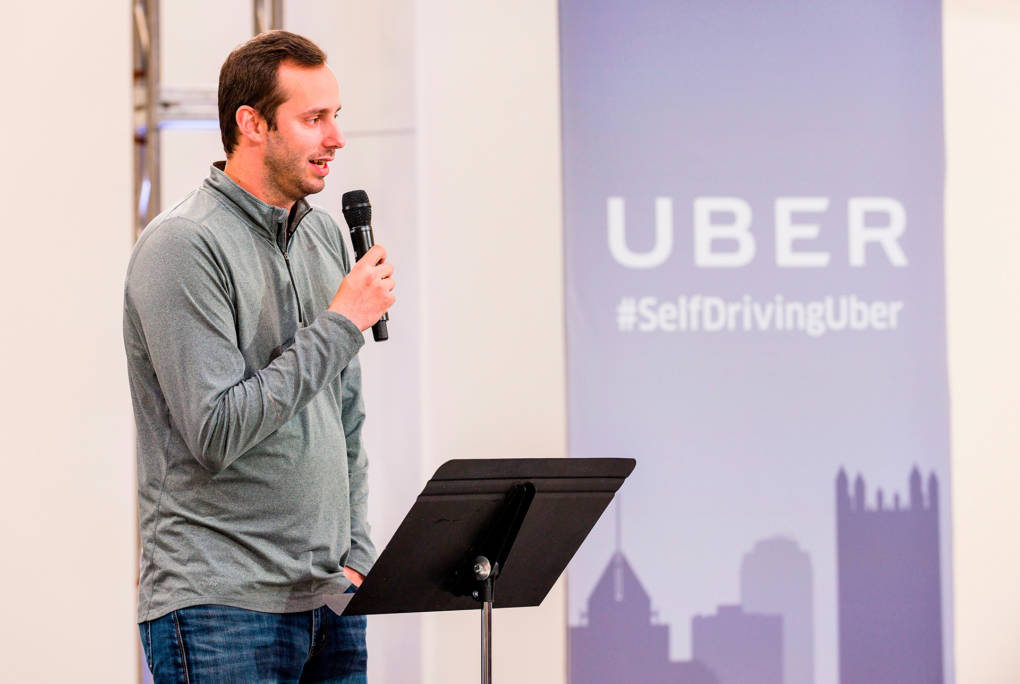
"caption": "Anthony Levandowski speaks to members of the press during the launch of the pilot model of the Uber self-driving car at the Uber Advanced Technologies Center on Sept. 13, 2016 in Pittsburgh, Pennsylvania. Levandowski was charged with 33 counts of trade secrets theft on Aug. 27, 2019.",
"description": null,
"title": "Anthony-Levandowski-1920",
"credit": "Angelo Merendino/AFP/Getty Images",
"status": "inherit",
"isLoading": false,
"fetchFailed": false
},
"news_11769789": {
"type": "attachments",
"id": "news_11769789",
"meta": {
"index": "attachments_1716263798",
"site": "news",
"id": "11769789",
"found": true
},
"parent": 11769784,
"imgSizes": {
"apple_news_ca_landscape_5_5": {
"file": "https://ww2.kqed.org/app/uploads/sites/10/2019/08/RS38643_boosterrocket2-qut-1044x783.jpg",
"width": 1044,
"mimeType": "image/jpeg",
"height": 783
},
"apple_news_ca_square_4_0": {
"file": "https://ww2.kqed.org/app/uploads/sites/10/2019/08/RS38643_boosterrocket2-qut-470x470.jpg",
"width": 470,
"mimeType": "image/jpeg",
"height": 470
},
"twentyfourteen-full-width": {
"file": "https://ww2.kqed.org/app/uploads/sites/10/2019/08/RS38643_boosterrocket2-qut-1038x576.jpg",
"width": 1038,
"mimeType": "image/jpeg",
"height": 576
},
"thumbnail": {
"file": "https://ww2.kqed.org/app/uploads/sites/10/2019/08/RS38643_boosterrocket2-qut-160x110.jpg",
"width": 160,
"mimeType": "image/jpeg",
"height": 110
},
"post-thumbnail": {
"file": "https://ww2.kqed.org/app/uploads/sites/10/2019/08/RS38643_boosterrocket2-qut-672x372.jpg",
"width": 672,
"mimeType": "image/jpeg",
"height": 372
},
"kqedFullSize": {
"file": "https://ww2.kqed.org/app/uploads/sites/10/2019/08/RS38643_boosterrocket2-qut.jpg",
"width": 1920,
"height": 1324
},
"apple_news_ca_landscape_4_7": {
"file": "https://ww2.kqed.org/app/uploads/sites/10/2019/08/RS38643_boosterrocket2-qut-632x474.jpg",
"width": 632,
"mimeType": "image/jpeg",
"height": 474
},
"large": {
"file": "https://ww2.kqed.org/app/uploads/sites/10/2019/08/RS38643_boosterrocket2-qut-1020x703.jpg",
"width": 1020,
"mimeType": "image/jpeg",
"height": 703
},
"complete_open_graph": {
"file": "https://ww2.kqed.org/app/uploads/sites/10/2019/08/RS38643_boosterrocket2-qut-1200x828.jpg",
"width": 1200,
"mimeType": "image/jpeg",
"height": 828
},
"apple_news_ca_landscape_4_0": {
"file": "https://ww2.kqed.org/app/uploads/sites/10/2019/08/RS38643_boosterrocket2-qut-536x402.jpg",
"width": 536,
"mimeType": "image/jpeg",
"height": 402
},
"apple_news_ca_portrait_12_9": {
"file": "https://ww2.kqed.org/app/uploads/sites/10/2019/08/RS38643_boosterrocket2-qut-1122x1324.jpg",
"width": 1122,
"mimeType": "image/jpeg",
"height": 1324
},
"medium": {
"file": "https://ww2.kqed.org/app/uploads/sites/10/2019/08/RS38643_boosterrocket2-qut-800x552.jpg",
"width": 800,
"mimeType": "image/jpeg",
"height": 552
},
"apple_news_ca_portrait_4_0": {
"file": "https://ww2.kqed.org/app/uploads/sites/10/2019/08/RS38643_boosterrocket2-qut-354x472.jpg",
"width": 354,
"mimeType": "image/jpeg",
"height": 472
},
"apple_news_ca_portrait_9_7": {
"file": "https://ww2.kqed.org/app/uploads/sites/10/2019/08/RS38643_boosterrocket2-qut-840x1120.jpg",
"width": 840,
"mimeType": "image/jpeg",
"height": 1120
},
"apple_news_ca_landscape_12_9": {
"file": "https://ww2.kqed.org/app/uploads/sites/10/2019/08/RS38643_boosterrocket2-qut-1832x1324.jpg",
"width": 1832,
"mimeType": "image/jpeg",
"height": 1324
},
"apple_news_ca_square_9_7": {
"file": "https://ww2.kqed.org/app/uploads/sites/10/2019/08/RS38643_boosterrocket2-qut-1104x1104.jpg",
"width": 1104,
"mimeType": "image/jpeg",
"height": 1104
},
"apple_news_ca_portrait_4_7": {
"file": "https://ww2.kqed.org/app/uploads/sites/10/2019/08/RS38643_boosterrocket2-qut-414x552.jpg",
"width": 414,
"mimeType": "image/jpeg",
"height": 552
},
"apple_news_ca_square_12_9": {
"file": "https://ww2.kqed.org/app/uploads/sites/10/2019/08/RS38643_boosterrocket2-qut-1472x1324.jpg",
"width": 1472,
"mimeType": "image/jpeg",
"height": 1324
},
"apple_news_ca_portrait_5_5": {
"file": "https://ww2.kqed.org/app/uploads/sites/10/2019/08/RS38643_boosterrocket2-qut-687x916.jpg",
"width": 687,
"mimeType": "image/jpeg",
"height": 916
},
"full-width": {
"file": "https://ww2.kqed.org/app/uploads/sites/10/2019/08/RS38643_boosterrocket2-qut-1920x1324.jpg",
"width": 1920,
"mimeType": "image/jpeg",
"height": 1324
},
"apple_news_ca_square_4_7": {
"file": "https://ww2.kqed.org/app/uploads/sites/10/2019/08/RS38643_boosterrocket2-qut-550x550.jpg",
"width": 550,
"mimeType": "image/jpeg",
"height": 550
},
"apple_news_ca_landscape_9_7": {
"file": "https://ww2.kqed.org/app/uploads/sites/10/2019/08/RS38643_boosterrocket2-qut-1376x1032.jpg",
"width": 1376,
"mimeType": "image/jpeg",
"height": 1032
},
"apple_news_ca_square_5_5": {
"file": "https://ww2.kqed.org/app/uploads/sites/10/2019/08/RS38643_boosterrocket2-qut-912x912.jpg",
"width": 912,
"mimeType": "image/jpeg",
"height": 912
}
},
"publishDate": 1566658814,
"modified": 1566661714,
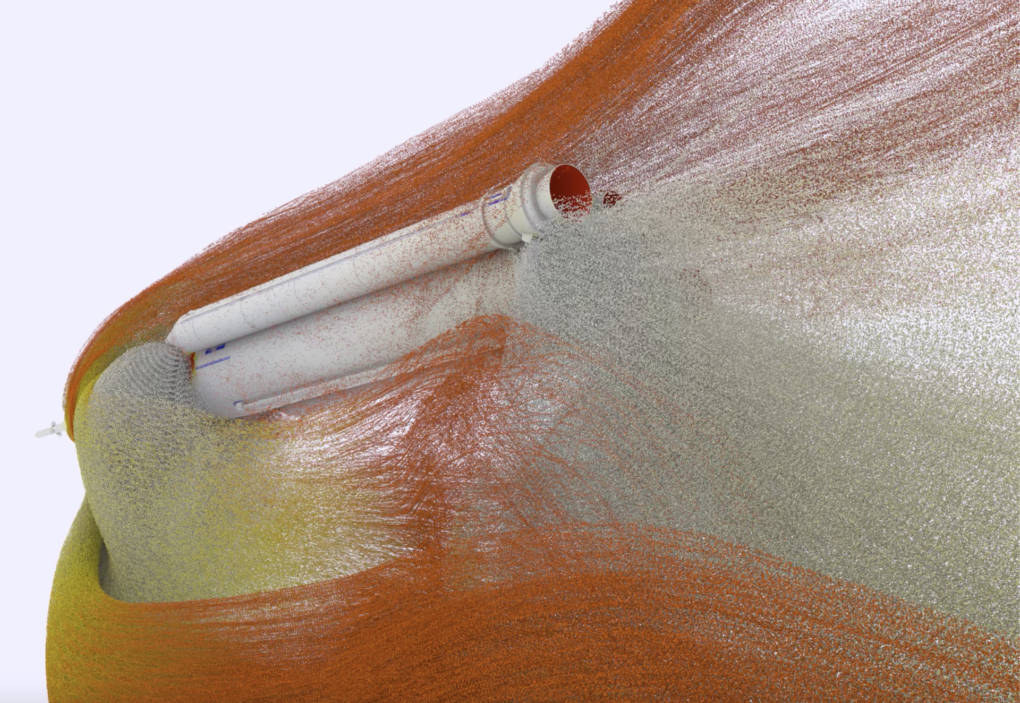
"caption": "The new modular supercomputing facility at NASA Ames Research Center in Mountain View will allow more than 1,500 scientists around the U.S. to benefit from high-end computer simulations for programs like Artemis, NASA's project to put humans on the Moon by 2024.",
"description": "The new modular supercomputing facility at NASA Ames Research Center in Mountain View will allow more than 1,500 scientists around the U.S. to benefit from high-end computer simulations for programs like Artemis, NASA's project to put humans on the Moon by 2024.",
"title": "RS38643_boosterrocket2-qut",
"credit": "Courtesy of NASA Ames Research Center",
"status": "inherit",
"isLoading": false,
"fetchFailed": false
},
"news_11742548": {
"type": "attachments",
"id": "news_11742548",
"meta": {
"index": "attachments_1716263798",
"site": "news",
"id": "11742548",
"found": true
},
"parent": 11742542,
"imgSizes": {
"twentyfourteen-full-width": {
"file": "https://ww2.kqed.org/app/uploads/sites/10/2019/04/Facebook-Thumbs-Up-1038x576.jpg",
"width": 1038,
"mimeType": "image/jpeg",
"height": 576
},
"thumbnail": {
"file": "https://ww2.kqed.org/app/uploads/sites/10/2019/04/Facebook-Thumbs-Up-160x107.jpg",
"width": 160,
"mimeType": "image/jpeg",
"height": 107
},
"post-thumbnail": {
"file": "https://ww2.kqed.org/app/uploads/sites/10/2019/04/Facebook-Thumbs-Up-672x372.jpg",
"width": 672,
"mimeType": "image/jpeg",
"height": 372
},
"kqedFullSize": {
"file": "https://ww2.kqed.org/app/uploads/sites/10/2019/04/Facebook-Thumbs-Up.jpg",
"width": 1920,
"height": 1278
},
"large": {
"file": "https://ww2.kqed.org/app/uploads/sites/10/2019/04/Facebook-Thumbs-Up-1020x679.jpg",
"width": 1020,
"mimeType": "image/jpeg",
"height": 679
},
"complete_open_graph": {
"file": "https://ww2.kqed.org/app/uploads/sites/10/2019/04/Facebook-Thumbs-Up-1200x799.jpg",
"width": 1200,
"mimeType": "image/jpeg",
"height": 799
},
"full-width": {
"file": "https://ww2.kqed.org/app/uploads/sites/10/2019/04/Facebook-Thumbs-Up-1920x1278.jpg",
"width": 1920,
"mimeType": "image/jpeg",
"height": 1278
},
"medium": {
"file": "https://ww2.kqed.org/app/uploads/sites/10/2019/04/Facebook-Thumbs-Up-800x533.jpg",
"width": 800,
"mimeType": "image/jpeg",
"height": 533
}
},
"publishDate": 1556140643,
"modified": 1566347150,
"caption": "A \"like\" icon at the Facebook main campus in Menlo Park.",
"description": "A \"like\" icon at the Facebook main campus in Menlo Park, pictured in 2012.",
"title": "Facebook-Thumbs-Up",
"credit": "Robyn Beck/AFP/Getty Images",
"status": "inherit",
"isLoading": false,
"fetchFailed": false
},
"news_11768280": {
"type": "attachments",
"id": "news_11768280",
"meta": {
"index": "attachments_1716263798",
"site": "news",
"id": "11768280",
"found": true
},
"parent": 11768279,
"imgSizes": {
"apple_news_ca_landscape_5_5": {
"file": "https://ww2.kqed.org/app/uploads/sites/10/2019/08/gettyimages-200418466-001_custom-1c7df9cff3a6e20f829fa10f49c839d1d5ed4d43-1044x783.jpg",
"width": 1044,
"mimeType": "image/jpeg",
"height": 783
},
"apple_news_ca_square_4_0": {
"file": "https://ww2.kqed.org/app/uploads/sites/10/2019/08/gettyimages-200418466-001_custom-1c7df9cff3a6e20f829fa10f49c839d1d5ed4d43-470x470.jpg",
"width": 470,
"mimeType": "image/jpeg",
"height": 470
},
"twentyfourteen-full-width": {
"file": "https://ww2.kqed.org/app/uploads/sites/10/2019/08/gettyimages-200418466-001_custom-1c7df9cff3a6e20f829fa10f49c839d1d5ed4d43-1038x576.jpg",
"width": 1038,
"mimeType": "image/jpeg",
"height": 576
},
"thumbnail": {
"file": "https://ww2.kqed.org/app/uploads/sites/10/2019/08/gettyimages-200418466-001_custom-1c7df9cff3a6e20f829fa10f49c839d1d5ed4d43-160x107.jpg",
"width": 160,
"mimeType": "image/jpeg",
"height": 107
},
"post-thumbnail": {
"file": "https://ww2.kqed.org/app/uploads/sites/10/2019/08/gettyimages-200418466-001_custom-1c7df9cff3a6e20f829fa10f49c839d1d5ed4d43-672x372.jpg",
"width": 672,
"mimeType": "image/jpeg",
"height": 372
},
"kqedFullSize": {
"file": "https://ww2.kqed.org/app/uploads/sites/10/2019/08/gettyimages-200418466-001_custom-1c7df9cff3a6e20f829fa10f49c839d1d5ed4d43.jpg",
"width": 2048,
"height": 1364
},
"apple_news_ca_landscape_4_7": {
"file": "https://ww2.kqed.org/app/uploads/sites/10/2019/08/gettyimages-200418466-001_custom-1c7df9cff3a6e20f829fa10f49c839d1d5ed4d43-632x474.jpg",
"width": 632,
"mimeType": "image/jpeg",
"height": 474
},
"large": {
"file": "https://ww2.kqed.org/app/uploads/sites/10/2019/08/gettyimages-200418466-001_custom-1c7df9cff3a6e20f829fa10f49c839d1d5ed4d43-1020x679.jpg",
"width": 1020,
"mimeType": "image/jpeg",
"height": 679
},
"complete_open_graph": {
"file": "https://ww2.kqed.org/app/uploads/sites/10/2019/08/gettyimages-200418466-001_custom-1c7df9cff3a6e20f829fa10f49c839d1d5ed4d43-1200x799.jpg",
"width": 1200,
"mimeType": "image/jpeg",
"height": 799
},
"apple_news_ca_landscape_4_0": {
"file": "https://ww2.kqed.org/app/uploads/sites/10/2019/08/gettyimages-200418466-001_custom-1c7df9cff3a6e20f829fa10f49c839d1d5ed4d43-536x402.jpg",
"width": 536,
"mimeType": "image/jpeg",
"height": 402
},
"apple_news_ca_portrait_12_9": {
"file": "https://ww2.kqed.org/app/uploads/sites/10/2019/08/gettyimages-200418466-001_custom-1c7df9cff3a6e20f829fa10f49c839d1d5ed4d43-1122x1496.jpg",
"width": 1122,
"mimeType": "image/jpeg",
"height": 1496
},
"medium": {
"file": "https://ww2.kqed.org/app/uploads/sites/10/2019/08/gettyimages-200418466-001_custom-1c7df9cff3a6e20f829fa10f49c839d1d5ed4d43-800x533.jpg",
"width": 800,
"mimeType": "image/jpeg",
"height": 533
},
"apple_news_ca_portrait_4_0": {
"file": "https://ww2.kqed.org/app/uploads/sites/10/2019/08/gettyimages-200418466-001_custom-1c7df9cff3a6e20f829fa10f49c839d1d5ed4d43-354x472.jpg",
"width": 354,
"mimeType": "image/jpeg",
"height": 472
},
"apple_news_ca_portrait_9_7": {
"file": "https://ww2.kqed.org/app/uploads/sites/10/2019/08/gettyimages-200418466-001_custom-1c7df9cff3a6e20f829fa10f49c839d1d5ed4d43-840x1120.jpg",
"width": 840,
"mimeType": "image/jpeg",
"height": 1120
},
"apple_news_ca_landscape_12_9": {
"file": "https://ww2.kqed.org/app/uploads/sites/10/2019/08/gettyimages-200418466-001_custom-1c7df9cff3a6e20f829fa10f49c839d1d5ed4d43-1832x1374.jpg",
"width": 1832,
"mimeType": "image/jpeg",
"height": 1374
},
"apple_news_ca_square_9_7": {
"file": "https://ww2.kqed.org/app/uploads/sites/10/2019/08/gettyimages-200418466-001_custom-1c7df9cff3a6e20f829fa10f49c839d1d5ed4d43-1104x1104.jpg",
"width": 1104,
"mimeType": "image/jpeg",
"height": 1104
},
"apple_news_ca_portrait_4_7": {
"file": "https://ww2.kqed.org/app/uploads/sites/10/2019/08/gettyimages-200418466-001_custom-1c7df9cff3a6e20f829fa10f49c839d1d5ed4d43-414x552.jpg",
"width": 414,
"mimeType": "image/jpeg",
"height": 552
},
"apple_news_ca_square_12_9": {
"file": "https://ww2.kqed.org/app/uploads/sites/10/2019/08/gettyimages-200418466-001_custom-1c7df9cff3a6e20f829fa10f49c839d1d5ed4d43-1472x1472.jpg",
"width": 1472,
"mimeType": "image/jpeg",
"height": 1472
},
"apple_news_ca_portrait_5_5": {
"file": "https://ww2.kqed.org/app/uploads/sites/10/2019/08/gettyimages-200418466-001_custom-1c7df9cff3a6e20f829fa10f49c839d1d5ed4d43-687x916.jpg",
"width": 687,
"mimeType": "image/jpeg",
"height": 916
},
"full-width": {
"file": "https://ww2.kqed.org/app/uploads/sites/10/2019/08/gettyimages-200418466-001_custom-1c7df9cff3a6e20f829fa10f49c839d1d5ed4d43-1920x1279.jpg",
"width": 1920,
"mimeType": "image/jpeg",
"height": 1279
},
"apple_news_ca_square_4_7": {
"file": "https://ww2.kqed.org/app/uploads/sites/10/2019/08/gettyimages-200418466-001_custom-1c7df9cff3a6e20f829fa10f49c839d1d5ed4d43-550x550.jpg",
"width": 550,
"mimeType": "image/jpeg",
"height": 550
},
"apple_news_ca_landscape_9_7": {
"file": "https://ww2.kqed.org/app/uploads/sites/10/2019/08/gettyimages-200418466-001_custom-1c7df9cff3a6e20f829fa10f49c839d1d5ed4d43-1376x1032.jpg",
"width": 1376,
"mimeType": "image/jpeg",
"height": 1032
},
"apple_news_ca_square_5_5": {
"file": "https://ww2.kqed.org/app/uploads/sites/10/2019/08/gettyimages-200418466-001_custom-1c7df9cff3a6e20f829fa10f49c839d1d5ed4d43-912x912.jpg",
"width": 912,
"mimeType": "image/jpeg",
"height": 912
}
},
"publishDate": 1566148994,
"modified": 1566154456,
"caption": "Propaganda spread by hate groups on social media is pervasive. Writer Joanna Schroeder hopes other parents will teach their young sons to recognize such hateful content.",
"description": "Propaganda spread by hate groups on social media is pervasive. Writer Joanna Schroeder hopes other parents will teach their young sons to recognize such hateful content.",
"title": "Propaganda spread by hate groups on social media is pervasive. Writer Joanna Schroeder hopes other parents will teach their young sons to recognize such hateful content.",
"credit": "Loungepark/Getty Images",
"status": "inherit",
"isLoading": false,
"fetchFailed": false
},
"news_11768166": {
"type": "attachments",
"id": "news_11768166",
"meta": {
"index": "attachments_1716263798",
"site": "news",
"id": "11768166",
"found": true
},
"parent": 11768160,
"imgSizes": {
"apple_news_ca_landscape_5_5": {
"file": "https://ww2.kqed.org/app/uploads/sites/10/2019/08/McNutt-ScreenCap-1044x783.jpg",
"width": 1044,
"mimeType": "image/jpeg",
"height": 783
},
"apple_news_ca_square_4_0": {
"file": "https://ww2.kqed.org/app/uploads/sites/10/2019/08/McNutt-ScreenCap-470x470.jpg",
"width": 470,
"mimeType": "image/jpeg",
"height": 470
},
"twentyfourteen-full-width": {
"file": "https://ww2.kqed.org/app/uploads/sites/10/2019/08/McNutt-ScreenCap-1038x576.jpg",
"width": 1038,
"mimeType": "image/jpeg",
"height": 576
},
"thumbnail": {
"file": "https://ww2.kqed.org/app/uploads/sites/10/2019/08/McNutt-ScreenCap-160x155.jpg",
"width": 160,
"mimeType": "image/jpeg",
"height": 155
},
"post-thumbnail": {
"file": "https://ww2.kqed.org/app/uploads/sites/10/2019/08/McNutt-ScreenCap-672x372.jpg",
"width": 672,
"mimeType": "image/jpeg",
"height": 372
},
"kqedFullSize": {
"file": "https://ww2.kqed.org/app/uploads/sites/10/2019/08/McNutt-ScreenCap.jpg",
"width": 1240,
"height": 1204
},
"apple_news_ca_landscape_4_7": {
"file": "https://ww2.kqed.org/app/uploads/sites/10/2019/08/McNutt-ScreenCap-632x474.jpg",
"width": 632,
"mimeType": "image/jpeg",
"height": 474
},
"large": {
"file": "https://ww2.kqed.org/app/uploads/sites/10/2019/08/McNutt-ScreenCap-1020x990.jpg",
"width": 1020,
"mimeType": "image/jpeg",
"height": 990
},
"complete_open_graph": {
"file": "https://ww2.kqed.org/app/uploads/sites/10/2019/08/McNutt-ScreenCap-1200x1165.jpg",
"width": 1200,
"mimeType": "image/jpeg",
"height": 1165
},
"apple_news_ca_landscape_4_0": {
"file": "https://ww2.kqed.org/app/uploads/sites/10/2019/08/McNutt-ScreenCap-536x402.jpg",
"width": 536,
"mimeType": "image/jpeg",
"height": 402
},
"apple_news_ca_portrait_12_9": {
"file": "https://ww2.kqed.org/app/uploads/sites/10/2019/08/McNutt-ScreenCap-1122x1204.jpg",
"width": 1122,
"mimeType": "image/jpeg",
"height": 1204
},
"medium": {
"file": "https://ww2.kqed.org/app/uploads/sites/10/2019/08/McNutt-ScreenCap-800x777.jpg",
"width": 800,
"mimeType": "image/jpeg",
"height": 777
},
"apple_news_ca_portrait_4_0": {
"file": "https://ww2.kqed.org/app/uploads/sites/10/2019/08/McNutt-ScreenCap-354x472.jpg",
"width": 354,
"mimeType": "image/jpeg",
"height": 472
},
"apple_news_ca_portrait_9_7": {
"file": "https://ww2.kqed.org/app/uploads/sites/10/2019/08/McNutt-ScreenCap-840x1120.jpg",
"width": 840,
"mimeType": "image/jpeg",
"height": 1120
},
"apple_news_ca_square_9_7": {
"file": "https://ww2.kqed.org/app/uploads/sites/10/2019/08/McNutt-ScreenCap-1104x1104.jpg",
"width": 1104,
"mimeType": "image/jpeg",
"height": 1104
},
"apple_news_ca_portrait_4_7": {
"file": "https://ww2.kqed.org/app/uploads/sites/10/2019/08/McNutt-ScreenCap-414x552.jpg",
"width": 414,
"mimeType": "image/jpeg",
"height": 552
},
"apple_news_ca_portrait_5_5": {
"file": "https://ww2.kqed.org/app/uploads/sites/10/2019/08/McNutt-ScreenCap-687x916.jpg",
"width": 687,
"mimeType": "image/jpeg",
"height": 916
},
"apple_news_ca_square_4_7": {
"file": "https://ww2.kqed.org/app/uploads/sites/10/2019/08/McNutt-ScreenCap-550x550.jpg",
"width": 550,
"mimeType": "image/jpeg",
"height": 550
},
"apple_news_ca_landscape_9_7": {
"file": "https://ww2.kqed.org/app/uploads/sites/10/2019/08/McNutt-ScreenCap-1240x1032.jpg",
"width": 1240,
"mimeType": "image/jpeg",
"height": 1032
},
"apple_news_ca_square_5_5": {
"file": "https://ww2.kqed.org/app/uploads/sites/10/2019/08/McNutt-ScreenCap-912x912.jpg",
"width": 912,
"mimeType": "image/jpeg",
"height": 912
}
},
"publishDate": 1566004009,
"modified": 1566004606,
"caption": "An undated text exchange between Lee William McNutt and another man which took place after McNutt (blue text) forwarded a video and image of an employee identified as Jane Doe in a bikini. In the text, McNutt and the other man discuss flying Doe to California.",
"description": "An undated text exchange between Lee William McNutt and another man which took place after McNutt (blue text) forwarded a video and image of an employee identified as Jane Doe in a bikini. In the text, McNutt and the other man discuss flying Doe to California.",
"title": "McNutt-ScreenCap",
"credit": "U.S. District Court",
"status": "inherit",
"isLoading": false,
"fetchFailed": false
},
"news_11726693": {
"type": "attachments",
"id": "news_11726693",
"meta": {
"index": "attachments_1716263798",
"site": "news",
"id": "11726693",
"found": true
},
"parent": 11726676,
"imgSizes": {
"twentyfourteen-full-width": {
"file": "https://ww2.kqed.org/app/uploads/sites/10/2019/02/GettyImages-95920158-1038x576.jpg",
"width": 1038,
"mimeType": "image/jpeg",
"height": 576
},
"thumbnail": {
"file": "https://ww2.kqed.org/app/uploads/sites/10/2019/02/GettyImages-95920158-160x101.jpg",
"width": 160,
"mimeType": "image/jpeg",
"height": 101
},
"post-thumbnail": {
"file": "https://ww2.kqed.org/app/uploads/sites/10/2019/02/GettyImages-95920158-672x372.jpg",
"width": 672,
"mimeType": "image/jpeg",
"height": 372
},
"kqedFullSize": {
"file": "https://ww2.kqed.org/app/uploads/sites/10/2019/02/GettyImages-95920158-e1550267876130.jpg",
"width": 1920,
"height": 1210
},
"large": {
"file": "https://ww2.kqed.org/app/uploads/sites/10/2019/02/GettyImages-95920158-1020x643.jpg",
"width": 1020,
"mimeType": "image/jpeg",
"height": 643
},
"complete_open_graph": {
"file": "https://ww2.kqed.org/app/uploads/sites/10/2019/02/GettyImages-95920158-1200x756.jpg",
"width": 1200,
"mimeType": "image/jpeg",
"height": 756
},
"guest-author-50": {
"file": "https://ww2.kqed.org/app/uploads/sites/10/2019/02/GettyImages-95920158-50x50.jpg",
"width": 50,
"mimeType": "image/jpeg",
"height": 50
},
"guest-author-96": {
"file": "https://ww2.kqed.org/app/uploads/sites/10/2019/02/GettyImages-95920158-96x96.jpg",
"width": 96,
"mimeType": "image/jpeg",
"height": 96
},
"medium": {
"file": "https://ww2.kqed.org/app/uploads/sites/10/2019/02/GettyImages-95920158-800x504.jpg",
"width": 800,
"mimeType": "image/jpeg",
"height": 504
},
"guest-author-64": {
"file": "https://ww2.kqed.org/app/uploads/sites/10/2019/02/GettyImages-95920158-64x64.jpg",
"width": 64,
"mimeType": "image/jpeg",
"height": 64
},
"guest-author-32": {
"file": "https://ww2.kqed.org/app/uploads/sites/10/2019/02/GettyImages-95920158-32x32.jpg",
"width": 32,
"mimeType": "image/jpeg",
"height": 32
},
"full-width": {
"file": "https://ww2.kqed.org/app/uploads/sites/10/2019/02/GettyImages-95920158-1920x1210.jpg",
"width": 1920,
"mimeType": "image/jpeg",
"height": 1210
},
"detail": {
"file": "https://ww2.kqed.org/app/uploads/sites/10/2019/02/GettyImages-95920158-150x150.jpg",
"width": 150,
"mimeType": "image/jpeg",
"height": 150
},
"guest-author-128": {
"file": "https://ww2.kqed.org/app/uploads/sites/10/2019/02/GettyImages-95920158-128x128.jpg",
"width": 128,
"mimeType": "image/jpeg",
"height": 128
}
},
"publishDate": 1550267804,
"modified": 1550267944,
"caption": "A sign is posted outside of the Google headquarters in Mountain View. The tech giant is planning to build a campus in San Jose next.",
"description": null,
"title": "Google Announces Quarterly Earnings",
"credit": "Justin Sullivan/Getty Images",
"status": "inherit",
"isLoading": false,
"fetchFailed": false
},
"news_11767679": {
"type": "attachments",
"id": "news_11767679",
"meta": {
"index": "attachments_1716263798",
"site": "news",
"id": "11767679",
"found": true
},
"parent": 11767585,
"imgSizes": {
"apple_news_ca_landscape_5_5": {
"file": "https://ww2.kqed.org/app/uploads/sites/10/2019/08/RS15786_GettyImages-478632636-qut-1044x783.jpg",
"width": 1044,
"mimeType": "image/jpeg",
"height": 783
},
"apple_news_ca_square_4_0": {
"file": "https://ww2.kqed.org/app/uploads/sites/10/2019/08/RS15786_GettyImages-478632636-qut-470x470.jpg",
"width": 470,
"mimeType": "image/jpeg",
"height": 470
},
"twentyfourteen-full-width": {
"file": "https://ww2.kqed.org/app/uploads/sites/10/2019/08/RS15786_GettyImages-478632636-qut-1038x576.jpg",
"width": 1038,
"mimeType": "image/jpeg",
"height": 576
},
"thumbnail": {
"file": "https://ww2.kqed.org/app/uploads/sites/10/2019/08/RS15786_GettyImages-478632636-qut-160x105.jpg",
"width": 160,
"mimeType": "image/jpeg",
"height": 105
},
"post-thumbnail": {
"file": "https://ww2.kqed.org/app/uploads/sites/10/2019/08/RS15786_GettyImages-478632636-qut-672x372.jpg",
"width": 672,
"mimeType": "image/jpeg",
"height": 372
},
"kqedFullSize": {
"file": "https://ww2.kqed.org/app/uploads/sites/10/2019/08/RS15786_GettyImages-478632636-qut.jpg",
"width": 1920,
"height": 1256
},
"apple_news_ca_landscape_4_7": {
"file": "https://ww2.kqed.org/app/uploads/sites/10/2019/08/RS15786_GettyImages-478632636-qut-632x474.jpg",
"width": 632,
"mimeType": "image/jpeg",
"height": 474
},
"large": {
"file": "https://ww2.kqed.org/app/uploads/sites/10/2019/08/RS15786_GettyImages-478632636-qut-1020x667.jpg",
"width": 1020,
"mimeType": "image/jpeg",
"height": 667
},
"complete_open_graph": {
"file": "https://ww2.kqed.org/app/uploads/sites/10/2019/08/RS15786_GettyImages-478632636-qut-1200x785.jpg",
"width": 1200,
"mimeType": "image/jpeg",
"height": 785
},
"apple_news_ca_landscape_4_0": {
"file": "https://ww2.kqed.org/app/uploads/sites/10/2019/08/RS15786_GettyImages-478632636-qut-536x402.jpg",
"width": 536,
"mimeType": "image/jpeg",
"height": 402
},
"apple_news_ca_portrait_12_9": {
"file": "https://ww2.kqed.org/app/uploads/sites/10/2019/08/RS15786_GettyImages-478632636-qut-1122x1256.jpg",
"width": 1122,
"mimeType": "image/jpeg",
"height": 1256
},
"medium": {
"file": "https://ww2.kqed.org/app/uploads/sites/10/2019/08/RS15786_GettyImages-478632636-qut-800x523.jpg",
"width": 800,
"mimeType": "image/jpeg",
"height": 523
},
"apple_news_ca_portrait_4_0": {
"file": "https://ww2.kqed.org/app/uploads/sites/10/2019/08/RS15786_GettyImages-478632636-qut-354x472.jpg",
"width": 354,
"mimeType": "image/jpeg",
"height": 472
},
"apple_news_ca_portrait_9_7": {
"file": "https://ww2.kqed.org/app/uploads/sites/10/2019/08/RS15786_GettyImages-478632636-qut-840x1120.jpg",
"width": 840,
"mimeType": "image/jpeg",
"height": 1120
},
"apple_news_ca_landscape_12_9": {
"file": "https://ww2.kqed.org/app/uploads/sites/10/2019/08/RS15786_GettyImages-478632636-qut-1832x1256.jpg",
"width": 1832,
"mimeType": "image/jpeg",
"height": 1256
},
"apple_news_ca_square_9_7": {
"file": "https://ww2.kqed.org/app/uploads/sites/10/2019/08/RS15786_GettyImages-478632636-qut-1104x1104.jpg",
"width": 1104,
"mimeType": "image/jpeg",
"height": 1104
},
"apple_news_ca_portrait_4_7": {
"file": "https://ww2.kqed.org/app/uploads/sites/10/2019/08/RS15786_GettyImages-478632636-qut-414x552.jpg",
"width": 414,
"mimeType": "image/jpeg",
"height": 552
},
"apple_news_ca_square_12_9": {
"file": "https://ww2.kqed.org/app/uploads/sites/10/2019/08/RS15786_GettyImages-478632636-qut-1472x1256.jpg",
"width": 1472,
"mimeType": "image/jpeg",
"height": 1256
},
"apple_news_ca_portrait_5_5": {
"file": "https://ww2.kqed.org/app/uploads/sites/10/2019/08/RS15786_GettyImages-478632636-qut-687x916.jpg",
"width": 687,
"mimeType": "image/jpeg",
"height": 916
},
"full-width": {
"file": "https://ww2.kqed.org/app/uploads/sites/10/2019/08/RS15786_GettyImages-478632636-qut-1920x1256.jpg",
"width": 1920,
"mimeType": "image/jpeg",
"height": 1256
},
"apple_news_ca_square_4_7": {
"file": "https://ww2.kqed.org/app/uploads/sites/10/2019/08/RS15786_GettyImages-478632636-qut-550x550.jpg",
"width": 550,
"mimeType": "image/jpeg",
"height": 550
},
"apple_news_ca_landscape_9_7": {
"file": "https://ww2.kqed.org/app/uploads/sites/10/2019/08/RS15786_GettyImages-478632636-qut-1376x1032.jpg",
"width": 1376,
"mimeType": "image/jpeg",
"height": 1032
},
"apple_news_ca_square_5_5": {
"file": "https://ww2.kqed.org/app/uploads/sites/10/2019/08/RS15786_GettyImages-478632636-qut-912x912.jpg",
"width": 912,
"mimeType": "image/jpeg",
"height": 912
}
},
"publishDate": 1565828110,
"modified": 1565828157,
"caption": "Eight LGBTQ+ YouTube content creators are suing the platform over alleged discrimination. ",
"description": null,
"title": "RS15786_GettyImages-478632636-qut",
"credit": "MLADEN ANTONOV",
"status": "inherit",
"isLoading": false,
"fetchFailed": false
},
"news_11766302": {
"type": "attachments",
"id": "news_11766302",
"meta": {
"index": "attachments_1716263798",
"site": "news",
"id": "11766302",
"found": true
},
"parent": 11765631,
"imgSizes": {
"apple_news_ca_landscape_5_5": {
"file": "https://ww2.kqed.org/app/uploads/sites/10/2019/08/Lyft-Driver-San-Francisco-1044x783.jpg",
"width": 1044,
"mimeType": "image/jpeg",
"height": 783
},
"apple_news_ca_square_4_0": {
"file": "https://ww2.kqed.org/app/uploads/sites/10/2019/08/Lyft-Driver-San-Francisco-470x470.jpg",
"width": 470,
"mimeType": "image/jpeg",
"height": 470
},
"twentyfourteen-full-width": {
"file": "https://ww2.kqed.org/app/uploads/sites/10/2019/08/Lyft-Driver-San-Francisco-1038x576.jpg",
"width": 1038,
"mimeType": "image/jpeg",
"height": 576
},
"thumbnail": {
"file": "https://ww2.kqed.org/app/uploads/sites/10/2019/08/Lyft-Driver-San-Francisco-160x107.jpg",
"width": 160,
"mimeType": "image/jpeg",
"height": 107
},
"post-thumbnail": {
"file": "https://ww2.kqed.org/app/uploads/sites/10/2019/08/Lyft-Driver-San-Francisco-672x372.jpg",
"width": 672,
"mimeType": "image/jpeg",
"height": 372
},
"kqedFullSize": {
"file": "https://ww2.kqed.org/app/uploads/sites/10/2019/08/Lyft-Driver-San-Francisco.jpg",
"width": 1920,
"height": 1280
},
"apple_news_ca_landscape_4_7": {
"file": "https://ww2.kqed.org/app/uploads/sites/10/2019/08/Lyft-Driver-San-Francisco-632x474.jpg",
"width": 632,
"mimeType": "image/jpeg",
"height": 474
},
"large": {
"file": "https://ww2.kqed.org/app/uploads/sites/10/2019/08/Lyft-Driver-San-Francisco-1020x680.jpg",
"width": 1020,
"mimeType": "image/jpeg",
"height": 680
},
"complete_open_graph": {
"file": "https://ww2.kqed.org/app/uploads/sites/10/2019/08/Lyft-Driver-San-Francisco-1200x800.jpg",
"width": 1200,
"mimeType": "image/jpeg",
"height": 800
},
"apple_news_ca_landscape_4_0": {
"file": "https://ww2.kqed.org/app/uploads/sites/10/2019/08/Lyft-Driver-San-Francisco-536x402.jpg",
"width": 536,
"mimeType": "image/jpeg",
"height": 402
},
"apple_news_ca_portrait_12_9": {
"file": "https://ww2.kqed.org/app/uploads/sites/10/2019/08/Lyft-Driver-San-Francisco-1122x1280.jpg",
"width": 1122,
"mimeType": "image/jpeg",
"height": 1280
},
"medium": {
"file": "https://ww2.kqed.org/app/uploads/sites/10/2019/08/Lyft-Driver-San-Francisco-800x533.jpg",
"width": 800,
"mimeType": "image/jpeg",
"height": 533
},
"apple_news_ca_portrait_4_0": {
"file": "https://ww2.kqed.org/app/uploads/sites/10/2019/08/Lyft-Driver-San-Francisco-354x472.jpg",
"width": 354,
"mimeType": "image/jpeg",
"height": 472
},
"apple_news_ca_portrait_9_7": {
"file": "https://ww2.kqed.org/app/uploads/sites/10/2019/08/Lyft-Driver-San-Francisco-840x1120.jpg",
"width": 840,
"mimeType": "image/jpeg",
"height": 1120
},
"apple_news_ca_landscape_12_9": {
"file": "https://ww2.kqed.org/app/uploads/sites/10/2019/08/Lyft-Driver-San-Francisco-1832x1280.jpg",
"width": 1832,
"mimeType": "image/jpeg",
"height": 1280
},
"apple_news_ca_square_9_7": {
"file": "https://ww2.kqed.org/app/uploads/sites/10/2019/08/Lyft-Driver-San-Francisco-1104x1104.jpg",
"width": 1104,
"mimeType": "image/jpeg",
"height": 1104
},
"apple_news_ca_portrait_4_7": {
"file": "https://ww2.kqed.org/app/uploads/sites/10/2019/08/Lyft-Driver-San-Francisco-414x552.jpg",
"width": 414,
"mimeType": "image/jpeg",
"height": 552
},
"apple_news_ca_square_12_9": {
"file": "https://ww2.kqed.org/app/uploads/sites/10/2019/08/Lyft-Driver-San-Francisco-1472x1280.jpg",
"width": 1472,
"mimeType": "image/jpeg",
"height": 1280
},
"apple_news_ca_portrait_5_5": {
"file": "https://ww2.kqed.org/app/uploads/sites/10/2019/08/Lyft-Driver-San-Francisco-687x916.jpg",
"width": 687,
"mimeType": "image/jpeg",
"height": 916
},
"full-width": {
"file": "https://ww2.kqed.org/app/uploads/sites/10/2019/08/Lyft-Driver-San-Francisco-1920x1280.jpg",
"width": 1920,
"mimeType": "image/jpeg",
"height": 1280
},
"apple_news_ca_square_4_7": {
"file": "https://ww2.kqed.org/app/uploads/sites/10/2019/08/Lyft-Driver-San-Francisco-550x550.jpg",
"width": 550,
"mimeType": "image/jpeg",
"height": 550
},
"apple_news_ca_landscape_9_7": {
"file": "https://ww2.kqed.org/app/uploads/sites/10/2019/08/Lyft-Driver-San-Francisco-1376x1032.jpg",
"width": 1376,
"mimeType": "image/jpeg",
"height": 1032
},
"apple_news_ca_square_5_5": {
"file": "https://ww2.kqed.org/app/uploads/sites/10/2019/08/Lyft-Driver-San-Francisco-912x912.jpg",
"width": 912,
"mimeType": "image/jpeg",
"height": 912
}
},
"publishDate": 1565220941,
"modified": 1565221024,
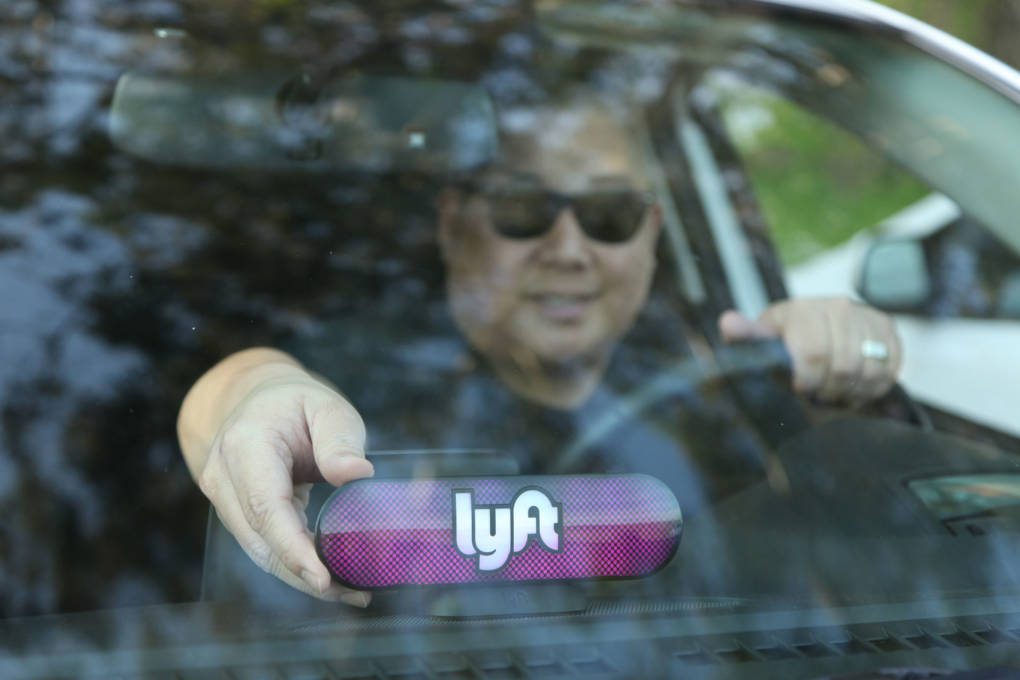
"caption": "A Lyft driver in San Francisco.",
"description": "A Lyft driver in San Francisco.",
"title": "Lyft-Driver-San-Francisco",
"credit": "Kelly Sullivan/Getty Images",
"status": "inherit",
"isLoading": false,
"fetchFailed": false
}
},
"audioPlayerReducer": {
"postId": "stream_live",
"isPaused": true,
"isPlaying": false,
"pfsActive": false,
"pledgeModalIsOpen": true,
"playerDrawerIsOpen": false,
"liveAudioPlayStartedAt": 0,
"liveAudioPlayContext": ""
},
"authorsReducer": {
"byline_news_11770683": {
"type": "authors",
"id": "byline_news_11770683",
"meta": {
"override": true
},
"slug": "byline_news_11770683",
"name": "Barbara Ortutay \u003cbr> Associated Press",
"isLoading": false
},
"byline_news_11770667": {
"type": "authors",
"id": "byline_news_11770667",
"meta": {
"override": true
},
"slug": "byline_news_11770667",
"name": "\u003cstrong>Michael Liedtke\u003cbr />Associated Press\u003c/strong>",
"isLoading": false
},
"byline_news_11770294": {
"type": "authors",
"id": "byline_news_11770294",
"meta": {
"override": true
},
"slug": "byline_news_11770294",
"name": "\u003cstrong>Michael Liedtke\u003cbr />Associated Press\u003c/strong>",
"isLoading": false
},
"byline_news_11768833": {
"type": "authors",
"id": "byline_news_11768833",
"meta": {
"override": true
},
"slug": "byline_news_11768833",
"name": "Barbara Ortutay\u003cbr>Associated Press",
"isLoading": false
},
"byline_news_11768279": {
"type": "authors",
"id": "byline_news_11768279",
"meta": {
"override": true
},
"slug": "byline_news_11768279",
"name": "Emma Bowman, Scott Simon \u003cbr> NPR",
"isLoading": false
},
"byline_news_11767929": {
"type": "authors",
"id": "byline_news_11767929",
"meta": {
"override": true
},
"slug": "byline_news_11767929",
"name": "\u003cstrong>Rachel Lerman\u003cbr />Associated Press\u003c/strong>",
"isLoading": false
},
"kqed": {
"type": "authors",
"id": "236",
"meta": {
"index": "authors_1716337520",
"id": "236",
"found": true
},
"name": "KQED News Staff",
"firstName": "KQED News Staff",
"lastName": null,
"slug": "kqed",
"email": "faq@kqed.org",
"display_author_email": false,
"staff_mastheads": [],
"title": null,
"bio": null,
"avatar": "https://secure.gravatar.com/avatar/ef0e801a68c4c54afa9180db14084167?s=600&d=blank&r=g",
"twitter": null,
"facebook": null,
"instagram": null,
"linkedin": null,
"sites": [
{
"site": "arts",
"roles": [
"contributor"
]
},
{
"site": "news",
"roles": [
"editor"
]
},
{
"site": "futureofyou",
"roles": [
"author"
]
}
],
"headData": {
"title": "KQED News Staff | KQED",
"description": null,
"ogImgSrc": "https://secure.gravatar.com/avatar/ef0e801a68c4c54afa9180db14084167?s=600&d=blank&r=g",
"twImgSrc": "https://secure.gravatar.com/avatar/ef0e801a68c4c54afa9180db14084167?s=600&d=blank&r=g"
},
"isLoading": false,
"link": "/author/kqed"
},
"rachael-myrow": {
"type": "authors",
"id": "251",
"meta": {
"index": "authors_1716337520",
"id": "251",
"found": true
},
"name": "Rachael Myrow",
"firstName": "Rachael",
"lastName": "Myrow",
"slug": "rachael-myrow",
"email": "rmyrow@kqed.org",
"display_author_email": true,
"staff_mastheads": [
"news"
],
"title": "Senior Editor of KQED's Silicon Valley News Desk",
"bio": "• I write and edit stories about how Silicon Valley power and policies shape everyday life in California. I’m also passionate about making Bay Area history and culture more accessible to a broad public. • I’ve been a journalist for most of my life, starting in high school with The Franklin Press in Los Angeles, where I grew up. While earning my first degree in English at UC Berkeley, I got my start in public radio at KALX-FM. After completing a second degree in journalism at Cal, I landed my first professional job at Marketplace, then moved on to KPCC (now LAist), and then KQED, where I hosted The California Report for more than seven years. • My reporting has appeared on NPR, The World, WBUR’s \u003ci>Here & Now\u003c/i>, and the BBC. I also guest host for KQED’s \u003ci>Forum\u003c/i>, as well as the Commonwealth Club in San Francisco. • I speak periodically on media, democracy and technology issues, and do voiceover work for documentaries and educational video projects. • Outside of the studio, you'll find me hiking Bay Area trails and whipping up Insta-ready meals in my kitchen. • I do not accept gifts, money, or favors from anyone connected to my reporting, I don't pay people for information, and I do not support or donate to political causes. • I strive to treat the people I report on with fairness, honesty, and respect. I also recognize there are often multiple sides to a story and work to verify information through multiple sources and documentation. If I get something wrong, I correct it.",
"avatar": "https://secure.gravatar.com/avatar/3ed8a3c5f26025e4a805ba634cda8cd764906b97438a6d9ce216b044e340da4e?s=600&d=blank&r=g",
"twitter": "rachaelmyrow",
"bluesky": null,
"facebook": null,
"instagram": null,
"linkedin": "https://www.linkedin.com/in/rachaelmyrow/",
"sites": [
{
"site": "arts",
"roles": [
"administrator"
]
},
{
"site": "news",
"roles": [
"edit_others_posts",
"editor"
]
},
{
"site": "futureofyou",
"roles": [
"editor"
]
},
{
"site": "bayareabites",
"roles": [
"editor"
]
},
{
"site": "stateofhealth",
"roles": [
"editor"
]
},
{
"site": "science",
"roles": [
"editor"
]
},
{
"site": "food",
"roles": [
"editor"
]
},
{
"site": "forum",
"roles": [
"editor"
]
},
{
"site": "liveblog",
"roles": [
"author"
]
}
],
"headData": {
"title": "Rachael Myrow | KQED",
"description": "Senior Editor of KQED's Silicon Valley News Desk",
"ogImgSrc": "https://secure.gravatar.com/avatar/3ed8a3c5f26025e4a805ba634cda8cd764906b97438a6d9ce216b044e340da4e?s=600&d=blank&r=g",
"twImgSrc": "https://secure.gravatar.com/avatar/3ed8a3c5f26025e4a805ba634cda8cd764906b97438a6d9ce216b044e340da4e?s=600&d=blank&r=g"
},
"isLoading": false,
"link": "/author/rachael-myrow"
},
"shutson": {
"type": "authors",
"id": "11216",
"meta": {
"index": "authors_1716337520",
"id": "11216",
"found": true
},
"name": "Sonja Hutson",
"firstName": "Sonja",
"lastName": "Hutson",
"slug": "shutson",
"email": "shutson@kqed.org",
"display_author_email": false,
"staff_mastheads": [],
"title": "KQED Contributor",
"bio": "Sonja Hutson is a former reporter for KQED's Silicon Valley desk and weekend newscasts. She primarily covers tech and housing. Sonja is a Bay Area native and now lives in San Francisco. When she's not working, you can find her camping, skiing, scuba diving, and struggling with the New York Times Crossword. Email: \u003ca href=\"mailto:shutson@kqed.org\">shutson@kqed.org. \u003c/a>Twitter: \u003ca href=\"https://twitter.com/SonjaHutson\">@SonjaHutson\u003c/a>",
"avatar": "https://secure.gravatar.com/avatar/7537c5e36818614e599b6c0f41d72b7a?s=600&d=blank&r=g",
"twitter": "SonjaHutson",
"facebook": null,
"instagram": null,
"linkedin": null,
"sites": [
{
"site": "arts",
"roles": [
"author"
]
},
{
"site": "news",
"roles": [
"subscriber"
]
}
],
"headData": {
"title": "Sonja Hutson | KQED",
"description": "KQED Contributor",
"ogImgSrc": "https://secure.gravatar.com/avatar/7537c5e36818614e599b6c0f41d72b7a?s=600&d=blank&r=g",
"twImgSrc": "https://secure.gravatar.com/avatar/7537c5e36818614e599b6c0f41d72b7a?s=600&d=blank&r=g"
},
"isLoading": false,
"link": "/author/shutson"
},
"mleitsinger": {
"type": "authors",
"id": "11310",
"meta": {
"index": "authors_1716337520",
"id": "11310",
"found": true
},
"name": "Miranda Leitsinger",
"firstName": "Miranda",
"lastName": "Leitsinger",
"slug": "mleitsinger",
"email": "mleitsinger@KQED.org",
"display_author_email": false,
"staff_mastheads": [
"news"
],
"title": "KQED Contributor",
"bio": "Miranda Leitsinger has worked in journalism as a reporter and editor since 2000, including seven years at The Associated Press in locales such as Cambodia and Puerto Rico, four years at NBC News Digital in New York and 2.5 years at CNN.com International in Hong Kong. Major stories she has covered included sexual abuse in the yoga community, the rise of women in local politics post-2016 election, the struggle over LGBTQ inclusion in the Boy Scouts, aftermath of the 2004 and 2011 tsunamis, the Aurora movie theater attack, the Newtown school shooting, Superstorm Sandy and the Boston Marathon bombing.",
"avatar": "https://secure.gravatar.com/avatar/cdd00de7be92aab3b7fd3d915e02033d?s=600&d=blank&r=g",
"twitter": "mimileitsinger",
"facebook": null,
"instagram": null,
"linkedin": null,
"sites": [
{
"site": "arts",
"roles": [
"author"
]
},
{
"site": "news",
"roles": [
"subscriber"
]
},
{
"site": "futureofyou",
"roles": [
"editor"
]
},
{
"site": "stateofhealth",
"roles": [
"editor"
]
}
],
"headData": {
"title": "Miranda Leitsinger | KQED",
"description": "KQED Contributor",
"ogImgSrc": "https://secure.gravatar.com/avatar/cdd00de7be92aab3b7fd3d915e02033d?s=600&d=blank&r=g",
"twImgSrc": "https://secure.gravatar.com/avatar/cdd00de7be92aab3b7fd3d915e02033d?s=600&d=blank&r=g"
},
"isLoading": false,
"link": "/author/mleitsinger"
},
"smamidanna": {
"type": "authors",
"id": "11581",
"meta": {
"index": "authors_1716337520",
"id": "11581",
"found": true
},
"name": "Sruti Mamidanna",
"firstName": "Sruti",
"lastName": "Mamidanna",
"slug": "smamidanna",
"email": "smamidanna@kqed.org",
"display_author_email": false,
"staff_mastheads": [],
"title": null,
"bio": null,
"avatar": "https://secure.gravatar.com/avatar/b6365bcdef7e2060671a7124aa076048?s=600&d=blank&r=g",
"twitter": null,
"facebook": null,
"instagram": null,
"linkedin": null,
"sites": [
{
"site": "news",
"roles": [
"author"
]
}
],
"headData": {
"title": "Sruti Mamidanna | KQED",
"description": null,
"ogImgSrc": "https://secure.gravatar.com/avatar/b6365bcdef7e2060671a7124aa076048?s=600&d=blank&r=g",
"twImgSrc": "https://secure.gravatar.com/avatar/b6365bcdef7e2060671a7124aa076048?s=600&d=blank&r=g"
},
"isLoading": false,
"link": "/author/smamidanna"
}
},
"pagesReducer": {
"news_category_technology": {
"type": "terms",
"id": "news_248",
"meta": {
"index": "terms_1716263798",
"site": "news",
"id": "248",
"score": 10.931574
},
"featImg": null,
"name": "Technology",
"description": null,
"taxonomy": "category",
"headData": {
"twImgId": null,
"twTitle": null,
"ogTitle": null,
"ogImgId": null,
"twDescription": null,
"description": null,
"title": "Technology Archives | KQED News",
"ogDescription": null
},
"ttid": 256,
"slug": "technology",
"isLoading": false,
"title": "Technology",
"pageMeta": {
"site": "news",
"WpPageTemplate": "page-topic-editorial",
"currentPage": 61
},
"blocks": [
{
"blockName": "kqed/post-list",
"attrs": {
"layout": "cardArticle2",
"query": "posts/news?category=technology",
"seeMore": false,
"paginated": true,
"page": 61
}
},
{
"blockName": "kqed/ad"
}
]
}
},
"pfsSessionReducer": {},
"postsReducer": {
"stream_live": {
"type": "live",
"id": "stream_live",
"audioUrl": "https://streams.kqed.org/kqedradio",
"title": "Live Stream",
"excerpt": "Live Stream information currently unavailable.",
"link": "/radio",
"featImg": "",
"label": {
"name": "KQED Live",
"link": "/"
}
},
"stream_kqedNewscast": {
"type": "posts",
"id": "stream_kqedNewscast",
"audioUrl": "https://www.kqed.org/.stream/anon/radio/RDnews/newscast.mp3?_=1",
"title": "KQED Newscast",
"featImg": "",
"label": {
"name": "88.5 FM",
"link": "/"
}
},
"news_11770683": {
"type": "posts",
"id": "news_11770683",
"meta": {
"index": "posts_1716263798",
"site": "news",
"id": "11770683",
"score": null,
"sort": [
1567038135000
]
},
"guestAuthors": [],
"slug": "facebook-tightens-political-ad-rules-but-leaves-loopholes",
"title": "Facebook Tightens Political Ad Rules, But Leaves Loopholes",
"publishDate": 1567038135,
"format": "standard",
"headTitle": "Facebook Tightens Political Ad Rules, But Leaves Loopholes | KQED",
"labelTerm": {
"site": "news"
},
"content": "\u003cp>Facebook is tightening its rules around political advertising ahead of the 2020 U.S. presidential election, acknowledging previous misuse. But it’s not clear if it will be enough to stop bad actors from abusing its system.\u003c/p>\n\u003cp>The changes include a tightened verification process that will require anyone wanting to run ads pertaining to elections, politics or big social issues like guns and immigration to confirm their identity and prove they are in the U.S. Beginning in mid-September, such advertisers confirm their group’s identity using their organization’s tax identification number or other government ID.\u003c/p>\n\u003cp>The verified group name will be listed on the “paid for by” disclaimers that disclose the backers of ads. Facebook says it will verify this information against government records and will note in the disclaimer for confirmed ads that they’re placed by a “confirmed organization.”\u003c/p>\n\u003cp>[aside postID=\"news_11763863,news_11727288,news_11683962\" label=\"Disinformation in the Digital Age\"]\u003c/p>\n\u003cp>That process won’t apply to everyone, as Facebook says it would bar some smaller but legitimate groups from advertising. But a loophole that will allow small grassroots groups and local politicians to run political ads could also continue to allow bad actors to take advantage of the process.\u003c/p>\n\u003cp>Advertisers who don’t have tax ID numbers, government websites or registrations with the Federal Election Commission will still be able to post ads by providing an address, verifiable phone number, business email and website. These advertisers won’t get a “confirmed” designation. Previously, only a U.S. address was required. But it’s not inconceivable that bad actors will find a way to spoof phone numbers and email addresses.\u003c/p>\n\u003cp>“We’ve acknowledged that these tools will not be perfect,” Sarah Schiff, a Facebook product manager, said in an email. “But we are committed to making it more difficult for bad actors to misuse and abuse our platform” without penalizing smaller organizations.\u003c/p>\n\u003cp>Schiff also reiterated the company’s calls for regulation of online political advertising. Critics have said that Facebook’s attempts at self-regulation are merely a way for the company to pre-empt stricter government crackdowns.\u003c/p>\n\u003cp>[ad fullwidth]\u003c/p>\n\u003cp>Last month, Facebook was ordered to pay a \u003ca href=\"https://www.kqed.org/news/11761119/facebook-faces-5b-federal-trade-commission-fine-over-privacy-violations-user-data-mishandling\" target=\"_blank\" rel=\"noopener noreferrer\">$5 billion fine\u003c/a> to the Federal Trade Commission over privacy violations. It also faces a series of other investigations into its privacy practices in Europe and across the U.S., in addition to new investigations into its allegedly anticompetitive behavior, such as the social network’s habit of buying would-be rivals like Instagram and blatantly duplicating features introduced by competing services.\u003c/p>\n\u003cp>While the company has beefed up its fight against misinformation and coordinated attacks by malicious nation-states, the same can be said for those trying to game its systems. After revelations that Russians bankrolled thousands of fake political ads during the 2016 elections, Facebook and other social networks faced intense pressure to ensure that doesn’t happen again.\u003c/p>\n\u003cp>In late 2017, Facebook said it will \u003ca href=\"https://www.apnews.com/3d2dde3338924c9faaf08b05af65f06e\">verify political ad buyers\u003c/a> by requiring them to confirm their names and locations, the latter by receiving a postcard with a confirmation code at a U.S. address. Page administrators also had to be verified.\u003c/p>\n\u003cp>But critics said the rules were easy to evade. Last fall, for instance, \u003ca href=\"https://www.vice.com/en_us/article/wj9mny/facebooks-political-ad-tool-let-us-buy-ads-paid-for-by-mike-pence-and-isis\">Vice News\u003c/a> was able to place ads on behalf of the likes of Vice President Mike Pence and the Islamic State, which were all approved by Facebook.\u003c/p>\n\u003cp>\u003c/p>\n",
"blocks": [],
"excerpt": "Facebook is tightening its rules around political advertising ahead of the 2020 U.S. presidential election, acknowledging previous misuse. But it's not clear if it will be enough.",
"status": "publish",
"parent": 0,
"modified": 1721117710,
"stats": {
"hasAudio": false,
"hasVideo": false,
"hasChartOrMap": false,
"iframeSrcs": [],
"hasGoogleForm": false,
"hasGallery": false,
"hasHearkenModule": false,
"hasPolis": false,
"paragraphCount": 14,
"wordCount": 587
},
"headData": {
"title": "Facebook Tightens Political Ad Rules, But Leaves Loopholes | KQED",
"description": "Facebook is tightening its rules around political advertising ahead of the 2020 U.S. presidential election, acknowledging previous misuse. But it's not clear if it will be enough.",
"ogTitle": "",
"ogDescription": "",
"ogImgId": "",
"twTitle": "",
"twDescription": "",
"twImgId": "",
"schema": {
"@context": "https://schema.org",
"@type": "NewsArticle",
"headline": "Facebook Tightens Political Ad Rules, But Leaves Loopholes",
"datePublished": "2019-08-28T17:22:15-07:00",
"dateModified": "2024-07-16T01:15:10-07:00",
"image": "https://cdn.kqed.org/wp-content/uploads/2020/02/KQED-OG-Image@1x.png",
"isAccessibleForFree": "True",
"publisher": {
"@type": "NewsMediaOrganization",
"@id": "https://www.kqed.org/#organization",
"name": "KQED",
"logo": "https://cdn.kqed.org/wp-content/uploads/2020/02/KQED-OG-Image@1x.png",
"url": "https://www.kqed.org",
"sameAs": [
"https://www.facebook.com/KQED",
"https://twitter.com/KQED",
"https://www.instagram.com/kqed/",
"https://www.tiktok.com/@kqedofficial",
"https://www.linkedin.com/company/kqed",
"https://www.youtube.com/channel/UCeC0IOo7i1P_61zVUWbJ4nw"
]
}
}
},
"sticky": false,
"nprByline": "Barbara Ortutay \u003cbr> Associated Press",
"path": "/news/11770683/facebook-tightens-political-ad-rules-but-leaves-loopholes",
"audioTrackLength": null,
"parsedContent": [
{
"type": "contentString",
"content": "\u003cdiv class=\"post-body\">\u003cp>\u003cp>Facebook is tightening its rules around political advertising ahead of the 2020 U.S. presidential election, acknowledging previous misuse. But it’s not clear if it will be enough to stop bad actors from abusing its system.\u003c/p>\n\u003cp>The changes include a tightened verification process that will require anyone wanting to run ads pertaining to elections, politics or big social issues like guns and immigration to confirm their identity and prove they are in the U.S. Beginning in mid-September, such advertisers confirm their group’s identity using their organization’s tax identification number or other government ID.\u003c/p>\n\u003cp>The verified group name will be listed on the “paid for by” disclaimers that disclose the backers of ads. Facebook says it will verify this information against government records and will note in the disclaimer for confirmed ads that they’re placed by a “confirmed organization.”\u003c/p>\n\u003cp>\u003c/p>\u003c/div>",
"attributes": {
"named": {},
"numeric": []
}
},
{
"type": "component",
"content": "",
"name": "aside",
"attributes": {
"named": {
"postid": "news_11763863,news_11727288,news_11683962",
"label": "Disinformation in the Digital Age "
},
"numeric": []
}
},
{
"type": "contentString",
"content": "\u003cdiv class=\"post-body\">\u003cp>\u003c/p>\n\u003cp>That process won’t apply to everyone, as Facebook says it would bar some smaller but legitimate groups from advertising. But a loophole that will allow small grassroots groups and local politicians to run political ads could also continue to allow bad actors to take advantage of the process.\u003c/p>\n\u003cp>Advertisers who don’t have tax ID numbers, government websites or registrations with the Federal Election Commission will still be able to post ads by providing an address, verifiable phone number, business email and website. These advertisers won’t get a “confirmed” designation. Previously, only a U.S. address was required. But it’s not inconceivable that bad actors will find a way to spoof phone numbers and email addresses.\u003c/p>\n\u003cp>“We’ve acknowledged that these tools will not be perfect,” Sarah Schiff, a Facebook product manager, said in an email. “But we are committed to making it more difficult for bad actors to misuse and abuse our platform” without penalizing smaller organizations.\u003c/p>\n\u003cp>Schiff also reiterated the company’s calls for regulation of online political advertising. Critics have said that Facebook’s attempts at self-regulation are merely a way for the company to pre-empt stricter government crackdowns.\u003c/p>\n\u003cp>\u003c/p>\u003c/div>",
"attributes": {
"named": {},
"numeric": []
}
},
{
"type": "component",
"content": "",
"name": "ad",
"attributes": {
"named": {
"label": "fullwidth"
},
"numeric": [
"fullwidth"
]
}
},
{
"type": "contentString",
"content": "\u003cdiv class=\"post-body\">\u003cp>\u003c/p>\n\u003cp>Last month, Facebook was ordered to pay a \u003ca href=\"https://www.kqed.org/news/11761119/facebook-faces-5b-federal-trade-commission-fine-over-privacy-violations-user-data-mishandling\" target=\"_blank\" rel=\"noopener noreferrer\">$5 billion fine\u003c/a> to the Federal Trade Commission over privacy violations. It also faces a series of other investigations into its privacy practices in Europe and across the U.S., in addition to new investigations into its allegedly anticompetitive behavior, such as the social network’s habit of buying would-be rivals like Instagram and blatantly duplicating features introduced by competing services.\u003c/p>\n\u003cp>While the company has beefed up its fight against misinformation and coordinated attacks by malicious nation-states, the same can be said for those trying to game its systems. After revelations that Russians bankrolled thousands of fake political ads during the 2016 elections, Facebook and other social networks faced intense pressure to ensure that doesn’t happen again.\u003c/p>\n\u003cp>In late 2017, Facebook said it will \u003ca href=\"https://www.apnews.com/3d2dde3338924c9faaf08b05af65f06e\">verify political ad buyers\u003c/a> by requiring them to confirm their names and locations, the latter by receiving a postcard with a confirmation code at a U.S. address. Page administrators also had to be verified.\u003c/p>\n\u003cp>But critics said the rules were easy to evade. Last fall, for instance, \u003ca href=\"https://www.vice.com/en_us/article/wj9mny/facebooks-political-ad-tool-let-us-buy-ads-paid-for-by-mike-pence-and-isis\">Vice News\u003c/a> was able to place ads on behalf of the likes of Vice President Mike Pence and the Islamic State, which were all approved by Facebook.\u003c/p>\n\u003cp>\u003c/p>\n\u003c/div>\u003c/p>",
"attributes": {
"named": {},
"numeric": []
}
}
],
"link": "/news/11770683/facebook-tightens-political-ad-rules-but-leaves-loopholes",
"authors": [
"byline_news_11770683"
],
"categories": [
"news_8",
"news_13",
"news_248"
],
"tags": [
"news_28756",
"news_249",
"news_2103",
"news_17968",
"news_21254"
],
"featImg": "news_11770787",
"label": "news"
},
"news_11770667": {
"type": "posts",
"id": "news_11770667",
"meta": {
"index": "posts_1716263798",
"site": "news",
"id": "11770667",
"score": null,
"sort": [
1567024784000
]
},
"parent": 0,
"labelTerm": {
"site": "news"
},
"blocks": [],
"publishDate": 1567024784,
"format": "standard",
"disqusTitle": "Apple Apologizes for Use of Contractors to Eavesdrop on Siri",
"title": "Apple Apologizes for Use of Contractors to Eavesdrop on Siri",
"headTitle": "KQED News",
"content": "\u003cp>Apple is apologizing for allowing outsiders to listen to snippets of people's recorded conversations with its digital assistant Siri, a practice that undermined its attempts to position itself as a trusted steward of privacy.\u003c/p>\n\u003cp>As part of the apology posted Wednesday, Apple reiterated an earlier pledge to stop keeping audio recorded through Siri unless consumers give their permission.\u003c/p>\n\u003cp>When permission is granted, Apple said only its own employees will be allowed to review audio to help improve the service. Previously, the company hired contractors to listen to some recordings.\u003c/p>\n\u003cp>\"We realize we haven't been fully living up to our high ideals, and for that we apologize,\" Apple said.\u003c/p>\n\u003cp>Apple would not say how it will seek permission. In the past, the Cupertino company has typically requested permissions through prompts during software update installations.\u003c/p>\n\u003cp>[ad fullwidth]\u003c/p>\n\u003cp>In recent months, \u003ca href=\"https://www.kqed.org/news/11761638/tech-firms-to-face-lawmakers-over-antitrust-digital-currency\" rel=\"noopener\" target=\"_blank\">Facebook, Google, Amazon, Microsoft and Apple\u003c/a> have all acknowledged that people have been reviewing users' interactions with artificial intelligence assistants in order to improve the services. But users aren't typically aware that humans and not just computers are reviewing audio.\u003c/p>\n\u003cp>The use of humans to listen to audio recordings is particularly troubling to privacy experts because it increases the chances that a rogue employee or contractor could leak details of what is being said, including parts of sensitive conversations.\u003c/p>\n\u003cp>[aside tag='apple' label='Related Coverage']\u003c/p>\n\u003cp>The backlash to the industry practice prompted Facebook and Google to stop relying on people to transcribe recorded conversations. Amazon is continuing the practice unless users of its digital assistant Alexa explicitly demand that humans be blocked from listening. Microsoft also is still doing it, too, contending it has adequate privacy safeguards in place for the Cortana digital assistant.\u003c/p>\n\u003cp>Apple intends to continue to rely upon computer-generated transcripts of what's being said to Siri as part of effort to improve services, even if a user hasn't explicitly granted permission, or opted in.\u003c/p>\n\u003cp>Unlike Facebook, Google and Amazon, which track what people are doing and where they are going to sell ads and merchandise, Apple has conspicuously emphasized that that it has no interest in peering into its customers' lives.\u003c/p>\n\u003cp>CEO Tim Cook repeatedly has declared the company's belief that \"privacy is a fundamental human right,\" a phrase that cropped up again in Apple's apology.\u003c/p>\n\u003cp>\u003c/p>\n\u003cp>\u003cem>AP Technology Writer Mae Anderson in New York contributed to this report.\u003c/em>\u003c/p>\n\n",
"disqusIdentifier": "11770667 https://ww2.kqed.org/news/?p=11770667",
"disqusUrl": "https://ww2.kqed.org/news/2019/08/28/apple-apologizes-for-use-of-contractors-to-eavesdrop-on-siri/",
"stats": {
"hasVideo": false,
"hasChartOrMap": false,
"hasAudio": false,
"hasPolis": false,
"wordCount": 397,
"hasGoogleForm": false,
"hasGallery": false,
"hasHearkenModule": false,
"iframeSrcs": [],
"paragraphCount": 15
},
"modified": 1567024784,
"excerpt": "As part of the apology posted Wednesday, Apple reiterated an earlier pledge to stop keeping audio recorded through Siri unless consumers give their permission.",
"headData": {
"twImgId": "",
"twTitle": "",
"ogTitle": "",
"ogImgId": "",
"twDescription": "",
"description": "As part of the apology posted Wednesday, Apple reiterated an earlier pledge to stop keeping audio recorded through Siri unless consumers give their permission.",
"title": "Apple Apologizes for Use of Contractors to Eavesdrop on Siri | KQED",
"ogDescription": "",
"schema": {
"@context": "https://schema.org",
"@type": "NewsArticle",
"headline": "Apple Apologizes for Use of Contractors to Eavesdrop on Siri",
"datePublished": "2019-08-28T13:39:44-07:00",
"dateModified": "2019-08-28T13:39:44-07:00",
"image": "https://cdn.kqed.org/wp-content/uploads/2020/02/KQED-OG-Image@1x.png",
"isAccessibleForFree": "True",
"publisher": {
"@type": "NewsMediaOrganization",
"@id": "https://www.kqed.org/#organization",
"name": "KQED",
"logo": "https://cdn.kqed.org/wp-content/uploads/2020/02/KQED-OG-Image@1x.png",
"url": "https://www.kqed.org",
"sameAs": [
"https://www.facebook.com/KQED",
"https://twitter.com/KQED",
"https://www.instagram.com/kqed/",
"https://www.tiktok.com/@kqedofficial",
"https://www.linkedin.com/company/kqed",
"https://www.youtube.com/channel/UCeC0IOo7i1P_61zVUWbJ4nw"
]
}
}
},
"guestAuthors": [],
"slug": "apple-apologizes-for-use-of-contractors-to-eavesdrop-on-siri",
"status": "publish",
"nprByline": "\u003cstrong>Michael Liedtke\u003cbr />Associated Press\u003c/strong>",
"path": "/news/11770667/apple-apologizes-for-use-of-contractors-to-eavesdrop-on-siri",
"audioTrackLength": null,
"parsedContent": [
{
"type": "contentString",
"content": "\u003cdiv class=\"post-body\">\u003cp>\u003cp>Apple is apologizing for allowing outsiders to listen to snippets of people's recorded conversations with its digital assistant Siri, a practice that undermined its attempts to position itself as a trusted steward of privacy.\u003c/p>\n\u003cp>As part of the apology posted Wednesday, Apple reiterated an earlier pledge to stop keeping audio recorded through Siri unless consumers give their permission.\u003c/p>\n\u003cp>When permission is granted, Apple said only its own employees will be allowed to review audio to help improve the service. Previously, the company hired contractors to listen to some recordings.\u003c/p>\n\u003cp>\"We realize we haven't been fully living up to our high ideals, and for that we apologize,\" Apple said.\u003c/p>\n\u003cp>Apple would not say how it will seek permission. In the past, the Cupertino company has typically requested permissions through prompts during software update installations.\u003c/p>\n\u003cp>\u003c/p>\u003c/div>",
"attributes": {
"named": {},
"numeric": []
}
},
{
"type": "component",
"content": "",
"name": "ad",
"attributes": {
"named": {
"label": "fullwidth"
},
"numeric": [
"fullwidth"
]
}
},
{
"type": "contentString",
"content": "\u003cdiv class=\"post-body\">\u003cp>\u003c/p>\n\u003cp>In recent months, \u003ca href=\"https://www.kqed.org/news/11761638/tech-firms-to-face-lawmakers-over-antitrust-digital-currency\" rel=\"noopener\" target=\"_blank\">Facebook, Google, Amazon, Microsoft and Apple\u003c/a> have all acknowledged that people have been reviewing users' interactions with artificial intelligence assistants in order to improve the services. But users aren't typically aware that humans and not just computers are reviewing audio.\u003c/p>\n\u003cp>The use of humans to listen to audio recordings is particularly troubling to privacy experts because it increases the chances that a rogue employee or contractor could leak details of what is being said, including parts of sensitive conversations.\u003c/p>\n\u003cp>\u003c/p>\u003c/div>",
"attributes": {
"named": {},
"numeric": []
}
},
{
"type": "component",
"content": "",
"name": "aside",
"attributes": {
"named": {
"tag": "apple",
"label": "Related Coverage "
},
"numeric": []
}
},
{
"type": "contentString",
"content": "\u003cdiv class=\"post-body\">\u003cp>\u003c/p>\n\u003cp>The backlash to the industry practice prompted Facebook and Google to stop relying on people to transcribe recorded conversations. Amazon is continuing the practice unless users of its digital assistant Alexa explicitly demand that humans be blocked from listening. Microsoft also is still doing it, too, contending it has adequate privacy safeguards in place for the Cortana digital assistant.\u003c/p>\n\u003cp>Apple intends to continue to rely upon computer-generated transcripts of what's being said to Siri as part of effort to improve services, even if a user hasn't explicitly granted permission, or opted in.\u003c/p>\n\u003cp>Unlike Facebook, Google and Amazon, which track what people are doing and where they are going to sell ads and merchandise, Apple has conspicuously emphasized that that it has no interest in peering into its customers' lives.\u003c/p>\n\u003cp>CEO Tim Cook repeatedly has declared the company's belief that \"privacy is a fundamental human right,\" a phrase that cropped up again in Apple's apology.\u003c/p>\n\u003cp>\u003c/p>\n\u003cp>\u003cem>AP Technology Writer Mae Anderson in New York contributed to this report.\u003c/em>\u003c/p>\n\n\u003c/div>\u003c/p>",
"attributes": {
"named": {},
"numeric": []
}
}
],
"link": "/news/11770667/apple-apologizes-for-use-of-contractors-to-eavesdrop-on-siri",
"authors": [
"byline_news_11770667"
],
"categories": [
"news_8",
"news_248"
],
"tags": [
"news_19182",
"news_1859"
],
"featImg": "news_11770685",
"label": "news"
},
"news_11770427": {
"type": "posts",
"id": "news_11770427",
"meta": {
"index": "posts_1716263798",
"site": "news",
"id": "11770427",
"score": null,
"sort": [
1566953571000
]
},
"parent": 0,
"labelTerm": {
"site": "news"
},
"blocks": [],
"publishDate": 1566953571,
"format": "standard",
"disqusTitle": "Uber, Lyft Drivers Rally in S.F. in Support of Controversial Gig Employee Bill",
"title": "Uber, Lyft Drivers Rally in S.F. in Support of Controversial Gig Employee Bill",
"headTitle": "KQED News",
"content": "\u003cp>Dozens of ride-service drivers rallied outside Uber headquarters in downtown San Francisco on Tuesday, urging lawmakers to pass controversial legislation that would classify them as employees.\u003c/p>\n\u003cp>[aside label=\"More on Dynamex\" tag=\"dynamex\"]\u003c/p>\n\u003cp>\u003ca href=\"https://leginfo.legislature.ca.gov/faces/billNavClient.xhtml?bill_id=201920200AB5\" target=\"_blank\" rel=\"noopener\">Assembly Bill 5\u003c/a> bill would make it hard for companies to classify workers as independent contractors and force them to offer basic worker protections such as guaranteed minimum wage, overtime pay, contributions to Social Security and Medicare. The so-called Dynamex bill, supported by organized labor and named for the court case, has made headlines for threatening on-demand business models made popular by the likes of Uber, Lyft, DoorDash and Postmates, \u003ca href=\"https://calmatters.org/economy/2019/06/california-dynamex-gig-worker-classification-independent-contractors-uber-lyft-strippers-truckers-freelancers/\" target=\"_blank\" rel=\"noopener\">CalMatters reported\u003c/a>.\u003c/p>\n\u003cp>Some of the protesters included Uber and Lyft drivers caravaning from Los Angeles to Sacramento, where the bill's fate will be decided on Friday.\u003c/p>\n\u003cp>One of them is Erica Mighetto, who drove down from Sacramento to join the caravan on its way up to the state Capitol. The pay for drivers on both platforms has gotten worse, she said.\u003c/p>\n\u003cp>[ad fullwidth]\u003c/p>\n\u003cp>\"Most of us can't afford to take a day off. We just want equal protections,\" Mighetto said. \"We're so isolated in our cars and part of the reason I'm here today is it's nice to see that there are people that are experiencing some of the hardships I'm experiencing.\"\u003c/p>\n\u003cp>\u003c/p>\n\u003cp>Here are some more voices from the protests.\u003c/p>\n\u003cfigure id=\"attachment_11770522\" class=\"wp-caption alignnone\" style=\"max-width: 800px\">\u003cimg class=\"size-medium wp-image-11770522\" src=\"https://ww2.kqed.org/news/wp-content/uploads/sites/10/2019/08/RS38760__M6A2476-qut-800x533.jpg\" alt=\"\" width=\"800\" height=\"533\" srcset=\"https://ww2.kqed.org/app/uploads/sites/10/2019/08/RS38760__M6A2476-qut-800x533.jpg 800w, https://ww2.kqed.org/app/uploads/sites/10/2019/08/RS38760__M6A2476-qut-160x107.jpg 160w, https://ww2.kqed.org/app/uploads/sites/10/2019/08/RS38760__M6A2476-qut-1020x680.jpg 1020w, https://ww2.kqed.org/app/uploads/sites/10/2019/08/RS38760__M6A2476-qut-1200x800.jpg 1200w, https://ww2.kqed.org/app/uploads/sites/10/2019/08/RS38760__M6A2476-qut.jpg 1920w\" sizes=\"(max-width: 800px) 100vw, 800px\">\u003cfigcaption class=\"wp-caption-text\">Jasmin Rosas, 20, drove from Azusa in Southern California to demand benefits for her mother, Ruby Villareal, who has been driving for Uber for two years. \"She's a single mother and works 12 hours a day and has to miss family things because she's working really hard,\" she said. \"She helps me pay for college and it's just right for her to get benefits.\" \u003ccite>(Sruti Mamidanna/KQED)\u003c/cite>\u003c/figcaption>\u003c/figure>\n\u003cfigure id=\"attachment_11770531\" class=\"wp-caption alignnone\" style=\"max-width: 800px\">\u003cimg class=\"size-medium wp-image-11770531\" src=\"https://ww2.kqed.org/news/wp-content/uploads/sites/10/2019/08/RS38767__M6A2538-qut-800x533.jpg\" alt=\"\" width=\"800\" height=\"533\" srcset=\"https://ww2.kqed.org/app/uploads/sites/10/2019/08/RS38767__M6A2538-qut-800x533.jpg 800w, https://ww2.kqed.org/app/uploads/sites/10/2019/08/RS38767__M6A2538-qut-160x107.jpg 160w, https://ww2.kqed.org/app/uploads/sites/10/2019/08/RS38767__M6A2538-qut-1020x680.jpg 1020w, https://ww2.kqed.org/app/uploads/sites/10/2019/08/RS38767__M6A2538-qut-1200x800.jpg 1200w, https://ww2.kqed.org/app/uploads/sites/10/2019/08/RS38767__M6A2538-qut.jpg 1920w\" sizes=\"(max-width: 800px) 100vw, 800px\">\u003cfigcaption class=\"wp-caption-text\">For ride-share drivers Erica Mighetto (left), Wayne Anderson (center) and Joe Maienschein (right), the rally was also about bringing together the working community. \"We're so isolated in our cars and part of the reason I'm here today is that it's nice to see that there are people who are experiencing some of the hardships I'm experiencing,\" Mighetto said. \u003ccite>(Sruti Mamidanna/KQED)\u003c/cite>\u003c/figcaption>\u003c/figure>\n\u003cfigure id=\"attachment_11770538\" class=\"wp-caption alignnone\" style=\"max-width: 800px\">\u003cimg class=\"size-medium wp-image-11770538\" src=\"https://ww2.kqed.org/news/wp-content/uploads/sites/10/2019/08/RS38764__M6A2515-qut-800x533.jpg\" alt=\"\" width=\"800\" height=\"533\" srcset=\"https://ww2.kqed.org/app/uploads/sites/10/2019/08/RS38764__M6A2515-qut-800x533.jpg 800w, https://ww2.kqed.org/app/uploads/sites/10/2019/08/RS38764__M6A2515-qut-160x107.jpg 160w, https://ww2.kqed.org/app/uploads/sites/10/2019/08/RS38764__M6A2515-qut-1020x680.jpg 1020w, https://ww2.kqed.org/app/uploads/sites/10/2019/08/RS38764__M6A2515-qut-1200x800.jpg 1200w, https://ww2.kqed.org/app/uploads/sites/10/2019/08/RS38764__M6A2515-qut.jpg 1920w\" sizes=\"(max-width: 800px) 100vw, 800px\">\u003cfigcaption class=\"wp-caption-text\">Gary Branson works full time 60 hours a week and has been living out of his car for over a year because he can't afford to pay rent due to student loan debt. \"The caravan coming up here, I'm tearing up even now, just the fact that we're not alone. There's other people out here and maybe something good can come of this.\" \u003ccite>(Sruti Mamidanna/KQED)\u003c/cite>\u003c/figcaption>\u003c/figure>\n\u003cfigure id=\"attachment_11770515\" class=\"wp-caption alignnone\" style=\"max-width: 800px\">\u003cimg class=\"size-medium wp-image-11770515\" src=\"https://ww2.kqed.org/news/wp-content/uploads/sites/10/2019/08/RS38759__M6A2447-qut-800x607.jpg\" alt=\"\" width=\"800\" height=\"607\" srcset=\"https://ww2.kqed.org/app/uploads/sites/10/2019/08/RS38759__M6A2447-qut-800x607.jpg 800w, https://ww2.kqed.org/app/uploads/sites/10/2019/08/RS38759__M6A2447-qut-160x121.jpg 160w, https://ww2.kqed.org/app/uploads/sites/10/2019/08/RS38759__M6A2447-qut-1020x774.jpg 1020w, https://ww2.kqed.org/app/uploads/sites/10/2019/08/RS38759__M6A2447-qut-1200x911.jpg 1200w, https://ww2.kqed.org/app/uploads/sites/10/2019/08/RS38759__M6A2447-qut.jpg 1920w\" sizes=\"(max-width: 800px) 100vw, 800px\">\u003cfigcaption class=\"wp-caption-text\">Uber and Lyft drivers came from around California to rally at Uber headquarters in San Francisco before heading to Sacramento to push for controversial legislation that would classify them as employees. \u003ccite>(Sruti Mamidanna/KQED)\u003c/cite>\u003c/figcaption>\u003c/figure>\n\u003cfigure id=\"attachment_11770566\" class=\"wp-caption alignnone\" style=\"max-width: 800px\">\u003cimg class=\"size-medium wp-image-11770566\" src=\"https://ww2.kqed.org/news/wp-content/uploads/sites/10/2019/08/RS38813__M6A2518-qut-800x533.jpg\" alt=\"\" width=\"800\" height=\"533\" srcset=\"https://ww2.kqed.org/app/uploads/sites/10/2019/08/RS38813__M6A2518-qut-800x533.jpg 800w, https://ww2.kqed.org/app/uploads/sites/10/2019/08/RS38813__M6A2518-qut-160x107.jpg 160w, https://ww2.kqed.org/app/uploads/sites/10/2019/08/RS38813__M6A2518-qut-1020x680.jpg 1020w, https://ww2.kqed.org/app/uploads/sites/10/2019/08/RS38813__M6A2518-qut-1200x800.jpg 1200w, https://ww2.kqed.org/app/uploads/sites/10/2019/08/RS38813__M6A2518-qut.jpg 1920w\" sizes=\"(max-width: 800px) 100vw, 800px\">\u003cfigcaption class=\"wp-caption-text\">Uber and Lyft drivers rally outside Uber headquarters in support of Assembly Bill 5 to become classified employees and receive basic worker protections. \u003ccite>(Sruti Mamidanna/KQED)\u003c/cite>\u003c/figcaption>\u003c/figure>\n\n",
"disqusIdentifier": "11770427 https://ww2.kqed.org/news/?p=11770427",
"disqusUrl": "https://ww2.kqed.org/news/2019/08/27/uber-lyft-drivers-rally-in-s-f-in-support-of-controversial-gig-employee-bill/",
"stats": {
"hasVideo": false,
"hasChartOrMap": false,
"hasAudio": false,
"hasPolis": false,
"wordCount": 502,
"hasGoogleForm": false,
"hasGallery": false,
"hasHearkenModule": false,
"iframeSrcs": [],
"paragraphCount": 9
},
"modified": 1567039964,
"excerpt": "The so-called Dynamex bill has made headlines for threatening on-demand business models made popular by the likes of Uber, Lyft, DoorDash and Postmates.",
"headData": {
"twImgId": "",
"twTitle": "",
"ogTitle": "",
"ogImgId": "",
"twDescription": "",
"description": "The so-called Dynamex bill has made headlines for threatening on-demand business models made popular by the likes of Uber, Lyft, DoorDash and Postmates.",
"title": "Uber, Lyft Drivers Rally in S.F. in Support of Controversial Gig Employee Bill | KQED",
"ogDescription": "",
"schema": {
"@context": "https://schema.org",
"@type": "NewsArticle",
"headline": "Uber, Lyft Drivers Rally in S.F. in Support of Controversial Gig Employee Bill",
"datePublished": "2019-08-27T17:52:51-07:00",
"dateModified": "2019-08-28T17:52:44-07:00",
"image": "https://cdn.kqed.org/wp-content/uploads/2020/02/KQED-OG-Image@1x.png",
"isAccessibleForFree": "True",
"publisher": {
"@type": "NewsMediaOrganization",
"@id": "https://www.kqed.org/#organization",
"name": "KQED",
"logo": "https://cdn.kqed.org/wp-content/uploads/2020/02/KQED-OG-Image@1x.png",
"url": "https://www.kqed.org",
"sameAs": [
"https://www.facebook.com/KQED",
"https://twitter.com/KQED",
"https://www.instagram.com/kqed/",
"https://www.tiktok.com/@kqedofficial",
"https://www.linkedin.com/company/kqed",
"https://www.youtube.com/channel/UCeC0IOo7i1P_61zVUWbJ4nw"
]
}
}
},
"guestAuthors": [],
"slug": "uber-lyft-drivers-rally-in-s-f-in-support-of-controversial-gig-employee-bill",
"status": "publish",
"path": "/news/11770427/uber-lyft-drivers-rally-in-s-f-in-support-of-controversial-gig-employee-bill",
"audioTrackLength": null,
"parsedContent": [
{
"type": "contentString",
"content": "\u003cdiv class=\"post-body\">\u003cp>\u003cp>Dozens of ride-service drivers rallied outside Uber headquarters in downtown San Francisco on Tuesday, urging lawmakers to pass controversial legislation that would classify them as employees.\u003c/p>\n\u003cp>\u003c/p>\u003c/div>",
"attributes": {
"named": {},
"numeric": []
}
},
{
"type": "component",
"content": "",
"name": "aside",
"attributes": {
"named": {
"label": "More on Dynamex ",
"tag": "dynamex"
},
"numeric": []
}
},
{
"type": "contentString",
"content": "\u003cdiv class=\"post-body\">\u003cp>\u003c/p>\n\u003cp>\u003ca href=\"https://leginfo.legislature.ca.gov/faces/billNavClient.xhtml?bill_id=201920200AB5\" target=\"_blank\" rel=\"noopener\">Assembly Bill 5\u003c/a> bill would make it hard for companies to classify workers as independent contractors and force them to offer basic worker protections such as guaranteed minimum wage, overtime pay, contributions to Social Security and Medicare. The so-called Dynamex bill, supported by organized labor and named for the court case, has made headlines for threatening on-demand business models made popular by the likes of Uber, Lyft, DoorDash and Postmates, \u003ca href=\"https://calmatters.org/economy/2019/06/california-dynamex-gig-worker-classification-independent-contractors-uber-lyft-strippers-truckers-freelancers/\" target=\"_blank\" rel=\"noopener\">CalMatters reported\u003c/a>.\u003c/p>\n\u003cp>Some of the protesters included Uber and Lyft drivers caravaning from Los Angeles to Sacramento, where the bill's fate will be decided on Friday.\u003c/p>\n\u003cp>One of them is Erica Mighetto, who drove down from Sacramento to join the caravan on its way up to the state Capitol. The pay for drivers on both platforms has gotten worse, she said.\u003c/p>\n\u003cp>\u003c/p>\u003c/div>",
"attributes": {
"named": {},
"numeric": []
}
},
{
"type": "component",
"content": "",
"name": "ad",
"attributes": {
"named": {
"label": "fullwidth"
},
"numeric": [
"fullwidth"
]
}
},
{
"type": "contentString",
"content": "\u003cdiv class=\"post-body\">\u003cp>\u003c/p>\n\u003cp>\"Most of us can't afford to take a day off. We just want equal protections,\" Mighetto said. \"We're so isolated in our cars and part of the reason I'm here today is it's nice to see that there are people that are experiencing some of the hardships I'm experiencing.\"\u003c/p>\n\u003cp>\u003c/p>\n\u003cp>Here are some more voices from the protests.\u003c/p>\n\u003cfigure id=\"attachment_11770522\" class=\"wp-caption alignnone\" style=\"max-width: 800px\">\u003cimg class=\"size-medium wp-image-11770522\" src=\"https://ww2.kqed.org/news/wp-content/uploads/sites/10/2019/08/RS38760__M6A2476-qut-800x533.jpg\" alt=\"\" width=\"800\" height=\"533\" srcset=\"https://ww2.kqed.org/app/uploads/sites/10/2019/08/RS38760__M6A2476-qut-800x533.jpg 800w, https://ww2.kqed.org/app/uploads/sites/10/2019/08/RS38760__M6A2476-qut-160x107.jpg 160w, https://ww2.kqed.org/app/uploads/sites/10/2019/08/RS38760__M6A2476-qut-1020x680.jpg 1020w, https://ww2.kqed.org/app/uploads/sites/10/2019/08/RS38760__M6A2476-qut-1200x800.jpg 1200w, https://ww2.kqed.org/app/uploads/sites/10/2019/08/RS38760__M6A2476-qut.jpg 1920w\" sizes=\"(max-width: 800px) 100vw, 800px\">\u003cfigcaption class=\"wp-caption-text\">Jasmin Rosas, 20, drove from Azusa in Southern California to demand benefits for her mother, Ruby Villareal, who has been driving for Uber for two years. \"She's a single mother and works 12 hours a day and has to miss family things because she's working really hard,\" she said. \"She helps me pay for college and it's just right for her to get benefits.\" \u003ccite>(Sruti Mamidanna/KQED)\u003c/cite>\u003c/figcaption>\u003c/figure>\n\u003cfigure id=\"attachment_11770531\" class=\"wp-caption alignnone\" style=\"max-width: 800px\">\u003cimg class=\"size-medium wp-image-11770531\" src=\"https://ww2.kqed.org/news/wp-content/uploads/sites/10/2019/08/RS38767__M6A2538-qut-800x533.jpg\" alt=\"\" width=\"800\" height=\"533\" srcset=\"https://ww2.kqed.org/app/uploads/sites/10/2019/08/RS38767__M6A2538-qut-800x533.jpg 800w, https://ww2.kqed.org/app/uploads/sites/10/2019/08/RS38767__M6A2538-qut-160x107.jpg 160w, https://ww2.kqed.org/app/uploads/sites/10/2019/08/RS38767__M6A2538-qut-1020x680.jpg 1020w, https://ww2.kqed.org/app/uploads/sites/10/2019/08/RS38767__M6A2538-qut-1200x800.jpg 1200w, https://ww2.kqed.org/app/uploads/sites/10/2019/08/RS38767__M6A2538-qut.jpg 1920w\" sizes=\"(max-width: 800px) 100vw, 800px\">\u003cfigcaption class=\"wp-caption-text\">For ride-share drivers Erica Mighetto (left), Wayne Anderson (center) and Joe Maienschein (right), the rally was also about bringing together the working community. \"We're so isolated in our cars and part of the reason I'm here today is that it's nice to see that there are people who are experiencing some of the hardships I'm experiencing,\" Mighetto said. \u003ccite>(Sruti Mamidanna/KQED)\u003c/cite>\u003c/figcaption>\u003c/figure>\n\u003cfigure id=\"attachment_11770538\" class=\"wp-caption alignnone\" style=\"max-width: 800px\">\u003cimg class=\"size-medium wp-image-11770538\" src=\"https://ww2.kqed.org/news/wp-content/uploads/sites/10/2019/08/RS38764__M6A2515-qut-800x533.jpg\" alt=\"\" width=\"800\" height=\"533\" srcset=\"https://ww2.kqed.org/app/uploads/sites/10/2019/08/RS38764__M6A2515-qut-800x533.jpg 800w, https://ww2.kqed.org/app/uploads/sites/10/2019/08/RS38764__M6A2515-qut-160x107.jpg 160w, https://ww2.kqed.org/app/uploads/sites/10/2019/08/RS38764__M6A2515-qut-1020x680.jpg 1020w, https://ww2.kqed.org/app/uploads/sites/10/2019/08/RS38764__M6A2515-qut-1200x800.jpg 1200w, https://ww2.kqed.org/app/uploads/sites/10/2019/08/RS38764__M6A2515-qut.jpg 1920w\" sizes=\"(max-width: 800px) 100vw, 800px\">\u003cfigcaption class=\"wp-caption-text\">Gary Branson works full time 60 hours a week and has been living out of his car for over a year because he can't afford to pay rent due to student loan debt. \"The caravan coming up here, I'm tearing up even now, just the fact that we're not alone. There's other people out here and maybe something good can come of this.\" \u003ccite>(Sruti Mamidanna/KQED)\u003c/cite>\u003c/figcaption>\u003c/figure>\n\u003cfigure id=\"attachment_11770515\" class=\"wp-caption alignnone\" style=\"max-width: 800px\">\u003cimg class=\"size-medium wp-image-11770515\" src=\"https://ww2.kqed.org/news/wp-content/uploads/sites/10/2019/08/RS38759__M6A2447-qut-800x607.jpg\" alt=\"\" width=\"800\" height=\"607\" srcset=\"https://ww2.kqed.org/app/uploads/sites/10/2019/08/RS38759__M6A2447-qut-800x607.jpg 800w, https://ww2.kqed.org/app/uploads/sites/10/2019/08/RS38759__M6A2447-qut-160x121.jpg 160w, https://ww2.kqed.org/app/uploads/sites/10/2019/08/RS38759__M6A2447-qut-1020x774.jpg 1020w, https://ww2.kqed.org/app/uploads/sites/10/2019/08/RS38759__M6A2447-qut-1200x911.jpg 1200w, https://ww2.kqed.org/app/uploads/sites/10/2019/08/RS38759__M6A2447-qut.jpg 1920w\" sizes=\"(max-width: 800px) 100vw, 800px\">\u003cfigcaption class=\"wp-caption-text\">Uber and Lyft drivers came from around California to rally at Uber headquarters in San Francisco before heading to Sacramento to push for controversial legislation that would classify them as employees. \u003ccite>(Sruti Mamidanna/KQED)\u003c/cite>\u003c/figcaption>\u003c/figure>\n\u003cfigure id=\"attachment_11770566\" class=\"wp-caption alignnone\" style=\"max-width: 800px\">\u003cimg class=\"size-medium wp-image-11770566\" src=\"https://ww2.kqed.org/news/wp-content/uploads/sites/10/2019/08/RS38813__M6A2518-qut-800x533.jpg\" alt=\"\" width=\"800\" height=\"533\" srcset=\"https://ww2.kqed.org/app/uploads/sites/10/2019/08/RS38813__M6A2518-qut-800x533.jpg 800w, https://ww2.kqed.org/app/uploads/sites/10/2019/08/RS38813__M6A2518-qut-160x107.jpg 160w, https://ww2.kqed.org/app/uploads/sites/10/2019/08/RS38813__M6A2518-qut-1020x680.jpg 1020w, https://ww2.kqed.org/app/uploads/sites/10/2019/08/RS38813__M6A2518-qut-1200x800.jpg 1200w, https://ww2.kqed.org/app/uploads/sites/10/2019/08/RS38813__M6A2518-qut.jpg 1920w\" sizes=\"(max-width: 800px) 100vw, 800px\">\u003cfigcaption class=\"wp-caption-text\">Uber and Lyft drivers rally outside Uber headquarters in support of Assembly Bill 5 to become classified employees and receive basic worker protections. \u003ccite>(Sruti Mamidanna/KQED)\u003c/cite>\u003c/figcaption>\u003c/figure>\n\n\u003c/div>\u003c/p>",
"attributes": {
"named": {},
"numeric": []
}
}
],
"link": "/news/11770427/uber-lyft-drivers-rally-in-s-f-in-support-of-controversial-gig-employee-bill",
"authors": [
"11581"
],
"categories": [
"news_8",
"news_13",
"news_248",
"news_1397"
],
"tags": [
"news_26512",
"news_24822",
"news_17994",
"news_4524",
"news_4523"
],
"featImg": "news_11770516",
"label": "news"
},
"news_11770294": {
"type": "posts",
"id": "news_11770294",
"meta": {
"index": "posts_1716263798",
"site": "news",
"id": "11770294",
"score": null,
"sort": [
1566933583000
]
},
"guestAuthors": [],
"slug": "ex-google-engineer-charged-in-uber-self-driving-theft-case",
"title": "Ex-Google Engineer Charged in Uber Self-Driving Theft Case",
"publishDate": 1566933583,
"format": "standard",
"headTitle": "Ex-Google Engineer Charged in Uber Self-Driving Theft Case | KQED",
"labelTerm": {},
"content": "\u003cp>A former Google engineer was charged Tuesday with stealing self-driving car technology from the company shortly before he joined Uber’s efforts to catch up in the high-stakes race to build robotic vehicles.\u003c/p>\n\u003cp>The indictment filed by the U.S. attorney’s office in San Jose is an offshoot of a lawsuit filed in 2017 by Waymo, a self-driving car pioneer spun off from Google. Uber agreed to \u003ca href=\"https://www.kqed.org/news/11649025/uber-googles-waymo-settle-case-over-trade-secrets-for-self-driving-cars\" target=\"_blank\" rel=\"noopener\">settle the case for $245 million last year\u003c/a>, but the presiding judge made an unusual recommendation to open a criminal probe after seeing enough evidence to conclude a theft may have occurred.\u003c/p>\n\u003cp>Uber considered having self-driving technology crucial to survive and counter potential competitive threats from Waymo and dozens of other companies working on robotic vehicles. Uber wants to build self-driving cars so it can eliminate the need to have a human behind the wheel, one of the biggest expenses in its still-unprofitable ride-hailing service.\u003c/p>\n\u003cp>Anthony Levandowski, a pioneer in robotic vehicles, was charged with 33 counts of trade secrets theft. Each count carries a penalty of up to 10 years in prison and a $250,000 fine, or $8.25 million if convicted of all counts.\u003c/p>\n\u003cp>Miles Ehrlich, one of Levandowski’s attorneys, maintained his innocence in a statement read outside the courthouse.\u003c/p>\n\u003cp>[ad fullwidth]\u003c/p>\n\u003cp>“He didn’t steal anything, from anyone,” Ehrlich said. “This case rehashes claims already discredited in a civil case that settled more than a year.”\u003c/p>\n\u003cp>Prosecutors say the probe is ongoing, but they wouldn’t say whether Uber and former CEO Travis Kalanick are targets. Prosecutors say Google, Waymo and Uber cooperated in the investigation. Uber issued a statement Tuesday promising to continue to cooperate.\u003c/p>\n\u003cp>Although Tuesday’s indictment didn’t charge Uber, it’s a stain for a company that has been trying to recover from a series of scandals since jettisoning Kalanick two years ago. Besides trying to reverse perceptions that it’s a technological thief, Uber has been dealing with fallout from its own acknowledgement of rampant sexual harassment, its use of software designed to dupe regulators and a yearlong cover-up of a hacking attack that stole the personal information of 57 million passengers and 600,000 drivers.\u003c/p>\n\u003cp>The case seems unlikely to endear Uber with investors already skeptical about the company’s ability to make money after piling up billions of dollars of losses. The lack of profits is the main reason the company’s stock has fallen about 25% below the price set during its much-ballyhooed initial public offering of stock in May. Nonetheless, Uber’s stock fell less than 1% after the announcement.\u003c/p>\n\u003cp>[aside postID='news_11331659,news_11459348,news_11647949' label='Related Coverage']\u003c/p>\n\u003cp>The FBI depicted its pursuit of the complex case as a sign of its commitment to protecting technology considered vital to the economy’s growth. “Silicon Valley is not the Wild West,” said John Bennett, the FBI agent in charge of the investigation.\u003c/p>\n\u003cp>Prosecutors say Levandowski turned himself in earlier Tuesday.\u003c/p>\n\u003cp>Levandowski was accused of stealing years of top-secret information, which prosecutors likened to the crown jewels of the Waymo spinoff. That included breakthroughs in lidar, a key piece of technology that enables self-driving cars to detect what’s around them.\u003c/p>\n\u003cp>During the Waymo trial, Kalanick conceded that Uber needed to develop self-driving cars if it hoped to maintain its early position as the world’s largest ride-hailing service. But he denied that he ever resorted to stealing technology from Google, whom he believed was an ally until he began to suspect the company intended to launch its own ride-hailing service consisting entirely of its robotic vehicles.\u003c/p>\n\u003cp>But Kalanick also testified that his push to build a fleet of self-driving cars for Uber led him to start wooing Levandowski in 2015 while he was still at Google. Levandowski left early the following year to devote his time to Otto, a self-driving truck company he started with another Google employee, Lior Ron, who also left. Uber bought Otto later in 2016 for $680 million.\u003c/p>\n\u003cp>Waymo, which spun off from Google in 2016, alleged that Levandowski downloaded 14,000 documents containing its trade secrets before he left for Otto.\u003c/p>\n\u003cp>Uber denied knowing anything about those documents, but eventually fired him after he repeatedly asserted his constitutional right against self-incrimination leading up to the trial.\u003c/p>\n\u003cp>Ehrlich’s statement Tuesday said Levandowski downloaded the documents as an authorized Google employee and never brought those files to Uber or any other company.\u003c/p>\n\u003cp>The whiff of potential wrongdoing in Waymo’s civil case became even more pungent following the disclosure of allegations by a former Uber security specialist, Richard Jacobs, that the company employed an espionage team to spy on Waymo and other rivals while creating ways to conceal any stolen technology.\u003c/p>\n\u003cp>Google also pursued a separate case against Levandowski in arbitration proceedings, which resulted in a panel ordering Levandowski to pay the company $127 million, according to disclosure made by Uber leading up to \u003ca href=\"https://www.kqed.org/news/11746290/ubers-stock-dips-in-early-trading-after-market-debut\" target=\"_blank\" rel=\"noopener\">its IPO\u003c/a>. Uber may be held liable for paying all or part of that as part of guarantees it made in its Otto acquisition, but believes it may be able to get out of those obligations.\u003c/p>\n\u003cp>After Levandowski left Uber, he started another self-driving startup called Pronto, which said Tuesday that he would no longer be its CEO as he defends himself against the charges.\u003c/p>\n\u003cp>\u003c/p>\n\u003cp>\u003cem>This story has been corrected to remove reference to secrets being sold to Uber.\u003c/em>\u003c/p>\n\n",
"blocks": [],
"excerpt": "Anthony Levandowski, a pioneer in robotic vehicles, was charged with 33 counts of trade secrets theft.",
"status": "publish",
"parent": 0,
"modified": 1729028801,
"stats": {
"hasAudio": false,
"hasVideo": false,
"hasChartOrMap": false,
"iframeSrcs": [],
"hasGoogleForm": false,
"hasGallery": false,
"hasHearkenModule": false,
"hasPolis": false,
"paragraphCount": 24,
"wordCount": 940
},
"headData": {
"title": "Ex-Google Engineer Charged in Uber Self-Driving Theft Case | KQED",
"description": "Anthony Levandowski, a pioneer in robotic vehicles, was charged with 33 counts of trade secrets theft.",
"ogTitle": "",
"ogDescription": "",
"ogImgId": "",
"twTitle": "",
"twDescription": "",
"twImgId": "",
"schema": {
"@context": "https://schema.org",
"@type": "NewsArticle",
"headline": "Ex-Google Engineer Charged in Uber Self-Driving Theft Case",
"datePublished": "2019-08-27T12:19:43-07:00",
"dateModified": "2024-10-15T14:46:41-07:00",
"image": "https://cdn.kqed.org/wp-content/uploads/2020/02/KQED-OG-Image@1x.png",
"isAccessibleForFree": "True",
"publisher": {
"@type": "NewsMediaOrganization",
"@id": "https://www.kqed.org/#organization",
"name": "KQED",
"logo": "https://cdn.kqed.org/wp-content/uploads/2020/02/KQED-OG-Image@1x.png",
"url": "https://www.kqed.org",
"sameAs": [
"https://www.facebook.com/KQED",
"https://twitter.com/KQED",
"https://www.instagram.com/kqed/",
"https://www.tiktok.com/@kqedofficial",
"https://www.linkedin.com/company/kqed",
"https://www.youtube.com/channel/UCeC0IOo7i1P_61zVUWbJ4nw"
]
}
}
},
"source": "News",
"sourceUrl": "http://www.kqed.org/news/",
"audioUrl": "https://ww2.kqed.org/news/wp-content/uploads/sites/10/2050/05/Shuler-Trade-Theft.mp3",
"sticky": false,
"nprByline": "\u003cstrong>Michael Liedtke\u003cbr />Associated Press\u003c/strong>",
"audioTrackLength": 60,
"path": "/news/11770294/ex-google-engineer-charged-in-uber-self-driving-theft-case",
"parsedContent": [
{
"type": "contentString",
"content": "\u003cdiv class=\"post-body\">\u003cp>\u003cp>A former Google engineer was charged Tuesday with stealing self-driving car technology from the company shortly before he joined Uber’s efforts to catch up in the high-stakes race to build robotic vehicles.\u003c/p>\n\u003cp>The indictment filed by the U.S. attorney’s office in San Jose is an offshoot of a lawsuit filed in 2017 by Waymo, a self-driving car pioneer spun off from Google. Uber agreed to \u003ca href=\"https://www.kqed.org/news/11649025/uber-googles-waymo-settle-case-over-trade-secrets-for-self-driving-cars\" target=\"_blank\" rel=\"noopener\">settle the case for $245 million last year\u003c/a>, but the presiding judge made an unusual recommendation to open a criminal probe after seeing enough evidence to conclude a theft may have occurred.\u003c/p>\n\u003cp>Uber considered having self-driving technology crucial to survive and counter potential competitive threats from Waymo and dozens of other companies working on robotic vehicles. Uber wants to build self-driving cars so it can eliminate the need to have a human behind the wheel, one of the biggest expenses in its still-unprofitable ride-hailing service.\u003c/p>\n\u003cp>Anthony Levandowski, a pioneer in robotic vehicles, was charged with 33 counts of trade secrets theft. Each count carries a penalty of up to 10 years in prison and a $250,000 fine, or $8.25 million if convicted of all counts.\u003c/p>\n\u003cp>Miles Ehrlich, one of Levandowski’s attorneys, maintained his innocence in a statement read outside the courthouse.\u003c/p>\n\u003cp>\u003c/p>\u003c/div>",
"attributes": {
"named": {},
"numeric": []
}
},
{
"type": "component",
"content": "",
"name": "ad",
"attributes": {
"named": {
"label": "fullwidth"
},
"numeric": [
"fullwidth"
]
}
},
{
"type": "contentString",
"content": "\u003cdiv class=\"post-body\">\u003cp>\u003c/p>\n\u003cp>“He didn’t steal anything, from anyone,” Ehrlich said. “This case rehashes claims already discredited in a civil case that settled more than a year.”\u003c/p>\n\u003cp>Prosecutors say the probe is ongoing, but they wouldn’t say whether Uber and former CEO Travis Kalanick are targets. Prosecutors say Google, Waymo and Uber cooperated in the investigation. Uber issued a statement Tuesday promising to continue to cooperate.\u003c/p>\n\u003cp>Although Tuesday’s indictment didn’t charge Uber, it’s a stain for a company that has been trying to recover from a series of scandals since jettisoning Kalanick two years ago. Besides trying to reverse perceptions that it’s a technological thief, Uber has been dealing with fallout from its own acknowledgement of rampant sexual harassment, its use of software designed to dupe regulators and a yearlong cover-up of a hacking attack that stole the personal information of 57 million passengers and 600,000 drivers.\u003c/p>\n\u003cp>The case seems unlikely to endear Uber with investors already skeptical about the company’s ability to make money after piling up billions of dollars of losses. The lack of profits is the main reason the company’s stock has fallen about 25% below the price set during its much-ballyhooed initial public offering of stock in May. Nonetheless, Uber’s stock fell less than 1% after the announcement.\u003c/p>\n\u003cp>\u003c/p>\u003c/div>",
"attributes": {
"named": {},
"numeric": []
}
},
{
"type": "component",
"content": "",
"name": "aside",
"attributes": {
"named": {
"postid": "news_11331659,news_11459348,news_11647949",
"label": "Related Coverage "
},
"numeric": []
}
},
{
"type": "contentString",
"content": "\u003cdiv class=\"post-body\">\u003cp>\u003c/p>\n\u003cp>The FBI depicted its pursuit of the complex case as a sign of its commitment to protecting technology considered vital to the economy’s growth. “Silicon Valley is not the Wild West,” said John Bennett, the FBI agent in charge of the investigation.\u003c/p>\n\u003cp>Prosecutors say Levandowski turned himself in earlier Tuesday.\u003c/p>\n\u003cp>Levandowski was accused of stealing years of top-secret information, which prosecutors likened to the crown jewels of the Waymo spinoff. That included breakthroughs in lidar, a key piece of technology that enables self-driving cars to detect what’s around them.\u003c/p>\n\u003cp>During the Waymo trial, Kalanick conceded that Uber needed to develop self-driving cars if it hoped to maintain its early position as the world’s largest ride-hailing service. But he denied that he ever resorted to stealing technology from Google, whom he believed was an ally until he began to suspect the company intended to launch its own ride-hailing service consisting entirely of its robotic vehicles.\u003c/p>\n\u003cp>But Kalanick also testified that his push to build a fleet of self-driving cars for Uber led him to start wooing Levandowski in 2015 while he was still at Google. Levandowski left early the following year to devote his time to Otto, a self-driving truck company he started with another Google employee, Lior Ron, who also left. Uber bought Otto later in 2016 for $680 million.\u003c/p>\n\u003cp>Waymo, which spun off from Google in 2016, alleged that Levandowski downloaded 14,000 documents containing its trade secrets before he left for Otto.\u003c/p>\n\u003cp>Uber denied knowing anything about those documents, but eventually fired him after he repeatedly asserted his constitutional right against self-incrimination leading up to the trial.\u003c/p>\n\u003cp>Ehrlich’s statement Tuesday said Levandowski downloaded the documents as an authorized Google employee and never brought those files to Uber or any other company.\u003c/p>\n\u003cp>The whiff of potential wrongdoing in Waymo’s civil case became even more pungent following the disclosure of allegations by a former Uber security specialist, Richard Jacobs, that the company employed an espionage team to spy on Waymo and other rivals while creating ways to conceal any stolen technology.\u003c/p>\n\u003cp>Google also pursued a separate case against Levandowski in arbitration proceedings, which resulted in a panel ordering Levandowski to pay the company $127 million, according to disclosure made by Uber leading up to \u003ca href=\"https://www.kqed.org/news/11746290/ubers-stock-dips-in-early-trading-after-market-debut\" target=\"_blank\" rel=\"noopener\">its IPO\u003c/a>. Uber may be held liable for paying all or part of that as part of guarantees it made in its Otto acquisition, but believes it may be able to get out of those obligations.\u003c/p>\n\u003cp>After Levandowski left Uber, he started another self-driving startup called Pronto, which said Tuesday that he would no longer be its CEO as he defends himself against the charges.\u003c/p>\n\u003cp>\u003c/p>\n\u003cp>\u003cem>This story has been corrected to remove reference to secrets being sold to Uber.\u003c/em>\u003c/p>\n\n\u003c/div>\u003c/p>",
"attributes": {
"named": {},
"numeric": []
}
}
],
"link": "/news/11770294/ex-google-engineer-charged-in-uber-self-driving-theft-case",
"authors": [
"byline_news_11770294"
],
"programs": [
"news_72"
],
"categories": [
"news_6188",
"news_8",
"news_33520",
"news_248"
],
"tags": [
"news_93",
"news_18078",
"news_1631",
"news_4523",
"news_20576"
],
"featImg": "news_11770304",
"label": "source_news_11770294"
},
"news_11769784": {
"type": "posts",
"id": "news_11769784",
"meta": {
"index": "posts_1716263798",
"site": "news",
"id": "11769784",
"score": null,
"sort": [
1566683935000
]
},
"guestAuthors": [],
"slug": "scientists-thrill-as-nasa-ames-launches-supercomputing-facility",
"title": "Scientists Thrill as NASA Ames Launches Supercomputing Facility",
"publishDate": 1566683935,
"format": "audio",
"headTitle": "Scientists Thrill as NASA Ames Launches Supercomputing Facility | KQED",
"labelTerm": {
"term": 72,
"site": "news"
},
"content": "\u003cp>On Thursday, the \u003ca href=\"https://www.nasa.gov/ames\" target=\"_blank\" rel=\"noopener\">NASA Ames Research Center\u003c/a> in Mountain View held a ribbon cutting ceremony to celebrate a new supercomputing facility with space for 16 supercomputers.\u003c/p>\n\u003cp>But on the day of the ceremony there was just one tenant, a supercomputer named Aitken named after astronomer Robert Grant Aitken. But Aitken alone will give researchers the ability to crunch numbers on an awesome scale to support a wide variety of agency missions. Including NASA’s \u003ca href=\"https://www.nasa.gov/artemis\" target=\"_blank\" rel=\"noopener\">Artemis\u003c/a> program, which plans to return humans to the Moon by 2024.\u003c/p>\n\u003cp>Aitken and its buddies — which were produced in collaboration with Hewlett Packard Enterprise of San Jose — will have up to 3.69 petaFLOPs of theoretical performance power with 1,150 nodes, 46,080 cores and 221 TB of memory.\u003c/p>\n\u003cp>What does all that do? Things like model entry, descent and landing for spacecraft and conducting simulations that mimic and surpass what can be accomplished in the Ames \u003ca href=\"https://www.nasa.gov/centers/ames/orgs/aeronautics/windtunnels/index.html\" target=\"_blank\" rel=\"noopener\">wind tunnel\u003c/a> once all the supercomputers are up and running.\u003c/p>\n\u003cfigure id=\"attachment_11769790\" class=\"wp-caption aligncenter\" style=\"max-width: 1041px\">\u003cimg loading=\"lazy\" decoding=\"async\" class=\"wp-image-11769790 size-full\" src=\"https://ww2.kqed.org/news/wp-content/uploads/sites/10/2019/08/ribboncutting.jpg\" alt=\"Tsengdar Lee, NASA High-End Computing program manager, and Eugene Tu, NASA Ames Research Center director, cut the ribbon at the opening of NASA's Modular Computing Facility.\" width=\"1041\" height=\"678\" srcset=\"https://cdn.kqed.org/wp-content/uploads/sites/10/2019/08/ribboncutting.jpg 1041w, https://cdn.kqed.org/wp-content/uploads/sites/10/2019/08/ribboncutting-160x104.jpg 160w, https://cdn.kqed.org/wp-content/uploads/sites/10/2019/08/ribboncutting-800x521.jpg 800w, https://cdn.kqed.org/wp-content/uploads/sites/10/2019/08/ribboncutting-1020x664.jpg 1020w\" sizes=\"(max-width: 1041px) 100vw, 1041px\">\u003cfigcaption class=\"wp-caption-text\">Tsengdar Lee, NASA High-End Computing program manager, and Eugene Tu, NASA Ames Research Center director, cut the ribbon at the opening of NASA’s Modular Computing Facility. \u003ccite>(Courtesy of NASA Ames Research Center)\u003c/cite>\u003c/figcaption>\u003c/figure>\n\u003cp>For instance, picture the two seconds when 16 tiny rockets push away the spent solid rocket boosters before the spacecraft leaves the Earth’s atmosphere. Supercomputing models show how those exhaust particles are likely to behave over 100,000 feet up from the surface.\u003c/p>\n\u003cp>“This is a very complex environment,” said \u003ca href=\"https://www.nas.nasa.gov/publications/ams/2018/02-13-18.html\" target=\"_blank\" rel=\"noopener\">Derek Dalle\u003c/a>, a researcher Computational Aerosciences Branch who’s worked on Artemis and also development and testing of the Orion spacecraft.\u003c/p>\n\u003cp>“Having more capacity with the new modular system is going to allow us to do this more routinely for more cases,” said \u003ca href=\"https://www.nas.nasa.gov/publications/ams/2019/04-09-19.html\" target=\"_blank\" rel=\"noopener\">Francois Cadieux\u003c/a>, a research scientist in the Computational Aerosciences Branch of the NASA Advanced Supercomputing Division at NASA Ames Research Center. “We’ll run smaller simulations thousands of times for different scenarios, different parameter sweeps.”\u003c/p>\n\u003cfigure id=\"attachment_11769828\" class=\"wp-caption aligncenter\" style=\"max-width: 800px\">\u003cimg loading=\"lazy\" decoding=\"async\" class=\"size-medium wp-image-11769828\" src=\"https://ww2.kqed.org/news/wp-content/uploads/sites/10/2019/08/RS38645_Screen-Shot-2019-08-23-at-4.47.27-PM-qut-800x549.jpg\" alt=\""This is a very complex environment," said Derek Dalle, a researcher Computational Aerosciences Branch who's worked on Artemis and also development and testing of the Orion spacecraft. "Particularly, we're interested in how much heat flux goes into that thing at the bottom."\" width=\"800\" height=\"549\" srcset=\"https://cdn.kqed.org/wp-content/uploads/sites/10/2019/08/RS38645_Screen-Shot-2019-08-23-at-4.47.27-PM-qut-800x549.jpg 800w, https://cdn.kqed.org/wp-content/uploads/sites/10/2019/08/RS38645_Screen-Shot-2019-08-23-at-4.47.27-PM-qut-160x110.jpg 160w, https://cdn.kqed.org/wp-content/uploads/sites/10/2019/08/RS38645_Screen-Shot-2019-08-23-at-4.47.27-PM-qut-1020x700.jpg 1020w, https://cdn.kqed.org/wp-content/uploads/sites/10/2019/08/RS38645_Screen-Shot-2019-08-23-at-4.47.27-PM-qut-1200x824.jpg 1200w, https://cdn.kqed.org/wp-content/uploads/sites/10/2019/08/RS38645_Screen-Shot-2019-08-23-at-4.47.27-PM-qut.jpg 1920w\" sizes=\"(max-width: 800px) 100vw, 800px\">\u003cfigcaption class=\"wp-caption-text\">A still of the video simulation of the Orion launch support system. Which took roughly a month and 4,000 cores to complete. \u003ccite>(Courtesy of NASA Ames Research Center)\u003c/cite>\u003c/figcaption>\u003c/figure>\n\u003cp>Then there are the simulations that are “so high fidelity that we use a larger percentage of a supercomputer to run,” Cadieux explained. The video simulation of the Orion launch support system took about a month on 4,000 cores to complete.\u003c/p>\n\u003cp>“Essentially, we support all the research that’s going on at NASA,” said \u003ca href=\"https://www.nas.nasa.gov/about/bios/bio_thigpen_william.html\" target=\"_blank\" rel=\"noopener\">Bill Thigpen\u003c/a>, project manager for the high end computing capability \u003ca href=\"https://www.nasa.gov/centers/ames/areas-of-ames-ingenuity-supercomputing\" target=\"_blank\" rel=\"noopener\">project \u003c/a>at NASA Ames. “We do human explorations, designing new launch craft, designing capsules, aeronautics, designing everything from rotorcraft to hypersonic, research in [solar] physics, astrophysics, planetary science, and the real important one: earth science.”\u003c/p>\n\u003cp>All of these disciplines benefit from high-fidelity numerical modeling of complex systems and processes, including detailed analyses and visualizations of large-scale data.\u003c/p>\n\u003cp>[aside label=\"related coverage\" tag=\"supercomputing\"]\u003ca href=\"https://science.jpl.nasa.gov/people/Menemenlis/\" target=\"_blank\" rel=\"noopener\">Dimitris Menemenlis\u003c/a> of NASA’s Jet Propulsion Lab in Pasadena is another one of more than 1,500 scientists and engineers across the country who uses the advanced supercomputing facilities at NASA Ames.\u003c/p>\n\u003cp>Menemenlis is interested in the information about the oceans captured by NASA satellites orbiting the earth — temperature, salinity, wind stress, etc. — and using computer simulations to make predictions. Advances in \u003ca href=\"https://www.nasa.gov/feature/ames/scientists-explore-ocean-currents-through-supercomputer-simulations\" target=\"_blank\" rel=\"noopener\">supercomputing\u003c/a> allow him to incorporate data about tides.\u003c/p>\n\u003cp>[youtube https://www.youtube.com/watch?v=LS5lmfbWs-U]\u003c/p>\n\u003cp>What you see in the video above is the surface current speed, trying to capture “what the ocean is doing, how it’s carrying water,” Menemenlis said.\u003c/p>\n\u003cp>“Similar things have been done for the atmosphere. What we’d really like to do is to combine the two, and have a representation of the earth’s atmosphere ocean climate system that’s as realistic as possible.”\u003c/p>\n\u003cp>[ad fullwidth]\u003c/p>\n\u003cp>\u003c/p>\n",
"blocks": [],
"excerpt": "The new supercomputing facility will support nearly all the research done at NASA, and allow scientists to generate sophisticated computer simulations. ",
"status": "publish",
"parent": 0,
"modified": 1729028804,
"stats": {
"hasAudio": false,
"hasVideo": true,
"hasChartOrMap": false,
"iframeSrcs": [],
"hasGoogleForm": false,
"hasGallery": false,
"hasHearkenModule": false,
"hasPolis": false,
"paragraphCount": 17,
"wordCount": 673
},
"headData": {
"title": "Scientists Thrill as NASA Ames Launches Supercomputing Facility | KQED",
"description": "The new supercomputing facility will support nearly all the research done at NASA, and allow scientists to generate sophisticated computer simulations. ",
"ogTitle": "",
"ogDescription": "",
"ogImgId": "",
"twTitle": "",
"twDescription": "",
"twImgId": "",
"schema": {
"@context": "https://schema.org",
"@type": "NewsArticle",
"headline": "Scientists Thrill as NASA Ames Launches Supercomputing Facility",
"datePublished": "2019-08-24T14:58:55-07:00",
"dateModified": "2024-10-15T14:46:44-07:00",
"image": "https://cdn.kqed.org/wp-content/uploads/2020/02/KQED-OG-Image@1x.png",
"isAccessibleForFree": "True",
"publisher": {
"@type": "NewsMediaOrganization",
"@id": "https://www.kqed.org/#organization",
"name": "KQED",
"logo": "https://cdn.kqed.org/wp-content/uploads/2020/02/KQED-OG-Image@1x.png",
"url": "https://www.kqed.org",
"sameAs": [
"https://www.facebook.com/KQED",
"https://twitter.com/KQED",
"https://www.instagram.com/kqed/",
"https://www.tiktok.com/@kqedofficial",
"https://www.linkedin.com/company/kqed",
"https://www.youtube.com/channel/UCeC0IOo7i1P_61zVUWbJ4nw"
]
}
}
},
"audioUrl": "https://www.kqed.org/.stream/anon/radio/RDnews/2019/08/MyrowNASAAmesSpot.mp3",
"sticky": false,
"audioTrackLength": 116,
"path": "/news/11769784/scientists-thrill-as-nasa-ames-launches-supercomputing-facility",
"parsedContent": [
{
"type": "contentString",
"content": "\u003cdiv class=\"post-body\">\u003cp>\u003cp>On Thursday, the \u003ca href=\"https://www.nasa.gov/ames\" target=\"_blank\" rel=\"noopener\">NASA Ames Research Center\u003c/a> in Mountain View held a ribbon cutting ceremony to celebrate a new supercomputing facility with space for 16 supercomputers.\u003c/p>\n\u003cp>But on the day of the ceremony there was just one tenant, a supercomputer named Aitken named after astronomer Robert Grant Aitken. But Aitken alone will give researchers the ability to crunch numbers on an awesome scale to support a wide variety of agency missions. Including NASA’s \u003ca href=\"https://www.nasa.gov/artemis\" target=\"_blank\" rel=\"noopener\">Artemis\u003c/a> program, which plans to return humans to the Moon by 2024.\u003c/p>\n\u003cp>Aitken and its buddies — which were produced in collaboration with Hewlett Packard Enterprise of San Jose — will have up to 3.69 petaFLOPs of theoretical performance power with 1,150 nodes, 46,080 cores and 221 TB of memory.\u003c/p>\n\u003cp>What does all that do? Things like model entry, descent and landing for spacecraft and conducting simulations that mimic and surpass what can be accomplished in the Ames \u003ca href=\"https://www.nasa.gov/centers/ames/orgs/aeronautics/windtunnels/index.html\" target=\"_blank\" rel=\"noopener\">wind tunnel\u003c/a> once all the supercomputers are up and running.\u003c/p>\n\u003cfigure id=\"attachment_11769790\" class=\"wp-caption aligncenter\" style=\"max-width: 1041px\">\u003cimg loading=\"lazy\" decoding=\"async\" class=\"wp-image-11769790 size-full\" src=\"https://ww2.kqed.org/news/wp-content/uploads/sites/10/2019/08/ribboncutting.jpg\" alt=\"Tsengdar Lee, NASA High-End Computing program manager, and Eugene Tu, NASA Ames Research Center director, cut the ribbon at the opening of NASA's Modular Computing Facility.\" width=\"1041\" height=\"678\" srcset=\"https://cdn.kqed.org/wp-content/uploads/sites/10/2019/08/ribboncutting.jpg 1041w, https://cdn.kqed.org/wp-content/uploads/sites/10/2019/08/ribboncutting-160x104.jpg 160w, https://cdn.kqed.org/wp-content/uploads/sites/10/2019/08/ribboncutting-800x521.jpg 800w, https://cdn.kqed.org/wp-content/uploads/sites/10/2019/08/ribboncutting-1020x664.jpg 1020w\" sizes=\"(max-width: 1041px) 100vw, 1041px\">\u003cfigcaption class=\"wp-caption-text\">Tsengdar Lee, NASA High-End Computing program manager, and Eugene Tu, NASA Ames Research Center director, cut the ribbon at the opening of NASA’s Modular Computing Facility. \u003ccite>(Courtesy of NASA Ames Research Center)\u003c/cite>\u003c/figcaption>\u003c/figure>\n\u003cp>For instance, picture the two seconds when 16 tiny rockets push away the spent solid rocket boosters before the spacecraft leaves the Earth’s atmosphere. Supercomputing models show how those exhaust particles are likely to behave over 100,000 feet up from the surface.\u003c/p>\n\u003cp>“This is a very complex environment,” said \u003ca href=\"https://www.nas.nasa.gov/publications/ams/2018/02-13-18.html\" target=\"_blank\" rel=\"noopener\">Derek Dalle\u003c/a>, a researcher Computational Aerosciences Branch who’s worked on Artemis and also development and testing of the Orion spacecraft.\u003c/p>\n\u003cp>“Having more capacity with the new modular system is going to allow us to do this more routinely for more cases,” said \u003ca href=\"https://www.nas.nasa.gov/publications/ams/2019/04-09-19.html\" target=\"_blank\" rel=\"noopener\">Francois Cadieux\u003c/a>, a research scientist in the Computational Aerosciences Branch of the NASA Advanced Supercomputing Division at NASA Ames Research Center. “We’ll run smaller simulations thousands of times for different scenarios, different parameter sweeps.”\u003c/p>\n\u003cfigure id=\"attachment_11769828\" class=\"wp-caption aligncenter\" style=\"max-width: 800px\">\u003cimg loading=\"lazy\" decoding=\"async\" class=\"size-medium wp-image-11769828\" src=\"https://ww2.kqed.org/news/wp-content/uploads/sites/10/2019/08/RS38645_Screen-Shot-2019-08-23-at-4.47.27-PM-qut-800x549.jpg\" alt=\""This is a very complex environment," said Derek Dalle, a researcher Computational Aerosciences Branch who's worked on Artemis and also development and testing of the Orion spacecraft. "Particularly, we're interested in how much heat flux goes into that thing at the bottom."\" width=\"800\" height=\"549\" srcset=\"https://cdn.kqed.org/wp-content/uploads/sites/10/2019/08/RS38645_Screen-Shot-2019-08-23-at-4.47.27-PM-qut-800x549.jpg 800w, https://cdn.kqed.org/wp-content/uploads/sites/10/2019/08/RS38645_Screen-Shot-2019-08-23-at-4.47.27-PM-qut-160x110.jpg 160w, https://cdn.kqed.org/wp-content/uploads/sites/10/2019/08/RS38645_Screen-Shot-2019-08-23-at-4.47.27-PM-qut-1020x700.jpg 1020w, https://cdn.kqed.org/wp-content/uploads/sites/10/2019/08/RS38645_Screen-Shot-2019-08-23-at-4.47.27-PM-qut-1200x824.jpg 1200w, https://cdn.kqed.org/wp-content/uploads/sites/10/2019/08/RS38645_Screen-Shot-2019-08-23-at-4.47.27-PM-qut.jpg 1920w\" sizes=\"(max-width: 800px) 100vw, 800px\">\u003cfigcaption class=\"wp-caption-text\">A still of the video simulation of the Orion launch support system. Which took roughly a month and 4,000 cores to complete. \u003ccite>(Courtesy of NASA Ames Research Center)\u003c/cite>\u003c/figcaption>\u003c/figure>\n\u003cp>Then there are the simulations that are “so high fidelity that we use a larger percentage of a supercomputer to run,” Cadieux explained. The video simulation of the Orion launch support system took about a month on 4,000 cores to complete.\u003c/p>\n\u003cp>“Essentially, we support all the research that’s going on at NASA,” said \u003ca href=\"https://www.nas.nasa.gov/about/bios/bio_thigpen_william.html\" target=\"_blank\" rel=\"noopener\">Bill Thigpen\u003c/a>, project manager for the high end computing capability \u003ca href=\"https://www.nasa.gov/centers/ames/areas-of-ames-ingenuity-supercomputing\" target=\"_blank\" rel=\"noopener\">project \u003c/a>at NASA Ames. “We do human explorations, designing new launch craft, designing capsules, aeronautics, designing everything from rotorcraft to hypersonic, research in [solar] physics, astrophysics, planetary science, and the real important one: earth science.”\u003c/p>\n\u003cp>All of these disciplines benefit from high-fidelity numerical modeling of complex systems and processes, including detailed analyses and visualizations of large-scale data.\u003c/p>\n\u003cp>\u003c/p>\u003c/div>",
"attributes": {
"named": {},
"numeric": []
}
},
{
"type": "component",
"content": "",
"name": "aside",
"attributes": {
"named": {
"label": "related coverage ",
"tag": "supercomputing"
},
"numeric": []
}
},
{
"type": "contentString",
"content": "\u003cdiv class=\"post-body\">\u003cp>\u003ca href=\"https://science.jpl.nasa.gov/people/Menemenlis/\" target=\"_blank\" rel=\"noopener\">Dimitris Menemenlis\u003c/a> of NASA’s Jet Propulsion Lab in Pasadena is another one of more than 1,500 scientists and engineers across the country who uses the advanced supercomputing facilities at NASA Ames.\u003c/p>\n\u003cp>Menemenlis is interested in the information about the oceans captured by NASA satellites orbiting the earth — temperature, salinity, wind stress, etc. — and using computer simulations to make predictions. Advances in \u003ca href=\"https://www.nasa.gov/feature/ames/scientists-explore-ocean-currents-through-supercomputer-simulations\" target=\"_blank\" rel=\"noopener\">supercomputing\u003c/a> allow him to incorporate data about tides.\u003c/p>\n\u003cp>\u003c/p>\u003cp>\u003cspan class='utils-parseShortcode-shortcodes-__youtubeShortcode__embedYoutube'>\n \u003cspan class='utils-parseShortcode-shortcodes-__youtubeShortcode__embedYoutubeInside'>\n \u003ciframe\n loading='lazy'\n class='utils-parseShortcode-shortcodes-__youtubeShortcode__youtubePlayer'\n type='text/html'\n src='//www.youtube.com/embed/LS5lmfbWs-U'\n title='//www.youtube.com/embed/LS5lmfbWs-U'\n allowfullscreen='true'\n style='border:0;'>\u003c/iframe>\n \u003c/span>\n \u003c/span>\u003c/p>\u003cp>\u003c/p>\n\u003cp>What you see in the video above is the surface current speed, trying to capture “what the ocean is doing, how it’s carrying water,” Menemenlis said.\u003c/p>\n\u003cp>“Similar things have been done for the atmosphere. What we’d really like to do is to combine the two, and have a representation of the earth’s atmosphere ocean climate system that’s as realistic as possible.”\u003c/p>\n\u003cp>\u003c/p>\u003c/div>",
"attributes": {
"named": {},
"numeric": []
}
},
{
"type": "component",
"content": "",
"name": "ad",
"attributes": {
"named": {
"label": "fullwidth"
},
"numeric": [
"fullwidth"
]
}
},
{
"type": "contentString",
"content": "\u003cdiv class=\"post-body\">\u003cp>\u003c/p>\n\u003cp>\u003c/p>\n\u003c/div>\u003c/p>",
"attributes": {
"named": {},
"numeric": []
}
}
],
"link": "/news/11769784/scientists-thrill-as-nasa-ames-launches-supercomputing-facility",
"authors": [
"251"
],
"programs": [
"news_72"
],
"categories": [
"news_19906",
"news_8",
"news_33520",
"news_356",
"news_248"
],
"tags": [
"news_638",
"news_355",
"news_565",
"news_2011",
"news_1631"
],
"featImg": "news_11769789",
"label": "news_72"
},
"news_11768833": {
"type": "posts",
"id": "news_11768833",
"meta": {
"index": "posts_1716263798",
"site": "news",
"id": "11768833",
"score": null,
"sort": [
1566347569000
]
},
"guestAuthors": [],
"slug": "facebook-rolls-out-tool-allowing-users-to-block-off-site-data-gathering",
"title": "Facebook Rolls out Tool Allowing Users to Block Off-Site Data Gathering",
"publishDate": 1566347569,
"format": "standard",
"headTitle": "Facebook Rolls out Tool Allowing Users to Block Off-Site Data Gathering | KQED",
"labelTerm": {
"site": "news"
},
"content": "\u003cp>Soon, you could get fewer familiar ads following you around the internet — or at least on Facebook.\u003c/p>\n\u003cp>The social media giant is launching a long-promised tool that allows users to limit what the network can gather about you on outside websites and apps.\u003c/p>\n\u003cp>The company said Tuesday that it is adding a section where users can see the activity that Facebook tracks outside its service, via its “like” buttons and other means. Users can opt to turn off the tracking; otherwise, tracking will continue the same way it has been.\u003c/p>\n\u003cp>Formerly known as “clear history,” the tool will now go by the slightly clunkier moniker “off-Facebook activity.” The feature launched in South Korea, Ireland and Spain on Tuesday, consistent with Facebook’s tendency to launch features in smaller markets first. The company did not give a timeline for when it might expand it to the U.S. and other countries, only that it will be in “coming months.”\u003c/p>\n\u003cp>What you do off Facebook is among the many pieces of information that Facebook uses to target ads to its users. Blocking the tracking could mean fewer ads that seem familiar — like that pair of shoes you decided not to buy, or a nonprofit you donated money to. But it won’t change the actual number of ads you’ll see on Facebook. Nor will it change how your actions while on Facebook are used to display ads.\u003c/p>\n\u003cp>[ad fullwidth]\u003c/p>\n\u003cp>Even if you turn off tracking, Facebook will still gather data on your off-Facebook activities. It will simply disconnect those activities from your Facebook profile. Facebook says businesses won’t know you clicked on their ads — but they will know that someone did. So Facebook can still tell advertisers how well their ads are performing.\u003c/p>\n\u003cp>Jasmine Enberg, social media analyst at research firm eMarketer, said the tool is part of Facebook’s efforts to be clearer to users on how it tracks them and likely “an effort to stay one step ahead of regulators, in the U.S. and abroad.”\u003c/p>\n\u003cp>Facebook faces increasing governmental scrutiny over its privacy practices, including a \u003ca href=\"https://www.apnews.com/7fa2c8a26b34436d89a1c7aff9914f70\" rel=\"noopener\" target=\"_blank\">record $5 billion fine\u003c/a> from the U.S. Federal Trade Commission for mishandling user data. Boosting its privacy protections could help the company pre-empt regulation and further punishment. But it’s a delicate dance, as Facebook still depends on highly targeted advertising for nearly all of its revenue.\u003c/p>\n\u003cp>[aside label=\"related stories\" tag=\"online-privacy\"]\u003c/p>\n\u003cp>Facebook CEO \u003ca href=\"https://www.apnews.com/5be984b3acbe4753b73864df6562d57b\" rel=\"noopener\" target=\"_blank\">Mark Zuckerberg\u003c/a> announced the “clear history” feature more than a year ago. The company said building it has been a complicated technical process, which is also the reason for the slow, gradual rollout. Facebook said it sought input from users, privacy experts and policymakers along the way, which led to some changes. For instance, users will be able to disconnect their activity from specific websites or apps, or reconnect to certain sites while keeping other future tracking turned off.\u003c/p>\n\u003cp>The tool will let you delete your past browsing history from Facebook and prevent it from keeping track of your future clicks, taps and website visits going forward. Doing so means that Facebook won’t use information gleaned from apps and websites to target ads to you on Facebook, as well as Instagram and Messenger, which it also owns. It also won’t use such information to show you posts that Facebook thinks you might like based on your offsite activity, such as news articles shared by your friends.\u003c/p>\n\u003cp>Stephanie Max, product manager at Facebook, said the company believes the tool could affect revenue, though she didn’t say how much. But she said giving people “transparency and control” is important.\u003c/p>\n\u003cp>Enberg, the eMarketer analyst, said the ultimate impact “depends on consumer adoption. It takes a proactive step for consumers to go into their Facebook settings and turn on the feature.”\u003c/p>\n\u003cp>\u003c/p>\n\u003cp>People who say they value privacy often don’t actually do anything about it, she said, so it’s possible too few people will use this tool to have a meaningful effect on Facebook’s bottom line.\u003c/p>\n\n",
"blocks": [],
"excerpt": "The company announced Tuesday it was adding an option allowing users to block Facebook from gathering off-site personal data.",
"status": "publish",
"parent": 0,
"modified": 1721115011,
"stats": {
"hasAudio": false,
"hasVideo": false,
"hasChartOrMap": false,
"iframeSrcs": [],
"hasGoogleForm": false,
"hasGallery": false,
"hasHearkenModule": false,
"hasPolis": false,
"paragraphCount": 16,
"wordCount": 708
},
"headData": {
"title": "Facebook Rolls out Tool Allowing Users to Block Off-Site Data Gathering | KQED",
"description": "The company announced Tuesday it was adding an option allowing users to block Facebook from gathering off-site personal data.",
"ogTitle": "",
"ogDescription": "",
"ogImgId": "",
"twTitle": "",
"twDescription": "",
"twImgId": "",
"schema": {
"@context": "https://schema.org",
"@type": "NewsArticle",
"headline": "Facebook Rolls out Tool Allowing Users to Block Off-Site Data Gathering",
"datePublished": "2019-08-20T17:32:49-07:00",
"dateModified": "2024-07-16T00:30:11-07:00",
"image": "https://cdn.kqed.org/wp-content/uploads/2020/02/KQED-OG-Image@1x.png",
"isAccessibleForFree": "True",
"publisher": {
"@type": "NewsMediaOrganization",
"@id": "https://www.kqed.org/#organization",
"name": "KQED",
"logo": "https://cdn.kqed.org/wp-content/uploads/2020/02/KQED-OG-Image@1x.png",
"url": "https://www.kqed.org",
"sameAs": [
"https://www.facebook.com/KQED",
"https://twitter.com/KQED",
"https://www.instagram.com/kqed/",
"https://www.tiktok.com/@kqedofficial",
"https://www.linkedin.com/company/kqed",
"https://www.youtube.com/channel/UCeC0IOo7i1P_61zVUWbJ4nw"
]
}
}
},
"sticky": false,
"nprByline": "Barbara Ortutay\u003cbr>Associated Press",
"path": "/news/11768833/facebook-rolls-out-tool-allowing-users-to-block-off-site-data-gathering",
"audioTrackLength": null,
"parsedContent": [
{
"type": "contentString",
"content": "\u003cdiv class=\"post-body\">\u003cp>\u003cp>Soon, you could get fewer familiar ads following you around the internet — or at least on Facebook.\u003c/p>\n\u003cp>The social media giant is launching a long-promised tool that allows users to limit what the network can gather about you on outside websites and apps.\u003c/p>\n\u003cp>The company said Tuesday that it is adding a section where users can see the activity that Facebook tracks outside its service, via its “like” buttons and other means. Users can opt to turn off the tracking; otherwise, tracking will continue the same way it has been.\u003c/p>\n\u003cp>Formerly known as “clear history,” the tool will now go by the slightly clunkier moniker “off-Facebook activity.” The feature launched in South Korea, Ireland and Spain on Tuesday, consistent with Facebook’s tendency to launch features in smaller markets first. The company did not give a timeline for when it might expand it to the U.S. and other countries, only that it will be in “coming months.”\u003c/p>\n\u003cp>What you do off Facebook is among the many pieces of information that Facebook uses to target ads to its users. Blocking the tracking could mean fewer ads that seem familiar — like that pair of shoes you decided not to buy, or a nonprofit you donated money to. But it won’t change the actual number of ads you’ll see on Facebook. Nor will it change how your actions while on Facebook are used to display ads.\u003c/p>\n\u003cp>\u003c/p>\u003c/div>",
"attributes": {
"named": {},
"numeric": []
}
},
{
"type": "component",
"content": "",
"name": "ad",
"attributes": {
"named": {
"label": "fullwidth"
},
"numeric": [
"fullwidth"
]
}
},
{
"type": "contentString",
"content": "\u003cdiv class=\"post-body\">\u003cp>\u003c/p>\n\u003cp>Even if you turn off tracking, Facebook will still gather data on your off-Facebook activities. It will simply disconnect those activities from your Facebook profile. Facebook says businesses won’t know you clicked on their ads — but they will know that someone did. So Facebook can still tell advertisers how well their ads are performing.\u003c/p>\n\u003cp>Jasmine Enberg, social media analyst at research firm eMarketer, said the tool is part of Facebook’s efforts to be clearer to users on how it tracks them and likely “an effort to stay one step ahead of regulators, in the U.S. and abroad.”\u003c/p>\n\u003cp>Facebook faces increasing governmental scrutiny over its privacy practices, including a \u003ca href=\"https://www.apnews.com/7fa2c8a26b34436d89a1c7aff9914f70\" rel=\"noopener\" target=\"_blank\">record $5 billion fine\u003c/a> from the U.S. Federal Trade Commission for mishandling user data. Boosting its privacy protections could help the company pre-empt regulation and further punishment. But it’s a delicate dance, as Facebook still depends on highly targeted advertising for nearly all of its revenue.\u003c/p>\n\u003cp>\u003c/p>\u003c/div>",
"attributes": {
"named": {},
"numeric": []
}
},
{
"type": "component",
"content": "",
"name": "aside",
"attributes": {
"named": {
"label": "related stories ",
"tag": "online-privacy"
},
"numeric": []
}
},
{
"type": "contentString",
"content": "\u003cdiv class=\"post-body\">\u003cp>\u003c/p>\n\u003cp>Facebook CEO \u003ca href=\"https://www.apnews.com/5be984b3acbe4753b73864df6562d57b\" rel=\"noopener\" target=\"_blank\">Mark Zuckerberg\u003c/a> announced the “clear history” feature more than a year ago. The company said building it has been a complicated technical process, which is also the reason for the slow, gradual rollout. Facebook said it sought input from users, privacy experts and policymakers along the way, which led to some changes. For instance, users will be able to disconnect their activity from specific websites or apps, or reconnect to certain sites while keeping other future tracking turned off.\u003c/p>\n\u003cp>The tool will let you delete your past browsing history from Facebook and prevent it from keeping track of your future clicks, taps and website visits going forward. Doing so means that Facebook won’t use information gleaned from apps and websites to target ads to you on Facebook, as well as Instagram and Messenger, which it also owns. It also won’t use such information to show you posts that Facebook thinks you might like based on your offsite activity, such as news articles shared by your friends.\u003c/p>\n\u003cp>Stephanie Max, product manager at Facebook, said the company believes the tool could affect revenue, though she didn’t say how much. But she said giving people “transparency and control” is important.\u003c/p>\n\u003cp>Enberg, the eMarketer analyst, said the ultimate impact “depends on consumer adoption. It takes a proactive step for consumers to go into their Facebook settings and turn on the feature.”\u003c/p>\n\u003cp>\u003c/p>\n\u003cp>People who say they value privacy often don’t actually do anything about it, she said, so it’s possible too few people will use this tool to have a meaningful effect on Facebook’s bottom line.\u003c/p>\n\n\u003c/div>\u003c/p>",
"attributes": {
"named": {},
"numeric": []
}
}
],
"link": "/news/11768833/facebook-rolls-out-tool-allowing-users-to-block-off-site-data-gathering",
"authors": [
"byline_news_11768833"
],
"categories": [
"news_8",
"news_248"
],
"tags": [
"news_249",
"news_2451",
"news_2125",
"news_1631"
],
"featImg": "news_11742548",
"label": "news"
},
"news_11768279": {
"type": "posts",
"id": "news_11768279",
"meta": {
"index": "posts_1716263798",
"site": "news",
"id": "11768279",
"score": null,
"sort": [
1566154496000
]
},
"parent": 0,
"labelTerm": {},
"blocks": [],
"publishDate": 1566154496,
"format": "standard",
"disqusTitle": "How One Mom Talks To Her Sons About Hate and Extremist Propaganda On The Internet",
"title": "How One Mom Talks To Her Sons About Hate and Extremist Propaganda On The Internet",
"headTitle": "KQED News",
"content": "\u003cp>Joanna Schroeder started getting worried when her sons were coming to her with loaded questions.\u003c/p>\n\u003cp>\"One of my kids said: If you can be trans and just decide what you are then how come you can't just decide to be a penguin?\" said Schroeder, a writer and mother of two sons and a daughter, in an interview with NPR's \u003cem>Weekend Edition Saturday\u003c/em>.\u003c/p>\n\u003cp>It may sound like a normal question a kid would ask, Schroeder admits. But she also knew that their curiosities didn't mesh with the values that she and her husband share with their children. \"We've talked to our kids about LGBTQ community, we know trans people personally,\" she said.\u003c/p>\n\u003cp>As it turned out, her son's question had been inspired by a meme he saw on Instagram. \"I knew it was time to start looking at their social media use and figuring out what they were being exposed to,\" she said.\u003c/p>\n\u003cp>She grew increasingly disturbed as she went down the rabbit hole of Instagram's \"Explore\" page and clicked \"related videos\" on their YouTube accounts. What she saw was an inundation of memes strewn with racist, sexist, homophobic and anti-Semitic jokes shared by other users.\u003c/p>\n\u003cp>[ad fullwidth]\u003c/p>\n\u003cp>What she found led her to forge a troubling theory about how content disseminated online by extremists can radicalize white teenage boys — and how parents can prepare to handle it — captured in a now-viral tweet \u003ca href=\"https://twitter.com/iproposethis/status/1161130456286289920\" target=\"_blank\" rel=\"noopener\">thread \u003c/a>that took off this week.\u003c/p>\n\u003cp>\"Social media and vloggers are actively laying groundwork in white teens to turn them into alt-right/white supremacists,\" she wrote on Tuesday.\u003c/p>\n\u003cp>\"It's a system I believe is purposefully created to disillusion white boys away from progressive/liberal perspectives.\"\u003c/p>\n\u003cp>[aside postID='news_11765841,news_11760224,news_11766133' label='RELATED COVERAGE']\u003c/p>\n\u003cp>Terror attacks carried out by white extremists are on the \u003ca href=\"https://www.nytimes.com/interactive/2019/04/03/world/white-extremist-terrorism-christchurch.html?mtrref=www.nytimes.com&assetType=REGIWALL&auth=login-smartlock\" target=\"_blank\" rel=\"noopener\">rise \u003c/a>as social media fosters the spread of their radical ideologies. Last year, white supremacists were responsible for the majority of the 50 documented extremist \u003ca href=\"https://www.adl.org/murder-and-extremism-2018\" target=\"_blank\" rel=\"noopener\">killings \u003c/a>in the United States, according to data from The Anti-Defamation League, an increase from the 37 extremist-linked murders in 2017.\u003c/p>\n\u003cp>Schroeder has become determined to prevent her young boys from being groomed by radical messaging through these online pathways. But she says it was important to not approach her kids about the topic from a place of shaming. \"They're kids and we can't expect them to automatically be able to detect propaganda when it's being presented to them,\" she said.\u003c/p>\n\u003cp>And shame, as she noted on Twitter, is the same tactic used to recruit young men to extremist groups. When kids are castigated for sharing these memes with teachers and parents — which often carry themes criticizing oversensitivity and political correctness — they become even more susceptible to their influence, she says.\u003c/p>\n\u003cp>\"The boys [are] consuming media with the 'people are too sensitive' and 'you can't say anything anymore!' themes,\" Schroeder tweeted. \"For these boys, this will ring true — they're getting in trouble for 'nothing.' This narrative allows boys to shed the shame — replacing it w/anger.\"\u003c/p>\n\u003cp>To prevent kids from shutting you out, get curious she says. Meet them where they are. \"Instead we inquired more: Where did you hear this? Where did you see this? Can you show me that?\" she said. \"When they showed us, the first thing we tried to do was say, 'I get why this seems funny on the surface. And I totally get why it's confusing.' \"\u003c/p>\n\u003cp>Schroeder started talking to her sons, now 11 and 14, about the hate they were encountering online this past year. Laying that groundwork early, when they're younger and more open, she said, may help them think more critically about the media they consume later.\u003c/p>\n\u003cp>\"I hope that we were able to build with our kids a foundation where they believe that when we say something is not great, maybe they disobey but deep inside there's a little voice that's going to say to them: \u003cem>you know, I should question why this seems so funny and yet I feel like I have to keep it a secret.\u003c/em>\"\u003c/p>\n\u003cp>Schroeder isn't worried about white male youth themselves, she said, calling this generation \"the most open-hearted potentially kindest critical thinking loving group of boys that I've ever seen,\" she said.\u003c/p>\n\u003cp>She's worried about how propaganda is being spread online — by weaponizing that benevolence.\u003c/p>\n\u003cp>\u003c/p>\n\u003cp>\u003cem>NPR's Ian Stewart and Barrie Hardymon produced and edited this story for broadcast.\u003c/em>\u003c/p>\n\u003cdiv class=\"fullattribution\">Copyright 2019 NPR. To see more, visit https://www.npr.org.\u003cimg src=\"https://www.google-analytics.com/__utm.gif?utmac=UA-5828686-4&utmdt=How+One+Mom+Talks+To+Her+Sons+About+Hate+On+The+Internet+&utme=8(APIKey)9(MDAxOTAwOTE4MDEyMTkxMDAzNjczZDljZA004)\">\u003c/div>\n\n",
"disqusIdentifier": "11768279 https://ww2.kqed.org/news/?p=11768279",
"disqusUrl": "https://ww2.kqed.org/news/2019/08/18/how-one-mom-talks-to-her-sons-about-hate-and-extremist-propaganda-on-the-internet/",
"stats": {
"hasVideo": false,
"hasChartOrMap": false,
"hasAudio": false,
"hasPolis": false,
"wordCount": 768,
"hasGoogleForm": false,
"hasGallery": false,
"hasHearkenModule": false,
"iframeSrcs": [],
"paragraphCount": 21
},
"modified": 1566154496,
"excerpt": "White teenage boys are being exposed via social media to groups peddling hate. Writer Joanna Schroeder explains how she protects her kids from the extremist propaganda they encounter online.",
"headData": {
"twImgId": "",
"twTitle": "",
"ogTitle": "",
"ogImgId": "",
"twDescription": "",
"description": "White teenage boys are being exposed via social media to groups peddling hate. Writer Joanna Schroeder explains how she protects her kids from the extremist propaganda they encounter online.",
"title": "How One Mom Talks To Her Sons About Hate and Extremist Propaganda On The Internet | KQED",
"ogDescription": "",
"schema": {
"@context": "https://schema.org",
"@type": "NewsArticle",
"headline": "How One Mom Talks To Her Sons About Hate and Extremist Propaganda On The Internet",
"datePublished": "2019-08-18T11:54:56-07:00",
"dateModified": "2019-08-18T11:54:56-07:00",
"image": "https://cdn.kqed.org/wp-content/uploads/2020/02/KQED-OG-Image@1x.png",
"isAccessibleForFree": "True",
"publisher": {
"@type": "NewsMediaOrganization",
"@id": "https://www.kqed.org/#organization",
"name": "KQED",
"logo": "https://cdn.kqed.org/wp-content/uploads/2020/02/KQED-OG-Image@1x.png",
"url": "https://www.kqed.org",
"sameAs": [
"https://www.facebook.com/KQED",
"https://twitter.com/KQED",
"https://www.instagram.com/kqed/",
"https://www.tiktok.com/@kqedofficial",
"https://www.linkedin.com/company/kqed",
"https://www.youtube.com/channel/UCeC0IOo7i1P_61zVUWbJ4nw"
]
}
}
},
"guestAuthors": [],
"slug": "how-one-mom-talks-to-her-sons-about-hate-and-extremist-propaganda-on-the-internet",
"status": "publish",
"nprApiLink": "http://api.npr.org/query?id=751986787&apiKey=MDAxOTAwOTE4MDEyMTkxMDAzNjczZDljZA004",
"nprStoryDate": "Sat, 17 Aug 2019 08:00:00 -0400",
"nprLastModifiedDate": "Sat, 17 Aug 2019 23:44:40 -0400",
"nprHtmlLink": "https://www.npr.org/2019/08/17/751986787/writer-joanna-schroeder-on-preventing-teenage-boys-from-turning-to-hate?ft=nprml&f=751986787",
"nprAudio": "https://ondemand.npr.org/anon.npr-mp3/npr/wesat/2019/08/20190817_wesat_mom_on_teens_online_hate.mp3?orgId=1&topicId=1019&d=397&p=7&story=751986787&ft=nprml&f=751986787",
"nprImageAgency": "Getty Images",
"source": "NPR",
"nprAudioM3u": "http://api.npr.org/m3u/1751986788-a4b364.m3u?orgId=1&topicId=1019&d=397&p=7&story=751986787&ft=nprml&f=751986787",
"nprStoryId": "751986787",
"sourceUrl": "npr.org",
"nprByline": "Emma Bowman, Scott Simon \u003cbr> NPR",
"audioTrackLength": 397,
"nprImageCredit": "Loungepark",
"nprRetrievedStory": "1",
"nprPubDate": "Sat, 17 Aug 2019 23:44:00 -0400",
"path": "/news/11768279/how-one-mom-talks-to-her-sons-about-hate-and-extremist-propaganda-on-the-internet",
"audioUrl": "https://ondemand.npr.org/anon.npr-mp3/npr/wesat/2019/08/20190817_wesat_mom_on_teens_online_hate.mp3?orgId=1&topicId=1019&d=397&p=7&story=751986787&ft=nprml&f=751986787",
"parsedContent": [
{
"type": "contentString",
"content": "\u003cdiv class=\"post-body\">\u003cp>\u003cp>Joanna Schroeder started getting worried when her sons were coming to her with loaded questions.\u003c/p>\n\u003cp>\"One of my kids said: If you can be trans and just decide what you are then how come you can't just decide to be a penguin?\" said Schroeder, a writer and mother of two sons and a daughter, in an interview with NPR's \u003cem>Weekend Edition Saturday\u003c/em>.\u003c/p>\n\u003cp>It may sound like a normal question a kid would ask, Schroeder admits. But she also knew that their curiosities didn't mesh with the values that she and her husband share with their children. \"We've talked to our kids about LGBTQ community, we know trans people personally,\" she said.\u003c/p>\n\u003cp>As it turned out, her son's question had been inspired by a meme he saw on Instagram. \"I knew it was time to start looking at their social media use and figuring out what they were being exposed to,\" she said.\u003c/p>\n\u003cp>She grew increasingly disturbed as she went down the rabbit hole of Instagram's \"Explore\" page and clicked \"related videos\" on their YouTube accounts. What she saw was an inundation of memes strewn with racist, sexist, homophobic and anti-Semitic jokes shared by other users.\u003c/p>\n\u003cp>\u003c/p>\u003c/div>",
"attributes": {
"named": {},
"numeric": []
}
},
{
"type": "component",
"content": "",
"name": "ad",
"attributes": {
"named": {
"label": "fullwidth"
},
"numeric": [
"fullwidth"
]
}
},
{
"type": "contentString",
"content": "\u003cdiv class=\"post-body\">\u003cp>\u003c/p>\n\u003cp>What she found led her to forge a troubling theory about how content disseminated online by extremists can radicalize white teenage boys — and how parents can prepare to handle it — captured in a now-viral tweet \u003ca href=\"https://twitter.com/iproposethis/status/1161130456286289920\" target=\"_blank\" rel=\"noopener\">thread \u003c/a>that took off this week.\u003c/p>\n\u003cp>\"Social media and vloggers are actively laying groundwork in white teens to turn them into alt-right/white supremacists,\" she wrote on Tuesday.\u003c/p>\n\u003cp>\"It's a system I believe is purposefully created to disillusion white boys away from progressive/liberal perspectives.\"\u003c/p>\n\u003cp>\u003c/p>\u003c/div>",
"attributes": {
"named": {},
"numeric": []
}
},
{
"type": "component",
"content": "",
"name": "aside",
"attributes": {
"named": {
"postid": "news_11765841,news_11760224,news_11766133",
"label": "RELATED COVERAGE "
},
"numeric": []
}
},
{
"type": "contentString",
"content": "\u003cdiv class=\"post-body\">\u003cp>\u003c/p>\n\u003cp>Terror attacks carried out by white extremists are on the \u003ca href=\"https://www.nytimes.com/interactive/2019/04/03/world/white-extremist-terrorism-christchurch.html?mtrref=www.nytimes.com&assetType=REGIWALL&auth=login-smartlock\" target=\"_blank\" rel=\"noopener\">rise \u003c/a>as social media fosters the spread of their radical ideologies. Last year, white supremacists were responsible for the majority of the 50 documented extremist \u003ca href=\"https://www.adl.org/murder-and-extremism-2018\" target=\"_blank\" rel=\"noopener\">killings \u003c/a>in the United States, according to data from The Anti-Defamation League, an increase from the 37 extremist-linked murders in 2017.\u003c/p>\n\u003cp>Schroeder has become determined to prevent her young boys from being groomed by radical messaging through these online pathways. But she says it was important to not approach her kids about the topic from a place of shaming. \"They're kids and we can't expect them to automatically be able to detect propaganda when it's being presented to them,\" she said.\u003c/p>\n\u003cp>And shame, as she noted on Twitter, is the same tactic used to recruit young men to extremist groups. When kids are castigated for sharing these memes with teachers and parents — which often carry themes criticizing oversensitivity and political correctness — they become even more susceptible to their influence, she says.\u003c/p>\n\u003cp>\"The boys [are] consuming media with the 'people are too sensitive' and 'you can't say anything anymore!' themes,\" Schroeder tweeted. \"For these boys, this will ring true — they're getting in trouble for 'nothing.' This narrative allows boys to shed the shame — replacing it w/anger.\"\u003c/p>\n\u003cp>To prevent kids from shutting you out, get curious she says. Meet them where they are. \"Instead we inquired more: Where did you hear this? Where did you see this? Can you show me that?\" she said. \"When they showed us, the first thing we tried to do was say, 'I get why this seems funny on the surface. And I totally get why it's confusing.' \"\u003c/p>\n\u003cp>Schroeder started talking to her sons, now 11 and 14, about the hate they were encountering online this past year. Laying that groundwork early, when they're younger and more open, she said, may help them think more critically about the media they consume later.\u003c/p>\n\u003cp>\"I hope that we were able to build with our kids a foundation where they believe that when we say something is not great, maybe they disobey but deep inside there's a little voice that's going to say to them: \u003cem>you know, I should question why this seems so funny and yet I feel like I have to keep it a secret.\u003c/em>\"\u003c/p>\n\u003cp>Schroeder isn't worried about white male youth themselves, she said, calling this generation \"the most open-hearted potentially kindest critical thinking loving group of boys that I've ever seen,\" she said.\u003c/p>\n\u003cp>She's worried about how propaganda is being spread online — by weaponizing that benevolence.\u003c/p>\n\u003cp>\u003c/p>\n\u003cp>\u003cem>NPR's Ian Stewart and Barrie Hardymon produced and edited this story for broadcast.\u003c/em>\u003c/p>\n\u003cdiv class=\"fullattribution\">Copyright 2019 NPR. To see more, visit https://www.npr.org.\u003cimg src=\"https://www.google-analytics.com/__utm.gif?utmac=UA-5828686-4&utmdt=How+One+Mom+Talks+To+Her+Sons+About+Hate+On+The+Internet+&utme=8(APIKey)9(MDAxOTAwOTE4MDEyMTkxMDAzNjczZDljZA004)\">\u003c/div>\n\n\u003c/div>\u003c/p>",
"attributes": {
"named": {},
"numeric": []
}
}
],
"link": "/news/11768279/how-one-mom-talks-to-her-sons-about-hate-and-extremist-propaganda-on-the-internet",
"authors": [
"byline_news_11768279"
],
"categories": [
"news_8",
"news_248"
],
"tags": [
"news_19216",
"news_21025"
],
"featImg": "news_11768280",
"label": "source_news_11768279"
},
"news_11768160": {
"type": "posts",
"id": "news_11768160",
"meta": {
"index": "posts_1716263798",
"site": "news",
"id": "11768160",
"score": null,
"sort": [
1566005755000
]
},
"guestAuthors": [],
"slug": "state-accuses-silicon-valley-venture-capitalist-of-sexually-harassing-groping-staffer-and-taking-unwanted-photos",
"title": "State Accuses Silicon Valley Venture Capitalist of Groping, Secretly Photographing Staffer",
"publishDate": 1566005755,
"format": "standard",
"headTitle": "State Accuses Silicon Valley Venture Capitalist of Groping, Secretly Photographing Staffer | KQED",
"labelTerm": {
"site": "news"
},
"content": "\u003cp>The co-founder of a Silicon Valley venture capital firm sexually harassed and assaulted a female employee, giving her unwanted massages and engaging in other groping, secretly taking photos of her and sharing them with other men, the state’s fair employment agency alleged in court documents filed Friday in San Francisco federal court.\u003c/p>\n\u003cp>Lee William McNutt of Dallas, Texas, made regular, unwelcome sexual advances and solicitations of the employee from about July 2017 through March 2018, the state Department of Fair Employment and Housing said in a \u003ca href=\"https://documentcloud.adobe.com/link/track?uri=urn%3Aaaid%3Ascds%3AUS%3A557bca57-85f1-4bb9-9753-fb98cc6cbcd3\" target=\"_blank\" rel=\"noopener\">civil rights lawsuit\u003c/a>.\u003c/p>\n\u003cp>The employee, identified in the suit only as Jane Doe, worked for Silicon Valley Growth Syndicate, a firm McNutt co-founded in 2012 that was then based in Menlo Park, the complaint says.\u003c/p>\n\u003cp>Through a spokesman, McNutt denied all of the allegations in the complaint. Lawyers for his business partners, who were named as co-defendants for allegedly failing to prevent the harassment, did not respond immediately to requests for comment.\u003c/p>\n\u003cp>The lawsuit says Doe attended McNutt’s alma mater — Southern Methodist University in Dallas — from 2013 to 2017. She worked as a babysitter for several families in the area.\u003c/p>\n\u003cp>Court filings say Doe was 21 and McNutt was in his 60s when he approached her at children’s soccer games, offering her work including modeling and dog sitting.\u003c/p>\n\u003cp>McNutt gave Doe an internship at the Syndicate. She began working there in January 2017 and began full-time employment in June. Around September of that year, she was promoted to vice president, operations and communications.\u003c/p>\n\u003cp>The state agency’s suit details several episodes of alleged sexual harassment, including:\u003c/p>\n\u003cul>\n\u003cli>In August 2017, McNutt gave Doe an iPad to use for work. On it, she later found several close-up photos showing her in a bathing suit — images the complaint says were taken without her consent during a work trip to Florida. The suit says that during her employment, several photos of other young women — either in underwear or naked and taken from angles that suggested the images weren’t taken with permission — appeared on an iCloud stream on the device.\u003c/li>\n\u003cli>In an undated screenshot of a text message exchange, McNutt forwarded a video and photo of Doe in a bikini to another man, who responded, “She is hot. Need to work it with her. Is it OK if I fly her back out here for Labor Day weekend?” McNutt replied: “Yes … offer to fly her out to CA.”\u003c/li>\n\u003cli>During a late August 2017 work trip to La Jolla, McNutt took Doe to a nude beach without first telling her where they were going. He removed his bathing suit and walked within her field of vision. He also took her back to the Airbnb where they were staying, asked her to change into shorts and then to lie down so he could give her a massage. He placed his hands under her shorts and massaged her bottom, placing his fingers close to her genitals. When he said it was his turn for a massage, she went to her room, locked the door and pushed a night table in front of it.\u003c/li>\n\u003c/ul>\n\u003cp>Doe took steps to protect herself after the La Jolla trip, the suit says, and in January 2018 refused to travel with McNutt to Florida when he said she could stay with him in a one-bedroom condo or not come at all. She later sought legal help, and in June 2018, McNutt told her that her contract would not be renewed, according to the complaint.\u003c/p>\n\u003cp>The fair employment agency first filed the suit in San Francisco Superior Court in late June 2019. McNutt and his two co-defendants moved last month to transfer the case to the U.S. District Court for Northern California. The state agency filed an amended complaint with the federal court on Friday.\u003c/p>\n\u003cp>A spokesman for McNutt said the allegations were “baseless.”\u003c/p>\n\u003cp>“The case is now properly being overseen by a federal judge, who we believe will correctly determine that the agency’s case has no valid basis for moving forward,” David Oates said in a statement.\u003c/p>\n\u003cp>Oates also described McNutt as a “dedicated family man who, through his charitable actions, is a strong supporter of veterans.”\u003c/p>\n\u003cp>McNutt is a co-founder and chairman of the nonprofit group State Funeral for World War II Veterans.\u003c/p>\n\u003cp>“Despite the negative impact on his family and friends, Mr. McNutt will vigorously work to have this case dismissed or resolved per the available civil law process,” he said.\u003c/p>\n\u003cp>[ad fullwidth]\u003c/p>\n\u003cp>The state fair employment suit says the Doe case isn’t the first time McNutt has harassed women in the workplace, alleging that McNutt had engaged in similar conduct with female interns and employees for over a decade.\u003c/p>\n\u003cp>The agency complaint included a July 2007 email from a Texas-based investment group, Transition Capital Partners, where McNutt had been a partner. Under a subject line reading “Problems must stop,” the firm’s president wrote to McNutt: “I am concerned about your involvement with our interns.”\u003c/p>\n\u003cp>The president said one intern had complained about being uncomfortable at McNutt’s house, and “now I have heard a similar report.”\u003c/p>\n\u003cp>“… You are to have no further involvement with any TCPIP employees at your house or anywhere else without permission from me or Harold,” the email continued. “I have made it very clear to [REDACTED] that the interns are to work at the TCPIP offices and nowhere else.”\u003c/p>\n\u003cp>In 2010, the Dallas Morning News \u003ca href=\"https://www.dallasnews.com/news/education/2010/02/26/Dallas-businessman-arrested-barred-from-7968\" target=\"_blank\" rel=\"noopener\">reported\u003c/a> that Southern Methodist University had barred McNutt from campus after several students complained about him. On February 15, 2010, university campus police arrested McNutt for trespassing.\u003c/p>\n\u003cp>Oates, McNutt’s spokesman, said “past allegations from nearly a decade ago are irrelevant to the current civil lawsuit.”\u003c/p>\n\u003cp>McNutt, who notes on his \u003ca href=\"https://www.linkedin.com/in/lee-w-mcnutt/\" target=\"_blank\" rel=\"noopener\">LinkedIn profile\u003c/a> that he was a political appointee under the George H.W. Bush administration and part of his 1988 presidential campaign, said he has written a book on Silicon Valley and attended a 2016 executive program for venture capitalists at Stanford University.\u003c/p>\n\u003cp>As of 2017, Silicon Valley Growth Syndicate had invested tens of millions of dollars in local start-up businesses in California, with nearly 60% of those companies headquartered in Silicon Valley, the fair employment agency’s lawsuit noted.\u003c/p>\n\u003cp>“We invest in early stage companies with revenue,” McNutt wrote on LinkedIn. “Then, we ‘Coach Them Up’ to prepare for future growth and additional rounds of funding.”\u003c/p>\n\u003cp>On at least two occasions in 2017, McNutt visited local start-up accelerators Y Combinator and 500 Startups looking for co-investors in San Francisco, the lawsuit says.\u003c/p>\n\u003cp>In March 2019, Silicon Valley Growth Syndicate canceled its registration to do business in California. The company’s \u003ca href=\"https://siliconvalleygrowth.com\" target=\"_blank\" rel=\"noopener\">website\u003c/a> wasn’t working on Friday.\u003c/p>\n\u003cp>\u003cem> Have questions, comments, tips for the reporter? You can reach her at mleitsinger@kqed.org\u003c/em>\u003c/p>\n\u003cp>[ad floatright]\u003c/p>\n",
"blocks": [],
"excerpt": "Lee William McNutt sexually harassed a female employee, giving her unwanted massages and engaging in other groping, the California Dept. of Fair Employment and Housing alleged in court documents filed Friday.",
"status": "publish",
"parent": 0,
"modified": 1729028808,
"stats": {
"hasAudio": false,
"hasVideo": false,
"hasChartOrMap": false,
"iframeSrcs": [],
"hasGoogleForm": false,
"hasGallery": false,
"hasHearkenModule": false,
"hasPolis": false,
"paragraphCount": 29,
"wordCount": 1189
},
"headData": {
"title": "State Accuses Silicon Valley Venture Capitalist of Groping, Secretly Photographing Staffer | KQED",
"description": "Lee William McNutt sexually harassed a female employee, giving her unwanted massages and engaging in other groping, the California Dept. of Fair Employment and Housing alleged in court documents filed Friday.",
"ogTitle": "",
"ogDescription": "",
"ogImgId": "",
"twTitle": "",
"twDescription": "",
"twImgId": "",
"schema": {
"@context": "https://schema.org",
"@type": "NewsArticle",
"headline": "State Accuses Silicon Valley Venture Capitalist of Groping, Secretly Photographing Staffer",
"datePublished": "2019-08-16T18:35:55-07:00",
"dateModified": "2024-10-15T14:46:48-07:00",
"image": "https://cdn.kqed.org/wp-content/uploads/2020/02/KQED-OG-Image@1x.png",
"isAccessibleForFree": "True",
"publisher": {
"@type": "NewsMediaOrganization",
"@id": "https://www.kqed.org/#organization",
"name": "KQED",
"logo": "https://cdn.kqed.org/wp-content/uploads/2020/02/KQED-OG-Image@1x.png",
"url": "https://www.kqed.org",
"sameAs": [
"https://www.facebook.com/KQED",
"https://twitter.com/KQED",
"https://www.instagram.com/kqed/",
"https://www.tiktok.com/@kqedofficial",
"https://www.linkedin.com/company/kqed",
"https://www.youtube.com/channel/UCeC0IOo7i1P_61zVUWbJ4nw"
]
}
}
},
"sticky": false,
"path": "/news/11768160/state-accuses-silicon-valley-venture-capitalist-of-sexually-harassing-groping-staffer-and-taking-unwanted-photos",
"audioTrackLength": null,
"parsedContent": [
{
"type": "contentString",
"content": "\u003cdiv class=\"post-body\">\u003cp>\u003cp>The co-founder of a Silicon Valley venture capital firm sexually harassed and assaulted a female employee, giving her unwanted massages and engaging in other groping, secretly taking photos of her and sharing them with other men, the state’s fair employment agency alleged in court documents filed Friday in San Francisco federal court.\u003c/p>\n\u003cp>Lee William McNutt of Dallas, Texas, made regular, unwelcome sexual advances and solicitations of the employee from about July 2017 through March 2018, the state Department of Fair Employment and Housing said in a \u003ca href=\"https://documentcloud.adobe.com/link/track?uri=urn%3Aaaid%3Ascds%3AUS%3A557bca57-85f1-4bb9-9753-fb98cc6cbcd3\" target=\"_blank\" rel=\"noopener\">civil rights lawsuit\u003c/a>.\u003c/p>\n\u003cp>The employee, identified in the suit only as Jane Doe, worked for Silicon Valley Growth Syndicate, a firm McNutt co-founded in 2012 that was then based in Menlo Park, the complaint says.\u003c/p>\n\u003cp>Through a spokesman, McNutt denied all of the allegations in the complaint. Lawyers for his business partners, who were named as co-defendants for allegedly failing to prevent the harassment, did not respond immediately to requests for comment.\u003c/p>\n\u003cp>The lawsuit says Doe attended McNutt’s alma mater — Southern Methodist University in Dallas — from 2013 to 2017. She worked as a babysitter for several families in the area.\u003c/p>\n\u003cp>Court filings say Doe was 21 and McNutt was in his 60s when he approached her at children’s soccer games, offering her work including modeling and dog sitting.\u003c/p>\n\u003cp>McNutt gave Doe an internship at the Syndicate. She began working there in January 2017 and began full-time employment in June. Around September of that year, she was promoted to vice president, operations and communications.\u003c/p>\n\u003cp>The state agency’s suit details several episodes of alleged sexual harassment, including:\u003c/p>\n\u003cul>\n\u003cli>In August 2017, McNutt gave Doe an iPad to use for work. On it, she later found several close-up photos showing her in a bathing suit — images the complaint says were taken without her consent during a work trip to Florida. The suit says that during her employment, several photos of other young women — either in underwear or naked and taken from angles that suggested the images weren’t taken with permission — appeared on an iCloud stream on the device.\u003c/li>\n\u003cli>In an undated screenshot of a text message exchange, McNutt forwarded a video and photo of Doe in a bikini to another man, who responded, “She is hot. Need to work it with her. Is it OK if I fly her back out here for Labor Day weekend?” McNutt replied: “Yes … offer to fly her out to CA.”\u003c/li>\n\u003cli>During a late August 2017 work trip to La Jolla, McNutt took Doe to a nude beach without first telling her where they were going. He removed his bathing suit and walked within her field of vision. He also took her back to the Airbnb where they were staying, asked her to change into shorts and then to lie down so he could give her a massage. He placed his hands under her shorts and massaged her bottom, placing his fingers close to her genitals. When he said it was his turn for a massage, she went to her room, locked the door and pushed a night table in front of it.\u003c/li>\n\u003c/ul>\n\u003cp>Doe took steps to protect herself after the La Jolla trip, the suit says, and in January 2018 refused to travel with McNutt to Florida when he said she could stay with him in a one-bedroom condo or not come at all. She later sought legal help, and in June 2018, McNutt told her that her contract would not be renewed, according to the complaint.\u003c/p>\n\u003cp>The fair employment agency first filed the suit in San Francisco Superior Court in late June 2019. McNutt and his two co-defendants moved last month to transfer the case to the U.S. District Court for Northern California. The state agency filed an amended complaint with the federal court on Friday.\u003c/p>\n\u003cp>A spokesman for McNutt said the allegations were “baseless.”\u003c/p>\n\u003cp>“The case is now properly being overseen by a federal judge, who we believe will correctly determine that the agency’s case has no valid basis for moving forward,” David Oates said in a statement.\u003c/p>\n\u003cp>Oates also described McNutt as a “dedicated family man who, through his charitable actions, is a strong supporter of veterans.”\u003c/p>\n\u003cp>McNutt is a co-founder and chairman of the nonprofit group State Funeral for World War II Veterans.\u003c/p>\n\u003cp>“Despite the negative impact on his family and friends, Mr. McNutt will vigorously work to have this case dismissed or resolved per the available civil law process,” he said.\u003c/p>\n\u003cp>\u003c/p>\u003c/div>",
"attributes": {
"named": {},
"numeric": []
}
},
{
"type": "component",
"content": "",
"name": "ad",
"attributes": {
"named": {
"label": "fullwidth"
},
"numeric": [
"fullwidth"
]
}
},
{
"type": "contentString",
"content": "\u003cdiv class=\"post-body\">\u003cp>\u003c/p>\n\u003cp>The state fair employment suit says the Doe case isn’t the first time McNutt has harassed women in the workplace, alleging that McNutt had engaged in similar conduct with female interns and employees for over a decade.\u003c/p>\n\u003cp>The agency complaint included a July 2007 email from a Texas-based investment group, Transition Capital Partners, where McNutt had been a partner. Under a subject line reading “Problems must stop,” the firm’s president wrote to McNutt: “I am concerned about your involvement with our interns.”\u003c/p>\n\u003cp>The president said one intern had complained about being uncomfortable at McNutt’s house, and “now I have heard a similar report.”\u003c/p>\n\u003cp>“… You are to have no further involvement with any TCPIP employees at your house or anywhere else without permission from me or Harold,” the email continued. “I have made it very clear to [REDACTED] that the interns are to work at the TCPIP offices and nowhere else.”\u003c/p>\n\u003cp>In 2010, the Dallas Morning News \u003ca href=\"https://www.dallasnews.com/news/education/2010/02/26/Dallas-businessman-arrested-barred-from-7968\" target=\"_blank\" rel=\"noopener\">reported\u003c/a> that Southern Methodist University had barred McNutt from campus after several students complained about him. On February 15, 2010, university campus police arrested McNutt for trespassing.\u003c/p>\n\u003cp>Oates, McNutt’s spokesman, said “past allegations from nearly a decade ago are irrelevant to the current civil lawsuit.”\u003c/p>\n\u003cp>McNutt, who notes on his \u003ca href=\"https://www.linkedin.com/in/lee-w-mcnutt/\" target=\"_blank\" rel=\"noopener\">LinkedIn profile\u003c/a> that he was a political appointee under the George H.W. Bush administration and part of his 1988 presidential campaign, said he has written a book on Silicon Valley and attended a 2016 executive program for venture capitalists at Stanford University.\u003c/p>\n\u003cp>As of 2017, Silicon Valley Growth Syndicate had invested tens of millions of dollars in local start-up businesses in California, with nearly 60% of those companies headquartered in Silicon Valley, the fair employment agency’s lawsuit noted.\u003c/p>\n\u003cp>“We invest in early stage companies with revenue,” McNutt wrote on LinkedIn. “Then, we ‘Coach Them Up’ to prepare for future growth and additional rounds of funding.”\u003c/p>\n\u003cp>On at least two occasions in 2017, McNutt visited local start-up accelerators Y Combinator and 500 Startups looking for co-investors in San Francisco, the lawsuit says.\u003c/p>\n\u003cp>In March 2019, Silicon Valley Growth Syndicate canceled its registration to do business in California. The company’s \u003ca href=\"https://siliconvalleygrowth.com\" target=\"_blank\" rel=\"noopener\">website\u003c/a> wasn’t working on Friday.\u003c/p>\n\u003cp>\u003cem> Have questions, comments, tips for the reporter? You can reach her at mleitsinger@kqed.org\u003c/em>\u003c/p>\n\u003cp>\u003c/p>\u003c/div>",
"attributes": {
"named": {},
"numeric": []
}
},
{
"type": "component",
"content": "",
"name": "ad",
"attributes": {
"named": {
"label": "floatright"
},
"numeric": [
"floatright"
]
}
},
{
"type": "contentString",
"content": "\u003cdiv class=\"post-body\">\u003cp>\u003c/p>\n\u003c/div>\u003c/p>",
"attributes": {
"named": {},
"numeric": []
}
}
],
"link": "/news/11768160/state-accuses-silicon-valley-venture-capitalist-of-sexually-harassing-groping-staffer-and-taking-unwanted-photos",
"authors": [
"11310"
],
"categories": [
"news_6188",
"news_8",
"news_248"
],
"tags": [
"news_2838",
"news_1631"
],
"featImg": "news_11768166",
"label": "news"
},
"news_11767973": {
"type": "posts",
"id": "news_11767973",
"meta": {
"index": "posts_1716263798",
"site": "news",
"id": "11767973",
"score": null,
"sort": [
1565998659000
]
},
"guestAuthors": [],
"slug": "climate-change-lawsuits-controversial-mural-assemblymember-phil-ting",
"title": "Climate Change Lawsuits, Controversial Mural, Assemblymember Phil Ting",
"publishDate": 1565998659,
"format": "video",
"headTitle": "Climate Change Lawsuits, Controversial Mural, Assemblymember Phil Ting | KQED",
"labelTerm": {
"term": 7052,
"site": "news"
},
"content": "\u003cp>\u003cb>Trump Administration Threatens Endangered Species\u003cbr>\n\u003c/b>\u003cspan style=\"font-weight: 400\">The U.S. Department of Interior announced major revisions to the nation’s premier wildlife conservation law, which is credited with bringing back the bald eagle and grizzly bears, among other species. \u003c/span>\u003cspan style=\"font-weight: 400\">The Trump administration says it’s a necessary change to balance economic considerations with the law’s intent to protect endangered wildlife. But science experts say that the new revisions could threaten the already 1 million plant and animal species that are already endangered. California Attorney General Xavier Becerra joined Massachusetts Attorney General Maura Healey in suing the Trump administration over the new changes. The next day California joined 29 states and cities in a lawsuit against another Trump roll-back of environmental regulations the Obama era restrictions on coal-burning power plants. \u003c/span>\u003c/p>\n\u003cp>\u003cb>Guests:\u003c/b>\u003cspan style=\"font-weight: 400\"> \u003c/span>\u003c/p>\n\u003cul>\n\u003cli style=\"font-weight: 400\">\u003cspan style=\"font-weight: 400\">Kevin Stark, reporter, KQED Science\u003c/span>\u003c/li>\n\u003cli style=\"font-weight: 400\">\u003cspan style=\"font-weight: 400\">Dan Kammen, energy professor, UC Berkeley \u003c/span>\u003c/li>\n\u003c/ul>\n\u003cp>\u003cb>Controversial Mural-Voted to be Hidden not Destroyed\u003cbr>\n\u003c/b>\u003cspan style=\"font-weight: 400\">The San Francisco Unified District School Board voted this week to hide and not destroy the controversial mural at George Washington High School. The mural depicts George Washington’s slaves and white settlers stepping over a dead Native American. In June, the school board was leaning towards painting over the mural. The controversial paintings has caused national uproar, while those against the mural say the images are offensive and should not be seen by students every day and those who are for the mural say there must be preservation of history and art. \u003c/span>\u003c/p>\n\u003cp>\u003cb>Guest:\u003c/b>\u003cspan style=\"font-weight: 400\"> \u003c/span>\u003c/p>\n\u003cul>\n\u003cli style=\"font-weight: 400\">\u003cspan style=\"font-weight: 400\">Chloe Veltman, arts & culture reporter, KQED News\u003c/span>\u003c/li>\n\u003cli style=\"font-weight: 400\">\u003cspan style=\"font-weight: 400\">Arianna Antone-Ramirez\u003c/span>\u003cb>, \u003c/b>\u003cspan style=\"font-weight: 400\">board member, American Indian Cultural Center \u003c/span>\u003c/li>\n\u003c/ul>\n\u003cp>\u003cb>Facial Recognition Matching Lawmakers with Mugshots\u003cbr>\n\u003c/b>\u003cspan style=\"font-weight: 400\">This week, the American Civil Liberties Union revealed that it had ran a test on Amazon’s recognition software. 120 legislators had their faces ran through a public database of 25,000 suspect mugshots, resulting in 26 false matches. Assemblymember Phil Ting was one of the legislators misidentified in the first round of testing. Ting is among the California lawmakers \u003c/span>\u003cspan style=\"font-weight: 400\">calling for a ban on the use of facial recognition software in body-worn police cameras, warning that embracing such technology could put lives at risk. \u003c/span>\u003c/p>\n\u003cp>[ad fullwidth]\u003c/p>\n\u003cp>\u003c/p>\n\u003cp>\u003cspan style=\"font-weight: 400\"> \u003c/span>\u003cb>Guests:\u003c/b>\u003cspan style=\"font-weight: 400\"> \u003c/span>\u003c/p>\n\u003cul>\n\u003cli style=\"font-weight: 400\">\u003cspan style=\"font-weight: 400\">Phil Ting, Assemblymember, D-San Francisco\u003c/span>\u003c/li>\n\u003c/ul>\n\n",
"blocks": [],
"excerpt": "The state of California is at odds with the Trump administration on key environmental regulations including climate change and endangered species.",
"status": "publish",
"parent": 0,
"modified": 1738180104,
"stats": {
"hasAudio": false,
"hasVideo": false,
"hasChartOrMap": false,
"iframeSrcs": [],
"hasGoogleForm": false,
"hasGallery": false,
"hasHearkenModule": false,
"hasPolis": false,
"paragraphCount": 7,
"wordCount": 377
},
"headData": {
"title": "Climate Change Lawsuits, Controversial Mural, Assemblymember Phil Ting | KQED",
"description": "The state of California is at odds with the Trump administration on key environmental regulations including climate change and endangered species.",
"ogTitle": "",
"ogDescription": "",
"ogImgId": "",
"twTitle": "",
"twDescription": "",
"twImgId": "",
"schema": {
"@context": "https://schema.org",
"@type": "NewsArticle",
"headline": "Climate Change Lawsuits, Controversial Mural, Assemblymember Phil Ting",
"datePublished": "2019-08-16T16:37:39-07:00",
"dateModified": "2025-01-29T11:48:24-08:00",
"image": "https://cdn.kqed.org/wp-content/uploads/2020/02/KQED-OG-Image@1x.png",
"isAccessibleForFree": "True",
"publisher": {
"@type": "NewsMediaOrganization",
"@id": "https://www.kqed.org/#organization",
"name": "KQED",
"logo": "https://cdn.kqed.org/wp-content/uploads/2020/02/KQED-OG-Image@1x.png",
"url": "https://www.kqed.org",
"sameAs": [
"https://www.facebook.com/KQED",
"https://twitter.com/KQED",
"https://www.instagram.com/kqed/",
"https://www.tiktok.com/@kqedofficial",
"https://www.linkedin.com/company/kqed",
"https://www.youtube.com/channel/UCeC0IOo7i1P_61zVUWbJ4nw"
]
}
}
},
"videoEmbed": "https://youtu.be/Pv0ojFs387w",
"sticky": false,
"path": "/news/11767973/climate-change-lawsuits-controversial-mural-assemblymember-phil-ting",
"audioTrackLength": null,
"parsedContent": [
{
"type": "contentString",
"content": "\u003cdiv class=\"post-body\">\u003cp>\u003cp>\u003cb>Trump Administration Threatens Endangered Species\u003cbr>\n\u003c/b>\u003cspan style=\"font-weight: 400\">The U.S. Department of Interior announced major revisions to the nation’s premier wildlife conservation law, which is credited with bringing back the bald eagle and grizzly bears, among other species. \u003c/span>\u003cspan style=\"font-weight: 400\">The Trump administration says it’s a necessary change to balance economic considerations with the law’s intent to protect endangered wildlife. But science experts say that the new revisions could threaten the already 1 million plant and animal species that are already endangered. California Attorney General Xavier Becerra joined Massachusetts Attorney General Maura Healey in suing the Trump administration over the new changes. The next day California joined 29 states and cities in a lawsuit against another Trump roll-back of environmental regulations the Obama era restrictions on coal-burning power plants. \u003c/span>\u003c/p>\n\u003cp>\u003cb>Guests:\u003c/b>\u003cspan style=\"font-weight: 400\"> \u003c/span>\u003c/p>\n\u003cul>\n\u003cli style=\"font-weight: 400\">\u003cspan style=\"font-weight: 400\">Kevin Stark, reporter, KQED Science\u003c/span>\u003c/li>\n\u003cli style=\"font-weight: 400\">\u003cspan style=\"font-weight: 400\">Dan Kammen, energy professor, UC Berkeley \u003c/span>\u003c/li>\n\u003c/ul>\n\u003cp>\u003cb>Controversial Mural-Voted to be Hidden not Destroyed\u003cbr>\n\u003c/b>\u003cspan style=\"font-weight: 400\">The San Francisco Unified District School Board voted this week to hide and not destroy the controversial mural at George Washington High School. The mural depicts George Washington’s slaves and white settlers stepping over a dead Native American. In June, the school board was leaning towards painting over the mural. The controversial paintings has caused national uproar, while those against the mural say the images are offensive and should not be seen by students every day and those who are for the mural say there must be preservation of history and art. \u003c/span>\u003c/p>\n\u003cp>\u003cb>Guest:\u003c/b>\u003cspan style=\"font-weight: 400\"> \u003c/span>\u003c/p>\n\u003cul>\n\u003cli style=\"font-weight: 400\">\u003cspan style=\"font-weight: 400\">Chloe Veltman, arts & culture reporter, KQED News\u003c/span>\u003c/li>\n\u003cli style=\"font-weight: 400\">\u003cspan style=\"font-weight: 400\">Arianna Antone-Ramirez\u003c/span>\u003cb>, \u003c/b>\u003cspan style=\"font-weight: 400\">board member, American Indian Cultural Center \u003c/span>\u003c/li>\n\u003c/ul>\n\u003cp>\u003cb>Facial Recognition Matching Lawmakers with Mugshots\u003cbr>\n\u003c/b>\u003cspan style=\"font-weight: 400\">This week, the American Civil Liberties Union revealed that it had ran a test on Amazon’s recognition software. 120 legislators had their faces ran through a public database of 25,000 suspect mugshots, resulting in 26 false matches. Assemblymember Phil Ting was one of the legislators misidentified in the first round of testing. Ting is among the California lawmakers \u003c/span>\u003cspan style=\"font-weight: 400\">calling for a ban on the use of facial recognition software in body-worn police cameras, warning that embracing such technology could put lives at risk. \u003c/span>\u003c/p>\n\u003cp>\u003c/p>\u003c/div>",
"attributes": {
"named": {},
"numeric": []
}
},
{
"type": "component",
"content": "",
"name": "ad",
"attributes": {
"named": {
"label": "fullwidth"
},
"numeric": [
"fullwidth"
]
}
},
{
"type": "contentString",
"content": "\u003cdiv class=\"post-body\">\u003cp>\u003c/p>\n\u003cp>\u003c/p>\n\u003cp>\u003cspan style=\"font-weight: 400\"> \u003c/span>\u003cb>Guests:\u003c/b>\u003cspan style=\"font-weight: 400\"> \u003c/span>\u003c/p>\n\u003cul>\n\u003cli style=\"font-weight: 400\">\u003cspan style=\"font-weight: 400\">Phil Ting, Assemblymember, D-San Francisco\u003c/span>\u003c/li>\n\u003c/ul>\n\n\u003c/div>\u003c/p>",
"attributes": {
"named": {},
"numeric": []
}
}
],
"link": "/news/11767973/climate-change-lawsuits-controversial-mural-assemblymember-phil-ting",
"authors": [
"236"
],
"programs": [
"news_7052"
],
"categories": [
"news_223",
"news_18540",
"news_19906",
"news_6188",
"news_8",
"news_13",
"news_356",
"news_248"
],
"tags": [
"news_26437",
"news_23778",
"news_1323",
"news_1848",
"news_23800",
"news_26343",
"news_20297",
"news_19177",
"news_1247",
"news_17968"
],
"featImg": "news_11768074",
"label": "news_7052"
},
"news_11767929": {
"type": "posts",
"id": "news_11767929",
"meta": {
"index": "posts_1716263798",
"site": "news",
"id": "11767929",
"score": null,
"sort": [
1565968571000
]
},
"guestAuthors": [],
"slug": "google-employees-call-for-pledge-not-to-work-with-ice",
"title": "Google Employees Call for Pledge Not to Work With ICE",
"publishDate": 1565968571,
"format": "standard",
"headTitle": "Google Employees Call for Pledge Not to Work With ICE | KQED",
"labelTerm": {
"site": "news"
},
"content": "\u003cp>Hundreds of Google employees are calling on the company to pledge it won’t work with U.S. Customs and Border Protection or Immigration and Customs Enforcement. It’s the latest in a year full of political and social pushback from the tech giant’s workforce.\u003c/p>\n\u003cp>A group of employees called Googlers for Human Rights \u003ca href=\"https://medium.com/@no.gcp.for.cbp/google-must-stand-against-human-rights-abuses-nogcpforcbp-88c60e1fc35e\" rel=\"noopener\" target=\"_blank\">posted a public petition\u003c/a> urging the company not to bid on a cloud computing contract for CBP, the federal agency that oversees law enforcement for the country’s borders. Bids for the contract were due Aug. 1. It is not clear if Google expressed interest. The company did not return a request for comment.\u003c/p>\n\u003cp>[aside postID='news_11738391,news_11714714,news_1925435' label='Related Coverage']\u003c/p>\n\u003cp>More than 800 Google employees had signed the petition by Friday morning. Citing a “system of abuse” and “malign neglect” by the agencies, the petition demands that Google not provide any technical services to CBP, ICE or the Office of Refugee Resettlement (ORR), which provides services for refugees, until the agencies “stop engaging in human rights abuses.”\u003c/p>\n\u003cp>“In working with CBP, ICE, or ORR, Google would be trading its integrity for a bit of profit, and joining a shameful lineage,” the organizers wrote. They cited federal actions that have separated migrant children from parents and set up detention centers with poor conditions.\u003c/p>\n\u003cp>[ad fullwidth]\u003c/p>\n\u003cp>Google employees have led a growing trend in which some tech-company employees have taken public stances against their employers’ policies. Thousands of Google employees \u003ca href=\"https://www.kqed.org/news/11702872/google-employees-begin-global-walkout-to-protest-companys-treatment-of-women\" rel=\"noopener\" target=\"_blank\">walked out last fall\u003c/a> to protest the company’s handling of sexual misconduct claims. Employees also protested a Pentagon contract last year over work that used artificial intelligence technology to analyze drone footage.\u003c/p>\n\u003cp>The protests have chalked up some victories. After the walkout, Google announced new sexual misconduct guidelines, although some employees say they don’t go far enough. And the company \u003ca href=\"https://www.kqed.org/science/1925435/google-pledges-not-to-use-ai-for-weapons-or-surveillance\" rel=\"noopener\" target=\"_blank\">did not renew the Pentagon contract\u003c/a> after significant pushback.\u003c/p>\n\u003cp>Responding to some employee pressures has added fuel to claims from Republican pundits and lawmakers that the company is building its products to be biased against conservatives — an unfounded claim that has spawned multiple congressional hearings, although none that have produced evidence of bias.\u003c/p>\n\u003cp>Google was hit with criticism by President Trump last week when the president tweeted he was “watching Google very closely” after a former employee claimed on Fox News — without evidence — that the company would try to influence the 2020 election against Trump.\u003c/p>\n\u003cp>Google has denied claims of political bias in its popular search service and other products.\u003c/p>\n\u003cp>UC Hastings Law professor Veena Dubal said there’s no First Amendment protection in the workplace, so the workers are taking a risk.\u003c/p>\n\u003cp>“They risk harassment from co-workers and others. They risk maybe in the future maybe not being hired by other employers. And it’s possible that Google could terminate or harass them,” Dubal said.\u003c/p>\n\u003cp>\u003c/p>\n\u003cp>\u003cem>KQED’s Peter Jon Shuler contributed to this report.\u003c/em>\u003c/p>\n\n",
"blocks": [],
"excerpt": "The move is the latest in a year full of political and social pushback from the tech giant's workforce.",
"status": "publish",
"parent": 0,
"modified": 1721122588,
"stats": {
"hasAudio": false,
"hasVideo": false,
"hasChartOrMap": false,
"iframeSrcs": [],
"hasGoogleForm": false,
"hasGallery": false,
"hasHearkenModule": false,
"hasPolis": false,
"paragraphCount": 15,
"wordCount": 509
},
"headData": {
"title": "Google Employees Call for Pledge Not to Work With ICE | KQED",
"description": "The move is the latest in a year full of political and social pushback from the tech giant's workforce.",
"ogTitle": "",
"ogDescription": "",
"ogImgId": "",
"twTitle": "",
"twDescription": "",
"twImgId": "",
"schema": {
"@context": "https://schema.org",
"@type": "NewsArticle",
"headline": "Google Employees Call for Pledge Not to Work With ICE",
"datePublished": "2019-08-16T08:16:11-07:00",
"dateModified": "2024-07-16T02:36:28-07:00",
"image": "https://cdn.kqed.org/wp-content/uploads/2020/02/KQED-OG-Image@1x.png",
"isAccessibleForFree": "True",
"publisher": {
"@type": "NewsMediaOrganization",
"@id": "https://www.kqed.org/#organization",
"name": "KQED",
"logo": "https://cdn.kqed.org/wp-content/uploads/2020/02/KQED-OG-Image@1x.png",
"url": "https://www.kqed.org",
"sameAs": [
"https://www.facebook.com/KQED",
"https://twitter.com/KQED",
"https://www.instagram.com/kqed/",
"https://www.tiktok.com/@kqedofficial",
"https://www.linkedin.com/company/kqed",
"https://www.youtube.com/channel/UCeC0IOo7i1P_61zVUWbJ4nw"
]
}
}
},
"sticky": false,
"nprByline": "\u003cstrong>Rachel Lerman\u003cbr />Associated Press\u003c/strong>",
"path": "/news/11767929/google-employees-call-for-pledge-not-to-work-with-ice",
"audioTrackLength": null,
"parsedContent": [
{
"type": "contentString",
"content": "\u003cdiv class=\"post-body\">\u003cp>\u003cp>Hundreds of Google employees are calling on the company to pledge it won’t work with U.S. Customs and Border Protection or Immigration and Customs Enforcement. It’s the latest in a year full of political and social pushback from the tech giant’s workforce.\u003c/p>\n\u003cp>A group of employees called Googlers for Human Rights \u003ca href=\"https://medium.com/@no.gcp.for.cbp/google-must-stand-against-human-rights-abuses-nogcpforcbp-88c60e1fc35e\" rel=\"noopener\" target=\"_blank\">posted a public petition\u003c/a> urging the company not to bid on a cloud computing contract for CBP, the federal agency that oversees law enforcement for the country’s borders. Bids for the contract were due Aug. 1. It is not clear if Google expressed interest. The company did not return a request for comment.\u003c/p>\n\u003cp>\u003c/p>\u003c/div>",
"attributes": {
"named": {},
"numeric": []
}
},
{
"type": "component",
"content": "",
"name": "aside",
"attributes": {
"named": {
"postid": "news_11738391,news_11714714,news_1925435",
"label": "Related Coverage "
},
"numeric": []
}
},
{
"type": "contentString",
"content": "\u003cdiv class=\"post-body\">\u003cp>\u003c/p>\n\u003cp>More than 800 Google employees had signed the petition by Friday morning. Citing a “system of abuse” and “malign neglect” by the agencies, the petition demands that Google not provide any technical services to CBP, ICE or the Office of Refugee Resettlement (ORR), which provides services for refugees, until the agencies “stop engaging in human rights abuses.”\u003c/p>\n\u003cp>“In working with CBP, ICE, or ORR, Google would be trading its integrity for a bit of profit, and joining a shameful lineage,” the organizers wrote. They cited federal actions that have separated migrant children from parents and set up detention centers with poor conditions.\u003c/p>\n\u003cp>\u003c/p>\u003c/div>",
"attributes": {
"named": {},
"numeric": []
}
},
{
"type": "component",
"content": "",
"name": "ad",
"attributes": {
"named": {
"label": "fullwidth"
},
"numeric": [
"fullwidth"
]
}
},
{
"type": "contentString",
"content": "\u003cdiv class=\"post-body\">\u003cp>\u003c/p>\n\u003cp>Google employees have led a growing trend in which some tech-company employees have taken public stances against their employers’ policies. Thousands of Google employees \u003ca href=\"https://www.kqed.org/news/11702872/google-employees-begin-global-walkout-to-protest-companys-treatment-of-women\" rel=\"noopener\" target=\"_blank\">walked out last fall\u003c/a> to protest the company’s handling of sexual misconduct claims. Employees also protested a Pentagon contract last year over work that used artificial intelligence technology to analyze drone footage.\u003c/p>\n\u003cp>The protests have chalked up some victories. After the walkout, Google announced new sexual misconduct guidelines, although some employees say they don’t go far enough. And the company \u003ca href=\"https://www.kqed.org/science/1925435/google-pledges-not-to-use-ai-for-weapons-or-surveillance\" rel=\"noopener\" target=\"_blank\">did not renew the Pentagon contract\u003c/a> after significant pushback.\u003c/p>\n\u003cp>Responding to some employee pressures has added fuel to claims from Republican pundits and lawmakers that the company is building its products to be biased against conservatives — an unfounded claim that has spawned multiple congressional hearings, although none that have produced evidence of bias.\u003c/p>\n\u003cp>Google was hit with criticism by President Trump last week when the president tweeted he was “watching Google very closely” after a former employee claimed on Fox News — without evidence — that the company would try to influence the 2020 election against Trump.\u003c/p>\n\u003cp>Google has denied claims of political bias in its popular search service and other products.\u003c/p>\n\u003cp>UC Hastings Law professor Veena Dubal said there’s no First Amendment protection in the workplace, so the workers are taking a risk.\u003c/p>\n\u003cp>“They risk harassment from co-workers and others. They risk maybe in the future maybe not being hired by other employers. And it’s possible that Google could terminate or harass them,” Dubal said.\u003c/p>\n\u003cp>\u003c/p>\n\u003cp>\u003cem>KQED’s Peter Jon Shuler contributed to this report.\u003c/em>\u003c/p>\n\n\u003c/div>\u003c/p>",
"attributes": {
"named": {},
"numeric": []
}
}
],
"link": "/news/11767929/google-employees-call-for-pledge-not-to-work-with-ice",
"authors": [
"byline_news_11767929"
],
"categories": [
"news_1169",
"news_8",
"news_248"
],
"tags": [
"news_19542",
"news_93",
"news_20202",
"news_24712",
"news_20529"
],
"featImg": "news_11726693",
"label": "news"
},
"news_11767585": {
"type": "posts",
"id": "news_11767585",
"meta": {
"index": "posts_1716263798",
"site": "news",
"id": "11767585",
"score": null,
"sort": [
1565836236000
]
},
"parent": 0,
"labelTerm": {
"site": "news",
"term": 72
},
"blocks": [],
"publishDate": 1565836236,
"format": "audio",
"disqusTitle": "LGBTQ Creators Sue YouTube, Alleging It Discriminates Against Them",
"title": "LGBTQ Creators Sue YouTube, Alleging It Discriminates Against Them",
"headTitle": "The California Report | KQED News",
"content": "\u003cp>Eight LGBTQ YouTubers are suing the video-sharing platform, alleging it discriminates against them based on their sexual orientation or gender identity.\u003c/p>\n\u003cp>The lawsuit, filed in federal court in San Jose, alleges that the Google-owned company unfairly tags LGBTQ content as offensive or sexually explicit, which limits a video creator's ability to advertise or to make money from advertisements on their videos.\u003c/p>\n\u003cp>\"All we're saying here is the LGBT community wants a level playing field when it comes to content restriction, monetization of content and the right to advertise content,\" said Peter Obstler, the attorney representing YouTubers Chris Knight, Celso Dulay, Cameron Stiehl, Bria Kam, Chrissy Chambers, Chase Ross, Brett Somers and Lindsay Amer.\u003c/p>\n\u003cp>[ad fullwidth]\u003c/p>\n\u003cp>A YouTube spokesperson said their policies don't target LGBTQ content.\u003c/p>\n\u003cp>\"We’re proud that so many LGBTQ creators have chosen YouTube as a place to share their stories and build community. All content on our site is subject to the same policies,\" Alex Joseph, a YouTube representative, told \u003ca href=\"https://www.buzzfeednews.com/article/laurenstrapagiel/lgbtq-creators-youtube-lawsuit\" target=\"_blank\" rel=\"noopener\">Buzzfeed News\u003c/a>.\u003c/p>\n\u003cp>YouTube, based in San Bruno, has repeatedly come under fire for its treatment of LGBTQ content creators.\u003c/p>\n\u003cp>[aside tag='lgbtq-rights' label='Related Coverage']Most recently, the platform was criticized for saying videos by conservative comedian Steven Crowder containing homophobic and racist jokes about journalist Carlos Maza \u003ca href=\"https://twitter.com/TeamYouTube/status/1136341801109843968\">did not violate\u003c/a> its policies. The next day, the company took away Crowder's ability to make money from his channel.\u003c/p>\n\u003cp>YouTube CEO Susan Wojcicki apologized in June to LGBTQ content creators over that incident, The Verge \u003ca href=\"https://www.theverge.com/2019/6/10/18660473/youtube-lgbtq-susan-wojcicki-carlos-maza-steven-crowder\">reported\u003c/a>.\u003c/p>\n\u003cp>Conservatives have long complained that tech companies discriminate against them because of their views. Increasingly, liberals and LGBTQ people are arguing that their viewpoints are being discriminated against, too.\u003c/p>\n\u003cp>\"The whole nature of content moderation online, the whole process of editorially assigning what content gets more promotion or less, creates conflict,\" said Santa Clara University Law Professor Eric Goldman. \"The losers of that conflict are always going to feel like they didn't lose on the merits, that they lost based on bias. So that's why everyone feels like they're biased.\"\u003c/p>\n\u003cp>\u003c/p>\n",
"disqusIdentifier": "11767585 https://ww2.kqed.org/news/?p=11767585",
"disqusUrl": "https://ww2.kqed.org/news/2019/08/14/lgbtq-creators-sue-youtube-alleging-it-discriminates-against-them/",
"stats": {
"hasVideo": false,
"hasChartOrMap": false,
"hasAudio": false,
"hasPolis": false,
"wordCount": 355,
"hasGoogleForm": false,
"hasGallery": false,
"hasHearkenModule": false,
"iframeSrcs": [],
"paragraphCount": 12
},
"modified": 1565892399,
"excerpt": "The lawsuit alleges that YouTube unfairly tags LGBTQ content as offensive or sexually explicit — limiting a creator's ability to advertise or to make money from ads on their videos.",
"headData": {
"twImgId": "",
"twTitle": "",
"ogTitle": "",
"ogImgId": "",
"twDescription": "",
"description": "The lawsuit alleges that YouTube unfairly tags LGBTQ content as offensive or sexually explicit — limiting a creator's ability to advertise or to make money from ads on their videos.",
"title": "LGBTQ Creators Sue YouTube, Alleging It Discriminates Against Them | KQED",
"ogDescription": "",
"schema": {
"@context": "https://schema.org",
"@type": "NewsArticle",
"headline": "LGBTQ Creators Sue YouTube, Alleging It Discriminates Against Them",
"datePublished": "2019-08-14T19:30:36-07:00",
"dateModified": "2019-08-15T11:06:39-07:00",
"image": "https://cdn.kqed.org/wp-content/uploads/2020/02/KQED-OG-Image@1x.png",
"isAccessibleForFree": "True",
"publisher": {
"@type": "NewsMediaOrganization",
"@id": "https://www.kqed.org/#organization",
"name": "KQED",
"logo": "https://cdn.kqed.org/wp-content/uploads/2020/02/KQED-OG-Image@1x.png",
"url": "https://www.kqed.org",
"sameAs": [
"https://www.facebook.com/KQED",
"https://twitter.com/KQED",
"https://www.instagram.com/kqed/",
"https://www.tiktok.com/@kqedofficial",
"https://www.linkedin.com/company/kqed",
"https://www.youtube.com/channel/UCeC0IOo7i1P_61zVUWbJ4nw"
]
}
}
},
"guestAuthors": [],
"slug": "lgbtq-creators-sue-youtube-alleging-it-discriminates-against-them",
"status": "publish",
"audioUrl": "https://www.kqed.org/.stream/anon/radio/RDnews/2019/08/HutsonLGBTYouTube.mp3",
"audioTrackLength": 60,
"path": "/news/11767585/lgbtq-creators-sue-youtube-alleging-it-discriminates-against-them",
"audioDuration": 60000,
"parsedContent": [
{
"type": "contentString",
"content": "\u003cdiv class=\"post-body\">\u003cp>\u003cp>Eight LGBTQ YouTubers are suing the video-sharing platform, alleging it discriminates against them based on their sexual orientation or gender identity.\u003c/p>\n\u003cp>The lawsuit, filed in federal court in San Jose, alleges that the Google-owned company unfairly tags LGBTQ content as offensive or sexually explicit, which limits a video creator's ability to advertise or to make money from advertisements on their videos.\u003c/p>\n\u003cp>\"All we're saying here is the LGBT community wants a level playing field when it comes to content restriction, monetization of content and the right to advertise content,\" said Peter Obstler, the attorney representing YouTubers Chris Knight, Celso Dulay, Cameron Stiehl, Bria Kam, Chrissy Chambers, Chase Ross, Brett Somers and Lindsay Amer.\u003c/p>\n\u003cp>\u003c/p>\u003c/div>",
"attributes": {
"named": {},
"numeric": []
}
},
{
"type": "component",
"content": "",
"name": "ad",
"attributes": {
"named": {
"label": "fullwidth"
},
"numeric": [
"fullwidth"
]
}
},
{
"type": "contentString",
"content": "\u003cdiv class=\"post-body\">\u003cp>\u003c/p>\n\u003cp>A YouTube spokesperson said their policies don't target LGBTQ content.\u003c/p>\n\u003cp>\"We’re proud that so many LGBTQ creators have chosen YouTube as a place to share their stories and build community. All content on our site is subject to the same policies,\" Alex Joseph, a YouTube representative, told \u003ca href=\"https://www.buzzfeednews.com/article/laurenstrapagiel/lgbtq-creators-youtube-lawsuit\" target=\"_blank\" rel=\"noopener\">Buzzfeed News\u003c/a>.\u003c/p>\n\u003cp>YouTube, based in San Bruno, has repeatedly come under fire for its treatment of LGBTQ content creators.\u003c/p>\n\u003cp>\u003c/p>\u003c/div>",
"attributes": {
"named": {},
"numeric": []
}
},
{
"type": "component",
"content": "",
"name": "aside",
"attributes": {
"named": {
"tag": "lgbtq-rights",
"label": "Related Coverage "
},
"numeric": []
}
},
{
"type": "contentString",
"content": "\u003cdiv class=\"post-body\">\u003cp>Most recently, the platform was criticized for saying videos by conservative comedian Steven Crowder containing homophobic and racist jokes about journalist Carlos Maza \u003ca href=\"https://twitter.com/TeamYouTube/status/1136341801109843968\">did not violate\u003c/a> its policies. The next day, the company took away Crowder's ability to make money from his channel.\u003c/p>\n\u003cp>YouTube CEO Susan Wojcicki apologized in June to LGBTQ content creators over that incident, The Verge \u003ca href=\"https://www.theverge.com/2019/6/10/18660473/youtube-lgbtq-susan-wojcicki-carlos-maza-steven-crowder\">reported\u003c/a>.\u003c/p>\n\u003cp>Conservatives have long complained that tech companies discriminate against them because of their views. Increasingly, liberals and LGBTQ people are arguing that their viewpoints are being discriminated against, too.\u003c/p>\n\u003cp>\"The whole nature of content moderation online, the whole process of editorially assigning what content gets more promotion or less, creates conflict,\" said Santa Clara University Law Professor Eric Goldman. \"The losers of that conflict are always going to feel like they didn't lose on the merits, that they lost based on bias. So that's why everyone feels like they're biased.\"\u003c/p>\n\u003cp>\u003c/p>\n\u003c/div>\u003c/p>",
"attributes": {
"named": {},
"numeric": []
}
}
],
"link": "/news/11767585/lgbtq-creators-sue-youtube-alleging-it-discriminates-against-them",
"authors": [
"11216"
],
"programs": [
"news_72"
],
"categories": [
"news_223",
"news_8",
"news_248"
],
"tags": [
"news_93",
"news_82",
"news_20004",
"news_22585"
],
"featImg": "news_11767679",
"label": "news_72"
},
"news_11765631": {
"type": "posts",
"id": "news_11765631",
"meta": {
"index": "posts_1716263798",
"site": "news",
"id": "11765631",
"score": null,
"sort": [
1565268983000
]
},
"parent": 0,
"labelTerm": {
"site": "news",
"term": 72
},
"blocks": [],
"publishDate": 1565268983,
"format": "standard",
"disqusTitle": "Who Wins With Lyft's New Driver Bonus Formula?",
"title": "Who Wins With Lyft's New Driver Bonus Formula?",
"headTitle": "The California Report | KQED News",
"content": "\u003cp>If you use Lyft to get around, you might have heard your driver complain about the new surge pricing formula called Personal Power Zones. It was first introduced a year ago and fully rolled out this summer. Some drivers, like Lauren Swiger in Oakland, say it’s eating into their profits.\u003c/p>\n\u003cp>\"We actually jokingly call them personal poverty zones,\" Swiger says, \"because they haven't helped me at all.\"\u003c/p>\n\u003cp>[pullquote size='medium' align='right' citation=\"Lauren Swiger, Oakland Lyft driver\"]'To come up with all these creative ways to pay us even less, and then call it an improvement, it’s pretty insulting.'[/pullquote]\u003c/p>\n\u003cp>Swiger started driving five years ago and earlier this year joined \u003ca href=\"https://www.gigworkersrising.org/\" target=\"_blank\" rel=\"noopener\">Gig Workers Rising\u003c/a>, a group that advocates for changes in how Lyft and Uber treat drivers.\u003c/p>\n\u003cp>\"They don't want to pay us more,\" Swiger says. \"Their bottom line is to pay us less.\"\u003c/p>\n\u003cp>\u003ca href=\"https://help.lyft.com/hc/en-us/articles/115012926807-Personal-Power-Zones\" target=\"_blank\" rel=\"noopener\">Personal Power Zones\u003c/a> are a different way to calculate how much of a bonus drivers make during times and in places where Lyft says there are more riders than drivers. Before, drivers \u003ca href=\"https://help.lyft.com/hc/en-us/articles/115012926467\" target=\"_blank\" rel=\"noopener\">made bonuses\u003c/a> as a percentage — for instance, 40% more than they would earn on a regular ride. Now, with Personal Power Zones, drivers get a flat rate bonus instead.\u003c/p>\n\u003cp>So, for example, Swiger gets a $30 ride to San Francisco from Oakland. Instead of earning a 40% bonus — $12 — she’d now make whatever flat-rate bonus was in effect in the Personal Power Zone where she picked up the ride.\u003c/p>\n\u003cp>\"Sometimes it maxes out at $4,\" Swiger says. \"So $4 instead of $12 is obviously a ridiculous incentive.\"\u003c/p>\n\u003cfigure id=\"attachment_11765655\" class=\"wp-caption aligncenter\" style=\"max-width: 800px\">\u003cimg class=\"size-medium wp-image-11765655\" src=\"https://ww2.kqed.org/news/wp-content/uploads/sites/10/2019/08/RS38395_IMG_1980-1-qut-800x600.jpg\" alt=\"Lauren Swiger has been driving for Lyft for five years and says she's seen her earnings drop by about 50 percent.\" width=\"800\" height=\"600\" srcset=\"https://ww2.kqed.org/app/uploads/sites/10/2019/08/RS38395_IMG_1980-1-qut-800x600.jpg 800w, https://ww2.kqed.org/app/uploads/sites/10/2019/08/RS38395_IMG_1980-1-qut-160x120.jpg 160w, https://ww2.kqed.org/app/uploads/sites/10/2019/08/RS38395_IMG_1980-1-qut-1020x765.jpg 1020w, https://ww2.kqed.org/app/uploads/sites/10/2019/08/RS38395_IMG_1980-1-qut-1200x900.jpg 1200w, https://ww2.kqed.org/app/uploads/sites/10/2019/08/RS38395_IMG_1980-1-qut.jpg 1920w, https://ww2.kqed.org/app/uploads/sites/10/2019/08/RS38395_IMG_1980-1-qut-1832x1374.jpg 1832w, https://ww2.kqed.org/app/uploads/sites/10/2019/08/RS38395_IMG_1980-1-qut-1376x1032.jpg 1376w, https://ww2.kqed.org/app/uploads/sites/10/2019/08/RS38395_IMG_1980-1-qut-1044x783.jpg 1044w, https://ww2.kqed.org/app/uploads/sites/10/2019/08/RS38395_IMG_1980-1-qut-632x474.jpg 632w, https://ww2.kqed.org/app/uploads/sites/10/2019/08/RS38395_IMG_1980-1-qut-536x402.jpg 536w\" sizes=\"(max-width: 800px) 100vw, 800px\">\u003cfigcaption class=\"wp-caption-text\">Lauren Swiger has been driving for Lyft for five years and says she's seen her earnings drop by about 50%. \u003ccite>(Sonja Hutson/KQED)\u003c/cite>\u003c/figcaption>\u003c/figure>\n\u003cp>Lyft says that while drivers get lower bonuses, more drivers are getting bonuses. They say Personal Power Zones were designed to be more predictable, stable and equitable. But Swiger says the new system is costing her, and that she's seen her earnings drop about 50% over the past five years.\u003c/p>\n\u003cp>\"To come up with all these creative ways to pay us even less, and then call it an improvement, it’s pretty insulting,\" Swiger says.\u003c/p>\n\u003cp>Lyft says, on average, driver earnings across the country have increased over the last two years. Lyft calculates a driver's hourly pay in two ways:\u003c/p>\n\u003col>\n\u003cli>\u003cstrong>Time giving rides:\u003c/strong> This includes the time between when a driver accepts a ride to when they drop off a passenger. Nationwide, the average hourly earnings under this metric is $30.84, a 7.34% increase from two years ago, according to Lyft. This metric does not count time spent waiting for a ride request.\u003c/li>\n\u003cli>\u003cstrong>All online time:\u003c/strong> This includes all time that a driver is logged on to Lyft. They could be waiting for a ride request, driving to a Personal Power Zone or working on another app. Nationwide, the average hourly earnings under this metric is $16.29, a 9.33% increase from two years ago, according to Lyft.\u003c/li>\n\u003c/ol>\n\u003cp>Neither of these metrics include tips ($2.27 per hour), or expenses ($3 to $5 per hour), according to Lyft.\u003c/p>\n\u003cp>[ad fullwidth]\u003c/p>\n\u003cp>Tom White, a financial analyst studying Lyft at the financial services company D.A. Davidson, says the new system, along with other payment formula changes, \"generally resulted in drivers seeing their payouts reduced.\"\u003c/p>\n\u003cp>Because Lyft does not release raw driver earnings data, White's calculations are a little complicated. Let's try to break it down.\u003c/p>\n\u003cp>[aside label=\"More on Lyft and Gig Workers\" tag=\"lyft\"]\u003c/p>\n\u003cp>The total amount of money coming in from customers through fares is referred to as total bookings. Lyft takes a percentage of those bookings. That percentage is called a take rate.\u003c/p>\n\u003cp>White says Lyft's take rate is 8% higher than it was two years ago, so they're taking about 8% more money from total bookings. That has to largely be coming out of drivers' pockets, according to White.\u003c/p>\n\u003cp>Lyft argues the take rate is higher because it has introduced bikes and scooters. The company takes 100% of every fee for a scooter or bike rental since there's no driver to pay, which would drive up the overall take rate.\u003c/p>\n\u003cp>However, White says, bikes and scooters are still too small a part of Lyft's business to meaningfully affect the take rate.\u003c/p>\n\u003cp>White says the new payment model is an important step in the direction of profitability for a company that lost more than $900 million last year.\u003c/p>\n\u003cp>\"A couple of quarters of time has been bought, but you know investors won’t be patient forever,\" White says.\u003c/p>\n\u003cp>\u003c/p>\n",
"disqusIdentifier": "11765631 https://ww2.kqed.org/news/?p=11765631",
"disqusUrl": "https://ww2.kqed.org/news/2019/08/08/who-wins-with-lyfts-new-driver-bonus-formula/",
"stats": {
"hasVideo": false,
"hasChartOrMap": false,
"hasAudio": false,
"hasPolis": false,
"wordCount": 783,
"hasGoogleForm": false,
"hasGallery": false,
"hasHearkenModule": false,
"iframeSrcs": [],
"paragraphCount": 23
},
"modified": 1566419889,
"excerpt": "Some drivers say they're losing earnings under a system called Personal Power Zones. The company says the system is more equitable and predictable. ",
"headData": {
"twImgId": "",
"twTitle": "",
"ogTitle": "",
"ogImgId": "",
"twDescription": "",
"description": "Some drivers say they're losing earnings under a system called Personal Power Zones. The company says the system is more equitable and predictable. ",
"title": "Who Wins With Lyft's New Driver Bonus Formula? | KQED",
"ogDescription": "",
"schema": {
"@context": "https://schema.org",
"@type": "NewsArticle",
"headline": "Who Wins With Lyft's New Driver Bonus Formula?",
"datePublished": "2019-08-08T05:56:23-07:00",
"dateModified": "2019-08-21T13:38:09-07:00",
"image": "https://cdn.kqed.org/wp-content/uploads/2020/02/KQED-OG-Image@1x.png",
"isAccessibleForFree": "True",
"publisher": {
"@type": "NewsMediaOrganization",
"@id": "https://www.kqed.org/#organization",
"name": "KQED",
"logo": "https://cdn.kqed.org/wp-content/uploads/2020/02/KQED-OG-Image@1x.png",
"url": "https://www.kqed.org",
"sameAs": [
"https://www.facebook.com/KQED",
"https://twitter.com/KQED",
"https://www.instagram.com/kqed/",
"https://www.tiktok.com/@kqedofficial",
"https://www.linkedin.com/company/kqed",
"https://www.youtube.com/channel/UCeC0IOo7i1P_61zVUWbJ4nw"
]
}
}
},
"guestAuthors": [],
"slug": "who-wins-with-lyfts-new-driver-bonus-formula",
"status": "publish",
"audioUrl": "https://www.kqed.org/.stream/anon/radio/tcr/2019/08/289217HutsonLyft.mp3",
"audioTrackLength": 198,
"path": "/news/11765631/who-wins-with-lyfts-new-driver-bonus-formula",
"audioDuration": 198000,
"parsedContent": [
{
"type": "contentString",
"content": "\u003cdiv class=\"post-body\">\u003cp>\u003cp>If you use Lyft to get around, you might have heard your driver complain about the new surge pricing formula called Personal Power Zones. It was first introduced a year ago and fully rolled out this summer. Some drivers, like Lauren Swiger in Oakland, say it’s eating into their profits.\u003c/p>\n\u003cp>\"We actually jokingly call them personal poverty zones,\" Swiger says, \"because they haven't helped me at all.\"\u003c/p>\n\u003cp>\u003c/p>\u003c/div>",
"attributes": {
"named": {},
"numeric": []
}
},
{
"type": "component",
"content": "'To come up with all these creative ways to pay us even less, and then call it an improvement, it’s pretty insulting.'",
"name": "pullquote",
"attributes": {
"named": {
"size": "medium",
"align": "right",
"citation": "Lauren Swiger, Oakland Lyft driver",
"label": ""
},
"numeric": []
}
},
{
"type": "contentString",
"content": "\u003cdiv class=\"post-body\">\u003cp>\u003c/p>\n\u003cp>Swiger started driving five years ago and earlier this year joined \u003ca href=\"https://www.gigworkersrising.org/\" target=\"_blank\" rel=\"noopener\">Gig Workers Rising\u003c/a>, a group that advocates for changes in how Lyft and Uber treat drivers.\u003c/p>\n\u003cp>\"They don't want to pay us more,\" Swiger says. \"Their bottom line is to pay us less.\"\u003c/p>\n\u003cp>\u003ca href=\"https://help.lyft.com/hc/en-us/articles/115012926807-Personal-Power-Zones\" target=\"_blank\" rel=\"noopener\">Personal Power Zones\u003c/a> are a different way to calculate how much of a bonus drivers make during times and in places where Lyft says there are more riders than drivers. Before, drivers \u003ca href=\"https://help.lyft.com/hc/en-us/articles/115012926467\" target=\"_blank\" rel=\"noopener\">made bonuses\u003c/a> as a percentage — for instance, 40% more than they would earn on a regular ride. Now, with Personal Power Zones, drivers get a flat rate bonus instead.\u003c/p>\n\u003cp>So, for example, Swiger gets a $30 ride to San Francisco from Oakland. Instead of earning a 40% bonus — $12 — she’d now make whatever flat-rate bonus was in effect in the Personal Power Zone where she picked up the ride.\u003c/p>\n\u003cp>\"Sometimes it maxes out at $4,\" Swiger says. \"So $4 instead of $12 is obviously a ridiculous incentive.\"\u003c/p>\n\u003cfigure id=\"attachment_11765655\" class=\"wp-caption aligncenter\" style=\"max-width: 800px\">\u003cimg class=\"size-medium wp-image-11765655\" src=\"https://ww2.kqed.org/news/wp-content/uploads/sites/10/2019/08/RS38395_IMG_1980-1-qut-800x600.jpg\" alt=\"Lauren Swiger has been driving for Lyft for five years and says she's seen her earnings drop by about 50 percent.\" width=\"800\" height=\"600\" srcset=\"https://ww2.kqed.org/app/uploads/sites/10/2019/08/RS38395_IMG_1980-1-qut-800x600.jpg 800w, https://ww2.kqed.org/app/uploads/sites/10/2019/08/RS38395_IMG_1980-1-qut-160x120.jpg 160w, https://ww2.kqed.org/app/uploads/sites/10/2019/08/RS38395_IMG_1980-1-qut-1020x765.jpg 1020w, https://ww2.kqed.org/app/uploads/sites/10/2019/08/RS38395_IMG_1980-1-qut-1200x900.jpg 1200w, https://ww2.kqed.org/app/uploads/sites/10/2019/08/RS38395_IMG_1980-1-qut.jpg 1920w, https://ww2.kqed.org/app/uploads/sites/10/2019/08/RS38395_IMG_1980-1-qut-1832x1374.jpg 1832w, https://ww2.kqed.org/app/uploads/sites/10/2019/08/RS38395_IMG_1980-1-qut-1376x1032.jpg 1376w, https://ww2.kqed.org/app/uploads/sites/10/2019/08/RS38395_IMG_1980-1-qut-1044x783.jpg 1044w, https://ww2.kqed.org/app/uploads/sites/10/2019/08/RS38395_IMG_1980-1-qut-632x474.jpg 632w, https://ww2.kqed.org/app/uploads/sites/10/2019/08/RS38395_IMG_1980-1-qut-536x402.jpg 536w\" sizes=\"(max-width: 800px) 100vw, 800px\">\u003cfigcaption class=\"wp-caption-text\">Lauren Swiger has been driving for Lyft for five years and says she's seen her earnings drop by about 50%. \u003ccite>(Sonja Hutson/KQED)\u003c/cite>\u003c/figcaption>\u003c/figure>\n\u003cp>Lyft says that while drivers get lower bonuses, more drivers are getting bonuses. They say Personal Power Zones were designed to be more predictable, stable and equitable. But Swiger says the new system is costing her, and that she's seen her earnings drop about 50% over the past five years.\u003c/p>\n\u003cp>\"To come up with all these creative ways to pay us even less, and then call it an improvement, it’s pretty insulting,\" Swiger says.\u003c/p>\n\u003cp>Lyft says, on average, driver earnings across the country have increased over the last two years. Lyft calculates a driver's hourly pay in two ways:\u003c/p>\n\u003col>\n\u003cli>\u003cstrong>Time giving rides:\u003c/strong> This includes the time between when a driver accepts a ride to when they drop off a passenger. Nationwide, the average hourly earnings under this metric is $30.84, a 7.34% increase from two years ago, according to Lyft. This metric does not count time spent waiting for a ride request.\u003c/li>\n\u003cli>\u003cstrong>All online time:\u003c/strong> This includes all time that a driver is logged on to Lyft. They could be waiting for a ride request, driving to a Personal Power Zone or working on another app. Nationwide, the average hourly earnings under this metric is $16.29, a 9.33% increase from two years ago, according to Lyft.\u003c/li>\n\u003c/ol>\n\u003cp>Neither of these metrics include tips ($2.27 per hour), or expenses ($3 to $5 per hour), according to Lyft.\u003c/p>\n\u003cp>\u003c/p>\u003c/div>",
"attributes": {
"named": {},
"numeric": []
}
},
{
"type": "component",
"content": "",
"name": "ad",
"attributes": {
"named": {
"label": "fullwidth"
},
"numeric": [
"fullwidth"
]
}
},
{
"type": "contentString",
"content": "\u003cdiv class=\"post-body\">\u003cp>\u003c/p>\n\u003cp>Tom White, a financial analyst studying Lyft at the financial services company D.A. Davidson, says the new system, along with other payment formula changes, \"generally resulted in drivers seeing their payouts reduced.\"\u003c/p>\n\u003cp>Because Lyft does not release raw driver earnings data, White's calculations are a little complicated. Let's try to break it down.\u003c/p>\n\u003cp>\u003c/p>\u003c/div>",
"attributes": {
"named": {},
"numeric": []
}
},
{
"type": "component",
"content": "",
"name": "aside",
"attributes": {
"named": {
"label": "More on Lyft and Gig Workers ",
"tag": "lyft"
},
"numeric": []
}
},
{
"type": "contentString",
"content": "\u003cdiv class=\"post-body\">\u003cp>\u003c/p>\n\u003cp>The total amount of money coming in from customers through fares is referred to as total bookings. Lyft takes a percentage of those bookings. That percentage is called a take rate.\u003c/p>\n\u003cp>White says Lyft's take rate is 8% higher than it was two years ago, so they're taking about 8% more money from total bookings. That has to largely be coming out of drivers' pockets, according to White.\u003c/p>\n\u003cp>Lyft argues the take rate is higher because it has introduced bikes and scooters. The company takes 100% of every fee for a scooter or bike rental since there's no driver to pay, which would drive up the overall take rate.\u003c/p>\n\u003cp>However, White says, bikes and scooters are still too small a part of Lyft's business to meaningfully affect the take rate.\u003c/p>\n\u003cp>White says the new payment model is an important step in the direction of profitability for a company that lost more than $900 million last year.\u003c/p>\n\u003cp>\"A couple of quarters of time has been bought, but you know investors won’t be patient forever,\" White says.\u003c/p>\n\u003cp>\u003c/p>\n\u003c/div>\u003c/p>",
"attributes": {
"named": {},
"numeric": []
}
}
],
"link": "/news/11765631/who-wins-with-lyfts-new-driver-bonus-formula",
"authors": [
"11216"
],
"programs": [
"news_72"
],
"categories": [
"news_8",
"news_248",
"news_1397"
],
"tags": [
"news_17994",
"news_4524",
"news_23667",
"news_17041",
"news_4952"
],
"featImg": "news_11766302",
"label": "news_72"
}
},
"podcastsReducer": {
"isFetching": false,
"fetchFailed": false,
"hasFetched": false,
"podcasts": {}
},
"radioProgramsReducer": {
"isFetching": false,
"fetchFailed": false,
"hasFetched": false,
"radioPrograms": {}
},
"radioSearchSegmentsReducer": {},
"programsReducer": {
"all-things-considered": {
"id": "all-things-considered",
"title": "All Things Considered",
"info": "Every weekday, \u003cem>All Things Considered\u003c/em> hosts Robert Siegel, Audie Cornish, Ari Shapiro, and Kelly McEvers present the program's trademark mix of news, interviews, commentaries, reviews, and offbeat features. Michel Martin hosts on the weekends.",
"airtime": "MON-FRI 1pm-2pm, 4:30pm-6:30pm\u003cbr />SAT-SUN 5pm-6pm",
"imageSrc": "https://cdn.kqed.org/wp-content/uploads/2024/04/All-Things-Considered-Podcast-Tile-360x360-1.jpg",
"officialWebsiteLink": "https://www.npr.org/programs/all-things-considered/",
"meta": {
"site": "news",
"source": "npr"
},
"link": "/radio/program/all-things-considered"
},
"american-suburb-podcast": {
"id": "american-suburb-podcast",
"title": "American Suburb: The Podcast",
"tagline": "The flip side of gentrification, told through one town",
"info": "Gentrification is changing cities across America, forcing people from neighborhoods they have long called home. Call them the displaced. Now those priced out of the Bay Area are looking for a better life in an unlikely place. American Suburb follows this migration to one California town along the Delta, 45 miles from San Francisco. But is this once sleepy suburb ready for them?",
"imageSrc": "https://cdn.kqed.org/wp-content/uploads/2024/04/American-Suburb-Podcast-Tile-703x703-1.jpg",
"officialWebsiteLink": "/news/series/american-suburb-podcast",
"meta": {
"site": "news",
"source": "kqed",
"order": 19
},
"link": "/news/series/american-suburb-podcast/",
"subscribe": {
"npr": "https://rpb3r.app.goo.gl/RBrW",
"apple": "https://itunes.apple.com/WebObjects/MZStore.woa/wa/viewPodcast?mt=2&id=1287748328",
"tuneIn": "https://tunein.com/radio/American-Suburb-p1086805/",
"rss": "https://ww2.kqed.org/news/series/american-suburb-podcast/feed/podcast",
"google": "https://podcasts.google.com/feed/aHR0cHM6Ly9mZWVkcy5tZWdhcGhvbmUuZm0vS1FJTkMzMDExODgxNjA5"
}
},
"baycurious": {
"id": "baycurious",
"title": "Bay Curious",
"tagline": "Exploring the Bay Area, one question at a time",
"info": "KQED’s new podcast, Bay Curious, gets to the bottom of the mysteries — both profound and peculiar — that give the Bay Area its unique identity. And we’ll do it with your help! You ask the questions. You decide what Bay Curious investigates. And you join us on the journey to find the answers.",
"imageSrc": "https://cdn.kqed.org/wp-content/uploads/2024/04/Bay-Curious-Podcast-Tile-703x703-1.jpg",
"imageAlt": "KQED Bay Curious",
"officialWebsiteLink": "/news/series/baycurious",
"meta": {
"site": "news",
"source": "kqed",
"order": 3
},
"link": "/podcasts/baycurious",
"subscribe": {
"apple": "https://podcasts.apple.com/us/podcast/bay-curious/id1172473406",
"npr": "https://www.npr.org/podcasts/500557090/bay-curious",
"rss": "https://ww2.kqed.org/news/category/bay-curious-podcast/feed/podcast",
"amazon": "https://music.amazon.com/podcasts/9a90d476-aa04-455d-9a4c-0871ed6216d4/bay-curious",
"stitcher": "https://www.stitcher.com/podcast/kqed/bay-curious",
"spotify": "https://open.spotify.com/show/6O76IdmhixfijmhTZLIJ8k"
}
},
"bbc-world-service": {
"id": "bbc-world-service",
"title": "BBC World Service",
"info": "The day's top stories from BBC News compiled twice daily in the week, once at weekends.",
"airtime": "MON-FRI 9pm-10pm, TUE-FRI 1am-2am",
"imageSrc": "https://cdn.kqed.org/wp-content/uploads/2024/04/BBC-World-Service-Podcast-Tile-360x360-1.jpg",
"officialWebsiteLink": "https://www.bbc.co.uk/sounds/play/live:bbc_world_service",
"meta": {
"site": "news",
"source": "BBC World Service"
},
"link": "/radio/program/bbc-world-service",
"subscribe": {
"apple": "https://itunes.apple.com/us/podcast/global-news-podcast/id135067274?mt=2",
"tuneIn": "https://tunein.com/radio/BBC-World-Service-p455581/",
"rss": "https://podcasts.files.bbci.co.uk/p02nq0gn.rss"
}
},
"californiareport": {
"id": "californiareport",
"title": "The California Report",
"tagline": "California, day by day",
"info": "KQED’s statewide radio news program providing daily coverage of issues, trends and public policy decisions.",
"imageSrc": "https://cdn.kqed.org/wp-content/uploads/2024/04/The-California-Report-Podcast-Tile-703x703-1.jpg",
"imageAlt": "KQED The California Report",
"officialWebsiteLink": "/californiareport",
"meta": {
"site": "news",
"source": "kqed",
"order": 8
},
"link": "/californiareport",
"subscribe": {
"apple": "https://podcasts.apple.com/us/podcast/kqeds-the-california-report/id79681292",
"amazon": "https://music.amazon.com/podcasts/26099305-72af-4542-9dde-ac1807fe36d5/kqed-s-the-california-report",
"npr": "https://www.npr.org/podcasts/432285393/the-california-report",
"stitcher": "https://www.stitcher.com/podcast/kqedfm-kqeds-the-california-report-podcast-8838",
"rss": "https://ww2.kqed.org/news/tag/tcram/feed/podcast"
}
},
"californiareportmagazine": {
"id": "californiareportmagazine",
"title": "The California Report Magazine",
"tagline": "Your state, your stories",
"info": "Every week, The California Report Magazine takes you on a road trip for the ears: to visit the places and meet the people who make California unique. The in-depth storytelling podcast from the California Report.",
"airtime": "FRI 4:30pm-5pm, 6:30pm-7pm, 11pm-11:30pm",
"imageSrc": "https://cdn.kqed.org/wp-content/uploads/2024/04/The-California-Report-Magazine-Podcast-Tile-703x703-1.jpg",
"imageAlt": "KQED The California Report Magazine",
"officialWebsiteLink": "/californiareportmagazine",
"meta": {
"site": "news",
"source": "kqed",
"order": 10
},
"link": "/californiareportmagazine",
"subscribe": {
"apple": "https://podcasts.apple.com/us/podcast/the-california-report-magazine/id1314750545",
"google": "https://podcasts.google.com/feed/aHR0cHM6Ly9mZWVkcy5tZWdhcGhvbmUuZm0vS1FJTkM3NjkwNjk1OTAz",
"npr": "https://www.npr.org/podcasts/564733126/the-california-report-magazine",
"stitcher": "https://www.stitcher.com/podcast/kqed/the-california-report-magazine",
"rss": "https://ww2.kqed.org/news/tag/tcrmag/feed/podcast"
}
},
"city-arts": {
"id": "city-arts",
"title": "City Arts & Lectures",
"info": "A one-hour radio program to hear celebrated writers, artists and thinkers address contemporary ideas and values, often discussing the creative process. Please note: tapes or transcripts are not available",
"imageSrc": "https://ww2.kqed.org/radio/wp-content/uploads/sites/50/2018/05/cityartsandlecture-300x300.jpg",
"officialWebsiteLink": "https://www.cityarts.net/",
"airtime": "SUN 1pm-2pm, TUE 10pm, WED 1am",
"meta": {
"site": "news",
"source": "City Arts & Lectures"
},
"link": "https://www.cityarts.net",
"subscribe": {
"tuneIn": "https://tunein.com/radio/City-Arts-and-Lectures-p692/",
"rss": "https://www.cityarts.net/feed/"
}
},
"closealltabs": {
"id": "closealltabs",
"title": "Close All Tabs",
"tagline": "Your irreverent guide to the trends redefining our world",
"info": "Close All Tabs breaks down how digital culture shapes our world through thoughtful insights and irreverent humor.",
"imageSrc": "https://cdn.kqed.org/wp-content/uploads/2025/02/CAT_2_Tile-scaled.jpg",
"imageAlt": "KQED Close All Tabs",
"officialWebsiteLink": "/podcasts/closealltabs",
"meta": {
"site": "news",
"source": "kqed",
"order": 1
},
"link": "/podcasts/closealltabs",
"subscribe": {
"apple": "https://podcasts.apple.com/us/podcast/close-all-tabs/id214663465",
"rss": "https://feeds.megaphone.fm/KQINC6993880386",
"amazon": "https://music.amazon.com/podcasts/92d9d4ac-67a3-4eed-b10a-fb45d45b1ef2/close-all-tabs",
"spotify": "https://open.spotify.com/show/6LAJFHnGK1pYXYzv6SIol6?si=deb0cae19813417c"
}
},
"code-switch-life-kit": {
"id": "code-switch-life-kit",
"title": "Code Switch / Life Kit",
"info": "\u003cem>Code Switch\u003c/em>, which listeners will hear in the first part of the hour, has fearless and much-needed conversations about race. Hosted by journalists of color, the show tackles the subject of race head-on, exploring how it impacts every part of society — from politics and pop culture to history, sports and more.\u003cbr />\u003cbr />\u003cem>Life Kit\u003c/em>, which will be in the second part of the hour, guides you through spaces and feelings no one prepares you for — from finances to mental health, from workplace microaggressions to imposter syndrome, from relationships to parenting. The show features experts with real world experience and shares their knowledge. Because everyone needs a little help being human.\u003cbr />\u003cbr />\u003ca href=\"https://www.npr.org/podcasts/510312/codeswitch\">\u003cem>Code Switch\u003c/em> offical site and podcast\u003c/a>\u003cbr />\u003ca href=\"https://www.npr.org/lifekit\">\u003cem>Life Kit\u003c/em> offical site and podcast\u003c/a>\u003cbr />",
"airtime": "SUN 9pm-10pm",
"imageSrc": "https://cdn.kqed.org/wp-content/uploads/2024/04/Code-Switch-Life-Kit-Podcast-Tile-360x360-1.jpg",
"meta": {
"site": "radio",
"source": "npr"
},
"link": "/radio/program/code-switch-life-kit",
"subscribe": {
"apple": "https://podcasts.apple.com/podcast/1112190608?mt=2&at=11l79Y&ct=nprdirectory",
"google": "https://podcasts.google.com/feed/aHR0cHM6Ly93d3cubnByLm9yZy9yc3MvcG9kY2FzdC5waHA_aWQ9NTEwMzEy",
"spotify": "https://open.spotify.com/show/3bExJ9JQpkwNhoHvaIIuyV",
"rss": "https://feeds.npr.org/510312/podcast.xml"
}
},
"commonwealth-club": {
"id": "commonwealth-club",
"title": "Commonwealth Club of California Podcast",
"info": "The Commonwealth Club of California is the nation's oldest and largest public affairs forum. As a non-partisan forum, The Club brings to the public airwaves diverse viewpoints on important topics. The Club's weekly radio broadcast - the oldest in the U.S., dating back to 1924 - is carried across the nation on public radio stations and is now podcasting. Our website archive features audio of our recent programs, as well as selected speeches from our long and distinguished history. This podcast feed is usually updated twice a week and is always un-edited.",
"airtime": "THU 10pm, FRI 1am",
"imageSrc": "https://cdn.kqed.org/wp-content/uploads/2024/04/Commonwealth-Club-Podcast-Tile-360x360-1.jpg",
"officialWebsiteLink": "https://www.commonwealthclub.org/podcasts",
"meta": {
"site": "news",
"source": "Commonwealth Club of California"
},
"link": "/radio/program/commonwealth-club",
"subscribe": {
"apple": "https://itunes.apple.com/us/podcast/commonwealth-club-of-california-podcast/id976334034?mt=2",
"google": "https://podcasts.google.com/feed/aHR0cDovL3d3dy5jb21tb253ZWFsdGhjbHViLm9yZy9hdWRpby9wb2RjYXN0L3dlZWtseS54bWw",
"tuneIn": "https://tunein.com/radio/Commonwealth-Club-of-California-p1060/"
}
},
"forum": {
"id": "forum",
"title": "Forum",
"tagline": "The conversation starts here",
"info": "KQED’s live call-in program discussing local, state, national and international issues, as well as in-depth interviews.",
"airtime": "MON-FRI 9am-11am, 10pm-11pm",
"imageSrc": "https://cdn.kqed.org/wp-content/uploads/2024/04/Forum-Podcast-Tile-703x703-1.jpg",
"imageAlt": "KQED Forum with Mina Kim and Alexis Madrigal",
"officialWebsiteLink": "/forum",
"meta": {
"site": "news",
"source": "kqed",
"order": 9
},
"link": "/forum",
"subscribe": {
"apple": "https://podcasts.apple.com/us/podcast/kqeds-forum/id73329719",
"google": "https://podcasts.google.com/feed/aHR0cHM6Ly9mZWVkcy5tZWdhcGhvbmUuZm0vS1FJTkM5NTU3MzgxNjMz",
"npr": "https://www.npr.org/podcasts/432307980/forum",
"stitcher": "https://www.stitcher.com/podcast/kqedfm-kqeds-forum-podcast",
"rss": "https://feeds.megaphone.fm/KQINC9557381633"
}
},
"freakonomics-radio": {
"id": "freakonomics-radio",
"title": "Freakonomics Radio",
"info": "Freakonomics Radio is a one-hour award-winning podcast and public-radio project hosted by Stephen Dubner, with co-author Steve Levitt as a regular guest. It is produced in partnership with WNYC.",
"imageSrc": "https://ww2.kqed.org/news/wp-content/uploads/sites/10/2018/05/freakonomicsRadio.png",
"officialWebsiteLink": "http://freakonomics.com/",
"airtime": "SUN 1am-2am, SAT 3pm-4pm",
"meta": {
"site": "radio",
"source": "WNYC"
},
"link": "/radio/program/freakonomics-radio",
"subscribe": {
"npr": "https://rpb3r.app.goo.gl/4s8b",
"apple": "https://itunes.apple.com/us/podcast/freakonomics-radio/id354668519",
"tuneIn": "https://tunein.com/podcasts/WNYC-Podcasts/Freakonomics-Radio-p272293/",
"rss": "https://feeds.feedburner.com/freakonomicsradio"
}
},
"fresh-air": {
"id": "fresh-air",
"title": "Fresh Air",
"info": "Hosted by Terry Gross, \u003cem>Fresh Air from WHYY\u003c/em> is the Peabody Award-winning weekday magazine of contemporary arts and issues. One of public radio's most popular programs, Fresh Air features intimate conversations with today's biggest luminaries.",
"airtime": "MON-FRI 7pm-8pm",
"imageSrc": "https://cdn.kqed.org/wp-content/uploads/2024/04/Fresh-Air-Podcast-Tile-360x360-1.jpg",
"officialWebsiteLink": "https://www.npr.org/programs/fresh-air/",
"meta": {
"site": "radio",
"source": "npr"
},
"link": "/radio/program/fresh-air",
"subscribe": {
"npr": "https://rpb3r.app.goo.gl/4s8b",
"apple": "https://itunes.apple.com/WebObjects/MZStore.woa/wa/viewPodcast?s=143441&mt=2&id=214089682&at=11l79Y&ct=nprdirectory",
"tuneIn": "https://tunein.com/radio/Fresh-Air-p17/",
"rss": "https://feeds.npr.org/381444908/podcast.xml"
}
},
"here-and-now": {
"id": "here-and-now",
"title": "Here & Now",
"info": "A live production of NPR and WBUR Boston, in collaboration with stations across the country, Here & Now reflects the fluid world of news as it's happening in the middle of the day, with timely, in-depth news, interviews and conversation. Hosted by Robin Young, Jeremy Hobson and Tonya Mosley.",
"airtime": "MON-THU 11am-12pm",
"imageSrc": "https://cdn.kqed.org/wp-content/uploads/2024/04/Here-And-Now-Podcast-Tile-360x360-1.jpg",
"officialWebsiteLink": "http://www.wbur.org/hereandnow",
"meta": {
"site": "news",
"source": "npr"
},
"link": "/radio/program/here-and-now",
"subsdcribe": {
"apple": "https://itunes.apple.com/WebObjects/MZStore.woa/wa/viewPodcast?mt=2&id=426698661",
"tuneIn": "https://tunein.com/radio/Here--Now-p211/",
"rss": "https://feeds.npr.org/510051/podcast.xml"
}
},
"hidden-brain": {
"id": "hidden-brain",
"title": "Hidden Brain",
"info": "Shankar Vedantam uses science and storytelling to reveal the unconscious patterns that drive human behavior, shape our choices and direct our relationships.",
"imageSrc": "https://ww2.kqed.org/radio/wp-content/uploads/sites/50/2018/05/hiddenbrain.jpg",
"officialWebsiteLink": "https://www.npr.org/series/423302056/hidden-brain",
"airtime": "SUN 7pm-8pm",
"meta": {
"site": "news",
"source": "NPR"
},
"link": "/radio/program/hidden-brain",
"subscribe": {
"apple": "https://itunes.apple.com/us/podcast/hidden-brain/id1028908750?mt=2",
"tuneIn": "https://tunein.com/podcasts/Science-Podcasts/Hidden-Brain-p787503/",
"rss": "https://feeds.npr.org/510308/podcast.xml"
}
},
"how-i-built-this": {
"id": "how-i-built-this",
"title": "How I Built This with Guy Raz",
"info": "Guy Raz dives into the stories behind some of the world's best known companies. How I Built This weaves a narrative journey about innovators, entrepreneurs and idealists—and the movements they built.",
"imageSrc": "https://ww2.kqed.org/news/wp-content/uploads/sites/10/2018/05/howIBuiltThis.png",
"officialWebsiteLink": "https://www.npr.org/podcasts/510313/how-i-built-this",
"airtime": "SUN 7:30pm-8pm",
"meta": {
"site": "news",
"source": "npr"
},
"link": "/radio/program/how-i-built-this",
"subscribe": {
"npr": "https://rpb3r.app.goo.gl/3zxy",
"apple": "https://itunes.apple.com/us/podcast/how-i-built-this-with-guy-raz/id1150510297?mt=2",
"tuneIn": "https://tunein.com/podcasts/Arts--Culture-Podcasts/How-I-Built-This-p910896/",
"rss": "https://feeds.npr.org/510313/podcast.xml"
}
},
"hyphenacion": {
"id": "hyphenacion",
"title": "Hyphenación",
"tagline": "Where conversation and cultura meet",
"info": "What kind of no sabo word is Hyphenación? For us, it’s about living within a hyphenation. Like being a third-gen Mexican-American from the Texas border now living that Bay Area Chicano life. Like Xorje! Each week we bring together a couple of hyphenated Latinos to talk all about personal life choices: family, careers, relationships, belonging … everything is on the table. ",
"imageSrc": "https://cdn.kqed.org/wp-content/uploads/2025/03/Hyphenacion_FinalAssets_PodcastTile.png",
"imageAlt": "KQED Hyphenación",
"officialWebsiteLink": "/podcasts/hyphenacion",
"meta": {
"site": "news",
"source": "kqed",
"order": 15
},
"link": "/podcasts/hyphenacion",
"subscribe": {
"apple": "https://podcasts.apple.com/us/podcast/hyphenaci%C3%B3n/id1191591838",
"spotify": "https://open.spotify.com/show/2p3Fifq96nw9BPcmFdIq0o?si=39209f7b25774f38",
"youtube": "https://www.youtube.com/c/kqedarts",
"amazon": "https://music.amazon.com/podcasts/6c3dd23c-93fb-4aab-97ba-1725fa6315f1/hyphenaci%C3%B3n",
"rss": "https://feeds.megaphone.fm/KQINC2275451163"
}
},
"jerrybrown": {
"id": "jerrybrown",
"title": "The Political Mind of Jerry Brown",
"tagline": "Lessons from a lifetime in politics",
"info": "The Political Mind of Jerry Brown brings listeners the wisdom of the former Governor, Mayor, and presidential candidate. Scott Shafer interviewed Brown for more than 40 hours, covering the former governor's life and half-century in the political game – and Brown has some lessons he'd like to share. ",
"imageSrc": "https://cdn.kqed.org/wp-content/uploads/2024/04/The-Political-Mind-of-Jerry-Brown-Podcast-Tile-703x703-1.jpg",
"imageAlt": "KQED The Political Mind of Jerry Brown",
"officialWebsiteLink": "/podcasts/jerrybrown",
"meta": {
"site": "news",
"source": "kqed",
"order": 18
},
"link": "/podcasts/jerrybrown",
"subscribe": {
"npr": "https://www.npr.org/podcasts/790253322/the-political-mind-of-jerry-brown",
"apple": "https://itunes.apple.com/us/podcast/id1492194549",
"rss": "https://ww2.kqed.org/news/series/jerrybrown/feed/podcast/",
"tuneIn": "http://tun.in/pjGcK",
"stitcher": "https://www.stitcher.com/podcast/kqed/the-political-mind-of-jerry-brown",
"spotify": "https://open.spotify.com/show/54C1dmuyFyKMFttY6X2j6r?si=K8SgRCoISNK6ZbjpXrX5-w",
"amazon": "https://music.amazon.com/podcasts/44420f75-3b0e-4301-ab3b-16da6b09e543/the-political-mind-of-jerry-brown"
}
},
"latino-usa": {
"id": "latino-usa",
"title": "Latino USA",
"airtime": "MON 1am-2am, SUN 6pm-7pm",
"info": "Latino USA, the radio journal of news and culture, is the only national, English-language radio program produced from a Latino perspective.",
"imageSrc": "https://ww2.kqed.org/radio/wp-content/uploads/sites/50/2018/04/latinoUsa.jpg",
"officialWebsiteLink": "http://latinousa.org/",
"meta": {
"site": "news",
"source": "npr"
},
"link": "/radio/program/latino-usa",
"subscribe": {
"npr": "https://rpb3r.app.goo.gl/xtTd",
"apple": "https://itunes.apple.com/WebObjects/MZStore.woa/wa/viewPodcast?s=143441&mt=2&id=79681317&at=11l79Y&ct=nprdirectory",
"tuneIn": "https://tunein.com/radio/Latino-USA-p621/",
"rss": "https://feeds.npr.org/510016/podcast.xml"
}
},
"marketplace": {
"id": "marketplace",
"title": "Marketplace",
"info": "Our flagship program, helmed by Kai Ryssdal, examines what the day in money delivered, through stories, conversations, newsworthy numbers and more. Updated Monday through Friday at about 3:30 p.m. PT.",
"airtime": "MON-FRI 4pm-4:30pm, MON-WED 6:30pm-7pm",
"imageSrc": "https://cdn.kqed.org/wp-content/uploads/2024/04/Marketplace-Podcast-Tile-360x360-1.jpg",
"officialWebsiteLink": "https://www.marketplace.org/",
"meta": {
"site": "news",
"source": "American Public Media"
},
"link": "/radio/program/marketplace",
"subscribe": {
"apple": "https://itunes.apple.com/WebObjects/MZStore.woa/wa/viewPodcast?s=143441&mt=2&id=201853034&at=11l79Y&ct=nprdirectory",
"tuneIn": "https://tunein.com/radio/APM-Marketplace-p88/",
"rss": "https://feeds.publicradio.org/public_feeds/marketplace-pm/rss/rss"
}
},
"masters-of-scale": {
"id": "masters-of-scale",
"title": "Masters of Scale",
"info": "Masters of Scale is an original podcast in which LinkedIn co-founder and Greylock Partner Reid Hoffman sets out to describe and prove theories that explain how great entrepreneurs take their companies from zero to a gazillion in ingenious fashion.",
"airtime": "Every other Wednesday June 12 through October 16 at 8pm (repeats Thursdays at 2am)",
"imageSrc": "https://cdn.kqed.org/wp-content/uploads/2024/04/Masters-of-Scale-Podcast-Tile-360x360-1.jpg",
"officialWebsiteLink": "https://mastersofscale.com/",
"meta": {
"site": "radio",
"source": "WaitWhat"
},
"link": "/radio/program/masters-of-scale",
"subscribe": {
"apple": "http://mastersofscale.app.link/",
"rss": "https://rss.art19.com/masters-of-scale"
}
},
"mindshift": {
"id": "mindshift",
"title": "MindShift",
"tagline": "A podcast about the future of learning and how we raise our kids",
"info": "The MindShift podcast explores the innovations in education that are shaping how kids learn. Hosts Ki Sung and Katrina Schwartz introduce listeners to educators, researchers, parents and students who are developing effective ways to improve how kids learn. We cover topics like how fed-up administrators are developing surprising tactics to deal with classroom disruptions; how listening to podcasts are helping kids develop reading skills; the consequences of overparenting; and why interdisciplinary learning can engage students on all ends of the traditional achievement spectrum. This podcast is part of the MindShift education site, a division of KQED News. KQED is an NPR/PBS member station based in San Francisco. You can also visit the MindShift website for episodes and supplemental blog posts or tweet us \u003ca href=\"https://twitter.com/MindShiftKQED\">@MindShiftKQED\u003c/a> or visit us at \u003ca href=\"/mindshift\">MindShift.KQED.org\u003c/a>",
"imageSrc": "https://cdn.kqed.org/wp-content/uploads/2024/04/Mindshift-Podcast-Tile-703x703-1.jpg",
"imageAlt": "KQED MindShift: How We Will Learn",
"officialWebsiteLink": "/mindshift/",
"meta": {
"site": "news",
"source": "kqed",
"order": 12
},
"link": "/podcasts/mindshift",
"subscribe": {
"apple": "https://podcasts.apple.com/us/podcast/mindshift-podcast/id1078765985",
"google": "https://podcasts.google.com/feed/aHR0cHM6Ly9mZWVkcy5tZWdhcGhvbmUuZm0vS1FJTkM1NzY0NjAwNDI5",
"npr": "https://www.npr.org/podcasts/464615685/mind-shift-podcast",
"stitcher": "https://www.stitcher.com/podcast/kqed/stories-teachers-share",
"spotify": "https://open.spotify.com/show/0MxSpNYZKNprFLCl7eEtyx"
}
},
"morning-edition": {
"id": "morning-edition",
"title": "Morning Edition",
"info": "\u003cem>Morning Edition\u003c/em> takes listeners around the country and the world with multi-faceted stories and commentaries every weekday. Hosts Steve Inskeep, David Greene and Rachel Martin bring you the latest breaking news and features to prepare you for the day.",
"airtime": "MON-FRI 3am-9am",
"imageSrc": "https://cdn.kqed.org/wp-content/uploads/2024/04/Morning-Edition-Podcast-Tile-360x360-1.jpg",
"officialWebsiteLink": "https://www.npr.org/programs/morning-edition/",
"meta": {
"site": "news",
"source": "npr"
},
"link": "/radio/program/morning-edition"
},
"onourwatch": {
"id": "onourwatch",
"title": "On Our Watch",
"tagline": "Deeply-reported investigative journalism",
"info": "For decades, the process for how police police themselves has been inconsistent – if not opaque. In some states, like California, these proceedings were completely hidden. After a new police transparency law unsealed scores of internal affairs files, our reporters set out to examine these cases and the shadow world of police discipline. On Our Watch brings listeners into the rooms where officers are questioned and witnesses are interrogated to find out who this system is really protecting. Is it the officers, or the public they've sworn to serve?",
"imageSrc": "https://cdn.kqed.org/wp-content/uploads/2024/04/On-Our-Watch-Podcast-Tile-703x703-1.jpg",
"imageAlt": "On Our Watch from NPR and KQED",
"officialWebsiteLink": "/podcasts/onourwatch",
"meta": {
"site": "news",
"source": "kqed",
"order": 11
},
"link": "/podcasts/onourwatch",
"subscribe": {
"apple": "https://podcasts.apple.com/podcast/id1567098962",
"google": "https://podcasts.google.com/feed/aHR0cHM6Ly9mZWVkcy5ucHIub3JnLzUxMDM2MC9wb2RjYXN0LnhtbD9zYz1nb29nbGVwb2RjYXN0cw",
"npr": "https://rpb3r.app.goo.gl/onourwatch",
"spotify": "https://open.spotify.com/show/0OLWoyizopu6tY1XiuX70x",
"tuneIn": "https://tunein.com/radio/On-Our-Watch-p1436229/",
"stitcher": "https://www.stitcher.com/show/on-our-watch",
"rss": "https://feeds.npr.org/510360/podcast.xml"
}
},
"on-the-media": {
"id": "on-the-media",
"title": "On The Media",
"info": "Our weekly podcast explores how the media 'sausage' is made, casts an incisive eye on fluctuations in the marketplace of ideas, and examines threats to the freedom of information and expression in America and abroad. For one hour a week, the show tries to lift the veil from the process of \"making media,\" especially news media, because it's through that lens that we see the world and the world sees us",
"airtime": "SUN 2pm-3pm, MON 12am-1am",
"imageSrc": "https://ww2.kqed.org/radio/wp-content/uploads/sites/50/2018/04/onTheMedia.png",
"officialWebsiteLink": "https://www.wnycstudios.org/shows/otm",
"meta": {
"site": "news",
"source": "wnyc"
},
"link": "/radio/program/on-the-media",
"subscribe": {
"apple": "https://itunes.apple.com/us/podcast/on-the-media/id73330715?mt=2",
"tuneIn": "https://tunein.com/radio/On-the-Media-p69/",
"rss": "http://feeds.wnyc.org/onthemedia"
}
},
"pbs-newshour": {
"id": "pbs-newshour",
"title": "PBS NewsHour",
"info": "Analysis, background reports and updates from the PBS NewsHour putting today's news in context.",
"airtime": "MON-FRI 3pm-4pm",
"imageSrc": "https://cdn.kqed.org/wp-content/uploads/2024/04/PBS-News-Hour-Podcast-Tile-360x360-1.jpg",
"officialWebsiteLink": "https://www.pbs.org/newshour/",
"meta": {
"site": "news",
"source": "pbs"
},
"link": "/radio/program/pbs-newshour",
"subscribe": {
"apple": "https://itunes.apple.com/us/podcast/pbs-newshour-full-show/id394432287?mt=2",
"tuneIn": "https://tunein.com/radio/PBS-NewsHour---Full-Show-p425698/",
"rss": "https://www.pbs.org/newshour/feeds/rss/podcasts/show"
}
},
"perspectives": {
"id": "perspectives",
"title": "Perspectives",
"tagline": "KQED's series of daily listener commentaries since 1991",
"info": "KQED's series of daily listener commentaries since 1991.",
"imageSrc": "https://cdn.kqed.org/wp-content/uploads/2025/01/Perspectives_Tile_Final.jpg",
"imageAlt": "KQED Perspectives",
"officialWebsiteLink": "/perspectives/",
"meta": {
"site": "radio",
"source": "kqed",
"order": 14
},
"link": "/perspectives",
"subscribe": {
"apple": "https://podcasts.apple.com/us/podcast/id73801135",
"npr": "https://www.npr.org/podcasts/432309616/perspectives",
"rss": "https://ww2.kqed.org/perspectives/category/perspectives/feed/",
"google": "https://podcasts.google.com/feed/aHR0cHM6Ly93dzIua3FlZC5vcmcvcGVyc3BlY3RpdmVzL2NhdGVnb3J5L3BlcnNwZWN0aXZlcy9mZWVkLw"
}
},
"planet-money": {
"id": "planet-money",
"title": "Planet Money",
"info": "The economy explained. Imagine you could call up a friend and say, Meet me at the bar and tell me what's going on with the economy. Now imagine that's actually a fun evening.",
"airtime": "SUN 3pm-4pm",
"imageSrc": "https://ww2.kqed.org/radio/wp-content/uploads/sites/50/2018/04/planetmoney.jpg",
"officialWebsiteLink": "https://www.npr.org/sections/money/",
"meta": {
"site": "news",
"source": "npr"
},
"link": "/radio/program/planet-money",
"subscribe": {
"npr": "https://rpb3r.app.goo.gl/M4f5",
"apple": "https://itunes.apple.com/us/podcast/planet-money/id290783428?mt=2",
"tuneIn": "https://tunein.com/podcasts/Business--Economics-Podcasts/Planet-Money-p164680/",
"rss": "https://feeds.npr.org/510289/podcast.xml"
}
},
"politicalbreakdown": {
"id": "politicalbreakdown",
"title": "Political Breakdown",
"tagline": "Politics from a personal perspective",
"info": "Political Breakdown is a new series that explores the political intersection of California and the nation. Each week hosts Scott Shafer and Marisa Lagos are joined with a new special guest to unpack politics -- with personality — and offer an insider’s glimpse at how politics happens.",
"airtime": "THU 6:30pm-7pm",
"imageSrc": "https://cdn.kqed.org/wp-content/uploads/2024/04/Political-Breakdown-2024-Podcast-Tile-703x703-1.jpg",
"imageAlt": "KQED Political Breakdown",
"officialWebsiteLink": "/podcasts/politicalbreakdown",
"meta": {
"site": "radio",
"source": "kqed",
"order": 5
},
"link": "/podcasts/politicalbreakdown",
"subscribe": {
"apple": "https://podcasts.apple.com/us/podcast/political-breakdown/id1327641087",
"amazon": "https://music.amazon.com/podcasts/e0c2d153-ad36-4c8d-901d-f1da6a724824/political-breakdown",
"npr": "https://www.npr.org/podcasts/572155894/political-breakdown",
"stitcher": "https://www.stitcher.com/podcast/kqed/political-breakdown",
"spotify": "https://open.spotify.com/show/07RVyIjIdk2WDuVehvBMoN",
"rss": "https://ww2.kqed.org/news/tag/political-breakdown/feed/podcast"
}
},
"possible": {
"id": "possible",
"title": "Possible",
"info": "Possible is hosted by entrepreneur Reid Hoffman and writer Aria Finger. Together in Possible, Hoffman and Finger lead enlightening discussions about building a brighter collective future. The show features interviews with visionary guests like Trevor Noah, Sam Altman and Janette Sadik-Khan. Possible paints an optimistic portrait of the world we can create through science, policy, business, art and our shared humanity. It asks: What if everything goes right for once? How can we get there? Each episode also includes a short fiction story generated by advanced AI GPT-4, serving as a thought-provoking springboard to speculate how humanity could leverage technology for good.",
"airtime": "SUN 2pm",
"imageSrc": "https://cdn.kqed.org/wp-content/uploads/2024/04/Possible-Podcast-Tile-360x360-1.jpg",
"officialWebsiteLink": "https://www.possible.fm/",
"meta": {
"site": "news",
"source": "Possible"
},
"link": "/radio/program/possible",
"subscribe": {
"apple": "https://podcasts.apple.com/us/podcast/possible/id1677184070",
"spotify": "https://open.spotify.com/show/730YpdUSNlMyPQwNnyjp4k"
}
},
"pri-the-world": {
"id": "pri-the-world",
"title": "PRI's The World: Latest Edition",
"info": "Each weekday, host Marco Werman and his team of producers bring you the world's most interesting stories in an hour of radio that reminds us just how small our planet really is.",
"airtime": "MON-FRI 2pm-3pm",
"imageSrc": "https://cdn.kqed.org/wp-content/uploads/2024/04/The-World-Podcast-Tile-360x360-1.jpg",
"officialWebsiteLink": "https://www.pri.org/programs/the-world",
"meta": {
"site": "news",
"source": "PRI"
},
"link": "/radio/program/pri-the-world",
"subscribe": {
"apple": "https://itunes.apple.com/us/podcast/pris-the-world-latest-edition/id278196007?mt=2",
"tuneIn": "https://tunein.com/podcasts/News--Politics-Podcasts/PRIs-The-World-p24/",
"rss": "http://feeds.feedburner.com/pri/theworld"
}
},
"radiolab": {
"id": "radiolab",
"title": "Radiolab",
"info": "A two-time Peabody Award-winner, Radiolab is an investigation told through sounds and stories, and centered around one big idea. In the Radiolab world, information sounds like music and science and culture collide. Hosted by Jad Abumrad and Robert Krulwich, the show is designed for listeners who demand skepticism, but appreciate wonder. WNYC Studios is the producer of other leading podcasts including Freakonomics Radio, Death, Sex & Money, On the Media and many more.",
"airtime": "SUN 12am-1am, SAT 2pm-3pm",
"imageSrc": "https://ww2.kqed.org/radio/wp-content/uploads/sites/50/2018/04/radiolab1400.png",
"officialWebsiteLink": "https://www.wnycstudios.org/shows/radiolab/",
"meta": {
"site": "science",
"source": "WNYC"
},
"link": "/radio/program/radiolab",
"subscribe": {
"apple": "https://itunes.apple.com/us/podcast/radiolab/id152249110?mt=2",
"tuneIn": "https://tunein.com/radio/RadioLab-p68032/",
"rss": "https://feeds.wnyc.org/radiolab"
}
},
"reveal": {
"id": "reveal",
"title": "Reveal",
"info": "Created by The Center for Investigative Reporting and PRX, Reveal is public radios first one-hour weekly radio show and podcast dedicated to investigative reporting. Credible, fact based and without a partisan agenda, Reveal combines the power and artistry of driveway moment storytelling with data-rich reporting on critically important issues. The result is stories that inform and inspire, arming our listeners with information to right injustices, hold the powerful accountable and improve lives.Reveal is hosted by Al Letson and showcases the award-winning work of CIR and newsrooms large and small across the nation. In a radio and podcast market crowded with choices, Reveal focuses on important and often surprising stories that illuminate the world for our listeners.",
"airtime": "SAT 4pm-5pm",
"imageSrc": "https://ww2.kqed.org/radio/wp-content/uploads/sites/50/2018/04/reveal300px.png",
"officialWebsiteLink": "https://www.revealnews.org/episodes/",
"meta": {
"site": "news",
"source": "npr"
},
"link": "/radio/program/reveal",
"subscribe": {
"apple": "https://itunes.apple.com/us/podcast/reveal/id886009669",
"tuneIn": "https://tunein.com/radio/Reveal-p679597/",
"rss": "http://feeds.revealradio.org/revealpodcast"
}
},
"rightnowish": {
"id": "rightnowish",
"title": "Rightnowish",
"tagline": "Art is where you find it",
"info": "Rightnowish digs into life in the Bay Area right now… ish. Journalist Pendarvis Harshaw takes us to galleries painted on the sides of liquor stores in West Oakland. We'll dance in warehouses in the Bayview, make smoothies with kids in South Berkeley, and listen to classical music in a 1984 Cutlass Supreme in Richmond. Every week, Pen talks to movers and shakers about how the Bay Area shapes what they create, and how they shape the place we call home.",
"imageSrc": "https://cdn.kqed.org/wp-content/uploads/2024/04/Rightnowish-Podcast-Tile-500x500-1.jpg",
"imageAlt": "KQED Rightnowish with Pendarvis Harshaw",
"officialWebsiteLink": "/podcasts/rightnowish",
"meta": {
"site": "arts",
"source": "kqed",
"order": 16
},
"link": "/podcasts/rightnowish",
"subscribe": {
"npr": "https://www.npr.org/podcasts/721590300/rightnowish",
"rss": "https://ww2.kqed.org/arts/programs/rightnowish/feed/podcast",
"apple": "https://podcasts.apple.com/us/podcast/rightnowish/id1482187648",
"stitcher": "https://www.stitcher.com/podcast/kqed/rightnowish",
"google": "https://podcasts.google.com/feed/aHR0cHM6Ly9mZWVkcy5tZWdhcGhvbmUuZm0vS1FJTkMxMjU5MTY3NDc4",
"spotify": "https://open.spotify.com/show/7kEJuafTzTVan7B78ttz1I"
}
},
"science-friday": {
"id": "science-friday",
"title": "Science Friday",
"info": "Science Friday is a weekly science talk show, broadcast live over public radio stations nationwide. Each week, the show focuses on science topics that are in the news and tries to bring an educated, balanced discussion to bear on the scientific issues at hand. Panels of expert guests join host Ira Flatow, a veteran science journalist, to discuss science and to take questions from listeners during the call-in portion of the program.",
"airtime": "FRI 11am-1pm",
"imageSrc": "https://cdn.kqed.org/wp-content/uploads/2024/04/Science-Friday-Podcast-Tile-360x360-1.jpg",
"officialWebsiteLink": "https://www.wnycstudios.org/shows/science-friday",
"meta": {
"site": "news",
"source": "npr"
},
"link": "/radio/program/science-friday",
"subscribe": {
"apple": "https://itunes.apple.com/WebObjects/MZStore.woa/wa/viewPodcast?s=143441&mt=2&id=73329284&at=11l79Y&ct=nprdirectory",
"tuneIn": "https://tunein.com/radio/Science-Friday-p394/",
"rss": "http://feeds.wnyc.org/science-friday"
}
},
"snap-judgment": {
"id": "snap-judgment",
"title": "Snap Judgment",
"tagline": "Real stories with killer beats",
"info": "The Snap Judgment radio show and podcast mixes real stories with killer beats to produce cinematic, dramatic radio. Snap's musical brand of storytelling dares listeners to see the world through the eyes of another. This is storytelling... with a BEAT!! Snap first aired on public radio stations nationwide in July 2010. Today, Snap Judgment airs on over 450 public radio stations and is brought to the airwaves by KQED & PRX.",
"airtime": "SAT 1pm-2pm, 9pm-10pm",
"imageSrc": "https://cdn.kqed.org/wp-content/uploads/2024/05/Snap-Judgment-Podcast-Tile-703x703-1.jpg",
"imageAlt": "KQED Snap Judgment",
"officialWebsiteLink": "https://snapjudgment.org",
"meta": {
"site": "arts",
"source": "kqed",
"order": 4
},
"link": "https://snapjudgment.org",
"subscribe": {
"apple": "https://podcasts.apple.com/us/podcast/snap-judgment/id283657561",
"npr": "https://www.npr.org/podcasts/449018144/snap-judgment",
"stitcher": "https://www.pandora.com/podcast/snap-judgment/PC:241?source=stitcher-sunset",
"spotify": "https://open.spotify.com/show/3Cct7ZWmxHNAtLgBTqjC5v",
"rss": "https://snap.feed.snapjudgment.org/"
}
},
"soldout": {
"id": "soldout",
"title": "SOLD OUT: Rethinking Housing in America",
"tagline": "A new future for housing",
"info": "Sold Out: Rethinking Housing in America",
"imageSrc": "https://cdn.kqed.org/wp-content/uploads/2024/04/Sold-Out-Podcast-Tile-703x703-1.jpg",
"imageAlt": "KQED Sold Out: Rethinking Housing in America",
"officialWebsiteLink": "/podcasts/soldout",
"meta": {
"site": "news",
"source": "kqed",
"order": 13
},
"link": "/podcasts/soldout",
"subscribe": {
"npr": "https://www.npr.org/podcasts/911586047/s-o-l-d-o-u-t-a-new-future-for-housing",
"apple": "https://podcasts.apple.com/us/podcast/introducing-sold-out-rethinking-housing-in-america/id1531354937",
"rss": "https://feeds.megaphone.fm/soldout",
"spotify": "https://open.spotify.com/show/38dTBSk2ISFoPiyYNoKn1X",
"stitcher": "https://www.stitcher.com/podcast/kqed/sold-out-rethinking-housing-in-america",
"tunein": "https://tunein.com/radio/SOLD-OUT-Rethinking-Housing-in-America-p1365871/"
}
},
"spooked": {
"id": "spooked",
"title": "Spooked",
"tagline": "True-life supernatural stories",
"info": "",
"imageSrc": "https://cdn.kqed.org/wp-content/uploads/2024/10/Spooked-Podcast-Tile-703x703-1.jpg",
"imageAlt": "KQED Spooked",
"officialWebsiteLink": "https://spookedpodcast.org/",
"meta": {
"site": "news",
"source": "kqed",
"order": 7
},
"link": "https://spookedpodcast.org/",
"subscribe": {
"apple": "https://podcasts.apple.com/us/podcast/spooked/id1279361017",
"npr": "https://www.npr.org/podcasts/549547848/snap-judgment-presents-spooked",
"spotify": "https://open.spotify.com/show/76571Rfl3m7PLJQZKQIGCT",
"rss": "https://feeds.simplecast.com/TBotaapn"
}
},
"tech-nation": {
"id": "tech-nation",
"title": "Tech Nation Radio Podcast",
"info": "Tech Nation is a weekly public radio program, hosted by Dr. Moira Gunn. Founded in 1993, it has grown from a simple interview show to a multi-faceted production, featuring conversations with noted technology and science leaders, and a weekly science and technology-related commentary.",
"airtime": "FRI 10pm",
"imageSrc": "https://cdn.kqed.org/wp-content/uploads/2024/04/Tech-Nation-Radio-Podcast-Tile-360x360-1.jpg",
"officialWebsiteLink": "http://technation.podomatic.com/",
"meta": {
"site": "science",
"source": "Tech Nation Media"
},
"link": "/radio/program/tech-nation",
"subscribe": {
"rss": "https://technation.podomatic.com/rss2.xml"
}
},
"ted-radio-hour": {
"id": "ted-radio-hour",
"title": "TED Radio Hour",
"info": "The TED Radio Hour is a journey through fascinating ideas, astonishing inventions, fresh approaches to old problems, and new ways to think and create.",
"airtime": "SUN 3pm-4pm, SAT 10pm-11pm",
"imageSrc": "https://ww2.kqed.org/radio/wp-content/uploads/sites/50/2018/04/tedRadioHour.jpg",
"officialWebsiteLink": "https://www.npr.org/programs/ted-radio-hour/?showDate=2018-06-22",
"meta": {
"site": "news",
"source": "npr"
},
"link": "/radio/program/ted-radio-hour",
"subscribe": {
"npr": "https://rpb3r.app.goo.gl/8vsS",
"apple": "https://itunes.apple.com/WebObjects/MZStore.woa/wa/viewPodcast?s=143441&mt=2&id=523121474&at=11l79Y&ct=nprdirectory",
"tuneIn": "https://tunein.com/radio/TED-Radio-Hour-p418021/",
"rss": "https://feeds.npr.org/510298/podcast.xml"
}
},
"thebay": {
"id": "thebay",
"title": "The Bay",
"tagline": "Local news to keep you rooted",
"info": "Host Devin Katayama walks you through the biggest story of the day with reporters and newsmakers.",
"imageSrc": "https://cdn.kqed.org/wp-content/uploads/2024/04/The-Bay-Podcast-Tile-703x703-1.jpg",
"imageAlt": "KQED The Bay",
"officialWebsiteLink": "/podcasts/thebay",
"meta": {
"site": "radio",
"source": "kqed",
"order": 2
},
"link": "/podcasts/thebay",
"subscribe": {
"apple": "https://podcasts.apple.com/us/podcast/the-bay/id1350043452",
"amazon": "https://music.amazon.com/podcasts/d800ea4c-7a2c-42f2-b861-edaf78a5db0b/the-bay",
"npr": "https://www.npr.org/podcasts/586725995/the-bay",
"stitcher": "https://www.stitcher.com/podcast/kqed/the-bay",
"spotify": "https://open.spotify.com/show/4BIKBKIujizLHlIlBNaAqQ",
"rss": "https://feeds.megaphone.fm/KQINC8259786327"
}
},
"thelatest": {
"id": "thelatest",
"title": "The Latest",
"tagline": "Trusted local news in real time",
"info": "",
"imageSrc": "https://cdn.kqed.org/wp-content/uploads/2025/05/The-Latest-2025-Podcast-Tile-703x703-1.jpg",
"imageAlt": "KQED The Latest",
"officialWebsiteLink": "/thelatest",
"meta": {
"site": "news",
"source": "kqed",
"order": 6
},
"link": "/thelatest",
"subscribe": {
"apple": "https://podcasts.apple.com/us/podcast/the-latest-from-kqed/id1197721799",
"npr": "https://www.npr.org/podcasts/1257949365/the-latest-from-k-q-e-d",
"spotify": "https://open.spotify.com/show/5KIIXMgM9GTi5AepwOYvIZ?si=bd3053fec7244dba",
"rss": "https://feeds.megaphone.fm/KQINC9137121918"
}
},
"theleap": {
"id": "theleap",
"title": "The Leap",
"tagline": "What if you closed your eyes, and jumped?",
"info": "Stories about people making dramatic, risky changes, told by award-winning public radio reporter Judy Campbell.",
"imageSrc": "https://cdn.kqed.org/wp-content/uploads/2024/04/The-Leap-Podcast-Tile-703x703-1.jpg",
"imageAlt": "KQED The Leap",
"officialWebsiteLink": "/podcasts/theleap",
"meta": {
"site": "news",
"source": "kqed",
"order": 17
},
"link": "/podcasts/theleap",
"subscribe": {
"apple": "https://podcasts.apple.com/us/podcast/the-leap/id1046668171",
"npr": "https://www.npr.org/podcasts/447248267/the-leap",
"stitcher": "https://www.stitcher.com/podcast/kqed/the-leap",
"spotify": "https://open.spotify.com/show/3sSlVHHzU0ytLwuGs1SD1U",
"rss": "https://ww2.kqed.org/news/programs/the-leap/feed/podcast"
}
},
"the-moth-radio-hour": {
"id": "the-moth-radio-hour",
"title": "The Moth Radio Hour",
"info": "Since its launch in 1997, The Moth has presented thousands of true stories, told live and without notes, to standing-room-only crowds worldwide. Moth storytellers stand alone, under a spotlight, with only a microphone and a roomful of strangers. The storyteller and the audience embark on a high-wire act of shared experience which is both terrifying and exhilarating. Since 2008, The Moth podcast has featured many of our favorite stories told live on Moth stages around the country. For information on all of our programs and live events, visit themoth.org.",
"airtime": "SAT 8pm-9pm and SUN 11am-12pm",
"imageSrc": "https://ww2.kqed.org/radio/wp-content/uploads/sites/50/2018/04/theMoth.jpg",
"officialWebsiteLink": "https://themoth.org/",
"meta": {
"site": "arts",
"source": "prx"
},
"link": "/radio/program/the-moth-radio-hour",
"subscribe": {
"apple": "https://itunes.apple.com/us/podcast/the-moth-podcast/id275699983?mt=2",
"tuneIn": "https://tunein.com/radio/The-Moth-p273888/",
"rss": "http://feeds.themoth.org/themothpodcast"
}
},
"the-new-yorker-radio-hour": {
"id": "the-new-yorker-radio-hour",
"title": "The New Yorker Radio Hour",
"info": "The New Yorker Radio Hour is a weekly program presented by the magazine's editor, David Remnick, and produced by WNYC Studios and The New Yorker. Each episode features a diverse mix of interviews, profiles, storytelling, and an occasional burst of humor inspired by the magazine, and shaped by its writers, artists, and editors. This isn't a radio version of a magazine, but something all its own, reflecting the rich possibilities of audio storytelling and conversation. Theme music for the show was composed and performed by Merrill Garbus of tUnE-YArDs.",
"airtime": "SAT 10am-11am",
"imageSrc": "https://cdn.kqed.org/wp-content/uploads/2024/04/The-New-Yorker-Podcast-Tile-360x360-1.jpg",
"officialWebsiteLink": "https://www.wnycstudios.org/shows/tnyradiohour",
"meta": {
"site": "arts",
"source": "WNYC"
},
"link": "/radio/program/the-new-yorker-radio-hour",
"subscribe": {
"apple": "https://itunes.apple.com/us/podcast/id1050430296",
"tuneIn": "https://tunein.com/podcasts/WNYC-Podcasts/New-Yorker-Radio-Hour-p803804/",
"rss": "https://feeds.feedburner.com/newyorkerradiohour"
}
},
"the-sam-sanders-show": {
"id": "the-sam-sanders-show",
"title": "The Sam Sanders Show",
"info": "One of public radio's most dynamic voices, Sam Sanders helped launch The NPR Politics Podcast and hosted NPR's hit show It's Been A Minute. Now, the award-winning host returns with something brand new, The Sam Sanders Show. Every week, Sam Sanders and friends dig into the culture that shapes our lives: what's driving the biggest trends, how artists really think, and even the memes you can't stop scrolling past. Sam is beloved for his way of unpacking the world and bringing you up close to fresh currents and engaging conversations. The Sam Sanders Show is smart, funny and always a good time.",
"airtime": "FRI 12-1pm AND SAT 11am-12pm",
"imageSrc": "https://cdn.kqed.org/wp-content/uploads/2025/11/The-Sam-Sanders-Show-Podcast-Tile-400x400-1.jpg",
"officialWebsiteLink": "https://www.kcrw.com/shows/the-sam-sanders-show/latest",
"meta": {
"site": "arts",
"source": "KCRW"
},
"link": "https://www.kcrw.com/shows/the-sam-sanders-show/latest",
"subscribe": {
"rss": "https://feed.cdnstream1.com/zjb/feed/download/ac/28/59/ac28594c-e1d0-4231-8728-61865cdc80e8.xml"
}
},
"the-splendid-table": {
"id": "the-splendid-table",
"title": "The Splendid Table",
"info": "\u003cem>The Splendid Table\u003c/em> hosts our nation's conversations about cooking, sustainability and food culture.",
"imageSrc": "https://cdn.kqed.org/wp-content/uploads/2024/04/The-Splendid-Table-Podcast-Tile-360x360-1.jpg",
"officialWebsiteLink": "https://www.splendidtable.org/",
"airtime": "SUN 10-11 pm",
"meta": {
"site": "radio",
"source": "npr"
},
"link": "/radio/program/the-splendid-table"
},
"this-american-life": {
"id": "this-american-life",
"title": "This American Life",
"info": "This American Life is a weekly public radio show, heard by 2.2 million people on more than 500 stations. Another 2.5 million people download the weekly podcast. It is hosted by Ira Glass, produced in collaboration with Chicago Public Media, delivered to stations by PRX The Public Radio Exchange, and has won all of the major broadcasting awards.",
"airtime": "SAT 12pm-1pm, 7pm-8pm",
"imageSrc": "https://ww2.kqed.org/radio/wp-content/uploads/sites/50/2018/04/thisAmericanLife.png",
"officialWebsiteLink": "https://www.thisamericanlife.org/",
"meta": {
"site": "news",
"source": "wbez"
},
"link": "/radio/program/this-american-life",
"subscribe": {
"apple": "https://itunes.apple.com/WebObjects/MZStore.woa/wa/viewPodcast?s=143441&mt=2&id=201671138&at=11l79Y&ct=nprdirectory",
"rss": "https://www.thisamericanlife.org/podcast/rss.xml"
}
},
"tinydeskradio": {
"id": "tinydeskradio",
"title": "Tiny Desk Radio",
"info": "We're bringing the best of Tiny Desk to the airwaves, only on public radio.",
"airtime": "SUN 8pm and SAT 9pm",
"imageSrc": "https://cdn.kqed.org/wp-content/uploads/2025/04/300x300-For-Member-Station-Logo-Tiny-Desk-Radio-@2x.png",
"officialWebsiteLink": "https://www.npr.org/series/g-s1-52030/tiny-desk-radio",
"meta": {
"site": "news",
"source": "npr"
},
"link": "/radio/program/tinydeskradio",
"subscribe": {
"rss": "https://feeds.npr.org/g-s1-52030/rss.xml"
}
},
"wait-wait-dont-tell-me": {
"id": "wait-wait-dont-tell-me",
"title": "Wait Wait... Don't Tell Me!",
"info": "Peter Sagal and Bill Kurtis host the weekly NPR News quiz show alongside some of the best and brightest news and entertainment personalities.",
"airtime": "SUN 10am-11am, SAT 11am-12pm, SAT 6pm-7pm",
"imageSrc": "https://cdn.kqed.org/wp-content/uploads/2024/04/Wait-Wait-Podcast-Tile-300x300-1.jpg",
"officialWebsiteLink": "https://www.npr.org/programs/wait-wait-dont-tell-me/",
"meta": {
"site": "news",
"source": "npr"
},
"link": "/radio/program/wait-wait-dont-tell-me",
"subscribe": {
"npr": "https://rpb3r.app.goo.gl/Xogv",
"apple": "https://itunes.apple.com/WebObjects/MZStore.woa/wa/viewPodcast?s=143441&mt=2&id=121493804&at=11l79Y&ct=nprdirectory",
"tuneIn": "https://tunein.com/radio/Wait-Wait-Dont-Tell-Me-p46/",
"rss": "https://feeds.npr.org/344098539/podcast.xml"
}
},
"weekend-edition-saturday": {
"id": "weekend-edition-saturday",
"title": "Weekend Edition Saturday",
"info": "Weekend Edition Saturday wraps up the week's news and offers a mix of analysis and features on a wide range of topics, including arts, sports, entertainment, and human interest stories. The two-hour program is hosted by NPR's Peabody Award-winning Scott Simon.",
"airtime": "SAT 5am-10am",
"imageSrc": "https://cdn.kqed.org/wp-content/uploads/2024/04/Weekend-Edition-Podcast-Tile-360x360-1.jpg",
"officialWebsiteLink": "https://www.npr.org/programs/weekend-edition-saturday/",
"meta": {
"site": "news",
"source": "npr"
},
"link": "/radio/program/weekend-edition-saturday"
},
"weekend-edition-sunday": {
"id": "weekend-edition-sunday",
"title": "Weekend Edition Sunday",
"info": "Weekend Edition Sunday features interviews with newsmakers, artists, scientists, politicians, musicians, writers, theologians and historians. The program has covered news events from Nelson Mandela's 1990 release from a South African prison to the capture of Saddam Hussein.",
"airtime": "SUN 5am-10am",
"imageSrc": "https://cdn.kqed.org/wp-content/uploads/2024/04/Weekend-Edition-Podcast-Tile-360x360-1.jpg",
"officialWebsiteLink": "https://www.npr.org/programs/weekend-edition-sunday/",
"meta": {
"site": "news",
"source": "npr"
},
"link": "/radio/program/weekend-edition-sunday"
}
},
"racesReducer": {},
"racesGenElectionReducer": {},
"racesGenElection2026Reducer": {},
"racesGenElection2026PresidentialReducer": {},
"radioSchedulesReducer": {},
"listsReducer": {
"posts/news?category=technology": {
"isFetching": false,
"latestQuery": {
"from": 720,
"size": 12
},
"vitalsOnly": false,
"totalRequested": 12,
"isLoading": false,
"isLoadingMore": true,
"total": {
"value": 2461,
"relation": "eq"
},
"items": [
"news_11770683",
"news_11770667",
"news_11770427",
"news_11770294",
"news_11769784",
"news_11768833",
"news_11768279",
"news_11768160",
"news_11767973",
"news_11767929",
"news_11767585",
"news_11765631"
],
"complete": true
}
},
"recallGuideReducer": {
"intros": {},
"policy": {},
"candidates": {}
},
"savedArticleReducer": {
"articles": [],
"status": {}
},
"newslettersReducer": {
"isFetching": false,
"fetchFailed": false,
"hasFetched": false,
"newsletters": {},
"isSubscribing": false,
"isUnsubscribing": false,
"subscribedNewsletters": {}
},
"termsReducer": {
"about": {
"name": "About",
"type": "terms",
"id": "about",
"slug": "about",
"link": "/about",
"taxonomy": "site"
},
"arts": {
"name": "Arts & Culture",
"grouping": [
"arts",
"pop",
"trulyca"
],
"description": "KQED Arts provides daily in-depth coverage of the Bay Area's music, art, film, performing arts, literature and arts news, as well as cultural commentary and criticism.",
"type": "terms",
"id": "arts",
"slug": "arts",
"link": "/arts",
"taxonomy": "site"
},
"artschool": {
"name": "Art School",
"parent": "arts",
"type": "terms",
"id": "artschool",
"slug": "artschool",
"link": "/artschool",
"taxonomy": "site"
},
"bayareabites": {
"name": "KQED food",
"grouping": [
"food",
"bayareabites",
"checkplease"
],
"parent": "food",
"type": "terms",
"id": "bayareabites",
"slug": "bayareabites",
"link": "/food",
"taxonomy": "site"
},
"bayareahiphop": {
"name": "Bay Area Hiphop",
"type": "terms",
"id": "bayareahiphop",
"slug": "bayareahiphop",
"link": "/bayareahiphop",
"taxonomy": "site"
},
"campaign21": {
"name": "Campaign 21",
"type": "terms",
"id": "campaign21",
"slug": "campaign21",
"link": "/campaign21",
"taxonomy": "site"
},
"careers": {
"name": "Careers",
"type": "terms",
"id": "careers",
"slug": "careers",
"link": "/careers",
"taxonomy": "site"
},
"checkplease": {
"name": "KQED food",
"grouping": [
"food",
"bayareabites",
"checkplease"
],
"parent": "food",
"type": "terms",
"id": "checkplease",
"slug": "checkplease",
"link": "/food",
"taxonomy": "site"
},
"education": {
"name": "Education",
"grouping": [
"education"
],
"type": "terms",
"id": "education",
"slug": "education",
"link": "/education",
"taxonomy": "site"
},
"elections": {
"name": "Elections",
"type": "terms",
"id": "elections",
"slug": "elections",
"link": "/elections",
"taxonomy": "site"
},
"events": {
"name": "Events",
"type": "terms",
"id": "events",
"slug": "events",
"link": "/events",
"taxonomy": "site"
},
"event": {
"name": "Event",
"alias": "events",
"type": "terms",
"id": "event",
"slug": "event",
"link": "/event",
"taxonomy": "site"
},
"filmschoolshorts": {
"name": "Film School Shorts",
"type": "terms",
"id": "filmschoolshorts",
"slug": "filmschoolshorts",
"link": "/filmschoolshorts",
"taxonomy": "site"
},
"food": {
"name": "KQED food",
"grouping": [
"food",
"bayareabites",
"checkplease"
],
"type": "terms",
"id": "food",
"slug": "food",
"link": "/food",
"taxonomy": "site"
},
"forum": {
"name": "Forum",
"relatedContentQuery": "posts/forum?",
"parent": "news",
"type": "terms",
"id": "forum",
"slug": "forum",
"link": "/forum",
"taxonomy": "site"
},
"futureofyou": {
"name": "Future of You",
"grouping": [
"science",
"futureofyou"
],
"parent": "science",
"type": "terms",
"id": "futureofyou",
"slug": "futureofyou",
"link": "/futureofyou",
"taxonomy": "site"
},
"jpepinheart": {
"name": "KQED food",
"relatedContentQuery": "posts/food,bayareabites,checkplease",
"parent": "food",
"type": "terms",
"id": "jpepinheart",
"slug": "jpepinheart",
"link": "/food",
"taxonomy": "site"
},
"liveblog": {
"name": "Live Blog",
"type": "terms",
"id": "liveblog",
"slug": "liveblog",
"link": "/liveblog",
"taxonomy": "site"
},
"livetv": {
"name": "Live TV",
"parent": "tv",
"type": "terms",
"id": "livetv",
"slug": "livetv",
"link": "/livetv",
"taxonomy": "site"
},
"lowdown": {
"name": "The Lowdown",
"relatedContentQuery": "posts/lowdown?",
"parent": "news",
"type": "terms",
"id": "lowdown",
"slug": "lowdown",
"link": "/lowdown",
"taxonomy": "site"
},
"mindshift": {
"name": "Mindshift",
"parent": "news",
"description": "MindShift explores the future of education by highlighting the innovative – and sometimes counterintuitive – ways educators and parents are helping all children succeed.",
"type": "terms",
"id": "mindshift",
"slug": "mindshift",
"link": "/mindshift",
"taxonomy": "site"
},
"news": {
"name": "News",
"grouping": [
"news",
"forum"
],
"type": "terms",
"id": "news",
"slug": "news",
"link": "/news",
"taxonomy": "site"
},
"newsletters": {
"name": "newsletters",
"type": "terms",
"id": "newsletters",
"slug": "newsletters",
"link": "/newsletters",
"taxonomy": "site"
},
"perspectives": {
"name": "Perspectives",
"parent": "radio",
"type": "terms",
"id": "perspectives",
"slug": "perspectives",
"link": "/perspectives",
"taxonomy": "site"
},
"podcasts": {
"name": "Podcasts",
"type": "terms",
"id": "podcasts",
"slug": "podcasts",
"link": "/podcasts",
"taxonomy": "site"
},
"pop": {
"name": "Pop",
"parent": "arts",
"type": "terms",
"id": "pop",
"slug": "pop",
"link": "/pop",
"taxonomy": "site"
},
"pressroom": {
"name": "Pressroom",
"type": "terms",
"id": "pressroom",
"slug": "pressroom",
"link": "/pressroom",
"taxonomy": "site"
},
"quest": {
"name": "Quest",
"parent": "science",
"type": "terms",
"id": "quest",
"slug": "quest",
"link": "/quest",
"taxonomy": "site"
},
"radio": {
"name": "Radio",
"grouping": [
"forum",
"perspectives"
],
"description": "Listen to KQED Public Radio – home of Forum and The California Report – on 88.5 FM in San Francisco, 89.3 FM in Sacramento, 88.3 FM in Santa Rosa and 88.1 FM in Martinez.",
"type": "terms",
"id": "radio",
"slug": "radio",
"link": "/radio",
"taxonomy": "site"
},
"root": {
"name": "KQED",
"image": "https://ww2.kqed.org/app/uploads/2020/02/KQED-OG-Image@1x.png",
"imageWidth": 1200,
"imageHeight": 630,
"headData": {
"title": "KQED | News, Radio, Podcasts, TV | Public Media for Northern California",
"description": "KQED provides public radio, television, and independent reporting on issues that matter to the Bay Area. We’re the NPR and PBS member station for Northern California."
},
"type": "terms",
"id": "root",
"slug": "root",
"link": "/root",
"taxonomy": "site"
},
"science": {
"name": "Science",
"grouping": [
"science",
"futureofyou"
],
"description": "KQED Science brings you award-winning science and environment coverage from the Bay Area and beyond.",
"type": "terms",
"id": "science",
"slug": "science",
"link": "/science",
"taxonomy": "site"
},
"stateofhealth": {
"name": "State of Health",
"parent": "science",
"type": "terms",
"id": "stateofhealth",
"slug": "stateofhealth",
"link": "/stateofhealth",
"taxonomy": "site"
},
"support": {
"name": "Support",
"type": "terms",
"id": "support",
"slug": "support",
"link": "/support",
"taxonomy": "site"
},
"thedolist": {
"name": "The Do List",
"parent": "arts",
"type": "terms",
"id": "thedolist",
"slug": "thedolist",
"link": "/thedolist",
"taxonomy": "site"
},
"trulyca": {
"name": "Truly CA",
"grouping": [
"arts",
"pop",
"trulyca"
],
"parent": "arts",
"type": "terms",
"id": "trulyca",
"slug": "trulyca",
"link": "/trulyca",
"taxonomy": "site"
},
"tv": {
"name": "TV",
"type": "terms",
"id": "tv",
"slug": "tv",
"link": "/tv",
"taxonomy": "site"
},
"voterguide": {
"name": "Voter Guide",
"parent": "elections",
"alias": "elections",
"type": "terms",
"id": "voterguide",
"slug": "voterguide",
"link": "/voterguide",
"taxonomy": "site"
},
"guiaelectoral": {
"name": "Guia Electoral",
"parent": "elections",
"alias": "elections",
"type": "terms",
"id": "guiaelectoral",
"slug": "guiaelectoral",
"link": "/guiaelectoral",
"taxonomy": "site"
},
"news_category_technology": {
"isLoading": true
},
"news_248": {
"type": "terms",
"id": "news_248",
"meta": {
"index": "terms_1716263798",
"site": "news",
"id": "248",
"found": true
},
"relationships": {},
"featImg": null,
"name": "Technology",
"description": null,
"taxonomy": "category",
"headData": {
"twImgId": null,
"twTitle": null,
"ogTitle": null,
"ogImgId": null,
"twDescription": null,
"description": null,
"title": "Technology Archives | KQED News",
"ogDescription": null
},
"ttid": 256,
"slug": "technology",
"isLoading": false,
"link": "/news/category/technology"
},
"source_news_11770294": {
"type": "terms",
"id": "source_news_11770294",
"meta": {
"override": true
},
"name": "News",
"link": "http://www.kqed.org/news/",
"isLoading": false
},
"source_news_11768279": {
"type": "terms",
"id": "source_news_11768279",
"meta": {
"override": true
},
"name": "NPR",
"link": "npr.org",
"isLoading": false
},
"news_8": {
"type": "terms",
"id": "news_8",
"meta": {
"index": "terms_1716263798",
"site": "news",
"id": "8",
"found": true
},
"relationships": {},
"featImg": null,
"name": "News",
"description": null,
"taxonomy": "category",
"headData": {
"twImgId": null,
"twTitle": null,
"ogTitle": null,
"ogImgId": null,
"twDescription": null,
"description": null,
"title": "News Archives | KQED News",
"ogDescription": null
},
"ttid": 8,
"slug": "news",
"isLoading": false,
"link": "/news/category/news"
},
"news_13": {
"type": "terms",
"id": "news_13",
"meta": {
"index": "terms_1716263798",
"site": "news",
"id": "13",
"found": true
},
"relationships": {},
"name": "Politics",
"slug": "politics",
"taxonomy": "category",
"description": null,
"featImg": null,
"headData": {
"title": "Politics | KQED News",
"description": null,
"ogTitle": null,
"ogDescription": null,
"ogImgId": null,
"twTitle": null,
"twDescription": null,
"twImgId": null
},
"ttid": 13,
"isLoading": false,
"link": "/news/category/politics"
},
"news_28756": {
"type": "terms",
"id": "news_28756",
"meta": {
"index": "terms_1716263798",
"site": "news",
"id": "28756",
"found": true
},
"relationships": {},
"name": "Election 2020",
"slug": "election-2020",
"taxonomy": "tag",
"description": null,
"featImg": null,
"headData": {
"title": "Election 2020 | KQED News",
"description": null,
"ogTitle": null,
"ogDescription": null,
"ogImgId": null,
"twTitle": null,
"twDescription": null,
"twImgId": null
},
"ttid": 28773,
"isLoading": false,
"link": "/news/tag/election-2020"
},
"news_249": {
"type": "terms",
"id": "news_249",
"meta": {
"index": "terms_1716263798",
"site": "news",
"id": "249",
"found": true
},
"relationships": {},
"featImg": null,
"name": "Facebook",
"description": null,
"taxonomy": "tag",
"headData": {
"twImgId": null,
"twTitle": null,
"ogTitle": null,
"ogImgId": null,
"twDescription": null,
"description": null,
"title": "Facebook Archives | KQED News",
"ogDescription": null
},
"ttid": 257,
"slug": "facebook",
"isLoading": false,
"link": "/news/tag/facebook"
},
"news_2103": {
"type": "terms",
"id": "news_2103",
"meta": {
"index": "terms_1716263798",
"site": "news",
"id": "2103",
"found": true
},
"relationships": {},
"featImg": null,
"name": "Federal Trade Commission",
"description": null,
"taxonomy": "tag",
"headData": {
"twImgId": null,
"twTitle": null,
"ogTitle": null,
"ogImgId": null,
"twDescription": null,
"description": null,
"title": "Federal Trade Commission Archives | KQED News",
"ogDescription": null
},
"ttid": 2118,
"slug": "federal-trade-commission",
"isLoading": false,
"link": "/news/tag/federal-trade-commission"
},
"news_17968": {
"type": "terms",
"id": "news_17968",
"meta": {
"index": "terms_1716263798",
"site": "news",
"id": "17968",
"found": true
},
"relationships": {},
"name": "Politics",
"slug": "politics",
"taxonomy": "tag",
"description": null,
"featImg": null,
"headData": {
"title": "Politics | KQED News",
"description": null,
"ogTitle": null,
"ogDescription": null,
"ogImgId": null,
"twTitle": null,
"twDescription": null,
"twImgId": null
},
"ttid": 18002,
"isLoading": false,
"link": "/news/tag/politics"
},
"news_21254": {
"type": "terms",
"id": "news_21254",
"meta": {
"index": "terms_1716263798",
"site": "news",
"id": "21254",
"found": true
},
"relationships": {},
"featImg": null,
"name": "Russian meddling",
"description": null,
"taxonomy": "tag",
"headData": {
"twImgId": null,
"twTitle": null,
"ogTitle": null,
"ogImgId": null,
"twDescription": null,
"description": null,
"title": "Russian meddling Archives | KQED News",
"ogDescription": null
},
"ttid": 21271,
"slug": "russian-meddling",
"isLoading": false,
"link": "/news/tag/russian-meddling"
},
"news_19182": {
"type": "terms",
"id": "news_19182",
"meta": {
"index": "terms_1716263798",
"site": "news",
"id": "19182",
"found": true
},
"relationships": {},
"featImg": null,
"name": "Apple",
"description": null,
"taxonomy": "tag",
"headData": {
"twImgId": null,
"twTitle": null,
"ogTitle": null,
"ogImgId": null,
"twDescription": null,
"description": null,
"title": "Apple Archives | KQED News",
"ogDescription": null
},
"ttid": 19199,
"slug": "apple",
"isLoading": false,
"link": "/news/tag/apple"
},
"news_1859": {
"type": "terms",
"id": "news_1859",
"meta": {
"index": "terms_1716263798",
"site": "news",
"id": "1859",
"found": true
},
"relationships": {},
"featImg": null,
"name": "privacy",
"description": null,
"taxonomy": "tag",
"headData": {
"twImgId": null,
"twTitle": null,
"ogTitle": null,
"ogImgId": null,
"twDescription": null,
"description": null,
"title": "privacy Archives | KQED News",
"ogDescription": null
},
"ttid": 1874,
"slug": "privacy",
"isLoading": false,
"link": "/news/tag/privacy"
},
"news_1397": {
"type": "terms",
"id": "news_1397",
"meta": {
"index": "terms_1716263798",
"site": "news",
"id": "1397",
"found": true
},
"relationships": {},
"featImg": null,
"name": "Transportation",
"description": null,
"taxonomy": "category",
"headData": {
"twImgId": null,
"twTitle": null,
"ogTitle": null,
"ogImgId": null,
"twDescription": null,
"description": null,
"title": "Transportation Archives | KQED News",
"ogDescription": null
},
"ttid": 1409,
"slug": "transportation",
"isLoading": false,
"link": "/news/category/transportation"
},
"news_26512": {
"type": "terms",
"id": "news_26512",
"meta": {
"index": "terms_1716263798",
"site": "news",
"id": "26512",
"found": true
},
"relationships": {},
"name": "AB5",
"slug": "ab5",
"taxonomy": "tag",
"description": null,
"featImg": null,
"headData": {
"title": "AB5 | KQED News",
"description": null,
"ogTitle": null,
"ogDescription": null,
"ogImgId": null,
"twTitle": null,
"twDescription": null,
"twImgId": null,
"metaRobotsNoIndex": "noindex"
},
"ttid": 26529,
"isLoading": false,
"link": "/news/tag/ab5"
},
"news_24822": {
"type": "terms",
"id": "news_24822",
"meta": {
"index": "terms_1716263798",
"site": "news",
"id": "24822",
"found": true
},
"relationships": {},
"featImg": null,
"name": "Dynamex",
"description": null,
"taxonomy": "tag",
"headData": {
"twImgId": null,
"twTitle": null,
"ogTitle": null,
"ogImgId": null,
"twDescription": null,
"description": null,
"title": "Dynamex Archives | KQED News",
"ogDescription": null
},
"ttid": 24839,
"slug": "dynamex",
"isLoading": false,
"link": "/news/tag/dynamex"
},
"news_17994": {
"type": "terms",
"id": "news_17994",
"meta": {
"index": "terms_1716263798",
"site": "news",
"id": "17994",
"found": true
},
"relationships": {},
"featImg": null,
"name": "gig economy",
"description": null,
"taxonomy": "tag",
"headData": {
"twImgId": null,
"twTitle": null,
"ogTitle": null,
"ogImgId": null,
"twDescription": null,
"description": null,
"title": "gig economy Archives | KQED News",
"ogDescription": null
},
"ttid": 18028,
"slug": "gig-economy",
"isLoading": false,
"link": "/news/tag/gig-economy"
},
"news_4524": {
"type": "terms",
"id": "news_4524",
"meta": {
"index": "terms_1716263798",
"site": "news",
"id": "4524",
"found": true
},
"relationships": {},
"featImg": null,
"name": "Lyft",
"description": null,
"taxonomy": "tag",
"headData": {
"twImgId": null,
"twTitle": null,
"ogTitle": null,
"ogImgId": null,
"twDescription": null,
"description": null,
"title": "Lyft Archives | KQED News",
"ogDescription": null
},
"ttid": 4543,
"slug": "lyft",
"isLoading": false,
"link": "/news/tag/lyft"
},
"news_4523": {
"type": "terms",
"id": "news_4523",
"meta": {
"index": "terms_1716263798",
"site": "news",
"id": "4523",
"found": true
},
"relationships": {},
"featImg": null,
"name": "Uber",
"description": null,
"taxonomy": "tag",
"headData": {
"twImgId": null,
"twTitle": null,
"ogTitle": null,
"ogImgId": null,
"twDescription": null,
"description": null,
"title": "Uber Archives | KQED News",
"ogDescription": null
},
"ttid": 4542,
"slug": "uber",
"isLoading": false,
"link": "/news/tag/uber"
},
"news_72": {
"type": "terms",
"id": "news_72",
"meta": {
"index": "terms_1716263798",
"site": "news",
"id": "72",
"found": true
},
"relationships": {},
"featImg": "https://ww2.kqed.org/app/uploads/sites/10/2014/10/TCR-2-Logo-Web-Banners-03.png",
"name": "The California Report",
"description": null,
"taxonomy": "program",
"headData": {
"twImgId": null,
"twTitle": null,
"ogTitle": null,
"ogImgId": null,
"twDescription": null,
"description": null,
"title": "The California Report Archives | KQED News",
"ogDescription": null
},
"ttid": 6969,
"slug": "the-california-report",
"isLoading": false,
"link": "/news/program/the-california-report"
},
"news_6188": {
"type": "terms",
"id": "news_6188",
"meta": {
"index": "terms_1716263798",
"site": "news",
"id": "6188",
"found": true
},
"relationships": {},
"featImg": null,
"name": "Law and Justice",
"description": null,
"taxonomy": "category",
"headData": {
"twImgId": null,
"twTitle": null,
"ogTitle": null,
"ogImgId": null,
"twDescription": null,
"description": null,
"title": "Law and Justice Archives | KQED News",
"ogDescription": null
},
"ttid": 6212,
"slug": "law-and-justice",
"isLoading": false,
"link": "/news/category/law-and-justice"
},
"news_33520": {
"type": "terms",
"id": "news_33520",
"meta": {
"index": "terms_1716263798",
"site": "news",
"id": "33520",
"found": true
},
"relationships": {},
"featImg": null,
"name": "Podcast",
"description": null,
"taxonomy": "category",
"headData": {
"twImgId": null,
"twTitle": null,
"ogTitle": null,
"ogImgId": null,
"twDescription": null,
"description": null,
"title": "Podcast Archives | KQED News",
"ogDescription": null
},
"ttid": 33537,
"slug": "podcast",
"isLoading": false,
"link": "/news/category/podcast"
},
"news_93": {
"type": "terms",
"id": "news_93",
"meta": {
"index": "terms_1716263798",
"site": "news",
"id": "93",
"found": true
},
"relationships": {},
"featImg": null,
"name": "Google",
"description": null,
"taxonomy": "tag",
"headData": {
"twImgId": null,
"twTitle": null,
"ogTitle": null,
"ogImgId": null,
"twDescription": null,
"description": null,
"title": "Google Archives | KQED News",
"ogDescription": null
},
"ttid": 96,
"slug": "google",
"isLoading": false,
"link": "/news/tag/google"
},
"news_18078": {
"type": "terms",
"id": "news_18078",
"meta": {
"index": "terms_1716263798",
"site": "news",
"id": "18078",
"found": true
},
"relationships": {},
"featImg": null,
"name": "self-driving cars",
"description": null,
"taxonomy": "tag",
"headData": {
"twImgId": null,
"twTitle": null,
"ogTitle": null,
"ogImgId": null,
"twDescription": null,
"description": null,
"title": "self-driving cars Archives | KQED News",
"ogDescription": null
},
"ttid": 18112,
"slug": "self-driving-cars",
"isLoading": false,
"link": "/news/tag/self-driving-cars"
},
"news_1631": {
"type": "terms",
"id": "news_1631",
"meta": {
"index": "terms_1716263798",
"site": "news",
"id": "1631",
"found": true
},
"relationships": {},
"name": "Technology",
"slug": "technology",
"taxonomy": "tag",
"description": null,
"featImg": null,
"headData": {
"title": "Technology | KQED News",
"description": null,
"ogTitle": null,
"ogDescription": null,
"ogImgId": null,
"twTitle": null,
"twDescription": null,
"twImgId": null
},
"ttid": 1643,
"isLoading": false,
"link": "/news/tag/technology"
},
"news_20576": {
"type": "terms",
"id": "news_20576",
"meta": {
"index": "terms_1716263798",
"site": "news",
"id": "20576",
"found": true
},
"relationships": {},
"featImg": null,
"name": "Waymo",
"description": null,
"taxonomy": "tag",
"headData": {
"twImgId": null,
"twTitle": null,
"ogTitle": null,
"ogImgId": null,
"twDescription": null,
"description": null,
"title": "Waymo Archives | KQED News",
"ogDescription": null
},
"ttid": 20593,
"slug": "waymo",
"isLoading": false,
"link": "/news/tag/waymo"
},
"news_19906": {
"type": "terms",
"id": "news_19906",
"meta": {
"index": "terms_1716263798",
"site": "news",
"id": "19906",
"found": true
},
"relationships": {},
"featImg": null,
"name": "Environment",
"description": null,
"taxonomy": "category",
"headData": {
"twImgId": null,
"twTitle": null,
"ogTitle": null,
"ogImgId": null,
"twDescription": null,
"description": null,
"title": "Environment Archives | KQED News",
"ogDescription": null
},
"ttid": 19923,
"slug": "environment",
"isLoading": false,
"link": "/news/category/environment"
},
"news_356": {
"type": "terms",
"id": "news_356",
"meta": {
"index": "terms_1716263798",
"site": "news",
"id": "356",
"found": true
},
"relationships": {},
"featImg": null,
"name": "Science",
"description": null,
"taxonomy": "category",
"headData": {
"twImgId": null,
"twTitle": null,
"ogTitle": null,
"ogImgId": null,
"twDescription": null,
"description": null,
"title": "Science Archives | KQED News",
"ogDescription": null
},
"ttid": 364,
"slug": "science",
"isLoading": false,
"link": "/news/category/science"
},
"news_638": {
"type": "terms",
"id": "news_638",
"meta": {
"index": "terms_1716263798",
"site": "news",
"id": "638",
"found": true
},
"relationships": {},
"featImg": null,
"name": "Mountain View",
"description": null,
"taxonomy": "tag",
"headData": {
"twImgId": null,
"twTitle": null,
"ogTitle": null,
"ogImgId": null,
"twDescription": null,
"description": null,
"title": "Mountain View Archives | KQED News",
"ogDescription": null
},
"ttid": 647,
"slug": "mountain-view",
"isLoading": false,
"link": "/news/tag/mountain-view"
},
"news_355": {
"type": "terms",
"id": "news_355",
"meta": {
"index": "terms_1716263798",
"site": "news",
"id": "355",
"found": true
},
"relationships": {},
"featImg": null,
"name": "NASA",
"description": null,
"taxonomy": "tag",
"headData": {
"twImgId": null,
"twTitle": null,
"ogTitle": null,
"ogImgId": null,
"twDescription": null,
"description": null,
"title": "NASA Archives | KQED News",
"ogDescription": null
},
"ttid": 363,
"slug": "nasa",
"isLoading": false,
"link": "/news/tag/nasa"
},
"news_565": {
"type": "terms",
"id": "news_565",
"meta": {
"index": "terms_1716263798",
"site": "news",
"id": "565",
"found": true
},
"relationships": {},
"featImg": null,
"name": "NASA Ames",
"description": null,
"taxonomy": "tag",
"headData": {
"twImgId": null,
"twTitle": null,
"ogTitle": null,
"ogImgId": null,
"twDescription": null,
"description": null,
"title": "NASA Ames Archives | KQED News",
"ogDescription": null
},
"ttid": 574,
"slug": "nasa-ames",
"isLoading": false,
"link": "/news/tag/nasa-ames"
},
"news_2011": {
"type": "terms",
"id": "news_2011",
"meta": {
"index": "terms_1716263798",
"site": "news",
"id": "2011",
"found": true
},
"relationships": {},
"featImg": null,
"name": "Rachael Myrow",
"description": null,
"taxonomy": "tag",
"headData": {
"twImgId": null,
"twTitle": null,
"ogTitle": null,
"ogImgId": null,
"twDescription": null,
"description": null,
"title": "Rachael Myrow Archives | KQED News",
"ogDescription": null
},
"ttid": 2026,
"slug": "rachael-myrow-2",
"isLoading": false,
"link": "/news/tag/rachael-myrow-2"
},
"news_2451": {
"type": "terms",
"id": "news_2451",
"meta": {
"index": "terms_1716263798",
"site": "news",
"id": "2451",
"found": true
},
"relationships": {},
"featImg": null,
"name": "Instagram",
"description": null,
"taxonomy": "tag",
"headData": {
"twImgId": null,
"twTitle": null,
"ogTitle": null,
"ogImgId": null,
"twDescription": null,
"description": null,
"title": "Instagram Archives | KQED News",
"ogDescription": null
},
"ttid": 2466,
"slug": "instagram",
"isLoading": false,
"link": "/news/tag/instagram"
},
"news_2125": {
"type": "terms",
"id": "news_2125",
"meta": {
"index": "terms_1716263798",
"site": "news",
"id": "2125",
"found": true
},
"relationships": {},
"featImg": null,
"name": "online privacy",
"description": null,
"taxonomy": "tag",
"headData": {
"twImgId": null,
"twTitle": null,
"ogTitle": null,
"ogImgId": null,
"twDescription": null,
"description": null,
"title": "online privacy Archives | KQED News",
"ogDescription": null
},
"ttid": 2140,
"slug": "online-privacy",
"isLoading": false,
"link": "/news/tag/online-privacy"
},
"news_19216": {
"type": "terms",
"id": "news_19216",
"meta": {
"index": "terms_1716263798",
"site": "news",
"id": "19216",
"found": true
},
"relationships": {},
"featImg": null,
"name": "racism",
"description": null,
"taxonomy": "tag",
"headData": {
"twImgId": null,
"twTitle": null,
"ogTitle": null,
"ogImgId": null,
"twDescription": null,
"description": null,
"title": "racism Archives | KQED News",
"ogDescription": null
},
"ttid": 19233,
"slug": "racism",
"isLoading": false,
"link": "/news/tag/racism"
},
"news_21025": {
"type": "terms",
"id": "news_21025",
"meta": {
"index": "terms_1716263798",
"site": "news",
"id": "21025",
"found": true
},
"relationships": {},
"featImg": null,
"name": "white supremacy",
"description": null,
"taxonomy": "tag",
"headData": {
"twImgId": null,
"twTitle": null,
"ogTitle": null,
"ogImgId": null,
"twDescription": null,
"description": null,
"title": "white supremacy Archives | KQED News",
"ogDescription": null
},
"ttid": 21042,
"slug": "white-supremacy",
"isLoading": false,
"link": "/news/tag/white-supremacy"
},
"news_2838": {
"type": "terms",
"id": "news_2838",
"meta": {
"index": "terms_1716263798",
"site": "news",
"id": "2838",
"found": true
},
"relationships": {},
"featImg": null,
"name": "sexual harassment",
"description": null,
"taxonomy": "tag",
"headData": {
"twImgId": null,
"twTitle": null,
"ogTitle": null,
"ogImgId": null,
"twDescription": null,
"description": null,
"title": "sexual harassment Archives | KQED News",
"ogDescription": null
},
"ttid": 2856,
"slug": "sexual-harassment",
"isLoading": false,
"link": "/news/tag/sexual-harassment"
},
"news_7052": {
"type": "terms",
"id": "news_7052",
"meta": {
"index": "terms_1716263798",
"site": "news",
"id": "7052",
"found": true
},
"relationships": {
"ogImgId": {
"data": {
"type": "attachments",
"id": "news_117396"
}
}
},
"featImg": "https://ww2.kqed.org/app/uploads/sites/10/2014/10/KQED-Newsroom-Logo-Web-Banners-051.png",
"name": "KQED Newsroom",
"description": null,
"taxonomy": "program",
"headData": {
"twImgId": null,
"twTitle": null,
"ogTitle": "KQED Newsroom",
"ogImgId": "news_117396",
"twDescription": null,
"description": "KQED Newsroom airs every Friday on KQED-9",
"title": "KQED Newsroom | KQED Arts",
"ogDescription": "KQED Newsroom is our weekly show highlighting the issues that matter most to the people of Northern California."
},
"ttid": 7078,
"slug": "kqed-newsroom",
"isLoading": false,
"link": "/news/program/kqed-newsroom"
},
"news_223": {
"type": "terms",
"id": "news_223",
"meta": {
"index": "terms_1716263798",
"site": "news",
"id": "223",
"found": true
},
"relationships": {},
"featImg": null,
"name": "Arts and Culture",
"description": null,
"taxonomy": "category",
"headData": {
"twImgId": null,
"twTitle": null,
"ogTitle": null,
"ogImgId": null,
"twDescription": null,
"description": null,
"title": "Arts and Culture Archives | KQED News",
"ogDescription": null
},
"ttid": 231,
"slug": "arts-and-culture",
"isLoading": false,
"link": "/news/category/arts-and-culture"
},
"news_18540": {
"type": "terms",
"id": "news_18540",
"meta": {
"index": "terms_1716263798",
"site": "news",
"id": "18540",
"found": true
},
"relationships": {},
"featImg": null,
"name": "Education",
"description": null,
"taxonomy": "category",
"headData": {
"twImgId": null,
"twTitle": null,
"ogTitle": null,
"ogImgId": null,
"twDescription": null,
"description": null,
"title": "Education Archives | KQED News",
"ogDescription": null
},
"ttid": 2595,
"slug": "education",
"isLoading": false,
"link": "/news/category/education"
},
"news_26437": {
"type": "terms",
"id": "news_26437",
"meta": {
"index": "terms_1716263798",
"site": "news",
"id": "26437",
"found": true
},
"relationships": {},
"featImg": null,
"name": "Brian Watt",
"description": null,
"taxonomy": "tag",
"headData": {
"twImgId": null,
"twTitle": null,
"ogTitle": null,
"ogImgId": null,
"twDescription": null,
"description": null,
"title": "Brian Watt Archives | KQED News",
"ogDescription": null
},
"ttid": 26454,
"slug": "brian-watt",
"isLoading": false,
"link": "/news/tag/brian-watt"
},
"news_23778": {
"type": "terms",
"id": "news_23778",
"meta": {
"index": "terms_1716263798",
"site": "news",
"id": "23778",
"found": true
},
"relationships": {},
"featImg": null,
"name": "California Board of Education",
"description": null,
"taxonomy": "tag",
"headData": {
"twImgId": null,
"twTitle": null,
"ogTitle": null,
"ogImgId": null,
"twDescription": null,
"description": null,
"title": "California Board of Education Archives | KQED News",
"ogDescription": null
},
"ttid": 23795,
"slug": "california-board-of-education",
"isLoading": false,
"link": "/news/tag/california-board-of-education"
},
"news_1323": {
"type": "terms",
"id": "news_1323",
"meta": {
"index": "terms_1716263798",
"site": "news",
"id": "1323",
"found": true
},
"relationships": {},
"featImg": null,
"name": "Donald Trump",
"description": null,
"taxonomy": "tag",
"headData": {
"twImgId": null,
"twTitle": null,
"ogTitle": null,
"ogImgId": null,
"twDescription": null,
"description": null,
"title": "Donald Trump Archives | KQED News",
"ogDescription": null
},
"ttid": 1335,
"slug": "donald-trump",
"isLoading": false,
"link": "/news/tag/donald-trump"
},
"news_1848": {
"type": "terms",
"id": "news_1848",
"meta": {
"index": "terms_1716263798",
"site": "news",
"id": "1848",
"found": true
},
"relationships": {},
"featImg": null,
"name": "Endangered Species Act",
"description": null,
"taxonomy": "tag",
"headData": {
"twImgId": null,
"twTitle": null,
"ogTitle": null,
"ogImgId": null,
"twDescription": null,
"description": null,
"title": "Endangered Species Act Archives | KQED News",
"ogDescription": null
},
"ttid": 1863,
"slug": "endangered-species-act",
"isLoading": false,
"link": "/news/tag/endangered-species-act"
},
"news_23800": {
"type": "terms",
"id": "news_23800",
"meta": {
"index": "terms_1716263798",
"site": "news",
"id": "23800",
"found": true
},
"relationships": {},
"featImg": null,
"name": "facial recognition",
"description": null,
"taxonomy": "tag",
"headData": {
"twImgId": null,
"twTitle": null,
"ogTitle": null,
"ogImgId": null,
"twDescription": null,
"description": null,
"title": "facial recognition Archives | KQED News",
"ogDescription": null
},
"ttid": 23817,
"slug": "facial-recognition",
"isLoading": false,
"link": "/news/tag/facial-recognition"
},
"news_26343": {
"type": "terms",
"id": "news_26343",
"meta": {
"index": "terms_1716263798",
"site": "news",
"id": "26343",
"found": true
},
"relationships": {},
"featImg": null,
"name": "George Washington High School",
"description": null,
"taxonomy": "tag",
"headData": {
"twImgId": null,
"twTitle": null,
"ogTitle": null,
"ogImgId": null,
"twDescription": null,
"description": null,
"title": "George Washington High School Archives | KQED News",
"ogDescription": null
},
"ttid": 26360,
"slug": "george-washington-high-school",
"isLoading": false,
"link": "/news/tag/george-washington-high-school"
},
"news_20297": {
"type": "terms",
"id": "news_20297",
"meta": {
"index": "terms_1716263798",
"site": "news",
"id": "20297",
"found": true
},
"relationships": {},
"featImg": "https://ww2.kqed.org/app/uploads/sites/10/2014/10/KQED-Newsroom-Logo-Web-Banners-051.png",
"name": "KQED Newsroom Full Episodes",
"description": null,
"taxonomy": "tag",
"headData": {
"twImgId": null,
"twTitle": null,
"ogTitle": null,
"ogImgId": null,
"twDescription": null,
"description": null,
"title": "KQED Newsroom Full Episodes Archives | KQED News",
"ogDescription": null
},
"ttid": 20314,
"slug": "kqed-newsroom-episode",
"isLoading": false,
"link": "/news/tag/kqed-newsroom-episode"
},
"news_19177": {
"type": "terms",
"id": "news_19177",
"meta": {
"index": "terms_1716263798",
"site": "news",
"id": "19177",
"found": true
},
"relationships": {},
"featImg": null,
"name": "kqed-newsroom-featured",
"description": null,
"taxonomy": "tag",
"headData": {
"twImgId": null,
"twTitle": null,
"ogTitle": null,
"ogImgId": null,
"twDescription": null,
"description": null,
"title": "kqed-newsroom-featured Archives | KQED News",
"ogDescription": null
},
"ttid": 19194,
"slug": "kqed-newsroom-featured",
"isLoading": false,
"link": "/news/tag/kqed-newsroom-featured"
},
"news_1247": {
"type": "terms",
"id": "news_1247",
"meta": {
"index": "terms_1716263798",
"site": "news",
"id": "1247",
"found": true
},
"relationships": {},
"featImg": null,
"name": "mural",
"description": null,
"taxonomy": "tag",
"headData": {
"twImgId": null,
"twTitle": null,
"ogTitle": null,
"ogImgId": null,
"twDescription": null,
"description": null,
"title": "mural Archives | KQED News",
"ogDescription": null
},
"ttid": 1259,
"slug": "mural",
"isLoading": false,
"link": "/news/tag/mural"
},
"news_1169": {
"type": "terms",
"id": "news_1169",
"meta": {
"index": "terms_1716263798",
"site": "news",
"id": "1169",
"found": true
},
"relationships": {},
"featImg": null,
"name": "Immigration",
"description": null,
"taxonomy": "category",
"headData": {
"twImgId": null,
"twTitle": null,
"ogTitle": null,
"ogImgId": null,
"twDescription": null,
"description": null,
"title": "Immigration Archives | KQED News",
"ogDescription": null
},
"ttid": 1180,
"slug": "immigration",
"isLoading": false,
"link": "/news/category/immigration"
},
"news_19542": {
"type": "terms",
"id": "news_19542",
"meta": {
"index": "terms_1716263798",
"site": "news",
"id": "19542",
"found": true
},
"relationships": {},
"featImg": null,
"name": "featured",
"description": null,
"taxonomy": "tag",
"headData": {
"twImgId": null,
"twTitle": null,
"ogTitle": null,
"ogImgId": null,
"twDescription": null,
"description": null,
"title": "featured Archives | KQED News",
"ogDescription": null
},
"ttid": 19559,
"slug": "featured",
"isLoading": false,
"link": "/news/tag/featured"
},
"news_20202": {
"type": "terms",
"id": "news_20202",
"meta": {
"index": "terms_1716263798",
"site": "news",
"id": "20202",
"found": true
},
"relationships": {},
"featImg": null,
"name": "immigration",
"description": null,
"taxonomy": "tag",
"headData": {
"twImgId": null,
"twTitle": null,
"ogTitle": null,
"ogImgId": null,
"twDescription": null,
"description": null,
"title": "immigration Archives | KQED News",
"ogDescription": null
},
"ttid": 20219,
"slug": "immigration",
"isLoading": false,
"link": "/news/tag/immigration"
},
"news_24712": {
"type": "terms",
"id": "news_24712",
"meta": {
"index": "terms_1716263798",
"site": "news",
"id": "24712",
"found": true
},
"relationships": {},
"featImg": null,
"name": "Office of Refugee Resettlement",
"description": null,
"taxonomy": "tag",
"headData": {
"twImgId": null,
"twTitle": null,
"ogTitle": null,
"ogImgId": null,
"twDescription": null,
"description": null,
"title": "Office of Refugee Resettlement Archives | KQED News",
"ogDescription": null
},
"ttid": 24729,
"slug": "office-of-refugee-resettlement",
"isLoading": false,
"link": "/news/tag/office-of-refugee-resettlement"
},
"news_20529": {
"type": "terms",
"id": "news_20529",
"meta": {
"index": "terms_1716263798",
"site": "news",
"id": "20529",
"found": true
},
"relationships": {},
"featImg": null,
"name": "U.S. Immigration and Customs Enforcement",
"description": null,
"taxonomy": "tag",
"headData": {
"twImgId": null,
"twTitle": null,
"ogTitle": null,
"ogImgId": null,
"twDescription": null,
"description": null,
"title": "U.S. Immigration and Customs Enforcement Archives | KQED News",
"ogDescription": null
},
"ttid": 20546,
"slug": "u-s-immigration-and-customs-enforcement",
"isLoading": false,
"link": "/news/tag/u-s-immigration-and-customs-enforcement"
},
"news_82": {
"type": "terms",
"id": "news_82",
"meta": {
"index": "terms_1716263798",
"site": "news",
"id": "82",
"found": true
},
"relationships": {},
"featImg": null,
"name": "LGBT",
"description": null,
"taxonomy": "tag",
"headData": {
"twImgId": null,
"twTitle": null,
"ogTitle": null,
"ogImgId": null,
"twDescription": null,
"description": null,
"title": "LGBT Archives | KQED News",
"ogDescription": null
},
"ttid": 83,
"slug": "lgbt",
"isLoading": false,
"link": "/news/tag/lgbt"
},
"news_20004": {
"type": "terms",
"id": "news_20004",
"meta": {
"index": "terms_1716263798",
"site": "news",
"id": "20004",
"found": true
},
"relationships": {},
"featImg": null,
"name": "LGBTQ",
"description": null,
"taxonomy": "tag",
"headData": {
"twImgId": null,
"twTitle": null,
"ogTitle": null,
"ogImgId": null,
"twDescription": null,
"description": null,
"title": "LGBTQ Archives | KQED News",
"ogDescription": null
},
"ttid": 20021,
"slug": "lgbtq",
"isLoading": false,
"link": "/news/tag/lgbtq"
},
"news_22585": {
"type": "terms",
"id": "news_22585",
"meta": {
"index": "terms_1716263798",
"site": "news",
"id": "22585",
"found": true
},
"relationships": {},
"featImg": null,
"name": "YouTube",
"description": null,
"taxonomy": "tag",
"headData": {
"twImgId": null,
"twTitle": null,
"ogTitle": null,
"ogImgId": null,
"twDescription": null,
"description": null,
"title": "YouTube Archives | KQED News",
"ogDescription": null
},
"ttid": 22602,
"slug": "youtube",
"isLoading": false,
"link": "/news/tag/youtube"
},
"news_23667": {
"type": "terms",
"id": "news_23667",
"meta": {
"index": "terms_1716263798",
"site": "news",
"id": "23667",
"found": true
},
"relationships": {},
"featImg": null,
"name": "ride-hailing",
"description": null,
"taxonomy": "tag",
"headData": {
"twImgId": null,
"twTitle": null,
"ogTitle": null,
"ogImgId": null,
"twDescription": null,
"description": null,
"title": "ride-hailing Archives | KQED News",
"ogDescription": null
},
"ttid": 23684,
"slug": "ride-hailing",
"isLoading": false,
"link": "/news/tag/ride-hailing"
},
"news_17041": {
"type": "terms",
"id": "news_17041",
"meta": {
"index": "terms_1716263798",
"site": "news",
"id": "17041",
"found": true
},
"relationships": {},
"featImg": null,
"name": "the-california-report-featured",
"description": null,
"taxonomy": "tag",
"headData": {
"twImgId": null,
"twTitle": null,
"ogTitle": null,
"ogImgId": null,
"twDescription": null,
"description": null,
"title": "the-california-report-featured Archives | KQED News",
"ogDescription": null
},
"ttid": 17067,
"slug": "the-california-report-featured",
"isLoading": false,
"link": "/news/tag/the-california-report-featured"
},
"news_4952": {
"type": "terms",
"id": "news_4952",
"meta": {
"index": "terms_1716263798",
"site": "news",
"id": "4952",
"found": true
},
"relationships": {},
"featImg": null,
"name": "TNCs",
"description": null,
"taxonomy": "tag",
"headData": {
"twImgId": null,
"twTitle": null,
"ogTitle": null,
"ogImgId": null,
"twDescription": null,
"description": null,
"title": "TNCs Archives | KQED News",
"ogDescription": null
},
"ttid": 4971,
"slug": "tncs",
"isLoading": false,
"link": "/news/tag/tncs"
}
},
"userPermissionsReducer": {
"wpLoggedIn": false
},
"eventsReducer": {},
"fssReducer": {},
"tvDailyScheduleReducer": {},
"tvWeeklyScheduleReducer": {},
"tvPrimetimeScheduleReducer": {},
"tvMonthlyScheduleReducer": {},
"userAccountReducer": {
"user": {
"email": null,
"emailStatus": "EMAIL_UNVALIDATED",
"loggedStatus": "LOGGED_OUT",
"loggingChecked": false,
"articles": [],
"firstName": null,
"lastName": null,
"phoneNumber": null,
"fetchingMembership": false,
"membershipError": false,
"memberships": [
{
"id": null,
"startDate": null,
"firstName": null,
"lastName": null,
"familyNumber": null,
"memberNumber": null,
"memberSince": null,
"expirationDate": null,
"pfsEligible": false,
"isSustaining": false,
"membershipLevel": "Prospect",
"membershipStatus": "Non Member",
"lastGiftDate": null,
"renewalDate": null,
"lastDonationAmount": null
}
]
},
"authModal": {
"isOpen": false,
"view": "LANDING_VIEW"
},
"error": null
},
"youthMediaReducer": {},
"checkPleaseReducer": {
"filterData": {
"region": {
"key": "Restaurant Region",
"filters": [
"Any Region"
]
},
"cuisine": {
"key": "Restaurant Cuisine",
"filters": [
"Any Cuisine"
]
}
},
"restaurantDataById": {},
"restaurantIdsSorted": [],
"error": null
},
"userAgentReducer": {
"userAgent": "Mozilla/5.0 AppleWebKit/537.36 (KHTML, like Gecko; compatible; ClaudeBot/1.0; +claudebot@anthropic.com)",
"isBot": true
},
"requestOutcomesReducer": {
"notFound": []
}
}