window.__IS_SSR__=true
window.__INITIAL_STATE__={
"attachmentsReducer": {
"audio_0": {
"type": "attachments",
"id": "audio_0",
"imgSizes": {
"kqedFullSize": {
"file": "https://ww2.kqed.org/news/wp-content/themes/KQED-unified/img/audio_bgs/background0.jpg"
}
}
},
"audio_1": {
"type": "attachments",
"id": "audio_1",
"imgSizes": {
"kqedFullSize": {
"file": "https://ww2.kqed.org/news/wp-content/themes/KQED-unified/img/audio_bgs/background1.jpg"
}
}
},
"audio_2": {
"type": "attachments",
"id": "audio_2",
"imgSizes": {
"kqedFullSize": {
"file": "https://ww2.kqed.org/news/wp-content/themes/KQED-unified/img/audio_bgs/background2.jpg"
}
}
},
"audio_3": {
"type": "attachments",
"id": "audio_3",
"imgSizes": {
"kqedFullSize": {
"file": "https://ww2.kqed.org/news/wp-content/themes/KQED-unified/img/audio_bgs/background3.jpg"
}
}
},
"audio_4": {
"type": "attachments",
"id": "audio_4",
"imgSizes": {
"kqedFullSize": {
"file": "https://ww2.kqed.org/news/wp-content/themes/KQED-unified/img/audio_bgs/background4.jpg"
}
}
},
"placeholder": {
"type": "attachments",
"id": "placeholder",
"imgSizes": {
"thumbnail": {
"file": "https://cdn.kqed.org/wp-content/uploads/2024/12/KQED-Default-Image-816638274-2000x1333-1-160x107.jpg",
"width": 160,
"height": 107,
"mimeType": "image/jpeg"
},
"medium": {
"file": "https://cdn.kqed.org/wp-content/uploads/2024/12/KQED-Default-Image-816638274-2000x1333-1-800x533.jpg",
"width": 800,
"height": 533,
"mimeType": "image/jpeg"
},
"medium_large": {
"file": "https://cdn.kqed.org/wp-content/uploads/2024/12/KQED-Default-Image-816638274-2000x1333-1-768x512.jpg",
"width": 768,
"height": 512,
"mimeType": "image/jpeg"
},
"large": {
"file": "https://cdn.kqed.org/wp-content/uploads/2024/12/KQED-Default-Image-816638274-2000x1333-1-1020x680.jpg",
"width": 1020,
"height": 680,
"mimeType": "image/jpeg"
},
"1536x1536": {
"file": "https://cdn.kqed.org/wp-content/uploads/2024/12/KQED-Default-Image-816638274-2000x1333-1-1536x1024.jpg",
"width": 1536,
"height": 1024,
"mimeType": "image/jpeg"
},
"fd-lrg": {
"file": "https://cdn.kqed.org/wp-content/uploads/2024/12/KQED-Default-Image-816638274-2000x1333-1-1536x1024.jpg",
"width": 1536,
"height": 1024,
"mimeType": "image/jpeg"
},
"fd-med": {
"file": "https://cdn.kqed.org/wp-content/uploads/2024/12/KQED-Default-Image-816638274-2000x1333-1-1020x680.jpg",
"width": 1020,
"height": 680,
"mimeType": "image/jpeg"
},
"fd-sm": {
"file": "https://cdn.kqed.org/wp-content/uploads/2024/12/KQED-Default-Image-816638274-2000x1333-1-800x533.jpg",
"width": 800,
"height": 533,
"mimeType": "image/jpeg"
},
"post-thumbnail": {
"file": "https://cdn.kqed.org/wp-content/uploads/2024/12/KQED-Default-Image-816638274-2000x1333-1-672x372.jpg",
"width": 672,
"height": 372,
"mimeType": "image/jpeg"
},
"twentyfourteen-full-width": {
"file": "https://cdn.kqed.org/wp-content/uploads/2024/12/KQED-Default-Image-816638274-2000x1333-1-1038x576.jpg",
"width": 1038,
"height": 576,
"mimeType": "image/jpeg"
},
"xxsmall": {
"file": "https://cdn.kqed.org/wp-content/uploads/2024/12/KQED-Default-Image-816638274-2000x1333-1-160x107.jpg",
"width": 160,
"height": 107,
"mimeType": "image/jpeg"
},
"xsmall": {
"file": "https://cdn.kqed.org/wp-content/uploads/2024/12/KQED-Default-Image-816638274-2000x1333-1-672x372.jpg",
"width": 672,
"height": 372,
"mimeType": "image/jpeg"
},
"small": {
"file": "https://cdn.kqed.org/wp-content/uploads/2024/12/KQED-Default-Image-816638274-2000x1333-1-672x372.jpg",
"width": 672,
"height": 372,
"mimeType": "image/jpeg"
},
"xlarge": {
"file": "https://cdn.kqed.org/wp-content/uploads/2024/12/KQED-Default-Image-816638274-2000x1333-1-1020x680.jpg",
"width": 1020,
"height": 680,
"mimeType": "image/jpeg"
},
"full-width": {
"file": "https://cdn.kqed.org/wp-content/uploads/2024/12/KQED-Default-Image-816638274-2000x1333-1-1920x1280.jpg",
"width": 1920,
"height": 1280,
"mimeType": "image/jpeg"
},
"guest-author-32": {
"file": "https://cdn.kqed.org/wp-content/uploads/2025/01/KQED-Default-Image-816638274-1333x1333-1-160x160.jpg",
"width": 32,
"height": 32,
"mimeType": "image/jpeg"
},
"guest-author-50": {
"file": "https://cdn.kqed.org/wp-content/uploads/2025/01/KQED-Default-Image-816638274-1333x1333-1-160x160.jpg",
"width": 50,
"height": 50,
"mimeType": "image/jpeg"
},
"guest-author-64": {
"file": "https://cdn.kqed.org/wp-content/uploads/2025/01/KQED-Default-Image-816638274-1333x1333-1-160x160.jpg",
"width": 64,
"height": 64,
"mimeType": "image/jpeg"
},
"guest-author-96": {
"file": "https://cdn.kqed.org/wp-content/uploads/2025/01/KQED-Default-Image-816638274-1333x1333-1-160x160.jpg",
"width": 96,
"height": 96,
"mimeType": "image/jpeg"
},
"guest-author-128": {
"file": "https://cdn.kqed.org/wp-content/uploads/2025/01/KQED-Default-Image-816638274-1333x1333-1-160x160.jpg",
"width": 128,
"height": 128,
"mimeType": "image/jpeg"
},
"detail": {
"file": "https://cdn.kqed.org/wp-content/uploads/2025/01/KQED-Default-Image-816638274-1333x1333-1-160x160.jpg",
"width": 160,
"height": 160,
"mimeType": "image/jpeg"
},
"kqedFullSize": {
"file": "https://cdn.kqed.org/wp-content/uploads/2024/12/KQED-Default-Image-816638274-2000x1333-1.jpg",
"width": 2000,
"height": 1333
}
}
},
"news_11787011": {
"type": "attachments",
"id": "news_11787011",
"meta": {
"index": "attachments_1716263798",
"site": "news",
"id": "11787011",
"found": true
},
"parent": 11787003,
"imgSizes": {
"apple_news_ca_landscape_5_5": {
"file": "https://ww2.kqed.org/app/uploads/sites/10/2019/11/RS16510_Porn-Hands-qut-1044x783.jpg",
"width": 1044,
"mimeType": "image/jpeg",
"height": 783
},
"apple_news_ca_square_4_0": {
"file": "https://ww2.kqed.org/app/uploads/sites/10/2019/11/RS16510_Porn-Hands-qut-470x470.jpg",
"width": 470,
"mimeType": "image/jpeg",
"height": 470
},
"twentyfourteen-full-width": {
"file": "https://ww2.kqed.org/app/uploads/sites/10/2019/11/RS16510_Porn-Hands-qut-1038x576.jpg",
"width": 1038,
"mimeType": "image/jpeg",
"height": 576
},
"thumbnail": {
"file": "https://ww2.kqed.org/app/uploads/sites/10/2019/11/RS16510_Porn-Hands-qut-160x107.jpg",
"width": 160,
"mimeType": "image/jpeg",
"height": 107
},
"post-thumbnail": {
"file": "https://ww2.kqed.org/app/uploads/sites/10/2019/11/RS16510_Porn-Hands-qut-672x372.jpg",
"width": 672,
"mimeType": "image/jpeg",
"height": 372
},
"kqedFullSize": {
"file": "https://ww2.kqed.org/app/uploads/sites/10/2019/11/RS16510_Porn-Hands-qut.jpg",
"width": 1920,
"height": 1280
},
"apple_news_ca_landscape_4_7": {
"file": "https://ww2.kqed.org/app/uploads/sites/10/2019/11/RS16510_Porn-Hands-qut-632x474.jpg",
"width": 632,
"mimeType": "image/jpeg",
"height": 474
},
"large": {
"file": "https://ww2.kqed.org/app/uploads/sites/10/2019/11/RS16510_Porn-Hands-qut-1020x680.jpg",
"width": 1020,
"mimeType": "image/jpeg",
"height": 680
},
"complete_open_graph": {
"file": "https://ww2.kqed.org/app/uploads/sites/10/2019/11/RS16510_Porn-Hands-qut-1200x800.jpg",
"width": 1200,
"mimeType": "image/jpeg",
"height": 800
},
"apple_news_ca_landscape_4_0": {
"file": "https://ww2.kqed.org/app/uploads/sites/10/2019/11/RS16510_Porn-Hands-qut-536x402.jpg",
"width": 536,
"mimeType": "image/jpeg",
"height": 402
},
"apple_news_ca_portrait_12_9": {
"file": "https://ww2.kqed.org/app/uploads/sites/10/2019/11/RS16510_Porn-Hands-qut-1122x1280.jpg",
"width": 1122,
"mimeType": "image/jpeg",
"height": 1280
},
"medium": {
"file": "https://ww2.kqed.org/app/uploads/sites/10/2019/11/RS16510_Porn-Hands-qut-800x533.jpg",
"width": 800,
"mimeType": "image/jpeg",
"height": 533
},
"apple_news_ca_portrait_4_0": {
"file": "https://ww2.kqed.org/app/uploads/sites/10/2019/11/RS16510_Porn-Hands-qut-354x472.jpg",
"width": 354,
"mimeType": "image/jpeg",
"height": 472
},
"apple_news_ca_portrait_9_7": {
"file": "https://ww2.kqed.org/app/uploads/sites/10/2019/11/RS16510_Porn-Hands-qut-840x1120.jpg",
"width": 840,
"mimeType": "image/jpeg",
"height": 1120
},
"apple_news_ca_landscape_12_9": {
"file": "https://ww2.kqed.org/app/uploads/sites/10/2019/11/RS16510_Porn-Hands-qut-1832x1280.jpg",
"width": 1832,
"mimeType": "image/jpeg",
"height": 1280
},
"apple_news_ca_square_9_7": {
"file": "https://ww2.kqed.org/app/uploads/sites/10/2019/11/RS16510_Porn-Hands-qut-1104x1104.jpg",
"width": 1104,
"mimeType": "image/jpeg",
"height": 1104
},
"apple_news_ca_portrait_4_7": {
"file": "https://ww2.kqed.org/app/uploads/sites/10/2019/11/RS16510_Porn-Hands-qut-414x552.jpg",
"width": 414,
"mimeType": "image/jpeg",
"height": 552
},
"apple_news_ca_square_12_9": {
"file": "https://ww2.kqed.org/app/uploads/sites/10/2019/11/RS16510_Porn-Hands-qut-1472x1280.jpg",
"width": 1472,
"mimeType": "image/jpeg",
"height": 1280
},
"apple_news_ca_portrait_5_5": {
"file": "https://ww2.kqed.org/app/uploads/sites/10/2019/11/RS16510_Porn-Hands-qut-687x916.jpg",
"width": 687,
"mimeType": "image/jpeg",
"height": 916
},
"full-width": {
"file": "https://ww2.kqed.org/app/uploads/sites/10/2019/11/RS16510_Porn-Hands-qut-1920x1280.jpg",
"width": 1920,
"mimeType": "image/jpeg",
"height": 1280
},
"apple_news_ca_square_4_7": {
"file": "https://ww2.kqed.org/app/uploads/sites/10/2019/11/RS16510_Porn-Hands-qut-550x550.jpg",
"width": 550,
"mimeType": "image/jpeg",
"height": 550
},
"apple_news_ca_landscape_9_7": {
"file": "https://ww2.kqed.org/app/uploads/sites/10/2019/11/RS16510_Porn-Hands-qut-1376x1032.jpg",
"width": 1376,
"mimeType": "image/jpeg",
"height": 1032
},
"apple_news_ca_square_5_5": {
"file": "https://ww2.kqed.org/app/uploads/sites/10/2019/11/RS16510_Porn-Hands-qut-912x912.jpg",
"width": 912,
"mimeType": "image/jpeg",
"height": 912
}
},
"publishDate": 1573925804,
"modified": 1573925849,
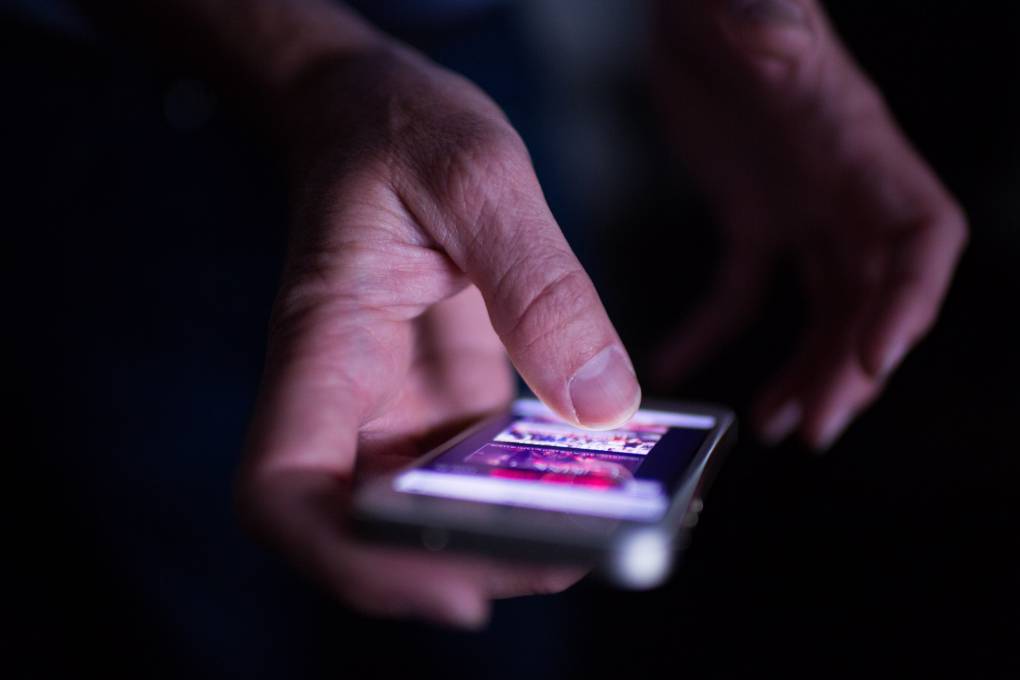
"caption": "A majority of Americans believe their online and offline activities are being tracked and monitored by companies and the government with some regularity, according to a new Pew Research Center survey of U.S. adults. ",
"description": "A majority of Americans believe their online and offline activities are being tracked and monitored by companies and the government with some regularity, according to a new Pew Research Center survey of U.S. adults. ",
"title": "RS16510_Porn Hands-qut",
"credit": "Jeremy Raff/KQED",
"status": "inherit",
"isLoading": false,
"fetchFailed": false
},
"news_11786435": {
"type": "attachments",
"id": "news_11786435",
"meta": {
"index": "attachments_1716263798",
"site": "news",
"id": "11786435",
"found": true
},
"parent": 11786369,
"imgSizes": {
"apple_news_ca_square_4_0": {
"file": "https://ww2.kqed.org/app/uploads/sites/10/2019/11/Image-from-iOS-1020x680-470x470.jpg",
"width": 470,
"mimeType": "image/jpeg",
"height": 470
},
"twentyfourteen-full-width": {
"file": "https://ww2.kqed.org/app/uploads/sites/10/2019/11/Image-from-iOS-1020x680-1020x576.jpg",
"width": 1020,
"mimeType": "image/jpeg",
"height": 576
},
"thumbnail": {
"file": "https://ww2.kqed.org/app/uploads/sites/10/2019/11/Image-from-iOS-1020x680-160x107.jpg",
"width": 160,
"mimeType": "image/jpeg",
"height": 107
},
"post-thumbnail": {
"file": "https://ww2.kqed.org/app/uploads/sites/10/2019/11/Image-from-iOS-1020x680-672x372.jpg",
"width": 672,
"mimeType": "image/jpeg",
"height": 372
},
"kqedFullSize": {
"file": "https://ww2.kqed.org/app/uploads/sites/10/2019/11/Image-from-iOS-1020x680.jpg",
"width": 1020,
"height": 680
},
"apple_news_ca_landscape_4_7": {
"file": "https://ww2.kqed.org/app/uploads/sites/10/2019/11/Image-from-iOS-1020x680-632x474.jpg",
"width": 632,
"mimeType": "image/jpeg",
"height": 474
},
"large": {
"file": "https://ww2.kqed.org/app/uploads/sites/10/2019/11/Image-from-iOS-1020x680-1020x680.jpg",
"width": 1020,
"mimeType": "image/jpeg",
"height": 680
},
"apple_news_ca_landscape_4_0": {
"file": "https://ww2.kqed.org/app/uploads/sites/10/2019/11/Image-from-iOS-1020x680-536x402.jpg",
"width": 536,
"mimeType": "image/jpeg",
"height": 402
},
"medium": {
"file": "https://ww2.kqed.org/app/uploads/sites/10/2019/11/Image-from-iOS-1020x680-800x533.jpg",
"width": 800,
"mimeType": "image/jpeg",
"height": 533
},
"apple_news_ca_portrait_4_0": {
"file": "https://ww2.kqed.org/app/uploads/sites/10/2019/11/Image-from-iOS-1020x680-354x472.jpg",
"width": 354,
"mimeType": "image/jpeg",
"height": 472
},
"apple_news_ca_portrait_9_7": {
"file": "https://ww2.kqed.org/app/uploads/sites/10/2019/11/Image-from-iOS-1020x680-840x680.jpg",
"width": 840,
"mimeType": "image/jpeg",
"height": 680
},
"apple_news_ca_portrait_4_7": {
"file": "https://ww2.kqed.org/app/uploads/sites/10/2019/11/Image-from-iOS-1020x680-414x552.jpg",
"width": 414,
"mimeType": "image/jpeg",
"height": 552
},
"apple_news_ca_portrait_5_5": {
"file": "https://ww2.kqed.org/app/uploads/sites/10/2019/11/Image-from-iOS-1020x680-687x680.jpg",
"width": 687,
"mimeType": "image/jpeg",
"height": 680
},
"apple_news_ca_square_4_7": {
"file": "https://ww2.kqed.org/app/uploads/sites/10/2019/11/Image-from-iOS-1020x680-550x550.jpg",
"width": 550,
"mimeType": "image/jpeg",
"height": 550
},
"apple_news_ca_square_5_5": {
"file": "https://ww2.kqed.org/app/uploads/sites/10/2019/11/Image-from-iOS-1020x680-912x680.jpg",
"width": 912,
"mimeType": "image/jpeg",
"height": 680
}
},
"publishDate": 1573685989,
"modified": 1573687802,
"caption": "PG&E CEO Bill Johnson addressed the utility's widespread power shutoffs at an emergency meeting of the California Public Utilities Commission on Oct. 18, 2019.",
"description": "PG&E CEO Bill Johnson addressed the utility's widespread power shutoffs at an emergency meeting of the California Public Utilities Commission on Oct. 18, 2019.",
"title": "Image-from-iOS-1020x680",
"credit": "Stephanie Lister/KQED",
"status": "inherit",
"isLoading": false,
"fetchFailed": false
},
"news_11786044": {
"type": "attachments",
"id": "news_11786044",
"meta": {
"index": "attachments_1716263798",
"site": "news",
"id": "11786044",
"found": true
},
"parent": 11786043,
"imgSizes": {
"apple_news_ca_landscape_5_5": {
"file": "https://ww2.kqed.org/app/uploads/sites/10/2019/11/insta-gettyimages-1186420231-4bff20dd82baaf0c673ce12b854f7d49d116e981-1044x783.jpg",
"width": 1044,
"mimeType": "image/jpeg",
"height": 783
},
"apple_news_ca_square_4_0": {
"file": "https://ww2.kqed.org/app/uploads/sites/10/2019/11/insta-gettyimages-1186420231-4bff20dd82baaf0c673ce12b854f7d49d116e981-470x470.jpg",
"width": 470,
"mimeType": "image/jpeg",
"height": 470
},
"twentyfourteen-full-width": {
"file": "https://ww2.kqed.org/app/uploads/sites/10/2019/11/insta-gettyimages-1186420231-4bff20dd82baaf0c673ce12b854f7d49d116e981-1038x576.jpg",
"width": 1038,
"mimeType": "image/jpeg",
"height": 576
},
"thumbnail": {
"file": "https://ww2.kqed.org/app/uploads/sites/10/2019/11/insta-gettyimages-1186420231-4bff20dd82baaf0c673ce12b854f7d49d116e981-160x120.jpg",
"width": 160,
"mimeType": "image/jpeg",
"height": 120
},
"post-thumbnail": {
"file": "https://ww2.kqed.org/app/uploads/sites/10/2019/11/insta-gettyimages-1186420231-4bff20dd82baaf0c673ce12b854f7d49d116e981-672x372.jpg",
"width": 672,
"mimeType": "image/jpeg",
"height": 372
},
"kqedFullSize": {
"file": "https://ww2.kqed.org/app/uploads/sites/10/2019/11/insta-gettyimages-1186420231-4bff20dd82baaf0c673ce12b854f7d49d116e981-e1573403738281.jpg",
"width": 1920,
"height": 1439
},
"apple_news_ca_landscape_4_7": {
"file": "https://ww2.kqed.org/app/uploads/sites/10/2019/11/insta-gettyimages-1186420231-4bff20dd82baaf0c673ce12b854f7d49d116e981-632x474.jpg",
"width": 632,
"mimeType": "image/jpeg",
"height": 474
},
"large": {
"file": "https://ww2.kqed.org/app/uploads/sites/10/2019/11/insta-gettyimages-1186420231-4bff20dd82baaf0c673ce12b854f7d49d116e981-1020x765.jpg",
"width": 1020,
"mimeType": "image/jpeg",
"height": 765
},
"complete_open_graph": {
"file": "https://ww2.kqed.org/app/uploads/sites/10/2019/11/insta-gettyimages-1186420231-4bff20dd82baaf0c673ce12b854f7d49d116e981-1200x899.jpg",
"width": 1200,
"mimeType": "image/jpeg",
"height": 899
},
"apple_news_ca_landscape_4_0": {
"file": "https://ww2.kqed.org/app/uploads/sites/10/2019/11/insta-gettyimages-1186420231-4bff20dd82baaf0c673ce12b854f7d49d116e981-536x402.jpg",
"width": 536,
"mimeType": "image/jpeg",
"height": 402
},
"apple_news_ca_portrait_12_9": {
"file": "https://ww2.kqed.org/app/uploads/sites/10/2019/11/insta-gettyimages-1186420231-4bff20dd82baaf0c673ce12b854f7d49d116e981-1122x1496.jpg",
"width": 1122,
"mimeType": "image/jpeg",
"height": 1496
},
"medium": {
"file": "https://ww2.kqed.org/app/uploads/sites/10/2019/11/insta-gettyimages-1186420231-4bff20dd82baaf0c673ce12b854f7d49d116e981-800x600.jpg",
"width": 800,
"mimeType": "image/jpeg",
"height": 600
},
"apple_news_ca_portrait_4_0": {
"file": "https://ww2.kqed.org/app/uploads/sites/10/2019/11/insta-gettyimages-1186420231-4bff20dd82baaf0c673ce12b854f7d49d116e981-354x472.jpg",
"width": 354,
"mimeType": "image/jpeg",
"height": 472
},
"apple_news_ca_portrait_9_7": {
"file": "https://ww2.kqed.org/app/uploads/sites/10/2019/11/insta-gettyimages-1186420231-4bff20dd82baaf0c673ce12b854f7d49d116e981-840x1120.jpg",
"width": 840,
"mimeType": "image/jpeg",
"height": 1120
},
"apple_news_ca_landscape_12_9": {
"file": "https://ww2.kqed.org/app/uploads/sites/10/2019/11/insta-gettyimages-1186420231-4bff20dd82baaf0c673ce12b854f7d49d116e981-1832x1374.jpg",
"width": 1832,
"mimeType": "image/jpeg",
"height": 1374
},
"apple_news_ca_square_9_7": {
"file": "https://ww2.kqed.org/app/uploads/sites/10/2019/11/insta-gettyimages-1186420231-4bff20dd82baaf0c673ce12b854f7d49d116e981-1104x1104.jpg",
"width": 1104,
"mimeType": "image/jpeg",
"height": 1104
},
"apple_news_ca_portrait_4_7": {
"file": "https://ww2.kqed.org/app/uploads/sites/10/2019/11/insta-gettyimages-1186420231-4bff20dd82baaf0c673ce12b854f7d49d116e981-414x552.jpg",
"width": 414,
"mimeType": "image/jpeg",
"height": 552
},
"apple_news_ca_square_12_9": {
"file": "https://ww2.kqed.org/app/uploads/sites/10/2019/11/insta-gettyimages-1186420231-4bff20dd82baaf0c673ce12b854f7d49d116e981-1472x1472.jpg",
"width": 1472,
"mimeType": "image/jpeg",
"height": 1472
},
"apple_news_ca_portrait_5_5": {
"file": "https://ww2.kqed.org/app/uploads/sites/10/2019/11/insta-gettyimages-1186420231-4bff20dd82baaf0c673ce12b854f7d49d116e981-687x916.jpg",
"width": 687,
"mimeType": "image/jpeg",
"height": 916
},
"full-width": {
"file": "https://ww2.kqed.org/app/uploads/sites/10/2019/11/insta-gettyimages-1186420231-4bff20dd82baaf0c673ce12b854f7d49d116e981-1920x1439.jpg",
"width": 1920,
"mimeType": "image/jpeg",
"height": 1439
},
"apple_news_ca_square_4_7": {
"file": "https://ww2.kqed.org/app/uploads/sites/10/2019/11/insta-gettyimages-1186420231-4bff20dd82baaf0c673ce12b854f7d49d116e981-550x550.jpg",
"width": 550,
"mimeType": "image/jpeg",
"height": 550
},
"apple_news_ca_landscape_9_7": {
"file": "https://ww2.kqed.org/app/uploads/sites/10/2019/11/insta-gettyimages-1186420231-4bff20dd82baaf0c673ce12b854f7d49d116e981-1376x1032.jpg",
"width": 1376,
"mimeType": "image/jpeg",
"height": 1032
},
"apple_news_ca_square_5_5": {
"file": "https://ww2.kqed.org/app/uploads/sites/10/2019/11/insta-gettyimages-1186420231-4bff20dd82baaf0c673ce12b854f7d49d116e981-912x912.jpg",
"width": 912,
"mimeType": "image/jpeg",
"height": 912
}
},
"publishDate": 1573402828,
"modified": 1573406566,
"caption": "Instagram's Adam Mosseri speaks onstage at the WIRED25 Summit 2019 in San Francisco. He said some users will no longer see the \"like\" counter, but it won't impact \"the whole U.S. at once.\"",
"description": "Instagram's Adam Mosseri speaks onstage at the WIRED25 Summit 2019 in San Francisco. He said some users will no longer see the \"like\" counter, but it won't impact \"the whole U.S. at once.\"",
"title": "Instagram's Adam Mosseri speaks onstage at the WIRED25 Summit 2019 in San Francisco. He said some users will no longer see the \"like\" counter, but it won't impact \"the whole U.S. at once.\"",
"credit": "Matt Winkelmeyer/Getty Images for WIRED",
"status": "inherit",
"isLoading": false,
"fetchFailed": false
},
"news_11782708": {
"type": "attachments",
"id": "news_11782708",
"meta": {
"index": "attachments_1716263798",
"site": "news",
"id": "11782708",
"found": true
},
"title": "Stanford University College Terrace Neighborhood",
"publishDate": 1572017698,
"status": "inherit",
"parent": 11781771,
"modified": 1778171580,
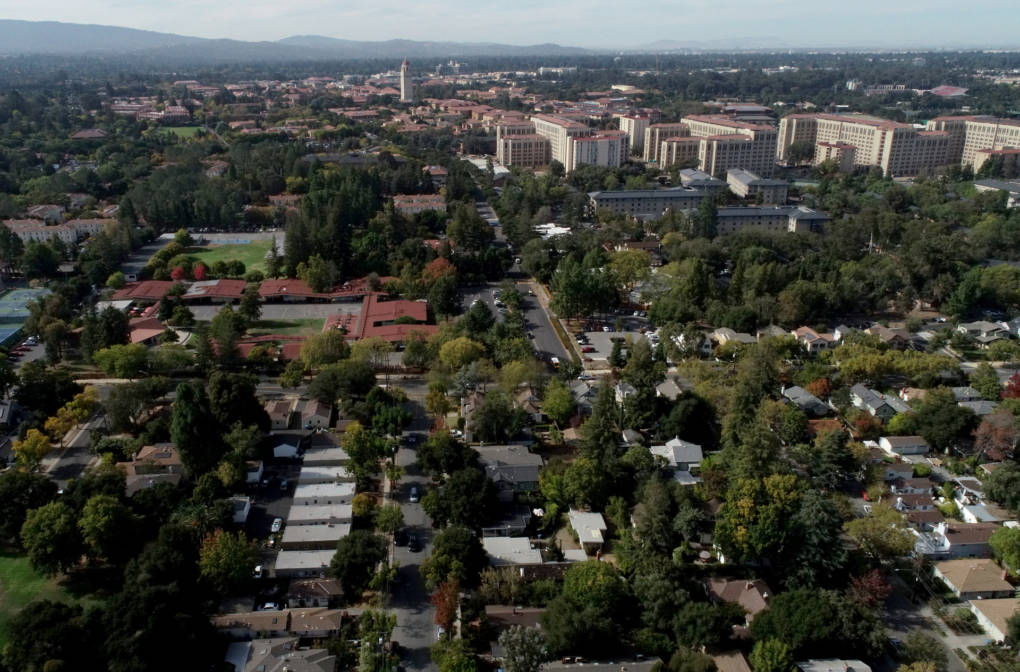
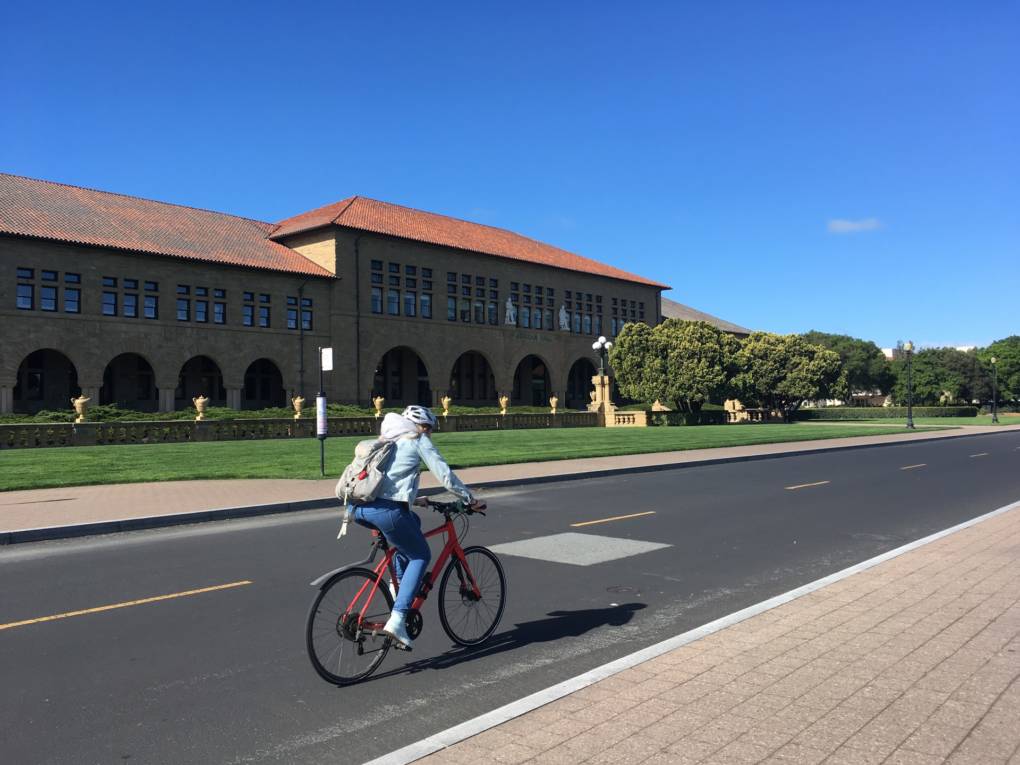
"caption": "Stanford's campus spans 8,180 acres in San Mateo and Santa Clara counties and is one of the largest in the country.",
"credit": "Courtesy of Jane Tyska/Bay Area News Group",
"altTag": "Stanford's campus spans 8,180 acres in San Mateo and Santa Clara counties and is one of the largest in the country",
"description": "Stanford's campus spans 8,180 acres in San Mateo and Santa Clara counties and is one of the largest in the country",
"imgSizes": {
"thumbnail": {
"file": "https://cdn.kqed.org/wp-content/uploads/sites/10/2019/10/RS39801_StandfordEdit006-qut-160x105.jpg",
"width": 160,
"height": 105,
"mimeType": "image/jpeg"
},
"medium": {
"file": "https://cdn.kqed.org/wp-content/uploads/sites/10/2019/10/RS39801_StandfordEdit006-qut-800x527.jpg",
"width": 800,
"height": 527,
"mimeType": "image/jpeg"
},
"large": {
"file": "https://cdn.kqed.org/wp-content/uploads/sites/10/2019/10/RS39801_StandfordEdit006-qut-1020x672.jpg",
"width": 1020,
"height": 672,
"mimeType": "image/jpeg"
},
"complete_open_graph": {
"file": "https://cdn.kqed.org/wp-content/uploads/sites/10/2019/10/RS39801_StandfordEdit006-qut-1200x791.jpg",
"width": 1200,
"height": 791,
"mimeType": "image/jpeg"
},
"post-thumbnail": {
"file": "https://cdn.kqed.org/wp-content/uploads/sites/10/2019/10/RS39801_StandfordEdit006-qut-672x372.jpg",
"width": 672,
"height": 372,
"mimeType": "image/jpeg"
},
"twentyfourteen-full-width": {
"file": "https://cdn.kqed.org/wp-content/uploads/sites/10/2019/10/RS39801_StandfordEdit006-qut-1038x576.jpg",
"width": 1038,
"height": 576,
"mimeType": "image/jpeg"
},
"full-width": {
"file": "https://cdn.kqed.org/wp-content/uploads/sites/10/2019/10/RS39801_StandfordEdit006-qut-1920x1265.jpg",
"width": 1920,
"height": 1265,
"mimeType": "image/jpeg"
},
"apple_news_ca_landscape_12_9": {
"file": "https://cdn.kqed.org/wp-content/uploads/sites/10/2019/10/RS39801_StandfordEdit006-qut-1832x1265.jpg",
"width": 1832,
"height": 1265,
"mimeType": "image/jpeg"
},
"apple_news_ca_landscape_9_7": {
"file": "https://cdn.kqed.org/wp-content/uploads/sites/10/2019/10/RS39801_StandfordEdit006-qut-1376x1032.jpg",
"width": 1376,
"height": 1032,
"mimeType": "image/jpeg"
},
"apple_news_ca_landscape_5_5": {
"file": "https://cdn.kqed.org/wp-content/uploads/sites/10/2019/10/RS39801_StandfordEdit006-qut-1044x783.jpg",
"width": 1044,
"height": 783,
"mimeType": "image/jpeg"
},
"apple_news_ca_landscape_4_7": {
"file": "https://cdn.kqed.org/wp-content/uploads/sites/10/2019/10/RS39801_StandfordEdit006-qut-632x474.jpg",
"width": 632,
"height": 474,
"mimeType": "image/jpeg"
},
"apple_news_ca_landscape_4_0": {
"file": "https://cdn.kqed.org/wp-content/uploads/sites/10/2019/10/RS39801_StandfordEdit006-qut-536x402.jpg",
"width": 536,
"height": 402,
"mimeType": "image/jpeg"
},
"apple_news_ca_portrait_12_9": {
"file": "https://cdn.kqed.org/wp-content/uploads/sites/10/2019/10/RS39801_StandfordEdit006-qut-1122x1265.jpg",
"width": 1122,
"height": 1265,
"mimeType": "image/jpeg"
},
"apple_news_ca_portrait_9_7": {
"file": "https://cdn.kqed.org/wp-content/uploads/sites/10/2019/10/RS39801_StandfordEdit006-qut-840x1120.jpg",
"width": 840,
"height": 1120,
"mimeType": "image/jpeg"
},
"apple_news_ca_portrait_5_5": {
"file": "https://cdn.kqed.org/wp-content/uploads/sites/10/2019/10/RS39801_StandfordEdit006-qut-687x916.jpg",
"width": 687,
"height": 916,
"mimeType": "image/jpeg"
},
"apple_news_ca_portrait_4_7": {
"file": "https://cdn.kqed.org/wp-content/uploads/sites/10/2019/10/RS39801_StandfordEdit006-qut-414x552.jpg",
"width": 414,
"height": 552,
"mimeType": "image/jpeg"
},
"apple_news_ca_portrait_4_0": {
"file": "https://cdn.kqed.org/wp-content/uploads/sites/10/2019/10/RS39801_StandfordEdit006-qut-354x472.jpg",
"width": 354,
"height": 472,
"mimeType": "image/jpeg"
},
"apple_news_ca_square_12_9": {
"file": "https://cdn.kqed.org/wp-content/uploads/sites/10/2019/10/RS39801_StandfordEdit006-qut-1472x1265.jpg",
"width": 1472,
"height": 1265,
"mimeType": "image/jpeg"
},
"apple_news_ca_square_9_7": {
"file": "https://cdn.kqed.org/wp-content/uploads/sites/10/2019/10/RS39801_StandfordEdit006-qut-1104x1104.jpg",
"width": 1104,
"height": 1104,
"mimeType": "image/jpeg"
},
"apple_news_ca_square_5_5": {
"file": "https://cdn.kqed.org/wp-content/uploads/sites/10/2019/10/RS39801_StandfordEdit006-qut-912x912.jpg",
"width": 912,
"height": 912,
"mimeType": "image/jpeg"
},
"apple_news_ca_square_4_7": {
"file": "https://cdn.kqed.org/wp-content/uploads/sites/10/2019/10/RS39801_StandfordEdit006-qut-550x550.jpg",
"width": 550,
"height": 550,
"mimeType": "image/jpeg"
},
"apple_news_ca_square_4_0": {
"file": "https://cdn.kqed.org/wp-content/uploads/sites/10/2019/10/RS39801_StandfordEdit006-qut-470x470.jpg",
"width": 470,
"height": 470,
"mimeType": "image/jpeg"
},
"kqedFullSize": {
"file": "https://cdn.kqed.org/wp-content/uploads/sites/10/2019/10/RS39801_StandfordEdit006-qut.jpg",
"width": 1920,
"height": 1265
}
},
"isLoading": false,
"fetchFailed": false
},
"news_11785386": {
"type": "attachments",
"id": "news_11785386",
"meta": {
"index": "attachments_1716263798",
"site": "news",
"id": "11785386",
"found": true
},
"parent": 11785385,
"imgSizes": {
"apple_news_ca_landscape_5_5": {
"file": "https://ww2.kqed.org/app/uploads/sites/10/2019/11/gettyimages-542154818-527f1f0cb58d56295446f3a97e9301c7cda369b8-1044x783.jpg",
"width": 1044,
"mimeType": "image/jpeg",
"height": 783
},
"apple_news_ca_square_4_0": {
"file": "https://ww2.kqed.org/app/uploads/sites/10/2019/11/gettyimages-542154818-527f1f0cb58d56295446f3a97e9301c7cda369b8-470x470.jpg",
"width": 470,
"mimeType": "image/jpeg",
"height": 470
},
"twentyfourteen-full-width": {
"file": "https://ww2.kqed.org/app/uploads/sites/10/2019/11/gettyimages-542154818-527f1f0cb58d56295446f3a97e9301c7cda369b8-1038x576.jpg",
"width": 1038,
"mimeType": "image/jpeg",
"height": 576
},
"thumbnail": {
"file": "https://ww2.kqed.org/app/uploads/sites/10/2019/11/gettyimages-542154818-527f1f0cb58d56295446f3a97e9301c7cda369b8-160x120.jpg",
"width": 160,
"mimeType": "image/jpeg",
"height": 120
},
"post-thumbnail": {
"file": "https://ww2.kqed.org/app/uploads/sites/10/2019/11/gettyimages-542154818-527f1f0cb58d56295446f3a97e9301c7cda369b8-672x372.jpg",
"width": 672,
"mimeType": "image/jpeg",
"height": 372
},
"kqedFullSize": {
"file": "https://ww2.kqed.org/app/uploads/sites/10/2019/11/gettyimages-542154818-527f1f0cb58d56295446f3a97e9301c7cda369b8-e1573083029586.jpg",
"width": 1920,
"height": 1440
},
"apple_news_ca_landscape_4_7": {
"file": "https://ww2.kqed.org/app/uploads/sites/10/2019/11/gettyimages-542154818-527f1f0cb58d56295446f3a97e9301c7cda369b8-632x474.jpg",
"width": 632,
"mimeType": "image/jpeg",
"height": 474
},
"large": {
"file": "https://ww2.kqed.org/app/uploads/sites/10/2019/11/gettyimages-542154818-527f1f0cb58d56295446f3a97e9301c7cda369b8-1020x765.jpg",
"width": 1020,
"mimeType": "image/jpeg",
"height": 765
},
"complete_open_graph": {
"file": "https://ww2.kqed.org/app/uploads/sites/10/2019/11/gettyimages-542154818-527f1f0cb58d56295446f3a97e9301c7cda369b8-1200x900.jpg",
"width": 1200,
"mimeType": "image/jpeg",
"height": 900
},
"apple_news_ca_landscape_4_0": {
"file": "https://ww2.kqed.org/app/uploads/sites/10/2019/11/gettyimages-542154818-527f1f0cb58d56295446f3a97e9301c7cda369b8-536x402.jpg",
"width": 536,
"mimeType": "image/jpeg",
"height": 402
},
"apple_news_ca_portrait_12_9": {
"file": "https://ww2.kqed.org/app/uploads/sites/10/2019/11/gettyimages-542154818-527f1f0cb58d56295446f3a97e9301c7cda369b8-1122x1496.jpg",
"width": 1122,
"mimeType": "image/jpeg",
"height": 1496
},
"medium": {
"file": "https://ww2.kqed.org/app/uploads/sites/10/2019/11/gettyimages-542154818-527f1f0cb58d56295446f3a97e9301c7cda369b8-800x600.jpg",
"width": 800,
"mimeType": "image/jpeg",
"height": 600
},
"apple_news_ca_portrait_4_0": {
"file": "https://ww2.kqed.org/app/uploads/sites/10/2019/11/gettyimages-542154818-527f1f0cb58d56295446f3a97e9301c7cda369b8-354x472.jpg",
"width": 354,
"mimeType": "image/jpeg",
"height": 472
},
"apple_news_ca_portrait_9_7": {
"file": "https://ww2.kqed.org/app/uploads/sites/10/2019/11/gettyimages-542154818-527f1f0cb58d56295446f3a97e9301c7cda369b8-840x1120.jpg",
"width": 840,
"mimeType": "image/jpeg",
"height": 1120
},
"apple_news_ca_landscape_12_9": {
"file": "https://ww2.kqed.org/app/uploads/sites/10/2019/11/gettyimages-542154818-527f1f0cb58d56295446f3a97e9301c7cda369b8-1832x1374.jpg",
"width": 1832,
"mimeType": "image/jpeg",
"height": 1374
},
"apple_news_ca_square_9_7": {
"file": "https://ww2.kqed.org/app/uploads/sites/10/2019/11/gettyimages-542154818-527f1f0cb58d56295446f3a97e9301c7cda369b8-1104x1104.jpg",
"width": 1104,
"mimeType": "image/jpeg",
"height": 1104
},
"apple_news_ca_portrait_4_7": {
"file": "https://ww2.kqed.org/app/uploads/sites/10/2019/11/gettyimages-542154818-527f1f0cb58d56295446f3a97e9301c7cda369b8-414x552.jpg",
"width": 414,
"mimeType": "image/jpeg",
"height": 552
},
"apple_news_ca_square_12_9": {
"file": "https://ww2.kqed.org/app/uploads/sites/10/2019/11/gettyimages-542154818-527f1f0cb58d56295446f3a97e9301c7cda369b8-1472x1472.jpg",
"width": 1472,
"mimeType": "image/jpeg",
"height": 1472
},
"apple_news_ca_portrait_5_5": {
"file": "https://ww2.kqed.org/app/uploads/sites/10/2019/11/gettyimages-542154818-527f1f0cb58d56295446f3a97e9301c7cda369b8-687x916.jpg",
"width": 687,
"mimeType": "image/jpeg",
"height": 916
},
"full-width": {
"file": "https://ww2.kqed.org/app/uploads/sites/10/2019/11/gettyimages-542154818-527f1f0cb58d56295446f3a97e9301c7cda369b8-1920x1440.jpg",
"width": 1920,
"mimeType": "image/jpeg",
"height": 1440
},
"apple_news_ca_square_4_7": {
"file": "https://ww2.kqed.org/app/uploads/sites/10/2019/11/gettyimages-542154818-527f1f0cb58d56295446f3a97e9301c7cda369b8-550x550.jpg",
"width": 550,
"mimeType": "image/jpeg",
"height": 550
},
"apple_news_ca_landscape_9_7": {
"file": "https://ww2.kqed.org/app/uploads/sites/10/2019/11/gettyimages-542154818-527f1f0cb58d56295446f3a97e9301c7cda369b8-1376x1032.jpg",
"width": 1376,
"mimeType": "image/jpeg",
"height": 1032
},
"apple_news_ca_square_5_5": {
"file": "https://ww2.kqed.org/app/uploads/sites/10/2019/11/gettyimages-542154818-527f1f0cb58d56295446f3a97e9301c7cda369b8-912x912.jpg",
"width": 912,
"mimeType": "image/jpeg",
"height": 912
}
},
"publishDate": 1573082628,
"modified": 1614783167,
"caption": null,
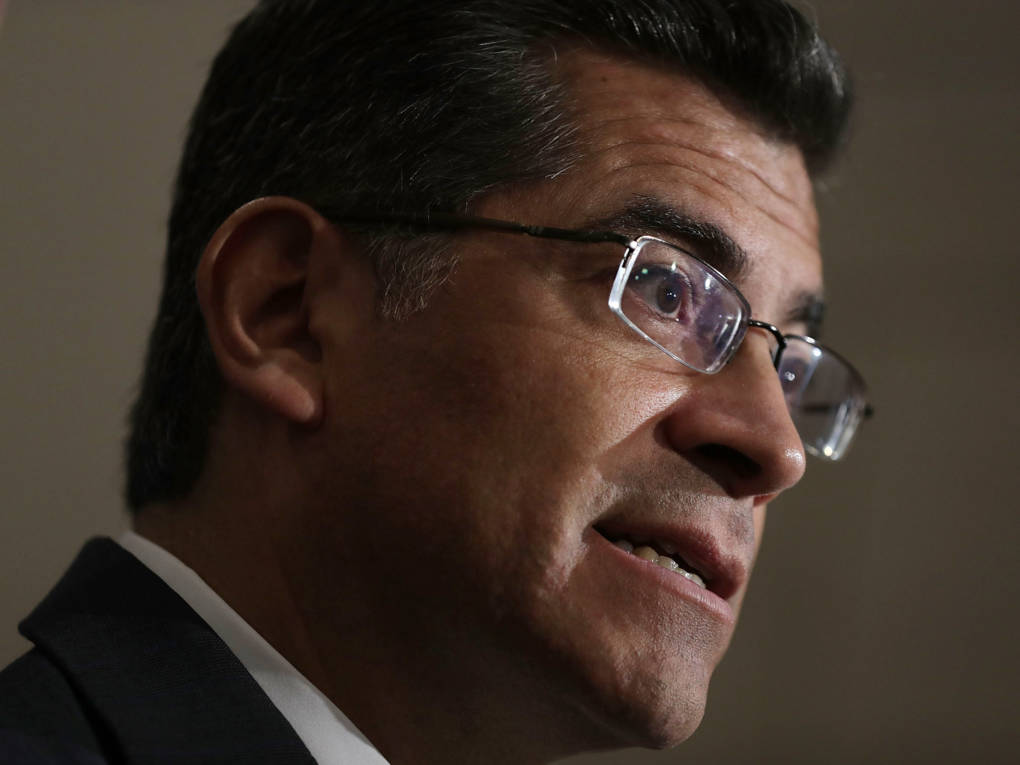
"description": "Attorney General Xavier Becerra said Facebook has not been responsive to the subpoenas his office has issued.",
"title": "Attorney General Xavier Becerra said Facebook has not been responsive to the subpoenas his office has issued.",
"credit": "Alex Wong/Getty Images",
"status": "inherit",
"altTag": "Attorney General Xavier Becerra said Facebook has not been responsive to the subpoenas his office has issued.",
"isLoading": false,
"fetchFailed": false
},
"news_11785286": {
"type": "attachments",
"id": "news_11785286",
"meta": {
"index": "attachments_1716263798",
"site": "news",
"id": "11785286",
"found": true
},
"parent": 11785039,
"imgSizes": {
"apple_news_ca_landscape_5_5": {
"file": "https://ww2.kqed.org/app/uploads/sites/10/2019/11/11062019_sausalito_pge_power-shutoffs-qut-1044x783.jpg",
"width": 1044,
"mimeType": "image/jpeg",
"height": 783
},
"apple_news_ca_square_4_0": {
"file": "https://ww2.kqed.org/app/uploads/sites/10/2019/11/11062019_sausalito_pge_power-shutoffs-qut-470x470.jpg",
"width": 470,
"mimeType": "image/jpeg",
"height": 470
},
"twentyfourteen-full-width": {
"file": "https://ww2.kqed.org/app/uploads/sites/10/2019/11/11062019_sausalito_pge_power-shutoffs-qut-1038x576.jpg",
"width": 1038,
"mimeType": "image/jpeg",
"height": 576
},
"thumbnail": {
"file": "https://ww2.kqed.org/app/uploads/sites/10/2019/11/11062019_sausalito_pge_power-shutoffs-qut-160x107.jpg",
"width": 160,
"mimeType": "image/jpeg",
"height": 107
},
"post-thumbnail": {
"file": "https://ww2.kqed.org/app/uploads/sites/10/2019/11/11062019_sausalito_pge_power-shutoffs-qut-672x372.jpg",
"width": 672,
"mimeType": "image/jpeg",
"height": 372
},
"kqedFullSize": {
"file": "https://ww2.kqed.org/app/uploads/sites/10/2019/11/11062019_sausalito_pge_power-shutoffs-qut.jpg",
"width": 1920,
"height": 1280
},
"apple_news_ca_landscape_4_7": {
"file": "https://ww2.kqed.org/app/uploads/sites/10/2019/11/11062019_sausalito_pge_power-shutoffs-qut-632x474.jpg",
"width": 632,
"mimeType": "image/jpeg",
"height": 474
},
"large": {
"file": "https://ww2.kqed.org/app/uploads/sites/10/2019/11/11062019_sausalito_pge_power-shutoffs-qut-1020x680.jpg",
"width": 1020,
"mimeType": "image/jpeg",
"height": 680
},
"complete_open_graph": {
"file": "https://ww2.kqed.org/app/uploads/sites/10/2019/11/11062019_sausalito_pge_power-shutoffs-qut-1200x800.jpg",
"width": 1200,
"mimeType": "image/jpeg",
"height": 800
},
"apple_news_ca_landscape_4_0": {
"file": "https://ww2.kqed.org/app/uploads/sites/10/2019/11/11062019_sausalito_pge_power-shutoffs-qut-536x402.jpg",
"width": 536,
"mimeType": "image/jpeg",
"height": 402
},
"apple_news_ca_portrait_12_9": {
"file": "https://ww2.kqed.org/app/uploads/sites/10/2019/11/11062019_sausalito_pge_power-shutoffs-qut-1122x1280.jpg",
"width": 1122,
"mimeType": "image/jpeg",
"height": 1280
},
"medium": {
"file": "https://ww2.kqed.org/app/uploads/sites/10/2019/11/11062019_sausalito_pge_power-shutoffs-qut-800x533.jpg",
"width": 800,
"mimeType": "image/jpeg",
"height": 533
},
"apple_news_ca_portrait_4_0": {
"file": "https://ww2.kqed.org/app/uploads/sites/10/2019/11/11062019_sausalito_pge_power-shutoffs-qut-354x472.jpg",
"width": 354,
"mimeType": "image/jpeg",
"height": 472
},
"apple_news_ca_portrait_9_7": {
"file": "https://ww2.kqed.org/app/uploads/sites/10/2019/11/11062019_sausalito_pge_power-shutoffs-qut-840x1120.jpg",
"width": 840,
"mimeType": "image/jpeg",
"height": 1120
},
"apple_news_ca_landscape_12_9": {
"file": "https://ww2.kqed.org/app/uploads/sites/10/2019/11/11062019_sausalito_pge_power-shutoffs-qut-1832x1280.jpg",
"width": 1832,
"mimeType": "image/jpeg",
"height": 1280
},
"apple_news_ca_square_9_7": {
"file": "https://ww2.kqed.org/app/uploads/sites/10/2019/11/11062019_sausalito_pge_power-shutoffs-qut-1104x1104.jpg",
"width": 1104,
"mimeType": "image/jpeg",
"height": 1104
},
"apple_news_ca_portrait_4_7": {
"file": "https://ww2.kqed.org/app/uploads/sites/10/2019/11/11062019_sausalito_pge_power-shutoffs-qut-414x552.jpg",
"width": 414,
"mimeType": "image/jpeg",
"height": 552
},
"apple_news_ca_square_12_9": {
"file": "https://ww2.kqed.org/app/uploads/sites/10/2019/11/11062019_sausalito_pge_power-shutoffs-qut-1472x1280.jpg",
"width": 1472,
"mimeType": "image/jpeg",
"height": 1280
},
"apple_news_ca_portrait_5_5": {
"file": "https://ww2.kqed.org/app/uploads/sites/10/2019/11/11062019_sausalito_pge_power-shutoffs-qut-687x916.jpg",
"width": 687,
"mimeType": "image/jpeg",
"height": 916
},
"full-width": {
"file": "https://ww2.kqed.org/app/uploads/sites/10/2019/11/11062019_sausalito_pge_power-shutoffs-qut-1920x1280.jpg",
"width": 1920,
"mimeType": "image/jpeg",
"height": 1280
},
"apple_news_ca_square_4_7": {
"file": "https://ww2.kqed.org/app/uploads/sites/10/2019/11/11062019_sausalito_pge_power-shutoffs-qut-550x550.jpg",
"width": 550,
"mimeType": "image/jpeg",
"height": 550
},
"apple_news_ca_landscape_9_7": {
"file": "https://ww2.kqed.org/app/uploads/sites/10/2019/11/11062019_sausalito_pge_power-shutoffs-qut-1376x1032.jpg",
"width": 1376,
"mimeType": "image/jpeg",
"height": 1032
},
"apple_news_ca_square_5_5": {
"file": "https://ww2.kqed.org/app/uploads/sites/10/2019/11/11062019_sausalito_pge_power-shutoffs-qut-912x912.jpg",
"width": 912,
"mimeType": "image/jpeg",
"height": 912
}
},
"publishDate": 1573069560,
"modified": 1573073362,
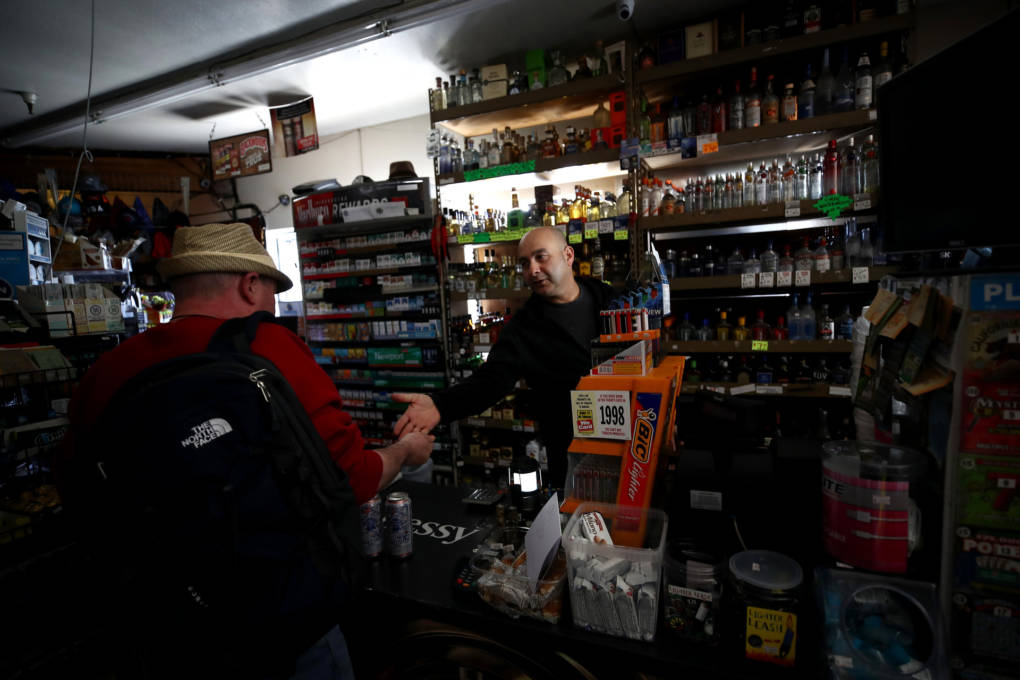
"caption": "Akber Jiwani, the owner of New Bait Shop, helps a customer in his shop that lost power on Oct. 10, 2019, in Sausalito.",
"description": "Akber Jiwani, the owner of New Bait Shop, helps a customer in his shop that lost power on Oct. 10, 2019, in Sausalito.",
"title": "Massive Planned Power Outages Affect Large Swaths Of California",
"credit": "Ezra Shaw/Getty Images",
"status": "inherit",
"isLoading": false,
"fetchFailed": false
},
"news_11784717": {
"type": "attachments",
"id": "news_11784717",
"meta": {
"index": "attachments_1716263798",
"site": "news",
"id": "11784717",
"found": true
},
"parent": 11784669,
"imgSizes": {
"apple_news_ca_landscape_5_5": {
"file": "https://ww2.kqed.org/app/uploads/sites/10/2019/11/RS36462_IMG_8789-qut-1044x783.jpg",
"width": 1044,
"mimeType": "image/jpeg",
"height": 783
},
"apple_news_ca_square_4_0": {
"file": "https://ww2.kqed.org/app/uploads/sites/10/2019/11/RS36462_IMG_8789-qut-470x470.jpg",
"width": 470,
"mimeType": "image/jpeg",
"height": 470
},
"twentyfourteen-full-width": {
"file": "https://ww2.kqed.org/app/uploads/sites/10/2019/11/RS36462_IMG_8789-qut-1038x576.jpg",
"width": 1038,
"mimeType": "image/jpeg",
"height": 576
},
"thumbnail": {
"file": "https://ww2.kqed.org/app/uploads/sites/10/2019/11/RS36462_IMG_8789-qut-160x101.jpg",
"width": 160,
"mimeType": "image/jpeg",
"height": 101
},
"post-thumbnail": {
"file": "https://ww2.kqed.org/app/uploads/sites/10/2019/11/RS36462_IMG_8789-qut-672x372.jpg",
"width": 672,
"mimeType": "image/jpeg",
"height": 372
},
"kqedFullSize": {
"file": "https://ww2.kqed.org/app/uploads/sites/10/2019/11/RS36462_IMG_8789-qut.jpg",
"width": 1920,
"height": 1212
},
"apple_news_ca_landscape_4_7": {
"file": "https://ww2.kqed.org/app/uploads/sites/10/2019/11/RS36462_IMG_8789-qut-632x474.jpg",
"width": 632,
"mimeType": "image/jpeg",
"height": 474
},
"large": {
"file": "https://ww2.kqed.org/app/uploads/sites/10/2019/11/RS36462_IMG_8789-qut-1020x644.jpg",
"width": 1020,
"mimeType": "image/jpeg",
"height": 644
},
"complete_open_graph": {
"file": "https://ww2.kqed.org/app/uploads/sites/10/2019/11/RS36462_IMG_8789-qut-1200x758.jpg",
"width": 1200,
"mimeType": "image/jpeg",
"height": 758
},
"apple_news_ca_landscape_4_0": {
"file": "https://ww2.kqed.org/app/uploads/sites/10/2019/11/RS36462_IMG_8789-qut-536x402.jpg",
"width": 536,
"mimeType": "image/jpeg",
"height": 402
},
"apple_news_ca_portrait_12_9": {
"file": "https://ww2.kqed.org/app/uploads/sites/10/2019/11/RS36462_IMG_8789-qut-1122x1212.jpg",
"width": 1122,
"mimeType": "image/jpeg",
"height": 1212
},
"medium": {
"file": "https://ww2.kqed.org/app/uploads/sites/10/2019/11/RS36462_IMG_8789-qut-800x505.jpg",
"width": 800,
"mimeType": "image/jpeg",
"height": 505
},
"apple_news_ca_portrait_4_0": {
"file": "https://ww2.kqed.org/app/uploads/sites/10/2019/11/RS36462_IMG_8789-qut-354x472.jpg",
"width": 354,
"mimeType": "image/jpeg",
"height": 472
},
"apple_news_ca_portrait_9_7": {
"file": "https://ww2.kqed.org/app/uploads/sites/10/2019/11/RS36462_IMG_8789-qut-840x1120.jpg",
"width": 840,
"mimeType": "image/jpeg",
"height": 1120
},
"apple_news_ca_landscape_12_9": {
"file": "https://ww2.kqed.org/app/uploads/sites/10/2019/11/RS36462_IMG_8789-qut-1832x1212.jpg",
"width": 1832,
"mimeType": "image/jpeg",
"height": 1212
},
"apple_news_ca_square_9_7": {
"file": "https://ww2.kqed.org/app/uploads/sites/10/2019/11/RS36462_IMG_8789-qut-1104x1104.jpg",
"width": 1104,
"mimeType": "image/jpeg",
"height": 1104
},
"apple_news_ca_portrait_4_7": {
"file": "https://ww2.kqed.org/app/uploads/sites/10/2019/11/RS36462_IMG_8789-qut-414x552.jpg",
"width": 414,
"mimeType": "image/jpeg",
"height": 552
},
"apple_news_ca_square_12_9": {
"file": "https://ww2.kqed.org/app/uploads/sites/10/2019/11/RS36462_IMG_8789-qut-1472x1212.jpg",
"width": 1472,
"mimeType": "image/jpeg",
"height": 1212
},
"apple_news_ca_portrait_5_5": {
"file": "https://ww2.kqed.org/app/uploads/sites/10/2019/11/RS36462_IMG_8789-qut-687x916.jpg",
"width": 687,
"mimeType": "image/jpeg",
"height": 916
},
"full-width": {
"file": "https://ww2.kqed.org/app/uploads/sites/10/2019/11/RS36462_IMG_8789-qut-1920x1212.jpg",
"width": 1920,
"mimeType": "image/jpeg",
"height": 1212
},
"apple_news_ca_square_4_7": {
"file": "https://ww2.kqed.org/app/uploads/sites/10/2019/11/RS36462_IMG_8789-qut-550x550.jpg",
"width": 550,
"mimeType": "image/jpeg",
"height": 550
},
"apple_news_ca_landscape_9_7": {
"file": "https://ww2.kqed.org/app/uploads/sites/10/2019/11/RS36462_IMG_8789-qut-1376x1032.jpg",
"width": 1376,
"mimeType": "image/jpeg",
"height": 1032
},
"apple_news_ca_square_5_5": {
"file": "https://ww2.kqed.org/app/uploads/sites/10/2019/11/RS36462_IMG_8789-qut-912x912.jpg",
"width": 912,
"mimeType": "image/jpeg",
"height": 912
}
},
"publishDate": 1572845321,
"modified": 1572994736,
"caption": "The Quad is the center of Stanford's bucolic campus. The communities around Stanford are increasingly calling on the university to do more about housing, traffic and school funding in the region.",
"description": "The \"Quad\" is the center of Stanford's bucolic campus. The communities around Stanford are increasingly calling on the university to do more about housing, traffic and school funding in the region.",
"title": "RS36462_IMG_8789-qut",
"credit": "Rachael Myrow/KQED",
"status": "inherit",
"isLoading": false,
"fetchFailed": false
},
"news_11784795": {
"type": "attachments",
"id": "news_11784795",
"meta": {
"index": "attachments_1716263798",
"site": "news",
"id": "11784795",
"found": true
},
"parent": 11784720,
"imgSizes": {
"apple_news_ca_landscape_5_5": {
"file": "https://ww2.kqed.org/app/uploads/sites/10/2019/11/Apple_Destination-Home-Build-Site_Tim-Cook-Gavin-Newsom_102919-1044x783.jpg",
"width": 1044,
"mimeType": "image/jpeg",
"height": 783
},
"apple_news_ca_square_4_0": {
"file": "https://ww2.kqed.org/app/uploads/sites/10/2019/11/Apple_Destination-Home-Build-Site_Tim-Cook-Gavin-Newsom_102919-470x470.jpg",
"width": 470,
"mimeType": "image/jpeg",
"height": 470
},
"twentyfourteen-full-width": {
"file": "https://ww2.kqed.org/app/uploads/sites/10/2019/11/Apple_Destination-Home-Build-Site_Tim-Cook-Gavin-Newsom_102919-1038x576.jpg",
"width": 1038,
"mimeType": "image/jpeg",
"height": 576
},
"thumbnail": {
"file": "https://ww2.kqed.org/app/uploads/sites/10/2019/11/Apple_Destination-Home-Build-Site_Tim-Cook-Gavin-Newsom_102919-160x107.jpg",
"width": 160,
"mimeType": "image/jpeg",
"height": 107
},
"post-thumbnail": {
"file": "https://ww2.kqed.org/app/uploads/sites/10/2019/11/Apple_Destination-Home-Build-Site_Tim-Cook-Gavin-Newsom_102919-672x372.jpg",
"width": 672,
"mimeType": "image/jpeg",
"height": 372
},
"kqedFullSize": {
"file": "https://ww2.kqed.org/app/uploads/sites/10/2019/11/Apple_Destination-Home-Build-Site_Tim-Cook-Gavin-Newsom_102919-e1572896536364.jpg",
"width": 1920,
"height": 1280
},
"apple_news_ca_landscape_4_7": {
"file": "https://ww2.kqed.org/app/uploads/sites/10/2019/11/Apple_Destination-Home-Build-Site_Tim-Cook-Gavin-Newsom_102919-632x474.jpg",
"width": 632,
"mimeType": "image/jpeg",
"height": 474
},
"large": {
"file": "https://ww2.kqed.org/app/uploads/sites/10/2019/11/Apple_Destination-Home-Build-Site_Tim-Cook-Gavin-Newsom_102919-1020x680.jpg",
"width": 1020,
"mimeType": "image/jpeg",
"height": 680
},
"complete_open_graph": {
"file": "https://ww2.kqed.org/app/uploads/sites/10/2019/11/Apple_Destination-Home-Build-Site_Tim-Cook-Gavin-Newsom_102919-1200x800.jpg",
"width": 1200,
"mimeType": "image/jpeg",
"height": 800
},
"apple_news_ca_landscape_4_0": {
"file": "https://ww2.kqed.org/app/uploads/sites/10/2019/11/Apple_Destination-Home-Build-Site_Tim-Cook-Gavin-Newsom_102919-536x402.jpg",
"width": 536,
"mimeType": "image/jpeg",
"height": 402
},
"apple_news_ca_portrait_12_9": {
"file": "https://ww2.kqed.org/app/uploads/sites/10/2019/11/Apple_Destination-Home-Build-Site_Tim-Cook-Gavin-Newsom_102919-1122x1496.jpg",
"width": 1122,
"mimeType": "image/jpeg",
"height": 1496
},
"medium": {
"file": "https://ww2.kqed.org/app/uploads/sites/10/2019/11/Apple_Destination-Home-Build-Site_Tim-Cook-Gavin-Newsom_102919-800x533.jpg",
"width": 800,
"mimeType": "image/jpeg",
"height": 533
},
"apple_news_ca_portrait_4_0": {
"file": "https://ww2.kqed.org/app/uploads/sites/10/2019/11/Apple_Destination-Home-Build-Site_Tim-Cook-Gavin-Newsom_102919-354x472.jpg",
"width": 354,
"mimeType": "image/jpeg",
"height": 472
},
"apple_news_ca_portrait_9_7": {
"file": "https://ww2.kqed.org/app/uploads/sites/10/2019/11/Apple_Destination-Home-Build-Site_Tim-Cook-Gavin-Newsom_102919-840x1120.jpg",
"width": 840,
"mimeType": "image/jpeg",
"height": 1120
},
"apple_news_ca_landscape_12_9": {
"file": "https://ww2.kqed.org/app/uploads/sites/10/2019/11/Apple_Destination-Home-Build-Site_Tim-Cook-Gavin-Newsom_102919-1832x1374.jpg",
"width": 1832,
"mimeType": "image/jpeg",
"height": 1374
},
"apple_news_ca_square_9_7": {
"file": "https://ww2.kqed.org/app/uploads/sites/10/2019/11/Apple_Destination-Home-Build-Site_Tim-Cook-Gavin-Newsom_102919-1104x1104.jpg",
"width": 1104,
"mimeType": "image/jpeg",
"height": 1104
},
"apple_news_ca_portrait_4_7": {
"file": "https://ww2.kqed.org/app/uploads/sites/10/2019/11/Apple_Destination-Home-Build-Site_Tim-Cook-Gavin-Newsom_102919-414x552.jpg",
"width": 414,
"mimeType": "image/jpeg",
"height": 552
},
"apple_news_ca_square_12_9": {
"file": "https://ww2.kqed.org/app/uploads/sites/10/2019/11/Apple_Destination-Home-Build-Site_Tim-Cook-Gavin-Newsom_102919-1472x1472.jpg",
"width": 1472,
"mimeType": "image/jpeg",
"height": 1472
},
"apple_news_ca_portrait_5_5": {
"file": "https://ww2.kqed.org/app/uploads/sites/10/2019/11/Apple_Destination-Home-Build-Site_Tim-Cook-Gavin-Newsom_102919-687x916.jpg",
"width": 687,
"mimeType": "image/jpeg",
"height": 916
},
"full-width": {
"file": "https://ww2.kqed.org/app/uploads/sites/10/2019/11/Apple_Destination-Home-Build-Site_Tim-Cook-Gavin-Newsom_102919-1920x1280.jpg",
"width": 1920,
"mimeType": "image/jpeg",
"height": 1280
},
"apple_news_ca_square_4_7": {
"file": "https://ww2.kqed.org/app/uploads/sites/10/2019/11/Apple_Destination-Home-Build-Site_Tim-Cook-Gavin-Newsom_102919-550x550.jpg",
"width": 550,
"mimeType": "image/jpeg",
"height": 550
},
"apple_news_ca_landscape_9_7": {
"file": "https://ww2.kqed.org/app/uploads/sites/10/2019/11/Apple_Destination-Home-Build-Site_Tim-Cook-Gavin-Newsom_102919-1376x1032.jpg",
"width": 1376,
"mimeType": "image/jpeg",
"height": 1032
},
"apple_news_ca_square_5_5": {
"file": "https://ww2.kqed.org/app/uploads/sites/10/2019/11/Apple_Destination-Home-Build-Site_Tim-Cook-Gavin-Newsom_102919-912x912.jpg",
"width": 912,
"mimeType": "image/jpeg",
"height": 912
}
},
"publishDate": 1572896496,
"modified": 1572906459,
"caption": "Apple CEO Tim Cook and California Gov. Gavin Newsom unveiled the tech company's plan to help ease the housing crisis, with Apple pledging $2.5 billion for mortgages, development and other initiatives.",
"description": null,
"title": "Apple_Destination-Home-Build-Site_Tim-Cook-Gavin-Newsom_102919",
"credit": "Courtesy of Apple",
"status": "inherit",
"isLoading": false,
"fetchFailed": false
},
"news_11781773": {
"type": "attachments",
"id": "news_11781773",
"meta": {
"index": "attachments_1716263798",
"site": "news",
"id": "11781773",
"found": true
},
"parent": 11781771,
"imgSizes": {
"apple_news_ca_landscape_5_5": {
"file": "https://ww2.kqed.org/app/uploads/sites/10/2019/10/RS36468_IMG_8798-qut-1044x783.jpg",
"width": 1044,
"mimeType": "image/jpeg",
"height": 783
},
"apple_news_ca_square_4_0": {
"file": "https://ww2.kqed.org/app/uploads/sites/10/2019/10/RS36468_IMG_8798-qut-470x470.jpg",
"width": 470,
"mimeType": "image/jpeg",
"height": 470
},
"twentyfourteen-full-width": {
"file": "https://ww2.kqed.org/app/uploads/sites/10/2019/10/RS36468_IMG_8798-qut-1038x576.jpg",
"width": 1038,
"mimeType": "image/jpeg",
"height": 576
},
"thumbnail": {
"file": "https://ww2.kqed.org/app/uploads/sites/10/2019/10/RS36468_IMG_8798-qut-160x120.jpg",
"width": 160,
"mimeType": "image/jpeg",
"height": 120
},
"post-thumbnail": {
"file": "https://ww2.kqed.org/app/uploads/sites/10/2019/10/RS36468_IMG_8798-qut-672x372.jpg",
"width": 672,
"mimeType": "image/jpeg",
"height": 372
},
"kqedFullSize": {
"file": "https://ww2.kqed.org/app/uploads/sites/10/2019/10/RS36468_IMG_8798-qut.jpg",
"width": 1920,
"height": 1440
},
"apple_news_ca_landscape_4_7": {
"file": "https://ww2.kqed.org/app/uploads/sites/10/2019/10/RS36468_IMG_8798-qut-632x474.jpg",
"width": 632,
"mimeType": "image/jpeg",
"height": 474
},
"large": {
"file": "https://ww2.kqed.org/app/uploads/sites/10/2019/10/RS36468_IMG_8798-qut-1020x765.jpg",
"width": 1020,
"mimeType": "image/jpeg",
"height": 765
},
"complete_open_graph": {
"file": "https://ww2.kqed.org/app/uploads/sites/10/2019/10/RS36468_IMG_8798-qut-1200x900.jpg",
"width": 1200,
"mimeType": "image/jpeg",
"height": 900
},
"apple_news_ca_landscape_4_0": {
"file": "https://ww2.kqed.org/app/uploads/sites/10/2019/10/RS36468_IMG_8798-qut-536x402.jpg",
"width": 536,
"mimeType": "image/jpeg",
"height": 402
},
"apple_news_ca_portrait_12_9": {
"file": "https://ww2.kqed.org/app/uploads/sites/10/2019/10/RS36468_IMG_8798-qut-1122x1440.jpg",
"width": 1122,
"mimeType": "image/jpeg",
"height": 1440
},
"medium": {
"file": "https://ww2.kqed.org/app/uploads/sites/10/2019/10/RS36468_IMG_8798-qut-800x600.jpg",
"width": 800,
"mimeType": "image/jpeg",
"height": 600
},
"apple_news_ca_portrait_4_0": {
"file": "https://ww2.kqed.org/app/uploads/sites/10/2019/10/RS36468_IMG_8798-qut-354x472.jpg",
"width": 354,
"mimeType": "image/jpeg",
"height": 472
},
"apple_news_ca_portrait_9_7": {
"file": "https://ww2.kqed.org/app/uploads/sites/10/2019/10/RS36468_IMG_8798-qut-840x1120.jpg",
"width": 840,
"mimeType": "image/jpeg",
"height": 1120
},
"apple_news_ca_landscape_12_9": {
"file": "https://ww2.kqed.org/app/uploads/sites/10/2019/10/RS36468_IMG_8798-qut-1832x1374.jpg",
"width": 1832,
"mimeType": "image/jpeg",
"height": 1374
},
"apple_news_ca_square_9_7": {
"file": "https://ww2.kqed.org/app/uploads/sites/10/2019/10/RS36468_IMG_8798-qut-1104x1104.jpg",
"width": 1104,
"mimeType": "image/jpeg",
"height": 1104
},
"apple_news_ca_portrait_4_7": {
"file": "https://ww2.kqed.org/app/uploads/sites/10/2019/10/RS36468_IMG_8798-qut-414x552.jpg",
"width": 414,
"mimeType": "image/jpeg",
"height": 552
},
"apple_news_ca_square_12_9": {
"file": "https://ww2.kqed.org/app/uploads/sites/10/2019/10/RS36468_IMG_8798-qut-1472x1440.jpg",
"width": 1472,
"mimeType": "image/jpeg",
"height": 1440
},
"apple_news_ca_portrait_5_5": {
"file": "https://ww2.kqed.org/app/uploads/sites/10/2019/10/RS36468_IMG_8798-qut-687x916.jpg",
"width": 687,
"mimeType": "image/jpeg",
"height": 916
},
"full-width": {
"file": "https://ww2.kqed.org/app/uploads/sites/10/2019/10/RS36468_IMG_8798-qut-1920x1440.jpg",
"width": 1920,
"mimeType": "image/jpeg",
"height": 1440
},
"apple_news_ca_square_4_7": {
"file": "https://ww2.kqed.org/app/uploads/sites/10/2019/10/RS36468_IMG_8798-qut-550x550.jpg",
"width": 550,
"mimeType": "image/jpeg",
"height": 550
},
"apple_news_ca_landscape_9_7": {
"file": "https://ww2.kqed.org/app/uploads/sites/10/2019/10/RS36468_IMG_8798-qut-1376x1032.jpg",
"width": 1376,
"mimeType": "image/jpeg",
"height": 1032
},
"apple_news_ca_square_5_5": {
"file": "https://ww2.kqed.org/app/uploads/sites/10/2019/10/RS36468_IMG_8798-qut-912x912.jpg",
"width": 912,
"mimeType": "image/jpeg",
"height": 912
}
},
"publishDate": 1571771507,
"modified": 1572301327,
"caption": "On campus and off, the value of Stanford’s real estate empire tops $19.7 billion, as of 2018.",
"description": "On campus and off, the value of Stanford’s real estate empire tops $19.7 billion dollars, as of 2018.",
"title": "Stanford-University-Quad",
"credit": "Rachael Myrow/KQED",
"status": "inherit",
"isLoading": false,
"fetchFailed": false
},
"news_11784378": {
"type": "attachments",
"id": "news_11784378",
"meta": {
"index": "attachments_1716263798",
"site": "news",
"id": "11784378",
"found": true
},
"parent": 11784129,
"imgSizes": {
"apple_news_ca_landscape_5_5": {
"file": "https://ww2.kqed.org/app/uploads/sites/10/2019/11/Shutoffs-Dark-Street-PGE-1044x783.jpg",
"width": 1044,
"mimeType": "image/jpeg",
"height": 783
},
"apple_news_ca_square_4_0": {
"file": "https://ww2.kqed.org/app/uploads/sites/10/2019/11/Shutoffs-Dark-Street-PGE-470x470.jpg",
"width": 470,
"mimeType": "image/jpeg",
"height": 470
},
"twentyfourteen-full-width": {
"file": "https://ww2.kqed.org/app/uploads/sites/10/2019/11/Shutoffs-Dark-Street-PGE-1038x576.jpg",
"width": 1038,
"mimeType": "image/jpeg",
"height": 576
},
"thumbnail": {
"file": "https://ww2.kqed.org/app/uploads/sites/10/2019/11/Shutoffs-Dark-Street-PGE-160x107.jpg",
"width": 160,
"mimeType": "image/jpeg",
"height": 107
},
"post-thumbnail": {
"file": "https://ww2.kqed.org/app/uploads/sites/10/2019/11/Shutoffs-Dark-Street-PGE-672x372.jpg",
"width": 672,
"mimeType": "image/jpeg",
"height": 372
},
"kqedFullSize": {
"file": "https://ww2.kqed.org/app/uploads/sites/10/2019/11/Shutoffs-Dark-Street-PGE.jpg",
"width": 1920,
"height": 1281
},
"apple_news_ca_landscape_4_7": {
"file": "https://ww2.kqed.org/app/uploads/sites/10/2019/11/Shutoffs-Dark-Street-PGE-632x474.jpg",
"width": 632,
"mimeType": "image/jpeg",
"height": 474
},
"large": {
"file": "https://ww2.kqed.org/app/uploads/sites/10/2019/11/Shutoffs-Dark-Street-PGE-1020x681.jpg",
"width": 1020,
"mimeType": "image/jpeg",
"height": 681
},
"complete_open_graph": {
"file": "https://ww2.kqed.org/app/uploads/sites/10/2019/11/Shutoffs-Dark-Street-PGE-1200x801.jpg",
"width": 1200,
"mimeType": "image/jpeg",
"height": 801
},
"apple_news_ca_landscape_4_0": {
"file": "https://ww2.kqed.org/app/uploads/sites/10/2019/11/Shutoffs-Dark-Street-PGE-536x402.jpg",
"width": 536,
"mimeType": "image/jpeg",
"height": 402
},
"apple_news_ca_portrait_12_9": {
"file": "https://ww2.kqed.org/app/uploads/sites/10/2019/11/Shutoffs-Dark-Street-PGE-1122x1281.jpg",
"width": 1122,
"mimeType": "image/jpeg",
"height": 1281
},
"medium": {
"file": "https://ww2.kqed.org/app/uploads/sites/10/2019/11/Shutoffs-Dark-Street-PGE-800x534.jpg",
"width": 800,
"mimeType": "image/jpeg",
"height": 534
},
"apple_news_ca_portrait_4_0": {
"file": "https://ww2.kqed.org/app/uploads/sites/10/2019/11/Shutoffs-Dark-Street-PGE-354x472.jpg",
"width": 354,
"mimeType": "image/jpeg",
"height": 472
},
"apple_news_ca_portrait_9_7": {
"file": "https://ww2.kqed.org/app/uploads/sites/10/2019/11/Shutoffs-Dark-Street-PGE-840x1120.jpg",
"width": 840,
"mimeType": "image/jpeg",
"height": 1120
},
"apple_news_ca_landscape_12_9": {
"file": "https://ww2.kqed.org/app/uploads/sites/10/2019/11/Shutoffs-Dark-Street-PGE-1832x1281.jpg",
"width": 1832,
"mimeType": "image/jpeg",
"height": 1281
},
"apple_news_ca_square_9_7": {
"file": "https://ww2.kqed.org/app/uploads/sites/10/2019/11/Shutoffs-Dark-Street-PGE-1104x1104.jpg",
"width": 1104,
"mimeType": "image/jpeg",
"height": 1104
},
"apple_news_ca_portrait_4_7": {
"file": "https://ww2.kqed.org/app/uploads/sites/10/2019/11/Shutoffs-Dark-Street-PGE-414x552.jpg",
"width": 414,
"mimeType": "image/jpeg",
"height": 552
},
"apple_news_ca_square_12_9": {
"file": "https://ww2.kqed.org/app/uploads/sites/10/2019/11/Shutoffs-Dark-Street-PGE-1472x1281.jpg",
"width": 1472,
"mimeType": "image/jpeg",
"height": 1281
},
"apple_news_ca_portrait_5_5": {
"file": "https://ww2.kqed.org/app/uploads/sites/10/2019/11/Shutoffs-Dark-Street-PGE-687x916.jpg",
"width": 687,
"mimeType": "image/jpeg",
"height": 916
},
"full-width": {
"file": "https://ww2.kqed.org/app/uploads/sites/10/2019/11/Shutoffs-Dark-Street-PGE-1920x1281.jpg",
"width": 1920,
"mimeType": "image/jpeg",
"height": 1281
},
"apple_news_ca_square_4_7": {
"file": "https://ww2.kqed.org/app/uploads/sites/10/2019/11/Shutoffs-Dark-Street-PGE-550x550.jpg",
"width": 550,
"mimeType": "image/jpeg",
"height": 550
},
"apple_news_ca_landscape_9_7": {
"file": "https://ww2.kqed.org/app/uploads/sites/10/2019/11/Shutoffs-Dark-Street-PGE-1376x1032.jpg",
"width": 1376,
"mimeType": "image/jpeg",
"height": 1032
},
"apple_news_ca_square_5_5": {
"file": "https://ww2.kqed.org/app/uploads/sites/10/2019/11/Shutoffs-Dark-Street-PGE-912x912.jpg",
"width": 912,
"mimeType": "image/jpeg",
"height": 912
}
},
"publishDate": 1572638557,
"modified": 1572638615,
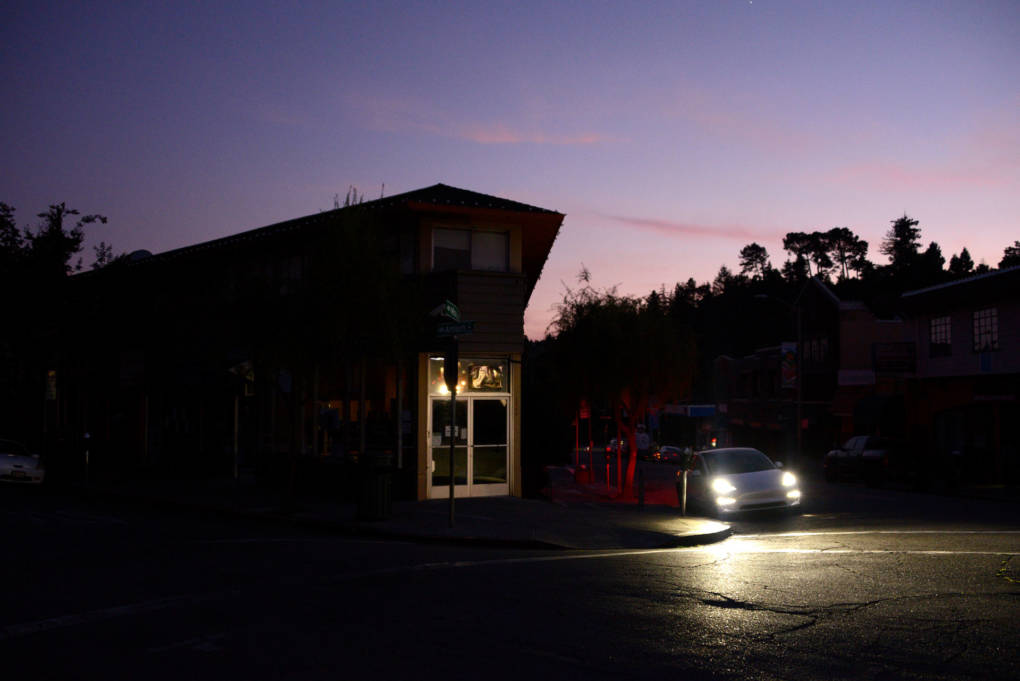
"caption": "Oakland's darkened Montclair neighborhood at dusk during a PG&E power shutoff on Oct. 10, 2019.",
"description": "Oakland's darkened Montclair neighborhood at dusk during a PG&E power shutoff on Oct. 10, 2019.",
"title": "Shutoffs-Dark-Street-PGE",
"credit": "Stephanie Lister/KQED",
"status": "inherit",
"isLoading": false,
"fetchFailed": false
},
"news_11783972": {
"type": "attachments",
"id": "news_11783972",
"meta": {
"index": "attachments_1716263798",
"site": "news",
"id": "11783972",
"found": true
},
"parent": 11783843,
"imgSizes": {
"apple_news_ca_landscape_5_5": {
"file": "https://ww2.kqed.org/app/uploads/sites/10/2019/10/PGE-Line-Down-Windsor-1044x783.jpg",
"width": 1044,
"mimeType": "image/jpeg",
"height": 783
},
"apple_news_ca_square_4_0": {
"file": "https://ww2.kqed.org/app/uploads/sites/10/2019/10/PGE-Line-Down-Windsor-470x470.jpg",
"width": 470,
"mimeType": "image/jpeg",
"height": 470
},
"twentyfourteen-full-width": {
"file": "https://ww2.kqed.org/app/uploads/sites/10/2019/10/PGE-Line-Down-Windsor-1038x576.jpg",
"width": 1038,
"mimeType": "image/jpeg",
"height": 576
},
"thumbnail": {
"file": "https://ww2.kqed.org/app/uploads/sites/10/2019/10/PGE-Line-Down-Windsor-160x107.jpg",
"width": 160,
"mimeType": "image/jpeg",
"height": 107
},
"post-thumbnail": {
"file": "https://ww2.kqed.org/app/uploads/sites/10/2019/10/PGE-Line-Down-Windsor-672x372.jpg",
"width": 672,
"mimeType": "image/jpeg",
"height": 372
},
"kqedFullSize": {
"file": "https://ww2.kqed.org/app/uploads/sites/10/2019/10/PGE-Line-Down-Windsor.jpg",
"width": 1920,
"height": 1280
},
"apple_news_ca_landscape_4_7": {
"file": "https://ww2.kqed.org/app/uploads/sites/10/2019/10/PGE-Line-Down-Windsor-632x474.jpg",
"width": 632,
"mimeType": "image/jpeg",
"height": 474
},
"large": {
"file": "https://ww2.kqed.org/app/uploads/sites/10/2019/10/PGE-Line-Down-Windsor-1020x680.jpg",
"width": 1020,
"mimeType": "image/jpeg",
"height": 680
},
"complete_open_graph": {
"file": "https://ww2.kqed.org/app/uploads/sites/10/2019/10/PGE-Line-Down-Windsor-1200x800.jpg",
"width": 1200,
"mimeType": "image/jpeg",
"height": 800
},
"apple_news_ca_landscape_4_0": {
"file": "https://ww2.kqed.org/app/uploads/sites/10/2019/10/PGE-Line-Down-Windsor-536x402.jpg",
"width": 536,
"mimeType": "image/jpeg",
"height": 402
},
"apple_news_ca_portrait_12_9": {
"file": "https://ww2.kqed.org/app/uploads/sites/10/2019/10/PGE-Line-Down-Windsor-1122x1280.jpg",
"width": 1122,
"mimeType": "image/jpeg",
"height": 1280
},
"medium": {
"file": "https://ww2.kqed.org/app/uploads/sites/10/2019/10/PGE-Line-Down-Windsor-800x533.jpg",
"width": 800,
"mimeType": "image/jpeg",
"height": 533
},
"apple_news_ca_portrait_4_0": {
"file": "https://ww2.kqed.org/app/uploads/sites/10/2019/10/PGE-Line-Down-Windsor-354x472.jpg",
"width": 354,
"mimeType": "image/jpeg",
"height": 472
},
"apple_news_ca_portrait_9_7": {
"file": "https://ww2.kqed.org/app/uploads/sites/10/2019/10/PGE-Line-Down-Windsor-840x1120.jpg",
"width": 840,
"mimeType": "image/jpeg",
"height": 1120
},
"apple_news_ca_landscape_12_9": {
"file": "https://ww2.kqed.org/app/uploads/sites/10/2019/10/PGE-Line-Down-Windsor-1832x1280.jpg",
"width": 1832,
"mimeType": "image/jpeg",
"height": 1280
},
"apple_news_ca_square_9_7": {
"file": "https://ww2.kqed.org/app/uploads/sites/10/2019/10/PGE-Line-Down-Windsor-1104x1104.jpg",
"width": 1104,
"mimeType": "image/jpeg",
"height": 1104
},
"apple_news_ca_portrait_4_7": {
"file": "https://ww2.kqed.org/app/uploads/sites/10/2019/10/PGE-Line-Down-Windsor-414x552.jpg",
"width": 414,
"mimeType": "image/jpeg",
"height": 552
},
"apple_news_ca_square_12_9": {
"file": "https://ww2.kqed.org/app/uploads/sites/10/2019/10/PGE-Line-Down-Windsor-1472x1280.jpg",
"width": 1472,
"mimeType": "image/jpeg",
"height": 1280
},
"apple_news_ca_portrait_5_5": {
"file": "https://ww2.kqed.org/app/uploads/sites/10/2019/10/PGE-Line-Down-Windsor-687x916.jpg",
"width": 687,
"mimeType": "image/jpeg",
"height": 916
},
"full-width": {
"file": "https://ww2.kqed.org/app/uploads/sites/10/2019/10/PGE-Line-Down-Windsor-1920x1280.jpg",
"width": 1920,
"mimeType": "image/jpeg",
"height": 1280
},
"apple_news_ca_square_4_7": {
"file": "https://ww2.kqed.org/app/uploads/sites/10/2019/10/PGE-Line-Down-Windsor-550x550.jpg",
"width": 550,
"mimeType": "image/jpeg",
"height": 550
},
"apple_news_ca_landscape_9_7": {
"file": "https://ww2.kqed.org/app/uploads/sites/10/2019/10/PGE-Line-Down-Windsor-1376x1032.jpg",
"width": 1376,
"mimeType": "image/jpeg",
"height": 1032
},
"apple_news_ca_square_5_5": {
"file": "https://ww2.kqed.org/app/uploads/sites/10/2019/10/PGE-Line-Down-Windsor-912x912.jpg",
"width": 912,
"mimeType": "image/jpeg",
"height": 912
}
},
"publishDate": 1572483270,
"modified": 1572483480,
"caption": "Firefighters check on, and flag, a downed PG&E power line along Chalk Hill Road in Windsor on Oct. 28, 2019 following a wind event during which power was shut off. PG&E released new details Wednesday on damage to its equipment across the state following early October's wind event, which marked the utility's first major shutoff this month.",
"description": "Firefighters check on, and flag, a downed PG&E power line along Chalk Hill Road in Windsor on Oct. 28, 2019 following a wind event during which power was shut off. PG&E released new details Wednesday on damage to its equipment across the state following early October's wind event, which marked the utility's first major shutoff this month.",
"title": "PGE-Line-Down-Windsor",
"credit": "PHILIP PACHECO/AFP via Getty Images",
"status": "inherit",
"isLoading": false,
"fetchFailed": false
},
"news_11782118": {
"type": "attachments",
"id": "news_11782118",
"meta": {
"index": "attachments_1716263798",
"site": "news",
"id": "11782118",
"found": true
},
"parent": 0,
"imgSizes": {
"apple_news_ca_landscape_5_5": {
"file": "https://ww2.kqed.org/app/uploads/sites/10/2019/10/Turn-Power-On-PGE-Outrage-1044x783.jpg",
"width": 1044,
"mimeType": "image/jpeg",
"height": 783
},
"apple_news_ca_square_4_0": {
"file": "https://ww2.kqed.org/app/uploads/sites/10/2019/10/Turn-Power-On-PGE-Outrage-470x470.jpg",
"width": 470,
"mimeType": "image/jpeg",
"height": 470
},
"twentyfourteen-full-width": {
"file": "https://ww2.kqed.org/app/uploads/sites/10/2019/10/Turn-Power-On-PGE-Outrage-1038x576.jpg",
"width": 1038,
"mimeType": "image/jpeg",
"height": 576
},
"thumbnail": {
"file": "https://ww2.kqed.org/app/uploads/sites/10/2019/10/Turn-Power-On-PGE-Outrage-160x105.jpg",
"width": 160,
"mimeType": "image/jpeg",
"height": 105
},
"post-thumbnail": {
"file": "https://ww2.kqed.org/app/uploads/sites/10/2019/10/Turn-Power-On-PGE-Outrage-672x372.jpg",
"width": 672,
"mimeType": "image/jpeg",
"height": 372
},
"kqedFullSize": {
"file": "https://ww2.kqed.org/app/uploads/sites/10/2019/10/Turn-Power-On-PGE-Outrage.jpg",
"width": 1920,
"height": 1263
},
"apple_news_ca_landscape_4_7": {
"file": "https://ww2.kqed.org/app/uploads/sites/10/2019/10/Turn-Power-On-PGE-Outrage-632x474.jpg",
"width": 632,
"mimeType": "image/jpeg",
"height": 474
},
"large": {
"file": "https://ww2.kqed.org/app/uploads/sites/10/2019/10/Turn-Power-On-PGE-Outrage-1020x671.jpg",
"width": 1020,
"mimeType": "image/jpeg",
"height": 671
},
"complete_open_graph": {
"file": "https://ww2.kqed.org/app/uploads/sites/10/2019/10/Turn-Power-On-PGE-Outrage-1200x789.jpg",
"width": 1200,
"mimeType": "image/jpeg",
"height": 789
},
"apple_news_ca_landscape_4_0": {
"file": "https://ww2.kqed.org/app/uploads/sites/10/2019/10/Turn-Power-On-PGE-Outrage-536x402.jpg",
"width": 536,
"mimeType": "image/jpeg",
"height": 402
},
"apple_news_ca_portrait_12_9": {
"file": "https://ww2.kqed.org/app/uploads/sites/10/2019/10/Turn-Power-On-PGE-Outrage-1122x1263.jpg",
"width": 1122,
"mimeType": "image/jpeg",
"height": 1263
},
"medium": {
"file": "https://ww2.kqed.org/app/uploads/sites/10/2019/10/Turn-Power-On-PGE-Outrage-800x526.jpg",
"width": 800,
"mimeType": "image/jpeg",
"height": 526
},
"apple_news_ca_portrait_4_0": {
"file": "https://ww2.kqed.org/app/uploads/sites/10/2019/10/Turn-Power-On-PGE-Outrage-354x472.jpg",
"width": 354,
"mimeType": "image/jpeg",
"height": 472
},
"apple_news_ca_portrait_9_7": {
"file": "https://ww2.kqed.org/app/uploads/sites/10/2019/10/Turn-Power-On-PGE-Outrage-840x1120.jpg",
"width": 840,
"mimeType": "image/jpeg",
"height": 1120
},
"apple_news_ca_landscape_12_9": {
"file": "https://ww2.kqed.org/app/uploads/sites/10/2019/10/Turn-Power-On-PGE-Outrage-1832x1263.jpg",
"width": 1832,
"mimeType": "image/jpeg",
"height": 1263
},
"apple_news_ca_square_9_7": {
"file": "https://ww2.kqed.org/app/uploads/sites/10/2019/10/Turn-Power-On-PGE-Outrage-1104x1104.jpg",
"width": 1104,
"mimeType": "image/jpeg",
"height": 1104
},
"apple_news_ca_portrait_4_7": {
"file": "https://ww2.kqed.org/app/uploads/sites/10/2019/10/Turn-Power-On-PGE-Outrage-414x552.jpg",
"width": 414,
"mimeType": "image/jpeg",
"height": 552
},
"apple_news_ca_square_12_9": {
"file": "https://ww2.kqed.org/app/uploads/sites/10/2019/10/Turn-Power-On-PGE-Outrage-1472x1263.jpg",
"width": 1472,
"mimeType": "image/jpeg",
"height": 1263
},
"apple_news_ca_portrait_5_5": {
"file": "https://ww2.kqed.org/app/uploads/sites/10/2019/10/Turn-Power-On-PGE-Outrage-687x916.jpg",
"width": 687,
"mimeType": "image/jpeg",
"height": 916
},
"full-width": {
"file": "https://ww2.kqed.org/app/uploads/sites/10/2019/10/Turn-Power-On-PGE-Outrage-1920x1263.jpg",
"width": 1920,
"mimeType": "image/jpeg",
"height": 1263
},
"apple_news_ca_square_4_7": {
"file": "https://ww2.kqed.org/app/uploads/sites/10/2019/10/Turn-Power-On-PGE-Outrage-550x550.jpg",
"width": 550,
"mimeType": "image/jpeg",
"height": 550
},
"apple_news_ca_landscape_9_7": {
"file": "https://ww2.kqed.org/app/uploads/sites/10/2019/10/Turn-Power-On-PGE-Outrage-1376x1032.jpg",
"width": 1376,
"mimeType": "image/jpeg",
"height": 1032
},
"apple_news_ca_square_5_5": {
"file": "https://ww2.kqed.org/app/uploads/sites/10/2019/10/Turn-Power-On-PGE-Outrage-912x912.jpg",
"width": 912,
"mimeType": "image/jpeg",
"height": 912
}
},
"publishDate": 1571867225,
"modified": 1571867351,
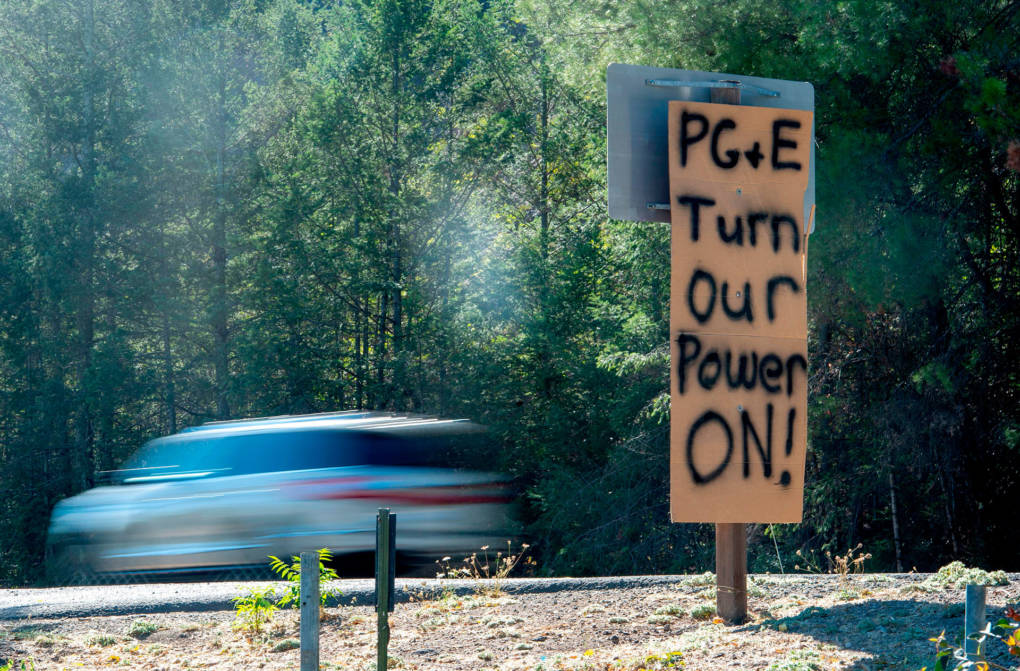
"caption": "A sign calling for PG&E to turn the power back on was placed by the side of the road in Calistoga following the utility's widespread power shutoff on Oct. 10, 2019.",
"description": "A sign calling for PG&E to turn the power back on was placed by the side of the road in Calistoga following the utility's widespread power shutoff on Oct. 10, 2019.",
"title": "Turn-Power-On-PGE-Outrage",
"credit": "JOSH EDELSON/AFP via Getty Images",
"status": "inherit",
"isLoading": false,
"fetchFailed": false
}
},
"audioPlayerReducer": {
"postId": "stream_live",
"isPaused": true,
"isPlaying": false,
"pfsActive": false,
"pledgeModalIsOpen": true,
"playerDrawerIsOpen": false,
"liveAudioPlayStartedAt": 0,
"liveAudioPlayContext": ""
},
"authorsReducer": {
"byline_news_11786043": {
"type": "authors",
"id": "byline_news_11786043",
"meta": {
"override": true
},
"slug": "byline_news_11786043",
"name": "\u003ca href= \"https://www.npr.org/people/348744480/brakkton-booker\"> Brakkton Booker \u003ca/>",
"isLoading": false
},
"byline_news_11785385": {
"type": "authors",
"id": "byline_news_11785385",
"meta": {
"override": true
},
"slug": "byline_news_11785385",
"name": "Peter Talbot",
"isLoading": false
},
"danbrekke": {
"type": "authors",
"id": "222",
"meta": {
"index": "authors_1716337520",
"id": "222",
"found": true
},
"name": "Dan Brekke",
"firstName": "Dan",
"lastName": "Brekke",
"slug": "danbrekke",
"email": "dbrekke@kqed.org",
"display_author_email": true,
"staff_mastheads": [
"news",
"science"
],
"title": "KQED Editor and Reporter",
"bio": "Dan Brekke is a reporter and editor for KQED News, responsible for coverage of topics ranging from California water issues to the Bay Area's transportation challenges. In a newsroom career that began in Chicago in 1972, Dan has worked for \u003cem>The San Francisco Examiner,\u003c/em> Wired and TechTV and has been published in The New York Times, The New York Times Magazine, Business 2.0, Salon and elsewhere.\r\n\r\nSince joining KQED in 2007, Dan has reported, edited and produced both radio and online features and breaking news pieces. He has shared as both editor and reporter in four Society of Professional Journalists Norcal Excellence in Journalism awards and one Edward R. Murrow regional award. He was chosen for a spring 2017 residency at the Mesa Refuge to advance his research on California salmon.\r\n\r\nEmail Dan at: \u003ca href=\"mailto:dbrekke@kqed.org\">dbrekke@kqed.org\u003c/a>\r\n\r\n\u003cstrong>Twitter:\u003c/strong> \u003ca href=\"https://twitter.com/danbrekke\" rel=\"noopener noreferrer\">twitter.com/danbrekke\u003c/a>\r\n\u003cstrong>Facebook:\u003c/strong> \u003ca href=\"https://www.facebook.com/danbrekke\" rel=\"noopener noreferrer\">www.facebook.com/danbrekke\u003c/a>\r\n\u003cstrong>LinkedIn:\u003c/strong> \u003ca href=\"https://www.linkedin.com/in/danbrekke\" rel=\"noopener noreferrer\">www.linkedin.com/in/danbrekke\u003c/a>",
"avatar": "https://secure.gravatar.com/avatar/8f1f0d2a978fb3b23426c922c7e2af558fa36905b49c4ce76a97dc3c72d27226?s=600&d=mm&r=g",
"twitter": "danbrekke",
"bluesky": null,
"facebook": null,
"instagram": "https://www.instagram.com/dan.brekke/",
"linkedin": "https://www.linkedin.com/in/danbrekke/",
"sites": [
{
"site": "news",
"roles": [
"administrator",
"create_posts"
]
},
{
"site": "stateofhealth",
"roles": [
"editor"
]
},
{
"site": "science",
"roles": [
"editor"
]
},
{
"site": "quest",
"roles": [
"contributor"
]
},
{
"site": "food",
"roles": [
"contributor"
]
},
{
"site": "forum",
"roles": [
"contributor"
]
},
{
"site": "elections",
"roles": [
"editor"
]
},
{
"site": "liveblog",
"roles": [
"editor"
]
}
],
"headData": {
"title": "Dan Brekke | KQED",
"description": "KQED Editor and Reporter",
"ogImgSrc": "https://secure.gravatar.com/avatar/8f1f0d2a978fb3b23426c922c7e2af558fa36905b49c4ce76a97dc3c72d27226?s=600&d=mm&r=g",
"twImgSrc": "https://secure.gravatar.com/avatar/8f1f0d2a978fb3b23426c922c7e2af558fa36905b49c4ce76a97dc3c72d27226?s=600&d=mm&r=g"
},
"isLoading": false,
"link": "/author/danbrekke"
},
"rachael-myrow": {
"type": "authors",
"id": "251",
"meta": {
"index": "authors_1716337520",
"id": "251",
"found": true
},
"name": "Rachael Myrow",
"firstName": "Rachael",
"lastName": "Myrow",
"slug": "rachael-myrow",
"email": "rmyrow@kqed.org",
"display_author_email": true,
"staff_mastheads": [
"news"
],
"title": "Senior Editor of KQED's Silicon Valley News Desk",
"bio": "• I write and edit stories about how Silicon Valley power and policies shape everyday life in California. I’m also passionate about making Bay Area history and culture more accessible to a broad public. • I’ve been a journalist for most of my life, starting in high school with The Franklin Press in Los Angeles, where I grew up. While earning my first degree in English at UC Berkeley, I got my start in public radio at KALX-FM. After completing a second degree in journalism at Cal, I landed my first professional job at Marketplace, then moved on to KPCC (now LAist), and then KQED, where I hosted The California Report for more than seven years. • My reporting has appeared on NPR, The World, WBUR’s \u003ci>Here & Now\u003c/i>, and the BBC. I also guest host for KQED’s \u003ci>Forum\u003c/i>, as well as the Commonwealth Club in San Francisco. • I speak periodically on media, democracy and technology issues, and do voiceover work for documentaries and educational video projects. • Outside of the studio, you'll find me hiking Bay Area trails and whipping up Insta-ready meals in my kitchen. • I do not accept gifts, money, or favors from anyone connected to my reporting, I don't pay people for information, and I do not support or donate to political causes. • I strive to treat the people I report on with fairness, honesty, and respect. I also recognize there are often multiple sides to a story and work to verify information through multiple sources and documentation. If I get something wrong, I correct it.",
"avatar": "https://secure.gravatar.com/avatar/3ed8a3c5f26025e4a805ba634cda8cd764906b97438a6d9ce216b044e340da4e?s=600&d=blank&r=g",
"twitter": "rachaelmyrow",
"bluesky": null,
"facebook": null,
"instagram": null,
"linkedin": "https://www.linkedin.com/in/rachaelmyrow/",
"sites": [
{
"site": "arts",
"roles": [
"administrator"
]
},
{
"site": "news",
"roles": [
"edit_others_posts",
"editor"
]
},
{
"site": "futureofyou",
"roles": [
"editor"
]
},
{
"site": "bayareabites",
"roles": [
"editor"
]
},
{
"site": "stateofhealth",
"roles": [
"editor"
]
},
{
"site": "science",
"roles": [
"editor"
]
},
{
"site": "food",
"roles": [
"editor"
]
},
{
"site": "forum",
"roles": [
"editor"
]
},
{
"site": "liveblog",
"roles": [
"author"
]
}
],
"headData": {
"title": "Rachael Myrow | KQED",
"description": "Senior Editor of KQED's Silicon Valley News Desk",
"ogImgSrc": "https://secure.gravatar.com/avatar/3ed8a3c5f26025e4a805ba634cda8cd764906b97438a6d9ce216b044e340da4e?s=600&d=blank&r=g",
"twImgSrc": "https://secure.gravatar.com/avatar/3ed8a3c5f26025e4a805ba634cda8cd764906b97438a6d9ce216b044e340da4e?s=600&d=blank&r=g"
},
"isLoading": false,
"link": "/author/rachael-myrow"
},
"dkatayama": {
"type": "authors",
"id": "7240",
"meta": {
"index": "authors_1716337520",
"id": "7240",
"found": true
},
"name": "Devin Katayama",
"firstName": "Devin",
"lastName": "Katayama",
"slug": "dkatayama",
"email": "dkatayama@kqed.org",
"display_author_email": true,
"staff_mastheads": [
"news"
],
"title": "Editor of Talent and Development",
"bio": "Devin Katayama is former Editor of Talent and Development for KQED. He supported our internship program and on-call staff by looking for equitable opportunities to improve the newsroom.\r\n\r\nHe previously hosted The Bay and American Suburb podcasts from KQED News. Prior to returning to the Bay Area in 2015, Devin was the education reporter for WFPL in Louisville and worked as a producer with radio stations in Chicago and Portland, OR. His work has appeared on NPR’s \u003cem>Morning Edition, All Things Considered, The Takeaway\u003c/em> and \u003cem>Here and Now.\u003c/em>\r\n\r\nDevin earned his MA in Journalism from Columbia College Chicago, where he was a Follett Fellow and the recipient of the 2011 Studs Terkel Community Media Workshop Scholarship for his story on Chicago's homeless youth. He won WBUR's 2014 Daniel Schorr award and a regional RTNDA Edward R. Murrow Award for his documentary \"At Risk\" that looked at issues facing some of Louisville's students. Devin has also received numerous local awards from the Associated Press and the Society of Professional Journalists.",
"avatar": "https://secure.gravatar.com/avatar/d0d2978a31002fb2de107921a8e18405?s=600&d=blank&r=g",
"twitter": "RadioDevin",
"facebook": null,
"instagram": null,
"linkedin": null,
"sites": [
{
"site": "arts",
"roles": []
},
{
"site": "news",
"roles": [
"author"
]
},
{
"site": "stateofhealth",
"roles": [
"author"
]
},
{
"site": "forum",
"roles": [
"editor"
]
},
{
"site": "perspectives",
"roles": [
"editor"
]
}
],
"headData": {
"title": "Devin Katayama | KQED",
"description": "Editor of Talent and Development",
"ogImgSrc": "https://secure.gravatar.com/avatar/d0d2978a31002fb2de107921a8e18405?s=600&d=blank&r=g",
"twImgSrc": "https://secure.gravatar.com/avatar/d0d2978a31002fb2de107921a8e18405?s=600&d=blank&r=g"
},
"isLoading": false,
"link": "/author/dkatayama"
},
"mleitsinger": {
"type": "authors",
"id": "11310",
"meta": {
"index": "authors_1716337520",
"id": "11310",
"found": true
},
"name": "Miranda Leitsinger",
"firstName": "Miranda",
"lastName": "Leitsinger",
"slug": "mleitsinger",
"email": "mleitsinger@KQED.org",
"display_author_email": false,
"staff_mastheads": [
"news"
],
"title": "KQED Contributor",
"bio": "Miranda Leitsinger has worked in journalism as a reporter and editor since 2000, including seven years at The Associated Press in locales such as Cambodia and Puerto Rico, four years at NBC News Digital in New York and 2.5 years at CNN.com International in Hong Kong. Major stories she has covered included sexual abuse in the yoga community, the rise of women in local politics post-2016 election, the struggle over LGBTQ inclusion in the Boy Scouts, aftermath of the 2004 and 2011 tsunamis, the Aurora movie theater attack, the Newtown school shooting, Superstorm Sandy and the Boston Marathon bombing.",
"avatar": "https://secure.gravatar.com/avatar/cdd00de7be92aab3b7fd3d915e02033d?s=600&d=blank&r=g",
"twitter": "mimileitsinger",
"facebook": null,
"instagram": null,
"linkedin": null,
"sites": [
{
"site": "arts",
"roles": [
"author"
]
},
{
"site": "news",
"roles": [
"subscriber"
]
},
{
"site": "futureofyou",
"roles": [
"editor"
]
},
{
"site": "stateofhealth",
"roles": [
"editor"
]
}
],
"headData": {
"title": "Miranda Leitsinger | KQED",
"description": "KQED Contributor",
"ogImgSrc": "https://secure.gravatar.com/avatar/cdd00de7be92aab3b7fd3d915e02033d?s=600&d=blank&r=g",
"twImgSrc": "https://secure.gravatar.com/avatar/cdd00de7be92aab3b7fd3d915e02033d?s=600&d=blank&r=g"
},
"isLoading": false,
"link": "/author/mleitsinger"
}
},
"pagesReducer": {
"news_category_technology": {
"type": "terms",
"id": "news_248",
"meta": {
"index": "terms_1716263798",
"site": "news",
"id": "248",
"score": 10.93111
},
"featImg": null,
"name": "Technology",
"description": null,
"taxonomy": "category",
"headData": {
"twImgId": null,
"twTitle": null,
"ogTitle": null,
"ogImgId": null,
"twDescription": null,
"description": null,
"title": "Technology Archives | KQED News",
"ogDescription": null
},
"ttid": 256,
"slug": "technology",
"isLoading": false,
"title": "Technology",
"pageMeta": {
"site": "news",
"WpPageTemplate": "page-topic-editorial",
"currentPage": 57
},
"blocks": [
{
"blockName": "kqed/post-list",
"attrs": {
"layout": "cardArticle2",
"query": "posts/news?category=technology",
"seeMore": false,
"paginated": true,
"page": 57
}
},
{
"blockName": "kqed/ad"
}
]
}
},
"pfsSessionReducer": {},
"postsReducer": {
"stream_live": {
"type": "live",
"id": "stream_live",
"audioUrl": "https://streams.kqed.org/kqedradio",
"title": "Live Stream",
"excerpt": "Live Stream information currently unavailable.",
"link": "/radio",
"featImg": "",
"label": {
"name": "KQED Live",
"link": "/"
}
},
"stream_kqedNewscast": {
"type": "posts",
"id": "stream_kqedNewscast",
"audioUrl": "https://www.kqed.org/.stream/anon/radio/RDnews/newscast.mp3?_=1",
"title": "KQED Newscast",
"featImg": "",
"label": {
"name": "88.5 FM",
"link": "/"
}
},
"news_11787003": {
"type": "posts",
"id": "news_11787003",
"meta": {
"index": "posts_1716263798",
"site": "news",
"id": "11787003",
"score": null,
"sort": [
1573939318000
]
},
"guestAuthors": [],
"slug": "survey-most-americans-feel-data-tracking-is-out-of-control-and-privacy-nonexistent",
"title": "Survey: Most Americans Feel Data Tracking is Out of Control and Privacy Nonexistent",
"publishDate": 1573939318,
"format": "standard",
"headTitle": "Survey: Most Americans Feel Data Tracking is Out of Control and Privacy Nonexistent | KQED",
"labelTerm": {
"site": "news"
},
"content": "\u003cp>With each passing year, more and more companies — and governments— are tracking us for a wide range of reasons. Not surprisingly, six in 10 U.S. adults \u003ca href=\"https://www.pewresearch.org/internet/2019/11/15/how-americans-think-about-privacy-and-the-vulnerability-of-their-personal-data/\" target=\"_blank\" rel=\"noopener noreferrer\">surveyed last June\u003c/a> reported feeling like they’re being watched all the time.\u003c/p>\n\u003cp>“They are not convinced that the benefits of tracking outweigh the risks of tracking, and they are feeling that they don’t have very much control over what is happening to them,” said Lee Rainie, director of internet and technology research at Pew Research Center.\u003c/p>\n\u003cp>The online survey of 4,272 people also found that distress over the lack of data privacy is bi-partisan.\u003c/p>\n\u003cp>“There aren’t dramatic differences between Republicans and Democrats,” Rainie said. “That’s a big story in a time when much of the rest of culture and politics has become polarized.”\u003c/p>\n\u003cfigure id=\"attachment_11787014\" class=\"wp-caption aligncenter\" style=\"max-width: 1150px\">\u003cimg loading=\"lazy\" decoding=\"async\" class=\"size-full wp-image-11787014\" src=\"https://ww2.kqed.org/app/uploads/sites/10/2019/11/Pew-Privacy-1.jpg\" alt=\"\" width=\"1150\" height=\"664\" srcset=\"https://cdn.kqed.org/wp-content/uploads/sites/10/2019/11/Pew-Privacy-1.jpg 1150w, https://cdn.kqed.org/wp-content/uploads/sites/10/2019/11/Pew-Privacy-1-160x92.jpg 160w, https://cdn.kqed.org/wp-content/uploads/sites/10/2019/11/Pew-Privacy-1-800x462.jpg 800w, https://cdn.kqed.org/wp-content/uploads/sites/10/2019/11/Pew-Privacy-1-1020x589.jpg 1020w\" sizes=\"(max-width: 1150px) 100vw, 1150px\">\u003cfigcaption class=\"wp-caption-text\">From a Pew Research Center survey of 4,272 U.S. adults conducted June 3-17, 2019. The margin of error for the full sample is plus or minus 1.9 percentage points. \u003ccite>(Courtesy of the Pew Research Center)\u003c/cite>\u003c/figcaption>\u003c/figure>\n\u003cp>That said, there is widespread disagreement about how government could or should address the problem. This survey did not ask about specific regulatory responses ranging from the conceptual, like establishing a \u003ca href=\"https://eshoo.house.gov/news-stories/press-releases/eshoo-lofgren-introduce-the-online-privacy-act/\" target=\"_blank\" rel=\"noopener noreferrer\">new federal agency\u003c/a> proposed by Silicon Valley Congresswomen Zoe Lofgren and Anna Eshoo, to the already enacted, like the \u003ca href=\"https://oag.ca.gov/privacy/ccpa\" target=\"_blank\" rel=\"noopener noreferrer\">California Consumer Privacy Act\u003c/a> that takes effect Jan. 1, 2020.\u003c/p>\n\u003cp>[ad fullwidth]\u003c/p>\n\u003cp>Seventy percent of those polled said they believe their data is less secure than it was five years ago.\u003c/p>\n\u003cp>“Clearly, this data shows that Americans are anxious for more to be done and more clarity to be established in how data is captured and used. Yet, the hard, gritty details are something that partisans can fight about,” Rainie said.\u003c/p>\n\u003cp>“But, if you give them a choice, do you think it would mostly be a better solution to have more technology tools or other initiatives in your own hands? Or, do you think to have the government be more empowered to do things? Fifty-five percent said they would rather have the tools,” he added.\u003c/p>\n\u003cfigure id=\"attachment_11787015\" class=\"wp-caption aligncenter\" style=\"max-width: 1142px\">\u003cimg loading=\"lazy\" decoding=\"async\" class=\"size-full wp-image-11787015\" src=\"https://ww2.kqed.org/app/uploads/sites/10/2019/11/Pew-Privacy-2.jpg\" alt=\"\" width=\"1142\" height=\"1152\" srcset=\"https://cdn.kqed.org/wp-content/uploads/sites/10/2019/11/Pew-Privacy-2.jpg 1142w, https://cdn.kqed.org/wp-content/uploads/sites/10/2019/11/Pew-Privacy-2-160x161.jpg 160w, https://cdn.kqed.org/wp-content/uploads/sites/10/2019/11/Pew-Privacy-2-800x807.jpg 800w, https://cdn.kqed.org/wp-content/uploads/sites/10/2019/11/Pew-Privacy-2-1020x1029.jpg 1020w\" sizes=\"(max-width: 1142px) 100vw, 1142px\">\u003cfigcaption class=\"wp-caption-text\">From a Pew survey of 4,272 U.S. adults conducted June 3-17, 2019. The margin of error for the full sample is plus or minus 1.9 percentage points. \u003ccite>(Courtesy of the Pew Research Center)\u003c/cite>\u003c/figcaption>\u003c/figure>\n\u003cp>[pullquote size='medium' align='right' citation='Lee Rainie, director of internet and technology research for the Pew Research Center']‘It’s one of the big paradoxes of American life, that Americans say they are very interested in being private, and being in control of their own identities, and yet in their day-to-day lives, they don’t necessarily act as if privacy matters most to them.’[/pullquote]\u003c/p>\n\u003cp>That’s even though 79% of people surveyed are not confident companies will take responsibility for misusing consumers’ data, and three out of four Americans told Pew they are not confident that companies’ mistakes will be held accountable by the government.\u003c/p>\n\u003cp>The nation’s top privacy watchdog, the Federal Trade Commission, established a \u003ca href=\"https://www.kqed.org/news/11763073/ftc-to-hold-facebook-ceo-mark-zuckerberg-liable-for-any-future-privacy-violations\">$5 billion settlement\u003c/a> with Facebook earlier this year over the \u003ca href=\"https://www.kqed.org/news/11713801/facebooks-terrible-horrible-no-good-very-bad-year\" target=\"_blank\" rel=\"noopener noreferrer\">Cambridge Analytica scandal\u003c/a>, as well as a \u003ca href=\"https://www.kqed.org/news/11772159/google-youtube-to-pay-170-million-penalty-over-collecting-kids-personal-info\">$170 million settlement\u003c/a> with Google and YouTube over collecting the personal information of children.\u003c/p>\n\u003cp>But critics say the federal government isn’t doing enough, including some within the federal government. Rohit Chopra and Rebecca Slaughter, both Democratic appointments to the FTC, have said the Facebook settlement in particular should have held company executives personally liable. No federal data privacy legislation has managed to garner enough bi-partisan support to make it to the President’s desk.\u003c/p>\n\u003cfigure id=\"attachment_11787017\" class=\"wp-caption aligncenter\" style=\"max-width: 892px\">\u003cimg loading=\"lazy\" decoding=\"async\" class=\"size-full wp-image-11787017\" src=\"https://ww2.kqed.org/app/uploads/sites/10/2019/11/Pew-Privacy-4.jpg\" alt=\"From a Pew survey of 4,272 U.S. adults conducted June 3-17, 2019. The margin of error for the full sample is plus or minus 1.9 percentage points.\" width=\"892\" height=\"1090\" srcset=\"https://cdn.kqed.org/wp-content/uploads/sites/10/2019/11/Pew-Privacy-4.jpg 892w, https://cdn.kqed.org/wp-content/uploads/sites/10/2019/11/Pew-Privacy-4-160x196.jpg 160w, https://cdn.kqed.org/wp-content/uploads/sites/10/2019/11/Pew-Privacy-4-800x978.jpg 800w\" sizes=\"(max-width: 892px) 100vw, 892px\">\u003cfigcaption class=\"wp-caption-text\">From a Pew survey of 4,272 U.S. adults conducted June 3-17, 2019. The margin of error for the full sample is plus or minus 1.9 percentage points. \u003ccite>(Courtesy of the Pew Research Center)\u003c/cite>\u003c/figcaption>\u003c/figure>\n\u003cp class=\"x_MsoNormal\">From a business perspective, the vast array of companies that track and buy data express much more \u003ca href=\"https://www.mckinsey.com/business-functions/risk/our-insights/data-privacy-what-every-manager-needs-to-know\" target=\"_blank\" rel=\"noopener noreferrer\">concern\u003c/a> about GDPR, the European Union directive on data protection, than anything happening in the United States.\u003c/p>\n\u003cp>[aside tag='data-privacy' label='More on Data Privacy']\u003c/p>\n\u003cp>In the meantime, Americans continue to expand our online profiles.\u003c/p>\n\u003cp>“There is natural tension between data utility and privacy protection, and this will only get more severe as we progress in a data-driven economy,” said Dawn Song, a computer science professor at UC Berkeley. “Traditionally, there has been very little transparency and user control on how users’ data is used. With a growing number of major public data breaches and an increased focus on business models that depend on user data, it’s no wonder that more and more consumers are anxious about how their data is being used.\u003c/p>\n\u003cp>“It’s one of the big paradoxes of American life, that Americans say they are very interested in being private, and yet in their day-to-day lives, they don’t necessarily act as if privacy matters most to them,” Rainie said.\u003c/p>\n\u003cp>\u003c/p>\n\u003cp>He continued, “When you press them about that, you get a couple of answers. First is, they’re confused about what’s going on, how the data are used. They also say that it’s pretty hard to live modern life without many of these tools. They don’t feel it’s a live option to them to be able to withdraw from the systems of monitoring and tracking that they know are taking place.”\u003c/p>\n\n",
"blocks": [],
"excerpt": "The online survey of 4,272 people found that distress over the lack of data privacy is bi-partisan.",
"status": "publish",
"parent": 0,
"modified": 1729028658,
"stats": {
"hasAudio": false,
"hasVideo": false,
"hasChartOrMap": false,
"iframeSrcs": [],
"hasGoogleForm": false,
"hasGallery": false,
"hasHearkenModule": false,
"hasPolis": false,
"paragraphCount": 19,
"wordCount": 944
},
"headData": {
"title": "Survey: Most Americans Feel Data Tracking is Out of Control and Privacy Nonexistent | KQED",
"description": "The online survey of 4,272 people found that distress over the lack of data privacy is bi-partisan.",
"ogTitle": "",
"ogDescription": "",
"ogImgId": "",
"twTitle": "",
"twDescription": "",
"twImgId": "",
"schema": {
"@context": "https://schema.org",
"@type": "NewsArticle",
"headline": "Survey: Most Americans Feel Data Tracking is Out of Control and Privacy Nonexistent",
"datePublished": "2019-11-16T13:21:58-08:00",
"dateModified": "2024-10-15T14:44:18-07:00",
"image": "https://cdn.kqed.org/wp-content/uploads/2020/02/KQED-OG-Image@1x.png",
"isAccessibleForFree": "True",
"publisher": {
"@type": "NewsMediaOrganization",
"@id": "https://www.kqed.org/#organization",
"name": "KQED",
"logo": "https://cdn.kqed.org/wp-content/uploads/2020/02/KQED-OG-Image@1x.png",
"url": "https://www.kqed.org",
"sameAs": [
"https://www.facebook.com/KQED",
"https://twitter.com/KQED",
"https://www.instagram.com/kqed/",
"https://www.tiktok.com/@kqedofficial",
"https://www.linkedin.com/company/kqed",
"https://www.youtube.com/channel/UCeC0IOo7i1P_61zVUWbJ4nw"
]
}
}
},
"sticky": false,
"path": "/news/11787003/survey-most-americans-feel-data-tracking-is-out-of-control-and-privacy-nonexistent",
"audioTrackLength": null,
"parsedContent": [
{
"type": "contentString",
"content": "\u003cdiv class=\"post-body\">\u003cp>\u003cp>With each passing year, more and more companies — and governments— are tracking us for a wide range of reasons. Not surprisingly, six in 10 U.S. adults \u003ca href=\"https://www.pewresearch.org/internet/2019/11/15/how-americans-think-about-privacy-and-the-vulnerability-of-their-personal-data/\" target=\"_blank\" rel=\"noopener noreferrer\">surveyed last June\u003c/a> reported feeling like they’re being watched all the time.\u003c/p>\n\u003cp>“They are not convinced that the benefits of tracking outweigh the risks of tracking, and they are feeling that they don’t have very much control over what is happening to them,” said Lee Rainie, director of internet and technology research at Pew Research Center.\u003c/p>\n\u003cp>The online survey of 4,272 people also found that distress over the lack of data privacy is bi-partisan.\u003c/p>\n\u003cp>“There aren’t dramatic differences between Republicans and Democrats,” Rainie said. “That’s a big story in a time when much of the rest of culture and politics has become polarized.”\u003c/p>\n\u003cfigure id=\"attachment_11787014\" class=\"wp-caption aligncenter\" style=\"max-width: 1150px\">\u003cimg loading=\"lazy\" decoding=\"async\" class=\"size-full wp-image-11787014\" src=\"https://ww2.kqed.org/app/uploads/sites/10/2019/11/Pew-Privacy-1.jpg\" alt=\"\" width=\"1150\" height=\"664\" srcset=\"https://cdn.kqed.org/wp-content/uploads/sites/10/2019/11/Pew-Privacy-1.jpg 1150w, https://cdn.kqed.org/wp-content/uploads/sites/10/2019/11/Pew-Privacy-1-160x92.jpg 160w, https://cdn.kqed.org/wp-content/uploads/sites/10/2019/11/Pew-Privacy-1-800x462.jpg 800w, https://cdn.kqed.org/wp-content/uploads/sites/10/2019/11/Pew-Privacy-1-1020x589.jpg 1020w\" sizes=\"(max-width: 1150px) 100vw, 1150px\">\u003cfigcaption class=\"wp-caption-text\">From a Pew Research Center survey of 4,272 U.S. adults conducted June 3-17, 2019. The margin of error for the full sample is plus or minus 1.9 percentage points. \u003ccite>(Courtesy of the Pew Research Center)\u003c/cite>\u003c/figcaption>\u003c/figure>\n\u003cp>That said, there is widespread disagreement about how government could or should address the problem. This survey did not ask about specific regulatory responses ranging from the conceptual, like establishing a \u003ca href=\"https://eshoo.house.gov/news-stories/press-releases/eshoo-lofgren-introduce-the-online-privacy-act/\" target=\"_blank\" rel=\"noopener noreferrer\">new federal agency\u003c/a> proposed by Silicon Valley Congresswomen Zoe Lofgren and Anna Eshoo, to the already enacted, like the \u003ca href=\"https://oag.ca.gov/privacy/ccpa\" target=\"_blank\" rel=\"noopener noreferrer\">California Consumer Privacy Act\u003c/a> that takes effect Jan. 1, 2020.\u003c/p>\n\u003cp>\u003c/p>\u003c/div>",
"attributes": {
"named": {},
"numeric": []
}
},
{
"type": "component",
"content": "",
"name": "ad",
"attributes": {
"named": {
"label": "fullwidth"
},
"numeric": [
"fullwidth"
]
}
},
{
"type": "contentString",
"content": "\u003cdiv class=\"post-body\">\u003cp>\u003c/p>\n\u003cp>Seventy percent of those polled said they believe their data is less secure than it was five years ago.\u003c/p>\n\u003cp>“Clearly, this data shows that Americans are anxious for more to be done and more clarity to be established in how data is captured and used. Yet, the hard, gritty details are something that partisans can fight about,” Rainie said.\u003c/p>\n\u003cp>“But, if you give them a choice, do you think it would mostly be a better solution to have more technology tools or other initiatives in your own hands? Or, do you think to have the government be more empowered to do things? Fifty-five percent said they would rather have the tools,” he added.\u003c/p>\n\u003cfigure id=\"attachment_11787015\" class=\"wp-caption aligncenter\" style=\"max-width: 1142px\">\u003cimg loading=\"lazy\" decoding=\"async\" class=\"size-full wp-image-11787015\" src=\"https://ww2.kqed.org/app/uploads/sites/10/2019/11/Pew-Privacy-2.jpg\" alt=\"\" width=\"1142\" height=\"1152\" srcset=\"https://cdn.kqed.org/wp-content/uploads/sites/10/2019/11/Pew-Privacy-2.jpg 1142w, https://cdn.kqed.org/wp-content/uploads/sites/10/2019/11/Pew-Privacy-2-160x161.jpg 160w, https://cdn.kqed.org/wp-content/uploads/sites/10/2019/11/Pew-Privacy-2-800x807.jpg 800w, https://cdn.kqed.org/wp-content/uploads/sites/10/2019/11/Pew-Privacy-2-1020x1029.jpg 1020w\" sizes=\"(max-width: 1142px) 100vw, 1142px\">\u003cfigcaption class=\"wp-caption-text\">From a Pew survey of 4,272 U.S. adults conducted June 3-17, 2019. The margin of error for the full sample is plus or minus 1.9 percentage points. \u003ccite>(Courtesy of the Pew Research Center)\u003c/cite>\u003c/figcaption>\u003c/figure>\n\u003cp>\u003c/p>\u003c/div>",
"attributes": {
"named": {},
"numeric": []
}
},
{
"type": "component",
"content": "‘It’s one of the big paradoxes of American life, that Americans say they are very interested in being private, and being in control of their own identities, and yet in their day-to-day lives, they don’t necessarily act as if privacy matters most to them.’",
"name": "pullquote",
"attributes": {
"named": {
"size": "medium",
"align": "right",
"citation": "Lee Rainie, director of internet and technology research for the Pew Research Center",
"label": ""
},
"numeric": []
}
},
{
"type": "contentString",
"content": "\u003cdiv class=\"post-body\">\u003cp>\u003c/p>\n\u003cp>That’s even though 79% of people surveyed are not confident companies will take responsibility for misusing consumers’ data, and three out of four Americans told Pew they are not confident that companies’ mistakes will be held accountable by the government.\u003c/p>\n\u003cp>The nation’s top privacy watchdog, the Federal Trade Commission, established a \u003ca href=\"https://www.kqed.org/news/11763073/ftc-to-hold-facebook-ceo-mark-zuckerberg-liable-for-any-future-privacy-violations\">$5 billion settlement\u003c/a> with Facebook earlier this year over the \u003ca href=\"https://www.kqed.org/news/11713801/facebooks-terrible-horrible-no-good-very-bad-year\" target=\"_blank\" rel=\"noopener noreferrer\">Cambridge Analytica scandal\u003c/a>, as well as a \u003ca href=\"https://www.kqed.org/news/11772159/google-youtube-to-pay-170-million-penalty-over-collecting-kids-personal-info\">$170 million settlement\u003c/a> with Google and YouTube over collecting the personal information of children.\u003c/p>\n\u003cp>But critics say the federal government isn’t doing enough, including some within the federal government. Rohit Chopra and Rebecca Slaughter, both Democratic appointments to the FTC, have said the Facebook settlement in particular should have held company executives personally liable. No federal data privacy legislation has managed to garner enough bi-partisan support to make it to the President’s desk.\u003c/p>\n\u003cfigure id=\"attachment_11787017\" class=\"wp-caption aligncenter\" style=\"max-width: 892px\">\u003cimg loading=\"lazy\" decoding=\"async\" class=\"size-full wp-image-11787017\" src=\"https://ww2.kqed.org/app/uploads/sites/10/2019/11/Pew-Privacy-4.jpg\" alt=\"From a Pew survey of 4,272 U.S. adults conducted June 3-17, 2019. The margin of error for the full sample is plus or minus 1.9 percentage points.\" width=\"892\" height=\"1090\" srcset=\"https://cdn.kqed.org/wp-content/uploads/sites/10/2019/11/Pew-Privacy-4.jpg 892w, https://cdn.kqed.org/wp-content/uploads/sites/10/2019/11/Pew-Privacy-4-160x196.jpg 160w, https://cdn.kqed.org/wp-content/uploads/sites/10/2019/11/Pew-Privacy-4-800x978.jpg 800w\" sizes=\"(max-width: 892px) 100vw, 892px\">\u003cfigcaption class=\"wp-caption-text\">From a Pew survey of 4,272 U.S. adults conducted June 3-17, 2019. The margin of error for the full sample is plus or minus 1.9 percentage points. \u003ccite>(Courtesy of the Pew Research Center)\u003c/cite>\u003c/figcaption>\u003c/figure>\n\u003cp class=\"x_MsoNormal\">From a business perspective, the vast array of companies that track and buy data express much more \u003ca href=\"https://www.mckinsey.com/business-functions/risk/our-insights/data-privacy-what-every-manager-needs-to-know\" target=\"_blank\" rel=\"noopener noreferrer\">concern\u003c/a> about GDPR, the European Union directive on data protection, than anything happening in the United States.\u003c/p>\n\u003cp>\u003c/p>\u003c/div>",
"attributes": {
"named": {},
"numeric": []
}
},
{
"type": "component",
"content": "",
"name": "aside",
"attributes": {
"named": {
"tag": "data-privacy",
"label": "More on Data Privacy "
},
"numeric": []
}
},
{
"type": "contentString",
"content": "\u003cdiv class=\"post-body\">\u003cp>\u003c/p>\n\u003cp>In the meantime, Americans continue to expand our online profiles.\u003c/p>\n\u003cp>“There is natural tension between data utility and privacy protection, and this will only get more severe as we progress in a data-driven economy,” said Dawn Song, a computer science professor at UC Berkeley. “Traditionally, there has been very little transparency and user control on how users’ data is used. With a growing number of major public data breaches and an increased focus on business models that depend on user data, it’s no wonder that more and more consumers are anxious about how their data is being used.\u003c/p>\n\u003cp>“It’s one of the big paradoxes of American life, that Americans say they are very interested in being private, and yet in their day-to-day lives, they don’t necessarily act as if privacy matters most to them,” Rainie said.\u003c/p>\n\u003cp>\u003c/p>\n\u003cp>He continued, “When you press them about that, you get a couple of answers. First is, they’re confused about what’s going on, how the data are used. They also say that it’s pretty hard to live modern life without many of these tools. They don’t feel it’s a live option to them to be able to withdraw from the systems of monitoring and tracking that they know are taking place.”\u003c/p>\n\n\u003c/div>\u003c/p>",
"attributes": {
"named": {},
"numeric": []
}
}
],
"link": "/news/11787003/survey-most-americans-feel-data-tracking-is-out-of-control-and-privacy-nonexistent",
"authors": [
"251"
],
"categories": [
"news_1758",
"news_8",
"news_248"
],
"tags": [
"news_21275",
"news_22845",
"news_22790",
"news_22844",
"news_249",
"news_2103",
"news_93",
"news_17996",
"news_2011",
"news_1631",
"news_20378",
"news_22585",
"news_2013"
],
"featImg": "news_11787011",
"label": "news"
},
"news_11786369": {
"type": "posts",
"id": "news_11786369",
"meta": {
"index": "posts_1716263798",
"site": "news",
"id": "11786369",
"score": null,
"sort": [
1573688012000
]
},
"parent": 0,
"labelTerm": {
"site": "news",
"term": 72
},
"blocks": [],
"publishDate": 1573688012,
"format": "standard",
"disqusTitle": "PG&E Executives Won't Get Bonuses Under Federal Bill by Kamala Harris",
"title": "PG&E Executives Won't Get Bonuses Under Federal Bill by Kamala Harris",
"headTitle": "The California Report | KQED News",
"content": "\u003cp>Executives at publicly-traded utility companies going through bankruptcy proceedings — like Pacific Gas & Electric Co. — won't get bonuses or \"golden parachute compensation\" under federal legislation proposed Wednesday by U.S. senator and Democratic presidential candidate Kamala Harris.\u003c/p>\n\u003cp>The \u003ca href=\"https://www.harris.senate.gov/imo/media/doc/EHF19A02.pdf\" target=\"_blank\" rel=\"noopener noreferrer\">bill\u003c/a> comes after controversial, multi-day power shutoffs to millions of households and businesses across California in October by the beleaguered utility in a bid to reduce the risk of its equipment sparking a catastrophic wildfire. \u003c/p>\n\u003cp>The San Francisco-based company's equipment has been found responsible for starting the deadliest and most destructive wildfire in California history — last November's \u003ca href=\"https://www.kqed.org/news/tag/camp-fire\" target=\"_blank\" rel=\"noopener noreferrer\">Camp Fire\u003c/a> in Butte County, which killed 85 people and destroyed nearly 14,000 homes. The potential legal liability for that blaze and others prompted the company to \u003ca href=\"https://www.kqed.org/news/tag/pge\" target=\"_blank\" rel=\"noopener noreferrer\">file for Chapter 11 bankruptcy protection\u003c/a> in January.\u003c/p>\n\u003cp>[aside tag='pge' label='Related Coverage']In late August, U.S. Bankruptcy Court Judge Dennis Montali rejected a PG&E proposal to pay its top executives $11 million in bonuses, saying the utility had not shown how the executives' work was tied to safety goals, the San Francisco Chronicle \u003ca href=\"https://www.sfchronicle.com/business/article/Judge-denies-plan-to-pay-PG-E-executives-millions-14403893.php\" rel=\"noopener noreferrer\" target=\"_blank\">reported\u003c/a>.\u003c/p>\n\u003cp>“Years of corporate negligence and misplaced priorities by energy utilities like PG&E have caused devastating fires and costly blackouts — which is exactly what happens when publicly traded utilities put corporate profits and stock prices above their customers and public safety,” Harris said in a statement Wednesday. \"These companies should serve the people, not plunge them into darkness or cause a massive wildfire — and they shouldn’t cash in after years of systemic failures.\"\u003c/p>\n\u003cp>[ad fullwidth]\u003c/p>\n\u003cp>PG&E said executive compensation and incentives must be reviewed and approved by the bankruptcy court during the Chapter 11 proceeding.\u003c/p>\n\u003cp>\"PG&E's compensation plans for senior leaders are rooted strongly in overall safety performance, and tie compensation to progress toward the company’s goals, including wildfire safety and safe operations more broadly,\" James Noonan, a company spokesman, said in a statement.\u003c/p>\n\u003cp>In July, Gov. Gavin Newsom signed into law \u003ca href=\"https://leginfo.legislature.ca.gov/faces/billTextClient.xhtml?bill_id=201920200AB1054\" target=\"_blank\" rel=\"noopener noreferrer\">AB 1054\u003c/a>, under which utilities must provide documentation of executive compensation plans. Those compensation plans must be \"structured to promote safety as a priority\" under the law, in order to get the required safety certification from the California Public Utilities Commission.\u003c/p>\n\u003cp>A utility could also be barred from paying out any incentive compensation if it causes a wildfire resulting in one or more fatalities.\u003c/p>\n\u003cp>PG&E also came under fire for sending a group from its natural gas unit on a wine-and-dine trip with their top customers at a Sonoma County winery in the lead-up to the utility’s widespread power shutoffs in early October, the Chronicle \u003ca href=\"https://www.sfchronicle.com/business/article/PG-E-gas-employees-wined-and-dined-just-before-14512194.php#photo-18415689\" target=\"_blank\" rel=\"noopener noreferrer\">reported\u003c/a>. \u003c/p>\n\u003cp>\u003c/p>\n\u003cp>And, in April, a federal judge said the utility had \"\u003ca href=\"https://www.kqed.org/news/11737336/judge-pge-paid-out-stock-dividends-instead-of-trimming-trees\" target=\"_blank\" rel=\"noopener noreferrer\">pumped out\u003c/a>\" $4.5 billion in stock dividends to shareholders while letting the tree trimming budget wither.\u003c/p>\n\n",
"disqusIdentifier": "11786369 https://ww2.kqed.org/news/?p=11786369",
"disqusUrl": "https://ww2.kqed.org/news/2019/11/13/pge-executives-wont-get-bonuses-under-federal-bill-by-kamala-harris/",
"stats": {
"hasVideo": false,
"hasChartOrMap": false,
"hasAudio": false,
"hasPolis": false,
"wordCount": 489,
"hasGoogleForm": false,
"hasGallery": false,
"hasHearkenModule": false,
"iframeSrcs": [],
"paragraphCount": 13
},
"modified": 1573751132,
"excerpt": "Sen. Harris' bill would bar executive bonuses at bankrupt publicly traded utility companies like PG&E, which has come under fire for proposing to pay $11 million in bonuses amid bankruptcy and catastrophic wildfires.",
"headData": {
"twImgId": "",
"twTitle": "",
"ogTitle": "",
"ogImgId": "",
"twDescription": "",
"description": "Sen. Harris' bill would bar executive bonuses at bankrupt publicly traded utility companies like PG&E, which has come under fire for proposing to pay $11 million in bonuses amid bankruptcy and catastrophic wildfires.",
"title": "PG&E Executives Won't Get Bonuses Under Federal Bill by Kamala Harris | KQED",
"ogDescription": "",
"schema": {
"@context": "https://schema.org",
"@type": "NewsArticle",
"headline": "PG&E Executives Won't Get Bonuses Under Federal Bill by Kamala Harris",
"datePublished": "2019-11-13T15:33:32-08:00",
"dateModified": "2019-11-14T09:05:32-08:00",
"image": "https://cdn.kqed.org/wp-content/uploads/2020/02/KQED-OG-Image@1x.png",
"isAccessibleForFree": "True",
"publisher": {
"@type": "NewsMediaOrganization",
"@id": "https://www.kqed.org/#organization",
"name": "KQED",
"logo": "https://cdn.kqed.org/wp-content/uploads/2020/02/KQED-OG-Image@1x.png",
"url": "https://www.kqed.org",
"sameAs": [
"https://www.facebook.com/KQED",
"https://twitter.com/KQED",
"https://www.instagram.com/kqed/",
"https://www.tiktok.com/@kqedofficial",
"https://www.linkedin.com/company/kqed",
"https://www.youtube.com/channel/UCeC0IOo7i1P_61zVUWbJ4nw"
]
}
}
},
"guestAuthors": [],
"slug": "pge-executives-wont-get-bonuses-under-federal-bill-by-kamala-harris",
"status": "publish",
"path": "/news/11786369/pge-executives-wont-get-bonuses-under-federal-bill-by-kamala-harris",
"audioTrackLength": null,
"parsedContent": [
{
"type": "contentString",
"content": "\u003cdiv class=\"post-body\">\u003cp>\u003cp>Executives at publicly-traded utility companies going through bankruptcy proceedings — like Pacific Gas & Electric Co. — won't get bonuses or \"golden parachute compensation\" under federal legislation proposed Wednesday by U.S. senator and Democratic presidential candidate Kamala Harris.\u003c/p>\n\u003cp>The \u003ca href=\"https://www.harris.senate.gov/imo/media/doc/EHF19A02.pdf\" target=\"_blank\" rel=\"noopener noreferrer\">bill\u003c/a> comes after controversial, multi-day power shutoffs to millions of households and businesses across California in October by the beleaguered utility in a bid to reduce the risk of its equipment sparking a catastrophic wildfire. \u003c/p>\n\u003cp>The San Francisco-based company's equipment has been found responsible for starting the deadliest and most destructive wildfire in California history — last November's \u003ca href=\"https://www.kqed.org/news/tag/camp-fire\" target=\"_blank\" rel=\"noopener noreferrer\">Camp Fire\u003c/a> in Butte County, which killed 85 people and destroyed nearly 14,000 homes. The potential legal liability for that blaze and others prompted the company to \u003ca href=\"https://www.kqed.org/news/tag/pge\" target=\"_blank\" rel=\"noopener noreferrer\">file for Chapter 11 bankruptcy protection\u003c/a> in January.\u003c/p>\n\u003cp>\u003c/p>\u003c/div>",
"attributes": {
"named": {},
"numeric": []
}
},
{
"type": "component",
"content": "",
"name": "aside",
"attributes": {
"named": {
"tag": "pge",
"label": "Related Coverage "
},
"numeric": []
}
},
{
"type": "contentString",
"content": "\u003cdiv class=\"post-body\">\u003cp>In late August, U.S. Bankruptcy Court Judge Dennis Montali rejected a PG&E proposal to pay its top executives $11 million in bonuses, saying the utility had not shown how the executives' work was tied to safety goals, the San Francisco Chronicle \u003ca href=\"https://www.sfchronicle.com/business/article/Judge-denies-plan-to-pay-PG-E-executives-millions-14403893.php\" rel=\"noopener noreferrer\" target=\"_blank\">reported\u003c/a>.\u003c/p>\n\u003cp>“Years of corporate negligence and misplaced priorities by energy utilities like PG&E have caused devastating fires and costly blackouts — which is exactly what happens when publicly traded utilities put corporate profits and stock prices above their customers and public safety,” Harris said in a statement Wednesday. \"These companies should serve the people, not plunge them into darkness or cause a massive wildfire — and they shouldn’t cash in after years of systemic failures.\"\u003c/p>\n\u003cp>\u003c/p>\u003c/div>",
"attributes": {
"named": {},
"numeric": []
}
},
{
"type": "component",
"content": "",
"name": "ad",
"attributes": {
"named": {
"label": "fullwidth"
},
"numeric": [
"fullwidth"
]
}
},
{
"type": "contentString",
"content": "\u003cdiv class=\"post-body\">\u003cp>\u003c/p>\n\u003cp>PG&E said executive compensation and incentives must be reviewed and approved by the bankruptcy court during the Chapter 11 proceeding.\u003c/p>\n\u003cp>\"PG&E's compensation plans for senior leaders are rooted strongly in overall safety performance, and tie compensation to progress toward the company’s goals, including wildfire safety and safe operations more broadly,\" James Noonan, a company spokesman, said in a statement.\u003c/p>\n\u003cp>In July, Gov. Gavin Newsom signed into law \u003ca href=\"https://leginfo.legislature.ca.gov/faces/billTextClient.xhtml?bill_id=201920200AB1054\" target=\"_blank\" rel=\"noopener noreferrer\">AB 1054\u003c/a>, under which utilities must provide documentation of executive compensation plans. Those compensation plans must be \"structured to promote safety as a priority\" under the law, in order to get the required safety certification from the California Public Utilities Commission.\u003c/p>\n\u003cp>A utility could also be barred from paying out any incentive compensation if it causes a wildfire resulting in one or more fatalities.\u003c/p>\n\u003cp>PG&E also came under fire for sending a group from its natural gas unit on a wine-and-dine trip with their top customers at a Sonoma County winery in the lead-up to the utility’s widespread power shutoffs in early October, the Chronicle \u003ca href=\"https://www.sfchronicle.com/business/article/PG-E-gas-employees-wined-and-dined-just-before-14512194.php#photo-18415689\" target=\"_blank\" rel=\"noopener noreferrer\">reported\u003c/a>. \u003c/p>\n\u003cp>\u003c/p>\n\u003cp>And, in April, a federal judge said the utility had \"\u003ca href=\"https://www.kqed.org/news/11737336/judge-pge-paid-out-stock-dividends-instead-of-trimming-trees\" target=\"_blank\" rel=\"noopener noreferrer\">pumped out\u003c/a>\" $4.5 billion in stock dividends to shareholders while letting the tree trimming budget wither.\u003c/p>\n\n\u003c/div>\u003c/p>",
"attributes": {
"named": {},
"numeric": []
}
}
],
"link": "/news/11786369/pge-executives-wont-get-bonuses-under-federal-bill-by-kamala-harris",
"authors": [
"11310"
],
"programs": [
"news_72"
],
"categories": [
"news_19906",
"news_8",
"news_13",
"news_356",
"news_248"
],
"tags": [
"news_25270",
"news_16",
"news_61",
"news_25539",
"news_140",
"news_26802"
],
"featImg": "news_11786435",
"label": "news_72"
},
"news_11786043": {
"type": "posts",
"id": "news_11786043",
"meta": {
"index": "posts_1716263798",
"site": "news",
"id": "11786043",
"score": null,
"sort": [
1573406099000
]
},
"parent": 0,
"labelTerm": {
"site": "news"
},
"blocks": [],
"publishDate": 1573406099,
"format": "standard",
"disqusTitle": "Instagram Will Hide 'Likes' to 'Depressurize' the Platform for Young People",
"title": "Instagram Will Hide 'Likes' to 'Depressurize' the Platform for Young People",
"headTitle": "KQED News",
"content": "\u003cp>Like seriously, if you post something to the 'gram and not one of your followers hits \"like,\" is it even worth sharing?\u003c/p>\n\u003cp>Beginning next week, some U.S. users of Instagram will be able to test this theory as the social media platform will begin hiding the \"likes\" counter that appears underneath a posted photo or video.\u003c/p>\n\u003cp>\"Right now, we're testing making like counts private, so you'll be able to see how many people liked a given photo of yours or a video of yours, but no one else will,\" Adam Mosseri, the head of Instagram announced Friday.\u003c/p>\n\u003cp>https://twitter.com/instagram/status/1151605657642029056\u003c/p>\n\u003cp>His comments were made during \u003ca href=\"https://www.wired.com/story/instagram-hiding-likes-adam-mosseri-tracee-ellis-ross-wired25/?utm_source=twitter&utm_medium=social&utm_brand=wired&utm_social-type=owned\" target=\"_blank\" rel=\"noopener\">Wired 25\u003c/a>, a symposium that features conversations with leaders from science, technology and entertainment.\u003c/p>\n\u003cp>Mosseri said the platform will not impact \"the whole U.S. at once\" but is intended to \"depressurize\" the platform, particularly for younger users.\u003c/p>\n\u003cp>\"It's about young people,\" Mosseri said. \"The idea is to try to 'depressurize' Instagram, make it less of a competition and give people more space to focus on connecting with people that they love, things that inspire them.\"\u003c/p>\n\u003cp>Mosseri did not outline specifics about when or how long Instagram's pilot program would last. But it comes months after the company tested hiding likes in several other countries including Australia, Canada, Ireland and Japan.\u003c/p>\n\u003cp>In a \u003ca href=\"https://twitter.com/mosseri/status/1192984329091043328\" target=\"_blank\" rel=\"noopener\">tweet\u003c/a>, Mosseri said he welcomes the feedback on the experiment from U.S. users.\u003c/p>\n\u003cp>\"Heads up! We've been testing making likes private on Instagram in a number of countries this year. We're expanding those tests to include a small portion of people in the US next week. Looking forward to the feedback!\"\u003c/p>\n\u003cp>https://twitter.com/mosseri/status/1192984329091043328\u003c/p>\n\u003cp>https://twitter.com/mosseri/status/1192984329091043328\u003c/p>\n\u003cp>Instagram is not the first platform to experiment with so-called \"demetrication\" — where digital and social media companies reduce the importance they place on public metrics.\u003c/p>\n\u003cp>Facebook (Instagram's parent company), YouTube and Twitter have also tested removing the public engagement metrics from their platforms.\u003c/p>\n\u003cp>[aside postID='news_11760224,news_11783864,news_11783369' label='RELATED STORIES']\u003c/p>\n\u003cp>The move to deprioritize likes has not been well-received by everyone. As \u003ca href=\"https://www.wired.com/story/instagram-hiding-likes-adam-mosseri-tracee-ellis-ross-wired25/?utm_source=twitter&utm_medium=social&utm_brand=wired&utm_social-type=owned\" target=\"_blank\" rel=\"noopener\">Wired\u003c/a> notes, some have complained \"that hiding engagement metrics will make it harder to determine whose follower count is legitimate.\"\u003c/p>\n\u003cp>Others lament that a move in this direction will impact marketing strategy for businesses using the platform to attract advertisers and customers.\u003c/p>\n\u003cdiv class=\"fullattribution\">\u003cem>Copyright 2019 NPR. To see more, visit https://www.npr.org.\u003cimg src=\"https://www.google-analytics.com/__utm.gif?utmac=UA-5828686-4&utmdt=Instagram+Will+Test+Hiding+%27Likes%27+On+Some+U.S.+Accounts+Starting+Next+Week&utme=8(APIKey)9(MDAxOTAwOTE4MDEyMTkxMDAzNjczZDljZA004)\">\u003c/em>\u003c/div>\n\u003cp>[ad fullwidth]\u003c/p>\n\u003cp>\u003c/p>\n",
"disqusIdentifier": "11786043 https://ww2.kqed.org/news/?p=11786043",
"disqusUrl": "https://ww2.kqed.org/news/2019/11/10/instagram-will-hide-likes-to-depressurize-the-platform-for-young-people/",
"stats": {
"hasVideo": false,
"hasChartOrMap": false,
"hasAudio": false,
"hasPolis": false,
"wordCount": 414,
"hasGoogleForm": false,
"hasGallery": false,
"hasHearkenModule": false,
"iframeSrcs": [],
"paragraphCount": 16
},
"modified": 1573406571,
"excerpt": "Instagram's CEO Adam Mosseri announced that it will begin the pilot program on some U.S. accounts starting next week.",
"headData": {
"twImgId": "",
"twTitle": "",
"ogTitle": "",
"ogImgId": "",
"twDescription": "",
"description": "Instagram's CEO Adam Mosseri announced that it will begin the pilot program on some U.S. accounts starting next week.",
"title": "Instagram Will Hide 'Likes' to 'Depressurize' the Platform for Young People | KQED",
"ogDescription": "",
"schema": {
"@context": "https://schema.org",
"@type": "NewsArticle",
"headline": "Instagram Will Hide 'Likes' to 'Depressurize' the Platform for Young People",
"datePublished": "2019-11-10T09:14:59-08:00",
"dateModified": "2019-11-10T09:22:51-08:00",
"image": "https://cdn.kqed.org/wp-content/uploads/2020/02/KQED-OG-Image@1x.png",
"isAccessibleForFree": "True",
"publisher": {
"@type": "NewsMediaOrganization",
"@id": "https://www.kqed.org/#organization",
"name": "KQED",
"logo": "https://cdn.kqed.org/wp-content/uploads/2020/02/KQED-OG-Image@1x.png",
"url": "https://www.kqed.org",
"sameAs": [
"https://www.facebook.com/KQED",
"https://twitter.com/KQED",
"https://www.instagram.com/kqed/",
"https://www.tiktok.com/@kqedofficial",
"https://www.linkedin.com/company/kqed",
"https://www.youtube.com/channel/UCeC0IOo7i1P_61zVUWbJ4nw"
]
}
}
},
"guestAuthors": [],
"slug": "instagram-will-hide-likes-to-depressurize-the-platform-for-young-people",
"status": "publish",
"nprApiLink": "http://api.npr.org/query?id=777906177&apiKey=MDAxOTAwOTE4MDEyMTkxMDAzNjczZDljZA004",
"nprByline": "\u003ca href= \"https://www.npr.org/people/348744480/brakkton-booker\"> Brakkton Booker \u003ca/>",
"nprStoryDate": "Sat, 09 Nov 2019 13:10:12 -0500",
"nprLastModifiedDate": "Sat, 09 Nov 2019 16:45:43 -0500",
"nprHtmlLink": "https://www.npr.org/2019/11/09/777906177/instagram-will-test-hiding-likes-on-some-u-s-accounts-starting-next-week?ft=nprml&f=777906177",
"nprImageAgency": "Getty Images for WIRED",
"nprImageCredit": "Matt Winkelmeyer",
"nprStoryId": "777906177",
"nprRetrievedStory": "1",
"nprPubDate": "Sat, 09 Nov 2019 16:45:00 -0500",
"path": "/news/11786043/instagram-will-hide-likes-to-depressurize-the-platform-for-young-people",
"audioTrackLength": null,
"parsedContent": [
{
"type": "contentString",
"content": "\u003cdiv class=\"post-body\">\u003cp>\u003cp>Like seriously, if you post something to the 'gram and not one of your followers hits \"like,\" is it even worth sharing?\u003c/p>\n\u003cp>Beginning next week, some U.S. users of Instagram will be able to test this theory as the social media platform will begin hiding the \"likes\" counter that appears underneath a posted photo or video.\u003c/p>\n\u003cp>\"Right now, we're testing making like counts private, so you'll be able to see how many people liked a given photo of yours or a video of yours, but no one else will,\" Adam Mosseri, the head of Instagram announced Friday.\u003c/p>\u003c/p>\u003c/div>",
"attributes": {
"named": {},
"numeric": []
}
},
{
"type": "component",
"content": "",
"name": "singleTwitterStatus",
"attributes": {
"named": {
"id": "1151605657642029056"
},
"numeric": []
}
},
{
"type": "contentString",
"content": "\u003cdiv class=\"post-body\">\u003cp>\n\u003cp>His comments were made during \u003ca href=\"https://www.wired.com/story/instagram-hiding-likes-adam-mosseri-tracee-ellis-ross-wired25/?utm_source=twitter&utm_medium=social&utm_brand=wired&utm_social-type=owned\" target=\"_blank\" rel=\"noopener\">Wired 25\u003c/a>, a symposium that features conversations with leaders from science, technology and entertainment.\u003c/p>\n\u003cp>Mosseri said the platform will not impact \"the whole U.S. at once\" but is intended to \"depressurize\" the platform, particularly for younger users.\u003c/p>\n\u003cp>\"It's about young people,\" Mosseri said. \"The idea is to try to 'depressurize' Instagram, make it less of a competition and give people more space to focus on connecting with people that they love, things that inspire them.\"\u003c/p>\n\u003cp>Mosseri did not outline specifics about when or how long Instagram's pilot program would last. But it comes months after the company tested hiding likes in several other countries including Australia, Canada, Ireland and Japan.\u003c/p>\n\u003cp>In a \u003ca href=\"https://twitter.com/mosseri/status/1192984329091043328\" target=\"_blank\" rel=\"noopener\">tweet\u003c/a>, Mosseri said he welcomes the feedback on the experiment from U.S. users.\u003c/p>\n\u003cp>\"Heads up! We've been testing making likes private on Instagram in a number of countries this year. We're expanding those tests to include a small portion of people in the US next week. Looking forward to the feedback!\"\u003c/p>\u003c/p>\u003c/div>",
"attributes": {
"named": {},
"numeric": []
}
},
{
"type": "component",
"content": "",
"name": "singleTwitterStatus",
"attributes": {
"named": {
"id": "1192984329091043328"
},
"numeric": []
}
},
{
"type": "contentString",
"content": "\u003cdiv class=\"post-body\">\u003cp>\u003c/p>\u003c/div>",
"attributes": {
"named": {},
"numeric": []
}
},
{
"type": "component",
"content": "",
"name": "singleTwitterStatus",
"attributes": {
"named": {
"id": "1192984329091043328"
},
"numeric": []
}
},
{
"type": "contentString",
"content": "\u003cdiv class=\"post-body\">\u003cp>\n\u003cp>Instagram is not the first platform to experiment with so-called \"demetrication\" — where digital and social media companies reduce the importance they place on public metrics.\u003c/p>\n\u003cp>Facebook (Instagram's parent company), YouTube and Twitter have also tested removing the public engagement metrics from their platforms.\u003c/p>\n\u003cp>\u003c/p>\u003c/div>",
"attributes": {
"named": {},
"numeric": []
}
},
{
"type": "component",
"content": "",
"name": "aside",
"attributes": {
"named": {
"postid": "news_11760224,news_11783864,news_11783369",
"label": "RELATED STORIES "
},
"numeric": []
}
},
{
"type": "contentString",
"content": "\u003cdiv class=\"post-body\">\u003cp>\u003c/p>\n\u003cp>The move to deprioritize likes has not been well-received by everyone. As \u003ca href=\"https://www.wired.com/story/instagram-hiding-likes-adam-mosseri-tracee-ellis-ross-wired25/?utm_source=twitter&utm_medium=social&utm_brand=wired&utm_social-type=owned\" target=\"_blank\" rel=\"noopener\">Wired\u003c/a> notes, some have complained \"that hiding engagement metrics will make it harder to determine whose follower count is legitimate.\"\u003c/p>\n\u003cp>Others lament that a move in this direction will impact marketing strategy for businesses using the platform to attract advertisers and customers.\u003c/p>\n\u003cdiv class=\"fullattribution\">\u003cem>Copyright 2019 NPR. To see more, visit https://www.npr.org.\u003cimg src=\"https://www.google-analytics.com/__utm.gif?utmac=UA-5828686-4&utmdt=Instagram+Will+Test+Hiding+%27Likes%27+On+Some+U.S.+Accounts+Starting+Next+Week&utme=8(APIKey)9(MDAxOTAwOTE4MDEyMTkxMDAzNjczZDljZA004)\">\u003c/em>\u003c/div>\n\u003cp>\u003c/p>\u003c/div>",
"attributes": {
"named": {},
"numeric": []
}
},
{
"type": "component",
"content": "",
"name": "ad",
"attributes": {
"named": {
"label": "fullwidth"
},
"numeric": [
"fullwidth"
]
}
},
{
"type": "contentString",
"content": "\u003cdiv class=\"post-body\">\u003cp>\u003c/p>\n\u003cp>\u003c/p>\n\u003c/div>\u003c/p>",
"attributes": {
"named": {},
"numeric": []
}
}
],
"link": "/news/11786043/instagram-will-hide-likes-to-depressurize-the-platform-for-young-people",
"authors": [
"byline_news_11786043"
],
"categories": [
"news_8",
"news_248"
],
"tags": [
"news_2451",
"news_1089"
],
"featImg": "news_11786044",
"label": "news"
},
"news_11785654": {
"type": "posts",
"id": "news_11785654",
"meta": {
"index": "posts_1716263798",
"site": "news",
"id": "11785654",
"score": null,
"sort": [
1573210818000
]
},
"guestAuthors": [],
"slug": "who-owns-silicon-valley",
"title": "Who Owns Silicon Valley?",
"publishDate": 1573210818,
"format": "audio",
"headTitle": "Who Owns Silicon Valley? | KQED",
"labelTerm": {},
"content": "\u003cp>Stanford has more property value than Apple, Google and Intel combined. And right now in the Bay Area, everyone is watching how these big property owners choose to use their land. So what role should companies who aren’t in the development business play in this moment?\u003c/p>\n\u003cp>Guest: \u003ca href=\"https://twitter.com/rachaelmyrow?ref_src=twsrc%5Egoogle%7Ctwcamp%5Eserp%7Ctwgr%5Eauthor\">Rachael Myrow\u003c/a>, Senior Editor of KQED’s Silicon Valley Desk\u003c/p>\n\u003cfigure id=\"attachment_11782840\" class=\"wp-caption aligncenter\" style=\"max-width: 640px\">\u003cimg loading=\"lazy\" decoding=\"async\" class=\"size-large wp-image-11782840\" src=\"https://ww2.kqed.org/news/wp-content/uploads/sites/10/2019/10/Copy-of-WhoOwnsSiliconValley_ppt2-1020x574.jpg\" alt='\"Who Owns Silicon Valley?\" is a multi-newsroom investigative project involving Reveal from The Center for Investigative Reporting, The Mercury News, NBC Bay Area, Renaissance Journalism, and Telemundo 48 Área de la BahíaTelemundo.' width=\"640\" height=\"360\" srcset=\"https://cdn.kqed.org/wp-content/uploads/sites/10/2019/10/Copy-of-WhoOwnsSiliconValley_ppt2-1020x574.jpg 1020w, https://cdn.kqed.org/wp-content/uploads/sites/10/2019/10/Copy-of-WhoOwnsSiliconValley_ppt2-160x90.jpg 160w, https://cdn.kqed.org/wp-content/uploads/sites/10/2019/10/Copy-of-WhoOwnsSiliconValley_ppt2-800x450.jpg 800w, https://cdn.kqed.org/wp-content/uploads/sites/10/2019/10/Copy-of-WhoOwnsSiliconValley_ppt2-1200x675.jpg 1200w, https://cdn.kqed.org/wp-content/uploads/sites/10/2019/10/Copy-of-WhoOwnsSiliconValley_ppt2.jpg 1920w\" sizes=\"(max-width: 640px) 100vw, 640px\">\u003cfigcaption class=\"wp-caption-text\">“Who Owns Silicon Valley?” is a multi-newsroom investigative project involving Reveal from The Center for Investigative Reporting, The Mercury News, NBC Bay Area, Renaissance Journalism, and Telemundo 48 Área de la BahíaTelemundo.\u003c/figcaption>\u003c/figure>\n\u003cp>“Who Owns Silicon Valley?” is a multi-newsroom investigative project involving \u003ca href=\"https://www.revealnews.org/local/labs/\" target=\"_blank\" rel=\"noopener\">Reveal from The Center for Investigative Reporting\u003c/a>, \u003ca href=\"https://www.mercurynews.com/\" target=\"_blank\" rel=\"noopener noreferrer\">The Mercury News\u003c/a>,\u003ca href=\"https://www.nbcbayarea.com/\" target=\"_blank\" rel=\"noopener noreferrer\"> NBC Bay Area\u003c/a>,\u003ca href=\"https://renjournalism.org/\" target=\"_blank\" rel=\"noopener noreferrer\"> Renaissance Journalism\u003c/a> and\u003ca href=\"https://www.telemundoareadelabahia.com/\" target=\"_blank\" rel=\"noopener noreferrer\"> Telemundo 48 Área de la BahíaTelemundo\u003c/a> and KQED.\u003c/p>\n\u003cp>\u003ci>Subscribe to \u003c/i>\u003ca href=\"https://www.kqed.org/news/tag/the-bay\">\u003ci>The Bay\u003c/i>\u003c/a>\u003ci> to hear more local Bay Area stories like this one. New episodes are released Monday, Wednesday and Friday at 3 a.m. Find The Bay on \u003c/i>\u003ca href=\"https://podcasts.apple.com/us/podcast/the-bay/id1350043452?mt=2\">\u003ci>Apple Podcasts\u003c/i>\u003c/a>\u003ci>, \u003c/i>\u003ca href=\"https://open.spotify.com/show/4BIKBKIujizLHlIlBNaAqQ\">\u003ci>Spotify\u003c/i>\u003c/a>\u003ci>, \u003c/i>\u003ca href=\"https://www.stitcher.com/podcast/kqed/the-bay\">\u003ci>Stitcher\u003c/i>\u003c/a>\u003ci>, NPR One or via \u003c/i>\u003ca href=\"https://www.amazon.com/KQED-The-Bay-Flash-Briefing/dp/B07H6YYV23\">\u003ci>Alexa\u003c/i>\u003c/a>\u003ci>.\u003c/i>\u003c/p>\n\u003cp>[ad fullwidth]\u003c/p>\u003cp>\u003c/p>\n",
"blocks": [],
"excerpt": null,
"status": "publish",
"parent": 0,
"modified": 1729028757,
"stats": {
"hasAudio": false,
"hasVideo": false,
"hasChartOrMap": false,
"iframeSrcs": [],
"hasGoogleForm": false,
"hasGallery": false,
"hasHearkenModule": false,
"hasPolis": false,
"paragraphCount": 6,
"wordCount": 193
},
"headData": {
"title": "Who Owns Silicon Valley? | KQED",
"description": "Stanford has more property value than Apple, Google and Intel combined. And right now in the Bay Area, everyone is watching how these big property owners choose to use their land. So what role should companies who aren’t in the development business play in this moment? Guest: Rachael Myrow, Senior Editor of KQED’s Silicon Valley Desk “Who Owns Silicon Valley?” is a multi-newsroom investigative project involving Reveal from The Center for Investigative Reporting, The Mercury News, NBC Bay Area, Renaissance Journalism and Telemundo 48 Área de la BahíaTelemundo and KQED. Subscribe to The Bay to hear more local Bay Area stories like this one. New episodes are released Monday,",
"ogTitle": "",
"ogDescription": "",
"ogImgId": "",
"twTitle": "",
"twDescription": "",
"twImgId": "",
"schema": {
"@context": "https://schema.org",
"@type": "NewsArticle",
"headline": "Who Owns Silicon Valley?",
"datePublished": "2019-11-08T03:00:18-08:00",
"dateModified": "2024-10-15T14:45:57-07:00",
"image": "https://cdn.kqed.org/wp-content/uploads/2020/02/KQED-OG-Image@1x.png",
"isAccessibleForFree": "True",
"publisher": {
"@type": "NewsMediaOrganization",
"@id": "https://www.kqed.org/#organization",
"name": "KQED",
"logo": "https://cdn.kqed.org/wp-content/uploads/2020/02/KQED-OG-Image@1x.png",
"url": "https://www.kqed.org",
"sameAs": [
"https://www.facebook.com/KQED",
"https://twitter.com/KQED",
"https://www.instagram.com/kqed/",
"https://www.tiktok.com/@kqedofficial",
"https://www.linkedin.com/company/kqed",
"https://www.youtube.com/channel/UCeC0IOo7i1P_61zVUWbJ4nw"
]
}
}
},
"source": "The Bay",
"sourceUrl": "https://www.kqed.org/news/tag/the-bay/",
"audioUrl": "https://www.kqed.org/.stream/anon/radio/thebay/2019/11/Stanfordmixdown.mp3",
"sticky": false,
"audioTrackLength": 854,
"path": "/news/11785654/who-owns-silicon-valley",
"parsedContent": [
{
"type": "contentString",
"content": "\u003cdiv class=\"post-body\">\u003cp>\u003cp>Stanford has more property value than Apple, Google and Intel combined. And right now in the Bay Area, everyone is watching how these big property owners choose to use their land. So what role should companies who aren’t in the development business play in this moment?\u003c/p>\n\u003cp>Guest: \u003ca href=\"https://twitter.com/rachaelmyrow?ref_src=twsrc%5Egoogle%7Ctwcamp%5Eserp%7Ctwgr%5Eauthor\">Rachael Myrow\u003c/a>, Senior Editor of KQED’s Silicon Valley Desk\u003c/p>\n\u003cfigure id=\"attachment_11782840\" class=\"wp-caption aligncenter\" style=\"max-width: 640px\">\u003cimg loading=\"lazy\" decoding=\"async\" class=\"size-large wp-image-11782840\" src=\"https://ww2.kqed.org/news/wp-content/uploads/sites/10/2019/10/Copy-of-WhoOwnsSiliconValley_ppt2-1020x574.jpg\" alt='\"Who Owns Silicon Valley?\" is a multi-newsroom investigative project involving Reveal from The Center for Investigative Reporting, The Mercury News, NBC Bay Area, Renaissance Journalism, and Telemundo 48 Área de la BahíaTelemundo.' width=\"640\" height=\"360\" srcset=\"https://cdn.kqed.org/wp-content/uploads/sites/10/2019/10/Copy-of-WhoOwnsSiliconValley_ppt2-1020x574.jpg 1020w, https://cdn.kqed.org/wp-content/uploads/sites/10/2019/10/Copy-of-WhoOwnsSiliconValley_ppt2-160x90.jpg 160w, https://cdn.kqed.org/wp-content/uploads/sites/10/2019/10/Copy-of-WhoOwnsSiliconValley_ppt2-800x450.jpg 800w, https://cdn.kqed.org/wp-content/uploads/sites/10/2019/10/Copy-of-WhoOwnsSiliconValley_ppt2-1200x675.jpg 1200w, https://cdn.kqed.org/wp-content/uploads/sites/10/2019/10/Copy-of-WhoOwnsSiliconValley_ppt2.jpg 1920w\" sizes=\"(max-width: 640px) 100vw, 640px\">\u003cfigcaption class=\"wp-caption-text\">“Who Owns Silicon Valley?” is a multi-newsroom investigative project involving Reveal from The Center for Investigative Reporting, The Mercury News, NBC Bay Area, Renaissance Journalism, and Telemundo 48 Área de la BahíaTelemundo.\u003c/figcaption>\u003c/figure>\n\u003cp>“Who Owns Silicon Valley?” is a multi-newsroom investigative project involving \u003ca href=\"https://www.revealnews.org/local/labs/\" target=\"_blank\" rel=\"noopener\">Reveal from The Center for Investigative Reporting\u003c/a>, \u003ca href=\"https://www.mercurynews.com/\" target=\"_blank\" rel=\"noopener noreferrer\">The Mercury News\u003c/a>,\u003ca href=\"https://www.nbcbayarea.com/\" target=\"_blank\" rel=\"noopener noreferrer\"> NBC Bay Area\u003c/a>,\u003ca href=\"https://renjournalism.org/\" target=\"_blank\" rel=\"noopener noreferrer\"> Renaissance Journalism\u003c/a> and\u003ca href=\"https://www.telemundoareadelabahia.com/\" target=\"_blank\" rel=\"noopener noreferrer\"> Telemundo 48 Área de la BahíaTelemundo\u003c/a> and KQED.\u003c/p>\n\u003cp>\u003ci>Subscribe to \u003c/i>\u003ca href=\"https://www.kqed.org/news/tag/the-bay\">\u003ci>The Bay\u003c/i>\u003c/a>\u003ci> to hear more local Bay Area stories like this one. New episodes are released Monday, Wednesday and Friday at 3 a.m. Find The Bay on \u003c/i>\u003ca href=\"https://podcasts.apple.com/us/podcast/the-bay/id1350043452?mt=2\">\u003ci>Apple Podcasts\u003c/i>\u003c/a>\u003ci>, \u003c/i>\u003ca href=\"https://open.spotify.com/show/4BIKBKIujizLHlIlBNaAqQ\">\u003ci>Spotify\u003c/i>\u003c/a>\u003ci>, \u003c/i>\u003ca href=\"https://www.stitcher.com/podcast/kqed/the-bay\">\u003ci>Stitcher\u003c/i>\u003c/a>\u003ci>, NPR One or via \u003c/i>\u003ca href=\"https://www.amazon.com/KQED-The-Bay-Flash-Briefing/dp/B07H6YYV23\">\u003ci>Alexa\u003c/i>\u003c/a>\u003ci>.\u003c/i>\u003c/p>\n\u003cp>\u003c/p>\u003c/div>",
"attributes": {
"named": {},
"numeric": []
}
},
{
"type": "component",
"content": "",
"name": "ad",
"attributes": {
"named": {
"label": "fullwidth"
},
"numeric": [
"fullwidth"
]
}
},
{
"type": "contentString",
"content": "\u003cdiv class=\"post-body\">\u003cp>\u003c/p>\u003cp>\u003c/p>\n\u003c/div>\u003c/p>",
"attributes": {
"named": {},
"numeric": []
}
}
],
"link": "/news/11785654/who-owns-silicon-valley",
"authors": [
"7240",
"251"
],
"programs": [
"news_28779"
],
"categories": [
"news_8",
"news_33520",
"news_248"
],
"tags": [
"news_178",
"news_1631",
"news_22598"
],
"featImg": "news_11782708",
"label": "source_news_11785654"
},
"news_11785385": {
"type": "posts",
"id": "news_11785385",
"meta": {
"index": "posts_1716263798",
"site": "news",
"id": "11785385",
"score": null,
"sort": [
1573090314000
]
},
"parent": 0,
"labelTerm": {},
"blocks": [],
"publishDate": 1573090314,
"format": "audio",
"disqusTitle": "California Attorney General Seeks Court Order to Force Facebook to Turn Over Records",
"title": "California Attorney General Seeks Court Order to Force Facebook to Turn Over Records",
"headTitle": "The California Report | KQED News",
"content": "\u003cp>California's attorney general is seeking a court order to force Facebook to give up information about how the company handled user data. \u003c/p>\n\u003cp>Attorney General Xavier Becerra said Facebook has resisted and even ignored California's attempts to get information from the company as part of an investigation launched by his office over whether the company misused data. \u003c/p>\n\u003cp>He said Facebook has not responded to the subpoena his office has issued. \u003c/p>\n\u003cp>\"We had to file this petition because we weren't getting the responses we believe we were due lawfully,\" Becerra said at a press conference Wednesday in San Francisco.\u003c/p>\n\u003cp>[ad fullwidth]\u003c/p>\n\u003cp>The subpoenas were issued as part of an investigation by the California Department of Justice into allegations that Facebook deceived users and misrepresented its privacy practices. Becerra declined to answer questions about the details of the investigation.\u003c/p>\n\u003cp>Will Castleberry, Facebook's vice president of state and local policy, refuted the attorney general's statements in an email sent to NPR from a spokesperson.\u003c/p>\n\u003cp>\"We have cooperated extensively with the State of California's investigation,\" Castleberry said. \"To date we have provided thousands of pages of written responses and hundreds of thousands of documents.\"\u003c/p>\n\u003cp>[aside postID=news_11783369 hero=\"https://ww2.kqed.org/news/wp-content/uploads/sites/10/2019/10/RS39869_GettyImages-1182969866-qut-1020x680.jpg\"]\u003c/p>\n\u003cp>Last year, the attorney general's office issued a subpoena requiring Facebook to produce documents related to the company's disclosure of user data to Cambridge Analytica, a data analytics firm that harvested the data of \u003ca href=\"https://www.npr.org/2018/04/04/599604485/facebook-says-cambridge-analytica-may-have-obtained-data-on-as-many-as-87m-users\">up to 87 million people\u003c/a> without their consent. \u003c/p>\n\u003cp>Becerra said Facebook took more than a year to respond to that request for documents.\u003c/p>\n\u003cp>\u003cstrong>\u003cem>Editor's note:\u003c/em>\u003c/strong>\u003cem> Facebook is among NPR's recent financial supporters\u003c/em>. \u003c/p>\n\u003cdiv class=\"fullattribution\">Copyright 2019 NPR. To see more, visit \u003ca href=\"https://www.npr.org\" rel=\"noopener\" target=\"_blank\">NPR.org\u003c/a>.\u003cimg src=\"https://www.google-analytics.com/__utm.gif?utmac=UA-5828686-4&utmdt=California+Attorney+General+Seeks+Court+Order+To+Force+Facebook+To+Turn+Over+Records&utme=8(APIKey)9(MDAxOTAwOTE4MDEyMTkxMDAzNjczZDljZA004)\">\u003c/div>\n\u003cp>\u003c/p>\n",
"disqusIdentifier": "11785385 https://ww2.kqed.org/news/?p=11785385",
"disqusUrl": "https://ww2.kqed.org/news/2019/11/06/california-attorney-general-seeks-court-order-to-force-facebook-to-turn-over-records/",
"stats": {
"hasVideo": false,
"hasChartOrMap": false,
"hasAudio": false,
"hasPolis": false,
"wordCount": 295,
"hasGoogleForm": false,
"hasGallery": false,
"hasHearkenModule": false,
"iframeSrcs": [],
"paragraphCount": 13
},
"modified": 1573155881,
"excerpt": "The attorney general's office filed a subpoena earlier this year as part of an investigation into allegations that the company misused user data.",
"headData": {
"twImgId": "",
"twTitle": "",
"ogTitle": "",
"ogImgId": "",
"twDescription": "",
"description": "The attorney general's office filed a subpoena earlier this year as part of an investigation into allegations that the company misused user data.",
"title": "California Attorney General Seeks Court Order to Force Facebook to Turn Over Records | KQED",
"ogDescription": "",
"schema": {
"@context": "https://schema.org",
"@type": "NewsArticle",
"headline": "California Attorney General Seeks Court Order to Force Facebook to Turn Over Records",
"datePublished": "2019-11-06T17:31:54-08:00",
"dateModified": "2019-11-07T11:44:41-08:00",
"image": "https://cdn.kqed.org/wp-content/uploads/2020/02/KQED-OG-Image@1x.png",
"isAccessibleForFree": "True",
"publisher": {
"@type": "NewsMediaOrganization",
"@id": "https://www.kqed.org/#organization",
"name": "KQED",
"logo": "https://cdn.kqed.org/wp-content/uploads/2020/02/KQED-OG-Image@1x.png",
"url": "https://www.kqed.org",
"sameAs": [
"https://www.facebook.com/KQED",
"https://twitter.com/KQED",
"https://www.instagram.com/kqed/",
"https://www.tiktok.com/@kqedofficial",
"https://www.linkedin.com/company/kqed",
"https://www.youtube.com/channel/UCeC0IOo7i1P_61zVUWbJ4nw"
]
}
}
},
"guestAuthors": [],
"slug": "california-attorney-general-seeks-court-order-to-force-facebook-to-turn-over-records",
"status": "publish",
"nprApiLink": "http://api.npr.org/query?id=776905980&apiKey=MDAxOTAwOTE4MDEyMTkxMDAzNjczZDljZA004",
"nprStoryDate": "Wed, 06 Nov 2019 16:06:13 -0500",
"nprLastModifiedDate": "Wed, 06 Nov 2019 16:26:32 -0500",
"nprHtmlLink": "https://www.npr.org/2019/11/06/776905980/california-attorney-general-seeks-court-order-to-force-facebook-to-turn-over-rec?ft=nprml&f=776905980",
"nprImageAgency": "Getty Images",
"source": "NPR",
"nprStoryId": "776905980",
"sourceUrl": "https://www.npr.org/",
"audioUrl": "https://www.kqed.org/.stream/anon/radio/tcr/2019/11/BecerraFacebook.mp3",
"nprByline": "Peter Talbot",
"audioTrackLength": 74,
"nprImageCredit": "Alex Wong",
"nprRetrievedStory": "1",
"nprPubDate": "Wed, 06 Nov 2019 16:26:00 -0500",
"path": "/news/11785385/california-attorney-general-seeks-court-order-to-force-facebook-to-turn-over-records",
"audioDuration": 74000,
"parsedContent": [
{
"type": "contentString",
"content": "\u003cdiv class=\"post-body\">\u003cp>\u003cp>California's attorney general is seeking a court order to force Facebook to give up information about how the company handled user data. \u003c/p>\n\u003cp>Attorney General Xavier Becerra said Facebook has resisted and even ignored California's attempts to get information from the company as part of an investigation launched by his office over whether the company misused data. \u003c/p>\n\u003cp>He said Facebook has not responded to the subpoena his office has issued. \u003c/p>\n\u003cp>\"We had to file this petition because we weren't getting the responses we believe we were due lawfully,\" Becerra said at a press conference Wednesday in San Francisco.\u003c/p>\n\u003cp>\u003c/p>\u003c/div>",
"attributes": {
"named": {},
"numeric": []
}
},
{
"type": "component",
"content": "",
"name": "ad",
"attributes": {
"named": {
"label": "fullwidth"
},
"numeric": [
"fullwidth"
]
}
},
{
"type": "contentString",
"content": "\u003cdiv class=\"post-body\">\u003cp>\u003c/p>\n\u003cp>The subpoenas were issued as part of an investigation by the California Department of Justice into allegations that Facebook deceived users and misrepresented its privacy practices. Becerra declined to answer questions about the details of the investigation.\u003c/p>\n\u003cp>Will Castleberry, Facebook's vice president of state and local policy, refuted the attorney general's statements in an email sent to NPR from a spokesperson.\u003c/p>\n\u003cp>\"We have cooperated extensively with the State of California's investigation,\" Castleberry said. \"To date we have provided thousands of pages of written responses and hundreds of thousands of documents.\"\u003c/p>\n\u003cp>\u003c/p>\u003c/div>",
"attributes": {
"named": {},
"numeric": []
}
},
{
"type": "component",
"content": "",
"name": "aside",
"attributes": {
"named": {
"postid": "news_11783369",
"hero": "https://ww2.kqed.org/news/wp-content/uploads/sites/10/2019/10/RS39869_GettyImages-1182969866-qut-1020x680.jpg",
"label": ""
},
"numeric": []
}
},
{
"type": "contentString",
"content": "\u003cdiv class=\"post-body\">\u003cp>\u003c/p>\n\u003cp>Last year, the attorney general's office issued a subpoena requiring Facebook to produce documents related to the company's disclosure of user data to Cambridge Analytica, a data analytics firm that harvested the data of \u003ca href=\"https://www.npr.org/2018/04/04/599604485/facebook-says-cambridge-analytica-may-have-obtained-data-on-as-many-as-87m-users\">up to 87 million people\u003c/a> without their consent. \u003c/p>\n\u003cp>Becerra said Facebook took more than a year to respond to that request for documents.\u003c/p>\n\u003cp>\u003cstrong>\u003cem>Editor's note:\u003c/em>\u003c/strong>\u003cem> Facebook is among NPR's recent financial supporters\u003c/em>. \u003c/p>\n\u003cdiv class=\"fullattribution\">Copyright 2019 NPR. To see more, visit \u003ca href=\"https://www.npr.org\" rel=\"noopener\" target=\"_blank\">NPR.org\u003c/a>.\u003cimg src=\"https://www.google-analytics.com/__utm.gif?utmac=UA-5828686-4&utmdt=California+Attorney+General+Seeks+Court+Order+To+Force+Facebook+To+Turn+Over+Records&utme=8(APIKey)9(MDAxOTAwOTE4MDEyMTkxMDAzNjczZDljZA004)\">\u003c/div>\n\u003cp>\u003c/p>\n\u003c/div>\u003c/p>",
"attributes": {
"named": {},
"numeric": []
}
}
],
"link": "/news/11785385/california-attorney-general-seeks-court-order-to-force-facebook-to-turn-over-records",
"authors": [
"byline_news_11785385"
],
"programs": [
"news_72"
],
"categories": [
"news_6188",
"news_8",
"news_13",
"news_248"
],
"tags": [
"news_249",
"news_746",
"news_26775",
"news_20378"
],
"featImg": "news_11785386",
"label": "source_news_11785385"
},
"news_11785039": {
"type": "posts",
"id": "news_11785039",
"meta": {
"index": "posts_1716263798",
"site": "news",
"id": "11785039",
"score": null,
"sort": [
1573074164000
]
},
"guestAuthors": [],
"slug": "heres-why-you-lost-cell-service-during-the-pge-power-shutoffs",
"title": "Here's Why You Lost Cell Service During PG&E Power Shutoffs",
"publishDate": 1573074164,
"format": "standard",
"headTitle": "Here’s Why You Lost Cell Service During PG&E Power Shutoffs | KQED",
"labelTerm": {},
"content": "\u003cp>When Justin Lane and his family prepared for the recent PG&E power shutoffs at their home in Sonoma County, they counted on using their cellphones to get emergency notifications and updates about the nearby \u003ca href=\"https://www.kqed.org/news/11782314/what-you-need-to-know-sonoma-countys-kincade-fire\" target=\"_blank\" rel=\"noopener\">Kincade Fire\u003c/a> that had erupted in their area days earlier.\u003c/p>\n\u003cp>[pullquote size='medium' align='right' citation='State Sen. Mike McGuire']‘Cellphones aren’t just about checking the latest Facebook status. It’s about life or death. Cellphones are our lifeline during these power outages and during emergencies.’[/pullquote]But then, Lane, his wife and their two little girls found themselves in the dark on Saturday, Oct. 26 — power and communications, too. They’d relied on the emergency Nixle and SoCo alerts during the 2017 North Bay fires that devastated communities near their own, but now had no idea if they needed to evacuate or what was happening with the shutoff.\u003c/p>\n\u003cp>“This time, they were basically unusable,” Lane, 40, a home inspector from Cotati, said of the alerts — some that came in sporadically, though they couldn’t open links to read them. “You can’t rely on that when you don’t have internet … . It’s really not a reliable means of keeping people informed anymore as much as we thought it was.”\u003c/p>\n\u003cp>What Lane and his family experienced was a problem that officials have been worrying about for years: the lack of backup power for cell towers — and no federal or state requirement that telecom companies provide it. In the wake of the power cuts, 23 members of the state’s congressional delegation have \u003ca href=\"https://protect-us.mimecast.com/s/GP5fCrkYKnfArXNVsza79w?domain=eshoo.house.gov\" target=\"_blank\" rel=\"noopener\">called\u003c/a> for a hearing into the broader communications failures, and the California Public Utilities Commission said it’s investigating.\u003c/p>\n\u003cp>[ad fullwidth]\u003c/p>\n\u003cp>\u003cstrong>Cell Coverage Problems Peak Locally\u003c/strong>\u003c/p>\n\u003cp>[pullquote]Major telecom providers said they deployed backup power sources and maintained service for most of their customers.[/pullquote]In the Bay Area, the cell problems peaked on Monday Oct. 28, with 57% of towers \u003ca href=\"https://docs.fcc.gov/public/attachments/DOC-360482A1.pdf\" target=\"_blank\" rel=\"noopener\">out\u003c/a> in Marin County, 27% in Sonoma and 19% in Napa County — mostly due to power issues, according to voluntary information \u003ca href=\"https://docs.fcc.gov/public/attachments/DA-19-1073A1.pdf\" target=\"_blank\" rel=\"noopener\">submitted\u003c/a> by telecom providers to the Federal Communications Commission (FCC).\u003c/p>\n\u003cp>That happened as PG&E prepared for widespread back-to-back shutoffs — meaning that some of its customers who were already in the dark, like Lane, wouldn’t get power restored until after the second outage (his family got it back after five days).\u003c/p>\n\u003cp>The cell problems continued throughout the week. What this translated into for some people on the ground in places like Marin, Sonoma and Alameda counties: No coverage — unless they traveled to find power, no emergency notifications (including from schools about closures), or sporadic text messages coming through, though it was unclear if they were timely or dated.\u003c/p>\n\u003cp>Statewide, about 3% of towers went out during the height of the power cuts last Monday as fires raged in Northern and Southern California. FCC said the number of cell site outages didn’t necessarily correspond to the availability of wire service since providers can lean on other tools, like roaming agreements and mobile towers on wheels, to provide coverage.\u003c/p>\n\u003cfigure id=\"attachment_11785275\" class=\"wp-caption alignnone\" style=\"max-width: 800px\">\u003cimg loading=\"lazy\" decoding=\"async\" class=\"size-medium wp-image-11785275\" src=\"https://ww2.kqed.org/news/wp-content/uploads/sites/10/2019/11/11062019_Screen-Shot-2019-11-06-at-11.33.18-AM-qut-800x606.jpg\" alt=\"A screenshot of the cell site outages on Monday, Oct. 28, 2019, in California according to data voluntary provided by telecoms companies to the Federal Communications Commission.\" width=\"800\" height=\"606\" srcset=\"https://cdn.kqed.org/wp-content/uploads/sites/10/2019/11/11062019_Screen-Shot-2019-11-06-at-11.33.18-AM-qut-800x606.jpg 800w, https://cdn.kqed.org/wp-content/uploads/sites/10/2019/11/11062019_Screen-Shot-2019-11-06-at-11.33.18-AM-qut-160x121.jpg 160w, https://cdn.kqed.org/wp-content/uploads/sites/10/2019/11/11062019_Screen-Shot-2019-11-06-at-11.33.18-AM-qut-1020x773.jpg 1020w, https://cdn.kqed.org/wp-content/uploads/sites/10/2019/11/11062019_Screen-Shot-2019-11-06-at-11.33.18-AM-qut-1200x909.jpg 1200w, https://cdn.kqed.org/wp-content/uploads/sites/10/2019/11/11062019_Screen-Shot-2019-11-06-at-11.33.18-AM-qut.jpg 1254w\" sizes=\"(max-width: 800px) 100vw, 800px\">\u003cfigcaption class=\"wp-caption-text\">A screenshot of the cell site outages on Monday, Oct. 28, 2019, in California, according to data voluntarily provided by telecom companies to the Federal Communications Commission. \u003ccite>(FCC)\u003c/cite>\u003c/figcaption>\u003c/figure>\n\u003cp>California’s congressional representatives and the CPUC said the problems were nothing new, citing \u003ca href=\"https://www.cpuc.ca.gov/uploadedFiles/CPUC_Public_Website/Content/Utilities_and_Industries/Communications_-_Telecommunications_and_Broadband/Consumer_Programs/Service_Quality/StormsReport.pdf\" target=\"_blank\" rel=\"noopener\">failures\u003c/a> during the historic 2017 storms and the North Bay Fires later that year, plus last year’s Camp Fire.\u003c/p>\n\u003cp>The FCC \u003ca href=\"https://www.publicadvocates.cpuc.ca.gov/uploadedFiles/Content/Hot_Topics/R1803011%20Motion%20of%20Public%20Advocates%20Office%20for%20an%20Immediate%20Order%20Requiring%20Communications%20Providers.pdf\" target=\"_blank\" rel=\"noopener\">doesn’t require\u003c/a> wireless providers to have emergency backup power sources, nor does the CPUC, said Ana Maria Johnson, program manager at the Public Advocates Office, an independent group within the commission.\u003c/p>\n\u003cp>The duration of the several PG&E power shutoffs in October — some lasting many days — highlighted “how unprepared the utilities (telecom companies) are to ensure continuous services during these long durations of no power,” she said.\u003c/p>\n\u003cp>[pullquote size='small' align='right' citation='U.S. Cellular']‘Had the power outages gone on for much longer, getting access to fuel to keep our generators running would have been a significant issue we believe.’[/pullquote] State Sen. McGuire, whose district covers the North Coast from Marin County to the Oregon border, \u003ca href=\"https://sd02.senate.ca.gov/news/2019-10-30-senator-mcguire%E2%80%99s-legislation-force-telecoms-have-backup-power-cell-sites-proves\" target=\"_blank\" rel=\"noopener\">introduced\u003c/a> a bill earlier this year to require a minimum of 48 hours of backup power at cellphone towers in high-fire-threat areas. The Legislature will take that bill up again in January.\u003c/p>\n\u003cp>McGuire said telecom executives in June assured him that what happened with the cell towers last week wouldn’t happen.\u003c/p>\n\u003cp>“Cellphones aren’t just about checking the latest Facebook status. It’s about life or death. Cellphones are our lifeline during these power outages and during emergencies,” McGuire said last week. “For too many years, the state and federal governments have relied on the industry to do the right thing voluntarily. And it’s become crystal clear that simply asking them to voluntarily commit to backup power doesn’t work.”\u003c/p>\n\u003cfigure id=\"attachment_11785298\" class=\"wp-caption alignnone\" style=\"max-width: 800px\">\u003cimg loading=\"lazy\" decoding=\"async\" class=\"size-medium wp-image-11785298\" src=\"https://ww2.kqed.org/news/wp-content/uploads/sites/10/2019/11/11062019_emergency-alerts-qut-800x440.jpg\" alt=\"Screenshots of emergency notifications during the PG&E power shutoffs.\" width=\"800\" height=\"440\" srcset=\"https://cdn.kqed.org/wp-content/uploads/sites/10/2019/11/11062019_emergency-alerts-qut-800x440.jpg 800w, https://cdn.kqed.org/wp-content/uploads/sites/10/2019/11/11062019_emergency-alerts-qut-160x88.jpg 160w, https://cdn.kqed.org/wp-content/uploads/sites/10/2019/11/11062019_emergency-alerts-qut-1020x560.jpg 1020w, https://cdn.kqed.org/wp-content/uploads/sites/10/2019/11/11062019_emergency-alerts-qut-1200x659.jpg 1200w, https://cdn.kqed.org/wp-content/uploads/sites/10/2019/11/11062019_emergency-alerts-qut.jpg 1920w\" sizes=\"(max-width: 800px) 100vw, 800px\">\u003cfigcaption class=\"wp-caption-text\">Screenshots of emergency notifications during the PG&E power shutoffs. \u003ccite>(Miranda Leitsinger/KQED)\u003c/cite>\u003c/figcaption>\u003c/figure>\n\u003cp>CPUC spokesman Christopher Chow said the commission was investigating the problems and developing requirements for providers, but that the communications industry is arguing that the CPUC does not have the \u003ca href=\"http://docs.cpuc.ca.gov/PublishedDocs/Efile/G000/M309/K755/309755387.PDF\" target=\"_blank\" rel=\"noopener\">authority\u003c/a> to regulate them.\u003c/p>\n\u003cp>FCC Commissioner Jessica Rosenworcel \u003ca href=\"https://twitter.com/JRosenworcel/status/119028369966280704\" target=\"_blank\" rel=\"noopener\">tweeted\u003c/a> that the federal agency also needed to investigate the cell tower failures in California.\u003c/p>\n\u003cp>“When it does it needs to reckon with how rolling back regulations and not requiring backup power have made it harder to reach out in disaster,” she said Friday.\u003c/p>\n\u003cp>The FCC didn’t respond to a KQED request for comment about whether it was considering requiring such a backup in the future.\u003c/p>\n\u003cp>\u003cstrong>Telecoms Scramble for Backup Power\u003c/strong>\u003c/p>\n\u003cp>Telecom providers told KQED they deployed backup power sources like fixed and permanent generators that ran off fuel, plus batteries, in some areas during the shutoffs.\u003c/p>\n\u003cp>[pullquote size='small' align='right' citation='Justin Lane, 40, of Cotati']‘I don’t see how they can fix it. The cellphone companies rely on the same power for the most part that we do. And if they’re out for an extended amount of time, then I’m expecting this to happen again.’[/pullquote] AT&T, Sprint, T-Mobile, U.S. Cellular and Verizon said they maintained service for most of their customers.\u003c/p>\n\u003cp>T-Mobile said some of its customers in Sonoma, Contra Costa, Alameda and Marin counties may have had issues with its service. Sprint said a number of sites may have experienced disruptions, but that “our teams refueled generators that were in use as quickly as possible.”\u003c/p>\n\u003cp>U.S. Cellular, which had nine cell towers impacted at the peak of the shutoff, said its customers in Humboldt, Lake, Mendocino and Plumas counties were most impacted.\u003c/p>\n\u003cp>“The utility shutdown was so unexpectedly widespread that most of our network had to rely on backup power at some point in time and we did not have enough power sources to cover all of our cell sites,” the company said Tuesday in a statement. “Had the power outages gone on for much longer, getting access to fuel to keep our generators running would have been a significant issue we believe.”\u003c/p>\n\u003cp>[aside tag='power-shutoffs' label='Related Coverage']AT&T said it dispatched hundreds of additional generators and technicians from across the country before the power cuts and did have some equipment get damaged in the Kincade Fire. During the shutoffs, T-Mobile said it deployed (and refueled) generators to more than 260 sites, and Verizon said it had generators and backup batteries at the majority of its cell towers — though “discrete areas” of its network would “experience service disruption or degradation” due to topographical and other technological constraints.\u003c/p>\n\u003cp>Though most cell towers have some type of backup, McGuire said, “Here’s what we know: It’s not sufficient.”\u003c/p>\n\u003cp>For cell customers, the telecom providers plans’ and backups don’t provide much comfort.\u003c/p>\n\u003cp>Lane, a Verizon customer, said that, moving forward, he was going to “brace for the worst.”\u003c/p>\n\u003cp>“I don’t see how they can fix it,” he added. “The cellphone companies rely on the same power for the most part that we do. And if they’re out for an extended amount of time, then I’m expecting this to happen again.”\u003c/p>\n\u003cp>\u003cem>KQED News’ Peter Jon Shuler contributed to this report.\u003c/em>\u003c/p>\n\u003cp>\u003cem>Did you have trouble with your cellphone service? Share your story with the reporter: mleitsinger@kqed.org\u003c/em>\u003c/p>\n\u003cp>[ad floatright]\u003c/p>\n",
"blocks": [],
"excerpt": "The lack of backup power for cell towers — and no federal or state requirement that telecom companies provide it — is a problem officials have been worrying about for years.",
"status": "publish",
"parent": 0,
"modified": 1721123655,
"stats": {
"hasAudio": false,
"hasVideo": false,
"hasChartOrMap": false,
"iframeSrcs": [],
"hasGoogleForm": false,
"hasGallery": false,
"hasHearkenModule": false,
"hasPolis": false,
"paragraphCount": 34,
"wordCount": 1484
},
"headData": {
"title": "Here's Why You Lost Cell Service During PG&E Power Shutoffs | KQED",
"description": "The lack of backup power for cell towers — and no federal or state requirement that telecom companies provide it — is a problem officials have been worrying about for years.",
"ogTitle": "",
"ogDescription": "",
"ogImgId": "",
"twTitle": "",
"twDescription": "",
"twImgId": "",
"schema": {
"@context": "https://schema.org",
"@type": "NewsArticle",
"headline": "Here's Why You Lost Cell Service During PG&E Power Shutoffs",
"datePublished": "2019-11-06T13:02:44-08:00",
"dateModified": "2024-07-16T02:54:15-07:00",
"image": "https://cdn.kqed.org/wp-content/uploads/2020/02/KQED-OG-Image@1x.png",
"isAccessibleForFree": "True",
"publisher": {
"@type": "NewsMediaOrganization",
"@id": "https://www.kqed.org/#organization",
"name": "KQED",
"logo": "https://cdn.kqed.org/wp-content/uploads/2020/02/KQED-OG-Image@1x.png",
"url": "https://www.kqed.org",
"sameAs": [
"https://www.facebook.com/KQED",
"https://twitter.com/KQED",
"https://www.instagram.com/kqed/",
"https://www.tiktok.com/@kqedofficial",
"https://www.linkedin.com/company/kqed",
"https://www.youtube.com/channel/UCeC0IOo7i1P_61zVUWbJ4nw"
]
}
}
},
"source": "News",
"sourceUrl": "https://www.kqed.org/news/",
"sticky": false,
"path": "/news/11785039/heres-why-you-lost-cell-service-during-the-pge-power-shutoffs",
"audioTrackLength": null,
"parsedContent": [
{
"type": "contentString",
"content": "\u003cdiv class=\"post-body\">\u003cp>\u003cp>When Justin Lane and his family prepared for the recent PG&E power shutoffs at their home in Sonoma County, they counted on using their cellphones to get emergency notifications and updates about the nearby \u003ca href=\"https://www.kqed.org/news/11782314/what-you-need-to-know-sonoma-countys-kincade-fire\" target=\"_blank\" rel=\"noopener\">Kincade Fire\u003c/a> that had erupted in their area days earlier.\u003c/p>\n\u003cp>\u003c/p>\u003c/div>",
"attributes": {
"named": {},
"numeric": []
}
},
{
"type": "component",
"content": "‘Cellphones aren’t just about checking the latest Facebook status. It’s about life or death. Cellphones are our lifeline during these power outages and during emergencies.’",
"name": "pullquote",
"attributes": {
"named": {
"size": "medium",
"align": "right",
"citation": "State Sen. Mike McGuire",
"label": ""
},
"numeric": []
}
},
{
"type": "contentString",
"content": "\u003cdiv class=\"post-body\">\u003cp>But then, Lane, his wife and their two little girls found themselves in the dark on Saturday, Oct. 26 — power and communications, too. They’d relied on the emergency Nixle and SoCo alerts during the 2017 North Bay fires that devastated communities near their own, but now had no idea if they needed to evacuate or what was happening with the shutoff.\u003c/p>\n\u003cp>“This time, they were basically unusable,” Lane, 40, a home inspector from Cotati, said of the alerts — some that came in sporadically, though they couldn’t open links to read them. “You can’t rely on that when you don’t have internet … . It’s really not a reliable means of keeping people informed anymore as much as we thought it was.”\u003c/p>\n\u003cp>What Lane and his family experienced was a problem that officials have been worrying about for years: the lack of backup power for cell towers — and no federal or state requirement that telecom companies provide it. In the wake of the power cuts, 23 members of the state’s congressional delegation have \u003ca href=\"https://protect-us.mimecast.com/s/GP5fCrkYKnfArXNVsza79w?domain=eshoo.house.gov\" target=\"_blank\" rel=\"noopener\">called\u003c/a> for a hearing into the broader communications failures, and the California Public Utilities Commission said it’s investigating.\u003c/p>\n\u003cp>\u003c/p>\u003c/div>",
"attributes": {
"named": {},
"numeric": []
}
},
{
"type": "component",
"content": "",
"name": "ad",
"attributes": {
"named": {
"label": "fullwidth"
},
"numeric": [
"fullwidth"
]
}
},
{
"type": "contentString",
"content": "\u003cdiv class=\"post-body\">\u003cp>\u003c/p>\n\u003cp>\u003cstrong>Cell Coverage Problems Peak Locally\u003c/strong>\u003c/p>\n\u003cp>\u003c/p>\u003c/div>",
"attributes": {
"named": {},
"numeric": []
}
},
{
"type": "component",
"content": "Major telecom providers said they deployed backup power sources and maintained service for most of their customers.",
"name": "pullquote",
"attributes": {
"named": {
"label": ""
},
"numeric": []
}
},
{
"type": "contentString",
"content": "\u003cdiv class=\"post-body\">\u003cp>In the Bay Area, the cell problems peaked on Monday Oct. 28, with 57% of towers \u003ca href=\"https://docs.fcc.gov/public/attachments/DOC-360482A1.pdf\" target=\"_blank\" rel=\"noopener\">out\u003c/a> in Marin County, 27% in Sonoma and 19% in Napa County — mostly due to power issues, according to voluntary information \u003ca href=\"https://docs.fcc.gov/public/attachments/DA-19-1073A1.pdf\" target=\"_blank\" rel=\"noopener\">submitted\u003c/a> by telecom providers to the Federal Communications Commission (FCC).\u003c/p>\n\u003cp>That happened as PG&E prepared for widespread back-to-back shutoffs — meaning that some of its customers who were already in the dark, like Lane, wouldn’t get power restored until after the second outage (his family got it back after five days).\u003c/p>\n\u003cp>The cell problems continued throughout the week. What this translated into for some people on the ground in places like Marin, Sonoma and Alameda counties: No coverage — unless they traveled to find power, no emergency notifications (including from schools about closures), or sporadic text messages coming through, though it was unclear if they were timely or dated.\u003c/p>\n\u003cp>Statewide, about 3% of towers went out during the height of the power cuts last Monday as fires raged in Northern and Southern California. FCC said the number of cell site outages didn’t necessarily correspond to the availability of wire service since providers can lean on other tools, like roaming agreements and mobile towers on wheels, to provide coverage.\u003c/p>\n\u003cfigure id=\"attachment_11785275\" class=\"wp-caption alignnone\" style=\"max-width: 800px\">\u003cimg loading=\"lazy\" decoding=\"async\" class=\"size-medium wp-image-11785275\" src=\"https://ww2.kqed.org/news/wp-content/uploads/sites/10/2019/11/11062019_Screen-Shot-2019-11-06-at-11.33.18-AM-qut-800x606.jpg\" alt=\"A screenshot of the cell site outages on Monday, Oct. 28, 2019, in California according to data voluntary provided by telecoms companies to the Federal Communications Commission.\" width=\"800\" height=\"606\" srcset=\"https://cdn.kqed.org/wp-content/uploads/sites/10/2019/11/11062019_Screen-Shot-2019-11-06-at-11.33.18-AM-qut-800x606.jpg 800w, https://cdn.kqed.org/wp-content/uploads/sites/10/2019/11/11062019_Screen-Shot-2019-11-06-at-11.33.18-AM-qut-160x121.jpg 160w, https://cdn.kqed.org/wp-content/uploads/sites/10/2019/11/11062019_Screen-Shot-2019-11-06-at-11.33.18-AM-qut-1020x773.jpg 1020w, https://cdn.kqed.org/wp-content/uploads/sites/10/2019/11/11062019_Screen-Shot-2019-11-06-at-11.33.18-AM-qut-1200x909.jpg 1200w, https://cdn.kqed.org/wp-content/uploads/sites/10/2019/11/11062019_Screen-Shot-2019-11-06-at-11.33.18-AM-qut.jpg 1254w\" sizes=\"(max-width: 800px) 100vw, 800px\">\u003cfigcaption class=\"wp-caption-text\">A screenshot of the cell site outages on Monday, Oct. 28, 2019, in California, according to data voluntarily provided by telecom companies to the Federal Communications Commission. \u003ccite>(FCC)\u003c/cite>\u003c/figcaption>\u003c/figure>\n\u003cp>California’s congressional representatives and the CPUC said the problems were nothing new, citing \u003ca href=\"https://www.cpuc.ca.gov/uploadedFiles/CPUC_Public_Website/Content/Utilities_and_Industries/Communications_-_Telecommunications_and_Broadband/Consumer_Programs/Service_Quality/StormsReport.pdf\" target=\"_blank\" rel=\"noopener\">failures\u003c/a> during the historic 2017 storms and the North Bay Fires later that year, plus last year’s Camp Fire.\u003c/p>\n\u003cp>The FCC \u003ca href=\"https://www.publicadvocates.cpuc.ca.gov/uploadedFiles/Content/Hot_Topics/R1803011%20Motion%20of%20Public%20Advocates%20Office%20for%20an%20Immediate%20Order%20Requiring%20Communications%20Providers.pdf\" target=\"_blank\" rel=\"noopener\">doesn’t require\u003c/a> wireless providers to have emergency backup power sources, nor does the CPUC, said Ana Maria Johnson, program manager at the Public Advocates Office, an independent group within the commission.\u003c/p>\n\u003cp>The duration of the several PG&E power shutoffs in October — some lasting many days — highlighted “how unprepared the utilities (telecom companies) are to ensure continuous services during these long durations of no power,” she said.\u003c/p>\n\u003cp>\u003c/p>\u003c/div>",
"attributes": {
"named": {},
"numeric": []
}
},
{
"type": "component",
"content": "‘Had the power outages gone on for much longer, getting access to fuel to keep our generators running would have been a significant issue we believe.’",
"name": "pullquote",
"attributes": {
"named": {
"size": "small",
"align": "right",
"citation": "U.S. Cellular",
"label": ""
},
"numeric": []
}
},
{
"type": "contentString",
"content": "\u003cdiv class=\"post-body\">\u003cp> State Sen. McGuire, whose district covers the North Coast from Marin County to the Oregon border, \u003ca href=\"https://sd02.senate.ca.gov/news/2019-10-30-senator-mcguire%E2%80%99s-legislation-force-telecoms-have-backup-power-cell-sites-proves\" target=\"_blank\" rel=\"noopener\">introduced\u003c/a> a bill earlier this year to require a minimum of 48 hours of backup power at cellphone towers in high-fire-threat areas. The Legislature will take that bill up again in January.\u003c/p>\n\u003cp>McGuire said telecom executives in June assured him that what happened with the cell towers last week wouldn’t happen.\u003c/p>\n\u003cp>“Cellphones aren’t just about checking the latest Facebook status. It’s about life or death. Cellphones are our lifeline during these power outages and during emergencies,” McGuire said last week. “For too many years, the state and federal governments have relied on the industry to do the right thing voluntarily. And it’s become crystal clear that simply asking them to voluntarily commit to backup power doesn’t work.”\u003c/p>\n\u003cfigure id=\"attachment_11785298\" class=\"wp-caption alignnone\" style=\"max-width: 800px\">\u003cimg loading=\"lazy\" decoding=\"async\" class=\"size-medium wp-image-11785298\" src=\"https://ww2.kqed.org/news/wp-content/uploads/sites/10/2019/11/11062019_emergency-alerts-qut-800x440.jpg\" alt=\"Screenshots of emergency notifications during the PG&E power shutoffs.\" width=\"800\" height=\"440\" srcset=\"https://cdn.kqed.org/wp-content/uploads/sites/10/2019/11/11062019_emergency-alerts-qut-800x440.jpg 800w, https://cdn.kqed.org/wp-content/uploads/sites/10/2019/11/11062019_emergency-alerts-qut-160x88.jpg 160w, https://cdn.kqed.org/wp-content/uploads/sites/10/2019/11/11062019_emergency-alerts-qut-1020x560.jpg 1020w, https://cdn.kqed.org/wp-content/uploads/sites/10/2019/11/11062019_emergency-alerts-qut-1200x659.jpg 1200w, https://cdn.kqed.org/wp-content/uploads/sites/10/2019/11/11062019_emergency-alerts-qut.jpg 1920w\" sizes=\"(max-width: 800px) 100vw, 800px\">\u003cfigcaption class=\"wp-caption-text\">Screenshots of emergency notifications during the PG&E power shutoffs. \u003ccite>(Miranda Leitsinger/KQED)\u003c/cite>\u003c/figcaption>\u003c/figure>\n\u003cp>CPUC spokesman Christopher Chow said the commission was investigating the problems and developing requirements for providers, but that the communications industry is arguing that the CPUC does not have the \u003ca href=\"http://docs.cpuc.ca.gov/PublishedDocs/Efile/G000/M309/K755/309755387.PDF\" target=\"_blank\" rel=\"noopener\">authority\u003c/a> to regulate them.\u003c/p>\n\u003cp>FCC Commissioner Jessica Rosenworcel \u003ca href=\"https://twitter.com/JRosenworcel/status/119028369966280704\" target=\"_blank\" rel=\"noopener\">tweeted\u003c/a> that the federal agency also needed to investigate the cell tower failures in California.\u003c/p>\n\u003cp>“When it does it needs to reckon with how rolling back regulations and not requiring backup power have made it harder to reach out in disaster,” she said Friday.\u003c/p>\n\u003cp>The FCC didn’t respond to a KQED request for comment about whether it was considering requiring such a backup in the future.\u003c/p>\n\u003cp>\u003cstrong>Telecoms Scramble for Backup Power\u003c/strong>\u003c/p>\n\u003cp>Telecom providers told KQED they deployed backup power sources like fixed and permanent generators that ran off fuel, plus batteries, in some areas during the shutoffs.\u003c/p>\n\u003cp>\u003c/p>\u003c/div>",
"attributes": {
"named": {},
"numeric": []
}
},
{
"type": "component",
"content": "‘I don’t see how they can fix it. The cellphone companies rely on the same power for the most part that we do. And if they’re out for an extended amount of time, then I’m expecting this to happen again.’",
"name": "pullquote",
"attributes": {
"named": {
"size": "small",
"align": "right",
"citation": "Justin Lane, 40, of Cotati",
"label": ""
},
"numeric": []
}
},
{
"type": "contentString",
"content": "\u003cdiv class=\"post-body\">\u003cp> AT&T, Sprint, T-Mobile, U.S. Cellular and Verizon said they maintained service for most of their customers.\u003c/p>\n\u003cp>T-Mobile said some of its customers in Sonoma, Contra Costa, Alameda and Marin counties may have had issues with its service. Sprint said a number of sites may have experienced disruptions, but that “our teams refueled generators that were in use as quickly as possible.”\u003c/p>\n\u003cp>U.S. Cellular, which had nine cell towers impacted at the peak of the shutoff, said its customers in Humboldt, Lake, Mendocino and Plumas counties were most impacted.\u003c/p>\n\u003cp>“The utility shutdown was so unexpectedly widespread that most of our network had to rely on backup power at some point in time and we did not have enough power sources to cover all of our cell sites,” the company said Tuesday in a statement. “Had the power outages gone on for much longer, getting access to fuel to keep our generators running would have been a significant issue we believe.”\u003c/p>\n\u003cp>\u003c/p>\u003c/div>",
"attributes": {
"named": {},
"numeric": []
}
},
{
"type": "component",
"content": "",
"name": "aside",
"attributes": {
"named": {
"tag": "power-shutoffs",
"label": "Related Coverage "
},
"numeric": []
}
},
{
"type": "contentString",
"content": "\u003cdiv class=\"post-body\">\u003cp>AT&T said it dispatched hundreds of additional generators and technicians from across the country before the power cuts and did have some equipment get damaged in the Kincade Fire. During the shutoffs, T-Mobile said it deployed (and refueled) generators to more than 260 sites, and Verizon said it had generators and backup batteries at the majority of its cell towers — though “discrete areas” of its network would “experience service disruption or degradation” due to topographical and other technological constraints.\u003c/p>\n\u003cp>Though most cell towers have some type of backup, McGuire said, “Here’s what we know: It’s not sufficient.”\u003c/p>\n\u003cp>For cell customers, the telecom providers plans’ and backups don’t provide much comfort.\u003c/p>\n\u003cp>Lane, a Verizon customer, said that, moving forward, he was going to “brace for the worst.”\u003c/p>\n\u003cp>“I don’t see how they can fix it,” he added. “The cellphone companies rely on the same power for the most part that we do. And if they’re out for an extended amount of time, then I’m expecting this to happen again.”\u003c/p>\n\u003cp>\u003cem>KQED News’ Peter Jon Shuler contributed to this report.\u003c/em>\u003c/p>\n\u003cp>\u003cem>Did you have trouble with your cellphone service? Share your story with the reporter: mleitsinger@kqed.org\u003c/em>\u003c/p>\n\u003cp>\u003c/p>\u003c/div>",
"attributes": {
"named": {},
"numeric": []
}
},
{
"type": "component",
"content": "",
"name": "ad",
"attributes": {
"named": {
"label": "floatright"
},
"numeric": [
"floatright"
]
}
},
{
"type": "contentString",
"content": "\u003cdiv class=\"post-body\">\u003cp>\u003c/p>\n\u003c/div>\u003c/p>",
"attributes": {
"named": {},
"numeric": []
}
}
],
"link": "/news/11785039/heres-why-you-lost-cell-service-during-the-pge-power-shutoffs",
"authors": [
"11310"
],
"programs": [
"news_72"
],
"categories": [
"news_8",
"news_13",
"news_356",
"news_248"
],
"tags": [
"news_26914",
"news_140",
"news_26802",
"news_25816",
"news_1631",
"news_17041",
"news_20294"
],
"featImg": "news_11785286",
"label": "source_news_11785039"
},
"news_11784669": {
"type": "posts",
"id": "news_11784669",
"meta": {
"index": "posts_1716263798",
"site": "news",
"id": "11784669",
"score": null,
"sort": [
1572962452000
]
},
"guestAuthors": [],
"slug": "what-now-for-stanfords-ambitious-plans-for-growth",
"title": "What Now for Stanford's Ambitious Plans for Growth?",
"publishDate": 1572962452,
"format": "audio",
"headTitle": "What Now for Stanford’s Ambitious Plans for Growth? | KQED",
"labelTerm": {
"site": "news"
},
"content": "\u003cp>After three years of back-and-forth with Santa Clara County, Stanford University pulled a shocker last week by dropping its bid to build another 3.5 million square feet of academic facilities and student housing over the next 15 years. What happened?\u003c/p>\n\u003cp>In a \u003ca href=\"https://news.stanford.edu/2019/11/01/stanford-withdraws-general-use-permit-application/\" target=\"_blank\" rel=\"noopener\">statement\u003c/a> explaining their decision to pull out of applying for what’s called a general use permit, Stanford officials wrote that “feasibility” was a big issue and obliquely referenced a tug of war with county supervisors over how to mitigate the consequences of future growth.\u003c/p>\n\u003cp>“While we are stepping back from this permit process, we will be launching a new phase of engagement with our local communities,” the statement said. “We hope to gain deeper mutual understanding of the challenges facing our region, how Stanford can best enhance its contribution to addressing those challenges, and what the implications are for our longer-term campus development.”\u003c/p>\n\u003cp>At the heart of this conflict is the impact Stanford’s size has on the region. Increasingly, surrounding communities are asking whether the university should do more to address its role in Silicon Valley’s housing crisis.\u003c/p>\n\u003cp>[pullquote size=\"medium\" align=\"right\" citation=\"Amulya Yerrapotu, Stanford student\"]“The question here today is not whether Stanford is a good school. It’s about who gets to reap the benefit of development and who has to bear the costs.”[/pullquote]\u003c/p>\n\u003cp>As part of a multi-newsroom investigative project involving \u003ca href=\"https://www.revealnews.org/local/labs/\" target=\"_blank\" rel=\"noopener\">Reveal from The Center for Investigative Reporting\u003c/a>, \u003ca href=\"https://www.mercurynews.com/\" target=\"_blank\" rel=\"noopener noreferrer\">The Mercury News\u003c/a>,\u003ca href=\"https://www.nbcbayarea.com/\" target=\"_blank\" rel=\"noopener noreferrer\"> NBC Bay Area\u003c/a>,\u003ca href=\"https://renjournalism.org/\" target=\"_blank\" rel=\"noopener noreferrer\"> Renaissance Journalism\u003c/a> and\u003ca href=\"https://www.telemundoareadelabahia.com/\" target=\"_blank\" rel=\"noopener noreferrer\"> Telemundo 48 Área de la BahíaTelemundo\u003c/a>, KQED analyzed county assessor office records from 2018\u003cem> \u003c/em>to identify the largest landowners in Santa Clara County.\u003c/p>\n\u003cp>Stanford was far and away at the top of the list in terms of property value. More than that, the \u003ca href=\"https://www.kqed.org/news/11781771/how-stanford-became-the-largest-landowner-in-silicon-valley\">value of the university’s holdings\u003c/a> was greater than those of Google, Apple and Intel combined last year. The data reflects not only Stanford’s standing as one of the world’s top universities, but also as a \u003ca href=\"https://42floors.com/for-lease/us/ca/roseville/stanford\" target=\"_blank\" rel=\"noopener\">commercial\u003c/a> and \u003ca href=\"https://scrl.stanford.edu\" target=\"_blank\" rel=\"noopener\">residential\u003c/a> landlord and employer.\u003c/p>\n\u003cfigure id=\"attachment_11784686\" class=\"wp-caption aligncenter\" style=\"max-width: 1648px\">\u003cimg loading=\"lazy\" decoding=\"async\" class=\"wp-image-11784686 size-full\" src=\"https://ww2.kqed.org/news/wp-content/uploads/sites/10/2019/11/RS40074_Survey-top-10-final-qut.jpg\" alt=\"A multi-newsroom investigation called "Who Owns Silicon Valley?" dug into Santa Clara County assessor's office records for 2018 and found Stanford University dominates the region. It's one of the top land holders in the county, and top in terms of property value.\" width=\"1648\" height=\"1382\" srcset=\"https://cdn.kqed.org/wp-content/uploads/sites/10/2019/11/RS40074_Survey-top-10-final-qut.jpg 1648w, https://cdn.kqed.org/wp-content/uploads/sites/10/2019/11/RS40074_Survey-top-10-final-qut-160x134.jpg 160w, https://cdn.kqed.org/wp-content/uploads/sites/10/2019/11/RS40074_Survey-top-10-final-qut-800x671.jpg 800w, https://cdn.kqed.org/wp-content/uploads/sites/10/2019/11/RS40074_Survey-top-10-final-qut-1020x855.jpg 1020w, https://cdn.kqed.org/wp-content/uploads/sites/10/2019/11/RS40074_Survey-top-10-final-qut-1200x1006.jpg 1200w\" sizes=\"(max-width: 1648px) 100vw, 1648px\">\u003cfigcaption class=\"wp-caption-text\">A multi-newsroom investigation called “Who Owns Silicon Valley?” dug into Santa Clara County assessor’s office records for 2018 and found Stanford University dominates the region. It’s one of the top land holders in the county, and top in terms of property value. \u003ccite>(Courtesy of Bay Area News Group)\u003c/cite>\u003c/figcaption>\u003c/figure>\n\u003cp>“The general use permit is a special case. It’s unique, in fact, in Santa Clara County planning,” said Santa Clara County Supervisor Joe Simitian, who led the county’s negotiations with Stanford. “It’s an opportunity for the university to plan longer term, over a 15-20 year horizon. But the challenge is always going to be the same with any developer out there. The applicant always wants what they want, and they want to give up as little as possible to get it.”\u003c/p>\n\u003cp>Perhaps 20 years ago, when the last general use permit was approved, 3.5 million square feet and 9,610 more faculty, staff and students would not have caused much of a stir in Santa Clara County offices. But times have changed, and the 9,610 comes on top of a Stanford community numbering near 34,000 people, including undergraduates, graduate students, postdoctoral scholars, faculty and staff.\u003c/p>\n\u003cp>[aside label=\"Who Owns Silicon Valley?\" tag=\"who-owns-silicon-valley\"]\u003c/p>\n\u003cp>That makes Stanford as big as some of the tech titans of Silicon Valley, and like those major employers, Stanford finds itself engaged now in a new public conversation about its physical footprint in the region.\u003c/p>\n\u003cp>In June, the county’s planning commission unanimously voted to recommend that the supervisors approve Stanford’s application, but if and only if Stanford agreed to certain changes. One of their top demands would have been a requirement that Stanford \u003ca href=\"https://d3n8a8pro7vhmx.cloudfront.net/countyofsantaclara/pages/16/attachments/original/1558655720/Attachment_F_General_Use_Permit_Conditions_of_Approval.pdf?1558655720\" target=\"_blank\" rel=\"noopener\">quadruple the amount of housing\u003c/a> it was originally proposing to build.\u003c/p>\n\u003cp>That’s one example of the “full mitigation” county officials were demanding, insisting the university offset all of its expected impacts to local housing, traffic and schools.\u003c/p>\n\u003cp>So, for instance, at a recent public meeting in Palo Alto, Stanford senior Amulya Yerrapotu spoke on behalf of \u003ca href=\"https://scope2035.weebly.com\" target=\"_blank\" rel=\"noopener\">SCOPE 2035,\u003c/a> a student group lobbying Stanford to house more of its own service workers and other staff. “The question here today is not whether Stanford is a good school,” Yerrapotu said. “It’s about who gets to reap the benefit of development and who has to bear the costs.”\u003c/p>\n\u003cp>In its press release last week — Stanford declined to comment beyond that — officials said they’d come around to delivering all of the housing the county asked for. But that followed months of back- and-forth, including a well-publicized \u003ca href=\"https://www.kqed.org/news/11757024/stanford-wants-to-expand-and-hopes-4-7-billion-in-mitigations-will-help\" target=\"_blank\" rel=\"noopener\">counterproposal\u003c/a> and at least two lawsuits brought by Stanford, \u003ca href=\"https://padailypost.com/wp-content/uploads/2019/10/stanford-dismiss-2.pdf\" target=\"_blank\" rel=\"noopener\">one\u003c/a> of which was thrown out.\u003c/p>\n\u003cp>As for traffic mitigations stipulated by the county, Stanford concluded in its press release they were simply unfeasible.\u003cbr>\n[ad fullwidth]\u003c/p>\n\u003ch2>\u003cb class=\"\">Stanford’s Footprint in Silicon Valley\u003c/b>\u003c/h2>\n\u003cp>“I’m writing a book about the 1960s,” said Lenny Siegel, former Mountain View mayor turned housing advocate. “I dug out a flyer about how Palo Alto had more than twice as many jobs as employed residents.”\u003c/p>\n\u003cp>Today is a different story. Off campus, the region around Stanford has grown crowded in the last half-century. Nobody blames Stanford entirely for today’s housing crisis, but Stanford does get a lot of the credit for launching Silicon Valley back in the 1950s.\u003c/p>\n\u003cp>Boom after Silicon Valley boom has packed the Peninsula with people, creating traffic jams and a housing crisis the likes of which California has never seen before.\u003c/p>\n\u003cp>Silicon Valley’s tech boom has \u003ca href=\"https://www.urbandisplacement.org/map/sf\" target=\"_blank\" rel=\"noopener\">displaced\u003c/a> many of those making less money, but that doesn’t necessarily mean they’ve stopped working in the region. They just have to \u003ca href=\"https://www.kqed.org/news/10467044/long-commute-to-silicon-valley-increasingly-the-norm-for-many\" target=\"_blank\" rel=\"noopener\">commute\u003c/a> from farther and farther away. That includes Stanford workers.\u003c/p>\n\u003cfigure id=\"attachment_11784718\" class=\"wp-caption aligncenter\" style=\"max-width: 1920px\">\u003cimg loading=\"lazy\" decoding=\"async\" class=\"wp-image-11784718 size-full\" src=\"https://ww2.kqed.org/news/wp-content/uploads/sites/10/2019/11/RS40078_Photo-Oct-29-8-55-31-AM-qut.jpg\" alt=\"El Camino Real, on the border of the Stanford University campus, has been home for years to an ever shifting collection of RVs where construction workers and local homeless people live — a reflection of the local housing crisis.\" width=\"1920\" height=\"1440\" srcset=\"https://cdn.kqed.org/wp-content/uploads/sites/10/2019/11/RS40078_Photo-Oct-29-8-55-31-AM-qut.jpg 1920w, https://cdn.kqed.org/wp-content/uploads/sites/10/2019/11/RS40078_Photo-Oct-29-8-55-31-AM-qut-160x120.jpg 160w, https://cdn.kqed.org/wp-content/uploads/sites/10/2019/11/RS40078_Photo-Oct-29-8-55-31-AM-qut-800x600.jpg 800w, https://cdn.kqed.org/wp-content/uploads/sites/10/2019/11/RS40078_Photo-Oct-29-8-55-31-AM-qut-1020x765.jpg 1020w, https://cdn.kqed.org/wp-content/uploads/sites/10/2019/11/RS40078_Photo-Oct-29-8-55-31-AM-qut-1200x900.jpg 1200w, https://cdn.kqed.org/wp-content/uploads/sites/10/2019/11/RS40078_Photo-Oct-29-8-55-31-AM-qut-1832x1374.jpg 1832w, https://cdn.kqed.org/wp-content/uploads/sites/10/2019/11/RS40078_Photo-Oct-29-8-55-31-AM-qut-1376x1032.jpg 1376w, https://cdn.kqed.org/wp-content/uploads/sites/10/2019/11/RS40078_Photo-Oct-29-8-55-31-AM-qut-1044x783.jpg 1044w, https://cdn.kqed.org/wp-content/uploads/sites/10/2019/11/RS40078_Photo-Oct-29-8-55-31-AM-qut-632x474.jpg 632w, https://cdn.kqed.org/wp-content/uploads/sites/10/2019/11/RS40078_Photo-Oct-29-8-55-31-AM-qut-536x402.jpg 536w\" sizes=\"(max-width: 1920px) 100vw, 1920px\">\u003cfigcaption class=\"wp-caption-text\">El Camino Real, on the border of the Stanford University campus, has been home for years to an ever-shifting collection of RVs where construction workers and local homeless people live — a reflection of the local housing crisis. \u003ccite>(Rachael Myrow/KQED)\u003c/cite>\u003c/figcaption>\u003c/figure>\n\u003cp>Visit the Stanford campus on any given day, and there are several construction sites going. Stanford maintains a\u003ca href=\"http://maps.stanford.edu/construction/\" target=\"_blank\" rel=\"noopener\"> website\u003c/a> with a map of what’s happening where. The last general use permit, approved in 2000 and effective until 2020, allows the university to build about 200,000 square feet per year on land within Santa Clara County’s borders.\u003c/p>\n\u003cp>The university has also been expanding in San Mateo County in recent years, especially in \u003ca href=\"https://redwoodcity.stanford.edu\" target=\"_blank\" rel=\"noopener\">Redwood City\u003c/a>. San Mateo County officials have watched with \u003ca href=\"https://cmo.smcgov.org/stanford-expansion-only-benefits-stanford\" target=\"_blank\" rel=\"noopener\">interest\u003c/a> over the last three years, as their counterparts in Santa Clara County bargained hard with the university.\u003c/p>\n\u003cp>“It’s worth noting that in the 128-year history of Stanford University, the university has never had an application denied by Santa Clara County,” Simitian said. “If you’re batting 1,000 over the course of more than a century, you ought to feel pretty good about how well you’re being treated.”\u003c/p>\n\u003cp>A couple of weeks ago, Simitian suggested it would be up to Stanford officials to decide if they want to accept the county’s terms or walk away. It looks like they’ve decided to walk away, at least for the time being.\u003c/p>\n\u003cp>\u003cem>\u003cimg loading=\"lazy\" decoding=\"async\" class=\"alignnone wp-image-11782840 size-medium\" src=\"https://ww2.kqed.org/news/wp-content/uploads/sites/10/2019/10/Copy-of-WhoOwnsSiliconValley_ppt2-800x450.jpg\" alt='\"Who Owns Silicon Valley?\" is a multi-newsroom investigative project involving Reveal from The Center for Investigative Reporting, The Mercury News, NBC Bay Area, Renaissance Journalism and Telemundo 48 Área de la BahíaTelemundo.' width=\"800\" height=\"450\" srcset=\"https://cdn.kqed.org/wp-content/uploads/sites/10/2019/10/Copy-of-WhoOwnsSiliconValley_ppt2-800x450.jpg 800w, https://cdn.kqed.org/wp-content/uploads/sites/10/2019/10/Copy-of-WhoOwnsSiliconValley_ppt2-160x90.jpg 160w, https://cdn.kqed.org/wp-content/uploads/sites/10/2019/10/Copy-of-WhoOwnsSiliconValley_ppt2-1020x574.jpg 1020w, https://cdn.kqed.org/wp-content/uploads/sites/10/2019/10/Copy-of-WhoOwnsSiliconValley_ppt2-1200x675.jpg 1200w, https://cdn.kqed.org/wp-content/uploads/sites/10/2019/10/Copy-of-WhoOwnsSiliconValley_ppt2.jpg 1920w\" sizes=\"(max-width: 800px) 100vw, 800px\">“Who Owns Silicon Valley?” is a multi-newsroom investigative project involving \u003ca href=\"https://www.revealnews.org/local/labs/\" target=\"_blank\" rel=\"noopener\">Reveal from The Center for Investigative Reporting\u003c/a>, \u003ca href=\"https://www.mercurynews.com/\" target=\"_blank\" rel=\"noopener noreferrer\">The Mercury News\u003c/a>,\u003ca href=\"https://www.nbcbayarea.com/\" target=\"_blank\" rel=\"noopener noreferrer\"> NBC Bay Area\u003c/a>,\u003ca href=\"https://renjournalism.org/\" target=\"_blank\" rel=\"noopener noreferrer\"> Renaissance Journalism\u003c/a> and\u003ca href=\"https://www.telemundoareadelabahia.com/\" target=\"_blank\" rel=\"noopener noreferrer\"> Telemundo 48 Área de la BahíaTelemundo\u003c/a> and KQED.\u003c/em>\u003c/p>\n\u003cp>[ad floatright]\u003c/p>\n",
"blocks": [],
"excerpt": "The university abruptly withdrew its application to build another 3.5 million square feet of academic facilities and student housing over the next 15 years.",
"status": "publish",
"parent": 0,
"modified": 1729028761,
"stats": {
"hasAudio": false,
"hasVideo": false,
"hasChartOrMap": false,
"iframeSrcs": [],
"hasGoogleForm": false,
"hasGallery": false,
"hasHearkenModule": false,
"hasPolis": false,
"paragraphCount": 26,
"wordCount": 1337
},
"headData": {
"title": "What Now for Stanford's Ambitious Plans for Growth? | KQED",
"description": "The university abruptly withdrew its application to build another 3.5 million square feet of academic facilities and student housing over the next 15 years.",
"ogTitle": "",
"ogDescription": "",
"ogImgId": "",
"twTitle": "",
"twDescription": "",
"twImgId": "",
"schema": {
"@context": "https://schema.org",
"@type": "NewsArticle",
"headline": "What Now for Stanford's Ambitious Plans for Growth?",
"datePublished": "2019-11-05T06:00:52-08:00",
"dateModified": "2024-10-15T14:46:01-07:00",
"image": "https://cdn.kqed.org/wp-content/uploads/2020/02/KQED-OG-Image@1x.png",
"isAccessibleForFree": "True",
"publisher": {
"@type": "NewsMediaOrganization",
"@id": "https://www.kqed.org/#organization",
"name": "KQED",
"logo": "https://cdn.kqed.org/wp-content/uploads/2020/02/KQED-OG-Image@1x.png",
"url": "https://www.kqed.org",
"sameAs": [
"https://www.facebook.com/KQED",
"https://twitter.com/KQED",
"https://www.instagram.com/kqed/",
"https://www.tiktok.com/@kqedofficial",
"https://www.linkedin.com/company/kqed",
"https://www.youtube.com/channel/UCeC0IOo7i1P_61zVUWbJ4nw"
]
}
}
},
"audioUrl": "https://www.kqed.org/.stream/anon/radio/RDnews/2019/11/MyrowStanfordGUP.mp3",
"sticky": false,
"audioTrackLength": 442,
"path": "/news/11784669/what-now-for-stanfords-ambitious-plans-for-growth",
"parsedContent": [
{
"type": "contentString",
"content": "\u003cdiv class=\"post-body\">\u003cp>\u003cp>After three years of back-and-forth with Santa Clara County, Stanford University pulled a shocker last week by dropping its bid to build another 3.5 million square feet of academic facilities and student housing over the next 15 years. What happened?\u003c/p>\n\u003cp>In a \u003ca href=\"https://news.stanford.edu/2019/11/01/stanford-withdraws-general-use-permit-application/\" target=\"_blank\" rel=\"noopener\">statement\u003c/a> explaining their decision to pull out of applying for what’s called a general use permit, Stanford officials wrote that “feasibility” was a big issue and obliquely referenced a tug of war with county supervisors over how to mitigate the consequences of future growth.\u003c/p>\n\u003cp>“While we are stepping back from this permit process, we will be launching a new phase of engagement with our local communities,” the statement said. “We hope to gain deeper mutual understanding of the challenges facing our region, how Stanford can best enhance its contribution to addressing those challenges, and what the implications are for our longer-term campus development.”\u003c/p>\n\u003cp>At the heart of this conflict is the impact Stanford’s size has on the region. Increasingly, surrounding communities are asking whether the university should do more to address its role in Silicon Valley’s housing crisis.\u003c/p>\n\u003cp>\u003c/p>\u003c/div>",
"attributes": {
"named": {},
"numeric": []
}
},
{
"type": "component",
"content": "“The question here today is not whether Stanford is a good school. It’s about who gets to reap the benefit of development and who has to bear the costs.”",
"name": "pullquote",
"attributes": {
"named": {
"size": "medium",
"align": "right",
"citation": "Amulya Yerrapotu, Stanford student",
"label": ""
},
"numeric": []
}
},
{
"type": "contentString",
"content": "\u003cdiv class=\"post-body\">\u003cp>\u003c/p>\n\u003cp>As part of a multi-newsroom investigative project involving \u003ca href=\"https://www.revealnews.org/local/labs/\" target=\"_blank\" rel=\"noopener\">Reveal from The Center for Investigative Reporting\u003c/a>, \u003ca href=\"https://www.mercurynews.com/\" target=\"_blank\" rel=\"noopener noreferrer\">The Mercury News\u003c/a>,\u003ca href=\"https://www.nbcbayarea.com/\" target=\"_blank\" rel=\"noopener noreferrer\"> NBC Bay Area\u003c/a>,\u003ca href=\"https://renjournalism.org/\" target=\"_blank\" rel=\"noopener noreferrer\"> Renaissance Journalism\u003c/a> and\u003ca href=\"https://www.telemundoareadelabahia.com/\" target=\"_blank\" rel=\"noopener noreferrer\"> Telemundo 48 Área de la BahíaTelemundo\u003c/a>, KQED analyzed county assessor office records from 2018\u003cem> \u003c/em>to identify the largest landowners in Santa Clara County.\u003c/p>\n\u003cp>Stanford was far and away at the top of the list in terms of property value. More than that, the \u003ca href=\"https://www.kqed.org/news/11781771/how-stanford-became-the-largest-landowner-in-silicon-valley\">value of the university’s holdings\u003c/a> was greater than those of Google, Apple and Intel combined last year. The data reflects not only Stanford’s standing as one of the world’s top universities, but also as a \u003ca href=\"https://42floors.com/for-lease/us/ca/roseville/stanford\" target=\"_blank\" rel=\"noopener\">commercial\u003c/a> and \u003ca href=\"https://scrl.stanford.edu\" target=\"_blank\" rel=\"noopener\">residential\u003c/a> landlord and employer.\u003c/p>\n\u003cfigure id=\"attachment_11784686\" class=\"wp-caption aligncenter\" style=\"max-width: 1648px\">\u003cimg loading=\"lazy\" decoding=\"async\" class=\"wp-image-11784686 size-full\" src=\"https://ww2.kqed.org/news/wp-content/uploads/sites/10/2019/11/RS40074_Survey-top-10-final-qut.jpg\" alt=\"A multi-newsroom investigation called "Who Owns Silicon Valley?" dug into Santa Clara County assessor's office records for 2018 and found Stanford University dominates the region. It's one of the top land holders in the county, and top in terms of property value.\" width=\"1648\" height=\"1382\" srcset=\"https://cdn.kqed.org/wp-content/uploads/sites/10/2019/11/RS40074_Survey-top-10-final-qut.jpg 1648w, https://cdn.kqed.org/wp-content/uploads/sites/10/2019/11/RS40074_Survey-top-10-final-qut-160x134.jpg 160w, https://cdn.kqed.org/wp-content/uploads/sites/10/2019/11/RS40074_Survey-top-10-final-qut-800x671.jpg 800w, https://cdn.kqed.org/wp-content/uploads/sites/10/2019/11/RS40074_Survey-top-10-final-qut-1020x855.jpg 1020w, https://cdn.kqed.org/wp-content/uploads/sites/10/2019/11/RS40074_Survey-top-10-final-qut-1200x1006.jpg 1200w\" sizes=\"(max-width: 1648px) 100vw, 1648px\">\u003cfigcaption class=\"wp-caption-text\">A multi-newsroom investigation called “Who Owns Silicon Valley?” dug into Santa Clara County assessor’s office records for 2018 and found Stanford University dominates the region. It’s one of the top land holders in the county, and top in terms of property value. \u003ccite>(Courtesy of Bay Area News Group)\u003c/cite>\u003c/figcaption>\u003c/figure>\n\u003cp>“The general use permit is a special case. It’s unique, in fact, in Santa Clara County planning,” said Santa Clara County Supervisor Joe Simitian, who led the county’s negotiations with Stanford. “It’s an opportunity for the university to plan longer term, over a 15-20 year horizon. But the challenge is always going to be the same with any developer out there. The applicant always wants what they want, and they want to give up as little as possible to get it.”\u003c/p>\n\u003cp>Perhaps 20 years ago, when the last general use permit was approved, 3.5 million square feet and 9,610 more faculty, staff and students would not have caused much of a stir in Santa Clara County offices. But times have changed, and the 9,610 comes on top of a Stanford community numbering near 34,000 people, including undergraduates, graduate students, postdoctoral scholars, faculty and staff.\u003c/p>\n\u003cp>\u003c/p>\u003c/div>",
"attributes": {
"named": {},
"numeric": []
}
},
{
"type": "component",
"content": "",
"name": "aside",
"attributes": {
"named": {
"label": "Who Owns Silicon Valley? ",
"tag": "who-owns-silicon-valley"
},
"numeric": []
}
},
{
"type": "contentString",
"content": "\u003cdiv class=\"post-body\">\u003cp>\u003c/p>\n\u003cp>That makes Stanford as big as some of the tech titans of Silicon Valley, and like those major employers, Stanford finds itself engaged now in a new public conversation about its physical footprint in the region.\u003c/p>\n\u003cp>In June, the county’s planning commission unanimously voted to recommend that the supervisors approve Stanford’s application, but if and only if Stanford agreed to certain changes. One of their top demands would have been a requirement that Stanford \u003ca href=\"https://d3n8a8pro7vhmx.cloudfront.net/countyofsantaclara/pages/16/attachments/original/1558655720/Attachment_F_General_Use_Permit_Conditions_of_Approval.pdf?1558655720\" target=\"_blank\" rel=\"noopener\">quadruple the amount of housing\u003c/a> it was originally proposing to build.\u003c/p>\n\u003cp>That’s one example of the “full mitigation” county officials were demanding, insisting the university offset all of its expected impacts to local housing, traffic and schools.\u003c/p>\n\u003cp>So, for instance, at a recent public meeting in Palo Alto, Stanford senior Amulya Yerrapotu spoke on behalf of \u003ca href=\"https://scope2035.weebly.com\" target=\"_blank\" rel=\"noopener\">SCOPE 2035,\u003c/a> a student group lobbying Stanford to house more of its own service workers and other staff. “The question here today is not whether Stanford is a good school,” Yerrapotu said. “It’s about who gets to reap the benefit of development and who has to bear the costs.”\u003c/p>\n\u003cp>In its press release last week — Stanford declined to comment beyond that — officials said they’d come around to delivering all of the housing the county asked for. But that followed months of back- and-forth, including a well-publicized \u003ca href=\"https://www.kqed.org/news/11757024/stanford-wants-to-expand-and-hopes-4-7-billion-in-mitigations-will-help\" target=\"_blank\" rel=\"noopener\">counterproposal\u003c/a> and at least two lawsuits brought by Stanford, \u003ca href=\"https://padailypost.com/wp-content/uploads/2019/10/stanford-dismiss-2.pdf\" target=\"_blank\" rel=\"noopener\">one\u003c/a> of which was thrown out.\u003c/p>\n\u003cp>As for traffic mitigations stipulated by the county, Stanford concluded in its press release they were simply unfeasible.\u003cbr>\n\u003c/p>\u003c/div>",
"attributes": {
"named": {},
"numeric": []
}
},
{
"type": "component",
"content": "",
"name": "ad",
"attributes": {
"named": {
"label": "fullwidth"
},
"numeric": [
"fullwidth"
]
}
},
{
"type": "contentString",
"content": "\u003cdiv class=\"post-body\">\u003cp>\u003c/p>\n\u003ch2>\u003cb class=\"\">Stanford’s Footprint in Silicon Valley\u003c/b>\u003c/h2>\n\u003cp>“I’m writing a book about the 1960s,” said Lenny Siegel, former Mountain View mayor turned housing advocate. “I dug out a flyer about how Palo Alto had more than twice as many jobs as employed residents.”\u003c/p>\n\u003cp>Today is a different story. Off campus, the region around Stanford has grown crowded in the last half-century. Nobody blames Stanford entirely for today’s housing crisis, but Stanford does get a lot of the credit for launching Silicon Valley back in the 1950s.\u003c/p>\n\u003cp>Boom after Silicon Valley boom has packed the Peninsula with people, creating traffic jams and a housing crisis the likes of which California has never seen before.\u003c/p>\n\u003cp>Silicon Valley’s tech boom has \u003ca href=\"https://www.urbandisplacement.org/map/sf\" target=\"_blank\" rel=\"noopener\">displaced\u003c/a> many of those making less money, but that doesn’t necessarily mean they’ve stopped working in the region. They just have to \u003ca href=\"https://www.kqed.org/news/10467044/long-commute-to-silicon-valley-increasingly-the-norm-for-many\" target=\"_blank\" rel=\"noopener\">commute\u003c/a> from farther and farther away. That includes Stanford workers.\u003c/p>\n\u003cfigure id=\"attachment_11784718\" class=\"wp-caption aligncenter\" style=\"max-width: 1920px\">\u003cimg loading=\"lazy\" decoding=\"async\" class=\"wp-image-11784718 size-full\" src=\"https://ww2.kqed.org/news/wp-content/uploads/sites/10/2019/11/RS40078_Photo-Oct-29-8-55-31-AM-qut.jpg\" alt=\"El Camino Real, on the border of the Stanford University campus, has been home for years to an ever shifting collection of RVs where construction workers and local homeless people live — a reflection of the local housing crisis.\" width=\"1920\" height=\"1440\" srcset=\"https://cdn.kqed.org/wp-content/uploads/sites/10/2019/11/RS40078_Photo-Oct-29-8-55-31-AM-qut.jpg 1920w, https://cdn.kqed.org/wp-content/uploads/sites/10/2019/11/RS40078_Photo-Oct-29-8-55-31-AM-qut-160x120.jpg 160w, https://cdn.kqed.org/wp-content/uploads/sites/10/2019/11/RS40078_Photo-Oct-29-8-55-31-AM-qut-800x600.jpg 800w, https://cdn.kqed.org/wp-content/uploads/sites/10/2019/11/RS40078_Photo-Oct-29-8-55-31-AM-qut-1020x765.jpg 1020w, https://cdn.kqed.org/wp-content/uploads/sites/10/2019/11/RS40078_Photo-Oct-29-8-55-31-AM-qut-1200x900.jpg 1200w, https://cdn.kqed.org/wp-content/uploads/sites/10/2019/11/RS40078_Photo-Oct-29-8-55-31-AM-qut-1832x1374.jpg 1832w, https://cdn.kqed.org/wp-content/uploads/sites/10/2019/11/RS40078_Photo-Oct-29-8-55-31-AM-qut-1376x1032.jpg 1376w, https://cdn.kqed.org/wp-content/uploads/sites/10/2019/11/RS40078_Photo-Oct-29-8-55-31-AM-qut-1044x783.jpg 1044w, https://cdn.kqed.org/wp-content/uploads/sites/10/2019/11/RS40078_Photo-Oct-29-8-55-31-AM-qut-632x474.jpg 632w, https://cdn.kqed.org/wp-content/uploads/sites/10/2019/11/RS40078_Photo-Oct-29-8-55-31-AM-qut-536x402.jpg 536w\" sizes=\"(max-width: 1920px) 100vw, 1920px\">\u003cfigcaption class=\"wp-caption-text\">El Camino Real, on the border of the Stanford University campus, has been home for years to an ever-shifting collection of RVs where construction workers and local homeless people live — a reflection of the local housing crisis. \u003ccite>(Rachael Myrow/KQED)\u003c/cite>\u003c/figcaption>\u003c/figure>\n\u003cp>Visit the Stanford campus on any given day, and there are several construction sites going. Stanford maintains a\u003ca href=\"http://maps.stanford.edu/construction/\" target=\"_blank\" rel=\"noopener\"> website\u003c/a> with a map of what’s happening where. The last general use permit, approved in 2000 and effective until 2020, allows the university to build about 200,000 square feet per year on land within Santa Clara County’s borders.\u003c/p>\n\u003cp>The university has also been expanding in San Mateo County in recent years, especially in \u003ca href=\"https://redwoodcity.stanford.edu\" target=\"_blank\" rel=\"noopener\">Redwood City\u003c/a>. San Mateo County officials have watched with \u003ca href=\"https://cmo.smcgov.org/stanford-expansion-only-benefits-stanford\" target=\"_blank\" rel=\"noopener\">interest\u003c/a> over the last three years, as their counterparts in Santa Clara County bargained hard with the university.\u003c/p>\n\u003cp>“It’s worth noting that in the 128-year history of Stanford University, the university has never had an application denied by Santa Clara County,” Simitian said. “If you’re batting 1,000 over the course of more than a century, you ought to feel pretty good about how well you’re being treated.”\u003c/p>\n\u003cp>A couple of weeks ago, Simitian suggested it would be up to Stanford officials to decide if they want to accept the county’s terms or walk away. It looks like they’ve decided to walk away, at least for the time being.\u003c/p>\n\u003cp>\u003cem>\u003cimg loading=\"lazy\" decoding=\"async\" class=\"alignnone wp-image-11782840 size-medium\" src=\"https://ww2.kqed.org/news/wp-content/uploads/sites/10/2019/10/Copy-of-WhoOwnsSiliconValley_ppt2-800x450.jpg\" alt='\"Who Owns Silicon Valley?\" is a multi-newsroom investigative project involving Reveal from The Center for Investigative Reporting, The Mercury News, NBC Bay Area, Renaissance Journalism and Telemundo 48 Área de la BahíaTelemundo.' width=\"800\" height=\"450\" srcset=\"https://cdn.kqed.org/wp-content/uploads/sites/10/2019/10/Copy-of-WhoOwnsSiliconValley_ppt2-800x450.jpg 800w, https://cdn.kqed.org/wp-content/uploads/sites/10/2019/10/Copy-of-WhoOwnsSiliconValley_ppt2-160x90.jpg 160w, https://cdn.kqed.org/wp-content/uploads/sites/10/2019/10/Copy-of-WhoOwnsSiliconValley_ppt2-1020x574.jpg 1020w, https://cdn.kqed.org/wp-content/uploads/sites/10/2019/10/Copy-of-WhoOwnsSiliconValley_ppt2-1200x675.jpg 1200w, https://cdn.kqed.org/wp-content/uploads/sites/10/2019/10/Copy-of-WhoOwnsSiliconValley_ppt2.jpg 1920w\" sizes=\"(max-width: 800px) 100vw, 800px\">“Who Owns Silicon Valley?” is a multi-newsroom investigative project involving \u003ca href=\"https://www.revealnews.org/local/labs/\" target=\"_blank\" rel=\"noopener\">Reveal from The Center for Investigative Reporting\u003c/a>, \u003ca href=\"https://www.mercurynews.com/\" target=\"_blank\" rel=\"noopener noreferrer\">The Mercury News\u003c/a>,\u003ca href=\"https://www.nbcbayarea.com/\" target=\"_blank\" rel=\"noopener noreferrer\"> NBC Bay Area\u003c/a>,\u003ca href=\"https://renjournalism.org/\" target=\"_blank\" rel=\"noopener noreferrer\"> Renaissance Journalism\u003c/a> and\u003ca href=\"https://www.telemundoareadelabahia.com/\" target=\"_blank\" rel=\"noopener noreferrer\"> Telemundo 48 Área de la BahíaTelemundo\u003c/a> and KQED.\u003c/em>\u003c/p>\n\u003cp>\u003c/p>\u003c/div>",
"attributes": {
"named": {},
"numeric": []
}
},
{
"type": "component",
"content": "",
"name": "ad",
"attributes": {
"named": {
"label": "floatright"
},
"numeric": [
"floatright"
]
}
},
{
"type": "contentString",
"content": "\u003cdiv class=\"post-body\">\u003cp>\u003c/p>\n\u003c/div>\u003c/p>",
"attributes": {
"named": {},
"numeric": []
}
}
],
"link": "/news/11784669/what-now-for-stanfords-ambitious-plans-for-growth",
"authors": [
"251"
],
"categories": [
"news_1758",
"news_6266",
"news_8",
"news_248"
],
"tags": [
"news_24805",
"news_21358",
"news_2011",
"news_18188",
"news_26777",
"news_178",
"news_1631"
],
"featImg": "news_11784717",
"label": "news"
},
"news_11784720": {
"type": "posts",
"id": "news_11784720",
"meta": {
"index": "posts_1716263798",
"site": "news",
"id": "11784720",
"score": null,
"sort": [
1572906685000
]
},
"guestAuthors": [],
"slug": "apple-pledges-2-5-billion-to-fight-housing-crisis-in-california",
"title": "Apple Pledges $2.5 Billion to Fight Housing Crisis in California",
"publishDate": 1572906685,
"format": "standard",
"headTitle": "Apple Pledges $2.5 Billion to Fight Housing Crisis in California | KQED",
"labelTerm": {
"site": "news"
},
"content": "\u003cp>First came \u003ca href=\"https://www.kqed.org/news/11755545/google-pledges-1-billion-to-help-fight-bay-area-housing-crisis-it-helped-create\" target=\"_blank\" rel=\"noopener\">Google\u003c/a>. Then \u003ca href=\"https://techcrunch.com/2019/10/22/facebook-commits-1b-to-tackle-affordable-housing-in-california-other-locations/\" target=\"_blank\" rel=\"noopener\">Facebook\u003c/a>. Now Apple is the latest Silicon Valley tech titan to throw its hat into the housing triage ring.\u003c/p>\n\u003cp>On Monday, the Cupertino-based company announced a $2.5 billion plan to address California’s housing crisis, with a major chunk of funding focused on affordability in Silicon Valley. The range of initiatives include aid for prospective homebuyers and the new affordable developments in and around San Jose.[aside label=related coverage\" tag=\"affordable-housing\"]\u003c/p>\n\u003cp>Apple’s housing offer eclipses recent large commitments from other tech giants to address the state’s housing crisis. Both \u003ca href=\"https://newsroom.fb.com/news/2019/10/facebook-commits-1-billion-to-address-housing-affordability/\" target=\"_blank\" rel=\"noopener\">Facebook\u003c/a> and \u003ca href=\"https://www.npr.org/2019/06/18/733728082/google-will-devote-1-billion-trying-to-tame-housing-costs-in-bay-area\" target=\"_blank\" rel=\"noopener\">Google\u003c/a> have pledged $1 billion in recent months. In January, \u003ca href=\"https://www.npr.org/2019/01/17/686413267/microsoft-pledges-500-million-investment-to-tackle-affordable-housing-crisis\" target=\"_blank\" rel=\"noopener\">Microsoft\u003c/a> made a $500 million investment to ease similar pressures near its headquarters in the Seattle area.\u003c/p>\n\u003cp>The announcement comes as California grapples with how to keep pace with growing housing demand — by one estimate, the state must build more than 3 million homes by 2025.\u003c/p>\n\u003cp>“The sky-high cost of housing — both for homeowners and renters — is the defining quality-of-life concern for millions of families across this state, one that can only be fixed by building more housing,” Gov. Gavin Newsom said in an \u003ca href=\"https://www.apple.com/newsroom/2019/11/apple-commits-two-point-five-billion-to-combat-housing-crisis-in-california/\" target=\"_blank\" rel=\"noopener\">Apple press release\u003c/a>. “This partnership with Apple will allow the state of California to do just that.”\u003c/p>\n\u003cp>People who want to own or rent a home in California increasingly face tight supply in high-demand areas. While the crisis has a wide reach, the struggle to find new housing at an affordable price is even more daunting for the millions of people who haven’t benefited from the tech boom that has made some into billionaires.\u003c/p>\n\u003cp>Apple’s plan includes $1 billion to create a mortgage assistance fund for first-time homebuyers, and another $1 billion that will be an open line of credit to support building “very low- to moderate-income housing,” the company said.\u003c/p>\n\u003cp>Here’s Apple’s projected breakdown of the $2.5 billion in aid:\u003c/p>\n\u003cul>\n\u003cli>$1 billion affordable housing investment fund\u003c/li>\n\u003cli>$1 billion first-time homebuyer mortgage assistance fund\u003c/li>\n\u003cli>$300 million worth of land Apple owns in San Jose, which will be available for affordable housing\u003c/li>\n\u003cli>$150 million Bay Area housing fund, consisting of long-term forgivable loans and grants\u003c/li>\n\u003cli>$50 million to support vulnerable people: Apple is donating $50 million to support Destination: Home’s efforts to address homelessness in Silicon Valley, and will look for similar philanthropies throughout the state\u003c/li>\n\u003c/ul>\n\u003cp>“Before the world knew the name Silicon Valley, and long before we carried technology in our pockets, Apple called this region home, and we feel a profound civic responsibility to ensure it remains a vibrant place where people can live, have a family and contribute to the community,” said Apple CEO Tim Cook in the company’s release.\u003c/p>\n\u003cp>The move, however, marks a \u003ca href=\"https://www.revealnews.org/article/google-v-apple-while-one-takes-on-the-housing-crisis-the-other-stands-back/\" target=\"_blank\" rel=\"noopener\">major shift\u003c/a> in tactics for the iconic company, which unlike Google and Facebook has traditionally distanced itself from high-profile civic engagement projects. That general lack of involvement has been a source of criticism among some local advocacy groups, which argue that Apple has largely abdicated its responsibility to address community issues.\u003c/p>\n\u003cp>“They have walled themselves inside their mini-Pentagon as if they don’t participate in community life here,” Amie Fishman, executive director of the Non-Profit Housing Association of Northern California, told Reveal last month. “And that’s really insulting and wrong. So I welcome Apple to come to the table and be part of the community that they benefit from.”\u003c/p>\n\u003cp>On Monday, Vermont Sen. Bernie Sanders, a 2020 Democratic presidential candidate, was quick to criticize the company’s announcement, accusing the company of “throwing pennies” at the housing crisis he said Apple helped create.\u003c/p>\n\u003cp>“Apple’s announcement that it is entering the real estate lending business is an effort to distract from the fact that it has helped create California’s housing crisis — all while raking in \u003ca href=\"https://protect-us.mimecast.com/s/T07iC829m0ujXkPyT1glMC?domain=u7061146.ct.sendgrid.net\">$800 million \u003c/a>of taxpayer subsidies, and keeping a quarter trillion dollars of profit offshore, in order to avoid paying \u003ca href=\"https://protect-us.mimecast.com/s/g14lC9r2nPTmzONwf3Ldy6?domain=u7061146.ct.sendgrid.net\">billions of dollars in taxes\u003c/a>,” Sanders said in a statement.\u003c/p>\n\u003cp>“Apple is committed to being a good neighbor and helping to write the next chapter of the region that has been a great home of innovation and creativity for generations,” said Lisa Jackson, Apple’s vice president of Environment, Policy and Social Initiatives.\u003c/p>\n\u003cp>Jackson said Apple crafted its approach to match the broad reach of the housing crisis, from helping first-time homebuyers to backing philanthropies that support people who are at the greatest risk of experiencing homelessness.\u003c/p>\n\u003cp>[ad fullwidth]\u003c/p>\n\u003cp>Apple said its funding commitment will be rolled out over two years, depending on the availability of projects, and that it plans reinvest unused funds in future projects over the next five years.\u003c/p>\n\u003cp>The company also said it is working to identify private developers who, with the right financing and investment, are ready to immediately begin construction on affordable housing projects in the Bay Area.\u003c/p>\n\u003cp>\u003cem>Additional reporting from NPR’s Bill Chappell.\u003c/em>\u003c/p>\n\u003cfigure id=\"attachment_11782840\" class=\"wp-caption aligncenter\" style=\"max-width: 1920px\">\u003cimg loading=\"lazy\" decoding=\"async\" class=\"size-full wp-image-11782840\" src=\"https://ww2.kqed.org/news/wp-content/uploads/sites/10/2019/10/Copy-of-WhoOwnsSiliconValley_ppt2.jpg\" alt='\"Who Owns Silicon Valley?\" is a multi-newsroom investigative project involving Reveal from The Center for Investigative Reporting, The Mercury News, NBC Bay Area, Renaissance Journalism, and Telemundo 48 Área de la BahíaTelemundo.' width=\"1920\" height=\"1080\" srcset=\"https://cdn.kqed.org/wp-content/uploads/sites/10/2019/10/Copy-of-WhoOwnsSiliconValley_ppt2.jpg 1920w, https://cdn.kqed.org/wp-content/uploads/sites/10/2019/10/Copy-of-WhoOwnsSiliconValley_ppt2-160x90.jpg 160w, https://cdn.kqed.org/wp-content/uploads/sites/10/2019/10/Copy-of-WhoOwnsSiliconValley_ppt2-800x450.jpg 800w, https://cdn.kqed.org/wp-content/uploads/sites/10/2019/10/Copy-of-WhoOwnsSiliconValley_ppt2-1020x574.jpg 1020w, https://cdn.kqed.org/wp-content/uploads/sites/10/2019/10/Copy-of-WhoOwnsSiliconValley_ppt2-1200x675.jpg 1200w\" sizes=\"auto, (max-width: 1920px) 100vw, 1920px\">\u003cfigcaption class=\"wp-caption-text\">“Who Owns Silicon Valley?” is a multi-newsroom investigative project involving Reveal from The Center for Investigative Reporting, The Mercury News, NBC Bay Area, Renaissance Journalism and Telemundo 48 Área de la BahíaTelemundo.\u003c/figcaption>\u003c/figure>\n\u003cp>\u003c/p>\n",
"blocks": [],
"excerpt": "The funding commitment eclipses other recent large pledges from major tech companies to address housing issues. ",
"status": "publish",
"parent": 0,
"modified": 1740520277,
"stats": {
"hasAudio": false,
"hasVideo": false,
"hasChartOrMap": false,
"iframeSrcs": [],
"hasGoogleForm": false,
"hasGallery": false,
"hasHearkenModule": false,
"hasPolis": false,
"paragraphCount": 20,
"wordCount": 912
},
"headData": {
"title": "Apple Pledges $2.5 Billion to Fight Housing Crisis in California | KQED",
"description": "The funding commitment eclipses other recent large pledges from major tech companies to address housing issues. ",
"ogTitle": "",
"ogDescription": "",
"ogImgId": "",
"twTitle": "",
"twDescription": "",
"twImgId": "",
"schema": {
"@context": "https://schema.org",
"@type": "NewsArticle",
"headline": "Apple Pledges $2.5 Billion to Fight Housing Crisis in California",
"datePublished": "2019-11-04T14:31:25-08:00",
"dateModified": "2025-02-25T13:51:17-08:00",
"image": "https://cdn.kqed.org/wp-content/uploads/2020/02/KQED-OG-Image@1x.png",
"isAccessibleForFree": "True",
"publisher": {
"@type": "NewsMediaOrganization",
"@id": "https://www.kqed.org/#organization",
"name": "KQED",
"logo": "https://cdn.kqed.org/wp-content/uploads/2020/02/KQED-OG-Image@1x.png",
"url": "https://www.kqed.org",
"sameAs": [
"https://www.facebook.com/KQED",
"https://twitter.com/KQED",
"https://www.instagram.com/kqed/",
"https://www.tiktok.com/@kqedofficial",
"https://www.linkedin.com/company/kqed",
"https://www.youtube.com/channel/UCeC0IOo7i1P_61zVUWbJ4nw"
]
}
}
},
"audioUrl": "https://www.kqed.org/.stream/anon/radio/tcr/2019/11/MyrowSiliconValleyhousing.mp3",
"sticky": false,
"audioTrackLength": 83,
"path": "/news/11784720/apple-pledges-2-5-billion-to-fight-housing-crisis-in-california",
"parsedContent": [
{
"type": "contentString",
"content": "\u003cdiv class=\"post-body\">\u003cp>\u003cp>First came \u003ca href=\"https://www.kqed.org/news/11755545/google-pledges-1-billion-to-help-fight-bay-area-housing-crisis-it-helped-create\" target=\"_blank\" rel=\"noopener\">Google\u003c/a>. Then \u003ca href=\"https://techcrunch.com/2019/10/22/facebook-commits-1b-to-tackle-affordable-housing-in-california-other-locations/\" target=\"_blank\" rel=\"noopener\">Facebook\u003c/a>. Now Apple is the latest Silicon Valley tech titan to throw its hat into the housing triage ring.\u003c/p>\n\u003cp>On Monday, the Cupertino-based company announced a $2.5 billion plan to address California’s housing crisis, with a major chunk of funding focused on affordability in Silicon Valley. The range of initiatives include aid for prospective homebuyers and the new affordable developments in and around San Jose.\u003c/p>\u003c/div>",
"attributes": {
"named": {},
"numeric": []
}
},
{
"type": "component",
"content": "",
"name": "aside",
"attributes": {
"named": {
"label": "related coverage\"",
"tag": "affordable-housing"
},
"numeric": [
"coverage\""
]
}
},
{
"type": "contentString",
"content": "\u003cdiv class=\"post-body\">\u003cp>\u003c/p>\n\u003cp>Apple’s housing offer eclipses recent large commitments from other tech giants to address the state’s housing crisis. Both \u003ca href=\"https://newsroom.fb.com/news/2019/10/facebook-commits-1-billion-to-address-housing-affordability/\" target=\"_blank\" rel=\"noopener\">Facebook\u003c/a> and \u003ca href=\"https://www.npr.org/2019/06/18/733728082/google-will-devote-1-billion-trying-to-tame-housing-costs-in-bay-area\" target=\"_blank\" rel=\"noopener\">Google\u003c/a> have pledged $1 billion in recent months. In January, \u003ca href=\"https://www.npr.org/2019/01/17/686413267/microsoft-pledges-500-million-investment-to-tackle-affordable-housing-crisis\" target=\"_blank\" rel=\"noopener\">Microsoft\u003c/a> made a $500 million investment to ease similar pressures near its headquarters in the Seattle area.\u003c/p>\n\u003cp>The announcement comes as California grapples with how to keep pace with growing housing demand — by one estimate, the state must build more than 3 million homes by 2025.\u003c/p>\n\u003cp>“The sky-high cost of housing — both for homeowners and renters — is the defining quality-of-life concern for millions of families across this state, one that can only be fixed by building more housing,” Gov. Gavin Newsom said in an \u003ca href=\"https://www.apple.com/newsroom/2019/11/apple-commits-two-point-five-billion-to-combat-housing-crisis-in-california/\" target=\"_blank\" rel=\"noopener\">Apple press release\u003c/a>. “This partnership with Apple will allow the state of California to do just that.”\u003c/p>\n\u003cp>People who want to own or rent a home in California increasingly face tight supply in high-demand areas. While the crisis has a wide reach, the struggle to find new housing at an affordable price is even more daunting for the millions of people who haven’t benefited from the tech boom that has made some into billionaires.\u003c/p>\n\u003cp>Apple’s plan includes $1 billion to create a mortgage assistance fund for first-time homebuyers, and another $1 billion that will be an open line of credit to support building “very low- to moderate-income housing,” the company said.\u003c/p>\n\u003cp>Here’s Apple’s projected breakdown of the $2.5 billion in aid:\u003c/p>\n\u003cul>\n\u003cli>$1 billion affordable housing investment fund\u003c/li>\n\u003cli>$1 billion first-time homebuyer mortgage assistance fund\u003c/li>\n\u003cli>$300 million worth of land Apple owns in San Jose, which will be available for affordable housing\u003c/li>\n\u003cli>$150 million Bay Area housing fund, consisting of long-term forgivable loans and grants\u003c/li>\n\u003cli>$50 million to support vulnerable people: Apple is donating $50 million to support Destination: Home’s efforts to address homelessness in Silicon Valley, and will look for similar philanthropies throughout the state\u003c/li>\n\u003c/ul>\n\u003cp>“Before the world knew the name Silicon Valley, and long before we carried technology in our pockets, Apple called this region home, and we feel a profound civic responsibility to ensure it remains a vibrant place where people can live, have a family and contribute to the community,” said Apple CEO Tim Cook in the company’s release.\u003c/p>\n\u003cp>The move, however, marks a \u003ca href=\"https://www.revealnews.org/article/google-v-apple-while-one-takes-on-the-housing-crisis-the-other-stands-back/\" target=\"_blank\" rel=\"noopener\">major shift\u003c/a> in tactics for the iconic company, which unlike Google and Facebook has traditionally distanced itself from high-profile civic engagement projects. That general lack of involvement has been a source of criticism among some local advocacy groups, which argue that Apple has largely abdicated its responsibility to address community issues.\u003c/p>\n\u003cp>“They have walled themselves inside their mini-Pentagon as if they don’t participate in community life here,” Amie Fishman, executive director of the Non-Profit Housing Association of Northern California, told Reveal last month. “And that’s really insulting and wrong. So I welcome Apple to come to the table and be part of the community that they benefit from.”\u003c/p>\n\u003cp>On Monday, Vermont Sen. Bernie Sanders, a 2020 Democratic presidential candidate, was quick to criticize the company’s announcement, accusing the company of “throwing pennies” at the housing crisis he said Apple helped create.\u003c/p>\n\u003cp>“Apple’s announcement that it is entering the real estate lending business is an effort to distract from the fact that it has helped create California’s housing crisis — all while raking in \u003ca href=\"https://protect-us.mimecast.com/s/T07iC829m0ujXkPyT1glMC?domain=u7061146.ct.sendgrid.net\">$800 million \u003c/a>of taxpayer subsidies, and keeping a quarter trillion dollars of profit offshore, in order to avoid paying \u003ca href=\"https://protect-us.mimecast.com/s/g14lC9r2nPTmzONwf3Ldy6?domain=u7061146.ct.sendgrid.net\">billions of dollars in taxes\u003c/a>,” Sanders said in a statement.\u003c/p>\n\u003cp>“Apple is committed to being a good neighbor and helping to write the next chapter of the region that has been a great home of innovation and creativity for generations,” said Lisa Jackson, Apple’s vice president of Environment, Policy and Social Initiatives.\u003c/p>\n\u003cp>Jackson said Apple crafted its approach to match the broad reach of the housing crisis, from helping first-time homebuyers to backing philanthropies that support people who are at the greatest risk of experiencing homelessness.\u003c/p>\n\u003cp>\u003c/p>\u003c/div>",
"attributes": {
"named": {},
"numeric": []
}
},
{
"type": "component",
"content": "",
"name": "ad",
"attributes": {
"named": {
"label": "fullwidth"
},
"numeric": [
"fullwidth"
]
}
},
{
"type": "contentString",
"content": "\u003cdiv class=\"post-body\">\u003cp>\u003c/p>\n\u003cp>Apple said its funding commitment will be rolled out over two years, depending on the availability of projects, and that it plans reinvest unused funds in future projects over the next five years.\u003c/p>\n\u003cp>The company also said it is working to identify private developers who, with the right financing and investment, are ready to immediately begin construction on affordable housing projects in the Bay Area.\u003c/p>\n\u003cp>\u003cem>Additional reporting from NPR’s Bill Chappell.\u003c/em>\u003c/p>\n\u003cfigure id=\"attachment_11782840\" class=\"wp-caption aligncenter\" style=\"max-width: 1920px\">\u003cimg loading=\"lazy\" decoding=\"async\" class=\"size-full wp-image-11782840\" src=\"https://ww2.kqed.org/news/wp-content/uploads/sites/10/2019/10/Copy-of-WhoOwnsSiliconValley_ppt2.jpg\" alt='\"Who Owns Silicon Valley?\" is a multi-newsroom investigative project involving Reveal from The Center for Investigative Reporting, The Mercury News, NBC Bay Area, Renaissance Journalism, and Telemundo 48 Área de la BahíaTelemundo.' width=\"1920\" height=\"1080\" srcset=\"https://cdn.kqed.org/wp-content/uploads/sites/10/2019/10/Copy-of-WhoOwnsSiliconValley_ppt2.jpg 1920w, https://cdn.kqed.org/wp-content/uploads/sites/10/2019/10/Copy-of-WhoOwnsSiliconValley_ppt2-160x90.jpg 160w, https://cdn.kqed.org/wp-content/uploads/sites/10/2019/10/Copy-of-WhoOwnsSiliconValley_ppt2-800x450.jpg 800w, https://cdn.kqed.org/wp-content/uploads/sites/10/2019/10/Copy-of-WhoOwnsSiliconValley_ppt2-1020x574.jpg 1020w, https://cdn.kqed.org/wp-content/uploads/sites/10/2019/10/Copy-of-WhoOwnsSiliconValley_ppt2-1200x675.jpg 1200w\" sizes=\"auto, (max-width: 1920px) 100vw, 1920px\">\u003cfigcaption class=\"wp-caption-text\">“Who Owns Silicon Valley?” is a multi-newsroom investigative project involving Reveal from The Center for Investigative Reporting, The Mercury News, NBC Bay Area, Renaissance Journalism and Telemundo 48 Área de la BahíaTelemundo.\u003c/figcaption>\u003c/figure>\n\u003cp>\u003c/p>\n\u003c/div>\u003c/p>",
"attributes": {
"named": {},
"numeric": []
}
}
],
"link": "/news/11784720/apple-pledges-2-5-billion-to-fight-housing-crisis-in-california",
"authors": [
"251"
],
"categories": [
"news_1758",
"news_6266",
"news_8",
"news_248"
],
"tags": [
"news_24805",
"news_19182",
"news_4020",
"news_21358",
"news_1631"
],
"featImg": "news_11784795",
"label": "news"
},
"news_11781771": {
"type": "posts",
"id": "news_11781771",
"meta": {
"index": "posts_1716263798",
"site": "news",
"id": "11781771",
"score": null,
"sort": [
1572876020000
]
},
"guestAuthors": [],
"slug": "how-stanford-became-the-largest-landowner-in-silicon-valley",
"title": "How Stanford Came to Dominate the Landscape in Silicon Valley",
"publishDate": 1572876020,
"format": "standard",
"headTitle": "How Stanford Came to Dominate the Landscape in Silicon Valley | KQED",
"labelTerm": {
"term": 72,
"site": "news"
},
"content": "\u003cp>The Leland Stanford Junior University is as beautiful as it is big: replete with huge palm trees, Romanesque-inspired sandstone buildings, concert halls, art galleries and a football stadium that seats 50,000 people. But in the midst of a housing crisis some say Stanford helped create, locals are asking if the university is doing enough to house those it employs.\u003c/p>\n\u003cp>As part of a multi-newsroom investigative project involving \u003ca href=\"https://www.revealnews.org/local/labs/\" target=\"_blank\" rel=\"noopener noreferrer\">Reveal from The Center for Investigative Reporting\u003c/a>, \u003ca href=\"https://www.mercurynews.com/\" target=\"_blank\" rel=\"noopener noreferrer\">The Mercury News\u003c/a>,\u003ca href=\"https://www.nbcbayarea.com/\" target=\"_blank\" rel=\"noopener noreferrer\"> NBC Bay Area\u003c/a>,\u003ca href=\"https://renjournalism.org/\" target=\"_blank\" rel=\"noopener noreferrer\"> Renaissance Journalism\u003c/a> and\u003ca href=\"https://www.telemundoareadelabahia.com/\" target=\"_blank\" rel=\"noopener noreferrer\"> Telemundo 48 Área de la BahíaTelemundo\u003c/a>, we analyzed county assessor office records from 2018\u003cem> \u003c/em>to identify the largest landowners in Santa Clara County.\u003c/p>\n\u003cp>At the top of the list in terms of property value: Stanford. The value of the university’s holdings is greater than those of Google, Apple and Intel combined.\u003c/p>\n\u003cp>[aside label=\"Who Owns Silicon Valley?\" tag=\"who-owns-silicon-valley\"]\u003c/p>\n\u003cp>On campus and off, the value of Stanford’s real estate empire tops $19.7 billion, as of 2018. That’s probably an undercount because Proposition 13, California’s landmark property tax law from the 1970s, has held down the reported value of a lot of Stanford’s properties.\u003c/p>\n\u003cp>“You can drive for miles and still be on Stanford land. I mean, it’s got a golf course. It’s got a nature preserve. The Stanford Linear Accelerator is operated by the federal government, but it’s on Stanford land,” said Steve Staiger, a historian with the \u003ca href=\"http://www.pahistory.org\" target=\"_blank\" rel=\"noopener noreferrer\">Palo Alto Historical Association\u003c/a>.\u003c/p>\n\u003cp>In recent years, as the region’s housing crisis has metastasized, a growing number of community voices are asking whether Stanford’s size comes attached to a greater responsibility to house its faculty and staff. “Stanford certainly has, in many people’s eyes, a responsibility to do their fair share,” Staiger said. “Now, what they think is their fair share and how that’s being handled? It’s different than others because they have space on their lands for housing.”\u003c/p>\n\u003cfigure id=\"attachment_11782709\" class=\"wp-caption aligncenter\" style=\"max-width: 3081px\">\u003cimg loading=\"lazy\" decoding=\"async\" class=\"wp-image-11782709 size-full\" src=\"https://ww2.kqed.org/news/wp-content/uploads/sites/10/2019/10/PC0001_B1_F44_I002.jpeg\" alt=\"Leland, Jane and Leland Jr. Stanford in Paris c. 1881-1883.\" width=\"3081\" height=\"3838\" srcset=\"https://cdn.kqed.org/wp-content/uploads/sites/10/2019/10/PC0001_B1_F44_I002.jpeg 3081w, https://cdn.kqed.org/wp-content/uploads/sites/10/2019/10/PC0001_B1_F44_I002-160x199.jpeg 160w, https://cdn.kqed.org/wp-content/uploads/sites/10/2019/10/PC0001_B1_F44_I002-800x997.jpeg 800w, https://cdn.kqed.org/wp-content/uploads/sites/10/2019/10/PC0001_B1_F44_I002-1020x1271.jpeg 1020w, https://cdn.kqed.org/wp-content/uploads/sites/10/2019/10/PC0001_B1_F44_I002-963x1200.jpeg 963w, https://cdn.kqed.org/wp-content/uploads/sites/10/2019/10/PC0001_B1_F44_I002-1920x2392.jpeg 1920w\" sizes=\"(max-width: 3081px) 100vw, 3081px\">\u003cfigcaption class=\"wp-caption-text\">Leland, Jane and Leland Stanford Jr. in Paris c. 1881-1883. \u003ccite>((Courtesy of Stanford University Archives))\u003c/cite>\u003c/figcaption>\u003c/figure>\n\u003ch2>How Stanford Came to Be So Big\u003c/h2>\n\u003cp>Stanford has one of the largest campuses in the country and sits on roughly 8,180 acres straddling the border of two counties. UC Davis, for comparison’s sake, is just 5,300 acres.\u003c/p>\n\u003cp>As every visitor who takes a campus tour learns, the university was founded by a grieving father who dedicated the school to his son.\u003c/p>\n\u003cp>Amasa Leland Stanford was one of the “Big Four,” a group of California merchants who banded together to build the western portion of America’s first transcontinental railroad, the Central Pacific, with generous support from state and federal governments.\u003c/p>\n\u003cp>Stanford lived lavishly off the profits of his railroad. He joined an exclusive coterie of ultra-wealthy people and owned both a mansion on Nob Hill in San Francisco and a country estate south of the city. He grew grapes and raised horses on a stretch of land that grew to rival the rancheras of the Spanish colonial era.\u003c/p>\n\u003cp>He might have faded into history if not for a tragedy that struck the family in 1884 when his 15-year-old son, Leland Jr., died of typhoid fever while touring Italy.\u003c/p>\n\u003cp>With no heir to pass on all their wealth to, the grief-stricken parents decided to launch a university. In 1885, they donated their land to a new school — with the unusual stipulation that it could never be sold.\u003c/p>\n\u003cfigure id=\"attachment_11781793\" class=\"wp-caption aligncenter\" style=\"max-width: 1920px\">\u003cimg loading=\"lazy\" decoding=\"async\" class=\"wp-image-11781793 size-full\" src=\"https://ww2.kqed.org/news/wp-content/uploads/sites/10/2019/10/RS36464_IMG_8792-qut.jpg\" alt=\"The Hoover Tower on Stanford University campus houses the Hoover Institution Library and Archives, which were founded by Herbert Hoover before he became President of the United States.\" width=\"1920\" height=\"1439\" srcset=\"https://cdn.kqed.org/wp-content/uploads/sites/10/2019/10/RS36464_IMG_8792-qut.jpg 1920w, https://cdn.kqed.org/wp-content/uploads/sites/10/2019/10/RS36464_IMG_8792-qut-160x120.jpg 160w, https://cdn.kqed.org/wp-content/uploads/sites/10/2019/10/RS36464_IMG_8792-qut-800x600.jpg 800w, https://cdn.kqed.org/wp-content/uploads/sites/10/2019/10/RS36464_IMG_8792-qut-1020x764.jpg 1020w, https://cdn.kqed.org/wp-content/uploads/sites/10/2019/10/RS36464_IMG_8792-qut-1200x899.jpg 1200w, https://cdn.kqed.org/wp-content/uploads/sites/10/2019/10/RS36464_IMG_8792-qut-1832x1374.jpg 1832w, https://cdn.kqed.org/wp-content/uploads/sites/10/2019/10/RS36464_IMG_8792-qut-1376x1032.jpg 1376w, https://cdn.kqed.org/wp-content/uploads/sites/10/2019/10/RS36464_IMG_8792-qut-1044x783.jpg 1044w, https://cdn.kqed.org/wp-content/uploads/sites/10/2019/10/RS36464_IMG_8792-qut-632x474.jpg 632w, https://cdn.kqed.org/wp-content/uploads/sites/10/2019/10/RS36464_IMG_8792-qut-536x402.jpg 536w\" sizes=\"(max-width: 1920px) 100vw, 1920px\">\u003cfigcaption class=\"wp-caption-text\">The Hoover Tower on Stanford University campus houses the Hoover Institution Library and Archives, which were founded by Herbert Hoover before he became president of the United States.\u003c/figcaption>\u003c/figure>\n\u003cp>[ad fullwidth]\u003c/p>\n\u003ch2>Land Rich, Cash Poor\u003c/h2>\n\u003cp>For decades following, this edict guaranteed Stanford would be land rich in an area many considered the boonies. To this day, one of Stanford’s nicknames is “The Farm.”\u003c/p>\n\u003cp>It wasn’t until the 1950s that Stanford officials devised a plan to lease out land they couldn’t sell.\u003c/p>\n\u003cp>“\u003ca href=\"https://www.simon.com/mall/stanford-shopping-center\" target=\"_blank\" rel=\"noopener noreferrer\">[Stanford] Shopping Center\u003c/a> is on leased land,” said Staiger. “The \u003ca href=\"https://stanfordresearchpark.com\" target=\"_blank\" rel=\"noopener noreferrer\">[Stanford] Research Park\u003c/a> is on leased land.” The leasing deals allow Stanford to generate income without selling the land, which they’re prohibited from doing by the 1885 founding grant.\u003c/p>\n\u003cp>Then a man named Fred Terman helped launch what we now call Silicon Valley, first as an electrical engineering professor and then as provost at Stanford. Terman was one of the first to encourage tech talent and businesses to stay close to campus rather than seek fame and fortune elsewhere.\u003c/p>\n\u003cp>“I would say the university made a major contribution to the companies here,” Terman said in a 1969 interview. “But then, the companies made a major contribution to those parts of the university that contributed to these companies. So we all grew up together, really.”\u003c/p>\n\u003cp>Today, Stanford boasts an \u003ca href=\"https://news.stanford.edu/press-releases/2019/10/02/stanford-releasereturn-endowment/\" target=\"_blank\" rel=\"noopener noreferrer\">endowment of $27.7 billion\u003c/a>, which puts it near the top in the U.S., behind Harvard and Yale.\u003c/p>\n\u003cp>[youtube https://www.youtube.com/watch?v=Jwk2Y4mi87w]\u003c/p>\n\u003cp>[pullquote size='medium' align='right' citation='Steve Staiger, a historian with the Palo Alto Historical Association']‘Stanford certainly has, in many people’s eyes, a responsibility to do their fair share. Now: what they think is their fair share and how that’s being handled? It’s different than others because they have space on their lands for housing.’[/pullquote]\u003c/p>\n\u003cp>With the help of Hewlett-Packard, Cisco, PayPal, Google, Yahoo, Netflix and others, the center of gravity for tech companies gradually shifted from the East Coast to the West Coast.\u003c/p>\n\u003cp>Year after year, Silicon Valley companies draw in tens of thousands of software engineers, lawyers and other professionals. Not all of them make huge salaries, but in recent years, the economic influx has displaced thousands of people who do not work in tech, forcing them to leave the Bay Area. A quick search on the real estate platform Zillow reveals the median home price in Palo Alto is $2,833,400.\u003c/p>\n\u003ch2>The Housing Crisis\u003c/h2>\n\u003cp>“You can see people living in vehicles on the streets,” said Lenny Siegel, former mayor of Mountain View. “School districts are losing teachers. It’s gotten worse because we’ve had this unprecedented employment growth and very little housing development.”\u003c/p>\n\u003cp>The \u003ca href=\"https://stanfordresearchpark.com\" target=\"_blank\" rel=\"noopener noreferrer\">Stanford Research Park\u003c/a> is home to more than 150 different companies and their 23,000 employees. The university itself directly employs about 13,028 staff members, plus another 2,240 faculty members as of 2018.\u003c/p>\n\u003cp>“We had faculty housing on campus from the very beginning, to provide an opportunity for faculty to be close to the education and research mission of the institution,” said Martin Shell, Stanford’s vice president and chief external relations officer. “And we think that we’ve been following in that tradition for the last 125 years.”\u003c/p>\n\u003cfigure id=\"attachment_11782708\" class=\"wp-caption alignnone\" style=\"max-width: 800px\">\u003cimg loading=\"lazy\" decoding=\"async\" class=\"size-medium wp-image-11782708\" src=\"https://ww2.kqed.org/news/wp-content/uploads/sites/10/2019/10/RS39801_StandfordEdit006-qut-800x527.jpg\" alt=\"Stanford's campus spans 8,180 acres in San Mateo and Santa Clara counties and is one of the largest in the country\" width=\"800\" height=\"527\" srcset=\"https://cdn.kqed.org/wp-content/uploads/sites/10/2019/10/RS39801_StandfordEdit006-qut-800x527.jpg 800w, https://cdn.kqed.org/wp-content/uploads/sites/10/2019/10/RS39801_StandfordEdit006-qut-160x105.jpg 160w, https://cdn.kqed.org/wp-content/uploads/sites/10/2019/10/RS39801_StandfordEdit006-qut-1020x672.jpg 1020w, https://cdn.kqed.org/wp-content/uploads/sites/10/2019/10/RS39801_StandfordEdit006-qut-1200x791.jpg 1200w, https://cdn.kqed.org/wp-content/uploads/sites/10/2019/10/RS39801_StandfordEdit006-qut.jpg 1920w\" sizes=\"(max-width: 800px) 100vw, 800px\">\u003cfigcaption class=\"wp-caption-text\">Stanford’s campus spans 8,180 acres in San Mateo and Santa Clara counties and is one of the largest in the country. \u003ccite>(Courtesy of Jane Tyska/Bay Area News Group)\u003c/cite>\u003c/figcaption>\u003c/figure>\n\u003cp>“They [Stanford University] are the major employer on the Mid-Peninsula both for the university faculty and staff, but more importantly perhaps, numerically, is the \u003ca href=\"https://stanfordhealthcare.org\" target=\"_blank\" rel=\"noopener noreferrer\">Medical Center\u003c/a>. It’s a huge employer, so big that now they have a separate plant out in Redwood City that thousands of people are working at,” historian Staiger said.\u003c/p>\n\u003cp>Stanford officials told our investigative reporting team they plan to build about 1,300 housing units and more than 2,400 beds for graduate students, at an estimated cost of more than $1 billion.\u003c/p>\n\u003cp>“We did that for many reasons, not the least of which was our graduate students were increasingly having a challenge to find a place to live in close proximity where they could afford to live here,” said Shell.\u003c/p>\n\u003cp>When an apartment complex in the works, the expanded \u003ca href=\"https://newgradhousing.stanford.edu\" target=\"_blank\" rel=\"noopener noreferrer\">Escondido Village Graduate Residences,\u003c/a> opens in about a year, Stanford will house more than 75 percent of its graduate students on its campus. The university already houses all of its undergraduates on campus.\u003c/p>\n\u003cp>Some may ask why building more housing is Stanford’s problem when Mountain View, Palo Alto and other nearby cities also haven’t kept pace with growing demand over the last half-century. Or, for that matter, whether it’s a problem for tech companies in the region to solve.\u003c/p>\n\u003cp>In recent months, tech titans like \u003ca href=\"https://www.kqed.org/news/11755545/google-pledges-1-billion-to-help-fight-bay-area-housing-crisis-it-helped-create\" target=\"_blank\" rel=\"noopener noreferrer\">Google\u003c/a> and Facebook have announced major initiatives to help build housing for their employees and others, providing a combination of cash and land as incentives and asking local municipalities to help shape their housing plans.\u003c/p>\n\u003cp>That shift in the public conversation is putting Stanford in the spotlight for a growing number of local politicians and housing advocates. “Stanford has more land than the city of Mountain View,” said Siegel. “Yeah, they’re a big institution and they do a lot, but they need to do more.”\u003c/p>\n\u003ch2>Expanding Real Estate Empire\u003c/h2>\n\u003cp>Stanford leases homes to faculty at prices well below market rates — it’s one of the ways Stanford attracts top academic talent from around the world that might not otherwise move to the region.\u003c/p>\n\u003cp>[pullquote size='medium' align='right' citation='Pria Graves, College Terrace Residents Association']‘Probably most of Silicon Valley wouldn’t exist without Stanford. On the other hand, there are definite downsides.’[/pullquote]\u003c/p>\n\u003cp>For decades, the university’s concerns about housing affordability have focused largely on faculty, as opposed to staff — or the communities that neighbor Stanford. A university-led \u003ca href=\"https://news.stanford.edu/2019/05/20/affordability-task-force-digging-needs-various-communities/\" target=\"_blank\" rel=\"noopener noreferrer\">Affordability Task Force\u003c/a> is expected to deliver recommendations later this year that expand Stanford’s definition of constituents.\u003c/p>\n\u003cp>But in the meantime, Stanford has been busy expanding its residential real estate portfolio off-campus. For example, in just the last five years, the university has bought more than 30 properties in a neighborhood near the campus called College Terrace.\u003c/p>\n\u003cp>Pria Graves, a retired software engineer from Palo Alto, has lived in College Terrace for 34 years. She’s the \u003ca href=\"https://www.collegeterrace.org\" target=\"_blank\" rel=\"noopener noreferrer\">College Terrace Residents Association’s\u003c/a> “Stanford observer.” She argues that Stanford’s choice to absorb properties off-campus to secure housing for its employees is drying up the pool of available housing for others in the community. That, she says, drives local housing prices past already stratospheric levels.\u003c/p>\n\u003cp>What does Graves say to those who argue her neighborhood wouldn’t be as nice as it is without Stanford, or might not even exist without Stanford? “Oh it probably wouldn’t. Probably most of Silicon Valley wouldn’t exist without Stanford,” Graves admits. “On the other hand, there are definite downsides.”\u003c/p>\n\u003cp>Those downsides are at the center of a contentious battle with Santa Clara County supervisors. After three years of back and forth over Stanford’s proposed plans to build another 3.5 million square feet in the coming years, the university abruptly withdrew its application last week.\u003c/p>\n\u003cp>In a \u003ca href=\"https://news.stanford.edu/2019/11/01/stanford-withdraws-general-use-permit-application/\" target=\"_blank\" rel=\"noopener noreferrer\">statement\u003c/a>, the university acknowledged “obstacles on the path to a successful permit” and committed to “a new phase of engagement and dialogue with its neighbors and surrounding communities.”\u003c/p>\n\u003cp>\u003cimg loading=\"lazy\" decoding=\"async\" class=\"alignnone wp-image-11782840 size-medium\" src=\"https://ww2.kqed.org/news/wp-content/uploads/sites/10/2019/10/Copy-of-WhoOwnsSiliconValley_ppt2-800x450.jpg\" alt='\"Who Owns Silicon Valley?\" is a multi-newsroom investigative project involving Reveal from The Center for Investigative Reporting, The Mercury News, NBC Bay Area, Renaissance Journalism and Telemundo 48 Área de la BahíaTelemundo.' width=\"800\" height=\"450\" srcset=\"https://cdn.kqed.org/wp-content/uploads/sites/10/2019/10/Copy-of-WhoOwnsSiliconValley_ppt2-800x450.jpg 800w, https://cdn.kqed.org/wp-content/uploads/sites/10/2019/10/Copy-of-WhoOwnsSiliconValley_ppt2-160x90.jpg 160w, https://cdn.kqed.org/wp-content/uploads/sites/10/2019/10/Copy-of-WhoOwnsSiliconValley_ppt2-1020x574.jpg 1020w, https://cdn.kqed.org/wp-content/uploads/sites/10/2019/10/Copy-of-WhoOwnsSiliconValley_ppt2-1200x675.jpg 1200w, https://cdn.kqed.org/wp-content/uploads/sites/10/2019/10/Copy-of-WhoOwnsSiliconValley_ppt2.jpg 1920w\" sizes=\"(max-width: 800px) 100vw, 800px\">\u003c/p>\n\u003cp>\u003cem>“Who Owns Silicon Valley?” is a multi-newsroom investigative project involving \u003ca href=\"https://www.revealnews.org/local/labs/\" target=\"_blank\" rel=\"noopener noreferrer\">Reveal from The Center for Investigative Reporting\u003c/a>, \u003ca href=\"https://www.mercurynews.com/\" target=\"_blank\" rel=\"noopener noreferrer\">The Mercury News\u003c/a>,\u003ca href=\"https://www.nbcbayarea.com/\" target=\"_blank\" rel=\"noopener noreferrer\"> NBC Bay Area\u003c/a>,\u003ca href=\"https://renjournalism.org/\" target=\"_blank\" rel=\"noopener noreferrer\"> Renaissance Journalism\u003c/a> and\u003ca href=\"https://www.telemundoareadelabahia.com/\" target=\"_blank\" rel=\"noopener noreferrer\"> Telemundo 48 Área de la BahíaTelemundo\u003c/a> and KQED.\u003c/em>\u003c/p>\n\u003cp>[ad floatright]\u003c/p>\n",
"blocks": [],
"excerpt": "The value of Stanford’s real estate empire is greater than the holdings of Google, Apple and Cisco combined.\r\n",
"status": "publish",
"parent": 0,
"modified": 1729028768,
"stats": {
"hasAudio": false,
"hasVideo": true,
"hasChartOrMap": false,
"iframeSrcs": [],
"hasGoogleForm": false,
"hasGallery": false,
"hasHearkenModule": false,
"hasPolis": false,
"paragraphCount": 45,
"wordCount": 1984
},
"headData": {
"title": "How Stanford Came to Dominate the Landscape in Silicon Valley | KQED",
"description": "The value of Stanford’s real estate empire is greater than the holdings of Google, Apple and Cisco combined.\r\n",
"ogTitle": "",
"ogDescription": "",
"ogImgId": "",
"twTitle": "",
"twDescription": "",
"twImgId": "",
"schema": {
"@context": "https://schema.org",
"@type": "NewsArticle",
"headline": "How Stanford Came to Dominate the Landscape in Silicon Valley",
"datePublished": "2019-11-04T06:00:20-08:00",
"dateModified": "2024-10-15T14:46:08-07:00",
"image": "https://cdn.kqed.org/wp-content/uploads/2020/02/KQED-OG-Image@1x.png",
"isAccessibleForFree": "True",
"publisher": {
"@type": "NewsMediaOrganization",
"@id": "https://www.kqed.org/#organization",
"name": "KQED",
"logo": "https://cdn.kqed.org/wp-content/uploads/2020/02/KQED-OG-Image@1x.png",
"url": "https://www.kqed.org",
"sameAs": [
"https://www.facebook.com/KQED",
"https://twitter.com/KQED",
"https://www.instagram.com/kqed/",
"https://www.tiktok.com/@kqedofficial",
"https://www.linkedin.com/company/kqed",
"https://www.youtube.com/channel/UCeC0IOo7i1P_61zVUWbJ4nw"
]
}
}
},
"sticky": false,
"path": "/news/11781771/how-stanford-became-the-largest-landowner-in-silicon-valley",
"audioTrackLength": null,
"parsedContent": [
{
"type": "contentString",
"content": "\u003cdiv class=\"post-body\">\u003cp>\u003cp>The Leland Stanford Junior University is as beautiful as it is big: replete with huge palm trees, Romanesque-inspired sandstone buildings, concert halls, art galleries and a football stadium that seats 50,000 people. But in the midst of a housing crisis some say Stanford helped create, locals are asking if the university is doing enough to house those it employs.\u003c/p>\n\u003cp>As part of a multi-newsroom investigative project involving \u003ca href=\"https://www.revealnews.org/local/labs/\" target=\"_blank\" rel=\"noopener noreferrer\">Reveal from The Center for Investigative Reporting\u003c/a>, \u003ca href=\"https://www.mercurynews.com/\" target=\"_blank\" rel=\"noopener noreferrer\">The Mercury News\u003c/a>,\u003ca href=\"https://www.nbcbayarea.com/\" target=\"_blank\" rel=\"noopener noreferrer\"> NBC Bay Area\u003c/a>,\u003ca href=\"https://renjournalism.org/\" target=\"_blank\" rel=\"noopener noreferrer\"> Renaissance Journalism\u003c/a> and\u003ca href=\"https://www.telemundoareadelabahia.com/\" target=\"_blank\" rel=\"noopener noreferrer\"> Telemundo 48 Área de la BahíaTelemundo\u003c/a>, we analyzed county assessor office records from 2018\u003cem> \u003c/em>to identify the largest landowners in Santa Clara County.\u003c/p>\n\u003cp>At the top of the list in terms of property value: Stanford. The value of the university’s holdings is greater than those of Google, Apple and Intel combined.\u003c/p>\n\u003cp>\u003c/p>\u003c/div>",
"attributes": {
"named": {},
"numeric": []
}
},
{
"type": "component",
"content": "",
"name": "aside",
"attributes": {
"named": {
"label": "Who Owns Silicon Valley? ",
"tag": "who-owns-silicon-valley"
},
"numeric": []
}
},
{
"type": "contentString",
"content": "\u003cdiv class=\"post-body\">\u003cp>\u003c/p>\n\u003cp>On campus and off, the value of Stanford’s real estate empire tops $19.7 billion, as of 2018. That’s probably an undercount because Proposition 13, California’s landmark property tax law from the 1970s, has held down the reported value of a lot of Stanford’s properties.\u003c/p>\n\u003cp>“You can drive for miles and still be on Stanford land. I mean, it’s got a golf course. It’s got a nature preserve. The Stanford Linear Accelerator is operated by the federal government, but it’s on Stanford land,” said Steve Staiger, a historian with the \u003ca href=\"http://www.pahistory.org\" target=\"_blank\" rel=\"noopener noreferrer\">Palo Alto Historical Association\u003c/a>.\u003c/p>\n\u003cp>In recent years, as the region’s housing crisis has metastasized, a growing number of community voices are asking whether Stanford’s size comes attached to a greater responsibility to house its faculty and staff. “Stanford certainly has, in many people’s eyes, a responsibility to do their fair share,” Staiger said. “Now, what they think is their fair share and how that’s being handled? It’s different than others because they have space on their lands for housing.”\u003c/p>\n\u003cfigure id=\"attachment_11782709\" class=\"wp-caption aligncenter\" style=\"max-width: 3081px\">\u003cimg loading=\"lazy\" decoding=\"async\" class=\"wp-image-11782709 size-full\" src=\"https://ww2.kqed.org/news/wp-content/uploads/sites/10/2019/10/PC0001_B1_F44_I002.jpeg\" alt=\"Leland, Jane and Leland Jr. Stanford in Paris c. 1881-1883.\" width=\"3081\" height=\"3838\" srcset=\"https://cdn.kqed.org/wp-content/uploads/sites/10/2019/10/PC0001_B1_F44_I002.jpeg 3081w, https://cdn.kqed.org/wp-content/uploads/sites/10/2019/10/PC0001_B1_F44_I002-160x199.jpeg 160w, https://cdn.kqed.org/wp-content/uploads/sites/10/2019/10/PC0001_B1_F44_I002-800x997.jpeg 800w, https://cdn.kqed.org/wp-content/uploads/sites/10/2019/10/PC0001_B1_F44_I002-1020x1271.jpeg 1020w, https://cdn.kqed.org/wp-content/uploads/sites/10/2019/10/PC0001_B1_F44_I002-963x1200.jpeg 963w, https://cdn.kqed.org/wp-content/uploads/sites/10/2019/10/PC0001_B1_F44_I002-1920x2392.jpeg 1920w\" sizes=\"(max-width: 3081px) 100vw, 3081px\">\u003cfigcaption class=\"wp-caption-text\">Leland, Jane and Leland Stanford Jr. in Paris c. 1881-1883. \u003ccite>((Courtesy of Stanford University Archives))\u003c/cite>\u003c/figcaption>\u003c/figure>\n\u003ch2>How Stanford Came to Be So Big\u003c/h2>\n\u003cp>Stanford has one of the largest campuses in the country and sits on roughly 8,180 acres straddling the border of two counties. UC Davis, for comparison’s sake, is just 5,300 acres.\u003c/p>\n\u003cp>As every visitor who takes a campus tour learns, the university was founded by a grieving father who dedicated the school to his son.\u003c/p>\n\u003cp>Amasa Leland Stanford was one of the “Big Four,” a group of California merchants who banded together to build the western portion of America’s first transcontinental railroad, the Central Pacific, with generous support from state and federal governments.\u003c/p>\n\u003cp>Stanford lived lavishly off the profits of his railroad. He joined an exclusive coterie of ultra-wealthy people and owned both a mansion on Nob Hill in San Francisco and a country estate south of the city. He grew grapes and raised horses on a stretch of land that grew to rival the rancheras of the Spanish colonial era.\u003c/p>\n\u003cp>He might have faded into history if not for a tragedy that struck the family in 1884 when his 15-year-old son, Leland Jr., died of typhoid fever while touring Italy.\u003c/p>\n\u003cp>With no heir to pass on all their wealth to, the grief-stricken parents decided to launch a university. In 1885, they donated their land to a new school — with the unusual stipulation that it could never be sold.\u003c/p>\n\u003cfigure id=\"attachment_11781793\" class=\"wp-caption aligncenter\" style=\"max-width: 1920px\">\u003cimg loading=\"lazy\" decoding=\"async\" class=\"wp-image-11781793 size-full\" src=\"https://ww2.kqed.org/news/wp-content/uploads/sites/10/2019/10/RS36464_IMG_8792-qut.jpg\" alt=\"The Hoover Tower on Stanford University campus houses the Hoover Institution Library and Archives, which were founded by Herbert Hoover before he became President of the United States.\" width=\"1920\" height=\"1439\" srcset=\"https://cdn.kqed.org/wp-content/uploads/sites/10/2019/10/RS36464_IMG_8792-qut.jpg 1920w, https://cdn.kqed.org/wp-content/uploads/sites/10/2019/10/RS36464_IMG_8792-qut-160x120.jpg 160w, https://cdn.kqed.org/wp-content/uploads/sites/10/2019/10/RS36464_IMG_8792-qut-800x600.jpg 800w, https://cdn.kqed.org/wp-content/uploads/sites/10/2019/10/RS36464_IMG_8792-qut-1020x764.jpg 1020w, https://cdn.kqed.org/wp-content/uploads/sites/10/2019/10/RS36464_IMG_8792-qut-1200x899.jpg 1200w, https://cdn.kqed.org/wp-content/uploads/sites/10/2019/10/RS36464_IMG_8792-qut-1832x1374.jpg 1832w, https://cdn.kqed.org/wp-content/uploads/sites/10/2019/10/RS36464_IMG_8792-qut-1376x1032.jpg 1376w, https://cdn.kqed.org/wp-content/uploads/sites/10/2019/10/RS36464_IMG_8792-qut-1044x783.jpg 1044w, https://cdn.kqed.org/wp-content/uploads/sites/10/2019/10/RS36464_IMG_8792-qut-632x474.jpg 632w, https://cdn.kqed.org/wp-content/uploads/sites/10/2019/10/RS36464_IMG_8792-qut-536x402.jpg 536w\" sizes=\"(max-width: 1920px) 100vw, 1920px\">\u003cfigcaption class=\"wp-caption-text\">The Hoover Tower on Stanford University campus houses the Hoover Institution Library and Archives, which were founded by Herbert Hoover before he became president of the United States.\u003c/figcaption>\u003c/figure>\n\u003cp>\u003c/p>\u003c/div>",
"attributes": {
"named": {},
"numeric": []
}
},
{
"type": "component",
"content": "",
"name": "ad",
"attributes": {
"named": {
"label": "fullwidth"
},
"numeric": [
"fullwidth"
]
}
},
{
"type": "contentString",
"content": "\u003cdiv class=\"post-body\">\u003cp>\u003c/p>\n\u003ch2>Land Rich, Cash Poor\u003c/h2>\n\u003cp>For decades following, this edict guaranteed Stanford would be land rich in an area many considered the boonies. To this day, one of Stanford’s nicknames is “The Farm.”\u003c/p>\n\u003cp>It wasn’t until the 1950s that Stanford officials devised a plan to lease out land they couldn’t sell.\u003c/p>\n\u003cp>“\u003ca href=\"https://www.simon.com/mall/stanford-shopping-center\" target=\"_blank\" rel=\"noopener noreferrer\">[Stanford] Shopping Center\u003c/a> is on leased land,” said Staiger. “The \u003ca href=\"https://stanfordresearchpark.com\" target=\"_blank\" rel=\"noopener noreferrer\">[Stanford] Research Park\u003c/a> is on leased land.” The leasing deals allow Stanford to generate income without selling the land, which they’re prohibited from doing by the 1885 founding grant.\u003c/p>\n\u003cp>Then a man named Fred Terman helped launch what we now call Silicon Valley, first as an electrical engineering professor and then as provost at Stanford. Terman was one of the first to encourage tech talent and businesses to stay close to campus rather than seek fame and fortune elsewhere.\u003c/p>\n\u003cp>“I would say the university made a major contribution to the companies here,” Terman said in a 1969 interview. “But then, the companies made a major contribution to those parts of the university that contributed to these companies. So we all grew up together, really.”\u003c/p>\n\u003cp>Today, Stanford boasts an \u003ca href=\"https://news.stanford.edu/press-releases/2019/10/02/stanford-releasereturn-endowment/\" target=\"_blank\" rel=\"noopener noreferrer\">endowment of $27.7 billion\u003c/a>, which puts it near the top in the U.S., behind Harvard and Yale.\u003c/p>\n\u003cp>\u003c/p>\u003cp>\u003cspan class='utils-parseShortcode-shortcodes-__youtubeShortcode__embedYoutube'>\n \u003cspan class='utils-parseShortcode-shortcodes-__youtubeShortcode__embedYoutubeInside'>\n \u003ciframe\n loading='lazy'\n class='utils-parseShortcode-shortcodes-__youtubeShortcode__youtubePlayer'\n type='text/html'\n src='//www.youtube.com/embed/Jwk2Y4mi87w'\n title='//www.youtube.com/embed/Jwk2Y4mi87w'\n allowfullscreen='true'\n style='border:0;'>\u003c/iframe>\n \u003c/span>\n \u003c/span>\u003c/p>\u003cp>\u003c/p>\n\u003cp>\u003c/p>\u003c/div>",
"attributes": {
"named": {},
"numeric": []
}
},
{
"type": "component",
"content": "‘Stanford certainly has, in many people’s eyes, a responsibility to do their fair share. Now: what they think is their fair share and how that’s being handled? It’s different than others because they have space on their lands for housing.’",
"name": "pullquote",
"attributes": {
"named": {
"size": "medium",
"align": "right",
"citation": "Steve Staiger, a historian with the Palo Alto Historical Association",
"label": ""
},
"numeric": []
}
},
{
"type": "contentString",
"content": "\u003cdiv class=\"post-body\">\u003cp>\u003c/p>\n\u003cp>With the help of Hewlett-Packard, Cisco, PayPal, Google, Yahoo, Netflix and others, the center of gravity for tech companies gradually shifted from the East Coast to the West Coast.\u003c/p>\n\u003cp>Year after year, Silicon Valley companies draw in tens of thousands of software engineers, lawyers and other professionals. Not all of them make huge salaries, but in recent years, the economic influx has displaced thousands of people who do not work in tech, forcing them to leave the Bay Area. A quick search on the real estate platform Zillow reveals the median home price in Palo Alto is $2,833,400.\u003c/p>\n\u003ch2>The Housing Crisis\u003c/h2>\n\u003cp>“You can see people living in vehicles on the streets,” said Lenny Siegel, former mayor of Mountain View. “School districts are losing teachers. It’s gotten worse because we’ve had this unprecedented employment growth and very little housing development.”\u003c/p>\n\u003cp>The \u003ca href=\"https://stanfordresearchpark.com\" target=\"_blank\" rel=\"noopener noreferrer\">Stanford Research Park\u003c/a> is home to more than 150 different companies and their 23,000 employees. The university itself directly employs about 13,028 staff members, plus another 2,240 faculty members as of 2018.\u003c/p>\n\u003cp>“We had faculty housing on campus from the very beginning, to provide an opportunity for faculty to be close to the education and research mission of the institution,” said Martin Shell, Stanford’s vice president and chief external relations officer. “And we think that we’ve been following in that tradition for the last 125 years.”\u003c/p>\n\u003cfigure id=\"attachment_11782708\" class=\"wp-caption alignnone\" style=\"max-width: 800px\">\u003cimg loading=\"lazy\" decoding=\"async\" class=\"size-medium wp-image-11782708\" src=\"https://ww2.kqed.org/news/wp-content/uploads/sites/10/2019/10/RS39801_StandfordEdit006-qut-800x527.jpg\" alt=\"Stanford's campus spans 8,180 acres in San Mateo and Santa Clara counties and is one of the largest in the country\" width=\"800\" height=\"527\" srcset=\"https://cdn.kqed.org/wp-content/uploads/sites/10/2019/10/RS39801_StandfordEdit006-qut-800x527.jpg 800w, https://cdn.kqed.org/wp-content/uploads/sites/10/2019/10/RS39801_StandfordEdit006-qut-160x105.jpg 160w, https://cdn.kqed.org/wp-content/uploads/sites/10/2019/10/RS39801_StandfordEdit006-qut-1020x672.jpg 1020w, https://cdn.kqed.org/wp-content/uploads/sites/10/2019/10/RS39801_StandfordEdit006-qut-1200x791.jpg 1200w, https://cdn.kqed.org/wp-content/uploads/sites/10/2019/10/RS39801_StandfordEdit006-qut.jpg 1920w\" sizes=\"(max-width: 800px) 100vw, 800px\">\u003cfigcaption class=\"wp-caption-text\">Stanford’s campus spans 8,180 acres in San Mateo and Santa Clara counties and is one of the largest in the country. \u003ccite>(Courtesy of Jane Tyska/Bay Area News Group)\u003c/cite>\u003c/figcaption>\u003c/figure>\n\u003cp>“They [Stanford University] are the major employer on the Mid-Peninsula both for the university faculty and staff, but more importantly perhaps, numerically, is the \u003ca href=\"https://stanfordhealthcare.org\" target=\"_blank\" rel=\"noopener noreferrer\">Medical Center\u003c/a>. It’s a huge employer, so big that now they have a separate plant out in Redwood City that thousands of people are working at,” historian Staiger said.\u003c/p>\n\u003cp>Stanford officials told our investigative reporting team they plan to build about 1,300 housing units and more than 2,400 beds for graduate students, at an estimated cost of more than $1 billion.\u003c/p>\n\u003cp>“We did that for many reasons, not the least of which was our graduate students were increasingly having a challenge to find a place to live in close proximity where they could afford to live here,” said Shell.\u003c/p>\n\u003cp>When an apartment complex in the works, the expanded \u003ca href=\"https://newgradhousing.stanford.edu\" target=\"_blank\" rel=\"noopener noreferrer\">Escondido Village Graduate Residences,\u003c/a> opens in about a year, Stanford will house more than 75 percent of its graduate students on its campus. The university already houses all of its undergraduates on campus.\u003c/p>\n\u003cp>Some may ask why building more housing is Stanford’s problem when Mountain View, Palo Alto and other nearby cities also haven’t kept pace with growing demand over the last half-century. Or, for that matter, whether it’s a problem for tech companies in the region to solve.\u003c/p>\n\u003cp>In recent months, tech titans like \u003ca href=\"https://www.kqed.org/news/11755545/google-pledges-1-billion-to-help-fight-bay-area-housing-crisis-it-helped-create\" target=\"_blank\" rel=\"noopener noreferrer\">Google\u003c/a> and Facebook have announced major initiatives to help build housing for their employees and others, providing a combination of cash and land as incentives and asking local municipalities to help shape their housing plans.\u003c/p>\n\u003cp>That shift in the public conversation is putting Stanford in the spotlight for a growing number of local politicians and housing advocates. “Stanford has more land than the city of Mountain View,” said Siegel. “Yeah, they’re a big institution and they do a lot, but they need to do more.”\u003c/p>\n\u003ch2>Expanding Real Estate Empire\u003c/h2>\n\u003cp>Stanford leases homes to faculty at prices well below market rates — it’s one of the ways Stanford attracts top academic talent from around the world that might not otherwise move to the region.\u003c/p>\n\u003cp>\u003c/p>\u003c/div>",
"attributes": {
"named": {},
"numeric": []
}
},
{
"type": "component",
"content": "‘Probably most of Silicon Valley wouldn’t exist without Stanford. On the other hand, there are definite downsides.’",
"name": "pullquote",
"attributes": {
"named": {
"size": "medium",
"align": "right",
"citation": "Pria Graves, College Terrace Residents Association",
"label": ""
},
"numeric": []
}
},
{
"type": "contentString",
"content": "\u003cdiv class=\"post-body\">\u003cp>\u003c/p>\n\u003cp>For decades, the university’s concerns about housing affordability have focused largely on faculty, as opposed to staff — or the communities that neighbor Stanford. A university-led \u003ca href=\"https://news.stanford.edu/2019/05/20/affordability-task-force-digging-needs-various-communities/\" target=\"_blank\" rel=\"noopener noreferrer\">Affordability Task Force\u003c/a> is expected to deliver recommendations later this year that expand Stanford’s definition of constituents.\u003c/p>\n\u003cp>But in the meantime, Stanford has been busy expanding its residential real estate portfolio off-campus. For example, in just the last five years, the university has bought more than 30 properties in a neighborhood near the campus called College Terrace.\u003c/p>\n\u003cp>Pria Graves, a retired software engineer from Palo Alto, has lived in College Terrace for 34 years. She’s the \u003ca href=\"https://www.collegeterrace.org\" target=\"_blank\" rel=\"noopener noreferrer\">College Terrace Residents Association’s\u003c/a> “Stanford observer.” She argues that Stanford’s choice to absorb properties off-campus to secure housing for its employees is drying up the pool of available housing for others in the community. That, she says, drives local housing prices past already stratospheric levels.\u003c/p>\n\u003cp>What does Graves say to those who argue her neighborhood wouldn’t be as nice as it is without Stanford, or might not even exist without Stanford? “Oh it probably wouldn’t. Probably most of Silicon Valley wouldn’t exist without Stanford,” Graves admits. “On the other hand, there are definite downsides.”\u003c/p>\n\u003cp>Those downsides are at the center of a contentious battle with Santa Clara County supervisors. After three years of back and forth over Stanford’s proposed plans to build another 3.5 million square feet in the coming years, the university abruptly withdrew its application last week.\u003c/p>\n\u003cp>In a \u003ca href=\"https://news.stanford.edu/2019/11/01/stanford-withdraws-general-use-permit-application/\" target=\"_blank\" rel=\"noopener noreferrer\">statement\u003c/a>, the university acknowledged “obstacles on the path to a successful permit” and committed to “a new phase of engagement and dialogue with its neighbors and surrounding communities.”\u003c/p>\n\u003cp>\u003cimg loading=\"lazy\" decoding=\"async\" class=\"alignnone wp-image-11782840 size-medium\" src=\"https://ww2.kqed.org/news/wp-content/uploads/sites/10/2019/10/Copy-of-WhoOwnsSiliconValley_ppt2-800x450.jpg\" alt='\"Who Owns Silicon Valley?\" is a multi-newsroom investigative project involving Reveal from The Center for Investigative Reporting, The Mercury News, NBC Bay Area, Renaissance Journalism and Telemundo 48 Área de la BahíaTelemundo.' width=\"800\" height=\"450\" srcset=\"https://cdn.kqed.org/wp-content/uploads/sites/10/2019/10/Copy-of-WhoOwnsSiliconValley_ppt2-800x450.jpg 800w, https://cdn.kqed.org/wp-content/uploads/sites/10/2019/10/Copy-of-WhoOwnsSiliconValley_ppt2-160x90.jpg 160w, https://cdn.kqed.org/wp-content/uploads/sites/10/2019/10/Copy-of-WhoOwnsSiliconValley_ppt2-1020x574.jpg 1020w, https://cdn.kqed.org/wp-content/uploads/sites/10/2019/10/Copy-of-WhoOwnsSiliconValley_ppt2-1200x675.jpg 1200w, https://cdn.kqed.org/wp-content/uploads/sites/10/2019/10/Copy-of-WhoOwnsSiliconValley_ppt2.jpg 1920w\" sizes=\"(max-width: 800px) 100vw, 800px\">\u003c/p>\n\u003cp>\u003cem>“Who Owns Silicon Valley?” is a multi-newsroom investigative project involving \u003ca href=\"https://www.revealnews.org/local/labs/\" target=\"_blank\" rel=\"noopener noreferrer\">Reveal from The Center for Investigative Reporting\u003c/a>, \u003ca href=\"https://www.mercurynews.com/\" target=\"_blank\" rel=\"noopener noreferrer\">The Mercury News\u003c/a>,\u003ca href=\"https://www.nbcbayarea.com/\" target=\"_blank\" rel=\"noopener noreferrer\"> NBC Bay Area\u003c/a>,\u003ca href=\"https://renjournalism.org/\" target=\"_blank\" rel=\"noopener noreferrer\"> Renaissance Journalism\u003c/a> and\u003ca href=\"https://www.telemundoareadelabahia.com/\" target=\"_blank\" rel=\"noopener noreferrer\"> Telemundo 48 Área de la BahíaTelemundo\u003c/a> and KQED.\u003c/em>\u003c/p>\n\u003cp>\u003c/p>\u003c/div>",
"attributes": {
"named": {},
"numeric": []
}
},
{
"type": "component",
"content": "",
"name": "ad",
"attributes": {
"named": {
"label": "floatright"
},
"numeric": [
"floatright"
]
}
},
{
"type": "contentString",
"content": "\u003cdiv class=\"post-body\">\u003cp>\u003c/p>\n\u003c/div>\u003c/p>",
"attributes": {
"named": {},
"numeric": []
}
}
],
"link": "/news/11781771/how-stanford-became-the-largest-landowner-in-silicon-valley",
"authors": [
"251"
],
"programs": [
"news_72"
],
"categories": [
"news_1758",
"news_6266",
"news_8",
"news_33520",
"news_248"
],
"tags": [
"news_1702",
"news_22973",
"news_19542",
"news_93",
"news_450",
"news_727",
"news_2011",
"news_17867",
"news_178",
"news_1631",
"news_351"
],
"featImg": "news_11781773",
"label": "news_72"
},
"news_11784129": {
"type": "posts",
"id": "news_11784129",
"meta": {
"index": "posts_1716263798",
"site": "news",
"id": "11784129",
"score": null,
"sort": [
1572638806000
]
},
"guestAuthors": [],
"slug": "haiku-lighten-the-mood-in-dark-times-brought-on-by-power-shutoffs",
"title": "Haiku Lighten the Mood in Dark Times Brought on by Power Shutoffs",
"publishDate": 1572638806,
"format": "standard",
"headTitle": "Haiku Lighten the Mood in Dark Times Brought on by Power Shutoffs | KQED",
"labelTerm": {
"term": 72,
"site": "news"
},
"content": "\u003cp>\u003ci>Updated on Monday, Nov. 4, at 2:15 p.m.\u003c/i>\u003c/p>\n\u003cp>Up in California’s Gold Country, PG&E’s power shutoffs in October \u003ca href=\"https://www.kqed.org/news/11784017/we-could-not-bathe-or-keep-warm-tales-from-the-pge-power-shutoffs\" target=\"_blank\" rel=\"noopener\">hit residents hard\u003c/a>: Schools closed, businesses shuttered, cellphone communications faltered, medical services were impacted and food rotted in powerless refrigerators — all while freezing temperatures set in.\u003c/p>\n\u003cp>Jeffrey Beemer, a massage therapist from Camino in El Dorado County, said the power blackouts were interrupting — or rather coming to dominate — people’s lives, and he wanted to give them a humor-filled way to vent: haiku.\u003c/p>\n\u003cp>“There were a lot of people expressing themselves in negative ways — like they’re shaking their fists at the air, sometimes,” he said. “So I thought, why not just express ourselves and have some fun with it. I’ve always liked haiku. … I just pictured it more like people blowing off steam with a smile.”\u003c/p>\n\u003cp>And boy, people did.\u003c/p>\n\u003cfigure id=\"attachment_11784309\" class=\"wp-caption aligncenter\" style=\"max-width: 800px\">\u003cimg loading=\"lazy\" decoding=\"async\" class=\"size-medium wp-image-11784309\" src=\"https://ww2.kqed.org/news/wp-content/uploads/sites/10/2019/11/11012019_Haikus_Beemer_Screen-Shot-2019-11-01-at-9.26.02-AM-qut-800x394.jpg\" alt='Gold Country resident Jeffrey Beemer wanted his neighbors to have a way to \"blow off steam with a smile\" by asking for haiku about the PG&E power shutoffs in October. And boy did they deliver.' width=\"800\" height=\"394\" srcset=\"https://cdn.kqed.org/wp-content/uploads/sites/10/2019/11/11012019_Haikus_Beemer_Screen-Shot-2019-11-01-at-9.26.02-AM-qut-800x394.jpg 800w, https://cdn.kqed.org/wp-content/uploads/sites/10/2019/11/11012019_Haikus_Beemer_Screen-Shot-2019-11-01-at-9.26.02-AM-qut-160x79.jpg 160w, https://cdn.kqed.org/wp-content/uploads/sites/10/2019/11/11012019_Haikus_Beemer_Screen-Shot-2019-11-01-at-9.26.02-AM-qut.jpg 1004w\" sizes=\"(max-width: 800px) 100vw, 800px\">\u003cfigcaption class=\"wp-caption-text\">Gold Country resident Jeffrey Beemer wanted his neighbors to have a way to “blow off steam with a smile” by asking for haiku about the PG&E power shutoffs in October. And boy did they deliver. \u003ccite>(Facebook)\u003c/cite>\u003c/figcaption>\u003c/figure>\n\u003cp>After Beemer posted his haiku idea to the EDCW Chat page, a group on Facebook, he got dozens of replies, many capturing a slice of life without power.\u003c/p>\n\u003cp>Here are the ones who said their haiku could be shared:\u003c/p>\n\u003cp>Where is my husband?\u003cbr>\nSitting in car in driveway.\u003cbr>\nChecking his Facebook.\u003cbr>\n\u003cem>— \u003cstrong>Alison Smith Loeprich\u003c/strong>\u003c/em>\u003c/p>\n\u003cp>Cold and dark no light\u003cbr>\nChildren don’t open the fridge\u003cbr>\nBeans and Franks again\u003cbr>\n— \u003cstrong>\u003cem>Laura Waugh\u003c/em>\u003cbr>\n\u003c/strong>\u003c/p>\n\u003cp>[aside tag='power-shutoffs' label='Related Coverage']\u003c/p>\n\u003cp>Broken-heartedly\u003cbr>\nI check my phone battery\u003cbr>\nDamn, 12% charge…\u003cbr>\n\u003cem>— \u003cstrong>Tony Guglielmone\u003c/strong>\u003c/em>\u003c/p>\n\u003cp>Generator’s making too much noise\u003cbr>\nI am tired of getting up cold\u003cbr>\nWhen will this be over\u003cbr>\n\u003cem>— \u003cstrong>Lori Lumactod\u003c/strong>\u003c/em>\u003c/p>\n\u003cp>Baking and laundry\u003cbr>\nAnd watching TV at night\u003cbr>\nGone when the lights died\u003cbr>\n\u003cem>— \u003cstrong>Liz Hamilton Graff\u003c/strong>\u003c/em>\u003c/p>\n\u003cp>I freeze in the night\u003cbr>\nFood rots in the warmth of day\u003cbr>\nPlight of the watt-less\u003cbr>\n\u003cem>— \u003cstrong>Kirstine Bowers\u003c/strong>\u003c/em>\u003c/p>\n\u003cp>Charging tent visit\u003cbr>\nWe all bring dead devices\u003cbr>\nPlug in and make friends.\u003cbr>\n\u003cem>— \u003cstrong>Patti Farrington\u003c/strong>\u003c/em>\u003c/p>\n\u003cp>Walking through the house\u003cbr>\nDarkness. My flashlight is dim.\u003cbr>\nWhat did I step in?\u003cbr>\n\u003cem>— \u003cstrong>Teresa Hawkins Haselmann\u003c/strong>\u003c/em>\u003c/p>\n\u003cp>Generator fumes\u003cbr>\nPower loss consumes the brain\u003cbr>\nCoffee would be good\u003cbr>\n\u003cem>— \u003cstrong>Nancy Maggitti Leonti\u003c/strong>\u003c/em>\u003c/p>\n\u003cp>Dark is the night sky\u003cbr>\nA million stars I now see\u003cbr>\nOh, how I love thee\u003cbr>\n\u003cem>— \u003cstrong>Stacie Derencin\u003c/strong>\u003c/em>\u003c/p>\n\u003cp>It’s missing the mark\u003cbr>\nWhile trying to do its part\u003cbr>\nI’m still in the dark\u003cbr>\n\u003cstrong>\u003cem>— Bree Lawrence\u003c/em>\u003c/strong>\u003c/p>\n\u003cp>PG&E bites.\u003cbr>\nPropane water heater though.\u003cbr>\nAt least I won’t stink.\u003cbr>\n\u003cem>— \u003cstrong>Gary Navratil\u003c/strong>\u003c/em>\u003c/p>\n\u003cp>Short bursts of power\u003cbr>\nGenerator on four hours —\u003cbr>\nThen darkness again.\u003cbr>\n\u003cem>— \u003cstrong>Carol Sikes\u003c/strong>\u003c/em>\u003c/p>\n\u003cp>Here are a few more, from Gold Country authors who will remain anonymous, for now:\u003c/p>\n\u003cp>Kids no school today\u003cbr>\nLost my marbles yesterday\u003cbr>\nShower pretty please\u003c/p>\n\u003cp>Fuck PG&E,\u003cbr>\nReally fuck PG&E\u003cbr>\nFuck PG&E\u003c/p>\n\u003cp>And finally, there was a message of gratitude — in haiku, naturally — to Beemer.\u003c/p>\n\u003cp>Sitting in the dark…\u003cbr>\nNow lights shining ON at home.\u003cbr>\nThank you for haiku\u003cbr>\n\u003cem>— \u003cstrong>Christine Gaul\u003c/strong>\u003c/em>\u003c/p>\n\u003cp>\u003cem>Have a haiku of your own? Email the reporter with it: mleitsinger@kqed.org\u003c/em>\u003c/p>\n\u003cp>[ad fullwidth]\u003c/p>\n\u003cp>\u003c/p>\n",
"blocks": [],
"excerpt": "Gold Country resident Jeffrey Beemer wanted his neighbors to have a way to 'blow off steam with a smile' by asking for haiku about PG&E's power shutoffs in October. And boy did they deliver.",
"status": "publish",
"parent": 0,
"modified": 1721154940,
"stats": {
"hasAudio": false,
"hasVideo": false,
"hasChartOrMap": false,
"iframeSrcs": [],
"hasGoogleForm": false,
"hasGallery": false,
"hasHearkenModule": false,
"hasPolis": false,
"paragraphCount": 29,
"wordCount": 580
},
"headData": {
"title": "Haiku Lighten the Mood in Dark Times Brought on by Power Shutoffs | KQED",
"description": "Gold Country resident Jeffrey Beemer wanted his neighbors to have a way to 'blow off steam with a smile' by asking for haiku about PG&E's power shutoffs in October. And boy did they deliver.",
"ogTitle": "",
"ogDescription": "",
"ogImgId": "",
"twTitle": "",
"twDescription": "",
"twImgId": "",
"schema": {
"@context": "https://schema.org",
"@type": "NewsArticle",
"headline": "Haiku Lighten the Mood in Dark Times Brought on by Power Shutoffs",
"datePublished": "2019-11-01T13:06:46-07:00",
"dateModified": "2024-07-16T11:35:40-07:00",
"image": "https://cdn.kqed.org/wp-content/uploads/2020/02/KQED-OG-Image@1x.png",
"isAccessibleForFree": "True",
"publisher": {
"@type": "NewsMediaOrganization",
"@id": "https://www.kqed.org/#organization",
"name": "KQED",
"logo": "https://cdn.kqed.org/wp-content/uploads/2020/02/KQED-OG-Image@1x.png",
"url": "https://www.kqed.org",
"sameAs": [
"https://www.facebook.com/KQED",
"https://twitter.com/KQED",
"https://www.instagram.com/kqed/",
"https://www.tiktok.com/@kqedofficial",
"https://www.linkedin.com/company/kqed",
"https://www.youtube.com/channel/UCeC0IOo7i1P_61zVUWbJ4nw"
]
}
}
},
"sticky": false,
"path": "/news/11784129/haiku-lighten-the-mood-in-dark-times-brought-on-by-power-shutoffs",
"audioTrackLength": null,
"parsedContent": [
{
"type": "contentString",
"content": "\u003cdiv class=\"post-body\">\u003cp>\u003cp>\u003ci>Updated on Monday, Nov. 4, at 2:15 p.m.\u003c/i>\u003c/p>\n\u003cp>Up in California’s Gold Country, PG&E’s power shutoffs in October \u003ca href=\"https://www.kqed.org/news/11784017/we-could-not-bathe-or-keep-warm-tales-from-the-pge-power-shutoffs\" target=\"_blank\" rel=\"noopener\">hit residents hard\u003c/a>: Schools closed, businesses shuttered, cellphone communications faltered, medical services were impacted and food rotted in powerless refrigerators — all while freezing temperatures set in.\u003c/p>\n\u003cp>Jeffrey Beemer, a massage therapist from Camino in El Dorado County, said the power blackouts were interrupting — or rather coming to dominate — people’s lives, and he wanted to give them a humor-filled way to vent: haiku.\u003c/p>\n\u003cp>“There were a lot of people expressing themselves in negative ways — like they’re shaking their fists at the air, sometimes,” he said. “So I thought, why not just express ourselves and have some fun with it. I’ve always liked haiku. … I just pictured it more like people blowing off steam with a smile.”\u003c/p>\n\u003cp>And boy, people did.\u003c/p>\n\u003cfigure id=\"attachment_11784309\" class=\"wp-caption aligncenter\" style=\"max-width: 800px\">\u003cimg loading=\"lazy\" decoding=\"async\" class=\"size-medium wp-image-11784309\" src=\"https://ww2.kqed.org/news/wp-content/uploads/sites/10/2019/11/11012019_Haikus_Beemer_Screen-Shot-2019-11-01-at-9.26.02-AM-qut-800x394.jpg\" alt='Gold Country resident Jeffrey Beemer wanted his neighbors to have a way to \"blow off steam with a smile\" by asking for haiku about the PG&E power shutoffs in October. And boy did they deliver.' width=\"800\" height=\"394\" srcset=\"https://cdn.kqed.org/wp-content/uploads/sites/10/2019/11/11012019_Haikus_Beemer_Screen-Shot-2019-11-01-at-9.26.02-AM-qut-800x394.jpg 800w, https://cdn.kqed.org/wp-content/uploads/sites/10/2019/11/11012019_Haikus_Beemer_Screen-Shot-2019-11-01-at-9.26.02-AM-qut-160x79.jpg 160w, https://cdn.kqed.org/wp-content/uploads/sites/10/2019/11/11012019_Haikus_Beemer_Screen-Shot-2019-11-01-at-9.26.02-AM-qut.jpg 1004w\" sizes=\"(max-width: 800px) 100vw, 800px\">\u003cfigcaption class=\"wp-caption-text\">Gold Country resident Jeffrey Beemer wanted his neighbors to have a way to “blow off steam with a smile” by asking for haiku about the PG&E power shutoffs in October. And boy did they deliver. \u003ccite>(Facebook)\u003c/cite>\u003c/figcaption>\u003c/figure>\n\u003cp>After Beemer posted his haiku idea to the EDCW Chat page, a group on Facebook, he got dozens of replies, many capturing a slice of life without power.\u003c/p>\n\u003cp>Here are the ones who said their haiku could be shared:\u003c/p>\n\u003cp>Where is my husband?\u003cbr>\nSitting in car in driveway.\u003cbr>\nChecking his Facebook.\u003cbr>\n\u003cem>— \u003cstrong>Alison Smith Loeprich\u003c/strong>\u003c/em>\u003c/p>\n\u003cp>Cold and dark no light\u003cbr>\nChildren don’t open the fridge\u003cbr>\nBeans and Franks again\u003cbr>\n— \u003cstrong>\u003cem>Laura Waugh\u003c/em>\u003cbr>\n\u003c/strong>\u003c/p>\n\u003cp>\u003c/p>\u003c/div>",
"attributes": {
"named": {},
"numeric": []
}
},
{
"type": "component",
"content": "",
"name": "aside",
"attributes": {
"named": {
"tag": "power-shutoffs",
"label": "Related Coverage "
},
"numeric": []
}
},
{
"type": "contentString",
"content": "\u003cdiv class=\"post-body\">\u003cp>\u003c/p>\n\u003cp>Broken-heartedly\u003cbr>\nI check my phone battery\u003cbr>\nDamn, 12% charge…\u003cbr>\n\u003cem>— \u003cstrong>Tony Guglielmone\u003c/strong>\u003c/em>\u003c/p>\n\u003cp>Generator’s making too much noise\u003cbr>\nI am tired of getting up cold\u003cbr>\nWhen will this be over\u003cbr>\n\u003cem>— \u003cstrong>Lori Lumactod\u003c/strong>\u003c/em>\u003c/p>\n\u003cp>Baking and laundry\u003cbr>\nAnd watching TV at night\u003cbr>\nGone when the lights died\u003cbr>\n\u003cem>— \u003cstrong>Liz Hamilton Graff\u003c/strong>\u003c/em>\u003c/p>\n\u003cp>I freeze in the night\u003cbr>\nFood rots in the warmth of day\u003cbr>\nPlight of the watt-less\u003cbr>\n\u003cem>— \u003cstrong>Kirstine Bowers\u003c/strong>\u003c/em>\u003c/p>\n\u003cp>Charging tent visit\u003cbr>\nWe all bring dead devices\u003cbr>\nPlug in and make friends.\u003cbr>\n\u003cem>— \u003cstrong>Patti Farrington\u003c/strong>\u003c/em>\u003c/p>\n\u003cp>Walking through the house\u003cbr>\nDarkness. My flashlight is dim.\u003cbr>\nWhat did I step in?\u003cbr>\n\u003cem>— \u003cstrong>Teresa Hawkins Haselmann\u003c/strong>\u003c/em>\u003c/p>\n\u003cp>Generator fumes\u003cbr>\nPower loss consumes the brain\u003cbr>\nCoffee would be good\u003cbr>\n\u003cem>— \u003cstrong>Nancy Maggitti Leonti\u003c/strong>\u003c/em>\u003c/p>\n\u003cp>Dark is the night sky\u003cbr>\nA million stars I now see\u003cbr>\nOh, how I love thee\u003cbr>\n\u003cem>— \u003cstrong>Stacie Derencin\u003c/strong>\u003c/em>\u003c/p>\n\u003cp>It’s missing the mark\u003cbr>\nWhile trying to do its part\u003cbr>\nI’m still in the dark\u003cbr>\n\u003cstrong>\u003cem>— Bree Lawrence\u003c/em>\u003c/strong>\u003c/p>\n\u003cp>PG&E bites.\u003cbr>\nPropane water heater though.\u003cbr>\nAt least I won’t stink.\u003cbr>\n\u003cem>— \u003cstrong>Gary Navratil\u003c/strong>\u003c/em>\u003c/p>\n\u003cp>Short bursts of power\u003cbr>\nGenerator on four hours —\u003cbr>\nThen darkness again.\u003cbr>\n\u003cem>— \u003cstrong>Carol Sikes\u003c/strong>\u003c/em>\u003c/p>\n\u003cp>Here are a few more, from Gold Country authors who will remain anonymous, for now:\u003c/p>\n\u003cp>Kids no school today\u003cbr>\nLost my marbles yesterday\u003cbr>\nShower pretty please\u003c/p>\n\u003cp>Fuck PG&E,\u003cbr>\nReally fuck PG&E\u003cbr>\nFuck PG&E\u003c/p>\n\u003cp>And finally, there was a message of gratitude — in haiku, naturally — to Beemer.\u003c/p>\n\u003cp>Sitting in the dark…\u003cbr>\nNow lights shining ON at home.\u003cbr>\nThank you for haiku\u003cbr>\n\u003cem>— \u003cstrong>Christine Gaul\u003c/strong>\u003c/em>\u003c/p>\n\u003cp>\u003cem>Have a haiku of your own? Email the reporter with it: mleitsinger@kqed.org\u003c/em>\u003c/p>\n\u003cp>\u003c/p>\u003c/div>",
"attributes": {
"named": {},
"numeric": []
}
},
{
"type": "component",
"content": "",
"name": "ad",
"attributes": {
"named": {
"label": "fullwidth"
},
"numeric": [
"fullwidth"
]
}
},
{
"type": "contentString",
"content": "\u003cdiv class=\"post-body\">\u003cp>\u003c/p>\n\u003cp>\u003c/p>\n\u003c/div>\u003c/p>",
"attributes": {
"named": {},
"numeric": []
}
}
],
"link": "/news/11784129/haiku-lighten-the-mood-in-dark-times-brought-on-by-power-shutoffs",
"authors": [
"11310"
],
"programs": [
"news_72"
],
"categories": [
"news_19906",
"news_8",
"news_356",
"news_248"
],
"tags": [
"news_16959",
"news_26868",
"news_26802",
"news_25816"
],
"featImg": "news_11784378",
"label": "news_72"
},
"news_11783843": {
"type": "posts",
"id": "news_11783843",
"meta": {
"index": "posts_1716263798",
"site": "news",
"id": "11783843",
"score": null,
"sort": [
1572484298000
]
},
"parent": 0,
"labelTerm": {
"site": "news",
"term": 72
},
"blocks": [],
"publishDate": 1572484298,
"format": "standard",
"title": "PG&E Will Issue Customer Credits for Blackouts, Details More Damage From High Winds",
"headTitle": "PG&E Will Issue Customer Credits for Blackouts, Details More Damage From High Winds | KQED",
"content": "\u003cp>PG&E says that in the aftermath of its vast preemptive power outage in early October that it found dozens of locations on its electrical network where trees or equipment failures likely would have caused lines to arc — a condition that could lead to sparking wildfires.\u003c/p>\n\u003cp>The company’s analysis, delivered in response to a directive from U.S. District Judge William Alsup, disclosed 13 instances of likely arc-producing damage in the fire-prone Santa Cruz Mountains.\u003c/p>\n\u003cp>[aside label=\"Pacific Gas and Electric Power Shutoffs\" tag=\"power-shutoffs\"]\u003c/p>\n\u003cp>The company had reported finding more than 100 instances of damage to the 25,000 miles of electrical lines taken out of service during the blackout, which affected about 729,000 customers in 35 counties during a period of extreme fire weather between Oct. 9 and Oct. 12.\u003c/p>\n\u003cp>“It is possible that any one of these instances could have been a potential source of ignition had a PSPS (public safety power shutoff) not been initiated,” the company said in \u003ca href=\"https://www.pge.com/en/about/newsroom/newsdetails/index.page?title=20191014_15_things_you_need_to_know_about_pges_oct_9-12_public_safety_power_shutoff\" target=\"_blank\" rel=\"noopener\">an Oct. 14 press release\u003c/a>.\u003c/p>\n\u003cp>The release was issued the same day Alsup, who is overseeing the company’s criminal probation for violating federal pipeline safety laws, directed the company to tell him how many of those reported episodes involved damage that would have caused lines to arc and thus pose a dramatically heightened risk of sparking a fire.\u003c/p>\n\u003cp>In a brief report filed with the court Wednesday, PG&E said it found a total of 115 sites where damage had occurred — 74 involving wind-whipped trees or branches that had come into contact with power lines and 41 involving wind damage to equipment. \u003c/p>\n\u003cp>The utility said 44 cases of vegetation-related damage and a dozen cases of infrastructure damage could have led its lines to arc. \u003c/p>\n\u003cp>The filing acknowledged that the company has no way of determining with any degree of certainty whether arcing would actually have occurred.\u003c/p>\n\u003cp>PG&E has said that inspections following its most widespread preemptive blackouts, which began last Saturday night, have uncovered at least 127 instances of damage to its lines and other equipment.\u003c/p>\n\u003cp>PG&E elected to turn off power to 970,000 customers — an estimated 2.5 million people — to avoid sparking fires during a prolonged episode of high winds and very dry weather. One station in the Mayacamas Mountains northeast of Geyserville recorded a gust of 102 mph Sunday morning.\u003c/p>\n\u003cp>The role of the company’s equipment in touching off wildfires has been revived by the disclosure that a problem on one of its transmission lines occurred about the same time and place that \u003ca href=\"https://www.kqed.org/news/11782314/what-you-need-to-know-sonoma-countys-kincade-fire\" target=\"_blank\" rel=\"noopener\">the Kincade Fire\u003c/a> began in The Geysers area of northeastern Sonoma County the night of Oct. 23. \u003c/p>\n\u003cp>[aside postID=news_11782609 hero=\"https://ww2.kqed.org/news/wp-content/uploads/sites/10/2019/10/Screen-Shot-2019-10-24-at-5.18.58-PM-1038x576.png\"]Cal Fire is investigating the cause of the blaze, which has burned nearly 77,000 acres and destroyed about 90 homes.\u003c/p>\n\u003cp>Last November’s Camp Fire ignited when a piece of hardware on a PG&E transmission tower along the Feather River \u003ca href=\"https://www.kqed.org/news/11747485/cal-fires-official-finding-pge-equipment-touched-off-camp-fire\" rel=\"noopener\" target=\"_blank\">broke\u003c/a>, allowing energized equipment to swing free and arc — sparking the blaze.\u003c/p>\n\u003cp>That incident rapidly became the deadliest and most destructive fire in California history, killing 85 people and destroying nearly 14,000 homes in and around the town of Paradise.\u003c/p>\n\u003cp>In other PG&E and PG&E blackout news:\u003c/p>\n\u003ch3>If PG&E Turned Off Your Lights Oct. 9-12, You’ll Get a Break on Your Bill\u003c/h3>\n\u003cp>Gov. Gavin Newsom announced on Tuesday — and PG&E CEO Bill Johnson confirmed — that the utility will grant credits to the 728,980 customers who were cut off from electricity during the wide-reaching public safety power shutoff from Oct. 9 through Oct. 12. Newsom had suggested earlier this month that PG&E grant a $100 rebate to every residential customer whose lights were turned out and $250 to every business blacked out. \u003c/p>\n\u003cp>Johnson said at a media briefing Tuesday evening that PG&E was going along with Newsom’s request after considering some of the hardships it imposed on customers — specifically, the collapse of the company’s website and the woeful understaffing of its call centers.\u003c/p>\n\u003cp>[aside postID=news_11783884 label='Share Your Experience']“Some of the things we did in that didn’t go very well — our website and all those issues — and we thought this was probably a pretty good idea to show a little recognition to our customers of some of those things that didn’t go right, ” Johnson said.\u003c/p>\n\u003cp>PG&E says the credits will show up on customers’ next bill. Our back-of-the-envelope estimate of how much the credits will cost the company: about $90 million, based on a guess that 85% of customers affected Oct. 9-12 were residential and 15% were businesses.\u003c/p>\n\u003cp>The next fight over the shutoffs and their impact on customers: Whether PG&E and the other big utilities should be allowed to charge people for periods when their power has been turned off. Newsom and some state legislators have called for a change in state law to prohibit such charges.\u003c/p>\n\u003cp>\u003cem>Credit details:\u003c/em> Those who lost power in the later PG&E power shutoffs will not be eligible for credits related to those events, the company says, because: 1) it says it’s cured its communications difficulties and 2) regulators have approved the shutoffs as a means to head off wildfires. \u003c/p>\n\u003cp>Here are the details on the credits: \u003ca href=\"https://www.pgecurrents.com/2019/10/29/pge-statement-on-oct-9-public-safety-power-shutoff-customer-bill-credit/\" target=\"_blank\" rel=\"noopener\">PG&E Statement on Oct. 9 Public Safety Power Shutoff Customer Bill Credit\u003c/a>.\u003c/p>\n\u003cp>[pullquote size=“medium” align=\"right\" citation=\"Gov. Gavin Newsom\"]‘Utilities must be held accountable and be aggressively penalized for their overreliance on [power shutoffs].’[/pullquote]\u003c/p>\n\u003ch3>A Daily Plea From PG&E: Be Kind to Line Workers; They’re There to Help\u003c/h3>\n\u003cp>A regular feature of PG&E’s nightly media briefings is a plea from the company’s most senior executives for the public not to take out their frustrations on utility workers who are out in the field inspecting lines or restoring power.\u003c/p>\n\u003cp>Company leaders have said workers, including some who have come to California from other utilities across the nation to provide mutual aid, have been the targets of verbal abuse, threats and in some cases actual violence.\u003c/p>\n\u003cp>Tuesday evening, PG&E Corp. CEO Bill Johnson said a PG&E worker driving a PG&E vehicle had been intentionally run off the road “by an angry motorist.”\u003c/p>\n\u003cp>Company officials have warned that some out-of-state workers might refuse to come to California with the level of PG&E-directed anger running so high. Johnson, who himself is a recent transplant from Tennessee, doubled down on that message.\u003c/p>\n\u003cp>“We have hundreds of visitors here helping us from other parts of the country, from the South, the East, the Midwest and here in the West” he said. “What impression do we want to give these visiting workers of California? So let’s make those workers, and all the workers, feel safe and welcome.”\u003c/p>\n\u003cp>[ad fullwidth]\u003c/p>\n\u003ch3>Catching Up: Utility Regulators Will Investigate Public Safety Power Shutoffs\u003c/h3>\n\u003cp>With much of California under siege from a rapid-fire series of windstorms and \u003ca href=\"https://www.kqed.org/news/11783228/with-massive-blackout-still-in-place-pge-considers-yet-another-preemptive-outage\" rel=\"noopener\" target=\"_blank\">vast preemptive power outages\u003c/a> meant to prevent electrical equipment from sparking wildfires, state utility regulators announced earlier they’re launching a formal investigation into the blackouts and taking steps to try to minimize them in the future.\u003c/p>\n\u003cp>The California Public Utilities Commission said the investigation will center on the increasingly broad public safety power shutoffs — or PSPS events — conducted by PG&E and the state’s other major power providers.\u003c/p>\n\u003cp>[aside postID=news_11782798 hero=\"https://ww2.kqed.org/news/wp-content/uploads/sites/10/2019/10/GettyImages-1175134929-1020x676.jpg\"]The agency will also re-examine how the utilities are using the shutoffs with an eye to reducing their scope. It will also take steps to ensure that the utilities do not charge customers for periods when their power has been turned off.\u003c/p>\n\u003cp>The CPUC says the inquiry will look into whether utilities — and especially PG&E – have complied with state regulations, raising the possibility the companies may face fines or other penalties.\u003c/p>\n\u003cp>Gov. Gavin Newsom applauded the CPUC probe — and said he’s hoping the commission curbs the extensive use of blackouts to manage the state’s wildfire threat.\u003c/p>\n\u003cp>“I want to see the CPUC launch a total reform of power shutoff rules and regulations,” Newsom said in a statement. “Utilities must be held accountable and be aggressively penalized for their overreliance on PSPS, and the product of this investigation must be new rules and regulations to do that. I also want to see customers not charged for PSPS. It seems obvious, but under the current rules, utilities can do just that. It’s unacceptable and must be remedied.”\u003c/p>\n\u003ch3>PG&E’s Report on the Big Blackout Early in October\u003c/h3>\n\u003cp>Under state regulations, utilities that impose a public safety power shutoff are required to report on the event within 10 days of . the incident. The report must include details like how the decision to shut off power was made and give specifics about exactly what electric circuits were turned off, how many customers were affected and how the blackout was communicated to customers and government agencies.\u003c/p>\n\u003cp>The CPUC posted \u003ca href=\"https://assets.documentcloud.org/documents/6531752/PGE-Public-Safety-Power-Shutoff-Oct-9-12-Report.pdf\" target=\"_blank\" rel=\"noopener\">PG&E’s 230-page report\u003c/a> on the Oct. 9-12 outage earlier this week.\u003c/p>\n\u003cp>PG&E called the scale of the event — which was significantly exceeded by last Saturday’s blackouts — “unsustainable in the long term.” But in the next breath, the company defended the massive shutoff as “the right decision given the large-scale weather event and the damage to PG&E’s electric system that unfolded across our service area.”\u003c/p>\n\u003cp>The company also acknowledged its performance had been less than perfect when it came to communications: “PG&E acknowledges falling short in several areas of execution, which is why PG&E is committed to closing identified gaps quickly. First and foremost, PG&E has reinforced its website and redistributed staffing in its call centers to handle a much higher volume for future events.”\u003c/p>\n\u003cp>[ad floatright]\u003c/p>\n",
"stats": {
"hasVideo": false,
"hasChartOrMap": false,
"hasAudio": false,
"hasPolis": false,
"wordCount": 1781,
"hasGoogleForm": false,
"hasGallery": false,
"hasHearkenModule": false,
"iframeSrcs": [],
"paragraphCount": 41
},
"modified": 1687376839,
"excerpt": "Utility says it found 56 instances in which damage from trees or high winds could have caused power lines to arc had they not been shut off between Oct. 9 and 12. ",
"headData": {
"twImgId": "",
"twTitle": "",
"ogTitle": "",
"ogImgId": "",
"twDescription": "",
"description": "Utility says it found 56 instances in which damage from trees or high winds could have caused power lines to arc had they not been shut off between Oct. 9 and 12. ",
"title": "PG&E Will Issue Customer Credits for Blackouts, Details More Damage From High Winds | KQED",
"ogDescription": "",
"schema": {
"@context": "https://schema.org",
"@type": "NewsArticle",
"headline": "PG&E Will Issue Customer Credits for Blackouts, Details More Damage From High Winds",
"datePublished": "2019-10-30T18:11:38-07:00",
"dateModified": "2023-06-21T12:47:19-07:00",
"image": "https://cdn.kqed.org/wp-content/uploads/2020/02/KQED-OG-Image@1x.png",
"isAccessibleForFree": "True",
"publisher": {
"@type": "NewsMediaOrganization",
"@id": "https://www.kqed.org/#organization",
"name": "KQED",
"logo": "https://cdn.kqed.org/wp-content/uploads/2020/02/KQED-OG-Image@1x.png",
"url": "https://www.kqed.org",
"sameAs": [
"https://www.facebook.com/KQED",
"https://twitter.com/KQED",
"https://www.instagram.com/kqed/",
"https://www.tiktok.com/@kqedofficial",
"https://www.linkedin.com/company/kqed",
"https://www.youtube.com/channel/UCeC0IOo7i1P_61zVUWbJ4nw"
]
}
}
},
"guestAuthors": [],
"slug": "pge-will-issue-customer-credits-for-blackouts-details-more-damage-from-high-winds",
"status": "publish",
"excludeFromSiteSearch": "Include",
"articleAge": "0",
"path": "/news/11783843/pge-will-issue-customer-credits-for-blackouts-details-more-damage-from-high-winds",
"audioTrackLength": null,
"parsedContent": [
{
"type": "contentString",
"content": "\u003cdiv class=\"post-body\">\u003cp>\u003cp>PG&E says that in the aftermath of its vast preemptive power outage in early October that it found dozens of locations on its electrical network where trees or equipment failures likely would have caused lines to arc — a condition that could lead to sparking wildfires.\u003c/p>\n\u003cp>The company’s analysis, delivered in response to a directive from U.S. District Judge William Alsup, disclosed 13 instances of likely arc-producing damage in the fire-prone Santa Cruz Mountains.\u003c/p>\n\u003cp>\u003c/p>\u003c/div>",
"attributes": {
"named": {},
"numeric": []
}
},
{
"type": "component",
"content": "",
"name": "aside",
"attributes": {
"named": {
"label": "Pacific Gas and Electric Power Shutoffs ",
"tag": "power-shutoffs"
},
"numeric": []
}
},
{
"type": "contentString",
"content": "\u003cdiv class=\"post-body\">\u003cp>\u003c/p>\n\u003cp>The company had reported finding more than 100 instances of damage to the 25,000 miles of electrical lines taken out of service during the blackout, which affected about 729,000 customers in 35 counties during a period of extreme fire weather between Oct. 9 and Oct. 12.\u003c/p>\n\u003cp>“It is possible that any one of these instances could have been a potential source of ignition had a PSPS (public safety power shutoff) not been initiated,” the company said in \u003ca href=\"https://www.pge.com/en/about/newsroom/newsdetails/index.page?title=20191014_15_things_you_need_to_know_about_pges_oct_9-12_public_safety_power_shutoff\" target=\"_blank\" rel=\"noopener\">an Oct. 14 press release\u003c/a>.\u003c/p>\n\u003cp>The release was issued the same day Alsup, who is overseeing the company’s criminal probation for violating federal pipeline safety laws, directed the company to tell him how many of those reported episodes involved damage that would have caused lines to arc and thus pose a dramatically heightened risk of sparking a fire.\u003c/p>\n\u003cp>In a brief report filed with the court Wednesday, PG&E said it found a total of 115 sites where damage had occurred — 74 involving wind-whipped trees or branches that had come into contact with power lines and 41 involving wind damage to equipment. \u003c/p>\n\u003cp>The utility said 44 cases of vegetation-related damage and a dozen cases of infrastructure damage could have led its lines to arc. \u003c/p>\n\u003cp>The filing acknowledged that the company has no way of determining with any degree of certainty whether arcing would actually have occurred.\u003c/p>\n\u003cp>PG&E has said that inspections following its most widespread preemptive blackouts, which began last Saturday night, have uncovered at least 127 instances of damage to its lines and other equipment.\u003c/p>\n\u003cp>PG&E elected to turn off power to 970,000 customers — an estimated 2.5 million people — to avoid sparking fires during a prolonged episode of high winds and very dry weather. One station in the Mayacamas Mountains northeast of Geyserville recorded a gust of 102 mph Sunday morning.\u003c/p>\n\u003cp>The role of the company’s equipment in touching off wildfires has been revived by the disclosure that a problem on one of its transmission lines occurred about the same time and place that \u003ca href=\"https://www.kqed.org/news/11782314/what-you-need-to-know-sonoma-countys-kincade-fire\" target=\"_blank\" rel=\"noopener\">the Kincade Fire\u003c/a> began in The Geysers area of northeastern Sonoma County the night of Oct. 23. \u003c/p>\n\u003cp>\u003c/p>\u003c/div>",
"attributes": {
"named": {},
"numeric": []
}
},
{
"type": "component",
"content": "",
"name": "aside",
"attributes": {
"named": {
"postid": "news_11782609",
"hero": "https://ww2.kqed.org/news/wp-content/uploads/sites/10/2019/10/Screen-Shot-2019-10-24-at-5.18.58-PM-1038x576.png",
"label": ""
},
"numeric": []
}
},
{
"type": "contentString",
"content": "\u003cdiv class=\"post-body\">\u003cp>Cal Fire is investigating the cause of the blaze, which has burned nearly 77,000 acres and destroyed about 90 homes.\u003c/p>\n\u003cp>Last November’s Camp Fire ignited when a piece of hardware on a PG&E transmission tower along the Feather River \u003ca href=\"https://www.kqed.org/news/11747485/cal-fires-official-finding-pge-equipment-touched-off-camp-fire\" rel=\"noopener\" target=\"_blank\">broke\u003c/a>, allowing energized equipment to swing free and arc — sparking the blaze.\u003c/p>\n\u003cp>That incident rapidly became the deadliest and most destructive fire in California history, killing 85 people and destroying nearly 14,000 homes in and around the town of Paradise.\u003c/p>\n\u003cp>In other PG&E and PG&E blackout news:\u003c/p>\n\u003ch3>If PG&E Turned Off Your Lights Oct. 9-12, You’ll Get a Break on Your Bill\u003c/h3>\n\u003cp>Gov. Gavin Newsom announced on Tuesday — and PG&E CEO Bill Johnson confirmed — that the utility will grant credits to the 728,980 customers who were cut off from electricity during the wide-reaching public safety power shutoff from Oct. 9 through Oct. 12. Newsom had suggested earlier this month that PG&E grant a $100 rebate to every residential customer whose lights were turned out and $250 to every business blacked out. \u003c/p>\n\u003cp>Johnson said at a media briefing Tuesday evening that PG&E was going along with Newsom’s request after considering some of the hardships it imposed on customers — specifically, the collapse of the company’s website and the woeful understaffing of its call centers.\u003c/p>\n\u003cp>\u003c/p>\u003c/div>",
"attributes": {
"named": {},
"numeric": []
}
},
{
"type": "component",
"content": "",
"name": "aside",
"attributes": {
"named": {
"postid": "news_11783884",
"label": "Share Your Experience "
},
"numeric": []
}
},
{
"type": "contentString",
"content": "\u003cdiv class=\"post-body\">\u003cp>“Some of the things we did in that didn’t go very well — our website and all those issues — and we thought this was probably a pretty good idea to show a little recognition to our customers of some of those things that didn’t go right, ” Johnson said.\u003c/p>\n\u003cp>PG&E says the credits will show up on customers’ next bill. Our back-of-the-envelope estimate of how much the credits will cost the company: about $90 million, based on a guess that 85% of customers affected Oct. 9-12 were residential and 15% were businesses.\u003c/p>\n\u003cp>The next fight over the shutoffs and their impact on customers: Whether PG&E and the other big utilities should be allowed to charge people for periods when their power has been turned off. Newsom and some state legislators have called for a change in state law to prohibit such charges.\u003c/p>\n\u003cp>\u003cem>Credit details:\u003c/em> Those who lost power in the later PG&E power shutoffs will not be eligible for credits related to those events, the company says, because: 1) it says it’s cured its communications difficulties and 2) regulators have approved the shutoffs as a means to head off wildfires. \u003c/p>\n\u003cp>Here are the details on the credits: \u003ca href=\"https://www.pgecurrents.com/2019/10/29/pge-statement-on-oct-9-public-safety-power-shutoff-customer-bill-credit/\" target=\"_blank\" rel=\"noopener\">PG&E Statement on Oct. 9 Public Safety Power Shutoff Customer Bill Credit\u003c/a>.\u003c/p>\n\u003cp>\u003c/p>\u003c/div>",
"attributes": {
"named": {},
"numeric": []
}
},
{
"type": "component",
"content": "‘Utilities must be held accountable and be aggressively penalized for their overreliance on [power shutoffs].’",
"name": "pullquote",
"attributes": {
"named": {
"size": "“medium”",
"align": "right",
"citation": "Gov. Gavin Newsom",
"label": ""
},
"numeric": []
}
},
{
"type": "contentString",
"content": "\u003cdiv class=\"post-body\">\u003cp>\u003c/p>\n\u003ch3>A Daily Plea From PG&E: Be Kind to Line Workers; They’re There to Help\u003c/h3>\n\u003cp>A regular feature of PG&E’s nightly media briefings is a plea from the company’s most senior executives for the public not to take out their frustrations on utility workers who are out in the field inspecting lines or restoring power.\u003c/p>\n\u003cp>Company leaders have said workers, including some who have come to California from other utilities across the nation to provide mutual aid, have been the targets of verbal abuse, threats and in some cases actual violence.\u003c/p>\n\u003cp>Tuesday evening, PG&E Corp. CEO Bill Johnson said a PG&E worker driving a PG&E vehicle had been intentionally run off the road “by an angry motorist.”\u003c/p>\n\u003cp>Company officials have warned that some out-of-state workers might refuse to come to California with the level of PG&E-directed anger running so high. Johnson, who himself is a recent transplant from Tennessee, doubled down on that message.\u003c/p>\n\u003cp>“We have hundreds of visitors here helping us from other parts of the country, from the South, the East, the Midwest and here in the West” he said. “What impression do we want to give these visiting workers of California? So let’s make those workers, and all the workers, feel safe and welcome.”\u003c/p>\n\u003cp>\u003c/p>\u003c/div>",
"attributes": {
"named": {},
"numeric": []
}
},
{
"type": "component",
"content": "",
"name": "ad",
"attributes": {
"named": {
"label": "fullwidth"
},
"numeric": [
"fullwidth"
]
}
},
{
"type": "contentString",
"content": "\u003cdiv class=\"post-body\">\u003cp>\u003c/p>\n\u003ch3>Catching Up: Utility Regulators Will Investigate Public Safety Power Shutoffs\u003c/h3>\n\u003cp>With much of California under siege from a rapid-fire series of windstorms and \u003ca href=\"https://www.kqed.org/news/11783228/with-massive-blackout-still-in-place-pge-considers-yet-another-preemptive-outage\" rel=\"noopener\" target=\"_blank\">vast preemptive power outages\u003c/a> meant to prevent electrical equipment from sparking wildfires, state utility regulators announced earlier they’re launching a formal investigation into the blackouts and taking steps to try to minimize them in the future.\u003c/p>\n\u003cp>The California Public Utilities Commission said the investigation will center on the increasingly broad public safety power shutoffs — or PSPS events — conducted by PG&E and the state’s other major power providers.\u003c/p>\n\u003cp>\u003c/p>\u003c/div>",
"attributes": {
"named": {},
"numeric": []
}
},
{
"type": "component",
"content": "",
"name": "aside",
"attributes": {
"named": {
"postid": "news_11782798",
"hero": "https://ww2.kqed.org/news/wp-content/uploads/sites/10/2019/10/GettyImages-1175134929-1020x676.jpg",
"label": ""
},
"numeric": []
}
},
{
"type": "contentString",
"content": "\u003cdiv class=\"post-body\">\u003cp>The agency will also re-examine how the utilities are using the shutoffs with an eye to reducing their scope. It will also take steps to ensure that the utilities do not charge customers for periods when their power has been turned off.\u003c/p>\n\u003cp>The CPUC says the inquiry will look into whether utilities — and especially PG&E – have complied with state regulations, raising the possibility the companies may face fines or other penalties.\u003c/p>\n\u003cp>Gov. Gavin Newsom applauded the CPUC probe — and said he’s hoping the commission curbs the extensive use of blackouts to manage the state’s wildfire threat.\u003c/p>\n\u003cp>“I want to see the CPUC launch a total reform of power shutoff rules and regulations,” Newsom said in a statement. “Utilities must be held accountable and be aggressively penalized for their overreliance on PSPS, and the product of this investigation must be new rules and regulations to do that. I also want to see customers not charged for PSPS. It seems obvious, but under the current rules, utilities can do just that. It’s unacceptable and must be remedied.”\u003c/p>\n\u003ch3>PG&E’s Report on the Big Blackout Early in October\u003c/h3>\n\u003cp>Under state regulations, utilities that impose a public safety power shutoff are required to report on the event within 10 days of . the incident. The report must include details like how the decision to shut off power was made and give specifics about exactly what electric circuits were turned off, how many customers were affected and how the blackout was communicated to customers and government agencies.\u003c/p>\n\u003cp>The CPUC posted \u003ca href=\"https://assets.documentcloud.org/documents/6531752/PGE-Public-Safety-Power-Shutoff-Oct-9-12-Report.pdf\" target=\"_blank\" rel=\"noopener\">PG&E’s 230-page report\u003c/a> on the Oct. 9-12 outage earlier this week.\u003c/p>\n\u003cp>PG&E called the scale of the event — which was significantly exceeded by last Saturday’s blackouts — “unsustainable in the long term.” But in the next breath, the company defended the massive shutoff as “the right decision given the large-scale weather event and the damage to PG&E’s electric system that unfolded across our service area.”\u003c/p>\n\u003cp>The company also acknowledged its performance had been less than perfect when it came to communications: “PG&E acknowledges falling short in several areas of execution, which is why PG&E is committed to closing identified gaps quickly. First and foremost, PG&E has reinforced its website and redistributed staffing in its call centers to handle a much higher volume for future events.”\u003c/p>\n\u003cp>\u003c/p>\u003c/div>",
"attributes": {
"named": {},
"numeric": []
}
},
{
"type": "component",
"content": "",
"name": "ad",
"attributes": {
"named": {
"label": "floatright"
},
"numeric": [
"floatright"
]
}
},
{
"type": "contentString",
"content": "\u003cdiv class=\"post-body\">\u003cp>\u003c/p>\n\u003c/div>\u003c/p>",
"attributes": {
"named": {},
"numeric": []
}
}
],
"link": "/news/11783843/pge-will-issue-customer-credits-for-blackouts-details-more-damage-from-high-winds",
"authors": [
"222"
],
"programs": [
"news_72"
],
"categories": [
"news_19906",
"news_8",
"news_356",
"news_248"
],
"tags": [
"news_25270",
"news_19542",
"news_16",
"news_140",
"news_26802",
"news_17041",
"news_4463",
"news_24784"
],
"featImg": "news_11783972",
"label": "news_72"
},
"news_11783884": {
"type": "posts",
"id": "news_11783884",
"meta": {
"index": "posts_1716263798",
"site": "news",
"id": "11783884",
"score": null,
"sort": [
1572479491000
]
},
"parent": 0,
"labelTerm": {
"site": "news"
},
"blocks": [],
"publishDate": 1572479491,
"format": "standard",
"disqusTitle": "Tell Us: How Have the PG&E Power Shutoffs Impacted You?",
"title": "Tell Us: How Have the PG&E Power Shutoffs Impacted You?",
"headTitle": "KQED News",
"content": "\u003cp>Many people across Northern and Central California have experienced at least one of PG&E’s shutoffs aimed at preventing electrical equipment from sparking wildfires.\u003c/p>\n\u003cp>In October, three power cuts have left people in the dark and without power for their medical devices, refrigerators and stoves, electronic devices and more. Food has spoiled. Some people have been left in the cold, literally.\u003c/p>\n\u003cp>We want to hear your story of how the shutoffs impacted you. Tell us \u003ca href=\"https://forms.gle/vz6HyxJo1iJyoCGm7\" target=\"_blank\" rel=\"noopener\">here\u003c/a> (or in the form below) and you may become part of our reporting. Here’s one we already got from Nadia Maddox of Somerset in El Dorado County:\u003c/p>\n\u003cp>“4 days without electricity. Third round of shut-offs.\u003c/p>\n\u003cp>No school for the kids today or tomorrow (they also missed a couple days of school for the last 3 weeks). This also means no work no pay for hourly employees. The financial hits keep coming for many staff members.\u003c/p>\n\u003cp>It's cold up here, but my house has a wood-burning stove to keep us warm, I'm fortunate. I see post after post on Facebook where people are COLD because they don't have a heat source.\u003c/p>\n\u003cp>It's hard to cook because my stove is electric. I have a generator so I can power the microwave to cook. I have a camping stove, too. Again, I'm fortunate.\u003c/p>\n\u003cp>I had to throw away all the food in my refrigerator and freezer, because I wasn't here when the lights went out Saturday. Ouch!! I'm not the only one, a lot of people are losing the food they just bought to replace the food they lost during the other outages. That is painful for a lot of families, too.”\u003c/p>\n\u003cp>\u003c!-- iframe plugin v.4.3 wordpress.org/plugins/iframe/ -->\u003cbr>\n\u003ciframe src=\"https://docs.google.com/forms/d/e/1FAIpQLSfAvHETgQrWKZycrwOTXA8bIG_cI4-E_hoko5mI1sABONWJuw/viewform?embedded=true\" width=\"640\" height=\"1760\" frameborder=\"0\" marginheight=\"0\" marginwidth=\"0\" scrolling=\"yes\" class=\"iframe-class\">\u003c/iframe>\u003c/p>\n\u003cp>[ad fullwidth]\u003c/p>\n\u003cp>\u003c/p>\n",
"disqusIdentifier": "11783884 https://ww2.kqed.org/news/?p=11783884",
"disqusUrl": "https://ww2.kqed.org/news/2019/10/30/tell-us-how-have-the-pge-power-shutoffs-impacted-you/",
"stats": {
"hasVideo": false,
"hasChartOrMap": false,
"hasAudio": false,
"hasPolis": false,
"wordCount": 294,
"hasGoogleForm": false,
"hasGallery": false,
"hasHearkenModule": false,
"iframeSrcs": [],
"paragraphCount": 11
},
"modified": 1572479491,
"excerpt": "In October, three power cuts have left people in the dark and without power for their medical devices, refrigerators and stoves, electronic devices and more. Some people have been left in the cold, literally.",
"headData": {
"twImgId": "",
"twTitle": "",
"ogTitle": "",
"ogImgId": "",
"twDescription": "",
"description": "In October, three power cuts have left people in the dark and without power for their medical devices, refrigerators and stoves, electronic devices and more. Some people have been left in the cold, literally.",
"title": "Tell Us: How Have the PG&E Power Shutoffs Impacted You? | KQED",
"ogDescription": "",
"schema": {
"@context": "https://schema.org",
"@type": "NewsArticle",
"headline": "Tell Us: How Have the PG&E Power Shutoffs Impacted You?",
"datePublished": "2019-10-30T16:51:31-07:00",
"dateModified": "2019-10-30T16:51:31-07:00",
"image": "https://cdn.kqed.org/wp-content/uploads/2020/02/KQED-OG-Image@1x.png",
"isAccessibleForFree": "True",
"publisher": {
"@type": "NewsMediaOrganization",
"@id": "https://www.kqed.org/#organization",
"name": "KQED",
"logo": "https://cdn.kqed.org/wp-content/uploads/2020/02/KQED-OG-Image@1x.png",
"url": "https://www.kqed.org",
"sameAs": [
"https://www.facebook.com/KQED",
"https://twitter.com/KQED",
"https://www.instagram.com/kqed/",
"https://www.tiktok.com/@kqedofficial",
"https://www.linkedin.com/company/kqed",
"https://www.youtube.com/channel/UCeC0IOo7i1P_61zVUWbJ4nw"
]
}
}
},
"guestAuthors": [],
"slug": "tell-us-how-have-the-pge-power-shutoffs-impacted-you",
"status": "publish",
"path": "/news/11783884/tell-us-how-have-the-pge-power-shutoffs-impacted-you",
"audioTrackLength": null,
"parsedContent": [
{
"type": "contentString",
"content": "\u003cdiv class=\"post-body\">\u003cp>\u003cp>Many people across Northern and Central California have experienced at least one of PG&E’s shutoffs aimed at preventing electrical equipment from sparking wildfires.\u003c/p>\n\u003cp>In October, three power cuts have left people in the dark and without power for their medical devices, refrigerators and stoves, electronic devices and more. Food has spoiled. Some people have been left in the cold, literally.\u003c/p>\n\u003cp>We want to hear your story of how the shutoffs impacted you. Tell us \u003ca href=\"https://forms.gle/vz6HyxJo1iJyoCGm7\" target=\"_blank\" rel=\"noopener\">here\u003c/a> (or in the form below) and you may become part of our reporting. Here’s one we already got from Nadia Maddox of Somerset in El Dorado County:\u003c/p>\n\u003cp>“4 days without electricity. Third round of shut-offs.\u003c/p>\n\u003cp>No school for the kids today or tomorrow (they also missed a couple days of school for the last 3 weeks). This also means no work no pay for hourly employees. The financial hits keep coming for many staff members.\u003c/p>\n\u003cp>It's cold up here, but my house has a wood-burning stove to keep us warm, I'm fortunate. I see post after post on Facebook where people are COLD because they don't have a heat source.\u003c/p>\n\u003cp>It's hard to cook because my stove is electric. I have a generator so I can power the microwave to cook. I have a camping stove, too. Again, I'm fortunate.\u003c/p>\n\u003cp>I had to throw away all the food in my refrigerator and freezer, because I wasn't here when the lights went out Saturday. Ouch!! I'm not the only one, a lot of people are losing the food they just bought to replace the food they lost during the other outages. That is painful for a lot of families, too.”\u003c/p>\n\u003cp>\u003c!-- iframe plugin v.4.3 wordpress.org/plugins/iframe/ -->\u003cbr>\n\u003ciframe src=\"https://docs.google.com/forms/d/e/1FAIpQLSfAvHETgQrWKZycrwOTXA8bIG_cI4-E_hoko5mI1sABONWJuw/viewform?embedded=true\" width=\"640\" height=\"1760\" frameborder=\"0\" marginheight=\"0\" marginwidth=\"0\" scrolling=\"yes\" class=\"iframe-class\">\u003c/iframe>\u003c/p>\n\u003cp>\u003c/p>\u003c/div>",
"attributes": {
"named": {},
"numeric": []
}
},
{
"type": "component",
"content": "",
"name": "ad",
"attributes": {
"named": {
"label": "fullwidth"
},
"numeric": [
"fullwidth"
]
}
},
{
"type": "contentString",
"content": "\u003cdiv class=\"post-body\">\u003cp>\u003c/p>\n\u003cp>\u003c/p>\n\u003c/div>\u003c/p>",
"attributes": {
"named": {},
"numeric": []
}
}
],
"link": "/news/11783884/tell-us-how-have-the-pge-power-shutoffs-impacted-you",
"authors": [
"11310"
],
"categories": [
"news_19906",
"news_8",
"news_13",
"news_356",
"news_248"
],
"tags": [
"news_1092",
"news_140",
"news_26802"
],
"featImg": "news_11782118",
"label": "news"
}
},
"podcastsReducer": {
"isFetching": false,
"fetchFailed": false,
"hasFetched": false,
"podcasts": {}
},
"radioProgramsReducer": {
"isFetching": false,
"fetchFailed": false,
"hasFetched": false,
"radioPrograms": {}
},
"radioSearchSegmentsReducer": {},
"programsReducer": {
"all-things-considered": {
"id": "all-things-considered",
"title": "All Things Considered",
"info": "Every weekday, \u003cem>All Things Considered\u003c/em> hosts Robert Siegel, Audie Cornish, Ari Shapiro, and Kelly McEvers present the program's trademark mix of news, interviews, commentaries, reviews, and offbeat features. Michel Martin hosts on the weekends.",
"airtime": "MON-FRI 1pm-2pm, 4:30pm-6:30pm\u003cbr />SAT-SUN 5pm-6pm",
"imageSrc": "https://cdn.kqed.org/wp-content/uploads/2024/04/All-Things-Considered-Podcast-Tile-360x360-1.jpg",
"officialWebsiteLink": "https://www.npr.org/programs/all-things-considered/",
"meta": {
"site": "news",
"source": "npr"
},
"link": "/radio/program/all-things-considered"
},
"american-suburb-podcast": {
"id": "american-suburb-podcast",
"title": "American Suburb: The Podcast",
"tagline": "The flip side of gentrification, told through one town",
"info": "Gentrification is changing cities across America, forcing people from neighborhoods they have long called home. Call them the displaced. Now those priced out of the Bay Area are looking for a better life in an unlikely place. American Suburb follows this migration to one California town along the Delta, 45 miles from San Francisco. But is this once sleepy suburb ready for them?",
"imageSrc": "https://cdn.kqed.org/wp-content/uploads/2024/04/American-Suburb-Podcast-Tile-703x703-1.jpg",
"officialWebsiteLink": "/news/series/american-suburb-podcast",
"meta": {
"site": "news",
"source": "kqed",
"order": 19
},
"link": "/news/series/american-suburb-podcast/",
"subscribe": {
"npr": "https://rpb3r.app.goo.gl/RBrW",
"apple": "https://itunes.apple.com/WebObjects/MZStore.woa/wa/viewPodcast?mt=2&id=1287748328",
"tuneIn": "https://tunein.com/radio/American-Suburb-p1086805/",
"rss": "https://ww2.kqed.org/news/series/american-suburb-podcast/feed/podcast",
"google": "https://podcasts.google.com/feed/aHR0cHM6Ly9mZWVkcy5tZWdhcGhvbmUuZm0vS1FJTkMzMDExODgxNjA5"
}
},
"baycurious": {
"id": "baycurious",
"title": "Bay Curious",
"tagline": "Exploring the Bay Area, one question at a time",
"info": "KQED’s new podcast, Bay Curious, gets to the bottom of the mysteries — both profound and peculiar — that give the Bay Area its unique identity. And we’ll do it with your help! You ask the questions. You decide what Bay Curious investigates. And you join us on the journey to find the answers.",
"imageSrc": "https://cdn.kqed.org/wp-content/uploads/2024/04/Bay-Curious-Podcast-Tile-703x703-1.jpg",
"imageAlt": "KQED Bay Curious",
"officialWebsiteLink": "/news/series/baycurious",
"meta": {
"site": "news",
"source": "kqed",
"order": 3
},
"link": "/podcasts/baycurious",
"subscribe": {
"apple": "https://podcasts.apple.com/us/podcast/bay-curious/id1172473406",
"npr": "https://www.npr.org/podcasts/500557090/bay-curious",
"rss": "https://ww2.kqed.org/news/category/bay-curious-podcast/feed/podcast",
"amazon": "https://music.amazon.com/podcasts/9a90d476-aa04-455d-9a4c-0871ed6216d4/bay-curious",
"stitcher": "https://www.stitcher.com/podcast/kqed/bay-curious",
"spotify": "https://open.spotify.com/show/6O76IdmhixfijmhTZLIJ8k"
}
},
"bbc-world-service": {
"id": "bbc-world-service",
"title": "BBC World Service",
"info": "The day's top stories from BBC News compiled twice daily in the week, once at weekends.",
"airtime": "MON-FRI 9pm-10pm, TUE-FRI 1am-2am",
"imageSrc": "https://cdn.kqed.org/wp-content/uploads/2024/04/BBC-World-Service-Podcast-Tile-360x360-1.jpg",
"officialWebsiteLink": "https://www.bbc.co.uk/sounds/play/live:bbc_world_service",
"meta": {
"site": "news",
"source": "BBC World Service"
},
"link": "/radio/program/bbc-world-service",
"subscribe": {
"apple": "https://itunes.apple.com/us/podcast/global-news-podcast/id135067274?mt=2",
"tuneIn": "https://tunein.com/radio/BBC-World-Service-p455581/",
"rss": "https://podcasts.files.bbci.co.uk/p02nq0gn.rss"
}
},
"californiareport": {
"id": "californiareport",
"title": "The California Report",
"tagline": "California, day by day",
"info": "KQED’s statewide radio news program providing daily coverage of issues, trends and public policy decisions.",
"imageSrc": "https://cdn.kqed.org/wp-content/uploads/2024/04/The-California-Report-Podcast-Tile-703x703-1.jpg",
"imageAlt": "KQED The California Report",
"officialWebsiteLink": "/californiareport",
"meta": {
"site": "news",
"source": "kqed",
"order": 8
},
"link": "/californiareport",
"subscribe": {
"apple": "https://podcasts.apple.com/us/podcast/kqeds-the-california-report/id79681292",
"amazon": "https://music.amazon.com/podcasts/26099305-72af-4542-9dde-ac1807fe36d5/kqed-s-the-california-report",
"npr": "https://www.npr.org/podcasts/432285393/the-california-report",
"stitcher": "https://www.stitcher.com/podcast/kqedfm-kqeds-the-california-report-podcast-8838",
"rss": "https://ww2.kqed.org/news/tag/tcram/feed/podcast"
}
},
"californiareportmagazine": {
"id": "californiareportmagazine",
"title": "The California Report Magazine",
"tagline": "Your state, your stories",
"info": "Every week, The California Report Magazine takes you on a road trip for the ears: to visit the places and meet the people who make California unique. The in-depth storytelling podcast from the California Report.",
"airtime": "FRI 4:30pm-5pm, 6:30pm-7pm, 11pm-11:30pm",
"imageSrc": "https://cdn.kqed.org/wp-content/uploads/2024/04/The-California-Report-Magazine-Podcast-Tile-703x703-1.jpg",
"imageAlt": "KQED The California Report Magazine",
"officialWebsiteLink": "/californiareportmagazine",
"meta": {
"site": "news",
"source": "kqed",
"order": 10
},
"link": "/californiareportmagazine",
"subscribe": {
"apple": "https://podcasts.apple.com/us/podcast/the-california-report-magazine/id1314750545",
"google": "https://podcasts.google.com/feed/aHR0cHM6Ly9mZWVkcy5tZWdhcGhvbmUuZm0vS1FJTkM3NjkwNjk1OTAz",
"npr": "https://www.npr.org/podcasts/564733126/the-california-report-magazine",
"stitcher": "https://www.stitcher.com/podcast/kqed/the-california-report-magazine",
"rss": "https://ww2.kqed.org/news/tag/tcrmag/feed/podcast"
}
},
"city-arts": {
"id": "city-arts",
"title": "City Arts & Lectures",
"info": "A one-hour radio program to hear celebrated writers, artists and thinkers address contemporary ideas and values, often discussing the creative process. Please note: tapes or transcripts are not available",
"imageSrc": "https://ww2.kqed.org/radio/wp-content/uploads/sites/50/2018/05/cityartsandlecture-300x300.jpg",
"officialWebsiteLink": "https://www.cityarts.net/",
"airtime": "SUN 1pm-2pm, TUE 10pm, WED 1am",
"meta": {
"site": "news",
"source": "City Arts & Lectures"
},
"link": "https://www.cityarts.net",
"subscribe": {
"tuneIn": "https://tunein.com/radio/City-Arts-and-Lectures-p692/",
"rss": "https://www.cityarts.net/feed/"
}
},
"closealltabs": {
"id": "closealltabs",
"title": "Close All Tabs",
"tagline": "Your irreverent guide to the trends redefining our world",
"info": "Close All Tabs breaks down how digital culture shapes our world through thoughtful insights and irreverent humor.",
"imageSrc": "https://cdn.kqed.org/wp-content/uploads/2025/02/CAT_2_Tile-scaled.jpg",
"imageAlt": "KQED Close All Tabs",
"officialWebsiteLink": "/podcasts/closealltabs",
"meta": {
"site": "news",
"source": "kqed",
"order": 1
},
"link": "/podcasts/closealltabs",
"subscribe": {
"apple": "https://podcasts.apple.com/us/podcast/close-all-tabs/id214663465",
"rss": "https://feeds.megaphone.fm/KQINC6993880386",
"amazon": "https://music.amazon.com/podcasts/92d9d4ac-67a3-4eed-b10a-fb45d45b1ef2/close-all-tabs",
"spotify": "https://open.spotify.com/show/6LAJFHnGK1pYXYzv6SIol6?si=deb0cae19813417c"
}
},
"code-switch-life-kit": {
"id": "code-switch-life-kit",
"title": "Code Switch / Life Kit",
"info": "\u003cem>Code Switch\u003c/em>, which listeners will hear in the first part of the hour, has fearless and much-needed conversations about race. Hosted by journalists of color, the show tackles the subject of race head-on, exploring how it impacts every part of society — from politics and pop culture to history, sports and more.\u003cbr />\u003cbr />\u003cem>Life Kit\u003c/em>, which will be in the second part of the hour, guides you through spaces and feelings no one prepares you for — from finances to mental health, from workplace microaggressions to imposter syndrome, from relationships to parenting. The show features experts with real world experience and shares their knowledge. Because everyone needs a little help being human.\u003cbr />\u003cbr />\u003ca href=\"https://www.npr.org/podcasts/510312/codeswitch\">\u003cem>Code Switch\u003c/em> offical site and podcast\u003c/a>\u003cbr />\u003ca href=\"https://www.npr.org/lifekit\">\u003cem>Life Kit\u003c/em> offical site and podcast\u003c/a>\u003cbr />",
"airtime": "SUN 9pm-10pm",
"imageSrc": "https://cdn.kqed.org/wp-content/uploads/2024/04/Code-Switch-Life-Kit-Podcast-Tile-360x360-1.jpg",
"meta": {
"site": "radio",
"source": "npr"
},
"link": "/radio/program/code-switch-life-kit",
"subscribe": {
"apple": "https://podcasts.apple.com/podcast/1112190608?mt=2&at=11l79Y&ct=nprdirectory",
"google": "https://podcasts.google.com/feed/aHR0cHM6Ly93d3cubnByLm9yZy9yc3MvcG9kY2FzdC5waHA_aWQ9NTEwMzEy",
"spotify": "https://open.spotify.com/show/3bExJ9JQpkwNhoHvaIIuyV",
"rss": "https://feeds.npr.org/510312/podcast.xml"
}
},
"commonwealth-club": {
"id": "commonwealth-club",
"title": "Commonwealth Club of California Podcast",
"info": "The Commonwealth Club of California is the nation's oldest and largest public affairs forum. As a non-partisan forum, The Club brings to the public airwaves diverse viewpoints on important topics. The Club's weekly radio broadcast - the oldest in the U.S., dating back to 1924 - is carried across the nation on public radio stations and is now podcasting. Our website archive features audio of our recent programs, as well as selected speeches from our long and distinguished history. This podcast feed is usually updated twice a week and is always un-edited.",
"airtime": "THU 10pm, FRI 1am",
"imageSrc": "https://cdn.kqed.org/wp-content/uploads/2024/04/Commonwealth-Club-Podcast-Tile-360x360-1.jpg",
"officialWebsiteLink": "https://www.commonwealthclub.org/podcasts",
"meta": {
"site": "news",
"source": "Commonwealth Club of California"
},
"link": "/radio/program/commonwealth-club",
"subscribe": {
"apple": "https://itunes.apple.com/us/podcast/commonwealth-club-of-california-podcast/id976334034?mt=2",
"google": "https://podcasts.google.com/feed/aHR0cDovL3d3dy5jb21tb253ZWFsdGhjbHViLm9yZy9hdWRpby9wb2RjYXN0L3dlZWtseS54bWw",
"tuneIn": "https://tunein.com/radio/Commonwealth-Club-of-California-p1060/"
}
},
"forum": {
"id": "forum",
"title": "Forum",
"tagline": "The conversation starts here",
"info": "KQED’s live call-in program discussing local, state, national and international issues, as well as in-depth interviews.",
"airtime": "MON-FRI 9am-11am, 10pm-11pm",
"imageSrc": "https://cdn.kqed.org/wp-content/uploads/2024/04/Forum-Podcast-Tile-703x703-1.jpg",
"imageAlt": "KQED Forum with Mina Kim and Alexis Madrigal",
"officialWebsiteLink": "/forum",
"meta": {
"site": "news",
"source": "kqed",
"order": 9
},
"link": "/forum",
"subscribe": {
"apple": "https://podcasts.apple.com/us/podcast/kqeds-forum/id73329719",
"google": "https://podcasts.google.com/feed/aHR0cHM6Ly9mZWVkcy5tZWdhcGhvbmUuZm0vS1FJTkM5NTU3MzgxNjMz",
"npr": "https://www.npr.org/podcasts/432307980/forum",
"stitcher": "https://www.stitcher.com/podcast/kqedfm-kqeds-forum-podcast",
"rss": "https://feeds.megaphone.fm/KQINC9557381633"
}
},
"freakonomics-radio": {
"id": "freakonomics-radio",
"title": "Freakonomics Radio",
"info": "Freakonomics Radio is a one-hour award-winning podcast and public-radio project hosted by Stephen Dubner, with co-author Steve Levitt as a regular guest. It is produced in partnership with WNYC.",
"imageSrc": "https://ww2.kqed.org/news/wp-content/uploads/sites/10/2018/05/freakonomicsRadio.png",
"officialWebsiteLink": "http://freakonomics.com/",
"airtime": "SUN 1am-2am, SAT 3pm-4pm",
"meta": {
"site": "radio",
"source": "WNYC"
},
"link": "/radio/program/freakonomics-radio",
"subscribe": {
"npr": "https://rpb3r.app.goo.gl/4s8b",
"apple": "https://itunes.apple.com/us/podcast/freakonomics-radio/id354668519",
"tuneIn": "https://tunein.com/podcasts/WNYC-Podcasts/Freakonomics-Radio-p272293/",
"rss": "https://feeds.feedburner.com/freakonomicsradio"
}
},
"fresh-air": {
"id": "fresh-air",
"title": "Fresh Air",
"info": "Hosted by Terry Gross, \u003cem>Fresh Air from WHYY\u003c/em> is the Peabody Award-winning weekday magazine of contemporary arts and issues. One of public radio's most popular programs, Fresh Air features intimate conversations with today's biggest luminaries.",
"airtime": "MON-FRI 7pm-8pm",
"imageSrc": "https://cdn.kqed.org/wp-content/uploads/2024/04/Fresh-Air-Podcast-Tile-360x360-1.jpg",
"officialWebsiteLink": "https://www.npr.org/programs/fresh-air/",
"meta": {
"site": "radio",
"source": "npr"
},
"link": "/radio/program/fresh-air",
"subscribe": {
"npr": "https://rpb3r.app.goo.gl/4s8b",
"apple": "https://itunes.apple.com/WebObjects/MZStore.woa/wa/viewPodcast?s=143441&mt=2&id=214089682&at=11l79Y&ct=nprdirectory",
"tuneIn": "https://tunein.com/radio/Fresh-Air-p17/",
"rss": "https://feeds.npr.org/381444908/podcast.xml"
}
},
"here-and-now": {
"id": "here-and-now",
"title": "Here & Now",
"info": "A live production of NPR and WBUR Boston, in collaboration with stations across the country, Here & Now reflects the fluid world of news as it's happening in the middle of the day, with timely, in-depth news, interviews and conversation. Hosted by Robin Young, Jeremy Hobson and Tonya Mosley.",
"airtime": "MON-THU 11am-12pm",
"imageSrc": "https://cdn.kqed.org/wp-content/uploads/2024/04/Here-And-Now-Podcast-Tile-360x360-1.jpg",
"officialWebsiteLink": "http://www.wbur.org/hereandnow",
"meta": {
"site": "news",
"source": "npr"
},
"link": "/radio/program/here-and-now",
"subsdcribe": {
"apple": "https://itunes.apple.com/WebObjects/MZStore.woa/wa/viewPodcast?mt=2&id=426698661",
"tuneIn": "https://tunein.com/radio/Here--Now-p211/",
"rss": "https://feeds.npr.org/510051/podcast.xml"
}
},
"hidden-brain": {
"id": "hidden-brain",
"title": "Hidden Brain",
"info": "Shankar Vedantam uses science and storytelling to reveal the unconscious patterns that drive human behavior, shape our choices and direct our relationships.",
"imageSrc": "https://ww2.kqed.org/radio/wp-content/uploads/sites/50/2018/05/hiddenbrain.jpg",
"officialWebsiteLink": "https://www.npr.org/series/423302056/hidden-brain",
"airtime": "SUN 7pm-8pm",
"meta": {
"site": "news",
"source": "NPR"
},
"link": "/radio/program/hidden-brain",
"subscribe": {
"apple": "https://itunes.apple.com/us/podcast/hidden-brain/id1028908750?mt=2",
"tuneIn": "https://tunein.com/podcasts/Science-Podcasts/Hidden-Brain-p787503/",
"rss": "https://feeds.npr.org/510308/podcast.xml"
}
},
"how-i-built-this": {
"id": "how-i-built-this",
"title": "How I Built This with Guy Raz",
"info": "Guy Raz dives into the stories behind some of the world's best known companies. How I Built This weaves a narrative journey about innovators, entrepreneurs and idealists—and the movements they built.",
"imageSrc": "https://ww2.kqed.org/news/wp-content/uploads/sites/10/2018/05/howIBuiltThis.png",
"officialWebsiteLink": "https://www.npr.org/podcasts/510313/how-i-built-this",
"airtime": "SUN 7:30pm-8pm",
"meta": {
"site": "news",
"source": "npr"
},
"link": "/radio/program/how-i-built-this",
"subscribe": {
"npr": "https://rpb3r.app.goo.gl/3zxy",
"apple": "https://itunes.apple.com/us/podcast/how-i-built-this-with-guy-raz/id1150510297?mt=2",
"tuneIn": "https://tunein.com/podcasts/Arts--Culture-Podcasts/How-I-Built-This-p910896/",
"rss": "https://feeds.npr.org/510313/podcast.xml"
}
},
"hyphenacion": {
"id": "hyphenacion",
"title": "Hyphenación",
"tagline": "Where conversation and cultura meet",
"info": "What kind of no sabo word is Hyphenación? For us, it’s about living within a hyphenation. Like being a third-gen Mexican-American from the Texas border now living that Bay Area Chicano life. Like Xorje! Each week we bring together a couple of hyphenated Latinos to talk all about personal life choices: family, careers, relationships, belonging … everything is on the table. ",
"imageSrc": "https://cdn.kqed.org/wp-content/uploads/2025/03/Hyphenacion_FinalAssets_PodcastTile.png",
"imageAlt": "KQED Hyphenación",
"officialWebsiteLink": "/podcasts/hyphenacion",
"meta": {
"site": "news",
"source": "kqed",
"order": 15
},
"link": "/podcasts/hyphenacion",
"subscribe": {
"apple": "https://podcasts.apple.com/us/podcast/hyphenaci%C3%B3n/id1191591838",
"spotify": "https://open.spotify.com/show/2p3Fifq96nw9BPcmFdIq0o?si=39209f7b25774f38",
"youtube": "https://www.youtube.com/c/kqedarts",
"amazon": "https://music.amazon.com/podcasts/6c3dd23c-93fb-4aab-97ba-1725fa6315f1/hyphenaci%C3%B3n",
"rss": "https://feeds.megaphone.fm/KQINC2275451163"
}
},
"jerrybrown": {
"id": "jerrybrown",
"title": "The Political Mind of Jerry Brown",
"tagline": "Lessons from a lifetime in politics",
"info": "The Political Mind of Jerry Brown brings listeners the wisdom of the former Governor, Mayor, and presidential candidate. Scott Shafer interviewed Brown for more than 40 hours, covering the former governor's life and half-century in the political game – and Brown has some lessons he'd like to share. ",
"imageSrc": "https://cdn.kqed.org/wp-content/uploads/2024/04/The-Political-Mind-of-Jerry-Brown-Podcast-Tile-703x703-1.jpg",
"imageAlt": "KQED The Political Mind of Jerry Brown",
"officialWebsiteLink": "/podcasts/jerrybrown",
"meta": {
"site": "news",
"source": "kqed",
"order": 18
},
"link": "/podcasts/jerrybrown",
"subscribe": {
"npr": "https://www.npr.org/podcasts/790253322/the-political-mind-of-jerry-brown",
"apple": "https://itunes.apple.com/us/podcast/id1492194549",
"rss": "https://ww2.kqed.org/news/series/jerrybrown/feed/podcast/",
"tuneIn": "http://tun.in/pjGcK",
"stitcher": "https://www.stitcher.com/podcast/kqed/the-political-mind-of-jerry-brown",
"spotify": "https://open.spotify.com/show/54C1dmuyFyKMFttY6X2j6r?si=K8SgRCoISNK6ZbjpXrX5-w",
"amazon": "https://music.amazon.com/podcasts/44420f75-3b0e-4301-ab3b-16da6b09e543/the-political-mind-of-jerry-brown"
}
},
"latino-usa": {
"id": "latino-usa",
"title": "Latino USA",
"airtime": "MON 1am-2am, SUN 6pm-7pm",
"info": "Latino USA, the radio journal of news and culture, is the only national, English-language radio program produced from a Latino perspective.",
"imageSrc": "https://ww2.kqed.org/radio/wp-content/uploads/sites/50/2018/04/latinoUsa.jpg",
"officialWebsiteLink": "http://latinousa.org/",
"meta": {
"site": "news",
"source": "npr"
},
"link": "/radio/program/latino-usa",
"subscribe": {
"npr": "https://rpb3r.app.goo.gl/xtTd",
"apple": "https://itunes.apple.com/WebObjects/MZStore.woa/wa/viewPodcast?s=143441&mt=2&id=79681317&at=11l79Y&ct=nprdirectory",
"tuneIn": "https://tunein.com/radio/Latino-USA-p621/",
"rss": "https://feeds.npr.org/510016/podcast.xml"
}
},
"marketplace": {
"id": "marketplace",
"title": "Marketplace",
"info": "Our flagship program, helmed by Kai Ryssdal, examines what the day in money delivered, through stories, conversations, newsworthy numbers and more. Updated Monday through Friday at about 3:30 p.m. PT.",
"airtime": "MON-FRI 4pm-4:30pm, MON-WED 6:30pm-7pm",
"imageSrc": "https://cdn.kqed.org/wp-content/uploads/2024/04/Marketplace-Podcast-Tile-360x360-1.jpg",
"officialWebsiteLink": "https://www.marketplace.org/",
"meta": {
"site": "news",
"source": "American Public Media"
},
"link": "/radio/program/marketplace",
"subscribe": {
"apple": "https://itunes.apple.com/WebObjects/MZStore.woa/wa/viewPodcast?s=143441&mt=2&id=201853034&at=11l79Y&ct=nprdirectory",
"tuneIn": "https://tunein.com/radio/APM-Marketplace-p88/",
"rss": "https://feeds.publicradio.org/public_feeds/marketplace-pm/rss/rss"
}
},
"masters-of-scale": {
"id": "masters-of-scale",
"title": "Masters of Scale",
"info": "Masters of Scale is an original podcast in which LinkedIn co-founder and Greylock Partner Reid Hoffman sets out to describe and prove theories that explain how great entrepreneurs take their companies from zero to a gazillion in ingenious fashion.",
"airtime": "Every other Wednesday June 12 through October 16 at 8pm (repeats Thursdays at 2am)",
"imageSrc": "https://cdn.kqed.org/wp-content/uploads/2024/04/Masters-of-Scale-Podcast-Tile-360x360-1.jpg",
"officialWebsiteLink": "https://mastersofscale.com/",
"meta": {
"site": "radio",
"source": "WaitWhat"
},
"link": "/radio/program/masters-of-scale",
"subscribe": {
"apple": "http://mastersofscale.app.link/",
"rss": "https://rss.art19.com/masters-of-scale"
}
},
"mindshift": {
"id": "mindshift",
"title": "MindShift",
"tagline": "A podcast about the future of learning and how we raise our kids",
"info": "The MindShift podcast explores the innovations in education that are shaping how kids learn. Hosts Ki Sung and Katrina Schwartz introduce listeners to educators, researchers, parents and students who are developing effective ways to improve how kids learn. We cover topics like how fed-up administrators are developing surprising tactics to deal with classroom disruptions; how listening to podcasts are helping kids develop reading skills; the consequences of overparenting; and why interdisciplinary learning can engage students on all ends of the traditional achievement spectrum. This podcast is part of the MindShift education site, a division of KQED News. KQED is an NPR/PBS member station based in San Francisco. You can also visit the MindShift website for episodes and supplemental blog posts or tweet us \u003ca href=\"https://twitter.com/MindShiftKQED\">@MindShiftKQED\u003c/a> or visit us at \u003ca href=\"/mindshift\">MindShift.KQED.org\u003c/a>",
"imageSrc": "https://cdn.kqed.org/wp-content/uploads/2024/04/Mindshift-Podcast-Tile-703x703-1.jpg",
"imageAlt": "KQED MindShift: How We Will Learn",
"officialWebsiteLink": "/mindshift/",
"meta": {
"site": "news",
"source": "kqed",
"order": 12
},
"link": "/podcasts/mindshift",
"subscribe": {
"apple": "https://podcasts.apple.com/us/podcast/mindshift-podcast/id1078765985",
"google": "https://podcasts.google.com/feed/aHR0cHM6Ly9mZWVkcy5tZWdhcGhvbmUuZm0vS1FJTkM1NzY0NjAwNDI5",
"npr": "https://www.npr.org/podcasts/464615685/mind-shift-podcast",
"stitcher": "https://www.stitcher.com/podcast/kqed/stories-teachers-share",
"spotify": "https://open.spotify.com/show/0MxSpNYZKNprFLCl7eEtyx"
}
},
"morning-edition": {
"id": "morning-edition",
"title": "Morning Edition",
"info": "\u003cem>Morning Edition\u003c/em> takes listeners around the country and the world with multi-faceted stories and commentaries every weekday. Hosts Steve Inskeep, David Greene and Rachel Martin bring you the latest breaking news and features to prepare you for the day.",
"airtime": "MON-FRI 3am-9am",
"imageSrc": "https://cdn.kqed.org/wp-content/uploads/2024/04/Morning-Edition-Podcast-Tile-360x360-1.jpg",
"officialWebsiteLink": "https://www.npr.org/programs/morning-edition/",
"meta": {
"site": "news",
"source": "npr"
},
"link": "/radio/program/morning-edition"
},
"onourwatch": {
"id": "onourwatch",
"title": "On Our Watch",
"tagline": "Deeply-reported investigative journalism",
"info": "For decades, the process for how police police themselves has been inconsistent – if not opaque. In some states, like California, these proceedings were completely hidden. After a new police transparency law unsealed scores of internal affairs files, our reporters set out to examine these cases and the shadow world of police discipline. On Our Watch brings listeners into the rooms where officers are questioned and witnesses are interrogated to find out who this system is really protecting. Is it the officers, or the public they've sworn to serve?",
"imageSrc": "https://cdn.kqed.org/wp-content/uploads/2024/04/On-Our-Watch-Podcast-Tile-703x703-1.jpg",
"imageAlt": "On Our Watch from NPR and KQED",
"officialWebsiteLink": "/podcasts/onourwatch",
"meta": {
"site": "news",
"source": "kqed",
"order": 11
},
"link": "/podcasts/onourwatch",
"subscribe": {
"apple": "https://podcasts.apple.com/podcast/id1567098962",
"google": "https://podcasts.google.com/feed/aHR0cHM6Ly9mZWVkcy5ucHIub3JnLzUxMDM2MC9wb2RjYXN0LnhtbD9zYz1nb29nbGVwb2RjYXN0cw",
"npr": "https://rpb3r.app.goo.gl/onourwatch",
"spotify": "https://open.spotify.com/show/0OLWoyizopu6tY1XiuX70x",
"tuneIn": "https://tunein.com/radio/On-Our-Watch-p1436229/",
"stitcher": "https://www.stitcher.com/show/on-our-watch",
"rss": "https://feeds.npr.org/510360/podcast.xml"
}
},
"on-the-media": {
"id": "on-the-media",
"title": "On The Media",
"info": "Our weekly podcast explores how the media 'sausage' is made, casts an incisive eye on fluctuations in the marketplace of ideas, and examines threats to the freedom of information and expression in America and abroad. For one hour a week, the show tries to lift the veil from the process of \"making media,\" especially news media, because it's through that lens that we see the world and the world sees us",
"airtime": "SUN 2pm-3pm, MON 12am-1am",
"imageSrc": "https://ww2.kqed.org/radio/wp-content/uploads/sites/50/2018/04/onTheMedia.png",
"officialWebsiteLink": "https://www.wnycstudios.org/shows/otm",
"meta": {
"site": "news",
"source": "wnyc"
},
"link": "/radio/program/on-the-media",
"subscribe": {
"apple": "https://itunes.apple.com/us/podcast/on-the-media/id73330715?mt=2",
"tuneIn": "https://tunein.com/radio/On-the-Media-p69/",
"rss": "http://feeds.wnyc.org/onthemedia"
}
},
"pbs-newshour": {
"id": "pbs-newshour",
"title": "PBS NewsHour",
"info": "Analysis, background reports and updates from the PBS NewsHour putting today's news in context.",
"airtime": "MON-FRI 3pm-4pm",
"imageSrc": "https://cdn.kqed.org/wp-content/uploads/2024/04/PBS-News-Hour-Podcast-Tile-360x360-1.jpg",
"officialWebsiteLink": "https://www.pbs.org/newshour/",
"meta": {
"site": "news",
"source": "pbs"
},
"link": "/radio/program/pbs-newshour",
"subscribe": {
"apple": "https://itunes.apple.com/us/podcast/pbs-newshour-full-show/id394432287?mt=2",
"tuneIn": "https://tunein.com/radio/PBS-NewsHour---Full-Show-p425698/",
"rss": "https://www.pbs.org/newshour/feeds/rss/podcasts/show"
}
},
"perspectives": {
"id": "perspectives",
"title": "Perspectives",
"tagline": "KQED's series of daily listener commentaries since 1991",
"info": "KQED's series of daily listener commentaries since 1991.",
"imageSrc": "https://cdn.kqed.org/wp-content/uploads/2025/01/Perspectives_Tile_Final.jpg",
"imageAlt": "KQED Perspectives",
"officialWebsiteLink": "/perspectives/",
"meta": {
"site": "radio",
"source": "kqed",
"order": 14
},
"link": "/perspectives",
"subscribe": {
"apple": "https://podcasts.apple.com/us/podcast/id73801135",
"npr": "https://www.npr.org/podcasts/432309616/perspectives",
"rss": "https://ww2.kqed.org/perspectives/category/perspectives/feed/",
"google": "https://podcasts.google.com/feed/aHR0cHM6Ly93dzIua3FlZC5vcmcvcGVyc3BlY3RpdmVzL2NhdGVnb3J5L3BlcnNwZWN0aXZlcy9mZWVkLw"
}
},
"planet-money": {
"id": "planet-money",
"title": "Planet Money",
"info": "The economy explained. Imagine you could call up a friend and say, Meet me at the bar and tell me what's going on with the economy. Now imagine that's actually a fun evening.",
"airtime": "SUN 3pm-4pm",
"imageSrc": "https://ww2.kqed.org/radio/wp-content/uploads/sites/50/2018/04/planetmoney.jpg",
"officialWebsiteLink": "https://www.npr.org/sections/money/",
"meta": {
"site": "news",
"source": "npr"
},
"link": "/radio/program/planet-money",
"subscribe": {
"npr": "https://rpb3r.app.goo.gl/M4f5",
"apple": "https://itunes.apple.com/us/podcast/planet-money/id290783428?mt=2",
"tuneIn": "https://tunein.com/podcasts/Business--Economics-Podcasts/Planet-Money-p164680/",
"rss": "https://feeds.npr.org/510289/podcast.xml"
}
},
"politicalbreakdown": {
"id": "politicalbreakdown",
"title": "Political Breakdown",
"tagline": "Politics from a personal perspective",
"info": "Political Breakdown is a new series that explores the political intersection of California and the nation. Each week hosts Scott Shafer and Marisa Lagos are joined with a new special guest to unpack politics -- with personality — and offer an insider’s glimpse at how politics happens.",
"airtime": "THU 6:30pm-7pm",
"imageSrc": "https://cdn.kqed.org/wp-content/uploads/2024/04/Political-Breakdown-2024-Podcast-Tile-703x703-1.jpg",
"imageAlt": "KQED Political Breakdown",
"officialWebsiteLink": "/podcasts/politicalbreakdown",
"meta": {
"site": "radio",
"source": "kqed",
"order": 5
},
"link": "/podcasts/politicalbreakdown",
"subscribe": {
"apple": "https://podcasts.apple.com/us/podcast/political-breakdown/id1327641087",
"amazon": "https://music.amazon.com/podcasts/e0c2d153-ad36-4c8d-901d-f1da6a724824/political-breakdown",
"npr": "https://www.npr.org/podcasts/572155894/political-breakdown",
"stitcher": "https://www.stitcher.com/podcast/kqed/political-breakdown",
"spotify": "https://open.spotify.com/show/07RVyIjIdk2WDuVehvBMoN",
"rss": "https://ww2.kqed.org/news/tag/political-breakdown/feed/podcast"
}
},
"possible": {
"id": "possible",
"title": "Possible",
"info": "Possible is hosted by entrepreneur Reid Hoffman and writer Aria Finger. Together in Possible, Hoffman and Finger lead enlightening discussions about building a brighter collective future. The show features interviews with visionary guests like Trevor Noah, Sam Altman and Janette Sadik-Khan. Possible paints an optimistic portrait of the world we can create through science, policy, business, art and our shared humanity. It asks: What if everything goes right for once? How can we get there? Each episode also includes a short fiction story generated by advanced AI GPT-4, serving as a thought-provoking springboard to speculate how humanity could leverage technology for good.",
"airtime": "SUN 2pm",
"imageSrc": "https://cdn.kqed.org/wp-content/uploads/2024/04/Possible-Podcast-Tile-360x360-1.jpg",
"officialWebsiteLink": "https://www.possible.fm/",
"meta": {
"site": "news",
"source": "Possible"
},
"link": "/radio/program/possible",
"subscribe": {
"apple": "https://podcasts.apple.com/us/podcast/possible/id1677184070",
"spotify": "https://open.spotify.com/show/730YpdUSNlMyPQwNnyjp4k"
}
},
"pri-the-world": {
"id": "pri-the-world",
"title": "PRI's The World: Latest Edition",
"info": "Each weekday, host Marco Werman and his team of producers bring you the world's most interesting stories in an hour of radio that reminds us just how small our planet really is.",
"airtime": "MON-FRI 2pm-3pm",
"imageSrc": "https://cdn.kqed.org/wp-content/uploads/2024/04/The-World-Podcast-Tile-360x360-1.jpg",
"officialWebsiteLink": "https://www.pri.org/programs/the-world",
"meta": {
"site": "news",
"source": "PRI"
},
"link": "/radio/program/pri-the-world",
"subscribe": {
"apple": "https://itunes.apple.com/us/podcast/pris-the-world-latest-edition/id278196007?mt=2",
"tuneIn": "https://tunein.com/podcasts/News--Politics-Podcasts/PRIs-The-World-p24/",
"rss": "http://feeds.feedburner.com/pri/theworld"
}
},
"radiolab": {
"id": "radiolab",
"title": "Radiolab",
"info": "A two-time Peabody Award-winner, Radiolab is an investigation told through sounds and stories, and centered around one big idea. In the Radiolab world, information sounds like music and science and culture collide. Hosted by Jad Abumrad and Robert Krulwich, the show is designed for listeners who demand skepticism, but appreciate wonder. WNYC Studios is the producer of other leading podcasts including Freakonomics Radio, Death, Sex & Money, On the Media and many more.",
"airtime": "SUN 12am-1am, SAT 2pm-3pm",
"imageSrc": "https://ww2.kqed.org/radio/wp-content/uploads/sites/50/2018/04/radiolab1400.png",
"officialWebsiteLink": "https://www.wnycstudios.org/shows/radiolab/",
"meta": {
"site": "science",
"source": "WNYC"
},
"link": "/radio/program/radiolab",
"subscribe": {
"apple": "https://itunes.apple.com/us/podcast/radiolab/id152249110?mt=2",
"tuneIn": "https://tunein.com/radio/RadioLab-p68032/",
"rss": "https://feeds.wnyc.org/radiolab"
}
},
"reveal": {
"id": "reveal",
"title": "Reveal",
"info": "Created by The Center for Investigative Reporting and PRX, Reveal is public radios first one-hour weekly radio show and podcast dedicated to investigative reporting. Credible, fact based and without a partisan agenda, Reveal combines the power and artistry of driveway moment storytelling with data-rich reporting on critically important issues. The result is stories that inform and inspire, arming our listeners with information to right injustices, hold the powerful accountable and improve lives.Reveal is hosted by Al Letson and showcases the award-winning work of CIR and newsrooms large and small across the nation. In a radio and podcast market crowded with choices, Reveal focuses on important and often surprising stories that illuminate the world for our listeners.",
"airtime": "SAT 4pm-5pm",
"imageSrc": "https://ww2.kqed.org/radio/wp-content/uploads/sites/50/2018/04/reveal300px.png",
"officialWebsiteLink": "https://www.revealnews.org/episodes/",
"meta": {
"site": "news",
"source": "npr"
},
"link": "/radio/program/reveal",
"subscribe": {
"apple": "https://itunes.apple.com/us/podcast/reveal/id886009669",
"tuneIn": "https://tunein.com/radio/Reveal-p679597/",
"rss": "http://feeds.revealradio.org/revealpodcast"
}
},
"rightnowish": {
"id": "rightnowish",
"title": "Rightnowish",
"tagline": "Art is where you find it",
"info": "Rightnowish digs into life in the Bay Area right now… ish. Journalist Pendarvis Harshaw takes us to galleries painted on the sides of liquor stores in West Oakland. We'll dance in warehouses in the Bayview, make smoothies with kids in South Berkeley, and listen to classical music in a 1984 Cutlass Supreme in Richmond. Every week, Pen talks to movers and shakers about how the Bay Area shapes what they create, and how they shape the place we call home.",
"imageSrc": "https://cdn.kqed.org/wp-content/uploads/2024/04/Rightnowish-Podcast-Tile-500x500-1.jpg",
"imageAlt": "KQED Rightnowish with Pendarvis Harshaw",
"officialWebsiteLink": "/podcasts/rightnowish",
"meta": {
"site": "arts",
"source": "kqed",
"order": 16
},
"link": "/podcasts/rightnowish",
"subscribe": {
"npr": "https://www.npr.org/podcasts/721590300/rightnowish",
"rss": "https://ww2.kqed.org/arts/programs/rightnowish/feed/podcast",
"apple": "https://podcasts.apple.com/us/podcast/rightnowish/id1482187648",
"stitcher": "https://www.stitcher.com/podcast/kqed/rightnowish",
"google": "https://podcasts.google.com/feed/aHR0cHM6Ly9mZWVkcy5tZWdhcGhvbmUuZm0vS1FJTkMxMjU5MTY3NDc4",
"spotify": "https://open.spotify.com/show/7kEJuafTzTVan7B78ttz1I"
}
},
"science-friday": {
"id": "science-friday",
"title": "Science Friday",
"info": "Science Friday is a weekly science talk show, broadcast live over public radio stations nationwide. Each week, the show focuses on science topics that are in the news and tries to bring an educated, balanced discussion to bear on the scientific issues at hand. Panels of expert guests join host Ira Flatow, a veteran science journalist, to discuss science and to take questions from listeners during the call-in portion of the program.",
"airtime": "FRI 11am-1pm",
"imageSrc": "https://cdn.kqed.org/wp-content/uploads/2024/04/Science-Friday-Podcast-Tile-360x360-1.jpg",
"officialWebsiteLink": "https://www.wnycstudios.org/shows/science-friday",
"meta": {
"site": "news",
"source": "npr"
},
"link": "/radio/program/science-friday",
"subscribe": {
"apple": "https://itunes.apple.com/WebObjects/MZStore.woa/wa/viewPodcast?s=143441&mt=2&id=73329284&at=11l79Y&ct=nprdirectory",
"tuneIn": "https://tunein.com/radio/Science-Friday-p394/",
"rss": "http://feeds.wnyc.org/science-friday"
}
},
"snap-judgment": {
"id": "snap-judgment",
"title": "Snap Judgment",
"tagline": "Real stories with killer beats",
"info": "The Snap Judgment radio show and podcast mixes real stories with killer beats to produce cinematic, dramatic radio. Snap's musical brand of storytelling dares listeners to see the world through the eyes of another. This is storytelling... with a BEAT!! Snap first aired on public radio stations nationwide in July 2010. Today, Snap Judgment airs on over 450 public radio stations and is brought to the airwaves by KQED & PRX.",
"airtime": "SAT 1pm-2pm, 9pm-10pm",
"imageSrc": "https://cdn.kqed.org/wp-content/uploads/2024/05/Snap-Judgment-Podcast-Tile-703x703-1.jpg",
"imageAlt": "KQED Snap Judgment",
"officialWebsiteLink": "https://snapjudgment.org",
"meta": {
"site": "arts",
"source": "kqed",
"order": 4
},
"link": "https://snapjudgment.org",
"subscribe": {
"apple": "https://podcasts.apple.com/us/podcast/snap-judgment/id283657561",
"npr": "https://www.npr.org/podcasts/449018144/snap-judgment",
"stitcher": "https://www.pandora.com/podcast/snap-judgment/PC:241?source=stitcher-sunset",
"spotify": "https://open.spotify.com/show/3Cct7ZWmxHNAtLgBTqjC5v",
"rss": "https://snap.feed.snapjudgment.org/"
}
},
"soldout": {
"id": "soldout",
"title": "SOLD OUT: Rethinking Housing in America",
"tagline": "A new future for housing",
"info": "Sold Out: Rethinking Housing in America",
"imageSrc": "https://cdn.kqed.org/wp-content/uploads/2024/04/Sold-Out-Podcast-Tile-703x703-1.jpg",
"imageAlt": "KQED Sold Out: Rethinking Housing in America",
"officialWebsiteLink": "/podcasts/soldout",
"meta": {
"site": "news",
"source": "kqed",
"order": 13
},
"link": "/podcasts/soldout",
"subscribe": {
"npr": "https://www.npr.org/podcasts/911586047/s-o-l-d-o-u-t-a-new-future-for-housing",
"apple": "https://podcasts.apple.com/us/podcast/introducing-sold-out-rethinking-housing-in-america/id1531354937",
"rss": "https://feeds.megaphone.fm/soldout",
"spotify": "https://open.spotify.com/show/38dTBSk2ISFoPiyYNoKn1X",
"stitcher": "https://www.stitcher.com/podcast/kqed/sold-out-rethinking-housing-in-america",
"tunein": "https://tunein.com/radio/SOLD-OUT-Rethinking-Housing-in-America-p1365871/"
}
},
"spooked": {
"id": "spooked",
"title": "Spooked",
"tagline": "True-life supernatural stories",
"info": "",
"imageSrc": "https://cdn.kqed.org/wp-content/uploads/2024/10/Spooked-Podcast-Tile-703x703-1.jpg",
"imageAlt": "KQED Spooked",
"officialWebsiteLink": "https://spookedpodcast.org/",
"meta": {
"site": "news",
"source": "kqed",
"order": 7
},
"link": "https://spookedpodcast.org/",
"subscribe": {
"apple": "https://podcasts.apple.com/us/podcast/spooked/id1279361017",
"npr": "https://www.npr.org/podcasts/549547848/snap-judgment-presents-spooked",
"spotify": "https://open.spotify.com/show/76571Rfl3m7PLJQZKQIGCT",
"rss": "https://feeds.simplecast.com/TBotaapn"
}
},
"tech-nation": {
"id": "tech-nation",
"title": "Tech Nation Radio Podcast",
"info": "Tech Nation is a weekly public radio program, hosted by Dr. Moira Gunn. Founded in 1993, it has grown from a simple interview show to a multi-faceted production, featuring conversations with noted technology and science leaders, and a weekly science and technology-related commentary.",
"airtime": "FRI 10pm",
"imageSrc": "https://cdn.kqed.org/wp-content/uploads/2024/04/Tech-Nation-Radio-Podcast-Tile-360x360-1.jpg",
"officialWebsiteLink": "http://technation.podomatic.com/",
"meta": {
"site": "science",
"source": "Tech Nation Media"
},
"link": "/radio/program/tech-nation",
"subscribe": {
"rss": "https://technation.podomatic.com/rss2.xml"
}
},
"ted-radio-hour": {
"id": "ted-radio-hour",
"title": "TED Radio Hour",
"info": "The TED Radio Hour is a journey through fascinating ideas, astonishing inventions, fresh approaches to old problems, and new ways to think and create.",
"airtime": "SUN 3pm-4pm, SAT 10pm-11pm",
"imageSrc": "https://ww2.kqed.org/radio/wp-content/uploads/sites/50/2018/04/tedRadioHour.jpg",
"officialWebsiteLink": "https://www.npr.org/programs/ted-radio-hour/?showDate=2018-06-22",
"meta": {
"site": "news",
"source": "npr"
},
"link": "/radio/program/ted-radio-hour",
"subscribe": {
"npr": "https://rpb3r.app.goo.gl/8vsS",
"apple": "https://itunes.apple.com/WebObjects/MZStore.woa/wa/viewPodcast?s=143441&mt=2&id=523121474&at=11l79Y&ct=nprdirectory",
"tuneIn": "https://tunein.com/radio/TED-Radio-Hour-p418021/",
"rss": "https://feeds.npr.org/510298/podcast.xml"
}
},
"thebay": {
"id": "thebay",
"title": "The Bay",
"tagline": "Local news to keep you rooted",
"info": "Host Devin Katayama walks you through the biggest story of the day with reporters and newsmakers.",
"imageSrc": "https://cdn.kqed.org/wp-content/uploads/2024/04/The-Bay-Podcast-Tile-703x703-1.jpg",
"imageAlt": "KQED The Bay",
"officialWebsiteLink": "/podcasts/thebay",
"meta": {
"site": "radio",
"source": "kqed",
"order": 2
},
"link": "/podcasts/thebay",
"subscribe": {
"apple": "https://podcasts.apple.com/us/podcast/the-bay/id1350043452",
"amazon": "https://music.amazon.com/podcasts/d800ea4c-7a2c-42f2-b861-edaf78a5db0b/the-bay",
"npr": "https://www.npr.org/podcasts/586725995/the-bay",
"stitcher": "https://www.stitcher.com/podcast/kqed/the-bay",
"spotify": "https://open.spotify.com/show/4BIKBKIujizLHlIlBNaAqQ",
"rss": "https://feeds.megaphone.fm/KQINC8259786327"
}
},
"thelatest": {
"id": "thelatest",
"title": "The Latest",
"tagline": "Trusted local news in real time",
"info": "",
"imageSrc": "https://cdn.kqed.org/wp-content/uploads/2025/05/The-Latest-2025-Podcast-Tile-703x703-1.jpg",
"imageAlt": "KQED The Latest",
"officialWebsiteLink": "/thelatest",
"meta": {
"site": "news",
"source": "kqed",
"order": 6
},
"link": "/thelatest",
"subscribe": {
"apple": "https://podcasts.apple.com/us/podcast/the-latest-from-kqed/id1197721799",
"npr": "https://www.npr.org/podcasts/1257949365/the-latest-from-k-q-e-d",
"spotify": "https://open.spotify.com/show/5KIIXMgM9GTi5AepwOYvIZ?si=bd3053fec7244dba",
"rss": "https://feeds.megaphone.fm/KQINC9137121918"
}
},
"theleap": {
"id": "theleap",
"title": "The Leap",
"tagline": "What if you closed your eyes, and jumped?",
"info": "Stories about people making dramatic, risky changes, told by award-winning public radio reporter Judy Campbell.",
"imageSrc": "https://cdn.kqed.org/wp-content/uploads/2024/04/The-Leap-Podcast-Tile-703x703-1.jpg",
"imageAlt": "KQED The Leap",
"officialWebsiteLink": "/podcasts/theleap",
"meta": {
"site": "news",
"source": "kqed",
"order": 17
},
"link": "/podcasts/theleap",
"subscribe": {
"apple": "https://podcasts.apple.com/us/podcast/the-leap/id1046668171",
"npr": "https://www.npr.org/podcasts/447248267/the-leap",
"stitcher": "https://www.stitcher.com/podcast/kqed/the-leap",
"spotify": "https://open.spotify.com/show/3sSlVHHzU0ytLwuGs1SD1U",
"rss": "https://ww2.kqed.org/news/programs/the-leap/feed/podcast"
}
},
"the-moth-radio-hour": {
"id": "the-moth-radio-hour",
"title": "The Moth Radio Hour",
"info": "Since its launch in 1997, The Moth has presented thousands of true stories, told live and without notes, to standing-room-only crowds worldwide. Moth storytellers stand alone, under a spotlight, with only a microphone and a roomful of strangers. The storyteller and the audience embark on a high-wire act of shared experience which is both terrifying and exhilarating. Since 2008, The Moth podcast has featured many of our favorite stories told live on Moth stages around the country. For information on all of our programs and live events, visit themoth.org.",
"airtime": "SAT 8pm-9pm and SUN 11am-12pm",
"imageSrc": "https://ww2.kqed.org/radio/wp-content/uploads/sites/50/2018/04/theMoth.jpg",
"officialWebsiteLink": "https://themoth.org/",
"meta": {
"site": "arts",
"source": "prx"
},
"link": "/radio/program/the-moth-radio-hour",
"subscribe": {
"apple": "https://itunes.apple.com/us/podcast/the-moth-podcast/id275699983?mt=2",
"tuneIn": "https://tunein.com/radio/The-Moth-p273888/",
"rss": "http://feeds.themoth.org/themothpodcast"
}
},
"the-new-yorker-radio-hour": {
"id": "the-new-yorker-radio-hour",
"title": "The New Yorker Radio Hour",
"info": "The New Yorker Radio Hour is a weekly program presented by the magazine's editor, David Remnick, and produced by WNYC Studios and The New Yorker. Each episode features a diverse mix of interviews, profiles, storytelling, and an occasional burst of humor inspired by the magazine, and shaped by its writers, artists, and editors. This isn't a radio version of a magazine, but something all its own, reflecting the rich possibilities of audio storytelling and conversation. Theme music for the show was composed and performed by Merrill Garbus of tUnE-YArDs.",
"airtime": "SAT 10am-11am",
"imageSrc": "https://cdn.kqed.org/wp-content/uploads/2024/04/The-New-Yorker-Podcast-Tile-360x360-1.jpg",
"officialWebsiteLink": "https://www.wnycstudios.org/shows/tnyradiohour",
"meta": {
"site": "arts",
"source": "WNYC"
},
"link": "/radio/program/the-new-yorker-radio-hour",
"subscribe": {
"apple": "https://itunes.apple.com/us/podcast/id1050430296",
"tuneIn": "https://tunein.com/podcasts/WNYC-Podcasts/New-Yorker-Radio-Hour-p803804/",
"rss": "https://feeds.feedburner.com/newyorkerradiohour"
}
},
"the-sam-sanders-show": {
"id": "the-sam-sanders-show",
"title": "The Sam Sanders Show",
"info": "One of public radio's most dynamic voices, Sam Sanders helped launch The NPR Politics Podcast and hosted NPR's hit show It's Been A Minute. Now, the award-winning host returns with something brand new, The Sam Sanders Show. Every week, Sam Sanders and friends dig into the culture that shapes our lives: what's driving the biggest trends, how artists really think, and even the memes you can't stop scrolling past. Sam is beloved for his way of unpacking the world and bringing you up close to fresh currents and engaging conversations. The Sam Sanders Show is smart, funny and always a good time.",
"airtime": "FRI 12-1pm AND SAT 11am-12pm",
"imageSrc": "https://cdn.kqed.org/wp-content/uploads/2025/11/The-Sam-Sanders-Show-Podcast-Tile-400x400-1.jpg",
"officialWebsiteLink": "https://www.kcrw.com/shows/the-sam-sanders-show/latest",
"meta": {
"site": "arts",
"source": "KCRW"
},
"link": "https://www.kcrw.com/shows/the-sam-sanders-show/latest",
"subscribe": {
"rss": "https://feed.cdnstream1.com/zjb/feed/download/ac/28/59/ac28594c-e1d0-4231-8728-61865cdc80e8.xml"
}
},
"the-splendid-table": {
"id": "the-splendid-table",
"title": "The Splendid Table",
"info": "\u003cem>The Splendid Table\u003c/em> hosts our nation's conversations about cooking, sustainability and food culture.",
"imageSrc": "https://cdn.kqed.org/wp-content/uploads/2024/04/The-Splendid-Table-Podcast-Tile-360x360-1.jpg",
"officialWebsiteLink": "https://www.splendidtable.org/",
"airtime": "SUN 10-11 pm",
"meta": {
"site": "radio",
"source": "npr"
},
"link": "/radio/program/the-splendid-table"
},
"this-american-life": {
"id": "this-american-life",
"title": "This American Life",
"info": "This American Life is a weekly public radio show, heard by 2.2 million people on more than 500 stations. Another 2.5 million people download the weekly podcast. It is hosted by Ira Glass, produced in collaboration with Chicago Public Media, delivered to stations by PRX The Public Radio Exchange, and has won all of the major broadcasting awards.",
"airtime": "SAT 12pm-1pm, 7pm-8pm",
"imageSrc": "https://ww2.kqed.org/radio/wp-content/uploads/sites/50/2018/04/thisAmericanLife.png",
"officialWebsiteLink": "https://www.thisamericanlife.org/",
"meta": {
"site": "news",
"source": "wbez"
},
"link": "/radio/program/this-american-life",
"subscribe": {
"apple": "https://itunes.apple.com/WebObjects/MZStore.woa/wa/viewPodcast?s=143441&mt=2&id=201671138&at=11l79Y&ct=nprdirectory",
"rss": "https://www.thisamericanlife.org/podcast/rss.xml"
}
},
"tinydeskradio": {
"id": "tinydeskradio",
"title": "Tiny Desk Radio",
"info": "We're bringing the best of Tiny Desk to the airwaves, only on public radio.",
"airtime": "SUN 8pm and SAT 9pm",
"imageSrc": "https://cdn.kqed.org/wp-content/uploads/2025/04/300x300-For-Member-Station-Logo-Tiny-Desk-Radio-@2x.png",
"officialWebsiteLink": "https://www.npr.org/series/g-s1-52030/tiny-desk-radio",
"meta": {
"site": "news",
"source": "npr"
},
"link": "/radio/program/tinydeskradio",
"subscribe": {
"rss": "https://feeds.npr.org/g-s1-52030/rss.xml"
}
},
"wait-wait-dont-tell-me": {
"id": "wait-wait-dont-tell-me",
"title": "Wait Wait... Don't Tell Me!",
"info": "Peter Sagal and Bill Kurtis host the weekly NPR News quiz show alongside some of the best and brightest news and entertainment personalities.",
"airtime": "SUN 10am-11am, SAT 11am-12pm, SAT 6pm-7pm",
"imageSrc": "https://cdn.kqed.org/wp-content/uploads/2024/04/Wait-Wait-Podcast-Tile-300x300-1.jpg",
"officialWebsiteLink": "https://www.npr.org/programs/wait-wait-dont-tell-me/",
"meta": {
"site": "news",
"source": "npr"
},
"link": "/radio/program/wait-wait-dont-tell-me",
"subscribe": {
"npr": "https://rpb3r.app.goo.gl/Xogv",
"apple": "https://itunes.apple.com/WebObjects/MZStore.woa/wa/viewPodcast?s=143441&mt=2&id=121493804&at=11l79Y&ct=nprdirectory",
"tuneIn": "https://tunein.com/radio/Wait-Wait-Dont-Tell-Me-p46/",
"rss": "https://feeds.npr.org/344098539/podcast.xml"
}
},
"weekend-edition-saturday": {
"id": "weekend-edition-saturday",
"title": "Weekend Edition Saturday",
"info": "Weekend Edition Saturday wraps up the week's news and offers a mix of analysis and features on a wide range of topics, including arts, sports, entertainment, and human interest stories. The two-hour program is hosted by NPR's Peabody Award-winning Scott Simon.",
"airtime": "SAT 5am-10am",
"imageSrc": "https://cdn.kqed.org/wp-content/uploads/2024/04/Weekend-Edition-Podcast-Tile-360x360-1.jpg",
"officialWebsiteLink": "https://www.npr.org/programs/weekend-edition-saturday/",
"meta": {
"site": "news",
"source": "npr"
},
"link": "/radio/program/weekend-edition-saturday"
},
"weekend-edition-sunday": {
"id": "weekend-edition-sunday",
"title": "Weekend Edition Sunday",
"info": "Weekend Edition Sunday features interviews with newsmakers, artists, scientists, politicians, musicians, writers, theologians and historians. The program has covered news events from Nelson Mandela's 1990 release from a South African prison to the capture of Saddam Hussein.",
"airtime": "SUN 5am-10am",
"imageSrc": "https://cdn.kqed.org/wp-content/uploads/2024/04/Weekend-Edition-Podcast-Tile-360x360-1.jpg",
"officialWebsiteLink": "https://www.npr.org/programs/weekend-edition-sunday/",
"meta": {
"site": "news",
"source": "npr"
},
"link": "/radio/program/weekend-edition-sunday"
}
},
"racesReducer": {},
"racesGenElectionReducer": {},
"racesGenElection2026Reducer": {},
"racesGenElection2026PresidentialReducer": {},
"radioSchedulesReducer": {},
"listsReducer": {
"posts/news?category=technology": {
"isFetching": false,
"latestQuery": {
"from": 672,
"size": 12
},
"vitalsOnly": false,
"totalRequested": 12,
"isLoading": false,
"isLoadingMore": true,
"total": {
"value": 2461,
"relation": "eq"
},
"items": [
"news_11787003",
"news_11786369",
"news_11786043",
"news_11785654",
"news_11785385",
"news_11785039",
"news_11784669",
"news_11784720",
"news_11781771",
"news_11784129",
"news_11783843",
"news_11783884"
],
"complete": true
}
},
"recallGuideReducer": {
"intros": {},
"policy": {},
"candidates": {}
},
"savedArticleReducer": {
"articles": [],
"status": {}
},
"newslettersReducer": {
"isFetching": false,
"fetchFailed": false,
"hasFetched": false,
"newsletters": {},
"isSubscribing": false,
"isUnsubscribing": false,
"subscribedNewsletters": {}
},
"termsReducer": {
"about": {
"name": "About",
"type": "terms",
"id": "about",
"slug": "about",
"link": "/about",
"taxonomy": "site"
},
"arts": {
"name": "Arts & Culture",
"grouping": [
"arts",
"pop",
"trulyca"
],
"description": "KQED Arts provides daily in-depth coverage of the Bay Area's music, art, film, performing arts, literature and arts news, as well as cultural commentary and criticism.",
"type": "terms",
"id": "arts",
"slug": "arts",
"link": "/arts",
"taxonomy": "site"
},
"artschool": {
"name": "Art School",
"parent": "arts",
"type": "terms",
"id": "artschool",
"slug": "artschool",
"link": "/artschool",
"taxonomy": "site"
},
"bayareabites": {
"name": "KQED food",
"grouping": [
"food",
"bayareabites",
"checkplease"
],
"parent": "food",
"type": "terms",
"id": "bayareabites",
"slug": "bayareabites",
"link": "/food",
"taxonomy": "site"
},
"bayareahiphop": {
"name": "Bay Area Hiphop",
"type": "terms",
"id": "bayareahiphop",
"slug": "bayareahiphop",
"link": "/bayareahiphop",
"taxonomy": "site"
},
"campaign21": {
"name": "Campaign 21",
"type": "terms",
"id": "campaign21",
"slug": "campaign21",
"link": "/campaign21",
"taxonomy": "site"
},
"careers": {
"name": "Careers",
"type": "terms",
"id": "careers",
"slug": "careers",
"link": "/careers",
"taxonomy": "site"
},
"checkplease": {
"name": "KQED food",
"grouping": [
"food",
"bayareabites",
"checkplease"
],
"parent": "food",
"type": "terms",
"id": "checkplease",
"slug": "checkplease",
"link": "/food",
"taxonomy": "site"
},
"education": {
"name": "Education",
"grouping": [
"education"
],
"type": "terms",
"id": "education",
"slug": "education",
"link": "/education",
"taxonomy": "site"
},
"elections": {
"name": "Elections",
"type": "terms",
"id": "elections",
"slug": "elections",
"link": "/elections",
"taxonomy": "site"
},
"events": {
"name": "Events",
"type": "terms",
"id": "events",
"slug": "events",
"link": "/events",
"taxonomy": "site"
},
"event": {
"name": "Event",
"alias": "events",
"type": "terms",
"id": "event",
"slug": "event",
"link": "/event",
"taxonomy": "site"
},
"filmschoolshorts": {
"name": "Film School Shorts",
"type": "terms",
"id": "filmschoolshorts",
"slug": "filmschoolshorts",
"link": "/filmschoolshorts",
"taxonomy": "site"
},
"food": {
"name": "KQED food",
"grouping": [
"food",
"bayareabites",
"checkplease"
],
"type": "terms",
"id": "food",
"slug": "food",
"link": "/food",
"taxonomy": "site"
},
"forum": {
"name": "Forum",
"relatedContentQuery": "posts/forum?",
"parent": "news",
"type": "terms",
"id": "forum",
"slug": "forum",
"link": "/forum",
"taxonomy": "site"
},
"futureofyou": {
"name": "Future of You",
"grouping": [
"science",
"futureofyou"
],
"parent": "science",
"type": "terms",
"id": "futureofyou",
"slug": "futureofyou",
"link": "/futureofyou",
"taxonomy": "site"
},
"jpepinheart": {
"name": "KQED food",
"relatedContentQuery": "posts/food,bayareabites,checkplease",
"parent": "food",
"type": "terms",
"id": "jpepinheart",
"slug": "jpepinheart",
"link": "/food",
"taxonomy": "site"
},
"liveblog": {
"name": "Live Blog",
"type": "terms",
"id": "liveblog",
"slug": "liveblog",
"link": "/liveblog",
"taxonomy": "site"
},
"livetv": {
"name": "Live TV",
"parent": "tv",
"type": "terms",
"id": "livetv",
"slug": "livetv",
"link": "/livetv",
"taxonomy": "site"
},
"lowdown": {
"name": "The Lowdown",
"relatedContentQuery": "posts/lowdown?",
"parent": "news",
"type": "terms",
"id": "lowdown",
"slug": "lowdown",
"link": "/lowdown",
"taxonomy": "site"
},
"mindshift": {
"name": "Mindshift",
"parent": "news",
"description": "MindShift explores the future of education by highlighting the innovative – and sometimes counterintuitive – ways educators and parents are helping all children succeed.",
"type": "terms",
"id": "mindshift",
"slug": "mindshift",
"link": "/mindshift",
"taxonomy": "site"
},
"news": {
"name": "News",
"grouping": [
"news",
"forum"
],
"type": "terms",
"id": "news",
"slug": "news",
"link": "/news",
"taxonomy": "site"
},
"newsletters": {
"name": "newsletters",
"type": "terms",
"id": "newsletters",
"slug": "newsletters",
"link": "/newsletters",
"taxonomy": "site"
},
"perspectives": {
"name": "Perspectives",
"parent": "radio",
"type": "terms",
"id": "perspectives",
"slug": "perspectives",
"link": "/perspectives",
"taxonomy": "site"
},
"podcasts": {
"name": "Podcasts",
"type": "terms",
"id": "podcasts",
"slug": "podcasts",
"link": "/podcasts",
"taxonomy": "site"
},
"pop": {
"name": "Pop",
"parent": "arts",
"type": "terms",
"id": "pop",
"slug": "pop",
"link": "/pop",
"taxonomy": "site"
},
"pressroom": {
"name": "Pressroom",
"type": "terms",
"id": "pressroom",
"slug": "pressroom",
"link": "/pressroom",
"taxonomy": "site"
},
"quest": {
"name": "Quest",
"parent": "science",
"type": "terms",
"id": "quest",
"slug": "quest",
"link": "/quest",
"taxonomy": "site"
},
"radio": {
"name": "Radio",
"grouping": [
"forum",
"perspectives"
],
"description": "Listen to KQED Public Radio – home of Forum and The California Report – on 88.5 FM in San Francisco, 89.3 FM in Sacramento, 88.3 FM in Santa Rosa and 88.1 FM in Martinez.",
"type": "terms",
"id": "radio",
"slug": "radio",
"link": "/radio",
"taxonomy": "site"
},
"root": {
"name": "KQED",
"image": "https://ww2.kqed.org/app/uploads/2020/02/KQED-OG-Image@1x.png",
"imageWidth": 1200,
"imageHeight": 630,
"headData": {
"title": "KQED | News, Radio, Podcasts, TV | Public Media for Northern California",
"description": "KQED provides public radio, television, and independent reporting on issues that matter to the Bay Area. We’re the NPR and PBS member station for Northern California."
},
"type": "terms",
"id": "root",
"slug": "root",
"link": "/root",
"taxonomy": "site"
},
"science": {
"name": "Science",
"grouping": [
"science",
"futureofyou"
],
"description": "KQED Science brings you award-winning science and environment coverage from the Bay Area and beyond.",
"type": "terms",
"id": "science",
"slug": "science",
"link": "/science",
"taxonomy": "site"
},
"stateofhealth": {
"name": "State of Health",
"parent": "science",
"type": "terms",
"id": "stateofhealth",
"slug": "stateofhealth",
"link": "/stateofhealth",
"taxonomy": "site"
},
"support": {
"name": "Support",
"type": "terms",
"id": "support",
"slug": "support",
"link": "/support",
"taxonomy": "site"
},
"thedolist": {
"name": "The Do List",
"parent": "arts",
"type": "terms",
"id": "thedolist",
"slug": "thedolist",
"link": "/thedolist",
"taxonomy": "site"
},
"trulyca": {
"name": "Truly CA",
"grouping": [
"arts",
"pop",
"trulyca"
],
"parent": "arts",
"type": "terms",
"id": "trulyca",
"slug": "trulyca",
"link": "/trulyca",
"taxonomy": "site"
},
"tv": {
"name": "TV",
"type": "terms",
"id": "tv",
"slug": "tv",
"link": "/tv",
"taxonomy": "site"
},
"voterguide": {
"name": "Voter Guide",
"parent": "elections",
"alias": "elections",
"type": "terms",
"id": "voterguide",
"slug": "voterguide",
"link": "/voterguide",
"taxonomy": "site"
},
"guiaelectoral": {
"name": "Guia Electoral",
"parent": "elections",
"alias": "elections",
"type": "terms",
"id": "guiaelectoral",
"slug": "guiaelectoral",
"link": "/guiaelectoral",
"taxonomy": "site"
},
"news_category_technology": {
"isLoading": true
},
"news_248": {
"type": "terms",
"id": "news_248",
"meta": {
"index": "terms_1716263798",
"site": "news",
"id": "248",
"found": true
},
"relationships": {},
"featImg": null,
"name": "Technology",
"description": null,
"taxonomy": "category",
"headData": {
"twImgId": null,
"twTitle": null,
"ogTitle": null,
"ogImgId": null,
"twDescription": null,
"description": null,
"title": "Technology Archives | KQED News",
"ogDescription": null
},
"ttid": 256,
"slug": "technology",
"isLoading": false,
"link": "/news/category/technology"
},
"source_news_11785654": {
"type": "terms",
"id": "source_news_11785654",
"meta": {
"override": true
},
"name": "The Bay",
"link": "https://www.kqed.org/news/tag/the-bay/",
"isLoading": false
},
"source_news_11785385": {
"type": "terms",
"id": "source_news_11785385",
"meta": {
"override": true
},
"name": "NPR",
"link": "https://www.npr.org/",
"isLoading": false
},
"source_news_11785039": {
"type": "terms",
"id": "source_news_11785039",
"meta": {
"override": true
},
"name": "News",
"link": "https://www.kqed.org/news/",
"isLoading": false
},
"news_1758": {
"type": "terms",
"id": "news_1758",
"meta": {
"index": "terms_1716263798",
"site": "news",
"id": "1758",
"found": true
},
"relationships": {},
"featImg": null,
"name": "Economy",
"description": null,
"taxonomy": "category",
"headData": {
"twImgId": null,
"twTitle": null,
"ogTitle": null,
"ogImgId": null,
"twDescription": null,
"description": "Full coverage of the economy",
"title": "Economy Archives | KQED News",
"ogDescription": null
},
"ttid": 2648,
"slug": "economy",
"isLoading": false,
"link": "/news/category/economy"
},
"news_8": {
"type": "terms",
"id": "news_8",
"meta": {
"index": "terms_1716263798",
"site": "news",
"id": "8",
"found": true
},
"relationships": {},
"featImg": null,
"name": "News",
"description": null,
"taxonomy": "category",
"headData": {
"twImgId": null,
"twTitle": null,
"ogTitle": null,
"ogImgId": null,
"twDescription": null,
"description": null,
"title": "News Archives | KQED News",
"ogDescription": null
},
"ttid": 8,
"slug": "news",
"isLoading": false,
"link": "/news/category/news"
},
"news_21275": {
"type": "terms",
"id": "news_21275",
"meta": {
"index": "terms_1716263798",
"site": "news",
"id": "21275",
"found": true
},
"relationships": {},
"featImg": null,
"name": "anna eshoo",
"description": null,
"taxonomy": "tag",
"headData": {
"twImgId": null,
"twTitle": null,
"ogTitle": null,
"ogImgId": null,
"twDescription": null,
"description": null,
"title": "anna eshoo Archives | KQED News",
"ogDescription": null
},
"ttid": 21292,
"slug": "anna-eshoo",
"isLoading": false,
"link": "/news/tag/anna-eshoo"
},
"news_22845": {
"type": "terms",
"id": "news_22845",
"meta": {
"index": "terms_1716263798",
"site": "news",
"id": "22845",
"found": true
},
"relationships": {},
"featImg": null,
"name": "California Consumer Privacy Act",
"description": null,
"taxonomy": "tag",
"headData": {
"twImgId": null,
"twTitle": null,
"ogTitle": null,
"ogImgId": null,
"twDescription": null,
"description": null,
"title": "California Consumer Privacy Act Archives | KQED News",
"ogDescription": null
},
"ttid": 22862,
"slug": "california-consumer-privacy-act",
"isLoading": false,
"link": "/news/tag/california-consumer-privacy-act"
},
"news_22790": {
"type": "terms",
"id": "news_22790",
"meta": {
"index": "terms_1716263798",
"site": "news",
"id": "22790",
"found": true
},
"relationships": {},
"featImg": null,
"name": "cambridge analytica",
"description": null,
"taxonomy": "tag",
"headData": {
"twImgId": null,
"twTitle": null,
"ogTitle": null,
"ogImgId": null,
"twDescription": null,
"description": null,
"title": "cambridge analytica Archives | KQED News",
"ogDescription": null
},
"ttid": 22807,
"slug": "cambridge-analytica",
"isLoading": false,
"link": "/news/tag/cambridge-analytica"
},
"news_22844": {
"type": "terms",
"id": "news_22844",
"meta": {
"index": "terms_1716263798",
"site": "news",
"id": "22844",
"found": true
},
"relationships": {},
"featImg": null,
"name": "Data Privacy",
"description": null,
"taxonomy": "tag",
"headData": {
"twImgId": null,
"twTitle": null,
"ogTitle": null,
"ogImgId": null,
"twDescription": null,
"description": null,
"title": "Data Privacy Archives | KQED News",
"ogDescription": null
},
"ttid": 22861,
"slug": "data-privacy",
"isLoading": false,
"link": "/news/tag/data-privacy"
},
"news_249": {
"type": "terms",
"id": "news_249",
"meta": {
"index": "terms_1716263798",
"site": "news",
"id": "249",
"found": true
},
"relationships": {},
"featImg": null,
"name": "Facebook",
"description": null,
"taxonomy": "tag",
"headData": {
"twImgId": null,
"twTitle": null,
"ogTitle": null,
"ogImgId": null,
"twDescription": null,
"description": null,
"title": "Facebook Archives | KQED News",
"ogDescription": null
},
"ttid": 257,
"slug": "facebook",
"isLoading": false,
"link": "/news/tag/facebook"
},
"news_2103": {
"type": "terms",
"id": "news_2103",
"meta": {
"index": "terms_1716263798",
"site": "news",
"id": "2103",
"found": true
},
"relationships": {},
"featImg": null,
"name": "Federal Trade Commission",
"description": null,
"taxonomy": "tag",
"headData": {
"twImgId": null,
"twTitle": null,
"ogTitle": null,
"ogImgId": null,
"twDescription": null,
"description": null,
"title": "Federal Trade Commission Archives | KQED News",
"ogDescription": null
},
"ttid": 2118,
"slug": "federal-trade-commission",
"isLoading": false,
"link": "/news/tag/federal-trade-commission"
},
"news_93": {
"type": "terms",
"id": "news_93",
"meta": {
"index": "terms_1716263798",
"site": "news",
"id": "93",
"found": true
},
"relationships": {},
"featImg": null,
"name": "Google",
"description": null,
"taxonomy": "tag",
"headData": {
"twImgId": null,
"twTitle": null,
"ogTitle": null,
"ogImgId": null,
"twDescription": null,
"description": null,
"title": "Google Archives | KQED News",
"ogDescription": null
},
"ttid": 96,
"slug": "google",
"isLoading": false,
"link": "/news/tag/google"
},
"news_17996": {
"type": "terms",
"id": "news_17996",
"meta": {
"index": "terms_1716263798",
"site": "news",
"id": "17996",
"found": true
},
"relationships": {},
"featImg": null,
"name": "News",
"description": null,
"taxonomy": "tag",
"headData": {
"twImgId": null,
"twTitle": null,
"ogTitle": null,
"ogImgId": null,
"twDescription": null,
"description": null,
"title": "News Archives | KQED News",
"ogDescription": null
},
"ttid": 18030,
"slug": "news",
"isLoading": false,
"link": "/news/tag/news"
},
"news_2011": {
"type": "terms",
"id": "news_2011",
"meta": {
"index": "terms_1716263798",
"site": "news",
"id": "2011",
"found": true
},
"relationships": {},
"featImg": null,
"name": "Rachael Myrow",
"description": null,
"taxonomy": "tag",
"headData": {
"twImgId": null,
"twTitle": null,
"ogTitle": null,
"ogImgId": null,
"twDescription": null,
"description": null,
"title": "Rachael Myrow Archives | KQED News",
"ogDescription": null
},
"ttid": 2026,
"slug": "rachael-myrow-2",
"isLoading": false,
"link": "/news/tag/rachael-myrow-2"
},
"news_1631": {
"type": "terms",
"id": "news_1631",
"meta": {
"index": "terms_1716263798",
"site": "news",
"id": "1631",
"found": true
},
"relationships": {},
"name": "Technology",
"slug": "technology",
"taxonomy": "tag",
"description": null,
"featImg": null,
"headData": {
"title": "Technology | KQED News",
"description": null,
"ogTitle": null,
"ogDescription": null,
"ogImgId": null,
"twTitle": null,
"twDescription": null,
"twImgId": null
},
"ttid": 1643,
"isLoading": false,
"link": "/news/tag/technology"
},
"news_20378": {
"type": "terms",
"id": "news_20378",
"meta": {
"index": "terms_1716263798",
"site": "news",
"id": "20378",
"found": true
},
"relationships": {},
"featImg": null,
"name": "Xavier Becerra",
"description": null,
"taxonomy": "tag",
"headData": {
"twImgId": null,
"twTitle": null,
"ogTitle": null,
"ogImgId": null,
"twDescription": null,
"description": null,
"title": "Xavier Becerra Archives | KQED News",
"ogDescription": null
},
"ttid": 20395,
"slug": "xavier-becerra",
"isLoading": false,
"link": "/news/tag/xavier-becerra"
},
"news_22585": {
"type": "terms",
"id": "news_22585",
"meta": {
"index": "terms_1716263798",
"site": "news",
"id": "22585",
"found": true
},
"relationships": {},
"featImg": null,
"name": "YouTube",
"description": null,
"taxonomy": "tag",
"headData": {
"twImgId": null,
"twTitle": null,
"ogTitle": null,
"ogImgId": null,
"twDescription": null,
"description": null,
"title": "YouTube Archives | KQED News",
"ogDescription": null
},
"ttid": 22602,
"slug": "youtube",
"isLoading": false,
"link": "/news/tag/youtube"
},
"news_2013": {
"type": "terms",
"id": "news_2013",
"meta": {
"index": "terms_1716263798",
"site": "news",
"id": "2013",
"found": true
},
"relationships": {},
"featImg": null,
"name": "Zoe Lofgren",
"description": null,
"taxonomy": "tag",
"headData": {
"twImgId": null,
"twTitle": null,
"ogTitle": null,
"ogImgId": null,
"twDescription": null,
"description": null,
"title": "Zoe Lofgren Archives | KQED News",
"ogDescription": null
},
"ttid": 2028,
"slug": "zoe-lofgren",
"isLoading": false,
"link": "/news/tag/zoe-lofgren"
},
"news_72": {
"type": "terms",
"id": "news_72",
"meta": {
"index": "terms_1716263798",
"site": "news",
"id": "72",
"found": true
},
"relationships": {},
"featImg": "https://ww2.kqed.org/app/uploads/sites/10/2014/10/TCR-2-Logo-Web-Banners-03.png",
"name": "The California Report",
"description": null,
"taxonomy": "program",
"headData": {
"twImgId": null,
"twTitle": null,
"ogTitle": null,
"ogImgId": null,
"twDescription": null,
"description": null,
"title": "The California Report Archives | KQED News",
"ogDescription": null
},
"ttid": 6969,
"slug": "the-california-report",
"isLoading": false,
"link": "/news/program/the-california-report"
},
"news_19906": {
"type": "terms",
"id": "news_19906",
"meta": {
"index": "terms_1716263798",
"site": "news",
"id": "19906",
"found": true
},
"relationships": {},
"featImg": null,
"name": "Environment",
"description": null,
"taxonomy": "category",
"headData": {
"twImgId": null,
"twTitle": null,
"ogTitle": null,
"ogImgId": null,
"twDescription": null,
"description": null,
"title": "Environment Archives | KQED News",
"ogDescription": null
},
"ttid": 19923,
"slug": "environment",
"isLoading": false,
"link": "/news/category/environment"
},
"news_13": {
"type": "terms",
"id": "news_13",
"meta": {
"index": "terms_1716263798",
"site": "news",
"id": "13",
"found": true
},
"relationships": {},
"name": "Politics",
"slug": "politics",
"taxonomy": "category",
"description": null,
"featImg": null,
"headData": {
"title": "Politics | KQED News",
"description": null,
"ogTitle": null,
"ogDescription": null,
"ogImgId": null,
"twTitle": null,
"twDescription": null,
"twImgId": null
},
"ttid": 13,
"isLoading": false,
"link": "/news/category/politics"
},
"news_356": {
"type": "terms",
"id": "news_356",
"meta": {
"index": "terms_1716263798",
"site": "news",
"id": "356",
"found": true
},
"relationships": {},
"featImg": null,
"name": "Science",
"description": null,
"taxonomy": "category",
"headData": {
"twImgId": null,
"twTitle": null,
"ogTitle": null,
"ogImgId": null,
"twDescription": null,
"description": null,
"title": "Science Archives | KQED News",
"ogDescription": null
},
"ttid": 364,
"slug": "science",
"isLoading": false,
"link": "/news/category/science"
},
"news_25270": {
"type": "terms",
"id": "news_25270",
"meta": {
"index": "terms_1716263798",
"site": "news",
"id": "25270",
"found": true
},
"relationships": {},
"featImg": null,
"name": "Bill Johnson",
"description": null,
"taxonomy": "tag",
"headData": {
"twImgId": null,
"twTitle": null,
"ogTitle": null,
"ogImgId": null,
"twDescription": null,
"description": null,
"title": "Bill Johnson Archives | KQED News",
"ogDescription": null
},
"ttid": 25287,
"slug": "bill-johnson",
"isLoading": false,
"link": "/news/tag/bill-johnson"
},
"news_16": {
"type": "terms",
"id": "news_16",
"meta": {
"index": "terms_1716263798",
"site": "news",
"id": "16",
"found": true
},
"relationships": {},
"featImg": null,
"name": "Gavin Newsom",
"description": null,
"taxonomy": "tag",
"headData": {
"twImgId": null,
"twTitle": null,
"ogTitle": null,
"ogImgId": null,
"twDescription": null,
"description": null,
"title": "Gavin Newsom Archives | KQED News",
"ogDescription": null
},
"ttid": 16,
"slug": "gavin-newsom",
"isLoading": false,
"link": "/news/tag/gavin-newsom"
},
"news_61": {
"type": "terms",
"id": "news_61",
"meta": {
"index": "terms_1716263798",
"site": "news",
"id": "61",
"found": true
},
"relationships": {},
"name": "Kamala Harris",
"slug": "kamala-harris",
"taxonomy": "tag",
"description": "Browse all our stories on Vice President Kamala Harris, including archive coverage of her accomplishments — and controversies — during her time in Bay Area and California politics before 2020.\r\n\r\nThe Oakland-born, Berkeley-raised Harris was San Francisco district attorney from 2004–10, California attorney general from 2011–17 and United States senator for California from 2017–21. In 2020, she became the first woman, the first Black woman and the first South Asian woman to be elected to vice president.",
"featImg": null,
"headData": {
"title": "Kamala Harris Archives | KQED News",
"description": "Browse all our stories on Vice President Kamala Harris, including archive coverage of her accomplishments — and controversies — during her time in Bay Area and California politics before 2020. The Oakland-born, Berkeley-raised Harris was San Francisco district attorney from 2004–10, California attorney general from 2011–17 and United States senator for California from 2017–21. In 2020, she became the first woman, the first Black woman and the first South Asian woman to be elected to vice president.",
"ogTitle": null,
"ogDescription": null,
"ogImgId": null,
"twTitle": null,
"twDescription": null,
"twImgId": null
},
"ttid": 62,
"isLoading": false,
"link": "/news/tag/kamala-harris"
},
"news_25539": {
"type": "terms",
"id": "news_25539",
"meta": {
"index": "terms_1716263798",
"site": "news",
"id": "25539",
"found": true
},
"relationships": {},
"featImg": null,
"name": "Pacific Gas & Electric",
"description": null,
"taxonomy": "tag",
"headData": {
"twImgId": null,
"twTitle": null,
"ogTitle": null,
"ogImgId": null,
"twDescription": null,
"description": null,
"title": "Pacific Gas & Electric Archives | KQED News",
"ogDescription": null
},
"ttid": 25556,
"slug": "pacific-gas-electric",
"isLoading": false,
"link": "/news/tag/pacific-gas-electric"
},
"news_140": {
"type": "terms",
"id": "news_140",
"meta": {
"index": "terms_1716263798",
"site": "news",
"id": "140",
"found": true
},
"relationships": {},
"featImg": null,
"name": "PG&E",
"description": null,
"taxonomy": "tag",
"headData": {
"twImgId": null,
"twTitle": null,
"ogTitle": null,
"ogImgId": null,
"twDescription": null,
"description": null,
"title": "PG&E Archives | KQED News",
"ogDescription": null
},
"ttid": 144,
"slug": "pge",
"isLoading": false,
"link": "/news/tag/pge"
},
"news_26802": {
"type": "terms",
"id": "news_26802",
"meta": {
"index": "terms_1716263798",
"site": "news",
"id": "26802",
"found": true
},
"relationships": {},
"featImg": null,
"name": "power shutoffs",
"description": null,
"taxonomy": "tag",
"headData": {
"twImgId": null,
"twTitle": null,
"ogTitle": null,
"ogImgId": null,
"twDescription": null,
"description": null,
"title": "power shutoffs Archives | KQED News",
"ogDescription": null
},
"ttid": 26819,
"slug": "power-shutoffs",
"isLoading": false,
"link": "/news/tag/power-shutoffs"
},
"news_2451": {
"type": "terms",
"id": "news_2451",
"meta": {
"index": "terms_1716263798",
"site": "news",
"id": "2451",
"found": true
},
"relationships": {},
"featImg": null,
"name": "Instagram",
"description": null,
"taxonomy": "tag",
"headData": {
"twImgId": null,
"twTitle": null,
"ogTitle": null,
"ogImgId": null,
"twDescription": null,
"description": null,
"title": "Instagram Archives | KQED News",
"ogDescription": null
},
"ttid": 2466,
"slug": "instagram",
"isLoading": false,
"link": "/news/tag/instagram"
},
"news_1089": {
"type": "terms",
"id": "news_1089",
"meta": {
"index": "terms_1716263798",
"site": "news",
"id": "1089",
"found": true
},
"relationships": {},
"featImg": null,
"name": "social media",
"description": null,
"taxonomy": "tag",
"headData": {
"twImgId": null,
"twTitle": null,
"ogTitle": null,
"ogImgId": null,
"twDescription": null,
"description": null,
"title": "social media Archives | KQED News",
"ogDescription": null
},
"ttid": 1100,
"slug": "social-media",
"isLoading": false,
"link": "/news/tag/social-media"
},
"news_28779": {
"type": "terms",
"id": "news_28779",
"meta": {
"index": "terms_1716263798",
"site": "news",
"id": "28779",
"found": true
},
"relationships": {},
"featImg": null,
"name": "The Bay",
"description": null,
"taxonomy": "program",
"headData": {
"twImgId": null,
"twTitle": null,
"ogTitle": null,
"ogImgId": null,
"twDescription": null,
"description": "The Bay is a daily news and culture program from KQED that covers the latest headlines, trends, and stories that matter to the Bay Area.",
"title": "The Bay Area Archives | KQED",
"ogDescription": null
},
"ttid": 28796,
"slug": "the-bay",
"isLoading": false,
"link": "/news/program/the-bay"
},
"news_33520": {
"type": "terms",
"id": "news_33520",
"meta": {
"index": "terms_1716263798",
"site": "news",
"id": "33520",
"found": true
},
"relationships": {},
"featImg": null,
"name": "Podcast",
"description": null,
"taxonomy": "category",
"headData": {
"twImgId": null,
"twTitle": null,
"ogTitle": null,
"ogImgId": null,
"twDescription": null,
"description": null,
"title": "Podcast Archives | KQED News",
"ogDescription": null
},
"ttid": 33537,
"slug": "podcast",
"isLoading": false,
"link": "/news/category/podcast"
},
"news_178": {
"type": "terms",
"id": "news_178",
"meta": {
"index": "terms_1716263798",
"site": "news",
"id": "178",
"found": true
},
"relationships": {},
"featImg": null,
"name": "Stanford",
"description": null,
"taxonomy": "tag",
"headData": {
"twImgId": null,
"twTitle": null,
"ogTitle": null,
"ogImgId": null,
"twDescription": null,
"description": null,
"title": "Stanford Archives | KQED News",
"ogDescription": null
},
"ttid": 185,
"slug": "stanford",
"isLoading": false,
"link": "/news/tag/stanford"
},
"news_22598": {
"type": "terms",
"id": "news_22598",
"meta": {
"index": "terms_1716263798",
"site": "news",
"id": "22598",
"found": true
},
"relationships": {},
"featImg": null,
"name": "The Bay",
"description": "\u003cimg class=\"alignnone size-medium wp-image-11638190\" src=\"https://ww2.kqed.org/news/wp-content/uploads/sites/10/2018/02/TheBay_1200x6301.png\" alt=\"\" />\r\n\u003cbr/>\r\n\r\nEvery good story starts local. So that’s where we start. \u003ci>The Bay\u003c/i> is storytelling for daily news. KQED host Devin Katayama talks with reporters to help us make sense of what’s happening in the Bay Area. One story. One conversation. One idea.\r\n\r\n\u003cstrong>Subscribe to The Bay:\u003c/strong>\r\n\r\n\u003ca href=\"https://itunes.apple.com/us/podcast/the-bay/id1350043452?mt=2\">\u003cimg src=\"https://ww2.kqed.org/news/wp-content/uploads/sites/10/2018/01/Listen_on_Apple_Podcasts_sRGB_US-e1515635079510.png\" />\u003c/a>",
"taxonomy": "tag",
"headData": {
"twImgId": null,
"twTitle": null,
"ogTitle": null,
"ogImgId": null,
"twDescription": null,
"description": "Every good story starts local. So that’s where we start. The Bay is storytelling for daily news. KQED host Devin Katayama talks with reporters to help us make sense of what’s happening in the Bay Area. One story. One conversation. One idea. Subscribe to The Bay:",
"title": "The Bay Archives | KQED News",
"ogDescription": null
},
"ttid": 22615,
"slug": "the-bay",
"isLoading": false,
"link": "/news/tag/the-bay"
},
"news_6188": {
"type": "terms",
"id": "news_6188",
"meta": {
"index": "terms_1716263798",
"site": "news",
"id": "6188",
"found": true
},
"relationships": {},
"featImg": null,
"name": "Law and Justice",
"description": null,
"taxonomy": "category",
"headData": {
"twImgId": null,
"twTitle": null,
"ogTitle": null,
"ogImgId": null,
"twDescription": null,
"description": null,
"title": "Law and Justice Archives | KQED News",
"ogDescription": null
},
"ttid": 6212,
"slug": "law-and-justice",
"isLoading": false,
"link": "/news/category/law-and-justice"
},
"news_746": {
"type": "terms",
"id": "news_746",
"meta": {
"index": "terms_1716263798",
"site": "news",
"id": "746",
"found": true
},
"relationships": {},
"featImg": null,
"name": "Mark Zuckberberg",
"description": null,
"taxonomy": "tag",
"headData": {
"twImgId": null,
"twTitle": null,
"ogTitle": null,
"ogImgId": null,
"twDescription": null,
"description": null,
"title": "Mark Zuckberberg Archives | KQED News",
"ogDescription": null
},
"ttid": 755,
"slug": "mark-zuckberberg",
"isLoading": false,
"link": "/news/tag/mark-zuckberberg"
},
"news_26775": {
"type": "terms",
"id": "news_26775",
"meta": {
"index": "terms_1716263798",
"site": "news",
"id": "26775",
"found": true
},
"relationships": {},
"featImg": null,
"name": "SEG_TS",
"description": null,
"taxonomy": "tag",
"headData": {
"twImgId": null,
"twTitle": null,
"ogTitle": null,
"ogImgId": null,
"twDescription": null,
"description": null,
"title": "SEG_TS Archives | KQED News",
"ogDescription": null
},
"ttid": 26792,
"slug": "seg_ts",
"isLoading": false,
"link": "/news/tag/seg_ts"
},
"news_26914": {
"type": "terms",
"id": "news_26914",
"meta": {
"index": "terms_1716263798",
"site": "news",
"id": "26914",
"found": true
},
"relationships": {},
"featImg": null,
"name": "Kincade Fire",
"description": null,
"taxonomy": "tag",
"headData": {
"twImgId": null,
"twTitle": null,
"ogTitle": null,
"ogImgId": null,
"twDescription": null,
"description": null,
"title": "Kincade Fire Archives | KQED News",
"ogDescription": null
},
"ttid": 26931,
"slug": "kincade-fire",
"isLoading": false,
"link": "/news/tag/kincade-fire"
},
"news_25816": {
"type": "terms",
"id": "news_25816",
"meta": {
"index": "terms_1716263798",
"site": "news",
"id": "25816",
"found": true
},
"relationships": {},
"featImg": null,
"name": "public safety power shutoffs",
"description": null,
"taxonomy": "tag",
"headData": {
"twImgId": null,
"twTitle": null,
"ogTitle": null,
"ogImgId": null,
"twDescription": null,
"description": null,
"title": "public safety power shutoffs Archives | KQED News",
"ogDescription": null
},
"ttid": 25833,
"slug": "public-safety-power-shutoffs",
"isLoading": false,
"link": "/news/tag/public-safety-power-shutoffs"
},
"news_17041": {
"type": "terms",
"id": "news_17041",
"meta": {
"index": "terms_1716263798",
"site": "news",
"id": "17041",
"found": true
},
"relationships": {},
"featImg": null,
"name": "the-california-report-featured",
"description": null,
"taxonomy": "tag",
"headData": {
"twImgId": null,
"twTitle": null,
"ogTitle": null,
"ogImgId": null,
"twDescription": null,
"description": null,
"title": "the-california-report-featured Archives | KQED News",
"ogDescription": null
},
"ttid": 17067,
"slug": "the-california-report-featured",
"isLoading": false,
"link": "/news/tag/the-california-report-featured"
},
"news_20294": {
"type": "terms",
"id": "news_20294",
"meta": {
"index": "terms_1716263798",
"site": "news",
"id": "20294",
"found": true
},
"relationships": {},
"featImg": null,
"name": "Verizon",
"description": null,
"taxonomy": "tag",
"headData": {
"twImgId": null,
"twTitle": null,
"ogTitle": null,
"ogImgId": null,
"twDescription": null,
"description": null,
"title": "Verizon Archives | KQED News",
"ogDescription": null
},
"ttid": 20311,
"slug": "verizon",
"isLoading": false,
"link": "/news/tag/verizon"
},
"news_6266": {
"type": "terms",
"id": "news_6266",
"meta": {
"index": "terms_1716263798",
"site": "news",
"id": "6266",
"found": true
},
"relationships": {},
"featImg": null,
"name": "Housing",
"description": null,
"taxonomy": "category",
"headData": {
"twImgId": null,
"twTitle": null,
"ogTitle": null,
"ogImgId": null,
"twDescription": null,
"description": null,
"title": "Housing Archives | KQED News",
"ogDescription": null
},
"ttid": 6290,
"slug": "housing",
"isLoading": false,
"link": "/news/category/housing"
},
"news_24805": {
"type": "terms",
"id": "news_24805",
"meta": {
"index": "terms_1716263798",
"site": "news",
"id": "24805",
"found": true
},
"relationships": {},
"featImg": null,
"name": "affordable housing crisis",
"description": null,
"taxonomy": "tag",
"headData": {
"twImgId": null,
"twTitle": null,
"ogTitle": null,
"ogImgId": null,
"twDescription": null,
"description": null,
"title": "affordable housing crisis Archives | KQED News",
"ogDescription": null
},
"ttid": 24822,
"slug": "affordable-housing-crisis",
"isLoading": false,
"link": "/news/tag/affordable-housing-crisis"
},
"news_21358": {
"type": "terms",
"id": "news_21358",
"meta": {
"index": "terms_1716263798",
"site": "news",
"id": "21358",
"found": true
},
"relationships": {},
"featImg": null,
"name": "housing crisis",
"description": null,
"taxonomy": "tag",
"headData": {
"twImgId": null,
"twTitle": null,
"ogTitle": null,
"ogImgId": null,
"twDescription": null,
"description": null,
"title": "housing crisis Archives | KQED News",
"ogDescription": null
},
"ttid": 21375,
"slug": "housing-crisis",
"isLoading": false,
"link": "/news/tag/housing-crisis"
},
"news_18188": {
"type": "terms",
"id": "news_18188",
"meta": {
"index": "terms_1716263798",
"site": "news",
"id": "18188",
"found": true
},
"relationships": {},
"featImg": null,
"name": "Santa Clara County",
"description": null,
"taxonomy": "tag",
"headData": {
"twImgId": null,
"twTitle": null,
"ogTitle": null,
"ogImgId": null,
"twDescription": null,
"description": null,
"title": "Santa Clara County Archives | KQED News",
"ogDescription": null
},
"ttid": 18222,
"slug": "santa-clara-county",
"isLoading": false,
"link": "/news/tag/santa-clara-county"
},
"news_26777": {
"type": "terms",
"id": "news_26777",
"meta": {
"index": "terms_1716263798",
"site": "news",
"id": "26777",
"found": true
},
"relationships": {},
"featImg": null,
"name": "SEG_B",
"description": null,
"taxonomy": "tag",
"headData": {
"twImgId": null,
"twTitle": null,
"ogTitle": null,
"ogImgId": null,
"twDescription": null,
"description": null,
"title": "SEG_B Archives | KQED News",
"ogDescription": null
},
"ttid": 26794,
"slug": "seg_b",
"isLoading": false,
"link": "/news/tag/seg_b"
},
"news_19182": {
"type": "terms",
"id": "news_19182",
"meta": {
"index": "terms_1716263798",
"site": "news",
"id": "19182",
"found": true
},
"relationships": {},
"featImg": null,
"name": "Apple",
"description": null,
"taxonomy": "tag",
"headData": {
"twImgId": null,
"twTitle": null,
"ogTitle": null,
"ogImgId": null,
"twDescription": null,
"description": null,
"title": "Apple Archives | KQED News",
"ogDescription": null
},
"ttid": 19199,
"slug": "apple",
"isLoading": false,
"link": "/news/tag/apple"
},
"news_4020": {
"type": "terms",
"id": "news_4020",
"meta": {
"index": "terms_1716263798",
"site": "news",
"id": "4020",
"found": true
},
"relationships": {},
"name": "Homelessness",
"slug": "homelessness",
"taxonomy": "tag",
"description": null,
"featImg": null,
"headData": {
"title": "Homelessness | KQED News",
"description": null,
"ogTitle": null,
"ogDescription": null,
"ogImgId": null,
"twTitle": null,
"twDescription": null,
"twImgId": null,
"metaRobotsNoIndex": "index"
},
"ttid": 4039,
"isLoading": false,
"link": "/news/tag/homelessness"
},
"news_1702": {
"type": "terms",
"id": "news_1702",
"meta": {
"index": "terms_1716263798",
"site": "news",
"id": "1702",
"found": true
},
"relationships": {},
"featImg": null,
"name": "Cisco",
"description": null,
"taxonomy": "tag",
"headData": {
"twImgId": null,
"twTitle": null,
"ogTitle": null,
"ogImgId": null,
"twDescription": null,
"description": null,
"title": "Cisco Archives | KQED News",
"ogDescription": null
},
"ttid": 1714,
"slug": "cisco",
"isLoading": false,
"link": "/news/tag/cisco"
},
"news_22973": {
"type": "terms",
"id": "news_22973",
"meta": {
"index": "terms_1716263798",
"site": "news",
"id": "22973",
"found": true
},
"relationships": {},
"featImg": null,
"name": "culture",
"description": null,
"taxonomy": "tag",
"headData": {
"twImgId": null,
"twTitle": null,
"ogTitle": null,
"ogImgId": null,
"twDescription": null,
"description": null,
"title": "culture Archives | KQED News",
"ogDescription": null
},
"ttid": 22990,
"slug": "culture",
"isLoading": false,
"link": "/news/tag/culture"
},
"news_19542": {
"type": "terms",
"id": "news_19542",
"meta": {
"index": "terms_1716263798",
"site": "news",
"id": "19542",
"found": true
},
"relationships": {},
"featImg": null,
"name": "featured",
"description": null,
"taxonomy": "tag",
"headData": {
"twImgId": null,
"twTitle": null,
"ogTitle": null,
"ogImgId": null,
"twDescription": null,
"description": null,
"title": "featured Archives | KQED News",
"ogDescription": null
},
"ttid": 19559,
"slug": "featured",
"isLoading": false,
"link": "/news/tag/featured"
},
"news_450": {
"type": "terms",
"id": "news_450",
"meta": {
"index": "terms_1716263798",
"site": "news",
"id": "450",
"found": true
},
"relationships": {},
"featImg": null,
"name": "Hewlett Packard",
"description": null,
"taxonomy": "tag",
"headData": {
"twImgId": null,
"twTitle": null,
"ogTitle": null,
"ogImgId": null,
"twDescription": null,
"description": null,
"title": "Hewlett Packard Archives | KQED News",
"ogDescription": null
},
"ttid": 459,
"slug": "hewlett-packard",
"isLoading": false,
"link": "/news/tag/hewlett-packard"
},
"news_727": {
"type": "terms",
"id": "news_727",
"meta": {
"index": "terms_1716263798",
"site": "news",
"id": "727",
"found": true
},
"relationships": {},
"featImg": null,
"name": "Netflix",
"description": null,
"taxonomy": "tag",
"headData": {
"twImgId": null,
"twTitle": null,
"ogTitle": null,
"ogImgId": null,
"twDescription": null,
"description": null,
"title": "Netflix Archives | KQED News",
"ogDescription": null
},
"ttid": 736,
"slug": "netflix",
"isLoading": false,
"link": "/news/tag/netflix"
},
"news_17867": {
"type": "terms",
"id": "news_17867",
"meta": {
"index": "terms_1716263798",
"site": "news",
"id": "17867",
"found": true
},
"relationships": {},
"featImg": null,
"name": "Redwood City",
"description": null,
"taxonomy": "tag",
"headData": {
"twImgId": null,
"twTitle": null,
"ogTitle": null,
"ogImgId": null,
"twDescription": null,
"description": null,
"title": "Redwood City Archives | KQED News",
"ogDescription": null
},
"ttid": 17901,
"slug": "redwood-city",
"isLoading": false,
"link": "/news/tag/redwood-city"
},
"news_351": {
"type": "terms",
"id": "news_351",
"meta": {
"index": "terms_1716263798",
"site": "news",
"id": "351",
"found": true
},
"relationships": {},
"featImg": null,
"name": "Yahoo!",
"description": null,
"taxonomy": "tag",
"headData": {
"twImgId": null,
"twTitle": null,
"ogTitle": null,
"ogImgId": null,
"twDescription": null,
"description": null,
"title": "Yahoo! Archives | KQED News",
"ogDescription": null
},
"ttid": 359,
"slug": "yahoo",
"isLoading": false,
"link": "/news/tag/yahoo"
},
"news_16959": {
"type": "terms",
"id": "news_16959",
"meta": {
"index": "terms_1716263798",
"site": "news",
"id": "16959",
"found": true
},
"relationships": {},
"name": "El Dorado County",
"slug": "el-dorado-county",
"taxonomy": "tag",
"description": null,
"featImg": null,
"headData": {
"title": "El Dorado County | KQED News",
"description": null,
"ogTitle": null,
"ogDescription": null,
"ogImgId": null,
"twTitle": null,
"twDescription": null,
"twImgId": null,
"metaRobotsNoIndex": "noindex"
},
"ttid": 16984,
"isLoading": false,
"link": "/news/tag/el-dorado-county"
},
"news_26868": {
"type": "terms",
"id": "news_26868",
"meta": {
"index": "terms_1716263798",
"site": "news",
"id": "26868",
"found": true
},
"relationships": {},
"featImg": null,
"name": "PG&E power shutoffs",
"description": null,
"taxonomy": "tag",
"headData": {
"twImgId": null,
"twTitle": null,
"ogTitle": null,
"ogImgId": null,
"twDescription": null,
"description": null,
"title": "PG&E power shutoffs Archives | KQED News",
"ogDescription": null
},
"ttid": 26885,
"slug": "pge-power-shutoffs",
"isLoading": false,
"link": "/news/tag/pge-power-shutoffs"
},
"news_4463": {
"type": "terms",
"id": "news_4463",
"meta": {
"index": "terms_1716263798",
"site": "news",
"id": "4463",
"found": true
},
"relationships": {},
"featImg": null,
"name": "wildfires",
"description": null,
"taxonomy": "tag",
"headData": {
"twImgId": null,
"twTitle": null,
"ogTitle": null,
"ogImgId": null,
"twDescription": null,
"description": null,
"title": "wildfires Archives | KQED News",
"ogDescription": null
},
"ttid": 4482,
"slug": "wildfires",
"isLoading": false,
"link": "/news/tag/wildfires"
},
"news_24784": {
"type": "terms",
"id": "news_24784",
"meta": {
"index": "terms_1716263798",
"site": "news",
"id": "24784",
"found": true
},
"relationships": {},
"featImg": null,
"name": "William Alsup",
"description": null,
"taxonomy": "tag",
"headData": {
"twImgId": null,
"twTitle": null,
"ogTitle": null,
"ogImgId": null,
"twDescription": null,
"description": null,
"title": "William Alsup Archives | KQED News",
"ogDescription": null
},
"ttid": 24801,
"slug": "william-alsup",
"isLoading": false,
"link": "/news/tag/william-alsup"
},
"news_1092": {
"type": "terms",
"id": "news_1092",
"meta": {
"index": "terms_1716263798",
"site": "news",
"id": "1092",
"found": true
},
"relationships": {},
"featImg": null,
"name": "pacific gas and electric",
"description": null,
"taxonomy": "tag",
"headData": {
"twImgId": null,
"twTitle": null,
"ogTitle": null,
"ogImgId": null,
"twDescription": null,
"description": null,
"title": "pacific gas and electric Archives | KQED News",
"ogDescription": null
},
"ttid": 1103,
"slug": "pacific-gas-and-electric",
"isLoading": false,
"link": "/news/tag/pacific-gas-and-electric"
}
},
"userPermissionsReducer": {
"wpLoggedIn": false
},
"eventsReducer": {},
"fssReducer": {},
"tvDailyScheduleReducer": {},
"tvWeeklyScheduleReducer": {},
"tvPrimetimeScheduleReducer": {},
"tvMonthlyScheduleReducer": {},
"userAccountReducer": {
"user": {
"email": null,
"emailStatus": "EMAIL_UNVALIDATED",
"loggedStatus": "LOGGED_OUT",
"loggingChecked": false,
"articles": [],
"firstName": null,
"lastName": null,
"phoneNumber": null,
"fetchingMembership": false,
"membershipError": false,
"memberships": [
{
"id": null,
"startDate": null,
"firstName": null,
"lastName": null,
"familyNumber": null,
"memberNumber": null,
"memberSince": null,
"expirationDate": null,
"pfsEligible": false,
"isSustaining": false,
"membershipLevel": "Prospect",
"membershipStatus": "Non Member",
"lastGiftDate": null,
"renewalDate": null,
"lastDonationAmount": null
}
]
},
"authModal": {
"isOpen": false,
"view": "LANDING_VIEW"
},
"error": null
},
"youthMediaReducer": {},
"checkPleaseReducer": {
"filterData": {
"region": {
"key": "Restaurant Region",
"filters": [
"Any Region"
]
},
"cuisine": {
"key": "Restaurant Cuisine",
"filters": [
"Any Cuisine"
]
}
},
"restaurantDataById": {},
"restaurantIdsSorted": [],
"error": null
},
"userAgentReducer": {
"userAgent": "Mozilla/5.0 AppleWebKit/537.36 (KHTML, like Gecko; compatible; ClaudeBot/1.0; +claudebot@anthropic.com)",
"isBot": true
},
"requestOutcomesReducer": {
"notFound": []
}
}