window.__IS_SSR__=true
window.__INITIAL_STATE__={
"attachmentsReducer": {
"audio_0": {
"type": "attachments",
"id": "audio_0",
"imgSizes": {
"kqedFullSize": {
"file": "https://ww2.kqed.org/news/wp-content/themes/KQED-unified/img/audio_bgs/background0.jpg"
}
}
},
"audio_1": {
"type": "attachments",
"id": "audio_1",
"imgSizes": {
"kqedFullSize": {
"file": "https://ww2.kqed.org/news/wp-content/themes/KQED-unified/img/audio_bgs/background1.jpg"
}
}
},
"audio_2": {
"type": "attachments",
"id": "audio_2",
"imgSizes": {
"kqedFullSize": {
"file": "https://ww2.kqed.org/news/wp-content/themes/KQED-unified/img/audio_bgs/background2.jpg"
}
}
},
"audio_3": {
"type": "attachments",
"id": "audio_3",
"imgSizes": {
"kqedFullSize": {
"file": "https://ww2.kqed.org/news/wp-content/themes/KQED-unified/img/audio_bgs/background3.jpg"
}
}
},
"audio_4": {
"type": "attachments",
"id": "audio_4",
"imgSizes": {
"kqedFullSize": {
"file": "https://ww2.kqed.org/news/wp-content/themes/KQED-unified/img/audio_bgs/background4.jpg"
}
}
},
"placeholder": {
"type": "attachments",
"id": "placeholder",
"imgSizes": {
"thumbnail": {
"file": "https://cdn.kqed.org/wp-content/uploads/2024/12/KQED-Default-Image-816638274-2000x1333-1-160x107.jpg",
"width": 160,
"height": 107,
"mimeType": "image/jpeg"
},
"medium": {
"file": "https://cdn.kqed.org/wp-content/uploads/2024/12/KQED-Default-Image-816638274-2000x1333-1-800x533.jpg",
"width": 800,
"height": 533,
"mimeType": "image/jpeg"
},
"medium_large": {
"file": "https://cdn.kqed.org/wp-content/uploads/2024/12/KQED-Default-Image-816638274-2000x1333-1-768x512.jpg",
"width": 768,
"height": 512,
"mimeType": "image/jpeg"
},
"large": {
"file": "https://cdn.kqed.org/wp-content/uploads/2024/12/KQED-Default-Image-816638274-2000x1333-1-1020x680.jpg",
"width": 1020,
"height": 680,
"mimeType": "image/jpeg"
},
"1536x1536": {
"file": "https://cdn.kqed.org/wp-content/uploads/2024/12/KQED-Default-Image-816638274-2000x1333-1-1536x1024.jpg",
"width": 1536,
"height": 1024,
"mimeType": "image/jpeg"
},
"fd-lrg": {
"file": "https://cdn.kqed.org/wp-content/uploads/2024/12/KQED-Default-Image-816638274-2000x1333-1-1536x1024.jpg",
"width": 1536,
"height": 1024,
"mimeType": "image/jpeg"
},
"fd-med": {
"file": "https://cdn.kqed.org/wp-content/uploads/2024/12/KQED-Default-Image-816638274-2000x1333-1-1020x680.jpg",
"width": 1020,
"height": 680,
"mimeType": "image/jpeg"
},
"fd-sm": {
"file": "https://cdn.kqed.org/wp-content/uploads/2024/12/KQED-Default-Image-816638274-2000x1333-1-800x533.jpg",
"width": 800,
"height": 533,
"mimeType": "image/jpeg"
},
"post-thumbnail": {
"file": "https://cdn.kqed.org/wp-content/uploads/2024/12/KQED-Default-Image-816638274-2000x1333-1-672x372.jpg",
"width": 672,
"height": 372,
"mimeType": "image/jpeg"
},
"twentyfourteen-full-width": {
"file": "https://cdn.kqed.org/wp-content/uploads/2024/12/KQED-Default-Image-816638274-2000x1333-1-1038x576.jpg",
"width": 1038,
"height": 576,
"mimeType": "image/jpeg"
},
"xxsmall": {
"file": "https://cdn.kqed.org/wp-content/uploads/2024/12/KQED-Default-Image-816638274-2000x1333-1-160x107.jpg",
"width": 160,
"height": 107,
"mimeType": "image/jpeg"
},
"xsmall": {
"file": "https://cdn.kqed.org/wp-content/uploads/2024/12/KQED-Default-Image-816638274-2000x1333-1-672x372.jpg",
"width": 672,
"height": 372,
"mimeType": "image/jpeg"
},
"small": {
"file": "https://cdn.kqed.org/wp-content/uploads/2024/12/KQED-Default-Image-816638274-2000x1333-1-672x372.jpg",
"width": 672,
"height": 372,
"mimeType": "image/jpeg"
},
"xlarge": {
"file": "https://cdn.kqed.org/wp-content/uploads/2024/12/KQED-Default-Image-816638274-2000x1333-1-1020x680.jpg",
"width": 1020,
"height": 680,
"mimeType": "image/jpeg"
},
"full-width": {
"file": "https://cdn.kqed.org/wp-content/uploads/2024/12/KQED-Default-Image-816638274-2000x1333-1-1920x1280.jpg",
"width": 1920,
"height": 1280,
"mimeType": "image/jpeg"
},
"guest-author-32": {
"file": "https://cdn.kqed.org/wp-content/uploads/2025/01/KQED-Default-Image-816638274-1333x1333-1-160x160.jpg",
"width": 32,
"height": 32,
"mimeType": "image/jpeg"
},
"guest-author-50": {
"file": "https://cdn.kqed.org/wp-content/uploads/2025/01/KQED-Default-Image-816638274-1333x1333-1-160x160.jpg",
"width": 50,
"height": 50,
"mimeType": "image/jpeg"
},
"guest-author-64": {
"file": "https://cdn.kqed.org/wp-content/uploads/2025/01/KQED-Default-Image-816638274-1333x1333-1-160x160.jpg",
"width": 64,
"height": 64,
"mimeType": "image/jpeg"
},
"guest-author-96": {
"file": "https://cdn.kqed.org/wp-content/uploads/2025/01/KQED-Default-Image-816638274-1333x1333-1-160x160.jpg",
"width": 96,
"height": 96,
"mimeType": "image/jpeg"
},
"guest-author-128": {
"file": "https://cdn.kqed.org/wp-content/uploads/2025/01/KQED-Default-Image-816638274-1333x1333-1-160x160.jpg",
"width": 128,
"height": 128,
"mimeType": "image/jpeg"
},
"detail": {
"file": "https://cdn.kqed.org/wp-content/uploads/2025/01/KQED-Default-Image-816638274-1333x1333-1-160x160.jpg",
"width": 160,
"height": 160,
"mimeType": "image/jpeg"
},
"kqedFullSize": {
"file": "https://cdn.kqed.org/wp-content/uploads/2024/12/KQED-Default-Image-816638274-2000x1333-1.jpg",
"width": 2000,
"height": 1333
}
}
},
"news_11876812": {
"type": "attachments",
"id": "news_11876812",
"meta": {
"index": "attachments_1716263798",
"site": "news",
"id": "11876812",
"found": true
},
"parent": 11876583,
"imgSizes": {
"twentyfourteen-full-width": {
"file": "https://ww2.kqed.org/app/uploads/sites/10/2021/06/Luna-Times-Square-1-1038x576.jpg",
"width": 1038,
"mimeType": "image/jpeg",
"height": 576
},
"thumbnail": {
"file": "https://ww2.kqed.org/app/uploads/sites/10/2021/06/Luna-Times-Square-1-160x137.jpg",
"width": 160,
"mimeType": "image/jpeg",
"height": 137
},
"post-thumbnail": {
"file": "https://ww2.kqed.org/app/uploads/sites/10/2021/06/Luna-Times-Square-1-672x372.jpg",
"width": 672,
"mimeType": "image/jpeg",
"height": 372
},
"kqedFullSize": {
"file": "https://ww2.kqed.org/app/uploads/sites/10/2021/06/Luna-Times-Square-1.jpg",
"width": 1920,
"height": 1649
},
"large": {
"file": "https://ww2.kqed.org/app/uploads/sites/10/2021/06/Luna-Times-Square-1-1020x876.jpg",
"width": 1020,
"mimeType": "image/jpeg",
"height": 876
},
"1536x1536": {
"file": "https://ww2.kqed.org/app/uploads/sites/10/2021/06/Luna-Times-Square-1-1536x1319.jpg",
"width": 1536,
"mimeType": "image/jpeg",
"height": 1319
},
"medium": {
"file": "https://ww2.kqed.org/app/uploads/sites/10/2021/06/Luna-Times-Square-1-800x687.jpg",
"width": 800,
"mimeType": "image/jpeg",
"height": 687
}
},
"publishDate": 1622849237,
"modified": 1622849275,
"caption": "Luna Guzmán poses in New York City's Times Square. After years of struggling to make it to California from Guatemala, Luna has been granted humanitarian parole, and allowed to wait for her asylum court date in New York City.",
"description": null,
"title": "Luna-Times-Square",
"credit": "Courtesy Luna Guzmán",
"status": "inherit",
"altTag": null,
"isLoading": false,
"fetchFailed": false
},
"news_11876313": {
"type": "attachments",
"id": "news_11876313",
"meta": {
"index": "attachments_1716263798",
"site": "news",
"id": "11876313",
"found": true
},
"parent": 11876312,
"imgSizes": {
"twentyfourteen-full-width": {
"file": "https://ww2.kqed.org/app/uploads/sites/10/2021/06/IMG_1938-1038x576.jpeg",
"width": 1038,
"mimeType": "image/jpeg",
"height": 576
},
"thumbnail": {
"file": "https://ww2.kqed.org/app/uploads/sites/10/2021/06/IMG_1938-160x107.jpeg",
"width": 160,
"mimeType": "image/jpeg",
"height": 107
},
"post-thumbnail": {
"file": "https://ww2.kqed.org/app/uploads/sites/10/2021/06/IMG_1938-672x372.jpeg",
"width": 672,
"mimeType": "image/jpeg",
"height": 372
},
"kqedFullSize": {
"file": "https://ww2.kqed.org/app/uploads/sites/10/2021/06/IMG_1938.jpeg",
"width": 1620,
"height": 1080
},
"large": {
"file": "https://ww2.kqed.org/app/uploads/sites/10/2021/06/IMG_1938-1020x680.jpeg",
"width": 1020,
"mimeType": "image/jpeg",
"height": 680
},
"1536x1536": {
"file": "https://ww2.kqed.org/app/uploads/sites/10/2021/06/IMG_1938-1536x1024.jpeg",
"width": 1536,
"mimeType": "image/jpeg",
"height": 1024
},
"medium": {
"file": "https://ww2.kqed.org/app/uploads/sites/10/2021/06/IMG_1938-800x533.jpeg",
"width": 800,
"mimeType": "image/jpeg",
"height": 533
}
},
"publishDate": 1622658997,
"modified": 1622659296,
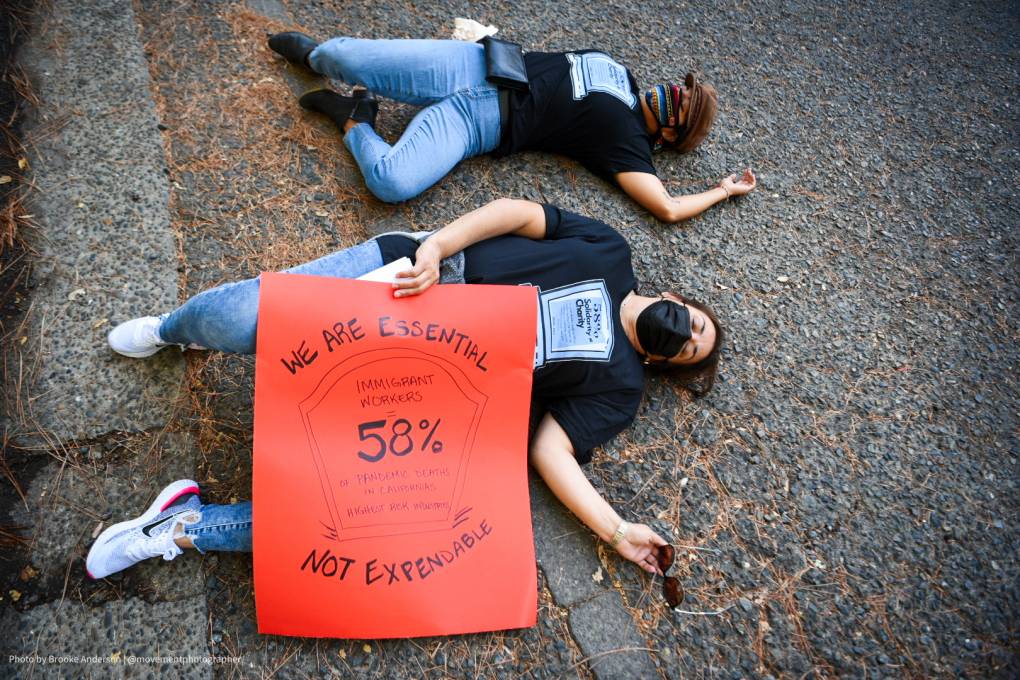
"caption": "Activists from across California staged a 'die-in' at Gov. Gavin Newsom's home to bring attention to what they see as a lack of equitable COVID-19 relief for immigrant workers.",
"description": null,
"title": "IMG_1938",
"credit": "Courtesy of Brooke Anderson (@MovementPhotographer)",
"status": "inherit",
"altTag": null,
"isLoading": false,
"fetchFailed": false
},
"news_11876348": {
"type": "attachments",
"id": "news_11876348",
"meta": {
"index": "attachments_1716263798",
"site": "news",
"id": "11876348",
"found": true
},
"parent": 11875988,
"imgSizes": {
"twentyfourteen-full-width": {
"file": "https://ww2.kqed.org/app/uploads/sites/10/2021/06/RS49630_GettyImages-1231067411-qut-1038x576.jpg",
"width": 1038,
"mimeType": "image/jpeg",
"height": 576
},
"thumbnail": {
"file": "https://ww2.kqed.org/app/uploads/sites/10/2021/06/RS49630_GettyImages-1231067411-qut-160x94.jpg",
"width": 160,
"mimeType": "image/jpeg",
"height": 94
},
"post-thumbnail": {
"file": "https://ww2.kqed.org/app/uploads/sites/10/2021/06/RS49630_GettyImages-1231067411-qut-672x372.jpg",
"width": 672,
"mimeType": "image/jpeg",
"height": 372
},
"kqedFullSize": {
"file": "https://ww2.kqed.org/app/uploads/sites/10/2021/06/RS49630_GettyImages-1231067411-qut.jpg",
"width": 1920,
"height": 1130
},
"large": {
"file": "https://ww2.kqed.org/app/uploads/sites/10/2021/06/RS49630_GettyImages-1231067411-qut-1020x600.jpg",
"width": 1020,
"mimeType": "image/jpeg",
"height": 600
},
"1536x1536": {
"file": "https://ww2.kqed.org/app/uploads/sites/10/2021/06/RS49630_GettyImages-1231067411-qut-1536x904.jpg",
"width": 1536,
"mimeType": "image/jpeg",
"height": 904
},
"medium": {
"file": "https://ww2.kqed.org/app/uploads/sites/10/2021/06/RS49630_GettyImages-1231067411-qut-800x471.jpg",
"width": 800,
"mimeType": "image/jpeg",
"height": 471
}
},
"publishDate": 1622665917,
"modified": 1622666197,
"caption": "A demonstrator joins fast-food workers and their supporters on Feb. 9, 2021 in Los Angeles to protest unsafe working conditions and campaigns of intimidation against workers who call out their employers due to job safety concerns during the coronavirus pandemic. ",
"description": "A demonstrator joins fast-food workers and their supporters on Feb. 9, 2021 in Los Angeles to protest unsafe working conditions and campaigns of intimidation against workers who call out their employers due to job safety concerns during the coronavirus pandemic. ",
"title": "US-HEALTH-VIRUS-STRIKE",
"credit": "FREDERIC J. BROWN/AFP via Getty Images",
"status": "inherit",
"altTag": null,
"isLoading": false,
"fetchFailed": false
},
"news_11874638": {
"type": "attachments",
"id": "news_11874638",
"meta": {
"index": "attachments_1716263798",
"site": "news",
"id": "11874638",
"found": true
},
"parent": 11874637,
"imgSizes": {
"twentyfourteen-full-width": {
"file": "https://ww2.kqed.org/app/uploads/sites/10/2021/05/RS49132_013_SanFrancisco_MEDADairoRomero_05192021-qut-1038x576.jpg",
"width": 1038,
"mimeType": "image/jpeg",
"height": 576
},
"thumbnail": {
"file": "https://ww2.kqed.org/app/uploads/sites/10/2021/05/RS49132_013_SanFrancisco_MEDADairoRomero_05192021-qut-160x107.jpg",
"width": 160,
"mimeType": "image/jpeg",
"height": 107
},
"post-thumbnail": {
"file": "https://ww2.kqed.org/app/uploads/sites/10/2021/05/RS49132_013_SanFrancisco_MEDADairoRomero_05192021-qut-672x372.jpg",
"width": 672,
"mimeType": "image/jpeg",
"height": 372
},
"kqedFullSize": {
"file": "https://ww2.kqed.org/app/uploads/sites/10/2021/05/RS49132_013_SanFrancisco_MEDADairoRomero_05192021-qut.jpg",
"width": 1920,
"height": 1280
},
"large": {
"file": "https://ww2.kqed.org/app/uploads/sites/10/2021/05/RS49132_013_SanFrancisco_MEDADairoRomero_05192021-qut-1020x680.jpg",
"width": 1020,
"mimeType": "image/jpeg",
"height": 680
},
"1536x1536": {
"file": "https://ww2.kqed.org/app/uploads/sites/10/2021/05/RS49132_013_SanFrancisco_MEDADairoRomero_05192021-qut-1536x1024.jpg",
"width": 1536,
"mimeType": "image/jpeg",
"height": 1024
},
"medium": {
"file": "https://ww2.kqed.org/app/uploads/sites/10/2021/05/RS49132_013_SanFrancisco_MEDADairoRomero_05192021-qut-800x533.jpg",
"width": 800,
"mimeType": "image/jpeg",
"height": 533
}
},
"publishDate": 1621611959,
"modified": 1622608689,
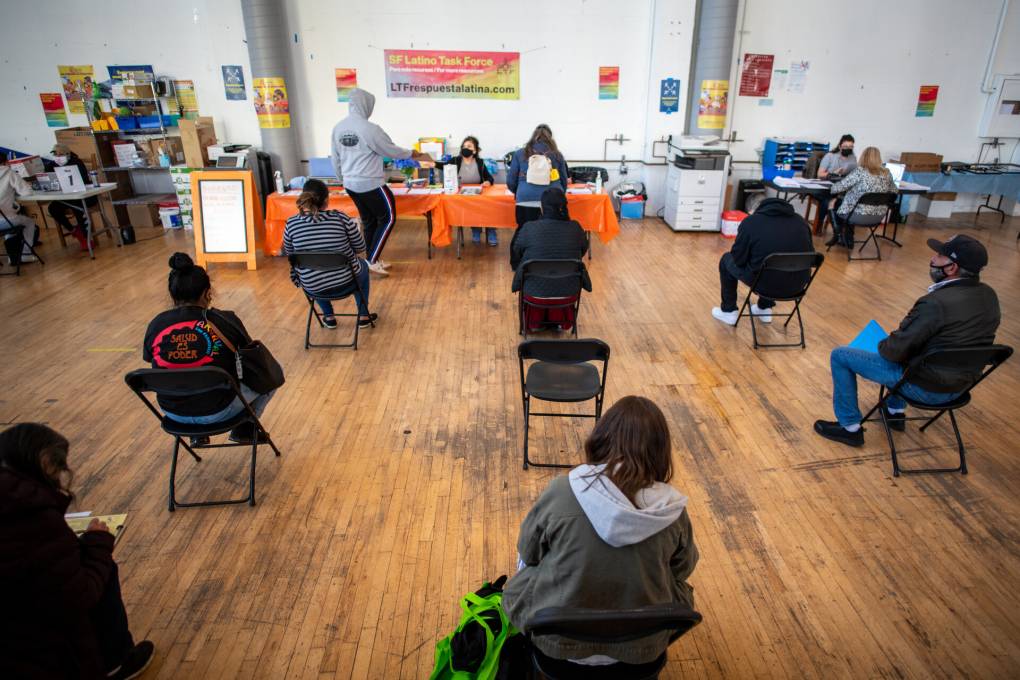
"caption": "The Mission Resource Hub in San Francisco has helped hundreds of families file their taxes and qualify for Golden State Stimulus program aid. But many immigrants without Social Security numbers have run into major obstacles trying to file for the first time.",
"description": "People wait for tax help at the Mission Food Hub in San Francisco on May 19, 2021.",
"title": "RS49132_013_SanFrancisco_MEDADairoRomero_05192021-qut",
"credit": "Beth LaBerge/KQED",
"status": "inherit",
"altTag": "People wait for tax help at the Mission Food Hub in San Francisco on May 19, 2021.",
"isLoading": false,
"fetchFailed": false
},
"news_11876240": {
"type": "attachments",
"id": "news_11876240",
"meta": {
"index": "attachments_1716263798",
"site": "news",
"id": "11876240",
"found": true
},
"parent": 11876226,
"imgSizes": {
"twentyfourteen-full-width": {
"file": "https://ww2.kqed.org/app/uploads/sites/10/2021/06/GettyImages-1233008043-1024x576.jpg",
"width": 1024,
"mimeType": "image/jpeg",
"height": 576
},
"thumbnail": {
"file": "https://ww2.kqed.org/app/uploads/sites/10/2021/06/GettyImages-1233008043-160x107.jpg",
"width": 160,
"mimeType": "image/jpeg",
"height": 107
},
"post-thumbnail": {
"file": "https://ww2.kqed.org/app/uploads/sites/10/2021/06/GettyImages-1233008043-672x372.jpg",
"width": 672,
"mimeType": "image/jpeg",
"height": 372
},
"kqedFullSize": {
"file": "https://ww2.kqed.org/app/uploads/sites/10/2021/06/GettyImages-1233008043.jpg",
"width": 1024,
"height": 683
},
"large": {
"file": "https://ww2.kqed.org/app/uploads/sites/10/2021/06/GettyImages-1233008043-1020x680.jpg",
"width": 1020,
"mimeType": "image/jpeg",
"height": 680
},
"medium": {
"file": "https://ww2.kqed.org/app/uploads/sites/10/2021/06/GettyImages-1233008043-800x534.jpg",
"width": 800,
"mimeType": "image/jpeg",
"height": 534
}
},
"publishDate": 1622588130,
"modified": 1622591636,
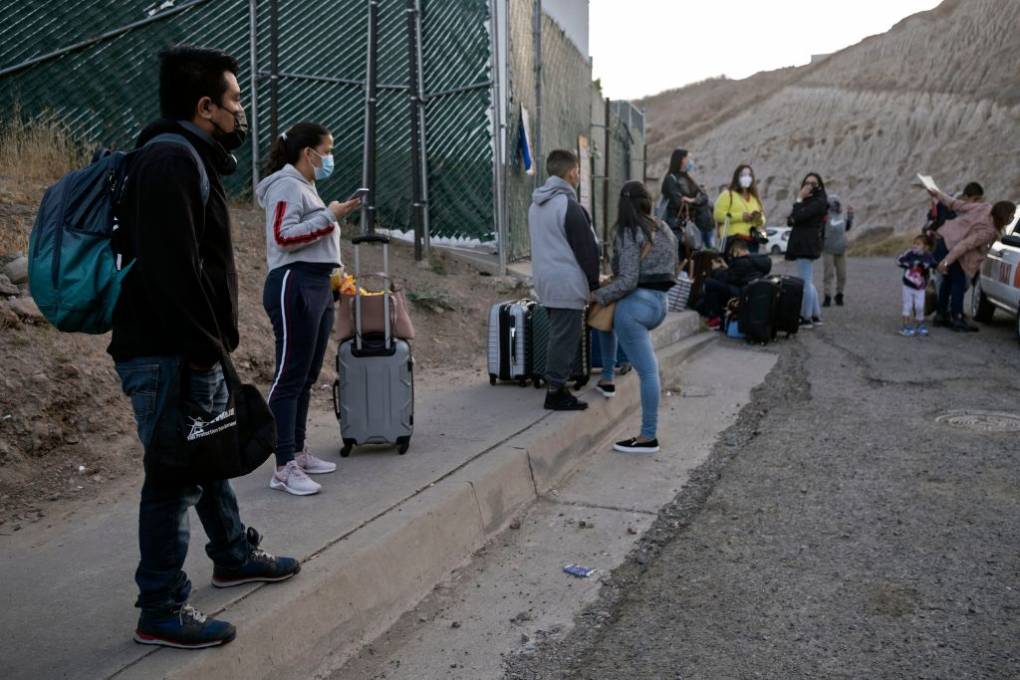
"caption": "Cruz Estuardo Tunpumay, left, a 32-year-old migrant from Guatemala, stands among other asylum-seekers on May 20, 2021, at a Mexican government facility in Tijuana, just before crossing to the United States for his asylum process. Cruz left Guatemala in March 2019 and is heading to Los Angeles where he hopes to find a job as soon as authorities allow him to, so he can send money back to his family.",
"description": null,
"title": "MEXICO-GUATEMALA-US-MIGRATION-ASYLUM",
"credit": "Guillermo Arias/AFP via Getty Images",
"status": "inherit",
"altTag": null,
"isLoading": false,
"fetchFailed": false
},
"news_11876039": {
"type": "attachments",
"id": "news_11876039",
"meta": {
"index": "attachments_1716263798",
"site": "news",
"id": "11876039",
"found": true
},
"parent": 11876037,
"imgSizes": {
"twentyfourteen-full-width": {
"file": "https://ww2.kqed.org/app/uploads/sites/10/2021/05/firefighter_pardon-1038x576.jpg",
"width": 1038,
"mimeType": "image/jpeg",
"height": 576
},
"thumbnail": {
"file": "https://ww2.kqed.org/app/uploads/sites/10/2021/05/firefighter_pardon-160x90.jpg",
"width": 160,
"mimeType": "image/jpeg",
"height": 90
},
"post-thumbnail": {
"file": "https://ww2.kqed.org/app/uploads/sites/10/2021/05/firefighter_pardon-672x372.jpg",
"width": 672,
"mimeType": "image/jpeg",
"height": 372
},
"kqedFullSize": {
"file": "https://ww2.kqed.org/app/uploads/sites/10/2021/05/firefighter_pardon.jpg",
"width": 1182,
"height": 665
},
"large": {
"file": "https://ww2.kqed.org/app/uploads/sites/10/2021/05/firefighter_pardon-1020x574.jpg",
"width": 1020,
"mimeType": "image/jpeg",
"height": 574
},
"medium": {
"file": "https://ww2.kqed.org/app/uploads/sites/10/2021/05/firefighter_pardon-800x450.jpg",
"width": 800,
"mimeType": "image/jpeg",
"height": 450
}
},
"publishDate": 1622321347,
"modified": 1622573206,
"caption": "Bounchan Keola (left) and Kao Ta Saelee (right) were pardoned by Gov. Gavin Newsom on May 28, 2021, along with more than a dozen other people.",
"description": null,
"title": "firefighter_pardon",
"credit": "Image courtesy of Asian Law Caucus",
"status": "inherit",
"altTag": null,
"isLoading": false,
"fetchFailed": false
},
"news_11875950": {
"type": "attachments",
"id": "news_11875950",
"meta": {
"index": "attachments_1716263798",
"site": "news",
"id": "11875950",
"found": true
},
"parent": 11875913,
"imgSizes": {
"twentyfourteen-full-width": {
"file": "https://ww2.kqed.org/app/uploads/sites/10/2021/05/GettyImages-1318956214-1024x576.jpg",
"width": 1024,
"mimeType": "image/jpeg",
"height": 576
},
"thumbnail": {
"file": "https://ww2.kqed.org/app/uploads/sites/10/2021/05/GettyImages-1318956214-160x107.jpg",
"width": 160,
"mimeType": "image/jpeg",
"height": 107
},
"post-thumbnail": {
"file": "https://ww2.kqed.org/app/uploads/sites/10/2021/05/GettyImages-1318956214-672x372.jpg",
"width": 672,
"mimeType": "image/jpeg",
"height": 372
},
"kqedFullSize": {
"file": "https://ww2.kqed.org/app/uploads/sites/10/2021/05/GettyImages-1318956214.jpg",
"width": 1024,
"height": 687
},
"large": {
"file": "https://ww2.kqed.org/app/uploads/sites/10/2021/05/GettyImages-1318956214-1020x684.jpg",
"width": 1020,
"mimeType": "image/jpeg",
"height": 684
},
"medium": {
"file": "https://ww2.kqed.org/app/uploads/sites/10/2021/05/GettyImages-1318956214-800x537.jpg",
"width": 800,
"mimeType": "image/jpeg",
"height": 537
}
},
"publishDate": 1622236105,
"modified": 1622236400,
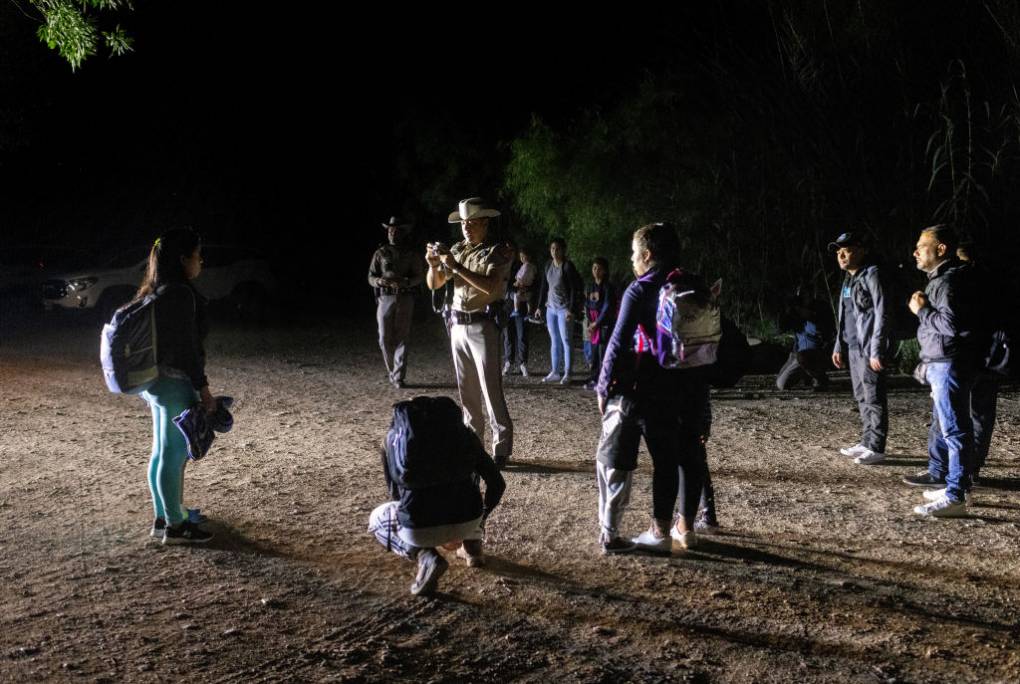
"caption": "A group of migrants who have just crossed the Rio Grande from Mexico to seek political asylum in the United States are apprehended on May 19, 2021 in Del Rio, Texas, before being taken into custody by U.S. Border Patrol agents. ",
"description": null,
"title": "Undocumented Immigrants Attempt To Cross Into U.S. Near Del Rio, Texas",
"credit": "John Moore/Getty Images",
"status": "inherit",
"altTag": null,
"isLoading": false,
"fetchFailed": false
},
"news_11874800": {
"type": "attachments",
"id": "news_11874800",
"meta": {
"index": "attachments_1716263798",
"site": "news",
"id": "11874800",
"found": true
},
"parent": 11874691,
"imgSizes": {
"twentyfourteen-full-width": {
"file": "https://ww2.kqed.org/app/uploads/sites/10/2021/05/RS48973_028_Hayward_Promotoras_05102021-1038x576.jpg",
"width": 1038,
"mimeType": "image/jpeg",
"height": 576
},
"thumbnail": {
"file": "https://ww2.kqed.org/app/uploads/sites/10/2021/05/RS48973_028_Hayward_Promotoras_05102021-160x107.jpg",
"width": 160,
"mimeType": "image/jpeg",
"height": 107
},
"post-thumbnail": {
"file": "https://ww2.kqed.org/app/uploads/sites/10/2021/05/RS48973_028_Hayward_Promotoras_05102021-672x372.jpg",
"width": 672,
"mimeType": "image/jpeg",
"height": 372
},
"kqedFullSize": {
"file": "https://ww2.kqed.org/app/uploads/sites/10/2021/05/RS48973_028_Hayward_Promotoras_05102021.jpg",
"width": 1920,
"height": 1280
},
"large": {
"file": "https://ww2.kqed.org/app/uploads/sites/10/2021/05/RS48973_028_Hayward_Promotoras_05102021-1020x680.jpg",
"width": 1020,
"mimeType": "image/jpeg",
"height": 680
},
"1536x1536": {
"file": "https://ww2.kqed.org/app/uploads/sites/10/2021/05/RS48973_028_Hayward_Promotoras_05102021-1536x1024.jpg",
"width": 1536,
"mimeType": "image/jpeg",
"height": 1024
},
"medium": {
"file": "https://ww2.kqed.org/app/uploads/sites/10/2021/05/RS48973_028_Hayward_Promotoras_05102021-800x533.jpg",
"width": 800,
"mimeType": "image/jpeg",
"height": 533
}
},
"publishDate": 1621631894,
"modified": 1621632180,
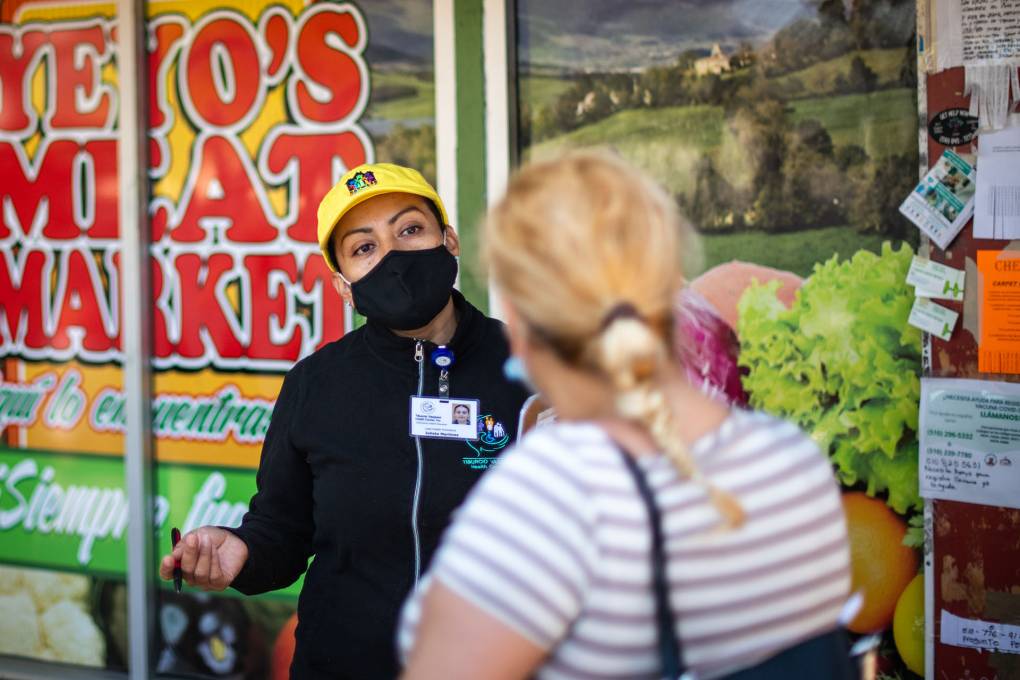
"caption": "Community health worker, or promotora, Julieta Martinez speaks with a customer at Yeyo’s Meat Market about the COVID-19 vaccine during an outreach event in South Hayward on May 10, 2021.",
"description": "Community health worker, or promotora, Julieta Martinez speaks with a customer at Yeyo’s Meat Market about the COVID-19 vaccine during an outreach event in South Hayward on May 10, 2021.",
"title": "RS48973_028_Hayward_Promotoras_05102021",
"credit": "Beth LaBerge/KQED",
"status": "inherit",
"altTag": null,
"isLoading": false,
"fetchFailed": false
},
"news_11863601": {
"type": "attachments",
"id": "news_11863601",
"meta": {
"index": "attachments_1716263798",
"site": "news",
"id": "11863601",
"found": true
},
"parent": 11862122,
"imgSizes": {
"apple_news_ca_landscape_5_5": {
"file": "https://ww2.kqed.org/app/uploads/sites/10/2021/03/RS47577_iStock-915488206-qut-1044x783.jpg",
"width": 1044,
"mimeType": "image/jpeg",
"height": 783
},
"apple_news_ca_square_4_0": {
"file": "https://ww2.kqed.org/app/uploads/sites/10/2021/03/RS47577_iStock-915488206-qut-470x470.jpg",
"width": 470,
"mimeType": "image/jpeg",
"height": 470
},
"twentyfourteen-full-width": {
"file": "https://ww2.kqed.org/app/uploads/sites/10/2021/03/RS47577_iStock-915488206-qut-1038x576.jpg",
"width": 1038,
"mimeType": "image/jpeg",
"height": 576
},
"thumbnail": {
"file": "https://ww2.kqed.org/app/uploads/sites/10/2021/03/RS47577_iStock-915488206-qut-160x84.jpg",
"width": 160,
"mimeType": "image/jpeg",
"height": 84
},
"post-thumbnail": {
"file": "https://ww2.kqed.org/app/uploads/sites/10/2021/03/RS47577_iStock-915488206-qut-672x372.jpg",
"width": 672,
"mimeType": "image/jpeg",
"height": 372
},
"kqedFullSize": {
"file": "https://ww2.kqed.org/app/uploads/sites/10/2021/03/RS47577_iStock-915488206-qut.jpg",
"width": 1920,
"height": 1012
},
"apple_news_ca_landscape_4_7": {
"file": "https://ww2.kqed.org/app/uploads/sites/10/2021/03/RS47577_iStock-915488206-qut-632x474.jpg",
"width": 632,
"mimeType": "image/jpeg",
"height": 474
},
"large": {
"file": "https://ww2.kqed.org/app/uploads/sites/10/2021/03/RS47577_iStock-915488206-qut-1020x538.jpg",
"width": 1020,
"mimeType": "image/jpeg",
"height": 538
},
"apple_news_ca_landscape_4_0": {
"file": "https://ww2.kqed.org/app/uploads/sites/10/2021/03/RS47577_iStock-915488206-qut-536x402.jpg",
"width": 536,
"mimeType": "image/jpeg",
"height": 402
},
"apple_news_ca_portrait_12_9": {
"file": "https://ww2.kqed.org/app/uploads/sites/10/2021/03/RS47577_iStock-915488206-qut-1122x1012.jpg",
"width": 1122,
"mimeType": "image/jpeg",
"height": 1012
},
"medium": {
"file": "https://ww2.kqed.org/app/uploads/sites/10/2021/03/RS47577_iStock-915488206-qut-800x422.jpg",
"width": 800,
"mimeType": "image/jpeg",
"height": 422
},
"apple_news_ca_portrait_4_0": {
"file": "https://ww2.kqed.org/app/uploads/sites/10/2021/03/RS47577_iStock-915488206-qut-354x472.jpg",
"width": 354,
"mimeType": "image/jpeg",
"height": 472
},
"apple_news_ca_portrait_9_7": {
"file": "https://ww2.kqed.org/app/uploads/sites/10/2021/03/RS47577_iStock-915488206-qut-840x1012.jpg",
"width": 840,
"mimeType": "image/jpeg",
"height": 1012
},
"apple_news_ca_landscape_12_9": {
"file": "https://ww2.kqed.org/app/uploads/sites/10/2021/03/RS47577_iStock-915488206-qut-1832x1012.jpg",
"width": 1832,
"mimeType": "image/jpeg",
"height": 1012
},
"apple_news_ca_square_9_7": {
"file": "https://ww2.kqed.org/app/uploads/sites/10/2021/03/RS47577_iStock-915488206-qut-1104x1012.jpg",
"width": 1104,
"mimeType": "image/jpeg",
"height": 1012
},
"1536x1536": {
"file": "https://ww2.kqed.org/app/uploads/sites/10/2021/03/RS47577_iStock-915488206-qut-1536x810.jpg",
"width": 1536,
"mimeType": "image/jpeg",
"height": 810
},
"apple_news_ca_portrait_4_7": {
"file": "https://ww2.kqed.org/app/uploads/sites/10/2021/03/RS47577_iStock-915488206-qut-414x552.jpg",
"width": 414,
"mimeType": "image/jpeg",
"height": 552
},
"apple_news_ca_square_12_9": {
"file": "https://ww2.kqed.org/app/uploads/sites/10/2021/03/RS47577_iStock-915488206-qut-1472x1012.jpg",
"width": 1472,
"mimeType": "image/jpeg",
"height": 1012
},
"apple_news_ca_portrait_5_5": {
"file": "https://ww2.kqed.org/app/uploads/sites/10/2021/03/RS47577_iStock-915488206-qut-687x916.jpg",
"width": 687,
"mimeType": "image/jpeg",
"height": 916
},
"apple_news_ca_square_4_7": {
"file": "https://ww2.kqed.org/app/uploads/sites/10/2021/03/RS47577_iStock-915488206-qut-550x550.jpg",
"width": 550,
"mimeType": "image/jpeg",
"height": 550
},
"apple_news_ca_landscape_9_7": {
"file": "https://ww2.kqed.org/app/uploads/sites/10/2021/03/RS47577_iStock-915488206-qut-1376x1012.jpg",
"width": 1376,
"mimeType": "image/jpeg",
"height": 1012
},
"apple_news_ca_square_5_5": {
"file": "https://ww2.kqed.org/app/uploads/sites/10/2021/03/RS47577_iStock-915488206-qut-912x912.jpg",
"width": 912,
"mimeType": "image/jpeg",
"height": 912
}
},
"publishDate": 1614991589,
"modified": 1614991927,
"caption": null,
"description": null,
"title": "Elderly Woman Using Calculator For Taxes And Budget At Home",
"credit": "Getty Images",
"status": "inherit",
"altTag": "woman doing taxes with calculator",
"isLoading": false,
"fetchFailed": false
},
"news_11872253": {
"type": "attachments",
"id": "news_11872253",
"meta": {
"index": "attachments_1716263798",
"site": "news",
"id": "11872253",
"found": true
},
"parent": 11872236,
"imgSizes": {
"twentyfourteen-full-width": {
"file": "https://ww2.kqed.org/app/uploads/sites/10/2021/05/chinabeach_featured01-1038x576.png",
"width": 1038,
"mimeType": "image/png",
"height": 576
},
"thumbnail": {
"file": "https://ww2.kqed.org/app/uploads/sites/10/2021/05/chinabeach_featured01-160x79.png",
"width": 160,
"mimeType": "image/png",
"height": 79
},
"post-thumbnail": {
"file": "https://ww2.kqed.org/app/uploads/sites/10/2021/05/chinabeach_featured01-672x372.png",
"width": 672,
"mimeType": "image/png",
"height": 372
},
"kqedFullSize": {
"file": "https://ww2.kqed.org/app/uploads/sites/10/2021/05/chinabeach_featured01.png",
"width": 1920,
"height": 950
},
"large": {
"file": "https://ww2.kqed.org/app/uploads/sites/10/2021/05/chinabeach_featured01-1020x505.png",
"width": 1020,
"mimeType": "image/png",
"height": 505
},
"1536x1536": {
"file": "https://ww2.kqed.org/app/uploads/sites/10/2021/05/chinabeach_featured01-1536x760.png",
"width": 1536,
"mimeType": "image/png",
"height": 760
},
"medium": {
"file": "https://ww2.kqed.org/app/uploads/sites/10/2021/05/chinabeach_featured01-800x396.png",
"width": 800,
"mimeType": "image/png",
"height": 396
}
},
"publishDate": 1620216545,
"modified": 1620216612,
"caption": null,
"description": null,
"title": "chinabeach_featured01",
"credit": null,
"status": "inherit",
"altTag": "A Mark Fiore cartoon about the naming (and renaming) of San Francisco's China Beach, which was for 40 years named after San Francisco's white supremacist mayor, James D. Phelan.",
"isLoading": false,
"fetchFailed": false
},
"news_11872154": {
"type": "attachments",
"id": "news_11872154",
"meta": {
"index": "attachments_1716263798",
"site": "news",
"id": "11872154",
"found": true
},
"parent": 11872153,
"imgSizes": {
"twentyfourteen-full-width": {
"file": "https://ww2.kqed.org/app/uploads/sites/10/2021/05/ap_21110132743458_wide-4ab6be2af26bbff91959c44ce8fff1793be9427c-1038x576.jpg",
"width": 1038,
"mimeType": "image/jpeg",
"height": 576
},
"thumbnail": {
"file": "https://ww2.kqed.org/app/uploads/sites/10/2021/05/ap_21110132743458_wide-4ab6be2af26bbff91959c44ce8fff1793be9427c-160x90.jpg",
"width": 160,
"mimeType": "image/jpeg",
"height": 90
},
"post-thumbnail": {
"file": "https://ww2.kqed.org/app/uploads/sites/10/2021/05/ap_21110132743458_wide-4ab6be2af26bbff91959c44ce8fff1793be9427c-672x372.jpg",
"width": 672,
"mimeType": "image/jpeg",
"height": 372
},
"kqedFullSize": {
"file": "https://ww2.kqed.org/app/uploads/sites/10/2021/05/ap_21110132743458_wide-4ab6be2af26bbff91959c44ce8fff1793be9427c-scaled.jpg",
"width": 2560,
"height": 1440
},
"2048x2048": {
"file": "https://ww2.kqed.org/app/uploads/sites/10/2021/05/ap_21110132743458_wide-4ab6be2af26bbff91959c44ce8fff1793be9427c-2048x1152.jpg",
"width": 2048,
"mimeType": "image/jpeg",
"height": 1152
},
"large": {
"file": "https://ww2.kqed.org/app/uploads/sites/10/2021/05/ap_21110132743458_wide-4ab6be2af26bbff91959c44ce8fff1793be9427c-1020x574.jpg",
"width": 1020,
"mimeType": "image/jpeg",
"height": 574
},
"1536x1536": {
"file": "https://ww2.kqed.org/app/uploads/sites/10/2021/05/ap_21110132743458_wide-4ab6be2af26bbff91959c44ce8fff1793be9427c-1536x864.jpg",
"width": 1536,
"mimeType": "image/jpeg",
"height": 864
},
"full-width": {
"file": "https://ww2.kqed.org/app/uploads/sites/10/2021/05/ap_21110132743458_wide-4ab6be2af26bbff91959c44ce8fff1793be9427c-1920x1080.jpg",
"width": 1920,
"mimeType": "image/jpeg",
"height": 1080
},
"medium": {
"file": "https://ww2.kqed.org/app/uploads/sites/10/2021/05/ap_21110132743458_wide-4ab6be2af26bbff91959c44ce8fff1793be9427c-800x450.jpg",
"width": 800,
"mimeType": "image/jpeg",
"height": 450
}
},
"publishDate": 1620149905,
"modified": 1620154096,
"caption": "President Biden, in a file photo, speaking in the East Room of the White House on April 15. Biden on Monday said his administration would significantly raise refugee admission caps. ",
"description": null,
"title": "President Biden, here at the White House on April 15, announced Monday that his administration is lifting the ceiling on the number of refugees who can be admitted into the country this fiscal year.",
"credit": "Andrew Harnik/AP",
"status": "inherit",
"altTag": null,
"isLoading": false,
"fetchFailed": false
},
"news_11872004": {
"type": "attachments",
"id": "news_11872004",
"meta": {
"index": "attachments_1716263798",
"site": "news",
"id": "11872004",
"found": true
},
"parent": 11872003,
"imgSizes": {
"twentyfourteen-full-width": {
"file": "https://ww2.kqed.org/app/uploads/sites/10/2021/05/ap21123159092833_wide-61079d044d9312bc2af3df1891be03a6fed3afa6-1038x576.jpg",
"width": 1038,
"mimeType": "image/jpeg",
"height": 576
},
"thumbnail": {
"file": "https://ww2.kqed.org/app/uploads/sites/10/2021/05/ap21123159092833_wide-61079d044d9312bc2af3df1891be03a6fed3afa6-160x90.jpg",
"width": 160,
"mimeType": "image/jpeg",
"height": 90
},
"post-thumbnail": {
"file": "https://ww2.kqed.org/app/uploads/sites/10/2021/05/ap21123159092833_wide-61079d044d9312bc2af3df1891be03a6fed3afa6-672x372.jpg",
"width": 672,
"mimeType": "image/jpeg",
"height": 372
},
"kqedFullSize": {
"file": "https://ww2.kqed.org/app/uploads/sites/10/2021/05/ap21123159092833_wide-61079d044d9312bc2af3df1891be03a6fed3afa6-scaled-e1620064719334.jpg",
"width": 1920,
"height": 1080
},
"2048x2048": {
"file": "https://ww2.kqed.org/app/uploads/sites/10/2021/05/ap21123159092833_wide-61079d044d9312bc2af3df1891be03a6fed3afa6-2048x1152.jpg",
"width": 2048,
"mimeType": "image/jpeg",
"height": 1152
},
"large": {
"file": "https://ww2.kqed.org/app/uploads/sites/10/2021/05/ap21123159092833_wide-61079d044d9312bc2af3df1891be03a6fed3afa6-1020x574.jpg",
"width": 1020,
"mimeType": "image/jpeg",
"height": 574
},
"1536x1536": {
"file": "https://ww2.kqed.org/app/uploads/sites/10/2021/05/ap21123159092833_wide-61079d044d9312bc2af3df1891be03a6fed3afa6-1536x864.jpg",
"width": 1536,
"mimeType": "image/jpeg",
"height": 864
},
"full-width": {
"file": "https://ww2.kqed.org/app/uploads/sites/10/2021/05/ap21123159092833_wide-61079d044d9312bc2af3df1891be03a6fed3afa6-1920x1080.jpg",
"width": 1920,
"mimeType": "image/jpeg",
"height": 1080
},
"medium": {
"file": "https://ww2.kqed.org/app/uploads/sites/10/2021/05/ap21123159092833_wide-61079d044d9312bc2af3df1891be03a6fed3afa6-800x450.jpg",
"width": 800,
"mimeType": "image/jpeg",
"height": 450
}
},
"publishDate": 1620062739,
"modified": 1620071552,
"caption": "Homeland Security Secretary Alejandro Mayorkas speaks during a news conference at the White House in Washington, D.C. The Biden administration says four families who were separated at the Mexico border during Donald Trump’s presidency would be reunited in the U.S during the first week of May, the first of what Mayorkas calls 'just the beginning' of a broader effort.",
"description": "FILE - In this March 1, 2021, file photo, Homeland Security Secretary Alejandro Mayorkas speaks during a news conference at the White House in Washington. The Biden administration says four families who were separated at the Mexico border during Donald Trump’s presidency would be reunited in the United States during the first week of May, the first of what Mayorkas calls “just the beginning” of a broader effort. (AP Photo/Andrew Harnik, File)",
"title": "Homeland Security Secretary Alejandro Mayorkas speaks during a March 1 news conference at the White House. The Biden administration says four families that were separated at the Mexico border during the Trump administration would be reunited in the U.S. during the first week of May. It's the first of what Mayorkas calls \"just the beginning\" of a broader effort.",
"credit": "AP Photo/Andrew Harnik, File",
"status": "inherit",
"altTag": null,
"isLoading": false,
"fetchFailed": false
}
},
"audioPlayerReducer": {
"postId": "stream_live",
"isPaused": true,
"isPlaying": false,
"pfsActive": false,
"pledgeModalIsOpen": true,
"playerDrawerIsOpen": false,
"liveAudioPlayStartedAt": 0,
"liveAudioPlayContext": ""
},
"authorsReducer": {
"byline_news_11876226": {
"type": "authors",
"id": "byline_news_11876226",
"meta": {
"override": true
},
"slug": "byline_news_11876226",
"name": "Associated Press",
"isLoading": false
},
"byline_news_11875913": {
"type": "authors",
"id": "byline_news_11875913",
"meta": {
"override": true
},
"slug": "byline_news_11875913",
"name": "Amy Taxin and Elliot Spagat\u003cbr>Associated Press",
"isLoading": false
},
"byline_news_11872153": {
"type": "authors",
"id": "byline_news_11872153",
"meta": {
"override": true
},
"slug": "byline_news_11872153",
"name": "Dana Farrington and Alana Wise",
"isLoading": false
},
"byline_news_11872003": {
"type": "authors",
"id": "byline_news_11872003",
"meta": {
"override": true
},
"slug": "byline_news_11872003",
"name": "Joel Rose",
"isLoading": false
},
"sasha-khokha": {
"type": "authors",
"id": "254",
"meta": {
"index": "authors_1716337520",
"id": "254",
"found": true
},
"name": "Sasha Khokha",
"firstName": "Sasha",
"lastName": "Khokha",
"slug": "sasha-khokha",
"email": "skhokha@kqed.org",
"display_author_email": true,
"staff_mastheads": [
"news"
],
"title": "Host, The California Report Magazine",
"bio": "Sasha Khokha is the host of \u003cem>The California Report's \u003c/em> weekly magazine program, which takes listeners on sound-rich excursions to meet the people that make the Golden State unique -- through audio documentaries and long-form stories. As \u003cem>The California Report's\u003c/em> Central Valley Bureau Chief based in Fresno for nearly a dozen years, Sasha brought the lives and concerns of rural Californians to listeners around the state. Her reporting helped expose the hidden price immigrant women janitors and farmworkers may pay to keep their jobs: sexual assault at work. It inspired two new California laws to protect them from sexual harassment. She was a key member of the reporting team for the Frontline film \u003cem>Rape on the Night Shift, \u003c/em>which was nominated for two national Emmys. Sasha has also won a national Edward R. Murrow and a national PRNDI award for investigative reporting, as well as multiple prizes from the Society for Professional Journalists. Sasha is a proud alum of the UC Berkeley Graduate School of Journalism and Brown University and a member of the South Asian Journalists Association.",
"avatar": "https://secure.gravatar.com/avatar/e4b5e1541aaeea2aa356aa1fb2a68950?s=600&d=blank&r=g",
"twitter": "KQEDSashaKhokha",
"facebook": null,
"instagram": null,
"linkedin": null,
"sites": [
{
"site": "news",
"roles": [
"editor"
]
},
{
"site": "stateofhealth",
"roles": [
"author"
]
},
{
"site": "science",
"roles": [
"author"
]
},
{
"site": "quest",
"roles": [
"subscriber"
]
}
],
"headData": {
"title": "Sasha Khokha | KQED",
"description": "Host, The California Report Magazine",
"ogImgSrc": "https://secure.gravatar.com/avatar/e4b5e1541aaeea2aa356aa1fb2a68950?s=600&d=blank&r=g",
"twImgSrc": "https://secure.gravatar.com/avatar/e4b5e1541aaeea2aa356aa1fb2a68950?s=600&d=blank&r=g"
},
"isLoading": false,
"link": "/author/sasha-khokha"
},
"markfiore": {
"type": "authors",
"id": "3236",
"meta": {
"index": "authors_1716337520",
"id": "3236",
"found": true
},
"name": "Mark Fiore",
"firstName": "Mark",
"lastName": "Fiore",
"slug": "markfiore",
"email": "mark@markfiore.com",
"display_author_email": false,
"staff_mastheads": [
"news"
],
"title": "KQED News Cartoonist",
"bio": "\u003ca href=\"http://www.MarkFiore.com\">MarkFiore.com\u003c/a> | \u003ca href=\"https://twitter.com/markfiore\">Follow on Twitter\u003c/a> | \u003ca href=\"https://www.facebook.com/pages/Mark-Fiore-Animated-Political-Cartoons/94451707396?ref=bookmarks\">Facebook\u003c/a> | \u003ca href=\"mailto:mark@markfiore.com\">email\u003c/a>\r\n\r\nPulitzer Prize-winner, Mark Fiore, who the Wall Street Journal has called “the undisputed guru of the form,” creates animated political cartoons in San Francisco, where his work has been featured regularly on the San Francisco Chronicle’s web site, SFGate.com. His work has appeared on Newsweek.com, Slate.com, CBSNews.com, MotherJones.com, DailyKos.com and NPR’s web site. Fiore’s political animation has appeared on CNN, Frontline, Bill Moyers Journal, Salon.com and cable and broadcast outlets across the globe.\r\n\r\nBeginning his professional life by drawing traditional political cartoons for newspapers, Fiore’s work appeared in publications ranging from the Washington Post to the Los Angeles Times. In the late 1990s, he began to experiment with animating political cartoons and, after a short stint at the San Jose Mercury News as their staff cartoonist, Fiore devoted all his energies to animation.\r\nGrowing up in California, Fiore also spent a good portion of his life in the backwoods of Idaho. It was this combination that shaped him politically. Mark majored in political science at Colorado College, where, in a perfect send-off for a cartoonist, he received his diploma in 1991 as commencement speaker Dick Cheney smiled approvingly.\r\nMark Fiore was awarded the Pulitzer Prize for political cartooning in 2010, a Robert F. Kennedy Journalism Award in 2004 and has twice received an Online Journalism Award for commentary from the Online News Association (2002, 2008). Fiore has received two awards for his work in new media from the National Cartoonists Society (2001, 2002), and in 2006 received The James Madison Freedom of Information Award from The Society of Professional Journalists.",
"avatar": "https://secure.gravatar.com/avatar/fc4e2a612b15b67bad0c6f0e1db4ca9b?s=600&d=blank&r=g",
"twitter": "MarkFiore",
"facebook": null,
"instagram": "https://www.instagram.com/markfiore/?hl=en",
"linkedin": null,
"sites": [
{
"site": "arts",
"roles": [
"contributor"
]
},
{
"site": "news",
"roles": [
"editor"
]
},
{
"site": "futureofyou",
"roles": [
"editor"
]
},
{
"site": "science",
"roles": [
"editor"
]
}
],
"headData": {
"title": "Mark Fiore | KQED",
"description": "KQED News Cartoonist",
"ogImgSrc": "https://secure.gravatar.com/avatar/fc4e2a612b15b67bad0c6f0e1db4ca9b?s=600&d=blank&r=g",
"twImgSrc": "https://secure.gravatar.com/avatar/fc4e2a612b15b67bad0c6f0e1db4ca9b?s=600&d=blank&r=g"
},
"isLoading": false,
"link": "/author/markfiore"
},
"fjhabvala": {
"type": "authors",
"id": "8659",
"meta": {
"index": "authors_1716337520",
"id": "8659",
"found": true
},
"name": "Farida Jhabvala Romero",
"firstName": "Farida",
"lastName": "Jhabvala Romero",
"slug": "fjhabvala",
"email": "fjhabvala@kqed.org",
"display_author_email": true,
"staff_mastheads": [
"news"
],
"title": "KQED Contributor",
"bio": "Farida Jhabvala Romero is a Labor Correspondent for KQED. She previously covered immigration. Farida was \u003ca href=\"https://www.ccnma.org/2022-most-influential-latina-journalists\">named\u003c/a> one of the 10 Most Influential Latina Journalists in California in 2022 by the California Chicano News Media Association. Her work has won awards from the Society of Professional Journalists (Northern California), as well as a national and regional Edward M. Murrow Award for the collaborative reporting projects “Dangerous Air” and “Graying California.” Before joining KQED, Farida worked as a producer at Radio Bilingüe, a national public radio network. Farida earned her master’s degree in journalism from Stanford University.",
"avatar": "https://secure.gravatar.com/avatar/f9f022d4e2609741874222a1e9d41f48fea74011aa7c615eef91d9a50c944ebe?s=600&d=blank&r=g",
"twitter": "FaridaJhabvala",
"bluesky": null,
"facebook": null,
"instagram": null,
"linkedin": "https://www.linkedin.com/in/faridajhabvala/",
"sites": [
{
"site": "news",
"roles": [
"editor"
]
},
{
"site": "stateofhealth",
"roles": [
"author"
]
},
{
"site": "liveblog",
"roles": [
"author"
]
}
],
"headData": {
"title": "Farida Jhabvala Romero | KQED",
"description": "KQED Contributor",
"ogImgSrc": "https://secure.gravatar.com/avatar/f9f022d4e2609741874222a1e9d41f48fea74011aa7c615eef91d9a50c944ebe?s=600&d=blank&r=g",
"twImgSrc": "https://secure.gravatar.com/avatar/f9f022d4e2609741874222a1e9d41f48fea74011aa7c615eef91d9a50c944ebe?s=600&d=blank&r=g"
},
"isLoading": false,
"link": "/author/fjhabvala"
},
"lsarah": {
"type": "authors",
"id": "11626",
"meta": {
"index": "authors_1716337520",
"id": "11626",
"found": true
},
"name": "Lakshmi Sarah",
"firstName": "Lakshmi",
"lastName": "Sarah",
"slug": "lsarah",
"email": "lsarah@kqed.org",
"display_author_email": false,
"staff_mastheads": [],
"title": "Digital Producer",
"bio": "Lakshmi Sarah is an educator, author and journalist with a focus on innovative storytelling. She has worked with newspapers, radio and magazines from Ahmedabad, India to Los Angeles, California. She has written and produced for Die Zeit, Global Voices, AJ+, KQED, Fusion Media Group and the New York Times.",
"avatar": "https://secure.gravatar.com/avatar/652dcaecd8b28826fc17a8b2d6bb4e93?s=600&d=blank&r=g",
"twitter": "lakitalki",
"facebook": null,
"instagram": "https://www.instagram.com/laki.talki/",
"linkedin": "https://www.linkedin.com/in/lakisarah/",
"sites": [
{
"site": "arts",
"roles": []
},
{
"site": "news",
"roles": []
},
{
"site": "bayareabites",
"roles": []
},
{
"site": "science",
"roles": []
}
],
"headData": {
"title": "Lakshmi Sarah | KQED",
"description": "Digital Producer",
"ogImgSrc": "https://secure.gravatar.com/avatar/652dcaecd8b28826fc17a8b2d6bb4e93?s=600&d=blank&r=g",
"twImgSrc": "https://secure.gravatar.com/avatar/652dcaecd8b28826fc17a8b2d6bb4e93?s=600&d=blank&r=g"
},
"isLoading": false,
"link": "/author/lsarah"
},
"ccabreralomeli": {
"type": "authors",
"id": "11708",
"meta": {
"index": "authors_1716337520",
"id": "11708",
"found": true
},
"name": "Carlos Cabrera-Lomelí",
"firstName": "Carlos",
"lastName": "Cabrera-Lomelí",
"slug": "ccabreralomeli",
"email": "ccabreralomeli@KQED.org",
"display_author_email": true,
"staff_mastheads": [
"news"
],
"title": "Community Reporter",
"bio": "Carlos Cabrera-Lomelí is a community reporter with KQED's digital engagement team. He also reports and co-produces for KQED's bilingual news hub KQED en Español. He grew up in San Francisco's Mission District and has previously worked with Univision, 48 Hills and REFORMA in Mexico City.",
"avatar": "https://secure.gravatar.com/avatar/c309be9665e484f887b818c89e273ecc673004f426f36b24d00a4d813a2e0518?s=600&d=blank&r=g",
"twitter": "@LomeliCabrera",
"bluesky": null,
"facebook": null,
"instagram": null,
"linkedin": null,
"sites": [
{
"site": "arts",
"roles": [
"editor"
]
},
{
"site": "news",
"roles": [
"editor"
]
},
{
"site": "about",
"roles": [
"editor"
]
},
{
"site": "science",
"roles": [
"editor"
]
},
{
"site": "perspectives",
"roles": [
"editor"
]
},
{
"site": "elections",
"roles": [
"editor"
]
},
{
"site": "liveblog",
"roles": [
"contributor"
]
}
],
"headData": {
"title": "Carlos Cabrera-Lomelí | KQED",
"description": "Community Reporter",
"ogImgSrc": "https://secure.gravatar.com/avatar/c309be9665e484f887b818c89e273ecc673004f426f36b24d00a4d813a2e0518?s=600&d=blank&r=g",
"twImgSrc": "https://secure.gravatar.com/avatar/c309be9665e484f887b818c89e273ecc673004f426f36b24d00a4d813a2e0518?s=600&d=blank&r=g"
},
"isLoading": false,
"link": "/author/ccabreralomeli"
}
},
"pagesReducer": {
"news_category_immigration": {
"type": "terms",
"id": "news_1169",
"meta": {
"index": "terms_1716263798",
"site": "news",
"id": "1169",
"score": 10.910406
},
"featImg": null,
"name": "Immigration",
"description": null,
"taxonomy": "category",
"headData": {
"twImgId": null,
"twTitle": null,
"ogTitle": null,
"ogImgId": null,
"twDescription": null,
"description": null,
"title": "Immigration Archives | KQED News",
"ogDescription": null
},
"ttid": 1180,
"slug": "immigration",
"isLoading": false,
"title": "Immigration",
"pageMeta": {
"site": "news",
"WpPageTemplate": "page-topic-editorial",
"currentPage": 56
},
"blocks": [
{
"blockName": "kqed/post-list",
"attrs": {
"layout": "cardArticle2",
"query": "posts/news?category=immigration",
"seeMore": false,
"paginated": true,
"page": 56
}
},
{
"blockName": "kqed/ad"
}
]
}
},
"pfsSessionReducer": {},
"postsReducer": {
"stream_live": {
"type": "live",
"id": "stream_live",
"audioUrl": "https://streams.kqed.org/kqedradio",
"title": "Live Stream",
"excerpt": "Live Stream information currently unavailable.",
"link": "/radio",
"featImg": "",
"label": {
"name": "KQED Live",
"link": "/"
}
},
"stream_kqedNewscast": {
"type": "posts",
"id": "stream_kqedNewscast",
"audioUrl": "https://www.kqed.org/.stream/anon/radio/RDnews/newscast.mp3?_=1",
"title": "KQED Newscast",
"featImg": "",
"label": {
"name": "88.5 FM",
"link": "/"
}
},
"news_11876583": {
"type": "posts",
"id": "news_11876583",
"meta": {
"index": "posts_1716263798",
"site": "news",
"id": "11876583",
"score": null,
"sort": [
1622848245000
]
},
"guestAuthors": [],
"slug": "living-my-dream-after-years-transgender-asylum-seeker-finally-makes-it-to-the-us",
"title": "'Living My Dream': After Years, Transgender Asylum Seeker Finally Makes it to the US",
"publishDate": 1622848245,
"format": "audio",
"headTitle": "‘Living My Dream’: After Years, Transgender Asylum Seeker Finally Makes it to the US | KQED",
"labelTerm": {
"term": 26731,
"site": "news"
},
"content": "\u003cp>Luna Guzmán lived through years of brutal abuse and discrimination in her hometown in Guatemala, and has long dreamed of seeking asylum in California. When \u003ca href=\"https://podcasts.apple.com/us/podcast/the-california-report-magazine/id1314750545?mt=2\">The California Report Magazine\u003c/a> produced an \u003ca href=\"https://www.kqed.org/news/11844742/a-butterfly-with-my-wings-cut-off-a-transgender-asylum-seekers-quest-to-come-to-california\">audio documentary\u003c/a> about her last December, though, it seemed those dreams might be on hold indefinitely. \u003c/p>\n\u003cp>We followed Luna, now 27, for more than two years, from a migrant shelter in Tijuana to an ICE detention center near San Diego, even tracking her down when she was sick with COVID, fighting for her life in the ICU.\u003c/p>\n\u003cp>When we first met her at the migrant shelter in November of 2018, she was wearing men’s clothes in order to protect herself from harassment. She told us she was desperate to live in place where she could fully express her gender identity.\u003c/p>\n\u003cp>“One day soon I want everyone who knows me to say, ‘Luna made it. She fought for her dreams and they came true,’ ” she said.\u003c/p>\n\u003cp>[aside postID=news_11844742 hero='https://ww2.kqed.org/app/uploads/sites/10/2020/12/LUNA-featured-edit-1020x574-1.jpg']Luna has survived so much; from sexual violence to learning she was HIV positive as a teenager. Her story and her courage inspired some of our listeners, who sent her money to help her with housing in Tijuana. Some even did a tribute performance for her at a tiny drag bar in Modesto. \u003c/p>\n\u003cp>But until recently, it seemed like Luna’s chances of coming to the United States were over. She had been held in ICE detention and deported twice without a real chance to plead her asylum case.\u003c/p>\n\u003cp>Then, a couple weeks ago, we got a voicemail from Luna. Her excitement pulsed through the phone as she exclaimed, “I am in the US! I am in San Diego. I was able to cross yesterday!”\u003c/p>\n\u003cfigure id=\"attachment_11876593\" class=\"wp-caption aligncenter\" style=\"max-width: 800px\">\u003ca href=\"https://ww2.kqed.org/app/uploads/sites/10/2021/06/Luna-At-Border.jpg\">\u003cimg loading=\"lazy\" decoding=\"async\" class=\"size-medium wp-image-11876593\" src=\"https://ww2.kqed.org/app/uploads/sites/10/2021/06/Luna-At-Border-800x600.jpg\" alt=\"\" width=\"800\" height=\"600\" srcset=\"https://cdn.kqed.org/wp-content/uploads/sites/10/2021/06/Luna-At-Border-800x600.jpg 800w, https://cdn.kqed.org/wp-content/uploads/sites/10/2021/06/Luna-At-Border-1020x765.jpg 1020w, https://cdn.kqed.org/wp-content/uploads/sites/10/2021/06/Luna-At-Border-160x120.jpg 160w, https://cdn.kqed.org/wp-content/uploads/sites/10/2021/06/Luna-At-Border.jpg 1024w\" sizes=\"(max-width: 800px) 100vw, 800px\">\u003c/a>\u003cfigcaption class=\"wp-caption-text\">Luna Guzmán arrives at the US-Mexico border on May 9, 2021 to ask for humanitarian parole. \u003ccite>(Courtesy of Luna Guzmán)\u003c/cite>\u003c/figcaption>\u003c/figure>\n\u003cp>This time, she had the help of an attorney, from the Oakland-based \u003ca href=\"https://transgenderlawcenter.org/\">Transgender Law Center\u003c/a>, who helped her with an application for humanitarian parole. It was approved, allowing her to come into the US while she waits for another chance to go in front of an immigration judge and ask for protection.\u003c/p>\n\u003cp>An organization in New York City, called the \u003ca href=\"http://www.qdep.org/\">Queer Detainee Empowerment Project\u003c/a>, agreed to sponsor Luna and help her with housing, medical care and finding a lawyer to represent her in immigration court. They sent her a plane ticket from San Diego to JFK.\u003c/p>\n\u003cfigure id=\"attachment_11876601\" class=\"wp-caption aligncenter\" style=\"max-width: 800px\">\u003ca href=\"https://ww2.kqed.org/app/uploads/sites/10/2021/06/Luna-in-Airport.jpg\">\u003cimg loading=\"lazy\" decoding=\"async\" class=\"size-medium wp-image-11876601\" src=\"https://ww2.kqed.org/app/uploads/sites/10/2021/06/Luna-in-Airport-800x815.jpg\" alt=\"\" width=\"800\" height=\"815\" srcset=\"https://cdn.kqed.org/wp-content/uploads/sites/10/2021/06/Luna-in-Airport-800x815.jpg 800w, https://cdn.kqed.org/wp-content/uploads/sites/10/2021/06/Luna-in-Airport-1020x1039.jpg 1020w, https://cdn.kqed.org/wp-content/uploads/sites/10/2021/06/Luna-in-Airport-160x163.jpg 160w, https://cdn.kqed.org/wp-content/uploads/sites/10/2021/06/Luna-in-Airport.jpg 1200w\" sizes=\"(max-width: 800px) 100vw, 800px\">\u003c/a>\u003cfigcaption class=\"wp-caption-text\">Luna Guzmán arrives at JFK Airport in New York City on May 18, 2021. \u003ccite>(Courtesy of Luna Guzmán)\u003c/cite>\u003c/figcaption>\u003c/figure>\n\u003cp>When she arrived in New York, a volunteer took her to a shelter that houses transgender women in Jamaica, Queens. She’ll eventually be able to get her own apartment, through a program in New York City that guarantees housing for people living with HIV. With her humanitarian parole status, Luna is eligible for Medicaid in New York, which can help her get HIV meds, hormones or eventually, gender-affirming surgery. And QDEP can help her with English-language classes and mental health services, too. She was also able to finally get a COVID-19 vaccine, which had been difficult to access in Tijuana.\u003c/p>\n\u003cp>[ad fullwidth]\u003c/p>\n\u003cp>It almost sounds too good to be true – like some kind of fairy godmother swooped in and gave Luna a start at a new life. We confirmed it all with QDEP’s co-director, Ian Zdanowicz, himself a trans immigrant from Poland. He said his organization helps with services, but they also give trans migrants and former detainees like Luna a sense of community.\u003c/p>\n\u003cfigure id=\"attachment_11876600\" class=\"wp-caption alignright\" style=\"max-width: 800px\">\u003ca href=\"https://ww2.kqed.org/app/uploads/sites/10/2021/06/Lunas-Pink-Sneakers.jpg\">\u003cimg loading=\"lazy\" decoding=\"async\" class=\"size-medium wp-image-11876600\" src=\"https://ww2.kqed.org/app/uploads/sites/10/2021/06/Lunas-Pink-Sneakers-800x865.jpg\" alt=\"\" width=\"800\" height=\"865\" srcset=\"https://cdn.kqed.org/wp-content/uploads/sites/10/2021/06/Lunas-Pink-Sneakers-800x865.jpg 800w, https://cdn.kqed.org/wp-content/uploads/sites/10/2021/06/Lunas-Pink-Sneakers-160x173.jpg 160w, https://cdn.kqed.org/wp-content/uploads/sites/10/2021/06/Lunas-Pink-Sneakers.jpg 968w\" sizes=\"(max-width: 800px) 100vw, 800px\">\u003c/a>\u003cfigcaption class=\"wp-caption-text\">Luna Guzmán shows off her new pink high-top sneakers in her room at a shelter that houses transgender women in Queens. Being in New York and being around other trans women has given her the freedom to start to express her gender identity more freely, she said. \u003ccite>(Courtesy of Luna Guzmán)\u003c/cite>\u003c/figcaption>\u003c/figure>\n\u003cp>“I really want to make people’s experience of those first few months or years in new place as bearable and, if possible, as joyful as we can,” said Zdanowicz. “Because I think we went through so much trauma in our life and now just painful experiences… It just helps to to go through those experiences together and support each other in that.”\u003c/p>\n\u003cp>In April and May, Zdanowicz said QDEP – in partnership with the Transgender Law Center and the Santa Fe Dreamers Project – has been able to sponsor 15 LGBTQ migrants from the border for humanitarian parole, bringing them to New York City, including Luna. There’s no guarantee border officials will grant humanitarian parole, though, so with each migrant, Zdanowicz said he’s holding his breath until they finally get across the border.\u003c/p>\n\u003cp>“Our organization is not super trusting of Biden’s administration,” he said. “I was really surprised that they let them through, gave them parole without detention. Other parts of the country are still detaining people. For example, in Juarez, they let some people in with parole, but they give everyone an ankle bracelet. So it’s very messy.”\u003c/p>\n\u003cp>Luna will still have to present her case in front of an immigration judge in New York. But this time, she’ll have a lawyer to represent her. With the pandemic, the backlog of immigration cases could take many months, even years to resolve.\u003c/p>\n\u003cfigure id=\"attachment_11876599\" class=\"wp-caption alignnone\" style=\"max-width: 800px\">\u003ca href=\"https://ww2.kqed.org/app/uploads/sites/10/2021/06/Luna-in-Subway.jpg\">\u003cimg loading=\"lazy\" decoding=\"async\" class=\"size-medium wp-image-11876599\" src=\"https://ww2.kqed.org/app/uploads/sites/10/2021/06/Luna-in-Subway-800x760.jpg\" alt=\"\" width=\"800\" height=\"760\" srcset=\"https://cdn.kqed.org/wp-content/uploads/sites/10/2021/06/Luna-in-Subway-800x760.jpg 800w, https://cdn.kqed.org/wp-content/uploads/sites/10/2021/06/Luna-in-Subway-1020x969.jpg 1020w, https://cdn.kqed.org/wp-content/uploads/sites/10/2021/06/Luna-in-Subway-160x152.jpg 160w, https://cdn.kqed.org/wp-content/uploads/sites/10/2021/06/Luna-in-Subway.jpg 1200w\" sizes=\"(max-width: 800px) 100vw, 800px\">\u003c/a>\u003cfigcaption class=\"wp-caption-text\">Luna Guzmán rides the subway in NYC. \u003ccite>(Courtesy of Luna Guzmán)\u003c/cite>\u003c/figcaption>\u003c/figure>\n\u003cp>While Luna is waiting, she can start to live the life she’s dreamed about. She’s been sending us videos of her dancing to street musicians in Times Square, and wearing her new pink high tops to take the subway.\u003c/p>\n\u003cp>“I’m living my dream, right?” Luna said in a recent voice message. “I may not be in California, but I am in New York. I know the universe will bring good things, and I’m going to be OK.”\u003c/p>\n\u003cp>\u003c/p>\n",
"blocks": [],
"excerpt": "Luna Guzmán lived through brutal abuse in Guatemala, and has tried for years to seek asylum in the US, being detained by ICE and battling COVID along the way.",
"status": "publish",
"parent": 0,
"modified": 1721129725,
"stats": {
"hasAudio": false,
"hasVideo": false,
"hasChartOrMap": false,
"iframeSrcs": [],
"hasGoogleForm": false,
"hasGallery": false,
"hasHearkenModule": false,
"hasPolis": false,
"paragraphCount": 19,
"wordCount": 1042
},
"headData": {
"title": "'Living My Dream': After Years, Transgender Asylum Seeker Finally Makes it to the US | KQED",
"description": "Luna Guzmán lived through brutal abuse in Guatemala, and has tried for years to seek asylum in the US, being detained by ICE and battling COVID along the way.",
"ogTitle": "",
"ogDescription": "",
"ogImgId": "",
"twTitle": "",
"twDescription": "",
"twImgId": "",
"schema": {
"@context": "https://schema.org",
"@type": "NewsArticle",
"headline": "'Living My Dream': After Years, Transgender Asylum Seeker Finally Makes it to the US",
"datePublished": "2021-06-04T16:10:45-07:00",
"dateModified": "2024-07-16T04:35:25-07:00",
"image": "https://cdn.kqed.org/wp-content/uploads/2020/02/KQED-OG-Image@1x.png",
"isAccessibleForFree": "True",
"publisher": {
"@type": "NewsMediaOrganization",
"@id": "https://www.kqed.org/#organization",
"name": "KQED",
"logo": "https://cdn.kqed.org/wp-content/uploads/2020/02/KQED-OG-Image@1x.png",
"url": "https://www.kqed.org",
"sameAs": [
"https://www.facebook.com/KQED",
"https://twitter.com/KQED",
"https://www.instagram.com/kqed/",
"https://www.tiktok.com/@kqedofficial",
"https://www.linkedin.com/company/kqed",
"https://www.youtube.com/channel/UCeC0IOo7i1P_61zVUWbJ4nw"
]
}
}
},
"audioUrl": "https://traffic.omny.fm/d/clips/0af137ef-751e-4b19-a055-aaef00d2d578/ffca7e9f-6831-41c5-bcaf-aaef00f5a073/5c0c3573-f0b4-41a0-be2c-ad3d0168750d/audio.mp3",
"sticky": false,
"path": "/news/11876583/living-my-dream-after-years-transgender-asylum-seeker-finally-makes-it-to-the-us",
"audioTrackLength": null,
"parsedContent": [
{
"type": "contentString",
"content": "\u003cdiv class=\"post-body\">\u003cp>\u003cp>Luna Guzmán lived through years of brutal abuse and discrimination in her hometown in Guatemala, and has long dreamed of seeking asylum in California. When \u003ca href=\"https://podcasts.apple.com/us/podcast/the-california-report-magazine/id1314750545?mt=2\">The California Report Magazine\u003c/a> produced an \u003ca href=\"https://www.kqed.org/news/11844742/a-butterfly-with-my-wings-cut-off-a-transgender-asylum-seekers-quest-to-come-to-california\">audio documentary\u003c/a> about her last December, though, it seemed those dreams might be on hold indefinitely. \u003c/p>\n\u003cp>We followed Luna, now 27, for more than two years, from a migrant shelter in Tijuana to an ICE detention center near San Diego, even tracking her down when she was sick with COVID, fighting for her life in the ICU.\u003c/p>\n\u003cp>When we first met her at the migrant shelter in November of 2018, she was wearing men’s clothes in order to protect herself from harassment. She told us she was desperate to live in place where she could fully express her gender identity.\u003c/p>\n\u003cp>“One day soon I want everyone who knows me to say, ‘Luna made it. She fought for her dreams and they came true,’ ” she said.\u003c/p>\n\u003cp>\u003c/p>\u003c/div>",
"attributes": {
"named": {},
"numeric": []
}
},
{
"type": "component",
"content": "",
"name": "aside",
"attributes": {
"named": {
"postid": "news_11844742",
"hero": "https://ww2.kqed.org/app/uploads/sites/10/2020/12/LUNA-featured-edit-1020x574-1.jpg",
"label": ""
},
"numeric": []
}
},
{
"type": "contentString",
"content": "\u003cdiv class=\"post-body\">\u003cp>Luna has survived so much; from sexual violence to learning she was HIV positive as a teenager. Her story and her courage inspired some of our listeners, who sent her money to help her with housing in Tijuana. Some even did a tribute performance for her at a tiny drag bar in Modesto. \u003c/p>\n\u003cp>But until recently, it seemed like Luna’s chances of coming to the United States were over. She had been held in ICE detention and deported twice without a real chance to plead her asylum case.\u003c/p>\n\u003cp>Then, a couple weeks ago, we got a voicemail from Luna. Her excitement pulsed through the phone as she exclaimed, “I am in the US! I am in San Diego. I was able to cross yesterday!”\u003c/p>\n\u003cfigure id=\"attachment_11876593\" class=\"wp-caption aligncenter\" style=\"max-width: 800px\">\u003ca href=\"https://ww2.kqed.org/app/uploads/sites/10/2021/06/Luna-At-Border.jpg\">\u003cimg loading=\"lazy\" decoding=\"async\" class=\"size-medium wp-image-11876593\" src=\"https://ww2.kqed.org/app/uploads/sites/10/2021/06/Luna-At-Border-800x600.jpg\" alt=\"\" width=\"800\" height=\"600\" srcset=\"https://cdn.kqed.org/wp-content/uploads/sites/10/2021/06/Luna-At-Border-800x600.jpg 800w, https://cdn.kqed.org/wp-content/uploads/sites/10/2021/06/Luna-At-Border-1020x765.jpg 1020w, https://cdn.kqed.org/wp-content/uploads/sites/10/2021/06/Luna-At-Border-160x120.jpg 160w, https://cdn.kqed.org/wp-content/uploads/sites/10/2021/06/Luna-At-Border.jpg 1024w\" sizes=\"(max-width: 800px) 100vw, 800px\">\u003c/a>\u003cfigcaption class=\"wp-caption-text\">Luna Guzmán arrives at the US-Mexico border on May 9, 2021 to ask for humanitarian parole. \u003ccite>(Courtesy of Luna Guzmán)\u003c/cite>\u003c/figcaption>\u003c/figure>\n\u003cp>This time, she had the help of an attorney, from the Oakland-based \u003ca href=\"https://transgenderlawcenter.org/\">Transgender Law Center\u003c/a>, who helped her with an application for humanitarian parole. It was approved, allowing her to come into the US while she waits for another chance to go in front of an immigration judge and ask for protection.\u003c/p>\n\u003cp>An organization in New York City, called the \u003ca href=\"http://www.qdep.org/\">Queer Detainee Empowerment Project\u003c/a>, agreed to sponsor Luna and help her with housing, medical care and finding a lawyer to represent her in immigration court. They sent her a plane ticket from San Diego to JFK.\u003c/p>\n\u003cfigure id=\"attachment_11876601\" class=\"wp-caption aligncenter\" style=\"max-width: 800px\">\u003ca href=\"https://ww2.kqed.org/app/uploads/sites/10/2021/06/Luna-in-Airport.jpg\">\u003cimg loading=\"lazy\" decoding=\"async\" class=\"size-medium wp-image-11876601\" src=\"https://ww2.kqed.org/app/uploads/sites/10/2021/06/Luna-in-Airport-800x815.jpg\" alt=\"\" width=\"800\" height=\"815\" srcset=\"https://cdn.kqed.org/wp-content/uploads/sites/10/2021/06/Luna-in-Airport-800x815.jpg 800w, https://cdn.kqed.org/wp-content/uploads/sites/10/2021/06/Luna-in-Airport-1020x1039.jpg 1020w, https://cdn.kqed.org/wp-content/uploads/sites/10/2021/06/Luna-in-Airport-160x163.jpg 160w, https://cdn.kqed.org/wp-content/uploads/sites/10/2021/06/Luna-in-Airport.jpg 1200w\" sizes=\"(max-width: 800px) 100vw, 800px\">\u003c/a>\u003cfigcaption class=\"wp-caption-text\">Luna Guzmán arrives at JFK Airport in New York City on May 18, 2021. \u003ccite>(Courtesy of Luna Guzmán)\u003c/cite>\u003c/figcaption>\u003c/figure>\n\u003cp>When she arrived in New York, a volunteer took her to a shelter that houses transgender women in Jamaica, Queens. She’ll eventually be able to get her own apartment, through a program in New York City that guarantees housing for people living with HIV. With her humanitarian parole status, Luna is eligible for Medicaid in New York, which can help her get HIV meds, hormones or eventually, gender-affirming surgery. And QDEP can help her with English-language classes and mental health services, too. She was also able to finally get a COVID-19 vaccine, which had been difficult to access in Tijuana.\u003c/p>\n\u003cp>\u003c/p>\u003c/div>",
"attributes": {
"named": {},
"numeric": []
}
},
{
"type": "component",
"content": "",
"name": "ad",
"attributes": {
"named": {
"label": "fullwidth"
},
"numeric": [
"fullwidth"
]
}
},
{
"type": "contentString",
"content": "\u003cdiv class=\"post-body\">\u003cp>\u003c/p>\n\u003cp>It almost sounds too good to be true – like some kind of fairy godmother swooped in and gave Luna a start at a new life. We confirmed it all with QDEP’s co-director, Ian Zdanowicz, himself a trans immigrant from Poland. He said his organization helps with services, but they also give trans migrants and former detainees like Luna a sense of community.\u003c/p>\n\u003cfigure id=\"attachment_11876600\" class=\"wp-caption alignright\" style=\"max-width: 800px\">\u003ca href=\"https://ww2.kqed.org/app/uploads/sites/10/2021/06/Lunas-Pink-Sneakers.jpg\">\u003cimg loading=\"lazy\" decoding=\"async\" class=\"size-medium wp-image-11876600\" src=\"https://ww2.kqed.org/app/uploads/sites/10/2021/06/Lunas-Pink-Sneakers-800x865.jpg\" alt=\"\" width=\"800\" height=\"865\" srcset=\"https://cdn.kqed.org/wp-content/uploads/sites/10/2021/06/Lunas-Pink-Sneakers-800x865.jpg 800w, https://cdn.kqed.org/wp-content/uploads/sites/10/2021/06/Lunas-Pink-Sneakers-160x173.jpg 160w, https://cdn.kqed.org/wp-content/uploads/sites/10/2021/06/Lunas-Pink-Sneakers.jpg 968w\" sizes=\"(max-width: 800px) 100vw, 800px\">\u003c/a>\u003cfigcaption class=\"wp-caption-text\">Luna Guzmán shows off her new pink high-top sneakers in her room at a shelter that houses transgender women in Queens. Being in New York and being around other trans women has given her the freedom to start to express her gender identity more freely, she said. \u003ccite>(Courtesy of Luna Guzmán)\u003c/cite>\u003c/figcaption>\u003c/figure>\n\u003cp>“I really want to make people’s experience of those first few months or years in new place as bearable and, if possible, as joyful as we can,” said Zdanowicz. “Because I think we went through so much trauma in our life and now just painful experiences… It just helps to to go through those experiences together and support each other in that.”\u003c/p>\n\u003cp>In April and May, Zdanowicz said QDEP – in partnership with the Transgender Law Center and the Santa Fe Dreamers Project – has been able to sponsor 15 LGBTQ migrants from the border for humanitarian parole, bringing them to New York City, including Luna. There’s no guarantee border officials will grant humanitarian parole, though, so with each migrant, Zdanowicz said he’s holding his breath until they finally get across the border.\u003c/p>\n\u003cp>“Our organization is not super trusting of Biden’s administration,” he said. “I was really surprised that they let them through, gave them parole without detention. Other parts of the country are still detaining people. For example, in Juarez, they let some people in with parole, but they give everyone an ankle bracelet. So it’s very messy.”\u003c/p>\n\u003cp>Luna will still have to present her case in front of an immigration judge in New York. But this time, she’ll have a lawyer to represent her. With the pandemic, the backlog of immigration cases could take many months, even years to resolve.\u003c/p>\n\u003cfigure id=\"attachment_11876599\" class=\"wp-caption alignnone\" style=\"max-width: 800px\">\u003ca href=\"https://ww2.kqed.org/app/uploads/sites/10/2021/06/Luna-in-Subway.jpg\">\u003cimg loading=\"lazy\" decoding=\"async\" class=\"size-medium wp-image-11876599\" src=\"https://ww2.kqed.org/app/uploads/sites/10/2021/06/Luna-in-Subway-800x760.jpg\" alt=\"\" width=\"800\" height=\"760\" srcset=\"https://cdn.kqed.org/wp-content/uploads/sites/10/2021/06/Luna-in-Subway-800x760.jpg 800w, https://cdn.kqed.org/wp-content/uploads/sites/10/2021/06/Luna-in-Subway-1020x969.jpg 1020w, https://cdn.kqed.org/wp-content/uploads/sites/10/2021/06/Luna-in-Subway-160x152.jpg 160w, https://cdn.kqed.org/wp-content/uploads/sites/10/2021/06/Luna-in-Subway.jpg 1200w\" sizes=\"(max-width: 800px) 100vw, 800px\">\u003c/a>\u003cfigcaption class=\"wp-caption-text\">Luna Guzmán rides the subway in NYC. \u003ccite>(Courtesy of Luna Guzmán)\u003c/cite>\u003c/figcaption>\u003c/figure>\n\u003cp>While Luna is waiting, she can start to live the life she’s dreamed about. She’s been sending us videos of her dancing to street musicians in Times Square, and wearing her new pink high tops to take the subway.\u003c/p>\n\u003cp>“I’m living my dream, right?” Luna said in a recent voice message. “I may not be in California, but I am in New York. I know the universe will bring good things, and I’m going to be OK.”\u003c/p>\n\u003cp>\u003c/p>\n\u003c/div>\u003c/p>",
"attributes": {
"named": {},
"numeric": []
}
}
],
"link": "/news/11876583/living-my-dream-after-years-transgender-asylum-seeker-finally-makes-it-to-the-us",
"authors": [
"254"
],
"programs": [
"news_26731"
],
"categories": [
"news_1169",
"news_8"
],
"tags": [
"news_23087",
"news_26233",
"news_24253",
"news_20202",
"news_27775",
"news_20004",
"news_34073",
"news_23797",
"news_4486",
"news_2486"
],
"featImg": "news_11876812",
"label": "news_26731"
},
"news_11876312": {
"type": "posts",
"id": "news_11876312",
"meta": {
"index": "posts_1716263798",
"site": "news",
"id": "11876312",
"score": null,
"sort": [
1622679459000
]
},
"guestAuthors": [],
"slug": "activists-stage-die-in-at-newsom-residence-to-demand-more-relief-for-immigrant-workers",
"title": "Activists Stage 'Die-in' at Newsom Residence to Demand More Relief for Immigrant Workers",
"publishDate": 1622679459,
"format": "standard",
"headTitle": "Activists Stage ‘Die-in’ at Newsom Residence to Demand More Relief for Immigrant Workers | KQED",
"labelTerm": {
"site": "news"
},
"content": "\u003cp>Activists held a die-in on the street in front of Gov. Gavin Newsom’s Sacramento home early Wednesday to demand COVID-19 relief for undocumented workers who they say are largely excluded from unemployment benefits.\u003c/p>\n\u003cp>Fifty-eight people, mostly immigrant workers and activists from across California, laid down in the street to bring attention to the disproportionate share of pandemic-related deaths borne by workers and their families in sectors the state identified as the most high-risk for COVID-19 spread, including agriculture, warehouses and restaurants.\u003c/p>\n\u003cp>In 10 industries in California, the first 10 months of the pandemic \u003ca href=\"https://clc.ucmerced.edu/sites/clc.ucmerced.edu/files/page/documents/fact_sheet_-_the_pandemics_toll_on_california_workers_in_high_risk_industries.pdf\">saw a 30% increase in deaths\u003c/a> of essential workers in those industries compared to the previous year, according to a study from the UC Merced Community and Labor Center.\u003c/p>\n\u003cp>[pullquote size=\"medium\" align=\"right\" citation=\"Mirna Bueso, undocumented worker\"]‘We are not asking for charity, we are asking to get back what we have given to this state.’[/pullquote]\u003c/p>\n\u003cp>“As an immigrant, I’ve seen how we’ve been excluded from all the benefits the government has provided to workers,” said Mirna Bueso, 45, who worked two part-time jobs, one at a warehouse and one at a restaurant before losing both jobs during the pandemic. Bueso, who lives in San Francisco, was unemployed for eight months but did not qualify for assistance because she is undocumented. Through an employment agency she was eventually able to find work a couple of days a week, but work is still unstable.\u003c/p>\n\u003cp>Bueso said she is not afraid of identifying herself as undocumented, because she contributes to the state and federal governments by paying her taxes.\u003c/p>\n\u003cp>“We are also part of this state. We pay taxes. We pay them in each of our paychecks,” she said. “Even if they don’t let us qualify for certain benefits.”\u003c/p>\n\u003cp>“Every week, charges are taxed on our income for unemployment, disability benefits and social security … but we don’t get to see that. We are not asking for charity, we are asking to get back what we have given to this state.”\u003c/p>\n\u003cp>[ad fullwidth]\u003c/p>\n\u003cp>Bueso has been volunteering at food banks as a way to feed her family. Last year, she received $1,000 from a nonprofit organization providing assistance to undocumented immigrant workers, but given the cost of living in San Francisco, the money hasn’t gone far.\u003c/p>\n\u003cp>“We [essential immigrant workers] should not be feeling so unprotected as we are now. We don’t have a guarantee … if we lose our employment, we are practically left with nothing, in the streets, because many of us have been evicted from the places we live because we owe more than eight months in rent,” Bueso said.\u003c/p>\n\u003cp>The state Legislature is currently in the final stages of deciding how to spend a $75 billion budget surplus. Some believe the surplus should include more support for immigrant workers.\u003c/p>\n\u003cp>“The issue of political will is always a question, but financially it’s viable,” said Lucas Zucker, policy and communications director for Central Coast Alliance United for a Sustainable Economy, which organized the protest. “The rich have gotten richer in this pandemic.”\u003c/p>\n\u003cp>[aside postID=news_11862122]Zucker said the state of New York has shown leadership on the issue with its establishment of an \u003ca href=\"https://access.nyc.gov/programs/excluded-workers-fund/\" target=\"_blank\" rel=\"noopener noreferrer\">excluded workers fund\u003c/a>, which is a direct payment for low-income workers who don’t qualify for other benefits. Zucker said he’d like to see that same kind of leadership in California.\u003c/p>\n\u003cp>“In terms of the recovery, California’s recovery won’t be complete if families are still left behind,” he said.\u003c/p>\n\u003cp>Bueso said that through today’s action, she would like to see the inclusion of immigrant workers in the state budget “because we are essential parts in the state’s economy.” The current plan doesn’t include workers like Bueso, she said, even though “we are a fundamental part of the state’s economy.”\u003c/p>\n\u003cp>Gov. Gavin Newsom’s office did not respond to a request for comment.\u003c/p>\n\u003cp>This year, undocumented workers were for the first time eligible for the California Earned Income Tax Credit, a tax credit for Californians who earn up to $30,000 and which may provide as much as $3,027 depending on the number of dependents in a family. But since those benefits are dependent on an undocumented worker filing taxes with an Individual Taxpayer Identification Number (ITIN), and since getting one \u003ca href=\"https://www.kqed.org/news/11874637/the-stimulus-gap-why-many-undocumented-immigrants-arent-getting-the-golden-state-stimulus-theyre-entitled-to\">can itself be an ordeal\u003c/a>, advocates say this means an unknown number of undocumented workers are still left out of California’s current stimulus plan.\u003c/p>\n\u003cp>“Too many of our families lost our entire life savings, went thousands of dollars in debt, or risked our lives in deadly jobs to make ends meet, while the rich continued to get richer,” said Jennifer Alejo of Trabajadores Unidos Workers United, who helped lead the die-in.\u003c/p>\n\u003cp>\u003c/p>\n",
"blocks": [],
"excerpt": "'We pay taxes ... We are not asking for charity, we are asking to get back what we have given to this state,' said one undocumented worker.",
"status": "publish",
"parent": 0,
"modified": 1739493729,
"stats": {
"hasAudio": false,
"hasVideo": false,
"hasChartOrMap": false,
"iframeSrcs": [],
"hasGoogleForm": false,
"hasGallery": false,
"hasHearkenModule": false,
"hasPolis": false,
"paragraphCount": 20,
"wordCount": 849
},
"headData": {
"title": "Activists Stage 'Die-in' at Newsom Residence to Demand More Relief for Immigrant Workers | KQED",
"description": "'We pay taxes ... We are not asking for charity, we are asking to get back what we have given to this state,' said one undocumented worker.",
"ogTitle": "",
"ogDescription": "",
"ogImgId": "",
"twTitle": "",
"twDescription": "",
"twImgId": "",
"schema": {
"@context": "https://schema.org",
"@type": "NewsArticle",
"headline": "Activists Stage 'Die-in' at Newsom Residence to Demand More Relief for Immigrant Workers",
"datePublished": "2021-06-02T17:17:39-07:00",
"dateModified": "2025-02-13T16:42:09-08:00",
"image": "https://cdn.kqed.org/wp-content/uploads/2020/02/KQED-OG-Image@1x.png",
"isAccessibleForFree": "True",
"publisher": {
"@type": "NewsMediaOrganization",
"@id": "https://www.kqed.org/#organization",
"name": "KQED",
"logo": "https://cdn.kqed.org/wp-content/uploads/2020/02/KQED-OG-Image@1x.png",
"url": "https://www.kqed.org",
"sameAs": [
"https://www.facebook.com/KQED",
"https://twitter.com/KQED",
"https://www.instagram.com/kqed/",
"https://www.tiktok.com/@kqedofficial",
"https://www.linkedin.com/company/kqed",
"https://www.youtube.com/channel/UCeC0IOo7i1P_61zVUWbJ4nw"
]
}
}
},
"sticky": false,
"path": "/news/11876312/activists-stage-die-in-at-newsom-residence-to-demand-more-relief-for-immigrant-workers",
"audioTrackLength": null,
"parsedContent": [
{
"type": "contentString",
"content": "\u003cdiv class=\"post-body\">\u003cp>\u003cp>Activists held a die-in on the street in front of Gov. Gavin Newsom’s Sacramento home early Wednesday to demand COVID-19 relief for undocumented workers who they say are largely excluded from unemployment benefits.\u003c/p>\n\u003cp>Fifty-eight people, mostly immigrant workers and activists from across California, laid down in the street to bring attention to the disproportionate share of pandemic-related deaths borne by workers and their families in sectors the state identified as the most high-risk for COVID-19 spread, including agriculture, warehouses and restaurants.\u003c/p>\n\u003cp>In 10 industries in California, the first 10 months of the pandemic \u003ca href=\"https://clc.ucmerced.edu/sites/clc.ucmerced.edu/files/page/documents/fact_sheet_-_the_pandemics_toll_on_california_workers_in_high_risk_industries.pdf\">saw a 30% increase in deaths\u003c/a> of essential workers in those industries compared to the previous year, according to a study from the UC Merced Community and Labor Center.\u003c/p>\n\u003cp>\u003c/p>\u003c/div>",
"attributes": {
"named": {},
"numeric": []
}
},
{
"type": "component",
"content": "‘We are not asking for charity, we are asking to get back what we have given to this state.’",
"name": "pullquote",
"attributes": {
"named": {
"size": "medium",
"align": "right",
"citation": "Mirna Bueso, undocumented worker",
"label": ""
},
"numeric": []
}
},
{
"type": "contentString",
"content": "\u003cdiv class=\"post-body\">\u003cp>\u003c/p>\n\u003cp>“As an immigrant, I’ve seen how we’ve been excluded from all the benefits the government has provided to workers,” said Mirna Bueso, 45, who worked two part-time jobs, one at a warehouse and one at a restaurant before losing both jobs during the pandemic. Bueso, who lives in San Francisco, was unemployed for eight months but did not qualify for assistance because she is undocumented. Through an employment agency she was eventually able to find work a couple of days a week, but work is still unstable.\u003c/p>\n\u003cp>Bueso said she is not afraid of identifying herself as undocumented, because she contributes to the state and federal governments by paying her taxes.\u003c/p>\n\u003cp>“We are also part of this state. We pay taxes. We pay them in each of our paychecks,” she said. “Even if they don’t let us qualify for certain benefits.”\u003c/p>\n\u003cp>“Every week, charges are taxed on our income for unemployment, disability benefits and social security … but we don’t get to see that. We are not asking for charity, we are asking to get back what we have given to this state.”\u003c/p>\n\u003cp>\u003c/p>\u003c/div>",
"attributes": {
"named": {},
"numeric": []
}
},
{
"type": "component",
"content": "",
"name": "ad",
"attributes": {
"named": {
"label": "fullwidth"
},
"numeric": [
"fullwidth"
]
}
},
{
"type": "contentString",
"content": "\u003cdiv class=\"post-body\">\u003cp>\u003c/p>\n\u003cp>Bueso has been volunteering at food banks as a way to feed her family. Last year, she received $1,000 from a nonprofit organization providing assistance to undocumented immigrant workers, but given the cost of living in San Francisco, the money hasn’t gone far.\u003c/p>\n\u003cp>“We [essential immigrant workers] should not be feeling so unprotected as we are now. We don’t have a guarantee … if we lose our employment, we are practically left with nothing, in the streets, because many of us have been evicted from the places we live because we owe more than eight months in rent,” Bueso said.\u003c/p>\n\u003cp>The state Legislature is currently in the final stages of deciding how to spend a $75 billion budget surplus. Some believe the surplus should include more support for immigrant workers.\u003c/p>\n\u003cp>“The issue of political will is always a question, but financially it’s viable,” said Lucas Zucker, policy and communications director for Central Coast Alliance United for a Sustainable Economy, which organized the protest. “The rich have gotten richer in this pandemic.”\u003c/p>\n\u003cp>\u003c/p>\u003c/div>",
"attributes": {
"named": {},
"numeric": []
}
},
{
"type": "component",
"content": "",
"name": "aside",
"attributes": {
"named": {
"postid": "news_11862122",
"label": ""
},
"numeric": []
}
},
{
"type": "contentString",
"content": "\u003cdiv class=\"post-body\">\u003cp>Zucker said the state of New York has shown leadership on the issue with its establishment of an \u003ca href=\"https://access.nyc.gov/programs/excluded-workers-fund/\" target=\"_blank\" rel=\"noopener noreferrer\">excluded workers fund\u003c/a>, which is a direct payment for low-income workers who don’t qualify for other benefits. Zucker said he’d like to see that same kind of leadership in California.\u003c/p>\n\u003cp>“In terms of the recovery, California’s recovery won’t be complete if families are still left behind,” he said.\u003c/p>\n\u003cp>Bueso said that through today’s action, she would like to see the inclusion of immigrant workers in the state budget “because we are essential parts in the state’s economy.” The current plan doesn’t include workers like Bueso, she said, even though “we are a fundamental part of the state’s economy.”\u003c/p>\n\u003cp>Gov. Gavin Newsom’s office did not respond to a request for comment.\u003c/p>\n\u003cp>This year, undocumented workers were for the first time eligible for the California Earned Income Tax Credit, a tax credit for Californians who earn up to $30,000 and which may provide as much as $3,027 depending on the number of dependents in a family. But since those benefits are dependent on an undocumented worker filing taxes with an Individual Taxpayer Identification Number (ITIN), and since getting one \u003ca href=\"https://www.kqed.org/news/11874637/the-stimulus-gap-why-many-undocumented-immigrants-arent-getting-the-golden-state-stimulus-theyre-entitled-to\">can itself be an ordeal\u003c/a>, advocates say this means an unknown number of undocumented workers are still left out of California’s current stimulus plan.\u003c/p>\n\u003cp>“Too many of our families lost our entire life savings, went thousands of dollars in debt, or risked our lives in deadly jobs to make ends meet, while the rich continued to get richer,” said Jennifer Alejo of Trabajadores Unidos Workers United, who helped lead the die-in.\u003c/p>\n\u003cp>\u003c/p>\n\u003c/div>\u003c/p>",
"attributes": {
"named": {},
"numeric": []
}
}
],
"link": "/news/11876312/activists-stage-die-in-at-newsom-residence-to-demand-more-relief-for-immigrant-workers",
"authors": [
"11626",
"11708"
],
"categories": [
"news_1758",
"news_457",
"news_1169",
"news_34551",
"news_8",
"news_13"
],
"tags": [
"news_18538",
"news_27350",
"news_27504",
"news_16",
"news_20611",
"news_20202",
"news_19904",
"news_17968",
"news_244",
"news_631"
],
"featImg": "news_11876313",
"label": "news"
},
"news_11875988": {
"type": "posts",
"id": "news_11875988",
"meta": {
"index": "posts_1716263798",
"site": "news",
"id": "11875988",
"score": null,
"sort": [
1622667528000
]
},
"guestAuthors": [],
"slug": "minimal-to-non-existent-safety-inspector-shortage-worsened-in-pandemic-leaving-california-workers-vulnerable",
"title": "'Minimal to Non-Existent': Safety Inspector Shortage Worsened in Pandemic, Leaving California Workers Vulnerable",
"publishDate": 1622667528,
"format": "audio",
"headTitle": "‘Minimal to Non-Existent’: Safety Inspector Shortage Worsened in Pandemic, Leaving California Workers Vulnerable | KQED",
"labelTerm": {
"term": 72,
"site": "news"
},
"content": "\u003cp>Last summer, Imelda Arroyo and a co-worker at an Oakland fast food restaurant filed a complaint with the California agency in charge of enforcing health and safety regulations in the workplace. Colleagues had been diagnosed with COVID-19, but their boss hadn’t notified staff and had failed to ensure all employees and customers wore face masks, Arroyo said.\u003c/p>\n\u003cp>“I felt like they were putting us and customers at too great of a risk,” she said, in Spanish. “I was afraid. I knew that at any moment I could get sick at work, and get my family sick.”\u003c/p>\n\u003cp>The mother of three worried about bringing the coronavirus home to her kids and a diabetic sister with a higher risk of severe illness. Arroyo wanted state inspectors from Cal/OSHA to come investigate quickly and make her workplace safer.\u003c/p>\n\u003cp>But in the months that followed, her employers at the restaurant still failed to follow state \u003ca href=\"https://www.dir.ca.gov/dosh/dosh_publications/COVIDOnePageFS.pdf\">rules\u003c/a> to prevent exposure to the virus, and more co-workers got infected, she said.\u003c/p>\n\u003cp>[pullquote size=\"medium\" align=\"right\" citation=\"Imelda Arroyo, Oakland fast food worker\"]‘I was asking for protection. But they didn’t listen to me, and they took too long.’[/pullquote]“I was asking for protection,” Arroyo said. She submitted her complaint to Cal/OSHA in June 2020 after trying unsuccessfully to get her manager to address the concerns. “But they didn’t listen to me, and they took too long.”\u003c/p>\n\u003cp>When Arroyo finally heard back from Cal/OSHA nine months later, on Feb. 22, 2021, officials said their inspection had found no violations at the restaurant. Yet no Cal/OSHA inspector had ever interviewed her, she said.\u003c/p>\n\u003cp>For years, Cal/OSHA, more formally known as the Division of Occupational Safety and Health, has been understaffed. But vacancies in the ranks of field inspectors, who conduct investigations, only worsened during the pandemic, crippling the agency’s ability to protect millions of workers who faced new risks from COVID-19.\u003c/p>\n\u003cp>Now, as the head of Cal/OSHA and the state’s labor secretary are in line for top positions in the Biden administration, the lack of enforcement in California is facing new scrutiny.\u003c/p>\n\u003cp>“Enforcement of health and safety regulations has been minimal to non-existent due to the lack of occupational health inspectors,” staffers of a California Senate committee wrote in a February 2021 \u003ca href=\"https://assets.documentcloud.org/documents/20792875/02252021_sub-5-agenda-final.pdf\">report on Cal/OSHA\u003c/a>. “As a result, workers in California continue to be exposed to COVID-related and other health hazards, and sustain serious illnesses and injuries, including death.”\u003c/p>\n\u003cp>[ad fullwidth]\u003c/p>\n\u003cp>The federal government has also identified deficiencies. The U.S. Occupational Safety and Health Administration has long criticized low staffing levels at Cal/OSHA which have resulted in delays in issuing citations for violations, according to the same report by the California Senate Committee on Budget and Fiscal Review.\u003c/p>\n\u003cp>As COVID-19 cases, and deaths, spiked across the state last fall and winter, Cal/OSHA received thousands of worker complaints related to the virus. Yet the vacancy rate for field inspectors doubled to 26% as of late February, compared to 13% two years earlier.\u003c/p>\n\u003cp>[pullquote size=\"medium\" align=\"right\" citation=\"Garrett Brown, former Cal/OSHA field inspector\"]‘It’s a very sad situation. It has never been this bad.’[/pullquote]In recent months, the agency has hired some new inspectors, but others have left, and 52 positions — 22% of the total — remained vacant statewide as of April 30, according to officials with the Department of Industrial Relations, which oversees Cal/OSHA.\u003c/p>\n\u003cp>“It’s a very sad situation. It has never been this bad,” said Garrett Brown, a former field inspector who worked for more than two decades at Cal/OSHA, and who has been \u003ca href=\"https://insidecalosha.org/staffing/\">tracking\u003c/a> low staffing levels at the agency since the 1990s. “And it has just a tremendously adverse, harmful impact on the health, safety and rights of workers in California.”\u003c/p>\n\u003cp>Since the pandemic began, Cal/OSHA has received 13,000 complaints related to COVID-19, out of about 18,500 complaints overall. The agency conducted on-site, workplace inspections in 18% of the coronavirus cases, while responding to the rest with letters requiring employers to address safety and health concerns. As of May 20, the agency had issued \u003ca href=\"https://www.dir.ca.gov/dosh/COVID19citations.html\">citations\u003c/a> for 550 violations, assessing $5.1 million in proposed penalties.\u003c/p>\n\u003cp>A spokeswoman with the Department of Industrial Relations said both agencies “have been working hard” to find qualified candidates for field inspector positions.\u003c/p>\n\u003cp>“Over the past several months, we have conducted a nationwide recruitment campaign in order to fill industrial hygienist and safety engineer positions,” DIR spokeswoman Erika Monterroza said, in a statement. “Cal/OSHA’s goal is to fill all enforcement positions as quickly as possible.”\u003c/p>\n\u003cp>But for most of the last two years, the hiring process has been slower than normal, in part because the Department of Industrial Relations lost its authority to make hires directly due to a nepotism \u003ca href=\"https://www.sfchronicle.com/business/networth/article/Major-California-labor-official-accused-of-13728257.php\">scandal\u003c/a> involving former director Christine Baker, who retired in 2018. From April 2019 to March 2021, DIR required pre-approval from the California Human Resources Department to hire staffers, Monterroza said.\u003c/p>\n\u003cp>[aside label='Related Coverage' tag='calosha']Brown, the former Cal/OSHA inspector, said the dysfunction in hiring dates back many years. He faulted the current agency director, Doug Parker, and especially state Labor Secretary Julie Su, who previously served as state \u003ca href=\"https://www.dir.ca.gov/dlse/\">labor commissioner\u003c/a>, for not doing more to solve it. Both officials could soon leave their positions, Parker to head federal OSHA and Su to become deputy secretary at the U.S. Department of Labor.\u003c/p>\n\u003cp>“It’s very disappointing, is all I can say,” said Brown. “Julie Su had quite a successful record of protecting worker rights as labor commissioner, but as labor secretary, she presided over the hollowing out of Cal/OSHA.”\u003c/p>\n\u003cp>Through her special assistant, Colton Stadtmiller, Su declined to comment.\u003c/p>\n\u003cp>But Assemblymember Ash Kalra, D-San Jose, who heads the state Assembly Committee on Labor and Employment, was less critical of Su and Parker.\u003c/p>\n\u003cp>“I don’t think this falls necessarily with one individual including the department heads, I think this is something that has been long-standing,” said Kalra.\u003c/p>\n\u003cp>Kalra said the pandemic has made hiring a challenge for all sorts of employers, and it’s difficult to recruit qualified personnel to inspector positions. But he is hopeful that Cal/OSHA can begin to do a better job of enforcing safety and health regulations, because worker protection is getting fresh attention from the governor.\u003c/p>\n\u003cp>Gov. Gavin Newsom has \u003ca href=\"https://esd.dof.ca.gov/Documents/bcp/2122/FY2122_ORG7350_BCP4475.pdf\">proposed\u003c/a> to increase funding for the agency to create 70 new positions, including 33 inspectors, with potentially more in coming years.\u003c/p>\n\u003cp>“That’s a great sign,” Kalra said. “If that’s the governor’s intention…I think it gives us momentum to fill these positions.”\u003c/p>\n\u003cp>As Cal/OSHA staffs up, he said, it should hire inspectors who speak different languages, because many of the state’s nearly 6 million frontline workers are immigrants.\u003c/p>\n\u003cp>[ad floatright]\u003c/p>\n",
"blocks": [],
"excerpt": "Cal/OSHA got thousands of worker complaints as COVID deaths spiked last year, but it had fewer field inspectors than just two years earlier.",
"status": "publish",
"parent": 0,
"modified": 1740182309,
"stats": {
"hasAudio": false,
"hasVideo": false,
"hasChartOrMap": false,
"iframeSrcs": [],
"hasGoogleForm": false,
"hasGallery": false,
"hasHearkenModule": false,
"hasPolis": false,
"paragraphCount": 28,
"wordCount": 1209
},
"headData": {
"title": "'Minimal to Non-Existent': Safety Inspector Shortage Worsened in Pandemic, Leaving California Workers Vulnerable | KQED",
"description": "Cal/OSHA got thousands of worker complaints as COVID deaths spiked last year – but it had fewer field inspectors than just two years earlier.",
"ogTitle": "",
"ogDescription": "",
"ogImgId": "",
"twTitle": "",
"twDescription": "",
"twImgId": "",
"socialDescription": "Cal/OSHA got thousands of worker complaints as COVID deaths spiked last year – but it had fewer field inspectors than just two years earlier.",
"schema": {
"@context": "https://schema.org",
"@type": "NewsArticle",
"headline": "'Minimal to Non-Existent': Safety Inspector Shortage Worsened in Pandemic, Leaving California Workers Vulnerable",
"datePublished": "2021-06-02T13:58:48-07:00",
"dateModified": "2025-02-21T15:58:29-08:00",
"image": "https://cdn.kqed.org/wp-content/uploads/2020/02/KQED-OG-Image@1x.png",
"isAccessibleForFree": "True",
"publisher": {
"@type": "NewsMediaOrganization",
"@id": "https://www.kqed.org/#organization",
"name": "KQED",
"logo": "https://cdn.kqed.org/wp-content/uploads/2020/02/KQED-OG-Image@1x.png",
"url": "https://www.kqed.org",
"sameAs": [
"https://www.facebook.com/KQED",
"https://twitter.com/KQED",
"https://www.instagram.com/kqed/",
"https://www.tiktok.com/@kqedofficial",
"https://www.linkedin.com/company/kqed",
"https://www.youtube.com/channel/UCeC0IOo7i1P_61zVUWbJ4nw"
]
}
}
},
"audioUrl": "https://traffic.omny.fm/d/clips/0af137ef-751e-4b19-a055-aaef00d2d578/ffca7e9f-6831-41c5-bcaf-aaef00f5a073/64b85073-0479-4a62-a7b4-ad3b0100ec66/audio.mp3",
"sticky": false,
"path": "/news/11875988/minimal-to-non-existent-safety-inspector-shortage-worsened-in-pandemic-leaving-california-workers-vulnerable",
"audioTrackLength": null,
"parsedContent": [
{
"type": "contentString",
"content": "\u003cdiv class=\"post-body\">\u003cp>\u003cp>Last summer, Imelda Arroyo and a co-worker at an Oakland fast food restaurant filed a complaint with the California agency in charge of enforcing health and safety regulations in the workplace. Colleagues had been diagnosed with COVID-19, but their boss hadn’t notified staff and had failed to ensure all employees and customers wore face masks, Arroyo said.\u003c/p>\n\u003cp>“I felt like they were putting us and customers at too great of a risk,” she said, in Spanish. “I was afraid. I knew that at any moment I could get sick at work, and get my family sick.”\u003c/p>\n\u003cp>The mother of three worried about bringing the coronavirus home to her kids and a diabetic sister with a higher risk of severe illness. Arroyo wanted state inspectors from Cal/OSHA to come investigate quickly and make her workplace safer.\u003c/p>\n\u003cp>But in the months that followed, her employers at the restaurant still failed to follow state \u003ca href=\"https://www.dir.ca.gov/dosh/dosh_publications/COVIDOnePageFS.pdf\">rules\u003c/a> to prevent exposure to the virus, and more co-workers got infected, she said.\u003c/p>\n\u003cp>\u003c/p>\u003c/div>",
"attributes": {
"named": {},
"numeric": []
}
},
{
"type": "component",
"content": "‘I was asking for protection. But they didn’t listen to me, and they took too long.’",
"name": "pullquote",
"attributes": {
"named": {
"size": "medium",
"align": "right",
"citation": "Imelda Arroyo, Oakland fast food worker",
"label": ""
},
"numeric": []
}
},
{
"type": "contentString",
"content": "\u003cdiv class=\"post-body\">\u003cp>“I was asking for protection,” Arroyo said. She submitted her complaint to Cal/OSHA in June 2020 after trying unsuccessfully to get her manager to address the concerns. “But they didn’t listen to me, and they took too long.”\u003c/p>\n\u003cp>When Arroyo finally heard back from Cal/OSHA nine months later, on Feb. 22, 2021, officials said their inspection had found no violations at the restaurant. Yet no Cal/OSHA inspector had ever interviewed her, she said.\u003c/p>\n\u003cp>For years, Cal/OSHA, more formally known as the Division of Occupational Safety and Health, has been understaffed. But vacancies in the ranks of field inspectors, who conduct investigations, only worsened during the pandemic, crippling the agency’s ability to protect millions of workers who faced new risks from COVID-19.\u003c/p>\n\u003cp>Now, as the head of Cal/OSHA and the state’s labor secretary are in line for top positions in the Biden administration, the lack of enforcement in California is facing new scrutiny.\u003c/p>\n\u003cp>“Enforcement of health and safety regulations has been minimal to non-existent due to the lack of occupational health inspectors,” staffers of a California Senate committee wrote in a February 2021 \u003ca href=\"https://assets.documentcloud.org/documents/20792875/02252021_sub-5-agenda-final.pdf\">report on Cal/OSHA\u003c/a>. “As a result, workers in California continue to be exposed to COVID-related and other health hazards, and sustain serious illnesses and injuries, including death.”\u003c/p>\n\u003cp>\u003c/p>\u003c/div>",
"attributes": {
"named": {},
"numeric": []
}
},
{
"type": "component",
"content": "",
"name": "ad",
"attributes": {
"named": {
"label": "fullwidth"
},
"numeric": [
"fullwidth"
]
}
},
{
"type": "contentString",
"content": "\u003cdiv class=\"post-body\">\u003cp>\u003c/p>\n\u003cp>The federal government has also identified deficiencies. The U.S. Occupational Safety and Health Administration has long criticized low staffing levels at Cal/OSHA which have resulted in delays in issuing citations for violations, according to the same report by the California Senate Committee on Budget and Fiscal Review.\u003c/p>\n\u003cp>As COVID-19 cases, and deaths, spiked across the state last fall and winter, Cal/OSHA received thousands of worker complaints related to the virus. Yet the vacancy rate for field inspectors doubled to 26% as of late February, compared to 13% two years earlier.\u003c/p>\n\u003cp>\u003c/p>\u003c/div>",
"attributes": {
"named": {},
"numeric": []
}
},
{
"type": "component",
"content": "‘It’s a very sad situation. It has never been this bad.’",
"name": "pullquote",
"attributes": {
"named": {
"size": "medium",
"align": "right",
"citation": "Garrett Brown, former Cal/OSHA field inspector",
"label": ""
},
"numeric": []
}
},
{
"type": "contentString",
"content": "\u003cdiv class=\"post-body\">\u003cp>In recent months, the agency has hired some new inspectors, but others have left, and 52 positions — 22% of the total — remained vacant statewide as of April 30, according to officials with the Department of Industrial Relations, which oversees Cal/OSHA.\u003c/p>\n\u003cp>“It’s a very sad situation. It has never been this bad,” said Garrett Brown, a former field inspector who worked for more than two decades at Cal/OSHA, and who has been \u003ca href=\"https://insidecalosha.org/staffing/\">tracking\u003c/a> low staffing levels at the agency since the 1990s. “And it has just a tremendously adverse, harmful impact on the health, safety and rights of workers in California.”\u003c/p>\n\u003cp>Since the pandemic began, Cal/OSHA has received 13,000 complaints related to COVID-19, out of about 18,500 complaints overall. The agency conducted on-site, workplace inspections in 18% of the coronavirus cases, while responding to the rest with letters requiring employers to address safety and health concerns. As of May 20, the agency had issued \u003ca href=\"https://www.dir.ca.gov/dosh/COVID19citations.html\">citations\u003c/a> for 550 violations, assessing $5.1 million in proposed penalties.\u003c/p>\n\u003cp>A spokeswoman with the Department of Industrial Relations said both agencies “have been working hard” to find qualified candidates for field inspector positions.\u003c/p>\n\u003cp>“Over the past several months, we have conducted a nationwide recruitment campaign in order to fill industrial hygienist and safety engineer positions,” DIR spokeswoman Erika Monterroza said, in a statement. “Cal/OSHA’s goal is to fill all enforcement positions as quickly as possible.”\u003c/p>\n\u003cp>But for most of the last two years, the hiring process has been slower than normal, in part because the Department of Industrial Relations lost its authority to make hires directly due to a nepotism \u003ca href=\"https://www.sfchronicle.com/business/networth/article/Major-California-labor-official-accused-of-13728257.php\">scandal\u003c/a> involving former director Christine Baker, who retired in 2018. From April 2019 to March 2021, DIR required pre-approval from the California Human Resources Department to hire staffers, Monterroza said.\u003c/p>\n\u003cp>\u003c/p>\u003c/div>",
"attributes": {
"named": {},
"numeric": []
}
},
{
"type": "component",
"content": "",
"name": "aside",
"attributes": {
"named": {
"label": "Related Coverage ",
"tag": "calosha"
},
"numeric": []
}
},
{
"type": "contentString",
"content": "\u003cdiv class=\"post-body\">\u003cp>Brown, the former Cal/OSHA inspector, said the dysfunction in hiring dates back many years. He faulted the current agency director, Doug Parker, and especially state Labor Secretary Julie Su, who previously served as state \u003ca href=\"https://www.dir.ca.gov/dlse/\">labor commissioner\u003c/a>, for not doing more to solve it. Both officials could soon leave their positions, Parker to head federal OSHA and Su to become deputy secretary at the U.S. Department of Labor.\u003c/p>\n\u003cp>“It’s very disappointing, is all I can say,” said Brown. “Julie Su had quite a successful record of protecting worker rights as labor commissioner, but as labor secretary, she presided over the hollowing out of Cal/OSHA.”\u003c/p>\n\u003cp>Through her special assistant, Colton Stadtmiller, Su declined to comment.\u003c/p>\n\u003cp>But Assemblymember Ash Kalra, D-San Jose, who heads the state Assembly Committee on Labor and Employment, was less critical of Su and Parker.\u003c/p>\n\u003cp>“I don’t think this falls necessarily with one individual including the department heads, I think this is something that has been long-standing,” said Kalra.\u003c/p>\n\u003cp>Kalra said the pandemic has made hiring a challenge for all sorts of employers, and it’s difficult to recruit qualified personnel to inspector positions. But he is hopeful that Cal/OSHA can begin to do a better job of enforcing safety and health regulations, because worker protection is getting fresh attention from the governor.\u003c/p>\n\u003cp>Gov. Gavin Newsom has \u003ca href=\"https://esd.dof.ca.gov/Documents/bcp/2122/FY2122_ORG7350_BCP4475.pdf\">proposed\u003c/a> to increase funding for the agency to create 70 new positions, including 33 inspectors, with potentially more in coming years.\u003c/p>\n\u003cp>“That’s a great sign,” Kalra said. “If that’s the governor’s intention…I think it gives us momentum to fill these positions.”\u003c/p>\n\u003cp>As Cal/OSHA staffs up, he said, it should hire inspectors who speak different languages, because many of the state’s nearly 6 million frontline workers are immigrants.\u003c/p>\n\u003cp>\u003c/p>\u003c/div>",
"attributes": {
"named": {},
"numeric": []
}
},
{
"type": "component",
"content": "",
"name": "ad",
"attributes": {
"named": {
"label": "floatright"
},
"numeric": [
"floatright"
]
}
},
{
"type": "contentString",
"content": "\u003cdiv class=\"post-body\">\u003cp>\u003c/p>\n\u003c/div>\u003c/p>",
"attributes": {
"named": {},
"numeric": []
}
}
],
"link": "/news/11875988/minimal-to-non-existent-safety-inspector-shortage-worsened-in-pandemic-leaving-california-workers-vulnerable",
"authors": [
"8659"
],
"programs": [
"news_72"
],
"categories": [
"news_457",
"news_1169",
"news_34551",
"news_8",
"news_33520"
],
"tags": [
"news_6145",
"news_18538",
"news_5043",
"news_27350",
"news_27626",
"news_20202",
"news_19904",
"news_23063"
],
"featImg": "news_11876348",
"label": "news_72"
},
"news_11874637": {
"type": "posts",
"id": "news_11874637",
"meta": {
"index": "posts_1716263798",
"site": "news",
"id": "11874637",
"score": null,
"sort": [
1622638853000
]
},
"parent": 0,
"labelTerm": {
"site": "news"
},
"blocks": [],
"publishDate": 1622638853,
"format": "standard",
"disqusTitle": "A ‘Stimulus Gap’: Why Many Undocumented Californians Are Missing Out on Pandemic Aid Meant for Them",
"title": "A ‘Stimulus Gap’: Why Many Undocumented Californians Are Missing Out on Pandemic Aid Meant for Them",
"headTitle": "KQED News",
"content": "\u003cp>\u003cem>Updated 3:15 p.m. on Monday, June 14.\u003c/em>\u003c/p>\n\u003cp>\u003ca href=\"https://www.kqed.org/news/11877669/una-brecha-del-estimulo-economico-por-que-muchos-inmigrantes-indocumentados-no-han-podido-recibir-el-alivio-financiero-de-california-que-les-corresponde\">Leer en español\u003c/a>\u003c/p>\n\u003cul>\n\u003cli>\u003ca href=\"#finding\">\u003cem>\u003cstrong>Skip straight to tax assistance resources\u003c/strong>\u003c/em>\u003c/a>\u003c/li>\n\u003c/ul>\n\u003cp>Leydi was worried.\u003c/p>\n\u003cp>It was April and she hadn’t filed her taxes yet.\u003c/p>\n\u003cp>Not because she didn’t want to, but because she couldn’t. Leydi and her family are undocumented immigrants living in California (only their first names are being used in this story due to their immigration status).\u003c/p>\n\u003cp>They are eligible to receive a rebate of up to $2,400 as part of the Golden State Stimulus. The \u003ca href=\"https://calmatters.org/california-divide/2021/02/california-600-stimulus-checks-undocumented-workers/\">$7.6 billion plan\u003c/a>, approved by Gov. Gavin Newsom in February, offers a one-time payment of $600 to taxpayers who earned less than $30,000 in 2020, and an additional $600 to undocumented workers.\u003c/p>\n\u003cp>Last year was extremely difficult financially for Leydi’s family, who live in San Francisco’s Mission District. She and her husband lost their jobs, so this aid, one of the few government assistance programs they qualify for, would make a big difference.\u003c/p>\n\u003cp>But to get the rebate, Leydi and her husband, Jorge, have to file their taxes. And for undocumented immigrants without Social Security numbers, that requires getting an \u003ca href=\"https://www.irs.gov/individuals/individual-taxpayer-identification-number\">Individual Taxpayer Identification Number\u003c/a> (ITIN) from the Internal Revenue Service. To request one, applicants need to confirm their identities and foreign status by providing documentation like a birth certificate, driver’s license or passport.\u003c/p>\n\u003cp>[pullquote align=\"right\" size=\"medium\" citation=\"Jorge, an undocumented immigrant from Mexico living in San Francisco\"]'For about two months, I was calling every day. Sometimes I would not get a response, other times the call would not go through.'[/pullquote]That’s where Leydi’s troubles began. Both her husband and son did not have a valid passport from Mexico, where they’re from. Only the Mexican consulate could grant them one, and for weeks, they had been trying, unsuccessfully, to book an appointment through \u003ca href=\"https://consulmex.sre.gob.mx/denver/index.php/citas/mexitel\">Mexitel\u003c/a>, the government’s helpline.\u003c/p>\n\u003cp>“I started to get really desperate because we were only missing the passports and we were falling behind in this process,” Leydi said, in Spanish.\u003c/p>\n\u003cp>“For about two months, I was calling every day. Sometimes I would not get a response, other times the call would not go through or all the lines were busy,” Jorge added, in Spanish.\u003c/p>\n\u003cp>Across the country, there are 50 Mexican consulates serving roughly 11 million Mexican citizens in the United States. Two of these consulates are in the Bay Area — in San Francisco and San Jose — and both sites request appointments be made through Mexitel.\u003c/p>\n\u003cp>Jorge says he called so many times he even figured out the schedule of the operators at the other end of the line. “I would start calling at 10 a.m. and only hear the line ring and no one would pick up my call till 2 p.m.,” he said.\u003c/p>\n\u003cp>When he did finally connect with an operator, the only available appointments he was offered were months away or at other consulates far from the Bay Area.\u003cbr>\n[ad fullwidth]\u003cbr>\nAt the time, Leydi and Jorge had just started working again, and missing a day or two to travel to consulates in Sacramento or Los Angeles would mean losing out on possible income their family sorely needed.\u003c/p>\n\u003cp>“It’s complicated for us to plan a trip like this out of the blue,” Leydi said.\u003c/p>\n\u003cp>Running out of options and with the May 17 filing deadline fast approaching, they went directly to the San Francisco consulate to personally request an appointment. When they were not let in the building, they insisted on waiting outside until they received some kind of response.\u003c/p>\n\u003cp>One of the staffers finally came out and told them if they brought a letter from an advocacy organization or lawyer affirming that they urgently needed the passports, they could book an emergency appointment.\u003c/p>\n\u003cp>Unable to afford a lawyer, they reached out to the \u003ca href=\"https://medasf.org/\">Mission Economic Development Agency\u003c/a> (MEDA) in San Francisco for help.\u003c/p>\n\u003cp>Dairo Romero is the community initiatives manager at MEDA, and this year he has helped dozens of families, many of whom are undocumented, file their taxes for the first time.\u003c/p>\n\u003cfigure id=\"attachment_11876122\" class=\"wp-caption aligncenter\" style=\"max-width: 1920px\">\u003cimg class=\"wp-image-11876122 size-full\" src=\"https://ww2.kqed.org/app/uploads/sites/10/2021/06/RS49123_004_SanFrancisco_MEDADairoRomero_05192021-qut.jpg\" alt=\"Dairo Romero, community initiatives manager at MEDA, sits at a table as he helps out a person file their taxes.\" width=\"1920\" height=\"1280\" srcset=\"https://ww2.kqed.org/app/uploads/sites/10/2021/06/RS49123_004_SanFrancisco_MEDADairoRomero_05192021-qut.jpg 1920w, https://ww2.kqed.org/app/uploads/sites/10/2021/06/RS49123_004_SanFrancisco_MEDADairoRomero_05192021-qut-800x533.jpg 800w, https://ww2.kqed.org/app/uploads/sites/10/2021/06/RS49123_004_SanFrancisco_MEDADairoRomero_05192021-qut-1020x680.jpg 1020w, https://ww2.kqed.org/app/uploads/sites/10/2021/06/RS49123_004_SanFrancisco_MEDADairoRomero_05192021-qut-160x107.jpg 160w, https://ww2.kqed.org/app/uploads/sites/10/2021/06/RS49123_004_SanFrancisco_MEDADairoRomero_05192021-qut-1536x1024.jpg 1536w\" sizes=\"(max-width: 1920px) 100vw, 1920px\">\u003cfigcaption class=\"wp-caption-text\">Dairo Romero, right, with the Mission Economic Development Agency, helps an undocumented immigrant file taxes on May 19, 2021, at the Mission Food Hub in San Francisco. \u003ccite>(Beth LaBerge/KQED)\u003c/cite>\u003c/figcaption>\u003c/figure>\n\u003cp>Romero agreed to write a letter vouching for Leydi, explaining that they urgently needed the passports, which allowed them to finally book an appointment at the consulate.\u003c/p>\n\u003cp>“We felt so much more relieved,” said Jorge, holding on tightly to his passport.\u003c/p>\n\u003cp>But Romero points out that this method has its limitations.\u003c/p>\n\u003cp>“I’ve written about six letters explaining why the consulate needs to prioritize the passport process, because it’s a document that will be needed later on in processes like filing taxes or applying for affordable housing,” he said.\u003c/p>\n\u003cp>Romero added, “But I don’t want to promote the letters because I’ve gotten so many calls, even from people I don’t know, asking for me to write letters for them.”\u003c/p>\n\u003ch3>A ‘Stimulus Gap’\u003c/h3>\n\u003cp>Romero has tried to help many other families going through similar situations, including ones from El Salvador and Guatemala, where California's second and third largest Latin American immigrant populations are from, after Mexico.\u003c/p>\n\u003cp>He says he's concerned many undocumented immigrants who would otherwise qualify to receive the state’s rebate checks are missing out because of difficulties navigating the consular system.\u003c/p>\n\u003cp>Little data is available on how many eligible undocumented immigrants are missing out on the Golden State Stimulus.\u003c/p>\n\u003cp>But an \u003ca href=\"https://www.capolicylab.org/the-stimulus-gap-2-2-million-californians-could-miss-5-7-billion-in-federal-stimulus-payments/\">April study\u003c/a> from the California Policy Lab may provide some clues. The report found that 2.2 million low-income Californians may be missing out on $5.7 billion in federal stimulus checks, a disparity it labels the “stimulus gap.” That figure does not include undocumented immigrants, who are automatically excluded from federal aid.\u003c/p>\n\u003cp>However, among those 2.2 million Californians, the study identified 360,000 dependents who are U.S. citizens but are children of undocumented parents who have not filed taxes.\u003c/p>\n\u003cp>The third round of federal stimulus checks, under the Biden administration, permitted mixed status families — if the children are citizens — to receive some assistance.\u003c/p>\n\u003cp>But, if undocumented parents are unable to file their taxes, their kids won’t get the aid they’re entitled to.\u003c/p>\n\u003cp>[aside postID=\"news_11860924\" hero=\"https://ww2.kqed.org/app/uploads/sites/10/2021/02/RS47239_001_SanFrancisco_HenryZhang_02162021-qut-1020x680.jpg\"]“There's been a lot of focus … about how these credits are going to lift people out of poverty,” said Aparna Ramesh, a senior research manager at California Policy Lab and a co-author of the report. “That's certainly true. But I think the bottom line is they're only going to lift people out of poverty if people actually receive the credits.”\u003c/p>\n\u003cp>Romero, from MEDA, emphasized how critical an Individual Taxpayer Identification Number can be for an undocumented person navigating aid programs during the pandemic, and how the complicated process of getting one can often drag things out even further.\u003c/p>\n\u003cp>“Because of the pandemic, these cases are fairly common,” Romero said, noting that many consulates limited their services due to health restrictions. “The process itself of receiving a passport is fairly easy but the problem is that there are no available appointments.”\u003c/p>\n\u003ch3>’We’ll Never Be up to Date’\u003c/h3>\n\u003cp>Nelda De León, an immigrant from Guatemala who lives in San Francisco, spent days trying to make an appointment with the Guatemalan consulate in San Francisco to secure a dual citizenship for her niece. When she finally got a response, the earliest available appointment was December.\u003c/p>\n\u003cp>“It’s not easy, but this is something we need to do. It’s not fair because this amount of time should not be spent this way,” she said in Spanish.\u003c/p>\n\u003cp>De León repeatedly insisted that the call center connect her directly with the Guatemalan consulate in San Francisco, and when they finally did, she managed to book an appointment the following week.\u003c/p>\n\u003cp>[pullquote align=\"right\" size=\"medium\" citation=\"Nelda De León, Immigrant from Guatemala\"]'It’s not easy but this is something we need to do. It’s not fair because this amount of time should not be spent this way.'[/pullquote]She says some of her friends tried to find an appointment to get their passport for their ITIN application, but weren’t able to find a time before the federal tax deadline, and are now scrambling to find the other types of accepted documentation.\u003c/p>\n\u003cp>“I understand the distress Guatemalans feel when they say no one is picking up,” said Sylvia Wohlers Gomar de Meie, the Guatemalan consul general in San Francisco.\u003c/p>\n\u003cp>Wohlers started running the San Francisco consulate two years ago and has pushed for her office to expand its operations to meet the needs of the growing Guatemalan population she tries to serve in Northern California and Nevada. But she points out that while she and her staff are intimately familiar with the costs of running their consulate, they do not control their office’s budget.\u003c/p>\n\u003cp>That amount is calculated thousands of miles away in Guatemala City.\u003c/p>\n\u003cfigure id=\"attachment_11876118\" class=\"wp-caption alignnone\" style=\"max-width: 1920px\">\u003cimg class=\"wp-image-11876118\" src=\"https://ww2.kqed.org/app/uploads/sites/10/2021/06/194808269_139313008259625_4534454110953541825_n-scaled.jpg\" alt=\"Sylvia Wohlers Gomar de Meie, the Guatemalan consul general in San Francisco, types on her computer in her office. She is wearing glasses and a blue facemask.\" width=\"1920\" height=\"1281\" srcset=\"https://ww2.kqed.org/app/uploads/sites/10/2021/06/194808269_139313008259625_4534454110953541825_n-scaled.jpg 2560w, https://ww2.kqed.org/app/uploads/sites/10/2021/06/194808269_139313008259625_4534454110953541825_n-800x534.jpg 800w, https://ww2.kqed.org/app/uploads/sites/10/2021/06/194808269_139313008259625_4534454110953541825_n-1020x681.jpg 1020w, https://ww2.kqed.org/app/uploads/sites/10/2021/06/194808269_139313008259625_4534454110953541825_n-160x107.jpg 160w, https://ww2.kqed.org/app/uploads/sites/10/2021/06/194808269_139313008259625_4534454110953541825_n-1536x1025.jpg 1536w, https://ww2.kqed.org/app/uploads/sites/10/2021/06/194808269_139313008259625_4534454110953541825_n-2048x1367.jpg 2048w, https://ww2.kqed.org/app/uploads/sites/10/2021/06/194808269_139313008259625_4534454110953541825_n-1920x1281.jpg 1920w\" sizes=\"(max-width: 1920px) 100vw, 1920px\">\u003cfigcaption class=\"wp-caption-text\">Sylvia Wohlers Gomar de Meie, the Guatemalan consul general in San Francisco, acknowledges that the need for consular services in the Bay Area is much greater than her office's capacity. And while she'd like to bring in more staff, she says doing so would require authorization from Guatemalan authorities. \u003ccite>(Carlos Cabrera-Lomelí/KQED)\u003c/cite>\u003c/figcaption>\u003c/figure>\n\u003cp>“In Guatemala, the same thing has happened as other countries during the pandemic. Economic activity has gone down tremendously,” she said. “So we have to be extremely careful with the funds that we operate with.”\u003c/p>\n\u003cp>At the same time, Wohlers explains, the need for consular services has significantly increased during the pandemic, even as her office has only been able to operate at limited capacity.\u003c/p>\n\u003cp>“It’s a race against time,” she said, noting that if she wants to hire more staffers or even pay for more hours for existing employees, she needs to get approval from Guatemala’s Ministry of Foreign Affairs.\u003c/p>\n\u003cp>“We’ll never be up to date. Never. Because the need of the population we serve is greater every time. We’re fighting to catch up, but it’s difficult doing so,” Wohlers said, noting that her office hopes to open up additional appointments starting on June 15, when California eases pandemic restrictions.\u003c/p>\n\u003cp>Through separate statements, the Mexican consulates in San Francisco and San Jose both said their capacity to offer appointments during the pandemic has also been limited due to health restrictions.\u003c/p>\n\u003cp>[pullquote align=\"right\" size=\"medium\" citation=\"Sylvia Wohlers Gomar de Meie, Guatemalan consul general in San Francisco\"]'The need of the population we serve is greater every time. We’re fighting to catch up, but it’s difficult doing so.'[/pullquote]Alejandra Bologna Zubikarai, the Mexican consul general in San Jose, said in a statement in Spanish that her office “works at almost 100% capacity,” with some 1,000 appointments booked each week for passports and other identification documents.\u003c/p>\n\u003cp>A visit to the Mexitel website on May 26 showed there were no available appointments to file for a passport over the next two weeks — the only period that the website shares information for — at either the San Francisco or San Jose consulates.\u003c/p>\n\u003cp>Bologna pointed out that the consulate does offer emergency appointments in case someone can’t wait for the next available slot. But those who use this option must pay an extra 30% in fees to process a passport.\u003c/p>\n\u003cp>When Leydi and Jorge managed to get an emergency appointment for their passports, they were surprised when they saw this additional charge. “Many [immigrants] just can’t pay that extra 30%,” Jorge said.\u003c/p>\n\u003cp>KQED reached out to the Salvadoran consulate for an interview multiple times but did not get an official response. Several calls were made during April and May to the phone number listed on the consulate’s Facebook page for booking an appointment. Each time, the automatic recording said all operators were busy and to call back later.\u003c/p>\n\u003cp>Ramón Cardona, director of Centro Latino Cuzcatlan, an immigration and naturalization legal services center in El Cerrito, works with several Salvadoran families. He’s a Salvadoran immigrant himself and has worked in immigration advocacy for several decades.\u003c/p>\n\u003cp>“Folks tell me that they are calling for days and days for someone to finally respond … but it is always the automatic recording, and no real person ever seems to respond. On the occasion a person responds, you’re transferred to another call center and it’s the same thing all over again, calling, calling and calling,” Cardona said, in Spanish.\u003c/p>\n\u003cp>[pullquote align=\"right\" size=\"medium\" citation=\"Ramón Cardona, director of Centro Latino Cuzcatlan\"]'Folks tell me that they are calling for days and days for someone to finally respond … but it is always the automatic recording.'[/pullquote]Like Romero, Cardona has also written multiple letters for families in need of an appointment. He’s met Salvadoran immigrants who have traveled to San Francisco from places as far away as Oregon and Utah, only to be turned down at the doors of the consulate because they did not have an appointment.\u003c/p>\n\u003cp>Cardona suggests consulates should clearly communicate how to most effectively schedule an appointment, especially when the need for one is urgent.\u003c/p>\n\u003cp>The labyrinth of calls someone may have to go through may not just impact their Individual Taxpayer Identification Number process, but could also seriously delay immigration proceedings, Cardona pointed out.\u003c/p>\n\u003cp>“An immigration process takes years,” he said. “And it could take even longer just because your consulate is not able to give you a passport.”\u003c/p>\n\u003ch3>\u003ca id=\"finding\">\u003c/a>Resources for People Still Trying to File Their Taxes\u003c/h3>\n\u003cp>If you haven’t filed your taxes yet or are looking to apply for an Individual Taxpayer Identification Number, there are several options still available. When filing, you can let your preparer know you have not received your Golden State Stimulus check yet.\u003c/p>\n\u003cp>The IRS is still accepting ITIN applications. The agency website says that it takes about seven weeks for an applicant to receive one.\u003c/p>\n\u003cp>There are a few organizations in the Bay Area that still offer free tax aid, as well as help applying for an ITIN (although only the IRS can actually provide an ITIN).\u003c/p>\n\u003cp>\u003cstrong>Alameda County:\u003c/strong>\u003c/p>\n\u003cul>\n\u003cli>\u003ca href=\"https://irs.treasury.gov/freetaxprep/jsp/direction.jsp?id=11873&lng=-122.236562&lat=37.785067\">San Antonio CDC\u003c/a> offers appointments and drop-off filing services all year round except during July and December holidays. Assistance is available in English, Spanish, Cantonese and Mandarin. Appointments are usually available from Monday through Friday. Call (510) 536-5179 to set up a time.\u003c/li>\n\u003c/ul>\n\u003cp>\u003cstrong>Contra Costa County:\u003c/strong>\u003c/p>\n\u003cul>\n\u003cli>SparkPoint/\u003ca href=\"https://www.ambroserec.org/bay-point-works-community-career-center\">Bay Point Works ECC\u003c/a> starts offering drop-off filing services and ITIN assistance starting June 2. Support is available in English and Spanish. Before dropping off, call (925) 252-2331 after 9:30 a.m.\u003c/li>\n\u003c/ul>\n\u003cp>\u003cstrong>San Francisco:\u003c/strong>\u003c/p>\n\u003cul>\n\u003cli>\u003ca href=\"https://medasf.org/programs/free-tax-preparation/\">Mission Economic Development Agency\u003c/a> (MEDA) will offer both walk-ins and appointments for assistance in the ITIN process in English and Spanish. Call (415) 612-2014 to check availability.\u003c/li>\n\u003cli>\u003ca href=\"https://chinesenewcomers.org/en/volunteer-income-tax-assistance-program-vita/\">The Chinese Newcomers Service Center\u003c/a> offers virtual appointments in English, Mandarin, Cantonese and Vietnamese. Call (415) 421-2111 to make an appointment from 9 a.m. to 4 p.m.\u003c/li>\n\u003c/ul>\n\u003cp>\u003cstrong>Solano County:\u003c/strong>\u003c/p>\n\u003cul>\n\u003cli>\u003ca href=\"https://www.bencac.com/\">Benicia Community Action Council\u003c/a> offers drop-off tax aid until October 30. Assistance is only available in English. The best times to drop off tax information are between Tuesday and Thursday. For more, call (707) 745-0900.\u003c/li>\n\u003c/ul>\n\u003cp>\u003cem>\u003ca href=\"https://www.kqed.org/author/mfharvin\">Mary Franklin Harvin\u003c/a> and \u003ca href=\"https://www.kqed.org/author/csevern\">Carly Severn\u003c/a> contributed to this post.\u003c/em>\u003cbr>\n[ad fullwidth]\u003c/p>\n\u003cp>[ad floatright]\u003c/p>\n",
"disqusIdentifier": "11874637 https://ww2.kqed.org/news/?p=11874637",
"disqusUrl": "https://ww2.kqed.org/news/2021/06/02/the-stimulus-gap-why-many-undocumented-immigrants-arent-getting-the-golden-state-stimulus-theyre-entitled-to/",
"stats": {
"hasVideo": false,
"hasChartOrMap": false,
"hasAudio": false,
"hasPolis": false,
"wordCount": 2692,
"hasGoogleForm": false,
"hasGallery": false,
"hasHearkenModule": false,
"iframeSrcs": [],
"paragraphCount": 66
},
"modified": 1623709016,
"excerpt": "The Golden State Stimulus includes financial aid to undocumented immigrants. But to receive it, they must file their taxes using an Individual Taxpayer Identification Number, and getting one often requires going through bureaucratic hurdles many don't know how to navigate.",
"headData": {
"twImgId": "",
"twTitle": "",
"ogTitle": "",
"ogImgId": "",
"twDescription": "",
"description": "The Golden State Stimulus includes financial aid to undocumented immigrants. But to receive it, they must file their taxes using an Individual Taxpayer Identification Number, and getting one often requires going through bureaucratic hurdles many don't know how to navigate.",
"title": "A ‘Stimulus Gap’: Why Many Undocumented Californians Are Missing Out on Pandemic Aid Meant for Them | KQED",
"ogDescription": "",
"schema": {
"@context": "https://schema.org",
"@type": "NewsArticle",
"headline": "A ‘Stimulus Gap’: Why Many Undocumented Californians Are Missing Out on Pandemic Aid Meant for Them",
"datePublished": "2021-06-02T06:00:53-07:00",
"dateModified": "2021-06-14T15:16:56-07:00",
"image": "https://cdn.kqed.org/wp-content/uploads/2020/02/KQED-OG-Image@1x.png",
"isAccessibleForFree": "True",
"publisher": {
"@type": "NewsMediaOrganization",
"@id": "https://www.kqed.org/#organization",
"name": "KQED",
"logo": "https://cdn.kqed.org/wp-content/uploads/2020/02/KQED-OG-Image@1x.png",
"url": "https://www.kqed.org",
"sameAs": [
"https://www.facebook.com/KQED",
"https://twitter.com/KQED",
"https://www.instagram.com/kqed/",
"https://www.tiktok.com/@kqedofficial",
"https://www.linkedin.com/company/kqed",
"https://www.youtube.com/channel/UCeC0IOo7i1P_61zVUWbJ4nw"
]
}
}
},
"guestAuthors": [],
"slug": "the-stimulus-gap-why-many-undocumented-immigrants-arent-getting-the-golden-state-stimulus-theyre-entitled-to",
"status": "publish",
"path": "/news/11874637/the-stimulus-gap-why-many-undocumented-immigrants-arent-getting-the-golden-state-stimulus-theyre-entitled-to",
"audioTrackLength": null,
"parsedContent": [
{
"type": "contentString",
"content": "\u003cdiv class=\"post-body\">\u003cp>\u003cp>\u003cem>Updated 3:15 p.m. on Monday, June 14.\u003c/em>\u003c/p>\n\u003cp>\u003ca href=\"https://www.kqed.org/news/11877669/una-brecha-del-estimulo-economico-por-que-muchos-inmigrantes-indocumentados-no-han-podido-recibir-el-alivio-financiero-de-california-que-les-corresponde\">Leer en español\u003c/a>\u003c/p>\n\u003cul>\n\u003cli>\u003ca href=\"#finding\">\u003cem>\u003cstrong>Skip straight to tax assistance resources\u003c/strong>\u003c/em>\u003c/a>\u003c/li>\n\u003c/ul>\n\u003cp>Leydi was worried.\u003c/p>\n\u003cp>It was April and she hadn’t filed her taxes yet.\u003c/p>\n\u003cp>Not because she didn’t want to, but because she couldn’t. Leydi and her family are undocumented immigrants living in California (only their first names are being used in this story due to their immigration status).\u003c/p>\n\u003cp>They are eligible to receive a rebate of up to $2,400 as part of the Golden State Stimulus. The \u003ca href=\"https://calmatters.org/california-divide/2021/02/california-600-stimulus-checks-undocumented-workers/\">$7.6 billion plan\u003c/a>, approved by Gov. Gavin Newsom in February, offers a one-time payment of $600 to taxpayers who earned less than $30,000 in 2020, and an additional $600 to undocumented workers.\u003c/p>\n\u003cp>Last year was extremely difficult financially for Leydi’s family, who live in San Francisco’s Mission District. She and her husband lost their jobs, so this aid, one of the few government assistance programs they qualify for, would make a big difference.\u003c/p>\n\u003cp>But to get the rebate, Leydi and her husband, Jorge, have to file their taxes. And for undocumented immigrants without Social Security numbers, that requires getting an \u003ca href=\"https://www.irs.gov/individuals/individual-taxpayer-identification-number\">Individual Taxpayer Identification Number\u003c/a> (ITIN) from the Internal Revenue Service. To request one, applicants need to confirm their identities and foreign status by providing documentation like a birth certificate, driver’s license or passport.\u003c/p>\n\u003cp>\u003c/p>\u003c/div>",
"attributes": {
"named": {},
"numeric": []
}
},
{
"type": "component",
"content": "'For about two months, I was calling every day. Sometimes I would not get a response, other times the call would not go through.'",
"name": "pullquote",
"attributes": {
"named": {
"align": "right",
"size": "medium",
"citation": "Jorge, an undocumented immigrant from Mexico living in San Francisco",
"label": ""
},
"numeric": []
}
},
{
"type": "contentString",
"content": "\u003cdiv class=\"post-body\">\u003cp>That’s where Leydi’s troubles began. Both her husband and son did not have a valid passport from Mexico, where they’re from. Only the Mexican consulate could grant them one, and for weeks, they had been trying, unsuccessfully, to book an appointment through \u003ca href=\"https://consulmex.sre.gob.mx/denver/index.php/citas/mexitel\">Mexitel\u003c/a>, the government’s helpline.\u003c/p>\n\u003cp>“I started to get really desperate because we were only missing the passports and we were falling behind in this process,” Leydi said, in Spanish.\u003c/p>\n\u003cp>“For about two months, I was calling every day. Sometimes I would not get a response, other times the call would not go through or all the lines were busy,” Jorge added, in Spanish.\u003c/p>\n\u003cp>Across the country, there are 50 Mexican consulates serving roughly 11 million Mexican citizens in the United States. Two of these consulates are in the Bay Area — in San Francisco and San Jose — and both sites request appointments be made through Mexitel.\u003c/p>\n\u003cp>Jorge says he called so many times he even figured out the schedule of the operators at the other end of the line. “I would start calling at 10 a.m. and only hear the line ring and no one would pick up my call till 2 p.m.,” he said.\u003c/p>\n\u003cp>When he did finally connect with an operator, the only available appointments he was offered were months away or at other consulates far from the Bay Area.\u003cbr>\n\u003c/p>\u003c/div>",
"attributes": {
"named": {},
"numeric": []
}
},
{
"type": "component",
"content": "",
"name": "ad",
"attributes": {
"named": {
"label": "fullwidth"
},
"numeric": [
"fullwidth"
]
}
},
{
"type": "contentString",
"content": "\u003cdiv class=\"post-body\">\u003cp>\u003cbr>\nAt the time, Leydi and Jorge had just started working again, and missing a day or two to travel to consulates in Sacramento or Los Angeles would mean losing out on possible income their family sorely needed.\u003c/p>\n\u003cp>“It’s complicated for us to plan a trip like this out of the blue,” Leydi said.\u003c/p>\n\u003cp>Running out of options and with the May 17 filing deadline fast approaching, they went directly to the San Francisco consulate to personally request an appointment. When they were not let in the building, they insisted on waiting outside until they received some kind of response.\u003c/p>\n\u003cp>One of the staffers finally came out and told them if they brought a letter from an advocacy organization or lawyer affirming that they urgently needed the passports, they could book an emergency appointment.\u003c/p>\n\u003cp>Unable to afford a lawyer, they reached out to the \u003ca href=\"https://medasf.org/\">Mission Economic Development Agency\u003c/a> (MEDA) in San Francisco for help.\u003c/p>\n\u003cp>Dairo Romero is the community initiatives manager at MEDA, and this year he has helped dozens of families, many of whom are undocumented, file their taxes for the first time.\u003c/p>\n\u003cfigure id=\"attachment_11876122\" class=\"wp-caption aligncenter\" style=\"max-width: 1920px\">\u003cimg class=\"wp-image-11876122 size-full\" src=\"https://ww2.kqed.org/app/uploads/sites/10/2021/06/RS49123_004_SanFrancisco_MEDADairoRomero_05192021-qut.jpg\" alt=\"Dairo Romero, community initiatives manager at MEDA, sits at a table as he helps out a person file their taxes.\" width=\"1920\" height=\"1280\" srcset=\"https://ww2.kqed.org/app/uploads/sites/10/2021/06/RS49123_004_SanFrancisco_MEDADairoRomero_05192021-qut.jpg 1920w, https://ww2.kqed.org/app/uploads/sites/10/2021/06/RS49123_004_SanFrancisco_MEDADairoRomero_05192021-qut-800x533.jpg 800w, https://ww2.kqed.org/app/uploads/sites/10/2021/06/RS49123_004_SanFrancisco_MEDADairoRomero_05192021-qut-1020x680.jpg 1020w, https://ww2.kqed.org/app/uploads/sites/10/2021/06/RS49123_004_SanFrancisco_MEDADairoRomero_05192021-qut-160x107.jpg 160w, https://ww2.kqed.org/app/uploads/sites/10/2021/06/RS49123_004_SanFrancisco_MEDADairoRomero_05192021-qut-1536x1024.jpg 1536w\" sizes=\"(max-width: 1920px) 100vw, 1920px\">\u003cfigcaption class=\"wp-caption-text\">Dairo Romero, right, with the Mission Economic Development Agency, helps an undocumented immigrant file taxes on May 19, 2021, at the Mission Food Hub in San Francisco. \u003ccite>(Beth LaBerge/KQED)\u003c/cite>\u003c/figcaption>\u003c/figure>\n\u003cp>Romero agreed to write a letter vouching for Leydi, explaining that they urgently needed the passports, which allowed them to finally book an appointment at the consulate.\u003c/p>\n\u003cp>“We felt so much more relieved,” said Jorge, holding on tightly to his passport.\u003c/p>\n\u003cp>But Romero points out that this method has its limitations.\u003c/p>\n\u003cp>“I’ve written about six letters explaining why the consulate needs to prioritize the passport process, because it’s a document that will be needed later on in processes like filing taxes or applying for affordable housing,” he said.\u003c/p>\n\u003cp>Romero added, “But I don’t want to promote the letters because I’ve gotten so many calls, even from people I don’t know, asking for me to write letters for them.”\u003c/p>\n\u003ch3>A ‘Stimulus Gap’\u003c/h3>\n\u003cp>Romero has tried to help many other families going through similar situations, including ones from El Salvador and Guatemala, where California's second and third largest Latin American immigrant populations are from, after Mexico.\u003c/p>\n\u003cp>He says he's concerned many undocumented immigrants who would otherwise qualify to receive the state’s rebate checks are missing out because of difficulties navigating the consular system.\u003c/p>\n\u003cp>Little data is available on how many eligible undocumented immigrants are missing out on the Golden State Stimulus.\u003c/p>\n\u003cp>But an \u003ca href=\"https://www.capolicylab.org/the-stimulus-gap-2-2-million-californians-could-miss-5-7-billion-in-federal-stimulus-payments/\">April study\u003c/a> from the California Policy Lab may provide some clues. The report found that 2.2 million low-income Californians may be missing out on $5.7 billion in federal stimulus checks, a disparity it labels the “stimulus gap.” That figure does not include undocumented immigrants, who are automatically excluded from federal aid.\u003c/p>\n\u003cp>However, among those 2.2 million Californians, the study identified 360,000 dependents who are U.S. citizens but are children of undocumented parents who have not filed taxes.\u003c/p>\n\u003cp>The third round of federal stimulus checks, under the Biden administration, permitted mixed status families — if the children are citizens — to receive some assistance.\u003c/p>\n\u003cp>But, if undocumented parents are unable to file their taxes, their kids won’t get the aid they’re entitled to.\u003c/p>\n\u003cp>\u003c/p>\u003c/div>",
"attributes": {
"named": {},
"numeric": []
}
},
{
"type": "component",
"content": "",
"name": "aside",
"attributes": {
"named": {
"postid": "news_11860924",
"hero": "https://ww2.kqed.org/app/uploads/sites/10/2021/02/RS47239_001_SanFrancisco_HenryZhang_02162021-qut-1020x680.jpg",
"label": ""
},
"numeric": []
}
},
{
"type": "contentString",
"content": "\u003cdiv class=\"post-body\">\u003cp>“There's been a lot of focus … about how these credits are going to lift people out of poverty,” said Aparna Ramesh, a senior research manager at California Policy Lab and a co-author of the report. “That's certainly true. But I think the bottom line is they're only going to lift people out of poverty if people actually receive the credits.”\u003c/p>\n\u003cp>Romero, from MEDA, emphasized how critical an Individual Taxpayer Identification Number can be for an undocumented person navigating aid programs during the pandemic, and how the complicated process of getting one can often drag things out even further.\u003c/p>\n\u003cp>“Because of the pandemic, these cases are fairly common,” Romero said, noting that many consulates limited their services due to health restrictions. “The process itself of receiving a passport is fairly easy but the problem is that there are no available appointments.”\u003c/p>\n\u003ch3>’We’ll Never Be up to Date’\u003c/h3>\n\u003cp>Nelda De León, an immigrant from Guatemala who lives in San Francisco, spent days trying to make an appointment with the Guatemalan consulate in San Francisco to secure a dual citizenship for her niece. When she finally got a response, the earliest available appointment was December.\u003c/p>\n\u003cp>“It’s not easy, but this is something we need to do. It’s not fair because this amount of time should not be spent this way,” she said in Spanish.\u003c/p>\n\u003cp>De León repeatedly insisted that the call center connect her directly with the Guatemalan consulate in San Francisco, and when they finally did, she managed to book an appointment the following week.\u003c/p>\n\u003cp>\u003c/p>\u003c/div>",
"attributes": {
"named": {},
"numeric": []
}
},
{
"type": "component",
"content": "'It’s not easy but this is something we need to do. It’s not fair because this amount of time should not be spent this way.'",
"name": "pullquote",
"attributes": {
"named": {
"align": "right",
"size": "medium",
"citation": "Nelda De León, Immigrant from Guatemala",
"label": ""
},
"numeric": []
}
},
{
"type": "contentString",
"content": "\u003cdiv class=\"post-body\">\u003cp>She says some of her friends tried to find an appointment to get their passport for their ITIN application, but weren’t able to find a time before the federal tax deadline, and are now scrambling to find the other types of accepted documentation.\u003c/p>\n\u003cp>“I understand the distress Guatemalans feel when they say no one is picking up,” said Sylvia Wohlers Gomar de Meie, the Guatemalan consul general in San Francisco.\u003c/p>\n\u003cp>Wohlers started running the San Francisco consulate two years ago and has pushed for her office to expand its operations to meet the needs of the growing Guatemalan population she tries to serve in Northern California and Nevada. But she points out that while she and her staff are intimately familiar with the costs of running their consulate, they do not control their office’s budget.\u003c/p>\n\u003cp>That amount is calculated thousands of miles away in Guatemala City.\u003c/p>\n\u003cfigure id=\"attachment_11876118\" class=\"wp-caption alignnone\" style=\"max-width: 1920px\">\u003cimg class=\"wp-image-11876118\" src=\"https://ww2.kqed.org/app/uploads/sites/10/2021/06/194808269_139313008259625_4534454110953541825_n-scaled.jpg\" alt=\"Sylvia Wohlers Gomar de Meie, the Guatemalan consul general in San Francisco, types on her computer in her office. She is wearing glasses and a blue facemask.\" width=\"1920\" height=\"1281\" srcset=\"https://ww2.kqed.org/app/uploads/sites/10/2021/06/194808269_139313008259625_4534454110953541825_n-scaled.jpg 2560w, https://ww2.kqed.org/app/uploads/sites/10/2021/06/194808269_139313008259625_4534454110953541825_n-800x534.jpg 800w, https://ww2.kqed.org/app/uploads/sites/10/2021/06/194808269_139313008259625_4534454110953541825_n-1020x681.jpg 1020w, https://ww2.kqed.org/app/uploads/sites/10/2021/06/194808269_139313008259625_4534454110953541825_n-160x107.jpg 160w, https://ww2.kqed.org/app/uploads/sites/10/2021/06/194808269_139313008259625_4534454110953541825_n-1536x1025.jpg 1536w, https://ww2.kqed.org/app/uploads/sites/10/2021/06/194808269_139313008259625_4534454110953541825_n-2048x1367.jpg 2048w, https://ww2.kqed.org/app/uploads/sites/10/2021/06/194808269_139313008259625_4534454110953541825_n-1920x1281.jpg 1920w\" sizes=\"(max-width: 1920px) 100vw, 1920px\">\u003cfigcaption class=\"wp-caption-text\">Sylvia Wohlers Gomar de Meie, the Guatemalan consul general in San Francisco, acknowledges that the need for consular services in the Bay Area is much greater than her office's capacity. And while she'd like to bring in more staff, she says doing so would require authorization from Guatemalan authorities. \u003ccite>(Carlos Cabrera-Lomelí/KQED)\u003c/cite>\u003c/figcaption>\u003c/figure>\n\u003cp>“In Guatemala, the same thing has happened as other countries during the pandemic. Economic activity has gone down tremendously,” she said. “So we have to be extremely careful with the funds that we operate with.”\u003c/p>\n\u003cp>At the same time, Wohlers explains, the need for consular services has significantly increased during the pandemic, even as her office has only been able to operate at limited capacity.\u003c/p>\n\u003cp>“It’s a race against time,” she said, noting that if she wants to hire more staffers or even pay for more hours for existing employees, she needs to get approval from Guatemala’s Ministry of Foreign Affairs.\u003c/p>\n\u003cp>“We’ll never be up to date. Never. Because the need of the population we serve is greater every time. We’re fighting to catch up, but it’s difficult doing so,” Wohlers said, noting that her office hopes to open up additional appointments starting on June 15, when California eases pandemic restrictions.\u003c/p>\n\u003cp>Through separate statements, the Mexican consulates in San Francisco and San Jose both said their capacity to offer appointments during the pandemic has also been limited due to health restrictions.\u003c/p>\n\u003cp>\u003c/p>\u003c/div>",
"attributes": {
"named": {},
"numeric": []
}
},
{
"type": "component",
"content": "'The need of the population we serve is greater every time. We’re fighting to catch up, but it’s difficult doing so.'",
"name": "pullquote",
"attributes": {
"named": {
"align": "right",
"size": "medium",
"citation": "Sylvia Wohlers Gomar de Meie, Guatemalan consul general in San Francisco",
"label": ""
},
"numeric": []
}
},
{
"type": "contentString",
"content": "\u003cdiv class=\"post-body\">\u003cp>Alejandra Bologna Zubikarai, the Mexican consul general in San Jose, said in a statement in Spanish that her office “works at almost 100% capacity,” with some 1,000 appointments booked each week for passports and other identification documents.\u003c/p>\n\u003cp>A visit to the Mexitel website on May 26 showed there were no available appointments to file for a passport over the next two weeks — the only period that the website shares information for — at either the San Francisco or San Jose consulates.\u003c/p>\n\u003cp>Bologna pointed out that the consulate does offer emergency appointments in case someone can’t wait for the next available slot. But those who use this option must pay an extra 30% in fees to process a passport.\u003c/p>\n\u003cp>When Leydi and Jorge managed to get an emergency appointment for their passports, they were surprised when they saw this additional charge. “Many [immigrants] just can’t pay that extra 30%,” Jorge said.\u003c/p>\n\u003cp>KQED reached out to the Salvadoran consulate for an interview multiple times but did not get an official response. Several calls were made during April and May to the phone number listed on the consulate’s Facebook page for booking an appointment. Each time, the automatic recording said all operators were busy and to call back later.\u003c/p>\n\u003cp>Ramón Cardona, director of Centro Latino Cuzcatlan, an immigration and naturalization legal services center in El Cerrito, works with several Salvadoran families. He’s a Salvadoran immigrant himself and has worked in immigration advocacy for several decades.\u003c/p>\n\u003cp>“Folks tell me that they are calling for days and days for someone to finally respond … but it is always the automatic recording, and no real person ever seems to respond. On the occasion a person responds, you’re transferred to another call center and it’s the same thing all over again, calling, calling and calling,” Cardona said, in Spanish.\u003c/p>\n\u003cp>\u003c/p>\u003c/div>",
"attributes": {
"named": {},
"numeric": []
}
},
{
"type": "component",
"content": "'Folks tell me that they are calling for days and days for someone to finally respond … but it is always the automatic recording.'",
"name": "pullquote",
"attributes": {
"named": {
"align": "right",
"size": "medium",
"citation": "Ramón Cardona, director of Centro Latino Cuzcatlan",
"label": ""
},
"numeric": []
}
},
{
"type": "contentString",
"content": "\u003cdiv class=\"post-body\">\u003cp>Like Romero, Cardona has also written multiple letters for families in need of an appointment. He’s met Salvadoran immigrants who have traveled to San Francisco from places as far away as Oregon and Utah, only to be turned down at the doors of the consulate because they did not have an appointment.\u003c/p>\n\u003cp>Cardona suggests consulates should clearly communicate how to most effectively schedule an appointment, especially when the need for one is urgent.\u003c/p>\n\u003cp>The labyrinth of calls someone may have to go through may not just impact their Individual Taxpayer Identification Number process, but could also seriously delay immigration proceedings, Cardona pointed out.\u003c/p>\n\u003cp>“An immigration process takes years,” he said. “And it could take even longer just because your consulate is not able to give you a passport.”\u003c/p>\n\u003ch3>\u003ca id=\"finding\">\u003c/a>Resources for People Still Trying to File Their Taxes\u003c/h3>\n\u003cp>If you haven’t filed your taxes yet or are looking to apply for an Individual Taxpayer Identification Number, there are several options still available. When filing, you can let your preparer know you have not received your Golden State Stimulus check yet.\u003c/p>\n\u003cp>The IRS is still accepting ITIN applications. The agency website says that it takes about seven weeks for an applicant to receive one.\u003c/p>\n\u003cp>There are a few organizations in the Bay Area that still offer free tax aid, as well as help applying for an ITIN (although only the IRS can actually provide an ITIN).\u003c/p>\n\u003cp>\u003cstrong>Alameda County:\u003c/strong>\u003c/p>\n\u003cul>\n\u003cli>\u003ca href=\"https://irs.treasury.gov/freetaxprep/jsp/direction.jsp?id=11873&lng=-122.236562&lat=37.785067\">San Antonio CDC\u003c/a> offers appointments and drop-off filing services all year round except during July and December holidays. Assistance is available in English, Spanish, Cantonese and Mandarin. Appointments are usually available from Monday through Friday. Call (510) 536-5179 to set up a time.\u003c/li>\n\u003c/ul>\n\u003cp>\u003cstrong>Contra Costa County:\u003c/strong>\u003c/p>\n\u003cul>\n\u003cli>SparkPoint/\u003ca href=\"https://www.ambroserec.org/bay-point-works-community-career-center\">Bay Point Works ECC\u003c/a> starts offering drop-off filing services and ITIN assistance starting June 2. Support is available in English and Spanish. Before dropping off, call (925) 252-2331 after 9:30 a.m.\u003c/li>\n\u003c/ul>\n\u003cp>\u003cstrong>San Francisco:\u003c/strong>\u003c/p>\n\u003cul>\n\u003cli>\u003ca href=\"https://medasf.org/programs/free-tax-preparation/\">Mission Economic Development Agency\u003c/a> (MEDA) will offer both walk-ins and appointments for assistance in the ITIN process in English and Spanish. Call (415) 612-2014 to check availability.\u003c/li>\n\u003cli>\u003ca href=\"https://chinesenewcomers.org/en/volunteer-income-tax-assistance-program-vita/\">The Chinese Newcomers Service Center\u003c/a> offers virtual appointments in English, Mandarin, Cantonese and Vietnamese. Call (415) 421-2111 to make an appointment from 9 a.m. to 4 p.m.\u003c/li>\n\u003c/ul>\n\u003cp>\u003cstrong>Solano County:\u003c/strong>\u003c/p>\n\u003cul>\n\u003cli>\u003ca href=\"https://www.bencac.com/\">Benicia Community Action Council\u003c/a> offers drop-off tax aid until October 30. Assistance is only available in English. The best times to drop off tax information are between Tuesday and Thursday. For more, call (707) 745-0900.\u003c/li>\n\u003c/ul>\n\u003cp>\u003cem>\u003ca href=\"https://www.kqed.org/author/mfharvin\">Mary Franklin Harvin\u003c/a> and \u003ca href=\"https://www.kqed.org/author/csevern\">Carly Severn\u003c/a> contributed to this post.\u003c/em>\u003cbr>\n\u003c/p>\u003c/div>",
"attributes": {
"named": {},
"numeric": []
}
},
{
"type": "component",
"content": "",
"name": "ad",
"attributes": {
"named": {
"label": "fullwidth"
},
"numeric": [
"fullwidth"
]
}
},
{
"type": "contentString",
"content": "\u003cdiv class=\"post-body\">\u003cp>\u003c/p>\n\u003cp>\u003c/p>\u003c/div>",
"attributes": {
"named": {},
"numeric": []
}
},
{
"type": "component",
"content": "",
"name": "ad",
"attributes": {
"named": {
"label": "floatright"
},
"numeric": [
"floatright"
]
}
},
{
"type": "contentString",
"content": "\u003cdiv class=\"post-body\">\u003cp>\u003c/p>\n\u003c/div>\u003c/p>",
"attributes": {
"named": {},
"numeric": []
}
}
],
"link": "/news/11874637/the-stimulus-gap-why-many-undocumented-immigrants-arent-getting-the-golden-state-stimulus-theyre-entitled-to",
"authors": [
"11708"
],
"categories": [
"news_1758",
"news_457",
"news_1169",
"news_8"
],
"tags": [
"news_18538",
"news_27350",
"news_27626",
"news_29525",
"news_20202",
"news_423",
"news_244"
],
"featImg": "news_11874638",
"label": "news"
},
"news_11876226": {
"type": "posts",
"id": "news_11876226",
"meta": {
"index": "posts_1716263798",
"site": "news",
"id": "11876226",
"score": null,
"sort": [
1622588615000
]
},
"parent": 0,
"labelTerm": {
"site": "news"
},
"blocks": [],
"publishDate": 1622588615,
"format": "standard",
"disqusTitle": "US Formally Ends Policy Requiring Asylum-Seekers to Wait in Mexico",
"title": "US Formally Ends Policy Requiring Asylum-Seekers to Wait in Mexico",
"headTitle": "KQED News",
"content": "\u003cp>The Biden administration on Tuesday formally ended a Trump-era immigration policy that forced asylum-seekers to wait in Mexico for hearings in U.S. immigration court.\u003c/p>\n\u003cp>A \u003ca href=\"https://www.dhs.gov/sites/default/files/publications/21_0601_termination_of_mpp_program.pdf\">seven-page memo\u003c/a> by Homeland Security Secretary Alejandro Mayorkas marked the end of the “Migrant Protection Protocols,” which returned about 70,000 asylum-seekers to Mexico since its implementation in January 2019.\u003c/p>\n\u003cp>[aside label=\"related coverage\" tag=\"asylum-seekers\"]The announcement appeared to be a foregone conclusion after President Biden promised as a candidate to end the policy, known informally as “Remain in Mexico,” and halted it on his first day in office. But he left a window open by ordering a review before shutting it down permanently.\u003c/p>\n\u003cp>In the memo, Mayorkas said keeping the policy intact or modifying it “would not be consistent with this Administration’s vision and values and would be a poor use of the Department’s resources,” and its costs would far outweigh any benefits.\u003c/p>\n\u003cp>The policy coincided with a sharp decline of asylum-seekers at the border, but critics noted that people seeking entry into the U.S. were hampered by violent conditions in Mexico, lack of access to lawyers and difficulty making it to court. Mayorkas acknowledged those concerns by noting the high rate of denied claims for failing to appear in court and the lack of housing, income and safety in Mexico.\u003c/p>\n\u003cp>Since Feb. 19 of this year, about 11,200 people with active cases have been allowed to return to the United States to wait for a ruling, a process that can take years in the backlogged court system. The administration has yet to say if tens of thousands more whose cases were either dismissed or denied will get another chance.\u003c/p>\n\u003cp>The administration has largely kept in place pandemic-related powers introduced by former President Donald Trump in March 2020, to expel people to Mexico without an opportunity to seek asylum, which he justified on grounds of protecting public health. Mayorkas acknowledged planning for those pandemic-related powers to be lifted but was light on specifics.\u003c/p>\n\u003cp>The secretary pointed \u003ca href=\"https://apnews.com/article/ny-state-wire-immigration-health-coronavirus-pandemic-302d94dcf7b8823525e2cdd9132c758c\">to a new docket\u003c/a> in immigration court announced Friday that aims to decide asylum cases at the border within 300 days. He promised “additional anticipated regulatory and policy changes,\" but did not elaborate.[ad fullwidth]\u003c/p>\n\u003cp>\u003c/p>\n",
"disqusIdentifier": "11876226 https://ww2.kqed.org/news/?p=11876226",
"disqusUrl": "https://ww2.kqed.org/news/2021/06/01/us-formally-ends-policy-requiring-asylum-seekers-to-wait-in-mexico/",
"stats": {
"hasVideo": false,
"hasChartOrMap": false,
"hasAudio": false,
"hasPolis": false,
"wordCount": 392,
"hasGoogleForm": false,
"hasGallery": false,
"hasHearkenModule": false,
"iframeSrcs": [],
"paragraphCount": 9
},
"modified": 1622591657,
"excerpt": "A memo by Homeland Security Secretary Alejandro Mayorkas marked the end of the Trump administration's 'Migrant Protection Protocols,' which returned about 70,000 asylum-seekers to Mexico since its implementation in January 2019. ",
"headData": {
"twImgId": "",
"twTitle": "",
"ogTitle": "",
"ogImgId": "",
"twDescription": "",
"description": "A memo by Homeland Security Secretary Alejandro Mayorkas marked the end of the Trump administration's 'Migrant Protection Protocols,' which returned about 70,000 asylum-seekers to Mexico since its implementation in January 2019. ",
"title": "US Formally Ends Policy Requiring Asylum-Seekers to Wait in Mexico | KQED",
"ogDescription": "",
"schema": {
"@context": "https://schema.org",
"@type": "NewsArticle",
"headline": "US Formally Ends Policy Requiring Asylum-Seekers to Wait in Mexico",
"datePublished": "2021-06-01T16:03:35-07:00",
"dateModified": "2021-06-01T16:54:17-07:00",
"image": "https://cdn.kqed.org/wp-content/uploads/2020/02/KQED-OG-Image@1x.png",
"isAccessibleForFree": "True",
"publisher": {
"@type": "NewsMediaOrganization",
"@id": "https://www.kqed.org/#organization",
"name": "KQED",
"logo": "https://cdn.kqed.org/wp-content/uploads/2020/02/KQED-OG-Image@1x.png",
"url": "https://www.kqed.org",
"sameAs": [
"https://www.facebook.com/KQED",
"https://twitter.com/KQED",
"https://www.instagram.com/kqed/",
"https://www.tiktok.com/@kqedofficial",
"https://www.linkedin.com/company/kqed",
"https://www.youtube.com/channel/UCeC0IOo7i1P_61zVUWbJ4nw"
]
}
}
},
"guestAuthors": [],
"slug": "us-formally-ends-policy-requiring-asylum-seekers-to-wait-in-mexico",
"status": "publish",
"nprByline": "Associated Press",
"path": "/news/11876226/us-formally-ends-policy-requiring-asylum-seekers-to-wait-in-mexico",
"audioTrackLength": null,
"parsedContent": [
{
"type": "contentString",
"content": "\u003cdiv class=\"post-body\">\u003cp>\u003cp>The Biden administration on Tuesday formally ended a Trump-era immigration policy that forced asylum-seekers to wait in Mexico for hearings in U.S. immigration court.\u003c/p>\n\u003cp>A \u003ca href=\"https://www.dhs.gov/sites/default/files/publications/21_0601_termination_of_mpp_program.pdf\">seven-page memo\u003c/a> by Homeland Security Secretary Alejandro Mayorkas marked the end of the “Migrant Protection Protocols,” which returned about 70,000 asylum-seekers to Mexico since its implementation in January 2019.\u003c/p>\n\u003cp>\u003c/p>\u003c/div>",
"attributes": {
"named": {},
"numeric": []
}
},
{
"type": "component",
"content": "",
"name": "aside",
"attributes": {
"named": {
"label": "related coverage ",
"tag": "asylum-seekers"
},
"numeric": []
}
},
{
"type": "contentString",
"content": "\u003cdiv class=\"post-body\">\u003cp>The announcement appeared to be a foregone conclusion after President Biden promised as a candidate to end the policy, known informally as “Remain in Mexico,” and halted it on his first day in office. But he left a window open by ordering a review before shutting it down permanently.\u003c/p>\n\u003cp>In the memo, Mayorkas said keeping the policy intact or modifying it “would not be consistent with this Administration’s vision and values and would be a poor use of the Department’s resources,” and its costs would far outweigh any benefits.\u003c/p>\n\u003cp>The policy coincided with a sharp decline of asylum-seekers at the border, but critics noted that people seeking entry into the U.S. were hampered by violent conditions in Mexico, lack of access to lawyers and difficulty making it to court. Mayorkas acknowledged those concerns by noting the high rate of denied claims for failing to appear in court and the lack of housing, income and safety in Mexico.\u003c/p>\n\u003cp>Since Feb. 19 of this year, about 11,200 people with active cases have been allowed to return to the United States to wait for a ruling, a process that can take years in the backlogged court system. The administration has yet to say if tens of thousands more whose cases were either dismissed or denied will get another chance.\u003c/p>\n\u003cp>The administration has largely kept in place pandemic-related powers introduced by former President Donald Trump in March 2020, to expel people to Mexico without an opportunity to seek asylum, which he justified on grounds of protecting public health. Mayorkas acknowledged planning for those pandemic-related powers to be lifted but was light on specifics.\u003c/p>\n\u003cp>The secretary pointed \u003ca href=\"https://apnews.com/article/ny-state-wire-immigration-health-coronavirus-pandemic-302d94dcf7b8823525e2cdd9132c758c\">to a new docket\u003c/a> in immigration court announced Friday that aims to decide asylum cases at the border within 300 days. He promised “additional anticipated regulatory and policy changes,\" but did not elaborate.\u003c/p>\u003c/div>",
"attributes": {
"named": {},
"numeric": []
}
},
{
"type": "component",
"content": "",
"name": "ad",
"attributes": {
"named": {
"label": "fullwidth"
},
"numeric": [
"fullwidth"
]
}
},
{
"type": "contentString",
"content": "\u003cdiv class=\"post-body\">\u003cp>\u003c/p>\n\u003cp>\u003c/p>\n\u003c/div>\u003c/p>",
"attributes": {
"named": {},
"numeric": []
}
}
],
"link": "/news/11876226/us-formally-ends-policy-requiring-asylum-seekers-to-wait-in-mexico",
"authors": [
"byline_news_11876226"
],
"categories": [
"news_1169",
"news_8"
],
"tags": [
"news_23653",
"news_29052",
"news_20458",
"news_18123",
"news_20202"
],
"featImg": "news_11876240",
"label": "news"
},
"news_11876037": {
"type": "posts",
"id": "news_11876037",
"meta": {
"index": "posts_1716263798",
"site": "news",
"id": "11876037",
"score": null,
"sort": [
1622326139000
]
},
"guestAuthors": [],
"slug": "newsom-pardons-formerly-incarcerated-firefighters",
"title": "Newsom Pardons Formerly Incarcerated Firefighters",
"publishDate": 1622326139,
"format": "standard",
"headTitle": "Newsom Pardons Formerly Incarcerated Firefighters | KQED",
"labelTerm": {
"site": "news"
},
"content": "\u003cp>Gov. Gavin Newsom on Friday pardoned more than a dozen people, including two formerly incarcerated firefighters who faced deportation.[pullquote size=\"medium\" align=\"right\" citation=\"Bounchan Keola\"]‘Being a Californian means believing that people can turn their lives around and deserve second chances but also that we are tied together and owe a duty to serve one another.’[/pullquote]\u003c/p>\n\u003cp>The pardon will make those two men, who were in U.S. Immigration and Customs Enforcement custody, safe from potential deportation, according to Anoop Prasad, senior staff attorney at the Asian Law Caucus, which represented them.\u003c/p>\n\u003cp>Newsom announced pardons for 14 people, commuted sentences for 13 others and granted medical reprieves for eight state prisoners, most of them in their 60s or 70s, who are considered to be at high medical risk.\u003c/p>\n\u003cp>Those pardoned included Kao Ta Saelee and Bounchan Keola, who were born in Laos but came to the U.S. as young children. Each spent more than two decades in prison for crimes committed when they were teenagers. “They both went home for the first time since they were teenagers,” Prasad said.\u003c/p>\n\u003cp>“Their stories reflect the stories of a lot of Southeast Asian refugees and just a lot of people in prison in general,” he added.\u003c/p>\n\u003cp>[ad fullwidth]\u003c/p>\n\u003cp>https://twitter.com/aaaj_alc/status/1398438631296036865?s=20\u003c/p>\n\u003cp>Both helped fight devastating California wildfires and Keola suffered a serious neck injury when a tree fell on him last fall. “Both of them fought on the front lines of some of the worst wildfires in California history,” Prasad said. After being released from prison, however, they were eligible for deportation and each spent months in federal detention facilities.\u003c/p>\n\u003cp>Newsom said each man has demonstrated that he is living “an upright life” and both presented evidence that because of their convictions, they faced deportation and permanent separation from their families in California, Newsom said. [aside postID=news_11848154]“Now with the pardon, it eliminates the criminal conviction, which forms the basis for their deportation order, so they’re safe from deportation and can remain in California with their families,” Prasad said.\u003c/p>\n\u003cp>Prasad said it also means they can continue working as firefighters, something which both of them have said they wanted to do.\u003c/p>\n\u003cp>In a statement issued by the Asian Law Caucus, Keola said: “Being a Californian means believing that people can turn their lives around and deserve second chances but also that we are tied together and owe a duty to serve one another. I have tried my best to earn that second chance and am thankful that the governor recognized that with a pardon today.”\u003c/p>\n\u003cp>“I cannot express how grateful I am to have received a pardon and to finally be safe from the threat of deportation and permanent separation from my family,” Saelee said in a statement. He spent nearly a year in federal detention in Louisiana before being freed last week. “California is the only home I have ever known.”\u003c/p>\n\u003cp>A bill in the state Legislature, \u003ca href=\"https://leginfo.legislature.ca.gov/faces/billTextClient.xhtml?bill_id=202120220AB937\" target=\"_blank\" rel=\"noopener noreferrer\">The VISION Act\u003c/a>, would prohibit any state or local agency from aiding in immigration enforcement, including arrests, detentions and deportations. Courts also would be barred from using immigration status as a factor in denying probation. Prasad said the legislation would protect other firefighters and people like Saelee and Keola. “We need to stop this policy of reporting everyone to ICE using our California prison system,” he said.\u003c/p>\n\u003cp>The California Constitution gives the governor authority to grant clemency. A commutation reduces the length of a prison sentence. A pardon would effectively do the same, but it also restores certain civil rights for people who have already completed their sentences.\u003c/p>\n\u003cp>\u003c/p>\n\u003cp>\u003cem>This story includes additional reporting from KQED’s Natalia Navarro and The Associated Press.\u003c/em>\u003c/p>\n\n",
"blocks": [],
"excerpt": "The pardon will make those two men, Kao Ta Saelee and Bounchan Keola, who were in ICE custody, safe from potential deportation.",
"status": "publish",
"parent": 0,
"modified": 1723498407,
"stats": {
"hasAudio": false,
"hasVideo": false,
"hasChartOrMap": false,
"iframeSrcs": [],
"hasGoogleForm": false,
"hasGallery": false,
"hasHearkenModule": false,
"hasPolis": false,
"paragraphCount": 15,
"wordCount": 640
},
"headData": {
"title": "Newsom Pardons Formerly Incarcerated Firefighters | KQED",
"description": "The pardon will make those two men, Kao Ta Saelee and Bounchan Keola, who were in ICE custody, safe from potential deportation.",
"ogTitle": "",
"ogDescription": "",
"ogImgId": "",
"twTitle": "",
"twDescription": "",
"twImgId": "",
"schema": {
"@context": "https://schema.org",
"@type": "NewsArticle",
"headline": "Newsom Pardons Formerly Incarcerated Firefighters",
"datePublished": "2021-05-29T15:08:59-07:00",
"dateModified": "2024-08-12T14:33:27-07:00",
"image": "https://cdn.kqed.org/wp-content/uploads/2020/02/KQED-OG-Image@1x.png",
"isAccessibleForFree": "True",
"publisher": {
"@type": "NewsMediaOrganization",
"@id": "https://www.kqed.org/#organization",
"name": "KQED",
"logo": "https://cdn.kqed.org/wp-content/uploads/2020/02/KQED-OG-Image@1x.png",
"url": "https://www.kqed.org",
"sameAs": [
"https://www.facebook.com/KQED",
"https://twitter.com/KQED",
"https://www.instagram.com/kqed/",
"https://www.tiktok.com/@kqedofficial",
"https://www.linkedin.com/company/kqed",
"https://www.youtube.com/channel/UCeC0IOo7i1P_61zVUWbJ4nw"
]
}
}
},
"sticky": false,
"path": "/news/11876037/newsom-pardons-formerly-incarcerated-firefighters",
"audioTrackLength": null,
"parsedContent": [
{
"type": "contentString",
"content": "\u003cdiv class=\"post-body\">\u003cp>\u003cp>Gov. Gavin Newsom on Friday pardoned more than a dozen people, including two formerly incarcerated firefighters who faced deportation.\u003c/p>\u003c/div>",
"attributes": {
"named": {},
"numeric": []
}
},
{
"type": "component",
"content": "‘Being a Californian means believing that people can turn their lives around and deserve second chances but also that we are tied together and owe a duty to serve one another.’",
"name": "pullquote",
"attributes": {
"named": {
"size": "medium",
"align": "right",
"citation": "Bounchan Keola",
"label": ""
},
"numeric": []
}
},
{
"type": "contentString",
"content": "\u003cdiv class=\"post-body\">\u003cp>\u003c/p>\n\u003cp>The pardon will make those two men, who were in U.S. Immigration and Customs Enforcement custody, safe from potential deportation, according to Anoop Prasad, senior staff attorney at the Asian Law Caucus, which represented them.\u003c/p>\n\u003cp>Newsom announced pardons for 14 people, commuted sentences for 13 others and granted medical reprieves for eight state prisoners, most of them in their 60s or 70s, who are considered to be at high medical risk.\u003c/p>\n\u003cp>Those pardoned included Kao Ta Saelee and Bounchan Keola, who were born in Laos but came to the U.S. as young children. Each spent more than two decades in prison for crimes committed when they were teenagers. “They both went home for the first time since they were teenagers,” Prasad said.\u003c/p>\n\u003cp>“Their stories reflect the stories of a lot of Southeast Asian refugees and just a lot of people in prison in general,” he added.\u003c/p>\n\u003cp>\u003c/p>\u003c/div>",
"attributes": {
"named": {},
"numeric": []
}
},
{
"type": "component",
"content": "",
"name": "ad",
"attributes": {
"named": {
"label": "fullwidth"
},
"numeric": [
"fullwidth"
]
}
},
{
"type": "contentString",
"content": "\u003cdiv class=\"post-body\">\u003cp>\u003c/p>\u003c/p>\u003c/div>",
"attributes": {
"named": {},
"numeric": []
}
},
{
"type": "component",
"content": "",
"name": "singleTwitterStatus",
"attributes": {
"named": {
"id": "1398438631296036865"
},
"numeric": []
}
},
{
"type": "contentString",
"content": "\u003cdiv class=\"post-body\">\u003cp>\n\u003cp>Both helped fight devastating California wildfires and Keola suffered a serious neck injury when a tree fell on him last fall. “Both of them fought on the front lines of some of the worst wildfires in California history,” Prasad said. After being released from prison, however, they were eligible for deportation and each spent months in federal detention facilities.\u003c/p>\n\u003cp>Newsom said each man has demonstrated that he is living “an upright life” and both presented evidence that because of their convictions, they faced deportation and permanent separation from their families in California, Newsom said. \u003c/p>\u003c/div>",
"attributes": {
"named": {},
"numeric": []
}
},
{
"type": "component",
"content": "",
"name": "aside",
"attributes": {
"named": {
"postid": "news_11848154",
"label": ""
},
"numeric": []
}
},
{
"type": "contentString",
"content": "\u003cdiv class=\"post-body\">\u003cp>“Now with the pardon, it eliminates the criminal conviction, which forms the basis for their deportation order, so they’re safe from deportation and can remain in California with their families,” Prasad said.\u003c/p>\n\u003cp>Prasad said it also means they can continue working as firefighters, something which both of them have said they wanted to do.\u003c/p>\n\u003cp>In a statement issued by the Asian Law Caucus, Keola said: “Being a Californian means believing that people can turn their lives around and deserve second chances but also that we are tied together and owe a duty to serve one another. I have tried my best to earn that second chance and am thankful that the governor recognized that with a pardon today.”\u003c/p>\n\u003cp>“I cannot express how grateful I am to have received a pardon and to finally be safe from the threat of deportation and permanent separation from my family,” Saelee said in a statement. He spent nearly a year in federal detention in Louisiana before being freed last week. “California is the only home I have ever known.”\u003c/p>\n\u003cp>A bill in the state Legislature, \u003ca href=\"https://leginfo.legislature.ca.gov/faces/billTextClient.xhtml?bill_id=202120220AB937\" target=\"_blank\" rel=\"noopener noreferrer\">The VISION Act\u003c/a>, would prohibit any state or local agency from aiding in immigration enforcement, including arrests, detentions and deportations. Courts also would be barred from using immigration status as a factor in denying probation. Prasad said the legislation would protect other firefighters and people like Saelee and Keola. “We need to stop this policy of reporting everyone to ICE using our California prison system,” he said.\u003c/p>\n\u003cp>The California Constitution gives the governor authority to grant clemency. A commutation reduces the length of a prison sentence. A pardon would effectively do the same, but it also restores certain civil rights for people who have already completed their sentences.\u003c/p>\n\u003cp>\u003c/p>\n\u003cp>\u003cem>This story includes additional reporting from KQED’s Natalia Navarro and The Associated Press.\u003c/em>\u003c/p>\n\n\u003c/div>\u003c/p>",
"attributes": {
"named": {},
"numeric": []
}
}
],
"link": "/news/11876037/newsom-pardons-formerly-incarcerated-firefighters",
"authors": [
"11626"
],
"categories": [
"news_1169",
"news_6188",
"news_8",
"news_13"
],
"tags": [
"news_18123",
"news_24253",
"news_212",
"news_16",
"news_21027",
"news_2842"
],
"featImg": "news_11876039",
"label": "news"
},
"news_11875913": {
"type": "posts",
"id": "news_11875913",
"meta": {
"index": "posts_1716263798",
"site": "news",
"id": "11875913",
"score": null,
"sort": [
1622236508000
]
},
"parent": 0,
"labelTerm": {
"site": "news"
},
"blocks": [],
"publishDate": 1622236508,
"format": "standard",
"disqusTitle": "US to Expedite Immigration Cases of Families Arriving at Southern Border",
"title": "US to Expedite Immigration Cases of Families Arriving at Southern Border",
"headTitle": "KQED News",
"content": "\u003cp>Families arriving at the U.S. border with Mexico will have their cases fast-tracked in immigration court, the Biden administration said Friday, less than two weeks after it said it was easing pandemic-related restrictions on seeking asylum.\u003c/p>\n\u003cp>Under the plan, which goes into effect Friday, families stopped on the border could be placed in expedited proceedings aimed at determining whether they can remain in the United States. Immigration judges would generally decide these cases within 300 days of an initial hearing in one of 10 cities including New York, Los Angeles and border communities such as El Paso, Texas, and San Diego, according to a joint statement from the U.S. Department of Justice and Homeland Security.\u003c/p>\n\u003cp>It isn't the first time U.S. officials have sought to expedite the immigration cases of families arriving on the Southwest border. The Trump and Obama administrations previously created dockets aimed at quickly deciding these cases in immigration courts, which are notoriously backlogged; cases can take years to resolve.\u003c/p>\n\u003cp>The latest iteration, which the administration is calling a “dedicated docket,” lets judges grant continuances “for good cause,” according to \u003ca href=\"https://www.justice.gov/eoir/book/file/1399361/download\">instructions\u003c/a> sent by the Justice Department. It calls the 300-day timeline “an internal goal.”\u003c/p>\n\u003cp>The \u003ca href=\"https://www.justice.gov/eoir/book/file/1399361/download\">announcement \u003c/a>comes as President Biden is under mounting pressure to lift pandemic-related restrictions on seeking asylum at the border that were put in place by the Trump administration in March 2020. Under the rules, citizens of Mexico, Guatemala, Honduras and El Salvador are typically expelled to Mexico within two hours without any opportunity to seek asylum or other humanitarian protections.\u003c/p>\n\u003cp>[ad fullwidth]\u003c/p>\n\u003cp>Biden exempted unaccompanied children, but about a third of people who arrive with their families are still subject to them, as is nearly every single adult. Last week, the administration took steps to ease the rules and agreed to eventually allow 250 people a day through border crossings to seek refuge in the U.S.\u003c/p>\n\u003cp>But immigrant advocates said creating dockets to speed asylum seekers through the courts isn't fair and in the past has created delays for other migrants already waiting years for their cases to be heard.\u003c/p>\n\u003cp>Eleanor Acer, senior director for refugee protection at Human Rights First, urged Biden to roll back Trump administration measures that make it difficult for Central American migrants fleeing violence to qualify for humanitarian protection in the U.S.\u003c/p>\n\u003cp>“U.S. asylum proceedings cannot be considered fair when the Biden administration continues to blatantly violate U.S. refugee laws and treaties,” she said in a statement.\u003c/p>\n\u003cp>[aside label=\"related coverage\" tag=\"asylum\"]The U.S. Border Patrol had more than 170,000 encounters in April, its highest tally since March 2001, including 50,000 with people traveling in families. Many are repeat crossers because getting expelled carries no legal consequences.\u003c/p>\n\u003cp>Friday's announcement gives families at the border a higher priority than other cases in an immigration court system with about 1.3 million pending cases. Attorney General Merrick Garland said the effort aligns with his goal of immigration courts deciding cases “promptly and fairly.”\u003c/p>\n\u003cp>The National Association of Immigration Judges is studying the proposal, said Dana Marks, an immigration judge and the group's executive vice president. She said the group was not consulted about the plan.\u003c/p>\n\u003cp>Immigrants were issued deportation orders in more than 90% of the cases that were decided in the Trump administration’s family unit dockets, according to statistics from the Justice Department's Executive Office for Immigration Review, which runs immigration courts.\u003c/p>\n\u003cp>Aaron Reichlin-Melnick, policy counsel at American Immigration Council, a pro-immigration group, said the new plan appears to give judges more discretion to grant continuances in families' cases. But he said he's concerned because many asylum seekers placed in these special dockets during the last two administrations wound up representing themselves in court.\u003c/p>\n\u003cp>“We are very skeptical about yet another attempt to create a ‘rocket docket’ and continued to believe rushed justice is no justice at all,” he said.\u003c/p>\n\u003cp>\u003c/p>\n\u003cp>In addition to courts in New York, Los Angeles, San Diego and El Paso, the docket is also being introduced in Denver; Detroit; Miami; Newark, New Jersey; San Francisco and Seattle.\u003c/p>\n\n",
"disqusIdentifier": "11875913 https://ww2.kqed.org/news/?p=11875913",
"disqusUrl": "https://ww2.kqed.org/news/2021/05/28/us-to-expedite-immigration-cases-of-families-arriving-at-southern-border/",
"stats": {
"hasVideo": false,
"hasChartOrMap": false,
"hasAudio": false,
"hasPolis": false,
"wordCount": 715,
"hasGoogleForm": false,
"hasGallery": false,
"hasHearkenModule": false,
"iframeSrcs": [],
"paragraphCount": 18
},
"modified": 1622238778,
"excerpt": "The move comes as President Biden is under mounting pressure to lift pandemic-related restrictions on seeking asylum at the border that the Trump administration put in place in March 2020.",
"headData": {
"twImgId": "",
"twTitle": "",
"ogTitle": "",
"ogImgId": "",
"twDescription": "",
"description": "The move comes as President Biden is under mounting pressure to lift pandemic-related restrictions on seeking asylum at the border that the Trump administration put in place in March 2020.",
"title": "US to Expedite Immigration Cases of Families Arriving at Southern Border | KQED",
"ogDescription": "",
"schema": {
"@context": "https://schema.org",
"@type": "NewsArticle",
"headline": "US to Expedite Immigration Cases of Families Arriving at Southern Border",
"datePublished": "2021-05-28T14:15:08-07:00",
"dateModified": "2021-05-28T14:52:58-07:00",
"image": "https://cdn.kqed.org/wp-content/uploads/2020/02/KQED-OG-Image@1x.png",
"isAccessibleForFree": "True",
"publisher": {
"@type": "NewsMediaOrganization",
"@id": "https://www.kqed.org/#organization",
"name": "KQED",
"logo": "https://cdn.kqed.org/wp-content/uploads/2020/02/KQED-OG-Image@1x.png",
"url": "https://www.kqed.org",
"sameAs": [
"https://www.facebook.com/KQED",
"https://twitter.com/KQED",
"https://www.instagram.com/kqed/",
"https://www.tiktok.com/@kqedofficial",
"https://www.linkedin.com/company/kqed",
"https://www.youtube.com/channel/UCeC0IOo7i1P_61zVUWbJ4nw"
]
}
}
},
"guestAuthors": [],
"slug": "us-to-expedite-immigration-cases-of-families-arriving-at-southern-border",
"status": "publish",
"nprByline": "Amy Taxin and Elliot Spagat\u003cbr>Associated Press",
"path": "/news/11875913/us-to-expedite-immigration-cases-of-families-arriving-at-southern-border",
"audioTrackLength": null,
"parsedContent": [
{
"type": "contentString",
"content": "\u003cdiv class=\"post-body\">\u003cp>\u003cp>Families arriving at the U.S. border with Mexico will have their cases fast-tracked in immigration court, the Biden administration said Friday, less than two weeks after it said it was easing pandemic-related restrictions on seeking asylum.\u003c/p>\n\u003cp>Under the plan, which goes into effect Friday, families stopped on the border could be placed in expedited proceedings aimed at determining whether they can remain in the United States. Immigration judges would generally decide these cases within 300 days of an initial hearing in one of 10 cities including New York, Los Angeles and border communities such as El Paso, Texas, and San Diego, according to a joint statement from the U.S. Department of Justice and Homeland Security.\u003c/p>\n\u003cp>It isn't the first time U.S. officials have sought to expedite the immigration cases of families arriving on the Southwest border. The Trump and Obama administrations previously created dockets aimed at quickly deciding these cases in immigration courts, which are notoriously backlogged; cases can take years to resolve.\u003c/p>\n\u003cp>The latest iteration, which the administration is calling a “dedicated docket,” lets judges grant continuances “for good cause,” according to \u003ca href=\"https://www.justice.gov/eoir/book/file/1399361/download\">instructions\u003c/a> sent by the Justice Department. It calls the 300-day timeline “an internal goal.”\u003c/p>\n\u003cp>The \u003ca href=\"https://www.justice.gov/eoir/book/file/1399361/download\">announcement \u003c/a>comes as President Biden is under mounting pressure to lift pandemic-related restrictions on seeking asylum at the border that were put in place by the Trump administration in March 2020. Under the rules, citizens of Mexico, Guatemala, Honduras and El Salvador are typically expelled to Mexico within two hours without any opportunity to seek asylum or other humanitarian protections.\u003c/p>\n\u003cp>\u003c/p>\u003c/div>",
"attributes": {
"named": {},
"numeric": []
}
},
{
"type": "component",
"content": "",
"name": "ad",
"attributes": {
"named": {
"label": "fullwidth"
},
"numeric": [
"fullwidth"
]
}
},
{
"type": "contentString",
"content": "\u003cdiv class=\"post-body\">\u003cp>\u003c/p>\n\u003cp>Biden exempted unaccompanied children, but about a third of people who arrive with their families are still subject to them, as is nearly every single adult. Last week, the administration took steps to ease the rules and agreed to eventually allow 250 people a day through border crossings to seek refuge in the U.S.\u003c/p>\n\u003cp>But immigrant advocates said creating dockets to speed asylum seekers through the courts isn't fair and in the past has created delays for other migrants already waiting years for their cases to be heard.\u003c/p>\n\u003cp>Eleanor Acer, senior director for refugee protection at Human Rights First, urged Biden to roll back Trump administration measures that make it difficult for Central American migrants fleeing violence to qualify for humanitarian protection in the U.S.\u003c/p>\n\u003cp>“U.S. asylum proceedings cannot be considered fair when the Biden administration continues to blatantly violate U.S. refugee laws and treaties,” she said in a statement.\u003c/p>\n\u003cp>\u003c/p>\u003c/div>",
"attributes": {
"named": {},
"numeric": []
}
},
{
"type": "component",
"content": "",
"name": "aside",
"attributes": {
"named": {
"label": "related coverage ",
"tag": "asylum"
},
"numeric": []
}
},
{
"type": "contentString",
"content": "\u003cdiv class=\"post-body\">\u003cp>The U.S. Border Patrol had more than 170,000 encounters in April, its highest tally since March 2001, including 50,000 with people traveling in families. Many are repeat crossers because getting expelled carries no legal consequences.\u003c/p>\n\u003cp>Friday's announcement gives families at the border a higher priority than other cases in an immigration court system with about 1.3 million pending cases. Attorney General Merrick Garland said the effort aligns with his goal of immigration courts deciding cases “promptly and fairly.”\u003c/p>\n\u003cp>The National Association of Immigration Judges is studying the proposal, said Dana Marks, an immigration judge and the group's executive vice president. She said the group was not consulted about the plan.\u003c/p>\n\u003cp>Immigrants were issued deportation orders in more than 90% of the cases that were decided in the Trump administration’s family unit dockets, according to statistics from the Justice Department's Executive Office for Immigration Review, which runs immigration courts.\u003c/p>\n\u003cp>Aaron Reichlin-Melnick, policy counsel at American Immigration Council, a pro-immigration group, said the new plan appears to give judges more discretion to grant continuances in families' cases. But he said he's concerned because many asylum seekers placed in these special dockets during the last two administrations wound up representing themselves in court.\u003c/p>\n\u003cp>“We are very skeptical about yet another attempt to create a ‘rocket docket’ and continued to believe rushed justice is no justice at all,” he said.\u003c/p>\n\u003cp>\u003c/p>\n\u003cp>In addition to courts in New York, Los Angeles, San Diego and El Paso, the docket is also being introduced in Denver; Detroit; Miami; Newark, New Jersey; San Francisco and Seattle.\u003c/p>\n\n\u003c/div>\u003c/p>",
"attributes": {
"named": {},
"numeric": []
}
}
],
"link": "/news/11875913/us-to-expedite-immigration-cases-of-families-arriving-at-southern-border",
"authors": [
"byline_news_11875913"
],
"categories": [
"news_1169",
"news_8"
],
"tags": [
"news_23087",
"news_23653",
"news_29052",
"news_23629",
"news_20595",
"news_18123",
"news_6884",
"news_20202",
"news_6883",
"news_22361",
"news_2240"
],
"featImg": "news_11875950",
"label": "news"
},
"news_11874691": {
"type": "posts",
"id": "news_11874691",
"meta": {
"index": "posts_1716263798",
"site": "news",
"id": "11874691",
"score": null,
"sort": [
1621632431000
]
},
"guestAuthors": [],
"slug": "in-hardest-hit-parts-of-alameda-county-residents-need-more-vaccine-info-access",
"title": "In Hardest-Hit Parts of Alameda County, Residents Need More Vaccine Info, Access",
"publishDate": 1621632431,
"format": "standard",
"headTitle": "In Hardest-Hit Parts of Alameda County, Residents Need More Vaccine Info, Access | KQED",
"labelTerm": {
"site": "news"
},
"content": "\u003cp>In the parking lot of a small supermarket in South Hayward, a handful of volunteers with the Tiburcio Vasquez Health Center asked shoppers in Spanish if they had received the COVID-19 vaccine, and if not, encouraged them to book an appointment.\u003c/p>\n\u003cp>One of the community health workers — known among Latino immigrants as \u003cem>promotoras\u003c/em> — struck up a conversation with a woman who got out of a pickup truck holding a baby and a toddler dressed in pajamas.\u003c/p>\n\u003cp>[pullquote size=\"medium\" align=\"right\" citation=\"Guadalupe Perez, Tiburcio Vasquez Health Center promotora\"]‘Some people say, ‘No, I don’t want to go in, especially because I heard somebody got sick. So I don’t want to get sick and miss work.’’[/pullquote]The woman, Mayra Contreras, said she was still deciding whether to get the shot, and needed more information. But she said her hands are full working as a babysitter and helping her own children keep up with virtual school at home.\u003c/p>\n\u003cp>“I’m going to think about it,” said Contreras, 36, after accepting a bilingual flyer dispelling \u003ca href=\"https://www.cdc.gov/coronavirus/2019-ncov/vaccines/facts.html\">common myths\u003c/a> about the vaccine and explaining how to sign up. “It’s also because of time. Life is just stressful with kids.”\u003c/p>\n\u003cp>Contreras is one of tens of thousands of residents in ZIP Code 94544 who don’t yet have the shot against the deadly disease. South Hayward, as well as East Oakland and other working-class neighborhoods along the I-880 highway, are lagging behind the rest of Alameda County in \u003ca href=\"https://covid-19.acgov.org/data.page\">vaccination rates\u003c/a> even though they are the very places where people have suffered the highest rates of illness and death from COVID-19.\u003c/p>\n\u003cp>As demand for doses dwindled at mega vaccination sites such as at the Oakland Coliseum, which is \u003ca href=\"https://covid-19.acgov.org/covid19-assets/docs/press/press-release-2021.05.05.pdf\">set to close\u003c/a> on Sunday, Bay Area public health officials are shifting strategies to target communities where a greater proportion of eligible people remain unvaccinated.\u003c/p>\n\u003cp>[ad fullwidth]\u003c/p>\n\u003cp>In South Hayward, health workers say, some adults are holding out because of unreliable information they got from friends or social media. But others are busy with two jobs, trying to make up income they lost earlier in the pandemic, and find it challenging to take time off to get the shot and recover from possible \u003ca href=\"https://www.cdc.gov/coronavirus/2019-ncov/vaccines/expect/after.html\">side effects\u003c/a>, said Guadalupe Perez, a long-time \u003cem>promotora\u003c/em> with the Tiburcio Vasquez clinic.\u003c/p>\n\u003cp>“Some people say, ‘No, I don’t want to go in, especially because I heard somebody got sick. So I don’t want to get sick and miss work,’ ” said Perez. She recommends they weigh the risks of getting seriously ill from the coronavirus versus the short-term tiredness and chills they might feel from the vaccine.\u003c/p>\n\u003cfigure id=\"attachment_11874708\" class=\"wp-caption aligncenter\" style=\"max-width: 1920px\">\u003cimg loading=\"lazy\" decoding=\"async\" class=\"size-full wp-image-11874708\" src=\"https://ww2.kqed.org/app/uploads/sites/10/2021/05/RS48958_012_Hayward_Promotoras_05102021-qut.jpg\" alt=\"\" width=\"1920\" height=\"1280\" srcset=\"https://cdn.kqed.org/wp-content/uploads/sites/10/2021/05/RS48958_012_Hayward_Promotoras_05102021-qut.jpg 1920w, https://cdn.kqed.org/wp-content/uploads/sites/10/2021/05/RS48958_012_Hayward_Promotoras_05102021-qut-800x533.jpg 800w, https://cdn.kqed.org/wp-content/uploads/sites/10/2021/05/RS48958_012_Hayward_Promotoras_05102021-qut-1020x680.jpg 1020w, https://cdn.kqed.org/wp-content/uploads/sites/10/2021/05/RS48958_012_Hayward_Promotoras_05102021-qut-160x107.jpg 160w, https://cdn.kqed.org/wp-content/uploads/sites/10/2021/05/RS48958_012_Hayward_Promotoras_05102021-qut-1536x1024.jpg 1536w\" sizes=\"auto, (max-width: 1920px) 100vw, 1920px\">\u003cfigcaption class=\"wp-caption-text\">Health outreach worker Guadalupe Perez speaks with a customer at Yeyo’s Meat Market about the COVID-19 vaccine in South Hayward on May 10, 2021. \u003ccite>(Beth LaBerge/KQED)\u003c/cite>\u003c/figcaption>\u003c/figure>\n\u003cp>In California, all employees who work for more than 30 days in a year for the same employer are entitled to up to 24 hours of \u003ca href=\"https://www.dir.ca.gov/covid/paid-sick-leave.html\">paid sick leave\u003c/a> they can use to get vaccinated and recover, regardless of their immigration status.\u003c/p>\n\u003cp>The state has mandated COVID-19-related sick leave of \u003ca href=\"https://www.dir.ca.gov/dlse/COVID19Resources/FAQ-for-SPSL-2021.html\">up to 80 hours\u003c/a> for larger employers through September. But many low-wage and front-line workers don’t know they have that right, or they fear retaliation if they assert it, according to a recent \u003ca href=\"https://www.kqed.org/news/11870797/low-wage-workers-lack-covid-protections-fear-retaliation-california-survey-shows\">survey\u003c/a> of hundreds of workers in the restaurant, home health care, janitorial and additional industries.\u003c/p>\n\u003cp>Others who are eligible for the COVID-19 vaccine have delayed it because of lingering medical questions.\u003c/p>\n\u003cp>Norma Bernabe, a tortilla factory worker, said she and her family want to get vaccinated, but they are unsure of when to do it safely. She was very ill with the coronavirus in March, she said, and her husband and 13-year-old son were also sick.\u003c/p>\n\u003cp>[aside postID=news_11866749 hero='https://ww2.kqed.org/app/uploads/sites/10/2021/03/LatinoCovidDeaths-1020x689.jpg']“My husband heard we had to wait 90 days, but I don’t know,” said Bernabe, who also lives in South Hayward, before entering Yeyo’s Meat Market on Gading Road. “That’s why we haven’t made an appointment.”\u003c/p>\n\u003cp>The Centers for Disease Control and Prevention \u003ca href=\"https://covid-19.acgov.org/vaccines-faq#medical\">recommends\u003c/a> most infected people get vaccinated as soon as they finish their isolation period and COVID-19 symptoms disappear, but those who were treated with monoclonal antibodies or convalescent plasma should wait 90 days.\u003c/p>\n\u003cp>Perez, the \u003cem>promotora\u003c/em>, suggested Bernabe check with her doctor first, and then sign up for the shot.\u003c/p>\n\u003cp>As of late last month, 121 people residing in ZIP code 94544 had died due to the virus, more than in any other ZIP code in the county, according to the Alameda County Health Department.\u003c/p>\n\u003cp>The next ZIP code over, 94541, which includes the Cherryland neighborhood, registered the second highest number of COVID-19 fatalities in the county: 107. Both of the populous ZIP codes — where more than 40% of residents identify as Latino and more than a third are immigrants — also had the county’s highest rates of coronavirus deaths per capita.\u003c/p>\n\u003cp>Most of those who died were elderly, including residents at more than a dozen long-term care facilities in those ZIP codes. But many of the younger victims were front-line workers — including an airline mechanic, a butcher, a cook, a dishwasher, a registered nurse and a street sweeper, according to county death records obtained by KQED and the \u003ca href=\"https://documentingcovid19.io/\" target=\"_blank\" rel=\"noopener noreferrer\">Documenting COVID-19\u003c/a> project at Columbia University’s Brown Institute for Media Innovation.\u003c/p>\n\u003cp>[aside tag=\"latinos\" label=\"More Latino coverage\"]Despite the death toll in 94544 and 94541, barely half of the residents 16 and older there are fully vaccinated as of this week, compared to nearly 60% for the entire county, and closer to 80% in wealthier ZIP codes in the Berkeley and Oakland hills.\u003c/p>\n\u003cp>“We have a ways to go,” said Dr. Nicholas Moss, Alameda County health officer. “And it’s compounded by the fact that these are often communities that, because of COVID restrictions and the economic impacts, were in a very difficult spot going into the vaccination campaign.”\u003c/p>\n\u003cp>Latinos in the county got a later start getting vaccinated, he said, because they tend to be younger and fewer of them work in health care jobs, so they didn’t qualify for the early tiers of eligibility. In addition, residents who are not fluent in English or face technology barriers, had a harder time signing up for appointments when vaccine supply was limited, he said.\u003c/p>\n\u003cp>“It’s been a confusing process,” said Moss. “The information has been confusing about when you’re eligible and how to sign up and where we go.”\u003c/p>\n\u003cp>But now that there are enough doses and everyone age 12 and older is eligible, county health officials are focusing on building up the vaccination efforts of community clinics, private health care providers and pharmacies in areas officials consider high priority.\u003c/p>\n\u003cfigure id=\"attachment_11874784\" class=\"wp-caption alignnone\" style=\"max-width: 800px\">\u003cimg loading=\"lazy\" decoding=\"async\" class=\"size-medium wp-image-11874784\" src=\"https://ww2.kqed.org/app/uploads/sites/10/2021/05/RS48963_017_Hayward_Promotoras_05102021-qut-800x533.jpg\" alt=\"\" width=\"800\" height=\"533\" srcset=\"https://cdn.kqed.org/wp-content/uploads/sites/10/2021/05/RS48963_017_Hayward_Promotoras_05102021-qut-800x533.jpg 800w, https://cdn.kqed.org/wp-content/uploads/sites/10/2021/05/RS48963_017_Hayward_Promotoras_05102021-qut-1020x680.jpg 1020w, https://cdn.kqed.org/wp-content/uploads/sites/10/2021/05/RS48963_017_Hayward_Promotoras_05102021-qut-160x107.jpg 160w, https://cdn.kqed.org/wp-content/uploads/sites/10/2021/05/RS48963_017_Hayward_Promotoras_05102021-qut-1536x1024.jpg 1536w, https://cdn.kqed.org/wp-content/uploads/sites/10/2021/05/RS48963_017_Hayward_Promotoras_05102021-qut.jpg 1920w\" sizes=\"auto, (max-width: 800px) 100vw, 800px\">\u003cfigcaption class=\"wp-caption-text\">Community health workers, or promotoras, explain how to sign up for the COVID-19 vaccine and dispel common myths at Yeyo’s Meat Market in South Hayward on May 10, 2021. \u003ccite>(Beth LaBerge/KQED)\u003c/cite>\u003c/figcaption>\u003c/figure>\n\u003cp>To protect more people living in 94544, the county plans to launch a new vaccination site there that will stay open after hours and on Sundays, said Kimi Watkins-Tartt, who directs the Alameda County Public Health Department. That will supplement vaccine clinics at local health centers, like Tiburcio Vasquez, where shots are offered mostly during the work day and on Saturdays.\u003c/p>\n\u003cp>[pullquote size=\"medium\" align=\"right\" citation=\"Dr. Nicholas Moss, Alameda County health officer\"]‘These are often communities that, because of COVID restrictions and the economic impacts, were in a very difficult spot going into the vaccination campaign.’[/pullquote]The county also plans to hold several pop-up clinics at events, schools and businesses, said Watkins-Tartt, to give people more opportunities to get their questions answered and feel comfortable about the vaccine.\u003c/p>\n\u003cp>“We are adding to what’s already there,” she said. “We also just want to be in the community and wait for people to get ready, because even though we want people to get vaccinated as quickly as possible, we also know that a lot of this is also building trust.”\u003c/p>\n\u003cp>The county has already opened an inoculation site at the Hayward Adult School, in ZIP code 94541, and held pop-up clinics at local assisted living centers and other housing facilities, as well as at the Muhajireen Mosque in 94544 — all of which have helped to push up vaccination rates, said health officials.\u003c/p>\n\u003cp>With the virus still circulating as the state prepares to fully reopen next month and remove most mask mandates and social distancing requirements for people who are fully vaccinated, county officials plan to be in South Hayward and other impacted neighborhoods “indefinitely,” said Moss, the county health officer.\u003c/p>\n\u003cp>“I’ve come to believe that COVID is not going away any time soon, that people are going to get vaccinated or they’ll get COVID,” he said. “I don’t think people are going to be able to avoid it and avoid vaccination.”\u003c/p>\n\u003cp>[ad floatright]\u003c/p>\n",
"blocks": [],
"excerpt": "South Hayward, East Oakland and other working-class neighborhoods along the I-880 highway are lagging behind the rest of Alameda County in vaccination rates, even though they are the very places where people have suffered the highest rates of illness and death from COVID-19.",
"status": "publish",
"parent": 0,
"modified": 1740699681,
"stats": {
"hasAudio": false,
"hasVideo": false,
"hasChartOrMap": false,
"iframeSrcs": [],
"hasGoogleForm": false,
"hasGallery": false,
"hasHearkenModule": false,
"hasPolis": false,
"paragraphCount": 31,
"wordCount": 1585
},
"headData": {
"title": "In Hardest-Hit Parts of Alameda County, Residents Need More Vaccine Info, Access | KQED",
"description": "South Hayward, East Oakland and other working-class neighborhoods along the I-880 highway are lagging behind the rest of Alameda County in vaccination rates, even though they are the very places where people have suffered the highest rates of illness and death from COVID-19.",
"ogTitle": "",
"ogDescription": "",
"ogImgId": "",
"twTitle": "",
"twDescription": "",
"twImgId": "",
"schema": {
"@context": "https://schema.org",
"@type": "NewsArticle",
"headline": "In Hardest-Hit Parts of Alameda County, Residents Need More Vaccine Info, Access",
"datePublished": "2021-05-21T14:27:11-07:00",
"dateModified": "2025-02-27T15:41:21-08:00",
"image": "https://cdn.kqed.org/wp-content/uploads/2020/02/KQED-OG-Image@1x.png",
"isAccessibleForFree": "True",
"publisher": {
"@type": "NewsMediaOrganization",
"@id": "https://www.kqed.org/#organization",
"name": "KQED",
"logo": "https://cdn.kqed.org/wp-content/uploads/2020/02/KQED-OG-Image@1x.png",
"url": "https://www.kqed.org",
"sameAs": [
"https://www.facebook.com/KQED",
"https://twitter.com/KQED",
"https://www.instagram.com/kqed/",
"https://www.tiktok.com/@kqedofficial",
"https://www.linkedin.com/company/kqed",
"https://www.youtube.com/channel/UCeC0IOo7i1P_61zVUWbJ4nw"
]
}
}
},
"audioUrl": "https://traffic.omny.fm/d/clips/0af137ef-751e-4b19-a055-aaef00d2d578/ffca7e9f-6831-4[…]f-aaef00f5a073/e7b34460-3e7f-439b-afde-ad2e0123260f/audio.mp3",
"sticky": false,
"path": "/news/11874691/in-hardest-hit-parts-of-alameda-county-residents-need-more-vaccine-info-access",
"audioTrackLength": null,
"parsedContent": [
{
"type": "contentString",
"content": "\u003cdiv class=\"post-body\">\u003cp>\u003cp>In the parking lot of a small supermarket in South Hayward, a handful of volunteers with the Tiburcio Vasquez Health Center asked shoppers in Spanish if they had received the COVID-19 vaccine, and if not, encouraged them to book an appointment.\u003c/p>\n\u003cp>One of the community health workers — known among Latino immigrants as \u003cem>promotoras\u003c/em> — struck up a conversation with a woman who got out of a pickup truck holding a baby and a toddler dressed in pajamas.\u003c/p>\n\u003cp>\u003c/p>\u003c/div>",
"attributes": {
"named": {},
"numeric": []
}
},
{
"type": "component",
"content": "‘Some people say, ‘No, I don’t want to go in, especially because I heard somebody got sick. So I don’t want to get sick and miss work.’’",
"name": "pullquote",
"attributes": {
"named": {
"size": "medium",
"align": "right",
"citation": "Guadalupe Perez, Tiburcio Vasquez Health Center promotora",
"label": ""
},
"numeric": []
}
},
{
"type": "contentString",
"content": "\u003cdiv class=\"post-body\">\u003cp>The woman, Mayra Contreras, said she was still deciding whether to get the shot, and needed more information. But she said her hands are full working as a babysitter and helping her own children keep up with virtual school at home.\u003c/p>\n\u003cp>“I’m going to think about it,” said Contreras, 36, after accepting a bilingual flyer dispelling \u003ca href=\"https://www.cdc.gov/coronavirus/2019-ncov/vaccines/facts.html\">common myths\u003c/a> about the vaccine and explaining how to sign up. “It’s also because of time. Life is just stressful with kids.”\u003c/p>\n\u003cp>Contreras is one of tens of thousands of residents in ZIP Code 94544 who don’t yet have the shot against the deadly disease. South Hayward, as well as East Oakland and other working-class neighborhoods along the I-880 highway, are lagging behind the rest of Alameda County in \u003ca href=\"https://covid-19.acgov.org/data.page\">vaccination rates\u003c/a> even though they are the very places where people have suffered the highest rates of illness and death from COVID-19.\u003c/p>\n\u003cp>As demand for doses dwindled at mega vaccination sites such as at the Oakland Coliseum, which is \u003ca href=\"https://covid-19.acgov.org/covid19-assets/docs/press/press-release-2021.05.05.pdf\">set to close\u003c/a> on Sunday, Bay Area public health officials are shifting strategies to target communities where a greater proportion of eligible people remain unvaccinated.\u003c/p>\n\u003cp>\u003c/p>\u003c/div>",
"attributes": {
"named": {},
"numeric": []
}
},
{
"type": "component",
"content": "",
"name": "ad",
"attributes": {
"named": {
"label": "fullwidth"
},
"numeric": [
"fullwidth"
]
}
},
{
"type": "contentString",
"content": "\u003cdiv class=\"post-body\">\u003cp>\u003c/p>\n\u003cp>In South Hayward, health workers say, some adults are holding out because of unreliable information they got from friends or social media. But others are busy with two jobs, trying to make up income they lost earlier in the pandemic, and find it challenging to take time off to get the shot and recover from possible \u003ca href=\"https://www.cdc.gov/coronavirus/2019-ncov/vaccines/expect/after.html\">side effects\u003c/a>, said Guadalupe Perez, a long-time \u003cem>promotora\u003c/em> with the Tiburcio Vasquez clinic.\u003c/p>\n\u003cp>“Some people say, ‘No, I don’t want to go in, especially because I heard somebody got sick. So I don’t want to get sick and miss work,’ ” said Perez. She recommends they weigh the risks of getting seriously ill from the coronavirus versus the short-term tiredness and chills they might feel from the vaccine.\u003c/p>\n\u003cfigure id=\"attachment_11874708\" class=\"wp-caption aligncenter\" style=\"max-width: 1920px\">\u003cimg loading=\"lazy\" decoding=\"async\" class=\"size-full wp-image-11874708\" src=\"https://ww2.kqed.org/app/uploads/sites/10/2021/05/RS48958_012_Hayward_Promotoras_05102021-qut.jpg\" alt=\"\" width=\"1920\" height=\"1280\" srcset=\"https://cdn.kqed.org/wp-content/uploads/sites/10/2021/05/RS48958_012_Hayward_Promotoras_05102021-qut.jpg 1920w, https://cdn.kqed.org/wp-content/uploads/sites/10/2021/05/RS48958_012_Hayward_Promotoras_05102021-qut-800x533.jpg 800w, https://cdn.kqed.org/wp-content/uploads/sites/10/2021/05/RS48958_012_Hayward_Promotoras_05102021-qut-1020x680.jpg 1020w, https://cdn.kqed.org/wp-content/uploads/sites/10/2021/05/RS48958_012_Hayward_Promotoras_05102021-qut-160x107.jpg 160w, https://cdn.kqed.org/wp-content/uploads/sites/10/2021/05/RS48958_012_Hayward_Promotoras_05102021-qut-1536x1024.jpg 1536w\" sizes=\"auto, (max-width: 1920px) 100vw, 1920px\">\u003cfigcaption class=\"wp-caption-text\">Health outreach worker Guadalupe Perez speaks with a customer at Yeyo’s Meat Market about the COVID-19 vaccine in South Hayward on May 10, 2021. \u003ccite>(Beth LaBerge/KQED)\u003c/cite>\u003c/figcaption>\u003c/figure>\n\u003cp>In California, all employees who work for more than 30 days in a year for the same employer are entitled to up to 24 hours of \u003ca href=\"https://www.dir.ca.gov/covid/paid-sick-leave.html\">paid sick leave\u003c/a> they can use to get vaccinated and recover, regardless of their immigration status.\u003c/p>\n\u003cp>The state has mandated COVID-19-related sick leave of \u003ca href=\"https://www.dir.ca.gov/dlse/COVID19Resources/FAQ-for-SPSL-2021.html\">up to 80 hours\u003c/a> for larger employers through September. But many low-wage and front-line workers don’t know they have that right, or they fear retaliation if they assert it, according to a recent \u003ca href=\"https://www.kqed.org/news/11870797/low-wage-workers-lack-covid-protections-fear-retaliation-california-survey-shows\">survey\u003c/a> of hundreds of workers in the restaurant, home health care, janitorial and additional industries.\u003c/p>\n\u003cp>Others who are eligible for the COVID-19 vaccine have delayed it because of lingering medical questions.\u003c/p>\n\u003cp>Norma Bernabe, a tortilla factory worker, said she and her family want to get vaccinated, but they are unsure of when to do it safely. She was very ill with the coronavirus in March, she said, and her husband and 13-year-old son were also sick.\u003c/p>\n\u003cp>\u003c/p>\u003c/div>",
"attributes": {
"named": {},
"numeric": []
}
},
{
"type": "component",
"content": "",
"name": "aside",
"attributes": {
"named": {
"postid": "news_11866749",
"hero": "https://ww2.kqed.org/app/uploads/sites/10/2021/03/LatinoCovidDeaths-1020x689.jpg",
"label": ""
},
"numeric": []
}
},
{
"type": "contentString",
"content": "\u003cdiv class=\"post-body\">\u003cp>“My husband heard we had to wait 90 days, but I don’t know,” said Bernabe, who also lives in South Hayward, before entering Yeyo’s Meat Market on Gading Road. “That’s why we haven’t made an appointment.”\u003c/p>\n\u003cp>The Centers for Disease Control and Prevention \u003ca href=\"https://covid-19.acgov.org/vaccines-faq#medical\">recommends\u003c/a> most infected people get vaccinated as soon as they finish their isolation period and COVID-19 symptoms disappear, but those who were treated with monoclonal antibodies or convalescent plasma should wait 90 days.\u003c/p>\n\u003cp>Perez, the \u003cem>promotora\u003c/em>, suggested Bernabe check with her doctor first, and then sign up for the shot.\u003c/p>\n\u003cp>As of late last month, 121 people residing in ZIP code 94544 had died due to the virus, more than in any other ZIP code in the county, according to the Alameda County Health Department.\u003c/p>\n\u003cp>The next ZIP code over, 94541, which includes the Cherryland neighborhood, registered the second highest number of COVID-19 fatalities in the county: 107. Both of the populous ZIP codes — where more than 40% of residents identify as Latino and more than a third are immigrants — also had the county’s highest rates of coronavirus deaths per capita.\u003c/p>\n\u003cp>Most of those who died were elderly, including residents at more than a dozen long-term care facilities in those ZIP codes. But many of the younger victims were front-line workers — including an airline mechanic, a butcher, a cook, a dishwasher, a registered nurse and a street sweeper, according to county death records obtained by KQED and the \u003ca href=\"https://documentingcovid19.io/\" target=\"_blank\" rel=\"noopener noreferrer\">Documenting COVID-19\u003c/a> project at Columbia University’s Brown Institute for Media Innovation.\u003c/p>\n\u003cp>\u003c/p>\u003c/div>",
"attributes": {
"named": {},
"numeric": []
}
},
{
"type": "component",
"content": "",
"name": "aside",
"attributes": {
"named": {
"tag": "latinos",
"label": "More Latino coverage "
},
"numeric": []
}
},
{
"type": "contentString",
"content": "\u003cdiv class=\"post-body\">\u003cp>Despite the death toll in 94544 and 94541, barely half of the residents 16 and older there are fully vaccinated as of this week, compared to nearly 60% for the entire county, and closer to 80% in wealthier ZIP codes in the Berkeley and Oakland hills.\u003c/p>\n\u003cp>“We have a ways to go,” said Dr. Nicholas Moss, Alameda County health officer. “And it’s compounded by the fact that these are often communities that, because of COVID restrictions and the economic impacts, were in a very difficult spot going into the vaccination campaign.”\u003c/p>\n\u003cp>Latinos in the county got a later start getting vaccinated, he said, because they tend to be younger and fewer of them work in health care jobs, so they didn’t qualify for the early tiers of eligibility. In addition, residents who are not fluent in English or face technology barriers, had a harder time signing up for appointments when vaccine supply was limited, he said.\u003c/p>\n\u003cp>“It’s been a confusing process,” said Moss. “The information has been confusing about when you’re eligible and how to sign up and where we go.”\u003c/p>\n\u003cp>But now that there are enough doses and everyone age 12 and older is eligible, county health officials are focusing on building up the vaccination efforts of community clinics, private health care providers and pharmacies in areas officials consider high priority.\u003c/p>\n\u003cfigure id=\"attachment_11874784\" class=\"wp-caption alignnone\" style=\"max-width: 800px\">\u003cimg loading=\"lazy\" decoding=\"async\" class=\"size-medium wp-image-11874784\" src=\"https://ww2.kqed.org/app/uploads/sites/10/2021/05/RS48963_017_Hayward_Promotoras_05102021-qut-800x533.jpg\" alt=\"\" width=\"800\" height=\"533\" srcset=\"https://cdn.kqed.org/wp-content/uploads/sites/10/2021/05/RS48963_017_Hayward_Promotoras_05102021-qut-800x533.jpg 800w, https://cdn.kqed.org/wp-content/uploads/sites/10/2021/05/RS48963_017_Hayward_Promotoras_05102021-qut-1020x680.jpg 1020w, https://cdn.kqed.org/wp-content/uploads/sites/10/2021/05/RS48963_017_Hayward_Promotoras_05102021-qut-160x107.jpg 160w, https://cdn.kqed.org/wp-content/uploads/sites/10/2021/05/RS48963_017_Hayward_Promotoras_05102021-qut-1536x1024.jpg 1536w, https://cdn.kqed.org/wp-content/uploads/sites/10/2021/05/RS48963_017_Hayward_Promotoras_05102021-qut.jpg 1920w\" sizes=\"auto, (max-width: 800px) 100vw, 800px\">\u003cfigcaption class=\"wp-caption-text\">Community health workers, or promotoras, explain how to sign up for the COVID-19 vaccine and dispel common myths at Yeyo’s Meat Market in South Hayward on May 10, 2021. \u003ccite>(Beth LaBerge/KQED)\u003c/cite>\u003c/figcaption>\u003c/figure>\n\u003cp>To protect more people living in 94544, the county plans to launch a new vaccination site there that will stay open after hours and on Sundays, said Kimi Watkins-Tartt, who directs the Alameda County Public Health Department. That will supplement vaccine clinics at local health centers, like Tiburcio Vasquez, where shots are offered mostly during the work day and on Saturdays.\u003c/p>\n\u003cp>\u003c/p>\u003c/div>",
"attributes": {
"named": {},
"numeric": []
}
},
{
"type": "component",
"content": "‘These are often communities that, because of COVID restrictions and the economic impacts, were in a very difficult spot going into the vaccination campaign.’",
"name": "pullquote",
"attributes": {
"named": {
"size": "medium",
"align": "right",
"citation": "Dr. Nicholas Moss, Alameda County health officer",
"label": ""
},
"numeric": []
}
},
{
"type": "contentString",
"content": "\u003cdiv class=\"post-body\">\u003cp>The county also plans to hold several pop-up clinics at events, schools and businesses, said Watkins-Tartt, to give people more opportunities to get their questions answered and feel comfortable about the vaccine.\u003c/p>\n\u003cp>“We are adding to what’s already there,” she said. “We also just want to be in the community and wait for people to get ready, because even though we want people to get vaccinated as quickly as possible, we also know that a lot of this is also building trust.”\u003c/p>\n\u003cp>The county has already opened an inoculation site at the Hayward Adult School, in ZIP code 94541, and held pop-up clinics at local assisted living centers and other housing facilities, as well as at the Muhajireen Mosque in 94544 — all of which have helped to push up vaccination rates, said health officials.\u003c/p>\n\u003cp>With the virus still circulating as the state prepares to fully reopen next month and remove most mask mandates and social distancing requirements for people who are fully vaccinated, county officials plan to be in South Hayward and other impacted neighborhoods “indefinitely,” said Moss, the county health officer.\u003c/p>\n\u003cp>“I’ve come to believe that COVID is not going away any time soon, that people are going to get vaccinated or they’ll get COVID,” he said. “I don’t think people are going to be able to avoid it and avoid vaccination.”\u003c/p>\n\u003cp>\u003c/p>\u003c/div>",
"attributes": {
"named": {},
"numeric": []
}
},
{
"type": "component",
"content": "",
"name": "ad",
"attributes": {
"named": {
"label": "floatright"
},
"numeric": [
"floatright"
]
}
},
{
"type": "contentString",
"content": "\u003cdiv class=\"post-body\">\u003cp>\u003c/p>\n\u003c/div>\u003c/p>",
"attributes": {
"named": {},
"numeric": []
}
}
],
"link": "/news/11874691/in-hardest-hit-parts-of-alameda-county-residents-need-more-vaccine-info-access",
"authors": [
"8659"
],
"categories": [
"news_457",
"news_1169",
"news_8"
],
"tags": [
"news_260",
"news_27350",
"news_27504",
"news_21405",
"news_27626",
"news_18543",
"news_20202",
"news_18142",
"news_3228",
"news_981"
],
"featImg": "news_11874800",
"label": "news"
},
"news_11862122": {
"type": "posts",
"id": "news_11862122",
"meta": {
"index": "posts_1716263798",
"site": "news",
"id": "11862122",
"score": null,
"sort": [
1620688246000
]
},
"parent": 0,
"labelTerm": {
"site": "news"
},
"blocks": [],
"publishDate": 1620688246,
"format": "standard",
"disqusTitle": "How to Get Your California Stimulus Check — and Other Tax Credits You're Entitled To",
"title": "How to Get Your California Stimulus Check — and Other Tax Credits You're Entitled To",
"headTitle": "KQED News",
"content": "\u003cp>With just one week left until the May 17 tax deadline, Gov. Gavin Newsom on Monday proposed a major expansion of California's economic stimulus plan – making it all the more important to make sure you file your taxes on time to get the financial help you're entitled to.\u003c/p>\n\u003cp>Back in February, Newsom \u003ca href=\"https://www.kqed.org/news/11861667/gov-newsom-signs-7-6-billion-stimulus-package\">approved a $7.6 billion plan\u003c/a> known as the Golden State Stimulus, which promised a one-time payment of $600 for anyone who earned less than $30,000 last year. The state also offered an additional $600 ($1,200 in total) to low-income folks, including undocumented immigrants who file their taxes with an Individual Taxpayer Identification Number. Additionally, the federal government’s third stimulus package delivers $1,400 to individuals who earned less than $75,000 last year. \u003cem>(\u003ca href=\"#whenstim\">Find out how long you're likely to wait to receive your payment\u003c/a>).\u003c/em>\u003c/p>\n\u003cp>On Monday, Newsom \u003ca href=\"https://www.kqed.org/news/11872910/flush-with-cash-california-set-to-send-billions-in-rebates-to-taxpayers\">announced a proposal\u003c/a> that would essentially expand the the Golden State Stimulus to households with adjusted gross incomes of up to $75,000. The new, higher income cap would mean two-thirds of the state’s taxpayers would be eligible to receive a $600 check, Newsom said at a press conference in Oakland. The proposal is part of a larger $100 billion California Comeback Plan, which will need approval from the Legislature.\u003c/p>\n\u003cp>While such stimulus efforts are meant to benefit families that have been hit hard by the pandemic, a report released in early April \u003ca href=\"https://www.kqed.org/coronavirusliveupdates/news/11868453/millions-of-californians-entitled-to-stimulus-payments-may-not-be-getting-them-heres-how-to-make-sure-you-do\">showed it wasn't reaching those most in need\u003c/a>.[aside postID=\"news_11870566\"]\u003c/p>\n\u003cp>“We estimate that 2.2 million low-income Californians who are on safety net programs like CalFresh or CalWORKs are missing out on $5.7 billion in stimulus payments,” said Aparna Ramesh, senior research manager with the California Policy Lab and co-author of the report, last month.\u003c/p>\n\u003cp>Why? In order to send payments quickly, the federal and state governments used previous years' tax filings as indicators for need. But that overlooked folks who weren't required to file taxes at all because they had little to no income and didn't owe money to the IRS.\u003c/p>\n\u003cp>There’s also folks who made more than $30,000 in 2019 and saw their income drop below the cutoff in 2020. But without your 2020 taxes filed, the state government will use your 2019 information to decide whether you qualify for a stimulus payment.\u003c/p>\n\u003cp>So, the most dependable way to ensure you get the payments you are due is to file your taxes for 2020 – even if you’re not required to, and even if you have no income to report from the last year.\u003c/p>\n\u003cp>In this guide, we’ve collected essential information to help you make sure you get the aid you're entitled to, ranging from local tax credit programs like the San Francisco Working Families Credit (which grants up to $500 to eligible families) to the Golden State Stimulus plan.\u003c/p>\n\u003cp>We've also included relevant information for undocumented and mixed-status families, who \u003ca href=\"https://calmatters.org/california-divide/2021/02/california-600-stimulus-checks-undocumented-workers/\">may also qualify for an additional $600 from the state\u003c/a> this year.\u003c/p>\n\u003cp>Related: \u003ca href=\"https://www.kqed.org/news/11870566/filing-your-taxes-if-you-claimed-unemployment-benefits-what-to-know-where-to-find-help\">read our guide to filing your taxes if you claimed unemployment benefits.\u003c/a>\u003c/p>\n\u003cp>\u003cstrong>Click on the links below to skip to a specific section:\u003c/strong>\u003c/p>\n\u003cul>\n\u003cli>\u003cstrong>\u003ca href=\"#qualify\">I Earned Between $30,000 and $75,000. Do I Qualify for the Stimulus?\u003c/a>\u003c/strong>\u003c/li>\n\u003cli>\u003ca href=\"#automatic\">What You're Automatically Eligible for When You File\u003c/a>\u003c/li>\n\u003cli>\u003cstrong>\u003ca href=\"#eitc\">Keeping Track of the California Earned Income Tax Credit\u003c/a>\u003c/strong>\u003c/li>\n\u003cli>\u003ca href=\"#whenstim\">When Will I Get My California Stimulus Payment?\u003c/a>\u003c/li>\n\u003cli>\u003cstrong>\u003ca href=\"#wfc\">Applying for San Francisco’s Working Families Credit\u003c/a>\u003c/strong>\u003c/li>\n\u003cli>\u003ca href=\"#itin\">How to Request an ITIN\u003c/a>\u003c/li>\n\u003cli>\u003cstrong>\u003ca href=\"#orgs\">Organizations Offering Free Tax Assistance in the Bay Area\u003c/a>\u003c/strong>\u003c/li>\n\u003c/ul>\n\u003ch3>\u003ca id=\"qualify\">\u003c/a>My Household Earned Between $30,000 and $75,000. Do I Qualify for the Golden State Stimulus?\u003c/h3>\n\u003cp>Not \u003cem>yet\u003c/em>.\u003c/p>\n\u003cp>The proposal Newsom \u003ca href=\"https://www.kqed.org/news/11872910/flush-with-cash-california-set-to-send-billions-in-rebates-to-taxpayers\">announced on Monday\u003c/a>, part of a larger $10 billion \"California Comeback Plan,\" is a major expansion of the state’s stimulus package from February and would include households earning between $30,000 and $75,000 per year in a new round of $600 checks.\u003c/p>\n\u003cp>“We need to provide direct relief to people in the middle class,” Newsom said at a press conference Monday.\u003c/p>\n\u003cp>But the package still needs the Legislature’s approval. Several legislators have already expressed their support for Newsom’s expansion – but don’t expect a check in the mail just yet if your family earned between $30,000 and $75,000 last year.\u003c/p>\n\u003cp>Taxpayers with dependents would also see an additional $500. So, if you already received your $600 check, you could expect the extra $500 to arrive later on (the governor’s office hasn’t released a timeline yet of when the $500 would be sent out).\u003c/p>\n\u003cp>The governor also said he plans to add an extra $2 billion to the state’s rent relief program, an amount he believes could cover 100% of back-rent for tenants who have fallen behind in their rent payments during the pandemic. \u003cem>(\u003ca href=\"https://www.kqed.org/news/11864513/rent-relief-in-california-how-to-apply-and-what-you-could-get\">Find out how to apply for California’s rent relief program\u003c/a>).\u003c/em>\u003c/p>\n\u003ch3>\u003ca id=\"automatic\">\u003c/a>What You're Automatically Eligible for When You File\u003c/h3>\n\u003cp>The first step can sometimes be the hardest. But if you don’t file your taxes on time, you may miss out on the money you're entitled to, regardless of your income.\u003c/p>\n\u003cp>“The goal of the $600 checks is to help those facing the greatest economic challenges due to COVID-19,” said Yolanda López, financial capability coordinator with the \u003ca href=\"https://unitycouncil.org/\">Unity Council\u003c/a>, a nonprofit organization in Oakland that offers free tax assistance.\u003c/p>\n\u003cp>“By simply filing your taxes you will then be eligible to receive this aid through direct deposit to the account you used when filing your taxes, or [money] will be sent as a physical check to the address provided in your filing,” López added.\u003c/p>\n\u003cp>[aside postID=news_11864244 hero='https://ww2.kqed.org/app/uploads/sites/10/2021/03/iStock_daycare_01-1020x680.jpeg']Not reporting your earnings may also put you at risk of missing out on everything you could receive from the third stimulus package.\u003c/p>\n\u003cp>The federal government calculates your eligibility based on your most recent tax filing. So if you didn't file your 2020 taxes before the \u003ca href=\"https://www.npr.org/2021/03/10/975030323/house-gives-final-approval-to-1-9-trillion-covid-19-relief-package\">most recent stimulus\u003c/a> was signed by President Biden on March 11, your eligibility will be calculated based on your 2019 earnings. So if you made more than $75,000 in 2019 — but less than that in 2020 — you may not qualify for these checks, despite seeing your income drop during the pandemic.\u003c/p>\n\u003cp>But if you didn't receive a check from the first or second stimulus packages even though you may have qualified, you can claim these payments in your taxes through something called a Recovery Rebate Credit. The IRS \u003ca href=\"https://www.irs.gov/newsroom/recovery-rebate-credit\">provides instructions on how to include this credit in your taxes\u003c/a> (note: you'll need to look for a letter the IRS sent out to those who didn't receive a check called a 1444 Notice).\u003c/p>\n\u003cp>In the case of undocumented workers, López pointed out that California calculates their eligibility for state aid using their state tax returns, information linked to their \u003ca href=\"https://www.irs.gov/individuals/individual-taxpayer-identification-number\">Individual Taxpayer Identification Number\u003c/a>.\u003c/p>\n\u003cp>An ITIN is a number created by the IRS for taxpayers who don’t have a Social Security number due to their immigration status. While an ITIN helps navigate taxation, it doesn’t provide any privileges or protections. \u003ca href=\"#itin\">Learn more\u003c/a> about how to apply for an ITIN.\u003c/p>\n\u003cp>[ad fullwidth]\u003c/p>\n\u003ch3>\u003ca id=\"eitc\">\u003c/a>Keeping Track of the California Earned Income Tax Credit\u003c/h3>\n\u003cp>For the first time ever, undocumented workers will also be eligible for the California Earned Income Tax Credit this year. This rebate – for Californians who earn up to $30,000 – can provide as much as $3,027 depending on the number of children you have.\u003c/p>\n\u003cp>“This will also be included in your state taxes. Qualifying for the EITC means you qualify for the Golden State Stimulus,” López said. Households that get the state EITC will also be eligible for that one-time $600 pandemic stimulus payment.\u003c/p>\n\u003cp>But to be eligible, make sure you include the California Earned Income Tax Credit FTB 3514 form in your filing, or make sure to ask your tax preparer. Learn more about organizations offering free tax assistance in the Bay Area \u003ca href=\"#orgs\">here\u003c/a>.\u003c/p>\n\u003cp>[aside postID=news_11861667 hero='https://ww2.kqed.org/app/uploads/sites/10/2021/01/RS42402_047_KQED_BethLaBerge_BloomEnergy_Newsom_03282020-qut-1020x680.jpg']In the case of families with mixed status, where the head of household is undocumented and the spouse or children have a legal immigration status, “that is not an obstacle any more to receive the California EITC. If the taxpayer has a valid ITIN number and makes under $30,000, they should qualify,” López pointed out.\u003c/p>\n\u003cp>While ITIN holders qualify for the California EITC, they still are ineligible for the federal earned income tax credit.\u003c/p>\n\u003cp>López also highlighted how important it is to distinguish between government aid — like stimulus checks and rebates — and taxable benefits like unemployment.\u003c/p>\n\u003cp>\"You have to report what you got from unemployment as part of your income,\" she said, while clarifying that stimulus checks – either from the state or federal government – are not taxable.\u003c/p>\n\u003ch3>\u003ca id=\"whenstim\">\u003c/a>When Will I Get My California Stimulus Payment?\u003c/h3>\n\u003cp>While California \u003ca href=\"https://www.kqed.org/news/11861667/gov-newsom-signs-7-6-billion-stimulus-package\">approved the Golden State Stimulus plan back in February\u003c/a>, which includes a one-time payment of $600 for anyone who earned less than $30,000 last year, many residents are still waiting on their money after having filed their 2020 taxes.\u003c/p>\n\u003cp>The original timeline provided by the Department of Finance in March specified that eligible taxpayers who filed their 2020 taxes with direct deposit should expect to receive their rebate within a period of up to 45 days, while those without direct deposit may have to wait up to 60 days. That timeline is still accurate, according to the state.\u003c/p>\n\u003cp>On top of that $600 stimulus check, Californians receiving \u003ca href=\"https://www.ssa.gov/pubs/EN-05-11125.pdf\">Supplemental Security Income (SSI)\u003c/a> qualify for additional $600 grants. Originally, the state intended to send this aid as a separate payment, but after Gov. Gavin Newsom \u003ca href=\"https://leginfo.legislature.ca.gov/faces/billTextClient.xhtml?bill_id=202120220SB86\">signed SB 86\u003c/a> on April 16, the money will be added to each recipient’s monthly SSI check.\u003c/p>\n\u003cp>“With that now enacted, the grant payments should be received by individuals in the next six to eight weeks,” said H.D. Palmer, deputy director of external affairs for California’s Department of Finance, on April 16. According to that timeline, those receiving SSI should see the extra $600 added their benefits by mid-June.\u003c/p>\n\u003cp>Palmer also provided an update on the status of the state's additional $600 grant payments to families receiving CalWORKs, the state’s aid program for families with scarce resources. “All eligible CalWORKs families have received their Golden State Grant payment,” he said.\u003c/p>\n\u003cp>All CalWORKs Golden State grants were processed on March 27 and April 2, and the Department of Social Services sent out a voice notification to eligible families to confirm the status of the payments. According to the voice notification, families who receive their monthly CalWORKS aid by check will receive the additional $600 in the mail by the end of April.\u003c/p>\n\u003cp>If you receive CalWORKs benefits and have questions about the eligibility requirements for the CalWORKs Golden State grant, \u003ca href=\"mailto:GSG@dss.ca.gov\">send an email to the Department of Social Services\u003c/a>.\u003c/p>\n\u003ch3>\u003ca id=\"wfc\">\u003c/a>Applying for San Francisco’s Working Families Credit\u003c/h3>\n\u003cp>While you don't need to do anything more than file your taxes to qualify for state rebates, applying for San Francisco’s Working Families Credit requires a little more work.\u003c/p>\n\u003cp>Taxpayers must have already filed their 2020 taxes before filling out a separate WFC application, explained Chandra Johnson, communications director of the San Francisco Human Services Agency (SFHSA), the office that’s managing the application process for this aid.\u003c/p>\n\u003cp>“We’re encouraging all families with low- to moderate-income to apply,” Johnson said. “While they are working on preparing their taxes either individually or working with San Francisco’s free tax assistance centers, we want to make sure that they know that this credit is available for them,” she added.\u003c/p>\n\u003cp>If you applied for and received this credit for your 2019 taxes, you'll automatically get a COVID-19 relief payment of $250 this year, no application required. But you'll have to apply again after filing your 2020 taxes to get this year's $250 credit (in addition to the automatic pandemic relief payment). SFHSA estimates about 4,000 families will be eligible for that $500 total combined credit.\u003c/p>\n\u003cp>“It’s something we haven’t done before. It’s something designed to be a local stimulus,” Johnson said. “We know families that received the credit last year are already some of the lowest-income working families here in the city. So in many instances, they’re continuing to face economic disparities that have worsened.”\u003c/p>\n\u003cp>To be considered for the WFC, a taxpayer must claim at least one dependent child. And while the income cap for legal residents to qualify is $56,844, the maximum is much lower for undocumented workers — $30,000 — as it’s based on California EITC parameters. This is the first year the WFC is being made available to taxpayers who file with an ITIN, such as undocumented workers.\u003c/p>\n\u003cp>Get started on your WFC application (available in six languages) and find organizations that can help you complete it, either virtually or in person, by going \u003ca href=\"https://www.sfhsa.org/services/jobs-money/free-tax-help/how-get-working-families-credit-wfc\">here\u003c/a>.\u003c/p>\n\u003ch3>\u003ca id=\"itin\">\u003c/a>How to Request an ITIN\u003c/h3>\n\u003cp>If you do not have a Social Security number, you'll need to file your taxes with an \u003ca href=\"https://www.irs.gov/individuals/individual-taxpayer-identification-number\">Individual Taxpayer Identification Number\u003c/a>. The only agency that can grant an ITIN is the IRS. But an organization or person trained and authorized by the IRS – a certifying acceptance agent (CAA) – can help you request an ITIN.\u003c/p>\n\u003cp>When you apply for an ITIN, whether by yourself or with the help of a CAA, you’ll need to print, fill out and mail \u003ca href=\"https://www.irs.gov/forms-pubs/about-form-w-7\">a W-7 form\u003c/a>, which requires supporting documentation to verify your identity and foreign status.\u003c/p>\n\u003cp>[aside label ='Immigration Coverage' tag='immigration']While documents like a driver’s license (U.S. or foreign), a birth certificate or medical records can be used for either category, your passport checks off both boxes, as long as it’s valid and has a date of entry into the country marked by U.S. immigration authorities.\u003c/p>\n\u003cp>If you complete the W-7 form by yourself, keep in mind that you will have to mail the IRS your passport or other documentation you’ll be using – and you won’t get them back until the IRS makes its decision about granting you an ITIN number.\u003c/p>\n\u003cp>But if you apply with the help of a CAA, you can keep your documents throughout the process.\u003c/p>\n\u003cp>“As a CAA, we certify the documents the IRS asks for, and this way folks don’t need to be without their documentation for an extended period of time,” the \u003ca href=\"https://unitycouncil.org/\">Unity Council's\u003c/a> Yolanda López explained.\u003c/p>\n\u003cp>“As an organization, it’s not us that gives someone their ITIN, all we do is help throughout the process,” she said, pointing out that if someone seeks the help of a CAA, they should make sure that the person or organization has been recognized by the IRS.\u003c/p>\n\u003cp>The Unity Council has been helping folks get their ITIN for this tax season since the end of last year, as hearing back from the IRS can take several weeks. If you’re planning to request an ITIN for this year, López said it’s best to start as soon as possible.\u003c/p>\n\u003ch3>\u003ca id=\"orgs\">\u003c/a>Organizations Offering Free Tax Assistance in the Bay Area\u003c/h3>\n\u003cp>\u003cstrong>Alameda County\u003c/strong>\u003c/p>\n\u003cul>\n\u003cli>In Oakland, the \u003ca href=\"https://unitycouncil.org/\">Unity Council\u003c/a> offers in-person appointments for tax and ITIN assistance in English, Mandarin and Spanish. Appointments available on Monday, Tuesday, Thursday and Friday from 9:30 a.m. to 4:30 p.m. To set up a time, call (510) 535-6101\u003c/li>\n\u003cli>Also in Oakland, the \u003ca href=\"https://www.actsfullgospel.org/home\">Acts Full Gospel Church\u003c/a> offers tax assistance through drop-off services at its 1034 66th Ave. location on some Saturdays. No appointment required. For more information, call (510) 567-1300\u003c/li>\n\u003cli>In Hayward, the \u003ca href=\"http://www.getyourrefund.org/4cs/\">Community Child Care Coordinating Council\u003c/a> has partnered with VITA (Volunteer Income Tax Assistance) to provide virtual tax assistance through its website. For more information, call (510) 690-2141\u003c/li>\n\u003cli>For a full list of tax assistance centers, visit \u003ca href=\"https://uwba.org/tax-help/\">United Way Bay Area’s website\u003c/a> or call 211\u003c/li>\n\u003c/ul>\n\u003cp>\u003cstrong>Contra Costa County\u003c/strong>\u003c/p>\n\u003cul>\n\u003cli>In San Pablo, \u003ca href=\"http://www.sanpabloedc.org/business/lao-family-community-development\">Lao Family Community Development\u003c/a> offers tax assistance through drop-off services at 1865 Rumrill Blvd. (Suite B) on weekdays from 9 a.m. to 4 p.m. No appointment required. For more information, call (510) 215 1220. Help available in English and Spanish\u003c/li>\n\u003cli>In Bay Point, the \u003ca href=\"https://www.ambroserec.org/bay-point-works-community-career-center\">Bay Point Works Community Career Center\u003c/a> offers drop-off tax assistance at 3105 Willows Pass Rd. on weekdays from 9:30 a.m. to 4 p.m. No appointment required but due to high demand, call (925) 252-2331 when you have arrived at the office. Help available in English, Tongan and Spanish\u003c/li>\n\u003cli>For a full list of tax assistance centers, visit \u003ca href=\"https://uwba.org/tax-help/\">United Way Bay Area’s website\u003c/a> or call 211\u003c/li>\n\u003c/ul>\n\u003cp>\u003cstrong>Marin County\u003c/strong>\u003c/p>\n\u003cul>\n\u003cli>In San Rafael, \u003ca href=\"https://canalalliance.org/resources\">Canal Alliance\u003c/a> offers virtual appointments every Saturday from 10 a.m. to 4 p.m. until April 10. By appointment only. In English and Spanish. To set up a time, call (415) 526-7500\u003c/li>\n\u003cli>Also in San Rafael, \u003ca href=\"https://camarin.org/\">Community Action Marin\u003c/a> offers drop-off tax assistance services and virtual appointments in English and Spanish. To set up an appointment, call (707) 395-0938. Assistance is only available to those that make less than $60,000 per year\u003c/li>\n\u003cli>To locate other tax assistance centers, call 211 or check out the \u003ca href=\"https://irs.treasury.gov/freetaxprep/\">IRS VITA locator tool\u003c/a>\u003c/li>\n\u003c/ul>\n\u003cp>\u003cstrong>Napa County\u003c/strong>\u003c/p>\n\u003cul>\n\u003cli>In Napa, \u003ca href=\"https://www.puertasabiertasnapa.org/\">Puertas Abiertas Community Resource Center\u003c/a> offers both walk-ins and appointments for assistance in the ITIN process in English and Spanish. In-person help is available at 952 Napa St. from 9:30 a.m. to 5 p.m. To schedule an appointment call (707) 224-1786\u003c/li>\n\u003cli>In St. Helena and Calistoga, \u003ca href=\"http://upvalleyfamilycenters.org/economic-success-and-adult-education/\">UpValley Family Centers\u003c/a> offer in-person tax and ITIN assistance in English and Spanish. In-person help is available at 1500 Cedar St. in Calistoga and 1440 Spring St. in St. Helena. Appointments are required and are available on Tuesdays, Thursdays and select Saturdays. To schedule a time, call (707) 965-5010\u003c/li>\n\u003cli>For a full list of tax assistance centers, visit \u003ca href=\"https://uwba.org/tax-help/\">United Way Bay Area’s website\u003c/a> or call 211\u003c/li>\n\u003c/ul>\n\u003cp>\u003cstrong>San Francisco\u003c/strong>\u003c/p>\n\u003cul>\n\u003cli>\u003ca href=\"https://medasf.org/programs/free-tax-preparation/\">Mission Economic Development Agency\u003c/a> (MEDA) offers both walk-ins and appointments for assistance in the ITIN process in English and Spanish. In-person help is available at 701 Alabama St. every Thursday from 10 a.m. to 5 p.m. Call (415) 612-2014 for more information\u003c/li>\n\u003cli>\u003ca href=\"http://www.sfcec.org/\">San Francisco Community Empowerment Center\u003c/a> offers virtual and in-person appointments in English, Cantonese and Vietnamese. Call (415) 467-1929 to make an appointment from 10 a.m. to 3 p.m. on Mondays, Wednesdays and Fridays\u003c/li>\n\u003cli>\u003ca href=\"https://chinesenewcomers.org/en/volunteer-income-tax-assistance-program-vita/\">Chinese Newcomers Service Center\u003c/a> offers virtual appointments in English, Mandarin, Cantonese and Vietnamese. Call (415) 421-2111 to make an appointment from 9 a.m. to 4 p.m.\u003c/li>\n\u003cli>For a full list of tax assistance centers, visit \u003ca href=\"https://uwba.org/tax-help/\">United Way Bay Area’s website\u003c/a> or call 211\u003c/li>\n\u003c/ul>\n\u003cp>\u003cstrong>San Mateo County\u003c/strong>\u003c/p>\n\u003cul>\n\u003cli>In Redwood City, the Fair Oaks Community Center offers virtual appointments and drop off services in English and Spanish. To set up a time, call (415) 229-9240 or (650) 780-7500\u003c/li>\n\u003cli>In East Palo Alto, the Renaissance Entrepreneurship Center provides virtual appointments in English and Spanish. To set up a time and find out if you qualify, call (650) 321-2193\u003c/li>\n\u003cli>In San Mateo, \u003ca href=\"https://collegeofsanmateo.edu/sparkpoint/vita.asp\">SparkPoint\u003c/a> and VITA (Volunteer Income Tax Assistance) offer virtual appointments for College of San Mateo students and residents who filed their taxes at this VITA site last year. To find out if you qualify and to make an appointment, email \u003ca href=\"mailto:vita@smccd.edu\">vita@smccd.edu\u003c/a>\u003c/li>\n\u003cli>For a full list of tax assistance centers, visit \u003ca href=\"https://uwba.org/tax-help/\">United Way Bay Area’s website\u003c/a> or call 211\u003c/li>\n\u003c/ul>\n\u003cp>\u003cstrong>Santa Clara County\u003c/strong>\u003c/p>\n\u003cul>\n\u003cli>In San Jose, \u003ca href=\"https://sacredheartcs.org/programs/\">Sacred Heart Community Service\u003c/a> offers drop-off services where taxpayers can schedule a time to drop off required documents. For times, call (408) 715-1951 or email \u003ca href=\"mailto:taxhelp@sacredheartcs.org\">taxhelp@sacredheartcs.org\u003c/a>. Assistance is only offered to those who made less than $66,000 in 2020\u003c/li>\n\u003cli>The \u003ca href=\"https://www.sjpl.org/blog/2021-tax-help-san-jose-public-libraries\">San Jose Public Library\u003c/a> has partnered with VITA (Volunteer Income Tax Assistance) to provide in-person assistance at the Hillview Branch every Saturday until April 10 from 2 p.m. to 5 p.m. in English, Vietnamese and Thai. No walk-ins accepted. To make an appointment, call (408) 729-9512. Assistance is only offered to those who made less than $57,000 in 2020\u003c/li>\n\u003cli>For a full list of tax assistance centers, visit \u003ca href=\"https://uwba.org/tax-help/\">United Way Bay Area’s website\u003c/a> or call 211\u003c/li>\n\u003c/ul>\n\u003cp>\u003cstrong>Solano County\u003c/strong>\u003c/p>\n\u003cul>\n\u003cli>In Benicia, the \u003ca href=\"https://www.bencac.com/\">Benicia Community Action Council\u003c/a> offers drop-off services where taxpayers can schedule a time to drop off required documents. For times, call (707) 745-0900 on weekdays from 10 a.m. to 4 p.m.\u003c/li>\n\u003cli>To locate other tax assistance centers you can call 211 or check out the \u003ca href=\"https://irs.treasury.gov/freetaxprep/\">IRS VITA locator tool\u003c/a>\u003c/li>\n\u003c/ul>\n\u003cp>\u003cstrong>Sonoma County\u003c/strong>\u003c/p>\n\u003cul>\n\u003cli>In Santa Rosa, the \u003ca href=\"https://www.capsonoma.org/vita-tax-program/\">Community Action Partnership\u003c/a> of Sonoma County offers drop-off services. To pick up a package and schedule a drop-off time, call (707) 544-6911 from 9 a.m. to 4 p.m. on weekdays. Assistance is only available to those that make less than $66,000 per year\u003c/li>\n\u003cli>In Healdsburg, \u003ca href=\"https://www.corazonhealdsburg.org/\">Corazón Healdsburg\u003c/a> offers drop-off tax assistance services on Mondays and Fridays in English and Spanish. To set up a time to drop off your tax information, call (707) 395-0938. Assistance is only available to those that make less than $60,000 per year\u003c/li>\n\u003cli>To locate other tax assistance centers you can call 211 or check out the \u003ca href=\"https://irs.treasury.gov/freetaxprep/\">IRS VITA locator tool\u003c/a>.\u003c/li>\n\u003c/ul>\n\u003cp>\u003cem>A version of this story was originally published on March 8. This story includes reporting from KQED's Mary Franklin Harvin.\u003c/em>\u003c/p>\n\u003cp>[ad floatright]\u003c/p>\n",
"disqusIdentifier": "11862122 https://ww2.kqed.org/news/?p=11862122",
"disqusUrl": "https://ww2.kqed.org/news/2021/05/10/how-to-get-your-california-stimulus-check-and-other-tax-credits-youre-entitled-to/",
"stats": {
"hasVideo": false,
"hasChartOrMap": false,
"hasAudio": false,
"hasPolis": false,
"wordCount": 3749,
"hasGoogleForm": false,
"hasGallery": false,
"hasHearkenModule": false,
"iframeSrcs": [],
"paragraphCount": 67
},
"modified": 1620691126,
"excerpt": "The Golden State Stimulus plan provides $600 to low-income Californians including undocumented immigrants, in addition to other available aid — but you need to file your taxes to get it.",
"headData": {
"twImgId": "",
"twTitle": "",
"ogTitle": "",
"ogImgId": "",
"twDescription": "",
"description": "The Golden State Stimulus plan provides $600 to low-income Californians including undocumented immigrants, in addition to other available aid — but you need to file your taxes to get it.",
"title": "How to Get Your California Stimulus Check — and Other Tax Credits You're Entitled To | KQED",
"ogDescription": "",
"schema": {
"@context": "https://schema.org",
"@type": "NewsArticle",
"headline": "How to Get Your California Stimulus Check — and Other Tax Credits You're Entitled To",
"datePublished": "2021-05-10T16:10:46-07:00",
"dateModified": "2021-05-10T16:58:46-07:00",
"image": "https://cdn.kqed.org/wp-content/uploads/2020/02/KQED-OG-Image@1x.png",
"isAccessibleForFree": "True",
"publisher": {
"@type": "NewsMediaOrganization",
"@id": "https://www.kqed.org/#organization",
"name": "KQED",
"logo": "https://cdn.kqed.org/wp-content/uploads/2020/02/KQED-OG-Image@1x.png",
"url": "https://www.kqed.org",
"sameAs": [
"https://www.facebook.com/KQED",
"https://twitter.com/KQED",
"https://www.instagram.com/kqed/",
"https://www.tiktok.com/@kqedofficial",
"https://www.linkedin.com/company/kqed",
"https://www.youtube.com/channel/UCeC0IOo7i1P_61zVUWbJ4nw"
]
}
}
},
"guestAuthors": [],
"slug": "how-to-get-your-california-stimulus-check-and-other-tax-credits-youre-entitled-to",
"status": "publish",
"path": "/news/11862122/how-to-get-your-california-stimulus-check-and-other-tax-credits-youre-entitled-to",
"audioTrackLength": null,
"parsedContent": [
{
"type": "contentString",
"content": "\u003cdiv class=\"post-body\">\u003cp>\u003cp>With just one week left until the May 17 tax deadline, Gov. Gavin Newsom on Monday proposed a major expansion of California's economic stimulus plan – making it all the more important to make sure you file your taxes on time to get the financial help you're entitled to.\u003c/p>\n\u003cp>Back in February, Newsom \u003ca href=\"https://www.kqed.org/news/11861667/gov-newsom-signs-7-6-billion-stimulus-package\">approved a $7.6 billion plan\u003c/a> known as the Golden State Stimulus, which promised a one-time payment of $600 for anyone who earned less than $30,000 last year. The state also offered an additional $600 ($1,200 in total) to low-income folks, including undocumented immigrants who file their taxes with an Individual Taxpayer Identification Number. Additionally, the federal government’s third stimulus package delivers $1,400 to individuals who earned less than $75,000 last year. \u003cem>(\u003ca href=\"#whenstim\">Find out how long you're likely to wait to receive your payment\u003c/a>).\u003c/em>\u003c/p>\n\u003cp>On Monday, Newsom \u003ca href=\"https://www.kqed.org/news/11872910/flush-with-cash-california-set-to-send-billions-in-rebates-to-taxpayers\">announced a proposal\u003c/a> that would essentially expand the the Golden State Stimulus to households with adjusted gross incomes of up to $75,000. The new, higher income cap would mean two-thirds of the state’s taxpayers would be eligible to receive a $600 check, Newsom said at a press conference in Oakland. The proposal is part of a larger $100 billion California Comeback Plan, which will need approval from the Legislature.\u003c/p>\n\u003cp>While such stimulus efforts are meant to benefit families that have been hit hard by the pandemic, a report released in early April \u003ca href=\"https://www.kqed.org/coronavirusliveupdates/news/11868453/millions-of-californians-entitled-to-stimulus-payments-may-not-be-getting-them-heres-how-to-make-sure-you-do\">showed it wasn't reaching those most in need\u003c/a>.\u003c/p>\u003c/div>",
"attributes": {
"named": {},
"numeric": []
}
},
{
"type": "component",
"content": "",
"name": "aside",
"attributes": {
"named": {
"postid": "news_11870566",
"label": ""
},
"numeric": []
}
},
{
"type": "contentString",
"content": "\u003cdiv class=\"post-body\">\u003cp>\u003c/p>\n\u003cp>“We estimate that 2.2 million low-income Californians who are on safety net programs like CalFresh or CalWORKs are missing out on $5.7 billion in stimulus payments,” said Aparna Ramesh, senior research manager with the California Policy Lab and co-author of the report, last month.\u003c/p>\n\u003cp>Why? In order to send payments quickly, the federal and state governments used previous years' tax filings as indicators for need. But that overlooked folks who weren't required to file taxes at all because they had little to no income and didn't owe money to the IRS.\u003c/p>\n\u003cp>There’s also folks who made more than $30,000 in 2019 and saw their income drop below the cutoff in 2020. But without your 2020 taxes filed, the state government will use your 2019 information to decide whether you qualify for a stimulus payment.\u003c/p>\n\u003cp>So, the most dependable way to ensure you get the payments you are due is to file your taxes for 2020 – even if you’re not required to, and even if you have no income to report from the last year.\u003c/p>\n\u003cp>In this guide, we’ve collected essential information to help you make sure you get the aid you're entitled to, ranging from local tax credit programs like the San Francisco Working Families Credit (which grants up to $500 to eligible families) to the Golden State Stimulus plan.\u003c/p>\n\u003cp>We've also included relevant information for undocumented and mixed-status families, who \u003ca href=\"https://calmatters.org/california-divide/2021/02/california-600-stimulus-checks-undocumented-workers/\">may also qualify for an additional $600 from the state\u003c/a> this year.\u003c/p>\n\u003cp>Related: \u003ca href=\"https://www.kqed.org/news/11870566/filing-your-taxes-if-you-claimed-unemployment-benefits-what-to-know-where-to-find-help\">read our guide to filing your taxes if you claimed unemployment benefits.\u003c/a>\u003c/p>\n\u003cp>\u003cstrong>Click on the links below to skip to a specific section:\u003c/strong>\u003c/p>\n\u003cul>\n\u003cli>\u003cstrong>\u003ca href=\"#qualify\">I Earned Between $30,000 and $75,000. Do I Qualify for the Stimulus?\u003c/a>\u003c/strong>\u003c/li>\n\u003cli>\u003ca href=\"#automatic\">What You're Automatically Eligible for When You File\u003c/a>\u003c/li>\n\u003cli>\u003cstrong>\u003ca href=\"#eitc\">Keeping Track of the California Earned Income Tax Credit\u003c/a>\u003c/strong>\u003c/li>\n\u003cli>\u003ca href=\"#whenstim\">When Will I Get My California Stimulus Payment?\u003c/a>\u003c/li>\n\u003cli>\u003cstrong>\u003ca href=\"#wfc\">Applying for San Francisco’s Working Families Credit\u003c/a>\u003c/strong>\u003c/li>\n\u003cli>\u003ca href=\"#itin\">How to Request an ITIN\u003c/a>\u003c/li>\n\u003cli>\u003cstrong>\u003ca href=\"#orgs\">Organizations Offering Free Tax Assistance in the Bay Area\u003c/a>\u003c/strong>\u003c/li>\n\u003c/ul>\n\u003ch3>\u003ca id=\"qualify\">\u003c/a>My Household Earned Between $30,000 and $75,000. Do I Qualify for the Golden State Stimulus?\u003c/h3>\n\u003cp>Not \u003cem>yet\u003c/em>.\u003c/p>\n\u003cp>The proposal Newsom \u003ca href=\"https://www.kqed.org/news/11872910/flush-with-cash-california-set-to-send-billions-in-rebates-to-taxpayers\">announced on Monday\u003c/a>, part of a larger $10 billion \"California Comeback Plan,\" is a major expansion of the state’s stimulus package from February and would include households earning between $30,000 and $75,000 per year in a new round of $600 checks.\u003c/p>\n\u003cp>“We need to provide direct relief to people in the middle class,” Newsom said at a press conference Monday.\u003c/p>\n\u003cp>But the package still needs the Legislature’s approval. Several legislators have already expressed their support for Newsom’s expansion – but don’t expect a check in the mail just yet if your family earned between $30,000 and $75,000 last year.\u003c/p>\n\u003cp>Taxpayers with dependents would also see an additional $500. So, if you already received your $600 check, you could expect the extra $500 to arrive later on (the governor’s office hasn’t released a timeline yet of when the $500 would be sent out).\u003c/p>\n\u003cp>The governor also said he plans to add an extra $2 billion to the state’s rent relief program, an amount he believes could cover 100% of back-rent for tenants who have fallen behind in their rent payments during the pandemic. \u003cem>(\u003ca href=\"https://www.kqed.org/news/11864513/rent-relief-in-california-how-to-apply-and-what-you-could-get\">Find out how to apply for California’s rent relief program\u003c/a>).\u003c/em>\u003c/p>\n\u003ch3>\u003ca id=\"automatic\">\u003c/a>What You're Automatically Eligible for When You File\u003c/h3>\n\u003cp>The first step can sometimes be the hardest. But if you don’t file your taxes on time, you may miss out on the money you're entitled to, regardless of your income.\u003c/p>\n\u003cp>“The goal of the $600 checks is to help those facing the greatest economic challenges due to COVID-19,” said Yolanda López, financial capability coordinator with the \u003ca href=\"https://unitycouncil.org/\">Unity Council\u003c/a>, a nonprofit organization in Oakland that offers free tax assistance.\u003c/p>\n\u003cp>“By simply filing your taxes you will then be eligible to receive this aid through direct deposit to the account you used when filing your taxes, or [money] will be sent as a physical check to the address provided in your filing,” López added.\u003c/p>\n\u003cp>\u003c/p>\u003c/div>",
"attributes": {
"named": {},
"numeric": []
}
},
{
"type": "component",
"content": "",
"name": "aside",
"attributes": {
"named": {
"postid": "news_11864244",
"hero": "https://ww2.kqed.org/app/uploads/sites/10/2021/03/iStock_daycare_01-1020x680.jpeg",
"label": ""
},
"numeric": []
}
},
{
"type": "contentString",
"content": "\u003cdiv class=\"post-body\">\u003cp>Not reporting your earnings may also put you at risk of missing out on everything you could receive from the third stimulus package.\u003c/p>\n\u003cp>The federal government calculates your eligibility based on your most recent tax filing. So if you didn't file your 2020 taxes before the \u003ca href=\"https://www.npr.org/2021/03/10/975030323/house-gives-final-approval-to-1-9-trillion-covid-19-relief-package\">most recent stimulus\u003c/a> was signed by President Biden on March 11, your eligibility will be calculated based on your 2019 earnings. So if you made more than $75,000 in 2019 — but less than that in 2020 — you may not qualify for these checks, despite seeing your income drop during the pandemic.\u003c/p>\n\u003cp>But if you didn't receive a check from the first or second stimulus packages even though you may have qualified, you can claim these payments in your taxes through something called a Recovery Rebate Credit. The IRS \u003ca href=\"https://www.irs.gov/newsroom/recovery-rebate-credit\">provides instructions on how to include this credit in your taxes\u003c/a> (note: you'll need to look for a letter the IRS sent out to those who didn't receive a check called a 1444 Notice).\u003c/p>\n\u003cp>In the case of undocumented workers, López pointed out that California calculates their eligibility for state aid using their state tax returns, information linked to their \u003ca href=\"https://www.irs.gov/individuals/individual-taxpayer-identification-number\">Individual Taxpayer Identification Number\u003c/a>.\u003c/p>\n\u003cp>An ITIN is a number created by the IRS for taxpayers who don’t have a Social Security number due to their immigration status. While an ITIN helps navigate taxation, it doesn’t provide any privileges or protections. \u003ca href=\"#itin\">Learn more\u003c/a> about how to apply for an ITIN.\u003c/p>\n\u003cp>\u003c/p>\u003c/div>",
"attributes": {
"named": {},
"numeric": []
}
},
{
"type": "component",
"content": "",
"name": "ad",
"attributes": {
"named": {
"label": "fullwidth"
},
"numeric": [
"fullwidth"
]
}
},
{
"type": "contentString",
"content": "\u003cdiv class=\"post-body\">\u003cp>\u003c/p>\n\u003ch3>\u003ca id=\"eitc\">\u003c/a>Keeping Track of the California Earned Income Tax Credit\u003c/h3>\n\u003cp>For the first time ever, undocumented workers will also be eligible for the California Earned Income Tax Credit this year. This rebate – for Californians who earn up to $30,000 – can provide as much as $3,027 depending on the number of children you have.\u003c/p>\n\u003cp>“This will also be included in your state taxes. Qualifying for the EITC means you qualify for the Golden State Stimulus,” López said. Households that get the state EITC will also be eligible for that one-time $600 pandemic stimulus payment.\u003c/p>\n\u003cp>But to be eligible, make sure you include the California Earned Income Tax Credit FTB 3514 form in your filing, or make sure to ask your tax preparer. Learn more about organizations offering free tax assistance in the Bay Area \u003ca href=\"#orgs\">here\u003c/a>.\u003c/p>\n\u003cp>\u003c/p>\u003c/div>",
"attributes": {
"named": {},
"numeric": []
}
},
{
"type": "component",
"content": "",
"name": "aside",
"attributes": {
"named": {
"postid": "news_11861667",
"hero": "https://ww2.kqed.org/app/uploads/sites/10/2021/01/RS42402_047_KQED_BethLaBerge_BloomEnergy_Newsom_03282020-qut-1020x680.jpg",
"label": ""
},
"numeric": []
}
},
{
"type": "contentString",
"content": "\u003cdiv class=\"post-body\">\u003cp>In the case of families with mixed status, where the head of household is undocumented and the spouse or children have a legal immigration status, “that is not an obstacle any more to receive the California EITC. If the taxpayer has a valid ITIN number and makes under $30,000, they should qualify,” López pointed out.\u003c/p>\n\u003cp>While ITIN holders qualify for the California EITC, they still are ineligible for the federal earned income tax credit.\u003c/p>\n\u003cp>López also highlighted how important it is to distinguish between government aid — like stimulus checks and rebates — and taxable benefits like unemployment.\u003c/p>\n\u003cp>\"You have to report what you got from unemployment as part of your income,\" she said, while clarifying that stimulus checks – either from the state or federal government – are not taxable.\u003c/p>\n\u003ch3>\u003ca id=\"whenstim\">\u003c/a>When Will I Get My California Stimulus Payment?\u003c/h3>\n\u003cp>While California \u003ca href=\"https://www.kqed.org/news/11861667/gov-newsom-signs-7-6-billion-stimulus-package\">approved the Golden State Stimulus plan back in February\u003c/a>, which includes a one-time payment of $600 for anyone who earned less than $30,000 last year, many residents are still waiting on their money after having filed their 2020 taxes.\u003c/p>\n\u003cp>The original timeline provided by the Department of Finance in March specified that eligible taxpayers who filed their 2020 taxes with direct deposit should expect to receive their rebate within a period of up to 45 days, while those without direct deposit may have to wait up to 60 days. That timeline is still accurate, according to the state.\u003c/p>\n\u003cp>On top of that $600 stimulus check, Californians receiving \u003ca href=\"https://www.ssa.gov/pubs/EN-05-11125.pdf\">Supplemental Security Income (SSI)\u003c/a> qualify for additional $600 grants. Originally, the state intended to send this aid as a separate payment, but after Gov. Gavin Newsom \u003ca href=\"https://leginfo.legislature.ca.gov/faces/billTextClient.xhtml?bill_id=202120220SB86\">signed SB 86\u003c/a> on April 16, the money will be added to each recipient’s monthly SSI check.\u003c/p>\n\u003cp>“With that now enacted, the grant payments should be received by individuals in the next six to eight weeks,” said H.D. Palmer, deputy director of external affairs for California’s Department of Finance, on April 16. According to that timeline, those receiving SSI should see the extra $600 added their benefits by mid-June.\u003c/p>\n\u003cp>Palmer also provided an update on the status of the state's additional $600 grant payments to families receiving CalWORKs, the state’s aid program for families with scarce resources. “All eligible CalWORKs families have received their Golden State Grant payment,” he said.\u003c/p>\n\u003cp>All CalWORKs Golden State grants were processed on March 27 and April 2, and the Department of Social Services sent out a voice notification to eligible families to confirm the status of the payments. According to the voice notification, families who receive their monthly CalWORKS aid by check will receive the additional $600 in the mail by the end of April.\u003c/p>\n\u003cp>If you receive CalWORKs benefits and have questions about the eligibility requirements for the CalWORKs Golden State grant, \u003ca href=\"mailto:GSG@dss.ca.gov\">send an email to the Department of Social Services\u003c/a>.\u003c/p>\n\u003ch3>\u003ca id=\"wfc\">\u003c/a>Applying for San Francisco’s Working Families Credit\u003c/h3>\n\u003cp>While you don't need to do anything more than file your taxes to qualify for state rebates, applying for San Francisco’s Working Families Credit requires a little more work.\u003c/p>\n\u003cp>Taxpayers must have already filed their 2020 taxes before filling out a separate WFC application, explained Chandra Johnson, communications director of the San Francisco Human Services Agency (SFHSA), the office that’s managing the application process for this aid.\u003c/p>\n\u003cp>“We’re encouraging all families with low- to moderate-income to apply,” Johnson said. “While they are working on preparing their taxes either individually or working with San Francisco’s free tax assistance centers, we want to make sure that they know that this credit is available for them,” she added.\u003c/p>\n\u003cp>If you applied for and received this credit for your 2019 taxes, you'll automatically get a COVID-19 relief payment of $250 this year, no application required. But you'll have to apply again after filing your 2020 taxes to get this year's $250 credit (in addition to the automatic pandemic relief payment). SFHSA estimates about 4,000 families will be eligible for that $500 total combined credit.\u003c/p>\n\u003cp>“It’s something we haven’t done before. It’s something designed to be a local stimulus,” Johnson said. “We know families that received the credit last year are already some of the lowest-income working families here in the city. So in many instances, they’re continuing to face economic disparities that have worsened.”\u003c/p>\n\u003cp>To be considered for the WFC, a taxpayer must claim at least one dependent child. And while the income cap for legal residents to qualify is $56,844, the maximum is much lower for undocumented workers — $30,000 — as it’s based on California EITC parameters. This is the first year the WFC is being made available to taxpayers who file with an ITIN, such as undocumented workers.\u003c/p>\n\u003cp>Get started on your WFC application (available in six languages) and find organizations that can help you complete it, either virtually or in person, by going \u003ca href=\"https://www.sfhsa.org/services/jobs-money/free-tax-help/how-get-working-families-credit-wfc\">here\u003c/a>.\u003c/p>\n\u003ch3>\u003ca id=\"itin\">\u003c/a>How to Request an ITIN\u003c/h3>\n\u003cp>If you do not have a Social Security number, you'll need to file your taxes with an \u003ca href=\"https://www.irs.gov/individuals/individual-taxpayer-identification-number\">Individual Taxpayer Identification Number\u003c/a>. The only agency that can grant an ITIN is the IRS. But an organization or person trained and authorized by the IRS – a certifying acceptance agent (CAA) – can help you request an ITIN.\u003c/p>\n\u003cp>When you apply for an ITIN, whether by yourself or with the help of a CAA, you’ll need to print, fill out and mail \u003ca href=\"https://www.irs.gov/forms-pubs/about-form-w-7\">a W-7 form\u003c/a>, which requires supporting documentation to verify your identity and foreign status.\u003c/p>\n\u003cp>\u003c/p>\u003c/div>",
"attributes": {
"named": {},
"numeric": []
}
},
{
"type": "component",
"content": "",
"name": "aside",
"attributes": {
"named": {
"label": "Immigration Coverage ",
"tag": "immigration"
},
"numeric": []
}
},
{
"type": "contentString",
"content": "\u003cdiv class=\"post-body\">\u003cp>While documents like a driver’s license (U.S. or foreign), a birth certificate or medical records can be used for either category, your passport checks off both boxes, as long as it’s valid and has a date of entry into the country marked by U.S. immigration authorities.\u003c/p>\n\u003cp>If you complete the W-7 form by yourself, keep in mind that you will have to mail the IRS your passport or other documentation you’ll be using – and you won’t get them back until the IRS makes its decision about granting you an ITIN number.\u003c/p>\n\u003cp>But if you apply with the help of a CAA, you can keep your documents throughout the process.\u003c/p>\n\u003cp>“As a CAA, we certify the documents the IRS asks for, and this way folks don’t need to be without their documentation for an extended period of time,” the \u003ca href=\"https://unitycouncil.org/\">Unity Council's\u003c/a> Yolanda López explained.\u003c/p>\n\u003cp>“As an organization, it’s not us that gives someone their ITIN, all we do is help throughout the process,” she said, pointing out that if someone seeks the help of a CAA, they should make sure that the person or organization has been recognized by the IRS.\u003c/p>\n\u003cp>The Unity Council has been helping folks get their ITIN for this tax season since the end of last year, as hearing back from the IRS can take several weeks. If you’re planning to request an ITIN for this year, López said it’s best to start as soon as possible.\u003c/p>\n\u003ch3>\u003ca id=\"orgs\">\u003c/a>Organizations Offering Free Tax Assistance in the Bay Area\u003c/h3>\n\u003cp>\u003cstrong>Alameda County\u003c/strong>\u003c/p>\n\u003cul>\n\u003cli>In Oakland, the \u003ca href=\"https://unitycouncil.org/\">Unity Council\u003c/a> offers in-person appointments for tax and ITIN assistance in English, Mandarin and Spanish. Appointments available on Monday, Tuesday, Thursday and Friday from 9:30 a.m. to 4:30 p.m. To set up a time, call (510) 535-6101\u003c/li>\n\u003cli>Also in Oakland, the \u003ca href=\"https://www.actsfullgospel.org/home\">Acts Full Gospel Church\u003c/a> offers tax assistance through drop-off services at its 1034 66th Ave. location on some Saturdays. No appointment required. For more information, call (510) 567-1300\u003c/li>\n\u003cli>In Hayward, the \u003ca href=\"http://www.getyourrefund.org/4cs/\">Community Child Care Coordinating Council\u003c/a> has partnered with VITA (Volunteer Income Tax Assistance) to provide virtual tax assistance through its website. For more information, call (510) 690-2141\u003c/li>\n\u003cli>For a full list of tax assistance centers, visit \u003ca href=\"https://uwba.org/tax-help/\">United Way Bay Area’s website\u003c/a> or call 211\u003c/li>\n\u003c/ul>\n\u003cp>\u003cstrong>Contra Costa County\u003c/strong>\u003c/p>\n\u003cul>\n\u003cli>In San Pablo, \u003ca href=\"http://www.sanpabloedc.org/business/lao-family-community-development\">Lao Family Community Development\u003c/a> offers tax assistance through drop-off services at 1865 Rumrill Blvd. (Suite B) on weekdays from 9 a.m. to 4 p.m. No appointment required. For more information, call (510) 215 1220. Help available in English and Spanish\u003c/li>\n\u003cli>In Bay Point, the \u003ca href=\"https://www.ambroserec.org/bay-point-works-community-career-center\">Bay Point Works Community Career Center\u003c/a> offers drop-off tax assistance at 3105 Willows Pass Rd. on weekdays from 9:30 a.m. to 4 p.m. No appointment required but due to high demand, call (925) 252-2331 when you have arrived at the office. Help available in English, Tongan and Spanish\u003c/li>\n\u003cli>For a full list of tax assistance centers, visit \u003ca href=\"https://uwba.org/tax-help/\">United Way Bay Area’s website\u003c/a> or call 211\u003c/li>\n\u003c/ul>\n\u003cp>\u003cstrong>Marin County\u003c/strong>\u003c/p>\n\u003cul>\n\u003cli>In San Rafael, \u003ca href=\"https://canalalliance.org/resources\">Canal Alliance\u003c/a> offers virtual appointments every Saturday from 10 a.m. to 4 p.m. until April 10. By appointment only. In English and Spanish. To set up a time, call (415) 526-7500\u003c/li>\n\u003cli>Also in San Rafael, \u003ca href=\"https://camarin.org/\">Community Action Marin\u003c/a> offers drop-off tax assistance services and virtual appointments in English and Spanish. To set up an appointment, call (707) 395-0938. Assistance is only available to those that make less than $60,000 per year\u003c/li>\n\u003cli>To locate other tax assistance centers, call 211 or check out the \u003ca href=\"https://irs.treasury.gov/freetaxprep/\">IRS VITA locator tool\u003c/a>\u003c/li>\n\u003c/ul>\n\u003cp>\u003cstrong>Napa County\u003c/strong>\u003c/p>\n\u003cul>\n\u003cli>In Napa, \u003ca href=\"https://www.puertasabiertasnapa.org/\">Puertas Abiertas Community Resource Center\u003c/a> offers both walk-ins and appointments for assistance in the ITIN process in English and Spanish. In-person help is available at 952 Napa St. from 9:30 a.m. to 5 p.m. To schedule an appointment call (707) 224-1786\u003c/li>\n\u003cli>In St. Helena and Calistoga, \u003ca href=\"http://upvalleyfamilycenters.org/economic-success-and-adult-education/\">UpValley Family Centers\u003c/a> offer in-person tax and ITIN assistance in English and Spanish. In-person help is available at 1500 Cedar St. in Calistoga and 1440 Spring St. in St. Helena. Appointments are required and are available on Tuesdays, Thursdays and select Saturdays. To schedule a time, call (707) 965-5010\u003c/li>\n\u003cli>For a full list of tax assistance centers, visit \u003ca href=\"https://uwba.org/tax-help/\">United Way Bay Area’s website\u003c/a> or call 211\u003c/li>\n\u003c/ul>\n\u003cp>\u003cstrong>San Francisco\u003c/strong>\u003c/p>\n\u003cul>\n\u003cli>\u003ca href=\"https://medasf.org/programs/free-tax-preparation/\">Mission Economic Development Agency\u003c/a> (MEDA) offers both walk-ins and appointments for assistance in the ITIN process in English and Spanish. In-person help is available at 701 Alabama St. every Thursday from 10 a.m. to 5 p.m. Call (415) 612-2014 for more information\u003c/li>\n\u003cli>\u003ca href=\"http://www.sfcec.org/\">San Francisco Community Empowerment Center\u003c/a> offers virtual and in-person appointments in English, Cantonese and Vietnamese. Call (415) 467-1929 to make an appointment from 10 a.m. to 3 p.m. on Mondays, Wednesdays and Fridays\u003c/li>\n\u003cli>\u003ca href=\"https://chinesenewcomers.org/en/volunteer-income-tax-assistance-program-vita/\">Chinese Newcomers Service Center\u003c/a> offers virtual appointments in English, Mandarin, Cantonese and Vietnamese. Call (415) 421-2111 to make an appointment from 9 a.m. to 4 p.m.\u003c/li>\n\u003cli>For a full list of tax assistance centers, visit \u003ca href=\"https://uwba.org/tax-help/\">United Way Bay Area’s website\u003c/a> or call 211\u003c/li>\n\u003c/ul>\n\u003cp>\u003cstrong>San Mateo County\u003c/strong>\u003c/p>\n\u003cul>\n\u003cli>In Redwood City, the Fair Oaks Community Center offers virtual appointments and drop off services in English and Spanish. To set up a time, call (415) 229-9240 or (650) 780-7500\u003c/li>\n\u003cli>In East Palo Alto, the Renaissance Entrepreneurship Center provides virtual appointments in English and Spanish. To set up a time and find out if you qualify, call (650) 321-2193\u003c/li>\n\u003cli>In San Mateo, \u003ca href=\"https://collegeofsanmateo.edu/sparkpoint/vita.asp\">SparkPoint\u003c/a> and VITA (Volunteer Income Tax Assistance) offer virtual appointments for College of San Mateo students and residents who filed their taxes at this VITA site last year. To find out if you qualify and to make an appointment, email \u003ca href=\"mailto:vita@smccd.edu\">vita@smccd.edu\u003c/a>\u003c/li>\n\u003cli>For a full list of tax assistance centers, visit \u003ca href=\"https://uwba.org/tax-help/\">United Way Bay Area’s website\u003c/a> or call 211\u003c/li>\n\u003c/ul>\n\u003cp>\u003cstrong>Santa Clara County\u003c/strong>\u003c/p>\n\u003cul>\n\u003cli>In San Jose, \u003ca href=\"https://sacredheartcs.org/programs/\">Sacred Heart Community Service\u003c/a> offers drop-off services where taxpayers can schedule a time to drop off required documents. For times, call (408) 715-1951 or email \u003ca href=\"mailto:taxhelp@sacredheartcs.org\">taxhelp@sacredheartcs.org\u003c/a>. Assistance is only offered to those who made less than $66,000 in 2020\u003c/li>\n\u003cli>The \u003ca href=\"https://www.sjpl.org/blog/2021-tax-help-san-jose-public-libraries\">San Jose Public Library\u003c/a> has partnered with VITA (Volunteer Income Tax Assistance) to provide in-person assistance at the Hillview Branch every Saturday until April 10 from 2 p.m. to 5 p.m. in English, Vietnamese and Thai. No walk-ins accepted. To make an appointment, call (408) 729-9512. Assistance is only offered to those who made less than $57,000 in 2020\u003c/li>\n\u003cli>For a full list of tax assistance centers, visit \u003ca href=\"https://uwba.org/tax-help/\">United Way Bay Area’s website\u003c/a> or call 211\u003c/li>\n\u003c/ul>\n\u003cp>\u003cstrong>Solano County\u003c/strong>\u003c/p>\n\u003cul>\n\u003cli>In Benicia, the \u003ca href=\"https://www.bencac.com/\">Benicia Community Action Council\u003c/a> offers drop-off services where taxpayers can schedule a time to drop off required documents. For times, call (707) 745-0900 on weekdays from 10 a.m. to 4 p.m.\u003c/li>\n\u003cli>To locate other tax assistance centers you can call 211 or check out the \u003ca href=\"https://irs.treasury.gov/freetaxprep/\">IRS VITA locator tool\u003c/a>\u003c/li>\n\u003c/ul>\n\u003cp>\u003cstrong>Sonoma County\u003c/strong>\u003c/p>\n\u003cul>\n\u003cli>In Santa Rosa, the \u003ca href=\"https://www.capsonoma.org/vita-tax-program/\">Community Action Partnership\u003c/a> of Sonoma County offers drop-off services. To pick up a package and schedule a drop-off time, call (707) 544-6911 from 9 a.m. to 4 p.m. on weekdays. Assistance is only available to those that make less than $66,000 per year\u003c/li>\n\u003cli>In Healdsburg, \u003ca href=\"https://www.corazonhealdsburg.org/\">Corazón Healdsburg\u003c/a> offers drop-off tax assistance services on Mondays and Fridays in English and Spanish. To set up a time to drop off your tax information, call (707) 395-0938. Assistance is only available to those that make less than $60,000 per year\u003c/li>\n\u003cli>To locate other tax assistance centers you can call 211 or check out the \u003ca href=\"https://irs.treasury.gov/freetaxprep/\">IRS VITA locator tool\u003c/a>.\u003c/li>\n\u003c/ul>\n\u003cp>\u003cem>A version of this story was originally published on March 8. This story includes reporting from KQED's Mary Franklin Harvin.\u003c/em>\u003c/p>\n\u003cp>\u003c/p>\u003c/div>",
"attributes": {
"named": {},
"numeric": []
}
},
{
"type": "component",
"content": "",
"name": "ad",
"attributes": {
"named": {
"label": "floatright"
},
"numeric": [
"floatright"
]
}
},
{
"type": "contentString",
"content": "\u003cdiv class=\"post-body\">\u003cp>\u003c/p>\n\u003c/div>\u003c/p>",
"attributes": {
"named": {},
"numeric": []
}
}
],
"link": "/news/11862122/how-to-get-your-california-stimulus-check-and-other-tax-credits-youre-entitled-to",
"authors": [
"11708"
],
"categories": [
"news_1758",
"news_1169",
"news_8"
],
"tags": [
"news_18538",
"news_29029",
"news_27698",
"news_20202",
"news_25694",
"news_29213",
"news_397",
"news_423",
"news_244",
"news_29214"
],
"featImg": "news_11863601",
"label": "news"
},
"news_11872236": {
"type": "posts",
"id": "news_11872236",
"meta": {
"index": "posts_1716263798",
"site": "news",
"id": "11872236",
"score": null,
"sort": [
1620248303000
]
},
"parent": 0,
"labelTerm": {
"site": "news",
"term": 18515
},
"blocks": [],
"publishDate": 1620248303,
"format": "aside",
"disqusTitle": "The Re-Renaming of SF's China Beach: Honoring Immigrants, Rejecting White Supremacy",
"title": "The Re-Renaming of SF's China Beach: Honoring Immigrants, Rejecting White Supremacy",
"headTitle": "Mark Fiore: Drawn to the Bay | KQED News",
"content": "\u003cp>I was aghast when I discovered that San Francisco's beautiful little pocket beach, China Beach, was once named after James D. Phelan. Who is Phelan, you ask? He was a virulently anti-Asian San Francisco mayor and U.S. senator in the early 1900s who campaigned for reelection on a \"Keep California White\" platform.\u003c/p>\n\u003cp>In 1934, the California State Park and Recreation Commission voted unanimously to rename China Beach \"James D. Phelan State Beach,\" partly because he helped finance the park.\u003c/p>\n\u003cp>It struck me as odd (OK, infuriating) that a place where Chinese people fished and camped on land formerly inhabited by the \u003ca href=\"https://www.ramaytush.com/original-peoples-of-san-francisco.html\">Yelamu Ohlone\u003c/a> was, for over 40 years, named in honor of a guy who wanted to \"keep California white.\" California turned the beach over to the National Park Service in 1974, which recommended changing the name back to China Beach.\u003c/p>\n\u003cp>Read the cartoon to learn about a more recent immigrant story that led to the big granite monument that's now at the beach, which honors the Chinese fishing community.\u003c/p>\n\u003cp>\u003cimg class=\"aligncenter size-medium wp-image-11872254\" src=\"https://ww2.kqed.org/app/uploads/sites/10/2021/05/chinabeach_final02-800x3345.png\" alt=\"A Mark Fiore cartoon about the naming (and renaming) of San Francisco's China Beach, which was for 40 years named after San Francisco's white supremacist mayor, James D. Phelan.\" width=\"800\" height=\"3345\" srcset=\"https://ww2.kqed.org/app/uploads/sites/10/2021/05/chinabeach_final02-800x3345.png 800w, https://ww2.kqed.org/app/uploads/sites/10/2021/05/chinabeach_final02-1020x4265.png 1020w, https://ww2.kqed.org/app/uploads/sites/10/2021/05/chinabeach_final02-160x669.png 160w, https://ww2.kqed.org/app/uploads/sites/10/2021/05/chinabeach_final02-367x1536.png 367w, https://ww2.kqed.org/app/uploads/sites/10/2021/05/chinabeach_final02-490x2048.png 490w, https://ww2.kqed.org/app/uploads/sites/10/2021/05/chinabeach_final02-1920x8029.png 1920w\" sizes=\"(max-width: 800px) 100vw, 800px\">\u003c/p>\n\u003cp>[ad fullwidth]\u003c/p>\u003cp>\u003c/p>\n",
"disqusIdentifier": "11872236 https://ww2.kqed.org/news/?p=11872236",
"disqusUrl": "https://ww2.kqed.org/news/2021/05/05/the-re-renaming-of-sfs-china-beach-honoring-immigrants-rejecting-white-supremacy/",
"stats": {
"hasVideo": false,
"hasChartOrMap": false,
"hasAudio": false,
"hasPolis": false,
"wordCount": 176,
"hasGoogleForm": false,
"hasGallery": false,
"hasHearkenModule": false,
"iframeSrcs": [],
"paragraphCount": 7
},
"modified": 1620250527,
"excerpt": "KQED's cartoonist Mark Fiore takes a look at one Chinese American family's story and how it intersects with the white supremacist past of a San Francisco beach.",
"headData": {
"twImgId": "",
"twTitle": "",
"ogTitle": "",
"ogImgId": "",
"twDescription": "",
"description": "KQED's cartoonist Mark Fiore takes a look at one Chinese American family's story and how it intersects with the white supremacist past of a San Francisco beach.",
"title": "The Re-Renaming of SF's China Beach: Honoring Immigrants, Rejecting White Supremacy | KQED",
"ogDescription": "",
"schema": {
"@context": "https://schema.org",
"@type": "NewsArticle",
"headline": "The Re-Renaming of SF's China Beach: Honoring Immigrants, Rejecting White Supremacy",
"datePublished": "2021-05-05T13:58:23-07:00",
"dateModified": "2021-05-05T14:35:27-07:00",
"image": "https://cdn.kqed.org/wp-content/uploads/2020/02/KQED-OG-Image@1x.png",
"isAccessibleForFree": "True",
"publisher": {
"@type": "NewsMediaOrganization",
"@id": "https://www.kqed.org/#organization",
"name": "KQED",
"logo": "https://cdn.kqed.org/wp-content/uploads/2020/02/KQED-OG-Image@1x.png",
"url": "https://www.kqed.org",
"sameAs": [
"https://www.facebook.com/KQED",
"https://twitter.com/KQED",
"https://www.instagram.com/kqed/",
"https://www.tiktok.com/@kqedofficial",
"https://www.linkedin.com/company/kqed",
"https://www.youtube.com/channel/UCeC0IOo7i1P_61zVUWbJ4nw"
]
}
}
},
"guestAuthors": [],
"slug": "the-re-renaming-of-sfs-china-beach-honoring-immigrants-rejecting-white-supremacy",
"status": "publish",
"path": "/news/11872236/the-re-renaming-of-sfs-china-beach-honoring-immigrants-rejecting-white-supremacy",
"audioTrackLength": null,
"parsedContent": [
{
"type": "contentString",
"content": "\u003cdiv class=\"post-body\">\u003cp>\u003cp>I was aghast when I discovered that San Francisco's beautiful little pocket beach, China Beach, was once named after James D. Phelan. Who is Phelan, you ask? He was a virulently anti-Asian San Francisco mayor and U.S. senator in the early 1900s who campaigned for reelection on a \"Keep California White\" platform.\u003c/p>\n\u003cp>In 1934, the California State Park and Recreation Commission voted unanimously to rename China Beach \"James D. Phelan State Beach,\" partly because he helped finance the park.\u003c/p>\n\u003cp>It struck me as odd (OK, infuriating) that a place where Chinese people fished and camped on land formerly inhabited by the \u003ca href=\"https://www.ramaytush.com/original-peoples-of-san-francisco.html\">Yelamu Ohlone\u003c/a> was, for over 40 years, named in honor of a guy who wanted to \"keep California white.\" California turned the beach over to the National Park Service in 1974, which recommended changing the name back to China Beach.\u003c/p>\n\u003cp>Read the cartoon to learn about a more recent immigrant story that led to the big granite monument that's now at the beach, which honors the Chinese fishing community.\u003c/p>\n\u003cp>\u003cimg class=\"aligncenter size-medium wp-image-11872254\" src=\"https://ww2.kqed.org/app/uploads/sites/10/2021/05/chinabeach_final02-800x3345.png\" alt=\"A Mark Fiore cartoon about the naming (and renaming) of San Francisco's China Beach, which was for 40 years named after San Francisco's white supremacist mayor, James D. Phelan.\" width=\"800\" height=\"3345\" srcset=\"https://ww2.kqed.org/app/uploads/sites/10/2021/05/chinabeach_final02-800x3345.png 800w, https://ww2.kqed.org/app/uploads/sites/10/2021/05/chinabeach_final02-1020x4265.png 1020w, https://ww2.kqed.org/app/uploads/sites/10/2021/05/chinabeach_final02-160x669.png 160w, https://ww2.kqed.org/app/uploads/sites/10/2021/05/chinabeach_final02-367x1536.png 367w, https://ww2.kqed.org/app/uploads/sites/10/2021/05/chinabeach_final02-490x2048.png 490w, https://ww2.kqed.org/app/uploads/sites/10/2021/05/chinabeach_final02-1920x8029.png 1920w\" sizes=\"(max-width: 800px) 100vw, 800px\">\u003c/p>\n\u003cp>\u003c/p>\u003c/div>",
"attributes": {
"named": {},
"numeric": []
}
},
{
"type": "component",
"content": "",
"name": "ad",
"attributes": {
"named": {
"label": "fullwidth"
},
"numeric": [
"fullwidth"
]
}
},
{
"type": "contentString",
"content": "\u003cdiv class=\"post-body\">\u003cp>\u003c/p>\u003cp>\u003c/p>\n\u003c/div>\u003c/p>",
"attributes": {
"named": {},
"numeric": []
}
}
],
"link": "/news/11872236/the-re-renaming-of-sfs-china-beach-honoring-immigrants-rejecting-white-supremacy",
"authors": [
"3236"
],
"series": [
"news_17986",
"news_18515"
],
"categories": [
"news_19906",
"news_1169",
"news_8",
"news_13"
],
"tags": [
"news_29276",
"news_29182",
"news_29429",
"news_23152",
"news_20949",
"news_19216",
"news_28818",
"news_29159",
"news_21025"
],
"featImg": "news_11872253",
"label": "news_18515"
},
"news_11872153": {
"type": "posts",
"id": "news_11872153",
"meta": {
"index": "posts_1716263798",
"site": "news",
"id": "11872153",
"score": null,
"sort": [
1620154299000
]
},
"guestAuthors": [],
"slug": "biden-raises-refugee-cap-to-62500-after-earlier-criticism",
"title": "Biden Raises Refugee Cap to 62,500 After Earlier Criticism",
"publishDate": 1620154299,
"format": "standard",
"headTitle": "Biden Raises Refugee Cap to 62,500 After Earlier Criticism | KQED",
"labelTerm": {},
"content": "\u003cp>\u003cstrong>Updated May 3, 2021 at 5:22 PM ET\u003c/strong>\u003c/p>\n\u003cp>President Biden on Monday announced his administration is raising the cap on refugee admissions to 62,500 for this fiscal year, far above the 15,000 limit set by the Trump administration, but below his earlier campaign promise.\u003c/p>\n\u003cp>“It is important to take this action today to remove any lingering doubt in the minds of refugees around the world who have suffered so much, and who are anxiously waiting for their new lives to begin,” Biden said in a \u003ca href=\"https://www.whitehouse.gov/briefing-room/statements-releases/2021/05/03/statement-by-president-joe-biden-on-refugee-admissions/\">statement\u003c/a>.\u003c/p>\n\u003cp>Biden said the Trump cap “did not reflect America’s values as a nation” and the United States had a “commitment to protect the most vulnerable.”\u003c/p>\n\u003cp>The move comes after the administration \u003ca href=\"https://www.npr.org/2021/04/16/988004786/lawmakers-call-on-biden-to-formally-raise-refugee-cap-after-delays\">faced criticism from fellow Democrats\u003c/a> last month when it announced plans to retain former President Donald Trump’s low ceiling, contrary to Biden’s campaign promise to allow more refugees into the country this year.\u003c/p>\n\u003cp>[ad fullwidth]\u003c/p>\n\u003cp>Even with the cap of 15,000 in place so far, only about 2,000 refugees had been let in as of the end of March, during the first half of fiscal year 2021, \u003ca href=\"https://www.wrapsnet.org/admissions-and-arrivals/\">according to the Refugee Processing Center\u003c/a>.\u003c/p>\n\u003cp>Biden acknowledged in his Monday statement that the 62,500 threshold will not actually be met this year, blaming his predecessor for delaying that goal.\u003c/p>\n\u003cp>\u003c!-- iframe plugin v.4.3 wordpress.org/plugins/iframe/ -->\u003cbr>\n\u003ciframe loading=\"lazy\" title=\"Biden boosts refugee admissions\" aria-label=\"Interactive line chart\" id=\"datawrapper-chart-lYKGC\" src=\"https://interactives.ap.org/embeds/lYKGC/5/\" scrolling=\"no\" width=\"100%\" style=\"border:none\" height=\"450\" class=\"iframe-class\" frameborder=\"0\">\u003c/iframe>\u003c/p>\n\u003cp>\u003cem>(Map by the Associated Press) \u003c/em>\u003c/p>\n\u003cp>“The sad truth is that we will not achieve 62,500 admissions this [fiscal] year. We are working quickly to undo the damage of the last four years. It will take some time, but that work is already underway,” Biden said.\u003c/p>\n\u003cp>Biden vowed to aim to reach his campaign goal of 125,000 refugee admissions next fiscal year, which begins in October. “That goal will still be hard to hit. We might not make it the first year. But we are going to use every tool available to help these fully vetted refugees fleeing horrific conditions in their home countries.”\u003c/p>\n\u003cp>[aside label=\"related coverage\" tag=\"refugee\"]Under current allocations, the United States will be able to accept some 22,000 refugees from Africa, who will make up the largest group.\u003c/p>\n\u003cp>Oxfam, the humanitarian organization, praised the Biden administration for raising the cap but criticized both Biden and Trump for time lost in assisting in the global refugee crises.\u003c/p>\n\u003cp>\u003c/p>\n\u003cp>“We are relieved that the Biden administration has, after a long and unnecessary delay, kept its promise to raise the refugee admissions cap for this year to 62,500,” Noah Gottschalk, Oxfam America’s global policy lead, said in a statement. “This announcement means the United States can finally begin to rebuild the life-saving refugee resettlement program and welcome the tens of thousands of people who have been left stranded by four years of the Trump administration’s xenophobic policies and three months of the Biden administration’s inaction.”\u003c/p>\n\u003cdiv class=\"fullattribution\">Copyright 2021 NPR. To see more, visit https://www.npr.org.\u003cimg decoding=\"async\" src=\"https://www.google-analytics.com/__utm.gif?utmac=UA-5828686-4&utmdt=Biden+Raises+Refugee+Cap+To+62%2C500+After+Earlier+Criticism&utme=8(APIKey)9(MDAxOTAwOTE4MDEyMTkxMDAzNjczZDljZA004)\">\u003c/div>\n\n",
"blocks": [],
"excerpt": "The new ceiling for refugee admissions will be 62,500 — far above former President Donald Trump's cap of 15,000. Advocates had been concerned President Biden was not moving fast enough on his campaign promise to raise the historically low cap set by his predecessor.",
"status": "publish",
"parent": 0,
"modified": 1721113026,
"stats": {
"hasAudio": false,
"hasVideo": false,
"hasChartOrMap": true,
"iframeSrcs": [
"https://interactives.ap.org/embeds/lYKGC/5/"
],
"hasGoogleForm": false,
"hasGallery": false,
"hasHearkenModule": false,
"hasPolis": false,
"paragraphCount": 16,
"wordCount": 507
},
"headData": {
"title": "Biden Raises Refugee Cap to 62,500 After Earlier Criticism | KQED",
"description": "The new ceiling for refugee admissions will be 62,500 — far above former President Donald Trump's cap of 15,000. Advocates had been concerned President Biden was not moving fast enough on his campaign promise to raise the historically low cap set by his predecessor.",
"ogTitle": "",
"ogDescription": "",
"ogImgId": "",
"twTitle": "",
"twDescription": "",
"twImgId": "",
"schema": {
"@context": "https://schema.org",
"@type": "NewsArticle",
"headline": "Biden Raises Refugee Cap to 62,500 After Earlier Criticism",
"datePublished": "2021-05-04T11:51:39-07:00",
"dateModified": "2024-07-15T23:57:06-07:00",
"image": "https://cdn.kqed.org/wp-content/uploads/2020/02/KQED-OG-Image@1x.png",
"isAccessibleForFree": "True",
"publisher": {
"@type": "NewsMediaOrganization",
"@id": "https://www.kqed.org/#organization",
"name": "KQED",
"logo": "https://cdn.kqed.org/wp-content/uploads/2020/02/KQED-OG-Image@1x.png",
"url": "https://www.kqed.org",
"sameAs": [
"https://www.facebook.com/KQED",
"https://twitter.com/KQED",
"https://www.instagram.com/kqed/",
"https://www.tiktok.com/@kqedofficial",
"https://www.linkedin.com/company/kqed",
"https://www.youtube.com/channel/UCeC0IOo7i1P_61zVUWbJ4nw"
]
}
}
},
"source": "NPR",
"sourceUrl": "https://www.npr.org/",
"sticky": false,
"nprImageCredit": "Andrew Harnik",
"nprByline": "Dana Farrington and Alana Wise",
"nprImageAgency": "AP",
"nprStoryId": "993216680",
"nprApiLink": "http://api.npr.org/query?id=993216680&apiKey=MDAxOTAwOTE4MDEyMTkxMDAzNjczZDljZA004",
"nprHtmlLink": "https://www.npr.org/2021/05/03/993216680/biden-raises-refugee-cap-to-62-500-after-earlier-criticism?ft=nprml&f=993216680",
"nprRetrievedStory": "1",
"nprPubDate": "Mon, 03 May 2021 17:51:00 -0400",
"nprStoryDate": "Mon, 03 May 2021 16:30:45 -0400",
"nprLastModifiedDate": "Mon, 03 May 2021 17:51:45 -0400",
"path": "/news/11872153/biden-raises-refugee-cap-to-62500-after-earlier-criticism",
"audioTrackLength": null,
"parsedContent": [
{
"type": "contentString",
"content": "\u003cdiv class=\"post-body\">\u003cp>\u003cp>\u003cstrong>Updated May 3, 2021 at 5:22 PM ET\u003c/strong>\u003c/p>\n\u003cp>President Biden on Monday announced his administration is raising the cap on refugee admissions to 62,500 for this fiscal year, far above the 15,000 limit set by the Trump administration, but below his earlier campaign promise.\u003c/p>\n\u003cp>“It is important to take this action today to remove any lingering doubt in the minds of refugees around the world who have suffered so much, and who are anxiously waiting for their new lives to begin,” Biden said in a \u003ca href=\"https://www.whitehouse.gov/briefing-room/statements-releases/2021/05/03/statement-by-president-joe-biden-on-refugee-admissions/\">statement\u003c/a>.\u003c/p>\n\u003cp>Biden said the Trump cap “did not reflect America’s values as a nation” and the United States had a “commitment to protect the most vulnerable.”\u003c/p>\n\u003cp>The move comes after the administration \u003ca href=\"https://www.npr.org/2021/04/16/988004786/lawmakers-call-on-biden-to-formally-raise-refugee-cap-after-delays\">faced criticism from fellow Democrats\u003c/a> last month when it announced plans to retain former President Donald Trump’s low ceiling, contrary to Biden’s campaign promise to allow more refugees into the country this year.\u003c/p>\n\u003cp>\u003c/p>\u003c/div>",
"attributes": {
"named": {},
"numeric": []
}
},
{
"type": "component",
"content": "",
"name": "ad",
"attributes": {
"named": {
"label": "fullwidth"
},
"numeric": [
"fullwidth"
]
}
},
{
"type": "contentString",
"content": "\u003cdiv class=\"post-body\">\u003cp>\u003c/p>\n\u003cp>Even with the cap of 15,000 in place so far, only about 2,000 refugees had been let in as of the end of March, during the first half of fiscal year 2021, \u003ca href=\"https://www.wrapsnet.org/admissions-and-arrivals/\">according to the Refugee Processing Center\u003c/a>.\u003c/p>\n\u003cp>Biden acknowledged in his Monday statement that the 62,500 threshold will not actually be met this year, blaming his predecessor for delaying that goal.\u003c/p>\n\u003cp>\u003c!-- iframe plugin v.4.3 wordpress.org/plugins/iframe/ -->\u003cbr>\n\u003ciframe loading=\"lazy\" title=\"Biden boosts refugee admissions\" aria-label=\"Interactive line chart\" id=\"datawrapper-chart-lYKGC\" src=\"https://interactives.ap.org/embeds/lYKGC/5/\" scrolling=\"no\" width=\"100%\" style=\"border:none\" height=\"450\" class=\"iframe-class\" frameborder=\"0\">\u003c/iframe>\u003c/p>\n\u003cp>\u003cem>(Map by the Associated Press) \u003c/em>\u003c/p>\n\u003cp>“The sad truth is that we will not achieve 62,500 admissions this [fiscal] year. We are working quickly to undo the damage of the last four years. It will take some time, but that work is already underway,” Biden said.\u003c/p>\n\u003cp>Biden vowed to aim to reach his campaign goal of 125,000 refugee admissions next fiscal year, which begins in October. “That goal will still be hard to hit. We might not make it the first year. But we are going to use every tool available to help these fully vetted refugees fleeing horrific conditions in their home countries.”\u003c/p>\n\u003cp>\u003c/p>\u003c/div>",
"attributes": {
"named": {},
"numeric": []
}
},
{
"type": "component",
"content": "",
"name": "aside",
"attributes": {
"named": {
"label": "related coverage ",
"tag": "refugee"
},
"numeric": []
}
},
{
"type": "contentString",
"content": "\u003cdiv class=\"post-body\">\u003cp>Under current allocations, the United States will be able to accept some 22,000 refugees from Africa, who will make up the largest group.\u003c/p>\n\u003cp>Oxfam, the humanitarian organization, praised the Biden administration for raising the cap but criticized both Biden and Trump for time lost in assisting in the global refugee crises.\u003c/p>\n\u003cp>\u003c/p>\n\u003cp>“We are relieved that the Biden administration has, after a long and unnecessary delay, kept its promise to raise the refugee admissions cap for this year to 62,500,” Noah Gottschalk, Oxfam America’s global policy lead, said in a statement. “This announcement means the United States can finally begin to rebuild the life-saving refugee resettlement program and welcome the tens of thousands of people who have been left stranded by four years of the Trump administration’s xenophobic policies and three months of the Biden administration’s inaction.”\u003c/p>\n\u003cdiv class=\"fullattribution\">Copyright 2021 NPR. To see more, visit https://www.npr.org.\u003cimg decoding=\"async\" src=\"https://www.google-analytics.com/__utm.gif?utmac=UA-5828686-4&utmdt=Biden+Raises+Refugee+Cap+To+62%2C500+After+Earlier+Criticism&utme=8(APIKey)9(MDAxOTAwOTE4MDEyMTkxMDAzNjczZDljZA004)\">\u003c/div>\n\n\u003c/div>\u003c/p>",
"attributes": {
"named": {},
"numeric": []
}
}
],
"link": "/news/11872153/biden-raises-refugee-cap-to-62500-after-earlier-criticism",
"authors": [
"byline_news_11872153"
],
"categories": [
"news_1169",
"news_8"
],
"tags": [
"news_20202",
"news_19006"
],
"featImg": "news_11872154",
"label": "source_news_11872153"
},
"news_11872003": {
"type": "posts",
"id": "news_11872003",
"meta": {
"index": "posts_1716263798",
"site": "news",
"id": "11872003",
"score": null,
"sort": [
1620064041000
]
},
"guestAuthors": [],
"slug": "biden-task-force-reunifies-handful-of-families-separated-at-u-s-border",
"title": "Biden Task Force Reunifies Handful of Families Separated at US Border",
"publishDate": 1620064041,
"format": "standard",
"headTitle": "Biden Task Force Reunifies Handful of Families Separated at US Border | KQED",
"labelTerm": {},
"content": "\u003cp>A handful of migrant families that were separated at the border by the Trump administration will be allowed to reunify in the United States this week, Homeland Security Secretary Alejandro Mayorkas announced Monday.\u003c/p>\n\u003cp>The four families will be the first to be reunified through a task force that was created by President Biden shortly after taking office in January.\u003c/p>\n\u003cp>The decision to allow migrant parents into the U.S. to reunify with their children here marks a sharp break with the Trump administration, which resisted allowing parents who were previously deported to return.\u003c/p>\n\u003cp>“Our team is dedicated to finding every family and giving them an opportunity to reunite and heal,” Mayorkas told reporters Sunday. He did not explain how DHS selected the first four families.[pullquote align=\"right\" size=\"medium\" citation=\"Homeland Security Secretary Alejandro Mayorkas\"]‘Our team is dedicated to finding every family and giving them an opportunity to reunite and heal.’[/pullquote]The families came from Honduras and Mexico, and some had been separated as far back as 2017 — months before the Trump administration formally announced its “zero tolerance” policy that led to the separation of thousands of families.\u003c/p>\n\u003cp>“They are children who were 3 years old at the time of separation. They are teenagers who have had to live without their parents during their most formative years,” Mayorkas said. “They are mothers who fled extremely dangerous situations in their home countries, who remained in dangerous environments in Mexico, holding out hope to reunite with their children.”\u003c/p>\n\u003cp>[ad fullwidth]\u003c/p>\n\u003cp>Immigrant advocates welcomed the announcement but expressed frustration at the slow pace of reunification.\u003c/p>\n\u003cp>“We are thrilled for the four families that are going to be reunited this week, but we are not feeling like this is a time for celebration,” said Lee Gelernt, deputy director of the ACLU’s Immigrants’ Rights Project, who fought the Trump administration over family separation in court. “Having been doing this for four years, we know how much work is left to be done. We assume and I hope the Biden administration recognizes that as well.”\u003c/p>\n\u003cp>[aside label=\"related coverage\" tag=\"immigration\"]The announcement on family reunification comes as the Biden administration faces mounting criticism about its handling of the southern border — from both sides of the political spectrum. Hardliners blame the administration for encouraging a surge of unauthorized migration at the border by relaxing some of former President Donald Trump’s immigration policies. Immigrant advocates say the Biden administration continues to send asylum-seekers back to danger in Mexico under an order put in place by his predecessor more than a year ago.\u003c/p>\n\u003cp>Michelle Brané, executive director of the family reunification task force and a longtime human rights advocate, said the parents would be given temporary permission to enter the U.S. through a process known as humanitarian parole. Brané said more than 1,000 families have yet to be reunited, although incomplete record-keeping by the Trump administration has made it difficult to give a precise number.\u003c/p>\n\u003cp>Immigrant advocates believe the Trump administration originally separated more than 5,500 families. A federal judge forced the Trump administration to reunite thousands of families in 2018, but that ruling did not help many parents who were deported before the case was filed. The ACLU is in settlement talks with the administration that would cover all of the separated families, Gelernt, of the ACLU, said in an interview. Immigrant rights groups have also urged the Biden administration to provide permanent legal status, as well as support services and potential financial compensation for families that were separated.\u003c/p>\n\u003cp>Brané said she could not detail any settlement negotiations.\u003c/p>\n\u003cp>\u003c/p>\n\u003cp>“The one thing we did agree on is that we will continue to reunify those where we can as we move forward in those negotiations,” she said. “So we hope that in the coming weeks and months, reunifications will continue until a larger formal process is announced.”\u003c/p>\n\u003cdiv class=\"fullattribution\">Copyright 2021 NPR. To see more, visit https://www.npr.org.\u003cimg decoding=\"async\" src=\"https://www.google-analytics.com/__utm.gif?utmac=UA-5828686-4&utmdt=Separated+Families+To+Reunite+In+The+U.S.+As+Immigrant+Advocates+Push+For+More&utme=8(APIKey)9(MDAxOTAwOTE4MDEyMTkxMDAzNjczZDljZA004)\">\u003c/div>\n\n",
"blocks": [],
"excerpt": "Four migrant families that were separated at the border by the Trump administration will be allowed to reunify in the U.S. this week, the secretary of Homeland Security announced. Immigrant rights advocates are pushing for many more reunifications.",
"status": "publish",
"parent": 0,
"modified": 1739475047,
"stats": {
"hasAudio": false,
"hasVideo": false,
"hasChartOrMap": false,
"iframeSrcs": [],
"hasGoogleForm": false,
"hasGallery": false,
"hasHearkenModule": false,
"hasPolis": false,
"paragraphCount": 14,
"wordCount": 685
},
"headData": {
"title": "Biden Task Force Reunifies Handful of Families Separated at US Border | KQED",
"description": "Four migrant families that were separated at the border by the Trump administration will be allowed to reunify in the U.S. this week, the secretary of Homeland Security announced. Immigrant rights advocates are pushing for many more reunifications.",
"ogTitle": "",
"ogDescription": "",
"ogImgId": "",
"twTitle": "",
"twDescription": "",
"twImgId": "",
"schema": {
"@context": "https://schema.org",
"@type": "NewsArticle",
"headline": "Biden Task Force Reunifies Handful of Families Separated at US Border",
"datePublished": "2021-05-03T10:47:21-07:00",
"dateModified": "2025-02-13T11:30:47-08:00",
"image": "https://cdn.kqed.org/wp-content/uploads/2020/02/KQED-OG-Image@1x.png",
"isAccessibleForFree": "True",
"publisher": {
"@type": "NewsMediaOrganization",
"@id": "https://www.kqed.org/#organization",
"name": "KQED",
"logo": "https://cdn.kqed.org/wp-content/uploads/2020/02/KQED-OG-Image@1x.png",
"url": "https://www.kqed.org",
"sameAs": [
"https://www.facebook.com/KQED",
"https://twitter.com/KQED",
"https://www.instagram.com/kqed/",
"https://www.tiktok.com/@kqedofficial",
"https://www.linkedin.com/company/kqed",
"https://www.youtube.com/channel/UCeC0IOo7i1P_61zVUWbJ4nw"
]
}
}
},
"source": "NPR",
"sourceUrl": "https://www.npr.org",
"sticky": false,
"nprImageCredit": "Andrew Harnik",
"nprByline": "Joel Rose",
"nprImageAgency": "AP",
"nprStoryId": "992961005",
"nprApiLink": "http://api.npr.org/query?id=992961005&apiKey=MDAxOTAwOTE4MDEyMTkxMDAzNjczZDljZA004",
"nprHtmlLink": "https://www.npr.org/2021/05/03/992961005/separated-families-to-reunite-in-the-u-s-as-immigrant-advocates-push-for-more?ft=nprml&f=992961005",
"nprRetrievedStory": "1",
"nprPubDate": "Mon, 03 May 2021 12:50:00 -0400",
"nprStoryDate": "Mon, 03 May 2021 05:10:00 -0400",
"nprLastModifiedDate": "Mon, 03 May 2021 12:50:13 -0400",
"nprAudio": "https://ondemand.npr.org/anon.npr-mp3/npr/me/2021/05/20210503_me_separated_families_to_reunite_in_the_us_as_immigrant_advocates_push_for_more.mp3?orgId=1&topicId=1003&d=226&p=3&story=992961005&ft=nprml&f=992961005",
"nprAudioM3u": "http://api.npr.org/m3u/1993001516-3a272f.m3u?orgId=1&topicId=1003&d=226&p=3&story=992961005&ft=nprml&f=992961005",
"path": "/news/11872003/biden-task-force-reunifies-handful-of-families-separated-at-u-s-border",
"audioUrl": "https://ondemand.npr.org/anon.npr-mp3/npr/me/2021/05/20210503_me_separated_families_to_reunite_in_the_us_as_immigrant_advocates_push_for_more.mp3?orgId=1&topicId=1003&d=226&p=3&story=992961005&ft=nprml&f=992961005",
"audioTrackLength": null,
"parsedContent": [
{
"type": "contentString",
"content": "\u003cdiv class=\"post-body\">\u003cp>\u003cp>A handful of migrant families that were separated at the border by the Trump administration will be allowed to reunify in the United States this week, Homeland Security Secretary Alejandro Mayorkas announced Monday.\u003c/p>\n\u003cp>The four families will be the first to be reunified through a task force that was created by President Biden shortly after taking office in January.\u003c/p>\n\u003cp>The decision to allow migrant parents into the U.S. to reunify with their children here marks a sharp break with the Trump administration, which resisted allowing parents who were previously deported to return.\u003c/p>\n\u003cp>“Our team is dedicated to finding every family and giving them an opportunity to reunite and heal,” Mayorkas told reporters Sunday. He did not explain how DHS selected the first four families.\u003c/p>\u003c/div>",
"attributes": {
"named": {},
"numeric": []
}
},
{
"type": "component",
"content": "‘Our team is dedicated to finding every family and giving them an opportunity to reunite and heal.’",
"name": "pullquote",
"attributes": {
"named": {
"align": "right",
"size": "medium",
"citation": "Homeland Security Secretary Alejandro Mayorkas",
"label": ""
},
"numeric": []
}
},
{
"type": "contentString",
"content": "\u003cdiv class=\"post-body\">\u003cp>The families came from Honduras and Mexico, and some had been separated as far back as 2017 — months before the Trump administration formally announced its “zero tolerance” policy that led to the separation of thousands of families.\u003c/p>\n\u003cp>“They are children who were 3 years old at the time of separation. They are teenagers who have had to live without their parents during their most formative years,” Mayorkas said. “They are mothers who fled extremely dangerous situations in their home countries, who remained in dangerous environments in Mexico, holding out hope to reunite with their children.”\u003c/p>\n\u003cp>\u003c/p>\u003c/div>",
"attributes": {
"named": {},
"numeric": []
}
},
{
"type": "component",
"content": "",
"name": "ad",
"attributes": {
"named": {
"label": "fullwidth"
},
"numeric": [
"fullwidth"
]
}
},
{
"type": "contentString",
"content": "\u003cdiv class=\"post-body\">\u003cp>\u003c/p>\n\u003cp>Immigrant advocates welcomed the announcement but expressed frustration at the slow pace of reunification.\u003c/p>\n\u003cp>“We are thrilled for the four families that are going to be reunited this week, but we are not feeling like this is a time for celebration,” said Lee Gelernt, deputy director of the ACLU’s Immigrants’ Rights Project, who fought the Trump administration over family separation in court. “Having been doing this for four years, we know how much work is left to be done. We assume and I hope the Biden administration recognizes that as well.”\u003c/p>\n\u003cp>\u003c/p>\u003c/div>",
"attributes": {
"named": {},
"numeric": []
}
},
{
"type": "component",
"content": "",
"name": "aside",
"attributes": {
"named": {
"label": "related coverage ",
"tag": "immigration"
},
"numeric": []
}
},
{
"type": "contentString",
"content": "\u003cdiv class=\"post-body\">\u003cp>The announcement on family reunification comes as the Biden administration faces mounting criticism about its handling of the southern border — from both sides of the political spectrum. Hardliners blame the administration for encouraging a surge of unauthorized migration at the border by relaxing some of former President Donald Trump’s immigration policies. Immigrant advocates say the Biden administration continues to send asylum-seekers back to danger in Mexico under an order put in place by his predecessor more than a year ago.\u003c/p>\n\u003cp>Michelle Brané, executive director of the family reunification task force and a longtime human rights advocate, said the parents would be given temporary permission to enter the U.S. through a process known as humanitarian parole. Brané said more than 1,000 families have yet to be reunited, although incomplete record-keeping by the Trump administration has made it difficult to give a precise number.\u003c/p>\n\u003cp>Immigrant advocates believe the Trump administration originally separated more than 5,500 families. A federal judge forced the Trump administration to reunite thousands of families in 2018, but that ruling did not help many parents who were deported before the case was filed. The ACLU is in settlement talks with the administration that would cover all of the separated families, Gelernt, of the ACLU, said in an interview. Immigrant rights groups have also urged the Biden administration to provide permanent legal status, as well as support services and potential financial compensation for families that were separated.\u003c/p>\n\u003cp>Brané said she could not detail any settlement negotiations.\u003c/p>\n\u003cp>\u003c/p>\n\u003cp>“The one thing we did agree on is that we will continue to reunify those where we can as we move forward in those negotiations,” she said. “So we hope that in the coming weeks and months, reunifications will continue until a larger formal process is announced.”\u003c/p>\n\u003cdiv class=\"fullattribution\">Copyright 2021 NPR. To see more, visit https://www.npr.org.\u003cimg decoding=\"async\" src=\"https://www.google-analytics.com/__utm.gif?utmac=UA-5828686-4&utmdt=Separated+Families+To+Reunite+In+The+U.S.+As+Immigrant+Advocates+Push+For+More&utme=8(APIKey)9(MDAxOTAwOTE4MDEyMTkxMDAzNjczZDljZA004)\">\u003c/div>\n\n\u003c/div>\u003c/p>",
"attributes": {
"named": {},
"numeric": []
}
}
],
"link": "/news/11872003/biden-task-force-reunifies-handful-of-families-separated-at-u-s-border",
"authors": [
"byline_news_11872003"
],
"categories": [
"news_1169",
"news_8"
],
"tags": [
"news_3716",
"news_23720",
"news_23456",
"news_20202"
],
"featImg": "news_11872004",
"label": "source_news_11872003"
}
},
"podcastsReducer": {
"isFetching": false,
"fetchFailed": false,
"hasFetched": false,
"podcasts": {}
},
"radioProgramsReducer": {
"isFetching": false,
"fetchFailed": false,
"hasFetched": false,
"radioPrograms": {}
},
"radioSearchSegmentsReducer": {},
"programsReducer": {
"all-things-considered": {
"id": "all-things-considered",
"title": "All Things Considered",
"info": "Every weekday, \u003cem>All Things Considered\u003c/em> hosts Robert Siegel, Audie Cornish, Ari Shapiro, and Kelly McEvers present the program's trademark mix of news, interviews, commentaries, reviews, and offbeat features. Michel Martin hosts on the weekends.",
"airtime": "MON-FRI 1pm-2pm, 4:30pm-6:30pm\u003cbr />SAT-SUN 5pm-6pm",
"imageSrc": "https://cdn.kqed.org/wp-content/uploads/2024/04/All-Things-Considered-Podcast-Tile-360x360-1.jpg",
"officialWebsiteLink": "https://www.npr.org/programs/all-things-considered/",
"meta": {
"site": "news",
"source": "npr"
},
"link": "/radio/program/all-things-considered"
},
"american-suburb-podcast": {
"id": "american-suburb-podcast",
"title": "American Suburb: The Podcast",
"tagline": "The flip side of gentrification, told through one town",
"info": "Gentrification is changing cities across America, forcing people from neighborhoods they have long called home. Call them the displaced. Now those priced out of the Bay Area are looking for a better life in an unlikely place. American Suburb follows this migration to one California town along the Delta, 45 miles from San Francisco. But is this once sleepy suburb ready for them?",
"imageSrc": "https://cdn.kqed.org/wp-content/uploads/2024/04/American-Suburb-Podcast-Tile-703x703-1.jpg",
"officialWebsiteLink": "/news/series/american-suburb-podcast",
"meta": {
"site": "news",
"source": "kqed",
"order": 19
},
"link": "/news/series/american-suburb-podcast/",
"subscribe": {
"npr": "https://rpb3r.app.goo.gl/RBrW",
"apple": "https://itunes.apple.com/WebObjects/MZStore.woa/wa/viewPodcast?mt=2&id=1287748328",
"tuneIn": "https://tunein.com/radio/American-Suburb-p1086805/",
"rss": "https://ww2.kqed.org/news/series/american-suburb-podcast/feed/podcast",
"google": "https://podcasts.google.com/feed/aHR0cHM6Ly9mZWVkcy5tZWdhcGhvbmUuZm0vS1FJTkMzMDExODgxNjA5"
}
},
"baycurious": {
"id": "baycurious",
"title": "Bay Curious",
"tagline": "Exploring the Bay Area, one question at a time",
"info": "KQED’s new podcast, Bay Curious, gets to the bottom of the mysteries — both profound and peculiar — that give the Bay Area its unique identity. And we’ll do it with your help! You ask the questions. You decide what Bay Curious investigates. And you join us on the journey to find the answers.",
"imageSrc": "https://cdn.kqed.org/wp-content/uploads/2024/04/Bay-Curious-Podcast-Tile-703x703-1.jpg",
"imageAlt": "KQED Bay Curious",
"officialWebsiteLink": "/news/series/baycurious",
"meta": {
"site": "news",
"source": "kqed",
"order": 3
},
"link": "/podcasts/baycurious",
"subscribe": {
"apple": "https://podcasts.apple.com/us/podcast/bay-curious/id1172473406",
"npr": "https://www.npr.org/podcasts/500557090/bay-curious",
"rss": "https://ww2.kqed.org/news/category/bay-curious-podcast/feed/podcast",
"amazon": "https://music.amazon.com/podcasts/9a90d476-aa04-455d-9a4c-0871ed6216d4/bay-curious",
"stitcher": "https://www.stitcher.com/podcast/kqed/bay-curious",
"spotify": "https://open.spotify.com/show/6O76IdmhixfijmhTZLIJ8k"
}
},
"bbc-world-service": {
"id": "bbc-world-service",
"title": "BBC World Service",
"info": "The day's top stories from BBC News compiled twice daily in the week, once at weekends.",
"airtime": "MON-FRI 9pm-10pm, TUE-FRI 1am-2am",
"imageSrc": "https://cdn.kqed.org/wp-content/uploads/2024/04/BBC-World-Service-Podcast-Tile-360x360-1.jpg",
"officialWebsiteLink": "https://www.bbc.co.uk/sounds/play/live:bbc_world_service",
"meta": {
"site": "news",
"source": "BBC World Service"
},
"link": "/radio/program/bbc-world-service",
"subscribe": {
"apple": "https://itunes.apple.com/us/podcast/global-news-podcast/id135067274?mt=2",
"tuneIn": "https://tunein.com/radio/BBC-World-Service-p455581/",
"rss": "https://podcasts.files.bbci.co.uk/p02nq0gn.rss"
}
},
"californiareport": {
"id": "californiareport",
"title": "The California Report",
"tagline": "California, day by day",
"info": "KQED’s statewide radio news program providing daily coverage of issues, trends and public policy decisions.",
"imageSrc": "https://cdn.kqed.org/wp-content/uploads/2024/04/The-California-Report-Podcast-Tile-703x703-1.jpg",
"imageAlt": "KQED The California Report",
"officialWebsiteLink": "/californiareport",
"meta": {
"site": "news",
"source": "kqed",
"order": 8
},
"link": "/californiareport",
"subscribe": {
"apple": "https://podcasts.apple.com/us/podcast/kqeds-the-california-report/id79681292",
"amazon": "https://music.amazon.com/podcasts/26099305-72af-4542-9dde-ac1807fe36d5/kqed-s-the-california-report",
"npr": "https://www.npr.org/podcasts/432285393/the-california-report",
"stitcher": "https://www.stitcher.com/podcast/kqedfm-kqeds-the-california-report-podcast-8838",
"rss": "https://ww2.kqed.org/news/tag/tcram/feed/podcast"
}
},
"californiareportmagazine": {
"id": "californiareportmagazine",
"title": "The California Report Magazine",
"tagline": "Your state, your stories",
"info": "Every week, The California Report Magazine takes you on a road trip for the ears: to visit the places and meet the people who make California unique. The in-depth storytelling podcast from the California Report.",
"airtime": "FRI 4:30pm-5pm, 6:30pm-7pm, 11pm-11:30pm",
"imageSrc": "https://cdn.kqed.org/wp-content/uploads/2024/04/The-California-Report-Magazine-Podcast-Tile-703x703-1.jpg",
"imageAlt": "KQED The California Report Magazine",
"officialWebsiteLink": "/californiareportmagazine",
"meta": {
"site": "news",
"source": "kqed",
"order": 10
},
"link": "/californiareportmagazine",
"subscribe": {
"apple": "https://podcasts.apple.com/us/podcast/the-california-report-magazine/id1314750545",
"google": "https://podcasts.google.com/feed/aHR0cHM6Ly9mZWVkcy5tZWdhcGhvbmUuZm0vS1FJTkM3NjkwNjk1OTAz",
"npr": "https://www.npr.org/podcasts/564733126/the-california-report-magazine",
"stitcher": "https://www.stitcher.com/podcast/kqed/the-california-report-magazine",
"rss": "https://ww2.kqed.org/news/tag/tcrmag/feed/podcast"
}
},
"city-arts": {
"id": "city-arts",
"title": "City Arts & Lectures",
"info": "A one-hour radio program to hear celebrated writers, artists and thinkers address contemporary ideas and values, often discussing the creative process. Please note: tapes or transcripts are not available",
"imageSrc": "https://ww2.kqed.org/radio/wp-content/uploads/sites/50/2018/05/cityartsandlecture-300x300.jpg",
"officialWebsiteLink": "https://www.cityarts.net/",
"airtime": "SUN 1pm-2pm, TUE 10pm, WED 1am",
"meta": {
"site": "news",
"source": "City Arts & Lectures"
},
"link": "https://www.cityarts.net",
"subscribe": {
"tuneIn": "https://tunein.com/radio/City-Arts-and-Lectures-p692/",
"rss": "https://www.cityarts.net/feed/"
}
},
"closealltabs": {
"id": "closealltabs",
"title": "Close All Tabs",
"tagline": "Your irreverent guide to the trends redefining our world",
"info": "Close All Tabs breaks down how digital culture shapes our world through thoughtful insights and irreverent humor.",
"imageSrc": "https://cdn.kqed.org/wp-content/uploads/2025/02/CAT_2_Tile-scaled.jpg",
"imageAlt": "KQED Close All Tabs",
"officialWebsiteLink": "/podcasts/closealltabs",
"meta": {
"site": "news",
"source": "kqed",
"order": 1
},
"link": "/podcasts/closealltabs",
"subscribe": {
"apple": "https://podcasts.apple.com/us/podcast/close-all-tabs/id214663465",
"rss": "https://feeds.megaphone.fm/KQINC6993880386",
"amazon": "https://music.amazon.com/podcasts/92d9d4ac-67a3-4eed-b10a-fb45d45b1ef2/close-all-tabs",
"spotify": "https://open.spotify.com/show/6LAJFHnGK1pYXYzv6SIol6?si=deb0cae19813417c"
}
},
"code-switch-life-kit": {
"id": "code-switch-life-kit",
"title": "Code Switch / Life Kit",
"info": "\u003cem>Code Switch\u003c/em>, which listeners will hear in the first part of the hour, has fearless and much-needed conversations about race. Hosted by journalists of color, the show tackles the subject of race head-on, exploring how it impacts every part of society — from politics and pop culture to history, sports and more.\u003cbr />\u003cbr />\u003cem>Life Kit\u003c/em>, which will be in the second part of the hour, guides you through spaces and feelings no one prepares you for — from finances to mental health, from workplace microaggressions to imposter syndrome, from relationships to parenting. The show features experts with real world experience and shares their knowledge. Because everyone needs a little help being human.\u003cbr />\u003cbr />\u003ca href=\"https://www.npr.org/podcasts/510312/codeswitch\">\u003cem>Code Switch\u003c/em> offical site and podcast\u003c/a>\u003cbr />\u003ca href=\"https://www.npr.org/lifekit\">\u003cem>Life Kit\u003c/em> offical site and podcast\u003c/a>\u003cbr />",
"airtime": "SUN 9pm-10pm",
"imageSrc": "https://cdn.kqed.org/wp-content/uploads/2024/04/Code-Switch-Life-Kit-Podcast-Tile-360x360-1.jpg",
"meta": {
"site": "radio",
"source": "npr"
},
"link": "/radio/program/code-switch-life-kit",
"subscribe": {
"apple": "https://podcasts.apple.com/podcast/1112190608?mt=2&at=11l79Y&ct=nprdirectory",
"google": "https://podcasts.google.com/feed/aHR0cHM6Ly93d3cubnByLm9yZy9yc3MvcG9kY2FzdC5waHA_aWQ9NTEwMzEy",
"spotify": "https://open.spotify.com/show/3bExJ9JQpkwNhoHvaIIuyV",
"rss": "https://feeds.npr.org/510312/podcast.xml"
}
},
"commonwealth-club": {
"id": "commonwealth-club",
"title": "Commonwealth Club of California Podcast",
"info": "The Commonwealth Club of California is the nation's oldest and largest public affairs forum. As a non-partisan forum, The Club brings to the public airwaves diverse viewpoints on important topics. The Club's weekly radio broadcast - the oldest in the U.S., dating back to 1924 - is carried across the nation on public radio stations and is now podcasting. Our website archive features audio of our recent programs, as well as selected speeches from our long and distinguished history. This podcast feed is usually updated twice a week and is always un-edited.",
"airtime": "THU 10pm, FRI 1am",
"imageSrc": "https://cdn.kqed.org/wp-content/uploads/2024/04/Commonwealth-Club-Podcast-Tile-360x360-1.jpg",
"officialWebsiteLink": "https://www.commonwealthclub.org/podcasts",
"meta": {
"site": "news",
"source": "Commonwealth Club of California"
},
"link": "/radio/program/commonwealth-club",
"subscribe": {
"apple": "https://itunes.apple.com/us/podcast/commonwealth-club-of-california-podcast/id976334034?mt=2",
"google": "https://podcasts.google.com/feed/aHR0cDovL3d3dy5jb21tb253ZWFsdGhjbHViLm9yZy9hdWRpby9wb2RjYXN0L3dlZWtseS54bWw",
"tuneIn": "https://tunein.com/radio/Commonwealth-Club-of-California-p1060/"
}
},
"forum": {
"id": "forum",
"title": "Forum",
"tagline": "The conversation starts here",
"info": "KQED’s live call-in program discussing local, state, national and international issues, as well as in-depth interviews.",
"airtime": "MON-FRI 9am-11am, 10pm-11pm",
"imageSrc": "https://cdn.kqed.org/wp-content/uploads/2024/04/Forum-Podcast-Tile-703x703-1.jpg",
"imageAlt": "KQED Forum with Mina Kim and Alexis Madrigal",
"officialWebsiteLink": "/forum",
"meta": {
"site": "news",
"source": "kqed",
"order": 9
},
"link": "/forum",
"subscribe": {
"apple": "https://podcasts.apple.com/us/podcast/kqeds-forum/id73329719",
"google": "https://podcasts.google.com/feed/aHR0cHM6Ly9mZWVkcy5tZWdhcGhvbmUuZm0vS1FJTkM5NTU3MzgxNjMz",
"npr": "https://www.npr.org/podcasts/432307980/forum",
"stitcher": "https://www.stitcher.com/podcast/kqedfm-kqeds-forum-podcast",
"rss": "https://feeds.megaphone.fm/KQINC9557381633"
}
},
"freakonomics-radio": {
"id": "freakonomics-radio",
"title": "Freakonomics Radio",
"info": "Freakonomics Radio is a one-hour award-winning podcast and public-radio project hosted by Stephen Dubner, with co-author Steve Levitt as a regular guest. It is produced in partnership with WNYC.",
"imageSrc": "https://ww2.kqed.org/news/wp-content/uploads/sites/10/2018/05/freakonomicsRadio.png",
"officialWebsiteLink": "http://freakonomics.com/",
"airtime": "SUN 1am-2am, SAT 3pm-4pm",
"meta": {
"site": "radio",
"source": "WNYC"
},
"link": "/radio/program/freakonomics-radio",
"subscribe": {
"npr": "https://rpb3r.app.goo.gl/4s8b",
"apple": "https://itunes.apple.com/us/podcast/freakonomics-radio/id354668519",
"tuneIn": "https://tunein.com/podcasts/WNYC-Podcasts/Freakonomics-Radio-p272293/",
"rss": "https://feeds.feedburner.com/freakonomicsradio"
}
},
"fresh-air": {
"id": "fresh-air",
"title": "Fresh Air",
"info": "Hosted by Terry Gross, \u003cem>Fresh Air from WHYY\u003c/em> is the Peabody Award-winning weekday magazine of contemporary arts and issues. One of public radio's most popular programs, Fresh Air features intimate conversations with today's biggest luminaries.",
"airtime": "MON-FRI 7pm-8pm",
"imageSrc": "https://cdn.kqed.org/wp-content/uploads/2024/04/Fresh-Air-Podcast-Tile-360x360-1.jpg",
"officialWebsiteLink": "https://www.npr.org/programs/fresh-air/",
"meta": {
"site": "radio",
"source": "npr"
},
"link": "/radio/program/fresh-air",
"subscribe": {
"npr": "https://rpb3r.app.goo.gl/4s8b",
"apple": "https://itunes.apple.com/WebObjects/MZStore.woa/wa/viewPodcast?s=143441&mt=2&id=214089682&at=11l79Y&ct=nprdirectory",
"tuneIn": "https://tunein.com/radio/Fresh-Air-p17/",
"rss": "https://feeds.npr.org/381444908/podcast.xml"
}
},
"here-and-now": {
"id": "here-and-now",
"title": "Here & Now",
"info": "A live production of NPR and WBUR Boston, in collaboration with stations across the country, Here & Now reflects the fluid world of news as it's happening in the middle of the day, with timely, in-depth news, interviews and conversation. Hosted by Robin Young, Jeremy Hobson and Tonya Mosley.",
"airtime": "MON-THU 11am-12pm",
"imageSrc": "https://cdn.kqed.org/wp-content/uploads/2024/04/Here-And-Now-Podcast-Tile-360x360-1.jpg",
"officialWebsiteLink": "http://www.wbur.org/hereandnow",
"meta": {
"site": "news",
"source": "npr"
},
"link": "/radio/program/here-and-now",
"subsdcribe": {
"apple": "https://itunes.apple.com/WebObjects/MZStore.woa/wa/viewPodcast?mt=2&id=426698661",
"tuneIn": "https://tunein.com/radio/Here--Now-p211/",
"rss": "https://feeds.npr.org/510051/podcast.xml"
}
},
"hidden-brain": {
"id": "hidden-brain",
"title": "Hidden Brain",
"info": "Shankar Vedantam uses science and storytelling to reveal the unconscious patterns that drive human behavior, shape our choices and direct our relationships.",
"imageSrc": "https://ww2.kqed.org/radio/wp-content/uploads/sites/50/2018/05/hiddenbrain.jpg",
"officialWebsiteLink": "https://www.npr.org/series/423302056/hidden-brain",
"airtime": "SUN 7pm-8pm",
"meta": {
"site": "news",
"source": "NPR"
},
"link": "/radio/program/hidden-brain",
"subscribe": {
"apple": "https://itunes.apple.com/us/podcast/hidden-brain/id1028908750?mt=2",
"tuneIn": "https://tunein.com/podcasts/Science-Podcasts/Hidden-Brain-p787503/",
"rss": "https://feeds.npr.org/510308/podcast.xml"
}
},
"how-i-built-this": {
"id": "how-i-built-this",
"title": "How I Built This with Guy Raz",
"info": "Guy Raz dives into the stories behind some of the world's best known companies. How I Built This weaves a narrative journey about innovators, entrepreneurs and idealists—and the movements they built.",
"imageSrc": "https://ww2.kqed.org/news/wp-content/uploads/sites/10/2018/05/howIBuiltThis.png",
"officialWebsiteLink": "https://www.npr.org/podcasts/510313/how-i-built-this",
"airtime": "SUN 7:30pm-8pm",
"meta": {
"site": "news",
"source": "npr"
},
"link": "/radio/program/how-i-built-this",
"subscribe": {
"npr": "https://rpb3r.app.goo.gl/3zxy",
"apple": "https://itunes.apple.com/us/podcast/how-i-built-this-with-guy-raz/id1150510297?mt=2",
"tuneIn": "https://tunein.com/podcasts/Arts--Culture-Podcasts/How-I-Built-This-p910896/",
"rss": "https://feeds.npr.org/510313/podcast.xml"
}
},
"hyphenacion": {
"id": "hyphenacion",
"title": "Hyphenación",
"tagline": "Where conversation and cultura meet",
"info": "What kind of no sabo word is Hyphenación? For us, it’s about living within a hyphenation. Like being a third-gen Mexican-American from the Texas border now living that Bay Area Chicano life. Like Xorje! Each week we bring together a couple of hyphenated Latinos to talk all about personal life choices: family, careers, relationships, belonging … everything is on the table. ",
"imageSrc": "https://cdn.kqed.org/wp-content/uploads/2025/03/Hyphenacion_FinalAssets_PodcastTile.png",
"imageAlt": "KQED Hyphenación",
"officialWebsiteLink": "/podcasts/hyphenacion",
"meta": {
"site": "news",
"source": "kqed",
"order": 15
},
"link": "/podcasts/hyphenacion",
"subscribe": {
"apple": "https://podcasts.apple.com/us/podcast/hyphenaci%C3%B3n/id1191591838",
"spotify": "https://open.spotify.com/show/2p3Fifq96nw9BPcmFdIq0o?si=39209f7b25774f38",
"youtube": "https://www.youtube.com/c/kqedarts",
"amazon": "https://music.amazon.com/podcasts/6c3dd23c-93fb-4aab-97ba-1725fa6315f1/hyphenaci%C3%B3n",
"rss": "https://feeds.megaphone.fm/KQINC2275451163"
}
},
"jerrybrown": {
"id": "jerrybrown",
"title": "The Political Mind of Jerry Brown",
"tagline": "Lessons from a lifetime in politics",
"info": "The Political Mind of Jerry Brown brings listeners the wisdom of the former Governor, Mayor, and presidential candidate. Scott Shafer interviewed Brown for more than 40 hours, covering the former governor's life and half-century in the political game – and Brown has some lessons he'd like to share. ",
"imageSrc": "https://cdn.kqed.org/wp-content/uploads/2024/04/The-Political-Mind-of-Jerry-Brown-Podcast-Tile-703x703-1.jpg",
"imageAlt": "KQED The Political Mind of Jerry Brown",
"officialWebsiteLink": "/podcasts/jerrybrown",
"meta": {
"site": "news",
"source": "kqed",
"order": 18
},
"link": "/podcasts/jerrybrown",
"subscribe": {
"npr": "https://www.npr.org/podcasts/790253322/the-political-mind-of-jerry-brown",
"apple": "https://itunes.apple.com/us/podcast/id1492194549",
"rss": "https://ww2.kqed.org/news/series/jerrybrown/feed/podcast/",
"tuneIn": "http://tun.in/pjGcK",
"stitcher": "https://www.stitcher.com/podcast/kqed/the-political-mind-of-jerry-brown",
"spotify": "https://open.spotify.com/show/54C1dmuyFyKMFttY6X2j6r?si=K8SgRCoISNK6ZbjpXrX5-w",
"amazon": "https://music.amazon.com/podcasts/44420f75-3b0e-4301-ab3b-16da6b09e543/the-political-mind-of-jerry-brown"
}
},
"latino-usa": {
"id": "latino-usa",
"title": "Latino USA",
"airtime": "MON 1am-2am, SUN 6pm-7pm",
"info": "Latino USA, the radio journal of news and culture, is the only national, English-language radio program produced from a Latino perspective.",
"imageSrc": "https://ww2.kqed.org/radio/wp-content/uploads/sites/50/2018/04/latinoUsa.jpg",
"officialWebsiteLink": "http://latinousa.org/",
"meta": {
"site": "news",
"source": "npr"
},
"link": "/radio/program/latino-usa",
"subscribe": {
"npr": "https://rpb3r.app.goo.gl/xtTd",
"apple": "https://itunes.apple.com/WebObjects/MZStore.woa/wa/viewPodcast?s=143441&mt=2&id=79681317&at=11l79Y&ct=nprdirectory",
"tuneIn": "https://tunein.com/radio/Latino-USA-p621/",
"rss": "https://feeds.npr.org/510016/podcast.xml"
}
},
"marketplace": {
"id": "marketplace",
"title": "Marketplace",
"info": "Our flagship program, helmed by Kai Ryssdal, examines what the day in money delivered, through stories, conversations, newsworthy numbers and more. Updated Monday through Friday at about 3:30 p.m. PT.",
"airtime": "MON-FRI 4pm-4:30pm, MON-WED 6:30pm-7pm",
"imageSrc": "https://cdn.kqed.org/wp-content/uploads/2024/04/Marketplace-Podcast-Tile-360x360-1.jpg",
"officialWebsiteLink": "https://www.marketplace.org/",
"meta": {
"site": "news",
"source": "American Public Media"
},
"link": "/radio/program/marketplace",
"subscribe": {
"apple": "https://itunes.apple.com/WebObjects/MZStore.woa/wa/viewPodcast?s=143441&mt=2&id=201853034&at=11l79Y&ct=nprdirectory",
"tuneIn": "https://tunein.com/radio/APM-Marketplace-p88/",
"rss": "https://feeds.publicradio.org/public_feeds/marketplace-pm/rss/rss"
}
},
"masters-of-scale": {
"id": "masters-of-scale",
"title": "Masters of Scale",
"info": "Masters of Scale is an original podcast in which LinkedIn co-founder and Greylock Partner Reid Hoffman sets out to describe and prove theories that explain how great entrepreneurs take their companies from zero to a gazillion in ingenious fashion.",
"airtime": "Every other Wednesday June 12 through October 16 at 8pm (repeats Thursdays at 2am)",
"imageSrc": "https://cdn.kqed.org/wp-content/uploads/2024/04/Masters-of-Scale-Podcast-Tile-360x360-1.jpg",
"officialWebsiteLink": "https://mastersofscale.com/",
"meta": {
"site": "radio",
"source": "WaitWhat"
},
"link": "/radio/program/masters-of-scale",
"subscribe": {
"apple": "http://mastersofscale.app.link/",
"rss": "https://rss.art19.com/masters-of-scale"
}
},
"mindshift": {
"id": "mindshift",
"title": "MindShift",
"tagline": "A podcast about the future of learning and how we raise our kids",
"info": "The MindShift podcast explores the innovations in education that are shaping how kids learn. Hosts Ki Sung and Katrina Schwartz introduce listeners to educators, researchers, parents and students who are developing effective ways to improve how kids learn. We cover topics like how fed-up administrators are developing surprising tactics to deal with classroom disruptions; how listening to podcasts are helping kids develop reading skills; the consequences of overparenting; and why interdisciplinary learning can engage students on all ends of the traditional achievement spectrum. This podcast is part of the MindShift education site, a division of KQED News. KQED is an NPR/PBS member station based in San Francisco. You can also visit the MindShift website for episodes and supplemental blog posts or tweet us \u003ca href=\"https://twitter.com/MindShiftKQED\">@MindShiftKQED\u003c/a> or visit us at \u003ca href=\"/mindshift\">MindShift.KQED.org\u003c/a>",
"imageSrc": "https://cdn.kqed.org/wp-content/uploads/2024/04/Mindshift-Podcast-Tile-703x703-1.jpg",
"imageAlt": "KQED MindShift: How We Will Learn",
"officialWebsiteLink": "/mindshift/",
"meta": {
"site": "news",
"source": "kqed",
"order": 12
},
"link": "/podcasts/mindshift",
"subscribe": {
"apple": "https://podcasts.apple.com/us/podcast/mindshift-podcast/id1078765985",
"google": "https://podcasts.google.com/feed/aHR0cHM6Ly9mZWVkcy5tZWdhcGhvbmUuZm0vS1FJTkM1NzY0NjAwNDI5",
"npr": "https://www.npr.org/podcasts/464615685/mind-shift-podcast",
"stitcher": "https://www.stitcher.com/podcast/kqed/stories-teachers-share",
"spotify": "https://open.spotify.com/show/0MxSpNYZKNprFLCl7eEtyx"
}
},
"morning-edition": {
"id": "morning-edition",
"title": "Morning Edition",
"info": "\u003cem>Morning Edition\u003c/em> takes listeners around the country and the world with multi-faceted stories and commentaries every weekday. Hosts Steve Inskeep, David Greene and Rachel Martin bring you the latest breaking news and features to prepare you for the day.",
"airtime": "MON-FRI 3am-9am",
"imageSrc": "https://cdn.kqed.org/wp-content/uploads/2024/04/Morning-Edition-Podcast-Tile-360x360-1.jpg",
"officialWebsiteLink": "https://www.npr.org/programs/morning-edition/",
"meta": {
"site": "news",
"source": "npr"
},
"link": "/radio/program/morning-edition"
},
"onourwatch": {
"id": "onourwatch",
"title": "On Our Watch",
"tagline": "Deeply-reported investigative journalism",
"info": "For decades, the process for how police police themselves has been inconsistent – if not opaque. In some states, like California, these proceedings were completely hidden. After a new police transparency law unsealed scores of internal affairs files, our reporters set out to examine these cases and the shadow world of police discipline. On Our Watch brings listeners into the rooms where officers are questioned and witnesses are interrogated to find out who this system is really protecting. Is it the officers, or the public they've sworn to serve?",
"imageSrc": "https://cdn.kqed.org/wp-content/uploads/2024/04/On-Our-Watch-Podcast-Tile-703x703-1.jpg",
"imageAlt": "On Our Watch from NPR and KQED",
"officialWebsiteLink": "/podcasts/onourwatch",
"meta": {
"site": "news",
"source": "kqed",
"order": 11
},
"link": "/podcasts/onourwatch",
"subscribe": {
"apple": "https://podcasts.apple.com/podcast/id1567098962",
"google": "https://podcasts.google.com/feed/aHR0cHM6Ly9mZWVkcy5ucHIub3JnLzUxMDM2MC9wb2RjYXN0LnhtbD9zYz1nb29nbGVwb2RjYXN0cw",
"npr": "https://rpb3r.app.goo.gl/onourwatch",
"spotify": "https://open.spotify.com/show/0OLWoyizopu6tY1XiuX70x",
"tuneIn": "https://tunein.com/radio/On-Our-Watch-p1436229/",
"stitcher": "https://www.stitcher.com/show/on-our-watch",
"rss": "https://feeds.npr.org/510360/podcast.xml"
}
},
"on-the-media": {
"id": "on-the-media",
"title": "On The Media",
"info": "Our weekly podcast explores how the media 'sausage' is made, casts an incisive eye on fluctuations in the marketplace of ideas, and examines threats to the freedom of information and expression in America and abroad. For one hour a week, the show tries to lift the veil from the process of \"making media,\" especially news media, because it's through that lens that we see the world and the world sees us",
"airtime": "SUN 2pm-3pm, MON 12am-1am",
"imageSrc": "https://ww2.kqed.org/radio/wp-content/uploads/sites/50/2018/04/onTheMedia.png",
"officialWebsiteLink": "https://www.wnycstudios.org/shows/otm",
"meta": {
"site": "news",
"source": "wnyc"
},
"link": "/radio/program/on-the-media",
"subscribe": {
"apple": "https://itunes.apple.com/us/podcast/on-the-media/id73330715?mt=2",
"tuneIn": "https://tunein.com/radio/On-the-Media-p69/",
"rss": "http://feeds.wnyc.org/onthemedia"
}
},
"pbs-newshour": {
"id": "pbs-newshour",
"title": "PBS NewsHour",
"info": "Analysis, background reports and updates from the PBS NewsHour putting today's news in context.",
"airtime": "MON-FRI 3pm-4pm",
"imageSrc": "https://cdn.kqed.org/wp-content/uploads/2024/04/PBS-News-Hour-Podcast-Tile-360x360-1.jpg",
"officialWebsiteLink": "https://www.pbs.org/newshour/",
"meta": {
"site": "news",
"source": "pbs"
},
"link": "/radio/program/pbs-newshour",
"subscribe": {
"apple": "https://itunes.apple.com/us/podcast/pbs-newshour-full-show/id394432287?mt=2",
"tuneIn": "https://tunein.com/radio/PBS-NewsHour---Full-Show-p425698/",
"rss": "https://www.pbs.org/newshour/feeds/rss/podcasts/show"
}
},
"perspectives": {
"id": "perspectives",
"title": "Perspectives",
"tagline": "KQED's series of daily listener commentaries since 1991",
"info": "KQED's series of daily listener commentaries since 1991.",
"imageSrc": "https://cdn.kqed.org/wp-content/uploads/2025/01/Perspectives_Tile_Final.jpg",
"imageAlt": "KQED Perspectives",
"officialWebsiteLink": "/perspectives/",
"meta": {
"site": "radio",
"source": "kqed",
"order": 14
},
"link": "/perspectives",
"subscribe": {
"apple": "https://podcasts.apple.com/us/podcast/id73801135",
"npr": "https://www.npr.org/podcasts/432309616/perspectives",
"rss": "https://ww2.kqed.org/perspectives/category/perspectives/feed/",
"google": "https://podcasts.google.com/feed/aHR0cHM6Ly93dzIua3FlZC5vcmcvcGVyc3BlY3RpdmVzL2NhdGVnb3J5L3BlcnNwZWN0aXZlcy9mZWVkLw"
}
},
"planet-money": {
"id": "planet-money",
"title": "Planet Money",
"info": "The economy explained. Imagine you could call up a friend and say, Meet me at the bar and tell me what's going on with the economy. Now imagine that's actually a fun evening.",
"airtime": "SUN 3pm-4pm",
"imageSrc": "https://ww2.kqed.org/radio/wp-content/uploads/sites/50/2018/04/planetmoney.jpg",
"officialWebsiteLink": "https://www.npr.org/sections/money/",
"meta": {
"site": "news",
"source": "npr"
},
"link": "/radio/program/planet-money",
"subscribe": {
"npr": "https://rpb3r.app.goo.gl/M4f5",
"apple": "https://itunes.apple.com/us/podcast/planet-money/id290783428?mt=2",
"tuneIn": "https://tunein.com/podcasts/Business--Economics-Podcasts/Planet-Money-p164680/",
"rss": "https://feeds.npr.org/510289/podcast.xml"
}
},
"politicalbreakdown": {
"id": "politicalbreakdown",
"title": "Political Breakdown",
"tagline": "Politics from a personal perspective",
"info": "Political Breakdown is a new series that explores the political intersection of California and the nation. Each week hosts Scott Shafer and Marisa Lagos are joined with a new special guest to unpack politics -- with personality — and offer an insider’s glimpse at how politics happens.",
"airtime": "THU 6:30pm-7pm",
"imageSrc": "https://cdn.kqed.org/wp-content/uploads/2024/04/Political-Breakdown-2024-Podcast-Tile-703x703-1.jpg",
"imageAlt": "KQED Political Breakdown",
"officialWebsiteLink": "/podcasts/politicalbreakdown",
"meta": {
"site": "radio",
"source": "kqed",
"order": 5
},
"link": "/podcasts/politicalbreakdown",
"subscribe": {
"apple": "https://podcasts.apple.com/us/podcast/political-breakdown/id1327641087",
"amazon": "https://music.amazon.com/podcasts/e0c2d153-ad36-4c8d-901d-f1da6a724824/political-breakdown",
"npr": "https://www.npr.org/podcasts/572155894/political-breakdown",
"stitcher": "https://www.stitcher.com/podcast/kqed/political-breakdown",
"spotify": "https://open.spotify.com/show/07RVyIjIdk2WDuVehvBMoN",
"rss": "https://ww2.kqed.org/news/tag/political-breakdown/feed/podcast"
}
},
"possible": {
"id": "possible",
"title": "Possible",
"info": "Possible is hosted by entrepreneur Reid Hoffman and writer Aria Finger. Together in Possible, Hoffman and Finger lead enlightening discussions about building a brighter collective future. The show features interviews with visionary guests like Trevor Noah, Sam Altman and Janette Sadik-Khan. Possible paints an optimistic portrait of the world we can create through science, policy, business, art and our shared humanity. It asks: What if everything goes right for once? How can we get there? Each episode also includes a short fiction story generated by advanced AI GPT-4, serving as a thought-provoking springboard to speculate how humanity could leverage technology for good.",
"airtime": "SUN 2pm",
"imageSrc": "https://cdn.kqed.org/wp-content/uploads/2024/04/Possible-Podcast-Tile-360x360-1.jpg",
"officialWebsiteLink": "https://www.possible.fm/",
"meta": {
"site": "news",
"source": "Possible"
},
"link": "/radio/program/possible",
"subscribe": {
"apple": "https://podcasts.apple.com/us/podcast/possible/id1677184070",
"spotify": "https://open.spotify.com/show/730YpdUSNlMyPQwNnyjp4k"
}
},
"pri-the-world": {
"id": "pri-the-world",
"title": "PRI's The World: Latest Edition",
"info": "Each weekday, host Marco Werman and his team of producers bring you the world's most interesting stories in an hour of radio that reminds us just how small our planet really is.",
"airtime": "MON-FRI 2pm-3pm",
"imageSrc": "https://cdn.kqed.org/wp-content/uploads/2024/04/The-World-Podcast-Tile-360x360-1.jpg",
"officialWebsiteLink": "https://www.pri.org/programs/the-world",
"meta": {
"site": "news",
"source": "PRI"
},
"link": "/radio/program/pri-the-world",
"subscribe": {
"apple": "https://itunes.apple.com/us/podcast/pris-the-world-latest-edition/id278196007?mt=2",
"tuneIn": "https://tunein.com/podcasts/News--Politics-Podcasts/PRIs-The-World-p24/",
"rss": "http://feeds.feedburner.com/pri/theworld"
}
},
"radiolab": {
"id": "radiolab",
"title": "Radiolab",
"info": "A two-time Peabody Award-winner, Radiolab is an investigation told through sounds and stories, and centered around one big idea. In the Radiolab world, information sounds like music and science and culture collide. Hosted by Jad Abumrad and Robert Krulwich, the show is designed for listeners who demand skepticism, but appreciate wonder. WNYC Studios is the producer of other leading podcasts including Freakonomics Radio, Death, Sex & Money, On the Media and many more.",
"airtime": "SUN 12am-1am, SAT 2pm-3pm",
"imageSrc": "https://ww2.kqed.org/radio/wp-content/uploads/sites/50/2018/04/radiolab1400.png",
"officialWebsiteLink": "https://www.wnycstudios.org/shows/radiolab/",
"meta": {
"site": "science",
"source": "WNYC"
},
"link": "/radio/program/radiolab",
"subscribe": {
"apple": "https://itunes.apple.com/us/podcast/radiolab/id152249110?mt=2",
"tuneIn": "https://tunein.com/radio/RadioLab-p68032/",
"rss": "https://feeds.wnyc.org/radiolab"
}
},
"reveal": {
"id": "reveal",
"title": "Reveal",
"info": "Created by The Center for Investigative Reporting and PRX, Reveal is public radios first one-hour weekly radio show and podcast dedicated to investigative reporting. Credible, fact based and without a partisan agenda, Reveal combines the power and artistry of driveway moment storytelling with data-rich reporting on critically important issues. The result is stories that inform and inspire, arming our listeners with information to right injustices, hold the powerful accountable and improve lives.Reveal is hosted by Al Letson and showcases the award-winning work of CIR and newsrooms large and small across the nation. In a radio and podcast market crowded with choices, Reveal focuses on important and often surprising stories that illuminate the world for our listeners.",
"airtime": "SAT 4pm-5pm",
"imageSrc": "https://ww2.kqed.org/radio/wp-content/uploads/sites/50/2018/04/reveal300px.png",
"officialWebsiteLink": "https://www.revealnews.org/episodes/",
"meta": {
"site": "news",
"source": "npr"
},
"link": "/radio/program/reveal",
"subscribe": {
"apple": "https://itunes.apple.com/us/podcast/reveal/id886009669",
"tuneIn": "https://tunein.com/radio/Reveal-p679597/",
"rss": "http://feeds.revealradio.org/revealpodcast"
}
},
"rightnowish": {
"id": "rightnowish",
"title": "Rightnowish",
"tagline": "Art is where you find it",
"info": "Rightnowish digs into life in the Bay Area right now… ish. Journalist Pendarvis Harshaw takes us to galleries painted on the sides of liquor stores in West Oakland. We'll dance in warehouses in the Bayview, make smoothies with kids in South Berkeley, and listen to classical music in a 1984 Cutlass Supreme in Richmond. Every week, Pen talks to movers and shakers about how the Bay Area shapes what they create, and how they shape the place we call home.",
"imageSrc": "https://cdn.kqed.org/wp-content/uploads/2024/04/Rightnowish-Podcast-Tile-500x500-1.jpg",
"imageAlt": "KQED Rightnowish with Pendarvis Harshaw",
"officialWebsiteLink": "/podcasts/rightnowish",
"meta": {
"site": "arts",
"source": "kqed",
"order": 16
},
"link": "/podcasts/rightnowish",
"subscribe": {
"npr": "https://www.npr.org/podcasts/721590300/rightnowish",
"rss": "https://ww2.kqed.org/arts/programs/rightnowish/feed/podcast",
"apple": "https://podcasts.apple.com/us/podcast/rightnowish/id1482187648",
"stitcher": "https://www.stitcher.com/podcast/kqed/rightnowish",
"google": "https://podcasts.google.com/feed/aHR0cHM6Ly9mZWVkcy5tZWdhcGhvbmUuZm0vS1FJTkMxMjU5MTY3NDc4",
"spotify": "https://open.spotify.com/show/7kEJuafTzTVan7B78ttz1I"
}
},
"science-friday": {
"id": "science-friday",
"title": "Science Friday",
"info": "Science Friday is a weekly science talk show, broadcast live over public radio stations nationwide. Each week, the show focuses on science topics that are in the news and tries to bring an educated, balanced discussion to bear on the scientific issues at hand. Panels of expert guests join host Ira Flatow, a veteran science journalist, to discuss science and to take questions from listeners during the call-in portion of the program.",
"airtime": "FRI 11am-1pm",
"imageSrc": "https://cdn.kqed.org/wp-content/uploads/2024/04/Science-Friday-Podcast-Tile-360x360-1.jpg",
"officialWebsiteLink": "https://www.wnycstudios.org/shows/science-friday",
"meta": {
"site": "news",
"source": "npr"
},
"link": "/radio/program/science-friday",
"subscribe": {
"apple": "https://itunes.apple.com/WebObjects/MZStore.woa/wa/viewPodcast?s=143441&mt=2&id=73329284&at=11l79Y&ct=nprdirectory",
"tuneIn": "https://tunein.com/radio/Science-Friday-p394/",
"rss": "http://feeds.wnyc.org/science-friday"
}
},
"snap-judgment": {
"id": "snap-judgment",
"title": "Snap Judgment",
"tagline": "Real stories with killer beats",
"info": "The Snap Judgment radio show and podcast mixes real stories with killer beats to produce cinematic, dramatic radio. Snap's musical brand of storytelling dares listeners to see the world through the eyes of another. This is storytelling... with a BEAT!! Snap first aired on public radio stations nationwide in July 2010. Today, Snap Judgment airs on over 450 public radio stations and is brought to the airwaves by KQED & PRX.",
"airtime": "SAT 1pm-2pm, 9pm-10pm",
"imageSrc": "https://cdn.kqed.org/wp-content/uploads/2024/05/Snap-Judgment-Podcast-Tile-703x703-1.jpg",
"imageAlt": "KQED Snap Judgment",
"officialWebsiteLink": "https://snapjudgment.org",
"meta": {
"site": "arts",
"source": "kqed",
"order": 4
},
"link": "https://snapjudgment.org",
"subscribe": {
"apple": "https://podcasts.apple.com/us/podcast/snap-judgment/id283657561",
"npr": "https://www.npr.org/podcasts/449018144/snap-judgment",
"stitcher": "https://www.pandora.com/podcast/snap-judgment/PC:241?source=stitcher-sunset",
"spotify": "https://open.spotify.com/show/3Cct7ZWmxHNAtLgBTqjC5v",
"rss": "https://snap.feed.snapjudgment.org/"
}
},
"soldout": {
"id": "soldout",
"title": "SOLD OUT: Rethinking Housing in America",
"tagline": "A new future for housing",
"info": "Sold Out: Rethinking Housing in America",
"imageSrc": "https://cdn.kqed.org/wp-content/uploads/2024/04/Sold-Out-Podcast-Tile-703x703-1.jpg",
"imageAlt": "KQED Sold Out: Rethinking Housing in America",
"officialWebsiteLink": "/podcasts/soldout",
"meta": {
"site": "news",
"source": "kqed",
"order": 13
},
"link": "/podcasts/soldout",
"subscribe": {
"npr": "https://www.npr.org/podcasts/911586047/s-o-l-d-o-u-t-a-new-future-for-housing",
"apple": "https://podcasts.apple.com/us/podcast/introducing-sold-out-rethinking-housing-in-america/id1531354937",
"rss": "https://feeds.megaphone.fm/soldout",
"spotify": "https://open.spotify.com/show/38dTBSk2ISFoPiyYNoKn1X",
"stitcher": "https://www.stitcher.com/podcast/kqed/sold-out-rethinking-housing-in-america",
"tunein": "https://tunein.com/radio/SOLD-OUT-Rethinking-Housing-in-America-p1365871/"
}
},
"spooked": {
"id": "spooked",
"title": "Spooked",
"tagline": "True-life supernatural stories",
"info": "",
"imageSrc": "https://cdn.kqed.org/wp-content/uploads/2024/10/Spooked-Podcast-Tile-703x703-1.jpg",
"imageAlt": "KQED Spooked",
"officialWebsiteLink": "https://spookedpodcast.org/",
"meta": {
"site": "news",
"source": "kqed",
"order": 7
},
"link": "https://spookedpodcast.org/",
"subscribe": {
"apple": "https://podcasts.apple.com/us/podcast/spooked/id1279361017",
"npr": "https://www.npr.org/podcasts/549547848/snap-judgment-presents-spooked",
"spotify": "https://open.spotify.com/show/76571Rfl3m7PLJQZKQIGCT",
"rss": "https://feeds.simplecast.com/TBotaapn"
}
},
"tech-nation": {
"id": "tech-nation",
"title": "Tech Nation Radio Podcast",
"info": "Tech Nation is a weekly public radio program, hosted by Dr. Moira Gunn. Founded in 1993, it has grown from a simple interview show to a multi-faceted production, featuring conversations with noted technology and science leaders, and a weekly science and technology-related commentary.",
"airtime": "FRI 10pm",
"imageSrc": "https://cdn.kqed.org/wp-content/uploads/2024/04/Tech-Nation-Radio-Podcast-Tile-360x360-1.jpg",
"officialWebsiteLink": "http://technation.podomatic.com/",
"meta": {
"site": "science",
"source": "Tech Nation Media"
},
"link": "/radio/program/tech-nation",
"subscribe": {
"rss": "https://technation.podomatic.com/rss2.xml"
}
},
"ted-radio-hour": {
"id": "ted-radio-hour",
"title": "TED Radio Hour",
"info": "The TED Radio Hour is a journey through fascinating ideas, astonishing inventions, fresh approaches to old problems, and new ways to think and create.",
"airtime": "SUN 3pm-4pm, SAT 10pm-11pm",
"imageSrc": "https://ww2.kqed.org/radio/wp-content/uploads/sites/50/2018/04/tedRadioHour.jpg",
"officialWebsiteLink": "https://www.npr.org/programs/ted-radio-hour/?showDate=2018-06-22",
"meta": {
"site": "news",
"source": "npr"
},
"link": "/radio/program/ted-radio-hour",
"subscribe": {
"npr": "https://rpb3r.app.goo.gl/8vsS",
"apple": "https://itunes.apple.com/WebObjects/MZStore.woa/wa/viewPodcast?s=143441&mt=2&id=523121474&at=11l79Y&ct=nprdirectory",
"tuneIn": "https://tunein.com/radio/TED-Radio-Hour-p418021/",
"rss": "https://feeds.npr.org/510298/podcast.xml"
}
},
"thebay": {
"id": "thebay",
"title": "The Bay",
"tagline": "Local news to keep you rooted",
"info": "Host Devin Katayama walks you through the biggest story of the day with reporters and newsmakers.",
"imageSrc": "https://cdn.kqed.org/wp-content/uploads/2024/04/The-Bay-Podcast-Tile-703x703-1.jpg",
"imageAlt": "KQED The Bay",
"officialWebsiteLink": "/podcasts/thebay",
"meta": {
"site": "radio",
"source": "kqed",
"order": 2
},
"link": "/podcasts/thebay",
"subscribe": {
"apple": "https://podcasts.apple.com/us/podcast/the-bay/id1350043452",
"amazon": "https://music.amazon.com/podcasts/d800ea4c-7a2c-42f2-b861-edaf78a5db0b/the-bay",
"npr": "https://www.npr.org/podcasts/586725995/the-bay",
"stitcher": "https://www.stitcher.com/podcast/kqed/the-bay",
"spotify": "https://open.spotify.com/show/4BIKBKIujizLHlIlBNaAqQ",
"rss": "https://feeds.megaphone.fm/KQINC8259786327"
}
},
"thelatest": {
"id": "thelatest",
"title": "The Latest",
"tagline": "Trusted local news in real time",
"info": "",
"imageSrc": "https://cdn.kqed.org/wp-content/uploads/2025/05/The-Latest-2025-Podcast-Tile-703x703-1.jpg",
"imageAlt": "KQED The Latest",
"officialWebsiteLink": "/thelatest",
"meta": {
"site": "news",
"source": "kqed",
"order": 6
},
"link": "/thelatest",
"subscribe": {
"apple": "https://podcasts.apple.com/us/podcast/the-latest-from-kqed/id1197721799",
"npr": "https://www.npr.org/podcasts/1257949365/the-latest-from-k-q-e-d",
"spotify": "https://open.spotify.com/show/5KIIXMgM9GTi5AepwOYvIZ?si=bd3053fec7244dba",
"rss": "https://feeds.megaphone.fm/KQINC9137121918"
}
},
"theleap": {
"id": "theleap",
"title": "The Leap",
"tagline": "What if you closed your eyes, and jumped?",
"info": "Stories about people making dramatic, risky changes, told by award-winning public radio reporter Judy Campbell.",
"imageSrc": "https://cdn.kqed.org/wp-content/uploads/2024/04/The-Leap-Podcast-Tile-703x703-1.jpg",
"imageAlt": "KQED The Leap",
"officialWebsiteLink": "/podcasts/theleap",
"meta": {
"site": "news",
"source": "kqed",
"order": 17
},
"link": "/podcasts/theleap",
"subscribe": {
"apple": "https://podcasts.apple.com/us/podcast/the-leap/id1046668171",
"npr": "https://www.npr.org/podcasts/447248267/the-leap",
"stitcher": "https://www.stitcher.com/podcast/kqed/the-leap",
"spotify": "https://open.spotify.com/show/3sSlVHHzU0ytLwuGs1SD1U",
"rss": "https://ww2.kqed.org/news/programs/the-leap/feed/podcast"
}
},
"the-moth-radio-hour": {
"id": "the-moth-radio-hour",
"title": "The Moth Radio Hour",
"info": "Since its launch in 1997, The Moth has presented thousands of true stories, told live and without notes, to standing-room-only crowds worldwide. Moth storytellers stand alone, under a spotlight, with only a microphone and a roomful of strangers. The storyteller and the audience embark on a high-wire act of shared experience which is both terrifying and exhilarating. Since 2008, The Moth podcast has featured many of our favorite stories told live on Moth stages around the country. For information on all of our programs and live events, visit themoth.org.",
"airtime": "SAT 8pm-9pm and SUN 11am-12pm",
"imageSrc": "https://ww2.kqed.org/radio/wp-content/uploads/sites/50/2018/04/theMoth.jpg",
"officialWebsiteLink": "https://themoth.org/",
"meta": {
"site": "arts",
"source": "prx"
},
"link": "/radio/program/the-moth-radio-hour",
"subscribe": {
"apple": "https://itunes.apple.com/us/podcast/the-moth-podcast/id275699983?mt=2",
"tuneIn": "https://tunein.com/radio/The-Moth-p273888/",
"rss": "http://feeds.themoth.org/themothpodcast"
}
},
"the-new-yorker-radio-hour": {
"id": "the-new-yorker-radio-hour",
"title": "The New Yorker Radio Hour",
"info": "The New Yorker Radio Hour is a weekly program presented by the magazine's editor, David Remnick, and produced by WNYC Studios and The New Yorker. Each episode features a diverse mix of interviews, profiles, storytelling, and an occasional burst of humor inspired by the magazine, and shaped by its writers, artists, and editors. This isn't a radio version of a magazine, but something all its own, reflecting the rich possibilities of audio storytelling and conversation. Theme music for the show was composed and performed by Merrill Garbus of tUnE-YArDs.",
"airtime": "SAT 10am-11am",
"imageSrc": "https://cdn.kqed.org/wp-content/uploads/2024/04/The-New-Yorker-Podcast-Tile-360x360-1.jpg",
"officialWebsiteLink": "https://www.wnycstudios.org/shows/tnyradiohour",
"meta": {
"site": "arts",
"source": "WNYC"
},
"link": "/radio/program/the-new-yorker-radio-hour",
"subscribe": {
"apple": "https://itunes.apple.com/us/podcast/id1050430296",
"tuneIn": "https://tunein.com/podcasts/WNYC-Podcasts/New-Yorker-Radio-Hour-p803804/",
"rss": "https://feeds.feedburner.com/newyorkerradiohour"
}
},
"the-sam-sanders-show": {
"id": "the-sam-sanders-show",
"title": "The Sam Sanders Show",
"info": "One of public radio's most dynamic voices, Sam Sanders helped launch The NPR Politics Podcast and hosted NPR's hit show It's Been A Minute. Now, the award-winning host returns with something brand new, The Sam Sanders Show. Every week, Sam Sanders and friends dig into the culture that shapes our lives: what's driving the biggest trends, how artists really think, and even the memes you can't stop scrolling past. Sam is beloved for his way of unpacking the world and bringing you up close to fresh currents and engaging conversations. The Sam Sanders Show is smart, funny and always a good time.",
"airtime": "FRI 12-1pm AND SAT 11am-12pm",
"imageSrc": "https://cdn.kqed.org/wp-content/uploads/2025/11/The-Sam-Sanders-Show-Podcast-Tile-400x400-1.jpg",
"officialWebsiteLink": "https://www.kcrw.com/shows/the-sam-sanders-show/latest",
"meta": {
"site": "arts",
"source": "KCRW"
},
"link": "https://www.kcrw.com/shows/the-sam-sanders-show/latest",
"subscribe": {
"rss": "https://feed.cdnstream1.com/zjb/feed/download/ac/28/59/ac28594c-e1d0-4231-8728-61865cdc80e8.xml"
}
},
"the-splendid-table": {
"id": "the-splendid-table",
"title": "The Splendid Table",
"info": "\u003cem>The Splendid Table\u003c/em> hosts our nation's conversations about cooking, sustainability and food culture.",
"imageSrc": "https://cdn.kqed.org/wp-content/uploads/2024/04/The-Splendid-Table-Podcast-Tile-360x360-1.jpg",
"officialWebsiteLink": "https://www.splendidtable.org/",
"airtime": "SUN 10-11 pm",
"meta": {
"site": "radio",
"source": "npr"
},
"link": "/radio/program/the-splendid-table"
},
"this-american-life": {
"id": "this-american-life",
"title": "This American Life",
"info": "This American Life is a weekly public radio show, heard by 2.2 million people on more than 500 stations. Another 2.5 million people download the weekly podcast. It is hosted by Ira Glass, produced in collaboration with Chicago Public Media, delivered to stations by PRX The Public Radio Exchange, and has won all of the major broadcasting awards.",
"airtime": "SAT 12pm-1pm, 7pm-8pm",
"imageSrc": "https://ww2.kqed.org/radio/wp-content/uploads/sites/50/2018/04/thisAmericanLife.png",
"officialWebsiteLink": "https://www.thisamericanlife.org/",
"meta": {
"site": "news",
"source": "wbez"
},
"link": "/radio/program/this-american-life",
"subscribe": {
"apple": "https://itunes.apple.com/WebObjects/MZStore.woa/wa/viewPodcast?s=143441&mt=2&id=201671138&at=11l79Y&ct=nprdirectory",
"rss": "https://www.thisamericanlife.org/podcast/rss.xml"
}
},
"tinydeskradio": {
"id": "tinydeskradio",
"title": "Tiny Desk Radio",
"info": "We're bringing the best of Tiny Desk to the airwaves, only on public radio.",
"airtime": "SUN 8pm and SAT 9pm",
"imageSrc": "https://cdn.kqed.org/wp-content/uploads/2025/04/300x300-For-Member-Station-Logo-Tiny-Desk-Radio-@2x.png",
"officialWebsiteLink": "https://www.npr.org/series/g-s1-52030/tiny-desk-radio",
"meta": {
"site": "news",
"source": "npr"
},
"link": "/radio/program/tinydeskradio",
"subscribe": {
"rss": "https://feeds.npr.org/g-s1-52030/rss.xml"
}
},
"wait-wait-dont-tell-me": {
"id": "wait-wait-dont-tell-me",
"title": "Wait Wait... Don't Tell Me!",
"info": "Peter Sagal and Bill Kurtis host the weekly NPR News quiz show alongside some of the best and brightest news and entertainment personalities.",
"airtime": "SUN 10am-11am, SAT 11am-12pm, SAT 6pm-7pm",
"imageSrc": "https://cdn.kqed.org/wp-content/uploads/2024/04/Wait-Wait-Podcast-Tile-300x300-1.jpg",
"officialWebsiteLink": "https://www.npr.org/programs/wait-wait-dont-tell-me/",
"meta": {
"site": "news",
"source": "npr"
},
"link": "/radio/program/wait-wait-dont-tell-me",
"subscribe": {
"npr": "https://rpb3r.app.goo.gl/Xogv",
"apple": "https://itunes.apple.com/WebObjects/MZStore.woa/wa/viewPodcast?s=143441&mt=2&id=121493804&at=11l79Y&ct=nprdirectory",
"tuneIn": "https://tunein.com/radio/Wait-Wait-Dont-Tell-Me-p46/",
"rss": "https://feeds.npr.org/344098539/podcast.xml"
}
},
"weekend-edition-saturday": {
"id": "weekend-edition-saturday",
"title": "Weekend Edition Saturday",
"info": "Weekend Edition Saturday wraps up the week's news and offers a mix of analysis and features on a wide range of topics, including arts, sports, entertainment, and human interest stories. The two-hour program is hosted by NPR's Peabody Award-winning Scott Simon.",
"airtime": "SAT 5am-10am",
"imageSrc": "https://cdn.kqed.org/wp-content/uploads/2024/04/Weekend-Edition-Podcast-Tile-360x360-1.jpg",
"officialWebsiteLink": "https://www.npr.org/programs/weekend-edition-saturday/",
"meta": {
"site": "news",
"source": "npr"
},
"link": "/radio/program/weekend-edition-saturday"
},
"weekend-edition-sunday": {
"id": "weekend-edition-sunday",
"title": "Weekend Edition Sunday",
"info": "Weekend Edition Sunday features interviews with newsmakers, artists, scientists, politicians, musicians, writers, theologians and historians. The program has covered news events from Nelson Mandela's 1990 release from a South African prison to the capture of Saddam Hussein.",
"airtime": "SUN 5am-10am",
"imageSrc": "https://cdn.kqed.org/wp-content/uploads/2024/04/Weekend-Edition-Podcast-Tile-360x360-1.jpg",
"officialWebsiteLink": "https://www.npr.org/programs/weekend-edition-sunday/",
"meta": {
"site": "news",
"source": "npr"
},
"link": "/radio/program/weekend-edition-sunday"
}
},
"racesReducer": {},
"racesGenElectionReducer": {},
"racesGenElection2026Reducer": {},
"racesGenElection2026PresidentialReducer": {},
"radioSchedulesReducer": {},
"listsReducer": {
"posts/news?category=immigration": {
"isFetching": false,
"latestQuery": {
"from": 660,
"size": 12
},
"vitalsOnly": false,
"totalRequested": 12,
"isLoading": false,
"isLoadingMore": true,
"total": {
"value": 2388,
"relation": "eq"
},
"items": [
"news_11876583",
"news_11876312",
"news_11875988",
"news_11874637",
"news_11876226",
"news_11876037",
"news_11875913",
"news_11874691",
"news_11862122",
"news_11872236",
"news_11872153",
"news_11872003"
],
"complete": true
}
},
"recallGuideReducer": {
"intros": {},
"policy": {},
"candidates": {}
},
"savedArticleReducer": {
"articles": [],
"status": {}
},
"newslettersReducer": {
"isFetching": false,
"fetchFailed": false,
"hasFetched": false,
"newsletters": {},
"isSubscribing": false,
"isUnsubscribing": false,
"subscribedNewsletters": {}
},
"termsReducer": {
"about": {
"name": "About",
"type": "terms",
"id": "about",
"slug": "about",
"link": "/about",
"taxonomy": "site"
},
"arts": {
"name": "Arts & Culture",
"grouping": [
"arts",
"pop",
"trulyca"
],
"description": "KQED Arts provides daily in-depth coverage of the Bay Area's music, art, film, performing arts, literature and arts news, as well as cultural commentary and criticism.",
"type": "terms",
"id": "arts",
"slug": "arts",
"link": "/arts",
"taxonomy": "site"
},
"artschool": {
"name": "Art School",
"parent": "arts",
"type": "terms",
"id": "artschool",
"slug": "artschool",
"link": "/artschool",
"taxonomy": "site"
},
"bayareabites": {
"name": "KQED food",
"grouping": [
"food",
"bayareabites",
"checkplease"
],
"parent": "food",
"type": "terms",
"id": "bayareabites",
"slug": "bayareabites",
"link": "/food",
"taxonomy": "site"
},
"bayareahiphop": {
"name": "Bay Area Hiphop",
"type": "terms",
"id": "bayareahiphop",
"slug": "bayareahiphop",
"link": "/bayareahiphop",
"taxonomy": "site"
},
"campaign21": {
"name": "Campaign 21",
"type": "terms",
"id": "campaign21",
"slug": "campaign21",
"link": "/campaign21",
"taxonomy": "site"
},
"careers": {
"name": "Careers",
"type": "terms",
"id": "careers",
"slug": "careers",
"link": "/careers",
"taxonomy": "site"
},
"checkplease": {
"name": "KQED food",
"grouping": [
"food",
"bayareabites",
"checkplease"
],
"parent": "food",
"type": "terms",
"id": "checkplease",
"slug": "checkplease",
"link": "/food",
"taxonomy": "site"
},
"education": {
"name": "Education",
"grouping": [
"education"
],
"type": "terms",
"id": "education",
"slug": "education",
"link": "/education",
"taxonomy": "site"
},
"elections": {
"name": "Elections",
"type": "terms",
"id": "elections",
"slug": "elections",
"link": "/elections",
"taxonomy": "site"
},
"events": {
"name": "Events",
"type": "terms",
"id": "events",
"slug": "events",
"link": "/events",
"taxonomy": "site"
},
"event": {
"name": "Event",
"alias": "events",
"type": "terms",
"id": "event",
"slug": "event",
"link": "/event",
"taxonomy": "site"
},
"filmschoolshorts": {
"name": "Film School Shorts",
"type": "terms",
"id": "filmschoolshorts",
"slug": "filmschoolshorts",
"link": "/filmschoolshorts",
"taxonomy": "site"
},
"food": {
"name": "KQED food",
"grouping": [
"food",
"bayareabites",
"checkplease"
],
"type": "terms",
"id": "food",
"slug": "food",
"link": "/food",
"taxonomy": "site"
},
"forum": {
"name": "Forum",
"relatedContentQuery": "posts/forum?",
"parent": "news",
"type": "terms",
"id": "forum",
"slug": "forum",
"link": "/forum",
"taxonomy": "site"
},
"futureofyou": {
"name": "Future of You",
"grouping": [
"science",
"futureofyou"
],
"parent": "science",
"type": "terms",
"id": "futureofyou",
"slug": "futureofyou",
"link": "/futureofyou",
"taxonomy": "site"
},
"jpepinheart": {
"name": "KQED food",
"relatedContentQuery": "posts/food,bayareabites,checkplease",
"parent": "food",
"type": "terms",
"id": "jpepinheart",
"slug": "jpepinheart",
"link": "/food",
"taxonomy": "site"
},
"liveblog": {
"name": "Live Blog",
"type": "terms",
"id": "liveblog",
"slug": "liveblog",
"link": "/liveblog",
"taxonomy": "site"
},
"livetv": {
"name": "Live TV",
"parent": "tv",
"type": "terms",
"id": "livetv",
"slug": "livetv",
"link": "/livetv",
"taxonomy": "site"
},
"lowdown": {
"name": "The Lowdown",
"relatedContentQuery": "posts/lowdown?",
"parent": "news",
"type": "terms",
"id": "lowdown",
"slug": "lowdown",
"link": "/lowdown",
"taxonomy": "site"
},
"mindshift": {
"name": "Mindshift",
"parent": "news",
"description": "MindShift explores the future of education by highlighting the innovative – and sometimes counterintuitive – ways educators and parents are helping all children succeed.",
"type": "terms",
"id": "mindshift",
"slug": "mindshift",
"link": "/mindshift",
"taxonomy": "site"
},
"news": {
"name": "News",
"grouping": [
"news",
"forum"
],
"type": "terms",
"id": "news",
"slug": "news",
"link": "/news",
"taxonomy": "site"
},
"newsletters": {
"name": "newsletters",
"type": "terms",
"id": "newsletters",
"slug": "newsletters",
"link": "/newsletters",
"taxonomy": "site"
},
"perspectives": {
"name": "Perspectives",
"parent": "radio",
"type": "terms",
"id": "perspectives",
"slug": "perspectives",
"link": "/perspectives",
"taxonomy": "site"
},
"podcasts": {
"name": "Podcasts",
"type": "terms",
"id": "podcasts",
"slug": "podcasts",
"link": "/podcasts",
"taxonomy": "site"
},
"pop": {
"name": "Pop",
"parent": "arts",
"type": "terms",
"id": "pop",
"slug": "pop",
"link": "/pop",
"taxonomy": "site"
},
"pressroom": {
"name": "Pressroom",
"type": "terms",
"id": "pressroom",
"slug": "pressroom",
"link": "/pressroom",
"taxonomy": "site"
},
"quest": {
"name": "Quest",
"parent": "science",
"type": "terms",
"id": "quest",
"slug": "quest",
"link": "/quest",
"taxonomy": "site"
},
"radio": {
"name": "Radio",
"grouping": [
"forum",
"perspectives"
],
"description": "Listen to KQED Public Radio – home of Forum and The California Report – on 88.5 FM in San Francisco, 89.3 FM in Sacramento, 88.3 FM in Santa Rosa and 88.1 FM in Martinez.",
"type": "terms",
"id": "radio",
"slug": "radio",
"link": "/radio",
"taxonomy": "site"
},
"root": {
"name": "KQED",
"image": "https://ww2.kqed.org/app/uploads/2020/02/KQED-OG-Image@1x.png",
"imageWidth": 1200,
"imageHeight": 630,
"headData": {
"title": "KQED | News, Radio, Podcasts, TV | Public Media for Northern California",
"description": "KQED provides public radio, television, and independent reporting on issues that matter to the Bay Area. We’re the NPR and PBS member station for Northern California."
},
"type": "terms",
"id": "root",
"slug": "root",
"link": "/root",
"taxonomy": "site"
},
"science": {
"name": "Science",
"grouping": [
"science",
"futureofyou"
],
"description": "KQED Science brings you award-winning science and environment coverage from the Bay Area and beyond.",
"type": "terms",
"id": "science",
"slug": "science",
"link": "/science",
"taxonomy": "site"
},
"stateofhealth": {
"name": "State of Health",
"parent": "science",
"type": "terms",
"id": "stateofhealth",
"slug": "stateofhealth",
"link": "/stateofhealth",
"taxonomy": "site"
},
"support": {
"name": "Support",
"type": "terms",
"id": "support",
"slug": "support",
"link": "/support",
"taxonomy": "site"
},
"thedolist": {
"name": "The Do List",
"parent": "arts",
"type": "terms",
"id": "thedolist",
"slug": "thedolist",
"link": "/thedolist",
"taxonomy": "site"
},
"trulyca": {
"name": "Truly CA",
"grouping": [
"arts",
"pop",
"trulyca"
],
"parent": "arts",
"type": "terms",
"id": "trulyca",
"slug": "trulyca",
"link": "/trulyca",
"taxonomy": "site"
},
"tv": {
"name": "TV",
"type": "terms",
"id": "tv",
"slug": "tv",
"link": "/tv",
"taxonomy": "site"
},
"voterguide": {
"name": "Voter Guide",
"parent": "elections",
"alias": "elections",
"type": "terms",
"id": "voterguide",
"slug": "voterguide",
"link": "/voterguide",
"taxonomy": "site"
},
"guiaelectoral": {
"name": "Guia Electoral",
"parent": "elections",
"alias": "elections",
"type": "terms",
"id": "guiaelectoral",
"slug": "guiaelectoral",
"link": "/guiaelectoral",
"taxonomy": "site"
},
"news_category_immigration": {
"isLoading": true
},
"news_1169": {
"type": "terms",
"id": "news_1169",
"meta": {
"index": "terms_1716263798",
"site": "news",
"id": "1169",
"found": true
},
"relationships": {},
"featImg": null,
"name": "Immigration",
"description": null,
"taxonomy": "category",
"headData": {
"twImgId": null,
"twTitle": null,
"ogTitle": null,
"ogImgId": null,
"twDescription": null,
"description": null,
"title": "Immigration Archives | KQED News",
"ogDescription": null
},
"ttid": 1180,
"slug": "immigration",
"isLoading": false,
"link": "/news/category/immigration"
},
"source_news_11872153": {
"type": "terms",
"id": "source_news_11872153",
"meta": {
"override": true
},
"name": "NPR",
"link": "https://www.npr.org/",
"isLoading": false
},
"source_news_11872003": {
"type": "terms",
"id": "source_news_11872003",
"meta": {
"override": true
},
"name": "NPR",
"link": "https://www.npr.org",
"isLoading": false
},
"news_26731": {
"type": "terms",
"id": "news_26731",
"meta": {
"index": "terms_1716263798",
"site": "news",
"id": "26731",
"found": true
},
"relationships": {},
"featImg": null,
"name": "The California Report Magazine",
"description": null,
"taxonomy": "program",
"headData": {
"twImgId": null,
"twTitle": null,
"ogTitle": null,
"ogImgId": null,
"twDescription": null,
"description": null,
"title": "The California Report Magazine Archives | KQED News",
"ogDescription": null
},
"ttid": 26748,
"slug": "the-california-report-magazine",
"isLoading": false,
"link": "/news/program/the-california-report-magazine"
},
"news_8": {
"type": "terms",
"id": "news_8",
"meta": {
"index": "terms_1716263798",
"site": "news",
"id": "8",
"found": true
},
"relationships": {},
"featImg": null,
"name": "News",
"description": null,
"taxonomy": "category",
"headData": {
"twImgId": null,
"twTitle": null,
"ogTitle": null,
"ogImgId": null,
"twDescription": null,
"description": null,
"title": "News Archives | KQED News",
"ogDescription": null
},
"ttid": 8,
"slug": "news",
"isLoading": false,
"link": "/news/category/news"
},
"news_23087": {
"type": "terms",
"id": "news_23087",
"meta": {
"index": "terms_1716263798",
"site": "news",
"id": "23087",
"found": true
},
"relationships": {},
"featImg": null,
"name": "Asylum",
"description": null,
"taxonomy": "tag",
"headData": {
"twImgId": null,
"twTitle": null,
"ogTitle": null,
"ogImgId": null,
"twDescription": null,
"description": null,
"title": "Asylum Archives | KQED News",
"ogDescription": null
},
"ttid": 23104,
"slug": "asylum",
"isLoading": false,
"link": "/news/tag/asylum"
},
"news_26233": {
"type": "terms",
"id": "news_26233",
"meta": {
"index": "terms_1716263798",
"site": "news",
"id": "26233",
"found": true
},
"relationships": {},
"featImg": null,
"name": "asylum seeker",
"description": null,
"taxonomy": "tag",
"headData": {
"twImgId": null,
"twTitle": null,
"ogTitle": null,
"ogImgId": null,
"twDescription": null,
"description": null,
"title": "asylum seeker Archives | KQED News",
"ogDescription": null
},
"ttid": 26250,
"slug": "asylum-seeker",
"isLoading": false,
"link": "/news/tag/asylum-seeker"
},
"news_24253": {
"type": "terms",
"id": "news_24253",
"meta": {
"index": "terms_1716263798",
"site": "news",
"id": "24253",
"found": true
},
"relationships": {},
"featImg": null,
"name": "detention",
"description": null,
"taxonomy": "tag",
"headData": {
"twImgId": null,
"twTitle": null,
"ogTitle": null,
"ogImgId": null,
"twDescription": null,
"description": null,
"title": "detention Archives | KQED News",
"ogDescription": null
},
"ttid": 24270,
"slug": "detention",
"isLoading": false,
"link": "/news/tag/detention"
},
"news_20202": {
"type": "terms",
"id": "news_20202",
"meta": {
"index": "terms_1716263798",
"site": "news",
"id": "20202",
"found": true
},
"relationships": {},
"featImg": null,
"name": "immigration",
"description": null,
"taxonomy": "tag",
"headData": {
"twImgId": null,
"twTitle": null,
"ogTitle": null,
"ogImgId": null,
"twDescription": null,
"description": null,
"title": "immigration Archives | KQED News",
"ogDescription": null
},
"ttid": 20219,
"slug": "immigration",
"isLoading": false,
"link": "/news/tag/immigration"
},
"news_27775": {
"type": "terms",
"id": "news_27775",
"meta": {
"index": "terms_1716263798",
"site": "news",
"id": "27775",
"found": true
},
"relationships": {},
"featImg": null,
"name": "kqed en español",
"description": null,
"taxonomy": "tag",
"headData": {
"twImgId": null,
"twTitle": null,
"ogTitle": null,
"ogImgId": null,
"twDescription": null,
"description": null,
"title": "kqed en español Archives | KQED News",
"ogDescription": null
},
"ttid": 27792,
"slug": "kqed-en-espanol",
"isLoading": false,
"link": "/news/tag/kqed-en-espanol"
},
"news_20004": {
"type": "terms",
"id": "news_20004",
"meta": {
"index": "terms_1716263798",
"site": "news",
"id": "20004",
"found": true
},
"relationships": {},
"featImg": null,
"name": "LGBTQ",
"description": null,
"taxonomy": "tag",
"headData": {
"twImgId": null,
"twTitle": null,
"ogTitle": null,
"ogImgId": null,
"twDescription": null,
"description": null,
"title": "LGBTQ Archives | KQED News",
"ogDescription": null
},
"ttid": 20021,
"slug": "lgbtq",
"isLoading": false,
"link": "/news/tag/lgbtq"
},
"news_34073": {
"type": "terms",
"id": "news_34073",
"meta": {
"index": "terms_1716263798",
"site": "news",
"id": "34073",
"found": true
},
"relationships": {},
"featImg": null,
"name": "national",
"description": null,
"taxonomy": "tag",
"headData": {
"twImgId": null,
"twTitle": null,
"ogTitle": null,
"ogImgId": null,
"twDescription": null,
"description": null,
"title": "national Archives | KQED News",
"ogDescription": null
},
"ttid": 34090,
"slug": "national",
"isLoading": false,
"link": "/news/tag/national"
},
"news_23797": {
"type": "terms",
"id": "news_23797",
"meta": {
"index": "terms_1716263798",
"site": "news",
"id": "23797",
"found": true
},
"relationships": {},
"featImg": null,
"name": "Otay Mesa",
"description": null,
"taxonomy": "tag",
"headData": {
"twImgId": null,
"twTitle": null,
"ogTitle": null,
"ogImgId": null,
"twDescription": null,
"description": null,
"title": "Otay Mesa Archives | KQED News",
"ogDescription": null
},
"ttid": 23814,
"slug": "otay-mesa",
"isLoading": false,
"link": "/news/tag/otay-mesa"
},
"news_4486": {
"type": "terms",
"id": "news_4486",
"meta": {
"index": "terms_1716263798",
"site": "news",
"id": "4486",
"found": true
},
"relationships": {},
"featImg": null,
"name": "San Diego",
"description": null,
"taxonomy": "tag",
"headData": {
"twImgId": null,
"twTitle": null,
"ogTitle": null,
"ogImgId": null,
"twDescription": null,
"description": null,
"title": "San Diego Archives | KQED News",
"ogDescription": null
},
"ttid": 4505,
"slug": "san-diego",
"isLoading": false,
"link": "/news/tag/san-diego"
},
"news_2486": {
"type": "terms",
"id": "news_2486",
"meta": {
"index": "terms_1716263798",
"site": "news",
"id": "2486",
"found": true
},
"relationships": {},
"featImg": null,
"name": "transgender",
"description": null,
"taxonomy": "tag",
"headData": {
"twImgId": null,
"twTitle": null,
"ogTitle": null,
"ogImgId": null,
"twDescription": null,
"description": null,
"title": "transgender Archives | KQED News",
"ogDescription": null
},
"ttid": 2501,
"slug": "transgender",
"isLoading": false,
"link": "/news/tag/transgender"
},
"news_1758": {
"type": "terms",
"id": "news_1758",
"meta": {
"index": "terms_1716263798",
"site": "news",
"id": "1758",
"found": true
},
"relationships": {},
"featImg": null,
"name": "Economy",
"description": null,
"taxonomy": "category",
"headData": {
"twImgId": null,
"twTitle": null,
"ogTitle": null,
"ogImgId": null,
"twDescription": null,
"description": "Full coverage of the economy",
"title": "Economy Archives | KQED News",
"ogDescription": null
},
"ttid": 2648,
"slug": "economy",
"isLoading": false,
"link": "/news/category/economy"
},
"news_457": {
"type": "terms",
"id": "news_457",
"meta": {
"index": "terms_1716263798",
"site": "news",
"id": "457",
"found": true
},
"relationships": {},
"featImg": null,
"name": "Health",
"description": null,
"taxonomy": "category",
"headData": {
"twImgId": null,
"twTitle": null,
"ogTitle": null,
"ogImgId": null,
"twDescription": null,
"description": null,
"title": "Health Archives | KQED News",
"ogDescription": null
},
"ttid": 16998,
"slug": "health",
"isLoading": false,
"link": "/news/category/health"
},
"news_34551": {
"type": "terms",
"id": "news_34551",
"meta": {
"index": "terms_1716263798",
"site": "news",
"id": "34551",
"found": true
},
"relationships": {},
"name": "Labor",
"slug": "labor",
"taxonomy": "category",
"description": "We examine worker safety, workplace regulation, employment trends and union organizing.",
"featImg": null,
"headData": {
"title": "Labor | KQED News",
"description": "We examine worker safety, workplace regulation, employment trends and union organizing.",
"ogTitle": null,
"ogDescription": null,
"ogImgId": null,
"twTitle": null,
"twDescription": null,
"twImgId": null
},
"ttid": 34568,
"isLoading": false,
"link": "/news/category/labor"
},
"news_13": {
"type": "terms",
"id": "news_13",
"meta": {
"index": "terms_1716263798",
"site": "news",
"id": "13",
"found": true
},
"relationships": {},
"name": "Politics",
"slug": "politics",
"taxonomy": "category",
"description": null,
"featImg": null,
"headData": {
"title": "Politics | KQED News",
"description": null,
"ogTitle": null,
"ogDescription": null,
"ogImgId": null,
"twTitle": null,
"twDescription": null,
"twImgId": null
},
"ttid": 13,
"isLoading": false,
"link": "/news/category/politics"
},
"news_18538": {
"type": "terms",
"id": "news_18538",
"meta": {
"index": "terms_1716263798",
"site": "news",
"id": "18538",
"found": true
},
"relationships": {},
"featImg": null,
"name": "California",
"description": null,
"taxonomy": "tag",
"headData": {
"twImgId": null,
"twTitle": null,
"ogTitle": null,
"ogImgId": null,
"twDescription": null,
"description": null,
"title": "California Archives | KQED News",
"ogDescription": null
},
"ttid": 31,
"slug": "california",
"isLoading": false,
"link": "/news/tag/california"
},
"news_27350": {
"type": "terms",
"id": "news_27350",
"meta": {
"index": "terms_1716263798",
"site": "news",
"id": "27350",
"found": true
},
"relationships": {},
"featImg": null,
"name": "coronavirus",
"description": null,
"taxonomy": "tag",
"headData": {
"twImgId": null,
"twTitle": null,
"ogTitle": null,
"ogImgId": null,
"twDescription": null,
"description": null,
"title": "coronavirus Archives | KQED News",
"ogDescription": null
},
"ttid": 27367,
"slug": "coronavirus",
"isLoading": false,
"link": "/news/tag/coronavirus"
},
"news_27504": {
"type": "terms",
"id": "news_27504",
"meta": {
"index": "terms_1716263798",
"site": "news",
"id": "27504",
"found": true
},
"relationships": {},
"featImg": null,
"name": "covid-19",
"description": null,
"taxonomy": "tag",
"headData": {
"twImgId": null,
"twTitle": null,
"ogTitle": null,
"ogImgId": null,
"twDescription": null,
"description": null,
"title": "covid-19 Archives | KQED News",
"ogDescription": null
},
"ttid": 27521,
"slug": "covid-19",
"isLoading": false,
"link": "/news/tag/covid-19"
},
"news_16": {
"type": "terms",
"id": "news_16",
"meta": {
"index": "terms_1716263798",
"site": "news",
"id": "16",
"found": true
},
"relationships": {},
"featImg": null,
"name": "Gavin Newsom",
"description": null,
"taxonomy": "tag",
"headData": {
"twImgId": null,
"twTitle": null,
"ogTitle": null,
"ogImgId": null,
"twDescription": null,
"description": null,
"title": "Gavin Newsom Archives | KQED News",
"ogDescription": null
},
"ttid": 16,
"slug": "gavin-newsom",
"isLoading": false,
"link": "/news/tag/gavin-newsom"
},
"news_20611": {
"type": "terms",
"id": "news_20611",
"meta": {
"index": "terms_1716263798",
"site": "news",
"id": "20611",
"found": true
},
"relationships": {},
"featImg": null,
"name": "immigrant",
"description": null,
"taxonomy": "tag",
"headData": {
"twImgId": null,
"twTitle": null,
"ogTitle": null,
"ogImgId": null,
"twDescription": null,
"description": null,
"title": "immigrant Archives | KQED News",
"ogDescription": null
},
"ttid": 20628,
"slug": "immigrant",
"isLoading": false,
"link": "/news/tag/immigrant"
},
"news_19904": {
"type": "terms",
"id": "news_19904",
"meta": {
"index": "terms_1716263798",
"site": "news",
"id": "19904",
"found": true
},
"relationships": {},
"name": "Labor",
"slug": "labor",
"taxonomy": "tag",
"description": null,
"featImg": null,
"headData": {
"title": "Labor | KQED News",
"description": null,
"ogTitle": null,
"ogDescription": null,
"ogImgId": null,
"twTitle": null,
"twDescription": null,
"twImgId": null
},
"ttid": 19921,
"isLoading": false,
"link": "/news/tag/labor"
},
"news_17968": {
"type": "terms",
"id": "news_17968",
"meta": {
"index": "terms_1716263798",
"site": "news",
"id": "17968",
"found": true
},
"relationships": {},
"name": "Politics",
"slug": "politics",
"taxonomy": "tag",
"description": null,
"featImg": null,
"headData": {
"title": "Politics | KQED News",
"description": null,
"ogTitle": null,
"ogDescription": null,
"ogImgId": null,
"twTitle": null,
"twDescription": null,
"twImgId": null
},
"ttid": 18002,
"isLoading": false,
"link": "/news/tag/politics"
},
"news_244": {
"type": "terms",
"id": "news_244",
"meta": {
"index": "terms_1716263798",
"site": "news",
"id": "244",
"found": true
},
"relationships": {},
"featImg": null,
"name": "undocumented immigrants",
"description": null,
"taxonomy": "tag",
"headData": {
"twImgId": null,
"twTitle": null,
"ogTitle": null,
"ogImgId": null,
"twDescription": null,
"description": null,
"title": "undocumented immigrants Archives | KQED News",
"ogDescription": null
},
"ttid": 252,
"slug": "undocumented-immigrants",
"isLoading": false,
"link": "/news/tag/undocumented-immigrants"
},
"news_631": {
"type": "terms",
"id": "news_631",
"meta": {
"index": "terms_1716263798",
"site": "news",
"id": "631",
"found": true
},
"relationships": {},
"featImg": null,
"name": "unemployment",
"description": null,
"taxonomy": "tag",
"headData": {
"twImgId": null,
"twTitle": null,
"ogTitle": null,
"ogImgId": null,
"twDescription": null,
"description": null,
"title": "unemployment Archives | KQED News",
"ogDescription": null
},
"ttid": 640,
"slug": "unemployment",
"isLoading": false,
"link": "/news/tag/unemployment"
},
"news_72": {
"type": "terms",
"id": "news_72",
"meta": {
"index": "terms_1716263798",
"site": "news",
"id": "72",
"found": true
},
"relationships": {},
"featImg": "https://ww2.kqed.org/app/uploads/sites/10/2014/10/TCR-2-Logo-Web-Banners-03.png",
"name": "The California Report",
"description": null,
"taxonomy": "program",
"headData": {
"twImgId": null,
"twTitle": null,
"ogTitle": null,
"ogImgId": null,
"twDescription": null,
"description": null,
"title": "The California Report Archives | KQED News",
"ogDescription": null
},
"ttid": 6969,
"slug": "the-california-report",
"isLoading": false,
"link": "/news/program/the-california-report"
},
"news_33520": {
"type": "terms",
"id": "news_33520",
"meta": {
"index": "terms_1716263798",
"site": "news",
"id": "33520",
"found": true
},
"relationships": {},
"featImg": null,
"name": "Podcast",
"description": null,
"taxonomy": "category",
"headData": {
"twImgId": null,
"twTitle": null,
"ogTitle": null,
"ogImgId": null,
"twDescription": null,
"description": null,
"title": "Podcast Archives | KQED News",
"ogDescription": null
},
"ttid": 33537,
"slug": "podcast",
"isLoading": false,
"link": "/news/category/podcast"
},
"news_6145": {
"type": "terms",
"id": "news_6145",
"meta": {
"index": "terms_1716263798",
"site": "news",
"id": "6145",
"found": true
},
"relationships": {},
"featImg": null,
"name": "Cal-OSHA",
"description": null,
"taxonomy": "tag",
"headData": {
"twImgId": null,
"twTitle": null,
"ogTitle": null,
"ogImgId": null,
"twDescription": null,
"description": null,
"title": "Cal-OSHA Archives | KQED News",
"ogDescription": null
},
"ttid": 6169,
"slug": "cal-osha",
"isLoading": false,
"link": "/news/tag/cal-osha"
},
"news_5043": {
"type": "terms",
"id": "news_5043",
"meta": {
"index": "terms_1716263798",
"site": "news",
"id": "5043",
"found": true
},
"relationships": {},
"featImg": null,
"name": "CalOSHA",
"description": null,
"taxonomy": "tag",
"headData": {
"twImgId": null,
"twTitle": null,
"ogTitle": null,
"ogImgId": null,
"twDescription": null,
"description": null,
"title": "CalOSHA Archives | KQED News",
"ogDescription": null
},
"ttid": 5063,
"slug": "calosha",
"isLoading": false,
"link": "/news/tag/calosha"
},
"news_27626": {
"type": "terms",
"id": "news_27626",
"meta": {
"index": "terms_1716263798",
"site": "news",
"id": "27626",
"found": true
},
"relationships": {},
"featImg": null,
"name": "featured-news",
"description": null,
"taxonomy": "tag",
"headData": {
"twImgId": null,
"twTitle": null,
"ogTitle": null,
"ogImgId": null,
"twDescription": null,
"description": null,
"title": "featured-news Archives | KQED News",
"ogDescription": null
},
"ttid": 27643,
"slug": "featured-news",
"isLoading": false,
"link": "/news/tag/featured-news"
},
"news_23063": {
"type": "terms",
"id": "news_23063",
"meta": {
"index": "terms_1716263798",
"site": "news",
"id": "23063",
"found": true
},
"relationships": {},
"featImg": null,
"name": "workplace safety",
"description": null,
"taxonomy": "tag",
"headData": {
"twImgId": null,
"twTitle": null,
"ogTitle": null,
"ogImgId": null,
"twDescription": null,
"description": null,
"title": "workplace safety Archives | KQED News",
"ogDescription": null
},
"ttid": 23080,
"slug": "workplace-safety",
"isLoading": false,
"link": "/news/tag/workplace-safety"
},
"news_29525": {
"type": "terms",
"id": "news_29525",
"meta": {
"index": "terms_1716263798",
"site": "news",
"id": "29525",
"found": true
},
"relationships": {},
"featImg": null,
"name": "golden state stimulus",
"description": null,
"taxonomy": "tag",
"headData": {
"twImgId": null,
"twTitle": null,
"ogTitle": null,
"ogImgId": null,
"twDescription": null,
"description": null,
"title": "golden state stimulus Archives | KQED News",
"ogDescription": null
},
"ttid": 29542,
"slug": "golden-state-stimulus",
"isLoading": false,
"link": "/news/tag/golden-state-stimulus"
},
"news_423": {
"type": "terms",
"id": "news_423",
"meta": {
"index": "terms_1716263798",
"site": "news",
"id": "423",
"found": true
},
"relationships": {},
"featImg": null,
"name": "taxes",
"description": null,
"taxonomy": "tag",
"headData": {
"twImgId": null,
"twTitle": null,
"ogTitle": null,
"ogImgId": null,
"twDescription": null,
"description": null,
"title": "taxes Archives | KQED News",
"ogDescription": null
},
"ttid": 432,
"slug": "taxes",
"isLoading": false,
"link": "/news/tag/taxes"
},
"news_23653": {
"type": "terms",
"id": "news_23653",
"meta": {
"index": "terms_1716263798",
"site": "news",
"id": "23653",
"found": true
},
"relationships": {},
"featImg": null,
"name": "Asylum-seekers",
"description": null,
"taxonomy": "tag",
"headData": {
"twImgId": null,
"twTitle": null,
"ogTitle": null,
"ogImgId": null,
"twDescription": null,
"description": null,
"title": "Asylum-seekers Archives | KQED News",
"ogDescription": null
},
"ttid": 23670,
"slug": "asylum-seekers",
"isLoading": false,
"link": "/news/tag/asylum-seekers"
},
"news_29052": {
"type": "terms",
"id": "news_29052",
"meta": {
"index": "terms_1716263798",
"site": "news",
"id": "29052",
"found": true
},
"relationships": {},
"featImg": null,
"name": "biden administration",
"description": null,
"taxonomy": "tag",
"headData": {
"twImgId": null,
"twTitle": null,
"ogTitle": null,
"ogImgId": null,
"twDescription": null,
"description": null,
"title": "biden administration Archives | KQED News",
"ogDescription": null
},
"ttid": 29069,
"slug": "biden-administration",
"isLoading": false,
"link": "/news/tag/biden-administration"
},
"news_20458": {
"type": "terms",
"id": "news_20458",
"meta": {
"index": "terms_1716263798",
"site": "news",
"id": "20458",
"found": true
},
"relationships": {},
"featImg": null,
"name": "border",
"description": null,
"taxonomy": "tag",
"headData": {
"twImgId": null,
"twTitle": null,
"ogTitle": null,
"ogImgId": null,
"twDescription": null,
"description": null,
"title": "border Archives | KQED News",
"ogDescription": null
},
"ttid": 20475,
"slug": "border",
"isLoading": false,
"link": "/news/tag/border"
},
"news_18123": {
"type": "terms",
"id": "news_18123",
"meta": {
"index": "terms_1716263798",
"site": "news",
"id": "18123",
"found": true
},
"relationships": {},
"featImg": null,
"name": "deportation",
"description": null,
"taxonomy": "tag",
"headData": {
"twImgId": null,
"twTitle": null,
"ogTitle": null,
"ogImgId": null,
"twDescription": null,
"description": null,
"title": "deportation Archives | KQED News",
"ogDescription": null
},
"ttid": 18157,
"slug": "deportation",
"isLoading": false,
"link": "/news/tag/deportation"
},
"news_6188": {
"type": "terms",
"id": "news_6188",
"meta": {
"index": "terms_1716263798",
"site": "news",
"id": "6188",
"found": true
},
"relationships": {},
"featImg": null,
"name": "Law and Justice",
"description": null,
"taxonomy": "category",
"headData": {
"twImgId": null,
"twTitle": null,
"ogTitle": null,
"ogImgId": null,
"twDescription": null,
"description": null,
"title": "Law and Justice Archives | KQED News",
"ogDescription": null
},
"ttid": 6212,
"slug": "law-and-justice",
"isLoading": false,
"link": "/news/category/law-and-justice"
},
"news_212": {
"type": "terms",
"id": "news_212",
"meta": {
"index": "terms_1716263798",
"site": "news",
"id": "212",
"found": true
},
"relationships": {},
"featImg": null,
"name": "Fire",
"description": null,
"taxonomy": "tag",
"headData": {
"twImgId": null,
"twTitle": null,
"ogTitle": null,
"ogImgId": null,
"twDescription": null,
"description": null,
"title": "Fire Archives | KQED News",
"ogDescription": null
},
"ttid": 220,
"slug": "fire",
"isLoading": false,
"link": "/news/tag/fire"
},
"news_21027": {
"type": "terms",
"id": "news_21027",
"meta": {
"index": "terms_1716263798",
"site": "news",
"id": "21027",
"found": true
},
"relationships": {},
"featImg": null,
"name": "ICE",
"description": null,
"taxonomy": "tag",
"headData": {
"twImgId": null,
"twTitle": null,
"ogTitle": null,
"ogImgId": null,
"twDescription": null,
"description": null,
"title": "ICE Archives | KQED News",
"ogDescription": null
},
"ttid": 21044,
"slug": "ice",
"isLoading": false,
"link": "/news/tag/ice"
},
"news_2842": {
"type": "terms",
"id": "news_2842",
"meta": {
"index": "terms_1716263798",
"site": "news",
"id": "2842",
"found": true
},
"relationships": {},
"featImg": null,
"name": "incarceration",
"description": null,
"taxonomy": "tag",
"headData": {
"twImgId": null,
"twTitle": null,
"ogTitle": null,
"ogImgId": null,
"twDescription": null,
"description": null,
"title": "incarceration Archives | KQED News",
"ogDescription": null
},
"ttid": 2860,
"slug": "incarceration",
"isLoading": false,
"link": "/news/tag/incarceration"
},
"news_23629": {
"type": "terms",
"id": "news_23629",
"meta": {
"index": "terms_1716263798",
"site": "news",
"id": "23629",
"found": true
},
"relationships": {},
"featImg": null,
"name": "border crossings",
"description": null,
"taxonomy": "tag",
"headData": {
"twImgId": null,
"twTitle": null,
"ogTitle": null,
"ogImgId": null,
"twDescription": null,
"description": null,
"title": "border crossings Archives | KQED News",
"ogDescription": null
},
"ttid": 23646,
"slug": "border-crossings",
"isLoading": false,
"link": "/news/tag/border-crossings"
},
"news_20595": {
"type": "terms",
"id": "news_20595",
"meta": {
"index": "terms_1716263798",
"site": "news",
"id": "20595",
"found": true
},
"relationships": {},
"featImg": null,
"name": "border patrol",
"description": null,
"taxonomy": "tag",
"headData": {
"twImgId": null,
"twTitle": null,
"ogTitle": null,
"ogImgId": null,
"twDescription": null,
"description": null,
"title": "border patrol Archives | KQED News",
"ogDescription": null
},
"ttid": 20612,
"slug": "border-patrol",
"isLoading": false,
"link": "/news/tag/border-patrol"
},
"news_6884": {
"type": "terms",
"id": "news_6884",
"meta": {
"index": "terms_1716263798",
"site": "news",
"id": "6884",
"found": true
},
"relationships": {},
"featImg": null,
"name": "ICE detention",
"description": null,
"taxonomy": "tag",
"headData": {
"twImgId": null,
"twTitle": null,
"ogTitle": null,
"ogImgId": null,
"twDescription": null,
"description": null,
"title": "ICE detention Archives | KQED News",
"ogDescription": null
},
"ttid": 6908,
"slug": "ice-detention",
"isLoading": false,
"link": "/news/tag/ice-detention"
},
"news_6883": {
"type": "terms",
"id": "news_6883",
"meta": {
"index": "terms_1716263798",
"site": "news",
"id": "6883",
"found": true
},
"relationships": {},
"featImg": null,
"name": "immigration courts",
"description": null,
"taxonomy": "tag",
"headData": {
"twImgId": null,
"twTitle": null,
"ogTitle": null,
"ogImgId": null,
"twDescription": null,
"description": null,
"title": "immigration courts Archives | KQED News",
"ogDescription": null
},
"ttid": 6907,
"slug": "immigration-courts",
"isLoading": false,
"link": "/news/tag/immigration-courts"
},
"news_22361": {
"type": "terms",
"id": "news_22361",
"meta": {
"index": "terms_1716263798",
"site": "news",
"id": "22361",
"found": true
},
"relationships": {},
"featImg": null,
"name": "Immigration reform",
"description": null,
"taxonomy": "tag",
"headData": {
"twImgId": null,
"twTitle": null,
"ogTitle": null,
"ogImgId": null,
"twDescription": null,
"description": null,
"title": "Immigration reform Archives | KQED News",
"ogDescription": null
},
"ttid": 22378,
"slug": "immigration-reform",
"isLoading": false,
"link": "/news/tag/immigration-reform"
},
"news_2240": {
"type": "terms",
"id": "news_2240",
"meta": {
"index": "terms_1716263798",
"site": "news",
"id": "2240",
"found": true
},
"relationships": {},
"featImg": null,
"name": "Justice Department",
"description": null,
"taxonomy": "tag",
"headData": {
"twImgId": null,
"twTitle": null,
"ogTitle": null,
"ogImgId": null,
"twDescription": null,
"description": null,
"title": "Justice Department Archives | KQED News",
"ogDescription": null
},
"ttid": 2255,
"slug": "justice-department",
"isLoading": false,
"link": "/news/tag/justice-department"
},
"news_260": {
"type": "terms",
"id": "news_260",
"meta": {
"index": "terms_1716263798",
"site": "news",
"id": "260",
"found": true
},
"relationships": {},
"featImg": null,
"name": "Alameda County",
"description": null,
"taxonomy": "tag",
"headData": {
"twImgId": null,
"twTitle": null,
"ogTitle": null,
"ogImgId": null,
"twDescription": null,
"description": null,
"title": "Alameda County Archives | KQED News",
"ogDescription": null
},
"ttid": 268,
"slug": "alameda-county",
"isLoading": false,
"link": "/news/tag/alameda-county"
},
"news_21405": {
"type": "terms",
"id": "news_21405",
"meta": {
"index": "terms_1716263798",
"site": "news",
"id": "21405",
"found": true
},
"relationships": {},
"featImg": null,
"name": "equity",
"description": null,
"taxonomy": "tag",
"headData": {
"twImgId": null,
"twTitle": null,
"ogTitle": null,
"ogImgId": null,
"twDescription": null,
"description": null,
"title": "equity Archives | KQED News",
"ogDescription": null
},
"ttid": 21422,
"slug": "equity",
"isLoading": false,
"link": "/news/tag/equity"
},
"news_18543": {
"type": "terms",
"id": "news_18543",
"meta": {
"index": "terms_1716263798",
"site": "news",
"id": "18543",
"found": true
},
"relationships": {},
"featImg": null,
"name": "Health",
"description": null,
"taxonomy": "tag",
"headData": {
"twImgId": null,
"twTitle": null,
"ogTitle": null,
"ogImgId": null,
"twDescription": null,
"description": null,
"title": "Health Archives | KQED News",
"ogDescription": null
},
"ttid": 466,
"slug": "health",
"isLoading": false,
"link": "/news/tag/health"
},
"news_18142": {
"type": "terms",
"id": "news_18142",
"meta": {
"index": "terms_1716263798",
"site": "news",
"id": "18142",
"found": true
},
"relationships": {},
"featImg": null,
"name": "Latinos",
"description": null,
"taxonomy": "tag",
"headData": {
"twImgId": null,
"twTitle": null,
"ogTitle": null,
"ogImgId": null,
"twDescription": null,
"description": null,
"title": "Latinos Archives | KQED News",
"ogDescription": null
},
"ttid": 18176,
"slug": "latinos",
"isLoading": false,
"link": "/news/tag/latinos"
},
"news_3228": {
"type": "terms",
"id": "news_3228",
"meta": {
"index": "terms_1716263798",
"site": "news",
"id": "3228",
"found": true
},
"relationships": {},
"featImg": null,
"name": "vaccination",
"description": null,
"taxonomy": "tag",
"headData": {
"twImgId": null,
"twTitle": null,
"ogTitle": null,
"ogImgId": null,
"twDescription": null,
"description": null,
"title": "vaccination Archives | KQED News",
"ogDescription": null
},
"ttid": 3246,
"slug": "vaccination",
"isLoading": false,
"link": "/news/tag/vaccination"
},
"news_981": {
"type": "terms",
"id": "news_981",
"meta": {
"index": "terms_1716263798",
"site": "news",
"id": "981",
"found": true
},
"relationships": {},
"name": "Vaccines",
"slug": "vaccines",
"taxonomy": "tag",
"description": null,
"featImg": null,
"headData": {
"title": "Vaccines | KQED News",
"description": null,
"ogTitle": null,
"ogDescription": null,
"ogImgId": null,
"twTitle": null,
"twDescription": null,
"twImgId": null
},
"ttid": 991,
"isLoading": false,
"link": "/news/tag/vaccines"
},
"news_29029": {
"type": "terms",
"id": "news_29029",
"meta": {
"index": "terms_1716263798",
"site": "news",
"id": "29029",
"found": true
},
"relationships": {},
"featImg": null,
"name": "Coronavirus Resources and Explainers",
"description": null,
"taxonomy": "tag",
"headData": {
"twImgId": null,
"twTitle": null,
"ogTitle": null,
"ogImgId": null,
"twDescription": null,
"description": null,
"title": "Coronavirus Resources and Explainers Archives | KQED News",
"ogDescription": null
},
"ttid": 29046,
"slug": "coronavirus-resources-and-explainers",
"isLoading": false,
"link": "/news/tag/coronavirus-resources-and-explainers"
},
"news_27698": {
"type": "terms",
"id": "news_27698",
"meta": {
"index": "terms_1716263798",
"site": "news",
"id": "27698",
"found": true
},
"relationships": {},
"featImg": null,
"name": "essential workers",
"description": null,
"taxonomy": "tag",
"headData": {
"twImgId": null,
"twTitle": null,
"ogTitle": null,
"ogImgId": null,
"twDescription": null,
"description": null,
"title": "essential workers Archives | KQED News",
"ogDescription": null
},
"ttid": 27715,
"slug": "essential-workers",
"isLoading": false,
"link": "/news/tag/essential-workers"
},
"news_25694": {
"type": "terms",
"id": "news_25694",
"meta": {
"index": "terms_1716263798",
"site": "news",
"id": "25694",
"found": true
},
"relationships": {},
"featImg": null,
"name": "income taxes",
"description": null,
"taxonomy": "tag",
"headData": {
"twImgId": null,
"twTitle": null,
"ogTitle": null,
"ogImgId": null,
"twDescription": null,
"description": null,
"title": "income taxes Archives | KQED News",
"ogDescription": null
},
"ttid": 25711,
"slug": "income-taxes",
"isLoading": false,
"link": "/news/tag/income-taxes"
},
"news_397": {
"type": "terms",
"id": "news_397",
"meta": {
"index": "terms_1716263798",
"site": "news",
"id": "397",
"found": true
},
"relationships": {},
"featImg": null,
"name": "stimulus",
"description": null,
"taxonomy": "tag",
"headData": {
"twImgId": null,
"twTitle": null,
"ogTitle": null,
"ogImgId": null,
"twDescription": null,
"description": null,
"title": "stimulus Archives | KQED News",
"ogDescription": null
},
"ttid": 405,
"slug": "stimulus",
"isLoading": false,
"link": "/news/tag/stimulus"
},
"news_17986": {
"type": "terms",
"id": "news_17986",
"meta": {
"index": "terms_1716263798",
"site": "news",
"id": "17986",
"found": true
},
"relationships": {},
"featImg": "https://ww2.kqed.org/app/uploads/sites/10/2016/11/BayCuriousLogoFinal01-e1493662037229.png",
"name": "Bay Curious",
"description": "\u003ch2>A podcast exploring the Bay Area one question at a time\u003c/h2>\r\n\r\n\u003caside>\r\n\u003cdiv style=\"width: 100%; padding-right: 20px;\">\r\n\r\nKQED’s \u003cstrong>Bay Curious\u003c/strong> gets to the bottom of the mysteries — both profound and peculiar — that give the Bay Area its unique identity. And we’ll do it with your help! You ask the questions. You decide what Bay Curious investigates. And you join us on the journey to find the answers.\r\n\u003cbr />\r\n\u003cspan class=\"alignleft\">\u003ca href=\"https://itunes.apple.com/us/podcast/id1172473406\">\u003cimg width=\"75px\" src=\"https://ww2.kqed.org/news/wp-content/uploads/sites/10/2016/11/DownloadOniTunes_100x100.png\">\u003c/a> \u003ca href=\"https://goo.gl/app/playmusic?ibi=com.google.PlayMusic&isi=691797987&ius=googleplaymusic&link=https://play.google.com/music/m/Ipi2mc5aqfen4nr2daayiziiyuy?t%3DBay_Curious\">\u003cimg width=\"75px\" src=\"https://ww2.kqed.org/news/wp-content/uploads/sites/10/2016/11/Google_Play_100x100.png\">\u003c/a>\u003c/span>\u003c/div>\r\n\u003c/aside> \r\n\u003ch2>What's your question?\u003c/h2>\r\n\u003cdiv id=\"huxq6\" class=\"curiosity-module\" data-pym-src=\"//modules.wearehearken.com/kqed/curiosity_modules/133\">\u003c/div>\r\n\u003cscript src=\"//assets.wearehearken.com/production/thirdparty/p.m.js\">\u003c/script>\r\n\u003ch2>Bay Curious monthly newsletter\u003c/h2>\r\nWe're launching it soon! \u003ca href=\"https://docs.google.com/forms/d/e/1FAIpQLSdEtzbyNbSQkRHCCAkKhoGiAl3Bd0zWxhk0ZseJ1KH_o_ZDjQ/viewform\" target=\"_blank\">Sign up\u003c/a> so you don't miss it when it drops.\r\n",
"taxonomy": "series",
"headData": {
"twImgId": null,
"twTitle": null,
"ogTitle": null,
"ogImgId": null,
"twDescription": null,
"description": "A podcast exploring the Bay Area one question at a time KQED’s Bay Curious gets to the bottom of the mysteries — both profound and peculiar — that give the Bay Area its unique identity. And we’ll do it with your help! You ask the questions. You decide what Bay Curious investigates. And you join us on the journey to find the answers. What's your question? Bay Curious monthly newsletter We're launching it soon! Sign up so you don't miss it when it drops.",
"title": "Bay Curious Archives | KQED News",
"ogDescription": null
},
"ttid": 18020,
"slug": "baycurious",
"isLoading": false,
"link": "/news/series/baycurious"
},
"news_18515": {
"type": "terms",
"id": "news_18515",
"meta": {
"index": "terms_1716263798",
"site": "news",
"id": "18515",
"found": true
},
"relationships": {},
"featImg": "https://ww2.kqed.org/app/uploads/sites/10/2015/09/DrawnBayHeader.jpg",
"name": "Mark Fiore: Drawn to the Bay",
"description": "\"Mark Fiore: Drawn to the Bay\" is a look at the Bay Area through the eyes of a longtime local cartoonist. Sometimes current, sometimes quirky, always interesting and engaging, you can find Drawn to the Bay here and on KQED’s Facebook, Twitter and Instagram feeds Monday through Friday. Mark Fiore is a Pulitzer Prize-winning political animator and cartoonist who hatched in California before the Intertubes were even invented.\r\n",
"taxonomy": "series",
"headData": {
"twImgId": null,
"twTitle": null,
"ogTitle": null,
"ogImgId": null,
"twDescription": null,
"description": "\"Mark Fiore: Drawn to the Bay\" is a look at the Bay Area through the eyes of a longtime local cartoonist. Sometimes current, sometimes quirky, always interesting and engaging, you can find Drawn to the Bay here and on KQED’s Facebook, Twitter and Instagram feeds Monday through Friday. Mark Fiore is a Pulitzer Prize-winning political animator and cartoonist who hatched in California before the Intertubes were even invented.",
"title": "Mark Fiore: Drawn to the Bay Archives | KQED News",
"ogDescription": null
},
"ttid": 18549,
"slug": "mark-fiore-drawn-to-the-bay",
"isLoading": false,
"link": "/news/series/mark-fiore-drawn-to-the-bay"
},
"news_19906": {
"type": "terms",
"id": "news_19906",
"meta": {
"index": "terms_1716263798",
"site": "news",
"id": "19906",
"found": true
},
"relationships": {},
"featImg": null,
"name": "Environment",
"description": null,
"taxonomy": "category",
"headData": {
"twImgId": null,
"twTitle": null,
"ogTitle": null,
"ogImgId": null,
"twDescription": null,
"description": null,
"title": "Environment Archives | KQED News",
"ogDescription": null
},
"ttid": 19923,
"slug": "environment",
"isLoading": false,
"link": "/news/category/environment"
},
"news_29276": {
"type": "terms",
"id": "news_29276",
"meta": {
"index": "terms_1716263798",
"site": "news",
"id": "29276",
"found": true
},
"relationships": {},
"name": "#stopaapihate",
"slug": "stopaapihate",
"taxonomy": "tag",
"description": null,
"featImg": null,
"headData": {
"title": "#stopaapihate | KQED News",
"description": null,
"ogTitle": null,
"ogDescription": null,
"ogImgId": null,
"twTitle": null,
"twDescription": null,
"twImgId": null,
"metaRobotsNoIndex": "index"
},
"ttid": 29293,
"isLoading": false,
"link": "/news/tag/stopaapihate"
},
"news_29182": {
"type": "terms",
"id": "news_29182",
"meta": {
"index": "terms_1716263798",
"site": "news",
"id": "29182",
"found": true
},
"relationships": {},
"featImg": null,
"name": "AAPI",
"description": null,
"taxonomy": "tag",
"headData": {
"twImgId": null,
"twTitle": null,
"ogTitle": null,
"ogImgId": null,
"twDescription": null,
"description": null,
"title": "AAPI Archives | KQED News",
"ogDescription": null
},
"ttid": 29199,
"slug": "aapi",
"isLoading": false,
"link": "/news/tag/aapi"
},
"news_23152": {
"type": "terms",
"id": "news_23152",
"meta": {
"index": "terms_1716263798",
"site": "news",
"id": "23152",
"found": true
},
"relationships": {},
"featImg": null,
"name": "Chinese immigrants",
"description": null,
"taxonomy": "tag",
"headData": {
"twImgId": null,
"twTitle": null,
"ogTitle": null,
"ogImgId": null,
"twDescription": null,
"description": null,
"title": "Chinese immigrants Archives | KQED News",
"ogDescription": null
},
"ttid": 23169,
"slug": "chinese-immigrants",
"isLoading": false,
"link": "/news/tag/chinese-immigrants"
},
"news_20949": {
"type": "terms",
"id": "news_20949",
"meta": {
"index": "terms_1716263798",
"site": "news",
"id": "20949",
"found": true
},
"relationships": {},
"featImg": null,
"name": "mark-fiore-drawn-to-the-bay-featured",
"description": null,
"taxonomy": "tag",
"headData": {
"twImgId": null,
"twTitle": null,
"ogTitle": null,
"ogImgId": null,
"twDescription": null,
"description": null,
"title": "mark-fiore-drawn-to-the-bay-featured Archives | KQED News",
"ogDescription": null
},
"ttid": 20966,
"slug": "mark-fiore-drawn-to-the-bay-featured",
"isLoading": false,
"link": "/news/tag/mark-fiore-drawn-to-the-bay-featured"
},
"news_19216": {
"type": "terms",
"id": "news_19216",
"meta": {
"index": "terms_1716263798",
"site": "news",
"id": "19216",
"found": true
},
"relationships": {},
"featImg": null,
"name": "racism",
"description": null,
"taxonomy": "tag",
"headData": {
"twImgId": null,
"twTitle": null,
"ogTitle": null,
"ogImgId": null,
"twDescription": null,
"description": null,
"title": "racism Archives | KQED News",
"ogDescription": null
},
"ttid": 19233,
"slug": "racism",
"isLoading": false,
"link": "/news/tag/racism"
},
"news_28818": {
"type": "terms",
"id": "news_28818",
"meta": {
"index": "terms_1716263798",
"site": "news",
"id": "28818",
"found": true
},
"relationships": {},
"featImg": null,
"name": "renaming",
"description": null,
"taxonomy": "tag",
"headData": {
"twImgId": null,
"twTitle": null,
"ogTitle": null,
"ogImgId": null,
"twDescription": null,
"description": null,
"title": "renaming Archives | KQED News",
"ogDescription": null
},
"ttid": 28835,
"slug": "renaming",
"isLoading": false,
"link": "/news/tag/renaming"
},
"news_29159": {
"type": "terms",
"id": "news_29159",
"meta": {
"index": "terms_1716263798",
"site": "news",
"id": "29159",
"found": true
},
"relationships": {},
"featImg": null,
"name": "stop aapi hate",
"description": null,
"taxonomy": "tag",
"headData": {
"twImgId": null,
"twTitle": null,
"ogTitle": null,
"ogImgId": null,
"twDescription": null,
"description": null,
"title": "stop aapi hate Archives | KQED News",
"ogDescription": null
},
"ttid": 29176,
"slug": "stop-aapi-hate",
"isLoading": false,
"link": "/news/tag/stop-aapi-hate"
},
"news_21025": {
"type": "terms",
"id": "news_21025",
"meta": {
"index": "terms_1716263798",
"site": "news",
"id": "21025",
"found": true
},
"relationships": {},
"featImg": null,
"name": "white supremacy",
"description": null,
"taxonomy": "tag",
"headData": {
"twImgId": null,
"twTitle": null,
"ogTitle": null,
"ogImgId": null,
"twDescription": null,
"description": null,
"title": "white supremacy Archives | KQED News",
"ogDescription": null
},
"ttid": 21042,
"slug": "white-supremacy",
"isLoading": false,
"link": "/news/tag/white-supremacy"
},
"news_19006": {
"type": "terms",
"id": "news_19006",
"meta": {
"index": "terms_1716263798",
"site": "news",
"id": "19006",
"found": true
},
"relationships": {},
"featImg": null,
"name": "refugees",
"description": null,
"taxonomy": "tag",
"headData": {
"twImgId": null,
"twTitle": null,
"ogTitle": null,
"ogImgId": null,
"twDescription": null,
"description": null,
"title": "refugees Archives | KQED News",
"ogDescription": null
},
"ttid": 19023,
"slug": "refugees",
"isLoading": false,
"link": "/news/tag/refugees"
},
"news_3716": {
"type": "terms",
"id": "news_3716",
"meta": {
"index": "terms_1716263798",
"site": "news",
"id": "3716",
"found": true
},
"relationships": {},
"featImg": null,
"name": "Department of Homeland Security",
"description": null,
"taxonomy": "tag",
"headData": {
"twImgId": null,
"twTitle": null,
"ogTitle": null,
"ogImgId": null,
"twDescription": null,
"description": null,
"title": "Department of Homeland Security Archives | KQED News",
"ogDescription": null
},
"ttid": 3734,
"slug": "department-of-homeland-security",
"isLoading": false,
"link": "/news/tag/department-of-homeland-security"
},
"news_23720": {
"type": "terms",
"id": "news_23720",
"meta": {
"index": "terms_1716263798",
"site": "news",
"id": "23720",
"found": true
},
"relationships": {},
"featImg": null,
"name": "family reunification",
"description": null,
"taxonomy": "tag",
"headData": {
"twImgId": null,
"twTitle": null,
"ogTitle": null,
"ogImgId": null,
"twDescription": null,
"description": null,
"title": "family reunification Archives | KQED News",
"ogDescription": null
},
"ttid": 23737,
"slug": "family-reunification",
"isLoading": false,
"link": "/news/tag/family-reunification"
},
"news_23456": {
"type": "terms",
"id": "news_23456",
"meta": {
"index": "terms_1716263798",
"site": "news",
"id": "23456",
"found": true
},
"relationships": {},
"featImg": null,
"name": "family separation",
"description": null,
"taxonomy": "tag",
"headData": {
"twImgId": null,
"twTitle": null,
"ogTitle": null,
"ogImgId": null,
"twDescription": null,
"description": null,
"title": "family separation Archives | KQED News",
"ogDescription": null
},
"ttid": 23473,
"slug": "family-separation",
"isLoading": false,
"link": "/news/tag/family-separation"
}
},
"userPermissionsReducer": {
"wpLoggedIn": false
},
"eventsReducer": {},
"fssReducer": {},
"tvDailyScheduleReducer": {},
"tvWeeklyScheduleReducer": {},
"tvPrimetimeScheduleReducer": {},
"tvMonthlyScheduleReducer": {},
"userAccountReducer": {
"user": {
"email": null,
"emailStatus": "EMAIL_UNVALIDATED",
"loggedStatus": "LOGGED_OUT",
"loggingChecked": false,
"articles": [],
"firstName": null,
"lastName": null,
"phoneNumber": null,
"fetchingMembership": false,
"membershipError": false,
"memberships": [
{
"id": null,
"startDate": null,
"firstName": null,
"lastName": null,
"familyNumber": null,
"memberNumber": null,
"memberSince": null,
"expirationDate": null,
"pfsEligible": false,
"isSustaining": false,
"membershipLevel": "Prospect",
"membershipStatus": "Non Member",
"lastGiftDate": null,
"renewalDate": null,
"lastDonationAmount": null
}
]
},
"authModal": {
"isOpen": false,
"view": "LANDING_VIEW"
},
"error": null
},
"youthMediaReducer": {},
"checkPleaseReducer": {
"filterData": {
"region": {
"key": "Restaurant Region",
"filters": [
"Any Region"
]
},
"cuisine": {
"key": "Restaurant Cuisine",
"filters": [
"Any Cuisine"
]
}
},
"restaurantDataById": {},
"restaurantIdsSorted": [],
"error": null
},
"userAgentReducer": {
"userAgent": "Mozilla/5.0 AppleWebKit/537.36 (KHTML, like Gecko; compatible; ClaudeBot/1.0; +claudebot@anthropic.com)",
"isBot": true
},
"requestOutcomesReducer": {
"notFound": []
}
}