window.__IS_SSR__=true
window.__INITIAL_STATE__={
"attachmentsReducer": {
"audio_0": {
"type": "attachments",
"id": "audio_0",
"imgSizes": {
"kqedFullSize": {
"file": "https://ww2.kqed.org/news/wp-content/themes/KQED-unified/img/audio_bgs/background0.jpg"
}
}
},
"audio_1": {
"type": "attachments",
"id": "audio_1",
"imgSizes": {
"kqedFullSize": {
"file": "https://ww2.kqed.org/news/wp-content/themes/KQED-unified/img/audio_bgs/background1.jpg"
}
}
},
"audio_2": {
"type": "attachments",
"id": "audio_2",
"imgSizes": {
"kqedFullSize": {
"file": "https://ww2.kqed.org/news/wp-content/themes/KQED-unified/img/audio_bgs/background2.jpg"
}
}
},
"audio_3": {
"type": "attachments",
"id": "audio_3",
"imgSizes": {
"kqedFullSize": {
"file": "https://ww2.kqed.org/news/wp-content/themes/KQED-unified/img/audio_bgs/background3.jpg"
}
}
},
"audio_4": {
"type": "attachments",
"id": "audio_4",
"imgSizes": {
"kqedFullSize": {
"file": "https://ww2.kqed.org/news/wp-content/themes/KQED-unified/img/audio_bgs/background4.jpg"
}
}
},
"placeholder": {
"type": "attachments",
"id": "placeholder",
"imgSizes": {
"thumbnail": {
"file": "https://cdn.kqed.org/wp-content/uploads/2024/12/KQED-Default-Image-816638274-2000x1333-1-160x107.jpg",
"width": 160,
"height": 107,
"mimeType": "image/jpeg"
},
"medium": {
"file": "https://cdn.kqed.org/wp-content/uploads/2024/12/KQED-Default-Image-816638274-2000x1333-1-800x533.jpg",
"width": 800,
"height": 533,
"mimeType": "image/jpeg"
},
"medium_large": {
"file": "https://cdn.kqed.org/wp-content/uploads/2024/12/KQED-Default-Image-816638274-2000x1333-1-768x512.jpg",
"width": 768,
"height": 512,
"mimeType": "image/jpeg"
},
"large": {
"file": "https://cdn.kqed.org/wp-content/uploads/2024/12/KQED-Default-Image-816638274-2000x1333-1-1020x680.jpg",
"width": 1020,
"height": 680,
"mimeType": "image/jpeg"
},
"1536x1536": {
"file": "https://cdn.kqed.org/wp-content/uploads/2024/12/KQED-Default-Image-816638274-2000x1333-1-1536x1024.jpg",
"width": 1536,
"height": 1024,
"mimeType": "image/jpeg"
},
"fd-lrg": {
"file": "https://cdn.kqed.org/wp-content/uploads/2024/12/KQED-Default-Image-816638274-2000x1333-1-1536x1024.jpg",
"width": 1536,
"height": 1024,
"mimeType": "image/jpeg"
},
"fd-med": {
"file": "https://cdn.kqed.org/wp-content/uploads/2024/12/KQED-Default-Image-816638274-2000x1333-1-1020x680.jpg",
"width": 1020,
"height": 680,
"mimeType": "image/jpeg"
},
"fd-sm": {
"file": "https://cdn.kqed.org/wp-content/uploads/2024/12/KQED-Default-Image-816638274-2000x1333-1-800x533.jpg",
"width": 800,
"height": 533,
"mimeType": "image/jpeg"
},
"post-thumbnail": {
"file": "https://cdn.kqed.org/wp-content/uploads/2024/12/KQED-Default-Image-816638274-2000x1333-1-672x372.jpg",
"width": 672,
"height": 372,
"mimeType": "image/jpeg"
},
"twentyfourteen-full-width": {
"file": "https://cdn.kqed.org/wp-content/uploads/2024/12/KQED-Default-Image-816638274-2000x1333-1-1038x576.jpg",
"width": 1038,
"height": 576,
"mimeType": "image/jpeg"
},
"xxsmall": {
"file": "https://cdn.kqed.org/wp-content/uploads/2024/12/KQED-Default-Image-816638274-2000x1333-1-160x107.jpg",
"width": 160,
"height": 107,
"mimeType": "image/jpeg"
},
"xsmall": {
"file": "https://cdn.kqed.org/wp-content/uploads/2024/12/KQED-Default-Image-816638274-2000x1333-1-672x372.jpg",
"width": 672,
"height": 372,
"mimeType": "image/jpeg"
},
"small": {
"file": "https://cdn.kqed.org/wp-content/uploads/2024/12/KQED-Default-Image-816638274-2000x1333-1-672x372.jpg",
"width": 672,
"height": 372,
"mimeType": "image/jpeg"
},
"xlarge": {
"file": "https://cdn.kqed.org/wp-content/uploads/2024/12/KQED-Default-Image-816638274-2000x1333-1-1020x680.jpg",
"width": 1020,
"height": 680,
"mimeType": "image/jpeg"
},
"full-width": {
"file": "https://cdn.kqed.org/wp-content/uploads/2024/12/KQED-Default-Image-816638274-2000x1333-1-1920x1280.jpg",
"width": 1920,
"height": 1280,
"mimeType": "image/jpeg"
},
"guest-author-32": {
"file": "https://cdn.kqed.org/wp-content/uploads/2025/01/KQED-Default-Image-816638274-1333x1333-1-160x160.jpg",
"width": 32,
"height": 32,
"mimeType": "image/jpeg"
},
"guest-author-50": {
"file": "https://cdn.kqed.org/wp-content/uploads/2025/01/KQED-Default-Image-816638274-1333x1333-1-160x160.jpg",
"width": 50,
"height": 50,
"mimeType": "image/jpeg"
},
"guest-author-64": {
"file": "https://cdn.kqed.org/wp-content/uploads/2025/01/KQED-Default-Image-816638274-1333x1333-1-160x160.jpg",
"width": 64,
"height": 64,
"mimeType": "image/jpeg"
},
"guest-author-96": {
"file": "https://cdn.kqed.org/wp-content/uploads/2025/01/KQED-Default-Image-816638274-1333x1333-1-160x160.jpg",
"width": 96,
"height": 96,
"mimeType": "image/jpeg"
},
"guest-author-128": {
"file": "https://cdn.kqed.org/wp-content/uploads/2025/01/KQED-Default-Image-816638274-1333x1333-1-160x160.jpg",
"width": 128,
"height": 128,
"mimeType": "image/jpeg"
},
"detail": {
"file": "https://cdn.kqed.org/wp-content/uploads/2025/01/KQED-Default-Image-816638274-1333x1333-1-160x160.jpg",
"width": 160,
"height": 160,
"mimeType": "image/jpeg"
},
"kqedFullSize": {
"file": "https://cdn.kqed.org/wp-content/uploads/2024/12/KQED-Default-Image-816638274-2000x1333-1.jpg",
"width": 2000,
"height": 1333
}
}
},
"news_11923545": {
"type": "attachments",
"id": "news_11923545",
"meta": {
"index": "attachments_1716263798",
"site": "news",
"id": "11923545",
"found": true
},
"parent": 0,
"imgSizes": {
"twentyfourteen-full-width": {
"file": "https://ww2.kqed.org/app/uploads/sites/10/2022/08/6.21.22-Vision-Act-Rally_Joyce-Xi-7-scaled-e1661451509669-1038x576.jpg",
"width": 1038,
"mimeType": "image/jpeg",
"height": 576
},
"thumbnail": {
"file": "https://ww2.kqed.org/app/uploads/sites/10/2022/08/6.21.22-Vision-Act-Rally_Joyce-Xi-7-scaled-e1661451509669-160x102.jpg",
"width": 160,
"mimeType": "image/jpeg",
"height": 102
},
"post-thumbnail": {
"file": "https://ww2.kqed.org/app/uploads/sites/10/2022/08/6.21.22-Vision-Act-Rally_Joyce-Xi-7-scaled-e1661451509669-672x372.jpg",
"width": 672,
"mimeType": "image/jpeg",
"height": 372
},
"kqedFullSize": {
"file": "https://ww2.kqed.org/app/uploads/sites/10/2022/08/6.21.22-Vision-Act-Rally_Joyce-Xi-7-scaled-e1661451509669.jpg",
"width": 2540,
"height": 1612
},
"2048x2048": {
"file": "https://ww2.kqed.org/app/uploads/sites/10/2022/08/6.21.22-Vision-Act-Rally_Joyce-Xi-7-scaled-e1661451509669-2048x1300.jpg",
"width": 2048,
"mimeType": "image/jpeg",
"height": 1300
},
"large": {
"file": "https://ww2.kqed.org/app/uploads/sites/10/2022/08/6.21.22-Vision-Act-Rally_Joyce-Xi-7-scaled-e1661451509669-1020x647.jpg",
"width": 1020,
"mimeType": "image/jpeg",
"height": 647
},
"1536x1536": {
"file": "https://ww2.kqed.org/app/uploads/sites/10/2022/08/6.21.22-Vision-Act-Rally_Joyce-Xi-7-scaled-e1661451509669-1536x975.jpg",
"width": 1536,
"mimeType": "image/jpeg",
"height": 975
},
"full-width": {
"file": "https://ww2.kqed.org/app/uploads/sites/10/2022/08/6.21.22-Vision-Act-Rally_Joyce-Xi-7-scaled-e1661451509669-1920x1219.jpg",
"width": 1920,
"mimeType": "image/jpeg",
"height": 1219
},
"medium": {
"file": "https://ww2.kqed.org/app/uploads/sites/10/2022/08/6.21.22-Vision-Act-Rally_Joyce-Xi-7-scaled-e1661451509669-800x508.jpg",
"width": 800,
"mimeType": "image/jpeg",
"height": 508
}
},
"publishDate": 1661447263,
"modified": 1661452518,
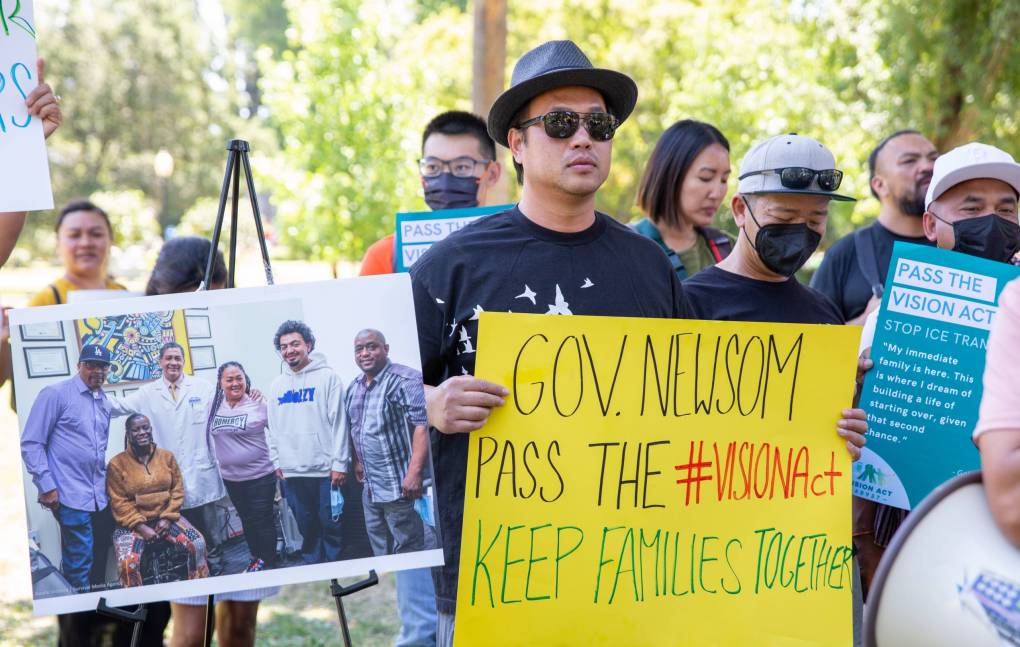
"caption": "Immigrant advocates rally for the passage of the VISION Act, in Sacramento on June 21, 2022. The bill would end the transfer of immigrants to U.S. Immigration and Customs Enforcement when they are released from California prisons.\n\n",
"description": null,
"title": "6.21.22 Vision Act Rally_Joyce Xi-7",
"credit": "Photo by Joyce Xi, courtesy of the Asian Law Caucus",
"status": "inherit",
"altTag": "Demonstrators stand in a group, holding signs and photos. One sign says: 'Gov. Newsom Pass The #VisionAct Keep Families Together'",
"isLoading": false,
"fetchFailed": false
},
"news_11921874": {
"type": "attachments",
"id": "news_11921874",
"meta": {
"index": "attachments_1716263798",
"site": "news",
"id": "11921874",
"found": true
},
"parent": 11921871,
"imgSizes": {
"twentyfourteen-full-width": {
"file": "https://ww2.kqed.org/app/uploads/sites/10/2022/08/Image-from-iOS-1038x576.jpg",
"width": 1038,
"mimeType": "image/jpeg",
"height": 576
},
"thumbnail": {
"file": "https://ww2.kqed.org/app/uploads/sites/10/2022/08/Image-from-iOS-160x90.jpg",
"width": 160,
"mimeType": "image/jpeg",
"height": 90
},
"post-thumbnail": {
"file": "https://ww2.kqed.org/app/uploads/sites/10/2022/08/Image-from-iOS-672x372.jpg",
"width": 672,
"mimeType": "image/jpeg",
"height": 372
},
"kqedFullSize": {
"file": "https://ww2.kqed.org/app/uploads/sites/10/2022/08/Image-from-iOS.jpg",
"width": 1918,
"height": 1080
},
"large": {
"file": "https://ww2.kqed.org/app/uploads/sites/10/2022/08/Image-from-iOS-1020x574.jpg",
"width": 1020,
"mimeType": "image/jpeg",
"height": 574
},
"1536x1536": {
"file": "https://ww2.kqed.org/app/uploads/sites/10/2022/08/Image-from-iOS-1536x865.jpg",
"width": 1536,
"mimeType": "image/jpeg",
"height": 865
},
"medium": {
"file": "https://ww2.kqed.org/app/uploads/sites/10/2022/08/Image-from-iOS-800x450.jpg",
"width": 800,
"mimeType": "image/jpeg",
"height": 450
}
},
"publishDate": 1659743551,
"modified": 1659743674,
"caption": "Jeremy C. Owens, Monica Z. Lam, Rachael Myrow, and Abbie Langston.",
"description": null,
"title": "Image-from-iOS",
"credit": "Christopher J Beale",
"status": "inherit",
"altTag": null,
"isLoading": false,
"fetchFailed": false
},
"news_11919750": {
"type": "attachments",
"id": "news_11919750",
"meta": {
"index": "attachments_1716263798",
"site": "news",
"id": "11919750",
"found": true
},
"parent": 11919749,
"imgSizes": {
"twentyfourteen-full-width": {
"file": "https://ww2.kqed.org/app/uploads/sites/10/2022/07/RS42010_GettyImages-450371257-qut-1038x576.jpg",
"width": 1038,
"mimeType": "image/jpeg",
"height": 576
},
"thumbnail": {
"file": "https://ww2.kqed.org/app/uploads/sites/10/2022/07/RS42010_GettyImages-450371257-qut-160x107.jpg",
"width": 160,
"mimeType": "image/jpeg",
"height": 107
},
"post-thumbnail": {
"file": "https://ww2.kqed.org/app/uploads/sites/10/2022/07/RS42010_GettyImages-450371257-qut-672x372.jpg",
"width": 672,
"mimeType": "image/jpeg",
"height": 372
},
"kqedFullSize": {
"file": "https://ww2.kqed.org/app/uploads/sites/10/2022/07/RS42010_GettyImages-450371257-qut.jpg",
"width": 1920,
"height": 1280
},
"large": {
"file": "https://ww2.kqed.org/app/uploads/sites/10/2022/07/RS42010_GettyImages-450371257-qut-1020x680.jpg",
"width": 1020,
"mimeType": "image/jpeg",
"height": 680
},
"1536x1536": {
"file": "https://ww2.kqed.org/app/uploads/sites/10/2022/07/RS42010_GettyImages-450371257-qut-1536x1024.jpg",
"width": 1536,
"mimeType": "image/jpeg",
"height": 1024
},
"medium": {
"file": "https://ww2.kqed.org/app/uploads/sites/10/2022/07/RS42010_GettyImages-450371257-qut-800x533.jpg",
"width": 800,
"mimeType": "image/jpeg",
"height": 533
}
},
"publishDate": 1657985315,
"modified": 1658173597,
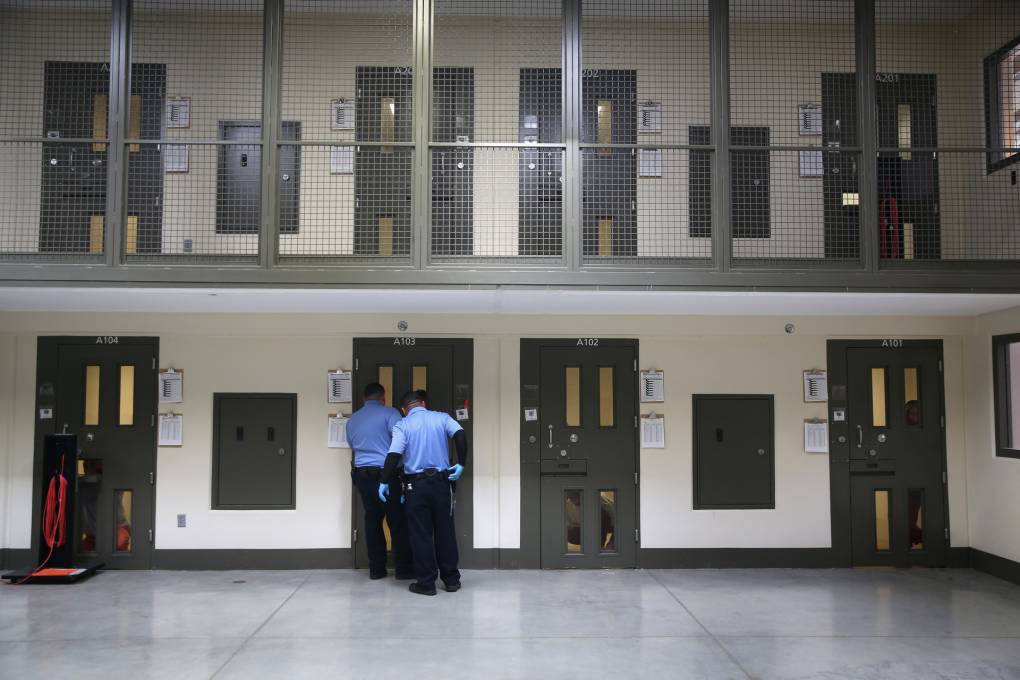
"caption": "Guards prepare to escort an immigrant detainee from his 'segregation cell' back into the general population at the Adelanto detention facility on November 15, 2013, in Adelanto. The facility is managed by the private GEO Group. ",
"description": null,
"title": "ICE Holds Immigrants At Adelanto Detention Facility",
"credit": "John Moore/Getty Images",
"status": "inherit",
"altTag": "A wide shot of two men wearing blue standing in front of a green door at a detention facility.",
"isLoading": false,
"fetchFailed": false
},
"news_11919534": {
"type": "attachments",
"id": "news_11919534",
"meta": {
"index": "attachments_1716263798",
"site": "news",
"id": "11919534",
"found": true
},
"parent": 11919450,
"imgSizes": {
"twentyfourteen-full-width": {
"file": "https://ww2.kqed.org/app/uploads/sites/10/2022/07/FarmworkersIlloVignet-1020x659-1-1020x576.jpg",
"width": 1020,
"mimeType": "image/jpeg",
"height": 576
},
"thumbnail": {
"file": "https://ww2.kqed.org/app/uploads/sites/10/2022/07/FarmworkersIlloVignet-1020x659-1-160x103.jpg",
"width": 160,
"mimeType": "image/jpeg",
"height": 103
},
"post-thumbnail": {
"file": "https://ww2.kqed.org/app/uploads/sites/10/2022/07/FarmworkersIlloVignet-1020x659-1-672x372.jpg",
"width": 672,
"mimeType": "image/jpeg",
"height": 372
},
"kqedFullSize": {
"file": "https://ww2.kqed.org/app/uploads/sites/10/2022/07/FarmworkersIlloVignet-1020x659-1.jpg",
"width": 1020,
"height": 659
},
"medium": {
"file": "https://ww2.kqed.org/app/uploads/sites/10/2022/07/FarmworkersIlloVignet-1020x659-1-800x517.jpg",
"width": 800,
"mimeType": "image/jpeg",
"height": 517
}
},
"publishDate": 1657745109,
"modified": 1657745501,
"caption": "Si un trabajador agrícola inmigrante experimenta una injusticia en su lugar de trabajo ¿qué puede hacer? Pese a que California cuenta con muchas protecciones laborales, los empleados con visas H-2A todavía son vulnerables a represalias no solo por parte de sus empleadores sino también de los reclutadores que los conectan a trabajos en la industria agrícola.",
"description": "Si un trabajador agrícola inmigrante experimenta una injusticia en su lugar de trabajo ¿qué puede hacer?",
"title": "FarmworkersIlloVignet-1020x659",
"credit": "Anna Vignet/KQED",
"status": "inherit",
"altTag": "Un dibujo que muestra a trabajadores en el campo laborando bajo un fuerte sol.",
"isLoading": false,
"fetchFailed": false
},
"news_11919168": {
"type": "attachments",
"id": "news_11919168",
"meta": {
"index": "attachments_1716263798",
"site": "news",
"id": "11919168",
"found": true
},
"parent": 11919161,
"imgSizes": {
"twentyfourteen-full-width": {
"file": "https://ww2.kqed.org/app/uploads/sites/10/2022/07/IMG_0397-1020x680-1-1020x576.jpeg",
"width": 1020,
"mimeType": "image/jpeg",
"height": 576
},
"thumbnail": {
"file": "https://ww2.kqed.org/app/uploads/sites/10/2022/07/IMG_0397-1020x680-1-160x107.jpeg",
"width": 160,
"mimeType": "image/jpeg",
"height": 107
},
"post-thumbnail": {
"file": "https://ww2.kqed.org/app/uploads/sites/10/2022/07/IMG_0397-1020x680-1-672x372.jpeg",
"width": 672,
"mimeType": "image/jpeg",
"height": 372
},
"kqedFullSize": {
"file": "https://ww2.kqed.org/app/uploads/sites/10/2022/07/IMG_0397-1020x680-1.jpeg",
"width": 1020,
"height": 680
},
"medium": {
"file": "https://ww2.kqed.org/app/uploads/sites/10/2022/07/IMG_0397-1020x680-1-800x533.jpeg",
"width": 800,
"mimeType": "image/jpeg",
"height": 533
}
},
"publishDate": 1657323732,
"modified": 1657328465,
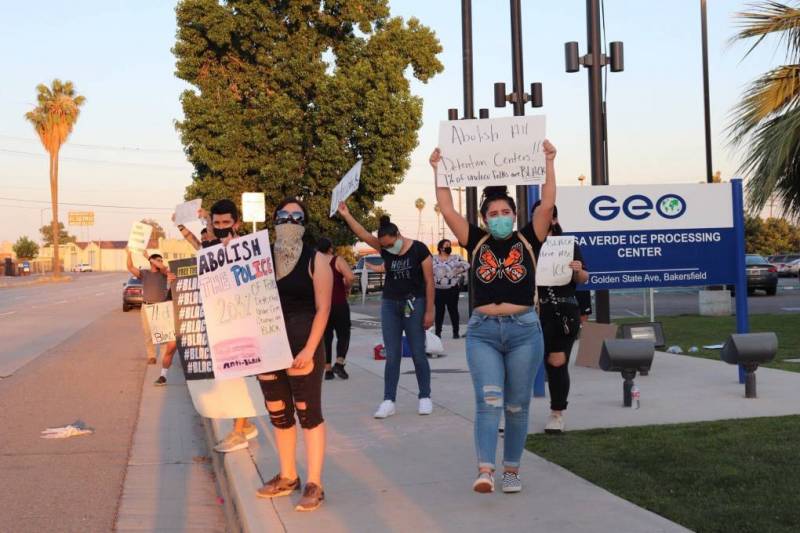
"caption": "Protesters hold signs outside the Mesa Verde ICE Processing Center in Bakersfield on June 4, 2020. Detainees Mohamed Mousa and Pedro Figueroa said they were moved to solitary confinement after signing a declaration on June 28, 2022, that they were joining a peaceful work stoppage by ICE detainees who are paid $1 a day to clean dorms and bathrooms.",
"description": null,
"title": "IMG_0397-1020x680",
"credit": "Tania Bernal/California Immigrant Youth Justice Alliance",
"status": "inherit",
"altTag": null,
"isLoading": false,
"fetchFailed": false
},
"news_11918458": {
"type": "attachments",
"id": "news_11918458",
"meta": {
"index": "attachments_1716263798",
"site": "news",
"id": "11918458",
"found": true
},
"parent": 11918450,
"imgSizes": {
"twentyfourteen-full-width": {
"file": "https://ww2.kqed.org/app/uploads/sites/10/2022/06/RS20460_GettyImages-583816238-qut-1038x576.jpg",
"width": 1038,
"mimeType": "image/jpeg",
"height": 576
},
"thumbnail": {
"file": "https://ww2.kqed.org/app/uploads/sites/10/2022/06/RS20460_GettyImages-583816238-qut-160x107.jpg",
"width": 160,
"mimeType": "image/jpeg",
"height": 107
},
"post-thumbnail": {
"file": "https://ww2.kqed.org/app/uploads/sites/10/2022/06/RS20460_GettyImages-583816238-qut-672x372.jpg",
"width": 672,
"mimeType": "image/jpeg",
"height": 372
},
"kqedFullSize": {
"file": "https://ww2.kqed.org/app/uploads/sites/10/2022/06/RS20460_GettyImages-583816238-qut.jpg",
"width": 1920,
"height": 1283
},
"large": {
"file": "https://ww2.kqed.org/app/uploads/sites/10/2022/06/RS20460_GettyImages-583816238-qut-1020x682.jpg",
"width": 1020,
"mimeType": "image/jpeg",
"height": 682
},
"1536x1536": {
"file": "https://ww2.kqed.org/app/uploads/sites/10/2022/06/RS20460_GettyImages-583816238-qut-1536x1026.jpg",
"width": 1536,
"mimeType": "image/jpeg",
"height": 1026
},
"medium": {
"file": "https://ww2.kqed.org/app/uploads/sites/10/2022/06/RS20460_GettyImages-583816238-qut-800x535.jpg",
"width": 800,
"mimeType": "image/jpeg",
"height": 535
}
},
"publishDate": 1656548139,
"modified": 1656619581,
"caption": "Gov. Gavin Newsom speaks during Day Three of the Democratic National Convention at the Wells Fargo Center in Philadelphia, Pennsylvania, July 27, 2016.",
"description": null,
"title": "RS20460_GettyImages-583816238-qut",
"credit": "Nicholas Kamm/AFP/Getty Images",
"status": "inherit",
"altTag": "A man in a business suit stands at a podium with his left hand raised.",
"isLoading": false,
"fetchFailed": false
},
"news_11918420": {
"type": "attachments",
"id": "news_11918420",
"meta": {
"index": "attachments_1716263798",
"site": "news",
"id": "11918420",
"found": true
},
"parent": 11918317,
"imgSizes": {
"twentyfourteen-full-width": {
"file": "https://ww2.kqed.org/app/uploads/sites/10/2022/06/FarmworkersIlloVignet-1038x576.jpg",
"width": 1038,
"mimeType": "image/jpeg",
"height": 576
},
"thumbnail": {
"file": "https://ww2.kqed.org/app/uploads/sites/10/2022/06/FarmworkersIlloVignet-160x103.jpg",
"width": 160,
"mimeType": "image/jpeg",
"height": 103
},
"post-thumbnail": {
"file": "https://ww2.kqed.org/app/uploads/sites/10/2022/06/FarmworkersIlloVignet-672x372.jpg",
"width": 672,
"mimeType": "image/jpeg",
"height": 372
},
"kqedFullSize": {
"file": "https://ww2.kqed.org/app/uploads/sites/10/2022/06/FarmworkersIlloVignet.jpg",
"width": 1920,
"height": 1240
},
"large": {
"file": "https://ww2.kqed.org/app/uploads/sites/10/2022/06/FarmworkersIlloVignet-1020x659.jpg",
"width": 1020,
"mimeType": "image/jpeg",
"height": 659
},
"1536x1536": {
"file": "https://ww2.kqed.org/app/uploads/sites/10/2022/06/FarmworkersIlloVignet-1536x992.jpg",
"width": 1536,
"mimeType": "image/jpeg",
"height": 992
},
"medium": {
"file": "https://ww2.kqed.org/app/uploads/sites/10/2022/06/FarmworkersIlloVignet-800x517.jpg",
"width": 800,
"mimeType": "image/jpeg",
"height": 517
}
},
"publishDate": 1656543213,
"modified": 1656701270,
"caption": "What's it like for immigrant farmworkers to report an unfair labor practice in California? Labor rights advocates say laborers with H-2A visas are vulnerable to retaliation not just from their employers but from recruiters that connect them to jobs in the future.",
"description": null,
"title": "FarmworkersIlloVignet",
"credit": "Anna Vignet/KQED",
"status": "inherit",
"altTag": "colorful illustration shows farmworkers working between rows of grape vines under a blistering hot sun",
"isLoading": false,
"fetchFailed": false
},
"news_11917737": {
"type": "attachments",
"id": "news_11917737",
"meta": {
"index": "attachments_1716263798",
"site": "news",
"id": "11917737",
"found": true
},
"parent": 11917687,
"imgSizes": {
"twentyfourteen-full-width": {
"file": "https://ww2.kqed.org/app/uploads/sites/10/2022/06/RS56770_GettyImages-1241480114-qut-1038x576.jpg",
"width": 1038,
"mimeType": "image/jpeg",
"height": 576
},
"thumbnail": {
"file": "https://ww2.kqed.org/app/uploads/sites/10/2022/06/RS56770_GettyImages-1241480114-qut-160x107.jpg",
"width": 160,
"mimeType": "image/jpeg",
"height": 107
},
"post-thumbnail": {
"file": "https://ww2.kqed.org/app/uploads/sites/10/2022/06/RS56770_GettyImages-1241480114-qut-672x372.jpg",
"width": 672,
"mimeType": "image/jpeg",
"height": 372
},
"kqedFullSize": {
"file": "https://ww2.kqed.org/app/uploads/sites/10/2022/06/RS56770_GettyImages-1241480114-qut.jpg",
"width": 1280,
"height": 853
},
"large": {
"file": "https://ww2.kqed.org/app/uploads/sites/10/2022/06/RS56770_GettyImages-1241480114-qut-1020x680.jpg",
"width": 1020,
"mimeType": "image/jpeg",
"height": 680
},
"medium": {
"file": "https://ww2.kqed.org/app/uploads/sites/10/2022/06/RS56770_GettyImages-1241480114-qut-800x533.jpg",
"width": 800,
"mimeType": "image/jpeg",
"height": 533
}
},
"publishDate": 1656016526,
"modified": 1656016565,
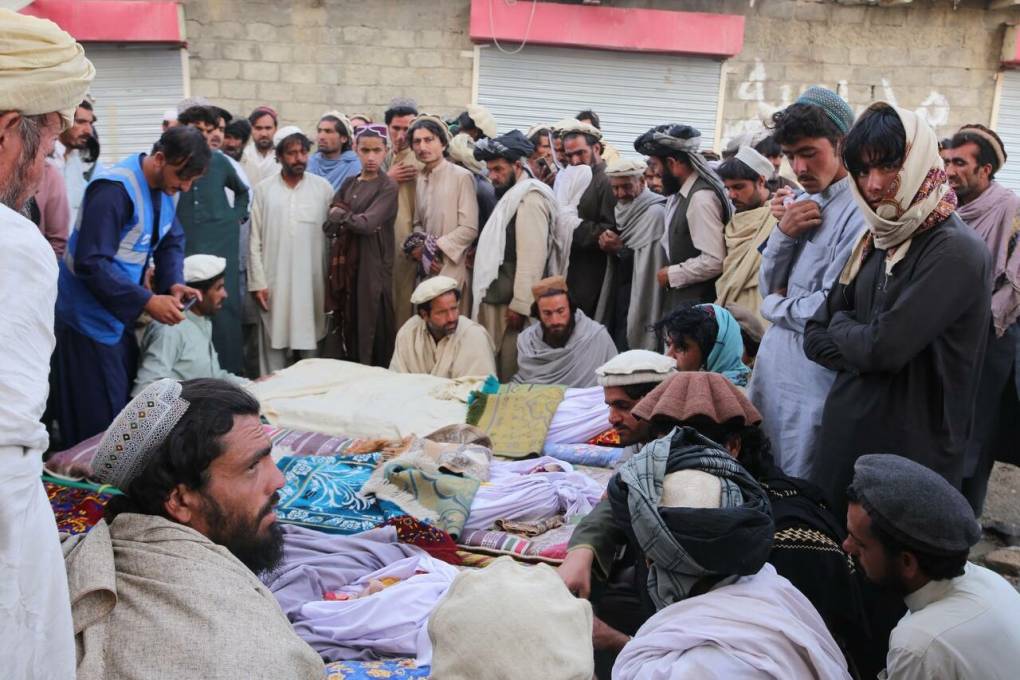
"caption": "Burials of quake victims continue in the second day, in the district of Giyan, in Afghanistan on June 23, 2022. A powerful earthquake struck Afghanistan's eastern Paktika province on June 22, killing more than 1,150 people. The bodies collected from the rubble were brought to the Giyan Central Mosque, where the funeral prayer was performed, and then they were distributed to the villages and buried. ",
"description": null,
"title": "Burials of quake victims continue in Afghanistan",
"credit": "Photo by Bilal Guler/Anadolu Agency via Getty Images",
"status": "inherit",
"altTag": "Several people stand and sit near to bodies covered in blankets",
"isLoading": false,
"fetchFailed": false
},
"news_11917627": {
"type": "attachments",
"id": "news_11917627",
"meta": {
"index": "attachments_1716263798",
"site": "news",
"id": "11917627",
"found": true
},
"parent": 11917597,
"imgSizes": {
"twentyfourteen-full-width": {
"file": "https://ww2.kqed.org/app/uploads/sites/10/2022/06/GoldenStateAnnex-1038x576.jpg",
"width": 1038,
"mimeType": "image/jpeg",
"height": 576
},
"thumbnail": {
"file": "https://ww2.kqed.org/app/uploads/sites/10/2022/06/GoldenStateAnnex-160x110.jpg",
"width": 160,
"mimeType": "image/jpeg",
"height": 110
},
"post-thumbnail": {
"file": "https://ww2.kqed.org/app/uploads/sites/10/2022/06/GoldenStateAnnex-672x372.jpg",
"width": 672,
"mimeType": "image/jpeg",
"height": 372
},
"kqedFullSize": {
"file": "https://ww2.kqed.org/app/uploads/sites/10/2022/06/GoldenStateAnnex.jpg",
"width": 1778,
"height": 1217
},
"large": {
"file": "https://ww2.kqed.org/app/uploads/sites/10/2022/06/GoldenStateAnnex-1020x698.jpg",
"width": 1020,
"mimeType": "image/jpeg",
"height": 698
},
"1536x1536": {
"file": "https://ww2.kqed.org/app/uploads/sites/10/2022/06/GoldenStateAnnex-1536x1051.jpg",
"width": 1536,
"mimeType": "image/jpeg",
"height": 1051
},
"medium": {
"file": "https://ww2.kqed.org/app/uploads/sites/10/2022/06/GoldenStateAnnex-800x548.jpg",
"width": 800,
"mimeType": "image/jpeg",
"height": 548
}
},
"publishDate": 1655939837,
"modified": 1655940831,
"caption": "Protesters gathered outside the Golden State Annex immigrant detention center in McFarland, Calif. on May 29, 2022. The event was part of a statewide effort to call attention to conditions for immigrant detainees.",
"description": null,
"title": "Golden State Annex",
"credit": "Courtesy of Joyce Xi and the Dignity Not Detention coalition",
"status": "inherit",
"altTag": "Signage for The Golden State Annex immigrant detention center in the forefront. Protesters are in the background.",
"isLoading": false,
"fetchFailed": false
},
"news_11917148": {
"type": "attachments",
"id": "news_11917148",
"meta": {
"index": "attachments_1716263798",
"site": "news",
"id": "11917148",
"found": true
},
"parent": 11917125,
"imgSizes": {
"twentyfourteen-full-width": {
"file": "https://ww2.kqed.org/app/uploads/sites/10/2022/06/RS56564_001_KQED_JuHongHayward_06062022-qut-1038x576.jpg",
"width": 1038,
"mimeType": "image/jpeg",
"height": 576
},
"thumbnail": {
"file": "https://ww2.kqed.org/app/uploads/sites/10/2022/06/RS56564_001_KQED_JuHongHayward_06062022-qut-160x107.jpg",
"width": 160,
"mimeType": "image/jpeg",
"height": 107
},
"post-thumbnail": {
"file": "https://ww2.kqed.org/app/uploads/sites/10/2022/06/RS56564_001_KQED_JuHongHayward_06062022-qut-672x372.jpg",
"width": 672,
"mimeType": "image/jpeg",
"height": 372
},
"kqedFullSize": {
"file": "https://ww2.kqed.org/app/uploads/sites/10/2022/06/RS56564_001_KQED_JuHongHayward_06062022-qut.jpg",
"width": 1920,
"height": 1280
},
"large": {
"file": "https://ww2.kqed.org/app/uploads/sites/10/2022/06/RS56564_001_KQED_JuHongHayward_06062022-qut-1020x680.jpg",
"width": 1020,
"mimeType": "image/jpeg",
"height": 680
},
"1536x1536": {
"file": "https://ww2.kqed.org/app/uploads/sites/10/2022/06/RS56564_001_KQED_JuHongHayward_06062022-qut-1536x1024.jpg",
"width": 1536,
"mimeType": "image/jpeg",
"height": 1024
},
"medium": {
"file": "https://ww2.kqed.org/app/uploads/sites/10/2022/06/RS56564_001_KQED_JuHongHayward_06062022-qut-800x533.jpg",
"width": 800,
"mimeType": "image/jpeg",
"height": 533
}
},
"publishDate": 1655249259,
"modified": 1655328466,
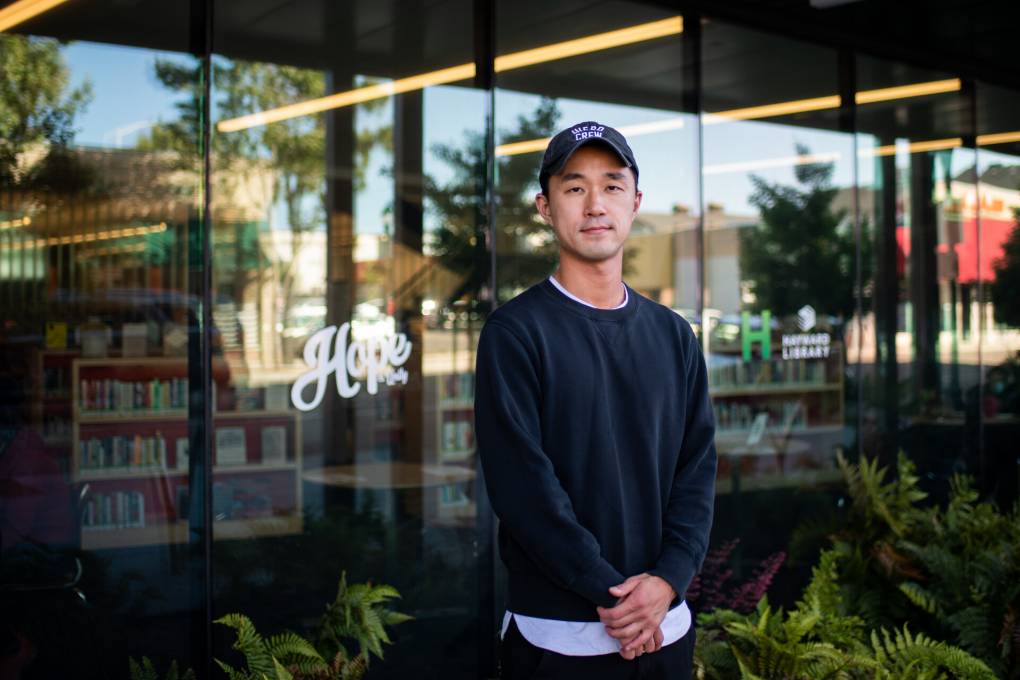
"caption": "Ju Hong poses for a portrait at the Hayward Public Library, where he often can be found studying, on June 6, 2022.",
"description": null,
"title": "RS56564_001_KQED_JuHongHayward_06062022-qut",
"credit": "Beth LaBerge/KQED",
"status": "inherit",
"altTag": "A young, clean-shaven Asian man in a navy baseball cap with white lettering saying “Crew” and a navy sweatshirt over a white T-shirt stands outdoors with his arms loose in front of him, left hand over his right wrist, in front of a plate glass wall. Through the glass, bookshelves and overhead fluorescent lights are visible; a sticker that says “Hope” in white cursive letters is visible on the glass. Between the man and the wall are the tops of green ferns. The man is standing tall, his posture casual, and he smiles simply and directly at the camera.",
"isLoading": false,
"fetchFailed": false
},
"news_11915847": {
"type": "attachments",
"id": "news_11915847",
"meta": {
"index": "attachments_1716263798",
"site": "news",
"id": "11915847",
"found": true
},
"parent": 11915841,
"imgSizes": {
"twentyfourteen-full-width": {
"file": "https://ww2.kqed.org/app/uploads/sites/10/2022/06/IMG_2110-1038x576.jpg",
"width": 1038,
"mimeType": "image/jpeg",
"height": 576
},
"thumbnail": {
"file": "https://ww2.kqed.org/app/uploads/sites/10/2022/06/IMG_2110-160x120.jpg",
"width": 160,
"mimeType": "image/jpeg",
"height": 120
},
"post-thumbnail": {
"file": "https://ww2.kqed.org/app/uploads/sites/10/2022/06/IMG_2110-672x372.jpg",
"width": 672,
"mimeType": "image/jpeg",
"height": 372
},
"kqedFullSize": {
"file": "https://ww2.kqed.org/app/uploads/sites/10/2022/06/IMG_2110-scaled.jpg",
"width": 2560,
"height": 1920
},
"2048x2048": {
"file": "https://ww2.kqed.org/app/uploads/sites/10/2022/06/IMG_2110-2048x1536.jpg",
"width": 2048,
"mimeType": "image/jpeg",
"height": 1536
},
"large": {
"file": "https://ww2.kqed.org/app/uploads/sites/10/2022/06/IMG_2110-1020x765.jpg",
"width": 1020,
"mimeType": "image/jpeg",
"height": 765
},
"1536x1536": {
"file": "https://ww2.kqed.org/app/uploads/sites/10/2022/06/IMG_2110-1536x1152.jpg",
"width": 1536,
"mimeType": "image/jpeg",
"height": 1152
},
"full-width": {
"file": "https://ww2.kqed.org/app/uploads/sites/10/2022/06/IMG_2110-1920x1440.jpg",
"width": 1920,
"mimeType": "image/jpeg",
"height": 1440
},
"medium": {
"file": "https://ww2.kqed.org/app/uploads/sites/10/2022/06/IMG_2110-800x600.jpg",
"width": 800,
"mimeType": "image/jpeg",
"height": 600
}
},
"publishDate": 1654194898,
"modified": 1654203164,
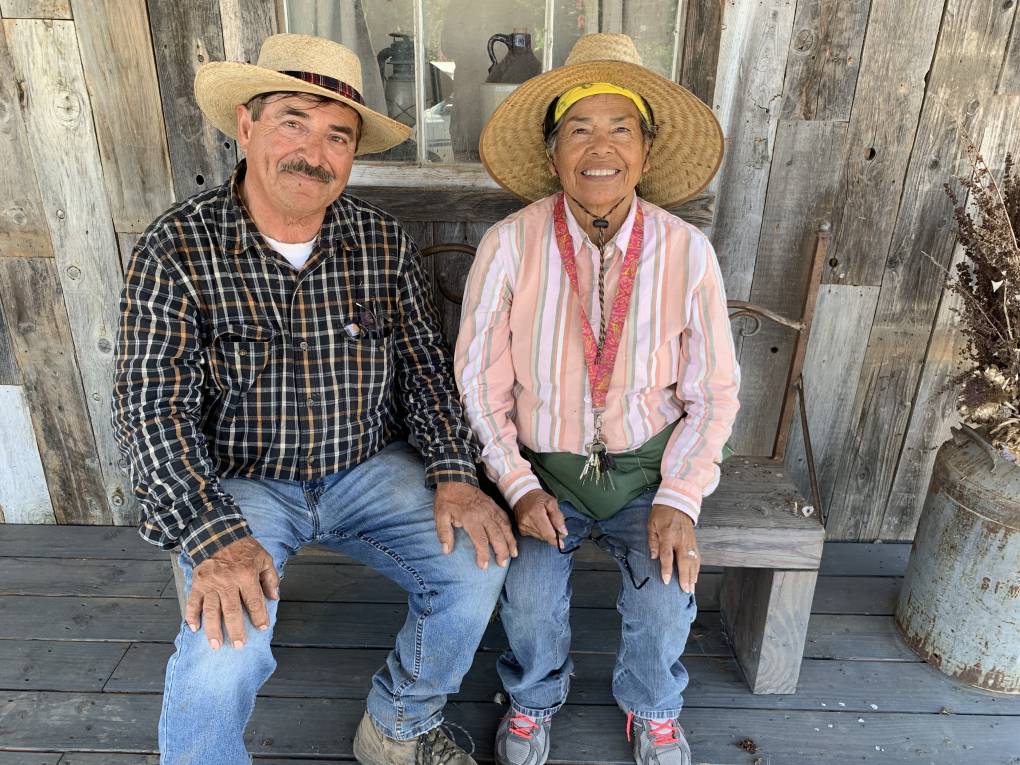
"caption": "Manuel and Olga Jimenez designed and created a 13-acre botanical garden to beautify their small town of Woodlake and help kids get interested in agriculture.",
"description": null,
"title": "IMG_2110",
"credit": "Alice Daniel/KVPR",
"status": "inherit",
"altTag": null,
"isLoading": false,
"fetchFailed": false
},
"news_11914798": {
"type": "attachments",
"id": "news_11914798",
"meta": {
"index": "attachments_1716263798",
"site": "news",
"id": "11914798",
"found": true
},
"parent": 11914791,
"imgSizes": {
"twentyfourteen-full-width": {
"file": "https://ww2.kqed.org/app/uploads/sites/10/2022/05/GettyImages-1318690366-1038x576.jpg",
"width": 1038,
"mimeType": "image/jpeg",
"height": 576
},
"thumbnail": {
"file": "https://ww2.kqed.org/app/uploads/sites/10/2022/05/GettyImages-1318690366-160x107.jpg",
"width": 160,
"mimeType": "image/jpeg",
"height": 107
},
"post-thumbnail": {
"file": "https://ww2.kqed.org/app/uploads/sites/10/2022/05/GettyImages-1318690366-672x372.jpg",
"width": 672,
"mimeType": "image/jpeg",
"height": 372
},
"kqedFullSize": {
"file": "https://ww2.kqed.org/app/uploads/sites/10/2022/05/GettyImages-1318690366-scaled.jpg",
"width": 2560,
"height": 1707
},
"2048x2048": {
"file": "https://ww2.kqed.org/app/uploads/sites/10/2022/05/GettyImages-1318690366-2048x1365.jpg",
"width": 2048,
"mimeType": "image/jpeg",
"height": 1365
},
"large": {
"file": "https://ww2.kqed.org/app/uploads/sites/10/2022/05/GettyImages-1318690366-1020x680.jpg",
"width": 1020,
"mimeType": "image/jpeg",
"height": 680
},
"1536x1536": {
"file": "https://ww2.kqed.org/app/uploads/sites/10/2022/05/GettyImages-1318690366-1536x1024.jpg",
"width": 1536,
"mimeType": "image/jpeg",
"height": 1024
},
"full-width": {
"file": "https://ww2.kqed.org/app/uploads/sites/10/2022/05/GettyImages-1318690366-1920x1280.jpg",
"width": 1920,
"mimeType": "image/jpeg",
"height": 1280
},
"medium": {
"file": "https://ww2.kqed.org/app/uploads/sites/10/2022/05/GettyImages-1318690366-800x533.jpg",
"width": 800,
"mimeType": "image/jpeg",
"height": 533
}
},
"publishDate": 1653089375,
"modified": 1653338120,
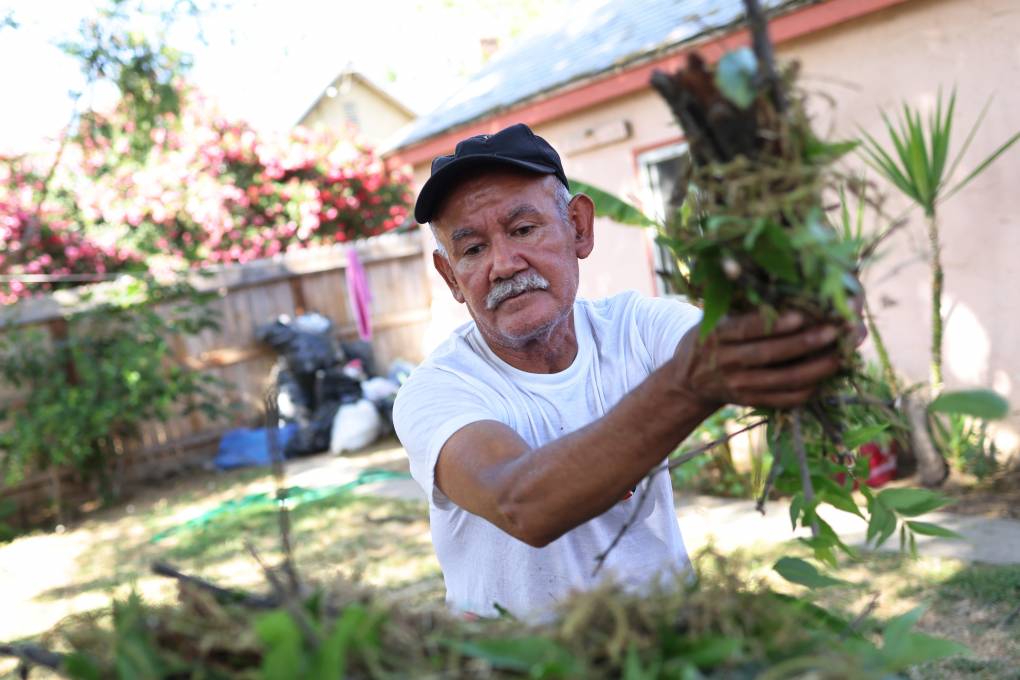
"caption": "Asuncion Ponce, a farmworker originally from Mexico, cleans up his yard on May 17, 2021, in Fresno. Ponce has been a farmworker for 33 years after coming to the US from Puebla, Mexico.",
"description": "Asuncion Ponce, a farm worker originally from Mexico, cleans up his yard on May 17, 2021 in Fresno. Ponce has been a farm worker for 33 years after coming to the U.S. from Puebla, Mexico. ",
"title": "Congress Considers Legislation To Provide Legal Protections For Undocumented Farm Workers",
"credit": "Michael M. Santiago/Getty Images",
"status": "inherit",
"altTag": "A middle-aged Latino man with short hair and a gray mustache, wearing a white T-shirt and a black baseball hat, lifts a handful of green yard waste with both hands toward the camera. He looks down at what could be a pile of similar green waste, blurred in the foreground. He stands in the backyard of a one-story, peach-colored house, with a wooden fence behind him and pink, flowering trees rising beyond it in the next yard.",
"isLoading": false,
"fetchFailed": false
}
},
"audioPlayerReducer": {
"postId": "stream_live",
"isPaused": true,
"isPlaying": false,
"pfsActive": false,
"pledgeModalIsOpen": true,
"playerDrawerIsOpen": false,
"liveAudioPlayStartedAt": 0,
"liveAudioPlayContext": ""
},
"authorsReducer": {
"byline_news_11914800": {
"type": "authors",
"id": "byline_news_11914800",
"meta": {
"override": true
},
"slug": "byline_news_11914800",
"name": "Tyche Hendricks",
"isLoading": false
},
"kqed": {
"type": "authors",
"id": "236",
"meta": {
"index": "authors_1716337520",
"id": "236",
"found": true
},
"name": "KQED News Staff",
"firstName": "KQED News Staff",
"lastName": null,
"slug": "kqed",
"email": "faq@kqed.org",
"display_author_email": false,
"staff_mastheads": [],
"title": null,
"bio": null,
"avatar": "https://secure.gravatar.com/avatar/ef0e801a68c4c54afa9180db14084167?s=600&d=blank&r=g",
"twitter": null,
"facebook": null,
"instagram": null,
"linkedin": null,
"sites": [
{
"site": "arts",
"roles": [
"contributor"
]
},
{
"site": "news",
"roles": [
"editor"
]
},
{
"site": "futureofyou",
"roles": [
"author"
]
}
],
"headData": {
"title": "KQED News Staff | KQED",
"description": null,
"ogImgSrc": "https://secure.gravatar.com/avatar/ef0e801a68c4c54afa9180db14084167?s=600&d=blank&r=g",
"twImgSrc": "https://secure.gravatar.com/avatar/ef0e801a68c4c54afa9180db14084167?s=600&d=blank&r=g"
},
"isLoading": false,
"link": "/author/kqed"
},
"kqednewsstaffandwires": {
"type": "authors",
"id": "237",
"meta": {
"index": "authors_1716337520",
"id": "237",
"found": true
},
"name": "KQED News Staff and Wires",
"firstName": "KQED News Staff and Wires",
"lastName": null,
"slug": "kqednewsstaffandwires",
"email": "onlinenewsstaff@kqed.org",
"display_author_email": false,
"staff_mastheads": [],
"title": null,
"bio": null,
"avatar": "https://secure.gravatar.com/avatar/72295af8ebbfbd19a4948f5271285664?s=600&d=blank&r=g",
"twitter": null,
"facebook": null,
"instagram": null,
"linkedin": null,
"sites": [
{
"site": "arts",
"roles": [
"contributor"
]
},
{
"site": "news",
"roles": [
"contributor"
]
},
{
"site": "lowdown",
"roles": [
"author"
]
},
{
"site": "stateofhealth",
"roles": [
"contributor"
]
},
{
"site": "food",
"roles": [
"author"
]
}
],
"headData": {
"title": "KQED News Staff and Wires | KQED",
"description": null,
"ogImgSrc": "https://secure.gravatar.com/avatar/72295af8ebbfbd19a4948f5271285664?s=600&d=blank&r=g",
"twImgSrc": "https://secure.gravatar.com/avatar/72295af8ebbfbd19a4948f5271285664?s=600&d=blank&r=g"
},
"isLoading": false,
"link": "/author/kqednewsstaffandwires"
},
"mlam": {
"type": "authors",
"id": "244",
"meta": {
"index": "authors_1716337520",
"id": "244",
"found": true
},
"name": "Monica Lam",
"firstName": "Monica Z.",
"lastName": "Lam",
"slug": "mlam",
"email": "mlam@kqed.org",
"display_author_email": true,
"staff_mastheads": [
"news"
],
"title": "KQED Senior Producer",
"bio": "Monica is senior producer of the weekly current affairs program, \"KQED Newsroom.\" She's also served as senior editor of digital content at KQED. She likes to report and edit as well as produce video and take photos.\r\n\r\nBefore joining KQED, Monica worked at the Center for Investigative Reporting, where she examined conditions inside \u003cspan style=\"font-weight: 400;\">maximum security \u003c/span>prisons and abuse in state-run institutions for the developmentally disabled. Prior to that, she produced and directed \u003cem>Journey of the Bonesetter's Daughter,\u003c/em> a documentary that follows novelist Amy Tan as she creates an opera based on her family history.\r\n\r\nMonica's work has been honored with a duPont Award, five Emmys, regional and national Murrow Awards, and has been recognized by Investigative Reporters and Editors, the Society of Professional Journalists, Religion Newswriters Association and the San Francisco Peninsula Press Club. Monica studied urban studies at Stanford University and earned a master's in journalism at University of California at Berkeley. Follow her on twitter: @monicazlam",
"avatar": "https://secure.gravatar.com/avatar/018c474b2b71f43e0e6ca9b15a0ad36f?s=600&d=blank&r=g",
"twitter": "@monicazlam",
"facebook": null,
"instagram": null,
"linkedin": null,
"sites": [
{
"site": "arts",
"roles": [
"administrator"
]
},
{
"site": "news",
"roles": [
"editor"
]
},
{
"site": "trulyca",
"roles": [
"editor"
]
},
{
"site": "science",
"roles": [
"editor"
]
},
{
"site": "breakingnews",
"roles": [
"editor"
]
}
],
"headData": {
"title": "Monica Lam | KQED",
"description": "KQED Senior Producer",
"ogImgSrc": "https://secure.gravatar.com/avatar/018c474b2b71f43e0e6ca9b15a0ad36f?s=600&d=blank&r=g",
"twImgSrc": "https://secure.gravatar.com/avatar/018c474b2b71f43e0e6ca9b15a0ad36f?s=600&d=blank&r=g"
},
"isLoading": false,
"link": "/author/mlam"
},
"tychehendricks": {
"type": "authors",
"id": "259",
"meta": {
"index": "authors_1716337520",
"id": "259",
"found": true
},
"name": "Tyche Hendricks",
"firstName": "Tyche",
"lastName": "Hendricks",
"slug": "tychehendricks",
"email": "thendricks@kqed.org",
"display_author_email": true,
"staff_mastheads": [
"news"
],
"title": "KQED Senior Editor, Immigration",
"bio": "\u003cspan style=\"font-weight: 400;\">Tyche Hendricks is KQED’s senior editor for immigration, leading coverage of the policy and politics that affect California’s immigrant communities. Her work for KQED’s radio and online audiences is also carried on NPR and other national outlets. She has been recognized with awards from the Radio and Television News Directors Association, the Society for Professional Journalists; the Education Writers Association; the Best of the West and the National Federation of Community Broadcasters. Before joining KQED in 2010, Tyche spent more than a dozen years as a newspaper reporter, notably at the \u003c/span>\u003ci>\u003cspan style=\"font-weight: 400;\">San Francisco Chronicle\u003c/span>\u003c/i>\u003cspan style=\"font-weight: 400;\">. At different times she has covered criminal justice, government and politics and urban planning. Tyche has taught in the MFA Creative Writing program at the University of San Francisco and at UC Berkeley’s Graduate School of Journalism, where she was co-director of a national immigration symposium for professional journalists. She is the author of \u003c/span>\u003ci>\u003cspan style=\"font-weight: 400;\">The Wind Doesn't Need a Passport: Stories from the U.S.-Mexico Borderlands\u003c/span>\u003c/i>\u003cspan style=\"font-weight: 400;\"> (University of California Press). \u003c/span>",
"avatar": "https://secure.gravatar.com/avatar/b8ee458e2731c2d43df86882ce17267e?s=600&d=blank&r=g",
"twitter": "tychehendricks",
"facebook": null,
"instagram": null,
"linkedin": null,
"sites": [
{
"site": "news",
"roles": [
"editor"
]
},
{
"site": "stateofhealth",
"roles": [
"editor"
]
}
],
"headData": {
"title": "Tyche Hendricks | KQED",
"description": "KQED Senior Editor, Immigration",
"ogImgSrc": "https://secure.gravatar.com/avatar/b8ee458e2731c2d43df86882ce17267e?s=600&d=blank&r=g",
"twImgSrc": "https://secure.gravatar.com/avatar/b8ee458e2731c2d43df86882ce17267e?s=600&d=blank&r=g"
},
"isLoading": false,
"link": "/author/tychehendricks"
},
"fjhabvala": {
"type": "authors",
"id": "8659",
"meta": {
"index": "authors_1716337520",
"id": "8659",
"found": true
},
"name": "Farida Jhabvala Romero",
"firstName": "Farida",
"lastName": "Jhabvala Romero",
"slug": "fjhabvala",
"email": "fjhabvala@kqed.org",
"display_author_email": true,
"staff_mastheads": [
"news"
],
"title": "KQED Contributor",
"bio": "Farida Jhabvala Romero is a Labor Correspondent for KQED. She previously covered immigration. Farida was \u003ca href=\"https://www.ccnma.org/2022-most-influential-latina-journalists\">named\u003c/a> one of the 10 Most Influential Latina Journalists in California in 2022 by the California Chicano News Media Association. Her work has won awards from the Society of Professional Journalists (Northern California), as well as a national and regional Edward M. Murrow Award for the collaborative reporting projects “Dangerous Air” and “Graying California.” Before joining KQED, Farida worked as a producer at Radio Bilingüe, a national public radio network. Farida earned her master’s degree in journalism from Stanford University.",
"avatar": "https://secure.gravatar.com/avatar/f9f022d4e2609741874222a1e9d41f48fea74011aa7c615eef91d9a50c944ebe?s=600&d=blank&r=g",
"twitter": "FaridaJhabvala",
"bluesky": null,
"facebook": null,
"instagram": null,
"linkedin": "https://www.linkedin.com/in/faridajhabvala/",
"sites": [
{
"site": "news",
"roles": [
"editor"
]
},
{
"site": "stateofhealth",
"roles": [
"author"
]
},
{
"site": "liveblog",
"roles": [
"author"
]
}
],
"headData": {
"title": "Farida Jhabvala Romero | KQED",
"description": "KQED Contributor",
"ogImgSrc": "https://secure.gravatar.com/avatar/f9f022d4e2609741874222a1e9d41f48fea74011aa7c615eef91d9a50c944ebe?s=600&d=blank&r=g",
"twImgSrc": "https://secure.gravatar.com/avatar/f9f022d4e2609741874222a1e9d41f48fea74011aa7c615eef91d9a50c944ebe?s=600&d=blank&r=g"
},
"isLoading": false,
"link": "/author/fjhabvala"
},
"ccabreralomeli": {
"type": "authors",
"id": "11708",
"meta": {
"index": "authors_1716337520",
"id": "11708",
"found": true
},
"name": "Carlos Cabrera-Lomelí",
"firstName": "Carlos",
"lastName": "Cabrera-Lomelí",
"slug": "ccabreralomeli",
"email": "ccabreralomeli@KQED.org",
"display_author_email": true,
"staff_mastheads": [
"news"
],
"title": "Community Reporter",
"bio": "Carlos Cabrera-Lomelí is a community reporter with KQED's digital engagement team. He also reports and co-produces for KQED's bilingual news hub KQED en Español. He grew up in San Francisco's Mission District and has previously worked with Univision, 48 Hills and REFORMA in Mexico City.",
"avatar": "https://secure.gravatar.com/avatar/c309be9665e484f887b818c89e273ecc673004f426f36b24d00a4d813a2e0518?s=600&d=blank&r=g",
"twitter": "@LomeliCabrera",
"bluesky": null,
"facebook": null,
"instagram": null,
"linkedin": null,
"sites": [
{
"site": "arts",
"roles": [
"editor"
]
},
{
"site": "news",
"roles": [
"editor"
]
},
{
"site": "about",
"roles": [
"editor"
]
},
{
"site": "science",
"roles": [
"editor"
]
},
{
"site": "perspectives",
"roles": [
"editor"
]
},
{
"site": "elections",
"roles": [
"editor"
]
},
{
"site": "liveblog",
"roles": [
"contributor"
]
}
],
"headData": {
"title": "Carlos Cabrera-Lomelí | KQED",
"description": "Community Reporter",
"ogImgSrc": "https://secure.gravatar.com/avatar/c309be9665e484f887b818c89e273ecc673004f426f36b24d00a4d813a2e0518?s=600&d=blank&r=g",
"twImgSrc": "https://secure.gravatar.com/avatar/c309be9665e484f887b818c89e273ecc673004f426f36b24d00a4d813a2e0518?s=600&d=blank&r=g"
},
"isLoading": false,
"link": "/author/ccabreralomeli"
}
},
"pagesReducer": {
"news_category_immigration": {
"type": "terms",
"id": "news_1169",
"meta": {
"index": "terms_1716263798",
"site": "news",
"id": "1169",
"score": 10.910406
},
"featImg": null,
"name": "Immigration",
"description": null,
"taxonomy": "category",
"headData": {
"twImgId": null,
"twTitle": null,
"ogTitle": null,
"ogImgId": null,
"twDescription": null,
"description": null,
"title": "Immigration Archives | KQED News",
"ogDescription": null
},
"ttid": 1180,
"slug": "immigration",
"isLoading": false,
"title": "Immigration",
"pageMeta": {
"site": "news",
"WpPageTemplate": "page-topic-editorial",
"currentPage": 49
},
"blocks": [
{
"blockName": "kqed/post-list",
"attrs": {
"layout": "cardArticle2",
"query": "posts/news?category=immigration",
"seeMore": false,
"paginated": true,
"page": 49
}
},
{
"blockName": "kqed/ad"
}
]
}
},
"pfsSessionReducer": {},
"postsReducer": {
"stream_live": {
"type": "live",
"id": "stream_live",
"audioUrl": "https://streams.kqed.org/kqedradio",
"title": "Live Stream",
"excerpt": "Live Stream information currently unavailable.",
"link": "/radio",
"featImg": "",
"label": {
"name": "KQED Live",
"link": "/"
}
},
"stream_kqedNewscast": {
"type": "posts",
"id": "stream_kqedNewscast",
"audioUrl": "https://www.kqed.org/.stream/anon/radio/RDnews/newscast.mp3?_=1",
"title": "KQED Newscast",
"featImg": "",
"label": {
"name": "88.5 FM",
"link": "/"
}
},
"news_11923465": {
"type": "posts",
"id": "news_11923465",
"meta": {
"index": "posts_1716263798",
"site": "news",
"id": "11923465",
"score": null,
"sort": [
1661443245000
]
},
"guestAuthors": [],
"slug": "immigrant-advocates-make-final-push-to-pass-bill-ending-prison-to-ice-transfers-in-california",
"title": "Immigrant Advocates Make Final Push to Pass Bill Ending Prison-to-ICE Transfers in California",
"publishDate": 1661443245,
"format": "standard",
"headTitle": "Immigrant Advocates Make Final Push to Pass Bill Ending Prison-to-ICE Transfers in California | KQED",
"labelTerm": {
"site": "news"
},
"content": "\u003cp>California immigrant advocates are making a final push to persuade state lawmakers to pass a bill that would end the practice of transferring noncitizens to immigration custody when they’re released from jail or prison — legislation that would go further than California’s existing so-called “sanctuary state” law.\u003c/p>\n\u003cp>The bill, known as the VISION Act, overwhelmingly passed the state Assembly last year but fell short of the 21 votes needed for Senate passage, so it carried over as a “two-year bill.” Now it’s awaiting a floor vote in the state Senate before the legislative session concludes at the end of August.\u003c/p>\n\u003cp>The bill’s backers are looking for support from three more senators, and they’ve been \u003ca href=\"https://vietrise.org/wp-content/uploads/sites/38/2022/08/2022.08.16_OC-Elected-Officials-Support-the-VISION-Act.pdf\">sending letters\u003c/a> and \u003ca href=\"https://sanfernandosun.com/2022/08/10/valley-organizations-urge-hertzberg-to-support-the-vision-act/\">holding rallies\u003c/a> in the districts of several Democrats still on the fence. If the session ends without a vote, the bill will die.\u003c/p>\n\u003cp>Late Tuesday, the authors made amendments to \u003ca href=\"https://leginfo.legislature.ca.gov/faces/billTextClient.xhtml?bill_id=202120220AB937\">AB 937\u003c/a> that they hope will address concerns from Democratic senators who pulled back their support last year over opposition from law enforcement groups. One change would allow the state parole board to notify ICE if an immigrant who was released on parole is later convicted of a serious new offense.\u003c/p>\n\u003cp>At a recent press conference, Assemblymember Wendy Carrillo, the bill’s author, emphasized that it would still require incarcerated immigrants to serve their sentences. But under the VISION Act, state and local officials would no longer hand them over to U.S. Immigration and Customs Enforcement upon release, unless served with a warrant issued by a judge. State and local officials would also stop tracking the birthplace of offenders in their criminal records systems.\u003c/p>\n\u003cp>[ad fullwidth]\u003c/p>\n\u003cp>“If individuals have served their time, have paid their debt to society, regardless of where you are born you have a right to restart your life,” she said. “That is the societal contract that we have. And California should not be in the business of collaborating with ICE.”\u003c/p>\n\u003cp>On average, \u003ca href=\"https://leginfo.legislature.ca.gov/faces/billAnalysisClient.xhtml?bill_id=202120220AB937\">nearly 1,600 people come out of state prison each year with an immigration hold\u003c/a> that leads to their transfer to ICE to be deported, according to an estimate by state Senate staff.[pullquote align=\"right\" size=\"medium\" citation=\"California Assemblymember Wendy Carrillo\"]‘If individuals have served their time, have paid their debt to society, regardless of where you are born, you have a right to restart your life. That is the societal contract that we have.’[/pullquote]The VISION Act would close a loophole in an earlier law, the 2018 California Values Act, \u003ca href=\"https://leginfo.legislature.ca.gov/faces/billNavClient.xhtml?bill_id=201720180SB54\">SB 54\u003c/a>, sometimes known as the “sanctuary state” law, which limited police and sheriff’s departments from collaborating with U.S. Immigration and Customs Enforcement, with exceptions for a wide range of crimes, from violent felonies to certain misdemeanors. The Values Act didn’t prohibit transfers to ICE by prisons, but the VISION Act would.\u003c/p>\n\u003cp>Police and sheriff’s groups oppose the bill. They point to federal law, which says immigrants, even those who are legal with green cards, can be deported if they’ve committed a so-called “aggravated felony,” from a long list of crimes that includes some misdemeanors. And they say it’s safer for ICE to take custody of a person inside a locked facility than to arrest them at their home or a public location.\u003c/p>\n\u003cp>“This proposed legislation puts local law enforcement in a no-win situation, having to choose between state and federal laws,” the Police Officers Research Association of California said in a statement last year.\u003c/p>\n\u003cp>And in a joint statement, \u003ca href=\"https://ct3.blob.core.windows.net/21blobs/58984f34-e091-4208-93db-4e804b666038\">law enforcement groups noted that the VISION Act would prevent them\u003c/a> from notifying immigration authorities of the release of people who had served sentences for crimes such as rape, murder and torture.\u003c/p>\n\u003cp>“We are also not arguing that immigrants somehow pose any more threat than citizens or asking to involve immigration authorities in low-level offenses. However, there should be a point, in the most egregious cases, where we do not provide protections for dangerous persons from enforcement,” the statement said.\u003c/p>\n\u003cp>But advocates for the bill say it’s not California’s responsibility to do the work of immigration enforcement, and ICE can still bring deportation proceedings against someone whether or not they’re incarcerated. They point to other states — including Oregon and Illinois — which have passed laws to end most prison-to-ICE transfers.\u003c/p>\n\u003cp>“In California, we’re always proud to say that we’re the first when it comes to social justice,” said veteran civil rights and labor organizer Dolores Huerta. “Well, now we’re not the first, because other states have already taken care of this issue. … It’s time for us to act.”[pullquote align=\"right\" size=\"medium\" citation=\"Sandra Castañeda, Los Angeles resident\"]‘I thought I would never say this, but prison is better than this place.’[/pullquote]Huerta called the transfers “double jeopardy” because people often wind up spending additional months or years in ICE detention, where it’s more difficult to mount a defense against deportation.\u003c/p>\n\u003cp>Los Angeles resident Sandra Castañeda lived through that. When her conviction for a murder she didn’t commit was vacated last summer, she thought she’d be going home after 19 years in prison. Instead, she was handed to ICE and held for a year in a private detention center in rural Georgia. She said she saw many women there give up their cases in desperation and accept deportation, because they couldn’t bear the conditions.\u003c/p>\n\u003cp>“I thought I would never say this, but prison is better than this place,” Castañeda said last month in a phone call from the Stewart Detention Center in Lumpkin, Ga. “In prison you have a routine. You have a job, there’s classes, there’s things to do. … Here, you’re stuck in a dorm with 23 people, all day, every day.”\u003c/p>\n\u003cp>Castañeda was released this month with the help of a pro bono lawyer, Anoop Prasad of the Asian Law Caucus in San Francisco. An immigration judge ruled that she’s not deportable because she no longer has an aggravated felony on her record.\u003c/p>\n\u003cp>Castañeda’s conviction was wiped away by a California judge after the Legislature eliminated the state’s “felony murder” rule, which had allowed her to be charged with murder because she was driving a car out of which a fatal shot was fired, even though she had no indication that her passenger would shoot. But Prasad noted that Castañeda also earned a commutation from Gov. Gavin Newsom because of her exemplary behavior in prison.\u003c/p>\n\u003cp>“For the governor on the one hand to be like, ‘I’m granting clemency. You’re a model for other incarcerated people.’ And then in the next breath to say, ‘Oh, call up ICE and have this person deported,’” makes no sense, Prasad said. “California needs to end this hypocrisy of working with an agency that’s so cruel.”\u003c/p>\n\u003cp>A UC San Diego poll last summer found \u003ca href=\"https://usipc.ucsd.edu/publications/usipc-vision-act-final-20210803.pdf\">two-thirds of California voters supported the VISION Act\u003c/a>.\u003c/p>\n\u003cp>The bill could go to a vote in the state Senate next week. Newsom has not given any indication of whether he will sign the bill if it reaches his desk.\u003c/p>\n\u003cp>[ad floatright]\u003c/p>\n\u003cp>\u003cem>Aug. 26 Correction: A previous version of this story mischaracterized SB 54, the California Values Act, saying it allowed police and sheriffs to collaborate with ICE only in cases of immigrants convicted of serious or violent crimes. In fact, the law allows them to do so when a person has been convicted (or in some cases charged) with a long list of crimes, including some misdemeanors.\u003c/em>\u003c/p>\n\n",
"blocks": [],
"excerpt": "Backers of the VISION Act, moving through the state Senate this month, say noncitizens released from prison should not be handed over for deportation.",
"status": "publish",
"parent": 0,
"modified": 1721158596,
"stats": {
"hasAudio": false,
"hasVideo": false,
"hasChartOrMap": false,
"iframeSrcs": [],
"hasGoogleForm": false,
"hasGallery": false,
"hasHearkenModule": false,
"hasPolis": false,
"paragraphCount": 23,
"wordCount": 1353
},
"headData": {
"title": "Immigrant Advocates Make Final Push to Pass Bill Ending Prison-to-ICE Transfers in California | KQED",
"description": "Backers of the VISION Act, moving through the state Senate this month, say noncitizens released from prison should not be handed over for deportation.",
"ogTitle": "",
"ogDescription": "",
"ogImgId": "",
"twTitle": "",
"twDescription": "",
"twImgId": "",
"schema": {
"@context": "https://schema.org",
"@type": "NewsArticle",
"headline": "Immigrant Advocates Make Final Push to Pass Bill Ending Prison-to-ICE Transfers in California",
"datePublished": "2022-08-25T09:00:45-07:00",
"dateModified": "2024-07-16T12:36:36-07:00",
"image": "https://cdn.kqed.org/wp-content/uploads/2020/02/KQED-OG-Image@1x.png",
"isAccessibleForFree": "True",
"publisher": {
"@type": "NewsMediaOrganization",
"@id": "https://www.kqed.org/#organization",
"name": "KQED",
"logo": "https://cdn.kqed.org/wp-content/uploads/2020/02/KQED-OG-Image@1x.png",
"url": "https://www.kqed.org",
"sameAs": [
"https://www.facebook.com/KQED",
"https://twitter.com/KQED",
"https://www.instagram.com/kqed/",
"https://www.tiktok.com/@kqedofficial",
"https://www.linkedin.com/company/kqed",
"https://www.youtube.com/channel/UCeC0IOo7i1P_61zVUWbJ4nw"
]
}
}
},
"audioUrl": "https://traffic.omny.fm/d/clips/0af137ef-751e-4b19-a055-aaef00d2d578/ffca7e9f-6831-4[…]f-aaef00f5a073/ef0bfdc7-39e8-4fc2-84ec-aefb0125f855/audio.mp3",
"sticky": false,
"excludeFromSiteSearch": "Include",
"path": "/news/11923465/immigrant-advocates-make-final-push-to-pass-bill-ending-prison-to-ice-transfers-in-california",
"audioTrackLength": null,
"parsedContent": [
{
"type": "contentString",
"content": "\u003cdiv class=\"post-body\">\u003cp>\u003cp>California immigrant advocates are making a final push to persuade state lawmakers to pass a bill that would end the practice of transferring noncitizens to immigration custody when they’re released from jail or prison — legislation that would go further than California’s existing so-called “sanctuary state” law.\u003c/p>\n\u003cp>The bill, known as the VISION Act, overwhelmingly passed the state Assembly last year but fell short of the 21 votes needed for Senate passage, so it carried over as a “two-year bill.” Now it’s awaiting a floor vote in the state Senate before the legislative session concludes at the end of August.\u003c/p>\n\u003cp>The bill’s backers are looking for support from three more senators, and they’ve been \u003ca href=\"https://vietrise.org/wp-content/uploads/sites/38/2022/08/2022.08.16_OC-Elected-Officials-Support-the-VISION-Act.pdf\">sending letters\u003c/a> and \u003ca href=\"https://sanfernandosun.com/2022/08/10/valley-organizations-urge-hertzberg-to-support-the-vision-act/\">holding rallies\u003c/a> in the districts of several Democrats still on the fence. If the session ends without a vote, the bill will die.\u003c/p>\n\u003cp>Late Tuesday, the authors made amendments to \u003ca href=\"https://leginfo.legislature.ca.gov/faces/billTextClient.xhtml?bill_id=202120220AB937\">AB 937\u003c/a> that they hope will address concerns from Democratic senators who pulled back their support last year over opposition from law enforcement groups. One change would allow the state parole board to notify ICE if an immigrant who was released on parole is later convicted of a serious new offense.\u003c/p>\n\u003cp>At a recent press conference, Assemblymember Wendy Carrillo, the bill’s author, emphasized that it would still require incarcerated immigrants to serve their sentences. But under the VISION Act, state and local officials would no longer hand them over to U.S. Immigration and Customs Enforcement upon release, unless served with a warrant issued by a judge. State and local officials would also stop tracking the birthplace of offenders in their criminal records systems.\u003c/p>\n\u003cp>\u003c/p>\u003c/div>",
"attributes": {
"named": {},
"numeric": []
}
},
{
"type": "component",
"content": "",
"name": "ad",
"attributes": {
"named": {
"label": "fullwidth"
},
"numeric": [
"fullwidth"
]
}
},
{
"type": "contentString",
"content": "\u003cdiv class=\"post-body\">\u003cp>\u003c/p>\n\u003cp>“If individuals have served their time, have paid their debt to society, regardless of where you are born you have a right to restart your life,” she said. “That is the societal contract that we have. And California should not be in the business of collaborating with ICE.”\u003c/p>\n\u003cp>On average, \u003ca href=\"https://leginfo.legislature.ca.gov/faces/billAnalysisClient.xhtml?bill_id=202120220AB937\">nearly 1,600 people come out of state prison each year with an immigration hold\u003c/a> that leads to their transfer to ICE to be deported, according to an estimate by state Senate staff.\u003c/p>\u003c/div>",
"attributes": {
"named": {},
"numeric": []
}
},
{
"type": "component",
"content": "‘If individuals have served their time, have paid their debt to society, regardless of where you are born, you have a right to restart your life. That is the societal contract that we have.’",
"name": "pullquote",
"attributes": {
"named": {
"align": "right",
"size": "medium",
"citation": "California Assemblymember Wendy Carrillo",
"label": ""
},
"numeric": []
}
},
{
"type": "contentString",
"content": "\u003cdiv class=\"post-body\">\u003cp>The VISION Act would close a loophole in an earlier law, the 2018 California Values Act, \u003ca href=\"https://leginfo.legislature.ca.gov/faces/billNavClient.xhtml?bill_id=201720180SB54\">SB 54\u003c/a>, sometimes known as the “sanctuary state” law, which limited police and sheriff’s departments from collaborating with U.S. Immigration and Customs Enforcement, with exceptions for a wide range of crimes, from violent felonies to certain misdemeanors. The Values Act didn’t prohibit transfers to ICE by prisons, but the VISION Act would.\u003c/p>\n\u003cp>Police and sheriff’s groups oppose the bill. They point to federal law, which says immigrants, even those who are legal with green cards, can be deported if they’ve committed a so-called “aggravated felony,” from a long list of crimes that includes some misdemeanors. And they say it’s safer for ICE to take custody of a person inside a locked facility than to arrest them at their home or a public location.\u003c/p>\n\u003cp>“This proposed legislation puts local law enforcement in a no-win situation, having to choose between state and federal laws,” the Police Officers Research Association of California said in a statement last year.\u003c/p>\n\u003cp>And in a joint statement, \u003ca href=\"https://ct3.blob.core.windows.net/21blobs/58984f34-e091-4208-93db-4e804b666038\">law enforcement groups noted that the VISION Act would prevent them\u003c/a> from notifying immigration authorities of the release of people who had served sentences for crimes such as rape, murder and torture.\u003c/p>\n\u003cp>“We are also not arguing that immigrants somehow pose any more threat than citizens or asking to involve immigration authorities in low-level offenses. However, there should be a point, in the most egregious cases, where we do not provide protections for dangerous persons from enforcement,” the statement said.\u003c/p>\n\u003cp>But advocates for the bill say it’s not California’s responsibility to do the work of immigration enforcement, and ICE can still bring deportation proceedings against someone whether or not they’re incarcerated. They point to other states — including Oregon and Illinois — which have passed laws to end most prison-to-ICE transfers.\u003c/p>\n\u003cp>“In California, we’re always proud to say that we’re the first when it comes to social justice,” said veteran civil rights and labor organizer Dolores Huerta. “Well, now we’re not the first, because other states have already taken care of this issue. … It’s time for us to act.”\u003c/p>\u003c/div>",
"attributes": {
"named": {},
"numeric": []
}
},
{
"type": "component",
"content": "‘I thought I would never say this, but prison is better than this place.’",
"name": "pullquote",
"attributes": {
"named": {
"align": "right",
"size": "medium",
"citation": "Sandra Castañeda, Los Angeles resident",
"label": ""
},
"numeric": []
}
},
{
"type": "contentString",
"content": "\u003cdiv class=\"post-body\">\u003cp>Huerta called the transfers “double jeopardy” because people often wind up spending additional months or years in ICE detention, where it’s more difficult to mount a defense against deportation.\u003c/p>\n\u003cp>Los Angeles resident Sandra Castañeda lived through that. When her conviction for a murder she didn’t commit was vacated last summer, she thought she’d be going home after 19 years in prison. Instead, she was handed to ICE and held for a year in a private detention center in rural Georgia. She said she saw many women there give up their cases in desperation and accept deportation, because they couldn’t bear the conditions.\u003c/p>\n\u003cp>“I thought I would never say this, but prison is better than this place,” Castañeda said last month in a phone call from the Stewart Detention Center in Lumpkin, Ga. “In prison you have a routine. You have a job, there’s classes, there’s things to do. … Here, you’re stuck in a dorm with 23 people, all day, every day.”\u003c/p>\n\u003cp>Castañeda was released this month with the help of a pro bono lawyer, Anoop Prasad of the Asian Law Caucus in San Francisco. An immigration judge ruled that she’s not deportable because she no longer has an aggravated felony on her record.\u003c/p>\n\u003cp>Castañeda’s conviction was wiped away by a California judge after the Legislature eliminated the state’s “felony murder” rule, which had allowed her to be charged with murder because she was driving a car out of which a fatal shot was fired, even though she had no indication that her passenger would shoot. But Prasad noted that Castañeda also earned a commutation from Gov. Gavin Newsom because of her exemplary behavior in prison.\u003c/p>\n\u003cp>“For the governor on the one hand to be like, ‘I’m granting clemency. You’re a model for other incarcerated people.’ And then in the next breath to say, ‘Oh, call up ICE and have this person deported,’” makes no sense, Prasad said. “California needs to end this hypocrisy of working with an agency that’s so cruel.”\u003c/p>\n\u003cp>A UC San Diego poll last summer found \u003ca href=\"https://usipc.ucsd.edu/publications/usipc-vision-act-final-20210803.pdf\">two-thirds of California voters supported the VISION Act\u003c/a>.\u003c/p>\n\u003cp>The bill could go to a vote in the state Senate next week. Newsom has not given any indication of whether he will sign the bill if it reaches his desk.\u003c/p>\n\u003cp>\u003c/p>\u003c/div>",
"attributes": {
"named": {},
"numeric": []
}
},
{
"type": "component",
"content": "",
"name": "ad",
"attributes": {
"named": {
"label": "floatright"
},
"numeric": [
"floatright"
]
}
},
{
"type": "contentString",
"content": "\u003cdiv class=\"post-body\">\u003cp>\u003c/p>\n\u003cp>\u003cem>Aug. 26 Correction: A previous version of this story mischaracterized SB 54, the California Values Act, saying it allowed police and sheriffs to collaborate with ICE only in cases of immigrants convicted of serious or violent crimes. In fact, the law allows them to do so when a person has been convicted (or in some cases charged) with a long list of crimes, including some misdemeanors.\u003c/em>\u003c/p>\n\n\u003c/div>\u003c/p>",
"attributes": {
"named": {},
"numeric": []
}
}
],
"link": "/news/11923465/immigrant-advocates-make-final-push-to-pass-bill-ending-prison-to-ice-transfers-in-california",
"authors": [
"259"
],
"categories": [
"news_1169",
"news_8",
"news_13"
],
"tags": [
"news_3149",
"news_18123",
"news_886",
"news_23883",
"news_21027",
"news_20202",
"news_25409",
"news_20750",
"news_3883",
"news_20529"
],
"featImg": "news_11923545",
"label": "news"
},
"news_11921871": {
"type": "posts",
"id": "news_11921871",
"meta": {
"index": "posts_1716263798",
"site": "news",
"id": "11921871",
"score": null,
"sort": [
1659743924000
]
},
"guestAuthors": [],
"slug": "are-people-and-businesses-leaving-the-golden-state-remembering-bill-russell",
"title": "Are People and Businesses Leaving the Golden State? | Remembering Bill Russell",
"publishDate": 1659743924,
"format": "video",
"headTitle": "Are People and Businesses Leaving the Golden State? | Remembering Bill Russell | KQED",
"labelTerm": {
"term": 7052,
"site": "news"
},
"content": "\u003cp>\u003cb>Smithfield Foods Factory Closes\u003c/b>\u003c/p>\n\u003cp>\u003cspan style=\"font-weight: 400\">Last week, the meat-packing giant Smithfield Foods announced it will close its factory in Vernon, CA, citing the high cost of doing business in the Golden State. About 1,800 employees will lose their jobs in February next year, although some could relocate to other Smithfield facilities outside of California.\u003c/span>\u003c/p>\n\u003cp>\u003cspan style=\"font-weight: 400\">We talk to New York Times economics correspondent \u003c/span>\u003cb>Kurtis Lee, \u003c/b>\u003cspan style=\"font-weight: 400\">who reported on the Smithfield Foods story and what it says about doing business in California.\u003c/span>\u003c/p>\n\u003cp>\u003cb>Are People Leaving the Golden State?\u003c/b>\u003c/p>\n\u003cp>\u003cspan style=\"font-weight: 400\">The pandemic and high housing prices are often cited as fueling a wave of departures from the San Francisco Bay area, but are people and businesses actually fleeing in search of better opportunities elsewhere? We look at shifts in the Bay Area’s demographics and workforce. \u003c/span>\u003c/p>\n\u003cp>[ad fullwidth]\u003c/p>\n\u003cp>\u003cspan style=\"font-weight: 400\">Guests:\u003c/span>\u003c/p>\n\u003cul>\n\u003cli style=\"font-weight: 400\">\u003cspan style=\"font-weight: 400\">Abbie Langston, Director of Equitable Economy, PolicyLink\u003c/span>\u003c/li>\n\u003cli style=\"font-weight: 400\">\u003cspan style=\"font-weight: 400\">Rachael Myrow, KQED Silicon Valley Desk senior editor\u003c/span>\u003c/li>\n\u003cli style=\"font-weight: 400\">\u003cspan style=\"font-weight: 400\">Jeremy C. Owens, San Francisco bureau chief, MarketWatch \u003c/span>\u003c/li>\n\u003c/ul>\n\u003cp>\u003cb>Something Beautiful: Bill Russell\u003c/b>\u003c/p>\n\u003cp>\u003c/p>\n\u003cp>\u003cspan style=\"font-weight: 400\">Last Sunday, the Bay Area and the basketball world lost an icon: Bill Russell is arguably the greatest champion the sport has ever seen. Yet, Russell’s legacy off the court is where he really left a mark. This week’s Something Beautiful celebrates Bill Russell’s impact on sports and the civil rights movement. \u003c/span>\u003c/p>\n\n",
"blocks": [],
"excerpt": null,
"status": "publish",
"parent": 0,
"modified": 1721158894,
"stats": {
"hasAudio": false,
"hasVideo": false,
"hasChartOrMap": false,
"iframeSrcs": [],
"hasGoogleForm": false,
"hasGallery": false,
"hasHearkenModule": false,
"hasPolis": false,
"paragraphCount": 10,
"wordCount": 225
},
"headData": {
"title": "Are People and Businesses Leaving the Golden State? | Remembering Bill Russell | KQED",
"description": "Smithfield Foods Factory Closes Last week, the meat-packing giant Smithfield Foods announced it will close its factory in Vernon, CA, citing the high cost of doing business in the Golden State. About 1,800 employees will lose their jobs in February next year, although some could relocate to other Smithfield facilities outside of California. We talk",
"ogTitle": "",
"ogDescription": "",
"ogImgId": "",
"twTitle": "",
"twDescription": "",
"twImgId": "",
"schema": {
"@context": "https://schema.org",
"@type": "NewsArticle",
"headline": "Are People and Businesses Leaving the Golden State? | Remembering Bill Russell",
"datePublished": "2022-08-05T16:58:44-07:00",
"dateModified": "2024-07-16T12:41:34-07:00",
"image": "https://cdn.kqed.org/wp-content/uploads/2020/02/KQED-OG-Image@1x.png",
"isAccessibleForFree": "True",
"publisher": {
"@type": "NewsMediaOrganization",
"@id": "https://www.kqed.org/#organization",
"name": "KQED",
"logo": "https://cdn.kqed.org/wp-content/uploads/2020/02/KQED-OG-Image@1x.png",
"url": "https://www.kqed.org",
"sameAs": [
"https://www.facebook.com/KQED",
"https://twitter.com/KQED",
"https://www.instagram.com/kqed/",
"https://www.tiktok.com/@kqedofficial",
"https://www.linkedin.com/company/kqed",
"https://www.youtube.com/channel/UCeC0IOo7i1P_61zVUWbJ4nw"
]
}
}
},
"videoEmbed": "https://youtu.be/n5m1lXwqcfA",
"sticky": false,
"excludeFromSiteSearch": "Include",
"path": "/news/11921871/are-people-and-businesses-leaving-the-golden-state-remembering-bill-russell",
"audioTrackLength": null,
"parsedContent": [
{
"type": "contentString",
"content": "\u003cdiv class=\"post-body\">\u003cp>\u003cp>\u003cb>Smithfield Foods Factory Closes\u003c/b>\u003c/p>\n\u003cp>\u003cspan style=\"font-weight: 400\">Last week, the meat-packing giant Smithfield Foods announced it will close its factory in Vernon, CA, citing the high cost of doing business in the Golden State. About 1,800 employees will lose their jobs in February next year, although some could relocate to other Smithfield facilities outside of California.\u003c/span>\u003c/p>\n\u003cp>\u003cspan style=\"font-weight: 400\">We talk to New York Times economics correspondent \u003c/span>\u003cb>Kurtis Lee, \u003c/b>\u003cspan style=\"font-weight: 400\">who reported on the Smithfield Foods story and what it says about doing business in California.\u003c/span>\u003c/p>\n\u003cp>\u003cb>Are People Leaving the Golden State?\u003c/b>\u003c/p>\n\u003cp>\u003cspan style=\"font-weight: 400\">The pandemic and high housing prices are often cited as fueling a wave of departures from the San Francisco Bay area, but are people and businesses actually fleeing in search of better opportunities elsewhere? We look at shifts in the Bay Area’s demographics and workforce. \u003c/span>\u003c/p>\n\u003cp>\u003c/p>\u003c/div>",
"attributes": {
"named": {},
"numeric": []
}
},
{
"type": "component",
"content": "",
"name": "ad",
"attributes": {
"named": {
"label": "fullwidth"
},
"numeric": [
"fullwidth"
]
}
},
{
"type": "contentString",
"content": "\u003cdiv class=\"post-body\">\u003cp>\u003c/p>\n\u003cp>\u003cspan style=\"font-weight: 400\">Guests:\u003c/span>\u003c/p>\n\u003cul>\n\u003cli style=\"font-weight: 400\">\u003cspan style=\"font-weight: 400\">Abbie Langston, Director of Equitable Economy, PolicyLink\u003c/span>\u003c/li>\n\u003cli style=\"font-weight: 400\">\u003cspan style=\"font-weight: 400\">Rachael Myrow, KQED Silicon Valley Desk senior editor\u003c/span>\u003c/li>\n\u003cli style=\"font-weight: 400\">\u003cspan style=\"font-weight: 400\">Jeremy C. Owens, San Francisco bureau chief, MarketWatch \u003c/span>\u003c/li>\n\u003c/ul>\n\u003cp>\u003cb>Something Beautiful: Bill Russell\u003c/b>\u003c/p>\n\u003cp>\u003c/p>\n\u003cp>\u003cspan style=\"font-weight: 400\">Last Sunday, the Bay Area and the basketball world lost an icon: Bill Russell is arguably the greatest champion the sport has ever seen. Yet, Russell’s legacy off the court is where he really left a mark. This week’s Something Beautiful celebrates Bill Russell’s impact on sports and the civil rights movement. \u003c/span>\u003c/p>\n\n\u003c/div>\u003c/p>",
"attributes": {
"named": {},
"numeric": []
}
}
],
"link": "/news/11921871/are-people-and-businesses-leaving-the-golden-state-remembering-bill-russell",
"authors": [
"237",
"244"
],
"programs": [
"news_7052"
],
"categories": [
"news_1758",
"news_6266",
"news_1169",
"news_28250",
"news_8",
"news_10"
],
"tags": [
"news_18538",
"news_20627",
"news_2011",
"news_38"
],
"featImg": "news_11921874",
"label": "news_7052"
},
"news_11919749": {
"type": "posts",
"id": "news_11919749",
"meta": {
"index": "posts_1716263798",
"site": "news",
"id": "11919749",
"score": null,
"sort": [
1657992790000
]
},
"guestAuthors": [],
"slug": "ice-detainees-making-1-a-day-sue-over-alleged-wage-theft",
"title": "ICE Detainees Making $1 a Day Sue Over Alleged Wage Theft",
"publishDate": 1657992790,
"format": "standard",
"headTitle": "ICE Detainees Making $1 a Day Sue Over Alleged Wage Theft | KQED",
"labelTerm": {
"site": "news"
},
"content": "\u003cp>A multibillion-dollar private prison company has allegedly maximized profits by coercing immigrant detainees locked up at two of its facilities in California to work for $1 a day, according to a class-action lawsuit filed July 13 in federal court in Fresno.\u003c/p>\n\u003cp>The \u003ca href=\"https://drive.google.com/file/d/1qODBJRe2MOSHmTL0MIru7NG2lyKfcJ_R/view\" target=\"_blank\" rel=\"noopener noreferrer\">legal challenge\u003c/a> accuses The GEO Group, a long-time contractor for U.S. Immigration and Customs Enforcement, with “systematic and unlawful wage theft, unjust enrichment and forced labor” at the Mesa Verde ICE Processing Facility in Bakersfield and the nearby Golden State Annex in McFarland.\u003c/p>\n\u003cp>The plaintiffs — nine ICE detainees who brought the lawsuit on behalf of other immigrants also jailed at the facilities — seek to recover unpaid wages, and for GEO to compensate its detained workforce with at least California’s minimum wage of $15 per hour.\u003c/p>\n\u003cp>GEO pays the paltry daily rate of $1 to detainees who volunteer to clean dormitories and dining halls, do laundry, assist detainees with disabilities and do other tasks to maintain the facilities, according to the lawsuit.\u003c/p>\n\u003cp>“We are civilians, we are being employed like this and I believe the right thing to do is give us what California has decided as its minimum wage to employees,” said Pedro Figueroa, 33, who until recently swept floors and scrubbed bathrooms at Mesa Verde for 40 hours per week. “We are fed up with all the injustices here.”\u003c/p>\n\u003cp>[ad fullwidth]\u003c/p>\n\u003cp>Some detainees say they participate in the cleaning program to be able to afford phone calls with loved ones or commissary items, like dental floss and tortillas, which are not provided by the facility. The lawsuit argues that the program is not truly voluntary because GEO staffers may threaten or punish detainees with disciplinary action or loss of recreation, commissary, library and telephone access if they protest the inadequate pay, according to Gay Grunfeld, one of the attorneys representing the plaintiffs. [pullquote size=\"medium\" align=\"right\" citation=\"Gay Grunfeld, attorney\"]‘It’s shocking. These workers are forced to do an eight-hour shift for $1 a day.’[/pullquote]\u003c/p>\n\u003cp>“They are being forced to work under threat of sanctions,” said Grunfeld of the San Francisco law firm Rosen Bien Galvan & Grunfeld. “It’s shocking. These workers are forced to do an eight-hour shift for $1 a day. So that’s a blatant violation of California minimum wage laws and other labor protections.”\u003c/p>\n\u003cp>The complaint comes after Figueroa and other detainees joined a months-long labor strike by immigrants held at the two GEO-run detention centers to protest wages, unfair treatment and other issues, according to immigrant advocates.\u003c/p>\n\u003cp>Figueroa, the father of four children who are U.S. citizens, \u003ca href=\"https://www.kqed.org/news/11919161/ice-detainees-protested-1-a-day-wage-now-theyre-in-solitary-confinement\">was held in a small, windowless cell for about a week\u003c/a> at Mesa Verde, which he said was retaliation for backing the work stoppage.[aside postID=news_11919161]Mohamed Mousa, a detainee who announced his support for the strike on June 28, remains in solitary confinement at the facility after more than two weeks, according to his attorney, Kelsey Morales, with the Alameda County Public Defender’s Office.\u003c/p>\n\u003cp>Additional court cases in California and other states allege GEO and other for-profit operators of immigration detention centers have engaged in forced labor and minimum wage violations. Last year, a federal judge in Washington state ordered GEO to pay $23 million for failing to compensate detained workers with minimum wage at a facility in Tacoma. The Florida-based company reportedly shut down its worker program and is seeking to reverse the ruling before the Ninth U.S. Circuit Court of Appeals, which is now considering the case.\u003c/p>\n\u003cp>A spokesperson for GEO has repeatedly denied the existence of a labor strike at either facility. He rejected the allegations by detainees as “completely without merit,” and said that ICE guidelines for the detention centers require detainees to keep their personal living areas clean. [aside tag=\"immigration\" label=\"More Related Stories\"]“The allegations brought in this lawsuit are similar to those brought in previous cases involving the federal government’s Voluntary Work Program, which GEO is contractually required to implement and administer on behalf of ICE,” the spokesperson said, adding that the company will vigorously defend itself against the accusations in court.\u003c/p>\n\u003cp>ICE declined to comment on the lawsuit.\u003c/p>\n\u003cp>Christina Cano, a spokesperson with the Department of Industrial Relations, which oversees investigations of potential wage theft, said detained immigrant workers in California are considered “employees” and are entitled to pursue civil remedy for unpaid wages, based on a ruling by a federal judge in 2018.\u003c/p>\n\u003cp>\u003c/p>\n\u003cp>GEO, a multinational company that operates four out of seven immigration detention centers in California, made more than $3 billion per year in revenues in 2018, 2019 and 2020, according to the lawsuit. Contracts with ICE accounted for about 28% of its revenues in 2019 and 2020.\u003c/p>\n\n",
"blocks": [],
"excerpt": "The legal challenge accuses The GEO Group, a long-time contractor for US Immigration and Customs Enforcement, with 'systematic and unlawful wage theft, unjust enrichment and forced labor.' ",
"status": "publish",
"parent": 0,
"modified": 1721157166,
"stats": {
"hasAudio": false,
"hasVideo": false,
"hasChartOrMap": false,
"iframeSrcs": [],
"hasGoogleForm": false,
"hasGallery": false,
"hasHearkenModule": false,
"hasPolis": false,
"paragraphCount": 16,
"wordCount": 822
},
"headData": {
"title": "ICE Detainees Making $1 a Day Sue Over Alleged Wage Theft | KQED",
"description": "The legal challenge accuses The GEO Group, a long-time contractor for US Immigration and Customs Enforcement, with 'systematic and unlawful wage theft, unjust enrichment and forced labor.' ",
"ogTitle": "",
"ogDescription": "",
"ogImgId": "",
"twTitle": "",
"twDescription": "",
"twImgId": "",
"schema": {
"@context": "https://schema.org",
"@type": "NewsArticle",
"headline": "ICE Detainees Making $1 a Day Sue Over Alleged Wage Theft",
"datePublished": "2022-07-16T10:33:10-07:00",
"dateModified": "2024-07-16T12:12:46-07:00",
"image": "https://cdn.kqed.org/wp-content/uploads/2020/02/KQED-OG-Image@1x.png",
"isAccessibleForFree": "True",
"publisher": {
"@type": "NewsMediaOrganization",
"@id": "https://www.kqed.org/#organization",
"name": "KQED",
"logo": "https://cdn.kqed.org/wp-content/uploads/2020/02/KQED-OG-Image@1x.png",
"url": "https://www.kqed.org",
"sameAs": [
"https://www.facebook.com/KQED",
"https://twitter.com/KQED",
"https://www.instagram.com/kqed/",
"https://www.tiktok.com/@kqedofficial",
"https://www.linkedin.com/company/kqed",
"https://www.youtube.com/channel/UCeC0IOo7i1P_61zVUWbJ4nw"
]
}
}
},
"audioUrl": "https://traffic.omny.fm/d/clips/0af137ef-751e-4b19-a055-aaef00d2d578/ffca7e9f-6831-41c5-bcaf-aaef00f5a073/e9f59ab2-3041-4637-97cc-aed7012db475/audio.mp3",
"sticky": false,
"excludeFromSiteSearch": "Include",
"path": "/news/11919749/ice-detainees-making-1-a-day-sue-over-alleged-wage-theft",
"audioTrackLength": null,
"parsedContent": [
{
"type": "contentString",
"content": "\u003cdiv class=\"post-body\">\u003cp>\u003cp>A multibillion-dollar private prison company has allegedly maximized profits by coercing immigrant detainees locked up at two of its facilities in California to work for $1 a day, according to a class-action lawsuit filed July 13 in federal court in Fresno.\u003c/p>\n\u003cp>The \u003ca href=\"https://drive.google.com/file/d/1qODBJRe2MOSHmTL0MIru7NG2lyKfcJ_R/view\" target=\"_blank\" rel=\"noopener noreferrer\">legal challenge\u003c/a> accuses The GEO Group, a long-time contractor for U.S. Immigration and Customs Enforcement, with “systematic and unlawful wage theft, unjust enrichment and forced labor” at the Mesa Verde ICE Processing Facility in Bakersfield and the nearby Golden State Annex in McFarland.\u003c/p>\n\u003cp>The plaintiffs — nine ICE detainees who brought the lawsuit on behalf of other immigrants also jailed at the facilities — seek to recover unpaid wages, and for GEO to compensate its detained workforce with at least California’s minimum wage of $15 per hour.\u003c/p>\n\u003cp>GEO pays the paltry daily rate of $1 to detainees who volunteer to clean dormitories and dining halls, do laundry, assist detainees with disabilities and do other tasks to maintain the facilities, according to the lawsuit.\u003c/p>\n\u003cp>“We are civilians, we are being employed like this and I believe the right thing to do is give us what California has decided as its minimum wage to employees,” said Pedro Figueroa, 33, who until recently swept floors and scrubbed bathrooms at Mesa Verde for 40 hours per week. “We are fed up with all the injustices here.”\u003c/p>\n\u003cp>\u003c/p>\u003c/div>",
"attributes": {
"named": {},
"numeric": []
}
},
{
"type": "component",
"content": "",
"name": "ad",
"attributes": {
"named": {
"label": "fullwidth"
},
"numeric": [
"fullwidth"
]
}
},
{
"type": "contentString",
"content": "\u003cdiv class=\"post-body\">\u003cp>\u003c/p>\n\u003cp>Some detainees say they participate in the cleaning program to be able to afford phone calls with loved ones or commissary items, like dental floss and tortillas, which are not provided by the facility. The lawsuit argues that the program is not truly voluntary because GEO staffers may threaten or punish detainees with disciplinary action or loss of recreation, commissary, library and telephone access if they protest the inadequate pay, according to Gay Grunfeld, one of the attorneys representing the plaintiffs. \u003c/p>\u003c/div>",
"attributes": {
"named": {},
"numeric": []
}
},
{
"type": "component",
"content": "‘It’s shocking. These workers are forced to do an eight-hour shift for $1 a day.’",
"name": "pullquote",
"attributes": {
"named": {
"size": "medium",
"align": "right",
"citation": "Gay Grunfeld, attorney",
"label": ""
},
"numeric": []
}
},
{
"type": "contentString",
"content": "\u003cdiv class=\"post-body\">\u003cp>\u003c/p>\n\u003cp>“They are being forced to work under threat of sanctions,” said Grunfeld of the San Francisco law firm Rosen Bien Galvan & Grunfeld. “It’s shocking. These workers are forced to do an eight-hour shift for $1 a day. So that’s a blatant violation of California minimum wage laws and other labor protections.”\u003c/p>\n\u003cp>The complaint comes after Figueroa and other detainees joined a months-long labor strike by immigrants held at the two GEO-run detention centers to protest wages, unfair treatment and other issues, according to immigrant advocates.\u003c/p>\n\u003cp>Figueroa, the father of four children who are U.S. citizens, \u003ca href=\"https://www.kqed.org/news/11919161/ice-detainees-protested-1-a-day-wage-now-theyre-in-solitary-confinement\">was held in a small, windowless cell for about a week\u003c/a> at Mesa Verde, which he said was retaliation for backing the work stoppage.\u003c/p>\u003c/div>",
"attributes": {
"named": {},
"numeric": []
}
},
{
"type": "component",
"content": "",
"name": "aside",
"attributes": {
"named": {
"postid": "news_11919161",
"label": ""
},
"numeric": []
}
},
{
"type": "contentString",
"content": "\u003cdiv class=\"post-body\">\u003cp>Mohamed Mousa, a detainee who announced his support for the strike on June 28, remains in solitary confinement at the facility after more than two weeks, according to his attorney, Kelsey Morales, with the Alameda County Public Defender’s Office.\u003c/p>\n\u003cp>Additional court cases in California and other states allege GEO and other for-profit operators of immigration detention centers have engaged in forced labor and minimum wage violations. Last year, a federal judge in Washington state ordered GEO to pay $23 million for failing to compensate detained workers with minimum wage at a facility in Tacoma. The Florida-based company reportedly shut down its worker program and is seeking to reverse the ruling before the Ninth U.S. Circuit Court of Appeals, which is now considering the case.\u003c/p>\n\u003cp>A spokesperson for GEO has repeatedly denied the existence of a labor strike at either facility. He rejected the allegations by detainees as “completely without merit,” and said that ICE guidelines for the detention centers require detainees to keep their personal living areas clean. \u003c/p>\u003c/div>",
"attributes": {
"named": {},
"numeric": []
}
},
{
"type": "component",
"content": "",
"name": "aside",
"attributes": {
"named": {
"tag": "immigration",
"label": "More Related Stories "
},
"numeric": []
}
},
{
"type": "contentString",
"content": "\u003cdiv class=\"post-body\">\u003cp>“The allegations brought in this lawsuit are similar to those brought in previous cases involving the federal government’s Voluntary Work Program, which GEO is contractually required to implement and administer on behalf of ICE,” the spokesperson said, adding that the company will vigorously defend itself against the accusations in court.\u003c/p>\n\u003cp>ICE declined to comment on the lawsuit.\u003c/p>\n\u003cp>Christina Cano, a spokesperson with the Department of Industrial Relations, which oversees investigations of potential wage theft, said detained immigrant workers in California are considered “employees” and are entitled to pursue civil remedy for unpaid wages, based on a ruling by a federal judge in 2018.\u003c/p>\n\u003cp>\u003c/p>\n\u003cp>GEO, a multinational company that operates four out of seven immigration detention centers in California, made more than $3 billion per year in revenues in 2018, 2019 and 2020, according to the lawsuit. Contracts with ICE accounted for about 28% of its revenues in 2019 and 2020.\u003c/p>\n\n\u003c/div>\u003c/p>",
"attributes": {
"named": {},
"numeric": []
}
}
],
"link": "/news/11919749/ice-detainees-making-1-a-day-sue-over-alleged-wage-theft",
"authors": [
"8659"
],
"categories": [
"news_1169",
"news_8"
],
"tags": [
"news_21027",
"news_20202",
"news_19904",
"news_17968"
],
"featImg": "news_11919750",
"label": "news"
},
"news_11919450": {
"type": "posts",
"id": "news_11919450",
"meta": {
"index": "posts_1716263798",
"site": "news",
"id": "11919450",
"score": null,
"sort": [
1657746938000
]
},
"guestAuthors": [],
"slug": "trabajar-con-una-visa-h-2a-en-estados-unidos-represalias-derechos",
"title": "Trabajar con una visa H-2A en EE.UU.: Las represalias que pueden enfrentar los trabajadores agrícolas que alzan la voz",
"publishDate": 1657746938,
"format": "standard",
"headTitle": "Trabajar con una visa H-2A en EE.UU.: Las represalias que pueden enfrentar los trabajadores agrícolas que alzan la voz | KQED",
"labelTerm": {},
"content": "\u003cp>\u003ca href=\"https://www.kqed.org/news/11918317/blacklisted-for-speaking-up-how-california-farmworkers-fighting-abuses-are-vulnerable-to-retaliation\">\u003cem>Read in English\u003c/em>\u003c/a>\u003c/p>\n\u003cp>[dropcap]U[/dropcap]n par de botas, unas camisas y unos pantalones.\u003c/p>\n\u003cp>Eso fue lo que Samuel dejó el pasado octubre en el cuarto que compartía con otros trabajadores del campo en Mauritson Farms, un viñedo en el Condado de Sonoma, el cual está ubicado en el corazón de la región vitivinícola de California.\u003c/p>\n\u003cp>Él iba de regreso a su pueblo natal en el estado mexicano de Oaxaca. La cosecha de la uva había terminado y el plazo de su visa H-2A pronto terminaría. Había trabajado para Mauritson Farms desde el 2019 con una visa H-2A, \u003ca href=\"https://www.uscis.gov/es/trabajar-en-estados-unidos/trabajadores-temporales-no-inmigrantes/trabajadores-agricolas-temporales-h-2a\">la cual otorga a trabajadores agrícolas de todo el mundo una estancia temporal en Estados Unidos\u003c/a>.\u003c/p>\n\u003cp>El programa H-2A, lanzado en 1986, es el sucesor al programa Bracero, el cual operó desde 1942 hasta 1964, y permitió que decenas de miles de mexicanos trabajaran en granjas estadounidenses. Sin embargo, grupos laborales han criticado al programa Bracero \u003ca href=\"https://www.npr.org/sections/thesalt/2018/07/31/634442195/when-the-u-s-government-tried-to-replace-migrant-farmworkers-with-high-schoolers\">por no proteger a los trabajadores que sufrieron robo de salarios, maltrato físico y pésimas condiciones laborales y de vida\u003c/a>.\u003c/p>\n\u003cp>Con la visa H-2A, Samuel y otros muchachos provenientes de pueblos y comunidades rurales cerca del municipio de Sola de Vega en Oaxaca venían a California para trabajar de febrero a octubre en los campos de Mauritson Farms, los cuales producen la marca de vino Mauritson Wines.\u003c/p>\n\u003cp>Samuel dejó sus pertenencias en Healdsburg con planes para regresar en 2022. Pero Mauritson Farms nunca lo volvió a contratar.\u003cbr>\n[ad fullwidth]\u003cbr>\nA finales de la temporada de cosecha del 2021, Samuel y otros cinco trabajadores de Oaxaca manifestaron su oposición a lo que para ellos habían sido condiciones laborales injustas e inseguras durante los últimos tres años. Según ellos, tuvieron que trabajar en temperaturas extremadamente altas sin las protecciones adecuadas contra el calor, parte de su salario fue descontado sin ninguna razón y además experimentaron abuso verbal del encargado que los supervisaba.\u003c/p>\n\u003cp>Con el apoyo de North Bay Jobs With Justice, un grupo de derechos laborales en el Condado de Sonoma, los seis trabajadores se reunieron con el gerente del viñedo, Cameron Mauritson, el pasado mes de octubre para hablar sobre lo que estaba sucediendo.\u003c/p>\n\u003cp>“Se disculpó con nosotros, que él se sentía mal con lo que estaba pasando en su compañía”, dijo Kevin, uno de los trabajadores del campo que estaban presentes ese día. Kevin trabajó junto a Samuel durante esos tres años. “Él se comprometía a llevarnos otra vez para allá a trabajar”, agregó.\u003c/p>\n\u003cp>Para Samuel y Kevin (cuyos nombres verdaderos KQED no ha divulgado para protegerlos de posibles futuras represalias), esta promesa representaba mucho más que una oferta de trabajo para el siguiente año. Lo tomaron como una señal que podían expresarse libremente acerca de las condiciones laborales y que Mauritson no haría lo que más temían: tomar represalias contra ellos y nunca más contratarlos.\u003c/p>\n\u003cp>“Dejamos nuestras cosas [en Mauritson Farms] creyendo que íbamos a regresar”, dijo Samuel, pero de esas promesas, dice, “no hay nada”.\u003c/p>\n\u003cfigure id=\"attachment_11919456\" class=\"wp-caption aligncenter\" style=\"max-width: 1920px\">\u003cimg loading=\"lazy\" decoding=\"async\" class=\"size-full wp-image-11919456\" src=\"https://ww2.kqed.org/app/uploads/sites/10/2022/07/RS45142_017_KQED_Napa_VineyardFarmWorkers_09302020-qut.jpg\" alt=\"Unas viñas en un viñedo con uvas que ya han madurado y están listas para ser cosechadas.\" width=\"1920\" height=\"1280\" srcset=\"https://cdn.kqed.org/wp-content/uploads/sites/10/2022/07/RS45142_017_KQED_Napa_VineyardFarmWorkers_09302020-qut.jpg 1920w, https://cdn.kqed.org/wp-content/uploads/sites/10/2022/07/RS45142_017_KQED_Napa_VineyardFarmWorkers_09302020-qut-800x533.jpg 800w, https://cdn.kqed.org/wp-content/uploads/sites/10/2022/07/RS45142_017_KQED_Napa_VineyardFarmWorkers_09302020-qut-1020x680.jpg 1020w, https://cdn.kqed.org/wp-content/uploads/sites/10/2022/07/RS45142_017_KQED_Napa_VineyardFarmWorkers_09302020-qut-160x107.jpg 160w, https://cdn.kqed.org/wp-content/uploads/sites/10/2022/07/RS45142_017_KQED_Napa_VineyardFarmWorkers_09302020-qut-1536x1024.jpg 1536w\" sizes=\"(max-width: 1920px) 100vw, 1920px\">\u003cfigcaption class=\"wp-caption-text\">Samuel y Kevin vinieron a California por primera vez en 2019 con visas H-2A y regresaban cada año hasta el 2021. Llegaban en febrero y se iban al final de la cosecha de uvas en octubre. Ahora esperan en Oaxaca por el fallo del ALRB. \u003ccite>(Beth LaBerge/KQED)\u003c/cite>\u003c/figcaption>\u003c/figure>\n\u003cp>De los seis trabajadores que se reunieron con Mauritson en octubre, ninguno fue contratado de nuevo en 2022, pese a que presentaron sus solicitudes de trabajo con Cierto Global, la compañía externa de selección de personal. Tanto Samuel como Kevin creen que no fueron contratados otra vez porque se quejaron acerca de las condiciones laborales en los viñedos de Mauritson Farms. Sin embargo, lo que hicieron está dentro los derechos laborales y protección a los trabajadores en California.\u003c/p>\n\u003cp>Representantes de North Bay Jobs With Justice afirman que han intentado comunicarse con Mauritson varias veces desde febrero, sin recibir una respuesta. Además, Mauritson no aceptó la invitación de una entrevista con KQED.\u003c/p>\n\u003cp>El 7 de febrero, North Bay Jobs With Justice presentó un cargo contra Mauritson Farms por parte de los seis trabajadores con el Consejo de Relaciones del Trabajo Agrícola de California (ALRB por sus siglas en inglés). El ALRB es la agencia estatal que investiga posibles abusos laborales en el sector agrícola. La denuncia \u003ca href=\"https://ww2.kqed.org/app/uploads/sites/10/2022/06/3.3.22-ULP-Against-Employer-Mauritson-Farms-Inc..pdf\">sostiene que Mauritson Farms discriminó contra los trabajadores\u003c/a> cuando esta compañía se negó a darles empleo luego de que estos formaron parte de una “actividad concertada”, o sea organizarse para pedir mejoras laborales.\u003c/p>\n\u003cp>A medida que avanza la investigación del ALRB, Samuel y Kevin siguen buscando empleo en Oaxaca y en EE.UU., pero hay pocas oportunidades. Ya terminó la temporada para recibir una visa H-2A este año, entonces por ahora la única opción es buscar trabajo en México. Con pocos ahorros restantes y familias que mantener, se les está acabando el tiempo.\u003c/p>\n\u003cp>Además de ser el estado con el sector agrícola más grande del país, California tiene la tercera parte de trabajadores extranjeros con una visa H-2A. El año pasado, \u003ca href=\"https://s3.documentcloud.org/documents/22082364/h2a-statistics.pdf\">más de 32 mil obreros provenientes de todo el mundo llegaron a California con una visa H-2A\u003c/a> para trabajar en la industria agrícola. Y pese a que el estado ha desarrollado un sistema complejo de reglamentos y dependencias para proteger a estos trabajadores, los inmigrantes con visas H-2A siguen siendo extremadamente vulnerables a represalias ilegales por parte de sus empleadores.\u003c/p>\n\u003cp>Para contratar a trabajadores extranjeros, muchos empleadores usan una red de reclutadores externos que operan dentro y fuera del país. Trabajadores como Samuel y Kevin dependen de estos reclutadores para encontrar empleo en EE.UU. y navegar el proceso para recibir una visa H-2A.\u003c/p>\n\u003cp>Sin embargo, es común que estos reclutadores pongan en lista negra a empleados que denuncien un procedimiento laboral injusto, no sólo para un empleador, sino también para muchas empresas más en la industria agrícola. Para los trabajadores afectados, esto perjudica su futuro laboral en los EE.UU. y para funcionarios laborales estadounidenses, complica su tarea para hacer cumplir las leyes laborales que prohíben represalias.\u003c/p>\n\u003cfigure id=\"attachment_11919454\" class=\"wp-caption aligncenter\" style=\"max-width: 1920px\">\u003cimg loading=\"lazy\" decoding=\"async\" class=\"size-full wp-image-11919454\" src=\"https://ww2.kqed.org/app/uploads/sites/10/2022/07/RS45137_011_KQED_Napa_VineyardFarmWorkers_09302020-qut.jpg\" alt=\"\" width=\"1920\" height=\"1280\" srcset=\"https://cdn.kqed.org/wp-content/uploads/sites/10/2022/07/RS45137_011_KQED_Napa_VineyardFarmWorkers_09302020-qut.jpg 1920w, https://cdn.kqed.org/wp-content/uploads/sites/10/2022/07/RS45137_011_KQED_Napa_VineyardFarmWorkers_09302020-qut-800x533.jpg 800w, https://cdn.kqed.org/wp-content/uploads/sites/10/2022/07/RS45137_011_KQED_Napa_VineyardFarmWorkers_09302020-qut-1020x680.jpg 1020w, https://cdn.kqed.org/wp-content/uploads/sites/10/2022/07/RS45137_011_KQED_Napa_VineyardFarmWorkers_09302020-qut-160x107.jpg 160w, https://cdn.kqed.org/wp-content/uploads/sites/10/2022/07/RS45137_011_KQED_Napa_VineyardFarmWorkers_09302020-qut-1536x1024.jpg 1536w\" sizes=\"(max-width: 1920px) 100vw, 1920px\">\u003cfigcaption class=\"wp-caption-text\">El año pasado, más de 32 mil obreros provenientes de todo el mundo llegaron a California con una visa H-2A para trabajar en la industria agrícola. Pese a que estos trabajadores están protegidos por las mismas leyes laborales que cualquier otra persona, defensores laborales afirman que estos siguen siendo vulnerables a las represalias si denuncian prácticas laborales injustas o inseguras. \u003ccite>(Beth LaBerge/KQED)\u003c/cite>\u003c/figcaption>\u003c/figure>\n\u003ch2>Es ilegal que los empleadores tomen represalias pero ‘aún así lo hacen’\u003c/h2>\n\u003cp>Cynthia Rice ha trabajado como abogada de derechos laborales por más de 20 años. Ahora es la directora de litigio, abogacía y entrenamiento en California Rural Legal Assistance (CRLA, o en español, Asistencia Jurídica Rural de California) un despacho de abogados que ofrece ayuda legal. Rice ha representado a decenas de trabajadores del campo en casos que implican condiciones laborales peligrosas, robo de sueldos y represalias.\u003c/p>\n\u003cp>Cuando habla con un cliente por primera vez, recalca lo siguiente.\u003c/p>\n\u003cp>“Es ilegal que un empleador tome represalias”, dijo, pero agregó que, “nunca decimos que un empleador no puede tomar represalias porque claro que pueden hacerlo. Sólo que es ilegal y aún así lo hacen”.\u003c/p>\n\u003cp>Gracias a décadas de activismo liderado por campesinos e inmigrantes, California cuenta con varias dependencias que hacen cumplir las leyes laborales, entre ellas los reglamentos que prohíben represalias. El ALRB fue creado luego de que el entonces gobernador Jerry Brown \u003ca href=\"https://www.alrb.ca.gov/wp-content/uploads/sites/196/2018/05/ALRA_Spanish_051805.pdf\">aprobara la Ley de Relaciones Laborales Agrícolas en 1975\u003c/a>, la cual garantiza el derecho de los trabajadores del campo a la negociación colectiva. A parte de eso, la \u003ca href=\"https://www.dir.ca.gov/dlse/\">Oficina del Comisionado Laboral\u003c/a> investiga sueldos mal pagados o robados, y la Administración de Seguridad y Salud Ocupacional de California (Cal/OSHA por sus siglas en inglés) hace cumplir reglamentos estatales, \u003ca href=\"http://www.99calor.org/_downloads/complaint.sheet_spanish.pdf\">como las protecciones contra el calor para quienes trabajan al aire libre\u003c/a>.\u003c/p>\n\u003cp>[pullquote align=\"right\" size=\"medium\" citation=\"Cynthia Rice, Abogada de CRLA\"]‘Nunca decimos que un empleador no puede tomar represalias porque claro que pueden hacerlo. Sólo que es ilegal y aún así lo hacen.’[/pullquote]A nivel nacional, el Departamento de Trabajo procesa las órdenes de trabajo del programa H-2A y regula los contratos de trabajadores extranjeros. Dentro de esta dependencia, la \u003ca href=\"https://www.dol.gov/agencies/whd\">División de Salarios y Horas de Trabajo\u003c/a> investiga casos en donde compañías no están pagando a sus empleados adecuadamente o se niegan a ofrecer vivienda, transporte o comida, \u003ca href=\"https://www.dol.gov/sites/dolgov/files/WHD/legacy/files/whdfs26.pdf\">lo cual es requerido por el gobierno federal\u003c/a>.\u003c/p>\n\u003cp>Muchos trabajadores agrícolas contactan a Rice después de que perdieron sus empleos o al final de la temporada de cosecha. “Ahí es cuando hablan sobre posible robo de sueldos, si no les dieron de comer o si su lugar de trabajo no tenía baños”, ella explicó.\u003c/p>\n\u003cp>Pero ese momento ya es muy tarde, dice ella, particularmente para los trabajadores con visa H-2A que tienen una estancia limitada en EE.UU. Esto limita el tiempo que abogados como Rice tienen para recaudar pruebas y testimonios antes de que el trabajador se vaya del país, lo cual complica el proceso aún más ya que muchos obreros vienen de comunidades rurales y aisladas en México, Centroamérica y el Caribe con muy poca conexión celular o internet.\u003c/p>\n\u003cp>Entonces, ¿por qué esperar hasta el último momento para alzar la voz?\u003c/p>\n\u003cp>Hay varias maneras en que los trabajadores con visa H-2A pueden experimentar una represalia. Una es perder su trabajo (y al mismo tiempo sus visas), pero también pueden sufrir amenazas o castigos. Samuel recuerda que a su cuadrilla le tocó trabajar en los viñedos cuando las temperaturas superaban los 95 grados Fahrenheit (equivalente a 35 centígrados). “A veces nos sentíamos bien deshidratados que se desmayaba uno”. dijo. “Sentíamos que queríamos vomitar”.\u003c/p>\n\u003cp>[aside postID=\"news_11881727\" hero=\"https://ww2.kqed.org/app/uploads/sites/35/2021/07/HOUSE-BURNING-IMAGE-1020x574.jpg\"]Cuando le avisaron al encargado cómo se sentían, Samuel afirma que este se rió y les dijo que siguieran trabajando. Kevin agregó que había varios días calurosos en que los trabajadores no recibieron ninguna protección, lo cual va en contra de leyes estatales. “Estaba el calor a 90, 95 grados y no había ninguna sombra para tomar un vaso de agua o sentarte a descansar un ratito. Nada de eso”, dijo.\u003c/p>\n\u003cp>Cuando el mercurio sube a los 80 grados Fahrenheit (equivalente a 26.7 centígrados), Cal/OSHA \u003ca href=\"https://www.kqed.org/news/11886628/feeling-the-heat-how-workers-can-advocate-for-safer-working-conditions-under-the-sun\">exige a los empleadores que proporcionen suficiente agua, sombra y descanso a sus trabajadores\u003c/a>. En términos prácticos, cada empleado debe recibir al menos un cuarto de galón de agua (equivalente a 950 mililitros) por hora y puede descansar en la sombra a cualquier momento que lo necesite. Sin embargo, una investigación de NPR en 2021 reveló que \u003ca href=\"https://www.kqed.org/news/11886402/why-california-workers-are-still-dying-from-heat-despite-protections\">más de 40 trabajadores agrícolas murieron en California por golpe de calor\u003c/a> y otras enfermedades relacionadas al calor dentro de un periodo de 10 años.\u003c/p>\n\u003cp>Cal/OSHA afirma que las muertes relacionadas al calor se pueden prevenir, pero esta dependencia ha lidiado con falta de personal suficiente por varios años, lo cual \u003ca href=\"https://www.kqed.org/news/11886402/why-california-workers-are-still-dying-from-heat-despite-protections\">limita su capacidad para regular las miles de granjas, campos y viñedos que operan a lo largo de California\u003c/a>. Por ende, la responsabilidad de proteger a los trabajadores del calor termina siendo la del empleador únicamente.\u003c/p>\n\u003ch2>Una red de represalias en EE.UU. y el extranjero\u003c/h2>\n\u003cp>Según un reporte del Centro de los Derechos del Migrante publicado en 2020, \u003ca href=\"https://cdmigrante.org/wp-content/uploads/2020/06/Tiempo-De-Reforma.pdf\">es bastante común que los empleadores en el programa H-2A usen amenazas para ejercer mayor control sobre sus trabajadores y prevenir que alcen la voz\u003c/a>. La organización entrevistó a 100 trabajadores que previamente formaron parte del programa H-2A y 100 por ciento de ellos experimentaron al menos una seria violacion legal de sus derechos y 94 por ciento de ellos, al menos tres violaciones a sus derechos laborales.\u003c/p>\n\u003cp>Rice de CRLA señala que los empleadores en el programa H-2A tienen muchísimo control sobre sus trabajadores. Un empleador debe proveer \u003ca href=\"https://www.dol.gov/sites/dolgov/files/WHD/legacy/files/whdfs26.pdf\">vivienda, comida, además de transporte de ida y vuelta del sitio de trabajo\u003c/a>. Además, muchos trabajadores no tienen su propio vehículo, ni una licencia para conducir y por ende dependen de sus jefes para hacer viajes esenciales como comprar comida o recibir atención médica.\u003c/p>\n\u003cp>“Un trabajador que experimenta malas condiciones de trabajo siempre puede irse de manera voluntaria, ¿verdad?” dijo Rice. “Bueno, eso no es cierto para los trabajadores con visa H-2A”.\u003c/p>\n\u003cp>[aside postID=\"news_11906800\" hero=\"https://ww2.kqed.org/app/uploads/sites/10/2022/02/Paloma-Reyes-1020x765-1.jpg\"]“Este programa funciona de manera similar al trabajo no abonado que se vio por varias décadas después de la Guerra Civil de EE.UU, a través de la aparcería”, agregó la abogada. “El trabajador depende tanto del empleador que sería imposible decir que son libres para buscar otras oportunidades.”\u003c/p>\n\u003cp>La influencia de un empleador abusivo puede perjudicar a un trabajador incluso cuando este último ya haya regresado a su país natal.\u003c/p>\n\u003cp>Para contratar a nuevos trabajadores, muchos empleadores utilizan a reclutadores externos que operan por todo el mundo. El proceso para reclutar trabajadores está repleto de abusos. Los reclutadores a veces \u003ca href=\"https://cdmigrante.org/wp-content/uploads/2020/06/Tiempo-De-Reforma.pdf\">cobran a trabajadores cantidades exorbitantes para conectarlos con compañías estadounidenses y otros mienten por completo acerca de las oportunidades laborales que pueden ofrecer\u003c/a>. Aún más, un reporte publicado en el 2015 por la Oficina de Contabilidad del Gobierno (GAO por sus siglas en inglés) señaló que estos reclutadores \u003ca href=\"https://ww2.kqed.org/app/uploads/sites/10/2022/06/gao-2015-report-on-h2a-program-668875.pdf\">ponen en la lista negra a cualquier empleado que denuncia un abuso por parte de su jefe\u003c/a>.\u003c/p>\n\u003cp>Estos reclutadores, que van desde individuos operando de manera informal hasta multinacionales, generalmente trabajan para múltiples compañías agrícolas en EE.UU. Cuando un reclutador pone a un trabajador en la lista negra, esto va más allá de un solo empleador, sino que tiene repercusiones en sectores enteros de la industria agrícola.\u003c/p>\n\u003cp>Rice ha visto cómo esto sucede con varios de sus clientes. Luego de reportar a un empleador abusivo en un estado, estos trabajadores no pueden encontrar empleo en otros estados.\u003c/p>\n\u003cp>“La primera cosa que un empleador hace después de que un trabajador se queja de su salario o condiciones laborales es llamar al reclutador para decirle, ‘No quiero contratar a esta persona el siguiente año porque se quejaron de mí’, y con eso, el trabajador ya no será contratado por esa compañía ni tampoco por todas las otras empresas que mantengan una conexión con ese reclutador”.\u003c/p>\n\u003cp>Y cuando los trabajadores regresan a sus países de origen, todavía pueden ser perjudicados. El reporte de la GAO relata que cuando funcionarios estadounidenses viajaron a México para hablar con obreros que formaron parte del programa H-2A en el pasado, muchos de estos trabajadores tenían miedo de hablar. Según ellos, su preocupación era que alguien en su pueblo los viera y los reportara al reclutador que opera en esa zona.\u003c/p>\n\u003cp>[pullquote align=\"right\" size=\"medium\" citation=\"Elizabeth Strater, Unión de Campesinos\"]‘Los reclutadores tienen una enorme cantidad de control sobre quién puede acceder a las visas dentro de estas comunidades.’[/pullquote]La Unión de Campesinos (UFW por sus siglas en inglés), sindicato que opera a nivel nacional, también ha notado este fenómeno. Elizabeth Strater, directora de campañas estratégicas de la UFW, explica cómo varios trabajadores con visa H-2A de origen jamaicano harán todo lo posible para aguantar a un empleador abusivo con el objetivo de permanecer en el grupo de solicitantes del siguiente año. “Los reclutadores tienen una enorme cantidad de control sobre quién puede acceder a las visas dentro de estas comunidades”, dijo Strater.\u003c/p>\n\u003cp>Cuando Mauritson Farms contrató por primera vez a su cuadrilla en 2019, Samuel y Kevin afirman que la compañía manejó el proceso para contratarlos a través de la aplicación WhatsApp y sin intermediarios. Pero en 2022, la empresa contrató a Cierto Global, una multinacional que se especializa en reclutar trabajadores agrícolas y hasta fue nombrada una “reclutadora ética” por el gobierno del presidente Joe Biden.\u003c/p>\n\u003cp>Pero aún así, Samuel y Kevin se preocupan que ya no podrán encontrar trabajo en la industria agrícola de EE.UU. “Lo que yo pienso es que [Mauritson] ya no quieren tener más problemas y mejor metieron [el reclutador] para que escojan ahí mejor el que venga”, dijo Kevin.\u003c/p>\n\u003ch2>Controlando a las redes de reclutadores\u003c/h2>\n\u003cp>¿Cómo pueden los funcionarios laborales impedir que las empresas estadounidenses tomen represalias en contra los trabajadores con visa H-2A si esto sucede fuera del país?\u003c/p>\n\u003cp>El reporte de la GAO indica que actualmente existe muy poca regulación federal sobre el proceso de reclutamiento para el programa H-2A. Pese a que el Departamento de Seguridad Nacional mantiene una extensa lista de todos los inmigrantes con visa H-2A, no existe una base de datos a nivel federal con la información de los individuos o empresas que llevan a cabo estas actividades por parte de empresas estadounidenses.\u003c/p>\n\u003cp>[pullquote align=\"right\" size=\"medium\" citation=\"Rubén Lugo, Departamento del Trabajo de EE.UU.\"]‘Nuestra autoridad para hacer cumplir la ley sólo existe en los Estados Unidos. No podemos regular lo que estos reclutadores externos están haciendo en México.’[/pullquote]Agencias estatales como el ALRB de California, que actualmente investiga el caso Mauritson, también se les dificulta hacer cumplir sus propias reglas laborales en estas situaciones. Jessica Arciniega, directora regional para esta dependencia, dice que estos casos son bastantes complicados para su agencia ya que enfrentan limitaciones jurídicas, pero en ciertos casos, este tipo de represalia puede formar parte de una investigación en curso sobre un procedimiento laboral injusto.\u003c/p>\n\u003cp>“Si existe evidencia que un reclutador actuó como un agente del empleador, entonces eso puede ser algo que investiguemos”, dijo Arciniega.\u003c/p>\n\u003cp>A nivel federal, los funcionarios del Departamento del Trabajo también están limitados por su jurisdicción. “Nuestra autoridad para hacer cumplir la ley sólo existe en los Estados Unidos. No podemos regular lo que estos reclutadores externos están haciendo en México, por ejemplo”, dijo Rubén Lugo, coordinador regional de la agencia.\u003c/p>\n\u003cp>Sin embargo, si un grupo de trabajadores reporta un incumplimiento de contrato al Departamento de Trabajo por parte del empleador y el siguiente año ninguno de esos trabajadores es contratado nuevamente, “podemos ver claramente que estos trabajadores sufrieron una represalia”, dijo el funcionario.\u003c/p>\n\u003cp>En este caso, el gobierno federal puede ordenar al empleador que recontrate a los trabajadores afectados. Y si también hubo robo de sueldos, los funcionarios pueden exigir a la empresa que le pague a los obreros todo lo que les debe. Compañías reincidentes hasta pueden ser removidos del programa H-2A de manera permanente.\u003c/p>\n\u003cp>Pero estas consecuencias sólo aplican a las empresas en Estados Unidos y no impactan a los reclutadores en el extranjero.\u003c/p>\n\u003cp>[aside label='Más en español' tag='kqed-en-espanol']En el 2018, más del 90 por ciento de los trabajadores con visa H-2A provenían de México y según el \u003ca href=\"https://ww2.kqed.org/app/uploads/sites/10/2022/06/gao-2015-report-on-h2a-program-668875.pdf\">reporte de la GAO\u003c/a>, existe una red bastante desarrollada de reclutadores dentro de ese país. Grupos defensores de migrantes insisten que el gobierno mexicano, al igual que los gobiernos de otros países que abastecen trabajadores para este programa, debe ser más proactivo en regular las actividades de estos reclutadores y también educar a sus connacionales acerca de sus derechos laborales antes de viajar a EE.UU.\u003c/p>\n\u003cp>Pero los funcionarios mexicanos que hablaron con KQED rechazaron esta idea y argumentan que esto no es la responsabilidad del gobierno mexicano, a pesar de que los mexicanos que trabajan en los campos de EE.UU. mandan millones de dólares cada año a México, lo cual sostiene gran parte de la economía de ese país.\u003c/p>\n\u003cp>“Las visas H-2A no son un programa binacional”, dijo Remedios Gómez Arnau, cónsul general de México en San Francisco, y agregó que funcionarios mexicanos no tienen ningún papel en el proceso para contratar a los trabajadores del programa H-2A. El gobierno de México sólo se involucra cuando sus connacionales llegan a territorio estadounidense y se comunican con un consulado mexicano, explicó.\u003c/p>\n\u003cp>“Si la persona sale de territorio nacional y entra a otro territorio a donde tiene una visa, entonces donde nos podemos enterar es aquí si el connacional o la connacional se acerca al consulado y nos dice que tienen un problema”, dijo la cónsul. “Pero antes de eso, las autoridades mexicanas desconocen quién está viniendo aquí siendo contratado”.\u003c/p>\n\u003cfigure id=\"attachment_11919520\" class=\"wp-caption aligncenter\" style=\"max-width: 2560px\">\u003cimg loading=\"lazy\" decoding=\"async\" class=\"size-full wp-image-11919520\" src=\"https://ww2.kqed.org/app/uploads/sites/10/2022/07/DSC02464-1-scaled.jpeg\" alt='Un grupo de manifestantes protesta fuera de una oficina y lleva muchos carteles. Uno de ellos lee. \"Pago extra por peligros\".' width=\"2560\" height=\"1710\" srcset=\"https://cdn.kqed.org/wp-content/uploads/sites/10/2022/07/DSC02464-1-scaled.jpeg 2560w, https://cdn.kqed.org/wp-content/uploads/sites/10/2022/07/DSC02464-1-800x534.jpeg 800w, https://cdn.kqed.org/wp-content/uploads/sites/10/2022/07/DSC02464-1-1020x681.jpeg 1020w, https://cdn.kqed.org/wp-content/uploads/sites/10/2022/07/DSC02464-1-160x107.jpeg 160w, https://cdn.kqed.org/wp-content/uploads/sites/10/2022/07/DSC02464-1-1536x1026.jpeg 1536w, https://cdn.kqed.org/wp-content/uploads/sites/10/2022/07/DSC02464-1-2048x1368.jpeg 2048w, https://cdn.kqed.org/wp-content/uploads/sites/10/2022/07/DSC02464-1-1920x1282.jpeg 1920w\" sizes=\"(max-width: 2560px) 100vw, 2560px\">\u003cfigcaption class=\"wp-caption-text\">Los trabajadores agrícolas y los organizadores del grupo North Bay Jobs With Justice protestan en las afueras del Departamento de Gestión de Emergencias del Condado de Sonoma el 9 de junio de 2022. Una coalición de trabajadores y organizadores está presionando al condado para que se establezcan cinco normas de seguridad, con el próposito de proteger a los trabajadores del campo a medida que los incendios forestales se intensifican debido al cambio climático. \u003ccite>(Cortesía de Derek Knowles)\u003c/cite>\u003c/figcaption>\u003c/figure>\n\u003ch2>‘La manera en que protegemos a los trabajadores debe de también cambiar’\u003c/h2>\n\u003cp>Samuel y Kevin no se arrepienten de haber alzado la voz.\u003c/p>\n\u003cp>“Nosotros nos sentimos en nuestro derecho”, dijo Samuel y agregó, “No sólo es uno [que se quejó], pero somos varios”.\u003c/p>\n\u003cp>Para el equipo de North Bay Jobs With Justice, el cual ha apoyado a Samuel y a sus compañeros desde el año pasado, este caso podría ser un parteaguas en la lucha para proteger a los trabajadores del campo en la industria vitivinícola y el resto de California de represalias y procedimientos laborales injustos.\u003c/p>\n\u003cp>[aside postID=\"news_11884929\" hero=\"https://ww2.kqed.org/app/uploads/sites/10/2021/08/hand-with-cell-phone.jpg\"]Si la agencia estatal ALRB falla en contra de Mauritson, esto podría alentar a otros trabajadores en la región a denunciar más abusos, dice Ana Salgado, una de las líderes de North Bay Jobs With Justice. Algo así podría ampliar el movimiento a favor de protecciones laborales en el campo antes de que se intensifique la temporada de incendios en California.\u003c/p>\n\u003cp>Varios grupos que defienden los derechos de trabajadores agrícolas han formado una coalición para exigir al Condado de Sonoma que establezca \u003ca href=\"https://actionnetwork.org/petitions/farmworkers-deserve-safety-and-respect-in-sonoma-county?source=ig\">cinco protocolos de seguridad a medida que los incendios forestales aumentan a causa del cambio climático\u003c/a>.\u003c/p>\n\u003cp>Las cinco demandas incluyen que la industria del vino capacite a sus empleados, en su idioma materno, sobre cómo evacuar y mantenerse seguros durante un incendio forestal. También exigen que se permita la entrada en los viñedos a observadores comunitarios para que estos observen si se están acatando los reglamentos de seguridad laboral. De esta forma, los activistas esperan que ningún trabajador se sienta solo cuando denuncie a un empleador abusivo.\u003c/p>\n\u003cp>“La Tierra está cambiando y la manera en que protegemos a los trabajadores debe de también cambiar”, dijo Salgado.\u003c/p>\n\u003cfigure id=\"attachment_11919524\" class=\"wp-caption aligncenter\" style=\"max-width: 2560px\">\u003cimg loading=\"lazy\" decoding=\"async\" class=\"size-full wp-image-11919524\" src=\"https://ww2.kqed.org/app/uploads/sites/10/2022/07/DSC02491-scaled.jpeg\" alt=\"Un grupo de manifestantes toca los tambores afuera de una oficina.\" width=\"2560\" height=\"1710\" srcset=\"https://cdn.kqed.org/wp-content/uploads/sites/10/2022/07/DSC02491-scaled.jpeg 2560w, https://cdn.kqed.org/wp-content/uploads/sites/10/2022/07/DSC02491-800x534.jpeg 800w, https://cdn.kqed.org/wp-content/uploads/sites/10/2022/07/DSC02491-1020x681.jpeg 1020w, https://cdn.kqed.org/wp-content/uploads/sites/10/2022/07/DSC02491-160x107.jpeg 160w, https://cdn.kqed.org/wp-content/uploads/sites/10/2022/07/DSC02491-1536x1026.jpeg 1536w, https://cdn.kqed.org/wp-content/uploads/sites/10/2022/07/DSC02491-2048x1368.jpeg 2048w, https://cdn.kqed.org/wp-content/uploads/sites/10/2022/07/DSC02491-1920x1282.jpeg 1920w\" sizes=\"(max-width: 2560px) 100vw, 2560px\">\u003cfigcaption class=\"wp-caption-text\">Un grupo de manifestantes protesta a las afueras del Departamento de Gestión de Emergencias del Condado de Sonoma el 9 de junio de 2022 para exigir mayores protecciones para los trabajadores agrícolas antes del inicio de la temporada de incendios forestales. Los organizadores señalan que el cambio climático seguirá empeorarando las condiciones laborales en el campo. \u003ccite>(Cortesía de Derek Knowles)\u003c/cite>\u003c/figcaption>\u003c/figure>\n\u003cp>Más allá del Condado de Sonoma, activistas laborales proponen reformas estructurales al programa H-2A para hacer responsables tanto a empleadores como a reclutadores por las represalias que tomen. El Centro de los Derechos del Migrante \u003ca href=\"https://cdmigrante.org/wp-content/uploads/2020/06/Tiempo-De-Reforma.pdf\">ha recomendado al Congreso que apruebe legislación que reforme el proceso de reclutamiento y garantice asistencia legal a trabajadores que hayan sufrido un abuso laboral\u003c/a>, incluso cuando estos se hayan ido del país. También aconseja a dependencias federales como el Departamento de Trabajo que formen una base de datos accesible a cualquier trabajador extranjero y que incluya información de todos los reclutadores y empleadores que participan en el programa H-2A.\u003c/p>\n\u003cp>[pullquote align=\"right\" size=\"medium\" citation=\"Ana Salgado, North Bay Jobs With Justice\"]‘La Tierra está cambiando y la manera en que protegemos a los trabajadores debe de también cambiar.’[/pullquote]Por su parte, Cynthia Rice, la abogada de CRLA, señaló un vacío legal en las regulaciones del programa H-2A que castigan a empleadores abusivos: cuando un trabajador demanda a su empresa por un procedimiento laboral injusto, esta compañía puede llegar a un acuerdo legal con este trabajador y por ende evita admitir que violó una ley laboral.\u003c/p>\n\u003cp>“Al no aceptar cualquier responsabilidad por un delito, ese empleador puede entrar al programa H-2A otra vez el siguiente año”, dijo Rice. Si funcionarios federales tomarán en cuenta cuáles compañías llegan a acuerdos legales año tras año cuando están decidiendo qué empresas pueden formar parte del programa, eso podría prevenir que empleadores con una historia de abusos sigan contratando a más trabajadores.\u003c/p>\n\u003cp>Reformar el programa H-2A no sólo beneficiaría a obreros extranjeros, sino también protegería a trabajadores estadounidenses, dice Rice. Si es más fácil explotar a trabajadores con visa H-2A, esto los hace más atractivos para contratar ya que los empleadores saben que pueden explotar a estos sin tener que pagar las mismas consecuencias que cuando hacen lo mismo con estadounidenses.\u003c/p>\n\u003cp>[pullquote align=\"right\" size=\"medium\" citation=\"Kevin, Formó parte del programa H-2A\"]‘Nos sentíamos mal con el maltrato que nos estaban dando y entonces empezamos a investigar sobre las cosas que [los empleadores] deben de hacer por ti.’[/pullquote]Mientras espera por el fallo del ALRB, Kevin comparte todo lo que aprendió el año pasado con sus compañeros que están considerando migrar a EE.UU. para trabajar. No quiere que otros pasen por lo mismo que le tocó a él.\u003c/p>\n\u003cp>“Estábamos felices con el trabajo que nosotros teníamos allá porque teníamos de donde tomar un poco económicamente para mandarle a la familia y para que pudiéramos hacer algo, una casita o invertir en un negocio”, dijo, pero agregó que esto no justifica la manera en que él y sus compañeros fueron tratados. “Nos sentíamos mal con el maltrato que nos estaban dando y entonces empezamos a investigar sobre las cosas que [los empleadores] deben de hacer por ti”.\u003c/p>\n\u003cp>[ad fullwidth]\u003c/p>\n\u003cp>[ad floatright]\u003c/p>\n",
"blocks": [],
"excerpt": "La visa H-2A permite que trabajadores agrícolas reciban empleo temporal en los Estados Unidos pero muchos inmigrantes en este programa sufren abusos laborales y hay pocas protecciones contra represalias por parte de empleadores y reclutadores.",
"status": "publish",
"parent": 0,
"modified": 1721158781,
"stats": {
"hasAudio": false,
"hasVideo": false,
"hasChartOrMap": false,
"iframeSrcs": [],
"hasGoogleForm": false,
"hasGallery": false,
"hasHearkenModule": false,
"hasPolis": false,
"paragraphCount": 70,
"wordCount": 5016
},
"headData": {
"title": "Trabajar con una visa H-2A en EE.UU.: Las represalias que pueden enfrentar los trabajadores agrícolas que alzan la voz | KQED",
"description": "La visa H-2A permite que trabajadores agrícolas reciban empleo temporal en los Estados Unidos pero muchos inmigrantes en este programa sufren abusos laborales y hay pocas protecciones contra represalias por parte de empleadores y reclutadores.",
"ogTitle": "",
"ogDescription": "",
"ogImgId": "",
"twTitle": "",
"twDescription": "",
"twImgId": "",
"schema": {
"@context": "https://schema.org",
"@type": "NewsArticle",
"headline": "Trabajar con una visa H-2A en EE.UU.: Las represalias que pueden enfrentar los trabajadores agrícolas que alzan la voz",
"datePublished": "2022-07-13T14:15:38-07:00",
"dateModified": "2024-07-16T12:39:41-07:00",
"image": "https://cdn.kqed.org/wp-content/uploads/2020/02/KQED-OG-Image@1x.png",
"isAccessibleForFree": "True",
"publisher": {
"@type": "NewsMediaOrganization",
"@id": "https://www.kqed.org/#organization",
"name": "KQED",
"logo": "https://cdn.kqed.org/wp-content/uploads/2020/02/KQED-OG-Image@1x.png",
"url": "https://www.kqed.org",
"sameAs": [
"https://www.facebook.com/KQED",
"https://twitter.com/KQED",
"https://www.instagram.com/kqed/",
"https://www.tiktok.com/@kqedofficial",
"https://www.linkedin.com/company/kqed",
"https://www.youtube.com/channel/UCeC0IOo7i1P_61zVUWbJ4nw"
]
}
}
},
"source": "KQED en Español",
"sourceUrl": "https://www.kqed.org/kqedenespanol/",
"audioUrl": "https://traffic.omny.fm/d/clips/0af137ef-751e-4b19-a055-aaef00d2d578/ffca7e9f-6831-41c5-bcaf-aaef00f5a073/04ca2167-999b-4f7b-b9e1-aed1012ae3f7/audio.mp3",
"sticky": false,
"excludeFromSiteSearch": "Include",
"path": "/news/11919450/trabajar-con-una-visa-h-2a-en-estados-unidos-represalias-derechos",
"audioTrackLength": null,
"parsedContent": [
{
"type": "contentString",
"content": "\u003cdiv class=\"post-body\">\u003cp>\u003cp>\u003ca href=\"https://www.kqed.org/news/11918317/blacklisted-for-speaking-up-how-california-farmworkers-fighting-abuses-are-vulnerable-to-retaliation\">\u003cem>Read in English\u003c/em>\u003c/a>\u003c/p>\n\u003cp>\u003c/p>\u003cp>\u003cspan class=\"utils-parseShortcode-shortcodes-__dropcapShortcode__dropcap\">U\u003c/span>\u003c/p>\u003cp>n par de botas, unas camisas y unos pantalones.\u003c/p>\n\u003cp>Eso fue lo que Samuel dejó el pasado octubre en el cuarto que compartía con otros trabajadores del campo en Mauritson Farms, un viñedo en el Condado de Sonoma, el cual está ubicado en el corazón de la región vitivinícola de California.\u003c/p>\n\u003cp>Él iba de regreso a su pueblo natal en el estado mexicano de Oaxaca. La cosecha de la uva había terminado y el plazo de su visa H-2A pronto terminaría. Había trabajado para Mauritson Farms desde el 2019 con una visa H-2A, \u003ca href=\"https://www.uscis.gov/es/trabajar-en-estados-unidos/trabajadores-temporales-no-inmigrantes/trabajadores-agricolas-temporales-h-2a\">la cual otorga a trabajadores agrícolas de todo el mundo una estancia temporal en Estados Unidos\u003c/a>.\u003c/p>\n\u003cp>El programa H-2A, lanzado en 1986, es el sucesor al programa Bracero, el cual operó desde 1942 hasta 1964, y permitió que decenas de miles de mexicanos trabajaran en granjas estadounidenses. Sin embargo, grupos laborales han criticado al programa Bracero \u003ca href=\"https://www.npr.org/sections/thesalt/2018/07/31/634442195/when-the-u-s-government-tried-to-replace-migrant-farmworkers-with-high-schoolers\">por no proteger a los trabajadores que sufrieron robo de salarios, maltrato físico y pésimas condiciones laborales y de vida\u003c/a>.\u003c/p>\n\u003cp>Con la visa H-2A, Samuel y otros muchachos provenientes de pueblos y comunidades rurales cerca del municipio de Sola de Vega en Oaxaca venían a California para trabajar de febrero a octubre en los campos de Mauritson Farms, los cuales producen la marca de vino Mauritson Wines.\u003c/p>\n\u003cp>Samuel dejó sus pertenencias en Healdsburg con planes para regresar en 2022. Pero Mauritson Farms nunca lo volvió a contratar.\u003cbr>\n\u003c/p>\u003c/div>",
"attributes": {
"named": {},
"numeric": []
}
},
{
"type": "component",
"content": "",
"name": "ad",
"attributes": {
"named": {
"label": "fullwidth"
},
"numeric": [
"fullwidth"
]
}
},
{
"type": "contentString",
"content": "\u003cdiv class=\"post-body\">\u003cp>\u003cbr>\nA finales de la temporada de cosecha del 2021, Samuel y otros cinco trabajadores de Oaxaca manifestaron su oposición a lo que para ellos habían sido condiciones laborales injustas e inseguras durante los últimos tres años. Según ellos, tuvieron que trabajar en temperaturas extremadamente altas sin las protecciones adecuadas contra el calor, parte de su salario fue descontado sin ninguna razón y además experimentaron abuso verbal del encargado que los supervisaba.\u003c/p>\n\u003cp>Con el apoyo de North Bay Jobs With Justice, un grupo de derechos laborales en el Condado de Sonoma, los seis trabajadores se reunieron con el gerente del viñedo, Cameron Mauritson, el pasado mes de octubre para hablar sobre lo que estaba sucediendo.\u003c/p>\n\u003cp>“Se disculpó con nosotros, que él se sentía mal con lo que estaba pasando en su compañía”, dijo Kevin, uno de los trabajadores del campo que estaban presentes ese día. Kevin trabajó junto a Samuel durante esos tres años. “Él se comprometía a llevarnos otra vez para allá a trabajar”, agregó.\u003c/p>\n\u003cp>Para Samuel y Kevin (cuyos nombres verdaderos KQED no ha divulgado para protegerlos de posibles futuras represalias), esta promesa representaba mucho más que una oferta de trabajo para el siguiente año. Lo tomaron como una señal que podían expresarse libremente acerca de las condiciones laborales y que Mauritson no haría lo que más temían: tomar represalias contra ellos y nunca más contratarlos.\u003c/p>\n\u003cp>“Dejamos nuestras cosas [en Mauritson Farms] creyendo que íbamos a regresar”, dijo Samuel, pero de esas promesas, dice, “no hay nada”.\u003c/p>\n\u003cfigure id=\"attachment_11919456\" class=\"wp-caption aligncenter\" style=\"max-width: 1920px\">\u003cimg loading=\"lazy\" decoding=\"async\" class=\"size-full wp-image-11919456\" src=\"https://ww2.kqed.org/app/uploads/sites/10/2022/07/RS45142_017_KQED_Napa_VineyardFarmWorkers_09302020-qut.jpg\" alt=\"Unas viñas en un viñedo con uvas que ya han madurado y están listas para ser cosechadas.\" width=\"1920\" height=\"1280\" srcset=\"https://cdn.kqed.org/wp-content/uploads/sites/10/2022/07/RS45142_017_KQED_Napa_VineyardFarmWorkers_09302020-qut.jpg 1920w, https://cdn.kqed.org/wp-content/uploads/sites/10/2022/07/RS45142_017_KQED_Napa_VineyardFarmWorkers_09302020-qut-800x533.jpg 800w, https://cdn.kqed.org/wp-content/uploads/sites/10/2022/07/RS45142_017_KQED_Napa_VineyardFarmWorkers_09302020-qut-1020x680.jpg 1020w, https://cdn.kqed.org/wp-content/uploads/sites/10/2022/07/RS45142_017_KQED_Napa_VineyardFarmWorkers_09302020-qut-160x107.jpg 160w, https://cdn.kqed.org/wp-content/uploads/sites/10/2022/07/RS45142_017_KQED_Napa_VineyardFarmWorkers_09302020-qut-1536x1024.jpg 1536w\" sizes=\"(max-width: 1920px) 100vw, 1920px\">\u003cfigcaption class=\"wp-caption-text\">Samuel y Kevin vinieron a California por primera vez en 2019 con visas H-2A y regresaban cada año hasta el 2021. Llegaban en febrero y se iban al final de la cosecha de uvas en octubre. Ahora esperan en Oaxaca por el fallo del ALRB. \u003ccite>(Beth LaBerge/KQED)\u003c/cite>\u003c/figcaption>\u003c/figure>\n\u003cp>De los seis trabajadores que se reunieron con Mauritson en octubre, ninguno fue contratado de nuevo en 2022, pese a que presentaron sus solicitudes de trabajo con Cierto Global, la compañía externa de selección de personal. Tanto Samuel como Kevin creen que no fueron contratados otra vez porque se quejaron acerca de las condiciones laborales en los viñedos de Mauritson Farms. Sin embargo, lo que hicieron está dentro los derechos laborales y protección a los trabajadores en California.\u003c/p>\n\u003cp>Representantes de North Bay Jobs With Justice afirman que han intentado comunicarse con Mauritson varias veces desde febrero, sin recibir una respuesta. Además, Mauritson no aceptó la invitación de una entrevista con KQED.\u003c/p>\n\u003cp>El 7 de febrero, North Bay Jobs With Justice presentó un cargo contra Mauritson Farms por parte de los seis trabajadores con el Consejo de Relaciones del Trabajo Agrícola de California (ALRB por sus siglas en inglés). El ALRB es la agencia estatal que investiga posibles abusos laborales en el sector agrícola. La denuncia \u003ca href=\"https://ww2.kqed.org/app/uploads/sites/10/2022/06/3.3.22-ULP-Against-Employer-Mauritson-Farms-Inc..pdf\">sostiene que Mauritson Farms discriminó contra los trabajadores\u003c/a> cuando esta compañía se negó a darles empleo luego de que estos formaron parte de una “actividad concertada”, o sea organizarse para pedir mejoras laborales.\u003c/p>\n\u003cp>A medida que avanza la investigación del ALRB, Samuel y Kevin siguen buscando empleo en Oaxaca y en EE.UU., pero hay pocas oportunidades. Ya terminó la temporada para recibir una visa H-2A este año, entonces por ahora la única opción es buscar trabajo en México. Con pocos ahorros restantes y familias que mantener, se les está acabando el tiempo.\u003c/p>\n\u003cp>Además de ser el estado con el sector agrícola más grande del país, California tiene la tercera parte de trabajadores extranjeros con una visa H-2A. El año pasado, \u003ca href=\"https://s3.documentcloud.org/documents/22082364/h2a-statistics.pdf\">más de 32 mil obreros provenientes de todo el mundo llegaron a California con una visa H-2A\u003c/a> para trabajar en la industria agrícola. Y pese a que el estado ha desarrollado un sistema complejo de reglamentos y dependencias para proteger a estos trabajadores, los inmigrantes con visas H-2A siguen siendo extremadamente vulnerables a represalias ilegales por parte de sus empleadores.\u003c/p>\n\u003cp>Para contratar a trabajadores extranjeros, muchos empleadores usan una red de reclutadores externos que operan dentro y fuera del país. Trabajadores como Samuel y Kevin dependen de estos reclutadores para encontrar empleo en EE.UU. y navegar el proceso para recibir una visa H-2A.\u003c/p>\n\u003cp>Sin embargo, es común que estos reclutadores pongan en lista negra a empleados que denuncien un procedimiento laboral injusto, no sólo para un empleador, sino también para muchas empresas más en la industria agrícola. Para los trabajadores afectados, esto perjudica su futuro laboral en los EE.UU. y para funcionarios laborales estadounidenses, complica su tarea para hacer cumplir las leyes laborales que prohíben represalias.\u003c/p>\n\u003cfigure id=\"attachment_11919454\" class=\"wp-caption aligncenter\" style=\"max-width: 1920px\">\u003cimg loading=\"lazy\" decoding=\"async\" class=\"size-full wp-image-11919454\" src=\"https://ww2.kqed.org/app/uploads/sites/10/2022/07/RS45137_011_KQED_Napa_VineyardFarmWorkers_09302020-qut.jpg\" alt=\"\" width=\"1920\" height=\"1280\" srcset=\"https://cdn.kqed.org/wp-content/uploads/sites/10/2022/07/RS45137_011_KQED_Napa_VineyardFarmWorkers_09302020-qut.jpg 1920w, https://cdn.kqed.org/wp-content/uploads/sites/10/2022/07/RS45137_011_KQED_Napa_VineyardFarmWorkers_09302020-qut-800x533.jpg 800w, https://cdn.kqed.org/wp-content/uploads/sites/10/2022/07/RS45137_011_KQED_Napa_VineyardFarmWorkers_09302020-qut-1020x680.jpg 1020w, https://cdn.kqed.org/wp-content/uploads/sites/10/2022/07/RS45137_011_KQED_Napa_VineyardFarmWorkers_09302020-qut-160x107.jpg 160w, https://cdn.kqed.org/wp-content/uploads/sites/10/2022/07/RS45137_011_KQED_Napa_VineyardFarmWorkers_09302020-qut-1536x1024.jpg 1536w\" sizes=\"(max-width: 1920px) 100vw, 1920px\">\u003cfigcaption class=\"wp-caption-text\">El año pasado, más de 32 mil obreros provenientes de todo el mundo llegaron a California con una visa H-2A para trabajar en la industria agrícola. Pese a que estos trabajadores están protegidos por las mismas leyes laborales que cualquier otra persona, defensores laborales afirman que estos siguen siendo vulnerables a las represalias si denuncian prácticas laborales injustas o inseguras. \u003ccite>(Beth LaBerge/KQED)\u003c/cite>\u003c/figcaption>\u003c/figure>\n\u003ch2>Es ilegal que los empleadores tomen represalias pero ‘aún así lo hacen’\u003c/h2>\n\u003cp>Cynthia Rice ha trabajado como abogada de derechos laborales por más de 20 años. Ahora es la directora de litigio, abogacía y entrenamiento en California Rural Legal Assistance (CRLA, o en español, Asistencia Jurídica Rural de California) un despacho de abogados que ofrece ayuda legal. Rice ha representado a decenas de trabajadores del campo en casos que implican condiciones laborales peligrosas, robo de sueldos y represalias.\u003c/p>\n\u003cp>Cuando habla con un cliente por primera vez, recalca lo siguiente.\u003c/p>\n\u003cp>“Es ilegal que un empleador tome represalias”, dijo, pero agregó que, “nunca decimos que un empleador no puede tomar represalias porque claro que pueden hacerlo. Sólo que es ilegal y aún así lo hacen”.\u003c/p>\n\u003cp>Gracias a décadas de activismo liderado por campesinos e inmigrantes, California cuenta con varias dependencias que hacen cumplir las leyes laborales, entre ellas los reglamentos que prohíben represalias. El ALRB fue creado luego de que el entonces gobernador Jerry Brown \u003ca href=\"https://www.alrb.ca.gov/wp-content/uploads/sites/196/2018/05/ALRA_Spanish_051805.pdf\">aprobara la Ley de Relaciones Laborales Agrícolas en 1975\u003c/a>, la cual garantiza el derecho de los trabajadores del campo a la negociación colectiva. A parte de eso, la \u003ca href=\"https://www.dir.ca.gov/dlse/\">Oficina del Comisionado Laboral\u003c/a> investiga sueldos mal pagados o robados, y la Administración de Seguridad y Salud Ocupacional de California (Cal/OSHA por sus siglas en inglés) hace cumplir reglamentos estatales, \u003ca href=\"http://www.99calor.org/_downloads/complaint.sheet_spanish.pdf\">como las protecciones contra el calor para quienes trabajan al aire libre\u003c/a>.\u003c/p>\n\u003cp>\u003c/p>\u003c/div>",
"attributes": {
"named": {},
"numeric": []
}
},
{
"type": "component",
"content": "‘Nunca decimos que un empleador no puede tomar represalias porque claro que pueden hacerlo. Sólo que es ilegal y aún así lo hacen.’",
"name": "pullquote",
"attributes": {
"named": {
"align": "right",
"size": "medium",
"citation": "Cynthia Rice, Abogada de CRLA",
"label": ""
},
"numeric": []
}
},
{
"type": "contentString",
"content": "\u003cdiv class=\"post-body\">\u003cp>A nivel nacional, el Departamento de Trabajo procesa las órdenes de trabajo del programa H-2A y regula los contratos de trabajadores extranjeros. Dentro de esta dependencia, la \u003ca href=\"https://www.dol.gov/agencies/whd\">División de Salarios y Horas de Trabajo\u003c/a> investiga casos en donde compañías no están pagando a sus empleados adecuadamente o se niegan a ofrecer vivienda, transporte o comida, \u003ca href=\"https://www.dol.gov/sites/dolgov/files/WHD/legacy/files/whdfs26.pdf\">lo cual es requerido por el gobierno federal\u003c/a>.\u003c/p>\n\u003cp>Muchos trabajadores agrícolas contactan a Rice después de que perdieron sus empleos o al final de la temporada de cosecha. “Ahí es cuando hablan sobre posible robo de sueldos, si no les dieron de comer o si su lugar de trabajo no tenía baños”, ella explicó.\u003c/p>\n\u003cp>Pero ese momento ya es muy tarde, dice ella, particularmente para los trabajadores con visa H-2A que tienen una estancia limitada en EE.UU. Esto limita el tiempo que abogados como Rice tienen para recaudar pruebas y testimonios antes de que el trabajador se vaya del país, lo cual complica el proceso aún más ya que muchos obreros vienen de comunidades rurales y aisladas en México, Centroamérica y el Caribe con muy poca conexión celular o internet.\u003c/p>\n\u003cp>Entonces, ¿por qué esperar hasta el último momento para alzar la voz?\u003c/p>\n\u003cp>Hay varias maneras en que los trabajadores con visa H-2A pueden experimentar una represalia. Una es perder su trabajo (y al mismo tiempo sus visas), pero también pueden sufrir amenazas o castigos. Samuel recuerda que a su cuadrilla le tocó trabajar en los viñedos cuando las temperaturas superaban los 95 grados Fahrenheit (equivalente a 35 centígrados). “A veces nos sentíamos bien deshidratados que se desmayaba uno”. dijo. “Sentíamos que queríamos vomitar”.\u003c/p>\n\u003cp>\u003c/p>\u003c/div>",
"attributes": {
"named": {},
"numeric": []
}
},
{
"type": "component",
"content": "",
"name": "aside",
"attributes": {
"named": {
"postid": "news_11881727",
"hero": "https://ww2.kqed.org/app/uploads/sites/35/2021/07/HOUSE-BURNING-IMAGE-1020x574.jpg",
"label": ""
},
"numeric": []
}
},
{
"type": "contentString",
"content": "\u003cdiv class=\"post-body\">\u003cp>Cuando le avisaron al encargado cómo se sentían, Samuel afirma que este se rió y les dijo que siguieran trabajando. Kevin agregó que había varios días calurosos en que los trabajadores no recibieron ninguna protección, lo cual va en contra de leyes estatales. “Estaba el calor a 90, 95 grados y no había ninguna sombra para tomar un vaso de agua o sentarte a descansar un ratito. Nada de eso”, dijo.\u003c/p>\n\u003cp>Cuando el mercurio sube a los 80 grados Fahrenheit (equivalente a 26.7 centígrados), Cal/OSHA \u003ca href=\"https://www.kqed.org/news/11886628/feeling-the-heat-how-workers-can-advocate-for-safer-working-conditions-under-the-sun\">exige a los empleadores que proporcionen suficiente agua, sombra y descanso a sus trabajadores\u003c/a>. En términos prácticos, cada empleado debe recibir al menos un cuarto de galón de agua (equivalente a 950 mililitros) por hora y puede descansar en la sombra a cualquier momento que lo necesite. Sin embargo, una investigación de NPR en 2021 reveló que \u003ca href=\"https://www.kqed.org/news/11886402/why-california-workers-are-still-dying-from-heat-despite-protections\">más de 40 trabajadores agrícolas murieron en California por golpe de calor\u003c/a> y otras enfermedades relacionadas al calor dentro de un periodo de 10 años.\u003c/p>\n\u003cp>Cal/OSHA afirma que las muertes relacionadas al calor se pueden prevenir, pero esta dependencia ha lidiado con falta de personal suficiente por varios años, lo cual \u003ca href=\"https://www.kqed.org/news/11886402/why-california-workers-are-still-dying-from-heat-despite-protections\">limita su capacidad para regular las miles de granjas, campos y viñedos que operan a lo largo de California\u003c/a>. Por ende, la responsabilidad de proteger a los trabajadores del calor termina siendo la del empleador únicamente.\u003c/p>\n\u003ch2>Una red de represalias en EE.UU. y el extranjero\u003c/h2>\n\u003cp>Según un reporte del Centro de los Derechos del Migrante publicado en 2020, \u003ca href=\"https://cdmigrante.org/wp-content/uploads/2020/06/Tiempo-De-Reforma.pdf\">es bastante común que los empleadores en el programa H-2A usen amenazas para ejercer mayor control sobre sus trabajadores y prevenir que alcen la voz\u003c/a>. La organización entrevistó a 100 trabajadores que previamente formaron parte del programa H-2A y 100 por ciento de ellos experimentaron al menos una seria violacion legal de sus derechos y 94 por ciento de ellos, al menos tres violaciones a sus derechos laborales.\u003c/p>\n\u003cp>Rice de CRLA señala que los empleadores en el programa H-2A tienen muchísimo control sobre sus trabajadores. Un empleador debe proveer \u003ca href=\"https://www.dol.gov/sites/dolgov/files/WHD/legacy/files/whdfs26.pdf\">vivienda, comida, además de transporte de ida y vuelta del sitio de trabajo\u003c/a>. Además, muchos trabajadores no tienen su propio vehículo, ni una licencia para conducir y por ende dependen de sus jefes para hacer viajes esenciales como comprar comida o recibir atención médica.\u003c/p>\n\u003cp>“Un trabajador que experimenta malas condiciones de trabajo siempre puede irse de manera voluntaria, ¿verdad?” dijo Rice. “Bueno, eso no es cierto para los trabajadores con visa H-2A”.\u003c/p>\n\u003cp>\u003c/p>\u003c/div>",
"attributes": {
"named": {},
"numeric": []
}
},
{
"type": "component",
"content": "",
"name": "aside",
"attributes": {
"named": {
"postid": "news_11906800",
"hero": "https://ww2.kqed.org/app/uploads/sites/10/2022/02/Paloma-Reyes-1020x765-1.jpg",
"label": ""
},
"numeric": []
}
},
{
"type": "contentString",
"content": "\u003cdiv class=\"post-body\">\u003cp>“Este programa funciona de manera similar al trabajo no abonado que se vio por varias décadas después de la Guerra Civil de EE.UU, a través de la aparcería”, agregó la abogada. “El trabajador depende tanto del empleador que sería imposible decir que son libres para buscar otras oportunidades.”\u003c/p>\n\u003cp>La influencia de un empleador abusivo puede perjudicar a un trabajador incluso cuando este último ya haya regresado a su país natal.\u003c/p>\n\u003cp>Para contratar a nuevos trabajadores, muchos empleadores utilizan a reclutadores externos que operan por todo el mundo. El proceso para reclutar trabajadores está repleto de abusos. Los reclutadores a veces \u003ca href=\"https://cdmigrante.org/wp-content/uploads/2020/06/Tiempo-De-Reforma.pdf\">cobran a trabajadores cantidades exorbitantes para conectarlos con compañías estadounidenses y otros mienten por completo acerca de las oportunidades laborales que pueden ofrecer\u003c/a>. Aún más, un reporte publicado en el 2015 por la Oficina de Contabilidad del Gobierno (GAO por sus siglas en inglés) señaló que estos reclutadores \u003ca href=\"https://ww2.kqed.org/app/uploads/sites/10/2022/06/gao-2015-report-on-h2a-program-668875.pdf\">ponen en la lista negra a cualquier empleado que denuncia un abuso por parte de su jefe\u003c/a>.\u003c/p>\n\u003cp>Estos reclutadores, que van desde individuos operando de manera informal hasta multinacionales, generalmente trabajan para múltiples compañías agrícolas en EE.UU. Cuando un reclutador pone a un trabajador en la lista negra, esto va más allá de un solo empleador, sino que tiene repercusiones en sectores enteros de la industria agrícola.\u003c/p>\n\u003cp>Rice ha visto cómo esto sucede con varios de sus clientes. Luego de reportar a un empleador abusivo en un estado, estos trabajadores no pueden encontrar empleo en otros estados.\u003c/p>\n\u003cp>“La primera cosa que un empleador hace después de que un trabajador se queja de su salario o condiciones laborales es llamar al reclutador para decirle, ‘No quiero contratar a esta persona el siguiente año porque se quejaron de mí’, y con eso, el trabajador ya no será contratado por esa compañía ni tampoco por todas las otras empresas que mantengan una conexión con ese reclutador”.\u003c/p>\n\u003cp>Y cuando los trabajadores regresan a sus países de origen, todavía pueden ser perjudicados. El reporte de la GAO relata que cuando funcionarios estadounidenses viajaron a México para hablar con obreros que formaron parte del programa H-2A en el pasado, muchos de estos trabajadores tenían miedo de hablar. Según ellos, su preocupación era que alguien en su pueblo los viera y los reportara al reclutador que opera en esa zona.\u003c/p>\n\u003cp>\u003c/p>\u003c/div>",
"attributes": {
"named": {},
"numeric": []
}
},
{
"type": "component",
"content": "‘Los reclutadores tienen una enorme cantidad de control sobre quién puede acceder a las visas dentro de estas comunidades.’",
"name": "pullquote",
"attributes": {
"named": {
"align": "right",
"size": "medium",
"citation": "Elizabeth Strater, Unión de Campesinos",
"label": ""
},
"numeric": []
}
},
{
"type": "contentString",
"content": "\u003cdiv class=\"post-body\">\u003cp>La Unión de Campesinos (UFW por sus siglas en inglés), sindicato que opera a nivel nacional, también ha notado este fenómeno. Elizabeth Strater, directora de campañas estratégicas de la UFW, explica cómo varios trabajadores con visa H-2A de origen jamaicano harán todo lo posible para aguantar a un empleador abusivo con el objetivo de permanecer en el grupo de solicitantes del siguiente año. “Los reclutadores tienen una enorme cantidad de control sobre quién puede acceder a las visas dentro de estas comunidades”, dijo Strater.\u003c/p>\n\u003cp>Cuando Mauritson Farms contrató por primera vez a su cuadrilla en 2019, Samuel y Kevin afirman que la compañía manejó el proceso para contratarlos a través de la aplicación WhatsApp y sin intermediarios. Pero en 2022, la empresa contrató a Cierto Global, una multinacional que se especializa en reclutar trabajadores agrícolas y hasta fue nombrada una “reclutadora ética” por el gobierno del presidente Joe Biden.\u003c/p>\n\u003cp>Pero aún así, Samuel y Kevin se preocupan que ya no podrán encontrar trabajo en la industria agrícola de EE.UU. “Lo que yo pienso es que [Mauritson] ya no quieren tener más problemas y mejor metieron [el reclutador] para que escojan ahí mejor el que venga”, dijo Kevin.\u003c/p>\n\u003ch2>Controlando a las redes de reclutadores\u003c/h2>\n\u003cp>¿Cómo pueden los funcionarios laborales impedir que las empresas estadounidenses tomen represalias en contra los trabajadores con visa H-2A si esto sucede fuera del país?\u003c/p>\n\u003cp>El reporte de la GAO indica que actualmente existe muy poca regulación federal sobre el proceso de reclutamiento para el programa H-2A. Pese a que el Departamento de Seguridad Nacional mantiene una extensa lista de todos los inmigrantes con visa H-2A, no existe una base de datos a nivel federal con la información de los individuos o empresas que llevan a cabo estas actividades por parte de empresas estadounidenses.\u003c/p>\n\u003cp>\u003c/p>\u003c/div>",
"attributes": {
"named": {},
"numeric": []
}
},
{
"type": "component",
"content": "‘Nuestra autoridad para hacer cumplir la ley sólo existe en los Estados Unidos. No podemos regular lo que estos reclutadores externos están haciendo en México.’",
"name": "pullquote",
"attributes": {
"named": {
"align": "right",
"size": "medium",
"citation": "Rubén Lugo, Departamento del Trabajo de EE.UU.",
"label": ""
},
"numeric": []
}
},
{
"type": "contentString",
"content": "\u003cdiv class=\"post-body\">\u003cp>Agencias estatales como el ALRB de California, que actualmente investiga el caso Mauritson, también se les dificulta hacer cumplir sus propias reglas laborales en estas situaciones. Jessica Arciniega, directora regional para esta dependencia, dice que estos casos son bastantes complicados para su agencia ya que enfrentan limitaciones jurídicas, pero en ciertos casos, este tipo de represalia puede formar parte de una investigación en curso sobre un procedimiento laboral injusto.\u003c/p>\n\u003cp>“Si existe evidencia que un reclutador actuó como un agente del empleador, entonces eso puede ser algo que investiguemos”, dijo Arciniega.\u003c/p>\n\u003cp>A nivel federal, los funcionarios del Departamento del Trabajo también están limitados por su jurisdicción. “Nuestra autoridad para hacer cumplir la ley sólo existe en los Estados Unidos. No podemos regular lo que estos reclutadores externos están haciendo en México, por ejemplo”, dijo Rubén Lugo, coordinador regional de la agencia.\u003c/p>\n\u003cp>Sin embargo, si un grupo de trabajadores reporta un incumplimiento de contrato al Departamento de Trabajo por parte del empleador y el siguiente año ninguno de esos trabajadores es contratado nuevamente, “podemos ver claramente que estos trabajadores sufrieron una represalia”, dijo el funcionario.\u003c/p>\n\u003cp>En este caso, el gobierno federal puede ordenar al empleador que recontrate a los trabajadores afectados. Y si también hubo robo de sueldos, los funcionarios pueden exigir a la empresa que le pague a los obreros todo lo que les debe. Compañías reincidentes hasta pueden ser removidos del programa H-2A de manera permanente.\u003c/p>\n\u003cp>Pero estas consecuencias sólo aplican a las empresas en Estados Unidos y no impactan a los reclutadores en el extranjero.\u003c/p>\n\u003cp>\u003c/p>\u003c/div>",
"attributes": {
"named": {},
"numeric": []
}
},
{
"type": "component",
"content": "",
"name": "aside",
"attributes": {
"named": {
"label": "Más en español ",
"tag": "kqed-en-espanol"
},
"numeric": []
}
},
{
"type": "contentString",
"content": "\u003cdiv class=\"post-body\">\u003cp>En el 2018, más del 90 por ciento de los trabajadores con visa H-2A provenían de México y según el \u003ca href=\"https://ww2.kqed.org/app/uploads/sites/10/2022/06/gao-2015-report-on-h2a-program-668875.pdf\">reporte de la GAO\u003c/a>, existe una red bastante desarrollada de reclutadores dentro de ese país. Grupos defensores de migrantes insisten que el gobierno mexicano, al igual que los gobiernos de otros países que abastecen trabajadores para este programa, debe ser más proactivo en regular las actividades de estos reclutadores y también educar a sus connacionales acerca de sus derechos laborales antes de viajar a EE.UU.\u003c/p>\n\u003cp>Pero los funcionarios mexicanos que hablaron con KQED rechazaron esta idea y argumentan que esto no es la responsabilidad del gobierno mexicano, a pesar de que los mexicanos que trabajan en los campos de EE.UU. mandan millones de dólares cada año a México, lo cual sostiene gran parte de la economía de ese país.\u003c/p>\n\u003cp>“Las visas H-2A no son un programa binacional”, dijo Remedios Gómez Arnau, cónsul general de México en San Francisco, y agregó que funcionarios mexicanos no tienen ningún papel en el proceso para contratar a los trabajadores del programa H-2A. El gobierno de México sólo se involucra cuando sus connacionales llegan a territorio estadounidense y se comunican con un consulado mexicano, explicó.\u003c/p>\n\u003cp>“Si la persona sale de territorio nacional y entra a otro territorio a donde tiene una visa, entonces donde nos podemos enterar es aquí si el connacional o la connacional se acerca al consulado y nos dice que tienen un problema”, dijo la cónsul. “Pero antes de eso, las autoridades mexicanas desconocen quién está viniendo aquí siendo contratado”.\u003c/p>\n\u003cfigure id=\"attachment_11919520\" class=\"wp-caption aligncenter\" style=\"max-width: 2560px\">\u003cimg loading=\"lazy\" decoding=\"async\" class=\"size-full wp-image-11919520\" src=\"https://ww2.kqed.org/app/uploads/sites/10/2022/07/DSC02464-1-scaled.jpeg\" alt='Un grupo de manifestantes protesta fuera de una oficina y lleva muchos carteles. Uno de ellos lee. \"Pago extra por peligros\".' width=\"2560\" height=\"1710\" srcset=\"https://cdn.kqed.org/wp-content/uploads/sites/10/2022/07/DSC02464-1-scaled.jpeg 2560w, https://cdn.kqed.org/wp-content/uploads/sites/10/2022/07/DSC02464-1-800x534.jpeg 800w, https://cdn.kqed.org/wp-content/uploads/sites/10/2022/07/DSC02464-1-1020x681.jpeg 1020w, https://cdn.kqed.org/wp-content/uploads/sites/10/2022/07/DSC02464-1-160x107.jpeg 160w, https://cdn.kqed.org/wp-content/uploads/sites/10/2022/07/DSC02464-1-1536x1026.jpeg 1536w, https://cdn.kqed.org/wp-content/uploads/sites/10/2022/07/DSC02464-1-2048x1368.jpeg 2048w, https://cdn.kqed.org/wp-content/uploads/sites/10/2022/07/DSC02464-1-1920x1282.jpeg 1920w\" sizes=\"(max-width: 2560px) 100vw, 2560px\">\u003cfigcaption class=\"wp-caption-text\">Los trabajadores agrícolas y los organizadores del grupo North Bay Jobs With Justice protestan en las afueras del Departamento de Gestión de Emergencias del Condado de Sonoma el 9 de junio de 2022. Una coalición de trabajadores y organizadores está presionando al condado para que se establezcan cinco normas de seguridad, con el próposito de proteger a los trabajadores del campo a medida que los incendios forestales se intensifican debido al cambio climático. \u003ccite>(Cortesía de Derek Knowles)\u003c/cite>\u003c/figcaption>\u003c/figure>\n\u003ch2>‘La manera en que protegemos a los trabajadores debe de también cambiar’\u003c/h2>\n\u003cp>Samuel y Kevin no se arrepienten de haber alzado la voz.\u003c/p>\n\u003cp>“Nosotros nos sentimos en nuestro derecho”, dijo Samuel y agregó, “No sólo es uno [que se quejó], pero somos varios”.\u003c/p>\n\u003cp>Para el equipo de North Bay Jobs With Justice, el cual ha apoyado a Samuel y a sus compañeros desde el año pasado, este caso podría ser un parteaguas en la lucha para proteger a los trabajadores del campo en la industria vitivinícola y el resto de California de represalias y procedimientos laborales injustos.\u003c/p>\n\u003cp>\u003c/p>\u003c/div>",
"attributes": {
"named": {},
"numeric": []
}
},
{
"type": "component",
"content": "",
"name": "aside",
"attributes": {
"named": {
"postid": "news_11884929",
"hero": "https://ww2.kqed.org/app/uploads/sites/10/2021/08/hand-with-cell-phone.jpg",
"label": ""
},
"numeric": []
}
},
{
"type": "contentString",
"content": "\u003cdiv class=\"post-body\">\u003cp>Si la agencia estatal ALRB falla en contra de Mauritson, esto podría alentar a otros trabajadores en la región a denunciar más abusos, dice Ana Salgado, una de las líderes de North Bay Jobs With Justice. Algo así podría ampliar el movimiento a favor de protecciones laborales en el campo antes de que se intensifique la temporada de incendios en California.\u003c/p>\n\u003cp>Varios grupos que defienden los derechos de trabajadores agrícolas han formado una coalición para exigir al Condado de Sonoma que establezca \u003ca href=\"https://actionnetwork.org/petitions/farmworkers-deserve-safety-and-respect-in-sonoma-county?source=ig\">cinco protocolos de seguridad a medida que los incendios forestales aumentan a causa del cambio climático\u003c/a>.\u003c/p>\n\u003cp>Las cinco demandas incluyen que la industria del vino capacite a sus empleados, en su idioma materno, sobre cómo evacuar y mantenerse seguros durante un incendio forestal. También exigen que se permita la entrada en los viñedos a observadores comunitarios para que estos observen si se están acatando los reglamentos de seguridad laboral. De esta forma, los activistas esperan que ningún trabajador se sienta solo cuando denuncie a un empleador abusivo.\u003c/p>\n\u003cp>“La Tierra está cambiando y la manera en que protegemos a los trabajadores debe de también cambiar”, dijo Salgado.\u003c/p>\n\u003cfigure id=\"attachment_11919524\" class=\"wp-caption aligncenter\" style=\"max-width: 2560px\">\u003cimg loading=\"lazy\" decoding=\"async\" class=\"size-full wp-image-11919524\" src=\"https://ww2.kqed.org/app/uploads/sites/10/2022/07/DSC02491-scaled.jpeg\" alt=\"Un grupo de manifestantes toca los tambores afuera de una oficina.\" width=\"2560\" height=\"1710\" srcset=\"https://cdn.kqed.org/wp-content/uploads/sites/10/2022/07/DSC02491-scaled.jpeg 2560w, https://cdn.kqed.org/wp-content/uploads/sites/10/2022/07/DSC02491-800x534.jpeg 800w, https://cdn.kqed.org/wp-content/uploads/sites/10/2022/07/DSC02491-1020x681.jpeg 1020w, https://cdn.kqed.org/wp-content/uploads/sites/10/2022/07/DSC02491-160x107.jpeg 160w, https://cdn.kqed.org/wp-content/uploads/sites/10/2022/07/DSC02491-1536x1026.jpeg 1536w, https://cdn.kqed.org/wp-content/uploads/sites/10/2022/07/DSC02491-2048x1368.jpeg 2048w, https://cdn.kqed.org/wp-content/uploads/sites/10/2022/07/DSC02491-1920x1282.jpeg 1920w\" sizes=\"(max-width: 2560px) 100vw, 2560px\">\u003cfigcaption class=\"wp-caption-text\">Un grupo de manifestantes protesta a las afueras del Departamento de Gestión de Emergencias del Condado de Sonoma el 9 de junio de 2022 para exigir mayores protecciones para los trabajadores agrícolas antes del inicio de la temporada de incendios forestales. Los organizadores señalan que el cambio climático seguirá empeorarando las condiciones laborales en el campo. \u003ccite>(Cortesía de Derek Knowles)\u003c/cite>\u003c/figcaption>\u003c/figure>\n\u003cp>Más allá del Condado de Sonoma, activistas laborales proponen reformas estructurales al programa H-2A para hacer responsables tanto a empleadores como a reclutadores por las represalias que tomen. El Centro de los Derechos del Migrante \u003ca href=\"https://cdmigrante.org/wp-content/uploads/2020/06/Tiempo-De-Reforma.pdf\">ha recomendado al Congreso que apruebe legislación que reforme el proceso de reclutamiento y garantice asistencia legal a trabajadores que hayan sufrido un abuso laboral\u003c/a>, incluso cuando estos se hayan ido del país. También aconseja a dependencias federales como el Departamento de Trabajo que formen una base de datos accesible a cualquier trabajador extranjero y que incluya información de todos los reclutadores y empleadores que participan en el programa H-2A.\u003c/p>\n\u003cp>\u003c/p>\u003c/div>",
"attributes": {
"named": {},
"numeric": []
}
},
{
"type": "component",
"content": "‘La Tierra está cambiando y la manera en que protegemos a los trabajadores debe de también cambiar.’",
"name": "pullquote",
"attributes": {
"named": {
"align": "right",
"size": "medium",
"citation": "Ana Salgado, North Bay Jobs With Justice",
"label": ""
},
"numeric": []
}
},
{
"type": "contentString",
"content": "\u003cdiv class=\"post-body\">\u003cp>Por su parte, Cynthia Rice, la abogada de CRLA, señaló un vacío legal en las regulaciones del programa H-2A que castigan a empleadores abusivos: cuando un trabajador demanda a su empresa por un procedimiento laboral injusto, esta compañía puede llegar a un acuerdo legal con este trabajador y por ende evita admitir que violó una ley laboral.\u003c/p>\n\u003cp>“Al no aceptar cualquier responsabilidad por un delito, ese empleador puede entrar al programa H-2A otra vez el siguiente año”, dijo Rice. Si funcionarios federales tomarán en cuenta cuáles compañías llegan a acuerdos legales año tras año cuando están decidiendo qué empresas pueden formar parte del programa, eso podría prevenir que empleadores con una historia de abusos sigan contratando a más trabajadores.\u003c/p>\n\u003cp>Reformar el programa H-2A no sólo beneficiaría a obreros extranjeros, sino también protegería a trabajadores estadounidenses, dice Rice. Si es más fácil explotar a trabajadores con visa H-2A, esto los hace más atractivos para contratar ya que los empleadores saben que pueden explotar a estos sin tener que pagar las mismas consecuencias que cuando hacen lo mismo con estadounidenses.\u003c/p>\n\u003cp>\u003c/p>\u003c/div>",
"attributes": {
"named": {},
"numeric": []
}
},
{
"type": "component",
"content": "‘Nos sentíamos mal con el maltrato que nos estaban dando y entonces empezamos a investigar sobre las cosas que [los empleadores] deben de hacer por ti.’",
"name": "pullquote",
"attributes": {
"named": {
"align": "right",
"size": "medium",
"citation": "Kevin, Formó parte del programa H-2A",
"label": ""
},
"numeric": []
}
},
{
"type": "contentString",
"content": "\u003cdiv class=\"post-body\">\u003cp>Mientras espera por el fallo del ALRB, Kevin comparte todo lo que aprendió el año pasado con sus compañeros que están considerando migrar a EE.UU. para trabajar. No quiere que otros pasen por lo mismo que le tocó a él.\u003c/p>\n\u003cp>“Estábamos felices con el trabajo que nosotros teníamos allá porque teníamos de donde tomar un poco económicamente para mandarle a la familia y para que pudiéramos hacer algo, una casita o invertir en un negocio”, dijo, pero agregó que esto no justifica la manera en que él y sus compañeros fueron tratados. “Nos sentíamos mal con el maltrato que nos estaban dando y entonces empezamos a investigar sobre las cosas que [los empleadores] deben de hacer por ti”.\u003c/p>\n\u003cp>\u003c/p>\u003c/div>",
"attributes": {
"named": {},
"numeric": []
}
},
{
"type": "component",
"content": "",
"name": "ad",
"attributes": {
"named": {
"label": "fullwidth"
},
"numeric": [
"fullwidth"
]
}
},
{
"type": "contentString",
"content": "\u003cdiv class=\"post-body\">\u003cp>\u003c/p>\n\u003cp>\u003c/p>\u003c/div>",
"attributes": {
"named": {},
"numeric": []
}
},
{
"type": "component",
"content": "",
"name": "ad",
"attributes": {
"named": {
"label": "floatright"
},
"numeric": [
"floatright"
]
}
},
{
"type": "contentString",
"content": "\u003cdiv class=\"post-body\">\u003cp>\u003c/p>\n\u003c/div>\u003c/p>",
"attributes": {
"named": {},
"numeric": []
}
}
],
"link": "/news/11919450/trabajar-con-una-visa-h-2a-en-estados-unidos-represalias-derechos",
"authors": [
"11708"
],
"categories": [
"news_1169",
"news_28523",
"news_6188",
"news_8"
],
"tags": [
"news_28586",
"news_28423",
"news_28462",
"news_28535",
"news_28790",
"news_27775",
"news_28444",
"news_19904",
"news_25409",
"news_31269",
"news_23478",
"news_31319",
"news_31320"
],
"featImg": "news_11919534",
"label": "source_news_11919450"
},
"news_11919161": {
"type": "posts",
"id": "news_11919161",
"meta": {
"index": "posts_1716263798",
"site": "news",
"id": "11919161",
"score": null,
"sort": [
1657325661000
]
},
"guestAuthors": [],
"slug": "ice-detainees-protested-1-a-day-wage-now-theyre-in-solitary-confinement",
"title": "ICE Detainees Protested $1-a-Day Wage. Now They're in Solitary Confinement",
"publishDate": 1657325661,
"format": "standard",
"headTitle": "ICE Detainees Protested $1-a-Day Wage. Now They’re in Solitary Confinement | KQED",
"labelTerm": {
"term": 72,
"site": "news"
},
"content": "\u003cp>\u003cstrong>Update, 5 p.m. July 11: \u003c/strong>Mesa Verde ICE Processing Center staff moved Pedro Figueroa out of solitary confinement on July 8, shortly after KQED published this story, according to his attorney. Mohamed Mousa remains in what’s officially known as “administrative segregation,” his attorney said. Both men were found guilty of “inciting or engaging in a demonstration,” charges allegedly related to a monthslong labor strike by immigration detainees seeking higher wages.\u003c/p>\n\u003cp>A spokesman with The GEO Group, which operates the immigration detention center, declined to confirm the status of the men, and referred questions to ICE. The agency did not immediately respond to a request for comment.\u003c/p>\n\u003cp>\u003cstrong>Original story, July 8:\u003c/strong>\u003cbr>\nTwo immigrant detainees have been held in solitary confinement for over a week for backing a labor strike seeking better wages and conditions at the privately run facility where they are held in Bakersfield, the men told KQED.\u003c/p>\n\u003cp>The alleged retaliation fuels fear and intimidation, according to interviews with the men, their attorneys and advocates.\u003c/p>\n\u003cp>Mohamed Mousa and Pedro Figueroa said they were moved to a restricted housing unit after signing a declaration on June 28 that they and 15 others were joining a months-long peaceful work stoppage by U.S. Immigration and Customs Enforcement detainees who are paid $1 a day to clean dormitories and bathrooms.\u003c/p>\n\u003cp>[pullquote size=\"medium\" align=\"right\" citation=\"Pedro Figueroa, ICE detainee\"]‘I chose not to work and voice my opinion respectfully, and that’s within my right … What did I do wrong?’[/pullquote]Employees with The GEO Group, a large private prison company that operates the Mesa Verde ICE Processing Center in Bakersfield, transferred the men separately to “administrative segregation” on June 29 and June 30, according to GEO forms viewed by KQED.\u003c/p>\n\u003cp>“This is what they’re doing to retaliate against people who speak up. This is what they’re doing to intimidate us, which I am intimidated,” Figueroa, 33, said by phone as he sat in what he described as a small, windowless cell detainees refer to as “the hole.”\u003c/p>\n\u003cp>“I chose not to work and voice my opinion respectfully, and that’s within my right,” added Figueroa, a former incarcerated firefighter who battled the massive August Complex fire in 2020. “I’m trying to understand, what did I do wrong?”\u003c/p>\n\u003cp>[ad fullwidth]\u003c/p>\n\u003cp>Documents show GEO staffers charged Figueroa and Mousa with “inciting or engaging in a demonstration” and “conduct that disrupts/interferes with the security or operation of the facility.” Both are \u003ca href=\"https://www.ice.gov/doclib/detention-standards/2011/pbnds2011r2016.pdf\">labeled as high offenses under ICE guidelines\u003c/a> for the detention center.\u003c/p>\n\u003cp>Figueroa and Mousa said they are kept in their cells — about 6 by 12 feet, with a sink, toilet and a cot — for 22 hours a day or longer.\u003c/p>\n\u003cp>“It gives you anxiety, raises your stress level. It raises your depression level,” said Mousa, a 41-year-old immigrant from Egypt and former film student in Los Angeles. “It’s a terrible place to be. It’s like they dig a grave and throw you in.”\u003c/p>\n\u003cp>Upon request, Mousa and Figueroa have access to a phone and an electronic tablet, which guards push through a slit in the room’s metal door. Calls and entertainment, such as music or books, may cost anywhere between $0.03 and $0.11 per minute, the detainees said.\u003c/p>\n\u003cp>A spokesperson for GEO, \u003ca href=\"https://www.businesswire.com/news/home/20220502005931/en/The-GEO-Group-Reports-First-Quarter-2022-Results\">which reported total revenues of $551 million in the first quarter of 2022\u003c/a>, rebuffed allegations that the detainees are being punished for protesting their working and living conditions.\u003c/p>\n\u003cp>The strikers, including more than a dozen so-called “housing porters,” are calling for California’s $15 per hour minimum wage, fair treatment by Mesa Verde’s administration and more nutritious meals, among other demands. Some detainees at the facility have refused to work since April 28, but their demands have been largely ignored by GEO and ICE, said Esperanza Cuautle, a community organizer with Pangea Legal Services.\u003c/p>\n\u003cfigure id=\"attachment_11919181\" class=\"wp-caption alignright\" style=\"max-width: 648px\">\u003cimg loading=\"lazy\" decoding=\"async\" class=\"size-full wp-image-11919181\" src=\"https://ww2.kqed.org/app/uploads/sites/10/2022/07/RS57176_Pedro_Firecamp.jpeg\" alt=\"a smiling bald man holds a chainsaw wearing work clothing\" width=\"648\" height=\"1017\" srcset=\"https://cdn.kqed.org/wp-content/uploads/sites/10/2022/07/RS57176_Pedro_Firecamp.jpeg 648w, https://cdn.kqed.org/wp-content/uploads/sites/10/2022/07/RS57176_Pedro_Firecamp-160x251.jpeg 160w\" sizes=\"(max-width: 648px) 100vw, 648px\">\u003cfigcaption class=\"wp-caption-text\">Pedro Figueroa poses at the Antelope Fire camp in Siskiyou County in 2021. When he was incarcerated, before his ICE detention, Figueroa won a spot in the California Department of Corrections and Rehabilitation’s fire camp program, and helped battle wildfires. \u003ccite>(Courtesy of the Figueroa family)\u003c/cite>\u003c/figcaption>\u003c/figure>\n\u003cp>The GEO spokesperson repeatedly denied a labor strike is taking place at Mesa Verde and \u003ca href=\"https://www.kqed.org/news/11917597/immigrant-detainees-strike-over-working-conditions-california-regulators-investigate\">Golden State Annex, a nearby detention center also operated by the multinational company\u003c/a>, arguing that the detained workers are part of a voluntary program. But he declined to answer what demonstration or disruption the detainees were charged with engaging in.\u003c/p>\n\u003cp>“We continue to strongly reject these baseless allegations,” said the spokesperson for the Florida-based company. “Our facilities, including the Mesa Verde ICE Processing Center, provide high-quality services in accordance with all federal contract requirements.\u003c/p>\n\u003cp>“The Mesa Verde ICE Processing Center is maintained in accordance with all applicable federal sanitation standards, with or without the contributions of Voluntary Work Program participants.”\u003c/p>\n\u003cp>Mesa Verde currently detains 51 men, according to \u003ca href=\"https://www.ice.gov/detain/detention-management\">ICE’s most recent detention statistics\u003c/a>. Figueroa and Mousa were arrested by the agency after being released from state prisons for felony convictions, according to court records and their attorneys.\u003c/p>\n\u003cp>Figueroa, however, felt no choice but to take a plea deal and continues to maintain his innocence, according to his lawyer, Katie Kavanagh, with the California Collaborative for Immigrant Justice.\u003c/p>\n\u003cp>Mousa entered the U.S. lawfully in 2006, and has since been granted protections against deportation by two separate immigration judges, but ICE has appealed, said Kelsey Morales, an immigration attorney with the Alameda County Public Defender’s Office.\u003c/p>\n\u003cp>Figueroa, the father of four children born in the U.S., was brought to the country as a baby. He grew up in Orange County, according to Kavanagh.\u003c/p>\n\u003cp>Detainees often opt to work for $1 a day to help their families afford what they describe as costly phone calls and commissary items such as dental floss and tortillas — and to ensure clean living areas, which they say no other janitorial service maintains at Mesa Verde.\u003c/p>\n\u003cp>[pullquote size=\"medium\" align=\"right\" citation=\"Eunice Cho, attorney, ACLU\"]‘These private prison companies are profiting by millions of dollars every year by using these volunteer work programs.’[/pullquote]In California, immigrant detainees paid $1 a day in privately run facilities are entitled to pursue civil remedy for unpaid wages, and are considered “employees” based on a ruling by a federal judge in 2018, said Christina Cano, a spokesperson with the Department of Industrial Relations, which oversees the enforcement of minimum wage laws.\u003c/p>\n\u003cp>Nationwide, for-profit operators of immigration detention centers commonly use the voluntary work program to do cleaning, maintenance, laundry and other tasks that keep facilities running, saving money on labor costs, according to Eunice Cho, an attorney with the ACLU National Prison Project in Washington, D.C.\u003c/p>\n\u003cp>“These private prison companies are profiting by millions of dollars every year by using these volunteer work programs,” Cho said. “Private prison companies have often used punishment to ask for more people to perform labor, doing things like threatening and putting people into solitary confinement, denying food.”\u003c/p>\n\u003cp>Courts in California, Washington and other states are currently deciding whether these labor practices constitute illegal forced labor or minimum wage law violations, and whether companies like GEO are accountable, according to Cho.\u003c/p>\n\u003cp>[aside postID=news_11917597 hero='https://ww2.kqed.org/app/uploads/sites/10/2022/06/GoldenStateAnnex-1020x698.jpg']Moreover, immigrants who are detained by the federal government while they fight deportation — a civil, not criminal proceeding — have the right to freedom of speech, she added.\u003c/p>\n\u003cp>“It’s long settled that the First Amendment prohibits the use of solitary confinement as punishment for speaking up against conditions of confinement in prisons and detention centers,” Cho said.\u003c/p>\n\u003cp>It’s unclear whether ICE agrees. ICE did not return requests for comment on the rule, the labor strike or retaliation allegations.\u003c/p>\n\u003cp>But the reports of potentially exploitative work and retaliation at Mesa Verde are “alarming,” said a spokesperson for U.S. Senator Alex Padilla, D-Calif.\u003c/p>\n\u003cp>“Our office is working to gather additional information and ensure there is proper oversight,” she said in a statement.\u003c/p>\n\u003cp>Likewise, South Bay Congressmember Zoe Lofgren, D-San José, who chairs the Subcommittee on Immigration and Citizenship, said she has “long been concerned” about immigration authorities’ use of for-profit prisons and conditions for detainees.\u003c/p>\n\u003cp>“These new allegations are troubling, yet sadly unsurprising,” said Lofgren, who \u003ca href=\"https://lofgren.house.gov/media/press-releases/lofgren-correa-ca-dems-urge-dhs-close-three-ice-detention-centers\">led 22 Democratic colleagues in urging the Biden administration to close three detention centers in California\u003c/a>, including one operated by GEO. “I take these allegations seriously and expect a complete and thorough investigation.”\u003c/p>\n\u003cp>[ad floatright]\u003c/p>\n",
"blocks": [],
"excerpt": "Two immigrant detainees have been held in solitary confinement for over a week for backing a labor strike seeking better wages and conditions at the privately run facility where they're held in Bakersfield, the men told KQED.",
"status": "publish",
"parent": 0,
"modified": 1721133697,
"stats": {
"hasAudio": false,
"hasVideo": false,
"hasChartOrMap": false,
"iframeSrcs": [],
"hasGoogleForm": false,
"hasGallery": false,
"hasHearkenModule": false,
"hasPolis": false,
"paragraphCount": 35,
"wordCount": 1498
},
"headData": {
"title": "ICE Detainees Protested $1-a-Day Wage. Now They're in Solitary Confinement | KQED",
"description": "Two immigrant detainees have been held in solitary confinement for over a week for backing a labor strike seeking better wages and conditions at the privately run facility where they're held in Bakersfield, the men told KQED.",
"ogTitle": "",
"ogDescription": "",
"ogImgId": "",
"twTitle": "",
"twDescription": "",
"twImgId": "",
"schema": {
"@context": "https://schema.org",
"@type": "NewsArticle",
"headline": "ICE Detainees Protested $1-a-Day Wage. Now They're in Solitary Confinement",
"datePublished": "2022-07-08T17:14:21-07:00",
"dateModified": "2024-07-16T05:41:37-07:00",
"image": "https://cdn.kqed.org/wp-content/uploads/2020/02/KQED-OG-Image@1x.png",
"isAccessibleForFree": "True",
"publisher": {
"@type": "NewsMediaOrganization",
"@id": "https://www.kqed.org/#organization",
"name": "KQED",
"logo": "https://cdn.kqed.org/wp-content/uploads/2020/02/KQED-OG-Image@1x.png",
"url": "https://www.kqed.org",
"sameAs": [
"https://www.facebook.com/KQED",
"https://twitter.com/KQED",
"https://www.instagram.com/kqed/",
"https://www.tiktok.com/@kqedofficial",
"https://www.linkedin.com/company/kqed",
"https://www.youtube.com/channel/UCeC0IOo7i1P_61zVUWbJ4nw"
]
}
}
},
"audioUrl": "https://traffic.omny.fm/d/clips/0af137ef-751e-4b19-a055-aaef00d2d578/ffca7e9f-6831-41c5-bcaf-aaef00f5a073/e8314c12-ff36-44c7-962b-aecb010de8ab/audio.mp3",
"sticky": false,
"excludeFromSiteSearch": "Include",
"path": "/news/11919161/ice-detainees-protested-1-a-day-wage-now-theyre-in-solitary-confinement",
"audioTrackLength": null,
"parsedContent": [
{
"type": "contentString",
"content": "\u003cdiv class=\"post-body\">\u003cp>\u003cp>\u003cstrong>Update, 5 p.m. July 11: \u003c/strong>Mesa Verde ICE Processing Center staff moved Pedro Figueroa out of solitary confinement on July 8, shortly after KQED published this story, according to his attorney. Mohamed Mousa remains in what’s officially known as “administrative segregation,” his attorney said. Both men were found guilty of “inciting or engaging in a demonstration,” charges allegedly related to a monthslong labor strike by immigration detainees seeking higher wages.\u003c/p>\n\u003cp>A spokesman with The GEO Group, which operates the immigration detention center, declined to confirm the status of the men, and referred questions to ICE. The agency did not immediately respond to a request for comment.\u003c/p>\n\u003cp>\u003cstrong>Original story, July 8:\u003c/strong>\u003cbr>\nTwo immigrant detainees have been held in solitary confinement for over a week for backing a labor strike seeking better wages and conditions at the privately run facility where they are held in Bakersfield, the men told KQED.\u003c/p>\n\u003cp>The alleged retaliation fuels fear and intimidation, according to interviews with the men, their attorneys and advocates.\u003c/p>\n\u003cp>Mohamed Mousa and Pedro Figueroa said they were moved to a restricted housing unit after signing a declaration on June 28 that they and 15 others were joining a months-long peaceful work stoppage by U.S. Immigration and Customs Enforcement detainees who are paid $1 a day to clean dormitories and bathrooms.\u003c/p>\n\u003cp>\u003c/p>\u003c/div>",
"attributes": {
"named": {},
"numeric": []
}
},
{
"type": "component",
"content": "‘I chose not to work and voice my opinion respectfully, and that’s within my right … What did I do wrong?’",
"name": "pullquote",
"attributes": {
"named": {
"size": "medium",
"align": "right",
"citation": "Pedro Figueroa, ICE detainee",
"label": ""
},
"numeric": []
}
},
{
"type": "contentString",
"content": "\u003cdiv class=\"post-body\">\u003cp>Employees with The GEO Group, a large private prison company that operates the Mesa Verde ICE Processing Center in Bakersfield, transferred the men separately to “administrative segregation” on June 29 and June 30, according to GEO forms viewed by KQED.\u003c/p>\n\u003cp>“This is what they’re doing to retaliate against people who speak up. This is what they’re doing to intimidate us, which I am intimidated,” Figueroa, 33, said by phone as he sat in what he described as a small, windowless cell detainees refer to as “the hole.”\u003c/p>\n\u003cp>“I chose not to work and voice my opinion respectfully, and that’s within my right,” added Figueroa, a former incarcerated firefighter who battled the massive August Complex fire in 2020. “I’m trying to understand, what did I do wrong?”\u003c/p>\n\u003cp>\u003c/p>\u003c/div>",
"attributes": {
"named": {},
"numeric": []
}
},
{
"type": "component",
"content": "",
"name": "ad",
"attributes": {
"named": {
"label": "fullwidth"
},
"numeric": [
"fullwidth"
]
}
},
{
"type": "contentString",
"content": "\u003cdiv class=\"post-body\">\u003cp>\u003c/p>\n\u003cp>Documents show GEO staffers charged Figueroa and Mousa with “inciting or engaging in a demonstration” and “conduct that disrupts/interferes with the security or operation of the facility.” Both are \u003ca href=\"https://www.ice.gov/doclib/detention-standards/2011/pbnds2011r2016.pdf\">labeled as high offenses under ICE guidelines\u003c/a> for the detention center.\u003c/p>\n\u003cp>Figueroa and Mousa said they are kept in their cells — about 6 by 12 feet, with a sink, toilet and a cot — for 22 hours a day or longer.\u003c/p>\n\u003cp>“It gives you anxiety, raises your stress level. It raises your depression level,” said Mousa, a 41-year-old immigrant from Egypt and former film student in Los Angeles. “It’s a terrible place to be. It’s like they dig a grave and throw you in.”\u003c/p>\n\u003cp>Upon request, Mousa and Figueroa have access to a phone and an electronic tablet, which guards push through a slit in the room’s metal door. Calls and entertainment, such as music or books, may cost anywhere between $0.03 and $0.11 per minute, the detainees said.\u003c/p>\n\u003cp>A spokesperson for GEO, \u003ca href=\"https://www.businesswire.com/news/home/20220502005931/en/The-GEO-Group-Reports-First-Quarter-2022-Results\">which reported total revenues of $551 million in the first quarter of 2022\u003c/a>, rebuffed allegations that the detainees are being punished for protesting their working and living conditions.\u003c/p>\n\u003cp>The strikers, including more than a dozen so-called “housing porters,” are calling for California’s $15 per hour minimum wage, fair treatment by Mesa Verde’s administration and more nutritious meals, among other demands. Some detainees at the facility have refused to work since April 28, but their demands have been largely ignored by GEO and ICE, said Esperanza Cuautle, a community organizer with Pangea Legal Services.\u003c/p>\n\u003cfigure id=\"attachment_11919181\" class=\"wp-caption alignright\" style=\"max-width: 648px\">\u003cimg loading=\"lazy\" decoding=\"async\" class=\"size-full wp-image-11919181\" src=\"https://ww2.kqed.org/app/uploads/sites/10/2022/07/RS57176_Pedro_Firecamp.jpeg\" alt=\"a smiling bald man holds a chainsaw wearing work clothing\" width=\"648\" height=\"1017\" srcset=\"https://cdn.kqed.org/wp-content/uploads/sites/10/2022/07/RS57176_Pedro_Firecamp.jpeg 648w, https://cdn.kqed.org/wp-content/uploads/sites/10/2022/07/RS57176_Pedro_Firecamp-160x251.jpeg 160w\" sizes=\"(max-width: 648px) 100vw, 648px\">\u003cfigcaption class=\"wp-caption-text\">Pedro Figueroa poses at the Antelope Fire camp in Siskiyou County in 2021. When he was incarcerated, before his ICE detention, Figueroa won a spot in the California Department of Corrections and Rehabilitation’s fire camp program, and helped battle wildfires. \u003ccite>(Courtesy of the Figueroa family)\u003c/cite>\u003c/figcaption>\u003c/figure>\n\u003cp>The GEO spokesperson repeatedly denied a labor strike is taking place at Mesa Verde and \u003ca href=\"https://www.kqed.org/news/11917597/immigrant-detainees-strike-over-working-conditions-california-regulators-investigate\">Golden State Annex, a nearby detention center also operated by the multinational company\u003c/a>, arguing that the detained workers are part of a voluntary program. But he declined to answer what demonstration or disruption the detainees were charged with engaging in.\u003c/p>\n\u003cp>“We continue to strongly reject these baseless allegations,” said the spokesperson for the Florida-based company. “Our facilities, including the Mesa Verde ICE Processing Center, provide high-quality services in accordance with all federal contract requirements.\u003c/p>\n\u003cp>“The Mesa Verde ICE Processing Center is maintained in accordance with all applicable federal sanitation standards, with or without the contributions of Voluntary Work Program participants.”\u003c/p>\n\u003cp>Mesa Verde currently detains 51 men, according to \u003ca href=\"https://www.ice.gov/detain/detention-management\">ICE’s most recent detention statistics\u003c/a>. Figueroa and Mousa were arrested by the agency after being released from state prisons for felony convictions, according to court records and their attorneys.\u003c/p>\n\u003cp>Figueroa, however, felt no choice but to take a plea deal and continues to maintain his innocence, according to his lawyer, Katie Kavanagh, with the California Collaborative for Immigrant Justice.\u003c/p>\n\u003cp>Mousa entered the U.S. lawfully in 2006, and has since been granted protections against deportation by two separate immigration judges, but ICE has appealed, said Kelsey Morales, an immigration attorney with the Alameda County Public Defender’s Office.\u003c/p>\n\u003cp>Figueroa, the father of four children born in the U.S., was brought to the country as a baby. He grew up in Orange County, according to Kavanagh.\u003c/p>\n\u003cp>Detainees often opt to work for $1 a day to help their families afford what they describe as costly phone calls and commissary items such as dental floss and tortillas — and to ensure clean living areas, which they say no other janitorial service maintains at Mesa Verde.\u003c/p>\n\u003cp>\u003c/p>\u003c/div>",
"attributes": {
"named": {},
"numeric": []
}
},
{
"type": "component",
"content": "‘These private prison companies are profiting by millions of dollars every year by using these volunteer work programs.’",
"name": "pullquote",
"attributes": {
"named": {
"size": "medium",
"align": "right",
"citation": "Eunice Cho, attorney, ACLU",
"label": ""
},
"numeric": []
}
},
{
"type": "contentString",
"content": "\u003cdiv class=\"post-body\">\u003cp>In California, immigrant detainees paid $1 a day in privately run facilities are entitled to pursue civil remedy for unpaid wages, and are considered “employees” based on a ruling by a federal judge in 2018, said Christina Cano, a spokesperson with the Department of Industrial Relations, which oversees the enforcement of minimum wage laws.\u003c/p>\n\u003cp>Nationwide, for-profit operators of immigration detention centers commonly use the voluntary work program to do cleaning, maintenance, laundry and other tasks that keep facilities running, saving money on labor costs, according to Eunice Cho, an attorney with the ACLU National Prison Project in Washington, D.C.\u003c/p>\n\u003cp>“These private prison companies are profiting by millions of dollars every year by using these volunteer work programs,” Cho said. “Private prison companies have often used punishment to ask for more people to perform labor, doing things like threatening and putting people into solitary confinement, denying food.”\u003c/p>\n\u003cp>Courts in California, Washington and other states are currently deciding whether these labor practices constitute illegal forced labor or minimum wage law violations, and whether companies like GEO are accountable, according to Cho.\u003c/p>\n\u003cp>\u003c/p>\u003c/div>",
"attributes": {
"named": {},
"numeric": []
}
},
{
"type": "component",
"content": "",
"name": "aside",
"attributes": {
"named": {
"postid": "news_11917597",
"hero": "https://ww2.kqed.org/app/uploads/sites/10/2022/06/GoldenStateAnnex-1020x698.jpg",
"label": ""
},
"numeric": []
}
},
{
"type": "contentString",
"content": "\u003cdiv class=\"post-body\">\u003cp>Moreover, immigrants who are detained by the federal government while they fight deportation — a civil, not criminal proceeding — have the right to freedom of speech, she added.\u003c/p>\n\u003cp>“It’s long settled that the First Amendment prohibits the use of solitary confinement as punishment for speaking up against conditions of confinement in prisons and detention centers,” Cho said.\u003c/p>\n\u003cp>It’s unclear whether ICE agrees. ICE did not return requests for comment on the rule, the labor strike or retaliation allegations.\u003c/p>\n\u003cp>But the reports of potentially exploitative work and retaliation at Mesa Verde are “alarming,” said a spokesperson for U.S. Senator Alex Padilla, D-Calif.\u003c/p>\n\u003cp>“Our office is working to gather additional information and ensure there is proper oversight,” she said in a statement.\u003c/p>\n\u003cp>Likewise, South Bay Congressmember Zoe Lofgren, D-San José, who chairs the Subcommittee on Immigration and Citizenship, said she has “long been concerned” about immigration authorities’ use of for-profit prisons and conditions for detainees.\u003c/p>\n\u003cp>“These new allegations are troubling, yet sadly unsurprising,” said Lofgren, who \u003ca href=\"https://lofgren.house.gov/media/press-releases/lofgren-correa-ca-dems-urge-dhs-close-three-ice-detention-centers\">led 22 Democratic colleagues in urging the Biden administration to close three detention centers in California\u003c/a>, including one operated by GEO. “I take these allegations seriously and expect a complete and thorough investigation.”\u003c/p>\n\u003cp>\u003c/p>\u003c/div>",
"attributes": {
"named": {},
"numeric": []
}
},
{
"type": "component",
"content": "",
"name": "ad",
"attributes": {
"named": {
"label": "floatright"
},
"numeric": [
"floatright"
]
}
},
{
"type": "contentString",
"content": "\u003cdiv class=\"post-body\">\u003cp>\u003c/p>\n\u003c/div>\u003c/p>",
"attributes": {
"named": {},
"numeric": []
}
}
],
"link": "/news/11919161/ice-detainees-protested-1-a-day-wage-now-theyre-in-solitary-confinement",
"authors": [
"8659"
],
"programs": [
"news_72"
],
"categories": [
"news_1169",
"news_6188",
"news_8",
"news_13"
],
"tags": [
"news_18538",
"news_24253",
"news_24238",
"news_21027",
"news_6884",
"news_20202",
"news_19904",
"news_3113"
],
"featImg": "news_11919168",
"label": "news_72"
},
"news_11918450": {
"type": "posts",
"id": "news_11918450",
"meta": {
"index": "posts_1716263798",
"site": "news",
"id": "11918450",
"score": null,
"sort": [
1656621621000
]
},
"guestAuthors": [],
"slug": "workers-wont-get-expanded-paid-family-leave-disability-under-california-budget-agreement",
"title": "No Expanded Paid Family Leave, Disability Under Latest California Budget Agreement",
"publishDate": 1656621621,
"format": "standard",
"headTitle": "No Expanded Paid Family Leave, Disability Under Latest California Budget Agreement | KQED",
"labelTerm": {
"site": "news"
},
"content": "\u003cp>\u003cspan style=\"font-weight: 400\">When Rosalba Contreras delivered her second baby, she had a C-section, a surgical procedure where an incision is made in the abdomen. \u003c/span>\u003c/p>\n\u003cp>\u003cspan style=\"font-weight: 400\">Contreras developed a serious infection from the procedure, which required a second surgery and kept her hospitalized for about six weeks. She was unable to see her baby for most of that time, she said. \u003c/span>[pullquote size=\"medium\" align=\"right\" citation=\"Rosalba Contreras\"]‘I wish I would have been able to afford to stay home longer and bond with my baby, because bonding with her for only two weeks was really nothing.’[/pullquote]\u003c/p>\n\u003cp>\u003cspan style=\"font-weight: 400\">Then, after being released from the hospital, Contreras made the heart-wrenching decision to spend just two weeks at home with her daughter before going back to work as an administrative assistant. \u003c/span>\u003c/p>\n\u003cp>\u003cspan style=\"font-weight: 400\">She remembers crying almost daily at the office.\u003c/span>\u003c/p>\n\u003cp>\u003cspan style=\"font-weight: 400\">“It was very, very traumatic. I was really heartbroken,” said Contreras, 37, who lives in San Bernardino County. “I wish I would have been able to afford to stay home longer and bond with my baby, because bonding with her for only two weeks was really nothing.”\u003c/span>\u003c/p>\n\u003cfigure id=\"attachment_11918459\" class=\"wp-caption aligncenter\" style=\"max-width: 800px\">\u003ca href=\"https://ww2.kqed.org/app/uploads/sites/10/2022/06/IMG_7940.jpg\">\u003cimg loading=\"lazy\" decoding=\"async\" class=\"wp-image-11918459 size-medium\" src=\"https://ww2.kqed.org/app/uploads/sites/10/2022/06/IMG_7940-e1656626199105-800x722.jpg\" alt=\"A woman holds a baby while sitting on a couch in front of a cake with a lit candle on top.\" width=\"800\" height=\"722\" srcset=\"https://cdn.kqed.org/wp-content/uploads/sites/10/2022/06/IMG_7940-e1656626199105-800x722.jpg 800w, https://cdn.kqed.org/wp-content/uploads/sites/10/2022/06/IMG_7940-e1656626199105-1020x921.jpg 1020w, https://cdn.kqed.org/wp-content/uploads/sites/10/2022/06/IMG_7940-e1656626199105-160x144.jpg 160w, https://cdn.kqed.org/wp-content/uploads/sites/10/2022/06/IMG_7940-e1656626199105.jpg 1284w\" sizes=\"(max-width: 800px) 100vw, 800px\">\u003c/a>\u003cfigcaption class=\"wp-caption-text\">Rosalba Contreras celebrates the first birthday of her daughter Jayleen at home in Fontana, on Dec. 27, 2018. Contreras, who worked as an administrative assistant when she had Jayleen, says wage replacement rates for disability insurance and paid family leave are too low. \u003ccite>(Courtesy of Rosalba Contreras)\u003c/cite>\u003c/figcaption>\u003c/figure>\n\u003cp>\u003cspan style=\"font-weight: 400\">Contreras was eligible for at least eight more weeks of paid leave under state programs that support employees who lose income because they take time off to bond with a new child, to care for an ill relative or for personal health reasons. But the benefits offer just a fraction of a person’s wages, often 60%, and Contreras couldn’t subsist on just over half her salary for two more months.\u003c/span>\u003c/p>\n\u003cp>\u003cspan style=\"font-weight: 400\">“I had to borrow money from family and friends until I could go back” to work, said Contreras, whose medical bills skyrocketed to about $1,000 per month due to the second surgery and subsequent treatment. Her leave benefits offered less than $1,500 per month. \u003c/span>\u003c/p>\n\u003cp>\u003cspan style=\"font-weight: 400\">“The people who make less money get less pay from the benefits because it’s based on a percentage of what you make,” she said.\u003c/span>\u003c/p>\n\u003cp>\u003cspan style=\"font-weight: 400\">A bid by lawmakers to significantly increase the California State Disability Insurance and Paid Family Leave wage replacement benefits, especially for lower-income Californians, was left out of the \u003ca href=\"https://abgt.assembly.ca.gov/sites/abgt.assembly.ca.gov/files/Floor%20Report%20of%20the%202022-23%20Budget%20%28Updated%20June%2027%2C%202022%29.pdf\">$300 billion state \u003c/a>\u003c/span>\u003cspan style=\"font-weight: 400\">spending plan\u003c/span>\u003cspan style=\"font-weight: 400\"> Gov. Gavin Newsom and legislative leaders unveiled Sunday.\u003c/span>[aside postID=\"news_11914051,news_11913643\" label=\"Related Posts\"]\u003cspan style=\"font-weight: 400\">The budget item would have boosted benefits to between 70% and 90% of a person’s wages, offering the higher rate to employees making under $57,000 per year. The plan could still be implemented as part of trailer bills, according to legislative staffers. \u003c/span>\u003c/p>\n\u003cp>\u003cspan style=\"font-weight: 400\">An alternative path for the proposal to reach the governor’s desk is a bill that would raise the programs’ wage replacement rates starting in 2025\u003c/span>\u003cspan style=\"font-weight: 400\">.\u003c/span> \u003ca href=\"https://leginfo.legislature.ca.gov/faces/billNavClient.xhtml?bill_id=202120220SB951\">\u003cspan style=\"font-weight: 400\">SB 951\u003c/span>\u003c/a>\u003cspan style=\"font-weight: 400\">, by State Sen. Maria Elena Durazo (D-Los Angeles), is advancing in the Legislature.\u003c/span>\u003c/p>\n\u003cp>\u003cspan style=\"font-weight: 400\">Without any budgetary or legislative action, hundreds of thousands of Californians each year are set to see their \u003c/span>\u003ca href=\"https://edd.ca.gov/en/Disability/Disability_Insurance\">\u003cspan style=\"font-weight: 400\">disability\u003c/span>\u003c/a>\u003cspan style=\"font-weight: 400\"> and \u003c/span>\u003ca href=\"https://edd.ca.gov/disability/paid-family-leave/\">\u003cspan style=\"font-weight: 400\">family leave\u003c/span>\u003c/a>\u003cspan style=\"font-weight: 400\"> payments shrink to just 55% of their wages in 2023, due to the sunset of a bill that raised the rates to current levels. That will make the critical benefits even less affordable for lower-income workers, according to Kristin Schumacher, a policy analyst with the California Budget and Policy Center, a nonpartisan research nonprofit.\u003c/span>\u003c/p>\n\u003cp>\u003cspan style=\"font-weight: 400\">“Gov. Newsom has pitched himself as a champion of paid family leave, but he has ignored the largest barrier California workers face in taking time off — the benefit levels,” said Schumacher. \u003c/span>\u003cspan style=\"font-weight: 400\">“\u003c/span>\u003cspan style=\"font-weight: 400\">Newsom could still opt to do the right thing and increase the payment rates for paid family leave and the disability insurance program.” \u003c/span>\u003c/p>\n\u003cp>\u003cspan style=\"font-weight: 400\">Most California workers pay for these programs through a mandatory SDI payroll tax of 1.1%. The state uses those funds to provide workers partial wage replacement, which aims to ensure the SDI fund stays solvent. Workers are eligible to receive \u003c/span>\u003cspan style=\"font-weight: 400\">a maximum of \u003c/span>\u003cspan style=\"font-weight: 400\">52 weeks for disability insurance and up to eight weeks for paid family leave. \u003c/span>\u003c/p>\n\u003cp>\u003cspan style=\"font-weight: 400\">The SDI fund, which also pays family leave benefits, is forecasted to pay a total of \u003ca href=\"https://edd.ca.gov/siteassets/files/about_edd/pdf/edddiforecastoct21.pdf\">$10.6 billion in claims by the end of the year while maintaining a healthy balance of $2.4 billion\u003c/a>, according to the most recent \u003c/span>\u003cspan style=\"font-weight: 400\">estimates\u003c/span>\u003cspan style=\"font-weight: 400\"> by the Employment Development Department, which manages the programs.\u003c/span>\u003c/p>\n\u003cp>\u003cspan style=\"font-weight: 400\">Lower-income employees, who are disproportionately women and people of color, are much less likely to take advantage of the critical benefits even though they are taxed for them, state data shows. Paid family leave is linked to lower infant care costs for parents and \u003c/span>\u003ca href=\"https://www.newamerica.org/better-life-lab/reports/paid-family-leave-how-much-time-enough/maternal-health-and-wellbeing/\">\u003cspan style=\"font-weight: 400\">better health for babies and mothers\u003c/span>\u003c/a>.\u003c/p>\n\u003cp>\u003cspan style=\"font-weight: 400\">“We know that it’s not humane or cost-efficient to force back to work new parents, folks who are sick or injured, or their family caregivers before they’re ready,” said Katie Wutchiett, a staff attorney with Legal Aid at Work. “But by having a state disability insurance and paid family leave system that doesn’t provide enough income for families to live on, that’s exactly what we’re doing.”\u003c/span>\u003c/p>\n\u003cp>\u003cspan style=\"font-weight: 400\">\u003ca href=\"https://calbudgetcenter.org/resources/paid-family-leave-program-is-out-of-reach-for-many-californians/\">Californians with less than $20,000 in annual wages represented 37% of the workers who paid into the fund in 2020, but only 14% of those who used paid family leave\u003c/a>, according to a California Budget and Policy Center \u003c/span>\u003cspan style=\"font-weight: 400\">analysis\u003c/span>\u003cspan style=\"font-weight: 400\">.\u003c/span>\u003c/p>\n\u003cp>\u003cspan style=\"font-weight: 400\">The governor’s office declined to comment on the budget proposal or any negotiations. Last year, \u003ca href=\"https://www.gov.ca.gov/wp-content/uploads/2021/09/AB-123-PDF.pdf\">Newsom vetoed a bill that would have raised benefit payment rates\u003c/a>, arguing it was too costly. \u003c/span>\u003c/p>\n\u003cp>\u003cspan style=\"font-weight: 400\">This year, however, Durazo and other lawmakers offered a potential fix to raise more funds: eliminating \u003c/span>\u003cspan style=\"font-weight: 400\">a ceiling for taxable contributions that allows higher-income earners to stop paying the SDI tax on wages beyond $146,000. Under the new proposal, all eligible workers would keep paying the tax throughout the year, no matter how much they make. \u003c/span>\u003c/p>\n\u003cp>\u003cspan style=\"font-weight: 400\">An analysis \u003c/span>\u003cspan style=\"font-weight: 400\">by the Legislative Analyst’s Office estimates \u003c/span>\u003cspan style=\"font-weight: 400\">the change would likely offset new costs from higher wage replacement levels, although it’s uncertain how many more people would seek the benefits.\u003c/span>\u003cspan style=\"font-weight: 400\"> \u003c/span>\u003c/p>\n\u003cp>\u003cspan style=\"font-weight: 400\">“Right now, \u003c/span>\u003cspan style=\"font-weight: 400\">low-wage workers are essentially financing the leaves of more highly paid workers,” Wutchiett said. \u003c/span>\u003cspan style=\"font-weight: 400\">“\u003c/span>\u003cspan style=\"font-weight: 400\">Requiring wealthy people to pay the same percentage as the lowest-income workers seems pretty reasonable.” \u003c/span>\u003c/p>\n\u003cp>\u003cspan style=\"font-weight: 400\">It’s unclear whether Newsom agrees. \u003c/span>\u003c/p>\n\u003cp>\u003cspan style=\"font-weight: 400\">In May, Newsom offered to extend for a year the current benefit rates of 70% for very-low-income, part-time workers making under $27,000 annually, and 60% for all other employees. But that extension, which advocates like Wutchiett argue is insufficient, also was not included in the recent budget agreement with lawmakers.\u003c/span>\u003c/p>\n\u003cp>\u003cspan style=\"font-weight: 400\">Meanwhile, the consequences of not taking needed time off can be deadly, said Dr. Sharad Jain, a primary care doctor at the Sacramento County Health Center, which serves mostly lower-income patients. \u003c/span>\u003c/p>\n\u003cp>\u003cspan style=\"font-weight: 400\">Jain remembers a Latino man, a construction worker in his 50s, who should have applied for disability insurance to make the time for a lung biopsy, a CAT scan and treatment, but the patient was deterred because he believed the wage replacement rate was too low. \u003c/span>\u003c/p>\n\u003cp>\u003cspan style=\"font-weight: 400\">“When he spoke with our social worker, he said, ‘I have to go to work. Because if I don’t make my full salary, I’m not going to be able to support my family,’” Jain, a professor at the UC Davis School of Medicine, recalled.\u003c/span>\u003c/p>\n\u003cp>\u003cspan style=\"font-weight: 400\">That patient ended up receiving a cancer diagnosis too late, and he died prematurely, according to Jain, leaving his children and family without his support. That’s why Jain supports an increase in disability benefit payments, particularly for lower-wage workers.\u003c/span>\u003c/p>\n\u003cp>\u003cspan style=\"font-weight: 400\"> \u003c/span>\u003cspan style=\"font-weight: 400\">“I think that would do a huge amount to provide them with the freedom to make decisions that would optimize their health,” he said. “And for me, as a provider, I would love to see that happen because I think that would lead to a healthier community and ultimately lower cost to the system by early diagnosis and treatment.”\u003c/span>\u003c/p>\n\u003cp>[ad fullwidth]\u003c/p>\n\u003cp>[ad floatright]\u003c/p>\n",
"blocks": [],
"excerpt": "Without action, hundreds of thousands of Californians each year could see their disability insurance and paid family leave payments shrink to just 55% of their regular wages.",
"status": "publish",
"parent": 0,
"modified": 1721133819,
"stats": {
"hasAudio": false,
"hasVideo": false,
"hasChartOrMap": false,
"iframeSrcs": [],
"hasGoogleForm": false,
"hasGallery": false,
"hasHearkenModule": false,
"hasPolis": false,
"paragraphCount": 29,
"wordCount": 1419
},
"headData": {
"title": "No Expanded Paid Family Leave, Disability Under Latest California Budget Agreement | KQED",
"description": "Without action, hundreds of thousands of Californians each year could see their disability insurance and paid family leave payments shrink to just 55% of their regular wages.",
"ogTitle": "",
"ogDescription": "",
"ogImgId": "",
"twTitle": "",
"twDescription": "",
"twImgId": "",
"schema": {
"@context": "https://schema.org",
"@type": "NewsArticle",
"headline": "No Expanded Paid Family Leave, Disability Under Latest California Budget Agreement",
"datePublished": "2022-06-30T13:40:21-07:00",
"dateModified": "2024-07-16T05:43:39-07:00",
"image": "https://cdn.kqed.org/wp-content/uploads/2020/02/KQED-OG-Image@1x.png",
"isAccessibleForFree": "True",
"publisher": {
"@type": "NewsMediaOrganization",
"@id": "https://www.kqed.org/#organization",
"name": "KQED",
"logo": "https://cdn.kqed.org/wp-content/uploads/2020/02/KQED-OG-Image@1x.png",
"url": "https://www.kqed.org",
"sameAs": [
"https://www.facebook.com/KQED",
"https://twitter.com/KQED",
"https://www.instagram.com/kqed/",
"https://www.tiktok.com/@kqedofficial",
"https://www.linkedin.com/company/kqed",
"https://www.youtube.com/channel/UCeC0IOo7i1P_61zVUWbJ4nw"
]
}
}
},
"audioUrl": "https://traffic.omny.fm/d/clips/0af137ef-751e-4b19-a055-aaef00d2d578/ffca7e9f-6831-4[…]f-aaef00f5a073/e6c63216-5433-489d-beca-aec2010d9016/audio.mp3",
"sticky": false,
"excludeFromSiteSearch": "Include",
"path": "/news/11918450/workers-wont-get-expanded-paid-family-leave-disability-under-california-budget-agreement",
"audioTrackLength": null,
"parsedContent": [
{
"type": "contentString",
"content": "\u003cdiv class=\"post-body\">\u003cp>\u003cp>\u003cspan style=\"font-weight: 400\">When Rosalba Contreras delivered her second baby, she had a C-section, a surgical procedure where an incision is made in the abdomen. \u003c/span>\u003c/p>\n\u003cp>\u003cspan style=\"font-weight: 400\">Contreras developed a serious infection from the procedure, which required a second surgery and kept her hospitalized for about six weeks. She was unable to see her baby for most of that time, she said. \u003c/span>\u003c/p>\u003c/div>",
"attributes": {
"named": {},
"numeric": []
}
},
{
"type": "component",
"content": "‘I wish I would have been able to afford to stay home longer and bond with my baby, because bonding with her for only two weeks was really nothing.’",
"name": "pullquote",
"attributes": {
"named": {
"size": "medium",
"align": "right",
"citation": "Rosalba Contreras",
"label": ""
},
"numeric": []
}
},
{
"type": "contentString",
"content": "\u003cdiv class=\"post-body\">\u003cp>\u003c/p>\n\u003cp>\u003cspan style=\"font-weight: 400\">Then, after being released from the hospital, Contreras made the heart-wrenching decision to spend just two weeks at home with her daughter before going back to work as an administrative assistant. \u003c/span>\u003c/p>\n\u003cp>\u003cspan style=\"font-weight: 400\">She remembers crying almost daily at the office.\u003c/span>\u003c/p>\n\u003cp>\u003cspan style=\"font-weight: 400\">“It was very, very traumatic. I was really heartbroken,” said Contreras, 37, who lives in San Bernardino County. “I wish I would have been able to afford to stay home longer and bond with my baby, because bonding with her for only two weeks was really nothing.”\u003c/span>\u003c/p>\n\u003cfigure id=\"attachment_11918459\" class=\"wp-caption aligncenter\" style=\"max-width: 800px\">\u003ca href=\"https://ww2.kqed.org/app/uploads/sites/10/2022/06/IMG_7940.jpg\">\u003cimg loading=\"lazy\" decoding=\"async\" class=\"wp-image-11918459 size-medium\" src=\"https://ww2.kqed.org/app/uploads/sites/10/2022/06/IMG_7940-e1656626199105-800x722.jpg\" alt=\"A woman holds a baby while sitting on a couch in front of a cake with a lit candle on top.\" width=\"800\" height=\"722\" srcset=\"https://cdn.kqed.org/wp-content/uploads/sites/10/2022/06/IMG_7940-e1656626199105-800x722.jpg 800w, https://cdn.kqed.org/wp-content/uploads/sites/10/2022/06/IMG_7940-e1656626199105-1020x921.jpg 1020w, https://cdn.kqed.org/wp-content/uploads/sites/10/2022/06/IMG_7940-e1656626199105-160x144.jpg 160w, https://cdn.kqed.org/wp-content/uploads/sites/10/2022/06/IMG_7940-e1656626199105.jpg 1284w\" sizes=\"(max-width: 800px) 100vw, 800px\">\u003c/a>\u003cfigcaption class=\"wp-caption-text\">Rosalba Contreras celebrates the first birthday of her daughter Jayleen at home in Fontana, on Dec. 27, 2018. Contreras, who worked as an administrative assistant when she had Jayleen, says wage replacement rates for disability insurance and paid family leave are too low. \u003ccite>(Courtesy of Rosalba Contreras)\u003c/cite>\u003c/figcaption>\u003c/figure>\n\u003cp>\u003cspan style=\"font-weight: 400\">Contreras was eligible for at least eight more weeks of paid leave under state programs that support employees who lose income because they take time off to bond with a new child, to care for an ill relative or for personal health reasons. But the benefits offer just a fraction of a person’s wages, often 60%, and Contreras couldn’t subsist on just over half her salary for two more months.\u003c/span>\u003c/p>\n\u003cp>\u003cspan style=\"font-weight: 400\">“I had to borrow money from family and friends until I could go back” to work, said Contreras, whose medical bills skyrocketed to about $1,000 per month due to the second surgery and subsequent treatment. Her leave benefits offered less than $1,500 per month. \u003c/span>\u003c/p>\n\u003cp>\u003cspan style=\"font-weight: 400\">“The people who make less money get less pay from the benefits because it’s based on a percentage of what you make,” she said.\u003c/span>\u003c/p>\n\u003cp>\u003cspan style=\"font-weight: 400\">A bid by lawmakers to significantly increase the California State Disability Insurance and Paid Family Leave wage replacement benefits, especially for lower-income Californians, was left out of the \u003ca href=\"https://abgt.assembly.ca.gov/sites/abgt.assembly.ca.gov/files/Floor%20Report%20of%20the%202022-23%20Budget%20%28Updated%20June%2027%2C%202022%29.pdf\">$300 billion state \u003c/a>\u003c/span>\u003cspan style=\"font-weight: 400\">spending plan\u003c/span>\u003cspan style=\"font-weight: 400\"> Gov. Gavin Newsom and legislative leaders unveiled Sunday.\u003c/span>\u003c/p>\u003c/div>",
"attributes": {
"named": {},
"numeric": []
}
},
{
"type": "component",
"content": "",
"name": "aside",
"attributes": {
"named": {
"postid": "news_11914051,news_11913643",
"label": "Related Posts "
},
"numeric": []
}
},
{
"type": "contentString",
"content": "\u003cdiv class=\"post-body\">\u003cp>\u003cspan style=\"font-weight: 400\">The budget item would have boosted benefits to between 70% and 90% of a person’s wages, offering the higher rate to employees making under $57,000 per year. The plan could still be implemented as part of trailer bills, according to legislative staffers. \u003c/span>\u003c/p>\n\u003cp>\u003cspan style=\"font-weight: 400\">An alternative path for the proposal to reach the governor’s desk is a bill that would raise the programs’ wage replacement rates starting in 2025\u003c/span>\u003cspan style=\"font-weight: 400\">.\u003c/span> \u003ca href=\"https://leginfo.legislature.ca.gov/faces/billNavClient.xhtml?bill_id=202120220SB951\">\u003cspan style=\"font-weight: 400\">SB 951\u003c/span>\u003c/a>\u003cspan style=\"font-weight: 400\">, by State Sen. Maria Elena Durazo (D-Los Angeles), is advancing in the Legislature.\u003c/span>\u003c/p>\n\u003cp>\u003cspan style=\"font-weight: 400\">Without any budgetary or legislative action, hundreds of thousands of Californians each year are set to see their \u003c/span>\u003ca href=\"https://edd.ca.gov/en/Disability/Disability_Insurance\">\u003cspan style=\"font-weight: 400\">disability\u003c/span>\u003c/a>\u003cspan style=\"font-weight: 400\"> and \u003c/span>\u003ca href=\"https://edd.ca.gov/disability/paid-family-leave/\">\u003cspan style=\"font-weight: 400\">family leave\u003c/span>\u003c/a>\u003cspan style=\"font-weight: 400\"> payments shrink to just 55% of their wages in 2023, due to the sunset of a bill that raised the rates to current levels. That will make the critical benefits even less affordable for lower-income workers, according to Kristin Schumacher, a policy analyst with the California Budget and Policy Center, a nonpartisan research nonprofit.\u003c/span>\u003c/p>\n\u003cp>\u003cspan style=\"font-weight: 400\">“Gov. Newsom has pitched himself as a champion of paid family leave, but he has ignored the largest barrier California workers face in taking time off — the benefit levels,” said Schumacher. \u003c/span>\u003cspan style=\"font-weight: 400\">“\u003c/span>\u003cspan style=\"font-weight: 400\">Newsom could still opt to do the right thing and increase the payment rates for paid family leave and the disability insurance program.” \u003c/span>\u003c/p>\n\u003cp>\u003cspan style=\"font-weight: 400\">Most California workers pay for these programs through a mandatory SDI payroll tax of 1.1%. The state uses those funds to provide workers partial wage replacement, which aims to ensure the SDI fund stays solvent. Workers are eligible to receive \u003c/span>\u003cspan style=\"font-weight: 400\">a maximum of \u003c/span>\u003cspan style=\"font-weight: 400\">52 weeks for disability insurance and up to eight weeks for paid family leave. \u003c/span>\u003c/p>\n\u003cp>\u003cspan style=\"font-weight: 400\">The SDI fund, which also pays family leave benefits, is forecasted to pay a total of \u003ca href=\"https://edd.ca.gov/siteassets/files/about_edd/pdf/edddiforecastoct21.pdf\">$10.6 billion in claims by the end of the year while maintaining a healthy balance of $2.4 billion\u003c/a>, according to the most recent \u003c/span>\u003cspan style=\"font-weight: 400\">estimates\u003c/span>\u003cspan style=\"font-weight: 400\"> by the Employment Development Department, which manages the programs.\u003c/span>\u003c/p>\n\u003cp>\u003cspan style=\"font-weight: 400\">Lower-income employees, who are disproportionately women and people of color, are much less likely to take advantage of the critical benefits even though they are taxed for them, state data shows. Paid family leave is linked to lower infant care costs for parents and \u003c/span>\u003ca href=\"https://www.newamerica.org/better-life-lab/reports/paid-family-leave-how-much-time-enough/maternal-health-and-wellbeing/\">\u003cspan style=\"font-weight: 400\">better health for babies and mothers\u003c/span>\u003c/a>.\u003c/p>\n\u003cp>\u003cspan style=\"font-weight: 400\">“We know that it’s not humane or cost-efficient to force back to work new parents, folks who are sick or injured, or their family caregivers before they’re ready,” said Katie Wutchiett, a staff attorney with Legal Aid at Work. “But by having a state disability insurance and paid family leave system that doesn’t provide enough income for families to live on, that’s exactly what we’re doing.”\u003c/span>\u003c/p>\n\u003cp>\u003cspan style=\"font-weight: 400\">\u003ca href=\"https://calbudgetcenter.org/resources/paid-family-leave-program-is-out-of-reach-for-many-californians/\">Californians with less than $20,000 in annual wages represented 37% of the workers who paid into the fund in 2020, but only 14% of those who used paid family leave\u003c/a>, according to a California Budget and Policy Center \u003c/span>\u003cspan style=\"font-weight: 400\">analysis\u003c/span>\u003cspan style=\"font-weight: 400\">.\u003c/span>\u003c/p>\n\u003cp>\u003cspan style=\"font-weight: 400\">The governor’s office declined to comment on the budget proposal or any negotiations. Last year, \u003ca href=\"https://www.gov.ca.gov/wp-content/uploads/2021/09/AB-123-PDF.pdf\">Newsom vetoed a bill that would have raised benefit payment rates\u003c/a>, arguing it was too costly. \u003c/span>\u003c/p>\n\u003cp>\u003cspan style=\"font-weight: 400\">This year, however, Durazo and other lawmakers offered a potential fix to raise more funds: eliminating \u003c/span>\u003cspan style=\"font-weight: 400\">a ceiling for taxable contributions that allows higher-income earners to stop paying the SDI tax on wages beyond $146,000. Under the new proposal, all eligible workers would keep paying the tax throughout the year, no matter how much they make. \u003c/span>\u003c/p>\n\u003cp>\u003cspan style=\"font-weight: 400\">An analysis \u003c/span>\u003cspan style=\"font-weight: 400\">by the Legislative Analyst’s Office estimates \u003c/span>\u003cspan style=\"font-weight: 400\">the change would likely offset new costs from higher wage replacement levels, although it’s uncertain how many more people would seek the benefits.\u003c/span>\u003cspan style=\"font-weight: 400\"> \u003c/span>\u003c/p>\n\u003cp>\u003cspan style=\"font-weight: 400\">“Right now, \u003c/span>\u003cspan style=\"font-weight: 400\">low-wage workers are essentially financing the leaves of more highly paid workers,” Wutchiett said. \u003c/span>\u003cspan style=\"font-weight: 400\">“\u003c/span>\u003cspan style=\"font-weight: 400\">Requiring wealthy people to pay the same percentage as the lowest-income workers seems pretty reasonable.” \u003c/span>\u003c/p>\n\u003cp>\u003cspan style=\"font-weight: 400\">It’s unclear whether Newsom agrees. \u003c/span>\u003c/p>\n\u003cp>\u003cspan style=\"font-weight: 400\">In May, Newsom offered to extend for a year the current benefit rates of 70% for very-low-income, part-time workers making under $27,000 annually, and 60% for all other employees. But that extension, which advocates like Wutchiett argue is insufficient, also was not included in the recent budget agreement with lawmakers.\u003c/span>\u003c/p>\n\u003cp>\u003cspan style=\"font-weight: 400\">Meanwhile, the consequences of not taking needed time off can be deadly, said Dr. Sharad Jain, a primary care doctor at the Sacramento County Health Center, which serves mostly lower-income patients. \u003c/span>\u003c/p>\n\u003cp>\u003cspan style=\"font-weight: 400\">Jain remembers a Latino man, a construction worker in his 50s, who should have applied for disability insurance to make the time for a lung biopsy, a CAT scan and treatment, but the patient was deterred because he believed the wage replacement rate was too low. \u003c/span>\u003c/p>\n\u003cp>\u003cspan style=\"font-weight: 400\">“When he spoke with our social worker, he said, ‘I have to go to work. Because if I don’t make my full salary, I’m not going to be able to support my family,’” Jain, a professor at the UC Davis School of Medicine, recalled.\u003c/span>\u003c/p>\n\u003cp>\u003cspan style=\"font-weight: 400\">That patient ended up receiving a cancer diagnosis too late, and he died prematurely, according to Jain, leaving his children and family without his support. That’s why Jain supports an increase in disability benefit payments, particularly for lower-wage workers.\u003c/span>\u003c/p>\n\u003cp>\u003cspan style=\"font-weight: 400\"> \u003c/span>\u003cspan style=\"font-weight: 400\">“I think that would do a huge amount to provide them with the freedom to make decisions that would optimize their health,” he said. “And for me, as a provider, I would love to see that happen because I think that would lead to a healthier community and ultimately lower cost to the system by early diagnosis and treatment.”\u003c/span>\u003c/p>\n\u003cp>\u003c/p>\u003c/div>",
"attributes": {
"named": {},
"numeric": []
}
},
{
"type": "component",
"content": "",
"name": "ad",
"attributes": {
"named": {
"label": "fullwidth"
},
"numeric": [
"fullwidth"
]
}
},
{
"type": "contentString",
"content": "\u003cdiv class=\"post-body\">\u003cp>\u003c/p>\n\u003cp>\u003c/p>\u003c/div>",
"attributes": {
"named": {},
"numeric": []
}
},
{
"type": "component",
"content": "",
"name": "ad",
"attributes": {
"named": {
"label": "floatright"
},
"numeric": [
"floatright"
]
}
},
{
"type": "contentString",
"content": "\u003cdiv class=\"post-body\">\u003cp>\u003c/p>\n\u003c/div>\u003c/p>",
"attributes": {
"named": {},
"numeric": []
}
}
],
"link": "/news/11918450/workers-wont-get-expanded-paid-family-leave-disability-under-california-budget-agreement",
"authors": [
"8659"
],
"categories": [
"news_1169",
"news_8"
],
"tags": [
"news_31080",
"news_29228",
"news_25405",
"news_3733"
],
"featImg": "news_11918458",
"label": "news"
},
"news_11918317": {
"type": "posts",
"id": "news_11918317",
"meta": {
"index": "posts_1716263798",
"site": "news",
"id": "11918317",
"score": null,
"sort": [
1656617513000
]
},
"guestAuthors": [],
"slug": "blacklisted-for-speaking-up-how-california-farmworkers-fighting-abuses-are-vulnerable-to-retaliation",
"title": "Blacklisted for Speaking Up: How California Farmworkers Fighting Abuses Are Vulnerable to Retaliation",
"publishDate": 1656617513,
"format": "standard",
"headTitle": "Blacklisted for Speaking Up: How California Farmworkers Fighting Abuses Are Vulnerable to Retaliation | KQED",
"labelTerm": {
"site": "news"
},
"content": "\u003cp>\u003ca href=\"https://www.kqed.org/news/11919450/trabajar-con-una-visa-h-2a-en-estados-unidos-represalias-derechos\">\u003cem>Leer en español\u003c/em>\u003c/a>\u003c/p>\n\u003cp>[dropcap]A[/dropcap] pair of boots, shirts and pants.\u003c/p>\n\u003cp>That’s what Samuel left in the room he shared with other field workers at Mauritson Farms in Healdsburg, in the heart of Sonoma County’s wine country, last October.\u003c/p>\n\u003cp>He was heading back to his family in his hometown in Oaxaca, Mexico. The harvest had ended and his H-2A visa would soon expire.\u003c/p>\n\u003cp>He started working at Mauritson Farms in 2019 with an H-2A visa, \u003ca href=\"https://www.uscis.gov/working-in-the-united-states/temporary-workers/h-2a-temporary-agricultural-workers\">which lets agricultural workers stay in the U.S. for limited periods of time\u003c/a>. The program was modeled off the Bracero Program, which was created in 1942, thanks to an agreement between the U.S. and Mexican governments that brought Mexican workers to American farms. Labor rights groups point out that \u003ca href=\"https://www.npr.org/sections/thesalt/2018/07/31/634442195/when-the-u-s-government-tried-to-replace-migrant-farmworkers-with-high-schoolers\">many of those braceros experienced wage theft, physical abuse and terrible working and living conditions\u003c/a>.\u003c/p>\n\u003cp>Through the H-2A program, Samuel and a group of other young men from towns and rural communities in and around the Sola de Vega district in Oaxaca have come to California for years — from February through October — to work at Mauritson Farms, which owns and controls the vineyards that produce Mauritson Wines.\u003c/p>\n\u003cp>He left his belongings in Healdsburg with plans to come back in 2022. But he was never rehired by Mauritson Farms.\u003c/p>\n\u003cp>[ad fullwidth]\u003c/p>\n\u003cp>At the end of the 2021 growing season, Samuel and five other workers from Oaxaca spoke up against what \u003ca href=\"#workplace\">they believed to be unfair and unsafe working conditions they had experienced for the past three years\u003c/a>. They said they were asked to work on extremely hot days without adequate protections against the heat, that hours of their pay were docked for unjustified reasons and that they suffered verbal abuse from the foreman who supervised them.\u003c/p>\n\u003cp>With the support of the labor rights group North Bay Jobs With Justice, the group of six workers met with Cameron Mauritson, manager of the vineyard, in October to explain what they were experiencing.\u003c/p>\n\u003cp>“He apologized to us and said he was really sorry that this had happened at his company,” said Kevin, who also was at the meeting and worked alongside Samuel for the same period of time. “He promised that he would hire us again.”\u003c/p>\n\u003cp>For Samuel and Kevin — whose real names KQED is not using due to their fears of employment loss — this promise represented a lot more than a job offer for the next year. It signaled that the group could feel comfortable speaking out against unsafe working conditions and that Mauritson wouldn’t do what they feared the most: retaliate against them by not hiring them again.\u003c/p>\n\u003cp>“We left our things [at Mauritson Farms] believing we would come back,” Samuel said. “But none of it was true.”\u003c/p>\n\u003cfigure id=\"attachment_11918388\" class=\"wp-caption aligncenter\" style=\"max-width: 1920px\">\u003cimg loading=\"lazy\" decoding=\"async\" class=\"wp-image-11918388 size-full\" src=\"https://ww2.kqed.org/app/uploads/sites/10/2022/06/RS45142_017_KQED_Napa_VineyardFarmWorkers_09302020-qut.jpg\" alt=\"A grapevine in a field. The grapes are ripe and ready to pick.\" width=\"1920\" height=\"1280\" srcset=\"https://cdn.kqed.org/wp-content/uploads/sites/10/2022/06/RS45142_017_KQED_Napa_VineyardFarmWorkers_09302020-qut.jpg 1920w, https://cdn.kqed.org/wp-content/uploads/sites/10/2022/06/RS45142_017_KQED_Napa_VineyardFarmWorkers_09302020-qut-800x533.jpg 800w, https://cdn.kqed.org/wp-content/uploads/sites/10/2022/06/RS45142_017_KQED_Napa_VineyardFarmWorkers_09302020-qut-1020x680.jpg 1020w, https://cdn.kqed.org/wp-content/uploads/sites/10/2022/06/RS45142_017_KQED_Napa_VineyardFarmWorkers_09302020-qut-160x107.jpg 160w, https://cdn.kqed.org/wp-content/uploads/sites/10/2022/06/RS45142_017_KQED_Napa_VineyardFarmWorkers_09302020-qut-1536x1024.jpg 1536w\" sizes=\"(max-width: 1920px) 100vw, 1920px\">\u003cfigcaption class=\"wp-caption-text\">Samuel and Kevin started coming to California in 2019 with H-2A visas. They would come in February and leave at the end of the grape harvest season in October. They now wait in their hometowns in Oaxaca to hear what an ALRB investigation finds. \u003ccite>(Beth LaBerge/KQED)\u003c/cite>\u003c/figcaption>\u003c/figure>\n\u003cp>Out of the six workers who met with Mauritson in October, none was called back to work in 2022, despite their completion of an application with Cierto Global, the company’s third-party recruiter service. Both Samuel and Kevin believe they were not rehired because they told management about unsafe working conditions they were experiencing in Mauritson’s vineyards, a right protected by California labor standards.\u003c/p>\n\u003cp>North Bay Jobs With Justice representatives said they have reached out to Mauritson several times since February without receiving a response. Mauritson also declined KQED’s request for an interview.\u003c/p>\n\u003cp>On February 7, North Bay Jobs With Justice filed an unfair labor practice charge on behalf of the six workers with the California Agricultural Labor Relations Board (ALRB), the state agency that investigates possible workplace abuses in the agricultural industry. The charge \u003ca href=\"https://ww2.kqed.org/app/uploads/sites/10/2022/06/3.3.22-ULP-Against-Employer-Mauritson-Farms-Inc..pdf\">states that Mauritson Farms discriminated against the workers\u003c/a> by “refusing to rehire them because they engaged in protected concerted activity.”\u003c/p>\n\u003cp>As the ALRB investigation moves forward, Samuel and Kevin spend their days taking on whatever work they can get in Oaxaca and looking for different farming jobs in the U.S., but with little luck. The window to receive an H-2A visa this year has closed, so they must look for jobs that don’t offer visas. With their remaining savings depleted and families to feed, time is running out to make enough money to survive.\u003c/p>\n\u003cp>California, home to the country’s largest agriculture sector, also has the nation’s third-most H-2A workers. Last year, \u003ca href=\"https://s3.documentcloud.org/documents/22082364/h2a-statistics.pdf\">more than 32,000 H-2A laborers from around the world worked in the state supporting the agriculture industry\u003c/a>. And even though California has an extensive system of agencies and regulations meant to protect these workers, H-2A immigrants are still extremely vulnerable to illegal retaliation by their employers.\u003c/p>\n\u003cp>To bring foreign workers to the U.S., many H-2A employers use a network of both formal and informal recruiters that operate both inside and outside the country. Workers like Samuel and Kevin depend on these recruiters to find jobs in the U.S. and navigate the visa application process.\u003c/p>\n\u003cp>But when a worker speaks up about illegal labor practices, advocates say these recruiters often make sure the worker is blacklisted across the industry — making it harder for these laborers to find another job in the U.S. and for agricultural industry and labor agencies, who only have jurisdiction in the U.S., to enforce anti-retaliation rules.\u003c/p>\n\u003cfigure id=\"attachment_11918390\" class=\"wp-caption aligncenter\" style=\"max-width: 1920px\">\u003cimg loading=\"lazy\" decoding=\"async\" class=\"size-full wp-image-11918390\" src=\"https://ww2.kqed.org/app/uploads/sites/10/2022/06/RS45137_011_KQED_Napa_VineyardFarmWorkers_09302020-qut.jpg\" alt=\"Rows of grapevines in a field. In the background, a worker can be seen picking grapes.\" width=\"1920\" height=\"1280\" srcset=\"https://cdn.kqed.org/wp-content/uploads/sites/10/2022/06/RS45137_011_KQED_Napa_VineyardFarmWorkers_09302020-qut.jpg 1920w, https://cdn.kqed.org/wp-content/uploads/sites/10/2022/06/RS45137_011_KQED_Napa_VineyardFarmWorkers_09302020-qut-800x533.jpg 800w, https://cdn.kqed.org/wp-content/uploads/sites/10/2022/06/RS45137_011_KQED_Napa_VineyardFarmWorkers_09302020-qut-1020x680.jpg 1020w, https://cdn.kqed.org/wp-content/uploads/sites/10/2022/06/RS45137_011_KQED_Napa_VineyardFarmWorkers_09302020-qut-160x107.jpg 160w, https://cdn.kqed.org/wp-content/uploads/sites/10/2022/06/RS45137_011_KQED_Napa_VineyardFarmWorkers_09302020-qut-1536x1024.jpg 1536w\" sizes=\"(max-width: 1920px) 100vw, 1920px\">\u003cfigcaption class=\"wp-caption-text\">More than 4,200 laborers from around the world come to work in California with an H-2A visa. Most of them are employed in the agricultural industry. While these workers are protected by the same labor laws as anybody else, labor advocates say they are especially vulnerable to retaliation if they speak up against what they consider to be unfair or unsafe labor practices. \u003ccite>(Beth LaBerge/KQED)\u003c/cite>\u003c/figcaption>\u003c/figure>\n\u003ch2>‘Employers do retaliate’ even though it’s illegal\u003c/h2>\n\u003cp>Cynthia Rice has worked as a labor rights attorney for over 20 years. She’s now the director of litigation, advocacy and training at California Rural Legal Assistance, a nonprofit law firm that provides free legal aid across the state. She’s represented dozens of agricultural workers in cases involving dangerous working conditions, wage theft and retaliation.\u003c/p>\n\u003cp>At the start of each conversation with a new client, she makes one point clear.\u003c/p>\n\u003cp>“Retaliation is illegal,” she said, while adding that, “we never say the employer can’t retaliate against you because of course the employer can retaliate against you. It’s just illegal and employers do retaliate.”\u003c/p>\n\u003cp>Thanks to decades of farmworker- and immigrant-led organizing, California has several agencies that enforce labor laws, including anti-retaliation rules. The ALRB was created after then-Gov. Jerry Brown signed the \u003ca href=\"https://www.alrb.ca.gov/forms-publications/fact-sheets/fact-sheet-english/\">California Agricultural Labor Relations Act\u003c/a> in 1975, which guaranteed collective bargaining rights for farmworkers. Additionally, the \u003ca href=\"https://www.dir.ca.gov/dlse/\">California Labor Commissioner’s Office\u003c/a> investigates underpaid or missing wages, and the \u003ca href=\"https://www.dir.ca.gov/dosh/\">California Occupational Safety and Health Standards Board\u003c/a> (Cal/OSHA) enforces workplace safety rules like \u003ca href=\"https://www.kqed.org/news/11886628/feeling-the-heat-how-workers-can-advocate-for-safer-working-conditions-under-the-sun\">heat protections for outdoor workers\u003c/a>.\u003c/p>\n\u003cp>[pullquote align=\"right\" size=\"medium\" citation=\"Cynthia Rice, director of litigation, advocacy and training, California Rural Legal Assistance\"]‘We never say the employer can’t retaliate against you because of course the employer can retaliate against you.’[/pullquote]At the federal level, the Department of Labor processes job orders for the H-2A program and enforces employment contracts and the federal laws meant to protect guest workers. The department’s \u003ca href=\"https://www.dol.gov/agencies/whd\">Wage and Hour Division\u003c/a> investigates cases where employers may not be paying their workers properly or failing to provide housing, transportation or meals, \u003ca href=\"https://www.dol.gov/sites/dolgov/files/WHD/legacy/files/whdfs26.pdf\">which is required by the federal government\u003c/a>.\u003c/p>\n\u003cp>Many immigrant farmworkers Rice has worked with come to her after they’ve been terminated or when they’re about to go back to their home countries after the harvest season. “Then they talk about the hours that were shaved or the meals and restrooms that they didn’t get,” she explained.\u003c/p>\n\u003cp>But waiting until the end of harvest season to file a claim with the ALRB or other labor agencies is usually too late, she said, particularly for H-2A workers who typically have to leave the U.S. soon after. It gives attorneys like Rice very limited time to collect evidence and testimony before the worker heads back to their home country, which usually complicates communication as many H-2A holders come from rural communities in Mexico, Central America and the Caribbean, with limited access to the internet and telephone reception.\u003c/p>\n\u003cp>So why wait until the very last moment to speak up?\u003c/p>\n\u003cp>Retaliation can mean losing your job (and with that, your H-2A visa) after speaking up, but it can also include intimidation or punishment. Samuel remembers when his crew was working the fields in temperatures exceeding 95 degrees. “There were times where we felt so dehydrated that we were going to pass out,” he said. “We felt we wanted to vomit.”\u003c/p>\n\u003cp>[aside postID=\"news_11886628\" hero=\"https://ww2.kqed.org/app/uploads/sites/10/2021/08/RS50596_019_SanFrancisco_HeatWaveImpacts_08062021-qut-1020x680.jpg\"]\u003ca id=\"workplace\">\u003c/a>When he’d tell the foreman how he and others were feeling, Samuel said the foreman would laugh at them and tell them to keep working. Kevin said that there were many hot days where the workers didn’t have any of the heat protections required by California law. “When it was 90, 95 degrees, we didn’t have any shady spots to have a glass of water or rest for a bit,” he said.\u003c/p>\n\u003cp>When outside temperatures exceed 80 degrees, \u003ca href=\"https://www.kqed.org/news/11886628/feeling-the-heat-how-workers-can-advocate-for-safer-working-conditions-under-the-sun\">Cal/OSHA requires employers to provide their workers with sufficient water, shade and rest\u003c/a>. That means each employee should be able to drink at least one quart of water per hour and request breaks in the shade whenever they feel the need to. But a 2021 NPR investigation found that even with these protections in place, \u003ca href=\"https://www.kqed.org/news/11886402/why-california-workers-are-still-dying-from-heat-despite-protections\">nearly four dozen California workers died from heatstroke\u003c/a> and other heat-related illnesses within a 10-year period.\u003c/p>\n\u003cp>Cal/OSHA has stated that heat-related deaths can be prevented, but the agency has struggled with understaffing for years, \u003ca href=\"https://www.kqed.org/news/11886402/why-california-workers-are-still-dying-from-heat-despite-protections\">making it harder for it to enforce its rules across California’s thousands of farms\u003c/a>. So in many cases, the responsibility of protecting workers from heat falls solely on the employer.\u003c/p>\n\u003ch2>A network of retaliation in the US — and abroad\u003c/h2>\n\u003cp>A 2020 report by the migrant rights group Centro de los Derechos del Migrante \u003ca href=\"https://cdmigrante.org/wp-content/uploads/2020/04/Ripe-for-Reform.pdf\">shows that it’s common for H-2A employers nationwide to intimidate workers to exert greater control over them\u003c/a> and prevent them from feeling safe enough to speak up while they’re employed. Out of 100 former H-2A workers the organization spoke to, 100% of them experienced at least one serious legal violation and 94% experienced three or more serious legal violations.\u003c/p>\n\u003cp>Rice from CRLA points out that H-2A employers have an incredible amount of control over workers. An employer \u003ca href=\"https://www.dol.gov/sites/dolgov/files/WHD/legacy/files/whdfs26.pdf\">must provide housing, meals and transportation to and from the work site\u003c/a>. Because many workers don’t have a U.S. driver’s license or their own vehicle, they also depend on their bosses for transportation to go grocery shopping, to receive medical care and for other essential activities.\u003c/p>\n\u003cp>“A worker who is experiencing bad working conditions can always vote with his or her feet, right?” Rice said. “Well, that’s not true for H-2A workers.”\u003c/p>\n\u003cp>[aside postID=\"news_11886402\" hero=\"https://ww2.kqed.org/app/uploads/sites/10/2021/08/DSCF1773-1020x680.jpg\"]“The program is really closer to a kind of indentured servitude that we had in prior decades under sharecropper relationships post-emancipation,” she added. “There is such a dependency that the worker has on the employer and you can’t really say that they’re free to engage in activity anywhere else.”\u003c/p>\n\u003cp>Abusive employers can exert control over workers even when they are no longer living in the U.S. In order to find employees, many H-2A employers depend on third-party recruiters that operate all over the world. The recruitment process is rife with abuse, as some recruiters charge workers exorbitant amounts to connect them with American companies, \u003ca href=\"https://cdmigrante.org/wp-content/uploads/2020/04/Ripe-for-Reform.pdf\">some practice debt bondage and others mislead workers entirely about job opportunities\u003c/a>. Additionally, a 2015 report by the U.S. Government Accountability Office (GAO) \u003ca href=\"https://ww2.kqed.org/app/uploads/sites/10/2022/06/gao-2015-report-on-h2a-program-668875.pdf\">found that recruiters often blacklist any worker who speaks up about abuses to their employer\u003c/a>.\u003c/p>\n\u003cp>These recruiters, which range from informal one-person operations to multinational corporations, usually work for several employers spread out across the U.S. So when recruiters blacklist a worker, they’re not just doing so for one employer but potentially for whole sectors of the agriculture industry.\u003c/p>\n\u003cp>Rice has seen this happen several times with clients who spoke up about an employer in one state, only to later have trouble finding a job in other states.\u003c/p>\n\u003cp>“The first thing that the employer does once a worker has complained about wages or working conditions,” she said, “is go back to the recruiter and say, ‘I don’t want to hire this guy next year because they complained about me,’ and that affects not only recruitment for that particular employer, but also for all of the employers that a recruiter has a relationship with.”\u003c/p>\n\u003cp>Even when workers have returned to their countries of origin, the possibility of being blacklisted still exists. In the \u003ca href=\"https://cdn.kqed.org/wp-content/uploads/sites/10/2022/06/gao-2015-report-on-h2a-program-668875.pdf\">2015 GAO report\u003c/a>, federal officials traveled to Mexico to talk to former H-2A workers and noted that laborers were concerned about being seen talking to U.S. investigators in their hometowns because “people walking by could possibly see and report them to the local recruiter.”\u003c/p>\n\u003cp>[pullquote align=\"right\" size=\"medium\" citation=\"Elizabeth Strater, director of strategic campaigns, United Farm Workers\"]‘There is a tremendous amount of control over access to those [H-2A] visas [exerted by recruiters] within the communities of origin.’[/pullquote]The United Farm Workers union, which operates nationwide, also has noticed this phenomenon. Elizabeth Strater, director of strategic campaigns with the UFW, said many Jamaican H-2A workers in the U.S. will stick it out with a bad employer for a whole year just to stay within the recruitment pool for the next year. “There is also a tremendous amount of control over access to those visas [exerted by recruiters] within the communities of origin,” she said.\u003c/p>\n\u003cp>When Mauritson Farms first hired their crew in 2019, Samuel and Kevin say that the company arranged the recruitment process directly, using WhatsApp to coordinate. But in 2022, the vineyard switched to using a third-party recruiter, Cierto Global, a multinational farm labor contractor that was dubbed an “ethical recruiter” by the Biden administration earlier this year.\u003c/p>\n\u003cp>But Samuel and Kevin still worry that they now will have a much harder time finding a job in agriculture in the U.S. “I think [Mauritson] didn’t want any more problems to come up for them anymore,” Kevin said, “so they brought on the recruiter to be more selective.”\u003c/p>\n\u003ch2>Regulating the recruiter network\u003c/h2>\n\u003cp>How can labor officials prevent retaliation by American companies against H-2A workers if it happens outside the U.S.?\u003c/p>\n\u003cp>The GAO report points out that because recruitment happens outside the U.S., there’s very little federal oversight. Although the Department of Homeland Security keeps track of every incoming H-2A immigrant, there’s no federal database that tracks which agents are recruiting them.\u003c/p>\n\u003cp>[pullquote align=\"right\" size=\"medium\" citation=\"Ruben Lugo, regional enforcement coordinator, Department of Labor\"]‘Our enforcement authority is just in the United States. We can’t regulate what these third-party recruiters are doing.’[/pullquote]State agencies like California’s ALRB, which is currently investigating the Mauritson case, also have a hard time enforcing anti-retaliation laws in these situations. Regional director Jessica Arciniega shared that these types of situations are difficult for her agency due to jurisdictional limitations, but in certain cases, this sort of retaliation can fit into an ongoing unfair labor practice investigation.\u003c/p>\n\u003cp>“If there is evidence that the recruiter was an agent of the employer, then it may be part of something that we investigate,” she said.\u003c/p>\n\u003cp>At the federal level, Department of Labor officials are constrained by their jurisdiction. “Our enforcement authority is just in the United States. We can’t regulate what these third-party recruiters are doing, let’s just say, in Mexico,” said Ruben Lugo, regional enforcement coordinator.\u003c/p>\n\u003cp>However, Lugo explains, if a group of workers reported a breach of contract to the Department of Labor by their employer, and the following year none of the workers who were cooperating with the investigation were rehired, “then we can clearly discern that these workers were retaliated [against].”\u003c/p>\n\u003cp>In this situation, the federal government can order the employer to rehire the affected workers. In cases involving wage theft, officials also can require companies to pay back what they owe workers, along with civil penalties. For repeat offenders, authorities can even remove an employer from the H-2A program.\u003c/p>\n\u003cp>But at the end of the day, these consequences apply only for agriculture companies in the U.S., not recruiters abroad. In 2018, over 90% of H-2A workers were from Mexico and the \u003ca href=\"https://ww2.kqed.org/app/uploads/sites/10/2022/06/gao-2015-report-on-h2a-program-668875.pdf\">2018 GOA report\u003c/a> shows that the recruiter network operates extensively throughout that country.\u003c/p>\n\u003cp>[aside label='More Labor Coverage' tag='labor-rights']Migrant worker advocates argue that the Mexican government, along with the governments of other countries H-2A immigrants travel from, should be more proactive about regulating the activities of these recruiters and educating workers on what their labor rights are before they leave for the U.S.\u003c/p>\n\u003cp>But Mexican officials KQED spoke to pushed back, arguing that isn’t the responsibility of the Mexican government — despite millions of dollars flowing back to Mexico each year as remittances from Mexican nationals working for the U.S. agriculture industry.\u003c/p>\n\u003cp>“H-2A visas are not part of a binational program,” said Remedios Gómez Arnau, consul general of Mexico in San Francisco. The Mexican government has no part in the hiring process and only plays a role through its consular system once Mexican nationals are in American territory, she added.\u003c/p>\n\u003cp>“Once somebody leaves Mexico and enters another country using a visa, then that’s when we can figure out here if the national approaches a consulate and tells us what their issue is,” she said. “But before that, Mexican authorities don’t know who is being hired by who.”\u003c/p>\n\u003cfigure id=\"attachment_11918371\" class=\"wp-caption aligncenter\" style=\"max-width: 2560px\">\u003cimg loading=\"lazy\" decoding=\"async\" class=\"wp-image-11918371 size-full\" src=\"https://ww2.kqed.org/app/uploads/sites/10/2022/06/DSC02464-1-scaled.jpeg\" alt='A group of people protest outside an office building. Many are holding signs, one says in Spanish, \"Pago extra por peligros\" or \"hazard pay\" in English.' width=\"2560\" height=\"1710\" srcset=\"https://cdn.kqed.org/wp-content/uploads/sites/10/2022/06/DSC02464-1-scaled.jpeg 2560w, https://cdn.kqed.org/wp-content/uploads/sites/10/2022/06/DSC02464-1-800x534.jpeg 800w, https://cdn.kqed.org/wp-content/uploads/sites/10/2022/06/DSC02464-1-1020x681.jpeg 1020w, https://cdn.kqed.org/wp-content/uploads/sites/10/2022/06/DSC02464-1-160x107.jpeg 160w, https://cdn.kqed.org/wp-content/uploads/sites/10/2022/06/DSC02464-1-1536x1026.jpeg 1536w, https://cdn.kqed.org/wp-content/uploads/sites/10/2022/06/DSC02464-1-2048x1368.jpeg 2048w, https://cdn.kqed.org/wp-content/uploads/sites/10/2022/06/DSC02464-1-1920x1282.jpeg 1920w\" sizes=\"(max-width: 2560px) 100vw, 2560px\">\u003cfigcaption class=\"wp-caption-text\">Farmworkers and organizers with the labor rights group North Bay Jobs With Justice picket outside the Department of Emergency Management of Sonoma County on June 9, 2022. A coalition of workers and organizers have pushed Sonoma County officials for months to put into place five safety standards, meant to protect workers as wildfires intensify due to climate change, including hazard pay for farm laborers who work in wildfire evacuation zones. \u003ccite>(Courtesy of Derek Knowles)\u003c/cite>\u003c/figcaption>\u003c/figure>\n\u003ch2>‘The way we protect workers must change’\u003c/h2>\n\u003cp>Samuel and Kevin don’t regret speaking up.\u003c/p>\n\u003cp>“We’re acting within our rights,” Samuel said. “It’s not just one worker who spoke up but many.”\u003c/p>\n\u003cp>For the team at North Bay Jobs With Justice who have been working with this group of workers since last year, this case could set a precedent for the fight to protect farmworkers in wine country and the rest of California against retaliation and unsafe labor practices.\u003c/p>\n\u003cp>If the ALRB finds that Mauritson did retaliate against its workers, that could encourage other workers across the region to report their own experiences to labor officials, said Ana Salgado, community co-chair of the NBJWJ board. That could potentially fuel the movement for greater worker protections ahead of wildfire season.\u003c/p>\n\u003cp>A coalition of worker advocacy groups, including NBJWJ, \u003ca href=\"https://actionnetwork.org/petitions/farmworkers-deserve-safety-and-respect-in-sonoma-county?source=ig\">have pushed Sonoma County officials for months to put into place five safety standards\u003c/a> meant to protect workers as wildfires intensify due to climate change. These include providing safety and fire evacuation training in the workers’ first languages, including Indigenous languages, and allowing independent community observers to assess the safety of workers out in the field, so that workers are not alone when they report unsafe conditions.\u003c/p>\n\u003cp>“The Earth is changing, and the way we protect workers must change as well,” said Salgado in Spanish.\u003c/p>\n\u003cfigure id=\"attachment_11918370\" class=\"wp-caption aligncenter\" style=\"max-width: 2560px\">\u003cimg loading=\"lazy\" decoding=\"async\" class=\"wp-image-11918370 size-full\" src=\"https://ww2.kqed.org/app/uploads/sites/10/2022/06/DSC02491-scaled.jpeg\" alt=\"A group of people play the drums outside of an office building.\" width=\"2560\" height=\"1710\" srcset=\"https://cdn.kqed.org/wp-content/uploads/sites/10/2022/06/DSC02491-scaled.jpeg 2560w, https://cdn.kqed.org/wp-content/uploads/sites/10/2022/06/DSC02491-800x534.jpeg 800w, https://cdn.kqed.org/wp-content/uploads/sites/10/2022/06/DSC02491-1020x681.jpeg 1020w, https://cdn.kqed.org/wp-content/uploads/sites/10/2022/06/DSC02491-160x107.jpeg 160w, https://cdn.kqed.org/wp-content/uploads/sites/10/2022/06/DSC02491-1536x1026.jpeg 1536w, https://cdn.kqed.org/wp-content/uploads/sites/10/2022/06/DSC02491-2048x1368.jpeg 2048w, https://cdn.kqed.org/wp-content/uploads/sites/10/2022/06/DSC02491-1920x1282.jpeg 1920w\" sizes=\"(max-width: 2560px) 100vw, 2560px\">\u003cfigcaption class=\"wp-caption-text\">Protesters gathered outside the Department of Emergency Management of Sonoma County on June 9, 2022, to demand greater protections for farmworkers before the onset of wildfire season. Organizers point out that climate change will only worsen in the coming years and insist that officials expand labor regulations to better protect workers as global temperatures increase. \u003ccite>(Courtesy of Derek Knowles)\u003c/cite>\u003c/figcaption>\u003c/figure>\n\u003cp>Beyond Sonoma County, migrant rights advocates also are proposing structural reforms to the H-2A program to hold both employers and recruiters accountable for retaliation. Centro de los Derechos del Migrante has recommended that Congress approve legislation that reforms the recruitment process and ensures that workers who have suffered a labor rights violation in the U.S. can still access legal services once they’ve left the country. They’re also encouraging federal agencies, including the Department of Labor, to create a database accessible to workers that keeps track of H-2A employers and their recruiters.\u003c/p>\n\u003cp>[pullquote align=\"right\" size=\"medium\" citation=\"Ana Salgado, community co-chair, North Bay Jobs With Justice\"]‘The Earth is changing, and the way we protect workers must change as well.’[/pullquote]Cynthia Rice, attorney with the CRLA, points out a loophole in the existing accountability mechanism for H-2A employers: When a worker sues their company for an illegal labor practice, that company can settle the lawsuit and avoid admitting they violated labor law.\u003c/p>\n\u003cp>“Because there has not been any admission of liability or wrongdoing, that employer can get another H-2A order the next year,” Rice said. If federal officials took into consideration which companies are settling lawsuits year after year when it decides which ones get to stay in the H-2A program, it could prevent employers who don’t protect their workers from staying.\u003c/p>\n\u003cp>Reforming the program isn’t just necessary to better protect H-2A workers, Rice said, but also would benefit American workers. When H-2A workers are more vulnerable to retaliation, that makes them more attractive to hire, since employers know they can exploit them without having to fear the same consequences they’d face in hiring Americans.\u003c/p>\n\u003cp>[pullquote align=\"right\" size=\"medium\" citation=\"Kevin, former H-2A worker\"]‘We felt awful with the abuse we received, so we set out to learn what the employer actually needs to do.’[/pullquote]While he waits to hear the ALRB’s decision, Kevin has been sharing everything he’s learned in the past year with friends who are considering working in the U.S. He doesn’t want others to go through the same things he did.\u003c/p>\n\u003cp>“We were happy with the job we had over there because it gave us the economic means to send money back to our families and save for a home or a business,” he said. But he added that doesn’t justify how he was treated: “We felt awful with the abuse we received, so we set out to learn what the employer actually needs to do.”\u003c/p>\n\u003cp>\u003cem>This story has been updated.\u003c/em>\u003c/p>\n\u003cp>[ad floatright]\u003c/p>\n",
"blocks": [],
"excerpt": "What's it like for immigrant farmworkers to report an unfair labor practice? Advocates say laborers with H-2A visas are vulnerable to retaliation not just from their employers but from recruiters that connect them to jobs in the future.",
"status": "publish",
"parent": 0,
"modified": 1721133809,
"stats": {
"hasAudio": false,
"hasVideo": false,
"hasChartOrMap": false,
"iframeSrcs": [],
"hasGoogleForm": false,
"hasGallery": false,
"hasHearkenModule": false,
"hasPolis": false,
"paragraphCount": 70,
"wordCount": 4023
},
"headData": {
"title": "Blacklisted for Speaking Up: How California Farmworkers Fighting Abuses Are Vulnerable to Retaliation | KQED",
"description": "What's it like for immigrant farmworkers to report an unfair labor practice? Advocates say laborers with H-2A visas are vulnerable to retaliation not just from their employers but from recruiters that connect them to jobs in the future.",
"ogTitle": "",
"ogDescription": "",
"ogImgId": "",
"twTitle": "",
"twDescription": "",
"twImgId": "",
"schema": {
"@context": "https://schema.org",
"@type": "NewsArticle",
"headline": "Blacklisted for Speaking Up: How California Farmworkers Fighting Abuses Are Vulnerable to Retaliation",
"datePublished": "2022-06-30T12:31:53-07:00",
"dateModified": "2024-07-16T05:43:29-07:00",
"image": "https://cdn.kqed.org/wp-content/uploads/2020/02/KQED-OG-Image@1x.png",
"isAccessibleForFree": "True",
"publisher": {
"@type": "NewsMediaOrganization",
"@id": "https://www.kqed.org/#organization",
"name": "KQED",
"logo": "https://cdn.kqed.org/wp-content/uploads/2020/02/KQED-OG-Image@1x.png",
"url": "https://www.kqed.org",
"sameAs": [
"https://www.facebook.com/KQED",
"https://twitter.com/KQED",
"https://www.instagram.com/kqed/",
"https://www.tiktok.com/@kqedofficial",
"https://www.linkedin.com/company/kqed",
"https://www.youtube.com/channel/UCeC0IOo7i1P_61zVUWbJ4nw"
]
}
}
},
"audioUrl": "https://traffic.omny.fm/d/clips/0af137ef-751e-4b19-a055-aaef00d2d578/ffca7e9f-6831-41c5-bcaf-aaef00f5a073/04ca2167-999b-4f7b-b9e1-aed1012ae3f7/audio.mp3",
"sticky": false,
"excludeFromSiteSearch": "Include",
"path": "/news/11918317/blacklisted-for-speaking-up-how-california-farmworkers-fighting-abuses-are-vulnerable-to-retaliation",
"audioTrackLength": null,
"parsedContent": [
{
"type": "contentString",
"content": "\u003cdiv class=\"post-body\">\u003cp>\u003cp>\u003ca href=\"https://www.kqed.org/news/11919450/trabajar-con-una-visa-h-2a-en-estados-unidos-represalias-derechos\">\u003cem>Leer en español\u003c/em>\u003c/a>\u003c/p>\n\u003cp>\u003c/p>\u003cp>\u003cspan class=\"utils-parseShortcode-shortcodes-__dropcapShortcode__dropcap\">A\u003c/span>\u003c/p>\u003cp> pair of boots, shirts and pants.\u003c/p>\n\u003cp>That’s what Samuel left in the room he shared with other field workers at Mauritson Farms in Healdsburg, in the heart of Sonoma County’s wine country, last October.\u003c/p>\n\u003cp>He was heading back to his family in his hometown in Oaxaca, Mexico. The harvest had ended and his H-2A visa would soon expire.\u003c/p>\n\u003cp>He started working at Mauritson Farms in 2019 with an H-2A visa, \u003ca href=\"https://www.uscis.gov/working-in-the-united-states/temporary-workers/h-2a-temporary-agricultural-workers\">which lets agricultural workers stay in the U.S. for limited periods of time\u003c/a>. The program was modeled off the Bracero Program, which was created in 1942, thanks to an agreement between the U.S. and Mexican governments that brought Mexican workers to American farms. Labor rights groups point out that \u003ca href=\"https://www.npr.org/sections/thesalt/2018/07/31/634442195/when-the-u-s-government-tried-to-replace-migrant-farmworkers-with-high-schoolers\">many of those braceros experienced wage theft, physical abuse and terrible working and living conditions\u003c/a>.\u003c/p>\n\u003cp>Through the H-2A program, Samuel and a group of other young men from towns and rural communities in and around the Sola de Vega district in Oaxaca have come to California for years — from February through October — to work at Mauritson Farms, which owns and controls the vineyards that produce Mauritson Wines.\u003c/p>\n\u003cp>He left his belongings in Healdsburg with plans to come back in 2022. But he was never rehired by Mauritson Farms.\u003c/p>\n\u003cp>\u003c/p>\u003c/div>",
"attributes": {
"named": {},
"numeric": []
}
},
{
"type": "component",
"content": "",
"name": "ad",
"attributes": {
"named": {
"label": "fullwidth"
},
"numeric": [
"fullwidth"
]
}
},
{
"type": "contentString",
"content": "\u003cdiv class=\"post-body\">\u003cp>\u003c/p>\n\u003cp>At the end of the 2021 growing season, Samuel and five other workers from Oaxaca spoke up against what \u003ca href=\"#workplace\">they believed to be unfair and unsafe working conditions they had experienced for the past three years\u003c/a>. They said they were asked to work on extremely hot days without adequate protections against the heat, that hours of their pay were docked for unjustified reasons and that they suffered verbal abuse from the foreman who supervised them.\u003c/p>\n\u003cp>With the support of the labor rights group North Bay Jobs With Justice, the group of six workers met with Cameron Mauritson, manager of the vineyard, in October to explain what they were experiencing.\u003c/p>\n\u003cp>“He apologized to us and said he was really sorry that this had happened at his company,” said Kevin, who also was at the meeting and worked alongside Samuel for the same period of time. “He promised that he would hire us again.”\u003c/p>\n\u003cp>For Samuel and Kevin — whose real names KQED is not using due to their fears of employment loss — this promise represented a lot more than a job offer for the next year. It signaled that the group could feel comfortable speaking out against unsafe working conditions and that Mauritson wouldn’t do what they feared the most: retaliate against them by not hiring them again.\u003c/p>\n\u003cp>“We left our things [at Mauritson Farms] believing we would come back,” Samuel said. “But none of it was true.”\u003c/p>\n\u003cfigure id=\"attachment_11918388\" class=\"wp-caption aligncenter\" style=\"max-width: 1920px\">\u003cimg loading=\"lazy\" decoding=\"async\" class=\"wp-image-11918388 size-full\" src=\"https://ww2.kqed.org/app/uploads/sites/10/2022/06/RS45142_017_KQED_Napa_VineyardFarmWorkers_09302020-qut.jpg\" alt=\"A grapevine in a field. The grapes are ripe and ready to pick.\" width=\"1920\" height=\"1280\" srcset=\"https://cdn.kqed.org/wp-content/uploads/sites/10/2022/06/RS45142_017_KQED_Napa_VineyardFarmWorkers_09302020-qut.jpg 1920w, https://cdn.kqed.org/wp-content/uploads/sites/10/2022/06/RS45142_017_KQED_Napa_VineyardFarmWorkers_09302020-qut-800x533.jpg 800w, https://cdn.kqed.org/wp-content/uploads/sites/10/2022/06/RS45142_017_KQED_Napa_VineyardFarmWorkers_09302020-qut-1020x680.jpg 1020w, https://cdn.kqed.org/wp-content/uploads/sites/10/2022/06/RS45142_017_KQED_Napa_VineyardFarmWorkers_09302020-qut-160x107.jpg 160w, https://cdn.kqed.org/wp-content/uploads/sites/10/2022/06/RS45142_017_KQED_Napa_VineyardFarmWorkers_09302020-qut-1536x1024.jpg 1536w\" sizes=\"(max-width: 1920px) 100vw, 1920px\">\u003cfigcaption class=\"wp-caption-text\">Samuel and Kevin started coming to California in 2019 with H-2A visas. They would come in February and leave at the end of the grape harvest season in October. They now wait in their hometowns in Oaxaca to hear what an ALRB investigation finds. \u003ccite>(Beth LaBerge/KQED)\u003c/cite>\u003c/figcaption>\u003c/figure>\n\u003cp>Out of the six workers who met with Mauritson in October, none was called back to work in 2022, despite their completion of an application with Cierto Global, the company’s third-party recruiter service. Both Samuel and Kevin believe they were not rehired because they told management about unsafe working conditions they were experiencing in Mauritson’s vineyards, a right protected by California labor standards.\u003c/p>\n\u003cp>North Bay Jobs With Justice representatives said they have reached out to Mauritson several times since February without receiving a response. Mauritson also declined KQED’s request for an interview.\u003c/p>\n\u003cp>On February 7, North Bay Jobs With Justice filed an unfair labor practice charge on behalf of the six workers with the California Agricultural Labor Relations Board (ALRB), the state agency that investigates possible workplace abuses in the agricultural industry. The charge \u003ca href=\"https://ww2.kqed.org/app/uploads/sites/10/2022/06/3.3.22-ULP-Against-Employer-Mauritson-Farms-Inc..pdf\">states that Mauritson Farms discriminated against the workers\u003c/a> by “refusing to rehire them because they engaged in protected concerted activity.”\u003c/p>\n\u003cp>As the ALRB investigation moves forward, Samuel and Kevin spend their days taking on whatever work they can get in Oaxaca and looking for different farming jobs in the U.S., but with little luck. The window to receive an H-2A visa this year has closed, so they must look for jobs that don’t offer visas. With their remaining savings depleted and families to feed, time is running out to make enough money to survive.\u003c/p>\n\u003cp>California, home to the country’s largest agriculture sector, also has the nation’s third-most H-2A workers. Last year, \u003ca href=\"https://s3.documentcloud.org/documents/22082364/h2a-statistics.pdf\">more than 32,000 H-2A laborers from around the world worked in the state supporting the agriculture industry\u003c/a>. And even though California has an extensive system of agencies and regulations meant to protect these workers, H-2A immigrants are still extremely vulnerable to illegal retaliation by their employers.\u003c/p>\n\u003cp>To bring foreign workers to the U.S., many H-2A employers use a network of both formal and informal recruiters that operate both inside and outside the country. Workers like Samuel and Kevin depend on these recruiters to find jobs in the U.S. and navigate the visa application process.\u003c/p>\n\u003cp>But when a worker speaks up about illegal labor practices, advocates say these recruiters often make sure the worker is blacklisted across the industry — making it harder for these laborers to find another job in the U.S. and for agricultural industry and labor agencies, who only have jurisdiction in the U.S., to enforce anti-retaliation rules.\u003c/p>\n\u003cfigure id=\"attachment_11918390\" class=\"wp-caption aligncenter\" style=\"max-width: 1920px\">\u003cimg loading=\"lazy\" decoding=\"async\" class=\"size-full wp-image-11918390\" src=\"https://ww2.kqed.org/app/uploads/sites/10/2022/06/RS45137_011_KQED_Napa_VineyardFarmWorkers_09302020-qut.jpg\" alt=\"Rows of grapevines in a field. In the background, a worker can be seen picking grapes.\" width=\"1920\" height=\"1280\" srcset=\"https://cdn.kqed.org/wp-content/uploads/sites/10/2022/06/RS45137_011_KQED_Napa_VineyardFarmWorkers_09302020-qut.jpg 1920w, https://cdn.kqed.org/wp-content/uploads/sites/10/2022/06/RS45137_011_KQED_Napa_VineyardFarmWorkers_09302020-qut-800x533.jpg 800w, https://cdn.kqed.org/wp-content/uploads/sites/10/2022/06/RS45137_011_KQED_Napa_VineyardFarmWorkers_09302020-qut-1020x680.jpg 1020w, https://cdn.kqed.org/wp-content/uploads/sites/10/2022/06/RS45137_011_KQED_Napa_VineyardFarmWorkers_09302020-qut-160x107.jpg 160w, https://cdn.kqed.org/wp-content/uploads/sites/10/2022/06/RS45137_011_KQED_Napa_VineyardFarmWorkers_09302020-qut-1536x1024.jpg 1536w\" sizes=\"(max-width: 1920px) 100vw, 1920px\">\u003cfigcaption class=\"wp-caption-text\">More than 4,200 laborers from around the world come to work in California with an H-2A visa. Most of them are employed in the agricultural industry. While these workers are protected by the same labor laws as anybody else, labor advocates say they are especially vulnerable to retaliation if they speak up against what they consider to be unfair or unsafe labor practices. \u003ccite>(Beth LaBerge/KQED)\u003c/cite>\u003c/figcaption>\u003c/figure>\n\u003ch2>‘Employers do retaliate’ even though it’s illegal\u003c/h2>\n\u003cp>Cynthia Rice has worked as a labor rights attorney for over 20 years. She’s now the director of litigation, advocacy and training at California Rural Legal Assistance, a nonprofit law firm that provides free legal aid across the state. She’s represented dozens of agricultural workers in cases involving dangerous working conditions, wage theft and retaliation.\u003c/p>\n\u003cp>At the start of each conversation with a new client, she makes one point clear.\u003c/p>\n\u003cp>“Retaliation is illegal,” she said, while adding that, “we never say the employer can’t retaliate against you because of course the employer can retaliate against you. It’s just illegal and employers do retaliate.”\u003c/p>\n\u003cp>Thanks to decades of farmworker- and immigrant-led organizing, California has several agencies that enforce labor laws, including anti-retaliation rules. The ALRB was created after then-Gov. Jerry Brown signed the \u003ca href=\"https://www.alrb.ca.gov/forms-publications/fact-sheets/fact-sheet-english/\">California Agricultural Labor Relations Act\u003c/a> in 1975, which guaranteed collective bargaining rights for farmworkers. Additionally, the \u003ca href=\"https://www.dir.ca.gov/dlse/\">California Labor Commissioner’s Office\u003c/a> investigates underpaid or missing wages, and the \u003ca href=\"https://www.dir.ca.gov/dosh/\">California Occupational Safety and Health Standards Board\u003c/a> (Cal/OSHA) enforces workplace safety rules like \u003ca href=\"https://www.kqed.org/news/11886628/feeling-the-heat-how-workers-can-advocate-for-safer-working-conditions-under-the-sun\">heat protections for outdoor workers\u003c/a>.\u003c/p>\n\u003cp>\u003c/p>\u003c/div>",
"attributes": {
"named": {},
"numeric": []
}
},
{
"type": "component",
"content": "‘We never say the employer can’t retaliate against you because of course the employer can retaliate against you.’",
"name": "pullquote",
"attributes": {
"named": {
"align": "right",
"size": "medium",
"citation": "Cynthia Rice, director of litigation, advocacy and training, California Rural Legal Assistance",
"label": ""
},
"numeric": []
}
},
{
"type": "contentString",
"content": "\u003cdiv class=\"post-body\">\u003cp>At the federal level, the Department of Labor processes job orders for the H-2A program and enforces employment contracts and the federal laws meant to protect guest workers. The department’s \u003ca href=\"https://www.dol.gov/agencies/whd\">Wage and Hour Division\u003c/a> investigates cases where employers may not be paying their workers properly or failing to provide housing, transportation or meals, \u003ca href=\"https://www.dol.gov/sites/dolgov/files/WHD/legacy/files/whdfs26.pdf\">which is required by the federal government\u003c/a>.\u003c/p>\n\u003cp>Many immigrant farmworkers Rice has worked with come to her after they’ve been terminated or when they’re about to go back to their home countries after the harvest season. “Then they talk about the hours that were shaved or the meals and restrooms that they didn’t get,” she explained.\u003c/p>\n\u003cp>But waiting until the end of harvest season to file a claim with the ALRB or other labor agencies is usually too late, she said, particularly for H-2A workers who typically have to leave the U.S. soon after. It gives attorneys like Rice very limited time to collect evidence and testimony before the worker heads back to their home country, which usually complicates communication as many H-2A holders come from rural communities in Mexico, Central America and the Caribbean, with limited access to the internet and telephone reception.\u003c/p>\n\u003cp>So why wait until the very last moment to speak up?\u003c/p>\n\u003cp>Retaliation can mean losing your job (and with that, your H-2A visa) after speaking up, but it can also include intimidation or punishment. Samuel remembers when his crew was working the fields in temperatures exceeding 95 degrees. “There were times where we felt so dehydrated that we were going to pass out,” he said. “We felt we wanted to vomit.”\u003c/p>\n\u003cp>\u003c/p>\u003c/div>",
"attributes": {
"named": {},
"numeric": []
}
},
{
"type": "component",
"content": "",
"name": "aside",
"attributes": {
"named": {
"postid": "news_11886628",
"hero": "https://ww2.kqed.org/app/uploads/sites/10/2021/08/RS50596_019_SanFrancisco_HeatWaveImpacts_08062021-qut-1020x680.jpg",
"label": ""
},
"numeric": []
}
},
{
"type": "contentString",
"content": "\u003cdiv class=\"post-body\">\u003cp>\u003ca id=\"workplace\">\u003c/a>When he’d tell the foreman how he and others were feeling, Samuel said the foreman would laugh at them and tell them to keep working. Kevin said that there were many hot days where the workers didn’t have any of the heat protections required by California law. “When it was 90, 95 degrees, we didn’t have any shady spots to have a glass of water or rest for a bit,” he said.\u003c/p>\n\u003cp>When outside temperatures exceed 80 degrees, \u003ca href=\"https://www.kqed.org/news/11886628/feeling-the-heat-how-workers-can-advocate-for-safer-working-conditions-under-the-sun\">Cal/OSHA requires employers to provide their workers with sufficient water, shade and rest\u003c/a>. That means each employee should be able to drink at least one quart of water per hour and request breaks in the shade whenever they feel the need to. But a 2021 NPR investigation found that even with these protections in place, \u003ca href=\"https://www.kqed.org/news/11886402/why-california-workers-are-still-dying-from-heat-despite-protections\">nearly four dozen California workers died from heatstroke\u003c/a> and other heat-related illnesses within a 10-year period.\u003c/p>\n\u003cp>Cal/OSHA has stated that heat-related deaths can be prevented, but the agency has struggled with understaffing for years, \u003ca href=\"https://www.kqed.org/news/11886402/why-california-workers-are-still-dying-from-heat-despite-protections\">making it harder for it to enforce its rules across California’s thousands of farms\u003c/a>. So in many cases, the responsibility of protecting workers from heat falls solely on the employer.\u003c/p>\n\u003ch2>A network of retaliation in the US — and abroad\u003c/h2>\n\u003cp>A 2020 report by the migrant rights group Centro de los Derechos del Migrante \u003ca href=\"https://cdmigrante.org/wp-content/uploads/2020/04/Ripe-for-Reform.pdf\">shows that it’s common for H-2A employers nationwide to intimidate workers to exert greater control over them\u003c/a> and prevent them from feeling safe enough to speak up while they’re employed. Out of 100 former H-2A workers the organization spoke to, 100% of them experienced at least one serious legal violation and 94% experienced three or more serious legal violations.\u003c/p>\n\u003cp>Rice from CRLA points out that H-2A employers have an incredible amount of control over workers. An employer \u003ca href=\"https://www.dol.gov/sites/dolgov/files/WHD/legacy/files/whdfs26.pdf\">must provide housing, meals and transportation to and from the work site\u003c/a>. Because many workers don’t have a U.S. driver’s license or their own vehicle, they also depend on their bosses for transportation to go grocery shopping, to receive medical care and for other essential activities.\u003c/p>\n\u003cp>“A worker who is experiencing bad working conditions can always vote with his or her feet, right?” Rice said. “Well, that’s not true for H-2A workers.”\u003c/p>\n\u003cp>\u003c/p>\u003c/div>",
"attributes": {
"named": {},
"numeric": []
}
},
{
"type": "component",
"content": "",
"name": "aside",
"attributes": {
"named": {
"postid": "news_11886402",
"hero": "https://ww2.kqed.org/app/uploads/sites/10/2021/08/DSCF1773-1020x680.jpg",
"label": ""
},
"numeric": []
}
},
{
"type": "contentString",
"content": "\u003cdiv class=\"post-body\">\u003cp>“The program is really closer to a kind of indentured servitude that we had in prior decades under sharecropper relationships post-emancipation,” she added. “There is such a dependency that the worker has on the employer and you can’t really say that they’re free to engage in activity anywhere else.”\u003c/p>\n\u003cp>Abusive employers can exert control over workers even when they are no longer living in the U.S. In order to find employees, many H-2A employers depend on third-party recruiters that operate all over the world. The recruitment process is rife with abuse, as some recruiters charge workers exorbitant amounts to connect them with American companies, \u003ca href=\"https://cdmigrante.org/wp-content/uploads/2020/04/Ripe-for-Reform.pdf\">some practice debt bondage and others mislead workers entirely about job opportunities\u003c/a>. Additionally, a 2015 report by the U.S. Government Accountability Office (GAO) \u003ca href=\"https://ww2.kqed.org/app/uploads/sites/10/2022/06/gao-2015-report-on-h2a-program-668875.pdf\">found that recruiters often blacklist any worker who speaks up about abuses to their employer\u003c/a>.\u003c/p>\n\u003cp>These recruiters, which range from informal one-person operations to multinational corporations, usually work for several employers spread out across the U.S. So when recruiters blacklist a worker, they’re not just doing so for one employer but potentially for whole sectors of the agriculture industry.\u003c/p>\n\u003cp>Rice has seen this happen several times with clients who spoke up about an employer in one state, only to later have trouble finding a job in other states.\u003c/p>\n\u003cp>“The first thing that the employer does once a worker has complained about wages or working conditions,” she said, “is go back to the recruiter and say, ‘I don’t want to hire this guy next year because they complained about me,’ and that affects not only recruitment for that particular employer, but also for all of the employers that a recruiter has a relationship with.”\u003c/p>\n\u003cp>Even when workers have returned to their countries of origin, the possibility of being blacklisted still exists. In the \u003ca href=\"https://cdn.kqed.org/wp-content/uploads/sites/10/2022/06/gao-2015-report-on-h2a-program-668875.pdf\">2015 GAO report\u003c/a>, federal officials traveled to Mexico to talk to former H-2A workers and noted that laborers were concerned about being seen talking to U.S. investigators in their hometowns because “people walking by could possibly see and report them to the local recruiter.”\u003c/p>\n\u003cp>\u003c/p>\u003c/div>",
"attributes": {
"named": {},
"numeric": []
}
},
{
"type": "component",
"content": "‘There is a tremendous amount of control over access to those [H-2A] visas [exerted by recruiters] within the communities of origin.’",
"name": "pullquote",
"attributes": {
"named": {
"align": "right",
"size": "medium",
"citation": "Elizabeth Strater, director of strategic campaigns, United Farm Workers",
"label": ""
},
"numeric": []
}
},
{
"type": "contentString",
"content": "\u003cdiv class=\"post-body\">\u003cp>The United Farm Workers union, which operates nationwide, also has noticed this phenomenon. Elizabeth Strater, director of strategic campaigns with the UFW, said many Jamaican H-2A workers in the U.S. will stick it out with a bad employer for a whole year just to stay within the recruitment pool for the next year. “There is also a tremendous amount of control over access to those visas [exerted by recruiters] within the communities of origin,” she said.\u003c/p>\n\u003cp>When Mauritson Farms first hired their crew in 2019, Samuel and Kevin say that the company arranged the recruitment process directly, using WhatsApp to coordinate. But in 2022, the vineyard switched to using a third-party recruiter, Cierto Global, a multinational farm labor contractor that was dubbed an “ethical recruiter” by the Biden administration earlier this year.\u003c/p>\n\u003cp>But Samuel and Kevin still worry that they now will have a much harder time finding a job in agriculture in the U.S. “I think [Mauritson] didn’t want any more problems to come up for them anymore,” Kevin said, “so they brought on the recruiter to be more selective.”\u003c/p>\n\u003ch2>Regulating the recruiter network\u003c/h2>\n\u003cp>How can labor officials prevent retaliation by American companies against H-2A workers if it happens outside the U.S.?\u003c/p>\n\u003cp>The GAO report points out that because recruitment happens outside the U.S., there’s very little federal oversight. Although the Department of Homeland Security keeps track of every incoming H-2A immigrant, there’s no federal database that tracks which agents are recruiting them.\u003c/p>\n\u003cp>\u003c/p>\u003c/div>",
"attributes": {
"named": {},
"numeric": []
}
},
{
"type": "component",
"content": "‘Our enforcement authority is just in the United States. We can’t regulate what these third-party recruiters are doing.’",
"name": "pullquote",
"attributes": {
"named": {
"align": "right",
"size": "medium",
"citation": "Ruben Lugo, regional enforcement coordinator, Department of Labor",
"label": ""
},
"numeric": []
}
},
{
"type": "contentString",
"content": "\u003cdiv class=\"post-body\">\u003cp>State agencies like California’s ALRB, which is currently investigating the Mauritson case, also have a hard time enforcing anti-retaliation laws in these situations. Regional director Jessica Arciniega shared that these types of situations are difficult for her agency due to jurisdictional limitations, but in certain cases, this sort of retaliation can fit into an ongoing unfair labor practice investigation.\u003c/p>\n\u003cp>“If there is evidence that the recruiter was an agent of the employer, then it may be part of something that we investigate,” she said.\u003c/p>\n\u003cp>At the federal level, Department of Labor officials are constrained by their jurisdiction. “Our enforcement authority is just in the United States. We can’t regulate what these third-party recruiters are doing, let’s just say, in Mexico,” said Ruben Lugo, regional enforcement coordinator.\u003c/p>\n\u003cp>However, Lugo explains, if a group of workers reported a breach of contract to the Department of Labor by their employer, and the following year none of the workers who were cooperating with the investigation were rehired, “then we can clearly discern that these workers were retaliated [against].”\u003c/p>\n\u003cp>In this situation, the federal government can order the employer to rehire the affected workers. In cases involving wage theft, officials also can require companies to pay back what they owe workers, along with civil penalties. For repeat offenders, authorities can even remove an employer from the H-2A program.\u003c/p>\n\u003cp>But at the end of the day, these consequences apply only for agriculture companies in the U.S., not recruiters abroad. In 2018, over 90% of H-2A workers were from Mexico and the \u003ca href=\"https://ww2.kqed.org/app/uploads/sites/10/2022/06/gao-2015-report-on-h2a-program-668875.pdf\">2018 GOA report\u003c/a> shows that the recruiter network operates extensively throughout that country.\u003c/p>\n\u003cp>\u003c/p>\u003c/div>",
"attributes": {
"named": {},
"numeric": []
}
},
{
"type": "component",
"content": "",
"name": "aside",
"attributes": {
"named": {
"label": "More Labor Coverage ",
"tag": "labor-rights"
},
"numeric": []
}
},
{
"type": "contentString",
"content": "\u003cdiv class=\"post-body\">\u003cp>Migrant worker advocates argue that the Mexican government, along with the governments of other countries H-2A immigrants travel from, should be more proactive about regulating the activities of these recruiters and educating workers on what their labor rights are before they leave for the U.S.\u003c/p>\n\u003cp>But Mexican officials KQED spoke to pushed back, arguing that isn’t the responsibility of the Mexican government — despite millions of dollars flowing back to Mexico each year as remittances from Mexican nationals working for the U.S. agriculture industry.\u003c/p>\n\u003cp>“H-2A visas are not part of a binational program,” said Remedios Gómez Arnau, consul general of Mexico in San Francisco. The Mexican government has no part in the hiring process and only plays a role through its consular system once Mexican nationals are in American territory, she added.\u003c/p>\n\u003cp>“Once somebody leaves Mexico and enters another country using a visa, then that’s when we can figure out here if the national approaches a consulate and tells us what their issue is,” she said. “But before that, Mexican authorities don’t know who is being hired by who.”\u003c/p>\n\u003cfigure id=\"attachment_11918371\" class=\"wp-caption aligncenter\" style=\"max-width: 2560px\">\u003cimg loading=\"lazy\" decoding=\"async\" class=\"wp-image-11918371 size-full\" src=\"https://ww2.kqed.org/app/uploads/sites/10/2022/06/DSC02464-1-scaled.jpeg\" alt='A group of people protest outside an office building. Many are holding signs, one says in Spanish, \"Pago extra por peligros\" or \"hazard pay\" in English.' width=\"2560\" height=\"1710\" srcset=\"https://cdn.kqed.org/wp-content/uploads/sites/10/2022/06/DSC02464-1-scaled.jpeg 2560w, https://cdn.kqed.org/wp-content/uploads/sites/10/2022/06/DSC02464-1-800x534.jpeg 800w, https://cdn.kqed.org/wp-content/uploads/sites/10/2022/06/DSC02464-1-1020x681.jpeg 1020w, https://cdn.kqed.org/wp-content/uploads/sites/10/2022/06/DSC02464-1-160x107.jpeg 160w, https://cdn.kqed.org/wp-content/uploads/sites/10/2022/06/DSC02464-1-1536x1026.jpeg 1536w, https://cdn.kqed.org/wp-content/uploads/sites/10/2022/06/DSC02464-1-2048x1368.jpeg 2048w, https://cdn.kqed.org/wp-content/uploads/sites/10/2022/06/DSC02464-1-1920x1282.jpeg 1920w\" sizes=\"(max-width: 2560px) 100vw, 2560px\">\u003cfigcaption class=\"wp-caption-text\">Farmworkers and organizers with the labor rights group North Bay Jobs With Justice picket outside the Department of Emergency Management of Sonoma County on June 9, 2022. A coalition of workers and organizers have pushed Sonoma County officials for months to put into place five safety standards, meant to protect workers as wildfires intensify due to climate change, including hazard pay for farm laborers who work in wildfire evacuation zones. \u003ccite>(Courtesy of Derek Knowles)\u003c/cite>\u003c/figcaption>\u003c/figure>\n\u003ch2>‘The way we protect workers must change’\u003c/h2>\n\u003cp>Samuel and Kevin don’t regret speaking up.\u003c/p>\n\u003cp>“We’re acting within our rights,” Samuel said. “It’s not just one worker who spoke up but many.”\u003c/p>\n\u003cp>For the team at North Bay Jobs With Justice who have been working with this group of workers since last year, this case could set a precedent for the fight to protect farmworkers in wine country and the rest of California against retaliation and unsafe labor practices.\u003c/p>\n\u003cp>If the ALRB finds that Mauritson did retaliate against its workers, that could encourage other workers across the region to report their own experiences to labor officials, said Ana Salgado, community co-chair of the NBJWJ board. That could potentially fuel the movement for greater worker protections ahead of wildfire season.\u003c/p>\n\u003cp>A coalition of worker advocacy groups, including NBJWJ, \u003ca href=\"https://actionnetwork.org/petitions/farmworkers-deserve-safety-and-respect-in-sonoma-county?source=ig\">have pushed Sonoma County officials for months to put into place five safety standards\u003c/a> meant to protect workers as wildfires intensify due to climate change. These include providing safety and fire evacuation training in the workers’ first languages, including Indigenous languages, and allowing independent community observers to assess the safety of workers out in the field, so that workers are not alone when they report unsafe conditions.\u003c/p>\n\u003cp>“The Earth is changing, and the way we protect workers must change as well,” said Salgado in Spanish.\u003c/p>\n\u003cfigure id=\"attachment_11918370\" class=\"wp-caption aligncenter\" style=\"max-width: 2560px\">\u003cimg loading=\"lazy\" decoding=\"async\" class=\"wp-image-11918370 size-full\" src=\"https://ww2.kqed.org/app/uploads/sites/10/2022/06/DSC02491-scaled.jpeg\" alt=\"A group of people play the drums outside of an office building.\" width=\"2560\" height=\"1710\" srcset=\"https://cdn.kqed.org/wp-content/uploads/sites/10/2022/06/DSC02491-scaled.jpeg 2560w, https://cdn.kqed.org/wp-content/uploads/sites/10/2022/06/DSC02491-800x534.jpeg 800w, https://cdn.kqed.org/wp-content/uploads/sites/10/2022/06/DSC02491-1020x681.jpeg 1020w, https://cdn.kqed.org/wp-content/uploads/sites/10/2022/06/DSC02491-160x107.jpeg 160w, https://cdn.kqed.org/wp-content/uploads/sites/10/2022/06/DSC02491-1536x1026.jpeg 1536w, https://cdn.kqed.org/wp-content/uploads/sites/10/2022/06/DSC02491-2048x1368.jpeg 2048w, https://cdn.kqed.org/wp-content/uploads/sites/10/2022/06/DSC02491-1920x1282.jpeg 1920w\" sizes=\"(max-width: 2560px) 100vw, 2560px\">\u003cfigcaption class=\"wp-caption-text\">Protesters gathered outside the Department of Emergency Management of Sonoma County on June 9, 2022, to demand greater protections for farmworkers before the onset of wildfire season. Organizers point out that climate change will only worsen in the coming years and insist that officials expand labor regulations to better protect workers as global temperatures increase. \u003ccite>(Courtesy of Derek Knowles)\u003c/cite>\u003c/figcaption>\u003c/figure>\n\u003cp>Beyond Sonoma County, migrant rights advocates also are proposing structural reforms to the H-2A program to hold both employers and recruiters accountable for retaliation. Centro de los Derechos del Migrante has recommended that Congress approve legislation that reforms the recruitment process and ensures that workers who have suffered a labor rights violation in the U.S. can still access legal services once they’ve left the country. They’re also encouraging federal agencies, including the Department of Labor, to create a database accessible to workers that keeps track of H-2A employers and their recruiters.\u003c/p>\n\u003cp>\u003c/p>\u003c/div>",
"attributes": {
"named": {},
"numeric": []
}
},
{
"type": "component",
"content": "‘The Earth is changing, and the way we protect workers must change as well.’",
"name": "pullquote",
"attributes": {
"named": {
"align": "right",
"size": "medium",
"citation": "Ana Salgado, community co-chair, North Bay Jobs With Justice",
"label": ""
},
"numeric": []
}
},
{
"type": "contentString",
"content": "\u003cdiv class=\"post-body\">\u003cp>Cynthia Rice, attorney with the CRLA, points out a loophole in the existing accountability mechanism for H-2A employers: When a worker sues their company for an illegal labor practice, that company can settle the lawsuit and avoid admitting they violated labor law.\u003c/p>\n\u003cp>“Because there has not been any admission of liability or wrongdoing, that employer can get another H-2A order the next year,” Rice said. If federal officials took into consideration which companies are settling lawsuits year after year when it decides which ones get to stay in the H-2A program, it could prevent employers who don’t protect their workers from staying.\u003c/p>\n\u003cp>Reforming the program isn’t just necessary to better protect H-2A workers, Rice said, but also would benefit American workers. When H-2A workers are more vulnerable to retaliation, that makes them more attractive to hire, since employers know they can exploit them without having to fear the same consequences they’d face in hiring Americans.\u003c/p>\n\u003cp>\u003c/p>\u003c/div>",
"attributes": {
"named": {},
"numeric": []
}
},
{
"type": "component",
"content": "‘We felt awful with the abuse we received, so we set out to learn what the employer actually needs to do.’",
"name": "pullquote",
"attributes": {
"named": {
"align": "right",
"size": "medium",
"citation": "Kevin, former H-2A worker",
"label": ""
},
"numeric": []
}
},
{
"type": "contentString",
"content": "\u003cdiv class=\"post-body\">\u003cp>While he waits to hear the ALRB’s decision, Kevin has been sharing everything he’s learned in the past year with friends who are considering working in the U.S. He doesn’t want others to go through the same things he did.\u003c/p>\n\u003cp>“We were happy with the job we had over there because it gave us the economic means to send money back to our families and save for a home or a business,” he said. But he added that doesn’t justify how he was treated: “We felt awful with the abuse we received, so we set out to learn what the employer actually needs to do.”\u003c/p>\n\u003cp>\u003cem>This story has been updated.\u003c/em>\u003c/p>\n\u003cp>\u003c/p>\u003c/div>",
"attributes": {
"named": {},
"numeric": []
}
},
{
"type": "component",
"content": "",
"name": "ad",
"attributes": {
"named": {
"label": "floatright"
},
"numeric": [
"floatright"
]
}
},
{
"type": "contentString",
"content": "\u003cdiv class=\"post-body\">\u003cp>\u003c/p>\n\u003c/div>\u003c/p>",
"attributes": {
"named": {},
"numeric": []
}
}
],
"link": "/news/11918317/blacklisted-for-speaking-up-how-california-farmworkers-fighting-abuses-are-vulnerable-to-retaliation",
"authors": [
"11708"
],
"categories": [
"news_1169",
"news_6188",
"news_28250",
"news_8",
"news_13"
],
"tags": [
"news_4092",
"news_20546",
"news_27626",
"news_20202",
"news_19904",
"news_29865",
"news_31269",
"news_23478",
"news_31275",
"news_4463",
"news_1275",
"news_21765",
"news_6926",
"news_21991"
],
"featImg": "news_11918420",
"label": "news"
},
"news_11917687": {
"type": "posts",
"id": "news_11917687",
"meta": {
"index": "posts_1716263798",
"site": "news",
"id": "11917687",
"score": null,
"sort": [
1656016664000
]
},
"guestAuthors": [],
"slug": "we-are-all-very-devastated-bay-area-afghans-scramble-to-contact-family-after-earthquake",
"title": "'We Are All Very Devastated': Bay Area Afghans Scramble to Contact Family After Earthquake",
"publishDate": 1656016664,
"format": "standard",
"headTitle": "‘We Are All Very Devastated’: Bay Area Afghans Scramble to Contact Family After Earthquake | KQED",
"labelTerm": {
"site": "news"
},
"content": "\u003cp>Bay Area Afghans are scrambling to contact family members in eastern Afghanistan, after a 5.9 magnitude earthquake struck southwest of the city of Khost Wednesday, killing more than 1,000 people. Community leaders here say they fear that, under the Taliban government, the relief effort will be challenging.\u003c/p>\n\u003cp>Fouzia Azizi, the director of refugee services for \u003ca href=\"https://jfcs-eastbay.org\" target=\"_blank\" rel=\"noopener noreferrer\">Jewish Family and Community Services- East Bay\u003c/a>, said she learned of the earthquake early Wednesday morning from the Facebook post of a relative in Afghanistan. Then she and her staff started reaching out to Bay Area clients originally from the affected region, including one man whose wife and children are still living there.\u003c/p>\n\u003cp>“Thank God his family is doing fine, but they felt the earthquake really bad,” Azizi said. “And they confirmed it’s extremely chaotic there; it’s just chaos.” [pullquote size=\"medium\" align=\"right\" citation=\"Freshta Kohgadai, United Afghan Association\"]‘We are all very devastated. We feel the people of Afghanistan can’t catch a break. Their situation just continues to worsen.’[/pullquote]\u003c/p>\n\u003cp>The mountainous eastern provinces of Paktika and Khost, where the earthquake hit, were Taliban strongholds even during the U.S. occupation, and the region was a war zone for many years, she said.\u003c/p>\n\u003cp>Since the U.S. withdrew and the Taliban took over the national government in August, international aid has dried up and food is scarce. As of last month, \u003ca href=\"https://news.un.org/en/story/2022/05/1117812\" target=\"_blank\" rel=\"noopener noreferrer\">20 million Afghans\u003c/a> – nearly half the population – were facing acute hunger, according to the United Nations. To suffer a devastating earthquake on top of that is another layer of unimaginable hardship, said Azizi.\u003c/p>\n\u003cp>[ad fullwidth]\u003c/p>\n\u003cp>“Right now in Afghanistan, people are already starving, children are starving. There is not enough food,” she said. “Such a crisis at this point is just heartbreaking.” Other Bay Area Afghans were also struggling to come to terms with the impact of the quake, which destroyed entire villages and left hundreds of people trapped under collapsed buildings.[aside tag=\"afghanistan, afghan\" label=\"More Related Stories\"]\u003c/p>\n\u003cp>“We are all very devastated,” said Freshta Kohgadai of the \u003ca href=\"https://unitedafgassociation.org\" target=\"_blank\" rel=\"noopener noreferrer\">United Afghan Association\u003c/a>. “We feel the people of Afghanistan can’t catch a break. Their situation just continues to worsen.”\u003c/p>\n\u003cp>Rather than her own local organization, Kohgadai suggested channeling donations to \u003ca href=\"https://aseelapp.com/en_us/\" target=\"_blank\" rel=\"noopener noreferrer\">Aseel\u003c/a>, an e-commerce marketplace for Afghan artisans that has pivoted in the past year to distributing packages of food and medicine in Afghanistan.\u003c/p>\n\u003cp>A lot of Afghans in the Bay Area are still just trying to be sure their relatives back home are okay, said Hayward City Councilmember Aisha Wahab, who’s the daughter of Afghan refugees.\u003c/p>\n\u003cp>When it comes to sending aid, local grassroots groups are likely to fundraise, but larger international organizations are better equipped to handle the logistics of disaster response, she said.\u003c/p>\n\u003cp>“The problem is that a lot of these institutions left Afghanistan and kind of turned their back on it,” said Wahab. [pullquote size=\"medium\" align=\"right\" citation=\"Aisha Wahab, Hayward City Councilmember\"]‘It’s important to step up when a natural disaster takes place, and there are millions of people currently already starving.… This is a test of everybody’s diplomacy and making sure that we are prioritizing human life over politics.’[/pullquote]\u003c/p>\n\u003cp>Wahab fears the emergency response will be slow unless the U.S. decides to set aside its hostility toward the Taliban and help with relief.\u003c/p>\n\u003cp>“The United States must stand on the right side of history,” said Wahab. “It’s important to step up when a natural disaster takes place, and there are millions of people currently already starving.… This is a test of everybody’s diplomacy and making sure that we are prioritizing human life over politics.”\u003c/p>\n\u003cp>In a \u003ca href=\"https://www.state.gov/devastating-earthquake-in-afghanistan/\" target=\"_blank\" rel=\"noopener noreferrer\">statement\u003c/a> Wednesday, U.S. Secretary of State Antony Blinken said “U.S. humanitarian partners,” were sending medical teams and other assistance. The United States suspended diplomatic relations with Afghanistan last August but has continued to channel humanitarian aid through non-governmental and international organizations.\u003c/p>\n\u003ch3>How to Help:\u003c/h3>\n\u003cp>Here are some organizations with a track record of working in Afghanistan, and what they say they’re doing to respond to the earthquake.\u003c/p>\n\u003cp>\u003ca href=\"https://aseelapp.com/en_us/earthquake.html\" target=\"_blank\" rel=\"noopener noreferrer\">Aseel\u003c/a> is assembling tents and packages of food and emergency supplies to distribute in the earthquake zone.\u003c/p>\n\u003cp>\u003ca href=\"https://www.doctorswithoutborders.org/what-we-do/where-we-work/afghanistan\" target=\"_blank\" rel=\"noopener noreferrer\">Doctors Without Borders\u003c/a> runs a large maternity hospital in Khost province, and is coordinating with authorities and other groups on earthquake response.\u003c/p>\n\u003cp>\u003ca href=\"https://www.rescue.org/country/afghanistan\" target=\"_blank\" rel=\"noopener noreferrer\">International Rescue Committee\u003c/a> has deployed mobile health teams and is working with authorities to distribute support, including cash assistance.\u003c/p>\n\u003cp>\u003ca href=\"https://www.redcross.org/about-us/news-and-events/news/2022/red-crescent-teams-respond-to-afghanistan-earthquake.html\" target=\"_blank\" rel=\"noopener noreferrer\">Red Cross\u003c/a> is supporting the Afghan Red Crescent, which has branches in every province, including Khost and Paktika, and is sending ambulances and truckloads of food and relief supplies to the affected areas.\u003c/p>\n\u003cp>\u003ca href=\"https://www.unicef.org/press-releases/thousands-children-risk-after-devastating-earthquake-hits-eastern-afghanistan\" target=\"_blank\" rel=\"noopener noreferrer\">UNICEF\u003c/a> has dispatched health and nutrition teams to the affected provinces and is distributing tents, blankets and hygiene supplies.\u003c/p>\n\u003cp>\u003c/p>\n\u003cp>\u003ca href=\"https://wiseafghanistan.org\" target=\"_blank\" rel=\"noopener noreferrer\">WISE Afghanistan\u003c/a> is an Afghan-led women’s empowerment organization that has health brigades in all five regions of Afghanistan.\u003c/p>\n\n",
"blocks": [],
"excerpt": "After a 5.9 magnitude earthquake killed more than 1,000 people in Afghanistan Wednesday, Bay Area Afghans called for international support. Here are some ways to help.",
"status": "publish",
"parent": 0,
"modified": 1721158042,
"stats": {
"hasAudio": false,
"hasVideo": false,
"hasChartOrMap": false,
"iframeSrcs": [],
"hasGoogleForm": false,
"hasGallery": false,
"hasHearkenModule": false,
"hasPolis": false,
"paragraphCount": 23,
"wordCount": 854
},
"headData": {
"title": "'We Are All Very Devastated': Bay Area Afghans Scramble to Contact Family After Earthquake | KQED",
"description": "After a 5.9 magnitude earthquake killed more than 1,000 people in Afghanistan Wednesday, Bay Area Afghans called for international support. Here are some ways to help.",
"ogTitle": "",
"ogDescription": "",
"ogImgId": "",
"twTitle": "",
"twDescription": "",
"twImgId": "",
"schema": {
"@context": "https://schema.org",
"@type": "NewsArticle",
"headline": "'We Are All Very Devastated': Bay Area Afghans Scramble to Contact Family After Earthquake",
"datePublished": "2022-06-23T13:37:44-07:00",
"dateModified": "2024-07-16T12:27:22-07:00",
"image": "https://cdn.kqed.org/wp-content/uploads/2020/02/KQED-OG-Image@1x.png",
"isAccessibleForFree": "True",
"publisher": {
"@type": "NewsMediaOrganization",
"@id": "https://www.kqed.org/#organization",
"name": "KQED",
"logo": "https://cdn.kqed.org/wp-content/uploads/2020/02/KQED-OG-Image@1x.png",
"url": "https://www.kqed.org",
"sameAs": [
"https://www.facebook.com/KQED",
"https://twitter.com/KQED",
"https://www.instagram.com/kqed/",
"https://www.tiktok.com/@kqedofficial",
"https://www.linkedin.com/company/kqed",
"https://www.youtube.com/channel/UCeC0IOo7i1P_61zVUWbJ4nw"
]
}
}
},
"audioUrl": "https://traffic.omny.fm/d/clips/0af137ef-751e-4b19-a055-aaef00d2d578/ffca7e9f-6831-4[…]f-aaef00f5a073/b0ae9d9c-e3a5-4b95-a28b-aebd000608b7/audio.mp3",
"sticky": false,
"excludeFromSiteSearch": "Include",
"path": "/news/11917687/we-are-all-very-devastated-bay-area-afghans-scramble-to-contact-family-after-earthquake",
"audioTrackLength": null,
"parsedContent": [
{
"type": "contentString",
"content": "\u003cdiv class=\"post-body\">\u003cp>\u003cp>Bay Area Afghans are scrambling to contact family members in eastern Afghanistan, after a 5.9 magnitude earthquake struck southwest of the city of Khost Wednesday, killing more than 1,000 people. Community leaders here say they fear that, under the Taliban government, the relief effort will be challenging.\u003c/p>\n\u003cp>Fouzia Azizi, the director of refugee services for \u003ca href=\"https://jfcs-eastbay.org\" target=\"_blank\" rel=\"noopener noreferrer\">Jewish Family and Community Services- East Bay\u003c/a>, said she learned of the earthquake early Wednesday morning from the Facebook post of a relative in Afghanistan. Then she and her staff started reaching out to Bay Area clients originally from the affected region, including one man whose wife and children are still living there.\u003c/p>\n\u003cp>“Thank God his family is doing fine, but they felt the earthquake really bad,” Azizi said. “And they confirmed it’s extremely chaotic there; it’s just chaos.” \u003c/p>\u003c/div>",
"attributes": {
"named": {},
"numeric": []
}
},
{
"type": "component",
"content": "‘We are all very devastated. We feel the people of Afghanistan can’t catch a break. Their situation just continues to worsen.’",
"name": "pullquote",
"attributes": {
"named": {
"size": "medium",
"align": "right",
"citation": "Freshta Kohgadai, United Afghan Association",
"label": ""
},
"numeric": []
}
},
{
"type": "contentString",
"content": "\u003cdiv class=\"post-body\">\u003cp>\u003c/p>\n\u003cp>The mountainous eastern provinces of Paktika and Khost, where the earthquake hit, were Taliban strongholds even during the U.S. occupation, and the region was a war zone for many years, she said.\u003c/p>\n\u003cp>Since the U.S. withdrew and the Taliban took over the national government in August, international aid has dried up and food is scarce. As of last month, \u003ca href=\"https://news.un.org/en/story/2022/05/1117812\" target=\"_blank\" rel=\"noopener noreferrer\">20 million Afghans\u003c/a> – nearly half the population – were facing acute hunger, according to the United Nations. To suffer a devastating earthquake on top of that is another layer of unimaginable hardship, said Azizi.\u003c/p>\n\u003cp>\u003c/p>\u003c/div>",
"attributes": {
"named": {},
"numeric": []
}
},
{
"type": "component",
"content": "",
"name": "ad",
"attributes": {
"named": {
"label": "fullwidth"
},
"numeric": [
"fullwidth"
]
}
},
{
"type": "contentString",
"content": "\u003cdiv class=\"post-body\">\u003cp>\u003c/p>\n\u003cp>“Right now in Afghanistan, people are already starving, children are starving. There is not enough food,” she said. “Such a crisis at this point is just heartbreaking.” Other Bay Area Afghans were also struggling to come to terms with the impact of the quake, which destroyed entire villages and left hundreds of people trapped under collapsed buildings.\u003c/p>\u003c/div>",
"attributes": {
"named": {},
"numeric": []
}
},
{
"type": "component",
"content": "",
"name": "aside",
"attributes": {
"named": {
"tag": "afghanistan, afghan",
"label": "More Related Stories "
},
"numeric": []
}
},
{
"type": "contentString",
"content": "\u003cdiv class=\"post-body\">\u003cp>\u003c/p>\n\u003cp>“We are all very devastated,” said Freshta Kohgadai of the \u003ca href=\"https://unitedafgassociation.org\" target=\"_blank\" rel=\"noopener noreferrer\">United Afghan Association\u003c/a>. “We feel the people of Afghanistan can’t catch a break. Their situation just continues to worsen.”\u003c/p>\n\u003cp>Rather than her own local organization, Kohgadai suggested channeling donations to \u003ca href=\"https://aseelapp.com/en_us/\" target=\"_blank\" rel=\"noopener noreferrer\">Aseel\u003c/a>, an e-commerce marketplace for Afghan artisans that has pivoted in the past year to distributing packages of food and medicine in Afghanistan.\u003c/p>\n\u003cp>A lot of Afghans in the Bay Area are still just trying to be sure their relatives back home are okay, said Hayward City Councilmember Aisha Wahab, who’s the daughter of Afghan refugees.\u003c/p>\n\u003cp>When it comes to sending aid, local grassroots groups are likely to fundraise, but larger international organizations are better equipped to handle the logistics of disaster response, she said.\u003c/p>\n\u003cp>“The problem is that a lot of these institutions left Afghanistan and kind of turned their back on it,” said Wahab. \u003c/p>\u003c/div>",
"attributes": {
"named": {},
"numeric": []
}
},
{
"type": "component",
"content": "‘It’s important to step up when a natural disaster takes place, and there are millions of people currently already starving.… This is a test of everybody’s diplomacy and making sure that we are prioritizing human life over politics.’",
"name": "pullquote",
"attributes": {
"named": {
"size": "medium",
"align": "right",
"citation": "Aisha Wahab, Hayward City Councilmember",
"label": ""
},
"numeric": []
}
},
{
"type": "contentString",
"content": "\u003cdiv class=\"post-body\">\u003cp>\u003c/p>\n\u003cp>Wahab fears the emergency response will be slow unless the U.S. decides to set aside its hostility toward the Taliban and help with relief.\u003c/p>\n\u003cp>“The United States must stand on the right side of history,” said Wahab. “It’s important to step up when a natural disaster takes place, and there are millions of people currently already starving.… This is a test of everybody’s diplomacy and making sure that we are prioritizing human life over politics.”\u003c/p>\n\u003cp>In a \u003ca href=\"https://www.state.gov/devastating-earthquake-in-afghanistan/\" target=\"_blank\" rel=\"noopener noreferrer\">statement\u003c/a> Wednesday, U.S. Secretary of State Antony Blinken said “U.S. humanitarian partners,” were sending medical teams and other assistance. The United States suspended diplomatic relations with Afghanistan last August but has continued to channel humanitarian aid through non-governmental and international organizations.\u003c/p>\n\u003ch3>How to Help:\u003c/h3>\n\u003cp>Here are some organizations with a track record of working in Afghanistan, and what they say they’re doing to respond to the earthquake.\u003c/p>\n\u003cp>\u003ca href=\"https://aseelapp.com/en_us/earthquake.html\" target=\"_blank\" rel=\"noopener noreferrer\">Aseel\u003c/a> is assembling tents and packages of food and emergency supplies to distribute in the earthquake zone.\u003c/p>\n\u003cp>\u003ca href=\"https://www.doctorswithoutborders.org/what-we-do/where-we-work/afghanistan\" target=\"_blank\" rel=\"noopener noreferrer\">Doctors Without Borders\u003c/a> runs a large maternity hospital in Khost province, and is coordinating with authorities and other groups on earthquake response.\u003c/p>\n\u003cp>\u003ca href=\"https://www.rescue.org/country/afghanistan\" target=\"_blank\" rel=\"noopener noreferrer\">International Rescue Committee\u003c/a> has deployed mobile health teams and is working with authorities to distribute support, including cash assistance.\u003c/p>\n\u003cp>\u003ca href=\"https://www.redcross.org/about-us/news-and-events/news/2022/red-crescent-teams-respond-to-afghanistan-earthquake.html\" target=\"_blank\" rel=\"noopener noreferrer\">Red Cross\u003c/a> is supporting the Afghan Red Crescent, which has branches in every province, including Khost and Paktika, and is sending ambulances and truckloads of food and relief supplies to the affected areas.\u003c/p>\n\u003cp>\u003ca href=\"https://www.unicef.org/press-releases/thousands-children-risk-after-devastating-earthquake-hits-eastern-afghanistan\" target=\"_blank\" rel=\"noopener noreferrer\">UNICEF\u003c/a> has dispatched health and nutrition teams to the affected provinces and is distributing tents, blankets and hygiene supplies.\u003c/p>\n\u003cp>\u003c/p>\n\u003cp>\u003ca href=\"https://wiseafghanistan.org\" target=\"_blank\" rel=\"noopener noreferrer\">WISE Afghanistan\u003c/a> is an Afghan-led women’s empowerment organization that has health brigades in all five regions of Afghanistan.\u003c/p>\n\n\u003c/div>\u003c/p>",
"attributes": {
"named": {},
"numeric": []
}
}
],
"link": "/news/11917687/we-are-all-very-devastated-bay-area-afghans-scramble-to-contact-family-after-earthquake",
"authors": [
"259"
],
"categories": [
"news_1169",
"news_8"
],
"tags": [
"news_19537",
"news_1386",
"news_1012",
"news_66",
"news_20202",
"news_25296",
"news_20463"
],
"featImg": "news_11917737",
"label": "news"
},
"news_11917597": {
"type": "posts",
"id": "news_11917597",
"meta": {
"index": "posts_1716263798",
"site": "news",
"id": "11917597",
"score": null,
"sort": [
1655944579000
]
},
"guestAuthors": [],
"slug": "immigrant-detainees-strike-over-working-conditions-california-regulators-investigate",
"title": "Immigrant Detainees Strike Over Working Conditions, California Regulators Investigate",
"publishDate": 1655944579,
"format": "standard",
"headTitle": "Immigrant Detainees Strike Over Working Conditions, California Regulators Investigate | KQED",
"labelTerm": {
"site": "news"
},
"content": "\u003cp>Dozens of immigrants who clean dormitories and bathrooms for just $1 a day while locked up at federal detention centers in California are waging a labor strike.\u003c/p>\n\u003cp>The detainees, who are being held at two privately run facilities in the Bakersfield area as they fight deportation, have been protesting compensation well below the state’s $15/hour minimum wage for weeks. These workers, known as “housing porters,” are also demanding the private operator of these facilities address alleged hazardous conditions, inedible food and other issues.\u003c/p>\n\u003cp>[pullquote size='medium' align='right' citation=\"Statement from Golden State Annex strikers\"]‘We are being exploited for our labor and are being paid $1 per day to clean the dormitories. Meanwhile, private prison corporations like The GEO Group receive tens of millions each year to accommodate us detained in ICE custody.’[/pullquote]\u003c/p>\n\u003cp>Both of the U.S. Immigration and Customs Enforcement facilities facing a work stoppage — Golden State Annex in McFarland since June 6 and the Mesa Verde ICE Processing Center in Bakersfield for 55 days, according to immigrant advocates — are operated by \u003ca href=\"https://www.geogroup.com/\">The GEO Group\u003c/a>, one of the largest for-profit prison companies in the U.S.\u003c/p>\n\u003cp>“We are being exploited for our labor and are being paid $1 per day to clean the dormitories,” strikers at Golden State Annex said in a statement released last week. “Meanwhile, private prison corporations like The GEO Group receive tens of millions each year to accommodate us detained in ICE custody.”\u003c/p>\n\u003cp>Many detainees participate in the volunteer working program to afford what they say are high-cost phone calls and commissary items such as dental floss and tortillas.\u003c/p>\n\u003cp>GEO, which runs four out of seven active immigration detention centers in California, \u003ca href=\"https://www.businesswire.com/news/home/20220502005931/en/The-GEO-Group-Reports-First-Quarter-2022-Results\">reported\u003c/a> total revenues of $551 million in the first quarter of 2022. The Florida-based company also operates secure facilities in the United Kingdom, Australia and South Africa.\u003c/p>\n\u003cp>[ad fullwidth]\u003c/p>\n\u003ch3>State regulators launch investigation\u003c/h3>\n\u003cp>The labor strikes come as California’s Division of Occupational Safety and Health, also known as Cal/OSHA, is investigating conditions for workers detained at Golden State Annex, in response to a complaint alleging serious violations at the facility.\u003c/p>\n\u003cp>The complaint to Cal/OSHA, which was filed by the California Collaborative for Immigrant Justice last month on behalf of seven detainees, charges that they work and live in a toxic environment that includes black mold patches up to 10 inches wide in the showers, and black fibrous dust particles that HVAC vents spew into the dormitories.\u003c/p>\n\u003cp>The company has also allegedly failed to provide these workers with proper protective equipment, cleaning materials and training on how to handle mold-infested areas, according to the complaint.\u003c/p>\n\u003cp>“The environment here is very, very unsanitary,” said Garcia, one of the housing porters who complained to state regulators. “The mold in the showers… is very dangerous, we shouldn’t be cleaning there. We’ve raised the issue countless times with the administration with no result, no solution.”\u003c/p>\n\u003cp>[pullquote size='medium' align='left' citation=\"Housing Porter Garcia\"]‘The environment here is very, very unsanitary. The mold in the showers… is very dangerous, we shouldn’t be cleaning there. We’ve raised the issue countless times with the administration with no result, no solution.’[/pullquote]\u003c/p>\n\u003cp>KQED is not using the full names of complainants, who have requested anonymity from Cal/OSHA during its investigation because they fear retaliation during detention.\u003c/p>\n\u003cp>The agency, which declined to comment on its inspection, has six months to issue citations if any violations are found.\u003c/p>\n\u003cp>A California bill enacted last year, \u003ca href=\"https://leginfo.legislature.ca.gov/faces/billTextClient.xhtml?bill_id=202120220AB263\">AB 263\u003c/a>, clarifies that private operators of immigrant detention centers must follow all state occupational health and safety regulations and public health orders.\u003c/p>\n\u003cp>Vladimir, who was included in the complaint, said he developed a persistent cough and shortness of breath while working at Golden State Annex. He said X-ray images revealed a dark spot in one of his lungs, but it remains undiagnosed. He fears it is connected to exposure to mold.\u003c/p>\n\u003cp>Breathing mold spores can lead to asthma, respiratory infections, cough and difficulty breathing, according to the \u003ca href=\"https://www.cdph.ca.gov/Programs/CCDPHP/DEODC/EHLB/AQS/Pages/Mold.aspx#HealthEffects\">California Department of Public Health\u003c/a>.\u003c/p>\n\u003cp>“I am afraid because my lung has been impacted. I have problems breathing,” the father of five said in Spanish. “The dust and mold are bad for our health and unfortunately, we are in a place where it feels that they don’t care about our health.”\u003c/p>\n\u003ch3>The GEO Group responds\u003c/h3>\n\u003cp>A spokesperson for GEO said the company strongly rejects the allegations while also denying a strike is taking place.\u003c/p>\n\u003cp>“Our ICE Processing Centers, including the Golden State Annex, are maintained in accordance with all applicable federal sanitation standards, with or without the contributions of Voluntary Work Program participants,” the spokesman said in a statement. “Choosing not to participate in a voluntary program cannot constitute a labor strike.”\u003c/p>\n\u003cp>[pullquote size='medium' align='right' citation=\"Legal Director Lisa Knox, California Collaborative for Immigrant Justice\"]‘We want California to use its authority to protect the health and safety of these workers. And that means going in to inspect the facility. And we want them to take appropriate action, be that fines, be that requiring GEO to address some of these issues.”’[/pullquote]\u003c/p>\n\u003cp>The company also rejected the allegation that Golden State Annex has not adequately implemented COVID-19 protections required for employers in California. State \u003ca href=\"https://www.dir.ca.gov/title8/3205.html\">rules\u003c/a> include notifying employees within one business day if they were exposed to an infected person, and training workers on the employer’s policies to protect them from virus hazards.\u003c/p>\n\u003cp>Attorney Lisa Knox, who helped detainees submit the Cal/OSHA complaint, said GEO’s health and safety record shows the company can’t be trusted to fix current problems at detention centers on its own.\u003c/p>\n\u003cp>“We want California to use its authority to protect the health and safety of these workers. And that means going in to inspect the facility,” said Knox, legal director at the California Collaborative for Immigrant Justice. “And we want them to take appropriate action, be that fines, be that requiring GEO to address some of these issues.”\u003c/p>\n\u003cp>Knox and other advocates have requested that California’s attorney general investigate additional potential labor issues at the detention center, such as minimum wage violations.\u003c/p>\n\u003cp>A spokesperson for California Attorney General Rob Bonta’s Office said the office is reviewing that request, but declined to comment further.\u003c/p>\n\u003cp>“To protect its integrity, we’re unable to comment on a potential or ongoing investigation,” the spokesperson wrote in an email.\u003c/p>\n\u003cp>A federal judge in Riverside ruled earlier this year that detainees working at another GEO-run facility in Southern California are considered employees under state law, Knox said.\u003c/p>\n\u003ch3>Is it wage theft? Dispute playing out in other states\u003c/h3>\n\u003cp>Last fall, a federal judge in Washington state ordered GEO to pay \u003ca href=\"https://www.seattletimes.com/business/private-prison-company-ordered-to-pay-23-2m-in-tacoma-detainee-minimum-wage-cases/#:~:text=The%20first%20trial%20ended%20in,and%20awarding%20the%20back%20pay\">$23.2 million\u003c/a> for failing to pay minimum wage to immigrant detainees who volunteered to cook and clean for $1 a day while held at a facility in Tacoma. The lawsuit was brought by Washington state’s attorney general and other plaintiffs.\u003c/p>\n\u003cp>GEO responded to the ruling by \u003ca href=\"https://www.knkx.org/law/2021-11-05/geo-group-halts-work-program-at-tacoma-jail-instead-of-upping-detainee-pay\">reportedly\u003c/a> closing its worker program at the Tacoma detention center. The company is seeking to reverse the judge’s order before the 9th U.S. Circuit Court of Appeals, arguing that states lack the authority to dictate how much to pay detainees because the work program they volunteer for is established by the federal government and is paid for by federal dollars.\u003c/p>\n\u003cp>[aside label=\"More Stories\" tag=\"immigrant-detention\"]\u003c/p>\n\u003cp>Last month, Bonta joined more than a dozen other attorney generals to support the state of Washington in the ongoing lawsuit against GEO.\u003c/p>\n\u003cp>“Washington’s Minimum Wage Act advances the important public interest states have in protecting their workers and the broader community from the economic burdens that result from unscrupulous and exploitative employment practices,” according to the \u003ca href=\"https://oag.ca.gov/news/press-releases/attorney-general-bonta-leads-multistate-coalition-defense-state-minimum-wage\">brief\u003c/a> filed with the Ninth Circuit Court of Appeals last month.\u003c/p>\n\u003cp>Cal/OSHA has inspected at least one other immigration detention center in the state for worksite violations. After a guard at the Otay Mesa Detention Center in San Diego died of COVID-19 last year, the agency \u003ca href=\"https://www.osha.gov/pls/imis/establishment.inspection_detail?id=1530188.015\">fined\u003c/a> the facility’s operator, CoreCivic Inc., more than $23,000 for, in part, failing to meet reporting requirements about the death, according to agency records. CoreCivic contested the fines, and the case remains open.\u003c/p>\n\u003cp>Immigrant advocates say Cal/OSHA’s inspection of Golden State Annex is the first in California to be prompted by a complaint on behalf of detained workers.\u003c/p>\n\u003cp>[ad floatright]\u003c/p>\n",
"blocks": [],
"excerpt": "The detainees, known as 'housing porters,' clean dormitories and bathrooms for $1 a day. They are demanding that the company operating the detention facilities address alleged hazardous conditions, inedible food and other issues.",
"status": "publish",
"parent": 0,
"modified": 1721158757,
"stats": {
"hasAudio": false,
"hasVideo": false,
"hasChartOrMap": false,
"iframeSrcs": [],
"hasGoogleForm": false,
"hasGallery": false,
"hasHearkenModule": false,
"hasPolis": false,
"paragraphCount": 37,
"wordCount": 1468
},
"headData": {
"title": "Immigrant Detainees Strike Over Working Conditions, California Regulators Investigate | KQED",
"description": "The detainees, known as 'housing porters,' clean dormitories and bathrooms for $1 a day. They are demanding that the company operating the detention facilities address alleged hazardous conditions, inedible food and other issues.",
"ogTitle": "",
"ogDescription": "",
"ogImgId": "",
"twTitle": "",
"twDescription": "",
"twImgId": "",
"schema": {
"@context": "https://schema.org",
"@type": "NewsArticle",
"headline": "Immigrant Detainees Strike Over Working Conditions, California Regulators Investigate",
"datePublished": "2022-06-22T17:36:19-07:00",
"dateModified": "2024-07-16T12:39:17-07:00",
"image": "https://cdn.kqed.org/wp-content/uploads/2020/02/KQED-OG-Image@1x.png",
"isAccessibleForFree": "True",
"publisher": {
"@type": "NewsMediaOrganization",
"@id": "https://www.kqed.org/#organization",
"name": "KQED",
"logo": "https://cdn.kqed.org/wp-content/uploads/2020/02/KQED-OG-Image@1x.png",
"url": "https://www.kqed.org",
"sameAs": [
"https://www.facebook.com/KQED",
"https://twitter.com/KQED",
"https://www.instagram.com/kqed/",
"https://www.tiktok.com/@kqedofficial",
"https://www.linkedin.com/company/kqed",
"https://www.youtube.com/channel/UCeC0IOo7i1P_61zVUWbJ4nw"
]
}
}
},
"audioUrl": "https://traffic.omny.fm/d/clips/0af137ef-751e-4b19-a055-aaef00d2d578/ffca7e9f-6831-4[…]f-aaef00f5a073/1dde7aae-33a6-423f-bbff-aeb700fc13da/audio.mp3",
"sticky": false,
"excludeFromSiteSearch": "Include",
"path": "/news/11917597/immigrant-detainees-strike-over-working-conditions-california-regulators-investigate",
"audioTrackLength": null,
"parsedContent": [
{
"type": "contentString",
"content": "\u003cdiv class=\"post-body\">\u003cp>\u003cp>Dozens of immigrants who clean dormitories and bathrooms for just $1 a day while locked up at federal detention centers in California are waging a labor strike.\u003c/p>\n\u003cp>The detainees, who are being held at two privately run facilities in the Bakersfield area as they fight deportation, have been protesting compensation well below the state’s $15/hour minimum wage for weeks. These workers, known as “housing porters,” are also demanding the private operator of these facilities address alleged hazardous conditions, inedible food and other issues.\u003c/p>\n\u003cp>\u003c/p>\u003c/div>",
"attributes": {
"named": {},
"numeric": []
}
},
{
"type": "component",
"content": "‘We are being exploited for our labor and are being paid $1 per day to clean the dormitories. Meanwhile, private prison corporations like The GEO Group receive tens of millions each year to accommodate us detained in ICE custody.’",
"name": "pullquote",
"attributes": {
"named": {
"size": "medium",
"align": "right",
"citation": "Statement from Golden State Annex strikers",
"label": ""
},
"numeric": []
}
},
{
"type": "contentString",
"content": "\u003cdiv class=\"post-body\">\u003cp>\u003c/p>\n\u003cp>Both of the U.S. Immigration and Customs Enforcement facilities facing a work stoppage — Golden State Annex in McFarland since June 6 and the Mesa Verde ICE Processing Center in Bakersfield for 55 days, according to immigrant advocates — are operated by \u003ca href=\"https://www.geogroup.com/\">The GEO Group\u003c/a>, one of the largest for-profit prison companies in the U.S.\u003c/p>\n\u003cp>“We are being exploited for our labor and are being paid $1 per day to clean the dormitories,” strikers at Golden State Annex said in a statement released last week. “Meanwhile, private prison corporations like The GEO Group receive tens of millions each year to accommodate us detained in ICE custody.”\u003c/p>\n\u003cp>Many detainees participate in the volunteer working program to afford what they say are high-cost phone calls and commissary items such as dental floss and tortillas.\u003c/p>\n\u003cp>GEO, which runs four out of seven active immigration detention centers in California, \u003ca href=\"https://www.businesswire.com/news/home/20220502005931/en/The-GEO-Group-Reports-First-Quarter-2022-Results\">reported\u003c/a> total revenues of $551 million in the first quarter of 2022. The Florida-based company also operates secure facilities in the United Kingdom, Australia and South Africa.\u003c/p>\n\u003cp>\u003c/p>\u003c/div>",
"attributes": {
"named": {},
"numeric": []
}
},
{
"type": "component",
"content": "",
"name": "ad",
"attributes": {
"named": {
"label": "fullwidth"
},
"numeric": [
"fullwidth"
]
}
},
{
"type": "contentString",
"content": "\u003cdiv class=\"post-body\">\u003cp>\u003c/p>\n\u003ch3>State regulators launch investigation\u003c/h3>\n\u003cp>The labor strikes come as California’s Division of Occupational Safety and Health, also known as Cal/OSHA, is investigating conditions for workers detained at Golden State Annex, in response to a complaint alleging serious violations at the facility.\u003c/p>\n\u003cp>The complaint to Cal/OSHA, which was filed by the California Collaborative for Immigrant Justice last month on behalf of seven detainees, charges that they work and live in a toxic environment that includes black mold patches up to 10 inches wide in the showers, and black fibrous dust particles that HVAC vents spew into the dormitories.\u003c/p>\n\u003cp>The company has also allegedly failed to provide these workers with proper protective equipment, cleaning materials and training on how to handle mold-infested areas, according to the complaint.\u003c/p>\n\u003cp>“The environment here is very, very unsanitary,” said Garcia, one of the housing porters who complained to state regulators. “The mold in the showers… is very dangerous, we shouldn’t be cleaning there. We’ve raised the issue countless times with the administration with no result, no solution.”\u003c/p>\n\u003cp>\u003c/p>\u003c/div>",
"attributes": {
"named": {},
"numeric": []
}
},
{
"type": "component",
"content": "‘The environment here is very, very unsanitary. The mold in the showers… is very dangerous, we shouldn’t be cleaning there. We’ve raised the issue countless times with the administration with no result, no solution.’",
"name": "pullquote",
"attributes": {
"named": {
"size": "medium",
"align": "left",
"citation": "Housing Porter Garcia",
"label": ""
},
"numeric": []
}
},
{
"type": "contentString",
"content": "\u003cdiv class=\"post-body\">\u003cp>\u003c/p>\n\u003cp>KQED is not using the full names of complainants, who have requested anonymity from Cal/OSHA during its investigation because they fear retaliation during detention.\u003c/p>\n\u003cp>The agency, which declined to comment on its inspection, has six months to issue citations if any violations are found.\u003c/p>\n\u003cp>A California bill enacted last year, \u003ca href=\"https://leginfo.legislature.ca.gov/faces/billTextClient.xhtml?bill_id=202120220AB263\">AB 263\u003c/a>, clarifies that private operators of immigrant detention centers must follow all state occupational health and safety regulations and public health orders.\u003c/p>\n\u003cp>Vladimir, who was included in the complaint, said he developed a persistent cough and shortness of breath while working at Golden State Annex. He said X-ray images revealed a dark spot in one of his lungs, but it remains undiagnosed. He fears it is connected to exposure to mold.\u003c/p>\n\u003cp>Breathing mold spores can lead to asthma, respiratory infections, cough and difficulty breathing, according to the \u003ca href=\"https://www.cdph.ca.gov/Programs/CCDPHP/DEODC/EHLB/AQS/Pages/Mold.aspx#HealthEffects\">California Department of Public Health\u003c/a>.\u003c/p>\n\u003cp>“I am afraid because my lung has been impacted. I have problems breathing,” the father of five said in Spanish. “The dust and mold are bad for our health and unfortunately, we are in a place where it feels that they don’t care about our health.”\u003c/p>\n\u003ch3>The GEO Group responds\u003c/h3>\n\u003cp>A spokesperson for GEO said the company strongly rejects the allegations while also denying a strike is taking place.\u003c/p>\n\u003cp>“Our ICE Processing Centers, including the Golden State Annex, are maintained in accordance with all applicable federal sanitation standards, with or without the contributions of Voluntary Work Program participants,” the spokesman said in a statement. “Choosing not to participate in a voluntary program cannot constitute a labor strike.”\u003c/p>\n\u003cp>\u003c/p>\u003c/div>",
"attributes": {
"named": {},
"numeric": []
}
},
{
"type": "component",
"content": "‘We want California to use its authority to protect the health and safety of these workers. And that means going in to inspect the facility. And we want them to take appropriate action, be that fines, be that requiring GEO to address some of these issues.”’",
"name": "pullquote",
"attributes": {
"named": {
"size": "medium",
"align": "right",
"citation": "Legal Director Lisa Knox, California Collaborative for Immigrant Justice",
"label": ""
},
"numeric": []
}
},
{
"type": "contentString",
"content": "\u003cdiv class=\"post-body\">\u003cp>\u003c/p>\n\u003cp>The company also rejected the allegation that Golden State Annex has not adequately implemented COVID-19 protections required for employers in California. State \u003ca href=\"https://www.dir.ca.gov/title8/3205.html\">rules\u003c/a> include notifying employees within one business day if they were exposed to an infected person, and training workers on the employer’s policies to protect them from virus hazards.\u003c/p>\n\u003cp>Attorney Lisa Knox, who helped detainees submit the Cal/OSHA complaint, said GEO’s health and safety record shows the company can’t be trusted to fix current problems at detention centers on its own.\u003c/p>\n\u003cp>“We want California to use its authority to protect the health and safety of these workers. And that means going in to inspect the facility,” said Knox, legal director at the California Collaborative for Immigrant Justice. “And we want them to take appropriate action, be that fines, be that requiring GEO to address some of these issues.”\u003c/p>\n\u003cp>Knox and other advocates have requested that California’s attorney general investigate additional potential labor issues at the detention center, such as minimum wage violations.\u003c/p>\n\u003cp>A spokesperson for California Attorney General Rob Bonta’s Office said the office is reviewing that request, but declined to comment further.\u003c/p>\n\u003cp>“To protect its integrity, we’re unable to comment on a potential or ongoing investigation,” the spokesperson wrote in an email.\u003c/p>\n\u003cp>A federal judge in Riverside ruled earlier this year that detainees working at another GEO-run facility in Southern California are considered employees under state law, Knox said.\u003c/p>\n\u003ch3>Is it wage theft? Dispute playing out in other states\u003c/h3>\n\u003cp>Last fall, a federal judge in Washington state ordered GEO to pay \u003ca href=\"https://www.seattletimes.com/business/private-prison-company-ordered-to-pay-23-2m-in-tacoma-detainee-minimum-wage-cases/#:~:text=The%20first%20trial%20ended%20in,and%20awarding%20the%20back%20pay\">$23.2 million\u003c/a> for failing to pay minimum wage to immigrant detainees who volunteered to cook and clean for $1 a day while held at a facility in Tacoma. The lawsuit was brought by Washington state’s attorney general and other plaintiffs.\u003c/p>\n\u003cp>GEO responded to the ruling by \u003ca href=\"https://www.knkx.org/law/2021-11-05/geo-group-halts-work-program-at-tacoma-jail-instead-of-upping-detainee-pay\">reportedly\u003c/a> closing its worker program at the Tacoma detention center. The company is seeking to reverse the judge’s order before the 9th U.S. Circuit Court of Appeals, arguing that states lack the authority to dictate how much to pay detainees because the work program they volunteer for is established by the federal government and is paid for by federal dollars.\u003c/p>\n\u003cp>\u003c/p>\u003c/div>",
"attributes": {
"named": {},
"numeric": []
}
},
{
"type": "component",
"content": "",
"name": "aside",
"attributes": {
"named": {
"label": "More Stories ",
"tag": "immigrant-detention"
},
"numeric": []
}
},
{
"type": "contentString",
"content": "\u003cdiv class=\"post-body\">\u003cp>\u003c/p>\n\u003cp>Last month, Bonta joined more than a dozen other attorney generals to support the state of Washington in the ongoing lawsuit against GEO.\u003c/p>\n\u003cp>“Washington’s Minimum Wage Act advances the important public interest states have in protecting their workers and the broader community from the economic burdens that result from unscrupulous and exploitative employment practices,” according to the \u003ca href=\"https://oag.ca.gov/news/press-releases/attorney-general-bonta-leads-multistate-coalition-defense-state-minimum-wage\">brief\u003c/a> filed with the Ninth Circuit Court of Appeals last month.\u003c/p>\n\u003cp>Cal/OSHA has inspected at least one other immigration detention center in the state for worksite violations. After a guard at the Otay Mesa Detention Center in San Diego died of COVID-19 last year, the agency \u003ca href=\"https://www.osha.gov/pls/imis/establishment.inspection_detail?id=1530188.015\">fined\u003c/a> the facility’s operator, CoreCivic Inc., more than $23,000 for, in part, failing to meet reporting requirements about the death, according to agency records. CoreCivic contested the fines, and the case remains open.\u003c/p>\n\u003cp>Immigrant advocates say Cal/OSHA’s inspection of Golden State Annex is the first in California to be prompted by a complaint on behalf of detained workers.\u003c/p>\n\u003cp>\u003c/p>\u003c/div>",
"attributes": {
"named": {},
"numeric": []
}
},
{
"type": "component",
"content": "",
"name": "ad",
"attributes": {
"named": {
"label": "floatright"
},
"numeric": [
"floatright"
]
}
},
{
"type": "contentString",
"content": "\u003cdiv class=\"post-body\">\u003cp>\u003c/p>\n\u003c/div>\u003c/p>",
"attributes": {
"named": {},
"numeric": []
}
}
],
"link": "/news/11917597/immigrant-detainees-strike-over-working-conditions-california-regulators-investigate",
"authors": [
"8659"
],
"categories": [
"news_1169",
"news_8"
],
"tags": [
"news_6145",
"news_27626",
"news_24238",
"news_21027",
"news_6884",
"news_23687",
"news_22215",
"news_20202"
],
"featImg": "news_11917627",
"label": "news"
},
"news_11917125": {
"type": "posts",
"id": "news_11917125",
"meta": {
"index": "posts_1716263798",
"site": "news",
"id": "11917125",
"score": null,
"sort": [
1655307112000
]
},
"parent": 0,
"labelTerm": {
"site": "news"
},
"blocks": [],
"publishDate": 1655307112,
"format": "standard",
"disqusTitle": "'I'm Still Vulnerable': Bay Area Dreamers on 10-Year DACA Anniversary",
"title": "'I'm Still Vulnerable': Bay Area Dreamers on 10-Year DACA Anniversary",
"headTitle": "KQED News",
"content": "\u003cp>Hayward resident Ju Hong remembers when President Barack Obama signed an executive order aimed at protecting young undocumented immigrants like himself from deportation. It was June 15, 2012, and Hong was a UC Berkeley senior, studying in a coffee shop next to campus when he got the news.\u003c/p>\n\u003cp>“All of a sudden, my friends are texting me,” he said. “And people are saying, ‘Hey, check out Obama's new announcement.’”\u003c/p>\n\u003cp>He applied right away, and he said the \u003ca href=\"https://www.uscis.gov/DACA\">Deferred Action for Childhood Arrivals\u003c/a> program, or DACA, was a game-changer. It not only shielded him from deportation but also provided a renewable, two-year work permit. It was the first quasi-legal status he’d had since he was 11 and his family came to the Bay Area from South Korea on a temporary visa and stayed after it expired.[pullquote size=\"medium\" align=\"right\" citation=\"Ju Hong, DACA recipient\"]'It's very frustrating, and it's tiring too, sometimes, to wait for politicians to prioritize the immigrant community.'[/pullquote]\u003c/p>\n\u003cp>Hong, 32, was able to get work in nonprofit organizations, and then went on for a master’s degree and started building a career as a staff member in state and local government agencies.\u003c/p>\n\u003cp>\u003cstrong>“\u003c/strong>I had the opportunity to earn income, to support myself and my family while getting generous benefits like health care that you get through an employer,” he said. “My mental and physical well-being improved dramatically.”\u003c/p>\n\u003cp>This week marks the 10th anniversary of DACA. Over the decade it has \u003ca href=\"https://www.uscis.gov/sites/default/files/document/reports/DACA_performancedata_fy2022_qtr1.pdf\">benefited roughly 835,000\u003c/a> young undocumented immigrants who were brought to the U.S. as children. More than a quarter of them call California home.\u003c/p>\n\u003cp>But today, DACA’s future is uncertain. And so is the future of the people who’ve come to rely on it, including Hong.\u003c/p>\n\u003cp>Last year, he was working for Alameda County as a grants administrator. But \u003ca href=\"https://www.kqed.org/news/11881855/tired-of-living-in-limbo-daca-application-backlog-puts-immigrant-lives-on-hold\">his work permit expired\u003c/a> when his DACA renewal application got caught in a federal backlog. And overnight, Hong was let go from his job.\u003c/p>\n\u003cp>“It was a wake-up call for me that I'm still vulnerable, that I'm still in this limbo status,” he said. “DACA is still temporary.”[aside postID=\"news_11913665,news_11885260,news_11881855\" label=\"Related Posts\"]\u003c/p>\n\u003cp>Hong mobilized, and got 600 supporters to call Congress. Within days, his DACA protection was renewed. And he probably could have gotten his job back. But after that experience, he decided to work full-time for immigrants’ rights. Today, he’s the director of \u003ca href=\"https://www.labor.ucla.edu/what-we-do/dream-resource-center/\">UCLA’s Dream Resource Center\u003c/a>, which supports undocumented students.\u003c/p>\n\u003cp>He’s committed to the work, and pushing for a path to citizenship for all 11 million undocumented immigrants in the country — including his mother and older sister. But it wears on him.\u003c/p>\n\u003cp>“It's very frustrating, and it’s tiring, too, sometimes, to wait for politicians to prioritize the immigrant community,” said Hong. “It's a lot of mixed emotions as we're entering into this 10th-year DACA anniversary.”\u003c/p>\n\u003cp>DACA was always a stopgap measure: an executive action Obama took because Congress hadn’t passed the Dream Act, which would offer permanent legal residence — that path to citizenship — for young undocumented immigrants brought to the country as children.\u003c/p>\n\u003cp>Obama was persuaded to act after years of outspoken activism by \"Dreamers\" — young undocumented immigrants who’d grown up in the U.S. and were yearning to build a life here legally.\u003c/p>\n\u003ch2>Coming out and risking deportation\u003c/h2>\n\u003cp>Yahaira Carrillo was one of those activists. She was 7 when her mother brought her from Mexico to California so they could reunite with Carrillo’s dad. He was a farmworker in the Central Valley, and later found a job in a bakery in Napa, the same town where her mother worked as a cleaner at a nursing home.\u003c/p>\n\u003cfigure id=\"attachment_11917177\" class=\"wp-caption aligncenter\" style=\"max-width: 800px\">\u003ca href=\"https://ww2.kqed.org/app/uploads/sites/10/2022/06/RS24952_20170414_YahairaCarrillo_Credit_BertJohnson-3-qut.jpg\">\u003cimg class=\"wp-image-11917177 size-medium\" src=\"https://ww2.kqed.org/app/uploads/sites/10/2022/06/RS24952_20170414_YahairaCarrillo_Credit_BertJohnson-3-qut-800x533.jpg\" alt=\"A Latina woman with long, thick, wavy dark brown hair and a gold hoop earring looks directly at the camera, unsmiling. She wears a black long-sleeved top. In the blurry background is an interior brick wall and another woman, facing away, sitting at a wooden desk with a laptop.\" width=\"800\" height=\"533\" srcset=\"https://ww2.kqed.org/app/uploads/sites/10/2022/06/RS24952_20170414_YahairaCarrillo_Credit_BertJohnson-3-qut-800x533.jpg 800w, https://ww2.kqed.org/app/uploads/sites/10/2022/06/RS24952_20170414_YahairaCarrillo_Credit_BertJohnson-3-qut-1020x680.jpg 1020w, https://ww2.kqed.org/app/uploads/sites/10/2022/06/RS24952_20170414_YahairaCarrillo_Credit_BertJohnson-3-qut-160x107.jpg 160w, https://ww2.kqed.org/app/uploads/sites/10/2022/06/RS24952_20170414_YahairaCarrillo_Credit_BertJohnson-3-qut-1536x1024.jpg 1536w, https://ww2.kqed.org/app/uploads/sites/10/2022/06/RS24952_20170414_YahairaCarrillo_Credit_BertJohnson-3-qut.jpg 1920w\" sizes=\"(max-width: 800px) 100vw, 800px\">\u003c/a>\u003cfigcaption class=\"wp-caption-text\">Yahaira Carrillo was photographed in the East Bay Community Law Center office on April 14, 2017. \u003ccite>(Bert Johnson/KQED)\u003c/cite>\u003c/figcaption>\u003c/figure>\n\u003cp>Carrillo, 37, came of age with the stifling awareness that her family was always in danger. She said her parents taught her to drive when she was 9 so that if anything happened to them, she could reach safety with other relatives.\u003c/p>\n\u003cp>“It felt like you could go to work and end up deported, you could go to the market and end up deported,” she said. “I didn’t want to live with that hanging over my head.”\u003c/p>\n\u003cp>After years of keeping her head down and striving to be a model student, Carrillo began organizing for the Dream Act. Then, in 2010, she took a bold step: She and four other college students staged a sit-in at the Arizona office of the late Senator John McCain — and she was arrested. She says she risked deportation with the sit-in because she was at the end of her rope.\u003c/p>\n\u003cp>“I was feeling like I was going to be stuck,” she said. “And that all of my personal effort, but also all of my mother's effort in trying to provide for me, was going to be wasted.\"\u003c/p>\n\u003cp>Carrillo had come out of the closet once already, telling her loved ones she was queer. \u003ca href=\"https://www.kqed.org/news/11405917/queer-and-undocumented-a-powerful-force-in-the-dreamer-movement\">Along with other LGBTQ+ immigrant advocates\u003c/a>, she realized there was a similar power in having the courage to come out as undocumented.\u003c/p>\n\u003cp>“The sit-in at Sen. McCain's office was a more extreme version of that, of really scaling it up a notch,” she said. “But it started from coming out of the shadows and it was very much steeped in queer history and of coming out and sharing our stories.”\u003c/p>\n\u003cp>When DACA was created, Carrillo applied, but she got rejected. The program has strict requirements to prove you’ve been in the U.S. continuously since 2007. And not everyone can come up with all the school records, utility bills and other paperwork to document their presence for every single month.\u003c/p>\n\u003cp>Carrillo did eventually get permanent residence, as the result of a terrible circumstance: She was a survivor of domestic violence. Her lawyer told her about one of the only avenues for undocumented people to become legal immigrants: Under a 2000 law, crime victims are eligible for a U visa, and later a green card, if they cooperate with the police. She can apply for citizenship next year.\u003c/p>\n\u003cp>Others are not so fortunate. The Dream Act was first introduced in Congress in 2001, but despite strong support from voters of both parties in public opinion polls, it has never been enacted. A \u003ca href=\"https://www.congress.gov/bill/117th-congress/house-bill/6\">version of the bill\u003c/a> passed the House of Representatives last year — and could benefit 2.3 million \"Dreamers.\" But it’s stuck in the U.S. Senate.\u003c/p>\n\u003cp>California Democratic Senator Alex Padilla has been trying to break the logjam, with bipartisan talks.\u003c/p>\n\u003cp>“What frustrates me the most is a lot of my Republican colleagues will tell me in private that they're supportive of Dreamers but don't seem to be willing to say so or act accordingly publicly when it comes to being able to support legislation,” Padilla told KQED. “So the fact that we’ve resumed negotiations is encouraging, and I'm going to keep pressing for it until we get it done.\u003cem>”\u003c/em>\u003c/p>\n\u003cp>It’s unclear, though, that he can win over the 10 or more Republicans he would need for the bill to pass.\u003c/p>\n\u003ch2>A pivotal moment with DACA's future at stake\u003c/h2>\n\u003cp>Meanwhile, DACA has survived in the courts, but barely. In 2017 President Trump declared an end to the program. Legal challenges went all the way up to the U.S. Supreme Court, and in 2020 the justices ruled that Trump’s termination had violated proper procedure, so DACA could stand.\u003c/p>\n\u003cp>Now \u003ca href=\"https://www.kqed.org/news/11881668/after-texas-court-ruling-whats-the-future-for-young-immigrants-and-daca-recipients\">another case, filed by Texas and six other states, is challenging the program’s legality\u003c/a>. Last year a federal judge in Texas blocked the government from considering new DACA applications as the case proceeds. The U.S. Court of Appeals for the Fifth Circuit will hear the case on July 6, and it could reach the Supreme Court next year.\u003c/p>\n\u003cp>University of Pennsylvania sociologist \u003ca href=\"https://sociology.sas.upenn.edu/people/roberto-gonzales\">Roberto Gonzales \u003c/a>has followed the life paths of hundreds of undocumented young people in Los Angeles. He says this is a pivotal moment.\u003c/p>\n\u003cp>“The question becomes, do we make good on the promise of DACA that has really catapulted young adults in this country into better lives? Or do we leave them without answers to their future?” asked Gonzales. “It's a critical question right now. And I think it will really define this contemporary moment.”\u003c/p>\n\u003cp>Gonzales called DACA “probably the most successful policy of immigrant integration in the last several decades.” And, he said, it’s not just \"Dreamers\" like Hong who will lose out if the program is wiped away. It’s a loss for the whole country to forfeit their talents and the contributions they make to the economy and their communities.\u003c/p>\n\u003cp>“Immigration has always been a contentious issue,” he said. “And that issue has been framed around this question of who belongs in the ‘we’ of our nation.”\u003c/p>\n\u003ch2>Twelve days too late\u003c/h2>\n\u003cp>As the years go by, fewer and fewer young people can qualify for DACA. That’s because the rules say an immigrant has to have been in the U.S. since June 15, 2007. By some estimates, \u003ca href=\"https://www.fwd.us/news/undocumented-high-school-graduates/\">the majority of this year’s 100,000 undocumented high school graduates\u003c/a> have missed the program’s cutoff date.\u003c/p>\n\u003cp>Jennifer is a 20-year-old high school graduate in Oakland. She came from El Salvador with her grandmother when she was 5. We’re not using her last name because she’s undocumented.\u003c/p>\n\u003cp>“I didn't qualify for it because I came here 12 days too late,” she said. “It made me feel really sad, very disappointed, because I really had high hopes for it, thinking that it was going to work out.”\u003c/p>\n\u003cp>Jennifer says she wants to go to college and study for a job in the health professions, a plan that was inspired by an aunt who became a doctor. For now, she’s getting by working in a fast food restaurant, under the table.\u003c/p>\n\u003cp>[ad fullwidth]\u003c/p>\n\u003cp>[ad floatright]\u003c/p>\n",
"disqusIdentifier": "11917125 https://ww2.kqed.org/news/?p=11917125",
"disqusUrl": "https://ww2.kqed.org/news/2022/06/15/bay-area-daca-recipients-have-mixed-emotions-on-10-year-anniversary/",
"stats": {
"hasVideo": false,
"hasChartOrMap": false,
"hasAudio": false,
"hasPolis": false,
"wordCount": 1766,
"hasGoogleForm": false,
"hasGallery": false,
"hasHearkenModule": false,
"iframeSrcs": [],
"paragraphCount": 39
},
"modified": 1655507760,
"excerpt": "DACA recipients have temporary protection but no path to citizenship in sight. And for young undocumented immigrants who came to the US as children after June 15, 2007, DACA is not even an option.",
"headData": {
"twImgId": "",
"twTitle": "",
"ogTitle": "",
"ogImgId": "",
"twDescription": "",
"description": "DACA recipients have temporary protection but no path to citizenship in sight. And for young undocumented immigrants who came to the US as children after June 15, 2007, DACA is not even an option.",
"title": "'I'm Still Vulnerable': Bay Area Dreamers on 10-Year DACA Anniversary | KQED",
"ogDescription": "",
"schema": {
"@context": "https://schema.org",
"@type": "NewsArticle",
"headline": "'I'm Still Vulnerable': Bay Area Dreamers on 10-Year DACA Anniversary",
"datePublished": "2022-06-15T08:31:52-07:00",
"dateModified": "2022-06-17T16:16:00-07:00",
"image": "https://cdn.kqed.org/wp-content/uploads/2020/02/KQED-OG-Image@1x.png",
"isAccessibleForFree": "True",
"publisher": {
"@type": "NewsMediaOrganization",
"@id": "https://www.kqed.org/#organization",
"name": "KQED",
"logo": "https://cdn.kqed.org/wp-content/uploads/2020/02/KQED-OG-Image@1x.png",
"url": "https://www.kqed.org",
"sameAs": [
"https://www.facebook.com/KQED",
"https://twitter.com/KQED",
"https://www.instagram.com/kqed/",
"https://www.tiktok.com/@kqedofficial",
"https://www.linkedin.com/company/kqed",
"https://www.youtube.com/channel/UCeC0IOo7i1P_61zVUWbJ4nw"
]
}
}
},
"guestAuthors": [],
"slug": "bay-area-daca-recipients-have-mixed-emotions-on-10-year-anniversary",
"status": "publish",
"audioUrl": "https://traffic.omny.fm/d/clips/0af137ef-751e-4b19-a055-aaef00d2d578/ffca7e9f-6831-4[…]f-aaef00f5a073/a4ace28f-ade5-4583-93df-aeb30135e138/audio.mp3",
"excludeFromSiteSearch": "Include",
"path": "/news/11917125/bay-area-daca-recipients-have-mixed-emotions-on-10-year-anniversary",
"audioTrackLength": null,
"parsedContent": [
{
"type": "contentString",
"content": "\u003cdiv class=\"post-body\">\u003cp>\u003cp>Hayward resident Ju Hong remembers when President Barack Obama signed an executive order aimed at protecting young undocumented immigrants like himself from deportation. It was June 15, 2012, and Hong was a UC Berkeley senior, studying in a coffee shop next to campus when he got the news.\u003c/p>\n\u003cp>“All of a sudden, my friends are texting me,” he said. “And people are saying, ‘Hey, check out Obama's new announcement.’”\u003c/p>\n\u003cp>He applied right away, and he said the \u003ca href=\"https://www.uscis.gov/DACA\">Deferred Action for Childhood Arrivals\u003c/a> program, or DACA, was a game-changer. It not only shielded him from deportation but also provided a renewable, two-year work permit. It was the first quasi-legal status he’d had since he was 11 and his family came to the Bay Area from South Korea on a temporary visa and stayed after it expired.\u003c/p>\u003c/div>",
"attributes": {
"named": {},
"numeric": []
}
},
{
"type": "component",
"content": "'It's very frustrating, and it's tiring too, sometimes, to wait for politicians to prioritize the immigrant community.'",
"name": "pullquote",
"attributes": {
"named": {
"size": "medium",
"align": "right",
"citation": "Ju Hong, DACA recipient",
"label": ""
},
"numeric": []
}
},
{
"type": "contentString",
"content": "\u003cdiv class=\"post-body\">\u003cp>\u003c/p>\n\u003cp>Hong, 32, was able to get work in nonprofit organizations, and then went on for a master’s degree and started building a career as a staff member in state and local government agencies.\u003c/p>\n\u003cp>\u003cstrong>“\u003c/strong>I had the opportunity to earn income, to support myself and my family while getting generous benefits like health care that you get through an employer,” he said. “My mental and physical well-being improved dramatically.”\u003c/p>\n\u003cp>This week marks the 10th anniversary of DACA. Over the decade it has \u003ca href=\"https://www.uscis.gov/sites/default/files/document/reports/DACA_performancedata_fy2022_qtr1.pdf\">benefited roughly 835,000\u003c/a> young undocumented immigrants who were brought to the U.S. as children. More than a quarter of them call California home.\u003c/p>\n\u003cp>But today, DACA’s future is uncertain. And so is the future of the people who’ve come to rely on it, including Hong.\u003c/p>\n\u003cp>Last year, he was working for Alameda County as a grants administrator. But \u003ca href=\"https://www.kqed.org/news/11881855/tired-of-living-in-limbo-daca-application-backlog-puts-immigrant-lives-on-hold\">his work permit expired\u003c/a> when his DACA renewal application got caught in a federal backlog. And overnight, Hong was let go from his job.\u003c/p>\n\u003cp>“It was a wake-up call for me that I'm still vulnerable, that I'm still in this limbo status,” he said. “DACA is still temporary.”\u003c/p>\u003c/div>",
"attributes": {
"named": {},
"numeric": []
}
},
{
"type": "component",
"content": "",
"name": "aside",
"attributes": {
"named": {
"postid": "news_11913665,news_11885260,news_11881855",
"label": "Related Posts "
},
"numeric": []
}
},
{
"type": "contentString",
"content": "\u003cdiv class=\"post-body\">\u003cp>\u003c/p>\n\u003cp>Hong mobilized, and got 600 supporters to call Congress. Within days, his DACA protection was renewed. And he probably could have gotten his job back. But after that experience, he decided to work full-time for immigrants’ rights. Today, he’s the director of \u003ca href=\"https://www.labor.ucla.edu/what-we-do/dream-resource-center/\">UCLA’s Dream Resource Center\u003c/a>, which supports undocumented students.\u003c/p>\n\u003cp>He’s committed to the work, and pushing for a path to citizenship for all 11 million undocumented immigrants in the country — including his mother and older sister. But it wears on him.\u003c/p>\n\u003cp>“It's very frustrating, and it’s tiring, too, sometimes, to wait for politicians to prioritize the immigrant community,” said Hong. “It's a lot of mixed emotions as we're entering into this 10th-year DACA anniversary.”\u003c/p>\n\u003cp>DACA was always a stopgap measure: an executive action Obama took because Congress hadn’t passed the Dream Act, which would offer permanent legal residence — that path to citizenship — for young undocumented immigrants brought to the country as children.\u003c/p>\n\u003cp>Obama was persuaded to act after years of outspoken activism by \"Dreamers\" — young undocumented immigrants who’d grown up in the U.S. and were yearning to build a life here legally.\u003c/p>\n\u003ch2>Coming out and risking deportation\u003c/h2>\n\u003cp>Yahaira Carrillo was one of those activists. She was 7 when her mother brought her from Mexico to California so they could reunite with Carrillo’s dad. He was a farmworker in the Central Valley, and later found a job in a bakery in Napa, the same town where her mother worked as a cleaner at a nursing home.\u003c/p>\n\u003cfigure id=\"attachment_11917177\" class=\"wp-caption aligncenter\" style=\"max-width: 800px\">\u003ca href=\"https://ww2.kqed.org/app/uploads/sites/10/2022/06/RS24952_20170414_YahairaCarrillo_Credit_BertJohnson-3-qut.jpg\">\u003cimg class=\"wp-image-11917177 size-medium\" src=\"https://ww2.kqed.org/app/uploads/sites/10/2022/06/RS24952_20170414_YahairaCarrillo_Credit_BertJohnson-3-qut-800x533.jpg\" alt=\"A Latina woman with long, thick, wavy dark brown hair and a gold hoop earring looks directly at the camera, unsmiling. She wears a black long-sleeved top. In the blurry background is an interior brick wall and another woman, facing away, sitting at a wooden desk with a laptop.\" width=\"800\" height=\"533\" srcset=\"https://ww2.kqed.org/app/uploads/sites/10/2022/06/RS24952_20170414_YahairaCarrillo_Credit_BertJohnson-3-qut-800x533.jpg 800w, https://ww2.kqed.org/app/uploads/sites/10/2022/06/RS24952_20170414_YahairaCarrillo_Credit_BertJohnson-3-qut-1020x680.jpg 1020w, https://ww2.kqed.org/app/uploads/sites/10/2022/06/RS24952_20170414_YahairaCarrillo_Credit_BertJohnson-3-qut-160x107.jpg 160w, https://ww2.kqed.org/app/uploads/sites/10/2022/06/RS24952_20170414_YahairaCarrillo_Credit_BertJohnson-3-qut-1536x1024.jpg 1536w, https://ww2.kqed.org/app/uploads/sites/10/2022/06/RS24952_20170414_YahairaCarrillo_Credit_BertJohnson-3-qut.jpg 1920w\" sizes=\"(max-width: 800px) 100vw, 800px\">\u003c/a>\u003cfigcaption class=\"wp-caption-text\">Yahaira Carrillo was photographed in the East Bay Community Law Center office on April 14, 2017. \u003ccite>(Bert Johnson/KQED)\u003c/cite>\u003c/figcaption>\u003c/figure>\n\u003cp>Carrillo, 37, came of age with the stifling awareness that her family was always in danger. She said her parents taught her to drive when she was 9 so that if anything happened to them, she could reach safety with other relatives.\u003c/p>\n\u003cp>“It felt like you could go to work and end up deported, you could go to the market and end up deported,” she said. “I didn’t want to live with that hanging over my head.”\u003c/p>\n\u003cp>After years of keeping her head down and striving to be a model student, Carrillo began organizing for the Dream Act. Then, in 2010, she took a bold step: She and four other college students staged a sit-in at the Arizona office of the late Senator John McCain — and she was arrested. She says she risked deportation with the sit-in because she was at the end of her rope.\u003c/p>\n\u003cp>“I was feeling like I was going to be stuck,” she said. “And that all of my personal effort, but also all of my mother's effort in trying to provide for me, was going to be wasted.\"\u003c/p>\n\u003cp>Carrillo had come out of the closet once already, telling her loved ones she was queer. \u003ca href=\"https://www.kqed.org/news/11405917/queer-and-undocumented-a-powerful-force-in-the-dreamer-movement\">Along with other LGBTQ+ immigrant advocates\u003c/a>, she realized there was a similar power in having the courage to come out as undocumented.\u003c/p>\n\u003cp>“The sit-in at Sen. McCain's office was a more extreme version of that, of really scaling it up a notch,” she said. “But it started from coming out of the shadows and it was very much steeped in queer history and of coming out and sharing our stories.”\u003c/p>\n\u003cp>When DACA was created, Carrillo applied, but she got rejected. The program has strict requirements to prove you’ve been in the U.S. continuously since 2007. And not everyone can come up with all the school records, utility bills and other paperwork to document their presence for every single month.\u003c/p>\n\u003cp>Carrillo did eventually get permanent residence, as the result of a terrible circumstance: She was a survivor of domestic violence. Her lawyer told her about one of the only avenues for undocumented people to become legal immigrants: Under a 2000 law, crime victims are eligible for a U visa, and later a green card, if they cooperate with the police. She can apply for citizenship next year.\u003c/p>\n\u003cp>Others are not so fortunate. The Dream Act was first introduced in Congress in 2001, but despite strong support from voters of both parties in public opinion polls, it has never been enacted. A \u003ca href=\"https://www.congress.gov/bill/117th-congress/house-bill/6\">version of the bill\u003c/a> passed the House of Representatives last year — and could benefit 2.3 million \"Dreamers.\" But it’s stuck in the U.S. Senate.\u003c/p>\n\u003cp>California Democratic Senator Alex Padilla has been trying to break the logjam, with bipartisan talks.\u003c/p>\n\u003cp>“What frustrates me the most is a lot of my Republican colleagues will tell me in private that they're supportive of Dreamers but don't seem to be willing to say so or act accordingly publicly when it comes to being able to support legislation,” Padilla told KQED. “So the fact that we’ve resumed negotiations is encouraging, and I'm going to keep pressing for it until we get it done.\u003cem>”\u003c/em>\u003c/p>\n\u003cp>It’s unclear, though, that he can win over the 10 or more Republicans he would need for the bill to pass.\u003c/p>\n\u003ch2>A pivotal moment with DACA's future at stake\u003c/h2>\n\u003cp>Meanwhile, DACA has survived in the courts, but barely. In 2017 President Trump declared an end to the program. Legal challenges went all the way up to the U.S. Supreme Court, and in 2020 the justices ruled that Trump’s termination had violated proper procedure, so DACA could stand.\u003c/p>\n\u003cp>Now \u003ca href=\"https://www.kqed.org/news/11881668/after-texas-court-ruling-whats-the-future-for-young-immigrants-and-daca-recipients\">another case, filed by Texas and six other states, is challenging the program’s legality\u003c/a>. Last year a federal judge in Texas blocked the government from considering new DACA applications as the case proceeds. The U.S. Court of Appeals for the Fifth Circuit will hear the case on July 6, and it could reach the Supreme Court next year.\u003c/p>\n\u003cp>University of Pennsylvania sociologist \u003ca href=\"https://sociology.sas.upenn.edu/people/roberto-gonzales\">Roberto Gonzales \u003c/a>has followed the life paths of hundreds of undocumented young people in Los Angeles. He says this is a pivotal moment.\u003c/p>\n\u003cp>“The question becomes, do we make good on the promise of DACA that has really catapulted young adults in this country into better lives? Or do we leave them without answers to their future?” asked Gonzales. “It's a critical question right now. And I think it will really define this contemporary moment.”\u003c/p>\n\u003cp>Gonzales called DACA “probably the most successful policy of immigrant integration in the last several decades.” And, he said, it’s not just \"Dreamers\" like Hong who will lose out if the program is wiped away. It’s a loss for the whole country to forfeit their talents and the contributions they make to the economy and their communities.\u003c/p>\n\u003cp>“Immigration has always been a contentious issue,” he said. “And that issue has been framed around this question of who belongs in the ‘we’ of our nation.”\u003c/p>\n\u003ch2>Twelve days too late\u003c/h2>\n\u003cp>As the years go by, fewer and fewer young people can qualify for DACA. That’s because the rules say an immigrant has to have been in the U.S. since June 15, 2007. By some estimates, \u003ca href=\"https://www.fwd.us/news/undocumented-high-school-graduates/\">the majority of this year’s 100,000 undocumented high school graduates\u003c/a> have missed the program’s cutoff date.\u003c/p>\n\u003cp>Jennifer is a 20-year-old high school graduate in Oakland. She came from El Salvador with her grandmother when she was 5. We’re not using her last name because she’s undocumented.\u003c/p>\n\u003cp>“I didn't qualify for it because I came here 12 days too late,” she said. “It made me feel really sad, very disappointed, because I really had high hopes for it, thinking that it was going to work out.”\u003c/p>\n\u003cp>Jennifer says she wants to go to college and study for a job in the health professions, a plan that was inspired by an aunt who became a doctor. For now, she’s getting by working in a fast food restaurant, under the table.\u003c/p>\n\u003cp>\u003c/p>\u003c/div>",
"attributes": {
"named": {},
"numeric": []
}
},
{
"type": "component",
"content": "",
"name": "ad",
"attributes": {
"named": {
"label": "fullwidth"
},
"numeric": [
"fullwidth"
]
}
},
{
"type": "contentString",
"content": "\u003cdiv class=\"post-body\">\u003cp>\u003c/p>\n\u003cp>\u003c/p>\u003c/div>",
"attributes": {
"named": {},
"numeric": []
}
},
{
"type": "component",
"content": "",
"name": "ad",
"attributes": {
"named": {
"label": "floatright"
},
"numeric": [
"floatright"
]
}
},
{
"type": "contentString",
"content": "\u003cdiv class=\"post-body\">\u003cp>\u003c/p>\n\u003c/div>\u003c/p>",
"attributes": {
"named": {},
"numeric": []
}
}
],
"link": "/news/11917125/bay-area-daca-recipients-have-mixed-emotions-on-10-year-anniversary",
"authors": [
"259"
],
"categories": [
"news_1169",
"news_8"
],
"tags": [
"news_20226",
"news_278",
"news_27626",
"news_20202"
],
"featImg": "news_11917148",
"label": "news"
},
"news_11915841": {
"type": "posts",
"id": "news_11915841",
"meta": {
"index": "posts_1716263798",
"site": "news",
"id": "11915841",
"score": null,
"sort": [
1654196407000
]
},
"guestAuthors": [],
"slug": "new-podcast-visits-central-valley-towns-celebrating-the-other-california",
"title": "New Podcast Visits Central Valley Towns, Celebrating 'The Other California'",
"publishDate": 1654196407,
"format": "standard",
"headTitle": "New Podcast Visits Central Valley Towns, Celebrating ‘The Other California’ | KQED",
"labelTerm": {},
"content": "\u003cp>\u003cem>\u003ca href=\"http://itunes.apple.com/us/podcast/the-california-report-magazine/id1314750545?mt=2\" target=\"_blank\" rel=\"noopener noreferrer\">Listen to this and more in-depth storytelling by subscribing to The California Report Magazine podcast.\u003c/a>\u003c/em>\u003c/p>\n\u003cp>To a lot of people outside our state, California is one of two places: L.A. or San Francisco. Hollywood or high tech. The beaches or the redwoods. And frankly, to a lot of Californians who live here, there’s a vast part of our state that people consider “drive-through” country: the San Joaquin Valley, which stretches from the Sierra Nevada to the Coastal range, from Stockton to Bakersfield. It’s a place that – culturally, politically, and geographically – could almost be its own state. It’s “\u003ca href=\"https://www.kvpr.org/podcast/the-other-california\">The Other California\u003c/a>.” That’s the name of a new podcast from our friends at KVPR that explores the richness of this region. Each episode takes listeners on a journey to visit a different small town. We chat with host Alice Daniel and reporter Kathleen Schock, and hear excerpts from the podcast, including a profile of an 87-year-old rodeo star, and a visit to the historically Black farmworker community of Fairmead.\u003c/p>\n\u003cp>[ad fullwidth]\u003c/p>\n\u003cp>\u003c/p>\n",
"blocks": [],
"excerpt": null,
"status": "publish",
"parent": 0,
"modified": 1728933399,
"stats": {
"hasAudio": false,
"hasVideo": false,
"hasChartOrMap": false,
"iframeSrcs": [],
"hasGoogleForm": false,
"hasGallery": false,
"hasHearkenModule": false,
"hasPolis": false,
"paragraphCount": 4,
"wordCount": 188
},
"headData": {
"title": "New Podcast Visits Central Valley Towns, Celebrating 'The Other California' | KQED",
"description": "Listen to this and more in-depth storytelling by subscribing to The California Report Magazine podcast. To a lot of people outside our state, California is one of two places: L.A. or San Francisco. Hollywood or high tech. The beaches or the redwoods. And frankly, to a lot of Californians who live here, there’s a vast part of our state that people consider “drive-through” country: the San Joaquin Valley, which stretches from the Sierra Nevada to the Coastal range, from Stockton to Bakersfield. It’s a place that – culturally, politically, and geographically – could almost be its own state. It’s “The",
"ogTitle": "",
"ogDescription": "",
"ogImgId": "",
"twTitle": "",
"twDescription": "",
"twImgId": "",
"schema": {
"@context": "https://schema.org",
"@type": "NewsArticle",
"headline": "New Podcast Visits Central Valley Towns, Celebrating 'The Other California'",
"datePublished": "2022-06-02T12:00:07-07:00",
"dateModified": "2024-10-14T12:16:39-07:00",
"image": "https://cdn.kqed.org/wp-content/uploads/2020/02/KQED-OG-Image@1x.png",
"isAccessibleForFree": "True",
"publisher": {
"@type": "NewsMediaOrganization",
"@id": "https://www.kqed.org/#organization",
"name": "KQED",
"logo": "https://cdn.kqed.org/wp-content/uploads/2020/02/KQED-OG-Image@1x.png",
"url": "https://www.kqed.org",
"sameAs": [
"https://www.facebook.com/KQED",
"https://twitter.com/KQED",
"https://www.instagram.com/kqed/",
"https://www.tiktok.com/@kqedofficial",
"https://www.linkedin.com/company/kqed",
"https://www.youtube.com/channel/UCeC0IOo7i1P_61zVUWbJ4nw"
]
}
}
},
"source": "The California Report Magazine",
"sourceUrl": "https://www.kqed.org/news/tag/tcrmag/ ",
"audioUrl": "https://www.podtrac.com/pts/redirect.mp3/traffic.megaphone.fm/KQINC1210054384.mp3?updated=1654205604",
"sticky": false,
"templateType": "standard",
"featuredImageType": "standard",
"excludeFromSiteSearch": "Include",
"path": "/news/11915841/new-podcast-visits-central-valley-towns-celebrating-the-other-california",
"audioTrackLength": null,
"parsedContent": [
{
"type": "contentString",
"content": "\u003cdiv class=\"post-body\">\u003cp>\u003cp>\u003cem>\u003ca href=\"http://itunes.apple.com/us/podcast/the-california-report-magazine/id1314750545?mt=2\" target=\"_blank\" rel=\"noopener noreferrer\">Listen to this and more in-depth storytelling by subscribing to The California Report Magazine podcast.\u003c/a>\u003c/em>\u003c/p>\n\u003cp>To a lot of people outside our state, California is one of two places: L.A. or San Francisco. Hollywood or high tech. The beaches or the redwoods. And frankly, to a lot of Californians who live here, there’s a vast part of our state that people consider “drive-through” country: the San Joaquin Valley, which stretches from the Sierra Nevada to the Coastal range, from Stockton to Bakersfield. It’s a place that – culturally, politically, and geographically – could almost be its own state. It’s “\u003ca href=\"https://www.kvpr.org/podcast/the-other-california\">The Other California\u003c/a>.” That’s the name of a new podcast from our friends at KVPR that explores the richness of this region. Each episode takes listeners on a journey to visit a different small town. We chat with host Alice Daniel and reporter Kathleen Schock, and hear excerpts from the podcast, including a profile of an 87-year-old rodeo star, and a visit to the historically Black farmworker community of Fairmead.\u003c/p>\n\u003cp>\u003c/p>\u003c/div>",
"attributes": {
"named": {},
"numeric": []
}
},
{
"type": "component",
"content": "",
"name": "ad",
"attributes": {
"named": {
"label": "fullwidth"
},
"numeric": [
"fullwidth"
]
}
},
{
"type": "contentString",
"content": "\u003cdiv class=\"post-body\">\u003cp>\u003c/p>\n\u003cp>\u003c/p>\n\u003c/div>\u003c/p>",
"attributes": {
"named": {},
"numeric": []
}
}
],
"link": "/news/11915841/new-podcast-visits-central-valley-towns-celebrating-the-other-california",
"authors": [
"236"
],
"programs": [
"news_72",
"news_26731"
],
"categories": [
"news_223",
"news_34167",
"news_457",
"news_6266",
"news_1169",
"news_33520"
],
"tags": [
"news_311",
"news_17725",
"news_18269",
"news_21216",
"news_27966",
"news_25409",
"news_2410",
"news_28426",
"news_6032",
"news_21603",
"news_312",
"news_29941"
],
"featImg": "news_11915847",
"label": "source_news_11915841"
},
"news_11914800": {
"type": "posts",
"id": "news_11914800",
"meta": {
"index": "posts_1716263798",
"site": "news",
"id": "11914800",
"score": null,
"sort": [
1653310869000
]
},
"parent": 0,
"labelTerm": {},
"blocks": [],
"publishDate": 1653310869,
"format": "standard",
"disqusTitle": "Newsom Wants to Expand Medi-Cal to All Undocumented Immigrants by 2024. Advocates Say They Need It Sooner",
"title": "Newsom Wants to Expand Medi-Cal to All Undocumented Immigrants by 2024. Advocates Say They Need It Sooner",
"headTitle": "KQED News",
"content": "\u003cp>California immigrant advocates applauded Gov. Gavin Newsom's budget proposal that would make this the first state in the nation to extend safety-net health care coverage to all residents, regardless of immigration status. But with a $97 billion surplus projected in the governor's May budget revision, they say it's time for state leaders to go even further to strengthen the social safety net for unauthorized immigrants, many of whom have played an essential role as frontline workers during the COVID-19 pandemic.\u003c/p>\n\u003cp>\"The fact that we have such a huge surplus is because we have widening inequality, because the rich did so well,\" said Alexis Castro, government affairs director at the California Immigrant Policy Center, referring to the fact that much of the surplus revenue comes from income taxes on high earnings and capital gains from investments. \"Can we use that to invest in those that were most impacted, that are at the front lines, that are really the backbone of our communities?\"\u003c/p>\n\u003cp>But even with an unprecedented budget surplus, plans to further expand social programs will have to contend with a state spending limit approved by voters in 1979, along with uncertainty about where the state economy is headed and resistance from fiscal conservatives.\u003c/p>\n\u003cp>Since 2016, California has expanded Medi-Cal to undocumented children and, beginning this month, adults over age 50. Newsom's plan, first announced in January, would cover the last remaining group: roughly 700,000 undocumented adults, age 26 to 49, at a cost of $800 million next year and $2.7 billion in future years.\u003c/p>\n\u003cp>If the governor's Medi-Cal expansion is enacted, though, it won't take effect until 2024. Castro and other advocates want it in place sooner. They say the pandemic showed why everyone needs access to medical care, particularly the uninsured immigrants who grew, processed and distributed food, and who worked in construction, cleaning and child care through shelter-in-place orders.\u003c/p>\n\u003cp>[ad fullwidth]\u003c/p>\n\u003cp>A USC study last year of 2020 COVID-19 deaths in California found that working-age Latino immigrants were 11 times more likely to die from the disease than U.S.-born non-Hispanic adults.\u003c/p>\n\u003cp>Castro's group and others back a plan by Senate Democrats to spend an extra $1 billion to accelerate the Medi-Cal expansion to June 2023.\u003c/p>\n\u003cp>\u003cspan style=\"font-weight: 400\">They also are endorsing Democrats' proposals to use the additional surplus in the following ways:\u003c/span>\u003c/p>\n\u003cul>\n\u003cli style=\"font-weight: 400\">\u003cspan style=\"font-weight: 400\">$284 million to expand nutrition assistance under the Food for All bill to undocumented immigrants of all ages (not just those over 55, as Newsom proposes).\u003c/span>\u003c/li>\n\u003cli style=\"font-weight: 400\">\u003cspan style=\"font-weight: 400\">$400 million to increase the state's \u003c/span>\u003ca href=\"https://www.ftb.ca.gov/file/personal/credits/california-earned-income-tax-credit.html\">\u003cspan style=\"font-weight: 400\">earned income tax credit\u003c/span>\u003c/a>\u003cspan style=\"font-weight: 400\"> to a minimum of $255 for workers who earn less than $30,000 a year.\u003c/span>\u003c/li>\n\u003cli style=\"font-weight: 400\">\u003cspan style=\"font-weight: 400\">An expansion of the state's young child tax credit, for families with children under 6.\u003c/span>\u003c/li>\n\u003c/ul>\n\u003cp>In addition, a statewide network of more than 100 immigrant and labor advocacy groups, dubbed the Safety Net for All Coalition, is getting behind a bill, AB 2847, that would put $690 million into a pilot program to fund unemployment insurance for undocumented workers. California employers contribute to the state unemployment insurance trust fund on behalf of undocumented workers, but those workers are ineligible for its benefits.\u003c/p>\n\u003cp>Growing up in Calexico with a single mother who was a farmworker, Castro said he experienced firsthand the importance of the social safety net when his mom lost her job.\u003c/p>\n\u003cp>\"I know what it's like to need these services — what it's like to need food assistance, unemployment benefits, Medi-Cal — to be able to not so much thrive, but to be able to survive,\" he said.\u003c/p>\n\u003cfigure id=\"attachment_11914810\" class=\"wp-caption aligncenter\" style=\"max-width: 800px\">\u003ca href=\"https://ww2.kqed.org/app/uploads/sites/10/2022/05/GettyImages-1232637005-scaled.jpg\">\u003cimg class=\"size-medium wp-image-11914810\" src=\"https://ww2.kqed.org/app/uploads/sites/10/2022/05/GettyImages-1232637005-800x533.jpg\" alt='Amid a crowd of people wearing caps and face masks, one person wearing a black hoodie with the word \"justice\" in rainbow colors holds a sign reading \"Reforma Migratoria Ahora!\"' width=\"800\" height=\"533\" srcset=\"https://ww2.kqed.org/app/uploads/sites/10/2022/05/GettyImages-1232637005-800x533.jpg 800w, https://ww2.kqed.org/app/uploads/sites/10/2022/05/GettyImages-1232637005-1020x680.jpg 1020w, https://ww2.kqed.org/app/uploads/sites/10/2022/05/GettyImages-1232637005-160x107.jpg 160w, https://ww2.kqed.org/app/uploads/sites/10/2022/05/GettyImages-1232637005-1536x1024.jpg 1536w, https://ww2.kqed.org/app/uploads/sites/10/2022/05/GettyImages-1232637005-2048x1365.jpg 2048w, https://ww2.kqed.org/app/uploads/sites/10/2022/05/GettyImages-1232637005-1920x1280.jpg 1920w\" sizes=\"(max-width: 800px) 100vw, 800px\">\u003c/a>\u003cfigcaption class=\"wp-caption-text\">Latino immigrant children call for immigration reform as a coalition of activist groups and labor unions participate in a May Day march for workers' and human rights in Los Angeles, on May 1, 2021. \u003ccite>(DAVID MCNEW/AFP via Getty Images)\u003c/cite>\u003c/figcaption>\u003c/figure>\n\u003cp>In California, 1 in 4 residents was born in another country, and roughly 2 million Californians are unauthorized immigrants — most of whom have been here for over a decade and have no clear way to obtain legal status. Lawmakers have gradually made more state benefits available to these immigrants, who are denied many federal services. Access to everything from college financial aid to legal services to pandemic relief has been the result of persistent organizing by pro-immigrant advocacy groups in the state.\u003c/p>\n\u003cp>Eduardo Garcia, senior policy manager with the Latino Community Foundation, is calling on the governor to embrace the Senate Democrats' proposals to target funding to the state's lower-income residents, including unauthorized immigrants, rather than use $11.5 billion for a gas tax rebate for all vehicle owners, as Newsom proposed in the May budget revision.\u003c/p>\n\u003cp>\"We actually see that as a missed opportunity to help some of the most vulnerable Californians, many of whom we know don't own a vehicle,\" said Garcia. \"We actually think there are other initiatives to help reduce poverty in the state that must be taken seriously into consideration in time for the final budget.\"\u003c/p>\n\u003cp>The 1979 spending restriction, known as the Gann limit, is likely to be a huge hurdle. It says the state may not spend more per capita than it did in 1978, adjusted for inflation. There are some exceptions, including for infrastructure and tax rebates. But the state's legislative analyst says Newsom's current budget proposal is already $3.5 billion over the limit.\u003c/p>\n\u003cp>\"The surplus is so large that it's putting us up against, if not over, this proposition for state appropriations,\" said Gabriel Petek, the legislative analyst. \"In our judgment, that's going to force the Legislature to have to make some trade-offs.\"\u003c/p>\n\u003cp>The gas tax rebate isn't affected by the Gann limit, he said, but spending more on the social safety net will only make the imbalance worse.\u003c/p>\n\u003cp>\"If the Legislature wanted to increase spending on some social services, our recommendation would be for them to consider reducing other types of services,\" he said. \"It is a difficult set of choices.\"\u003c/p>\n\u003cp>Beyond that, lawmakers and the governor need to keep an eye on the overall economy, which Petek says is at risk of falling into a recession, as the U.S. Federal Reserve raises interest rates in an effort to rein in inflation.\u003c/p>\n\u003cp>If Californians' incomes drop in the coming year, tax revenues will, too, forcing cuts to programs that were expanded when times were flush, pointed out Andrew Pederson, capitol director for Govern for California, a nonprofit organization working to counter the influence of special interests in Sacramento.\u003c/p>\n\u003cp>\"It's not comfortable to fall off a fiscal cliff,\" said Pederson. \"That's where programs funded with one-time funding tend to fold up and people are left empty-handed. So we tend to take a more conservative approach when it comes to these things.\"\u003c/p>\n\u003cp>Republican consultant Mike Madrid argues that a lot of the unexpected revenue should be refunded.\u003c/p>\n\u003cp>\"California, unfortunately, I think, is becoming a state with a tax system that is overly reliant on very high-income earners and is extraordinarily generous to very low-income earners,\" he said. \"I do think with this size of a surplus, there needs to be some sort of rebate or refund back to the taxpayers who paid it.\"\u003c/p>\n\u003cp>But Madrid also said the pandemic showed the importance of providing health care for all Californians, even at taxpayer expense.\u003c/p>\n\u003cp>\"We've learned: contagion, public health — it's all intertwined. Viruses don't care if you're undocumented or not,\" he said. \"We also, I think, realize that there's some benefit to ensuring that everybody in our society around us, regardless of status, is healthy.\"\u003c/p>\n\u003cp>As state lawmakers hammer out their version of a budget bill this month and then negotiate with the governor on a version he's willing to sign by the June 30 deadline, the debate over extending services to undocumented immigrants builds on a political consensus that's been growing for more than a decade: that immigrants, regardless of status, are an integral part of California's economic and social fabric.\u003c/p>\n\u003cp>[ad floatright]\u003c/p>\n\u003cp>\"California is actually leading in a lot of ways,\" said Garcia. \"But at the same time, we have a historic budget surplus. We can afford to include these essential workers in the safety net. … We think that this budget has to reflect the values that we have as a state.\"\u003c/p>\n\n",
"disqusIdentifier": "11914800 https://ww2.kqed.org/news/?p=11914800",
"disqusUrl": "https://ww2.kqed.org/news/2022/05/23/newsom-wants-to-expand-medi-cal-to-all-undocumented-immigrants-by-2024-advocates-say-they-need-it-sooner/",
"stats": {
"hasVideo": false,
"hasChartOrMap": false,
"hasAudio": false,
"hasPolis": false,
"wordCount": 1408,
"hasGoogleForm": false,
"hasGallery": false,
"hasHearkenModule": false,
"iframeSrcs": [],
"paragraphCount": 29
},
"modified": 1653423250,
"excerpt": "Advocates for undocumented immigrants are fighting for bills that would strengthen the social safety net for people who were essential frontline workers during the COVID-19 pandemic.",
"headData": {
"twImgId": "",
"twTitle": "",
"ogTitle": "",
"ogImgId": "",
"twDescription": "",
"description": "Advocates for undocumented immigrants are fighting for bills that would strengthen the social safety net for people who were essential frontline workers during the COVID-19 pandemic.",
"title": "Newsom Wants to Expand Medi-Cal to All Undocumented Immigrants by 2024. Advocates Say They Need It Sooner | KQED",
"ogDescription": "",
"schema": {
"@context": "https://schema.org",
"@type": "NewsArticle",
"headline": "Newsom Wants to Expand Medi-Cal to All Undocumented Immigrants by 2024. Advocates Say They Need It Sooner",
"datePublished": "2022-05-23T06:01:09-07:00",
"dateModified": "2022-05-24T13:14:10-07:00",
"image": "https://cdn.kqed.org/wp-content/uploads/2020/02/KQED-OG-Image@1x.png",
"isAccessibleForFree": "True",
"publisher": {
"@type": "NewsMediaOrganization",
"@id": "https://www.kqed.org/#organization",
"name": "KQED",
"logo": "https://cdn.kqed.org/wp-content/uploads/2020/02/KQED-OG-Image@1x.png",
"url": "https://www.kqed.org",
"sameAs": [
"https://www.facebook.com/KQED",
"https://twitter.com/KQED",
"https://www.instagram.com/kqed/",
"https://www.tiktok.com/@kqedofficial",
"https://www.linkedin.com/company/kqed",
"https://www.youtube.com/channel/UCeC0IOo7i1P_61zVUWbJ4nw"
]
}
}
},
"guestAuthors": [],
"slug": "newsom-wants-to-expand-medi-cal-to-all-undocumented-immigrants-by-2024-advocates-say-they-need-it-sooner",
"status": "publish",
"audioUrl": "https://traffic.omny.fm/d/clips/0af137ef-751e-4b19-a055-aaef00d2d578/ffca7e9f-6831-4[…]f-aaef00f5a073/94dd1bca-8017-4f99-9eaa-ae9a0109e1ec/audio.mp3",
"nprByline": "Tyche Hendricks",
"excludeFromSiteSearch": "Include",
"source": "News",
"showOnAuthorArchivePages": "No",
"path": "/news/11914800/newsom-wants-to-expand-medi-cal-to-all-undocumented-immigrants-by-2024-advocates-say-they-need-it-sooner",
"audioTrackLength": null,
"parsedContent": [
{
"type": "contentString",
"content": "\u003cdiv class=\"post-body\">\u003cp>\u003cp>California immigrant advocates applauded Gov. Gavin Newsom's budget proposal that would make this the first state in the nation to extend safety-net health care coverage to all residents, regardless of immigration status. But with a $97 billion surplus projected in the governor's May budget revision, they say it's time for state leaders to go even further to strengthen the social safety net for unauthorized immigrants, many of whom have played an essential role as frontline workers during the COVID-19 pandemic.\u003c/p>\n\u003cp>\"The fact that we have such a huge surplus is because we have widening inequality, because the rich did so well,\" said Alexis Castro, government affairs director at the California Immigrant Policy Center, referring to the fact that much of the surplus revenue comes from income taxes on high earnings and capital gains from investments. \"Can we use that to invest in those that were most impacted, that are at the front lines, that are really the backbone of our communities?\"\u003c/p>\n\u003cp>But even with an unprecedented budget surplus, plans to further expand social programs will have to contend with a state spending limit approved by voters in 1979, along with uncertainty about where the state economy is headed and resistance from fiscal conservatives.\u003c/p>\n\u003cp>Since 2016, California has expanded Medi-Cal to undocumented children and, beginning this month, adults over age 50. Newsom's plan, first announced in January, would cover the last remaining group: roughly 700,000 undocumented adults, age 26 to 49, at a cost of $800 million next year and $2.7 billion in future years.\u003c/p>\n\u003cp>If the governor's Medi-Cal expansion is enacted, though, it won't take effect until 2024. Castro and other advocates want it in place sooner. They say the pandemic showed why everyone needs access to medical care, particularly the uninsured immigrants who grew, processed and distributed food, and who worked in construction, cleaning and child care through shelter-in-place orders.\u003c/p>\n\u003cp>\u003c/p>\u003c/div>",
"attributes": {
"named": {},
"numeric": []
}
},
{
"type": "component",
"content": "",
"name": "ad",
"attributes": {
"named": {
"label": "fullwidth"
},
"numeric": [
"fullwidth"
]
}
},
{
"type": "contentString",
"content": "\u003cdiv class=\"post-body\">\u003cp>\u003c/p>\n\u003cp>A USC study last year of 2020 COVID-19 deaths in California found that working-age Latino immigrants were 11 times more likely to die from the disease than U.S.-born non-Hispanic adults.\u003c/p>\n\u003cp>Castro's group and others back a plan by Senate Democrats to spend an extra $1 billion to accelerate the Medi-Cal expansion to June 2023.\u003c/p>\n\u003cp>\u003cspan style=\"font-weight: 400\">They also are endorsing Democrats' proposals to use the additional surplus in the following ways:\u003c/span>\u003c/p>\n\u003cul>\n\u003cli style=\"font-weight: 400\">\u003cspan style=\"font-weight: 400\">$284 million to expand nutrition assistance under the Food for All bill to undocumented immigrants of all ages (not just those over 55, as Newsom proposes).\u003c/span>\u003c/li>\n\u003cli style=\"font-weight: 400\">\u003cspan style=\"font-weight: 400\">$400 million to increase the state's \u003c/span>\u003ca href=\"https://www.ftb.ca.gov/file/personal/credits/california-earned-income-tax-credit.html\">\u003cspan style=\"font-weight: 400\">earned income tax credit\u003c/span>\u003c/a>\u003cspan style=\"font-weight: 400\"> to a minimum of $255 for workers who earn less than $30,000 a year.\u003c/span>\u003c/li>\n\u003cli style=\"font-weight: 400\">\u003cspan style=\"font-weight: 400\">An expansion of the state's young child tax credit, for families with children under 6.\u003c/span>\u003c/li>\n\u003c/ul>\n\u003cp>In addition, a statewide network of more than 100 immigrant and labor advocacy groups, dubbed the Safety Net for All Coalition, is getting behind a bill, AB 2847, that would put $690 million into a pilot program to fund unemployment insurance for undocumented workers. California employers contribute to the state unemployment insurance trust fund on behalf of undocumented workers, but those workers are ineligible for its benefits.\u003c/p>\n\u003cp>Growing up in Calexico with a single mother who was a farmworker, Castro said he experienced firsthand the importance of the social safety net when his mom lost her job.\u003c/p>\n\u003cp>\"I know what it's like to need these services — what it's like to need food assistance, unemployment benefits, Medi-Cal — to be able to not so much thrive, but to be able to survive,\" he said.\u003c/p>\n\u003cfigure id=\"attachment_11914810\" class=\"wp-caption aligncenter\" style=\"max-width: 800px\">\u003ca href=\"https://ww2.kqed.org/app/uploads/sites/10/2022/05/GettyImages-1232637005-scaled.jpg\">\u003cimg class=\"size-medium wp-image-11914810\" src=\"https://ww2.kqed.org/app/uploads/sites/10/2022/05/GettyImages-1232637005-800x533.jpg\" alt='Amid a crowd of people wearing caps and face masks, one person wearing a black hoodie with the word \"justice\" in rainbow colors holds a sign reading \"Reforma Migratoria Ahora!\"' width=\"800\" height=\"533\" srcset=\"https://ww2.kqed.org/app/uploads/sites/10/2022/05/GettyImages-1232637005-800x533.jpg 800w, https://ww2.kqed.org/app/uploads/sites/10/2022/05/GettyImages-1232637005-1020x680.jpg 1020w, https://ww2.kqed.org/app/uploads/sites/10/2022/05/GettyImages-1232637005-160x107.jpg 160w, https://ww2.kqed.org/app/uploads/sites/10/2022/05/GettyImages-1232637005-1536x1024.jpg 1536w, https://ww2.kqed.org/app/uploads/sites/10/2022/05/GettyImages-1232637005-2048x1365.jpg 2048w, https://ww2.kqed.org/app/uploads/sites/10/2022/05/GettyImages-1232637005-1920x1280.jpg 1920w\" sizes=\"(max-width: 800px) 100vw, 800px\">\u003c/a>\u003cfigcaption class=\"wp-caption-text\">Latino immigrant children call for immigration reform as a coalition of activist groups and labor unions participate in a May Day march for workers' and human rights in Los Angeles, on May 1, 2021. \u003ccite>(DAVID MCNEW/AFP via Getty Images)\u003c/cite>\u003c/figcaption>\u003c/figure>\n\u003cp>In California, 1 in 4 residents was born in another country, and roughly 2 million Californians are unauthorized immigrants — most of whom have been here for over a decade and have no clear way to obtain legal status. Lawmakers have gradually made more state benefits available to these immigrants, who are denied many federal services. Access to everything from college financial aid to legal services to pandemic relief has been the result of persistent organizing by pro-immigrant advocacy groups in the state.\u003c/p>\n\u003cp>Eduardo Garcia, senior policy manager with the Latino Community Foundation, is calling on the governor to embrace the Senate Democrats' proposals to target funding to the state's lower-income residents, including unauthorized immigrants, rather than use $11.5 billion for a gas tax rebate for all vehicle owners, as Newsom proposed in the May budget revision.\u003c/p>\n\u003cp>\"We actually see that as a missed opportunity to help some of the most vulnerable Californians, many of whom we know don't own a vehicle,\" said Garcia. \"We actually think there are other initiatives to help reduce poverty in the state that must be taken seriously into consideration in time for the final budget.\"\u003c/p>\n\u003cp>The 1979 spending restriction, known as the Gann limit, is likely to be a huge hurdle. It says the state may not spend more per capita than it did in 1978, adjusted for inflation. There are some exceptions, including for infrastructure and tax rebates. But the state's legislative analyst says Newsom's current budget proposal is already $3.5 billion over the limit.\u003c/p>\n\u003cp>\"The surplus is so large that it's putting us up against, if not over, this proposition for state appropriations,\" said Gabriel Petek, the legislative analyst. \"In our judgment, that's going to force the Legislature to have to make some trade-offs.\"\u003c/p>\n\u003cp>The gas tax rebate isn't affected by the Gann limit, he said, but spending more on the social safety net will only make the imbalance worse.\u003c/p>\n\u003cp>\"If the Legislature wanted to increase spending on some social services, our recommendation would be for them to consider reducing other types of services,\" he said. \"It is a difficult set of choices.\"\u003c/p>\n\u003cp>Beyond that, lawmakers and the governor need to keep an eye on the overall economy, which Petek says is at risk of falling into a recession, as the U.S. Federal Reserve raises interest rates in an effort to rein in inflation.\u003c/p>\n\u003cp>If Californians' incomes drop in the coming year, tax revenues will, too, forcing cuts to programs that were expanded when times were flush, pointed out Andrew Pederson, capitol director for Govern for California, a nonprofit organization working to counter the influence of special interests in Sacramento.\u003c/p>\n\u003cp>\"It's not comfortable to fall off a fiscal cliff,\" said Pederson. \"That's where programs funded with one-time funding tend to fold up and people are left empty-handed. So we tend to take a more conservative approach when it comes to these things.\"\u003c/p>\n\u003cp>Republican consultant Mike Madrid argues that a lot of the unexpected revenue should be refunded.\u003c/p>\n\u003cp>\"California, unfortunately, I think, is becoming a state with a tax system that is overly reliant on very high-income earners and is extraordinarily generous to very low-income earners,\" he said. \"I do think with this size of a surplus, there needs to be some sort of rebate or refund back to the taxpayers who paid it.\"\u003c/p>\n\u003cp>But Madrid also said the pandemic showed the importance of providing health care for all Californians, even at taxpayer expense.\u003c/p>\n\u003cp>\"We've learned: contagion, public health — it's all intertwined. Viruses don't care if you're undocumented or not,\" he said. \"We also, I think, realize that there's some benefit to ensuring that everybody in our society around us, regardless of status, is healthy.\"\u003c/p>\n\u003cp>As state lawmakers hammer out their version of a budget bill this month and then negotiate with the governor on a version he's willing to sign by the June 30 deadline, the debate over extending services to undocumented immigrants builds on a political consensus that's been growing for more than a decade: that immigrants, regardless of status, are an integral part of California's economic and social fabric.\u003c/p>\n\u003cp>\u003c/p>\u003c/div>",
"attributes": {
"named": {},
"numeric": []
}
},
{
"type": "component",
"content": "",
"name": "ad",
"attributes": {
"named": {
"label": "floatright"
},
"numeric": [
"floatright"
]
}
},
{
"type": "contentString",
"content": "\u003cdiv class=\"post-body\">\u003cp>\u003c/p>\n\u003cp>\"California is actually leading in a lot of ways,\" said Garcia. \"But at the same time, we have a historic budget surplus. We can afford to include these essential workers in the safety net. … We think that this budget has to reflect the values that we have as a state.\"\u003c/p>\n\n\u003c/div>\u003c/p>",
"attributes": {
"named": {},
"numeric": []
}
}
],
"link": "/news/11914800/newsom-wants-to-expand-medi-cal-to-all-undocumented-immigrants-by-2024-advocates-say-they-need-it-sooner",
"authors": [
"byline_news_11914800"
],
"categories": [
"news_1758",
"news_1169",
"news_8",
"news_13"
],
"tags": [
"news_27626",
"news_20202",
"news_70",
"news_244"
],
"featImg": "news_11914798",
"label": "source_news_11914800"
}
},
"podcastsReducer": {
"isFetching": false,
"fetchFailed": false,
"hasFetched": false,
"podcasts": {}
},
"radioProgramsReducer": {
"isFetching": false,
"fetchFailed": false,
"hasFetched": false,
"radioPrograms": {}
},
"radioSearchSegmentsReducer": {},
"programsReducer": {
"all-things-considered": {
"id": "all-things-considered",
"title": "All Things Considered",
"info": "Every weekday, \u003cem>All Things Considered\u003c/em> hosts Robert Siegel, Audie Cornish, Ari Shapiro, and Kelly McEvers present the program's trademark mix of news, interviews, commentaries, reviews, and offbeat features. Michel Martin hosts on the weekends.",
"airtime": "MON-FRI 1pm-2pm, 4:30pm-6:30pm\u003cbr />SAT-SUN 5pm-6pm",
"imageSrc": "https://cdn.kqed.org/wp-content/uploads/2024/04/All-Things-Considered-Podcast-Tile-360x360-1.jpg",
"officialWebsiteLink": "https://www.npr.org/programs/all-things-considered/",
"meta": {
"site": "news",
"source": "npr"
},
"link": "/radio/program/all-things-considered"
},
"american-suburb-podcast": {
"id": "american-suburb-podcast",
"title": "American Suburb: The Podcast",
"tagline": "The flip side of gentrification, told through one town",
"info": "Gentrification is changing cities across America, forcing people from neighborhoods they have long called home. Call them the displaced. Now those priced out of the Bay Area are looking for a better life in an unlikely place. American Suburb follows this migration to one California town along the Delta, 45 miles from San Francisco. But is this once sleepy suburb ready for them?",
"imageSrc": "https://cdn.kqed.org/wp-content/uploads/2024/04/American-Suburb-Podcast-Tile-703x703-1.jpg",
"officialWebsiteLink": "/news/series/american-suburb-podcast",
"meta": {
"site": "news",
"source": "kqed",
"order": 19
},
"link": "/news/series/american-suburb-podcast/",
"subscribe": {
"npr": "https://rpb3r.app.goo.gl/RBrW",
"apple": "https://itunes.apple.com/WebObjects/MZStore.woa/wa/viewPodcast?mt=2&id=1287748328",
"tuneIn": "https://tunein.com/radio/American-Suburb-p1086805/",
"rss": "https://ww2.kqed.org/news/series/american-suburb-podcast/feed/podcast",
"google": "https://podcasts.google.com/feed/aHR0cHM6Ly9mZWVkcy5tZWdhcGhvbmUuZm0vS1FJTkMzMDExODgxNjA5"
}
},
"baycurious": {
"id": "baycurious",
"title": "Bay Curious",
"tagline": "Exploring the Bay Area, one question at a time",
"info": "KQED’s new podcast, Bay Curious, gets to the bottom of the mysteries — both profound and peculiar — that give the Bay Area its unique identity. And we’ll do it with your help! You ask the questions. You decide what Bay Curious investigates. And you join us on the journey to find the answers.",
"imageSrc": "https://cdn.kqed.org/wp-content/uploads/2024/04/Bay-Curious-Podcast-Tile-703x703-1.jpg",
"imageAlt": "KQED Bay Curious",
"officialWebsiteLink": "/news/series/baycurious",
"meta": {
"site": "news",
"source": "kqed",
"order": 3
},
"link": "/podcasts/baycurious",
"subscribe": {
"apple": "https://podcasts.apple.com/us/podcast/bay-curious/id1172473406",
"npr": "https://www.npr.org/podcasts/500557090/bay-curious",
"rss": "https://ww2.kqed.org/news/category/bay-curious-podcast/feed/podcast",
"amazon": "https://music.amazon.com/podcasts/9a90d476-aa04-455d-9a4c-0871ed6216d4/bay-curious",
"stitcher": "https://www.stitcher.com/podcast/kqed/bay-curious",
"spotify": "https://open.spotify.com/show/6O76IdmhixfijmhTZLIJ8k"
}
},
"bbc-world-service": {
"id": "bbc-world-service",
"title": "BBC World Service",
"info": "The day's top stories from BBC News compiled twice daily in the week, once at weekends.",
"airtime": "MON-FRI 9pm-10pm, TUE-FRI 1am-2am",
"imageSrc": "https://cdn.kqed.org/wp-content/uploads/2024/04/BBC-World-Service-Podcast-Tile-360x360-1.jpg",
"officialWebsiteLink": "https://www.bbc.co.uk/sounds/play/live:bbc_world_service",
"meta": {
"site": "news",
"source": "BBC World Service"
},
"link": "/radio/program/bbc-world-service",
"subscribe": {
"apple": "https://itunes.apple.com/us/podcast/global-news-podcast/id135067274?mt=2",
"tuneIn": "https://tunein.com/radio/BBC-World-Service-p455581/",
"rss": "https://podcasts.files.bbci.co.uk/p02nq0gn.rss"
}
},
"californiareport": {
"id": "californiareport",
"title": "The California Report",
"tagline": "California, day by day",
"info": "KQED’s statewide radio news program providing daily coverage of issues, trends and public policy decisions.",
"imageSrc": "https://cdn.kqed.org/wp-content/uploads/2024/04/The-California-Report-Podcast-Tile-703x703-1.jpg",
"imageAlt": "KQED The California Report",
"officialWebsiteLink": "/californiareport",
"meta": {
"site": "news",
"source": "kqed",
"order": 8
},
"link": "/californiareport",
"subscribe": {
"apple": "https://podcasts.apple.com/us/podcast/kqeds-the-california-report/id79681292",
"amazon": "https://music.amazon.com/podcasts/26099305-72af-4542-9dde-ac1807fe36d5/kqed-s-the-california-report",
"npr": "https://www.npr.org/podcasts/432285393/the-california-report",
"stitcher": "https://www.stitcher.com/podcast/kqedfm-kqeds-the-california-report-podcast-8838",
"rss": "https://ww2.kqed.org/news/tag/tcram/feed/podcast"
}
},
"californiareportmagazine": {
"id": "californiareportmagazine",
"title": "The California Report Magazine",
"tagline": "Your state, your stories",
"info": "Every week, The California Report Magazine takes you on a road trip for the ears: to visit the places and meet the people who make California unique. The in-depth storytelling podcast from the California Report.",
"airtime": "FRI 4:30pm-5pm, 6:30pm-7pm, 11pm-11:30pm",
"imageSrc": "https://cdn.kqed.org/wp-content/uploads/2024/04/The-California-Report-Magazine-Podcast-Tile-703x703-1.jpg",
"imageAlt": "KQED The California Report Magazine",
"officialWebsiteLink": "/californiareportmagazine",
"meta": {
"site": "news",
"source": "kqed",
"order": 10
},
"link": "/californiareportmagazine",
"subscribe": {
"apple": "https://podcasts.apple.com/us/podcast/the-california-report-magazine/id1314750545",
"google": "https://podcasts.google.com/feed/aHR0cHM6Ly9mZWVkcy5tZWdhcGhvbmUuZm0vS1FJTkM3NjkwNjk1OTAz",
"npr": "https://www.npr.org/podcasts/564733126/the-california-report-magazine",
"stitcher": "https://www.stitcher.com/podcast/kqed/the-california-report-magazine",
"rss": "https://ww2.kqed.org/news/tag/tcrmag/feed/podcast"
}
},
"city-arts": {
"id": "city-arts",
"title": "City Arts & Lectures",
"info": "A one-hour radio program to hear celebrated writers, artists and thinkers address contemporary ideas and values, often discussing the creative process. Please note: tapes or transcripts are not available",
"imageSrc": "https://ww2.kqed.org/radio/wp-content/uploads/sites/50/2018/05/cityartsandlecture-300x300.jpg",
"officialWebsiteLink": "https://www.cityarts.net/",
"airtime": "SUN 1pm-2pm, TUE 10pm, WED 1am",
"meta": {
"site": "news",
"source": "City Arts & Lectures"
},
"link": "https://www.cityarts.net",
"subscribe": {
"tuneIn": "https://tunein.com/radio/City-Arts-and-Lectures-p692/",
"rss": "https://www.cityarts.net/feed/"
}
},
"closealltabs": {
"id": "closealltabs",
"title": "Close All Tabs",
"tagline": "Your irreverent guide to the trends redefining our world",
"info": "Close All Tabs breaks down how digital culture shapes our world through thoughtful insights and irreverent humor.",
"imageSrc": "https://cdn.kqed.org/wp-content/uploads/2025/02/CAT_2_Tile-scaled.jpg",
"imageAlt": "KQED Close All Tabs",
"officialWebsiteLink": "/podcasts/closealltabs",
"meta": {
"site": "news",
"source": "kqed",
"order": 1
},
"link": "/podcasts/closealltabs",
"subscribe": {
"apple": "https://podcasts.apple.com/us/podcast/close-all-tabs/id214663465",
"rss": "https://feeds.megaphone.fm/KQINC6993880386",
"amazon": "https://music.amazon.com/podcasts/92d9d4ac-67a3-4eed-b10a-fb45d45b1ef2/close-all-tabs",
"spotify": "https://open.spotify.com/show/6LAJFHnGK1pYXYzv6SIol6?si=deb0cae19813417c"
}
},
"code-switch-life-kit": {
"id": "code-switch-life-kit",
"title": "Code Switch / Life Kit",
"info": "\u003cem>Code Switch\u003c/em>, which listeners will hear in the first part of the hour, has fearless and much-needed conversations about race. Hosted by journalists of color, the show tackles the subject of race head-on, exploring how it impacts every part of society — from politics and pop culture to history, sports and more.\u003cbr />\u003cbr />\u003cem>Life Kit\u003c/em>, which will be in the second part of the hour, guides you through spaces and feelings no one prepares you for — from finances to mental health, from workplace microaggressions to imposter syndrome, from relationships to parenting. The show features experts with real world experience and shares their knowledge. Because everyone needs a little help being human.\u003cbr />\u003cbr />\u003ca href=\"https://www.npr.org/podcasts/510312/codeswitch\">\u003cem>Code Switch\u003c/em> offical site and podcast\u003c/a>\u003cbr />\u003ca href=\"https://www.npr.org/lifekit\">\u003cem>Life Kit\u003c/em> offical site and podcast\u003c/a>\u003cbr />",
"airtime": "SUN 9pm-10pm",
"imageSrc": "https://cdn.kqed.org/wp-content/uploads/2024/04/Code-Switch-Life-Kit-Podcast-Tile-360x360-1.jpg",
"meta": {
"site": "radio",
"source": "npr"
},
"link": "/radio/program/code-switch-life-kit",
"subscribe": {
"apple": "https://podcasts.apple.com/podcast/1112190608?mt=2&at=11l79Y&ct=nprdirectory",
"google": "https://podcasts.google.com/feed/aHR0cHM6Ly93d3cubnByLm9yZy9yc3MvcG9kY2FzdC5waHA_aWQ9NTEwMzEy",
"spotify": "https://open.spotify.com/show/3bExJ9JQpkwNhoHvaIIuyV",
"rss": "https://feeds.npr.org/510312/podcast.xml"
}
},
"commonwealth-club": {
"id": "commonwealth-club",
"title": "Commonwealth Club of California Podcast",
"info": "The Commonwealth Club of California is the nation's oldest and largest public affairs forum. As a non-partisan forum, The Club brings to the public airwaves diverse viewpoints on important topics. The Club's weekly radio broadcast - the oldest in the U.S., dating back to 1924 - is carried across the nation on public radio stations and is now podcasting. Our website archive features audio of our recent programs, as well as selected speeches from our long and distinguished history. This podcast feed is usually updated twice a week and is always un-edited.",
"airtime": "THU 10pm, FRI 1am",
"imageSrc": "https://cdn.kqed.org/wp-content/uploads/2024/04/Commonwealth-Club-Podcast-Tile-360x360-1.jpg",
"officialWebsiteLink": "https://www.commonwealthclub.org/podcasts",
"meta": {
"site": "news",
"source": "Commonwealth Club of California"
},
"link": "/radio/program/commonwealth-club",
"subscribe": {
"apple": "https://itunes.apple.com/us/podcast/commonwealth-club-of-california-podcast/id976334034?mt=2",
"google": "https://podcasts.google.com/feed/aHR0cDovL3d3dy5jb21tb253ZWFsdGhjbHViLm9yZy9hdWRpby9wb2RjYXN0L3dlZWtseS54bWw",
"tuneIn": "https://tunein.com/radio/Commonwealth-Club-of-California-p1060/"
}
},
"forum": {
"id": "forum",
"title": "Forum",
"tagline": "The conversation starts here",
"info": "KQED’s live call-in program discussing local, state, national and international issues, as well as in-depth interviews.",
"airtime": "MON-FRI 9am-11am, 10pm-11pm",
"imageSrc": "https://cdn.kqed.org/wp-content/uploads/2024/04/Forum-Podcast-Tile-703x703-1.jpg",
"imageAlt": "KQED Forum with Mina Kim and Alexis Madrigal",
"officialWebsiteLink": "/forum",
"meta": {
"site": "news",
"source": "kqed",
"order": 9
},
"link": "/forum",
"subscribe": {
"apple": "https://podcasts.apple.com/us/podcast/kqeds-forum/id73329719",
"google": "https://podcasts.google.com/feed/aHR0cHM6Ly9mZWVkcy5tZWdhcGhvbmUuZm0vS1FJTkM5NTU3MzgxNjMz",
"npr": "https://www.npr.org/podcasts/432307980/forum",
"stitcher": "https://www.stitcher.com/podcast/kqedfm-kqeds-forum-podcast",
"rss": "https://feeds.megaphone.fm/KQINC9557381633"
}
},
"freakonomics-radio": {
"id": "freakonomics-radio",
"title": "Freakonomics Radio",
"info": "Freakonomics Radio is a one-hour award-winning podcast and public-radio project hosted by Stephen Dubner, with co-author Steve Levitt as a regular guest. It is produced in partnership with WNYC.",
"imageSrc": "https://ww2.kqed.org/news/wp-content/uploads/sites/10/2018/05/freakonomicsRadio.png",
"officialWebsiteLink": "http://freakonomics.com/",
"airtime": "SUN 1am-2am, SAT 3pm-4pm",
"meta": {
"site": "radio",
"source": "WNYC"
},
"link": "/radio/program/freakonomics-radio",
"subscribe": {
"npr": "https://rpb3r.app.goo.gl/4s8b",
"apple": "https://itunes.apple.com/us/podcast/freakonomics-radio/id354668519",
"tuneIn": "https://tunein.com/podcasts/WNYC-Podcasts/Freakonomics-Radio-p272293/",
"rss": "https://feeds.feedburner.com/freakonomicsradio"
}
},
"fresh-air": {
"id": "fresh-air",
"title": "Fresh Air",
"info": "Hosted by Terry Gross, \u003cem>Fresh Air from WHYY\u003c/em> is the Peabody Award-winning weekday magazine of contemporary arts and issues. One of public radio's most popular programs, Fresh Air features intimate conversations with today's biggest luminaries.",
"airtime": "MON-FRI 7pm-8pm",
"imageSrc": "https://cdn.kqed.org/wp-content/uploads/2024/04/Fresh-Air-Podcast-Tile-360x360-1.jpg",
"officialWebsiteLink": "https://www.npr.org/programs/fresh-air/",
"meta": {
"site": "radio",
"source": "npr"
},
"link": "/radio/program/fresh-air",
"subscribe": {
"npr": "https://rpb3r.app.goo.gl/4s8b",
"apple": "https://itunes.apple.com/WebObjects/MZStore.woa/wa/viewPodcast?s=143441&mt=2&id=214089682&at=11l79Y&ct=nprdirectory",
"tuneIn": "https://tunein.com/radio/Fresh-Air-p17/",
"rss": "https://feeds.npr.org/381444908/podcast.xml"
}
},
"here-and-now": {
"id": "here-and-now",
"title": "Here & Now",
"info": "A live production of NPR and WBUR Boston, in collaboration with stations across the country, Here & Now reflects the fluid world of news as it's happening in the middle of the day, with timely, in-depth news, interviews and conversation. Hosted by Robin Young, Jeremy Hobson and Tonya Mosley.",
"airtime": "MON-THU 11am-12pm",
"imageSrc": "https://cdn.kqed.org/wp-content/uploads/2024/04/Here-And-Now-Podcast-Tile-360x360-1.jpg",
"officialWebsiteLink": "http://www.wbur.org/hereandnow",
"meta": {
"site": "news",
"source": "npr"
},
"link": "/radio/program/here-and-now",
"subsdcribe": {
"apple": "https://itunes.apple.com/WebObjects/MZStore.woa/wa/viewPodcast?mt=2&id=426698661",
"tuneIn": "https://tunein.com/radio/Here--Now-p211/",
"rss": "https://feeds.npr.org/510051/podcast.xml"
}
},
"hidden-brain": {
"id": "hidden-brain",
"title": "Hidden Brain",
"info": "Shankar Vedantam uses science and storytelling to reveal the unconscious patterns that drive human behavior, shape our choices and direct our relationships.",
"imageSrc": "https://ww2.kqed.org/radio/wp-content/uploads/sites/50/2018/05/hiddenbrain.jpg",
"officialWebsiteLink": "https://www.npr.org/series/423302056/hidden-brain",
"airtime": "SUN 7pm-8pm",
"meta": {
"site": "news",
"source": "NPR"
},
"link": "/radio/program/hidden-brain",
"subscribe": {
"apple": "https://itunes.apple.com/us/podcast/hidden-brain/id1028908750?mt=2",
"tuneIn": "https://tunein.com/podcasts/Science-Podcasts/Hidden-Brain-p787503/",
"rss": "https://feeds.npr.org/510308/podcast.xml"
}
},
"how-i-built-this": {
"id": "how-i-built-this",
"title": "How I Built This with Guy Raz",
"info": "Guy Raz dives into the stories behind some of the world's best known companies. How I Built This weaves a narrative journey about innovators, entrepreneurs and idealists—and the movements they built.",
"imageSrc": "https://ww2.kqed.org/news/wp-content/uploads/sites/10/2018/05/howIBuiltThis.png",
"officialWebsiteLink": "https://www.npr.org/podcasts/510313/how-i-built-this",
"airtime": "SUN 7:30pm-8pm",
"meta": {
"site": "news",
"source": "npr"
},
"link": "/radio/program/how-i-built-this",
"subscribe": {
"npr": "https://rpb3r.app.goo.gl/3zxy",
"apple": "https://itunes.apple.com/us/podcast/how-i-built-this-with-guy-raz/id1150510297?mt=2",
"tuneIn": "https://tunein.com/podcasts/Arts--Culture-Podcasts/How-I-Built-This-p910896/",
"rss": "https://feeds.npr.org/510313/podcast.xml"
}
},
"hyphenacion": {
"id": "hyphenacion",
"title": "Hyphenación",
"tagline": "Where conversation and cultura meet",
"info": "What kind of no sabo word is Hyphenación? For us, it’s about living within a hyphenation. Like being a third-gen Mexican-American from the Texas border now living that Bay Area Chicano life. Like Xorje! Each week we bring together a couple of hyphenated Latinos to talk all about personal life choices: family, careers, relationships, belonging … everything is on the table. ",
"imageSrc": "https://cdn.kqed.org/wp-content/uploads/2025/03/Hyphenacion_FinalAssets_PodcastTile.png",
"imageAlt": "KQED Hyphenación",
"officialWebsiteLink": "/podcasts/hyphenacion",
"meta": {
"site": "news",
"source": "kqed",
"order": 15
},
"link": "/podcasts/hyphenacion",
"subscribe": {
"apple": "https://podcasts.apple.com/us/podcast/hyphenaci%C3%B3n/id1191591838",
"spotify": "https://open.spotify.com/show/2p3Fifq96nw9BPcmFdIq0o?si=39209f7b25774f38",
"youtube": "https://www.youtube.com/c/kqedarts",
"amazon": "https://music.amazon.com/podcasts/6c3dd23c-93fb-4aab-97ba-1725fa6315f1/hyphenaci%C3%B3n",
"rss": "https://feeds.megaphone.fm/KQINC2275451163"
}
},
"jerrybrown": {
"id": "jerrybrown",
"title": "The Political Mind of Jerry Brown",
"tagline": "Lessons from a lifetime in politics",
"info": "The Political Mind of Jerry Brown brings listeners the wisdom of the former Governor, Mayor, and presidential candidate. Scott Shafer interviewed Brown for more than 40 hours, covering the former governor's life and half-century in the political game – and Brown has some lessons he'd like to share. ",
"imageSrc": "https://cdn.kqed.org/wp-content/uploads/2024/04/The-Political-Mind-of-Jerry-Brown-Podcast-Tile-703x703-1.jpg",
"imageAlt": "KQED The Political Mind of Jerry Brown",
"officialWebsiteLink": "/podcasts/jerrybrown",
"meta": {
"site": "news",
"source": "kqed",
"order": 18
},
"link": "/podcasts/jerrybrown",
"subscribe": {
"npr": "https://www.npr.org/podcasts/790253322/the-political-mind-of-jerry-brown",
"apple": "https://itunes.apple.com/us/podcast/id1492194549",
"rss": "https://ww2.kqed.org/news/series/jerrybrown/feed/podcast/",
"tuneIn": "http://tun.in/pjGcK",
"stitcher": "https://www.stitcher.com/podcast/kqed/the-political-mind-of-jerry-brown",
"spotify": "https://open.spotify.com/show/54C1dmuyFyKMFttY6X2j6r?si=K8SgRCoISNK6ZbjpXrX5-w",
"amazon": "https://music.amazon.com/podcasts/44420f75-3b0e-4301-ab3b-16da6b09e543/the-political-mind-of-jerry-brown"
}
},
"latino-usa": {
"id": "latino-usa",
"title": "Latino USA",
"airtime": "MON 1am-2am, SUN 6pm-7pm",
"info": "Latino USA, the radio journal of news and culture, is the only national, English-language radio program produced from a Latino perspective.",
"imageSrc": "https://ww2.kqed.org/radio/wp-content/uploads/sites/50/2018/04/latinoUsa.jpg",
"officialWebsiteLink": "http://latinousa.org/",
"meta": {
"site": "news",
"source": "npr"
},
"link": "/radio/program/latino-usa",
"subscribe": {
"npr": "https://rpb3r.app.goo.gl/xtTd",
"apple": "https://itunes.apple.com/WebObjects/MZStore.woa/wa/viewPodcast?s=143441&mt=2&id=79681317&at=11l79Y&ct=nprdirectory",
"tuneIn": "https://tunein.com/radio/Latino-USA-p621/",
"rss": "https://feeds.npr.org/510016/podcast.xml"
}
},
"marketplace": {
"id": "marketplace",
"title": "Marketplace",
"info": "Our flagship program, helmed by Kai Ryssdal, examines what the day in money delivered, through stories, conversations, newsworthy numbers and more. Updated Monday through Friday at about 3:30 p.m. PT.",
"airtime": "MON-FRI 4pm-4:30pm, MON-WED 6:30pm-7pm",
"imageSrc": "https://cdn.kqed.org/wp-content/uploads/2024/04/Marketplace-Podcast-Tile-360x360-1.jpg",
"officialWebsiteLink": "https://www.marketplace.org/",
"meta": {
"site": "news",
"source": "American Public Media"
},
"link": "/radio/program/marketplace",
"subscribe": {
"apple": "https://itunes.apple.com/WebObjects/MZStore.woa/wa/viewPodcast?s=143441&mt=2&id=201853034&at=11l79Y&ct=nprdirectory",
"tuneIn": "https://tunein.com/radio/APM-Marketplace-p88/",
"rss": "https://feeds.publicradio.org/public_feeds/marketplace-pm/rss/rss"
}
},
"masters-of-scale": {
"id": "masters-of-scale",
"title": "Masters of Scale",
"info": "Masters of Scale is an original podcast in which LinkedIn co-founder and Greylock Partner Reid Hoffman sets out to describe and prove theories that explain how great entrepreneurs take their companies from zero to a gazillion in ingenious fashion.",
"airtime": "Every other Wednesday June 12 through October 16 at 8pm (repeats Thursdays at 2am)",
"imageSrc": "https://cdn.kqed.org/wp-content/uploads/2024/04/Masters-of-Scale-Podcast-Tile-360x360-1.jpg",
"officialWebsiteLink": "https://mastersofscale.com/",
"meta": {
"site": "radio",
"source": "WaitWhat"
},
"link": "/radio/program/masters-of-scale",
"subscribe": {
"apple": "http://mastersofscale.app.link/",
"rss": "https://rss.art19.com/masters-of-scale"
}
},
"mindshift": {
"id": "mindshift",
"title": "MindShift",
"tagline": "A podcast about the future of learning and how we raise our kids",
"info": "The MindShift podcast explores the innovations in education that are shaping how kids learn. Hosts Ki Sung and Katrina Schwartz introduce listeners to educators, researchers, parents and students who are developing effective ways to improve how kids learn. We cover topics like how fed-up administrators are developing surprising tactics to deal with classroom disruptions; how listening to podcasts are helping kids develop reading skills; the consequences of overparenting; and why interdisciplinary learning can engage students on all ends of the traditional achievement spectrum. This podcast is part of the MindShift education site, a division of KQED News. KQED is an NPR/PBS member station based in San Francisco. You can also visit the MindShift website for episodes and supplemental blog posts or tweet us \u003ca href=\"https://twitter.com/MindShiftKQED\">@MindShiftKQED\u003c/a> or visit us at \u003ca href=\"/mindshift\">MindShift.KQED.org\u003c/a>",
"imageSrc": "https://cdn.kqed.org/wp-content/uploads/2024/04/Mindshift-Podcast-Tile-703x703-1.jpg",
"imageAlt": "KQED MindShift: How We Will Learn",
"officialWebsiteLink": "/mindshift/",
"meta": {
"site": "news",
"source": "kqed",
"order": 12
},
"link": "/podcasts/mindshift",
"subscribe": {
"apple": "https://podcasts.apple.com/us/podcast/mindshift-podcast/id1078765985",
"google": "https://podcasts.google.com/feed/aHR0cHM6Ly9mZWVkcy5tZWdhcGhvbmUuZm0vS1FJTkM1NzY0NjAwNDI5",
"npr": "https://www.npr.org/podcasts/464615685/mind-shift-podcast",
"stitcher": "https://www.stitcher.com/podcast/kqed/stories-teachers-share",
"spotify": "https://open.spotify.com/show/0MxSpNYZKNprFLCl7eEtyx"
}
},
"morning-edition": {
"id": "morning-edition",
"title": "Morning Edition",
"info": "\u003cem>Morning Edition\u003c/em> takes listeners around the country and the world with multi-faceted stories and commentaries every weekday. Hosts Steve Inskeep, David Greene and Rachel Martin bring you the latest breaking news and features to prepare you for the day.",
"airtime": "MON-FRI 3am-9am",
"imageSrc": "https://cdn.kqed.org/wp-content/uploads/2024/04/Morning-Edition-Podcast-Tile-360x360-1.jpg",
"officialWebsiteLink": "https://www.npr.org/programs/morning-edition/",
"meta": {
"site": "news",
"source": "npr"
},
"link": "/radio/program/morning-edition"
},
"onourwatch": {
"id": "onourwatch",
"title": "On Our Watch",
"tagline": "Deeply-reported investigative journalism",
"info": "For decades, the process for how police police themselves has been inconsistent – if not opaque. In some states, like California, these proceedings were completely hidden. After a new police transparency law unsealed scores of internal affairs files, our reporters set out to examine these cases and the shadow world of police discipline. On Our Watch brings listeners into the rooms where officers are questioned and witnesses are interrogated to find out who this system is really protecting. Is it the officers, or the public they've sworn to serve?",
"imageSrc": "https://cdn.kqed.org/wp-content/uploads/2024/04/On-Our-Watch-Podcast-Tile-703x703-1.jpg",
"imageAlt": "On Our Watch from NPR and KQED",
"officialWebsiteLink": "/podcasts/onourwatch",
"meta": {
"site": "news",
"source": "kqed",
"order": 11
},
"link": "/podcasts/onourwatch",
"subscribe": {
"apple": "https://podcasts.apple.com/podcast/id1567098962",
"google": "https://podcasts.google.com/feed/aHR0cHM6Ly9mZWVkcy5ucHIub3JnLzUxMDM2MC9wb2RjYXN0LnhtbD9zYz1nb29nbGVwb2RjYXN0cw",
"npr": "https://rpb3r.app.goo.gl/onourwatch",
"spotify": "https://open.spotify.com/show/0OLWoyizopu6tY1XiuX70x",
"tuneIn": "https://tunein.com/radio/On-Our-Watch-p1436229/",
"stitcher": "https://www.stitcher.com/show/on-our-watch",
"rss": "https://feeds.npr.org/510360/podcast.xml"
}
},
"on-the-media": {
"id": "on-the-media",
"title": "On The Media",
"info": "Our weekly podcast explores how the media 'sausage' is made, casts an incisive eye on fluctuations in the marketplace of ideas, and examines threats to the freedom of information and expression in America and abroad. For one hour a week, the show tries to lift the veil from the process of \"making media,\" especially news media, because it's through that lens that we see the world and the world sees us",
"airtime": "SUN 2pm-3pm, MON 12am-1am",
"imageSrc": "https://ww2.kqed.org/radio/wp-content/uploads/sites/50/2018/04/onTheMedia.png",
"officialWebsiteLink": "https://www.wnycstudios.org/shows/otm",
"meta": {
"site": "news",
"source": "wnyc"
},
"link": "/radio/program/on-the-media",
"subscribe": {
"apple": "https://itunes.apple.com/us/podcast/on-the-media/id73330715?mt=2",
"tuneIn": "https://tunein.com/radio/On-the-Media-p69/",
"rss": "http://feeds.wnyc.org/onthemedia"
}
},
"pbs-newshour": {
"id": "pbs-newshour",
"title": "PBS NewsHour",
"info": "Analysis, background reports and updates from the PBS NewsHour putting today's news in context.",
"airtime": "MON-FRI 3pm-4pm",
"imageSrc": "https://cdn.kqed.org/wp-content/uploads/2024/04/PBS-News-Hour-Podcast-Tile-360x360-1.jpg",
"officialWebsiteLink": "https://www.pbs.org/newshour/",
"meta": {
"site": "news",
"source": "pbs"
},
"link": "/radio/program/pbs-newshour",
"subscribe": {
"apple": "https://itunes.apple.com/us/podcast/pbs-newshour-full-show/id394432287?mt=2",
"tuneIn": "https://tunein.com/radio/PBS-NewsHour---Full-Show-p425698/",
"rss": "https://www.pbs.org/newshour/feeds/rss/podcasts/show"
}
},
"perspectives": {
"id": "perspectives",
"title": "Perspectives",
"tagline": "KQED's series of daily listener commentaries since 1991",
"info": "KQED's series of daily listener commentaries since 1991.",
"imageSrc": "https://cdn.kqed.org/wp-content/uploads/2025/01/Perspectives_Tile_Final.jpg",
"imageAlt": "KQED Perspectives",
"officialWebsiteLink": "/perspectives/",
"meta": {
"site": "radio",
"source": "kqed",
"order": 14
},
"link": "/perspectives",
"subscribe": {
"apple": "https://podcasts.apple.com/us/podcast/id73801135",
"npr": "https://www.npr.org/podcasts/432309616/perspectives",
"rss": "https://ww2.kqed.org/perspectives/category/perspectives/feed/",
"google": "https://podcasts.google.com/feed/aHR0cHM6Ly93dzIua3FlZC5vcmcvcGVyc3BlY3RpdmVzL2NhdGVnb3J5L3BlcnNwZWN0aXZlcy9mZWVkLw"
}
},
"planet-money": {
"id": "planet-money",
"title": "Planet Money",
"info": "The economy explained. Imagine you could call up a friend and say, Meet me at the bar and tell me what's going on with the economy. Now imagine that's actually a fun evening.",
"airtime": "SUN 3pm-4pm",
"imageSrc": "https://ww2.kqed.org/radio/wp-content/uploads/sites/50/2018/04/planetmoney.jpg",
"officialWebsiteLink": "https://www.npr.org/sections/money/",
"meta": {
"site": "news",
"source": "npr"
},
"link": "/radio/program/planet-money",
"subscribe": {
"npr": "https://rpb3r.app.goo.gl/M4f5",
"apple": "https://itunes.apple.com/us/podcast/planet-money/id290783428?mt=2",
"tuneIn": "https://tunein.com/podcasts/Business--Economics-Podcasts/Planet-Money-p164680/",
"rss": "https://feeds.npr.org/510289/podcast.xml"
}
},
"politicalbreakdown": {
"id": "politicalbreakdown",
"title": "Political Breakdown",
"tagline": "Politics from a personal perspective",
"info": "Political Breakdown is a new series that explores the political intersection of California and the nation. Each week hosts Scott Shafer and Marisa Lagos are joined with a new special guest to unpack politics -- with personality — and offer an insider’s glimpse at how politics happens.",
"airtime": "THU 6:30pm-7pm",
"imageSrc": "https://cdn.kqed.org/wp-content/uploads/2024/04/Political-Breakdown-2024-Podcast-Tile-703x703-1.jpg",
"imageAlt": "KQED Political Breakdown",
"officialWebsiteLink": "/podcasts/politicalbreakdown",
"meta": {
"site": "radio",
"source": "kqed",
"order": 5
},
"link": "/podcasts/politicalbreakdown",
"subscribe": {
"apple": "https://podcasts.apple.com/us/podcast/political-breakdown/id1327641087",
"amazon": "https://music.amazon.com/podcasts/e0c2d153-ad36-4c8d-901d-f1da6a724824/political-breakdown",
"npr": "https://www.npr.org/podcasts/572155894/political-breakdown",
"stitcher": "https://www.stitcher.com/podcast/kqed/political-breakdown",
"spotify": "https://open.spotify.com/show/07RVyIjIdk2WDuVehvBMoN",
"rss": "https://ww2.kqed.org/news/tag/political-breakdown/feed/podcast"
}
},
"possible": {
"id": "possible",
"title": "Possible",
"info": "Possible is hosted by entrepreneur Reid Hoffman and writer Aria Finger. Together in Possible, Hoffman and Finger lead enlightening discussions about building a brighter collective future. The show features interviews with visionary guests like Trevor Noah, Sam Altman and Janette Sadik-Khan. Possible paints an optimistic portrait of the world we can create through science, policy, business, art and our shared humanity. It asks: What if everything goes right for once? How can we get there? Each episode also includes a short fiction story generated by advanced AI GPT-4, serving as a thought-provoking springboard to speculate how humanity could leverage technology for good.",
"airtime": "SUN 2pm",
"imageSrc": "https://cdn.kqed.org/wp-content/uploads/2024/04/Possible-Podcast-Tile-360x360-1.jpg",
"officialWebsiteLink": "https://www.possible.fm/",
"meta": {
"site": "news",
"source": "Possible"
},
"link": "/radio/program/possible",
"subscribe": {
"apple": "https://podcasts.apple.com/us/podcast/possible/id1677184070",
"spotify": "https://open.spotify.com/show/730YpdUSNlMyPQwNnyjp4k"
}
},
"pri-the-world": {
"id": "pri-the-world",
"title": "PRI's The World: Latest Edition",
"info": "Each weekday, host Marco Werman and his team of producers bring you the world's most interesting stories in an hour of radio that reminds us just how small our planet really is.",
"airtime": "MON-FRI 2pm-3pm",
"imageSrc": "https://cdn.kqed.org/wp-content/uploads/2024/04/The-World-Podcast-Tile-360x360-1.jpg",
"officialWebsiteLink": "https://www.pri.org/programs/the-world",
"meta": {
"site": "news",
"source": "PRI"
},
"link": "/radio/program/pri-the-world",
"subscribe": {
"apple": "https://itunes.apple.com/us/podcast/pris-the-world-latest-edition/id278196007?mt=2",
"tuneIn": "https://tunein.com/podcasts/News--Politics-Podcasts/PRIs-The-World-p24/",
"rss": "http://feeds.feedburner.com/pri/theworld"
}
},
"radiolab": {
"id": "radiolab",
"title": "Radiolab",
"info": "A two-time Peabody Award-winner, Radiolab is an investigation told through sounds and stories, and centered around one big idea. In the Radiolab world, information sounds like music and science and culture collide. Hosted by Jad Abumrad and Robert Krulwich, the show is designed for listeners who demand skepticism, but appreciate wonder. WNYC Studios is the producer of other leading podcasts including Freakonomics Radio, Death, Sex & Money, On the Media and many more.",
"airtime": "SUN 12am-1am, SAT 2pm-3pm",
"imageSrc": "https://ww2.kqed.org/radio/wp-content/uploads/sites/50/2018/04/radiolab1400.png",
"officialWebsiteLink": "https://www.wnycstudios.org/shows/radiolab/",
"meta": {
"site": "science",
"source": "WNYC"
},
"link": "/radio/program/radiolab",
"subscribe": {
"apple": "https://itunes.apple.com/us/podcast/radiolab/id152249110?mt=2",
"tuneIn": "https://tunein.com/radio/RadioLab-p68032/",
"rss": "https://feeds.wnyc.org/radiolab"
}
},
"reveal": {
"id": "reveal",
"title": "Reveal",
"info": "Created by The Center for Investigative Reporting and PRX, Reveal is public radios first one-hour weekly radio show and podcast dedicated to investigative reporting. Credible, fact based and without a partisan agenda, Reveal combines the power and artistry of driveway moment storytelling with data-rich reporting on critically important issues. The result is stories that inform and inspire, arming our listeners with information to right injustices, hold the powerful accountable and improve lives.Reveal is hosted by Al Letson and showcases the award-winning work of CIR and newsrooms large and small across the nation. In a radio and podcast market crowded with choices, Reveal focuses on important and often surprising stories that illuminate the world for our listeners.",
"airtime": "SAT 4pm-5pm",
"imageSrc": "https://ww2.kqed.org/radio/wp-content/uploads/sites/50/2018/04/reveal300px.png",
"officialWebsiteLink": "https://www.revealnews.org/episodes/",
"meta": {
"site": "news",
"source": "npr"
},
"link": "/radio/program/reveal",
"subscribe": {
"apple": "https://itunes.apple.com/us/podcast/reveal/id886009669",
"tuneIn": "https://tunein.com/radio/Reveal-p679597/",
"rss": "http://feeds.revealradio.org/revealpodcast"
}
},
"rightnowish": {
"id": "rightnowish",
"title": "Rightnowish",
"tagline": "Art is where you find it",
"info": "Rightnowish digs into life in the Bay Area right now… ish. Journalist Pendarvis Harshaw takes us to galleries painted on the sides of liquor stores in West Oakland. We'll dance in warehouses in the Bayview, make smoothies with kids in South Berkeley, and listen to classical music in a 1984 Cutlass Supreme in Richmond. Every week, Pen talks to movers and shakers about how the Bay Area shapes what they create, and how they shape the place we call home.",
"imageSrc": "https://cdn.kqed.org/wp-content/uploads/2024/04/Rightnowish-Podcast-Tile-500x500-1.jpg",
"imageAlt": "KQED Rightnowish with Pendarvis Harshaw",
"officialWebsiteLink": "/podcasts/rightnowish",
"meta": {
"site": "arts",
"source": "kqed",
"order": 16
},
"link": "/podcasts/rightnowish",
"subscribe": {
"npr": "https://www.npr.org/podcasts/721590300/rightnowish",
"rss": "https://ww2.kqed.org/arts/programs/rightnowish/feed/podcast",
"apple": "https://podcasts.apple.com/us/podcast/rightnowish/id1482187648",
"stitcher": "https://www.stitcher.com/podcast/kqed/rightnowish",
"google": "https://podcasts.google.com/feed/aHR0cHM6Ly9mZWVkcy5tZWdhcGhvbmUuZm0vS1FJTkMxMjU5MTY3NDc4",
"spotify": "https://open.spotify.com/show/7kEJuafTzTVan7B78ttz1I"
}
},
"science-friday": {
"id": "science-friday",
"title": "Science Friday",
"info": "Science Friday is a weekly science talk show, broadcast live over public radio stations nationwide. Each week, the show focuses on science topics that are in the news and tries to bring an educated, balanced discussion to bear on the scientific issues at hand. Panels of expert guests join host Ira Flatow, a veteran science journalist, to discuss science and to take questions from listeners during the call-in portion of the program.",
"airtime": "FRI 11am-1pm",
"imageSrc": "https://cdn.kqed.org/wp-content/uploads/2024/04/Science-Friday-Podcast-Tile-360x360-1.jpg",
"officialWebsiteLink": "https://www.wnycstudios.org/shows/science-friday",
"meta": {
"site": "news",
"source": "npr"
},
"link": "/radio/program/science-friday",
"subscribe": {
"apple": "https://itunes.apple.com/WebObjects/MZStore.woa/wa/viewPodcast?s=143441&mt=2&id=73329284&at=11l79Y&ct=nprdirectory",
"tuneIn": "https://tunein.com/radio/Science-Friday-p394/",
"rss": "http://feeds.wnyc.org/science-friday"
}
},
"snap-judgment": {
"id": "snap-judgment",
"title": "Snap Judgment",
"tagline": "Real stories with killer beats",
"info": "The Snap Judgment radio show and podcast mixes real stories with killer beats to produce cinematic, dramatic radio. Snap's musical brand of storytelling dares listeners to see the world through the eyes of another. This is storytelling... with a BEAT!! Snap first aired on public radio stations nationwide in July 2010. Today, Snap Judgment airs on over 450 public radio stations and is brought to the airwaves by KQED & PRX.",
"airtime": "SAT 1pm-2pm, 9pm-10pm",
"imageSrc": "https://cdn.kqed.org/wp-content/uploads/2024/05/Snap-Judgment-Podcast-Tile-703x703-1.jpg",
"imageAlt": "KQED Snap Judgment",
"officialWebsiteLink": "https://snapjudgment.org",
"meta": {
"site": "arts",
"source": "kqed",
"order": 4
},
"link": "https://snapjudgment.org",
"subscribe": {
"apple": "https://podcasts.apple.com/us/podcast/snap-judgment/id283657561",
"npr": "https://www.npr.org/podcasts/449018144/snap-judgment",
"stitcher": "https://www.pandora.com/podcast/snap-judgment/PC:241?source=stitcher-sunset",
"spotify": "https://open.spotify.com/show/3Cct7ZWmxHNAtLgBTqjC5v",
"rss": "https://snap.feed.snapjudgment.org/"
}
},
"soldout": {
"id": "soldout",
"title": "SOLD OUT: Rethinking Housing in America",
"tagline": "A new future for housing",
"info": "Sold Out: Rethinking Housing in America",
"imageSrc": "https://cdn.kqed.org/wp-content/uploads/2024/04/Sold-Out-Podcast-Tile-703x703-1.jpg",
"imageAlt": "KQED Sold Out: Rethinking Housing in America",
"officialWebsiteLink": "/podcasts/soldout",
"meta": {
"site": "news",
"source": "kqed",
"order": 13
},
"link": "/podcasts/soldout",
"subscribe": {
"npr": "https://www.npr.org/podcasts/911586047/s-o-l-d-o-u-t-a-new-future-for-housing",
"apple": "https://podcasts.apple.com/us/podcast/introducing-sold-out-rethinking-housing-in-america/id1531354937",
"rss": "https://feeds.megaphone.fm/soldout",
"spotify": "https://open.spotify.com/show/38dTBSk2ISFoPiyYNoKn1X",
"stitcher": "https://www.stitcher.com/podcast/kqed/sold-out-rethinking-housing-in-america",
"tunein": "https://tunein.com/radio/SOLD-OUT-Rethinking-Housing-in-America-p1365871/"
}
},
"spooked": {
"id": "spooked",
"title": "Spooked",
"tagline": "True-life supernatural stories",
"info": "",
"imageSrc": "https://cdn.kqed.org/wp-content/uploads/2024/10/Spooked-Podcast-Tile-703x703-1.jpg",
"imageAlt": "KQED Spooked",
"officialWebsiteLink": "https://spookedpodcast.org/",
"meta": {
"site": "news",
"source": "kqed",
"order": 7
},
"link": "https://spookedpodcast.org/",
"subscribe": {
"apple": "https://podcasts.apple.com/us/podcast/spooked/id1279361017",
"npr": "https://www.npr.org/podcasts/549547848/snap-judgment-presents-spooked",
"spotify": "https://open.spotify.com/show/76571Rfl3m7PLJQZKQIGCT",
"rss": "https://feeds.simplecast.com/TBotaapn"
}
},
"tech-nation": {
"id": "tech-nation",
"title": "Tech Nation Radio Podcast",
"info": "Tech Nation is a weekly public radio program, hosted by Dr. Moira Gunn. Founded in 1993, it has grown from a simple interview show to a multi-faceted production, featuring conversations with noted technology and science leaders, and a weekly science and technology-related commentary.",
"airtime": "FRI 10pm",
"imageSrc": "https://cdn.kqed.org/wp-content/uploads/2024/04/Tech-Nation-Radio-Podcast-Tile-360x360-1.jpg",
"officialWebsiteLink": "http://technation.podomatic.com/",
"meta": {
"site": "science",
"source": "Tech Nation Media"
},
"link": "/radio/program/tech-nation",
"subscribe": {
"rss": "https://technation.podomatic.com/rss2.xml"
}
},
"ted-radio-hour": {
"id": "ted-radio-hour",
"title": "TED Radio Hour",
"info": "The TED Radio Hour is a journey through fascinating ideas, astonishing inventions, fresh approaches to old problems, and new ways to think and create.",
"airtime": "SUN 3pm-4pm, SAT 10pm-11pm",
"imageSrc": "https://ww2.kqed.org/radio/wp-content/uploads/sites/50/2018/04/tedRadioHour.jpg",
"officialWebsiteLink": "https://www.npr.org/programs/ted-radio-hour/?showDate=2018-06-22",
"meta": {
"site": "news",
"source": "npr"
},
"link": "/radio/program/ted-radio-hour",
"subscribe": {
"npr": "https://rpb3r.app.goo.gl/8vsS",
"apple": "https://itunes.apple.com/WebObjects/MZStore.woa/wa/viewPodcast?s=143441&mt=2&id=523121474&at=11l79Y&ct=nprdirectory",
"tuneIn": "https://tunein.com/radio/TED-Radio-Hour-p418021/",
"rss": "https://feeds.npr.org/510298/podcast.xml"
}
},
"thebay": {
"id": "thebay",
"title": "The Bay",
"tagline": "Local news to keep you rooted",
"info": "Host Devin Katayama walks you through the biggest story of the day with reporters and newsmakers.",
"imageSrc": "https://cdn.kqed.org/wp-content/uploads/2024/04/The-Bay-Podcast-Tile-703x703-1.jpg",
"imageAlt": "KQED The Bay",
"officialWebsiteLink": "/podcasts/thebay",
"meta": {
"site": "radio",
"source": "kqed",
"order": 2
},
"link": "/podcasts/thebay",
"subscribe": {
"apple": "https://podcasts.apple.com/us/podcast/the-bay/id1350043452",
"amazon": "https://music.amazon.com/podcasts/d800ea4c-7a2c-42f2-b861-edaf78a5db0b/the-bay",
"npr": "https://www.npr.org/podcasts/586725995/the-bay",
"stitcher": "https://www.stitcher.com/podcast/kqed/the-bay",
"spotify": "https://open.spotify.com/show/4BIKBKIujizLHlIlBNaAqQ",
"rss": "https://feeds.megaphone.fm/KQINC8259786327"
}
},
"thelatest": {
"id": "thelatest",
"title": "The Latest",
"tagline": "Trusted local news in real time",
"info": "",
"imageSrc": "https://cdn.kqed.org/wp-content/uploads/2025/05/The-Latest-2025-Podcast-Tile-703x703-1.jpg",
"imageAlt": "KQED The Latest",
"officialWebsiteLink": "/thelatest",
"meta": {
"site": "news",
"source": "kqed",
"order": 6
},
"link": "/thelatest",
"subscribe": {
"apple": "https://podcasts.apple.com/us/podcast/the-latest-from-kqed/id1197721799",
"npr": "https://www.npr.org/podcasts/1257949365/the-latest-from-k-q-e-d",
"spotify": "https://open.spotify.com/show/5KIIXMgM9GTi5AepwOYvIZ?si=bd3053fec7244dba",
"rss": "https://feeds.megaphone.fm/KQINC9137121918"
}
},
"theleap": {
"id": "theleap",
"title": "The Leap",
"tagline": "What if you closed your eyes, and jumped?",
"info": "Stories about people making dramatic, risky changes, told by award-winning public radio reporter Judy Campbell.",
"imageSrc": "https://cdn.kqed.org/wp-content/uploads/2024/04/The-Leap-Podcast-Tile-703x703-1.jpg",
"imageAlt": "KQED The Leap",
"officialWebsiteLink": "/podcasts/theleap",
"meta": {
"site": "news",
"source": "kqed",
"order": 17
},
"link": "/podcasts/theleap",
"subscribe": {
"apple": "https://podcasts.apple.com/us/podcast/the-leap/id1046668171",
"npr": "https://www.npr.org/podcasts/447248267/the-leap",
"stitcher": "https://www.stitcher.com/podcast/kqed/the-leap",
"spotify": "https://open.spotify.com/show/3sSlVHHzU0ytLwuGs1SD1U",
"rss": "https://ww2.kqed.org/news/programs/the-leap/feed/podcast"
}
},
"the-moth-radio-hour": {
"id": "the-moth-radio-hour",
"title": "The Moth Radio Hour",
"info": "Since its launch in 1997, The Moth has presented thousands of true stories, told live and without notes, to standing-room-only crowds worldwide. Moth storytellers stand alone, under a spotlight, with only a microphone and a roomful of strangers. The storyteller and the audience embark on a high-wire act of shared experience which is both terrifying and exhilarating. Since 2008, The Moth podcast has featured many of our favorite stories told live on Moth stages around the country. For information on all of our programs and live events, visit themoth.org.",
"airtime": "SAT 8pm-9pm and SUN 11am-12pm",
"imageSrc": "https://ww2.kqed.org/radio/wp-content/uploads/sites/50/2018/04/theMoth.jpg",
"officialWebsiteLink": "https://themoth.org/",
"meta": {
"site": "arts",
"source": "prx"
},
"link": "/radio/program/the-moth-radio-hour",
"subscribe": {
"apple": "https://itunes.apple.com/us/podcast/the-moth-podcast/id275699983?mt=2",
"tuneIn": "https://tunein.com/radio/The-Moth-p273888/",
"rss": "http://feeds.themoth.org/themothpodcast"
}
},
"the-new-yorker-radio-hour": {
"id": "the-new-yorker-radio-hour",
"title": "The New Yorker Radio Hour",
"info": "The New Yorker Radio Hour is a weekly program presented by the magazine's editor, David Remnick, and produced by WNYC Studios and The New Yorker. Each episode features a diverse mix of interviews, profiles, storytelling, and an occasional burst of humor inspired by the magazine, and shaped by its writers, artists, and editors. This isn't a radio version of a magazine, but something all its own, reflecting the rich possibilities of audio storytelling and conversation. Theme music for the show was composed and performed by Merrill Garbus of tUnE-YArDs.",
"airtime": "SAT 10am-11am",
"imageSrc": "https://cdn.kqed.org/wp-content/uploads/2024/04/The-New-Yorker-Podcast-Tile-360x360-1.jpg",
"officialWebsiteLink": "https://www.wnycstudios.org/shows/tnyradiohour",
"meta": {
"site": "arts",
"source": "WNYC"
},
"link": "/radio/program/the-new-yorker-radio-hour",
"subscribe": {
"apple": "https://itunes.apple.com/us/podcast/id1050430296",
"tuneIn": "https://tunein.com/podcasts/WNYC-Podcasts/New-Yorker-Radio-Hour-p803804/",
"rss": "https://feeds.feedburner.com/newyorkerradiohour"
}
},
"the-sam-sanders-show": {
"id": "the-sam-sanders-show",
"title": "The Sam Sanders Show",
"info": "One of public radio's most dynamic voices, Sam Sanders helped launch The NPR Politics Podcast and hosted NPR's hit show It's Been A Minute. Now, the award-winning host returns with something brand new, The Sam Sanders Show. Every week, Sam Sanders and friends dig into the culture that shapes our lives: what's driving the biggest trends, how artists really think, and even the memes you can't stop scrolling past. Sam is beloved for his way of unpacking the world and bringing you up close to fresh currents and engaging conversations. The Sam Sanders Show is smart, funny and always a good time.",
"airtime": "FRI 12-1pm AND SAT 11am-12pm",
"imageSrc": "https://cdn.kqed.org/wp-content/uploads/2025/11/The-Sam-Sanders-Show-Podcast-Tile-400x400-1.jpg",
"officialWebsiteLink": "https://www.kcrw.com/shows/the-sam-sanders-show/latest",
"meta": {
"site": "arts",
"source": "KCRW"
},
"link": "https://www.kcrw.com/shows/the-sam-sanders-show/latest",
"subscribe": {
"rss": "https://feed.cdnstream1.com/zjb/feed/download/ac/28/59/ac28594c-e1d0-4231-8728-61865cdc80e8.xml"
}
},
"the-splendid-table": {
"id": "the-splendid-table",
"title": "The Splendid Table",
"info": "\u003cem>The Splendid Table\u003c/em> hosts our nation's conversations about cooking, sustainability and food culture.",
"imageSrc": "https://cdn.kqed.org/wp-content/uploads/2024/04/The-Splendid-Table-Podcast-Tile-360x360-1.jpg",
"officialWebsiteLink": "https://www.splendidtable.org/",
"airtime": "SUN 10-11 pm",
"meta": {
"site": "radio",
"source": "npr"
},
"link": "/radio/program/the-splendid-table"
},
"this-american-life": {
"id": "this-american-life",
"title": "This American Life",
"info": "This American Life is a weekly public radio show, heard by 2.2 million people on more than 500 stations. Another 2.5 million people download the weekly podcast. It is hosted by Ira Glass, produced in collaboration with Chicago Public Media, delivered to stations by PRX The Public Radio Exchange, and has won all of the major broadcasting awards.",
"airtime": "SAT 12pm-1pm, 7pm-8pm",
"imageSrc": "https://ww2.kqed.org/radio/wp-content/uploads/sites/50/2018/04/thisAmericanLife.png",
"officialWebsiteLink": "https://www.thisamericanlife.org/",
"meta": {
"site": "news",
"source": "wbez"
},
"link": "/radio/program/this-american-life",
"subscribe": {
"apple": "https://itunes.apple.com/WebObjects/MZStore.woa/wa/viewPodcast?s=143441&mt=2&id=201671138&at=11l79Y&ct=nprdirectory",
"rss": "https://www.thisamericanlife.org/podcast/rss.xml"
}
},
"tinydeskradio": {
"id": "tinydeskradio",
"title": "Tiny Desk Radio",
"info": "We're bringing the best of Tiny Desk to the airwaves, only on public radio.",
"airtime": "SUN 8pm and SAT 9pm",
"imageSrc": "https://cdn.kqed.org/wp-content/uploads/2025/04/300x300-For-Member-Station-Logo-Tiny-Desk-Radio-@2x.png",
"officialWebsiteLink": "https://www.npr.org/series/g-s1-52030/tiny-desk-radio",
"meta": {
"site": "news",
"source": "npr"
},
"link": "/radio/program/tinydeskradio",
"subscribe": {
"rss": "https://feeds.npr.org/g-s1-52030/rss.xml"
}
},
"wait-wait-dont-tell-me": {
"id": "wait-wait-dont-tell-me",
"title": "Wait Wait... Don't Tell Me!",
"info": "Peter Sagal and Bill Kurtis host the weekly NPR News quiz show alongside some of the best and brightest news and entertainment personalities.",
"airtime": "SUN 10am-11am, SAT 11am-12pm, SAT 6pm-7pm",
"imageSrc": "https://cdn.kqed.org/wp-content/uploads/2024/04/Wait-Wait-Podcast-Tile-300x300-1.jpg",
"officialWebsiteLink": "https://www.npr.org/programs/wait-wait-dont-tell-me/",
"meta": {
"site": "news",
"source": "npr"
},
"link": "/radio/program/wait-wait-dont-tell-me",
"subscribe": {
"npr": "https://rpb3r.app.goo.gl/Xogv",
"apple": "https://itunes.apple.com/WebObjects/MZStore.woa/wa/viewPodcast?s=143441&mt=2&id=121493804&at=11l79Y&ct=nprdirectory",
"tuneIn": "https://tunein.com/radio/Wait-Wait-Dont-Tell-Me-p46/",
"rss": "https://feeds.npr.org/344098539/podcast.xml"
}
},
"weekend-edition-saturday": {
"id": "weekend-edition-saturday",
"title": "Weekend Edition Saturday",
"info": "Weekend Edition Saturday wraps up the week's news and offers a mix of analysis and features on a wide range of topics, including arts, sports, entertainment, and human interest stories. The two-hour program is hosted by NPR's Peabody Award-winning Scott Simon.",
"airtime": "SAT 5am-10am",
"imageSrc": "https://cdn.kqed.org/wp-content/uploads/2024/04/Weekend-Edition-Podcast-Tile-360x360-1.jpg",
"officialWebsiteLink": "https://www.npr.org/programs/weekend-edition-saturday/",
"meta": {
"site": "news",
"source": "npr"
},
"link": "/radio/program/weekend-edition-saturday"
},
"weekend-edition-sunday": {
"id": "weekend-edition-sunday",
"title": "Weekend Edition Sunday",
"info": "Weekend Edition Sunday features interviews with newsmakers, artists, scientists, politicians, musicians, writers, theologians and historians. The program has covered news events from Nelson Mandela's 1990 release from a South African prison to the capture of Saddam Hussein.",
"airtime": "SUN 5am-10am",
"imageSrc": "https://cdn.kqed.org/wp-content/uploads/2024/04/Weekend-Edition-Podcast-Tile-360x360-1.jpg",
"officialWebsiteLink": "https://www.npr.org/programs/weekend-edition-sunday/",
"meta": {
"site": "news",
"source": "npr"
},
"link": "/radio/program/weekend-edition-sunday"
}
},
"racesReducer": {},
"racesGenElectionReducer": {},
"racesGenElection2026Reducer": {},
"racesGenElection2026PresidentialReducer": {},
"radioSchedulesReducer": {},
"listsReducer": {
"posts/news?category=immigration": {
"isFetching": false,
"latestQuery": {
"from": 576,
"size": 12
},
"vitalsOnly": false,
"totalRequested": 12,
"isLoading": false,
"isLoadingMore": true,
"total": {
"value": 2388,
"relation": "eq"
},
"items": [
"news_11923465",
"news_11921871",
"news_11919749",
"news_11919450",
"news_11919161",
"news_11918450",
"news_11918317",
"news_11917687",
"news_11917597",
"news_11917125",
"news_11915841",
"news_11914800"
],
"complete": true
}
},
"recallGuideReducer": {
"intros": {},
"policy": {},
"candidates": {}
},
"savedArticleReducer": {
"articles": [],
"status": {}
},
"newslettersReducer": {
"isFetching": false,
"fetchFailed": false,
"hasFetched": false,
"newsletters": {},
"isSubscribing": false,
"isUnsubscribing": false,
"subscribedNewsletters": {}
},
"termsReducer": {
"about": {
"name": "About",
"type": "terms",
"id": "about",
"slug": "about",
"link": "/about",
"taxonomy": "site"
},
"arts": {
"name": "Arts & Culture",
"grouping": [
"arts",
"pop",
"trulyca"
],
"description": "KQED Arts provides daily in-depth coverage of the Bay Area's music, art, film, performing arts, literature and arts news, as well as cultural commentary and criticism.",
"type": "terms",
"id": "arts",
"slug": "arts",
"link": "/arts",
"taxonomy": "site"
},
"artschool": {
"name": "Art School",
"parent": "arts",
"type": "terms",
"id": "artschool",
"slug": "artschool",
"link": "/artschool",
"taxonomy": "site"
},
"bayareabites": {
"name": "KQED food",
"grouping": [
"food",
"bayareabites",
"checkplease"
],
"parent": "food",
"type": "terms",
"id": "bayareabites",
"slug": "bayareabites",
"link": "/food",
"taxonomy": "site"
},
"bayareahiphop": {
"name": "Bay Area Hiphop",
"type": "terms",
"id": "bayareahiphop",
"slug": "bayareahiphop",
"link": "/bayareahiphop",
"taxonomy": "site"
},
"campaign21": {
"name": "Campaign 21",
"type": "terms",
"id": "campaign21",
"slug": "campaign21",
"link": "/campaign21",
"taxonomy": "site"
},
"careers": {
"name": "Careers",
"type": "terms",
"id": "careers",
"slug": "careers",
"link": "/careers",
"taxonomy": "site"
},
"checkplease": {
"name": "KQED food",
"grouping": [
"food",
"bayareabites",
"checkplease"
],
"parent": "food",
"type": "terms",
"id": "checkplease",
"slug": "checkplease",
"link": "/food",
"taxonomy": "site"
},
"education": {
"name": "Education",
"grouping": [
"education"
],
"type": "terms",
"id": "education",
"slug": "education",
"link": "/education",
"taxonomy": "site"
},
"elections": {
"name": "Elections",
"type": "terms",
"id": "elections",
"slug": "elections",
"link": "/elections",
"taxonomy": "site"
},
"events": {
"name": "Events",
"type": "terms",
"id": "events",
"slug": "events",
"link": "/events",
"taxonomy": "site"
},
"event": {
"name": "Event",
"alias": "events",
"type": "terms",
"id": "event",
"slug": "event",
"link": "/event",
"taxonomy": "site"
},
"filmschoolshorts": {
"name": "Film School Shorts",
"type": "terms",
"id": "filmschoolshorts",
"slug": "filmschoolshorts",
"link": "/filmschoolshorts",
"taxonomy": "site"
},
"food": {
"name": "KQED food",
"grouping": [
"food",
"bayareabites",
"checkplease"
],
"type": "terms",
"id": "food",
"slug": "food",
"link": "/food",
"taxonomy": "site"
},
"forum": {
"name": "Forum",
"relatedContentQuery": "posts/forum?",
"parent": "news",
"type": "terms",
"id": "forum",
"slug": "forum",
"link": "/forum",
"taxonomy": "site"
},
"futureofyou": {
"name": "Future of You",
"grouping": [
"science",
"futureofyou"
],
"parent": "science",
"type": "terms",
"id": "futureofyou",
"slug": "futureofyou",
"link": "/futureofyou",
"taxonomy": "site"
},
"jpepinheart": {
"name": "KQED food",
"relatedContentQuery": "posts/food,bayareabites,checkplease",
"parent": "food",
"type": "terms",
"id": "jpepinheart",
"slug": "jpepinheart",
"link": "/food",
"taxonomy": "site"
},
"liveblog": {
"name": "Live Blog",
"type": "terms",
"id": "liveblog",
"slug": "liveblog",
"link": "/liveblog",
"taxonomy": "site"
},
"livetv": {
"name": "Live TV",
"parent": "tv",
"type": "terms",
"id": "livetv",
"slug": "livetv",
"link": "/livetv",
"taxonomy": "site"
},
"lowdown": {
"name": "The Lowdown",
"relatedContentQuery": "posts/lowdown?",
"parent": "news",
"type": "terms",
"id": "lowdown",
"slug": "lowdown",
"link": "/lowdown",
"taxonomy": "site"
},
"mindshift": {
"name": "Mindshift",
"parent": "news",
"description": "MindShift explores the future of education by highlighting the innovative – and sometimes counterintuitive – ways educators and parents are helping all children succeed.",
"type": "terms",
"id": "mindshift",
"slug": "mindshift",
"link": "/mindshift",
"taxonomy": "site"
},
"news": {
"name": "News",
"grouping": [
"news",
"forum"
],
"type": "terms",
"id": "news",
"slug": "news",
"link": "/news",
"taxonomy": "site"
},
"newsletters": {
"name": "newsletters",
"type": "terms",
"id": "newsletters",
"slug": "newsletters",
"link": "/newsletters",
"taxonomy": "site"
},
"perspectives": {
"name": "Perspectives",
"parent": "radio",
"type": "terms",
"id": "perspectives",
"slug": "perspectives",
"link": "/perspectives",
"taxonomy": "site"
},
"podcasts": {
"name": "Podcasts",
"type": "terms",
"id": "podcasts",
"slug": "podcasts",
"link": "/podcasts",
"taxonomy": "site"
},
"pop": {
"name": "Pop",
"parent": "arts",
"type": "terms",
"id": "pop",
"slug": "pop",
"link": "/pop",
"taxonomy": "site"
},
"pressroom": {
"name": "Pressroom",
"type": "terms",
"id": "pressroom",
"slug": "pressroom",
"link": "/pressroom",
"taxonomy": "site"
},
"quest": {
"name": "Quest",
"parent": "science",
"type": "terms",
"id": "quest",
"slug": "quest",
"link": "/quest",
"taxonomy": "site"
},
"radio": {
"name": "Radio",
"grouping": [
"forum",
"perspectives"
],
"description": "Listen to KQED Public Radio – home of Forum and The California Report – on 88.5 FM in San Francisco, 89.3 FM in Sacramento, 88.3 FM in Santa Rosa and 88.1 FM in Martinez.",
"type": "terms",
"id": "radio",
"slug": "radio",
"link": "/radio",
"taxonomy": "site"
},
"root": {
"name": "KQED",
"image": "https://ww2.kqed.org/app/uploads/2020/02/KQED-OG-Image@1x.png",
"imageWidth": 1200,
"imageHeight": 630,
"headData": {
"title": "KQED | News, Radio, Podcasts, TV | Public Media for Northern California",
"description": "KQED provides public radio, television, and independent reporting on issues that matter to the Bay Area. We’re the NPR and PBS member station for Northern California."
},
"type": "terms",
"id": "root",
"slug": "root",
"link": "/root",
"taxonomy": "site"
},
"science": {
"name": "Science",
"grouping": [
"science",
"futureofyou"
],
"description": "KQED Science brings you award-winning science and environment coverage from the Bay Area and beyond.",
"type": "terms",
"id": "science",
"slug": "science",
"link": "/science",
"taxonomy": "site"
},
"stateofhealth": {
"name": "State of Health",
"parent": "science",
"type": "terms",
"id": "stateofhealth",
"slug": "stateofhealth",
"link": "/stateofhealth",
"taxonomy": "site"
},
"support": {
"name": "Support",
"type": "terms",
"id": "support",
"slug": "support",
"link": "/support",
"taxonomy": "site"
},
"thedolist": {
"name": "The Do List",
"parent": "arts",
"type": "terms",
"id": "thedolist",
"slug": "thedolist",
"link": "/thedolist",
"taxonomy": "site"
},
"trulyca": {
"name": "Truly CA",
"grouping": [
"arts",
"pop",
"trulyca"
],
"parent": "arts",
"type": "terms",
"id": "trulyca",
"slug": "trulyca",
"link": "/trulyca",
"taxonomy": "site"
},
"tv": {
"name": "TV",
"type": "terms",
"id": "tv",
"slug": "tv",
"link": "/tv",
"taxonomy": "site"
},
"voterguide": {
"name": "Voter Guide",
"parent": "elections",
"alias": "elections",
"type": "terms",
"id": "voterguide",
"slug": "voterguide",
"link": "/voterguide",
"taxonomy": "site"
},
"guiaelectoral": {
"name": "Guia Electoral",
"parent": "elections",
"alias": "elections",
"type": "terms",
"id": "guiaelectoral",
"slug": "guiaelectoral",
"link": "/guiaelectoral",
"taxonomy": "site"
},
"news_category_immigration": {
"isLoading": true
},
"news_1169": {
"type": "terms",
"id": "news_1169",
"meta": {
"index": "terms_1716263798",
"site": "news",
"id": "1169",
"found": true
},
"relationships": {},
"featImg": null,
"name": "Immigration",
"description": null,
"taxonomy": "category",
"headData": {
"twImgId": null,
"twTitle": null,
"ogTitle": null,
"ogImgId": null,
"twDescription": null,
"description": null,
"title": "Immigration Archives | KQED News",
"ogDescription": null
},
"ttid": 1180,
"slug": "immigration",
"isLoading": false,
"link": "/news/category/immigration"
},
"source_news_11919450": {
"type": "terms",
"id": "source_news_11919450",
"meta": {
"override": true
},
"name": "KQED en Español",
"link": "https://www.kqed.org/kqedenespanol/",
"isLoading": false
},
"source_news_11915841": {
"type": "terms",
"id": "source_news_11915841",
"meta": {
"override": true
},
"name": "The California Report Magazine",
"link": "https://www.kqed.org/news/tag/tcrmag/ ",
"isLoading": false
},
"source_news_11914800": {
"type": "terms",
"id": "source_news_11914800",
"meta": {
"override": true
},
"name": "News",
"isLoading": false
},
"news_8": {
"type": "terms",
"id": "news_8",
"meta": {
"index": "terms_1716263798",
"site": "news",
"id": "8",
"found": true
},
"relationships": {},
"featImg": null,
"name": "News",
"description": null,
"taxonomy": "category",
"headData": {
"twImgId": null,
"twTitle": null,
"ogTitle": null,
"ogImgId": null,
"twDescription": null,
"description": null,
"title": "News Archives | KQED News",
"ogDescription": null
},
"ttid": 8,
"slug": "news",
"isLoading": false,
"link": "/news/category/news"
},
"news_13": {
"type": "terms",
"id": "news_13",
"meta": {
"index": "terms_1716263798",
"site": "news",
"id": "13",
"found": true
},
"relationships": {},
"name": "Politics",
"slug": "politics",
"taxonomy": "category",
"description": null,
"featImg": null,
"headData": {
"title": "Politics | KQED News",
"description": null,
"ogTitle": null,
"ogDescription": null,
"ogImgId": null,
"twTitle": null,
"twDescription": null,
"twImgId": null
},
"ttid": 13,
"isLoading": false,
"link": "/news/category/politics"
},
"news_3149": {
"type": "terms",
"id": "news_3149",
"meta": {
"index": "terms_1716263798",
"site": "news",
"id": "3149",
"found": true
},
"relationships": {},
"featImg": null,
"name": "California State Prison",
"description": null,
"taxonomy": "tag",
"headData": {
"twImgId": null,
"twTitle": null,
"ogTitle": null,
"ogImgId": null,
"twDescription": null,
"description": null,
"title": "California State Prison Archives | KQED News",
"ogDescription": null
},
"ttid": 3167,
"slug": "california-state-prison",
"isLoading": false,
"link": "/news/tag/california-state-prison"
},
"news_18123": {
"type": "terms",
"id": "news_18123",
"meta": {
"index": "terms_1716263798",
"site": "news",
"id": "18123",
"found": true
},
"relationships": {},
"featImg": null,
"name": "deportation",
"description": null,
"taxonomy": "tag",
"headData": {
"twImgId": null,
"twTitle": null,
"ogTitle": null,
"ogImgId": null,
"twDescription": null,
"description": null,
"title": "deportation Archives | KQED News",
"ogDescription": null
},
"ttid": 18157,
"slug": "deportation",
"isLoading": false,
"link": "/news/tag/deportation"
},
"news_886": {
"type": "terms",
"id": "news_886",
"meta": {
"index": "terms_1716263798",
"site": "news",
"id": "886",
"found": true
},
"relationships": {},
"name": "Dolores Huerta",
"slug": "dolores-huerta",
"taxonomy": "tag",
"description": null,
"featImg": null,
"headData": {
"title": "Dolores Huerta | KQED News",
"description": null,
"ogTitle": null,
"ogDescription": null,
"ogImgId": null,
"twTitle": null,
"twDescription": null,
"twImgId": null,
"metaRobotsNoIndex": "noindex"
},
"ttid": 896,
"isLoading": false,
"link": "/news/tag/dolores-huerta"
},
"news_23883": {
"type": "terms",
"id": "news_23883",
"meta": {
"index": "terms_1716263798",
"site": "news",
"id": "23883",
"found": true
},
"relationships": {},
"featImg": null,
"name": "felony murder",
"description": null,
"taxonomy": "tag",
"headData": {
"twImgId": null,
"twTitle": null,
"ogTitle": null,
"ogImgId": null,
"twDescription": null,
"description": null,
"title": "felony murder Archives | KQED News",
"ogDescription": null
},
"ttid": 23900,
"slug": "felony-murder",
"isLoading": false,
"link": "/news/tag/felony-murder"
},
"news_21027": {
"type": "terms",
"id": "news_21027",
"meta": {
"index": "terms_1716263798",
"site": "news",
"id": "21027",
"found": true
},
"relationships": {},
"featImg": null,
"name": "ICE",
"description": null,
"taxonomy": "tag",
"headData": {
"twImgId": null,
"twTitle": null,
"ogTitle": null,
"ogImgId": null,
"twDescription": null,
"description": null,
"title": "ICE Archives | KQED News",
"ogDescription": null
},
"ttid": 21044,
"slug": "ice",
"isLoading": false,
"link": "/news/tag/ice"
},
"news_20202": {
"type": "terms",
"id": "news_20202",
"meta": {
"index": "terms_1716263798",
"site": "news",
"id": "20202",
"found": true
},
"relationships": {},
"featImg": null,
"name": "immigration",
"description": null,
"taxonomy": "tag",
"headData": {
"twImgId": null,
"twTitle": null,
"ogTitle": null,
"ogImgId": null,
"twDescription": null,
"description": null,
"title": "immigration Archives | KQED News",
"ogDescription": null
},
"ttid": 20219,
"slug": "immigration",
"isLoading": false,
"link": "/news/tag/immigration"
},
"news_25409": {
"type": "terms",
"id": "news_25409",
"meta": {
"index": "terms_1716263798",
"site": "news",
"id": "25409",
"found": true
},
"relationships": {},
"featImg": null,
"name": "Latinx",
"description": null,
"taxonomy": "tag",
"headData": {
"twImgId": null,
"twTitle": null,
"ogTitle": null,
"ogImgId": null,
"twDescription": null,
"description": null,
"title": "Latinx Archives | KQED News",
"ogDescription": null
},
"ttid": 25426,
"slug": "latinx",
"isLoading": false,
"link": "/news/tag/latinx"
},
"news_20750": {
"type": "terms",
"id": "news_20750",
"meta": {
"index": "terms_1716263798",
"site": "news",
"id": "20750",
"found": true
},
"relationships": {},
"featImg": null,
"name": "SB 54",
"description": null,
"taxonomy": "tag",
"headData": {
"twImgId": null,
"twTitle": null,
"ogTitle": null,
"ogImgId": null,
"twDescription": null,
"description": null,
"title": "SB 54 Archives | KQED News",
"ogDescription": null
},
"ttid": 20767,
"slug": "sb-54",
"isLoading": false,
"link": "/news/tag/sb-54"
},
"news_3883": {
"type": "terms",
"id": "news_3883",
"meta": {
"index": "terms_1716263798",
"site": "news",
"id": "3883",
"found": true
},
"relationships": {},
"featImg": null,
"name": "State Senate",
"description": null,
"taxonomy": "tag",
"headData": {
"twImgId": null,
"twTitle": null,
"ogTitle": null,
"ogImgId": null,
"twDescription": null,
"description": null,
"title": "State Senate Archives | KQED News",
"ogDescription": null
},
"ttid": 3902,
"slug": "state-senate",
"isLoading": false,
"link": "/news/tag/state-senate"
},
"news_20529": {
"type": "terms",
"id": "news_20529",
"meta": {
"index": "terms_1716263798",
"site": "news",
"id": "20529",
"found": true
},
"relationships": {},
"featImg": null,
"name": "U.S. Immigration and Customs Enforcement",
"description": null,
"taxonomy": "tag",
"headData": {
"twImgId": null,
"twTitle": null,
"ogTitle": null,
"ogImgId": null,
"twDescription": null,
"description": null,
"title": "U.S. Immigration and Customs Enforcement Archives | KQED News",
"ogDescription": null
},
"ttid": 20546,
"slug": "u-s-immigration-and-customs-enforcement",
"isLoading": false,
"link": "/news/tag/u-s-immigration-and-customs-enforcement"
},
"news_7052": {
"type": "terms",
"id": "news_7052",
"meta": {
"index": "terms_1716263798",
"site": "news",
"id": "7052",
"found": true
},
"relationships": {
"ogImgId": {
"data": {
"type": "attachments",
"id": "news_117396"
}
}
},
"featImg": "https://ww2.kqed.org/app/uploads/sites/10/2014/10/KQED-Newsroom-Logo-Web-Banners-051.png",
"name": "KQED Newsroom",
"description": null,
"taxonomy": "program",
"headData": {
"twImgId": null,
"twTitle": null,
"ogTitle": "KQED Newsroom",
"ogImgId": "news_117396",
"twDescription": null,
"description": "KQED Newsroom airs every Friday on KQED-9",
"title": "KQED Newsroom | KQED Arts",
"ogDescription": "KQED Newsroom is our weekly show highlighting the issues that matter most to the people of Northern California."
},
"ttid": 7078,
"slug": "kqed-newsroom",
"isLoading": false,
"link": "/news/program/kqed-newsroom"
},
"news_1758": {
"type": "terms",
"id": "news_1758",
"meta": {
"index": "terms_1716263798",
"site": "news",
"id": "1758",
"found": true
},
"relationships": {},
"featImg": null,
"name": "Economy",
"description": null,
"taxonomy": "category",
"headData": {
"twImgId": null,
"twTitle": null,
"ogTitle": null,
"ogImgId": null,
"twDescription": null,
"description": "Full coverage of the economy",
"title": "Economy Archives | KQED News",
"ogDescription": null
},
"ttid": 2648,
"slug": "economy",
"isLoading": false,
"link": "/news/category/economy"
},
"news_6266": {
"type": "terms",
"id": "news_6266",
"meta": {
"index": "terms_1716263798",
"site": "news",
"id": "6266",
"found": true
},
"relationships": {},
"featImg": null,
"name": "Housing",
"description": null,
"taxonomy": "category",
"headData": {
"twImgId": null,
"twTitle": null,
"ogTitle": null,
"ogImgId": null,
"twDescription": null,
"description": null,
"title": "Housing Archives | KQED News",
"ogDescription": null
},
"ttid": 6290,
"slug": "housing",
"isLoading": false,
"link": "/news/category/housing"
},
"news_28250": {
"type": "terms",
"id": "news_28250",
"meta": {
"index": "terms_1716263798",
"site": "news",
"id": "28250",
"found": true
},
"relationships": {},
"featImg": null,
"name": "Local",
"description": null,
"taxonomy": "category",
"headData": {
"twImgId": null,
"twTitle": null,
"ogTitle": null,
"ogImgId": null,
"twDescription": null,
"description": null,
"title": "Local Archives | KQED News",
"ogDescription": null
},
"ttid": 28267,
"slug": "local",
"isLoading": false,
"link": "/news/category/local"
},
"news_10": {
"type": "terms",
"id": "news_10",
"meta": {
"index": "terms_1716263798",
"site": "news",
"id": "10",
"found": true
},
"relationships": {},
"featImg": null,
"name": "Sports",
"description": null,
"taxonomy": "category",
"headData": {
"twImgId": null,
"twTitle": null,
"ogTitle": null,
"ogImgId": null,
"twDescription": null,
"description": null,
"title": "Sports Archives | KQED News",
"ogDescription": null
},
"ttid": 10,
"slug": "sports",
"isLoading": false,
"link": "/news/category/sports"
},
"news_18538": {
"type": "terms",
"id": "news_18538",
"meta": {
"index": "terms_1716263798",
"site": "news",
"id": "18538",
"found": true
},
"relationships": {},
"featImg": null,
"name": "California",
"description": null,
"taxonomy": "tag",
"headData": {
"twImgId": null,
"twTitle": null,
"ogTitle": null,
"ogImgId": null,
"twDescription": null,
"description": null,
"title": "California Archives | KQED News",
"ogDescription": null
},
"ttid": 31,
"slug": "california",
"isLoading": false,
"link": "/news/tag/california"
},
"news_20627": {
"type": "terms",
"id": "news_20627",
"meta": {
"index": "terms_1716263798",
"site": "news",
"id": "20627",
"found": true
},
"relationships": {},
"featImg": null,
"name": "New York Times",
"description": null,
"taxonomy": "tag",
"headData": {
"twImgId": null,
"twTitle": null,
"ogTitle": null,
"ogImgId": null,
"twDescription": null,
"description": null,
"title": "New York Times Archives | KQED News",
"ogDescription": null
},
"ttid": 20644,
"slug": "new-york-times",
"isLoading": false,
"link": "/news/tag/new-york-times"
},
"news_2011": {
"type": "terms",
"id": "news_2011",
"meta": {
"index": "terms_1716263798",
"site": "news",
"id": "2011",
"found": true
},
"relationships": {},
"featImg": null,
"name": "Rachael Myrow",
"description": null,
"taxonomy": "tag",
"headData": {
"twImgId": null,
"twTitle": null,
"ogTitle": null,
"ogImgId": null,
"twDescription": null,
"description": null,
"title": "Rachael Myrow Archives | KQED News",
"ogDescription": null
},
"ttid": 2026,
"slug": "rachael-myrow-2",
"isLoading": false,
"link": "/news/tag/rachael-myrow-2"
},
"news_38": {
"type": "terms",
"id": "news_38",
"meta": {
"index": "terms_1716263798",
"site": "news",
"id": "38",
"found": true
},
"relationships": {},
"featImg": null,
"name": "San Francisco",
"description": null,
"taxonomy": "tag",
"headData": {
"twImgId": null,
"twTitle": null,
"ogTitle": null,
"ogImgId": null,
"twDescription": null,
"description": null,
"title": "San Francisco Archives | KQED News",
"ogDescription": null
},
"ttid": 58,
"slug": "san-francisco",
"isLoading": false,
"link": "/news/tag/san-francisco"
},
"news_19904": {
"type": "terms",
"id": "news_19904",
"meta": {
"index": "terms_1716263798",
"site": "news",
"id": "19904",
"found": true
},
"relationships": {},
"name": "Labor",
"slug": "labor",
"taxonomy": "tag",
"description": null,
"featImg": null,
"headData": {
"title": "Labor | KQED News",
"description": null,
"ogTitle": null,
"ogDescription": null,
"ogImgId": null,
"twTitle": null,
"twDescription": null,
"twImgId": null
},
"ttid": 19921,
"isLoading": false,
"link": "/news/tag/labor"
},
"news_17968": {
"type": "terms",
"id": "news_17968",
"meta": {
"index": "terms_1716263798",
"site": "news",
"id": "17968",
"found": true
},
"relationships": {},
"name": "Politics",
"slug": "politics",
"taxonomy": "tag",
"description": null,
"featImg": null,
"headData": {
"title": "Politics | KQED News",
"description": null,
"ogTitle": null,
"ogDescription": null,
"ogImgId": null,
"twTitle": null,
"twDescription": null,
"twImgId": null
},
"ttid": 18002,
"isLoading": false,
"link": "/news/tag/politics"
},
"news_28523": {
"type": "terms",
"id": "news_28523",
"meta": {
"index": "terms_1716263798",
"site": "news",
"id": "28523",
"found": true
},
"relationships": {},
"featImg": null,
"name": "KQED en Español",
"description": null,
"taxonomy": "category",
"headData": {
"twImgId": null,
"twTitle": null,
"ogTitle": null,
"ogImgId": null,
"twDescription": null,
"description": null,
"title": "KQED en Español Archives | KQED News",
"ogDescription": null
},
"ttid": 28540,
"slug": "kqed-en-espanol",
"isLoading": false,
"link": "/news/category/kqed-en-espanol"
},
"news_6188": {
"type": "terms",
"id": "news_6188",
"meta": {
"index": "terms_1716263798",
"site": "news",
"id": "6188",
"found": true
},
"relationships": {},
"featImg": null,
"name": "Law and Justice",
"description": null,
"taxonomy": "category",
"headData": {
"twImgId": null,
"twTitle": null,
"ogTitle": null,
"ogImgId": null,
"twDescription": null,
"description": null,
"title": "Law and Justice Archives | KQED News",
"ogDescription": null
},
"ttid": 6212,
"slug": "law-and-justice",
"isLoading": false,
"link": "/news/category/law-and-justice"
},
"news_28586": {
"type": "terms",
"id": "news_28586",
"meta": {
"index": "terms_1716263798",
"site": "news",
"id": "28586",
"found": true
},
"relationships": {},
"featImg": null,
"name": "en español",
"description": null,
"taxonomy": "tag",
"headData": {
"twImgId": null,
"twTitle": null,
"ogTitle": null,
"ogImgId": null,
"twDescription": null,
"description": null,
"title": "en español Archives | KQED News",
"ogDescription": null
},
"ttid": 28603,
"slug": "en-espanol",
"isLoading": false,
"link": "/news/tag/en-espanol"
},
"news_28423": {
"type": "terms",
"id": "news_28423",
"meta": {
"index": "terms_1716263798",
"site": "news",
"id": "28423",
"found": true
},
"relationships": {},
"featImg": null,
"name": "incendios",
"description": null,
"taxonomy": "tag",
"headData": {
"twImgId": null,
"twTitle": null,
"ogTitle": null,
"ogImgId": null,
"twDescription": null,
"description": null,
"title": "incendios Archives | KQED News",
"ogDescription": null
},
"ttid": 28440,
"slug": "incendios",
"isLoading": false,
"link": "/news/tag/incendios"
},
"news_28462": {
"type": "terms",
"id": "news_28462",
"meta": {
"index": "terms_1716263798",
"site": "news",
"id": "28462",
"found": true
},
"relationships": {},
"featImg": null,
"name": "incendios forestales",
"description": null,
"taxonomy": "tag",
"headData": {
"twImgId": null,
"twTitle": null,
"ogTitle": null,
"ogImgId": null,
"twDescription": null,
"description": null,
"title": "incendios forestales Archives | KQED News",
"ogDescription": null
},
"ttid": 28479,
"slug": "incendios-forestales",
"isLoading": false,
"link": "/news/tag/incendios-forestales"
},
"news_28535": {
"type": "terms",
"id": "news_28535",
"meta": {
"index": "terms_1716263798",
"site": "news",
"id": "28535",
"found": true
},
"relationships": {},
"featImg": null,
"name": "inmigración",
"description": null,
"taxonomy": "tag",
"headData": {
"twImgId": null,
"twTitle": null,
"ogTitle": null,
"ogImgId": null,
"twDescription": null,
"description": null,
"title": "inmigración Archives | KQED News",
"ogDescription": null
},
"ttid": 28552,
"slug": "inmigracion",
"isLoading": false,
"link": "/news/tag/inmigracion"
},
"news_28790": {
"type": "terms",
"id": "news_28790",
"meta": {
"index": "terms_1716263798",
"site": "news",
"id": "28790",
"found": true
},
"relationships": {},
"featImg": null,
"name": "inmigrantes",
"description": null,
"taxonomy": "tag",
"headData": {
"twImgId": null,
"twTitle": null,
"ogTitle": null,
"ogImgId": null,
"twDescription": null,
"description": null,
"title": "inmigrantes Archives | KQED News",
"ogDescription": null
},
"ttid": 28807,
"slug": "inmigrantes",
"isLoading": false,
"link": "/news/tag/inmigrantes"
},
"news_27775": {
"type": "terms",
"id": "news_27775",
"meta": {
"index": "terms_1716263798",
"site": "news",
"id": "27775",
"found": true
},
"relationships": {},
"featImg": null,
"name": "kqed en español",
"description": null,
"taxonomy": "tag",
"headData": {
"twImgId": null,
"twTitle": null,
"ogTitle": null,
"ogImgId": null,
"twDescription": null,
"description": null,
"title": "kqed en español Archives | KQED News",
"ogDescription": null
},
"ttid": 27792,
"slug": "kqed-en-espanol",
"isLoading": false,
"link": "/news/tag/kqed-en-espanol"
},
"news_28444": {
"type": "terms",
"id": "news_28444",
"meta": {
"index": "terms_1716263798",
"site": "news",
"id": "28444",
"found": true
},
"relationships": {},
"featImg": null,
"name": "kqedenespanol",
"description": null,
"taxonomy": "tag",
"headData": {
"twImgId": null,
"twTitle": null,
"ogTitle": null,
"ogImgId": null,
"twDescription": null,
"description": null,
"title": "kqedenespanol Archives | KQED News",
"ogDescription": null
},
"ttid": 28461,
"slug": "kqedenespanol",
"isLoading": false,
"link": "/news/tag/kqedenespanol"
},
"news_31269": {
"type": "terms",
"id": "news_31269",
"meta": {
"index": "terms_1716263798",
"site": "news",
"id": "31269",
"found": true
},
"relationships": {},
"name": "Mauritson Wines",
"slug": "mauritson-wines",
"taxonomy": "tag",
"description": null,
"featImg": null,
"headData": {
"title": "Mauritson Wines | KQED News",
"description": null,
"ogTitle": null,
"ogDescription": null,
"ogImgId": null,
"twTitle": null,
"twDescription": null,
"twImgId": null,
"metaRobotsNoIndex": "noindex"
},
"ttid": 31286,
"isLoading": false,
"link": "/news/tag/mauritson-wines"
},
"news_23478": {
"type": "terms",
"id": "news_23478",
"meta": {
"index": "terms_1716263798",
"site": "news",
"id": "23478",
"found": true
},
"relationships": {},
"name": "Oaxaca",
"slug": "oaxaca",
"taxonomy": "tag",
"description": null,
"featImg": null,
"headData": {
"title": "Oaxaca | KQED News",
"description": null,
"ogTitle": null,
"ogDescription": null,
"ogImgId": null,
"twTitle": null,
"twDescription": null,
"twImgId": null,
"metaRobotsNoIndex": "noindex"
},
"ttid": 23495,
"isLoading": false,
"link": "/news/tag/oaxaca"
},
"news_31319": {
"type": "terms",
"id": "news_31319",
"meta": {
"index": "terms_1716263798",
"site": "news",
"id": "31319",
"found": true
},
"relationships": {},
"name": "trabajadores del campo",
"slug": "trabajadores-del-campo",
"taxonomy": "tag",
"description": null,
"featImg": null,
"headData": {
"title": "trabajadores del campo | KQED News",
"description": null,
"ogTitle": null,
"ogDescription": null,
"ogImgId": null,
"twTitle": null,
"twDescription": null,
"twImgId": null,
"metaRobotsNoIndex": "noindex"
},
"ttid": 31336,
"isLoading": false,
"link": "/news/tag/trabajadores-del-campo"
},
"news_31320": {
"type": "terms",
"id": "news_31320",
"meta": {
"index": "terms_1716263798",
"site": "news",
"id": "31320",
"found": true
},
"relationships": {},
"name": "visa H-2A",
"slug": "visa-h-2a",
"taxonomy": "tag",
"description": null,
"featImg": null,
"headData": {
"title": "visa H-2A | KQED News",
"description": null,
"ogTitle": null,
"ogDescription": null,
"ogImgId": null,
"twTitle": null,
"twDescription": null,
"twImgId": null,
"metaRobotsNoIndex": "noindex"
},
"ttid": 31337,
"isLoading": false,
"link": "/news/tag/visa-h-2a"
},
"news_72": {
"type": "terms",
"id": "news_72",
"meta": {
"index": "terms_1716263798",
"site": "news",
"id": "72",
"found": true
},
"relationships": {},
"featImg": "https://ww2.kqed.org/app/uploads/sites/10/2014/10/TCR-2-Logo-Web-Banners-03.png",
"name": "The California Report",
"description": null,
"taxonomy": "program",
"headData": {
"twImgId": null,
"twTitle": null,
"ogTitle": null,
"ogImgId": null,
"twDescription": null,
"description": null,
"title": "The California Report Archives | KQED News",
"ogDescription": null
},
"ttid": 6969,
"slug": "the-california-report",
"isLoading": false,
"link": "/news/program/the-california-report"
},
"news_24253": {
"type": "terms",
"id": "news_24253",
"meta": {
"index": "terms_1716263798",
"site": "news",
"id": "24253",
"found": true
},
"relationships": {},
"featImg": null,
"name": "detention",
"description": null,
"taxonomy": "tag",
"headData": {
"twImgId": null,
"twTitle": null,
"ogTitle": null,
"ogImgId": null,
"twDescription": null,
"description": null,
"title": "detention Archives | KQED News",
"ogDescription": null
},
"ttid": 24270,
"slug": "detention",
"isLoading": false,
"link": "/news/tag/detention"
},
"news_24238": {
"type": "terms",
"id": "news_24238",
"meta": {
"index": "terms_1716263798",
"site": "news",
"id": "24238",
"found": true
},
"relationships": {},
"featImg": null,
"name": "GEO Group",
"description": null,
"taxonomy": "tag",
"headData": {
"twImgId": null,
"twTitle": null,
"ogTitle": null,
"ogImgId": null,
"twDescription": null,
"description": null,
"title": "GEO Group Archives | KQED News",
"ogDescription": null
},
"ttid": 24255,
"slug": "geo-group",
"isLoading": false,
"link": "/news/tag/geo-group"
},
"news_6884": {
"type": "terms",
"id": "news_6884",
"meta": {
"index": "terms_1716263798",
"site": "news",
"id": "6884",
"found": true
},
"relationships": {},
"featImg": null,
"name": "ICE detention",
"description": null,
"taxonomy": "tag",
"headData": {
"twImgId": null,
"twTitle": null,
"ogTitle": null,
"ogImgId": null,
"twDescription": null,
"description": null,
"title": "ICE detention Archives | KQED News",
"ogDescription": null
},
"ttid": 6908,
"slug": "ice-detention",
"isLoading": false,
"link": "/news/tag/ice-detention"
},
"news_3113": {
"type": "terms",
"id": "news_3113",
"meta": {
"index": "terms_1716263798",
"site": "news",
"id": "3113",
"found": true
},
"relationships": {},
"featImg": null,
"name": "solitary confinement",
"description": null,
"taxonomy": "tag",
"headData": {
"twImgId": null,
"twTitle": null,
"ogTitle": null,
"ogImgId": null,
"twDescription": null,
"description": null,
"title": "solitary confinement Archives | KQED News",
"ogDescription": null
},
"ttid": 3131,
"slug": "solitary-confinement",
"isLoading": false,
"link": "/news/tag/solitary-confinement"
},
"news_31080": {
"type": "terms",
"id": "news_31080",
"meta": {
"index": "terms_1716263798",
"site": "news",
"id": "31080",
"found": true
},
"relationships": {},
"featImg": null,
"name": "benefits",
"description": null,
"taxonomy": "tag",
"headData": {
"twImgId": null,
"twTitle": null,
"ogTitle": null,
"ogImgId": null,
"twDescription": null,
"description": null,
"title": "benefits Archives | KQED News",
"ogDescription": null
},
"ttid": 31097,
"slug": "benefits",
"isLoading": false,
"link": "/news/tag/benefits"
},
"news_29228": {
"type": "terms",
"id": "news_29228",
"meta": {
"index": "terms_1716263798",
"site": "news",
"id": "29228",
"found": true
},
"relationships": {},
"featImg": null,
"name": "disability community",
"description": null,
"taxonomy": "tag",
"headData": {
"twImgId": null,
"twTitle": null,
"ogTitle": null,
"ogImgId": null,
"twDescription": null,
"description": null,
"title": "disability community Archives | KQED News",
"ogDescription": null
},
"ttid": 29245,
"slug": "disability-community",
"isLoading": false,
"link": "/news/tag/disability-community"
},
"news_25405": {
"type": "terms",
"id": "news_25405",
"meta": {
"index": "terms_1716263798",
"site": "news",
"id": "25405",
"found": true
},
"relationships": {},
"featImg": null,
"name": "Paid Family Leave",
"description": null,
"taxonomy": "tag",
"headData": {
"twImgId": null,
"twTitle": null,
"ogTitle": null,
"ogImgId": null,
"twDescription": null,
"description": null,
"title": "Paid Family Leave Archives | KQED News",
"ogDescription": null
},
"ttid": 25422,
"slug": "paid-family-leave",
"isLoading": false,
"link": "/news/tag/paid-family-leave"
},
"news_3733": {
"type": "terms",
"id": "news_3733",
"meta": {
"index": "terms_1716263798",
"site": "news",
"id": "3733",
"found": true
},
"relationships": {},
"featImg": null,
"name": "wages",
"description": null,
"taxonomy": "tag",
"headData": {
"twImgId": null,
"twTitle": null,
"ogTitle": null,
"ogImgId": null,
"twDescription": null,
"description": null,
"title": "wages Archives | KQED News",
"ogDescription": null
},
"ttid": 3751,
"slug": "wages",
"isLoading": false,
"link": "/news/tag/wages"
},
"news_4092": {
"type": "terms",
"id": "news_4092",
"meta": {
"index": "terms_1716263798",
"site": "news",
"id": "4092",
"found": true
},
"relationships": {},
"featImg": null,
"name": "agriculture",
"description": null,
"taxonomy": "tag",
"headData": {
"twImgId": null,
"twTitle": null,
"ogTitle": null,
"ogImgId": null,
"twDescription": null,
"description": null,
"title": "agriculture Archives | KQED News",
"ogDescription": null
},
"ttid": 4111,
"slug": "agriculture-2",
"isLoading": false,
"link": "/news/tag/agriculture-2"
},
"news_20546": {
"type": "terms",
"id": "news_20546",
"meta": {
"index": "terms_1716263798",
"site": "news",
"id": "20546",
"found": true
},
"relationships": {},
"featImg": null,
"name": "Department of Labor",
"description": null,
"taxonomy": "tag",
"headData": {
"twImgId": null,
"twTitle": null,
"ogTitle": null,
"ogImgId": null,
"twDescription": null,
"description": null,
"title": "Department of Labor Archives | KQED News",
"ogDescription": null
},
"ttid": 20563,
"slug": "department-of-labor",
"isLoading": false,
"link": "/news/tag/department-of-labor"
},
"news_27626": {
"type": "terms",
"id": "news_27626",
"meta": {
"index": "terms_1716263798",
"site": "news",
"id": "27626",
"found": true
},
"relationships": {},
"featImg": null,
"name": "featured-news",
"description": null,
"taxonomy": "tag",
"headData": {
"twImgId": null,
"twTitle": null,
"ogTitle": null,
"ogImgId": null,
"twDescription": null,
"description": null,
"title": "featured-news Archives | KQED News",
"ogDescription": null
},
"ttid": 27643,
"slug": "featured-news",
"isLoading": false,
"link": "/news/tag/featured-news"
},
"news_29865": {
"type": "terms",
"id": "news_29865",
"meta": {
"index": "terms_1716263798",
"site": "news",
"id": "29865",
"found": true
},
"relationships": {},
"featImg": null,
"name": "labor rights",
"description": null,
"taxonomy": "tag",
"headData": {
"twImgId": null,
"twTitle": null,
"ogTitle": null,
"ogImgId": null,
"twDescription": null,
"description": null,
"title": "labor rights Archives | KQED News",
"ogDescription": null
},
"ttid": 29882,
"slug": "labor-rights",
"isLoading": false,
"link": "/news/tag/labor-rights"
},
"news_31275": {
"type": "terms",
"id": "news_31275",
"meta": {
"index": "terms_1716263798",
"site": "news",
"id": "31275",
"found": true
},
"relationships": {},
"featImg": null,
"name": "retaliation",
"description": null,
"taxonomy": "tag",
"headData": {
"twImgId": null,
"twTitle": null,
"ogTitle": null,
"ogImgId": null,
"twDescription": null,
"description": null,
"title": "retaliation Archives | KQED News",
"ogDescription": null
},
"ttid": 31292,
"slug": "retaliation",
"isLoading": false,
"link": "/news/tag/retaliation"
},
"news_4463": {
"type": "terms",
"id": "news_4463",
"meta": {
"index": "terms_1716263798",
"site": "news",
"id": "4463",
"found": true
},
"relationships": {},
"featImg": null,
"name": "wildfires",
"description": null,
"taxonomy": "tag",
"headData": {
"twImgId": null,
"twTitle": null,
"ogTitle": null,
"ogImgId": null,
"twDescription": null,
"description": null,
"title": "wildfires Archives | KQED News",
"ogDescription": null
},
"ttid": 4482,
"slug": "wildfires",
"isLoading": false,
"link": "/news/tag/wildfires"
},
"news_1275": {
"type": "terms",
"id": "news_1275",
"meta": {
"index": "terms_1716263798",
"site": "news",
"id": "1275",
"found": true
},
"relationships": {},
"featImg": null,
"name": "wine",
"description": null,
"taxonomy": "tag",
"headData": {
"twImgId": null,
"twTitle": null,
"ogTitle": null,
"ogImgId": null,
"twDescription": null,
"description": null,
"title": "wine Archives | KQED News",
"ogDescription": null
},
"ttid": 1287,
"slug": "wine",
"isLoading": false,
"link": "/news/tag/wine"
},
"news_21765": {
"type": "terms",
"id": "news_21765",
"meta": {
"index": "terms_1716263798",
"site": "news",
"id": "21765",
"found": true
},
"relationships": {},
"featImg": null,
"name": "wine country",
"description": null,
"taxonomy": "tag",
"headData": {
"twImgId": null,
"twTitle": null,
"ogTitle": null,
"ogImgId": null,
"twDescription": null,
"description": null,
"title": "wine country Archives | KQED News",
"ogDescription": null
},
"ttid": 21782,
"slug": "wine-country",
"isLoading": false,
"link": "/news/tag/wine-country"
},
"news_6926": {
"type": "terms",
"id": "news_6926",
"meta": {
"index": "terms_1716263798",
"site": "news",
"id": "6926",
"found": true
},
"relationships": {},
"featImg": null,
"name": "wine industry",
"description": null,
"taxonomy": "tag",
"headData": {
"twImgId": null,
"twTitle": null,
"ogTitle": null,
"ogImgId": null,
"twDescription": null,
"description": null,
"title": "wine industry Archives | KQED News",
"ogDescription": null
},
"ttid": 6950,
"slug": "wine-industry",
"isLoading": false,
"link": "/news/tag/wine-industry"
},
"news_21991": {
"type": "terms",
"id": "news_21991",
"meta": {
"index": "terms_1716263798",
"site": "news",
"id": "21991",
"found": true
},
"relationships": {},
"featImg": null,
"name": "wineries",
"description": null,
"taxonomy": "tag",
"headData": {
"twImgId": null,
"twTitle": null,
"ogTitle": null,
"ogImgId": null,
"twDescription": null,
"description": null,
"title": "wineries Archives | KQED News",
"ogDescription": null
},
"ttid": 22008,
"slug": "wineries",
"isLoading": false,
"link": "/news/tag/wineries"
},
"news_19537": {
"type": "terms",
"id": "news_19537",
"meta": {
"index": "terms_1716263798",
"site": "news",
"id": "19537",
"found": true
},
"relationships": {},
"featImg": null,
"name": "Afghanistan",
"description": null,
"taxonomy": "tag",
"headData": {
"twImgId": null,
"twTitle": null,
"ogTitle": null,
"ogImgId": null,
"twDescription": null,
"description": null,
"title": "Afghanistan Archives | KQED News",
"ogDescription": null
},
"ttid": 19554,
"slug": "afghanistan",
"isLoading": false,
"link": "/news/tag/afghanistan"
},
"news_1386": {
"type": "terms",
"id": "news_1386",
"meta": {
"index": "terms_1716263798",
"site": "news",
"id": "1386",
"found": true
},
"relationships": {},
"featImg": null,
"name": "Bay Area",
"description": null,
"taxonomy": "tag",
"headData": {
"twImgId": null,
"twTitle": null,
"ogTitle": null,
"ogImgId": null,
"twDescription": null,
"description": null,
"title": "Bay Area Archives | KQED News",
"ogDescription": null
},
"ttid": 1398,
"slug": "bay-area",
"isLoading": false,
"link": "/news/tag/bay-area"
},
"news_1012": {
"type": "terms",
"id": "news_1012",
"meta": {
"index": "terms_1716263798",
"site": "news",
"id": "1012",
"found": true
},
"relationships": {},
"featImg": null,
"name": "earthquake",
"description": null,
"taxonomy": "tag",
"headData": {
"twImgId": null,
"twTitle": null,
"ogTitle": null,
"ogImgId": null,
"twDescription": null,
"description": null,
"title": "earthquake Archives | KQED News",
"ogDescription": null
},
"ttid": 1022,
"slug": "earthquake",
"isLoading": false,
"link": "/news/tag/earthquake"
},
"news_66": {
"type": "terms",
"id": "news_66",
"meta": {
"index": "terms_1716263798",
"site": "news",
"id": "66",
"found": true
},
"relationships": {},
"featImg": null,
"name": "Fremont",
"description": null,
"taxonomy": "tag",
"headData": {
"twImgId": null,
"twTitle": null,
"ogTitle": null,
"ogImgId": null,
"twDescription": null,
"description": null,
"title": "Fremont Archives | KQED News",
"ogDescription": null
},
"ttid": 67,
"slug": "fremont",
"isLoading": false,
"link": "/news/tag/fremont"
},
"news_25296": {
"type": "terms",
"id": "news_25296",
"meta": {
"index": "terms_1716263798",
"site": "news",
"id": "25296",
"found": true
},
"relationships": {},
"featImg": null,
"name": "migration",
"description": null,
"taxonomy": "tag",
"headData": {
"twImgId": null,
"twTitle": null,
"ogTitle": null,
"ogImgId": null,
"twDescription": null,
"description": null,
"title": "migration Archives | KQED News",
"ogDescription": null
},
"ttid": 25313,
"slug": "migration",
"isLoading": false,
"link": "/news/tag/migration"
},
"news_20463": {
"type": "terms",
"id": "news_20463",
"meta": {
"index": "terms_1716263798",
"site": "news",
"id": "20463",
"found": true
},
"relationships": {},
"featImg": null,
"name": "refugee",
"description": null,
"taxonomy": "tag",
"headData": {
"twImgId": null,
"twTitle": null,
"ogTitle": null,
"ogImgId": null,
"twDescription": null,
"description": null,
"title": "refugee Archives | KQED News",
"ogDescription": null
},
"ttid": 20480,
"slug": "refugee",
"isLoading": false,
"link": "/news/tag/refugee"
},
"news_6145": {
"type": "terms",
"id": "news_6145",
"meta": {
"index": "terms_1716263798",
"site": "news",
"id": "6145",
"found": true
},
"relationships": {},
"featImg": null,
"name": "Cal-OSHA",
"description": null,
"taxonomy": "tag",
"headData": {
"twImgId": null,
"twTitle": null,
"ogTitle": null,
"ogImgId": null,
"twDescription": null,
"description": null,
"title": "Cal-OSHA Archives | KQED News",
"ogDescription": null
},
"ttid": 6169,
"slug": "cal-osha",
"isLoading": false,
"link": "/news/tag/cal-osha"
},
"news_23687": {
"type": "terms",
"id": "news_23687",
"meta": {
"index": "terms_1716263798",
"site": "news",
"id": "23687",
"found": true
},
"relationships": {},
"featImg": null,
"name": "immigrant detention",
"description": null,
"taxonomy": "tag",
"headData": {
"twImgId": null,
"twTitle": null,
"ogTitle": null,
"ogImgId": null,
"twDescription": null,
"description": null,
"title": "immigrant detention Archives | KQED News",
"ogDescription": null
},
"ttid": 23704,
"slug": "immigrant-detention",
"isLoading": false,
"link": "/news/tag/immigrant-detention"
},
"news_22215": {
"type": "terms",
"id": "news_22215",
"meta": {
"index": "terms_1716263798",
"site": "news",
"id": "22215",
"found": true
},
"relationships": {},
"featImg": null,
"name": "immigrant detention centers",
"description": null,
"taxonomy": "tag",
"headData": {
"twImgId": null,
"twTitle": null,
"ogTitle": null,
"ogImgId": null,
"twDescription": null,
"description": null,
"title": "immigrant detention centers Archives | KQED News",
"ogDescription": null
},
"ttid": 22232,
"slug": "immigrant-detention-centers",
"isLoading": false,
"link": "/news/tag/immigrant-detention-centers"
},
"news_20226": {
"type": "terms",
"id": "news_20226",
"meta": {
"index": "terms_1716263798",
"site": "news",
"id": "20226",
"found": true
},
"relationships": {},
"featImg": null,
"name": "DACA",
"description": null,
"taxonomy": "tag",
"headData": {
"twImgId": null,
"twTitle": null,
"ogTitle": null,
"ogImgId": null,
"twDescription": null,
"description": null,
"title": "DACA Archives | KQED News",
"ogDescription": null
},
"ttid": 20243,
"slug": "daca",
"isLoading": false,
"link": "/news/tag/daca"
},
"news_278": {
"type": "terms",
"id": "news_278",
"meta": {
"index": "terms_1716263798",
"site": "news",
"id": "278",
"found": true
},
"relationships": {},
"featImg": null,
"name": "DREAM Act",
"description": null,
"taxonomy": "tag",
"headData": {
"twImgId": null,
"twTitle": null,
"ogTitle": null,
"ogImgId": null,
"twDescription": null,
"description": null,
"title": "DREAM Act Archives | KQED News",
"ogDescription": null
},
"ttid": 286,
"slug": "dream-act",
"isLoading": false,
"link": "/news/tag/dream-act"
},
"news_26731": {
"type": "terms",
"id": "news_26731",
"meta": {
"index": "terms_1716263798",
"site": "news",
"id": "26731",
"found": true
},
"relationships": {},
"featImg": null,
"name": "The California Report Magazine",
"description": null,
"taxonomy": "program",
"headData": {
"twImgId": null,
"twTitle": null,
"ogTitle": null,
"ogImgId": null,
"twDescription": null,
"description": null,
"title": "The California Report Magazine Archives | KQED News",
"ogDescription": null
},
"ttid": 26748,
"slug": "the-california-report-magazine",
"isLoading": false,
"link": "/news/program/the-california-report-magazine"
},
"news_223": {
"type": "terms",
"id": "news_223",
"meta": {
"index": "terms_1716263798",
"site": "news",
"id": "223",
"found": true
},
"relationships": {},
"featImg": null,
"name": "Arts and Culture",
"description": null,
"taxonomy": "category",
"headData": {
"twImgId": null,
"twTitle": null,
"ogTitle": null,
"ogImgId": null,
"twDescription": null,
"description": null,
"title": "Arts and Culture Archives | KQED News",
"ogDescription": null
},
"ttid": 231,
"slug": "arts-and-culture",
"isLoading": false,
"link": "/news/category/arts-and-culture"
},
"news_34167": {
"type": "terms",
"id": "news_34167",
"meta": {
"index": "terms_1716263798",
"site": "news",
"id": "34167",
"found": true
},
"relationships": {},
"name": "Criminal Justice",
"slug": "criminal-justice",
"taxonomy": "category",
"description": null,
"featImg": null,
"headData": {
"title": "Criminal Justice Archives | KQED News",
"description": null,
"ogTitle": null,
"ogDescription": null,
"ogImgId": null,
"twTitle": null,
"twDescription": null,
"twImgId": null
},
"ttid": 34184,
"isLoading": false,
"link": "/news/category/criminal-justice"
},
"news_457": {
"type": "terms",
"id": "news_457",
"meta": {
"index": "terms_1716263798",
"site": "news",
"id": "457",
"found": true
},
"relationships": {},
"featImg": null,
"name": "Health",
"description": null,
"taxonomy": "category",
"headData": {
"twImgId": null,
"twTitle": null,
"ogTitle": null,
"ogImgId": null,
"twDescription": null,
"description": null,
"title": "Health Archives | KQED News",
"ogDescription": null
},
"ttid": 16998,
"slug": "health",
"isLoading": false,
"link": "/news/category/health"
},
"news_33520": {
"type": "terms",
"id": "news_33520",
"meta": {
"index": "terms_1716263798",
"site": "news",
"id": "33520",
"found": true
},
"relationships": {},
"featImg": null,
"name": "Podcast",
"description": null,
"taxonomy": "category",
"headData": {
"twImgId": null,
"twTitle": null,
"ogTitle": null,
"ogImgId": null,
"twDescription": null,
"description": null,
"title": "Podcast Archives | KQED News",
"ogDescription": null
},
"ttid": 33537,
"slug": "podcast",
"isLoading": false,
"link": "/news/category/podcast"
},
"news_311": {
"type": "terms",
"id": "news_311",
"meta": {
"index": "terms_1716263798",
"site": "news",
"id": "311",
"found": true
},
"relationships": {},
"featImg": null,
"name": "Central Valley",
"description": null,
"taxonomy": "tag",
"headData": {
"twImgId": null,
"twTitle": null,
"ogTitle": null,
"ogImgId": null,
"twDescription": null,
"description": null,
"title": "Central Valley Archives | KQED News",
"ogDescription": null
},
"ttid": 319,
"slug": "central-valley",
"isLoading": false,
"link": "/news/tag/central-valley"
},
"news_17725": {
"type": "terms",
"id": "news_17725",
"meta": {
"index": "terms_1716263798",
"site": "news",
"id": "17725",
"found": true
},
"relationships": {},
"featImg": null,
"name": "criminal justice",
"description": null,
"taxonomy": "tag",
"headData": {
"twImgId": null,
"twTitle": null,
"ogTitle": null,
"ogImgId": null,
"twDescription": null,
"description": null,
"title": "criminal justice Archives | KQED News",
"ogDescription": null
},
"ttid": 17759,
"slug": "criminal-justice",
"isLoading": false,
"link": "/news/tag/criminal-justice"
},
"news_18269": {
"type": "terms",
"id": "news_18269",
"meta": {
"index": "terms_1716263798",
"site": "news",
"id": "18269",
"found": true
},
"relationships": {},
"featImg": null,
"name": "farmworkers",
"description": null,
"taxonomy": "tag",
"headData": {
"twImgId": null,
"twTitle": null,
"ogTitle": null,
"ogImgId": null,
"twDescription": null,
"description": null,
"title": "farmworkers Archives | KQED News",
"ogDescription": null
},
"ttid": 18303,
"slug": "farmworkers",
"isLoading": false,
"link": "/news/tag/farmworkers"
},
"news_21216": {
"type": "terms",
"id": "news_21216",
"meta": {
"index": "terms_1716263798",
"site": "news",
"id": "21216",
"found": true
},
"relationships": {},
"featImg": null,
"name": "Fresno County",
"description": null,
"taxonomy": "tag",
"headData": {
"twImgId": null,
"twTitle": null,
"ogTitle": null,
"ogImgId": null,
"twDescription": null,
"description": null,
"title": "Fresno County Archives | KQED News",
"ogDescription": null
},
"ttid": 21233,
"slug": "fresno-county",
"isLoading": false,
"link": "/news/tag/fresno-county"
},
"news_27966": {
"type": "terms",
"id": "news_27966",
"meta": {
"index": "terms_1716263798",
"site": "news",
"id": "27966",
"found": true
},
"relationships": {},
"featImg": null,
"name": "indigenous",
"description": null,
"taxonomy": "tag",
"headData": {
"twImgId": null,
"twTitle": null,
"ogTitle": null,
"ogImgId": null,
"twDescription": null,
"description": null,
"title": "indigenous Archives | KQED News",
"ogDescription": null
},
"ttid": 27983,
"slug": "indigenous",
"isLoading": false,
"link": "/news/tag/indigenous"
},
"news_2410": {
"type": "terms",
"id": "news_2410",
"meta": {
"index": "terms_1716263798",
"site": "news",
"id": "2410",
"found": true
},
"relationships": {},
"featImg": null,
"name": "Madera County",
"description": null,
"taxonomy": "tag",
"headData": {
"twImgId": null,
"twTitle": null,
"ogTitle": null,
"ogImgId": null,
"twDescription": null,
"description": null,
"title": "Madera County Archives | KQED News",
"ogDescription": null
},
"ttid": 2425,
"slug": "madera-county",
"isLoading": false,
"link": "/news/tag/madera-county"
},
"news_28426": {
"type": "terms",
"id": "news_28426",
"meta": {
"index": "terms_1716263798",
"site": "news",
"id": "28426",
"found": true
},
"relationships": {},
"featImg": null,
"name": "podcast",
"description": null,
"taxonomy": "tag",
"headData": {
"twImgId": null,
"twTitle": null,
"ogTitle": null,
"ogImgId": null,
"twDescription": null,
"description": null,
"title": "podcast Archives | KQED News",
"ogDescription": null
},
"ttid": 28443,
"slug": "podcast",
"isLoading": false,
"link": "/news/tag/podcast"
},
"news_6032": {
"type": "terms",
"id": "news_6032",
"meta": {
"index": "terms_1716263798",
"site": "news",
"id": "6032",
"found": true
},
"relationships": {},
"featImg": null,
"name": "rodeo",
"description": null,
"taxonomy": "tag",
"headData": {
"twImgId": null,
"twTitle": null,
"ogTitle": null,
"ogImgId": null,
"twDescription": null,
"description": null,
"title": "rodeo Archives | KQED News",
"ogDescription": null
},
"ttid": 6056,
"slug": "rodeo",
"isLoading": false,
"link": "/news/tag/rodeo"
},
"news_21603": {
"type": "terms",
"id": "news_21603",
"meta": {
"index": "terms_1716263798",
"site": "news",
"id": "21603",
"found": true
},
"relationships": {},
"featImg": null,
"name": "rural California",
"description": null,
"taxonomy": "tag",
"headData": {
"twImgId": null,
"twTitle": null,
"ogTitle": null,
"ogImgId": null,
"twDescription": null,
"description": null,
"title": "rural California Archives | KQED News",
"ogDescription": null
},
"ttid": 21620,
"slug": "rural-california",
"isLoading": false,
"link": "/news/tag/rural-california"
},
"news_312": {
"type": "terms",
"id": "news_312",
"meta": {
"index": "terms_1716263798",
"site": "news",
"id": "312",
"found": true
},
"relationships": {},
"featImg": null,
"name": "San Joaquin Valley",
"description": null,
"taxonomy": "tag",
"headData": {
"twImgId": null,
"twTitle": null,
"ogTitle": null,
"ogImgId": null,
"twDescription": null,
"description": null,
"title": "San Joaquin Valley Archives | KQED News",
"ogDescription": null
},
"ttid": 320,
"slug": "san-joaquin-valley",
"isLoading": false,
"link": "/news/tag/san-joaquin-valley"
},
"news_29941": {
"type": "terms",
"id": "news_29941",
"meta": {
"index": "terms_1716263798",
"site": "news",
"id": "29941",
"found": true
},
"relationships": {},
"featImg": null,
"name": "Tulare County",
"description": null,
"taxonomy": "tag",
"headData": {
"twImgId": null,
"twTitle": null,
"ogTitle": null,
"ogImgId": null,
"twDescription": null,
"description": null,
"title": "Tulare County Archives | KQED News",
"ogDescription": null
},
"ttid": 29958,
"slug": "tulare-county",
"isLoading": false,
"link": "/news/tag/tulare-county"
},
"news_70": {
"type": "terms",
"id": "news_70",
"meta": {
"index": "terms_1716263798",
"site": "news",
"id": "70",
"found": true
},
"relationships": {},
"featImg": null,
"name": "state budget",
"description": null,
"taxonomy": "tag",
"headData": {
"twImgId": null,
"twTitle": null,
"ogTitle": null,
"ogImgId": null,
"twDescription": null,
"description": null,
"title": "state budget Archives | KQED News",
"ogDescription": null
},
"ttid": 71,
"slug": "state-budget",
"isLoading": false,
"link": "/news/tag/state-budget"
},
"news_244": {
"type": "terms",
"id": "news_244",
"meta": {
"index": "terms_1716263798",
"site": "news",
"id": "244",
"found": true
},
"relationships": {},
"featImg": null,
"name": "undocumented immigrants",
"description": null,
"taxonomy": "tag",
"headData": {
"twImgId": null,
"twTitle": null,
"ogTitle": null,
"ogImgId": null,
"twDescription": null,
"description": null,
"title": "undocumented immigrants Archives | KQED News",
"ogDescription": null
},
"ttid": 252,
"slug": "undocumented-immigrants",
"isLoading": false,
"link": "/news/tag/undocumented-immigrants"
}
},
"userPermissionsReducer": {
"wpLoggedIn": false
},
"eventsReducer": {},
"fssReducer": {},
"tvDailyScheduleReducer": {},
"tvWeeklyScheduleReducer": {},
"tvPrimetimeScheduleReducer": {},
"tvMonthlyScheduleReducer": {},
"userAccountReducer": {
"user": {
"email": null,
"emailStatus": "EMAIL_UNVALIDATED",
"loggedStatus": "LOGGED_OUT",
"loggingChecked": false,
"articles": [],
"firstName": null,
"lastName": null,
"phoneNumber": null,
"fetchingMembership": false,
"membershipError": false,
"memberships": [
{
"id": null,
"startDate": null,
"firstName": null,
"lastName": null,
"familyNumber": null,
"memberNumber": null,
"memberSince": null,
"expirationDate": null,
"pfsEligible": false,
"isSustaining": false,
"membershipLevel": "Prospect",
"membershipStatus": "Non Member",
"lastGiftDate": null,
"renewalDate": null,
"lastDonationAmount": null
}
]
},
"authModal": {
"isOpen": false,
"view": "LANDING_VIEW"
},
"error": null
},
"youthMediaReducer": {},
"checkPleaseReducer": {
"filterData": {
"region": {
"key": "Restaurant Region",
"filters": [
"Any Region"
]
},
"cuisine": {
"key": "Restaurant Cuisine",
"filters": [
"Any Cuisine"
]
}
},
"restaurantDataById": {},
"restaurantIdsSorted": [],
"error": null
},
"userAgentReducer": {
"userAgent": "Mozilla/5.0 AppleWebKit/537.36 (KHTML, like Gecko; compatible; ClaudeBot/1.0; +claudebot@anthropic.com)",
"isBot": true
},
"requestOutcomesReducer": {
"notFound": []
}
}