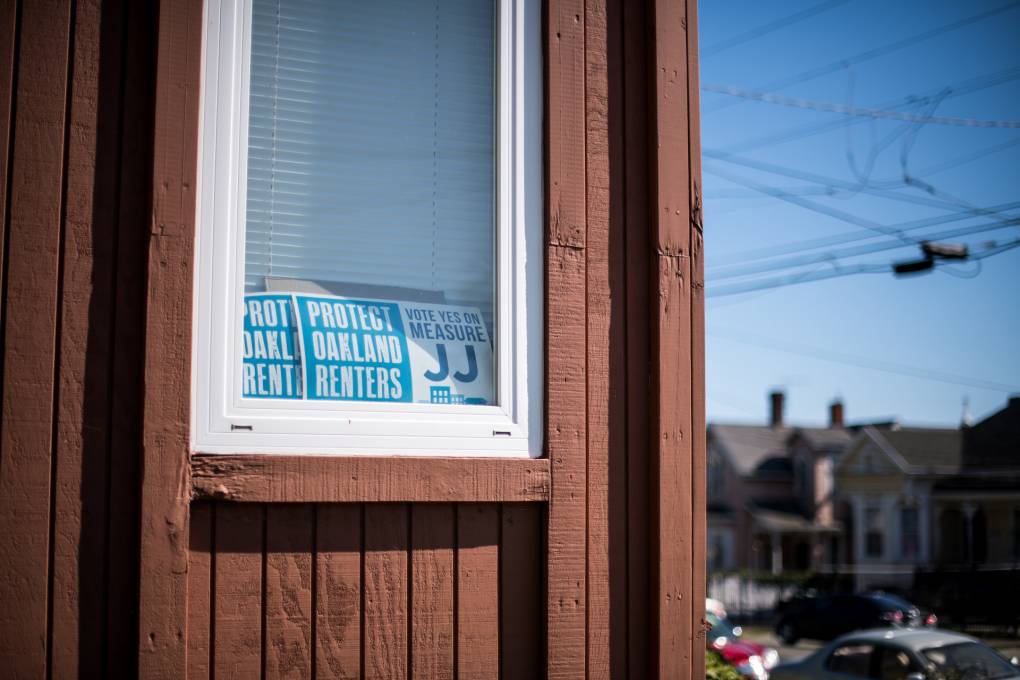
California Law Prioritizes People Over Corporate Home-Buyers
5 Reasons It's So Expensive to Build Housing in California
California NAACP President Aids Corporate Prop Campaigns — Collects $1.2 Million and Counting
As Judge Extends Census Deadline, Bay Area Communities Hustle to Get All Residents Counted
Bay Area Advocates Fear Census Homeless Count Will Come Up Short
Here's How California Is Turning Hotels Into Housing for Formerly Homeless People
New KQED Podcast 'SOLD OUT: Rethinking Housing in America' examines housing affordability by zeroing in on the epicenter of the crisis — California. Digs Into Runaway Housing Costs
Proposition C Court Win Delivers Nearly $500 Million for San Francisco's Homeless. But How Will it Be Spent?
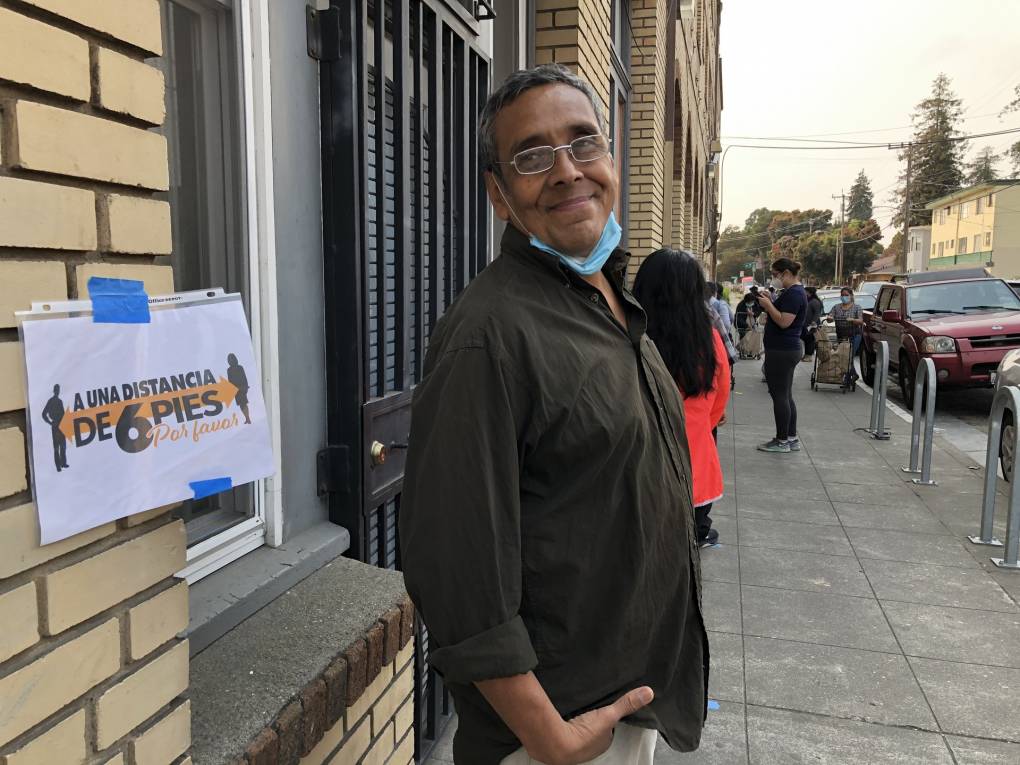
The Pandemic Took His Job, But His Neighbors Gave Him Hope
The System Is a ‘Revolving Door’ Says Homeless Study
California Had an ‘Eviction Moratorium.’ Thousands of People Were Evicted Anyway
Evacuated by Wildfire? Here's How to Check Your Home When You Return — Even if Everything Seems Fine
window.__IS_SSR__=true
window.__INITIAL_STATE__={
"attachmentsReducer": {
"audio_0": {
"type": "attachments",
"id": "audio_0",
"imgSizes": {
"kqedFullSize": {
"file": "https://ww2.kqed.org/news/wp-content/themes/KQED-unified/img/audio_bgs/background0.jpg"
}
}
},
"audio_1": {
"type": "attachments",
"id": "audio_1",
"imgSizes": {
"kqedFullSize": {
"file": "https://ww2.kqed.org/news/wp-content/themes/KQED-unified/img/audio_bgs/background1.jpg"
}
}
},
"audio_2": {
"type": "attachments",
"id": "audio_2",
"imgSizes": {
"kqedFullSize": {
"file": "https://ww2.kqed.org/news/wp-content/themes/KQED-unified/img/audio_bgs/background2.jpg"
}
}
},
"audio_3": {
"type": "attachments",
"id": "audio_3",
"imgSizes": {
"kqedFullSize": {
"file": "https://ww2.kqed.org/news/wp-content/themes/KQED-unified/img/audio_bgs/background3.jpg"
}
}
},
"audio_4": {
"type": "attachments",
"id": "audio_4",
"imgSizes": {
"kqedFullSize": {
"file": "https://ww2.kqed.org/news/wp-content/themes/KQED-unified/img/audio_bgs/background4.jpg"
}
}
},
"placeholder": {
"type": "attachments",
"id": "placeholder",
"imgSizes": {
"thumbnail": {
"file": "https://cdn.kqed.org/wp-content/uploads/2024/12/KQED-Default-Image-816638274-2000x1333-1-160x107.jpg",
"width": 160,
"height": 107,
"mimeType": "image/jpeg"
},
"medium": {
"file": "https://cdn.kqed.org/wp-content/uploads/2024/12/KQED-Default-Image-816638274-2000x1333-1-800x533.jpg",
"width": 800,
"height": 533,
"mimeType": "image/jpeg"
},
"medium_large": {
"file": "https://cdn.kqed.org/wp-content/uploads/2024/12/KQED-Default-Image-816638274-2000x1333-1-768x512.jpg",
"width": 768,
"height": 512,
"mimeType": "image/jpeg"
},
"large": {
"file": "https://cdn.kqed.org/wp-content/uploads/2024/12/KQED-Default-Image-816638274-2000x1333-1-1020x680.jpg",
"width": 1020,
"height": 680,
"mimeType": "image/jpeg"
},
"1536x1536": {
"file": "https://cdn.kqed.org/wp-content/uploads/2024/12/KQED-Default-Image-816638274-2000x1333-1-1536x1024.jpg",
"width": 1536,
"height": 1024,
"mimeType": "image/jpeg"
},
"fd-lrg": {
"file": "https://cdn.kqed.org/wp-content/uploads/2024/12/KQED-Default-Image-816638274-2000x1333-1-1536x1024.jpg",
"width": 1536,
"height": 1024,
"mimeType": "image/jpeg"
},
"fd-med": {
"file": "https://cdn.kqed.org/wp-content/uploads/2024/12/KQED-Default-Image-816638274-2000x1333-1-1020x680.jpg",
"width": 1020,
"height": 680,
"mimeType": "image/jpeg"
},
"fd-sm": {
"file": "https://cdn.kqed.org/wp-content/uploads/2024/12/KQED-Default-Image-816638274-2000x1333-1-800x533.jpg",
"width": 800,
"height": 533,
"mimeType": "image/jpeg"
},
"post-thumbnail": {
"file": "https://cdn.kqed.org/wp-content/uploads/2024/12/KQED-Default-Image-816638274-2000x1333-1-672x372.jpg",
"width": 672,
"height": 372,
"mimeType": "image/jpeg"
},
"twentyfourteen-full-width": {
"file": "https://cdn.kqed.org/wp-content/uploads/2024/12/KQED-Default-Image-816638274-2000x1333-1-1038x576.jpg",
"width": 1038,
"height": 576,
"mimeType": "image/jpeg"
},
"xxsmall": {
"file": "https://cdn.kqed.org/wp-content/uploads/2024/12/KQED-Default-Image-816638274-2000x1333-1-160x107.jpg",
"width": 160,
"height": 107,
"mimeType": "image/jpeg"
},
"xsmall": {
"file": "https://cdn.kqed.org/wp-content/uploads/2024/12/KQED-Default-Image-816638274-2000x1333-1-672x372.jpg",
"width": 672,
"height": 372,
"mimeType": "image/jpeg"
},
"small": {
"file": "https://cdn.kqed.org/wp-content/uploads/2024/12/KQED-Default-Image-816638274-2000x1333-1-672x372.jpg",
"width": 672,
"height": 372,
"mimeType": "image/jpeg"
},
"xlarge": {
"file": "https://cdn.kqed.org/wp-content/uploads/2024/12/KQED-Default-Image-816638274-2000x1333-1-1020x680.jpg",
"width": 1020,
"height": 680,
"mimeType": "image/jpeg"
},
"full-width": {
"file": "https://cdn.kqed.org/wp-content/uploads/2024/12/KQED-Default-Image-816638274-2000x1333-1-1920x1280.jpg",
"width": 1920,
"height": 1280,
"mimeType": "image/jpeg"
},
"guest-author-32": {
"file": "https://cdn.kqed.org/wp-content/uploads/2025/01/KQED-Default-Image-816638274-1333x1333-1-160x160.jpg",
"width": 32,
"height": 32,
"mimeType": "image/jpeg"
},
"guest-author-50": {
"file": "https://cdn.kqed.org/wp-content/uploads/2025/01/KQED-Default-Image-816638274-1333x1333-1-160x160.jpg",
"width": 50,
"height": 50,
"mimeType": "image/jpeg"
},
"guest-author-64": {
"file": "https://cdn.kqed.org/wp-content/uploads/2025/01/KQED-Default-Image-816638274-1333x1333-1-160x160.jpg",
"width": 64,
"height": 64,
"mimeType": "image/jpeg"
},
"guest-author-96": {
"file": "https://cdn.kqed.org/wp-content/uploads/2025/01/KQED-Default-Image-816638274-1333x1333-1-160x160.jpg",
"width": 96,
"height": 96,
"mimeType": "image/jpeg"
},
"guest-author-128": {
"file": "https://cdn.kqed.org/wp-content/uploads/2025/01/KQED-Default-Image-816638274-1333x1333-1-160x160.jpg",
"width": 128,
"height": 128,
"mimeType": "image/jpeg"
},
"detail": {
"file": "https://cdn.kqed.org/wp-content/uploads/2025/01/KQED-Default-Image-816638274-1333x1333-1-160x160.jpg",
"width": 160,
"height": 160,
"mimeType": "image/jpeg"
},
"kqedFullSize": {
"file": "https://cdn.kqed.org/wp-content/uploads/2024/12/KQED-Default-Image-816638274-2000x1333-1.jpg",
"width": 2000,
"height": 1333
}
}
},
"news_11840307": {
"type": "attachments",
"id": "news_11840307",
"meta": {
"index": "attachments_1716263798",
"site": "news",
"id": "11840307",
"found": true
},
"parent": 11840140,
"imgSizes": {
"apple_news_ca_landscape_5_5": {
"file": "https://ww2.kqed.org/app/uploads/sites/10/2020/09/RS42494_006_KQED_Oakland_RentStrike_04012020-qut-1044x783.jpg",
"width": 1044,
"mimeType": "image/jpeg",
"height": 783
},
"apple_news_ca_square_4_0": {
"file": "https://ww2.kqed.org/app/uploads/sites/10/2020/09/RS42494_006_KQED_Oakland_RentStrike_04012020-qut-470x470.jpg",
"width": 470,
"mimeType": "image/jpeg",
"height": 470
},
"twentyfourteen-full-width": {
"file": "https://ww2.kqed.org/app/uploads/sites/10/2020/09/RS42494_006_KQED_Oakland_RentStrike_04012020-qut-1038x576.jpg",
"width": 1038,
"mimeType": "image/jpeg",
"height": 576
},
"thumbnail": {
"file": "https://ww2.kqed.org/app/uploads/sites/10/2020/09/RS42494_006_KQED_Oakland_RentStrike_04012020-qut-160x107.jpg",
"width": 160,
"mimeType": "image/jpeg",
"height": 107
},
"post-thumbnail": {
"file": "https://ww2.kqed.org/app/uploads/sites/10/2020/09/RS42494_006_KQED_Oakland_RentStrike_04012020-qut-672x372.jpg",
"width": 672,
"mimeType": "image/jpeg",
"height": 372
},
"kqedFullSize": {
"file": "https://ww2.kqed.org/app/uploads/sites/10/2020/09/RS42494_006_KQED_Oakland_RentStrike_04012020-qut.jpg",
"width": 1920,
"height": 1280
},
"apple_news_ca_landscape_4_7": {
"file": "https://ww2.kqed.org/app/uploads/sites/10/2020/09/RS42494_006_KQED_Oakland_RentStrike_04012020-qut-632x474.jpg",
"width": 632,
"mimeType": "image/jpeg",
"height": 474
},
"large": {
"file": "https://ww2.kqed.org/app/uploads/sites/10/2020/09/RS42494_006_KQED_Oakland_RentStrike_04012020-qut-1020x680.jpg",
"width": 1020,
"mimeType": "image/jpeg",
"height": 680
},
"apple_news_ca_landscape_4_0": {
"file": "https://ww2.kqed.org/app/uploads/sites/10/2020/09/RS42494_006_KQED_Oakland_RentStrike_04012020-qut-536x402.jpg",
"width": 536,
"mimeType": "image/jpeg",
"height": 402
},
"apple_news_ca_portrait_12_9": {
"file": "https://ww2.kqed.org/app/uploads/sites/10/2020/09/RS42494_006_KQED_Oakland_RentStrike_04012020-qut-1122x1280.jpg",
"width": 1122,
"mimeType": "image/jpeg",
"height": 1280
},
"medium": {
"file": "https://ww2.kqed.org/app/uploads/sites/10/2020/09/RS42494_006_KQED_Oakland_RentStrike_04012020-qut-800x533.jpg",
"width": 800,
"mimeType": "image/jpeg",
"height": 533
},
"apple_news_ca_portrait_4_0": {
"file": "https://ww2.kqed.org/app/uploads/sites/10/2020/09/RS42494_006_KQED_Oakland_RentStrike_04012020-qut-354x472.jpg",
"width": 354,
"mimeType": "image/jpeg",
"height": 472
},
"apple_news_ca_portrait_9_7": {
"file": "https://ww2.kqed.org/app/uploads/sites/10/2020/09/RS42494_006_KQED_Oakland_RentStrike_04012020-qut-840x1120.jpg",
"width": 840,
"mimeType": "image/jpeg",
"height": 1120
},
"apple_news_ca_landscape_12_9": {
"file": "https://ww2.kqed.org/app/uploads/sites/10/2020/09/RS42494_006_KQED_Oakland_RentStrike_04012020-qut-1832x1280.jpg",
"width": 1832,
"mimeType": "image/jpeg",
"height": 1280
},
"apple_news_ca_square_9_7": {
"file": "https://ww2.kqed.org/app/uploads/sites/10/2020/09/RS42494_006_KQED_Oakland_RentStrike_04012020-qut-1104x1104.jpg",
"width": 1104,
"mimeType": "image/jpeg",
"height": 1104
},
"1536x1536": {
"file": "https://ww2.kqed.org/app/uploads/sites/10/2020/09/RS42494_006_KQED_Oakland_RentStrike_04012020-qut-1536x1024.jpg",
"width": 1536,
"mimeType": "image/jpeg",
"height": 1024
},
"apple_news_ca_portrait_4_7": {
"file": "https://ww2.kqed.org/app/uploads/sites/10/2020/09/RS42494_006_KQED_Oakland_RentStrike_04012020-qut-414x552.jpg",
"width": 414,
"mimeType": "image/jpeg",
"height": 552
},
"apple_news_ca_square_12_9": {
"file": "https://ww2.kqed.org/app/uploads/sites/10/2020/09/RS42494_006_KQED_Oakland_RentStrike_04012020-qut-1472x1280.jpg",
"width": 1472,
"mimeType": "image/jpeg",
"height": 1280
},
"apple_news_ca_portrait_5_5": {
"file": "https://ww2.kqed.org/app/uploads/sites/10/2020/09/RS42494_006_KQED_Oakland_RentStrike_04012020-qut-687x916.jpg",
"width": 687,
"mimeType": "image/jpeg",
"height": 916
},
"apple_news_ca_square_4_7": {
"file": "https://ww2.kqed.org/app/uploads/sites/10/2020/09/RS42494_006_KQED_Oakland_RentStrike_04012020-qut-550x550.jpg",
"width": 550,
"mimeType": "image/jpeg",
"height": 550
},
"apple_news_ca_landscape_9_7": {
"file": "https://ww2.kqed.org/app/uploads/sites/10/2020/09/RS42494_006_KQED_Oakland_RentStrike_04012020-qut-1376x1032.jpg",
"width": 1376,
"mimeType": "image/jpeg",
"height": 1032
},
"apple_news_ca_square_5_5": {
"file": "https://ww2.kqed.org/app/uploads/sites/10/2020/09/RS42494_006_KQED_Oakland_RentStrike_04012020-qut-912x912.jpg",
"width": 912,
"mimeType": "image/jpeg",
"height": 912
}
},
"publishDate": 1601431026,
"modified": 1601431144,
"caption": "A 'protect Oakland renters sign in the window of an apartment on Wednseday, April 1, 2020.",
"description": null,
"title": "An 'Oakland Rent Strike' banner in Oakland on Wednseday, April 1, 2020.",
"credit": "Beth LaBerge/KQED",
"status": "inherit",
"isLoading": false,
"fetchFailed": false
},
"news_11839453": {
"type": "attachments",
"id": "news_11839453",
"meta": {
"index": "attachments_1716263798",
"site": "news",
"id": "11839453",
"found": true
},
"parent": 11839409,
"imgSizes": {
"apple_news_ca_landscape_5_5": {
"file": "https://ww2.kqed.org/app/uploads/sites/10/2020/09/RS44429_033_KQED_Vallejo_FactoryOS_08062020-qut-1044x783.jpg",
"width": 1044,
"mimeType": "image/jpeg",
"height": 783
},
"apple_news_ca_square_4_0": {
"file": "https://ww2.kqed.org/app/uploads/sites/10/2020/09/RS44429_033_KQED_Vallejo_FactoryOS_08062020-qut-470x470.jpg",
"width": 470,
"mimeType": "image/jpeg",
"height": 470
},
"twentyfourteen-full-width": {
"file": "https://ww2.kqed.org/app/uploads/sites/10/2020/09/RS44429_033_KQED_Vallejo_FactoryOS_08062020-qut-1038x576.jpg",
"width": 1038,
"mimeType": "image/jpeg",
"height": 576
},
"thumbnail": {
"file": "https://ww2.kqed.org/app/uploads/sites/10/2020/09/RS44429_033_KQED_Vallejo_FactoryOS_08062020-qut-160x107.jpg",
"width": 160,
"mimeType": "image/jpeg",
"height": 107
},
"post-thumbnail": {
"file": "https://ww2.kqed.org/app/uploads/sites/10/2020/09/RS44429_033_KQED_Vallejo_FactoryOS_08062020-qut-672x372.jpg",
"width": 672,
"mimeType": "image/jpeg",
"height": 372
},
"kqedFullSize": {
"file": "https://ww2.kqed.org/app/uploads/sites/10/2020/09/RS44429_033_KQED_Vallejo_FactoryOS_08062020-qut.jpg",
"width": 1920,
"height": 1280
},
"apple_news_ca_landscape_4_7": {
"file": "https://ww2.kqed.org/app/uploads/sites/10/2020/09/RS44429_033_KQED_Vallejo_FactoryOS_08062020-qut-632x474.jpg",
"width": 632,
"mimeType": "image/jpeg",
"height": 474
},
"large": {
"file": "https://ww2.kqed.org/app/uploads/sites/10/2020/09/RS44429_033_KQED_Vallejo_FactoryOS_08062020-qut-1020x680.jpg",
"width": 1020,
"mimeType": "image/jpeg",
"height": 680
},
"apple_news_ca_landscape_4_0": {
"file": "https://ww2.kqed.org/app/uploads/sites/10/2020/09/RS44429_033_KQED_Vallejo_FactoryOS_08062020-qut-536x402.jpg",
"width": 536,
"mimeType": "image/jpeg",
"height": 402
},
"apple_news_ca_portrait_12_9": {
"file": "https://ww2.kqed.org/app/uploads/sites/10/2020/09/RS44429_033_KQED_Vallejo_FactoryOS_08062020-qut-1122x1280.jpg",
"width": 1122,
"mimeType": "image/jpeg",
"height": 1280
},
"medium": {
"file": "https://ww2.kqed.org/app/uploads/sites/10/2020/09/RS44429_033_KQED_Vallejo_FactoryOS_08062020-qut-800x533.jpg",
"width": 800,
"mimeType": "image/jpeg",
"height": 533
},
"apple_news_ca_portrait_4_0": {
"file": "https://ww2.kqed.org/app/uploads/sites/10/2020/09/RS44429_033_KQED_Vallejo_FactoryOS_08062020-qut-354x472.jpg",
"width": 354,
"mimeType": "image/jpeg",
"height": 472
},
"apple_news_ca_portrait_9_7": {
"file": "https://ww2.kqed.org/app/uploads/sites/10/2020/09/RS44429_033_KQED_Vallejo_FactoryOS_08062020-qut-840x1120.jpg",
"width": 840,
"mimeType": "image/jpeg",
"height": 1120
},
"apple_news_ca_landscape_12_9": {
"file": "https://ww2.kqed.org/app/uploads/sites/10/2020/09/RS44429_033_KQED_Vallejo_FactoryOS_08062020-qut-1832x1280.jpg",
"width": 1832,
"mimeType": "image/jpeg",
"height": 1280
},
"apple_news_ca_square_9_7": {
"file": "https://ww2.kqed.org/app/uploads/sites/10/2020/09/RS44429_033_KQED_Vallejo_FactoryOS_08062020-qut-1104x1104.jpg",
"width": 1104,
"mimeType": "image/jpeg",
"height": 1104
},
"1536x1536": {
"file": "https://ww2.kqed.org/app/uploads/sites/10/2020/09/RS44429_033_KQED_Vallejo_FactoryOS_08062020-qut-1536x1024.jpg",
"width": 1536,
"mimeType": "image/jpeg",
"height": 1024
},
"apple_news_ca_portrait_4_7": {
"file": "https://ww2.kqed.org/app/uploads/sites/10/2020/09/RS44429_033_KQED_Vallejo_FactoryOS_08062020-qut-414x552.jpg",
"width": 414,
"mimeType": "image/jpeg",
"height": 552
},
"apple_news_ca_square_12_9": {
"file": "https://ww2.kqed.org/app/uploads/sites/10/2020/09/RS44429_033_KQED_Vallejo_FactoryOS_08062020-qut-1472x1280.jpg",
"width": 1472,
"mimeType": "image/jpeg",
"height": 1280
},
"apple_news_ca_portrait_5_5": {
"file": "https://ww2.kqed.org/app/uploads/sites/10/2020/09/RS44429_033_KQED_Vallejo_FactoryOS_08062020-qut-687x916.jpg",
"width": 687,
"mimeType": "image/jpeg",
"height": 916
},
"apple_news_ca_square_4_7": {
"file": "https://ww2.kqed.org/app/uploads/sites/10/2020/09/RS44429_033_KQED_Vallejo_FactoryOS_08062020-qut-550x550.jpg",
"width": 550,
"mimeType": "image/jpeg",
"height": 550
},
"apple_news_ca_landscape_9_7": {
"file": "https://ww2.kqed.org/app/uploads/sites/10/2020/09/RS44429_033_KQED_Vallejo_FactoryOS_08062020-qut-1376x1032.jpg",
"width": 1376,
"mimeType": "image/jpeg",
"height": 1032
},
"apple_news_ca_square_5_5": {
"file": "https://ww2.kqed.org/app/uploads/sites/10/2020/09/RS44429_033_KQED_Vallejo_FactoryOS_08062020-qut-912x912.jpg",
"width": 912,
"mimeType": "image/jpeg",
"height": 912
}
},
"publishDate": 1600970682,
"modified": 1601062575,
"caption": "Factory OS employees work on different aspects of the assembly process of modular homes at the Vallejo warehouse on August 6, 2020. Modular, or factory-built, housing is seen as one way to lower construction costs. ",
"description": "Factory OS employees work on different aspects of the assembly process of modular homes at the Vallejo warehouse on August 6, 2020. Modular, or factory-built, housing is seen as one way to lower construction costs. ",
"title": "RS44429_033_KQED_Vallejo_FactoryOS_08062020-qut",
"credit": "Beth LaBerge/KQED",
"status": "inherit",
"isLoading": false,
"fetchFailed": false
},
"news_11839902": {
"type": "attachments",
"id": "news_11839902",
"meta": {
"index": "attachments_1716263798",
"site": "news",
"id": "11839902",
"found": true
},
"parent": 11839892,
"imgSizes": {
"apple_news_ca_landscape_5_5": {
"file": "https://ww2.kqed.org/app/uploads/sites/10/2020/09/010820_Prop13presser_AW_sized_05-1-1044x783.jpg",
"width": 1044,
"mimeType": "image/jpeg",
"height": 783
},
"apple_news_ca_square_4_0": {
"file": "https://ww2.kqed.org/app/uploads/sites/10/2020/09/010820_Prop13presser_AW_sized_05-1-470x470.jpg",
"width": 470,
"mimeType": "image/jpeg",
"height": 470
},
"twentyfourteen-full-width": {
"file": "https://ww2.kqed.org/app/uploads/sites/10/2020/09/010820_Prop13presser_AW_sized_05-1-1038x576.jpg",
"width": 1038,
"mimeType": "image/jpeg",
"height": 576
},
"thumbnail": {
"file": "https://ww2.kqed.org/app/uploads/sites/10/2020/09/010820_Prop13presser_AW_sized_05-1-160x107.jpg",
"width": 160,
"mimeType": "image/jpeg",
"height": 107
},
"post-thumbnail": {
"file": "https://ww2.kqed.org/app/uploads/sites/10/2020/09/010820_Prop13presser_AW_sized_05-1-672x372.jpg",
"width": 672,
"mimeType": "image/jpeg",
"height": 372
},
"kqedFullSize": {
"file": "https://ww2.kqed.org/app/uploads/sites/10/2020/09/010820_Prop13presser_AW_sized_05-1.jpg",
"width": 1500,
"height": 1000
},
"apple_news_ca_landscape_4_7": {
"file": "https://ww2.kqed.org/app/uploads/sites/10/2020/09/010820_Prop13presser_AW_sized_05-1-632x474.jpg",
"width": 632,
"mimeType": "image/jpeg",
"height": 474
},
"large": {
"file": "https://ww2.kqed.org/app/uploads/sites/10/2020/09/010820_Prop13presser_AW_sized_05-1-1020x680.jpg",
"width": 1020,
"mimeType": "image/jpeg",
"height": 680
},
"apple_news_ca_landscape_4_0": {
"file": "https://ww2.kqed.org/app/uploads/sites/10/2020/09/010820_Prop13presser_AW_sized_05-1-536x402.jpg",
"width": 536,
"mimeType": "image/jpeg",
"height": 402
},
"apple_news_ca_portrait_12_9": {
"file": "https://ww2.kqed.org/app/uploads/sites/10/2020/09/010820_Prop13presser_AW_sized_05-1-1122x1000.jpg",
"width": 1122,
"mimeType": "image/jpeg",
"height": 1000
},
"medium": {
"file": "https://ww2.kqed.org/app/uploads/sites/10/2020/09/010820_Prop13presser_AW_sized_05-1-800x533.jpg",
"width": 800,
"mimeType": "image/jpeg",
"height": 533
},
"apple_news_ca_portrait_4_0": {
"file": "https://ww2.kqed.org/app/uploads/sites/10/2020/09/010820_Prop13presser_AW_sized_05-1-354x472.jpg",
"width": 354,
"mimeType": "image/jpeg",
"height": 472
},
"apple_news_ca_portrait_9_7": {
"file": "https://ww2.kqed.org/app/uploads/sites/10/2020/09/010820_Prop13presser_AW_sized_05-1-840x1000.jpg",
"width": 840,
"mimeType": "image/jpeg",
"height": 1000
},
"apple_news_ca_square_9_7": {
"file": "https://ww2.kqed.org/app/uploads/sites/10/2020/09/010820_Prop13presser_AW_sized_05-1-1104x1000.jpg",
"width": 1104,
"mimeType": "image/jpeg",
"height": 1000
},
"apple_news_ca_portrait_4_7": {
"file": "https://ww2.kqed.org/app/uploads/sites/10/2020/09/010820_Prop13presser_AW_sized_05-1-414x552.jpg",
"width": 414,
"mimeType": "image/jpeg",
"height": 552
},
"apple_news_ca_square_12_9": {
"file": "https://ww2.kqed.org/app/uploads/sites/10/2020/09/010820_Prop13presser_AW_sized_05-1-1472x1000.jpg",
"width": 1472,
"mimeType": "image/jpeg",
"height": 1000
},
"apple_news_ca_portrait_5_5": {
"file": "https://ww2.kqed.org/app/uploads/sites/10/2020/09/010820_Prop13presser_AW_sized_05-1-687x916.jpg",
"width": 687,
"mimeType": "image/jpeg",
"height": 916
},
"apple_news_ca_square_4_7": {
"file": "https://ww2.kqed.org/app/uploads/sites/10/2020/09/010820_Prop13presser_AW_sized_05-1-550x550.jpg",
"width": 550,
"mimeType": "image/jpeg",
"height": 550
},
"apple_news_ca_landscape_9_7": {
"file": "https://ww2.kqed.org/app/uploads/sites/10/2020/09/010820_Prop13presser_AW_sized_05-1-1376x1000.jpg",
"width": 1376,
"mimeType": "image/jpeg",
"height": 1000
},
"apple_news_ca_square_5_5": {
"file": "https://ww2.kqed.org/app/uploads/sites/10/2020/09/010820_Prop13presser_AW_sized_05-1-912x912.jpg",
"width": 912,
"mimeType": "image/jpeg",
"height": 912
}
},
"publishDate": 1601152890,
"modified": 1601152935,
"caption": "Alice Huffman, a political consultant and president of the California NAACP, has been paid more than $1.2 million so far this year by ballot measure campaigns that have been endorsed by the state NAACP.",
"description": "Alice Huffman, a political consultant and president of the California NAACP, has been paid more than $1.2 million so far this year by ballot measure campaigns that have been endorsed by the state NAACP.",
"title": "010820_Prop13presser_AW_sized_05",
"credit": "Anne Wernikoff/CalMatters",
"status": "inherit",
"isLoading": false,
"fetchFailed": false
},
"news_11839881": {
"type": "attachments",
"id": "news_11839881",
"meta": {
"index": "attachments_1716263798",
"site": "news",
"id": "11839881",
"found": true
},
"parent": 11839841,
"imgSizes": {
"apple_news_ca_landscape_5_5": {
"file": "https://ww2.kqed.org/app/uploads/sites/10/2020/09/1920_IMG_1846-1044x783.jpg",
"width": 1044,
"mimeType": "image/jpeg",
"height": 783
},
"apple_news_ca_square_4_0": {
"file": "https://ww2.kqed.org/app/uploads/sites/10/2020/09/1920_IMG_1846-470x470.jpg",
"width": 470,
"mimeType": "image/jpeg",
"height": 470
},
"twentyfourteen-full-width": {
"file": "https://ww2.kqed.org/app/uploads/sites/10/2020/09/1920_IMG_1846-1038x576.jpg",
"width": 1038,
"mimeType": "image/jpeg",
"height": 576
},
"thumbnail": {
"file": "https://ww2.kqed.org/app/uploads/sites/10/2020/09/1920_IMG_1846-160x90.jpg",
"width": 160,
"mimeType": "image/jpeg",
"height": 90
},
"post-thumbnail": {
"file": "https://ww2.kqed.org/app/uploads/sites/10/2020/09/1920_IMG_1846-672x372.jpg",
"width": 672,
"mimeType": "image/jpeg",
"height": 372
},
"kqedFullSize": {
"file": "https://ww2.kqed.org/app/uploads/sites/10/2020/09/1920_IMG_1846-scaled.jpg",
"width": 2560,
"height": 1440
},
"2048x2048": {
"file": "https://ww2.kqed.org/app/uploads/sites/10/2020/09/1920_IMG_1846-2048x1152.jpg",
"width": 2048,
"mimeType": "image/jpeg",
"height": 1152
},
"apple_news_ca_landscape_4_7": {
"file": "https://ww2.kqed.org/app/uploads/sites/10/2020/09/1920_IMG_1846-632x474.jpg",
"width": 632,
"mimeType": "image/jpeg",
"height": 474
},
"large": {
"file": "https://ww2.kqed.org/app/uploads/sites/10/2020/09/1920_IMG_1846-1020x574.jpg",
"width": 1020,
"mimeType": "image/jpeg",
"height": 574
},
"apple_news_ca_landscape_4_0": {
"file": "https://ww2.kqed.org/app/uploads/sites/10/2020/09/1920_IMG_1846-536x402.jpg",
"width": 536,
"mimeType": "image/jpeg",
"height": 402
},
"apple_news_ca_portrait_12_9": {
"file": "https://ww2.kqed.org/app/uploads/sites/10/2020/09/1920_IMG_1846-1122x1496.jpg",
"width": 1122,
"mimeType": "image/jpeg",
"height": 1496
},
"medium": {
"file": "https://ww2.kqed.org/app/uploads/sites/10/2020/09/1920_IMG_1846-800x450.jpg",
"width": 800,
"mimeType": "image/jpeg",
"height": 450
},
"apple_news_ca_portrait_4_0": {
"file": "https://ww2.kqed.org/app/uploads/sites/10/2020/09/1920_IMG_1846-354x472.jpg",
"width": 354,
"mimeType": "image/jpeg",
"height": 472
},
"apple_news_ca_portrait_9_7": {
"file": "https://ww2.kqed.org/app/uploads/sites/10/2020/09/1920_IMG_1846-840x1120.jpg",
"width": 840,
"mimeType": "image/jpeg",
"height": 1120
},
"apple_news_ca_landscape_12_9": {
"file": "https://ww2.kqed.org/app/uploads/sites/10/2020/09/1920_IMG_1846-1832x1374.jpg",
"width": 1832,
"mimeType": "image/jpeg",
"height": 1374
},
"apple_news_ca_square_9_7": {
"file": "https://ww2.kqed.org/app/uploads/sites/10/2020/09/1920_IMG_1846-1104x1104.jpg",
"width": 1104,
"mimeType": "image/jpeg",
"height": 1104
},
"1536x1536": {
"file": "https://ww2.kqed.org/app/uploads/sites/10/2020/09/1920_IMG_1846-1536x864.jpg",
"width": 1536,
"mimeType": "image/jpeg",
"height": 864
},
"apple_news_ca_portrait_4_7": {
"file": "https://ww2.kqed.org/app/uploads/sites/10/2020/09/1920_IMG_1846-414x552.jpg",
"width": 414,
"mimeType": "image/jpeg",
"height": 552
},
"apple_news_ca_square_12_9": {
"file": "https://ww2.kqed.org/app/uploads/sites/10/2020/09/1920_IMG_1846-1472x1472.jpg",
"width": 1472,
"mimeType": "image/jpeg",
"height": 1472
},
"apple_news_ca_portrait_5_5": {
"file": "https://ww2.kqed.org/app/uploads/sites/10/2020/09/1920_IMG_1846-687x916.jpg",
"width": 687,
"mimeType": "image/jpeg",
"height": 916
},
"full-width": {
"file": "https://ww2.kqed.org/app/uploads/sites/10/2020/09/1920_IMG_1846-1920x1080.jpg",
"width": 1920,
"mimeType": "image/jpeg",
"height": 1080
},
"apple_news_ca_square_4_7": {
"file": "https://ww2.kqed.org/app/uploads/sites/10/2020/09/1920_IMG_1846-550x550.jpg",
"width": 550,
"mimeType": "image/jpeg",
"height": 550
},
"apple_news_ca_landscape_9_7": {
"file": "https://ww2.kqed.org/app/uploads/sites/10/2020/09/1920_IMG_1846-1376x1032.jpg",
"width": 1376,
"mimeType": "image/jpeg",
"height": 1032
},
"apple_news_ca_square_5_5": {
"file": "https://ww2.kqed.org/app/uploads/sites/10/2020/09/1920_IMG_1846-912x912.jpg",
"width": 912,
"mimeType": "image/jpeg",
"height": 912
}
},
"publishDate": 1601146014,
"modified": 1601146088,
"caption": "Robbi Montoya (L) and Annette Moretti of Dorothy Day House, talk with Douglas Allen Freitag about participating in the 2020 Census, outside the Berkeley Public Library on Sep. 24, 2020. ",
"description": null,
"title": "1920_IMG_1846",
"credit": "Tyche Hendricks/KQED",
"status": "inherit",
"isLoading": false,
"fetchFailed": false
},
"news_11839331": {
"type": "attachments",
"id": "news_11839331",
"meta": {
"index": "attachments_1716263798",
"site": "news",
"id": "11839331",
"found": true
},
"parent": 11839322,
"imgSizes": {
"apple_news_ca_landscape_5_5": {
"file": "https://ww2.kqed.org/app/uploads/sites/10/2020/09/RS44932_027_KQED_Oakland_OBCACensus_09162020-qut-1044x783.jpg",
"width": 1044,
"mimeType": "image/jpeg",
"height": 783
},
"apple_news_ca_square_4_0": {
"file": "https://ww2.kqed.org/app/uploads/sites/10/2020/09/RS44932_027_KQED_Oakland_OBCACensus_09162020-qut-470x470.jpg",
"width": 470,
"mimeType": "image/jpeg",
"height": 470
},
"twentyfourteen-full-width": {
"file": "https://ww2.kqed.org/app/uploads/sites/10/2020/09/RS44932_027_KQED_Oakland_OBCACensus_09162020-qut-1038x576.jpg",
"width": 1038,
"mimeType": "image/jpeg",
"height": 576
},
"thumbnail": {
"file": "https://ww2.kqed.org/app/uploads/sites/10/2020/09/RS44932_027_KQED_Oakland_OBCACensus_09162020-qut-160x107.jpg",
"width": 160,
"mimeType": "image/jpeg",
"height": 107
},
"post-thumbnail": {
"file": "https://ww2.kqed.org/app/uploads/sites/10/2020/09/RS44932_027_KQED_Oakland_OBCACensus_09162020-qut-672x372.jpg",
"width": 672,
"mimeType": "image/jpeg",
"height": 372
},
"kqedFullSize": {
"file": "https://ww2.kqed.org/app/uploads/sites/10/2020/09/RS44932_027_KQED_Oakland_OBCACensus_09162020-qut.jpg",
"width": 1920,
"height": 1280
},
"apple_news_ca_landscape_4_7": {
"file": "https://ww2.kqed.org/app/uploads/sites/10/2020/09/RS44932_027_KQED_Oakland_OBCACensus_09162020-qut-632x474.jpg",
"width": 632,
"mimeType": "image/jpeg",
"height": 474
},
"large": {
"file": "https://ww2.kqed.org/app/uploads/sites/10/2020/09/RS44932_027_KQED_Oakland_OBCACensus_09162020-qut-1020x680.jpg",
"width": 1020,
"mimeType": "image/jpeg",
"height": 680
},
"apple_news_ca_landscape_4_0": {
"file": "https://ww2.kqed.org/app/uploads/sites/10/2020/09/RS44932_027_KQED_Oakland_OBCACensus_09162020-qut-536x402.jpg",
"width": 536,
"mimeType": "image/jpeg",
"height": 402
},
"apple_news_ca_portrait_12_9": {
"file": "https://ww2.kqed.org/app/uploads/sites/10/2020/09/RS44932_027_KQED_Oakland_OBCACensus_09162020-qut-1122x1280.jpg",
"width": 1122,
"mimeType": "image/jpeg",
"height": 1280
},
"medium": {
"file": "https://ww2.kqed.org/app/uploads/sites/10/2020/09/RS44932_027_KQED_Oakland_OBCACensus_09162020-qut-800x533.jpg",
"width": 800,
"mimeType": "image/jpeg",
"height": 533
},
"apple_news_ca_portrait_4_0": {
"file": "https://ww2.kqed.org/app/uploads/sites/10/2020/09/RS44932_027_KQED_Oakland_OBCACensus_09162020-qut-354x472.jpg",
"width": 354,
"mimeType": "image/jpeg",
"height": 472
},
"apple_news_ca_portrait_9_7": {
"file": "https://ww2.kqed.org/app/uploads/sites/10/2020/09/RS44932_027_KQED_Oakland_OBCACensus_09162020-qut-840x1120.jpg",
"width": 840,
"mimeType": "image/jpeg",
"height": 1120
},
"apple_news_ca_landscape_12_9": {
"file": "https://ww2.kqed.org/app/uploads/sites/10/2020/09/RS44932_027_KQED_Oakland_OBCACensus_09162020-qut-1832x1280.jpg",
"width": 1832,
"mimeType": "image/jpeg",
"height": 1280
},
"apple_news_ca_square_9_7": {
"file": "https://ww2.kqed.org/app/uploads/sites/10/2020/09/RS44932_027_KQED_Oakland_OBCACensus_09162020-qut-1104x1104.jpg",
"width": 1104,
"mimeType": "image/jpeg",
"height": 1104
},
"1536x1536": {
"file": "https://ww2.kqed.org/app/uploads/sites/10/2020/09/RS44932_027_KQED_Oakland_OBCACensus_09162020-qut-1536x1024.jpg",
"width": 1536,
"mimeType": "image/jpeg",
"height": 1024
},
"apple_news_ca_portrait_4_7": {
"file": "https://ww2.kqed.org/app/uploads/sites/10/2020/09/RS44932_027_KQED_Oakland_OBCACensus_09162020-qut-414x552.jpg",
"width": 414,
"mimeType": "image/jpeg",
"height": 552
},
"apple_news_ca_square_12_9": {
"file": "https://ww2.kqed.org/app/uploads/sites/10/2020/09/RS44932_027_KQED_Oakland_OBCACensus_09162020-qut-1472x1280.jpg",
"width": 1472,
"mimeType": "image/jpeg",
"height": 1280
},
"apple_news_ca_portrait_5_5": {
"file": "https://ww2.kqed.org/app/uploads/sites/10/2020/09/RS44932_027_KQED_Oakland_OBCACensus_09162020-qut-687x916.jpg",
"width": 687,
"mimeType": "image/jpeg",
"height": 916
},
"apple_news_ca_square_4_7": {
"file": "https://ww2.kqed.org/app/uploads/sites/10/2020/09/RS44932_027_KQED_Oakland_OBCACensus_09162020-qut-550x550.jpg",
"width": 550,
"mimeType": "image/jpeg",
"height": 550
},
"apple_news_ca_landscape_9_7": {
"file": "https://ww2.kqed.org/app/uploads/sites/10/2020/09/RS44932_027_KQED_Oakland_OBCACensus_09162020-qut-1376x1032.jpg",
"width": 1376,
"mimeType": "image/jpeg",
"height": 1032
},
"apple_news_ca_square_5_5": {
"file": "https://ww2.kqed.org/app/uploads/sites/10/2020/09/RS44932_027_KQED_Oakland_OBCACensus_09162020-qut-912x912.jpg",
"width": 912,
"mimeType": "image/jpeg",
"height": 912
}
},
"publishDate": 1600898855,
"modified": 1600899356,
"caption": "Alameda County Census Outreach Manager Casey Farmer (R) and a member of her team set up shop at the West Oakland Senior Center on Sept. 16, 2020, part an effort to get more residents in the community to complete their census forms.",
"description": null,
"title": "RS44932_027_KQED_Oakland_OBCACensus_09162020-qut",
"credit": "Beth LaBerge/KQED",
"status": "inherit",
"isLoading": false,
"fetchFailed": false
},
"news_11838473": {
"type": "attachments",
"id": "news_11838473",
"meta": {
"index": "attachments_1716263798",
"site": "news",
"id": "11838473",
"found": true
},
"parent": 11838323,
"imgSizes": {
"apple_news_ca_landscape_5_5": {
"file": "https://ww2.kqed.org/app/uploads/sites/10/2020/09/RS44965_IMG_6145-qut-e1600382038634-1044x783.jpg",
"width": 1044,
"mimeType": "image/jpeg",
"height": 783
},
"apple_news_ca_square_4_0": {
"file": "https://ww2.kqed.org/app/uploads/sites/10/2020/09/RS44965_IMG_6145-qut-e1600382038634-470x470.jpg",
"width": 470,
"mimeType": "image/jpeg",
"height": 470
},
"twentyfourteen-full-width": {
"file": "https://ww2.kqed.org/app/uploads/sites/10/2020/09/RS44965_IMG_6145-qut-e1600382038634-1038x576.jpg",
"width": 1038,
"mimeType": "image/jpeg",
"height": 576
},
"thumbnail": {
"file": "https://ww2.kqed.org/app/uploads/sites/10/2020/09/RS44965_IMG_6145-qut-e1600382038634-160x120.jpg",
"width": 160,
"mimeType": "image/jpeg",
"height": 120
},
"post-thumbnail": {
"file": "https://ww2.kqed.org/app/uploads/sites/10/2020/09/RS44965_IMG_6145-qut-e1600382038634-672x372.jpg",
"width": 672,
"mimeType": "image/jpeg",
"height": 372
},
"kqedFullSize": {
"file": "https://ww2.kqed.org/app/uploads/sites/10/2020/09/RS44965_IMG_6145-qut-e1600382038634.jpg",
"width": 1920,
"height": 1440
},
"apple_news_ca_landscape_4_7": {
"file": "https://ww2.kqed.org/app/uploads/sites/10/2020/09/RS44965_IMG_6145-qut-e1600382038634-632x474.jpg",
"width": 632,
"mimeType": "image/jpeg",
"height": 474
},
"large": {
"file": "https://ww2.kqed.org/app/uploads/sites/10/2020/09/RS44965_IMG_6145-qut-e1600382038634-1020x765.jpg",
"width": 1020,
"mimeType": "image/jpeg",
"height": 765
},
"apple_news_ca_landscape_4_0": {
"file": "https://ww2.kqed.org/app/uploads/sites/10/2020/09/RS44965_IMG_6145-qut-e1600382038634-536x402.jpg",
"width": 536,
"mimeType": "image/jpeg",
"height": 402
},
"apple_news_ca_portrait_12_9": {
"file": "https://ww2.kqed.org/app/uploads/sites/10/2020/09/RS44965_IMG_6145-qut-e1600382038634-1122x1440.jpg",
"width": 1122,
"mimeType": "image/jpeg",
"height": 1440
},
"medium": {
"file": "https://ww2.kqed.org/app/uploads/sites/10/2020/09/RS44965_IMG_6145-qut-e1600382038634-800x600.jpg",
"width": 800,
"mimeType": "image/jpeg",
"height": 600
},
"apple_news_ca_portrait_4_0": {
"file": "https://ww2.kqed.org/app/uploads/sites/10/2020/09/RS44965_IMG_6145-qut-e1600382038634-354x472.jpg",
"width": 354,
"mimeType": "image/jpeg",
"height": 472
},
"apple_news_ca_portrait_9_7": {
"file": "https://ww2.kqed.org/app/uploads/sites/10/2020/09/RS44965_IMG_6145-qut-e1600382038634-840x1120.jpg",
"width": 840,
"mimeType": "image/jpeg",
"height": 1120
},
"apple_news_ca_landscape_12_9": {
"file": "https://ww2.kqed.org/app/uploads/sites/10/2020/09/RS44965_IMG_6145-qut-e1600382038634-1832x1374.jpg",
"width": 1832,
"mimeType": "image/jpeg",
"height": 1374
},
"apple_news_ca_square_9_7": {
"file": "https://ww2.kqed.org/app/uploads/sites/10/2020/09/RS44965_IMG_6145-qut-e1600382038634-1104x1104.jpg",
"width": 1104,
"mimeType": "image/jpeg",
"height": 1104
},
"1536x1536": {
"file": "https://ww2.kqed.org/app/uploads/sites/10/2020/09/RS44965_IMG_6145-qut-e1600382038634-1536x1152.jpg",
"width": 1536,
"mimeType": "image/jpeg",
"height": 1152
},
"apple_news_ca_portrait_4_7": {
"file": "https://ww2.kqed.org/app/uploads/sites/10/2020/09/RS44965_IMG_6145-qut-e1600382038634-414x552.jpg",
"width": 414,
"mimeType": "image/jpeg",
"height": 552
},
"apple_news_ca_square_12_9": {
"file": "https://ww2.kqed.org/app/uploads/sites/10/2020/09/RS44965_IMG_6145-qut-e1600382038634-1472x1440.jpg",
"width": 1472,
"mimeType": "image/jpeg",
"height": 1440
},
"apple_news_ca_portrait_5_5": {
"file": "https://ww2.kqed.org/app/uploads/sites/10/2020/09/RS44965_IMG_6145-qut-e1600382038634-687x916.jpg",
"width": 687,
"mimeType": "image/jpeg",
"height": 916
},
"apple_news_ca_square_4_7": {
"file": "https://ww2.kqed.org/app/uploads/sites/10/2020/09/RS44965_IMG_6145-qut-e1600382038634-550x550.jpg",
"width": 550,
"mimeType": "image/jpeg",
"height": 550
},
"apple_news_ca_landscape_9_7": {
"file": "https://ww2.kqed.org/app/uploads/sites/10/2020/09/RS44965_IMG_6145-qut-e1600382038634-1376x1032.jpg",
"width": 1376,
"mimeType": "image/jpeg",
"height": 1032
},
"apple_news_ca_square_5_5": {
"file": "https://ww2.kqed.org/app/uploads/sites/10/2020/09/RS44965_IMG_6145-qut-e1600382038634-912x912.jpg",
"width": 912,
"mimeType": "image/jpeg",
"height": 912
}
},
"publishDate": 1600382002,
"modified": 1600795223,
"caption": "Sonja Summerville Trotter looks out the window in her new studio apartment in downtown Oakland on July 29, 2020. Summerville Trotter was able to secure one of more than 11,600 hotel rooms through California's Project Roomkey, a program to help some homeless residents safely shelter in place during the pandemic. Alameda County officials were later able to move her into permanent housing.",
"description": "Sonja Summerville Trotter looks out the window in her new studio apartment in downtown Oakland on Wednesday, July 29, 2020. Summerville Trotter was able to secure one of more than 11,600 hotel rooms through California's Project Roomkey, which provides temporary housing to some homeless residents, allowing them to safely shelter in place during the pandemic. Alameda County officials were later able to move her into permanent housing.",
"title": "RS44965_IMG_6145-qut",
"credit": "Molly Solomon/KQED",
"status": "inherit",
"isLoading": false,
"fetchFailed": false
},
"news_11874922": {
"type": "attachments",
"id": "news_11874922",
"meta": {
"index": "attachments_1716263798",
"site": "news",
"id": "11874922",
"found": true
},
"parent": 11861500,
"imgSizes": {
"thumbnail": {
"file": "https://ww2.kqed.org/app/uploads/sites/10/2021/02/soldout-tunein-656x336-2021-160x82.jpg",
"width": 160,
"mimeType": "image/jpeg",
"height": 82
},
"kqedFullSize": {
"file": "https://ww2.kqed.org/app/uploads/sites/10/2021/02/soldout-tunein-656x336-2021.jpg",
"width": 656,
"height": 336
}
},
"publishDate": 1621728496,
"modified": 1621728502,
"caption": null,
"description": null,
"title": "soldout-tunein-656x336-2021",
"credit": null,
"status": "inherit",
"altTag": "Sold Out: Rethinking Housing in America Logo with illustration of houses and tent encampment",
"isLoading": false,
"fetchFailed": false
},
"news_11816697": {
"type": "attachments",
"id": "news_11816697",
"meta": {
"index": "attachments_1716263798",
"site": "news",
"id": "11816697",
"found": true
},
"parent": 11816648,
"imgSizes": {
"apple_news_ca_landscape_5_5": {
"file": "https://ww2.kqed.org/app/uploads/sites/10/2020/05/RS43039_009_KQED_SanFrancisco_TentEncampments_05052020-qut-1044x783.jpg",
"width": 1044,
"mimeType": "image/jpeg",
"height": 783
},
"apple_news_ca_square_4_0": {
"file": "https://ww2.kqed.org/app/uploads/sites/10/2020/05/RS43039_009_KQED_SanFrancisco_TentEncampments_05052020-qut-470x470.jpg",
"width": 470,
"mimeType": "image/jpeg",
"height": 470
},
"twentyfourteen-full-width": {
"file": "https://ww2.kqed.org/app/uploads/sites/10/2020/05/RS43039_009_KQED_SanFrancisco_TentEncampments_05052020-qut-1038x576.jpg",
"width": 1038,
"mimeType": "image/jpeg",
"height": 576
},
"thumbnail": {
"file": "https://ww2.kqed.org/app/uploads/sites/10/2020/05/RS43039_009_KQED_SanFrancisco_TentEncampments_05052020-qut-160x107.jpg",
"width": 160,
"mimeType": "image/jpeg",
"height": 107
},
"post-thumbnail": {
"file": "https://ww2.kqed.org/app/uploads/sites/10/2020/05/RS43039_009_KQED_SanFrancisco_TentEncampments_05052020-qut-672x372.jpg",
"width": 672,
"mimeType": "image/jpeg",
"height": 372
},
"kqedFullSize": {
"file": "https://ww2.kqed.org/app/uploads/sites/10/2020/05/RS43039_009_KQED_SanFrancisco_TentEncampments_05052020-qut.jpg",
"width": 1920,
"height": 1280
},
"apple_news_ca_landscape_4_7": {
"file": "https://ww2.kqed.org/app/uploads/sites/10/2020/05/RS43039_009_KQED_SanFrancisco_TentEncampments_05052020-qut-632x474.jpg",
"width": 632,
"mimeType": "image/jpeg",
"height": 474
},
"large": {
"file": "https://ww2.kqed.org/app/uploads/sites/10/2020/05/RS43039_009_KQED_SanFrancisco_TentEncampments_05052020-qut-1020x680.jpg",
"width": 1020,
"mimeType": "image/jpeg",
"height": 680
},
"apple_news_ca_landscape_4_0": {
"file": "https://ww2.kqed.org/app/uploads/sites/10/2020/05/RS43039_009_KQED_SanFrancisco_TentEncampments_05052020-qut-536x402.jpg",
"width": 536,
"mimeType": "image/jpeg",
"height": 402
},
"apple_news_ca_portrait_12_9": {
"file": "https://ww2.kqed.org/app/uploads/sites/10/2020/05/RS43039_009_KQED_SanFrancisco_TentEncampments_05052020-qut-1122x1280.jpg",
"width": 1122,
"mimeType": "image/jpeg",
"height": 1280
},
"medium": {
"file": "https://ww2.kqed.org/app/uploads/sites/10/2020/05/RS43039_009_KQED_SanFrancisco_TentEncampments_05052020-qut-800x533.jpg",
"width": 800,
"mimeType": "image/jpeg",
"height": 533
},
"apple_news_ca_portrait_4_0": {
"file": "https://ww2.kqed.org/app/uploads/sites/10/2020/05/RS43039_009_KQED_SanFrancisco_TentEncampments_05052020-qut-354x472.jpg",
"width": 354,
"mimeType": "image/jpeg",
"height": 472
},
"apple_news_ca_portrait_9_7": {
"file": "https://ww2.kqed.org/app/uploads/sites/10/2020/05/RS43039_009_KQED_SanFrancisco_TentEncampments_05052020-qut-840x1120.jpg",
"width": 840,
"mimeType": "image/jpeg",
"height": 1120
},
"apple_news_ca_landscape_12_9": {
"file": "https://ww2.kqed.org/app/uploads/sites/10/2020/05/RS43039_009_KQED_SanFrancisco_TentEncampments_05052020-qut-1832x1280.jpg",
"width": 1832,
"mimeType": "image/jpeg",
"height": 1280
},
"apple_news_ca_square_9_7": {
"file": "https://ww2.kqed.org/app/uploads/sites/10/2020/05/RS43039_009_KQED_SanFrancisco_TentEncampments_05052020-qut-1104x1104.jpg",
"width": 1104,
"mimeType": "image/jpeg",
"height": 1104
},
"apple_news_ca_portrait_4_7": {
"file": "https://ww2.kqed.org/app/uploads/sites/10/2020/05/RS43039_009_KQED_SanFrancisco_TentEncampments_05052020-qut-414x552.jpg",
"width": 414,
"mimeType": "image/jpeg",
"height": 552
},
"apple_news_ca_square_12_9": {
"file": "https://ww2.kqed.org/app/uploads/sites/10/2020/05/RS43039_009_KQED_SanFrancisco_TentEncampments_05052020-qut-1472x1280.jpg",
"width": 1472,
"mimeType": "image/jpeg",
"height": 1280
},
"apple_news_ca_portrait_5_5": {
"file": "https://ww2.kqed.org/app/uploads/sites/10/2020/05/RS43039_009_KQED_SanFrancisco_TentEncampments_05052020-qut-687x916.jpg",
"width": 687,
"mimeType": "image/jpeg",
"height": 916
},
"full-width": {
"file": "https://ww2.kqed.org/app/uploads/sites/10/2020/05/RS43039_009_KQED_SanFrancisco_TentEncampments_05052020-qut-1920x1280.jpg",
"width": 1920,
"mimeType": "image/jpeg",
"height": 1280
},
"apple_news_ca_square_4_7": {
"file": "https://ww2.kqed.org/app/uploads/sites/10/2020/05/RS43039_009_KQED_SanFrancisco_TentEncampments_05052020-qut-550x550.jpg",
"width": 550,
"mimeType": "image/jpeg",
"height": 550
},
"apple_news_ca_landscape_9_7": {
"file": "https://ww2.kqed.org/app/uploads/sites/10/2020/05/RS43039_009_KQED_SanFrancisco_TentEncampments_05052020-qut-1376x1032.jpg",
"width": 1376,
"mimeType": "image/jpeg",
"height": 1032
},
"apple_news_ca_square_5_5": {
"file": "https://ww2.kqed.org/app/uploads/sites/10/2020/05/RS43039_009_KQED_SanFrancisco_TentEncampments_05052020-qut-912x912.jpg",
"width": 912,
"mimeType": "image/jpeg",
"height": 912
}
},
"publishDate": 1588812883,
"modified": 1599883097,
"caption": "Tents line a gravel sidewalk off Fulton Street near City Hall on May 5, 2020.",
"description": "Tents line a gravel sidewalk off Fulton Street near City Hall on May 5, 2020. On Wednesday, city staffers started drawing out socially distant spaces with chalk on the street for the tents to stay.",
"title": "Tents line Fulton Street near City Hall on April 5, 2020.",
"credit": "Beth LaBerge/KQED",
"status": "inherit",
"isLoading": false,
"fetchFailed": false
},
"news_11837233": {
"type": "attachments",
"id": "news_11837233",
"meta": {
"index": "attachments_1716263798",
"site": "news",
"id": "11837233",
"found": true
},
"parent": 11837227,
"imgSizes": {
"apple_news_ca_landscape_5_5": {
"file": "https://ww2.kqed.org/app/uploads/sites/10/2020/09/RS44785_IMG_2619-qut-1044x783.jpg",
"width": 1044,
"mimeType": "image/jpeg",
"height": 783
},
"apple_news_ca_square_4_0": {
"file": "https://ww2.kqed.org/app/uploads/sites/10/2020/09/RS44785_IMG_2619-qut-470x470.jpg",
"width": 470,
"mimeType": "image/jpeg",
"height": 470
},
"twentyfourteen-full-width": {
"file": "https://ww2.kqed.org/app/uploads/sites/10/2020/09/RS44785_IMG_2619-qut-1038x576.jpg",
"width": 1038,
"mimeType": "image/jpeg",
"height": 576
},
"thumbnail": {
"file": "https://ww2.kqed.org/app/uploads/sites/10/2020/09/RS44785_IMG_2619-qut-160x120.jpg",
"width": 160,
"mimeType": "image/jpeg",
"height": 120
},
"post-thumbnail": {
"file": "https://ww2.kqed.org/app/uploads/sites/10/2020/09/RS44785_IMG_2619-qut-672x372.jpg",
"width": 672,
"mimeType": "image/jpeg",
"height": 372
},
"kqedFullSize": {
"file": "https://ww2.kqed.org/app/uploads/sites/10/2020/09/RS44785_IMG_2619-qut.jpg",
"width": 1920,
"height": 1440
},
"apple_news_ca_landscape_4_7": {
"file": "https://ww2.kqed.org/app/uploads/sites/10/2020/09/RS44785_IMG_2619-qut-632x474.jpg",
"width": 632,
"mimeType": "image/jpeg",
"height": 474
},
"large": {
"file": "https://ww2.kqed.org/app/uploads/sites/10/2020/09/RS44785_IMG_2619-qut-1020x765.jpg",
"width": 1020,
"mimeType": "image/jpeg",
"height": 765
},
"apple_news_ca_landscape_4_0": {
"file": "https://ww2.kqed.org/app/uploads/sites/10/2020/09/RS44785_IMG_2619-qut-536x402.jpg",
"width": 536,
"mimeType": "image/jpeg",
"height": 402
},
"apple_news_ca_portrait_12_9": {
"file": "https://ww2.kqed.org/app/uploads/sites/10/2020/09/RS44785_IMG_2619-qut-1122x1440.jpg",
"width": 1122,
"mimeType": "image/jpeg",
"height": 1440
},
"medium": {
"file": "https://ww2.kqed.org/app/uploads/sites/10/2020/09/RS44785_IMG_2619-qut-800x600.jpg",
"width": 800,
"mimeType": "image/jpeg",
"height": 600
},
"apple_news_ca_portrait_4_0": {
"file": "https://ww2.kqed.org/app/uploads/sites/10/2020/09/RS44785_IMG_2619-qut-354x472.jpg",
"width": 354,
"mimeType": "image/jpeg",
"height": 472
},
"apple_news_ca_portrait_9_7": {
"file": "https://ww2.kqed.org/app/uploads/sites/10/2020/09/RS44785_IMG_2619-qut-840x1120.jpg",
"width": 840,
"mimeType": "image/jpeg",
"height": 1120
},
"apple_news_ca_landscape_12_9": {
"file": "https://ww2.kqed.org/app/uploads/sites/10/2020/09/RS44785_IMG_2619-qut-1832x1374.jpg",
"width": 1832,
"mimeType": "image/jpeg",
"height": 1374
},
"apple_news_ca_square_9_7": {
"file": "https://ww2.kqed.org/app/uploads/sites/10/2020/09/RS44785_IMG_2619-qut-1104x1104.jpg",
"width": 1104,
"mimeType": "image/jpeg",
"height": 1104
},
"1536x1536": {
"file": "https://ww2.kqed.org/app/uploads/sites/10/2020/09/RS44785_IMG_2619-qut-1536x1152.jpg",
"width": 1536,
"mimeType": "image/jpeg",
"height": 1152
},
"apple_news_ca_portrait_4_7": {
"file": "https://ww2.kqed.org/app/uploads/sites/10/2020/09/RS44785_IMG_2619-qut-414x552.jpg",
"width": 414,
"mimeType": "image/jpeg",
"height": 552
},
"apple_news_ca_square_12_9": {
"file": "https://ww2.kqed.org/app/uploads/sites/10/2020/09/RS44785_IMG_2619-qut-1472x1440.jpg",
"width": 1472,
"mimeType": "image/jpeg",
"height": 1440
},
"apple_news_ca_portrait_5_5": {
"file": "https://ww2.kqed.org/app/uploads/sites/10/2020/09/RS44785_IMG_2619-qut-687x916.jpg",
"width": 687,
"mimeType": "image/jpeg",
"height": 916
},
"apple_news_ca_square_4_7": {
"file": "https://ww2.kqed.org/app/uploads/sites/10/2020/09/RS44785_IMG_2619-qut-550x550.jpg",
"width": 550,
"mimeType": "image/jpeg",
"height": 550
},
"apple_news_ca_landscape_9_7": {
"file": "https://ww2.kqed.org/app/uploads/sites/10/2020/09/RS44785_IMG_2619-qut-1376x1032.jpg",
"width": 1376,
"mimeType": "image/jpeg",
"height": 1032
},
"apple_news_ca_square_5_5": {
"file": "https://ww2.kqed.org/app/uploads/sites/10/2020/09/RS44785_IMG_2619-qut-912x912.jpg",
"width": 912,
"mimeType": "image/jpeg",
"height": 912
}
},
"publishDate": 1599693458,
"modified": 1599771195,
"caption": "Victor Moreno, 55, stands in a socially distanced line to receive food at Street Level Health Project in Oakland's Fruitvale neighborhood on Sept. 1, 2020. 'If I was insecure or a little shocked in the morning, I'm not anymore,' Moreno said. 'They put a smile on my face and food in my belly.'",
"description": null,
"title": "RS44785_IMG_2619-qut",
"credit": "Farida Jhabvala Romero/KQED",
"status": "inherit",
"isLoading": false,
"fetchFailed": false
},
"news_11816694": {
"type": "attachments",
"id": "news_11816694",
"meta": {
"index": "attachments_1716263798",
"site": "news",
"id": "11816694",
"found": true
},
"parent": 11816648,
"imgSizes": {
"apple_news_ca_landscape_5_5": {
"file": "https://ww2.kqed.org/app/uploads/sites/10/2020/05/RS43034_007_KQED_SanFrancisco_TentEncampments_05052020-qut-1-1044x783.jpg",
"width": 1044,
"mimeType": "image/jpeg",
"height": 783
},
"apple_news_ca_square_4_0": {
"file": "https://ww2.kqed.org/app/uploads/sites/10/2020/05/RS43034_007_KQED_SanFrancisco_TentEncampments_05052020-qut-1-470x470.jpg",
"width": 470,
"mimeType": "image/jpeg",
"height": 470
},
"twentyfourteen-full-width": {
"file": "https://ww2.kqed.org/app/uploads/sites/10/2020/05/RS43034_007_KQED_SanFrancisco_TentEncampments_05052020-qut-1-1038x576.jpg",
"width": 1038,
"mimeType": "image/jpeg",
"height": 576
},
"thumbnail": {
"file": "https://ww2.kqed.org/app/uploads/sites/10/2020/05/RS43034_007_KQED_SanFrancisco_TentEncampments_05052020-qut-1-160x107.jpg",
"width": 160,
"mimeType": "image/jpeg",
"height": 107
},
"post-thumbnail": {
"file": "https://ww2.kqed.org/app/uploads/sites/10/2020/05/RS43034_007_KQED_SanFrancisco_TentEncampments_05052020-qut-1-672x372.jpg",
"width": 672,
"mimeType": "image/jpeg",
"height": 372
},
"kqedFullSize": {
"file": "https://ww2.kqed.org/app/uploads/sites/10/2020/05/RS43034_007_KQED_SanFrancisco_TentEncampments_05052020-qut-1.jpg",
"width": 1920,
"height": 1280
},
"apple_news_ca_landscape_4_7": {
"file": "https://ww2.kqed.org/app/uploads/sites/10/2020/05/RS43034_007_KQED_SanFrancisco_TentEncampments_05052020-qut-1-632x474.jpg",
"width": 632,
"mimeType": "image/jpeg",
"height": 474
},
"large": {
"file": "https://ww2.kqed.org/app/uploads/sites/10/2020/05/RS43034_007_KQED_SanFrancisco_TentEncampments_05052020-qut-1-1020x680.jpg",
"width": 1020,
"mimeType": "image/jpeg",
"height": 680
},
"apple_news_ca_landscape_4_0": {
"file": "https://ww2.kqed.org/app/uploads/sites/10/2020/05/RS43034_007_KQED_SanFrancisco_TentEncampments_05052020-qut-1-536x402.jpg",
"width": 536,
"mimeType": "image/jpeg",
"height": 402
},
"apple_news_ca_portrait_12_9": {
"file": "https://ww2.kqed.org/app/uploads/sites/10/2020/05/RS43034_007_KQED_SanFrancisco_TentEncampments_05052020-qut-1-1122x1280.jpg",
"width": 1122,
"mimeType": "image/jpeg",
"height": 1280
},
"medium": {
"file": "https://ww2.kqed.org/app/uploads/sites/10/2020/05/RS43034_007_KQED_SanFrancisco_TentEncampments_05052020-qut-1-800x533.jpg",
"width": 800,
"mimeType": "image/jpeg",
"height": 533
},
"apple_news_ca_portrait_4_0": {
"file": "https://ww2.kqed.org/app/uploads/sites/10/2020/05/RS43034_007_KQED_SanFrancisco_TentEncampments_05052020-qut-1-354x472.jpg",
"width": 354,
"mimeType": "image/jpeg",
"height": 472
},
"apple_news_ca_portrait_9_7": {
"file": "https://ww2.kqed.org/app/uploads/sites/10/2020/05/RS43034_007_KQED_SanFrancisco_TentEncampments_05052020-qut-1-840x1120.jpg",
"width": 840,
"mimeType": "image/jpeg",
"height": 1120
},
"apple_news_ca_landscape_12_9": {
"file": "https://ww2.kqed.org/app/uploads/sites/10/2020/05/RS43034_007_KQED_SanFrancisco_TentEncampments_05052020-qut-1-1832x1280.jpg",
"width": 1832,
"mimeType": "image/jpeg",
"height": 1280
},
"apple_news_ca_square_9_7": {
"file": "https://ww2.kqed.org/app/uploads/sites/10/2020/05/RS43034_007_KQED_SanFrancisco_TentEncampments_05052020-qut-1-1104x1104.jpg",
"width": 1104,
"mimeType": "image/jpeg",
"height": 1104
},
"apple_news_ca_portrait_4_7": {
"file": "https://ww2.kqed.org/app/uploads/sites/10/2020/05/RS43034_007_KQED_SanFrancisco_TentEncampments_05052020-qut-1-414x552.jpg",
"width": 414,
"mimeType": "image/jpeg",
"height": 552
},
"apple_news_ca_square_12_9": {
"file": "https://ww2.kqed.org/app/uploads/sites/10/2020/05/RS43034_007_KQED_SanFrancisco_TentEncampments_05052020-qut-1-1472x1280.jpg",
"width": 1472,
"mimeType": "image/jpeg",
"height": 1280
},
"apple_news_ca_portrait_5_5": {
"file": "https://ww2.kqed.org/app/uploads/sites/10/2020/05/RS43034_007_KQED_SanFrancisco_TentEncampments_05052020-qut-1-687x916.jpg",
"width": 687,
"mimeType": "image/jpeg",
"height": 916
},
"full-width": {
"file": "https://ww2.kqed.org/app/uploads/sites/10/2020/05/RS43034_007_KQED_SanFrancisco_TentEncampments_05052020-qut-1-1920x1280.jpg",
"width": 1920,
"mimeType": "image/jpeg",
"height": 1280
},
"apple_news_ca_square_4_7": {
"file": "https://ww2.kqed.org/app/uploads/sites/10/2020/05/RS43034_007_KQED_SanFrancisco_TentEncampments_05052020-qut-1-550x550.jpg",
"width": 550,
"mimeType": "image/jpeg",
"height": 550
},
"apple_news_ca_landscape_9_7": {
"file": "https://ww2.kqed.org/app/uploads/sites/10/2020/05/RS43034_007_KQED_SanFrancisco_TentEncampments_05052020-qut-1-1376x1032.jpg",
"width": 1376,
"mimeType": "image/jpeg",
"height": 1032
},
"apple_news_ca_square_5_5": {
"file": "https://ww2.kqed.org/app/uploads/sites/10/2020/05/RS43034_007_KQED_SanFrancisco_TentEncampments_05052020-qut-1-912x912.jpg",
"width": 912,
"mimeType": "image/jpeg",
"height": 912
}
},
"publishDate": 1588812228,
"modified": 1588812294,
"caption": "Tents are spaced for social distancing at Bay View Park K.C. Jones Playground on May 5, 2020.",
"description": "Tents are spaced for social distancing at Bay View Park K.C. Jones Playground on May 5, 2020.",
"title": "RS43034_007_KQED_SanFrancisco_TentEncampments_05052020-qut (1)",
"credit": "Beth LaBerge/KQED",
"status": "inherit",
"isLoading": false,
"fetchFailed": false
},
"news_11835940": {
"type": "attachments",
"id": "news_11835940",
"meta": {
"index": "attachments_1716263798",
"site": "news",
"id": "11835940",
"found": true
},
"parent": 11835864,
"imgSizes": {
"apple_news_ca_landscape_5_5": {
"file": "https://ww2.kqed.org/app/uploads/sites/10/2020/08/daniel-abadia-eQUEEHYmLCE-unsplash-1044x783.jpg",
"width": 1044,
"mimeType": "image/jpeg",
"height": 783
},
"apple_news_ca_square_4_0": {
"file": "https://ww2.kqed.org/app/uploads/sites/10/2020/08/daniel-abadia-eQUEEHYmLCE-unsplash-470x470.jpg",
"width": 470,
"mimeType": "image/jpeg",
"height": 470
},
"twentyfourteen-full-width": {
"file": "https://ww2.kqed.org/app/uploads/sites/10/2020/08/daniel-abadia-eQUEEHYmLCE-unsplash-1038x576.jpg",
"width": 1038,
"mimeType": "image/jpeg",
"height": 576
},
"thumbnail": {
"file": "https://ww2.kqed.org/app/uploads/sites/10/2020/08/daniel-abadia-eQUEEHYmLCE-unsplash-160x91.jpg",
"width": 160,
"mimeType": "image/jpeg",
"height": 91
},
"post-thumbnail": {
"file": "https://ww2.kqed.org/app/uploads/sites/10/2020/08/daniel-abadia-eQUEEHYmLCE-unsplash-672x372.jpg",
"width": 672,
"mimeType": "image/jpeg",
"height": 372
},
"kqedFullSize": {
"file": "https://ww2.kqed.org/app/uploads/sites/10/2020/08/daniel-abadia-eQUEEHYmLCE-unsplash-scaled.jpg",
"width": 2560,
"height": 1460
},
"2048x2048": {
"file": "https://ww2.kqed.org/app/uploads/sites/10/2020/08/daniel-abadia-eQUEEHYmLCE-unsplash-2048x1168.jpg",
"width": 2048,
"mimeType": "image/jpeg",
"height": 1168
},
"apple_news_ca_landscape_4_7": {
"file": "https://ww2.kqed.org/app/uploads/sites/10/2020/08/daniel-abadia-eQUEEHYmLCE-unsplash-632x474.jpg",
"width": 632,
"mimeType": "image/jpeg",
"height": 474
},
"large": {
"file": "https://ww2.kqed.org/app/uploads/sites/10/2020/08/daniel-abadia-eQUEEHYmLCE-unsplash-1020x582.jpg",
"width": 1020,
"mimeType": "image/jpeg",
"height": 582
},
"apple_news_ca_landscape_4_0": {
"file": "https://ww2.kqed.org/app/uploads/sites/10/2020/08/daniel-abadia-eQUEEHYmLCE-unsplash-536x402.jpg",
"width": 536,
"mimeType": "image/jpeg",
"height": 402
},
"apple_news_ca_portrait_12_9": {
"file": "https://ww2.kqed.org/app/uploads/sites/10/2020/08/daniel-abadia-eQUEEHYmLCE-unsplash-1122x1496.jpg",
"width": 1122,
"mimeType": "image/jpeg",
"height": 1496
},
"medium": {
"file": "https://ww2.kqed.org/app/uploads/sites/10/2020/08/daniel-abadia-eQUEEHYmLCE-unsplash-800x456.jpg",
"width": 800,
"mimeType": "image/jpeg",
"height": 456
},
"apple_news_ca_portrait_4_0": {
"file": "https://ww2.kqed.org/app/uploads/sites/10/2020/08/daniel-abadia-eQUEEHYmLCE-unsplash-354x472.jpg",
"width": 354,
"mimeType": "image/jpeg",
"height": 472
},
"apple_news_ca_portrait_9_7": {
"file": "https://ww2.kqed.org/app/uploads/sites/10/2020/08/daniel-abadia-eQUEEHYmLCE-unsplash-840x1120.jpg",
"width": 840,
"mimeType": "image/jpeg",
"height": 1120
},
"apple_news_ca_landscape_12_9": {
"file": "https://ww2.kqed.org/app/uploads/sites/10/2020/08/daniel-abadia-eQUEEHYmLCE-unsplash-1832x1374.jpg",
"width": 1832,
"mimeType": "image/jpeg",
"height": 1374
},
"apple_news_ca_square_9_7": {
"file": "https://ww2.kqed.org/app/uploads/sites/10/2020/08/daniel-abadia-eQUEEHYmLCE-unsplash-1104x1104.jpg",
"width": 1104,
"mimeType": "image/jpeg",
"height": 1104
},
"1536x1536": {
"file": "https://ww2.kqed.org/app/uploads/sites/10/2020/08/daniel-abadia-eQUEEHYmLCE-unsplash-1536x876.jpg",
"width": 1536,
"mimeType": "image/jpeg",
"height": 876
},
"apple_news_ca_portrait_4_7": {
"file": "https://ww2.kqed.org/app/uploads/sites/10/2020/08/daniel-abadia-eQUEEHYmLCE-unsplash-414x552.jpg",
"width": 414,
"mimeType": "image/jpeg",
"height": 552
},
"apple_news_ca_square_12_9": {
"file": "https://ww2.kqed.org/app/uploads/sites/10/2020/08/daniel-abadia-eQUEEHYmLCE-unsplash-1472x1472.jpg",
"width": 1472,
"mimeType": "image/jpeg",
"height": 1472
},
"apple_news_ca_portrait_5_5": {
"file": "https://ww2.kqed.org/app/uploads/sites/10/2020/08/daniel-abadia-eQUEEHYmLCE-unsplash-687x916.jpg",
"width": 687,
"mimeType": "image/jpeg",
"height": 916
},
"full-width": {
"file": "https://ww2.kqed.org/app/uploads/sites/10/2020/08/daniel-abadia-eQUEEHYmLCE-unsplash-1920x1095.jpg",
"width": 1920,
"mimeType": "image/jpeg",
"height": 1095
},
"apple_news_ca_square_4_7": {
"file": "https://ww2.kqed.org/app/uploads/sites/10/2020/08/daniel-abadia-eQUEEHYmLCE-unsplash-550x550.jpg",
"width": 550,
"mimeType": "image/jpeg",
"height": 550
},
"apple_news_ca_landscape_9_7": {
"file": "https://ww2.kqed.org/app/uploads/sites/10/2020/08/daniel-abadia-eQUEEHYmLCE-unsplash-1376x1032.jpg",
"width": 1376,
"mimeType": "image/jpeg",
"height": 1032
},
"apple_news_ca_square_5_5": {
"file": "https://ww2.kqed.org/app/uploads/sites/10/2020/08/daniel-abadia-eQUEEHYmLCE-unsplash-912x912.jpg",
"width": 912,
"mimeType": "image/jpeg",
"height": 912
}
},
"publishDate": 1598660719,
"modified": 1598660771,
"caption": null,
"description": null,
"title": "daniel-abadia-eQUEEHYmLCE-unsplash",
"credit": "Photo by Daniel Abadia",
"status": "inherit",
"isLoading": false,
"fetchFailed": false
},
"news_11835935": {
"type": "attachments",
"id": "news_11835935",
"meta": {
"index": "attachments_1716263798",
"site": "news",
"id": "11835935",
"found": true
},
"parent": 11835665,
"imgSizes": {
"apple_news_ca_landscape_5_5": {
"file": "https://ww2.kqed.org/app/uploads/sites/10/2020/08/RS44501_025_KQED_Vacaville_LNULightningComplexFire_08192020-qut-1044x783.jpg",
"width": 1044,
"mimeType": "image/jpeg",
"height": 783
},
"apple_news_ca_square_4_0": {
"file": "https://ww2.kqed.org/app/uploads/sites/10/2020/08/RS44501_025_KQED_Vacaville_LNULightningComplexFire_08192020-qut-470x470.jpg",
"width": 470,
"mimeType": "image/jpeg",
"height": 470
},
"twentyfourteen-full-width": {
"file": "https://ww2.kqed.org/app/uploads/sites/10/2020/08/RS44501_025_KQED_Vacaville_LNULightningComplexFire_08192020-qut-1038x576.jpg",
"width": 1038,
"mimeType": "image/jpeg",
"height": 576
},
"thumbnail": {
"file": "https://ww2.kqed.org/app/uploads/sites/10/2020/08/RS44501_025_KQED_Vacaville_LNULightningComplexFire_08192020-qut-160x107.jpg",
"width": 160,
"mimeType": "image/jpeg",
"height": 107
},
"post-thumbnail": {
"file": "https://ww2.kqed.org/app/uploads/sites/10/2020/08/RS44501_025_KQED_Vacaville_LNULightningComplexFire_08192020-qut-672x372.jpg",
"width": 672,
"mimeType": "image/jpeg",
"height": 372
},
"kqedFullSize": {
"file": "https://ww2.kqed.org/app/uploads/sites/10/2020/08/RS44501_025_KQED_Vacaville_LNULightningComplexFire_08192020-qut.jpg",
"width": 1920,
"height": 1280
},
"apple_news_ca_landscape_4_7": {
"file": "https://ww2.kqed.org/app/uploads/sites/10/2020/08/RS44501_025_KQED_Vacaville_LNULightningComplexFire_08192020-qut-632x474.jpg",
"width": 632,
"mimeType": "image/jpeg",
"height": 474
},
"large": {
"file": "https://ww2.kqed.org/app/uploads/sites/10/2020/08/RS44501_025_KQED_Vacaville_LNULightningComplexFire_08192020-qut-1020x680.jpg",
"width": 1020,
"mimeType": "image/jpeg",
"height": 680
},
"apple_news_ca_landscape_4_0": {
"file": "https://ww2.kqed.org/app/uploads/sites/10/2020/08/RS44501_025_KQED_Vacaville_LNULightningComplexFire_08192020-qut-536x402.jpg",
"width": 536,
"mimeType": "image/jpeg",
"height": 402
},
"apple_news_ca_portrait_12_9": {
"file": "https://ww2.kqed.org/app/uploads/sites/10/2020/08/RS44501_025_KQED_Vacaville_LNULightningComplexFire_08192020-qut-1122x1280.jpg",
"width": 1122,
"mimeType": "image/jpeg",
"height": 1280
},
"medium": {
"file": "https://ww2.kqed.org/app/uploads/sites/10/2020/08/RS44501_025_KQED_Vacaville_LNULightningComplexFire_08192020-qut-800x533.jpg",
"width": 800,
"mimeType": "image/jpeg",
"height": 533
},
"apple_news_ca_portrait_4_0": {
"file": "https://ww2.kqed.org/app/uploads/sites/10/2020/08/RS44501_025_KQED_Vacaville_LNULightningComplexFire_08192020-qut-354x472.jpg",
"width": 354,
"mimeType": "image/jpeg",
"height": 472
},
"apple_news_ca_portrait_9_7": {
"file": "https://ww2.kqed.org/app/uploads/sites/10/2020/08/RS44501_025_KQED_Vacaville_LNULightningComplexFire_08192020-qut-840x1120.jpg",
"width": 840,
"mimeType": "image/jpeg",
"height": 1120
},
"apple_news_ca_landscape_12_9": {
"file": "https://ww2.kqed.org/app/uploads/sites/10/2020/08/RS44501_025_KQED_Vacaville_LNULightningComplexFire_08192020-qut-1832x1280.jpg",
"width": 1832,
"mimeType": "image/jpeg",
"height": 1280
},
"apple_news_ca_square_9_7": {
"file": "https://ww2.kqed.org/app/uploads/sites/10/2020/08/RS44501_025_KQED_Vacaville_LNULightningComplexFire_08192020-qut-1104x1104.jpg",
"width": 1104,
"mimeType": "image/jpeg",
"height": 1104
},
"1536x1536": {
"file": "https://ww2.kqed.org/app/uploads/sites/10/2020/08/RS44501_025_KQED_Vacaville_LNULightningComplexFire_08192020-qut-1536x1024.jpg",
"width": 1536,
"mimeType": "image/jpeg",
"height": 1024
},
"apple_news_ca_portrait_4_7": {
"file": "https://ww2.kqed.org/app/uploads/sites/10/2020/08/RS44501_025_KQED_Vacaville_LNULightningComplexFire_08192020-qut-414x552.jpg",
"width": 414,
"mimeType": "image/jpeg",
"height": 552
},
"apple_news_ca_square_12_9": {
"file": "https://ww2.kqed.org/app/uploads/sites/10/2020/08/RS44501_025_KQED_Vacaville_LNULightningComplexFire_08192020-qut-1472x1280.jpg",
"width": 1472,
"mimeType": "image/jpeg",
"height": 1280
},
"apple_news_ca_portrait_5_5": {
"file": "https://ww2.kqed.org/app/uploads/sites/10/2020/08/RS44501_025_KQED_Vacaville_LNULightningComplexFire_08192020-qut-687x916.jpg",
"width": 687,
"mimeType": "image/jpeg",
"height": 916
},
"apple_news_ca_square_4_7": {
"file": "https://ww2.kqed.org/app/uploads/sites/10/2020/08/RS44501_025_KQED_Vacaville_LNULightningComplexFire_08192020-qut-550x550.jpg",
"width": 550,
"mimeType": "image/jpeg",
"height": 550
},
"apple_news_ca_landscape_9_7": {
"file": "https://ww2.kqed.org/app/uploads/sites/10/2020/08/RS44501_025_KQED_Vacaville_LNULightningComplexFire_08192020-qut-1376x1032.jpg",
"width": 1376,
"mimeType": "image/jpeg",
"height": 1032
},
"apple_news_ca_square_5_5": {
"file": "https://ww2.kqed.org/app/uploads/sites/10/2020/08/RS44501_025_KQED_Vacaville_LNULightningComplexFire_08192020-qut-912x912.jpg",
"width": 912,
"mimeType": "image/jpeg",
"height": 912
}
},
"publishDate": 1598660132,
"modified": 1598660177,
"caption": "Firefighters battle the LNU Lightning Complex blaze near Pleasants Valley Road near Vacaville on Aug. 19, 2020.",
"description": "Firefighters battle the LNU Lightning Complex blaze near Pleasants Valley Road near Vacaville on Aug. 19, 2020.",
"title": "RS44501_025_KQED_Vacaville_LNULightningComplexFire_08192020-qut",
"credit": "Beth LaBerge/KQED",
"status": "inherit",
"isLoading": false,
"fetchFailed": false
}
},
"audioPlayerReducer": {
"postId": "stream_live",
"isPaused": true,
"isPlaying": false,
"pfsActive": false,
"pledgeModalIsOpen": true,
"playerDrawerIsOpen": false,
"liveAudioPlayStartedAt": 0,
"liveAudioPlayContext": ""
},
"authorsReducer": {
"byline_news_11840140": {
"type": "authors",
"id": "byline_news_11840140",
"meta": {
"override": true
},
"slug": "byline_news_11840140",
"name": "Don Thompson \u003cbr> Associated Press",
"isLoading": false
},
"byline_news_11839892": {
"type": "authors",
"id": "byline_news_11839892",
"meta": {
"override": true
},
"slug": "byline_news_11839892",
"name": "Laurel Rosenhall",
"isLoading": false
},
"mlam": {
"type": "authors",
"id": "244",
"meta": {
"index": "authors_1716337520",
"id": "244",
"found": true
},
"name": "Monica Lam",
"firstName": "Monica Z.",
"lastName": "Lam",
"slug": "mlam",
"email": "mlam@kqed.org",
"display_author_email": true,
"staff_mastheads": [
"news"
],
"title": "KQED Senior Producer",
"bio": "Monica is senior producer of the weekly current affairs program, \"KQED Newsroom.\" She's also served as senior editor of digital content at KQED. She likes to report and edit as well as produce video and take photos.\r\n\r\nBefore joining KQED, Monica worked at the Center for Investigative Reporting, where she examined conditions inside \u003cspan style=\"font-weight: 400;\">maximum security \u003c/span>prisons and abuse in state-run institutions for the developmentally disabled. Prior to that, she produced and directed \u003cem>Journey of the Bonesetter's Daughter,\u003c/em> a documentary that follows novelist Amy Tan as she creates an opera based on her family history.\r\n\r\nMonica's work has been honored with a duPont Award, five Emmys, regional and national Murrow Awards, and has been recognized by Investigative Reporters and Editors, the Society of Professional Journalists, Religion Newswriters Association and the San Francisco Peninsula Press Club. Monica studied urban studies at Stanford University and earned a master's in journalism at University of California at Berkeley. Follow her on twitter: @monicazlam",
"avatar": "https://secure.gravatar.com/avatar/018c474b2b71f43e0e6ca9b15a0ad36f?s=600&d=blank&r=g",
"twitter": "@monicazlam",
"facebook": null,
"instagram": null,
"linkedin": null,
"sites": [
{
"site": "arts",
"roles": [
"administrator"
]
},
{
"site": "news",
"roles": [
"editor"
]
},
{
"site": "trulyca",
"roles": [
"editor"
]
},
{
"site": "science",
"roles": [
"editor"
]
},
{
"site": "breakingnews",
"roles": [
"editor"
]
}
],
"headData": {
"title": "Monica Lam | KQED",
"description": "KQED Senior Producer",
"ogImgSrc": "https://secure.gravatar.com/avatar/018c474b2b71f43e0e6ca9b15a0ad36f?s=600&d=blank&r=g",
"twImgSrc": "https://secure.gravatar.com/avatar/018c474b2b71f43e0e6ca9b15a0ad36f?s=600&d=blank&r=g"
},
"isLoading": false,
"link": "/author/mlam"
},
"tychehendricks": {
"type": "authors",
"id": "259",
"meta": {
"index": "authors_1716337520",
"id": "259",
"found": true
},
"name": "Tyche Hendricks",
"firstName": "Tyche",
"lastName": "Hendricks",
"slug": "tychehendricks",
"email": "thendricks@kqed.org",
"display_author_email": true,
"staff_mastheads": [
"news"
],
"title": "KQED Senior Editor, Immigration",
"bio": "\u003cspan style=\"font-weight: 400;\">Tyche Hendricks is KQED’s senior editor for immigration, leading coverage of the policy and politics that affect California’s immigrant communities. Her work for KQED’s radio and online audiences is also carried on NPR and other national outlets. She has been recognized with awards from the Radio and Television News Directors Association, the Society for Professional Journalists; the Education Writers Association; the Best of the West and the National Federation of Community Broadcasters. Before joining KQED in 2010, Tyche spent more than a dozen years as a newspaper reporter, notably at the \u003c/span>\u003ci>\u003cspan style=\"font-weight: 400;\">San Francisco Chronicle\u003c/span>\u003c/i>\u003cspan style=\"font-weight: 400;\">. At different times she has covered criminal justice, government and politics and urban planning. Tyche has taught in the MFA Creative Writing program at the University of San Francisco and at UC Berkeley’s Graduate School of Journalism, where she was co-director of a national immigration symposium for professional journalists. She is the author of \u003c/span>\u003ci>\u003cspan style=\"font-weight: 400;\">The Wind Doesn't Need a Passport: Stories from the U.S.-Mexico Borderlands\u003c/span>\u003c/i>\u003cspan style=\"font-weight: 400;\"> (University of California Press). \u003c/span>",
"avatar": "https://secure.gravatar.com/avatar/b8ee458e2731c2d43df86882ce17267e?s=600&d=blank&r=g",
"twitter": "tychehendricks",
"facebook": null,
"instagram": null,
"linkedin": null,
"sites": [
{
"site": "news",
"roles": [
"editor"
]
},
{
"site": "stateofhealth",
"roles": [
"editor"
]
}
],
"headData": {
"title": "Tyche Hendricks | KQED",
"description": "KQED Senior Editor, Immigration",
"ogImgSrc": "https://secure.gravatar.com/avatar/b8ee458e2731c2d43df86882ce17267e?s=600&d=blank&r=g",
"twImgSrc": "https://secure.gravatar.com/avatar/b8ee458e2731c2d43df86882ce17267e?s=600&d=blank&r=g"
},
"isLoading": false,
"link": "/author/tychehendricks"
},
"ecruzguevarra": {
"type": "authors",
"id": "8654",
"meta": {
"index": "authors_1716337520",
"id": "8654",
"found": true
},
"name": "Ericka Cruz Guevarra",
"firstName": "Ericka",
"lastName": "Cruz Guevarra",
"slug": "ecruzguevarra",
"email": "ecruzguevarra@kqed.org",
"display_author_email": true,
"staff_mastheads": [
"news"
],
"title": "Producer, The Bay Podcast",
"bio": "Ericka Cruz Guevarra is host of \u003ca href=\"https://www.kqed.org/podcasts/thebay\">\u003cem>The Bay\u003c/em>\u003c/a> podcast at KQED. Before host, she was the show’s producer. Her work in that capacity includes a three-part reported series on policing in Vallejo, which won a 2020 excellence in journalism award from the Society of Professional Journalists. Ericka has worked as a breaking news reporter at Oregon Public Broadcasting, helped produce the Code Switch podcast, and was KQED’s inaugural Raul Ramirez Diversity Fund intern. She’s also an alumna of NPR’s Next Generation Radio program. Send her an email if you have strong feelings about whether Fairfield and Suisun City are the Bay. Ericka is represented by SAG-AFTRA.",
"avatar": "https://secure.gravatar.com/avatar/accefc1de4bafc7e234b69bcb9b6f6536c130fd84709bc3069ef11a78787e1bb?s=600&d=blank&r=g",
"twitter": "NotoriousECG",
"bluesky": null,
"facebook": null,
"instagram": null,
"linkedin": null,
"sites": [
{
"site": "arts",
"roles": [
"subscriber"
]
},
{
"site": "news",
"roles": [
"editor",
"manage_categories"
]
},
{
"site": "futureofyou",
"roles": [
"subscriber"
]
},
{
"site": "stateofhealth",
"roles": [
"subscriber"
]
},
{
"site": "science",
"roles": [
"editor"
]
},
{
"site": "forum",
"roles": [
"subscriber"
]
}
],
"headData": {
"title": "Ericka Cruz Guevarra | KQED",
"description": "Producer, The Bay Podcast",
"ogImgSrc": "https://secure.gravatar.com/avatar/accefc1de4bafc7e234b69bcb9b6f6536c130fd84709bc3069ef11a78787e1bb?s=600&d=blank&r=g",
"twImgSrc": "https://secure.gravatar.com/avatar/accefc1de4bafc7e234b69bcb9b6f6536c130fd84709bc3069ef11a78787e1bb?s=600&d=blank&r=g"
},
"isLoading": false,
"link": "/author/ecruzguevarra"
},
"fjhabvala": {
"type": "authors",
"id": "8659",
"meta": {
"index": "authors_1716337520",
"id": "8659",
"found": true
},
"name": "Farida Jhabvala Romero",
"firstName": "Farida",
"lastName": "Jhabvala Romero",
"slug": "fjhabvala",
"email": "fjhabvala@kqed.org",
"display_author_email": true,
"staff_mastheads": [
"news"
],
"title": "KQED Contributor",
"bio": "Farida Jhabvala Romero is a Labor Correspondent for KQED. She previously covered immigration. Farida was \u003ca href=\"https://www.ccnma.org/2022-most-influential-latina-journalists\">named\u003c/a> one of the 10 Most Influential Latina Journalists in California in 2022 by the California Chicano News Media Association. Her work has won awards from the Society of Professional Journalists (Northern California), as well as a national and regional Edward M. Murrow Award for the collaborative reporting projects “Dangerous Air” and “Graying California.” Before joining KQED, Farida worked as a producer at Radio Bilingüe, a national public radio network. Farida earned her master’s degree in journalism from Stanford University.",
"avatar": "https://secure.gravatar.com/avatar/f9f022d4e2609741874222a1e9d41f48fea74011aa7c615eef91d9a50c944ebe?s=600&d=blank&r=g",
"twitter": "FaridaJhabvala",
"bluesky": null,
"facebook": null,
"instagram": null,
"linkedin": "https://www.linkedin.com/in/faridajhabvala/",
"sites": [
{
"site": "news",
"roles": [
"editor"
]
},
{
"site": "stateofhealth",
"roles": [
"author"
]
},
{
"site": "liveblog",
"roles": [
"author"
]
}
],
"headData": {
"title": "Farida Jhabvala Romero | KQED",
"description": "KQED Contributor",
"ogImgSrc": "https://secure.gravatar.com/avatar/f9f022d4e2609741874222a1e9d41f48fea74011aa7c615eef91d9a50c944ebe?s=600&d=blank&r=g",
"twImgSrc": "https://secure.gravatar.com/avatar/f9f022d4e2609741874222a1e9d41f48fea74011aa7c615eef91d9a50c944ebe?s=600&d=blank&r=g"
},
"isLoading": false,
"link": "/author/fjhabvala"
},
"amontecillo": {
"type": "authors",
"id": "11649",
"meta": {
"index": "authors_1716337520",
"id": "11649",
"found": true
},
"name": "Alan Montecillo",
"firstName": "Alan",
"lastName": "Montecillo",
"slug": "amontecillo",
"email": "amontecillo@kqed.org",
"display_author_email": false,
"staff_mastheads": [
"news"
],
"title": "KQED Contributor",
"bio": "Alan Montecillo is the senior editor of \u003cem>\u003ca href=\"http://kqed.org/thebay\">The Bay\u003c/a>, \u003c/em> KQED's local news podcast. Before moving to the Bay Area, he worked as a senior talk show producer for WILL in Champaign-Urbana, Illinois and at Oregon Public Broadcasting in Portland, Oregon. He has won journalism awards from the Society of Professional Journalists Northern California, the Public Media Journalists Association, The Signal Awards, and has also received a regional Edward R. Murrow award. Alan is a Filipino American from Hong Kong and a graduate of Reed College.",
"avatar": "https://secure.gravatar.com/avatar/268f53a2066899ea9efdd8a5900218b17c822d9862cbc9326cccec53ef41d349?s=600&d=blank&r=g",
"twitter": "alanmontecillo",
"bluesky": null,
"facebook": null,
"instagram": null,
"linkedin": null,
"sites": [
{
"site": "",
"roles": [
"editor"
]
},
{
"site": "news",
"roles": [
"editor",
"manage_categories"
]
}
],
"headData": {
"title": "Alan Montecillo | KQED",
"description": "KQED Contributor",
"ogImgSrc": "https://secure.gravatar.com/avatar/268f53a2066899ea9efdd8a5900218b17c822d9862cbc9326cccec53ef41d349?s=600&d=blank&r=g",
"twImgSrc": "https://secure.gravatar.com/avatar/268f53a2066899ea9efdd8a5900218b17c822d9862cbc9326cccec53ef41d349?s=600&d=blank&r=g"
},
"isLoading": false,
"link": "/author/amontecillo"
},
"msolomon": {
"type": "authors",
"id": "11651",
"meta": {
"index": "authors_1716337520",
"id": "11651",
"found": true
},
"name": "Molly Solomon",
"firstName": "Molly",
"lastName": "Solomon",
"slug": "msolomon",
"email": "msolomon@KQED.org",
"display_author_email": false,
"staff_mastheads": [
"news"
],
"title": "Senior Editor",
"bio": "Molly Solomon is the senior editor of KQED's California Politics and Government Desk. Previously, she was the station's editor-at-large, with a focus on editing early childhood education, politics, and criminal justice. Before that, she managed and edited statewide election coverage for The California Newsroom, a collaboration of local public radio stations, CalMatters and NPR. Molly joined KQED in 2019 to launch the station’s housing affordability desk, where she reported on homelessness, evictions and is the co-host of KQED’s housing podcast, SOLD OUT: Rethinking Housing in America. Before that, she was the Southwest Washington Bureau Chief for Oregon Public Broadcasting and a reporter at Hawaii Public Radio. Her stories have aired on NPR’s \u003cem>Morning Edition\u003c/em>, \u003cem>All Things Considered\u003c/em>, \u003cem>Here & Now\u003c/em>, \u003cem>Science Friday\u003c/em> and \u003cem>Marketplace\u003c/em>. Molly's award-winning reporting has been honored by the Best of the West, Edward R. Murrow awards, Society of Professional Journalists, National Headliner Awards, and the Asian American Journalists Association. Born and raised in Berkeley, Molly is a big fan of burritos and her scruffy terrier, Ollie.",
"avatar": "https://secure.gravatar.com/avatar/9ad9794616923d81c9a79897161545bd?s=600&d=blank&r=g",
"twitter": "solomonout",
"facebook": null,
"instagram": null,
"linkedin": null,
"sites": [
{
"site": "news",
"roles": [
"editor"
]
},
{
"site": "science",
"roles": [
"editor"
]
}
],
"headData": {
"title": "Molly Solomon | KQED",
"description": "Senior Editor",
"ogImgSrc": "https://secure.gravatar.com/avatar/9ad9794616923d81c9a79897161545bd?s=600&d=blank&r=g",
"twImgSrc": "https://secure.gravatar.com/avatar/9ad9794616923d81c9a79897161545bd?s=600&d=blank&r=g"
},
"isLoading": false,
"link": "/author/msolomon"
},
"ebaldassari": {
"type": "authors",
"id": "11652",
"meta": {
"index": "authors_1716337520",
"id": "11652",
"found": true
},
"name": "Erin Baldassari",
"firstName": "Erin",
"lastName": "Baldassari",
"slug": "ebaldassari",
"email": "ebaldassari@KQED.org",
"display_author_email": true,
"staff_mastheads": [
"news"
],
"title": "Staff Writer",
"bio": "Erin Baldassari covers housing for KQED. She's a former print journalist and most recently worked as the transportation reporter for the \u003cem>Mercury News\u003c/em> and \u003cem>East Bay Times. \u003c/em>There, she focused on how the Bay Area’s housing shortage has changed the way people move around the region. She also served on the \u003cem>East Bay Times\u003c/em>’ 2017 Pulitzer Prize-winning team for coverage of the Ghost Ship Fire in Oakland. Prior to that, Erin worked as a breaking news and general assignment reporter for a variety of outlets in the Bay Area and the greater Boston area. A Tufts University alumna, Erin grew up in the foothills of the Sierra Nevada mountains and in Sonoma County. She is a life-long KQED listener.",
"avatar": "https://secure.gravatar.com/avatar/5e95cad64a8ca08288082212e199d2b0cbeb4fd8e8ef5339395f361032bbe005?s=600&d=blank&r=g",
"twitter": "e_baldi",
"bluesky": null,
"facebook": null,
"instagram": null,
"linkedin": null,
"sites": [
{
"site": "news",
"roles": [
"edit_others_posts",
"editor"
]
},
{
"site": "science",
"roles": [
"editor"
]
},
{
"site": "liveblog",
"roles": [
"editor"
]
}
],
"headData": {
"title": "Erin Baldassari | KQED",
"description": "Staff Writer",
"ogImgSrc": "https://secure.gravatar.com/avatar/5e95cad64a8ca08288082212e199d2b0cbeb4fd8e8ef5339395f361032bbe005?s=600&d=blank&r=g",
"twImgSrc": "https://secure.gravatar.com/avatar/5e95cad64a8ca08288082212e199d2b0cbeb4fd8e8ef5339395f361032bbe005?s=600&d=blank&r=g"
},
"isLoading": false,
"link": "/author/ebaldassari"
},
"abandlamudi": {
"type": "authors",
"id": "11672",
"meta": {
"index": "authors_1716337520",
"id": "11672",
"found": true
},
"name": "Adhiti Bandlamudi",
"firstName": "Adhiti",
"lastName": "Bandlamudi",
"slug": "abandlamudi",
"email": "abandlamudi@kqed.org",
"display_author_email": false,
"staff_mastheads": [
"news"
],
"title": "KQED Housing Reporter",
"bio": "Adhiti Bandlamudi reports for KQED's Housing desk. She focuses on how housing gets built across the Bay Area. Before joining KQED in 2020, she reported for WUNC in Durham, North Carolina, WABE in Atlanta, Georgia and Capital Public Radio in Sacramento. In 2017, she was awarded a Kroc Fellowship at NPR where she reported on everything from sprinkles to the Golden State Killer's arrest. When she's not reporting, she's baking new recipes in her kitchen or watching movies with friends and family. She's originally from Georgia and has strong opinions about Great British Bake Off.",
"avatar": "https://secure.gravatar.com/avatar/868129c8b257bb99a3500e2c86a65400?s=600&d=mm&r=g",
"twitter": "oddity_adhiti",
"facebook": null,
"instagram": null,
"linkedin": null,
"sites": [
{
"site": "arts",
"roles": [
"author"
]
},
{
"site": "news",
"roles": [
"editor"
]
},
{
"site": "liveblog",
"roles": [
"author"
]
}
],
"headData": {
"title": "Adhiti Bandlamudi | KQED",
"description": "KQED Housing Reporter",
"ogImgSrc": "https://secure.gravatar.com/avatar/868129c8b257bb99a3500e2c86a65400?s=600&d=mm&r=g",
"twImgSrc": "https://secure.gravatar.com/avatar/868129c8b257bb99a3500e2c86a65400?s=600&d=mm&r=g"
},
"isLoading": false,
"link": "/author/abandlamudi"
},
"jrodriguez": {
"type": "authors",
"id": "11690",
"meta": {
"index": "authors_1716337520",
"id": "11690",
"found": true
},
"name": "Joe Fitzgerald Rodriguez",
"firstName": "Joe",
"lastName": "Fitzgerald Rodriguez",
"slug": "jrodriguez",
"email": "jrodriguez@kqed.org",
"display_author_email": true,
"staff_mastheads": [
"news"
],
"title": "Reporter and Producer",
"bio": "Joe Fitzgerald Rodriguez is a reporter and digital producer for KQED covering politics. Joe most recently wrote for the \u003cem>San Francisco Examiner\u003c/em> as a political columnist covering The City. He was raised in San Francisco and has spent his reporting career in his beloved, foggy, city by the bay. Joe was 12-years-old when he conducted his first interview in journalism, grilling former San Francisco Mayor Willie Brown for the Marina Middle School newspaper, \u003cem>The Penguin Press, \u003c/em>and he continues to report on the San Francisco Bay Area to this day.",
"avatar": "https://secure.gravatar.com/avatar/2247beb0564c1e9c62228d5649d2edac?s=600&d=blank&r=g",
"twitter": "FitztheReporter",
"facebook": null,
"instagram": "https://www.instagram.com/fitzthereporter/",
"linkedin": null,
"sites": [
{
"site": "",
"roles": [
"editor"
]
},
{
"site": "arts",
"roles": [
"editor"
]
},
{
"site": "news",
"roles": [
"editor"
]
},
{
"site": "science",
"roles": [
"editor"
]
},
{
"site": "elections",
"roles": [
"editor"
]
},
{
"site": "liveblog",
"roles": [
"editor"
]
}
],
"headData": {
"title": "Joe Fitzgerald Rodriguez | KQED",
"description": "Reporter and Producer",
"ogImgSrc": "https://secure.gravatar.com/avatar/2247beb0564c1e9c62228d5649d2edac?s=600&d=blank&r=g",
"twImgSrc": "https://secure.gravatar.com/avatar/2247beb0564c1e9c62228d5649d2edac?s=600&d=blank&r=g"
},
"isLoading": false,
"link": "/author/jrodriguez"
}
},
"pagesReducer": {
"news_category_housing": {
"type": "terms",
"id": "news_6266",
"meta": {
"index": "terms_1716263798",
"site": "news",
"id": "6266",
"score": 11.03987
},
"featImg": null,
"name": "Housing",
"description": null,
"taxonomy": "category",
"headData": {
"twImgId": null,
"twTitle": null,
"ogTitle": null,
"ogImgId": null,
"twDescription": null,
"description": null,
"title": "Housing Archives | KQED News",
"ogDescription": null
},
"ttid": 6290,
"slug": "housing",
"isLoading": false,
"title": "Housing",
"pageMeta": {
"site": "news",
"WpPageTemplate": "page-topic-editorial",
"currentPage": 76
},
"blocks": [
{
"blockName": "kqed/post-list",
"attrs": {
"layout": "cardArticle2",
"query": "posts/news?category=housing",
"seeMore": false,
"paginated": true,
"page": 76
}
},
{
"blockName": "kqed/ad"
}
]
}
},
"pfsSessionReducer": {},
"postsReducer": {
"stream_live": {
"type": "live",
"id": "stream_live",
"audioUrl": "https://streams.kqed.org/kqedradio",
"title": "Live Stream",
"excerpt": "Live Stream information currently unavailable.",
"link": "/radio",
"featImg": "",
"label": {
"name": "KQED Live",
"link": "/"
}
},
"stream_kqedNewscast": {
"type": "posts",
"id": "stream_kqedNewscast",
"audioUrl": "https://www.kqed.org/.stream/anon/radio/RDnews/newscast.mp3?_=1",
"title": "KQED Newscast",
"featImg": "",
"label": {
"name": "88.5 FM",
"link": "/"
}
},
"news_11840140": {
"type": "posts",
"id": "news_11840140",
"meta": {
"index": "posts_1716263798",
"site": "news",
"id": "11840140",
"score": null,
"sort": [
1601471125000
]
},
"guestAuthors": [],
"slug": "california-law-prioritizes-people-over-corporate-home-buyers",
"title": "California Law Prioritizes People Over Corporate Home-Buyers",
"publishDate": 1601471125,
"format": "standard",
"headTitle": "California Law Prioritizes People Over Corporate Home-Buyers | KQED",
"labelTerm": {
"site": "news"
},
"content": "\u003cp>Tenants, affordable housing groups and local governments will get the first chance to buy foreclosed homes under a measure approved Monday by Gov. Gavin Newsom.\u003c/p>\n\u003cp>The bill, \u003ca href=\"https://leginfo.legislature.ca.gov/faces/billNavClient.xhtml?bill_id=201920200SB1079\" target=\"_blank\" rel=\"noopener noreferrer\">Senate Bill 1079\u003c/a> is designed to keep corporations from snapping up homes and letting some fall into disrepair as they did during the Great Recession. The issue drew national attention a year ago \u003ca href=\"https://www.kqed.org/news/11797001/moms-4-housing-group-reaches-agreement-to-buy-vacant-house\" target=\"_blank\" rel=\"noopener noreferrer\">Moms 4 Housing\u003c/a> moved into a vacant, corporate-owned house in West Oakland.\u003c/p>\n\u003cp>It was among 15 bills Newsom signed into law as renters and home-buyers again struggle during mass layoffs prompted by the pandemic. The governor said the measures “will directly lead to more affordable opportunities for renters and homeowners.”\u003c/p>\n\u003cp>The law bars sellers of foreclosed homes from bundling them at auction for sale to a single buyer. In addition, it will allow tenants, families, local governments, affordable housing nonprofits and community land trusts 45 days to beat the best auction bid to buy the property.\u003c/p>\n\u003cp>Owners of poorly maintained properties can be fined as much as $2,000 a day under the bill.\u003c/p>\n\u003cp>[ad fullwidth]\u003c/p>\n\u003cp>Democratic Sen. Nancy Skinner of Berkeley said her measure gives people who want to live in a house a fair shot at buying it. She said the measure that takes effect Jan. 1 sends the message that “California homes are not yours to gobble up; we won’t tolerate another corporate takeover of housing.”\u003c/p>\n\u003cp>https://twitter.com/NancySkinnerCA/status/1310691265726435333\u003c/p>\n\u003cp>Newsom also signed bills \u003ca href=\"http://leginfo.legislature.ca.gov/faces/billNavClient.xhtml?bill_id=201920200AB2345\" target=\"_blank\" rel=\"noopener noreferrer\">increasing subsidies\u003c/a> for dense, affordable housing projects; allowing \u003ca href=\"http://leginfo.legislature.ca.gov/faces/billNavClient.xhtml?bill_id=201920200AB3308\" target=\"_blank\" rel=\"noopener noreferrer\">school districts\u003c/a> to use low-income housing tax credits to build affordable housing for teachers and school employees on district-owned land; and \u003ca href=\"https://leginfo.legislature.ca.gov/faces/billNavClient.xhtml?bill_id=201920200SB288\" target=\"_blank\" rel=\"noopener noreferrer\">exempting\u003c/a> bicycle, pedestrian, light rail and bus rapid transit projects from California’s strict environmental reviews.\u003c/p>\n\u003cp>Another bill expands a law that allows crime victims to \u003ca href=\"http://leginfo.legislature.ca.gov/faces/billNavClient.xhtml?bill_id=201920200SB1190\" target=\"_blank\" rel=\"noopener noreferrer\">break their leases\u003c/a> without penalty. [aside tag=\"housing\" label=\"More Related Stories\"]\u003c/p>\n\u003cp>The law had applied only to victims of domestic violence, stalking, elder abuse or human trafficking. The expansion adds crimes that result in injury or death and bars landlords from refusing to rent to tenants who have taken advantage of the law. He also approved a \u003ca href=\"http://leginfo.legislature.ca.gov/faces/billNavClient.xhtml?bill_id=201920200AB2992\" target=\"_blank\" rel=\"noopener noreferrer\">separate bill\u003c/a> allowing victims of violent crime and immediate family members of homicide victims to take unpaid leave from work.\u003c/p>\n\u003cp>He vetoed two bills, one that would have created an Office to End Homelessness within his administration and the other that would have created a right to safe, decent and affordable housing.\u003c/p>\n\u003cp>\u003c/p>\n\u003cp>Newsom said he already has made housing and homelessness a priority, and the “laudable goal” of making housing a right could have cost more than $10 billion a year.\u003c/p>\n\n",
"blocks": [],
"excerpt": "The bill is designed to keep corporations from snapping up homes and letting some fall into disrepair as they did during the Great Recession.",
"status": "publish",
"parent": 0,
"modified": 1767830156,
"stats": {
"hasAudio": false,
"hasVideo": false,
"hasChartOrMap": false,
"iframeSrcs": [],
"hasGoogleForm": false,
"hasGallery": false,
"hasHearkenModule": false,
"hasPolis": false,
"paragraphCount": 13,
"wordCount": 446
},
"headData": {
"title": "California Law Prioritizes People Over Corporate Home-Buyers | KQED",
"description": "The bill is designed to keep corporations from snapping up homes and letting some fall into disrepair as they did during the Great Recession.",
"ogTitle": "",
"ogDescription": "",
"ogImgId": "",
"twTitle": "",
"twDescription": "",
"twImgId": "",
"schema": {
"@context": "https://schema.org",
"@type": "NewsArticle",
"headline": "California Law Prioritizes People Over Corporate Home-Buyers",
"datePublished": "2020-09-30T06:05:25-07:00",
"dateModified": "2026-01-07T15:55:56-08:00",
"image": "https://cdn.kqed.org/wp-content/uploads/2020/02/KQED-OG-Image@1x.png",
"isAccessibleForFree": "True",
"publisher": {
"@type": "NewsMediaOrganization",
"@id": "https://www.kqed.org/#organization",
"name": "KQED",
"logo": "https://cdn.kqed.org/wp-content/uploads/2020/02/KQED-OG-Image@1x.png",
"url": "https://www.kqed.org",
"sameAs": [
"https://www.facebook.com/KQED",
"https://twitter.com/KQED",
"https://www.instagram.com/kqed/",
"https://www.tiktok.com/@kqedofficial",
"https://www.linkedin.com/company/kqed",
"https://www.youtube.com/channel/UCeC0IOo7i1P_61zVUWbJ4nw"
]
}
}
},
"primaryCategory": {
"termId": 6266,
"slug": "housing",
"name": "Housing"
},
"sticky": false,
"nprByline": "Don Thompson \u003cbr> Associated Press",
"templateType": "standard",
"featuredImageType": "standard",
"excludeFromSiteSearch": "Include",
"showOnAuthorArchivePages": "No",
"articleAge": "0",
"path": "/news/11840140/california-law-prioritizes-people-over-corporate-home-buyers",
"audioTrackLength": null,
"parsedContent": [
{
"type": "contentString",
"content": "\u003cdiv class=\"post-body\">\u003cp>\u003cp>Tenants, affordable housing groups and local governments will get the first chance to buy foreclosed homes under a measure approved Monday by Gov. Gavin Newsom.\u003c/p>\n\u003cp>The bill, \u003ca href=\"https://leginfo.legislature.ca.gov/faces/billNavClient.xhtml?bill_id=201920200SB1079\" target=\"_blank\" rel=\"noopener noreferrer\">Senate Bill 1079\u003c/a> is designed to keep corporations from snapping up homes and letting some fall into disrepair as they did during the Great Recession. The issue drew national attention a year ago \u003ca href=\"https://www.kqed.org/news/11797001/moms-4-housing-group-reaches-agreement-to-buy-vacant-house\" target=\"_blank\" rel=\"noopener noreferrer\">Moms 4 Housing\u003c/a> moved into a vacant, corporate-owned house in West Oakland.\u003c/p>\n\u003cp>It was among 15 bills Newsom signed into law as renters and home-buyers again struggle during mass layoffs prompted by the pandemic. The governor said the measures “will directly lead to more affordable opportunities for renters and homeowners.”\u003c/p>\n\u003cp>The law bars sellers of foreclosed homes from bundling them at auction for sale to a single buyer. In addition, it will allow tenants, families, local governments, affordable housing nonprofits and community land trusts 45 days to beat the best auction bid to buy the property.\u003c/p>\n\u003cp>Owners of poorly maintained properties can be fined as much as $2,000 a day under the bill.\u003c/p>\n\u003cp>\u003c/p>\u003c/div>",
"attributes": {
"named": {},
"numeric": []
}
},
{
"type": "component",
"content": "",
"name": "ad",
"attributes": {
"named": {
"label": "fullwidth"
},
"numeric": [
"fullwidth"
]
}
},
{
"type": "contentString",
"content": "\u003cdiv class=\"post-body\">\u003cp>\u003c/p>\n\u003cp>Democratic Sen. Nancy Skinner of Berkeley said her measure gives people who want to live in a house a fair shot at buying it. She said the measure that takes effect Jan. 1 sends the message that “California homes are not yours to gobble up; we won’t tolerate another corporate takeover of housing.”\u003c/p>\u003c/p>\u003c/div>",
"attributes": {
"named": {},
"numeric": []
}
},
{
"type": "component",
"content": "",
"name": "singleTwitterStatus",
"attributes": {
"named": {
"id": "1310691265726435333"
},
"numeric": []
}
},
{
"type": "contentString",
"content": "\u003cdiv class=\"post-body\">\u003cp>\n\u003cp>Newsom also signed bills \u003ca href=\"http://leginfo.legislature.ca.gov/faces/billNavClient.xhtml?bill_id=201920200AB2345\" target=\"_blank\" rel=\"noopener noreferrer\">increasing subsidies\u003c/a> for dense, affordable housing projects; allowing \u003ca href=\"http://leginfo.legislature.ca.gov/faces/billNavClient.xhtml?bill_id=201920200AB3308\" target=\"_blank\" rel=\"noopener noreferrer\">school districts\u003c/a> to use low-income housing tax credits to build affordable housing for teachers and school employees on district-owned land; and \u003ca href=\"https://leginfo.legislature.ca.gov/faces/billNavClient.xhtml?bill_id=201920200SB288\" target=\"_blank\" rel=\"noopener noreferrer\">exempting\u003c/a> bicycle, pedestrian, light rail and bus rapid transit projects from California’s strict environmental reviews.\u003c/p>\n\u003cp>Another bill expands a law that allows crime victims to \u003ca href=\"http://leginfo.legislature.ca.gov/faces/billNavClient.xhtml?bill_id=201920200SB1190\" target=\"_blank\" rel=\"noopener noreferrer\">break their leases\u003c/a> without penalty. \u003c/p>\u003c/div>",
"attributes": {
"named": {},
"numeric": []
}
},
{
"type": "component",
"content": "",
"name": "aside",
"attributes": {
"named": {
"tag": "housing",
"label": "More Related Stories "
},
"numeric": []
}
},
{
"type": "contentString",
"content": "\u003cdiv class=\"post-body\">\u003cp>\u003c/p>\n\u003cp>The law had applied only to victims of domestic violence, stalking, elder abuse or human trafficking. The expansion adds crimes that result in injury or death and bars landlords from refusing to rent to tenants who have taken advantage of the law. He also approved a \u003ca href=\"http://leginfo.legislature.ca.gov/faces/billNavClient.xhtml?bill_id=201920200AB2992\" target=\"_blank\" rel=\"noopener noreferrer\">separate bill\u003c/a> allowing victims of violent crime and immediate family members of homicide victims to take unpaid leave from work.\u003c/p>\n\u003cp>He vetoed two bills, one that would have created an Office to End Homelessness within his administration and the other that would have created a right to safe, decent and affordable housing.\u003c/p>\n\u003cp>\u003c/p>\n\u003cp>Newsom said he already has made housing and homelessness a priority, and the “laudable goal” of making housing a right could have cost more than $10 billion a year.\u003c/p>\n\n\u003c/div>\u003c/p>",
"attributes": {
"named": {},
"numeric": []
}
}
],
"link": "/news/11840140/california-law-prioritizes-people-over-corporate-home-buyers",
"authors": [
"byline_news_11840140"
],
"categories": [
"news_6266",
"news_8"
],
"tags": [
"news_3921",
"news_1386",
"news_18538",
"news_1775"
],
"featImg": "news_11840307",
"label": "news"
},
"news_11839409": {
"type": "posts",
"id": "news_11839409",
"meta": {
"index": "posts_1716263798",
"site": "news",
"id": "11839409",
"score": null,
"sort": [
1601276468000
]
},
"guestAuthors": [],
"slug": "5-reasons-its-so-expensive-to-build-housing-in-california",
"title": "5 Reasons It's So Expensive to Build Housing in California",
"publishDate": 1601276468,
"format": "audio",
"headTitle": "5 Reasons It’s So Expensive to Build Housing in California | KQED",
"labelTerm": {},
"content": "\u003cp>California is the worst of the worst when it comes to the cost of housing construction.\u003c/p>\n\u003cp>The average price tag to build just one unit of housing — a home or an apartment — was $326,000 in 2018, \u003ca href=\"https://www.gao.gov/products/gao-18-637\" target=\"_blank\" rel=\"noopener noreferrer\">according to the U.S. Government Accountability Office\u003c/a>. And it’s even worse for affordable housing, which \u003ca href=\"http://ternercenter.berkeley.edu/uploads/LIHTC_Construction_Costs_March_2020.pdf\" target=\"_blank\" rel=\"noopener noreferrer\">averaged $480,000\u003c/a> per unit across the state in 2019.\u003c/p>\n\u003cp>High construction costs are \u003ca href=\"http://ternercenter.berkeley.edu/uploads/Making_It_Pencil_The_Math_Behind_Housing_Development.pdf\" target=\"_blank\" rel=\"noopener noreferrer\">one big reason\u003c/a> why rents and home prices in California are also some of the highest in the nation.\u003c/p>\n\u003cp>But the construction industry has also been one of the slowest to innovate. It’s a $10 trillion operation, globally, employing a whopping 7 percent of the world’s population, according to a 2017 \u003ca href=\"https://www.mckinsey.com/~/media/McKinsey/Industries/Capital%20Projects%20and%20Infrastructure/Our%20Insights/Reinventing%20construction%20through%20a%20productivity%20revolution/MGI-Reinventing-construction-A-route-to-higher-productivity-Full-report.ashx\">McKinsey & Company report\u003c/a>.\u003c/p>\n\u003cp>The report found that, globally, productivity in the construction industry has increased an average of 1% a year over the past two decades, compared with 2.8% for the total world economy and 3.6% for manufacturing. In the U.S., many industries, including agriculture and manufacturing, have increased their productivity by 1500%, while productivity in construction has barely budged.\u003c/p>\n\u003cp>[ad fullwidth]\u003c/p>\n\u003cp>KQED’s new podcast, \u003ca href=\"https://www.kqed.org/podcasts/soldout\">SOLD OUT: Rethinking Housing in America, \u003c/a>takes a look at one solution that’s trying to “hack” the system: factory-built housing, also known as prefabricated or modular housing.\u003c/p>\n\u003cp>\u003c!-- iframe plugin v.4.3 wordpress.org/plugins/iframe/ -->\u003cbr>\n\u003ciframe loading=\"lazy\" frameborder=\"0\" height=\"200\" scrolling=\"no\" src=\"https://playlist.megaphone.fm?e=KQINC6877722347\" width=\"100%\" class=\"iframe-class\">\u003c/iframe>\u003c/p>\n\u003cp>It’s an idea that’s been around for over a century, but it hasn’t always worked. Listen to the second episode, “Prefabulous”, to hear why some people think modular housing construction could now be the big innovation to help us out of our housing crisis.\u003c/p>\n\u003cp>\u003c/p>\n\u003cp>It’s not just the construction industry’s unwillingness or inability to change that’s driving high housing costs. Here are some other reasons why housing is so expensive to build in California:\u003c/p>\n\u003cul>\n\u003cli>\u003cstrong>Land\u003c/strong> is just \u003ca href=\"https://www.gao.gov/products/gao-18-637\" target=\"_blank\" rel=\"noopener noreferrer\">more expensive in California\u003c/a> than other places. In the Golden State, the cost of land is about 12% of total construction costs, compared to about 5% in other states.\u003c/li>\n\u003cli>\u003cstrong>Labor\u003c/strong> is \u003ca href=\"https://www.mercurynews.com/2018/02/25/hidden-cost-of-housing-how-a-shortage-of-construction-workers-is-making-our-crisis-worse/\" target=\"_blank\" rel=\"noopener noreferrer\">also more expensive\u003c/a>. One reason: After the Great Recession in 2008, a lot of construction workers \u003ca href=\"https://www.jlconline.com/article/constructions-exodus-of-labor_c#:~:text=What%20is%20evident%20to%20the,shortage%20of%20skilled%20workers%20in\" target=\"_blank\" rel=\"noopener noreferrer\">left the industry\u003c/a>, creating a shortage of skilled workers. To top it off, the construction boom that followed has far outpaced the growth in the construction industry. \u003ca href=\"http://ternercenter.berkeley.edu/uploads/LIHTC_Construction_Costs_March_2020.pdf\" target=\"_blank\" rel=\"noopener noreferrer\">An analysis\u003c/a> by the Terner Center for Housing Innovation at UC Berkeley found that the number of permitted housing units grew by 430% between 2009 and 2018, while the number of workers grew only 32% during that same time period.\u003c/li>\n\u003cli>\u003cstrong>Density restrictions \u003c/strong>that limit how many apartments can be built on one lot also adds to the cost. As the size of a building increases, developers are able to take advantage of economies of scale, reducing the cost per apartment. But opposition to large affordable apartment buildings makes it difficult to get projects approved. Researchers at the Terner Center \u003ca href=\"http://ternercenter.berkeley.edu/uploads/LIHTC_Construction_Costs_March_2020.pdf\" target=\"_blank\" rel=\"noopener noreferrer\">spoke to one developer\u003c/a> who said, “It is impossible to overstate the continued resistance to new affordable development in most cities in California.”\u003c/li>\n\u003cli>The \u003cstrong>complexity of financing\u003c/strong> affordable housing projects is another big factor when it comes to developing housing for low-income people in particular. \u003ca href=\"https://www.gao.gov/products/gao-18-637\" target=\"_blank\" rel=\"noopener noreferrer\">A report\u003c/a> by the U.S. Government Accountability Office found that affordable housing projects in California had an average of six different funding sources, which contribute to a project’s “soft costs,” which includes things like legal fees, consultants, and appraisals. In California, soft costs added around 14% to the total cost of construction, compared to 7% nationwide. \u003ca href=\"http://ternercenter.berkeley.edu/uploads/LIHTC_Construction_Costs_March_2020.pdf\" target=\"_blank\" rel=\"noopener noreferrer\">Another report\u003c/a> from the Terner Center found that, on average, \u003cem>each\u003c/em> additional source of funding on a project added $6,400 \u003cem>per unit\u003c/em> in total development costs.\u003c/li>\n\u003cli>\u003cstrong>Development fees, \u003c/strong>which cities impose on developers to pay for things like street lighting, sidewalk improvements or sewage upgrades, also contribute to higher costs for housing. The same \u003ca href=\"http://ternercenter.berkeley.edu/uploads/LIHTC_Construction_Costs_March_2020.pdf\" target=\"_blank\" rel=\"noopener noreferrer\">Terner Center report\u003c/a> found that development fees on affordable housing developments added about $16,600 per unit.\u003c/li>\n\u003c/ul>\n\u003carticle class=\"routes-Site-routes-Post-components-Post-components-PostMinisite-___PostMinisite__mpost\">\n\u003cdiv class=\"post-body\">\n\u003cp>\u003cstrong>\u003cem>For more in-depth reporting on the housing crisis, check out our new podcast, \u003ca href=\"https://www.kqed.org/podcasts/soldout\" target=\"_blank\" rel=\"noopener noreferrer\">SOLD OUT: Rethinking Housing in America\u003c/a>. Subscribe on \u003ca href=\"https://podcasts.apple.com/us/podcast/sold-out-rethinking-housing-in-america/id1531354937?itsct=podcast_box&itscg=30200\">Apple Podcasts\u003c/a>, \u003ca href=\"https://open.spotify.com/show/38dTBSk2ISFoPiyYNoKn1X\">Spotify\u003c/a>, \u003ca href=\"https://www.npr.org/podcasts/911586047/s-o-l-d-o-u-t-rethinking-housing-in-america#:~:text=SOLD%20OUT%3A%20Rethinking%20Housing%20in%20America%20%3A%20NPR&text=SOLD%20OUT%3A%20Rethinking%20Housing%20in%20America%20A%20podcast%20that%20examines,solutions%20to%20high%20housing%20costs.\">NPR One\u003c/a>, \u003ca href=\"http://tun.in/pj2qf\">TuneIn\u003c/a> or on your favorite podcast listening app.\u003c/em>\u003c/strong>\u003c/p>\n\u003c/div>\n\u003c/article>\n\n",
"blocks": [],
"excerpt": "California is the most expensive state in the nation to build housing. But why? And what can we do about it? ",
"status": "publish",
"parent": 0,
"modified": 1739919872,
"stats": {
"hasAudio": true,
"hasVideo": false,
"hasChartOrMap": false,
"iframeSrcs": [],
"hasGoogleForm": false,
"hasGallery": false,
"hasHearkenModule": false,
"hasPolis": false,
"paragraphCount": 12,
"wordCount": 715
},
"headData": {
"title": "5 Reasons It's So Expensive to Build Housing in California | KQED",
"description": "California is the most expensive state to build housing in the country. But why? And what can we do about it?",
"ogTitle": "",
"ogDescription": "",
"ogImgId": "",
"twTitle": "",
"twDescription": "",
"twImgId": "",
"socialDescription": "California is the most expensive state to build housing in the country. But why? And what can we do about it?",
"schema": {
"@context": "https://schema.org",
"@type": "NewsArticle",
"headline": "5 Reasons It's So Expensive to Build Housing in California",
"datePublished": "2020-09-28T00:01:08-07:00",
"dateModified": "2025-02-18T15:04:32-08:00",
"image": "https://cdn.kqed.org/wp-content/uploads/2020/02/KQED-OG-Image@1x.png",
"isAccessibleForFree": "True",
"publisher": {
"@type": "NewsMediaOrganization",
"@id": "https://www.kqed.org/#organization",
"name": "KQED",
"logo": "https://cdn.kqed.org/wp-content/uploads/2020/02/KQED-OG-Image@1x.png",
"url": "https://www.kqed.org",
"sameAs": [
"https://www.facebook.com/KQED",
"https://twitter.com/KQED",
"https://www.instagram.com/kqed/",
"https://www.tiktok.com/@kqedofficial",
"https://www.linkedin.com/company/kqed",
"https://www.youtube.com/channel/UCeC0IOo7i1P_61zVUWbJ4nw"
]
}
}
},
"source": "SOLD OUT",
"sourceUrl": "https://www.kqed.org/podcasts/soldout",
"audioUrl": "https://www.podtrac.com/pts/redirect.mp3/traffic.megaphone.fm/KQINC6877722347.mp3",
"sticky": false,
"subhead": "Materials, labor, parking requirements: it all adds up to the crazy high cost of building housing. ",
"path": "/news/11839409/5-reasons-its-so-expensive-to-build-housing-in-california",
"audioTrackLength": null,
"parsedContent": [
{
"type": "contentString",
"content": "\u003cdiv class=\"post-body\">\u003cp>\u003cp>California is the worst of the worst when it comes to the cost of housing construction.\u003c/p>\n\u003cp>The average price tag to build just one unit of housing — a home or an apartment — was $326,000 in 2018, \u003ca href=\"https://www.gao.gov/products/gao-18-637\" target=\"_blank\" rel=\"noopener noreferrer\">according to the U.S. Government Accountability Office\u003c/a>. And it’s even worse for affordable housing, which \u003ca href=\"http://ternercenter.berkeley.edu/uploads/LIHTC_Construction_Costs_March_2020.pdf\" target=\"_blank\" rel=\"noopener noreferrer\">averaged $480,000\u003c/a> per unit across the state in 2019.\u003c/p>\n\u003cp>High construction costs are \u003ca href=\"http://ternercenter.berkeley.edu/uploads/Making_It_Pencil_The_Math_Behind_Housing_Development.pdf\" target=\"_blank\" rel=\"noopener noreferrer\">one big reason\u003c/a> why rents and home prices in California are also some of the highest in the nation.\u003c/p>\n\u003cp>But the construction industry has also been one of the slowest to innovate. It’s a $10 trillion operation, globally, employing a whopping 7 percent of the world’s population, according to a 2017 \u003ca href=\"https://www.mckinsey.com/~/media/McKinsey/Industries/Capital%20Projects%20and%20Infrastructure/Our%20Insights/Reinventing%20construction%20through%20a%20productivity%20revolution/MGI-Reinventing-construction-A-route-to-higher-productivity-Full-report.ashx\">McKinsey & Company report\u003c/a>.\u003c/p>\n\u003cp>The report found that, globally, productivity in the construction industry has increased an average of 1% a year over the past two decades, compared with 2.8% for the total world economy and 3.6% for manufacturing. In the U.S., many industries, including agriculture and manufacturing, have increased their productivity by 1500%, while productivity in construction has barely budged.\u003c/p>\n\u003cp>\u003c/p>\u003c/div>",
"attributes": {
"named": {},
"numeric": []
}
},
{
"type": "component",
"content": "",
"name": "ad",
"attributes": {
"named": {
"label": "fullwidth"
},
"numeric": [
"fullwidth"
]
}
},
{
"type": "contentString",
"content": "\u003cdiv class=\"post-body\">\u003cp>\u003c/p>\n\u003cp>KQED’s new podcast, \u003ca href=\"https://www.kqed.org/podcasts/soldout\">SOLD OUT: Rethinking Housing in America, \u003c/a>takes a look at one solution that’s trying to “hack” the system: factory-built housing, also known as prefabricated or modular housing.\u003c/p>\n\u003cp>\u003c!-- iframe plugin v.4.3 wordpress.org/plugins/iframe/ -->\u003cbr>\n\u003ciframe loading=\"lazy\" frameborder=\"0\" height=\"200\" scrolling=\"no\" src=\"https://playlist.megaphone.fm?e=KQINC6877722347\" width=\"100%\" class=\"iframe-class\">\u003c/iframe>\u003c/p>\n\u003cp>It’s an idea that’s been around for over a century, but it hasn’t always worked. Listen to the second episode, “Prefabulous”, to hear why some people think modular housing construction could now be the big innovation to help us out of our housing crisis.\u003c/p>\n\u003cp>\u003c/p>\n\u003cp>It’s not just the construction industry’s unwillingness or inability to change that’s driving high housing costs. Here are some other reasons why housing is so expensive to build in California:\u003c/p>\n\u003cul>\n\u003cli>\u003cstrong>Land\u003c/strong> is just \u003ca href=\"https://www.gao.gov/products/gao-18-637\" target=\"_blank\" rel=\"noopener noreferrer\">more expensive in California\u003c/a> than other places. In the Golden State, the cost of land is about 12% of total construction costs, compared to about 5% in other states.\u003c/li>\n\u003cli>\u003cstrong>Labor\u003c/strong> is \u003ca href=\"https://www.mercurynews.com/2018/02/25/hidden-cost-of-housing-how-a-shortage-of-construction-workers-is-making-our-crisis-worse/\" target=\"_blank\" rel=\"noopener noreferrer\">also more expensive\u003c/a>. One reason: After the Great Recession in 2008, a lot of construction workers \u003ca href=\"https://www.jlconline.com/article/constructions-exodus-of-labor_c#:~:text=What%20is%20evident%20to%20the,shortage%20of%20skilled%20workers%20in\" target=\"_blank\" rel=\"noopener noreferrer\">left the industry\u003c/a>, creating a shortage of skilled workers. To top it off, the construction boom that followed has far outpaced the growth in the construction industry. \u003ca href=\"http://ternercenter.berkeley.edu/uploads/LIHTC_Construction_Costs_March_2020.pdf\" target=\"_blank\" rel=\"noopener noreferrer\">An analysis\u003c/a> by the Terner Center for Housing Innovation at UC Berkeley found that the number of permitted housing units grew by 430% between 2009 and 2018, while the number of workers grew only 32% during that same time period.\u003c/li>\n\u003cli>\u003cstrong>Density restrictions \u003c/strong>that limit how many apartments can be built on one lot also adds to the cost. As the size of a building increases, developers are able to take advantage of economies of scale, reducing the cost per apartment. But opposition to large affordable apartment buildings makes it difficult to get projects approved. Researchers at the Terner Center \u003ca href=\"http://ternercenter.berkeley.edu/uploads/LIHTC_Construction_Costs_March_2020.pdf\" target=\"_blank\" rel=\"noopener noreferrer\">spoke to one developer\u003c/a> who said, “It is impossible to overstate the continued resistance to new affordable development in most cities in California.”\u003c/li>\n\u003cli>The \u003cstrong>complexity of financing\u003c/strong> affordable housing projects is another big factor when it comes to developing housing for low-income people in particular. \u003ca href=\"https://www.gao.gov/products/gao-18-637\" target=\"_blank\" rel=\"noopener noreferrer\">A report\u003c/a> by the U.S. Government Accountability Office found that affordable housing projects in California had an average of six different funding sources, which contribute to a project’s “soft costs,” which includes things like legal fees, consultants, and appraisals. In California, soft costs added around 14% to the total cost of construction, compared to 7% nationwide. \u003ca href=\"http://ternercenter.berkeley.edu/uploads/LIHTC_Construction_Costs_March_2020.pdf\" target=\"_blank\" rel=\"noopener noreferrer\">Another report\u003c/a> from the Terner Center found that, on average, \u003cem>each\u003c/em> additional source of funding on a project added $6,400 \u003cem>per unit\u003c/em> in total development costs.\u003c/li>\n\u003cli>\u003cstrong>Development fees, \u003c/strong>which cities impose on developers to pay for things like street lighting, sidewalk improvements or sewage upgrades, also contribute to higher costs for housing. The same \u003ca href=\"http://ternercenter.berkeley.edu/uploads/LIHTC_Construction_Costs_March_2020.pdf\" target=\"_blank\" rel=\"noopener noreferrer\">Terner Center report\u003c/a> found that development fees on affordable housing developments added about $16,600 per unit.\u003c/li>\n\u003c/ul>\n\u003carticle class=\"routes-Site-routes-Post-components-Post-components-PostMinisite-___PostMinisite__mpost\">\n\u003cdiv class=\"post-body\">\n\u003cp>\u003cstrong>\u003cem>For more in-depth reporting on the housing crisis, check out our new podcast, \u003ca href=\"https://www.kqed.org/podcasts/soldout\" target=\"_blank\" rel=\"noopener noreferrer\">SOLD OUT: Rethinking Housing in America\u003c/a>. Subscribe on \u003ca href=\"https://podcasts.apple.com/us/podcast/sold-out-rethinking-housing-in-america/id1531354937?itsct=podcast_box&itscg=30200\">Apple Podcasts\u003c/a>, \u003ca href=\"https://open.spotify.com/show/38dTBSk2ISFoPiyYNoKn1X\">Spotify\u003c/a>, \u003ca href=\"https://www.npr.org/podcasts/911586047/s-o-l-d-o-u-t-rethinking-housing-in-america#:~:text=SOLD%20OUT%3A%20Rethinking%20Housing%20in%20America%20%3A%20NPR&text=SOLD%20OUT%3A%20Rethinking%20Housing%20in%20America%20A%20podcast%20that%20examines,solutions%20to%20high%20housing%20costs.\">NPR One\u003c/a>, \u003ca href=\"http://tun.in/pj2qf\">TuneIn\u003c/a> or on your favorite podcast listening app.\u003c/em>\u003c/strong>\u003c/p>\n\u003c/div>\n\u003c/article>\n\n\u003c/div>\u003c/p>",
"attributes": {
"named": {},
"numeric": []
}
}
],
"link": "/news/11839409/5-reasons-its-so-expensive-to-build-housing-in-california",
"authors": [
"11652",
"11651"
],
"programs": [
"news_33522"
],
"categories": [
"news_6266",
"news_8",
"news_33520"
],
"tags": [
"news_3921",
"news_18538",
"news_19542",
"news_1775",
"news_28541"
],
"featImg": "news_11839453",
"label": "source_news_11839409"
},
"news_11839892": {
"type": "posts",
"id": "news_11839892",
"meta": {
"index": "posts_1716263798",
"site": "news",
"id": "11839892",
"score": null,
"sort": [
1601154199000
]
},
"guestAuthors": [],
"slug": "california-naacp-president-aids-corporate-prop-campaigns-collects-1-2-million-and-counting",
"title": "California NAACP President Aids Corporate Prop Campaigns — Collects $1.2 Million and Counting",
"publishDate": 1601154199,
"format": "standard",
"headTitle": "California NAACP President Aids Corporate Prop Campaigns — Collects $1.2 Million and Counting | KQED",
"labelTerm": {},
"content": "\u003cp>Read through the voter handbook for California’s November election, and a name pops up over and over again: Alice Huffman. As leader of the California NAACP, Huffman has weighed in with positions that critics say run counter to the historic civil rights organization’s mission to advance racial equality in education, housing and criminal justice.\u003c/p>\n\u003cp>Should voters raise commercial property taxes to pour billions of dollars into schools? Should they make it easier for cities to pass rent control ordinances? Should California outlaw the use of cash bail?\u003c/p>\n\u003cp>No, no and no, Huffman argues in the \u003ca href=\"https://vig.cdn.sos.ca.gov/2020/general/pdf/complete-vig.pdf\">ballot handbook\u003c/a>, where she is repeatedly identified as president of the California State Conference of the NAACP (National Association for the Advancement of Colored People).\u003c/p>\n\u003cp>What the guide doesn’t tell voters is that Huffman’s \u003ca href=\"http://acpublicaffairs.com/\">political consulting firm\u003c/a> has been paid more than $1.2 million so far this year by ballot measure campaigns that she or the California NAACP has endorsed. She’s been paid by campaigns funded by commercial property owners fighting the tax increase, corporate landlords opposed to expanding rent control and bail bondsmen who want to keep the cash bail system.\u003c/p>\n\u003cp>Huffman’s dual roles as both a paid campaign consultant and leader of a vaunted civil rights group amount to an unusual — but legal — arrangement. Though she has held both positions for many years, Huffman was especially sought after this year, as political campaigns respond to the national reckoning over race and frame many of their messages with themes of justice and equity. The small firm Huffman runs with her sister is being paid by five ballot measure campaigns this year, public records show — more than it has taken on in previous elections. Many of them are funded by corporate interests at war with labor unions.\u003c/p>\n\u003cp>[ad fullwidth]\u003c/p>\n\u003cp>While it’s common for political campaigns to hire strategists to help them communicate with specific constituencies, those consultants usually do not come with a brand as well-known as the NAACP is for its work fighting discrimination over the last century. Huffman’s approach — making money from the campaigns that also wind up with an NAACP seal of approval — is stirring controversy in some Black communities. Critics say it appears the endorsement of the renowned civil rights organization is essentially up for sale.[aside tag=\"politics\" label=\"More political coverage\"]\u003c/p>\n\u003cp>“I feel like it’s a conflict of interest and I think it’s misleading to the public,” said Carroll Fife, an officer of the Oakland chapter of the NAACP who disagrees with the state organization on several ballot measure endorsements. “It’s unfortunate. Politics is gross.”\u003c/p>\n\u003cp>Fife works as the executive director of the Alliance of Californians for Community Empowerment, a nonprofit that is campaigning for \u003ca href=\"https://calmatters.org/election-2020-guide/proposition-15-property-tax-big-business/\">Proposition 15\u003c/a> to raise commercial property taxes and boost funding for schools. She also supports\u003ca href=\"https://calmatters.org/election-2020-guide/proposition-21-rent-control/\"> Prop. 21\u003c/a> to make it easier for cities to expand rent control, and says both measures would help California’s Black communities. Two-thirds of Black households in the state are renters, census data shows, and many Black students are \u003ca href=\"https://calmatters.org/explainers/achievement-gap-california-explainer-schools-education-disparities-explained/\">concentrated in high-poverty schools\u003c/a>.\u003c/p>\n\u003cp>Huffman declined to be interviewed for this article, as did other members of the California NAACP \u003ca href=\"http://www.ca-naacp.org/index.php/about/leadership\">executive board\u003c/a>.\u003c/p>\n\u003cp>In the ballot handbook, Huffman \u003ca href=\"https://vig.cdn.sos.ca.gov/2020/general/pdf/complete-vig.pdf\">argues the measures\u003c/a> would hurt low-income Californians because commercial property owners would pass their higher costs onto consumers and small-business tenants, and expanded rent control could shrink the supply of affordable housing. Huffman’s Sacramento-based firm, AC Public Affairs, has been paid $590,000 so far by the No on Prop. 15 campaign and $280,000 by the No on Prop. 21 campaign, \u003ca href=\"http://dbsearch.sos.ca.gov/ExpendCodeSearch.aspx\">public records show\u003c/a>.\u003c/p>\n\u003cp>“She has the right to make money as we all do,” said Anthony Thigpenn, a community organizer in Los Angeles who heads the California Calls advocacy group and supports Prop. 15. “But when it’s something that’s using a community-based organization’s brand, and particularly when it’s taking positions… that are not in the interest of the communities that organization has advocated for and championed, that is disappointing and sad.”\u003c/p>\n\u003cp>Thigpenn said he believes increasing commercial property taxes with the so-called “split-roll” approach in Prop. 15 is a matter of racial justice.\u003c/p>\n\u003cp>“Black communities in California suffer most from the lack of funding for schools and community colleges, which are typically gateways for people to have career paths and livable wages and good jobs,” he said.\u003c/p>\n\u003ch3>Sacramento insider\u003c/h3>\n\u003cp>Well-known in Sacramento as a political powerhouse with a \u003ca href=\"https://www.sacbee.com/news/politics-government/capitol-alert/article111682772.html\">career that’s spanned some 50 years\u003c/a>, Huffman worked for then-Gov. Jerry Brown in the 1970s. She became close with Willie Brown during the 1980s and 1990s, when he was Assembly speaker and she was a \u003ca href=\"https://www.latimes.com/archives/la-xpm-1991-06-24-mn-809-story.html\">lobbyist for the California Teachers Association\u003c/a>. She opened her public affairs firm in 1988, and \u003ca href=\"https://www.naacp.org/naacp-board-of-directors/alice-a-huffman/\">was elected president\u003c/a> of the California NAACP in 1999. Her firm helps political campaigns build coalitions and get their messages out through media, advertising and a newsletter called the “\u003ca href=\"http://acpublicaffairs.com/?page_id=52\">Minority News\u003c/a>.” Many of the messages \u003ca href=\"https://calmatters.org/wp-content/uploads/2020/09/Gmail-Prop-22.pdf\">feature Huffman\u003c/a> and her role with the NAACP.\u003c/p>\n\u003cp>Over the years, Huffman’s consulting business and the California NAACP’s endorsements have aligned many times. As she was paid by Indian tribes, \u003ca href=\"https://www.latimes.com/archives/la-xpm-2005-nov-04-me-pharma4-story.html\">pharmaceutical companies\u003c/a> and \u003ca href=\"https://www.latimes.com/archives/la-xpm-2006-oct-22-me-spokesmodel22-story.html\">cigarette makers\u003c/a> trying to pass or defeat ballot measures in the early 2000s, the California NAACP endorsed those campaigns. The same thing happened in 2018, when Huffman’s firm was paid nearly $900,000 \u003ca href=\"https://www.sfchronicle.com/politics/article/Rent-control-foes-hire-California-NAACP-leader-13144448.php\">by the campaign fighting a rent control measure\u003c/a>, and $90,000 by dialysis companies opposing an initiative that would have increased their cost of doing business.\u003c/p>\n\u003cp>Both measures failed in 2018 but are back on the ballot this year, and the campaigns trying to defeat them have again hired Huffman. Michael Bustamante, a spokesman for the campaign against the \u003ca href=\"https://calmatters.org/election-2020-guide/proposition-21-rent-control/\">Prop. 21\u003c/a> rent control measure, said Huffman is motivated by what’s best for Black Californians.\u003c/p>\n\u003cp>“In 2018, she was passionate in her opposition to Prop. 10 because of what it would do to the African American community,” he said, referring to opponents’ argument that more rent control would drive up the cost of housing by discouraging developers from building.\u003c/p>\n\u003cp>“Over and over again she talked about how homeownership… enables African American families to get a toehold to better their future.”\u003c/p>\n\u003cp>Bustamante, who is also a spokesperson for the campaign against raising commercial property taxes, said in a statement that “the NAACP took its position in opposition to Prop. 15 based on clear facts that they outlined in their March 2nd report,”\u003ca href=\"http://www.ca-naacp.org/images/Forms/NAACP_-Social_Justice_Study_two.pdf\"> which says\u003c/a> social justice advocates should be concerned that the measure would increase costs for consumers and doesn’t do enough to protect small businesses.[pullquote size=\"medium\" align=\"right\" citation=\"Carol Fife, Oakland NAACP officer\"]““I feel like it’s a conflict of interest and I think it’s misleading to the public.””[/pullquote]\u003c/p>\n\u003cp>Campaign finance records show the anti-Prop. 15 campaign made its first payment to Huffman’s firm, of $70,000, on Feb. 25.\u003c/p>\n\u003cp>The campaign funded by dialysis companies opposing an initiative that would require their clinics to have a doctor on site hired Huffman to educate African American voters “about the dangers of Prop. 23,” said campaign spokesperson Kathy Fairbanks.\u003c/p>\n\u003cp>“Prop. 23 is particularly dangerous for communities of color because they suffer from kidney disease and need dialysis at higher rates,” she said in a statement. “Prop. 23 would force the shutdown of many clinics, jeopardizing the life-saving dialysis patients need.”\u003c/p>\n\u003cp>Huffman has told reporters in the past that she only takes on political clients whose campaigns are aligned with the California NAACP’s positions. But it’s not clear how the organization arrives at endorsement decisions. Its website doesn’t explain a procedure and hasn’t posted ballot measure endorsements since the\u003ca href=\"http://www.ca-naacp.org/index.php/advocacy\"> 2016 election\u003c/a>. CalMatters contacted its six statewide executive committee members including Huffman; three of them declined interview requests and three did not return messages.\u003c/p>\n\u003cp>Fife, the Oakland NAACP officer, said her local chapter doesn’t know how the statewide conference decides what to endorse.\u003c/p>\n\u003cp>“It’s not transparent,” she said.\u003c/p>\n\u003cfigure id=\"attachment_11839896\" class=\"wp-caption alignnone\" style=\"max-width: 800px\">\u003cimg loading=\"lazy\" decoding=\"async\" class=\"size-medium wp-image-11839896\" src=\"https://ww2.kqed.org/app/uploads/sites/10/2020/09/092220_CarrollFife_AW_02_1-800x533.jpg\" alt=\"\" width=\"800\" height=\"533\" srcset=\"https://cdn.kqed.org/wp-content/uploads/sites/10/2020/09/092220_CarrollFife_AW_02_1-800x533.jpg 800w, https://cdn.kqed.org/wp-content/uploads/sites/10/2020/09/092220_CarrollFife_AW_02_1-1020x679.jpg 1020w, https://cdn.kqed.org/wp-content/uploads/sites/10/2020/09/092220_CarrollFife_AW_02_1-160x107.jpg 160w, https://cdn.kqed.org/wp-content/uploads/sites/10/2020/09/092220_CarrollFife_AW_02_1.jpg 1024w\" sizes=\"(max-width: 800px) 100vw, 800px\">\u003cfigcaption class=\"wp-caption-text\">Carroll Fife, housing advocate and officer for the Oakland chapter of the NAACP, supports Prop 15. \u003ccite>(Anne Wernikoff/CalMatters)\u003c/cite>\u003c/figcaption>\u003c/figure>\n\u003cp>The president of the San Jose chapter of the NAACP said he had been reprimanded by the state conference for recently writing an \u003ca href=\"https://www.mercurynews.com/2020/09/15/opinion-prop-15-will-build-a-better-future-for-california/\">op-ed supporting Prop. 15\u003c/a>, the split-roll property tax measure. Rev. Jethroe Moore II said he wrote the piece to express his personal opinion, and was surprised to see his affiliation with the San Jose NAACP included when it was published.\u003c/p>\n\u003cp>“These are my personal beliefs,” he said. “Alice is the president of the statewide NAACP and all the branches understand they have to support the positions that they take. I accept my responsibility for stepping out as an individual person in the community to take my stand as an American citizen.”\u003c/p>\n\u003cp>Huffman’s been re-elected president of the state conference several times, according to \u003ca href=\"https://naacp.org/naacp-board-of-directors/alice-a-huffman/\">her bio\u003c/a>. Delegates from local NAACP chapters vote for state officers every other year, \u003ca href=\"https://www.naacp.org/wp-content/uploads/2016/04/2014_Bylaws_for_Units.pdf\">the group’s bylaws state\u003c/a>.\u003c/p>\n\u003cp>The national office of the NAACP did not respond to several requests for comment. In the past, it has criticized state chapters for advocating for energy policies that benefit their corporate donors at the expense of the safety of Black neighborhoods. \u003ca href=\"https://www.nytimes.com/2020/01/05/business/energy-environment/naacp-utility-donations.html\">The New York Times cited\u003c/a> Huffman’s signature on a 2018 letter opposing a renewable energy program as part of a trend that led the NAACP national office to publish \u003ca href=\"https://live-naacp-site.pantheonsite.io/wp-content/uploads/2019/04/Fossil-Fueled-Foolery-An-Illustrated-Primer-on-the-Top-10-Manipulation-Tactics-of-the-Fossil-Fuel-Industry-FINAL-1.pdf\">a report\u003c/a> on the “Top 10 Manipulation Tactics of the Fossil Fuel Industry.”\u003c/p>\n\u003ch3>Celebrated endorsement\u003c/h3>\n\u003cp>Racial equity has emerged as a theme in several campaigns on the California ballot this fall, including some that the NAACP has not weighed in on. \u003ca href=\"https://calmatters.org/election-2020-guide/proposition-17-parole-vote/\">Prop. 17\u003c/a> would grant voting rights to people who are on parole following a prison sentence. Though it was \u003ca href=\"https://calmatters.org/projects/california-parolees-voting-rights-nunez-aca6/\">a priority for the Legislature’s Black caucus\u003c/a> — because African Americans make up 26% of the parole population but only 6% of California adults — the NAACP has not \u003ca href=\"https://yeson17.vote/endorsements-3/\">publicly endorsed\u003c/a> Prop. 17.\u003c/p>\n\u003cp>On the other hand, the NAACP has endorsed the campaign aiming to maintain the cash bail system that some advocates see as unfair to many people of color. The No on Prop. 25 campaign, funded by the bail bonds industry, is asking voters to overturn a law that would end the use of money in determining who goes free while awaiting trial. It has paid Huffman $45,000 so far this year.\u003c/p>\n\u003cp>State Sen. Steve Bradford, vice chair of the Black caucus, said he’s surprised both that the California NAACP is opposed to eliminating cash bail, and that it has not taken a position on whether parolees should have the right to vote.\u003c/p>\n\u003cp>“I would hope that in the next 40 days they would weigh in strongly because the NAACP was founded on securing the right to vote for people of color,” said Bradford, a Los Angeles Democrat who describes himself as a longtime NAACP member.\u003c/p>\n\u003cp>Bradford said he supports\u003ca href=\"https://calmatters.org/election-2020-guide/proposition-25-cash-bail/\"> Prop. 25\u003c/a> to eliminate cash bail because “it’s created somewhat of a debtors prison where poor folks are in jail, while rich folks can post bail for more serious crimes and be scot-free until their day in court.”\u003c/p>\n\u003cfigure id=\"attachment_11839897\" class=\"wp-caption alignnone\" style=\"max-width: 780px\">\u003cimg loading=\"lazy\" decoding=\"async\" class=\"size-full wp-image-11839897\" src=\"https://ww2.kqed.org/app/uploads/sites/10/2020/09/010820_Prop13Presser_AW_sized_02.jpg\" alt=\"\" width=\"780\" height=\"524\" srcset=\"https://cdn.kqed.org/wp-content/uploads/sites/10/2020/09/010820_Prop13Presser_AW_sized_02.jpg 780w, https://cdn.kqed.org/wp-content/uploads/sites/10/2020/09/010820_Prop13Presser_AW_sized_02-160x107.jpg 160w\" sizes=\"(max-width: 780px) 100vw, 780px\">\u003cfigcaption class=\"wp-caption-text\">Alice Huffman, President of the California State Conference of the NAACP, speaks as part of a coalition in support of proposition 13 at the California Capitol on January 8, 2020. \u003ccite>(Anne Wernikoff/CalMatters)\u003c/cite>\u003c/figcaption>\u003c/figure>\n\u003cp>Though ending the use of money bail has been a goal for progressives, the final version of the California law wound up \u003ca href=\"https://calmatters.org/politics/2018/08/california-bail-reform-splinters-left/\">splintering the left\u003c/a> because it leaves a lot of discretion to judges. In \u003ca href=\"https://vig.cdn.sos.ca.gov/2020/general/pdf/complete-vig.pdf\">the ballot argument\u003c/a> against Prop. 25, Huffman argues that the risk analysis that would replace bail in determining if someone has to be locked up before trial amounts to “computer profiling [that] has been shown to discriminate against minorities and people from neighborhoods with higher concentrations of immigrants and low-income residents.”\u003c/p>\n\u003cp>Huffman has also appeared in ads urging voters to support\u003ca href=\"https://calmatters.org/election-2020-guide/proposition-22-gig-workers-ab-5/\"> Prop. 22\u003c/a>, a campaign funded by Uber, Lyft and Doordash that seeks an exemption from state labor law allowing them to treat their drivers as independent contractors instead of employees. She was featured in\u003ca href=\"https://calmatters.org/wp-content/uploads/2020/09/Gmail-Prop-22.pdf\"> an email\u003c/a> Uber sent to its customers titled “Why communities of color support Prop. 22.” And she wrote an op-ed in the Observer, a Black newspaper in Southern California, saying the Legislature failed Black and Brown gig workers by passing the labor law that Prop. 22 seeks to change.\u003c/p>\n\u003cp>“In the face of such indifference to the economic wellbeing of people of color, the only response is action,” \u003ca href=\"https://ognsc.com/2020/09/08/white-collar-white-professionals-get-ab5-exemptions-why-dont-black-and-brown-app-based-drivers/\">she wrote\u003c/a>. “If the politicians won’t stand up for us, we have to stand up for ourselves by passing Prop. 22.”\u003c/p>\n\u003cp>Huffman’s public affairs firm has been paid $85,000 so far by the Yes on Prop. 22 campaign.\u003c/p>\n\u003cp>“Alice Huffman is working with the Yes on Prop. 22 campaign to support outreach efforts in communities of color because of the significant impact the loss of app-based rideshare and delivery services will have on Black and Brown Californians,” campaign spokesperson Geoff Vetter said by email.[pullquote size=\"large\" align=\"right\" citation=\"April D. Verrett, SEIU Local 2015 president\"]“As a Black woman, I know well that the Black community is not a monolith.”[/pullquote]\u003c/p>\n\u003cp>Though Huffman spent much of her career with the teachers union, her consulting work now consists largely of helping corporate campaigns that are fighting against organized labor. Unions are against changing the labor law \u003ca href=\"https://calmatters.org/election-2020-guide/proposition-22-gig-workers-ab-5/\">with Prop. 22\u003c/a>, and for raising commercial property taxes with Prop. 15, adding new requirements on dialysis clinics with Prop. 23 and ending cash bail with Prop. 25.\u003c/p>\n\u003cp>April D. Verrett, president of the SEIU Local 2015 union that represents nursing home workers, said she has never been involved with the NAACP and doesn’t expect all Black voters to see issues the same way.\u003c/p>\n\u003cp>“As a Black woman, I know well that the Black community is not a monolith,” she said.\u003c/p>\n\u003cp>Still, in her mind, several questions on the ballot — money for schools, overhauling the bail system, repealing the ban on affirmative action and granting voting rights to parolees — should galvanize voters who want to advance racial justice.\u003c/p>\n\u003cp>“All of these inequities disproportionately affect people of color,” Verrett said. “Our country seems to want to have a real conversation about race and inequities. This election in California gives us an opportunity to really begin changing things.”\u003c/p>\n\u003cp>But ballot measures can be confusing, and deciding how to vote on them is difficult for many voters, said Jessica Levinson, a professor at Loyola Law School of Los Angeles.\u003c/p>\n\u003cp>“Endorsements really matter because you can’t look at a living breathing candidate and assess them,” she said. “So voters use helpers to try to figure out (how to vote) — and a lot of voters just look to a couple of people or organizations that they trust and that is how they make their decision.”\u003c/p>\n\u003cp>[ad floatright]\u003c/p>\n\u003cp>While it’s legal for campaigns to pay for endorsements, Levinson said, voters should be told when that’s the case. Otherwise, she said, “it robs voters of a meaningful ability to assess how they’re going to vote, if these endorsements are just paid for.”\u003c/p>\n\n",
"blocks": [],
"excerpt": "A ranking member of the California NAACP's political consulting firm has been paid more than $1.2 million so far this year by ballot measure campaigns that she or the California NAACP has endorsed.",
"status": "publish",
"parent": 0,
"modified": 1725922916,
"stats": {
"hasAudio": false,
"hasVideo": false,
"hasChartOrMap": false,
"iframeSrcs": [],
"hasGoogleForm": false,
"hasGallery": false,
"hasHearkenModule": false,
"hasPolis": false,
"paragraphCount": 49,
"wordCount": 2681
},
"headData": {
"title": "California NAACP President Aids Corporate Prop Campaigns — Collects $1.2 Million and Counting | KQED",
"description": "A ranking member of the California NAACP's political consulting firm has been paid more than $1.2 million so far this year by ballot measure campaigns that she or the California NAACP has endorsed.",
"ogTitle": "",
"ogDescription": "",
"ogImgId": "",
"twTitle": "",
"twDescription": "",
"twImgId": "",
"schema": {
"@context": "https://schema.org",
"@type": "NewsArticle",
"headline": "California NAACP President Aids Corporate Prop Campaigns — Collects $1.2 Million and Counting",
"datePublished": "2020-09-26T14:03:19-07:00",
"dateModified": "2024-09-09T16:01:56-07:00",
"image": "https://cdn.kqed.org/wp-content/uploads/2020/02/KQED-OG-Image@1x.png",
"isAccessibleForFree": "True",
"publisher": {
"@type": "NewsMediaOrganization",
"@id": "https://www.kqed.org/#organization",
"name": "KQED",
"logo": "https://cdn.kqed.org/wp-content/uploads/2020/02/KQED-OG-Image@1x.png",
"url": "https://www.kqed.org",
"sameAs": [
"https://www.facebook.com/KQED",
"https://twitter.com/KQED",
"https://www.instagram.com/kqed/",
"https://www.tiktok.com/@kqedofficial",
"https://www.linkedin.com/company/kqed",
"https://www.youtube.com/channel/UCeC0IOo7i1P_61zVUWbJ4nw"
]
}
}
},
"source": "CalMatters",
"sourceUrl": "http://calmatters.org",
"sticky": false,
"nprByline": "Laurel Rosenhall",
"path": "/news/11839892/california-naacp-president-aids-corporate-prop-campaigns-collects-1-2-million-and-counting",
"audioTrackLength": null,
"parsedContent": [
{
"type": "contentString",
"content": "\u003cdiv class=\"post-body\">\u003cp>\u003cp>Read through the voter handbook for California’s November election, and a name pops up over and over again: Alice Huffman. As leader of the California NAACP, Huffman has weighed in with positions that critics say run counter to the historic civil rights organization’s mission to advance racial equality in education, housing and criminal justice.\u003c/p>\n\u003cp>Should voters raise commercial property taxes to pour billions of dollars into schools? Should they make it easier for cities to pass rent control ordinances? Should California outlaw the use of cash bail?\u003c/p>\n\u003cp>No, no and no, Huffman argues in the \u003ca href=\"https://vig.cdn.sos.ca.gov/2020/general/pdf/complete-vig.pdf\">ballot handbook\u003c/a>, where she is repeatedly identified as president of the California State Conference of the NAACP (National Association for the Advancement of Colored People).\u003c/p>\n\u003cp>What the guide doesn’t tell voters is that Huffman’s \u003ca href=\"http://acpublicaffairs.com/\">political consulting firm\u003c/a> has been paid more than $1.2 million so far this year by ballot measure campaigns that she or the California NAACP has endorsed. She’s been paid by campaigns funded by commercial property owners fighting the tax increase, corporate landlords opposed to expanding rent control and bail bondsmen who want to keep the cash bail system.\u003c/p>\n\u003cp>Huffman’s dual roles as both a paid campaign consultant and leader of a vaunted civil rights group amount to an unusual — but legal — arrangement. Though she has held both positions for many years, Huffman was especially sought after this year, as political campaigns respond to the national reckoning over race and frame many of their messages with themes of justice and equity. The small firm Huffman runs with her sister is being paid by five ballot measure campaigns this year, public records show — more than it has taken on in previous elections. Many of them are funded by corporate interests at war with labor unions.\u003c/p>\n\u003cp>\u003c/p>\u003c/div>",
"attributes": {
"named": {},
"numeric": []
}
},
{
"type": "component",
"content": "",
"name": "ad",
"attributes": {
"named": {
"label": "fullwidth"
},
"numeric": [
"fullwidth"
]
}
},
{
"type": "contentString",
"content": "\u003cdiv class=\"post-body\">\u003cp>\u003c/p>\n\u003cp>While it’s common for political campaigns to hire strategists to help them communicate with specific constituencies, those consultants usually do not come with a brand as well-known as the NAACP is for its work fighting discrimination over the last century. Huffman’s approach — making money from the campaigns that also wind up with an NAACP seal of approval — is stirring controversy in some Black communities. Critics say it appears the endorsement of the renowned civil rights organization is essentially up for sale.\u003c/p>\u003c/div>",
"attributes": {
"named": {},
"numeric": []
}
},
{
"type": "component",
"content": "",
"name": "aside",
"attributes": {
"named": {
"tag": "politics",
"label": "More political coverage "
},
"numeric": []
}
},
{
"type": "contentString",
"content": "\u003cdiv class=\"post-body\">\u003cp>\u003c/p>\n\u003cp>“I feel like it’s a conflict of interest and I think it’s misleading to the public,” said Carroll Fife, an officer of the Oakland chapter of the NAACP who disagrees with the state organization on several ballot measure endorsements. “It’s unfortunate. Politics is gross.”\u003c/p>\n\u003cp>Fife works as the executive director of the Alliance of Californians for Community Empowerment, a nonprofit that is campaigning for \u003ca href=\"https://calmatters.org/election-2020-guide/proposition-15-property-tax-big-business/\">Proposition 15\u003c/a> to raise commercial property taxes and boost funding for schools. She also supports\u003ca href=\"https://calmatters.org/election-2020-guide/proposition-21-rent-control/\"> Prop. 21\u003c/a> to make it easier for cities to expand rent control, and says both measures would help California’s Black communities. Two-thirds of Black households in the state are renters, census data shows, and many Black students are \u003ca href=\"https://calmatters.org/explainers/achievement-gap-california-explainer-schools-education-disparities-explained/\">concentrated in high-poverty schools\u003c/a>.\u003c/p>\n\u003cp>Huffman declined to be interviewed for this article, as did other members of the California NAACP \u003ca href=\"http://www.ca-naacp.org/index.php/about/leadership\">executive board\u003c/a>.\u003c/p>\n\u003cp>In the ballot handbook, Huffman \u003ca href=\"https://vig.cdn.sos.ca.gov/2020/general/pdf/complete-vig.pdf\">argues the measures\u003c/a> would hurt low-income Californians because commercial property owners would pass their higher costs onto consumers and small-business tenants, and expanded rent control could shrink the supply of affordable housing. Huffman’s Sacramento-based firm, AC Public Affairs, has been paid $590,000 so far by the No on Prop. 15 campaign and $280,000 by the No on Prop. 21 campaign, \u003ca href=\"http://dbsearch.sos.ca.gov/ExpendCodeSearch.aspx\">public records show\u003c/a>.\u003c/p>\n\u003cp>“She has the right to make money as we all do,” said Anthony Thigpenn, a community organizer in Los Angeles who heads the California Calls advocacy group and supports Prop. 15. “But when it’s something that’s using a community-based organization’s brand, and particularly when it’s taking positions… that are not in the interest of the communities that organization has advocated for and championed, that is disappointing and sad.”\u003c/p>\n\u003cp>Thigpenn said he believes increasing commercial property taxes with the so-called “split-roll” approach in Prop. 15 is a matter of racial justice.\u003c/p>\n\u003cp>“Black communities in California suffer most from the lack of funding for schools and community colleges, which are typically gateways for people to have career paths and livable wages and good jobs,” he said.\u003c/p>\n\u003ch3>Sacramento insider\u003c/h3>\n\u003cp>Well-known in Sacramento as a political powerhouse with a \u003ca href=\"https://www.sacbee.com/news/politics-government/capitol-alert/article111682772.html\">career that’s spanned some 50 years\u003c/a>, Huffman worked for then-Gov. Jerry Brown in the 1970s. She became close with Willie Brown during the 1980s and 1990s, when he was Assembly speaker and she was a \u003ca href=\"https://www.latimes.com/archives/la-xpm-1991-06-24-mn-809-story.html\">lobbyist for the California Teachers Association\u003c/a>. She opened her public affairs firm in 1988, and \u003ca href=\"https://www.naacp.org/naacp-board-of-directors/alice-a-huffman/\">was elected president\u003c/a> of the California NAACP in 1999. Her firm helps political campaigns build coalitions and get their messages out through media, advertising and a newsletter called the “\u003ca href=\"http://acpublicaffairs.com/?page_id=52\">Minority News\u003c/a>.” Many of the messages \u003ca href=\"https://calmatters.org/wp-content/uploads/2020/09/Gmail-Prop-22.pdf\">feature Huffman\u003c/a> and her role with the NAACP.\u003c/p>\n\u003cp>Over the years, Huffman’s consulting business and the California NAACP’s endorsements have aligned many times. As she was paid by Indian tribes, \u003ca href=\"https://www.latimes.com/archives/la-xpm-2005-nov-04-me-pharma4-story.html\">pharmaceutical companies\u003c/a> and \u003ca href=\"https://www.latimes.com/archives/la-xpm-2006-oct-22-me-spokesmodel22-story.html\">cigarette makers\u003c/a> trying to pass or defeat ballot measures in the early 2000s, the California NAACP endorsed those campaigns. The same thing happened in 2018, when Huffman’s firm was paid nearly $900,000 \u003ca href=\"https://www.sfchronicle.com/politics/article/Rent-control-foes-hire-California-NAACP-leader-13144448.php\">by the campaign fighting a rent control measure\u003c/a>, and $90,000 by dialysis companies opposing an initiative that would have increased their cost of doing business.\u003c/p>\n\u003cp>Both measures failed in 2018 but are back on the ballot this year, and the campaigns trying to defeat them have again hired Huffman. Michael Bustamante, a spokesman for the campaign against the \u003ca href=\"https://calmatters.org/election-2020-guide/proposition-21-rent-control/\">Prop. 21\u003c/a> rent control measure, said Huffman is motivated by what’s best for Black Californians.\u003c/p>\n\u003cp>“In 2018, she was passionate in her opposition to Prop. 10 because of what it would do to the African American community,” he said, referring to opponents’ argument that more rent control would drive up the cost of housing by discouraging developers from building.\u003c/p>\n\u003cp>“Over and over again she talked about how homeownership… enables African American families to get a toehold to better their future.”\u003c/p>\n\u003cp>Bustamante, who is also a spokesperson for the campaign against raising commercial property taxes, said in a statement that “the NAACP took its position in opposition to Prop. 15 based on clear facts that they outlined in their March 2nd report,”\u003ca href=\"http://www.ca-naacp.org/images/Forms/NAACP_-Social_Justice_Study_two.pdf\"> which says\u003c/a> social justice advocates should be concerned that the measure would increase costs for consumers and doesn’t do enough to protect small businesses.\u003c/p>\u003c/div>",
"attributes": {
"named": {},
"numeric": []
}
},
{
"type": "component",
"content": "““I feel like it’s a conflict of interest and I think it’s misleading to the public.””",
"name": "pullquote",
"attributes": {
"named": {
"size": "medium",
"align": "right",
"citation": "Carol Fife, Oakland NAACP officer",
"label": ""
},
"numeric": []
}
},
{
"type": "contentString",
"content": "\u003cdiv class=\"post-body\">\u003cp>\u003c/p>\n\u003cp>Campaign finance records show the anti-Prop. 15 campaign made its first payment to Huffman’s firm, of $70,000, on Feb. 25.\u003c/p>\n\u003cp>The campaign funded by dialysis companies opposing an initiative that would require their clinics to have a doctor on site hired Huffman to educate African American voters “about the dangers of Prop. 23,” said campaign spokesperson Kathy Fairbanks.\u003c/p>\n\u003cp>“Prop. 23 is particularly dangerous for communities of color because they suffer from kidney disease and need dialysis at higher rates,” she said in a statement. “Prop. 23 would force the shutdown of many clinics, jeopardizing the life-saving dialysis patients need.”\u003c/p>\n\u003cp>Huffman has told reporters in the past that she only takes on political clients whose campaigns are aligned with the California NAACP’s positions. But it’s not clear how the organization arrives at endorsement decisions. Its website doesn’t explain a procedure and hasn’t posted ballot measure endorsements since the\u003ca href=\"http://www.ca-naacp.org/index.php/advocacy\"> 2016 election\u003c/a>. CalMatters contacted its six statewide executive committee members including Huffman; three of them declined interview requests and three did not return messages.\u003c/p>\n\u003cp>Fife, the Oakland NAACP officer, said her local chapter doesn’t know how the statewide conference decides what to endorse.\u003c/p>\n\u003cp>“It’s not transparent,” she said.\u003c/p>\n\u003cfigure id=\"attachment_11839896\" class=\"wp-caption alignnone\" style=\"max-width: 800px\">\u003cimg loading=\"lazy\" decoding=\"async\" class=\"size-medium wp-image-11839896\" src=\"https://ww2.kqed.org/app/uploads/sites/10/2020/09/092220_CarrollFife_AW_02_1-800x533.jpg\" alt=\"\" width=\"800\" height=\"533\" srcset=\"https://cdn.kqed.org/wp-content/uploads/sites/10/2020/09/092220_CarrollFife_AW_02_1-800x533.jpg 800w, https://cdn.kqed.org/wp-content/uploads/sites/10/2020/09/092220_CarrollFife_AW_02_1-1020x679.jpg 1020w, https://cdn.kqed.org/wp-content/uploads/sites/10/2020/09/092220_CarrollFife_AW_02_1-160x107.jpg 160w, https://cdn.kqed.org/wp-content/uploads/sites/10/2020/09/092220_CarrollFife_AW_02_1.jpg 1024w\" sizes=\"(max-width: 800px) 100vw, 800px\">\u003cfigcaption class=\"wp-caption-text\">Carroll Fife, housing advocate and officer for the Oakland chapter of the NAACP, supports Prop 15. \u003ccite>(Anne Wernikoff/CalMatters)\u003c/cite>\u003c/figcaption>\u003c/figure>\n\u003cp>The president of the San Jose chapter of the NAACP said he had been reprimanded by the state conference for recently writing an \u003ca href=\"https://www.mercurynews.com/2020/09/15/opinion-prop-15-will-build-a-better-future-for-california/\">op-ed supporting Prop. 15\u003c/a>, the split-roll property tax measure. Rev. Jethroe Moore II said he wrote the piece to express his personal opinion, and was surprised to see his affiliation with the San Jose NAACP included when it was published.\u003c/p>\n\u003cp>“These are my personal beliefs,” he said. “Alice is the president of the statewide NAACP and all the branches understand they have to support the positions that they take. I accept my responsibility for stepping out as an individual person in the community to take my stand as an American citizen.”\u003c/p>\n\u003cp>Huffman’s been re-elected president of the state conference several times, according to \u003ca href=\"https://naacp.org/naacp-board-of-directors/alice-a-huffman/\">her bio\u003c/a>. Delegates from local NAACP chapters vote for state officers every other year, \u003ca href=\"https://www.naacp.org/wp-content/uploads/2016/04/2014_Bylaws_for_Units.pdf\">the group’s bylaws state\u003c/a>.\u003c/p>\n\u003cp>The national office of the NAACP did not respond to several requests for comment. In the past, it has criticized state chapters for advocating for energy policies that benefit their corporate donors at the expense of the safety of Black neighborhoods. \u003ca href=\"https://www.nytimes.com/2020/01/05/business/energy-environment/naacp-utility-donations.html\">The New York Times cited\u003c/a> Huffman’s signature on a 2018 letter opposing a renewable energy program as part of a trend that led the NAACP national office to publish \u003ca href=\"https://live-naacp-site.pantheonsite.io/wp-content/uploads/2019/04/Fossil-Fueled-Foolery-An-Illustrated-Primer-on-the-Top-10-Manipulation-Tactics-of-the-Fossil-Fuel-Industry-FINAL-1.pdf\">a report\u003c/a> on the “Top 10 Manipulation Tactics of the Fossil Fuel Industry.”\u003c/p>\n\u003ch3>Celebrated endorsement\u003c/h3>\n\u003cp>Racial equity has emerged as a theme in several campaigns on the California ballot this fall, including some that the NAACP has not weighed in on. \u003ca href=\"https://calmatters.org/election-2020-guide/proposition-17-parole-vote/\">Prop. 17\u003c/a> would grant voting rights to people who are on parole following a prison sentence. Though it was \u003ca href=\"https://calmatters.org/projects/california-parolees-voting-rights-nunez-aca6/\">a priority for the Legislature’s Black caucus\u003c/a> — because African Americans make up 26% of the parole population but only 6% of California adults — the NAACP has not \u003ca href=\"https://yeson17.vote/endorsements-3/\">publicly endorsed\u003c/a> Prop. 17.\u003c/p>\n\u003cp>On the other hand, the NAACP has endorsed the campaign aiming to maintain the cash bail system that some advocates see as unfair to many people of color. The No on Prop. 25 campaign, funded by the bail bonds industry, is asking voters to overturn a law that would end the use of money in determining who goes free while awaiting trial. It has paid Huffman $45,000 so far this year.\u003c/p>\n\u003cp>State Sen. Steve Bradford, vice chair of the Black caucus, said he’s surprised both that the California NAACP is opposed to eliminating cash bail, and that it has not taken a position on whether parolees should have the right to vote.\u003c/p>\n\u003cp>“I would hope that in the next 40 days they would weigh in strongly because the NAACP was founded on securing the right to vote for people of color,” said Bradford, a Los Angeles Democrat who describes himself as a longtime NAACP member.\u003c/p>\n\u003cp>Bradford said he supports\u003ca href=\"https://calmatters.org/election-2020-guide/proposition-25-cash-bail/\"> Prop. 25\u003c/a> to eliminate cash bail because “it’s created somewhat of a debtors prison where poor folks are in jail, while rich folks can post bail for more serious crimes and be scot-free until their day in court.”\u003c/p>\n\u003cfigure id=\"attachment_11839897\" class=\"wp-caption alignnone\" style=\"max-width: 780px\">\u003cimg loading=\"lazy\" decoding=\"async\" class=\"size-full wp-image-11839897\" src=\"https://ww2.kqed.org/app/uploads/sites/10/2020/09/010820_Prop13Presser_AW_sized_02.jpg\" alt=\"\" width=\"780\" height=\"524\" srcset=\"https://cdn.kqed.org/wp-content/uploads/sites/10/2020/09/010820_Prop13Presser_AW_sized_02.jpg 780w, https://cdn.kqed.org/wp-content/uploads/sites/10/2020/09/010820_Prop13Presser_AW_sized_02-160x107.jpg 160w\" sizes=\"(max-width: 780px) 100vw, 780px\">\u003cfigcaption class=\"wp-caption-text\">Alice Huffman, President of the California State Conference of the NAACP, speaks as part of a coalition in support of proposition 13 at the California Capitol on January 8, 2020. \u003ccite>(Anne Wernikoff/CalMatters)\u003c/cite>\u003c/figcaption>\u003c/figure>\n\u003cp>Though ending the use of money bail has been a goal for progressives, the final version of the California law wound up \u003ca href=\"https://calmatters.org/politics/2018/08/california-bail-reform-splinters-left/\">splintering the left\u003c/a> because it leaves a lot of discretion to judges. In \u003ca href=\"https://vig.cdn.sos.ca.gov/2020/general/pdf/complete-vig.pdf\">the ballot argument\u003c/a> against Prop. 25, Huffman argues that the risk analysis that would replace bail in determining if someone has to be locked up before trial amounts to “computer profiling [that] has been shown to discriminate against minorities and people from neighborhoods with higher concentrations of immigrants and low-income residents.”\u003c/p>\n\u003cp>Huffman has also appeared in ads urging voters to support\u003ca href=\"https://calmatters.org/election-2020-guide/proposition-22-gig-workers-ab-5/\"> Prop. 22\u003c/a>, a campaign funded by Uber, Lyft and Doordash that seeks an exemption from state labor law allowing them to treat their drivers as independent contractors instead of employees. She was featured in\u003ca href=\"https://calmatters.org/wp-content/uploads/2020/09/Gmail-Prop-22.pdf\"> an email\u003c/a> Uber sent to its customers titled “Why communities of color support Prop. 22.” And she wrote an op-ed in the Observer, a Black newspaper in Southern California, saying the Legislature failed Black and Brown gig workers by passing the labor law that Prop. 22 seeks to change.\u003c/p>\n\u003cp>“In the face of such indifference to the economic wellbeing of people of color, the only response is action,” \u003ca href=\"https://ognsc.com/2020/09/08/white-collar-white-professionals-get-ab5-exemptions-why-dont-black-and-brown-app-based-drivers/\">she wrote\u003c/a>. “If the politicians won’t stand up for us, we have to stand up for ourselves by passing Prop. 22.”\u003c/p>\n\u003cp>Huffman’s public affairs firm has been paid $85,000 so far by the Yes on Prop. 22 campaign.\u003c/p>\n\u003cp>“Alice Huffman is working with the Yes on Prop. 22 campaign to support outreach efforts in communities of color because of the significant impact the loss of app-based rideshare and delivery services will have on Black and Brown Californians,” campaign spokesperson Geoff Vetter said by email.\u003c/p>\u003c/div>",
"attributes": {
"named": {},
"numeric": []
}
},
{
"type": "component",
"content": "“As a Black woman, I know well that the Black community is not a monolith.”",
"name": "pullquote",
"attributes": {
"named": {
"size": "large",
"align": "right",
"citation": "April D. Verrett, SEIU Local 2015 president",
"label": ""
},
"numeric": []
}
},
{
"type": "contentString",
"content": "\u003cdiv class=\"post-body\">\u003cp>\u003c/p>\n\u003cp>Though Huffman spent much of her career with the teachers union, her consulting work now consists largely of helping corporate campaigns that are fighting against organized labor. Unions are against changing the labor law \u003ca href=\"https://calmatters.org/election-2020-guide/proposition-22-gig-workers-ab-5/\">with Prop. 22\u003c/a>, and for raising commercial property taxes with Prop. 15, adding new requirements on dialysis clinics with Prop. 23 and ending cash bail with Prop. 25.\u003c/p>\n\u003cp>April D. Verrett, president of the SEIU Local 2015 union that represents nursing home workers, said she has never been involved with the NAACP and doesn’t expect all Black voters to see issues the same way.\u003c/p>\n\u003cp>“As a Black woman, I know well that the Black community is not a monolith,” she said.\u003c/p>\n\u003cp>Still, in her mind, several questions on the ballot — money for schools, overhauling the bail system, repealing the ban on affirmative action and granting voting rights to parolees — should galvanize voters who want to advance racial justice.\u003c/p>\n\u003cp>“All of these inequities disproportionately affect people of color,” Verrett said. “Our country seems to want to have a real conversation about race and inequities. This election in California gives us an opportunity to really begin changing things.”\u003c/p>\n\u003cp>But ballot measures can be confusing, and deciding how to vote on them is difficult for many voters, said Jessica Levinson, a professor at Loyola Law School of Los Angeles.\u003c/p>\n\u003cp>“Endorsements really matter because you can’t look at a living breathing candidate and assess them,” she said. “So voters use helpers to try to figure out (how to vote) — and a lot of voters just look to a couple of people or organizations that they trust and that is how they make their decision.”\u003c/p>\n\u003cp>\u003c/p>\u003c/div>",
"attributes": {
"named": {},
"numeric": []
}
},
{
"type": "component",
"content": "",
"name": "ad",
"attributes": {
"named": {
"label": "floatright"
},
"numeric": [
"floatright"
]
}
},
{
"type": "contentString",
"content": "\u003cdiv class=\"post-body\">\u003cp>\u003c/p>\n\u003cp>While it’s legal for campaigns to pay for endorsements, Levinson said, voters should be told when that’s the case. Otherwise, she said, “it robs voters of a meaningful ability to assess how they’re going to vote, if these endorsements are just paid for.”\u003c/p>\n\n\u003c/div>\u003c/p>",
"attributes": {
"named": {},
"numeric": []
}
}
],
"link": "/news/11839892/california-naacp-president-aids-corporate-prop-campaigns-collects-1-2-million-and-counting",
"authors": [
"byline_news_11839892"
],
"categories": [
"news_6266",
"news_8",
"news_13"
],
"tags": [
"news_19522",
"news_23394",
"news_1775",
"news_22841",
"news_17968"
],
"featImg": "news_11839902",
"label": "source_news_11839892"
},
"news_11839841": {
"type": "posts",
"id": "news_11839841",
"meta": {
"index": "posts_1716263798",
"site": "news",
"id": "11839841",
"score": null,
"sort": [
1601148005000
]
},
"guestAuthors": [],
"slug": "as-judge-extends-census-deadline-bay-area-communities-hustle-to-get-all-residents-counted",
"title": "As Judge Extends Census Deadline, Bay Area Communities Hustle to Get All Residents Counted",
"publishDate": 1601148005,
"format": "audio",
"headTitle": "As Judge Extends Census Deadline, Bay Area Communities Hustle to Get All Residents Counted | KQED",
"labelTerm": {
"site": "news"
},
"content": "\u003cp>The U.S. Census Bureau completed an intensive \u003ca href=\"https://www.census.gov/library/fact-sheets/2020/dec/2020-census-counts-homeless.html\" target=\"_blank\" rel=\"noopener noreferrer\">three-day operation\u003c/a> to count people experiencing homelessness this week, but county leaders and homeless service providers around the Bay Area — not convinced that everyone has been reached — are sending out their own teams looking for folks who’ve been missed.\u003c/p>\n\u003cp>In Berkeley, Robbi Montoya and Annette Moretti, of the Dorothy Day House shelter, visited homeless encampments in freeway underpasses and walked the downtown streets all week, with the census website bookmarked on their computer tablets, and sacks filled with new socks and granola bars to give away.\u003c/p>\n\u003cfigure id=\"attachment_11839883\" class=\"wp-caption alignnone\" style=\"max-width: 800px\">\u003cimg loading=\"lazy\" decoding=\"async\" class=\"size-medium wp-image-11839883\" src=\"https://ww2.kqed.org/app/uploads/sites/10/2020/09/1920_IMG_3771-800x450.jpg\" alt=\"\" width=\"800\" height=\"450\" srcset=\"https://cdn.kqed.org/wp-content/uploads/sites/10/2020/09/1920_IMG_3771-800x450.jpg 800w, https://cdn.kqed.org/wp-content/uploads/sites/10/2020/09/1920_IMG_3771-1020x574.jpg 1020w, https://cdn.kqed.org/wp-content/uploads/sites/10/2020/09/1920_IMG_3771-160x90.jpg 160w, https://cdn.kqed.org/wp-content/uploads/sites/10/2020/09/1920_IMG_3771-1536x864.jpg 1536w, https://cdn.kqed.org/wp-content/uploads/sites/10/2020/09/1920_IMG_3771-2048x1152.jpg 2048w, https://cdn.kqed.org/wp-content/uploads/sites/10/2020/09/1920_IMG_3771-1920x1080.jpg 1920w\" sizes=\"auto, (max-width: 800px) 100vw, 800px\">\u003cfigcaption class=\"wp-caption-text\">A team of U.S. Census Bureau enumerators heads out for an overnight count of people experiencing homelessness, on Telegraph Ave. in Oakland, Calif., on Sep. 23, 2020. \u003ccite>(Reid Cramer/KQED)\u003c/cite>\u003c/figcaption>\u003c/figure>\n\u003cp>Beside a tent on Howard Way, Montoya interviewed a man named Michael, and Moretti struck up a conversation with Anthony Welch, 30, a familiar face from the Dorothy Day breakfast program. Welch said he had heard of the census, but hadn’t participated.\u003c/p>\n\u003cp>Had he been homeless back on April 1, the official “census day”? “Yes, I was… am,” he said.\u003c/p>\n\u003cp>Was he living in Berkeley then? Yes.\u003c/p>\n\u003cp>[ad fullwidth]\u003c/p>\n\u003cp>He spelled his name and gave his date of birth.\u003c/p>\n\u003cp>“Okay, and you can — but you don’t have to — give your phone number,” Moretti went on.\u003c/p>\n\u003cp>“I don’t have a phone number,” Welch said. But yes, he added, he could surely use a pair of clean socks.\u003c/p>\n\u003cp>In a few minutes, Montoya and Moretti continued on, toward a pair of men sitting outside the library. A similar effort was underway in Fremont, San Jose, San Francisco and Oakland, among other cities, according to county officials in charge of census outreach.\u003c/p>\n\u003cfigure id=\"attachment_11839888\" class=\"wp-caption alignnone\" style=\"max-width: 800px\">\u003cimg loading=\"lazy\" decoding=\"async\" class=\"size-medium wp-image-11839888\" src=\"https://ww2.kqed.org/app/uploads/sites/10/2020/09/Cropped_IMG_1819-800x611.jpg\" alt=\"\" width=\"800\" height=\"611\" srcset=\"https://cdn.kqed.org/wp-content/uploads/sites/10/2020/09/Cropped_IMG_1819-800x611.jpg 800w, https://cdn.kqed.org/wp-content/uploads/sites/10/2020/09/Cropped_IMG_1819-1020x779.jpg 1020w, https://cdn.kqed.org/wp-content/uploads/sites/10/2020/09/Cropped_IMG_1819-160x122.jpg 160w, https://cdn.kqed.org/wp-content/uploads/sites/10/2020/09/Cropped_IMG_1819-1536x1173.jpg 1536w, https://cdn.kqed.org/wp-content/uploads/sites/10/2020/09/Cropped_IMG_1819-2048x1564.jpg 2048w, https://cdn.kqed.org/wp-content/uploads/sites/10/2020/09/Cropped_IMG_1819-1920x1466.jpg 1920w\" sizes=\"auto, (max-width: 800px) 100vw, 800px\">\u003cfigcaption class=\"wp-caption-text\">Annette Moretti of Dorothy Day House helps people experiencing homelessness get counted in the 2020 Census in Berkeley on Sep. 24, 2020. \u003ccite>(Tyche Hendricks/KQED)\u003c/cite>\u003c/figcaption>\u003c/figure>\n\u003cp>State and \u003ca href=\"https://www.kqed.org/news/11839322/bay-area-advocates-fear-census-homeless-count-will-come-up-short\" target=\"_blank\" rel=\"noopener noreferrer\">local governments are anxious\u003c/a> to ensure that all their residents are counted, as the 2020 Census will be the basis of political representation and federal funding formulas for the next decade.\u003c/p>\n\u003cp>The extra push by community advocates to reach unhoused people, comes as \u003ca href=\"https://www.npr.org/2020/09/24/912071784/court-orders-census-counting-to-continue-through-oct-31-appeal-expected\" target=\"_blank\" rel=\"noopener noreferrer\">a federal judge in San Jose ruled\u003c/a> Thursday evening that the census bureau cannot stop its counting operation at the end of September, as planned, but must continue until October 31 — which was the original pandemic-adjusted plan.[aside tag=\"census\" label=\"More Related Stories\"]\u003c/p>\n\u003cp>Relying on internal census documents, U.S. District \u003ca href=\"https://www.documentcloud.org/documents/7217559-National-Urban-League-Sept-24-2020-Order.html\" target=\"_blank\" rel=\"noopener noreferrer\">Judge Lucy Koh found\u003c/a> that shortening the time frame, which the Trump administration did abruptly this summer, was likely to yield fatally flawed data that would not pass Constitutional muster for apportioning Congressional seats among the states and drawing legislative district lines. The federal government is expected to appeal Koh’s ruling to the U.S. Supreme Court.\u003c/p>\n\u003cp>On Friday, the census bureau issued a statement saying it will comply with the court’s order and continue its so-called \u003ca href=\"https://2020census.gov/en/news-events/press-kits/nonresponse-followup.html\" target=\"_blank\" rel=\"noopener noreferrer\">Nonresponse Followup\u003c/a> operation.\u003c/p>\n\u003cp>“Our office of general counsel is evaluating the ultimate impact of the order on the 2020 Census,” the press release said. “Field staff have been instructed to continue with current operations until updates can be provided.”\u003c/p>\n\u003cp>That comes as welcome news to one field supervisor working for the census bureau in a North Bay county hard hit by the recent wildfires. The person, who was not authorized to speak to the media and did not want to be identified, said the operation has been a “disaster,” in part because so many homes have burned up, and more time is needed.\u003c/p>\n\u003cp>“We’re not going to get it done by the 30th,” the supervisor said. “But we’re definitely close enough to get it done by October 30. We’re probably two weeks out.”\u003c/p>\n\u003cp>\u003ca href=\"https://www.kqed.org/news/11836966/cutting-census-staff-in-wildfire-zones-threatens-accurate-count-workers-warn\" target=\"_blank\" rel=\"noopener noreferrer\">Counting those displaced by the wildfires\u003c/a> is especially tricky, and many of the door to door “enumerators” in the fire zone have been going above and beyond their assigned duties to try to track down phone numbers to locate evacuated families, the supervisor said.\u003c/p>\n\u003cp>[pullquote size=\"medium\" align=\"right\" citation=\"Ditas Katague, director of California Complete Count\"]‘As the legal battle continues, Californians should not wait — the time is now… to ensure you, your family and your community get your fair share of resources and representation for the next 10 years.’[/pullquote] Ditas Katague, director of California Complete Count, the state’s outreach effort — which has invested almost $190 million into promoting census participation, hailed the judge’s ruling, and noted that Californians who haven’t yet been counted can also go online to \u003ca href=\"https://my2020census.gov/\" target=\"_blank\" rel=\"noopener noreferrer\">my2020census.gov\u003c/a> to fill out the census form themselves.\u003c/p>\n\u003cp>“For the time being, the ruling by Judge Koh helps alleviate the pressures of the current enumeration timeline to better achieve a complete count,” said Katague. “However, as the legal battle continues, Californians should not wait — the time is now… to ensure you, your family and your community get your fair share of resources and representation for the next 10 years.”\u003c/p>\n\u003cp>Census Bureau officials emphasized that the \u003ca href=\"https://2020census.gov/en/response-rates/nrfu.html\" target=\"_blank\" rel=\"noopener noreferrer\">count is close to complete\u003c/a>, as 97% of all households nationally — and close to 98% in California — have been enumerated.\u003c/p>\n\u003cp>But as documents disclosed in the lawsuit show, census officials insist that “in order to achieve an acceptable level of accuracy, 99% of Housing Units in every state must be resolved.” That was achieved in 2010, according to the census bureau, but would be in jeopardy if the count were ended on Wednesday.\u003c/p>\n\u003cp>The Berkeley Public Library was shuttered because of the coronavirus pandemic, but a big banner promoting the 2020 Census hung over the door. In the shade, Moretti interviewed a talkative, older man with deep roots in the Bay Area, who agreed to accept her help to fill out the census questionnaire.\u003c/p>\n\u003cfigure id=\"attachment_11839884\" class=\"wp-caption alignnone\" style=\"max-width: 800px\">\u003cimg loading=\"lazy\" decoding=\"async\" class=\"size-medium wp-image-11839884\" src=\"https://ww2.kqed.org/app/uploads/sites/10/2020/09/1920_IMG_1832-800x450.jpg\" alt=\"\" width=\"800\" height=\"450\" srcset=\"https://cdn.kqed.org/wp-content/uploads/sites/10/2020/09/1920_IMG_1832-800x450.jpg 800w, https://cdn.kqed.org/wp-content/uploads/sites/10/2020/09/1920_IMG_1832-1020x574.jpg 1020w, https://cdn.kqed.org/wp-content/uploads/sites/10/2020/09/1920_IMG_1832-160x90.jpg 160w, https://cdn.kqed.org/wp-content/uploads/sites/10/2020/09/1920_IMG_1832-1536x864.jpg 1536w, https://cdn.kqed.org/wp-content/uploads/sites/10/2020/09/1920_IMG_1832-2048x1152.jpg 2048w, https://cdn.kqed.org/wp-content/uploads/sites/10/2020/09/1920_IMG_1832-1920x1080.jpg 1920w\" sizes=\"auto, (max-width: 800px) 100vw, 800px\">\u003cfigcaption class=\"wp-caption-text\">Douglas Allen Freitag (L) tells Annette Moretti of Dorothy Day House about his family roots going back to the 1906 earthquake in San Francisco, as she helps him get counted in the 2020 Census, on Kittredge Street in Berkeley on Sep. 24, 2020. \u003ccite>(Tyche Hendricks/KQED)\u003c/cite>\u003c/figcaption>\u003c/figure>\n\u003cp>“My name is Douglas Allen Freitag,” he told her, as she tapped at the screen on her tablet. “Allen with two Ls. My father was born here in Berkeley. His parents met during the earthquake in San Francisco.”\u003c/p>\n\u003cp>Sitting nearby, Abraham Santo said he had already been counted. He said he thought more people would participate in the census if they knew what’s at stake.\u003c/p>\n\u003cp>Montoya, the program director from Dorothy Day House, agreed. People who lack a home of their own may feel distrust about participating in a government count, she said, but the census is something most would get behind if they understood it was for the long-term benefit of the whole community.\u003c/p>\n\u003cp>[ad floatright]\u003c/p>\n\u003cp>“If nothing else, the folks on the streets, in encampments, they have a sense of community, because sometimes that’s all they have,” Montoya said. “That’s a key word out here: community.”\u003c/p>\n\n",
"blocks": [],
"excerpt": "Local advocates follow census bureau’s homeless count with outreach of their own, while a legal battle to continue the census through October ensues.\r\n",
"status": "publish",
"parent": 0,
"modified": 1740517215,
"stats": {
"hasAudio": false,
"hasVideo": false,
"hasChartOrMap": false,
"iframeSrcs": [],
"hasGoogleForm": false,
"hasGallery": false,
"hasHearkenModule": false,
"hasPolis": false,
"paragraphCount": 28,
"wordCount": 1224
},
"headData": {
"title": "As Judge Extends Census Deadline, Bay Area Communities Hustle to Get All Residents Counted | KQED",
"description": "Local advocates follow census bureau’s homeless count with outreach of their own, while a legal battle to continue the census through October ensues.\r\n",
"ogTitle": "",
"ogDescription": "",
"ogImgId": "",
"twTitle": "",
"twDescription": "",
"twImgId": "",
"schema": {
"@context": "https://schema.org",
"@type": "NewsArticle",
"headline": "As Judge Extends Census Deadline, Bay Area Communities Hustle to Get All Residents Counted",
"datePublished": "2020-09-26T12:20:05-07:00",
"dateModified": "2025-02-25T13:00:15-08:00",
"image": "https://cdn.kqed.org/wp-content/uploads/2020/02/KQED-OG-Image@1x.png",
"isAccessibleForFree": "True",
"publisher": {
"@type": "NewsMediaOrganization",
"@id": "https://www.kqed.org/#organization",
"name": "KQED",
"logo": "https://cdn.kqed.org/wp-content/uploads/2020/02/KQED-OG-Image@1x.png",
"url": "https://www.kqed.org",
"sameAs": [
"https://www.facebook.com/KQED",
"https://twitter.com/KQED",
"https://www.instagram.com/kqed/",
"https://www.tiktok.com/@kqedofficial",
"https://www.linkedin.com/company/kqed",
"https://www.youtube.com/channel/UCeC0IOo7i1P_61zVUWbJ4nw"
]
}
}
},
"audioUrl": "https://www.kqed.org/.stream/anon/radio/RDnews/2020/09/HendricksCensusCount.mp3",
"sticky": false,
"path": "/news/11839841/as-judge-extends-census-deadline-bay-area-communities-hustle-to-get-all-residents-counted",
"audioTrackLength": null,
"parsedContent": [
{
"type": "contentString",
"content": "\u003cdiv class=\"post-body\">\u003cp>\u003cp>The U.S. Census Bureau completed an intensive \u003ca href=\"https://www.census.gov/library/fact-sheets/2020/dec/2020-census-counts-homeless.html\" target=\"_blank\" rel=\"noopener noreferrer\">three-day operation\u003c/a> to count people experiencing homelessness this week, but county leaders and homeless service providers around the Bay Area — not convinced that everyone has been reached — are sending out their own teams looking for folks who’ve been missed.\u003c/p>\n\u003cp>In Berkeley, Robbi Montoya and Annette Moretti, of the Dorothy Day House shelter, visited homeless encampments in freeway underpasses and walked the downtown streets all week, with the census website bookmarked on their computer tablets, and sacks filled with new socks and granola bars to give away.\u003c/p>\n\u003cfigure id=\"attachment_11839883\" class=\"wp-caption alignnone\" style=\"max-width: 800px\">\u003cimg loading=\"lazy\" decoding=\"async\" class=\"size-medium wp-image-11839883\" src=\"https://ww2.kqed.org/app/uploads/sites/10/2020/09/1920_IMG_3771-800x450.jpg\" alt=\"\" width=\"800\" height=\"450\" srcset=\"https://cdn.kqed.org/wp-content/uploads/sites/10/2020/09/1920_IMG_3771-800x450.jpg 800w, https://cdn.kqed.org/wp-content/uploads/sites/10/2020/09/1920_IMG_3771-1020x574.jpg 1020w, https://cdn.kqed.org/wp-content/uploads/sites/10/2020/09/1920_IMG_3771-160x90.jpg 160w, https://cdn.kqed.org/wp-content/uploads/sites/10/2020/09/1920_IMG_3771-1536x864.jpg 1536w, https://cdn.kqed.org/wp-content/uploads/sites/10/2020/09/1920_IMG_3771-2048x1152.jpg 2048w, https://cdn.kqed.org/wp-content/uploads/sites/10/2020/09/1920_IMG_3771-1920x1080.jpg 1920w\" sizes=\"auto, (max-width: 800px) 100vw, 800px\">\u003cfigcaption class=\"wp-caption-text\">A team of U.S. Census Bureau enumerators heads out for an overnight count of people experiencing homelessness, on Telegraph Ave. in Oakland, Calif., on Sep. 23, 2020. \u003ccite>(Reid Cramer/KQED)\u003c/cite>\u003c/figcaption>\u003c/figure>\n\u003cp>Beside a tent on Howard Way, Montoya interviewed a man named Michael, and Moretti struck up a conversation with Anthony Welch, 30, a familiar face from the Dorothy Day breakfast program. Welch said he had heard of the census, but hadn’t participated.\u003c/p>\n\u003cp>Had he been homeless back on April 1, the official “census day”? “Yes, I was… am,” he said.\u003c/p>\n\u003cp>Was he living in Berkeley then? Yes.\u003c/p>\n\u003cp>\u003c/p>\u003c/div>",
"attributes": {
"named": {},
"numeric": []
}
},
{
"type": "component",
"content": "",
"name": "ad",
"attributes": {
"named": {
"label": "fullwidth"
},
"numeric": [
"fullwidth"
]
}
},
{
"type": "contentString",
"content": "\u003cdiv class=\"post-body\">\u003cp>\u003c/p>\n\u003cp>He spelled his name and gave his date of birth.\u003c/p>\n\u003cp>“Okay, and you can — but you don’t have to — give your phone number,” Moretti went on.\u003c/p>\n\u003cp>“I don’t have a phone number,” Welch said. But yes, he added, he could surely use a pair of clean socks.\u003c/p>\n\u003cp>In a few minutes, Montoya and Moretti continued on, toward a pair of men sitting outside the library. A similar effort was underway in Fremont, San Jose, San Francisco and Oakland, among other cities, according to county officials in charge of census outreach.\u003c/p>\n\u003cfigure id=\"attachment_11839888\" class=\"wp-caption alignnone\" style=\"max-width: 800px\">\u003cimg loading=\"lazy\" decoding=\"async\" class=\"size-medium wp-image-11839888\" src=\"https://ww2.kqed.org/app/uploads/sites/10/2020/09/Cropped_IMG_1819-800x611.jpg\" alt=\"\" width=\"800\" height=\"611\" srcset=\"https://cdn.kqed.org/wp-content/uploads/sites/10/2020/09/Cropped_IMG_1819-800x611.jpg 800w, https://cdn.kqed.org/wp-content/uploads/sites/10/2020/09/Cropped_IMG_1819-1020x779.jpg 1020w, https://cdn.kqed.org/wp-content/uploads/sites/10/2020/09/Cropped_IMG_1819-160x122.jpg 160w, https://cdn.kqed.org/wp-content/uploads/sites/10/2020/09/Cropped_IMG_1819-1536x1173.jpg 1536w, https://cdn.kqed.org/wp-content/uploads/sites/10/2020/09/Cropped_IMG_1819-2048x1564.jpg 2048w, https://cdn.kqed.org/wp-content/uploads/sites/10/2020/09/Cropped_IMG_1819-1920x1466.jpg 1920w\" sizes=\"auto, (max-width: 800px) 100vw, 800px\">\u003cfigcaption class=\"wp-caption-text\">Annette Moretti of Dorothy Day House helps people experiencing homelessness get counted in the 2020 Census in Berkeley on Sep. 24, 2020. \u003ccite>(Tyche Hendricks/KQED)\u003c/cite>\u003c/figcaption>\u003c/figure>\n\u003cp>State and \u003ca href=\"https://www.kqed.org/news/11839322/bay-area-advocates-fear-census-homeless-count-will-come-up-short\" target=\"_blank\" rel=\"noopener noreferrer\">local governments are anxious\u003c/a> to ensure that all their residents are counted, as the 2020 Census will be the basis of political representation and federal funding formulas for the next decade.\u003c/p>\n\u003cp>The extra push by community advocates to reach unhoused people, comes as \u003ca href=\"https://www.npr.org/2020/09/24/912071784/court-orders-census-counting-to-continue-through-oct-31-appeal-expected\" target=\"_blank\" rel=\"noopener noreferrer\">a federal judge in San Jose ruled\u003c/a> Thursday evening that the census bureau cannot stop its counting operation at the end of September, as planned, but must continue until October 31 — which was the original pandemic-adjusted plan.\u003c/p>\u003c/div>",
"attributes": {
"named": {},
"numeric": []
}
},
{
"type": "component",
"content": "",
"name": "aside",
"attributes": {
"named": {
"tag": "census",
"label": "More Related Stories "
},
"numeric": []
}
},
{
"type": "contentString",
"content": "\u003cdiv class=\"post-body\">\u003cp>\u003c/p>\n\u003cp>Relying on internal census documents, U.S. District \u003ca href=\"https://www.documentcloud.org/documents/7217559-National-Urban-League-Sept-24-2020-Order.html\" target=\"_blank\" rel=\"noopener noreferrer\">Judge Lucy Koh found\u003c/a> that shortening the time frame, which the Trump administration did abruptly this summer, was likely to yield fatally flawed data that would not pass Constitutional muster for apportioning Congressional seats among the states and drawing legislative district lines. The federal government is expected to appeal Koh’s ruling to the U.S. Supreme Court.\u003c/p>\n\u003cp>On Friday, the census bureau issued a statement saying it will comply with the court’s order and continue its so-called \u003ca href=\"https://2020census.gov/en/news-events/press-kits/nonresponse-followup.html\" target=\"_blank\" rel=\"noopener noreferrer\">Nonresponse Followup\u003c/a> operation.\u003c/p>\n\u003cp>“Our office of general counsel is evaluating the ultimate impact of the order on the 2020 Census,” the press release said. “Field staff have been instructed to continue with current operations until updates can be provided.”\u003c/p>\n\u003cp>That comes as welcome news to one field supervisor working for the census bureau in a North Bay county hard hit by the recent wildfires. The person, who was not authorized to speak to the media and did not want to be identified, said the operation has been a “disaster,” in part because so many homes have burned up, and more time is needed.\u003c/p>\n\u003cp>“We’re not going to get it done by the 30th,” the supervisor said. “But we’re definitely close enough to get it done by October 30. We’re probably two weeks out.”\u003c/p>\n\u003cp>\u003ca href=\"https://www.kqed.org/news/11836966/cutting-census-staff-in-wildfire-zones-threatens-accurate-count-workers-warn\" target=\"_blank\" rel=\"noopener noreferrer\">Counting those displaced by the wildfires\u003c/a> is especially tricky, and many of the door to door “enumerators” in the fire zone have been going above and beyond their assigned duties to try to track down phone numbers to locate evacuated families, the supervisor said.\u003c/p>\n\u003cp>\u003c/p>\u003c/div>",
"attributes": {
"named": {},
"numeric": []
}
},
{
"type": "component",
"content": "‘As the legal battle continues, Californians should not wait — the time is now… to ensure you, your family and your community get your fair share of resources and representation for the next 10 years.’",
"name": "pullquote",
"attributes": {
"named": {
"size": "medium",
"align": "right",
"citation": "Ditas Katague, director of California Complete Count",
"label": ""
},
"numeric": []
}
},
{
"type": "contentString",
"content": "\u003cdiv class=\"post-body\">\u003cp> Ditas Katague, director of California Complete Count, the state’s outreach effort — which has invested almost $190 million into promoting census participation, hailed the judge’s ruling, and noted that Californians who haven’t yet been counted can also go online to \u003ca href=\"https://my2020census.gov/\" target=\"_blank\" rel=\"noopener noreferrer\">my2020census.gov\u003c/a> to fill out the census form themselves.\u003c/p>\n\u003cp>“For the time being, the ruling by Judge Koh helps alleviate the pressures of the current enumeration timeline to better achieve a complete count,” said Katague. “However, as the legal battle continues, Californians should not wait — the time is now… to ensure you, your family and your community get your fair share of resources and representation for the next 10 years.”\u003c/p>\n\u003cp>Census Bureau officials emphasized that the \u003ca href=\"https://2020census.gov/en/response-rates/nrfu.html\" target=\"_blank\" rel=\"noopener noreferrer\">count is close to complete\u003c/a>, as 97% of all households nationally — and close to 98% in California — have been enumerated.\u003c/p>\n\u003cp>But as documents disclosed in the lawsuit show, census officials insist that “in order to achieve an acceptable level of accuracy, 99% of Housing Units in every state must be resolved.” That was achieved in 2010, according to the census bureau, but would be in jeopardy if the count were ended on Wednesday.\u003c/p>\n\u003cp>The Berkeley Public Library was shuttered because of the coronavirus pandemic, but a big banner promoting the 2020 Census hung over the door. In the shade, Moretti interviewed a talkative, older man with deep roots in the Bay Area, who agreed to accept her help to fill out the census questionnaire.\u003c/p>\n\u003cfigure id=\"attachment_11839884\" class=\"wp-caption alignnone\" style=\"max-width: 800px\">\u003cimg loading=\"lazy\" decoding=\"async\" class=\"size-medium wp-image-11839884\" src=\"https://ww2.kqed.org/app/uploads/sites/10/2020/09/1920_IMG_1832-800x450.jpg\" alt=\"\" width=\"800\" height=\"450\" srcset=\"https://cdn.kqed.org/wp-content/uploads/sites/10/2020/09/1920_IMG_1832-800x450.jpg 800w, https://cdn.kqed.org/wp-content/uploads/sites/10/2020/09/1920_IMG_1832-1020x574.jpg 1020w, https://cdn.kqed.org/wp-content/uploads/sites/10/2020/09/1920_IMG_1832-160x90.jpg 160w, https://cdn.kqed.org/wp-content/uploads/sites/10/2020/09/1920_IMG_1832-1536x864.jpg 1536w, https://cdn.kqed.org/wp-content/uploads/sites/10/2020/09/1920_IMG_1832-2048x1152.jpg 2048w, https://cdn.kqed.org/wp-content/uploads/sites/10/2020/09/1920_IMG_1832-1920x1080.jpg 1920w\" sizes=\"auto, (max-width: 800px) 100vw, 800px\">\u003cfigcaption class=\"wp-caption-text\">Douglas Allen Freitag (L) tells Annette Moretti of Dorothy Day House about his family roots going back to the 1906 earthquake in San Francisco, as she helps him get counted in the 2020 Census, on Kittredge Street in Berkeley on Sep. 24, 2020. \u003ccite>(Tyche Hendricks/KQED)\u003c/cite>\u003c/figcaption>\u003c/figure>\n\u003cp>“My name is Douglas Allen Freitag,” he told her, as she tapped at the screen on her tablet. “Allen with two Ls. My father was born here in Berkeley. His parents met during the earthquake in San Francisco.”\u003c/p>\n\u003cp>Sitting nearby, Abraham Santo said he had already been counted. He said he thought more people would participate in the census if they knew what’s at stake.\u003c/p>\n\u003cp>Montoya, the program director from Dorothy Day House, agreed. People who lack a home of their own may feel distrust about participating in a government count, she said, but the census is something most would get behind if they understood it was for the long-term benefit of the whole community.\u003c/p>\n\u003cp>\u003c/p>\u003c/div>",
"attributes": {
"named": {},
"numeric": []
}
},
{
"type": "component",
"content": "",
"name": "ad",
"attributes": {
"named": {
"label": "floatright"
},
"numeric": [
"floatright"
]
}
},
{
"type": "contentString",
"content": "\u003cdiv class=\"post-body\">\u003cp>\u003c/p>\n\u003cp>“If nothing else, the folks on the streets, in encampments, they have a sense of community, because sometimes that’s all they have,” Montoya said. “That’s a key word out here: community.”\u003c/p>\n\n\u003c/div>\u003c/p>",
"attributes": {
"named": {},
"numeric": []
}
}
],
"link": "/news/11839841/as-judge-extends-census-deadline-bay-area-communities-hustle-to-get-all-residents-counted",
"authors": [
"259"
],
"categories": [
"news_6266",
"news_8",
"news_13"
],
"tags": [
"news_26244",
"news_129",
"news_482",
"news_25535",
"news_4020",
"news_1775",
"news_19658",
"news_27553",
"news_4463"
],
"featImg": "news_11839881",
"label": "news"
},
"news_11839322": {
"type": "posts",
"id": "news_11839322",
"meta": {
"index": "posts_1716263798",
"site": "news",
"id": "11839322",
"score": null,
"sort": [
1600900031000
]
},
"parent": 0,
"labelTerm": {
"site": "news"
},
"blocks": [],
"publishDate": 1600900031,
"format": "standard",
"disqusTitle": "Bay Area Advocates Fear Census Homeless Count Will Come Up Short",
"title": "Bay Area Advocates Fear Census Homeless Count Will Come Up Short",
"headTitle": "KQED News",
"content": "\u003cp>Census workers will fan out Wednesday night across the Bay Area, and in cities around the country, to count people experiencing homelessness — some of the hardest to reach residents in the nation’s once-a-decade population tally.\u003c/p>\n\u003cp>County officials and homeless service providers have been working with the U.S. Census Bureau for more than a year, providing lists of places where unsheltered people can be found. But some are now voicing frustration that the bureau is disregarding their advice and familiarity with the Bay Area’s homeless communities, and worry the count will be incomplete.\u003c/p>\n\u003cp>[pullquote align=\"right\" size=\"medium\" citation=\"Nicholas Kuwada, Santa Clara County census outreach manager\"]'When the bureau is sending out people to walk into encampments late at night, it’s going to be incredibly difficult because we’re not allowed to be there. We’re not allowed to leverage our relationships.'[/pullquote]\u003c/p>\n\u003cp>“When the bureau is sending out people to walk into encampments late at night, it’s going to be incredibly difficult because we’re not allowed to be there. We’re not allowed to leverage our relationships,” said Nicholas Kuwada, manager of Santa Clara County’s census outreach office. “It has made it incredibly difficult to plan and to work with the bureau.”\u003c/p>\n\u003cp>But census officials say they’ve counted the homeless before and they know how to get it done. As in the past, the count happens in a \u003ca href=\"https://2020census.gov/en/conducting-the-count/gq/sbe.html\">three-day blitz\u003c/a> — Sept. 22-24 — and includes visits to emergency shelters and soup kitchens, as well as an overnight count of people living outdoors or in vehicles.\u003c/p>\n\u003cp>The staff of temporary “enumerators” were trained last week on safety and cultural sensitivity, and equipped with masks and hand sanitizer, said Tim Olson, the bureau’s associate director of field operations.\u003c/p>\n\u003cp>“This is my fourth census,” Olson said. “It literally does [all] occur during those three days. We have approximately 40,000 people doing this enumeration [nationwide].”\u003c/p>\n\u003cp>But the COVID-19 pandemic \u003ca href=\"https://www.kqed.org/forum/2010101876669/as-californians-shelter-in-place-state-retools-census-2020-efforts\">upended most planned census operations\u003c/a>. The homeless count was originally scheduled for late March, but was postponed because most of the country was sheltering in place to prevent the spread of the virus. Even today, six months later, the ongoing pandemic continues to create major obstacles for getting an accurate homeless count.\u003c/p>\n\u003cp>Soup kitchens that used to serve sit-down meals in large halls, and where enumerators came to collect information from many people, now offer grab-and-go food. And local officials have been trying to move people out of group shelters and into hotel rooms, dispersing the population and making the count more difficult.\u003c/p>\n\u003cp>The changes make collaboration with local partners all the more important, said Casey Farmer, Alameda County’s census outreach coordinator. So she’s frustrated that census officials have not shared their plans, ostensibly to protect the privacy of the people they’re counting.\u003c/p>\n\u003cp>“We feel blind that you won’t tell us which encampments you’ll go to,” Farmer said. “Community groups have been asking, pleading, the local census office to set up appointments, so they don’t surprise folks.”\u003c/p>\n\u003cp>Olson said the bureau does still schedule its visits to organized shelters and meal providers.\u003c/p>\n\u003cp>But Farmer and others say encampments are another matter. And they are upset that the bureau is set on going out overnight to knock on tent flaps and the doors of RVs.\u003c/p>\n\u003cfigure id=\"attachment_11839335\" class=\"wp-caption aligncenter\" style=\"max-width: 1920px\">\u003ca href=\"https://ww2.kqed.org/app/uploads/sites/10/2020/09/RS44959_063_KQED_Oakland_OBCACensus_09162020-qut.jpg\">\u003cimg class=\"size-full wp-image-11839335\" src=\"https://ww2.kqed.org/app/uploads/sites/10/2020/09/RS44959_063_KQED_Oakland_OBCACensus_09162020-qut.jpg\" alt=\"\" width=\"1920\" height=\"1280\" srcset=\"https://ww2.kqed.org/app/uploads/sites/10/2020/09/RS44959_063_KQED_Oakland_OBCACensus_09162020-qut.jpg 1920w, https://ww2.kqed.org/app/uploads/sites/10/2020/09/RS44959_063_KQED_Oakland_OBCACensus_09162020-qut-800x533.jpg 800w, https://ww2.kqed.org/app/uploads/sites/10/2020/09/RS44959_063_KQED_Oakland_OBCACensus_09162020-qut-1020x680.jpg 1020w, https://ww2.kqed.org/app/uploads/sites/10/2020/09/RS44959_063_KQED_Oakland_OBCACensus_09162020-qut-160x107.jpg 160w, https://ww2.kqed.org/app/uploads/sites/10/2020/09/RS44959_063_KQED_Oakland_OBCACensus_09162020-qut-1536x1024.jpg 1536w\" sizes=\"(max-width: 1920px) 100vw, 1920px\">\u003c/a>\u003cfigcaption class=\"wp-caption-text\">Oakland City Councilwoman Lynette Gibson McElhaney chats with West Oakland resident Albirtis Gaston during a 2020 census outreach walk on Sept. 16, 2020. \u003ccite>(Beth LaBerge/KQED)\u003c/cite>\u003c/figcaption>\u003c/figure>\n\u003cp>Candice Elder, executive director of the \u003ca href=\"https://www.eastoaklandcollective.com/\">East Oakland Collective\u003c/a>, which provides food and services to about 500 people a day across 30 Oakland encampments, said she consulted camp leaders early on about the census count.\u003c/p>\n\u003cp>“Hands down, they said, ‘This is a crazy idea, to come into an encampment during the middle of the night when people are sleeping or doing who knows what, and disturb people,’” said Elder. “No unhoused person was in favor of it.”\u003c/p>\n\u003cp>Elder said she wrote to the local census office and requested scheduled, daytime visits, but was denied.\u003c/p>\n\u003cp>“My fear is that people will not get counted and that will lead to really important resources not getting to the unhoused community,” she said. “The census data is what people rely on for the next 10 years. We want to have as accurate a count as possible.”\u003c/p>\n\u003cp>Bay Area advocates and county officials also question whether the Census Bureau has enough staff, after \u003ca href=\"https://www.kqed.org/news/11836966/cutting-census-staff-in-wildfire-zones-threatens-accurate-count-workers-warn\">reports\u003c/a> that it began laying off enumerators in early September.\u003c/p>\n\u003cp>And they say they wish census officials would allow homeless outreach volunteers to accompany the enumerators, to foster trust, as they did for the last census.\u003c/p>\n\u003cp>[pullquote align=\"right\" size=\"medium\" citation=\"Candice Elder, East Oakland Collective executive director\"]'My fear is that people will not get counted and that will lead to really important resources not getting to the unhoused community.'[/pullquote]“In 2010, the Census Bureau allowed us to pair up enumerators with cultural facilitators or community partners in an escort system,” said Robert Clinton, San Francisco’s census project manager. “That is not the case this time around. I wrote to the bureau a year ago to ask, and they said absolutely not.”\u003c/p>\n\u003cp>Olson said new federal rules now require each person who works with the census to go through a full security background check and be hired as an employee, although he did explain why that change had been made.\u003c/p>\n\u003cp>Without being able to assist in that effort, homeless advocates and local governments have been hustling to get the word out in advance to unhoused populations: Census workers with badges are coming to ask you questions. It’s safe to talk to them. And it’s your constitutional right to be counted.\u003c/p>\n\u003cp>[ad fullwidth]\u003c/p>\n\u003cp>But between the pandemic and the region’s housing crisis, nonprofits are swamped, said Jessie Hewins, a managing attorney at Homebase, a homeless advocacy organization with a state contract to prepare for the homeless count.\u003c/p>\n\u003cp>“It was always going to be a really hard count,” Hewins said. “It’s hard to count people experiencing homelessness, and it's incredibly hard to count people during a global pandemic.”\u003c/p>\n\u003cp>Still, she is cautiously optimistic, she said, despite the fact that California has more than 150,000 homeless people statewide, about 35,000 of them in the Bay Area.\u003c/p>\n\u003cp>One thing that’s helping: The state has spent almost $190 million on census outreach, and some local governments are supplementing that. Santa Clara County has devoted $7 million, according to Kuwada. That’s because an undercount could cost the state tens of billions of dollars in federal funding, and one or more congressional seats.\u003c/p>\n\u003cp>[aside label=\"related coverage\" tag=\"2020-census\"]California’s investment in the count — far more than any other state —is yielding benefits, said Olson, the census official.\u003c/p>\n\u003cp>“The result of their effort has really paid off,” he said. “You’ve got some of the highest self-response rates in the nation.”\u003c/p>\n\u003cp>The three-day homeless count comes just a week before the scheduled end of the census counting operation for the entire U.S. population and in the midst of \u003ca href=\"https://www.npr.org/2020/09/20/914692254/census-could-look-manipulated-if-cut-short-by-trump-officials-bureau-warned\">a legal and political battle\u003c/a> over whether the Trump administration can end the census early.\u003c/p>\n\u003cp>A federal judge in San Jose is due to rule shortly on whether to allow the census count to end Sept. 30 or require it to continue through Oct. 31, which was the original pandemic-adjusted plan. That ruling, however, is unlikely to have any bearing on the homeless count.\u003c/p>\n\u003cp>A \u003ca href=\"https://www.oig.doc.gov/OIGPublications/OIG-20-050-M.pdf\">report\u003c/a> released Friday by the Office of Inspector General in the Department of Commerce, which oversees the Census Bureau, found that accelerating the schedule threatens the accuracy of the count.\u003c/p>\n\u003cp>As of Wednesday, more than \u003ca href=\"https://2020census.gov/en/response-rates/nrfu.html\">95% of American households\u003c/a> had been counted, and even more in California, Olson noted.\u003c/p>\n\u003cp>“We’re going to have to continue working very hard to get to ‘done,’” he said. “The last 5% are the hardest … finding addresses, finding people willing to cooperate. We’re in the final stage and maybe the most challenging stage.”\u003c/p>\n\u003cp>Homeless advocates and county officials said they are not just depending on census enumerators to complete the job. This year is the first time the census questionnaire can be filled out online, at \u003ca href=\"https://my2020census.gov/\">my2020census.gov\u003c/a>. Officials in Alameda, San Francisco and Santa Clara counties all said they planned to send out crews with computer tablets and alcohol wipes, to follow up and invite homeless people to respond for themselves.\u003c/p>\n\u003cp>“We’ll mobilize a small strike team familiar with these communities, to comb through and see if they've missed anyone,” said Kuwada. “It only takes 10 minutes [to fill out], but there is no next year. It’s now or never.”\u003c/p>\n\u003cp>[ad floatright]\u003c/p>\n",
"disqusIdentifier": "11839322 https://ww2.kqed.org/news/?p=11839322",
"disqusUrl": "https://ww2.kqed.org/news/2020/09/23/bay-area-advocates-fear-census-homeless-count-will-come-up-short/",
"stats": {
"hasVideo": false,
"hasChartOrMap": false,
"hasAudio": false,
"hasPolis": false,
"wordCount": 1547,
"hasGoogleForm": false,
"hasGallery": false,
"hasHearkenModule": false,
"iframeSrcs": [],
"paragraphCount": 37
},
"modified": 1600903698,
"excerpt": "As census workers fan out Wednesday night across the Bay Area to count people experiencing homelessness, some local officials and homeless advocates fear an undercount, saying their guidance has been largely overlooked this year.",
"headData": {
"twImgId": "",
"twTitle": "",
"ogTitle": "",
"ogImgId": "",
"twDescription": "",
"description": "As census workers fan out Wednesday night across the Bay Area to count people experiencing homelessness, some local officials and homeless advocates fear an undercount, saying their guidance has been largely overlooked this year.",
"title": "Bay Area Advocates Fear Census Homeless Count Will Come Up Short | KQED",
"ogDescription": "",
"schema": {
"@context": "https://schema.org",
"@type": "NewsArticle",
"headline": "Bay Area Advocates Fear Census Homeless Count Will Come Up Short",
"datePublished": "2020-09-23T15:27:11-07:00",
"dateModified": "2020-09-23T16:28:18-07:00",
"image": "https://cdn.kqed.org/wp-content/uploads/2020/02/KQED-OG-Image@1x.png",
"isAccessibleForFree": "True",
"publisher": {
"@type": "NewsMediaOrganization",
"@id": "https://www.kqed.org/#organization",
"name": "KQED",
"logo": "https://cdn.kqed.org/wp-content/uploads/2020/02/KQED-OG-Image@1x.png",
"url": "https://www.kqed.org",
"sameAs": [
"https://www.facebook.com/KQED",
"https://twitter.com/KQED",
"https://www.instagram.com/kqed/",
"https://www.tiktok.com/@kqedofficial",
"https://www.linkedin.com/company/kqed",
"https://www.youtube.com/channel/UCeC0IOo7i1P_61zVUWbJ4nw"
]
}
}
},
"guestAuthors": [],
"slug": "bay-area-advocates-fear-census-homeless-count-will-come-up-short",
"status": "publish",
"audioUrl": "https://traffic.omny.fm/d/clips/0af137ef-751e-4b19-a055-aaef00d2d578/ffca7e9f-6831-41c5-bcaf-aaef00f5a073/30f900e6-1990-45ef-86ed-ac3f012d827a/audio.mp3",
"path": "/news/11839322/bay-area-advocates-fear-census-homeless-count-will-come-up-short",
"audioTrackLength": null,
"parsedContent": [
{
"type": "contentString",
"content": "\u003cdiv class=\"post-body\">\u003cp>\u003cp>Census workers will fan out Wednesday night across the Bay Area, and in cities around the country, to count people experiencing homelessness — some of the hardest to reach residents in the nation’s once-a-decade population tally.\u003c/p>\n\u003cp>County officials and homeless service providers have been working with the U.S. Census Bureau for more than a year, providing lists of places where unsheltered people can be found. But some are now voicing frustration that the bureau is disregarding their advice and familiarity with the Bay Area’s homeless communities, and worry the count will be incomplete.\u003c/p>\n\u003cp>\u003c/p>\u003c/div>",
"attributes": {
"named": {},
"numeric": []
}
},
{
"type": "component",
"content": "'When the bureau is sending out people to walk into encampments late at night, it’s going to be incredibly difficult because we’re not allowed to be there. We’re not allowed to leverage our relationships.'",
"name": "pullquote",
"attributes": {
"named": {
"align": "right",
"size": "medium",
"citation": "Nicholas Kuwada, Santa Clara County census outreach manager",
"label": ""
},
"numeric": []
}
},
{
"type": "contentString",
"content": "\u003cdiv class=\"post-body\">\u003cp>\u003c/p>\n\u003cp>“When the bureau is sending out people to walk into encampments late at night, it’s going to be incredibly difficult because we’re not allowed to be there. We’re not allowed to leverage our relationships,” said Nicholas Kuwada, manager of Santa Clara County’s census outreach office. “It has made it incredibly difficult to plan and to work with the bureau.”\u003c/p>\n\u003cp>But census officials say they’ve counted the homeless before and they know how to get it done. As in the past, the count happens in a \u003ca href=\"https://2020census.gov/en/conducting-the-count/gq/sbe.html\">three-day blitz\u003c/a> — Sept. 22-24 — and includes visits to emergency shelters and soup kitchens, as well as an overnight count of people living outdoors or in vehicles.\u003c/p>\n\u003cp>The staff of temporary “enumerators” were trained last week on safety and cultural sensitivity, and equipped with masks and hand sanitizer, said Tim Olson, the bureau’s associate director of field operations.\u003c/p>\n\u003cp>“This is my fourth census,” Olson said. “It literally does [all] occur during those three days. We have approximately 40,000 people doing this enumeration [nationwide].”\u003c/p>\n\u003cp>But the COVID-19 pandemic \u003ca href=\"https://www.kqed.org/forum/2010101876669/as-californians-shelter-in-place-state-retools-census-2020-efforts\">upended most planned census operations\u003c/a>. The homeless count was originally scheduled for late March, but was postponed because most of the country was sheltering in place to prevent the spread of the virus. Even today, six months later, the ongoing pandemic continues to create major obstacles for getting an accurate homeless count.\u003c/p>\n\u003cp>Soup kitchens that used to serve sit-down meals in large halls, and where enumerators came to collect information from many people, now offer grab-and-go food. And local officials have been trying to move people out of group shelters and into hotel rooms, dispersing the population and making the count more difficult.\u003c/p>\n\u003cp>The changes make collaboration with local partners all the more important, said Casey Farmer, Alameda County’s census outreach coordinator. So she’s frustrated that census officials have not shared their plans, ostensibly to protect the privacy of the people they’re counting.\u003c/p>\n\u003cp>“We feel blind that you won’t tell us which encampments you’ll go to,” Farmer said. “Community groups have been asking, pleading, the local census office to set up appointments, so they don’t surprise folks.”\u003c/p>\n\u003cp>Olson said the bureau does still schedule its visits to organized shelters and meal providers.\u003c/p>\n\u003cp>But Farmer and others say encampments are another matter. And they are upset that the bureau is set on going out overnight to knock on tent flaps and the doors of RVs.\u003c/p>\n\u003cfigure id=\"attachment_11839335\" class=\"wp-caption aligncenter\" style=\"max-width: 1920px\">\u003ca href=\"https://ww2.kqed.org/app/uploads/sites/10/2020/09/RS44959_063_KQED_Oakland_OBCACensus_09162020-qut.jpg\">\u003cimg class=\"size-full wp-image-11839335\" src=\"https://ww2.kqed.org/app/uploads/sites/10/2020/09/RS44959_063_KQED_Oakland_OBCACensus_09162020-qut.jpg\" alt=\"\" width=\"1920\" height=\"1280\" srcset=\"https://ww2.kqed.org/app/uploads/sites/10/2020/09/RS44959_063_KQED_Oakland_OBCACensus_09162020-qut.jpg 1920w, https://ww2.kqed.org/app/uploads/sites/10/2020/09/RS44959_063_KQED_Oakland_OBCACensus_09162020-qut-800x533.jpg 800w, https://ww2.kqed.org/app/uploads/sites/10/2020/09/RS44959_063_KQED_Oakland_OBCACensus_09162020-qut-1020x680.jpg 1020w, https://ww2.kqed.org/app/uploads/sites/10/2020/09/RS44959_063_KQED_Oakland_OBCACensus_09162020-qut-160x107.jpg 160w, https://ww2.kqed.org/app/uploads/sites/10/2020/09/RS44959_063_KQED_Oakland_OBCACensus_09162020-qut-1536x1024.jpg 1536w\" sizes=\"(max-width: 1920px) 100vw, 1920px\">\u003c/a>\u003cfigcaption class=\"wp-caption-text\">Oakland City Councilwoman Lynette Gibson McElhaney chats with West Oakland resident Albirtis Gaston during a 2020 census outreach walk on Sept. 16, 2020. \u003ccite>(Beth LaBerge/KQED)\u003c/cite>\u003c/figcaption>\u003c/figure>\n\u003cp>Candice Elder, executive director of the \u003ca href=\"https://www.eastoaklandcollective.com/\">East Oakland Collective\u003c/a>, which provides food and services to about 500 people a day across 30 Oakland encampments, said she consulted camp leaders early on about the census count.\u003c/p>\n\u003cp>“Hands down, they said, ‘This is a crazy idea, to come into an encampment during the middle of the night when people are sleeping or doing who knows what, and disturb people,’” said Elder. “No unhoused person was in favor of it.”\u003c/p>\n\u003cp>Elder said she wrote to the local census office and requested scheduled, daytime visits, but was denied.\u003c/p>\n\u003cp>“My fear is that people will not get counted and that will lead to really important resources not getting to the unhoused community,” she said. “The census data is what people rely on for the next 10 years. We want to have as accurate a count as possible.”\u003c/p>\n\u003cp>Bay Area advocates and county officials also question whether the Census Bureau has enough staff, after \u003ca href=\"https://www.kqed.org/news/11836966/cutting-census-staff-in-wildfire-zones-threatens-accurate-count-workers-warn\">reports\u003c/a> that it began laying off enumerators in early September.\u003c/p>\n\u003cp>And they say they wish census officials would allow homeless outreach volunteers to accompany the enumerators, to foster trust, as they did for the last census.\u003c/p>\n\u003cp>\u003c/p>\u003c/div>",
"attributes": {
"named": {},
"numeric": []
}
},
{
"type": "component",
"content": "'My fear is that people will not get counted and that will lead to really important resources not getting to the unhoused community.'",
"name": "pullquote",
"attributes": {
"named": {
"align": "right",
"size": "medium",
"citation": "Candice Elder, East Oakland Collective executive director",
"label": ""
},
"numeric": []
}
},
{
"type": "contentString",
"content": "\u003cdiv class=\"post-body\">\u003cp>“In 2010, the Census Bureau allowed us to pair up enumerators with cultural facilitators or community partners in an escort system,” said Robert Clinton, San Francisco’s census project manager. “That is not the case this time around. I wrote to the bureau a year ago to ask, and they said absolutely not.”\u003c/p>\n\u003cp>Olson said new federal rules now require each person who works with the census to go through a full security background check and be hired as an employee, although he did explain why that change had been made.\u003c/p>\n\u003cp>Without being able to assist in that effort, homeless advocates and local governments have been hustling to get the word out in advance to unhoused populations: Census workers with badges are coming to ask you questions. It’s safe to talk to them. And it’s your constitutional right to be counted.\u003c/p>\n\u003cp>\u003c/p>\u003c/div>",
"attributes": {
"named": {},
"numeric": []
}
},
{
"type": "component",
"content": "",
"name": "ad",
"attributes": {
"named": {
"label": "fullwidth"
},
"numeric": [
"fullwidth"
]
}
},
{
"type": "contentString",
"content": "\u003cdiv class=\"post-body\">\u003cp>\u003c/p>\n\u003cp>But between the pandemic and the region’s housing crisis, nonprofits are swamped, said Jessie Hewins, a managing attorney at Homebase, a homeless advocacy organization with a state contract to prepare for the homeless count.\u003c/p>\n\u003cp>“It was always going to be a really hard count,” Hewins said. “It’s hard to count people experiencing homelessness, and it's incredibly hard to count people during a global pandemic.”\u003c/p>\n\u003cp>Still, she is cautiously optimistic, she said, despite the fact that California has more than 150,000 homeless people statewide, about 35,000 of them in the Bay Area.\u003c/p>\n\u003cp>One thing that’s helping: The state has spent almost $190 million on census outreach, and some local governments are supplementing that. Santa Clara County has devoted $7 million, according to Kuwada. That’s because an undercount could cost the state tens of billions of dollars in federal funding, and one or more congressional seats.\u003c/p>\n\u003cp>\u003c/p>\u003c/div>",
"attributes": {
"named": {},
"numeric": []
}
},
{
"type": "component",
"content": "",
"name": "aside",
"attributes": {
"named": {
"label": "related coverage ",
"tag": "2020-census"
},
"numeric": []
}
},
{
"type": "contentString",
"content": "\u003cdiv class=\"post-body\">\u003cp>California’s investment in the count — far more than any other state —is yielding benefits, said Olson, the census official.\u003c/p>\n\u003cp>“The result of their effort has really paid off,” he said. “You’ve got some of the highest self-response rates in the nation.”\u003c/p>\n\u003cp>The three-day homeless count comes just a week before the scheduled end of the census counting operation for the entire U.S. population and in the midst of \u003ca href=\"https://www.npr.org/2020/09/20/914692254/census-could-look-manipulated-if-cut-short-by-trump-officials-bureau-warned\">a legal and political battle\u003c/a> over whether the Trump administration can end the census early.\u003c/p>\n\u003cp>A federal judge in San Jose is due to rule shortly on whether to allow the census count to end Sept. 30 or require it to continue through Oct. 31, which was the original pandemic-adjusted plan. That ruling, however, is unlikely to have any bearing on the homeless count.\u003c/p>\n\u003cp>A \u003ca href=\"https://www.oig.doc.gov/OIGPublications/OIG-20-050-M.pdf\">report\u003c/a> released Friday by the Office of Inspector General in the Department of Commerce, which oversees the Census Bureau, found that accelerating the schedule threatens the accuracy of the count.\u003c/p>\n\u003cp>As of Wednesday, more than \u003ca href=\"https://2020census.gov/en/response-rates/nrfu.html\">95% of American households\u003c/a> had been counted, and even more in California, Olson noted.\u003c/p>\n\u003cp>“We’re going to have to continue working very hard to get to ‘done,’” he said. “The last 5% are the hardest … finding addresses, finding people willing to cooperate. We’re in the final stage and maybe the most challenging stage.”\u003c/p>\n\u003cp>Homeless advocates and county officials said they are not just depending on census enumerators to complete the job. This year is the first time the census questionnaire can be filled out online, at \u003ca href=\"https://my2020census.gov/\">my2020census.gov\u003c/a>. Officials in Alameda, San Francisco and Santa Clara counties all said they planned to send out crews with computer tablets and alcohol wipes, to follow up and invite homeless people to respond for themselves.\u003c/p>\n\u003cp>“We’ll mobilize a small strike team familiar with these communities, to comb through and see if they've missed anyone,” said Kuwada. “It only takes 10 minutes [to fill out], but there is no next year. It’s now or never.”\u003c/p>\n\u003cp>\u003c/p>\u003c/div>",
"attributes": {
"named": {},
"numeric": []
}
},
{
"type": "component",
"content": "",
"name": "ad",
"attributes": {
"named": {
"label": "floatright"
},
"numeric": [
"floatright"
]
}
},
{
"type": "contentString",
"content": "\u003cdiv class=\"post-body\">\u003cp>\u003c/p>\n\u003c/div>\u003c/p>",
"attributes": {
"named": {},
"numeric": []
}
}
],
"link": "/news/11839322/bay-area-advocates-fear-census-homeless-count-will-come-up-short",
"authors": [
"259"
],
"categories": [
"news_6266",
"news_8"
],
"tags": [
"news_26244",
"news_25535",
"news_4020",
"news_27553"
],
"featImg": "news_11839331",
"label": "news"
},
"news_11838323": {
"type": "posts",
"id": "news_11838323",
"meta": {
"index": "posts_1716263798",
"site": "news",
"id": "11838323",
"score": null,
"sort": [
1600671935000
]
},
"guestAuthors": [],
"slug": "heres-how-california-is-turning-hotels-into-housing-for-formerly-homeless-people",
"title": "Here's How California Is Turning Hotels Into Housing for Formerly Homeless People",
"publishDate": 1600671935,
"format": "audio",
"headTitle": "Here’s How California Is Turning Hotels Into Housing for Formerly Homeless People | KQED",
"labelTerm": {},
"content": "\u003cp>A motel, a mountain lodge and a village of tiny homes are just some of the buildings that will soon become permanent homes to hundreds of formerly homeless people across California.\u003c/p>\n\u003cp>The projects are among 10 sites the state selected on Sept. 16 for its first round of funding, totaling $79.5 million. Officials in two of the counties receiving funds say the projects will functionally end homelessness in their jurisdictions. In another, it will be the county’s first homeless shelter.\u003c/p>\n\u003cp>All of the housing is part of \u003ca href=\"https://www.cdss.ca.gov/inforesources/cdss-programs/housing-programs/project-roomkey\">Project Homekey\u003c/a>, which draws from $600 million in mostly federal CARES Act funds to help California cities and counties convert hotels, motels, apartments and other buildings into permanent housing for formerly homeless people.\u003c/p>\n\u003cp>KQED’s new podcast \u003ca href=\"https://www.kqed.org/podcasts/soldout\">SOLD OUT: Rethinking Housing in America\u003c/a> explains how this program, especially during the COVID-19 pandemic, can be like giving someone a prescription for better health. Listen to the first episode, “Hotel Corona,” to hear how.\u003c/p>\n\u003ch5 id=\"embed-code\" class=\"inconsolata\">\n\u003c!-- iframe plugin v.4.3 wordpress.org/plugins/iframe/ -->\u003cbr>\n\u003ciframe loading=\"lazy\" frameborder=\"0\" height=\"200\" scrolling=\"no\" src=\"https://playlist.megaphone.fm?e=KQINC9791597532&light=true\" width=\"100%\" class=\"iframe-class\">\u003c/iframe>\u003cbr>\n\u003c/h5>\n\u003cp>Read a \u003ca href=\"https://bit.ly/3iRVEIG\">transcript\u003c/a> of the episode.\u003c/p>\n\u003cp>[ad fullwidth]\u003c/p>\n\u003cp>Project Homekey is the \u003ca href=\"https://www.kqed.org/news/11825653/california-found-hotels-for-10000-homeless-residents-what-next\" target=\"_blank\" rel=\"noopener noreferrer\">second phase\u003c/a> in California’s effort to house homeless people since the start of the pandemic.\u003c/p>\n\u003cp>The first phase, known as Project Roomkey, is an ongoing effort to temporarily house homeless people who are particularly vulnerable to COVID-19. Since it began, over 22,000 people, or roughly 15% of the state’s more than \u003ca href=\"https://files.hudexchange.info/resources/documents/2019-AHAR-Part-1.pdf\" target=\"_blank\" rel=\"noopener noreferrer\">151,000 homeless residents, \u003c/a>have stayed in hotel rooms.\u003c/p>\n\u003cp>Here’s how it has all happened:\u003c/p>\n\u003cul>\n\u003cli>\u003cstrong>March 25:\u003c/strong> Alameda County officials open a hotel for homeless people in Oakland to safely shelter during the pandemic, \u003ca href=\"https://www.kqed.org/news/11810570/alameda-county-mobilizes-to-get-at-risk-homeless-residents-into-hotels\" target=\"_blank\" rel=\"noopener noreferrer\">the first\u003c/a> site in what will soon become an official, statewide program.\u003c/li>\n\u003cli>\u003cstrong>April 3:\u003c/strong> Two weeks after California Gov. Gavin Newsom issued \u003ca href=\"https://www.gov.ca.gov/2020/03/19/governor-gavin-newsom-issues-stay-at-home-order/\">stay-at-home orders\u003c/a> to slow the spread of the coronavirus, he formally announces \u003ca href=\"https://www.gov.ca.gov/2020/04/03/at-newly-converted-motel-governor-newsom-launches-project-roomkey-a-first-in-the-nation-initiative-to-secure-hotel-motel-rooms-to-protect-homeless-individuals-from-covid-19/\" target=\"_blank\" rel=\"noopener noreferrer\">Project Roomkey. \u003c/a>The program sets a goal of securing 15,000 hotel rooms statewide for people experiencing homelessness. \u003ca href=\"https://public.tableau.com/views/COVID-19HomelessImpactDashboard/HomelessImpact?:embed=y&:showVizHome=no\" target=\"_blank\" rel=\"noopener noreferrer\">As of Sept. 16\u003c/a>, cities and counties across the state had leased more than 16,500 rooms, of which, a little over 11,600 were occupied.\u003c/li>\n\u003cli>\u003cstrong>April 10:\u003c/strong> San Francisco Mayor London Breed announces that more than 70 people at the Multi-Service Center South, the city’s largest homeless shelter, have \u003ca href=\"https://missionlocal.org/2020/04/outbreak-at-sfs-largest-homeless-shelter-as-70-test-positive-for-covid-19/\" target=\"_blank\" rel=\"noopener noreferrer\">tested positive for COVID-19\u003c/a>. The number soon grows to more than 100 residents and staff, prompting the city to transition more people from homeless shelters into hotel rooms. Advocacy organizations begin calling on the state to get more people into hotel rooms. Several groups eventually launch the \u003ca href=\"https://novacancyca.org/\" target=\"_blank\" rel=\"noopener noreferrer\">No Vacancy California\u003c/a> campaign to demand the state expand the program to the more than 151,000 homeless residents living here.\u003c/li>\n\u003cli>\u003cstrong>July 16:\u003c/strong> Project Roomkey becomes \u003ca href=\"https://www.gov.ca.gov/2020/07/16/governor-newsom-announces-600-million-in-homekey-funds-now-immediately-available-for-local-governments-to-purchase-housing-for-homeless-californians/\" target=\"_blank\" rel=\"noopener noreferrer\">Project Homekey\u003c/a>, a $600 million program that uses funding from the CARES Act for cities and counties to convert hotels into permanent affordable housing for formerly homeless people.\u003c/li>\n\u003cli>\u003cstrong>Sept. 16:\u003c/strong> The state awards the first \u003ca href=\"https://www.bcsh.ca.gov/homekey/first_awards_fact_sheet.pdf\" target=\"_blank\" rel=\"noopener noreferrer\">$79.5 million for 10 sites\u003c/a> in seven cities and counties, including Lake Elsinore, South Lake Tahoe, El Centro, Contra Costa County, San Jose, Kern County and Mendocino County.\u003c/li>\n\u003c/ul>\n\u003cp>\u003c/p>\n\u003cp>\u003cstrong>\u003cem>For more in-depth reporting on the housing crisis, check out our new podcast, SOLD OUT: Rethinking Housing in America. Subscribe on \u003ca href=\"https://podcasts.apple.com/us/podcast/sold-out-rethinking-housing-in-america/id1531354937?itsct=podcast_box&itscg=30200\">Apple Podcasts\u003c/a>, \u003ca href=\"https://open.spotify.com/show/38dTBSk2ISFoPiyYNoKn1X\">Spotify\u003c/a>, \u003ca href=\"https://www.npr.org/podcasts/911586047/s-o-l-d-o-u-t-rethinking-housing-in-america#:~:text=SOLD%20OUT%3A%20Rethinking%20Housing%20in%20America%20%3A%20NPR&text=SOLD%20OUT%3A%20Rethinking%20Housing%20in%20America%20A%20podcast%20that%20examines,solutions%20to%20high%20housing%20costs.\">NPR One\u003c/a>, \u003ca href=\"http://tun.in/pj2qf\">TuneIn\u003c/a> or on your favorite podcast listening app.\u003c/em>\u003c/strong>\u003c/p>\n\n",
"blocks": [],
"excerpt": "When the pandemic hit, California did something it's never done before: provide shelter to thousands of homeless people, fast. And now, some of those temporary homes are becoming permanent. ",
"status": "publish",
"parent": 0,
"modified": 1740517220,
"stats": {
"hasAudio": true,
"hasVideo": false,
"hasChartOrMap": false,
"iframeSrcs": [],
"hasGoogleForm": false,
"hasGallery": false,
"hasHearkenModule": false,
"hasPolis": false,
"paragraphCount": 11,
"wordCount": 552
},
"headData": {
"title": "Here's How California Is Turning Hotels Into Housing for Formerly Homeless People | KQED",
"description": "When the pandemic hit, California did something it's never done before: provide shelter to thousands of homeless people, fast. And now, some of those temporary homes are becoming permanent. ",
"ogTitle": "",
"ogDescription": "",
"ogImgId": "",
"twTitle": "",
"twDescription": "",
"twImgId": "",
"schema": {
"@context": "https://schema.org",
"@type": "NewsArticle",
"headline": "Here's How California Is Turning Hotels Into Housing for Formerly Homeless People",
"datePublished": "2020-09-21T00:05:35-07:00",
"dateModified": "2025-02-25T13:00:20-08:00",
"image": "https://cdn.kqed.org/wp-content/uploads/2020/02/KQED-OG-Image@1x.png",
"isAccessibleForFree": "True",
"publisher": {
"@type": "NewsMediaOrganization",
"@id": "https://www.kqed.org/#organization",
"name": "KQED",
"logo": "https://cdn.kqed.org/wp-content/uploads/2020/02/KQED-OG-Image@1x.png",
"url": "https://www.kqed.org",
"sameAs": [
"https://www.facebook.com/KQED",
"https://twitter.com/KQED",
"https://www.instagram.com/kqed/",
"https://www.tiktok.com/@kqedofficial",
"https://www.linkedin.com/company/kqed",
"https://www.youtube.com/channel/UCeC0IOo7i1P_61zVUWbJ4nw"
]
}
}
},
"source": "SOLD OUT",
"sourceUrl": "https://www.kqed.org/podcasts/soldout",
"audioUrl": "https://www.podtrac.com/pts/redirect.mp3/traffic.megaphone.fm/KQINC9791597532.mp3",
"sticky": false,
"path": "/news/11838323/heres-how-california-is-turning-hotels-into-housing-for-formerly-homeless-people",
"audioTrackLength": null,
"parsedContent": [
{
"type": "contentString",
"content": "\u003cdiv class=\"post-body\">\u003cp>\u003cp>A motel, a mountain lodge and a village of tiny homes are just some of the buildings that will soon become permanent homes to hundreds of formerly homeless people across California.\u003c/p>\n\u003cp>The projects are among 10 sites the state selected on Sept. 16 for its first round of funding, totaling $79.5 million. Officials in two of the counties receiving funds say the projects will functionally end homelessness in their jurisdictions. In another, it will be the county’s first homeless shelter.\u003c/p>\n\u003cp>All of the housing is part of \u003ca href=\"https://www.cdss.ca.gov/inforesources/cdss-programs/housing-programs/project-roomkey\">Project Homekey\u003c/a>, which draws from $600 million in mostly federal CARES Act funds to help California cities and counties convert hotels, motels, apartments and other buildings into permanent housing for formerly homeless people.\u003c/p>\n\u003cp>KQED’s new podcast \u003ca href=\"https://www.kqed.org/podcasts/soldout\">SOLD OUT: Rethinking Housing in America\u003c/a> explains how this program, especially during the COVID-19 pandemic, can be like giving someone a prescription for better health. Listen to the first episode, “Hotel Corona,” to hear how.\u003c/p>\n\u003ch5 id=\"embed-code\" class=\"inconsolata\">\n\u003c!-- iframe plugin v.4.3 wordpress.org/plugins/iframe/ -->\u003cbr>\n\u003ciframe loading=\"lazy\" frameborder=\"0\" height=\"200\" scrolling=\"no\" src=\"https://playlist.megaphone.fm?e=KQINC9791597532&light=true\" width=\"100%\" class=\"iframe-class\">\u003c/iframe>\u003cbr>\n\u003c/h5>\n\u003cp>Read a \u003ca href=\"https://bit.ly/3iRVEIG\">transcript\u003c/a> of the episode.\u003c/p>\n\u003cp>\u003c/p>\u003c/div>",
"attributes": {
"named": {},
"numeric": []
}
},
{
"type": "component",
"content": "",
"name": "ad",
"attributes": {
"named": {
"label": "fullwidth"
},
"numeric": [
"fullwidth"
]
}
},
{
"type": "contentString",
"content": "\u003cdiv class=\"post-body\">\u003cp>\u003c/p>\n\u003cp>Project Homekey is the \u003ca href=\"https://www.kqed.org/news/11825653/california-found-hotels-for-10000-homeless-residents-what-next\" target=\"_blank\" rel=\"noopener noreferrer\">second phase\u003c/a> in California’s effort to house homeless people since the start of the pandemic.\u003c/p>\n\u003cp>The first phase, known as Project Roomkey, is an ongoing effort to temporarily house homeless people who are particularly vulnerable to COVID-19. Since it began, over 22,000 people, or roughly 15% of the state’s more than \u003ca href=\"https://files.hudexchange.info/resources/documents/2019-AHAR-Part-1.pdf\" target=\"_blank\" rel=\"noopener noreferrer\">151,000 homeless residents, \u003c/a>have stayed in hotel rooms.\u003c/p>\n\u003cp>Here’s how it has all happened:\u003c/p>\n\u003cul>\n\u003cli>\u003cstrong>March 25:\u003c/strong> Alameda County officials open a hotel for homeless people in Oakland to safely shelter during the pandemic, \u003ca href=\"https://www.kqed.org/news/11810570/alameda-county-mobilizes-to-get-at-risk-homeless-residents-into-hotels\" target=\"_blank\" rel=\"noopener noreferrer\">the first\u003c/a> site in what will soon become an official, statewide program.\u003c/li>\n\u003cli>\u003cstrong>April 3:\u003c/strong> Two weeks after California Gov. Gavin Newsom issued \u003ca href=\"https://www.gov.ca.gov/2020/03/19/governor-gavin-newsom-issues-stay-at-home-order/\">stay-at-home orders\u003c/a> to slow the spread of the coronavirus, he formally announces \u003ca href=\"https://www.gov.ca.gov/2020/04/03/at-newly-converted-motel-governor-newsom-launches-project-roomkey-a-first-in-the-nation-initiative-to-secure-hotel-motel-rooms-to-protect-homeless-individuals-from-covid-19/\" target=\"_blank\" rel=\"noopener noreferrer\">Project Roomkey. \u003c/a>The program sets a goal of securing 15,000 hotel rooms statewide for people experiencing homelessness. \u003ca href=\"https://public.tableau.com/views/COVID-19HomelessImpactDashboard/HomelessImpact?:embed=y&:showVizHome=no\" target=\"_blank\" rel=\"noopener noreferrer\">As of Sept. 16\u003c/a>, cities and counties across the state had leased more than 16,500 rooms, of which, a little over 11,600 were occupied.\u003c/li>\n\u003cli>\u003cstrong>April 10:\u003c/strong> San Francisco Mayor London Breed announces that more than 70 people at the Multi-Service Center South, the city’s largest homeless shelter, have \u003ca href=\"https://missionlocal.org/2020/04/outbreak-at-sfs-largest-homeless-shelter-as-70-test-positive-for-covid-19/\" target=\"_blank\" rel=\"noopener noreferrer\">tested positive for COVID-19\u003c/a>. The number soon grows to more than 100 residents and staff, prompting the city to transition more people from homeless shelters into hotel rooms. Advocacy organizations begin calling on the state to get more people into hotel rooms. Several groups eventually launch the \u003ca href=\"https://novacancyca.org/\" target=\"_blank\" rel=\"noopener noreferrer\">No Vacancy California\u003c/a> campaign to demand the state expand the program to the more than 151,000 homeless residents living here.\u003c/li>\n\u003cli>\u003cstrong>July 16:\u003c/strong> Project Roomkey becomes \u003ca href=\"https://www.gov.ca.gov/2020/07/16/governor-newsom-announces-600-million-in-homekey-funds-now-immediately-available-for-local-governments-to-purchase-housing-for-homeless-californians/\" target=\"_blank\" rel=\"noopener noreferrer\">Project Homekey\u003c/a>, a $600 million program that uses funding from the CARES Act for cities and counties to convert hotels into permanent affordable housing for formerly homeless people.\u003c/li>\n\u003cli>\u003cstrong>Sept. 16:\u003c/strong> The state awards the first \u003ca href=\"https://www.bcsh.ca.gov/homekey/first_awards_fact_sheet.pdf\" target=\"_blank\" rel=\"noopener noreferrer\">$79.5 million for 10 sites\u003c/a> in seven cities and counties, including Lake Elsinore, South Lake Tahoe, El Centro, Contra Costa County, San Jose, Kern County and Mendocino County.\u003c/li>\n\u003c/ul>\n\u003cp>\u003c/p>\n\u003cp>\u003cstrong>\u003cem>For more in-depth reporting on the housing crisis, check out our new podcast, SOLD OUT: Rethinking Housing in America. Subscribe on \u003ca href=\"https://podcasts.apple.com/us/podcast/sold-out-rethinking-housing-in-america/id1531354937?itsct=podcast_box&itscg=30200\">Apple Podcasts\u003c/a>, \u003ca href=\"https://open.spotify.com/show/38dTBSk2ISFoPiyYNoKn1X\">Spotify\u003c/a>, \u003ca href=\"https://www.npr.org/podcasts/911586047/s-o-l-d-o-u-t-rethinking-housing-in-america#:~:text=SOLD%20OUT%3A%20Rethinking%20Housing%20in%20America%20%3A%20NPR&text=SOLD%20OUT%3A%20Rethinking%20Housing%20in%20America%20A%20podcast%20that%20examines,solutions%20to%20high%20housing%20costs.\">NPR One\u003c/a>, \u003ca href=\"http://tun.in/pj2qf\">TuneIn\u003c/a> or on your favorite podcast listening app.\u003c/em>\u003c/strong>\u003c/p>\n\n\u003c/div>\u003c/p>",
"attributes": {
"named": {},
"numeric": []
}
}
],
"link": "/news/11838323/heres-how-california-is-turning-hotels-into-housing-for-formerly-homeless-people",
"authors": [
"11652",
"11651"
],
"programs": [
"news_33522"
],
"categories": [
"news_6266",
"news_8",
"news_33520"
],
"tags": [
"news_24805",
"news_20472",
"news_4020",
"news_1775",
"news_28541"
],
"featImg": "news_11838473",
"label": "source_news_11838323"
},
"news_11837939": {
"type": "posts",
"id": "news_11837939",
"meta": {
"index": "posts_1716263798",
"site": "news",
"id": "11837939",
"score": null,
"sort": [
1600203094000
]
},
"guestAuthors": [],
"slug": "new-kqed-podcast-sold-out-digs-into-runaway-housing-costs",
"title": "New KQED Podcast 'SOLD OUT: Rethinking Housing in America' examines housing affordability by zeroing in on the epicenter of the crisis — California. Digs Into Runaway Housing Costs",
"publishDate": 1600203094,
"format": "audio",
"headTitle": "New KQED Podcast ‘SOLD OUT: Rethinking Housing in America’ examines housing affordability by zeroing in on the epicenter of the crisis — California. Digs Into Runaway Housing Costs | KQED",
"labelTerm": {},
"content": "\u003cp>President Trump has made protecting the suburbs from low-income housing part of his reelection campaign. But this idea — that middle-class families should be kept separate from the poor and working class — has been around for a century, and it’s had profound impacts on our housing supply, affordability and racial inequity.\u003c/p>\n\u003cp>It’s a topic we’ll unpack in KQED’s upcoming podcast, \u003ca href=\"https://www.kqed.org/podcasts/soldout\">SOLD OUT: Rethinking Housing in America\u003c/a>.\u003c/p>\n\u003cp>We have been reporting on how California’s housing crisis has been exacerbated by the coronavirus pandemic. We’ve talked to unemployed workers worried about eviction, covered rent strikes and tracked the state’s plan to house people experiencing homelessness.\u003c/p>\n\u003cp>The coronavirus has exposed just how precarious and inequitable America’s housing system has been.\u003c/p>\n\u003cp>\u003ca href=\"https://www.jchs.harvard.edu/americas-rental-housing-2020\">Nearly 11 million U.S. renters\u003c/a>, or one in four, spent more than half their incomes on housing in 2018; that was when the economy was considered healthy. In California, it’s one in three. As a nation, we are not building enough. That’s \u003ca href=\"http://www.freddiemac.com/research/insight/20181205_major_challenge_to_u.s._housing_supply.page?\">according to Freddie Mac\u003c/a>, which estimates we need 370,000 more units each year to keep up with demand. The mortgage corporation also says \u003ca href=\"http://www.freddiemac.com/research/insight/20200227-the-housing-supply-shortage.page\">29 states have a housing deficit\u003c/a>. And California is the epicenter of this housing crisis.\u003c/p>\n\u003cp>[ad fullwidth]\u003c/p>\n\u003cp>“If America really cared about a solution, they would do things like give people adequate housing and get everyone a job,” said Akil Riley, an Oakland native and Howard University student, at a protest he helped organize after the Minneapolis police killing of George Floyd.\u003c/p>\n\u003cfigure id=\"attachment_11825877\" class=\"wp-caption alignnone\" style=\"max-width: 800px\">\u003cimg loading=\"lazy\" decoding=\"async\" class=\"size-medium wp-image-11825877\" src=\"https://ww2.kqed.org/app/uploads/sites/10/2020/06/RS43429_017_KQED_Oakland_GeorgeFloydProtest_05292020-qut-800x533.jpg\" alt=\"\" width=\"800\" height=\"533\" srcset=\"https://cdn.kqed.org/wp-content/uploads/sites/10/2020/06/RS43429_017_KQED_Oakland_GeorgeFloydProtest_05292020-qut-800x533.jpg 800w, https://cdn.kqed.org/wp-content/uploads/sites/10/2020/06/RS43429_017_KQED_Oakland_GeorgeFloydProtest_05292020-qut-1020x680.jpg 1020w, https://cdn.kqed.org/wp-content/uploads/sites/10/2020/06/RS43429_017_KQED_Oakland_GeorgeFloydProtest_05292020-qut-160x107.jpg 160w, https://cdn.kqed.org/wp-content/uploads/sites/10/2020/06/RS43429_017_KQED_Oakland_GeorgeFloydProtest_05292020-qut-1536x1024.jpg 1536w, https://cdn.kqed.org/wp-content/uploads/sites/10/2020/06/RS43429_017_KQED_Oakland_GeorgeFloydProtest_05292020-qut.jpg 1920w\" sizes=\"auto, (max-width: 800px) 100vw, 800px\">\u003cfigcaption class=\"wp-caption-text\">Demonstrators marched on Broadway in Oakland on May 29, 2020 during a protest over the Minneapolis police killing of George Floyd. \u003ccite>(Beth LaBerge/KQED)\u003c/cite>\u003c/figcaption>\u003c/figure>\n\u003cp>2020 is proving to be an inflection point, and how we respond may determine whether California’s housing crisis can be turned around. So, we’re posing a challenge in this podcast to physicians, homebuilders, community organizers and activists, hotel owners and attorneys to ask what we can do now.\u003c/p>\n\u003cp>“People resist change,” said Rick Holliday, CEO and co-founder of Factory OS, a company that builds modular housing. “And I think we finally hit a point where the cost was so high, we have to change.”\u003c/p>\n\u003cp>[pullquote size='medium' align='right' citation='Rick Holliday, CEO and co-founder of Factory OS']‘People resist change … And I think we finally hit a point where the cost was so high, we have to change.’[/pullquote]\u003c/p>\n\u003cp>One of the episodes in the SOLD OUT podcast digs into the origins of single-family neighborhoods, which helped create our suburbs. The episode looks at how communities have used local development rules to keep out low-income residents and people of color.\u003c/p>\n\u003cp>When the Supreme Court outlawed city rules that enforced racial segregation by prohibiting Black people from buying homes in white neighborhoods, cities simply adopted a new tool with a new name: zoning. Instead of discriminating based on race, cities passed zoning laws that discriminated based on class and architecture. The zones, or districts, limited the types of buildings that were allowed, such as single-family homes or factories, apartments or offices, shops or warehouses.\u003c/p>\n\u003cp>And it all started right here in the Bay Area. Berkeley was one of the first cities to use what is now known as single-family zoning, which bars anything other than single-family homes from being built in certain neighborhoods. These homes were too expensive (and still are) for most poor people and people of color, thereby keeping the rich and white neighborhoods rich and white.\u003c/p>\n\u003cfigure id=\"attachment_11771928\" class=\"wp-caption alignnone\" style=\"max-width: 700px\">\u003cimg loading=\"lazy\" decoding=\"async\" class=\"size-full wp-image-11771928\" src=\"https://ww2.kqed.org/app/uploads/sites/10/2019/09/BerkHillsView1912_s-700x587.jpg\" alt=\"A view of the Berkeley Hills in 1912.\" width=\"700\" height=\"587\" srcset=\"https://cdn.kqed.org/wp-content/uploads/sites/10/2019/09/BerkHillsView1912_s-700x587.jpg 700w, https://cdn.kqed.org/wp-content/uploads/sites/10/2019/09/BerkHillsView1912_s-700x587-160x134.jpg 160w\" sizes=\"auto, (max-width: 700px) 100vw, 700px\">\u003cfigcaption class=\"wp-caption-text\">A view of the Berkeley Hills in 1912. \u003ccite>(Courtesy of Friends of the Fountain and Walk)\u003c/cite>\u003c/figcaption>\u003c/figure>\n\u003cp>“The land closest to where industrial activity was already taking place was the land that was going to be relegated for the denser zoning, with the expectation that white people would live in the single-family neighborhoods,” said Dorothy Walker, a 90-year-old Berkeley resident, who served for many years on the city’s Planning Commission.\u003c/p>\n\u003cp>While single-family zoning institutionalized racial segregation in housing, redlining bolstered it by denying Black, Indigenous and other people of color the ability to get a mortgage, buy a home and grow generational wealth. Later, predatory lending and the foreclosure crisis compounded the problem, leading to a growing wealth gap between white families and Black or Latino ones. Today, the \u003ca href=\"https://www.kqed.org/forum/2010101878641/coronavirus-disproportinately-hits-latinos-in-california\">coronavirus tightens its grip on Black, Native and Latino people\u003c/a> in the U.S. And now, a presidential election in November has the country talking about housing segregation and what our neighborhoods say about us as a nation.\u003c/p>\n\u003cp>\u003c/p>\n\u003cp>Join us on Sept. 21 when we release the first episode of SOLD OUT. Explore the ideas and meet the people who are trying to do something, because we just can’t wait anymore. Subscribe to SOLD OUT now on \u003ca href=\"https://podcasts.apple.com/us/podcast/sold-out-rethinking-housing-in-america/id1531354937\">Apple Podcasts\u003c/a>, \u003ca href=\"https://open.spotify.com/show/38dTBSk2ISFoPiyYNoKn1X\">Spotify\u003c/a>, \u003ca href=\"https://www.npr.org/podcasts/911586047/s-o-l-d-o-u-t-a-new-future-for-housing\">NPR One\u003c/a> or on your favorite podcast listening app.\u003c/p>\n\n",
"blocks": [],
"excerpt": "KQED’s upcoming podcast \"SOLD OUT: Rethinking Housing in America\" examines housing affordability by zeroing in on the epicenter of the crisis — California.\r\n",
"status": "publish",
"parent": 0,
"modified": 1739919877,
"stats": {
"hasAudio": false,
"hasVideo": false,
"hasChartOrMap": false,
"iframeSrcs": [],
"hasGoogleForm": false,
"hasGallery": false,
"hasHearkenModule": false,
"hasPolis": false,
"paragraphCount": 17,
"wordCount": 839
},
"headData": {
"title": "New KQED Podcast 'SOLD OUT: Rethinking Housing in America' examines housing affordability by zeroing in on the epicenter of the crisis — California. Digs Into Runaway Housing Costs | KQED",
"description": "KQED’s podcast "SOLD OUT: Rethinking Housing in America" examines housing affordability by zeroing in on the epicenter of the crisis — California.",
"ogTitle": "",
"ogDescription": "",
"ogImgId": "",
"twTitle": "",
"twDescription": "",
"twImgId": "",
"socialDescription": "KQED’s podcast "SOLD OUT: Rethinking Housing in America" examines housing affordability by zeroing in on the epicenter of the crisis — California.",
"schema": {
"@context": "https://schema.org",
"@type": "NewsArticle",
"headline": "New KQED Podcast 'SOLD OUT: Rethinking Housing in America' examines housing affordability by zeroing in on the epicenter of the crisis — California. Digs Into Runaway Housing Costs",
"datePublished": "2020-09-15T13:51:34-07:00",
"dateModified": "2025-02-18T15:04:37-08:00",
"image": "https://cdn.kqed.org/wp-content/uploads/2020/02/KQED-OG-Image@1x.png",
"isAccessibleForFree": "True",
"publisher": {
"@type": "NewsMediaOrganization",
"@id": "https://www.kqed.org/#organization",
"name": "KQED",
"logo": "https://cdn.kqed.org/wp-content/uploads/2020/02/KQED-OG-Image@1x.png",
"url": "https://www.kqed.org",
"sameAs": [
"https://www.facebook.com/KQED",
"https://twitter.com/KQED",
"https://www.instagram.com/kqed/",
"https://www.tiktok.com/@kqedofficial",
"https://www.linkedin.com/company/kqed",
"https://www.youtube.com/channel/UCeC0IOo7i1P_61zVUWbJ4nw"
]
}
}
},
"source": "SOLD OUT",
"sourceUrl": "https://www.kqed.org/podcasts/soldout",
"audioUrl": "https://www.podtrac.com/pts/redirect.mp3/traffic.megaphone.fm/KQINC9829139123.mp3",
"sticky": false,
"excludeFromSiteSearch": "Include",
"articleAge": "0",
"path": "/news/11837939/new-kqed-podcast-sold-out-digs-into-runaway-housing-costs",
"audioTrackLength": null,
"parsedContent": [
{
"type": "contentString",
"content": "\u003cdiv class=\"post-body\">\u003cp>\u003cp>President Trump has made protecting the suburbs from low-income housing part of his reelection campaign. But this idea — that middle-class families should be kept separate from the poor and working class — has been around for a century, and it’s had profound impacts on our housing supply, affordability and racial inequity.\u003c/p>\n\u003cp>It’s a topic we’ll unpack in KQED’s upcoming podcast, \u003ca href=\"https://www.kqed.org/podcasts/soldout\">SOLD OUT: Rethinking Housing in America\u003c/a>.\u003c/p>\n\u003cp>We have been reporting on how California’s housing crisis has been exacerbated by the coronavirus pandemic. We’ve talked to unemployed workers worried about eviction, covered rent strikes and tracked the state’s plan to house people experiencing homelessness.\u003c/p>\n\u003cp>The coronavirus has exposed just how precarious and inequitable America’s housing system has been.\u003c/p>\n\u003cp>\u003ca href=\"https://www.jchs.harvard.edu/americas-rental-housing-2020\">Nearly 11 million U.S. renters\u003c/a>, or one in four, spent more than half their incomes on housing in 2018; that was when the economy was considered healthy. In California, it’s one in three. As a nation, we are not building enough. That’s \u003ca href=\"http://www.freddiemac.com/research/insight/20181205_major_challenge_to_u.s._housing_supply.page?\">according to Freddie Mac\u003c/a>, which estimates we need 370,000 more units each year to keep up with demand. The mortgage corporation also says \u003ca href=\"http://www.freddiemac.com/research/insight/20200227-the-housing-supply-shortage.page\">29 states have a housing deficit\u003c/a>. And California is the epicenter of this housing crisis.\u003c/p>\n\u003cp>\u003c/p>\u003c/div>",
"attributes": {
"named": {},
"numeric": []
}
},
{
"type": "component",
"content": "",
"name": "ad",
"attributes": {
"named": {
"label": "fullwidth"
},
"numeric": [
"fullwidth"
]
}
},
{
"type": "contentString",
"content": "\u003cdiv class=\"post-body\">\u003cp>\u003c/p>\n\u003cp>“If America really cared about a solution, they would do things like give people adequate housing and get everyone a job,” said Akil Riley, an Oakland native and Howard University student, at a protest he helped organize after the Minneapolis police killing of George Floyd.\u003c/p>\n\u003cfigure id=\"attachment_11825877\" class=\"wp-caption alignnone\" style=\"max-width: 800px\">\u003cimg loading=\"lazy\" decoding=\"async\" class=\"size-medium wp-image-11825877\" src=\"https://ww2.kqed.org/app/uploads/sites/10/2020/06/RS43429_017_KQED_Oakland_GeorgeFloydProtest_05292020-qut-800x533.jpg\" alt=\"\" width=\"800\" height=\"533\" srcset=\"https://cdn.kqed.org/wp-content/uploads/sites/10/2020/06/RS43429_017_KQED_Oakland_GeorgeFloydProtest_05292020-qut-800x533.jpg 800w, https://cdn.kqed.org/wp-content/uploads/sites/10/2020/06/RS43429_017_KQED_Oakland_GeorgeFloydProtest_05292020-qut-1020x680.jpg 1020w, https://cdn.kqed.org/wp-content/uploads/sites/10/2020/06/RS43429_017_KQED_Oakland_GeorgeFloydProtest_05292020-qut-160x107.jpg 160w, https://cdn.kqed.org/wp-content/uploads/sites/10/2020/06/RS43429_017_KQED_Oakland_GeorgeFloydProtest_05292020-qut-1536x1024.jpg 1536w, https://cdn.kqed.org/wp-content/uploads/sites/10/2020/06/RS43429_017_KQED_Oakland_GeorgeFloydProtest_05292020-qut.jpg 1920w\" sizes=\"auto, (max-width: 800px) 100vw, 800px\">\u003cfigcaption class=\"wp-caption-text\">Demonstrators marched on Broadway in Oakland on May 29, 2020 during a protest over the Minneapolis police killing of George Floyd. \u003ccite>(Beth LaBerge/KQED)\u003c/cite>\u003c/figcaption>\u003c/figure>\n\u003cp>2020 is proving to be an inflection point, and how we respond may determine whether California’s housing crisis can be turned around. So, we’re posing a challenge in this podcast to physicians, homebuilders, community organizers and activists, hotel owners and attorneys to ask what we can do now.\u003c/p>\n\u003cp>“People resist change,” said Rick Holliday, CEO and co-founder of Factory OS, a company that builds modular housing. “And I think we finally hit a point where the cost was so high, we have to change.”\u003c/p>\n\u003cp>\u003c/p>\u003c/div>",
"attributes": {
"named": {},
"numeric": []
}
},
{
"type": "component",
"content": "‘People resist change … And I think we finally hit a point where the cost was so high, we have to change.’",
"name": "pullquote",
"attributes": {
"named": {
"size": "medium",
"align": "right",
"citation": "Rick Holliday, CEO and co-founder of Factory OS",
"label": ""
},
"numeric": []
}
},
{
"type": "contentString",
"content": "\u003cdiv class=\"post-body\">\u003cp>\u003c/p>\n\u003cp>One of the episodes in the SOLD OUT podcast digs into the origins of single-family neighborhoods, which helped create our suburbs. The episode looks at how communities have used local development rules to keep out low-income residents and people of color.\u003c/p>\n\u003cp>When the Supreme Court outlawed city rules that enforced racial segregation by prohibiting Black people from buying homes in white neighborhoods, cities simply adopted a new tool with a new name: zoning. Instead of discriminating based on race, cities passed zoning laws that discriminated based on class and architecture. The zones, or districts, limited the types of buildings that were allowed, such as single-family homes or factories, apartments or offices, shops or warehouses.\u003c/p>\n\u003cp>And it all started right here in the Bay Area. Berkeley was one of the first cities to use what is now known as single-family zoning, which bars anything other than single-family homes from being built in certain neighborhoods. These homes were too expensive (and still are) for most poor people and people of color, thereby keeping the rich and white neighborhoods rich and white.\u003c/p>\n\u003cfigure id=\"attachment_11771928\" class=\"wp-caption alignnone\" style=\"max-width: 700px\">\u003cimg loading=\"lazy\" decoding=\"async\" class=\"size-full wp-image-11771928\" src=\"https://ww2.kqed.org/app/uploads/sites/10/2019/09/BerkHillsView1912_s-700x587.jpg\" alt=\"A view of the Berkeley Hills in 1912.\" width=\"700\" height=\"587\" srcset=\"https://cdn.kqed.org/wp-content/uploads/sites/10/2019/09/BerkHillsView1912_s-700x587.jpg 700w, https://cdn.kqed.org/wp-content/uploads/sites/10/2019/09/BerkHillsView1912_s-700x587-160x134.jpg 160w\" sizes=\"auto, (max-width: 700px) 100vw, 700px\">\u003cfigcaption class=\"wp-caption-text\">A view of the Berkeley Hills in 1912. \u003ccite>(Courtesy of Friends of the Fountain and Walk)\u003c/cite>\u003c/figcaption>\u003c/figure>\n\u003cp>“The land closest to where industrial activity was already taking place was the land that was going to be relegated for the denser zoning, with the expectation that white people would live in the single-family neighborhoods,” said Dorothy Walker, a 90-year-old Berkeley resident, who served for many years on the city’s Planning Commission.\u003c/p>\n\u003cp>While single-family zoning institutionalized racial segregation in housing, redlining bolstered it by denying Black, Indigenous and other people of color the ability to get a mortgage, buy a home and grow generational wealth. Later, predatory lending and the foreclosure crisis compounded the problem, leading to a growing wealth gap between white families and Black or Latino ones. Today, the \u003ca href=\"https://www.kqed.org/forum/2010101878641/coronavirus-disproportinately-hits-latinos-in-california\">coronavirus tightens its grip on Black, Native and Latino people\u003c/a> in the U.S. And now, a presidential election in November has the country talking about housing segregation and what our neighborhoods say about us as a nation.\u003c/p>\n\u003cp>\u003c/p>\n\u003cp>Join us on Sept. 21 when we release the first episode of SOLD OUT. Explore the ideas and meet the people who are trying to do something, because we just can’t wait anymore. Subscribe to SOLD OUT now on \u003ca href=\"https://podcasts.apple.com/us/podcast/sold-out-rethinking-housing-in-america/id1531354937\">Apple Podcasts\u003c/a>, \u003ca href=\"https://open.spotify.com/show/38dTBSk2ISFoPiyYNoKn1X\">Spotify\u003c/a>, \u003ca href=\"https://www.npr.org/podcasts/911586047/s-o-l-d-o-u-t-a-new-future-for-housing\">NPR One\u003c/a> or on your favorite podcast listening app.\u003c/p>\n\n\u003c/div>\u003c/p>",
"attributes": {
"named": {},
"numeric": []
}
}
],
"link": "/news/11837939/new-kqed-podcast-sold-out-digs-into-runaway-housing-costs",
"authors": [
"11652",
"11651"
],
"programs": [
"news_33522"
],
"categories": [
"news_6266",
"news_33520"
],
"tags": [
"news_24805",
"news_20472",
"news_1775",
"news_28541"
],
"featImg": "news_11874922",
"label": "source_news_11837939"
},
"news_11837613": {
"type": "posts",
"id": "news_11837613",
"meta": {
"index": "posts_1716263798",
"site": "news",
"id": "11837613",
"score": null,
"sort": [
1599938441000
]
},
"guestAuthors": [],
"slug": "proposition-c-court-win-delivers-nearly-500-million-for-san-franciscos-homeless-but-how-will-it-be-spent",
"title": "Proposition C Court Win Delivers Nearly $500 Million for San Francisco's Homeless. But How Will it Be Spent?",
"publishDate": 1599938441,
"format": "standard",
"headTitle": "Proposition C Court Win Delivers Nearly $500 Million for San Francisco’s Homeless. But How Will it Be Spent? | KQED",
"labelTerm": {
"site": "news"
},
"content": "\u003cp>San Francisco has $492 million burning a hole in its pocket, and it’s about to spend it all on helping the homeless.\u003c/p>\n\u003cp>That’s the amount the city has collected so far in tax dollars from Proposition C, which San Francisco voters approved in 2018. Authored by the San Francisco Coalition on Homelessness, the measure raised taxes on businesses in the city making more than $50 million annually in gross receipts to provide additional funding for homeless services, particularly mental health needs.\u003c/p>\n\u003cp>Any number of homeless programs may be funded by these dollars, including a new mental health crisis team to respond to non-violent altercations involving unhoused populations, replacing what has traditionally been a law enforcement response.\u003c/p>\n\u003cp>Programs that offer rental assistance for people on the brink of homelessness, RV sites for those sleeping in vehicles and outdoor “safe sleeping sites” for occupants of tent encampments may also receive much-needed funding.\u003c/p>\n\u003cp>But although Proposition C passed nearly two years ago, San Francisco hasn’t been able to spend a dime of the money collected until just this week.\u003c/p>\n\u003cp>[aside label=\"related coverage\" tag=\"homelessness\"]That’s because of a legal challenge mounted in April 2019 that halted spending, forcing city officials to sock away the cash, while waiting, purse strings in hand, for a court decision to come down.\u003c/p>\n\u003cp>The legal morass evaporated Wednesday when the California Supreme Court declined to take an appeal from the Howard Jarvis Taxpayers Association, which had sued, unsuccessfully, to block the measure, arguing that San Francisco needed a two-thirds majority to pass the tax.\u003c/p>\n\u003cp>San Francisco is now free to spend that $492 million in taxes already collected from the measure, and is expected to continue collecting, on average, about $300 million annually from it.\u003c/p>\n\u003cp>So where will the city spend their millions? And who will ultimately make that decision?\u003c/p>\n\u003cp>The answer is both simple and complicated: The measure states that the funding must be used for certain objectives, like mental health assistance and shelter beds, but determining \u003cem>which\u003c/em> specific services should receive funding under those broad umbrellas is a wholly different matter, one that three distinct entities will have to wrestle over: San Francisco Mayor London Breed, the Board of Supervisors, and a Proposition C oversight committee, whose first meeting is scheduled for Sept. 16.\u003c/p>\n\u003ch3>\u003cstrong>Paying the Piper\u003c/strong>\u003c/h3>\n\u003cp>The first big spend for Proposition C won’t be to buy new shelter beds or fund new homelessness programs — instead, it will be to \u003cem>pay back \u003c/em>the city, which has been spending its own money on those things.\u003c/p>\n\u003cp>Roughly $196 million will repay San Francisco’s general fund, and other funds, for affordable housing costs spent as part of the mayor’s \u003ca href=\"https://sfmayor.org/article/mayor-london-breed-announces-plan-fund-homelessness-recovery-plan-prioritizing-housing#:~:text=Through%20the%20Homelessness%20Recovery%20Plan,placements%20in%20Permanent%20Supportive%20Housing.\">Homeless Recovery Plan\u003c/a>, which proposes 1,000 new permanent supportive housing units as part of this year’s budget and 500 more units next year.\u003c/p>\n\u003cp>https://twitter.com/TheCoalitionSF/status/1304197721650126850\u003c/p>\n\u003ch3>\u003cstrong>Big-Budget Plan\u003c/strong>\u003c/h3>\n\u003cp>Breed’s proposed spending plan for the remainder of the Proposition C funds will go before the Board of Supervisors for discussion this week, with votes for final approval anticipated in late September. Breed must sign the budget by Oct. 1.\u003c/p>\n\u003cp>Breed’s proposal includes funding for the following categories:\u003c/p>\n\u003cul>\n\u003cli>\u003cstrong>Homelessness prevention\u003c/strong> \u003cstrong>($59 million\u003c/strong>): While the specifics of this spending have yet to be determined, usually this category of spending includes short- and medium-term rental assistance for people who are housed but could soon become homeless. This category also includes \u003ca href=\"https://sfpublicpress.org/most-homeless-families-helped-by-city-rent-programs-move-out-of-s-f/\">the city’s Rapid Rehousing program\u003c/a>, which provides housing to people who have recently been evicted.\u003c/li>\n\u003cli>\u003cstrong>Shelter and hygiene ($39.4 million): \u003c/strong>Funding for “\u003ca href=\"https://www.sfexaminer.com/the-city/safe-parking-site-for-homelesss-who-live-in-their-vehicles-proposed-near-balboa-park-bart/\">vehicle triage centers\u003c/a>” — essentially parking sites for homeless people living in RV’s and cars, with wraparound social services; “safe sleeping sites,” which are outdoor tent encampments with city-provided social services; and new emergency shelters.\u003c/li>\n\u003cli>\u003cstrong>Mental health ($98.4 million): \u003c/strong>Funding for the newly formed Street Crisis Response Team pilot program — with teams responding to 311 and 911 calls instead of police; the city’s Behavioral Health Access Center; new beds for those with mental health needs and additional funding for the \u003ca href=\"https://sfmayor.org/article/mental-health-sf-legislation-approved-unanimously-board-supervisors\">Mental Health SF\u003c/a> program.\u003c/li>\n\u003c/ul>\n\u003cp>“This will allow us to move forward quickly to implement units for people on the streets,” said Jeff Cretan, the mayor’s spokesperson. “It’s really about providing more housing and shelter, and mental health support for those who badly need it. This court decision really frees up the money to implement the programs more quickly.”\u003c/p>\n\u003cp>https://twitter.com/SF_Interfaith/status/1293256387468963840\u003c/p>\n\u003ch3>\u003cstrong>Homelessness Meets COVID-19\u003c/strong>\u003c/h3>\n\u003cp>Although Breed and the Board of Supervisors have largely hammered out plans for the Proposition C funding, the oversight committee mandated by the measure hasn’t even met yet.\u003c/p>\n\u003cp>And that’s a problem, says Jennifer Friedenbach, executive director of the San Francisco Coalition on Homelessness, the measure’s author. She’s also an appointee to the oversight committee, which has four seats nominated by the Board of Supervisors, four seats nominated by the mayor and one seat nominated by the city controller.\u003c/p>\n\u003cp>“Basically, what (Breed’s) got in there, she’s paying back expenditures that already happened that had no community oversight,” Friedenbach said. “It’s a total setup. Because it creates a hole in the budget if you don’t use that funding.”\u003c/p>\n\u003cp>[ad fullwidth]\u003c/p>\n\u003cp>Friedenbach argues that some of the programs Breed wants to fund with Proposition C money already have other dedicated funding sources, ones that homeless advocates have fought hard for. That includes rental subsidies, which were a “budget battle we found the revenue for, got the funding for,” Friedenbach said.\u003c/p>\n\u003cp>The mayor’s office pushed back on those claims, and said the budget process was public, with open negotiations between the mayor’s office and the Board of Supervisors allowing plenty of time for input.\u003c/p>\n\u003cp>And while much of the money from the measure has already been earmarked, Friedenbach argues that the realities of COVID-19 have re-shifted priorities for homeless providers. Additional funding, she says, is now urgently needed to create additional safe sleeping sites, buying hotel rooms and increasing rental assistance to keep more tenants at risk of eviction from losing their houses.\u003c/p>\n\u003cp>https://twitter.com/KQEDnews/status/1258821215583473664\u003c/p>\n\u003cp>“There’s a good chunk of people who might need help during this pandemic and become homeless otherwise,” she said.\u003c/p>\n\u003cp>Friedenbach says the mayor and homeless advocates are still very much at odds on how much of Proposition C funding should be spent, and she hopes the two sides can reach some kind of agreement when the oversight committee convenes next week.\u003c/p>\n\u003cp>“The initiative passed, and she needs to respect that it’s a people’s initiative with people’s oversight,” she said.\u003c/p>\n\u003cp>[ad floatright]\u003c/p>\n",
"blocks": [],
"excerpt": "Although San Francisco is now free to spend $492 million in taxes it has already collected from the measure to help fund shelter and mental health programs for the homeless, it's still unclear how the funding will be spent.",
"status": "publish",
"parent": 0,
"modified": 1722986911,
"stats": {
"hasAudio": false,
"hasVideo": false,
"hasChartOrMap": false,
"iframeSrcs": [],
"hasGoogleForm": false,
"hasGallery": false,
"hasHearkenModule": false,
"hasPolis": false,
"paragraphCount": 26,
"wordCount": 1170
},
"headData": {
"title": "Proposition C Court Win Delivers Nearly $500 Million for San Francisco's Homeless. But How Will it Be Spent? | KQED",
"description": "Although San Francisco is now free to spend $492 million in taxes it has already collected from the measure to help fund shelter and mental health programs for the homeless, it's still unclear how the funding will be spent.",
"ogTitle": "",
"ogDescription": "",
"ogImgId": "",
"twTitle": "",
"twDescription": "",
"twImgId": "",
"schema": {
"@context": "https://schema.org",
"@type": "NewsArticle",
"headline": "Proposition C Court Win Delivers Nearly $500 Million for San Francisco's Homeless. But How Will it Be Spent?",
"datePublished": "2020-09-12T12:20:41-07:00",
"dateModified": "2024-08-06T16:28:31-07:00",
"image": "https://cdn.kqed.org/wp-content/uploads/2020/02/KQED-OG-Image@1x.png",
"isAccessibleForFree": "True",
"publisher": {
"@type": "NewsMediaOrganization",
"@id": "https://www.kqed.org/#organization",
"name": "KQED",
"logo": "https://cdn.kqed.org/wp-content/uploads/2020/02/KQED-OG-Image@1x.png",
"url": "https://www.kqed.org",
"sameAs": [
"https://www.facebook.com/KQED",
"https://twitter.com/KQED",
"https://www.instagram.com/kqed/",
"https://www.tiktok.com/@kqedofficial",
"https://www.linkedin.com/company/kqed",
"https://www.youtube.com/channel/UCeC0IOo7i1P_61zVUWbJ4nw"
]
}
}
},
"sticky": false,
"path": "/news/11837613/proposition-c-court-win-delivers-nearly-500-million-for-san-franciscos-homeless-but-how-will-it-be-spent",
"audioTrackLength": null,
"parsedContent": [
{
"type": "contentString",
"content": "\u003cdiv class=\"post-body\">\u003cp>\u003cp>San Francisco has $492 million burning a hole in its pocket, and it’s about to spend it all on helping the homeless.\u003c/p>\n\u003cp>That’s the amount the city has collected so far in tax dollars from Proposition C, which San Francisco voters approved in 2018. Authored by the San Francisco Coalition on Homelessness, the measure raised taxes on businesses in the city making more than $50 million annually in gross receipts to provide additional funding for homeless services, particularly mental health needs.\u003c/p>\n\u003cp>Any number of homeless programs may be funded by these dollars, including a new mental health crisis team to respond to non-violent altercations involving unhoused populations, replacing what has traditionally been a law enforcement response.\u003c/p>\n\u003cp>Programs that offer rental assistance for people on the brink of homelessness, RV sites for those sleeping in vehicles and outdoor “safe sleeping sites” for occupants of tent encampments may also receive much-needed funding.\u003c/p>\n\u003cp>But although Proposition C passed nearly two years ago, San Francisco hasn’t been able to spend a dime of the money collected until just this week.\u003c/p>\n\u003cp>\u003c/p>\u003c/div>",
"attributes": {
"named": {},
"numeric": []
}
},
{
"type": "component",
"content": "",
"name": "aside",
"attributes": {
"named": {
"label": "related coverage ",
"tag": "homelessness"
},
"numeric": []
}
},
{
"type": "contentString",
"content": "\u003cdiv class=\"post-body\">\u003cp>That’s because of a legal challenge mounted in April 2019 that halted spending, forcing city officials to sock away the cash, while waiting, purse strings in hand, for a court decision to come down.\u003c/p>\n\u003cp>The legal morass evaporated Wednesday when the California Supreme Court declined to take an appeal from the Howard Jarvis Taxpayers Association, which had sued, unsuccessfully, to block the measure, arguing that San Francisco needed a two-thirds majority to pass the tax.\u003c/p>\n\u003cp>San Francisco is now free to spend that $492 million in taxes already collected from the measure, and is expected to continue collecting, on average, about $300 million annually from it.\u003c/p>\n\u003cp>So where will the city spend their millions? And who will ultimately make that decision?\u003c/p>\n\u003cp>The answer is both simple and complicated: The measure states that the funding must be used for certain objectives, like mental health assistance and shelter beds, but determining \u003cem>which\u003c/em> specific services should receive funding under those broad umbrellas is a wholly different matter, one that three distinct entities will have to wrestle over: San Francisco Mayor London Breed, the Board of Supervisors, and a Proposition C oversight committee, whose first meeting is scheduled for Sept. 16.\u003c/p>\n\u003ch3>\u003cstrong>Paying the Piper\u003c/strong>\u003c/h3>\n\u003cp>The first big spend for Proposition C won’t be to buy new shelter beds or fund new homelessness programs — instead, it will be to \u003cem>pay back \u003c/em>the city, which has been spending its own money on those things.\u003c/p>\n\u003cp>Roughly $196 million will repay San Francisco’s general fund, and other funds, for affordable housing costs spent as part of the mayor’s \u003ca href=\"https://sfmayor.org/article/mayor-london-breed-announces-plan-fund-homelessness-recovery-plan-prioritizing-housing#:~:text=Through%20the%20Homelessness%20Recovery%20Plan,placements%20in%20Permanent%20Supportive%20Housing.\">Homeless Recovery Plan\u003c/a>, which proposes 1,000 new permanent supportive housing units as part of this year’s budget and 500 more units next year.\u003c/p>\u003c/p>\u003c/div>",
"attributes": {
"named": {},
"numeric": []
}
},
{
"type": "component",
"content": "",
"name": "singleTwitterStatus",
"attributes": {
"named": {
"id": "1304197721650126850"
},
"numeric": []
}
},
{
"type": "contentString",
"content": "\u003cdiv class=\"post-body\">\u003cp>\n\u003ch3>\u003cstrong>Big-Budget Plan\u003c/strong>\u003c/h3>\n\u003cp>Breed’s proposed spending plan for the remainder of the Proposition C funds will go before the Board of Supervisors for discussion this week, with votes for final approval anticipated in late September. Breed must sign the budget by Oct. 1.\u003c/p>\n\u003cp>Breed’s proposal includes funding for the following categories:\u003c/p>\n\u003cul>\n\u003cli>\u003cstrong>Homelessness prevention\u003c/strong> \u003cstrong>($59 million\u003c/strong>): While the specifics of this spending have yet to be determined, usually this category of spending includes short- and medium-term rental assistance for people who are housed but could soon become homeless. This category also includes \u003ca href=\"https://sfpublicpress.org/most-homeless-families-helped-by-city-rent-programs-move-out-of-s-f/\">the city’s Rapid Rehousing program\u003c/a>, which provides housing to people who have recently been evicted.\u003c/li>\n\u003cli>\u003cstrong>Shelter and hygiene ($39.4 million): \u003c/strong>Funding for “\u003ca href=\"https://www.sfexaminer.com/the-city/safe-parking-site-for-homelesss-who-live-in-their-vehicles-proposed-near-balboa-park-bart/\">vehicle triage centers\u003c/a>” — essentially parking sites for homeless people living in RV’s and cars, with wraparound social services; “safe sleeping sites,” which are outdoor tent encampments with city-provided social services; and new emergency shelters.\u003c/li>\n\u003cli>\u003cstrong>Mental health ($98.4 million): \u003c/strong>Funding for the newly formed Street Crisis Response Team pilot program — with teams responding to 311 and 911 calls instead of police; the city’s Behavioral Health Access Center; new beds for those with mental health needs and additional funding for the \u003ca href=\"https://sfmayor.org/article/mental-health-sf-legislation-approved-unanimously-board-supervisors\">Mental Health SF\u003c/a> program.\u003c/li>\n\u003c/ul>\n\u003cp>“This will allow us to move forward quickly to implement units for people on the streets,” said Jeff Cretan, the mayor’s spokesperson. “It’s really about providing more housing and shelter, and mental health support for those who badly need it. This court decision really frees up the money to implement the programs more quickly.”\u003c/p>\u003c/p>\u003c/div>",
"attributes": {
"named": {},
"numeric": []
}
},
{
"type": "component",
"content": "",
"name": "singleTwitterStatus",
"attributes": {
"named": {
"id": "1293256387468963840"
},
"numeric": []
}
},
{
"type": "contentString",
"content": "\u003cdiv class=\"post-body\">\u003cp>\n\u003ch3>\u003cstrong>Homelessness Meets COVID-19\u003c/strong>\u003c/h3>\n\u003cp>Although Breed and the Board of Supervisors have largely hammered out plans for the Proposition C funding, the oversight committee mandated by the measure hasn’t even met yet.\u003c/p>\n\u003cp>And that’s a problem, says Jennifer Friedenbach, executive director of the San Francisco Coalition on Homelessness, the measure’s author. She’s also an appointee to the oversight committee, which has four seats nominated by the Board of Supervisors, four seats nominated by the mayor and one seat nominated by the city controller.\u003c/p>\n\u003cp>“Basically, what (Breed’s) got in there, she’s paying back expenditures that already happened that had no community oversight,” Friedenbach said. “It’s a total setup. Because it creates a hole in the budget if you don’t use that funding.”\u003c/p>\n\u003cp>\u003c/p>\u003c/div>",
"attributes": {
"named": {},
"numeric": []
}
},
{
"type": "component",
"content": "",
"name": "ad",
"attributes": {
"named": {
"label": "fullwidth"
},
"numeric": [
"fullwidth"
]
}
},
{
"type": "contentString",
"content": "\u003cdiv class=\"post-body\">\u003cp>\u003c/p>\n\u003cp>Friedenbach argues that some of the programs Breed wants to fund with Proposition C money already have other dedicated funding sources, ones that homeless advocates have fought hard for. That includes rental subsidies, which were a “budget battle we found the revenue for, got the funding for,” Friedenbach said.\u003c/p>\n\u003cp>The mayor’s office pushed back on those claims, and said the budget process was public, with open negotiations between the mayor’s office and the Board of Supervisors allowing plenty of time for input.\u003c/p>\n\u003cp>And while much of the money from the measure has already been earmarked, Friedenbach argues that the realities of COVID-19 have re-shifted priorities for homeless providers. Additional funding, she says, is now urgently needed to create additional safe sleeping sites, buying hotel rooms and increasing rental assistance to keep more tenants at risk of eviction from losing their houses.\u003c/p>\u003c/p>\u003c/div>",
"attributes": {
"named": {},
"numeric": []
}
},
{
"type": "component",
"content": "",
"name": "singleTwitterStatus",
"attributes": {
"named": {
"id": "1258821215583473664"
},
"numeric": []
}
},
{
"type": "contentString",
"content": "\u003cdiv class=\"post-body\">\u003cp>\n\u003cp>“There’s a good chunk of people who might need help during this pandemic and become homeless otherwise,” she said.\u003c/p>\n\u003cp>Friedenbach says the mayor and homeless advocates are still very much at odds on how much of Proposition C funding should be spent, and she hopes the two sides can reach some kind of agreement when the oversight committee convenes next week.\u003c/p>\n\u003cp>“The initiative passed, and she needs to respect that it’s a people’s initiative with people’s oversight,” she said.\u003c/p>\n\u003cp>\u003c/p>\u003c/div>",
"attributes": {
"named": {},
"numeric": []
}
},
{
"type": "component",
"content": "",
"name": "ad",
"attributes": {
"named": {
"label": "floatright"
},
"numeric": [
"floatright"
]
}
},
{
"type": "contentString",
"content": "\u003cdiv class=\"post-body\">\u003cp>\u003c/p>\n\u003c/div>\u003c/p>",
"attributes": {
"named": {},
"numeric": []
}
}
],
"link": "/news/11837613/proposition-c-court-win-delivers-nearly-500-million-for-san-franciscos-homeless-but-how-will-it-be-spent",
"authors": [
"11690"
],
"categories": [
"news_6266",
"news_8"
],
"tags": [
"news_4020",
"news_1775",
"news_6931",
"news_20164"
],
"featImg": "news_11816697",
"label": "news"
},
"news_11837227": {
"type": "posts",
"id": "news_11837227",
"meta": {
"index": "posts_1716263798",
"site": "news",
"id": "11837227",
"score": null,
"sort": [
1599746418000
]
},
"guestAuthors": [],
"slug": "the-pandemic-took-his-job-but-his-neighbors-gave-him-hope",
"title": "The Pandemic Took His Job, But His Neighbors Gave Him Hope",
"publishDate": 1599746418,
"format": "standard",
"headTitle": "The Pandemic Took His Job, But His Neighbors Gave Him Hope | KQED",
"labelTerm": {},
"content": "\u003cp>On a recent Tuesday afternoon, Victor Moreno strapped on his backpack and walked half a mile from his apartment to a food pantry in Oakland’s Fruitvale neighborhood.\u003c/p>\n\u003cp>The weekly trek to pick up fresh produce and prepared meals has become part of Moreno’s routine in recent months. The 55-year-old, who proudly describes himself as a hardworking man, said he hasn’t been able to find a steady job since March.\u003c/p>\n\u003cp>“At the beginning, it wasn’t so easy for me to stand in line to get food because I was able to provide for myself in the past,” said Moreno, who shares a studio apartment with a roommate. “But now, that’s the only way that we can stretch the money, pay the rent and eat.”\u003c/p>\n\u003cp>Moreno used to bake pastries and prepare organic salads at a restaurant frequented by tech employees working in offices in downtown San Francisco. But after shelter-in-place orders were issued, most of those office workers stayed home and the restaurant abruptly closed.\u003c/p>\n\u003cp>Moreno said his last paycheck went to cover rent. He had hardly any savings.\u003c/p>\n\u003cp>[ad fullwidth]\u003c/p>\n\u003cp>“I ended up with probably less than $20 in my pocket,” said Moreno, an immigrant from Mexico who has worked in the U.S. for nearly two decades. “I started thinking, how am I going to survive next month?” [pullquote size=\"medium\" align=\"right\" citation=\"Victor Moreno\"]‘You have the hope that everything is going to be OK. But now, after seven months, we are running out of money, we are running out of food, we are running out of patience.’[/pullquote]\u003c/p>\n\u003cp>The restaurant industry has suffered greatly during the pandemic. Between February and July, the state lost nearly 350,000 food service jobs, about a quarter of the positions in the industry, according to the most recent \u003ca href=\"https://www.labormarketinfo.edd.ca.gov/data/employment-by-industry.html\" target=\"_blank\" rel=\"noopener noreferrer\">estimates\u003c/a> by the California Employment Development Department.\u003c/p>\n\u003cp>Advocates and industry insiders believe job losses may be much higher, in part because many workers are undocumented and are paid off the books. The California Restaurant Association, for instance, estimates that up to 1 million workers have been furloughed or laid off since March.\u003c/p>\n\u003cp>In some California counties with lower risk for COVID-19, restaurants may now reopen for limited indoor dining, after an \u003ca href=\"https://www.restaurantbusinessonline.com/operations/california-starts-reopening-restaurant-dining-rooms\" target=\"_blank\" rel=\"noopener noreferrer\">announcement\u003c/a> by Gov. Gavin Newsom last month. As of Tuesday, restaurants in San Francisco, Santa Clara and Napa counties could \u003ca href=\"https://covid19.ca.gov/safer-economy/#reopening-data\" target=\"_blank\" rel=\"noopener noreferrer\">open indoors\u003c/a> for up to 25% of their capacity or 100 people, whichever is fewer.\u003c/p>\n\u003cp>But restaurants in the rest of the Bay Area and most of the state must continue surviving on takeout, delivery and outdoor dining for those establishments that can manage it.\u003c/p>\n\u003cp>When scarce restaurant jobs are posted, competition can be fierce. One manager in San Francisco reported that more than 100 applicants replied within hours for a newly advertised server position, said Amy Cleary, a spokeswoman with the Golden Gate Restaurant Association.\u003c/p>\n\u003cp>Victor Moreno said he has applied for more than 10 openings in restaurant kitchens and delis since being laid off. Some employers told him dozens of people applied for the same positions.\u003c/p>\n\u003cp>“You have the hope that everything is going to be OK. But now, after seven months, we are running out of money, we are running out of food, we are running out of patience,” Moreno said. “It’s just terrible.”\u003c/p>\n\u003cfigure id=\"attachment_11837234\" class=\"wp-caption aligncenter\" style=\"max-width: 1920px\">\u003cimg loading=\"lazy\" decoding=\"async\" class=\"wp-image-11837234 size-full\" src=\"https://ww2.kqed.org/app/uploads/sites/10/2020/09/RS44786_IMG_2629-qut.jpg\" alt=\"\" width=\"1920\" height=\"1440\" srcset=\"https://cdn.kqed.org/wp-content/uploads/sites/10/2020/09/RS44786_IMG_2629-qut.jpg 1920w, https://cdn.kqed.org/wp-content/uploads/sites/10/2020/09/RS44786_IMG_2629-qut-800x600.jpg 800w, https://cdn.kqed.org/wp-content/uploads/sites/10/2020/09/RS44786_IMG_2629-qut-1020x765.jpg 1020w, https://cdn.kqed.org/wp-content/uploads/sites/10/2020/09/RS44786_IMG_2629-qut-160x120.jpg 160w, https://cdn.kqed.org/wp-content/uploads/sites/10/2020/09/RS44786_IMG_2629-qut-1536x1152.jpg 1536w, https://cdn.kqed.org/wp-content/uploads/sites/10/2020/09/RS44786_IMG_2629-qut-1832x1374.jpg 1832w, https://cdn.kqed.org/wp-content/uploads/sites/10/2020/09/RS44786_IMG_2629-qut-1376x1032.jpg 1376w, https://cdn.kqed.org/wp-content/uploads/sites/10/2020/09/RS44786_IMG_2629-qut-1044x783.jpg 1044w, https://cdn.kqed.org/wp-content/uploads/sites/10/2020/09/RS44786_IMG_2629-qut-632x474.jpg 632w, https://cdn.kqed.org/wp-content/uploads/sites/10/2020/09/RS44786_IMG_2629-qut-536x402.jpg 536w\" sizes=\"(max-width: 1920px) 100vw, 1920px\">\u003cfigcaption class=\"wp-caption-text\">Shirley Pablo Perez helps Victor Moreno check in at a food pantry that Street Level Health Project opened up during the pandemic in Oakland. \u003ccite>(Farida Jhabvala Romero/KQED)\u003c/cite>\u003c/figcaption>\u003c/figure>\n\u003cp>Maria Moreno, a community organizer for Restaurant Opportunities Center of the Bay Area (who’s no relation to Victor Moreno), said unemployment remains severe since restaurants that have reopened or stayed open are not operating at full capacity.\u003c/p>\n\u003cp>“Tons of people who were laid off don’t have a big pool of employment to tap into,” she said. “We’ve had some of our workers apply to other industries like construction … but a lot of them have been unemployed for months on end, with not a lot of choices for jobs.”\u003c/p>\n\u003cp>As an asylee who has received work authorization, Victor Moreno is eligible for unemployment insurance. But he has not applied because he fears the Trump administration’s “\u003ca href=\"https://www.uscis.gov/archive/public-charge-fact-sheet\" target=\"_blank\" rel=\"noopener noreferrer\">public charge\u003c/a>” rule could hurt his ability to become a permanent resident.\u003c/p>\n\u003cp>The rule, which was finalized earlier this year, penalizes green card applicants if they use certain public benefits. But it wouldn’t affect Moreno as asylees are exempt and unemployment insurance is \u003ca href=\"https://immigrationimpact.com/2020/04/06/unemployment-for-immigrants-public-charge/#.X1lPiWdKjR0\" target=\"_blank\" rel=\"noopener noreferrer\">not considered\u003c/a>, because workers pay into it from their paychecks. The rule is currently being challenged in the courts.\u003c/p>\n\u003cp>To earn his share of the $1,000 rent he splits with his roommate, Moreno said he has found occasional odd jobs. He even spent a couple of days traveling 60 miles by bus each way to Napa to fertilize and irrigate vineyards.\u003c/p>\n\u003cp>But without a stable job, he worries constantly about paying the rent, especially as his roommate is moving away soon, he said. Moreno is one of about a third of California renters — nearly 4 million adults — who report low or no confidence they will make next month’s rent, according to a \u003ca href=\"https://www.census.gov/data/tables/2020/demo/hhp/hhp12.html\" target=\"_blank\" rel=\"noopener noreferrer\">household survey\u003c/a> on the pandemic’s impact by the U.S. Census Bureau.\u003c/p>\n\u003cfigure id=\"attachment_11837237\" class=\"wp-caption aligncenter\" style=\"max-width: 1920px\">\u003cimg loading=\"lazy\" decoding=\"async\" class=\"size-full wp-image-11837237\" src=\"https://ww2.kqed.org/app/uploads/sites/10/2020/09/RS44787_IMG_2632-qut.jpg\" alt=\"\" width=\"1920\" height=\"1440\" srcset=\"https://cdn.kqed.org/wp-content/uploads/sites/10/2020/09/RS44787_IMG_2632-qut.jpg 1920w, https://cdn.kqed.org/wp-content/uploads/sites/10/2020/09/RS44787_IMG_2632-qut-800x600.jpg 800w, https://cdn.kqed.org/wp-content/uploads/sites/10/2020/09/RS44787_IMG_2632-qut-1020x765.jpg 1020w, https://cdn.kqed.org/wp-content/uploads/sites/10/2020/09/RS44787_IMG_2632-qut-160x120.jpg 160w, https://cdn.kqed.org/wp-content/uploads/sites/10/2020/09/RS44787_IMG_2632-qut-1536x1152.jpg 1536w, https://cdn.kqed.org/wp-content/uploads/sites/10/2020/09/RS44787_IMG_2632-qut-1832x1374.jpg 1832w, https://cdn.kqed.org/wp-content/uploads/sites/10/2020/09/RS44787_IMG_2632-qut-1376x1032.jpg 1376w, https://cdn.kqed.org/wp-content/uploads/sites/10/2020/09/RS44787_IMG_2632-qut-1044x783.jpg 1044w, https://cdn.kqed.org/wp-content/uploads/sites/10/2020/09/RS44787_IMG_2632-qut-632x474.jpg 632w, https://cdn.kqed.org/wp-content/uploads/sites/10/2020/09/RS44787_IMG_2632-qut-536x402.jpg 536w\" sizes=\"(max-width: 1920px) 100vw, 1920px\">\u003cfigcaption class=\"wp-caption-text\">A woman looks through a box of fresh produce and groceries at a food pantry that opened up during the pandemic in Oakland’s Fruitvale neighborhood. \u003ccite>(Farida Jhabvala Romero/KQED)\u003c/cite>\u003c/figcaption>\u003c/figure>\n\u003cp>In the midst of this crisis, Moreno has found unexpected support from people in his neighborhood, a place where many struggle financially and which has one of the highest \u003ca href=\"https://covid-19.acgov.org/data.page?\" target=\"_blank\" rel=\"noopener noreferrer\">COVID-19 case rates\u003c/a> in Alameda County.\u003c/p>\n\u003cp>Perhaps it shouldn’t have been a surprise. Moreno is well known at local nonprofits for donating his time and effort over the years, said Gabriela Galicia, executive director at Street Level Health Project.\u003c/p>\n\u003cp>“I think he has provided a lot to the community,” said Galicia, who first met Moreno when he volunteered his restaurant skills to cook nutritious lunches for day laborers and others who sought services from the organization.\u003c/p>\n\u003cp>“He’s always been socially justice oriented. And I feel like that also just comes from his own experiences as an immigrant,” Galicia added. “Victor knows how to talk to community members in a way where they feel heard and understood.”\u003c/p>\n\u003cp>Street Level Health Project now offers the weekly food pantry that Moreno has relied on since April.\u003c/p>\n\u003cfigure id=\"attachment_11837236\" class=\"wp-caption aligncenter\" style=\"max-width: 1920px\">\u003cimg loading=\"lazy\" decoding=\"async\" class=\"size-full wp-image-11837236\" src=\"https://ww2.kqed.org/app/uploads/sites/10/2020/09/RS44788_IMG_2640-qut.jpg\" alt=\"\" width=\"1920\" height=\"1440\" srcset=\"https://cdn.kqed.org/wp-content/uploads/sites/10/2020/09/RS44788_IMG_2640-qut.jpg 1920w, https://cdn.kqed.org/wp-content/uploads/sites/10/2020/09/RS44788_IMG_2640-qut-800x600.jpg 800w, https://cdn.kqed.org/wp-content/uploads/sites/10/2020/09/RS44788_IMG_2640-qut-1020x765.jpg 1020w, https://cdn.kqed.org/wp-content/uploads/sites/10/2020/09/RS44788_IMG_2640-qut-160x120.jpg 160w, https://cdn.kqed.org/wp-content/uploads/sites/10/2020/09/RS44788_IMG_2640-qut-1536x1152.jpg 1536w, https://cdn.kqed.org/wp-content/uploads/sites/10/2020/09/RS44788_IMG_2640-qut-1832x1374.jpg 1832w, https://cdn.kqed.org/wp-content/uploads/sites/10/2020/09/RS44788_IMG_2640-qut-1376x1032.jpg 1376w, https://cdn.kqed.org/wp-content/uploads/sites/10/2020/09/RS44788_IMG_2640-qut-1044x783.jpg 1044w, https://cdn.kqed.org/wp-content/uploads/sites/10/2020/09/RS44788_IMG_2640-qut-632x474.jpg 632w, https://cdn.kqed.org/wp-content/uploads/sites/10/2020/09/RS44788_IMG_2640-qut-536x402.jpg 536w\" sizes=\"(max-width: 1920px) 100vw, 1920px\">\u003cfigcaption class=\"wp-caption-text\">Victor Moreno holds up prepared meals he received at a food pantry. \u003ccite>(Farida Jhabvala Romero/KQED)\u003c/cite>\u003c/figcaption>\u003c/figure>\n\u003cp>Moreno has also received help from a friend he met while volunteering at Peralta Hacienda, a nearby historical park and museum. He used to prepare meals for fundraisers and community events at Peralta, said Shadé Cortez, a staffer there at the time.\u003c/p>\n\u003cp>“We became really good friends,” said Cortez, 27, who now does administrative work for an artisanal bread shop in Oakland. “He’s a person that I really trust and I’m really thankful for his friendship.”\u003c/p>\n\u003cp>When they heard Moreno was struggling financially, Cortez and her mother decided to drop several bags of groceries by his door. The pair also tucked $100 in a carton of eggs, so Moreno would find the money only after they had left. [aside tag=\"restaurant, jobs\" label=\"More Related Stories\"]\u003c/p>\n\u003cp>“I knew that if I gave him the money in his hand, he wouldn’t take it. So my mom and I came up with the idea of hiding it in the groceries,” Cortez said. “If we can come together as a community and help one another, then I think we can make things at least a little better.”\u003c/p>\n\u003cp>Moreno said Cortez has repeated the generous gesture at least four more times in the past months. His eyes teared up as he spoke about his friend’s kindness, which he compared to a flickering light in the darkness.\u003c/p>\n\u003cp>[ad floatright]\u003c/p>\n\u003cp>“My faith in humanity was renewed,” said Moreno, his voice trembling. “I’ve never had anybody bring me food to my house.”\u003c/p>\n\n",
"blocks": [],
"excerpt": "As restaurant jobs cratered, one Oakland man found sustenance in the generosity of his community.",
"status": "publish",
"parent": 0,
"modified": 1725928150,
"stats": {
"hasAudio": false,
"hasVideo": false,
"hasChartOrMap": false,
"iframeSrcs": [],
"hasGoogleForm": false,
"hasGallery": false,
"hasHearkenModule": false,
"hasPolis": false,
"paragraphCount": 32,
"wordCount": 1398
},
"headData": {
"title": "The Pandemic Took His Job, But His Neighbors Gave Him Hope | KQED",
"description": "As restaurant jobs cratered, one Oakland man found sustenance in the generosity of his community.",
"ogTitle": "",
"ogDescription": "",
"ogImgId": "",
"twTitle": "",
"twDescription": "",
"twImgId": "",
"schema": {
"@context": "https://schema.org",
"@type": "NewsArticle",
"headline": "The Pandemic Took His Job, But His Neighbors Gave Him Hope",
"datePublished": "2020-09-10T07:00:18-07:00",
"dateModified": "2024-09-09T17:29:10-07:00",
"image": "https://cdn.kqed.org/wp-content/uploads/2020/02/KQED-OG-Image@1x.png",
"isAccessibleForFree": "True",
"publisher": {
"@type": "NewsMediaOrganization",
"@id": "https://www.kqed.org/#organization",
"name": "KQED",
"logo": "https://cdn.kqed.org/wp-content/uploads/2020/02/KQED-OG-Image@1x.png",
"url": "https://www.kqed.org",
"sameAs": [
"https://www.facebook.com/KQED",
"https://twitter.com/KQED",
"https://www.instagram.com/kqed/",
"https://www.tiktok.com/@kqedofficial",
"https://www.linkedin.com/company/kqed",
"https://www.youtube.com/channel/UCeC0IOo7i1P_61zVUWbJ4nw"
]
}
}
},
"source": "News",
"sourceUrl": "http://kqed.org/",
"sticky": false,
"path": "/news/11837227/the-pandemic-took-his-job-but-his-neighbors-gave-him-hope",
"audioTrackLength": null,
"parsedContent": [
{
"type": "contentString",
"content": "\u003cdiv class=\"post-body\">\u003cp>\u003cp>On a recent Tuesday afternoon, Victor Moreno strapped on his backpack and walked half a mile from his apartment to a food pantry in Oakland’s Fruitvale neighborhood.\u003c/p>\n\u003cp>The weekly trek to pick up fresh produce and prepared meals has become part of Moreno’s routine in recent months. The 55-year-old, who proudly describes himself as a hardworking man, said he hasn’t been able to find a steady job since March.\u003c/p>\n\u003cp>“At the beginning, it wasn’t so easy for me to stand in line to get food because I was able to provide for myself in the past,” said Moreno, who shares a studio apartment with a roommate. “But now, that’s the only way that we can stretch the money, pay the rent and eat.”\u003c/p>\n\u003cp>Moreno used to bake pastries and prepare organic salads at a restaurant frequented by tech employees working in offices in downtown San Francisco. But after shelter-in-place orders were issued, most of those office workers stayed home and the restaurant abruptly closed.\u003c/p>\n\u003cp>Moreno said his last paycheck went to cover rent. He had hardly any savings.\u003c/p>\n\u003cp>\u003c/p>\u003c/div>",
"attributes": {
"named": {},
"numeric": []
}
},
{
"type": "component",
"content": "",
"name": "ad",
"attributes": {
"named": {
"label": "fullwidth"
},
"numeric": [
"fullwidth"
]
}
},
{
"type": "contentString",
"content": "\u003cdiv class=\"post-body\">\u003cp>\u003c/p>\n\u003cp>“I ended up with probably less than $20 in my pocket,” said Moreno, an immigrant from Mexico who has worked in the U.S. for nearly two decades. “I started thinking, how am I going to survive next month?” \u003c/p>\u003c/div>",
"attributes": {
"named": {},
"numeric": []
}
},
{
"type": "component",
"content": "‘You have the hope that everything is going to be OK. But now, after seven months, we are running out of money, we are running out of food, we are running out of patience.’",
"name": "pullquote",
"attributes": {
"named": {
"size": "medium",
"align": "right",
"citation": "Victor Moreno",
"label": ""
},
"numeric": []
}
},
{
"type": "contentString",
"content": "\u003cdiv class=\"post-body\">\u003cp>\u003c/p>\n\u003cp>The restaurant industry has suffered greatly during the pandemic. Between February and July, the state lost nearly 350,000 food service jobs, about a quarter of the positions in the industry, according to the most recent \u003ca href=\"https://www.labormarketinfo.edd.ca.gov/data/employment-by-industry.html\" target=\"_blank\" rel=\"noopener noreferrer\">estimates\u003c/a> by the California Employment Development Department.\u003c/p>\n\u003cp>Advocates and industry insiders believe job losses may be much higher, in part because many workers are undocumented and are paid off the books. The California Restaurant Association, for instance, estimates that up to 1 million workers have been furloughed or laid off since March.\u003c/p>\n\u003cp>In some California counties with lower risk for COVID-19, restaurants may now reopen for limited indoor dining, after an \u003ca href=\"https://www.restaurantbusinessonline.com/operations/california-starts-reopening-restaurant-dining-rooms\" target=\"_blank\" rel=\"noopener noreferrer\">announcement\u003c/a> by Gov. Gavin Newsom last month. As of Tuesday, restaurants in San Francisco, Santa Clara and Napa counties could \u003ca href=\"https://covid19.ca.gov/safer-economy/#reopening-data\" target=\"_blank\" rel=\"noopener noreferrer\">open indoors\u003c/a> for up to 25% of their capacity or 100 people, whichever is fewer.\u003c/p>\n\u003cp>But restaurants in the rest of the Bay Area and most of the state must continue surviving on takeout, delivery and outdoor dining for those establishments that can manage it.\u003c/p>\n\u003cp>When scarce restaurant jobs are posted, competition can be fierce. One manager in San Francisco reported that more than 100 applicants replied within hours for a newly advertised server position, said Amy Cleary, a spokeswoman with the Golden Gate Restaurant Association.\u003c/p>\n\u003cp>Victor Moreno said he has applied for more than 10 openings in restaurant kitchens and delis since being laid off. Some employers told him dozens of people applied for the same positions.\u003c/p>\n\u003cp>“You have the hope that everything is going to be OK. But now, after seven months, we are running out of money, we are running out of food, we are running out of patience,” Moreno said. “It’s just terrible.”\u003c/p>\n\u003cfigure id=\"attachment_11837234\" class=\"wp-caption aligncenter\" style=\"max-width: 1920px\">\u003cimg loading=\"lazy\" decoding=\"async\" class=\"wp-image-11837234 size-full\" src=\"https://ww2.kqed.org/app/uploads/sites/10/2020/09/RS44786_IMG_2629-qut.jpg\" alt=\"\" width=\"1920\" height=\"1440\" srcset=\"https://cdn.kqed.org/wp-content/uploads/sites/10/2020/09/RS44786_IMG_2629-qut.jpg 1920w, https://cdn.kqed.org/wp-content/uploads/sites/10/2020/09/RS44786_IMG_2629-qut-800x600.jpg 800w, https://cdn.kqed.org/wp-content/uploads/sites/10/2020/09/RS44786_IMG_2629-qut-1020x765.jpg 1020w, https://cdn.kqed.org/wp-content/uploads/sites/10/2020/09/RS44786_IMG_2629-qut-160x120.jpg 160w, https://cdn.kqed.org/wp-content/uploads/sites/10/2020/09/RS44786_IMG_2629-qut-1536x1152.jpg 1536w, https://cdn.kqed.org/wp-content/uploads/sites/10/2020/09/RS44786_IMG_2629-qut-1832x1374.jpg 1832w, https://cdn.kqed.org/wp-content/uploads/sites/10/2020/09/RS44786_IMG_2629-qut-1376x1032.jpg 1376w, https://cdn.kqed.org/wp-content/uploads/sites/10/2020/09/RS44786_IMG_2629-qut-1044x783.jpg 1044w, https://cdn.kqed.org/wp-content/uploads/sites/10/2020/09/RS44786_IMG_2629-qut-632x474.jpg 632w, https://cdn.kqed.org/wp-content/uploads/sites/10/2020/09/RS44786_IMG_2629-qut-536x402.jpg 536w\" sizes=\"(max-width: 1920px) 100vw, 1920px\">\u003cfigcaption class=\"wp-caption-text\">Shirley Pablo Perez helps Victor Moreno check in at a food pantry that Street Level Health Project opened up during the pandemic in Oakland. \u003ccite>(Farida Jhabvala Romero/KQED)\u003c/cite>\u003c/figcaption>\u003c/figure>\n\u003cp>Maria Moreno, a community organizer for Restaurant Opportunities Center of the Bay Area (who’s no relation to Victor Moreno), said unemployment remains severe since restaurants that have reopened or stayed open are not operating at full capacity.\u003c/p>\n\u003cp>“Tons of people who were laid off don’t have a big pool of employment to tap into,” she said. “We’ve had some of our workers apply to other industries like construction … but a lot of them have been unemployed for months on end, with not a lot of choices for jobs.”\u003c/p>\n\u003cp>As an asylee who has received work authorization, Victor Moreno is eligible for unemployment insurance. But he has not applied because he fears the Trump administration’s “\u003ca href=\"https://www.uscis.gov/archive/public-charge-fact-sheet\" target=\"_blank\" rel=\"noopener noreferrer\">public charge\u003c/a>” rule could hurt his ability to become a permanent resident.\u003c/p>\n\u003cp>The rule, which was finalized earlier this year, penalizes green card applicants if they use certain public benefits. But it wouldn’t affect Moreno as asylees are exempt and unemployment insurance is \u003ca href=\"https://immigrationimpact.com/2020/04/06/unemployment-for-immigrants-public-charge/#.X1lPiWdKjR0\" target=\"_blank\" rel=\"noopener noreferrer\">not considered\u003c/a>, because workers pay into it from their paychecks. The rule is currently being challenged in the courts.\u003c/p>\n\u003cp>To earn his share of the $1,000 rent he splits with his roommate, Moreno said he has found occasional odd jobs. He even spent a couple of days traveling 60 miles by bus each way to Napa to fertilize and irrigate vineyards.\u003c/p>\n\u003cp>But without a stable job, he worries constantly about paying the rent, especially as his roommate is moving away soon, he said. Moreno is one of about a third of California renters — nearly 4 million adults — who report low or no confidence they will make next month’s rent, according to a \u003ca href=\"https://www.census.gov/data/tables/2020/demo/hhp/hhp12.html\" target=\"_blank\" rel=\"noopener noreferrer\">household survey\u003c/a> on the pandemic’s impact by the U.S. Census Bureau.\u003c/p>\n\u003cfigure id=\"attachment_11837237\" class=\"wp-caption aligncenter\" style=\"max-width: 1920px\">\u003cimg loading=\"lazy\" decoding=\"async\" class=\"size-full wp-image-11837237\" src=\"https://ww2.kqed.org/app/uploads/sites/10/2020/09/RS44787_IMG_2632-qut.jpg\" alt=\"\" width=\"1920\" height=\"1440\" srcset=\"https://cdn.kqed.org/wp-content/uploads/sites/10/2020/09/RS44787_IMG_2632-qut.jpg 1920w, https://cdn.kqed.org/wp-content/uploads/sites/10/2020/09/RS44787_IMG_2632-qut-800x600.jpg 800w, https://cdn.kqed.org/wp-content/uploads/sites/10/2020/09/RS44787_IMG_2632-qut-1020x765.jpg 1020w, https://cdn.kqed.org/wp-content/uploads/sites/10/2020/09/RS44787_IMG_2632-qut-160x120.jpg 160w, https://cdn.kqed.org/wp-content/uploads/sites/10/2020/09/RS44787_IMG_2632-qut-1536x1152.jpg 1536w, https://cdn.kqed.org/wp-content/uploads/sites/10/2020/09/RS44787_IMG_2632-qut-1832x1374.jpg 1832w, https://cdn.kqed.org/wp-content/uploads/sites/10/2020/09/RS44787_IMG_2632-qut-1376x1032.jpg 1376w, https://cdn.kqed.org/wp-content/uploads/sites/10/2020/09/RS44787_IMG_2632-qut-1044x783.jpg 1044w, https://cdn.kqed.org/wp-content/uploads/sites/10/2020/09/RS44787_IMG_2632-qut-632x474.jpg 632w, https://cdn.kqed.org/wp-content/uploads/sites/10/2020/09/RS44787_IMG_2632-qut-536x402.jpg 536w\" sizes=\"(max-width: 1920px) 100vw, 1920px\">\u003cfigcaption class=\"wp-caption-text\">A woman looks through a box of fresh produce and groceries at a food pantry that opened up during the pandemic in Oakland’s Fruitvale neighborhood. \u003ccite>(Farida Jhabvala Romero/KQED)\u003c/cite>\u003c/figcaption>\u003c/figure>\n\u003cp>In the midst of this crisis, Moreno has found unexpected support from people in his neighborhood, a place where many struggle financially and which has one of the highest \u003ca href=\"https://covid-19.acgov.org/data.page?\" target=\"_blank\" rel=\"noopener noreferrer\">COVID-19 case rates\u003c/a> in Alameda County.\u003c/p>\n\u003cp>Perhaps it shouldn’t have been a surprise. Moreno is well known at local nonprofits for donating his time and effort over the years, said Gabriela Galicia, executive director at Street Level Health Project.\u003c/p>\n\u003cp>“I think he has provided a lot to the community,” said Galicia, who first met Moreno when he volunteered his restaurant skills to cook nutritious lunches for day laborers and others who sought services from the organization.\u003c/p>\n\u003cp>“He’s always been socially justice oriented. And I feel like that also just comes from his own experiences as an immigrant,” Galicia added. “Victor knows how to talk to community members in a way where they feel heard and understood.”\u003c/p>\n\u003cp>Street Level Health Project now offers the weekly food pantry that Moreno has relied on since April.\u003c/p>\n\u003cfigure id=\"attachment_11837236\" class=\"wp-caption aligncenter\" style=\"max-width: 1920px\">\u003cimg loading=\"lazy\" decoding=\"async\" class=\"size-full wp-image-11837236\" src=\"https://ww2.kqed.org/app/uploads/sites/10/2020/09/RS44788_IMG_2640-qut.jpg\" alt=\"\" width=\"1920\" height=\"1440\" srcset=\"https://cdn.kqed.org/wp-content/uploads/sites/10/2020/09/RS44788_IMG_2640-qut.jpg 1920w, https://cdn.kqed.org/wp-content/uploads/sites/10/2020/09/RS44788_IMG_2640-qut-800x600.jpg 800w, https://cdn.kqed.org/wp-content/uploads/sites/10/2020/09/RS44788_IMG_2640-qut-1020x765.jpg 1020w, https://cdn.kqed.org/wp-content/uploads/sites/10/2020/09/RS44788_IMG_2640-qut-160x120.jpg 160w, https://cdn.kqed.org/wp-content/uploads/sites/10/2020/09/RS44788_IMG_2640-qut-1536x1152.jpg 1536w, https://cdn.kqed.org/wp-content/uploads/sites/10/2020/09/RS44788_IMG_2640-qut-1832x1374.jpg 1832w, https://cdn.kqed.org/wp-content/uploads/sites/10/2020/09/RS44788_IMG_2640-qut-1376x1032.jpg 1376w, https://cdn.kqed.org/wp-content/uploads/sites/10/2020/09/RS44788_IMG_2640-qut-1044x783.jpg 1044w, https://cdn.kqed.org/wp-content/uploads/sites/10/2020/09/RS44788_IMG_2640-qut-632x474.jpg 632w, https://cdn.kqed.org/wp-content/uploads/sites/10/2020/09/RS44788_IMG_2640-qut-536x402.jpg 536w\" sizes=\"(max-width: 1920px) 100vw, 1920px\">\u003cfigcaption class=\"wp-caption-text\">Victor Moreno holds up prepared meals he received at a food pantry. \u003ccite>(Farida Jhabvala Romero/KQED)\u003c/cite>\u003c/figcaption>\u003c/figure>\n\u003cp>Moreno has also received help from a friend he met while volunteering at Peralta Hacienda, a nearby historical park and museum. He used to prepare meals for fundraisers and community events at Peralta, said Shadé Cortez, a staffer there at the time.\u003c/p>\n\u003cp>“We became really good friends,” said Cortez, 27, who now does administrative work for an artisanal bread shop in Oakland. “He’s a person that I really trust and I’m really thankful for his friendship.”\u003c/p>\n\u003cp>When they heard Moreno was struggling financially, Cortez and her mother decided to drop several bags of groceries by his door. The pair also tucked $100 in a carton of eggs, so Moreno would find the money only after they had left. \u003c/p>\u003c/div>",
"attributes": {
"named": {},
"numeric": []
}
},
{
"type": "component",
"content": "",
"name": "aside",
"attributes": {
"named": {
"tag": "restaurant, jobs",
"label": "More Related Stories "
},
"numeric": []
}
},
{
"type": "contentString",
"content": "\u003cdiv class=\"post-body\">\u003cp>\u003c/p>\n\u003cp>“I knew that if I gave him the money in his hand, he wouldn’t take it. So my mom and I came up with the idea of hiding it in the groceries,” Cortez said. “If we can come together as a community and help one another, then I think we can make things at least a little better.”\u003c/p>\n\u003cp>Moreno said Cortez has repeated the generous gesture at least four more times in the past months. His eyes teared up as he spoke about his friend’s kindness, which he compared to a flickering light in the darkness.\u003c/p>\n\u003cp>\u003c/p>\u003c/div>",
"attributes": {
"named": {},
"numeric": []
}
},
{
"type": "component",
"content": "",
"name": "ad",
"attributes": {
"named": {
"label": "floatright"
},
"numeric": [
"floatright"
]
}
},
{
"type": "contentString",
"content": "\u003cdiv class=\"post-body\">\u003cp>\u003c/p>\n\u003cp>“My faith in humanity was renewed,” said Moreno, his voice trembling. “I’ve never had anybody bring me food to my house.”\u003c/p>\n\n\u003c/div>\u003c/p>",
"attributes": {
"named": {},
"numeric": []
}
}
],
"link": "/news/11837227/the-pandemic-took-his-job-but-his-neighbors-gave-him-hope",
"authors": [
"8659"
],
"programs": [
"news_72"
],
"categories": [
"news_1758",
"news_6266",
"news_1169",
"news_8"
],
"tags": [
"news_24805",
"news_27350",
"news_27504",
"news_21749",
"news_85",
"news_1775",
"news_27208",
"news_21358",
"news_20202",
"news_1760",
"news_24494",
"news_20967",
"news_26943",
"news_631"
],
"featImg": "news_11837233",
"label": "source_news_11837227"
},
"news_11836515": {
"type": "posts",
"id": "news_11836515",
"meta": {
"index": "posts_1716263798",
"site": "news",
"id": "11836515",
"score": null,
"sort": [
1599231636000
]
},
"guestAuthors": [],
"slug": "the-system-is-a-revolving-door-says-homeless-study",
"title": "The System Is a ‘Revolving Door’ Says Homeless Study",
"publishDate": 1599231636,
"format": "standard",
"headTitle": "The System Is a ‘Revolving Door’ Says Homeless Study | KQED",
"labelTerm": {},
"content": "\u003cp>Unhoused people in San Francisco say the city’s system for helping them creates a “revolving door,” shuffling homeless people into shelters and right back out again.\u003c/p>\n\u003cp>The entire homeless system needs to change, they say. Throw it out. Reinvent it.\u003c/p>\n\u003cp>Make something new that centers the needs of those suffering addiction, those who are undocumented, transgender people and other key demographics in San Francisco’s population of unhoused people.\u003c/p>\n\u003cp>Take police out of the homelessness response entirely, replace overcrowded shelters with service-oriented tent encampments and provide rental subsidies to tenants on the verge of eviction.\u003c/p>\n\u003cp>Those are the top-level findings of \u003ca href=\"https://drive.google.com/file/d/1thWoIG4PXe36QoInR-QiOwEKi4RIccer/view?usp=sharing\" target=\"_blank\" rel=\"noopener noreferrer\">“Stop the Revolving Door,” a study conducted of homeless people, by homeless people\u003c/a>, who were trained by academics from universities across the Bay Area, including UC Berkeley, Santa Clara University and San Francisco State University. The report was organized by the San Francisco Coalition on Homelessness.\u003c/p>\n\u003cp>[ad fullwidth]\u003c/p>\n\u003cp>The report comes as San Francisco’s homeless response system, long-overstretched, could be on the precipice of a major cash infusion. A legal battle over a tax to fund homeless services may be resolved in the next two years, which could free up roughly $300 million in tax revenue to help those on the streets. [pullquote size=\"small\" align=\"right\" citation=\"Dilara Yarbrough, assistant professor at San Francisco State University\"]‘The crucial transformation our research and report is pointing to is we need to shift from this churning in and out of large congregate shelters to preventing homelessness in the first place.’[/pullquote]\u003c/p>\n\u003cp>Tracey Mixon is one of the peer researchers. She was unhoused when she began working on the survey, she said at a Thursday press briefing. That helped her better connect to the people she was surveying.\u003c/p>\n\u003cp>“When a person knows I’ve been in this struggle, and I’m going through this struggle right along with you, you can always find common ground,” Mixon said. “Some of the stories I heard are touching me now.”\u003c/p>\n\u003cp>Roughly 580 people living on the streets, in shelters and other precarious places were surveyed in a study conducted between June 3 and Aug. 30 this year.\u003c/p>\n\u003cp>“If all these recommendations were put together as a whole, we’d see an incredibly transformative effect on the system,” said Jennifer Friedenbach, executive director of the San Francisco Coalition on Homelessness. “We probably wouldn’t get to zero homelessness, but we’d get to a point where homelessness is much more brief and rare. ”\u003c/p>\n\u003cp>San Francisco’s Department of Homelessness and Supportive Housing did not immediately respond for comment.\u003c/p>\n\u003ch3>Stop Homelessness Before It Happens\u003c/h3>\n\u003cp>While much of the report concentrates on flipping the script in San Francisco’s homeless efforts, a series of questions also focused on prevention.\u003c/p>\n\u003cp>How did people fall into homelessness? For most of those surveyed, it was a job loss or reduced income that led to an eviction.\u003c/p>\n\u003cp>A quarter of respondents had only become homeless in the past year, and 9% had become homeless only within three months prior to the survey.\u003c/p>\n\u003cp>Of those who lost housing, 43% said it was because they were unable to pay rent. And of those who could not pay rent, 37% said it was due to a job loss, with 36% saying they were still working, but their income was too low. [aside tag=\"housing\" label=\"More Related Coverage\"]\u003c/p>\n\u003cp>“The crucial transformation our research and report is pointing to is we need to shift from this churning in and out of large congregate shelters to preventing homelessness in the first place,” said Dilara Yarbrough, an assistant professor from San Francisco State University who worked as a researcher on the effort.\u003c/p>\n\u003cp>When, in a multiple-choice question, surveyors asked what would’ve kept people housed, people overwhelmingly said rental assistance could have helped while they stabilized their income. Four in five study participants said they would have needed rental assistance for one year or less to stay housed.\u003c/p>\n\u003cp>Some of those who lived on the street were evicted from some form of housing meant to help the poor or homeless. About 6% lived in public housing, 10% in a below-market-rate unit and 13% in city-supportive housing.\u003c/p>\n\u003ch3>Proposition C’s New Investment\u003c/h3>\n\u003cp>Proposition C, \u003ca href=\"https://www.kqed.org/news/11702831/voters-show-heavy-support-for-new-bay-area-business-taxes-including-s-f-measure-c\" target=\"_blank\" rel=\"noopener noreferrer\">a gross receipts tax measure on wealthy San Francisco businesses\u003c/a>, passed in 2018 and was expected to infuse $300 million into the city’s coffers, marked for homeless services. But a lawsuit by the Howard Jarvis Tax Association and the California Association of Realtors tied that funding up in court.\u003c/p>\n\u003cp>The Coalition on Homelessness said their report is in anticipation of a decision to allow, or not, the appeal of the case by the Supreme Court, at which point the funds may become available.\u003c/p>\n\u003cp>Improvements to shelters are needed, the report’s authors concluded, because 81% of those they surveyed had used, or tried to access, shelters in the past. The survey’s authors said this shows the shelter wasn’t a pathway to housing in the first place, returning those survey respondents largely to the street.\u003c/p>\n\u003cp>Some new investments recommended by the report include:\u003c/p>\n\u003cul>\n\u003cli>Expanding permanent supportive housing\u003c/li>\n\u003cli>Providing new kinds of shelter, including “wet” shelters where alcohol is permitted, and safe consumption spaces for drug users trying to ditch their habits\u003c/li>\n\u003cli>Providing separate “clean and sober” shelters for those who are successful in recovery\u003c/li>\n\u003cli>Increasing the maintenance budget of shelters\u003c/li>\n\u003cli>Increasing the number of drop-in shelters, which have decreased by 50% in the last 15 years\u003c/li>\n\u003cli>Increasing individualized intensive-care management for drug users in recovery\u003c/li>\n\u003cli>Providing trauma-informed care that acknowledges people’s experiences with childhood sexual and physical traumas that exacerbate homelessness\u003c/li>\n\u003cli>Expanding the availability of voluntary mental health services instead of only offering such help when people are in crisis\u003c/li>\n\u003cli>Creating more neighborhood-based services instead of concentrating services only in the downtown/Tenderloin/South of Market areas\u003c/li>\n\u003c/ul>\n\u003cp>Perhaps one positive nod to San Francisco’s current efforts were favorable views of organized outdoor tent encampments, called “Safe Sleep Sites,” \u003ca href=\"https://www.kqed.org/news/11816648/sf-used-to-trash-homeless-tents-now-the-city-will-sanction-these-safe-sleeping-sites\" target=\"_blank\" rel=\"noopener noreferrer\">which the city piloted in the wake of the COVID-19 pandemic in a few locations\u003c/a>, including the Haight-Ashbury.\u003c/p>\n\u003cp>Roughly 44% of those staying in shelters said they preferred an organized, outdoor camp. Friedenbach, executive director of the San Francisco Coalition on Homelessness, said, “I think it doesn’t speak well of our shelters. People really value their privacy.”\u003c/p>\n\u003cp>Chris Herring, a Harvard fellow who worked as a researcher on the project, said the favorable feeling toward tent encampments stood out to him, too.\u003c/p>\n\u003cp>“This is not people wanting to stay outside on the streets. This is in an organized setting, with some sort of security and amenities such as showers, bathrooms,” he said. “I think with the opening of some ‘safe sleep sites’ there was a real opportunity there. I’d think we should learn to expand that.”\u003c/p>\n\u003cp>Herring also said the high level of people researchers talked to who were now on the streets, but had actually been in shelters previously, “goes against this thing we hear often of people ‘resisting services.’ ”\u003c/p>\n\u003cp>[ad floatright]\u003c/p>\n\u003cp>Service resistance, he said, is a myth.\u003c/p>\n\n",
"blocks": [],
"excerpt": "The city’s current practices shuffle homeless people into shelters and right back out again, says a study conducted by formerly homeless people. Some say the entire system needs to change.",
"status": "publish",
"parent": 0,
"modified": 1721126319,
"stats": {
"hasAudio": false,
"hasVideo": false,
"hasChartOrMap": false,
"iframeSrcs": [],
"hasGoogleForm": false,
"hasGallery": false,
"hasHearkenModule": false,
"hasPolis": false,
"paragraphCount": 30,
"wordCount": 1239
},
"headData": {
"title": "The System Is a ‘Revolving Door’ Says Homeless Study | KQED",
"description": "The city’s current practices shuffle homeless people into shelters and right back out again, says a study conducted by formerly homeless people. Some say the entire system needs to change.",
"ogTitle": "",
"ogDescription": "",
"ogImgId": "",
"twTitle": "",
"twDescription": "",
"twImgId": "",
"schema": {
"@context": "https://schema.org",
"@type": "NewsArticle",
"headline": "The System Is a ‘Revolving Door’ Says Homeless Study",
"datePublished": "2020-09-04T08:00:36-07:00",
"dateModified": "2024-07-16T03:38:39-07:00",
"image": "https://cdn.kqed.org/wp-content/uploads/2020/02/KQED-OG-Image@1x.png",
"isAccessibleForFree": "True",
"publisher": {
"@type": "NewsMediaOrganization",
"@id": "https://www.kqed.org/#organization",
"name": "KQED",
"logo": "https://cdn.kqed.org/wp-content/uploads/2020/02/KQED-OG-Image@1x.png",
"url": "https://www.kqed.org",
"sameAs": [
"https://www.facebook.com/KQED",
"https://twitter.com/KQED",
"https://www.instagram.com/kqed/",
"https://www.tiktok.com/@kqedofficial",
"https://www.linkedin.com/company/kqed",
"https://www.youtube.com/channel/UCeC0IOo7i1P_61zVUWbJ4nw"
]
}
}
},
"source": "News",
"sourceUrl": "http://kqed.org/",
"sticky": false,
"path": "/news/11836515/the-system-is-a-revolving-door-says-homeless-study",
"audioTrackLength": null,
"parsedContent": [
{
"type": "contentString",
"content": "\u003cdiv class=\"post-body\">\u003cp>\u003cp>Unhoused people in San Francisco say the city’s system for helping them creates a “revolving door,” shuffling homeless people into shelters and right back out again.\u003c/p>\n\u003cp>The entire homeless system needs to change, they say. Throw it out. Reinvent it.\u003c/p>\n\u003cp>Make something new that centers the needs of those suffering addiction, those who are undocumented, transgender people and other key demographics in San Francisco’s population of unhoused people.\u003c/p>\n\u003cp>Take police out of the homelessness response entirely, replace overcrowded shelters with service-oriented tent encampments and provide rental subsidies to tenants on the verge of eviction.\u003c/p>\n\u003cp>Those are the top-level findings of \u003ca href=\"https://drive.google.com/file/d/1thWoIG4PXe36QoInR-QiOwEKi4RIccer/view?usp=sharing\" target=\"_blank\" rel=\"noopener noreferrer\">“Stop the Revolving Door,” a study conducted of homeless people, by homeless people\u003c/a>, who were trained by academics from universities across the Bay Area, including UC Berkeley, Santa Clara University and San Francisco State University. The report was organized by the San Francisco Coalition on Homelessness.\u003c/p>\n\u003cp>\u003c/p>\u003c/div>",
"attributes": {
"named": {},
"numeric": []
}
},
{
"type": "component",
"content": "",
"name": "ad",
"attributes": {
"named": {
"label": "fullwidth"
},
"numeric": [
"fullwidth"
]
}
},
{
"type": "contentString",
"content": "\u003cdiv class=\"post-body\">\u003cp>\u003c/p>\n\u003cp>The report comes as San Francisco’s homeless response system, long-overstretched, could be on the precipice of a major cash infusion. A legal battle over a tax to fund homeless services may be resolved in the next two years, which could free up roughly $300 million in tax revenue to help those on the streets. \u003c/p>\u003c/div>",
"attributes": {
"named": {},
"numeric": []
}
},
{
"type": "component",
"content": "‘The crucial transformation our research and report is pointing to is we need to shift from this churning in and out of large congregate shelters to preventing homelessness in the first place.’",
"name": "pullquote",
"attributes": {
"named": {
"size": "small",
"align": "right",
"citation": "Dilara Yarbrough, assistant professor at San Francisco State University",
"label": ""
},
"numeric": []
}
},
{
"type": "contentString",
"content": "\u003cdiv class=\"post-body\">\u003cp>\u003c/p>\n\u003cp>Tracey Mixon is one of the peer researchers. She was unhoused when she began working on the survey, she said at a Thursday press briefing. That helped her better connect to the people she was surveying.\u003c/p>\n\u003cp>“When a person knows I’ve been in this struggle, and I’m going through this struggle right along with you, you can always find common ground,” Mixon said. “Some of the stories I heard are touching me now.”\u003c/p>\n\u003cp>Roughly 580 people living on the streets, in shelters and other precarious places were surveyed in a study conducted between June 3 and Aug. 30 this year.\u003c/p>\n\u003cp>“If all these recommendations were put together as a whole, we’d see an incredibly transformative effect on the system,” said Jennifer Friedenbach, executive director of the San Francisco Coalition on Homelessness. “We probably wouldn’t get to zero homelessness, but we’d get to a point where homelessness is much more brief and rare. ”\u003c/p>\n\u003cp>San Francisco’s Department of Homelessness and Supportive Housing did not immediately respond for comment.\u003c/p>\n\u003ch3>Stop Homelessness Before It Happens\u003c/h3>\n\u003cp>While much of the report concentrates on flipping the script in San Francisco’s homeless efforts, a series of questions also focused on prevention.\u003c/p>\n\u003cp>How did people fall into homelessness? For most of those surveyed, it was a job loss or reduced income that led to an eviction.\u003c/p>\n\u003cp>A quarter of respondents had only become homeless in the past year, and 9% had become homeless only within three months prior to the survey.\u003c/p>\n\u003cp>Of those who lost housing, 43% said it was because they were unable to pay rent. And of those who could not pay rent, 37% said it was due to a job loss, with 36% saying they were still working, but their income was too low. \u003c/p>\u003c/div>",
"attributes": {
"named": {},
"numeric": []
}
},
{
"type": "component",
"content": "",
"name": "aside",
"attributes": {
"named": {
"tag": "housing",
"label": "More Related Coverage "
},
"numeric": []
}
},
{
"type": "contentString",
"content": "\u003cdiv class=\"post-body\">\u003cp>\u003c/p>\n\u003cp>“The crucial transformation our research and report is pointing to is we need to shift from this churning in and out of large congregate shelters to preventing homelessness in the first place,” said Dilara Yarbrough, an assistant professor from San Francisco State University who worked as a researcher on the effort.\u003c/p>\n\u003cp>When, in a multiple-choice question, surveyors asked what would’ve kept people housed, people overwhelmingly said rental assistance could have helped while they stabilized their income. Four in five study participants said they would have needed rental assistance for one year or less to stay housed.\u003c/p>\n\u003cp>Some of those who lived on the street were evicted from some form of housing meant to help the poor or homeless. About 6% lived in public housing, 10% in a below-market-rate unit and 13% in city-supportive housing.\u003c/p>\n\u003ch3>Proposition C’s New Investment\u003c/h3>\n\u003cp>Proposition C, \u003ca href=\"https://www.kqed.org/news/11702831/voters-show-heavy-support-for-new-bay-area-business-taxes-including-s-f-measure-c\" target=\"_blank\" rel=\"noopener noreferrer\">a gross receipts tax measure on wealthy San Francisco businesses\u003c/a>, passed in 2018 and was expected to infuse $300 million into the city’s coffers, marked for homeless services. But a lawsuit by the Howard Jarvis Tax Association and the California Association of Realtors tied that funding up in court.\u003c/p>\n\u003cp>The Coalition on Homelessness said their report is in anticipation of a decision to allow, or not, the appeal of the case by the Supreme Court, at which point the funds may become available.\u003c/p>\n\u003cp>Improvements to shelters are needed, the report’s authors concluded, because 81% of those they surveyed had used, or tried to access, shelters in the past. The survey’s authors said this shows the shelter wasn’t a pathway to housing in the first place, returning those survey respondents largely to the street.\u003c/p>\n\u003cp>Some new investments recommended by the report include:\u003c/p>\n\u003cul>\n\u003cli>Expanding permanent supportive housing\u003c/li>\n\u003cli>Providing new kinds of shelter, including “wet” shelters where alcohol is permitted, and safe consumption spaces for drug users trying to ditch their habits\u003c/li>\n\u003cli>Providing separate “clean and sober” shelters for those who are successful in recovery\u003c/li>\n\u003cli>Increasing the maintenance budget of shelters\u003c/li>\n\u003cli>Increasing the number of drop-in shelters, which have decreased by 50% in the last 15 years\u003c/li>\n\u003cli>Increasing individualized intensive-care management for drug users in recovery\u003c/li>\n\u003cli>Providing trauma-informed care that acknowledges people’s experiences with childhood sexual and physical traumas that exacerbate homelessness\u003c/li>\n\u003cli>Expanding the availability of voluntary mental health services instead of only offering such help when people are in crisis\u003c/li>\n\u003cli>Creating more neighborhood-based services instead of concentrating services only in the downtown/Tenderloin/South of Market areas\u003c/li>\n\u003c/ul>\n\u003cp>Perhaps one positive nod to San Francisco’s current efforts were favorable views of organized outdoor tent encampments, called “Safe Sleep Sites,” \u003ca href=\"https://www.kqed.org/news/11816648/sf-used-to-trash-homeless-tents-now-the-city-will-sanction-these-safe-sleeping-sites\" target=\"_blank\" rel=\"noopener noreferrer\">which the city piloted in the wake of the COVID-19 pandemic in a few locations\u003c/a>, including the Haight-Ashbury.\u003c/p>\n\u003cp>Roughly 44% of those staying in shelters said they preferred an organized, outdoor camp. Friedenbach, executive director of the San Francisco Coalition on Homelessness, said, “I think it doesn’t speak well of our shelters. People really value their privacy.”\u003c/p>\n\u003cp>Chris Herring, a Harvard fellow who worked as a researcher on the project, said the favorable feeling toward tent encampments stood out to him, too.\u003c/p>\n\u003cp>“This is not people wanting to stay outside on the streets. This is in an organized setting, with some sort of security and amenities such as showers, bathrooms,” he said. “I think with the opening of some ‘safe sleep sites’ there was a real opportunity there. I’d think we should learn to expand that.”\u003c/p>\n\u003cp>Herring also said the high level of people researchers talked to who were now on the streets, but had actually been in shelters previously, “goes against this thing we hear often of people ‘resisting services.’ ”\u003c/p>\n\u003cp>\u003c/p>\u003c/div>",
"attributes": {
"named": {},
"numeric": []
}
},
{
"type": "component",
"content": "",
"name": "ad",
"attributes": {
"named": {
"label": "floatright"
},
"numeric": [
"floatright"
]
}
},
{
"type": "contentString",
"content": "\u003cdiv class=\"post-body\">\u003cp>\u003c/p>\n\u003cp>Service resistance, he said, is a myth.\u003c/p>\n\n\u003c/div>\u003c/p>",
"attributes": {
"named": {},
"numeric": []
}
}
],
"link": "/news/11836515/the-system-is-a-revolving-door-says-homeless-study",
"authors": [
"11690"
],
"categories": [
"news_6266",
"news_8"
],
"tags": [
"news_3921",
"news_4020",
"news_1775",
"news_21358",
"news_38"
],
"featImg": "news_11816694",
"label": "source_news_11836515"
},
"news_11835864": {
"type": "posts",
"id": "news_11835864",
"meta": {
"index": "posts_1716263798",
"site": "news",
"id": "11835864",
"score": null,
"sort": [
1598868010000
]
},
"guestAuthors": [],
"slug": "california-had-an-eviction-moratorium-thousands-of-people-were-evicted-anyway",
"title": "California Had an ‘Eviction Moratorium.’ Thousands of People Were Evicted Anyway",
"publishDate": 1598868010,
"format": "audio",
"headTitle": "California Had an ‘Eviction Moratorium.’ Thousands of People Were Evicted Anyway | KQED",
"labelTerm": {},
"content": "\u003cp>Soon after the pandemic started and Californians began to lose their jobs, Gov. Gavin Newsom issued what he called an “eviction moratorium” to protect those who couldn’t make rent because of COVID-19.\u003c/p>\n\u003cp>But there are a lot of vulnerable people who were never protected by that order. And since March 4, at least 2,000 California households have been kicked out of their homes.\u003c/p>\n\u003cp>\u003cstrong>Guest:\u003c/strong> \u003ca href=\"https://twitter.com/mlevinreports\">Matt Levin\u003c/a>, housing and data reporter for CalMatters\u003c/p>\n\u003cdiv class=\"p-rich_text_section\">\u003cstrong>\u003ci data-stringify-type=\"italic\">Recommended Reading:\u003c/i>\u003c/strong>\u003c/div>\n\u003cul>\n\u003cli style=\"list-style-type: none\">\n\u003cul class=\"p-rich_text_list p-rich_text_list__bullet\" data-stringify-type=\"unordered-list\" data-indent=\"0\">\n\u003cli>\u003ca class=\"c-link\" href=\"https://calmatters.org/housing/2020/08/californians-evicted-coronavirus-pandemic/?_gl=1*1fnj54d*_ga*NzM2MjI2MTgyLjE1NzM2MDYwNzk\" target=\"_blank\" rel=\"noopener noreferrer\" data-stringify-link=\"https://calmatters.org/housing/2020/08/californians-evicted-coronavirus-pandemic/?_gl=1*1fnj54d*_ga*NzM2MjI2MTgyLjE1NzM2MDYwNzk\" data-sk=\"tooltip_parent\">Exclusive: More than 1,600 Californians have been evicted during pandemic\u003c/a>\u003c/li>\n\u003cli>\u003ca href=\"https://www.kqed.org/news/11835565/newsom-announces-new-statewide-eviction-moratorium-but-major-concessions-may-threaten-tenants\">Newsom Announces New Statewide Eviction Moratorium — But Major Concessions May Threaten Tenants\u003c/a>\u003c/li>\n\u003c/ul>\n\u003c/li>\n\u003c/ul>\n\u003cp>[ad fullwidth]\u003c/p>\u003cp>\u003c/p>\n",
"blocks": [],
"excerpt": null,
"status": "publish",
"parent": 0,
"modified": 1725928153,
"stats": {
"hasAudio": false,
"hasVideo": false,
"hasChartOrMap": false,
"iframeSrcs": [],
"hasGoogleForm": false,
"hasGallery": false,
"hasHearkenModule": false,
"hasPolis": false,
"paragraphCount": 5,
"wordCount": 106
},
"headData": {
"title": "California Had an ‘Eviction Moratorium.’ Thousands of People Were Evicted Anyway | KQED",
"description": "Soon after the pandemic started and Californians began to lose their jobs, Gov. Gavin Newsom issued what he called an "eviction moratorium" to protect those who couldn’t make rent because of COVID-19. But there are a lot of vulnerable people who were never protected by that order. And since March 4, at least 2,000 California households have been kicked out of their homes. Guest: Matt Levin, housing and data reporter for CalMatters Recommended Reading: Exclusive: More than 1,600 Californians have been evicted during pandemic Newsom Announces New Statewide Eviction Moratorium — But Major Concessions May Threaten Tenants",
"ogTitle": "",
"ogDescription": "",
"ogImgId": "",
"twTitle": "",
"twDescription": "",
"twImgId": "",
"schema": {
"@context": "https://schema.org",
"@type": "NewsArticle",
"headline": "California Had an ‘Eviction Moratorium.’ Thousands of People Were Evicted Anyway",
"datePublished": "2020-08-31T03:00:10-07:00",
"dateModified": "2024-09-09T17:29:13-07:00",
"image": "https://cdn.kqed.org/wp-content/uploads/2020/02/KQED-OG-Image@1x.png",
"isAccessibleForFree": "True",
"publisher": {
"@type": "NewsMediaOrganization",
"@id": "https://www.kqed.org/#organization",
"name": "KQED",
"logo": "https://cdn.kqed.org/wp-content/uploads/2020/02/KQED-OG-Image@1x.png",
"url": "https://www.kqed.org",
"sameAs": [
"https://www.facebook.com/KQED",
"https://twitter.com/KQED",
"https://www.instagram.com/kqed/",
"https://www.tiktok.com/@kqedofficial",
"https://www.linkedin.com/company/kqed",
"https://www.youtube.com/channel/UCeC0IOo7i1P_61zVUWbJ4nw"
]
}
}
},
"source": "The Bay",
"sourceUrl": "https://www.kqed.org/podcasts/thebay",
"audioUrl": "https://www.podtrac.com/pts/redirect.mp3/traffic.megaphone.fm/KQINC3286388849.mp3",
"sticky": false,
"path": "/news/11835864/california-had-an-eviction-moratorium-thousands-of-people-were-evicted-anyway",
"audioTrackLength": null,
"parsedContent": [
{
"type": "contentString",
"content": "\u003cdiv class=\"post-body\">\u003cp>\u003cp>Soon after the pandemic started and Californians began to lose their jobs, Gov. Gavin Newsom issued what he called an “eviction moratorium” to protect those who couldn’t make rent because of COVID-19.\u003c/p>\n\u003cp>But there are a lot of vulnerable people who were never protected by that order. And since March 4, at least 2,000 California households have been kicked out of their homes.\u003c/p>\n\u003cp>\u003cstrong>Guest:\u003c/strong> \u003ca href=\"https://twitter.com/mlevinreports\">Matt Levin\u003c/a>, housing and data reporter for CalMatters\u003c/p>\n\u003cdiv class=\"p-rich_text_section\">\u003cstrong>\u003ci data-stringify-type=\"italic\">Recommended Reading:\u003c/i>\u003c/strong>\u003c/div>\n\u003cul>\n\u003cli style=\"list-style-type: none\">\n\u003cul class=\"p-rich_text_list p-rich_text_list__bullet\" data-stringify-type=\"unordered-list\" data-indent=\"0\">\n\u003cli>\u003ca class=\"c-link\" href=\"https://calmatters.org/housing/2020/08/californians-evicted-coronavirus-pandemic/?_gl=1*1fnj54d*_ga*NzM2MjI2MTgyLjE1NzM2MDYwNzk\" target=\"_blank\" rel=\"noopener noreferrer\" data-stringify-link=\"https://calmatters.org/housing/2020/08/californians-evicted-coronavirus-pandemic/?_gl=1*1fnj54d*_ga*NzM2MjI2MTgyLjE1NzM2MDYwNzk\" data-sk=\"tooltip_parent\">Exclusive: More than 1,600 Californians have been evicted during pandemic\u003c/a>\u003c/li>\n\u003cli>\u003ca href=\"https://www.kqed.org/news/11835565/newsom-announces-new-statewide-eviction-moratorium-but-major-concessions-may-threaten-tenants\">Newsom Announces New Statewide Eviction Moratorium — But Major Concessions May Threaten Tenants\u003c/a>\u003c/li>\n\u003c/ul>\n\u003c/li>\n\u003c/ul>\n\u003cp>\u003c/p>\u003c/div>",
"attributes": {
"named": {},
"numeric": []
}
},
{
"type": "component",
"content": "",
"name": "ad",
"attributes": {
"named": {
"label": "fullwidth"
},
"numeric": [
"fullwidth"
]
}
},
{
"type": "contentString",
"content": "\u003cdiv class=\"post-body\">\u003cp>\u003c/p>\u003cp>\u003c/p>\n\u003c/div>\u003c/p>",
"attributes": {
"named": {},
"numeric": []
}
}
],
"link": "/news/11835864/california-had-an-eviction-moratorium-thousands-of-people-were-evicted-anyway",
"authors": [
"8654",
"11672",
"11649"
],
"programs": [
"news_28779"
],
"categories": [
"news_6266",
"news_8",
"news_33520"
],
"tags": [
"news_27701",
"news_27208",
"news_22598"
],
"featImg": "news_11835940",
"label": "source_news_11835864"
},
"news_11835665": {
"type": "posts",
"id": "news_11835665",
"meta": {
"index": "posts_1716263798",
"site": "news",
"id": "11835665",
"score": null,
"sort": [
1598706000000
]
},
"guestAuthors": [],
"slug": "evacuated-by-wildfire-heres-how-to-check-your-home-when-you-return-even-if-everything-seems-fine",
"title": "Evacuated by Wildfire? Here's How to Check Your Home When You Return — Even if Everything Seems Fine",
"publishDate": 1598706000,
"format": "standard",
"headTitle": "Evacuated by Wildfire? Here’s How to Check Your Home When You Return — Even if Everything Seems Fine | KQED",
"labelTerm": {
"site": "news"
},
"content": "\u003cp>Returning to your home after a wildfire can be tough — practically and emotionally.\u003c/p>\n\u003cp>Once a fire has burned through an area, many dangers remain: damage to buildings can make them unstable, debris and downed trees can block roads and downed utility lines pose serious electrical and other hazards. Fire officials also warn that the risk of flooding remains high for weeks and months after a wildfire, due to the amount of destroyed vegetation that once stabilized the soil.\u003c/p>\n\u003cp>For most residents, assessing the damage to their homes is top of mind.\u003c/p>\n\u003cp>“Some may not want to return because of the difficulty of seeing your home and possessions in ashes,” said Rob Goodman, who lost his home in the 2015 Valley Fire in Lake County. “When we first returned to our street, we were shocked to see every home gone. Seeing our home in ashes left us feeling numb.”\u003c/p>\n\u003cp>“If you do decide to return, I must urge great caution,” he added. “Your site will be toxic — containing everything from metals to plastics to wiring, plumbing, etc.”\u003c/p>\n\u003cp>Even for homes that are partially damaged or even seemingly intact, there are numerous precautions residents should take when returning after evacuation orders are lifted. Here’s a checklist based on guidance from Cal Fire, the Federal Emergency Management Agency (FEMA), the American Red Cross and individual county resources.\u003c/p>\n\u003ch3>Assess the Area\u003c/h3>\n\u003cp>Be aware of and use caution near damaged utility poles, trees weakened by fire and other debris that could shift or fall.\u003c/p>\n\u003cp>Buildings or parts of buildings that are standing may have sustained fire, smoke and water damage and be at risk of collapsing.\u003c/p>\n\u003cp>In some cases, county officials may have inspected structures and determined whether they’re safe — or not — to enter. If you have doubts about the structural stability of your residence, have it inspected by a qualified building inspector or structural engineer before entering.\u003c/p>\n\u003ch3>Going Inside Your Home\u003c/h3>\n\u003cp>Disasters like wildfires and floods create additional safety hazards, often leaving behind toxic chemicals, gas leaks, broken glass, exposed rebar or nails and tripping hazards.\u003c/p>\n\u003cul>\n\u003cli>First of all, check for the smell of gas. Don’t enter if you smell gas and call your utility company immediately.\u003c/li>\n\u003cli>Inspect your home for hot embers or material that may still be burning — in gutters, attics, crawl spaces or even holes in the ground.\u003c/li>\n\u003cli>Be aware of slippery floors or broken material that could stab or puncture you.\u003c/li>\n\u003cli>Check the utilities:\n\u003cul>\n\u003cli>If there is any visible damage to gas lines, propane tanks or electrical wiring and meters, DO NOT attempt to turn them on or repair them. Contact your local utility immediately.\u003c/li>\n\u003cli>If the utilities look undamaged, turn off power until you’ve completed your inspection.\u003c/li>\n\u003cli>When you’re ready to turn the power on, first turn off all appliances and make sure the meter is not damaged before turning on the main circuit breaker.\u003c/li>\n\u003c/ul>\n\u003c/li>\n\u003cli>Keep an eye out for sparks, broken wires, or cracks in the roof, foundation or chimney, as well as plumbing and sewage system damage, household chemical spills and damaged appliances.\u003c/li>\n\u003cli>Do not drink water from the faucet until officials say it’s safe to drink. Water supply systems can be damaged or become polluted during disasters.\u003c/li>\n\u003cli>Discard all food that’s been exposed to heat, smoke, fumes, soot or flood waters. If the power has been out, discard food that could be spoiling.\u003c/li>\n\u003c/ul>\n\u003cp>[ad fullwidth]\u003c/p>\n\u003ch3>What to Bring/Wear\u003c/h3>\n\u003cul>\n\u003cli>Sturdy shoes and clothing\u003c/li>\n\u003cli>Heavy-duty gloves\u003c/li>\n\u003cli>Heavy-duty mask, like an N95\u003c/li>\n\u003cli>Battery-powered radio to monitor for emergency updates, weather reports, flash flood warnings and news reports\u003c/li>\n\u003cli>Battery-powered flashlight\u003c/li>\n\u003cli>Stick or gardening implement to sift through ashes\u003c/li>\n\u003cli>5-gallon bucket for any possessions\u003c/li>\n\u003c/ul>\n\u003cp>[aside label=\"Additional Resources\" tag=\"resource\"]\u003c/p>\n\u003ch3>Health and Safety\u003c/h3>\n\u003cp>Public health officials recommend that you refrain from cleaning ash and fire debris, and instead let professional hazardous material removal services do it. The ash and debris can contain asbestos, heavy metals, fire retardants, pesticides and toxic airborne particles.\u003c/p>\n\u003cp>If you do return to a fire-damaged site that hasn’t been cleaned up yet, keep the following in mind:\u003c/p>\n\u003cul>\n\u003cli>Pace yourself. Be aware of exhaustion. Stay hydrated.\u003c/li>\n\u003cli>Wear protective gear if handling any fire-damaged items, sifting through ash or being exposed to soot. Sturdy shoes, clothing, work gloves and respirator masks like N95s are recommended.\u003c/li>\n\u003cli>Wash your hands frequently\u003c/li>\n\u003cli>Keep children and pets away\u003c/li>\n\u003cli>Remember that large-scale movement of materials or removal of debris and ash should be coordinated with government agencies.\u003c/li>\n\u003c/ul>\n\u003cp>https://youtu.be/29ds9nFgEpo\u003c/p>\n\u003ch3>Looking Ahead\u003c/h3>\n\u003cul>\n\u003cli>Call your insurance agent. Take pictures of all the damage and keep good records of repair and cleaning costs.\u003c/li>\n\u003cli>Arrange for inspections if you think there’s potential damage to electrical, heating, or solar power systems or to the structural integrity of your home.\u003c/li>\n\u003cli>Because flash floods and mudslides are a common and deadly hazard after a wildfire, be sure to have an evacuation plan and monitor weather reports for flood warnings. Stay away from burned forests, storm channels or natural drainages like creeks and rivers.\u003c/li>\n\u003cli>Work with local authorities to coordinate proper disposal of rubble, debris and hazardous waste.\u003c/li>\n\u003c/ul>\n\u003ch3>Additional Reading\u003c/h3>\n\u003cul>\n\u003cli>\u003ca href=\"https://www.kqed.org/news/11835318/fema-disaster-assistance-in-california-how-fire-survivors-can-apply\">How to apply for FEMA assistance\u003c/a>\u003c/li>\n\u003cli>\u003ca href=\"https://www.readyforwildfire.org/post-wildfire/\">CAL FIRE: “Post Wildfire Recovery”\u003c/a>\u003c/li>\n\u003cli>\u003ca href=\"https://www.redcross.org/content/dam/redcross/atg/PDF_s/Preparedness___Disaster_Recovery/General_Preparedness___Recovery/Home/picking-up-the-pieces-after-a-fire.pdf\">American Red Cross: “Picking Up the Pieces After a fire”\u003c/a> (PDF)\u003c/li>\n\u003cli>\u003ca href=\"https://www.fema.gov/pdf/areyouready/recovering_from_disaster.pdf\">FEMA: “Recovering from Disaster”\u003c/a> (PDF)\u003c/li>\n\u003c/ul>\n\u003cp>\u003cem> KQED’s Miranda Leitsinger and Michelle Cheng contributed to this story.\u003c/em>\u003c/p>\n\u003cp>\u003c/p>\n",
"blocks": [],
"excerpt": "When fire evacuation orders are lifted and you're allowed to return home, here's a list of what to bring, what to watch out for, and how to stay safe.",
"status": "publish",
"parent": 0,
"modified": 1722632320,
"stats": {
"hasAudio": false,
"hasVideo": false,
"hasChartOrMap": false,
"iframeSrcs": [],
"hasGoogleForm": false,
"hasGallery": false,
"hasHearkenModule": false,
"hasPolis": false,
"paragraphCount": 15,
"wordCount": 926
},
"headData": {
"title": "Evacuated by Wildfire? Here's How to Check Your Home When You Return — Even if Everything Seems Fine | KQED",
"description": "When fire evacuation orders are lifted and you're allowed to return home, here's a list of what to bring, what to watch out for, and how to stay safe.",
"ogTitle": "",
"ogDescription": "",
"ogImgId": "",
"twTitle": "",
"twDescription": "",
"twImgId": "",
"schema": {
"@context": "https://schema.org",
"@type": "NewsArticle",
"headline": "Evacuated by Wildfire? Here's How to Check Your Home When You Return — Even if Everything Seems Fine",
"datePublished": "2020-08-29T06:00:00-07:00",
"dateModified": "2024-08-02T13:58:40-07:00",
"image": "https://cdn.kqed.org/wp-content/uploads/2020/02/KQED-OG-Image@1x.png",
"isAccessibleForFree": "True",
"publisher": {
"@type": "NewsMediaOrganization",
"@id": "https://www.kqed.org/#organization",
"name": "KQED",
"logo": "https://cdn.kqed.org/wp-content/uploads/2020/02/KQED-OG-Image@1x.png",
"url": "https://www.kqed.org",
"sameAs": [
"https://www.facebook.com/KQED",
"https://twitter.com/KQED",
"https://www.instagram.com/kqed/",
"https://www.tiktok.com/@kqedofficial",
"https://www.linkedin.com/company/kqed",
"https://www.youtube.com/channel/UCeC0IOo7i1P_61zVUWbJ4nw"
]
}
}
},
"sticky": false,
"path": "/news/11835665/evacuated-by-wildfire-heres-how-to-check-your-home-when-you-return-even-if-everything-seems-fine",
"audioTrackLength": null,
"parsedContent": [
{
"type": "contentString",
"content": "\u003cdiv class=\"post-body\">\u003cp>\u003cp>Returning to your home after a wildfire can be tough — practically and emotionally.\u003c/p>\n\u003cp>Once a fire has burned through an area, many dangers remain: damage to buildings can make them unstable, debris and downed trees can block roads and downed utility lines pose serious electrical and other hazards. Fire officials also warn that the risk of flooding remains high for weeks and months after a wildfire, due to the amount of destroyed vegetation that once stabilized the soil.\u003c/p>\n\u003cp>For most residents, assessing the damage to their homes is top of mind.\u003c/p>\n\u003cp>“Some may not want to return because of the difficulty of seeing your home and possessions in ashes,” said Rob Goodman, who lost his home in the 2015 Valley Fire in Lake County. “When we first returned to our street, we were shocked to see every home gone. Seeing our home in ashes left us feeling numb.”\u003c/p>\n\u003cp>“If you do decide to return, I must urge great caution,” he added. “Your site will be toxic — containing everything from metals to plastics to wiring, plumbing, etc.”\u003c/p>\n\u003cp>Even for homes that are partially damaged or even seemingly intact, there are numerous precautions residents should take when returning after evacuation orders are lifted. Here’s a checklist based on guidance from Cal Fire, the Federal Emergency Management Agency (FEMA), the American Red Cross and individual county resources.\u003c/p>\n\u003ch3>Assess the Area\u003c/h3>\n\u003cp>Be aware of and use caution near damaged utility poles, trees weakened by fire and other debris that could shift or fall.\u003c/p>\n\u003cp>Buildings or parts of buildings that are standing may have sustained fire, smoke and water damage and be at risk of collapsing.\u003c/p>\n\u003cp>In some cases, county officials may have inspected structures and determined whether they’re safe — or not — to enter. If you have doubts about the structural stability of your residence, have it inspected by a qualified building inspector or structural engineer before entering.\u003c/p>\n\u003ch3>Going Inside Your Home\u003c/h3>\n\u003cp>Disasters like wildfires and floods create additional safety hazards, often leaving behind toxic chemicals, gas leaks, broken glass, exposed rebar or nails and tripping hazards.\u003c/p>\n\u003cul>\n\u003cli>First of all, check for the smell of gas. Don’t enter if you smell gas and call your utility company immediately.\u003c/li>\n\u003cli>Inspect your home for hot embers or material that may still be burning — in gutters, attics, crawl spaces or even holes in the ground.\u003c/li>\n\u003cli>Be aware of slippery floors or broken material that could stab or puncture you.\u003c/li>\n\u003cli>Check the utilities:\n\u003cul>\n\u003cli>If there is any visible damage to gas lines, propane tanks or electrical wiring and meters, DO NOT attempt to turn them on or repair them. Contact your local utility immediately.\u003c/li>\n\u003cli>If the utilities look undamaged, turn off power until you’ve completed your inspection.\u003c/li>\n\u003cli>When you’re ready to turn the power on, first turn off all appliances and make sure the meter is not damaged before turning on the main circuit breaker.\u003c/li>\n\u003c/ul>\n\u003c/li>\n\u003cli>Keep an eye out for sparks, broken wires, or cracks in the roof, foundation or chimney, as well as plumbing and sewage system damage, household chemical spills and damaged appliances.\u003c/li>\n\u003cli>Do not drink water from the faucet until officials say it’s safe to drink. Water supply systems can be damaged or become polluted during disasters.\u003c/li>\n\u003cli>Discard all food that’s been exposed to heat, smoke, fumes, soot or flood waters. If the power has been out, discard food that could be spoiling.\u003c/li>\n\u003c/ul>\n\u003cp>\u003c/p>\u003c/div>",
"attributes": {
"named": {},
"numeric": []
}
},
{
"type": "component",
"content": "",
"name": "ad",
"attributes": {
"named": {
"label": "fullwidth"
},
"numeric": [
"fullwidth"
]
}
},
{
"type": "contentString",
"content": "\u003cdiv class=\"post-body\">\u003cp>\u003c/p>\n\u003ch3>What to Bring/Wear\u003c/h3>\n\u003cul>\n\u003cli>Sturdy shoes and clothing\u003c/li>\n\u003cli>Heavy-duty gloves\u003c/li>\n\u003cli>Heavy-duty mask, like an N95\u003c/li>\n\u003cli>Battery-powered radio to monitor for emergency updates, weather reports, flash flood warnings and news reports\u003c/li>\n\u003cli>Battery-powered flashlight\u003c/li>\n\u003cli>Stick or gardening implement to sift through ashes\u003c/li>\n\u003cli>5-gallon bucket for any possessions\u003c/li>\n\u003c/ul>\n\u003cp>\u003c/p>\u003c/div>",
"attributes": {
"named": {},
"numeric": []
}
},
{
"type": "component",
"content": "",
"name": "aside",
"attributes": {
"named": {
"label": "Additional Resources ",
"tag": "resource"
},
"numeric": []
}
},
{
"type": "contentString",
"content": "\u003cdiv class=\"post-body\">\u003cp>\u003c/p>\n\u003ch3>Health and Safety\u003c/h3>\n\u003cp>Public health officials recommend that you refrain from cleaning ash and fire debris, and instead let professional hazardous material removal services do it. The ash and debris can contain asbestos, heavy metals, fire retardants, pesticides and toxic airborne particles.\u003c/p>\n\u003cp>If you do return to a fire-damaged site that hasn’t been cleaned up yet, keep the following in mind:\u003c/p>\n\u003cul>\n\u003cli>Pace yourself. Be aware of exhaustion. Stay hydrated.\u003c/li>\n\u003cli>Wear protective gear if handling any fire-damaged items, sifting through ash or being exposed to soot. Sturdy shoes, clothing, work gloves and respirator masks like N95s are recommended.\u003c/li>\n\u003cli>Wash your hands frequently\u003c/li>\n\u003cli>Keep children and pets away\u003c/li>\n\u003cli>Remember that large-scale movement of materials or removal of debris and ash should be coordinated with government agencies.\u003c/li>\n\u003c/ul>\u003c/p>\u003cp>\u003cspan class='utils-parseShortcode-shortcodes-__youtubeShortcode__embedYoutube'>\n \u003cspan class='utils-parseShortcode-shortcodes-__youtubeShortcode__embedYoutubeInside'>\n \u003ciframe\n loading='lazy'\n class='utils-parseShortcode-shortcodes-__youtubeShortcode__youtubePlayer'\n type='text/html'\n src='//www.youtube.com/embed/29ds9nFgEpo'\n title='//www.youtube.com/embed/29ds9nFgEpo'\n allowfullscreen='true'\n style='border:0;'>\u003c/iframe>\n \u003c/span>\n \u003c/span>\u003c/p>\u003cp>\u003ch3>Looking Ahead\u003c/h3>\n\u003cul>\n\u003cli>Call your insurance agent. Take pictures of all the damage and keep good records of repair and cleaning costs.\u003c/li>\n\u003cli>Arrange for inspections if you think there’s potential damage to electrical, heating, or solar power systems or to the structural integrity of your home.\u003c/li>\n\u003cli>Because flash floods and mudslides are a common and deadly hazard after a wildfire, be sure to have an evacuation plan and monitor weather reports for flood warnings. Stay away from burned forests, storm channels or natural drainages like creeks and rivers.\u003c/li>\n\u003cli>Work with local authorities to coordinate proper disposal of rubble, debris and hazardous waste.\u003c/li>\n\u003c/ul>\n\u003ch3>Additional Reading\u003c/h3>\n\u003cul>\n\u003cli>\u003ca href=\"https://www.kqed.org/news/11835318/fema-disaster-assistance-in-california-how-fire-survivors-can-apply\">How to apply for FEMA assistance\u003c/a>\u003c/li>\n\u003cli>\u003ca href=\"https://www.readyforwildfire.org/post-wildfire/\">CAL FIRE: “Post Wildfire Recovery”\u003c/a>\u003c/li>\n\u003cli>\u003ca href=\"https://www.redcross.org/content/dam/redcross/atg/PDF_s/Preparedness___Disaster_Recovery/General_Preparedness___Recovery/Home/picking-up-the-pieces-after-a-fire.pdf\">American Red Cross: “Picking Up the Pieces After a fire”\u003c/a> (PDF)\u003c/li>\n\u003cli>\u003ca href=\"https://www.fema.gov/pdf/areyouready/recovering_from_disaster.pdf\">FEMA: “Recovering from Disaster”\u003c/a> (PDF)\u003c/li>\n\u003c/ul>\n\u003cp>\u003cem> KQED’s Miranda Leitsinger and Michelle Cheng contributed to this story.\u003c/em>\u003c/p>\n\u003cp>\u003c/p>\n\u003c/div>\u003c/p>",
"attributes": {
"named": {},
"numeric": []
}
}
],
"link": "/news/11835665/evacuated-by-wildfire-heres-how-to-check-your-home-when-you-return-even-if-everything-seems-fine",
"authors": [
"244"
],
"categories": [
"news_19906",
"news_457",
"news_6266",
"news_8"
],
"tags": [
"news_28442",
"news_21788",
"news_27626",
"news_28441",
"news_3396",
"news_28447",
"news_4463"
],
"featImg": "news_11835935",
"label": "news"
}
},
"podcastsReducer": {
"isFetching": false,
"fetchFailed": false,
"hasFetched": false,
"podcasts": {}
},
"radioProgramsReducer": {
"isFetching": false,
"fetchFailed": false,
"hasFetched": false,
"radioPrograms": {}
},
"radioSearchSegmentsReducer": {},
"programsReducer": {
"all-things-considered": {
"id": "all-things-considered",
"title": "All Things Considered",
"info": "Every weekday, \u003cem>All Things Considered\u003c/em> hosts Robert Siegel, Audie Cornish, Ari Shapiro, and Kelly McEvers present the program's trademark mix of news, interviews, commentaries, reviews, and offbeat features. Michel Martin hosts on the weekends.",
"airtime": "MON-FRI 1pm-2pm, 4:30pm-6:30pm\u003cbr />SAT-SUN 5pm-6pm",
"imageSrc": "https://cdn.kqed.org/wp-content/uploads/2024/04/All-Things-Considered-Podcast-Tile-360x360-1.jpg",
"officialWebsiteLink": "https://www.npr.org/programs/all-things-considered/",
"meta": {
"site": "news",
"source": "npr"
},
"link": "/radio/program/all-things-considered"
},
"american-suburb-podcast": {
"id": "american-suburb-podcast",
"title": "American Suburb: The Podcast",
"tagline": "The flip side of gentrification, told through one town",
"info": "Gentrification is changing cities across America, forcing people from neighborhoods they have long called home. Call them the displaced. Now those priced out of the Bay Area are looking for a better life in an unlikely place. American Suburb follows this migration to one California town along the Delta, 45 miles from San Francisco. But is this once sleepy suburb ready for them?",
"imageSrc": "https://cdn.kqed.org/wp-content/uploads/2024/04/American-Suburb-Podcast-Tile-703x703-1.jpg",
"officialWebsiteLink": "/news/series/american-suburb-podcast",
"meta": {
"site": "news",
"source": "kqed",
"order": 19
},
"link": "/news/series/american-suburb-podcast/",
"subscribe": {
"npr": "https://rpb3r.app.goo.gl/RBrW",
"apple": "https://itunes.apple.com/WebObjects/MZStore.woa/wa/viewPodcast?mt=2&id=1287748328",
"tuneIn": "https://tunein.com/radio/American-Suburb-p1086805/",
"rss": "https://ww2.kqed.org/news/series/american-suburb-podcast/feed/podcast",
"google": "https://podcasts.google.com/feed/aHR0cHM6Ly9mZWVkcy5tZWdhcGhvbmUuZm0vS1FJTkMzMDExODgxNjA5"
}
},
"baycurious": {
"id": "baycurious",
"title": "Bay Curious",
"tagline": "Exploring the Bay Area, one question at a time",
"info": "KQED’s new podcast, Bay Curious, gets to the bottom of the mysteries — both profound and peculiar — that give the Bay Area its unique identity. And we’ll do it with your help! You ask the questions. You decide what Bay Curious investigates. And you join us on the journey to find the answers.",
"imageSrc": "https://cdn.kqed.org/wp-content/uploads/2024/04/Bay-Curious-Podcast-Tile-703x703-1.jpg",
"imageAlt": "KQED Bay Curious",
"officialWebsiteLink": "/news/series/baycurious",
"meta": {
"site": "news",
"source": "kqed",
"order": 3
},
"link": "/podcasts/baycurious",
"subscribe": {
"apple": "https://podcasts.apple.com/us/podcast/bay-curious/id1172473406",
"npr": "https://www.npr.org/podcasts/500557090/bay-curious",
"rss": "https://ww2.kqed.org/news/category/bay-curious-podcast/feed/podcast",
"amazon": "https://music.amazon.com/podcasts/9a90d476-aa04-455d-9a4c-0871ed6216d4/bay-curious",
"stitcher": "https://www.stitcher.com/podcast/kqed/bay-curious",
"spotify": "https://open.spotify.com/show/6O76IdmhixfijmhTZLIJ8k"
}
},
"bbc-world-service": {
"id": "bbc-world-service",
"title": "BBC World Service",
"info": "The day's top stories from BBC News compiled twice daily in the week, once at weekends.",
"airtime": "MON-FRI 9pm-10pm, TUE-FRI 1am-2am",
"imageSrc": "https://cdn.kqed.org/wp-content/uploads/2024/04/BBC-World-Service-Podcast-Tile-360x360-1.jpg",
"officialWebsiteLink": "https://www.bbc.co.uk/sounds/play/live:bbc_world_service",
"meta": {
"site": "news",
"source": "BBC World Service"
},
"link": "/radio/program/bbc-world-service",
"subscribe": {
"apple": "https://itunes.apple.com/us/podcast/global-news-podcast/id135067274?mt=2",
"tuneIn": "https://tunein.com/radio/BBC-World-Service-p455581/",
"rss": "https://podcasts.files.bbci.co.uk/p02nq0gn.rss"
}
},
"californiareport": {
"id": "californiareport",
"title": "The California Report",
"tagline": "California, day by day",
"info": "KQED’s statewide radio news program providing daily coverage of issues, trends and public policy decisions.",
"imageSrc": "https://cdn.kqed.org/wp-content/uploads/2024/04/The-California-Report-Podcast-Tile-703x703-1.jpg",
"imageAlt": "KQED The California Report",
"officialWebsiteLink": "/californiareport",
"meta": {
"site": "news",
"source": "kqed",
"order": 8
},
"link": "/californiareport",
"subscribe": {
"apple": "https://podcasts.apple.com/us/podcast/kqeds-the-california-report/id79681292",
"amazon": "https://music.amazon.com/podcasts/26099305-72af-4542-9dde-ac1807fe36d5/kqed-s-the-california-report",
"npr": "https://www.npr.org/podcasts/432285393/the-california-report",
"stitcher": "https://www.stitcher.com/podcast/kqedfm-kqeds-the-california-report-podcast-8838",
"rss": "https://ww2.kqed.org/news/tag/tcram/feed/podcast"
}
},
"californiareportmagazine": {
"id": "californiareportmagazine",
"title": "The California Report Magazine",
"tagline": "Your state, your stories",
"info": "Every week, The California Report Magazine takes you on a road trip for the ears: to visit the places and meet the people who make California unique. The in-depth storytelling podcast from the California Report.",
"airtime": "FRI 4:30pm-5pm, 6:30pm-7pm, 11pm-11:30pm",
"imageSrc": "https://cdn.kqed.org/wp-content/uploads/2024/04/The-California-Report-Magazine-Podcast-Tile-703x703-1.jpg",
"imageAlt": "KQED The California Report Magazine",
"officialWebsiteLink": "/californiareportmagazine",
"meta": {
"site": "news",
"source": "kqed",
"order": 10
},
"link": "/californiareportmagazine",
"subscribe": {
"apple": "https://podcasts.apple.com/us/podcast/the-california-report-magazine/id1314750545",
"google": "https://podcasts.google.com/feed/aHR0cHM6Ly9mZWVkcy5tZWdhcGhvbmUuZm0vS1FJTkM3NjkwNjk1OTAz",
"npr": "https://www.npr.org/podcasts/564733126/the-california-report-magazine",
"stitcher": "https://www.stitcher.com/podcast/kqed/the-california-report-magazine",
"rss": "https://ww2.kqed.org/news/tag/tcrmag/feed/podcast"
}
},
"city-arts": {
"id": "city-arts",
"title": "City Arts & Lectures",
"info": "A one-hour radio program to hear celebrated writers, artists and thinkers address contemporary ideas and values, often discussing the creative process. Please note: tapes or transcripts are not available",
"imageSrc": "https://ww2.kqed.org/radio/wp-content/uploads/sites/50/2018/05/cityartsandlecture-300x300.jpg",
"officialWebsiteLink": "https://www.cityarts.net/",
"airtime": "SUN 1pm-2pm, TUE 10pm, WED 1am",
"meta": {
"site": "news",
"source": "City Arts & Lectures"
},
"link": "https://www.cityarts.net",
"subscribe": {
"tuneIn": "https://tunein.com/radio/City-Arts-and-Lectures-p692/",
"rss": "https://www.cityarts.net/feed/"
}
},
"closealltabs": {
"id": "closealltabs",
"title": "Close All Tabs",
"tagline": "Your irreverent guide to the trends redefining our world",
"info": "Close All Tabs breaks down how digital culture shapes our world through thoughtful insights and irreverent humor.",
"imageSrc": "https://cdn.kqed.org/wp-content/uploads/2025/02/CAT_2_Tile-scaled.jpg",
"imageAlt": "KQED Close All Tabs",
"officialWebsiteLink": "/podcasts/closealltabs",
"meta": {
"site": "news",
"source": "kqed",
"order": 1
},
"link": "/podcasts/closealltabs",
"subscribe": {
"apple": "https://podcasts.apple.com/us/podcast/close-all-tabs/id214663465",
"rss": "https://feeds.megaphone.fm/KQINC6993880386",
"amazon": "https://music.amazon.com/podcasts/92d9d4ac-67a3-4eed-b10a-fb45d45b1ef2/close-all-tabs",
"spotify": "https://open.spotify.com/show/6LAJFHnGK1pYXYzv6SIol6?si=deb0cae19813417c"
}
},
"code-switch-life-kit": {
"id": "code-switch-life-kit",
"title": "Code Switch / Life Kit",
"info": "\u003cem>Code Switch\u003c/em>, which listeners will hear in the first part of the hour, has fearless and much-needed conversations about race. Hosted by journalists of color, the show tackles the subject of race head-on, exploring how it impacts every part of society — from politics and pop culture to history, sports and more.\u003cbr />\u003cbr />\u003cem>Life Kit\u003c/em>, which will be in the second part of the hour, guides you through spaces and feelings no one prepares you for — from finances to mental health, from workplace microaggressions to imposter syndrome, from relationships to parenting. The show features experts with real world experience and shares their knowledge. Because everyone needs a little help being human.\u003cbr />\u003cbr />\u003ca href=\"https://www.npr.org/podcasts/510312/codeswitch\">\u003cem>Code Switch\u003c/em> offical site and podcast\u003c/a>\u003cbr />\u003ca href=\"https://www.npr.org/lifekit\">\u003cem>Life Kit\u003c/em> offical site and podcast\u003c/a>\u003cbr />",
"airtime": "SUN 9pm-10pm",
"imageSrc": "https://cdn.kqed.org/wp-content/uploads/2024/04/Code-Switch-Life-Kit-Podcast-Tile-360x360-1.jpg",
"meta": {
"site": "radio",
"source": "npr"
},
"link": "/radio/program/code-switch-life-kit",
"subscribe": {
"apple": "https://podcasts.apple.com/podcast/1112190608?mt=2&at=11l79Y&ct=nprdirectory",
"google": "https://podcasts.google.com/feed/aHR0cHM6Ly93d3cubnByLm9yZy9yc3MvcG9kY2FzdC5waHA_aWQ9NTEwMzEy",
"spotify": "https://open.spotify.com/show/3bExJ9JQpkwNhoHvaIIuyV",
"rss": "https://feeds.npr.org/510312/podcast.xml"
}
},
"commonwealth-club": {
"id": "commonwealth-club",
"title": "Commonwealth Club of California Podcast",
"info": "The Commonwealth Club of California is the nation's oldest and largest public affairs forum. As a non-partisan forum, The Club brings to the public airwaves diverse viewpoints on important topics. The Club's weekly radio broadcast - the oldest in the U.S., dating back to 1924 - is carried across the nation on public radio stations and is now podcasting. Our website archive features audio of our recent programs, as well as selected speeches from our long and distinguished history. This podcast feed is usually updated twice a week and is always un-edited.",
"airtime": "THU 10pm, FRI 1am",
"imageSrc": "https://cdn.kqed.org/wp-content/uploads/2024/04/Commonwealth-Club-Podcast-Tile-360x360-1.jpg",
"officialWebsiteLink": "https://www.commonwealthclub.org/podcasts",
"meta": {
"site": "news",
"source": "Commonwealth Club of California"
},
"link": "/radio/program/commonwealth-club",
"subscribe": {
"apple": "https://itunes.apple.com/us/podcast/commonwealth-club-of-california-podcast/id976334034?mt=2",
"google": "https://podcasts.google.com/feed/aHR0cDovL3d3dy5jb21tb253ZWFsdGhjbHViLm9yZy9hdWRpby9wb2RjYXN0L3dlZWtseS54bWw",
"tuneIn": "https://tunein.com/radio/Commonwealth-Club-of-California-p1060/"
}
},
"forum": {
"id": "forum",
"title": "Forum",
"tagline": "The conversation starts here",
"info": "KQED’s live call-in program discussing local, state, national and international issues, as well as in-depth interviews.",
"airtime": "MON-FRI 9am-11am, 10pm-11pm",
"imageSrc": "https://cdn.kqed.org/wp-content/uploads/2024/04/Forum-Podcast-Tile-703x703-1.jpg",
"imageAlt": "KQED Forum with Mina Kim and Alexis Madrigal",
"officialWebsiteLink": "/forum",
"meta": {
"site": "news",
"source": "kqed",
"order": 9
},
"link": "/forum",
"subscribe": {
"apple": "https://podcasts.apple.com/us/podcast/kqeds-forum/id73329719",
"google": "https://podcasts.google.com/feed/aHR0cHM6Ly9mZWVkcy5tZWdhcGhvbmUuZm0vS1FJTkM5NTU3MzgxNjMz",
"npr": "https://www.npr.org/podcasts/432307980/forum",
"stitcher": "https://www.stitcher.com/podcast/kqedfm-kqeds-forum-podcast",
"rss": "https://feeds.megaphone.fm/KQINC9557381633"
}
},
"freakonomics-radio": {
"id": "freakonomics-radio",
"title": "Freakonomics Radio",
"info": "Freakonomics Radio is a one-hour award-winning podcast and public-radio project hosted by Stephen Dubner, with co-author Steve Levitt as a regular guest. It is produced in partnership with WNYC.",
"imageSrc": "https://ww2.kqed.org/news/wp-content/uploads/sites/10/2018/05/freakonomicsRadio.png",
"officialWebsiteLink": "http://freakonomics.com/",
"airtime": "SUN 1am-2am, SAT 3pm-4pm",
"meta": {
"site": "radio",
"source": "WNYC"
},
"link": "/radio/program/freakonomics-radio",
"subscribe": {
"npr": "https://rpb3r.app.goo.gl/4s8b",
"apple": "https://itunes.apple.com/us/podcast/freakonomics-radio/id354668519",
"tuneIn": "https://tunein.com/podcasts/WNYC-Podcasts/Freakonomics-Radio-p272293/",
"rss": "https://feeds.feedburner.com/freakonomicsradio"
}
},
"fresh-air": {
"id": "fresh-air",
"title": "Fresh Air",
"info": "Hosted by Terry Gross, \u003cem>Fresh Air from WHYY\u003c/em> is the Peabody Award-winning weekday magazine of contemporary arts and issues. One of public radio's most popular programs, Fresh Air features intimate conversations with today's biggest luminaries.",
"airtime": "MON-FRI 7pm-8pm",
"imageSrc": "https://cdn.kqed.org/wp-content/uploads/2024/04/Fresh-Air-Podcast-Tile-360x360-1.jpg",
"officialWebsiteLink": "https://www.npr.org/programs/fresh-air/",
"meta": {
"site": "radio",
"source": "npr"
},
"link": "/radio/program/fresh-air",
"subscribe": {
"npr": "https://rpb3r.app.goo.gl/4s8b",
"apple": "https://itunes.apple.com/WebObjects/MZStore.woa/wa/viewPodcast?s=143441&mt=2&id=214089682&at=11l79Y&ct=nprdirectory",
"tuneIn": "https://tunein.com/radio/Fresh-Air-p17/",
"rss": "https://feeds.npr.org/381444908/podcast.xml"
}
},
"here-and-now": {
"id": "here-and-now",
"title": "Here & Now",
"info": "A live production of NPR and WBUR Boston, in collaboration with stations across the country, Here & Now reflects the fluid world of news as it's happening in the middle of the day, with timely, in-depth news, interviews and conversation. Hosted by Robin Young, Jeremy Hobson and Tonya Mosley.",
"airtime": "MON-THU 11am-12pm",
"imageSrc": "https://cdn.kqed.org/wp-content/uploads/2024/04/Here-And-Now-Podcast-Tile-360x360-1.jpg",
"officialWebsiteLink": "http://www.wbur.org/hereandnow",
"meta": {
"site": "news",
"source": "npr"
},
"link": "/radio/program/here-and-now",
"subsdcribe": {
"apple": "https://itunes.apple.com/WebObjects/MZStore.woa/wa/viewPodcast?mt=2&id=426698661",
"tuneIn": "https://tunein.com/radio/Here--Now-p211/",
"rss": "https://feeds.npr.org/510051/podcast.xml"
}
},
"hidden-brain": {
"id": "hidden-brain",
"title": "Hidden Brain",
"info": "Shankar Vedantam uses science and storytelling to reveal the unconscious patterns that drive human behavior, shape our choices and direct our relationships.",
"imageSrc": "https://ww2.kqed.org/radio/wp-content/uploads/sites/50/2018/05/hiddenbrain.jpg",
"officialWebsiteLink": "https://www.npr.org/series/423302056/hidden-brain",
"airtime": "SUN 7pm-8pm",
"meta": {
"site": "news",
"source": "NPR"
},
"link": "/radio/program/hidden-brain",
"subscribe": {
"apple": "https://itunes.apple.com/us/podcast/hidden-brain/id1028908750?mt=2",
"tuneIn": "https://tunein.com/podcasts/Science-Podcasts/Hidden-Brain-p787503/",
"rss": "https://feeds.npr.org/510308/podcast.xml"
}
},
"how-i-built-this": {
"id": "how-i-built-this",
"title": "How I Built This with Guy Raz",
"info": "Guy Raz dives into the stories behind some of the world's best known companies. How I Built This weaves a narrative journey about innovators, entrepreneurs and idealists—and the movements they built.",
"imageSrc": "https://ww2.kqed.org/news/wp-content/uploads/sites/10/2018/05/howIBuiltThis.png",
"officialWebsiteLink": "https://www.npr.org/podcasts/510313/how-i-built-this",
"airtime": "SUN 7:30pm-8pm",
"meta": {
"site": "news",
"source": "npr"
},
"link": "/radio/program/how-i-built-this",
"subscribe": {
"npr": "https://rpb3r.app.goo.gl/3zxy",
"apple": "https://itunes.apple.com/us/podcast/how-i-built-this-with-guy-raz/id1150510297?mt=2",
"tuneIn": "https://tunein.com/podcasts/Arts--Culture-Podcasts/How-I-Built-This-p910896/",
"rss": "https://feeds.npr.org/510313/podcast.xml"
}
},
"hyphenacion": {
"id": "hyphenacion",
"title": "Hyphenación",
"tagline": "Where conversation and cultura meet",
"info": "What kind of no sabo word is Hyphenación? For us, it’s about living within a hyphenation. Like being a third-gen Mexican-American from the Texas border now living that Bay Area Chicano life. Like Xorje! Each week we bring together a couple of hyphenated Latinos to talk all about personal life choices: family, careers, relationships, belonging … everything is on the table. ",
"imageSrc": "https://cdn.kqed.org/wp-content/uploads/2025/03/Hyphenacion_FinalAssets_PodcastTile.png",
"imageAlt": "KQED Hyphenación",
"officialWebsiteLink": "/podcasts/hyphenacion",
"meta": {
"site": "news",
"source": "kqed",
"order": 15
},
"link": "/podcasts/hyphenacion",
"subscribe": {
"apple": "https://podcasts.apple.com/us/podcast/hyphenaci%C3%B3n/id1191591838",
"spotify": "https://open.spotify.com/show/2p3Fifq96nw9BPcmFdIq0o?si=39209f7b25774f38",
"youtube": "https://www.youtube.com/c/kqedarts",
"amazon": "https://music.amazon.com/podcasts/6c3dd23c-93fb-4aab-97ba-1725fa6315f1/hyphenaci%C3%B3n",
"rss": "https://feeds.megaphone.fm/KQINC2275451163"
}
},
"jerrybrown": {
"id": "jerrybrown",
"title": "The Political Mind of Jerry Brown",
"tagline": "Lessons from a lifetime in politics",
"info": "The Political Mind of Jerry Brown brings listeners the wisdom of the former Governor, Mayor, and presidential candidate. Scott Shafer interviewed Brown for more than 40 hours, covering the former governor's life and half-century in the political game – and Brown has some lessons he'd like to share. ",
"imageSrc": "https://cdn.kqed.org/wp-content/uploads/2024/04/The-Political-Mind-of-Jerry-Brown-Podcast-Tile-703x703-1.jpg",
"imageAlt": "KQED The Political Mind of Jerry Brown",
"officialWebsiteLink": "/podcasts/jerrybrown",
"meta": {
"site": "news",
"source": "kqed",
"order": 18
},
"link": "/podcasts/jerrybrown",
"subscribe": {
"npr": "https://www.npr.org/podcasts/790253322/the-political-mind-of-jerry-brown",
"apple": "https://itunes.apple.com/us/podcast/id1492194549",
"rss": "https://ww2.kqed.org/news/series/jerrybrown/feed/podcast/",
"tuneIn": "http://tun.in/pjGcK",
"stitcher": "https://www.stitcher.com/podcast/kqed/the-political-mind-of-jerry-brown",
"spotify": "https://open.spotify.com/show/54C1dmuyFyKMFttY6X2j6r?si=K8SgRCoISNK6ZbjpXrX5-w",
"amazon": "https://music.amazon.com/podcasts/44420f75-3b0e-4301-ab3b-16da6b09e543/the-political-mind-of-jerry-brown"
}
},
"latino-usa": {
"id": "latino-usa",
"title": "Latino USA",
"airtime": "MON 1am-2am, SUN 6pm-7pm",
"info": "Latino USA, the radio journal of news and culture, is the only national, English-language radio program produced from a Latino perspective.",
"imageSrc": "https://ww2.kqed.org/radio/wp-content/uploads/sites/50/2018/04/latinoUsa.jpg",
"officialWebsiteLink": "http://latinousa.org/",
"meta": {
"site": "news",
"source": "npr"
},
"link": "/radio/program/latino-usa",
"subscribe": {
"npr": "https://rpb3r.app.goo.gl/xtTd",
"apple": "https://itunes.apple.com/WebObjects/MZStore.woa/wa/viewPodcast?s=143441&mt=2&id=79681317&at=11l79Y&ct=nprdirectory",
"tuneIn": "https://tunein.com/radio/Latino-USA-p621/",
"rss": "https://feeds.npr.org/510016/podcast.xml"
}
},
"marketplace": {
"id": "marketplace",
"title": "Marketplace",
"info": "Our flagship program, helmed by Kai Ryssdal, examines what the day in money delivered, through stories, conversations, newsworthy numbers and more. Updated Monday through Friday at about 3:30 p.m. PT.",
"airtime": "MON-FRI 4pm-4:30pm, MON-WED 6:30pm-7pm",
"imageSrc": "https://cdn.kqed.org/wp-content/uploads/2024/04/Marketplace-Podcast-Tile-360x360-1.jpg",
"officialWebsiteLink": "https://www.marketplace.org/",
"meta": {
"site": "news",
"source": "American Public Media"
},
"link": "/radio/program/marketplace",
"subscribe": {
"apple": "https://itunes.apple.com/WebObjects/MZStore.woa/wa/viewPodcast?s=143441&mt=2&id=201853034&at=11l79Y&ct=nprdirectory",
"tuneIn": "https://tunein.com/radio/APM-Marketplace-p88/",
"rss": "https://feeds.publicradio.org/public_feeds/marketplace-pm/rss/rss"
}
},
"masters-of-scale": {
"id": "masters-of-scale",
"title": "Masters of Scale",
"info": "Masters of Scale is an original podcast in which LinkedIn co-founder and Greylock Partner Reid Hoffman sets out to describe and prove theories that explain how great entrepreneurs take their companies from zero to a gazillion in ingenious fashion.",
"airtime": "Every other Wednesday June 12 through October 16 at 8pm (repeats Thursdays at 2am)",
"imageSrc": "https://cdn.kqed.org/wp-content/uploads/2024/04/Masters-of-Scale-Podcast-Tile-360x360-1.jpg",
"officialWebsiteLink": "https://mastersofscale.com/",
"meta": {
"site": "radio",
"source": "WaitWhat"
},
"link": "/radio/program/masters-of-scale",
"subscribe": {
"apple": "http://mastersofscale.app.link/",
"rss": "https://rss.art19.com/masters-of-scale"
}
},
"mindshift": {
"id": "mindshift",
"title": "MindShift",
"tagline": "A podcast about the future of learning and how we raise our kids",
"info": "The MindShift podcast explores the innovations in education that are shaping how kids learn. Hosts Ki Sung and Katrina Schwartz introduce listeners to educators, researchers, parents and students who are developing effective ways to improve how kids learn. We cover topics like how fed-up administrators are developing surprising tactics to deal with classroom disruptions; how listening to podcasts are helping kids develop reading skills; the consequences of overparenting; and why interdisciplinary learning can engage students on all ends of the traditional achievement spectrum. This podcast is part of the MindShift education site, a division of KQED News. KQED is an NPR/PBS member station based in San Francisco. You can also visit the MindShift website for episodes and supplemental blog posts or tweet us \u003ca href=\"https://twitter.com/MindShiftKQED\">@MindShiftKQED\u003c/a> or visit us at \u003ca href=\"/mindshift\">MindShift.KQED.org\u003c/a>",
"imageSrc": "https://cdn.kqed.org/wp-content/uploads/2024/04/Mindshift-Podcast-Tile-703x703-1.jpg",
"imageAlt": "KQED MindShift: How We Will Learn",
"officialWebsiteLink": "/mindshift/",
"meta": {
"site": "news",
"source": "kqed",
"order": 12
},
"link": "/podcasts/mindshift",
"subscribe": {
"apple": "https://podcasts.apple.com/us/podcast/mindshift-podcast/id1078765985",
"google": "https://podcasts.google.com/feed/aHR0cHM6Ly9mZWVkcy5tZWdhcGhvbmUuZm0vS1FJTkM1NzY0NjAwNDI5",
"npr": "https://www.npr.org/podcasts/464615685/mind-shift-podcast",
"stitcher": "https://www.stitcher.com/podcast/kqed/stories-teachers-share",
"spotify": "https://open.spotify.com/show/0MxSpNYZKNprFLCl7eEtyx"
}
},
"morning-edition": {
"id": "morning-edition",
"title": "Morning Edition",
"info": "\u003cem>Morning Edition\u003c/em> takes listeners around the country and the world with multi-faceted stories and commentaries every weekday. Hosts Steve Inskeep, David Greene and Rachel Martin bring you the latest breaking news and features to prepare you for the day.",
"airtime": "MON-FRI 3am-9am",
"imageSrc": "https://cdn.kqed.org/wp-content/uploads/2024/04/Morning-Edition-Podcast-Tile-360x360-1.jpg",
"officialWebsiteLink": "https://www.npr.org/programs/morning-edition/",
"meta": {
"site": "news",
"source": "npr"
},
"link": "/radio/program/morning-edition"
},
"onourwatch": {
"id": "onourwatch",
"title": "On Our Watch",
"tagline": "Deeply-reported investigative journalism",
"info": "For decades, the process for how police police themselves has been inconsistent – if not opaque. In some states, like California, these proceedings were completely hidden. After a new police transparency law unsealed scores of internal affairs files, our reporters set out to examine these cases and the shadow world of police discipline. On Our Watch brings listeners into the rooms where officers are questioned and witnesses are interrogated to find out who this system is really protecting. Is it the officers, or the public they've sworn to serve?",
"imageSrc": "https://cdn.kqed.org/wp-content/uploads/2024/04/On-Our-Watch-Podcast-Tile-703x703-1.jpg",
"imageAlt": "On Our Watch from NPR and KQED",
"officialWebsiteLink": "/podcasts/onourwatch",
"meta": {
"site": "news",
"source": "kqed",
"order": 11
},
"link": "/podcasts/onourwatch",
"subscribe": {
"apple": "https://podcasts.apple.com/podcast/id1567098962",
"google": "https://podcasts.google.com/feed/aHR0cHM6Ly9mZWVkcy5ucHIub3JnLzUxMDM2MC9wb2RjYXN0LnhtbD9zYz1nb29nbGVwb2RjYXN0cw",
"npr": "https://rpb3r.app.goo.gl/onourwatch",
"spotify": "https://open.spotify.com/show/0OLWoyizopu6tY1XiuX70x",
"tuneIn": "https://tunein.com/radio/On-Our-Watch-p1436229/",
"stitcher": "https://www.stitcher.com/show/on-our-watch",
"rss": "https://feeds.npr.org/510360/podcast.xml"
}
},
"on-the-media": {
"id": "on-the-media",
"title": "On The Media",
"info": "Our weekly podcast explores how the media 'sausage' is made, casts an incisive eye on fluctuations in the marketplace of ideas, and examines threats to the freedom of information and expression in America and abroad. For one hour a week, the show tries to lift the veil from the process of \"making media,\" especially news media, because it's through that lens that we see the world and the world sees us",
"airtime": "SUN 2pm-3pm, MON 12am-1am",
"imageSrc": "https://ww2.kqed.org/radio/wp-content/uploads/sites/50/2018/04/onTheMedia.png",
"officialWebsiteLink": "https://www.wnycstudios.org/shows/otm",
"meta": {
"site": "news",
"source": "wnyc"
},
"link": "/radio/program/on-the-media",
"subscribe": {
"apple": "https://itunes.apple.com/us/podcast/on-the-media/id73330715?mt=2",
"tuneIn": "https://tunein.com/radio/On-the-Media-p69/",
"rss": "http://feeds.wnyc.org/onthemedia"
}
},
"pbs-newshour": {
"id": "pbs-newshour",
"title": "PBS NewsHour",
"info": "Analysis, background reports and updates from the PBS NewsHour putting today's news in context.",
"airtime": "MON-FRI 3pm-4pm",
"imageSrc": "https://cdn.kqed.org/wp-content/uploads/2024/04/PBS-News-Hour-Podcast-Tile-360x360-1.jpg",
"officialWebsiteLink": "https://www.pbs.org/newshour/",
"meta": {
"site": "news",
"source": "pbs"
},
"link": "/radio/program/pbs-newshour",
"subscribe": {
"apple": "https://itunes.apple.com/us/podcast/pbs-newshour-full-show/id394432287?mt=2",
"tuneIn": "https://tunein.com/radio/PBS-NewsHour---Full-Show-p425698/",
"rss": "https://www.pbs.org/newshour/feeds/rss/podcasts/show"
}
},
"perspectives": {
"id": "perspectives",
"title": "Perspectives",
"tagline": "KQED's series of daily listener commentaries since 1991",
"info": "KQED's series of daily listener commentaries since 1991.",
"imageSrc": "https://cdn.kqed.org/wp-content/uploads/2025/01/Perspectives_Tile_Final.jpg",
"imageAlt": "KQED Perspectives",
"officialWebsiteLink": "/perspectives/",
"meta": {
"site": "radio",
"source": "kqed",
"order": 14
},
"link": "/perspectives",
"subscribe": {
"apple": "https://podcasts.apple.com/us/podcast/id73801135",
"npr": "https://www.npr.org/podcasts/432309616/perspectives",
"rss": "https://ww2.kqed.org/perspectives/category/perspectives/feed/",
"google": "https://podcasts.google.com/feed/aHR0cHM6Ly93dzIua3FlZC5vcmcvcGVyc3BlY3RpdmVzL2NhdGVnb3J5L3BlcnNwZWN0aXZlcy9mZWVkLw"
}
},
"planet-money": {
"id": "planet-money",
"title": "Planet Money",
"info": "The economy explained. Imagine you could call up a friend and say, Meet me at the bar and tell me what's going on with the economy. Now imagine that's actually a fun evening.",
"airtime": "SUN 3pm-4pm",
"imageSrc": "https://ww2.kqed.org/radio/wp-content/uploads/sites/50/2018/04/planetmoney.jpg",
"officialWebsiteLink": "https://www.npr.org/sections/money/",
"meta": {
"site": "news",
"source": "npr"
},
"link": "/radio/program/planet-money",
"subscribe": {
"npr": "https://rpb3r.app.goo.gl/M4f5",
"apple": "https://itunes.apple.com/us/podcast/planet-money/id290783428?mt=2",
"tuneIn": "https://tunein.com/podcasts/Business--Economics-Podcasts/Planet-Money-p164680/",
"rss": "https://feeds.npr.org/510289/podcast.xml"
}
},
"politicalbreakdown": {
"id": "politicalbreakdown",
"title": "Political Breakdown",
"tagline": "Politics from a personal perspective",
"info": "Political Breakdown is a new series that explores the political intersection of California and the nation. Each week hosts Scott Shafer and Marisa Lagos are joined with a new special guest to unpack politics -- with personality — and offer an insider’s glimpse at how politics happens.",
"airtime": "THU 6:30pm-7pm",
"imageSrc": "https://cdn.kqed.org/wp-content/uploads/2024/04/Political-Breakdown-2024-Podcast-Tile-703x703-1.jpg",
"imageAlt": "KQED Political Breakdown",
"officialWebsiteLink": "/podcasts/politicalbreakdown",
"meta": {
"site": "radio",
"source": "kqed",
"order": 5
},
"link": "/podcasts/politicalbreakdown",
"subscribe": {
"apple": "https://podcasts.apple.com/us/podcast/political-breakdown/id1327641087",
"amazon": "https://music.amazon.com/podcasts/e0c2d153-ad36-4c8d-901d-f1da6a724824/political-breakdown",
"npr": "https://www.npr.org/podcasts/572155894/political-breakdown",
"stitcher": "https://www.stitcher.com/podcast/kqed/political-breakdown",
"spotify": "https://open.spotify.com/show/07RVyIjIdk2WDuVehvBMoN",
"rss": "https://ww2.kqed.org/news/tag/political-breakdown/feed/podcast"
}
},
"possible": {
"id": "possible",
"title": "Possible",
"info": "Possible is hosted by entrepreneur Reid Hoffman and writer Aria Finger. Together in Possible, Hoffman and Finger lead enlightening discussions about building a brighter collective future. The show features interviews with visionary guests like Trevor Noah, Sam Altman and Janette Sadik-Khan. Possible paints an optimistic portrait of the world we can create through science, policy, business, art and our shared humanity. It asks: What if everything goes right for once? How can we get there? Each episode also includes a short fiction story generated by advanced AI GPT-4, serving as a thought-provoking springboard to speculate how humanity could leverage technology for good.",
"airtime": "SUN 2pm",
"imageSrc": "https://cdn.kqed.org/wp-content/uploads/2024/04/Possible-Podcast-Tile-360x360-1.jpg",
"officialWebsiteLink": "https://www.possible.fm/",
"meta": {
"site": "news",
"source": "Possible"
},
"link": "/radio/program/possible",
"subscribe": {
"apple": "https://podcasts.apple.com/us/podcast/possible/id1677184070",
"spotify": "https://open.spotify.com/show/730YpdUSNlMyPQwNnyjp4k"
}
},
"pri-the-world": {
"id": "pri-the-world",
"title": "PRI's The World: Latest Edition",
"info": "Each weekday, host Marco Werman and his team of producers bring you the world's most interesting stories in an hour of radio that reminds us just how small our planet really is.",
"airtime": "MON-FRI 2pm-3pm",
"imageSrc": "https://cdn.kqed.org/wp-content/uploads/2024/04/The-World-Podcast-Tile-360x360-1.jpg",
"officialWebsiteLink": "https://www.pri.org/programs/the-world",
"meta": {
"site": "news",
"source": "PRI"
},
"link": "/radio/program/pri-the-world",
"subscribe": {
"apple": "https://itunes.apple.com/us/podcast/pris-the-world-latest-edition/id278196007?mt=2",
"tuneIn": "https://tunein.com/podcasts/News--Politics-Podcasts/PRIs-The-World-p24/",
"rss": "http://feeds.feedburner.com/pri/theworld"
}
},
"radiolab": {
"id": "radiolab",
"title": "Radiolab",
"info": "A two-time Peabody Award-winner, Radiolab is an investigation told through sounds and stories, and centered around one big idea. In the Radiolab world, information sounds like music and science and culture collide. Hosted by Jad Abumrad and Robert Krulwich, the show is designed for listeners who demand skepticism, but appreciate wonder. WNYC Studios is the producer of other leading podcasts including Freakonomics Radio, Death, Sex & Money, On the Media and many more.",
"airtime": "SUN 12am-1am, SAT 2pm-3pm",
"imageSrc": "https://ww2.kqed.org/radio/wp-content/uploads/sites/50/2018/04/radiolab1400.png",
"officialWebsiteLink": "https://www.wnycstudios.org/shows/radiolab/",
"meta": {
"site": "science",
"source": "WNYC"
},
"link": "/radio/program/radiolab",
"subscribe": {
"apple": "https://itunes.apple.com/us/podcast/radiolab/id152249110?mt=2",
"tuneIn": "https://tunein.com/radio/RadioLab-p68032/",
"rss": "https://feeds.wnyc.org/radiolab"
}
},
"reveal": {
"id": "reveal",
"title": "Reveal",
"info": "Created by The Center for Investigative Reporting and PRX, Reveal is public radios first one-hour weekly radio show and podcast dedicated to investigative reporting. Credible, fact based and without a partisan agenda, Reveal combines the power and artistry of driveway moment storytelling with data-rich reporting on critically important issues. The result is stories that inform and inspire, arming our listeners with information to right injustices, hold the powerful accountable and improve lives.Reveal is hosted by Al Letson and showcases the award-winning work of CIR and newsrooms large and small across the nation. In a radio and podcast market crowded with choices, Reveal focuses on important and often surprising stories that illuminate the world for our listeners.",
"airtime": "SAT 4pm-5pm",
"imageSrc": "https://ww2.kqed.org/radio/wp-content/uploads/sites/50/2018/04/reveal300px.png",
"officialWebsiteLink": "https://www.revealnews.org/episodes/",
"meta": {
"site": "news",
"source": "npr"
},
"link": "/radio/program/reveal",
"subscribe": {
"apple": "https://itunes.apple.com/us/podcast/reveal/id886009669",
"tuneIn": "https://tunein.com/radio/Reveal-p679597/",
"rss": "http://feeds.revealradio.org/revealpodcast"
}
},
"rightnowish": {
"id": "rightnowish",
"title": "Rightnowish",
"tagline": "Art is where you find it",
"info": "Rightnowish digs into life in the Bay Area right now… ish. Journalist Pendarvis Harshaw takes us to galleries painted on the sides of liquor stores in West Oakland. We'll dance in warehouses in the Bayview, make smoothies with kids in South Berkeley, and listen to classical music in a 1984 Cutlass Supreme in Richmond. Every week, Pen talks to movers and shakers about how the Bay Area shapes what they create, and how they shape the place we call home.",
"imageSrc": "https://cdn.kqed.org/wp-content/uploads/2024/04/Rightnowish-Podcast-Tile-500x500-1.jpg",
"imageAlt": "KQED Rightnowish with Pendarvis Harshaw",
"officialWebsiteLink": "/podcasts/rightnowish",
"meta": {
"site": "arts",
"source": "kqed",
"order": 16
},
"link": "/podcasts/rightnowish",
"subscribe": {
"npr": "https://www.npr.org/podcasts/721590300/rightnowish",
"rss": "https://ww2.kqed.org/arts/programs/rightnowish/feed/podcast",
"apple": "https://podcasts.apple.com/us/podcast/rightnowish/id1482187648",
"stitcher": "https://www.stitcher.com/podcast/kqed/rightnowish",
"google": "https://podcasts.google.com/feed/aHR0cHM6Ly9mZWVkcy5tZWdhcGhvbmUuZm0vS1FJTkMxMjU5MTY3NDc4",
"spotify": "https://open.spotify.com/show/7kEJuafTzTVan7B78ttz1I"
}
},
"science-friday": {
"id": "science-friday",
"title": "Science Friday",
"info": "Science Friday is a weekly science talk show, broadcast live over public radio stations nationwide. Each week, the show focuses on science topics that are in the news and tries to bring an educated, balanced discussion to bear on the scientific issues at hand. Panels of expert guests join host Ira Flatow, a veteran science journalist, to discuss science and to take questions from listeners during the call-in portion of the program.",
"airtime": "FRI 11am-1pm",
"imageSrc": "https://cdn.kqed.org/wp-content/uploads/2024/04/Science-Friday-Podcast-Tile-360x360-1.jpg",
"officialWebsiteLink": "https://www.wnycstudios.org/shows/science-friday",
"meta": {
"site": "news",
"source": "npr"
},
"link": "/radio/program/science-friday",
"subscribe": {
"apple": "https://itunes.apple.com/WebObjects/MZStore.woa/wa/viewPodcast?s=143441&mt=2&id=73329284&at=11l79Y&ct=nprdirectory",
"tuneIn": "https://tunein.com/radio/Science-Friday-p394/",
"rss": "http://feeds.wnyc.org/science-friday"
}
},
"snap-judgment": {
"id": "snap-judgment",
"title": "Snap Judgment",
"tagline": "Real stories with killer beats",
"info": "The Snap Judgment radio show and podcast mixes real stories with killer beats to produce cinematic, dramatic radio. Snap's musical brand of storytelling dares listeners to see the world through the eyes of another. This is storytelling... with a BEAT!! Snap first aired on public radio stations nationwide in July 2010. Today, Snap Judgment airs on over 450 public radio stations and is brought to the airwaves by KQED & PRX.",
"airtime": "SAT 1pm-2pm, 9pm-10pm",
"imageSrc": "https://cdn.kqed.org/wp-content/uploads/2024/05/Snap-Judgment-Podcast-Tile-703x703-1.jpg",
"imageAlt": "KQED Snap Judgment",
"officialWebsiteLink": "https://snapjudgment.org",
"meta": {
"site": "arts",
"source": "kqed",
"order": 4
},
"link": "https://snapjudgment.org",
"subscribe": {
"apple": "https://podcasts.apple.com/us/podcast/snap-judgment/id283657561",
"npr": "https://www.npr.org/podcasts/449018144/snap-judgment",
"stitcher": "https://www.pandora.com/podcast/snap-judgment/PC:241?source=stitcher-sunset",
"spotify": "https://open.spotify.com/show/3Cct7ZWmxHNAtLgBTqjC5v",
"rss": "https://snap.feed.snapjudgment.org/"
}
},
"soldout": {
"id": "soldout",
"title": "SOLD OUT: Rethinking Housing in America",
"tagline": "A new future for housing",
"info": "Sold Out: Rethinking Housing in America",
"imageSrc": "https://cdn.kqed.org/wp-content/uploads/2024/04/Sold-Out-Podcast-Tile-703x703-1.jpg",
"imageAlt": "KQED Sold Out: Rethinking Housing in America",
"officialWebsiteLink": "/podcasts/soldout",
"meta": {
"site": "news",
"source": "kqed",
"order": 13
},
"link": "/podcasts/soldout",
"subscribe": {
"npr": "https://www.npr.org/podcasts/911586047/s-o-l-d-o-u-t-a-new-future-for-housing",
"apple": "https://podcasts.apple.com/us/podcast/introducing-sold-out-rethinking-housing-in-america/id1531354937",
"rss": "https://feeds.megaphone.fm/soldout",
"spotify": "https://open.spotify.com/show/38dTBSk2ISFoPiyYNoKn1X",
"stitcher": "https://www.stitcher.com/podcast/kqed/sold-out-rethinking-housing-in-america",
"tunein": "https://tunein.com/radio/SOLD-OUT-Rethinking-Housing-in-America-p1365871/"
}
},
"spooked": {
"id": "spooked",
"title": "Spooked",
"tagline": "True-life supernatural stories",
"info": "",
"imageSrc": "https://cdn.kqed.org/wp-content/uploads/2024/10/Spooked-Podcast-Tile-703x703-1.jpg",
"imageAlt": "KQED Spooked",
"officialWebsiteLink": "https://spookedpodcast.org/",
"meta": {
"site": "news",
"source": "kqed",
"order": 7
},
"link": "https://spookedpodcast.org/",
"subscribe": {
"apple": "https://podcasts.apple.com/us/podcast/spooked/id1279361017",
"npr": "https://www.npr.org/podcasts/549547848/snap-judgment-presents-spooked",
"spotify": "https://open.spotify.com/show/76571Rfl3m7PLJQZKQIGCT",
"rss": "https://feeds.simplecast.com/TBotaapn"
}
},
"tech-nation": {
"id": "tech-nation",
"title": "Tech Nation Radio Podcast",
"info": "Tech Nation is a weekly public radio program, hosted by Dr. Moira Gunn. Founded in 1993, it has grown from a simple interview show to a multi-faceted production, featuring conversations with noted technology and science leaders, and a weekly science and technology-related commentary.",
"airtime": "FRI 10pm",
"imageSrc": "https://cdn.kqed.org/wp-content/uploads/2024/04/Tech-Nation-Radio-Podcast-Tile-360x360-1.jpg",
"officialWebsiteLink": "http://technation.podomatic.com/",
"meta": {
"site": "science",
"source": "Tech Nation Media"
},
"link": "/radio/program/tech-nation",
"subscribe": {
"rss": "https://technation.podomatic.com/rss2.xml"
}
},
"ted-radio-hour": {
"id": "ted-radio-hour",
"title": "TED Radio Hour",
"info": "The TED Radio Hour is a journey through fascinating ideas, astonishing inventions, fresh approaches to old problems, and new ways to think and create.",
"airtime": "SUN 3pm-4pm, SAT 10pm-11pm",
"imageSrc": "https://ww2.kqed.org/radio/wp-content/uploads/sites/50/2018/04/tedRadioHour.jpg",
"officialWebsiteLink": "https://www.npr.org/programs/ted-radio-hour/?showDate=2018-06-22",
"meta": {
"site": "news",
"source": "npr"
},
"link": "/radio/program/ted-radio-hour",
"subscribe": {
"npr": "https://rpb3r.app.goo.gl/8vsS",
"apple": "https://itunes.apple.com/WebObjects/MZStore.woa/wa/viewPodcast?s=143441&mt=2&id=523121474&at=11l79Y&ct=nprdirectory",
"tuneIn": "https://tunein.com/radio/TED-Radio-Hour-p418021/",
"rss": "https://feeds.npr.org/510298/podcast.xml"
}
},
"thebay": {
"id": "thebay",
"title": "The Bay",
"tagline": "Local news to keep you rooted",
"info": "Host Devin Katayama walks you through the biggest story of the day with reporters and newsmakers.",
"imageSrc": "https://cdn.kqed.org/wp-content/uploads/2024/04/The-Bay-Podcast-Tile-703x703-1.jpg",
"imageAlt": "KQED The Bay",
"officialWebsiteLink": "/podcasts/thebay",
"meta": {
"site": "radio",
"source": "kqed",
"order": 2
},
"link": "/podcasts/thebay",
"subscribe": {
"apple": "https://podcasts.apple.com/us/podcast/the-bay/id1350043452",
"amazon": "https://music.amazon.com/podcasts/d800ea4c-7a2c-42f2-b861-edaf78a5db0b/the-bay",
"npr": "https://www.npr.org/podcasts/586725995/the-bay",
"stitcher": "https://www.stitcher.com/podcast/kqed/the-bay",
"spotify": "https://open.spotify.com/show/4BIKBKIujizLHlIlBNaAqQ",
"rss": "https://feeds.megaphone.fm/KQINC8259786327"
}
},
"thelatest": {
"id": "thelatest",
"title": "The Latest",
"tagline": "Trusted local news in real time",
"info": "",
"imageSrc": "https://cdn.kqed.org/wp-content/uploads/2025/05/The-Latest-2025-Podcast-Tile-703x703-1.jpg",
"imageAlt": "KQED The Latest",
"officialWebsiteLink": "/thelatest",
"meta": {
"site": "news",
"source": "kqed",
"order": 6
},
"link": "/thelatest",
"subscribe": {
"apple": "https://podcasts.apple.com/us/podcast/the-latest-from-kqed/id1197721799",
"npr": "https://www.npr.org/podcasts/1257949365/the-latest-from-k-q-e-d",
"spotify": "https://open.spotify.com/show/5KIIXMgM9GTi5AepwOYvIZ?si=bd3053fec7244dba",
"rss": "https://feeds.megaphone.fm/KQINC9137121918"
}
},
"theleap": {
"id": "theleap",
"title": "The Leap",
"tagline": "What if you closed your eyes, and jumped?",
"info": "Stories about people making dramatic, risky changes, told by award-winning public radio reporter Judy Campbell.",
"imageSrc": "https://cdn.kqed.org/wp-content/uploads/2024/04/The-Leap-Podcast-Tile-703x703-1.jpg",
"imageAlt": "KQED The Leap",
"officialWebsiteLink": "/podcasts/theleap",
"meta": {
"site": "news",
"source": "kqed",
"order": 17
},
"link": "/podcasts/theleap",
"subscribe": {
"apple": "https://podcasts.apple.com/us/podcast/the-leap/id1046668171",
"npr": "https://www.npr.org/podcasts/447248267/the-leap",
"stitcher": "https://www.stitcher.com/podcast/kqed/the-leap",
"spotify": "https://open.spotify.com/show/3sSlVHHzU0ytLwuGs1SD1U",
"rss": "https://ww2.kqed.org/news/programs/the-leap/feed/podcast"
}
},
"the-moth-radio-hour": {
"id": "the-moth-radio-hour",
"title": "The Moth Radio Hour",
"info": "Since its launch in 1997, The Moth has presented thousands of true stories, told live and without notes, to standing-room-only crowds worldwide. Moth storytellers stand alone, under a spotlight, with only a microphone and a roomful of strangers. The storyteller and the audience embark on a high-wire act of shared experience which is both terrifying and exhilarating. Since 2008, The Moth podcast has featured many of our favorite stories told live on Moth stages around the country. For information on all of our programs and live events, visit themoth.org.",
"airtime": "SAT 8pm-9pm and SUN 11am-12pm",
"imageSrc": "https://ww2.kqed.org/radio/wp-content/uploads/sites/50/2018/04/theMoth.jpg",
"officialWebsiteLink": "https://themoth.org/",
"meta": {
"site": "arts",
"source": "prx"
},
"link": "/radio/program/the-moth-radio-hour",
"subscribe": {
"apple": "https://itunes.apple.com/us/podcast/the-moth-podcast/id275699983?mt=2",
"tuneIn": "https://tunein.com/radio/The-Moth-p273888/",
"rss": "http://feeds.themoth.org/themothpodcast"
}
},
"the-new-yorker-radio-hour": {
"id": "the-new-yorker-radio-hour",
"title": "The New Yorker Radio Hour",
"info": "The New Yorker Radio Hour is a weekly program presented by the magazine's editor, David Remnick, and produced by WNYC Studios and The New Yorker. Each episode features a diverse mix of interviews, profiles, storytelling, and an occasional burst of humor inspired by the magazine, and shaped by its writers, artists, and editors. This isn't a radio version of a magazine, but something all its own, reflecting the rich possibilities of audio storytelling and conversation. Theme music for the show was composed and performed by Merrill Garbus of tUnE-YArDs.",
"airtime": "SAT 10am-11am",
"imageSrc": "https://cdn.kqed.org/wp-content/uploads/2024/04/The-New-Yorker-Podcast-Tile-360x360-1.jpg",
"officialWebsiteLink": "https://www.wnycstudios.org/shows/tnyradiohour",
"meta": {
"site": "arts",
"source": "WNYC"
},
"link": "/radio/program/the-new-yorker-radio-hour",
"subscribe": {
"apple": "https://itunes.apple.com/us/podcast/id1050430296",
"tuneIn": "https://tunein.com/podcasts/WNYC-Podcasts/New-Yorker-Radio-Hour-p803804/",
"rss": "https://feeds.feedburner.com/newyorkerradiohour"
}
},
"the-sam-sanders-show": {
"id": "the-sam-sanders-show",
"title": "The Sam Sanders Show",
"info": "One of public radio's most dynamic voices, Sam Sanders helped launch The NPR Politics Podcast and hosted NPR's hit show It's Been A Minute. Now, the award-winning host returns with something brand new, The Sam Sanders Show. Every week, Sam Sanders and friends dig into the culture that shapes our lives: what's driving the biggest trends, how artists really think, and even the memes you can't stop scrolling past. Sam is beloved for his way of unpacking the world and bringing you up close to fresh currents and engaging conversations. The Sam Sanders Show is smart, funny and always a good time.",
"airtime": "FRI 12-1pm AND SAT 11am-12pm",
"imageSrc": "https://cdn.kqed.org/wp-content/uploads/2025/11/The-Sam-Sanders-Show-Podcast-Tile-400x400-1.jpg",
"officialWebsiteLink": "https://www.kcrw.com/shows/the-sam-sanders-show/latest",
"meta": {
"site": "arts",
"source": "KCRW"
},
"link": "https://www.kcrw.com/shows/the-sam-sanders-show/latest",
"subscribe": {
"rss": "https://feed.cdnstream1.com/zjb/feed/download/ac/28/59/ac28594c-e1d0-4231-8728-61865cdc80e8.xml"
}
},
"the-splendid-table": {
"id": "the-splendid-table",
"title": "The Splendid Table",
"info": "\u003cem>The Splendid Table\u003c/em> hosts our nation's conversations about cooking, sustainability and food culture.",
"imageSrc": "https://cdn.kqed.org/wp-content/uploads/2024/04/The-Splendid-Table-Podcast-Tile-360x360-1.jpg",
"officialWebsiteLink": "https://www.splendidtable.org/",
"airtime": "SUN 10-11 pm",
"meta": {
"site": "radio",
"source": "npr"
},
"link": "/radio/program/the-splendid-table"
},
"this-american-life": {
"id": "this-american-life",
"title": "This American Life",
"info": "This American Life is a weekly public radio show, heard by 2.2 million people on more than 500 stations. Another 2.5 million people download the weekly podcast. It is hosted by Ira Glass, produced in collaboration with Chicago Public Media, delivered to stations by PRX The Public Radio Exchange, and has won all of the major broadcasting awards.",
"airtime": "SAT 12pm-1pm, 7pm-8pm",
"imageSrc": "https://ww2.kqed.org/radio/wp-content/uploads/sites/50/2018/04/thisAmericanLife.png",
"officialWebsiteLink": "https://www.thisamericanlife.org/",
"meta": {
"site": "news",
"source": "wbez"
},
"link": "/radio/program/this-american-life",
"subscribe": {
"apple": "https://itunes.apple.com/WebObjects/MZStore.woa/wa/viewPodcast?s=143441&mt=2&id=201671138&at=11l79Y&ct=nprdirectory",
"rss": "https://www.thisamericanlife.org/podcast/rss.xml"
}
},
"tinydeskradio": {
"id": "tinydeskradio",
"title": "Tiny Desk Radio",
"info": "We're bringing the best of Tiny Desk to the airwaves, only on public radio.",
"airtime": "SUN 8pm and SAT 9pm",
"imageSrc": "https://cdn.kqed.org/wp-content/uploads/2025/04/300x300-For-Member-Station-Logo-Tiny-Desk-Radio-@2x.png",
"officialWebsiteLink": "https://www.npr.org/series/g-s1-52030/tiny-desk-radio",
"meta": {
"site": "news",
"source": "npr"
},
"link": "/radio/program/tinydeskradio",
"subscribe": {
"rss": "https://feeds.npr.org/g-s1-52030/rss.xml"
}
},
"wait-wait-dont-tell-me": {
"id": "wait-wait-dont-tell-me",
"title": "Wait Wait... Don't Tell Me!",
"info": "Peter Sagal and Bill Kurtis host the weekly NPR News quiz show alongside some of the best and brightest news and entertainment personalities.",
"airtime": "SUN 10am-11am, SAT 11am-12pm, SAT 6pm-7pm",
"imageSrc": "https://cdn.kqed.org/wp-content/uploads/2024/04/Wait-Wait-Podcast-Tile-300x300-1.jpg",
"officialWebsiteLink": "https://www.npr.org/programs/wait-wait-dont-tell-me/",
"meta": {
"site": "news",
"source": "npr"
},
"link": "/radio/program/wait-wait-dont-tell-me",
"subscribe": {
"npr": "https://rpb3r.app.goo.gl/Xogv",
"apple": "https://itunes.apple.com/WebObjects/MZStore.woa/wa/viewPodcast?s=143441&mt=2&id=121493804&at=11l79Y&ct=nprdirectory",
"tuneIn": "https://tunein.com/radio/Wait-Wait-Dont-Tell-Me-p46/",
"rss": "https://feeds.npr.org/344098539/podcast.xml"
}
},
"weekend-edition-saturday": {
"id": "weekend-edition-saturday",
"title": "Weekend Edition Saturday",
"info": "Weekend Edition Saturday wraps up the week's news and offers a mix of analysis and features on a wide range of topics, including arts, sports, entertainment, and human interest stories. The two-hour program is hosted by NPR's Peabody Award-winning Scott Simon.",
"airtime": "SAT 5am-10am",
"imageSrc": "https://cdn.kqed.org/wp-content/uploads/2024/04/Weekend-Edition-Podcast-Tile-360x360-1.jpg",
"officialWebsiteLink": "https://www.npr.org/programs/weekend-edition-saturday/",
"meta": {
"site": "news",
"source": "npr"
},
"link": "/radio/program/weekend-edition-saturday"
},
"weekend-edition-sunday": {
"id": "weekend-edition-sunday",
"title": "Weekend Edition Sunday",
"info": "Weekend Edition Sunday features interviews with newsmakers, artists, scientists, politicians, musicians, writers, theologians and historians. The program has covered news events from Nelson Mandela's 1990 release from a South African prison to the capture of Saddam Hussein.",
"airtime": "SUN 5am-10am",
"imageSrc": "https://cdn.kqed.org/wp-content/uploads/2024/04/Weekend-Edition-Podcast-Tile-360x360-1.jpg",
"officialWebsiteLink": "https://www.npr.org/programs/weekend-edition-sunday/",
"meta": {
"site": "news",
"source": "npr"
},
"link": "/radio/program/weekend-edition-sunday"
}
},
"racesReducer": {},
"racesGenElectionReducer": {},
"racesGenElection2026Reducer": {},
"racesGenElection2026PresidentialReducer": {},
"radioSchedulesReducer": {},
"listsReducer": {
"posts/news?category=housing": {
"isFetching": false,
"latestQuery": {
"from": 900,
"size": 12
},
"vitalsOnly": false,
"totalRequested": 12,
"isLoading": false,
"isLoadingMore": true,
"total": {
"value": 2339,
"relation": "eq"
},
"items": [
"news_11840140",
"news_11839409",
"news_11839892",
"news_11839841",
"news_11839322",
"news_11838323",
"news_11837939",
"news_11837613",
"news_11837227",
"news_11836515",
"news_11835864",
"news_11835665"
],
"complete": true
}
},
"recallGuideReducer": {
"intros": {},
"policy": {},
"candidates": {}
},
"savedArticleReducer": {
"articles": [],
"status": {}
},
"newslettersReducer": {
"isFetching": false,
"fetchFailed": false,
"hasFetched": false,
"newsletters": {},
"isSubscribing": false,
"isUnsubscribing": false,
"subscribedNewsletters": {}
},
"termsReducer": {
"about": {
"name": "About",
"type": "terms",
"id": "about",
"slug": "about",
"link": "/about",
"taxonomy": "site"
},
"arts": {
"name": "Arts & Culture",
"grouping": [
"arts",
"pop",
"trulyca"
],
"description": "KQED Arts provides daily in-depth coverage of the Bay Area's music, art, film, performing arts, literature and arts news, as well as cultural commentary and criticism.",
"type": "terms",
"id": "arts",
"slug": "arts",
"link": "/arts",
"taxonomy": "site"
},
"artschool": {
"name": "Art School",
"parent": "arts",
"type": "terms",
"id": "artschool",
"slug": "artschool",
"link": "/artschool",
"taxonomy": "site"
},
"bayareabites": {
"name": "KQED food",
"grouping": [
"food",
"bayareabites",
"checkplease"
],
"parent": "food",
"type": "terms",
"id": "bayareabites",
"slug": "bayareabites",
"link": "/food",
"taxonomy": "site"
},
"bayareahiphop": {
"name": "Bay Area Hiphop",
"type": "terms",
"id": "bayareahiphop",
"slug": "bayareahiphop",
"link": "/bayareahiphop",
"taxonomy": "site"
},
"campaign21": {
"name": "Campaign 21",
"type": "terms",
"id": "campaign21",
"slug": "campaign21",
"link": "/campaign21",
"taxonomy": "site"
},
"careers": {
"name": "Careers",
"type": "terms",
"id": "careers",
"slug": "careers",
"link": "/careers",
"taxonomy": "site"
},
"checkplease": {
"name": "KQED food",
"grouping": [
"food",
"bayareabites",
"checkplease"
],
"parent": "food",
"type": "terms",
"id": "checkplease",
"slug": "checkplease",
"link": "/food",
"taxonomy": "site"
},
"education": {
"name": "Education",
"grouping": [
"education"
],
"type": "terms",
"id": "education",
"slug": "education",
"link": "/education",
"taxonomy": "site"
},
"elections": {
"name": "Elections",
"type": "terms",
"id": "elections",
"slug": "elections",
"link": "/elections",
"taxonomy": "site"
},
"events": {
"name": "Events",
"type": "terms",
"id": "events",
"slug": "events",
"link": "/events",
"taxonomy": "site"
},
"event": {
"name": "Event",
"alias": "events",
"type": "terms",
"id": "event",
"slug": "event",
"link": "/event",
"taxonomy": "site"
},
"filmschoolshorts": {
"name": "Film School Shorts",
"type": "terms",
"id": "filmschoolshorts",
"slug": "filmschoolshorts",
"link": "/filmschoolshorts",
"taxonomy": "site"
},
"food": {
"name": "KQED food",
"grouping": [
"food",
"bayareabites",
"checkplease"
],
"type": "terms",
"id": "food",
"slug": "food",
"link": "/food",
"taxonomy": "site"
},
"forum": {
"name": "Forum",
"relatedContentQuery": "posts/forum?",
"parent": "news",
"type": "terms",
"id": "forum",
"slug": "forum",
"link": "/forum",
"taxonomy": "site"
},
"futureofyou": {
"name": "Future of You",
"grouping": [
"science",
"futureofyou"
],
"parent": "science",
"type": "terms",
"id": "futureofyou",
"slug": "futureofyou",
"link": "/futureofyou",
"taxonomy": "site"
},
"jpepinheart": {
"name": "KQED food",
"relatedContentQuery": "posts/food,bayareabites,checkplease",
"parent": "food",
"type": "terms",
"id": "jpepinheart",
"slug": "jpepinheart",
"link": "/food",
"taxonomy": "site"
},
"liveblog": {
"name": "Live Blog",
"type": "terms",
"id": "liveblog",
"slug": "liveblog",
"link": "/liveblog",
"taxonomy": "site"
},
"livetv": {
"name": "Live TV",
"parent": "tv",
"type": "terms",
"id": "livetv",
"slug": "livetv",
"link": "/livetv",
"taxonomy": "site"
},
"lowdown": {
"name": "The Lowdown",
"relatedContentQuery": "posts/lowdown?",
"parent": "news",
"type": "terms",
"id": "lowdown",
"slug": "lowdown",
"link": "/lowdown",
"taxonomy": "site"
},
"mindshift": {
"name": "Mindshift",
"parent": "news",
"description": "MindShift explores the future of education by highlighting the innovative – and sometimes counterintuitive – ways educators and parents are helping all children succeed.",
"type": "terms",
"id": "mindshift",
"slug": "mindshift",
"link": "/mindshift",
"taxonomy": "site"
},
"news": {
"name": "News",
"grouping": [
"news",
"forum"
],
"type": "terms",
"id": "news",
"slug": "news",
"link": "/news",
"taxonomy": "site"
},
"newsletters": {
"name": "newsletters",
"type": "terms",
"id": "newsletters",
"slug": "newsletters",
"link": "/newsletters",
"taxonomy": "site"
},
"perspectives": {
"name": "Perspectives",
"parent": "radio",
"type": "terms",
"id": "perspectives",
"slug": "perspectives",
"link": "/perspectives",
"taxonomy": "site"
},
"podcasts": {
"name": "Podcasts",
"type": "terms",
"id": "podcasts",
"slug": "podcasts",
"link": "/podcasts",
"taxonomy": "site"
},
"pop": {
"name": "Pop",
"parent": "arts",
"type": "terms",
"id": "pop",
"slug": "pop",
"link": "/pop",
"taxonomy": "site"
},
"pressroom": {
"name": "Pressroom",
"type": "terms",
"id": "pressroom",
"slug": "pressroom",
"link": "/pressroom",
"taxonomy": "site"
},
"quest": {
"name": "Quest",
"parent": "science",
"type": "terms",
"id": "quest",
"slug": "quest",
"link": "/quest",
"taxonomy": "site"
},
"radio": {
"name": "Radio",
"grouping": [
"forum",
"perspectives"
],
"description": "Listen to KQED Public Radio – home of Forum and The California Report – on 88.5 FM in San Francisco, 89.3 FM in Sacramento, 88.3 FM in Santa Rosa and 88.1 FM in Martinez.",
"type": "terms",
"id": "radio",
"slug": "radio",
"link": "/radio",
"taxonomy": "site"
},
"root": {
"name": "KQED",
"image": "https://ww2.kqed.org/app/uploads/2020/02/KQED-OG-Image@1x.png",
"imageWidth": 1200,
"imageHeight": 630,
"headData": {
"title": "KQED | News, Radio, Podcasts, TV | Public Media for Northern California",
"description": "KQED provides public radio, television, and independent reporting on issues that matter to the Bay Area. We’re the NPR and PBS member station for Northern California."
},
"type": "terms",
"id": "root",
"slug": "root",
"link": "/root",
"taxonomy": "site"
},
"science": {
"name": "Science",
"grouping": [
"science",
"futureofyou"
],
"description": "KQED Science brings you award-winning science and environment coverage from the Bay Area and beyond.",
"type": "terms",
"id": "science",
"slug": "science",
"link": "/science",
"taxonomy": "site"
},
"stateofhealth": {
"name": "State of Health",
"parent": "science",
"type": "terms",
"id": "stateofhealth",
"slug": "stateofhealth",
"link": "/stateofhealth",
"taxonomy": "site"
},
"support": {
"name": "Support",
"type": "terms",
"id": "support",
"slug": "support",
"link": "/support",
"taxonomy": "site"
},
"thedolist": {
"name": "The Do List",
"parent": "arts",
"type": "terms",
"id": "thedolist",
"slug": "thedolist",
"link": "/thedolist",
"taxonomy": "site"
},
"trulyca": {
"name": "Truly CA",
"grouping": [
"arts",
"pop",
"trulyca"
],
"parent": "arts",
"type": "terms",
"id": "trulyca",
"slug": "trulyca",
"link": "/trulyca",
"taxonomy": "site"
},
"tv": {
"name": "TV",
"type": "terms",
"id": "tv",
"slug": "tv",
"link": "/tv",
"taxonomy": "site"
},
"voterguide": {
"name": "Voter Guide",
"parent": "elections",
"alias": "elections",
"type": "terms",
"id": "voterguide",
"slug": "voterguide",
"link": "/voterguide",
"taxonomy": "site"
},
"guiaelectoral": {
"name": "Guia Electoral",
"parent": "elections",
"alias": "elections",
"type": "terms",
"id": "guiaelectoral",
"slug": "guiaelectoral",
"link": "/guiaelectoral",
"taxonomy": "site"
},
"news_category_housing": {
"isLoading": true
},
"news_6266": {
"type": "terms",
"id": "news_6266",
"meta": {
"index": "terms_1716263798",
"site": "news",
"id": "6266",
"found": true
},
"relationships": {},
"featImg": null,
"name": "Housing",
"description": null,
"taxonomy": "category",
"headData": {
"twImgId": null,
"twTitle": null,
"ogTitle": null,
"ogImgId": null,
"twDescription": null,
"description": null,
"title": "Housing Archives | KQED News",
"ogDescription": null
},
"ttid": 6290,
"slug": "housing",
"isLoading": false,
"link": "/news/category/housing"
},
"source_news_11839409": {
"type": "terms",
"id": "source_news_11839409",
"meta": {
"override": true
},
"name": "SOLD OUT",
"link": "https://www.kqed.org/podcasts/soldout",
"isLoading": false
},
"source_news_11839892": {
"type": "terms",
"id": "source_news_11839892",
"meta": {
"override": true
},
"name": "CalMatters",
"link": "http://calmatters.org",
"isLoading": false
},
"source_news_11838323": {
"type": "terms",
"id": "source_news_11838323",
"meta": {
"override": true
},
"name": "SOLD OUT",
"link": "https://www.kqed.org/podcasts/soldout",
"isLoading": false
},
"source_news_11837939": {
"type": "terms",
"id": "source_news_11837939",
"meta": {
"override": true
},
"name": "SOLD OUT",
"link": "https://www.kqed.org/podcasts/soldout",
"isLoading": false
},
"source_news_11837227": {
"type": "terms",
"id": "source_news_11837227",
"meta": {
"override": true
},
"name": "News",
"link": "http://kqed.org/",
"isLoading": false
},
"source_news_11836515": {
"type": "terms",
"id": "source_news_11836515",
"meta": {
"override": true
},
"name": "News",
"link": "http://kqed.org/",
"isLoading": false
},
"source_news_11835864": {
"type": "terms",
"id": "source_news_11835864",
"meta": {
"override": true
},
"name": "The Bay",
"link": "https://www.kqed.org/podcasts/thebay",
"isLoading": false
},
"news_8": {
"type": "terms",
"id": "news_8",
"meta": {
"index": "terms_1716263798",
"site": "news",
"id": "8",
"found": true
},
"relationships": {},
"featImg": null,
"name": "News",
"description": null,
"taxonomy": "category",
"headData": {
"twImgId": null,
"twTitle": null,
"ogTitle": null,
"ogImgId": null,
"twDescription": null,
"description": null,
"title": "News Archives | KQED News",
"ogDescription": null
},
"ttid": 8,
"slug": "news",
"isLoading": false,
"link": "/news/category/news"
},
"news_3921": {
"type": "terms",
"id": "news_3921",
"meta": {
"index": "terms_1716263798",
"site": "news",
"id": "3921",
"found": true
},
"relationships": {},
"featImg": null,
"name": "affordable housing",
"description": null,
"taxonomy": "tag",
"headData": {
"twImgId": null,
"twTitle": null,
"ogTitle": null,
"ogImgId": null,
"twDescription": null,
"description": null,
"title": "affordable housing Archives | KQED News",
"ogDescription": null
},
"ttid": 3940,
"slug": "affordable-housing",
"isLoading": false,
"link": "/news/tag/affordable-housing"
},
"news_1386": {
"type": "terms",
"id": "news_1386",
"meta": {
"index": "terms_1716263798",
"site": "news",
"id": "1386",
"found": true
},
"relationships": {},
"featImg": null,
"name": "Bay Area",
"description": null,
"taxonomy": "tag",
"headData": {
"twImgId": null,
"twTitle": null,
"ogTitle": null,
"ogImgId": null,
"twDescription": null,
"description": null,
"title": "Bay Area Archives | KQED News",
"ogDescription": null
},
"ttid": 1398,
"slug": "bay-area",
"isLoading": false,
"link": "/news/tag/bay-area"
},
"news_18538": {
"type": "terms",
"id": "news_18538",
"meta": {
"index": "terms_1716263798",
"site": "news",
"id": "18538",
"found": true
},
"relationships": {},
"featImg": null,
"name": "California",
"description": null,
"taxonomy": "tag",
"headData": {
"twImgId": null,
"twTitle": null,
"ogTitle": null,
"ogImgId": null,
"twDescription": null,
"description": null,
"title": "California Archives | KQED News",
"ogDescription": null
},
"ttid": 31,
"slug": "california",
"isLoading": false,
"link": "/news/tag/california"
},
"news_1775": {
"type": "terms",
"id": "news_1775",
"meta": {
"index": "terms_1716263798",
"site": "news",
"id": "1775",
"found": true
},
"relationships": {},
"featImg": null,
"name": "housing",
"description": null,
"taxonomy": "tag",
"headData": {
"twImgId": null,
"twTitle": null,
"ogTitle": null,
"ogImgId": null,
"twDescription": null,
"description": null,
"title": "housing Archives | KQED News",
"ogDescription": null
},
"ttid": 1790,
"slug": "housing",
"isLoading": false,
"link": "/news/tag/housing"
},
"news_33522": {
"type": "terms",
"id": "news_33522",
"meta": {
"index": "terms_1716263798",
"site": "news",
"id": "33522",
"found": true
},
"relationships": {},
"featImg": null,
"name": "SOLD OUT",
"description": null,
"taxonomy": "program",
"headData": {
"twImgId": null,
"twTitle": null,
"ogTitle": null,
"ogImgId": null,
"twDescription": null,
"description": null,
"title": "SOLD OUT Archives | KQED News",
"ogDescription": null
},
"ttid": 33539,
"slug": "sold-out",
"isLoading": false,
"link": "/news/program/sold-out"
},
"news_33520": {
"type": "terms",
"id": "news_33520",
"meta": {
"index": "terms_1716263798",
"site": "news",
"id": "33520",
"found": true
},
"relationships": {},
"featImg": null,
"name": "Podcast",
"description": null,
"taxonomy": "category",
"headData": {
"twImgId": null,
"twTitle": null,
"ogTitle": null,
"ogImgId": null,
"twDescription": null,
"description": null,
"title": "Podcast Archives | KQED News",
"ogDescription": null
},
"ttid": 33537,
"slug": "podcast",
"isLoading": false,
"link": "/news/category/podcast"
},
"news_19542": {
"type": "terms",
"id": "news_19542",
"meta": {
"index": "terms_1716263798",
"site": "news",
"id": "19542",
"found": true
},
"relationships": {},
"featImg": null,
"name": "featured",
"description": null,
"taxonomy": "tag",
"headData": {
"twImgId": null,
"twTitle": null,
"ogTitle": null,
"ogImgId": null,
"twDescription": null,
"description": null,
"title": "featured Archives | KQED News",
"ogDescription": null
},
"ttid": 19559,
"slug": "featured",
"isLoading": false,
"link": "/news/tag/featured"
},
"news_28541": {
"type": "terms",
"id": "news_28541",
"meta": {
"index": "terms_1716263798",
"site": "news",
"id": "28541",
"found": true
},
"relationships": {},
"featImg": null,
"name": "sold out",
"description": null,
"taxonomy": "tag",
"headData": {
"twImgId": null,
"twTitle": null,
"ogTitle": null,
"ogImgId": null,
"twDescription": null,
"description": null,
"title": "sold out Archives | KQED News",
"ogDescription": null
},
"ttid": 28558,
"slug": "sold-out",
"isLoading": false,
"link": "/news/tag/sold-out"
},
"news_13": {
"type": "terms",
"id": "news_13",
"meta": {
"index": "terms_1716263798",
"site": "news",
"id": "13",
"found": true
},
"relationships": {},
"name": "Politics",
"slug": "politics",
"taxonomy": "category",
"description": null,
"featImg": null,
"headData": {
"title": "Politics | KQED News",
"description": null,
"ogTitle": null,
"ogDescription": null,
"ogImgId": null,
"twTitle": null,
"twDescription": null,
"twImgId": null
},
"ttid": 13,
"isLoading": false,
"link": "/news/category/politics"
},
"news_19522": {
"type": "terms",
"id": "news_19522",
"meta": {
"index": "terms_1716263798",
"site": "news",
"id": "19522",
"found": true
},
"relationships": {},
"featImg": null,
"name": "corruption",
"description": null,
"taxonomy": "tag",
"headData": {
"twImgId": null,
"twTitle": null,
"ogTitle": null,
"ogImgId": null,
"twDescription": null,
"description": null,
"title": "corruption Archives | KQED News",
"ogDescription": null
},
"ttid": 19539,
"slug": "corruption",
"isLoading": false,
"link": "/news/tag/corruption"
},
"news_23394": {
"type": "terms",
"id": "news_23394",
"meta": {
"index": "terms_1716263798",
"site": "news",
"id": "23394",
"found": true
},
"relationships": {},
"featImg": null,
"name": "elections",
"description": null,
"taxonomy": "tag",
"headData": {
"twImgId": null,
"twTitle": null,
"ogTitle": null,
"ogImgId": null,
"twDescription": null,
"description": null,
"title": "elections Archives | KQED News",
"ogDescription": null
},
"ttid": 23411,
"slug": "elections",
"isLoading": false,
"link": "/news/tag/elections"
},
"news_22841": {
"type": "terms",
"id": "news_22841",
"meta": {
"index": "terms_1716263798",
"site": "news",
"id": "22841",
"found": true
},
"relationships": {},
"featImg": null,
"name": "NAACP",
"description": null,
"taxonomy": "tag",
"headData": {
"twImgId": null,
"twTitle": null,
"ogTitle": null,
"ogImgId": null,
"twDescription": null,
"description": null,
"title": "NAACP Archives | KQED News",
"ogDescription": null
},
"ttid": 22858,
"slug": "naacp",
"isLoading": false,
"link": "/news/tag/naacp"
},
"news_17968": {
"type": "terms",
"id": "news_17968",
"meta": {
"index": "terms_1716263798",
"site": "news",
"id": "17968",
"found": true
},
"relationships": {},
"name": "Politics",
"slug": "politics",
"taxonomy": "tag",
"description": null,
"featImg": null,
"headData": {
"title": "Politics | KQED News",
"description": null,
"ogTitle": null,
"ogDescription": null,
"ogImgId": null,
"twTitle": null,
"twDescription": null,
"twImgId": null
},
"ttid": 18002,
"isLoading": false,
"link": "/news/tag/politics"
},
"news_26244": {
"type": "terms",
"id": "news_26244",
"meta": {
"index": "terms_1716263798",
"site": "news",
"id": "26244",
"found": true
},
"relationships": {},
"name": "2020 census",
"slug": "2020-census",
"taxonomy": "tag",
"description": null,
"featImg": null,
"headData": {
"title": "2020 census | KQED News",
"description": null,
"ogTitle": null,
"ogDescription": null,
"ogImgId": null,
"twTitle": null,
"twDescription": null,
"twImgId": null,
"metaRobotsNoIndex": "noindex"
},
"ttid": 26261,
"isLoading": false,
"link": "/news/tag/2020-census"
},
"news_129": {
"type": "terms",
"id": "news_129",
"meta": {
"index": "terms_1716263798",
"site": "news",
"id": "129",
"found": true
},
"relationships": {},
"featImg": null,
"name": "Berkeley",
"description": null,
"taxonomy": "tag",
"headData": {
"twImgId": null,
"twTitle": null,
"ogTitle": null,
"ogImgId": null,
"twDescription": null,
"description": null,
"title": "Berkeley Archives | KQED News",
"ogDescription": null
},
"ttid": 133,
"slug": "berkeley",
"isLoading": false,
"link": "/news/tag/berkeley"
},
"news_482": {
"type": "terms",
"id": "news_482",
"meta": {
"index": "terms_1716263798",
"site": "news",
"id": "482",
"found": true
},
"relationships": {},
"featImg": null,
"name": "census",
"description": null,
"taxonomy": "tag",
"headData": {
"twImgId": null,
"twTitle": null,
"ogTitle": null,
"ogImgId": null,
"twDescription": null,
"description": null,
"title": "census Archives | KQED News",
"ogDescription": null
},
"ttid": 491,
"slug": "census",
"isLoading": false,
"link": "/news/tag/census"
},
"news_25535": {
"type": "terms",
"id": "news_25535",
"meta": {
"index": "terms_1716263798",
"site": "news",
"id": "25535",
"found": true
},
"relationships": {},
"featImg": null,
"name": "Census 2020",
"description": null,
"taxonomy": "tag",
"headData": {
"twImgId": null,
"twTitle": null,
"ogTitle": null,
"ogImgId": null,
"twDescription": null,
"description": null,
"title": "Census 2020 Archives | KQED News",
"ogDescription": null
},
"ttid": 25552,
"slug": "census-2020",
"isLoading": false,
"link": "/news/tag/census-2020"
},
"news_4020": {
"type": "terms",
"id": "news_4020",
"meta": {
"index": "terms_1716263798",
"site": "news",
"id": "4020",
"found": true
},
"relationships": {},
"name": "Homelessness",
"slug": "homelessness",
"taxonomy": "tag",
"description": null,
"featImg": null,
"headData": {
"title": "Homelessness | KQED News",
"description": null,
"ogTitle": null,
"ogDescription": null,
"ogImgId": null,
"twTitle": null,
"twDescription": null,
"twImgId": null,
"metaRobotsNoIndex": "index"
},
"ttid": 4039,
"isLoading": false,
"link": "/news/tag/homelessness"
},
"news_19658": {
"type": "terms",
"id": "news_19658",
"meta": {
"index": "terms_1716263798",
"site": "news",
"id": "19658",
"found": true
},
"relationships": {},
"featImg": null,
"name": "Lucy Koh",
"description": null,
"taxonomy": "tag",
"headData": {
"twImgId": null,
"twTitle": null,
"ogTitle": null,
"ogImgId": null,
"twDescription": null,
"description": null,
"title": "Lucy Koh Archives | KQED News",
"ogDescription": null
},
"ttid": 19675,
"slug": "lucy-koh",
"isLoading": false,
"link": "/news/tag/lucy-koh"
},
"news_27553": {
"type": "terms",
"id": "news_27553",
"meta": {
"index": "terms_1716263798",
"site": "news",
"id": "27553",
"found": true
},
"relationships": {},
"featImg": null,
"name": "U.S. Census Bureau",
"description": null,
"taxonomy": "tag",
"headData": {
"twImgId": null,
"twTitle": null,
"ogTitle": null,
"ogImgId": null,
"twDescription": null,
"description": null,
"title": "U.S. Census Bureau Archives | KQED News",
"ogDescription": null
},
"ttid": 27570,
"slug": "u-s-census-bureau",
"isLoading": false,
"link": "/news/tag/u-s-census-bureau"
},
"news_4463": {
"type": "terms",
"id": "news_4463",
"meta": {
"index": "terms_1716263798",
"site": "news",
"id": "4463",
"found": true
},
"relationships": {},
"featImg": null,
"name": "wildfires",
"description": null,
"taxonomy": "tag",
"headData": {
"twImgId": null,
"twTitle": null,
"ogTitle": null,
"ogImgId": null,
"twDescription": null,
"description": null,
"title": "wildfires Archives | KQED News",
"ogDescription": null
},
"ttid": 4482,
"slug": "wildfires",
"isLoading": false,
"link": "/news/tag/wildfires"
},
"news_24805": {
"type": "terms",
"id": "news_24805",
"meta": {
"index": "terms_1716263798",
"site": "news",
"id": "24805",
"found": true
},
"relationships": {},
"featImg": null,
"name": "affordable housing crisis",
"description": null,
"taxonomy": "tag",
"headData": {
"twImgId": null,
"twTitle": null,
"ogTitle": null,
"ogImgId": null,
"twDescription": null,
"description": null,
"title": "affordable housing crisis Archives | KQED News",
"ogDescription": null
},
"ttid": 24822,
"slug": "affordable-housing-crisis",
"isLoading": false,
"link": "/news/tag/affordable-housing-crisis"
},
"news_20472": {
"type": "terms",
"id": "news_20472",
"meta": {
"index": "terms_1716263798",
"site": "news",
"id": "20472",
"found": true
},
"relationships": {},
"featImg": null,
"name": "california housing",
"description": null,
"taxonomy": "tag",
"headData": {
"twImgId": null,
"twTitle": null,
"ogTitle": null,
"ogImgId": null,
"twDescription": null,
"description": null,
"title": "california housing Archives | KQED News",
"ogDescription": null
},
"ttid": 20489,
"slug": "california-housing",
"isLoading": false,
"link": "/news/tag/california-housing"
},
"news_6931": {
"type": "terms",
"id": "news_6931",
"meta": {
"index": "terms_1716263798",
"site": "news",
"id": "6931",
"found": true
},
"relationships": {},
"featImg": null,
"name": "London Breed",
"description": null,
"taxonomy": "tag",
"headData": {
"twImgId": null,
"twTitle": null,
"ogTitle": null,
"ogImgId": null,
"twDescription": null,
"description": null,
"title": "London Breed Archives | KQED News",
"ogDescription": null
},
"ttid": 6955,
"slug": "london-breed",
"isLoading": false,
"link": "/news/tag/london-breed"
},
"news_20164": {
"type": "terms",
"id": "news_20164",
"meta": {
"index": "terms_1716263798",
"site": "news",
"id": "20164",
"found": true
},
"relationships": {},
"featImg": null,
"name": "Proposition C",
"description": null,
"taxonomy": "tag",
"headData": {
"twImgId": null,
"twTitle": null,
"ogTitle": null,
"ogImgId": null,
"twDescription": null,
"description": null,
"title": "Proposition C Archives | KQED News",
"ogDescription": null
},
"ttid": 20181,
"slug": "proposition-c",
"isLoading": false,
"link": "/news/tag/proposition-c"
},
"news_72": {
"type": "terms",
"id": "news_72",
"meta": {
"index": "terms_1716263798",
"site": "news",
"id": "72",
"found": true
},
"relationships": {},
"featImg": "https://ww2.kqed.org/app/uploads/sites/10/2014/10/TCR-2-Logo-Web-Banners-03.png",
"name": "The California Report",
"description": null,
"taxonomy": "program",
"headData": {
"twImgId": null,
"twTitle": null,
"ogTitle": null,
"ogImgId": null,
"twDescription": null,
"description": null,
"title": "The California Report Archives | KQED News",
"ogDescription": null
},
"ttid": 6969,
"slug": "the-california-report",
"isLoading": false,
"link": "/news/program/the-california-report"
},
"news_1758": {
"type": "terms",
"id": "news_1758",
"meta": {
"index": "terms_1716263798",
"site": "news",
"id": "1758",
"found": true
},
"relationships": {},
"featImg": null,
"name": "Economy",
"description": null,
"taxonomy": "category",
"headData": {
"twImgId": null,
"twTitle": null,
"ogTitle": null,
"ogImgId": null,
"twDescription": null,
"description": "Full coverage of the economy",
"title": "Economy Archives | KQED News",
"ogDescription": null
},
"ttid": 2648,
"slug": "economy",
"isLoading": false,
"link": "/news/category/economy"
},
"news_1169": {
"type": "terms",
"id": "news_1169",
"meta": {
"index": "terms_1716263798",
"site": "news",
"id": "1169",
"found": true
},
"relationships": {},
"featImg": null,
"name": "Immigration",
"description": null,
"taxonomy": "category",
"headData": {
"twImgId": null,
"twTitle": null,
"ogTitle": null,
"ogImgId": null,
"twDescription": null,
"description": null,
"title": "Immigration Archives | KQED News",
"ogDescription": null
},
"ttid": 1180,
"slug": "immigration",
"isLoading": false,
"link": "/news/category/immigration"
},
"news_27350": {
"type": "terms",
"id": "news_27350",
"meta": {
"index": "terms_1716263798",
"site": "news",
"id": "27350",
"found": true
},
"relationships": {},
"featImg": null,
"name": "coronavirus",
"description": null,
"taxonomy": "tag",
"headData": {
"twImgId": null,
"twTitle": null,
"ogTitle": null,
"ogImgId": null,
"twDescription": null,
"description": null,
"title": "coronavirus Archives | KQED News",
"ogDescription": null
},
"ttid": 27367,
"slug": "coronavirus",
"isLoading": false,
"link": "/news/tag/coronavirus"
},
"news_27504": {
"type": "terms",
"id": "news_27504",
"meta": {
"index": "terms_1716263798",
"site": "news",
"id": "27504",
"found": true
},
"relationships": {},
"featImg": null,
"name": "covid-19",
"description": null,
"taxonomy": "tag",
"headData": {
"twImgId": null,
"twTitle": null,
"ogTitle": null,
"ogImgId": null,
"twDescription": null,
"description": null,
"title": "covid-19 Archives | KQED News",
"ogDescription": null
},
"ttid": 27521,
"slug": "covid-19",
"isLoading": false,
"link": "/news/tag/covid-19"
},
"news_21749": {
"type": "terms",
"id": "news_21749",
"meta": {
"index": "terms_1716263798",
"site": "news",
"id": "21749",
"found": true
},
"relationships": {},
"featImg": null,
"name": "employment",
"description": null,
"taxonomy": "tag",
"headData": {
"twImgId": null,
"twTitle": null,
"ogTitle": null,
"ogImgId": null,
"twDescription": null,
"description": null,
"title": "employment Archives | KQED News",
"ogDescription": null
},
"ttid": 21766,
"slug": "employment",
"isLoading": false,
"link": "/news/tag/employment"
},
"news_85": {
"type": "terms",
"id": "news_85",
"meta": {
"index": "terms_1716263798",
"site": "news",
"id": "85",
"found": true
},
"relationships": {},
"featImg": null,
"name": "Fruitvale",
"description": null,
"taxonomy": "tag",
"headData": {
"twImgId": null,
"twTitle": null,
"ogTitle": null,
"ogImgId": null,
"twDescription": null,
"description": null,
"title": "Fruitvale Archives | KQED News",
"ogDescription": null
},
"ttid": 87,
"slug": "fruitvale",
"isLoading": false,
"link": "/news/tag/fruitvale"
},
"news_27208": {
"type": "terms",
"id": "news_27208",
"meta": {
"index": "terms_1716263798",
"site": "news",
"id": "27208",
"found": true
},
"relationships": {},
"featImg": null,
"name": "housing affordability",
"description": null,
"taxonomy": "tag",
"headData": {
"twImgId": null,
"twTitle": null,
"ogTitle": null,
"ogImgId": null,
"twDescription": null,
"description": null,
"title": "housing affordability Archives | KQED News",
"ogDescription": null
},
"ttid": 27225,
"slug": "housing-affordability",
"isLoading": false,
"link": "/news/tag/housing-affordability"
},
"news_21358": {
"type": "terms",
"id": "news_21358",
"meta": {
"index": "terms_1716263798",
"site": "news",
"id": "21358",
"found": true
},
"relationships": {},
"featImg": null,
"name": "housing crisis",
"description": null,
"taxonomy": "tag",
"headData": {
"twImgId": null,
"twTitle": null,
"ogTitle": null,
"ogImgId": null,
"twDescription": null,
"description": null,
"title": "housing crisis Archives | KQED News",
"ogDescription": null
},
"ttid": 21375,
"slug": "housing-crisis",
"isLoading": false,
"link": "/news/tag/housing-crisis"
},
"news_20202": {
"type": "terms",
"id": "news_20202",
"meta": {
"index": "terms_1716263798",
"site": "news",
"id": "20202",
"found": true
},
"relationships": {},
"featImg": null,
"name": "immigration",
"description": null,
"taxonomy": "tag",
"headData": {
"twImgId": null,
"twTitle": null,
"ogTitle": null,
"ogImgId": null,
"twDescription": null,
"description": null,
"title": "immigration Archives | KQED News",
"ogDescription": null
},
"ttid": 20219,
"slug": "immigration",
"isLoading": false,
"link": "/news/tag/immigration"
},
"news_1760": {
"type": "terms",
"id": "news_1760",
"meta": {
"index": "terms_1716263798",
"site": "news",
"id": "1760",
"found": true
},
"relationships": {},
"featImg": null,
"name": "Jobs",
"description": null,
"taxonomy": "tag",
"headData": {
"twImgId": null,
"twTitle": null,
"ogTitle": null,
"ogImgId": null,
"twDescription": null,
"description": null,
"title": "Jobs Archives | KQED News",
"ogDescription": null
},
"ttid": 1773,
"slug": "jobs",
"isLoading": false,
"link": "/news/tag/jobs"
},
"news_24494": {
"type": "terms",
"id": "news_24494",
"meta": {
"index": "terms_1716263798",
"site": "news",
"id": "24494",
"found": true
},
"relationships": {},
"featImg": null,
"name": "public charge",
"description": null,
"taxonomy": "tag",
"headData": {
"twImgId": null,
"twTitle": null,
"ogTitle": null,
"ogImgId": null,
"twDescription": null,
"description": null,
"title": "public charge Archives | KQED News",
"ogDescription": null
},
"ttid": 24511,
"slug": "public-charge",
"isLoading": false,
"link": "/news/tag/public-charge"
},
"news_20967": {
"type": "terms",
"id": "news_20967",
"meta": {
"index": "terms_1716263798",
"site": "news",
"id": "20967",
"found": true
},
"relationships": {},
"featImg": null,
"name": "Rent",
"description": null,
"taxonomy": "tag",
"headData": {
"twImgId": null,
"twTitle": null,
"ogTitle": null,
"ogImgId": null,
"twDescription": null,
"description": null,
"title": "Rent Archives | KQED News",
"ogDescription": null
},
"ttid": 20984,
"slug": "rent",
"isLoading": false,
"link": "/news/tag/rent"
},
"news_26943": {
"type": "terms",
"id": "news_26943",
"meta": {
"index": "terms_1716263798",
"site": "news",
"id": "26943",
"found": true
},
"relationships": {},
"featImg": null,
"name": "restaurant",
"description": null,
"taxonomy": "tag",
"headData": {
"twImgId": null,
"twTitle": null,
"ogTitle": null,
"ogImgId": null,
"twDescription": null,
"description": null,
"title": "restaurant Archives | KQED News",
"ogDescription": null
},
"ttid": 26960,
"slug": "restaurant",
"isLoading": false,
"link": "/news/tag/restaurant"
},
"news_631": {
"type": "terms",
"id": "news_631",
"meta": {
"index": "terms_1716263798",
"site": "news",
"id": "631",
"found": true
},
"relationships": {},
"featImg": null,
"name": "unemployment",
"description": null,
"taxonomy": "tag",
"headData": {
"twImgId": null,
"twTitle": null,
"ogTitle": null,
"ogImgId": null,
"twDescription": null,
"description": null,
"title": "unemployment Archives | KQED News",
"ogDescription": null
},
"ttid": 640,
"slug": "unemployment",
"isLoading": false,
"link": "/news/tag/unemployment"
},
"news_38": {
"type": "terms",
"id": "news_38",
"meta": {
"index": "terms_1716263798",
"site": "news",
"id": "38",
"found": true
},
"relationships": {},
"featImg": null,
"name": "San Francisco",
"description": null,
"taxonomy": "tag",
"headData": {
"twImgId": null,
"twTitle": null,
"ogTitle": null,
"ogImgId": null,
"twDescription": null,
"description": null,
"title": "San Francisco Archives | KQED News",
"ogDescription": null
},
"ttid": 58,
"slug": "san-francisco",
"isLoading": false,
"link": "/news/tag/san-francisco"
},
"news_28779": {
"type": "terms",
"id": "news_28779",
"meta": {
"index": "terms_1716263798",
"site": "news",
"id": "28779",
"found": true
},
"relationships": {},
"featImg": null,
"name": "The Bay",
"description": null,
"taxonomy": "program",
"headData": {
"twImgId": null,
"twTitle": null,
"ogTitle": null,
"ogImgId": null,
"twDescription": null,
"description": "The Bay is a daily news and culture program from KQED that covers the latest headlines, trends, and stories that matter to the Bay Area.",
"title": "The Bay Area Archives | KQED",
"ogDescription": null
},
"ttid": 28796,
"slug": "the-bay",
"isLoading": false,
"link": "/news/program/the-bay"
},
"news_27701": {
"type": "terms",
"id": "news_27701",
"meta": {
"index": "terms_1716263798",
"site": "news",
"id": "27701",
"found": true
},
"relationships": {},
"featImg": null,
"name": "eviction moratorium",
"description": null,
"taxonomy": "tag",
"headData": {
"twImgId": null,
"twTitle": null,
"ogTitle": null,
"ogImgId": null,
"twDescription": null,
"description": null,
"title": "eviction moratorium Archives | KQED News",
"ogDescription": null
},
"ttid": 27718,
"slug": "eviction-moratorium",
"isLoading": false,
"link": "/news/tag/eviction-moratorium"
},
"news_22598": {
"type": "terms",
"id": "news_22598",
"meta": {
"index": "terms_1716263798",
"site": "news",
"id": "22598",
"found": true
},
"relationships": {},
"featImg": null,
"name": "The Bay",
"description": "\u003cimg class=\"alignnone size-medium wp-image-11638190\" src=\"https://ww2.kqed.org/news/wp-content/uploads/sites/10/2018/02/TheBay_1200x6301.png\" alt=\"\" />\r\n\u003cbr/>\r\n\r\nEvery good story starts local. So that’s where we start. \u003ci>The Bay\u003c/i> is storytelling for daily news. KQED host Devin Katayama talks with reporters to help us make sense of what’s happening in the Bay Area. One story. One conversation. One idea.\r\n\r\n\u003cstrong>Subscribe to The Bay:\u003c/strong>\r\n\r\n\u003ca href=\"https://itunes.apple.com/us/podcast/the-bay/id1350043452?mt=2\">\u003cimg src=\"https://ww2.kqed.org/news/wp-content/uploads/sites/10/2018/01/Listen_on_Apple_Podcasts_sRGB_US-e1515635079510.png\" />\u003c/a>",
"taxonomy": "tag",
"headData": {
"twImgId": null,
"twTitle": null,
"ogTitle": null,
"ogImgId": null,
"twDescription": null,
"description": "Every good story starts local. So that’s where we start. The Bay is storytelling for daily news. KQED host Devin Katayama talks with reporters to help us make sense of what’s happening in the Bay Area. One story. One conversation. One idea. Subscribe to The Bay:",
"title": "The Bay Archives | KQED News",
"ogDescription": null
},
"ttid": 22615,
"slug": "the-bay",
"isLoading": false,
"link": "/news/tag/the-bay"
},
"news_19906": {
"type": "terms",
"id": "news_19906",
"meta": {
"index": "terms_1716263798",
"site": "news",
"id": "19906",
"found": true
},
"relationships": {},
"featImg": null,
"name": "Environment",
"description": null,
"taxonomy": "category",
"headData": {
"twImgId": null,
"twTitle": null,
"ogTitle": null,
"ogImgId": null,
"twDescription": null,
"description": null,
"title": "Environment Archives | KQED News",
"ogDescription": null
},
"ttid": 19923,
"slug": "environment",
"isLoading": false,
"link": "/news/category/environment"
},
"news_457": {
"type": "terms",
"id": "news_457",
"meta": {
"index": "terms_1716263798",
"site": "news",
"id": "457",
"found": true
},
"relationships": {},
"featImg": null,
"name": "Health",
"description": null,
"taxonomy": "category",
"headData": {
"twImgId": null,
"twTitle": null,
"ogTitle": null,
"ogImgId": null,
"twDescription": null,
"description": null,
"title": "Health Archives | KQED News",
"ogDescription": null
},
"ttid": 16998,
"slug": "health",
"isLoading": false,
"link": "/news/category/health"
},
"news_28442": {
"type": "terms",
"id": "news_28442",
"meta": {
"index": "terms_1716263798",
"site": "news",
"id": "28442",
"found": true
},
"relationships": {},
"featImg": null,
"name": "CZULightningcomplex",
"description": null,
"taxonomy": "tag",
"headData": {
"twImgId": null,
"twTitle": null,
"ogTitle": null,
"ogImgId": null,
"twDescription": null,
"description": null,
"title": "CZULightningcomplex Archives | KQED News",
"ogDescription": null
},
"ttid": 28459,
"slug": "czulightningcomplex",
"isLoading": false,
"link": "/news/tag/czulightningcomplex"
},
"news_21788": {
"type": "terms",
"id": "news_21788",
"meta": {
"index": "terms_1716263798",
"site": "news",
"id": "21788",
"found": true
},
"relationships": {},
"featImg": null,
"name": "Evacuation",
"description": null,
"taxonomy": "tag",
"headData": {
"twImgId": null,
"twTitle": null,
"ogTitle": null,
"ogImgId": null,
"twDescription": null,
"description": null,
"title": "Evacuation Archives | KQED News",
"ogDescription": null
},
"ttid": 21805,
"slug": "evacuation",
"isLoading": false,
"link": "/news/tag/evacuation"
},
"news_27626": {
"type": "terms",
"id": "news_27626",
"meta": {
"index": "terms_1716263798",
"site": "news",
"id": "27626",
"found": true
},
"relationships": {},
"featImg": null,
"name": "featured-news",
"description": null,
"taxonomy": "tag",
"headData": {
"twImgId": null,
"twTitle": null,
"ogTitle": null,
"ogImgId": null,
"twDescription": null,
"description": null,
"title": "featured-news Archives | KQED News",
"ogDescription": null
},
"ttid": 27643,
"slug": "featured-news",
"isLoading": false,
"link": "/news/tag/featured-news"
},
"news_28441": {
"type": "terms",
"id": "news_28441",
"meta": {
"index": "terms_1716263798",
"site": "news",
"id": "28441",
"found": true
},
"relationships": {},
"featImg": null,
"name": "LNULightningcomplex",
"description": null,
"taxonomy": "tag",
"headData": {
"twImgId": null,
"twTitle": null,
"ogTitle": null,
"ogImgId": null,
"twDescription": null,
"description": null,
"title": "LNULightningcomplex Archives | KQED News",
"ogDescription": null
},
"ttid": 28458,
"slug": "lnulightningcomplex",
"isLoading": false,
"link": "/news/tag/lnulightningcomplex"
},
"news_3396": {
"type": "terms",
"id": "news_3396",
"meta": {
"index": "terms_1716263798",
"site": "news",
"id": "3396",
"found": true
},
"relationships": {},
"featImg": null,
"name": "natural disaster",
"description": null,
"taxonomy": "tag",
"headData": {
"twImgId": null,
"twTitle": null,
"ogTitle": null,
"ogImgId": null,
"twDescription": null,
"description": null,
"title": "natural disaster Archives | KQED News",
"ogDescription": null
},
"ttid": 3414,
"slug": "natural-disaster",
"isLoading": false,
"link": "/news/tag/natural-disaster"
},
"news_28447": {
"type": "terms",
"id": "news_28447",
"meta": {
"index": "terms_1716263798",
"site": "news",
"id": "28447",
"found": true
},
"relationships": {},
"featImg": null,
"name": "SCULightningcomplex",
"description": null,
"taxonomy": "tag",
"headData": {
"twImgId": null,
"twTitle": null,
"ogTitle": null,
"ogImgId": null,
"twDescription": null,
"description": null,
"title": "SCULightningcomplex Archives | KQED News",
"ogDescription": null
},
"ttid": 28464,
"slug": "sculightningcomplex",
"isLoading": false,
"link": "/news/tag/sculightningcomplex"
}
},
"userPermissionsReducer": {
"wpLoggedIn": false
},
"eventsReducer": {},
"fssReducer": {},
"tvDailyScheduleReducer": {},
"tvWeeklyScheduleReducer": {},
"tvPrimetimeScheduleReducer": {},
"tvMonthlyScheduleReducer": {},
"userAccountReducer": {
"user": {
"email": null,
"emailStatus": "EMAIL_UNVALIDATED",
"loggedStatus": "LOGGED_OUT",
"loggingChecked": false,
"articles": [],
"firstName": null,
"lastName": null,
"phoneNumber": null,
"fetchingMembership": false,
"membershipError": false,
"memberships": [
{
"id": null,
"startDate": null,
"firstName": null,
"lastName": null,
"familyNumber": null,
"memberNumber": null,
"memberSince": null,
"expirationDate": null,
"pfsEligible": false,
"isSustaining": false,
"membershipLevel": "Prospect",
"membershipStatus": "Non Member",
"lastGiftDate": null,
"renewalDate": null,
"lastDonationAmount": null
}
]
},
"authModal": {
"isOpen": false,
"view": "LANDING_VIEW"
},
"error": null
},
"youthMediaReducer": {},
"checkPleaseReducer": {
"filterData": {
"region": {
"key": "Restaurant Region",
"filters": [
"Any Region"
]
},
"cuisine": {
"key": "Restaurant Cuisine",
"filters": [
"Any Cuisine"
]
}
},
"restaurantDataById": {},
"restaurantIdsSorted": [],
"error": null
},
"userAgentReducer": {
"userAgent": "Mozilla/5.0 AppleWebKit/537.36 (KHTML, like Gecko; compatible; ClaudeBot/1.0; +claudebot@anthropic.com)",
"isBot": true
},
"requestOutcomesReducer": {
"notFound": []
}
}