window.__IS_SSR__=true
window.__INITIAL_STATE__={
"attachmentsReducer": {
"audio_0": {
"type": "attachments",
"id": "audio_0",
"imgSizes": {
"kqedFullSize": {
"file": "https://ww2.kqed.org/news/wp-content/themes/KQED-unified/img/audio_bgs/background0.jpg"
}
}
},
"audio_1": {
"type": "attachments",
"id": "audio_1",
"imgSizes": {
"kqedFullSize": {
"file": "https://ww2.kqed.org/news/wp-content/themes/KQED-unified/img/audio_bgs/background1.jpg"
}
}
},
"audio_2": {
"type": "attachments",
"id": "audio_2",
"imgSizes": {
"kqedFullSize": {
"file": "https://ww2.kqed.org/news/wp-content/themes/KQED-unified/img/audio_bgs/background2.jpg"
}
}
},
"audio_3": {
"type": "attachments",
"id": "audio_3",
"imgSizes": {
"kqedFullSize": {
"file": "https://ww2.kqed.org/news/wp-content/themes/KQED-unified/img/audio_bgs/background3.jpg"
}
}
},
"audio_4": {
"type": "attachments",
"id": "audio_4",
"imgSizes": {
"kqedFullSize": {
"file": "https://ww2.kqed.org/news/wp-content/themes/KQED-unified/img/audio_bgs/background4.jpg"
}
}
},
"placeholder": {
"type": "attachments",
"id": "placeholder",
"imgSizes": {
"thumbnail": {
"file": "https://cdn.kqed.org/wp-content/uploads/2024/12/KQED-Default-Image-816638274-2000x1333-1-160x107.jpg",
"width": 160,
"height": 107,
"mimeType": "image/jpeg"
},
"medium": {
"file": "https://cdn.kqed.org/wp-content/uploads/2024/12/KQED-Default-Image-816638274-2000x1333-1-800x533.jpg",
"width": 800,
"height": 533,
"mimeType": "image/jpeg"
},
"medium_large": {
"file": "https://cdn.kqed.org/wp-content/uploads/2024/12/KQED-Default-Image-816638274-2000x1333-1-768x512.jpg",
"width": 768,
"height": 512,
"mimeType": "image/jpeg"
},
"large": {
"file": "https://cdn.kqed.org/wp-content/uploads/2024/12/KQED-Default-Image-816638274-2000x1333-1-1020x680.jpg",
"width": 1020,
"height": 680,
"mimeType": "image/jpeg"
},
"1536x1536": {
"file": "https://cdn.kqed.org/wp-content/uploads/2024/12/KQED-Default-Image-816638274-2000x1333-1-1536x1024.jpg",
"width": 1536,
"height": 1024,
"mimeType": "image/jpeg"
},
"fd-lrg": {
"file": "https://cdn.kqed.org/wp-content/uploads/2024/12/KQED-Default-Image-816638274-2000x1333-1-1536x1024.jpg",
"width": 1536,
"height": 1024,
"mimeType": "image/jpeg"
},
"fd-med": {
"file": "https://cdn.kqed.org/wp-content/uploads/2024/12/KQED-Default-Image-816638274-2000x1333-1-1020x680.jpg",
"width": 1020,
"height": 680,
"mimeType": "image/jpeg"
},
"fd-sm": {
"file": "https://cdn.kqed.org/wp-content/uploads/2024/12/KQED-Default-Image-816638274-2000x1333-1-800x533.jpg",
"width": 800,
"height": 533,
"mimeType": "image/jpeg"
},
"post-thumbnail": {
"file": "https://cdn.kqed.org/wp-content/uploads/2024/12/KQED-Default-Image-816638274-2000x1333-1-672x372.jpg",
"width": 672,
"height": 372,
"mimeType": "image/jpeg"
},
"twentyfourteen-full-width": {
"file": "https://cdn.kqed.org/wp-content/uploads/2024/12/KQED-Default-Image-816638274-2000x1333-1-1038x576.jpg",
"width": 1038,
"height": 576,
"mimeType": "image/jpeg"
},
"xxsmall": {
"file": "https://cdn.kqed.org/wp-content/uploads/2024/12/KQED-Default-Image-816638274-2000x1333-1-160x107.jpg",
"width": 160,
"height": 107,
"mimeType": "image/jpeg"
},
"xsmall": {
"file": "https://cdn.kqed.org/wp-content/uploads/2024/12/KQED-Default-Image-816638274-2000x1333-1-672x372.jpg",
"width": 672,
"height": 372,
"mimeType": "image/jpeg"
},
"small": {
"file": "https://cdn.kqed.org/wp-content/uploads/2024/12/KQED-Default-Image-816638274-2000x1333-1-672x372.jpg",
"width": 672,
"height": 372,
"mimeType": "image/jpeg"
},
"xlarge": {
"file": "https://cdn.kqed.org/wp-content/uploads/2024/12/KQED-Default-Image-816638274-2000x1333-1-1020x680.jpg",
"width": 1020,
"height": 680,
"mimeType": "image/jpeg"
},
"full-width": {
"file": "https://cdn.kqed.org/wp-content/uploads/2024/12/KQED-Default-Image-816638274-2000x1333-1-1920x1280.jpg",
"width": 1920,
"height": 1280,
"mimeType": "image/jpeg"
},
"guest-author-32": {
"file": "https://cdn.kqed.org/wp-content/uploads/2025/01/KQED-Default-Image-816638274-1333x1333-1-160x160.jpg",
"width": 32,
"height": 32,
"mimeType": "image/jpeg"
},
"guest-author-50": {
"file": "https://cdn.kqed.org/wp-content/uploads/2025/01/KQED-Default-Image-816638274-1333x1333-1-160x160.jpg",
"width": 50,
"height": 50,
"mimeType": "image/jpeg"
},
"guest-author-64": {
"file": "https://cdn.kqed.org/wp-content/uploads/2025/01/KQED-Default-Image-816638274-1333x1333-1-160x160.jpg",
"width": 64,
"height": 64,
"mimeType": "image/jpeg"
},
"guest-author-96": {
"file": "https://cdn.kqed.org/wp-content/uploads/2025/01/KQED-Default-Image-816638274-1333x1333-1-160x160.jpg",
"width": 96,
"height": 96,
"mimeType": "image/jpeg"
},
"guest-author-128": {
"file": "https://cdn.kqed.org/wp-content/uploads/2025/01/KQED-Default-Image-816638274-1333x1333-1-160x160.jpg",
"width": 128,
"height": 128,
"mimeType": "image/jpeg"
},
"detail": {
"file": "https://cdn.kqed.org/wp-content/uploads/2025/01/KQED-Default-Image-816638274-1333x1333-1-160x160.jpg",
"width": 160,
"height": 160,
"mimeType": "image/jpeg"
},
"kqedFullSize": {
"file": "https://cdn.kqed.org/wp-content/uploads/2024/12/KQED-Default-Image-816638274-2000x1333-1.jpg",
"width": 2000,
"height": 1333
}
}
},
"news_11837953": {
"type": "attachments",
"id": "news_11837953",
"meta": {
"index": "attachments_1716263798",
"site": "news",
"id": "11837953",
"found": true
},
"parent": 11837939,
"imgSizes": {
"apple_news_ca_square_4_0": {
"file": "https://ww2.kqed.org/app/uploads/sites/10/2020/09/RS44904_SOLD-OUT-Web-Banners__Tune-In_656x336-sfi-470x328.jpg",
"width": 470,
"mimeType": "image/jpeg",
"height": 328
},
"thumbnail": {
"file": "https://ww2.kqed.org/app/uploads/sites/10/2020/09/RS44904_SOLD-OUT-Web-Banners__Tune-In_656x336-sfi-160x82.jpg",
"width": 160,
"mimeType": "image/jpeg",
"height": 82
},
"kqedFullSize": {
"file": "https://ww2.kqed.org/app/uploads/sites/10/2020/09/RS44904_SOLD-OUT-Web-Banners__Tune-In_656x336-sfi.jpg",
"width": 640,
"height": 328
},
"apple_news_ca_landscape_4_7": {
"file": "https://ww2.kqed.org/app/uploads/sites/10/2020/09/RS44904_SOLD-OUT-Web-Banners__Tune-In_656x336-sfi-632x328.jpg",
"width": 632,
"mimeType": "image/jpeg",
"height": 328
},
"apple_news_ca_portrait_4_7": {
"file": "https://ww2.kqed.org/app/uploads/sites/10/2020/09/RS44904_SOLD-OUT-Web-Banners__Tune-In_656x336-sfi-414x328.jpg",
"width": 414,
"mimeType": "image/jpeg",
"height": 328
},
"apple_news_ca_square_4_7": {
"file": "https://ww2.kqed.org/app/uploads/sites/10/2020/09/RS44904_SOLD-OUT-Web-Banners__Tune-In_656x336-sfi-550x328.jpg",
"width": 550,
"mimeType": "image/jpeg",
"height": 328
},
"apple_news_ca_landscape_4_0": {
"file": "https://ww2.kqed.org/app/uploads/sites/10/2020/09/RS44904_SOLD-OUT-Web-Banners__Tune-In_656x336-sfi-536x328.jpg",
"width": 536,
"mimeType": "image/jpeg",
"height": 328
},
"apple_news_ca_portrait_4_0": {
"file": "https://ww2.kqed.org/app/uploads/sites/10/2020/09/RS44904_SOLD-OUT-Web-Banners__Tune-In_656x336-sfi-354x328.jpg",
"width": 354,
"mimeType": "image/jpeg",
"height": 328
}
},
"publishDate": 1600132494,
"modified": 1600132530,
"caption": null,
"description": "This is the podcast banner for SOLD OUT from KQED. ",
"title": "RS44904_SOLD-OUT-Web-Banners__Tune-In_656x336-sfi",
"credit": "KQED",
"status": "inherit",
"isLoading": false,
"fetchFailed": false
},
"news_11911669": {
"type": "attachments",
"id": "news_11911669",
"meta": {
"index": "attachments_1716263798",
"site": "news",
"id": "11911669",
"found": true
},
"parent": 11911666,
"imgSizes": {
"twentyfourteen-full-width": {
"file": "https://ww2.kqed.org/app/uploads/sites/10/2022/04/SanJose_AntiEvictionProtest-1038x576.jpg",
"width": 1038,
"mimeType": "image/jpeg",
"height": 576
},
"thumbnail": {
"file": "https://ww2.kqed.org/app/uploads/sites/10/2022/04/SanJose_AntiEvictionProtest-160x107.jpg",
"width": 160,
"mimeType": "image/jpeg",
"height": 107
},
"post-thumbnail": {
"file": "https://ww2.kqed.org/app/uploads/sites/10/2022/04/SanJose_AntiEvictionProtest-672x372.jpg",
"width": 672,
"mimeType": "image/jpeg",
"height": 372
},
"kqedFullSize": {
"file": "https://ww2.kqed.org/app/uploads/sites/10/2022/04/SanJose_AntiEvictionProtest.jpg",
"width": 1920,
"height": 1280
},
"large": {
"file": "https://ww2.kqed.org/app/uploads/sites/10/2022/04/SanJose_AntiEvictionProtest-1020x680.jpg",
"width": 1020,
"mimeType": "image/jpeg",
"height": 680
},
"1536x1536": {
"file": "https://ww2.kqed.org/app/uploads/sites/10/2022/04/SanJose_AntiEvictionProtest-1536x1024.jpg",
"width": 1536,
"mimeType": "image/jpeg",
"height": 1024
},
"medium": {
"file": "https://ww2.kqed.org/app/uploads/sites/10/2022/04/SanJose_AntiEvictionProtest-800x533.jpg",
"width": 800,
"mimeType": "image/jpeg",
"height": 533
}
},
"publishDate": 1650476898,
"modified": 1650476967,
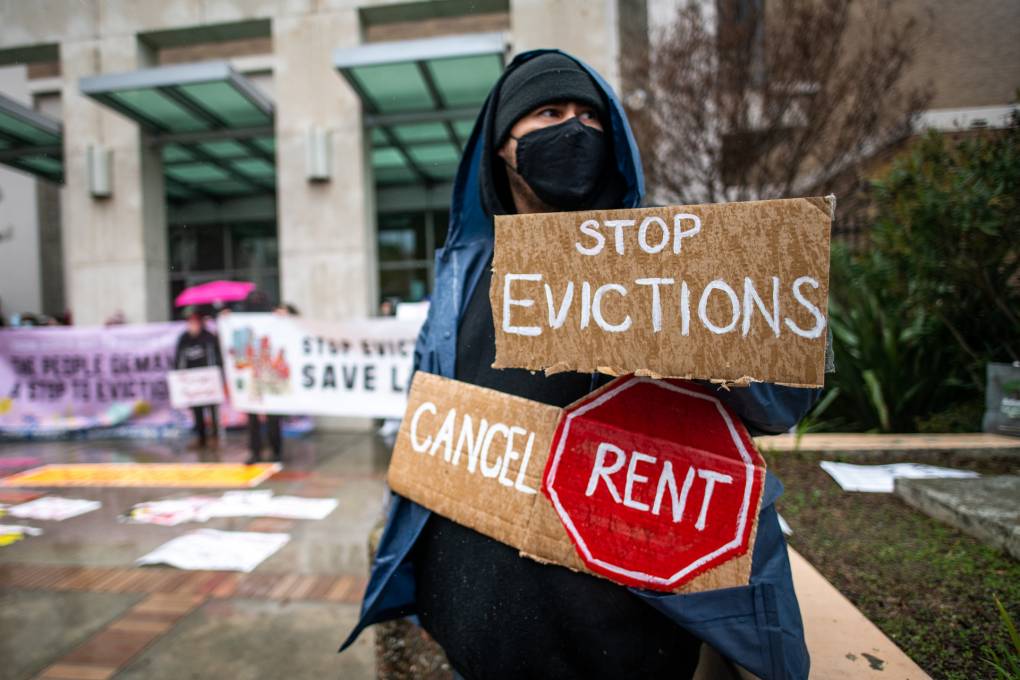
"caption": "An anti-eviction protester stands in front of Santa Clara County Superior Court on Jan. 27, 2021, during a demonstration calling for stronger statewide eviction protections.",
"description": null,
"title": "SanJose_AntiEvictionProtest",
"credit": "Beth LaBerge/KQED",
"status": "inherit",
"altTag": "A person in a raincoat and black mask covering nose and mouth stands in front of building holdings signs that say \"Stop Evictions\" and \"Cancel Rent.\"",
"isLoading": false,
"fetchFailed": false
},
"news_11909167": {
"type": "attachments",
"id": "news_11909167",
"meta": {
"index": "attachments_1716263798",
"site": "news",
"id": "11909167",
"found": true
},
"parent": 11909141,
"imgSizes": {
"twentyfourteen-full-width": {
"file": "https://cdn.kqed.org/wp-content/uploads/sites/10/2022/03/RS50490_007_SanFrancisco_Housing_07292021-qut-1038x576.jpg",
"width": 1038,
"mimeType": "image/jpeg",
"height": 576
},
"thumbnail": {
"file": "https://cdn.kqed.org/wp-content/uploads/sites/10/2022/03/RS50490_007_SanFrancisco_Housing_07292021-qut-160x107.jpg",
"width": 160,
"mimeType": "image/jpeg",
"height": 107
},
"post-thumbnail": {
"file": "https://cdn.kqed.org/wp-content/uploads/sites/10/2022/03/RS50490_007_SanFrancisco_Housing_07292021-qut-672x372.jpg",
"width": 672,
"mimeType": "image/jpeg",
"height": 372
},
"kqedFullSize": {
"file": "https://cdn.kqed.org/wp-content/uploads/sites/10/2022/03/RS50490_007_SanFrancisco_Housing_07292021-qut.jpg",
"width": 1920,
"height": 1280
},
"large": {
"file": "https://cdn.kqed.org/wp-content/uploads/sites/10/2022/03/RS50490_007_SanFrancisco_Housing_07292021-qut-1020x680.jpg",
"width": 1020,
"mimeType": "image/jpeg",
"height": 680
},
"1536x1536": {
"file": "https://cdn.kqed.org/wp-content/uploads/sites/10/2022/03/RS50490_007_SanFrancisco_Housing_07292021-qut-1536x1024.jpg",
"width": 1536,
"mimeType": "image/jpeg",
"height": 1024
},
"medium": {
"file": "https://cdn.kqed.org/wp-content/uploads/sites/10/2022/03/RS50490_007_SanFrancisco_Housing_07292021-qut-800x533.jpg",
"width": 800,
"mimeType": "image/jpeg",
"height": 533
}
},
"publishDate": 1648154076,
"modified": 1714503292,
"caption": "A 'For Rent' sign hangs in the window of an apartment building in Nob Hill in San Francisco on July 29, 2021.",
"description": "A 'For Rent' sign hangs in the window of an apartment building in Nob Hill in San Francisco on July 29, 2021. In the first full year of the pandemic, San Francisco, New York, Los Angeles and Chicago saw the greatest population losses in the nation, according to data from the U.S. Census Bureau released Thursday.",
"title": "RS50490_007_SanFrancisco_Housing_07292021-qut",
"credit": "Beth LaBerge/KQED",
"status": "inherit",
"altTag": "A red 'for rent' sign hangs in the window of a classic SF Victorian building, with the downtown skyline in the background.",
"isLoading": false,
"fetchFailed": false
},
"news_11909494": {
"type": "attachments",
"id": "news_11909494",
"meta": {
"index": "attachments_1716263798",
"site": "news",
"id": "11909494",
"found": true
},
"parent": 11909493,
"imgSizes": {
"twentyfourteen-full-width": {
"file": "https://ww2.kqed.org/app/uploads/sites/10/2022/03/Male-with-hoodie-on-cell-phone-1020x576.png",
"width": 1020,
"mimeType": "image/png",
"height": 576
},
"thumbnail": {
"file": "https://ww2.kqed.org/app/uploads/sites/10/2022/03/Male-with-hoodie-on-cell-phone-160x107.png",
"width": 160,
"mimeType": "image/png",
"height": 107
},
"post-thumbnail": {
"file": "https://ww2.kqed.org/app/uploads/sites/10/2022/03/Male-with-hoodie-on-cell-phone-672x372.png",
"width": 672,
"mimeType": "image/png",
"height": 372
},
"kqedFullSize": {
"file": "https://ww2.kqed.org/app/uploads/sites/10/2022/03/Male-with-hoodie-on-cell-phone.png",
"width": 1020,
"height": 680
},
"medium": {
"file": "https://ww2.kqed.org/app/uploads/sites/10/2022/03/Male-with-hoodie-on-cell-phone-800x533.png",
"width": 800,
"mimeType": "image/png",
"height": 533
}
},
"publishDate": 1648422084,
"modified": 1648422117,
"caption": "¿Se pregunta cuánto tiempo tarda en procesarse la ayuda al alquiler por COVID-19? Usted es uno de los cientos de miles de personas que se encuentran en la misma situación en todo California en este momento.",
"description": null,
"title": "Male with hoodie on cell phone",
"credit": "ThuongDaiHua vía Pexels",
"status": "inherit",
"altTag": null,
"isLoading": false,
"fetchFailed": false
},
"news_11910298": {
"type": "attachments",
"id": "news_11910298",
"meta": {
"index": "attachments_1716263798",
"site": "news",
"id": "11910298",
"found": true
},
"parent": 11910077,
"imgSizes": {
"twentyfourteen-full-width": {
"file": "https://ww2.kqed.org/app/uploads/sites/10/2022/04/KNR_Assembly-1038x576.jpg",
"width": 1038,
"mimeType": "image/jpeg",
"height": 576
},
"thumbnail": {
"file": "https://ww2.kqed.org/app/uploads/sites/10/2022/04/KNR_Assembly-160x90.jpg",
"width": 160,
"mimeType": "image/jpeg",
"height": 90
},
"post-thumbnail": {
"file": "https://ww2.kqed.org/app/uploads/sites/10/2022/04/KNR_Assembly-672x372.jpg",
"width": 672,
"mimeType": "image/jpeg",
"height": 372
},
"kqedFullSize": {
"file": "https://ww2.kqed.org/app/uploads/sites/10/2022/04/KNR_Assembly.jpg",
"width": 1920,
"height": 1080
},
"large": {
"file": "https://ww2.kqed.org/app/uploads/sites/10/2022/04/KNR_Assembly-1020x574.jpg",
"width": 1020,
"mimeType": "image/jpeg",
"height": 574
},
"1536x1536": {
"file": "https://ww2.kqed.org/app/uploads/sites/10/2022/04/KNR_Assembly-1536x864.jpg",
"width": 1536,
"mimeType": "image/jpeg",
"height": 864
},
"medium": {
"file": "https://ww2.kqed.org/app/uploads/sites/10/2022/04/KNR_Assembly-800x450.jpg",
"width": 800,
"mimeType": "image/jpeg",
"height": 450
}
},
"publishDate": 1649104555,
"modified": 1649104555,
"caption": null,
"description": null,
"title": "KNR_Assembly",
"credit": null,
"status": "inherit",
"altTag": null,
"isLoading": false,
"fetchFailed": false
},
"news_11908810": {
"type": "attachments",
"id": "news_11908810",
"meta": {
"index": "attachments_1716263798",
"site": "news",
"id": "11908810",
"found": true
},
"parent": 11908640,
"imgSizes": {
"twentyfourteen-full-width": {
"file": "https://ww2.kqed.org/app/uploads/sites/10/2022/03/pexels-thuongdaihua-4203996-1038x576.png",
"width": 1038,
"mimeType": "image/png",
"height": 576
},
"thumbnail": {
"file": "https://ww2.kqed.org/app/uploads/sites/10/2022/03/pexels-thuongdaihua-4203996-160x107.png",
"width": 160,
"mimeType": "image/png",
"height": 107
},
"post-thumbnail": {
"file": "https://ww2.kqed.org/app/uploads/sites/10/2022/03/pexels-thuongdaihua-4203996-672x372.png",
"width": 672,
"mimeType": "image/png",
"height": 372
},
"kqedFullSize": {
"file": "https://ww2.kqed.org/app/uploads/sites/10/2022/03/pexels-thuongdaihua-4203996.png",
"width": 1920,
"height": 1280
},
"large": {
"file": "https://ww2.kqed.org/app/uploads/sites/10/2022/03/pexels-thuongdaihua-4203996-1020x680.png",
"width": 1020,
"mimeType": "image/png",
"height": 680
},
"1536x1536": {
"file": "https://ww2.kqed.org/app/uploads/sites/10/2022/03/pexels-thuongdaihua-4203996-1536x1024.png",
"width": 1536,
"mimeType": "image/png",
"height": 1024
},
"medium": {
"file": "https://ww2.kqed.org/app/uploads/sites/10/2022/03/pexels-thuongdaihua-4203996-800x533.png",
"width": 800,
"mimeType": "image/png",
"height": 533
}
},
"publishDate": 1647903040,
"modified": 1648851467,
"caption": "Wondering how long COVID rent relief takes to process? You're one of hundreds of thousands of people in the same situation across California right now.",
"description": null,
"title": "pexels-thuongdaihua-4203996",
"credit": "ThuongDaiHua/Pexels",
"status": "inherit",
"altTag": "An Asian man wearing a black hoodie and a blue cloth face mask, with sunglasses balanced on the top of his head, gazes at a cellphone he holds in both hands",
"isLoading": false,
"fetchFailed": false
},
"news_11883639": {
"type": "attachments",
"id": "news_11883639",
"meta": {
"index": "attachments_1716263798",
"site": "news",
"id": "11883639",
"found": true
},
"parent": 11883591,
"imgSizes": {
"twentyfourteen-full-width": {
"file": "https://ww2.kqed.org/app/uploads/sites/10/2021/08/GettyImages-1228140778-1024x576.jpg",
"width": 1024,
"mimeType": "image/jpeg",
"height": 576
},
"thumbnail": {
"file": "https://ww2.kqed.org/app/uploads/sites/10/2021/08/GettyImages-1228140778-160x107.jpg",
"width": 160,
"mimeType": "image/jpeg",
"height": 107
},
"post-thumbnail": {
"file": "https://ww2.kqed.org/app/uploads/sites/10/2021/08/GettyImages-1228140778-672x372.jpg",
"width": 672,
"mimeType": "image/jpeg",
"height": 372
},
"kqedFullSize": {
"file": "https://ww2.kqed.org/app/uploads/sites/10/2021/08/GettyImages-1228140778.jpg",
"width": 1024,
"height": 683
},
"large": {
"file": "https://ww2.kqed.org/app/uploads/sites/10/2021/08/GettyImages-1228140778-1020x680.jpg",
"width": 1020,
"mimeType": "image/jpeg",
"height": 680
},
"medium": {
"file": "https://ww2.kqed.org/app/uploads/sites/10/2021/08/GettyImages-1228140778-800x534.jpg",
"width": 800,
"mimeType": "image/jpeg",
"height": 534
}
},
"publishDate": 1628038720,
"modified": 1656543998,
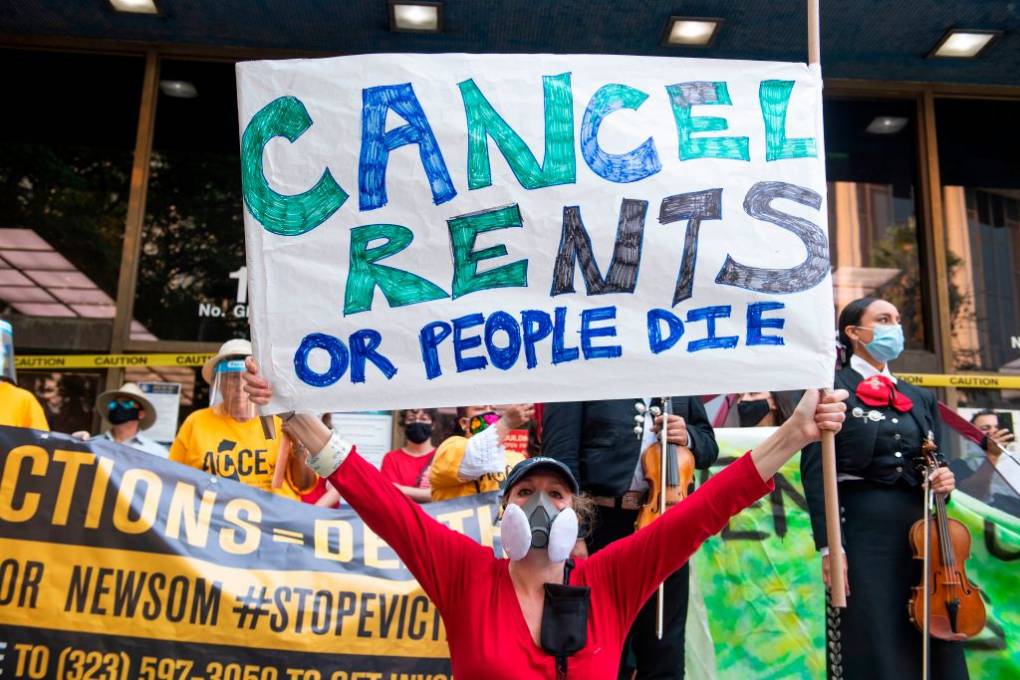
"caption": "Los Angeles renters and housing advocates demonstrate on Aug. 21, 2020, against evictions in the region. ",
"description": null,
"title": "US-ECONOMY-RENT-VIRUS-HEALTH",
"credit": "Valerie Macon/AFP via Getty Images",
"status": "inherit",
"altTag": "A woman holds up a big sign that says \"Cancel Rents of People Die.\"",
"isLoading": false,
"fetchFailed": false
},
"news_11892642": {
"type": "attachments",
"id": "news_11892642",
"meta": {
"index": "attachments_1716263798",
"site": "news",
"id": "11892642",
"found": true
},
"parent": 11892641,
"imgSizes": {
"twentyfourteen-full-width": {
"file": "https://ww2.kqed.org/app/uploads/sites/10/2021/10/picture-girl-sitting-on-floor-with-laptop-on-legs-1020x576.jpg",
"width": 1020,
"mimeType": "image/jpeg",
"height": 576
},
"thumbnail": {
"file": "https://ww2.kqed.org/app/uploads/sites/10/2021/10/picture-girl-sitting-on-floor-with-laptop-on-legs-160x107.jpg",
"width": 160,
"mimeType": "image/jpeg",
"height": 107
},
"post-thumbnail": {
"file": "https://ww2.kqed.org/app/uploads/sites/10/2021/10/picture-girl-sitting-on-floor-with-laptop-on-legs-672x372.jpg",
"width": 672,
"mimeType": "image/jpeg",
"height": 372
},
"kqedFullSize": {
"file": "https://ww2.kqed.org/app/uploads/sites/10/2021/10/picture-girl-sitting-on-floor-with-laptop-on-legs.jpg",
"width": 1020,
"height": 679
},
"medium": {
"file": "https://ww2.kqed.org/app/uploads/sites/10/2021/10/picture-girl-sitting-on-floor-with-laptop-on-legs-800x533.jpg",
"width": 800,
"mimeType": "image/jpeg",
"height": 533
}
},
"publishDate": 1634525249,
"modified": 1634525305,
"caption": "Si va a ser afectado por el fin de la moratoria de desalojos de California, esto es lo que debe saber para solicitar una ayuda de alquiler.",
"description": null,
"title": "picture girl sitting on floor with laptop on legs",
"credit": "Andrew Neel/Pexels",
"status": "inherit",
"altTag": null,
"isLoading": false,
"fetchFailed": false
},
"news_11909587": {
"type": "attachments",
"id": "news_11909587",
"meta": {
"index": "attachments_1716263798",
"site": "news",
"id": "11909587",
"found": true
},
"parent": 11909566,
"imgSizes": {
"twentyfourteen-full-width": {
"file": "https://ww2.kqed.org/app/uploads/sites/10/2022/03/RS46914_020_SanJose_AntiEvictionProtest_01272021-qut-1038x576.jpg",
"width": 1038,
"mimeType": "image/jpeg",
"height": 576
},
"thumbnail": {
"file": "https://ww2.kqed.org/app/uploads/sites/10/2022/03/RS46914_020_SanJose_AntiEvictionProtest_01272021-qut-160x107.jpg",
"width": 160,
"mimeType": "image/jpeg",
"height": 107
},
"post-thumbnail": {
"file": "https://ww2.kqed.org/app/uploads/sites/10/2022/03/RS46914_020_SanJose_AntiEvictionProtest_01272021-qut-672x372.jpg",
"width": 672,
"mimeType": "image/jpeg",
"height": 372
},
"kqedFullSize": {
"file": "https://ww2.kqed.org/app/uploads/sites/10/2022/03/RS46914_020_SanJose_AntiEvictionProtest_01272021-qut.jpg",
"width": 1920,
"height": 1280
},
"large": {
"file": "https://ww2.kqed.org/app/uploads/sites/10/2022/03/RS46914_020_SanJose_AntiEvictionProtest_01272021-qut-1020x680.jpg",
"width": 1020,
"mimeType": "image/jpeg",
"height": 680
},
"1536x1536": {
"file": "https://ww2.kqed.org/app/uploads/sites/10/2022/03/RS46914_020_SanJose_AntiEvictionProtest_01272021-qut-1536x1024.jpg",
"width": 1536,
"mimeType": "image/jpeg",
"height": 1024
},
"medium": {
"file": "https://ww2.kqed.org/app/uploads/sites/10/2022/03/RS46914_020_SanJose_AntiEvictionProtest_01272021-qut-800x533.jpg",
"width": 800,
"mimeType": "image/jpeg",
"height": 533
}
},
"publishDate": 1648506304,
"modified": 1648506393,
"caption": "Protesters rally in front of Santa Clara County Superior Court in San Jose on Jan. 27, 2021, demanding stronger state eviction protections during the pandemic.",
"description": null,
"title": "RS46914_020_SanJose_AntiEvictionProtest_01272021-qut",
"credit": "Beth LaBerge/KQED",
"status": "inherit",
"altTag": "A woman at a protest displays a sign hanging around her neck that says: 'Evictions Are Violent. We Won't Be Silent.'",
"isLoading": false,
"fetchFailed": false
},
"news_11879728": {
"type": "attachments",
"id": "news_11879728",
"meta": {
"index": "attachments_1716263798",
"site": "news",
"id": "11879728",
"found": true
},
"parent": 11879725,
"imgSizes": {
"twentyfourteen-full-width": {
"file": "https://ww2.kqed.org/app/uploads/sites/10/2021/06/RS46906_010_SanJose_AntiEvictionProtest_01272021-qut-1-1038x576.jpg",
"width": 1038,
"mimeType": "image/jpeg",
"height": 576
},
"thumbnail": {
"file": "https://ww2.kqed.org/app/uploads/sites/10/2021/06/RS46906_010_SanJose_AntiEvictionProtest_01272021-qut-1-160x107.jpg",
"width": 160,
"mimeType": "image/jpeg",
"height": 107
},
"post-thumbnail": {
"file": "https://ww2.kqed.org/app/uploads/sites/10/2021/06/RS46906_010_SanJose_AntiEvictionProtest_01272021-qut-1-672x372.jpg",
"width": 672,
"mimeType": "image/jpeg",
"height": 372
},
"kqedFullSize": {
"file": "https://ww2.kqed.org/app/uploads/sites/10/2021/06/RS46906_010_SanJose_AntiEvictionProtest_01272021-qut-1.jpg",
"width": 1920,
"height": 1280
},
"large": {
"file": "https://ww2.kqed.org/app/uploads/sites/10/2021/06/RS46906_010_SanJose_AntiEvictionProtest_01272021-qut-1-1020x680.jpg",
"width": 1020,
"mimeType": "image/jpeg",
"height": 680
},
"1536x1536": {
"file": "https://ww2.kqed.org/app/uploads/sites/10/2021/06/RS46906_010_SanJose_AntiEvictionProtest_01272021-qut-1-1536x1024.jpg",
"width": 1536,
"mimeType": "image/jpeg",
"height": 1024
},
"medium": {
"file": "https://ww2.kqed.org/app/uploads/sites/10/2021/06/RS46906_010_SanJose_AntiEvictionProtest_01272021-qut-1-800x533.jpg",
"width": 800,
"mimeType": "image/jpeg",
"height": 533
}
},
"publishDate": 1624993427,
"modified": 1648493683,
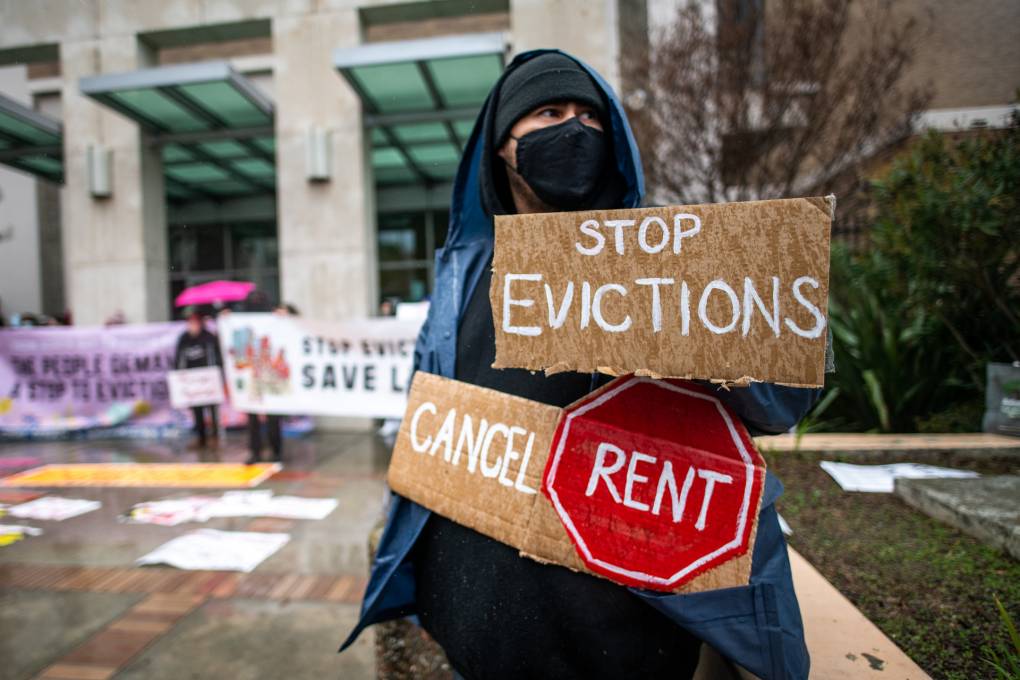
"caption": "An anti-eviction protester stands in front of Santa Clara County Superior Court on Jan. 27, 2021, during a demonstration calling for stronger statewide eviction protections.",
"description": null,
"title": "RS46906_010_SanJose_AntiEvictionProtest_01272021-qut",
"credit": "Beth LaBerge/KQED",
"status": "inherit",
"altTag": "A person wearing a black face mask and a jacket stands outside holding signs that read \"Stop Evictions\" and \"Cancel Rent.\"",
"isLoading": false,
"fetchFailed": false
},
"news_11909296": {
"type": "attachments",
"id": "news_11909296",
"meta": {
"index": "attachments_1716263798",
"site": "news",
"id": "11909296",
"found": true
},
"parent": 11909254,
"imgSizes": {
"twentyfourteen-full-width": {
"file": "https://ww2.kqed.org/app/uploads/sites/10/2022/03/RS46925_034_SanJose_AntiEvictionProtest_01272021-qut-1038x576.jpg",
"width": 1038,
"mimeType": "image/jpeg",
"height": 576
},
"thumbnail": {
"file": "https://ww2.kqed.org/app/uploads/sites/10/2022/03/RS46925_034_SanJose_AntiEvictionProtest_01272021-qut-160x107.jpg",
"width": 160,
"mimeType": "image/jpeg",
"height": 107
},
"post-thumbnail": {
"file": "https://ww2.kqed.org/app/uploads/sites/10/2022/03/RS46925_034_SanJose_AntiEvictionProtest_01272021-qut-672x372.jpg",
"width": 672,
"mimeType": "image/jpeg",
"height": 372
},
"kqedFullSize": {
"file": "https://ww2.kqed.org/app/uploads/sites/10/2022/03/RS46925_034_SanJose_AntiEvictionProtest_01272021-qut.jpg",
"width": 1920,
"height": 1280
},
"large": {
"file": "https://ww2.kqed.org/app/uploads/sites/10/2022/03/RS46925_034_SanJose_AntiEvictionProtest_01272021-qut-1020x680.jpg",
"width": 1020,
"mimeType": "image/jpeg",
"height": 680
},
"1536x1536": {
"file": "https://ww2.kqed.org/app/uploads/sites/10/2022/03/RS46925_034_SanJose_AntiEvictionProtest_01272021-qut-1536x1024.jpg",
"width": 1536,
"mimeType": "image/jpeg",
"height": 1024
},
"medium": {
"file": "https://ww2.kqed.org/app/uploads/sites/10/2022/03/RS46925_034_SanJose_AntiEvictionProtest_01272021-qut-800x533.jpg",
"width": 800,
"mimeType": "image/jpeg",
"height": 533
}
},
"publishDate": 1648234367,
"modified": 1648243103,
"caption": "A demonstrator holds a sign in front of the Santa Clara County Superior Court in San Jose on Jan. 27, 2021, during a protest calling for stronger eviction protections in California. Hundreds of thousands of California renters facing eviction could get another three months of protection under a bill introduced Thursday.",
"description": null,
"title": "RS46925_034_SanJose_AntiEvictionProtest_01272021-qut",
"credit": "Beth LaBerge/KQED",
"status": "inherit",
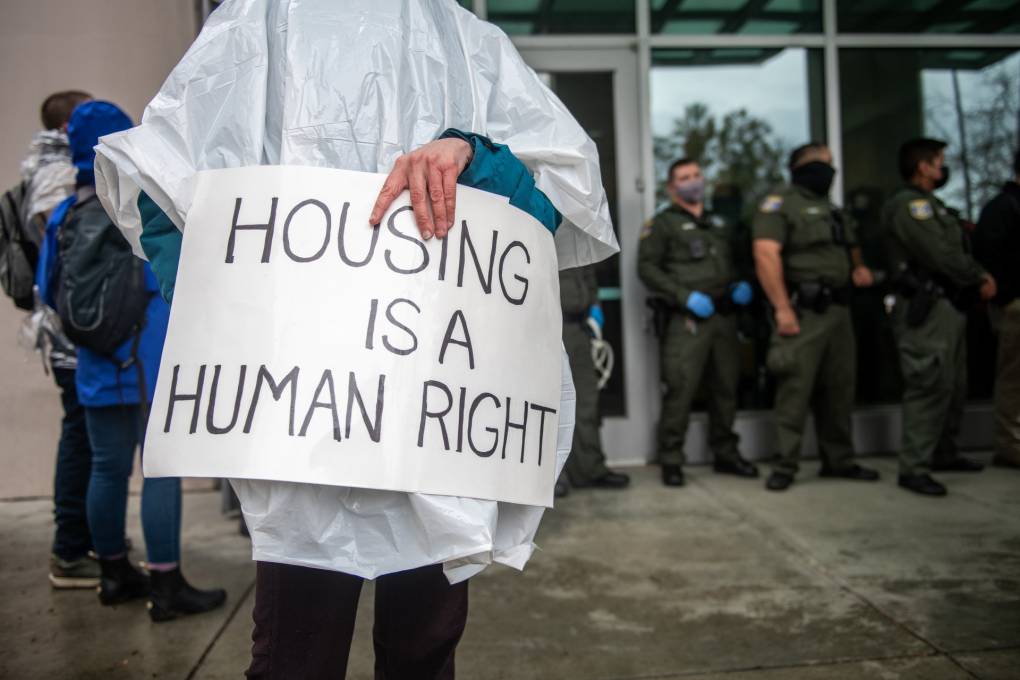
"altTag": "A demonstrator holds a sign that says 'Housing Is A Human Right'",
"isLoading": false,
"fetchFailed": false
}
},
"audioPlayerReducer": {
"postId": "stream_live",
"isPaused": true,
"isPlaying": false,
"pfsActive": false,
"pledgeModalIsOpen": true,
"playerDrawerIsOpen": false,
"liveAudioPlayStartedAt": 0,
"liveAudioPlayContext": ""
},
"authorsReducer": {
"byline_news_11909518": {
"type": "authors",
"id": "byline_news_11909518",
"meta": {
"override": true
},
"slug": "byline_news_11909518",
"name": "\u003ca href=\"https://calmatters.org/author/manuela-tobias\">Manuela Tobias\u003c/a> ",
"isLoading": false
},
"byline_news_11909254": {
"type": "authors",
"id": "byline_news_11909254",
"meta": {
"override": true
},
"slug": "byline_news_11909254",
"name": "Adam Beam\u003cbr>The Associated Press",
"isLoading": false
},
"byline_news_11909141": {
"type": "authors",
"id": "byline_news_11909141",
"meta": {
"override": true
},
"slug": "byline_news_11909141",
"name": "Mike Schneider \u003cbr> The Associated Press",
"isLoading": false
},
"katrinaschwartz": {
"type": "authors",
"id": "234",
"meta": {
"index": "authors_1716337520",
"id": "234",
"found": true
},
"name": "Katrina Schwartz",
"firstName": "Katrina",
"lastName": "Schwartz",
"slug": "katrinaschwartz",
"email": "kschwartz@kqed.org",
"display_author_email": false,
"staff_mastheads": [
"news"
],
"title": "Producer",
"bio": "Katrina Schwartz is a journalist based in San Francisco. She's worked at KPCC public radio in LA and has reported on air and online for KQED since 2010. She covered how teaching and learning is changing for MindShift between 2012 and 2020. She is the co-host of the MindShift podcast and now produces KQED's Bay Curious podcast.",
"avatar": "https://secure.gravatar.com/avatar/edb4ee79070447a018538c9aae6eeecf28786515b8a0c30e43b6b7dce5aa44c8?s=600&d=blank&r=g",
"twitter": "kschwart",
"bluesky": null,
"facebook": null,
"instagram": null,
"linkedin": null,
"sites": [
{
"site": "",
"roles": [
"editor"
]
},
{
"site": "news",
"roles": [
"editor"
]
},
{
"site": "mindshift",
"roles": [
"administrator"
]
},
{
"site": "stateofhealth",
"roles": [
"author"
]
},
{
"site": "science",
"roles": [
"editor"
]
}
],
"headData": {
"title": "Katrina Schwartz | KQED",
"description": "Producer",
"ogImgSrc": "https://secure.gravatar.com/avatar/edb4ee79070447a018538c9aae6eeecf28786515b8a0c30e43b6b7dce5aa44c8?s=600&d=blank&r=g",
"twImgSrc": "https://secure.gravatar.com/avatar/edb4ee79070447a018538c9aae6eeecf28786515b8a0c30e43b6b7dce5aa44c8?s=600&d=blank&r=g"
},
"isLoading": false,
"link": "/author/katrinaschwartz"
},
"kqed": {
"type": "authors",
"id": "236",
"meta": {
"index": "authors_1716337520",
"id": "236",
"found": true
},
"name": "KQED News Staff",
"firstName": "KQED News Staff",
"lastName": null,
"slug": "kqed",
"email": "faq@kqed.org",
"display_author_email": false,
"staff_mastheads": [],
"title": null,
"bio": null,
"avatar": "https://secure.gravatar.com/avatar/ef0e801a68c4c54afa9180db14084167?s=600&d=blank&r=g",
"twitter": null,
"facebook": null,
"instagram": null,
"linkedin": null,
"sites": [
{
"site": "arts",
"roles": [
"contributor"
]
},
{
"site": "news",
"roles": [
"editor"
]
},
{
"site": "futureofyou",
"roles": [
"author"
]
}
],
"headData": {
"title": "KQED News Staff | KQED",
"description": null,
"ogImgSrc": "https://secure.gravatar.com/avatar/ef0e801a68c4c54afa9180db14084167?s=600&d=blank&r=g",
"twImgSrc": "https://secure.gravatar.com/avatar/ef0e801a68c4c54afa9180db14084167?s=600&d=blank&r=g"
},
"isLoading": false,
"link": "/author/kqed"
},
"carlysevern": {
"type": "authors",
"id": "3243",
"meta": {
"index": "authors_1716337520",
"id": "3243",
"found": true
},
"name": "Carly Severn",
"firstName": "Carly",
"lastName": "Severn",
"slug": "carlysevern",
"email": "csevern@kqed.org",
"display_author_email": false,
"staff_mastheads": [
"news"
],
"title": "Senior Editor, Audience News ",
"bio": "Carly is KQED's Senior Editor of Audience News on the Digital News team, and has reported for the California Report Magazine, Bay Curious and KQED Arts. She's formerly the host of \u003ca href=\"http://ww2.kqed.org/pop/category/the-cooler/\" rel=\"noopener noreferrer\">The Cooler\u003c/a> podcast.",
"avatar": "https://secure.gravatar.com/avatar/54037bf5c128fe678f0ef26cec97a93f2e7f220a22d7285703328f12c42c1b1d?s=600&d=blank&r=g",
"twitter": "teacupinthebay",
"bluesky": null,
"facebook": null,
"instagram": null,
"linkedin": null,
"sites": [
{
"site": "",
"roles": [
"editor"
]
},
{
"site": "arts",
"roles": [
"editor"
]
},
{
"site": "news",
"roles": [
"administrator"
]
},
{
"site": "pop",
"roles": [
"editor"
]
},
{
"site": "futureofyou",
"roles": [
"editor"
]
},
{
"site": "about",
"roles": [
"administrator"
]
},
{
"site": "mindshift",
"roles": [
"editor"
]
},
{
"site": "bayareabites",
"roles": [
"editor"
]
},
{
"site": "stateofhealth",
"roles": [
"editor"
]
},
{
"site": "science",
"roles": [
"editor"
]
},
{
"site": "food",
"roles": [
"contributor"
]
},
{
"site": "forum",
"roles": [
"editor"
]
},
{
"site": "perspectives",
"roles": [
"administrator"
]
},
{
"site": "liveblog",
"roles": [
"editor"
]
}
],
"headData": {
"title": "Carly Severn | KQED",
"description": "Senior Editor, Audience News ",
"ogImgSrc": "https://secure.gravatar.com/avatar/54037bf5c128fe678f0ef26cec97a93f2e7f220a22d7285703328f12c42c1b1d?s=600&d=blank&r=g",
"twImgSrc": "https://secure.gravatar.com/avatar/54037bf5c128fe678f0ef26cec97a93f2e7f220a22d7285703328f12c42c1b1d?s=600&d=blank&r=g"
},
"isLoading": false,
"link": "/author/carlysevern"
},
"katewolffe": {
"type": "authors",
"id": "11523",
"meta": {
"index": "authors_1716337520",
"id": "11523",
"found": true
},
"name": "Kate Wolffe",
"firstName": "Kate",
"lastName": "Wolffe",
"slug": "katewolffe",
"email": "kwolffe@kqed.org",
"display_author_email": true,
"staff_mastheads": [
"news"
],
"title": "KQED Reporter + Weekend Host",
"bio": "Kate Wolffe reports on local Bay Area happenings for KQED, and hosts the news on weekend afternoons. She joined KQED in 2018 as an intern on the Forum team, before moving to cover topics ranging from politics to criminal justice to homelessness. A Bay Area native and UC Berkeley graduate, Kate loves to discover new corners of the region.",
"avatar": "https://secure.gravatar.com/avatar/22455f14db824a03ee252f73052fe939?s=600&d=blank&r=g",
"twitter": "katewolffe",
"facebook": null,
"instagram": null,
"linkedin": null,
"sites": [
{
"site": "arts",
"roles": [
"editor"
]
},
{
"site": "news",
"roles": [
"author",
"edit_others_posts"
]
},
{
"site": "forum",
"roles": [
"editor"
]
}
],
"headData": {
"title": "Kate Wolffe | KQED",
"description": "KQED Reporter + Weekend Host",
"ogImgSrc": "https://secure.gravatar.com/avatar/22455f14db824a03ee252f73052fe939?s=600&d=blank&r=g",
"twImgSrc": "https://secure.gravatar.com/avatar/22455f14db824a03ee252f73052fe939?s=600&d=blank&r=g"
},
"isLoading": false,
"link": "/author/katewolffe"
},
"kmoghadam": {
"type": "authors",
"id": "11637",
"meta": {
"index": "authors_1716337520",
"id": "11637",
"found": true
},
"name": "Kyana Moghadam",
"firstName": "Kyana",
"lastName": "Moghadam",
"slug": "kmoghadam",
"email": "kmoghadam@kqed.org",
"display_author_email": false,
"staff_mastheads": [
"news"
],
"title": "Senior Producer ",
"bio": "Kyana Moghadam is a senior producer at KQED. Prior to joining KQED, she was an audio producer and editor with Al Jazeera, Jetty Studios, VOX Media, Democracy Now!, and Global Press.",
"avatar": "https://secure.gravatar.com/avatar/cdbd6cb0b9e99deaa9eb618abdba56f265d374a2c614710aebeb4e58decbc5f0?s=600&d=blank&r=g",
"twitter": null,
"bluesky": null,
"facebook": null,
"instagram": null,
"linkedin": "https://www.linkedin.com/in/kyanamoghadam/",
"sites": [
{
"site": "",
"roles": [
"editor"
]
},
{
"site": "arts",
"roles": [
"editor"
]
},
{
"site": "news",
"roles": [
"administrator"
]
},
{
"site": "pop",
"roles": [
"editor"
]
},
{
"site": "about",
"roles": [
"editor"
]
},
{
"site": "forum",
"roles": [
"editor"
]
},
{
"site": "perspectives",
"roles": [
"editor"
]
},
{
"site": "podcasts",
"roles": [
"administrator"
]
}
],
"headData": {
"title": "Kyana Moghadam | KQED",
"description": "Senior Producer ",
"ogImgSrc": "https://secure.gravatar.com/avatar/cdbd6cb0b9e99deaa9eb618abdba56f265d374a2c614710aebeb4e58decbc5f0?s=600&d=blank&r=g",
"twImgSrc": "https://secure.gravatar.com/avatar/cdbd6cb0b9e99deaa9eb618abdba56f265d374a2c614710aebeb4e58decbc5f0?s=600&d=blank&r=g"
},
"isLoading": false,
"link": "/author/kmoghadam"
},
"ebaldassari": {
"type": "authors",
"id": "11652",
"meta": {
"index": "authors_1716337520",
"id": "11652",
"found": true
},
"name": "Erin Baldassari",
"firstName": "Erin",
"lastName": "Baldassari",
"slug": "ebaldassari",
"email": "ebaldassari@KQED.org",
"display_author_email": true,
"staff_mastheads": [
"news"
],
"title": "Staff Writer",
"bio": "Erin Baldassari covers housing for KQED. She's a former print journalist and most recently worked as the transportation reporter for the \u003cem>Mercury News\u003c/em> and \u003cem>East Bay Times. \u003c/em>There, she focused on how the Bay Area’s housing shortage has changed the way people move around the region. She also served on the \u003cem>East Bay Times\u003c/em>’ 2017 Pulitzer Prize-winning team for coverage of the Ghost Ship Fire in Oakland. Prior to that, Erin worked as a breaking news and general assignment reporter for a variety of outlets in the Bay Area and the greater Boston area. A Tufts University alumna, Erin grew up in the foothills of the Sierra Nevada mountains and in Sonoma County. She is a life-long KQED listener.",
"avatar": "https://secure.gravatar.com/avatar/5e95cad64a8ca08288082212e199d2b0cbeb4fd8e8ef5339395f361032bbe005?s=600&d=blank&r=g",
"twitter": "e_baldi",
"bluesky": null,
"facebook": null,
"instagram": null,
"linkedin": null,
"sites": [
{
"site": "news",
"roles": [
"edit_others_posts",
"editor"
]
},
{
"site": "science",
"roles": [
"editor"
]
},
{
"site": "liveblog",
"roles": [
"editor"
]
}
],
"headData": {
"title": "Erin Baldassari | KQED",
"description": "Staff Writer",
"ogImgSrc": "https://secure.gravatar.com/avatar/5e95cad64a8ca08288082212e199d2b0cbeb4fd8e8ef5339395f361032bbe005?s=600&d=blank&r=g",
"twImgSrc": "https://secure.gravatar.com/avatar/5e95cad64a8ca08288082212e199d2b0cbeb4fd8e8ef5339395f361032bbe005?s=600&d=blank&r=g"
},
"isLoading": false,
"link": "/author/ebaldassari"
},
"naldana": {
"type": "authors",
"id": "11793",
"meta": {
"index": "authors_1716337520",
"id": "11793",
"found": true
},
"name": "Natalia Aldana",
"firstName": "Natalia",
"lastName": "Aldana",
"slug": "naldana",
"email": "naldana@kqed.org",
"display_author_email": false,
"staff_mastheads": [],
"title": "KQED Producer",
"bio": "Natalia Aldana is the senior engagement producer for KQED podcasts.",
"avatar": "https://secure.gravatar.com/avatar/c784d8a94359b38cc84991c1a7a565b2?s=600&d=blank&r=g",
"twitter": null,
"facebook": null,
"instagram": null,
"linkedin": null,
"sites": [
{
"site": "news",
"roles": [
"editor"
]
}
],
"headData": {
"title": "Natalia Aldana | KQED",
"description": "KQED Producer",
"ogImgSrc": "https://secure.gravatar.com/avatar/c784d8a94359b38cc84991c1a7a565b2?s=600&d=blank&r=g",
"twImgSrc": "https://secure.gravatar.com/avatar/c784d8a94359b38cc84991c1a7a565b2?s=600&d=blank&r=g"
},
"isLoading": false,
"link": "/author/naldana"
}
},
"pagesReducer": {
"news_category_housing": {
"type": "terms",
"id": "news_6266",
"meta": {
"index": "terms_1716263798",
"site": "news",
"id": "6266",
"score": 11.039913
},
"featImg": null,
"name": "Housing",
"description": null,
"taxonomy": "category",
"headData": {
"twImgId": null,
"twTitle": null,
"ogTitle": null,
"ogImgId": null,
"twDescription": null,
"description": null,
"title": "Housing Archives | KQED News",
"ogDescription": null
},
"ttid": 6290,
"slug": "housing",
"isLoading": false,
"title": "Housing",
"pageMeta": {
"site": "news",
"WpPageTemplate": "page-topic-editorial",
"currentPage": 63
},
"blocks": [
{
"blockName": "kqed/post-list",
"attrs": {
"layout": "cardArticle2",
"query": "posts/news?category=housing",
"seeMore": false,
"paginated": true,
"page": 63
}
},
{
"blockName": "kqed/ad"
}
]
}
},
"pfsSessionReducer": {},
"postsReducer": {
"stream_live": {
"type": "live",
"id": "stream_live",
"audioUrl": "https://streams.kqed.org/kqedradio",
"title": "Live Stream",
"excerpt": "Live Stream information currently unavailable.",
"link": "/radio",
"featImg": "",
"label": {
"name": "KQED Live",
"link": "/"
}
},
"stream_kqedNewscast": {
"type": "posts",
"id": "stream_kqedNewscast",
"audioUrl": "https://www.kqed.org/.stream/anon/radio/RDnews/newscast.mp3?_=1",
"title": "KQED Newscast",
"featImg": "",
"label": {
"name": "88.5 FM",
"link": "/"
}
},
"news_11911130": {
"type": "posts",
"id": "news_11911130",
"meta": {
"index": "posts_1716263798",
"site": "news",
"id": "11911130",
"score": null,
"sort": [
1650915313000
]
},
"guestAuthors": [],
"slug": "bonus-your-stories-and-solutions-for-the-housing-crisis",
"title": "Bonus: Your Stories and Solutions for the Housing Crisis",
"publishDate": 1650915313,
"format": "audio",
"headTitle": "Bonus: Your Stories and Solutions for the Housing Crisis | KQED",
"labelTerm": {},
"content": "\u003cp>\u003cspan style=\"font-weight: 400\">What are your biggest ideas on how to solve the housing crisis? How has housing shaped your life?\u003c/span>\u003c/p>\n\u003cp>\u003cspan style=\"font-weight: 400\">Throughout this season, we wanted to hear from you — the Sold Out audience. We asked you to get in touch, and you came through!\u003c/span>\u003c/p>\n\u003cp>\u003cspan style=\"font-weight: 400\">From voice memos to emails and social media, dozens of listeners reached out and shared stories of housing insecurity and loss, advocacy work, and visions for an equitable housing future.\u003c/span>\u003c/p>\n\u003cp>\u003cspan style=\"font-weight: 400\">In this bonus episode, hear from seven people for whom housing is at the center of everything. \u003c/span>\u003c/p>\n\u003ch5 id=\"embed-code\" class=\"inconsolata\">\n\u003c!-- iframe plugin v.4.3 wordpress.org/plugins/iframe/ -->\u003cbr>\n\u003ciframe loading=\"lazy\" frameborder=\"0\" height=\"200\" scrolling=\"no\" src=\"https://playlist.megaphone.fm?e=KQINC9285725518&light=true\" width=\"100%\" class=\"iframe-class\">\u003c/iframe>\u003cbr>\n\u003c/h5>\n\u003chr>\n\u003cp>\u003cb>[TRANSCRIPT]\u003c/b>\u003c/p>\n\u003cp>\u003cstrong>MOLLY SOLOMON: \u003c/strong>Hi! I’m Molly Solomon.\u003c/p>\n\u003cp>[ad fullwidth]\u003c/p>\n\u003cp>\u003cstrong>ERIN BALDASSARI: \u003c/strong>\u003cspan style=\"font-weight: 400\">And I’m Erin Baldassari. You’re listening to Sold Out: Rethinking Housing in America, and today we’ve got something special for you from producer Natalia Aldana.\u003c/span>\u003c/p>\n\u003cp>\u003cspan style=\"font-weight: 400\">Take it away, Natalia.\u003c/span>\u003c/p>\n\u003cp>\u003cb>[SOLD OUT THEME MUSIC BEGINS]\u003c/b>\u003c/p>\n\u003cfigure id=\"attachment_11841421\" class=\"wp-caption aligncenter\" style=\"max-width: 451px\">\u003cimg loading=\"lazy\" decoding=\"async\" class=\" wp-image-11841421\" src=\"https://ww2.kqed.org/app/uploads/sites/10/2020/10/RS16247_GettyImages-150582090-qut-800x530.jpg\" alt=\"\" width=\"451\" height=\"299\" srcset=\"https://cdn.kqed.org/wp-content/uploads/sites/10/2020/10/RS16247_GettyImages-150582090-qut-800x530.jpg 800w, https://cdn.kqed.org/wp-content/uploads/sites/10/2020/10/RS16247_GettyImages-150582090-qut-1020x676.jpg 1020w, https://cdn.kqed.org/wp-content/uploads/sites/10/2020/10/RS16247_GettyImages-150582090-qut-160x106.jpg 160w, https://cdn.kqed.org/wp-content/uploads/sites/10/2020/10/RS16247_GettyImages-150582090-qut-1536x1018.jpg 1536w, https://cdn.kqed.org/wp-content/uploads/sites/10/2020/10/RS16247_GettyImages-150582090-qut.jpg 1920w\" sizes=\"auto, (max-width: 451px) 100vw, 451px\">\u003cfigcaption class=\"wp-caption-text\">A red for sale sign outside a home with a “sold pending” sticker posted across the front. \u003ccite>(Justin Sullivan/KQED)\u003c/cite>\u003c/figcaption>\u003c/figure>\n\u003cp>\u003cb>NATALIA ALDANA:\u003c/b>\u003cspan style=\"font-weight: 400\"> When it comes to the housing crisis, every Californian has something to say about it.\u003c/span>\u003c/p>\n\u003cp>\u003cb>MARGOT RINALDO: \u003c/b>\u003cspan style=\"font-weight: 400\">Man, it’s like — it’s like the air we breathe. It is literally, like, a fact of life if you live in California.\u003c/span>\u003c/p>\n\u003cp>\u003cspan style=\"font-weight: 400\">\u003cstrong>NATALIA: \u003c/strong>We can all point to how it’s impacted us — affected our families, our neighborhoods, and our livelihoods.\u003c/span>\u003c/p>\n\u003cp>\u003cspan style=\"font-weight: 400\">Throughout this season of Sold Out, we’ve been asking for your thoughts and experiences when it comes to housing. \u003c/span>\u003c/p>\n\u003cp>\u003cspan style=\"font-weight: 400\">So many of you got in touch. And today, you’ll hear from seven people whose stories might challenge you, empathize with you, and hopefully, inspire you.\u003c/span>\u003c/p>\n\u003cp>\u003cb>[MUSIC – DECK LOFI]\u003c/b>\u003c/p>\n\u003cp>\u003cspan style=\"font-weight: 400\">First up, we have a listener who wants us to rethink how we live — literally\u003c/span> \u003cspan style=\"font-weight: 400\">who we share a roof with, and how the \u003c/span>\u003cspan style=\"font-weight: 400\">way \u003c/span>\u003cspan style=\"font-weight: 400\">we understand family impacts our housing.\u003c/span>\u003c/p>\n\u003cp>\u003cspan style=\"font-weight: 400\">Cam Coulter rents an apartment with his partner in San Jose. And Cam thinks the housing system favors homeowners. \u003c/span>\u003c/p>\n\u003cp>\u003cb>CAM COULTER: \u003c/b>\u003cspan style=\"font-weight: 400\">This is probably a little hot-take, but I wish I could write off my rent payments as tax-deductible.\u003c/span>\u003c/p>\n\u003cp>\u003cb>NATALIA: \u003c/b>\u003cspan style=\"font-weight: 400\">Cam recognizes that tax incentives are meant to motivate homeownership. \u003c/span>\u003c/p>\n\u003cp>\u003cb>CAM:\u003c/b>\u003cspan style=\"font-weight: 400\"> And that might work in other parts of the country. But here I feel like it really just punishes the people who can’t afford to buy a home.\u003c/span>\u003c/p>\n\u003cp>\u003cb>NATALIA: \u003c/b>\u003cspan style=\"font-weight: 400\">Although rent is not tax-deductible in California — the state does award a $60 renters tax credit for qualifying single filers who earn less than $43,533 a year. Since Cam and I last spoke, \u003ca href=\"https://www.msn.com/en-us/news/us/californias-renter-tax-credit-has-remained-unchanged-for-43-years-it-could-soon-increase/ar-AAW402s\">a state bill has been proposed that could potentially increase that credit to $500.\u003c/a>\u003c/span>\u003c/p>\n\u003cp>\u003cb>[MUSIC OUT – DECK LOFI OUT]\u003c/b>\u003c/p>\n\u003cp>\u003cspan style=\"font-weight: 400\">While Cam\u003c/span>\u003cspan style=\"font-weight: 400\"> doesn’t really want to buy a h\u003c/span>\u003cspan style=\"font-weight: 400\">ome, they do want to build equity.\u003c/span>\u003c/p>\n\u003cp>\u003cb>CAM: \u003c/b>\u003cspan style=\"font-weight: 400\">So I see the way that the desire to own a home is sort of constructed by the fact that it’s a great way to build wealth and have long-term stability. But I wish there were other ways to achieve that.\u003c/span>\u003c/p>\n\u003cfigure id=\"attachment_11911686\" class=\"wp-caption alignright\" style=\"max-width: 334px\">\u003cimg loading=\"lazy\" decoding=\"async\" class=\" wp-image-11911686\" src=\"https://ww2.kqed.org/app/uploads/sites/10/2022/04/Cam-Coulter-800x800.jpeg\" alt=\"A person sits on the grass.\" width=\"334\" height=\"334\" srcset=\"https://cdn.kqed.org/wp-content/uploads/sites/10/2022/04/Cam-Coulter-800x800.jpeg 800w, https://cdn.kqed.org/wp-content/uploads/sites/10/2022/04/Cam-Coulter-1020x1020.jpeg 1020w, https://cdn.kqed.org/wp-content/uploads/sites/10/2022/04/Cam-Coulter-160x160.jpeg 160w, https://cdn.kqed.org/wp-content/uploads/sites/10/2022/04/Cam-Coulter-1536x1536.jpeg 1536w, https://cdn.kqed.org/wp-content/uploads/sites/10/2022/04/Cam-Coulter-1920x1920.jpeg 1920w, https://cdn.kqed.org/wp-content/uploads/sites/10/2022/04/Cam-Coulter.jpeg 2048w\" sizes=\"auto, (max-width: 334px) 100vw, 334px\">\u003cfigcaption class=\"wp-caption-text\">Cam Coulter wants KQED listeners to reimagine who we consider family, and how that might improve the housing crisis. \u003ccite>(Courtesy of Cam Coulter)\u003c/cite>\u003c/figcaption>\u003c/figure>\n\u003cp>\u003cb>NATALIA:\u003c/b>\u003cspan style=\"font-weight: 400\"> As for their other pie in the sky: Cam wants more \u003c/span>\u003ca href=\"https://www.ic.org/what-is-an-intentional-community-30th-birthday-day-13/\">\u003cspan style=\"font-weight: 400\">intentional housing or co-housing communities\u003c/span>\u003c/a>\u003cspan style=\"font-weight: 400\">.\u003c/span>\u003c/p>\n\u003cp>\u003cspan style=\"font-weight: 400\"> \u003c/span>\u003cb>CAM: \u003c/b>\u003cspan style=\"font-weight: 400\">When I stop and dream about what, like, a beautiful, sustainable, healthy future would look like, I see housing that looks more like this.\u003c/span>\u003c/p>\n\u003cp>\u003cspan style=\"font-weight: 400\">I’ve lived in intentional community before, and I’d like to do that again in the future.\u003c/span>\u003c/p>\n\u003cp>\u003cb>[MUSIC IN – \u003c/b>\u003cb>SUNKISSED]\u003c/b>\u003c/p>\n\u003cp>\u003cspan style=\"font-weight: 400\">Live not just with my own, how to say, like, nuclear family, but with other people, and to share space with them, share grocery budgets, do communal activities.\u003c/span>\u003c/p>\n\u003cp>\u003cspan style=\"font-weight: 400\">I would love to live in a co-housing community where my partner and I could have some of our own space but also share common spaces with community. I would love to live in, like, a larger, multi-family home where maybe four to 10 adults, or kids, could comfortably live together without overcrowding.\u003c/span>\u003c/p>\n\u003cp>\u003cspan style=\"font-weight: 400\">And this could benefit a lot of multi-generational families who I know are already overcrowded in their small single-family home. I think we have too few of those options.\u003c/span>\u003c/p>\n\u003cp>\u003cb>[MUSIC OUT – \u003c/b>\u003cb>SUNKISSED]\u003c/b>\u003c/p>\n\u003cp>\u003cb>NATALIA: \u003c/b>\u003cspan style=\"font-weight: 400\">Cam is nonbinary, and says the connection between queer and trans folks living in found families has probably influenced this perspective.\u003c/span>\u003c/p>\n\u003cp>\u003cb>CAM: \u003c/b>\u003cspan style=\"font-weight: 400\">One thing that makes me frustrated is that so many of the housing units we have are designed for a nuclear family. Or perhaps, you know, you can have maybe grandparents or something, but they’re really designed as like single-family homes or small apartments, or just one or a couple of people. But that’s not really what I want.\u003c/span>\u003c/p>\n\u003cp>\u003cb>NATALIA: \u003c/b>\u003cspan style=\"font-weight: 400\">One of the largest barriers to\u003c/span> \u003cspan style=\"font-weight: 400\">building more co-housing is, no surprise, money. But,\u003c/span> \u003cspan style=\"font-weight: 400\">Cam is cheering on organizations like the \u003c/span>\u003ca href=\"https://southbayclt.org/\">\u003cspan style=\"font-weight: 400\">South Bay Community Land Trust\u003c/span>\u003c/a>\u003cspan style=\"font-weight: 400\">, which is working on acquiring their \u003c/span>\u003ca href=\"https://southbayclt.org/capital-campaign-reed-st-acquisition/\">\u003cspan style=\"font-weight: 400\">first community-owned house in San Jose\u003c/span>\u003c/a>\u003cspan style=\"font-weight: 400\">.\u003c/span>\u003c/p>\n\u003cp>\u003cspan style=\"font-weight: 400\">Cam believes co-housing can have additional benefits, like boosting our social health.\u003c/span>\u003c/p>\n\u003cp>\u003cb>CAM: \u003c/b>\u003cspan style=\"font-weight: 400\">That’s like a really big issue these days, is that so many people are isolated. And when I lived in community before, I really loved just constantly having people around. \u003c/span>\u003c/p>\n\u003cp>\u003cspan style=\"font-weight: 400\">It did a lot of good for me.\u003c/span>\u003c/p>\n\u003cp>\u003cb>[MUSIC IN – SEARCHING FOR TREASURE]\u003c/b>\u003c/p>\n\u003cp>\u003cb>NATALIA: \u003c/b>\u003cspan style=\"font-weight: 400\">Our next listener knows that\u003c/span> \u003cspan style=\"font-weight: 400\">the housing crisis should be attacked on every single front. So Santa Cruz renter Ernesto Anguiano is setting his sights on a culprit that some might consider a friend.\u003c/span>\u003c/p>\n\u003cp>\u003cspan style=\"font-weight: 400\">You see… Ernesto wants to see cities change their zoning laws to allow for more multi-family housing. And he wants to see Bay Area cities built denser. He thinks one way to achieve that is by rethinking parking.\u003c/span>\u003c/p>\n\u003cfigure id=\"attachment_11911347\" class=\"wp-caption alignleft\" style=\"max-width: 536px\">\u003cimg loading=\"lazy\" decoding=\"async\" class=\"wp-image-11911347 \" src=\"https://ww2.kqed.org/app/uploads/sites/10/2022/04/ErnestoA-1020x689.jpg\" alt=\"A man stands on a mountainside with a board.\" width=\"536\" height=\"362\" srcset=\"https://cdn.kqed.org/wp-content/uploads/sites/10/2022/04/ErnestoA-1020x689.jpg 1020w, https://cdn.kqed.org/wp-content/uploads/sites/10/2022/04/ErnestoA-800x540.jpg 800w, https://cdn.kqed.org/wp-content/uploads/sites/10/2022/04/ErnestoA-160x108.jpg 160w, https://cdn.kqed.org/wp-content/uploads/sites/10/2022/04/ErnestoA-1536x1038.jpg 1536w, https://cdn.kqed.org/wp-content/uploads/sites/10/2022/04/ErnestoA.jpg 1818w\" sizes=\"auto, (max-width: 536px) 100vw, 536px\">\u003cfigcaption class=\"wp-caption-text\">Ernesto Anguiano rents in Santa Cruz and wants listeners to consider how their car might impact the housing crisis. \u003ccite>(Courtesy of Ernesto Anguiano)\u003c/cite>\u003c/figcaption>\u003c/figure>\n\u003cp>\u003cb>[MUSIC OUT – SEARCHING FOR TREASURE]\u003c/b>\u003c/p>\n\u003cp>\u003cb>ERNESTO: \u003c/b>\u003cspan style=\"font-weight: 400\">There’s a lot of things that affect your ability to purchase a home. And the parking one was a unique aspect on it\u003c/span>\u003ci>\u003cspan style=\"font-weight: 400\">.\u003c/span>\u003c/i>\u003c/p>\n\u003cp>\u003cb>NATALIA: \u003c/b>\u003cspan style=\"font-weight: 400\">When there are parking minimums for housing developments\u003c/span>\u003cspan style=\"font-weight: 400\">, spaces for cars eat up what could be spaces for housing.\u003c/span>\u003c/p>\n\u003cp>\u003cb>ERNESTO: \u003c/b>\u003cspan style=\"font-weight: 400\">So you’re essentially subsidizing that parking space that you could be building valuable housing in.\u003c/span>\u003c/p>\n\u003cp>\u003cb>NATALIA: \u003c/b>\u003cspan style=\"font-weight: 400\">As Ernesto sees it, denser cities create more transit options, so reducing a dependency on cars can help the environment, \u003c/span>\u003cspan style=\"font-weight: 400\">and makes it possible to afford a home. \u003c/span>\u003c/p>\n\u003cp>\u003cspan style=\"font-weight: 400\">All of these changes can help the housing crisis.\u003c/span>\u003cspan style=\"font-weight: 400\"> \u003c/span>\u003c/p>\n\u003cp>\u003cb>ERNESTO: \u003c/b>\u003cspan style=\"font-weight: 400\">You know, everybody should have the opportunity and the ability to live where they want to live. \u003c/span>\u003c/p>\n\u003cp>\u003cspan style=\"font-weight: 400\">And if you want to have, you know, your single-family home, or your single-family neighborhood, you know, I can respect that. But at the same time, you have to give others the opportunity to live in that same neighborhood.\u003c/span>\u003c/p>\n\u003cp>\u003cb>[MUSIC IN: WURLY REGGAETON]\u003c/b>\u003c/p>\n\u003cp>\u003cb>NATALIA: \u003c/b>\u003cspan style=\"font-weight: 400\">Ernesto knows folks have a reliance on cars, but he hopes he’s planted the seed for more conversations in the future.\u003c/span>\u003c/p>\n\u003cp>\u003cspan style=\"font-weight: 400\">Next, we turn to Eva Hopkins who has a vision for Oakland, her hometown. She has big thoughts on gentrification and ways to address it.\u003c/span>\u003c/p>\n\u003cp>\u003cb>EVA HOPKINS:\u003c/b>\u003cspan style=\"font-weight: 400\"> You have to at least have one point something million dollars to get a good house, in a good area, in Oakland. And I essentially got priced out of Oakland.\u003c/span>\u003c/p>\n\u003cp>\u003cb>NATALIA: \u003c/b>\u003cspan style=\"font-weight: 400\">When we spoke Eva had just sold her condo in Emeryville and was preparing to move into her new home in Hercules. \u003c/span>\u003c/p>\n\u003cp>\u003cb>[MUSIC OUT: WURLY REGGAETON]\u003c/b>\u003c/p>\n\u003cp>\u003cspan style=\"font-weight: 400\">She sees how Oakland has changed. \u003c/span>\u003c/p>\n\u003cfigure id=\"attachment_11830938\" class=\"wp-caption aligncenter\" style=\"max-width: 800px\">\u003cimg loading=\"lazy\" decoding=\"async\" class=\"size-medium wp-image-11830938\" src=\"https://ww2.kqed.org/app/uploads/sites/10/2020/07/RS41536_009_KQED_Housing_Oakland_02212020_3511-qut-800x533.jpg\" alt=\"\" width=\"800\" height=\"533\" srcset=\"https://cdn.kqed.org/wp-content/uploads/sites/10/2020/07/RS41536_009_KQED_Housing_Oakland_02212020_3511-qut-800x533.jpg 800w, https://cdn.kqed.org/wp-content/uploads/sites/10/2020/07/RS41536_009_KQED_Housing_Oakland_02212020_3511-qut-1020x680.jpg 1020w, https://cdn.kqed.org/wp-content/uploads/sites/10/2020/07/RS41536_009_KQED_Housing_Oakland_02212020_3511-qut-160x107.jpg 160w, https://cdn.kqed.org/wp-content/uploads/sites/10/2020/07/RS41536_009_KQED_Housing_Oakland_02212020_3511-qut-1536x1024.jpg 1536w, https://cdn.kqed.org/wp-content/uploads/sites/10/2020/07/RS41536_009_KQED_Housing_Oakland_02212020_3511-qut.jpg 1920w\" sizes=\"auto, (max-width: 800px) 100vw, 800px\">\u003cfigcaption class=\"wp-caption-text\">Single-family homes near MacArthur BART station in Oakland, on Feb. 21, 2020. \u003ccite>(Beth LaBerge/KQED)\u003c/cite>\u003c/figcaption>\u003c/figure>\n\u003cp>\u003cb>EVA: \u003c/b>\u003cspan style=\"font-weight: 400\">All these developers coming in, and I’m going to say, white developers, coming in and kicking us all out, rebuilding stuff, and making it unaffordable for the people that were there before. \u003c/span>\u003c/p>\n\u003cp>\u003cspan style=\"font-weight: 400\">Where you could have been paying $1,000 for rent, now you’re paying $4,000 for rent.\u003c/span>\u003c/p>\n\u003cp>\u003cb>[MUSIC IN: DIZZY]\u003c/b>\u003c/p>\n\u003cp>\u003cspan style=\"font-weight: 400\">Because if you talk about poverty, and stuff like that, you’re pushing us into poverty because we can’t afford this, and people don’t have anywhere to go. So where does that push them? When you push them out, that pushes them on the streets, and there’s poverty right there, right? So it’s basically keeping us from rising on top, and pushing us straight to the bottom.\u003c/span>\u003c/p>\n\u003cp>\u003cspan style=\"font-weight: 400\">It’s really important that when there are major developers coming in and redeveloping places, that they are community-driven. Get those construction companies that are in the community that you’re building in and get those residents working somehow, someway on this project so that they can live in the places that they build.\u003c/span>\u003c/p>\n\u003cp>\u003cb>NATALIA: \u003c/b>\u003cspan style=\"font-weight: 400\">And it’s not just Oakland\u003c/span>\u003cb> — \u003c/b>\u003cspan style=\"font-weight: 400\">Eva works at a non-profit in San Francisco, and points to the \u003c/span>\u003ca href=\"https://sf-hrc.org/sites/default/files/Dream%20Keeper%20Initiative_One%20Pager.pdf\">\u003cspan style=\"font-weight: 400\">Dream Keeper Initiative\u003c/span>\u003c/a>\u003cspan style=\"font-weight: 400\"> as one tool to address gentrification there.\u003c/span>\u003c/p>\n\u003cp>\u003cb>[MUSIC OUT: DIZZY]\u003c/b>\u003c/p>\n\u003cp>\u003cspan style=\"font-weight: 400\">It’s a city-wide effort to reinvest $120 million from law enforcement into San Francisco’s Black community. $10 million is allocated for housing and homeownership.\u003c/span>\u003c/p>\n\u003cp>\u003cspan style=\"font-weight: 400\">As Eva navigated the buyer and seller’s market these past few months, she said similar programs and initiatives really helped her, and she hopes prospective home buyers will take advantage of resources out there.\u003c/span>\u003c/p>\n\u003cp>\u003cb>EVA: \u003c/b>\u003cspan style=\"font-weight: 400\">They are making it possible for people of color, and you know us, to buy homes, so take advantage of it.\u003c/span>\u003c/p>\n\u003cp>\u003cb>NATALIA: \u003c/b>\u003cspan style=\"font-weight: 400\">Taking advantage of programs is just one way to stabilize communities. But while that may not have been enough to help Eva own in Oakland, she said she’s proud to live in a Bay Area city and remain near her mom and brother.\u003c/span>\u003c/p>\n\u003cp>\u003cb>[MUSIC TRANSITION]\u003c/b>\u003c/p>\n\u003cp>\u003cb>NATALIA:\u003c/b>\u003cspan style=\"font-weight: 400\"> We’re going to take a quick break. Coming up, one listener points to some legislation they think could make waves in affordability, a landlord who considered leaving the business, and someone who shows us the devastating effects of displacement.\u003c/span>\u003c/p>\n\u003cp>\u003cb>[MIDROLL – ADVERTISEMENT]\u003c/b>\u003c/p>\n\u003cp>\u003cb>NATALIA: \u003c/b>\u003cspan style=\"font-weight: 400\">Sean Ripley emailed us wanting to talk about a controversial policy in his city. \u003c/span>\u003c/p>\n\u003cp>\u003cspan style=\"font-weight: 400\">The Opportunity to Purchase Act, or OPA, would give current tenants, as well as qualifying nonprofits, the first shot at buying certain residential properties.\u003c/span>\u003c/p>\n\u003cp>\u003cb>SEAN RIPLEY: \u003c/b>\u003cspan style=\"font-weight: 400\">The hope is that this will create housing that has a permanent affordability to it, like the housing preservation that will happen over time.\u003c/span>\u003c/p>\n\u003cp>\u003cb>NATALIA: \u003c/b>\u003cspan style=\"font-weight: 400\">Although OPA has been discussed in the city since \u003c/span>\u003ca href=\"https://www.cityofepa.org/sites/default/files/fileattachments/housing/page/20967/2021.10.05_ppt_epa_opportunity_to_purchase_act_final.pdf\">\u003cspan style=\"font-weight: 400\">2018\u003c/span>\u003c/a>\u003cspan style=\"font-weight: 400\">, it was first formally considered by the East Palo Alto City Council in \u003c/span>\u003ca href=\"https://www.cityofepa.org/sites/default/files/fileattachments/housing/page/20967/2021.10.05_ppt_epa_opportunity_to_purchase_act_final.pdf\">\u003cspan style=\"font-weight: 400\">October 2021\u003c/span>\u003c/a>\u003cspan style=\"font-weight: 400\"> — and the disagreements soon followed, through Facebook forums and city protests.\u003c/span>\u003c/p>\n\u003cp>\u003cspan style=\"font-weight: 400\">According to the \u003c/span>\u003ca href=\"https://www.noepaopa.com/home\">\u003cspan style=\"font-weight: 400\">NO to EPA OPA\u003c/span>\u003c/a>\u003cspan style=\"font-weight: 400\"> website, one of the arguments against this ordinance is that it could damage the single-family housing market and property values.\u003c/span>\u003c/p>\n\u003cfigure id=\"attachment_11911350\" class=\"wp-caption alignright\" style=\"max-width: 332px\">\u003cimg loading=\"lazy\" decoding=\"async\" class=\"wp-image-11911350 \" src=\"https://ww2.kqed.org/app/uploads/sites/10/2022/04/Sean-Ripley-Day-of-Love-1020x1530.jpeg\" alt=\"A man smiles at the camera while wearing a bright red jacket, in front of a wall of bright red flowers.\" width=\"332\" height=\"498\" srcset=\"https://cdn.kqed.org/wp-content/uploads/sites/10/2022/04/Sean-Ripley-Day-of-Love-1020x1530.jpeg 1020w, https://cdn.kqed.org/wp-content/uploads/sites/10/2022/04/Sean-Ripley-Day-of-Love-800x1200.jpeg 800w, https://cdn.kqed.org/wp-content/uploads/sites/10/2022/04/Sean-Ripley-Day-of-Love-160x240.jpeg 160w, https://cdn.kqed.org/wp-content/uploads/sites/10/2022/04/Sean-Ripley-Day-of-Love-1024x1536.jpeg 1024w, https://cdn.kqed.org/wp-content/uploads/sites/10/2022/04/Sean-Ripley-Day-of-Love.jpeg 1365w\" sizes=\"auto, (max-width: 332px) 100vw, 332px\">\u003cfigcaption class=\"wp-caption-text\">Sean Ripley, seen here posing for a local event, wants KQED listeners to know what’s happening in his city of East Palo Alto. \u003ccite>(Jerry Chang, courtesy of Sean Ripley)\u003c/cite>\u003c/figcaption>\u003c/figure>\n\u003cp>\u003cb>SEAN: \u003c/b>\u003cspan style=\"font-weight: 400\">It’s kind of that part of the conversation, the financial argument on one side, against the kind of, housing and restorative justice aspect on the other side.\u003c/span>\u003c/p>\n\u003cp>\u003cb>NATALIA: \u003c/b>\u003cspan style=\"font-weight: 400\">Sean and his wife own a single-family home in East Palo Alto. As a homeowner, he recognizes that his property value could fall, but in the end, he says he wants to see everyone in his community have an equitable opportunity to grow and thrive.\u003c/span>\u003c/p>\n\u003cp>\u003cb>SEAN: \u003c/b>\u003cspan style=\"font-weight: 400\">I do care about the value of my house. But I would be willing to take a hit to that value if I knew that the neighbors around me would be able to be uplifted.\u003c/span>\u003c/p>\n\u003cp>\u003cb>[MUSIC IN: ALWAYS ON THE UP HIP HOP]\u003c/b>\u003c/p>\n\u003cp>\u003cspan style=\"font-weight: 400\">Because I know that them being uplifted raises everything, including myself. I don’t have to just focus on my property, in my silo, in my small piece of the world — I live in something bigger. \u003c/span>\u003cspan style=\"font-weight: 400\"> \u003c/span>\u003c/p>\n\u003cp>\u003cb>NATALIA: \u003c/b>\u003cspan style=\"font-weight: 400\">When I spoke to Sean in February, a vote was expected on OPA on March 1st, \u003c/span>\u003ca href=\"https://www.mercurynews.com/2022/03/02/east-palo-alto-tables-considers-diluting-controversial-tenants-rights-ordinance/\">\u003cspan style=\"font-weight: 400\">but it’s since been postponed, likely, for up to 10 months.\u003c/span>\u003c/a>\u003cspan style=\"font-weight: 400\"> \u003c/span>\u003c/p>\n\u003cp>\u003cspan style=\"font-weight: 400\">This season of Sold Out talked about the loss of small landlords, and how the rise of corporate landlords has led to more evictions. But what makes a small landlord want to stop being a landlord?\u003c/span>\u003c/p>\n\u003cp>\u003cspan style=\"font-weight: 400\">Jenny Johnston says so much of being a landlord has changed, and recently, she considered leaving the business.\u003c/span>\u003c/p>\n\u003cp>\u003cspan style=\"font-weight: 400\">Jenny lives in a Berkeley duplex she and her husband purchased in 2003, and they started renting it out to help pay their mortgage.\u003c/span>\u003c/p>\n\u003cp>\u003cspan style=\"font-weight: 400\">Back then, she says identifying a tenant was a lot easier. \u003c/span>\u003c/p>\n\u003cp>\u003cb>[MUSIC OUT: ALWAYS ON THE UP HIP HOP]\u003c/b>\u003c/p>\n\u003cp>\u003cb>JENNY JOHNSTON: \u003c/b>\u003cspan style=\"font-weight: 400\">And at that time, we interviewed people and we did a background check, and we checked and saw what they were earning. We kind of basically just said, “Well, I don’t know, did you get a good feeling from those people or not?”\u003c/span>\u003c/p>\n\u003cp>\u003cb>NATALIA: \u003c/b>\u003cspan style=\"font-weight: 400\">But now, she says the pandemic’s impacts on the economy, plus the eviction moratorium have made it much more challenging to be a landlord.\u003c/span>\u003c/p>\n\u003cfigure id=\"attachment_11809882\" class=\"wp-caption aligncenter\" style=\"max-width: 800px\">\u003cimg loading=\"lazy\" decoding=\"async\" class=\"size-medium wp-image-11809882\" src=\"https://ww2.kqed.org/app/uploads/sites/10/2020/04/RS612_foreclosure20120511-800x523.jpg\" alt=\"Two houses, side by side, one with boarded-up windows.\" width=\"800\" height=\"523\" srcset=\"https://cdn.kqed.org/wp-content/uploads/sites/10/2020/04/RS612_foreclosure20120511-800x523.jpg 800w, https://cdn.kqed.org/wp-content/uploads/sites/10/2020/04/RS612_foreclosure20120511-160x105.jpg 160w, https://cdn.kqed.org/wp-content/uploads/sites/10/2020/04/RS612_foreclosure20120511-1020x666.jpg 1020w, https://cdn.kqed.org/wp-content/uploads/sites/10/2020/04/RS612_foreclosure20120511-1920x1254.jpg 1920w\" sizes=\"auto, (max-width: 800px) 100vw, 800px\">\u003cfigcaption class=\"wp-caption-text\">Gov. Gavin Newsom’s moratorium on evictions came after advocacy organizations and some state lawmakers made repeated calls to the governor to provide protection to renters when residents were told to shelter in place. \u003ccite>(Justin Sullivan/Getty Images)\u003c/cite>\u003c/figcaption>\u003c/figure>\n\u003cp>\u003cb>JENNY: \u003c/b>\u003cspan style=\"font-weight: 400\">The criteria have gotten stricter. I needed to make sure that people had almost like an extra cushion, that they would be able to, you know — and maybe I’m very careful — like, you know, what if somebody was working for a restaurant or a bakery? Well, you know, it could shut down if business wasn’t good, right?\u003c/span>\u003c/p>\n\u003cp>\u003cb>NATALIA:\u003c/b>\u003cspan style=\"font-weight: 400\"> It even made Jenny question whether this was still a sustainable source of income.\u003c/span>\u003c/p>\n\u003cp>\u003cb>JENNY: \u003c/b>\u003cspan style=\"font-weight: 400\">If I look back that far and I say, hey, if I had gotten out of this and just put the money into some mutual fund in the stock market or something, I would have actually done better.\u003c/span>\u003c/p>\n\u003cp>\u003cb>[MUSIC IN: PASTIME]\u003c/b>\u003c/p>\n\u003cp>\u003cspan style=\"font-weight: 400\"> \u003c/span>\u003cb>NATALIA: \u003c/b>\u003cspan style=\"font-weight: 400\">Today, companies own at least two-thirds of apartment buildings nationwide — a big change from the late 80’s when a majority of landlords were considered “mom and pop” shops.\u003c/span>\u003c/p>\n\u003cp>\u003cspan style=\"font-weight: 400\">Jenny says she knows of other property owners who have stopped renting because the process has become too difficult to manage.\u003c/span>\u003c/p>\n\u003cp>\u003cb>JENNY:\u003c/b>\u003cspan style=\"font-weight: 400\"> I mean, I understand that during the pandemic the government didn’t want people to be kicked out of their housing because of the lack of rent, but I’ve heard of several cases of other friends of mine who have units who just stopped renting them because they didn’t want to rent out without knowing that they had some control over what was happening on their property.\u003c/span>\u003c/p>\n\u003cp>\u003cb>NATALIA: \u003c/b>\u003cspan style=\"font-weight: 400\">Jenny says regulations like eviction protections and rent payment postponement, have made renting more labor-intensive, and financially riskier for her.\u003c/span>\u003c/p>\n\u003cp>\u003cb>[MUSIC OUT: PASTIME]\u003c/b>\u003c/p>\n\u003cp>\u003cspan style=\"font-weight: 400\">She believes a way out of the crisis is to build more housing, rather than placing more restrictions on the limited housing available.\u003c/span>\u003c/p>\n\u003cp>\u003cb>JENNY:\u003c/b>\u003cspan style=\"font-weight: 400\"> If you take a number of places that already exist and start to make a lot of rules about how people can offer those, it doesn’t make more places for people to live, it actually makes it harder.\u003c/span>\u003c/p>\n\u003cp>\u003cspan style=\"font-weight: 400\">I don’t hear that point of view very often. And I know that, you know, different people see this in different ways and that, you know, some protections are important, but just trying to make people offer their units in a certain way is not going to create new units or places for people to live.\u003c/span>\u003c/p>\n\u003cp>\u003cb>NATALIA: \u003c/b>\u003cspan style=\"font-weight: 400\">Jenny continues to rent out her place in Berkeley, and says seeing more houses built in her East Bay community gives her hope.\u003c/span>\u003c/p>\n\u003cp>\u003cb>[MUSIC IN: Lo Fi Fun Rap]\u003c/b>\u003c/p>\n\u003cp>\u003cb>NATALIA: \u003c/b>\u003cspan style=\"font-weight: 400\">Next, we’ll hear from two organizers — the experiences that brought them to this work, and the issues they’re determined to solve.\u003c/span>\u003c/p>\n\u003cp>\u003cb>ALEX MELENDREZ: \u003c/b>\u003cspan style=\"font-weight: 400\">Housing is a human right.\u003c/span>\u003c/p>\n\u003cp>\u003cb>NATALIA: \u003c/b>\u003cspan style=\"font-weight: 400\">Alex Melendrez lives with his parents in San Bruno, where he pays rent.\u003c/span>\u003c/p>\n\u003cp>\u003cspan style=\"font-weight: 400\">And he has a guiding principle for his work.\u003c/span>\u003c/p>\n\u003cp>\u003cspan style=\"font-weight: 400\"> \u003c/span>\u003cb>ALEX: \u003c/b>\u003cspan style=\"font-weight: 400\">Everyone deserves a stable home.\u003c/span>\u003c/p>\n\u003cp>\u003cb>[MUSIC OUT: Lo Fi Fun Rap]\u003c/b>\u003cb>\u003cbr>\n\u003c/b>\u003c/p>\n\u003cp>\u003cb>NATALIA: \u003c/b>\u003cspan style=\"font-weight: 400\">As the son of Mexican and Afghan immigrants, Alex is concerned with how the housing crisis has led to overcrowding in immigrant and refugee communities.\u003c/span>\u003c/p>\n\u003cp>\u003cb>ALEX: \u003c/b>\u003cspan style=\"font-weight: 400\">Many of them will tell you finding permanently affordable housing is the biggest challenge to stabilizing community members who already face large barriers and cultural changes that make adjusting difficult.\u003c/span>\u003c/p>\n\u003cp>\u003cspan style=\"font-weight: 400\">It’s not a recipe for success if you do not have a stable home.\u003c/span>\u003cb>\u003cbr>\n\u003c/b>\u003c/p>\n\u003cfigure id=\"attachment_11911688\" class=\"wp-caption alignleft\" style=\"max-width: 372px\">\u003cimg loading=\"lazy\" decoding=\"async\" class=\" wp-image-11911688\" src=\"https://ww2.kqed.org/app/uploads/sites/10/2022/04/Alex-Melendrez-800x1000.jpg\" alt=\"A young man stands in the snow.\" width=\"372\" height=\"465\" srcset=\"https://cdn.kqed.org/wp-content/uploads/sites/10/2022/04/Alex-Melendrez-800x1000.jpg 800w, https://cdn.kqed.org/wp-content/uploads/sites/10/2022/04/Alex-Melendrez-1020x1275.jpg 1020w, https://cdn.kqed.org/wp-content/uploads/sites/10/2022/04/Alex-Melendrez-160x200.jpg 160w, https://cdn.kqed.org/wp-content/uploads/sites/10/2022/04/Alex-Melendrez-1229x1536.jpg 1229w, https://cdn.kqed.org/wp-content/uploads/sites/10/2022/04/Alex-Melendrez.jpg 1440w\" sizes=\"auto, (max-width: 372px) 100vw, 372px\">\u003cfigcaption class=\"wp-caption-text\">Alex Melendrez wrote to KQED wanting to talk about the effects the housing crisis has had on refugee communities. \u003ccite>(Courtesy of Alex Melendrez)\u003c/cite>\u003c/figcaption>\u003c/figure>\n\u003cp>\u003cb>NATALIA:\u003c/b>\u003cspan style=\"font-weight: 400\"> Despite all the challenges surrounding the housing crisis, Alex remains hopeful.\u003c/span>\u003c/p>\n\u003cp>\u003cb>[MUSIC IN: PEACEFUL WONDER]\u003c/b>\u003c/p>\n\u003cp>\u003cb>ALEX: \u003c/b>\u003cspan style=\"font-weight: 400\">As cheesy as it sounds, never underestimate your power to be part of the solution. Sending an email, making public comments, participating in an upcoming housing discussion.\u003c/span>\u003c/p>\n\u003cp>\u003cspan style=\"font-weight: 400\">I like to say any good organizer who loves policies or the debates around these conversations knows that policy isn’t what organizes people — it’s stories and impact.\u003c/span>\u003c/p>\n\u003cp>\u003cb>NATALIA\u003c/b>\u003cspan style=\"font-weight: 400\">: With that, we turn to our final conversation with someone who has experienced eviction very young — Margot Rinaldo.\u003c/span>\u003c/p>\n\u003cp>\u003cspan style=\"font-weight: 400\">Knowing its effects firsthand has been a huge motivation in Margot’s work today, and it gives her a unique perspective on politics.\u003c/span>\u003c/p>\n\u003cp>\u003cspan style=\"font-weight: 400\">Her story starts in San Jose — the place where she last felt stability during her childhood.\u003c/span>\u003c/p>\n\u003cp>\u003cb>MARGOT RINALDO: \u003c/b>\u003cspan style=\"font-weight: 400\">It was a two-story house. It was like a white building with, like, blue roofs.\u003c/span>\u003c/p>\n\u003cp>\u003cspan style=\"font-weight: 400\">I lived in that house until I was 11. What I really remember about that home was like, it was ours, like, it was ours.\u003c/span>\u003c/p>\n\u003cp>\u003cspan style=\"font-weight: 400\">All of that started changing around 2007, which is when my dad started receiving lots of calls from the bank.\u003c/span>\u003c/p>\n\u003cp>\u003cb>[MUSIC OUT: PEACEFUL WONDER]\u003c/b>\u003c/p>\n\u003cp>\u003cspan style=\"font-weight: 400\">And then finally, in like 2008, I remember one day my dad telling us, we’re going to lose the house.\u003c/span>\u003c/p>\n\u003cp>\u003cb>NATALIA: \u003c/b>\u003cspan style=\"font-weight: 400\">This was during the Great Recession. Without an immediate place to go, her dad put their belongings in a storage unit.\u003c/span>\u003cspan style=\"font-weight: 400\">\u003cbr>\n\u003c/span>\u003cspan style=\"font-weight: 400\">\u003cbr>\n\u003c/span>\u003cb>MARGOT:\u003c/b>\u003cspan style=\"font-weight: 400\"> And I remember, like, just staring at a pile of my toys and thinking to myself, like, I’m not going to be able to take all of these with me.\u003c/span>\u003c/p>\n\u003cp>\u003cb>NATALIA: \u003c/b>\u003cspan style=\"font-weight: 400\">As a child, Margot says she didn’t understand the foreclosure crisis, or why the things that comforted her were now going away.\u003c/span>\u003c/p>\n\u003cp>\u003cspan style=\"font-weight: 400\">She has a strong memory of sitting in her dad’s car.\u003c/span>\u003c/p>\n\u003cp>\u003cb>MARGOT: \u003c/b>\u003cspan style=\"font-weight: 400\">And like looking up at the sky and being like, I hope to God he finds a house soon. Like, that we can be a family again.\u003c/span>\u003c/p>\n\u003cp>\u003cb>NATALIA: \u003c/b>\u003cspan style=\"font-weight: 400\">Margot moved around a lot over the next few years — 4 different cities, 3 different high schools, and many different homes.\u003c/span>\u003c/p>\n\u003cp>\u003cspan style=\"font-weight: 400\">She told me about the place they moved into after losing her childhood home.\u003c/span>\u003c/p>\n\u003cp>\u003cb>MARGOT:\u003c/b>\u003cspan style=\"font-weight: 400\"> The only house we could get was not equipped for people to be living in.\u003c/span>\u003c/p>\n\u003cp>\u003cspan style=\"font-weight: 400\">I just remember like constantly, like, scratching at my ankles, and like these open sores would be on my ankles for, like, days because of all the flea bites. And we also didn’t have any furniture in that house.\u003c/span>\u003c/p>\n\u003cp>\u003cb>NATALIA:\u003c/b>\u003cspan style=\"font-weight: 400\"> Margot says housing instability dominoed into every part of her life.\u003c/span>\u003c/p>\n\u003cp>\u003cb>MARGOT: \u003c/b>\u003cspan style=\"font-weight: 400\">It’s largely like a lack of security, a lack of the ability to feel calm, a lack of the ability to relax or, you know, feel confident in your future.\u003c/span>\u003c/p>\n\u003cp>\u003cb>NATALIA: \u003c/b>\u003cspan style=\"font-weight: 400\">That lack of security affected\u003c/span> \u003cspan style=\"font-weight: 400\">Margot’s grades and social life. She remembers getting a D in Spanish class, despite being a native speaker.\u003c/span>\u003c/p>\n\u003cp>\u003cb>MARGOT: \u003c/b>\u003cspan style=\"font-weight: 400\">I remember sitting at the Caltrain and, like, thinking, like, there’s no future for me to go to college or anything like that.\u003c/span>\u003c/p>\n\u003cp>\u003cb>NATALIA: \u003c/b>\u003cspan style=\"font-weight: 400\">But Margot remained determined to continue her education.\u003c/span> \u003cspan style=\"font-weight: 400\">In her senior year of high school, she worked 40 hours a week to save enough money for the first few months of rent in the college dorms.\u003c/span>\u003c/p>\n\u003cp>\u003cb>MARGOT: \u003c/b>\u003cspan style=\"font-weight: 400\">Then for my 18th birthday present, my dad bought me a chance to take the S.A.T. and so that was my — I remember that was my 18th birthday present.\u003c/span>\u003c/p>\n\u003cp>\u003cb>NATALIA: \u003c/b>\u003cspan style=\"font-weight: 400\">Margot’s experiences with the housing crisis set her on her life path.\u003c/span>\u003c/p>\n\u003cfigure id=\"attachment_11911349\" class=\"wp-caption alignright\" style=\"max-width: 342px\">\u003cimg loading=\"lazy\" decoding=\"async\" class=\"wp-image-11911349 \" src=\"https://ww2.kqed.org/app/uploads/sites/10/2022/04/IMG_5823-1020x1360.jpeg\" alt=\"A young woman with red glasses takes a selfie while in a room decorated with books.\" width=\"342\" height=\"456\" srcset=\"https://cdn.kqed.org/wp-content/uploads/sites/10/2022/04/IMG_5823-1020x1360.jpeg 1020w, https://cdn.kqed.org/wp-content/uploads/sites/10/2022/04/IMG_5823-800x1067.jpeg 800w, https://cdn.kqed.org/wp-content/uploads/sites/10/2022/04/IMG_5823-160x213.jpeg 160w, https://cdn.kqed.org/wp-content/uploads/sites/10/2022/04/IMG_5823-1152x1536.jpeg 1152w, https://cdn.kqed.org/wp-content/uploads/sites/10/2022/04/IMG_5823-1536x2048.jpeg 1536w, https://cdn.kqed.org/wp-content/uploads/sites/10/2022/04/IMG_5823-scaled.jpeg 1920w\" sizes=\"auto, (max-width: 342px) 100vw, 342px\">\u003cfigcaption class=\"wp-caption-text\">Margot Rinaldo wrote to KQED wanting to share how her childhood shaped her views on housing issues. \u003ccite>(Courtesy of Margot Rinaldo)\u003c/cite>\u003c/figcaption>\u003c/figure>\n\u003cp>\u003cb>[MUSIC IN: NEW INQUIRY]\u003c/b>\u003c/p>\n\u003cp>\u003cspan style=\"font-weight: 400\">She graduated from Sacramento State in December 2021 with a degree in political science. She now lives in Sacramento and is a community organizer.\u003c/span>\u003c/p>\n\u003cp>\u003cspan style=\"font-weight: 400\">She’s \u003c/span>\u003cspan style=\"font-weight: 400\">also\u003c/span>\u003cspan style=\"font-weight: 400\"> a regular at City Council meetings.\u003c/span>\u003c/p>\n\u003cp>\u003cb>MARGOT: \u003c/b>\u003cspan style=\"font-weight: 400\">If you’re a homeowner, you’re listened to when you call into the City Council meetings and you tell them you don’t like the look of unhoused people living near your neighborhood. They’ll go and sweep those people because you’re a homeowner, like, you matter.\u003c/span>\u003c/p>\n\u003cp>\u003cspan style=\"font-weight: 400\">What’s clear to me is, like, certain people’s housing is a priority.\u003c/span>\u003c/p>\n\u003cp>\u003cb>[MUSIC OUT: NEW INQUIRY]\u003c/b>\u003c/p>\n\u003cp>\u003cb>NATALIA:\u003c/b>\u003cspan style=\"font-weight: 400\"> \u003c/span>\u003cspan style=\"font-weight: 400\">What Margot has learned throughout her childhood, her studies and her involvement in the community is that housing instability and displacement is not a failure of individuals.\u003c/span>\u003c/p>\n\u003cp>\u003cb>MARGOT: \u003c/b>\u003cspan style=\"font-weight: 400\">It’s a collective failure of our society. Especially for folks who have gone through so much housing insecurity like it’s really important to like, reclaim your sense of self.\u003c/span>\u003c/p>\n\u003cp>\u003cb>NATALIA: \u003c/b>\u003cspan style=\"font-weight: 400\">As for solutions, Margot has a lot of ideas on how we can begin to chip away at the housing crisis, starting with more action from government leaders.\u003c/span>\u003c/p>\n\u003cp>\u003cb>MARGOT: \u003c/b>You know, o\u003cspan style=\"font-weight: 400\">ur local representatives need to start advocating at the state level. If they are being burdened by state policies that are not allowing them to move quickly enough for renters or for unhoused people, like, they need to start advocating at the state level. \u003c/span>\u003c/p>\n\u003cp>\u003cb>NATALIA: \u003c/b>\u003cspan style=\"font-weight: 400\">And she’s got some advice on how to get started.\u003c/span>\u003c/p>\n\u003cp>\u003cb>MARGOT: \u003c/b>\u003cspan style=\"font-weight: 400\">I hope if any young people are listening like you have power — you do have power. It takes a bit to organize and to, like, get to know where your supporters are in your community, but they’re there.\u003c/span>\u003c/p>\n\u003cp>\u003cspan style=\"font-weight: 400\">Not only should you join an organization, but you should also be, like, reevaluating possibly how your individual circumstances are connected to the larger community around you.\u003c/span>\u003c/p>\n\u003cp>\u003cb>[MUSIC IN: LEAVING THE CITY]\u003c/b>\u003cspan style=\"font-weight: 400\">\u003cbr>\n\u003c/span>\u003c/p>\n\u003cp>\u003cb>MARGOT:\u003c/b>\u003cspan style=\"font-weight: 400\"> When I think of home, I think about how every time I go to the Bay now, I take the Amtrak. When I get off the Amtrak, the bus transfer is right in front of the biggest Chase Bank building you’ve ever seen. When I sit across the street from that building, I wonder who is allowed in the highest levels of that building?\u003c/span>\u003c/p>\n\u003cp>\u003cspan style=\"font-weight: 400\">I know that my view of San Francisco is really different than theirs. And so in those moments, I’m really overcome with, like, bittersweet homesickness. That reminds me of when I was growing up there.\u003c/span>\u003c/p>\n\u003cp>\u003cspan style=\"font-weight: 400\">I feel like the Bay Area for me has always been an art gallery, where the paintings are placed really high so only the tallest people are ever able to see them. And then as I’ve gotten older, I’ve been able to identify that the place that I’ve always considered home has always seemed to reject me.\u003c/span>\u003c/p>\n\u003cp>\u003cb>NATALIA: \u003c/b>\u003cspan style=\"font-weight: 400\">Margot has been dedicating her energy on political education, by organizing teach-ins on Sacramento’s history of housing segregation, how housing policies work, and how to inspire greater local advocacy.\u003c/span>\u003c/p>\n\u003cp>\u003cspan style=\"font-weight: 400\">Thank you to everyone who shared their stories with me. That’s Cam Coulter, Ernesto Anguiano, Eva Hopkins, and Sean Ripley, Jenny Johnston, Alex Melendrez, and Margot Rinaldo.\u003c/span>\u003c/p>\n\u003cp>\u003cb>[MUSIC OUT: LEAVING THE CITY]\u003c/b>\u003c/p>\n\u003cp>\u003cspan style=\"font-weight: 400\">And to the many others who shared their housing experiences — thank you.\u003c/span>\u003c/p>\n\u003cp>\u003cb>[THEME MUSIC IN] \u003c/b>\u003c/p>\n\u003cp>\u003cspan style=\"font-weight: 400\">For those of you who haven’t gotten in touch — and still want to — we’re here! Send us an email at \u003ca href=\"mailto:housing@kqed.org\">housing@kqed.org\u003c/a>\u003c/span>\u003c/p>\n\u003cp>\u003cspan style=\"font-weight: 400\">We always want to hear your experiences and your biggest, boldest and wildest idea for the future of housing.\u003c/span>\u003c/p>\n\u003cp>\u003cb>ERIN: \u003c/b>\u003cspan style=\"font-weight: 400\">That was Sold Out producer Natalia Aldana.\u003c/span>\u003cspan style=\"font-weight: 400\"> \u003c/span>\u003c/p>\n\u003cp>\u003cspan style=\"font-weight: 400\">Thank you to everyone who shared a tweet, Instagram post, or called and emailed us.\u003c/span>\u003c/p>\n\u003cp>\u003cspan style=\"font-weight: 400\">Sold Out is a production of KQED. Natalia Aldana reported and produced this story. Editing by Kyana Moghadam and Jessica Placzek. Additional support came from Erika Kelly, Molly Solomon, and me, Erin Baldassari.\u003c/span>\u003c/p>\n\u003cp>\u003cspan style=\"font-weight: 400\">\u003cstrong>MOLLY: \u003c/strong>Brendan Willard is our sound engineer. And Rob Speight wrote our theme song. Gerald Fermin is our engagement intern.\u003c/span>\u003c/p>\n\u003cp>\u003cspan style=\"font-weight: 400\">We couldn’t have made this season without Ethan Toven-Lindsey, Holly Kernan, Erika Aguilar and Vinnee Tong.\u003c/span>\u003c/p>\n\u003cp>\u003cspan style=\"font-weight: 400\">\u003cstrong>ERIN: \u003c/strong>Thanks so much for listening. That’s a wrap!\u003c/span>\u003c/p>\n\u003cp>[ad floatright]\u003c/p>\n\u003cp>\u003cb>[THEME MUSIC OUT]\u003c/b>\u003c/p>\n\n",
"blocks": [],
"excerpt": null,
"status": "publish",
"parent": 0,
"modified": 1739919820,
"stats": {
"hasAudio": true,
"hasVideo": false,
"hasChartOrMap": false,
"iframeSrcs": [],
"hasGoogleForm": false,
"hasGallery": false,
"hasHearkenModule": false,
"hasPolis": false,
"paragraphCount": 168,
"wordCount": 4285
},
"headData": {
"title": "Bonus: Your Stories and Solutions for the Housing Crisis | KQED",
"description": "What are your biggest ideas on how to solve the housing crisis? How has housing shaped your life? Throughout this season, we wanted to hear from you — the Sold Out audience. We asked you to get in touch, and you came through! From voice memos to emails and social media, dozens of listeners reached out and shared stories of housing insecurity and loss, advocacy work, and visions for an equitable housing future. In this bonus episode, hear from seven people for whom housing is at the center of everything. MOLLY SOLOMON: Hi! I’m Molly Solomon. ERIN BALDASSARI: And",
"ogTitle": "",
"ogDescription": "",
"ogImgId": "",
"twTitle": "",
"twDescription": "",
"twImgId": "",
"schema": {
"@context": "https://schema.org",
"@type": "NewsArticle",
"headline": "Bonus: Your Stories and Solutions for the Housing Crisis",
"datePublished": "2022-04-25T12:35:13-07:00",
"dateModified": "2025-02-18T15:03:40-08:00",
"image": "https://cdn.kqed.org/wp-content/uploads/2020/02/KQED-OG-Image@1x.png",
"isAccessibleForFree": "True",
"publisher": {
"@type": "NewsMediaOrganization",
"@id": "https://www.kqed.org/#organization",
"name": "KQED",
"logo": "https://cdn.kqed.org/wp-content/uploads/2020/02/KQED-OG-Image@1x.png",
"url": "https://www.kqed.org",
"sameAs": [
"https://www.facebook.com/KQED",
"https://twitter.com/KQED",
"https://www.instagram.com/kqed/",
"https://www.tiktok.com/@kqedofficial",
"https://www.linkedin.com/company/kqed",
"https://www.youtube.com/channel/UCeC0IOo7i1P_61zVUWbJ4nw"
]
}
}
},
"source": "SOLD OUT",
"sourceUrl": "https://www.kqed.org/podcasts/soldout",
"audioUrl": "https://www.podtrac.com/pts/redirect.mp3/traffic.megaphone.fm/KQINC9285725518.mp3?updated=1650648347",
"sticky": false,
"excludeFromSiteSearch": "Include",
"path": "/news/11911130/bonus-your-stories-and-solutions-for-the-housing-crisis",
"audioTrackLength": null,
"parsedContent": [
{
"type": "contentString",
"content": "\u003cdiv class=\"post-body\">\u003cp>\u003cp>\u003cspan style=\"font-weight: 400\">What are your biggest ideas on how to solve the housing crisis? How has housing shaped your life?\u003c/span>\u003c/p>\n\u003cp>\u003cspan style=\"font-weight: 400\">Throughout this season, we wanted to hear from you — the Sold Out audience. We asked you to get in touch, and you came through!\u003c/span>\u003c/p>\n\u003cp>\u003cspan style=\"font-weight: 400\">From voice memos to emails and social media, dozens of listeners reached out and shared stories of housing insecurity and loss, advocacy work, and visions for an equitable housing future.\u003c/span>\u003c/p>\n\u003cp>\u003cspan style=\"font-weight: 400\">In this bonus episode, hear from seven people for whom housing is at the center of everything. \u003c/span>\u003c/p>\n\u003ch5 id=\"embed-code\" class=\"inconsolata\">\n\u003c!-- iframe plugin v.4.3 wordpress.org/plugins/iframe/ -->\u003cbr>\n\u003ciframe loading=\"lazy\" frameborder=\"0\" height=\"200\" scrolling=\"no\" src=\"https://playlist.megaphone.fm?e=KQINC9285725518&light=true\" width=\"100%\" class=\"iframe-class\">\u003c/iframe>\u003cbr>\n\u003c/h5>\n\u003chr>\n\u003cp>\u003cb>[TRANSCRIPT]\u003c/b>\u003c/p>\n\u003cp>\u003cstrong>MOLLY SOLOMON: \u003c/strong>Hi! I’m Molly Solomon.\u003c/p>\n\u003cp>\u003c/p>\u003c/div>",
"attributes": {
"named": {},
"numeric": []
}
},
{
"type": "component",
"content": "",
"name": "ad",
"attributes": {
"named": {
"label": "fullwidth"
},
"numeric": [
"fullwidth"
]
}
},
{
"type": "contentString",
"content": "\u003cdiv class=\"post-body\">\u003cp>\u003c/p>\n\u003cp>\u003cstrong>ERIN BALDASSARI: \u003c/strong>\u003cspan style=\"font-weight: 400\">And I’m Erin Baldassari. You’re listening to Sold Out: Rethinking Housing in America, and today we’ve got something special for you from producer Natalia Aldana.\u003c/span>\u003c/p>\n\u003cp>\u003cspan style=\"font-weight: 400\">Take it away, Natalia.\u003c/span>\u003c/p>\n\u003cp>\u003cb>[SOLD OUT THEME MUSIC BEGINS]\u003c/b>\u003c/p>\n\u003cfigure id=\"attachment_11841421\" class=\"wp-caption aligncenter\" style=\"max-width: 451px\">\u003cimg loading=\"lazy\" decoding=\"async\" class=\" wp-image-11841421\" src=\"https://ww2.kqed.org/app/uploads/sites/10/2020/10/RS16247_GettyImages-150582090-qut-800x530.jpg\" alt=\"\" width=\"451\" height=\"299\" srcset=\"https://cdn.kqed.org/wp-content/uploads/sites/10/2020/10/RS16247_GettyImages-150582090-qut-800x530.jpg 800w, https://cdn.kqed.org/wp-content/uploads/sites/10/2020/10/RS16247_GettyImages-150582090-qut-1020x676.jpg 1020w, https://cdn.kqed.org/wp-content/uploads/sites/10/2020/10/RS16247_GettyImages-150582090-qut-160x106.jpg 160w, https://cdn.kqed.org/wp-content/uploads/sites/10/2020/10/RS16247_GettyImages-150582090-qut-1536x1018.jpg 1536w, https://cdn.kqed.org/wp-content/uploads/sites/10/2020/10/RS16247_GettyImages-150582090-qut.jpg 1920w\" sizes=\"auto, (max-width: 451px) 100vw, 451px\">\u003cfigcaption class=\"wp-caption-text\">A red for sale sign outside a home with a “sold pending” sticker posted across the front. \u003ccite>(Justin Sullivan/KQED)\u003c/cite>\u003c/figcaption>\u003c/figure>\n\u003cp>\u003cb>NATALIA ALDANA:\u003c/b>\u003cspan style=\"font-weight: 400\"> When it comes to the housing crisis, every Californian has something to say about it.\u003c/span>\u003c/p>\n\u003cp>\u003cb>MARGOT RINALDO: \u003c/b>\u003cspan style=\"font-weight: 400\">Man, it’s like — it’s like the air we breathe. It is literally, like, a fact of life if you live in California.\u003c/span>\u003c/p>\n\u003cp>\u003cspan style=\"font-weight: 400\">\u003cstrong>NATALIA: \u003c/strong>We can all point to how it’s impacted us — affected our families, our neighborhoods, and our livelihoods.\u003c/span>\u003c/p>\n\u003cp>\u003cspan style=\"font-weight: 400\">Throughout this season of Sold Out, we’ve been asking for your thoughts and experiences when it comes to housing. \u003c/span>\u003c/p>\n\u003cp>\u003cspan style=\"font-weight: 400\">So many of you got in touch. And today, you’ll hear from seven people whose stories might challenge you, empathize with you, and hopefully, inspire you.\u003c/span>\u003c/p>\n\u003cp>\u003cb>[MUSIC – DECK LOFI]\u003c/b>\u003c/p>\n\u003cp>\u003cspan style=\"font-weight: 400\">First up, we have a listener who wants us to rethink how we live — literally\u003c/span> \u003cspan style=\"font-weight: 400\">who we share a roof with, and how the \u003c/span>\u003cspan style=\"font-weight: 400\">way \u003c/span>\u003cspan style=\"font-weight: 400\">we understand family impacts our housing.\u003c/span>\u003c/p>\n\u003cp>\u003cspan style=\"font-weight: 400\">Cam Coulter rents an apartment with his partner in San Jose. And Cam thinks the housing system favors homeowners. \u003c/span>\u003c/p>\n\u003cp>\u003cb>CAM COULTER: \u003c/b>\u003cspan style=\"font-weight: 400\">This is probably a little hot-take, but I wish I could write off my rent payments as tax-deductible.\u003c/span>\u003c/p>\n\u003cp>\u003cb>NATALIA: \u003c/b>\u003cspan style=\"font-weight: 400\">Cam recognizes that tax incentives are meant to motivate homeownership. \u003c/span>\u003c/p>\n\u003cp>\u003cb>CAM:\u003c/b>\u003cspan style=\"font-weight: 400\"> And that might work in other parts of the country. But here I feel like it really just punishes the people who can’t afford to buy a home.\u003c/span>\u003c/p>\n\u003cp>\u003cb>NATALIA: \u003c/b>\u003cspan style=\"font-weight: 400\">Although rent is not tax-deductible in California — the state does award a $60 renters tax credit for qualifying single filers who earn less than $43,533 a year. Since Cam and I last spoke, \u003ca href=\"https://www.msn.com/en-us/news/us/californias-renter-tax-credit-has-remained-unchanged-for-43-years-it-could-soon-increase/ar-AAW402s\">a state bill has been proposed that could potentially increase that credit to $500.\u003c/a>\u003c/span>\u003c/p>\n\u003cp>\u003cb>[MUSIC OUT – DECK LOFI OUT]\u003c/b>\u003c/p>\n\u003cp>\u003cspan style=\"font-weight: 400\">While Cam\u003c/span>\u003cspan style=\"font-weight: 400\"> doesn’t really want to buy a h\u003c/span>\u003cspan style=\"font-weight: 400\">ome, they do want to build equity.\u003c/span>\u003c/p>\n\u003cp>\u003cb>CAM: \u003c/b>\u003cspan style=\"font-weight: 400\">So I see the way that the desire to own a home is sort of constructed by the fact that it’s a great way to build wealth and have long-term stability. But I wish there were other ways to achieve that.\u003c/span>\u003c/p>\n\u003cfigure id=\"attachment_11911686\" class=\"wp-caption alignright\" style=\"max-width: 334px\">\u003cimg loading=\"lazy\" decoding=\"async\" class=\" wp-image-11911686\" src=\"https://ww2.kqed.org/app/uploads/sites/10/2022/04/Cam-Coulter-800x800.jpeg\" alt=\"A person sits on the grass.\" width=\"334\" height=\"334\" srcset=\"https://cdn.kqed.org/wp-content/uploads/sites/10/2022/04/Cam-Coulter-800x800.jpeg 800w, https://cdn.kqed.org/wp-content/uploads/sites/10/2022/04/Cam-Coulter-1020x1020.jpeg 1020w, https://cdn.kqed.org/wp-content/uploads/sites/10/2022/04/Cam-Coulter-160x160.jpeg 160w, https://cdn.kqed.org/wp-content/uploads/sites/10/2022/04/Cam-Coulter-1536x1536.jpeg 1536w, https://cdn.kqed.org/wp-content/uploads/sites/10/2022/04/Cam-Coulter-1920x1920.jpeg 1920w, https://cdn.kqed.org/wp-content/uploads/sites/10/2022/04/Cam-Coulter.jpeg 2048w\" sizes=\"auto, (max-width: 334px) 100vw, 334px\">\u003cfigcaption class=\"wp-caption-text\">Cam Coulter wants KQED listeners to reimagine who we consider family, and how that might improve the housing crisis. \u003ccite>(Courtesy of Cam Coulter)\u003c/cite>\u003c/figcaption>\u003c/figure>\n\u003cp>\u003cb>NATALIA:\u003c/b>\u003cspan style=\"font-weight: 400\"> As for their other pie in the sky: Cam wants more \u003c/span>\u003ca href=\"https://www.ic.org/what-is-an-intentional-community-30th-birthday-day-13/\">\u003cspan style=\"font-weight: 400\">intentional housing or co-housing communities\u003c/span>\u003c/a>\u003cspan style=\"font-weight: 400\">.\u003c/span>\u003c/p>\n\u003cp>\u003cspan style=\"font-weight: 400\"> \u003c/span>\u003cb>CAM: \u003c/b>\u003cspan style=\"font-weight: 400\">When I stop and dream about what, like, a beautiful, sustainable, healthy future would look like, I see housing that looks more like this.\u003c/span>\u003c/p>\n\u003cp>\u003cspan style=\"font-weight: 400\">I’ve lived in intentional community before, and I’d like to do that again in the future.\u003c/span>\u003c/p>\n\u003cp>\u003cb>[MUSIC IN – \u003c/b>\u003cb>SUNKISSED]\u003c/b>\u003c/p>\n\u003cp>\u003cspan style=\"font-weight: 400\">Live not just with my own, how to say, like, nuclear family, but with other people, and to share space with them, share grocery budgets, do communal activities.\u003c/span>\u003c/p>\n\u003cp>\u003cspan style=\"font-weight: 400\">I would love to live in a co-housing community where my partner and I could have some of our own space but also share common spaces with community. I would love to live in, like, a larger, multi-family home where maybe four to 10 adults, or kids, could comfortably live together without overcrowding.\u003c/span>\u003c/p>\n\u003cp>\u003cspan style=\"font-weight: 400\">And this could benefit a lot of multi-generational families who I know are already overcrowded in their small single-family home. I think we have too few of those options.\u003c/span>\u003c/p>\n\u003cp>\u003cb>[MUSIC OUT – \u003c/b>\u003cb>SUNKISSED]\u003c/b>\u003c/p>\n\u003cp>\u003cb>NATALIA: \u003c/b>\u003cspan style=\"font-weight: 400\">Cam is nonbinary, and says the connection between queer and trans folks living in found families has probably influenced this perspective.\u003c/span>\u003c/p>\n\u003cp>\u003cb>CAM: \u003c/b>\u003cspan style=\"font-weight: 400\">One thing that makes me frustrated is that so many of the housing units we have are designed for a nuclear family. Or perhaps, you know, you can have maybe grandparents or something, but they’re really designed as like single-family homes or small apartments, or just one or a couple of people. But that’s not really what I want.\u003c/span>\u003c/p>\n\u003cp>\u003cb>NATALIA: \u003c/b>\u003cspan style=\"font-weight: 400\">One of the largest barriers to\u003c/span> \u003cspan style=\"font-weight: 400\">building more co-housing is, no surprise, money. But,\u003c/span> \u003cspan style=\"font-weight: 400\">Cam is cheering on organizations like the \u003c/span>\u003ca href=\"https://southbayclt.org/\">\u003cspan style=\"font-weight: 400\">South Bay Community Land Trust\u003c/span>\u003c/a>\u003cspan style=\"font-weight: 400\">, which is working on acquiring their \u003c/span>\u003ca href=\"https://southbayclt.org/capital-campaign-reed-st-acquisition/\">\u003cspan style=\"font-weight: 400\">first community-owned house in San Jose\u003c/span>\u003c/a>\u003cspan style=\"font-weight: 400\">.\u003c/span>\u003c/p>\n\u003cp>\u003cspan style=\"font-weight: 400\">Cam believes co-housing can have additional benefits, like boosting our social health.\u003c/span>\u003c/p>\n\u003cp>\u003cb>CAM: \u003c/b>\u003cspan style=\"font-weight: 400\">That’s like a really big issue these days, is that so many people are isolated. And when I lived in community before, I really loved just constantly having people around. \u003c/span>\u003c/p>\n\u003cp>\u003cspan style=\"font-weight: 400\">It did a lot of good for me.\u003c/span>\u003c/p>\n\u003cp>\u003cb>[MUSIC IN – SEARCHING FOR TREASURE]\u003c/b>\u003c/p>\n\u003cp>\u003cb>NATALIA: \u003c/b>\u003cspan style=\"font-weight: 400\">Our next listener knows that\u003c/span> \u003cspan style=\"font-weight: 400\">the housing crisis should be attacked on every single front. So Santa Cruz renter Ernesto Anguiano is setting his sights on a culprit that some might consider a friend.\u003c/span>\u003c/p>\n\u003cp>\u003cspan style=\"font-weight: 400\">You see… Ernesto wants to see cities change their zoning laws to allow for more multi-family housing. And he wants to see Bay Area cities built denser. He thinks one way to achieve that is by rethinking parking.\u003c/span>\u003c/p>\n\u003cfigure id=\"attachment_11911347\" class=\"wp-caption alignleft\" style=\"max-width: 536px\">\u003cimg loading=\"lazy\" decoding=\"async\" class=\"wp-image-11911347 \" src=\"https://ww2.kqed.org/app/uploads/sites/10/2022/04/ErnestoA-1020x689.jpg\" alt=\"A man stands on a mountainside with a board.\" width=\"536\" height=\"362\" srcset=\"https://cdn.kqed.org/wp-content/uploads/sites/10/2022/04/ErnestoA-1020x689.jpg 1020w, https://cdn.kqed.org/wp-content/uploads/sites/10/2022/04/ErnestoA-800x540.jpg 800w, https://cdn.kqed.org/wp-content/uploads/sites/10/2022/04/ErnestoA-160x108.jpg 160w, https://cdn.kqed.org/wp-content/uploads/sites/10/2022/04/ErnestoA-1536x1038.jpg 1536w, https://cdn.kqed.org/wp-content/uploads/sites/10/2022/04/ErnestoA.jpg 1818w\" sizes=\"auto, (max-width: 536px) 100vw, 536px\">\u003cfigcaption class=\"wp-caption-text\">Ernesto Anguiano rents in Santa Cruz and wants listeners to consider how their car might impact the housing crisis. \u003ccite>(Courtesy of Ernesto Anguiano)\u003c/cite>\u003c/figcaption>\u003c/figure>\n\u003cp>\u003cb>[MUSIC OUT – SEARCHING FOR TREASURE]\u003c/b>\u003c/p>\n\u003cp>\u003cb>ERNESTO: \u003c/b>\u003cspan style=\"font-weight: 400\">There’s a lot of things that affect your ability to purchase a home. And the parking one was a unique aspect on it\u003c/span>\u003ci>\u003cspan style=\"font-weight: 400\">.\u003c/span>\u003c/i>\u003c/p>\n\u003cp>\u003cb>NATALIA: \u003c/b>\u003cspan style=\"font-weight: 400\">When there are parking minimums for housing developments\u003c/span>\u003cspan style=\"font-weight: 400\">, spaces for cars eat up what could be spaces for housing.\u003c/span>\u003c/p>\n\u003cp>\u003cb>ERNESTO: \u003c/b>\u003cspan style=\"font-weight: 400\">So you’re essentially subsidizing that parking space that you could be building valuable housing in.\u003c/span>\u003c/p>\n\u003cp>\u003cb>NATALIA: \u003c/b>\u003cspan style=\"font-weight: 400\">As Ernesto sees it, denser cities create more transit options, so reducing a dependency on cars can help the environment, \u003c/span>\u003cspan style=\"font-weight: 400\">and makes it possible to afford a home. \u003c/span>\u003c/p>\n\u003cp>\u003cspan style=\"font-weight: 400\">All of these changes can help the housing crisis.\u003c/span>\u003cspan style=\"font-weight: 400\"> \u003c/span>\u003c/p>\n\u003cp>\u003cb>ERNESTO: \u003c/b>\u003cspan style=\"font-weight: 400\">You know, everybody should have the opportunity and the ability to live where they want to live. \u003c/span>\u003c/p>\n\u003cp>\u003cspan style=\"font-weight: 400\">And if you want to have, you know, your single-family home, or your single-family neighborhood, you know, I can respect that. But at the same time, you have to give others the opportunity to live in that same neighborhood.\u003c/span>\u003c/p>\n\u003cp>\u003cb>[MUSIC IN: WURLY REGGAETON]\u003c/b>\u003c/p>\n\u003cp>\u003cb>NATALIA: \u003c/b>\u003cspan style=\"font-weight: 400\">Ernesto knows folks have a reliance on cars, but he hopes he’s planted the seed for more conversations in the future.\u003c/span>\u003c/p>\n\u003cp>\u003cspan style=\"font-weight: 400\">Next, we turn to Eva Hopkins who has a vision for Oakland, her hometown. She has big thoughts on gentrification and ways to address it.\u003c/span>\u003c/p>\n\u003cp>\u003cb>EVA HOPKINS:\u003c/b>\u003cspan style=\"font-weight: 400\"> You have to at least have one point something million dollars to get a good house, in a good area, in Oakland. And I essentially got priced out of Oakland.\u003c/span>\u003c/p>\n\u003cp>\u003cb>NATALIA: \u003c/b>\u003cspan style=\"font-weight: 400\">When we spoke Eva had just sold her condo in Emeryville and was preparing to move into her new home in Hercules. \u003c/span>\u003c/p>\n\u003cp>\u003cb>[MUSIC OUT: WURLY REGGAETON]\u003c/b>\u003c/p>\n\u003cp>\u003cspan style=\"font-weight: 400\">She sees how Oakland has changed. \u003c/span>\u003c/p>\n\u003cfigure id=\"attachment_11830938\" class=\"wp-caption aligncenter\" style=\"max-width: 800px\">\u003cimg loading=\"lazy\" decoding=\"async\" class=\"size-medium wp-image-11830938\" src=\"https://ww2.kqed.org/app/uploads/sites/10/2020/07/RS41536_009_KQED_Housing_Oakland_02212020_3511-qut-800x533.jpg\" alt=\"\" width=\"800\" height=\"533\" srcset=\"https://cdn.kqed.org/wp-content/uploads/sites/10/2020/07/RS41536_009_KQED_Housing_Oakland_02212020_3511-qut-800x533.jpg 800w, https://cdn.kqed.org/wp-content/uploads/sites/10/2020/07/RS41536_009_KQED_Housing_Oakland_02212020_3511-qut-1020x680.jpg 1020w, https://cdn.kqed.org/wp-content/uploads/sites/10/2020/07/RS41536_009_KQED_Housing_Oakland_02212020_3511-qut-160x107.jpg 160w, https://cdn.kqed.org/wp-content/uploads/sites/10/2020/07/RS41536_009_KQED_Housing_Oakland_02212020_3511-qut-1536x1024.jpg 1536w, https://cdn.kqed.org/wp-content/uploads/sites/10/2020/07/RS41536_009_KQED_Housing_Oakland_02212020_3511-qut.jpg 1920w\" sizes=\"auto, (max-width: 800px) 100vw, 800px\">\u003cfigcaption class=\"wp-caption-text\">Single-family homes near MacArthur BART station in Oakland, on Feb. 21, 2020. \u003ccite>(Beth LaBerge/KQED)\u003c/cite>\u003c/figcaption>\u003c/figure>\n\u003cp>\u003cb>EVA: \u003c/b>\u003cspan style=\"font-weight: 400\">All these developers coming in, and I’m going to say, white developers, coming in and kicking us all out, rebuilding stuff, and making it unaffordable for the people that were there before. \u003c/span>\u003c/p>\n\u003cp>\u003cspan style=\"font-weight: 400\">Where you could have been paying $1,000 for rent, now you’re paying $4,000 for rent.\u003c/span>\u003c/p>\n\u003cp>\u003cb>[MUSIC IN: DIZZY]\u003c/b>\u003c/p>\n\u003cp>\u003cspan style=\"font-weight: 400\">Because if you talk about poverty, and stuff like that, you’re pushing us into poverty because we can’t afford this, and people don’t have anywhere to go. So where does that push them? When you push them out, that pushes them on the streets, and there’s poverty right there, right? So it’s basically keeping us from rising on top, and pushing us straight to the bottom.\u003c/span>\u003c/p>\n\u003cp>\u003cspan style=\"font-weight: 400\">It’s really important that when there are major developers coming in and redeveloping places, that they are community-driven. Get those construction companies that are in the community that you’re building in and get those residents working somehow, someway on this project so that they can live in the places that they build.\u003c/span>\u003c/p>\n\u003cp>\u003cb>NATALIA: \u003c/b>\u003cspan style=\"font-weight: 400\">And it’s not just Oakland\u003c/span>\u003cb> — \u003c/b>\u003cspan style=\"font-weight: 400\">Eva works at a non-profit in San Francisco, and points to the \u003c/span>\u003ca href=\"https://sf-hrc.org/sites/default/files/Dream%20Keeper%20Initiative_One%20Pager.pdf\">\u003cspan style=\"font-weight: 400\">Dream Keeper Initiative\u003c/span>\u003c/a>\u003cspan style=\"font-weight: 400\"> as one tool to address gentrification there.\u003c/span>\u003c/p>\n\u003cp>\u003cb>[MUSIC OUT: DIZZY]\u003c/b>\u003c/p>\n\u003cp>\u003cspan style=\"font-weight: 400\">It’s a city-wide effort to reinvest $120 million from law enforcement into San Francisco’s Black community. $10 million is allocated for housing and homeownership.\u003c/span>\u003c/p>\n\u003cp>\u003cspan style=\"font-weight: 400\">As Eva navigated the buyer and seller’s market these past few months, she said similar programs and initiatives really helped her, and she hopes prospective home buyers will take advantage of resources out there.\u003c/span>\u003c/p>\n\u003cp>\u003cb>EVA: \u003c/b>\u003cspan style=\"font-weight: 400\">They are making it possible for people of color, and you know us, to buy homes, so take advantage of it.\u003c/span>\u003c/p>\n\u003cp>\u003cb>NATALIA: \u003c/b>\u003cspan style=\"font-weight: 400\">Taking advantage of programs is just one way to stabilize communities. But while that may not have been enough to help Eva own in Oakland, she said she’s proud to live in a Bay Area city and remain near her mom and brother.\u003c/span>\u003c/p>\n\u003cp>\u003cb>[MUSIC TRANSITION]\u003c/b>\u003c/p>\n\u003cp>\u003cb>NATALIA:\u003c/b>\u003cspan style=\"font-weight: 400\"> We’re going to take a quick break. Coming up, one listener points to some legislation they think could make waves in affordability, a landlord who considered leaving the business, and someone who shows us the devastating effects of displacement.\u003c/span>\u003c/p>\n\u003cp>\u003cb>[MIDROLL – ADVERTISEMENT]\u003c/b>\u003c/p>\n\u003cp>\u003cb>NATALIA: \u003c/b>\u003cspan style=\"font-weight: 400\">Sean Ripley emailed us wanting to talk about a controversial policy in his city. \u003c/span>\u003c/p>\n\u003cp>\u003cspan style=\"font-weight: 400\">The Opportunity to Purchase Act, or OPA, would give current tenants, as well as qualifying nonprofits, the first shot at buying certain residential properties.\u003c/span>\u003c/p>\n\u003cp>\u003cb>SEAN RIPLEY: \u003c/b>\u003cspan style=\"font-weight: 400\">The hope is that this will create housing that has a permanent affordability to it, like the housing preservation that will happen over time.\u003c/span>\u003c/p>\n\u003cp>\u003cb>NATALIA: \u003c/b>\u003cspan style=\"font-weight: 400\">Although OPA has been discussed in the city since \u003c/span>\u003ca href=\"https://www.cityofepa.org/sites/default/files/fileattachments/housing/page/20967/2021.10.05_ppt_epa_opportunity_to_purchase_act_final.pdf\">\u003cspan style=\"font-weight: 400\">2018\u003c/span>\u003c/a>\u003cspan style=\"font-weight: 400\">, it was first formally considered by the East Palo Alto City Council in \u003c/span>\u003ca href=\"https://www.cityofepa.org/sites/default/files/fileattachments/housing/page/20967/2021.10.05_ppt_epa_opportunity_to_purchase_act_final.pdf\">\u003cspan style=\"font-weight: 400\">October 2021\u003c/span>\u003c/a>\u003cspan style=\"font-weight: 400\"> — and the disagreements soon followed, through Facebook forums and city protests.\u003c/span>\u003c/p>\n\u003cp>\u003cspan style=\"font-weight: 400\">According to the \u003c/span>\u003ca href=\"https://www.noepaopa.com/home\">\u003cspan style=\"font-weight: 400\">NO to EPA OPA\u003c/span>\u003c/a>\u003cspan style=\"font-weight: 400\"> website, one of the arguments against this ordinance is that it could damage the single-family housing market and property values.\u003c/span>\u003c/p>\n\u003cfigure id=\"attachment_11911350\" class=\"wp-caption alignright\" style=\"max-width: 332px\">\u003cimg loading=\"lazy\" decoding=\"async\" class=\"wp-image-11911350 \" src=\"https://ww2.kqed.org/app/uploads/sites/10/2022/04/Sean-Ripley-Day-of-Love-1020x1530.jpeg\" alt=\"A man smiles at the camera while wearing a bright red jacket, in front of a wall of bright red flowers.\" width=\"332\" height=\"498\" srcset=\"https://cdn.kqed.org/wp-content/uploads/sites/10/2022/04/Sean-Ripley-Day-of-Love-1020x1530.jpeg 1020w, https://cdn.kqed.org/wp-content/uploads/sites/10/2022/04/Sean-Ripley-Day-of-Love-800x1200.jpeg 800w, https://cdn.kqed.org/wp-content/uploads/sites/10/2022/04/Sean-Ripley-Day-of-Love-160x240.jpeg 160w, https://cdn.kqed.org/wp-content/uploads/sites/10/2022/04/Sean-Ripley-Day-of-Love-1024x1536.jpeg 1024w, https://cdn.kqed.org/wp-content/uploads/sites/10/2022/04/Sean-Ripley-Day-of-Love.jpeg 1365w\" sizes=\"auto, (max-width: 332px) 100vw, 332px\">\u003cfigcaption class=\"wp-caption-text\">Sean Ripley, seen here posing for a local event, wants KQED listeners to know what’s happening in his city of East Palo Alto. \u003ccite>(Jerry Chang, courtesy of Sean Ripley)\u003c/cite>\u003c/figcaption>\u003c/figure>\n\u003cp>\u003cb>SEAN: \u003c/b>\u003cspan style=\"font-weight: 400\">It’s kind of that part of the conversation, the financial argument on one side, against the kind of, housing and restorative justice aspect on the other side.\u003c/span>\u003c/p>\n\u003cp>\u003cb>NATALIA: \u003c/b>\u003cspan style=\"font-weight: 400\">Sean and his wife own a single-family home in East Palo Alto. As a homeowner, he recognizes that his property value could fall, but in the end, he says he wants to see everyone in his community have an equitable opportunity to grow and thrive.\u003c/span>\u003c/p>\n\u003cp>\u003cb>SEAN: \u003c/b>\u003cspan style=\"font-weight: 400\">I do care about the value of my house. But I would be willing to take a hit to that value if I knew that the neighbors around me would be able to be uplifted.\u003c/span>\u003c/p>\n\u003cp>\u003cb>[MUSIC IN: ALWAYS ON THE UP HIP HOP]\u003c/b>\u003c/p>\n\u003cp>\u003cspan style=\"font-weight: 400\">Because I know that them being uplifted raises everything, including myself. I don’t have to just focus on my property, in my silo, in my small piece of the world — I live in something bigger. \u003c/span>\u003cspan style=\"font-weight: 400\"> \u003c/span>\u003c/p>\n\u003cp>\u003cb>NATALIA: \u003c/b>\u003cspan style=\"font-weight: 400\">When I spoke to Sean in February, a vote was expected on OPA on March 1st, \u003c/span>\u003ca href=\"https://www.mercurynews.com/2022/03/02/east-palo-alto-tables-considers-diluting-controversial-tenants-rights-ordinance/\">\u003cspan style=\"font-weight: 400\">but it’s since been postponed, likely, for up to 10 months.\u003c/span>\u003c/a>\u003cspan style=\"font-weight: 400\"> \u003c/span>\u003c/p>\n\u003cp>\u003cspan style=\"font-weight: 400\">This season of Sold Out talked about the loss of small landlords, and how the rise of corporate landlords has led to more evictions. But what makes a small landlord want to stop being a landlord?\u003c/span>\u003c/p>\n\u003cp>\u003cspan style=\"font-weight: 400\">Jenny Johnston says so much of being a landlord has changed, and recently, she considered leaving the business.\u003c/span>\u003c/p>\n\u003cp>\u003cspan style=\"font-weight: 400\">Jenny lives in a Berkeley duplex she and her husband purchased in 2003, and they started renting it out to help pay their mortgage.\u003c/span>\u003c/p>\n\u003cp>\u003cspan style=\"font-weight: 400\">Back then, she says identifying a tenant was a lot easier. \u003c/span>\u003c/p>\n\u003cp>\u003cb>[MUSIC OUT: ALWAYS ON THE UP HIP HOP]\u003c/b>\u003c/p>\n\u003cp>\u003cb>JENNY JOHNSTON: \u003c/b>\u003cspan style=\"font-weight: 400\">And at that time, we interviewed people and we did a background check, and we checked and saw what they were earning. We kind of basically just said, “Well, I don’t know, did you get a good feeling from those people or not?”\u003c/span>\u003c/p>\n\u003cp>\u003cb>NATALIA: \u003c/b>\u003cspan style=\"font-weight: 400\">But now, she says the pandemic’s impacts on the economy, plus the eviction moratorium have made it much more challenging to be a landlord.\u003c/span>\u003c/p>\n\u003cfigure id=\"attachment_11809882\" class=\"wp-caption aligncenter\" style=\"max-width: 800px\">\u003cimg loading=\"lazy\" decoding=\"async\" class=\"size-medium wp-image-11809882\" src=\"https://ww2.kqed.org/app/uploads/sites/10/2020/04/RS612_foreclosure20120511-800x523.jpg\" alt=\"Two houses, side by side, one with boarded-up windows.\" width=\"800\" height=\"523\" srcset=\"https://cdn.kqed.org/wp-content/uploads/sites/10/2020/04/RS612_foreclosure20120511-800x523.jpg 800w, https://cdn.kqed.org/wp-content/uploads/sites/10/2020/04/RS612_foreclosure20120511-160x105.jpg 160w, https://cdn.kqed.org/wp-content/uploads/sites/10/2020/04/RS612_foreclosure20120511-1020x666.jpg 1020w, https://cdn.kqed.org/wp-content/uploads/sites/10/2020/04/RS612_foreclosure20120511-1920x1254.jpg 1920w\" sizes=\"auto, (max-width: 800px) 100vw, 800px\">\u003cfigcaption class=\"wp-caption-text\">Gov. Gavin Newsom’s moratorium on evictions came after advocacy organizations and some state lawmakers made repeated calls to the governor to provide protection to renters when residents were told to shelter in place. \u003ccite>(Justin Sullivan/Getty Images)\u003c/cite>\u003c/figcaption>\u003c/figure>\n\u003cp>\u003cb>JENNY: \u003c/b>\u003cspan style=\"font-weight: 400\">The criteria have gotten stricter. I needed to make sure that people had almost like an extra cushion, that they would be able to, you know — and maybe I’m very careful — like, you know, what if somebody was working for a restaurant or a bakery? Well, you know, it could shut down if business wasn’t good, right?\u003c/span>\u003c/p>\n\u003cp>\u003cb>NATALIA:\u003c/b>\u003cspan style=\"font-weight: 400\"> It even made Jenny question whether this was still a sustainable source of income.\u003c/span>\u003c/p>\n\u003cp>\u003cb>JENNY: \u003c/b>\u003cspan style=\"font-weight: 400\">If I look back that far and I say, hey, if I had gotten out of this and just put the money into some mutual fund in the stock market or something, I would have actually done better.\u003c/span>\u003c/p>\n\u003cp>\u003cb>[MUSIC IN: PASTIME]\u003c/b>\u003c/p>\n\u003cp>\u003cspan style=\"font-weight: 400\"> \u003c/span>\u003cb>NATALIA: \u003c/b>\u003cspan style=\"font-weight: 400\">Today, companies own at least two-thirds of apartment buildings nationwide — a big change from the late 80’s when a majority of landlords were considered “mom and pop” shops.\u003c/span>\u003c/p>\n\u003cp>\u003cspan style=\"font-weight: 400\">Jenny says she knows of other property owners who have stopped renting because the process has become too difficult to manage.\u003c/span>\u003c/p>\n\u003cp>\u003cb>JENNY:\u003c/b>\u003cspan style=\"font-weight: 400\"> I mean, I understand that during the pandemic the government didn’t want people to be kicked out of their housing because of the lack of rent, but I’ve heard of several cases of other friends of mine who have units who just stopped renting them because they didn’t want to rent out without knowing that they had some control over what was happening on their property.\u003c/span>\u003c/p>\n\u003cp>\u003cb>NATALIA: \u003c/b>\u003cspan style=\"font-weight: 400\">Jenny says regulations like eviction protections and rent payment postponement, have made renting more labor-intensive, and financially riskier for her.\u003c/span>\u003c/p>\n\u003cp>\u003cb>[MUSIC OUT: PASTIME]\u003c/b>\u003c/p>\n\u003cp>\u003cspan style=\"font-weight: 400\">She believes a way out of the crisis is to build more housing, rather than placing more restrictions on the limited housing available.\u003c/span>\u003c/p>\n\u003cp>\u003cb>JENNY:\u003c/b>\u003cspan style=\"font-weight: 400\"> If you take a number of places that already exist and start to make a lot of rules about how people can offer those, it doesn’t make more places for people to live, it actually makes it harder.\u003c/span>\u003c/p>\n\u003cp>\u003cspan style=\"font-weight: 400\">I don’t hear that point of view very often. And I know that, you know, different people see this in different ways and that, you know, some protections are important, but just trying to make people offer their units in a certain way is not going to create new units or places for people to live.\u003c/span>\u003c/p>\n\u003cp>\u003cb>NATALIA: \u003c/b>\u003cspan style=\"font-weight: 400\">Jenny continues to rent out her place in Berkeley, and says seeing more houses built in her East Bay community gives her hope.\u003c/span>\u003c/p>\n\u003cp>\u003cb>[MUSIC IN: Lo Fi Fun Rap]\u003c/b>\u003c/p>\n\u003cp>\u003cb>NATALIA: \u003c/b>\u003cspan style=\"font-weight: 400\">Next, we’ll hear from two organizers — the experiences that brought them to this work, and the issues they’re determined to solve.\u003c/span>\u003c/p>\n\u003cp>\u003cb>ALEX MELENDREZ: \u003c/b>\u003cspan style=\"font-weight: 400\">Housing is a human right.\u003c/span>\u003c/p>\n\u003cp>\u003cb>NATALIA: \u003c/b>\u003cspan style=\"font-weight: 400\">Alex Melendrez lives with his parents in San Bruno, where he pays rent.\u003c/span>\u003c/p>\n\u003cp>\u003cspan style=\"font-weight: 400\">And he has a guiding principle for his work.\u003c/span>\u003c/p>\n\u003cp>\u003cspan style=\"font-weight: 400\"> \u003c/span>\u003cb>ALEX: \u003c/b>\u003cspan style=\"font-weight: 400\">Everyone deserves a stable home.\u003c/span>\u003c/p>\n\u003cp>\u003cb>[MUSIC OUT: Lo Fi Fun Rap]\u003c/b>\u003cb>\u003cbr>\n\u003c/b>\u003c/p>\n\u003cp>\u003cb>NATALIA: \u003c/b>\u003cspan style=\"font-weight: 400\">As the son of Mexican and Afghan immigrants, Alex is concerned with how the housing crisis has led to overcrowding in immigrant and refugee communities.\u003c/span>\u003c/p>\n\u003cp>\u003cb>ALEX: \u003c/b>\u003cspan style=\"font-weight: 400\">Many of them will tell you finding permanently affordable housing is the biggest challenge to stabilizing community members who already face large barriers and cultural changes that make adjusting difficult.\u003c/span>\u003c/p>\n\u003cp>\u003cspan style=\"font-weight: 400\">It’s not a recipe for success if you do not have a stable home.\u003c/span>\u003cb>\u003cbr>\n\u003c/b>\u003c/p>\n\u003cfigure id=\"attachment_11911688\" class=\"wp-caption alignleft\" style=\"max-width: 372px\">\u003cimg loading=\"lazy\" decoding=\"async\" class=\" wp-image-11911688\" src=\"https://ww2.kqed.org/app/uploads/sites/10/2022/04/Alex-Melendrez-800x1000.jpg\" alt=\"A young man stands in the snow.\" width=\"372\" height=\"465\" srcset=\"https://cdn.kqed.org/wp-content/uploads/sites/10/2022/04/Alex-Melendrez-800x1000.jpg 800w, https://cdn.kqed.org/wp-content/uploads/sites/10/2022/04/Alex-Melendrez-1020x1275.jpg 1020w, https://cdn.kqed.org/wp-content/uploads/sites/10/2022/04/Alex-Melendrez-160x200.jpg 160w, https://cdn.kqed.org/wp-content/uploads/sites/10/2022/04/Alex-Melendrez-1229x1536.jpg 1229w, https://cdn.kqed.org/wp-content/uploads/sites/10/2022/04/Alex-Melendrez.jpg 1440w\" sizes=\"auto, (max-width: 372px) 100vw, 372px\">\u003cfigcaption class=\"wp-caption-text\">Alex Melendrez wrote to KQED wanting to talk about the effects the housing crisis has had on refugee communities. \u003ccite>(Courtesy of Alex Melendrez)\u003c/cite>\u003c/figcaption>\u003c/figure>\n\u003cp>\u003cb>NATALIA:\u003c/b>\u003cspan style=\"font-weight: 400\"> Despite all the challenges surrounding the housing crisis, Alex remains hopeful.\u003c/span>\u003c/p>\n\u003cp>\u003cb>[MUSIC IN: PEACEFUL WONDER]\u003c/b>\u003c/p>\n\u003cp>\u003cb>ALEX: \u003c/b>\u003cspan style=\"font-weight: 400\">As cheesy as it sounds, never underestimate your power to be part of the solution. Sending an email, making public comments, participating in an upcoming housing discussion.\u003c/span>\u003c/p>\n\u003cp>\u003cspan style=\"font-weight: 400\">I like to say any good organizer who loves policies or the debates around these conversations knows that policy isn’t what organizes people — it’s stories and impact.\u003c/span>\u003c/p>\n\u003cp>\u003cb>NATALIA\u003c/b>\u003cspan style=\"font-weight: 400\">: With that, we turn to our final conversation with someone who has experienced eviction very young — Margot Rinaldo.\u003c/span>\u003c/p>\n\u003cp>\u003cspan style=\"font-weight: 400\">Knowing its effects firsthand has been a huge motivation in Margot’s work today, and it gives her a unique perspective on politics.\u003c/span>\u003c/p>\n\u003cp>\u003cspan style=\"font-weight: 400\">Her story starts in San Jose — the place where she last felt stability during her childhood.\u003c/span>\u003c/p>\n\u003cp>\u003cb>MARGOT RINALDO: \u003c/b>\u003cspan style=\"font-weight: 400\">It was a two-story house. It was like a white building with, like, blue roofs.\u003c/span>\u003c/p>\n\u003cp>\u003cspan style=\"font-weight: 400\">I lived in that house until I was 11. What I really remember about that home was like, it was ours, like, it was ours.\u003c/span>\u003c/p>\n\u003cp>\u003cspan style=\"font-weight: 400\">All of that started changing around 2007, which is when my dad started receiving lots of calls from the bank.\u003c/span>\u003c/p>\n\u003cp>\u003cb>[MUSIC OUT: PEACEFUL WONDER]\u003c/b>\u003c/p>\n\u003cp>\u003cspan style=\"font-weight: 400\">And then finally, in like 2008, I remember one day my dad telling us, we’re going to lose the house.\u003c/span>\u003c/p>\n\u003cp>\u003cb>NATALIA: \u003c/b>\u003cspan style=\"font-weight: 400\">This was during the Great Recession. Without an immediate place to go, her dad put their belongings in a storage unit.\u003c/span>\u003cspan style=\"font-weight: 400\">\u003cbr>\n\u003c/span>\u003cspan style=\"font-weight: 400\">\u003cbr>\n\u003c/span>\u003cb>MARGOT:\u003c/b>\u003cspan style=\"font-weight: 400\"> And I remember, like, just staring at a pile of my toys and thinking to myself, like, I’m not going to be able to take all of these with me.\u003c/span>\u003c/p>\n\u003cp>\u003cb>NATALIA: \u003c/b>\u003cspan style=\"font-weight: 400\">As a child, Margot says she didn’t understand the foreclosure crisis, or why the things that comforted her were now going away.\u003c/span>\u003c/p>\n\u003cp>\u003cspan style=\"font-weight: 400\">She has a strong memory of sitting in her dad’s car.\u003c/span>\u003c/p>\n\u003cp>\u003cb>MARGOT: \u003c/b>\u003cspan style=\"font-weight: 400\">And like looking up at the sky and being like, I hope to God he finds a house soon. Like, that we can be a family again.\u003c/span>\u003c/p>\n\u003cp>\u003cb>NATALIA: \u003c/b>\u003cspan style=\"font-weight: 400\">Margot moved around a lot over the next few years — 4 different cities, 3 different high schools, and many different homes.\u003c/span>\u003c/p>\n\u003cp>\u003cspan style=\"font-weight: 400\">She told me about the place they moved into after losing her childhood home.\u003c/span>\u003c/p>\n\u003cp>\u003cb>MARGOT:\u003c/b>\u003cspan style=\"font-weight: 400\"> The only house we could get was not equipped for people to be living in.\u003c/span>\u003c/p>\n\u003cp>\u003cspan style=\"font-weight: 400\">I just remember like constantly, like, scratching at my ankles, and like these open sores would be on my ankles for, like, days because of all the flea bites. And we also didn’t have any furniture in that house.\u003c/span>\u003c/p>\n\u003cp>\u003cb>NATALIA:\u003c/b>\u003cspan style=\"font-weight: 400\"> Margot says housing instability dominoed into every part of her life.\u003c/span>\u003c/p>\n\u003cp>\u003cb>MARGOT: \u003c/b>\u003cspan style=\"font-weight: 400\">It’s largely like a lack of security, a lack of the ability to feel calm, a lack of the ability to relax or, you know, feel confident in your future.\u003c/span>\u003c/p>\n\u003cp>\u003cb>NATALIA: \u003c/b>\u003cspan style=\"font-weight: 400\">That lack of security affected\u003c/span> \u003cspan style=\"font-weight: 400\">Margot’s grades and social life. She remembers getting a D in Spanish class, despite being a native speaker.\u003c/span>\u003c/p>\n\u003cp>\u003cb>MARGOT: \u003c/b>\u003cspan style=\"font-weight: 400\">I remember sitting at the Caltrain and, like, thinking, like, there’s no future for me to go to college or anything like that.\u003c/span>\u003c/p>\n\u003cp>\u003cb>NATALIA: \u003c/b>\u003cspan style=\"font-weight: 400\">But Margot remained determined to continue her education.\u003c/span> \u003cspan style=\"font-weight: 400\">In her senior year of high school, she worked 40 hours a week to save enough money for the first few months of rent in the college dorms.\u003c/span>\u003c/p>\n\u003cp>\u003cb>MARGOT: \u003c/b>\u003cspan style=\"font-weight: 400\">Then for my 18th birthday present, my dad bought me a chance to take the S.A.T. and so that was my — I remember that was my 18th birthday present.\u003c/span>\u003c/p>\n\u003cp>\u003cb>NATALIA: \u003c/b>\u003cspan style=\"font-weight: 400\">Margot’s experiences with the housing crisis set her on her life path.\u003c/span>\u003c/p>\n\u003cfigure id=\"attachment_11911349\" class=\"wp-caption alignright\" style=\"max-width: 342px\">\u003cimg loading=\"lazy\" decoding=\"async\" class=\"wp-image-11911349 \" src=\"https://ww2.kqed.org/app/uploads/sites/10/2022/04/IMG_5823-1020x1360.jpeg\" alt=\"A young woman with red glasses takes a selfie while in a room decorated with books.\" width=\"342\" height=\"456\" srcset=\"https://cdn.kqed.org/wp-content/uploads/sites/10/2022/04/IMG_5823-1020x1360.jpeg 1020w, https://cdn.kqed.org/wp-content/uploads/sites/10/2022/04/IMG_5823-800x1067.jpeg 800w, https://cdn.kqed.org/wp-content/uploads/sites/10/2022/04/IMG_5823-160x213.jpeg 160w, https://cdn.kqed.org/wp-content/uploads/sites/10/2022/04/IMG_5823-1152x1536.jpeg 1152w, https://cdn.kqed.org/wp-content/uploads/sites/10/2022/04/IMG_5823-1536x2048.jpeg 1536w, https://cdn.kqed.org/wp-content/uploads/sites/10/2022/04/IMG_5823-scaled.jpeg 1920w\" sizes=\"auto, (max-width: 342px) 100vw, 342px\">\u003cfigcaption class=\"wp-caption-text\">Margot Rinaldo wrote to KQED wanting to share how her childhood shaped her views on housing issues. \u003ccite>(Courtesy of Margot Rinaldo)\u003c/cite>\u003c/figcaption>\u003c/figure>\n\u003cp>\u003cb>[MUSIC IN: NEW INQUIRY]\u003c/b>\u003c/p>\n\u003cp>\u003cspan style=\"font-weight: 400\">She graduated from Sacramento State in December 2021 with a degree in political science. She now lives in Sacramento and is a community organizer.\u003c/span>\u003c/p>\n\u003cp>\u003cspan style=\"font-weight: 400\">She’s \u003c/span>\u003cspan style=\"font-weight: 400\">also\u003c/span>\u003cspan style=\"font-weight: 400\"> a regular at City Council meetings.\u003c/span>\u003c/p>\n\u003cp>\u003cb>MARGOT: \u003c/b>\u003cspan style=\"font-weight: 400\">If you’re a homeowner, you’re listened to when you call into the City Council meetings and you tell them you don’t like the look of unhoused people living near your neighborhood. They’ll go and sweep those people because you’re a homeowner, like, you matter.\u003c/span>\u003c/p>\n\u003cp>\u003cspan style=\"font-weight: 400\">What’s clear to me is, like, certain people’s housing is a priority.\u003c/span>\u003c/p>\n\u003cp>\u003cb>[MUSIC OUT: NEW INQUIRY]\u003c/b>\u003c/p>\n\u003cp>\u003cb>NATALIA:\u003c/b>\u003cspan style=\"font-weight: 400\"> \u003c/span>\u003cspan style=\"font-weight: 400\">What Margot has learned throughout her childhood, her studies and her involvement in the community is that housing instability and displacement is not a failure of individuals.\u003c/span>\u003c/p>\n\u003cp>\u003cb>MARGOT: \u003c/b>\u003cspan style=\"font-weight: 400\">It’s a collective failure of our society. Especially for folks who have gone through so much housing insecurity like it’s really important to like, reclaim your sense of self.\u003c/span>\u003c/p>\n\u003cp>\u003cb>NATALIA: \u003c/b>\u003cspan style=\"font-weight: 400\">As for solutions, Margot has a lot of ideas on how we can begin to chip away at the housing crisis, starting with more action from government leaders.\u003c/span>\u003c/p>\n\u003cp>\u003cb>MARGOT: \u003c/b>You know, o\u003cspan style=\"font-weight: 400\">ur local representatives need to start advocating at the state level. If they are being burdened by state policies that are not allowing them to move quickly enough for renters or for unhoused people, like, they need to start advocating at the state level. \u003c/span>\u003c/p>\n\u003cp>\u003cb>NATALIA: \u003c/b>\u003cspan style=\"font-weight: 400\">And she’s got some advice on how to get started.\u003c/span>\u003c/p>\n\u003cp>\u003cb>MARGOT: \u003c/b>\u003cspan style=\"font-weight: 400\">I hope if any young people are listening like you have power — you do have power. It takes a bit to organize and to, like, get to know where your supporters are in your community, but they’re there.\u003c/span>\u003c/p>\n\u003cp>\u003cspan style=\"font-weight: 400\">Not only should you join an organization, but you should also be, like, reevaluating possibly how your individual circumstances are connected to the larger community around you.\u003c/span>\u003c/p>\n\u003cp>\u003cb>[MUSIC IN: LEAVING THE CITY]\u003c/b>\u003cspan style=\"font-weight: 400\">\u003cbr>\n\u003c/span>\u003c/p>\n\u003cp>\u003cb>MARGOT:\u003c/b>\u003cspan style=\"font-weight: 400\"> When I think of home, I think about how every time I go to the Bay now, I take the Amtrak. When I get off the Amtrak, the bus transfer is right in front of the biggest Chase Bank building you’ve ever seen. When I sit across the street from that building, I wonder who is allowed in the highest levels of that building?\u003c/span>\u003c/p>\n\u003cp>\u003cspan style=\"font-weight: 400\">I know that my view of San Francisco is really different than theirs. And so in those moments, I’m really overcome with, like, bittersweet homesickness. That reminds me of when I was growing up there.\u003c/span>\u003c/p>\n\u003cp>\u003cspan style=\"font-weight: 400\">I feel like the Bay Area for me has always been an art gallery, where the paintings are placed really high so only the tallest people are ever able to see them. And then as I’ve gotten older, I’ve been able to identify that the place that I’ve always considered home has always seemed to reject me.\u003c/span>\u003c/p>\n\u003cp>\u003cb>NATALIA: \u003c/b>\u003cspan style=\"font-weight: 400\">Margot has been dedicating her energy on political education, by organizing teach-ins on Sacramento’s history of housing segregation, how housing policies work, and how to inspire greater local advocacy.\u003c/span>\u003c/p>\n\u003cp>\u003cspan style=\"font-weight: 400\">Thank you to everyone who shared their stories with me. That’s Cam Coulter, Ernesto Anguiano, Eva Hopkins, and Sean Ripley, Jenny Johnston, Alex Melendrez, and Margot Rinaldo.\u003c/span>\u003c/p>\n\u003cp>\u003cb>[MUSIC OUT: LEAVING THE CITY]\u003c/b>\u003c/p>\n\u003cp>\u003cspan style=\"font-weight: 400\">And to the many others who shared their housing experiences — thank you.\u003c/span>\u003c/p>\n\u003cp>\u003cb>[THEME MUSIC IN] \u003c/b>\u003c/p>\n\u003cp>\u003cspan style=\"font-weight: 400\">For those of you who haven’t gotten in touch — and still want to — we’re here! Send us an email at \u003ca href=\"mailto:housing@kqed.org\">housing@kqed.org\u003c/a>\u003c/span>\u003c/p>\n\u003cp>\u003cspan style=\"font-weight: 400\">We always want to hear your experiences and your biggest, boldest and wildest idea for the future of housing.\u003c/span>\u003c/p>\n\u003cp>\u003cb>ERIN: \u003c/b>\u003cspan style=\"font-weight: 400\">That was Sold Out producer Natalia Aldana.\u003c/span>\u003cspan style=\"font-weight: 400\"> \u003c/span>\u003c/p>\n\u003cp>\u003cspan style=\"font-weight: 400\">Thank you to everyone who shared a tweet, Instagram post, or called and emailed us.\u003c/span>\u003c/p>\n\u003cp>\u003cspan style=\"font-weight: 400\">Sold Out is a production of KQED. Natalia Aldana reported and produced this story. Editing by Kyana Moghadam and Jessica Placzek. Additional support came from Erika Kelly, Molly Solomon, and me, Erin Baldassari.\u003c/span>\u003c/p>\n\u003cp>\u003cspan style=\"font-weight: 400\">\u003cstrong>MOLLY: \u003c/strong>Brendan Willard is our sound engineer. And Rob Speight wrote our theme song. Gerald Fermin is our engagement intern.\u003c/span>\u003c/p>\n\u003cp>\u003cspan style=\"font-weight: 400\">We couldn’t have made this season without Ethan Toven-Lindsey, Holly Kernan, Erika Aguilar and Vinnee Tong.\u003c/span>\u003c/p>\n\u003cp>\u003cspan style=\"font-weight: 400\">\u003cstrong>ERIN: \u003c/strong>Thanks so much for listening. That’s a wrap!\u003c/span>\u003c/p>\n\u003cp>\u003c/p>\u003c/div>",
"attributes": {
"named": {},
"numeric": []
}
},
{
"type": "component",
"content": "",
"name": "ad",
"attributes": {
"named": {
"label": "floatright"
},
"numeric": [
"floatright"
]
}
},
{
"type": "contentString",
"content": "\u003cdiv class=\"post-body\">\u003cp>\u003c/p>\n\u003cp>\u003cb>[THEME MUSIC OUT]\u003c/b>\u003c/p>\n\n\u003c/div>\u003c/p>",
"attributes": {
"named": {},
"numeric": []
}
}
],
"link": "/news/11911130/bonus-your-stories-and-solutions-for-the-housing-crisis",
"authors": [
"11793",
"11637"
],
"programs": [
"news_33522"
],
"categories": [
"news_18540",
"news_6266",
"news_8",
"news_33520"
],
"tags": [
"news_3921",
"news_129",
"news_18538",
"news_22960",
"news_4612",
"news_20013",
"news_19542",
"news_27626",
"news_4020",
"news_1775",
"news_21358",
"news_28082",
"news_28426",
"news_20967",
"news_95",
"news_38",
"news_18541",
"news_28541",
"news_21285",
"news_423"
],
"featImg": "news_11837953",
"label": "source_news_11911130"
},
"news_11911666": {
"type": "posts",
"id": "news_11911666",
"meta": {
"index": "posts_1716263798",
"site": "news",
"id": "11911666",
"score": null,
"sort": [
1650535269000
]
},
"guestAuthors": [],
"slug": "for-many-tenants-section-8-is-a-broken-promise-fixing-it-could-help-keep-more-people-housed",
"title": "For Many Tenants, Section 8 Is a Broken Promise. Fixing It Could Keep More People Housed",
"publishDate": 1650535269,
"format": "standard",
"headTitle": "For Many Tenants, Section 8 Is a Broken Promise. Fixing It Could Keep More People Housed | KQED",
"labelTerm": {},
"content": "\u003cp>Evictions are devastating. Not only does a person lose their home, they also lose a major source of stability. A home can be a place of refuge from the world, somewhere to plan the next move, recuperate after a hard day, apply for jobs, feel safe. And, often, a person’s community is centered where they live. So if a person is evicted, they no longer have access to the school, library or church where people know them and can offer support.\u003c/p>\n\u003cp>Evictions also are common: Millions of people are evicted every year.\u003c/p>\n\u003cp>[baycuriouspodcastinfo]\u003c/p>\n\u003cp>As California grapples with its housing crisis, and many people are \u003ca href=\"https://www.kqed.org/news/11889738/covid-rent-relief-what-renters-and-landlords-need-to-know-as-californias-eviction-moratorium-ends\">barely hanging onto their housing by the grace of eviction moratoriums\u003c/a> passed during the coronavirus pandemic, stopping evictions is a key way to keep people housed. And the primary reason people get evicted is because they can’t pay their rent.\u003c/p>\n\u003cp>But the main federal rental-assistance program, Section 8 vouchers, doesn’t always work the way it was intended. And, it’s widely misunderstood by the public. For example, Section 8 is not the same thing as public housing. Instead, Section 8 vouchers are money paid directly to private landlords to help income-qualifying people pay their rent. And far more people are eligible for the program than actually benefit from it.\u003c/p>\n\u003cp>[ad fullwidth]\u003c/p>\n\u003cp>\u003c!-- iframe plugin v.4.3 wordpress.org/plugins/iframe/ -->\u003cbr>\n\u003ciframe loading=\"lazy\" style=\"border-radius:12px\" src=\"https://open.spotify.com/embed/show/38dTBSk2ISFoPiyYNoKn1X?utm_source=generator\" width=\"100%\" height=\"232\" frameborder=\"0\" allowfullscreen scrolling=\"yes\" class=\"iframe-class\">\u003c/iframe>\u003c/p>\n\u003cp>Section 8 voucher holders pay 30% of their income in rent, and the subsidy makes up the rest. But the government determines a single voucher amount for an entire city. That’s a problem in expensive rental markets like San Francisco where, in many neighborhoods, the voucher amount is far lower than what a landlord could get on the open market. As a result, the only landlords who have the incentive to use Section 8 are those with buildings in lower-income neighborhoods, which reduces the choice voucher holders have over where to live.\u003c/p>\n\u003cp>\u003ca href=\"https://www.kqed.org/news/11907727/reknitting-the-safety-net-help-pay-the-rent\">KQED’s Sold Out podcast digs into the history of Section 8\u003c/a>, its promise and its drawbacks. It’s part of a special series focused on \u003ca href=\"https://www.kqed.org/podcasts/soldout\">the complicated web of eviction issues\u003c/a>. Reporters Molly Solomon and Erin Baldassari talk to a Section 8 voucher holder about the struggle of using the program and get the perspective of landlords who rent to people with vouchers. It’s a system with a lot of problems, but many people are trying to improve it. If we’re serious about preventing evictions, Section 8 is one of the most powerful and established tools we have.\u003c/p>\n\u003cp>\u003c/p>\n\u003cp>[baycuriousquestion]\u003c/p>\n\n",
"blocks": [],
"excerpt": "Falling behind on the rent is the primary reason for eviction. Section 8 vouchers pay a portion of a person's rent to help them make it each month and still have money for other essentials like medicine, food and transportation. But the program has a lot of problems.",
"status": "publish",
"parent": 0,
"modified": 1721132785,
"stats": {
"hasAudio": false,
"hasVideo": false,
"hasChartOrMap": false,
"iframeSrcs": [],
"hasGoogleForm": false,
"hasGallery": false,
"hasHearkenModule": true,
"hasPolis": false,
"paragraphCount": 11,
"wordCount": 425
},
"headData": {
"title": "For Many Tenants, Section 8 Is a Broken Promise. Fixing It Could Keep More People Housed | KQED",
"description": "Falling behind on the rent is the primary reason for eviction. Section 8 vouchers pay a portion of a person's rent to help them make it each month and still have money for other essentials like medicine, food and transportation. But the program has a lot of problems.",
"ogTitle": "",
"ogDescription": "",
"ogImgId": "",
"twTitle": "",
"twDescription": "",
"twImgId": "",
"schema": {
"@context": "https://schema.org",
"@type": "NewsArticle",
"headline": "For Many Tenants, Section 8 Is a Broken Promise. Fixing It Could Keep More People Housed",
"datePublished": "2022-04-21T03:01:09-07:00",
"dateModified": "2024-07-16T05:26:25-07:00",
"image": "https://cdn.kqed.org/wp-content/uploads/2020/02/KQED-OG-Image@1x.png",
"isAccessibleForFree": "True",
"publisher": {
"@type": "NewsMediaOrganization",
"@id": "https://www.kqed.org/#organization",
"name": "KQED",
"logo": "https://cdn.kqed.org/wp-content/uploads/2020/02/KQED-OG-Image@1x.png",
"url": "https://www.kqed.org",
"sameAs": [
"https://www.facebook.com/KQED",
"https://twitter.com/KQED",
"https://www.instagram.com/kqed/",
"https://www.tiktok.com/@kqedofficial",
"https://www.linkedin.com/company/kqed",
"https://www.youtube.com/channel/UCeC0IOo7i1P_61zVUWbJ4nw"
]
}
}
},
"source": "Bay Curious",
"sourceUrl": "https://www.kqed.org/podcasts/baycurious",
"audioUrl": "https://dcs.megaphone.fm/KQINC3165515491.mp3?key=90baf4672ed4620e6c6b6b4efcc57a56",
"sticky": false,
"excludeFromSiteSearch": "Include",
"path": "/news/11911666/for-many-tenants-section-8-is-a-broken-promise-fixing-it-could-help-keep-more-people-housed",
"audioTrackLength": null,
"parsedContent": [
{
"type": "contentString",
"content": "\u003cdiv class=\"post-body\">\u003cp>\u003cp>Evictions are devastating. Not only does a person lose their home, they also lose a major source of stability. A home can be a place of refuge from the world, somewhere to plan the next move, recuperate after a hard day, apply for jobs, feel safe. And, often, a person’s community is centered where they live. So if a person is evicted, they no longer have access to the school, library or church where people know them and can offer support.\u003c/p>\n\u003cp>Evictions also are common: Millions of people are evicted every year.\u003c/p>\n\u003cp>\u003c/p>\u003cp>\u003caside class=\"alignleft utils-parseShortcode-shortcodes-__bayCuriousPodcastShortcode__bayCurious\">\u003cimg src=https://cdn.kqed.org/wp-content/uploads/2023/02/bayCuriousLogo.png alt=\"Bay Curious Podcast\" loading=\"lazy\" />\n \u003ca href=\"/news/series/baycurious\">Bay Curious\u003c/a> is a podcast that answers your questions about the Bay Area.\n Subscribe on \u003ca href=\"https://itunes.apple.com/us/podcast/bay-curious/id1172473406\" target=\"_blank\" rel=\"noopener noreferrer\">Apple Podcasts\u003c/a>,\n \u003ca href=\"http://www.npr.org/podcasts/500557090/bay-curious\" target=\"_blank\" rel=\"noopener noreferrer\">NPR One\u003c/a> or your favorite podcast platform.\u003c/aside>\u003c/p>\u003cp>\u003c/p>\n\u003cp>As California grapples with its housing crisis, and many people are \u003ca href=\"https://www.kqed.org/news/11889738/covid-rent-relief-what-renters-and-landlords-need-to-know-as-californias-eviction-moratorium-ends\">barely hanging onto their housing by the grace of eviction moratoriums\u003c/a> passed during the coronavirus pandemic, stopping evictions is a key way to keep people housed. And the primary reason people get evicted is because they can’t pay their rent.\u003c/p>\n\u003cp>But the main federal rental-assistance program, Section 8 vouchers, doesn’t always work the way it was intended. And, it’s widely misunderstood by the public. For example, Section 8 is not the same thing as public housing. Instead, Section 8 vouchers are money paid directly to private landlords to help income-qualifying people pay their rent. And far more people are eligible for the program than actually benefit from it.\u003c/p>\n\u003cp>\u003c/p>\u003c/div>",
"attributes": {
"named": {},
"numeric": []
}
},
{
"type": "component",
"content": "",
"name": "ad",
"attributes": {
"named": {
"label": "fullwidth"
},
"numeric": [
"fullwidth"
]
}
},
{
"type": "contentString",
"content": "\u003cdiv class=\"post-body\">\u003cp>\u003c/p>\n\u003cp>\u003c!-- iframe plugin v.4.3 wordpress.org/plugins/iframe/ -->\u003cbr>\n\u003ciframe loading=\"lazy\" style=\"border-radius:12px\" src=\"https://open.spotify.com/embed/show/38dTBSk2ISFoPiyYNoKn1X?utm_source=generator\" width=\"100%\" height=\"232\" frameborder=\"0\" allowfullscreen scrolling=\"yes\" class=\"iframe-class\">\u003c/iframe>\u003c/p>\n\u003cp>Section 8 voucher holders pay 30% of their income in rent, and the subsidy makes up the rest. But the government determines a single voucher amount for an entire city. That’s a problem in expensive rental markets like San Francisco where, in many neighborhoods, the voucher amount is far lower than what a landlord could get on the open market. As a result, the only landlords who have the incentive to use Section 8 are those with buildings in lower-income neighborhoods, which reduces the choice voucher holders have over where to live.\u003c/p>\n\u003cp>\u003ca href=\"https://www.kqed.org/news/11907727/reknitting-the-safety-net-help-pay-the-rent\">KQED’s Sold Out podcast digs into the history of Section 8\u003c/a>, its promise and its drawbacks. It’s part of a special series focused on \u003ca href=\"https://www.kqed.org/podcasts/soldout\">the complicated web of eviction issues\u003c/a>. Reporters Molly Solomon and Erin Baldassari talk to a Section 8 voucher holder about the struggle of using the program and get the perspective of landlords who rent to people with vouchers. It’s a system with a lot of problems, but many people are trying to improve it. If we’re serious about preventing evictions, Section 8 is one of the most powerful and established tools we have.\u003c/p>\n\u003cp>\u003c/p>\n\u003cp>\u003c/p>\u003c/div>",
"attributes": {
"named": {},
"numeric": []
}
},
{
"type": "component",
"content": "",
"name": "baycuriousquestion",
"attributes": {
"named": {
"label": ""
},
"numeric": []
}
},
{
"type": "contentString",
"content": "\u003cdiv class=\"post-body\">\u003cp>\u003c/p>\n\n\u003c/div>\u003c/p>",
"attributes": {
"named": {},
"numeric": []
}
}
],
"link": "/news/11911666/for-many-tenants-section-8-is-a-broken-promise-fixing-it-could-help-keep-more-people-housed",
"authors": [
"234"
],
"programs": [
"news_33523"
],
"series": [
"news_17986"
],
"categories": [
"news_6266",
"news_8",
"news_33520"
],
"tags": [
"news_20472",
"news_27701",
"news_1775",
"news_20809"
],
"featImg": "news_11911669",
"label": "source_news_11911666"
},
"news_11911256": {
"type": "posts",
"id": "news_11911256",
"meta": {
"index": "posts_1716263798",
"site": "news",
"id": "11911256",
"score": null,
"sort": [
1650286801000
]
},
"guestAuthors": [],
"slug": "california-bill-would-boost-renter-tax-credit-for-first-time-in-40-years",
"title": "California Bill Would Boost Renter Tax Credit for First Time in 40 Years",
"publishDate": 1650286801,
"format": "standard",
"headTitle": "California Bill Would Boost Renter Tax Credit for First Time in 40 Years | KQED",
"labelTerm": {
"site": "news"
},
"content": "\u003cp>More than 3 million Californians with lower incomes could get a break on their taxes under a bill that would significantly increase the credit for renters for the first time in more than 40 years.\u003c/p>\n\u003cp>Single filers who make less than $43,533 or joint filers making less than $87,066 currently receive $60 or $120, respectively – amounts that \u003ca href=\"https://leginfo.legislature.ca.gov/faces/billAnalysisClient.xhtml?bill_id=201920200SB248\" target=\"_blank\" rel=\"noopener noreferrer\">haven’t been increased since 1979\u003c/a>, despite \u003ca href=\"https://www.apartmentlist.com/research/rent-growth-since-1960\" target=\"_blank\" rel=\"noopener noreferrer\">rents that continue to soar\u003c/a>.\u003c/p>\n\u003cp>The bill, \u003ca href=\"https://sd07.senate.ca.gov/news/2022-01-12-40-legislators-call-increase-renters-tax-credit\" target=\"_blank\" rel=\"noopener noreferrer\">SB 843\u003c/a>, by state Sen. Steve Glazer (D-Orinda), would increase that credit to $500 for single filers and $1,000 for single parents and couples filing jointly.\u003c/p>\n\u003cp>It would also make the credit refundable and adjust it annually for inflation. Currently, it’s \u003ca href=\"https://www.taxpolicycenter.org/briefing-book/what-difference-between-refundable-and-nonrefundable-credits#:~:text=If%20a%20refundable%20credit%20exceeds,owed%2C%20the%20excess%20is%20lost.\" target=\"_blank\" rel=\"noopener noreferrer\">nonrefundable\u003c/a>; meaning it can reduce the amount a renter owes on their taxes, but it doesn’t add to their refund.\u003c/p>\n\u003cp>Glazer says the bill is about making the tax code fairer for renters. California homeowners receive more than $9 billion in \u003ca href=\"https://data.ftb.ca.gov/Other/Tax-Expenditure-Report-2018/ueye-s7t2\" target=\"_blank\" rel=\"noopener noreferrer\">property tax, capital gains and mortgage interest deductions\u003c/a>. The renters’ credit adds up to just $160 million, according to the state’s \u003ca href=\"https://data.ftb.ca.gov/Other/Tax-Expenditure-Report-2018/ueye-s7t2\" target=\"_blank\" rel=\"noopener noreferrer\">Franchise Tax Board\u003c/a>.\u003c/p>\n\u003cp>[ad fullwidth]\u003c/p>\n\u003cp>“It’s a massive disparity,” Glazer said. “And yet everyone would recognize that a homeowner, given the equity benefit, is likely to be in much better financial shape than a renter is.”\u003c/p>\n\u003cp>The proposed change would bring the subsidy for renters to about $2.5 billion, according to 2019 Franchise Tax Board estimates that Glazer’s office provided.\u003c/p>\n\u003cp>“That, of course, means $2.5 billion in the pocket of the most vulnerable people in our state,” Glazer said.\u003c/p>\n\u003cp>Renters are more likely than homeowners to be \u003ca href=\"https://calbudgetcenter.org/app/uploads/2021/01/IB-Renters-Remediated.pdf\" target=\"_blank\" rel=\"noopener noreferrer\">low-income\u003c/a> and are also more likely to be “cost-burdened,” meaning they pay more than a third of their income on housing.\u003c/p>\n\u003cp>[aside tag=\"renters\" label=\"Related Coverage\"]The average rent for a two-bedroom apartment in the state is about $2,000, according to the \u003ca href=\"https://storymaps.arcgis.com/stories/94729ab1648d43b1811c1698a748c136\" target=\"_blank\" rel=\"noopener noreferrer\">California Department of Housing and Community Development\u003c/a>. But the real estate website \u003ca href=\"https://www.redfin.com/news/redfin-rental-report-december-2021/\" target=\"_blank\" rel=\"noopener noreferrer\">Redfin\u003c/a> put the estimate much higher for some of the state’s largest metros: $3,520 in San Francisco and Oakland, $3,394 in Los Angeles and $3,077 in San Diego.\u003c/p>\n\u003cp>Jackie Lowery, 55, pays around $3,000 a month for a four-bedroom home in Antioch, where she lives with her husband, adult son and his girlfriend. She says the tax credit won’t go very far in covering her monthly rent – but it would help.\u003c/p>\n\u003cp>“For far too long, renters have always got the short end of the stick on everything,” she said. “It’s high time that renters are able to get something back.”\u003c/p>\n\u003cp>It’s Glazer’s third attempt at increasing the renter tax credit. Despite receiving \u003ca href=\"https://calmatters.org/politics/2019/03/most-popular-bill-california-legislature-bipartisan-coauthors/\" target=\"_blank\" rel=\"noopener noreferrer\">strong bipartisan support\u003c/a>, his previous attempts — in the \u003ca href=\"https://leginfo.legislature.ca.gov/faces/billAnalysisClient.xhtml?bill_id=201920200SB248\" target=\"_blank\" rel=\"noopener noreferrer\">2019\u003c/a> and \u003ca href=\"https://leginfo.legislature.ca.gov/faces/billHistoryClient.xhtml?bill_id=201720180SB1182\" target=\"_blank\" rel=\"noopener noreferrer\">2017\u003c/a> legislative sessions — failed in the Assembly.\u003c/p>\n\u003cp>But now, with \u003ca href=\"https://www.kqed.org/news/tag/eviction-moratorium\" target=\"_blank\" rel=\"noopener noreferrer\">eviction moratoriums\u003c/a> and \u003ca href=\"https://www.kqed.org/news/11889738/covid-rent-relief-what-renters-and-landlords-need-to-know-as-californias-eviction-moratorium-ends\" target=\"_blank\" rel=\"noopener noreferrer\">rent relief\u003c/a> during the pandemic, Glazer said there’s been more attention than ever on the plight of renters in the state.\u003c/p>\n\u003cp>“So, I’m hoping that will make the difference” in getting the bill signed, he said.\u003c/p>\n\u003cp>Rob Wiener, the executive director of the California Coalition for Rural Housing, which represents many low-income renters, said his organization generally supports the bill.\u003c/p>\n\u003cp>But he said, “It’s not a lot of money at all. I mean, what can you get with $500?”\u003c/p>\n\u003cp>Wiener wondered whether the money would be better spent increasing the amount of permanently affordable housing across the state or preserving existing affordable housing developments.\u003c/p>\n\u003cp>“It’s not a game changer,” Wiener said, “and we need game-changers.”\u003c/p>\n\u003cp>Between 2019 and 2020, the state \u003ca href=\"https://1p08d91kd0c03rlxhmhtydpr-wpengine.netdna-ssl.com/wp-content/uploads/2021/03/CaliforniaHousingNeedsReport_2021-CHPC.pdf\" target=\"_blank\" rel=\"noopener noreferrer\">more than doubled production\u003c/a> of new, affordable housing, said Matt Schwartz, CEO of the California Housing Partnership. But, he said, it’s still about 100,000 homes short annually of what it needs to end homelessness in California.\u003c/p>\n\u003cp>At last count, more than \u003ca href=\"https://files.hudexchange.info/reports/published/CoC_PopSub_State_CA_2020.pdf\" target=\"_blank\" rel=\"noopener noreferrer\">161,000 Californians were homeless\u003c/a>, representing \u003ca href=\"https://www.huduser.gov/portal/sites/default/files/pdf/2020-AHAR-Part-1.pdf\" target=\"_blank\" rel=\"noopener noreferrer\">more than a quarter of the nation’s homeless population\u003c/a>.\u003c/p>\n\u003cp>“Sure, credit for low income renters is helpful to those renters who receive it,” Schwartz said, “but it is not going to fundamentally change the production levels that we need to dramatically increase for California to get out of this crisis.”\u003c/p>\n\u003cp>\u003c/p>\n\u003cp>The bill heads to the \u003ca href=\"https://www.senate.ca.gov/calendar?startdate=4-18-2022&enddate=4-18-2022\" target=\"_blank\" rel=\"noopener noreferrer\">Senate Appropriations Committee\u003c/a> on Monday.\u003c/p>\n\n",
"blocks": [],
"excerpt": "The legislation proposes increasing the tax from $60 to $500 for single filers and from $120 to $1,000 for single parents and couples. ",
"status": "publish",
"parent": 0,
"modified": 1738783863,
"stats": {
"hasAudio": false,
"hasVideo": false,
"hasChartOrMap": false,
"iframeSrcs": [],
"hasGoogleForm": false,
"hasGallery": false,
"hasHearkenModule": false,
"hasPolis": false,
"paragraphCount": 25,
"wordCount": 760
},
"headData": {
"title": "California Bill Would Boost Renter Tax Credit for First Time in 40 Years | KQED",
"description": "The legislation proposes increasing the tax from $60 to $500 for single filers and from $120 to $1,000 for single parents and couples. ",
"ogTitle": "",
"ogDescription": "",
"ogImgId": "",
"twTitle": "",
"twDescription": "",
"twImgId": "",
"schema": {
"@context": "https://schema.org",
"@type": "NewsArticle",
"headline": "California Bill Would Boost Renter Tax Credit for First Time in 40 Years",
"datePublished": "2022-04-18T06:00:01-07:00",
"dateModified": "2025-02-05T11:31:03-08:00",
"image": "https://cdn.kqed.org/wp-content/uploads/2020/02/KQED-OG-Image@1x.png",
"isAccessibleForFree": "True",
"publisher": {
"@type": "NewsMediaOrganization",
"@id": "https://www.kqed.org/#organization",
"name": "KQED",
"logo": "https://cdn.kqed.org/wp-content/uploads/2020/02/KQED-OG-Image@1x.png",
"url": "https://www.kqed.org",
"sameAs": [
"https://www.facebook.com/KQED",
"https://twitter.com/KQED",
"https://www.instagram.com/kqed/",
"https://www.tiktok.com/@kqedofficial",
"https://www.linkedin.com/company/kqed",
"https://www.youtube.com/channel/UCeC0IOo7i1P_61zVUWbJ4nw"
]
}
}
},
"audioUrl": "https://traffic.omny.fm/d/clips/0af137ef-751e-4b19-a055-aaef00d2d578/ffca7e9f-6831-4[…]f-aaef00f5a073/265bea79-2e94-462e-b4a1-ae7b00f4023f/audio.mp3",
"sticky": false,
"excludeFromSiteSearch": "Include",
"path": "/news/11911256/california-bill-would-boost-renter-tax-credit-for-first-time-in-40-years",
"audioTrackLength": null,
"parsedContent": [
{
"type": "contentString",
"content": "\u003cdiv class=\"post-body\">\u003cp>\u003cp>More than 3 million Californians with lower incomes could get a break on their taxes under a bill that would significantly increase the credit for renters for the first time in more than 40 years.\u003c/p>\n\u003cp>Single filers who make less than $43,533 or joint filers making less than $87,066 currently receive $60 or $120, respectively – amounts that \u003ca href=\"https://leginfo.legislature.ca.gov/faces/billAnalysisClient.xhtml?bill_id=201920200SB248\" target=\"_blank\" rel=\"noopener noreferrer\">haven’t been increased since 1979\u003c/a>, despite \u003ca href=\"https://www.apartmentlist.com/research/rent-growth-since-1960\" target=\"_blank\" rel=\"noopener noreferrer\">rents that continue to soar\u003c/a>.\u003c/p>\n\u003cp>The bill, \u003ca href=\"https://sd07.senate.ca.gov/news/2022-01-12-40-legislators-call-increase-renters-tax-credit\" target=\"_blank\" rel=\"noopener noreferrer\">SB 843\u003c/a>, by state Sen. Steve Glazer (D-Orinda), would increase that credit to $500 for single filers and $1,000 for single parents and couples filing jointly.\u003c/p>\n\u003cp>It would also make the credit refundable and adjust it annually for inflation. Currently, it’s \u003ca href=\"https://www.taxpolicycenter.org/briefing-book/what-difference-between-refundable-and-nonrefundable-credits#:~:text=If%20a%20refundable%20credit%20exceeds,owed%2C%20the%20excess%20is%20lost.\" target=\"_blank\" rel=\"noopener noreferrer\">nonrefundable\u003c/a>; meaning it can reduce the amount a renter owes on their taxes, but it doesn’t add to their refund.\u003c/p>\n\u003cp>Glazer says the bill is about making the tax code fairer for renters. California homeowners receive more than $9 billion in \u003ca href=\"https://data.ftb.ca.gov/Other/Tax-Expenditure-Report-2018/ueye-s7t2\" target=\"_blank\" rel=\"noopener noreferrer\">property tax, capital gains and mortgage interest deductions\u003c/a>. The renters’ credit adds up to just $160 million, according to the state’s \u003ca href=\"https://data.ftb.ca.gov/Other/Tax-Expenditure-Report-2018/ueye-s7t2\" target=\"_blank\" rel=\"noopener noreferrer\">Franchise Tax Board\u003c/a>.\u003c/p>\n\u003cp>\u003c/p>\u003c/div>",
"attributes": {
"named": {},
"numeric": []
}
},
{
"type": "component",
"content": "",
"name": "ad",
"attributes": {
"named": {
"label": "fullwidth"
},
"numeric": [
"fullwidth"
]
}
},
{
"type": "contentString",
"content": "\u003cdiv class=\"post-body\">\u003cp>\u003c/p>\n\u003cp>“It’s a massive disparity,” Glazer said. “And yet everyone would recognize that a homeowner, given the equity benefit, is likely to be in much better financial shape than a renter is.”\u003c/p>\n\u003cp>The proposed change would bring the subsidy for renters to about $2.5 billion, according to 2019 Franchise Tax Board estimates that Glazer’s office provided.\u003c/p>\n\u003cp>“That, of course, means $2.5 billion in the pocket of the most vulnerable people in our state,” Glazer said.\u003c/p>\n\u003cp>Renters are more likely than homeowners to be \u003ca href=\"https://calbudgetcenter.org/app/uploads/2021/01/IB-Renters-Remediated.pdf\" target=\"_blank\" rel=\"noopener noreferrer\">low-income\u003c/a> and are also more likely to be “cost-burdened,” meaning they pay more than a third of their income on housing.\u003c/p>\n\u003cp>\u003c/p>\u003c/div>",
"attributes": {
"named": {},
"numeric": []
}
},
{
"type": "component",
"content": "",
"name": "aside",
"attributes": {
"named": {
"tag": "renters",
"label": "Related Coverage "
},
"numeric": []
}
},
{
"type": "contentString",
"content": "\u003cdiv class=\"post-body\">\u003cp>The average rent for a two-bedroom apartment in the state is about $2,000, according to the \u003ca href=\"https://storymaps.arcgis.com/stories/94729ab1648d43b1811c1698a748c136\" target=\"_blank\" rel=\"noopener noreferrer\">California Department of Housing and Community Development\u003c/a>. But the real estate website \u003ca href=\"https://www.redfin.com/news/redfin-rental-report-december-2021/\" target=\"_blank\" rel=\"noopener noreferrer\">Redfin\u003c/a> put the estimate much higher for some of the state’s largest metros: $3,520 in San Francisco and Oakland, $3,394 in Los Angeles and $3,077 in San Diego.\u003c/p>\n\u003cp>Jackie Lowery, 55, pays around $3,000 a month for a four-bedroom home in Antioch, where she lives with her husband, adult son and his girlfriend. She says the tax credit won’t go very far in covering her monthly rent – but it would help.\u003c/p>\n\u003cp>“For far too long, renters have always got the short end of the stick on everything,” she said. “It’s high time that renters are able to get something back.”\u003c/p>\n\u003cp>It’s Glazer’s third attempt at increasing the renter tax credit. Despite receiving \u003ca href=\"https://calmatters.org/politics/2019/03/most-popular-bill-california-legislature-bipartisan-coauthors/\" target=\"_blank\" rel=\"noopener noreferrer\">strong bipartisan support\u003c/a>, his previous attempts — in the \u003ca href=\"https://leginfo.legislature.ca.gov/faces/billAnalysisClient.xhtml?bill_id=201920200SB248\" target=\"_blank\" rel=\"noopener noreferrer\">2019\u003c/a> and \u003ca href=\"https://leginfo.legislature.ca.gov/faces/billHistoryClient.xhtml?bill_id=201720180SB1182\" target=\"_blank\" rel=\"noopener noreferrer\">2017\u003c/a> legislative sessions — failed in the Assembly.\u003c/p>\n\u003cp>But now, with \u003ca href=\"https://www.kqed.org/news/tag/eviction-moratorium\" target=\"_blank\" rel=\"noopener noreferrer\">eviction moratoriums\u003c/a> and \u003ca href=\"https://www.kqed.org/news/11889738/covid-rent-relief-what-renters-and-landlords-need-to-know-as-californias-eviction-moratorium-ends\" target=\"_blank\" rel=\"noopener noreferrer\">rent relief\u003c/a> during the pandemic, Glazer said there’s been more attention than ever on the plight of renters in the state.\u003c/p>\n\u003cp>“So, I’m hoping that will make the difference” in getting the bill signed, he said.\u003c/p>\n\u003cp>Rob Wiener, the executive director of the California Coalition for Rural Housing, which represents many low-income renters, said his organization generally supports the bill.\u003c/p>\n\u003cp>But he said, “It’s not a lot of money at all. I mean, what can you get with $500?”\u003c/p>\n\u003cp>Wiener wondered whether the money would be better spent increasing the amount of permanently affordable housing across the state or preserving existing affordable housing developments.\u003c/p>\n\u003cp>“It’s not a game changer,” Wiener said, “and we need game-changers.”\u003c/p>\n\u003cp>Between 2019 and 2020, the state \u003ca href=\"https://1p08d91kd0c03rlxhmhtydpr-wpengine.netdna-ssl.com/wp-content/uploads/2021/03/CaliforniaHousingNeedsReport_2021-CHPC.pdf\" target=\"_blank\" rel=\"noopener noreferrer\">more than doubled production\u003c/a> of new, affordable housing, said Matt Schwartz, CEO of the California Housing Partnership. But, he said, it’s still about 100,000 homes short annually of what it needs to end homelessness in California.\u003c/p>\n\u003cp>At last count, more than \u003ca href=\"https://files.hudexchange.info/reports/published/CoC_PopSub_State_CA_2020.pdf\" target=\"_blank\" rel=\"noopener noreferrer\">161,000 Californians were homeless\u003c/a>, representing \u003ca href=\"https://www.huduser.gov/portal/sites/default/files/pdf/2020-AHAR-Part-1.pdf\" target=\"_blank\" rel=\"noopener noreferrer\">more than a quarter of the nation’s homeless population\u003c/a>.\u003c/p>\n\u003cp>“Sure, credit for low income renters is helpful to those renters who receive it,” Schwartz said, “but it is not going to fundamentally change the production levels that we need to dramatically increase for California to get out of this crisis.”\u003c/p>\n\u003cp>\u003c/p>\n\u003cp>The bill heads to the \u003ca href=\"https://www.senate.ca.gov/calendar?startdate=4-18-2022&enddate=4-18-2022\" target=\"_blank\" rel=\"noopener noreferrer\">Senate Appropriations Committee\u003c/a> on Monday.\u003c/p>\n\n\u003c/div>\u003c/p>",
"attributes": {
"named": {},
"numeric": []
}
}
],
"link": "/news/11911256/california-bill-would-boost-renter-tax-credit-for-first-time-in-40-years",
"authors": [
"11652"
],
"categories": [
"news_6266",
"news_8"
],
"tags": [
"news_3921",
"news_27626",
"news_1775",
"news_21358",
"news_27707"
],
"featImg": "news_11909167",
"label": "news"
},
"news_11909493": {
"type": "posts",
"id": "news_11909493",
"meta": {
"index": "posts_1716263798",
"site": "news",
"id": "11909493",
"score": null,
"sort": [
1649264713000
]
},
"guestAuthors": [],
"slug": "que-hacer-si-su-tramite-para-recibir-ayuda-para-la-renta-de-california-se-esta-demorando",
"title": "Ayuda para la renta en California: ¿Ya la solicitó y sigue esperando? Esto es lo que usted (y su arrendador) pueden hacer ahora",
"publishDate": 1649264713,
"format": "standard",
"headTitle": "Ayuda para la renta en California: ¿Ya la solicitó y sigue esperando? Esto es lo que usted (y su arrendador) pueden hacer ahora | KQED",
"labelTerm": {},
"content": "\u003cp>\u003ca href=\"https://www.kqed.org/news/11908640/covid-rent-relief-taking-a-long-time-to-process-what-you-can-do-if-youre-waiting\">\u003ci>Read in English\u003c/i>\u003c/a>\u003c/p>\n\u003cp>De última hora,\u003ca href=\"https://www.kqed.org/news/11909880/california-lawmakers-extend-eviction-protections-for-tenants-awaiting-rent-relief\"> California logró ampliar el programa estatal de protecciones contra el desalojo\u003c/a> (enlace sólo en inglés) para las personas que solicitaron ayuda para la renta antes de que venciera la fecha límite del 31 de marzo.\u003c/p>\n\u003cp>Esto significa que si usted es un inquilino que aplicó al programa de ayuda financiera para pagar su renta atrasada, ya sea junto a su arrendador o por sí mismo, el hecho de haberlo solicitado seguirá técnicamente protegiéndolo contra el desalojo hasta el 30 de junio.\u003c/p>\n\u003cp>Pero más de medio millón de personas han aplicado a este programa desde que se puso en marcha en marzo de 2021. Sin embargo, \u003ca href=\"https://housing.ca.gov/covid_rr/dashboard.html\">menos de la mitad de esos solicitantes han recibido los pagos\u003c/a>, según el propio tablero estatal del programa.\u003c/p>\n\u003cp>Así que si usted es uno de los que ha solicitado esta ayuda y todavía está esperando una respuesta, ¿qué puede hacer durante este tiempo? ¿Y qué puede hacer su arrendador mientras espera noticias sobre su solicitud? Siga leyendo.\u003c/p>\n\u003ch2>\u003cstrong>¿Esta extensión de las protecciones contra desalojos significa que hay una moratoria en todo el estado otra vez?\u003c/strong>\u003c/h2>\n\u003cp>No. La moratoria estatal contra desalojos de California expiró el otoño pasado, el 30 de septiembre de 2021.\u003c/p>\n\u003cp>Pero el programa estatal de ayuda para la renta ha otorgado su propio tipo de protecciones contra el desalojo a partir del 1 de octubre de 2021. Eso es porque desde esa fecha, \u003ca href=\"https://housing.ca.gov/tenant/protection_guidelines.html\">cualquier propietario que quiera desalojar a un inquilino por no pagar el alquiler como resultado de una dificultad conectada con COVID-19 tiene que solicitar primero el alivio de alquiler\u003c/a> antes de continuar con una demanda de desalojo.\u003c/p>\n\u003cp>[aside label='Más en español' tag='kqed-en-espanol']Por su parte, los inquilinos afectados por dificultades derivadas por COVID-19 podrían evitar que un desalojo siguiera adelante, siempre y cuando demuestren que han presentado su solicitud al programa de ayuda al alquiler como defensa ante el tribunal.\u003c/p>\n\u003cp>Estas protecciones \u003ca href=\"https://www.kqed.org/news/11909880/california-lawmakers-extend-eviction-protections-for-tenants-awaiting-rent-relief\">habrían expirado el 31 de marzo\u003c/a> (enlace sólo en inglés), pero ahora se han ampliado hasta el 30 de junio por la nueva legislación de California, aunque sólo para las personas que solicitaron el programa de alivio del alquiler antes del 31 de marzo.\u003c/p>\n\u003cp>Algunas ciudades y condados todavía tienen sus propias moratorias contra desalojos que se mantuvieron en vigor después de que expiró la moratoria estatal. \u003ca href=\"https://www.kqed.org/news/11892641/ayuda-para-la-renta-durante-covid-19-lo-que-los-inquilinos-y-los-propietarios-deben-saber#:~:text=Mi%20condado%20o%20ciudad%20tiene%20su%20propia%20directriz%20de%20moratoria%20de%20desalojos.%20%C2%BFTambi%C3%A9n%20expirar%C3%A1%3F\">Vea si su condado del Área de la Bahía todavía tiene una moratoria de desalojo\u003c/a>.\u003c/p>\n\u003ch2>\u003cstrong>¿Qué pasa si he presentado una solicitud para el programa estatal y todavía estoy esperando?\u003c/strong>\u003c/h2>\n\u003cp>El estado dice que \u003ca href=\"https://housing.ca.gov/covid_rr/resources.html\">“todas las solicitudes elegibles recibidas en o antes del 31 de marzo de 2022, para el alquiler o los servicios públicos adeudados entre el 1 de abril de 2020 y el 31 de marzo de 2022, serán pagadas.”\u003c/a>\u003c/p>\n\u003cp>Le preguntamos a Madeline Howard, abogada principal del Western Center on Law and Poverty, qué debe hacer la gente si, a pesar de todo, sigue esperando que se procese su solicitud.\u003c/p>\n\u003cp>“Si ya tiene una solicitud y está esperando, le sugiero que se dirija al Departamento de Vivienda y Desarrollo Comunitario (o HCD por sus siglas en inglés)”, dijo. Recomienda llamar a la línea de ayuda al (833) 430-2122.\u003c/p>\n\u003cp>Si ha recibido una notificación de desalojo por parte de su arrendatario, Howard recomienda decir al HCD que necesita que agilicen su solicitud. El departamento opera a partir de una lista de prioridades, y su solicitud podría ser considerada antes si usted está en una situación de emergencia.\u003c/p>\n\u003cp>El estado dice que siempre que haya presentado su solicitud antes del 31 de marzo, \u003ca href=\"https://housing.ca.gov/covid_rr/resources.html\">usted todavía podrá acceder a su solicitud después de esa fecha\u003c/a> “para comprobar el estatus, responder a las tareas y proporcionar información adicional solicitada por su administrador de casos”.\u003c/p>\n\u003cfigure id=\"attachment_11910386\" class=\"wp-caption aligncenter\" style=\"max-width: 1920px\">\u003cimg loading=\"lazy\" decoding=\"async\" class=\"size-full wp-image-11910386\" src=\"https://ww2.kqed.org/app/uploads/sites/10/2022/04/EDD-UNEMPLOYMENT-1.jpg\" alt=\"Una persona se sienta en un sillón y mira a su computadora.\" width=\"1920\" height=\"1280\" srcset=\"https://cdn.kqed.org/wp-content/uploads/sites/10/2022/04/EDD-UNEMPLOYMENT-1.jpg 1920w, https://cdn.kqed.org/wp-content/uploads/sites/10/2022/04/EDD-UNEMPLOYMENT-1-800x533.jpg 800w, https://cdn.kqed.org/wp-content/uploads/sites/10/2022/04/EDD-UNEMPLOYMENT-1-1020x680.jpg 1020w, https://cdn.kqed.org/wp-content/uploads/sites/10/2022/04/EDD-UNEMPLOYMENT-1-160x107.jpg 160w, https://cdn.kqed.org/wp-content/uploads/sites/10/2022/04/EDD-UNEMPLOYMENT-1-1536x1024.jpg 1536w\" sizes=\"(max-width: 1920px) 100vw, 1920px\">\u003cfigcaption class=\"wp-caption-text\">Para los inquilinos y propietarios que solicitan ayuda financiera para el alquiler, el tiempo es esencia \u003ccite>(Liza Summer/Pexels)\u003c/cite>\u003c/figcaption>\u003c/figure>\n\u003ch2>Solicité ayuda para la renta antes del 31 de marzo. ¿Tengo garantizado el dinero?\u003c/h2>\n\u003cp>El estado dice que \u003ca href=\"https://housing.ca.gov/covid_rr/resources.html\">“todas las solicitudes elegibles recibidas en o antes del 31 de marzo de 2022, para el alquiler o los servicios públicos adeudados entre el 1 de abril de 2020 y el 31 de marzo de 2022, serán pagados.”\u003c/a>\u003c/p>\n\u003cp>Pero aunque el Departamento de Vivienda y Desarrollo Comunitario sostiene que su objetivo es entregar las solicitudes en 30 días, \u003ca href=\"https://nationalequityatlas.org/CARentalAssistance\">el tiempo medio de espera es mucho mayor: cuatro meses promedio\u003c/a> (enlace sólo en inglés), según un informe reciente del National Equity Atlas .\u003c/p>\n\u003cp>El estado dice que siempre que haya presentado su solicitud antes del 31 de marzo, \u003ca href=\"https://housing.ca.gov/covid_rr/resources.html\">todavía podrá acceder a su solicitud después de esa fecha “para comprobar el estado, responder a las tareas y proporcionar información adicional solicitada por su administrador de casos”.\u003c/a>\u003c/p>\n\u003ch2>\u003cstrong>Si apliqué antes de la fecha límite, ¿hay alguna posibilidad de que mi arrendador intente desalojarme?\u003c/strong>\u003c/h2>\n\u003cp>Cuando la ley funciona como debería, si llenó una solicitud y la envió el 31 de marzo o antes, debería estar protegido contra el desalojo en virtud de esta ley. Pero eso no significa que la ley siempre funcione como debería.\u003c/p>\n\u003cp>Algunos abogados y defensores de los inquilinos han informado de clientes que habían presentado una solicitud que todavía estaba en proceso de revisión, pero que recibieron una notificación de desalojo de todos modos. Por lo general, esto se debe a que el propietario no sabía que el inquilino había presentado la solicitud o afirma falsamente que su inquilino no ha presentado toda la documentación requerida para la solicitud.\u003c/p>\n\u003cp>A finales de marzo, la oficina del fiscal general del estado envió cartas de advertencia a 91 bufetes de abogados que representan a propietarios de todo el estado recordándoles que presentar declaraciones falsas va en contra de la ley.\u003c/p>\n\u003cp>[aside postID=\"news_11884668\" hero=\"https://ww2.kqed.org/app/uploads/sites/10/2021/08/traffic-sign.jpg\"]“Presentar declaraciones falsas en los tribunales viola múltiples leyes estatales”, escribió el fiscal general adjunto Hunter Landerholm, “al igual que mantener un caso de este tipo después de saber que la declaración utilizada para iniciarlo es falsa”.\u003c/p>\n\u003cp>El propósito de esa carta era animar a esos bufetes a “revisar” los casos de desalojo archivados para “asegurarse de que cumplen la ley”.\u003c/p>\n\u003cp>Los desalojos siguen produciéndose, dijo Madeline Howard, abogada principal del Western Center on Law and Poverty, “porque las protecciones son imperfectas. Y es muy difícil hacerlas cumplir sin un abogado”.\u003c/p>\n\u003cp>Normalmente, un abogado puede ayudar al inquilino a luchar contra estas reclamaciones. Así que, si solicitó una ayuda para la renta el 31 de marzo o antes y la solicitud sigue pendiente, pero está recibiendo una notificación de desalojo, póngase en contacto con un abogado. \u003ca href=\"https://www.lawhelpca.org/es/legal-information\">Encuentre una oficina de ayuda legal cerca de usted\u003c/a>.\u003c/p>\n\u003cp>Si su arrendador le pide una prueba de que ha solicitado el programa de ayuda al alquiler, Howard aconseja que descargue el documento de solicitud en la página web de Housing is Key y se lo envíe para “dejar bien claro que lo ha solicitado”.\u003c/p>\n\u003cp>Una cosa clave para recordar: para la mayoría de los inquilinos en California, a partir del 1 de abril, los propietarios todavía podrán llevar a sus inquilinos a los tribunales e iniciar los procedimientos de desalojo por falta de alquiler. Eso es porque \u003ca href=\"https://www.kqed.org/news/11909880/california-lawmakers-extend-eviction-protections-for-tenants-awaiting-rent-relief\">esta nueva legislación estatal\u003c/a> (enlace sólo en inglés) significa que un propietario no lo puede desalojar por no pagar el alquiler que debía antes del 31 de marzo, pero no le protege del desalojo por no pagar el alquiler después de esa fecha.\u003cbr>\n[ad fullwidth]\u003c/p>\n\u003ch2>\u003cstrong>Mi ciudad me permite solicitar ayuda para la renta después del 31 de marzo. ¿Me podrían desalojar mientras espero los fondos?\u003c/strong>\u003c/h2>\n\u003cp>Si usted solicita una ayuda para la renta, los fondos provendrán del estado o de su propio condado, dependiendo de dónde viva. También puede ser elegible para ambos. Cuando solicite la ayuda para la renta \u003ca href=\"https://housing.ca.gov/covid_rr/index.html\">a través del portal del estado\u003c/a> se le dirigirá al lugar adecuado para solicitarla, dependiendo de su ubicación, si se trata de una ayuda estatal o local.\u003c/p>\n\u003cp>La \u003ca href=\"https://www.kqed.org/news/11909880/california-lawmakers-extend-eviction-protections-for-tenants-awaiting-rent-relief\">ampliación de las protecciones estatales contra el desalojo\u003c/a> (enlace sólo en inglés) sólo se aplica a los inquilinos que solicitaron la ayuda al alquiler el 31 de marzo o antes. Esto significa que si vive en una jurisdicción donde su ciudad o condado administra el programa de ayuda para la renta (y no lo hace a través del programa estatal Housing is Key), y le permiten presentar una solicitud de ayuda al alquiler después del 1 de abril, podría ser desalojado incluso si está esperando la ayuda al alquiler de tu ciudad o condado.\u003c/p>\n\u003cfigure id=\"attachment_11910380\" class=\"wp-caption aligncenter\" style=\"max-width: 1920px\">\u003cimg loading=\"lazy\" decoding=\"async\" class=\"size-full wp-image-11910380\" src=\"https://ww2.kqed.org/app/uploads/sites/10/2022/04/pexels-karolina-grabowska-4386433.jpg\" alt=\"Un par de manos abre una cartera de piel llena de dólares.\" width=\"1920\" height=\"1200\" srcset=\"https://cdn.kqed.org/wp-content/uploads/sites/10/2022/04/pexels-karolina-grabowska-4386433.jpg 1920w, https://cdn.kqed.org/wp-content/uploads/sites/10/2022/04/pexels-karolina-grabowska-4386433-800x500.jpg 800w, https://cdn.kqed.org/wp-content/uploads/sites/10/2022/04/pexels-karolina-grabowska-4386433-1020x638.jpg 1020w, https://cdn.kqed.org/wp-content/uploads/sites/10/2022/04/pexels-karolina-grabowska-4386433-160x100.jpg 160w, https://cdn.kqed.org/wp-content/uploads/sites/10/2022/04/pexels-karolina-grabowska-4386433-1536x960.jpg 1536w\" sizes=\"(max-width: 1920px) 100vw, 1920px\">\u003cfigcaption class=\"wp-caption-text\">Los propietarios todavía pueden llevar a los inquilinos a los tribunales después del 1 de abril por los alquileres no pagados después de esa fecha. \u003ccite>(Karolina Grabowska/Pexels)\u003c/cite>\u003c/figcaption>\u003c/figure>\n\u003ch2>¿Qué pasa si mi arrendador o casero me amenaza con desalojarme?\u003c/h2>\n\u003cp>Howard dijo que si usted recibe un aviso de desalojo, “póngase en contacto con una oficina de ayuda legal tan pronto como pueda, porque esos casos se mueven rápidamente”. \u003ca href=\"https://www.lawhelpca.org/es/legal-information\">Encuentre una oficina de ayuda legal cerca de usted\u003c/a>.\u003c/p>\n\u003cp>Recuerde, ya que la moratoria oficial de desalojo del estado expiró el 30 de septiembre de 2021, los inquilinos afectados debido a dificultades por COVID-19 podrían evitar que un desalojo avanzará si presentaban su solicitud de alivio pendiente como una defensa en la corte, y esta nueva prórroga de las protecciones contra el desalojo significa que ahora será así hasta el 30 de junio.\u003c/p>\n\u003cp>“Uno de los problemas de las protecciones estatales es que son muy complicadas y es realmente difícil para un inquilino utilizar las protecciones estatales si no tiene un abogado”, dijo Howard. “Y la mayoría de los inquilinos que se enfrentan a un desalojo tienen que ir a los tribunales sin un abogado”.\u003c/p>\n\u003cp>[aside postID=\"news_11881727\" hero=\"https://ww2.kqed.org/app/uploads/sites/35/2021/07/HOUSE-BURNING-IMAGE-800x450.jpg\"]Según la Unión Americana de Libertades Civiles (o ACLU, por sus siglas en inglés), \u003ca href=\"https://www.aclu.org/news/racial-justice/tenants-right-to-counsel-is-critical-to-fight-mass-evictions-and-advance-race-equity-during-the-pandemic-and-beyond/\">el 10% de los inquilinos tiene un abogado en el tribunal, en comparación con el 90% de los propietarios\u003c/a> (enlace sólo en inglés).\u003c/p>\n\u003cp>La colega de Howard, Lorraine López, abogada principal del Western Center on Law and Poverty, también recomienda buscar organizaciones comunitarias y agencias de servicios legales sin fines de lucro que ayuden a los inquilinos y acceder a documentos con su información, talleres y clínicas para informarse sobre sus derechos en caso de que el propietario le envíe una notificación legal. \u003ca href=\"https://www.lawhelpca.org/es/legal-information\">Encuentra una oficina de asistencia legal cerca de usted\u003c/a>.\u003c/p>\n\u003cp>Es también fundamental que no se mude, dice López. “A esto lo llamamos ‘auto desalojo'”, explica, y aunque “muchos inquilinos piensan que un aviso es suficiente para desalojarlos, en California el propietario necesita obtener una orden judicial para sacarlo de su casa”.\u003c/p>\n\u003cp>Así que hasta que un tribunal no haya emitido una orden para que se mude, no se vaya.\u003c/p>\n\u003cp>“En algunas ciudades y condados, el propietario puede enfrentarse no sólo a sanciones penales si le echa de su casa por la fuerza sin una orden judicial, sino también a sanciones monetarias si el inquilino presenta una demanda. En el momento en que se va, usted pierde muchas protecciones valiosas e incluso puede acabar con una sentencia en tu contra”, dice López.\u003c/p>\n\u003ch2>\u003cstrong>Si está tardando tanto el trámite de las solicitudes, ¿qué pasa si sigo esperando para el 30 de junio?\u003c/strong>\u003c/h2>\n\u003cp>Si su solicitud sigue pendiente después de que expire esta prórroga, sí, podría ser desalojado.\u003c/p>\n\u003cp>Y es probable que muchos, decenas de miles de personas se encuentren en este grupo. Howard señaló que un análisis del programa de ayuda para la renta realizado por el grupo de investigación PolicyLink muestra que, al ritmo actual de aprobación de solicitudes, \u003ca href=\"https://nationalequityatlas.org/CARentalAssistance\">algunos solicitantes seguirán esperando una decisión hasta el Día de Acción de Gracias\u003c/a> (enlace sólo en inglés).\u003c/p>\n\u003cp>Dicho esto, hay algunas cosas que los abogados pueden hacer para ayudar. Si se encuentra en esa situación, con una solicitud de ayuda al alquiler pendiente y una notificación de desalojo, debe ponerse en contacto con un abogado. \u003ca href=\"https://www.lawhelpca.org/es/legal-information\">Encuentre una oficina de asistencia legal cerca de usted\u003c/a>.\u003c/p>\n\u003cfigure id=\"attachment_11910379\" class=\"wp-caption aligncenter\" style=\"max-width: 1920px\">\u003cimg loading=\"lazy\" decoding=\"async\" class=\"size-full wp-image-11910379\" src=\"https://ww2.kqed.org/app/uploads/sites/10/2022/04/RS50490_007_SanFrancisco_Housing_07292021-qut.jpg\" alt='Un cartel de \"Se alquila\" cuelga en la ventana de un edificio de apartamentos en Nob Hill, en San Francisco, el 29 de julio de 2021.' width=\"1920\" height=\"1280\" srcset=\"https://cdn.kqed.org/wp-content/uploads/sites/10/2022/04/RS50490_007_SanFrancisco_Housing_07292021-qut.jpg 1920w, https://cdn.kqed.org/wp-content/uploads/sites/10/2022/04/RS50490_007_SanFrancisco_Housing_07292021-qut-800x533.jpg 800w, https://cdn.kqed.org/wp-content/uploads/sites/10/2022/04/RS50490_007_SanFrancisco_Housing_07292021-qut-1020x680.jpg 1020w, https://cdn.kqed.org/wp-content/uploads/sites/10/2022/04/RS50490_007_SanFrancisco_Housing_07292021-qut-160x107.jpg 160w, https://cdn.kqed.org/wp-content/uploads/sites/10/2022/04/RS50490_007_SanFrancisco_Housing_07292021-qut-1536x1024.jpg 1536w\" sizes=\"(max-width: 1920px) 100vw, 1920px\">\u003cfigcaption class=\"wp-caption-text\">Si su condado o ciudad promulgó protecciones contra el desalojo antes del 19 de agosto de 2020, esas protecciones están protegidas y seguirán vigentes. Esto incluye las medidas aprobadas en el condado de Alameda, la ciudad de Oakland y la ciudad de Los Ángeles. \u003ccite>(Beth LaBerge/KQED)\u003c/cite>\u003c/figcaption>\u003c/figure>\n\u003ch2>\u003cstrong>Mi condado va a poner en marcha sus propias protecciones contra el desalojo el 1 de abril. ¿Esto va en contra las leyes del estado?\u003c/strong>\u003c/h2>\n\u003cp>Aquí es donde las cosas en verdad se complican.\u003c/p>\n\u003cp>Si su jurisdicción local promulgó protecciones contra el desalojo antes del 19 de agosto de 2020, esas protecciones siguen vigentes. Esto incluye las medidas aprobadas en el condado de Alameda, Oakland y la ciudad de Los Ángeles.\u003c/p>\n\u003cp>Si su jurisdicción local promulgó protecciones locales más fuertes después del 19 de agosto de 2020, esas protecciones ya han terminado. Esto significa que los residentes de San Francisco y el condado de Los Ángeles que hubieran estado protegidos por la nueva normativa local ya no lo estarán.\u003c/p>\n\u003cp>Si esto le parece contradictorio, no es el único. Howard cuestiona el “desajuste fundamental” de cómo California está ahora efectivamente “bloqueando estas protecciones locales que habrían ayudado a la gente durante un período de tiempo que no está cubierto en absoluto o abordado en absoluto por la ley estatal”.\u003c/p>\n\u003ch2>Se me pasó el plazo del 31 de marzo para solicitar la ayuda para la renta. ¿Hay algo que pueda hacer?\u003c/h2>\n\u003cp>Depende.\u003c/p>\n\u003cp>Si no ha presentado una solicitud a Housing is Key, usted no podrá presentar una nueva después del 31 de marzo.\u003c/p>\n\u003cp>Si ya presentó una solicitud a \u003ca href=\"https://housing.ca.gov/covid_rr/index_esp.html\">Housing is Key\u003c/a>, es posible que el estado le permita volver a solicitar fondos adicionales, incluso para meses futuros.\u003c/p>\n\u003cp>Si usted vive en una ciudad o condado que ofrece su propio programa de ayuda al alquiler (como Sacramento, Oakland y Fresno), su programa local puede seguir aceptando solicitudes después del 31 de marzo.\u003c/p>\n\u003cp>Dicho esto, es posible que también existan recursos locales que puedan ayudarle con el alquiler. Si vive en el Área de la Bahía, llame al 3-1-1 para saber más.\u003c/p>\n\u003ch2>\u003cstrong>¿Qué otras ayudas económicas tengo a mi disposición?\u003c/strong>\u003c/h2>\n\u003cp>El programa de alimentos CalFresh es la versión estatal del Programa Federal de Asistencia Nutricional Suplementaria, o SNAP, que proporciona beneficios alimenticios (también conocidos como cupones de alimentos) a las familias de bajos ingresos. Los nuevos solicitantes de CalFresh pueden \u003ca href=\"https://www.getcalfresh.org/es/apply\">iniciar su solicitud en línea en español\u003c/a>, \u003ca href=\"https://www.getcalfresh.org/apply\">inglés\u003c/a> o \u003ca href=\"https://www.getcalfresh.org/zh/apply\">chino\u003c/a> utilizando el sitio oficial del estado, o llamando al (877) 847-3663. También puede solicitarlo en persona en la oficina de CalFresh designada en su condado.\u003c/p>\n\u003cp>El estado dice que si usted recibe asistencia de programa de ayuda para la renta, \u003ca href=\"https://housing.ca.gov/covid_rr/program_overview.html\">esto no lo descalificará de ningún otro programa de asistencia de beneficios del estado como CalFresh\u003c/a>.\u003c/p>\n\u003chr>\n\u003cp>\u003cem>Una versión de este artículo se publicó originalmente el 21 de marzo de 2022. Este artículo incluye información de The Associated Press. Este artículo fue traducido por la periodista, \u003ca href=\"https://www.kqed.org/author/mpena/\">María Peña\u003c/a> y editado por el periodista \u003ca href=\"https://www.kqed.org/author/ccabreralomeli\">Carlos Cabrera-Lomelí\u003c/a>.\u003c/em>\u003c/p>\n\u003cp>[ad fullwidth]\u003c/p>\n\u003cp>[ad floatright]\u003c/p>\n",
"blocks": [],
"excerpt": "Si ya completó su aplicación para recibir ayuda para la renta en California, ¿qué puede hacer ahora? Todavía existen maneras en que puede prevenir un desalojo.",
"status": "publish",
"parent": 0,
"modified": 1721158027,
"stats": {
"hasAudio": false,
"hasVideo": false,
"hasChartOrMap": false,
"iframeSrcs": [],
"hasGoogleForm": false,
"hasGallery": false,
"hasHearkenModule": false,
"hasPolis": false,
"paragraphCount": 54,
"wordCount": 2942
},
"headData": {
"title": "Ayuda para la renta en California: ¿Ya la solicitó y sigue esperando? Esto es lo que usted (y su arrendador) pueden hacer ahora | KQED",
"description": "Si ya completó su aplicación para recibir ayuda para la renta en California, ¿qué puede hacer ahora? Todavía existen maneras en que puede prevenir un desalojo.",
"ogTitle": "",
"ogDescription": "",
"ogImgId": "",
"twTitle": "",
"twDescription": "",
"twImgId": "",
"schema": {
"@context": "https://schema.org",
"@type": "NewsArticle",
"headline": "Ayuda para la renta en California: ¿Ya la solicitó y sigue esperando? Esto es lo que usted (y su arrendador) pueden hacer ahora",
"datePublished": "2022-04-06T10:05:13-07:00",
"dateModified": "2024-07-16T12:27:07-07:00",
"image": "https://cdn.kqed.org/wp-content/uploads/2020/02/KQED-OG-Image@1x.png",
"isAccessibleForFree": "True",
"publisher": {
"@type": "NewsMediaOrganization",
"@id": "https://www.kqed.org/#organization",
"name": "KQED",
"logo": "https://cdn.kqed.org/wp-content/uploads/2020/02/KQED-OG-Image@1x.png",
"url": "https://www.kqed.org",
"sameAs": [
"https://www.facebook.com/KQED",
"https://twitter.com/KQED",
"https://www.instagram.com/kqed/",
"https://www.tiktok.com/@kqedofficial",
"https://www.linkedin.com/company/kqed",
"https://www.youtube.com/channel/UCeC0IOo7i1P_61zVUWbJ4nw"
]
}
}
},
"source": "KQED en Español",
"sourceUrl": "https://www.kqed.org/kqedenespanol/",
"sticky": false,
"WpOldSlug": "que-hacer-si-su-tramite-para-recibir-ayuda-para-la-renta-de-california-se-esta-demorando__trashed",
"excludeFromSiteSearch": "Include",
"path": "/news/11909493/que-hacer-si-su-tramite-para-recibir-ayuda-para-la-renta-de-california-se-esta-demorando",
"audioTrackLength": null,
"parsedContent": [
{
"type": "contentString",
"content": "\u003cdiv class=\"post-body\">\u003cp>\u003cp>\u003ca href=\"https://www.kqed.org/news/11908640/covid-rent-relief-taking-a-long-time-to-process-what-you-can-do-if-youre-waiting\">\u003ci>Read in English\u003c/i>\u003c/a>\u003c/p>\n\u003cp>De última hora,\u003ca href=\"https://www.kqed.org/news/11909880/california-lawmakers-extend-eviction-protections-for-tenants-awaiting-rent-relief\"> California logró ampliar el programa estatal de protecciones contra el desalojo\u003c/a> (enlace sólo en inglés) para las personas que solicitaron ayuda para la renta antes de que venciera la fecha límite del 31 de marzo.\u003c/p>\n\u003cp>Esto significa que si usted es un inquilino que aplicó al programa de ayuda financiera para pagar su renta atrasada, ya sea junto a su arrendador o por sí mismo, el hecho de haberlo solicitado seguirá técnicamente protegiéndolo contra el desalojo hasta el 30 de junio.\u003c/p>\n\u003cp>Pero más de medio millón de personas han aplicado a este programa desde que se puso en marcha en marzo de 2021. Sin embargo, \u003ca href=\"https://housing.ca.gov/covid_rr/dashboard.html\">menos de la mitad de esos solicitantes han recibido los pagos\u003c/a>, según el propio tablero estatal del programa.\u003c/p>\n\u003cp>Así que si usted es uno de los que ha solicitado esta ayuda y todavía está esperando una respuesta, ¿qué puede hacer durante este tiempo? ¿Y qué puede hacer su arrendador mientras espera noticias sobre su solicitud? Siga leyendo.\u003c/p>\n\u003ch2>\u003cstrong>¿Esta extensión de las protecciones contra desalojos significa que hay una moratoria en todo el estado otra vez?\u003c/strong>\u003c/h2>\n\u003cp>No. La moratoria estatal contra desalojos de California expiró el otoño pasado, el 30 de septiembre de 2021.\u003c/p>\n\u003cp>Pero el programa estatal de ayuda para la renta ha otorgado su propio tipo de protecciones contra el desalojo a partir del 1 de octubre de 2021. Eso es porque desde esa fecha, \u003ca href=\"https://housing.ca.gov/tenant/protection_guidelines.html\">cualquier propietario que quiera desalojar a un inquilino por no pagar el alquiler como resultado de una dificultad conectada con COVID-19 tiene que solicitar primero el alivio de alquiler\u003c/a> antes de continuar con una demanda de desalojo.\u003c/p>\n\u003cp>\u003c/p>\u003c/div>",
"attributes": {
"named": {},
"numeric": []
}
},
{
"type": "component",
"content": "",
"name": "aside",
"attributes": {
"named": {
"label": "Más en español ",
"tag": "kqed-en-espanol"
},
"numeric": []
}
},
{
"type": "contentString",
"content": "\u003cdiv class=\"post-body\">\u003cp>Por su parte, los inquilinos afectados por dificultades derivadas por COVID-19 podrían evitar que un desalojo siguiera adelante, siempre y cuando demuestren que han presentado su solicitud al programa de ayuda al alquiler como defensa ante el tribunal.\u003c/p>\n\u003cp>Estas protecciones \u003ca href=\"https://www.kqed.org/news/11909880/california-lawmakers-extend-eviction-protections-for-tenants-awaiting-rent-relief\">habrían expirado el 31 de marzo\u003c/a> (enlace sólo en inglés), pero ahora se han ampliado hasta el 30 de junio por la nueva legislación de California, aunque sólo para las personas que solicitaron el programa de alivio del alquiler antes del 31 de marzo.\u003c/p>\n\u003cp>Algunas ciudades y condados todavía tienen sus propias moratorias contra desalojos que se mantuvieron en vigor después de que expiró la moratoria estatal. \u003ca href=\"https://www.kqed.org/news/11892641/ayuda-para-la-renta-durante-covid-19-lo-que-los-inquilinos-y-los-propietarios-deben-saber#:~:text=Mi%20condado%20o%20ciudad%20tiene%20su%20propia%20directriz%20de%20moratoria%20de%20desalojos.%20%C2%BFTambi%C3%A9n%20expirar%C3%A1%3F\">Vea si su condado del Área de la Bahía todavía tiene una moratoria de desalojo\u003c/a>.\u003c/p>\n\u003ch2>\u003cstrong>¿Qué pasa si he presentado una solicitud para el programa estatal y todavía estoy esperando?\u003c/strong>\u003c/h2>\n\u003cp>El estado dice que \u003ca href=\"https://housing.ca.gov/covid_rr/resources.html\">“todas las solicitudes elegibles recibidas en o antes del 31 de marzo de 2022, para el alquiler o los servicios públicos adeudados entre el 1 de abril de 2020 y el 31 de marzo de 2022, serán pagadas.”\u003c/a>\u003c/p>\n\u003cp>Le preguntamos a Madeline Howard, abogada principal del Western Center on Law and Poverty, qué debe hacer la gente si, a pesar de todo, sigue esperando que se procese su solicitud.\u003c/p>\n\u003cp>“Si ya tiene una solicitud y está esperando, le sugiero que se dirija al Departamento de Vivienda y Desarrollo Comunitario (o HCD por sus siglas en inglés)”, dijo. Recomienda llamar a la línea de ayuda al (833) 430-2122.\u003c/p>\n\u003cp>Si ha recibido una notificación de desalojo por parte de su arrendatario, Howard recomienda decir al HCD que necesita que agilicen su solicitud. El departamento opera a partir de una lista de prioridades, y su solicitud podría ser considerada antes si usted está en una situación de emergencia.\u003c/p>\n\u003cp>El estado dice que siempre que haya presentado su solicitud antes del 31 de marzo, \u003ca href=\"https://housing.ca.gov/covid_rr/resources.html\">usted todavía podrá acceder a su solicitud después de esa fecha\u003c/a> “para comprobar el estatus, responder a las tareas y proporcionar información adicional solicitada por su administrador de casos”.\u003c/p>\n\u003cfigure id=\"attachment_11910386\" class=\"wp-caption aligncenter\" style=\"max-width: 1920px\">\u003cimg loading=\"lazy\" decoding=\"async\" class=\"size-full wp-image-11910386\" src=\"https://ww2.kqed.org/app/uploads/sites/10/2022/04/EDD-UNEMPLOYMENT-1.jpg\" alt=\"Una persona se sienta en un sillón y mira a su computadora.\" width=\"1920\" height=\"1280\" srcset=\"https://cdn.kqed.org/wp-content/uploads/sites/10/2022/04/EDD-UNEMPLOYMENT-1.jpg 1920w, https://cdn.kqed.org/wp-content/uploads/sites/10/2022/04/EDD-UNEMPLOYMENT-1-800x533.jpg 800w, https://cdn.kqed.org/wp-content/uploads/sites/10/2022/04/EDD-UNEMPLOYMENT-1-1020x680.jpg 1020w, https://cdn.kqed.org/wp-content/uploads/sites/10/2022/04/EDD-UNEMPLOYMENT-1-160x107.jpg 160w, https://cdn.kqed.org/wp-content/uploads/sites/10/2022/04/EDD-UNEMPLOYMENT-1-1536x1024.jpg 1536w\" sizes=\"(max-width: 1920px) 100vw, 1920px\">\u003cfigcaption class=\"wp-caption-text\">Para los inquilinos y propietarios que solicitan ayuda financiera para el alquiler, el tiempo es esencia \u003ccite>(Liza Summer/Pexels)\u003c/cite>\u003c/figcaption>\u003c/figure>\n\u003ch2>Solicité ayuda para la renta antes del 31 de marzo. ¿Tengo garantizado el dinero?\u003c/h2>\n\u003cp>El estado dice que \u003ca href=\"https://housing.ca.gov/covid_rr/resources.html\">“todas las solicitudes elegibles recibidas en o antes del 31 de marzo de 2022, para el alquiler o los servicios públicos adeudados entre el 1 de abril de 2020 y el 31 de marzo de 2022, serán pagados.”\u003c/a>\u003c/p>\n\u003cp>Pero aunque el Departamento de Vivienda y Desarrollo Comunitario sostiene que su objetivo es entregar las solicitudes en 30 días, \u003ca href=\"https://nationalequityatlas.org/CARentalAssistance\">el tiempo medio de espera es mucho mayor: cuatro meses promedio\u003c/a> (enlace sólo en inglés), según un informe reciente del National Equity Atlas .\u003c/p>\n\u003cp>El estado dice que siempre que haya presentado su solicitud antes del 31 de marzo, \u003ca href=\"https://housing.ca.gov/covid_rr/resources.html\">todavía podrá acceder a su solicitud después de esa fecha “para comprobar el estado, responder a las tareas y proporcionar información adicional solicitada por su administrador de casos”.\u003c/a>\u003c/p>\n\u003ch2>\u003cstrong>Si apliqué antes de la fecha límite, ¿hay alguna posibilidad de que mi arrendador intente desalojarme?\u003c/strong>\u003c/h2>\n\u003cp>Cuando la ley funciona como debería, si llenó una solicitud y la envió el 31 de marzo o antes, debería estar protegido contra el desalojo en virtud de esta ley. Pero eso no significa que la ley siempre funcione como debería.\u003c/p>\n\u003cp>Algunos abogados y defensores de los inquilinos han informado de clientes que habían presentado una solicitud que todavía estaba en proceso de revisión, pero que recibieron una notificación de desalojo de todos modos. Por lo general, esto se debe a que el propietario no sabía que el inquilino había presentado la solicitud o afirma falsamente que su inquilino no ha presentado toda la documentación requerida para la solicitud.\u003c/p>\n\u003cp>A finales de marzo, la oficina del fiscal general del estado envió cartas de advertencia a 91 bufetes de abogados que representan a propietarios de todo el estado recordándoles que presentar declaraciones falsas va en contra de la ley.\u003c/p>\n\u003cp>\u003c/p>\u003c/div>",
"attributes": {
"named": {},
"numeric": []
}
},
{
"type": "component",
"content": "",
"name": "aside",
"attributes": {
"named": {
"postid": "news_11884668",
"hero": "https://ww2.kqed.org/app/uploads/sites/10/2021/08/traffic-sign.jpg",
"label": ""
},
"numeric": []
}
},
{
"type": "contentString",
"content": "\u003cdiv class=\"post-body\">\u003cp>“Presentar declaraciones falsas en los tribunales viola múltiples leyes estatales”, escribió el fiscal general adjunto Hunter Landerholm, “al igual que mantener un caso de este tipo después de saber que la declaración utilizada para iniciarlo es falsa”.\u003c/p>\n\u003cp>El propósito de esa carta era animar a esos bufetes a “revisar” los casos de desalojo archivados para “asegurarse de que cumplen la ley”.\u003c/p>\n\u003cp>Los desalojos siguen produciéndose, dijo Madeline Howard, abogada principal del Western Center on Law and Poverty, “porque las protecciones son imperfectas. Y es muy difícil hacerlas cumplir sin un abogado”.\u003c/p>\n\u003cp>Normalmente, un abogado puede ayudar al inquilino a luchar contra estas reclamaciones. Así que, si solicitó una ayuda para la renta el 31 de marzo o antes y la solicitud sigue pendiente, pero está recibiendo una notificación de desalojo, póngase en contacto con un abogado. \u003ca href=\"https://www.lawhelpca.org/es/legal-information\">Encuentre una oficina de ayuda legal cerca de usted\u003c/a>.\u003c/p>\n\u003cp>Si su arrendador le pide una prueba de que ha solicitado el programa de ayuda al alquiler, Howard aconseja que descargue el documento de solicitud en la página web de Housing is Key y se lo envíe para “dejar bien claro que lo ha solicitado”.\u003c/p>\n\u003cp>Una cosa clave para recordar: para la mayoría de los inquilinos en California, a partir del 1 de abril, los propietarios todavía podrán llevar a sus inquilinos a los tribunales e iniciar los procedimientos de desalojo por falta de alquiler. Eso es porque \u003ca href=\"https://www.kqed.org/news/11909880/california-lawmakers-extend-eviction-protections-for-tenants-awaiting-rent-relief\">esta nueva legislación estatal\u003c/a> (enlace sólo en inglés) significa que un propietario no lo puede desalojar por no pagar el alquiler que debía antes del 31 de marzo, pero no le protege del desalojo por no pagar el alquiler después de esa fecha.\u003cbr>\n\u003c/p>\u003c/div>",
"attributes": {
"named": {},
"numeric": []
}
},
{
"type": "component",
"content": "",
"name": "ad",
"attributes": {
"named": {
"label": "fullwidth"
},
"numeric": [
"fullwidth"
]
}
},
{
"type": "contentString",
"content": "\u003cdiv class=\"post-body\">\u003cp>\u003c/p>\n\u003ch2>\u003cstrong>Mi ciudad me permite solicitar ayuda para la renta después del 31 de marzo. ¿Me podrían desalojar mientras espero los fondos?\u003c/strong>\u003c/h2>\n\u003cp>Si usted solicita una ayuda para la renta, los fondos provendrán del estado o de su propio condado, dependiendo de dónde viva. También puede ser elegible para ambos. Cuando solicite la ayuda para la renta \u003ca href=\"https://housing.ca.gov/covid_rr/index.html\">a través del portal del estado\u003c/a> se le dirigirá al lugar adecuado para solicitarla, dependiendo de su ubicación, si se trata de una ayuda estatal o local.\u003c/p>\n\u003cp>La \u003ca href=\"https://www.kqed.org/news/11909880/california-lawmakers-extend-eviction-protections-for-tenants-awaiting-rent-relief\">ampliación de las protecciones estatales contra el desalojo\u003c/a> (enlace sólo en inglés) sólo se aplica a los inquilinos que solicitaron la ayuda al alquiler el 31 de marzo o antes. Esto significa que si vive en una jurisdicción donde su ciudad o condado administra el programa de ayuda para la renta (y no lo hace a través del programa estatal Housing is Key), y le permiten presentar una solicitud de ayuda al alquiler después del 1 de abril, podría ser desalojado incluso si está esperando la ayuda al alquiler de tu ciudad o condado.\u003c/p>\n\u003cfigure id=\"attachment_11910380\" class=\"wp-caption aligncenter\" style=\"max-width: 1920px\">\u003cimg loading=\"lazy\" decoding=\"async\" class=\"size-full wp-image-11910380\" src=\"https://ww2.kqed.org/app/uploads/sites/10/2022/04/pexels-karolina-grabowska-4386433.jpg\" alt=\"Un par de manos abre una cartera de piel llena de dólares.\" width=\"1920\" height=\"1200\" srcset=\"https://cdn.kqed.org/wp-content/uploads/sites/10/2022/04/pexels-karolina-grabowska-4386433.jpg 1920w, https://cdn.kqed.org/wp-content/uploads/sites/10/2022/04/pexels-karolina-grabowska-4386433-800x500.jpg 800w, https://cdn.kqed.org/wp-content/uploads/sites/10/2022/04/pexels-karolina-grabowska-4386433-1020x638.jpg 1020w, https://cdn.kqed.org/wp-content/uploads/sites/10/2022/04/pexels-karolina-grabowska-4386433-160x100.jpg 160w, https://cdn.kqed.org/wp-content/uploads/sites/10/2022/04/pexels-karolina-grabowska-4386433-1536x960.jpg 1536w\" sizes=\"(max-width: 1920px) 100vw, 1920px\">\u003cfigcaption class=\"wp-caption-text\">Los propietarios todavía pueden llevar a los inquilinos a los tribunales después del 1 de abril por los alquileres no pagados después de esa fecha. \u003ccite>(Karolina Grabowska/Pexels)\u003c/cite>\u003c/figcaption>\u003c/figure>\n\u003ch2>¿Qué pasa si mi arrendador o casero me amenaza con desalojarme?\u003c/h2>\n\u003cp>Howard dijo que si usted recibe un aviso de desalojo, “póngase en contacto con una oficina de ayuda legal tan pronto como pueda, porque esos casos se mueven rápidamente”. \u003ca href=\"https://www.lawhelpca.org/es/legal-information\">Encuentre una oficina de ayuda legal cerca de usted\u003c/a>.\u003c/p>\n\u003cp>Recuerde, ya que la moratoria oficial de desalojo del estado expiró el 30 de septiembre de 2021, los inquilinos afectados debido a dificultades por COVID-19 podrían evitar que un desalojo avanzará si presentaban su solicitud de alivio pendiente como una defensa en la corte, y esta nueva prórroga de las protecciones contra el desalojo significa que ahora será así hasta el 30 de junio.\u003c/p>\n\u003cp>“Uno de los problemas de las protecciones estatales es que son muy complicadas y es realmente difícil para un inquilino utilizar las protecciones estatales si no tiene un abogado”, dijo Howard. “Y la mayoría de los inquilinos que se enfrentan a un desalojo tienen que ir a los tribunales sin un abogado”.\u003c/p>\n\u003cp>\u003c/p>\u003c/div>",
"attributes": {
"named": {},
"numeric": []
}
},
{
"type": "component",
"content": "",
"name": "aside",
"attributes": {
"named": {
"postid": "news_11881727",
"hero": "https://ww2.kqed.org/app/uploads/sites/35/2021/07/HOUSE-BURNING-IMAGE-800x450.jpg",
"label": ""
},
"numeric": []
}
},
{
"type": "contentString",
"content": "\u003cdiv class=\"post-body\">\u003cp>Según la Unión Americana de Libertades Civiles (o ACLU, por sus siglas en inglés), \u003ca href=\"https://www.aclu.org/news/racial-justice/tenants-right-to-counsel-is-critical-to-fight-mass-evictions-and-advance-race-equity-during-the-pandemic-and-beyond/\">el 10% de los inquilinos tiene un abogado en el tribunal, en comparación con el 90% de los propietarios\u003c/a> (enlace sólo en inglés).\u003c/p>\n\u003cp>La colega de Howard, Lorraine López, abogada principal del Western Center on Law and Poverty, también recomienda buscar organizaciones comunitarias y agencias de servicios legales sin fines de lucro que ayuden a los inquilinos y acceder a documentos con su información, talleres y clínicas para informarse sobre sus derechos en caso de que el propietario le envíe una notificación legal. \u003ca href=\"https://www.lawhelpca.org/es/legal-information\">Encuentra una oficina de asistencia legal cerca de usted\u003c/a>.\u003c/p>\n\u003cp>Es también fundamental que no se mude, dice López. “A esto lo llamamos ‘auto desalojo'”, explica, y aunque “muchos inquilinos piensan que un aviso es suficiente para desalojarlos, en California el propietario necesita obtener una orden judicial para sacarlo de su casa”.\u003c/p>\n\u003cp>Así que hasta que un tribunal no haya emitido una orden para que se mude, no se vaya.\u003c/p>\n\u003cp>“En algunas ciudades y condados, el propietario puede enfrentarse no sólo a sanciones penales si le echa de su casa por la fuerza sin una orden judicial, sino también a sanciones monetarias si el inquilino presenta una demanda. En el momento en que se va, usted pierde muchas protecciones valiosas e incluso puede acabar con una sentencia en tu contra”, dice López.\u003c/p>\n\u003ch2>\u003cstrong>Si está tardando tanto el trámite de las solicitudes, ¿qué pasa si sigo esperando para el 30 de junio?\u003c/strong>\u003c/h2>\n\u003cp>Si su solicitud sigue pendiente después de que expire esta prórroga, sí, podría ser desalojado.\u003c/p>\n\u003cp>Y es probable que muchos, decenas de miles de personas se encuentren en este grupo. Howard señaló que un análisis del programa de ayuda para la renta realizado por el grupo de investigación PolicyLink muestra que, al ritmo actual de aprobación de solicitudes, \u003ca href=\"https://nationalequityatlas.org/CARentalAssistance\">algunos solicitantes seguirán esperando una decisión hasta el Día de Acción de Gracias\u003c/a> (enlace sólo en inglés).\u003c/p>\n\u003cp>Dicho esto, hay algunas cosas que los abogados pueden hacer para ayudar. Si se encuentra en esa situación, con una solicitud de ayuda al alquiler pendiente y una notificación de desalojo, debe ponerse en contacto con un abogado. \u003ca href=\"https://www.lawhelpca.org/es/legal-information\">Encuentre una oficina de asistencia legal cerca de usted\u003c/a>.\u003c/p>\n\u003cfigure id=\"attachment_11910379\" class=\"wp-caption aligncenter\" style=\"max-width: 1920px\">\u003cimg loading=\"lazy\" decoding=\"async\" class=\"size-full wp-image-11910379\" src=\"https://ww2.kqed.org/app/uploads/sites/10/2022/04/RS50490_007_SanFrancisco_Housing_07292021-qut.jpg\" alt='Un cartel de \"Se alquila\" cuelga en la ventana de un edificio de apartamentos en Nob Hill, en San Francisco, el 29 de julio de 2021.' width=\"1920\" height=\"1280\" srcset=\"https://cdn.kqed.org/wp-content/uploads/sites/10/2022/04/RS50490_007_SanFrancisco_Housing_07292021-qut.jpg 1920w, https://cdn.kqed.org/wp-content/uploads/sites/10/2022/04/RS50490_007_SanFrancisco_Housing_07292021-qut-800x533.jpg 800w, https://cdn.kqed.org/wp-content/uploads/sites/10/2022/04/RS50490_007_SanFrancisco_Housing_07292021-qut-1020x680.jpg 1020w, https://cdn.kqed.org/wp-content/uploads/sites/10/2022/04/RS50490_007_SanFrancisco_Housing_07292021-qut-160x107.jpg 160w, https://cdn.kqed.org/wp-content/uploads/sites/10/2022/04/RS50490_007_SanFrancisco_Housing_07292021-qut-1536x1024.jpg 1536w\" sizes=\"(max-width: 1920px) 100vw, 1920px\">\u003cfigcaption class=\"wp-caption-text\">Si su condado o ciudad promulgó protecciones contra el desalojo antes del 19 de agosto de 2020, esas protecciones están protegidas y seguirán vigentes. Esto incluye las medidas aprobadas en el condado de Alameda, la ciudad de Oakland y la ciudad de Los Ángeles. \u003ccite>(Beth LaBerge/KQED)\u003c/cite>\u003c/figcaption>\u003c/figure>\n\u003ch2>\u003cstrong>Mi condado va a poner en marcha sus propias protecciones contra el desalojo el 1 de abril. ¿Esto va en contra las leyes del estado?\u003c/strong>\u003c/h2>\n\u003cp>Aquí es donde las cosas en verdad se complican.\u003c/p>\n\u003cp>Si su jurisdicción local promulgó protecciones contra el desalojo antes del 19 de agosto de 2020, esas protecciones siguen vigentes. Esto incluye las medidas aprobadas en el condado de Alameda, Oakland y la ciudad de Los Ángeles.\u003c/p>\n\u003cp>Si su jurisdicción local promulgó protecciones locales más fuertes después del 19 de agosto de 2020, esas protecciones ya han terminado. Esto significa que los residentes de San Francisco y el condado de Los Ángeles que hubieran estado protegidos por la nueva normativa local ya no lo estarán.\u003c/p>\n\u003cp>Si esto le parece contradictorio, no es el único. Howard cuestiona el “desajuste fundamental” de cómo California está ahora efectivamente “bloqueando estas protecciones locales que habrían ayudado a la gente durante un período de tiempo que no está cubierto en absoluto o abordado en absoluto por la ley estatal”.\u003c/p>\n\u003ch2>Se me pasó el plazo del 31 de marzo para solicitar la ayuda para la renta. ¿Hay algo que pueda hacer?\u003c/h2>\n\u003cp>Depende.\u003c/p>\n\u003cp>Si no ha presentado una solicitud a Housing is Key, usted no podrá presentar una nueva después del 31 de marzo.\u003c/p>\n\u003cp>Si ya presentó una solicitud a \u003ca href=\"https://housing.ca.gov/covid_rr/index_esp.html\">Housing is Key\u003c/a>, es posible que el estado le permita volver a solicitar fondos adicionales, incluso para meses futuros.\u003c/p>\n\u003cp>Si usted vive en una ciudad o condado que ofrece su propio programa de ayuda al alquiler (como Sacramento, Oakland y Fresno), su programa local puede seguir aceptando solicitudes después del 31 de marzo.\u003c/p>\n\u003cp>Dicho esto, es posible que también existan recursos locales que puedan ayudarle con el alquiler. Si vive en el Área de la Bahía, llame al 3-1-1 para saber más.\u003c/p>\n\u003ch2>\u003cstrong>¿Qué otras ayudas económicas tengo a mi disposición?\u003c/strong>\u003c/h2>\n\u003cp>El programa de alimentos CalFresh es la versión estatal del Programa Federal de Asistencia Nutricional Suplementaria, o SNAP, que proporciona beneficios alimenticios (también conocidos como cupones de alimentos) a las familias de bajos ingresos. Los nuevos solicitantes de CalFresh pueden \u003ca href=\"https://www.getcalfresh.org/es/apply\">iniciar su solicitud en línea en español\u003c/a>, \u003ca href=\"https://www.getcalfresh.org/apply\">inglés\u003c/a> o \u003ca href=\"https://www.getcalfresh.org/zh/apply\">chino\u003c/a> utilizando el sitio oficial del estado, o llamando al (877) 847-3663. También puede solicitarlo en persona en la oficina de CalFresh designada en su condado.\u003c/p>\n\u003cp>El estado dice que si usted recibe asistencia de programa de ayuda para la renta, \u003ca href=\"https://housing.ca.gov/covid_rr/program_overview.html\">esto no lo descalificará de ningún otro programa de asistencia de beneficios del estado como CalFresh\u003c/a>.\u003c/p>\n\u003chr>\n\u003cp>\u003cem>Una versión de este artículo se publicó originalmente el 21 de marzo de 2022. Este artículo incluye información de The Associated Press. Este artículo fue traducido por la periodista, \u003ca href=\"https://www.kqed.org/author/mpena/\">María Peña\u003c/a> y editado por el periodista \u003ca href=\"https://www.kqed.org/author/ccabreralomeli\">Carlos Cabrera-Lomelí\u003c/a>.\u003c/em>\u003c/p>\n\u003cp>\u003c/p>\u003c/div>",
"attributes": {
"named": {},
"numeric": []
}
},
{
"type": "component",
"content": "",
"name": "ad",
"attributes": {
"named": {
"label": "fullwidth"
},
"numeric": [
"fullwidth"
]
}
},
{
"type": "contentString",
"content": "\u003cdiv class=\"post-body\">\u003cp>\u003c/p>\n\u003cp>\u003c/p>\u003c/div>",
"attributes": {
"named": {},
"numeric": []
}
},
{
"type": "component",
"content": "",
"name": "ad",
"attributes": {
"named": {
"label": "floatright"
},
"numeric": [
"floatright"
]
}
},
{
"type": "contentString",
"content": "\u003cdiv class=\"post-body\">\u003cp>\u003c/p>\n\u003c/div>\u003c/p>",
"attributes": {
"named": {},
"numeric": []
}
}
],
"link": "/news/11909493/que-hacer-si-su-tramite-para-recibir-ayuda-para-la-renta-de-california-se-esta-demorando",
"authors": [
"11523",
"11652",
"3243"
],
"categories": [
"news_6266",
"news_28523",
"news_8"
],
"tags": [
"news_18538",
"news_27989",
"news_27504",
"news_28586",
"news_30152",
"news_9",
"news_27775",
"news_26702",
"news_28444",
"news_25409"
],
"featImg": "news_11909494",
"label": "source_news_11909493"
},
"news_11910077": {
"type": "posts",
"id": "news_11910077",
"meta": {
"index": "posts_1716263798",
"site": "news",
"id": "11910077",
"score": null,
"sort": [
1648855357000
]
},
"guestAuthors": [],
"slug": "sf-assembly-race-congressmember-eric-swalwell",
"title": "SF Assembly Race | Congressmember Eric Swalwell",
"publishDate": 1648855357,
"format": "video",
"headTitle": "SF Assembly Race | Congressmember Eric Swalwell | KQED",
"labelTerm": {},
"content": "\u003cp>\u003cb>U.S. Response to Conflict in Ukraine\u003cbr>\n\u003c/b>\u003cspan style=\"font-weight: 400\">A group of lawmakers from the House Intelligence Committee recently traveled to the Ukrainian border for a firsthand look at the devastation. Among the bipartisan group was Bay Area Congressmember Eric Swalwell. He’s calling on President Biden to accept more refugees and apply more stringent economic sanctions on Russia.\u003c/span>\u003c/p>\n\u003cp>\u003cspan style=\"font-weight: 400\">Guest:\u003c/span>\u003c/p>\n\u003cul>\n\u003cli style=\"font-weight: 400\">\u003cspan style=\"font-weight: 400\">U.S. Rep. Eric Swalwell, D-Calif.\u003c/span>\u003c/li>\n\u003c/ul>\n\u003cp>\u003cb>San Francisco Assembly Race\u003cbr>\n\u003c/b>\u003cspan style=\"font-weight: 400\">In just over two weeks, San Francisco voters will decide who’s going to replace David Chiu as the state Assemblymember representing the eastern half of the city. The choices are San Francisco Supervisor Matt Haney and former Supervisor David Campos. Both are Democrats but only one will head to Sacramento to tackle issues like affordable housing, health care, homelessness and more.\u003c/span>\u003c/p>\n\u003cp>\u003cspan style=\"font-weight: 400\">Guest:\u003c/span>\u003c/p>\n\u003cul>\n\u003cli style=\"font-weight: 400\">\u003cspan style=\"font-weight: 400\">David Campos, former supervisor, D-San Francisco\u003c/span>\u003c/li>\n\u003cli style=\"font-weight: 400\">\u003cspan style=\"font-weight: 400\">Matt Haney, supervisor, D-San Francisco\u003c/span>\u003c/li>\n\u003c/ul>\n\u003cp>\u003cb>Something Beautiful: Golden Gate Fortune Cookie Factory\u003cbr>\n\u003c/b>\u003cspan style=\"font-weight: 400\">Did you know that fortune cookies have California roots? We look at San Francisco’s Golden Gate Fortune Cookie Factory in this week’s edition of Something Beautiful.\u003c/span>\u003c/p>\n\u003cp>[ad fullwidth]\u003c/p>\u003cp>\u003c/p>\n",
"blocks": [],
"excerpt": null,
"status": "publish",
"parent": 0,
"modified": 1727130521,
"stats": {
"hasAudio": false,
"hasVideo": false,
"hasChartOrMap": false,
"iframeSrcs": [],
"hasGoogleForm": false,
"hasGallery": false,
"hasHearkenModule": false,
"hasPolis": false,
"paragraphCount": 7,
"wordCount": 186
},
"headData": {
"title": "SF Assembly Race | Congressmember Eric Swalwell | KQED",
"description": "U.S. Response to Conflict in Ukraine A group of lawmakers from the House Intelligence Committee recently traveled to the Ukrainian border for a firsthand look at the devastation. Among the bipartisan group was Bay Area Congressmember Eric Swalwell. He's calling on President Biden to accept more refugees and apply more stringent economic sanctions on Russia. Guest: U.S. Rep. Eric Swalwell, D-Calif. San Francisco Assembly Race In just over two weeks, San Francisco voters will decide who's going to replace David Chiu as the state Assemblymember representing the eastern half of the city. The choices are San Francisco Supervisor Matt Haney",
"ogTitle": "",
"ogDescription": "",
"ogImgId": "",
"twTitle": "",
"twDescription": "",
"twImgId": "",
"schema": {
"@context": "https://schema.org",
"@type": "NewsArticle",
"headline": "SF Assembly Race | Congressmember Eric Swalwell",
"datePublished": "2022-04-01T16:22:37-07:00",
"dateModified": "2024-09-23T15:28:41-07:00",
"image": "https://cdn.kqed.org/wp-content/uploads/2020/02/KQED-OG-Image@1x.png",
"isAccessibleForFree": "True",
"publisher": {
"@type": "NewsMediaOrganization",
"@id": "https://www.kqed.org/#organization",
"name": "KQED",
"logo": "https://cdn.kqed.org/wp-content/uploads/2020/02/KQED-OG-Image@1x.png",
"url": "https://www.kqed.org",
"sameAs": [
"https://www.facebook.com/KQED",
"https://twitter.com/KQED",
"https://www.instagram.com/kqed/",
"https://www.tiktok.com/@kqedofficial",
"https://www.linkedin.com/company/kqed",
"https://www.youtube.com/channel/UCeC0IOo7i1P_61zVUWbJ4nw"
]
}
}
},
"videoEmbed": "https://youtu.be/NpD6PhPUnng",
"source": "Food",
"sourceUrl": "/food/",
"sticky": false,
"excludeFromSiteSearch": "Include",
"path": "/news/11910077/sf-assembly-race-congressmember-eric-swalwell",
"audioTrackLength": null,
"parsedContent": [
{
"type": "contentString",
"content": "\u003cdiv class=\"post-body\">\u003cp>\u003cp>\u003cb>U.S. Response to Conflict in Ukraine\u003cbr>\n\u003c/b>\u003cspan style=\"font-weight: 400\">A group of lawmakers from the House Intelligence Committee recently traveled to the Ukrainian border for a firsthand look at the devastation. Among the bipartisan group was Bay Area Congressmember Eric Swalwell. He’s calling on President Biden to accept more refugees and apply more stringent economic sanctions on Russia.\u003c/span>\u003c/p>\n\u003cp>\u003cspan style=\"font-weight: 400\">Guest:\u003c/span>\u003c/p>\n\u003cul>\n\u003cli style=\"font-weight: 400\">\u003cspan style=\"font-weight: 400\">U.S. Rep. Eric Swalwell, D-Calif.\u003c/span>\u003c/li>\n\u003c/ul>\n\u003cp>\u003cb>San Francisco Assembly Race\u003cbr>\n\u003c/b>\u003cspan style=\"font-weight: 400\">In just over two weeks, San Francisco voters will decide who’s going to replace David Chiu as the state Assemblymember representing the eastern half of the city. The choices are San Francisco Supervisor Matt Haney and former Supervisor David Campos. Both are Democrats but only one will head to Sacramento to tackle issues like affordable housing, health care, homelessness and more.\u003c/span>\u003c/p>\n\u003cp>\u003cspan style=\"font-weight: 400\">Guest:\u003c/span>\u003c/p>\n\u003cul>\n\u003cli style=\"font-weight: 400\">\u003cspan style=\"font-weight: 400\">David Campos, former supervisor, D-San Francisco\u003c/span>\u003c/li>\n\u003cli style=\"font-weight: 400\">\u003cspan style=\"font-weight: 400\">Matt Haney, supervisor, D-San Francisco\u003c/span>\u003c/li>\n\u003c/ul>\n\u003cp>\u003cb>Something Beautiful: Golden Gate Fortune Cookie Factory\u003cbr>\n\u003c/b>\u003cspan style=\"font-weight: 400\">Did you know that fortune cookies have California roots? We look at San Francisco’s Golden Gate Fortune Cookie Factory in this week’s edition of Something Beautiful.\u003c/span>\u003c/p>\n\u003cp>\u003c/p>\u003c/div>",
"attributes": {
"named": {},
"numeric": []
}
},
{
"type": "component",
"content": "",
"name": "ad",
"attributes": {
"named": {
"label": "fullwidth"
},
"numeric": [
"fullwidth"
]
}
},
{
"type": "contentString",
"content": "\u003cdiv class=\"post-body\">\u003cp>\u003c/p>\u003cp>\u003c/p>\n\u003c/div>\u003c/p>",
"attributes": {
"named": {},
"numeric": []
}
}
],
"link": "/news/11910077/sf-assembly-race-congressmember-eric-swalwell",
"authors": [
"236"
],
"programs": [
"news_7052"
],
"categories": [
"news_1758",
"news_24114",
"news_457",
"news_6266",
"news_1169",
"news_28250",
"news_13"
],
"tags": [
"news_1386",
"news_4367",
"news_167",
"news_20910",
"news_20742",
"news_717",
"news_20297",
"news_19177",
"news_25468",
"news_20279",
"news_95",
"news_26723"
],
"featImg": "news_11910298",
"label": "source_news_11910077"
},
"news_11908640": {
"type": "posts",
"id": "news_11908640",
"meta": {
"index": "posts_1716263798",
"site": "news",
"id": "11908640",
"score": null,
"sort": [
1648840555000
]
},
"guestAuthors": [],
"slug": "covid-rent-relief-taking-a-long-time-to-process-what-you-can-do-if-youre-waiting",
"title": "COVID Rent Relief: Already Applied and Still Waiting? Here's What You (and Your Landlord) Can Do Now",
"publishDate": 1648840555,
"format": "standard",
"headTitle": "COVID Rent Relief: Already Applied and Still Waiting? Here’s What You (and Your Landlord) Can Do Now | KQED",
"labelTerm": {
"site": "news"
},
"content": "\u003cp>\u003ca href=\"https://www.kqed.org/news/11909493/que-hacer-si-su-tramite-para-recibir-ayuda-para-la-renta-de-california-se-esta-demorando\">\u003cem>Leer en español\u003c/em>\u003c/a>\u003c/p>\n\u003cp>At the very last minute, \u003ca href=\"https://www.kqed.org/news/11909880/california-lawmakers-extend-eviction-protections-for-tenants-awaiting-rent-relief\">California extended eviction protections\u003c/a> for people who applied for the state’s COVID-19 Rent Relief program by the deadline of March 31.\u003c/p>\n\u003cp>This means that if you’re a tenant who applied for the program to receive help with your back rent — either in partnership with your landlord, or by yourself — the fact that you’ve applied will technically continue to protect you against eviction through June 30.\u003c/p>\n\u003cp>But more than half a million people have applied to the state’s emergency rent relief program — called \u003ca href=\"https://housing.ca.gov/\">Housing Is Key\u003c/a> — since it launched in March 2021, and \u003ca href=\"https://housing.ca.gov/covid_rr/dashboard.html\">fewer than half of those applicants have received payments\u003c/a>, according to the state’s own dashboard.\u003c/p>\n\u003cp>So if you’re one of those who’ve applied and are still waiting on your money, what can you practically do during this time? And what can your landlord do while you’re waiting for news on your application? Read on.\u003c/p>\n\u003ch2>Does this extension of eviction protections mean there’s a statewide eviction moratorium again?\u003c/h2>\n\u003cp>No. California’s statewide moratorium on evictions expired last fall, on Sept. 30, 2021.\u003c/p>\n\u003cp>But the state’s COVID Rent Relief program has afforded its own kind of eviction protections, which started on Oct. 1, 2021. That’s because, since that date, \u003ca href=\"https://housing.ca.gov/tenant/protection_guidelines.html\">any landlord wanting to evict a tenant for failing to pay rent as a result of COVID hardship needs to first apply for rental relief\u003c/a> before continuing with an eviction lawsuit. And renters affected by COVID hardship can prevent an eviction from moving forward if they show they’ve applied for the rent relief program as a defense in court.\u003c/p>\n\u003cp>\u003ca href=\"https://www.kqed.org/news/11909880/california-lawmakers-extend-eviction-protections-for-tenants-awaiting-rent-relief\">These protections would have expired on March 31\u003c/a>, but now have been extended through June 30 by California’s new legislation — although that’s only for people who applied for the rent relief program by March 31.\u003c/p>\n\u003cp>Several cities and counties across the state had their own rent-related eviction moratoriums that stayed in place after the state moratorium expired. \u003ca href=\"https://www.kqed.org/news/11889738/covid-rent-relief-what-renters-and-landlords-need-to-know-as-californias-eviction-moratorium-ends#renters\">See if your Bay Area county still has an eviction moratorium.\u003c/a>\u003c/p>\n\u003cfigure id=\"attachment_11888869\" class=\"wp-caption alignnone\" style=\"max-width: 1920px\">\u003cimg loading=\"lazy\" decoding=\"async\" class=\"size-full wp-image-11888869\" src=\"https://ww2.kqed.org/app/uploads/sites/10/2021/09/EDD-UNEMPLOYMENT.jpg\" alt=\"A woman in a green sweater sits on a couch using a laptop.\" width=\"1920\" height=\"1280\" srcset=\"https://cdn.kqed.org/wp-content/uploads/sites/10/2021/09/EDD-UNEMPLOYMENT.jpg 1920w, https://cdn.kqed.org/wp-content/uploads/sites/10/2021/09/EDD-UNEMPLOYMENT-800x533.jpg 800w, https://cdn.kqed.org/wp-content/uploads/sites/10/2021/09/EDD-UNEMPLOYMENT-1020x680.jpg 1020w, https://cdn.kqed.org/wp-content/uploads/sites/10/2021/09/EDD-UNEMPLOYMENT-160x107.jpg 160w, https://cdn.kqed.org/wp-content/uploads/sites/10/2021/09/EDD-UNEMPLOYMENT-1536x1024.jpg 1536w\" sizes=\"auto, (max-width: 1920px) 100vw, 1920px\">\u003cfigcaption class=\"wp-caption-text\">For renters and property owners who’ve applied for rent relief, there are still several important things to know about eviction protections. \u003ccite>(Liza Summer/Pexels)\u003c/cite>\u003c/figcaption>\u003c/figure>\n\u003ch2>I applied for rent relief before March 31. Am I guaranteed to get the money?\u003c/h2>\n\u003cp>The state says that “\u003ca href=\"https://housing.ca.gov/covid_rr/resources.html\">all eligible applications received on or before March 31, 2022, for rent or utilities owed between April 1, 2020 through March 31, 2022, will be paid.\u003c/a>”\u003c/p>\n\u003cp>But, although the Department of Housing and Community Development maintains that their goal is to turn applications around in 30 days, \u003ca href=\"https://nationalequityatlas.org/CARentalAssistance\">the average wait time is much longer — four months, on average\u003c/a>, according to a recent report by the National Equity Atlas.\u003c/p>\n\u003cp>The state says as long as you’ve submitted your application by March 31, \u003ca href=\"https://housing.ca.gov/covid_rr/resources.html\">you’ll still be able to access your application after that date\u003c/a> “to check the status, respond to tasks, and provide additional information requested by your case manager.”\u003c/p>\n\u003ch2>If I applied by the deadline, is there any chance my landlord could still try to evict me?\u003c/h2>\n\u003cp>When the law is working as it should, if you filled out an application and hit “submit” on or before March 31, you should be protected from eviction under this law. But, that doesn’t mean the law always works as it should.\u003c/p>\n\u003cp>Some tenant attorneys and advocates have reported clients who submitted an application that was still under review but received an eviction notice anyway. Usually, this is because the landlord either was not aware the tenant had applied or was falsely claiming their tenant hadn’t filed all the required documentation for the application.\u003c/p>\n\u003cp>In late March, the state attorney general’s office sent warning letters to 91 law firms representing landlords across the state, reminding them that filing false declarations is against the law.[pullquote size=\"large\" align=\"left\"]With the new state legislation, you can’t be evicted for not paying rent before March 31 — but you \u003cem>can\u003c/em> be evicted for nonpayment after that date.[/pullquote]“Filing false averments in court violates multiple state laws,” wrote Deputy Attorney General Hunter Landerholm, “as does maintaining such a case after learning that the declaration used to initiate it is false.”\u003c/p>\n\u003cp>The letter encouraged those law firms to “review” the eviction cases on file to “ensure that they comply with the law.”\u003c/p>\n\u003cp>Evictions \u003cem>are\u003c/em> still happening, said Madeline Howard, senior attorney at the Western Center on Law and Poverty, “because the protections are imperfect. And it’s really hard to enforce them without an attorney.”\u003c/p>\n\u003cp>Typically, a lawyer \u003cem>can\u003c/em> help a tenant combat these claims. So, if you applied for rent relief on or before March 31 and the application is still pending, but you’re getting an eviction notice, contact a lawyer. \u003ca href=\"https://www.lawhelpca.org/legal-information\">Find a legal aid office near you.\u003c/a>\u003c/p>\n\u003cp>If your landlord is asking for proof that you’ve applied to the rent relief program, Howard advises that you download your application document on the Housing Is Key website, and send that to them, to “make it very clear that you have applied.”\u003c/p>\n\u003cp>A key thing to remember: For most tenants in California, starting April 1, landlords will still be able to take their tenants to court and start eviction proceedings over missed rent. That’s because \u003ca href=\"https://www.kqed.org/news/11909880/california-lawmakers-extend-eviction-protections-for-tenants-awaiting-rent-relief\">this new state legislation\u003c/a> means a landlord can’t evict you for not paying rent you owed before March 31 — but it doesn’t protect you from eviction for not paying rent after that date.\u003c/p>\n\u003ch2>My city lets me apply for rent relief after March 31. Could I be evicted while waiting for funds?\u003c/h2>\n\u003cp>If you apply for rent relief, the funds will come either from the state or your own county, depending on where you live. You also can be eligible for both. When you \u003ca href=\"https://housing.ca.gov/covid_rr/index.html\">applied through the state’s COVID rent relief portal\u003c/a>, you would have been directed to the right place to apply depending on your location, whether it’s state assistance or local assistance.\u003c/p>\n\u003cp>\u003ca href=\"https://www.kqed.org/news/11909880/california-lawmakers-extend-eviction-protections-for-tenants-awaiting-rent-relief\">The state’s extension of eviction protections\u003c/a> only applies to tenants who applied for rent relief on or before March 31. That means that if you live in a jurisdiction where your city or county is administering the rent relief program (and it’s \u003cem>not\u003c/em> going through the state’s Housing Is Key program), and they allow you to submit an application for rent relief \u003cem>after\u003c/em> April 1, you could still be evicted even if you’re waiting on rent relief from your city or county.\u003c/p>\n\u003cfigure id=\"attachment_11864604\" class=\"wp-caption alignnone\" style=\"max-width: 1920px\">\u003cimg loading=\"lazy\" decoding=\"async\" class=\"wp-image-11864604 size-full\" src=\"https://ww2.kqed.org/app/uploads/sites/10/2021/03/pexels-karolina-grabowska-4386433.jpg\" alt=\"A person's hands touching money in a wallet\" width=\"1920\" height=\"1200\" srcset=\"https://cdn.kqed.org/wp-content/uploads/sites/10/2021/03/pexels-karolina-grabowska-4386433.jpg 1920w, https://cdn.kqed.org/wp-content/uploads/sites/10/2021/03/pexels-karolina-grabowska-4386433-800x500.jpg 800w, https://cdn.kqed.org/wp-content/uploads/sites/10/2021/03/pexels-karolina-grabowska-4386433-1020x638.jpg 1020w, https://cdn.kqed.org/wp-content/uploads/sites/10/2021/03/pexels-karolina-grabowska-4386433-160x100.jpg 160w, https://cdn.kqed.org/wp-content/uploads/sites/10/2021/03/pexels-karolina-grabowska-4386433-1536x960.jpg 1536w\" sizes=\"auto, (max-width: 1920px) 100vw, 1920px\">\u003cfigcaption class=\"wp-caption-text\">Landlords can still take tenants to court after April 1 for rent not paid after that date. \u003ccite>(Karolina Grabowska/Pexels)\u003c/cite>\u003c/figcaption>\u003c/figure>\n\u003ch2>What if my landlord \u003cem>is\u003c/em> threatening to evict me?\u003c/h2>\n\u003cp>Howard said if you do get an eviction notice, “Please contact a legal aid office as soon as you can, because those cases move very, very quickly.” \u003ca href=\"https://www.lawhelpca.org/legal-information\">Find a legal aid office near you.\u003c/a>\u003c/p>\n\u003cp>Remember, since the official state eviction moratorium expired Sept. 30, 2021, renters affected by COVID hardship could prevent an eviction from moving forward if they presented their pending relief application as a defense in court — and this new extension of eviction protections means that’ll now stay true through June 30.\u003c/p>\n\u003cp>“One of the problems with the statewide protections is they’re very complicated and it’s really hard for a tenant to use the state protections if they don’t have an attorney,” Howard said. “And most tenants who face eviction have to go to court without an attorney.”\u003c/p>\n\u003cp>According to the ACLU, \u003ca href=\"https://www.aclu.org/news/racial-justice/tenants-right-to-counsel-is-critical-to-fight-mass-evictions-and-advance-race-equity-during-the-pandemic-and-beyond/\">10% of tenants have an attorney in court, compared with 90% of landlords\u003c/a>.\u003c/p>\n\u003cp>Howard’s colleague Lorraine López, senior attorney with the Western Center on Law and Poverty, recommends that you also look up community organizations and nonprofit legal services that assist tenants and access their information sheets, workshops and clinics to educate you about your rights in the event your landlord issues you with a legal notice. \u003ca href=\"https://www.lawhelpca.org/legal-information\">Find a legal aid office near you\u003c/a>.\u003c/p>\n\u003cp>It’s also critical that you \u003cem>don’t move out\u003c/em>, said López. “We call this ‘self-eviction,'” she explains, and said while “many tenants think that a notice is enough to evict them, in California a landlord needs to get a court order to remove you from your home.”\u003c/p>\n\u003cp>So until a court has issued an order telling you to move? Don’t leave.\u003c/p>\n\u003cp>“In some cities and counties, a landlord can face not only criminal penalties if they forcibly remove you from your home without a court order, but also monetary penalties if the tenant files a lawsuit. The moment you leave, you lose many valuable protections and you may even end up with a judgment against you,” said López.\u003c/p>\n\u003ch2>If it’s taking so long to process the claims, what happens if I’m still waiting by June 30?\u003c/h2>\n\u003cp>If your application is still pending after this extension expires, yes: You could be evicted.\u003c/p>\n\u003cp>And it’s likely that many — tens of thousands of people — will find themselves in this category. Howard noted that an analysis of the rent relief program by the research group PolicyLink shows that at the current rate applications are being approved, \u003ca href=\"https://nationalequityatlas.org/CARentalAssistance\">some applicants will still be waiting for a decision at Thanksgiving\u003c/a>.\u003c/p>\n\u003cp>That said, there are some things lawyers can do to help. If you find yourself in that situation — with a pending rent relief application and an eviction notice — you should contact a lawyer. \u003ca href=\"https://www.lawhelpca.org/legal-information\">Find a legal aid office near you\u003c/a>.\u003c/p>\n\u003ch2>Is there anything I can do to speed up my application?\u003c/h2>\n\u003cp>“If you have an application in already and you’re just waiting, I would suggest reaching out to HCD [the Housing and Community Development Department],” Howard said. She recommends calling the help line at (833) 430-2122.\u003c/p>\n\u003cp>If you’ve gotten a “pay or quit” eviction notice from your landlord, Howard recommends telling HCD you need them to expedite your application. The department operates off a prioritization list, and your application could be considered sooner if you’re in an emergency situation.\u003c/p>\n\u003cfigure id=\"attachment_11909167\" class=\"wp-caption alignnone\" style=\"max-width: 1920px\">\u003cimg loading=\"lazy\" decoding=\"async\" class=\"size-full wp-image-11909167\" src=\"https://ww2.kqed.org/app/uploads/sites/10/2022/03/RS50490_007_SanFrancisco_Housing_07292021-qut.jpg\" alt=\"red sign hangs in window of classic SF victorian building with downtown skyline in background\" width=\"1920\" height=\"1280\" srcset=\"https://cdn.kqed.org/wp-content/uploads/sites/10/2022/03/RS50490_007_SanFrancisco_Housing_07292021-qut.jpg 1920w, https://cdn.kqed.org/wp-content/uploads/sites/10/2022/03/RS50490_007_SanFrancisco_Housing_07292021-qut-800x533.jpg 800w, https://cdn.kqed.org/wp-content/uploads/sites/10/2022/03/RS50490_007_SanFrancisco_Housing_07292021-qut-1020x680.jpg 1020w, https://cdn.kqed.org/wp-content/uploads/sites/10/2022/03/RS50490_007_SanFrancisco_Housing_07292021-qut-160x107.jpg 160w, https://cdn.kqed.org/wp-content/uploads/sites/10/2022/03/RS50490_007_SanFrancisco_Housing_07292021-qut-1536x1024.jpg 1536w\" sizes=\"auto, (max-width: 1920px) 100vw, 1920px\">\u003cfigcaption class=\"wp-caption-text\">A ‘For Rent’ sign hangs in the window of an apartment building in Nob Hill in San Francisco on July 29, 2021. In the first full year of the pandemic, San Francisco, New York, Los Angeles and Chicago saw the greatest population losses in the nation, according to data from the U.S. Census Bureau released Thursday. \u003ccite>(Beth LaBerge/KQED)\u003c/cite>\u003c/figcaption>\u003c/figure>\n\u003ch2>My county is rolling out its own eviction protections on April 1. Do they overrule the state’s laws?\u003c/h2>\n\u003cp>This is where things get really complicated.\u003c/p>\n\u003cp>If your local jurisdiction enacted eviction protections before Aug. 19, 2020, those protections are grandfathered in and will remain in place. This includes those passed in Alameda County, Oakland and the city of Los Angeles.\u003c/p>\n\u003cp>If your local jurisdiction enacted stronger local protections after that date, you are \u003cem>not\u003c/em> grandfathered in. That means residents in San Francisco and Los Angeles County who would have been protected under new local regulations will no longer be protected.\u003c/p>\n\u003cp>If this strikes you as counterintuitive, you’re not alone. Howard questions the “fundamental mismatch” in how California is effectively now “blocking these local protections that would have helped people for a time period that is not covered at all or addressed at all by the state law.”\u003c/p>\n\u003ch2>I missed the rent relief application deadline of March 31. Is there anything I can do?\u003c/h2>\n\u003cp>It depends.\u003c/p>\n\u003cp>If you have not submitted an application to Housing Is Key, you will not be able to submit a new one after March 31.\u003c/p>\n\u003cp>If you’ve already submitted a Housing Is Key application, it’s possible the state may allow you to reapply for additional funds, including for prospective months.\u003c/p>\n\u003cp>If you live in a jurisdiction with its own rent relief program (like Sacramento, Oakland and Fresno), your local program may continue accepting applications beyond March 31.\u003c/p>\n\u003cp>That said, there may also be local resources that can help you with your rent. If you live in the Bay Area, call 311 to find out more.\u003c/p>\n\u003cp>[ad fullwidth]\u003c/p>\n\u003ch2>What other financial assistance is available?\u003c/h2>\n\u003cp>The CalFresh food program is California’s version of the federal Supplemental Nutrition Assistance Program, or SNAP, which provides food benefits (also known as food stamps) to lower-income families. New CalFresh applicants can \u003ca href=\"https://www.getcalfresh.org/\" target=\"_blank\" rel=\"noopener noreferrer\">start their application online in English, Spanish or Chinese\u003c/a> using the state’s official site, or by calling (877) 847-3663. You also can apply in person at your county’s designated CalFresh office.\u003c/p>\n\u003cp>The state says that if you receive assistance from its COVID-19 Rent Relief program, \u003ca href=\"https://housing.ca.gov/covid_rr/program_overview.html\">this won’t disqualify you from any other state benefit assistance programs like CalFresh\u003c/a>.\u003c/p>\n\u003cp>\u003cem>A version of this story was originally published on March 21, 2022. This story includes reporting from The Associated Press.\u003c/em>\u003c/p>\n\u003cp>[ad floatright]\u003c/p>\n",
"blocks": [],
"excerpt": "With the extension of eviction protections from AB 2179, here's what happens while you wait on your Housing Is Key application for COVID rent relief in California.",
"status": "publish",
"parent": 0,
"modified": 1738785394,
"stats": {
"hasAudio": false,
"hasVideo": false,
"hasChartOrMap": false,
"iframeSrcs": [],
"hasGoogleForm": false,
"hasGallery": false,
"hasHearkenModule": false,
"hasPolis": false,
"paragraphCount": 49,
"wordCount": 2260
},
"headData": {
"title": "COVID Rent Relief: Already Applied and Still Waiting? Here's What You (and Your Landlord) Can Do Now | KQED",
"description": "With the extension of eviction protections from AB 2179, here's what happens while you wait on your Housing Is Key application for COVID rent relief in California.",
"ogTitle": "",
"ogDescription": "",
"ogImgId": "",
"twTitle": "",
"twDescription": "",
"twImgId": "",
"schema": {
"@context": "https://schema.org",
"@type": "NewsArticle",
"headline": "COVID Rent Relief: Already Applied and Still Waiting? Here's What You (and Your Landlord) Can Do Now",
"datePublished": "2022-04-01T12:15:55-07:00",
"dateModified": "2025-02-05T11:56:34-08:00",
"image": "https://cdn.kqed.org/wp-content/uploads/2020/02/KQED-OG-Image@1x.png",
"isAccessibleForFree": "True",
"publisher": {
"@type": "NewsMediaOrganization",
"@id": "https://www.kqed.org/#organization",
"name": "KQED",
"logo": "https://cdn.kqed.org/wp-content/uploads/2020/02/KQED-OG-Image@1x.png",
"url": "https://www.kqed.org",
"sameAs": [
"https://www.facebook.com/KQED",
"https://twitter.com/KQED",
"https://www.instagram.com/kqed/",
"https://www.tiktok.com/@kqedofficial",
"https://www.linkedin.com/company/kqed",
"https://www.youtube.com/channel/UCeC0IOo7i1P_61zVUWbJ4nw"
]
}
}
},
"sticky": false,
"excludeFromSiteSearch": "Include",
"path": "/news/11908640/covid-rent-relief-taking-a-long-time-to-process-what-you-can-do-if-youre-waiting",
"audioTrackLength": null,
"parsedContent": [
{
"type": "contentString",
"content": "\u003cdiv class=\"post-body\">\u003cp>\u003cp>\u003ca href=\"https://www.kqed.org/news/11909493/que-hacer-si-su-tramite-para-recibir-ayuda-para-la-renta-de-california-se-esta-demorando\">\u003cem>Leer en español\u003c/em>\u003c/a>\u003c/p>\n\u003cp>At the very last minute, \u003ca href=\"https://www.kqed.org/news/11909880/california-lawmakers-extend-eviction-protections-for-tenants-awaiting-rent-relief\">California extended eviction protections\u003c/a> for people who applied for the state’s COVID-19 Rent Relief program by the deadline of March 31.\u003c/p>\n\u003cp>This means that if you’re a tenant who applied for the program to receive help with your back rent — either in partnership with your landlord, or by yourself — the fact that you’ve applied will technically continue to protect you against eviction through June 30.\u003c/p>\n\u003cp>But more than half a million people have applied to the state’s emergency rent relief program — called \u003ca href=\"https://housing.ca.gov/\">Housing Is Key\u003c/a> — since it launched in March 2021, and \u003ca href=\"https://housing.ca.gov/covid_rr/dashboard.html\">fewer than half of those applicants have received payments\u003c/a>, according to the state’s own dashboard.\u003c/p>\n\u003cp>So if you’re one of those who’ve applied and are still waiting on your money, what can you practically do during this time? And what can your landlord do while you’re waiting for news on your application? Read on.\u003c/p>\n\u003ch2>Does this extension of eviction protections mean there’s a statewide eviction moratorium again?\u003c/h2>\n\u003cp>No. California’s statewide moratorium on evictions expired last fall, on Sept. 30, 2021.\u003c/p>\n\u003cp>But the state’s COVID Rent Relief program has afforded its own kind of eviction protections, which started on Oct. 1, 2021. That’s because, since that date, \u003ca href=\"https://housing.ca.gov/tenant/protection_guidelines.html\">any landlord wanting to evict a tenant for failing to pay rent as a result of COVID hardship needs to first apply for rental relief\u003c/a> before continuing with an eviction lawsuit. And renters affected by COVID hardship can prevent an eviction from moving forward if they show they’ve applied for the rent relief program as a defense in court.\u003c/p>\n\u003cp>\u003ca href=\"https://www.kqed.org/news/11909880/california-lawmakers-extend-eviction-protections-for-tenants-awaiting-rent-relief\">These protections would have expired on March 31\u003c/a>, but now have been extended through June 30 by California’s new legislation — although that’s only for people who applied for the rent relief program by March 31.\u003c/p>\n\u003cp>Several cities and counties across the state had their own rent-related eviction moratoriums that stayed in place after the state moratorium expired. \u003ca href=\"https://www.kqed.org/news/11889738/covid-rent-relief-what-renters-and-landlords-need-to-know-as-californias-eviction-moratorium-ends#renters\">See if your Bay Area county still has an eviction moratorium.\u003c/a>\u003c/p>\n\u003cfigure id=\"attachment_11888869\" class=\"wp-caption alignnone\" style=\"max-width: 1920px\">\u003cimg loading=\"lazy\" decoding=\"async\" class=\"size-full wp-image-11888869\" src=\"https://ww2.kqed.org/app/uploads/sites/10/2021/09/EDD-UNEMPLOYMENT.jpg\" alt=\"A woman in a green sweater sits on a couch using a laptop.\" width=\"1920\" height=\"1280\" srcset=\"https://cdn.kqed.org/wp-content/uploads/sites/10/2021/09/EDD-UNEMPLOYMENT.jpg 1920w, https://cdn.kqed.org/wp-content/uploads/sites/10/2021/09/EDD-UNEMPLOYMENT-800x533.jpg 800w, https://cdn.kqed.org/wp-content/uploads/sites/10/2021/09/EDD-UNEMPLOYMENT-1020x680.jpg 1020w, https://cdn.kqed.org/wp-content/uploads/sites/10/2021/09/EDD-UNEMPLOYMENT-160x107.jpg 160w, https://cdn.kqed.org/wp-content/uploads/sites/10/2021/09/EDD-UNEMPLOYMENT-1536x1024.jpg 1536w\" sizes=\"auto, (max-width: 1920px) 100vw, 1920px\">\u003cfigcaption class=\"wp-caption-text\">For renters and property owners who’ve applied for rent relief, there are still several important things to know about eviction protections. \u003ccite>(Liza Summer/Pexels)\u003c/cite>\u003c/figcaption>\u003c/figure>\n\u003ch2>I applied for rent relief before March 31. Am I guaranteed to get the money?\u003c/h2>\n\u003cp>The state says that “\u003ca href=\"https://housing.ca.gov/covid_rr/resources.html\">all eligible applications received on or before March 31, 2022, for rent or utilities owed between April 1, 2020 through March 31, 2022, will be paid.\u003c/a>”\u003c/p>\n\u003cp>But, although the Department of Housing and Community Development maintains that their goal is to turn applications around in 30 days, \u003ca href=\"https://nationalequityatlas.org/CARentalAssistance\">the average wait time is much longer — four months, on average\u003c/a>, according to a recent report by the National Equity Atlas.\u003c/p>\n\u003cp>The state says as long as you’ve submitted your application by March 31, \u003ca href=\"https://housing.ca.gov/covid_rr/resources.html\">you’ll still be able to access your application after that date\u003c/a> “to check the status, respond to tasks, and provide additional information requested by your case manager.”\u003c/p>\n\u003ch2>If I applied by the deadline, is there any chance my landlord could still try to evict me?\u003c/h2>\n\u003cp>When the law is working as it should, if you filled out an application and hit “submit” on or before March 31, you should be protected from eviction under this law. But, that doesn’t mean the law always works as it should.\u003c/p>\n\u003cp>Some tenant attorneys and advocates have reported clients who submitted an application that was still under review but received an eviction notice anyway. Usually, this is because the landlord either was not aware the tenant had applied or was falsely claiming their tenant hadn’t filed all the required documentation for the application.\u003c/p>\n\u003cp>In late March, the state attorney general’s office sent warning letters to 91 law firms representing landlords across the state, reminding them that filing false declarations is against the law.\u003c/p>\u003c/div>",
"attributes": {
"named": {},
"numeric": []
}
},
{
"type": "component",
"content": "With the new state legislation, you can’t be evicted for not paying rent before March 31 — but you \u003cem>can\u003c/em> be evicted for nonpayment after that date.",
"name": "pullquote",
"attributes": {
"named": {
"size": "large",
"align": "left",
"label": ""
},
"numeric": []
}
},
{
"type": "contentString",
"content": "\u003cdiv class=\"post-body\">\u003cp>“Filing false averments in court violates multiple state laws,” wrote Deputy Attorney General Hunter Landerholm, “as does maintaining such a case after learning that the declaration used to initiate it is false.”\u003c/p>\n\u003cp>The letter encouraged those law firms to “review” the eviction cases on file to “ensure that they comply with the law.”\u003c/p>\n\u003cp>Evictions \u003cem>are\u003c/em> still happening, said Madeline Howard, senior attorney at the Western Center on Law and Poverty, “because the protections are imperfect. And it’s really hard to enforce them without an attorney.”\u003c/p>\n\u003cp>Typically, a lawyer \u003cem>can\u003c/em> help a tenant combat these claims. So, if you applied for rent relief on or before March 31 and the application is still pending, but you’re getting an eviction notice, contact a lawyer. \u003ca href=\"https://www.lawhelpca.org/legal-information\">Find a legal aid office near you.\u003c/a>\u003c/p>\n\u003cp>If your landlord is asking for proof that you’ve applied to the rent relief program, Howard advises that you download your application document on the Housing Is Key website, and send that to them, to “make it very clear that you have applied.”\u003c/p>\n\u003cp>A key thing to remember: For most tenants in California, starting April 1, landlords will still be able to take their tenants to court and start eviction proceedings over missed rent. That’s because \u003ca href=\"https://www.kqed.org/news/11909880/california-lawmakers-extend-eviction-protections-for-tenants-awaiting-rent-relief\">this new state legislation\u003c/a> means a landlord can’t evict you for not paying rent you owed before March 31 — but it doesn’t protect you from eviction for not paying rent after that date.\u003c/p>\n\u003ch2>My city lets me apply for rent relief after March 31. Could I be evicted while waiting for funds?\u003c/h2>\n\u003cp>If you apply for rent relief, the funds will come either from the state or your own county, depending on where you live. You also can be eligible for both. When you \u003ca href=\"https://housing.ca.gov/covid_rr/index.html\">applied through the state’s COVID rent relief portal\u003c/a>, you would have been directed to the right place to apply depending on your location, whether it’s state assistance or local assistance.\u003c/p>\n\u003cp>\u003ca href=\"https://www.kqed.org/news/11909880/california-lawmakers-extend-eviction-protections-for-tenants-awaiting-rent-relief\">The state’s extension of eviction protections\u003c/a> only applies to tenants who applied for rent relief on or before March 31. That means that if you live in a jurisdiction where your city or county is administering the rent relief program (and it’s \u003cem>not\u003c/em> going through the state’s Housing Is Key program), and they allow you to submit an application for rent relief \u003cem>after\u003c/em> April 1, you could still be evicted even if you’re waiting on rent relief from your city or county.\u003c/p>\n\u003cfigure id=\"attachment_11864604\" class=\"wp-caption alignnone\" style=\"max-width: 1920px\">\u003cimg loading=\"lazy\" decoding=\"async\" class=\"wp-image-11864604 size-full\" src=\"https://ww2.kqed.org/app/uploads/sites/10/2021/03/pexels-karolina-grabowska-4386433.jpg\" alt=\"A person's hands touching money in a wallet\" width=\"1920\" height=\"1200\" srcset=\"https://cdn.kqed.org/wp-content/uploads/sites/10/2021/03/pexels-karolina-grabowska-4386433.jpg 1920w, https://cdn.kqed.org/wp-content/uploads/sites/10/2021/03/pexels-karolina-grabowska-4386433-800x500.jpg 800w, https://cdn.kqed.org/wp-content/uploads/sites/10/2021/03/pexels-karolina-grabowska-4386433-1020x638.jpg 1020w, https://cdn.kqed.org/wp-content/uploads/sites/10/2021/03/pexels-karolina-grabowska-4386433-160x100.jpg 160w, https://cdn.kqed.org/wp-content/uploads/sites/10/2021/03/pexels-karolina-grabowska-4386433-1536x960.jpg 1536w\" sizes=\"auto, (max-width: 1920px) 100vw, 1920px\">\u003cfigcaption class=\"wp-caption-text\">Landlords can still take tenants to court after April 1 for rent not paid after that date. \u003ccite>(Karolina Grabowska/Pexels)\u003c/cite>\u003c/figcaption>\u003c/figure>\n\u003ch2>What if my landlord \u003cem>is\u003c/em> threatening to evict me?\u003c/h2>\n\u003cp>Howard said if you do get an eviction notice, “Please contact a legal aid office as soon as you can, because those cases move very, very quickly.” \u003ca href=\"https://www.lawhelpca.org/legal-information\">Find a legal aid office near you.\u003c/a>\u003c/p>\n\u003cp>Remember, since the official state eviction moratorium expired Sept. 30, 2021, renters affected by COVID hardship could prevent an eviction from moving forward if they presented their pending relief application as a defense in court — and this new extension of eviction protections means that’ll now stay true through June 30.\u003c/p>\n\u003cp>“One of the problems with the statewide protections is they’re very complicated and it’s really hard for a tenant to use the state protections if they don’t have an attorney,” Howard said. “And most tenants who face eviction have to go to court without an attorney.”\u003c/p>\n\u003cp>According to the ACLU, \u003ca href=\"https://www.aclu.org/news/racial-justice/tenants-right-to-counsel-is-critical-to-fight-mass-evictions-and-advance-race-equity-during-the-pandemic-and-beyond/\">10% of tenants have an attorney in court, compared with 90% of landlords\u003c/a>.\u003c/p>\n\u003cp>Howard’s colleague Lorraine López, senior attorney with the Western Center on Law and Poverty, recommends that you also look up community organizations and nonprofit legal services that assist tenants and access their information sheets, workshops and clinics to educate you about your rights in the event your landlord issues you with a legal notice. \u003ca href=\"https://www.lawhelpca.org/legal-information\">Find a legal aid office near you\u003c/a>.\u003c/p>\n\u003cp>It’s also critical that you \u003cem>don’t move out\u003c/em>, said López. “We call this ‘self-eviction,'” she explains, and said while “many tenants think that a notice is enough to evict them, in California a landlord needs to get a court order to remove you from your home.”\u003c/p>\n\u003cp>So until a court has issued an order telling you to move? Don’t leave.\u003c/p>\n\u003cp>“In some cities and counties, a landlord can face not only criminal penalties if they forcibly remove you from your home without a court order, but also monetary penalties if the tenant files a lawsuit. The moment you leave, you lose many valuable protections and you may even end up with a judgment against you,” said López.\u003c/p>\n\u003ch2>If it’s taking so long to process the claims, what happens if I’m still waiting by June 30?\u003c/h2>\n\u003cp>If your application is still pending after this extension expires, yes: You could be evicted.\u003c/p>\n\u003cp>And it’s likely that many — tens of thousands of people — will find themselves in this category. Howard noted that an analysis of the rent relief program by the research group PolicyLink shows that at the current rate applications are being approved, \u003ca href=\"https://nationalequityatlas.org/CARentalAssistance\">some applicants will still be waiting for a decision at Thanksgiving\u003c/a>.\u003c/p>\n\u003cp>That said, there are some things lawyers can do to help. If you find yourself in that situation — with a pending rent relief application and an eviction notice — you should contact a lawyer. \u003ca href=\"https://www.lawhelpca.org/legal-information\">Find a legal aid office near you\u003c/a>.\u003c/p>\n\u003ch2>Is there anything I can do to speed up my application?\u003c/h2>\n\u003cp>“If you have an application in already and you’re just waiting, I would suggest reaching out to HCD [the Housing and Community Development Department],” Howard said. She recommends calling the help line at (833) 430-2122.\u003c/p>\n\u003cp>If you’ve gotten a “pay or quit” eviction notice from your landlord, Howard recommends telling HCD you need them to expedite your application. The department operates off a prioritization list, and your application could be considered sooner if you’re in an emergency situation.\u003c/p>\n\u003cfigure id=\"attachment_11909167\" class=\"wp-caption alignnone\" style=\"max-width: 1920px\">\u003cimg loading=\"lazy\" decoding=\"async\" class=\"size-full wp-image-11909167\" src=\"https://ww2.kqed.org/app/uploads/sites/10/2022/03/RS50490_007_SanFrancisco_Housing_07292021-qut.jpg\" alt=\"red sign hangs in window of classic SF victorian building with downtown skyline in background\" width=\"1920\" height=\"1280\" srcset=\"https://cdn.kqed.org/wp-content/uploads/sites/10/2022/03/RS50490_007_SanFrancisco_Housing_07292021-qut.jpg 1920w, https://cdn.kqed.org/wp-content/uploads/sites/10/2022/03/RS50490_007_SanFrancisco_Housing_07292021-qut-800x533.jpg 800w, https://cdn.kqed.org/wp-content/uploads/sites/10/2022/03/RS50490_007_SanFrancisco_Housing_07292021-qut-1020x680.jpg 1020w, https://cdn.kqed.org/wp-content/uploads/sites/10/2022/03/RS50490_007_SanFrancisco_Housing_07292021-qut-160x107.jpg 160w, https://cdn.kqed.org/wp-content/uploads/sites/10/2022/03/RS50490_007_SanFrancisco_Housing_07292021-qut-1536x1024.jpg 1536w\" sizes=\"auto, (max-width: 1920px) 100vw, 1920px\">\u003cfigcaption class=\"wp-caption-text\">A ‘For Rent’ sign hangs in the window of an apartment building in Nob Hill in San Francisco on July 29, 2021. In the first full year of the pandemic, San Francisco, New York, Los Angeles and Chicago saw the greatest population losses in the nation, according to data from the U.S. Census Bureau released Thursday. \u003ccite>(Beth LaBerge/KQED)\u003c/cite>\u003c/figcaption>\u003c/figure>\n\u003ch2>My county is rolling out its own eviction protections on April 1. Do they overrule the state’s laws?\u003c/h2>\n\u003cp>This is where things get really complicated.\u003c/p>\n\u003cp>If your local jurisdiction enacted eviction protections before Aug. 19, 2020, those protections are grandfathered in and will remain in place. This includes those passed in Alameda County, Oakland and the city of Los Angeles.\u003c/p>\n\u003cp>If your local jurisdiction enacted stronger local protections after that date, you are \u003cem>not\u003c/em> grandfathered in. That means residents in San Francisco and Los Angeles County who would have been protected under new local regulations will no longer be protected.\u003c/p>\n\u003cp>If this strikes you as counterintuitive, you’re not alone. Howard questions the “fundamental mismatch” in how California is effectively now “blocking these local protections that would have helped people for a time period that is not covered at all or addressed at all by the state law.”\u003c/p>\n\u003ch2>I missed the rent relief application deadline of March 31. Is there anything I can do?\u003c/h2>\n\u003cp>It depends.\u003c/p>\n\u003cp>If you have not submitted an application to Housing Is Key, you will not be able to submit a new one after March 31.\u003c/p>\n\u003cp>If you’ve already submitted a Housing Is Key application, it’s possible the state may allow you to reapply for additional funds, including for prospective months.\u003c/p>\n\u003cp>If you live in a jurisdiction with its own rent relief program (like Sacramento, Oakland and Fresno), your local program may continue accepting applications beyond March 31.\u003c/p>\n\u003cp>That said, there may also be local resources that can help you with your rent. If you live in the Bay Area, call 311 to find out more.\u003c/p>\n\u003cp>\u003c/p>\u003c/div>",
"attributes": {
"named": {},
"numeric": []
}
},
{
"type": "component",
"content": "",
"name": "ad",
"attributes": {
"named": {
"label": "fullwidth"
},
"numeric": [
"fullwidth"
]
}
},
{
"type": "contentString",
"content": "\u003cdiv class=\"post-body\">\u003cp>\u003c/p>\n\u003ch2>What other financial assistance is available?\u003c/h2>\n\u003cp>The CalFresh food program is California’s version of the federal Supplemental Nutrition Assistance Program, or SNAP, which provides food benefits (also known as food stamps) to lower-income families. New CalFresh applicants can \u003ca href=\"https://www.getcalfresh.org/\" target=\"_blank\" rel=\"noopener noreferrer\">start their application online in English, Spanish or Chinese\u003c/a> using the state’s official site, or by calling (877) 847-3663. You also can apply in person at your county’s designated CalFresh office.\u003c/p>\n\u003cp>The state says that if you receive assistance from its COVID-19 Rent Relief program, \u003ca href=\"https://housing.ca.gov/covid_rr/program_overview.html\">this won’t disqualify you from any other state benefit assistance programs like CalFresh\u003c/a>.\u003c/p>\n\u003cp>\u003cem>A version of this story was originally published on March 21, 2022. This story includes reporting from The Associated Press.\u003c/em>\u003c/p>\n\u003cp>\u003c/p>\u003c/div>",
"attributes": {
"named": {},
"numeric": []
}
},
{
"type": "component",
"content": "",
"name": "ad",
"attributes": {
"named": {
"label": "floatright"
},
"numeric": [
"floatright"
]
}
},
{
"type": "contentString",
"content": "\u003cdiv class=\"post-body\">\u003cp>\u003c/p>\n\u003c/div>\u003c/p>",
"attributes": {
"named": {},
"numeric": []
}
}
],
"link": "/news/11908640/covid-rent-relief-taking-a-long-time-to-process-what-you-can-do-if-youre-waiting",
"authors": [
"11523",
"11652",
"3243"
],
"categories": [
"news_6266",
"news_8"
],
"tags": [
"news_3921",
"news_27989",
"news_21883",
"news_27626",
"news_20967"
],
"featImg": "news_11908810",
"label": "news"
},
"news_11909880": {
"type": "posts",
"id": "news_11909880",
"meta": {
"index": "posts_1716263798",
"site": "news",
"id": "11909880",
"score": null,
"sort": [
1648750281000
]
},
"guestAuthors": [],
"slug": "california-lawmakers-extend-eviction-protections-for-tenants-awaiting-rent-relief",
"title": "California Lawmakers Extend Eviction Protections for Tenants Awaiting Rent Relief",
"publishDate": 1648750281,
"format": "standard",
"headTitle": "California Lawmakers Extend Eviction Protections for Tenants Awaiting Rent Relief | KQED",
"labelTerm": {
"site": "news"
},
"content": "\u003cp>Tenants still waiting on rent relief will now have more time before their landlords can evict them.\u003c/p>\n\u003cp>The Legislature voted Thursday to extend eviction protections through June 30 — just hours before those safeguards were set to expire. The bill was \u003ca href=\"https://twitter.com/rendon63rd/status/1509638907918368800?s=21&t=RGcy14Ip8FSUA-b9HOeVqA\">signed into law\u003c/a> Thursday afternoon by Lt. Gov. Eleni Kounalakis.\u003c/p>\n\u003cp>The new legislation, \u003ca href=\"https://leginfo.legislature.ca.gov/faces/billNavClient.xhtml?bill_id=202120220AB2179\">AB 2179\u003c/a>, which takes effect immediately, prevents landlords from evicting tenants who have applied for emergency rent relief from the state but whose applications have not yet been approved, or who haven’t yet received payments.\u003c/p>\n\u003cp>The bill, however, maintains an existing deadline of March 31 — today — to submit applications to the state rent relief program. Those who apply by today will be protected from eviction through the end of June — \u003cem>but no new applications will be accepted after today.\u003c/em>[pullquote align=\"right\" size=\"medium\" citation=\"Rodney Davis, Sacramento resident\"]‘Chances are I would have been homeless on my birthday. And, you know, that’s not right. And not just me, but thousands of others.’[/pullquote]Rodney Davis, 61, a renter in Sacramento, is one of those tenants who would likely be evicted if not for an extension. He applied for assistance in October, and is still waiting on a payment from the city’s \u003ca href=\"https://apply.serashra.org/?locale=en\">local rent relief program\u003c/a>, known as SERA2. He said he would be elated if the bill were signed.\u003c/p>\n\u003cp>“I have a fighting chance,” Davis said. “It’s a chance to give the SERA2 program what they promised they would do for me and so many others.”\u003c/p>\n\u003cp>[ad fullwidth]\u003c/p>\n\u003cp>More than half a million people have applied to the state’s emergency rent relief program — called \u003ca href=\"https://housing.ca.gov/\">Housing Is Key\u003c/a> — since it launched in March 2021. But \u003ca href=\"https://housing.ca.gov/covid_rr/dashboard.html\">fewer than half of those applicants have received payments\u003c/a>, according to the state’s dashboard.\u003c/p>\n\u003cp>Meanwhile, \u003ca href=\"https://nationalequityatlas.org/ca-rental-assistance\">more than a third of applicants have reported receiving an eviction notice\u003c/a> or some other active threat of eviction at the time they applied for the funds, according to the National Equity Atlas.\u003c/p>\n\u003cp>“My birthday’s [next week],” Davis said. “Chances are I would have been homeless on my birthday. And, you know, that’s not right. And not just me, but thousands of others.”\u003c/p>\n\u003cp>The state received more than \u003ca href=\"https://www.gov.ca.gov/2021/06/25/governor-newsom-legislative-leaders-announce-eviction-moratorium-extension-increased-compensation-for-rent-relief/\">$5 billion\u003c/a> from the federal government to assist renters who fell behind on payments due to the pandemic. Some of that money has gone to cities that set up their own rent relief options, such as Sacramento’s SERA2 program. The state’s dashboard does not show how many people have received assistance that way.\u003c/p>\n\u003cp>“It would be cruel” if protections expired March 31, said Assemblymember Tim Grayson, D-Concord, who co-authored the extension bill. “It would be wasteful and unfair to subject Californians to eviction or the loss of rental income now, when they have done everything that they have been asked and also the distribution of their emergency rental assistance is imminent.”\u003c/p>\n\u003cp>Housing Is Key has been \u003ca href=\"https://www.mercurynews.com/2021/06/10/changes-ahead-for-state-rental-relief-program/\">mired with problems\u003c/a> from the start. Tenants and landlords have complained about the lengthy and confusing application, technological barriers, and a general lack of outreach to let people know about the program, among\u003ca href=\"https://www.policylink.org/research/preventing_an_eviction_epidemic\"> a slew of other issues\u003c/a>. The application also has \u003ca href=\"https://www.kqed.org/news/11869250/a-discriminatory-barrier-californias-rent-relief-website-lacks-translations-advocates-say\">not been translated into enough languages\u003c/a> to sufficiently accommodate the state’s diverse population, some advocates say, making it difficult for some non-English speakers to apply.\u003c/p>\n\u003cp>The state took action last year to remedy some of those issues, but applicants were \u003ca href=\"https://actionnetwork.org/user_files/user_files/000/072/973/original/TT_2021-22_ERAP_Survey.pdf\">still reporting problems\u003c/a> as late as February. An analysis of the program by the research group PolicyLink found that \u003ca href=\"https://nationalequityatlas.org/CARentalAssistance\">non-English speakers are still underrepresented\u003c/a> among those who have applied.\u003c/p>\n\u003cp>But one of the biggest barriers — and complaints — has been the time it takes to get paid. Jim Siegel, 66, has nine rental properties in San Francisco and Sonoma counties. He applied for rent relief on behalf of six of his tenants in April 2021, but said he is still waiting on payouts for two of them.\u003c/p>\n\u003cp>Together, the outstanding balance totals around $150,000, he said.\u003c/p>\n\u003cp>“This wiped out my bank accounts,” Siegel said. “I have no money in the bank. I cannot retire. I’m going to have to continue to work.”\u003c/p>\n\u003cp>Many tenants say they are just now returning to work, and insist the ongoing protections are crucial. Concord resident Carlos Gama, 62, a banquet waiter at a hotel in San Francisco, said he only got called to resume work in April, and expects it will take time for him to regain his normal salary.\u003c/p>\n\u003cp>“We just need a little more time until everything gets back to normal,” he said in Spanish.[aside label=\"related coverage\" tag=\"rent-relief\"]Despite these concerns, the California Rental Housing Association, a group that represents mostly small landlords, criticized the extension bill, saying “enough is enough.”\u003c/p>\n\u003cp>“As the state has reopened and the pandemic regresses, there is no longer a need to have a statewide eviction moratorium,” said lobbyist Kate Bell, who represents the organization.\u003c/p>\n\u003cp>Some tenant advocates are also blasting the bill for overriding stronger, local protections for renters in some areas – including those in \u003ca href=\"https://www.sfpublicpress.org/need-to-understand-eviction-protections-before-they-expire-we-made-a-flow-chart/\">San Francisco\u003c/a> and \u003ca href=\"https://laist.com/news/housing-homelessness/los-angeles-la-county-eviction-protections-what-it-means-local-renters-rent-freeze\">Los Angeles County\u003c/a>.\u003c/p>\n\u003cp>Madeline Howard, a senior staff attorney at Western Center on Law and Poverty, said that loophole in the law is “bad public policy,” because in many cases, local laws add protections not covered by the statewide law.\u003c/p>\n\u003cp>“We’re blocking these local protections that would have helped people for a time period that is not covered at all or addressed at all by the state law,” she said. “So there’s this fundamental mismatch there.”\u003c/p>\n\u003cp>Speaking at a Senate hearing on Thursday morning, Sen. Scott Wiener, D-San Francisco, said he intended to vote against the bill for that reason.\u003c/p>\n\u003cp>“We want to locally protect our renters,” he said. “We should not be stopping cities from stepping in to protect renters who have been harmed by COVID.”\u003c/p>\n\u003cp>Some lawmakers also questioned whether the state would be able to clear its existing backlog of applications by June 30. The PolicyLink analysis found that, at the current pace, \u003ca href=\"https://nationalequityatlas.org/CARentalAssistance\">clearing that backlog could take until Thanksgiving\u003c/a>.\u003c/p>\n\u003cp>“We’re extending time to help a process that has been slow and riddled with problems, without any discussion about putting more people on board to help manage this in a quicker, more efficient way,” said state Sen. Sydney Kamlager, D-Los Angeles, at a Senate Appropriations Committee hearing Wednesday.\u003c/p>\n\u003cp>A letter from Gustavo Velasquez, director of the California Department of Housing and Community Development, which administers the program, asked the bill’s authors to extend the eviction protections an additional month — until July 31 — to give his agency more time to clear the applications in the queue.\u003c/p>\n\u003cp>“Without additional time, there is a significant risk that tenants who have been notified of payment approval, but who have not yet received their payment, may self-evict,” Velasquez wrote. “Unlike other relief programs, the timing of the receipt of rental assistance is inextricably linked to potential legal actions, with serious consequences if the timing is not perfectly aligned.”\u003c/p>\n\u003cp>Velasquez said his department is now processing as many as 10,000 applications a week.\u003c/p>\n\u003cp>But at Wednesday’s Senate hearing, the bill’s authors doubled down on the June 30 deadline, emphasizing that part of the problem has been the slow distribution of federal funds to the state. They noted the Legislature in February agreed to \u003ca href=\"https://leginfo.legislature.ca.gov/faces/billTextClient.xhtml?bill_id=202120220SB115\">loan money\u003c/a> from the state’s general fund to the program to expedite payments.\u003c/p>\n\u003cp>“It’s our hope that that will give us enough time to honor all the commitments that we’ve had,” said Assemblymember Buffy Wicks, D-Oakland, a co-author of the bill.\u003c/p>\n\u003cp>[ad floatright]\u003c/p>\n\u003cp>\u003ci>Are you waiting on a rent relief payment for yourself or from a tenant? \u003ca href=\"https://www.kqed.org/news/11889738/covid-rent-relief-what-renters-and-landlords-need-to-know-as-californias-eviction-moratorium-ends\">Here’s what you need to know.\u003c/a>\u003c/i>\u003c/p>\n\n",
"blocks": [],
"excerpt": "Approved just hours before safeguards were set to expire, the bill extends eviction protections through June 30 to tenants who have applied for emergency rent relief — by March 31 — and are still awaiting approval or payment.",
"status": "publish",
"parent": 0,
"modified": 1738785401,
"stats": {
"hasAudio": false,
"hasVideo": false,
"hasChartOrMap": false,
"iframeSrcs": [],
"hasGoogleForm": false,
"hasGallery": false,
"hasHearkenModule": false,
"hasPolis": false,
"paragraphCount": 33,
"wordCount": 1378
},
"headData": {
"title": "California Lawmakers Extend Eviction Protections for Tenants Awaiting Rent Relief | KQED",
"description": "Approved just hours before safeguards were set to expire, the bill extends eviction protections through June 30 to tenants who have applied for emergency rent relief — by March 31 — and are still awaiting approval or payment.",
"ogTitle": "",
"ogDescription": "",
"ogImgId": "",
"twTitle": "",
"twDescription": "",
"twImgId": "",
"schema": {
"@context": "https://schema.org",
"@type": "NewsArticle",
"headline": "California Lawmakers Extend Eviction Protections for Tenants Awaiting Rent Relief",
"datePublished": "2022-03-31T11:11:21-07:00",
"dateModified": "2025-02-05T11:56:41-08:00",
"image": "https://cdn.kqed.org/wp-content/uploads/2020/02/KQED-OG-Image@1x.png",
"isAccessibleForFree": "True",
"publisher": {
"@type": "NewsMediaOrganization",
"@id": "https://www.kqed.org/#organization",
"name": "KQED",
"logo": "https://cdn.kqed.org/wp-content/uploads/2020/02/KQED-OG-Image@1x.png",
"url": "https://www.kqed.org",
"sameAs": [
"https://www.facebook.com/KQED",
"https://twitter.com/KQED",
"https://www.instagram.com/kqed/",
"https://www.tiktok.com/@kqedofficial",
"https://www.linkedin.com/company/kqed",
"https://www.youtube.com/channel/UCeC0IOo7i1P_61zVUWbJ4nw"
]
}
}
},
"sticky": false,
"excludeFromSiteSearch": "Include",
"path": "/news/11909880/california-lawmakers-extend-eviction-protections-for-tenants-awaiting-rent-relief",
"audioTrackLength": null,
"parsedContent": [
{
"type": "contentString",
"content": "\u003cdiv class=\"post-body\">\u003cp>\u003cp>Tenants still waiting on rent relief will now have more time before their landlords can evict them.\u003c/p>\n\u003cp>The Legislature voted Thursday to extend eviction protections through June 30 — just hours before those safeguards were set to expire. The bill was \u003ca href=\"https://twitter.com/rendon63rd/status/1509638907918368800?s=21&t=RGcy14Ip8FSUA-b9HOeVqA\">signed into law\u003c/a> Thursday afternoon by Lt. Gov. Eleni Kounalakis.\u003c/p>\n\u003cp>The new legislation, \u003ca href=\"https://leginfo.legislature.ca.gov/faces/billNavClient.xhtml?bill_id=202120220AB2179\">AB 2179\u003c/a>, which takes effect immediately, prevents landlords from evicting tenants who have applied for emergency rent relief from the state but whose applications have not yet been approved, or who haven’t yet received payments.\u003c/p>\n\u003cp>The bill, however, maintains an existing deadline of March 31 — today — to submit applications to the state rent relief program. Those who apply by today will be protected from eviction through the end of June — \u003cem>but no new applications will be accepted after today.\u003c/em>\u003c/p>\u003c/div>",
"attributes": {
"named": {},
"numeric": []
}
},
{
"type": "component",
"content": "‘Chances are I would have been homeless on my birthday. And, you know, that’s not right. And not just me, but thousands of others.’",
"name": "pullquote",
"attributes": {
"named": {
"align": "right",
"size": "medium",
"citation": "Rodney Davis, Sacramento resident",
"label": ""
},
"numeric": []
}
},
{
"type": "contentString",
"content": "\u003cdiv class=\"post-body\">\u003cp>Rodney Davis, 61, a renter in Sacramento, is one of those tenants who would likely be evicted if not for an extension. He applied for assistance in October, and is still waiting on a payment from the city’s \u003ca href=\"https://apply.serashra.org/?locale=en\">local rent relief program\u003c/a>, known as SERA2. He said he would be elated if the bill were signed.\u003c/p>\n\u003cp>“I have a fighting chance,” Davis said. “It’s a chance to give the SERA2 program what they promised they would do for me and so many others.”\u003c/p>\n\u003cp>\u003c/p>\u003c/div>",
"attributes": {
"named": {},
"numeric": []
}
},
{
"type": "component",
"content": "",
"name": "ad",
"attributes": {
"named": {
"label": "fullwidth"
},
"numeric": [
"fullwidth"
]
}
},
{
"type": "contentString",
"content": "\u003cdiv class=\"post-body\">\u003cp>\u003c/p>\n\u003cp>More than half a million people have applied to the state’s emergency rent relief program — called \u003ca href=\"https://housing.ca.gov/\">Housing Is Key\u003c/a> — since it launched in March 2021. But \u003ca href=\"https://housing.ca.gov/covid_rr/dashboard.html\">fewer than half of those applicants have received payments\u003c/a>, according to the state’s dashboard.\u003c/p>\n\u003cp>Meanwhile, \u003ca href=\"https://nationalequityatlas.org/ca-rental-assistance\">more than a third of applicants have reported receiving an eviction notice\u003c/a> or some other active threat of eviction at the time they applied for the funds, according to the National Equity Atlas.\u003c/p>\n\u003cp>“My birthday’s [next week],” Davis said. “Chances are I would have been homeless on my birthday. And, you know, that’s not right. And not just me, but thousands of others.”\u003c/p>\n\u003cp>The state received more than \u003ca href=\"https://www.gov.ca.gov/2021/06/25/governor-newsom-legislative-leaders-announce-eviction-moratorium-extension-increased-compensation-for-rent-relief/\">$5 billion\u003c/a> from the federal government to assist renters who fell behind on payments due to the pandemic. Some of that money has gone to cities that set up their own rent relief options, such as Sacramento’s SERA2 program. The state’s dashboard does not show how many people have received assistance that way.\u003c/p>\n\u003cp>“It would be cruel” if protections expired March 31, said Assemblymember Tim Grayson, D-Concord, who co-authored the extension bill. “It would be wasteful and unfair to subject Californians to eviction or the loss of rental income now, when they have done everything that they have been asked and also the distribution of their emergency rental assistance is imminent.”\u003c/p>\n\u003cp>Housing Is Key has been \u003ca href=\"https://www.mercurynews.com/2021/06/10/changes-ahead-for-state-rental-relief-program/\">mired with problems\u003c/a> from the start. Tenants and landlords have complained about the lengthy and confusing application, technological barriers, and a general lack of outreach to let people know about the program, among\u003ca href=\"https://www.policylink.org/research/preventing_an_eviction_epidemic\"> a slew of other issues\u003c/a>. The application also has \u003ca href=\"https://www.kqed.org/news/11869250/a-discriminatory-barrier-californias-rent-relief-website-lacks-translations-advocates-say\">not been translated into enough languages\u003c/a> to sufficiently accommodate the state’s diverse population, some advocates say, making it difficult for some non-English speakers to apply.\u003c/p>\n\u003cp>The state took action last year to remedy some of those issues, but applicants were \u003ca href=\"https://actionnetwork.org/user_files/user_files/000/072/973/original/TT_2021-22_ERAP_Survey.pdf\">still reporting problems\u003c/a> as late as February. An analysis of the program by the research group PolicyLink found that \u003ca href=\"https://nationalequityatlas.org/CARentalAssistance\">non-English speakers are still underrepresented\u003c/a> among those who have applied.\u003c/p>\n\u003cp>But one of the biggest barriers — and complaints — has been the time it takes to get paid. Jim Siegel, 66, has nine rental properties in San Francisco and Sonoma counties. He applied for rent relief on behalf of six of his tenants in April 2021, but said he is still waiting on payouts for two of them.\u003c/p>\n\u003cp>Together, the outstanding balance totals around $150,000, he said.\u003c/p>\n\u003cp>“This wiped out my bank accounts,” Siegel said. “I have no money in the bank. I cannot retire. I’m going to have to continue to work.”\u003c/p>\n\u003cp>Many tenants say they are just now returning to work, and insist the ongoing protections are crucial. Concord resident Carlos Gama, 62, a banquet waiter at a hotel in San Francisco, said he only got called to resume work in April, and expects it will take time for him to regain his normal salary.\u003c/p>\n\u003cp>“We just need a little more time until everything gets back to normal,” he said in Spanish.\u003c/p>\u003c/div>",
"attributes": {
"named": {},
"numeric": []
}
},
{
"type": "component",
"content": "",
"name": "aside",
"attributes": {
"named": {
"label": "related coverage ",
"tag": "rent-relief"
},
"numeric": []
}
},
{
"type": "contentString",
"content": "\u003cdiv class=\"post-body\">\u003cp>Despite these concerns, the California Rental Housing Association, a group that represents mostly small landlords, criticized the extension bill, saying “enough is enough.”\u003c/p>\n\u003cp>“As the state has reopened and the pandemic regresses, there is no longer a need to have a statewide eviction moratorium,” said lobbyist Kate Bell, who represents the organization.\u003c/p>\n\u003cp>Some tenant advocates are also blasting the bill for overriding stronger, local protections for renters in some areas – including those in \u003ca href=\"https://www.sfpublicpress.org/need-to-understand-eviction-protections-before-they-expire-we-made-a-flow-chart/\">San Francisco\u003c/a> and \u003ca href=\"https://laist.com/news/housing-homelessness/los-angeles-la-county-eviction-protections-what-it-means-local-renters-rent-freeze\">Los Angeles County\u003c/a>.\u003c/p>\n\u003cp>Madeline Howard, a senior staff attorney at Western Center on Law and Poverty, said that loophole in the law is “bad public policy,” because in many cases, local laws add protections not covered by the statewide law.\u003c/p>\n\u003cp>“We’re blocking these local protections that would have helped people for a time period that is not covered at all or addressed at all by the state law,” she said. “So there’s this fundamental mismatch there.”\u003c/p>\n\u003cp>Speaking at a Senate hearing on Thursday morning, Sen. Scott Wiener, D-San Francisco, said he intended to vote against the bill for that reason.\u003c/p>\n\u003cp>“We want to locally protect our renters,” he said. “We should not be stopping cities from stepping in to protect renters who have been harmed by COVID.”\u003c/p>\n\u003cp>Some lawmakers also questioned whether the state would be able to clear its existing backlog of applications by June 30. The PolicyLink analysis found that, at the current pace, \u003ca href=\"https://nationalequityatlas.org/CARentalAssistance\">clearing that backlog could take until Thanksgiving\u003c/a>.\u003c/p>\n\u003cp>“We’re extending time to help a process that has been slow and riddled with problems, without any discussion about putting more people on board to help manage this in a quicker, more efficient way,” said state Sen. Sydney Kamlager, D-Los Angeles, at a Senate Appropriations Committee hearing Wednesday.\u003c/p>\n\u003cp>A letter from Gustavo Velasquez, director of the California Department of Housing and Community Development, which administers the program, asked the bill’s authors to extend the eviction protections an additional month — until July 31 — to give his agency more time to clear the applications in the queue.\u003c/p>\n\u003cp>“Without additional time, there is a significant risk that tenants who have been notified of payment approval, but who have not yet received their payment, may self-evict,” Velasquez wrote. “Unlike other relief programs, the timing of the receipt of rental assistance is inextricably linked to potential legal actions, with serious consequences if the timing is not perfectly aligned.”\u003c/p>\n\u003cp>Velasquez said his department is now processing as many as 10,000 applications a week.\u003c/p>\n\u003cp>But at Wednesday’s Senate hearing, the bill’s authors doubled down on the June 30 deadline, emphasizing that part of the problem has been the slow distribution of federal funds to the state. They noted the Legislature in February agreed to \u003ca href=\"https://leginfo.legislature.ca.gov/faces/billTextClient.xhtml?bill_id=202120220SB115\">loan money\u003c/a> from the state’s general fund to the program to expedite payments.\u003c/p>\n\u003cp>“It’s our hope that that will give us enough time to honor all the commitments that we’ve had,” said Assemblymember Buffy Wicks, D-Oakland, a co-author of the bill.\u003c/p>\n\u003cp>\u003c/p>\u003c/div>",
"attributes": {
"named": {},
"numeric": []
}
},
{
"type": "component",
"content": "",
"name": "ad",
"attributes": {
"named": {
"label": "floatright"
},
"numeric": [
"floatright"
]
}
},
{
"type": "contentString",
"content": "\u003cdiv class=\"post-body\">\u003cp>\u003c/p>\n\u003cp>\u003ci>Are you waiting on a rent relief payment for yourself or from a tenant? \u003ca href=\"https://www.kqed.org/news/11889738/covid-rent-relief-what-renters-and-landlords-need-to-know-as-californias-eviction-moratorium-ends\">Here’s what you need to know.\u003c/a>\u003c/i>\u003c/p>\n\n\u003c/div>\u003c/p>",
"attributes": {
"named": {},
"numeric": []
}
}
],
"link": "/news/11909880/california-lawmakers-extend-eviction-protections-for-tenants-awaiting-rent-relief",
"authors": [
"11652"
],
"categories": [
"news_6266",
"news_8"
],
"tags": [
"news_20179",
"news_18372",
"news_27626",
"news_1775",
"news_20967",
"news_23596"
],
"featImg": "news_11883639",
"label": "news"
},
"news_11892641": {
"type": "posts",
"id": "news_11892641",
"meta": {
"index": "posts_1716263798",
"site": "news",
"id": "11892641",
"score": null,
"sort": [
1648600251000
]
},
"guestAuthors": [],
"slug": "ayuda-para-la-renta-durante-covid-19-lo-que-los-inquilinos-y-los-propietarios-deben-saber",
"title": "Ayuda para la renta durante COVID-19: Lo que los inquilinos y los propietarios deben saber antes de la fecha límite del 31 de marzo",
"publishDate": 1648600251,
"format": "standard",
"headTitle": "Ayuda para la renta durante COVID-19: Lo que los inquilinos y los propietarios deben saber antes de la fecha límite del 31 de marzo | KQED",
"labelTerm": {},
"content": "\u003cp>\u003ca href=\"https://www.kqed.org/news/11889738/covid-rent-relief-what-renters-and-landlords-need-to-know-as-californias-eviction-moratorium-ends\">\u003cem>Read in English\u003c/em>\u003c/a>\u003c/p>\n\u003cp>\u003cstrong>Nota actualizada el 29 de marzo:\u003c/strong> La semana pasada, dos legisladores de California \u003ca href=\"https://www.kqed.org/news/11909254/california-poised-to-extend-eviction-protections-but-you-must-apply-for-covid-rent-relief-by-march-31\">presentaron un proyecto de ley que ampliaría las protecciones contra el desalojo para las personas con solicitudes pendientes hasta finales de junio\u003c/a> (enlace sólo en inglés), y este lunes con apoyo abrumador \u003ca href=\"https://www.kqed.org/news/11909566/california-assembly-unanimously-approves-bill-to-extend-statewide-eviction-protections-through-end-of-june\">fue aprobado por la asamblea estatal\u003c/a>.\u003c/p>\n\u003cp>Ahora, todo lo que queda es que el gobernador Gavin Newsom firme el proyecto de ley, lo que parece probable. “El Gobernador apoya firmemente una extensión que continúe protegiendo a los inquilinos hasta bien entrado el verano y asegure que todos los solicitantes que cumplan con los requisitos estén protegidos bajo este programa de alivio de alquileres líder en el país a medida que se va acabando”, dijo la oficina de Newsom en un correo electrónico el jueves.\u003c/p>\n\u003cp>Recuerde, los inquilinos que no llenen la solicitud al programa antes de la fecha límite del jueves no recibirán ninguna protección contra el desalojo de esta nueva extensión, así que siga leyendo para lo que usted necesita saber acerca de hacer una solicitud de última hora.\u003c/p>\n\u003cp>A partir del viernes, los propietarios podrán llevar a sus inquilinos a los tribunales por no pagar el alquiler.\u003c/p>\n\u003cp>[ad fullwidth]\u003c/p>\n\u003cp>\u003ca href=\"https://www.kqed.org/news/11909566/california-assembly-unanimously-approves-bill-to-extend-statewide-eviction-protections-through-end-of-june\">Lea más sobre esta posible ampliación de las protecciones contra los desalojos en California\u003c/a> (enlace sólo en inglés).\u003c/p>\n\u003chr>\n\u003cp>\u003cstrong>Publicación original del 22 de marzo:\u003c/strong>\u003c/p>\n\u003cp>\u003cem>Ir directo a:\u003c/em>\u003c/p>\n\u003cul>\n\u003cli>\u003ca href=\"#inquilinos\">\u003cstrong>Guía de ayuda de alquiler para inquilinos\u003c/strong>\u003c/a>\u003c/li>\n\u003cli>\u003ca href=\"#propietarios\">\u003cstrong>Guía de ayuda de alquiler para propietarios las viviendas\u003c/strong>\u003c/a>\u003c/li>\n\u003c/ul>\n\u003cp>La moratoria de desalojo de California, las protecciones del estado para los inquilinos que no han podido pagar su alquiler, expiró a finales de septiembre de 2021.\u003c/p>\n\u003cp>Esto significa que, a partir del 1 de octubre de 2021, los arrendadores en California podrán volver a desalojar a los inquilinos por no pagar el alquiler. Y para evitar ser desalojados, los inquilinos que se han visto afectados económicamente por la pandemia de COVID-19 deben pagar una porción de su renta atrasada, y pueden solicitar una ayuda para el alquiler a través de programas estatales o locales. Pero el plazo del 31 de marzo para esta solicitud se aproxima rápidamente.\u003c/p>\n\u003cp>“Si cree que puede calificar para recibir ayuda para el alquiler, solicítela, y siempre es mejor hacerlo cuanto antes”, dijo en septiembre de 2021 Russ Heimerich, portavoz de la Agencia de Servicios Empresariales y de Vivienda.\u003c/p>\n\u003cp>Heimerich dijo en ese entonces que la agencia entendió que entre 800 mil y 1.5 millones de hogares en el estado se vieron afectados económicamente por la pandemia de coronavirus, y perdieron ingresos porque sus horas en el trabajo se redujeron o enfermaron, fueron despedidos o tuvieron responsabilidades de cuidado adicionales. Sin embargo, el estado ha tardado en distribuir las ayudas al alquiler (enlace sólo en inglés).\u003c/p>\n\u003cp>Defensores de los derechos de inquilinos aconsejan a la gente que no sólo solicite la ayuda para el alquiler, sino que también busquen ayuda legal si se enfrenta a un desalojamiento. Sin embargo, advierten que hay que tener paciencia, ya que tanto los programas de ayuda al alquiler, como los grupos de asistencia jurídica se encuentran manejando la gran cantidad de estos casos.\u003c/p>\n\u003cp>Siga leyendo para saber lo que los inquilinos deben saber sobre la solicitud de la ayuda al alquiler, o pase a los consejos de ayuda al alquiler para los propietarios. Y recuerde: Después del 31 de marzo, no podrá solicitar la ayuda al alquiler.\u003c/p>\n\u003cfigure id=\"attachment_11892643\" class=\"wp-caption aligncenter\" style=\"max-width: 800px\">\u003cimg loading=\"lazy\" decoding=\"async\" class=\"wp-image-11892643 size-medium\" title=\"Justin Sullivan/Getty Images\" src=\"https://ww2.kqed.org/app/uploads/sites/10/2021/10/APARTMENT-BUILDING-PICTURE-800x544.jpg\" alt=\"\" width=\"800\" height=\"544\" srcset=\"https://cdn.kqed.org/wp-content/uploads/sites/10/2021/10/APARTMENT-BUILDING-PICTURE-800x544.jpg 800w, https://cdn.kqed.org/wp-content/uploads/sites/10/2021/10/APARTMENT-BUILDING-PICTURE-1020x693.jpg 1020w, https://cdn.kqed.org/wp-content/uploads/sites/10/2021/10/APARTMENT-BUILDING-PICTURE-160x109.jpg 160w, https://cdn.kqed.org/wp-content/uploads/sites/10/2021/10/APARTMENT-BUILDING-PICTURE-1536x1044.jpg 1536w, https://cdn.kqed.org/wp-content/uploads/sites/10/2021/10/APARTMENT-BUILDING-PICTURE.jpg 1920w\" sizes=\"(max-width: 800px) 100vw, 800px\">\u003cfigcaption class=\"wp-caption-text\">Un cartel de “Se alquila” colocado en el exterior de un edificio de apartamentos el 2 de junio de 2021, en San Francisco. \u003ccite>(Justin Sullivan/Getty Images)\u003c/cite>\u003c/figcaption>\u003c/figure>\n\u003ch3>\u003ca id=\"inquilinos\">\u003c/a>La ayuda para el alquiler: lo que los inquilinos deben saber\u003c/h3>\n\u003cp>\u003cstrong>¿Cómo puedo saber si tengo derecho a ayuda para el alquiler?\u003c/strong>\u003c/p>\n\u003cp>Usted puede optar a la ayuda al alquiler si se ha visto afectado económicamente por la pandemia y gana menos del 80% de los ingresos medios de su zona. \u003ca href=\"https://housing.ca.gov/covid_rr/index_esp.html\">Compruebe si cumple los requisitos y solicite la ayuda\u003c/a>.\u003c/p>\n\u003cp>\u003cstrong>¿Necesito ser un ciudadano estadounidense para tener derecho a la ayuda al alquiler?\u003c/strong>\u003c/p>\n\u003cp>No, no es necesario ser ciudadano para tener derecho a la ayuda. Su situación legal no será revelada a ninguna otra agencia gubernamental.\u003c/p>\n\u003cp>\u003cstrong>¿Es posible solicitar la ayuda al alquiler en otros idiomas que no sean el inglés?\u003c/strong>\u003c/p>\n\u003cp>Sí, hay solicitudes disponibles en\u003ca href=\"https://housing.ca.gov/covid_rr/index_esp.html\"> español\u003c/a>,\u003ca href=\"https://housing.ca.gov/covid_rr/index_ch.html\"> chino\u003c/a>,\u003ca href=\"https://housing.ca.gov/covid_rr/index_kor.html\"> coreano\u003c/a>,\u003ca href=\"https://housing.ca.gov/covid_rr/index_vt.html\"> vietnamita\u003c/a> y\u003ca href=\"https://housing.ca.gov/covid_rr/index_tag.html\"> tagalo\u003c/a>. El sitio en inglés \u003ca href=\"https://housing.ca.gov/covid_rr/index.html\">se encuentra aquí\u003c/a>.\u003c/p>\n\u003cp>\u003cstrong>¿De dónde proviene la ayuda para la renta?\u003c/strong>\u003c/p>\n\u003cp>Si solicita una ayuda para el alquiler, los fondos provendrán del estado o de su propio condado, dependiendo de dónde viva. También puede ser elegible para ambos.\u003c/p>\n\u003cp>Cuando visite\u003ca href=\"https://housing.ca.gov/covid_rr/index_esp.html\"> el portal de ayuda con la renta de COVID-19 de California\u003c/a>, se le indicará el lugar adecuado para solicitar este recurso en función de su ubicación, ya sea la ayuda estatal o la local. También puede utilizar este mapa estatal para ver si puede optar a la ayuda al alquiler estatal, a la local o a ambas:\u003c/p>\n\u003cp>\u003c!-- iframe plugin v.4.3 wordpress.org/plugins/iframe/ -->\u003cbr>\n\u003ciframe loading=\"lazy\" src=\"https://www.arcgis.com/apps/instant/lookup/index.html?appid=f32435102af34d24a7420ffc432a33a6\" height=\"800\" width=\"100%\" scrolling=\"yes\" class=\"iframe-class\" frameborder=\"0\">\u003c/iframe>\u003c/p>\n\u003cp>\u003cstrong>¿La ayuda al alquiler es un préstamo? ¿Tengo que devolver el dinero que recibo?\u003c/strong>\u003c/p>\n\u003cp>No, no tiene que devolver al estado o a su condado el dinero de la ayuda que le den.\u003c/p>\n\u003cp>\u003cstrong>¿Aún existe una moratoria de desalojo en todo el estado?\u003c/strong>\u003c/p>\n\u003cp>La moratoria estatal de California sobre los desalojos expiró el pasado otoño, el 30 de septiembre de 2021.\u003c/p>\n\u003cp>Pero el programa estatal de Alivio del Alquiler por COVID-19 ha otorgado su propio tipo de protecciones contra el desalojo a partir del 1 de octubre de 2021. Eso es porque desde esa fecha, \u003ca href=\"https://housing.ca.gov/tenant/protection_guidelines.html\">cualquier propietario que quiera desalojar a un inquilino por no pagar el alquiler como resultado de las dificultades de la pandemia por COVID-19 tiene que solicitar primero la ayuda al alquiler\u003c/a> antes de continuar con una demanda de desalojo. (\u003ca href=\"https://www.kqed.org/news/11892641/ayuda-para-la-renta-durante-covid-19-lo-que-los-inquilinos-y-los-propietarios-deben-saber#:~:text=%C2%BFQu%C3%A9%20debo%20hacer%20para%20presentar%20un%20desalojo%20a%20partir%20del%201%20de%20octubre%20de%202021%3F\">Lea más sobre la ayuda al alquiler para los arrendadores\u003c/a>).\u003c/p>\n\u003cp>Por su parte, los inquilinos afectados por dificultades por COVID-19 podrían evitar que un desalojo siga adelante, si demuestran que han solicitado el programa de ayuda al alquiler como defensa en el tribunal.\u003c/p>\n\u003cp>Debido a que la fecha límite para solicitar el programa de alivio del alquiler de California es el 31 de marzo de 2022, esto significa que el 1 de abril, estas protecciones de desalojo establecidas por el programa ya no estarán en vigor. Por eso es muy importante solicitar el alivio del alquiler antes de la fecha límite a fin de mes.\u003c/p>\n\u003cp>\u003cstrong>Mi condado o ciudad tiene su propia directriz de moratoria de desalojos. ¿También expirará?\u003c/strong>\u003c/p>\n\u003cp>Varias ciudades y condados de todo el estado tienen sus propias moratorias contra desalojos que seguirán vigentes después de que termine la del estado. En el Área de la Bahía, esos lugares son:\u003c/p>\n\u003cul>\n\u003cli>\u003ca href=\"https://www.acgov.org/cda/hcd/\">Condado de Alameda\u003c/a>: La ordenanza de moratoria de desalojos seguirá en vigor hasta 60 días después de que se levante la emergencia sanitaria local.\u003ca href=\"https://www.acgov.org/cda/hcd/\"> Más información sobre la moratoria de desalojos del condado de Alameda\u003c/a> (sólo en inglés).\u003c/li>\n\u003cli>\u003ca href=\"https://www.cityofberkeley.info/Rent_Stabilization_Board/Home/Can_t_Pay_Rent_Due_to_COVID-19_.aspx\">Ciudad de Berkeley\u003c/a>: La moratoria de desalojos de Berkeley finalizará cuando se levante la orden de emergencia local de COVID-19.\u003ca href=\"https://www.cityofberkeley.info/Rent_Stabilization_Board/Home/Can_t_Pay_Rent_Due_to_COVID-19_.aspx\"> Más información sobre la moratoria de desalojos de la ciudad de Berkeley aquí\u003c/a> (sólo en inglés).\u003c/li>\n\u003cli>\u003ca href=\"https://www.oaklandca.gov/news/2021/state-extends-eviction-moratorium-what-this-means-for-oakland-tenants-and-property-managers\">Ciudad de Oakland\u003c/a>: La moratoria de Oakland sobre los desalojos y los aumentos de los alquileres durará hasta que el ayuntamiento de Oakland ponga fin a la emergencia local.\u003ca href=\"https://www.oaklandca.gov/news/2021/state-extends-eviction-moratorium-what-this-means-for-oakland-tenants-and-property-managers\"> Más información sobre la moratoria de desalojos de la ciudad de Oakland\u003c/a>.\u003c/li>\n\u003cli>\u003ca href=\"https://www.solanocounty.com/depts/ph/coronavirus_links/faq___eviction_moratorium.asp\">Condado de Solano\u003c/a>: La prohibición del condado de Solano contra los desalojos relacionados con el COVID-19 se extenderá durante 90 días más una vez que se haya levantado el estado de emergencia del condado.\u003ca href=\"https://www.solanocounty.com/depts/ph/coronavirus_links/faq___eviction_moratorium.asp\"> Más información sobre la moratoria de desalojos del condado de Solano\u003c/a> (sólo en inglés).\u003c/li>\n\u003c/ul>\n\u003cp>Las normas locales de San Francisco siguen prohibiendo los desalojos por una serie de motivos, como la de un propietario que quiera mudarse a su inmueble, las conversiones de condominios, el incumplimiento de contrato, las mejoras estructurales y la demolición.\u003ca href=\"https://sfrb.org/temporary-eviction-moratorium\"> Pero los desalojos en San Francisco pueden avanzar por falta de pago del alquiler\u003c/a>, problemas de salud o seguridad, o si el propietario decide retirar la vivienda del mercado de alquiler. San Francisco introducirá nuevas protecciones contra desalojos para los inquilinos a partir del 1 de abril.\u003c/p>\n\u003cp>\u003cstrong>He solicitado una ayuda de alquiler. ¿Pueden desalojarme mientras espero?\u003c/strong>\u003c/p>\n\u003cp>Desde que la moratoria oficial de desalojo expiró el 30 de septiembre de 2021, los inquilinos afectados debido a dificultades por COVID-19 podían evitar que se produjera un desalojo si presentaban su solicitud de ayuda pendiente como defensa en los tribunales.\u003c/p>\n\u003cp>Esto sigue siendo cierto para los inquilinos cuyas solicitudes han sido aprobadas. Sin embargo, a partir del 1 de abril, si usted es una de las personas cuyas solicitudes aún están pendientes o en revisión, ya no puede utilizar legalmente esa defensa en los tribunales.\u003c/p>\n\u003cp>\u003cstrong>No he solicitado la ayuda al alquiler. ¿Puedo solicitarla todavía?\u003c/strong>\u003c/p>\n\u003cp>Sí, pero el último día para solicitarla es el 31 de marzo. \u003ca href=\"https://housing.ca.gov/covid_rr/index.html\">Así que presente su solicitud lo antes posible\u003c/a>.\u003c/p>\n\u003cp>\u003cstrong>Mi solicitud de ayuda al alquiler ha sido aprobada, pero no he recibido la notificación de que se ha pagado. ¿Qué debo hacer?\u003c/strong>\u003c/p>\n\u003cp>Usted no es el único. \u003ca href=\"https://www.kqed.org/news/11907165/only-16-of-californias-rent-relief-applicants-have-received-checks-new-study-finds\">Las ayudas al alquiler tardan mucho en distribuirse\u003c/a> (enlace sólo en inglés) porque California está muy atrasada en sus esfuerzos por ayudar a las personas con dificultades por COVID-19 a pagar sus alquileres atrasados.\u003c/p>\n\u003cp>Esta afirmación está respaldada por un \u003ca href=\"https://nationalequityatlas.org/CARentalAssistance\">informe publicado por National Equity Atlas a principios de este mes\u003c/a> (enlace sólo en inglés), según el cual, tras un año del programa estatal de ayuda al alquiler, sólo el 16% de los solicitantes ha recibido dinero, en gran parte debido a los retrasos burocráticos.\u003c/p>\n\u003cp>Los defensores recomiendan tener paciencia y ponerse en contacto con el Departamento de Vivienda y Desarrollo Comunitario (o HCD, por sus siglas en inglés) a través del con el Centro de Llamadas de Ayuda al Alquiler de California de COVID-19\u003cbr>\nal (833) 430-2122.\u003c/p>\n\u003cp>Madeline Howard, abogada principal del Western Center on Law and Poverty, dice que si ha recibido un aviso de “pague o abandone”, o un aviso de desalojo de su arrendatario, recomienda decir al HCD que necesita que agilicen su solicitud. El departamento trabaja en base a una lista de prioridades, y su solicitud podría ser considerada más pronto si usted está en una situación de emergencia.\u003c/p>\n\u003cp>El sitio web de vivienda del estado también \u003ca href=\"https://housing.ca.gov/covid_rr/get_help_esp.html#lpn\">tiene una herramienta para buscar organizaciones locales y grupos de ayuda en su condado que ofrecen asistencia a los inquilinos\u003c/a>.\u003c/p>\n\u003cp>\u003ca href=\"https://www.kqed.org/news/11908640/covid-rent-relief-taking-a-long-time-to-process-what-you-can-do-if-youre-waiting\">Lea más sobre lo que puede hacer si está esperando la ayuda para el alquiler por COVID-19\u003c/a> (enlace sólo en inglés).\u003c/p>\n\u003cp>\u003cstrong>¿Por qué se tarda tanto en distribuir la ayuda al alquiler?\u003c/strong>\u003c/p>\n\u003cp>El sistema tardó en ponerse en marcha. En septiembre de 2021, Heimerich, de la Agencia de Empresas, Servicios al Consumidor y Vivienda, dijo que la agencia había contratado más personal para revisar las solicitudes y procesar los pagos más rápidamente. Heimerich también dijo que las solicitudes son mucho menos complicadas de lo que eran antes, y deberían llevar a los solicitantes entre 30 minutos y una hora en completarlas.\u003c/p>\n\u003cp>El Departamento de Vivienda y Desarrollo Comunitario mantiene que su objetivo es tramitar las solicitudes en 30 días, \u003ca href=\"https://nationalequityatlas.org/CARentalAssistance\">pero el tiempo promedio de espera es mucho mayor, aproximadamente cuatro meses\u003c/a> (enlace sólo en inglés), esto según un informe reciente del National Equity Atlas.\u003c/p>\n\u003cp>\u003ca href=\"https://www.kqed.org/news/11907165/only-16-of-californias-rent-relief-applicants-have-received-checks-new-study-finds\">Lea más información sobre los retrasos a los que se enfrentan los solicitantes de ayudas al alquiler\u003c/a> (enlace sólo en inglés).\u003c/p>\n\u003cfigure id=\"attachment_11892644\" class=\"wp-caption aligncenter\" style=\"max-width: 800px\">\u003cimg loading=\"lazy\" decoding=\"async\" class=\"size-medium wp-image-11892644\" src=\"https://ww2.kqed.org/app/uploads/sites/10/2021/10/CANCEL-RENTS-poster-held-by-woman-in-red-800x534.jpg\" alt=\"\" width=\"800\" height=\"534\" srcset=\"https://cdn.kqed.org/wp-content/uploads/sites/10/2021/10/CANCEL-RENTS-poster-held-by-woman-in-red-800x534.jpg 800w, https://cdn.kqed.org/wp-content/uploads/sites/10/2021/10/CANCEL-RENTS-poster-held-by-woman-in-red-1020x680.jpg 1020w, https://cdn.kqed.org/wp-content/uploads/sites/10/2021/10/CANCEL-RENTS-poster-held-by-woman-in-red-160x107.jpg 160w, https://cdn.kqed.org/wp-content/uploads/sites/10/2021/10/CANCEL-RENTS-poster-held-by-woman-in-red.jpg 1024w\" sizes=\"(max-width: 800px) 100vw, 800px\">\u003cfigcaption class=\"wp-caption-text\">Inquilinos y defensores de la vivienda de Los Ángeles se manifiestan el 21 de agosto de 2020 contra los desahucios en la región. \u003ccite>(Valerie Macon/AFP vía Getty Images)\u003c/cite>\u003c/figcaption>\u003c/figure>\n\u003cp>\u003cstrong>¿Qué debo hacer si el propietario me acosa para que me vaya porque no he pagado el alquiler?\u003c/strong>\u003c/p>\n\u003cp>“Su arrendatario no puede acosarlo. Eso va en contra de la ley. Y usted debe buscar ayuda legal y permanecer en su casa”, dice Madeline Howard, abogada del Western Center on Law & Poverty en Sacramento.\u003c/p>\n\u003cp>Howard recomienda encontrar un grupo de ayuda legal local que le pueda ayudar a defenderse. El sitio web estatal sobre vivienda tiene una\u003ca href=\"https://housing.ca.gov/covid_rr/get_help_esp.html#lpn\"> herramienta para buscar organizaciones locales y grupos de ayuda en su condado que ofrezcan asistencia a los inquilinos\u003c/a>.\u003c/p>\n\u003cp>\u003cstrong>¿Qué debo hacer si recibo un aviso de “pague o abandone” (es decir, un aviso de desalojo)?\u003c/strong>\u003c/p>\n\u003cp>En cuanto a los pasos concretos que hay que dar, Lorraine López, abogada principal del Western Center on Law and Poverty, dice que la primera acción inmediata debe ser \u003ca href=\"https://housing.ca.gov/covid_rr/index.html\">solicitar ayuda para la renta\u003c/a>. “Incluso ahora, tener una solicitud pendiente proporciona a los inquilinos una capa de protección y puede detener cualquier procedimiento de desalojo”, dice.\u003c/p>\n\u003cp>En segundo lugar, López recomienda buscar \u003ca href=\"https://housing.ca.gov/covid_rr/get_help.html#lpn\">organizaciones comunitarias y agencias de servicios legales sin fines de lucro que ayuden a los inquilinos\u003c/a> y acceder a documentos con su información, talleres y clínicas para informarse sobre sus derechos.\u003c/p>\n\u003cp>En tercer lugar, \u003cem>no se mude\u003c/em>, dice López. “A esto lo llamamos ‘auto desalojo'”, explica, y aunque “muchos inquilinos piensan que un aviso es suficiente para desalojarlos, en California el propietario necesita obtener una orden judicial para sacarlo de su casa”. Así que hasta que un tribunal no haya emitido una orden para que se mude, no se vaya.\u003c/p>\n\u003cp>“En algunas ciudades y condados, el propietario puede enfrentarse no sólo a sanciones penales si le echa de su casa por la fuerza sin una orden judicial, sino también a sanciones monetarias si el inquilino presenta una demanda. En el momento en que se va, usted pierde muchas protecciones valiosas e incluso puede acabar con una sentencia en tu contra”, dice López.\u003c/p>\n\u003cp>\u003cstrong>¿Qué pasa si me niegan la ayuda al alquiler?\u003c/strong>\u003c/p>\n\u003cp>Heimerich, de la Agencia de Vivienda y Servicios al Consumidor, dice que es muy raro que a la gente se le niegue la ayuda al alquiler, y que ocurre en menos del 1% de los casos.\u003c/p>\n\u003cp>Sin embargo, Howard dice que si se le niega y cree que debería calificar, debe llamar a su\u003ca href=\"https://housing.ca.gov/covid_rr/get_help_esp.html#lpn\"> agencia local de ayuda legal\u003c/a> con la negación del estado y ellos pueden ayudarle a presentar una apelación.\u003c/p>\n\u003cp>\u003cstrong>¿Puedo obtener ayuda para pagar mis servicios públicos?\u003c/strong>\u003c/p>\n\u003cp>Si ha tenido una dificultad debido a COVID-19 y gana menos del 80% de los ingresos medios de su condado, también puede\u003ca href=\"https://housing.ca.gov/covid_rr/index_esp.html\"> solicitar que le paguen los servicios públicos\u003c/a> (como la luz y el agua).\u003c/p>\n\u003cp>\u003cstrong>¿Y si no tengo un contrato de alquiler tradicional? ¿Puedo solicitar una ayuda para la renta?\u003c/strong>\u003c/p>\n\u003cp>Sí, puede\u003ca href=\"https://housing.ca.gov/covid_rr/index_esp.html\"> solicitar la ayuda para la renta\u003c/a> incluso si sólo tiene un acuerdo informal o verbal, según Howard. Sólo tiene que indicar en la solicitud el alquiler mensual que ha acordado pagar y el importe total del alquiler atrasado que debe.\u003c/p>\n\u003cp>Howard subrayó que “la agencia estatal sí acepta solicitudes de ayuda al alquiler de unidades que son una especie de vivienda no tradicional, ya sea un garaje convertido, o algún tipo de vivienda en la parte trasera, una casa rodante o lo que sea”.\u003c/p>\n\u003cp>\u003cstrong>No puedo pagar la renta de este mes. ¿Puedo obtener ayuda para ello?\u003c/strong>\u003c/p>\n\u003cp>Sí. Si tiene dificultades para pagar la renta debido a una dificultad relacionada con COVID-19, puede obtener una \u003ca href=\"https://housing.ca.gov/covid_rr/index.html\">ayuda para el pago de la renta\u003c/a> que le ayudará a pagar la renta futura durante un máximo de tres meses. Una vez transcurridos esos tres meses, puede volver a solicitar la ayuda por otro periodo de hasta tres meses. Pero recuerde: La fecha límite para presentar la solicitud es el 31 de marzo.\u003c/p>\n\u003cfigure id=\"attachment_11892645\" class=\"wp-caption aligncenter\" style=\"max-width: 800px\">\u003cimg loading=\"lazy\" decoding=\"async\" class=\"size-medium wp-image-11892645\" src=\"https://ww2.kqed.org/app/uploads/sites/10/2021/10/Latina-in-blue-sweater-on-couch-looking-at-laptop-800x533.jpg\" alt=\"\" width=\"800\" height=\"533\" srcset=\"https://cdn.kqed.org/wp-content/uploads/sites/10/2021/10/Latina-in-blue-sweater-on-couch-looking-at-laptop-800x533.jpg 800w, https://cdn.kqed.org/wp-content/uploads/sites/10/2021/10/Latina-in-blue-sweater-on-couch-looking-at-laptop-160x107.jpg 160w, https://cdn.kqed.org/wp-content/uploads/sites/10/2021/10/Latina-in-blue-sweater-on-couch-looking-at-laptop.jpg 1020w\" sizes=\"(max-width: 800px) 100vw, 800px\">\u003cfigcaption class=\"wp-caption-text\">Para los inquilinos y propietarios de viviendas que solicitan una ayuda al alquiler, el tiempo es esencial. \u003ccite>(Liza Summer/Pexels)\u003c/cite>\u003c/figcaption>\u003c/figure>\n\u003ch3>\u003ca id=\"propietarios\">\u003c/a>La ayuda para la renta: Lo que los propietarios deben saber\u003c/h3>\n\u003cp>\u003cstrong>¿Dónde puedo solicitar la ayuda para el alquiler?\u003c/strong>\u003c/p>\n\u003cp>Usted y su inquilino pueden presentar la solicitud en el mismo lugar, \u003ca href=\"https://housing.ca.gov/covid_rr/resources_esp.html#renterslandlords\">en housingiskey.org\u003c/a>.\u003c/p>\n\u003cp>Si su propiedad está en el\u003ca href=\"https://preventhomelessness.org/espanol/\"> condado de Santa Clara\u003c/a>, el\u003ca href=\"https://www.ac-housingsecure.org/?locale=es\"> condado de Alameda\u003c/a> o el\u003ca href=\"https://socoemergency.org/emergency/novel-coronavirus/finance-housing/housing-and-renter-support/#grve-megamenu\"> condado de Sonoma\u003c/a> (enlace sólo en inglés), es posible que usted y su inquilino también puedan obtener asistencia a través de un programa local de ayuda al alquiler.\u003c/p>\n\u003cp>\u003cstrong>¿Qué debo hacer para presentar un desalojo a partir del 1 de octubre de 2021?\u003c/strong>\u003c/p>\n\u003cp>“A partir del 1 de octubre, los propietarios de viviendas de alquiler que no hayan recibido la renta de sus inquilinos podrán proceder a un desalojo. Sin embargo, ya no es la misma manera en que se procedía a los desalojos antes de la pandemia”, dice Debra Carlton, vicepresidenta ejecutiva de asuntos gubernamentales estatales y cumplimiento de la Asociación de Apartamentos de California.\u003c/p>\n\u003cp>\u003ca href=\"https://housing.ca.gov/landlord/forms.html\">Los propietarios pueden emitir un aviso de tres días para “pagar o abandonar”\u003c/a>, pero deben notificar al inquilino que tiene derecho a solicitar ayuda para el alquiler. La ley da a los inquilinos 15 días para solicitar una ayuda para el alquiler y presentar un formulario de dificultades económicas por COVID-19.\u003c/p>\n\u003cp>Si el inquilino no solicita la ayuda al alquiler, el propietario debe solicitarla ella/él mismo. El tribunal no emitirá una citación si el propietario del inmueble no ha solicitado la ayuda. Sin embargo, el inquilino debe rellenar una solicitud. Si el propietario ha solicitado la ayuda y el inquilino no rellena su solicitud en el plazo de 20 días, o si no cumple los requisitos, el propietario puede proceder al desalojo.\u003c/p>\n\u003cp>\u003cstrong>¿Qué pasa si mi inquilino y yo hemos solicitado ayuda al alquiler, pero la solicitud aún no ha sido aprobada?\u003c/strong>\u003c/p>\n\u003cp>Los expertos aconsejan aguantar y esperar a que se tramite la solicitud.\u003c/p>\n\u003cp>Si el inquilino puede demostrar que está esperando a que se resuelva su solicitud de ayuda al alquiler, o que está esperando a que se distribuyan los fondos, puede utilizarlo como defensa en los procedimientos judiciales de desalojo.\u003c/p>\n\u003cfigure id=\"attachment_11892646\" class=\"wp-caption aligncenter\" style=\"max-width: 800px\">\u003cimg loading=\"lazy\" decoding=\"async\" class=\"size-medium wp-image-11892646\" src=\"https://ww2.kqed.org/app/uploads/sites/10/2021/10/picture-of-two-homes-800x523.jpg\" alt=\"\" width=\"800\" height=\"523\" srcset=\"https://cdn.kqed.org/wp-content/uploads/sites/10/2021/10/picture-of-two-homes-800x523.jpg 800w, https://cdn.kqed.org/wp-content/uploads/sites/10/2021/10/picture-of-two-homes-1020x666.jpg 1020w, https://cdn.kqed.org/wp-content/uploads/sites/10/2021/10/picture-of-two-homes-160x105.jpg 160w, https://cdn.kqed.org/wp-content/uploads/sites/10/2021/10/picture-of-two-homes-1536x1003.jpg 1536w, https://cdn.kqed.org/wp-content/uploads/sites/10/2021/10/picture-of-two-homes.jpg 1920w\" sizes=\"(max-width: 800px) 100vw, 800px\">\u003cfigcaption class=\"wp-caption-text\">La moratoria del gobernador Gavin Newsom sobre los desalojos se produjo después de que las organizaciones defensoras y algunos legisladores estatales hicieran repetidos llamamientos al gobernador para que proporcionará protección a los inquilinos cuando se emitió la directriz de quedarse en casa. \u003ccite>(Justin Sullivan/Getty Images)\u003c/cite>\u003c/figcaption>\u003c/figure>\n\u003cp>\u003cstrong>¿Qué ocurre si mi inquilino no ha pagado, pero se ha negado a participar en la solicitud de ayuda al alquiler?\u003c/strong>\u003c/p>\n\u003cp>En este caso, el propietario del alquiler puede proceder al desalojo.\u003c/p>\n\u003cp>\u003ca href=\"https://leginfo.legislature.ca.gov/faces/billNavClient.xhtml?bill_id=202120220AB832\">\u003cb>La reciente ley, AB 832\u003c/b>\u003c/a>\u003cb> (enlace sólo en inglés), dice que los propietarios recibirán el 100% de los alquileres atrasados. ¿Significa esto que tengo garantizado recibir el 100% del alquiler atrasado?\u003c/b>\u003c/p>\n\u003cp>Si su inquilino califica, en el sentido de que han sido afectados por COVID-19, y ganan por debajo del 80% de los ingresos medios del área, usted recibirá el 100% de su alquiler atrasado.\u003c/p>\n\u003cp>\u003cem>Este artículo se publicó originalmente el 23 de septiembre de 2021, e incluye el reportaje de la periodista Carly Severn de KQED.\u003c/em>\u003c/p>\n\u003cp>\u003cem>Una versión anterior de este artículo decía que se podía proceder al desalojo si el estado no tomaba una decisión sobre la solicitud de ayuda al alquiler del propietario después de 20 días. Esto ha sido corregido para decir que un desalojo puede proceder si, después de que un propietario solicita el alivio del alquiler, el inquilino no lo solicita también dentro de los 20 días.\u003c/em>\u003c/p>\n\u003chr>\n\u003cp>[ad floatright]\u003c/p>\n\u003cp>\u003cem>Este artículo fue traducido por la periodista, \u003ca href=\"https://twitter.com/soytapatia\">María Peña\u003c/a> y editado por el periodista, \u003ca>Carlos Cabrera-Lomelí\u003c/a>.\u003c/em>\u003c/p>\n\n",
"blocks": [],
"excerpt": "Ya terminó la moratoria contra desalojos de California, pero todavía puede recibir ayuda financiera para pagar su renta. Le explicamos cómo aplicar para esta ayuda y cuáles protecciones siguen vigentes.",
"status": "publish",
"parent": 0,
"modified": 1721158033,
"stats": {
"hasAudio": false,
"hasVideo": false,
"hasChartOrMap": true,
"iframeSrcs": [
"https://www.arcgis.com/apps/instant/lookup/index.html"
],
"hasGoogleForm": false,
"hasGallery": false,
"hasHearkenModule": false,
"hasPolis": false,
"paragraphCount": 87,
"wordCount": 3646
},
"headData": {
"title": "Ayuda para la renta durante COVID-19: Lo que los inquilinos y los propietarios deben saber antes de la fecha límite del 31 de marzo | KQED",
"description": "Ya terminó la moratoria contra desalojos de California, pero todavía puede recibir ayuda financiera para pagar su renta. Le explicamos cómo aplicar para esta ayuda y cuáles protecciones siguen vigentes.",
"ogTitle": "",
"ogDescription": "",
"ogImgId": "",
"twTitle": "",
"twDescription": "",
"twImgId": "",
"schema": {
"@context": "https://schema.org",
"@type": "NewsArticle",
"headline": "Ayuda para la renta durante COVID-19: Lo que los inquilinos y los propietarios deben saber antes de la fecha límite del 31 de marzo",
"datePublished": "2022-03-29T17:30:51-07:00",
"dateModified": "2024-07-16T12:27:13-07:00",
"image": "https://cdn.kqed.org/wp-content/uploads/2020/02/KQED-OG-Image@1x.png",
"isAccessibleForFree": "True",
"publisher": {
"@type": "NewsMediaOrganization",
"@id": "https://www.kqed.org/#organization",
"name": "KQED",
"logo": "https://cdn.kqed.org/wp-content/uploads/2020/02/KQED-OG-Image@1x.png",
"url": "https://www.kqed.org",
"sameAs": [
"https://www.facebook.com/KQED",
"https://twitter.com/KQED",
"https://www.instagram.com/kqed/",
"https://www.tiktok.com/@kqedofficial",
"https://www.linkedin.com/company/kqed",
"https://www.youtube.com/channel/UCeC0IOo7i1P_61zVUWbJ4nw"
]
}
}
},
"source": "KQED en Español",
"sourceUrl": "https://www.kqed.org/kqedenespanol/",
"sticky": false,
"excludeFromSiteSearch": "Include",
"path": "/news/11892641/ayuda-para-la-renta-durante-covid-19-lo-que-los-inquilinos-y-los-propietarios-deben-saber",
"audioTrackLength": null,
"parsedContent": [
{
"type": "contentString",
"content": "\u003cdiv class=\"post-body\">\u003cp>\u003cp>\u003ca href=\"https://www.kqed.org/news/11889738/covid-rent-relief-what-renters-and-landlords-need-to-know-as-californias-eviction-moratorium-ends\">\u003cem>Read in English\u003c/em>\u003c/a>\u003c/p>\n\u003cp>\u003cstrong>Nota actualizada el 29 de marzo:\u003c/strong> La semana pasada, dos legisladores de California \u003ca href=\"https://www.kqed.org/news/11909254/california-poised-to-extend-eviction-protections-but-you-must-apply-for-covid-rent-relief-by-march-31\">presentaron un proyecto de ley que ampliaría las protecciones contra el desalojo para las personas con solicitudes pendientes hasta finales de junio\u003c/a> (enlace sólo en inglés), y este lunes con apoyo abrumador \u003ca href=\"https://www.kqed.org/news/11909566/california-assembly-unanimously-approves-bill-to-extend-statewide-eviction-protections-through-end-of-june\">fue aprobado por la asamblea estatal\u003c/a>.\u003c/p>\n\u003cp>Ahora, todo lo que queda es que el gobernador Gavin Newsom firme el proyecto de ley, lo que parece probable. “El Gobernador apoya firmemente una extensión que continúe protegiendo a los inquilinos hasta bien entrado el verano y asegure que todos los solicitantes que cumplan con los requisitos estén protegidos bajo este programa de alivio de alquileres líder en el país a medida que se va acabando”, dijo la oficina de Newsom en un correo electrónico el jueves.\u003c/p>\n\u003cp>Recuerde, los inquilinos que no llenen la solicitud al programa antes de la fecha límite del jueves no recibirán ninguna protección contra el desalojo de esta nueva extensión, así que siga leyendo para lo que usted necesita saber acerca de hacer una solicitud de última hora.\u003c/p>\n\u003cp>A partir del viernes, los propietarios podrán llevar a sus inquilinos a los tribunales por no pagar el alquiler.\u003c/p>\n\u003cp>\u003c/p>\u003c/div>",
"attributes": {
"named": {},
"numeric": []
}
},
{
"type": "component",
"content": "",
"name": "ad",
"attributes": {
"named": {
"label": "fullwidth"
},
"numeric": [
"fullwidth"
]
}
},
{
"type": "contentString",
"content": "\u003cdiv class=\"post-body\">\u003cp>\u003c/p>\n\u003cp>\u003ca href=\"https://www.kqed.org/news/11909566/california-assembly-unanimously-approves-bill-to-extend-statewide-eviction-protections-through-end-of-june\">Lea más sobre esta posible ampliación de las protecciones contra los desalojos en California\u003c/a> (enlace sólo en inglés).\u003c/p>\n\u003chr>\n\u003cp>\u003cstrong>Publicación original del 22 de marzo:\u003c/strong>\u003c/p>\n\u003cp>\u003cem>Ir directo a:\u003c/em>\u003c/p>\n\u003cul>\n\u003cli>\u003ca href=\"#inquilinos\">\u003cstrong>Guía de ayuda de alquiler para inquilinos\u003c/strong>\u003c/a>\u003c/li>\n\u003cli>\u003ca href=\"#propietarios\">\u003cstrong>Guía de ayuda de alquiler para propietarios las viviendas\u003c/strong>\u003c/a>\u003c/li>\n\u003c/ul>\n\u003cp>La moratoria de desalojo de California, las protecciones del estado para los inquilinos que no han podido pagar su alquiler, expiró a finales de septiembre de 2021.\u003c/p>\n\u003cp>Esto significa que, a partir del 1 de octubre de 2021, los arrendadores en California podrán volver a desalojar a los inquilinos por no pagar el alquiler. Y para evitar ser desalojados, los inquilinos que se han visto afectados económicamente por la pandemia de COVID-19 deben pagar una porción de su renta atrasada, y pueden solicitar una ayuda para el alquiler a través de programas estatales o locales. Pero el plazo del 31 de marzo para esta solicitud se aproxima rápidamente.\u003c/p>\n\u003cp>“Si cree que puede calificar para recibir ayuda para el alquiler, solicítela, y siempre es mejor hacerlo cuanto antes”, dijo en septiembre de 2021 Russ Heimerich, portavoz de la Agencia de Servicios Empresariales y de Vivienda.\u003c/p>\n\u003cp>Heimerich dijo en ese entonces que la agencia entendió que entre 800 mil y 1.5 millones de hogares en el estado se vieron afectados económicamente por la pandemia de coronavirus, y perdieron ingresos porque sus horas en el trabajo se redujeron o enfermaron, fueron despedidos o tuvieron responsabilidades de cuidado adicionales. Sin embargo, el estado ha tardado en distribuir las ayudas al alquiler (enlace sólo en inglés).\u003c/p>\n\u003cp>Defensores de los derechos de inquilinos aconsejan a la gente que no sólo solicite la ayuda para el alquiler, sino que también busquen ayuda legal si se enfrenta a un desalojamiento. Sin embargo, advierten que hay que tener paciencia, ya que tanto los programas de ayuda al alquiler, como los grupos de asistencia jurídica se encuentran manejando la gran cantidad de estos casos.\u003c/p>\n\u003cp>Siga leyendo para saber lo que los inquilinos deben saber sobre la solicitud de la ayuda al alquiler, o pase a los consejos de ayuda al alquiler para los propietarios. Y recuerde: Después del 31 de marzo, no podrá solicitar la ayuda al alquiler.\u003c/p>\n\u003cfigure id=\"attachment_11892643\" class=\"wp-caption aligncenter\" style=\"max-width: 800px\">\u003cimg loading=\"lazy\" decoding=\"async\" class=\"wp-image-11892643 size-medium\" title=\"Justin Sullivan/Getty Images\" src=\"https://ww2.kqed.org/app/uploads/sites/10/2021/10/APARTMENT-BUILDING-PICTURE-800x544.jpg\" alt=\"\" width=\"800\" height=\"544\" srcset=\"https://cdn.kqed.org/wp-content/uploads/sites/10/2021/10/APARTMENT-BUILDING-PICTURE-800x544.jpg 800w, https://cdn.kqed.org/wp-content/uploads/sites/10/2021/10/APARTMENT-BUILDING-PICTURE-1020x693.jpg 1020w, https://cdn.kqed.org/wp-content/uploads/sites/10/2021/10/APARTMENT-BUILDING-PICTURE-160x109.jpg 160w, https://cdn.kqed.org/wp-content/uploads/sites/10/2021/10/APARTMENT-BUILDING-PICTURE-1536x1044.jpg 1536w, https://cdn.kqed.org/wp-content/uploads/sites/10/2021/10/APARTMENT-BUILDING-PICTURE.jpg 1920w\" sizes=\"(max-width: 800px) 100vw, 800px\">\u003cfigcaption class=\"wp-caption-text\">Un cartel de “Se alquila” colocado en el exterior de un edificio de apartamentos el 2 de junio de 2021, en San Francisco. \u003ccite>(Justin Sullivan/Getty Images)\u003c/cite>\u003c/figcaption>\u003c/figure>\n\u003ch3>\u003ca id=\"inquilinos\">\u003c/a>La ayuda para el alquiler: lo que los inquilinos deben saber\u003c/h3>\n\u003cp>\u003cstrong>¿Cómo puedo saber si tengo derecho a ayuda para el alquiler?\u003c/strong>\u003c/p>\n\u003cp>Usted puede optar a la ayuda al alquiler si se ha visto afectado económicamente por la pandemia y gana menos del 80% de los ingresos medios de su zona. \u003ca href=\"https://housing.ca.gov/covid_rr/index_esp.html\">Compruebe si cumple los requisitos y solicite la ayuda\u003c/a>.\u003c/p>\n\u003cp>\u003cstrong>¿Necesito ser un ciudadano estadounidense para tener derecho a la ayuda al alquiler?\u003c/strong>\u003c/p>\n\u003cp>No, no es necesario ser ciudadano para tener derecho a la ayuda. Su situación legal no será revelada a ninguna otra agencia gubernamental.\u003c/p>\n\u003cp>\u003cstrong>¿Es posible solicitar la ayuda al alquiler en otros idiomas que no sean el inglés?\u003c/strong>\u003c/p>\n\u003cp>Sí, hay solicitudes disponibles en\u003ca href=\"https://housing.ca.gov/covid_rr/index_esp.html\"> español\u003c/a>,\u003ca href=\"https://housing.ca.gov/covid_rr/index_ch.html\"> chino\u003c/a>,\u003ca href=\"https://housing.ca.gov/covid_rr/index_kor.html\"> coreano\u003c/a>,\u003ca href=\"https://housing.ca.gov/covid_rr/index_vt.html\"> vietnamita\u003c/a> y\u003ca href=\"https://housing.ca.gov/covid_rr/index_tag.html\"> tagalo\u003c/a>. El sitio en inglés \u003ca href=\"https://housing.ca.gov/covid_rr/index.html\">se encuentra aquí\u003c/a>.\u003c/p>\n\u003cp>\u003cstrong>¿De dónde proviene la ayuda para la renta?\u003c/strong>\u003c/p>\n\u003cp>Si solicita una ayuda para el alquiler, los fondos provendrán del estado o de su propio condado, dependiendo de dónde viva. También puede ser elegible para ambos.\u003c/p>\n\u003cp>Cuando visite\u003ca href=\"https://housing.ca.gov/covid_rr/index_esp.html\"> el portal de ayuda con la renta de COVID-19 de California\u003c/a>, se le indicará el lugar adecuado para solicitar este recurso en función de su ubicación, ya sea la ayuda estatal o la local. También puede utilizar este mapa estatal para ver si puede optar a la ayuda al alquiler estatal, a la local o a ambas:\u003c/p>\n\u003cp>\u003c!-- iframe plugin v.4.3 wordpress.org/plugins/iframe/ -->\u003cbr>\n\u003ciframe loading=\"lazy\" src=\"https://www.arcgis.com/apps/instant/lookup/index.html?appid=f32435102af34d24a7420ffc432a33a6\" height=\"800\" width=\"100%\" scrolling=\"yes\" class=\"iframe-class\" frameborder=\"0\">\u003c/iframe>\u003c/p>\n\u003cp>\u003cstrong>¿La ayuda al alquiler es un préstamo? ¿Tengo que devolver el dinero que recibo?\u003c/strong>\u003c/p>\n\u003cp>No, no tiene que devolver al estado o a su condado el dinero de la ayuda que le den.\u003c/p>\n\u003cp>\u003cstrong>¿Aún existe una moratoria de desalojo en todo el estado?\u003c/strong>\u003c/p>\n\u003cp>La moratoria estatal de California sobre los desalojos expiró el pasado otoño, el 30 de septiembre de 2021.\u003c/p>\n\u003cp>Pero el programa estatal de Alivio del Alquiler por COVID-19 ha otorgado su propio tipo de protecciones contra el desalojo a partir del 1 de octubre de 2021. Eso es porque desde esa fecha, \u003ca href=\"https://housing.ca.gov/tenant/protection_guidelines.html\">cualquier propietario que quiera desalojar a un inquilino por no pagar el alquiler como resultado de las dificultades de la pandemia por COVID-19 tiene que solicitar primero la ayuda al alquiler\u003c/a> antes de continuar con una demanda de desalojo. (\u003ca href=\"https://www.kqed.org/news/11892641/ayuda-para-la-renta-durante-covid-19-lo-que-los-inquilinos-y-los-propietarios-deben-saber#:~:text=%C2%BFQu%C3%A9%20debo%20hacer%20para%20presentar%20un%20desalojo%20a%20partir%20del%201%20de%20octubre%20de%202021%3F\">Lea más sobre la ayuda al alquiler para los arrendadores\u003c/a>).\u003c/p>\n\u003cp>Por su parte, los inquilinos afectados por dificultades por COVID-19 podrían evitar que un desalojo siga adelante, si demuestran que han solicitado el programa de ayuda al alquiler como defensa en el tribunal.\u003c/p>\n\u003cp>Debido a que la fecha límite para solicitar el programa de alivio del alquiler de California es el 31 de marzo de 2022, esto significa que el 1 de abril, estas protecciones de desalojo establecidas por el programa ya no estarán en vigor. Por eso es muy importante solicitar el alivio del alquiler antes de la fecha límite a fin de mes.\u003c/p>\n\u003cp>\u003cstrong>Mi condado o ciudad tiene su propia directriz de moratoria de desalojos. ¿También expirará?\u003c/strong>\u003c/p>\n\u003cp>Varias ciudades y condados de todo el estado tienen sus propias moratorias contra desalojos que seguirán vigentes después de que termine la del estado. En el Área de la Bahía, esos lugares son:\u003c/p>\n\u003cul>\n\u003cli>\u003ca href=\"https://www.acgov.org/cda/hcd/\">Condado de Alameda\u003c/a>: La ordenanza de moratoria de desalojos seguirá en vigor hasta 60 días después de que se levante la emergencia sanitaria local.\u003ca href=\"https://www.acgov.org/cda/hcd/\"> Más información sobre la moratoria de desalojos del condado de Alameda\u003c/a> (sólo en inglés).\u003c/li>\n\u003cli>\u003ca href=\"https://www.cityofberkeley.info/Rent_Stabilization_Board/Home/Can_t_Pay_Rent_Due_to_COVID-19_.aspx\">Ciudad de Berkeley\u003c/a>: La moratoria de desalojos de Berkeley finalizará cuando se levante la orden de emergencia local de COVID-19.\u003ca href=\"https://www.cityofberkeley.info/Rent_Stabilization_Board/Home/Can_t_Pay_Rent_Due_to_COVID-19_.aspx\"> Más información sobre la moratoria de desalojos de la ciudad de Berkeley aquí\u003c/a> (sólo en inglés).\u003c/li>\n\u003cli>\u003ca href=\"https://www.oaklandca.gov/news/2021/state-extends-eviction-moratorium-what-this-means-for-oakland-tenants-and-property-managers\">Ciudad de Oakland\u003c/a>: La moratoria de Oakland sobre los desalojos y los aumentos de los alquileres durará hasta que el ayuntamiento de Oakland ponga fin a la emergencia local.\u003ca href=\"https://www.oaklandca.gov/news/2021/state-extends-eviction-moratorium-what-this-means-for-oakland-tenants-and-property-managers\"> Más información sobre la moratoria de desalojos de la ciudad de Oakland\u003c/a>.\u003c/li>\n\u003cli>\u003ca href=\"https://www.solanocounty.com/depts/ph/coronavirus_links/faq___eviction_moratorium.asp\">Condado de Solano\u003c/a>: La prohibición del condado de Solano contra los desalojos relacionados con el COVID-19 se extenderá durante 90 días más una vez que se haya levantado el estado de emergencia del condado.\u003ca href=\"https://www.solanocounty.com/depts/ph/coronavirus_links/faq___eviction_moratorium.asp\"> Más información sobre la moratoria de desalojos del condado de Solano\u003c/a> (sólo en inglés).\u003c/li>\n\u003c/ul>\n\u003cp>Las normas locales de San Francisco siguen prohibiendo los desalojos por una serie de motivos, como la de un propietario que quiera mudarse a su inmueble, las conversiones de condominios, el incumplimiento de contrato, las mejoras estructurales y la demolición.\u003ca href=\"https://sfrb.org/temporary-eviction-moratorium\"> Pero los desalojos en San Francisco pueden avanzar por falta de pago del alquiler\u003c/a>, problemas de salud o seguridad, o si el propietario decide retirar la vivienda del mercado de alquiler. San Francisco introducirá nuevas protecciones contra desalojos para los inquilinos a partir del 1 de abril.\u003c/p>\n\u003cp>\u003cstrong>He solicitado una ayuda de alquiler. ¿Pueden desalojarme mientras espero?\u003c/strong>\u003c/p>\n\u003cp>Desde que la moratoria oficial de desalojo expiró el 30 de septiembre de 2021, los inquilinos afectados debido a dificultades por COVID-19 podían evitar que se produjera un desalojo si presentaban su solicitud de ayuda pendiente como defensa en los tribunales.\u003c/p>\n\u003cp>Esto sigue siendo cierto para los inquilinos cuyas solicitudes han sido aprobadas. Sin embargo, a partir del 1 de abril, si usted es una de las personas cuyas solicitudes aún están pendientes o en revisión, ya no puede utilizar legalmente esa defensa en los tribunales.\u003c/p>\n\u003cp>\u003cstrong>No he solicitado la ayuda al alquiler. ¿Puedo solicitarla todavía?\u003c/strong>\u003c/p>\n\u003cp>Sí, pero el último día para solicitarla es el 31 de marzo. \u003ca href=\"https://housing.ca.gov/covid_rr/index.html\">Así que presente su solicitud lo antes posible\u003c/a>.\u003c/p>\n\u003cp>\u003cstrong>Mi solicitud de ayuda al alquiler ha sido aprobada, pero no he recibido la notificación de que se ha pagado. ¿Qué debo hacer?\u003c/strong>\u003c/p>\n\u003cp>Usted no es el único. \u003ca href=\"https://www.kqed.org/news/11907165/only-16-of-californias-rent-relief-applicants-have-received-checks-new-study-finds\">Las ayudas al alquiler tardan mucho en distribuirse\u003c/a> (enlace sólo en inglés) porque California está muy atrasada en sus esfuerzos por ayudar a las personas con dificultades por COVID-19 a pagar sus alquileres atrasados.\u003c/p>\n\u003cp>Esta afirmación está respaldada por un \u003ca href=\"https://nationalequityatlas.org/CARentalAssistance\">informe publicado por National Equity Atlas a principios de este mes\u003c/a> (enlace sólo en inglés), según el cual, tras un año del programa estatal de ayuda al alquiler, sólo el 16% de los solicitantes ha recibido dinero, en gran parte debido a los retrasos burocráticos.\u003c/p>\n\u003cp>Los defensores recomiendan tener paciencia y ponerse en contacto con el Departamento de Vivienda y Desarrollo Comunitario (o HCD, por sus siglas en inglés) a través del con el Centro de Llamadas de Ayuda al Alquiler de California de COVID-19\u003cbr>\nal (833) 430-2122.\u003c/p>\n\u003cp>Madeline Howard, abogada principal del Western Center on Law and Poverty, dice que si ha recibido un aviso de “pague o abandone”, o un aviso de desalojo de su arrendatario, recomienda decir al HCD que necesita que agilicen su solicitud. El departamento trabaja en base a una lista de prioridades, y su solicitud podría ser considerada más pronto si usted está en una situación de emergencia.\u003c/p>\n\u003cp>El sitio web de vivienda del estado también \u003ca href=\"https://housing.ca.gov/covid_rr/get_help_esp.html#lpn\">tiene una herramienta para buscar organizaciones locales y grupos de ayuda en su condado que ofrecen asistencia a los inquilinos\u003c/a>.\u003c/p>\n\u003cp>\u003ca href=\"https://www.kqed.org/news/11908640/covid-rent-relief-taking-a-long-time-to-process-what-you-can-do-if-youre-waiting\">Lea más sobre lo que puede hacer si está esperando la ayuda para el alquiler por COVID-19\u003c/a> (enlace sólo en inglés).\u003c/p>\n\u003cp>\u003cstrong>¿Por qué se tarda tanto en distribuir la ayuda al alquiler?\u003c/strong>\u003c/p>\n\u003cp>El sistema tardó en ponerse en marcha. En septiembre de 2021, Heimerich, de la Agencia de Empresas, Servicios al Consumidor y Vivienda, dijo que la agencia había contratado más personal para revisar las solicitudes y procesar los pagos más rápidamente. Heimerich también dijo que las solicitudes son mucho menos complicadas de lo que eran antes, y deberían llevar a los solicitantes entre 30 minutos y una hora en completarlas.\u003c/p>\n\u003cp>El Departamento de Vivienda y Desarrollo Comunitario mantiene que su objetivo es tramitar las solicitudes en 30 días, \u003ca href=\"https://nationalequityatlas.org/CARentalAssistance\">pero el tiempo promedio de espera es mucho mayor, aproximadamente cuatro meses\u003c/a> (enlace sólo en inglés), esto según un informe reciente del National Equity Atlas.\u003c/p>\n\u003cp>\u003ca href=\"https://www.kqed.org/news/11907165/only-16-of-californias-rent-relief-applicants-have-received-checks-new-study-finds\">Lea más información sobre los retrasos a los que se enfrentan los solicitantes de ayudas al alquiler\u003c/a> (enlace sólo en inglés).\u003c/p>\n\u003cfigure id=\"attachment_11892644\" class=\"wp-caption aligncenter\" style=\"max-width: 800px\">\u003cimg loading=\"lazy\" decoding=\"async\" class=\"size-medium wp-image-11892644\" src=\"https://ww2.kqed.org/app/uploads/sites/10/2021/10/CANCEL-RENTS-poster-held-by-woman-in-red-800x534.jpg\" alt=\"\" width=\"800\" height=\"534\" srcset=\"https://cdn.kqed.org/wp-content/uploads/sites/10/2021/10/CANCEL-RENTS-poster-held-by-woman-in-red-800x534.jpg 800w, https://cdn.kqed.org/wp-content/uploads/sites/10/2021/10/CANCEL-RENTS-poster-held-by-woman-in-red-1020x680.jpg 1020w, https://cdn.kqed.org/wp-content/uploads/sites/10/2021/10/CANCEL-RENTS-poster-held-by-woman-in-red-160x107.jpg 160w, https://cdn.kqed.org/wp-content/uploads/sites/10/2021/10/CANCEL-RENTS-poster-held-by-woman-in-red.jpg 1024w\" sizes=\"(max-width: 800px) 100vw, 800px\">\u003cfigcaption class=\"wp-caption-text\">Inquilinos y defensores de la vivienda de Los Ángeles se manifiestan el 21 de agosto de 2020 contra los desahucios en la región. \u003ccite>(Valerie Macon/AFP vía Getty Images)\u003c/cite>\u003c/figcaption>\u003c/figure>\n\u003cp>\u003cstrong>¿Qué debo hacer si el propietario me acosa para que me vaya porque no he pagado el alquiler?\u003c/strong>\u003c/p>\n\u003cp>“Su arrendatario no puede acosarlo. Eso va en contra de la ley. Y usted debe buscar ayuda legal y permanecer en su casa”, dice Madeline Howard, abogada del Western Center on Law & Poverty en Sacramento.\u003c/p>\n\u003cp>Howard recomienda encontrar un grupo de ayuda legal local que le pueda ayudar a defenderse. El sitio web estatal sobre vivienda tiene una\u003ca href=\"https://housing.ca.gov/covid_rr/get_help_esp.html#lpn\"> herramienta para buscar organizaciones locales y grupos de ayuda en su condado que ofrezcan asistencia a los inquilinos\u003c/a>.\u003c/p>\n\u003cp>\u003cstrong>¿Qué debo hacer si recibo un aviso de “pague o abandone” (es decir, un aviso de desalojo)?\u003c/strong>\u003c/p>\n\u003cp>En cuanto a los pasos concretos que hay que dar, Lorraine López, abogada principal del Western Center on Law and Poverty, dice que la primera acción inmediata debe ser \u003ca href=\"https://housing.ca.gov/covid_rr/index.html\">solicitar ayuda para la renta\u003c/a>. “Incluso ahora, tener una solicitud pendiente proporciona a los inquilinos una capa de protección y puede detener cualquier procedimiento de desalojo”, dice.\u003c/p>\n\u003cp>En segundo lugar, López recomienda buscar \u003ca href=\"https://housing.ca.gov/covid_rr/get_help.html#lpn\">organizaciones comunitarias y agencias de servicios legales sin fines de lucro que ayuden a los inquilinos\u003c/a> y acceder a documentos con su información, talleres y clínicas para informarse sobre sus derechos.\u003c/p>\n\u003cp>En tercer lugar, \u003cem>no se mude\u003c/em>, dice López. “A esto lo llamamos ‘auto desalojo'”, explica, y aunque “muchos inquilinos piensan que un aviso es suficiente para desalojarlos, en California el propietario necesita obtener una orden judicial para sacarlo de su casa”. Así que hasta que un tribunal no haya emitido una orden para que se mude, no se vaya.\u003c/p>\n\u003cp>“En algunas ciudades y condados, el propietario puede enfrentarse no sólo a sanciones penales si le echa de su casa por la fuerza sin una orden judicial, sino también a sanciones monetarias si el inquilino presenta una demanda. En el momento en que se va, usted pierde muchas protecciones valiosas e incluso puede acabar con una sentencia en tu contra”, dice López.\u003c/p>\n\u003cp>\u003cstrong>¿Qué pasa si me niegan la ayuda al alquiler?\u003c/strong>\u003c/p>\n\u003cp>Heimerich, de la Agencia de Vivienda y Servicios al Consumidor, dice que es muy raro que a la gente se le niegue la ayuda al alquiler, y que ocurre en menos del 1% de los casos.\u003c/p>\n\u003cp>Sin embargo, Howard dice que si se le niega y cree que debería calificar, debe llamar a su\u003ca href=\"https://housing.ca.gov/covid_rr/get_help_esp.html#lpn\"> agencia local de ayuda legal\u003c/a> con la negación del estado y ellos pueden ayudarle a presentar una apelación.\u003c/p>\n\u003cp>\u003cstrong>¿Puedo obtener ayuda para pagar mis servicios públicos?\u003c/strong>\u003c/p>\n\u003cp>Si ha tenido una dificultad debido a COVID-19 y gana menos del 80% de los ingresos medios de su condado, también puede\u003ca href=\"https://housing.ca.gov/covid_rr/index_esp.html\"> solicitar que le paguen los servicios públicos\u003c/a> (como la luz y el agua).\u003c/p>\n\u003cp>\u003cstrong>¿Y si no tengo un contrato de alquiler tradicional? ¿Puedo solicitar una ayuda para la renta?\u003c/strong>\u003c/p>\n\u003cp>Sí, puede\u003ca href=\"https://housing.ca.gov/covid_rr/index_esp.html\"> solicitar la ayuda para la renta\u003c/a> incluso si sólo tiene un acuerdo informal o verbal, según Howard. Sólo tiene que indicar en la solicitud el alquiler mensual que ha acordado pagar y el importe total del alquiler atrasado que debe.\u003c/p>\n\u003cp>Howard subrayó que “la agencia estatal sí acepta solicitudes de ayuda al alquiler de unidades que son una especie de vivienda no tradicional, ya sea un garaje convertido, o algún tipo de vivienda en la parte trasera, una casa rodante o lo que sea”.\u003c/p>\n\u003cp>\u003cstrong>No puedo pagar la renta de este mes. ¿Puedo obtener ayuda para ello?\u003c/strong>\u003c/p>\n\u003cp>Sí. Si tiene dificultades para pagar la renta debido a una dificultad relacionada con COVID-19, puede obtener una \u003ca href=\"https://housing.ca.gov/covid_rr/index.html\">ayuda para el pago de la renta\u003c/a> que le ayudará a pagar la renta futura durante un máximo de tres meses. Una vez transcurridos esos tres meses, puede volver a solicitar la ayuda por otro periodo de hasta tres meses. Pero recuerde: La fecha límite para presentar la solicitud es el 31 de marzo.\u003c/p>\n\u003cfigure id=\"attachment_11892645\" class=\"wp-caption aligncenter\" style=\"max-width: 800px\">\u003cimg loading=\"lazy\" decoding=\"async\" class=\"size-medium wp-image-11892645\" src=\"https://ww2.kqed.org/app/uploads/sites/10/2021/10/Latina-in-blue-sweater-on-couch-looking-at-laptop-800x533.jpg\" alt=\"\" width=\"800\" height=\"533\" srcset=\"https://cdn.kqed.org/wp-content/uploads/sites/10/2021/10/Latina-in-blue-sweater-on-couch-looking-at-laptop-800x533.jpg 800w, https://cdn.kqed.org/wp-content/uploads/sites/10/2021/10/Latina-in-blue-sweater-on-couch-looking-at-laptop-160x107.jpg 160w, https://cdn.kqed.org/wp-content/uploads/sites/10/2021/10/Latina-in-blue-sweater-on-couch-looking-at-laptop.jpg 1020w\" sizes=\"(max-width: 800px) 100vw, 800px\">\u003cfigcaption class=\"wp-caption-text\">Para los inquilinos y propietarios de viviendas que solicitan una ayuda al alquiler, el tiempo es esencial. \u003ccite>(Liza Summer/Pexels)\u003c/cite>\u003c/figcaption>\u003c/figure>\n\u003ch3>\u003ca id=\"propietarios\">\u003c/a>La ayuda para la renta: Lo que los propietarios deben saber\u003c/h3>\n\u003cp>\u003cstrong>¿Dónde puedo solicitar la ayuda para el alquiler?\u003c/strong>\u003c/p>\n\u003cp>Usted y su inquilino pueden presentar la solicitud en el mismo lugar, \u003ca href=\"https://housing.ca.gov/covid_rr/resources_esp.html#renterslandlords\">en housingiskey.org\u003c/a>.\u003c/p>\n\u003cp>Si su propiedad está en el\u003ca href=\"https://preventhomelessness.org/espanol/\"> condado de Santa Clara\u003c/a>, el\u003ca href=\"https://www.ac-housingsecure.org/?locale=es\"> condado de Alameda\u003c/a> o el\u003ca href=\"https://socoemergency.org/emergency/novel-coronavirus/finance-housing/housing-and-renter-support/#grve-megamenu\"> condado de Sonoma\u003c/a> (enlace sólo en inglés), es posible que usted y su inquilino también puedan obtener asistencia a través de un programa local de ayuda al alquiler.\u003c/p>\n\u003cp>\u003cstrong>¿Qué debo hacer para presentar un desalojo a partir del 1 de octubre de 2021?\u003c/strong>\u003c/p>\n\u003cp>“A partir del 1 de octubre, los propietarios de viviendas de alquiler que no hayan recibido la renta de sus inquilinos podrán proceder a un desalojo. Sin embargo, ya no es la misma manera en que se procedía a los desalojos antes de la pandemia”, dice Debra Carlton, vicepresidenta ejecutiva de asuntos gubernamentales estatales y cumplimiento de la Asociación de Apartamentos de California.\u003c/p>\n\u003cp>\u003ca href=\"https://housing.ca.gov/landlord/forms.html\">Los propietarios pueden emitir un aviso de tres días para “pagar o abandonar”\u003c/a>, pero deben notificar al inquilino que tiene derecho a solicitar ayuda para el alquiler. La ley da a los inquilinos 15 días para solicitar una ayuda para el alquiler y presentar un formulario de dificultades económicas por COVID-19.\u003c/p>\n\u003cp>Si el inquilino no solicita la ayuda al alquiler, el propietario debe solicitarla ella/él mismo. El tribunal no emitirá una citación si el propietario del inmueble no ha solicitado la ayuda. Sin embargo, el inquilino debe rellenar una solicitud. Si el propietario ha solicitado la ayuda y el inquilino no rellena su solicitud en el plazo de 20 días, o si no cumple los requisitos, el propietario puede proceder al desalojo.\u003c/p>\n\u003cp>\u003cstrong>¿Qué pasa si mi inquilino y yo hemos solicitado ayuda al alquiler, pero la solicitud aún no ha sido aprobada?\u003c/strong>\u003c/p>\n\u003cp>Los expertos aconsejan aguantar y esperar a que se tramite la solicitud.\u003c/p>\n\u003cp>Si el inquilino puede demostrar que está esperando a que se resuelva su solicitud de ayuda al alquiler, o que está esperando a que se distribuyan los fondos, puede utilizarlo como defensa en los procedimientos judiciales de desalojo.\u003c/p>\n\u003cfigure id=\"attachment_11892646\" class=\"wp-caption aligncenter\" style=\"max-width: 800px\">\u003cimg loading=\"lazy\" decoding=\"async\" class=\"size-medium wp-image-11892646\" src=\"https://ww2.kqed.org/app/uploads/sites/10/2021/10/picture-of-two-homes-800x523.jpg\" alt=\"\" width=\"800\" height=\"523\" srcset=\"https://cdn.kqed.org/wp-content/uploads/sites/10/2021/10/picture-of-two-homes-800x523.jpg 800w, https://cdn.kqed.org/wp-content/uploads/sites/10/2021/10/picture-of-two-homes-1020x666.jpg 1020w, https://cdn.kqed.org/wp-content/uploads/sites/10/2021/10/picture-of-two-homes-160x105.jpg 160w, https://cdn.kqed.org/wp-content/uploads/sites/10/2021/10/picture-of-two-homes-1536x1003.jpg 1536w, https://cdn.kqed.org/wp-content/uploads/sites/10/2021/10/picture-of-two-homes.jpg 1920w\" sizes=\"(max-width: 800px) 100vw, 800px\">\u003cfigcaption class=\"wp-caption-text\">La moratoria del gobernador Gavin Newsom sobre los desalojos se produjo después de que las organizaciones defensoras y algunos legisladores estatales hicieran repetidos llamamientos al gobernador para que proporcionará protección a los inquilinos cuando se emitió la directriz de quedarse en casa. \u003ccite>(Justin Sullivan/Getty Images)\u003c/cite>\u003c/figcaption>\u003c/figure>\n\u003cp>\u003cstrong>¿Qué ocurre si mi inquilino no ha pagado, pero se ha negado a participar en la solicitud de ayuda al alquiler?\u003c/strong>\u003c/p>\n\u003cp>En este caso, el propietario del alquiler puede proceder al desalojo.\u003c/p>\n\u003cp>\u003ca href=\"https://leginfo.legislature.ca.gov/faces/billNavClient.xhtml?bill_id=202120220AB832\">\u003cb>La reciente ley, AB 832\u003c/b>\u003c/a>\u003cb> (enlace sólo en inglés), dice que los propietarios recibirán el 100% de los alquileres atrasados. ¿Significa esto que tengo garantizado recibir el 100% del alquiler atrasado?\u003c/b>\u003c/p>\n\u003cp>Si su inquilino califica, en el sentido de que han sido afectados por COVID-19, y ganan por debajo del 80% de los ingresos medios del área, usted recibirá el 100% de su alquiler atrasado.\u003c/p>\n\u003cp>\u003cem>Este artículo se publicó originalmente el 23 de septiembre de 2021, e incluye el reportaje de la periodista Carly Severn de KQED.\u003c/em>\u003c/p>\n\u003cp>\u003cem>Una versión anterior de este artículo decía que se podía proceder al desalojo si el estado no tomaba una decisión sobre la solicitud de ayuda al alquiler del propietario después de 20 días. Esto ha sido corregido para decir que un desalojo puede proceder si, después de que un propietario solicita el alivio del alquiler, el inquilino no lo solicita también dentro de los 20 días.\u003c/em>\u003c/p>\n\u003chr>\n\u003cp>\u003c/p>\u003c/div>",
"attributes": {
"named": {},
"numeric": []
}
},
{
"type": "component",
"content": "",
"name": "ad",
"attributes": {
"named": {
"label": "floatright"
},
"numeric": [
"floatright"
]
}
},
{
"type": "contentString",
"content": "\u003cdiv class=\"post-body\">\u003cp>\u003c/p>\n\u003cp>\u003cem>Este artículo fue traducido por la periodista, \u003ca href=\"https://twitter.com/soytapatia\">María Peña\u003c/a> y editado por el periodista, \u003ca>Carlos Cabrera-Lomelí\u003c/a>.\u003c/em>\u003c/p>\n\n\u003c/div>\u003c/p>",
"attributes": {
"named": {},
"numeric": []
}
}
],
"link": "/news/11892641/ayuda-para-la-renta-durante-covid-19-lo-que-los-inquilinos-y-los-propietarios-deben-saber",
"authors": [
"11523"
],
"categories": [
"news_6266",
"news_28523"
],
"tags": [
"news_29517",
"news_30152",
"news_27775"
],
"featImg": "news_11892642",
"label": "source_news_11892641"
},
"news_11909566": {
"type": "posts",
"id": "news_11909566",
"meta": {
"index": "posts_1716263798",
"site": "news",
"id": "11909566",
"score": null,
"sort": [
1648506568000
]
},
"guestAuthors": [],
"slug": "california-assembly-unanimously-approves-bill-to-extend-statewide-eviction-protections-through-end-of-june",
"title": "California Assembly Approves Bill to Extend Statewide Eviction Protections Through End of June",
"publishDate": 1648506568,
"format": "standard",
"headTitle": "California Assembly Approves Bill to Extend Statewide Eviction Protections Through End of June | KQED",
"labelTerm": {
"site": "news"
},
"content": "\u003cp>The state Assembly overwhelming approved a bill Monday to extend eviction protections for millions of California renters, just days before those safeguards are set to expire.\u003c/p>\n\u003cp>\u003ca href=\"https://leginfo.legislature.ca.gov/faces/billNavClient.xhtml?bill_id=202120220AB2179\">Assembly Bill 2179\u003c/a>, which now heads to the state Senate for approval, would prevent landlords from evicting tenants who are still waiting to receive rental assistance, through June 30. Under the current law, landlords can begin evicting tenants on April 1.\u003c/p>\n\u003cp>“It would be cruel,” Assemblymember Tim Grayson, D-Concord, who co-authored the bill, said Monday. “It would be wasteful and unfair to subject Californians to eviction or the loss of rental income now, when they have done everything that they have been asked, and also the distribution of their emergency rental assistance is imminent.”\u003c/p>\n\u003cp>\u003ca href=\"https://housing.ca.gov/covid_rr/dashboard.html\">Fewer than half the people who have applied\u003c/a> to the state’s emergency rent relief program, called Housing Is Key, have received payments, according to the state’s dashboard. The deadline for new applications is March 31.\u003c/p>\n\u003cp>The state received more than \u003ca href=\"https://www.gov.ca.gov/2021/06/25/governor-newsom-legislative-leaders-announce-eviction-moratorium-extension-increased-compensation-for-rent-relief/\">$5 billion\u003c/a> from the federal government to assist renters who fell behind on payments due to the pandemic. Some of that money has reached tenants through cities that have their own rent relief programs — data not reflected on the state’s dashboard.\u003c/p>\n\u003cp>[ad fullwidth]\u003c/p>\n\u003cp>More than half a million people have applied to the state’s program since it rolled out in March 2021. About \u003ca href=\"https://nationalequityatlas.org/ca-rental-assistance\">35% of those applicants\u003c/a> reported receiving an eviction notice or some other active threat of eviction at the time they applied for the funds.\u003c/p>\n\u003cp>Ending eviction protections for renters still waiting on assistance “undermines the entire premise of the program,” said Sarah Treuhaft, vice president of research for PolicyLink, an Oakland-based research and advocacy group.\u003c/p>\n\u003cp>“If we do not protect those who are already in the program from being evicted as they’re waiting for the program to deliver on its promise, it will be a failure,” Treuhaft added.[aside label=\"Related Stories\" postID=\"news_11889738,news_11907165,news_11908640\"]In a recent \u003ca href=\"https://nationalequityatlas.org/CARentalAssistance\">research paper\u003c/a>, Treuhaft estimated it would take the state, at its current pace, through the end of November to deliver rental assistance to everyone who’s already applied.\u003c/p>\n\u003cp>Despite ultimately voting in favor of the bill, some lawmakers argued it should have gone further to protect tenants. Assemblymember Richard Bloom, D-Santa Monica, said the bill should extend not only eviction protections but also the time renters have to apply for rental assistance — a window that closes on Thursday.\u003c/p>\n\u003cp>“I fear that there are many people out there who, because of language difficulties or other issues, will not have submitted an application,” he said at an Assembly Judiciary Committee hearing Monday.\u003c/p>\n\u003cp>A \u003ca href=\"https://actionnetwork.org/user_files/user_files/000/072/973/original/TT_2021-22_ERAP_Survey.pdf\">survey of 58 organizations\u003c/a> helping tenants apply to the rent relief program found many were still having trouble with the application process, running up against problems like language barriers, excessive wait times, a lack of status updates, insufficient community outreach, and gaps in coordination between state and local agencies, among other issues.\u003c/p>\n\u003cp>Some lawmakers also voiced concern that the bill overrides stronger, local protections that were set to go into effect on April 1, including those in \u003ca href=\"https://laist.com/news/housing-homelessness/los-angeles-la-county-eviction-protections-what-it-means-local-renters-rent-freeze\">Los Angeles\u003c/a> and \u003ca href=\"https://www.sfpublicpress.org/need-to-understand-eviction-protections-before-they-expire-we-made-a-flow-chart/\">San Francisco\u003c/a>.\u003c/p>\n\u003cp>“LA County did in January pass a pretty comprehensive renter-protections ordinance that extends to December,” Faith Conley of the California State Association of Counties said at the Assembly Judiciary Committee hearing Monday. “It’s a very thoughtful, phased-out process that offers a lot more protections than are considered in this bill.”\u003c/p>\n\u003cp>But the California Rental Housing Association, a landlord group, is balking at the proposed extension of eviction protections. Speaking on behalf of the organization, lobbyist Kate Bell said extending protections would harm small landlords.\u003c/p>\n\u003cp>“As the state has reopened and the pandemic regresses, there is no longer a need to have a statewide eviction moratorium,” she said.\u003c/p>\n\u003cp>Assemblymember Buffy Wicks, D-Oakland, the bill’s other co-author, admitted during Monday’s Assembly hearing that the legislation “is not perfect.”\u003c/p>\n\u003cp>“I fear that if we don’t move this bill forward, we’re going to see a mass wave of evictions in all of our communities,” she said.\u003c/p>\n\u003cp>\u003c/p>\n\u003cp>Representatives from the California Department of Housing and Community Development, which oversees the rental assistance program, did not immediately respond to questions about how it plans to ensure that all qualified applicants receive aid by the new June 30 deadline.\u003c/p>\n\n",
"blocks": [],
"excerpt": "The bill, which now heads to the state Senate for approval, comes just days before current eviction protections expire.",
"status": "publish",
"parent": 0,
"modified": 1738784573,
"stats": {
"hasAudio": false,
"hasVideo": false,
"hasChartOrMap": false,
"iframeSrcs": [],
"hasGoogleForm": false,
"hasGallery": false,
"hasHearkenModule": false,
"hasPolis": false,
"paragraphCount": 20,
"wordCount": 760
},
"headData": {
"title": "California Assembly Approves Bill to Extend Statewide Eviction Protections Through End of June | KQED",
"description": "The bill, which now heads to the state Senate for approval, comes just days before current eviction protections expire.",
"ogTitle": "",
"ogDescription": "",
"ogImgId": "",
"twTitle": "",
"twDescription": "",
"twImgId": "",
"schema": {
"@context": "https://schema.org",
"@type": "NewsArticle",
"headline": "California Assembly Approves Bill to Extend Statewide Eviction Protections Through End of June",
"datePublished": "2022-03-28T15:29:28-07:00",
"dateModified": "2025-02-05T11:42:53-08:00",
"image": "https://cdn.kqed.org/wp-content/uploads/2020/02/KQED-OG-Image@1x.png",
"isAccessibleForFree": "True",
"publisher": {
"@type": "NewsMediaOrganization",
"@id": "https://www.kqed.org/#organization",
"name": "KQED",
"logo": "https://cdn.kqed.org/wp-content/uploads/2020/02/KQED-OG-Image@1x.png",
"url": "https://www.kqed.org",
"sameAs": [
"https://www.facebook.com/KQED",
"https://twitter.com/KQED",
"https://www.instagram.com/kqed/",
"https://www.tiktok.com/@kqedofficial",
"https://www.linkedin.com/company/kqed",
"https://www.youtube.com/channel/UCeC0IOo7i1P_61zVUWbJ4nw"
]
}
}
},
"sticky": false,
"excludeFromSiteSearch": "Include",
"path": "/news/11909566/california-assembly-unanimously-approves-bill-to-extend-statewide-eviction-protections-through-end-of-june",
"audioTrackLength": null,
"parsedContent": [
{
"type": "contentString",
"content": "\u003cdiv class=\"post-body\">\u003cp>\u003cp>The state Assembly overwhelming approved a bill Monday to extend eviction protections for millions of California renters, just days before those safeguards are set to expire.\u003c/p>\n\u003cp>\u003ca href=\"https://leginfo.legislature.ca.gov/faces/billNavClient.xhtml?bill_id=202120220AB2179\">Assembly Bill 2179\u003c/a>, which now heads to the state Senate for approval, would prevent landlords from evicting tenants who are still waiting to receive rental assistance, through June 30. Under the current law, landlords can begin evicting tenants on April 1.\u003c/p>\n\u003cp>“It would be cruel,” Assemblymember Tim Grayson, D-Concord, who co-authored the bill, said Monday. “It would be wasteful and unfair to subject Californians to eviction or the loss of rental income now, when they have done everything that they have been asked, and also the distribution of their emergency rental assistance is imminent.”\u003c/p>\n\u003cp>\u003ca href=\"https://housing.ca.gov/covid_rr/dashboard.html\">Fewer than half the people who have applied\u003c/a> to the state’s emergency rent relief program, called Housing Is Key, have received payments, according to the state’s dashboard. The deadline for new applications is March 31.\u003c/p>\n\u003cp>The state received more than \u003ca href=\"https://www.gov.ca.gov/2021/06/25/governor-newsom-legislative-leaders-announce-eviction-moratorium-extension-increased-compensation-for-rent-relief/\">$5 billion\u003c/a> from the federal government to assist renters who fell behind on payments due to the pandemic. Some of that money has reached tenants through cities that have their own rent relief programs — data not reflected on the state’s dashboard.\u003c/p>\n\u003cp>\u003c/p>\u003c/div>",
"attributes": {
"named": {},
"numeric": []
}
},
{
"type": "component",
"content": "",
"name": "ad",
"attributes": {
"named": {
"label": "fullwidth"
},
"numeric": [
"fullwidth"
]
}
},
{
"type": "contentString",
"content": "\u003cdiv class=\"post-body\">\u003cp>\u003c/p>\n\u003cp>More than half a million people have applied to the state’s program since it rolled out in March 2021. About \u003ca href=\"https://nationalequityatlas.org/ca-rental-assistance\">35% of those applicants\u003c/a> reported receiving an eviction notice or some other active threat of eviction at the time they applied for the funds.\u003c/p>\n\u003cp>Ending eviction protections for renters still waiting on assistance “undermines the entire premise of the program,” said Sarah Treuhaft, vice president of research for PolicyLink, an Oakland-based research and advocacy group.\u003c/p>\n\u003cp>“If we do not protect those who are already in the program from being evicted as they’re waiting for the program to deliver on its promise, it will be a failure,” Treuhaft added.\u003c/p>\u003c/div>",
"attributes": {
"named": {},
"numeric": []
}
},
{
"type": "component",
"content": "",
"name": "aside",
"attributes": {
"named": {
"label": "Related Stories ",
"postid": "news_11889738,news_11907165,news_11908640"
},
"numeric": []
}
},
{
"type": "contentString",
"content": "\u003cdiv class=\"post-body\">\u003cp>In a recent \u003ca href=\"https://nationalequityatlas.org/CARentalAssistance\">research paper\u003c/a>, Treuhaft estimated it would take the state, at its current pace, through the end of November to deliver rental assistance to everyone who’s already applied.\u003c/p>\n\u003cp>Despite ultimately voting in favor of the bill, some lawmakers argued it should have gone further to protect tenants. Assemblymember Richard Bloom, D-Santa Monica, said the bill should extend not only eviction protections but also the time renters have to apply for rental assistance — a window that closes on Thursday.\u003c/p>\n\u003cp>“I fear that there are many people out there who, because of language difficulties or other issues, will not have submitted an application,” he said at an Assembly Judiciary Committee hearing Monday.\u003c/p>\n\u003cp>A \u003ca href=\"https://actionnetwork.org/user_files/user_files/000/072/973/original/TT_2021-22_ERAP_Survey.pdf\">survey of 58 organizations\u003c/a> helping tenants apply to the rent relief program found many were still having trouble with the application process, running up against problems like language barriers, excessive wait times, a lack of status updates, insufficient community outreach, and gaps in coordination between state and local agencies, among other issues.\u003c/p>\n\u003cp>Some lawmakers also voiced concern that the bill overrides stronger, local protections that were set to go into effect on April 1, including those in \u003ca href=\"https://laist.com/news/housing-homelessness/los-angeles-la-county-eviction-protections-what-it-means-local-renters-rent-freeze\">Los Angeles\u003c/a> and \u003ca href=\"https://www.sfpublicpress.org/need-to-understand-eviction-protections-before-they-expire-we-made-a-flow-chart/\">San Francisco\u003c/a>.\u003c/p>\n\u003cp>“LA County did in January pass a pretty comprehensive renter-protections ordinance that extends to December,” Faith Conley of the California State Association of Counties said at the Assembly Judiciary Committee hearing Monday. “It’s a very thoughtful, phased-out process that offers a lot more protections than are considered in this bill.”\u003c/p>\n\u003cp>But the California Rental Housing Association, a landlord group, is balking at the proposed extension of eviction protections. Speaking on behalf of the organization, lobbyist Kate Bell said extending protections would harm small landlords.\u003c/p>\n\u003cp>“As the state has reopened and the pandemic regresses, there is no longer a need to have a statewide eviction moratorium,” she said.\u003c/p>\n\u003cp>Assemblymember Buffy Wicks, D-Oakland, the bill’s other co-author, admitted during Monday’s Assembly hearing that the legislation “is not perfect.”\u003c/p>\n\u003cp>“I fear that if we don’t move this bill forward, we’re going to see a mass wave of evictions in all of our communities,” she said.\u003c/p>\n\u003cp>\u003c/p>\n\u003cp>Representatives from the California Department of Housing and Community Development, which oversees the rental assistance program, did not immediately respond to questions about how it plans to ensure that all qualified applicants receive aid by the new June 30 deadline.\u003c/p>\n\n\u003c/div>\u003c/p>",
"attributes": {
"named": {},
"numeric": []
}
}
],
"link": "/news/11909566/california-assembly-unanimously-approves-bill-to-extend-statewide-eviction-protections-through-end-of-june",
"authors": [
"11652"
],
"categories": [
"news_6266",
"news_8"
],
"tags": [
"news_27626",
"news_1775",
"news_27707"
],
"featImg": "news_11909587",
"label": "news"
},
"news_11909518": {
"type": "posts",
"id": "news_11909518",
"meta": {
"index": "posts_1716263798",
"site": "news",
"id": "11909518",
"score": null,
"sort": [
1648498965000
]
},
"guestAuthors": [],
"slug": "california-lawmakers-struck-a-deal-to-extend-eviction-protections-after-delays-in-rent-relief-program",
"title": "California Lawmakers Strike a Deal to Extend Eviction Protections After Delays in Rent Relief Program",
"publishDate": 1648498965,
"format": "standard",
"headTitle": "California Lawmakers Strike a Deal to Extend Eviction Protections After Delays in Rent Relief Program | KQED",
"labelTerm": {},
"content": "\u003cp>When California legislators voted last June to again extend eviction protections, they promised \u003ca href=\"https://calmatters.org/housing/2021/06/california-eviction-moratorium-deal/\">the third time would be the charm\u003c/a>.\u003c/p>\n\u003cp>But the state’s rent relief program, which has \u003ca href=\"https://calmatters.org/housing/2021/04/california-rent-relief-tenants/\">struggled to reach the neediest tenants and landlords from the start\u003c/a>, continues to lag. As of last week, the state has paid $2.4 billion to about \u003ca href=\"https://housing.ca.gov/covid_rr/dashboard.html\">214,000 households\u003c/a> — fewer than half of all that have applied for aid.\u003c/p>\n\u003cp>Those delays — which one study found left the average tenant waiting \u003ca href=\"https://calmatters.org/housing/2022/03/california-rent-relief-wait/\">about three months to get paid\u003c/a> — forced legislators’ hands: Last Thursday, the state’s top legislative leaders struck another last-minute deal designed to stave off eviction for another three months for hundreds of thousands of renters who have applied for relief but are still waiting to hear back.[pullquote size=\"medium\" align=\"right\" citation=\"Assemblymember Tim Grayson\"]‘It would be cruel, wasteful and unfair to subject these Californians to eviction or the loss of rental income now, when they have done everything asked of them, and distribution of their emergency rental assistance is imminent.’[/pullquote]\u003c/p>\n\u003cp>The first hearing on \u003ca href=\"https://leginfo.legislature.ca.gov/faces/billNavClient.xhtml?bill_id=202120220AB2179\">Assembly Bill 2179\u003c/a> is scheduled for today. To pass, it requires two-thirds majorities in both the Assembly and state Senate. The current law, set to expire Thursday, says a judge must pause an eviction proceeding if a rent relief application is pending. The new legislation, expected to go into effect by Thursday, would shield tenants through June 30 as the state continues to process their paperwork.\u003c/p>\n\u003cp>“It is on us to take care of the thousands of Californians — landlords and tenants alike — who reached out to COVID-19 emergency rental assistance programs for help and still have their applications pending,” said Assemblymember Tim Grayson, a Concord Democrat who is the bill’s co-author.\u003c/p>\n\u003cp>“It would be cruel, wasteful and unfair to subject these Californians to eviction or the loss of rental income now, when they have done everything asked of them, and distribution of their emergency rental assistance is imminent,” he said in a statement.\u003c/p>\n\u003cp>But renters who do not \u003ca href=\"https://housing.ca.gov/covid_rr/index.html\">apply to the program\u003c/a> by the Thursday deadline will not receive any protections. Landlords will still be able to take those tenants to court over missed rent starting Friday.[aside postID=\"news_11908640,news_11907165,news_11889738\" label=\"Related Posts\"]California has about $5.4 billion in federal funds to help qualified applicants with 100% of unpaid rent dating back to April 2020, some of which is being distributed by local rent relief programs. Lawmakers last month \u003ca href=\"https://leginfo.legislature.ca.gov/faces/billTextClient.xhtml?bill_id=202120220SB115\">authorized more state spending\u003c/a> if the federal dollars don’t cover the costs.\u003c/p>\n\u003cp>Senate President Pro Tempore Toni Atkins, a San Diego Democrat, and Assembly Speaker Anthony Rendon, a Lakewood Democrat, \u003ca href=\"https://sd39.senate.ca.gov/news/20220324-legislative-leaders-issue-statement-extension-rent-relief-legislation\">endorsed the new bill in a joint statement\u003c/a> Thursday, promising it would move quickly through both houses.\u003c/p>\n\u003cp>Gov. Gavin Newsom appears likely to sign the bill. A spokesperson told CalMatters in an email: “The governor strongly supports an extension that continues to protect tenants well into the summer and ensures that every eligible applicant is protected under this nation-leading rent relief program as it winds down.”\u003c/p>\n\u003ch2>Local protections at risk\u003c/h2>\n\u003cp>On Friday, the \u003ca href=\"https://cal-rha.org/\">California Rental Housing Association\u003c/a>, which says it represents more than 20,000 landlords with 575,000 units across the state, issued a statement opposing the bill. The group said that statewide eviction protections are no longer necessary, and it urged the timely payment of rent relief. (Some major provisions of the statewide moratorium expired September 30.)\u003c/p>\n\u003cp>“Enough is enough,” said Christine Kevane LaMarca, CalRHA president. “By halting applications for those in need, and extending the eviction moratorium, rental housing providers are being forced to carry the financial weight of the pandemic and some of them will lose their properties as a result.”\u003c/p>\n\u003cp>Legislative leaders drove negotiations for the last-minute deal, according to Debra Carlton, executive vice president of the \u003ca href=\"https://caanet.org/\">California Apartment Association\u003c/a>, which also represents landlords at the state Capitol. As in the most recent extension negotiations last summer, Carlton said neither her group nor tenant advocates were at the table, but their recommendations were taken into account.\u003c/p>\n\u003cp>The association’s main request was granted: Local jurisdictions won’t be allowed to enact new tenant protections until July 1, and any protections put in place by local governments after Aug. 19, 2020, also will be delayed.\u003c/p>\n\u003cp>That’s exactly what worries tenant advocates. The bill would postpone hard-fought protections that were set to go into effect on April 1, notably in \u003ca href=\"https://laist.com/news/housing-homelessness/los-angeles-la-county-eviction-protections-what-it-means-local-renters-rent-freeze\">Los Angeles County\u003c/a>, \u003ca href=\"https://sf.gov/information/covid-19-emergency-tenant-protections\">San Francisco\u003c/a> and \u003ca href=\"https://www.fresnobee.com/fresnoland/article254508367.html\">Fresno\u003c/a>. A few protections put in place before the cutoff — including in the \u003ca href=\"https://housing.lacity.org/covid-19/renter-protections\">city of Los Angeles\u003c/a> and \u003ca href=\"https://www.acgov.org/cda/hcd/documents/EvictionMoratoriumOrdinanceSummaryFAQ8.11.20.pdf\">Alameda County\u003c/a> — will remain in place.\u003c/p>\n\u003cp>“I see it as honestly cruel,” said Alexander Harnden, a staff attorney at \u003ca href=\"https://innercitylaw.org/\">Inner City Law Center\u003c/a>, which serves tenants across LA County. “Repealing protections the day before they’re set to kick in means a lot of people are not going to get that information. It’s really setting people up to get evicted.”\u003c/p>\n\u003cp>Informing renters of the patchwork of protections in LA County has been no easy feat, Harnden said, as some tenants continue to have the false belief there’s an outright eviction ban statewide. In fact, sheriff’s departments across California have carried out \u003ca href=\"https://calmatters.org/housing/2021/07/california-eviction-moratorium-tenants/\">at least 10,000 lockouts\u003c/a> — the last step in an eviction process — since the start of the pandemic, according to a CalMatters investigation last summer.\u003c/p>\n\u003cp>Using data obtained through a Public Records Act request, Kyle Nelson, a Ph.D. candidate in sociology at the University of California, Los Angeles, found the LA County Sheriff’s Department performed lockouts at more than 8,600 households between April 2020 and September 2021.\u003c/p>\n\u003cp>Tenant advocates worry that after the application deadline for rent relief passes on Thursday, thousands of renters will still need help. In the \u003ca href=\"https://www.census.gov/data/tables/2022/demo/hhp/hhp43.html\">most recent survey\u003c/a> conducted by the U.S. Census Bureau, more than 977,000 California households at all income levels reported no confidence in their ability to pay April’s rent.\u003c/p>\n\u003cp>According to \u003ca href=\"https://www.ppic.org/publication/ppic-statewide-survey-californians-and-their-government-march-2022/?utm_source=CalMatters+Newsletters&utm_campaign=e9e6242105-WHATMATTERS&utm_medium=email&utm_term=0_faa7be558d-e9e6242105-151326976&mc_cid=e9e6242105&mc_eid=119767cb73\">another poll released last week\u003c/a>, 34% of renters said they are “very concerned” about not having enough money to pay their housing costs.\u003c/p>\n\u003cp>“It feels like a mixed bag,” said Tina Rosales, legislative advocate at the \u003ca href=\"https://wclp.org/\">Western Center on Law and Poverty\u003c/a>. “With our \u003ca href=\"https://calmatters.org/politics/2022/01/california-budget-newsom/\">budget surplus\u003c/a>, we thought that there would be an extension of the deadline to apply for [rent relief], and there wasn’t.”\u003c/p>\n\u003cp>According to another \u003ca href=\"https://actionnetwork.org/user_files/user_files/000/072/973/original/TT_2021-22_ERAP_Survey.pdf\">recent survey of 58 tenant organizations\u003c/a> across the state by \u003ca href=\"https://www.tenantstogether.org/\">Tenants Together\u003c/a>, an advocacy group, 90% of organizations helping renters apply for aid said their tenants reported difficulties applying. Half of survey respondents complained of inadequate language access and lack of community outreach.\u003c/p>\n\u003cp>“They’re basically saying, ‘Tough luck,’” said Shanti Singh, legislative and communications director for the group. “‘If we didn’t do our job telling you this program exists, that’s your problem now.’”\u003c/p>\n\u003cp>Last June, a coalition of tenant advocacy groups filed a discrimination complaint against the state over \u003ca href=\"https://calmatters.org/housing/2021/10/california-rent-relief-immigrants-barriers/\">language barriers\u003c/a> for non-English speakers. The case is now under \u003ca href=\"https://www.hud.gov/program_offices/fair_housing_equal_opp/complaint-process\">investigation\u003c/a> by the U.S. Department of Housing and Urban Development, according to Tiffany Hickey, a staff attorney at the \u003ca href=\"https://www.advancingjustice-alc.org/\">Asian Law Caucus\u003c/a>.\u003c/p>\n\u003cp>“Throughout this complaint process, we’ve really been pushing to have this investigated and addressed as quickly as possible because people are being left out of relief because they can’t access the program,” Hickey said.\u003c/p>\n\u003cp>[ad fullwidth]\u003c/p>\n\u003cp>[ad floatright]\u003c/p>\n",
"blocks": [],
"excerpt": "State lawmakers are rushing this week to extend California eviction protections for hundreds of thousands of tenants waiting for rent relief. But some advocacy groups for landlords and tenants alike are unhappy with the bill.",
"status": "publish",
"parent": 0,
"modified": 1738785407,
"stats": {
"hasAudio": false,
"hasVideo": false,
"hasChartOrMap": false,
"iframeSrcs": [],
"hasGoogleForm": false,
"hasGallery": false,
"hasHearkenModule": false,
"hasPolis": false,
"paragraphCount": 26,
"wordCount": 1329
},
"headData": {
"title": "California Lawmakers Strike a Deal to Extend Eviction Protections After Delays in Rent Relief Program | KQED",
"description": "State lawmakers are rushing this week to extend California eviction protections for hundreds of thousands of tenants waiting for rent relief. But some advocacy groups for landlords and tenants alike are unhappy with the bill.",
"ogTitle": "",
"ogDescription": "",
"ogImgId": "",
"twTitle": "",
"twDescription": "",
"twImgId": "",
"schema": {
"@context": "https://schema.org",
"@type": "NewsArticle",
"headline": "California Lawmakers Strike a Deal to Extend Eviction Protections After Delays in Rent Relief Program",
"datePublished": "2022-03-28T13:22:45-07:00",
"dateModified": "2025-02-05T11:56:47-08:00",
"image": "https://cdn.kqed.org/wp-content/uploads/2020/02/KQED-OG-Image@1x.png",
"isAccessibleForFree": "True",
"publisher": {
"@type": "NewsMediaOrganization",
"@id": "https://www.kqed.org/#organization",
"name": "KQED",
"logo": "https://cdn.kqed.org/wp-content/uploads/2020/02/KQED-OG-Image@1x.png",
"url": "https://www.kqed.org",
"sameAs": [
"https://www.facebook.com/KQED",
"https://twitter.com/KQED",
"https://www.instagram.com/kqed/",
"https://www.tiktok.com/@kqedofficial",
"https://www.linkedin.com/company/kqed",
"https://www.youtube.com/channel/UCeC0IOo7i1P_61zVUWbJ4nw"
]
}
}
},
"source": "CalMatters",
"sourceUrl": "https://calmatters.org/",
"sticky": false,
"nprByline": "\u003ca href=\"https://calmatters.org/author/manuela-tobias\">Manuela Tobias\u003c/a> ",
"excludeFromSiteSearch": "Include",
"showOnAuthorArchivePages": "No",
"path": "/news/11909518/california-lawmakers-struck-a-deal-to-extend-eviction-protections-after-delays-in-rent-relief-program",
"audioTrackLength": null,
"parsedContent": [
{
"type": "contentString",
"content": "\u003cdiv class=\"post-body\">\u003cp>\u003cp>When California legislators voted last June to again extend eviction protections, they promised \u003ca href=\"https://calmatters.org/housing/2021/06/california-eviction-moratorium-deal/\">the third time would be the charm\u003c/a>.\u003c/p>\n\u003cp>But the state’s rent relief program, which has \u003ca href=\"https://calmatters.org/housing/2021/04/california-rent-relief-tenants/\">struggled to reach the neediest tenants and landlords from the start\u003c/a>, continues to lag. As of last week, the state has paid $2.4 billion to about \u003ca href=\"https://housing.ca.gov/covid_rr/dashboard.html\">214,000 households\u003c/a> — fewer than half of all that have applied for aid.\u003c/p>\n\u003cp>Those delays — which one study found left the average tenant waiting \u003ca href=\"https://calmatters.org/housing/2022/03/california-rent-relief-wait/\">about three months to get paid\u003c/a> — forced legislators’ hands: Last Thursday, the state’s top legislative leaders struck another last-minute deal designed to stave off eviction for another three months for hundreds of thousands of renters who have applied for relief but are still waiting to hear back.\u003c/p>\u003c/div>",
"attributes": {
"named": {},
"numeric": []
}
},
{
"type": "component",
"content": "‘It would be cruel, wasteful and unfair to subject these Californians to eviction or the loss of rental income now, when they have done everything asked of them, and distribution of their emergency rental assistance is imminent.’",
"name": "pullquote",
"attributes": {
"named": {
"size": "medium",
"align": "right",
"citation": "Assemblymember Tim Grayson",
"label": ""
},
"numeric": []
}
},
{
"type": "contentString",
"content": "\u003cdiv class=\"post-body\">\u003cp>\u003c/p>\n\u003cp>The first hearing on \u003ca href=\"https://leginfo.legislature.ca.gov/faces/billNavClient.xhtml?bill_id=202120220AB2179\">Assembly Bill 2179\u003c/a> is scheduled for today. To pass, it requires two-thirds majorities in both the Assembly and state Senate. The current law, set to expire Thursday, says a judge must pause an eviction proceeding if a rent relief application is pending. The new legislation, expected to go into effect by Thursday, would shield tenants through June 30 as the state continues to process their paperwork.\u003c/p>\n\u003cp>“It is on us to take care of the thousands of Californians — landlords and tenants alike — who reached out to COVID-19 emergency rental assistance programs for help and still have their applications pending,” said Assemblymember Tim Grayson, a Concord Democrat who is the bill’s co-author.\u003c/p>\n\u003cp>“It would be cruel, wasteful and unfair to subject these Californians to eviction or the loss of rental income now, when they have done everything asked of them, and distribution of their emergency rental assistance is imminent,” he said in a statement.\u003c/p>\n\u003cp>But renters who do not \u003ca href=\"https://housing.ca.gov/covid_rr/index.html\">apply to the program\u003c/a> by the Thursday deadline will not receive any protections. Landlords will still be able to take those tenants to court over missed rent starting Friday.\u003c/p>\u003c/div>",
"attributes": {
"named": {},
"numeric": []
}
},
{
"type": "component",
"content": "",
"name": "aside",
"attributes": {
"named": {
"postid": "news_11908640,news_11907165,news_11889738",
"label": "Related Posts "
},
"numeric": []
}
},
{
"type": "contentString",
"content": "\u003cdiv class=\"post-body\">\u003cp>California has about $5.4 billion in federal funds to help qualified applicants with 100% of unpaid rent dating back to April 2020, some of which is being distributed by local rent relief programs. Lawmakers last month \u003ca href=\"https://leginfo.legislature.ca.gov/faces/billTextClient.xhtml?bill_id=202120220SB115\">authorized more state spending\u003c/a> if the federal dollars don’t cover the costs.\u003c/p>\n\u003cp>Senate President Pro Tempore Toni Atkins, a San Diego Democrat, and Assembly Speaker Anthony Rendon, a Lakewood Democrat, \u003ca href=\"https://sd39.senate.ca.gov/news/20220324-legislative-leaders-issue-statement-extension-rent-relief-legislation\">endorsed the new bill in a joint statement\u003c/a> Thursday, promising it would move quickly through both houses.\u003c/p>\n\u003cp>Gov. Gavin Newsom appears likely to sign the bill. A spokesperson told CalMatters in an email: “The governor strongly supports an extension that continues to protect tenants well into the summer and ensures that every eligible applicant is protected under this nation-leading rent relief program as it winds down.”\u003c/p>\n\u003ch2>Local protections at risk\u003c/h2>\n\u003cp>On Friday, the \u003ca href=\"https://cal-rha.org/\">California Rental Housing Association\u003c/a>, which says it represents more than 20,000 landlords with 575,000 units across the state, issued a statement opposing the bill. The group said that statewide eviction protections are no longer necessary, and it urged the timely payment of rent relief. (Some major provisions of the statewide moratorium expired September 30.)\u003c/p>\n\u003cp>“Enough is enough,” said Christine Kevane LaMarca, CalRHA president. “By halting applications for those in need, and extending the eviction moratorium, rental housing providers are being forced to carry the financial weight of the pandemic and some of them will lose their properties as a result.”\u003c/p>\n\u003cp>Legislative leaders drove negotiations for the last-minute deal, according to Debra Carlton, executive vice president of the \u003ca href=\"https://caanet.org/\">California Apartment Association\u003c/a>, which also represents landlords at the state Capitol. As in the most recent extension negotiations last summer, Carlton said neither her group nor tenant advocates were at the table, but their recommendations were taken into account.\u003c/p>\n\u003cp>The association’s main request was granted: Local jurisdictions won’t be allowed to enact new tenant protections until July 1, and any protections put in place by local governments after Aug. 19, 2020, also will be delayed.\u003c/p>\n\u003cp>That’s exactly what worries tenant advocates. The bill would postpone hard-fought protections that were set to go into effect on April 1, notably in \u003ca href=\"https://laist.com/news/housing-homelessness/los-angeles-la-county-eviction-protections-what-it-means-local-renters-rent-freeze\">Los Angeles County\u003c/a>, \u003ca href=\"https://sf.gov/information/covid-19-emergency-tenant-protections\">San Francisco\u003c/a> and \u003ca href=\"https://www.fresnobee.com/fresnoland/article254508367.html\">Fresno\u003c/a>. A few protections put in place before the cutoff — including in the \u003ca href=\"https://housing.lacity.org/covid-19/renter-protections\">city of Los Angeles\u003c/a> and \u003ca href=\"https://www.acgov.org/cda/hcd/documents/EvictionMoratoriumOrdinanceSummaryFAQ8.11.20.pdf\">Alameda County\u003c/a> — will remain in place.\u003c/p>\n\u003cp>“I see it as honestly cruel,” said Alexander Harnden, a staff attorney at \u003ca href=\"https://innercitylaw.org/\">Inner City Law Center\u003c/a>, which serves tenants across LA County. “Repealing protections the day before they’re set to kick in means a lot of people are not going to get that information. It’s really setting people up to get evicted.”\u003c/p>\n\u003cp>Informing renters of the patchwork of protections in LA County has been no easy feat, Harnden said, as some tenants continue to have the false belief there’s an outright eviction ban statewide. In fact, sheriff’s departments across California have carried out \u003ca href=\"https://calmatters.org/housing/2021/07/california-eviction-moratorium-tenants/\">at least 10,000 lockouts\u003c/a> — the last step in an eviction process — since the start of the pandemic, according to a CalMatters investigation last summer.\u003c/p>\n\u003cp>Using data obtained through a Public Records Act request, Kyle Nelson, a Ph.D. candidate in sociology at the University of California, Los Angeles, found the LA County Sheriff’s Department performed lockouts at more than 8,600 households between April 2020 and September 2021.\u003c/p>\n\u003cp>Tenant advocates worry that after the application deadline for rent relief passes on Thursday, thousands of renters will still need help. In the \u003ca href=\"https://www.census.gov/data/tables/2022/demo/hhp/hhp43.html\">most recent survey\u003c/a> conducted by the U.S. Census Bureau, more than 977,000 California households at all income levels reported no confidence in their ability to pay April’s rent.\u003c/p>\n\u003cp>According to \u003ca href=\"https://www.ppic.org/publication/ppic-statewide-survey-californians-and-their-government-march-2022/?utm_source=CalMatters+Newsletters&utm_campaign=e9e6242105-WHATMATTERS&utm_medium=email&utm_term=0_faa7be558d-e9e6242105-151326976&mc_cid=e9e6242105&mc_eid=119767cb73\">another poll released last week\u003c/a>, 34% of renters said they are “very concerned” about not having enough money to pay their housing costs.\u003c/p>\n\u003cp>“It feels like a mixed bag,” said Tina Rosales, legislative advocate at the \u003ca href=\"https://wclp.org/\">Western Center on Law and Poverty\u003c/a>. “With our \u003ca href=\"https://calmatters.org/politics/2022/01/california-budget-newsom/\">budget surplus\u003c/a>, we thought that there would be an extension of the deadline to apply for [rent relief], and there wasn’t.”\u003c/p>\n\u003cp>According to another \u003ca href=\"https://actionnetwork.org/user_files/user_files/000/072/973/original/TT_2021-22_ERAP_Survey.pdf\">recent survey of 58 tenant organizations\u003c/a> across the state by \u003ca href=\"https://www.tenantstogether.org/\">Tenants Together\u003c/a>, an advocacy group, 90% of organizations helping renters apply for aid said their tenants reported difficulties applying. Half of survey respondents complained of inadequate language access and lack of community outreach.\u003c/p>\n\u003cp>“They’re basically saying, ‘Tough luck,’” said Shanti Singh, legislative and communications director for the group. “‘If we didn’t do our job telling you this program exists, that’s your problem now.’”\u003c/p>\n\u003cp>Last June, a coalition of tenant advocacy groups filed a discrimination complaint against the state over \u003ca href=\"https://calmatters.org/housing/2021/10/california-rent-relief-immigrants-barriers/\">language barriers\u003c/a> for non-English speakers. The case is now under \u003ca href=\"https://www.hud.gov/program_offices/fair_housing_equal_opp/complaint-process\">investigation\u003c/a> by the U.S. Department of Housing and Urban Development, according to Tiffany Hickey, a staff attorney at the \u003ca href=\"https://www.advancingjustice-alc.org/\">Asian Law Caucus\u003c/a>.\u003c/p>\n\u003cp>“Throughout this complaint process, we’ve really been pushing to have this investigated and addressed as quickly as possible because people are being left out of relief because they can’t access the program,” Hickey said.\u003c/p>\n\u003cp>\u003c/p>\u003c/div>",
"attributes": {
"named": {},
"numeric": []
}
},
{
"type": "component",
"content": "",
"name": "ad",
"attributes": {
"named": {
"label": "fullwidth"
},
"numeric": [
"fullwidth"
]
}
},
{
"type": "contentString",
"content": "\u003cdiv class=\"post-body\">\u003cp>\u003c/p>\n\u003cp>\u003c/p>\u003c/div>",
"attributes": {
"named": {},
"numeric": []
}
},
{
"type": "component",
"content": "",
"name": "ad",
"attributes": {
"named": {
"label": "floatright"
},
"numeric": [
"floatright"
]
}
},
{
"type": "contentString",
"content": "\u003cdiv class=\"post-body\">\u003cp>\u003c/p>\n\u003c/div>\u003c/p>",
"attributes": {
"named": {},
"numeric": []
}
}
],
"link": "/news/11909518/california-lawmakers-struck-a-deal-to-extend-eviction-protections-after-delays-in-rent-relief-program",
"authors": [
"byline_news_11909518"
],
"categories": [
"news_6266",
"news_8"
],
"tags": [
"news_1775",
"news_28957",
"news_20967",
"news_27707"
],
"featImg": "news_11879728",
"label": "source_news_11909518"
},
"news_11909254": {
"type": "posts",
"id": "news_11909254",
"meta": {
"index": "posts_1716263798",
"site": "news",
"id": "11909254",
"score": null,
"sort": [
1648234807000
]
},
"guestAuthors": [],
"slug": "california-poised-to-extend-eviction-protections-but-you-must-apply-for-covid-rent-relief-by-march-31",
"title": "California Poised to Extend Eviction Protections — but You Must Apply for COVID Rent Relief by March 31",
"publishDate": 1648234807,
"format": "standard",
"headTitle": "California Poised to Extend Eviction Protections — but You Must Apply for COVID Rent Relief by March 31 | KQED",
"labelTerm": {
"site": "news"
},
"content": "\u003cp>Hundreds of thousands of California renters facing eviction next week could get another three months of protection under a bill top legislative leaders endorsed on Thursday.\u003c/p>\n\u003cp>The federal government sent billions of dollars to the states to help people who fell behind on their rent payments during the pandemic. California’s program will pay for 100% of people’s unpaid rent if they meet certain income requirements.\u003c/p>\n\u003cp>State law says tenants cannot be evicted as long as they have an application pending for rental assistance. But that law is set to expire on March 31. Meanwhile, so many people have applied for assistance that it is taking state officials longer than they thought to hand out the money.\u003c/p>\n\u003cp>As of Tuesday, just over 275,600 people had applications still pending, according to the California Business, Consumer Services and Housing Agency. That number doesn’t include assistance programs operated by local governments. State officials won’t be able to approve all those applications by March 31. Starting April 1, anyone who has unpaid rent can be evicted.\u003c/p>\n\u003cp>[aside postID=news_11889738 hero='https://ww2.kqed.org/app/uploads/sites/10/2021/09/pexels-andrew-neel-4134784-1020x679.jpg']At the last moment, state lawmakers have decided to intervene. On Thursday, two lawmakers — Assemblymembers Tim Grayson and Buffy Wicks, both Democrats — introduced a bill that would extend eviction protections for people with pending applications through the end of June. Lawmakers plan to have public hearings on the bill next week before voting to send it to Gov. Gavin Newsom on March 31.\u003c/p>\n\u003cp>“The Governor strongly supports an extension that continues to protect tenants well into the summer and ensures that every eligible applicant is protected under this nation-leading rent relief program as it winds down,” Newsom’s office said in an email Thursday.\u003c/p>\n\u003cp>The state has extended eviction protections multiple times during the pandemic, always over the objections of landlords who say they are being squeezed by, in some cases, going more than a year without receiving rent payments. Last year, Newsom said the chances of extending protections again were “very modest.”\u003c/p>\n\u003cp>Reactions to the bill were mixed. The largest landlord group, the California Apartment Association, supports the bill because, along with preventing some evictions, it also would stop local governments from passing their own, more stringent eviction laws.\u003c/p>\n\u003cp>“Consistency is very important,” said Debra Carlton, the California Apartment Association’s executive vice president for state government affairs and compliance.\u003c/p>\n\u003cp>[ad fullwidth]\u003c/p>\n\u003cp>California’s eviction assistance program will stop taking new applications on April 1, so the proposed law would only protect people who have applied for assistance by that date. The Alliance of Californians for Community Empowerment, a group that represents tenants, said lawmakers should also give people more time to apply. Anything less, they said, would be “a landlord bailout that results in thousands of families on the streets.”\u003c/p>\n\u003cp>[aside postID=news_11908640 hero='https://ww2.kqed.org/app/uploads/sites/10/2022/03/pexels-thuongdaihua-4203996-1020x680.png']The bill is expected to move quickly through the Legislature. On Thursday, the Legislature’s top two leaders — Assembly Speaker Anthony Rendon and Senate President Pro Tempore Toni Atkins, both Democrats — released a joint statement saying the bill “will receive quick action.”\u003c/p>\n\u003cp>“We made a commitment to those who are in line and they shouldn’t be harmed because of how long the process is taking,” Rendon and Atkins said in a joint statement.\u003c/p>\n\u003cp>The extension will benefit people like Jenise Dixon, whose application for rental assistance has been pending since October. Dixon says she has lived in the same rent-controlled Los Angeles apartment for 19 years. She said she worked in the entertainment industry, but hasn’t had steady work since the pandemic started and soon fell behind on her rent payments.\u003c/p>\n\u003cp>“I’m one step away from homelessness,” she said.\u003c/p>\n\u003cp>But her application for rental assistance is stuck because neither she nor her landlord can produce a lease. She said she’s submitted utility bills and other evidence to prove she lives in the apartment, but to no avail.\u003c/p>\n\u003cp>“Even if I’m approved, it’s not going to cover all the months that I’m behind,” she said Tuesday during a news conference organized by housing advocates urging for an extension of eviction protections. “I’m just asking the people at the top, the lawmakers, to give the system a chance to catch up so that people like me don’t fall through the cracks.”\u003c/p>\n\u003cp>So far, California has paid out nearly $2.5 billion in rental assistance to just over 214,000 households, for an average assistance of $11,488. State officials say most of the money has gone to very low- or extremely low-income households that earn less than 50% of their area’s median income. The program could soon run out of money. State officials had asked for an additional $1.9 billion from the federal government, but so far have received only about $200 million.\u003c/p>\n\u003cp>But tenants shouldn’t have to worry. Last month, Newsom signed a law allowing state money to cover the costs of the program should the federal money not cover all of it.\u003c/p>\n\u003cp>\u003c/p>\n",
"blocks": [],
"excerpt": "Hundreds of thousands of California renters facing eviction could get another three months of protection under a bill introduced Thursday.",
"status": "publish",
"parent": 0,
"modified": 1721132348,
"stats": {
"hasAudio": false,
"hasVideo": false,
"hasChartOrMap": false,
"iframeSrcs": [],
"hasGoogleForm": false,
"hasGallery": false,
"hasHearkenModule": false,
"hasPolis": false,
"paragraphCount": 20,
"wordCount": 905
},
"headData": {
"title": "California Poised to Extend Eviction Protections — but You Must Apply for COVID Rent Relief by March 31 | KQED",
"description": "Hundreds of thousands of California renters facing eviction could get another three months of protection under a bill introduced Thursday.",
"ogTitle": "",
"ogDescription": "",
"ogImgId": "",
"twTitle": "",
"twDescription": "",
"twImgId": "",
"schema": {
"@context": "https://schema.org",
"@type": "NewsArticle",
"headline": "California Poised to Extend Eviction Protections — but You Must Apply for COVID Rent Relief by March 31",
"datePublished": "2022-03-25T12:00:07-07:00",
"dateModified": "2024-07-16T05:19:08-07:00",
"image": "https://cdn.kqed.org/wp-content/uploads/2020/02/KQED-OG-Image@1x.png",
"isAccessibleForFree": "True",
"publisher": {
"@type": "NewsMediaOrganization",
"@id": "https://www.kqed.org/#organization",
"name": "KQED",
"logo": "https://cdn.kqed.org/wp-content/uploads/2020/02/KQED-OG-Image@1x.png",
"url": "https://www.kqed.org",
"sameAs": [
"https://www.facebook.com/KQED",
"https://twitter.com/KQED",
"https://www.instagram.com/kqed/",
"https://www.tiktok.com/@kqedofficial",
"https://www.linkedin.com/company/kqed",
"https://www.youtube.com/channel/UCeC0IOo7i1P_61zVUWbJ4nw"
]
}
}
},
"sticky": false,
"nprByline": "Adam Beam\u003cbr>The Associated Press",
"excludeFromSiteSearch": "Include",
"showOnAuthorArchivePages": "No",
"path": "/news/11909254/california-poised-to-extend-eviction-protections-but-you-must-apply-for-covid-rent-relief-by-march-31",
"audioTrackLength": null,
"parsedContent": [
{
"type": "contentString",
"content": "\u003cdiv class=\"post-body\">\u003cp>\u003cp>Hundreds of thousands of California renters facing eviction next week could get another three months of protection under a bill top legislative leaders endorsed on Thursday.\u003c/p>\n\u003cp>The federal government sent billions of dollars to the states to help people who fell behind on their rent payments during the pandemic. California’s program will pay for 100% of people’s unpaid rent if they meet certain income requirements.\u003c/p>\n\u003cp>State law says tenants cannot be evicted as long as they have an application pending for rental assistance. But that law is set to expire on March 31. Meanwhile, so many people have applied for assistance that it is taking state officials longer than they thought to hand out the money.\u003c/p>\n\u003cp>As of Tuesday, just over 275,600 people had applications still pending, according to the California Business, Consumer Services and Housing Agency. That number doesn’t include assistance programs operated by local governments. State officials won’t be able to approve all those applications by March 31. Starting April 1, anyone who has unpaid rent can be evicted.\u003c/p>\n\u003cp>\u003c/p>\u003c/div>",
"attributes": {
"named": {},
"numeric": []
}
},
{
"type": "component",
"content": "",
"name": "aside",
"attributes": {
"named": {
"postid": "news_11889738",
"hero": "https://ww2.kqed.org/app/uploads/sites/10/2021/09/pexels-andrew-neel-4134784-1020x679.jpg",
"label": ""
},
"numeric": []
}
},
{
"type": "contentString",
"content": "\u003cdiv class=\"post-body\">\u003cp>At the last moment, state lawmakers have decided to intervene. On Thursday, two lawmakers — Assemblymembers Tim Grayson and Buffy Wicks, both Democrats — introduced a bill that would extend eviction protections for people with pending applications through the end of June. Lawmakers plan to have public hearings on the bill next week before voting to send it to Gov. Gavin Newsom on March 31.\u003c/p>\n\u003cp>“The Governor strongly supports an extension that continues to protect tenants well into the summer and ensures that every eligible applicant is protected under this nation-leading rent relief program as it winds down,” Newsom’s office said in an email Thursday.\u003c/p>\n\u003cp>The state has extended eviction protections multiple times during the pandemic, always over the objections of landlords who say they are being squeezed by, in some cases, going more than a year without receiving rent payments. Last year, Newsom said the chances of extending protections again were “very modest.”\u003c/p>\n\u003cp>Reactions to the bill were mixed. The largest landlord group, the California Apartment Association, supports the bill because, along with preventing some evictions, it also would stop local governments from passing their own, more stringent eviction laws.\u003c/p>\n\u003cp>“Consistency is very important,” said Debra Carlton, the California Apartment Association’s executive vice president for state government affairs and compliance.\u003c/p>\n\u003cp>\u003c/p>\u003c/div>",
"attributes": {
"named": {},
"numeric": []
}
},
{
"type": "component",
"content": "",
"name": "ad",
"attributes": {
"named": {
"label": "fullwidth"
},
"numeric": [
"fullwidth"
]
}
},
{
"type": "contentString",
"content": "\u003cdiv class=\"post-body\">\u003cp>\u003c/p>\n\u003cp>California’s eviction assistance program will stop taking new applications on April 1, so the proposed law would only protect people who have applied for assistance by that date. The Alliance of Californians for Community Empowerment, a group that represents tenants, said lawmakers should also give people more time to apply. Anything less, they said, would be “a landlord bailout that results in thousands of families on the streets.”\u003c/p>\n\u003cp>\u003c/p>\u003c/div>",
"attributes": {
"named": {},
"numeric": []
}
},
{
"type": "component",
"content": "",
"name": "aside",
"attributes": {
"named": {
"postid": "news_11908640",
"hero": "https://ww2.kqed.org/app/uploads/sites/10/2022/03/pexels-thuongdaihua-4203996-1020x680.png",
"label": ""
},
"numeric": []
}
},
{
"type": "contentString",
"content": "\u003cdiv class=\"post-body\">\u003cp>The bill is expected to move quickly through the Legislature. On Thursday, the Legislature’s top two leaders — Assembly Speaker Anthony Rendon and Senate President Pro Tempore Toni Atkins, both Democrats — released a joint statement saying the bill “will receive quick action.”\u003c/p>\n\u003cp>“We made a commitment to those who are in line and they shouldn’t be harmed because of how long the process is taking,” Rendon and Atkins said in a joint statement.\u003c/p>\n\u003cp>The extension will benefit people like Jenise Dixon, whose application for rental assistance has been pending since October. Dixon says she has lived in the same rent-controlled Los Angeles apartment for 19 years. She said she worked in the entertainment industry, but hasn’t had steady work since the pandemic started and soon fell behind on her rent payments.\u003c/p>\n\u003cp>“I’m one step away from homelessness,” she said.\u003c/p>\n\u003cp>But her application for rental assistance is stuck because neither she nor her landlord can produce a lease. She said she’s submitted utility bills and other evidence to prove she lives in the apartment, but to no avail.\u003c/p>\n\u003cp>“Even if I’m approved, it’s not going to cover all the months that I’m behind,” she said Tuesday during a news conference organized by housing advocates urging for an extension of eviction protections. “I’m just asking the people at the top, the lawmakers, to give the system a chance to catch up so that people like me don’t fall through the cracks.”\u003c/p>\n\u003cp>So far, California has paid out nearly $2.5 billion in rental assistance to just over 214,000 households, for an average assistance of $11,488. State officials say most of the money has gone to very low- or extremely low-income households that earn less than 50% of their area’s median income. The program could soon run out of money. State officials had asked for an additional $1.9 billion from the federal government, but so far have received only about $200 million.\u003c/p>\n\u003cp>But tenants shouldn’t have to worry. Last month, Newsom signed a law allowing state money to cover the costs of the program should the federal money not cover all of it.\u003c/p>\n\u003cp>\u003c/p>\n\u003c/div>\u003c/p>",
"attributes": {
"named": {},
"numeric": []
}
}
],
"link": "/news/11909254/california-poised-to-extend-eviction-protections-but-you-must-apply-for-covid-rent-relief-by-march-31",
"authors": [
"byline_news_11909254"
],
"categories": [
"news_1758",
"news_6266",
"news_8"
],
"tags": [
"news_3921",
"news_18538",
"news_21883",
"news_27701",
"news_1775",
"news_17968"
],
"featImg": "news_11909296",
"label": "news"
},
"news_11909141": {
"type": "posts",
"id": "news_11909141",
"meta": {
"index": "posts_1716263798",
"site": "news",
"id": "11909141",
"score": null,
"sort": [
1648154339000
]
},
"parent": 0,
"labelTerm": {
"site": "news"
},
"blocks": [],
"publishDate": 1648154339,
"format": "standard",
"disqusTitle": "More Than 116,000 SF Residents Moved Away During Pandemic's First Year",
"title": "More Than 116,000 SF Residents Moved Away During Pandemic's First Year",
"headTitle": "KQED News",
"content": "\u003cp>\u003ci>\u003cspan style=\"font-weight: 400\">This report contains a correction.\u003c/span>\u003c/i>\u003c/p>\n\u003cp>After returning to San Francisco following a college football career, Anthony Giusti felt like his hometown was passing him by. The high cost of living, driven by a constantly transforming tech industry, ensured that even with two jobs he would never save enough money to buy a house.\u003c/p>\n\u003cp>So he started looking elsewhere, settling on Houston just last year.\u003c/p>\n\u003cp>\"In Houston, I can be a blue-collar entrepreneur. With the Houston housing market, it made sense to come here,\" said Giusti, who started a house-painting business.\u003c/p>\n\u003cp>Giusti was one of tens of thousands of residents who vacated some of the nation's biggest, most densely populated and costly metropolitan areas in favor of Sun Belt destinations during the first full year of the pandemic, from mid-2020 to mid-2021, according to new data released Thursday by the U.S. Census Bureau.\u003c/p>\n\u003cp>[ad fullwidth]\u003c/p>\n\u003cp>The pandemic intensified population trends of migration to the South and West, as well as a slowdown in growth in the biggest cities in the U.S.\u003c/p>\n\u003cp>The exodus from the biggest U.S. metropolitan areas was led by New York, which lost almost 328,000 residents. It was driven by people leaving for elsewhere, even though the metro area gained new residents from abroad and births outpaced deaths.\u003c/p>\n\u003cp>San Francisco saw a loss of more than 116,000 residents, metropolitan Los Angeles lost almost 176,000 residents and greater Chicago lost more than 91,000 people from 2020 to 2021.\u003c/p>\n\u003cp>The San Jose, Boston, Miami and Washington areas also lost tens of thousands of residents, primarily from people moving away.\u003c/p>\n\u003cp>[aside label='Housing Coverage' tag='housing']On the flip side, the Dallas area grew by more than 97,000 residents, Phoenix jumped by more than 78,000 people and greater Houston added 69,000 residents, including Giusti. In the Phoenix metropolitan area, growth was driven by moves from elsewhere in the U.S., while in Dallas and Houston it was propelled by a combination of migration and births outpacing deaths.\u003c/p>\n\u003cp>\"Texas has a thing about it, a romantic thing, with cowboys, and there's the idea here of the Lone Star State,\" said Giusti in describing the lure of Texas.\u003c/p>\n\u003cp>The U.S. Census Bureau's Vintage 2021 estimates also showed micro areas — defined as having a core city of less than 50,000 residents — gaining population from mid-2020 to mid-2021, after years of slow growth or declining population. The small population gains were driven by people moving there, as deaths continued to outpace births in many of these communities. Growth in micro areas was led by two Montana towns — Kalispell and Bozeman — and by Jefferson, Georgia. According to data released earlier this year from the California Policy Lab, \u003ca href=\"https://www.sfchronicle.com/bayarea/article/Migration-to-California-fell-from-most-states-17031956.php\">Idaho saw the biggest increase in move-ins from San Franciscans during the pandemic\u003c/a>.\u003c/p>\n\u003cp>Demographer William Frey said he believes the growth of micro areas and decreases in the biggest metros will be temporary, taking place at the height of people moving during the pandemic when work-from-home arrangements freed up workers from having to go to their offices.\u003c/p>\n\u003cp>\"There is clearly a dispersion, but I think it's a blip,\" said Frey, senior fellow at the Brookings Institution's metropolitan policy program, Brookings Metro. \"We're at one of the lowest levels of immigration in a long, long time, and that affects big metros like New York, Los Angeles and Chicago. That is going to come back. With the natural decrease, we will go back to normal.\"\u003c/p>\n\u003cp>Between mid-2020 and mid-2021, there was a stark increase in deaths outpacing births across the country, a trend fueled by the COVID-19 pandemic, as well as fewer births and an aging population.\u003c/p>\n\u003cp>\"You have more older Americans, and birth rates are low so you don't have many children being born, and then along comes COVID, and it hits older adults the most, often in rural areas without access to good health care,\" said Kenneth Johnson, a senior demographer at the University of New Hampshire. \"It's like a perfect storm, if you will, that produced this natural decrease.\"\u003c/p>\n\u003cp>Pittsburgh and Tampa, Florida, had the largest natural decreases of U.S. metropolitan areas, in the range of 10,000 residents each. Pittsburgh's overall population declined by almost 14,000 residents because people left. But the Tampa area grew bigger because of an influx of more than 45,000 new residents, such as Jennifer Waldholtz, who moved from Atlanta with her husband in 2020. They had previously lived in Orlando and missed Florida's palm trees and blue skies.\u003c/p>\n\u003cp>\"We wanted to come back to Florida. It was state-specific,\" said Waldholtz, who works in nonprofit development. \"We loved the way of life in Florida. It's a vibe, the way of living, sunshine, palm trees, but definitely not politically.\"\u003c/p>\n\u003cp>\u003c/p>\n\u003cp>\u003cem>March 28: \u003ci>\u003cspan style=\"font-weight: 400\">The original version of this report stated that Montana, rather than Idaho, saw the biggest increase in move-ins from San Franciscans during the pandemic. \u003c/span>\u003c/i>\u003c/em>\u003ci>\u003cspan style=\"font-weight: 400\">The story has been edited to correct the inaccuracy.\u003c/span>\u003c/i>\u003c/p>\n\n",
"disqusIdentifier": "11909141 https://ww2.kqed.org/news/?p=11909141",
"disqusUrl": "https://ww2.kqed.org/news/2022/03/24/sf-lost-more-than-116000-residents-during-pandemics-first-year/",
"stats": {
"hasVideo": false,
"hasChartOrMap": false,
"hasAudio": false,
"hasPolis": false,
"wordCount": 855,
"hasGoogleForm": false,
"hasGallery": false,
"hasHearkenModule": false,
"iframeSrcs": [],
"paragraphCount": 21
},
"modified": 1648495038,
"excerpt": "In the first full year of the pandemic, San Francisco, New York, Los Angeles and Chicago saw the greatest population decreases in the nation. U.S. Census Bureau data released Thursday shows Dallas, Phoenix and Houston had the biggest gains.",
"headData": {
"twImgId": "",
"twTitle": "",
"ogTitle": "",
"ogImgId": "",
"twDescription": "",
"description": "In the first full year of the pandemic, San Francisco, New York, Los Angeles and Chicago saw the greatest population decreases in the nation. U.S. Census Bureau data released Thursday shows Dallas, Phoenix and Houston had the biggest gains.",
"title": "More Than 116,000 SF Residents Moved Away During Pandemic's First Year | KQED",
"ogDescription": "",
"schema": {
"@context": "https://schema.org",
"@type": "NewsArticle",
"headline": "More Than 116,000 SF Residents Moved Away During Pandemic's First Year",
"datePublished": "2022-03-24T13:38:59-07:00",
"dateModified": "2022-03-28T12:17:18-07:00",
"image": "https://cdn.kqed.org/wp-content/uploads/2020/02/KQED-OG-Image@1x.png",
"isAccessibleForFree": "True",
"publisher": {
"@type": "NewsMediaOrganization",
"@id": "https://www.kqed.org/#organization",
"name": "KQED",
"logo": "https://cdn.kqed.org/wp-content/uploads/2020/02/KQED-OG-Image@1x.png",
"url": "https://www.kqed.org",
"sameAs": [
"https://www.facebook.com/KQED",
"https://twitter.com/KQED",
"https://www.instagram.com/kqed/",
"https://www.tiktok.com/@kqedofficial",
"https://www.linkedin.com/company/kqed",
"https://www.youtube.com/channel/UCeC0IOo7i1P_61zVUWbJ4nw"
]
}
}
},
"guestAuthors": [],
"slug": "sf-lost-more-than-116000-residents-during-pandemics-first-year",
"status": "publish",
"nprByline": "Mike Schneider \u003cbr> The Associated Press",
"excludeFromSiteSearch": "Include",
"showOnAuthorArchivePages": "No",
"path": "/news/11909141/sf-lost-more-than-116000-residents-during-pandemics-first-year",
"audioTrackLength": null,
"parsedContent": [
{
"type": "contentString",
"content": "\u003cdiv class=\"post-body\">\u003cp>\u003cp>\u003ci>\u003cspan style=\"font-weight: 400\">This report contains a correction.\u003c/span>\u003c/i>\u003c/p>\n\u003cp>After returning to San Francisco following a college football career, Anthony Giusti felt like his hometown was passing him by. The high cost of living, driven by a constantly transforming tech industry, ensured that even with two jobs he would never save enough money to buy a house.\u003c/p>\n\u003cp>So he started looking elsewhere, settling on Houston just last year.\u003c/p>\n\u003cp>\"In Houston, I can be a blue-collar entrepreneur. With the Houston housing market, it made sense to come here,\" said Giusti, who started a house-painting business.\u003c/p>\n\u003cp>Giusti was one of tens of thousands of residents who vacated some of the nation's biggest, most densely populated and costly metropolitan areas in favor of Sun Belt destinations during the first full year of the pandemic, from mid-2020 to mid-2021, according to new data released Thursday by the U.S. Census Bureau.\u003c/p>\n\u003cp>\u003c/p>\u003c/div>",
"attributes": {
"named": {},
"numeric": []
}
},
{
"type": "component",
"content": "",
"name": "ad",
"attributes": {
"named": {
"label": "fullwidth"
},
"numeric": [
"fullwidth"
]
}
},
{
"type": "contentString",
"content": "\u003cdiv class=\"post-body\">\u003cp>\u003c/p>\n\u003cp>The pandemic intensified population trends of migration to the South and West, as well as a slowdown in growth in the biggest cities in the U.S.\u003c/p>\n\u003cp>The exodus from the biggest U.S. metropolitan areas was led by New York, which lost almost 328,000 residents. It was driven by people leaving for elsewhere, even though the metro area gained new residents from abroad and births outpaced deaths.\u003c/p>\n\u003cp>San Francisco saw a loss of more than 116,000 residents, metropolitan Los Angeles lost almost 176,000 residents and greater Chicago lost more than 91,000 people from 2020 to 2021.\u003c/p>\n\u003cp>The San Jose, Boston, Miami and Washington areas also lost tens of thousands of residents, primarily from people moving away.\u003c/p>\n\u003cp>\u003c/p>\u003c/div>",
"attributes": {
"named": {},
"numeric": []
}
},
{
"type": "component",
"content": "",
"name": "aside",
"attributes": {
"named": {
"label": "Housing Coverage ",
"tag": "housing"
},
"numeric": []
}
},
{
"type": "contentString",
"content": "\u003cdiv class=\"post-body\">\u003cp>On the flip side, the Dallas area grew by more than 97,000 residents, Phoenix jumped by more than 78,000 people and greater Houston added 69,000 residents, including Giusti. In the Phoenix metropolitan area, growth was driven by moves from elsewhere in the U.S., while in Dallas and Houston it was propelled by a combination of migration and births outpacing deaths.\u003c/p>\n\u003cp>\"Texas has a thing about it, a romantic thing, with cowboys, and there's the idea here of the Lone Star State,\" said Giusti in describing the lure of Texas.\u003c/p>\n\u003cp>The U.S. Census Bureau's Vintage 2021 estimates also showed micro areas — defined as having a core city of less than 50,000 residents — gaining population from mid-2020 to mid-2021, after years of slow growth or declining population. The small population gains were driven by people moving there, as deaths continued to outpace births in many of these communities. Growth in micro areas was led by two Montana towns — Kalispell and Bozeman — and by Jefferson, Georgia. According to data released earlier this year from the California Policy Lab, \u003ca href=\"https://www.sfchronicle.com/bayarea/article/Migration-to-California-fell-from-most-states-17031956.php\">Idaho saw the biggest increase in move-ins from San Franciscans during the pandemic\u003c/a>.\u003c/p>\n\u003cp>Demographer William Frey said he believes the growth of micro areas and decreases in the biggest metros will be temporary, taking place at the height of people moving during the pandemic when work-from-home arrangements freed up workers from having to go to their offices.\u003c/p>\n\u003cp>\"There is clearly a dispersion, but I think it's a blip,\" said Frey, senior fellow at the Brookings Institution's metropolitan policy program, Brookings Metro. \"We're at one of the lowest levels of immigration in a long, long time, and that affects big metros like New York, Los Angeles and Chicago. That is going to come back. With the natural decrease, we will go back to normal.\"\u003c/p>\n\u003cp>Between mid-2020 and mid-2021, there was a stark increase in deaths outpacing births across the country, a trend fueled by the COVID-19 pandemic, as well as fewer births and an aging population.\u003c/p>\n\u003cp>\"You have more older Americans, and birth rates are low so you don't have many children being born, and then along comes COVID, and it hits older adults the most, often in rural areas without access to good health care,\" said Kenneth Johnson, a senior demographer at the University of New Hampshire. \"It's like a perfect storm, if you will, that produced this natural decrease.\"\u003c/p>\n\u003cp>Pittsburgh and Tampa, Florida, had the largest natural decreases of U.S. metropolitan areas, in the range of 10,000 residents each. Pittsburgh's overall population declined by almost 14,000 residents because people left. But the Tampa area grew bigger because of an influx of more than 45,000 new residents, such as Jennifer Waldholtz, who moved from Atlanta with her husband in 2020. They had previously lived in Orlando and missed Florida's palm trees and blue skies.\u003c/p>\n\u003cp>\"We wanted to come back to Florida. It was state-specific,\" said Waldholtz, who works in nonprofit development. \"We loved the way of life in Florida. It's a vibe, the way of living, sunshine, palm trees, but definitely not politically.\"\u003c/p>\n\u003cp>\u003c/p>\n\u003cp>\u003cem>March 28: \u003ci>\u003cspan style=\"font-weight: 400\">The original version of this report stated that Montana, rather than Idaho, saw the biggest increase in move-ins from San Franciscans during the pandemic. \u003c/span>\u003c/i>\u003c/em>\u003ci>\u003cspan style=\"font-weight: 400\">The story has been edited to correct the inaccuracy.\u003c/span>\u003c/i>\u003c/p>\n\n\u003c/div>\u003c/p>",
"attributes": {
"named": {},
"numeric": []
}
}
],
"link": "/news/11909141/sf-lost-more-than-116000-residents-during-pandemics-first-year",
"authors": [
"byline_news_11909141"
],
"categories": [
"news_1758",
"news_6266",
"news_8"
],
"tags": [
"news_26244",
"news_25535",
"news_5758",
"news_27350",
"news_1775",
"news_38"
],
"featImg": "news_11909167",
"label": "news"
}
},
"podcastsReducer": {
"isFetching": false,
"fetchFailed": false,
"hasFetched": false,
"podcasts": {}
},
"radioProgramsReducer": {
"isFetching": false,
"fetchFailed": false,
"hasFetched": false,
"radioPrograms": {}
},
"radioSearchSegmentsReducer": {},
"programsReducer": {
"all-things-considered": {
"id": "all-things-considered",
"title": "All Things Considered",
"info": "Every weekday, \u003cem>All Things Considered\u003c/em> hosts Robert Siegel, Audie Cornish, Ari Shapiro, and Kelly McEvers present the program's trademark mix of news, interviews, commentaries, reviews, and offbeat features. Michel Martin hosts on the weekends.",
"airtime": "MON-FRI 1pm-2pm, 4:30pm-6:30pm\u003cbr />SAT-SUN 5pm-6pm",
"imageSrc": "https://cdn.kqed.org/wp-content/uploads/2024/04/All-Things-Considered-Podcast-Tile-360x360-1.jpg",
"officialWebsiteLink": "https://www.npr.org/programs/all-things-considered/",
"meta": {
"site": "news",
"source": "npr"
},
"link": "/radio/program/all-things-considered"
},
"american-suburb-podcast": {
"id": "american-suburb-podcast",
"title": "American Suburb: The Podcast",
"tagline": "The flip side of gentrification, told through one town",
"info": "Gentrification is changing cities across America, forcing people from neighborhoods they have long called home. Call them the displaced. Now those priced out of the Bay Area are looking for a better life in an unlikely place. American Suburb follows this migration to one California town along the Delta, 45 miles from San Francisco. But is this once sleepy suburb ready for them?",
"imageSrc": "https://cdn.kqed.org/wp-content/uploads/2024/04/American-Suburb-Podcast-Tile-703x703-1.jpg",
"officialWebsiteLink": "/news/series/american-suburb-podcast",
"meta": {
"site": "news",
"source": "kqed",
"order": 19
},
"link": "/news/series/american-suburb-podcast/",
"subscribe": {
"npr": "https://rpb3r.app.goo.gl/RBrW",
"apple": "https://itunes.apple.com/WebObjects/MZStore.woa/wa/viewPodcast?mt=2&id=1287748328",
"tuneIn": "https://tunein.com/radio/American-Suburb-p1086805/",
"rss": "https://ww2.kqed.org/news/series/american-suburb-podcast/feed/podcast",
"google": "https://podcasts.google.com/feed/aHR0cHM6Ly9mZWVkcy5tZWdhcGhvbmUuZm0vS1FJTkMzMDExODgxNjA5"
}
},
"baycurious": {
"id": "baycurious",
"title": "Bay Curious",
"tagline": "Exploring the Bay Area, one question at a time",
"info": "KQED’s new podcast, Bay Curious, gets to the bottom of the mysteries — both profound and peculiar — that give the Bay Area its unique identity. And we’ll do it with your help! You ask the questions. You decide what Bay Curious investigates. And you join us on the journey to find the answers.",
"imageSrc": "https://cdn.kqed.org/wp-content/uploads/2024/04/Bay-Curious-Podcast-Tile-703x703-1.jpg",
"imageAlt": "KQED Bay Curious",
"officialWebsiteLink": "/news/series/baycurious",
"meta": {
"site": "news",
"source": "kqed",
"order": 3
},
"link": "/podcasts/baycurious",
"subscribe": {
"apple": "https://podcasts.apple.com/us/podcast/bay-curious/id1172473406",
"npr": "https://www.npr.org/podcasts/500557090/bay-curious",
"rss": "https://ww2.kqed.org/news/category/bay-curious-podcast/feed/podcast",
"amazon": "https://music.amazon.com/podcasts/9a90d476-aa04-455d-9a4c-0871ed6216d4/bay-curious",
"stitcher": "https://www.stitcher.com/podcast/kqed/bay-curious",
"spotify": "https://open.spotify.com/show/6O76IdmhixfijmhTZLIJ8k"
}
},
"bbc-world-service": {
"id": "bbc-world-service",
"title": "BBC World Service",
"info": "The day's top stories from BBC News compiled twice daily in the week, once at weekends.",
"airtime": "MON-FRI 9pm-10pm, TUE-FRI 1am-2am",
"imageSrc": "https://cdn.kqed.org/wp-content/uploads/2024/04/BBC-World-Service-Podcast-Tile-360x360-1.jpg",
"officialWebsiteLink": "https://www.bbc.co.uk/sounds/play/live:bbc_world_service",
"meta": {
"site": "news",
"source": "BBC World Service"
},
"link": "/radio/program/bbc-world-service",
"subscribe": {
"apple": "https://itunes.apple.com/us/podcast/global-news-podcast/id135067274?mt=2",
"tuneIn": "https://tunein.com/radio/BBC-World-Service-p455581/",
"rss": "https://podcasts.files.bbci.co.uk/p02nq0gn.rss"
}
},
"californiareport": {
"id": "californiareport",
"title": "The California Report",
"tagline": "California, day by day",
"info": "KQED’s statewide radio news program providing daily coverage of issues, trends and public policy decisions.",
"imageSrc": "https://cdn.kqed.org/wp-content/uploads/2024/04/The-California-Report-Podcast-Tile-703x703-1.jpg",
"imageAlt": "KQED The California Report",
"officialWebsiteLink": "/californiareport",
"meta": {
"site": "news",
"source": "kqed",
"order": 8
},
"link": "/californiareport",
"subscribe": {
"apple": "https://podcasts.apple.com/us/podcast/kqeds-the-california-report/id79681292",
"amazon": "https://music.amazon.com/podcasts/26099305-72af-4542-9dde-ac1807fe36d5/kqed-s-the-california-report",
"npr": "https://www.npr.org/podcasts/432285393/the-california-report",
"stitcher": "https://www.stitcher.com/podcast/kqedfm-kqeds-the-california-report-podcast-8838",
"rss": "https://ww2.kqed.org/news/tag/tcram/feed/podcast"
}
},
"californiareportmagazine": {
"id": "californiareportmagazine",
"title": "The California Report Magazine",
"tagline": "Your state, your stories",
"info": "Every week, The California Report Magazine takes you on a road trip for the ears: to visit the places and meet the people who make California unique. The in-depth storytelling podcast from the California Report.",
"airtime": "FRI 4:30pm-5pm, 6:30pm-7pm, 11pm-11:30pm",
"imageSrc": "https://cdn.kqed.org/wp-content/uploads/2024/04/The-California-Report-Magazine-Podcast-Tile-703x703-1.jpg",
"imageAlt": "KQED The California Report Magazine",
"officialWebsiteLink": "/californiareportmagazine",
"meta": {
"site": "news",
"source": "kqed",
"order": 10
},
"link": "/californiareportmagazine",
"subscribe": {
"apple": "https://podcasts.apple.com/us/podcast/the-california-report-magazine/id1314750545",
"google": "https://podcasts.google.com/feed/aHR0cHM6Ly9mZWVkcy5tZWdhcGhvbmUuZm0vS1FJTkM3NjkwNjk1OTAz",
"npr": "https://www.npr.org/podcasts/564733126/the-california-report-magazine",
"stitcher": "https://www.stitcher.com/podcast/kqed/the-california-report-magazine",
"rss": "https://ww2.kqed.org/news/tag/tcrmag/feed/podcast"
}
},
"city-arts": {
"id": "city-arts",
"title": "City Arts & Lectures",
"info": "A one-hour radio program to hear celebrated writers, artists and thinkers address contemporary ideas and values, often discussing the creative process. Please note: tapes or transcripts are not available",
"imageSrc": "https://ww2.kqed.org/radio/wp-content/uploads/sites/50/2018/05/cityartsandlecture-300x300.jpg",
"officialWebsiteLink": "https://www.cityarts.net/",
"airtime": "SUN 1pm-2pm, TUE 10pm, WED 1am",
"meta": {
"site": "news",
"source": "City Arts & Lectures"
},
"link": "https://www.cityarts.net",
"subscribe": {
"tuneIn": "https://tunein.com/radio/City-Arts-and-Lectures-p692/",
"rss": "https://www.cityarts.net/feed/"
}
},
"closealltabs": {
"id": "closealltabs",
"title": "Close All Tabs",
"tagline": "Your irreverent guide to the trends redefining our world",
"info": "Close All Tabs breaks down how digital culture shapes our world through thoughtful insights and irreverent humor.",
"imageSrc": "https://cdn.kqed.org/wp-content/uploads/2025/02/CAT_2_Tile-scaled.jpg",
"imageAlt": "KQED Close All Tabs",
"officialWebsiteLink": "/podcasts/closealltabs",
"meta": {
"site": "news",
"source": "kqed",
"order": 1
},
"link": "/podcasts/closealltabs",
"subscribe": {
"apple": "https://podcasts.apple.com/us/podcast/close-all-tabs/id214663465",
"rss": "https://feeds.megaphone.fm/KQINC6993880386",
"amazon": "https://music.amazon.com/podcasts/92d9d4ac-67a3-4eed-b10a-fb45d45b1ef2/close-all-tabs",
"spotify": "https://open.spotify.com/show/6LAJFHnGK1pYXYzv6SIol6?si=deb0cae19813417c"
}
},
"code-switch-life-kit": {
"id": "code-switch-life-kit",
"title": "Code Switch / Life Kit",
"info": "\u003cem>Code Switch\u003c/em>, which listeners will hear in the first part of the hour, has fearless and much-needed conversations about race. Hosted by journalists of color, the show tackles the subject of race head-on, exploring how it impacts every part of society — from politics and pop culture to history, sports and more.\u003cbr />\u003cbr />\u003cem>Life Kit\u003c/em>, which will be in the second part of the hour, guides you through spaces and feelings no one prepares you for — from finances to mental health, from workplace microaggressions to imposter syndrome, from relationships to parenting. The show features experts with real world experience and shares their knowledge. Because everyone needs a little help being human.\u003cbr />\u003cbr />\u003ca href=\"https://www.npr.org/podcasts/510312/codeswitch\">\u003cem>Code Switch\u003c/em> offical site and podcast\u003c/a>\u003cbr />\u003ca href=\"https://www.npr.org/lifekit\">\u003cem>Life Kit\u003c/em> offical site and podcast\u003c/a>\u003cbr />",
"airtime": "SUN 9pm-10pm",
"imageSrc": "https://cdn.kqed.org/wp-content/uploads/2024/04/Code-Switch-Life-Kit-Podcast-Tile-360x360-1.jpg",
"meta": {
"site": "radio",
"source": "npr"
},
"link": "/radio/program/code-switch-life-kit",
"subscribe": {
"apple": "https://podcasts.apple.com/podcast/1112190608?mt=2&at=11l79Y&ct=nprdirectory",
"google": "https://podcasts.google.com/feed/aHR0cHM6Ly93d3cubnByLm9yZy9yc3MvcG9kY2FzdC5waHA_aWQ9NTEwMzEy",
"spotify": "https://open.spotify.com/show/3bExJ9JQpkwNhoHvaIIuyV",
"rss": "https://feeds.npr.org/510312/podcast.xml"
}
},
"commonwealth-club": {
"id": "commonwealth-club",
"title": "Commonwealth Club of California Podcast",
"info": "The Commonwealth Club of California is the nation's oldest and largest public affairs forum. As a non-partisan forum, The Club brings to the public airwaves diverse viewpoints on important topics. The Club's weekly radio broadcast - the oldest in the U.S., dating back to 1924 - is carried across the nation on public radio stations and is now podcasting. Our website archive features audio of our recent programs, as well as selected speeches from our long and distinguished history. This podcast feed is usually updated twice a week and is always un-edited.",
"airtime": "THU 10pm, FRI 1am",
"imageSrc": "https://cdn.kqed.org/wp-content/uploads/2024/04/Commonwealth-Club-Podcast-Tile-360x360-1.jpg",
"officialWebsiteLink": "https://www.commonwealthclub.org/podcasts",
"meta": {
"site": "news",
"source": "Commonwealth Club of California"
},
"link": "/radio/program/commonwealth-club",
"subscribe": {
"apple": "https://itunes.apple.com/us/podcast/commonwealth-club-of-california-podcast/id976334034?mt=2",
"google": "https://podcasts.google.com/feed/aHR0cDovL3d3dy5jb21tb253ZWFsdGhjbHViLm9yZy9hdWRpby9wb2RjYXN0L3dlZWtseS54bWw",
"tuneIn": "https://tunein.com/radio/Commonwealth-Club-of-California-p1060/"
}
},
"forum": {
"id": "forum",
"title": "Forum",
"tagline": "The conversation starts here",
"info": "KQED’s live call-in program discussing local, state, national and international issues, as well as in-depth interviews.",
"airtime": "MON-FRI 9am-11am, 10pm-11pm",
"imageSrc": "https://cdn.kqed.org/wp-content/uploads/2024/04/Forum-Podcast-Tile-703x703-1.jpg",
"imageAlt": "KQED Forum with Mina Kim and Alexis Madrigal",
"officialWebsiteLink": "/forum",
"meta": {
"site": "news",
"source": "kqed",
"order": 9
},
"link": "/forum",
"subscribe": {
"apple": "https://podcasts.apple.com/us/podcast/kqeds-forum/id73329719",
"google": "https://podcasts.google.com/feed/aHR0cHM6Ly9mZWVkcy5tZWdhcGhvbmUuZm0vS1FJTkM5NTU3MzgxNjMz",
"npr": "https://www.npr.org/podcasts/432307980/forum",
"stitcher": "https://www.stitcher.com/podcast/kqedfm-kqeds-forum-podcast",
"rss": "https://feeds.megaphone.fm/KQINC9557381633"
}
},
"freakonomics-radio": {
"id": "freakonomics-radio",
"title": "Freakonomics Radio",
"info": "Freakonomics Radio is a one-hour award-winning podcast and public-radio project hosted by Stephen Dubner, with co-author Steve Levitt as a regular guest. It is produced in partnership with WNYC.",
"imageSrc": "https://ww2.kqed.org/news/wp-content/uploads/sites/10/2018/05/freakonomicsRadio.png",
"officialWebsiteLink": "http://freakonomics.com/",
"airtime": "SUN 1am-2am, SAT 3pm-4pm",
"meta": {
"site": "radio",
"source": "WNYC"
},
"link": "/radio/program/freakonomics-radio",
"subscribe": {
"npr": "https://rpb3r.app.goo.gl/4s8b",
"apple": "https://itunes.apple.com/us/podcast/freakonomics-radio/id354668519",
"tuneIn": "https://tunein.com/podcasts/WNYC-Podcasts/Freakonomics-Radio-p272293/",
"rss": "https://feeds.feedburner.com/freakonomicsradio"
}
},
"fresh-air": {
"id": "fresh-air",
"title": "Fresh Air",
"info": "Hosted by Terry Gross, \u003cem>Fresh Air from WHYY\u003c/em> is the Peabody Award-winning weekday magazine of contemporary arts and issues. One of public radio's most popular programs, Fresh Air features intimate conversations with today's biggest luminaries.",
"airtime": "MON-FRI 7pm-8pm",
"imageSrc": "https://cdn.kqed.org/wp-content/uploads/2024/04/Fresh-Air-Podcast-Tile-360x360-1.jpg",
"officialWebsiteLink": "https://www.npr.org/programs/fresh-air/",
"meta": {
"site": "radio",
"source": "npr"
},
"link": "/radio/program/fresh-air",
"subscribe": {
"npr": "https://rpb3r.app.goo.gl/4s8b",
"apple": "https://itunes.apple.com/WebObjects/MZStore.woa/wa/viewPodcast?s=143441&mt=2&id=214089682&at=11l79Y&ct=nprdirectory",
"tuneIn": "https://tunein.com/radio/Fresh-Air-p17/",
"rss": "https://feeds.npr.org/381444908/podcast.xml"
}
},
"here-and-now": {
"id": "here-and-now",
"title": "Here & Now",
"info": "A live production of NPR and WBUR Boston, in collaboration with stations across the country, Here & Now reflects the fluid world of news as it's happening in the middle of the day, with timely, in-depth news, interviews and conversation. Hosted by Robin Young, Jeremy Hobson and Tonya Mosley.",
"airtime": "MON-THU 11am-12pm",
"imageSrc": "https://cdn.kqed.org/wp-content/uploads/2024/04/Here-And-Now-Podcast-Tile-360x360-1.jpg",
"officialWebsiteLink": "http://www.wbur.org/hereandnow",
"meta": {
"site": "news",
"source": "npr"
},
"link": "/radio/program/here-and-now",
"subsdcribe": {
"apple": "https://itunes.apple.com/WebObjects/MZStore.woa/wa/viewPodcast?mt=2&id=426698661",
"tuneIn": "https://tunein.com/radio/Here--Now-p211/",
"rss": "https://feeds.npr.org/510051/podcast.xml"
}
},
"hidden-brain": {
"id": "hidden-brain",
"title": "Hidden Brain",
"info": "Shankar Vedantam uses science and storytelling to reveal the unconscious patterns that drive human behavior, shape our choices and direct our relationships.",
"imageSrc": "https://ww2.kqed.org/radio/wp-content/uploads/sites/50/2018/05/hiddenbrain.jpg",
"officialWebsiteLink": "https://www.npr.org/series/423302056/hidden-brain",
"airtime": "SUN 7pm-8pm",
"meta": {
"site": "news",
"source": "NPR"
},
"link": "/radio/program/hidden-brain",
"subscribe": {
"apple": "https://itunes.apple.com/us/podcast/hidden-brain/id1028908750?mt=2",
"tuneIn": "https://tunein.com/podcasts/Science-Podcasts/Hidden-Brain-p787503/",
"rss": "https://feeds.npr.org/510308/podcast.xml"
}
},
"how-i-built-this": {
"id": "how-i-built-this",
"title": "How I Built This with Guy Raz",
"info": "Guy Raz dives into the stories behind some of the world's best known companies. How I Built This weaves a narrative journey about innovators, entrepreneurs and idealists—and the movements they built.",
"imageSrc": "https://ww2.kqed.org/news/wp-content/uploads/sites/10/2018/05/howIBuiltThis.png",
"officialWebsiteLink": "https://www.npr.org/podcasts/510313/how-i-built-this",
"airtime": "SUN 7:30pm-8pm",
"meta": {
"site": "news",
"source": "npr"
},
"link": "/radio/program/how-i-built-this",
"subscribe": {
"npr": "https://rpb3r.app.goo.gl/3zxy",
"apple": "https://itunes.apple.com/us/podcast/how-i-built-this-with-guy-raz/id1150510297?mt=2",
"tuneIn": "https://tunein.com/podcasts/Arts--Culture-Podcasts/How-I-Built-This-p910896/",
"rss": "https://feeds.npr.org/510313/podcast.xml"
}
},
"hyphenacion": {
"id": "hyphenacion",
"title": "Hyphenación",
"tagline": "Where conversation and cultura meet",
"info": "What kind of no sabo word is Hyphenación? For us, it’s about living within a hyphenation. Like being a third-gen Mexican-American from the Texas border now living that Bay Area Chicano life. Like Xorje! Each week we bring together a couple of hyphenated Latinos to talk all about personal life choices: family, careers, relationships, belonging … everything is on the table. ",
"imageSrc": "https://cdn.kqed.org/wp-content/uploads/2025/03/Hyphenacion_FinalAssets_PodcastTile.png",
"imageAlt": "KQED Hyphenación",
"officialWebsiteLink": "/podcasts/hyphenacion",
"meta": {
"site": "news",
"source": "kqed",
"order": 15
},
"link": "/podcasts/hyphenacion",
"subscribe": {
"apple": "https://podcasts.apple.com/us/podcast/hyphenaci%C3%B3n/id1191591838",
"spotify": "https://open.spotify.com/show/2p3Fifq96nw9BPcmFdIq0o?si=39209f7b25774f38",
"youtube": "https://www.youtube.com/c/kqedarts",
"amazon": "https://music.amazon.com/podcasts/6c3dd23c-93fb-4aab-97ba-1725fa6315f1/hyphenaci%C3%B3n",
"rss": "https://feeds.megaphone.fm/KQINC2275451163"
}
},
"jerrybrown": {
"id": "jerrybrown",
"title": "The Political Mind of Jerry Brown",
"tagline": "Lessons from a lifetime in politics",
"info": "The Political Mind of Jerry Brown brings listeners the wisdom of the former Governor, Mayor, and presidential candidate. Scott Shafer interviewed Brown for more than 40 hours, covering the former governor's life and half-century in the political game – and Brown has some lessons he'd like to share. ",
"imageSrc": "https://cdn.kqed.org/wp-content/uploads/2024/04/The-Political-Mind-of-Jerry-Brown-Podcast-Tile-703x703-1.jpg",
"imageAlt": "KQED The Political Mind of Jerry Brown",
"officialWebsiteLink": "/podcasts/jerrybrown",
"meta": {
"site": "news",
"source": "kqed",
"order": 18
},
"link": "/podcasts/jerrybrown",
"subscribe": {
"npr": "https://www.npr.org/podcasts/790253322/the-political-mind-of-jerry-brown",
"apple": "https://itunes.apple.com/us/podcast/id1492194549",
"rss": "https://ww2.kqed.org/news/series/jerrybrown/feed/podcast/",
"tuneIn": "http://tun.in/pjGcK",
"stitcher": "https://www.stitcher.com/podcast/kqed/the-political-mind-of-jerry-brown",
"spotify": "https://open.spotify.com/show/54C1dmuyFyKMFttY6X2j6r?si=K8SgRCoISNK6ZbjpXrX5-w",
"amazon": "https://music.amazon.com/podcasts/44420f75-3b0e-4301-ab3b-16da6b09e543/the-political-mind-of-jerry-brown"
}
},
"latino-usa": {
"id": "latino-usa",
"title": "Latino USA",
"airtime": "MON 1am-2am, SUN 6pm-7pm",
"info": "Latino USA, the radio journal of news and culture, is the only national, English-language radio program produced from a Latino perspective.",
"imageSrc": "https://ww2.kqed.org/radio/wp-content/uploads/sites/50/2018/04/latinoUsa.jpg",
"officialWebsiteLink": "http://latinousa.org/",
"meta": {
"site": "news",
"source": "npr"
},
"link": "/radio/program/latino-usa",
"subscribe": {
"npr": "https://rpb3r.app.goo.gl/xtTd",
"apple": "https://itunes.apple.com/WebObjects/MZStore.woa/wa/viewPodcast?s=143441&mt=2&id=79681317&at=11l79Y&ct=nprdirectory",
"tuneIn": "https://tunein.com/radio/Latino-USA-p621/",
"rss": "https://feeds.npr.org/510016/podcast.xml"
}
},
"marketplace": {
"id": "marketplace",
"title": "Marketplace",
"info": "Our flagship program, helmed by Kai Ryssdal, examines what the day in money delivered, through stories, conversations, newsworthy numbers and more. Updated Monday through Friday at about 3:30 p.m. PT.",
"airtime": "MON-FRI 4pm-4:30pm, MON-WED 6:30pm-7pm",
"imageSrc": "https://cdn.kqed.org/wp-content/uploads/2024/04/Marketplace-Podcast-Tile-360x360-1.jpg",
"officialWebsiteLink": "https://www.marketplace.org/",
"meta": {
"site": "news",
"source": "American Public Media"
},
"link": "/radio/program/marketplace",
"subscribe": {
"apple": "https://itunes.apple.com/WebObjects/MZStore.woa/wa/viewPodcast?s=143441&mt=2&id=201853034&at=11l79Y&ct=nprdirectory",
"tuneIn": "https://tunein.com/radio/APM-Marketplace-p88/",
"rss": "https://feeds.publicradio.org/public_feeds/marketplace-pm/rss/rss"
}
},
"masters-of-scale": {
"id": "masters-of-scale",
"title": "Masters of Scale",
"info": "Masters of Scale is an original podcast in which LinkedIn co-founder and Greylock Partner Reid Hoffman sets out to describe and prove theories that explain how great entrepreneurs take their companies from zero to a gazillion in ingenious fashion.",
"airtime": "Every other Wednesday June 12 through October 16 at 8pm (repeats Thursdays at 2am)",
"imageSrc": "https://cdn.kqed.org/wp-content/uploads/2024/04/Masters-of-Scale-Podcast-Tile-360x360-1.jpg",
"officialWebsiteLink": "https://mastersofscale.com/",
"meta": {
"site": "radio",
"source": "WaitWhat"
},
"link": "/radio/program/masters-of-scale",
"subscribe": {
"apple": "http://mastersofscale.app.link/",
"rss": "https://rss.art19.com/masters-of-scale"
}
},
"mindshift": {
"id": "mindshift",
"title": "MindShift",
"tagline": "A podcast about the future of learning and how we raise our kids",
"info": "The MindShift podcast explores the innovations in education that are shaping how kids learn. Hosts Ki Sung and Katrina Schwartz introduce listeners to educators, researchers, parents and students who are developing effective ways to improve how kids learn. We cover topics like how fed-up administrators are developing surprising tactics to deal with classroom disruptions; how listening to podcasts are helping kids develop reading skills; the consequences of overparenting; and why interdisciplinary learning can engage students on all ends of the traditional achievement spectrum. This podcast is part of the MindShift education site, a division of KQED News. KQED is an NPR/PBS member station based in San Francisco. You can also visit the MindShift website for episodes and supplemental blog posts or tweet us \u003ca href=\"https://twitter.com/MindShiftKQED\">@MindShiftKQED\u003c/a> or visit us at \u003ca href=\"/mindshift\">MindShift.KQED.org\u003c/a>",
"imageSrc": "https://cdn.kqed.org/wp-content/uploads/2024/04/Mindshift-Podcast-Tile-703x703-1.jpg",
"imageAlt": "KQED MindShift: How We Will Learn",
"officialWebsiteLink": "/mindshift/",
"meta": {
"site": "news",
"source": "kqed",
"order": 12
},
"link": "/podcasts/mindshift",
"subscribe": {
"apple": "https://podcasts.apple.com/us/podcast/mindshift-podcast/id1078765985",
"google": "https://podcasts.google.com/feed/aHR0cHM6Ly9mZWVkcy5tZWdhcGhvbmUuZm0vS1FJTkM1NzY0NjAwNDI5",
"npr": "https://www.npr.org/podcasts/464615685/mind-shift-podcast",
"stitcher": "https://www.stitcher.com/podcast/kqed/stories-teachers-share",
"spotify": "https://open.spotify.com/show/0MxSpNYZKNprFLCl7eEtyx"
}
},
"morning-edition": {
"id": "morning-edition",
"title": "Morning Edition",
"info": "\u003cem>Morning Edition\u003c/em> takes listeners around the country and the world with multi-faceted stories and commentaries every weekday. Hosts Steve Inskeep, David Greene and Rachel Martin bring you the latest breaking news and features to prepare you for the day.",
"airtime": "MON-FRI 3am-9am",
"imageSrc": "https://cdn.kqed.org/wp-content/uploads/2024/04/Morning-Edition-Podcast-Tile-360x360-1.jpg",
"officialWebsiteLink": "https://www.npr.org/programs/morning-edition/",
"meta": {
"site": "news",
"source": "npr"
},
"link": "/radio/program/morning-edition"
},
"onourwatch": {
"id": "onourwatch",
"title": "On Our Watch",
"tagline": "Deeply-reported investigative journalism",
"info": "For decades, the process for how police police themselves has been inconsistent – if not opaque. In some states, like California, these proceedings were completely hidden. After a new police transparency law unsealed scores of internal affairs files, our reporters set out to examine these cases and the shadow world of police discipline. On Our Watch brings listeners into the rooms where officers are questioned and witnesses are interrogated to find out who this system is really protecting. Is it the officers, or the public they've sworn to serve?",
"imageSrc": "https://cdn.kqed.org/wp-content/uploads/2024/04/On-Our-Watch-Podcast-Tile-703x703-1.jpg",
"imageAlt": "On Our Watch from NPR and KQED",
"officialWebsiteLink": "/podcasts/onourwatch",
"meta": {
"site": "news",
"source": "kqed",
"order": 11
},
"link": "/podcasts/onourwatch",
"subscribe": {
"apple": "https://podcasts.apple.com/podcast/id1567098962",
"google": "https://podcasts.google.com/feed/aHR0cHM6Ly9mZWVkcy5ucHIub3JnLzUxMDM2MC9wb2RjYXN0LnhtbD9zYz1nb29nbGVwb2RjYXN0cw",
"npr": "https://rpb3r.app.goo.gl/onourwatch",
"spotify": "https://open.spotify.com/show/0OLWoyizopu6tY1XiuX70x",
"tuneIn": "https://tunein.com/radio/On-Our-Watch-p1436229/",
"stitcher": "https://www.stitcher.com/show/on-our-watch",
"rss": "https://feeds.npr.org/510360/podcast.xml"
}
},
"on-the-media": {
"id": "on-the-media",
"title": "On The Media",
"info": "Our weekly podcast explores how the media 'sausage' is made, casts an incisive eye on fluctuations in the marketplace of ideas, and examines threats to the freedom of information and expression in America and abroad. For one hour a week, the show tries to lift the veil from the process of \"making media,\" especially news media, because it's through that lens that we see the world and the world sees us",
"airtime": "SUN 2pm-3pm, MON 12am-1am",
"imageSrc": "https://ww2.kqed.org/radio/wp-content/uploads/sites/50/2018/04/onTheMedia.png",
"officialWebsiteLink": "https://www.wnycstudios.org/shows/otm",
"meta": {
"site": "news",
"source": "wnyc"
},
"link": "/radio/program/on-the-media",
"subscribe": {
"apple": "https://itunes.apple.com/us/podcast/on-the-media/id73330715?mt=2",
"tuneIn": "https://tunein.com/radio/On-the-Media-p69/",
"rss": "http://feeds.wnyc.org/onthemedia"
}
},
"pbs-newshour": {
"id": "pbs-newshour",
"title": "PBS NewsHour",
"info": "Analysis, background reports and updates from the PBS NewsHour putting today's news in context.",
"airtime": "MON-FRI 3pm-4pm",
"imageSrc": "https://cdn.kqed.org/wp-content/uploads/2024/04/PBS-News-Hour-Podcast-Tile-360x360-1.jpg",
"officialWebsiteLink": "https://www.pbs.org/newshour/",
"meta": {
"site": "news",
"source": "pbs"
},
"link": "/radio/program/pbs-newshour",
"subscribe": {
"apple": "https://itunes.apple.com/us/podcast/pbs-newshour-full-show/id394432287?mt=2",
"tuneIn": "https://tunein.com/radio/PBS-NewsHour---Full-Show-p425698/",
"rss": "https://www.pbs.org/newshour/feeds/rss/podcasts/show"
}
},
"perspectives": {
"id": "perspectives",
"title": "Perspectives",
"tagline": "KQED's series of daily listener commentaries since 1991",
"info": "KQED's series of daily listener commentaries since 1991.",
"imageSrc": "https://cdn.kqed.org/wp-content/uploads/2025/01/Perspectives_Tile_Final.jpg",
"imageAlt": "KQED Perspectives",
"officialWebsiteLink": "/perspectives/",
"meta": {
"site": "radio",
"source": "kqed",
"order": 14
},
"link": "/perspectives",
"subscribe": {
"apple": "https://podcasts.apple.com/us/podcast/id73801135",
"npr": "https://www.npr.org/podcasts/432309616/perspectives",
"rss": "https://ww2.kqed.org/perspectives/category/perspectives/feed/",
"google": "https://podcasts.google.com/feed/aHR0cHM6Ly93dzIua3FlZC5vcmcvcGVyc3BlY3RpdmVzL2NhdGVnb3J5L3BlcnNwZWN0aXZlcy9mZWVkLw"
}
},
"planet-money": {
"id": "planet-money",
"title": "Planet Money",
"info": "The economy explained. Imagine you could call up a friend and say, Meet me at the bar and tell me what's going on with the economy. Now imagine that's actually a fun evening.",
"airtime": "SUN 3pm-4pm",
"imageSrc": "https://ww2.kqed.org/radio/wp-content/uploads/sites/50/2018/04/planetmoney.jpg",
"officialWebsiteLink": "https://www.npr.org/sections/money/",
"meta": {
"site": "news",
"source": "npr"
},
"link": "/radio/program/planet-money",
"subscribe": {
"npr": "https://rpb3r.app.goo.gl/M4f5",
"apple": "https://itunes.apple.com/us/podcast/planet-money/id290783428?mt=2",
"tuneIn": "https://tunein.com/podcasts/Business--Economics-Podcasts/Planet-Money-p164680/",
"rss": "https://feeds.npr.org/510289/podcast.xml"
}
},
"politicalbreakdown": {
"id": "politicalbreakdown",
"title": "Political Breakdown",
"tagline": "Politics from a personal perspective",
"info": "Political Breakdown is a new series that explores the political intersection of California and the nation. Each week hosts Scott Shafer and Marisa Lagos are joined with a new special guest to unpack politics -- with personality — and offer an insider’s glimpse at how politics happens.",
"airtime": "THU 6:30pm-7pm",
"imageSrc": "https://cdn.kqed.org/wp-content/uploads/2024/04/Political-Breakdown-2024-Podcast-Tile-703x703-1.jpg",
"imageAlt": "KQED Political Breakdown",
"officialWebsiteLink": "/podcasts/politicalbreakdown",
"meta": {
"site": "radio",
"source": "kqed",
"order": 5
},
"link": "/podcasts/politicalbreakdown",
"subscribe": {
"apple": "https://podcasts.apple.com/us/podcast/political-breakdown/id1327641087",
"amazon": "https://music.amazon.com/podcasts/e0c2d153-ad36-4c8d-901d-f1da6a724824/political-breakdown",
"npr": "https://www.npr.org/podcasts/572155894/political-breakdown",
"stitcher": "https://www.stitcher.com/podcast/kqed/political-breakdown",
"spotify": "https://open.spotify.com/show/07RVyIjIdk2WDuVehvBMoN",
"rss": "https://ww2.kqed.org/news/tag/political-breakdown/feed/podcast"
}
},
"possible": {
"id": "possible",
"title": "Possible",
"info": "Possible is hosted by entrepreneur Reid Hoffman and writer Aria Finger. Together in Possible, Hoffman and Finger lead enlightening discussions about building a brighter collective future. The show features interviews with visionary guests like Trevor Noah, Sam Altman and Janette Sadik-Khan. Possible paints an optimistic portrait of the world we can create through science, policy, business, art and our shared humanity. It asks: What if everything goes right for once? How can we get there? Each episode also includes a short fiction story generated by advanced AI GPT-4, serving as a thought-provoking springboard to speculate how humanity could leverage technology for good.",
"airtime": "SUN 2pm",
"imageSrc": "https://cdn.kqed.org/wp-content/uploads/2024/04/Possible-Podcast-Tile-360x360-1.jpg",
"officialWebsiteLink": "https://www.possible.fm/",
"meta": {
"site": "news",
"source": "Possible"
},
"link": "/radio/program/possible",
"subscribe": {
"apple": "https://podcasts.apple.com/us/podcast/possible/id1677184070",
"spotify": "https://open.spotify.com/show/730YpdUSNlMyPQwNnyjp4k"
}
},
"pri-the-world": {
"id": "pri-the-world",
"title": "PRI's The World: Latest Edition",
"info": "Each weekday, host Marco Werman and his team of producers bring you the world's most interesting stories in an hour of radio that reminds us just how small our planet really is.",
"airtime": "MON-FRI 2pm-3pm",
"imageSrc": "https://cdn.kqed.org/wp-content/uploads/2024/04/The-World-Podcast-Tile-360x360-1.jpg",
"officialWebsiteLink": "https://www.pri.org/programs/the-world",
"meta": {
"site": "news",
"source": "PRI"
},
"link": "/radio/program/pri-the-world",
"subscribe": {
"apple": "https://itunes.apple.com/us/podcast/pris-the-world-latest-edition/id278196007?mt=2",
"tuneIn": "https://tunein.com/podcasts/News--Politics-Podcasts/PRIs-The-World-p24/",
"rss": "http://feeds.feedburner.com/pri/theworld"
}
},
"radiolab": {
"id": "radiolab",
"title": "Radiolab",
"info": "A two-time Peabody Award-winner, Radiolab is an investigation told through sounds and stories, and centered around one big idea. In the Radiolab world, information sounds like music and science and culture collide. Hosted by Jad Abumrad and Robert Krulwich, the show is designed for listeners who demand skepticism, but appreciate wonder. WNYC Studios is the producer of other leading podcasts including Freakonomics Radio, Death, Sex & Money, On the Media and many more.",
"airtime": "SUN 12am-1am, SAT 2pm-3pm",
"imageSrc": "https://ww2.kqed.org/radio/wp-content/uploads/sites/50/2018/04/radiolab1400.png",
"officialWebsiteLink": "https://www.wnycstudios.org/shows/radiolab/",
"meta": {
"site": "science",
"source": "WNYC"
},
"link": "/radio/program/radiolab",
"subscribe": {
"apple": "https://itunes.apple.com/us/podcast/radiolab/id152249110?mt=2",
"tuneIn": "https://tunein.com/radio/RadioLab-p68032/",
"rss": "https://feeds.wnyc.org/radiolab"
}
},
"reveal": {
"id": "reveal",
"title": "Reveal",
"info": "Created by The Center for Investigative Reporting and PRX, Reveal is public radios first one-hour weekly radio show and podcast dedicated to investigative reporting. Credible, fact based and without a partisan agenda, Reveal combines the power and artistry of driveway moment storytelling with data-rich reporting on critically important issues. The result is stories that inform and inspire, arming our listeners with information to right injustices, hold the powerful accountable and improve lives.Reveal is hosted by Al Letson and showcases the award-winning work of CIR and newsrooms large and small across the nation. In a radio and podcast market crowded with choices, Reveal focuses on important and often surprising stories that illuminate the world for our listeners.",
"airtime": "SAT 4pm-5pm",
"imageSrc": "https://ww2.kqed.org/radio/wp-content/uploads/sites/50/2018/04/reveal300px.png",
"officialWebsiteLink": "https://www.revealnews.org/episodes/",
"meta": {
"site": "news",
"source": "npr"
},
"link": "/radio/program/reveal",
"subscribe": {
"apple": "https://itunes.apple.com/us/podcast/reveal/id886009669",
"tuneIn": "https://tunein.com/radio/Reveal-p679597/",
"rss": "http://feeds.revealradio.org/revealpodcast"
}
},
"rightnowish": {
"id": "rightnowish",
"title": "Rightnowish",
"tagline": "Art is where you find it",
"info": "Rightnowish digs into life in the Bay Area right now… ish. Journalist Pendarvis Harshaw takes us to galleries painted on the sides of liquor stores in West Oakland. We'll dance in warehouses in the Bayview, make smoothies with kids in South Berkeley, and listen to classical music in a 1984 Cutlass Supreme in Richmond. Every week, Pen talks to movers and shakers about how the Bay Area shapes what they create, and how they shape the place we call home.",
"imageSrc": "https://cdn.kqed.org/wp-content/uploads/2024/04/Rightnowish-Podcast-Tile-500x500-1.jpg",
"imageAlt": "KQED Rightnowish with Pendarvis Harshaw",
"officialWebsiteLink": "/podcasts/rightnowish",
"meta": {
"site": "arts",
"source": "kqed",
"order": 16
},
"link": "/podcasts/rightnowish",
"subscribe": {
"npr": "https://www.npr.org/podcasts/721590300/rightnowish",
"rss": "https://ww2.kqed.org/arts/programs/rightnowish/feed/podcast",
"apple": "https://podcasts.apple.com/us/podcast/rightnowish/id1482187648",
"stitcher": "https://www.stitcher.com/podcast/kqed/rightnowish",
"google": "https://podcasts.google.com/feed/aHR0cHM6Ly9mZWVkcy5tZWdhcGhvbmUuZm0vS1FJTkMxMjU5MTY3NDc4",
"spotify": "https://open.spotify.com/show/7kEJuafTzTVan7B78ttz1I"
}
},
"science-friday": {
"id": "science-friday",
"title": "Science Friday",
"info": "Science Friday is a weekly science talk show, broadcast live over public radio stations nationwide. Each week, the show focuses on science topics that are in the news and tries to bring an educated, balanced discussion to bear on the scientific issues at hand. Panels of expert guests join host Ira Flatow, a veteran science journalist, to discuss science and to take questions from listeners during the call-in portion of the program.",
"airtime": "FRI 11am-1pm",
"imageSrc": "https://cdn.kqed.org/wp-content/uploads/2024/04/Science-Friday-Podcast-Tile-360x360-1.jpg",
"officialWebsiteLink": "https://www.wnycstudios.org/shows/science-friday",
"meta": {
"site": "news",
"source": "npr"
},
"link": "/radio/program/science-friday",
"subscribe": {
"apple": "https://itunes.apple.com/WebObjects/MZStore.woa/wa/viewPodcast?s=143441&mt=2&id=73329284&at=11l79Y&ct=nprdirectory",
"tuneIn": "https://tunein.com/radio/Science-Friday-p394/",
"rss": "http://feeds.wnyc.org/science-friday"
}
},
"snap-judgment": {
"id": "snap-judgment",
"title": "Snap Judgment",
"tagline": "Real stories with killer beats",
"info": "The Snap Judgment radio show and podcast mixes real stories with killer beats to produce cinematic, dramatic radio. Snap's musical brand of storytelling dares listeners to see the world through the eyes of another. This is storytelling... with a BEAT!! Snap first aired on public radio stations nationwide in July 2010. Today, Snap Judgment airs on over 450 public radio stations and is brought to the airwaves by KQED & PRX.",
"airtime": "SAT 1pm-2pm, 9pm-10pm",
"imageSrc": "https://cdn.kqed.org/wp-content/uploads/2024/05/Snap-Judgment-Podcast-Tile-703x703-1.jpg",
"imageAlt": "KQED Snap Judgment",
"officialWebsiteLink": "https://snapjudgment.org",
"meta": {
"site": "arts",
"source": "kqed",
"order": 4
},
"link": "https://snapjudgment.org",
"subscribe": {
"apple": "https://podcasts.apple.com/us/podcast/snap-judgment/id283657561",
"npr": "https://www.npr.org/podcasts/449018144/snap-judgment",
"stitcher": "https://www.pandora.com/podcast/snap-judgment/PC:241?source=stitcher-sunset",
"spotify": "https://open.spotify.com/show/3Cct7ZWmxHNAtLgBTqjC5v",
"rss": "https://snap.feed.snapjudgment.org/"
}
},
"soldout": {
"id": "soldout",
"title": "SOLD OUT: Rethinking Housing in America",
"tagline": "A new future for housing",
"info": "Sold Out: Rethinking Housing in America",
"imageSrc": "https://cdn.kqed.org/wp-content/uploads/2024/04/Sold-Out-Podcast-Tile-703x703-1.jpg",
"imageAlt": "KQED Sold Out: Rethinking Housing in America",
"officialWebsiteLink": "/podcasts/soldout",
"meta": {
"site": "news",
"source": "kqed",
"order": 13
},
"link": "/podcasts/soldout",
"subscribe": {
"npr": "https://www.npr.org/podcasts/911586047/s-o-l-d-o-u-t-a-new-future-for-housing",
"apple": "https://podcasts.apple.com/us/podcast/introducing-sold-out-rethinking-housing-in-america/id1531354937",
"rss": "https://feeds.megaphone.fm/soldout",
"spotify": "https://open.spotify.com/show/38dTBSk2ISFoPiyYNoKn1X",
"stitcher": "https://www.stitcher.com/podcast/kqed/sold-out-rethinking-housing-in-america",
"tunein": "https://tunein.com/radio/SOLD-OUT-Rethinking-Housing-in-America-p1365871/"
}
},
"spooked": {
"id": "spooked",
"title": "Spooked",
"tagline": "True-life supernatural stories",
"info": "",
"imageSrc": "https://cdn.kqed.org/wp-content/uploads/2024/10/Spooked-Podcast-Tile-703x703-1.jpg",
"imageAlt": "KQED Spooked",
"officialWebsiteLink": "https://spookedpodcast.org/",
"meta": {
"site": "news",
"source": "kqed",
"order": 7
},
"link": "https://spookedpodcast.org/",
"subscribe": {
"apple": "https://podcasts.apple.com/us/podcast/spooked/id1279361017",
"npr": "https://www.npr.org/podcasts/549547848/snap-judgment-presents-spooked",
"spotify": "https://open.spotify.com/show/76571Rfl3m7PLJQZKQIGCT",
"rss": "https://feeds.simplecast.com/TBotaapn"
}
},
"tech-nation": {
"id": "tech-nation",
"title": "Tech Nation Radio Podcast",
"info": "Tech Nation is a weekly public radio program, hosted by Dr. Moira Gunn. Founded in 1993, it has grown from a simple interview show to a multi-faceted production, featuring conversations with noted technology and science leaders, and a weekly science and technology-related commentary.",
"airtime": "FRI 10pm",
"imageSrc": "https://cdn.kqed.org/wp-content/uploads/2024/04/Tech-Nation-Radio-Podcast-Tile-360x360-1.jpg",
"officialWebsiteLink": "http://technation.podomatic.com/",
"meta": {
"site": "science",
"source": "Tech Nation Media"
},
"link": "/radio/program/tech-nation",
"subscribe": {
"rss": "https://technation.podomatic.com/rss2.xml"
}
},
"ted-radio-hour": {
"id": "ted-radio-hour",
"title": "TED Radio Hour",
"info": "The TED Radio Hour is a journey through fascinating ideas, astonishing inventions, fresh approaches to old problems, and new ways to think and create.",
"airtime": "SUN 3pm-4pm, SAT 10pm-11pm",
"imageSrc": "https://ww2.kqed.org/radio/wp-content/uploads/sites/50/2018/04/tedRadioHour.jpg",
"officialWebsiteLink": "https://www.npr.org/programs/ted-radio-hour/?showDate=2018-06-22",
"meta": {
"site": "news",
"source": "npr"
},
"link": "/radio/program/ted-radio-hour",
"subscribe": {
"npr": "https://rpb3r.app.goo.gl/8vsS",
"apple": "https://itunes.apple.com/WebObjects/MZStore.woa/wa/viewPodcast?s=143441&mt=2&id=523121474&at=11l79Y&ct=nprdirectory",
"tuneIn": "https://tunein.com/radio/TED-Radio-Hour-p418021/",
"rss": "https://feeds.npr.org/510298/podcast.xml"
}
},
"thebay": {
"id": "thebay",
"title": "The Bay",
"tagline": "Local news to keep you rooted",
"info": "Host Devin Katayama walks you through the biggest story of the day with reporters and newsmakers.",
"imageSrc": "https://cdn.kqed.org/wp-content/uploads/2024/04/The-Bay-Podcast-Tile-703x703-1.jpg",
"imageAlt": "KQED The Bay",
"officialWebsiteLink": "/podcasts/thebay",
"meta": {
"site": "radio",
"source": "kqed",
"order": 2
},
"link": "/podcasts/thebay",
"subscribe": {
"apple": "https://podcasts.apple.com/us/podcast/the-bay/id1350043452",
"amazon": "https://music.amazon.com/podcasts/d800ea4c-7a2c-42f2-b861-edaf78a5db0b/the-bay",
"npr": "https://www.npr.org/podcasts/586725995/the-bay",
"stitcher": "https://www.stitcher.com/podcast/kqed/the-bay",
"spotify": "https://open.spotify.com/show/4BIKBKIujizLHlIlBNaAqQ",
"rss": "https://feeds.megaphone.fm/KQINC8259786327"
}
},
"thelatest": {
"id": "thelatest",
"title": "The Latest",
"tagline": "Trusted local news in real time",
"info": "",
"imageSrc": "https://cdn.kqed.org/wp-content/uploads/2025/05/The-Latest-2025-Podcast-Tile-703x703-1.jpg",
"imageAlt": "KQED The Latest",
"officialWebsiteLink": "/thelatest",
"meta": {
"site": "news",
"source": "kqed",
"order": 6
},
"link": "/thelatest",
"subscribe": {
"apple": "https://podcasts.apple.com/us/podcast/the-latest-from-kqed/id1197721799",
"npr": "https://www.npr.org/podcasts/1257949365/the-latest-from-k-q-e-d",
"spotify": "https://open.spotify.com/show/5KIIXMgM9GTi5AepwOYvIZ?si=bd3053fec7244dba",
"rss": "https://feeds.megaphone.fm/KQINC9137121918"
}
},
"theleap": {
"id": "theleap",
"title": "The Leap",
"tagline": "What if you closed your eyes, and jumped?",
"info": "Stories about people making dramatic, risky changes, told by award-winning public radio reporter Judy Campbell.",
"imageSrc": "https://cdn.kqed.org/wp-content/uploads/2024/04/The-Leap-Podcast-Tile-703x703-1.jpg",
"imageAlt": "KQED The Leap",
"officialWebsiteLink": "/podcasts/theleap",
"meta": {
"site": "news",
"source": "kqed",
"order": 17
},
"link": "/podcasts/theleap",
"subscribe": {
"apple": "https://podcasts.apple.com/us/podcast/the-leap/id1046668171",
"npr": "https://www.npr.org/podcasts/447248267/the-leap",
"stitcher": "https://www.stitcher.com/podcast/kqed/the-leap",
"spotify": "https://open.spotify.com/show/3sSlVHHzU0ytLwuGs1SD1U",
"rss": "https://ww2.kqed.org/news/programs/the-leap/feed/podcast"
}
},
"the-moth-radio-hour": {
"id": "the-moth-radio-hour",
"title": "The Moth Radio Hour",
"info": "Since its launch in 1997, The Moth has presented thousands of true stories, told live and without notes, to standing-room-only crowds worldwide. Moth storytellers stand alone, under a spotlight, with only a microphone and a roomful of strangers. The storyteller and the audience embark on a high-wire act of shared experience which is both terrifying and exhilarating. Since 2008, The Moth podcast has featured many of our favorite stories told live on Moth stages around the country. For information on all of our programs and live events, visit themoth.org.",
"airtime": "SAT 8pm-9pm and SUN 11am-12pm",
"imageSrc": "https://ww2.kqed.org/radio/wp-content/uploads/sites/50/2018/04/theMoth.jpg",
"officialWebsiteLink": "https://themoth.org/",
"meta": {
"site": "arts",
"source": "prx"
},
"link": "/radio/program/the-moth-radio-hour",
"subscribe": {
"apple": "https://itunes.apple.com/us/podcast/the-moth-podcast/id275699983?mt=2",
"tuneIn": "https://tunein.com/radio/The-Moth-p273888/",
"rss": "http://feeds.themoth.org/themothpodcast"
}
},
"the-new-yorker-radio-hour": {
"id": "the-new-yorker-radio-hour",
"title": "The New Yorker Radio Hour",
"info": "The New Yorker Radio Hour is a weekly program presented by the magazine's editor, David Remnick, and produced by WNYC Studios and The New Yorker. Each episode features a diverse mix of interviews, profiles, storytelling, and an occasional burst of humor inspired by the magazine, and shaped by its writers, artists, and editors. This isn't a radio version of a magazine, but something all its own, reflecting the rich possibilities of audio storytelling and conversation. Theme music for the show was composed and performed by Merrill Garbus of tUnE-YArDs.",
"airtime": "SAT 10am-11am",
"imageSrc": "https://cdn.kqed.org/wp-content/uploads/2024/04/The-New-Yorker-Podcast-Tile-360x360-1.jpg",
"officialWebsiteLink": "https://www.wnycstudios.org/shows/tnyradiohour",
"meta": {
"site": "arts",
"source": "WNYC"
},
"link": "/radio/program/the-new-yorker-radio-hour",
"subscribe": {
"apple": "https://itunes.apple.com/us/podcast/id1050430296",
"tuneIn": "https://tunein.com/podcasts/WNYC-Podcasts/New-Yorker-Radio-Hour-p803804/",
"rss": "https://feeds.feedburner.com/newyorkerradiohour"
}
},
"the-sam-sanders-show": {
"id": "the-sam-sanders-show",
"title": "The Sam Sanders Show",
"info": "One of public radio's most dynamic voices, Sam Sanders helped launch The NPR Politics Podcast and hosted NPR's hit show It's Been A Minute. Now, the award-winning host returns with something brand new, The Sam Sanders Show. Every week, Sam Sanders and friends dig into the culture that shapes our lives: what's driving the biggest trends, how artists really think, and even the memes you can't stop scrolling past. Sam is beloved for his way of unpacking the world and bringing you up close to fresh currents and engaging conversations. The Sam Sanders Show is smart, funny and always a good time.",
"airtime": "FRI 12-1pm AND SAT 11am-12pm",
"imageSrc": "https://cdn.kqed.org/wp-content/uploads/2025/11/The-Sam-Sanders-Show-Podcast-Tile-400x400-1.jpg",
"officialWebsiteLink": "https://www.kcrw.com/shows/the-sam-sanders-show/latest",
"meta": {
"site": "arts",
"source": "KCRW"
},
"link": "https://www.kcrw.com/shows/the-sam-sanders-show/latest",
"subscribe": {
"rss": "https://feed.cdnstream1.com/zjb/feed/download/ac/28/59/ac28594c-e1d0-4231-8728-61865cdc80e8.xml"
}
},
"the-splendid-table": {
"id": "the-splendid-table",
"title": "The Splendid Table",
"info": "\u003cem>The Splendid Table\u003c/em> hosts our nation's conversations about cooking, sustainability and food culture.",
"imageSrc": "https://cdn.kqed.org/wp-content/uploads/2024/04/The-Splendid-Table-Podcast-Tile-360x360-1.jpg",
"officialWebsiteLink": "https://www.splendidtable.org/",
"airtime": "SUN 10-11 pm",
"meta": {
"site": "radio",
"source": "npr"
},
"link": "/radio/program/the-splendid-table"
},
"this-american-life": {
"id": "this-american-life",
"title": "This American Life",
"info": "This American Life is a weekly public radio show, heard by 2.2 million people on more than 500 stations. Another 2.5 million people download the weekly podcast. It is hosted by Ira Glass, produced in collaboration with Chicago Public Media, delivered to stations by PRX The Public Radio Exchange, and has won all of the major broadcasting awards.",
"airtime": "SAT 12pm-1pm, 7pm-8pm",
"imageSrc": "https://ww2.kqed.org/radio/wp-content/uploads/sites/50/2018/04/thisAmericanLife.png",
"officialWebsiteLink": "https://www.thisamericanlife.org/",
"meta": {
"site": "news",
"source": "wbez"
},
"link": "/radio/program/this-american-life",
"subscribe": {
"apple": "https://itunes.apple.com/WebObjects/MZStore.woa/wa/viewPodcast?s=143441&mt=2&id=201671138&at=11l79Y&ct=nprdirectory",
"rss": "https://www.thisamericanlife.org/podcast/rss.xml"
}
},
"tinydeskradio": {
"id": "tinydeskradio",
"title": "Tiny Desk Radio",
"info": "We're bringing the best of Tiny Desk to the airwaves, only on public radio.",
"airtime": "SUN 8pm and SAT 9pm",
"imageSrc": "https://cdn.kqed.org/wp-content/uploads/2025/04/300x300-For-Member-Station-Logo-Tiny-Desk-Radio-@2x.png",
"officialWebsiteLink": "https://www.npr.org/series/g-s1-52030/tiny-desk-radio",
"meta": {
"site": "news",
"source": "npr"
},
"link": "/radio/program/tinydeskradio",
"subscribe": {
"rss": "https://feeds.npr.org/g-s1-52030/rss.xml"
}
},
"wait-wait-dont-tell-me": {
"id": "wait-wait-dont-tell-me",
"title": "Wait Wait... Don't Tell Me!",
"info": "Peter Sagal and Bill Kurtis host the weekly NPR News quiz show alongside some of the best and brightest news and entertainment personalities.",
"airtime": "SUN 10am-11am, SAT 11am-12pm, SAT 6pm-7pm",
"imageSrc": "https://cdn.kqed.org/wp-content/uploads/2024/04/Wait-Wait-Podcast-Tile-300x300-1.jpg",
"officialWebsiteLink": "https://www.npr.org/programs/wait-wait-dont-tell-me/",
"meta": {
"site": "news",
"source": "npr"
},
"link": "/radio/program/wait-wait-dont-tell-me",
"subscribe": {
"npr": "https://rpb3r.app.goo.gl/Xogv",
"apple": "https://itunes.apple.com/WebObjects/MZStore.woa/wa/viewPodcast?s=143441&mt=2&id=121493804&at=11l79Y&ct=nprdirectory",
"tuneIn": "https://tunein.com/radio/Wait-Wait-Dont-Tell-Me-p46/",
"rss": "https://feeds.npr.org/344098539/podcast.xml"
}
},
"weekend-edition-saturday": {
"id": "weekend-edition-saturday",
"title": "Weekend Edition Saturday",
"info": "Weekend Edition Saturday wraps up the week's news and offers a mix of analysis and features on a wide range of topics, including arts, sports, entertainment, and human interest stories. The two-hour program is hosted by NPR's Peabody Award-winning Scott Simon.",
"airtime": "SAT 5am-10am",
"imageSrc": "https://cdn.kqed.org/wp-content/uploads/2024/04/Weekend-Edition-Podcast-Tile-360x360-1.jpg",
"officialWebsiteLink": "https://www.npr.org/programs/weekend-edition-saturday/",
"meta": {
"site": "news",
"source": "npr"
},
"link": "/radio/program/weekend-edition-saturday"
},
"weekend-edition-sunday": {
"id": "weekend-edition-sunday",
"title": "Weekend Edition Sunday",
"info": "Weekend Edition Sunday features interviews with newsmakers, artists, scientists, politicians, musicians, writers, theologians and historians. The program has covered news events from Nelson Mandela's 1990 release from a South African prison to the capture of Saddam Hussein.",
"airtime": "SUN 5am-10am",
"imageSrc": "https://cdn.kqed.org/wp-content/uploads/2024/04/Weekend-Edition-Podcast-Tile-360x360-1.jpg",
"officialWebsiteLink": "https://www.npr.org/programs/weekend-edition-sunday/",
"meta": {
"site": "news",
"source": "npr"
},
"link": "/radio/program/weekend-edition-sunday"
}
},
"racesReducer": {},
"racesGenElectionReducer": {},
"racesGenElection2026Reducer": {},
"racesGenElection2026PresidentialReducer": {},
"radioSchedulesReducer": {},
"listsReducer": {
"posts/news?category=housing": {
"isFetching": false,
"latestQuery": {
"from": 744,
"size": 12
},
"vitalsOnly": false,
"totalRequested": 12,
"isLoading": false,
"isLoadingMore": true,
"total": {
"value": 2339,
"relation": "eq"
},
"items": [
"news_11911130",
"news_11911666",
"news_11911256",
"news_11909493",
"news_11910077",
"news_11908640",
"news_11909880",
"news_11892641",
"news_11909566",
"news_11909518",
"news_11909254",
"news_11909141"
],
"complete": true
}
},
"recallGuideReducer": {
"intros": {},
"policy": {},
"candidates": {}
},
"savedArticleReducer": {
"articles": [],
"status": {}
},
"newslettersReducer": {
"isFetching": false,
"fetchFailed": false,
"hasFetched": false,
"newsletters": {},
"isSubscribing": false,
"isUnsubscribing": false,
"subscribedNewsletters": {}
},
"termsReducer": {
"about": {
"name": "About",
"type": "terms",
"id": "about",
"slug": "about",
"link": "/about",
"taxonomy": "site"
},
"arts": {
"name": "Arts & Culture",
"grouping": [
"arts",
"pop",
"trulyca"
],
"description": "KQED Arts provides daily in-depth coverage of the Bay Area's music, art, film, performing arts, literature and arts news, as well as cultural commentary and criticism.",
"type": "terms",
"id": "arts",
"slug": "arts",
"link": "/arts",
"taxonomy": "site"
},
"artschool": {
"name": "Art School",
"parent": "arts",
"type": "terms",
"id": "artschool",
"slug": "artschool",
"link": "/artschool",
"taxonomy": "site"
},
"bayareabites": {
"name": "KQED food",
"grouping": [
"food",
"bayareabites",
"checkplease"
],
"parent": "food",
"type": "terms",
"id": "bayareabites",
"slug": "bayareabites",
"link": "/food",
"taxonomy": "site"
},
"bayareahiphop": {
"name": "Bay Area Hiphop",
"type": "terms",
"id": "bayareahiphop",
"slug": "bayareahiphop",
"link": "/bayareahiphop",
"taxonomy": "site"
},
"campaign21": {
"name": "Campaign 21",
"type": "terms",
"id": "campaign21",
"slug": "campaign21",
"link": "/campaign21",
"taxonomy": "site"
},
"careers": {
"name": "Careers",
"type": "terms",
"id": "careers",
"slug": "careers",
"link": "/careers",
"taxonomy": "site"
},
"checkplease": {
"name": "KQED food",
"grouping": [
"food",
"bayareabites",
"checkplease"
],
"parent": "food",
"type": "terms",
"id": "checkplease",
"slug": "checkplease",
"link": "/food",
"taxonomy": "site"
},
"education": {
"name": "Education",
"grouping": [
"education"
],
"type": "terms",
"id": "education",
"slug": "education",
"link": "/education",
"taxonomy": "site"
},
"elections": {
"name": "Elections",
"type": "terms",
"id": "elections",
"slug": "elections",
"link": "/elections",
"taxonomy": "site"
},
"events": {
"name": "Events",
"type": "terms",
"id": "events",
"slug": "events",
"link": "/events",
"taxonomy": "site"
},
"event": {
"name": "Event",
"alias": "events",
"type": "terms",
"id": "event",
"slug": "event",
"link": "/event",
"taxonomy": "site"
},
"filmschoolshorts": {
"name": "Film School Shorts",
"type": "terms",
"id": "filmschoolshorts",
"slug": "filmschoolshorts",
"link": "/filmschoolshorts",
"taxonomy": "site"
},
"food": {
"name": "KQED food",
"grouping": [
"food",
"bayareabites",
"checkplease"
],
"type": "terms",
"id": "food",
"slug": "food",
"link": "/food",
"taxonomy": "site"
},
"forum": {
"name": "Forum",
"relatedContentQuery": "posts/forum?",
"parent": "news",
"type": "terms",
"id": "forum",
"slug": "forum",
"link": "/forum",
"taxonomy": "site"
},
"futureofyou": {
"name": "Future of You",
"grouping": [
"science",
"futureofyou"
],
"parent": "science",
"type": "terms",
"id": "futureofyou",
"slug": "futureofyou",
"link": "/futureofyou",
"taxonomy": "site"
},
"jpepinheart": {
"name": "KQED food",
"relatedContentQuery": "posts/food,bayareabites,checkplease",
"parent": "food",
"type": "terms",
"id": "jpepinheart",
"slug": "jpepinheart",
"link": "/food",
"taxonomy": "site"
},
"liveblog": {
"name": "Live Blog",
"type": "terms",
"id": "liveblog",
"slug": "liveblog",
"link": "/liveblog",
"taxonomy": "site"
},
"livetv": {
"name": "Live TV",
"parent": "tv",
"type": "terms",
"id": "livetv",
"slug": "livetv",
"link": "/livetv",
"taxonomy": "site"
},
"lowdown": {
"name": "The Lowdown",
"relatedContentQuery": "posts/lowdown?",
"parent": "news",
"type": "terms",
"id": "lowdown",
"slug": "lowdown",
"link": "/lowdown",
"taxonomy": "site"
},
"mindshift": {
"name": "Mindshift",
"parent": "news",
"description": "MindShift explores the future of education by highlighting the innovative – and sometimes counterintuitive – ways educators and parents are helping all children succeed.",
"type": "terms",
"id": "mindshift",
"slug": "mindshift",
"link": "/mindshift",
"taxonomy": "site"
},
"news": {
"name": "News",
"grouping": [
"news",
"forum"
],
"type": "terms",
"id": "news",
"slug": "news",
"link": "/news",
"taxonomy": "site"
},
"newsletters": {
"name": "newsletters",
"type": "terms",
"id": "newsletters",
"slug": "newsletters",
"link": "/newsletters",
"taxonomy": "site"
},
"perspectives": {
"name": "Perspectives",
"parent": "radio",
"type": "terms",
"id": "perspectives",
"slug": "perspectives",
"link": "/perspectives",
"taxonomy": "site"
},
"podcasts": {
"name": "Podcasts",
"type": "terms",
"id": "podcasts",
"slug": "podcasts",
"link": "/podcasts",
"taxonomy": "site"
},
"pop": {
"name": "Pop",
"parent": "arts",
"type": "terms",
"id": "pop",
"slug": "pop",
"link": "/pop",
"taxonomy": "site"
},
"pressroom": {
"name": "Pressroom",
"type": "terms",
"id": "pressroom",
"slug": "pressroom",
"link": "/pressroom",
"taxonomy": "site"
},
"quest": {
"name": "Quest",
"parent": "science",
"type": "terms",
"id": "quest",
"slug": "quest",
"link": "/quest",
"taxonomy": "site"
},
"radio": {
"name": "Radio",
"grouping": [
"forum",
"perspectives"
],
"description": "Listen to KQED Public Radio – home of Forum and The California Report – on 88.5 FM in San Francisco, 89.3 FM in Sacramento, 88.3 FM in Santa Rosa and 88.1 FM in Martinez.",
"type": "terms",
"id": "radio",
"slug": "radio",
"link": "/radio",
"taxonomy": "site"
},
"root": {
"name": "KQED",
"image": "https://ww2.kqed.org/app/uploads/2020/02/KQED-OG-Image@1x.png",
"imageWidth": 1200,
"imageHeight": 630,
"headData": {
"title": "KQED | News, Radio, Podcasts, TV | Public Media for Northern California",
"description": "KQED provides public radio, television, and independent reporting on issues that matter to the Bay Area. We’re the NPR and PBS member station for Northern California."
},
"type": "terms",
"id": "root",
"slug": "root",
"link": "/root",
"taxonomy": "site"
},
"science": {
"name": "Science",
"grouping": [
"science",
"futureofyou"
],
"description": "KQED Science brings you award-winning science and environment coverage from the Bay Area and beyond.",
"type": "terms",
"id": "science",
"slug": "science",
"link": "/science",
"taxonomy": "site"
},
"stateofhealth": {
"name": "State of Health",
"parent": "science",
"type": "terms",
"id": "stateofhealth",
"slug": "stateofhealth",
"link": "/stateofhealth",
"taxonomy": "site"
},
"support": {
"name": "Support",
"type": "terms",
"id": "support",
"slug": "support",
"link": "/support",
"taxonomy": "site"
},
"thedolist": {
"name": "The Do List",
"parent": "arts",
"type": "terms",
"id": "thedolist",
"slug": "thedolist",
"link": "/thedolist",
"taxonomy": "site"
},
"trulyca": {
"name": "Truly CA",
"grouping": [
"arts",
"pop",
"trulyca"
],
"parent": "arts",
"type": "terms",
"id": "trulyca",
"slug": "trulyca",
"link": "/trulyca",
"taxonomy": "site"
},
"tv": {
"name": "TV",
"type": "terms",
"id": "tv",
"slug": "tv",
"link": "/tv",
"taxonomy": "site"
},
"voterguide": {
"name": "Voter Guide",
"parent": "elections",
"alias": "elections",
"type": "terms",
"id": "voterguide",
"slug": "voterguide",
"link": "/voterguide",
"taxonomy": "site"
},
"guiaelectoral": {
"name": "Guia Electoral",
"parent": "elections",
"alias": "elections",
"type": "terms",
"id": "guiaelectoral",
"slug": "guiaelectoral",
"link": "/guiaelectoral",
"taxonomy": "site"
},
"news_category_housing": {
"isLoading": true
},
"news_6266": {
"type": "terms",
"id": "news_6266",
"meta": {
"index": "terms_1716263798",
"site": "news",
"id": "6266",
"found": true
},
"relationships": {},
"featImg": null,
"name": "Housing",
"description": null,
"taxonomy": "category",
"headData": {
"twImgId": null,
"twTitle": null,
"ogTitle": null,
"ogImgId": null,
"twDescription": null,
"description": null,
"title": "Housing Archives | KQED News",
"ogDescription": null
},
"ttid": 6290,
"slug": "housing",
"isLoading": false,
"link": "/news/category/housing"
},
"source_news_11911130": {
"type": "terms",
"id": "source_news_11911130",
"meta": {
"override": true
},
"name": "SOLD OUT",
"link": "https://www.kqed.org/podcasts/soldout",
"isLoading": false
},
"source_news_11911666": {
"type": "terms",
"id": "source_news_11911666",
"meta": {
"override": true
},
"name": "Bay Curious",
"link": "https://www.kqed.org/podcasts/baycurious",
"isLoading": false
},
"source_news_11909493": {
"type": "terms",
"id": "source_news_11909493",
"meta": {
"override": true
},
"name": "KQED en Español",
"link": "https://www.kqed.org/kqedenespanol/",
"isLoading": false
},
"source_news_11910077": {
"type": "terms",
"id": "source_news_11910077",
"meta": {
"override": true
},
"name": "Food",
"link": "/food/",
"isLoading": false
},
"source_news_11892641": {
"type": "terms",
"id": "source_news_11892641",
"meta": {
"override": true
},
"name": "KQED en Español",
"link": "https://www.kqed.org/kqedenespanol/",
"isLoading": false
},
"source_news_11909518": {
"type": "terms",
"id": "source_news_11909518",
"meta": {
"override": true
},
"name": "CalMatters",
"link": "https://calmatters.org/",
"isLoading": false
},
"news_33522": {
"type": "terms",
"id": "news_33522",
"meta": {
"index": "terms_1716263798",
"site": "news",
"id": "33522",
"found": true
},
"relationships": {},
"featImg": null,
"name": "SOLD OUT",
"description": null,
"taxonomy": "program",
"headData": {
"twImgId": null,
"twTitle": null,
"ogTitle": null,
"ogImgId": null,
"twDescription": null,
"description": null,
"title": "SOLD OUT Archives | KQED News",
"ogDescription": null
},
"ttid": 33539,
"slug": "sold-out",
"isLoading": false,
"link": "/news/program/sold-out"
},
"news_18540": {
"type": "terms",
"id": "news_18540",
"meta": {
"index": "terms_1716263798",
"site": "news",
"id": "18540",
"found": true
},
"relationships": {},
"featImg": null,
"name": "Education",
"description": null,
"taxonomy": "category",
"headData": {
"twImgId": null,
"twTitle": null,
"ogTitle": null,
"ogImgId": null,
"twDescription": null,
"description": null,
"title": "Education Archives | KQED News",
"ogDescription": null
},
"ttid": 2595,
"slug": "education",
"isLoading": false,
"link": "/news/category/education"
},
"news_8": {
"type": "terms",
"id": "news_8",
"meta": {
"index": "terms_1716263798",
"site": "news",
"id": "8",
"found": true
},
"relationships": {},
"featImg": null,
"name": "News",
"description": null,
"taxonomy": "category",
"headData": {
"twImgId": null,
"twTitle": null,
"ogTitle": null,
"ogImgId": null,
"twDescription": null,
"description": null,
"title": "News Archives | KQED News",
"ogDescription": null
},
"ttid": 8,
"slug": "news",
"isLoading": false,
"link": "/news/category/news"
},
"news_33520": {
"type": "terms",
"id": "news_33520",
"meta": {
"index": "terms_1716263798",
"site": "news",
"id": "33520",
"found": true
},
"relationships": {},
"featImg": null,
"name": "Podcast",
"description": null,
"taxonomy": "category",
"headData": {
"twImgId": null,
"twTitle": null,
"ogTitle": null,
"ogImgId": null,
"twDescription": null,
"description": null,
"title": "Podcast Archives | KQED News",
"ogDescription": null
},
"ttid": 33537,
"slug": "podcast",
"isLoading": false,
"link": "/news/category/podcast"
},
"news_3921": {
"type": "terms",
"id": "news_3921",
"meta": {
"index": "terms_1716263798",
"site": "news",
"id": "3921",
"found": true
},
"relationships": {},
"featImg": null,
"name": "affordable housing",
"description": null,
"taxonomy": "tag",
"headData": {
"twImgId": null,
"twTitle": null,
"ogTitle": null,
"ogImgId": null,
"twDescription": null,
"description": null,
"title": "affordable housing Archives | KQED News",
"ogDescription": null
},
"ttid": 3940,
"slug": "affordable-housing",
"isLoading": false,
"link": "/news/tag/affordable-housing"
},
"news_129": {
"type": "terms",
"id": "news_129",
"meta": {
"index": "terms_1716263798",
"site": "news",
"id": "129",
"found": true
},
"relationships": {},
"featImg": null,
"name": "Berkeley",
"description": null,
"taxonomy": "tag",
"headData": {
"twImgId": null,
"twTitle": null,
"ogTitle": null,
"ogImgId": null,
"twDescription": null,
"description": null,
"title": "Berkeley Archives | KQED News",
"ogDescription": null
},
"ttid": 133,
"slug": "berkeley",
"isLoading": false,
"link": "/news/tag/berkeley"
},
"news_18538": {
"type": "terms",
"id": "news_18538",
"meta": {
"index": "terms_1716263798",
"site": "news",
"id": "18538",
"found": true
},
"relationships": {},
"featImg": null,
"name": "California",
"description": null,
"taxonomy": "tag",
"headData": {
"twImgId": null,
"twTitle": null,
"ogTitle": null,
"ogImgId": null,
"twDescription": null,
"description": null,
"title": "California Archives | KQED News",
"ogDescription": null
},
"ttid": 31,
"slug": "california",
"isLoading": false,
"link": "/news/tag/california"
},
"news_22960": {
"type": "terms",
"id": "news_22960",
"meta": {
"index": "terms_1716263798",
"site": "news",
"id": "22960",
"found": true
},
"relationships": {},
"featImg": null,
"name": "community",
"description": null,
"taxonomy": "tag",
"headData": {
"twImgId": null,
"twTitle": null,
"ogTitle": null,
"ogImgId": null,
"twDescription": null,
"description": null,
"title": "community Archives | KQED News",
"ogDescription": null
},
"ttid": 22977,
"slug": "community",
"isLoading": false,
"link": "/news/tag/community"
},
"news_4612": {
"type": "terms",
"id": "news_4612",
"meta": {
"index": "terms_1716263798",
"site": "news",
"id": "4612",
"found": true
},
"relationships": {},
"featImg": null,
"name": "East Palo Alto",
"description": null,
"taxonomy": "tag",
"headData": {
"twImgId": null,
"twTitle": null,
"ogTitle": null,
"ogImgId": null,
"twDescription": null,
"description": null,
"title": "East Palo Alto Archives | KQED News",
"ogDescription": null
},
"ttid": 4631,
"slug": "east-palo-alto",
"isLoading": false,
"link": "/news/tag/east-palo-alto"
},
"news_20013": {
"type": "terms",
"id": "news_20013",
"meta": {
"index": "terms_1716263798",
"site": "news",
"id": "20013",
"found": true
},
"relationships": {},
"featImg": null,
"name": "education",
"description": null,
"taxonomy": "tag",
"headData": {
"twImgId": null,
"twTitle": null,
"ogTitle": null,
"ogImgId": null,
"twDescription": null,
"description": null,
"title": "education Archives | KQED News",
"ogDescription": null
},
"ttid": 20030,
"slug": "education",
"isLoading": false,
"link": "/news/tag/education"
},
"news_19542": {
"type": "terms",
"id": "news_19542",
"meta": {
"index": "terms_1716263798",
"site": "news",
"id": "19542",
"found": true
},
"relationships": {},
"featImg": null,
"name": "featured",
"description": null,
"taxonomy": "tag",
"headData": {
"twImgId": null,
"twTitle": null,
"ogTitle": null,
"ogImgId": null,
"twDescription": null,
"description": null,
"title": "featured Archives | KQED News",
"ogDescription": null
},
"ttid": 19559,
"slug": "featured",
"isLoading": false,
"link": "/news/tag/featured"
},
"news_27626": {
"type": "terms",
"id": "news_27626",
"meta": {
"index": "terms_1716263798",
"site": "news",
"id": "27626",
"found": true
},
"relationships": {},
"featImg": null,
"name": "featured-news",
"description": null,
"taxonomy": "tag",
"headData": {
"twImgId": null,
"twTitle": null,
"ogTitle": null,
"ogImgId": null,
"twDescription": null,
"description": null,
"title": "featured-news Archives | KQED News",
"ogDescription": null
},
"ttid": 27643,
"slug": "featured-news",
"isLoading": false,
"link": "/news/tag/featured-news"
},
"news_4020": {
"type": "terms",
"id": "news_4020",
"meta": {
"index": "terms_1716263798",
"site": "news",
"id": "4020",
"found": true
},
"relationships": {},
"name": "Homelessness",
"slug": "homelessness",
"taxonomy": "tag",
"description": null,
"featImg": null,
"headData": {
"title": "Homelessness | KQED News",
"description": null,
"ogTitle": null,
"ogDescription": null,
"ogImgId": null,
"twTitle": null,
"twDescription": null,
"twImgId": null,
"metaRobotsNoIndex": "index"
},
"ttid": 4039,
"isLoading": false,
"link": "/news/tag/homelessness"
},
"news_1775": {
"type": "terms",
"id": "news_1775",
"meta": {
"index": "terms_1716263798",
"site": "news",
"id": "1775",
"found": true
},
"relationships": {},
"featImg": null,
"name": "housing",
"description": null,
"taxonomy": "tag",
"headData": {
"twImgId": null,
"twTitle": null,
"ogTitle": null,
"ogImgId": null,
"twDescription": null,
"description": null,
"title": "housing Archives | KQED News",
"ogDescription": null
},
"ttid": 1790,
"slug": "housing",
"isLoading": false,
"link": "/news/tag/housing"
},
"news_21358": {
"type": "terms",
"id": "news_21358",
"meta": {
"index": "terms_1716263798",
"site": "news",
"id": "21358",
"found": true
},
"relationships": {},
"featImg": null,
"name": "housing crisis",
"description": null,
"taxonomy": "tag",
"headData": {
"twImgId": null,
"twTitle": null,
"ogTitle": null,
"ogImgId": null,
"twDescription": null,
"description": null,
"title": "housing crisis Archives | KQED News",
"ogDescription": null
},
"ttid": 21375,
"slug": "housing-crisis",
"isLoading": false,
"link": "/news/tag/housing-crisis"
},
"news_28082": {
"type": "terms",
"id": "news_28082",
"meta": {
"index": "terms_1716263798",
"site": "news",
"id": "28082",
"found": true
},
"relationships": {},
"featImg": null,
"name": "landlord",
"description": null,
"taxonomy": "tag",
"headData": {
"twImgId": null,
"twTitle": null,
"ogTitle": null,
"ogImgId": null,
"twDescription": null,
"description": null,
"title": "landlord Archives | KQED News",
"ogDescription": null
},
"ttid": 28099,
"slug": "landlord",
"isLoading": false,
"link": "/news/tag/landlord"
},
"news_28426": {
"type": "terms",
"id": "news_28426",
"meta": {
"index": "terms_1716263798",
"site": "news",
"id": "28426",
"found": true
},
"relationships": {},
"featImg": null,
"name": "podcast",
"description": null,
"taxonomy": "tag",
"headData": {
"twImgId": null,
"twTitle": null,
"ogTitle": null,
"ogImgId": null,
"twDescription": null,
"description": null,
"title": "podcast Archives | KQED News",
"ogDescription": null
},
"ttid": 28443,
"slug": "podcast",
"isLoading": false,
"link": "/news/tag/podcast"
},
"news_20967": {
"type": "terms",
"id": "news_20967",
"meta": {
"index": "terms_1716263798",
"site": "news",
"id": "20967",
"found": true
},
"relationships": {},
"featImg": null,
"name": "Rent",
"description": null,
"taxonomy": "tag",
"headData": {
"twImgId": null,
"twTitle": null,
"ogTitle": null,
"ogImgId": null,
"twDescription": null,
"description": null,
"title": "Rent Archives | KQED News",
"ogDescription": null
},
"ttid": 20984,
"slug": "rent",
"isLoading": false,
"link": "/news/tag/rent"
},
"news_95": {
"type": "terms",
"id": "news_95",
"meta": {
"index": "terms_1716263798",
"site": "news",
"id": "95",
"found": true
},
"relationships": {},
"featImg": null,
"name": "Sacramento",
"description": null,
"taxonomy": "tag",
"headData": {
"twImgId": null,
"twTitle": null,
"ogTitle": null,
"ogImgId": null,
"twDescription": null,
"description": null,
"title": "Sacramento Archives | KQED News",
"ogDescription": null
},
"ttid": 411,
"slug": "sacramento",
"isLoading": false,
"link": "/news/tag/sacramento"
},
"news_38": {
"type": "terms",
"id": "news_38",
"meta": {
"index": "terms_1716263798",
"site": "news",
"id": "38",
"found": true
},
"relationships": {},
"featImg": null,
"name": "San Francisco",
"description": null,
"taxonomy": "tag",
"headData": {
"twImgId": null,
"twTitle": null,
"ogTitle": null,
"ogImgId": null,
"twDescription": null,
"description": null,
"title": "San Francisco Archives | KQED News",
"ogDescription": null
},
"ttid": 58,
"slug": "san-francisco",
"isLoading": false,
"link": "/news/tag/san-francisco"
},
"news_18541": {
"type": "terms",
"id": "news_18541",
"meta": {
"index": "terms_1716263798",
"site": "news",
"id": "18541",
"found": true
},
"relationships": {},
"featImg": null,
"name": "San Jose",
"description": null,
"taxonomy": "tag",
"headData": {
"twImgId": null,
"twTitle": null,
"ogTitle": null,
"ogImgId": null,
"twDescription": null,
"description": null,
"title": "San Jose Archives | KQED News",
"ogDescription": null
},
"ttid": 91,
"slug": "san-jose",
"isLoading": false,
"link": "/news/tag/san-jose"
},
"news_28541": {
"type": "terms",
"id": "news_28541",
"meta": {
"index": "terms_1716263798",
"site": "news",
"id": "28541",
"found": true
},
"relationships": {},
"featImg": null,
"name": "sold out",
"description": null,
"taxonomy": "tag",
"headData": {
"twImgId": null,
"twTitle": null,
"ogTitle": null,
"ogImgId": null,
"twDescription": null,
"description": null,
"title": "sold out Archives | KQED News",
"ogDescription": null
},
"ttid": 28558,
"slug": "sold-out",
"isLoading": false,
"link": "/news/tag/sold-out"
},
"news_21285": {
"type": "terms",
"id": "news_21285",
"meta": {
"index": "terms_1716263798",
"site": "news",
"id": "21285",
"found": true
},
"relationships": {},
"featImg": null,
"name": "South Bay",
"description": null,
"taxonomy": "tag",
"headData": {
"twImgId": null,
"twTitle": null,
"ogTitle": null,
"ogImgId": null,
"twDescription": null,
"description": null,
"title": "South Bay Archives | KQED News",
"ogDescription": null
},
"ttid": 21302,
"slug": "south-bay",
"isLoading": false,
"link": "/news/tag/south-bay"
},
"news_423": {
"type": "terms",
"id": "news_423",
"meta": {
"index": "terms_1716263798",
"site": "news",
"id": "423",
"found": true
},
"relationships": {},
"featImg": null,
"name": "taxes",
"description": null,
"taxonomy": "tag",
"headData": {
"twImgId": null,
"twTitle": null,
"ogTitle": null,
"ogImgId": null,
"twDescription": null,
"description": null,
"title": "taxes Archives | KQED News",
"ogDescription": null
},
"ttid": 432,
"slug": "taxes",
"isLoading": false,
"link": "/news/tag/taxes"
},
"news_33523": {
"type": "terms",
"id": "news_33523",
"meta": {
"index": "terms_1716263798",
"site": "news",
"id": "33523",
"found": true
},
"relationships": {},
"featImg": null,
"name": "Bay Curious",
"description": null,
"taxonomy": "program",
"headData": {
"twImgId": null,
"twTitle": null,
"ogTitle": null,
"ogImgId": null,
"twDescription": null,
"description": null,
"title": "Bay Curious Archives | KQED News",
"ogDescription": null
},
"ttid": 33540,
"slug": "bay-curious",
"isLoading": false,
"link": "/news/program/bay-curious"
},
"news_17986": {
"type": "terms",
"id": "news_17986",
"meta": {
"index": "terms_1716263798",
"site": "news",
"id": "17986",
"found": true
},
"relationships": {},
"featImg": "https://ww2.kqed.org/app/uploads/sites/10/2016/11/BayCuriousLogoFinal01-e1493662037229.png",
"name": "Bay Curious",
"description": "\u003ch2>A podcast exploring the Bay Area one question at a time\u003c/h2>\r\n\r\n\u003caside>\r\n\u003cdiv style=\"width: 100%; padding-right: 20px;\">\r\n\r\nKQED’s \u003cstrong>Bay Curious\u003c/strong> gets to the bottom of the mysteries — both profound and peculiar — that give the Bay Area its unique identity. And we’ll do it with your help! You ask the questions. You decide what Bay Curious investigates. And you join us on the journey to find the answers.\r\n\u003cbr />\r\n\u003cspan class=\"alignleft\">\u003ca href=\"https://itunes.apple.com/us/podcast/id1172473406\">\u003cimg width=\"75px\" src=\"https://ww2.kqed.org/news/wp-content/uploads/sites/10/2016/11/DownloadOniTunes_100x100.png\">\u003c/a> \u003ca href=\"https://goo.gl/app/playmusic?ibi=com.google.PlayMusic&isi=691797987&ius=googleplaymusic&link=https://play.google.com/music/m/Ipi2mc5aqfen4nr2daayiziiyuy?t%3DBay_Curious\">\u003cimg width=\"75px\" src=\"https://ww2.kqed.org/news/wp-content/uploads/sites/10/2016/11/Google_Play_100x100.png\">\u003c/a>\u003c/span>\u003c/div>\r\n\u003c/aside> \r\n\u003ch2>What's your question?\u003c/h2>\r\n\u003cdiv id=\"huxq6\" class=\"curiosity-module\" data-pym-src=\"//modules.wearehearken.com/kqed/curiosity_modules/133\">\u003c/div>\r\n\u003cscript src=\"//assets.wearehearken.com/production/thirdparty/p.m.js\">\u003c/script>\r\n\u003ch2>Bay Curious monthly newsletter\u003c/h2>\r\nWe're launching it soon! \u003ca href=\"https://docs.google.com/forms/d/e/1FAIpQLSdEtzbyNbSQkRHCCAkKhoGiAl3Bd0zWxhk0ZseJ1KH_o_ZDjQ/viewform\" target=\"_blank\">Sign up\u003c/a> so you don't miss it when it drops.\r\n",
"taxonomy": "series",
"headData": {
"twImgId": null,
"twTitle": null,
"ogTitle": null,
"ogImgId": null,
"twDescription": null,
"description": "A podcast exploring the Bay Area one question at a time KQED’s Bay Curious gets to the bottom of the mysteries — both profound and peculiar — that give the Bay Area its unique identity. And we’ll do it with your help! You ask the questions. You decide what Bay Curious investigates. And you join us on the journey to find the answers. What's your question? Bay Curious monthly newsletter We're launching it soon! Sign up so you don't miss it when it drops.",
"title": "Bay Curious Archives | KQED News",
"ogDescription": null
},
"ttid": 18020,
"slug": "baycurious",
"isLoading": false,
"link": "/news/series/baycurious"
},
"news_20472": {
"type": "terms",
"id": "news_20472",
"meta": {
"index": "terms_1716263798",
"site": "news",
"id": "20472",
"found": true
},
"relationships": {},
"featImg": null,
"name": "california housing",
"description": null,
"taxonomy": "tag",
"headData": {
"twImgId": null,
"twTitle": null,
"ogTitle": null,
"ogImgId": null,
"twDescription": null,
"description": null,
"title": "california housing Archives | KQED News",
"ogDescription": null
},
"ttid": 20489,
"slug": "california-housing",
"isLoading": false,
"link": "/news/tag/california-housing"
},
"news_27701": {
"type": "terms",
"id": "news_27701",
"meta": {
"index": "terms_1716263798",
"site": "news",
"id": "27701",
"found": true
},
"relationships": {},
"featImg": null,
"name": "eviction moratorium",
"description": null,
"taxonomy": "tag",
"headData": {
"twImgId": null,
"twTitle": null,
"ogTitle": null,
"ogImgId": null,
"twDescription": null,
"description": null,
"title": "eviction moratorium Archives | KQED News",
"ogDescription": null
},
"ttid": 27718,
"slug": "eviction-moratorium",
"isLoading": false,
"link": "/news/tag/eviction-moratorium"
},
"news_20809": {
"type": "terms",
"id": "news_20809",
"meta": {
"index": "terms_1716263798",
"site": "news",
"id": "20809",
"found": true
},
"relationships": {},
"featImg": null,
"name": "Section 8",
"description": null,
"taxonomy": "tag",
"headData": {
"twImgId": null,
"twTitle": null,
"ogTitle": null,
"ogImgId": null,
"twDescription": null,
"description": null,
"title": "Section 8 Archives | KQED News",
"ogDescription": null
},
"ttid": 20826,
"slug": "section-8",
"isLoading": false,
"link": "/news/tag/section-8"
},
"news_27707": {
"type": "terms",
"id": "news_27707",
"meta": {
"index": "terms_1716263798",
"site": "news",
"id": "27707",
"found": true
},
"relationships": {},
"featImg": null,
"name": "tenants",
"description": null,
"taxonomy": "tag",
"headData": {
"twImgId": null,
"twTitle": null,
"ogTitle": null,
"ogImgId": null,
"twDescription": null,
"description": null,
"title": "tenants Archives | KQED News",
"ogDescription": null
},
"ttid": 27724,
"slug": "tenants",
"isLoading": false,
"link": "/news/tag/tenants"
},
"news_28523": {
"type": "terms",
"id": "news_28523",
"meta": {
"index": "terms_1716263798",
"site": "news",
"id": "28523",
"found": true
},
"relationships": {},
"featImg": null,
"name": "KQED en Español",
"description": null,
"taxonomy": "category",
"headData": {
"twImgId": null,
"twTitle": null,
"ogTitle": null,
"ogImgId": null,
"twDescription": null,
"description": null,
"title": "KQED en Español Archives | KQED News",
"ogDescription": null
},
"ttid": 28540,
"slug": "kqed-en-espanol",
"isLoading": false,
"link": "/news/category/kqed-en-espanol"
},
"news_27989": {
"type": "terms",
"id": "news_27989",
"meta": {
"index": "terms_1716263798",
"site": "news",
"id": "27989",
"found": true
},
"relationships": {},
"featImg": null,
"name": "covid",
"description": null,
"taxonomy": "tag",
"headData": {
"twImgId": null,
"twTitle": null,
"ogTitle": null,
"ogImgId": null,
"twDescription": null,
"description": null,
"title": "covid Archives | KQED News",
"ogDescription": null
},
"ttid": 28006,
"slug": "covid",
"isLoading": false,
"link": "/news/tag/covid"
},
"news_27504": {
"type": "terms",
"id": "news_27504",
"meta": {
"index": "terms_1716263798",
"site": "news",
"id": "27504",
"found": true
},
"relationships": {},
"featImg": null,
"name": "covid-19",
"description": null,
"taxonomy": "tag",
"headData": {
"twImgId": null,
"twTitle": null,
"ogTitle": null,
"ogImgId": null,
"twDescription": null,
"description": null,
"title": "covid-19 Archives | KQED News",
"ogDescription": null
},
"ttid": 27521,
"slug": "covid-19",
"isLoading": false,
"link": "/news/tag/covid-19"
},
"news_28586": {
"type": "terms",
"id": "news_28586",
"meta": {
"index": "terms_1716263798",
"site": "news",
"id": "28586",
"found": true
},
"relationships": {},
"featImg": null,
"name": "en español",
"description": null,
"taxonomy": "tag",
"headData": {
"twImgId": null,
"twTitle": null,
"ogTitle": null,
"ogImgId": null,
"twDescription": null,
"description": null,
"title": "en español Archives | KQED News",
"ogDescription": null
},
"ttid": 28603,
"slug": "en-espanol",
"isLoading": false,
"link": "/news/tag/en-espanol"
},
"news_30152": {
"type": "terms",
"id": "news_30152",
"meta": {
"index": "terms_1716263798",
"site": "news",
"id": "30152",
"found": true
},
"relationships": {},
"featImg": null,
"name": "guías de KQED",
"description": null,
"taxonomy": "tag",
"headData": {
"twImgId": null,
"twTitle": null,
"ogTitle": null,
"ogImgId": null,
"twDescription": null,
"description": null,
"title": "guías de KQED Archives | KQED News",
"ogDescription": null
},
"ttid": 30169,
"slug": "guias-de-kqed",
"isLoading": false,
"link": "/news/tag/guias-de-kqed"
},
"news_9": {
"type": "terms",
"id": "news_9",
"meta": {
"index": "terms_1716263798",
"site": "news",
"id": "9",
"found": true
},
"relationships": {},
"featImg": null,
"name": "KQED",
"description": null,
"taxonomy": "tag",
"headData": {
"twImgId": null,
"twTitle": null,
"ogTitle": null,
"ogImgId": null,
"twDescription": null,
"description": null,
"title": "KQED Archives | KQED News",
"ogDescription": null
},
"ttid": 150,
"slug": "kqed",
"isLoading": false,
"link": "/news/tag/kqed"
},
"news_27775": {
"type": "terms",
"id": "news_27775",
"meta": {
"index": "terms_1716263798",
"site": "news",
"id": "27775",
"found": true
},
"relationships": {},
"featImg": null,
"name": "kqed en español",
"description": null,
"taxonomy": "tag",
"headData": {
"twImgId": null,
"twTitle": null,
"ogTitle": null,
"ogImgId": null,
"twDescription": null,
"description": null,
"title": "kqed en español Archives | KQED News",
"ogDescription": null
},
"ttid": 27792,
"slug": "kqed-en-espanol",
"isLoading": false,
"link": "/news/tag/kqed-en-espanol"
},
"news_26702": {
"type": "terms",
"id": "news_26702",
"meta": {
"index": "terms_1716263798",
"site": "news",
"id": "26702",
"found": true
},
"relationships": {},
"featImg": null,
"name": "KQED guides",
"description": null,
"taxonomy": "tag",
"headData": {
"twImgId": null,
"twTitle": null,
"ogTitle": null,
"ogImgId": null,
"twDescription": null,
"description": null,
"title": "KQED guides Archives | KQED News",
"ogDescription": null
},
"ttid": 26719,
"slug": "kqed-guides",
"isLoading": false,
"link": "/news/tag/kqed-guides"
},
"news_28444": {
"type": "terms",
"id": "news_28444",
"meta": {
"index": "terms_1716263798",
"site": "news",
"id": "28444",
"found": true
},
"relationships": {},
"featImg": null,
"name": "kqedenespanol",
"description": null,
"taxonomy": "tag",
"headData": {
"twImgId": null,
"twTitle": null,
"ogTitle": null,
"ogImgId": null,
"twDescription": null,
"description": null,
"title": "kqedenespanol Archives | KQED News",
"ogDescription": null
},
"ttid": 28461,
"slug": "kqedenespanol",
"isLoading": false,
"link": "/news/tag/kqedenespanol"
},
"news_25409": {
"type": "terms",
"id": "news_25409",
"meta": {
"index": "terms_1716263798",
"site": "news",
"id": "25409",
"found": true
},
"relationships": {},
"featImg": null,
"name": "Latinx",
"description": null,
"taxonomy": "tag",
"headData": {
"twImgId": null,
"twTitle": null,
"ogTitle": null,
"ogImgId": null,
"twDescription": null,
"description": null,
"title": "Latinx Archives | KQED News",
"ogDescription": null
},
"ttid": 25426,
"slug": "latinx",
"isLoading": false,
"link": "/news/tag/latinx"
},
"news_7052": {
"type": "terms",
"id": "news_7052",
"meta": {
"index": "terms_1716263798",
"site": "news",
"id": "7052",
"found": true
},
"relationships": {
"ogImgId": {
"data": {
"type": "attachments",
"id": "news_117396"
}
}
},
"featImg": "https://ww2.kqed.org/app/uploads/sites/10/2014/10/KQED-Newsroom-Logo-Web-Banners-051.png",
"name": "KQED Newsroom",
"description": null,
"taxonomy": "program",
"headData": {
"twImgId": null,
"twTitle": null,
"ogTitle": "KQED Newsroom",
"ogImgId": "news_117396",
"twDescription": null,
"description": "KQED Newsroom airs every Friday on KQED-9",
"title": "KQED Newsroom | KQED Arts",
"ogDescription": "KQED Newsroom is our weekly show highlighting the issues that matter most to the people of Northern California."
},
"ttid": 7078,
"slug": "kqed-newsroom",
"isLoading": false,
"link": "/news/program/kqed-newsroom"
},
"news_1758": {
"type": "terms",
"id": "news_1758",
"meta": {
"index": "terms_1716263798",
"site": "news",
"id": "1758",
"found": true
},
"relationships": {},
"featImg": null,
"name": "Economy",
"description": null,
"taxonomy": "category",
"headData": {
"twImgId": null,
"twTitle": null,
"ogTitle": null,
"ogImgId": null,
"twDescription": null,
"description": "Full coverage of the economy",
"title": "Economy Archives | KQED News",
"ogDescription": null
},
"ttid": 2648,
"slug": "economy",
"isLoading": false,
"link": "/news/category/economy"
},
"news_24114": {
"type": "terms",
"id": "news_24114",
"meta": {
"index": "terms_1716263798",
"site": "news",
"id": "24114",
"found": true
},
"relationships": {},
"featImg": null,
"name": "Food",
"description": null,
"taxonomy": "category",
"headData": {
"twImgId": null,
"twTitle": null,
"ogTitle": null,
"ogImgId": null,
"twDescription": null,
"description": null,
"title": "Food Archives | KQED News",
"ogDescription": null
},
"ttid": 24131,
"slug": "food",
"isLoading": false,
"link": "/news/category/food"
},
"news_457": {
"type": "terms",
"id": "news_457",
"meta": {
"index": "terms_1716263798",
"site": "news",
"id": "457",
"found": true
},
"relationships": {},
"featImg": null,
"name": "Health",
"description": null,
"taxonomy": "category",
"headData": {
"twImgId": null,
"twTitle": null,
"ogTitle": null,
"ogImgId": null,
"twDescription": null,
"description": null,
"title": "Health Archives | KQED News",
"ogDescription": null
},
"ttid": 16998,
"slug": "health",
"isLoading": false,
"link": "/news/category/health"
},
"news_1169": {
"type": "terms",
"id": "news_1169",
"meta": {
"index": "terms_1716263798",
"site": "news",
"id": "1169",
"found": true
},
"relationships": {},
"featImg": null,
"name": "Immigration",
"description": null,
"taxonomy": "category",
"headData": {
"twImgId": null,
"twTitle": null,
"ogTitle": null,
"ogImgId": null,
"twDescription": null,
"description": null,
"title": "Immigration Archives | KQED News",
"ogDescription": null
},
"ttid": 1180,
"slug": "immigration",
"isLoading": false,
"link": "/news/category/immigration"
},
"news_28250": {
"type": "terms",
"id": "news_28250",
"meta": {
"index": "terms_1716263798",
"site": "news",
"id": "28250",
"found": true
},
"relationships": {},
"featImg": null,
"name": "Local",
"description": null,
"taxonomy": "category",
"headData": {
"twImgId": null,
"twTitle": null,
"ogTitle": null,
"ogImgId": null,
"twDescription": null,
"description": null,
"title": "Local Archives | KQED News",
"ogDescription": null
},
"ttid": 28267,
"slug": "local",
"isLoading": false,
"link": "/news/category/local"
},
"news_13": {
"type": "terms",
"id": "news_13",
"meta": {
"index": "terms_1716263798",
"site": "news",
"id": "13",
"found": true
},
"relationships": {},
"name": "Politics",
"slug": "politics",
"taxonomy": "category",
"description": null,
"featImg": null,
"headData": {
"title": "Politics | KQED News",
"description": null,
"ogTitle": null,
"ogDescription": null,
"ogImgId": null,
"twTitle": null,
"twDescription": null,
"twImgId": null
},
"ttid": 13,
"isLoading": false,
"link": "/news/category/politics"
},
"news_1386": {
"type": "terms",
"id": "news_1386",
"meta": {
"index": "terms_1716263798",
"site": "news",
"id": "1386",
"found": true
},
"relationships": {},
"featImg": null,
"name": "Bay Area",
"description": null,
"taxonomy": "tag",
"headData": {
"twImgId": null,
"twTitle": null,
"ogTitle": null,
"ogImgId": null,
"twDescription": null,
"description": null,
"title": "Bay Area Archives | KQED News",
"ogDescription": null
},
"ttid": 1398,
"slug": "bay-area",
"isLoading": false,
"link": "/news/tag/bay-area"
},
"news_4367": {
"type": "terms",
"id": "news_4367",
"meta": {
"index": "terms_1716263798",
"site": "news",
"id": "4367",
"found": true
},
"relationships": {},
"featImg": null,
"name": "David Campos",
"description": null,
"taxonomy": "tag",
"headData": {
"twImgId": null,
"twTitle": null,
"ogTitle": null,
"ogImgId": null,
"twDescription": null,
"description": null,
"title": "David Campos Archives | KQED News",
"ogDescription": null
},
"ttid": 4386,
"slug": "david-campos",
"isLoading": false,
"link": "/news/tag/david-campos"
},
"news_167": {
"type": "terms",
"id": "news_167",
"meta": {
"index": "terms_1716263798",
"site": "news",
"id": "167",
"found": true
},
"relationships": {},
"featImg": null,
"name": "David Chiu",
"description": null,
"taxonomy": "tag",
"headData": {
"twImgId": null,
"twTitle": null,
"ogTitle": null,
"ogImgId": null,
"twDescription": null,
"description": null,
"title": "David Chiu Archives | KQED News",
"ogDescription": null
},
"ttid": 174,
"slug": "david-chiu",
"isLoading": false,
"link": "/news/tag/david-chiu"
},
"news_20910": {
"type": "terms",
"id": "news_20910",
"meta": {
"index": "terms_1716263798",
"site": "news",
"id": "20910",
"found": true
},
"relationships": {},
"featImg": null,
"name": "Eric Swalwell",
"description": null,
"taxonomy": "tag",
"headData": {
"twImgId": null,
"twTitle": null,
"ogTitle": null,
"ogImgId": null,
"twDescription": null,
"description": null,
"title": "Eric Swalwell Archives | KQED News",
"ogDescription": null
},
"ttid": 20927,
"slug": "eric-swalwell",
"isLoading": false,
"link": "/news/tag/eric-swalwell"
},
"news_20742": {
"type": "terms",
"id": "news_20742",
"meta": {
"index": "terms_1716263798",
"site": "news",
"id": "20742",
"found": true
},
"relationships": {},
"featImg": null,
"name": "House Intelligence Committee",
"description": null,
"taxonomy": "tag",
"headData": {
"twImgId": null,
"twTitle": null,
"ogTitle": null,
"ogImgId": null,
"twDescription": null,
"description": null,
"title": "House Intelligence Committee Archives | KQED News",
"ogDescription": null
},
"ttid": 20759,
"slug": "house-intelligence-committee",
"isLoading": false,
"link": "/news/tag/house-intelligence-committee"
},
"news_717": {
"type": "terms",
"id": "news_717",
"meta": {
"index": "terms_1716263798",
"site": "news",
"id": "717",
"found": true
},
"relationships": {},
"featImg": null,
"name": "Joe Biden",
"description": null,
"taxonomy": "tag",
"headData": {
"twImgId": null,
"twTitle": null,
"ogTitle": null,
"ogImgId": null,
"twDescription": null,
"description": null,
"title": "Joe Biden Archives | KQED News",
"ogDescription": null
},
"ttid": 726,
"slug": "joe-biden",
"isLoading": false,
"link": "/news/tag/joe-biden"
},
"news_20297": {
"type": "terms",
"id": "news_20297",
"meta": {
"index": "terms_1716263798",
"site": "news",
"id": "20297",
"found": true
},
"relationships": {},
"featImg": "https://ww2.kqed.org/app/uploads/sites/10/2014/10/KQED-Newsroom-Logo-Web-Banners-051.png",
"name": "KQED Newsroom Full Episodes",
"description": null,
"taxonomy": "tag",
"headData": {
"twImgId": null,
"twTitle": null,
"ogTitle": null,
"ogImgId": null,
"twDescription": null,
"description": null,
"title": "KQED Newsroom Full Episodes Archives | KQED News",
"ogDescription": null
},
"ttid": 20314,
"slug": "kqed-newsroom-episode",
"isLoading": false,
"link": "/news/tag/kqed-newsroom-episode"
},
"news_19177": {
"type": "terms",
"id": "news_19177",
"meta": {
"index": "terms_1716263798",
"site": "news",
"id": "19177",
"found": true
},
"relationships": {},
"featImg": null,
"name": "kqed-newsroom-featured",
"description": null,
"taxonomy": "tag",
"headData": {
"twImgId": null,
"twTitle": null,
"ogTitle": null,
"ogImgId": null,
"twDescription": null,
"description": null,
"title": "kqed-newsroom-featured Archives | KQED News",
"ogDescription": null
},
"ttid": 19194,
"slug": "kqed-newsroom-featured",
"isLoading": false,
"link": "/news/tag/kqed-newsroom-featured"
},
"news_25468": {
"type": "terms",
"id": "news_25468",
"meta": {
"index": "terms_1716263798",
"site": "news",
"id": "25468",
"found": true
},
"relationships": {},
"featImg": null,
"name": "Matt Haney",
"description": null,
"taxonomy": "tag",
"headData": {
"twImgId": null,
"twTitle": null,
"ogTitle": null,
"ogImgId": null,
"twDescription": null,
"description": null,
"title": "Matt Haney Archives | KQED News",
"ogDescription": null
},
"ttid": 25485,
"slug": "matt-haney",
"isLoading": false,
"link": "/news/tag/matt-haney"
},
"news_20279": {
"type": "terms",
"id": "news_20279",
"meta": {
"index": "terms_1716263798",
"site": "news",
"id": "20279",
"found": true
},
"relationships": {},
"featImg": null,
"name": "Russia",
"description": null,
"taxonomy": "tag",
"headData": {
"twImgId": null,
"twTitle": null,
"ogTitle": null,
"ogImgId": null,
"twDescription": null,
"description": null,
"title": "Russia Archives | KQED News",
"ogDescription": null
},
"ttid": 20296,
"slug": "russia",
"isLoading": false,
"link": "/news/tag/russia"
},
"news_26723": {
"type": "terms",
"id": "news_26723",
"meta": {
"index": "terms_1716263798",
"site": "news",
"id": "26723",
"found": true
},
"relationships": {},
"featImg": null,
"name": "ukraine",
"description": null,
"taxonomy": "tag",
"headData": {
"twImgId": null,
"twTitle": null,
"ogTitle": null,
"ogImgId": null,
"twDescription": null,
"description": null,
"title": "ukraine Archives | KQED News",
"ogDescription": null
},
"ttid": 26740,
"slug": "ukraine",
"isLoading": false,
"link": "/news/tag/ukraine"
},
"news_21883": {
"type": "terms",
"id": "news_21883",
"meta": {
"index": "terms_1716263798",
"site": "news",
"id": "21883",
"found": true
},
"relationships": {},
"featImg": null,
"name": "eviction",
"description": null,
"taxonomy": "tag",
"headData": {
"twImgId": null,
"twTitle": null,
"ogTitle": null,
"ogImgId": null,
"twDescription": null,
"description": null,
"title": "eviction Archives | KQED News",
"ogDescription": null
},
"ttid": 21900,
"slug": "eviction",
"isLoading": false,
"link": "/news/tag/eviction"
},
"news_20179": {
"type": "terms",
"id": "news_20179",
"meta": {
"index": "terms_1716263798",
"site": "news",
"id": "20179",
"found": true
},
"relationships": {},
"featImg": null,
"name": "Buffy Wicks",
"description": null,
"taxonomy": "tag",
"headData": {
"twImgId": null,
"twTitle": null,
"ogTitle": null,
"ogImgId": null,
"twDescription": null,
"description": null,
"title": "Buffy Wicks Archives | KQED News",
"ogDescription": null
},
"ttid": 20196,
"slug": "buffy-wicks",
"isLoading": false,
"link": "/news/tag/buffy-wicks"
},
"news_18372": {
"type": "terms",
"id": "news_18372",
"meta": {
"index": "terms_1716263798",
"site": "news",
"id": "18372",
"found": true
},
"relationships": {},
"featImg": null,
"name": "evictions",
"description": null,
"taxonomy": "tag",
"headData": {
"twImgId": null,
"twTitle": null,
"ogTitle": null,
"ogImgId": null,
"twDescription": null,
"description": null,
"title": "evictions Archives | KQED News",
"ogDescription": null
},
"ttid": 18406,
"slug": "evictions",
"isLoading": false,
"link": "/news/tag/evictions"
},
"news_23596": {
"type": "terms",
"id": "news_23596",
"meta": {
"index": "terms_1716263798",
"site": "news",
"id": "23596",
"found": true
},
"relationships": {},
"featImg": null,
"name": "State Legislature",
"description": null,
"taxonomy": "tag",
"headData": {
"twImgId": null,
"twTitle": null,
"ogTitle": null,
"ogImgId": null,
"twDescription": null,
"description": null,
"title": "State Legislature Archives | KQED News",
"ogDescription": null
},
"ttid": 23613,
"slug": "state-legislature",
"isLoading": false,
"link": "/news/tag/state-legislature"
},
"news_29517": {
"type": "terms",
"id": "news_29517",
"meta": {
"index": "terms_1716263798",
"site": "news",
"id": "29517",
"found": true
},
"relationships": {},
"featImg": null,
"name": "guías",
"description": null,
"taxonomy": "tag",
"headData": {
"twImgId": null,
"twTitle": null,
"ogTitle": null,
"ogImgId": null,
"twDescription": null,
"description": null,
"title": "guías Archives | KQED News",
"ogDescription": null
},
"ttid": 29534,
"slug": "guias",
"isLoading": false,
"link": "/news/tag/guias"
},
"news_28957": {
"type": "terms",
"id": "news_28957",
"meta": {
"index": "terms_1716263798",
"site": "news",
"id": "28957",
"found": true
},
"relationships": {},
"featImg": null,
"name": "landlords",
"description": null,
"taxonomy": "tag",
"headData": {
"twImgId": null,
"twTitle": null,
"ogTitle": null,
"ogImgId": null,
"twDescription": null,
"description": null,
"title": "landlords Archives | KQED News",
"ogDescription": null
},
"ttid": 28974,
"slug": "landlords",
"isLoading": false,
"link": "/news/tag/landlords"
},
"news_17968": {
"type": "terms",
"id": "news_17968",
"meta": {
"index": "terms_1716263798",
"site": "news",
"id": "17968",
"found": true
},
"relationships": {},
"name": "Politics",
"slug": "politics",
"taxonomy": "tag",
"description": null,
"featImg": null,
"headData": {
"title": "Politics | KQED News",
"description": null,
"ogTitle": null,
"ogDescription": null,
"ogImgId": null,
"twTitle": null,
"twDescription": null,
"twImgId": null
},
"ttid": 18002,
"isLoading": false,
"link": "/news/tag/politics"
},
"news_26244": {
"type": "terms",
"id": "news_26244",
"meta": {
"index": "terms_1716263798",
"site": "news",
"id": "26244",
"found": true
},
"relationships": {},
"name": "2020 census",
"slug": "2020-census",
"taxonomy": "tag",
"description": null,
"featImg": null,
"headData": {
"title": "2020 census | KQED News",
"description": null,
"ogTitle": null,
"ogDescription": null,
"ogImgId": null,
"twTitle": null,
"twDescription": null,
"twImgId": null,
"metaRobotsNoIndex": "noindex"
},
"ttid": 26261,
"isLoading": false,
"link": "/news/tag/2020-census"
},
"news_25535": {
"type": "terms",
"id": "news_25535",
"meta": {
"index": "terms_1716263798",
"site": "news",
"id": "25535",
"found": true
},
"relationships": {},
"featImg": null,
"name": "Census 2020",
"description": null,
"taxonomy": "tag",
"headData": {
"twImgId": null,
"twTitle": null,
"ogTitle": null,
"ogImgId": null,
"twDescription": null,
"description": null,
"title": "Census 2020 Archives | KQED News",
"ogDescription": null
},
"ttid": 25552,
"slug": "census-2020",
"isLoading": false,
"link": "/news/tag/census-2020"
},
"news_5758": {
"type": "terms",
"id": "news_5758",
"meta": {
"index": "terms_1716263798",
"site": "news",
"id": "5758",
"found": true
},
"relationships": {},
"featImg": null,
"name": "Census Bureau",
"description": null,
"taxonomy": "tag",
"headData": {
"twImgId": null,
"twTitle": null,
"ogTitle": null,
"ogImgId": null,
"twDescription": null,
"description": null,
"title": "Census Bureau Archives | KQED News",
"ogDescription": null
},
"ttid": 5782,
"slug": "census-bureau",
"isLoading": false,
"link": "/news/tag/census-bureau"
},
"news_27350": {
"type": "terms",
"id": "news_27350",
"meta": {
"index": "terms_1716263798",
"site": "news",
"id": "27350",
"found": true
},
"relationships": {},
"featImg": null,
"name": "coronavirus",
"description": null,
"taxonomy": "tag",
"headData": {
"twImgId": null,
"twTitle": null,
"ogTitle": null,
"ogImgId": null,
"twDescription": null,
"description": null,
"title": "coronavirus Archives | KQED News",
"ogDescription": null
},
"ttid": 27367,
"slug": "coronavirus",
"isLoading": false,
"link": "/news/tag/coronavirus"
}
},
"userPermissionsReducer": {
"wpLoggedIn": false
},
"eventsReducer": {},
"fssReducer": {},
"tvDailyScheduleReducer": {},
"tvWeeklyScheduleReducer": {},
"tvPrimetimeScheduleReducer": {},
"tvMonthlyScheduleReducer": {},
"userAccountReducer": {
"user": {
"email": null,
"emailStatus": "EMAIL_UNVALIDATED",
"loggedStatus": "LOGGED_OUT",
"loggingChecked": false,
"articles": [],
"firstName": null,
"lastName": null,
"phoneNumber": null,
"fetchingMembership": false,
"membershipError": false,
"memberships": [
{
"id": null,
"startDate": null,
"firstName": null,
"lastName": null,
"familyNumber": null,
"memberNumber": null,
"memberSince": null,
"expirationDate": null,
"pfsEligible": false,
"isSustaining": false,
"membershipLevel": "Prospect",
"membershipStatus": "Non Member",
"lastGiftDate": null,
"renewalDate": null,
"lastDonationAmount": null
}
]
},
"authModal": {
"isOpen": false,
"view": "LANDING_VIEW"
},
"error": null
},
"youthMediaReducer": {},
"checkPleaseReducer": {
"filterData": {
"region": {
"key": "Restaurant Region",
"filters": [
"Any Region"
]
},
"cuisine": {
"key": "Restaurant Cuisine",
"filters": [
"Any Cuisine"
]
}
},
"restaurantDataById": {},
"restaurantIdsSorted": [],
"error": null
},
"userAgentReducer": {
"userAgent": "Mozilla/5.0 AppleWebKit/537.36 (KHTML, like Gecko; compatible; ClaudeBot/1.0; +claudebot@anthropic.com)",
"isBot": true
},
"requestOutcomesReducer": {
"notFound": []
}
}