window.__IS_SSR__=true
window.__INITIAL_STATE__={
"attachmentsReducer": {
"audio_0": {
"type": "attachments",
"id": "audio_0",
"imgSizes": {
"kqedFullSize": {
"file": "https://ww2.kqed.org/news/wp-content/themes/KQED-unified/img/audio_bgs/background0.jpg"
}
}
},
"audio_1": {
"type": "attachments",
"id": "audio_1",
"imgSizes": {
"kqedFullSize": {
"file": "https://ww2.kqed.org/news/wp-content/themes/KQED-unified/img/audio_bgs/background1.jpg"
}
}
},
"audio_2": {
"type": "attachments",
"id": "audio_2",
"imgSizes": {
"kqedFullSize": {
"file": "https://ww2.kqed.org/news/wp-content/themes/KQED-unified/img/audio_bgs/background2.jpg"
}
}
},
"audio_3": {
"type": "attachments",
"id": "audio_3",
"imgSizes": {
"kqedFullSize": {
"file": "https://ww2.kqed.org/news/wp-content/themes/KQED-unified/img/audio_bgs/background3.jpg"
}
}
},
"audio_4": {
"type": "attachments",
"id": "audio_4",
"imgSizes": {
"kqedFullSize": {
"file": "https://ww2.kqed.org/news/wp-content/themes/KQED-unified/img/audio_bgs/background4.jpg"
}
}
},
"placeholder": {
"type": "attachments",
"id": "placeholder",
"imgSizes": {
"thumbnail": {
"file": "https://cdn.kqed.org/wp-content/uploads/2024/12/KQED-Default-Image-816638274-2000x1333-1-160x107.jpg",
"width": 160,
"height": 107,
"mimeType": "image/jpeg"
},
"medium": {
"file": "https://cdn.kqed.org/wp-content/uploads/2024/12/KQED-Default-Image-816638274-2000x1333-1-800x533.jpg",
"width": 800,
"height": 533,
"mimeType": "image/jpeg"
},
"medium_large": {
"file": "https://cdn.kqed.org/wp-content/uploads/2024/12/KQED-Default-Image-816638274-2000x1333-1-768x512.jpg",
"width": 768,
"height": 512,
"mimeType": "image/jpeg"
},
"large": {
"file": "https://cdn.kqed.org/wp-content/uploads/2024/12/KQED-Default-Image-816638274-2000x1333-1-1020x680.jpg",
"width": 1020,
"height": 680,
"mimeType": "image/jpeg"
},
"1536x1536": {
"file": "https://cdn.kqed.org/wp-content/uploads/2024/12/KQED-Default-Image-816638274-2000x1333-1-1536x1024.jpg",
"width": 1536,
"height": 1024,
"mimeType": "image/jpeg"
},
"fd-lrg": {
"file": "https://cdn.kqed.org/wp-content/uploads/2024/12/KQED-Default-Image-816638274-2000x1333-1-1536x1024.jpg",
"width": 1536,
"height": 1024,
"mimeType": "image/jpeg"
},
"fd-med": {
"file": "https://cdn.kqed.org/wp-content/uploads/2024/12/KQED-Default-Image-816638274-2000x1333-1-1020x680.jpg",
"width": 1020,
"height": 680,
"mimeType": "image/jpeg"
},
"fd-sm": {
"file": "https://cdn.kqed.org/wp-content/uploads/2024/12/KQED-Default-Image-816638274-2000x1333-1-800x533.jpg",
"width": 800,
"height": 533,
"mimeType": "image/jpeg"
},
"post-thumbnail": {
"file": "https://cdn.kqed.org/wp-content/uploads/2024/12/KQED-Default-Image-816638274-2000x1333-1-672x372.jpg",
"width": 672,
"height": 372,
"mimeType": "image/jpeg"
},
"twentyfourteen-full-width": {
"file": "https://cdn.kqed.org/wp-content/uploads/2024/12/KQED-Default-Image-816638274-2000x1333-1-1038x576.jpg",
"width": 1038,
"height": 576,
"mimeType": "image/jpeg"
},
"xxsmall": {
"file": "https://cdn.kqed.org/wp-content/uploads/2024/12/KQED-Default-Image-816638274-2000x1333-1-160x107.jpg",
"width": 160,
"height": 107,
"mimeType": "image/jpeg"
},
"xsmall": {
"file": "https://cdn.kqed.org/wp-content/uploads/2024/12/KQED-Default-Image-816638274-2000x1333-1-672x372.jpg",
"width": 672,
"height": 372,
"mimeType": "image/jpeg"
},
"small": {
"file": "https://cdn.kqed.org/wp-content/uploads/2024/12/KQED-Default-Image-816638274-2000x1333-1-672x372.jpg",
"width": 672,
"height": 372,
"mimeType": "image/jpeg"
},
"xlarge": {
"file": "https://cdn.kqed.org/wp-content/uploads/2024/12/KQED-Default-Image-816638274-2000x1333-1-1020x680.jpg",
"width": 1020,
"height": 680,
"mimeType": "image/jpeg"
},
"full-width": {
"file": "https://cdn.kqed.org/wp-content/uploads/2024/12/KQED-Default-Image-816638274-2000x1333-1-1920x1280.jpg",
"width": 1920,
"height": 1280,
"mimeType": "image/jpeg"
},
"guest-author-32": {
"file": "https://cdn.kqed.org/wp-content/uploads/2025/01/KQED-Default-Image-816638274-1333x1333-1-160x160.jpg",
"width": 32,
"height": 32,
"mimeType": "image/jpeg"
},
"guest-author-50": {
"file": "https://cdn.kqed.org/wp-content/uploads/2025/01/KQED-Default-Image-816638274-1333x1333-1-160x160.jpg",
"width": 50,
"height": 50,
"mimeType": "image/jpeg"
},
"guest-author-64": {
"file": "https://cdn.kqed.org/wp-content/uploads/2025/01/KQED-Default-Image-816638274-1333x1333-1-160x160.jpg",
"width": 64,
"height": 64,
"mimeType": "image/jpeg"
},
"guest-author-96": {
"file": "https://cdn.kqed.org/wp-content/uploads/2025/01/KQED-Default-Image-816638274-1333x1333-1-160x160.jpg",
"width": 96,
"height": 96,
"mimeType": "image/jpeg"
},
"guest-author-128": {
"file": "https://cdn.kqed.org/wp-content/uploads/2025/01/KQED-Default-Image-816638274-1333x1333-1-160x160.jpg",
"width": 128,
"height": 128,
"mimeType": "image/jpeg"
},
"detail": {
"file": "https://cdn.kqed.org/wp-content/uploads/2025/01/KQED-Default-Image-816638274-1333x1333-1-160x160.jpg",
"width": 160,
"height": 160,
"mimeType": "image/jpeg"
},
"kqedFullSize": {
"file": "https://cdn.kqed.org/wp-content/uploads/2024/12/KQED-Default-Image-816638274-2000x1333-1.jpg",
"width": 2000,
"height": 1333
}
}
},
"news_11844303": {
"type": "attachments",
"id": "news_11844303",
"meta": {
"index": "attachments_1716263798",
"site": "news",
"id": "11844303",
"found": true
},
"parent": 11844299,
"imgSizes": {
"apple_news_ca_landscape_5_5": {
"file": "https://ww2.kqed.org/app/uploads/sites/10/2020/10/BreanneYee_AW_sized-1044x783.jpg",
"width": 1044,
"mimeType": "image/jpeg",
"height": 783
},
"apple_news_ca_square_4_0": {
"file": "https://ww2.kqed.org/app/uploads/sites/10/2020/10/BreanneYee_AW_sized-470x470.jpg",
"width": 470,
"mimeType": "image/jpeg",
"height": 470
},
"twentyfourteen-full-width": {
"file": "https://ww2.kqed.org/app/uploads/sites/10/2020/10/BreanneYee_AW_sized-1038x576.jpg",
"width": 1038,
"mimeType": "image/jpeg",
"height": 576
},
"thumbnail": {
"file": "https://ww2.kqed.org/app/uploads/sites/10/2020/10/BreanneYee_AW_sized-160x109.jpg",
"width": 160,
"mimeType": "image/jpeg",
"height": 109
},
"post-thumbnail": {
"file": "https://ww2.kqed.org/app/uploads/sites/10/2020/10/BreanneYee_AW_sized-672x372.jpg",
"width": 672,
"mimeType": "image/jpeg",
"height": 372
},
"kqedFullSize": {
"file": "https://ww2.kqed.org/app/uploads/sites/10/2020/10/BreanneYee_AW_sized.jpg",
"width": 1920,
"height": 1305
},
"apple_news_ca_landscape_4_7": {
"file": "https://ww2.kqed.org/app/uploads/sites/10/2020/10/BreanneYee_AW_sized-632x474.jpg",
"width": 632,
"mimeType": "image/jpeg",
"height": 474
},
"large": {
"file": "https://ww2.kqed.org/app/uploads/sites/10/2020/10/BreanneYee_AW_sized-1020x693.jpg",
"width": 1020,
"mimeType": "image/jpeg",
"height": 693
},
"apple_news_ca_landscape_4_0": {
"file": "https://ww2.kqed.org/app/uploads/sites/10/2020/10/BreanneYee_AW_sized-536x402.jpg",
"width": 536,
"mimeType": "image/jpeg",
"height": 402
},
"apple_news_ca_portrait_12_9": {
"file": "https://ww2.kqed.org/app/uploads/sites/10/2020/10/BreanneYee_AW_sized-1122x1305.jpg",
"width": 1122,
"mimeType": "image/jpeg",
"height": 1305
},
"medium": {
"file": "https://ww2.kqed.org/app/uploads/sites/10/2020/10/BreanneYee_AW_sized-800x544.jpg",
"width": 800,
"mimeType": "image/jpeg",
"height": 544
},
"apple_news_ca_portrait_4_0": {
"file": "https://ww2.kqed.org/app/uploads/sites/10/2020/10/BreanneYee_AW_sized-354x472.jpg",
"width": 354,
"mimeType": "image/jpeg",
"height": 472
},
"apple_news_ca_portrait_9_7": {
"file": "https://ww2.kqed.org/app/uploads/sites/10/2020/10/BreanneYee_AW_sized-840x1120.jpg",
"width": 840,
"mimeType": "image/jpeg",
"height": 1120
},
"apple_news_ca_landscape_12_9": {
"file": "https://ww2.kqed.org/app/uploads/sites/10/2020/10/BreanneYee_AW_sized-1832x1305.jpg",
"width": 1832,
"mimeType": "image/jpeg",
"height": 1305
},
"apple_news_ca_square_9_7": {
"file": "https://ww2.kqed.org/app/uploads/sites/10/2020/10/BreanneYee_AW_sized-1104x1104.jpg",
"width": 1104,
"mimeType": "image/jpeg",
"height": 1104
},
"1536x1536": {
"file": "https://ww2.kqed.org/app/uploads/sites/10/2020/10/BreanneYee_AW_sized-1536x1044.jpg",
"width": 1536,
"mimeType": "image/jpeg",
"height": 1044
},
"apple_news_ca_portrait_4_7": {
"file": "https://ww2.kqed.org/app/uploads/sites/10/2020/10/BreanneYee_AW_sized-414x552.jpg",
"width": 414,
"mimeType": "image/jpeg",
"height": 552
},
"apple_news_ca_square_12_9": {
"file": "https://ww2.kqed.org/app/uploads/sites/10/2020/10/BreanneYee_AW_sized-1472x1305.jpg",
"width": 1472,
"mimeType": "image/jpeg",
"height": 1305
},
"apple_news_ca_portrait_5_5": {
"file": "https://ww2.kqed.org/app/uploads/sites/10/2020/10/BreanneYee_AW_sized-687x916.jpg",
"width": 687,
"mimeType": "image/jpeg",
"height": 916
},
"apple_news_ca_square_4_7": {
"file": "https://ww2.kqed.org/app/uploads/sites/10/2020/10/BreanneYee_AW_sized-550x550.jpg",
"width": 550,
"mimeType": "image/jpeg",
"height": 550
},
"apple_news_ca_landscape_9_7": {
"file": "https://ww2.kqed.org/app/uploads/sites/10/2020/10/BreanneYee_AW_sized-1376x1032.jpg",
"width": 1376,
"mimeType": "image/jpeg",
"height": 1032
},
"apple_news_ca_square_5_5": {
"file": "https://ww2.kqed.org/app/uploads/sites/10/2020/10/BreanneYee_AW_sized-912x912.jpg",
"width": 912,
"mimeType": "image/jpeg",
"height": 912
}
},
"publishDate": 1603998994,
"modified": 1603999097,
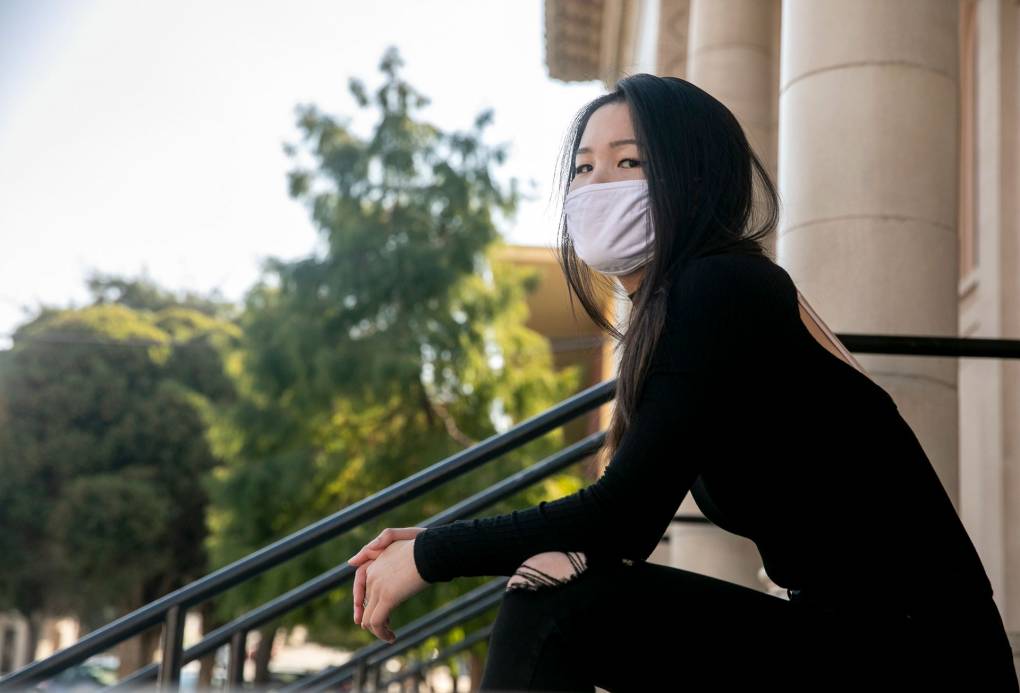
"caption": "Breanne Yee, 19, a third-year student at Cal State Long Beach, sits outside the Sunset District library near her parents’ San Francisco home. Yee says investing in community programs is a better way to fight inequality than affirmative action.",
"description": "Breanne Yee, 19, a third-year student at Cal State Long Beach, sits outside the Sunset District library near her parents’ San Francisco home. Yee says investing in community programs is a better way to fight inequality than affirmative action.",
"title": "BreanneYee_AW_sized",
"credit": "Anne Wernikoff/CALMatters",
"status": "inherit",
"isLoading": false,
"fetchFailed": false
},
"news_11843612": {
"type": "attachments",
"id": "news_11843612",
"meta": {
"index": "attachments_1716263798",
"site": "news",
"id": "11843612",
"found": true
},
"parent": 11843609,
"imgSizes": {
"apple_news_ca_landscape_5_5": {
"file": "https://ww2.kqed.org/app/uploads/sites/10/2020/10/Marquee2b-1044x720.jpg",
"width": 1044,
"mimeType": "image/jpeg",
"height": 720
},
"apple_news_ca_square_4_0": {
"file": "https://ww2.kqed.org/app/uploads/sites/10/2020/10/Marquee2b-470x470.jpg",
"width": 470,
"mimeType": "image/jpeg",
"height": 470
},
"twentyfourteen-full-width": {
"file": "https://ww2.kqed.org/app/uploads/sites/10/2020/10/Marquee2b-1038x576.jpg",
"width": 1038,
"mimeType": "image/jpeg",
"height": 576
},
"thumbnail": {
"file": "https://ww2.kqed.org/app/uploads/sites/10/2020/10/Marquee2b-160x90.jpg",
"width": 160,
"mimeType": "image/jpeg",
"height": 90
},
"post-thumbnail": {
"file": "https://ww2.kqed.org/app/uploads/sites/10/2020/10/Marquee2b-672x372.jpg",
"width": 672,
"mimeType": "image/jpeg",
"height": 372
},
"kqedFullSize": {
"file": "https://ww2.kqed.org/app/uploads/sites/10/2020/10/Marquee2b.jpg",
"width": 1280,
"height": 720
},
"apple_news_ca_landscape_4_7": {
"file": "https://ww2.kqed.org/app/uploads/sites/10/2020/10/Marquee2b-632x474.jpg",
"width": 632,
"mimeType": "image/jpeg",
"height": 474
},
"large": {
"file": "https://ww2.kqed.org/app/uploads/sites/10/2020/10/Marquee2b-1020x574.jpg",
"width": 1020,
"mimeType": "image/jpeg",
"height": 574
},
"apple_news_ca_landscape_4_0": {
"file": "https://ww2.kqed.org/app/uploads/sites/10/2020/10/Marquee2b-536x402.jpg",
"width": 536,
"mimeType": "image/jpeg",
"height": 402
},
"apple_news_ca_portrait_12_9": {
"file": "https://ww2.kqed.org/app/uploads/sites/10/2020/10/Marquee2b-1122x720.jpg",
"width": 1122,
"mimeType": "image/jpeg",
"height": 720
},
"medium": {
"file": "https://ww2.kqed.org/app/uploads/sites/10/2020/10/Marquee2b-800x450.jpg",
"width": 800,
"mimeType": "image/jpeg",
"height": 450
},
"apple_news_ca_portrait_4_0": {
"file": "https://ww2.kqed.org/app/uploads/sites/10/2020/10/Marquee2b-354x472.jpg",
"width": 354,
"mimeType": "image/jpeg",
"height": 472
},
"apple_news_ca_portrait_9_7": {
"file": "https://ww2.kqed.org/app/uploads/sites/10/2020/10/Marquee2b-840x720.jpg",
"width": 840,
"mimeType": "image/jpeg",
"height": 720
},
"apple_news_ca_square_9_7": {
"file": "https://ww2.kqed.org/app/uploads/sites/10/2020/10/Marquee2b-1104x720.jpg",
"width": 1104,
"mimeType": "image/jpeg",
"height": 720
},
"apple_news_ca_portrait_4_7": {
"file": "https://ww2.kqed.org/app/uploads/sites/10/2020/10/Marquee2b-414x552.jpg",
"width": 414,
"mimeType": "image/jpeg",
"height": 552
},
"apple_news_ca_portrait_5_5": {
"file": "https://ww2.kqed.org/app/uploads/sites/10/2020/10/Marquee2b-687x720.jpg",
"width": 687,
"mimeType": "image/jpeg",
"height": 720
},
"apple_news_ca_square_4_7": {
"file": "https://ww2.kqed.org/app/uploads/sites/10/2020/10/Marquee2b-550x550.jpg",
"width": 550,
"mimeType": "image/jpeg",
"height": 550
},
"apple_news_ca_square_5_5": {
"file": "https://ww2.kqed.org/app/uploads/sites/10/2020/10/Marquee2b-912x720.jpg",
"width": 912,
"mimeType": "image/jpeg",
"height": 720
}
},
"publishDate": 1603498418,
"modified": 1603498418,
"caption": null,
"description": null,
"title": "Marquee2b",
"credit": null,
"status": "inherit",
"isLoading": false,
"fetchFailed": false
},
"news_11842996": {
"type": "attachments",
"id": "news_11842996",
"meta": {
"index": "attachments_1716263798",
"site": "news",
"id": "11842996",
"found": true
},
"parent": 11842983,
"imgSizes": {
"apple_news_ca_landscape_5_5": {
"file": "https://ww2.kqed.org/app/uploads/sites/10/2020/10/1920_GettyImages-1270511274-copy-1044x783.jpg",
"width": 1044,
"mimeType": "image/jpeg",
"height": 783
},
"apple_news_ca_square_4_0": {
"file": "https://ww2.kqed.org/app/uploads/sites/10/2020/10/1920_GettyImages-1270511274-copy-470x470.jpg",
"width": 470,
"mimeType": "image/jpeg",
"height": 470
},
"twentyfourteen-full-width": {
"file": "https://ww2.kqed.org/app/uploads/sites/10/2020/10/1920_GettyImages-1270511274-copy-1038x576.jpg",
"width": 1038,
"mimeType": "image/jpeg",
"height": 576
},
"thumbnail": {
"file": "https://ww2.kqed.org/app/uploads/sites/10/2020/10/1920_GettyImages-1270511274-copy-160x90.jpg",
"width": 160,
"mimeType": "image/jpeg",
"height": 90
},
"post-thumbnail": {
"file": "https://ww2.kqed.org/app/uploads/sites/10/2020/10/1920_GettyImages-1270511274-copy-672x372.jpg",
"width": 672,
"mimeType": "image/jpeg",
"height": 372
},
"kqedFullSize": {
"file": "https://ww2.kqed.org/app/uploads/sites/10/2020/10/1920_GettyImages-1270511274-copy-scaled.jpg",
"width": 2560,
"height": 1440
},
"2048x2048": {
"file": "https://ww2.kqed.org/app/uploads/sites/10/2020/10/1920_GettyImages-1270511274-copy-2048x1152.jpg",
"width": 2048,
"mimeType": "image/jpeg",
"height": 1152
},
"apple_news_ca_landscape_4_7": {
"file": "https://ww2.kqed.org/app/uploads/sites/10/2020/10/1920_GettyImages-1270511274-copy-632x474.jpg",
"width": 632,
"mimeType": "image/jpeg",
"height": 474
},
"large": {
"file": "https://ww2.kqed.org/app/uploads/sites/10/2020/10/1920_GettyImages-1270511274-copy-1020x574.jpg",
"width": 1020,
"mimeType": "image/jpeg",
"height": 574
},
"apple_news_ca_landscape_4_0": {
"file": "https://ww2.kqed.org/app/uploads/sites/10/2020/10/1920_GettyImages-1270511274-copy-536x402.jpg",
"width": 536,
"mimeType": "image/jpeg",
"height": 402
},
"apple_news_ca_portrait_12_9": {
"file": "https://ww2.kqed.org/app/uploads/sites/10/2020/10/1920_GettyImages-1270511274-copy-1122x1496.jpg",
"width": 1122,
"mimeType": "image/jpeg",
"height": 1496
},
"medium": {
"file": "https://ww2.kqed.org/app/uploads/sites/10/2020/10/1920_GettyImages-1270511274-copy-800x450.jpg",
"width": 800,
"mimeType": "image/jpeg",
"height": 450
},
"apple_news_ca_portrait_4_0": {
"file": "https://ww2.kqed.org/app/uploads/sites/10/2020/10/1920_GettyImages-1270511274-copy-354x472.jpg",
"width": 354,
"mimeType": "image/jpeg",
"height": 472
},
"apple_news_ca_portrait_9_7": {
"file": "https://ww2.kqed.org/app/uploads/sites/10/2020/10/1920_GettyImages-1270511274-copy-840x1120.jpg",
"width": 840,
"mimeType": "image/jpeg",
"height": 1120
},
"apple_news_ca_landscape_12_9": {
"file": "https://ww2.kqed.org/app/uploads/sites/10/2020/10/1920_GettyImages-1270511274-copy-1832x1374.jpg",
"width": 1832,
"mimeType": "image/jpeg",
"height": 1374
},
"apple_news_ca_square_9_7": {
"file": "https://ww2.kqed.org/app/uploads/sites/10/2020/10/1920_GettyImages-1270511274-copy-1104x1104.jpg",
"width": 1104,
"mimeType": "image/jpeg",
"height": 1104
},
"1536x1536": {
"file": "https://ww2.kqed.org/app/uploads/sites/10/2020/10/1920_GettyImages-1270511274-copy-1536x864.jpg",
"width": 1536,
"mimeType": "image/jpeg",
"height": 864
},
"apple_news_ca_portrait_4_7": {
"file": "https://ww2.kqed.org/app/uploads/sites/10/2020/10/1920_GettyImages-1270511274-copy-414x552.jpg",
"width": 414,
"mimeType": "image/jpeg",
"height": 552
},
"apple_news_ca_square_12_9": {
"file": "https://ww2.kqed.org/app/uploads/sites/10/2020/10/1920_GettyImages-1270511274-copy-1472x1472.jpg",
"width": 1472,
"mimeType": "image/jpeg",
"height": 1472
},
"apple_news_ca_portrait_5_5": {
"file": "https://ww2.kqed.org/app/uploads/sites/10/2020/10/1920_GettyImages-1270511274-copy-687x916.jpg",
"width": 687,
"mimeType": "image/jpeg",
"height": 916
},
"full-width": {
"file": "https://ww2.kqed.org/app/uploads/sites/10/2020/10/1920_GettyImages-1270511274-copy-1920x1080.jpg",
"width": 1920,
"mimeType": "image/jpeg",
"height": 1080
},
"apple_news_ca_square_4_7": {
"file": "https://ww2.kqed.org/app/uploads/sites/10/2020/10/1920_GettyImages-1270511274-copy-550x550.jpg",
"width": 550,
"mimeType": "image/jpeg",
"height": 550
},
"apple_news_ca_landscape_9_7": {
"file": "https://ww2.kqed.org/app/uploads/sites/10/2020/10/1920_GettyImages-1270511274-copy-1376x1032.jpg",
"width": 1376,
"mimeType": "image/jpeg",
"height": 1032
},
"apple_news_ca_square_5_5": {
"file": "https://ww2.kqed.org/app/uploads/sites/10/2020/10/1920_GettyImages-1270511274-copy-912x912.jpg",
"width": 912,
"mimeType": "image/jpeg",
"height": 912
}
},
"publishDate": 1603230935,
"modified": 1603232805,
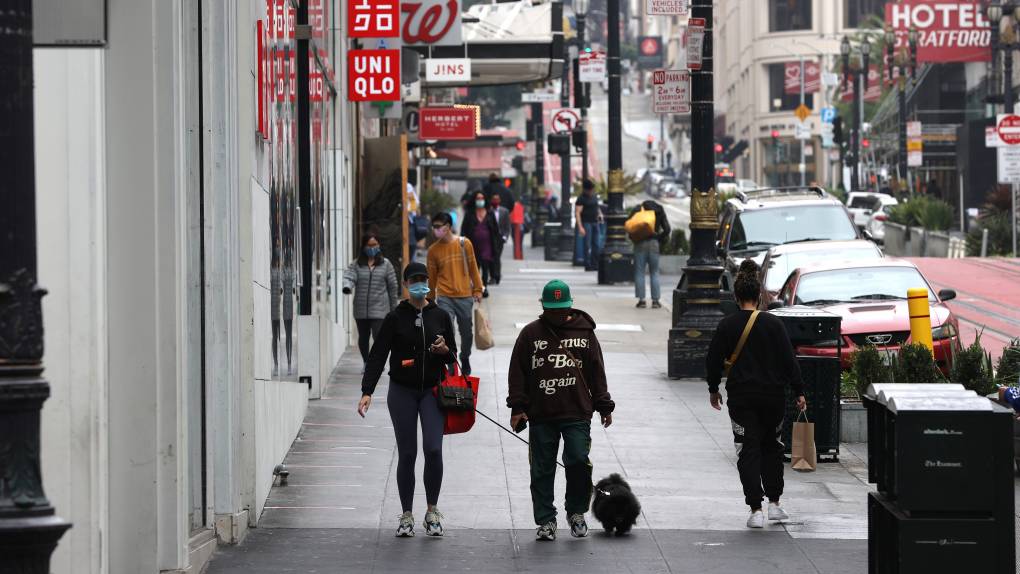
"caption": "People walk through San Francisco's Union Square shopping district on Sept. 3, 2020.",
"description": "People walk through San Francisco's Union Square shopping district on Sept. 3, 2020.",
"title": "San Francisco Businesses Shutter Their Doors Amid Coronavirus Economic Downturn",
"credit": "Justin Sullivan/Getty Images",
"status": "inherit",
"isLoading": false,
"fetchFailed": false
},
"news_11842021": {
"type": "attachments",
"id": "news_11842021",
"meta": {
"index": "attachments_1716263798",
"site": "news",
"id": "11842021",
"found": true
},
"parent": 11841946,
"imgSizes": {
"apple_news_ca_landscape_5_5": {
"file": "https://ww2.kqed.org/app/uploads/sites/10/2020/10/RS45301_warriors-qut-1044x783.jpg",
"width": 1044,
"mimeType": "image/jpeg",
"height": 783
},
"apple_news_ca_square_4_0": {
"file": "https://ww2.kqed.org/app/uploads/sites/10/2020/10/RS45301_warriors-qut-470x470.jpg",
"width": 470,
"mimeType": "image/jpeg",
"height": 470
},
"twentyfourteen-full-width": {
"file": "https://ww2.kqed.org/app/uploads/sites/10/2020/10/RS45301_warriors-qut-1038x576.jpg",
"width": 1038,
"mimeType": "image/jpeg",
"height": 576
},
"thumbnail": {
"file": "https://ww2.kqed.org/app/uploads/sites/10/2020/10/RS45301_warriors-qut-160x120.jpg",
"width": 160,
"mimeType": "image/jpeg",
"height": 120
},
"post-thumbnail": {
"file": "https://ww2.kqed.org/app/uploads/sites/10/2020/10/RS45301_warriors-qut-672x372.jpg",
"width": 672,
"mimeType": "image/jpeg",
"height": 372
},
"kqedFullSize": {
"file": "https://ww2.kqed.org/app/uploads/sites/10/2020/10/RS45301_warriors-qut.jpg",
"width": 1920,
"height": 1440
},
"apple_news_ca_landscape_4_7": {
"file": "https://ww2.kqed.org/app/uploads/sites/10/2020/10/RS45301_warriors-qut-632x474.jpg",
"width": 632,
"mimeType": "image/jpeg",
"height": 474
},
"large": {
"file": "https://ww2.kqed.org/app/uploads/sites/10/2020/10/RS45301_warriors-qut-1020x765.jpg",
"width": 1020,
"mimeType": "image/jpeg",
"height": 765
},
"apple_news_ca_landscape_4_0": {
"file": "https://ww2.kqed.org/app/uploads/sites/10/2020/10/RS45301_warriors-qut-536x402.jpg",
"width": 536,
"mimeType": "image/jpeg",
"height": 402
},
"apple_news_ca_portrait_12_9": {
"file": "https://ww2.kqed.org/app/uploads/sites/10/2020/10/RS45301_warriors-qut-1122x1440.jpg",
"width": 1122,
"mimeType": "image/jpeg",
"height": 1440
},
"medium": {
"file": "https://ww2.kqed.org/app/uploads/sites/10/2020/10/RS45301_warriors-qut-800x600.jpg",
"width": 800,
"mimeType": "image/jpeg",
"height": 600
},
"apple_news_ca_portrait_4_0": {
"file": "https://ww2.kqed.org/app/uploads/sites/10/2020/10/RS45301_warriors-qut-354x472.jpg",
"width": 354,
"mimeType": "image/jpeg",
"height": 472
},
"apple_news_ca_portrait_9_7": {
"file": "https://ww2.kqed.org/app/uploads/sites/10/2020/10/RS45301_warriors-qut-840x1120.jpg",
"width": 840,
"mimeType": "image/jpeg",
"height": 1120
},
"apple_news_ca_landscape_12_9": {
"file": "https://ww2.kqed.org/app/uploads/sites/10/2020/10/RS45301_warriors-qut-1832x1374.jpg",
"width": 1832,
"mimeType": "image/jpeg",
"height": 1374
},
"apple_news_ca_square_9_7": {
"file": "https://ww2.kqed.org/app/uploads/sites/10/2020/10/RS45301_warriors-qut-1104x1104.jpg",
"width": 1104,
"mimeType": "image/jpeg",
"height": 1104
},
"1536x1536": {
"file": "https://ww2.kqed.org/app/uploads/sites/10/2020/10/RS45301_warriors-qut-1536x1152.jpg",
"width": 1536,
"mimeType": "image/jpeg",
"height": 1152
},
"apple_news_ca_portrait_4_7": {
"file": "https://ww2.kqed.org/app/uploads/sites/10/2020/10/RS45301_warriors-qut-414x552.jpg",
"width": 414,
"mimeType": "image/jpeg",
"height": 552
},
"apple_news_ca_square_12_9": {
"file": "https://ww2.kqed.org/app/uploads/sites/10/2020/10/RS45301_warriors-qut-1472x1440.jpg",
"width": 1472,
"mimeType": "image/jpeg",
"height": 1440
},
"apple_news_ca_portrait_5_5": {
"file": "https://ww2.kqed.org/app/uploads/sites/10/2020/10/RS45301_warriors-qut-687x916.jpg",
"width": 687,
"mimeType": "image/jpeg",
"height": 916
},
"apple_news_ca_square_4_7": {
"file": "https://ww2.kqed.org/app/uploads/sites/10/2020/10/RS45301_warriors-qut-550x550.jpg",
"width": 550,
"mimeType": "image/jpeg",
"height": 550
},
"apple_news_ca_landscape_9_7": {
"file": "https://ww2.kqed.org/app/uploads/sites/10/2020/10/RS45301_warriors-qut-1376x1032.jpg",
"width": 1376,
"mimeType": "image/jpeg",
"height": 1032
},
"apple_news_ca_square_5_5": {
"file": "https://ww2.kqed.org/app/uploads/sites/10/2020/10/RS45301_warriors-qut-912x912.jpg",
"width": 912,
"mimeType": "image/jpeg",
"height": 912
}
},
"publishDate": 1602547371,
"modified": 1602885309,
"caption": "From left: UC Berkeley student activists Riya Master, Sam Warren, Derek Imai and Nicole Anyanwu\npose under Sather Gate, on Sproul Plaza, a site of many student actions over the years.",
"description": "From left: UC Berkeley student activists Riya Master, Sam Warren, Derek Imai and Nicole Anyanwu\npose under Sather Gate, on Sproul Plaza, a site of many student actions over the years.",
"title": "RS45301_warriors-qut",
"credit": "Chloe Veltman/KQED",
"status": "inherit",
"isLoading": false,
"fetchFailed": false
},
"news_11842301": {
"type": "attachments",
"id": "news_11842301",
"meta": {
"index": "attachments_1716263798",
"site": "news",
"id": "11842301",
"found": true
},
"parent": 11842218,
"imgSizes": {
"apple_news_ca_landscape_5_5": {
"file": "https://ww2.kqed.org/app/uploads/sites/10/2020/10/RS45351_RS45350_alt_1030-qut-1044x783.jpg",
"width": 1044,
"mimeType": "image/jpeg",
"height": 783
},
"apple_news_ca_square_4_0": {
"file": "https://ww2.kqed.org/app/uploads/sites/10/2020/10/RS45351_RS45350_alt_1030-qut-470x470.jpg",
"width": 470,
"mimeType": "image/jpeg",
"height": 470
},
"twentyfourteen-full-width": {
"file": "https://ww2.kqed.org/app/uploads/sites/10/2020/10/RS45351_RS45350_alt_1030-qut-1038x576.jpg",
"width": 1038,
"mimeType": "image/jpeg",
"height": 576
},
"thumbnail": {
"file": "https://ww2.kqed.org/app/uploads/sites/10/2020/10/RS45351_RS45350_alt_1030-qut-160x95.jpg",
"width": 160,
"mimeType": "image/jpeg",
"height": 95
},
"post-thumbnail": {
"file": "https://ww2.kqed.org/app/uploads/sites/10/2020/10/RS45351_RS45350_alt_1030-qut-672x372.jpg",
"width": 672,
"mimeType": "image/jpeg",
"height": 372
},
"kqedFullSize": {
"file": "https://ww2.kqed.org/app/uploads/sites/10/2020/10/RS45351_RS45350_alt_1030-qut.jpg",
"width": 1920,
"height": 1142
},
"apple_news_ca_landscape_4_7": {
"file": "https://ww2.kqed.org/app/uploads/sites/10/2020/10/RS45351_RS45350_alt_1030-qut-632x474.jpg",
"width": 632,
"mimeType": "image/jpeg",
"height": 474
},
"large": {
"file": "https://ww2.kqed.org/app/uploads/sites/10/2020/10/RS45351_RS45350_alt_1030-qut-1020x607.jpg",
"width": 1020,
"mimeType": "image/jpeg",
"height": 607
},
"apple_news_ca_landscape_4_0": {
"file": "https://ww2.kqed.org/app/uploads/sites/10/2020/10/RS45351_RS45350_alt_1030-qut-536x402.jpg",
"width": 536,
"mimeType": "image/jpeg",
"height": 402
},
"apple_news_ca_portrait_12_9": {
"file": "https://ww2.kqed.org/app/uploads/sites/10/2020/10/RS45351_RS45350_alt_1030-qut-1122x1142.jpg",
"width": 1122,
"mimeType": "image/jpeg",
"height": 1142
},
"medium": {
"file": "https://ww2.kqed.org/app/uploads/sites/10/2020/10/RS45351_RS45350_alt_1030-qut-800x476.jpg",
"width": 800,
"mimeType": "image/jpeg",
"height": 476
},
"apple_news_ca_portrait_4_0": {
"file": "https://ww2.kqed.org/app/uploads/sites/10/2020/10/RS45351_RS45350_alt_1030-qut-354x472.jpg",
"width": 354,
"mimeType": "image/jpeg",
"height": 472
},
"apple_news_ca_portrait_9_7": {
"file": "https://ww2.kqed.org/app/uploads/sites/10/2020/10/RS45351_RS45350_alt_1030-qut-840x1120.jpg",
"width": 840,
"mimeType": "image/jpeg",
"height": 1120
},
"apple_news_ca_landscape_12_9": {
"file": "https://ww2.kqed.org/app/uploads/sites/10/2020/10/RS45351_RS45350_alt_1030-qut-1832x1142.jpg",
"width": 1832,
"mimeType": "image/jpeg",
"height": 1142
},
"apple_news_ca_square_9_7": {
"file": "https://ww2.kqed.org/app/uploads/sites/10/2020/10/RS45351_RS45350_alt_1030-qut-1104x1104.jpg",
"width": 1104,
"mimeType": "image/jpeg",
"height": 1104
},
"1536x1536": {
"file": "https://ww2.kqed.org/app/uploads/sites/10/2020/10/RS45351_RS45350_alt_1030-qut-1536x914.jpg",
"width": 1536,
"mimeType": "image/jpeg",
"height": 914
},
"apple_news_ca_portrait_4_7": {
"file": "https://ww2.kqed.org/app/uploads/sites/10/2020/10/RS45351_RS45350_alt_1030-qut-414x552.jpg",
"width": 414,
"mimeType": "image/jpeg",
"height": 552
},
"apple_news_ca_square_12_9": {
"file": "https://ww2.kqed.org/app/uploads/sites/10/2020/10/RS45351_RS45350_alt_1030-qut-1472x1142.jpg",
"width": 1472,
"mimeType": "image/jpeg",
"height": 1142
},
"apple_news_ca_portrait_5_5": {
"file": "https://ww2.kqed.org/app/uploads/sites/10/2020/10/RS45351_RS45350_alt_1030-qut-687x916.jpg",
"width": 687,
"mimeType": "image/jpeg",
"height": 916
},
"apple_news_ca_square_4_7": {
"file": "https://ww2.kqed.org/app/uploads/sites/10/2020/10/RS45351_RS45350_alt_1030-qut-550x550.jpg",
"width": 550,
"mimeType": "image/jpeg",
"height": 550
},
"apple_news_ca_landscape_9_7": {
"file": "https://ww2.kqed.org/app/uploads/sites/10/2020/10/RS45351_RS45350_alt_1030-qut-1376x1032.jpg",
"width": 1376,
"mimeType": "image/jpeg",
"height": 1032
},
"apple_news_ca_square_5_5": {
"file": "https://ww2.kqed.org/app/uploads/sites/10/2020/10/RS45351_RS45350_alt_1030-qut-912x912.jpg",
"width": 912,
"mimeType": "image/jpeg",
"height": 912
}
},
"publishDate": 1602705821,
"modified": 1612879339,
"caption": null,
"description": "A COVID-19 testing packet from Curative, Inc., the company slated to provide COVID-19 tests to public school teachers and staff in Alameda County.",
"title": "RS45351_RS45350_alt_1030-qut",
"credit": "Courtesy of Alameda County Office of Education",
"status": "inherit",
"altTag": "A COVID-19 testing packet from Curative Inc.",
"isLoading": false,
"fetchFailed": false
},
"news_11841865": {
"type": "attachments",
"id": "news_11841865",
"meta": {
"index": "attachments_1716263798",
"site": "news",
"id": "11841865",
"found": true
},
"parent": 11841631,
"imgSizes": {
"apple_news_ca_landscape_5_5": {
"file": "https://ww2.kqed.org/app/uploads/sites/10/2020/10/1920_GettyImages-1228445882-1044x783.jpg",
"width": 1044,
"mimeType": "image/jpeg",
"height": 783
},
"apple_news_ca_square_4_0": {
"file": "https://ww2.kqed.org/app/uploads/sites/10/2020/10/1920_GettyImages-1228445882-470x470.jpg",
"width": 470,
"mimeType": "image/jpeg",
"height": 470
},
"twentyfourteen-full-width": {
"file": "https://ww2.kqed.org/app/uploads/sites/10/2020/10/1920_GettyImages-1228445882-1038x576.jpg",
"width": 1038,
"mimeType": "image/jpeg",
"height": 576
},
"thumbnail": {
"file": "https://ww2.kqed.org/app/uploads/sites/10/2020/10/1920_GettyImages-1228445882-160x90.jpg",
"width": 160,
"mimeType": "image/jpeg",
"height": 90
},
"post-thumbnail": {
"file": "https://ww2.kqed.org/app/uploads/sites/10/2020/10/1920_GettyImages-1228445882-672x372.jpg",
"width": 672,
"mimeType": "image/jpeg",
"height": 372
},
"kqedFullSize": {
"file": "https://ww2.kqed.org/app/uploads/sites/10/2020/10/1920_GettyImages-1228445882-scaled.jpg",
"width": 2560,
"height": 1440
},
"2048x2048": {
"file": "https://ww2.kqed.org/app/uploads/sites/10/2020/10/1920_GettyImages-1228445882-2048x1152.jpg",
"width": 2048,
"mimeType": "image/jpeg",
"height": 1152
},
"apple_news_ca_landscape_4_7": {
"file": "https://ww2.kqed.org/app/uploads/sites/10/2020/10/1920_GettyImages-1228445882-632x474.jpg",
"width": 632,
"mimeType": "image/jpeg",
"height": 474
},
"large": {
"file": "https://ww2.kqed.org/app/uploads/sites/10/2020/10/1920_GettyImages-1228445882-1020x574.jpg",
"width": 1020,
"mimeType": "image/jpeg",
"height": 574
},
"apple_news_ca_landscape_4_0": {
"file": "https://ww2.kqed.org/app/uploads/sites/10/2020/10/1920_GettyImages-1228445882-536x402.jpg",
"width": 536,
"mimeType": "image/jpeg",
"height": 402
},
"apple_news_ca_portrait_12_9": {
"file": "https://ww2.kqed.org/app/uploads/sites/10/2020/10/1920_GettyImages-1228445882-1122x1496.jpg",
"width": 1122,
"mimeType": "image/jpeg",
"height": 1496
},
"medium": {
"file": "https://ww2.kqed.org/app/uploads/sites/10/2020/10/1920_GettyImages-1228445882-800x450.jpg",
"width": 800,
"mimeType": "image/jpeg",
"height": 450
},
"apple_news_ca_portrait_4_0": {
"file": "https://ww2.kqed.org/app/uploads/sites/10/2020/10/1920_GettyImages-1228445882-354x472.jpg",
"width": 354,
"mimeType": "image/jpeg",
"height": 472
},
"apple_news_ca_portrait_9_7": {
"file": "https://ww2.kqed.org/app/uploads/sites/10/2020/10/1920_GettyImages-1228445882-840x1120.jpg",
"width": 840,
"mimeType": "image/jpeg",
"height": 1120
},
"apple_news_ca_landscape_12_9": {
"file": "https://ww2.kqed.org/app/uploads/sites/10/2020/10/1920_GettyImages-1228445882-1832x1374.jpg",
"width": 1832,
"mimeType": "image/jpeg",
"height": 1374
},
"apple_news_ca_square_9_7": {
"file": "https://ww2.kqed.org/app/uploads/sites/10/2020/10/1920_GettyImages-1228445882-1104x1104.jpg",
"width": 1104,
"mimeType": "image/jpeg",
"height": 1104
},
"1536x1536": {
"file": "https://ww2.kqed.org/app/uploads/sites/10/2020/10/1920_GettyImages-1228445882-1536x864.jpg",
"width": 1536,
"mimeType": "image/jpeg",
"height": 864
},
"apple_news_ca_portrait_4_7": {
"file": "https://ww2.kqed.org/app/uploads/sites/10/2020/10/1920_GettyImages-1228445882-414x552.jpg",
"width": 414,
"mimeType": "image/jpeg",
"height": 552
},
"apple_news_ca_square_12_9": {
"file": "https://ww2.kqed.org/app/uploads/sites/10/2020/10/1920_GettyImages-1228445882-1472x1472.jpg",
"width": 1472,
"mimeType": "image/jpeg",
"height": 1472
},
"apple_news_ca_portrait_5_5": {
"file": "https://ww2.kqed.org/app/uploads/sites/10/2020/10/1920_GettyImages-1228445882-687x916.jpg",
"width": 687,
"mimeType": "image/jpeg",
"height": 916
},
"full-width": {
"file": "https://ww2.kqed.org/app/uploads/sites/10/2020/10/1920_GettyImages-1228445882-1920x1080.jpg",
"width": 1920,
"mimeType": "image/jpeg",
"height": 1080
},
"apple_news_ca_square_4_7": {
"file": "https://ww2.kqed.org/app/uploads/sites/10/2020/10/1920_GettyImages-1228445882-550x550.jpg",
"width": 550,
"mimeType": "image/jpeg",
"height": 550
},
"apple_news_ca_landscape_9_7": {
"file": "https://ww2.kqed.org/app/uploads/sites/10/2020/10/1920_GettyImages-1228445882-1376x1032.jpg",
"width": 1376,
"mimeType": "image/jpeg",
"height": 1032
},
"apple_news_ca_square_5_5": {
"file": "https://ww2.kqed.org/app/uploads/sites/10/2020/10/1920_GettyImages-1228445882-912x912.jpg",
"width": 912,
"mimeType": "image/jpeg",
"height": 912
}
},
"publishDate": 1602436073,
"modified": 1602436340,
"caption": "An instructor walks through the room as students from different schools and in different grades follow their online classes from desks separated by plastic barriers at the Westwood STAR Tutoring & Enrichment Center on September 10, 2020 in Los Angeles, California.",
"description": null,
"title": "TOPSHOT-US-HEALTH-VIRUS-EDUCATION",
"credit": "Robyn Beck/AFP via Getty Images",
"status": "inherit",
"isLoading": false,
"fetchFailed": false
},
"news_11841807": {
"type": "attachments",
"id": "news_11841807",
"meta": {
"index": "attachments_1716263798",
"site": "news",
"id": "11841807",
"found": true
},
"parent": 11841795,
"imgSizes": {
"apple_news_ca_landscape_5_5": {
"file": "https://ww2.kqed.org/app/uploads/sites/10/2020/10/npr_s_o_ogawa_final_oct05_2020_wide-c50bbf65962b4cbbe636c71d8f5a16cb5579d70b-s1600-c85-1044x783.jpg",
"width": 1044,
"mimeType": "image/jpeg",
"height": 783
},
"apple_news_ca_square_4_0": {
"file": "https://ww2.kqed.org/app/uploads/sites/10/2020/10/npr_s_o_ogawa_final_oct05_2020_wide-c50bbf65962b4cbbe636c71d8f5a16cb5579d70b-s1600-c85-470x470.jpg",
"width": 470,
"mimeType": "image/jpeg",
"height": 470
},
"twentyfourteen-full-width": {
"file": "https://ww2.kqed.org/app/uploads/sites/10/2020/10/npr_s_o_ogawa_final_oct05_2020_wide-c50bbf65962b4cbbe636c71d8f5a16cb5579d70b-s1600-c85-1038x576.jpg",
"width": 1038,
"mimeType": "image/jpeg",
"height": 576
},
"thumbnail": {
"file": "https://ww2.kqed.org/app/uploads/sites/10/2020/10/npr_s_o_ogawa_final_oct05_2020_wide-c50bbf65962b4cbbe636c71d8f5a16cb5579d70b-s1600-c85-160x90.jpg",
"width": 160,
"mimeType": "image/jpeg",
"height": 90
},
"post-thumbnail": {
"file": "https://ww2.kqed.org/app/uploads/sites/10/2020/10/npr_s_o_ogawa_final_oct05_2020_wide-c50bbf65962b4cbbe636c71d8f5a16cb5579d70b-s1600-c85-672x372.jpg",
"width": 672,
"mimeType": "image/jpeg",
"height": 372
},
"kqedFullSize": {
"file": "https://ww2.kqed.org/app/uploads/sites/10/2020/10/npr_s_o_ogawa_final_oct05_2020_wide-c50bbf65962b4cbbe636c71d8f5a16cb5579d70b-s1600-c85.jpg",
"width": 1597,
"height": 898
},
"apple_news_ca_landscape_4_7": {
"file": "https://ww2.kqed.org/app/uploads/sites/10/2020/10/npr_s_o_ogawa_final_oct05_2020_wide-c50bbf65962b4cbbe636c71d8f5a16cb5579d70b-s1600-c85-632x474.jpg",
"width": 632,
"mimeType": "image/jpeg",
"height": 474
},
"large": {
"file": "https://ww2.kqed.org/app/uploads/sites/10/2020/10/npr_s_o_ogawa_final_oct05_2020_wide-c50bbf65962b4cbbe636c71d8f5a16cb5579d70b-s1600-c85-1020x574.jpg",
"width": 1020,
"mimeType": "image/jpeg",
"height": 574
},
"apple_news_ca_landscape_4_0": {
"file": "https://ww2.kqed.org/app/uploads/sites/10/2020/10/npr_s_o_ogawa_final_oct05_2020_wide-c50bbf65962b4cbbe636c71d8f5a16cb5579d70b-s1600-c85-536x402.jpg",
"width": 536,
"mimeType": "image/jpeg",
"height": 402
},
"apple_news_ca_portrait_12_9": {
"file": "https://ww2.kqed.org/app/uploads/sites/10/2020/10/npr_s_o_ogawa_final_oct05_2020_wide-c50bbf65962b4cbbe636c71d8f5a16cb5579d70b-s1600-c85-1122x898.jpg",
"width": 1122,
"mimeType": "image/jpeg",
"height": 898
},
"medium": {
"file": "https://ww2.kqed.org/app/uploads/sites/10/2020/10/npr_s_o_ogawa_final_oct05_2020_wide-c50bbf65962b4cbbe636c71d8f5a16cb5579d70b-s1600-c85-800x450.jpg",
"width": 800,
"mimeType": "image/jpeg",
"height": 450
},
"apple_news_ca_portrait_4_0": {
"file": "https://ww2.kqed.org/app/uploads/sites/10/2020/10/npr_s_o_ogawa_final_oct05_2020_wide-c50bbf65962b4cbbe636c71d8f5a16cb5579d70b-s1600-c85-354x472.jpg",
"width": 354,
"mimeType": "image/jpeg",
"height": 472
},
"apple_news_ca_portrait_9_7": {
"file": "https://ww2.kqed.org/app/uploads/sites/10/2020/10/npr_s_o_ogawa_final_oct05_2020_wide-c50bbf65962b4cbbe636c71d8f5a16cb5579d70b-s1600-c85-840x898.jpg",
"width": 840,
"mimeType": "image/jpeg",
"height": 898
},
"apple_news_ca_square_9_7": {
"file": "https://ww2.kqed.org/app/uploads/sites/10/2020/10/npr_s_o_ogawa_final_oct05_2020_wide-c50bbf65962b4cbbe636c71d8f5a16cb5579d70b-s1600-c85-1104x898.jpg",
"width": 1104,
"mimeType": "image/jpeg",
"height": 898
},
"1536x1536": {
"file": "https://ww2.kqed.org/app/uploads/sites/10/2020/10/npr_s_o_ogawa_final_oct05_2020_wide-c50bbf65962b4cbbe636c71d8f5a16cb5579d70b-s1600-c85-1536x864.jpg",
"width": 1536,
"mimeType": "image/jpeg",
"height": 864
},
"apple_news_ca_portrait_4_7": {
"file": "https://ww2.kqed.org/app/uploads/sites/10/2020/10/npr_s_o_ogawa_final_oct05_2020_wide-c50bbf65962b4cbbe636c71d8f5a16cb5579d70b-s1600-c85-414x552.jpg",
"width": 414,
"mimeType": "image/jpeg",
"height": 552
},
"apple_news_ca_square_12_9": {
"file": "https://ww2.kqed.org/app/uploads/sites/10/2020/10/npr_s_o_ogawa_final_oct05_2020_wide-c50bbf65962b4cbbe636c71d8f5a16cb5579d70b-s1600-c85-1472x898.jpg",
"width": 1472,
"mimeType": "image/jpeg",
"height": 898
},
"apple_news_ca_portrait_5_5": {
"file": "https://ww2.kqed.org/app/uploads/sites/10/2020/10/npr_s_o_ogawa_final_oct05_2020_wide-c50bbf65962b4cbbe636c71d8f5a16cb5579d70b-s1600-c85-687x898.jpg",
"width": 687,
"mimeType": "image/jpeg",
"height": 898
},
"apple_news_ca_square_4_7": {
"file": "https://ww2.kqed.org/app/uploads/sites/10/2020/10/npr_s_o_ogawa_final_oct05_2020_wide-c50bbf65962b4cbbe636c71d8f5a16cb5579d70b-s1600-c85-550x550.jpg",
"width": 550,
"mimeType": "image/jpeg",
"height": 550
},
"apple_news_ca_landscape_9_7": {
"file": "https://ww2.kqed.org/app/uploads/sites/10/2020/10/npr_s_o_ogawa_final_oct05_2020_wide-c50bbf65962b4cbbe636c71d8f5a16cb5579d70b-s1600-c85-1376x898.jpg",
"width": 1376,
"mimeType": "image/jpeg",
"height": 898
},
"apple_news_ca_square_5_5": {
"file": "https://ww2.kqed.org/app/uploads/sites/10/2020/10/npr_s_o_ogawa_final_oct05_2020_wide-c50bbf65962b4cbbe636c71d8f5a16cb5579d70b-s1600-c85-912x898.jpg",
"width": 912,
"mimeType": "image/jpeg",
"height": 898
}
},
"publishDate": 1602287756,
"modified": 1602287822,
"caption": "Comprehensive national data aren't available yet, but reporting by NPR and member stations, along with media reports from around the country, shows enrollment declines in dozens of school districts across 20 states.",
"description": "Comprehensive national data aren't available yet, but reporting by NPR and member stations, along with media reports from around the country, shows enrollment declines in dozens of school districts across 20 states.",
"title": "npr_s_o_ogawa_final_oct05_2020_wide-c50bbf65962b4cbbe636c71d8f5a16cb5579d70b-s1600-c85",
"credit": "Suharu Ogawa/NPR",
"status": "inherit",
"isLoading": false,
"fetchFailed": false
},
"news_11841734": {
"type": "attachments",
"id": "news_11841734",
"meta": {
"index": "attachments_1716263798",
"site": "news",
"id": "11841734",
"found": true
},
"parent": 11841065,
"imgSizes": {
"apple_news_ca_landscape_5_5": {
"file": "https://ww2.kqed.org/app/uploads/sites/10/2020/10/RS45262_Atash_table_edited-qut-1044x783.jpg",
"width": 1044,
"mimeType": "image/jpeg",
"height": 783
},
"apple_news_ca_square_4_0": {
"file": "https://ww2.kqed.org/app/uploads/sites/10/2020/10/RS45262_Atash_table_edited-qut-470x470.jpg",
"width": 470,
"mimeType": "image/jpeg",
"height": 470
},
"twentyfourteen-full-width": {
"file": "https://ww2.kqed.org/app/uploads/sites/10/2020/10/RS45262_Atash_table_edited-qut-1038x576.jpg",
"width": 1038,
"mimeType": "image/jpeg",
"height": 576
},
"thumbnail": {
"file": "https://ww2.kqed.org/app/uploads/sites/10/2020/10/RS45262_Atash_table_edited-qut-160x90.jpg",
"width": 160,
"mimeType": "image/jpeg",
"height": 90
},
"post-thumbnail": {
"file": "https://ww2.kqed.org/app/uploads/sites/10/2020/10/RS45262_Atash_table_edited-qut-672x372.jpg",
"width": 672,
"mimeType": "image/jpeg",
"height": 372
},
"kqedFullSize": {
"file": "https://ww2.kqed.org/app/uploads/sites/10/2020/10/RS45262_Atash_table_edited-qut.jpg",
"width": 1920,
"height": 1080
},
"apple_news_ca_landscape_4_7": {
"file": "https://ww2.kqed.org/app/uploads/sites/10/2020/10/RS45262_Atash_table_edited-qut-632x474.jpg",
"width": 632,
"mimeType": "image/jpeg",
"height": 474
},
"large": {
"file": "https://ww2.kqed.org/app/uploads/sites/10/2020/10/RS45262_Atash_table_edited-qut-1020x574.jpg",
"width": 1020,
"mimeType": "image/jpeg",
"height": 574
},
"apple_news_ca_landscape_4_0": {
"file": "https://ww2.kqed.org/app/uploads/sites/10/2020/10/RS45262_Atash_table_edited-qut-536x402.jpg",
"width": 536,
"mimeType": "image/jpeg",
"height": 402
},
"apple_news_ca_portrait_12_9": {
"file": "https://ww2.kqed.org/app/uploads/sites/10/2020/10/RS45262_Atash_table_edited-qut-1122x1080.jpg",
"width": 1122,
"mimeType": "image/jpeg",
"height": 1080
},
"medium": {
"file": "https://ww2.kqed.org/app/uploads/sites/10/2020/10/RS45262_Atash_table_edited-qut-800x450.jpg",
"width": 800,
"mimeType": "image/jpeg",
"height": 450
},
"apple_news_ca_portrait_4_0": {
"file": "https://ww2.kqed.org/app/uploads/sites/10/2020/10/RS45262_Atash_table_edited-qut-354x472.jpg",
"width": 354,
"mimeType": "image/jpeg",
"height": 472
},
"apple_news_ca_portrait_9_7": {
"file": "https://ww2.kqed.org/app/uploads/sites/10/2020/10/RS45262_Atash_table_edited-qut-840x1080.jpg",
"width": 840,
"mimeType": "image/jpeg",
"height": 1080
},
"apple_news_ca_landscape_12_9": {
"file": "https://ww2.kqed.org/app/uploads/sites/10/2020/10/RS45262_Atash_table_edited-qut-1832x1080.jpg",
"width": 1832,
"mimeType": "image/jpeg",
"height": 1080
},
"apple_news_ca_square_9_7": {
"file": "https://ww2.kqed.org/app/uploads/sites/10/2020/10/RS45262_Atash_table_edited-qut-1104x1080.jpg",
"width": 1104,
"mimeType": "image/jpeg",
"height": 1080
},
"1536x1536": {
"file": "https://ww2.kqed.org/app/uploads/sites/10/2020/10/RS45262_Atash_table_edited-qut-1536x864.jpg",
"width": 1536,
"mimeType": "image/jpeg",
"height": 864
},
"apple_news_ca_portrait_4_7": {
"file": "https://ww2.kqed.org/app/uploads/sites/10/2020/10/RS45262_Atash_table_edited-qut-414x552.jpg",
"width": 414,
"mimeType": "image/jpeg",
"height": 552
},
"apple_news_ca_square_12_9": {
"file": "https://ww2.kqed.org/app/uploads/sites/10/2020/10/RS45262_Atash_table_edited-qut-1472x1080.jpg",
"width": 1472,
"mimeType": "image/jpeg",
"height": 1080
},
"apple_news_ca_portrait_5_5": {
"file": "https://ww2.kqed.org/app/uploads/sites/10/2020/10/RS45262_Atash_table_edited-qut-687x916.jpg",
"width": 687,
"mimeType": "image/jpeg",
"height": 916
},
"apple_news_ca_square_4_7": {
"file": "https://ww2.kqed.org/app/uploads/sites/10/2020/10/RS45262_Atash_table_edited-qut-550x550.jpg",
"width": 550,
"mimeType": "image/jpeg",
"height": 550
},
"apple_news_ca_landscape_9_7": {
"file": "https://ww2.kqed.org/app/uploads/sites/10/2020/10/RS45262_Atash_table_edited-qut-1376x1032.jpg",
"width": 1376,
"mimeType": "image/jpeg",
"height": 1032
},
"apple_news_ca_square_5_5": {
"file": "https://ww2.kqed.org/app/uploads/sites/10/2020/10/RS45262_Atash_table_edited-qut-912x912.jpg",
"width": 912,
"mimeType": "image/jpeg",
"height": 912
}
},
"publishDate": 1602276831,
"modified": 1602277058,
"caption": "David Atash worked as a wellness ambassador for the Foundation for California Community Colleges before transferring to University of Southern California earlier this year.",
"description": "David Atash worked as a wellness ambassador for the Foundation for California Community Colleges before transferring to University of Southern California earlier this year.",
"title": "RS45262_Atash_table_edited-qut",
"credit": "Courtesy of David Atash",
"status": "inherit",
"isLoading": false,
"fetchFailed": false
},
"news_11840381": {
"type": "attachments",
"id": "news_11840381",
"meta": {
"index": "attachments_1716263798",
"site": "news",
"id": "11840381",
"found": true
},
"parent": 11840355,
"imgSizes": {
"apple_news_ca_landscape_5_5": {
"file": "https://ww2.kqed.org/app/uploads/sites/10/2020/09/SJ-Earthquakes-Pic1-1044x783.jpg",
"width": 1044,
"mimeType": "image/jpeg",
"height": 783
},
"apple_news_ca_square_4_0": {
"file": "https://ww2.kqed.org/app/uploads/sites/10/2020/09/SJ-Earthquakes-Pic1-470x470.jpg",
"width": 470,
"mimeType": "image/jpeg",
"height": 470
},
"twentyfourteen-full-width": {
"file": "https://ww2.kqed.org/app/uploads/sites/10/2020/09/SJ-Earthquakes-Pic1-1038x576.jpg",
"width": 1038,
"mimeType": "image/jpeg",
"height": 576
},
"thumbnail": {
"file": "https://ww2.kqed.org/app/uploads/sites/10/2020/09/SJ-Earthquakes-Pic1-160x120.jpg",
"width": 160,
"mimeType": "image/jpeg",
"height": 120
},
"post-thumbnail": {
"file": "https://ww2.kqed.org/app/uploads/sites/10/2020/09/SJ-Earthquakes-Pic1-672x372.jpg",
"width": 672,
"mimeType": "image/jpeg",
"height": 372
},
"kqedFullSize": {
"file": "https://ww2.kqed.org/app/uploads/sites/10/2020/09/SJ-Earthquakes-Pic1-scaled.jpg",
"width": 2560,
"height": 1920
},
"2048x2048": {
"file": "https://ww2.kqed.org/app/uploads/sites/10/2020/09/SJ-Earthquakes-Pic1-2048x1536.jpg",
"width": 2048,
"mimeType": "image/jpeg",
"height": 1536
},
"apple_news_ca_landscape_4_7": {
"file": "https://ww2.kqed.org/app/uploads/sites/10/2020/09/SJ-Earthquakes-Pic1-632x474.jpg",
"width": 632,
"mimeType": "image/jpeg",
"height": 474
},
"large": {
"file": "https://ww2.kqed.org/app/uploads/sites/10/2020/09/SJ-Earthquakes-Pic1-1020x765.jpg",
"width": 1020,
"mimeType": "image/jpeg",
"height": 765
},
"apple_news_ca_landscape_4_0": {
"file": "https://ww2.kqed.org/app/uploads/sites/10/2020/09/SJ-Earthquakes-Pic1-536x402.jpg",
"width": 536,
"mimeType": "image/jpeg",
"height": 402
},
"apple_news_ca_portrait_12_9": {
"file": "https://ww2.kqed.org/app/uploads/sites/10/2020/09/SJ-Earthquakes-Pic1-1122x1496.jpg",
"width": 1122,
"mimeType": "image/jpeg",
"height": 1496
},
"medium": {
"file": "https://ww2.kqed.org/app/uploads/sites/10/2020/09/SJ-Earthquakes-Pic1-800x600.jpg",
"width": 800,
"mimeType": "image/jpeg",
"height": 600
},
"apple_news_ca_portrait_4_0": {
"file": "https://ww2.kqed.org/app/uploads/sites/10/2020/09/SJ-Earthquakes-Pic1-354x472.jpg",
"width": 354,
"mimeType": "image/jpeg",
"height": 472
},
"apple_news_ca_portrait_9_7": {
"file": "https://ww2.kqed.org/app/uploads/sites/10/2020/09/SJ-Earthquakes-Pic1-840x1120.jpg",
"width": 840,
"mimeType": "image/jpeg",
"height": 1120
},
"apple_news_ca_landscape_12_9": {
"file": "https://ww2.kqed.org/app/uploads/sites/10/2020/09/SJ-Earthquakes-Pic1-1832x1374.jpg",
"width": 1832,
"mimeType": "image/jpeg",
"height": 1374
},
"apple_news_ca_square_9_7": {
"file": "https://ww2.kqed.org/app/uploads/sites/10/2020/09/SJ-Earthquakes-Pic1-1104x1104.jpg",
"width": 1104,
"mimeType": "image/jpeg",
"height": 1104
},
"1536x1536": {
"file": "https://ww2.kqed.org/app/uploads/sites/10/2020/09/SJ-Earthquakes-Pic1-1536x1152.jpg",
"width": 1536,
"mimeType": "image/jpeg",
"height": 1152
},
"apple_news_ca_portrait_4_7": {
"file": "https://ww2.kqed.org/app/uploads/sites/10/2020/09/SJ-Earthquakes-Pic1-414x552.jpg",
"width": 414,
"mimeType": "image/jpeg",
"height": 552
},
"apple_news_ca_square_12_9": {
"file": "https://ww2.kqed.org/app/uploads/sites/10/2020/09/SJ-Earthquakes-Pic1-1472x1472.jpg",
"width": 1472,
"mimeType": "image/jpeg",
"height": 1472
},
"apple_news_ca_portrait_5_5": {
"file": "https://ww2.kqed.org/app/uploads/sites/10/2020/09/SJ-Earthquakes-Pic1-687x916.jpg",
"width": 687,
"mimeType": "image/jpeg",
"height": 916
},
"full-width": {
"file": "https://ww2.kqed.org/app/uploads/sites/10/2020/09/SJ-Earthquakes-Pic1-1920x1440.jpg",
"width": 1920,
"mimeType": "image/jpeg",
"height": 1440
},
"apple_news_ca_square_4_7": {
"file": "https://ww2.kqed.org/app/uploads/sites/10/2020/09/SJ-Earthquakes-Pic1-550x550.jpg",
"width": 550,
"mimeType": "image/jpeg",
"height": 550
},
"apple_news_ca_landscape_9_7": {
"file": "https://ww2.kqed.org/app/uploads/sites/10/2020/09/SJ-Earthquakes-Pic1-1376x1032.jpg",
"width": 1376,
"mimeType": "image/jpeg",
"height": 1032
},
"apple_news_ca_square_5_5": {
"file": "https://ww2.kqed.org/app/uploads/sites/10/2020/09/SJ-Earthquakes-Pic1-912x912.jpg",
"width": 912,
"mimeType": "image/jpeg",
"height": 912
}
},
"publishDate": 1601497346,
"modified": 1601588055,
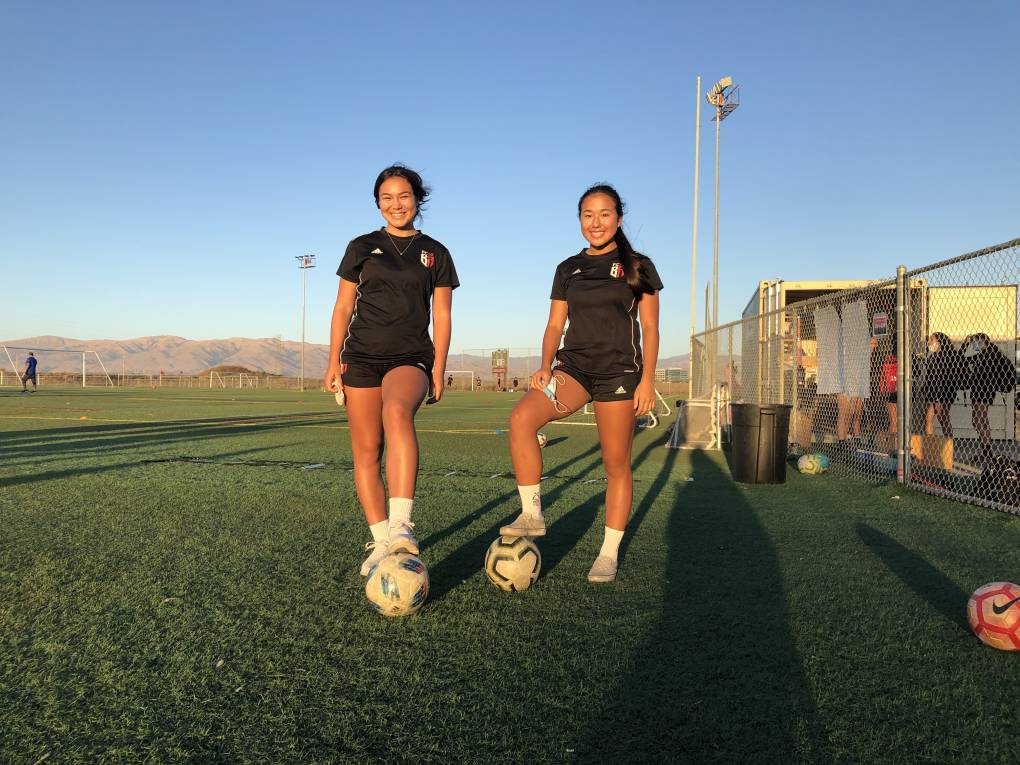
"caption": "Andrea Kitahata (left) and Peyton Marcisz (right) play on the newly formed girls soccer club, FC Bay Area, at the Twin Creeks Sports Complex in Sunnyvale. The girls used to train with the SJ Earthquakes, until the San Jose soccer team cut its girls program earlier this year.",
"description": "Andrea Kitahata (left) and Peyton Marcisz (right) play on the newly formed girls soccer club, FC Bay Area, at the Twin Creeks Sports Complex in Sunnyvale. The girls used to train with the SJ Earthquakes, until the San Jose soccer team cut its girls program earlier this year.",
"title": "Andrea Kitahata (left) and Peyton Marcisz (right) play soccer for the newly formed club, FC Bay Area, at the Twin Creeks Sports Complex in Sunnyvale. The girls used to train with the SJ Earthquakes, until the San Jose soccer team cut the girls program earlier this year.",
"credit": "Adhiti Bandlamudi/ KQED",
"status": "inherit",
"isLoading": false,
"fetchFailed": false
},
"news_11839830": {
"type": "attachments",
"id": "news_11839830",
"meta": {
"index": "attachments_1716263798",
"site": "news",
"id": "11839830",
"found": true
},
"parent": 11839763,
"imgSizes": {
"apple_news_ca_landscape_5_5": {
"file": "https://ww2.kqed.org/app/uploads/sites/10/2020/09/MARQUEE745-1044x783.jpg",
"width": 1044,
"mimeType": "image/jpeg",
"height": 783
},
"apple_news_ca_square_4_0": {
"file": "https://ww2.kqed.org/app/uploads/sites/10/2020/09/MARQUEE745-470x470.jpg",
"width": 470,
"mimeType": "image/jpeg",
"height": 470
},
"twentyfourteen-full-width": {
"file": "https://ww2.kqed.org/app/uploads/sites/10/2020/09/MARQUEE745-1038x576.jpg",
"width": 1038,
"mimeType": "image/jpeg",
"height": 576
},
"thumbnail": {
"file": "https://ww2.kqed.org/app/uploads/sites/10/2020/09/MARQUEE745-160x114.jpg",
"width": 160,
"mimeType": "image/jpeg",
"height": 114
},
"post-thumbnail": {
"file": "https://ww2.kqed.org/app/uploads/sites/10/2020/09/MARQUEE745-672x372.jpg",
"width": 672,
"mimeType": "image/jpeg",
"height": 372
},
"kqedFullSize": {
"file": "https://ww2.kqed.org/app/uploads/sites/10/2020/09/MARQUEE745.jpg",
"width": 1521,
"height": 1079
},
"apple_news_ca_landscape_4_7": {
"file": "https://ww2.kqed.org/app/uploads/sites/10/2020/09/MARQUEE745-632x474.jpg",
"width": 632,
"mimeType": "image/jpeg",
"height": 474
},
"large": {
"file": "https://ww2.kqed.org/app/uploads/sites/10/2020/09/MARQUEE745-1020x724.jpg",
"width": 1020,
"mimeType": "image/jpeg",
"height": 724
},
"apple_news_ca_landscape_4_0": {
"file": "https://ww2.kqed.org/app/uploads/sites/10/2020/09/MARQUEE745-536x402.jpg",
"width": 536,
"mimeType": "image/jpeg",
"height": 402
},
"apple_news_ca_portrait_12_9": {
"file": "https://ww2.kqed.org/app/uploads/sites/10/2020/09/MARQUEE745-1122x1079.jpg",
"width": 1122,
"mimeType": "image/jpeg",
"height": 1079
},
"medium": {
"file": "https://ww2.kqed.org/app/uploads/sites/10/2020/09/MARQUEE745-800x568.jpg",
"width": 800,
"mimeType": "image/jpeg",
"height": 568
},
"apple_news_ca_portrait_4_0": {
"file": "https://ww2.kqed.org/app/uploads/sites/10/2020/09/MARQUEE745-354x472.jpg",
"width": 354,
"mimeType": "image/jpeg",
"height": 472
},
"apple_news_ca_portrait_9_7": {
"file": "https://ww2.kqed.org/app/uploads/sites/10/2020/09/MARQUEE745-840x1079.jpg",
"width": 840,
"mimeType": "image/jpeg",
"height": 1079
},
"apple_news_ca_square_9_7": {
"file": "https://ww2.kqed.org/app/uploads/sites/10/2020/09/MARQUEE745-1104x1079.jpg",
"width": 1104,
"mimeType": "image/jpeg",
"height": 1079
},
"apple_news_ca_portrait_4_7": {
"file": "https://ww2.kqed.org/app/uploads/sites/10/2020/09/MARQUEE745-414x552.jpg",
"width": 414,
"mimeType": "image/jpeg",
"height": 552
},
"apple_news_ca_square_12_9": {
"file": "https://ww2.kqed.org/app/uploads/sites/10/2020/09/MARQUEE745-1472x1079.jpg",
"width": 1472,
"mimeType": "image/jpeg",
"height": 1079
},
"apple_news_ca_portrait_5_5": {
"file": "https://ww2.kqed.org/app/uploads/sites/10/2020/09/MARQUEE745-687x916.jpg",
"width": 687,
"mimeType": "image/jpeg",
"height": 916
},
"apple_news_ca_square_4_7": {
"file": "https://ww2.kqed.org/app/uploads/sites/10/2020/09/MARQUEE745-550x550.jpg",
"width": 550,
"mimeType": "image/jpeg",
"height": 550
},
"apple_news_ca_landscape_9_7": {
"file": "https://ww2.kqed.org/app/uploads/sites/10/2020/09/MARQUEE745-1376x1032.jpg",
"width": 1376,
"mimeType": "image/jpeg",
"height": 1032
},
"apple_news_ca_square_5_5": {
"file": "https://ww2.kqed.org/app/uploads/sites/10/2020/09/MARQUEE745-912x912.jpg",
"width": 912,
"mimeType": "image/jpeg",
"height": 912
}
},
"publishDate": 1601079482,
"modified": 1601079482,
"caption": null,
"description": null,
"title": "MARQUEE745",
"credit": null,
"status": "inherit",
"isLoading": false,
"fetchFailed": false
},
"news_11839311": {
"type": "attachments",
"id": "news_11839311",
"meta": {
"index": "attachments_1716263798",
"site": "news",
"id": "11839311",
"found": true
},
"parent": 11839307,
"imgSizes": {
"apple_news_ca_landscape_5_5": {
"file": "https://ww2.kqed.org/app/uploads/sites/10/2020/09/cashletes_092320_final-1044x783.png",
"width": 1044,
"mimeType": "image/png",
"height": 783
},
"apple_news_ca_square_4_0": {
"file": "https://ww2.kqed.org/app/uploads/sites/10/2020/09/cashletes_092320_final-470x470.png",
"width": 470,
"mimeType": "image/png",
"height": 470
},
"twentyfourteen-full-width": {
"file": "https://ww2.kqed.org/app/uploads/sites/10/2020/09/cashletes_092320_final-1038x576.png",
"width": 1038,
"mimeType": "image/png",
"height": 576
},
"thumbnail": {
"file": "https://ww2.kqed.org/app/uploads/sites/10/2020/09/cashletes_092320_final-160x118.png",
"width": 160,
"mimeType": "image/png",
"height": 118
},
"post-thumbnail": {
"file": "https://ww2.kqed.org/app/uploads/sites/10/2020/09/cashletes_092320_final-672x372.png",
"width": 672,
"mimeType": "image/png",
"height": 372
},
"kqedFullSize": {
"file": "https://ww2.kqed.org/app/uploads/sites/10/2020/09/cashletes_092320_final.png",
"width": 1920,
"height": 1413
},
"apple_news_ca_landscape_4_7": {
"file": "https://ww2.kqed.org/app/uploads/sites/10/2020/09/cashletes_092320_final-632x474.png",
"width": 632,
"mimeType": "image/png",
"height": 474
},
"large": {
"file": "https://ww2.kqed.org/app/uploads/sites/10/2020/09/cashletes_092320_final-1020x751.png",
"width": 1020,
"mimeType": "image/png",
"height": 751
},
"apple_news_ca_landscape_4_0": {
"file": "https://ww2.kqed.org/app/uploads/sites/10/2020/09/cashletes_092320_final-536x402.png",
"width": 536,
"mimeType": "image/png",
"height": 402
},
"apple_news_ca_portrait_12_9": {
"file": "https://ww2.kqed.org/app/uploads/sites/10/2020/09/cashletes_092320_final-1122x1413.png",
"width": 1122,
"mimeType": "image/png",
"height": 1413
},
"medium": {
"file": "https://ww2.kqed.org/app/uploads/sites/10/2020/09/cashletes_092320_final-800x589.png",
"width": 800,
"mimeType": "image/png",
"height": 589
},
"apple_news_ca_portrait_4_0": {
"file": "https://ww2.kqed.org/app/uploads/sites/10/2020/09/cashletes_092320_final-354x472.png",
"width": 354,
"mimeType": "image/png",
"height": 472
},
"apple_news_ca_portrait_9_7": {
"file": "https://ww2.kqed.org/app/uploads/sites/10/2020/09/cashletes_092320_final-840x1120.png",
"width": 840,
"mimeType": "image/png",
"height": 1120
},
"apple_news_ca_landscape_12_9": {
"file": "https://ww2.kqed.org/app/uploads/sites/10/2020/09/cashletes_092320_final-1832x1374.png",
"width": 1832,
"mimeType": "image/png",
"height": 1374
},
"apple_news_ca_square_9_7": {
"file": "https://ww2.kqed.org/app/uploads/sites/10/2020/09/cashletes_092320_final-1104x1104.png",
"width": 1104,
"mimeType": "image/png",
"height": 1104
},
"1536x1536": {
"file": "https://ww2.kqed.org/app/uploads/sites/10/2020/09/cashletes_092320_final-1536x1130.png",
"width": 1536,
"mimeType": "image/png",
"height": 1130
},
"apple_news_ca_portrait_4_7": {
"file": "https://ww2.kqed.org/app/uploads/sites/10/2020/09/cashletes_092320_final-414x552.png",
"width": 414,
"mimeType": "image/png",
"height": 552
},
"apple_news_ca_square_12_9": {
"file": "https://ww2.kqed.org/app/uploads/sites/10/2020/09/cashletes_092320_final-1472x1413.png",
"width": 1472,
"mimeType": "image/png",
"height": 1413
},
"apple_news_ca_portrait_5_5": {
"file": "https://ww2.kqed.org/app/uploads/sites/10/2020/09/cashletes_092320_final-687x916.png",
"width": 687,
"mimeType": "image/png",
"height": 916
},
"apple_news_ca_square_4_7": {
"file": "https://ww2.kqed.org/app/uploads/sites/10/2020/09/cashletes_092320_final-550x550.png",
"width": 550,
"mimeType": "image/png",
"height": 550
},
"apple_news_ca_landscape_9_7": {
"file": "https://ww2.kqed.org/app/uploads/sites/10/2020/09/cashletes_092320_final-1376x1032.png",
"width": 1376,
"mimeType": "image/png",
"height": 1032
},
"apple_news_ca_square_5_5": {
"file": "https://ww2.kqed.org/app/uploads/sites/10/2020/09/cashletes_092320_final-912x912.png",
"width": 912,
"mimeType": "image/png",
"height": 912
}
},
"publishDate": 1600894020,
"modified": 1600894062,
"caption": null,
"description": null,
"title": "cashletes_092320_final",
"credit": null,
"status": "inherit",
"isLoading": false,
"fetchFailed": false
},
"news_11838842": {
"type": "attachments",
"id": "news_11838842",
"meta": {
"index": "attachments_1716263798",
"site": "news",
"id": "11838842",
"found": true
},
"parent": 11838327,
"imgSizes": {
"apple_news_ca_landscape_5_5": {
"file": "https://ww2.kqed.org/app/uploads/sites/10/2020/09/RS42973_IMG_1699-qut_v2-1044x783.jpg",
"width": 1044,
"mimeType": "image/jpeg",
"height": 783
},
"apple_news_ca_square_4_0": {
"file": "https://ww2.kqed.org/app/uploads/sites/10/2020/09/RS42973_IMG_1699-qut_v2-470x470.jpg",
"width": 470,
"mimeType": "image/jpeg",
"height": 470
},
"twentyfourteen-full-width": {
"file": "https://ww2.kqed.org/app/uploads/sites/10/2020/09/RS42973_IMG_1699-qut_v2-1038x576.jpg",
"width": 1038,
"mimeType": "image/jpeg",
"height": 576
},
"thumbnail": {
"file": "https://ww2.kqed.org/app/uploads/sites/10/2020/09/RS42973_IMG_1699-qut_v2-160x120.jpg",
"width": 160,
"mimeType": "image/jpeg",
"height": 120
},
"post-thumbnail": {
"file": "https://ww2.kqed.org/app/uploads/sites/10/2020/09/RS42973_IMG_1699-qut_v2-672x372.jpg",
"width": 672,
"mimeType": "image/jpeg",
"height": 372
},
"kqedFullSize": {
"file": "https://ww2.kqed.org/app/uploads/sites/10/2020/09/RS42973_IMG_1699-qut_v2.jpg",
"width": 1920,
"height": 1440
},
"apple_news_ca_landscape_4_7": {
"file": "https://ww2.kqed.org/app/uploads/sites/10/2020/09/RS42973_IMG_1699-qut_v2-632x474.jpg",
"width": 632,
"mimeType": "image/jpeg",
"height": 474
},
"large": {
"file": "https://ww2.kqed.org/app/uploads/sites/10/2020/09/RS42973_IMG_1699-qut_v2-1020x765.jpg",
"width": 1020,
"mimeType": "image/jpeg",
"height": 765
},
"apple_news_ca_landscape_4_0": {
"file": "https://ww2.kqed.org/app/uploads/sites/10/2020/09/RS42973_IMG_1699-qut_v2-536x402.jpg",
"width": 536,
"mimeType": "image/jpeg",
"height": 402
},
"apple_news_ca_portrait_12_9": {
"file": "https://ww2.kqed.org/app/uploads/sites/10/2020/09/RS42973_IMG_1699-qut_v2-1122x1440.jpg",
"width": 1122,
"mimeType": "image/jpeg",
"height": 1440
},
"medium": {
"file": "https://ww2.kqed.org/app/uploads/sites/10/2020/09/RS42973_IMG_1699-qut_v2-800x600.jpg",
"width": 800,
"mimeType": "image/jpeg",
"height": 600
},
"apple_news_ca_portrait_4_0": {
"file": "https://ww2.kqed.org/app/uploads/sites/10/2020/09/RS42973_IMG_1699-qut_v2-354x472.jpg",
"width": 354,
"mimeType": "image/jpeg",
"height": 472
},
"apple_news_ca_portrait_9_7": {
"file": "https://ww2.kqed.org/app/uploads/sites/10/2020/09/RS42973_IMG_1699-qut_v2-840x1120.jpg",
"width": 840,
"mimeType": "image/jpeg",
"height": 1120
},
"apple_news_ca_landscape_12_9": {
"file": "https://ww2.kqed.org/app/uploads/sites/10/2020/09/RS42973_IMG_1699-qut_v2-1832x1374.jpg",
"width": 1832,
"mimeType": "image/jpeg",
"height": 1374
},
"apple_news_ca_square_9_7": {
"file": "https://ww2.kqed.org/app/uploads/sites/10/2020/09/RS42973_IMG_1699-qut_v2-1104x1104.jpg",
"width": 1104,
"mimeType": "image/jpeg",
"height": 1104
},
"1536x1536": {
"file": "https://ww2.kqed.org/app/uploads/sites/10/2020/09/RS42973_IMG_1699-qut_v2-1536x1152.jpg",
"width": 1536,
"mimeType": "image/jpeg",
"height": 1152
},
"apple_news_ca_portrait_4_7": {
"file": "https://ww2.kqed.org/app/uploads/sites/10/2020/09/RS42973_IMG_1699-qut_v2-414x552.jpg",
"width": 414,
"mimeType": "image/jpeg",
"height": 552
},
"apple_news_ca_square_12_9": {
"file": "https://ww2.kqed.org/app/uploads/sites/10/2020/09/RS42973_IMG_1699-qut_v2-1472x1440.jpg",
"width": 1472,
"mimeType": "image/jpeg",
"height": 1440
},
"apple_news_ca_portrait_5_5": {
"file": "https://ww2.kqed.org/app/uploads/sites/10/2020/09/RS42973_IMG_1699-qut_v2-687x916.jpg",
"width": 687,
"mimeType": "image/jpeg",
"height": 916
},
"apple_news_ca_square_4_7": {
"file": "https://ww2.kqed.org/app/uploads/sites/10/2020/09/RS42973_IMG_1699-qut_v2-550x550.jpg",
"width": 550,
"mimeType": "image/jpeg",
"height": 550
},
"apple_news_ca_landscape_9_7": {
"file": "https://ww2.kqed.org/app/uploads/sites/10/2020/09/RS42973_IMG_1699-qut_v2-1376x1032.jpg",
"width": 1376,
"mimeType": "image/jpeg",
"height": 1032
},
"apple_news_ca_square_5_5": {
"file": "https://ww2.kqed.org/app/uploads/sites/10/2020/09/RS42973_IMG_1699-qut_v2-912x912.jpg",
"width": 912,
"mimeType": "image/jpeg",
"height": 912
}
},
"publishDate": 1600477049,
"modified": 1600477131,
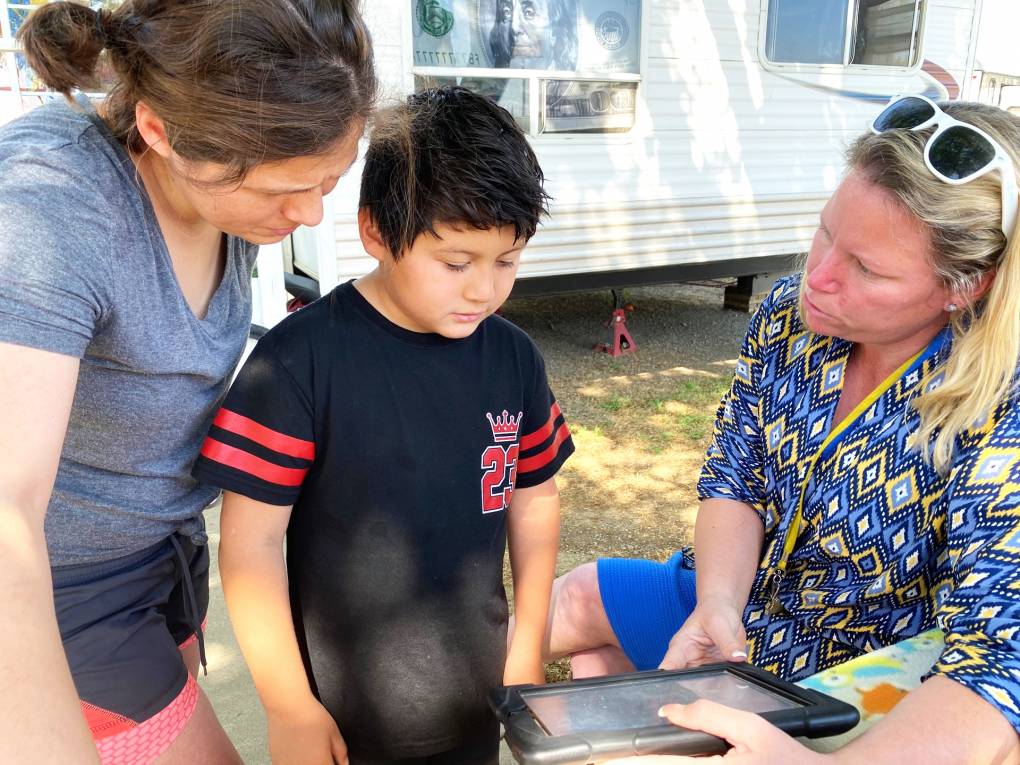
"caption": "Teacher Alena Anberg shows Nancy Ocampo and her son Anthony how to connect their Chromebook to their Wi-Fi hot spot.",
"description": "Teacher Alena Anberg shows Nancy Ocampo and her son Anthony how to connect their Chromebook to their Wi-Fi hot spot.",
"title": "RS42973_IMG_1699-qut_v2",
"credit": "Julia McEvoy/KQED",
"status": "inherit",
"isLoading": false,
"fetchFailed": false
}
},
"audioPlayerReducer": {
"postId": "stream_live",
"isPaused": true,
"isPlaying": false,
"pfsActive": false,
"pledgeModalIsOpen": true,
"playerDrawerIsOpen": false,
"liveAudioPlayStartedAt": 0,
"liveAudioPlayContext": ""
},
"authorsReducer": {
"byline_news_11844299": {
"type": "authors",
"id": "byline_news_11844299",
"meta": {
"override": true
},
"slug": "byline_news_11844299",
"name": "\u003ca href=\"https://calmatters.org/author/janellesalanga/\">Janelle Marie Salanga\u003c/a>",
"isLoading": false
},
"byline_news_11841631": {
"type": "authors",
"id": "byline_news_11841631",
"meta": {
"override": true
},
"slug": "byline_news_11841631",
"name": "Ricardo Cano",
"isLoading": false
},
"byline_news_11841795": {
"type": "authors",
"id": "byline_news_11841795",
"meta": {
"override": true
},
"slug": "byline_news_11841795",
"name": "\u003ca href=\"https://twitter.com/anya1anya\">Anya Kamenetz\u003c/a>, Marco A. Treviño, Jessica Bakeman",
"isLoading": false
},
"jmcevoy": {
"type": "authors",
"id": "231",
"meta": {
"index": "authors_1716337520",
"id": "231",
"found": true
},
"name": "Julia McEvoy",
"firstName": "Julia",
"lastName": "McEvoy",
"slug": "jmcevoy",
"email": "jmcevoy@KQED.org",
"display_author_email": true,
"staff_mastheads": [
"news"
],
"title": "KQED Senior Editor",
"bio": "Julia McEvoy is KQED's Senior Editor, Education Equity.\r\n\r\nJulia heads KQED’s education coverage examining inequities students face in Bay Area and California schools, and reports on what it will take to educate the next generation.\r\n\r\nJulia's editorial work has received a Peabody Award, a Casey Medal for Coverage of Children and Families, several Edward R. Murrow awards, as well as awards from the Public Radio News Directors Inc. and the Society for Professional Journalists.",
"avatar": "https://secure.gravatar.com/avatar/aec3ce21abe02b302fd33638abd56a22?s=600&d=blank&r=g",
"twitter": "juliamcevoy1",
"facebook": null,
"instagram": null,
"linkedin": null,
"sites": [
{
"site": "news",
"roles": []
},
{
"site": "stateofhealth",
"roles": [
"author"
]
}
],
"headData": {
"title": "Julia McEvoy | KQED",
"description": "KQED Senior Editor",
"ogImgSrc": "https://secure.gravatar.com/avatar/aec3ce21abe02b302fd33638abd56a22?s=600&d=blank&r=g",
"twImgSrc": "https://secure.gravatar.com/avatar/aec3ce21abe02b302fd33638abd56a22?s=600&d=blank&r=g"
},
"isLoading": false,
"link": "/author/jmcevoy"
},
"kqed": {
"type": "authors",
"id": "236",
"meta": {
"index": "authors_1716337520",
"id": "236",
"found": true
},
"name": "KQED News Staff",
"firstName": "KQED News Staff",
"lastName": null,
"slug": "kqed",
"email": "faq@kqed.org",
"display_author_email": false,
"staff_mastheads": [],
"title": null,
"bio": null,
"avatar": "https://secure.gravatar.com/avatar/ef0e801a68c4c54afa9180db14084167?s=600&d=blank&r=g",
"twitter": null,
"facebook": null,
"instagram": null,
"linkedin": null,
"sites": [
{
"site": "arts",
"roles": [
"contributor"
]
},
{
"site": "news",
"roles": [
"editor"
]
},
{
"site": "futureofyou",
"roles": [
"author"
]
}
],
"headData": {
"title": "KQED News Staff | KQED",
"description": null,
"ogImgSrc": "https://secure.gravatar.com/avatar/ef0e801a68c4c54afa9180db14084167?s=600&d=blank&r=g",
"twImgSrc": "https://secure.gravatar.com/avatar/ef0e801a68c4c54afa9180db14084167?s=600&d=blank&r=g"
},
"isLoading": false,
"link": "/author/kqed"
},
"mlam": {
"type": "authors",
"id": "244",
"meta": {
"index": "authors_1716337520",
"id": "244",
"found": true
},
"name": "Monica Lam",
"firstName": "Monica Z.",
"lastName": "Lam",
"slug": "mlam",
"email": "mlam@kqed.org",
"display_author_email": true,
"staff_mastheads": [
"news"
],
"title": "KQED Senior Producer",
"bio": "Monica is senior producer of the weekly current affairs program, \"KQED Newsroom.\" She's also served as senior editor of digital content at KQED. She likes to report and edit as well as produce video and take photos.\r\n\r\nBefore joining KQED, Monica worked at the Center for Investigative Reporting, where she examined conditions inside \u003cspan style=\"font-weight: 400;\">maximum security \u003c/span>prisons and abuse in state-run institutions for the developmentally disabled. Prior to that, she produced and directed \u003cem>Journey of the Bonesetter's Daughter,\u003c/em> a documentary that follows novelist Amy Tan as she creates an opera based on her family history.\r\n\r\nMonica's work has been honored with a duPont Award, five Emmys, regional and national Murrow Awards, and has been recognized by Investigative Reporters and Editors, the Society of Professional Journalists, Religion Newswriters Association and the San Francisco Peninsula Press Club. Monica studied urban studies at Stanford University and earned a master's in journalism at University of California at Berkeley. Follow her on twitter: @monicazlam",
"avatar": "https://secure.gravatar.com/avatar/018c474b2b71f43e0e6ca9b15a0ad36f?s=600&d=blank&r=g",
"twitter": "@monicazlam",
"facebook": null,
"instagram": null,
"linkedin": null,
"sites": [
{
"site": "arts",
"roles": [
"administrator"
]
},
{
"site": "news",
"roles": [
"editor"
]
},
{
"site": "trulyca",
"roles": [
"editor"
]
},
{
"site": "science",
"roles": [
"editor"
]
},
{
"site": "breakingnews",
"roles": [
"editor"
]
}
],
"headData": {
"title": "Monica Lam | KQED",
"description": "KQED Senior Producer",
"ogImgSrc": "https://secure.gravatar.com/avatar/018c474b2b71f43e0e6ca9b15a0ad36f?s=600&d=blank&r=g",
"twImgSrc": "https://secure.gravatar.com/avatar/018c474b2b71f43e0e6ca9b15a0ad36f?s=600&d=blank&r=g"
},
"isLoading": false,
"link": "/author/mlam"
},
"markfiore": {
"type": "authors",
"id": "3236",
"meta": {
"index": "authors_1716337520",
"id": "3236",
"found": true
},
"name": "Mark Fiore",
"firstName": "Mark",
"lastName": "Fiore",
"slug": "markfiore",
"email": "mark@markfiore.com",
"display_author_email": false,
"staff_mastheads": [
"news"
],
"title": "KQED News Cartoonist",
"bio": "\u003ca href=\"http://www.MarkFiore.com\">MarkFiore.com\u003c/a> | \u003ca href=\"https://twitter.com/markfiore\">Follow on Twitter\u003c/a> | \u003ca href=\"https://www.facebook.com/pages/Mark-Fiore-Animated-Political-Cartoons/94451707396?ref=bookmarks\">Facebook\u003c/a> | \u003ca href=\"mailto:mark@markfiore.com\">email\u003c/a>\r\n\r\nPulitzer Prize-winner, Mark Fiore, who the Wall Street Journal has called “the undisputed guru of the form,” creates animated political cartoons in San Francisco, where his work has been featured regularly on the San Francisco Chronicle’s web site, SFGate.com. His work has appeared on Newsweek.com, Slate.com, CBSNews.com, MotherJones.com, DailyKos.com and NPR’s web site. Fiore’s political animation has appeared on CNN, Frontline, Bill Moyers Journal, Salon.com and cable and broadcast outlets across the globe.\r\n\r\nBeginning his professional life by drawing traditional political cartoons for newspapers, Fiore’s work appeared in publications ranging from the Washington Post to the Los Angeles Times. In the late 1990s, he began to experiment with animating political cartoons and, after a short stint at the San Jose Mercury News as their staff cartoonist, Fiore devoted all his energies to animation.\r\nGrowing up in California, Fiore also spent a good portion of his life in the backwoods of Idaho. It was this combination that shaped him politically. Mark majored in political science at Colorado College, where, in a perfect send-off for a cartoonist, he received his diploma in 1991 as commencement speaker Dick Cheney smiled approvingly.\r\nMark Fiore was awarded the Pulitzer Prize for political cartooning in 2010, a Robert F. Kennedy Journalism Award in 2004 and has twice received an Online Journalism Award for commentary from the Online News Association (2002, 2008). Fiore has received two awards for his work in new media from the National Cartoonists Society (2001, 2002), and in 2006 received The James Madison Freedom of Information Award from The Society of Professional Journalists.",
"avatar": "https://secure.gravatar.com/avatar/fc4e2a612b15b67bad0c6f0e1db4ca9b?s=600&d=blank&r=g",
"twitter": "MarkFiore",
"facebook": null,
"instagram": "https://www.instagram.com/markfiore/?hl=en",
"linkedin": null,
"sites": [
{
"site": "arts",
"roles": [
"contributor"
]
},
{
"site": "news",
"roles": [
"editor"
]
},
{
"site": "futureofyou",
"roles": [
"editor"
]
},
{
"site": "science",
"roles": [
"editor"
]
}
],
"headData": {
"title": "Mark Fiore | KQED",
"description": "KQED News Cartoonist",
"ogImgSrc": "https://secure.gravatar.com/avatar/fc4e2a612b15b67bad0c6f0e1db4ca9b?s=600&d=blank&r=g",
"twImgSrc": "https://secure.gravatar.com/avatar/fc4e2a612b15b67bad0c6f0e1db4ca9b?s=600&d=blank&r=g"
},
"isLoading": false,
"link": "/author/markfiore"
},
"cveltman": {
"type": "authors",
"id": "8608",
"meta": {
"index": "authors_1716337520",
"id": "8608",
"found": true
},
"name": "Chloe Veltman",
"firstName": "Chloe",
"lastName": "Veltman",
"slug": "cveltman",
"email": "cveltman@kqed.org",
"display_author_email": true,
"staff_mastheads": [],
"title": "Arts and Culture Reporter",
"bio": "Chloe Veltman is a former arts and culture reporter for KQED. Prior to joining the organization, she launched and led the arts bureau at Colorado Public Radio, served as the Bay Area's culture columnist for the New York Times, and was the founder, host and executive producer of VoiceBox, a national award-winning weekly podcast/radio show and live events series all about the human voice. Chloe is the recipient of numerous prizes, grants and fellowships including a Webby Award for her work on interactive storytelling, both the John S Knight Journalism Fellowship and Humanities Center Fellowship at Stanford University, the Sundance Arts Writing Fellowship and a Library of Congress Research Fellowship. She is the author of the book \"On Acting\" and has appeared as a guest lecturer at Yale University and the San Francisco Conservatory of Music among other institutions. She holds a BA in english literature from King's College, Cambridge, and a Masters in Dramaturgy from the Central School of Speech and Drama/Harvard Institute for Advanced Theater Training.\r\n\u003ca href=\"https://www.chloeveltman.com\">www.chloeveltman.com\u003c/a>",
"avatar": "https://secure.gravatar.com/avatar/55403394b00a1ddab683952c2eb2cf85?s=600&d=blank&r=g",
"twitter": "chloeveltman",
"facebook": null,
"instagram": null,
"linkedin": null,
"sites": [
{
"site": "arts",
"roles": []
},
{
"site": "news",
"roles": [
"author"
]
},
{
"site": "pop",
"roles": [
"editor"
]
},
{
"site": "science",
"roles": []
}
],
"headData": {
"title": "Chloe Veltman | KQED",
"description": "Arts and Culture Reporter",
"ogImgSrc": "https://secure.gravatar.com/avatar/55403394b00a1ddab683952c2eb2cf85?s=600&d=blank&r=g",
"twImgSrc": "https://secure.gravatar.com/avatar/55403394b00a1ddab683952c2eb2cf85?s=600&d=blank&r=g"
},
"isLoading": false,
"link": "/author/cveltman"
},
"lklivans": {
"type": "authors",
"id": "8648",
"meta": {
"index": "authors_1716337520",
"id": "8648",
"found": true
},
"name": "Laura Klivans",
"firstName": "Laura",
"lastName": "Klivans",
"slug": "lklivans",
"email": "lklivans@kqed.org",
"display_author_email": true,
"staff_mastheads": [
"news",
"science"
],
"title": "Reporter",
"bio": "Laura Klivans is an award-winning science reporter for KQED News, where she covers climate change with an eye on both groundbreaking progress and gaps in action. She is the former host of KQED's blockbuster video series about tiny, amazing animals, \u003cem>Deep Look\u003c/em>. Her work reaches national audiences through NPR, \u003cem>Here & Now, \u003c/em>PRI, and other major outlets. \r\n\r\nLaura’s won five Northern California Area Emmy Awards for Deep Look and First Place in the Greater Bay Area Journalism Awards for a podcast exploring how one Oakland neighborhood teamed up to reduce planet-heating pollution.\r\n\r\nBeyond her reporting, she hosts and moderates events. In the past, she taught audio storytelling at the UC Berkeley Graduate School of Journalism, led international education programs, worked with immigrants and refugees along the Thai-Burmese border, taught high schoolers sex ed, and was an actress. \r\n\r\nShe's a former UC Berkeley Human Rights Fellow, USC Center for Health Journalism's California Fellow and Coro Fellow in Public Affairs. Laura has a master’s in journalism from UC Berkeley, a master’s in education from Harvard, and an undergraduate degree from Northwestern University.\r\n\r\nShe loves trying to riddle the meaning out of vanity license plates.",
"avatar": "https://secure.gravatar.com/avatar/2d2ecd1550a494cc10ad4a503406965585902124739e775a9b3817eebf1d88be?s=600&d=blank&r=g",
"twitter": "lauraklivans",
"bluesky": null,
"facebook": null,
"instagram": null,
"linkedin": null,
"sites": [
{
"site": "news",
"roles": [
"editor"
]
},
{
"site": "stateofhealth",
"roles": [
"contributor",
"editor"
]
},
{
"site": "science",
"roles": [
"editor"
]
},
{
"site": "forum",
"roles": [
"editor"
]
}
],
"headData": {
"title": "Laura Klivans | KQED",
"description": "Reporter",
"ogImgSrc": "https://secure.gravatar.com/avatar/2d2ecd1550a494cc10ad4a503406965585902124739e775a9b3817eebf1d88be?s=600&d=blank&r=g",
"twImgSrc": "https://secure.gravatar.com/avatar/2d2ecd1550a494cc10ad4a503406965585902124739e775a9b3817eebf1d88be?s=600&d=blank&r=g"
},
"isLoading": false,
"link": "/author/lklivans"
},
"abandlamudi": {
"type": "authors",
"id": "11672",
"meta": {
"index": "authors_1716337520",
"id": "11672",
"found": true
},
"name": "Adhiti Bandlamudi",
"firstName": "Adhiti",
"lastName": "Bandlamudi",
"slug": "abandlamudi",
"email": "abandlamudi@kqed.org",
"display_author_email": false,
"staff_mastheads": [
"news"
],
"title": "KQED Housing Reporter",
"bio": "Adhiti Bandlamudi reports for KQED's Housing desk. She focuses on how housing gets built across the Bay Area. Before joining KQED in 2020, she reported for WUNC in Durham, North Carolina, WABE in Atlanta, Georgia and Capital Public Radio in Sacramento. In 2017, she was awarded a Kroc Fellowship at NPR where she reported on everything from sprinkles to the Golden State Killer's arrest. When she's not reporting, she's baking new recipes in her kitchen or watching movies with friends and family. She's originally from Georgia and has strong opinions about Great British Bake Off.",
"avatar": "https://secure.gravatar.com/avatar/868129c8b257bb99a3500e2c86a65400?s=600&d=mm&r=g",
"twitter": "oddity_adhiti",
"facebook": null,
"instagram": null,
"linkedin": null,
"sites": [
{
"site": "arts",
"roles": [
"author"
]
},
{
"site": "news",
"roles": [
"editor"
]
},
{
"site": "liveblog",
"roles": [
"author"
]
}
],
"headData": {
"title": "Adhiti Bandlamudi | KQED",
"description": "KQED Housing Reporter",
"ogImgSrc": "https://secure.gravatar.com/avatar/868129c8b257bb99a3500e2c86a65400?s=600&d=mm&r=g",
"twImgSrc": "https://secure.gravatar.com/avatar/868129c8b257bb99a3500e2c86a65400?s=600&d=mm&r=g"
},
"isLoading": false,
"link": "/author/abandlamudi"
}
},
"pagesReducer": {
"news_category_education": {
"type": "terms",
"id": "news_18540",
"meta": {
"index": "terms_1716263798",
"site": "news",
"id": "18540",
"score": 10.973221
},
"featImg": null,
"name": "Education",
"description": null,
"taxonomy": "category",
"headData": {
"twImgId": null,
"twTitle": null,
"ogTitle": null,
"ogImgId": null,
"twDescription": null,
"description": null,
"title": "Education Archives | KQED News",
"ogDescription": null
},
"ttid": 2595,
"slug": "education",
"isLoading": false,
"title": "Education",
"pageMeta": {
"site": "news",
"WpPageTemplate": "page-topic-editorial",
"currentPage": 91
},
"blocks": [
{
"blockName": "kqed/post-list",
"attrs": {
"layout": "cardArticle2",
"query": "posts/news?category=education",
"seeMore": false,
"paginated": true,
"page": 91
}
},
{
"blockName": "kqed/ad"
}
]
}
},
"pfsSessionReducer": {},
"postsReducer": {
"stream_live": {
"type": "live",
"id": "stream_live",
"audioUrl": "https://streams.kqed.org/kqedradio",
"title": "Live Stream",
"excerpt": "Live Stream information currently unavailable.",
"link": "/radio",
"featImg": "",
"label": {
"name": "KQED Live",
"link": "/"
}
},
"stream_kqedNewscast": {
"type": "posts",
"id": "stream_kqedNewscast",
"audioUrl": "https://www.kqed.org/.stream/anon/radio/RDnews/newscast.mp3?_=1",
"title": "KQED Newscast",
"featImg": "",
"label": {
"name": "88.5 FM",
"link": "/"
}
},
"news_11844299": {
"type": "posts",
"id": "news_11844299",
"meta": {
"index": "posts_1716263798",
"site": "news",
"id": "11844299",
"score": null,
"sort": [
1604003075000
]
},
"guestAuthors": [],
"slug": "challenging-the-model-minority-myth-asian-american-students-divided-over-affirmative-action",
"title": "Challenging the Model Minority Myth: Asian American Students Divided Over Affirmative Action",
"publishDate": 1604003075,
"format": "audio",
"headTitle": "Challenging the Model Minority Myth: Asian American Students Divided Over Affirmative Action | KQED",
"labelTerm": {},
"content": "\u003cp>The moment he stepped into Clovis High School, Chali Lee – now a first-year at Clovis Community College – left his Hmong identity outside its doors.\u003c/p>\n\u003cp>Other students, he said, saw him as just another Asian male, another model minority – someone taking up all the seats at colleges.\u003c/p>\n\u003cp>Lee knows it’s not that simple.\u003c/p>\n\u003cp>“Although I am Asian, I carry the term Southeast Asian,” he said. “You have to disaggregate the data and look at the dangers of using umbrella terms — in the Hmong community specifically, not many pursue higher education.”\u003c/p>\n\u003cp>Next week, Californians will vote on \u003ca href=\"https://www.kqed.org/voterguide/proposition-16-affirmative-action\">Proposition 16\u003c/a>, which would allow public colleges to once again consider race, gender and ethnicity in admissions and hiring.\u003c/p>\n\u003cp>[aside label=\"Election 2020\" link1=\"https://www.kqed.org/voterguide,KQED's California Voter Guide\" hero=\"https://ww2.kqed.org/app/uploads/sites/10/2020/10/RS45342_001_KQED_SanFrancisco_Election2020_MailinBallot_10122020-qut-1020x680.jpg\"]\u003c/p>\n\u003cp>But some Asian American students and academics say they have been unfairly lumped together in discussions around affirmative action. The model minority myth, they say, obscures different Asian American ethnic communities’ varied access to resources and education.\u003c/p>\n\u003cp>Asian Americans have been at the center of affirmative action debates in California and nationwide. In Students for Fair Admissions v. Harvard, the federal court case that \u003ca href=\"https://admissionscase.harvard.edu/files/adm-case/files/2019-10-30_dkt_672_findings_of_fact_and_conclusions_of_law.pdf\">upheld the university’s affirmative action policies\u003c/a> in 2019 and is now under appeal, the plaintiffs are Asian American students who said they were discriminated against in the admission process. \u003c/p>\n\u003cp>And in 2014, when California legislators last tried reviving affirmative action, three Chinese-American state senators who initially backed its reinstatement received thousands of messages from constituents urging them to withdraw their support.\u003c/p>\n\u003cp>“As lifelong advocates for the Asian American and other communities, we would never support a policy that we believed would negatively impact our children,” the Democratic senators — Ted Lieu, Carol Liu and Leland Yee — wrote in a letter to then-Assembly Speaker John Pérez. The lobbying campaign worked, and the bill died.\u003c/p>\n\u003cp>[ad fullwidth]\u003c/p>\n\u003cp>While Prop. 16 made it on this year’s ballot, it still faces opposition from some Asian American groups. Assemblymember Evan Low, a Cupertino Democrat, \u003ca href=\"https://www.youtube.com/watch?v=dP4LieEaoJ4\">said on the Assembly floor\u003c/a> that he supported the ballot measure because it’s difficult to tackle race-specific problems with race-neutral policies — but he’d received over 3,000 messages from his constituents opposing the measure, compared to 99 messages in support.\u003c/p>\n\u003cp>Low, who is Chinese American, said elected officials in his district told him: “Aren’t you yellow? Why are you voting against your own people? Why are you betraying us?”\u003c/p>\n\u003cp>The reality is more complicated. AAPIs for Civic Empowerment, the Asian American Legal Defense and Education Fund and Asian Americans Advancing Justice are just a few organizations \u003ca href=\"https://voteyesonprop16.org/endorsements/\">backing\u003c/a> Prop. 16. Supporters of a No vote include \u003ca href=\"https://californiansforequalrights.org/endorsements/\">Asian American Legal Foundation Vice President Denise Louie\u003c/a> and \u003ca href=\"https://californiansforequalrights.org/about/our-organization-our-leaders/\">Californians for Equal Rights\u003c/a>.\u003c/p>\n\u003cp>Some of those different opinions are shaped by ethnicity and geography’s impact on Asian Americans’ educational opportunities. While 54% of Asians in California have a bachelor’s degree or higher, the number \u003ca href=\"https://data.census.gov/cedsci/table?t=Educational%20Attainment&g=0400000US06,06.050000&tid=ACSST1Y2019.S1501&hidePreview=true\">is lower in every Central Valley county\u003c/a>. Only 24% of Hmong adults had a bachelor’s degree in 2019, compared to 74% of Asian Indian.\u003c/p>\n\u003cp>\u003c!-- iframe plugin v.4.3 wordpress.org/plugins/iframe/ -->\u003cbr>\n\u003ciframe loading=\"lazy\" title=\"Educational attainment by Asian subgroup in California, 2019\" aria-label=\"chart\" id=\"datawrapper-chart-1fLkg\" src=\"https://datawrapper.dwcdn.net/1fLkg/2/\" scrolling=\"no\" frameborder=\"0\" style=\"width: 0; min-width: 100% !important; border: none;\" height=\"349\" width=\"100%\" class=\"iframe-class\">\u003c/iframe>\u003c/p>\n\u003cp>The University of California has \u003ca href=\"https://www.universityofcalifornia.edu/infocenter/disaggregated-data\">tracked enrollment and retention data\u003c/a> for 18 Asian sub-groups since the mid-2000s, after a student-led movement, \u003ca href=\"https://dailybruin.com/2007/05/31/groups_rally_admissions_data_count_me_in\">Count Me In\u003c/a>, pushed for disaggregated Asian and Pacific Islander student data.\u003c/p>\n\u003cp>Having that data means less-represented Asian American and Pacific Islander groups can receive more targeted support, said OiYan Poon, who supported the campaign as a graduate student at UCLA and now directs the Race & Intersectional Studies for Educational Equity Center at Colorado State University.\u003c/p>\n\u003cp>“For instance, a Cambodian student association could say, ‘Okay, here’s how many Cambodian American students applied to the university. Here’s how many got in, how many are on campus and what the retention challenges are that might need addressing,’” Poon said.\u003c/p>\n\u003cp>Asians and Asian Americans were 39% of UC’s student body in 2019, far more than their 15.5% share of California’s population.\u003c/p>\n\u003cp>But the data that emerged as a result of the Count Me In campaign complicates that narrative of Asian American overrepresentation. In 2019, there were only 534 Hmong students out of the 120,000 Asian American students at UCs — even though California’s Hmong population, at more than 100,000, is the highest nationwide.\u003c/p>\n\u003cp>Chinese students on California campuses are represented at two times the rate of their California population, while Filipino students make up roughly the same percentage of the UC student body as Filipinos in California, who are the state’s \u003ca href=\"https://www.migrationpolicy.org/article/filipino-immigrants-united-states\">largest Asian group\u003c/a>. Hmong students, by contrast, are represented at less than half a percent.\u003c/p>\n\u003cp>[aside postID=news_11840892 hero='https://ww2.kqed.org/app/uploads/sites/10/2020/10/GettyImages-138891408-1020x681.jpg']Seng Alexander Vang, a lecturer at Cal State Stanislaus and UC Merced, said his parents were among the first wave of Hmong refugees entering America after the Secret War in the ‘80s.\u003c/p>\n\u003cp>“In Laos and Thailand, when we were in the refugee camps, [my parents] never got the opportunity for education,” he said. “They were placed in job training and English classes, but it was very difficult for them to read and write a new language because they never had schools.”\u003c/p>\n\u003cp>Vang’s parents provided emotional support and wanted him to go to school, but didn’t know how to help him with homework and extracurricular activities. So he only applied to one university — Cal State Stanislaus — and said he wasn’t prepared to go to a four-year school.\u003c/p>\n\u003cp>“It was a struggle to the point where I didn’t feel like I was good enough,” Vang said. “Today, students, to just get into a UC, they need half a dozen AP classes, a 4.0+ (GPA) — and I barely passed my high school by one class.”\u003c/p>\n\u003cp>Vang, who teaches Hmong studies classes at Stanislaus, said he wanted to become a professor because he saw himself in students of color who had potential but didn’t feel understood or heard by their teachers.\u003c/p>\n\u003cp>One of the things he’s talked about with his students is affirmative action. Many of them, Vang said, come into his class believing affirmative action is bad and colorblindness is good.\u003c/p>\n\u003cp>“When you talk about race and ethnicity, they’ve become uncomfortable, because they’ve been taught not to talk about race,” he said. “But then they learn about (affirmative action) and realize that no, actually, colorblindness is harmful — it’s like you’re erasing people by saying you don’t see color.”\u003c/p>\n\u003cp>Vang, who voted yes on Prop. 16, said it’s important for students to be aware about racism today, because education can make it seem like racism no longer exists.\u003c/p>\n\u003cp>“They think we had the civil rights movement and it was all peaceful protest — but it wasn’t just that, it was violent,” Vang said. “There are conflicts between communities of color — there’s so much anti-Blackness in the Hmong community, because it’s something people learn as they assimilate and become Americanized.”\u003c/p>\n\u003cfigure id=\"attachment_11844319\" class=\"wp-caption aligncenter\" style=\"max-width: 1920px\">\u003cimg loading=\"lazy\" decoding=\"async\" class=\"size-full wp-image-11844319\" src=\"https://ww2.kqed.org/app/uploads/sites/10/2020/10/ChaliLee_ZS_sized.jpg\" alt=\"\" width=\"1920\" height=\"1281\" srcset=\"https://cdn.kqed.org/wp-content/uploads/sites/10/2020/10/ChaliLee_ZS_sized.jpg 1920w, https://cdn.kqed.org/wp-content/uploads/sites/10/2020/10/ChaliLee_ZS_sized-800x534.jpg 800w, https://cdn.kqed.org/wp-content/uploads/sites/10/2020/10/ChaliLee_ZS_sized-1020x681.jpg 1020w, https://cdn.kqed.org/wp-content/uploads/sites/10/2020/10/ChaliLee_ZS_sized-160x107.jpg 160w, https://cdn.kqed.org/wp-content/uploads/sites/10/2020/10/ChaliLee_ZS_sized-1536x1025.jpg 1536w\" sizes=\"(max-width: 1920px) 100vw, 1920px\">\u003cfigcaption class=\"wp-caption-text\">Chali Lee, a political science major at Clovis Community College, supports Prop. 16, the ballot initiative to allow affirmative action at California’s public colleges and universities. \u003ccite>(Zaeem Shaikh/CALMatters)\u003c/cite>\u003c/figcaption>\u003c/figure>\n\u003cp>The model minority myth, adds Poon, is rooted in anti-Blackness and a desire to show racism no longer exists in America.\u003c/p>\n\u003cp>“It’s a way to say without saying that Black, Latinx and Indigenous people, if they work hard like Asian Americans, maybe calls around racism are overblown,” she said. “But with anti-Asian coded racism, the Black Lives Matter movement, police killings on screen all the time — they know that racism is real.”\u003c/p>\n\u003cp>Affirmative action, she said, is a policy tool for public institutions to acknowledge the existence of racism, sexism and patriarchy and to combat them.\u003c/p>\n\u003cp>But some Asian American students say that affirmative action isn’t the best way to help communities of color.\u003c/p>\n\u003cp>Sunjay Muralitharan, a junior at Washington High School involved with \u003ca href=\"https://californiansforequalrights.org/\">Californians for Equal Rights\u003c/a>, which encourages a No vote on Prop. 16, said Prop. 16 is racist.\u003c/p>\n\u003cp>“Prop. 16 assumes that minorities like the Asian community and other communities won’t be able to get into a high-level institution without this upper-hand,” he said. “I think we need to shift the focus to more of a socioeconomic viewpoint than a racial standpoint.”\u003c/p>\n\u003cp>Though he admires Prop. 16’s proponents for diagnosing systemic racism and misogyny as problems, Muralitharan said the policy wouldn’t solve those underlying issues.\u003c/p>\n\u003cp>“We should focus on giving disadvantaged minorities the tools they need to succeed,” he said. “I support things like universal basic income, so people can pay off rent or get tutoring.”\u003c/p>\n\u003cp>[aside postID=science_1970355 hero='https://ww2.kqed.org/app/uploads/sites/35/2029/10/GettyImages-1206664280-1020x679.jpg']For Breanne Yee, a third-year student at CSU Long Beach, passing laws isn’t the only way to combat racial injustice.\u003c/p>\n\u003cp>“Elections are important, but investing in the community is just as, if not more, important,” Yee said. \u003c/p>\n\u003cp>Taking ethnic studies classes, as well as serving as a fellow at \u003ca href=\"https://www.seeding-change.org/\" rel=\"noopener noreferrer\" target=\"_blank\">Seeding Change\u003c/a> — a center focused on grassroots organizing in Asian American communities — shaped Yee’s belief that community-driven solutions, like the Black Panther Party’s free breakfast program, achieve more than legislation.\u003c/p>\n\u003cp>“I think people on the ground are closer to finding solutions than the people who don’t need to worry about where they’re going to get their next meal or where they’re going to sleep tonight,” she said. “The community knows what is needed and what works.”\u003c/p>\n\u003cp>Seventy percent of Asian American registered voters nationwide said they supported affirmative action, according to a \u003ca href=\"https://www.apiavote.org/sites/default/files/2020-09/2020%20Asian%20American%20Voter%20Survey%20-%20Sept%2015.pdf\">2020 AAPI Data survey\u003c/a> — a 2% increase from 2014. Still, that hides divisions among ethnicities, with only 56% of Chinese American voters in favor compared to 86% of Asian Indians.\u003c/p>\n\u003cp>Despite endorsements from Democratic vice presidential candidate Kamala Harris and all three public California university systems, Prop. 16’s future is still uncertain.\u003c/p>\n\u003cp>Two polls released in the past week by the \u003ca href=\"https://www.ppic.org/wp-content/uploads/crosstabs-likely-voters-1020.pdf\">Public Policy Institute of California\u003c/a> and the \u003ca href=\"https://escholarship.org/uc/item/2pr670k8?\">Berkeley Institute of Governmental Studies\u003c/a> show fewer than 40% of likely voters plan voting yes on Prop. 16, with about half saying they’ll vote against. Lee, the Clovis Community College student, said he recently had a conversation with one of his classmates who felt that there weren’t enough opportunities for white folks anymore.\u003c/p>\n\u003cp>But he said that’s exactly the narrative he hopes to disrupt in supporting Prop. 16.\u003c/p>\n\u003cp>“Many white people — even without affirmative action — have tutors, their parents have attended college before, have graduated from college,” Lee said. “Their chances of getting into UC are much, much, much higher — just because me and other Southeast Asians come from a disenfranchised community doesn’t mean we automatically get into a UC.”\u003c/p>\n\u003cp>And whether or not Prop. 16 passes, Lee said that there’s still work to be done to ensure students of color can thrive after being admitted to college.\u003c/p>\n\u003cp>“It’s one thing to get in and have these systems help us,” Lee said. “It’s another to make sure that students who were able to get a seat at the table also get resources that they need.”\u003c/p>\n\u003cp>\u003cem>Janelle Marie Salanga is a fellow with the \u003ca href=\"https://calmatters.org/projects/college-journalism-network/\">CalMatters College Journalism Network\u003c/a>, a collaboration between CalMatters and student journalists from across California. This story and other higher education coverage are supported by the College Futures Foundation.\u003c/em>\u003c/p>\n\u003cp>[ad floatright]\u003c/p>\n",
"blocks": [],
"excerpt": "As Californians decide on Prop. 16, some Asian American students say they've been unfairly lumped together in discussions around affirmative action. The model minority myth, they say, obscures different communities’ varied access to resources and education.",
"status": "publish",
"parent": 0,
"modified": 1721126587,
"stats": {
"hasAudio": false,
"hasVideo": false,
"hasChartOrMap": true,
"iframeSrcs": [
"https://datawrapper.dwcdn.net/1fLkg/2/"
],
"hasGoogleForm": false,
"hasGallery": false,
"hasHearkenModule": false,
"hasPolis": false,
"paragraphCount": 52,
"wordCount": 2063
},
"headData": {
"title": "Challenging the Model Minority Myth: Asian American Students Divided Over Affirmative Action | KQED",
"description": "As Californians decide on Prop. 16, some Asian American students say they've been unfairly lumped together in discussions around affirmative action. The model minority myth, they say, obscures different communities’ varied access to resources and education.",
"ogTitle": "",
"ogDescription": "",
"ogImgId": "",
"twTitle": "",
"twDescription": "",
"twImgId": "",
"socialDescription": "As Californians decide on Prop. 16, some Asian American students say they've been unfairly lumped together in discussions around affirmative action. The model minority myth, they say, obscures different communities’ varied access to resources and education.",
"canonicalUrl": "https://calmatters.org/education/higher-education/college-beat-higher-education/2020/10/asian-american-students-affirmative-action/",
"schema": {
"@context": "https://schema.org",
"@type": "NewsArticle",
"headline": "Challenging the Model Minority Myth: Asian American Students Divided Over Affirmative Action",
"datePublished": "2020-10-29T13:24:35-07:00",
"dateModified": "2024-07-16T03:43:07-07:00",
"image": "https://cdn.kqed.org/wp-content/uploads/2020/02/KQED-OG-Image@1x.png",
"isAccessibleForFree": "True",
"publisher": {
"@type": "NewsMediaOrganization",
"@id": "https://www.kqed.org/#organization",
"name": "KQED",
"logo": "https://cdn.kqed.org/wp-content/uploads/2020/02/KQED-OG-Image@1x.png",
"url": "https://www.kqed.org",
"sameAs": [
"https://www.facebook.com/KQED",
"https://twitter.com/KQED",
"https://www.instagram.com/kqed/",
"https://www.tiktok.com/@kqedofficial",
"https://www.linkedin.com/company/kqed",
"https://www.youtube.com/channel/UCeC0IOo7i1P_61zVUWbJ4nw"
]
}
}
},
"source": "CALmatters",
"sourceUrl": "https://calmatters.org/",
"audioUrl": "https://traffic.omny.fm/d/clips/0af137ef-751e-4b19-a055-aaef00d2d578/ffca7e9f-6831-41c5-bcaf-aaef00f5a073/db7b7968-443c-474b-8be2-ac62010e647d/audio.mp3",
"sticky": false,
"nprByline": "\u003ca href=\"https://calmatters.org/author/janellesalanga/\">Janelle Marie Salanga\u003c/a>",
"path": "https://calmatters.org/education/higher-education/college-beat-higher-education/2020/10/asian-american-students-affirmative-action/",
"redirect": {
"type": "external",
"url": "https://calmatters.org/education/higher-education/college-beat-higher-education/2020/10/asian-american-students-affirmative-action/"
},
"audioDuration": 228000,
"audioTrackLength": null,
"parsedContent": [
{
"type": "contentString",
"content": "\u003cdiv class=\"post-body\">\u003cp>\u003cp>The moment he stepped into Clovis High School, Chali Lee – now a first-year at Clovis Community College – left his Hmong identity outside its doors.\u003c/p>\n\u003cp>Other students, he said, saw him as just another Asian male, another model minority – someone taking up all the seats at colleges.\u003c/p>\n\u003cp>Lee knows it’s not that simple.\u003c/p>\n\u003cp>“Although I am Asian, I carry the term Southeast Asian,” he said. “You have to disaggregate the data and look at the dangers of using umbrella terms — in the Hmong community specifically, not many pursue higher education.”\u003c/p>\n\u003cp>Next week, Californians will vote on \u003ca href=\"https://www.kqed.org/voterguide/proposition-16-affirmative-action\">Proposition 16\u003c/a>, which would allow public colleges to once again consider race, gender and ethnicity in admissions and hiring.\u003c/p>\n\u003cp>\u003c/p>\u003c/div>",
"attributes": {
"named": {},
"numeric": []
}
},
{
"type": "component",
"content": "",
"name": "aside",
"attributes": {
"named": {
"label": "Election 2020 ",
"link1": "https://www.kqed.org/voterguide,KQED's California Voter Guide",
"hero": "https://ww2.kqed.org/app/uploads/sites/10/2020/10/RS45342_001_KQED_SanFrancisco_Election2020_MailinBallot_10122020-qut-1020x680.jpg"
},
"numeric": []
}
},
{
"type": "contentString",
"content": "\u003cdiv class=\"post-body\">\u003cp>\u003c/p>\n\u003cp>But some Asian American students and academics say they have been unfairly lumped together in discussions around affirmative action. The model minority myth, they say, obscures different Asian American ethnic communities’ varied access to resources and education.\u003c/p>\n\u003cp>Asian Americans have been at the center of affirmative action debates in California and nationwide. In Students for Fair Admissions v. Harvard, the federal court case that \u003ca href=\"https://admissionscase.harvard.edu/files/adm-case/files/2019-10-30_dkt_672_findings_of_fact_and_conclusions_of_law.pdf\">upheld the university’s affirmative action policies\u003c/a> in 2019 and is now under appeal, the plaintiffs are Asian American students who said they were discriminated against in the admission process. \u003c/p>\n\u003cp>And in 2014, when California legislators last tried reviving affirmative action, three Chinese-American state senators who initially backed its reinstatement received thousands of messages from constituents urging them to withdraw their support.\u003c/p>\n\u003cp>“As lifelong advocates for the Asian American and other communities, we would never support a policy that we believed would negatively impact our children,” the Democratic senators — Ted Lieu, Carol Liu and Leland Yee — wrote in a letter to then-Assembly Speaker John Pérez. The lobbying campaign worked, and the bill died.\u003c/p>\n\u003cp>\u003c/p>\u003c/div>",
"attributes": {
"named": {},
"numeric": []
}
},
{
"type": "component",
"content": "",
"name": "ad",
"attributes": {
"named": {
"label": "fullwidth"
},
"numeric": [
"fullwidth"
]
}
},
{
"type": "contentString",
"content": "\u003cdiv class=\"post-body\">\u003cp>\u003c/p>\n\u003cp>While Prop. 16 made it on this year’s ballot, it still faces opposition from some Asian American groups. Assemblymember Evan Low, a Cupertino Democrat, \u003ca href=\"https://www.youtube.com/watch?v=dP4LieEaoJ4\">said on the Assembly floor\u003c/a> that he supported the ballot measure because it’s difficult to tackle race-specific problems with race-neutral policies — but he’d received over 3,000 messages from his constituents opposing the measure, compared to 99 messages in support.\u003c/p>\n\u003cp>Low, who is Chinese American, said elected officials in his district told him: “Aren’t you yellow? Why are you voting against your own people? Why are you betraying us?”\u003c/p>\n\u003cp>The reality is more complicated. AAPIs for Civic Empowerment, the Asian American Legal Defense and Education Fund and Asian Americans Advancing Justice are just a few organizations \u003ca href=\"https://voteyesonprop16.org/endorsements/\">backing\u003c/a> Prop. 16. Supporters of a No vote include \u003ca href=\"https://californiansforequalrights.org/endorsements/\">Asian American Legal Foundation Vice President Denise Louie\u003c/a> and \u003ca href=\"https://californiansforequalrights.org/about/our-organization-our-leaders/\">Californians for Equal Rights\u003c/a>.\u003c/p>\n\u003cp>Some of those different opinions are shaped by ethnicity and geography’s impact on Asian Americans’ educational opportunities. While 54% of Asians in California have a bachelor’s degree or higher, the number \u003ca href=\"https://data.census.gov/cedsci/table?t=Educational%20Attainment&g=0400000US06,06.050000&tid=ACSST1Y2019.S1501&hidePreview=true\">is lower in every Central Valley county\u003c/a>. Only 24% of Hmong adults had a bachelor’s degree in 2019, compared to 74% of Asian Indian.\u003c/p>\n\u003cp>\u003c!-- iframe plugin v.4.3 wordpress.org/plugins/iframe/ -->\u003cbr>\n\u003ciframe loading=\"lazy\" title=\"Educational attainment by Asian subgroup in California, 2019\" aria-label=\"chart\" id=\"datawrapper-chart-1fLkg\" src=\"https://datawrapper.dwcdn.net/1fLkg/2/\" scrolling=\"no\" frameborder=\"0\" style=\"width: 0; min-width: 100% !important; border: none;\" height=\"349\" width=\"100%\" class=\"iframe-class\">\u003c/iframe>\u003c/p>\n\u003cp>The University of California has \u003ca href=\"https://www.universityofcalifornia.edu/infocenter/disaggregated-data\">tracked enrollment and retention data\u003c/a> for 18 Asian sub-groups since the mid-2000s, after a student-led movement, \u003ca href=\"https://dailybruin.com/2007/05/31/groups_rally_admissions_data_count_me_in\">Count Me In\u003c/a>, pushed for disaggregated Asian and Pacific Islander student data.\u003c/p>\n\u003cp>Having that data means less-represented Asian American and Pacific Islander groups can receive more targeted support, said OiYan Poon, who supported the campaign as a graduate student at UCLA and now directs the Race & Intersectional Studies for Educational Equity Center at Colorado State University.\u003c/p>\n\u003cp>“For instance, a Cambodian student association could say, ‘Okay, here’s how many Cambodian American students applied to the university. Here’s how many got in, how many are on campus and what the retention challenges are that might need addressing,’” Poon said.\u003c/p>\n\u003cp>Asians and Asian Americans were 39% of UC’s student body in 2019, far more than their 15.5% share of California’s population.\u003c/p>\n\u003cp>But the data that emerged as a result of the Count Me In campaign complicates that narrative of Asian American overrepresentation. In 2019, there were only 534 Hmong students out of the 120,000 Asian American students at UCs — even though California’s Hmong population, at more than 100,000, is the highest nationwide.\u003c/p>\n\u003cp>Chinese students on California campuses are represented at two times the rate of their California population, while Filipino students make up roughly the same percentage of the UC student body as Filipinos in California, who are the state’s \u003ca href=\"https://www.migrationpolicy.org/article/filipino-immigrants-united-states\">largest Asian group\u003c/a>. Hmong students, by contrast, are represented at less than half a percent.\u003c/p>\n\u003cp>\u003c/p>\u003c/div>",
"attributes": {
"named": {},
"numeric": []
}
},
{
"type": "component",
"content": "",
"name": "aside",
"attributes": {
"named": {
"postid": "news_11840892",
"hero": "https://ww2.kqed.org/app/uploads/sites/10/2020/10/GettyImages-138891408-1020x681.jpg",
"label": ""
},
"numeric": []
}
},
{
"type": "contentString",
"content": "\u003cdiv class=\"post-body\">\u003cp>Seng Alexander Vang, a lecturer at Cal State Stanislaus and UC Merced, said his parents were among the first wave of Hmong refugees entering America after the Secret War in the ‘80s.\u003c/p>\n\u003cp>“In Laos and Thailand, when we were in the refugee camps, [my parents] never got the opportunity for education,” he said. “They were placed in job training and English classes, but it was very difficult for them to read and write a new language because they never had schools.”\u003c/p>\n\u003cp>Vang’s parents provided emotional support and wanted him to go to school, but didn’t know how to help him with homework and extracurricular activities. So he only applied to one university — Cal State Stanislaus — and said he wasn’t prepared to go to a four-year school.\u003c/p>\n\u003cp>“It was a struggle to the point where I didn’t feel like I was good enough,” Vang said. “Today, students, to just get into a UC, they need half a dozen AP classes, a 4.0+ (GPA) — and I barely passed my high school by one class.”\u003c/p>\n\u003cp>Vang, who teaches Hmong studies classes at Stanislaus, said he wanted to become a professor because he saw himself in students of color who had potential but didn’t feel understood or heard by their teachers.\u003c/p>\n\u003cp>One of the things he’s talked about with his students is affirmative action. Many of them, Vang said, come into his class believing affirmative action is bad and colorblindness is good.\u003c/p>\n\u003cp>“When you talk about race and ethnicity, they’ve become uncomfortable, because they’ve been taught not to talk about race,” he said. “But then they learn about (affirmative action) and realize that no, actually, colorblindness is harmful — it’s like you’re erasing people by saying you don’t see color.”\u003c/p>\n\u003cp>Vang, who voted yes on Prop. 16, said it’s important for students to be aware about racism today, because education can make it seem like racism no longer exists.\u003c/p>\n\u003cp>“They think we had the civil rights movement and it was all peaceful protest — but it wasn’t just that, it was violent,” Vang said. “There are conflicts between communities of color — there’s so much anti-Blackness in the Hmong community, because it’s something people learn as they assimilate and become Americanized.”\u003c/p>\n\u003cfigure id=\"attachment_11844319\" class=\"wp-caption aligncenter\" style=\"max-width: 1920px\">\u003cimg loading=\"lazy\" decoding=\"async\" class=\"size-full wp-image-11844319\" src=\"https://ww2.kqed.org/app/uploads/sites/10/2020/10/ChaliLee_ZS_sized.jpg\" alt=\"\" width=\"1920\" height=\"1281\" srcset=\"https://cdn.kqed.org/wp-content/uploads/sites/10/2020/10/ChaliLee_ZS_sized.jpg 1920w, https://cdn.kqed.org/wp-content/uploads/sites/10/2020/10/ChaliLee_ZS_sized-800x534.jpg 800w, https://cdn.kqed.org/wp-content/uploads/sites/10/2020/10/ChaliLee_ZS_sized-1020x681.jpg 1020w, https://cdn.kqed.org/wp-content/uploads/sites/10/2020/10/ChaliLee_ZS_sized-160x107.jpg 160w, https://cdn.kqed.org/wp-content/uploads/sites/10/2020/10/ChaliLee_ZS_sized-1536x1025.jpg 1536w\" sizes=\"(max-width: 1920px) 100vw, 1920px\">\u003cfigcaption class=\"wp-caption-text\">Chali Lee, a political science major at Clovis Community College, supports Prop. 16, the ballot initiative to allow affirmative action at California’s public colleges and universities. \u003ccite>(Zaeem Shaikh/CALMatters)\u003c/cite>\u003c/figcaption>\u003c/figure>\n\u003cp>The model minority myth, adds Poon, is rooted in anti-Blackness and a desire to show racism no longer exists in America.\u003c/p>\n\u003cp>“It’s a way to say without saying that Black, Latinx and Indigenous people, if they work hard like Asian Americans, maybe calls around racism are overblown,” she said. “But with anti-Asian coded racism, the Black Lives Matter movement, police killings on screen all the time — they know that racism is real.”\u003c/p>\n\u003cp>Affirmative action, she said, is a policy tool for public institutions to acknowledge the existence of racism, sexism and patriarchy and to combat them.\u003c/p>\n\u003cp>But some Asian American students say that affirmative action isn’t the best way to help communities of color.\u003c/p>\n\u003cp>Sunjay Muralitharan, a junior at Washington High School involved with \u003ca href=\"https://californiansforequalrights.org/\">Californians for Equal Rights\u003c/a>, which encourages a No vote on Prop. 16, said Prop. 16 is racist.\u003c/p>\n\u003cp>“Prop. 16 assumes that minorities like the Asian community and other communities won’t be able to get into a high-level institution without this upper-hand,” he said. “I think we need to shift the focus to more of a socioeconomic viewpoint than a racial standpoint.”\u003c/p>\n\u003cp>Though he admires Prop. 16’s proponents for diagnosing systemic racism and misogyny as problems, Muralitharan said the policy wouldn’t solve those underlying issues.\u003c/p>\n\u003cp>“We should focus on giving disadvantaged minorities the tools they need to succeed,” he said. “I support things like universal basic income, so people can pay off rent or get tutoring.”\u003c/p>\n\u003cp>\u003c/p>\u003c/div>",
"attributes": {
"named": {},
"numeric": []
}
},
{
"type": "component",
"content": "",
"name": "aside",
"attributes": {
"named": {
"postid": "science_1970355",
"hero": "https://ww2.kqed.org/app/uploads/sites/35/2029/10/GettyImages-1206664280-1020x679.jpg",
"label": ""
},
"numeric": []
}
},
{
"type": "contentString",
"content": "\u003cdiv class=\"post-body\">\u003cp>For Breanne Yee, a third-year student at CSU Long Beach, passing laws isn’t the only way to combat racial injustice.\u003c/p>\n\u003cp>“Elections are important, but investing in the community is just as, if not more, important,” Yee said. \u003c/p>\n\u003cp>Taking ethnic studies classes, as well as serving as a fellow at \u003ca href=\"https://www.seeding-change.org/\" rel=\"noopener noreferrer\" target=\"_blank\">Seeding Change\u003c/a> — a center focused on grassroots organizing in Asian American communities — shaped Yee’s belief that community-driven solutions, like the Black Panther Party’s free breakfast program, achieve more than legislation.\u003c/p>\n\u003cp>“I think people on the ground are closer to finding solutions than the people who don’t need to worry about where they’re going to get their next meal or where they’re going to sleep tonight,” she said. “The community knows what is needed and what works.”\u003c/p>\n\u003cp>Seventy percent of Asian American registered voters nationwide said they supported affirmative action, according to a \u003ca href=\"https://www.apiavote.org/sites/default/files/2020-09/2020%20Asian%20American%20Voter%20Survey%20-%20Sept%2015.pdf\">2020 AAPI Data survey\u003c/a> — a 2% increase from 2014. Still, that hides divisions among ethnicities, with only 56% of Chinese American voters in favor compared to 86% of Asian Indians.\u003c/p>\n\u003cp>Despite endorsements from Democratic vice presidential candidate Kamala Harris and all three public California university systems, Prop. 16’s future is still uncertain.\u003c/p>\n\u003cp>Two polls released in the past week by the \u003ca href=\"https://www.ppic.org/wp-content/uploads/crosstabs-likely-voters-1020.pdf\">Public Policy Institute of California\u003c/a> and the \u003ca href=\"https://escholarship.org/uc/item/2pr670k8?\">Berkeley Institute of Governmental Studies\u003c/a> show fewer than 40% of likely voters plan voting yes on Prop. 16, with about half saying they’ll vote against. Lee, the Clovis Community College student, said he recently had a conversation with one of his classmates who felt that there weren’t enough opportunities for white folks anymore.\u003c/p>\n\u003cp>But he said that’s exactly the narrative he hopes to disrupt in supporting Prop. 16.\u003c/p>\n\u003cp>“Many white people — even without affirmative action — have tutors, their parents have attended college before, have graduated from college,” Lee said. “Their chances of getting into UC are much, much, much higher — just because me and other Southeast Asians come from a disenfranchised community doesn’t mean we automatically get into a UC.”\u003c/p>\n\u003cp>And whether or not Prop. 16 passes, Lee said that there’s still work to be done to ensure students of color can thrive after being admitted to college.\u003c/p>\n\u003cp>“It’s one thing to get in and have these systems help us,” Lee said. “It’s another to make sure that students who were able to get a seat at the table also get resources that they need.”\u003c/p>\n\u003cp>\u003cem>Janelle Marie Salanga is a fellow with the \u003ca href=\"https://calmatters.org/projects/college-journalism-network/\">CalMatters College Journalism Network\u003c/a>, a collaboration between CalMatters and student journalists from across California. This story and other higher education coverage are supported by the College Futures Foundation.\u003c/em>\u003c/p>\n\u003cp>\u003c/p>\u003c/div>",
"attributes": {
"named": {},
"numeric": []
}
},
{
"type": "component",
"content": "",
"name": "ad",
"attributes": {
"named": {
"label": "floatright"
},
"numeric": [
"floatright"
]
}
},
{
"type": "contentString",
"content": "\u003cdiv class=\"post-body\">\u003cp>\u003c/p>\n\u003c/div>\u003c/p>",
"attributes": {
"named": {},
"numeric": []
}
}
],
"link": "https://calmatters.org/education/higher-education/college-beat-higher-education/2020/10/asian-american-students-affirmative-action/",
"authors": [
"byline_news_11844299"
],
"programs": [
"news_72"
],
"categories": [
"news_18540",
"news_8",
"news_13"
],
"tags": [
"news_1895",
"news_24788",
"news_20075",
"news_18538",
"news_28756",
"news_17968",
"news_28626"
],
"affiliates": [
"news_18481"
],
"featImg": "news_11844303",
"label": "source_news_11844299"
},
"news_11843609": {
"type": "posts",
"id": "news_11843609",
"meta": {
"index": "posts_1716263798",
"site": "news",
"id": "11843609",
"score": null,
"sort": [
1603498566000
]
},
"parent": 0,
"labelTerm": {
"site": "news",
"term": 7052
},
"blocks": [],
"publishDate": 1603498566,
"format": "video",
"disqusTitle": "Election 2020 and Mental Health Struggles of College Students",
"title": "Election 2020 and Mental Health Struggles of College Students",
"headTitle": "KQED Newsroom | KQED News",
"content": "\u003cp>\u003cb>Election 2020: Debate, CA Races and Propositions\u003c/b>\u003cbr>\n\u003cspan style=\"font-weight: 400\">With just 11 days before election day, President Donald Trump faced off against Democratic rival Joe Biden for their second and final presidential debate held Thursday night in Nashville. The President claimed Biden had little to show for his decades in public office, while Biden castigated the president for his response to the pandemic amid a surge in cases nationwide. Also on Thursday, Republicans on the Senate Judiciary Committee voted to advance the nomination of Supreme Court Justice nominee Amy Coney Barrett without a single Democratic lawmaker on the committee in attendance in a symbolic show of opposition to her nomination. Meanwhile, in California, a poll released this week from the Public Policy Institute of California surveyed likely voters about the Barrett nomination and their views on Proposition 15, which would raise taxes on commercial properties, and Proposition 16 which would reverse a ban on the use of affirmative action in the public sector, allowing state-funded universities, for example, to consider race, gender and ethnicity in admission decisions. \u003c/span>\u003c/p>\n\u003cp>\u003cb>Guests:\u003c/b>\u003c/p>\n\u003cul>\n\u003cli style=\"font-weight: 400\">\u003cspan style=\"font-weight: 400\">Marisa Lagos, KQED politics and government correspondent \u003c/span>\u003c/li>\n\u003cli style=\"font-weight: 400\">\u003cspan style=\"font-weight: 400\">Guy Marzorati, KQED politics and government reporter\u003c/span>\u003c/li>\n\u003c/ul>\n\u003cp>\u003cb>College Students and Mental Health\u003c/b>\u003cbr>\n\u003cspan style=\"font-weight: 400\">Surveys of thousands of college students in the U.S. since the start of the pandemic reveal high rates of stress, anxiety, feelings of loneliness and other mental health struggles. A survey of graduate and undergraduate students conducted between May and July across nine public universities, for example, found the prevalence of depression to be twice as high this year compared to last year. But for a generation immersed in apps, social media and smartphones, technology may provide digital signposts to guide young people out of isolation and loneliness. Hopelab, a nonprofit based in San Francisco, has developed Nod, an app featuring prompts, exercises and testimonials that has helped first-year students at risk for depression and loneliness, according to a 2019 study conducted at the University of Oregon. \u003c/span>\u003c/p>\n\u003cp>\u003cb>Guests:\u003c/b>\u003c/p>\n\u003cul>\n\u003cli style=\"font-weight: 400\">\u003cspan style=\"font-weight: 400\">Danielle Ramo, senior director of research, Hopelab\u003c/span>\u003c/li>\n\u003cli style=\"font-weight: 400\">\u003cspan style=\"font-weight: 400\">Will Coleman, intern, Hopelab and senior, Columbia College\u003c/span>\u003c/li>\n\u003c/ul>\n\u003cp>\u003cb>Something Beautiful: SkyStar in the Park\u003c/b>\u003cbr>\n\u003cspan style=\"font-weight: 400\">We end our show this week by taking an elevated look at a 150-foot-tall ferris wheel that finally started spinning in Golden Gate Park this week, seven months after its arrival to commemorate the 150-year anniversary of the park. The pandemic forced the months-long delay of its maiden spin until Wednesday, when paying customers boarded the SkyStar Observation Wheel for 12-minute rides affording panoramic views that stretch from downtown San Francisco to the Pacific Ocean.\u003c/span>\u003c/p>\n\u003cp>[ad fullwidth]\u003c/p>\u003cp>\u003c/p>\n",
"disqusIdentifier": "11843609 https://ww2.kqed.org/news/?p=11843609",
"disqusUrl": "https://ww2.kqed.org/news/2020/10/23/election-2020-and-mental-health-struggles-of-college-students/",
"stats": {
"hasVideo": false,
"hasChartOrMap": false,
"hasAudio": false,
"hasPolis": false,
"wordCount": 433,
"hasGoogleForm": false,
"hasGallery": false,
"hasHearkenModule": false,
"iframeSrcs": [],
"paragraphCount": 7
},
"modified": 1603498566,
"excerpt": null,
"headData": {
"twImgId": "",
"twTitle": "",
"ogTitle": "",
"ogImgId": "",
"twDescription": "",
"description": "Election 2020: Debate, CA Races and Propositions With just 11 days before election day, President Donald Trump faced off against Democratic rival Joe Biden for their second and final presidential debate held Thursday night in Nashville. The President claimed Biden had little to show for his decades in public office, while Biden castigated the president",
"title": "Election 2020 and Mental Health Struggles of College Students | KQED",
"ogDescription": "",
"schema": {
"@context": "https://schema.org",
"@type": "NewsArticle",
"headline": "Election 2020 and Mental Health Struggles of College Students",
"datePublished": "2020-10-23T17:16:06-07:00",
"dateModified": "2020-10-23T17:16:06-07:00",
"image": "https://cdn.kqed.org/wp-content/uploads/2020/02/KQED-OG-Image@1x.png",
"isAccessibleForFree": "True",
"publisher": {
"@type": "NewsMediaOrganization",
"@id": "https://www.kqed.org/#organization",
"name": "KQED",
"logo": "https://cdn.kqed.org/wp-content/uploads/2020/02/KQED-OG-Image@1x.png",
"url": "https://www.kqed.org",
"sameAs": [
"https://www.facebook.com/KQED",
"https://twitter.com/KQED",
"https://www.instagram.com/kqed/",
"https://www.tiktok.com/@kqedofficial",
"https://www.linkedin.com/company/kqed",
"https://www.youtube.com/channel/UCeC0IOo7i1P_61zVUWbJ4nw"
]
}
}
},
"guestAuthors": [],
"slug": "election-2020-and-mental-health-struggles-of-college-students",
"status": "publish",
"videoEmbed": "https://youtu.be/AtlwlIEj1Aw",
"path": "/news/11843609/election-2020-and-mental-health-struggles-of-college-students",
"audioTrackLength": null,
"parsedContent": [
{
"type": "contentString",
"content": "\u003cdiv class=\"post-body\">\u003cp>\u003cp>\u003cb>Election 2020: Debate, CA Races and Propositions\u003c/b>\u003cbr>\n\u003cspan style=\"font-weight: 400\">With just 11 days before election day, President Donald Trump faced off against Democratic rival Joe Biden for their second and final presidential debate held Thursday night in Nashville. The President claimed Biden had little to show for his decades in public office, while Biden castigated the president for his response to the pandemic amid a surge in cases nationwide. Also on Thursday, Republicans on the Senate Judiciary Committee voted to advance the nomination of Supreme Court Justice nominee Amy Coney Barrett without a single Democratic lawmaker on the committee in attendance in a symbolic show of opposition to her nomination. Meanwhile, in California, a poll released this week from the Public Policy Institute of California surveyed likely voters about the Barrett nomination and their views on Proposition 15, which would raise taxes on commercial properties, and Proposition 16 which would reverse a ban on the use of affirmative action in the public sector, allowing state-funded universities, for example, to consider race, gender and ethnicity in admission decisions. \u003c/span>\u003c/p>\n\u003cp>\u003cb>Guests:\u003c/b>\u003c/p>\n\u003cul>\n\u003cli style=\"font-weight: 400\">\u003cspan style=\"font-weight: 400\">Marisa Lagos, KQED politics and government correspondent \u003c/span>\u003c/li>\n\u003cli style=\"font-weight: 400\">\u003cspan style=\"font-weight: 400\">Guy Marzorati, KQED politics and government reporter\u003c/span>\u003c/li>\n\u003c/ul>\n\u003cp>\u003cb>College Students and Mental Health\u003c/b>\u003cbr>\n\u003cspan style=\"font-weight: 400\">Surveys of thousands of college students in the U.S. since the start of the pandemic reveal high rates of stress, anxiety, feelings of loneliness and other mental health struggles. A survey of graduate and undergraduate students conducted between May and July across nine public universities, for example, found the prevalence of depression to be twice as high this year compared to last year. But for a generation immersed in apps, social media and smartphones, technology may provide digital signposts to guide young people out of isolation and loneliness. Hopelab, a nonprofit based in San Francisco, has developed Nod, an app featuring prompts, exercises and testimonials that has helped first-year students at risk for depression and loneliness, according to a 2019 study conducted at the University of Oregon. \u003c/span>\u003c/p>\n\u003cp>\u003cb>Guests:\u003c/b>\u003c/p>\n\u003cul>\n\u003cli style=\"font-weight: 400\">\u003cspan style=\"font-weight: 400\">Danielle Ramo, senior director of research, Hopelab\u003c/span>\u003c/li>\n\u003cli style=\"font-weight: 400\">\u003cspan style=\"font-weight: 400\">Will Coleman, intern, Hopelab and senior, Columbia College\u003c/span>\u003c/li>\n\u003c/ul>\n\u003cp>\u003cb>Something Beautiful: SkyStar in the Park\u003c/b>\u003cbr>\n\u003cspan style=\"font-weight: 400\">We end our show this week by taking an elevated look at a 150-foot-tall ferris wheel that finally started spinning in Golden Gate Park this week, seven months after its arrival to commemorate the 150-year anniversary of the park. The pandemic forced the months-long delay of its maiden spin until Wednesday, when paying customers boarded the SkyStar Observation Wheel for 12-minute rides affording panoramic views that stretch from downtown San Francisco to the Pacific Ocean.\u003c/span>\u003c/p>\n\u003cp>\u003c/p>\u003c/div>",
"attributes": {
"named": {},
"numeric": []
}
},
{
"type": "component",
"content": "",
"name": "ad",
"attributes": {
"named": {
"label": "fullwidth"
},
"numeric": [
"fullwidth"
]
}
},
{
"type": "contentString",
"content": "\u003cdiv class=\"post-body\">\u003cp>\u003c/p>\u003cp>\u003c/p>\n\u003c/div>\u003c/p>",
"attributes": {
"named": {},
"numeric": []
}
}
],
"link": "/news/11843609/election-2020-and-mental-health-struggles-of-college-students",
"authors": [
"236"
],
"programs": [
"news_7052"
],
"categories": [
"news_223",
"news_18540",
"news_13"
],
"tags": [
"news_28713",
"news_23289",
"news_20297",
"news_19177",
"news_20562",
"news_28714"
],
"featImg": "news_11843612",
"label": "news_7052"
},
"news_11842983": {
"type": "posts",
"id": "news_11842983",
"meta": {
"index": "posts_1716263798",
"site": "news",
"id": "11842983",
"score": null,
"sort": [
1603233206000
]
},
"parent": 0,
"labelTerm": {},
"blocks": [],
"publishDate": 1603233206,
"format": "standard",
"disqusTitle": "SF Moves to Least Restrictive COVID-19 Tier, State OKs Some Theme Park and Stadium Reopenings",
"title": "SF Moves to Least Restrictive COVID-19 Tier, State OKs Some Theme Park and Stadium Reopenings",
"headTitle": "KQED News",
"content": "\u003cp>San Francisco became the first large, urban county to be assigned to the “yellow tier,” the least restrictive category in the state’s \u003ca href=\"https://covid19.ca.gov/safer-economy/\" target=\"_blank\" rel=\"noopener noreferrer\">color-coded system\u003c/a> for defining what businesses and activities can resume during the coronavirus pandemic, state officials announced Tuesday.\u003c/p>\n\u003cp>Beginning next Tuesday, Oct. 27, “non-essential” offices in San Francisco can reopen at 25% capacity, \u003ca href=\"https://www.kqed.org/bayareabites/139329/san-francisco-indoor-dining-expands-and-includes-bars\" target=\"_blank\" rel=\"noopener noreferrer\">indoor dining can expand\u003c/a>, climbing walls can reopen and fitness centers can increase their indoor capacity to 25%, city officials said.\u003c/p>\n\u003cp>“We continue to make overall progress as a state with the slow and stringent reopening,” said state epidemiologist Dr. Erica Pan in a Zoom press conference.\u003c/p>\n\u003cp>[pullquote szie=\"medium\" align=\"right\" citation=\"San Francisco Mayor London Breed\"]'Thanks to everyone's commitment to wearing face coverings and following public health guidance, we are able to keep moving forward with reopening.'[/pullquote]\u003c/p>\n\u003cp>San Francisco Mayor London Breed also credited the county’s cautious approach for this development.\u003c/p>\n\u003cp>\"San Franciscans have taken COVID-19 seriously from the very beginning, and thanks to everyone's commitment to wearing face coverings and following public health guidance, we are able to keep moving forward with reopening,” said Mayor Breed in a statement. “Today really is a sign of hope for our city and for our economic recovery.\"\u003c/p>\n\u003cp>San Franciscans can look forward to more and more businesses reopening over the next few weeks — including indoor pools and bowling alleys — as laid out in the city’s \u003ca href=\"https://sf.gov/step-by-step/reopening-san-francisco\" target=\"_blank\" rel=\"noopener noreferrer\">timeline\u003c/a>.\u003c/p>\n\u003cp>San Francisco Unified School District said it plans to resume in-person instruction for the youngest grades and those who receive special education services, although no date has been set yet.\u003c/p>\n\u003cp>Currently, other counties in the “yellow tier” for \"minimal\" risk of COVID-19 transmission are less densely populated, like Modoc, Humboldt and Mariposa counties.\u003c/p>\n\u003cp>[aside postID=science_1963889 hero='https://ww2.kqed.org/app/uploads/sites/35/2022/05/Bay-Area-coronavirus-stores-1020x702.jpg']\u003c/p>\n\u003ch3>Theme Parks and Outdoor Stadiums Can Reopen\u003c/h3>\n\u003cp>The state also issued long-awaited guidance concerning amusement parks and outdoor professional sporting events.\u003c/p>\n\u003cp>Theme parks can reopen in counties assigned to the less restrictive orange and yellow tiers.\u003c/p>\n\u003cul>\n\u003cli>Small theme parks, defined as having a capacity of less than 15,000, can reopen in orange tier or \"moderate risk\" counties at 25% capacity or fewer than 500 visitors, whichever is less\u003c/li>\n\u003cli>All theme parks can reopen in counties that are in yellow or \"minimal risk\" tiers at 25% capacity\u003c/li>\n\u003cli>All parks must require advance ticket reservations and screen guests for COVID-19 symptoms\u003c/li>\n\u003cli>Masks be worn at all times except when eating or drinking\u003c/li>\n\u003c/ul>\n\u003cp>For now, that means Disneyland, which is located in Orange County, currently in the red tier, won’t be reopening.\u003c/p>\n\u003cp>Meanwhile, professional sports games can resume at outdoor stadiums in counties assigned to the orange and yellow tiers, with modifications.\u003c/p>\n\u003cul>\n\u003cli>In orange tier or “moderate risk” counties stadiums can reopen at 20% capacity, at at 25% capacity in yellow or “minimal risk” counties\u003c/li>\n\u003cli>Ticket sales must be restricted to customers who live within a 120 mile radius of the stadium\u003c/li>\n\u003cli>Stadiums must provide parking so that visitors don’t park in surrounding neighborhoods\u003c/li>\n\u003cli>Advance ticket reservations, assigned seating and wearing face masks are required\u003c/li>\n\u003cli>Eating and drinking are allowed while in assigned seats\u003c/li>\n\u003cli>No tailgating is allowed\u003c/li>\n\u003c/ul>\n\u003cp>[ad fullwidth]\u003c/p>\n\u003cp>Dr. Mark Ghaly, the state’s health and human services secretary, said theme park guidelines were developed \u003ca href=\"https://www.kqed.org/coronavirusliveupdates/news/11841990/california-weighs-reopening-theme-parks-as-covid-19-hospitalization-rates-decline\" target=\"_blank\" rel=\"noopener noreferrer\">after sending delegations to visit to parks\u003c/a> currently in operation around the country. He said outdoor stadium events are considered lower risk, because visitors have assigned seats and spend less time at sporting events than at amusement parks.\u003c/p>\n\u003cp>Public health officials acknowledged that reopening more businesses may mean an increased risk of spreading the coronavirus.\u003c/p>\n\u003cp>“We must not let our guard down,” said Ghaly as he urged Californians to continue wearing masks, wash their hands and observe social distancing rules.\u003c/p>\n\u003cp>\u003c/p>\n",
"disqusIdentifier": "11842983 https://ww2.kqed.org/news/?p=11842983",
"disqusUrl": "https://ww2.kqed.org/news/2020/10/20/sf-moves-to-least-restrictive-covid-19-tier-state-oks-some-theme-park-and-stadium-reopenings/",
"stats": {
"hasVideo": false,
"hasChartOrMap": false,
"hasAudio": false,
"hasPolis": false,
"wordCount": 669,
"hasGoogleForm": false,
"hasGallery": false,
"hasHearkenModule": false,
"iframeSrcs": [],
"paragraphCount": 19
},
"modified": 1603233444,
"excerpt": "Non-essential offices, indoor dining and other businesses can expand in San Francisco. State officials also issued long-awaited guidance for theme parks and outdoor sporting events.",
"headData": {
"twImgId": "",
"twTitle": "",
"ogTitle": "",
"ogImgId": "",
"twDescription": "",
"description": "Non-essential offices, indoor dining and other businesses can expand in San Francisco. State officials also issued long-awaited guidance for theme parks and outdoor sporting events.",
"title": "SF Moves to Least Restrictive COVID-19 Tier, State OKs Some Theme Park and Stadium Reopenings | KQED",
"ogDescription": "",
"schema": {
"@context": "https://schema.org",
"@type": "NewsArticle",
"headline": "SF Moves to Least Restrictive COVID-19 Tier, State OKs Some Theme Park and Stadium Reopenings",
"datePublished": "2020-10-20T15:33:26-07:00",
"dateModified": "2020-10-20T15:37:24-07:00",
"image": "https://cdn.kqed.org/wp-content/uploads/2020/02/KQED-OG-Image@1x.png",
"isAccessibleForFree": "True",
"publisher": {
"@type": "NewsMediaOrganization",
"@id": "https://www.kqed.org/#organization",
"name": "KQED",
"logo": "https://cdn.kqed.org/wp-content/uploads/2020/02/KQED-OG-Image@1x.png",
"url": "https://www.kqed.org",
"sameAs": [
"https://www.facebook.com/KQED",
"https://twitter.com/KQED",
"https://www.instagram.com/kqed/",
"https://www.tiktok.com/@kqedofficial",
"https://www.linkedin.com/company/kqed",
"https://www.youtube.com/channel/UCeC0IOo7i1P_61zVUWbJ4nw"
]
}
}
},
"guestAuthors": [],
"slug": "sf-moves-to-least-restrictive-covid-19-tier-state-oks-some-theme-park-and-stadium-reopenings",
"status": "publish",
"sourceUrl": "https://www.kqed.org/coronavirus",
"source": "coronavirus",
"path": "/news/11842983/sf-moves-to-least-restrictive-covid-19-tier-state-oks-some-theme-park-and-stadium-reopenings",
"audioTrackLength": null,
"parsedContent": [
{
"type": "contentString",
"content": "\u003cdiv class=\"post-body\">\u003cp>\u003cp>San Francisco became the first large, urban county to be assigned to the “yellow tier,” the least restrictive category in the state’s \u003ca href=\"https://covid19.ca.gov/safer-economy/\" target=\"_blank\" rel=\"noopener noreferrer\">color-coded system\u003c/a> for defining what businesses and activities can resume during the coronavirus pandemic, state officials announced Tuesday.\u003c/p>\n\u003cp>Beginning next Tuesday, Oct. 27, “non-essential” offices in San Francisco can reopen at 25% capacity, \u003ca href=\"https://www.kqed.org/bayareabites/139329/san-francisco-indoor-dining-expands-and-includes-bars\" target=\"_blank\" rel=\"noopener noreferrer\">indoor dining can expand\u003c/a>, climbing walls can reopen and fitness centers can increase their indoor capacity to 25%, city officials said.\u003c/p>\n\u003cp>“We continue to make overall progress as a state with the slow and stringent reopening,” said state epidemiologist Dr. Erica Pan in a Zoom press conference.\u003c/p>\n\u003cp>\u003c/p>\u003c/div>",
"attributes": {
"named": {},
"numeric": []
}
},
{
"type": "component",
"content": "'Thanks to everyone's commitment to wearing face coverings and following public health guidance, we are able to keep moving forward with reopening.'",
"name": "pullquote",
"attributes": {
"named": {
"szie": "medium",
"align": "right",
"citation": "San Francisco Mayor London Breed",
"label": ""
},
"numeric": []
}
},
{
"type": "contentString",
"content": "\u003cdiv class=\"post-body\">\u003cp>\u003c/p>\n\u003cp>San Francisco Mayor London Breed also credited the county’s cautious approach for this development.\u003c/p>\n\u003cp>\"San Franciscans have taken COVID-19 seriously from the very beginning, and thanks to everyone's commitment to wearing face coverings and following public health guidance, we are able to keep moving forward with reopening,” said Mayor Breed in a statement. “Today really is a sign of hope for our city and for our economic recovery.\"\u003c/p>\n\u003cp>San Franciscans can look forward to more and more businesses reopening over the next few weeks — including indoor pools and bowling alleys — as laid out in the city’s \u003ca href=\"https://sf.gov/step-by-step/reopening-san-francisco\" target=\"_blank\" rel=\"noopener noreferrer\">timeline\u003c/a>.\u003c/p>\n\u003cp>San Francisco Unified School District said it plans to resume in-person instruction for the youngest grades and those who receive special education services, although no date has been set yet.\u003c/p>\n\u003cp>Currently, other counties in the “yellow tier” for \"minimal\" risk of COVID-19 transmission are less densely populated, like Modoc, Humboldt and Mariposa counties.\u003c/p>\n\u003cp>\u003c/p>\u003c/div>",
"attributes": {
"named": {},
"numeric": []
}
},
{
"type": "component",
"content": "",
"name": "aside",
"attributes": {
"named": {
"postid": "science_1963889",
"hero": "https://ww2.kqed.org/app/uploads/sites/35/2022/05/Bay-Area-coronavirus-stores-1020x702.jpg",
"label": ""
},
"numeric": []
}
},
{
"type": "contentString",
"content": "\u003cdiv class=\"post-body\">\u003cp>\u003c/p>\n\u003ch3>Theme Parks and Outdoor Stadiums Can Reopen\u003c/h3>\n\u003cp>The state also issued long-awaited guidance concerning amusement parks and outdoor professional sporting events.\u003c/p>\n\u003cp>Theme parks can reopen in counties assigned to the less restrictive orange and yellow tiers.\u003c/p>\n\u003cul>\n\u003cli>Small theme parks, defined as having a capacity of less than 15,000, can reopen in orange tier or \"moderate risk\" counties at 25% capacity or fewer than 500 visitors, whichever is less\u003c/li>\n\u003cli>All theme parks can reopen in counties that are in yellow or \"minimal risk\" tiers at 25% capacity\u003c/li>\n\u003cli>All parks must require advance ticket reservations and screen guests for COVID-19 symptoms\u003c/li>\n\u003cli>Masks be worn at all times except when eating or drinking\u003c/li>\n\u003c/ul>\n\u003cp>For now, that means Disneyland, which is located in Orange County, currently in the red tier, won’t be reopening.\u003c/p>\n\u003cp>Meanwhile, professional sports games can resume at outdoor stadiums in counties assigned to the orange and yellow tiers, with modifications.\u003c/p>\n\u003cul>\n\u003cli>In orange tier or “moderate risk” counties stadiums can reopen at 20% capacity, at at 25% capacity in yellow or “minimal risk” counties\u003c/li>\n\u003cli>Ticket sales must be restricted to customers who live within a 120 mile radius of the stadium\u003c/li>\n\u003cli>Stadiums must provide parking so that visitors don’t park in surrounding neighborhoods\u003c/li>\n\u003cli>Advance ticket reservations, assigned seating and wearing face masks are required\u003c/li>\n\u003cli>Eating and drinking are allowed while in assigned seats\u003c/li>\n\u003cli>No tailgating is allowed\u003c/li>\n\u003c/ul>\n\u003cp>\u003c/p>\u003c/div>",
"attributes": {
"named": {},
"numeric": []
}
},
{
"type": "component",
"content": "",
"name": "ad",
"attributes": {
"named": {
"label": "fullwidth"
},
"numeric": [
"fullwidth"
]
}
},
{
"type": "contentString",
"content": "\u003cdiv class=\"post-body\">\u003cp>\u003c/p>\n\u003cp>Dr. Mark Ghaly, the state’s health and human services secretary, said theme park guidelines were developed \u003ca href=\"https://www.kqed.org/coronavirusliveupdates/news/11841990/california-weighs-reopening-theme-parks-as-covid-19-hospitalization-rates-decline\" target=\"_blank\" rel=\"noopener noreferrer\">after sending delegations to visit to parks\u003c/a> currently in operation around the country. He said outdoor stadium events are considered lower risk, because visitors have assigned seats and spend less time at sporting events than at amusement parks.\u003c/p>\n\u003cp>Public health officials acknowledged that reopening more businesses may mean an increased risk of spreading the coronavirus.\u003c/p>\n\u003cp>“We must not let our guard down,” said Ghaly as he urged Californians to continue wearing masks, wash their hands and observe social distancing rules.\u003c/p>\n\u003cp>\u003c/p>\n\u003c/div>\u003c/p>",
"attributes": {
"named": {},
"numeric": []
}
}
],
"link": "/news/11842983/sf-moves-to-least-restrictive-covid-19-tier-state-oks-some-theme-park-and-stadium-reopenings",
"authors": [
"244"
],
"categories": [
"news_223",
"news_1758",
"news_18540",
"news_457",
"news_8"
],
"tags": [
"news_18538",
"news_27350",
"news_27504",
"news_22568",
"news_27626",
"news_19960",
"news_22714"
],
"featImg": "news_11842996",
"label": "source_news_11842983"
},
"news_11841946": {
"type": "posts",
"id": "news_11841946",
"meta": {
"index": "posts_1716263798",
"site": "news",
"id": "11841946",
"score": null,
"sort": [
1602856835000
]
},
"parent": 0,
"labelTerm": {
"site": "news"
},
"blocks": [],
"publishDate": 1602856835,
"format": "audio",
"disqusTitle": "Campus Protests Are Out (for Now), But Student Activism at UC Berkeley Is Still Alive and Well",
"title": "Campus Protests Are Out (for Now), But Student Activism at UC Berkeley Is Still Alive and Well",
"headTitle": "KQED News",
"content": "\u003cp>UC Berkeley has long been a national hub for student activism, from the free speech rallies of the 1960s to more recent protests to block far-right figureheads like Anne Coulter and Milo Yiannopoulos from speaking on campus.\u003c/p>\n\u003cp>[pullquote align=\"right\" size=\"medium\" citation=\"Miyako Iwata, a UC Berkeley senior\"]'There is this myth that our vote, especially as California voters, is just a drop in the bucket and that it doesn't make a difference. But the fact of the matter is that actually our vote has a huge potential to make our voices heard.'[/pullquote]\u003c/p>\n\u003cp>Sproul Plaza is usually the bustling heart of those activism efforts, not to mention one of the most trafficked thoroughfares on campus.\u003c/p>\n\u003cp>But these days, with many COVID-19 restrictions still in place, the plaza is pretty sleepy; aside from the sound of maintenance trucks, it's largely empty and quiet.\u003c/p>\n\u003cp>\"Usually there are students handing fliers directly in your face about issues that they're passionate about and organizations that they want you to join,\" said UC Berkeley junior and student activist Sam Warren, describing a typical pre-pandemic scene at the plaza.\u003c/p>\n\u003cp>This year, however, university officials are barring large in-person gatherings on campus because of the pandemic. But that has hardly stopped students from continuing to campaign for causes they care about.\u003c/p>\n\u003cp>“It is an unprecedented semester,\" said Nicole Anyanwu, a senior majoring in molecular biology. \"Students are going to school online, but they don't have access to the same academic resources at all.”\u003c/p>\n\u003cp>A student senator, Anyanwu said many of her peers are facing financial instability.\u003c/p>\n\u003cfigure id=\"attachment_11842004\" class=\"wp-caption aligncenter\" style=\"max-width: 800px\">\u003cimg class=\"size-medium wp-image-11842004\" src=\"https://ww2.kqed.org/app/uploads/sites/10/2020/10/RS45299_sproul-qut-800x600.jpg\" alt=\"\" width=\"800\" height=\"600\" srcset=\"https://ww2.kqed.org/app/uploads/sites/10/2020/10/RS45299_sproul-qut-800x600.jpg 800w, https://ww2.kqed.org/app/uploads/sites/10/2020/10/RS45299_sproul-qut-1020x765.jpg 1020w, https://ww2.kqed.org/app/uploads/sites/10/2020/10/RS45299_sproul-qut-160x120.jpg 160w, https://ww2.kqed.org/app/uploads/sites/10/2020/10/RS45299_sproul-qut-1536x1152.jpg 1536w, https://ww2.kqed.org/app/uploads/sites/10/2020/10/RS45299_sproul-qut-1832x1374.jpg 1832w, https://ww2.kqed.org/app/uploads/sites/10/2020/10/RS45299_sproul-qut-1376x1032.jpg 1376w, https://ww2.kqed.org/app/uploads/sites/10/2020/10/RS45299_sproul-qut-1044x783.jpg 1044w, https://ww2.kqed.org/app/uploads/sites/10/2020/10/RS45299_sproul-qut-632x474.jpg 632w, https://ww2.kqed.org/app/uploads/sites/10/2020/10/RS45299_sproul-qut-536x402.jpg 536w, https://ww2.kqed.org/app/uploads/sites/10/2020/10/RS45299_sproul-qut.jpg 1920w\" sizes=\"(max-width: 800px) 100vw, 800px\">\u003cfigcaption class=\"wp-caption-text\">Sproul Plaza is usually the student activism hub on campus. But these days, it is largely lifeless and empty. \u003ccite>(Chloe Veltman/KQED)\u003c/cite>\u003c/figcaption>\u003c/figure>\n\u003cp>“Many students have lost their homes,” she said. “And then, the general climate of what's going on around the nation — fires, protests, elections, all sorts of chaotic things. How do you rectify all of that?”\u003c/p>\n\u003cp>Like her fellow student activists, Anyanwu has had to find new ways this semester of organizing around social and political issues.\u003c/p>\n\u003cp>“We have been repeatedly conveying the message to our student organizations that all of their activities need to be virtual,” said Sunny Lee, UC Berkeley's assistant vice chancellor and dean of students. “We have a \u003ca href=\"https://coronavirus.berkeley.edu/events/\" target=\"_blank\" rel=\"noopener noreferrer\">COVID-19 temporary provision\u003c/a> to our student code of conduct, due to California’s public health guidance for higher education and local public health orders, that prohibits student organizations from sponsoring or organizing in-person meetings, gatherings, and events for students on or off-campus.”\u003c/p>\n\u003cp>So, like almost everything else, a lot of the organizing has moved online, from protests and petitions, to crowdfunding efforts on behalf of students in need.\u003c/p>\n\u003cp>“Getting through COVID is getting through COVID with the whole village,” said senior Derek Imai, who this year is also the external affairs vice president for the Associated Students of the University of California (ASUC). “And I think really, what I've seen on Facebook, is when friends are financially struggling or going through something, people will fundraise for their friends and communities.”\u003c/p>\n\u003cp>At a recent webinar, Miyako Iwata, a senior, answered students’ questions about the upcoming national election. The session kicked off with a fundamental question to participants: \"\u003cb>\u003c/b>Why is voting important?\"\u003c/p>\n\u003cfigure id=\"attachment_11842003\" class=\"wp-caption aligncenter\" style=\"max-width: 1920px\">\u003ca href=\"https://ww2.kqed.org/app/uploads/sites/10/2020/10/RS45292_derek-and-nicole-2-qut.jpg\">\u003cimg class=\"size-full wp-image-11842003\" src=\"https://ww2.kqed.org/app/uploads/sites/10/2020/10/RS45292_derek-and-nicole-2-qut.jpg\" alt=\"\" width=\"1920\" height=\"1440\" srcset=\"https://ww2.kqed.org/app/uploads/sites/10/2020/10/RS45292_derek-and-nicole-2-qut.jpg 1920w, https://ww2.kqed.org/app/uploads/sites/10/2020/10/RS45292_derek-and-nicole-2-qut-800x600.jpg 800w, https://ww2.kqed.org/app/uploads/sites/10/2020/10/RS45292_derek-and-nicole-2-qut-1020x765.jpg 1020w, https://ww2.kqed.org/app/uploads/sites/10/2020/10/RS45292_derek-and-nicole-2-qut-160x120.jpg 160w, https://ww2.kqed.org/app/uploads/sites/10/2020/10/RS45292_derek-and-nicole-2-qut-1536x1152.jpg 1536w, https://ww2.kqed.org/app/uploads/sites/10/2020/10/RS45292_derek-and-nicole-2-qut-1832x1374.jpg 1832w, https://ww2.kqed.org/app/uploads/sites/10/2020/10/RS45292_derek-and-nicole-2-qut-1376x1032.jpg 1376w, https://ww2.kqed.org/app/uploads/sites/10/2020/10/RS45292_derek-and-nicole-2-qut-1044x783.jpg 1044w, https://ww2.kqed.org/app/uploads/sites/10/2020/10/RS45292_derek-and-nicole-2-qut-632x474.jpg 632w, https://ww2.kqed.org/app/uploads/sites/10/2020/10/RS45292_derek-and-nicole-2-qut-536x402.jpg 536w\" sizes=\"(max-width: 1920px) 100vw, 1920px\">\u003c/a>\u003cfigcaption class=\"wp-caption-text\">UC Berkeley student activists Nicole Anyanwu and Derek Imai pose outside the Free Speech Movement Cafe on campus. \u003ccite>(Chloe Veltman/KQED)\u003c/cite>\u003c/figcaption>\u003c/figure>\n\u003cp>A recent \u003ca href=\"https://knightfoundation.org/reports/college-students-voting-and-the-covid-19-election/\" target=\"_blank\" rel=\"noopener noreferrer\">Knight Foundation poll\u003c/a> found that college students plan to vote in large numbers, but many have major concerns about the validity of their vote and the fairness of the electoral process.\u003c/p>\n\u003cp>“There is this myth that our vote, especially as California voters, is just a drop in the bucket and that it doesn't make a difference,” Iwata told the group of virtually-assembled students. “But the fact of the matter is that actually our vote has a huge potential to make our voices heard.”\u003c/p>\n\u003cp>The latest Tufts University \u003ca href=\"https://idhe.tufts.edu/nslve\" target=\"_blank\" rel=\"noopener noreferrer\">National Study of Learning, Voting and Engagement\u003c/a> found that UC Berkeley students vote at slightly higher rates than the national student average. Still, Iwata, who heads up UC Berkeley's \u003ca href=\"https://www.castudentvote.org\" target=\"_blank\" rel=\"noopener noreferrer\">Vote Coalition, \u003c/a>was disappointed with turnout in 2016, when just over 50% of the school's eligible student voters cast a ballot. She’s passionate about increasing that number this time around.\u003c/p>\n\u003cp>[ad fullwidth]\u003c/p>\n\u003cp>“We're a campus known for our activism,” Iwata said. “But we could certainly be doing a lot better.”\u003c/p>\n\u003cp>She and her team are currently attending a flurry of online meetings held by various groups and clubs around campus to underscore the importance of voting.\u003c/p>\n\u003cp>And their web-based \u003ca href=\"https://docs.google.com/document/d/17Johb9K6E73DloEnjdacQQvspeNfLY0lN9V6YwRrHPk/edit\" target=\"_blank\" rel=\"noopener noreferrer\">petition\u003c/a>, demanding a day off from class so students have the option of voting more easily in person, currently has more than 1,000 signatures.\u003c/p>\n\u003cp>“If we truly want to be a campus that is free of voter suppression and truly committed to the purpose of civic engagement, then we would have an Election Day non-instructional day,” Iwata said.\u003c/p>\n\u003cfigure id=\"attachment_11842024\" class=\"wp-caption alignright\" style=\"max-width: 800px\">\u003cimg class=\"size-medium wp-image-11842024\" src=\"https://ww2.kqed.org/app/uploads/sites/10/2020/10/RS45296_Miyako-Iwata-Headshot-qut-800x800.jpg\" alt=\"\" width=\"800\" height=\"800\" srcset=\"https://ww2.kqed.org/app/uploads/sites/10/2020/10/RS45296_Miyako-Iwata-Headshot-qut-800x800.jpg 800w, https://ww2.kqed.org/app/uploads/sites/10/2020/10/RS45296_Miyako-Iwata-Headshot-qut-1020x1020.jpg 1020w, https://ww2.kqed.org/app/uploads/sites/10/2020/10/RS45296_Miyako-Iwata-Headshot-qut-160x160.jpg 160w, https://ww2.kqed.org/app/uploads/sites/10/2020/10/RS45296_Miyako-Iwata-Headshot-qut-1104x1104.jpg 1104w, https://ww2.kqed.org/app/uploads/sites/10/2020/10/RS45296_Miyako-Iwata-Headshot-qut-912x912.jpg 912w, https://ww2.kqed.org/app/uploads/sites/10/2020/10/RS45296_Miyako-Iwata-Headshot-qut-550x550.jpg 550w, https://ww2.kqed.org/app/uploads/sites/10/2020/10/RS45296_Miyako-Iwata-Headshot-qut-470x470.jpg 470w, https://ww2.kqed.org/app/uploads/sites/10/2020/10/RS45296_Miyako-Iwata-Headshot-qut.jpg 1293w\" sizes=\"(max-width: 800px) 100vw, 800px\">\u003cfigcaption class=\"wp-caption-text\">Miyako Iwata, a senior, heads up UC Berkeley's Vote Coalition. \u003ccite>(Courtesy of Mikako Iwata)\u003c/cite>\u003c/figcaption>\u003c/figure>\n\u003cp>Despite the obvious obstacles, students have found impressive, creative ways to remain politically engaged, said Lee, the dean of students.\u003c/p>\n\u003cp>But she also has concerns.\u003c/p>\n\u003cp>\"Unfortunately, we've had our share of Zoom bombing incidents,\" she said.\u003c/p>\n\u003cp>Lee said both the campus and city police departments, and even the FBI, have been called in to investigate Zoom bombing incidents in recent months.\u003c/p>\n\u003cp>One such incident, involving hate speech, occurred on Sept. 9 at an ASUC public meeting\u003ca href=\"https://www.facebook.com/theASUC/videos/353554912496128\" target=\"_blank\" rel=\"noopener noreferrer\"> on Facebook\u003c/a> — while Black Student Union External Vice President Kyra Abrams delivered an impassioned speech urging students to support Proposition 16, a measure to remove California's affirmative action ban.\u003c/p>\n\u003cp>“We support affirmative action,\" Abrams said. \"If you don't support \u003ca href=\"https://www.kqed.org/news/11840892/prop-16-asks-should-california-allow-affirmative-action-once-again-transcript\" target=\"_blank\" rel=\"noopener noreferrer\">Prop 16\u003c/a>, you cannot say Black Lives Matter ever again.”\u003c/p>\n\u003cp>Suddenly, a group of gatecrashers burst into the meeting, scrawled the n-word across the screen, blasted loud music and jeered.\u003c/p>\n\u003cp>Abrams continued with poise.\u003c/p>\n\u003cp>“If there's any opposition tonight, after that just happened, I see how you guys really feel about Black lives,\" she said.\u003c/p>\n\u003cp>The event's organizers said the meeting was public, and that ASUC members would have to vote on restricting access to future meetings.\u003c/p>\n\u003cp>[aside label=\"related coverage\" tag=\"student-activism\"]Lee said the campus administration is monitoring these types of incidents, though the perpetrators can be hard to track.\u003c/p>\n\u003cp>“We're trying to do everything we can in terms of prevention, education and equipping students with the right tools,” she said.\u003c/p>\n\u003cp>In addition to dealing with \u003ca href=\"https://www.dailycal.org/2020/09/25/uc-berkeley-loses-30m-due-to-limited-housing-dining-amid-covid-19-pandemic/\" target=\"_blank\" rel=\"noopener noreferrer\">major financial crises\u003c/a> resulting from the pandemic, university officials around the country have been scrambling to adopt new rules for student activism, with few protocols in place.\u003c/p>\n\u003cp>And regardless of how well they are prepared to handle activism on campus, administrators can’t stop students — or protect them — if they decide to demonstrate off campus, as many have done throughout the pandemic.\u003c/p>\n\u003cp>Yet the UC Berkeley campus maintains its place in many students' hearts as the center for their activism.\u003c/p>\n\u003cp>Riya Master, a junior, said she misses the energy of on-campus gatherings. She’s been trying to get students to fill out the 2020 U.S. Census, selling it as an important way to bring in much-needed funds for the local community. And it's been a tough process.\u003c/p>\n\u003cp>“We've been doing giveaways. We've been doing census videos,” Master said. “And frankly, we haven't seen that much of an increase in the number of people who are filling it out.”\u003c/p>\n\u003cp>Master said things would be much easier if her team could do in-person outreach right on Sproul Plaza.\u003c/p>\n\u003cfigure id=\"attachment_11842025\" class=\"wp-caption aligncenter\" style=\"max-width: 800px\">\u003cimg class=\"size-medium wp-image-11842025\" src=\"https://ww2.kqed.org/app/uploads/sites/10/2020/10/RS45295_board-with-fliers-qut-800x600.jpg\" alt=\"\" width=\"800\" height=\"600\" srcset=\"https://ww2.kqed.org/app/uploads/sites/10/2020/10/RS45295_board-with-fliers-qut-800x600.jpg 800w, https://ww2.kqed.org/app/uploads/sites/10/2020/10/RS45295_board-with-fliers-qut-1020x765.jpg 1020w, https://ww2.kqed.org/app/uploads/sites/10/2020/10/RS45295_board-with-fliers-qut-160x120.jpg 160w, https://ww2.kqed.org/app/uploads/sites/10/2020/10/RS45295_board-with-fliers-qut-1536x1152.jpg 1536w, https://ww2.kqed.org/app/uploads/sites/10/2020/10/RS45295_board-with-fliers-qut-1832x1374.jpg 1832w, https://ww2.kqed.org/app/uploads/sites/10/2020/10/RS45295_board-with-fliers-qut-1376x1032.jpg 1376w, https://ww2.kqed.org/app/uploads/sites/10/2020/10/RS45295_board-with-fliers-qut-1044x783.jpg 1044w, https://ww2.kqed.org/app/uploads/sites/10/2020/10/RS45295_board-with-fliers-qut-632x474.jpg 632w, https://ww2.kqed.org/app/uploads/sites/10/2020/10/RS45295_board-with-fliers-qut-536x402.jpg 536w, https://ww2.kqed.org/app/uploads/sites/10/2020/10/RS45295_board-with-fliers-qut.jpg 1920w\" sizes=\"(max-width: 800px) 100vw, 800px\">\u003cfigcaption class=\"wp-caption-text\">A message board on Sproul Plaza. In pre-COVID-19 times, it would be covered with fliers for various political and social issues and groups. \u003ccite>(Chloe Veltman/KQED)\u003c/cite>\u003c/figcaption>\u003c/figure>\n\u003cp>“When kids are walking through, we'll literally just pull them aside for three minutes, and be like, ‘Hey! Can you fill this out right here on a computer?’ Super easy access,” she said. “And it just reduces that friction that's required when we're online and saying, ‘Hey, can you go to this link?’ ”\u003c/p>\n\u003cp>While the university can’t \u003cem>officially\u003c/em> sanction in-person activism on campus per\u003ca href=\"https://protect-us.mimecast.com/s/H5B3CZ6W5Nu75kBxUzzDW8?domain=cityofberkeley.info\"> local public health orders\u003c/a>, Lee said, there is some measure of at least unofficial support for gatherings of under 12 people that are held outdoors, with social distancing and mask requirements in place.\u003c/p>\n\u003cp>“We support students exercising their First Amendment rights,” Lee said. “There's nothing that replaces the energy, the spirit, the camaraderie which is gathering in person. In\u003cb>\u003c/b>-person activity will come back.”\u003c/p>\n\u003cp>[ad floatright]\u003c/p>\n",
"disqusIdentifier": "11841946 https://ww2.kqed.org/news/?p=11841946",
"disqusUrl": "https://ww2.kqed.org/news/2020/10/16/at-uc-berkeley-campus-protests-are-out-for-now-but-student-activism-is-still-alive-and-well/",
"stats": {
"hasVideo": false,
"hasChartOrMap": false,
"hasAudio": false,
"hasPolis": false,
"wordCount": 1505,
"hasGoogleForm": false,
"hasGallery": false,
"hasHearkenModule": false,
"iframeSrcs": [],
"paragraphCount": 44
},
"modified": 1603666748,
"excerpt": "The coronavirus pandemic has temporarily halted traditional forms of campus protest. But that’s not stopping UC Berkeley students from continuing to creatively campaign for causes they care about.",
"headData": {
"twImgId": "",
"twTitle": "",
"ogTitle": "",
"ogImgId": "",
"twDescription": "",
"description": "The coronavirus pandemic has temporarily halted traditional forms of campus protest. But that’s not stopping UC Berkeley students from continuing to creatively campaign for causes they care about.",
"title": "Campus Protests Are Out (for Now), But Student Activism at UC Berkeley Is Still Alive and Well | KQED",
"ogDescription": "",
"schema": {
"@context": "https://schema.org",
"@type": "NewsArticle",
"headline": "Campus Protests Are Out (for Now), But Student Activism at UC Berkeley Is Still Alive and Well",
"datePublished": "2020-10-16T07:00:35-07:00",
"dateModified": "2020-10-25T15:59:08-07:00",
"image": "https://cdn.kqed.org/wp-content/uploads/2020/02/KQED-OG-Image@1x.png",
"isAccessibleForFree": "True",
"publisher": {
"@type": "NewsMediaOrganization",
"@id": "https://www.kqed.org/#organization",
"name": "KQED",
"logo": "https://cdn.kqed.org/wp-content/uploads/2020/02/KQED-OG-Image@1x.png",
"url": "https://www.kqed.org",
"sameAs": [
"https://www.facebook.com/KQED",
"https://twitter.com/KQED",
"https://www.instagram.com/kqed/",
"https://www.tiktok.com/@kqedofficial",
"https://www.linkedin.com/company/kqed",
"https://www.youtube.com/channel/UCeC0IOo7i1P_61zVUWbJ4nw"
]
}
}
},
"guestAuthors": [],
"slug": "at-uc-berkeley-campus-protests-are-out-for-now-but-student-activism-is-still-alive-and-well",
"status": "publish",
"audioUrl": "https://traffic.omny.fm/d/clips/0af137ef-751e-4b19-a055-aaef00d2d578/ffca7e9f-6831-41c5-bcaf-aaef00f5a073/dcfcddf1-5412-4260-a012-ac5a012741af/audio.mp3",
"path": "/news/11841946/at-uc-berkeley-campus-protests-are-out-for-now-but-student-activism-is-still-alive-and-well",
"audioDuration": 276000,
"audioTrackLength": null,
"parsedContent": [
{
"type": "contentString",
"content": "\u003cdiv class=\"post-body\">\u003cp>\u003cp>UC Berkeley has long been a national hub for student activism, from the free speech rallies of the 1960s to more recent protests to block far-right figureheads like Anne Coulter and Milo Yiannopoulos from speaking on campus.\u003c/p>\n\u003cp>\u003c/p>\u003c/div>",
"attributes": {
"named": {},
"numeric": []
}
},
{
"type": "component",
"content": "'There is this myth that our vote, especially as California voters, is just a drop in the bucket and that it doesn't make a difference. But the fact of the matter is that actually our vote has a huge potential to make our voices heard.'",
"name": "pullquote",
"attributes": {
"named": {
"align": "right",
"size": "medium",
"citation": "Miyako Iwata, a UC Berkeley senior",
"label": ""
},
"numeric": []
}
},
{
"type": "contentString",
"content": "\u003cdiv class=\"post-body\">\u003cp>\u003c/p>\n\u003cp>Sproul Plaza is usually the bustling heart of those activism efforts, not to mention one of the most trafficked thoroughfares on campus.\u003c/p>\n\u003cp>But these days, with many COVID-19 restrictions still in place, the plaza is pretty sleepy; aside from the sound of maintenance trucks, it's largely empty and quiet.\u003c/p>\n\u003cp>\"Usually there are students handing fliers directly in your face about issues that they're passionate about and organizations that they want you to join,\" said UC Berkeley junior and student activist Sam Warren, describing a typical pre-pandemic scene at the plaza.\u003c/p>\n\u003cp>This year, however, university officials are barring large in-person gatherings on campus because of the pandemic. But that has hardly stopped students from continuing to campaign for causes they care about.\u003c/p>\n\u003cp>“It is an unprecedented semester,\" said Nicole Anyanwu, a senior majoring in molecular biology. \"Students are going to school online, but they don't have access to the same academic resources at all.”\u003c/p>\n\u003cp>A student senator, Anyanwu said many of her peers are facing financial instability.\u003c/p>\n\u003cfigure id=\"attachment_11842004\" class=\"wp-caption aligncenter\" style=\"max-width: 800px\">\u003cimg class=\"size-medium wp-image-11842004\" src=\"https://ww2.kqed.org/app/uploads/sites/10/2020/10/RS45299_sproul-qut-800x600.jpg\" alt=\"\" width=\"800\" height=\"600\" srcset=\"https://ww2.kqed.org/app/uploads/sites/10/2020/10/RS45299_sproul-qut-800x600.jpg 800w, https://ww2.kqed.org/app/uploads/sites/10/2020/10/RS45299_sproul-qut-1020x765.jpg 1020w, https://ww2.kqed.org/app/uploads/sites/10/2020/10/RS45299_sproul-qut-160x120.jpg 160w, https://ww2.kqed.org/app/uploads/sites/10/2020/10/RS45299_sproul-qut-1536x1152.jpg 1536w, https://ww2.kqed.org/app/uploads/sites/10/2020/10/RS45299_sproul-qut-1832x1374.jpg 1832w, https://ww2.kqed.org/app/uploads/sites/10/2020/10/RS45299_sproul-qut-1376x1032.jpg 1376w, https://ww2.kqed.org/app/uploads/sites/10/2020/10/RS45299_sproul-qut-1044x783.jpg 1044w, https://ww2.kqed.org/app/uploads/sites/10/2020/10/RS45299_sproul-qut-632x474.jpg 632w, https://ww2.kqed.org/app/uploads/sites/10/2020/10/RS45299_sproul-qut-536x402.jpg 536w, https://ww2.kqed.org/app/uploads/sites/10/2020/10/RS45299_sproul-qut.jpg 1920w\" sizes=\"(max-width: 800px) 100vw, 800px\">\u003cfigcaption class=\"wp-caption-text\">Sproul Plaza is usually the student activism hub on campus. But these days, it is largely lifeless and empty. \u003ccite>(Chloe Veltman/KQED)\u003c/cite>\u003c/figcaption>\u003c/figure>\n\u003cp>“Many students have lost their homes,” she said. “And then, the general climate of what's going on around the nation — fires, protests, elections, all sorts of chaotic things. How do you rectify all of that?”\u003c/p>\n\u003cp>Like her fellow student activists, Anyanwu has had to find new ways this semester of organizing around social and political issues.\u003c/p>\n\u003cp>“We have been repeatedly conveying the message to our student organizations that all of their activities need to be virtual,” said Sunny Lee, UC Berkeley's assistant vice chancellor and dean of students. “We have a \u003ca href=\"https://coronavirus.berkeley.edu/events/\" target=\"_blank\" rel=\"noopener noreferrer\">COVID-19 temporary provision\u003c/a> to our student code of conduct, due to California’s public health guidance for higher education and local public health orders, that prohibits student organizations from sponsoring or organizing in-person meetings, gatherings, and events for students on or off-campus.”\u003c/p>\n\u003cp>So, like almost everything else, a lot of the organizing has moved online, from protests and petitions, to crowdfunding efforts on behalf of students in need.\u003c/p>\n\u003cp>“Getting through COVID is getting through COVID with the whole village,” said senior Derek Imai, who this year is also the external affairs vice president for the Associated Students of the University of California (ASUC). “And I think really, what I've seen on Facebook, is when friends are financially struggling or going through something, people will fundraise for their friends and communities.”\u003c/p>\n\u003cp>At a recent webinar, Miyako Iwata, a senior, answered students’ questions about the upcoming national election. The session kicked off with a fundamental question to participants: \"\u003cb>\u003c/b>Why is voting important?\"\u003c/p>\n\u003cfigure id=\"attachment_11842003\" class=\"wp-caption aligncenter\" style=\"max-width: 1920px\">\u003ca href=\"https://ww2.kqed.org/app/uploads/sites/10/2020/10/RS45292_derek-and-nicole-2-qut.jpg\">\u003cimg class=\"size-full wp-image-11842003\" src=\"https://ww2.kqed.org/app/uploads/sites/10/2020/10/RS45292_derek-and-nicole-2-qut.jpg\" alt=\"\" width=\"1920\" height=\"1440\" srcset=\"https://ww2.kqed.org/app/uploads/sites/10/2020/10/RS45292_derek-and-nicole-2-qut.jpg 1920w, https://ww2.kqed.org/app/uploads/sites/10/2020/10/RS45292_derek-and-nicole-2-qut-800x600.jpg 800w, https://ww2.kqed.org/app/uploads/sites/10/2020/10/RS45292_derek-and-nicole-2-qut-1020x765.jpg 1020w, https://ww2.kqed.org/app/uploads/sites/10/2020/10/RS45292_derek-and-nicole-2-qut-160x120.jpg 160w, https://ww2.kqed.org/app/uploads/sites/10/2020/10/RS45292_derek-and-nicole-2-qut-1536x1152.jpg 1536w, https://ww2.kqed.org/app/uploads/sites/10/2020/10/RS45292_derek-and-nicole-2-qut-1832x1374.jpg 1832w, https://ww2.kqed.org/app/uploads/sites/10/2020/10/RS45292_derek-and-nicole-2-qut-1376x1032.jpg 1376w, https://ww2.kqed.org/app/uploads/sites/10/2020/10/RS45292_derek-and-nicole-2-qut-1044x783.jpg 1044w, https://ww2.kqed.org/app/uploads/sites/10/2020/10/RS45292_derek-and-nicole-2-qut-632x474.jpg 632w, https://ww2.kqed.org/app/uploads/sites/10/2020/10/RS45292_derek-and-nicole-2-qut-536x402.jpg 536w\" sizes=\"(max-width: 1920px) 100vw, 1920px\">\u003c/a>\u003cfigcaption class=\"wp-caption-text\">UC Berkeley student activists Nicole Anyanwu and Derek Imai pose outside the Free Speech Movement Cafe on campus. \u003ccite>(Chloe Veltman/KQED)\u003c/cite>\u003c/figcaption>\u003c/figure>\n\u003cp>A recent \u003ca href=\"https://knightfoundation.org/reports/college-students-voting-and-the-covid-19-election/\" target=\"_blank\" rel=\"noopener noreferrer\">Knight Foundation poll\u003c/a> found that college students plan to vote in large numbers, but many have major concerns about the validity of their vote and the fairness of the electoral process.\u003c/p>\n\u003cp>“There is this myth that our vote, especially as California voters, is just a drop in the bucket and that it doesn't make a difference,” Iwata told the group of virtually-assembled students. “But the fact of the matter is that actually our vote has a huge potential to make our voices heard.”\u003c/p>\n\u003cp>The latest Tufts University \u003ca href=\"https://idhe.tufts.edu/nslve\" target=\"_blank\" rel=\"noopener noreferrer\">National Study of Learning, Voting and Engagement\u003c/a> found that UC Berkeley students vote at slightly higher rates than the national student average. Still, Iwata, who heads up UC Berkeley's \u003ca href=\"https://www.castudentvote.org\" target=\"_blank\" rel=\"noopener noreferrer\">Vote Coalition, \u003c/a>was disappointed with turnout in 2016, when just over 50% of the school's eligible student voters cast a ballot. She’s passionate about increasing that number this time around.\u003c/p>\n\u003cp>\u003c/p>\u003c/div>",
"attributes": {
"named": {},
"numeric": []
}
},
{
"type": "component",
"content": "",
"name": "ad",
"attributes": {
"named": {
"label": "fullwidth"
},
"numeric": [
"fullwidth"
]
}
},
{
"type": "contentString",
"content": "\u003cdiv class=\"post-body\">\u003cp>\u003c/p>\n\u003cp>“We're a campus known for our activism,” Iwata said. “But we could certainly be doing a lot better.”\u003c/p>\n\u003cp>She and her team are currently attending a flurry of online meetings held by various groups and clubs around campus to underscore the importance of voting.\u003c/p>\n\u003cp>And their web-based \u003ca href=\"https://docs.google.com/document/d/17Johb9K6E73DloEnjdacQQvspeNfLY0lN9V6YwRrHPk/edit\" target=\"_blank\" rel=\"noopener noreferrer\">petition\u003c/a>, demanding a day off from class so students have the option of voting more easily in person, currently has more than 1,000 signatures.\u003c/p>\n\u003cp>“If we truly want to be a campus that is free of voter suppression and truly committed to the purpose of civic engagement, then we would have an Election Day non-instructional day,” Iwata said.\u003c/p>\n\u003cfigure id=\"attachment_11842024\" class=\"wp-caption alignright\" style=\"max-width: 800px\">\u003cimg class=\"size-medium wp-image-11842024\" src=\"https://ww2.kqed.org/app/uploads/sites/10/2020/10/RS45296_Miyako-Iwata-Headshot-qut-800x800.jpg\" alt=\"\" width=\"800\" height=\"800\" srcset=\"https://ww2.kqed.org/app/uploads/sites/10/2020/10/RS45296_Miyako-Iwata-Headshot-qut-800x800.jpg 800w, https://ww2.kqed.org/app/uploads/sites/10/2020/10/RS45296_Miyako-Iwata-Headshot-qut-1020x1020.jpg 1020w, https://ww2.kqed.org/app/uploads/sites/10/2020/10/RS45296_Miyako-Iwata-Headshot-qut-160x160.jpg 160w, https://ww2.kqed.org/app/uploads/sites/10/2020/10/RS45296_Miyako-Iwata-Headshot-qut-1104x1104.jpg 1104w, https://ww2.kqed.org/app/uploads/sites/10/2020/10/RS45296_Miyako-Iwata-Headshot-qut-912x912.jpg 912w, https://ww2.kqed.org/app/uploads/sites/10/2020/10/RS45296_Miyako-Iwata-Headshot-qut-550x550.jpg 550w, https://ww2.kqed.org/app/uploads/sites/10/2020/10/RS45296_Miyako-Iwata-Headshot-qut-470x470.jpg 470w, https://ww2.kqed.org/app/uploads/sites/10/2020/10/RS45296_Miyako-Iwata-Headshot-qut.jpg 1293w\" sizes=\"(max-width: 800px) 100vw, 800px\">\u003cfigcaption class=\"wp-caption-text\">Miyako Iwata, a senior, heads up UC Berkeley's Vote Coalition. \u003ccite>(Courtesy of Mikako Iwata)\u003c/cite>\u003c/figcaption>\u003c/figure>\n\u003cp>Despite the obvious obstacles, students have found impressive, creative ways to remain politically engaged, said Lee, the dean of students.\u003c/p>\n\u003cp>But she also has concerns.\u003c/p>\n\u003cp>\"Unfortunately, we've had our share of Zoom bombing incidents,\" she said.\u003c/p>\n\u003cp>Lee said both the campus and city police departments, and even the FBI, have been called in to investigate Zoom bombing incidents in recent months.\u003c/p>\n\u003cp>One such incident, involving hate speech, occurred on Sept. 9 at an ASUC public meeting\u003ca href=\"https://www.facebook.com/theASUC/videos/353554912496128\" target=\"_blank\" rel=\"noopener noreferrer\"> on Facebook\u003c/a> — while Black Student Union External Vice President Kyra Abrams delivered an impassioned speech urging students to support Proposition 16, a measure to remove California's affirmative action ban.\u003c/p>\n\u003cp>“We support affirmative action,\" Abrams said. \"If you don't support \u003ca href=\"https://www.kqed.org/news/11840892/prop-16-asks-should-california-allow-affirmative-action-once-again-transcript\" target=\"_blank\" rel=\"noopener noreferrer\">Prop 16\u003c/a>, you cannot say Black Lives Matter ever again.”\u003c/p>\n\u003cp>Suddenly, a group of gatecrashers burst into the meeting, scrawled the n-word across the screen, blasted loud music and jeered.\u003c/p>\n\u003cp>Abrams continued with poise.\u003c/p>\n\u003cp>“If there's any opposition tonight, after that just happened, I see how you guys really feel about Black lives,\" she said.\u003c/p>\n\u003cp>The event's organizers said the meeting was public, and that ASUC members would have to vote on restricting access to future meetings.\u003c/p>\n\u003cp>\u003c/p>\u003c/div>",
"attributes": {
"named": {},
"numeric": []
}
},
{
"type": "component",
"content": "",
"name": "aside",
"attributes": {
"named": {
"label": "related coverage ",
"tag": "student-activism"
},
"numeric": []
}
},
{
"type": "contentString",
"content": "\u003cdiv class=\"post-body\">\u003cp>Lee said the campus administration is monitoring these types of incidents, though the perpetrators can be hard to track.\u003c/p>\n\u003cp>“We're trying to do everything we can in terms of prevention, education and equipping students with the right tools,” she said.\u003c/p>\n\u003cp>In addition to dealing with \u003ca href=\"https://www.dailycal.org/2020/09/25/uc-berkeley-loses-30m-due-to-limited-housing-dining-amid-covid-19-pandemic/\" target=\"_blank\" rel=\"noopener noreferrer\">major financial crises\u003c/a> resulting from the pandemic, university officials around the country have been scrambling to adopt new rules for student activism, with few protocols in place.\u003c/p>\n\u003cp>And regardless of how well they are prepared to handle activism on campus, administrators can’t stop students — or protect them — if they decide to demonstrate off campus, as many have done throughout the pandemic.\u003c/p>\n\u003cp>Yet the UC Berkeley campus maintains its place in many students' hearts as the center for their activism.\u003c/p>\n\u003cp>Riya Master, a junior, said she misses the energy of on-campus gatherings. She’s been trying to get students to fill out the 2020 U.S. Census, selling it as an important way to bring in much-needed funds for the local community. And it's been a tough process.\u003c/p>\n\u003cp>“We've been doing giveaways. We've been doing census videos,” Master said. “And frankly, we haven't seen that much of an increase in the number of people who are filling it out.”\u003c/p>\n\u003cp>Master said things would be much easier if her team could do in-person outreach right on Sproul Plaza.\u003c/p>\n\u003cfigure id=\"attachment_11842025\" class=\"wp-caption aligncenter\" style=\"max-width: 800px\">\u003cimg class=\"size-medium wp-image-11842025\" src=\"https://ww2.kqed.org/app/uploads/sites/10/2020/10/RS45295_board-with-fliers-qut-800x600.jpg\" alt=\"\" width=\"800\" height=\"600\" srcset=\"https://ww2.kqed.org/app/uploads/sites/10/2020/10/RS45295_board-with-fliers-qut-800x600.jpg 800w, https://ww2.kqed.org/app/uploads/sites/10/2020/10/RS45295_board-with-fliers-qut-1020x765.jpg 1020w, https://ww2.kqed.org/app/uploads/sites/10/2020/10/RS45295_board-with-fliers-qut-160x120.jpg 160w, https://ww2.kqed.org/app/uploads/sites/10/2020/10/RS45295_board-with-fliers-qut-1536x1152.jpg 1536w, https://ww2.kqed.org/app/uploads/sites/10/2020/10/RS45295_board-with-fliers-qut-1832x1374.jpg 1832w, https://ww2.kqed.org/app/uploads/sites/10/2020/10/RS45295_board-with-fliers-qut-1376x1032.jpg 1376w, https://ww2.kqed.org/app/uploads/sites/10/2020/10/RS45295_board-with-fliers-qut-1044x783.jpg 1044w, https://ww2.kqed.org/app/uploads/sites/10/2020/10/RS45295_board-with-fliers-qut-632x474.jpg 632w, https://ww2.kqed.org/app/uploads/sites/10/2020/10/RS45295_board-with-fliers-qut-536x402.jpg 536w, https://ww2.kqed.org/app/uploads/sites/10/2020/10/RS45295_board-with-fliers-qut.jpg 1920w\" sizes=\"(max-width: 800px) 100vw, 800px\">\u003cfigcaption class=\"wp-caption-text\">A message board on Sproul Plaza. In pre-COVID-19 times, it would be covered with fliers for various political and social issues and groups. \u003ccite>(Chloe Veltman/KQED)\u003c/cite>\u003c/figcaption>\u003c/figure>\n\u003cp>“When kids are walking through, we'll literally just pull them aside for three minutes, and be like, ‘Hey! Can you fill this out right here on a computer?’ Super easy access,” she said. “And it just reduces that friction that's required when we're online and saying, ‘Hey, can you go to this link?’ ”\u003c/p>\n\u003cp>While the university can’t \u003cem>officially\u003c/em> sanction in-person activism on campus per\u003ca href=\"https://protect-us.mimecast.com/s/H5B3CZ6W5Nu75kBxUzzDW8?domain=cityofberkeley.info\"> local public health orders\u003c/a>, Lee said, there is some measure of at least unofficial support for gatherings of under 12 people that are held outdoors, with social distancing and mask requirements in place.\u003c/p>\n\u003cp>“We support students exercising their First Amendment rights,” Lee said. “There's nothing that replaces the energy, the spirit, the camaraderie which is gathering in person. In\u003cb>\u003c/b>-person activity will come back.”\u003c/p>\n\u003cp>\u003c/p>\u003c/div>",
"attributes": {
"named": {},
"numeric": []
}
},
{
"type": "component",
"content": "",
"name": "ad",
"attributes": {
"named": {
"label": "floatright"
},
"numeric": [
"floatright"
]
}
},
{
"type": "contentString",
"content": "\u003cdiv class=\"post-body\">\u003cp>\u003c/p>\n\u003c/div>\u003c/p>",
"attributes": {
"named": {},
"numeric": []
}
}
],
"link": "/news/11841946/at-uc-berkeley-campus-protests-are-out-for-now-but-student-activism-is-still-alive-and-well",
"authors": [
"8608"
],
"categories": [
"news_18540",
"news_8"
],
"tags": [
"news_27350",
"news_27504",
"news_22646",
"news_17597"
],
"featImg": "news_11842021",
"label": "news"
},
"news_11842218": {
"type": "posts",
"id": "news_11842218",
"meta": {
"index": "posts_1716263798",
"site": "news",
"id": "11842218",
"score": null,
"sort": [
1602704931000
]
},
"parent": 0,
"labelTerm": {
"site": "news"
},
"blocks": [],
"publishDate": 1602704931,
"format": "standard",
"disqusTitle": "Alameda County's Plan for School Reopening? Widespread Teacher Testing",
"title": "Alameda County's Plan for School Reopening? Widespread Teacher Testing",
"headTitle": "KQED News",
"content": "\u003cp>The Alameda County Office of Education on Wednesday announced plans to provide timely COVID-19 testing for teachers and staff in the county's 18 K-12 districts, as well as 12 authorized charter schools.\u003c/p>\n\u003cp>Alameda County Superintendent of Schools Karen Monroe said her office had reached a deal with \u003ca href=\"https://curative.com\">Curative, Inc.\u003c/a>, a COVID-19 testing company, which will provide oral tests using self-administered swabs. The tests will be administered at school sites by nurses or other staff, who will put them in sealed bags for pickup, with results available in 48 hours, according to Monroe.\u003c/p>\n\u003cp>While some Bay Area private, parochial and charter schools have announced plans to resume in-person classes for select students — including at least \u003ca href=\"https://docs.google.com/spreadsheets/d/15YjiQ2ZQoAm614xf9IdzAA0s1WkPj98bhKVmkYdzoI4/edit#gid=0\">34 private and parochial elementary schools\u003c/a> in Alameda County —most of the region's largest districts have stuck with distance learning. Many teachers, as well as parents, have expressed concerns over the lack of timely COVID-19 tests for the thousands of school employees who would need to be tested before safely returning to class.\u003c/p>\n\u003cp>[aside tag=\"covid-19,coronavirus\" label=\"more coverage\"]The contract comes at little or no cost to individual school districts; tests cost $100 each, and the testing company will bill teachers’ insurance providers directly, Monroe said. Additional schools will be able to sign up for testing in the future, she added.\u003c/p>\n\u003cp>“There is no cost to the districts, that's essential,” Monroe said. “Particularly in these times of budget uncertainty at the state level and uncertainty for districts. What it's going to mean for districts is the ability to get results that show that their employees are covered free and give the ability when there is a particular case to respond very quickly.\"\u003c/p>\n\u003cp>Administering the test at school sites, she added, “is critical.”\u003c/p>\n\u003cp>The deal also covers juvenile justice programs — like the Butler Academic Academy — and other alternative public schools.\u003c/p>\n\u003cp>Curative — which has already set up testing kiosks in Berkeley and Los Angeles — is currently working to provide tests to some schools in Texas, but has never worked in California schools.\u003c/p>\n\u003cp>Both the state Department of Health and the Alameda County Public Health Department have recommended testing be in place before in-person classes reopen, and that at least 25% of all school staff who might be in contact with students or each other — from teachers to custodians to bus drivers — be tested every two weeks.[ad fullwidth]\u003c/p>\n\u003cp>Districts, however, can’t reopen schools until teachers' unions agree to the working conditions, and in many districts, the two sides are currently negotiating this.\u003c/p>\n\u003cp>\"Since the pandemic began, we've realized how important it is to have timely and accurate testing,\" Monroe said. \"And because I have the ability to be in meetings and hear conversations at the state level, it became very clear to me that we really did not have a good solution for this. So I began talking to different companies and potential partners to see if we could solve this problem.\"\u003c/p>\n\u003cp>Monroe said the next step is to procure tests for students.\u003c/p>\n\u003cp>But some teachers still have concerns about reopening too soon, despite the new testing plans.\u003c/p>\n\u003cp>“Testing does nothing to mitigate the risk factors that exist for me and my students: Our zip code has one of the highest infection rates in the county, our classrooms are tiny and lack adequate ventilation, [there are] high rates of asthma and other underlying conditions in our student and staff population,\" said Maya Brodkey, a teacher at Fremont High School in Oakland. “Distance learning isn’t serving our kids, but I would rather they get a spotty education than risk them (or our staff) getting sick.”\u003c/p>\n\u003cp>Along with testing, many parents and teachers have demanded that districts provide adequate PPE, emergency contact tracing plans and deep cleaning plans, as well as clearly communicated plans for staggered drop offs. Public health recommendations also include restricting classes to small cohorts of students who should remain isolated during lunch, recess and bathroom breaks. Schools and districts are also encouraged to develop contingency plans should an outbreak occur.\u003c/p>\n\u003cp>Schools in California can reopen for in-person instruction at any time if they are located in counties that have not been on the \u003ca href=\"https://covid19.ca.gov/safer-economy/\">state's monitoring list\u003c/a> within the last 14 days.\u003c/p>\n\u003cp>California has approved over 900 public and private elementary schools for in-person learning, according the Department of Public Health. Alameda and Santa Clara counties will join San Francisco in the orange tier — which allows schools to reopen physical classrooms — as long as they follow \u003ca href=\"https://files.covid19.ca.gov/pdf/guidance-schools--en.pdf\">state guidance\u003c/a> on how to do so safely. As a condition for reopening, several Bay Area teachers unions are pushing for worksite-specific COVID-19 prevention plans that outline how schools will conduct timely testing and contact tracing.\u003c/p>\n\u003cp>State Superintendent of Public Instruction Tony Thurmond on Thursday said there is no one-size-fits-all solution to making sure every school can reopen safely.\u003c/p>\n\u003cp>“Until we learn more about what we’re dealing with, with the coronavirus, until there's a vaccine, we have to continue to do the things that are proven and that can keep us safe,” he said.\u003c/p>\n\u003cp>\u003cem>This post has been updated. It includes reporting from KQED's Marco Siler-Gonzales.\u003c/em>\u003c/p>\n\u003cp>\u003c/p>\n",
"disqusIdentifier": "11842218 https://ww2.kqed.org/news/?p=11842218",
"disqusUrl": "https://ww2.kqed.org/news/2020/10/14/alameda-countys-plan-for-school-reopening-widespread-teacher-testing/",
"stats": {
"hasVideo": false,
"hasChartOrMap": false,
"hasAudio": false,
"hasPolis": false,
"wordCount": 900,
"hasGoogleForm": false,
"hasGallery": false,
"hasHearkenModule": false,
"iframeSrcs": [],
"paragraphCount": 21
},
"modified": 1602797816,
"excerpt": "Alameda County Superintendent of Schools Karen Monroe announced a deal Wednesday with COVID-19 testing company, Curative Inc., to provide testing for teachers and staff in most public schools throughout the county.",
"headData": {
"twImgId": "",
"twTitle": "",
"ogTitle": "",
"ogImgId": "",
"twDescription": "",
"description": "Alameda County Superintendent of Schools Karen Monroe announced a deal Wednesday with COVID-19 testing company, Curative Inc., to provide testing for teachers and staff in most public schools throughout the county.",
"title": "Alameda County's Plan for School Reopening? Widespread Teacher Testing | KQED",
"ogDescription": "",
"schema": {
"@context": "https://schema.org",
"@type": "NewsArticle",
"headline": "Alameda County's Plan for School Reopening? Widespread Teacher Testing",
"datePublished": "2020-10-14T12:48:51-07:00",
"dateModified": "2020-10-15T14:36:56-07:00",
"image": "https://cdn.kqed.org/wp-content/uploads/2020/02/KQED-OG-Image@1x.png",
"isAccessibleForFree": "True",
"publisher": {
"@type": "NewsMediaOrganization",
"@id": "https://www.kqed.org/#organization",
"name": "KQED",
"logo": "https://cdn.kqed.org/wp-content/uploads/2020/02/KQED-OG-Image@1x.png",
"url": "https://www.kqed.org",
"sameAs": [
"https://www.facebook.com/KQED",
"https://twitter.com/KQED",
"https://www.instagram.com/kqed/",
"https://www.tiktok.com/@kqedofficial",
"https://www.linkedin.com/company/kqed",
"https://www.youtube.com/channel/UCeC0IOo7i1P_61zVUWbJ4nw"
]
}
}
},
"guestAuthors": [],
"slug": "alameda-countys-plan-for-school-reopening-widespread-teacher-testing",
"status": "publish",
"path": "/news/11842218/alameda-countys-plan-for-school-reopening-widespread-teacher-testing",
"audioTrackLength": null,
"parsedContent": [
{
"type": "contentString",
"content": "\u003cdiv class=\"post-body\">\u003cp>\u003cp>The Alameda County Office of Education on Wednesday announced plans to provide timely COVID-19 testing for teachers and staff in the county's 18 K-12 districts, as well as 12 authorized charter schools.\u003c/p>\n\u003cp>Alameda County Superintendent of Schools Karen Monroe said her office had reached a deal with \u003ca href=\"https://curative.com\">Curative, Inc.\u003c/a>, a COVID-19 testing company, which will provide oral tests using self-administered swabs. The tests will be administered at school sites by nurses or other staff, who will put them in sealed bags for pickup, with results available in 48 hours, according to Monroe.\u003c/p>\n\u003cp>While some Bay Area private, parochial and charter schools have announced plans to resume in-person classes for select students — including at least \u003ca href=\"https://docs.google.com/spreadsheets/d/15YjiQ2ZQoAm614xf9IdzAA0s1WkPj98bhKVmkYdzoI4/edit#gid=0\">34 private and parochial elementary schools\u003c/a> in Alameda County —most of the region's largest districts have stuck with distance learning. Many teachers, as well as parents, have expressed concerns over the lack of timely COVID-19 tests for the thousands of school employees who would need to be tested before safely returning to class.\u003c/p>\n\u003cp>\u003c/p>\u003c/div>",
"attributes": {
"named": {},
"numeric": []
}
},
{
"type": "component",
"content": "",
"name": "aside",
"attributes": {
"named": {
"tag": "covid-19,coronavirus",
"label": "more coverage "
},
"numeric": []
}
},
{
"type": "contentString",
"content": "\u003cdiv class=\"post-body\">\u003cp>The contract comes at little or no cost to individual school districts; tests cost $100 each, and the testing company will bill teachers’ insurance providers directly, Monroe said. Additional schools will be able to sign up for testing in the future, she added.\u003c/p>\n\u003cp>“There is no cost to the districts, that's essential,” Monroe said. “Particularly in these times of budget uncertainty at the state level and uncertainty for districts. What it's going to mean for districts is the ability to get results that show that their employees are covered free and give the ability when there is a particular case to respond very quickly.\"\u003c/p>\n\u003cp>Administering the test at school sites, she added, “is critical.”\u003c/p>\n\u003cp>The deal also covers juvenile justice programs — like the Butler Academic Academy — and other alternative public schools.\u003c/p>\n\u003cp>Curative — which has already set up testing kiosks in Berkeley and Los Angeles — is currently working to provide tests to some schools in Texas, but has never worked in California schools.\u003c/p>\n\u003cp>Both the state Department of Health and the Alameda County Public Health Department have recommended testing be in place before in-person classes reopen, and that at least 25% of all school staff who might be in contact with students or each other — from teachers to custodians to bus drivers — be tested every two weeks.\u003c/p>\u003c/div>",
"attributes": {
"named": {},
"numeric": []
}
},
{
"type": "component",
"content": "",
"name": "ad",
"attributes": {
"named": {
"label": "fullwidth"
},
"numeric": [
"fullwidth"
]
}
},
{
"type": "contentString",
"content": "\u003cdiv class=\"post-body\">\u003cp>\u003c/p>\n\u003cp>Districts, however, can’t reopen schools until teachers' unions agree to the working conditions, and in many districts, the two sides are currently negotiating this.\u003c/p>\n\u003cp>\"Since the pandemic began, we've realized how important it is to have timely and accurate testing,\" Monroe said. \"And because I have the ability to be in meetings and hear conversations at the state level, it became very clear to me that we really did not have a good solution for this. So I began talking to different companies and potential partners to see if we could solve this problem.\"\u003c/p>\n\u003cp>Monroe said the next step is to procure tests for students.\u003c/p>\n\u003cp>But some teachers still have concerns about reopening too soon, despite the new testing plans.\u003c/p>\n\u003cp>“Testing does nothing to mitigate the risk factors that exist for me and my students: Our zip code has one of the highest infection rates in the county, our classrooms are tiny and lack adequate ventilation, [there are] high rates of asthma and other underlying conditions in our student and staff population,\" said Maya Brodkey, a teacher at Fremont High School in Oakland. “Distance learning isn’t serving our kids, but I would rather they get a spotty education than risk them (or our staff) getting sick.”\u003c/p>\n\u003cp>Along with testing, many parents and teachers have demanded that districts provide adequate PPE, emergency contact tracing plans and deep cleaning plans, as well as clearly communicated plans for staggered drop offs. Public health recommendations also include restricting classes to small cohorts of students who should remain isolated during lunch, recess and bathroom breaks. Schools and districts are also encouraged to develop contingency plans should an outbreak occur.\u003c/p>\n\u003cp>Schools in California can reopen for in-person instruction at any time if they are located in counties that have not been on the \u003ca href=\"https://covid19.ca.gov/safer-economy/\">state's monitoring list\u003c/a> within the last 14 days.\u003c/p>\n\u003cp>California has approved over 900 public and private elementary schools for in-person learning, according the Department of Public Health. Alameda and Santa Clara counties will join San Francisco in the orange tier — which allows schools to reopen physical classrooms — as long as they follow \u003ca href=\"https://files.covid19.ca.gov/pdf/guidance-schools--en.pdf\">state guidance\u003c/a> on how to do so safely. As a condition for reopening, several Bay Area teachers unions are pushing for worksite-specific COVID-19 prevention plans that outline how schools will conduct timely testing and contact tracing.\u003c/p>\n\u003cp>State Superintendent of Public Instruction Tony Thurmond on Thursday said there is no one-size-fits-all solution to making sure every school can reopen safely.\u003c/p>\n\u003cp>“Until we learn more about what we’re dealing with, with the coronavirus, until there's a vaccine, we have to continue to do the things that are proven and that can keep us safe,” he said.\u003c/p>\n\u003cp>\u003cem>This post has been updated. It includes reporting from KQED's Marco Siler-Gonzales.\u003c/em>\u003c/p>\n\u003cp>\u003c/p>\n\u003c/div>\u003c/p>",
"attributes": {
"named": {},
"numeric": []
}
}
],
"link": "/news/11842218/alameda-countys-plan-for-school-reopening-widespread-teacher-testing",
"authors": [
"231"
],
"categories": [
"news_18540",
"news_457",
"news_8"
],
"tags": [
"news_260",
"news_27350",
"news_27646",
"news_27504",
"news_20013",
"news_27626",
"news_20516"
],
"featImg": "news_11842301",
"label": "news"
},
"news_11841631": {
"type": "posts",
"id": "news_11841631",
"meta": {
"index": "posts_1716263798",
"site": "news",
"id": "11841631",
"score": null,
"sort": [
1602437508000
]
},
"guestAuthors": [],
"slug": "school-reopenings-and-hybrid-learning-look-different-across-california",
"title": "School Reopenings and Hybrid Learning Look Different Across California",
"publishDate": 1602437508,
"format": "standard",
"headTitle": "School Reopenings and Hybrid Learning Look Different Across California | KQED",
"labelTerm": {},
"content": "\u003cp>The night before the first day of in-person instruction for elementary students in San Diego County’s Poway Unified School District, principals sent families detailed instructions on how to drop off their children.\u003c/p>\n\u003cp>The following Thursday morning, “welcome back” balloons adorned campuses’ front gates and school employees took students’ temperatures as they waited inside their parents’ cars. Principals from other schools in the district watched the process unfold, looking for processes they could implement at their own soon-to-reopen schools.\u003c/p>\n\u003cp>So began for Poway the hybrid learning experiment playing out \u003ca href=\"https://www.nytimes.com/2020/09/25/nyregion/all-eyes-are-on-new-york-can-it-pull-off-hybrid-learning-in-schools.html\" target=\"_blank\" rel=\"noreferrer noopener\">across the country\u003c/a>.\u003c/p>\n\u003cp>In Poway, one of the largest California school districts to attempt reopening campuses, elementary students learning in person will attend their school in cohorts for part of each weekday — either morning or afternoon — and learn asynchronously, or on their own, the rest of the school day. Families also have the choice to keep their students in full-time remote learning programs.\u003c/p>\n\u003cp>All of Poway’s 26 elementary schools will be open for a hybrid learning option Oct. 12. While the smaller continuation high school will launch its hybrid program this week — kids will alternate days on campus — still to be determined is how the district of more than 36,000 students will bring back its middle- and high-school students on campuses.\u003c/p>\n\u003cp>[ad fullwidth]\u003c/p>\n\u003cp>“It’s not even that you’re building the plane as you’re flying,” Marian Kim Phelps, Poway’s superintendent, said. “We’re actually flying the plane and inventing what we’re building as we’re going.”\u003c/p>\n\u003ch3>Can’t please everyone\u003c/h3>\n\u003cp>As more California schools gain permission from the state to offer in-person instruction, they are grappling with a massive logistical puzzle: How, exactly, do you operate schools within schools, where some students attend classes in person in some form while others learn remotely full-time?\u003c/p>\n\u003cp>Giving families the option to choose between a hybrid, or blended, model — meaning students split their time learning on campus and at home — and full-time remote learning appears to be the course that many of the state’s school districts are charting toward. [pullquote size=\"medium\" align=\"right\" citation=\"Jim hanlon, Chico Unified School District\"]‘We have parents on one end of the spectrum begging us to reopen the schools, and we have parents clearly on the other side saying it is absolutely foolish to open the schools. And then there’s a whole bunch of people in between.’[/pullquote]\u003c/p>\n\u003cp>Some of that is born out of necessity. The state \u003ca href=\"https://calmatters.org/education/2020/06/california-schools-reopening-guidelines/\">signaled this summer\u003c/a> that schools would likely have to implement some form of \u003ca href=\"https://www.cde.ca.gov/ls/he/hn/documents/strongertogether.pdf\" target=\"_blank\" rel=\"noreferrer noopener\">hybrid scheduling\u003c/a> in order to reduce class sizes and implement the social distancing and \u003ca href=\"https://calmatters.org/education/2020/09/california-school-reopening/\">safety measures\u003c/a> that help mitigate the spread of the coronavirus.\u003c/p>\n\u003cp>The plans to give families a choice also reflect the fact that, in any given community across the state, there are widely diverging thoughts from families and educators on when, how and if schools should physically reopen.\u003c/p>\n\u003cp>“We have parents on one end of the spectrum begging us to reopen the schools, and we have parents clearly on the other side saying it is absolutely foolish to open the schools. And then there’s a whole bunch of people in between,” said Jim Hanlon, an assistant superintendent in Chico Unified.\u003c/p>\n\u003cp>The largest school district in Butte County has tentatively circled Oct. 19 as its transition date toward a hybrid learning option. Hanlon said while it’s not possible to satisfy everyone in the community, the district plans to “offer options where everyone along that spectrum can have a choice that they’re at least OK with.”\u003c/p>\n\u003cp>Adding to the complexity, the preferences from teachers and parents do not neatly align in some Poway campuses, Phelps said, noting that at one campus, 80% of staff want to return in person, compared with 40% of families at that school.\u003c/p>\n\u003cp>Meanwhile, secondary schools present an altogether different challenge in a district the size of Poway’s because older students have multiple teachers, likely requiring a different approach from elementary schools. One possibility could be “simultaneous learning,” Phelps said, in which teachers instruct a cohort of students in person while another group of pupils tune into lessons online at home.\u003c/p>\n\u003ch3>Hybrid headaches\u003c/h3>\n\u003cp>Hybrid models vary widely across the state, with some school systems offering to bring students back one day a week, others planning on doing so on alternating days and still other schools planning on five days a week under a shortened schedule.\u003c/p>\n\u003cp>Western Placer Unified, a district of 9,700 students, settled on the latter option as it began its hybrid program Tuesday, in part because most parents in the community told the district a 5-day schedule gave their families the most stability, according to district superintendent Scott Leaman. With roughly 30% of students enrolled in full-time remote learning, teachers in Western Placer will have groups of students both learning in-person and remotely, he said.\u003c/p>\n\u003cp>Teachers will have the flexibility to determine how they will handle the two cohorts, with some potentially teaching their in-person cohort in the mornings and remote group in the afternoon, or simultaneously.\u003c/p>\n\u003cp>“When you look from district to district, everyone’s making decisions based on their student population and how they need to service their students,” Leaman said.\u003c/p>\n\u003cp>\u003cimg loading=\"lazy\" decoding=\"async\" class=\"size-full wp-image-11841869 alignright\" src=\"https://ww2.kqed.org/app/uploads/sites/10/2020/10/Screen-Shot-2020-10-11-at-10.18.04-AM.png\" alt=\"\" width=\"388\" height=\"673\" srcset=\"https://cdn.kqed.org/wp-content/uploads/sites/10/2020/10/Screen-Shot-2020-10-11-at-10.18.04-AM.png 388w, https://cdn.kqed.org/wp-content/uploads/sites/10/2020/10/Screen-Shot-2020-10-11-at-10.18.04-AM-160x278.png 160w\" sizes=\"(max-width: 388px) 100vw, 388px\">\u003c/p>\n\u003cp>As schools attempt to move toward hybrid schedules, the thorniest issues are ones that schools did not have to contemplate in normal times. Mid-year recalibrations to school schedules could make it difficult for some students to remain with the same teacher or even in the same school, as some districts mull whether to \u003ca href=\"https://www.desertsun.com/story/news/education/2020/10/06/desert-sands-set-vote-hybrid-school-reopening-plan-protest/3631002001/\" target=\"_blank\" rel=\"noreferrer noopener\">dedicate separate virtual schools\u003c/a> to educate students in remote learning.\u003c/p>\n\u003cp>Several school districts are hiring more personnel to handle the \u003ca href=\"https://www.chalkbeat.org/2020/10/1/21497795/teaching-in-person-and-virtual-students-at-once-is-an-instructional-nightmare-some-educators-say\" target=\"_blank\" rel=\"noreferrer noopener\">demanding workloads\u003c/a> of teachers in hybrid classrooms. Chico, for instance, hired 12 extra teachers to help operate its online academy, where enrollment this year shot up, and has reclassified some of its classified employees to help clean and sanitize classrooms as cohorts of elementary students switch out during the school day.\u003c/p>\n\u003cp>Poway, among the largest 25 districts in the state, added custodial staff and 28 teachers for its elementary schools, alone. Teachers there have the option to teach in person or remotely, said Phelps, the superintendent, with in-person elementary teachers leading two cohorts of students each weekday in the morning and afternoon.\u003c/p>\n\u003ch3>Fall of uncertainty\u003c/h3>\n\u003cp>As of Tuesday October 6, 43 counties have moved out of the state’s most restrictive tier in the \u003ca href=\"https://covid19.ca.gov/safer-economy/\" target=\"_blank\" rel=\"noreferrer noopener\">four color-coded list\u003c/a> governing business and school reopenings. That means that, theoretically, schools representing 59% of the state’s 6.1 million K-12 students will be allowed by the state to offer in-person instruction by the end of the October if their counties remain outside of the purple tier, the most restrictive tier signaling “widespread” transmission of the virus.\u003c/p>\n\u003cp>But for the first time since the state introduced its tiered list in \u003ca href=\"https://www.latimes.com/california/story/2020-08-29/when-can-schools-reopen-under-new-state-rules-its-all-about-color-tiers-and-waivers\" target=\"_blank\" rel=\"noreferrer noopener\">late August\u003c/a>,\u003cstrong> \u003c/strong>some counties have \u003ca href=\"https://www.latimes.com/california/story/2020-10-06/2-counties-move-back-on-states-covid-19-reopening-plan\" target=\"_blank\" rel=\"noreferrer noopener\">fallen back\u003c/a> into more restrictive tiers, highlighting the fluidity of local public-health pictures. With flu season underway and coronavirus cases across the state plateauing, it’s not clear whether infections across California will stay low enough for sustained runs at in-person learning before the end of the calendar year.\u003c/p>\n\u003cp>The state’s top health official said on October 6 that school reopenings \u003ca href=\"https://www.sacbee.com/news/coronavirus/article246264885.html\" target=\"_blank\" rel=\"noreferrer noopener\">have not factored\u003c/a> toward rising cases in California.[aside tag=\"education\" label=\"More Related Stories\"]\u003c/p>\n\u003cp>Currently, a large majority of California school districts are doing full-time remote learning. Several large, urban districts have begun to set target dates for in-person instruction, though timelines are uncertain for some of the state’s largest district. Some \u003ca href=\"https://calmatters.org/education/2020/08/rural-california-schools-in-person/\">small and rural schools\u003c/a> are already doing hybrid learning.\u003c/p>\n\u003cp>Several school systems that have green lights for reopening are holding off on immediate reopenings as they wrestle with \u003ca href=\"https://calmatters.org/health/2020/09/schools-questions-covid-testing-costs/\">how to test employees and students for the virus\u003c/a> and trace cases. State and federal governments have largely taken a hands-off approach on these pressing issues, adding to local tensions.\u003c/p>\n\u003cp>In Poway, bringing students back on campuses was a decision that was “in the best educational and social wellness for our children,” Phelps said.\u003c/p>\n\u003cp>Still, limited staffing and classroom space could cap the extent to which students might be able to return on campus. Education leaders and advocates have urged the federal government to help reopen schools with added safety measures, such as testing, though latest discussions \u003ca href=\"https://www.bbc.com/news/world-us-canada-54443057\" target=\"_blank\" rel=\"noreferrer noopener\">have stalled\u003c/a>.\u003c/p>\n\u003cp>[ad floatright]\u003c/p>\n\u003cp>“We don’t have (the) kind of money to pay for hiring a whole new staff essentially to run a whole new school for every one school, two schools within a school,” Phelps said.\u003c/p>\n\u003cdiv class=\"wp-block-group newspack-pattern donation__style-2\">\n\u003cdiv class=\"wp-block-group__inner-container\">\u003c/div>\n\u003c/div>\n\n",
"blocks": [],
"excerpt": "As schools get the green light to reopen, the form their teaching will take will vary widely, sometimes even within the same district.",
"status": "publish",
"parent": 0,
"modified": 1721127139,
"stats": {
"hasAudio": false,
"hasVideo": false,
"hasChartOrMap": false,
"iframeSrcs": [],
"hasGoogleForm": false,
"hasGallery": false,
"hasHearkenModule": false,
"hasPolis": false,
"paragraphCount": 32,
"wordCount": 1518
},
"headData": {
"title": "School Reopenings and Hybrid Learning Look Different Across California | KQED",
"description": "As schools get the green light to reopen, the form their teaching will take will vary widely, sometimes even within the same district.",
"ogTitle": "",
"ogDescription": "",
"ogImgId": "",
"twTitle": "",
"twDescription": "",
"twImgId": "",
"schema": {
"@context": "https://schema.org",
"@type": "NewsArticle",
"headline": "School Reopenings and Hybrid Learning Look Different Across California",
"datePublished": "2020-10-11T10:31:48-07:00",
"dateModified": "2024-07-16T03:52:19-07:00",
"image": "https://cdn.kqed.org/wp-content/uploads/2020/02/KQED-OG-Image@1x.png",
"isAccessibleForFree": "True",
"publisher": {
"@type": "NewsMediaOrganization",
"@id": "https://www.kqed.org/#organization",
"name": "KQED",
"logo": "https://cdn.kqed.org/wp-content/uploads/2020/02/KQED-OG-Image@1x.png",
"url": "https://www.kqed.org",
"sameAs": [
"https://www.facebook.com/KQED",
"https://twitter.com/KQED",
"https://www.instagram.com/kqed/",
"https://www.tiktok.com/@kqedofficial",
"https://www.linkedin.com/company/kqed",
"https://www.youtube.com/channel/UCeC0IOo7i1P_61zVUWbJ4nw"
]
}
}
},
"source": "Calmatters",
"sourceUrl": "https://calmatters.org/education/2020/10/school-reopening-hybrid-learning-california/",
"sticky": false,
"nprByline": "Ricardo Cano",
"path": "/news/11841631/school-reopenings-and-hybrid-learning-look-different-across-california",
"audioTrackLength": null,
"parsedContent": [
{
"type": "contentString",
"content": "\u003cdiv class=\"post-body\">\u003cp>\u003cp>The night before the first day of in-person instruction for elementary students in San Diego County’s Poway Unified School District, principals sent families detailed instructions on how to drop off their children.\u003c/p>\n\u003cp>The following Thursday morning, “welcome back” balloons adorned campuses’ front gates and school employees took students’ temperatures as they waited inside their parents’ cars. Principals from other schools in the district watched the process unfold, looking for processes they could implement at their own soon-to-reopen schools.\u003c/p>\n\u003cp>So began for Poway the hybrid learning experiment playing out \u003ca href=\"https://www.nytimes.com/2020/09/25/nyregion/all-eyes-are-on-new-york-can-it-pull-off-hybrid-learning-in-schools.html\" target=\"_blank\" rel=\"noreferrer noopener\">across the country\u003c/a>.\u003c/p>\n\u003cp>In Poway, one of the largest California school districts to attempt reopening campuses, elementary students learning in person will attend their school in cohorts for part of each weekday — either morning or afternoon — and learn asynchronously, or on their own, the rest of the school day. Families also have the choice to keep their students in full-time remote learning programs.\u003c/p>\n\u003cp>All of Poway’s 26 elementary schools will be open for a hybrid learning option Oct. 12. While the smaller continuation high school will launch its hybrid program this week — kids will alternate days on campus — still to be determined is how the district of more than 36,000 students will bring back its middle- and high-school students on campuses.\u003c/p>\n\u003cp>\u003c/p>\u003c/div>",
"attributes": {
"named": {},
"numeric": []
}
},
{
"type": "component",
"content": "",
"name": "ad",
"attributes": {
"named": {
"label": "fullwidth"
},
"numeric": [
"fullwidth"
]
}
},
{
"type": "contentString",
"content": "\u003cdiv class=\"post-body\">\u003cp>\u003c/p>\n\u003cp>“It’s not even that you’re building the plane as you’re flying,” Marian Kim Phelps, Poway’s superintendent, said. “We’re actually flying the plane and inventing what we’re building as we’re going.”\u003c/p>\n\u003ch3>Can’t please everyone\u003c/h3>\n\u003cp>As more California schools gain permission from the state to offer in-person instruction, they are grappling with a massive logistical puzzle: How, exactly, do you operate schools within schools, where some students attend classes in person in some form while others learn remotely full-time?\u003c/p>\n\u003cp>Giving families the option to choose between a hybrid, or blended, model — meaning students split their time learning on campus and at home — and full-time remote learning appears to be the course that many of the state’s school districts are charting toward. \u003c/p>\u003c/div>",
"attributes": {
"named": {},
"numeric": []
}
},
{
"type": "component",
"content": "‘We have parents on one end of the spectrum begging us to reopen the schools, and we have parents clearly on the other side saying it is absolutely foolish to open the schools. And then there’s a whole bunch of people in between.’",
"name": "pullquote",
"attributes": {
"named": {
"size": "medium",
"align": "right",
"citation": "Jim hanlon, Chico Unified School District",
"label": ""
},
"numeric": []
}
},
{
"type": "contentString",
"content": "\u003cdiv class=\"post-body\">\u003cp>\u003c/p>\n\u003cp>Some of that is born out of necessity. The state \u003ca href=\"https://calmatters.org/education/2020/06/california-schools-reopening-guidelines/\">signaled this summer\u003c/a> that schools would likely have to implement some form of \u003ca href=\"https://www.cde.ca.gov/ls/he/hn/documents/strongertogether.pdf\" target=\"_blank\" rel=\"noreferrer noopener\">hybrid scheduling\u003c/a> in order to reduce class sizes and implement the social distancing and \u003ca href=\"https://calmatters.org/education/2020/09/california-school-reopening/\">safety measures\u003c/a> that help mitigate the spread of the coronavirus.\u003c/p>\n\u003cp>The plans to give families a choice also reflect the fact that, in any given community across the state, there are widely diverging thoughts from families and educators on when, how and if schools should physically reopen.\u003c/p>\n\u003cp>“We have parents on one end of the spectrum begging us to reopen the schools, and we have parents clearly on the other side saying it is absolutely foolish to open the schools. And then there’s a whole bunch of people in between,” said Jim Hanlon, an assistant superintendent in Chico Unified.\u003c/p>\n\u003cp>The largest school district in Butte County has tentatively circled Oct. 19 as its transition date toward a hybrid learning option. Hanlon said while it’s not possible to satisfy everyone in the community, the district plans to “offer options where everyone along that spectrum can have a choice that they’re at least OK with.”\u003c/p>\n\u003cp>Adding to the complexity, the preferences from teachers and parents do not neatly align in some Poway campuses, Phelps said, noting that at one campus, 80% of staff want to return in person, compared with 40% of families at that school.\u003c/p>\n\u003cp>Meanwhile, secondary schools present an altogether different challenge in a district the size of Poway’s because older students have multiple teachers, likely requiring a different approach from elementary schools. One possibility could be “simultaneous learning,” Phelps said, in which teachers instruct a cohort of students in person while another group of pupils tune into lessons online at home.\u003c/p>\n\u003ch3>Hybrid headaches\u003c/h3>\n\u003cp>Hybrid models vary widely across the state, with some school systems offering to bring students back one day a week, others planning on doing so on alternating days and still other schools planning on five days a week under a shortened schedule.\u003c/p>\n\u003cp>Western Placer Unified, a district of 9,700 students, settled on the latter option as it began its hybrid program Tuesday, in part because most parents in the community told the district a 5-day schedule gave their families the most stability, according to district superintendent Scott Leaman. With roughly 30% of students enrolled in full-time remote learning, teachers in Western Placer will have groups of students both learning in-person and remotely, he said.\u003c/p>\n\u003cp>Teachers will have the flexibility to determine how they will handle the two cohorts, with some potentially teaching their in-person cohort in the mornings and remote group in the afternoon, or simultaneously.\u003c/p>\n\u003cp>“When you look from district to district, everyone’s making decisions based on their student population and how they need to service their students,” Leaman said.\u003c/p>\n\u003cp>\u003cimg loading=\"lazy\" decoding=\"async\" class=\"size-full wp-image-11841869 alignright\" src=\"https://ww2.kqed.org/app/uploads/sites/10/2020/10/Screen-Shot-2020-10-11-at-10.18.04-AM.png\" alt=\"\" width=\"388\" height=\"673\" srcset=\"https://cdn.kqed.org/wp-content/uploads/sites/10/2020/10/Screen-Shot-2020-10-11-at-10.18.04-AM.png 388w, https://cdn.kqed.org/wp-content/uploads/sites/10/2020/10/Screen-Shot-2020-10-11-at-10.18.04-AM-160x278.png 160w\" sizes=\"(max-width: 388px) 100vw, 388px\">\u003c/p>\n\u003cp>As schools attempt to move toward hybrid schedules, the thorniest issues are ones that schools did not have to contemplate in normal times. Mid-year recalibrations to school schedules could make it difficult for some students to remain with the same teacher or even in the same school, as some districts mull whether to \u003ca href=\"https://www.desertsun.com/story/news/education/2020/10/06/desert-sands-set-vote-hybrid-school-reopening-plan-protest/3631002001/\" target=\"_blank\" rel=\"noreferrer noopener\">dedicate separate virtual schools\u003c/a> to educate students in remote learning.\u003c/p>\n\u003cp>Several school districts are hiring more personnel to handle the \u003ca href=\"https://www.chalkbeat.org/2020/10/1/21497795/teaching-in-person-and-virtual-students-at-once-is-an-instructional-nightmare-some-educators-say\" target=\"_blank\" rel=\"noreferrer noopener\">demanding workloads\u003c/a> of teachers in hybrid classrooms. Chico, for instance, hired 12 extra teachers to help operate its online academy, where enrollment this year shot up, and has reclassified some of its classified employees to help clean and sanitize classrooms as cohorts of elementary students switch out during the school day.\u003c/p>\n\u003cp>Poway, among the largest 25 districts in the state, added custodial staff and 28 teachers for its elementary schools, alone. Teachers there have the option to teach in person or remotely, said Phelps, the superintendent, with in-person elementary teachers leading two cohorts of students each weekday in the morning and afternoon.\u003c/p>\n\u003ch3>Fall of uncertainty\u003c/h3>\n\u003cp>As of Tuesday October 6, 43 counties have moved out of the state’s most restrictive tier in the \u003ca href=\"https://covid19.ca.gov/safer-economy/\" target=\"_blank\" rel=\"noreferrer noopener\">four color-coded list\u003c/a> governing business and school reopenings. That means that, theoretically, schools representing 59% of the state’s 6.1 million K-12 students will be allowed by the state to offer in-person instruction by the end of the October if their counties remain outside of the purple tier, the most restrictive tier signaling “widespread” transmission of the virus.\u003c/p>\n\u003cp>But for the first time since the state introduced its tiered list in \u003ca href=\"https://www.latimes.com/california/story/2020-08-29/when-can-schools-reopen-under-new-state-rules-its-all-about-color-tiers-and-waivers\" target=\"_blank\" rel=\"noreferrer noopener\">late August\u003c/a>,\u003cstrong> \u003c/strong>some counties have \u003ca href=\"https://www.latimes.com/california/story/2020-10-06/2-counties-move-back-on-states-covid-19-reopening-plan\" target=\"_blank\" rel=\"noreferrer noopener\">fallen back\u003c/a> into more restrictive tiers, highlighting the fluidity of local public-health pictures. With flu season underway and coronavirus cases across the state plateauing, it’s not clear whether infections across California will stay low enough for sustained runs at in-person learning before the end of the calendar year.\u003c/p>\n\u003cp>The state’s top health official said on October 6 that school reopenings \u003ca href=\"https://www.sacbee.com/news/coronavirus/article246264885.html\" target=\"_blank\" rel=\"noreferrer noopener\">have not factored\u003c/a> toward rising cases in California.\u003c/p>\u003c/div>",
"attributes": {
"named": {},
"numeric": []
}
},
{
"type": "component",
"content": "",
"name": "aside",
"attributes": {
"named": {
"tag": "education",
"label": "More Related Stories "
},
"numeric": []
}
},
{
"type": "contentString",
"content": "\u003cdiv class=\"post-body\">\u003cp>\u003c/p>\n\u003cp>Currently, a large majority of California school districts are doing full-time remote learning. Several large, urban districts have begun to set target dates for in-person instruction, though timelines are uncertain for some of the state’s largest district. Some \u003ca href=\"https://calmatters.org/education/2020/08/rural-california-schools-in-person/\">small and rural schools\u003c/a> are already doing hybrid learning.\u003c/p>\n\u003cp>Several school systems that have green lights for reopening are holding off on immediate reopenings as they wrestle with \u003ca href=\"https://calmatters.org/health/2020/09/schools-questions-covid-testing-costs/\">how to test employees and students for the virus\u003c/a> and trace cases. State and federal governments have largely taken a hands-off approach on these pressing issues, adding to local tensions.\u003c/p>\n\u003cp>In Poway, bringing students back on campuses was a decision that was “in the best educational and social wellness for our children,” Phelps said.\u003c/p>\n\u003cp>Still, limited staffing and classroom space could cap the extent to which students might be able to return on campus. Education leaders and advocates have urged the federal government to help reopen schools with added safety measures, such as testing, though latest discussions \u003ca href=\"https://www.bbc.com/news/world-us-canada-54443057\" target=\"_blank\" rel=\"noreferrer noopener\">have stalled\u003c/a>.\u003c/p>\n\u003cp>\u003c/p>\u003c/div>",
"attributes": {
"named": {},
"numeric": []
}
},
{
"type": "component",
"content": "",
"name": "ad",
"attributes": {
"named": {
"label": "floatright"
},
"numeric": [
"floatright"
]
}
},
{
"type": "contentString",
"content": "\u003cdiv class=\"post-body\">\u003cp>\u003c/p>\n\u003cp>“We don’t have (the) kind of money to pay for hiring a whole new staff essentially to run a whole new school for every one school, two schools within a school,” Phelps said.\u003c/p>\n\u003cdiv class=\"wp-block-group newspack-pattern donation__style-2\">\n\u003cdiv class=\"wp-block-group__inner-container\">\u003c/div>\n\u003c/div>\n\n\u003c/div>\u003c/p>",
"attributes": {
"named": {},
"numeric": []
}
}
],
"link": "/news/11841631/school-reopenings-and-hybrid-learning-look-different-across-california",
"authors": [
"byline_news_11841631"
],
"categories": [
"news_18540",
"news_8"
],
"tags": [
"news_18538",
"news_20013",
"news_27626",
"news_20661",
"news_2998"
],
"featImg": "news_11841865",
"label": "source_news_11841631"
},
"news_11841795": {
"type": "posts",
"id": "news_11841795",
"meta": {
"index": "posts_1716263798",
"site": "news",
"id": "11841795",
"score": null,
"sort": [
1602289040000
]
},
"parent": 0,
"labelTerm": {
"site": "news"
},
"blocks": [],
"publishDate": 1602289040,
"format": "standard",
"disqusTitle": "Enrollment Is Dropping in Public Schools Around the Country",
"title": "Enrollment Is Dropping in Public Schools Around the Country",
"headTitle": "KQED News",
"content": "\u003cp>Orange County, Fla., has 8,000 missing students. The Miami-Dade County public schools have 16,000 fewer than last year. Los Angeles Unified — the nation's second largest school system — is down nearly 11,000. Charlotte-Mecklenburg in North Carolina has 5,000 missing. Utah, Virginia and Washington are reporting declines statewide.\u003c/p>\n\u003cp>Comprehensive national data aren't available yet, but reporting by NPR and our member stations, along with media reports from around the country, shows enrollment declines in dozens of school districts across 20 states. Large and small, rich and poor, urban and rural — in most of these districts the decline is a departure from recent trends. Over the past 15 years, data from the U.S. Education Department show that small and steady annual increases in public school enrollment have been the rule.\u003c/p>\n\u003cp>[pullquote citation=\"Chris Reykdal, Washington state superintendent of public instruction\"]'As our nation continues to fight the spread of COVID-19, states across the country are seeing changes in K–12 enrollment as families make decisions about the safest and most effective learning environments for their children.'[/pullquote]\u003c/p>\n\u003cp>Six months after schools around the country shut their doors amid coronavirus lockdowns, these fall enrollment declines come as schools have been scrambling to improve remote learning offerings and to adopt safety procedures to allow buildings to open for in-person classes, sometimes just a few days a week. In many parts of the country the start of the year has been marked by multiple changes in plans, widespread confusion among teachers and families, deep concerns about safety and worries about unequal access to technology.\u003c/p>\n\u003cp>\"We are not alone in this,\" Chris Reykdal, Washington state's superintendent of public instruction, said in a statement this week announcing a 2.82% decrease in enrollment statewide, driven by a 14% drop in kindergarten. \"As our nation continues to fight the spread of COVID-19, states across the country are seeing changes in K–12 enrollment as families make decisions about the safest and most effective learning environments for their children.\"\u003c/p>\n\u003cp>[ad fullwidth]\u003c/p>\n\u003cp>Reykdal said operational cuts might be looming, and schools would lobby the state for stopgap funds. \"Counts are taken every month, and if these trends continue, many of our districts will need to make adjustments in the short term even as they plan for booming kindergarten and first grade classes next year.\u003c/p>\n\u003ch3>Kindergarten and Pre-K Stand Out\u003c/h3>\n\u003cp>In many places, the enrollment drops are especially noticeable in kindergarten and pre-K. For our reporting, we reached out to more than 100 districts and heard back from more than 60. In our sample, the average kindergarten enrollment drop was 16%.\u003c/p>\n\u003cp>Many education experts are skeptical about the virtues of remote learning for very young children, and lots of parents seem to feel the same way.\u003c/p>\n\u003cp>\"It was either going to be virtual or hybrid, or if they were in person it was going to be weirdly socially distant and masked,\" said Megan Olshavsky, whose son was scheduled to start kindergarten this fall in Austin, Texas. \"And he wouldn't be able to interact, really, with other kids.\"\u003c/p>\n\u003cp>Instead, her son Jonah, who is almost 6, is staying in his small private Montessori school for kindergarten, where he'll attend in person, full time.\u003c/p>\n\u003cp>\"We had signed him up to start in Austin in the beginning of the year and then, you know, in the late spring and the summer, we kind of realized that school wasn't going to look normal,\" Olshavsky said. The school district started the year with four weeks of virtual learning before phasing in small groups of students.\u003c/p>\n\u003cp>Jonah's Montessori school cut class sizes to fewer than 10 students to reduce the risk of COVID-19 spread. And since it's licensed as a day care, the children aren't required to wear masks. Meanwhile, the Austin Independent School District is down 5,000 students this fall, a 6% drop.\u003c/p>\n\u003cp>Olshavsky says she and her husband will have to tighten their belts to afford another year of private school tuition.\u003c/p>\n\u003cp>And school districts stand to lose money as well.\u003c/p>\n\u003cp>Public schools are generally funded by states on a per-pupil basis. The first week of October marks the first of two \"count days\" in many states — a day in the fall, right at the start of the new fiscal year, where school districts must submit an official enrollment count to determine their funding for the subsequent year.\u003c/p>\n\u003cp>That system tends to favor schools in better-off communities, which get more of their funding from local property taxes, explained Bruce Baker, an education professor at Rutgers University. It's the less well-funded districts that are more dependent on state aid.\u003c/p>\n\u003cp>\"If you've got a district where 70, 80% of the money is coming in state aid based on some enrollment count number, which would tend to be a poorer district serving a higher share of low-income and minority students,\" he explained, \"those districts stand to lose a lot if the state decides to follow through with using this year's enrollment counts as a basis for funding in the future.\"\u003c/p>\n\u003cp>The potential loss is a hardship for school districts that already are facing the costs of schooling during a pandemic — from masks and hand sanitizer to hiring additional teachers to run both in-person and virtual programs. On top of that, the coronavirus-induced recession has already driven education budget cuts across the country.\u003c/p>\n\u003cp>[aside tag=\"education\" label=\"related coverage\"]\u003c/p>\n\u003cp>Stephanie Elizalde, the superintendent of Austin ISD, told NPR that the state of Texas has agreed to \"hold the district harmless\" for enrollment declines for the fall semester only. She is hoping that students start to show up in greater numbers now that the school doors are open a few days a week. Otherwise, she said, \"We could have huge cuts.\"\u003c/p>\n\u003cp>\"I don't think there's ever been a time I can recall where I visited with colleagues and all of us are like, how are we going to manage this? ... Knowing that you have these cuts during the most economically challenged times and a pandemic is — I mean, that's just unheard of,\" she said.\u003c/p>\n\u003cp>Baker agrees that a downturn in enrollment this fall does not automatically equal a budget cut next year — states have time to pass measures in the spring to help schools make up the gap in funds.\u003c/p>\n\u003cp>But in the meantime, budget pressures may push schools to make reopening decisions that they wouldn't otherwise. In Florida, for example, enrollment in Miami-Dade, Broward County and Orange County — all of which are in the top 10 largest districts nationwide — has dropped by several thousand students each.\u003c/p>\n\u003cp>Back in July, on the same day President Trump implored schools on Twitter to open in the fall, the Florida Department of Education offered school districts the following deal: Reopen and get funded based on the much higher enrollment levels from before the pandemic, or don't, and get funded based on the actual number of students. Plus, districts will get about $2,500 less for every student who remains online-only.\u003c/p>\n\u003cp>Judith Marte, the chief financial officer of Broward County schools, said at a recent school board meeting that the expected enrollment drops of 8,500 students could lead to a significant reduction in a district budget that is already \"disgustingly low.\" And that shortfall, she added, could lead to potentially cutting thousands of jobs.\u003c/p>\n\u003cp>On the other hand, echoing the difficult decisions educators around the country have faced, Marte said she worries about the safety of returning students to buildings full time. \"This is also incredibly stressful for staff, it's incredibly stressful for this board and the superintendent ... To do what's right for our community, it's a very, very difficult place to sit,\" she said.\u003c/p>\n\u003ch3>Bay Area Schools Holding Steady, For Now\u003c/h3>\n\u003cp>The Bay Area’s two largest school districts have reported drops in enrollment, but say the decreases are not greater than typical yearly fluctuations.\u003c/p>\n\u003cp>Four weeks into the school year, San Francisco Unified reported 505 fewer students enrolled compared to the same time a year ago. Similarly, Oakland Unified reported 749 fewer students enrolled. Oakland school districts spokesman John Sasaki said enrollment had been flat for the past few years, and called this drop “a larger change than normal, but not huge.”\u003c/p>\n\u003cp>While state funding is tied to enrollment levels, California schools are not facing reductions thanks to the state Legislature, which is holding funding levels to the previous years’ enrollment figures.\u003c/p>\n\u003cp>Some charter schools, however, which are seeing significant increases in enrollment this fall — likely due to the pandemic, have sued the state to try and capture more funding to help them serve these additional students.\u003c/p>\n\u003ch3>Concerns About the Youngest Students\u003c/h3>\n\u003cp>If students are not showing up at their public schools, where are they going? Possibly to private school, though dozens of private schools have shuttered since the start of the pandemic. Child care centers, which may accept pre-K and kindergarten students, are threatened as well. But there are some reports of private schools gaining students even as public schools are losing them, in places where private schools are in person and public schools are virtual or hybrid.\u003c/p>\n\u003cp>\"The inequity of the situation is just really staggering,\" said Olshavsky, the mother in Austin. \"We were basically able to pay to keep our kid in a safe learning environment.\"\u003c/p>\n\u003cp>Austin Superintendent Elizalde agrees that her main concern is an \"exacerbation ... of opportunity gaps in students from different economic backgrounds.\"\u003c/p>\n\u003cp>Not all families have the means to send their children to private school, or devote a parent to home schooling full time. Some families, Elizalde said, will be leaving children home with older siblings or to sit in front of the TV.\u003c/p>\n\u003cp>Jessica Diaz is a nurse in Tampa, Fla., married to a firefighter, with three daughters. Since she and her husband work in high-risk environments, they don't want to send her children to school in person. But she's struggling with the district's online learning offerings, too. Her children's nanny is Spanish-speaking and has trouble with tasks like navigating Zoom class meetings.\u003c/p>\n\u003cp>\"I don't think [virtual school] is a sustainable option for our family at this point,\" she told NPR. \"For all of the burden of constant emailing, changes in schedules, assignments and submissions, etc., we feel the content of the education that is being delivered is far below our girls' capabilities and not worth the trouble at this point.\"\u003c/p>\n\u003cp>She plans to pull them out and home-school after the winter break, when she hopes she'll have time to put together a curriculum; but she'll have to do the actual teaching herself in the evening hours after work.\u003c/p>\n\u003cp>Experts in early childhood education agree with Elizalde that keeping kids out of kindergarten and pre-K, in particular, is likely to exacerbate existing inequalities. Kindergarten is not compulsory in most states. That means children can sit out the year without necessarily doing formal home schooling or private school.\u003c/p>\n\u003cp>They may enter next year as first-graders, or simply delay the start of kindergarten — a practice sometimes called redshirting and, in normal times, more popular among affluent families and boys.\u003c/p>\n\u003cp>Diane Schanzenbach, an economist at Northwestern University who studies redshirting, says starting kindergarten late has no long-lasting educational advantages and may even have some drawbacks, for example in lifetime earnings. And Chloe Gibbs, an economist at the University of Notre Dame, says decades of research have underlined the importance of early childhood enrichment for all children, and especially for children from lower-income and less educated families.\u003c/p>\n\u003cp>\"We have consistent evidence that these kinds of interventions can have big effects on children's both short-term skill development, but really importantly, their long-term life chances,\" Gibbs said.\u003c/p>\n\u003cp>In other words, pre-K and kindergarten are the rare educational interventions that both narrow gaps and lift all boats.\u003c/p>\n\u003cp>When families keep children home, the opposite may be true, said Gibbs.\u003c/p>\n\u003cp>\"Parents may be choosing not to send their kids to pre-K or to hold back their age-eligible kids from kindergarten,\" she said. \"And that could be fine for kids in terms of their skill development, if they are in homes where they're ... reading a lot.\"\u003c/p>\n\u003cp>But, she added, what experts really worry about are kids \"for whom this early childhood landscape has changed so much. And what are they getting kind of in the absence of having those important early experiences?\"\u003c/p>\n\u003cp>[ad floatright]\u003c/p>\n\u003cp>\u003cem>Julia McEvoy of KQED, Ann Doss Helms of WFAE, Claire McInerny of KUT, and Rob Manning and Elizabeth Miller of OPB contributed to this story.\u003c/em>\u003c/p>\n\n",
"disqusIdentifier": "11841795 https://ww2.kqed.org/news/?p=11841795",
"disqusUrl": "https://ww2.kqed.org/news/2020/10/09/enrollment-is-dropping-in-public-schools-around-the-country/",
"stats": {
"hasVideo": false,
"hasChartOrMap": false,
"hasAudio": false,
"hasPolis": false,
"wordCount": 2147,
"hasGoogleForm": false,
"hasGallery": false,
"hasHearkenModule": false,
"iframeSrcs": [],
"paragraphCount": 48
},
"modified": 1602300859,
"excerpt": "In many places, enrollment drops are especially noticeable in kindergarten and pre-K. Of the more than 60 school districts that shared data for this story, the average kindergarten enrollment drop was 16%.",
"headData": {
"twImgId": "",
"twTitle": "",
"ogTitle": "",
"ogImgId": "",
"twDescription": "",
"description": "In many places, enrollment drops are especially noticeable in kindergarten and pre-K. Of the more than 60 school districts that shared data for this story, the average kindergarten enrollment drop was 16%.",
"title": "Enrollment Is Dropping in Public Schools Around the Country | KQED",
"ogDescription": "",
"schema": {
"@context": "https://schema.org",
"@type": "NewsArticle",
"headline": "Enrollment Is Dropping in Public Schools Around the Country",
"datePublished": "2020-10-09T17:17:20-07:00",
"dateModified": "2020-10-09T20:34:19-07:00",
"image": "https://cdn.kqed.org/wp-content/uploads/2020/02/KQED-OG-Image@1x.png",
"isAccessibleForFree": "True",
"publisher": {
"@type": "NewsMediaOrganization",
"@id": "https://www.kqed.org/#organization",
"name": "KQED",
"logo": "https://cdn.kqed.org/wp-content/uploads/2020/02/KQED-OG-Image@1x.png",
"url": "https://www.kqed.org",
"sameAs": [
"https://www.facebook.com/KQED",
"https://twitter.com/KQED",
"https://www.instagram.com/kqed/",
"https://www.tiktok.com/@kqedofficial",
"https://www.linkedin.com/company/kqed",
"https://www.youtube.com/channel/UCeC0IOo7i1P_61zVUWbJ4nw"
]
}
}
},
"guestAuthors": [],
"slug": "enrollment-is-dropping-in-public-schools-around-the-country",
"status": "publish",
"nprByline": "\u003ca href=\"https://twitter.com/anya1anya\">Anya Kamenetz\u003c/a>, Marco A. Treviño, Jessica Bakeman",
"path": "/news/11841795/enrollment-is-dropping-in-public-schools-around-the-country",
"audioTrackLength": null,
"parsedContent": [
{
"type": "contentString",
"content": "\u003cdiv class=\"post-body\">\u003cp>\u003cp>Orange County, Fla., has 8,000 missing students. The Miami-Dade County public schools have 16,000 fewer than last year. Los Angeles Unified — the nation's second largest school system — is down nearly 11,000. Charlotte-Mecklenburg in North Carolina has 5,000 missing. Utah, Virginia and Washington are reporting declines statewide.\u003c/p>\n\u003cp>Comprehensive national data aren't available yet, but reporting by NPR and our member stations, along with media reports from around the country, shows enrollment declines in dozens of school districts across 20 states. Large and small, rich and poor, urban and rural — in most of these districts the decline is a departure from recent trends. Over the past 15 years, data from the U.S. Education Department show that small and steady annual increases in public school enrollment have been the rule.\u003c/p>\n\u003cp>\u003c/p>\u003c/div>",
"attributes": {
"named": {},
"numeric": []
}
},
{
"type": "component",
"content": "'As our nation continues to fight the spread of COVID-19, states across the country are seeing changes in K–12 enrollment as families make decisions about the safest and most effective learning environments for their children.'",
"name": "pullquote",
"attributes": {
"named": {
"citation": "Chris Reykdal, Washington state superintendent of public instruction",
"label": ""
},
"numeric": []
}
},
{
"type": "contentString",
"content": "\u003cdiv class=\"post-body\">\u003cp>\u003c/p>\n\u003cp>Six months after schools around the country shut their doors amid coronavirus lockdowns, these fall enrollment declines come as schools have been scrambling to improve remote learning offerings and to adopt safety procedures to allow buildings to open for in-person classes, sometimes just a few days a week. In many parts of the country the start of the year has been marked by multiple changes in plans, widespread confusion among teachers and families, deep concerns about safety and worries about unequal access to technology.\u003c/p>\n\u003cp>\"We are not alone in this,\" Chris Reykdal, Washington state's superintendent of public instruction, said in a statement this week announcing a 2.82% decrease in enrollment statewide, driven by a 14% drop in kindergarten. \"As our nation continues to fight the spread of COVID-19, states across the country are seeing changes in K–12 enrollment as families make decisions about the safest and most effective learning environments for their children.\"\u003c/p>\n\u003cp>\u003c/p>\u003c/div>",
"attributes": {
"named": {},
"numeric": []
}
},
{
"type": "component",
"content": "",
"name": "ad",
"attributes": {
"named": {
"label": "fullwidth"
},
"numeric": [
"fullwidth"
]
}
},
{
"type": "contentString",
"content": "\u003cdiv class=\"post-body\">\u003cp>\u003c/p>\n\u003cp>Reykdal said operational cuts might be looming, and schools would lobby the state for stopgap funds. \"Counts are taken every month, and if these trends continue, many of our districts will need to make adjustments in the short term even as they plan for booming kindergarten and first grade classes next year.\u003c/p>\n\u003ch3>Kindergarten and Pre-K Stand Out\u003c/h3>\n\u003cp>In many places, the enrollment drops are especially noticeable in kindergarten and pre-K. For our reporting, we reached out to more than 100 districts and heard back from more than 60. In our sample, the average kindergarten enrollment drop was 16%.\u003c/p>\n\u003cp>Many education experts are skeptical about the virtues of remote learning for very young children, and lots of parents seem to feel the same way.\u003c/p>\n\u003cp>\"It was either going to be virtual or hybrid, or if they were in person it was going to be weirdly socially distant and masked,\" said Megan Olshavsky, whose son was scheduled to start kindergarten this fall in Austin, Texas. \"And he wouldn't be able to interact, really, with other kids.\"\u003c/p>\n\u003cp>Instead, her son Jonah, who is almost 6, is staying in his small private Montessori school for kindergarten, where he'll attend in person, full time.\u003c/p>\n\u003cp>\"We had signed him up to start in Austin in the beginning of the year and then, you know, in the late spring and the summer, we kind of realized that school wasn't going to look normal,\" Olshavsky said. The school district started the year with four weeks of virtual learning before phasing in small groups of students.\u003c/p>\n\u003cp>Jonah's Montessori school cut class sizes to fewer than 10 students to reduce the risk of COVID-19 spread. And since it's licensed as a day care, the children aren't required to wear masks. Meanwhile, the Austin Independent School District is down 5,000 students this fall, a 6% drop.\u003c/p>\n\u003cp>Olshavsky says she and her husband will have to tighten their belts to afford another year of private school tuition.\u003c/p>\n\u003cp>And school districts stand to lose money as well.\u003c/p>\n\u003cp>Public schools are generally funded by states on a per-pupil basis. The first week of October marks the first of two \"count days\" in many states — a day in the fall, right at the start of the new fiscal year, where school districts must submit an official enrollment count to determine their funding for the subsequent year.\u003c/p>\n\u003cp>That system tends to favor schools in better-off communities, which get more of their funding from local property taxes, explained Bruce Baker, an education professor at Rutgers University. It's the less well-funded districts that are more dependent on state aid.\u003c/p>\n\u003cp>\"If you've got a district where 70, 80% of the money is coming in state aid based on some enrollment count number, which would tend to be a poorer district serving a higher share of low-income and minority students,\" he explained, \"those districts stand to lose a lot if the state decides to follow through with using this year's enrollment counts as a basis for funding in the future.\"\u003c/p>\n\u003cp>The potential loss is a hardship for school districts that already are facing the costs of schooling during a pandemic — from masks and hand sanitizer to hiring additional teachers to run both in-person and virtual programs. On top of that, the coronavirus-induced recession has already driven education budget cuts across the country.\u003c/p>\n\u003cp>\u003c/p>\u003c/div>",
"attributes": {
"named": {},
"numeric": []
}
},
{
"type": "component",
"content": "",
"name": "aside",
"attributes": {
"named": {
"tag": "education",
"label": "related coverage "
},
"numeric": []
}
},
{
"type": "contentString",
"content": "\u003cdiv class=\"post-body\">\u003cp>\u003c/p>\n\u003cp>Stephanie Elizalde, the superintendent of Austin ISD, told NPR that the state of Texas has agreed to \"hold the district harmless\" for enrollment declines for the fall semester only. She is hoping that students start to show up in greater numbers now that the school doors are open a few days a week. Otherwise, she said, \"We could have huge cuts.\"\u003c/p>\n\u003cp>\"I don't think there's ever been a time I can recall where I visited with colleagues and all of us are like, how are we going to manage this? ... Knowing that you have these cuts during the most economically challenged times and a pandemic is — I mean, that's just unheard of,\" she said.\u003c/p>\n\u003cp>Baker agrees that a downturn in enrollment this fall does not automatically equal a budget cut next year — states have time to pass measures in the spring to help schools make up the gap in funds.\u003c/p>\n\u003cp>But in the meantime, budget pressures may push schools to make reopening decisions that they wouldn't otherwise. In Florida, for example, enrollment in Miami-Dade, Broward County and Orange County — all of which are in the top 10 largest districts nationwide — has dropped by several thousand students each.\u003c/p>\n\u003cp>Back in July, on the same day President Trump implored schools on Twitter to open in the fall, the Florida Department of Education offered school districts the following deal: Reopen and get funded based on the much higher enrollment levels from before the pandemic, or don't, and get funded based on the actual number of students. Plus, districts will get about $2,500 less for every student who remains online-only.\u003c/p>\n\u003cp>Judith Marte, the chief financial officer of Broward County schools, said at a recent school board meeting that the expected enrollment drops of 8,500 students could lead to a significant reduction in a district budget that is already \"disgustingly low.\" And that shortfall, she added, could lead to potentially cutting thousands of jobs.\u003c/p>\n\u003cp>On the other hand, echoing the difficult decisions educators around the country have faced, Marte said she worries about the safety of returning students to buildings full time. \"This is also incredibly stressful for staff, it's incredibly stressful for this board and the superintendent ... To do what's right for our community, it's a very, very difficult place to sit,\" she said.\u003c/p>\n\u003ch3>Bay Area Schools Holding Steady, For Now\u003c/h3>\n\u003cp>The Bay Area’s two largest school districts have reported drops in enrollment, but say the decreases are not greater than typical yearly fluctuations.\u003c/p>\n\u003cp>Four weeks into the school year, San Francisco Unified reported 505 fewer students enrolled compared to the same time a year ago. Similarly, Oakland Unified reported 749 fewer students enrolled. Oakland school districts spokesman John Sasaki said enrollment had been flat for the past few years, and called this drop “a larger change than normal, but not huge.”\u003c/p>\n\u003cp>While state funding is tied to enrollment levels, California schools are not facing reductions thanks to the state Legislature, which is holding funding levels to the previous years’ enrollment figures.\u003c/p>\n\u003cp>Some charter schools, however, which are seeing significant increases in enrollment this fall — likely due to the pandemic, have sued the state to try and capture more funding to help them serve these additional students.\u003c/p>\n\u003ch3>Concerns About the Youngest Students\u003c/h3>\n\u003cp>If students are not showing up at their public schools, where are they going? Possibly to private school, though dozens of private schools have shuttered since the start of the pandemic. Child care centers, which may accept pre-K and kindergarten students, are threatened as well. But there are some reports of private schools gaining students even as public schools are losing them, in places where private schools are in person and public schools are virtual or hybrid.\u003c/p>\n\u003cp>\"The inequity of the situation is just really staggering,\" said Olshavsky, the mother in Austin. \"We were basically able to pay to keep our kid in a safe learning environment.\"\u003c/p>\n\u003cp>Austin Superintendent Elizalde agrees that her main concern is an \"exacerbation ... of opportunity gaps in students from different economic backgrounds.\"\u003c/p>\n\u003cp>Not all families have the means to send their children to private school, or devote a parent to home schooling full time. Some families, Elizalde said, will be leaving children home with older siblings or to sit in front of the TV.\u003c/p>\n\u003cp>Jessica Diaz is a nurse in Tampa, Fla., married to a firefighter, with three daughters. Since she and her husband work in high-risk environments, they don't want to send her children to school in person. But she's struggling with the district's online learning offerings, too. Her children's nanny is Spanish-speaking and has trouble with tasks like navigating Zoom class meetings.\u003c/p>\n\u003cp>\"I don't think [virtual school] is a sustainable option for our family at this point,\" she told NPR. \"For all of the burden of constant emailing, changes in schedules, assignments and submissions, etc., we feel the content of the education that is being delivered is far below our girls' capabilities and not worth the trouble at this point.\"\u003c/p>\n\u003cp>She plans to pull them out and home-school after the winter break, when she hopes she'll have time to put together a curriculum; but she'll have to do the actual teaching herself in the evening hours after work.\u003c/p>\n\u003cp>Experts in early childhood education agree with Elizalde that keeping kids out of kindergarten and pre-K, in particular, is likely to exacerbate existing inequalities. Kindergarten is not compulsory in most states. That means children can sit out the year without necessarily doing formal home schooling or private school.\u003c/p>\n\u003cp>They may enter next year as first-graders, or simply delay the start of kindergarten — a practice sometimes called redshirting and, in normal times, more popular among affluent families and boys.\u003c/p>\n\u003cp>Diane Schanzenbach, an economist at Northwestern University who studies redshirting, says starting kindergarten late has no long-lasting educational advantages and may even have some drawbacks, for example in lifetime earnings. And Chloe Gibbs, an economist at the University of Notre Dame, says decades of research have underlined the importance of early childhood enrichment for all children, and especially for children from lower-income and less educated families.\u003c/p>\n\u003cp>\"We have consistent evidence that these kinds of interventions can have big effects on children's both short-term skill development, but really importantly, their long-term life chances,\" Gibbs said.\u003c/p>\n\u003cp>In other words, pre-K and kindergarten are the rare educational interventions that both narrow gaps and lift all boats.\u003c/p>\n\u003cp>When families keep children home, the opposite may be true, said Gibbs.\u003c/p>\n\u003cp>\"Parents may be choosing not to send their kids to pre-K or to hold back their age-eligible kids from kindergarten,\" she said. \"And that could be fine for kids in terms of their skill development, if they are in homes where they're ... reading a lot.\"\u003c/p>\n\u003cp>But, she added, what experts really worry about are kids \"for whom this early childhood landscape has changed so much. And what are they getting kind of in the absence of having those important early experiences?\"\u003c/p>\n\u003cp>\u003c/p>\u003c/div>",
"attributes": {
"named": {},
"numeric": []
}
},
{
"type": "component",
"content": "",
"name": "ad",
"attributes": {
"named": {
"label": "floatright"
},
"numeric": [
"floatright"
]
}
},
{
"type": "contentString",
"content": "\u003cdiv class=\"post-body\">\u003cp>\u003c/p>\n\u003cp>\u003cem>Julia McEvoy of KQED, Ann Doss Helms of WFAE, Claire McInerny of KUT, and Rob Manning and Elizabeth Miller of OPB contributed to this story.\u003c/em>\u003c/p>\n\n\u003c/div>\u003c/p>",
"attributes": {
"named": {},
"numeric": []
}
}
],
"link": "/news/11841795/enrollment-is-dropping-in-public-schools-around-the-country",
"authors": [
"byline_news_11841795"
],
"categories": [
"news_18540",
"news_8"
],
"tags": [
"news_27350",
"news_27504",
"news_20013",
"news_20516"
],
"featImg": "news_11841807",
"label": "news"
},
"news_11841065": {
"type": "posts",
"id": "news_11841065",
"meta": {
"index": "posts_1716263798",
"site": "news",
"id": "11841065",
"score": null,
"sort": [
1602277658000
]
},
"guestAuthors": [],
"slug": "its-ok-to-not-be-ok-college-students-tackle-mental-health-challenges-during-the-pandemic",
"title": "It's OK to Not Be OK: College Students Tackle Mental Health Challenges During the Pandemic",
"publishDate": 1602277658,
"format": "audio",
"headTitle": "It’s OK to Not Be OK: College Students Tackle Mental Health Challenges During the Pandemic | KQED",
"labelTerm": {
"site": "news"
},
"content": "\u003cp>Last winter, Jada Ross had “40 reasons to wake up in the morning.” The college sophomore would wipe sleep from her eyes, knowing she could look forward to a discussion in her African and Caribbean Literatures class. She knew she could count on seeing her co-workers at the campus IT department where she worked or the energetic middle school students she mentored in an after-school program.\u003c/p>\n\u003cp>“I had struggled with mental health before the pandemic started,” Ross said. “So I literally had all of these systems set in place so I felt motivated to get up in the morning.”\u003c/p>\n\u003cp>Sometimes she was tired and it would take an extra push, like from her blue nose pitbull pawing her face, forcing her up for their morning walk. He lived with her as her emotional support animal.\u003c/p>\n\u003cp>But like most people, the tightly woven fabric of Ross’s days began fraying as the coronavirus pandemic burgeoned.\u003c/p>\n\u003cp>The virus put a halt to her jobs at both the middle school and the Mills College IT department. Ross said she felt too anxious about COVID-19 to continue her side job as a driver for DoorDash. Her beloved dog died in February and, on top of it all, she was going through a break up.\u003c/p>\n\u003cp>[ad fullwidth]\u003c/p>\n\u003cp>“With COVID, it was like everything was amplified times ten,” Ross said.\u003c/p>\n\u003cp>[pullquote size=\"medium\" align=\"right\" citation=\"Jada Ross, Mills College student\"]‘I cried for days. I felt like I was at rock bottom, like my lowest point ever.’[/pullquote]\u003c/p>\n\u003cp>She is not alone. College presents a host of new challenges for young people: demanding academics with steep competition, discovering new aspects of one’s identity and often living independently for the first time. There’s been an \u003ca href=\"https://news.psu.edu/story/554203/2019/01/16/academics/annual-collegiate-mental-health-report-examines-trends-and-policy\" target=\"_blank\" rel=\"noopener noreferrer\">uptick in mental health conditions like anxiety and depression\u003c/a> in \u003ca href=\"https://www.apa.org/monitor/2019/01/gen-z#:~:text=They%20are%20also%20more%20likely,15%20percent%20of%20older%20adults.\" target=\"_blank\" rel=\"noopener noreferrer\">college students\u003c/a> over the past several years, and the pandemic is adding yet another layer of challenge.\u003c/p>\n\u003cp>\u003ca href=\"https://escholarship.org/uc/item/80k5d5hw\" target=\"_blank\" rel=\"noopener noreferrer\">A recent survey of tens of thousands of students\u003c/a> showed significant jumps in undergraduate and graduate students who screened positive for both depression and anxiety during the pandemic as compared to rates measured before the pandemic. While screening positively for these mental health conditions is not the same as actually having them, survey authors said the findings were “unprecedented.”\u003c/p>\n\u003cp>By mid-March, Ross said the dizzying line-up of challenges felt like too much.\u003c/p>\n\u003cp>“I cried for days,” Ross said. “I felt like I was at rock bottom, like my lowest point ever.”\u003c/p>\n\u003cp>Eventually, Ross approached one of the resident assistants in her dorm, asking them to take her to the hospital. She said she was admitted to the Fremont Hospital psychiatric unit, where she stayed for two weeks.\u003c/p>\n\u003cp>Elsewhere on the Mills College campus, junior Alondra Rios also faced tests of her resilience. After leaving campus to move back in with family in Los Angeles, she found it easier to slip into depression.\u003c/p>\n\u003cp>“One of the things that I’ve had to deal with has been learning to sit with my thoughts,” Rios said, who grappled with anxiety even before the pandemic.\u003c/p>\n\u003cp>At University of California, Riverside, junior Marissa Howdershelt, who uses they/them pronouns, felt similarly.\u003c/p>\n\u003cp>“About a month into it, I definitely started slipping into a depression,” they said. “Being removed from my campus community was a shock.”\u003c/p>\n\u003cp>Before the pandemic, Howdershelt would spend most of their days on campus, involved in student groups and serving on the Collegiate Mental Health Innovation Council for the nonprofit Mental Health America.\u003c/p>\n\u003cp>After the pandemic shut down most college campuses, they found it much harder to suddenly spend their days on Zoom, at home, where they felt they could be their “most genuine self” in terms of gender identity and sexuality.\u003c/p>\n\u003ch3>\u003cstrong>Campuses Respond\u003c/strong>\u003c/h3>\n\u003cp>Leaders of counseling and psychological services at California’s colleges and universities say they are up against many hurdles, too. Getting the word out about services must now happen online for the most part. Some students who are able to access services nevertheless lack a private space where they can speak candidly with a counselor. It is harder to offer traditional one-on-one or group counseling to out-of-state students, as state licensing laws largely do not permit work across state lines.\u003c/p>\n\u003cp>Counselors are seeing a lot of the same challenges they typically see, like anxiety, depression, trauma, and relationship stressors, only amplified, said Aviva Wilcox, assistant vice president of counseling, health and wellness at Mills College.\u003c/p>\n\u003cp>[pullquote size=\"medium\" align=\"right\" citation=\"David Atash, University of Southern California student\"]‘You throw 30 things at the wall and the two things that stick could really help.’[/pullquote]\u003c/p>\n\u003cp>Many stressors go beyond the pandemic, she said.\u003c/p>\n\u003cp>“For example, our Black students on campus have been impacted by anti-Blackness long before there was increased national attention to anti-Blackness and the movement for Black lives. But there’s an increased intensity,” Wilcox said.\u003c/p>\n\u003cp>In response, colleges and universities are trying to get creative.\u003c/p>\n\u003cp>University counseling staff are looking for new ways to inform students of resources available to them, including popping into zoom lectures to let students know about counseling and workshops, or asking professors to embed information about campus mental health services in their syllabi.\u003c/p>\n\u003cp>For in-state students who choose to access remote counseling, there have been some unexpected advantages.\u003c/p>\n\u003cp>“Before the pandemic, we saw a lot of disparity among students,” said Laura Horne, chief program officer at Active Minds, a nonprofit that focuses on mental health in young adults. “LGBTQ students, students of color are less likely to get the help that they need for mental health.”\u003c/p>\n\u003cp>She said much of this can be attributed to the fact that the field has struggled to innovate beyond in-person therapy, which can be intimidating to students who have never engaged in this before. Affordable and culturally sensitive mental health care \u003ca href=\"https://www.mhanational.org/issues/black-and-african-american-communities-and-mental-health\" target=\"_blank\" rel=\"noopener noreferrer\">can often be less available to Black students\u003c/a>.\u003c/p>\n\u003cp>“Virtual therapy, I think, is an example of how we can get a little bit more innovative and meet students where they are and make it a little bit easier for them to try it without feeling like they have to commit right away,” Horne said.\u003c/p>\n\u003cp>[aside tag=\"mental-health\" label=\"related stories\"]\u003c/p>\n\u003cp>Lea Jarnagin, interim director for student wellness and basic needs initiatives for the California State University (CSU) system, said some CSUs are offering workshops that are specifically geared towards addressing the uncertainty of the pandemic.\u003c/p>\n\u003cp>Jarnagin says the CSUs have partnered with a few local public health departments in recent years around student mental health, and that “this pandemic has really provided an opportunity to expand those partnerships.” The hope is that university staff can facilitate a “warm hand off” between the university and community based organizations when the university cannot provide services students need.\u003c/p>\n\u003cp>Counseling staff are finding nontraditional ways to serve out-of-state students, too, since they cannot legally offer them ongoing individual or group therapy.\u003c/p>\n\u003cp>Barbara Thomas, senior director of counseling and psychological services at the University of San Francisco (USF), said her team has developed mental health workshops to help out-of-state students, of which there are roughly 1500 at her university.\u003c/p>\n\u003cp>“We’re not making these people a client,” she said, as someone would be considered if they were accessing therapy sessions.\u003c/p>\n\u003cp>This allows the team to provide offerings like “Mindful Monday” or “Anxiety Tool Box,” to any students who are interested, regardless of their location. USF has tripled the number of such workshops this year.\u003c/p>\n\u003cp>Thomas said her staff has also expanded what she calls “consultation services,” in which they help recommend local counseling services for out-of-state students.\u003c/p>\n\u003cp>“If you were residing in Iowa, you could call us and we could help you determine, given your insurance, what are local resources,” she said.\u003c/p>\n\u003ch3>\u003cstrong>Students Find Their Own Solutions\u003c/strong>\u003c/h3>\n\u003cp>In recent months, Rios, now a senior at Mills, identified key practices to keep her afloat in a time characterized by change. She sought out on-campus therapy, committed to working out virtually with her soccer teammates each morning, and got comfortable with solo dance parties in her dorm room.\u003c/p>\n\u003cfigure id=\"attachment_11841732\" class=\"wp-caption alignnone\" style=\"max-width: 800px\">\u003cimg loading=\"lazy\" decoding=\"async\" class=\"size-medium wp-image-11841732\" src=\"https://ww2.kqed.org/app/uploads/sites/10/2020/10/RS45260_rios_soccer_edited-qut-800x449.jpg\" alt=\"Before the pandemic, Alondra Rios (center, with ball) played soccer for Mills College. While she can no longer do that in person, she wakes up most mornings to work out with her teammates virtually.\" width=\"800\" height=\"449\" srcset=\"https://cdn.kqed.org/wp-content/uploads/sites/10/2020/10/RS45260_rios_soccer_edited-qut-800x449.jpg 800w, https://cdn.kqed.org/wp-content/uploads/sites/10/2020/10/RS45260_rios_soccer_edited-qut-160x90.jpg 160w, https://cdn.kqed.org/wp-content/uploads/sites/10/2020/10/RS45260_rios_soccer_edited-qut.jpg 828w\" sizes=\"auto, (max-width: 800px) 100vw, 800px\">\u003cfigcaption class=\"wp-caption-text\">Before the pandemic, Alondra Rios (center, with ball) played soccer for Mills College. While she can no longer do that in person, she wakes up most mornings to work out with her teammates virtually. \u003ccite>(Courtesy of Alondra Rios)\u003c/cite>\u003c/figcaption>\u003c/figure>\n\u003cp>Howdershelt, now a senior at UC Riverside, is getting engaged in the community beyond campus, helping to set up food donations in low-income neighborhoods. They also found solace in “cleansing” their social media accounts: unfollowing the people or groups that gave them anxiety and following others that focus on mental health and mindfulness.\u003c/p>\n\u003cp>When Ross returned to campus after being hospitalized, the pressure didn’t let up much. Her time away meant she had a backlog of school work. And housing became a huge stress — she spent time in on-campus emergency housing until advisors and mentors helped her set up a gofundme campaign to collect money for rent.\u003c/p>\n\u003cp>After the killing of George Floyd, she leapt into the movement for racial justice. “Obviously I want to be a part of that,” she said.\u003c/p>\n\u003cp>But it took a toll, too. “Just the weight of even participating in that really hit me,” she said.\u003c/p>\n\u003cp>To get back on her feet, she said, “I was just like, wow, I really have to tap into myself.”\u003c/p>\n\u003cp>She started with routine, hanging a whiteboard in her dorm room to help maintain her schedule. On it, she scrawls reminders: eat three times a day, practice gratitude, do your homework assignments. She plans socially distanced meet-ups with friends, she goes to therapy at school and she takes regular walks through Mills College’s leafy campus.\u003c/p>\n\u003cp>She’s also found alternative forms of activism, becoming a representative of the Black Student Collective where she advocates for more annual therapy sessions for BIPOC students (Mills students are currently offered eight individual therapy sessions a year).\u003c/p>\n\u003cp>“When I wake up in the morning, I set a routine for myself,” Ross said. “But if I get to a really low point, none of that gets done, you know?”\u003c/p>\n\u003cp>When this happens, Ross said, she’s learning to ask for help.\u003c/p>\n\u003cp>On particularly hard days, she has another reason to get up too: a new blue nose pitbull, licking her face, goading her for a walk. She’s named him Blue.\u003c/p>\n\u003cfigure id=\"attachment_11841730\" class=\"wp-caption alignnone\" style=\"max-width: 800px\">\u003cimg loading=\"lazy\" decoding=\"async\" class=\"size-medium wp-image-11841730\" src=\"https://ww2.kqed.org/app/uploads/sites/10/2020/10/RS45258_Ross_dog_edited-qut-800x800.jpg\" alt=\"Jada Ross with her dog Blue. "He's just very attention seeking. And I need that sometimes," Ross said.\" width=\"800\" height=\"800\" srcset=\"https://cdn.kqed.org/wp-content/uploads/sites/10/2020/10/RS45258_Ross_dog_edited-qut-800x800.jpg 800w, https://cdn.kqed.org/wp-content/uploads/sites/10/2020/10/RS45258_Ross_dog_edited-qut-1020x1020.jpg 1020w, https://cdn.kqed.org/wp-content/uploads/sites/10/2020/10/RS45258_Ross_dog_edited-qut-160x160.jpg 160w, https://cdn.kqed.org/wp-content/uploads/sites/10/2020/10/RS45258_Ross_dog_edited-qut-1536x1536.jpg 1536w, https://cdn.kqed.org/wp-content/uploads/sites/10/2020/10/RS45258_Ross_dog_edited-qut-1472x1472.jpg 1472w, https://cdn.kqed.org/wp-content/uploads/sites/10/2020/10/RS45258_Ross_dog_edited-qut-1104x1104.jpg 1104w, https://cdn.kqed.org/wp-content/uploads/sites/10/2020/10/RS45258_Ross_dog_edited-qut-912x912.jpg 912w, https://cdn.kqed.org/wp-content/uploads/sites/10/2020/10/RS45258_Ross_dog_edited-qut-550x550.jpg 550w, https://cdn.kqed.org/wp-content/uploads/sites/10/2020/10/RS45258_Ross_dog_edited-qut-470x470.jpg 470w, https://cdn.kqed.org/wp-content/uploads/sites/10/2020/10/RS45258_Ross_dog_edited-qut.jpg 1920w\" sizes=\"auto, (max-width: 800px) 100vw, 800px\">\u003cfigcaption class=\"wp-caption-text\">Jada Ross with her dog Blue. “He’s just very attention seeking. And I need that sometimes,” Ross said. \u003ccite>(Courtesy of Jada Ross)\u003c/cite>\u003c/figcaption>\u003c/figure>\n\u003ch3>\u003cstrong>A Few More Ideas for How to Get Help\u003c/strong>\u003c/h3>\n\u003cp>KQED spoke with many students across California, from a range of colleges and universities, to hear about how they are taking care of themselves. Luckily, even during a pandemic, a movement for racial justice and a turbulent election year, there are many ways to get help. Here are some of their approaches, in addition to tips we heard from mental health staff at universities, colleges and nonprofits that work with young adults.\u003c/p>\n\u003cp>Students can reach out to counseling services on campus to see what they are offering — there may be more and different options than previously available. On some campuses, faculty are playing a greater role than usual, and some students report chatting with their professors not only about their academics, but their wellbeing overall.\u003c/p>\n\u003cp>University of Southern California junior David Atash said it’s clear different things work for different people.\u003c/p>\n\u003cp>“You throw 30 things at the wall and the two things that stick could really help,” he said.\u003c/p>\n\u003cp>He said he meditates briefly each morning and goes on long walks near campus.\u003c/p>\n\u003cfigure id=\"attachment_11841731\" class=\"wp-caption alignnone\" style=\"max-width: 800px\">\u003cimg loading=\"lazy\" decoding=\"async\" class=\"size-medium wp-image-11841731\" src=\"https://ww2.kqed.org/app/uploads/sites/10/2020/10/RS45259_Atash_hiking_edited-qut-800x450.jpg\" alt=\"University of Southern California student David Atash says walking helps him manage his anxiety.\" width=\"800\" height=\"450\" srcset=\"https://cdn.kqed.org/wp-content/uploads/sites/10/2020/10/RS45259_Atash_hiking_edited-qut-800x450.jpg 800w, https://cdn.kqed.org/wp-content/uploads/sites/10/2020/10/RS45259_Atash_hiking_edited-qut-1020x574.jpg 1020w, https://cdn.kqed.org/wp-content/uploads/sites/10/2020/10/RS45259_Atash_hiking_edited-qut-160x90.jpg 160w, https://cdn.kqed.org/wp-content/uploads/sites/10/2020/10/RS45259_Atash_hiking_edited-qut-1536x864.jpg 1536w, https://cdn.kqed.org/wp-content/uploads/sites/10/2020/10/RS45259_Atash_hiking_edited-qut.jpg 1920w\" sizes=\"auto, (max-width: 800px) 100vw, 800px\">\u003cfigcaption class=\"wp-caption-text\">University of Southern California student David Atash says walking helps him manage his anxiety. \u003ccite>(Courtesy of David Atash)\u003c/cite>\u003c/figcaption>\u003c/figure>\n\u003cp>Amrita Bhasin, a sophomore at UC Berkeley, has started doing digital art and drawing on her iPad. If she wants to relax, she’s also found comfort in watching movies, which she said helps her avoid spending excessive time on social media.\u003c/p>\n\u003cp>“There’s a starting and ending time, versus if I go in TikTok, there’s no ending point,” she said. “There is physically no ending point on social media.”\u003c/p>\n\u003cp>Occidental College junior Liz Frissell said she’s getting through by moving her laptop outside for some of her online classes and meetings. She schedules time to connect with friends online through Facetime, games, and Netflix parties, where watchers can synchronize media with friends and chat at the same time.\u003c/p>\n\u003cp>USF’s Thomas says there is no one-size-fits-all approach to self care. In fact, really exploring what works for you can be overwhelming.\u003c/p>\n\u003cp>“I talk a lot about baby steps,” she said.\u003c/p>\n\u003cp>She advises students to add one change, then see how that works before trying another.\u003c/p>\n\u003cp>One unexpected outcome of the pandemic, said Active Minds’ Horne, is \u003ca href=\"https://healthymindsnetwork.org/wp-content/uploads/2020/07/Healthy_Minds_NCHA_COVID_Survey_Report_FINAL.pdf\" target=\"_blank\" rel=\"noopener noreferrer\">resilience\u003c/a>.\u003c/p>\n\u003cp>“Often when we talk about young adults I think we all worry about them,” Horne said. “We worry about how they’re adapting to social media and these other large societal issues that are new for humans, much less for this generation.”\u003c/p>\n\u003cp>“But we do see tremendous resilience among students,” Horne continued. “One of the things that really surprised us in looking at our data from students and what they were experiencing during the pandemic is just how optimistic and hopeful they remain, despite all the challenges that we are all experiencing.”\u003c/p>\n\u003ch3>Resources and Suggestions\u003c/h3>\n\u003cp>[ad floatright]\u003c/p>\n\u003cp>Here are some suggestions from mental health professionals and students:\u003c/p>\n\u003cul>\n\u003cli>Reach out to others, schedule connection time virtually or safely in person\u003c/li>\n\u003cli>Seek support from family or peers\u003c/li>\n\u003cli>Start or continue individual or group therapy virtually (\u003ca href=\"https://www.activeminds.org/blog/teletherapy-during-stay-at-home-orders/\" target=\"_blank\" rel=\"noopener noreferrer\">here\u003c/a> are some pointers if it’s hard to find private space where you live)\u003c/li>\n\u003cli>Explore resources from nonprofits that completely or partially focus on mental health in young adults: \u003ca href=\"https://www.activeminds.org/\" target=\"_blank\" rel=\"noopener noreferrer\">Active Minds\u003c/a>, \u003ca href=\"https://www.mhanational.org/life-campus\" target=\"_blank\" rel=\"noopener noreferrer\">Mental Health America\u003c/a>, \u003ca href=\"https://www.jedfoundation.org/\" target=\"_blank\" rel=\"noopener noreferrer\">The JED Foundation\u003c/a>\u003c/li>\n\u003cli>Increase the amount you sleep\u003c/li>\n\u003cli>Adjust your diet, even slightly, towards healthier foods\u003c/li>\n\u003cli>Decrease substance use\u003c/li>\n\u003cli>Improve screen time\n\u003cul>\n\u003cli>Give your social media a “cleanse” — how can you follow more positive accounts and unfollow ones that cause anxiety or depression?\u003c/li>\n\u003cli>Avoid scrolling and instead relax with something with a clear endpoint, like a movie.\u003c/li>\n\u003c/ul>\n\u003c/li>\n\u003cli>Limit news consumption\u003c/li>\n\u003cli>Start a journal or continue journaling\u003c/li>\n\u003cli>Practice \u003ca href=\"https://www.uofmhealth.org/health-library/uz2255\" target=\"_blank\" rel=\"noopener noreferrer\">breathing exercises \u003c/a>\u003c/li>\n\u003cli>Meditate\u003c/li>\n\u003cli>Exercise\u003c/li>\n\u003cli>Listen to music\u003c/li>\n\u003cli>Dance\u003c/li>\n\u003cli>Get out into green or outdoor spaces\u003c/li>\n\u003cli>Garden\u003c/li>\n\u003cli>Spend time with your pet/get a pet\u003c/li>\n\u003cli>Make art\u003c/li>\n\u003cli>Use technology to help you, such as apps like \u003ca href=\"https://www.stopbreathethink.com/meditations/\" target=\"_blank\" rel=\"noopener noreferrer\">Stop, Breathe and Think\u003c/a>\u003c/li>\n\u003c/ul>\n\n",
"blocks": [],
"excerpt": "Anxiety and depression are rising among college students, but there's help available. Here are some ideas and resources.",
"status": "publish",
"parent": 0,
"modified": 1740612882,
"stats": {
"hasAudio": false,
"hasVideo": false,
"hasChartOrMap": false,
"iframeSrcs": [],
"hasGoogleForm": false,
"hasGallery": false,
"hasHearkenModule": false,
"hasPolis": false,
"paragraphCount": 66,
"wordCount": 2525
},
"headData": {
"title": "It's OK to Not Be OK: College Students Tackle Mental Health Challenges During the Pandemic | KQED",
"description": "Anxiety and depression are rising among college students, but there's help available. Here are some ideas and resources.",
"ogTitle": "",
"ogDescription": "",
"ogImgId": "",
"twTitle": "",
"twDescription": "",
"twImgId": "",
"schema": {
"@context": "https://schema.org",
"@type": "NewsArticle",
"headline": "It's OK to Not Be OK: College Students Tackle Mental Health Challenges During the Pandemic",
"datePublished": "2020-10-09T14:07:38-07:00",
"dateModified": "2025-02-26T15:34:42-08:00",
"image": "https://cdn.kqed.org/wp-content/uploads/2020/02/KQED-OG-Image@1x.png",
"isAccessibleForFree": "True",
"publisher": {
"@type": "NewsMediaOrganization",
"@id": "https://www.kqed.org/#organization",
"name": "KQED",
"logo": "https://cdn.kqed.org/wp-content/uploads/2020/02/KQED-OG-Image@1x.png",
"url": "https://www.kqed.org",
"sameAs": [
"https://www.facebook.com/KQED",
"https://twitter.com/KQED",
"https://www.instagram.com/kqed/",
"https://www.tiktok.com/@kqedofficial",
"https://www.linkedin.com/company/kqed",
"https://www.youtube.com/channel/UCeC0IOo7i1P_61zVUWbJ4nw"
]
}
}
},
"audioUrl": "https://traffic.omny.fm/d/clips/0af137ef-751e-4b19-a055-aaef00d2d578/ffca7e9f-6831-41c5-bcaf-aaef00f5a073/9a5beec2-813f-476a-a781-ac4701275e34/audio.mp3",
"sticky": false,
"path": "/news/11841065/its-ok-to-not-be-ok-college-students-tackle-mental-health-challenges-during-the-pandemic",
"audioDuration": 424000,
"audioTrackLength": null,
"parsedContent": [
{
"type": "contentString",
"content": "\u003cdiv class=\"post-body\">\u003cp>\u003cp>Last winter, Jada Ross had “40 reasons to wake up in the morning.” The college sophomore would wipe sleep from her eyes, knowing she could look forward to a discussion in her African and Caribbean Literatures class. She knew she could count on seeing her co-workers at the campus IT department where she worked or the energetic middle school students she mentored in an after-school program.\u003c/p>\n\u003cp>“I had struggled with mental health before the pandemic started,” Ross said. “So I literally had all of these systems set in place so I felt motivated to get up in the morning.”\u003c/p>\n\u003cp>Sometimes she was tired and it would take an extra push, like from her blue nose pitbull pawing her face, forcing her up for their morning walk. He lived with her as her emotional support animal.\u003c/p>\n\u003cp>But like most people, the tightly woven fabric of Ross’s days began fraying as the coronavirus pandemic burgeoned.\u003c/p>\n\u003cp>The virus put a halt to her jobs at both the middle school and the Mills College IT department. Ross said she felt too anxious about COVID-19 to continue her side job as a driver for DoorDash. Her beloved dog died in February and, on top of it all, she was going through a break up.\u003c/p>\n\u003cp>\u003c/p>\u003c/div>",
"attributes": {
"named": {},
"numeric": []
}
},
{
"type": "component",
"content": "",
"name": "ad",
"attributes": {
"named": {
"label": "fullwidth"
},
"numeric": [
"fullwidth"
]
}
},
{
"type": "contentString",
"content": "\u003cdiv class=\"post-body\">\u003cp>\u003c/p>\n\u003cp>“With COVID, it was like everything was amplified times ten,” Ross said.\u003c/p>\n\u003cp>\u003c/p>\u003c/div>",
"attributes": {
"named": {},
"numeric": []
}
},
{
"type": "component",
"content": "‘I cried for days. I felt like I was at rock bottom, like my lowest point ever.’",
"name": "pullquote",
"attributes": {
"named": {
"size": "medium",
"align": "right",
"citation": "Jada Ross, Mills College student",
"label": ""
},
"numeric": []
}
},
{
"type": "contentString",
"content": "\u003cdiv class=\"post-body\">\u003cp>\u003c/p>\n\u003cp>She is not alone. College presents a host of new challenges for young people: demanding academics with steep competition, discovering new aspects of one’s identity and often living independently for the first time. There’s been an \u003ca href=\"https://news.psu.edu/story/554203/2019/01/16/academics/annual-collegiate-mental-health-report-examines-trends-and-policy\" target=\"_blank\" rel=\"noopener noreferrer\">uptick in mental health conditions like anxiety and depression\u003c/a> in \u003ca href=\"https://www.apa.org/monitor/2019/01/gen-z#:~:text=They%20are%20also%20more%20likely,15%20percent%20of%20older%20adults.\" target=\"_blank\" rel=\"noopener noreferrer\">college students\u003c/a> over the past several years, and the pandemic is adding yet another layer of challenge.\u003c/p>\n\u003cp>\u003ca href=\"https://escholarship.org/uc/item/80k5d5hw\" target=\"_blank\" rel=\"noopener noreferrer\">A recent survey of tens of thousands of students\u003c/a> showed significant jumps in undergraduate and graduate students who screened positive for both depression and anxiety during the pandemic as compared to rates measured before the pandemic. While screening positively for these mental health conditions is not the same as actually having them, survey authors said the findings were “unprecedented.”\u003c/p>\n\u003cp>By mid-March, Ross said the dizzying line-up of challenges felt like too much.\u003c/p>\n\u003cp>“I cried for days,” Ross said. “I felt like I was at rock bottom, like my lowest point ever.”\u003c/p>\n\u003cp>Eventually, Ross approached one of the resident assistants in her dorm, asking them to take her to the hospital. She said she was admitted to the Fremont Hospital psychiatric unit, where she stayed for two weeks.\u003c/p>\n\u003cp>Elsewhere on the Mills College campus, junior Alondra Rios also faced tests of her resilience. After leaving campus to move back in with family in Los Angeles, she found it easier to slip into depression.\u003c/p>\n\u003cp>“One of the things that I’ve had to deal with has been learning to sit with my thoughts,” Rios said, who grappled with anxiety even before the pandemic.\u003c/p>\n\u003cp>At University of California, Riverside, junior Marissa Howdershelt, who uses they/them pronouns, felt similarly.\u003c/p>\n\u003cp>“About a month into it, I definitely started slipping into a depression,” they said. “Being removed from my campus community was a shock.”\u003c/p>\n\u003cp>Before the pandemic, Howdershelt would spend most of their days on campus, involved in student groups and serving on the Collegiate Mental Health Innovation Council for the nonprofit Mental Health America.\u003c/p>\n\u003cp>After the pandemic shut down most college campuses, they found it much harder to suddenly spend their days on Zoom, at home, where they felt they could be their “most genuine self” in terms of gender identity and sexuality.\u003c/p>\n\u003ch3>\u003cstrong>Campuses Respond\u003c/strong>\u003c/h3>\n\u003cp>Leaders of counseling and psychological services at California’s colleges and universities say they are up against many hurdles, too. Getting the word out about services must now happen online for the most part. Some students who are able to access services nevertheless lack a private space where they can speak candidly with a counselor. It is harder to offer traditional one-on-one or group counseling to out-of-state students, as state licensing laws largely do not permit work across state lines.\u003c/p>\n\u003cp>Counselors are seeing a lot of the same challenges they typically see, like anxiety, depression, trauma, and relationship stressors, only amplified, said Aviva Wilcox, assistant vice president of counseling, health and wellness at Mills College.\u003c/p>\n\u003cp>\u003c/p>\u003c/div>",
"attributes": {
"named": {},
"numeric": []
}
},
{
"type": "component",
"content": "‘You throw 30 things at the wall and the two things that stick could really help.’",
"name": "pullquote",
"attributes": {
"named": {
"size": "medium",
"align": "right",
"citation": "David Atash, University of Southern California student",
"label": ""
},
"numeric": []
}
},
{
"type": "contentString",
"content": "\u003cdiv class=\"post-body\">\u003cp>\u003c/p>\n\u003cp>Many stressors go beyond the pandemic, she said.\u003c/p>\n\u003cp>“For example, our Black students on campus have been impacted by anti-Blackness long before there was increased national attention to anti-Blackness and the movement for Black lives. But there’s an increased intensity,” Wilcox said.\u003c/p>\n\u003cp>In response, colleges and universities are trying to get creative.\u003c/p>\n\u003cp>University counseling staff are looking for new ways to inform students of resources available to them, including popping into zoom lectures to let students know about counseling and workshops, or asking professors to embed information about campus mental health services in their syllabi.\u003c/p>\n\u003cp>For in-state students who choose to access remote counseling, there have been some unexpected advantages.\u003c/p>\n\u003cp>“Before the pandemic, we saw a lot of disparity among students,” said Laura Horne, chief program officer at Active Minds, a nonprofit that focuses on mental health in young adults. “LGBTQ students, students of color are less likely to get the help that they need for mental health.”\u003c/p>\n\u003cp>She said much of this can be attributed to the fact that the field has struggled to innovate beyond in-person therapy, which can be intimidating to students who have never engaged in this before. Affordable and culturally sensitive mental health care \u003ca href=\"https://www.mhanational.org/issues/black-and-african-american-communities-and-mental-health\" target=\"_blank\" rel=\"noopener noreferrer\">can often be less available to Black students\u003c/a>.\u003c/p>\n\u003cp>“Virtual therapy, I think, is an example of how we can get a little bit more innovative and meet students where they are and make it a little bit easier for them to try it without feeling like they have to commit right away,” Horne said.\u003c/p>\n\u003cp>\u003c/p>\u003c/div>",
"attributes": {
"named": {},
"numeric": []
}
},
{
"type": "component",
"content": "",
"name": "aside",
"attributes": {
"named": {
"tag": "mental-health",
"label": "related stories "
},
"numeric": []
}
},
{
"type": "contentString",
"content": "\u003cdiv class=\"post-body\">\u003cp>\u003c/p>\n\u003cp>Lea Jarnagin, interim director for student wellness and basic needs initiatives for the California State University (CSU) system, said some CSUs are offering workshops that are specifically geared towards addressing the uncertainty of the pandemic.\u003c/p>\n\u003cp>Jarnagin says the CSUs have partnered with a few local public health departments in recent years around student mental health, and that “this pandemic has really provided an opportunity to expand those partnerships.” The hope is that university staff can facilitate a “warm hand off” between the university and community based organizations when the university cannot provide services students need.\u003c/p>\n\u003cp>Counseling staff are finding nontraditional ways to serve out-of-state students, too, since they cannot legally offer them ongoing individual or group therapy.\u003c/p>\n\u003cp>Barbara Thomas, senior director of counseling and psychological services at the University of San Francisco (USF), said her team has developed mental health workshops to help out-of-state students, of which there are roughly 1500 at her university.\u003c/p>\n\u003cp>“We’re not making these people a client,” she said, as someone would be considered if they were accessing therapy sessions.\u003c/p>\n\u003cp>This allows the team to provide offerings like “Mindful Monday” or “Anxiety Tool Box,” to any students who are interested, regardless of their location. USF has tripled the number of such workshops this year.\u003c/p>\n\u003cp>Thomas said her staff has also expanded what she calls “consultation services,” in which they help recommend local counseling services for out-of-state students.\u003c/p>\n\u003cp>“If you were residing in Iowa, you could call us and we could help you determine, given your insurance, what are local resources,” she said.\u003c/p>\n\u003ch3>\u003cstrong>Students Find Their Own Solutions\u003c/strong>\u003c/h3>\n\u003cp>In recent months, Rios, now a senior at Mills, identified key practices to keep her afloat in a time characterized by change. She sought out on-campus therapy, committed to working out virtually with her soccer teammates each morning, and got comfortable with solo dance parties in her dorm room.\u003c/p>\n\u003cfigure id=\"attachment_11841732\" class=\"wp-caption alignnone\" style=\"max-width: 800px\">\u003cimg loading=\"lazy\" decoding=\"async\" class=\"size-medium wp-image-11841732\" src=\"https://ww2.kqed.org/app/uploads/sites/10/2020/10/RS45260_rios_soccer_edited-qut-800x449.jpg\" alt=\"Before the pandemic, Alondra Rios (center, with ball) played soccer for Mills College. While she can no longer do that in person, she wakes up most mornings to work out with her teammates virtually.\" width=\"800\" height=\"449\" srcset=\"https://cdn.kqed.org/wp-content/uploads/sites/10/2020/10/RS45260_rios_soccer_edited-qut-800x449.jpg 800w, https://cdn.kqed.org/wp-content/uploads/sites/10/2020/10/RS45260_rios_soccer_edited-qut-160x90.jpg 160w, https://cdn.kqed.org/wp-content/uploads/sites/10/2020/10/RS45260_rios_soccer_edited-qut.jpg 828w\" sizes=\"auto, (max-width: 800px) 100vw, 800px\">\u003cfigcaption class=\"wp-caption-text\">Before the pandemic, Alondra Rios (center, with ball) played soccer for Mills College. While she can no longer do that in person, she wakes up most mornings to work out with her teammates virtually. \u003ccite>(Courtesy of Alondra Rios)\u003c/cite>\u003c/figcaption>\u003c/figure>\n\u003cp>Howdershelt, now a senior at UC Riverside, is getting engaged in the community beyond campus, helping to set up food donations in low-income neighborhoods. They also found solace in “cleansing” their social media accounts: unfollowing the people or groups that gave them anxiety and following others that focus on mental health and mindfulness.\u003c/p>\n\u003cp>When Ross returned to campus after being hospitalized, the pressure didn’t let up much. Her time away meant she had a backlog of school work. And housing became a huge stress — she spent time in on-campus emergency housing until advisors and mentors helped her set up a gofundme campaign to collect money for rent.\u003c/p>\n\u003cp>After the killing of George Floyd, she leapt into the movement for racial justice. “Obviously I want to be a part of that,” she said.\u003c/p>\n\u003cp>But it took a toll, too. “Just the weight of even participating in that really hit me,” she said.\u003c/p>\n\u003cp>To get back on her feet, she said, “I was just like, wow, I really have to tap into myself.”\u003c/p>\n\u003cp>She started with routine, hanging a whiteboard in her dorm room to help maintain her schedule. On it, she scrawls reminders: eat three times a day, practice gratitude, do your homework assignments. She plans socially distanced meet-ups with friends, she goes to therapy at school and she takes regular walks through Mills College’s leafy campus.\u003c/p>\n\u003cp>She’s also found alternative forms of activism, becoming a representative of the Black Student Collective where she advocates for more annual therapy sessions for BIPOC students (Mills students are currently offered eight individual therapy sessions a year).\u003c/p>\n\u003cp>“When I wake up in the morning, I set a routine for myself,” Ross said. “But if I get to a really low point, none of that gets done, you know?”\u003c/p>\n\u003cp>When this happens, Ross said, she’s learning to ask for help.\u003c/p>\n\u003cp>On particularly hard days, she has another reason to get up too: a new blue nose pitbull, licking her face, goading her for a walk. She’s named him Blue.\u003c/p>\n\u003cfigure id=\"attachment_11841730\" class=\"wp-caption alignnone\" style=\"max-width: 800px\">\u003cimg loading=\"lazy\" decoding=\"async\" class=\"size-medium wp-image-11841730\" src=\"https://ww2.kqed.org/app/uploads/sites/10/2020/10/RS45258_Ross_dog_edited-qut-800x800.jpg\" alt=\"Jada Ross with her dog Blue. "He's just very attention seeking. And I need that sometimes," Ross said.\" width=\"800\" height=\"800\" srcset=\"https://cdn.kqed.org/wp-content/uploads/sites/10/2020/10/RS45258_Ross_dog_edited-qut-800x800.jpg 800w, https://cdn.kqed.org/wp-content/uploads/sites/10/2020/10/RS45258_Ross_dog_edited-qut-1020x1020.jpg 1020w, https://cdn.kqed.org/wp-content/uploads/sites/10/2020/10/RS45258_Ross_dog_edited-qut-160x160.jpg 160w, https://cdn.kqed.org/wp-content/uploads/sites/10/2020/10/RS45258_Ross_dog_edited-qut-1536x1536.jpg 1536w, https://cdn.kqed.org/wp-content/uploads/sites/10/2020/10/RS45258_Ross_dog_edited-qut-1472x1472.jpg 1472w, https://cdn.kqed.org/wp-content/uploads/sites/10/2020/10/RS45258_Ross_dog_edited-qut-1104x1104.jpg 1104w, https://cdn.kqed.org/wp-content/uploads/sites/10/2020/10/RS45258_Ross_dog_edited-qut-912x912.jpg 912w, https://cdn.kqed.org/wp-content/uploads/sites/10/2020/10/RS45258_Ross_dog_edited-qut-550x550.jpg 550w, https://cdn.kqed.org/wp-content/uploads/sites/10/2020/10/RS45258_Ross_dog_edited-qut-470x470.jpg 470w, https://cdn.kqed.org/wp-content/uploads/sites/10/2020/10/RS45258_Ross_dog_edited-qut.jpg 1920w\" sizes=\"auto, (max-width: 800px) 100vw, 800px\">\u003cfigcaption class=\"wp-caption-text\">Jada Ross with her dog Blue. “He’s just very attention seeking. And I need that sometimes,” Ross said. \u003ccite>(Courtesy of Jada Ross)\u003c/cite>\u003c/figcaption>\u003c/figure>\n\u003ch3>\u003cstrong>A Few More Ideas for How to Get Help\u003c/strong>\u003c/h3>\n\u003cp>KQED spoke with many students across California, from a range of colleges and universities, to hear about how they are taking care of themselves. Luckily, even during a pandemic, a movement for racial justice and a turbulent election year, there are many ways to get help. Here are some of their approaches, in addition to tips we heard from mental health staff at universities, colleges and nonprofits that work with young adults.\u003c/p>\n\u003cp>Students can reach out to counseling services on campus to see what they are offering — there may be more and different options than previously available. On some campuses, faculty are playing a greater role than usual, and some students report chatting with their professors not only about their academics, but their wellbeing overall.\u003c/p>\n\u003cp>University of Southern California junior David Atash said it’s clear different things work for different people.\u003c/p>\n\u003cp>“You throw 30 things at the wall and the two things that stick could really help,” he said.\u003c/p>\n\u003cp>He said he meditates briefly each morning and goes on long walks near campus.\u003c/p>\n\u003cfigure id=\"attachment_11841731\" class=\"wp-caption alignnone\" style=\"max-width: 800px\">\u003cimg loading=\"lazy\" decoding=\"async\" class=\"size-medium wp-image-11841731\" src=\"https://ww2.kqed.org/app/uploads/sites/10/2020/10/RS45259_Atash_hiking_edited-qut-800x450.jpg\" alt=\"University of Southern California student David Atash says walking helps him manage his anxiety.\" width=\"800\" height=\"450\" srcset=\"https://cdn.kqed.org/wp-content/uploads/sites/10/2020/10/RS45259_Atash_hiking_edited-qut-800x450.jpg 800w, https://cdn.kqed.org/wp-content/uploads/sites/10/2020/10/RS45259_Atash_hiking_edited-qut-1020x574.jpg 1020w, https://cdn.kqed.org/wp-content/uploads/sites/10/2020/10/RS45259_Atash_hiking_edited-qut-160x90.jpg 160w, https://cdn.kqed.org/wp-content/uploads/sites/10/2020/10/RS45259_Atash_hiking_edited-qut-1536x864.jpg 1536w, https://cdn.kqed.org/wp-content/uploads/sites/10/2020/10/RS45259_Atash_hiking_edited-qut.jpg 1920w\" sizes=\"auto, (max-width: 800px) 100vw, 800px\">\u003cfigcaption class=\"wp-caption-text\">University of Southern California student David Atash says walking helps him manage his anxiety. \u003ccite>(Courtesy of David Atash)\u003c/cite>\u003c/figcaption>\u003c/figure>\n\u003cp>Amrita Bhasin, a sophomore at UC Berkeley, has started doing digital art and drawing on her iPad. If she wants to relax, she’s also found comfort in watching movies, which she said helps her avoid spending excessive time on social media.\u003c/p>\n\u003cp>“There’s a starting and ending time, versus if I go in TikTok, there’s no ending point,” she said. “There is physically no ending point on social media.”\u003c/p>\n\u003cp>Occidental College junior Liz Frissell said she’s getting through by moving her laptop outside for some of her online classes and meetings. She schedules time to connect with friends online through Facetime, games, and Netflix parties, where watchers can synchronize media with friends and chat at the same time.\u003c/p>\n\u003cp>USF’s Thomas says there is no one-size-fits-all approach to self care. In fact, really exploring what works for you can be overwhelming.\u003c/p>\n\u003cp>“I talk a lot about baby steps,” she said.\u003c/p>\n\u003cp>She advises students to add one change, then see how that works before trying another.\u003c/p>\n\u003cp>One unexpected outcome of the pandemic, said Active Minds’ Horne, is \u003ca href=\"https://healthymindsnetwork.org/wp-content/uploads/2020/07/Healthy_Minds_NCHA_COVID_Survey_Report_FINAL.pdf\" target=\"_blank\" rel=\"noopener noreferrer\">resilience\u003c/a>.\u003c/p>\n\u003cp>“Often when we talk about young adults I think we all worry about them,” Horne said. “We worry about how they’re adapting to social media and these other large societal issues that are new for humans, much less for this generation.”\u003c/p>\n\u003cp>“But we do see tremendous resilience among students,” Horne continued. “One of the things that really surprised us in looking at our data from students and what they were experiencing during the pandemic is just how optimistic and hopeful they remain, despite all the challenges that we are all experiencing.”\u003c/p>\n\u003ch3>Resources and Suggestions\u003c/h3>\n\u003cp>\u003c/p>\u003c/div>",
"attributes": {
"named": {},
"numeric": []
}
},
{
"type": "component",
"content": "",
"name": "ad",
"attributes": {
"named": {
"label": "floatright"
},
"numeric": [
"floatright"
]
}
},
{
"type": "contentString",
"content": "\u003cdiv class=\"post-body\">\u003cp>\u003c/p>\n\u003cp>Here are some suggestions from mental health professionals and students:\u003c/p>\n\u003cul>\n\u003cli>Reach out to others, schedule connection time virtually or safely in person\u003c/li>\n\u003cli>Seek support from family or peers\u003c/li>\n\u003cli>Start or continue individual or group therapy virtually (\u003ca href=\"https://www.activeminds.org/blog/teletherapy-during-stay-at-home-orders/\" target=\"_blank\" rel=\"noopener noreferrer\">here\u003c/a> are some pointers if it’s hard to find private space where you live)\u003c/li>\n\u003cli>Explore resources from nonprofits that completely or partially focus on mental health in young adults: \u003ca href=\"https://www.activeminds.org/\" target=\"_blank\" rel=\"noopener noreferrer\">Active Minds\u003c/a>, \u003ca href=\"https://www.mhanational.org/life-campus\" target=\"_blank\" rel=\"noopener noreferrer\">Mental Health America\u003c/a>, \u003ca href=\"https://www.jedfoundation.org/\" target=\"_blank\" rel=\"noopener noreferrer\">The JED Foundation\u003c/a>\u003c/li>\n\u003cli>Increase the amount you sleep\u003c/li>\n\u003cli>Adjust your diet, even slightly, towards healthier foods\u003c/li>\n\u003cli>Decrease substance use\u003c/li>\n\u003cli>Improve screen time\n\u003cul>\n\u003cli>Give your social media a “cleanse” — how can you follow more positive accounts and unfollow ones that cause anxiety or depression?\u003c/li>\n\u003cli>Avoid scrolling and instead relax with something with a clear endpoint, like a movie.\u003c/li>\n\u003c/ul>\n\u003c/li>\n\u003cli>Limit news consumption\u003c/li>\n\u003cli>Start a journal or continue journaling\u003c/li>\n\u003cli>Practice \u003ca href=\"https://www.uofmhealth.org/health-library/uz2255\" target=\"_blank\" rel=\"noopener noreferrer\">breathing exercises \u003c/a>\u003c/li>\n\u003cli>Meditate\u003c/li>\n\u003cli>Exercise\u003c/li>\n\u003cli>Listen to music\u003c/li>\n\u003cli>Dance\u003c/li>\n\u003cli>Get out into green or outdoor spaces\u003c/li>\n\u003cli>Garden\u003c/li>\n\u003cli>Spend time with your pet/get a pet\u003c/li>\n\u003cli>Make art\u003c/li>\n\u003cli>Use technology to help you, such as apps like \u003ca href=\"https://www.stopbreathethink.com/meditations/\" target=\"_blank\" rel=\"noopener noreferrer\">Stop, Breathe and Think\u003c/a>\u003c/li>\n\u003c/ul>\n\n\u003c/div>\u003c/p>",
"attributes": {
"named": {},
"numeric": []
}
}
],
"link": "/news/11841065/its-ok-to-not-be-ok-college-students-tackle-mental-health-challenges-during-the-pandemic",
"authors": [
"8648"
],
"categories": [
"news_18540",
"news_457",
"news_8"
],
"tags": [
"news_27350",
"news_27504",
"news_4843",
"news_2109",
"news_3457"
],
"featImg": "news_11841734",
"label": "news"
},
"news_11840355": {
"type": "posts",
"id": "news_11840355",
"meta": {
"index": "posts_1716263798",
"site": "news",
"id": "11840355",
"score": null,
"sort": [
1601832642000
]
},
"guestAuthors": [],
"slug": "this-girls-soccer-teams-funding-was-pulled-to-favor-a-boys-team-so-they-went-solo",
"title": "This Girls Soccer Team's Funding Was Pulled to Favor a Boys Team, So They Went Solo",
"publishDate": 1601832642,
"format": "standard",
"headTitle": "This Girls Soccer Team’s Funding Was Pulled to Favor a Boys Team, So They Went Solo | KQED",
"labelTerm": {
"site": "news"
},
"content": "\u003cp>15-year-old Peyton Marcisz and 17-year-old Andrea Kitahata were excited to be back on the soccer field. Because of shelter-in-place restrictions, the team had to take a three-month break from in-person training and only recently had started practicing on the field.\u003c/p>\n\u003cp>“It was special to be able to go out once a week,” said Marcisz. “It was really exciting even at the time and not being able to train for three months prior to that.”\u003c/p>\n\u003cp>Now, the team practices three times a week and are working their way up to full contact with other players. But Marcisz and Kitahata are just glad to be on the field after the turbulent summer they’ve had.\u003c/p>\n\u003cp>[pullquote size=medium align=right citation=\"Andrea Kitahata, member of FC Bay Area soccer team\"]‘We don’t know if we’re going to get shut down in a week or if we’re not going to play for a while, so I do appreciate every moment I have on the field now.”[/pullquote]\u003c/p>\n\u003cp>The girls used to be part of the San Jose Earthquakes Girls Academy. For the past three years, the San Jose-based professional soccer team provided training programs for boys aged 13-19, and girls aged 14 to 19. When the coronavirus pandemic hit, the academy paused in-person practice.\u003c/p>\n\u003cp>It was a blow for many of the players.\u003c/p>\n\u003cp>“It was kind of our life,” said Marcisz. “Soccer was basically our 24/7 with school.”\u003c/p>\n\u003cp>On April 15, the U.S. Soccer Development Academy, a national soccer league which connected local teams across the country, \u003ca href=\"http://www.ussoccerda.com/20200415-NEWS-DA-Letter-to-Development-Academy-Clubs\">permanently folded\u003c/a> due to pandemic-related budget cuts. Then, in May, the San Jose Earthquakes decided it would shut down their girls program.\u003c/p>\n\u003cp>According to Major League Soccer (MLS) rules, the Earthquakes are “required to have a boys academy program, but they are not currently required to have a girls program,” said Andres Deza, a former coach for the Earthquakes’ girls program.\u003c/p>\n\u003cp>Boys can train in the Earthquakes training program and eventually join the professional team. But because there is no professional women’s team for the Earthquakes, the company has less incentive to keep the girl’s program running.\u003c/p>\n\u003cp>Peter Marcisz, Peyton’s dad, said the decision by the Development Academy and the Earthquakes to cut the girls program didn’t sit well with him. To him, it reeked of gender inequity.\u003c/p>\n\u003cp>“There is absolutely something to the fact that it’s a girls team and we’re keeping the boys [team] and getting rid of the girls [team],” Marcisz said. “That was pretty rude to say the least. All that commitment that all these kids across the country and their parents have made are all just blown up.”\u003c/p>\n\u003cp>The Earthquakes didn’t respond to a request for comment, but the San Jose team is one of a number across the country, including the Los Angeles-based team LA Galaxy, to make similar decisions.\u003c/p>\n\u003cp>[ad fullwidth]\u003c/p>\n\u003cp>“It was really hard for us because in a short period of time, we lost the Girls Academy, the league, and then we lost the backing of the Earthquakes, which we had been developing for three years,” Deza said.\u003c/p>\n\u003cp>But Deza said he didn’t want to give up the team without a fight.\u003c/p>\n\u003cp>“We decided that we’d give it a shot and try to see if we could, you know, keep the program together somehow.”\u003c/p>\n\u003cp>[aside tag=\"soccer\" label=\"related stories\"]\u003c/p>\n\u003cp>A few weeks after the Earthquakes shut down the Girls Academy, Deza and some of the other coaches from the girls program started their own club, which they named FC Bay Area. Deza said once they opened registration for their club, they were pleasantly surprised to find that about 90% of their original membership decided to move to the new club.\u003c/p>\n\u003cp>“The players and the families decided to stick with us, which was very humbling,” Deza said.\u003c/p>\n\u003cp>Kitahata said the decision was clear for her: Deza was the best coach she had had and she was eager to be back out on the field.\u003c/p>\n\u003cp>“Us not being able to play for months on end — for me, it kinda put a fire in my belly about wanting to improve and be my best every time I step on the field because nothing’s guaranteed at this point,” Kitahata said. “We don’t know if we’re going to get shut down in a week or if we’re not going to play for a while, so I do appreciate every moment I have on the field now.”\u003c/p>\n\u003cfigure id=\"attachment_11840382\" class=\"wp-caption aligncenter\" style=\"max-width: 800px\">\u003cimg loading=\"lazy\" decoding=\"async\" class=\"wp-image-11840382 size-medium\" src=\"https://ww2.kqed.org/app/uploads/sites/10/2020/09/SJ-Earthquakes-Pic-2-800x600.jpg\" alt=\"The girls and boys teams train three days a week now and are slowly working their way up to full contact with another player. "I think it's a privilege to be able to play and live in an area with all these great girls," said player Peyton Marcisz.\" width=\"800\" height=\"600\" srcset=\"https://cdn.kqed.org/wp-content/uploads/sites/10/2020/09/SJ-Earthquakes-Pic-2-800x600.jpg 800w, https://cdn.kqed.org/wp-content/uploads/sites/10/2020/09/SJ-Earthquakes-Pic-2-1020x765.jpg 1020w, https://cdn.kqed.org/wp-content/uploads/sites/10/2020/09/SJ-Earthquakes-Pic-2-160x120.jpg 160w, https://cdn.kqed.org/wp-content/uploads/sites/10/2020/09/SJ-Earthquakes-Pic-2-1536x1152.jpg 1536w, https://cdn.kqed.org/wp-content/uploads/sites/10/2020/09/SJ-Earthquakes-Pic-2-2048x1536.jpg 2048w, https://cdn.kqed.org/wp-content/uploads/sites/10/2020/09/SJ-Earthquakes-Pic-2-1920x1440.jpg 1920w, https://cdn.kqed.org/wp-content/uploads/sites/10/2020/09/SJ-Earthquakes-Pic-2-1832x1374.jpg 1832w, https://cdn.kqed.org/wp-content/uploads/sites/10/2020/09/SJ-Earthquakes-Pic-2-1376x1032.jpg 1376w, https://cdn.kqed.org/wp-content/uploads/sites/10/2020/09/SJ-Earthquakes-Pic-2-1044x783.jpg 1044w, https://cdn.kqed.org/wp-content/uploads/sites/10/2020/09/SJ-Earthquakes-Pic-2-632x474.jpg 632w, https://cdn.kqed.org/wp-content/uploads/sites/10/2020/09/SJ-Earthquakes-Pic-2-536x402.jpg 536w\" sizes=\"(max-width: 800px) 100vw, 800px\">\u003cfigcaption class=\"wp-caption-text\">The new soccer club, FC Bay Area, train three days a week now and are slowly working their way up to full contact with another player. “I think it’s a privilege to be able to play and live in an area with all these great girls,” said player Peyton Marcisz. \u003ccite>(Adhiti Bandlamudi/ KQED)\u003c/cite>\u003c/figcaption>\u003c/figure>\n\u003cp>Since starting up in the July, FC Bay Area has joined several leagues, including the Girls Academy League, the Boys MLS Youth Elite League and the Women’s Premier Soccer League.\u003c/p>\n\u003cp>Even boys have joined the team. “We have a boys training program at Twin Creeks, training side-by-side with the girls,” Deza said.\u003c/p>\n\u003cp>The teams are practicing three times a week and slowly working their way up to full contact with another player. Everyone is looking forward to when the pandemic ends and matches can be scheduled again.\u003c/p>\n\u003cp>Deza is excited about the developments for the program, but he says it’s expensive to run.\u003c/p>\n\u003cp>“I’m basically a volunteer for a non-profit organization,” he said. “As you can imagine, the budget is very tight.”\u003c/p>\n\u003cp>Teams must pay for equipment, first aid, coaches and fees for sports fields. Now with the pandemic, there’s the added costs of personal protective equipment and needing more space for social distancing. Deza hopes to rely on parents’ chipping in more fees and on fundraising and corporate sponsorships.\u003c/p>\n\u003cp>“Financially, the viability of this project is going to be very challenging,” Deza said. “But we’re going to try.”\u003c/p>\n\u003cp>\u003c/p>\n",
"blocks": [],
"excerpt": "The coronavirus pandemic forced the San Jose Earthquakes to make budget cuts and shutter its Girls Academy. So the girls' coaches and parents took matters into their own hands.",
"status": "publish",
"parent": 0,
"modified": 1729028082,
"stats": {
"hasAudio": false,
"hasVideo": false,
"hasChartOrMap": false,
"iframeSrcs": [],
"hasGoogleForm": false,
"hasGallery": false,
"hasHearkenModule": false,
"hasPolis": false,
"paragraphCount": 30,
"wordCount": 1083
},
"headData": {
"title": "This Girls Soccer Team's Funding Was Pulled to Favor a Boys Team, So They Went Solo | KQED",
"description": "The coronavirus pandemic forced the San Jose Earthquakes to make budget cuts and shutter its Girls Academy. So the girls' coaches and parents took matters into their own hands.",
"ogTitle": "",
"ogDescription": "",
"ogImgId": "",
"twTitle": "",
"twDescription": "",
"twImgId": "",
"schema": {
"@context": "https://schema.org",
"@type": "NewsArticle",
"headline": "This Girls Soccer Team's Funding Was Pulled to Favor a Boys Team, So They Went Solo",
"datePublished": "2020-10-04T10:30:42-07:00",
"dateModified": "2024-10-15T14:34:42-07:00",
"image": "https://cdn.kqed.org/wp-content/uploads/2020/02/KQED-OG-Image@1x.png",
"isAccessibleForFree": "True",
"publisher": {
"@type": "NewsMediaOrganization",
"@id": "https://www.kqed.org/#organization",
"name": "KQED",
"logo": "https://cdn.kqed.org/wp-content/uploads/2020/02/KQED-OG-Image@1x.png",
"url": "https://www.kqed.org",
"sameAs": [
"https://www.facebook.com/KQED",
"https://twitter.com/KQED",
"https://www.instagram.com/kqed/",
"https://www.tiktok.com/@kqedofficial",
"https://www.linkedin.com/company/kqed",
"https://www.youtube.com/channel/UCeC0IOo7i1P_61zVUWbJ4nw"
]
}
}
},
"audioUrl": "https://traffic.omny.fm/d/clips/0af137ef-751e-4b19-a055-aaef00d2d578/ffca7e9f-6831-41c5-bcaf-aaef00f5a073/7c2bf28a-c18e-4cbf-8ffb-ac4601237cb8/audio.mp3",
"sticky": false,
"path": "/news/11840355/this-girls-soccer-teams-funding-was-pulled-to-favor-a-boys-team-so-they-went-solo",
"audioTrackLength": null,
"parsedContent": [
{
"type": "contentString",
"content": "\u003cdiv class=\"post-body\">\u003cp>\u003cp>15-year-old Peyton Marcisz and 17-year-old Andrea Kitahata were excited to be back on the soccer field. Because of shelter-in-place restrictions, the team had to take a three-month break from in-person training and only recently had started practicing on the field.\u003c/p>\n\u003cp>“It was special to be able to go out once a week,” said Marcisz. “It was really exciting even at the time and not being able to train for three months prior to that.”\u003c/p>\n\u003cp>Now, the team practices three times a week and are working their way up to full contact with other players. But Marcisz and Kitahata are just glad to be on the field after the turbulent summer they’ve had.\u003c/p>\n\u003cp>\u003c/p>\u003c/div>",
"attributes": {
"named": {},
"numeric": []
}
},
{
"type": "component",
"content": "‘We don’t know if we’re going to get shut down in a week or if we’re not going to play for a while, so I do appreciate every moment I have on the field now.”",
"name": "pullquote",
"attributes": {
"named": {
"size": "medium",
"align": "right",
"citation": "Andrea Kitahata, member of FC Bay Area soccer team",
"label": ""
},
"numeric": []
}
},
{
"type": "contentString",
"content": "\u003cdiv class=\"post-body\">\u003cp>\u003c/p>\n\u003cp>The girls used to be part of the San Jose Earthquakes Girls Academy. For the past three years, the San Jose-based professional soccer team provided training programs for boys aged 13-19, and girls aged 14 to 19. When the coronavirus pandemic hit, the academy paused in-person practice.\u003c/p>\n\u003cp>It was a blow for many of the players.\u003c/p>\n\u003cp>“It was kind of our life,” said Marcisz. “Soccer was basically our 24/7 with school.”\u003c/p>\n\u003cp>On April 15, the U.S. Soccer Development Academy, a national soccer league which connected local teams across the country, \u003ca href=\"http://www.ussoccerda.com/20200415-NEWS-DA-Letter-to-Development-Academy-Clubs\">permanently folded\u003c/a> due to pandemic-related budget cuts. Then, in May, the San Jose Earthquakes decided it would shut down their girls program.\u003c/p>\n\u003cp>According to Major League Soccer (MLS) rules, the Earthquakes are “required to have a boys academy program, but they are not currently required to have a girls program,” said Andres Deza, a former coach for the Earthquakes’ girls program.\u003c/p>\n\u003cp>Boys can train in the Earthquakes training program and eventually join the professional team. But because there is no professional women’s team for the Earthquakes, the company has less incentive to keep the girl’s program running.\u003c/p>\n\u003cp>Peter Marcisz, Peyton’s dad, said the decision by the Development Academy and the Earthquakes to cut the girls program didn’t sit well with him. To him, it reeked of gender inequity.\u003c/p>\n\u003cp>“There is absolutely something to the fact that it’s a girls team and we’re keeping the boys [team] and getting rid of the girls [team],” Marcisz said. “That was pretty rude to say the least. All that commitment that all these kids across the country and their parents have made are all just blown up.”\u003c/p>\n\u003cp>The Earthquakes didn’t respond to a request for comment, but the San Jose team is one of a number across the country, including the Los Angeles-based team LA Galaxy, to make similar decisions.\u003c/p>\n\u003cp>\u003c/p>\u003c/div>",
"attributes": {
"named": {},
"numeric": []
}
},
{
"type": "component",
"content": "",
"name": "ad",
"attributes": {
"named": {
"label": "fullwidth"
},
"numeric": [
"fullwidth"
]
}
},
{
"type": "contentString",
"content": "\u003cdiv class=\"post-body\">\u003cp>\u003c/p>\n\u003cp>“It was really hard for us because in a short period of time, we lost the Girls Academy, the league, and then we lost the backing of the Earthquakes, which we had been developing for three years,” Deza said.\u003c/p>\n\u003cp>But Deza said he didn’t want to give up the team without a fight.\u003c/p>\n\u003cp>“We decided that we’d give it a shot and try to see if we could, you know, keep the program together somehow.”\u003c/p>\n\u003cp>\u003c/p>\u003c/div>",
"attributes": {
"named": {},
"numeric": []
}
},
{
"type": "component",
"content": "",
"name": "aside",
"attributes": {
"named": {
"tag": "soccer",
"label": "related stories "
},
"numeric": []
}
},
{
"type": "contentString",
"content": "\u003cdiv class=\"post-body\">\u003cp>\u003c/p>\n\u003cp>A few weeks after the Earthquakes shut down the Girls Academy, Deza and some of the other coaches from the girls program started their own club, which they named FC Bay Area. Deza said once they opened registration for their club, they were pleasantly surprised to find that about 90% of their original membership decided to move to the new club.\u003c/p>\n\u003cp>“The players and the families decided to stick with us, which was very humbling,” Deza said.\u003c/p>\n\u003cp>Kitahata said the decision was clear for her: Deza was the best coach she had had and she was eager to be back out on the field.\u003c/p>\n\u003cp>“Us not being able to play for months on end — for me, it kinda put a fire in my belly about wanting to improve and be my best every time I step on the field because nothing’s guaranteed at this point,” Kitahata said. “We don’t know if we’re going to get shut down in a week or if we’re not going to play for a while, so I do appreciate every moment I have on the field now.”\u003c/p>\n\u003cfigure id=\"attachment_11840382\" class=\"wp-caption aligncenter\" style=\"max-width: 800px\">\u003cimg loading=\"lazy\" decoding=\"async\" class=\"wp-image-11840382 size-medium\" src=\"https://ww2.kqed.org/app/uploads/sites/10/2020/09/SJ-Earthquakes-Pic-2-800x600.jpg\" alt=\"The girls and boys teams train three days a week now and are slowly working their way up to full contact with another player. "I think it's a privilege to be able to play and live in an area with all these great girls," said player Peyton Marcisz.\" width=\"800\" height=\"600\" srcset=\"https://cdn.kqed.org/wp-content/uploads/sites/10/2020/09/SJ-Earthquakes-Pic-2-800x600.jpg 800w, https://cdn.kqed.org/wp-content/uploads/sites/10/2020/09/SJ-Earthquakes-Pic-2-1020x765.jpg 1020w, https://cdn.kqed.org/wp-content/uploads/sites/10/2020/09/SJ-Earthquakes-Pic-2-160x120.jpg 160w, https://cdn.kqed.org/wp-content/uploads/sites/10/2020/09/SJ-Earthquakes-Pic-2-1536x1152.jpg 1536w, https://cdn.kqed.org/wp-content/uploads/sites/10/2020/09/SJ-Earthquakes-Pic-2-2048x1536.jpg 2048w, https://cdn.kqed.org/wp-content/uploads/sites/10/2020/09/SJ-Earthquakes-Pic-2-1920x1440.jpg 1920w, https://cdn.kqed.org/wp-content/uploads/sites/10/2020/09/SJ-Earthquakes-Pic-2-1832x1374.jpg 1832w, https://cdn.kqed.org/wp-content/uploads/sites/10/2020/09/SJ-Earthquakes-Pic-2-1376x1032.jpg 1376w, https://cdn.kqed.org/wp-content/uploads/sites/10/2020/09/SJ-Earthquakes-Pic-2-1044x783.jpg 1044w, https://cdn.kqed.org/wp-content/uploads/sites/10/2020/09/SJ-Earthquakes-Pic-2-632x474.jpg 632w, https://cdn.kqed.org/wp-content/uploads/sites/10/2020/09/SJ-Earthquakes-Pic-2-536x402.jpg 536w\" sizes=\"(max-width: 800px) 100vw, 800px\">\u003cfigcaption class=\"wp-caption-text\">The new soccer club, FC Bay Area, train three days a week now and are slowly working their way up to full contact with another player. “I think it’s a privilege to be able to play and live in an area with all these great girls,” said player Peyton Marcisz. \u003ccite>(Adhiti Bandlamudi/ KQED)\u003c/cite>\u003c/figcaption>\u003c/figure>\n\u003cp>Since starting up in the July, FC Bay Area has joined several leagues, including the Girls Academy League, the Boys MLS Youth Elite League and the Women’s Premier Soccer League.\u003c/p>\n\u003cp>Even boys have joined the team. “We have a boys training program at Twin Creeks, training side-by-side with the girls,” Deza said.\u003c/p>\n\u003cp>The teams are practicing three times a week and slowly working their way up to full contact with another player. Everyone is looking forward to when the pandemic ends and matches can be scheduled again.\u003c/p>\n\u003cp>Deza is excited about the developments for the program, but he says it’s expensive to run.\u003c/p>\n\u003cp>“I’m basically a volunteer for a non-profit organization,” he said. “As you can imagine, the budget is very tight.”\u003c/p>\n\u003cp>Teams must pay for equipment, first aid, coaches and fees for sports fields. Now with the pandemic, there’s the added costs of personal protective equipment and needing more space for social distancing. Deza hopes to rely on parents’ chipping in more fees and on fundraising and corporate sponsorships.\u003c/p>\n\u003cp>“Financially, the viability of this project is going to be very challenging,” Deza said. “But we’re going to try.”\u003c/p>\n\u003cp>\u003c/p>\n\u003c/div>\u003c/p>",
"attributes": {
"named": {},
"numeric": []
}
}
],
"link": "/news/11840355/this-girls-soccer-teams-funding-was-pulled-to-favor-a-boys-team-so-they-went-solo",
"authors": [
"11672"
],
"categories": [
"news_18540",
"news_457",
"news_8",
"news_10",
"news_248"
],
"tags": [
"news_27510",
"news_25292",
"news_1489",
"news_34078",
"news_23930",
"news_1631",
"news_26158",
"news_28623",
"news_25293"
],
"featImg": "news_11840381",
"label": "news"
},
"news_11839763": {
"type": "posts",
"id": "news_11839763",
"meta": {
"index": "posts_1716263798",
"site": "news",
"id": "11839763",
"score": null,
"sort": [
1601079566000
]
},
"guestAuthors": [],
"slug": "supreme-court-fight-and-schools-check-in",
"title": "Supreme Court Fight and Schools Check-in",
"publishDate": 1601079566,
"format": "video",
"headTitle": "Supreme Court Fight and Schools Check-in | KQED",
"labelTerm": {
"term": 7052,
"site": "news"
},
"content": "\u003cp>\u003cb>Nation Mourns Justice Ginsburg as Successor Fight Heats up\u003cbr>\n\u003c/b>\u003cspan style=\"font-weight: 400\">On Wednesday, U.S.\u003c/span> \u003cspan style=\"font-weight: 400\">Supreme Court Chief Justice John Roberts eulogized his colleague, Justice Ruth Bader Ginsburg, who died from pancreatic cancer last week. Chief Justice Roberts said that the nearly 500 opinions and dissents she wrote in her 27 years on the bench will “steer the court for decades.” Encountering gender discrimination herself in academia and in the workforce, Justice Ginsburg was an ardent champion of women’s rights. As an attorney, she argued six gender discrimination cases before the Supreme Court in the 1970s, winning five of them. Meanwhile, a political fight is heating up on Capitol Hill over her successor. President Trump and top Republicans are aiming to nominate and confirm a new justice in the coming weeks, despite objections from Democrats. Late on Friday, media outlets began reporting that President Trump will nominate U.S. Appeals Court judge Amy Coney Barrett to fill the Supreme Court vacancy. \u003c/span>\u003c/p>\n\u003cp>\u003cspan style=\"font-weight: 400\"> \u003c/span>\u003cb>Guests:\u003c/b>\u003c/p>\n\u003cul>\n\u003cli style=\"font-weight: 400\">\u003cspan style=\"font-weight: 400\">Tomiko Brown-Nagin, Dean, Radcliffe Institute for Advanced Study and professor, Harvard Law School\u003c/span>\u003c/li>\n\u003cli style=\"font-weight: 400\">\u003cspan style=\"font-weight: 400\">Lanhee Chen, fellow, Hoover Institution \u003c/span>\u003c/li>\n\u003c/ul>\n\u003cp>\u003cb>Education: A Month in, Lessons Learned and Reopening Challenges\u003cbr>\n\u003c/b>\u003cspan style=\"font-weight: 400\">For millions of public school students in California, the fall semester kicked off roughly a month ago virtually to keep kids and teachers safe during the pandemic. Online lesson plans and digital assignments are the new normal. But now, more schools can apply to reopen for in-person instruction. Under a statewide, color-coded monitoring system, schools can apply to reopen if they’re in a county in the red tier which indicates substantial transmission — as opposed to “widespread transmission” — of COVID-19, for at least two weeks. Most Bay Area counties are in the red-tier, including San Francisco which launched an online dashboard to track which schools have applied to and received permission to reopen. Meanwhile, a school district in Marin county has already been holding in-person classes for nearly two weeks, with students wearing masks, staggering arrival and departure times and social distancing on campus. \u003c/span>\u003c/p>\n\u003cp>\u003cb>Guests:\u003c/b>\u003c/p>\n\u003cul>\n\u003cli style=\"font-weight: 400\">\u003cspan style=\"font-weight: 400\">Julia McEvoy, KQED senior editor of education and equity \u003c/span>\u003c/li>\n\u003cli style=\"font-weight: 400\">\u003cspan style=\"font-weight: 400\">Itoco Garcia, Ed.D., superintendent, Sausalito Marin City School District \u003c/span>\u003c/li>\n\u003c/ul>\n\u003cp>\u003cb>“Something Beautiful: fnnch”\u003cbr>\n\u003c/b>\u003cspan style=\"font-weight: 400\">This week, we end the show by sharing the work of fnnch, a San Francisco muralist and street artist. You may have spotted his recent, pandemic-inspired artwork featuring honey bears wearing surgical masks looking out from windows or painted on the sides of shuttered businesses. \u003c/span>\u003cspan style=\"font-weight: 400\">Although he first started painting them years ago, he sees them as a way to put a smile on people’s faces during the pandemic. This spring, fnnch raised nearly $130,000 for Bay Area charities through online sales of his artwork, a reminder of the power of art to unite and uplift, especially during a time of shared struggle. \u003c/span>\u003c/p>\n\u003cp>[ad fullwidth]\u003c/p>\u003cp>\u003c/p>\n",
"blocks": [],
"excerpt": null,
"status": "publish",
"parent": 0,
"modified": 1738109349,
"stats": {
"hasAudio": false,
"hasVideo": false,
"hasChartOrMap": false,
"iframeSrcs": [],
"hasGoogleForm": false,
"hasGallery": false,
"hasHearkenModule": false,
"hasPolis": false,
"paragraphCount": 6,
"wordCount": 488
},
"headData": {
"title": "Supreme Court Fight and Schools Check-in | KQED",
"description": "Nation Mourns Justice Ginsburg as Successor Fight Heats up On Wednesday, U.S. Supreme Court Chief Justice John Roberts eulogized his colleague, Justice Ruth Bader Ginsburg, who died from pancreatic cancer last week. Chief Justice Roberts said that the nearly 500 opinions and dissents she wrote in her 27 years on the bench will “steer the court for decades.” Encountering gender discrimination herself in academia and in the workforce, Justice Ginsburg was an ardent champion of women’s rights. As an attorney, she argued six gender discrimination cases before the Supreme Court in the 1970s, winning five of them. Meanwhile, a political",
"ogTitle": "",
"ogDescription": "",
"ogImgId": "",
"twTitle": "",
"twDescription": "",
"twImgId": "",
"schema": {
"@context": "https://schema.org",
"@type": "NewsArticle",
"headline": "Supreme Court Fight and Schools Check-in",
"datePublished": "2020-09-25T17:19:26-07:00",
"dateModified": "2025-01-28T16:09:09-08:00",
"image": "https://cdn.kqed.org/wp-content/uploads/2020/02/KQED-OG-Image@1x.png",
"isAccessibleForFree": "True",
"publisher": {
"@type": "NewsMediaOrganization",
"@id": "https://www.kqed.org/#organization",
"name": "KQED",
"logo": "https://cdn.kqed.org/wp-content/uploads/2020/02/KQED-OG-Image@1x.png",
"url": "https://www.kqed.org",
"sameAs": [
"https://www.facebook.com/KQED",
"https://twitter.com/KQED",
"https://www.instagram.com/kqed/",
"https://www.tiktok.com/@kqedofficial",
"https://www.linkedin.com/company/kqed",
"https://www.youtube.com/channel/UCeC0IOo7i1P_61zVUWbJ4nw"
]
}
}
},
"videoEmbed": "https://youtu.be/VtUa90LkdvM ",
"sticky": false,
"path": "/news/11839763/supreme-court-fight-and-schools-check-in",
"audioTrackLength": null,
"parsedContent": [
{
"type": "contentString",
"content": "\u003cdiv class=\"post-body\">\u003cp>\u003cp>\u003cb>Nation Mourns Justice Ginsburg as Successor Fight Heats up\u003cbr>\n\u003c/b>\u003cspan style=\"font-weight: 400\">On Wednesday, U.S.\u003c/span> \u003cspan style=\"font-weight: 400\">Supreme Court Chief Justice John Roberts eulogized his colleague, Justice Ruth Bader Ginsburg, who died from pancreatic cancer last week. Chief Justice Roberts said that the nearly 500 opinions and dissents she wrote in her 27 years on the bench will “steer the court for decades.” Encountering gender discrimination herself in academia and in the workforce, Justice Ginsburg was an ardent champion of women’s rights. As an attorney, she argued six gender discrimination cases before the Supreme Court in the 1970s, winning five of them. Meanwhile, a political fight is heating up on Capitol Hill over her successor. President Trump and top Republicans are aiming to nominate and confirm a new justice in the coming weeks, despite objections from Democrats. Late on Friday, media outlets began reporting that President Trump will nominate U.S. Appeals Court judge Amy Coney Barrett to fill the Supreme Court vacancy. \u003c/span>\u003c/p>\n\u003cp>\u003cspan style=\"font-weight: 400\"> \u003c/span>\u003cb>Guests:\u003c/b>\u003c/p>\n\u003cul>\n\u003cli style=\"font-weight: 400\">\u003cspan style=\"font-weight: 400\">Tomiko Brown-Nagin, Dean, Radcliffe Institute for Advanced Study and professor, Harvard Law School\u003c/span>\u003c/li>\n\u003cli style=\"font-weight: 400\">\u003cspan style=\"font-weight: 400\">Lanhee Chen, fellow, Hoover Institution \u003c/span>\u003c/li>\n\u003c/ul>\n\u003cp>\u003cb>Education: A Month in, Lessons Learned and Reopening Challenges\u003cbr>\n\u003c/b>\u003cspan style=\"font-weight: 400\">For millions of public school students in California, the fall semester kicked off roughly a month ago virtually to keep kids and teachers safe during the pandemic. Online lesson plans and digital assignments are the new normal. But now, more schools can apply to reopen for in-person instruction. Under a statewide, color-coded monitoring system, schools can apply to reopen if they’re in a county in the red tier which indicates substantial transmission — as opposed to “widespread transmission” — of COVID-19, for at least two weeks. Most Bay Area counties are in the red-tier, including San Francisco which launched an online dashboard to track which schools have applied to and received permission to reopen. Meanwhile, a school district in Marin county has already been holding in-person classes for nearly two weeks, with students wearing masks, staggering arrival and departure times and social distancing on campus. \u003c/span>\u003c/p>\n\u003cp>\u003cb>Guests:\u003c/b>\u003c/p>\n\u003cul>\n\u003cli style=\"font-weight: 400\">\u003cspan style=\"font-weight: 400\">Julia McEvoy, KQED senior editor of education and equity \u003c/span>\u003c/li>\n\u003cli style=\"font-weight: 400\">\u003cspan style=\"font-weight: 400\">Itoco Garcia, Ed.D., superintendent, Sausalito Marin City School District \u003c/span>\u003c/li>\n\u003c/ul>\n\u003cp>\u003cb>“Something Beautiful: fnnch”\u003cbr>\n\u003c/b>\u003cspan style=\"font-weight: 400\">This week, we end the show by sharing the work of fnnch, a San Francisco muralist and street artist. You may have spotted his recent, pandemic-inspired artwork featuring honey bears wearing surgical masks looking out from windows or painted on the sides of shuttered businesses. \u003c/span>\u003cspan style=\"font-weight: 400\">Although he first started painting them years ago, he sees them as a way to put a smile on people’s faces during the pandemic. This spring, fnnch raised nearly $130,000 for Bay Area charities through online sales of his artwork, a reminder of the power of art to unite and uplift, especially during a time of shared struggle. \u003c/span>\u003c/p>\n\u003cp>\u003c/p>\u003c/div>",
"attributes": {
"named": {},
"numeric": []
}
},
{
"type": "component",
"content": "",
"name": "ad",
"attributes": {
"named": {
"label": "fullwidth"
},
"numeric": [
"fullwidth"
]
}
},
{
"type": "contentString",
"content": "\u003cdiv class=\"post-body\">\u003cp>\u003c/p>\u003cp>\u003c/p>\n\u003c/div>\u003c/p>",
"attributes": {
"named": {},
"numeric": []
}
}
],
"link": "/news/11839763/supreme-court-fight-and-schools-check-in",
"authors": [
"236"
],
"programs": [
"news_7052"
],
"categories": [
"news_223",
"news_18540",
"news_8",
"news_13"
],
"tags": [
"news_27504",
"news_1323",
"news_20013",
"news_24539",
"news_20297",
"news_19177",
"news_21899",
"news_22467",
"news_28267",
"news_201"
],
"featImg": "news_11839830",
"label": "news_7052"
},
"news_11839307": {
"type": "posts",
"id": "news_11839307",
"meta": {
"index": "posts_1716263798",
"site": "news",
"id": "11839307",
"score": null,
"sort": [
1600895335000
]
},
"guestAuthors": [],
"slug": "about-those-student-athletes",
"title": "About Those Student 'Athletes'...",
"publishDate": 1600895335,
"format": "standard",
"headTitle": "About Those Student ‘Athletes’… | KQED",
"labelTerm": {
"term": 18515,
"site": "news"
},
"content": "\u003cp>Wealthy, well-connected students got special treatment according to an audit that highlighted \u003ca href=\"http://bit.ly/fioreucadmissions\">scores of “improperly admitted” students\u003c/a> across the University of California system, including 55 at UC Berkeley.\u003c/p>\n\u003cp>Some of the most egregious examples (and best for cartoon material) were students admitted as student-athletes who “had little or no athletic skills.”\u003c/p>\n\u003cp>It makes me wonder, if you were admitted as a student-athlete because of daddy’s money, how weird do you feel showing up for your first day of soccer practice?\u003c/p>\n\u003cp>[ad fullwidth]\u003c/p>\n\u003cp>\u003c/p>\n",
"blocks": [],
"excerpt": "Wealthy, well-connected students got special treatment according to an audit that highlighted scores of 'improperly admitted' students across the UC system, including 55 at UC Berkeley.",
"status": "publish",
"parent": 0,
"modified": 1721121066,
"stats": {
"hasAudio": false,
"hasVideo": false,
"hasChartOrMap": false,
"iframeSrcs": [],
"hasGoogleForm": false,
"hasGallery": false,
"hasHearkenModule": false,
"hasPolis": false,
"paragraphCount": 5,
"wordCount": 91
},
"headData": {
"title": "About Those Student 'Athletes'... | KQED",
"description": "Wealthy, well-connected students got special treatment according to an audit that highlighted scores of 'improperly admitted' students across the UC system, including 55 at UC Berkeley.",
"ogTitle": "",
"ogDescription": "",
"ogImgId": "",
"twTitle": "",
"twDescription": "",
"twImgId": "",
"schema": {
"@context": "https://schema.org",
"@type": "NewsArticle",
"headline": "About Those Student 'Athletes'...",
"datePublished": "2020-09-23T14:08:55-07:00",
"dateModified": "2024-07-16T02:11:06-07:00",
"image": "https://cdn.kqed.org/wp-content/uploads/2020/02/KQED-OG-Image@1x.png",
"isAccessibleForFree": "True",
"publisher": {
"@type": "NewsMediaOrganization",
"@id": "https://www.kqed.org/#organization",
"name": "KQED",
"logo": "https://cdn.kqed.org/wp-content/uploads/2020/02/KQED-OG-Image@1x.png",
"url": "https://www.kqed.org",
"sameAs": [
"https://www.facebook.com/KQED",
"https://twitter.com/KQED",
"https://www.instagram.com/kqed/",
"https://www.tiktok.com/@kqedofficial",
"https://www.linkedin.com/company/kqed",
"https://www.youtube.com/channel/UCeC0IOo7i1P_61zVUWbJ4nw"
]
}
}
},
"sticky": false,
"path": "/news/11839307/about-those-student-athletes",
"audioTrackLength": null,
"parsedContent": [
{
"type": "contentString",
"content": "\u003cdiv class=\"post-body\">\u003cp>\u003cp>Wealthy, well-connected students got special treatment according to an audit that highlighted \u003ca href=\"http://bit.ly/fioreucadmissions\">scores of “improperly admitted” students\u003c/a> across the University of California system, including 55 at UC Berkeley.\u003c/p>\n\u003cp>Some of the most egregious examples (and best for cartoon material) were students admitted as student-athletes who “had little or no athletic skills.”\u003c/p>\n\u003cp>It makes me wonder, if you were admitted as a student-athlete because of daddy’s money, how weird do you feel showing up for your first day of soccer practice?\u003c/p>\n\u003cp>\u003c/p>\u003c/div>",
"attributes": {
"named": {},
"numeric": []
}
},
{
"type": "component",
"content": "",
"name": "ad",
"attributes": {
"named": {
"label": "fullwidth"
},
"numeric": [
"fullwidth"
]
}
},
{
"type": "contentString",
"content": "\u003cdiv class=\"post-body\">\u003cp>\u003c/p>\n\u003cp>\u003c/p>\n\u003c/div>\u003c/p>",
"attributes": {
"named": {},
"numeric": []
}
}
],
"link": "/news/11839307/about-those-student-athletes",
"authors": [
"3236"
],
"series": [
"news_18515"
],
"categories": [
"news_18540",
"news_10"
],
"tags": [
"news_22809",
"news_25222",
"news_20013",
"news_20949",
"news_17597",
"news_4606",
"news_206"
],
"featImg": "news_11839311",
"label": "news_18515"
},
"news_11838327": {
"type": "posts",
"id": "news_11838327",
"meta": {
"index": "posts_1716263798",
"site": "news",
"id": "11838327",
"score": null,
"sort": [
1600814324000
]
},
"guestAuthors": [],
"slug": "closing-californias-digital-divide-one-rural-teachers-fight-to-get-her-students-connected",
"title": "Closing California's Digital Divide: One Rural Teacher’s Fight to Get Her Students Connected",
"publishDate": 1600814324,
"format": "standard",
"headTitle": "Closing California’s Digital Divide: One Rural Teacher’s Fight to Get Her Students Connected | KQED",
"labelTerm": {
"site": "news"
},
"content": "\u003cp>Third grade teacher Alena Anberg cruised down Highway 99 in her Ford F-150, past acres of almond orchards that split the terrain just outside her hometown of Arbuckle in Colusa County. She grew up in this town of 3,000 and knows the back roads well, which helped as she made several stops to deliver iPads, laptops and old smart phones with SIM cards installed to turn them into Wi-Fi hot spots.\u003c/p>\n\u003cp>In the days shortly after the coronavirus pandemic shut down schools, this was Anberg’s daily routine: helping students connect to their teachers online, by any means necessary.\u003c/p>\n\u003cp>Waiting outside his trailer home for the delivery was third grader Antonio Campos and his mom. He smiled shyly when Anberg walked up. The family had Wi-Fi thanks to the hot spot Anberg set them up with earlier, but they didn’t know how to use the Chromebook. Anberg had returned to help.\u003c/p>\n\u003cfigure id=\"attachment_11838846\" class=\"wp-caption alignnone\" style=\"max-width: 800px\">\u003cimg loading=\"lazy\" decoding=\"async\" class=\"size-medium wp-image-11838846\" src=\"https://ww2.kqed.org/app/uploads/sites/10/2020/09/IMG_1729_v2-800x450.jpg\" alt=\"Alena Anberg's roots in rural Arbuckle fueled her commitment to get the school district's students connected to reliable and affordable internet.\" width=\"800\" height=\"450\" srcset=\"https://cdn.kqed.org/wp-content/uploads/sites/10/2020/09/IMG_1729_v2-800x450.jpg 800w, https://cdn.kqed.org/wp-content/uploads/sites/10/2020/09/IMG_1729_v2-1020x574.jpg 1020w, https://cdn.kqed.org/wp-content/uploads/sites/10/2020/09/IMG_1729_v2-160x90.jpg 160w, https://cdn.kqed.org/wp-content/uploads/sites/10/2020/09/IMG_1729_v2-1536x864.jpg 1536w, https://cdn.kqed.org/wp-content/uploads/sites/10/2020/09/IMG_1729_v2.jpg 1920w\" sizes=\"(max-width: 800px) 100vw, 800px\">\u003cfigcaption class=\"wp-caption-text\">Alena Anberg’s roots in rural Arbuckle fueled her commitment to get the school district’s students connected to reliable and affordable internet. \u003ccite>(Julia McEvoy/KQED)\u003c/cite>\u003c/figcaption>\u003c/figure>\n\u003cp>Weeks into the school year, some 1.2 million students across the state still lack adequate internet access, and in rural California, about a third of families are not connected, according to \u003ca href=\"https://edsource.org/2019/disconnected-internet-stops-once-school-ends-for-many-rural-california-students/620825\" target=\"_blank\" rel=\"noopener noreferrer\">an EdSource analysis\u003c/a>.\u003c/p>\n\u003cp>Anberg has been laser focused on getting local internet providers to do more to connect people in her rural county, parts of which have been without reliable internet for decades.\u003c/p>\n\u003cp>[ad fullwidth]\u003c/p>\n\u003cp>“My third graders are eight years old and they’re being held back academically by not having access,” Anberg said. “I want it solved, because it was an issue before the coronavirus, for like 25 years. In the super rural places that don’t have any kind of cell towers, they’re really without a solution.”\u003c/p>\n\u003cp>It’s a battle Anberg has taken on in earnest over the last six months, and now she and the school district may be on the brink of a major victory that would ensure that the all of the district’s approximately 1,300 students have access to high quality, affordable internet service.\u003c/p>\n\u003cp>[pullquote size=\"medium\" align=\"right\" citation=\"Alena Anberg, third grade teacher at Arbuckle Elementary School\"]‘I hunted down all the internet company owners until I got their cell phone numbers and I called every single one of them.’[/pullquote]\u003c/p>\n\u003cp>Decades earlier, Anberg herself was a victim of spotty internet and low speed service in her home town. It was a thorn in her side when she was a teen mom working and trying to complete her bachelor’s degree online. As a graduate student, she would hunt for cell phone hot spots to take night classes, sometimes sitting in her car in a parking lot, while waiting for her son to finish his classes at the local community college.\u003c/p>\n\u003cp>“My mom was a police officer, a sergeant here, for the local sheriff’s office for a lot of years. My dad was a crane operator,” she said. “I believe education is a catalyst out of poverty for many families. I had kids young myself, so I know what it is to have that struggle.”\u003c/p>\n\u003cp>After shelter-in-place orders were issued in March, Anberg became increasingly worried about her students who were not connected to the internet. As a third grade teacher trying to instruct her students via distance learning, the problem of families not having reliable Internet service, or no service at all, galvanized her into action.\u003c/p>\n\u003cp>“This is our community, the families who are here,” she said. “I feel we need to serve them.”\u003c/p>\n\u003ch3>Mapping Arbuckle’s Internet\u003c/h3>\n\u003cp>Anberg began going from home to home, knocking on doors and finding out which families had internet service. She made spreadsheets that mapped it all out, including students’ siblings, then pinned each location in a Google map of internet coverage for her district, Pierce Joint Unified.\u003c/p>\n\u003cp>Many school districts across the country are currently struggling to get this kind of detailed information about their own students, according to Keith Krueger, CEO of the Consortium for School Networking (CoSN).\u003c/p>\n\u003cp>“What you really need is actionable data,” Krueger said. “Which means you have to know student by student, family by family, and that’s highly private.”\u003c/p>\n\u003cp>Families trusted Anberg, and eventually she knew which hot spot, carrier and brand worked at which address.\u003c/p>\n\u003cp>She did this all while teaching during the day and tutoring students remotely after school. In talking with families, Anberg quickly realized a bigger problem was affordability: Many companies were charging a $200 enrollment fee, and while some were offering deals during the pandemic, many local families didn’t know about them.\u003c/p>\n\u003cp>At first, Anberg thought the easiest solution would be hot spots, which could help families with cell phones connect more cheaply. She helped the school district procure 200 Wi-Fi hot spots from T-Mobile’s Education Empowerment Program, which arrived in June, free to families.\u003c/p>\n\u003cp>“The hot spots would have been a solution if we ever had enough, if we had one to one, and if we had the right brand at the right house,” Anberg said.\u003c/p>\n\u003cp>Families began telling her that their hot spots weren’t working because their homes were in places where T-Mobile didn’t reach or because siblings were trying to share a single hot spot for class.\u003c/p>\n\u003cp>The district recently received 300 more hot spots from Verizon, which are being configured to meet privacy requirements before being distributed to families living in areas Verizon serves.\u003c/p>\n\u003cfigure id=\"attachment_11838845\" class=\"wp-caption alignnone\" style=\"max-width: 800px\">\u003cimg loading=\"lazy\" decoding=\"async\" class=\"size-medium wp-image-11838845\" src=\"https://ww2.kqed.org/app/uploads/sites/10/2020/09/IMG_1711-scaled_v2-800x800.jpg\" alt=\"Adrian Avila and his younger siblings share one hot spot and two computers among them.\" width=\"800\" height=\"800\" srcset=\"https://cdn.kqed.org/wp-content/uploads/sites/10/2020/09/IMG_1711-scaled_v2-800x800.jpg 800w, https://cdn.kqed.org/wp-content/uploads/sites/10/2020/09/IMG_1711-scaled_v2-1020x1020.jpg 1020w, https://cdn.kqed.org/wp-content/uploads/sites/10/2020/09/IMG_1711-scaled_v2-160x160.jpg 160w, https://cdn.kqed.org/wp-content/uploads/sites/10/2020/09/IMG_1711-scaled_v2-1536x1536.jpg 1536w, https://cdn.kqed.org/wp-content/uploads/sites/10/2020/09/IMG_1711-scaled_v2-1472x1472.jpg 1472w, https://cdn.kqed.org/wp-content/uploads/sites/10/2020/09/IMG_1711-scaled_v2-1104x1104.jpg 1104w, https://cdn.kqed.org/wp-content/uploads/sites/10/2020/09/IMG_1711-scaled_v2-912x912.jpg 912w, https://cdn.kqed.org/wp-content/uploads/sites/10/2020/09/IMG_1711-scaled_v2-550x550.jpg 550w, https://cdn.kqed.org/wp-content/uploads/sites/10/2020/09/IMG_1711-scaled_v2-470x470.jpg 470w, https://cdn.kqed.org/wp-content/uploads/sites/10/2020/09/IMG_1711-scaled_v2.jpg 1920w\" sizes=\"(max-width: 800px) 100vw, 800px\">\u003cfigcaption class=\"wp-caption-text\">Adrian Avila, 14 years-old (front) and his younger siblings share one hot spot and two computers. \u003ccite>(Julia McEvoy/KQED)\u003c/cite>\u003c/figcaption>\u003c/figure>\n\u003cp>Still, Anberg had a bigger vision, said Carol Geyer, superintendent of Pierce Joint Unified, who said the district began to rely on Anberg’s expertise.\u003c/p>\n\u003cp>“She was helping my teachers who didn’t have reliable internet, maybe at home for themselves or for their own children,” said Geyer. “Then she said, ‘Wow, kids aren’t connecting with school. What about their parents?'” Geyer said.\u003c/p>\n\u003cp>Anberg knew many families’ livelihoods during COVID-19 depended on reliable internet.\u003c/p>\n\u003cp>“So I hunted down all the internet company owners until I got their cell phone numbers and I called every single one of them,” Anberg said.\u003c/p>\n\u003cp>She finally found a sympathetic ear in the smaller, local company \u003ca href=\"https://succeed.net/\" target=\"_blank\" rel=\"noopener noreferrer\">Succeed.Net\u003c/a>, headed by Robert Lavelock.\u003c/p>\n\u003cp>“She’s an amazing person. She really cares about her community,” Lavelock said of Anberg. “It’s kind of interesting that a teacher would take this on herself.”\u003c/p>\n\u003cp>[aside tag=\"digital-divide\" label=\"related coverage\"]\u003c/p>\n\u003cp>Anberg has convinced several local people to allow Succeed.Net to put up equipment on their land. Lavelock has agreed to lease space from them and install wireless radio equipment needed to relay signals from tower to tower, which will finally bring high speed internet to those areas. And he will waive enrollment fees for new customers.\u003c/p>\n\u003cp>By helping Anberg, Succeed.Net will fill in a few of its own coverage gaps, said Lavelock, who grew up in the area and founded his company in 1995.\u003cem> \u003c/em>\u003c/p>\n\u003cp>“It’s not really a big money thing. I’m at the stage where I can now do things just to help the communities,” Lavelock said.\u003c/p>\n\u003ch3>Limited Choices\u003c/h3>\n\u003cp>Lavelock shares Anberg’s frustration with larger internet service providers (ISPs) which collectively have taken billions of dollars in government money to improve infrastructure in rural parts of the state but have not delivered, according to many industry watchdogs.\u003c/p>\n\u003cp>In Colusa County, the main provider is Frontier Communications, which recently filed for bankruptcy.\u003c/p>\n\u003cp>“Frontier has been the monopoly here for many, many years,” Anberg said. \u003cspan style=\"font-weight: 400\">According to the \u003c/span>\u003ca href=\"https://www.infrastructurereportcard.org/state-item/california/\" target=\"_blank\" rel=\"noopener noreferrer\">\u003cspan style=\"font-weight: 400\">2019 California Broadband Infrastructure Report Card\u003c/span>\u003c/a>\u003cspan style=\"font-weight: 400\">, Colusa County got an F+ grade. That’s the grade given if the provider offers service, but doesn’t meet minimum standards.\u003c/span>\u003c/p>\n\u003cp>Even the school district itself is at the mercy of Frontier, said the superintendent.\u003c/p>\n\u003cp>“Frontier is our provider and and they aren’t always reliable,” Geyer said. “Last week we went a day and a half with no internet whatsoever. We lost connectivity at the district level.”\u003c/p>\n\u003cp>Frontier told KQED that it had responded promptly to resolve the disruption to Pierce Unified’s service and that the trouble was caused by a piece of equipment that was not available until the next day.\u003c/p>\n\u003cp>“In a large, geographically diverse area, service interruptions occur,” the company said in a statement.\u003c/p>\n\u003cfigure id=\"attachment_11838843\" class=\"wp-caption alignnone\" style=\"max-width: 800px\">\u003cimg loading=\"lazy\" decoding=\"async\" class=\"size-medium wp-image-11838843\" src=\"https://ww2.kqed.org/app/uploads/sites/10/2020/09/IMG_1734V2-800x450.jpg\" alt=\"Ariel Johnson (right) and her sister Kaileia Johnson said they often must wait until midnight to do their homework because their internet, which is provided by Frontier, is so slow they can't be on it while family members are using it for work during the day.\" width=\"800\" height=\"450\" srcset=\"https://cdn.kqed.org/wp-content/uploads/sites/10/2020/09/IMG_1734V2-800x450.jpg 800w, https://cdn.kqed.org/wp-content/uploads/sites/10/2020/09/IMG_1734V2-1020x574.jpg 1020w, https://cdn.kqed.org/wp-content/uploads/sites/10/2020/09/IMG_1734V2-160x90.jpg 160w, https://cdn.kqed.org/wp-content/uploads/sites/10/2020/09/IMG_1734V2-1536x864.jpg 1536w, https://cdn.kqed.org/wp-content/uploads/sites/10/2020/09/IMG_1734V2.jpg 1920w\" sizes=\"(max-width: 800px) 100vw, 800px\">\u003cfigcaption class=\"wp-caption-text\">Ariel Johnson (right) and her sister Kaileia Johnson said they must often wait until midnight to do their homework because their internet, which is provided by Frontier, is so slow they can’t be on it while family members are using it for work during the day. \u003ccite>(Julia McEvoy/KQED)\u003c/cite>\u003c/figcaption>\u003c/figure>\n\u003cp>Over the years, Anberg has become convinced government should consider internet a public utility like electricity and water, ensuring it is available and affordable to everyone. She had seen effective Wi-Fi networks in rural parts of Costa Rica when she traveled there, and didn’t understand why parts of California, known globally for its tech savvy reuptation, couldn’t make it work. She began to dig into the issue.\u003c/p>\n\u003cp>“I found out that there’s been legislation toward helping rural infrastructure for at least 10 years, in the Connect America I and Connect America II legislation, but that funding went to carriers who absorbed it, but then did not build that infrastructure,” said Anberg. “They weren’t held accountable, because they’re self reporting.”\u003c/p>\n\u003cp>It’s an issue that’s long been on the radar of the non-profit advocacy group \u003ca href=\"https://www.eff.org/\" target=\"_blank\" rel=\"noopener noreferrer\">Electronic Frontier Foundation\u003c/a> (EFF).\u003c/p>\n\u003cp>“A lot of the mapping data that the federal government has been relying on is woefully inaccurate,” said Ernesto Falcon, senior legislative counsel at EFF. “But it’s inaccurate because the industry is supposed to report it and there hasn’t been any sort of investigation in terms of who’s abusing their position on that.”\u003c/p>\n\u003cp>Anberg did her own sleuthing into census-block mapping to find out how Frontier was using its funds. She said Frontier absorbed $140 million in Connect America II funds over four years and claimed it had enhanced broadband to certain addresses in Arbuckle, but when Anberg checked with customers at those addresses they told her their service had not improved.\u003c/p>\n\u003cp>Frontier responded in a statement that it is the Federal Communications Commission, not Frontier, which identifies the specific areas that qualify for funding to enhance broadband services, and that the company is committed to meeting its Connect America Fund obligations according to the program’s requirements.\u003c/p>\n\u003cp>Meanwhile, Frontier continues to apply for and receive state funding. In May it applied for a California Advanced Services Fund (CASF) grant which is being reviewed by the California Public Utilities Commission (CPUC). If approved, Frontier said it is confident it can bring “enhanced broadband to even more of Colusa County.”\u003c/p>\n\u003cp>\u003c!-- iframe plugin v.4.3 wordpress.org/plugins/iframe/ -->\u003cbr>\n\u003ciframe loading=\"lazy\" src=\"https://public.tableau.com/views/NationalMapofUnconnectedStudentsDynamic_15931159111030/NationalDrilldown?:showVizHome=no&:embed=true\" width=\"1000\" height=\"850\" scrolling=\"yes\" class=\"iframe-class\" frameborder=\"0\">\u003c/iframe>\u003c/p>\n\u003ch3>Public-Private Partnerships\u003c/h3>\n\u003cp>The CPUC recently saw its authority over the state’s broadband industry restored after ten years of deregulation won by the industry expired.\u003c/p>\n\u003cp>“A lot of effort has been happening in California the last couple of years to build up the state’s capacity to regulate these companies themselves,” said EFF’s Falcon. “If the federal government won’t do it, then we should be.”\u003c/p>\n\u003cp>In December, the CPUC approved nearly $11 million for Frontier to deploy “middle mile” fiber and high speed lines in Lassen and Modoc counties. But the connectivity speed the state is requiring is outdated, said the EFF’s Falcon.\u003c/p>\n\u003cp>A bill before the state Legislature this past session, Senate Bill 1130, dubbed “Broadband for All,” would have fixed that, requiring ISPs to provide high speed infrastructure, but it died on the floor in August. State Assembly Speaker Anthony Rendon said a three-way deal could not be reached, while Long Beach’s state Sen. Lena Gonzalez, a Democrat who sponsored the bill, said no explanation was given for killing the bill.\u003c/p>\n\u003cp>While legislators squabble, the state has moved to close the digital divide in other ways. Gov. Gavin Newsom pushed the CPUC to make $25 million available from the California Teleconnect Fund for hot spots and internet service for student households. School districts will be able to apply to receive 50% discounts on the cost of hot spot devices and on monthly recurring service charges until Sept. 30 of this year.\u003c/p>\n\u003cp>State Superintendent of Public Instruction Tony Thurmond and state Sen. Connie Leyva, D-Chino, assembled a task force of ISPs in April, asking them to come up with solutions. Thurmond has also \u003ca href=\"https://www.cde.ca.gov/eo/in/techdevices.asp\" target=\"_blank\" rel=\"noopener noreferrer\">cut deals with different companies\u003c/a>, including Apple and T-Mobile, to get tablets equipped with Wi-Fi to students in need.\u003c/p>\n\u003cp>But tired of waiting, some rural school districts across the country are getting creative on their own by figuring out how to bring the internet into students’ homes through public-private partnerships between state agencies and telecoms, \u003ca href=\"https://www.cosn.org/blog/addressing-homework-gap-through-public-private-partnerships\" target=\"_blank\" rel=\"noopener noreferrer\">essentially setting up their own community networks\u003c/a>.\u003c/p>\n\u003cp>That’s what Anberg’s district has just decided to do. Faced with footing the bill for hundreds of students’ hot spots to the tune of $72,000 a year, the district hopes instead to use state funds to establish its own district-wide network by joining \u003ca href=\"http://colusacountywifi.net\" target=\"_blank\" rel=\"noopener noreferrer\">Edunet\u003c/a>, a Colusa County education effort that wants to leverage the educational band of the LTE spectrum to transmit to students’ homes. Anberg was brought in by the superintendent to be part of the talks.\u003c/p>\n\u003cp>“I am super blessed that the families here trusted me with their internet information, and now I get to honor that by getting them connected,” Anberg said.\u003c/p>\n\u003cp>After months of relentless work to get students connected, Anberg said she can’t wait to return to the mobile home park where she started this work to tell the families they might finally have an affordable internet option.\u003c/p>\n\u003cp>[ad floatright]\u003c/p>\n\u003cp>“Between the new carrier, bringing awareness of options to families, and the hot spots that we already had going, every address will have internet access!!!” Anberg wrote on Facebook. “Can you believe it? Only took six months!”\u003c/p>\n\n",
"blocks": [],
"excerpt": "Despite millions of dollars in government grants intended to build internet infrastructure for rural areas, many homes still don't have reliable or affordable high speed internet.",
"status": "publish",
"parent": 0,
"modified": 1721109937,
"stats": {
"hasAudio": false,
"hasVideo": false,
"hasChartOrMap": true,
"iframeSrcs": [
"https://public.tableau.com/views/NationalMapofUnconnectedStudentsDynamic_15931159111030/NationalDrilldown"
],
"hasGoogleForm": false,
"hasGallery": false,
"hasHearkenModule": false,
"hasPolis": false,
"paragraphCount": 59,
"wordCount": 2473
},
"headData": {
"title": "Closing California's Digital Divide: One Rural Teacher’s Fight to Get Her Students Connected | KQED",
"description": "Despite millions of dollars in government grants intended to build internet infrastructure for rural areas, many homes still don't have reliable or affordable high speed internet.",
"ogTitle": "",
"ogDescription": "",
"ogImgId": "",
"twTitle": "",
"twDescription": "",
"twImgId": "",
"schema": {
"@context": "https://schema.org",
"@type": "NewsArticle",
"headline": "Closing California's Digital Divide: One Rural Teacher’s Fight to Get Her Students Connected",
"datePublished": "2020-09-22T15:38:44-07:00",
"dateModified": "2024-07-15T23:05:37-07:00",
"image": "https://cdn.kqed.org/wp-content/uploads/2020/02/KQED-OG-Image@1x.png",
"isAccessibleForFree": "True",
"publisher": {
"@type": "NewsMediaOrganization",
"@id": "https://www.kqed.org/#organization",
"name": "KQED",
"logo": "https://cdn.kqed.org/wp-content/uploads/2020/02/KQED-OG-Image@1x.png",
"url": "https://www.kqed.org",
"sameAs": [
"https://www.facebook.com/KQED",
"https://twitter.com/KQED",
"https://www.instagram.com/kqed/",
"https://www.tiktok.com/@kqedofficial",
"https://www.linkedin.com/company/kqed",
"https://www.youtube.com/channel/UCeC0IOo7i1P_61zVUWbJ4nw"
]
}
}
},
"sticky": false,
"path": "/news/11838327/closing-californias-digital-divide-one-rural-teachers-fight-to-get-her-students-connected",
"audioTrackLength": null,
"parsedContent": [
{
"type": "contentString",
"content": "\u003cdiv class=\"post-body\">\u003cp>\u003cp>Third grade teacher Alena Anberg cruised down Highway 99 in her Ford F-150, past acres of almond orchards that split the terrain just outside her hometown of Arbuckle in Colusa County. She grew up in this town of 3,000 and knows the back roads well, which helped as she made several stops to deliver iPads, laptops and old smart phones with SIM cards installed to turn them into Wi-Fi hot spots.\u003c/p>\n\u003cp>In the days shortly after the coronavirus pandemic shut down schools, this was Anberg’s daily routine: helping students connect to their teachers online, by any means necessary.\u003c/p>\n\u003cp>Waiting outside his trailer home for the delivery was third grader Antonio Campos and his mom. He smiled shyly when Anberg walked up. The family had Wi-Fi thanks to the hot spot Anberg set them up with earlier, but they didn’t know how to use the Chromebook. Anberg had returned to help.\u003c/p>\n\u003cfigure id=\"attachment_11838846\" class=\"wp-caption alignnone\" style=\"max-width: 800px\">\u003cimg loading=\"lazy\" decoding=\"async\" class=\"size-medium wp-image-11838846\" src=\"https://ww2.kqed.org/app/uploads/sites/10/2020/09/IMG_1729_v2-800x450.jpg\" alt=\"Alena Anberg's roots in rural Arbuckle fueled her commitment to get the school district's students connected to reliable and affordable internet.\" width=\"800\" height=\"450\" srcset=\"https://cdn.kqed.org/wp-content/uploads/sites/10/2020/09/IMG_1729_v2-800x450.jpg 800w, https://cdn.kqed.org/wp-content/uploads/sites/10/2020/09/IMG_1729_v2-1020x574.jpg 1020w, https://cdn.kqed.org/wp-content/uploads/sites/10/2020/09/IMG_1729_v2-160x90.jpg 160w, https://cdn.kqed.org/wp-content/uploads/sites/10/2020/09/IMG_1729_v2-1536x864.jpg 1536w, https://cdn.kqed.org/wp-content/uploads/sites/10/2020/09/IMG_1729_v2.jpg 1920w\" sizes=\"(max-width: 800px) 100vw, 800px\">\u003cfigcaption class=\"wp-caption-text\">Alena Anberg’s roots in rural Arbuckle fueled her commitment to get the school district’s students connected to reliable and affordable internet. \u003ccite>(Julia McEvoy/KQED)\u003c/cite>\u003c/figcaption>\u003c/figure>\n\u003cp>Weeks into the school year, some 1.2 million students across the state still lack adequate internet access, and in rural California, about a third of families are not connected, according to \u003ca href=\"https://edsource.org/2019/disconnected-internet-stops-once-school-ends-for-many-rural-california-students/620825\" target=\"_blank\" rel=\"noopener noreferrer\">an EdSource analysis\u003c/a>.\u003c/p>\n\u003cp>Anberg has been laser focused on getting local internet providers to do more to connect people in her rural county, parts of which have been without reliable internet for decades.\u003c/p>\n\u003cp>\u003c/p>\u003c/div>",
"attributes": {
"named": {},
"numeric": []
}
},
{
"type": "component",
"content": "",
"name": "ad",
"attributes": {
"named": {
"label": "fullwidth"
},
"numeric": [
"fullwidth"
]
}
},
{
"type": "contentString",
"content": "\u003cdiv class=\"post-body\">\u003cp>\u003c/p>\n\u003cp>“My third graders are eight years old and they’re being held back academically by not having access,” Anberg said. “I want it solved, because it was an issue before the coronavirus, for like 25 years. In the super rural places that don’t have any kind of cell towers, they’re really without a solution.”\u003c/p>\n\u003cp>It’s a battle Anberg has taken on in earnest over the last six months, and now she and the school district may be on the brink of a major victory that would ensure that the all of the district’s approximately 1,300 students have access to high quality, affordable internet service.\u003c/p>\n\u003cp>\u003c/p>\u003c/div>",
"attributes": {
"named": {},
"numeric": []
}
},
{
"type": "component",
"content": "‘I hunted down all the internet company owners until I got their cell phone numbers and I called every single one of them.’",
"name": "pullquote",
"attributes": {
"named": {
"size": "medium",
"align": "right",
"citation": "Alena Anberg, third grade teacher at Arbuckle Elementary School",
"label": ""
},
"numeric": []
}
},
{
"type": "contentString",
"content": "\u003cdiv class=\"post-body\">\u003cp>\u003c/p>\n\u003cp>Decades earlier, Anberg herself was a victim of spotty internet and low speed service in her home town. It was a thorn in her side when she was a teen mom working and trying to complete her bachelor’s degree online. As a graduate student, she would hunt for cell phone hot spots to take night classes, sometimes sitting in her car in a parking lot, while waiting for her son to finish his classes at the local community college.\u003c/p>\n\u003cp>“My mom was a police officer, a sergeant here, for the local sheriff’s office for a lot of years. My dad was a crane operator,” she said. “I believe education is a catalyst out of poverty for many families. I had kids young myself, so I know what it is to have that struggle.”\u003c/p>\n\u003cp>After shelter-in-place orders were issued in March, Anberg became increasingly worried about her students who were not connected to the internet. As a third grade teacher trying to instruct her students via distance learning, the problem of families not having reliable Internet service, or no service at all, galvanized her into action.\u003c/p>\n\u003cp>“This is our community, the families who are here,” she said. “I feel we need to serve them.”\u003c/p>\n\u003ch3>Mapping Arbuckle’s Internet\u003c/h3>\n\u003cp>Anberg began going from home to home, knocking on doors and finding out which families had internet service. She made spreadsheets that mapped it all out, including students’ siblings, then pinned each location in a Google map of internet coverage for her district, Pierce Joint Unified.\u003c/p>\n\u003cp>Many school districts across the country are currently struggling to get this kind of detailed information about their own students, according to Keith Krueger, CEO of the Consortium for School Networking (CoSN).\u003c/p>\n\u003cp>“What you really need is actionable data,” Krueger said. “Which means you have to know student by student, family by family, and that’s highly private.”\u003c/p>\n\u003cp>Families trusted Anberg, and eventually she knew which hot spot, carrier and brand worked at which address.\u003c/p>\n\u003cp>She did this all while teaching during the day and tutoring students remotely after school. In talking with families, Anberg quickly realized a bigger problem was affordability: Many companies were charging a $200 enrollment fee, and while some were offering deals during the pandemic, many local families didn’t know about them.\u003c/p>\n\u003cp>At first, Anberg thought the easiest solution would be hot spots, which could help families with cell phones connect more cheaply. She helped the school district procure 200 Wi-Fi hot spots from T-Mobile’s Education Empowerment Program, which arrived in June, free to families.\u003c/p>\n\u003cp>“The hot spots would have been a solution if we ever had enough, if we had one to one, and if we had the right brand at the right house,” Anberg said.\u003c/p>\n\u003cp>Families began telling her that their hot spots weren’t working because their homes were in places where T-Mobile didn’t reach or because siblings were trying to share a single hot spot for class.\u003c/p>\n\u003cp>The district recently received 300 more hot spots from Verizon, which are being configured to meet privacy requirements before being distributed to families living in areas Verizon serves.\u003c/p>\n\u003cfigure id=\"attachment_11838845\" class=\"wp-caption alignnone\" style=\"max-width: 800px\">\u003cimg loading=\"lazy\" decoding=\"async\" class=\"size-medium wp-image-11838845\" src=\"https://ww2.kqed.org/app/uploads/sites/10/2020/09/IMG_1711-scaled_v2-800x800.jpg\" alt=\"Adrian Avila and his younger siblings share one hot spot and two computers among them.\" width=\"800\" height=\"800\" srcset=\"https://cdn.kqed.org/wp-content/uploads/sites/10/2020/09/IMG_1711-scaled_v2-800x800.jpg 800w, https://cdn.kqed.org/wp-content/uploads/sites/10/2020/09/IMG_1711-scaled_v2-1020x1020.jpg 1020w, https://cdn.kqed.org/wp-content/uploads/sites/10/2020/09/IMG_1711-scaled_v2-160x160.jpg 160w, https://cdn.kqed.org/wp-content/uploads/sites/10/2020/09/IMG_1711-scaled_v2-1536x1536.jpg 1536w, https://cdn.kqed.org/wp-content/uploads/sites/10/2020/09/IMG_1711-scaled_v2-1472x1472.jpg 1472w, https://cdn.kqed.org/wp-content/uploads/sites/10/2020/09/IMG_1711-scaled_v2-1104x1104.jpg 1104w, https://cdn.kqed.org/wp-content/uploads/sites/10/2020/09/IMG_1711-scaled_v2-912x912.jpg 912w, https://cdn.kqed.org/wp-content/uploads/sites/10/2020/09/IMG_1711-scaled_v2-550x550.jpg 550w, https://cdn.kqed.org/wp-content/uploads/sites/10/2020/09/IMG_1711-scaled_v2-470x470.jpg 470w, https://cdn.kqed.org/wp-content/uploads/sites/10/2020/09/IMG_1711-scaled_v2.jpg 1920w\" sizes=\"(max-width: 800px) 100vw, 800px\">\u003cfigcaption class=\"wp-caption-text\">Adrian Avila, 14 years-old (front) and his younger siblings share one hot spot and two computers. \u003ccite>(Julia McEvoy/KQED)\u003c/cite>\u003c/figcaption>\u003c/figure>\n\u003cp>Still, Anberg had a bigger vision, said Carol Geyer, superintendent of Pierce Joint Unified, who said the district began to rely on Anberg’s expertise.\u003c/p>\n\u003cp>“She was helping my teachers who didn’t have reliable internet, maybe at home for themselves or for their own children,” said Geyer. “Then she said, ‘Wow, kids aren’t connecting with school. What about their parents?'” Geyer said.\u003c/p>\n\u003cp>Anberg knew many families’ livelihoods during COVID-19 depended on reliable internet.\u003c/p>\n\u003cp>“So I hunted down all the internet company owners until I got their cell phone numbers and I called every single one of them,” Anberg said.\u003c/p>\n\u003cp>She finally found a sympathetic ear in the smaller, local company \u003ca href=\"https://succeed.net/\" target=\"_blank\" rel=\"noopener noreferrer\">Succeed.Net\u003c/a>, headed by Robert Lavelock.\u003c/p>\n\u003cp>“She’s an amazing person. She really cares about her community,” Lavelock said of Anberg. “It’s kind of interesting that a teacher would take this on herself.”\u003c/p>\n\u003cp>\u003c/p>\u003c/div>",
"attributes": {
"named": {},
"numeric": []
}
},
{
"type": "component",
"content": "",
"name": "aside",
"attributes": {
"named": {
"tag": "digital-divide",
"label": "related coverage "
},
"numeric": []
}
},
{
"type": "contentString",
"content": "\u003cdiv class=\"post-body\">\u003cp>\u003c/p>\n\u003cp>Anberg has convinced several local people to allow Succeed.Net to put up equipment on their land. Lavelock has agreed to lease space from them and install wireless radio equipment needed to relay signals from tower to tower, which will finally bring high speed internet to those areas. And he will waive enrollment fees for new customers.\u003c/p>\n\u003cp>By helping Anberg, Succeed.Net will fill in a few of its own coverage gaps, said Lavelock, who grew up in the area and founded his company in 1995.\u003cem> \u003c/em>\u003c/p>\n\u003cp>“It’s not really a big money thing. I’m at the stage where I can now do things just to help the communities,” Lavelock said.\u003c/p>\n\u003ch3>Limited Choices\u003c/h3>\n\u003cp>Lavelock shares Anberg’s frustration with larger internet service providers (ISPs) which collectively have taken billions of dollars in government money to improve infrastructure in rural parts of the state but have not delivered, according to many industry watchdogs.\u003c/p>\n\u003cp>In Colusa County, the main provider is Frontier Communications, which recently filed for bankruptcy.\u003c/p>\n\u003cp>“Frontier has been the monopoly here for many, many years,” Anberg said. \u003cspan style=\"font-weight: 400\">According to the \u003c/span>\u003ca href=\"https://www.infrastructurereportcard.org/state-item/california/\" target=\"_blank\" rel=\"noopener noreferrer\">\u003cspan style=\"font-weight: 400\">2019 California Broadband Infrastructure Report Card\u003c/span>\u003c/a>\u003cspan style=\"font-weight: 400\">, Colusa County got an F+ grade. That’s the grade given if the provider offers service, but doesn’t meet minimum standards.\u003c/span>\u003c/p>\n\u003cp>Even the school district itself is at the mercy of Frontier, said the superintendent.\u003c/p>\n\u003cp>“Frontier is our provider and and they aren’t always reliable,” Geyer said. “Last week we went a day and a half with no internet whatsoever. We lost connectivity at the district level.”\u003c/p>\n\u003cp>Frontier told KQED that it had responded promptly to resolve the disruption to Pierce Unified’s service and that the trouble was caused by a piece of equipment that was not available until the next day.\u003c/p>\n\u003cp>“In a large, geographically diverse area, service interruptions occur,” the company said in a statement.\u003c/p>\n\u003cfigure id=\"attachment_11838843\" class=\"wp-caption alignnone\" style=\"max-width: 800px\">\u003cimg loading=\"lazy\" decoding=\"async\" class=\"size-medium wp-image-11838843\" src=\"https://ww2.kqed.org/app/uploads/sites/10/2020/09/IMG_1734V2-800x450.jpg\" alt=\"Ariel Johnson (right) and her sister Kaileia Johnson said they often must wait until midnight to do their homework because their internet, which is provided by Frontier, is so slow they can't be on it while family members are using it for work during the day.\" width=\"800\" height=\"450\" srcset=\"https://cdn.kqed.org/wp-content/uploads/sites/10/2020/09/IMG_1734V2-800x450.jpg 800w, https://cdn.kqed.org/wp-content/uploads/sites/10/2020/09/IMG_1734V2-1020x574.jpg 1020w, https://cdn.kqed.org/wp-content/uploads/sites/10/2020/09/IMG_1734V2-160x90.jpg 160w, https://cdn.kqed.org/wp-content/uploads/sites/10/2020/09/IMG_1734V2-1536x864.jpg 1536w, https://cdn.kqed.org/wp-content/uploads/sites/10/2020/09/IMG_1734V2.jpg 1920w\" sizes=\"(max-width: 800px) 100vw, 800px\">\u003cfigcaption class=\"wp-caption-text\">Ariel Johnson (right) and her sister Kaileia Johnson said they must often wait until midnight to do their homework because their internet, which is provided by Frontier, is so slow they can’t be on it while family members are using it for work during the day. \u003ccite>(Julia McEvoy/KQED)\u003c/cite>\u003c/figcaption>\u003c/figure>\n\u003cp>Over the years, Anberg has become convinced government should consider internet a public utility like electricity and water, ensuring it is available and affordable to everyone. She had seen effective Wi-Fi networks in rural parts of Costa Rica when she traveled there, and didn’t understand why parts of California, known globally for its tech savvy reuptation, couldn’t make it work. She began to dig into the issue.\u003c/p>\n\u003cp>“I found out that there’s been legislation toward helping rural infrastructure for at least 10 years, in the Connect America I and Connect America II legislation, but that funding went to carriers who absorbed it, but then did not build that infrastructure,” said Anberg. “They weren’t held accountable, because they’re self reporting.”\u003c/p>\n\u003cp>It’s an issue that’s long been on the radar of the non-profit advocacy group \u003ca href=\"https://www.eff.org/\" target=\"_blank\" rel=\"noopener noreferrer\">Electronic Frontier Foundation\u003c/a> (EFF).\u003c/p>\n\u003cp>“A lot of the mapping data that the federal government has been relying on is woefully inaccurate,” said Ernesto Falcon, senior legislative counsel at EFF. “But it’s inaccurate because the industry is supposed to report it and there hasn’t been any sort of investigation in terms of who’s abusing their position on that.”\u003c/p>\n\u003cp>Anberg did her own sleuthing into census-block mapping to find out how Frontier was using its funds. She said Frontier absorbed $140 million in Connect America II funds over four years and claimed it had enhanced broadband to certain addresses in Arbuckle, but when Anberg checked with customers at those addresses they told her their service had not improved.\u003c/p>\n\u003cp>Frontier responded in a statement that it is the Federal Communications Commission, not Frontier, which identifies the specific areas that qualify for funding to enhance broadband services, and that the company is committed to meeting its Connect America Fund obligations according to the program’s requirements.\u003c/p>\n\u003cp>Meanwhile, Frontier continues to apply for and receive state funding. In May it applied for a California Advanced Services Fund (CASF) grant which is being reviewed by the California Public Utilities Commission (CPUC). If approved, Frontier said it is confident it can bring “enhanced broadband to even more of Colusa County.”\u003c/p>\n\u003cp>\u003c!-- iframe plugin v.4.3 wordpress.org/plugins/iframe/ -->\u003cbr>\n\u003ciframe loading=\"lazy\" src=\"https://public.tableau.com/views/NationalMapofUnconnectedStudentsDynamic_15931159111030/NationalDrilldown?:showVizHome=no&:embed=true\" width=\"1000\" height=\"850\" scrolling=\"yes\" class=\"iframe-class\" frameborder=\"0\">\u003c/iframe>\u003c/p>\n\u003ch3>Public-Private Partnerships\u003c/h3>\n\u003cp>The CPUC recently saw its authority over the state’s broadband industry restored after ten years of deregulation won by the industry expired.\u003c/p>\n\u003cp>“A lot of effort has been happening in California the last couple of years to build up the state’s capacity to regulate these companies themselves,” said EFF’s Falcon. “If the federal government won’t do it, then we should be.”\u003c/p>\n\u003cp>In December, the CPUC approved nearly $11 million for Frontier to deploy “middle mile” fiber and high speed lines in Lassen and Modoc counties. But the connectivity speed the state is requiring is outdated, said the EFF’s Falcon.\u003c/p>\n\u003cp>A bill before the state Legislature this past session, Senate Bill 1130, dubbed “Broadband for All,” would have fixed that, requiring ISPs to provide high speed infrastructure, but it died on the floor in August. State Assembly Speaker Anthony Rendon said a three-way deal could not be reached, while Long Beach’s state Sen. Lena Gonzalez, a Democrat who sponsored the bill, said no explanation was given for killing the bill.\u003c/p>\n\u003cp>While legislators squabble, the state has moved to close the digital divide in other ways. Gov. Gavin Newsom pushed the CPUC to make $25 million available from the California Teleconnect Fund for hot spots and internet service for student households. School districts will be able to apply to receive 50% discounts on the cost of hot spot devices and on monthly recurring service charges until Sept. 30 of this year.\u003c/p>\n\u003cp>State Superintendent of Public Instruction Tony Thurmond and state Sen. Connie Leyva, D-Chino, assembled a task force of ISPs in April, asking them to come up with solutions. Thurmond has also \u003ca href=\"https://www.cde.ca.gov/eo/in/techdevices.asp\" target=\"_blank\" rel=\"noopener noreferrer\">cut deals with different companies\u003c/a>, including Apple and T-Mobile, to get tablets equipped with Wi-Fi to students in need.\u003c/p>\n\u003cp>But tired of waiting, some rural school districts across the country are getting creative on their own by figuring out how to bring the internet into students’ homes through public-private partnerships between state agencies and telecoms, \u003ca href=\"https://www.cosn.org/blog/addressing-homework-gap-through-public-private-partnerships\" target=\"_blank\" rel=\"noopener noreferrer\">essentially setting up their own community networks\u003c/a>.\u003c/p>\n\u003cp>That’s what Anberg’s district has just decided to do. Faced with footing the bill for hundreds of students’ hot spots to the tune of $72,000 a year, the district hopes instead to use state funds to establish its own district-wide network by joining \u003ca href=\"http://colusacountywifi.net\" target=\"_blank\" rel=\"noopener noreferrer\">Edunet\u003c/a>, a Colusa County education effort that wants to leverage the educational band of the LTE spectrum to transmit to students’ homes. Anberg was brought in by the superintendent to be part of the talks.\u003c/p>\n\u003cp>“I am super blessed that the families here trusted me with their internet information, and now I get to honor that by getting them connected,” Anberg said.\u003c/p>\n\u003cp>After months of relentless work to get students connected, Anberg said she can’t wait to return to the mobile home park where she started this work to tell the families they might finally have an affordable internet option.\u003c/p>\n\u003cp>\u003c/p>\u003c/div>",
"attributes": {
"named": {},
"numeric": []
}
},
{
"type": "component",
"content": "",
"name": "ad",
"attributes": {
"named": {
"label": "floatright"
},
"numeric": [
"floatright"
]
}
},
{
"type": "contentString",
"content": "\u003cdiv class=\"post-body\">\u003cp>\u003c/p>\n\u003cp>“Between the new carrier, bringing awareness of options to families, and the hot spots that we already had going, every address will have internet access!!!” Anberg wrote on Facebook. “Can you believe it? Only took six months!”\u003c/p>\n\n\u003c/div>\u003c/p>",
"attributes": {
"named": {},
"numeric": []
}
}
],
"link": "/news/11838327/closing-californias-digital-divide-one-rural-teachers-fight-to-get-her-students-connected",
"authors": [
"231"
],
"categories": [
"news_18540",
"news_8",
"news_248"
],
"tags": [
"news_22447",
"news_20013",
"news_4781",
"news_27626",
"news_3137",
"news_17748",
"news_1631",
"news_23313"
],
"featImg": "news_11838842",
"label": "news"
}
},
"podcastsReducer": {
"isFetching": false,
"fetchFailed": false,
"hasFetched": false,
"podcasts": {}
},
"radioProgramsReducer": {
"isFetching": false,
"fetchFailed": false,
"hasFetched": false,
"radioPrograms": {}
},
"radioSearchSegmentsReducer": {},
"programsReducer": {
"all-things-considered": {
"id": "all-things-considered",
"title": "All Things Considered",
"info": "Every weekday, \u003cem>All Things Considered\u003c/em> hosts Robert Siegel, Audie Cornish, Ari Shapiro, and Kelly McEvers present the program's trademark mix of news, interviews, commentaries, reviews, and offbeat features. Michel Martin hosts on the weekends.",
"airtime": "MON-FRI 1pm-2pm, 4:30pm-6:30pm\u003cbr />SAT-SUN 5pm-6pm",
"imageSrc": "https://cdn.kqed.org/wp-content/uploads/2024/04/All-Things-Considered-Podcast-Tile-360x360-1.jpg",
"officialWebsiteLink": "https://www.npr.org/programs/all-things-considered/",
"meta": {
"site": "news",
"source": "npr"
},
"link": "/radio/program/all-things-considered"
},
"american-suburb-podcast": {
"id": "american-suburb-podcast",
"title": "American Suburb: The Podcast",
"tagline": "The flip side of gentrification, told through one town",
"info": "Gentrification is changing cities across America, forcing people from neighborhoods they have long called home. Call them the displaced. Now those priced out of the Bay Area are looking for a better life in an unlikely place. American Suburb follows this migration to one California town along the Delta, 45 miles from San Francisco. But is this once sleepy suburb ready for them?",
"imageSrc": "https://cdn.kqed.org/wp-content/uploads/2024/04/American-Suburb-Podcast-Tile-703x703-1.jpg",
"officialWebsiteLink": "/news/series/american-suburb-podcast",
"meta": {
"site": "news",
"source": "kqed",
"order": 19
},
"link": "/news/series/american-suburb-podcast/",
"subscribe": {
"npr": "https://rpb3r.app.goo.gl/RBrW",
"apple": "https://itunes.apple.com/WebObjects/MZStore.woa/wa/viewPodcast?mt=2&id=1287748328",
"tuneIn": "https://tunein.com/radio/American-Suburb-p1086805/",
"rss": "https://ww2.kqed.org/news/series/american-suburb-podcast/feed/podcast",
"google": "https://podcasts.google.com/feed/aHR0cHM6Ly9mZWVkcy5tZWdhcGhvbmUuZm0vS1FJTkMzMDExODgxNjA5"
}
},
"baycurious": {
"id": "baycurious",
"title": "Bay Curious",
"tagline": "Exploring the Bay Area, one question at a time",
"info": "KQED’s new podcast, Bay Curious, gets to the bottom of the mysteries — both profound and peculiar — that give the Bay Area its unique identity. And we’ll do it with your help! You ask the questions. You decide what Bay Curious investigates. And you join us on the journey to find the answers.",
"imageSrc": "https://cdn.kqed.org/wp-content/uploads/2024/04/Bay-Curious-Podcast-Tile-703x703-1.jpg",
"imageAlt": "KQED Bay Curious",
"officialWebsiteLink": "/news/series/baycurious",
"meta": {
"site": "news",
"source": "kqed",
"order": 3
},
"link": "/podcasts/baycurious",
"subscribe": {
"apple": "https://podcasts.apple.com/us/podcast/bay-curious/id1172473406",
"npr": "https://www.npr.org/podcasts/500557090/bay-curious",
"rss": "https://ww2.kqed.org/news/category/bay-curious-podcast/feed/podcast",
"amazon": "https://music.amazon.com/podcasts/9a90d476-aa04-455d-9a4c-0871ed6216d4/bay-curious",
"stitcher": "https://www.stitcher.com/podcast/kqed/bay-curious",
"spotify": "https://open.spotify.com/show/6O76IdmhixfijmhTZLIJ8k"
}
},
"bbc-world-service": {
"id": "bbc-world-service",
"title": "BBC World Service",
"info": "The day's top stories from BBC News compiled twice daily in the week, once at weekends.",
"airtime": "MON-FRI 9pm-10pm, TUE-FRI 1am-2am",
"imageSrc": "https://cdn.kqed.org/wp-content/uploads/2024/04/BBC-World-Service-Podcast-Tile-360x360-1.jpg",
"officialWebsiteLink": "https://www.bbc.co.uk/sounds/play/live:bbc_world_service",
"meta": {
"site": "news",
"source": "BBC World Service"
},
"link": "/radio/program/bbc-world-service",
"subscribe": {
"apple": "https://itunes.apple.com/us/podcast/global-news-podcast/id135067274?mt=2",
"tuneIn": "https://tunein.com/radio/BBC-World-Service-p455581/",
"rss": "https://podcasts.files.bbci.co.uk/p02nq0gn.rss"
}
},
"californiareport": {
"id": "californiareport",
"title": "The California Report",
"tagline": "California, day by day",
"info": "KQED’s statewide radio news program providing daily coverage of issues, trends and public policy decisions.",
"imageSrc": "https://cdn.kqed.org/wp-content/uploads/2024/04/The-California-Report-Podcast-Tile-703x703-1.jpg",
"imageAlt": "KQED The California Report",
"officialWebsiteLink": "/californiareport",
"meta": {
"site": "news",
"source": "kqed",
"order": 8
},
"link": "/californiareport",
"subscribe": {
"apple": "https://podcasts.apple.com/us/podcast/kqeds-the-california-report/id79681292",
"amazon": "https://music.amazon.com/podcasts/26099305-72af-4542-9dde-ac1807fe36d5/kqed-s-the-california-report",
"npr": "https://www.npr.org/podcasts/432285393/the-california-report",
"stitcher": "https://www.stitcher.com/podcast/kqedfm-kqeds-the-california-report-podcast-8838",
"rss": "https://ww2.kqed.org/news/tag/tcram/feed/podcast"
}
},
"californiareportmagazine": {
"id": "californiareportmagazine",
"title": "The California Report Magazine",
"tagline": "Your state, your stories",
"info": "Every week, The California Report Magazine takes you on a road trip for the ears: to visit the places and meet the people who make California unique. The in-depth storytelling podcast from the California Report.",
"airtime": "FRI 4:30pm-5pm, 6:30pm-7pm, 11pm-11:30pm",
"imageSrc": "https://cdn.kqed.org/wp-content/uploads/2024/04/The-California-Report-Magazine-Podcast-Tile-703x703-1.jpg",
"imageAlt": "KQED The California Report Magazine",
"officialWebsiteLink": "/californiareportmagazine",
"meta": {
"site": "news",
"source": "kqed",
"order": 10
},
"link": "/californiareportmagazine",
"subscribe": {
"apple": "https://podcasts.apple.com/us/podcast/the-california-report-magazine/id1314750545",
"google": "https://podcasts.google.com/feed/aHR0cHM6Ly9mZWVkcy5tZWdhcGhvbmUuZm0vS1FJTkM3NjkwNjk1OTAz",
"npr": "https://www.npr.org/podcasts/564733126/the-california-report-magazine",
"stitcher": "https://www.stitcher.com/podcast/kqed/the-california-report-magazine",
"rss": "https://ww2.kqed.org/news/tag/tcrmag/feed/podcast"
}
},
"city-arts": {
"id": "city-arts",
"title": "City Arts & Lectures",
"info": "A one-hour radio program to hear celebrated writers, artists and thinkers address contemporary ideas and values, often discussing the creative process. Please note: tapes or transcripts are not available",
"imageSrc": "https://ww2.kqed.org/radio/wp-content/uploads/sites/50/2018/05/cityartsandlecture-300x300.jpg",
"officialWebsiteLink": "https://www.cityarts.net/",
"airtime": "SUN 1pm-2pm, TUE 10pm, WED 1am",
"meta": {
"site": "news",
"source": "City Arts & Lectures"
},
"link": "https://www.cityarts.net",
"subscribe": {
"tuneIn": "https://tunein.com/radio/City-Arts-and-Lectures-p692/",
"rss": "https://www.cityarts.net/feed/"
}
},
"closealltabs": {
"id": "closealltabs",
"title": "Close All Tabs",
"tagline": "Your irreverent guide to the trends redefining our world",
"info": "Close All Tabs breaks down how digital culture shapes our world through thoughtful insights and irreverent humor.",
"imageSrc": "https://cdn.kqed.org/wp-content/uploads/2025/02/CAT_2_Tile-scaled.jpg",
"imageAlt": "KQED Close All Tabs",
"officialWebsiteLink": "/podcasts/closealltabs",
"meta": {
"site": "news",
"source": "kqed",
"order": 1
},
"link": "/podcasts/closealltabs",
"subscribe": {
"apple": "https://podcasts.apple.com/us/podcast/close-all-tabs/id214663465",
"rss": "https://feeds.megaphone.fm/KQINC6993880386",
"amazon": "https://music.amazon.com/podcasts/92d9d4ac-67a3-4eed-b10a-fb45d45b1ef2/close-all-tabs",
"spotify": "https://open.spotify.com/show/6LAJFHnGK1pYXYzv6SIol6?si=deb0cae19813417c"
}
},
"code-switch-life-kit": {
"id": "code-switch-life-kit",
"title": "Code Switch / Life Kit",
"info": "\u003cem>Code Switch\u003c/em>, which listeners will hear in the first part of the hour, has fearless and much-needed conversations about race. Hosted by journalists of color, the show tackles the subject of race head-on, exploring how it impacts every part of society — from politics and pop culture to history, sports and more.\u003cbr />\u003cbr />\u003cem>Life Kit\u003c/em>, which will be in the second part of the hour, guides you through spaces and feelings no one prepares you for — from finances to mental health, from workplace microaggressions to imposter syndrome, from relationships to parenting. The show features experts with real world experience and shares their knowledge. Because everyone needs a little help being human.\u003cbr />\u003cbr />\u003ca href=\"https://www.npr.org/podcasts/510312/codeswitch\">\u003cem>Code Switch\u003c/em> offical site and podcast\u003c/a>\u003cbr />\u003ca href=\"https://www.npr.org/lifekit\">\u003cem>Life Kit\u003c/em> offical site and podcast\u003c/a>\u003cbr />",
"airtime": "SUN 9pm-10pm",
"imageSrc": "https://cdn.kqed.org/wp-content/uploads/2024/04/Code-Switch-Life-Kit-Podcast-Tile-360x360-1.jpg",
"meta": {
"site": "radio",
"source": "npr"
},
"link": "/radio/program/code-switch-life-kit",
"subscribe": {
"apple": "https://podcasts.apple.com/podcast/1112190608?mt=2&at=11l79Y&ct=nprdirectory",
"google": "https://podcasts.google.com/feed/aHR0cHM6Ly93d3cubnByLm9yZy9yc3MvcG9kY2FzdC5waHA_aWQ9NTEwMzEy",
"spotify": "https://open.spotify.com/show/3bExJ9JQpkwNhoHvaIIuyV",
"rss": "https://feeds.npr.org/510312/podcast.xml"
}
},
"commonwealth-club": {
"id": "commonwealth-club",
"title": "Commonwealth Club of California Podcast",
"info": "The Commonwealth Club of California is the nation's oldest and largest public affairs forum. As a non-partisan forum, The Club brings to the public airwaves diverse viewpoints on important topics. The Club's weekly radio broadcast - the oldest in the U.S., dating back to 1924 - is carried across the nation on public radio stations and is now podcasting. Our website archive features audio of our recent programs, as well as selected speeches from our long and distinguished history. This podcast feed is usually updated twice a week and is always un-edited.",
"airtime": "THU 10pm, FRI 1am",
"imageSrc": "https://cdn.kqed.org/wp-content/uploads/2024/04/Commonwealth-Club-Podcast-Tile-360x360-1.jpg",
"officialWebsiteLink": "https://www.commonwealthclub.org/podcasts",
"meta": {
"site": "news",
"source": "Commonwealth Club of California"
},
"link": "/radio/program/commonwealth-club",
"subscribe": {
"apple": "https://itunes.apple.com/us/podcast/commonwealth-club-of-california-podcast/id976334034?mt=2",
"google": "https://podcasts.google.com/feed/aHR0cDovL3d3dy5jb21tb253ZWFsdGhjbHViLm9yZy9hdWRpby9wb2RjYXN0L3dlZWtseS54bWw",
"tuneIn": "https://tunein.com/radio/Commonwealth-Club-of-California-p1060/"
}
},
"forum": {
"id": "forum",
"title": "Forum",
"tagline": "The conversation starts here",
"info": "KQED’s live call-in program discussing local, state, national and international issues, as well as in-depth interviews.",
"airtime": "MON-FRI 9am-11am, 10pm-11pm",
"imageSrc": "https://cdn.kqed.org/wp-content/uploads/2024/04/Forum-Podcast-Tile-703x703-1.jpg",
"imageAlt": "KQED Forum with Mina Kim and Alexis Madrigal",
"officialWebsiteLink": "/forum",
"meta": {
"site": "news",
"source": "kqed",
"order": 9
},
"link": "/forum",
"subscribe": {
"apple": "https://podcasts.apple.com/us/podcast/kqeds-forum/id73329719",
"google": "https://podcasts.google.com/feed/aHR0cHM6Ly9mZWVkcy5tZWdhcGhvbmUuZm0vS1FJTkM5NTU3MzgxNjMz",
"npr": "https://www.npr.org/podcasts/432307980/forum",
"stitcher": "https://www.stitcher.com/podcast/kqedfm-kqeds-forum-podcast",
"rss": "https://feeds.megaphone.fm/KQINC9557381633"
}
},
"freakonomics-radio": {
"id": "freakonomics-radio",
"title": "Freakonomics Radio",
"info": "Freakonomics Radio is a one-hour award-winning podcast and public-radio project hosted by Stephen Dubner, with co-author Steve Levitt as a regular guest. It is produced in partnership with WNYC.",
"imageSrc": "https://ww2.kqed.org/news/wp-content/uploads/sites/10/2018/05/freakonomicsRadio.png",
"officialWebsiteLink": "http://freakonomics.com/",
"airtime": "SUN 1am-2am, SAT 3pm-4pm",
"meta": {
"site": "radio",
"source": "WNYC"
},
"link": "/radio/program/freakonomics-radio",
"subscribe": {
"npr": "https://rpb3r.app.goo.gl/4s8b",
"apple": "https://itunes.apple.com/us/podcast/freakonomics-radio/id354668519",
"tuneIn": "https://tunein.com/podcasts/WNYC-Podcasts/Freakonomics-Radio-p272293/",
"rss": "https://feeds.feedburner.com/freakonomicsradio"
}
},
"fresh-air": {
"id": "fresh-air",
"title": "Fresh Air",
"info": "Hosted by Terry Gross, \u003cem>Fresh Air from WHYY\u003c/em> is the Peabody Award-winning weekday magazine of contemporary arts and issues. One of public radio's most popular programs, Fresh Air features intimate conversations with today's biggest luminaries.",
"airtime": "MON-FRI 7pm-8pm",
"imageSrc": "https://cdn.kqed.org/wp-content/uploads/2024/04/Fresh-Air-Podcast-Tile-360x360-1.jpg",
"officialWebsiteLink": "https://www.npr.org/programs/fresh-air/",
"meta": {
"site": "radio",
"source": "npr"
},
"link": "/radio/program/fresh-air",
"subscribe": {
"npr": "https://rpb3r.app.goo.gl/4s8b",
"apple": "https://itunes.apple.com/WebObjects/MZStore.woa/wa/viewPodcast?s=143441&mt=2&id=214089682&at=11l79Y&ct=nprdirectory",
"tuneIn": "https://tunein.com/radio/Fresh-Air-p17/",
"rss": "https://feeds.npr.org/381444908/podcast.xml"
}
},
"here-and-now": {
"id": "here-and-now",
"title": "Here & Now",
"info": "A live production of NPR and WBUR Boston, in collaboration with stations across the country, Here & Now reflects the fluid world of news as it's happening in the middle of the day, with timely, in-depth news, interviews and conversation. Hosted by Robin Young, Jeremy Hobson and Tonya Mosley.",
"airtime": "MON-THU 11am-12pm",
"imageSrc": "https://cdn.kqed.org/wp-content/uploads/2024/04/Here-And-Now-Podcast-Tile-360x360-1.jpg",
"officialWebsiteLink": "http://www.wbur.org/hereandnow",
"meta": {
"site": "news",
"source": "npr"
},
"link": "/radio/program/here-and-now",
"subsdcribe": {
"apple": "https://itunes.apple.com/WebObjects/MZStore.woa/wa/viewPodcast?mt=2&id=426698661",
"tuneIn": "https://tunein.com/radio/Here--Now-p211/",
"rss": "https://feeds.npr.org/510051/podcast.xml"
}
},
"hidden-brain": {
"id": "hidden-brain",
"title": "Hidden Brain",
"info": "Shankar Vedantam uses science and storytelling to reveal the unconscious patterns that drive human behavior, shape our choices and direct our relationships.",
"imageSrc": "https://ww2.kqed.org/radio/wp-content/uploads/sites/50/2018/05/hiddenbrain.jpg",
"officialWebsiteLink": "https://www.npr.org/series/423302056/hidden-brain",
"airtime": "SUN 7pm-8pm",
"meta": {
"site": "news",
"source": "NPR"
},
"link": "/radio/program/hidden-brain",
"subscribe": {
"apple": "https://itunes.apple.com/us/podcast/hidden-brain/id1028908750?mt=2",
"tuneIn": "https://tunein.com/podcasts/Science-Podcasts/Hidden-Brain-p787503/",
"rss": "https://feeds.npr.org/510308/podcast.xml"
}
},
"how-i-built-this": {
"id": "how-i-built-this",
"title": "How I Built This with Guy Raz",
"info": "Guy Raz dives into the stories behind some of the world's best known companies. How I Built This weaves a narrative journey about innovators, entrepreneurs and idealists—and the movements they built.",
"imageSrc": "https://ww2.kqed.org/news/wp-content/uploads/sites/10/2018/05/howIBuiltThis.png",
"officialWebsiteLink": "https://www.npr.org/podcasts/510313/how-i-built-this",
"airtime": "SUN 7:30pm-8pm",
"meta": {
"site": "news",
"source": "npr"
},
"link": "/radio/program/how-i-built-this",
"subscribe": {
"npr": "https://rpb3r.app.goo.gl/3zxy",
"apple": "https://itunes.apple.com/us/podcast/how-i-built-this-with-guy-raz/id1150510297?mt=2",
"tuneIn": "https://tunein.com/podcasts/Arts--Culture-Podcasts/How-I-Built-This-p910896/",
"rss": "https://feeds.npr.org/510313/podcast.xml"
}
},
"hyphenacion": {
"id": "hyphenacion",
"title": "Hyphenación",
"tagline": "Where conversation and cultura meet",
"info": "What kind of no sabo word is Hyphenación? For us, it’s about living within a hyphenation. Like being a third-gen Mexican-American from the Texas border now living that Bay Area Chicano life. Like Xorje! Each week we bring together a couple of hyphenated Latinos to talk all about personal life choices: family, careers, relationships, belonging … everything is on the table. ",
"imageSrc": "https://cdn.kqed.org/wp-content/uploads/2025/03/Hyphenacion_FinalAssets_PodcastTile.png",
"imageAlt": "KQED Hyphenación",
"officialWebsiteLink": "/podcasts/hyphenacion",
"meta": {
"site": "news",
"source": "kqed",
"order": 15
},
"link": "/podcasts/hyphenacion",
"subscribe": {
"apple": "https://podcasts.apple.com/us/podcast/hyphenaci%C3%B3n/id1191591838",
"spotify": "https://open.spotify.com/show/2p3Fifq96nw9BPcmFdIq0o?si=39209f7b25774f38",
"youtube": "https://www.youtube.com/c/kqedarts",
"amazon": "https://music.amazon.com/podcasts/6c3dd23c-93fb-4aab-97ba-1725fa6315f1/hyphenaci%C3%B3n",
"rss": "https://feeds.megaphone.fm/KQINC2275451163"
}
},
"jerrybrown": {
"id": "jerrybrown",
"title": "The Political Mind of Jerry Brown",
"tagline": "Lessons from a lifetime in politics",
"info": "The Political Mind of Jerry Brown brings listeners the wisdom of the former Governor, Mayor, and presidential candidate. Scott Shafer interviewed Brown for more than 40 hours, covering the former governor's life and half-century in the political game – and Brown has some lessons he'd like to share. ",
"imageSrc": "https://cdn.kqed.org/wp-content/uploads/2024/04/The-Political-Mind-of-Jerry-Brown-Podcast-Tile-703x703-1.jpg",
"imageAlt": "KQED The Political Mind of Jerry Brown",
"officialWebsiteLink": "/podcasts/jerrybrown",
"meta": {
"site": "news",
"source": "kqed",
"order": 18
},
"link": "/podcasts/jerrybrown",
"subscribe": {
"npr": "https://www.npr.org/podcasts/790253322/the-political-mind-of-jerry-brown",
"apple": "https://itunes.apple.com/us/podcast/id1492194549",
"rss": "https://ww2.kqed.org/news/series/jerrybrown/feed/podcast/",
"tuneIn": "http://tun.in/pjGcK",
"stitcher": "https://www.stitcher.com/podcast/kqed/the-political-mind-of-jerry-brown",
"spotify": "https://open.spotify.com/show/54C1dmuyFyKMFttY6X2j6r?si=K8SgRCoISNK6ZbjpXrX5-w",
"amazon": "https://music.amazon.com/podcasts/44420f75-3b0e-4301-ab3b-16da6b09e543/the-political-mind-of-jerry-brown"
}
},
"latino-usa": {
"id": "latino-usa",
"title": "Latino USA",
"airtime": "MON 1am-2am, SUN 6pm-7pm",
"info": "Latino USA, the radio journal of news and culture, is the only national, English-language radio program produced from a Latino perspective.",
"imageSrc": "https://ww2.kqed.org/radio/wp-content/uploads/sites/50/2018/04/latinoUsa.jpg",
"officialWebsiteLink": "http://latinousa.org/",
"meta": {
"site": "news",
"source": "npr"
},
"link": "/radio/program/latino-usa",
"subscribe": {
"npr": "https://rpb3r.app.goo.gl/xtTd",
"apple": "https://itunes.apple.com/WebObjects/MZStore.woa/wa/viewPodcast?s=143441&mt=2&id=79681317&at=11l79Y&ct=nprdirectory",
"tuneIn": "https://tunein.com/radio/Latino-USA-p621/",
"rss": "https://feeds.npr.org/510016/podcast.xml"
}
},
"marketplace": {
"id": "marketplace",
"title": "Marketplace",
"info": "Our flagship program, helmed by Kai Ryssdal, examines what the day in money delivered, through stories, conversations, newsworthy numbers and more. Updated Monday through Friday at about 3:30 p.m. PT.",
"airtime": "MON-FRI 4pm-4:30pm, MON-WED 6:30pm-7pm",
"imageSrc": "https://cdn.kqed.org/wp-content/uploads/2024/04/Marketplace-Podcast-Tile-360x360-1.jpg",
"officialWebsiteLink": "https://www.marketplace.org/",
"meta": {
"site": "news",
"source": "American Public Media"
},
"link": "/radio/program/marketplace",
"subscribe": {
"apple": "https://itunes.apple.com/WebObjects/MZStore.woa/wa/viewPodcast?s=143441&mt=2&id=201853034&at=11l79Y&ct=nprdirectory",
"tuneIn": "https://tunein.com/radio/APM-Marketplace-p88/",
"rss": "https://feeds.publicradio.org/public_feeds/marketplace-pm/rss/rss"
}
},
"masters-of-scale": {
"id": "masters-of-scale",
"title": "Masters of Scale",
"info": "Masters of Scale is an original podcast in which LinkedIn co-founder and Greylock Partner Reid Hoffman sets out to describe and prove theories that explain how great entrepreneurs take their companies from zero to a gazillion in ingenious fashion.",
"airtime": "Every other Wednesday June 12 through October 16 at 8pm (repeats Thursdays at 2am)",
"imageSrc": "https://cdn.kqed.org/wp-content/uploads/2024/04/Masters-of-Scale-Podcast-Tile-360x360-1.jpg",
"officialWebsiteLink": "https://mastersofscale.com/",
"meta": {
"site": "radio",
"source": "WaitWhat"
},
"link": "/radio/program/masters-of-scale",
"subscribe": {
"apple": "http://mastersofscale.app.link/",
"rss": "https://rss.art19.com/masters-of-scale"
}
},
"mindshift": {
"id": "mindshift",
"title": "MindShift",
"tagline": "A podcast about the future of learning and how we raise our kids",
"info": "The MindShift podcast explores the innovations in education that are shaping how kids learn. Hosts Ki Sung and Katrina Schwartz introduce listeners to educators, researchers, parents and students who are developing effective ways to improve how kids learn. We cover topics like how fed-up administrators are developing surprising tactics to deal with classroom disruptions; how listening to podcasts are helping kids develop reading skills; the consequences of overparenting; and why interdisciplinary learning can engage students on all ends of the traditional achievement spectrum. This podcast is part of the MindShift education site, a division of KQED News. KQED is an NPR/PBS member station based in San Francisco. You can also visit the MindShift website for episodes and supplemental blog posts or tweet us \u003ca href=\"https://twitter.com/MindShiftKQED\">@MindShiftKQED\u003c/a> or visit us at \u003ca href=\"/mindshift\">MindShift.KQED.org\u003c/a>",
"imageSrc": "https://cdn.kqed.org/wp-content/uploads/2024/04/Mindshift-Podcast-Tile-703x703-1.jpg",
"imageAlt": "KQED MindShift: How We Will Learn",
"officialWebsiteLink": "/mindshift/",
"meta": {
"site": "news",
"source": "kqed",
"order": 12
},
"link": "/podcasts/mindshift",
"subscribe": {
"apple": "https://podcasts.apple.com/us/podcast/mindshift-podcast/id1078765985",
"google": "https://podcasts.google.com/feed/aHR0cHM6Ly9mZWVkcy5tZWdhcGhvbmUuZm0vS1FJTkM1NzY0NjAwNDI5",
"npr": "https://www.npr.org/podcasts/464615685/mind-shift-podcast",
"stitcher": "https://www.stitcher.com/podcast/kqed/stories-teachers-share",
"spotify": "https://open.spotify.com/show/0MxSpNYZKNprFLCl7eEtyx"
}
},
"morning-edition": {
"id": "morning-edition",
"title": "Morning Edition",
"info": "\u003cem>Morning Edition\u003c/em> takes listeners around the country and the world with multi-faceted stories and commentaries every weekday. Hosts Steve Inskeep, David Greene and Rachel Martin bring you the latest breaking news and features to prepare you for the day.",
"airtime": "MON-FRI 3am-9am",
"imageSrc": "https://cdn.kqed.org/wp-content/uploads/2024/04/Morning-Edition-Podcast-Tile-360x360-1.jpg",
"officialWebsiteLink": "https://www.npr.org/programs/morning-edition/",
"meta": {
"site": "news",
"source": "npr"
},
"link": "/radio/program/morning-edition"
},
"onourwatch": {
"id": "onourwatch",
"title": "On Our Watch",
"tagline": "Deeply-reported investigative journalism",
"info": "For decades, the process for how police police themselves has been inconsistent – if not opaque. In some states, like California, these proceedings were completely hidden. After a new police transparency law unsealed scores of internal affairs files, our reporters set out to examine these cases and the shadow world of police discipline. On Our Watch brings listeners into the rooms where officers are questioned and witnesses are interrogated to find out who this system is really protecting. Is it the officers, or the public they've sworn to serve?",
"imageSrc": "https://cdn.kqed.org/wp-content/uploads/2024/04/On-Our-Watch-Podcast-Tile-703x703-1.jpg",
"imageAlt": "On Our Watch from NPR and KQED",
"officialWebsiteLink": "/podcasts/onourwatch",
"meta": {
"site": "news",
"source": "kqed",
"order": 11
},
"link": "/podcasts/onourwatch",
"subscribe": {
"apple": "https://podcasts.apple.com/podcast/id1567098962",
"google": "https://podcasts.google.com/feed/aHR0cHM6Ly9mZWVkcy5ucHIub3JnLzUxMDM2MC9wb2RjYXN0LnhtbD9zYz1nb29nbGVwb2RjYXN0cw",
"npr": "https://rpb3r.app.goo.gl/onourwatch",
"spotify": "https://open.spotify.com/show/0OLWoyizopu6tY1XiuX70x",
"tuneIn": "https://tunein.com/radio/On-Our-Watch-p1436229/",
"stitcher": "https://www.stitcher.com/show/on-our-watch",
"rss": "https://feeds.npr.org/510360/podcast.xml"
}
},
"on-the-media": {
"id": "on-the-media",
"title": "On The Media",
"info": "Our weekly podcast explores how the media 'sausage' is made, casts an incisive eye on fluctuations in the marketplace of ideas, and examines threats to the freedom of information and expression in America and abroad. For one hour a week, the show tries to lift the veil from the process of \"making media,\" especially news media, because it's through that lens that we see the world and the world sees us",
"airtime": "SUN 2pm-3pm, MON 12am-1am",
"imageSrc": "https://ww2.kqed.org/radio/wp-content/uploads/sites/50/2018/04/onTheMedia.png",
"officialWebsiteLink": "https://www.wnycstudios.org/shows/otm",
"meta": {
"site": "news",
"source": "wnyc"
},
"link": "/radio/program/on-the-media",
"subscribe": {
"apple": "https://itunes.apple.com/us/podcast/on-the-media/id73330715?mt=2",
"tuneIn": "https://tunein.com/radio/On-the-Media-p69/",
"rss": "http://feeds.wnyc.org/onthemedia"
}
},
"pbs-newshour": {
"id": "pbs-newshour",
"title": "PBS NewsHour",
"info": "Analysis, background reports and updates from the PBS NewsHour putting today's news in context.",
"airtime": "MON-FRI 3pm-4pm",
"imageSrc": "https://cdn.kqed.org/wp-content/uploads/2024/04/PBS-News-Hour-Podcast-Tile-360x360-1.jpg",
"officialWebsiteLink": "https://www.pbs.org/newshour/",
"meta": {
"site": "news",
"source": "pbs"
},
"link": "/radio/program/pbs-newshour",
"subscribe": {
"apple": "https://itunes.apple.com/us/podcast/pbs-newshour-full-show/id394432287?mt=2",
"tuneIn": "https://tunein.com/radio/PBS-NewsHour---Full-Show-p425698/",
"rss": "https://www.pbs.org/newshour/feeds/rss/podcasts/show"
}
},
"perspectives": {
"id": "perspectives",
"title": "Perspectives",
"tagline": "KQED's series of daily listener commentaries since 1991",
"info": "KQED's series of daily listener commentaries since 1991.",
"imageSrc": "https://cdn.kqed.org/wp-content/uploads/2025/01/Perspectives_Tile_Final.jpg",
"imageAlt": "KQED Perspectives",
"officialWebsiteLink": "/perspectives/",
"meta": {
"site": "radio",
"source": "kqed",
"order": 14
},
"link": "/perspectives",
"subscribe": {
"apple": "https://podcasts.apple.com/us/podcast/id73801135",
"npr": "https://www.npr.org/podcasts/432309616/perspectives",
"rss": "https://ww2.kqed.org/perspectives/category/perspectives/feed/",
"google": "https://podcasts.google.com/feed/aHR0cHM6Ly93dzIua3FlZC5vcmcvcGVyc3BlY3RpdmVzL2NhdGVnb3J5L3BlcnNwZWN0aXZlcy9mZWVkLw"
}
},
"planet-money": {
"id": "planet-money",
"title": "Planet Money",
"info": "The economy explained. Imagine you could call up a friend and say, Meet me at the bar and tell me what's going on with the economy. Now imagine that's actually a fun evening.",
"airtime": "SUN 3pm-4pm",
"imageSrc": "https://ww2.kqed.org/radio/wp-content/uploads/sites/50/2018/04/planetmoney.jpg",
"officialWebsiteLink": "https://www.npr.org/sections/money/",
"meta": {
"site": "news",
"source": "npr"
},
"link": "/radio/program/planet-money",
"subscribe": {
"npr": "https://rpb3r.app.goo.gl/M4f5",
"apple": "https://itunes.apple.com/us/podcast/planet-money/id290783428?mt=2",
"tuneIn": "https://tunein.com/podcasts/Business--Economics-Podcasts/Planet-Money-p164680/",
"rss": "https://feeds.npr.org/510289/podcast.xml"
}
},
"politicalbreakdown": {
"id": "politicalbreakdown",
"title": "Political Breakdown",
"tagline": "Politics from a personal perspective",
"info": "Political Breakdown is a new series that explores the political intersection of California and the nation. Each week hosts Scott Shafer and Marisa Lagos are joined with a new special guest to unpack politics -- with personality — and offer an insider’s glimpse at how politics happens.",
"airtime": "THU 6:30pm-7pm",
"imageSrc": "https://cdn.kqed.org/wp-content/uploads/2024/04/Political-Breakdown-2024-Podcast-Tile-703x703-1.jpg",
"imageAlt": "KQED Political Breakdown",
"officialWebsiteLink": "/podcasts/politicalbreakdown",
"meta": {
"site": "radio",
"source": "kqed",
"order": 5
},
"link": "/podcasts/politicalbreakdown",
"subscribe": {
"apple": "https://podcasts.apple.com/us/podcast/political-breakdown/id1327641087",
"amazon": "https://music.amazon.com/podcasts/e0c2d153-ad36-4c8d-901d-f1da6a724824/political-breakdown",
"npr": "https://www.npr.org/podcasts/572155894/political-breakdown",
"stitcher": "https://www.stitcher.com/podcast/kqed/political-breakdown",
"spotify": "https://open.spotify.com/show/07RVyIjIdk2WDuVehvBMoN",
"rss": "https://ww2.kqed.org/news/tag/political-breakdown/feed/podcast"
}
},
"possible": {
"id": "possible",
"title": "Possible",
"info": "Possible is hosted by entrepreneur Reid Hoffman and writer Aria Finger. Together in Possible, Hoffman and Finger lead enlightening discussions about building a brighter collective future. The show features interviews with visionary guests like Trevor Noah, Sam Altman and Janette Sadik-Khan. Possible paints an optimistic portrait of the world we can create through science, policy, business, art and our shared humanity. It asks: What if everything goes right for once? How can we get there? Each episode also includes a short fiction story generated by advanced AI GPT-4, serving as a thought-provoking springboard to speculate how humanity could leverage technology for good.",
"airtime": "SUN 2pm",
"imageSrc": "https://cdn.kqed.org/wp-content/uploads/2024/04/Possible-Podcast-Tile-360x360-1.jpg",
"officialWebsiteLink": "https://www.possible.fm/",
"meta": {
"site": "news",
"source": "Possible"
},
"link": "/radio/program/possible",
"subscribe": {
"apple": "https://podcasts.apple.com/us/podcast/possible/id1677184070",
"spotify": "https://open.spotify.com/show/730YpdUSNlMyPQwNnyjp4k"
}
},
"pri-the-world": {
"id": "pri-the-world",
"title": "PRI's The World: Latest Edition",
"info": "Each weekday, host Marco Werman and his team of producers bring you the world's most interesting stories in an hour of radio that reminds us just how small our planet really is.",
"airtime": "MON-FRI 2pm-3pm",
"imageSrc": "https://cdn.kqed.org/wp-content/uploads/2024/04/The-World-Podcast-Tile-360x360-1.jpg",
"officialWebsiteLink": "https://www.pri.org/programs/the-world",
"meta": {
"site": "news",
"source": "PRI"
},
"link": "/radio/program/pri-the-world",
"subscribe": {
"apple": "https://itunes.apple.com/us/podcast/pris-the-world-latest-edition/id278196007?mt=2",
"tuneIn": "https://tunein.com/podcasts/News--Politics-Podcasts/PRIs-The-World-p24/",
"rss": "http://feeds.feedburner.com/pri/theworld"
}
},
"radiolab": {
"id": "radiolab",
"title": "Radiolab",
"info": "A two-time Peabody Award-winner, Radiolab is an investigation told through sounds and stories, and centered around one big idea. In the Radiolab world, information sounds like music and science and culture collide. Hosted by Jad Abumrad and Robert Krulwich, the show is designed for listeners who demand skepticism, but appreciate wonder. WNYC Studios is the producer of other leading podcasts including Freakonomics Radio, Death, Sex & Money, On the Media and many more.",
"airtime": "SUN 12am-1am, SAT 2pm-3pm",
"imageSrc": "https://ww2.kqed.org/radio/wp-content/uploads/sites/50/2018/04/radiolab1400.png",
"officialWebsiteLink": "https://www.wnycstudios.org/shows/radiolab/",
"meta": {
"site": "science",
"source": "WNYC"
},
"link": "/radio/program/radiolab",
"subscribe": {
"apple": "https://itunes.apple.com/us/podcast/radiolab/id152249110?mt=2",
"tuneIn": "https://tunein.com/radio/RadioLab-p68032/",
"rss": "https://feeds.wnyc.org/radiolab"
}
},
"reveal": {
"id": "reveal",
"title": "Reveal",
"info": "Created by The Center for Investigative Reporting and PRX, Reveal is public radios first one-hour weekly radio show and podcast dedicated to investigative reporting. Credible, fact based and without a partisan agenda, Reveal combines the power and artistry of driveway moment storytelling with data-rich reporting on critically important issues. The result is stories that inform and inspire, arming our listeners with information to right injustices, hold the powerful accountable and improve lives.Reveal is hosted by Al Letson and showcases the award-winning work of CIR and newsrooms large and small across the nation. In a radio and podcast market crowded with choices, Reveal focuses on important and often surprising stories that illuminate the world for our listeners.",
"airtime": "SAT 4pm-5pm",
"imageSrc": "https://ww2.kqed.org/radio/wp-content/uploads/sites/50/2018/04/reveal300px.png",
"officialWebsiteLink": "https://www.revealnews.org/episodes/",
"meta": {
"site": "news",
"source": "npr"
},
"link": "/radio/program/reveal",
"subscribe": {
"apple": "https://itunes.apple.com/us/podcast/reveal/id886009669",
"tuneIn": "https://tunein.com/radio/Reveal-p679597/",
"rss": "http://feeds.revealradio.org/revealpodcast"
}
},
"rightnowish": {
"id": "rightnowish",
"title": "Rightnowish",
"tagline": "Art is where you find it",
"info": "Rightnowish digs into life in the Bay Area right now… ish. Journalist Pendarvis Harshaw takes us to galleries painted on the sides of liquor stores in West Oakland. We'll dance in warehouses in the Bayview, make smoothies with kids in South Berkeley, and listen to classical music in a 1984 Cutlass Supreme in Richmond. Every week, Pen talks to movers and shakers about how the Bay Area shapes what they create, and how they shape the place we call home.",
"imageSrc": "https://cdn.kqed.org/wp-content/uploads/2024/04/Rightnowish-Podcast-Tile-500x500-1.jpg",
"imageAlt": "KQED Rightnowish with Pendarvis Harshaw",
"officialWebsiteLink": "/podcasts/rightnowish",
"meta": {
"site": "arts",
"source": "kqed",
"order": 16
},
"link": "/podcasts/rightnowish",
"subscribe": {
"npr": "https://www.npr.org/podcasts/721590300/rightnowish",
"rss": "https://ww2.kqed.org/arts/programs/rightnowish/feed/podcast",
"apple": "https://podcasts.apple.com/us/podcast/rightnowish/id1482187648",
"stitcher": "https://www.stitcher.com/podcast/kqed/rightnowish",
"google": "https://podcasts.google.com/feed/aHR0cHM6Ly9mZWVkcy5tZWdhcGhvbmUuZm0vS1FJTkMxMjU5MTY3NDc4",
"spotify": "https://open.spotify.com/show/7kEJuafTzTVan7B78ttz1I"
}
},
"science-friday": {
"id": "science-friday",
"title": "Science Friday",
"info": "Science Friday is a weekly science talk show, broadcast live over public radio stations nationwide. Each week, the show focuses on science topics that are in the news and tries to bring an educated, balanced discussion to bear on the scientific issues at hand. Panels of expert guests join host Ira Flatow, a veteran science journalist, to discuss science and to take questions from listeners during the call-in portion of the program.",
"airtime": "FRI 11am-1pm",
"imageSrc": "https://cdn.kqed.org/wp-content/uploads/2024/04/Science-Friday-Podcast-Tile-360x360-1.jpg",
"officialWebsiteLink": "https://www.wnycstudios.org/shows/science-friday",
"meta": {
"site": "news",
"source": "npr"
},
"link": "/radio/program/science-friday",
"subscribe": {
"apple": "https://itunes.apple.com/WebObjects/MZStore.woa/wa/viewPodcast?s=143441&mt=2&id=73329284&at=11l79Y&ct=nprdirectory",
"tuneIn": "https://tunein.com/radio/Science-Friday-p394/",
"rss": "http://feeds.wnyc.org/science-friday"
}
},
"snap-judgment": {
"id": "snap-judgment",
"title": "Snap Judgment",
"tagline": "Real stories with killer beats",
"info": "The Snap Judgment radio show and podcast mixes real stories with killer beats to produce cinematic, dramatic radio. Snap's musical brand of storytelling dares listeners to see the world through the eyes of another. This is storytelling... with a BEAT!! Snap first aired on public radio stations nationwide in July 2010. Today, Snap Judgment airs on over 450 public radio stations and is brought to the airwaves by KQED & PRX.",
"airtime": "SAT 1pm-2pm, 9pm-10pm",
"imageSrc": "https://cdn.kqed.org/wp-content/uploads/2024/05/Snap-Judgment-Podcast-Tile-703x703-1.jpg",
"imageAlt": "KQED Snap Judgment",
"officialWebsiteLink": "https://snapjudgment.org",
"meta": {
"site": "arts",
"source": "kqed",
"order": 4
},
"link": "https://snapjudgment.org",
"subscribe": {
"apple": "https://podcasts.apple.com/us/podcast/snap-judgment/id283657561",
"npr": "https://www.npr.org/podcasts/449018144/snap-judgment",
"stitcher": "https://www.pandora.com/podcast/snap-judgment/PC:241?source=stitcher-sunset",
"spotify": "https://open.spotify.com/show/3Cct7ZWmxHNAtLgBTqjC5v",
"rss": "https://snap.feed.snapjudgment.org/"
}
},
"soldout": {
"id": "soldout",
"title": "SOLD OUT: Rethinking Housing in America",
"tagline": "A new future for housing",
"info": "Sold Out: Rethinking Housing in America",
"imageSrc": "https://cdn.kqed.org/wp-content/uploads/2024/04/Sold-Out-Podcast-Tile-703x703-1.jpg",
"imageAlt": "KQED Sold Out: Rethinking Housing in America",
"officialWebsiteLink": "/podcasts/soldout",
"meta": {
"site": "news",
"source": "kqed",
"order": 13
},
"link": "/podcasts/soldout",
"subscribe": {
"npr": "https://www.npr.org/podcasts/911586047/s-o-l-d-o-u-t-a-new-future-for-housing",
"apple": "https://podcasts.apple.com/us/podcast/introducing-sold-out-rethinking-housing-in-america/id1531354937",
"rss": "https://feeds.megaphone.fm/soldout",
"spotify": "https://open.spotify.com/show/38dTBSk2ISFoPiyYNoKn1X",
"stitcher": "https://www.stitcher.com/podcast/kqed/sold-out-rethinking-housing-in-america",
"tunein": "https://tunein.com/radio/SOLD-OUT-Rethinking-Housing-in-America-p1365871/"
}
},
"spooked": {
"id": "spooked",
"title": "Spooked",
"tagline": "True-life supernatural stories",
"info": "",
"imageSrc": "https://cdn.kqed.org/wp-content/uploads/2024/10/Spooked-Podcast-Tile-703x703-1.jpg",
"imageAlt": "KQED Spooked",
"officialWebsiteLink": "https://spookedpodcast.org/",
"meta": {
"site": "news",
"source": "kqed",
"order": 7
},
"link": "https://spookedpodcast.org/",
"subscribe": {
"apple": "https://podcasts.apple.com/us/podcast/spooked/id1279361017",
"npr": "https://www.npr.org/podcasts/549547848/snap-judgment-presents-spooked",
"spotify": "https://open.spotify.com/show/76571Rfl3m7PLJQZKQIGCT",
"rss": "https://feeds.simplecast.com/TBotaapn"
}
},
"tech-nation": {
"id": "tech-nation",
"title": "Tech Nation Radio Podcast",
"info": "Tech Nation is a weekly public radio program, hosted by Dr. Moira Gunn. Founded in 1993, it has grown from a simple interview show to a multi-faceted production, featuring conversations with noted technology and science leaders, and a weekly science and technology-related commentary.",
"airtime": "FRI 10pm",
"imageSrc": "https://cdn.kqed.org/wp-content/uploads/2024/04/Tech-Nation-Radio-Podcast-Tile-360x360-1.jpg",
"officialWebsiteLink": "http://technation.podomatic.com/",
"meta": {
"site": "science",
"source": "Tech Nation Media"
},
"link": "/radio/program/tech-nation",
"subscribe": {
"rss": "https://technation.podomatic.com/rss2.xml"
}
},
"ted-radio-hour": {
"id": "ted-radio-hour",
"title": "TED Radio Hour",
"info": "The TED Radio Hour is a journey through fascinating ideas, astonishing inventions, fresh approaches to old problems, and new ways to think and create.",
"airtime": "SUN 3pm-4pm, SAT 10pm-11pm",
"imageSrc": "https://ww2.kqed.org/radio/wp-content/uploads/sites/50/2018/04/tedRadioHour.jpg",
"officialWebsiteLink": "https://www.npr.org/programs/ted-radio-hour/?showDate=2018-06-22",
"meta": {
"site": "news",
"source": "npr"
},
"link": "/radio/program/ted-radio-hour",
"subscribe": {
"npr": "https://rpb3r.app.goo.gl/8vsS",
"apple": "https://itunes.apple.com/WebObjects/MZStore.woa/wa/viewPodcast?s=143441&mt=2&id=523121474&at=11l79Y&ct=nprdirectory",
"tuneIn": "https://tunein.com/radio/TED-Radio-Hour-p418021/",
"rss": "https://feeds.npr.org/510298/podcast.xml"
}
},
"thebay": {
"id": "thebay",
"title": "The Bay",
"tagline": "Local news to keep you rooted",
"info": "Host Devin Katayama walks you through the biggest story of the day with reporters and newsmakers.",
"imageSrc": "https://cdn.kqed.org/wp-content/uploads/2024/04/The-Bay-Podcast-Tile-703x703-1.jpg",
"imageAlt": "KQED The Bay",
"officialWebsiteLink": "/podcasts/thebay",
"meta": {
"site": "radio",
"source": "kqed",
"order": 2
},
"link": "/podcasts/thebay",
"subscribe": {
"apple": "https://podcasts.apple.com/us/podcast/the-bay/id1350043452",
"amazon": "https://music.amazon.com/podcasts/d800ea4c-7a2c-42f2-b861-edaf78a5db0b/the-bay",
"npr": "https://www.npr.org/podcasts/586725995/the-bay",
"stitcher": "https://www.stitcher.com/podcast/kqed/the-bay",
"spotify": "https://open.spotify.com/show/4BIKBKIujizLHlIlBNaAqQ",
"rss": "https://feeds.megaphone.fm/KQINC8259786327"
}
},
"thelatest": {
"id": "thelatest",
"title": "The Latest",
"tagline": "Trusted local news in real time",
"info": "",
"imageSrc": "https://cdn.kqed.org/wp-content/uploads/2025/05/The-Latest-2025-Podcast-Tile-703x703-1.jpg",
"imageAlt": "KQED The Latest",
"officialWebsiteLink": "/thelatest",
"meta": {
"site": "news",
"source": "kqed",
"order": 6
},
"link": "/thelatest",
"subscribe": {
"apple": "https://podcasts.apple.com/us/podcast/the-latest-from-kqed/id1197721799",
"npr": "https://www.npr.org/podcasts/1257949365/the-latest-from-k-q-e-d",
"spotify": "https://open.spotify.com/show/5KIIXMgM9GTi5AepwOYvIZ?si=bd3053fec7244dba",
"rss": "https://feeds.megaphone.fm/KQINC9137121918"
}
},
"theleap": {
"id": "theleap",
"title": "The Leap",
"tagline": "What if you closed your eyes, and jumped?",
"info": "Stories about people making dramatic, risky changes, told by award-winning public radio reporter Judy Campbell.",
"imageSrc": "https://cdn.kqed.org/wp-content/uploads/2024/04/The-Leap-Podcast-Tile-703x703-1.jpg",
"imageAlt": "KQED The Leap",
"officialWebsiteLink": "/podcasts/theleap",
"meta": {
"site": "news",
"source": "kqed",
"order": 17
},
"link": "/podcasts/theleap",
"subscribe": {
"apple": "https://podcasts.apple.com/us/podcast/the-leap/id1046668171",
"npr": "https://www.npr.org/podcasts/447248267/the-leap",
"stitcher": "https://www.stitcher.com/podcast/kqed/the-leap",
"spotify": "https://open.spotify.com/show/3sSlVHHzU0ytLwuGs1SD1U",
"rss": "https://ww2.kqed.org/news/programs/the-leap/feed/podcast"
}
},
"the-moth-radio-hour": {
"id": "the-moth-radio-hour",
"title": "The Moth Radio Hour",
"info": "Since its launch in 1997, The Moth has presented thousands of true stories, told live and without notes, to standing-room-only crowds worldwide. Moth storytellers stand alone, under a spotlight, with only a microphone and a roomful of strangers. The storyteller and the audience embark on a high-wire act of shared experience which is both terrifying and exhilarating. Since 2008, The Moth podcast has featured many of our favorite stories told live on Moth stages around the country. For information on all of our programs and live events, visit themoth.org.",
"airtime": "SAT 8pm-9pm and SUN 11am-12pm",
"imageSrc": "https://ww2.kqed.org/radio/wp-content/uploads/sites/50/2018/04/theMoth.jpg",
"officialWebsiteLink": "https://themoth.org/",
"meta": {
"site": "arts",
"source": "prx"
},
"link": "/radio/program/the-moth-radio-hour",
"subscribe": {
"apple": "https://itunes.apple.com/us/podcast/the-moth-podcast/id275699983?mt=2",
"tuneIn": "https://tunein.com/radio/The-Moth-p273888/",
"rss": "http://feeds.themoth.org/themothpodcast"
}
},
"the-new-yorker-radio-hour": {
"id": "the-new-yorker-radio-hour",
"title": "The New Yorker Radio Hour",
"info": "The New Yorker Radio Hour is a weekly program presented by the magazine's editor, David Remnick, and produced by WNYC Studios and The New Yorker. Each episode features a diverse mix of interviews, profiles, storytelling, and an occasional burst of humor inspired by the magazine, and shaped by its writers, artists, and editors. This isn't a radio version of a magazine, but something all its own, reflecting the rich possibilities of audio storytelling and conversation. Theme music for the show was composed and performed by Merrill Garbus of tUnE-YArDs.",
"airtime": "SAT 10am-11am",
"imageSrc": "https://cdn.kqed.org/wp-content/uploads/2024/04/The-New-Yorker-Podcast-Tile-360x360-1.jpg",
"officialWebsiteLink": "https://www.wnycstudios.org/shows/tnyradiohour",
"meta": {
"site": "arts",
"source": "WNYC"
},
"link": "/radio/program/the-new-yorker-radio-hour",
"subscribe": {
"apple": "https://itunes.apple.com/us/podcast/id1050430296",
"tuneIn": "https://tunein.com/podcasts/WNYC-Podcasts/New-Yorker-Radio-Hour-p803804/",
"rss": "https://feeds.feedburner.com/newyorkerradiohour"
}
},
"the-sam-sanders-show": {
"id": "the-sam-sanders-show",
"title": "The Sam Sanders Show",
"info": "One of public radio's most dynamic voices, Sam Sanders helped launch The NPR Politics Podcast and hosted NPR's hit show It's Been A Minute. Now, the award-winning host returns with something brand new, The Sam Sanders Show. Every week, Sam Sanders and friends dig into the culture that shapes our lives: what's driving the biggest trends, how artists really think, and even the memes you can't stop scrolling past. Sam is beloved for his way of unpacking the world and bringing you up close to fresh currents and engaging conversations. The Sam Sanders Show is smart, funny and always a good time.",
"airtime": "FRI 12-1pm AND SAT 11am-12pm",
"imageSrc": "https://cdn.kqed.org/wp-content/uploads/2025/11/The-Sam-Sanders-Show-Podcast-Tile-400x400-1.jpg",
"officialWebsiteLink": "https://www.kcrw.com/shows/the-sam-sanders-show/latest",
"meta": {
"site": "arts",
"source": "KCRW"
},
"link": "https://www.kcrw.com/shows/the-sam-sanders-show/latest",
"subscribe": {
"rss": "https://feed.cdnstream1.com/zjb/feed/download/ac/28/59/ac28594c-e1d0-4231-8728-61865cdc80e8.xml"
}
},
"the-splendid-table": {
"id": "the-splendid-table",
"title": "The Splendid Table",
"info": "\u003cem>The Splendid Table\u003c/em> hosts our nation's conversations about cooking, sustainability and food culture.",
"imageSrc": "https://cdn.kqed.org/wp-content/uploads/2024/04/The-Splendid-Table-Podcast-Tile-360x360-1.jpg",
"officialWebsiteLink": "https://www.splendidtable.org/",
"airtime": "SUN 10-11 pm",
"meta": {
"site": "radio",
"source": "npr"
},
"link": "/radio/program/the-splendid-table"
},
"this-american-life": {
"id": "this-american-life",
"title": "This American Life",
"info": "This American Life is a weekly public radio show, heard by 2.2 million people on more than 500 stations. Another 2.5 million people download the weekly podcast. It is hosted by Ira Glass, produced in collaboration with Chicago Public Media, delivered to stations by PRX The Public Radio Exchange, and has won all of the major broadcasting awards.",
"airtime": "SAT 12pm-1pm, 7pm-8pm",
"imageSrc": "https://ww2.kqed.org/radio/wp-content/uploads/sites/50/2018/04/thisAmericanLife.png",
"officialWebsiteLink": "https://www.thisamericanlife.org/",
"meta": {
"site": "news",
"source": "wbez"
},
"link": "/radio/program/this-american-life",
"subscribe": {
"apple": "https://itunes.apple.com/WebObjects/MZStore.woa/wa/viewPodcast?s=143441&mt=2&id=201671138&at=11l79Y&ct=nprdirectory",
"rss": "https://www.thisamericanlife.org/podcast/rss.xml"
}
},
"tinydeskradio": {
"id": "tinydeskradio",
"title": "Tiny Desk Radio",
"info": "We're bringing the best of Tiny Desk to the airwaves, only on public radio.",
"airtime": "SUN 8pm and SAT 9pm",
"imageSrc": "https://cdn.kqed.org/wp-content/uploads/2025/04/300x300-For-Member-Station-Logo-Tiny-Desk-Radio-@2x.png",
"officialWebsiteLink": "https://www.npr.org/series/g-s1-52030/tiny-desk-radio",
"meta": {
"site": "news",
"source": "npr"
},
"link": "/radio/program/tinydeskradio",
"subscribe": {
"rss": "https://feeds.npr.org/g-s1-52030/rss.xml"
}
},
"wait-wait-dont-tell-me": {
"id": "wait-wait-dont-tell-me",
"title": "Wait Wait... Don't Tell Me!",
"info": "Peter Sagal and Bill Kurtis host the weekly NPR News quiz show alongside some of the best and brightest news and entertainment personalities.",
"airtime": "SUN 10am-11am, SAT 11am-12pm, SAT 6pm-7pm",
"imageSrc": "https://cdn.kqed.org/wp-content/uploads/2024/04/Wait-Wait-Podcast-Tile-300x300-1.jpg",
"officialWebsiteLink": "https://www.npr.org/programs/wait-wait-dont-tell-me/",
"meta": {
"site": "news",
"source": "npr"
},
"link": "/radio/program/wait-wait-dont-tell-me",
"subscribe": {
"npr": "https://rpb3r.app.goo.gl/Xogv",
"apple": "https://itunes.apple.com/WebObjects/MZStore.woa/wa/viewPodcast?s=143441&mt=2&id=121493804&at=11l79Y&ct=nprdirectory",
"tuneIn": "https://tunein.com/radio/Wait-Wait-Dont-Tell-Me-p46/",
"rss": "https://feeds.npr.org/344098539/podcast.xml"
}
},
"weekend-edition-saturday": {
"id": "weekend-edition-saturday",
"title": "Weekend Edition Saturday",
"info": "Weekend Edition Saturday wraps up the week's news and offers a mix of analysis and features on a wide range of topics, including arts, sports, entertainment, and human interest stories. The two-hour program is hosted by NPR's Peabody Award-winning Scott Simon.",
"airtime": "SAT 5am-10am",
"imageSrc": "https://cdn.kqed.org/wp-content/uploads/2024/04/Weekend-Edition-Podcast-Tile-360x360-1.jpg",
"officialWebsiteLink": "https://www.npr.org/programs/weekend-edition-saturday/",
"meta": {
"site": "news",
"source": "npr"
},
"link": "/radio/program/weekend-edition-saturday"
},
"weekend-edition-sunday": {
"id": "weekend-edition-sunday",
"title": "Weekend Edition Sunday",
"info": "Weekend Edition Sunday features interviews with newsmakers, artists, scientists, politicians, musicians, writers, theologians and historians. The program has covered news events from Nelson Mandela's 1990 release from a South African prison to the capture of Saddam Hussein.",
"airtime": "SUN 5am-10am",
"imageSrc": "https://cdn.kqed.org/wp-content/uploads/2024/04/Weekend-Edition-Podcast-Tile-360x360-1.jpg",
"officialWebsiteLink": "https://www.npr.org/programs/weekend-edition-sunday/",
"meta": {
"site": "news",
"source": "npr"
},
"link": "/radio/program/weekend-edition-sunday"
}
},
"racesReducer": {},
"racesGenElectionReducer": {},
"racesGenElection2026Reducer": {},
"racesGenElection2026PresidentialReducer": {},
"radioSchedulesReducer": {},
"listsReducer": {
"posts/news?category=education": {
"isFetching": false,
"latestQuery": {
"from": 1080,
"size": 12
},
"vitalsOnly": false,
"totalRequested": 12,
"isLoading": false,
"isLoadingMore": true,
"total": {
"value": 2621,
"relation": "eq"
},
"items": [
"news_11844299",
"news_11843609",
"news_11842983",
"news_11841946",
"news_11842218",
"news_11841631",
"news_11841795",
"news_11841065",
"news_11840355",
"news_11839763",
"news_11839307",
"news_11838327"
],
"complete": true
}
},
"recallGuideReducer": {
"intros": {},
"policy": {},
"candidates": {}
},
"savedArticleReducer": {
"articles": [],
"status": {}
},
"newslettersReducer": {
"isFetching": false,
"fetchFailed": false,
"hasFetched": false,
"newsletters": {},
"isSubscribing": false,
"isUnsubscribing": false,
"subscribedNewsletters": {}
},
"termsReducer": {
"about": {
"name": "About",
"type": "terms",
"id": "about",
"slug": "about",
"link": "/about",
"taxonomy": "site"
},
"arts": {
"name": "Arts & Culture",
"grouping": [
"arts",
"pop",
"trulyca"
],
"description": "KQED Arts provides daily in-depth coverage of the Bay Area's music, art, film, performing arts, literature and arts news, as well as cultural commentary and criticism.",
"type": "terms",
"id": "arts",
"slug": "arts",
"link": "/arts",
"taxonomy": "site"
},
"artschool": {
"name": "Art School",
"parent": "arts",
"type": "terms",
"id": "artschool",
"slug": "artschool",
"link": "/artschool",
"taxonomy": "site"
},
"bayareabites": {
"name": "KQED food",
"grouping": [
"food",
"bayareabites",
"checkplease"
],
"parent": "food",
"type": "terms",
"id": "bayareabites",
"slug": "bayareabites",
"link": "/food",
"taxonomy": "site"
},
"bayareahiphop": {
"name": "Bay Area Hiphop",
"type": "terms",
"id": "bayareahiphop",
"slug": "bayareahiphop",
"link": "/bayareahiphop",
"taxonomy": "site"
},
"campaign21": {
"name": "Campaign 21",
"type": "terms",
"id": "campaign21",
"slug": "campaign21",
"link": "/campaign21",
"taxonomy": "site"
},
"careers": {
"name": "Careers",
"type": "terms",
"id": "careers",
"slug": "careers",
"link": "/careers",
"taxonomy": "site"
},
"checkplease": {
"name": "KQED food",
"grouping": [
"food",
"bayareabites",
"checkplease"
],
"parent": "food",
"type": "terms",
"id": "checkplease",
"slug": "checkplease",
"link": "/food",
"taxonomy": "site"
},
"education": {
"name": "Education",
"grouping": [
"education"
],
"type": "terms",
"id": "education",
"slug": "education",
"link": "/education",
"taxonomy": "site"
},
"elections": {
"name": "Elections",
"type": "terms",
"id": "elections",
"slug": "elections",
"link": "/elections",
"taxonomy": "site"
},
"events": {
"name": "Events",
"type": "terms",
"id": "events",
"slug": "events",
"link": "/events",
"taxonomy": "site"
},
"event": {
"name": "Event",
"alias": "events",
"type": "terms",
"id": "event",
"slug": "event",
"link": "/event",
"taxonomy": "site"
},
"filmschoolshorts": {
"name": "Film School Shorts",
"type": "terms",
"id": "filmschoolshorts",
"slug": "filmschoolshorts",
"link": "/filmschoolshorts",
"taxonomy": "site"
},
"food": {
"name": "KQED food",
"grouping": [
"food",
"bayareabites",
"checkplease"
],
"type": "terms",
"id": "food",
"slug": "food",
"link": "/food",
"taxonomy": "site"
},
"forum": {
"name": "Forum",
"relatedContentQuery": "posts/forum?",
"parent": "news",
"type": "terms",
"id": "forum",
"slug": "forum",
"link": "/forum",
"taxonomy": "site"
},
"futureofyou": {
"name": "Future of You",
"grouping": [
"science",
"futureofyou"
],
"parent": "science",
"type": "terms",
"id": "futureofyou",
"slug": "futureofyou",
"link": "/futureofyou",
"taxonomy": "site"
},
"jpepinheart": {
"name": "KQED food",
"relatedContentQuery": "posts/food,bayareabites,checkplease",
"parent": "food",
"type": "terms",
"id": "jpepinheart",
"slug": "jpepinheart",
"link": "/food",
"taxonomy": "site"
},
"liveblog": {
"name": "Live Blog",
"type": "terms",
"id": "liveblog",
"slug": "liveblog",
"link": "/liveblog",
"taxonomy": "site"
},
"livetv": {
"name": "Live TV",
"parent": "tv",
"type": "terms",
"id": "livetv",
"slug": "livetv",
"link": "/livetv",
"taxonomy": "site"
},
"lowdown": {
"name": "The Lowdown",
"relatedContentQuery": "posts/lowdown?",
"parent": "news",
"type": "terms",
"id": "lowdown",
"slug": "lowdown",
"link": "/lowdown",
"taxonomy": "site"
},
"mindshift": {
"name": "Mindshift",
"parent": "news",
"description": "MindShift explores the future of education by highlighting the innovative – and sometimes counterintuitive – ways educators and parents are helping all children succeed.",
"type": "terms",
"id": "mindshift",
"slug": "mindshift",
"link": "/mindshift",
"taxonomy": "site"
},
"news": {
"name": "News",
"grouping": [
"news",
"forum"
],
"type": "terms",
"id": "news",
"slug": "news",
"link": "/news",
"taxonomy": "site"
},
"newsletters": {
"name": "newsletters",
"type": "terms",
"id": "newsletters",
"slug": "newsletters",
"link": "/newsletters",
"taxonomy": "site"
},
"perspectives": {
"name": "Perspectives",
"parent": "radio",
"type": "terms",
"id": "perspectives",
"slug": "perspectives",
"link": "/perspectives",
"taxonomy": "site"
},
"podcasts": {
"name": "Podcasts",
"type": "terms",
"id": "podcasts",
"slug": "podcasts",
"link": "/podcasts",
"taxonomy": "site"
},
"pop": {
"name": "Pop",
"parent": "arts",
"type": "terms",
"id": "pop",
"slug": "pop",
"link": "/pop",
"taxonomy": "site"
},
"pressroom": {
"name": "Pressroom",
"type": "terms",
"id": "pressroom",
"slug": "pressroom",
"link": "/pressroom",
"taxonomy": "site"
},
"quest": {
"name": "Quest",
"parent": "science",
"type": "terms",
"id": "quest",
"slug": "quest",
"link": "/quest",
"taxonomy": "site"
},
"radio": {
"name": "Radio",
"grouping": [
"forum",
"perspectives"
],
"description": "Listen to KQED Public Radio – home of Forum and The California Report – on 88.5 FM in San Francisco, 89.3 FM in Sacramento, 88.3 FM in Santa Rosa and 88.1 FM in Martinez.",
"type": "terms",
"id": "radio",
"slug": "radio",
"link": "/radio",
"taxonomy": "site"
},
"root": {
"name": "KQED",
"image": "https://ww2.kqed.org/app/uploads/2020/02/KQED-OG-Image@1x.png",
"imageWidth": 1200,
"imageHeight": 630,
"headData": {
"title": "KQED | News, Radio, Podcasts, TV | Public Media for Northern California",
"description": "KQED provides public radio, television, and independent reporting on issues that matter to the Bay Area. We’re the NPR and PBS member station for Northern California."
},
"type": "terms",
"id": "root",
"slug": "root",
"link": "/root",
"taxonomy": "site"
},
"science": {
"name": "Science",
"grouping": [
"science",
"futureofyou"
],
"description": "KQED Science brings you award-winning science and environment coverage from the Bay Area and beyond.",
"type": "terms",
"id": "science",
"slug": "science",
"link": "/science",
"taxonomy": "site"
},
"stateofhealth": {
"name": "State of Health",
"parent": "science",
"type": "terms",
"id": "stateofhealth",
"slug": "stateofhealth",
"link": "/stateofhealth",
"taxonomy": "site"
},
"support": {
"name": "Support",
"type": "terms",
"id": "support",
"slug": "support",
"link": "/support",
"taxonomy": "site"
},
"thedolist": {
"name": "The Do List",
"parent": "arts",
"type": "terms",
"id": "thedolist",
"slug": "thedolist",
"link": "/thedolist",
"taxonomy": "site"
},
"trulyca": {
"name": "Truly CA",
"grouping": [
"arts",
"pop",
"trulyca"
],
"parent": "arts",
"type": "terms",
"id": "trulyca",
"slug": "trulyca",
"link": "/trulyca",
"taxonomy": "site"
},
"tv": {
"name": "TV",
"type": "terms",
"id": "tv",
"slug": "tv",
"link": "/tv",
"taxonomy": "site"
},
"voterguide": {
"name": "Voter Guide",
"parent": "elections",
"alias": "elections",
"type": "terms",
"id": "voterguide",
"slug": "voterguide",
"link": "/voterguide",
"taxonomy": "site"
},
"guiaelectoral": {
"name": "Guia Electoral",
"parent": "elections",
"alias": "elections",
"type": "terms",
"id": "guiaelectoral",
"slug": "guiaelectoral",
"link": "/guiaelectoral",
"taxonomy": "site"
},
"news_category_education": {
"isLoading": true
},
"news_18540": {
"type": "terms",
"id": "news_18540",
"meta": {
"index": "terms_1716263798",
"site": "news",
"id": "18540",
"found": true
},
"relationships": {},
"featImg": null,
"name": "Education",
"description": null,
"taxonomy": "category",
"headData": {
"twImgId": null,
"twTitle": null,
"ogTitle": null,
"ogImgId": null,
"twDescription": null,
"description": null,
"title": "Education Archives | KQED News",
"ogDescription": null
},
"ttid": 2595,
"slug": "education",
"isLoading": false,
"link": "/news/category/education"
},
"source_news_11844299": {
"type": "terms",
"id": "source_news_11844299",
"meta": {
"override": true
},
"name": "CALmatters",
"link": "https://calmatters.org/",
"isLoading": false
},
"source_news_11842983": {
"type": "terms",
"id": "source_news_11842983",
"meta": {
"override": true
},
"name": "coronavirus",
"link": "https://www.kqed.org/coronavirus",
"isLoading": false
},
"source_news_11841631": {
"type": "terms",
"id": "source_news_11841631",
"meta": {
"override": true
},
"name": "Calmatters",
"link": "https://calmatters.org/education/2020/10/school-reopening-hybrid-learning-california/",
"isLoading": false
},
"news_72": {
"type": "terms",
"id": "news_72",
"meta": {
"index": "terms_1716263798",
"site": "news",
"id": "72",
"found": true
},
"relationships": {},
"featImg": "https://ww2.kqed.org/app/uploads/sites/10/2014/10/TCR-2-Logo-Web-Banners-03.png",
"name": "The California Report",
"description": null,
"taxonomy": "program",
"headData": {
"twImgId": null,
"twTitle": null,
"ogTitle": null,
"ogImgId": null,
"twDescription": null,
"description": null,
"title": "The California Report Archives | KQED News",
"ogDescription": null
},
"ttid": 6969,
"slug": "the-california-report",
"isLoading": false,
"link": "/news/program/the-california-report"
},
"news_8": {
"type": "terms",
"id": "news_8",
"meta": {
"index": "terms_1716263798",
"site": "news",
"id": "8",
"found": true
},
"relationships": {},
"featImg": null,
"name": "News",
"description": null,
"taxonomy": "category",
"headData": {
"twImgId": null,
"twTitle": null,
"ogTitle": null,
"ogImgId": null,
"twDescription": null,
"description": null,
"title": "News Archives | KQED News",
"ogDescription": null
},
"ttid": 8,
"slug": "news",
"isLoading": false,
"link": "/news/category/news"
},
"news_13": {
"type": "terms",
"id": "news_13",
"meta": {
"index": "terms_1716263798",
"site": "news",
"id": "13",
"found": true
},
"relationships": {},
"name": "Politics",
"slug": "politics",
"taxonomy": "category",
"description": null,
"featImg": null,
"headData": {
"title": "Politics | KQED News",
"description": null,
"ogTitle": null,
"ogDescription": null,
"ogImgId": null,
"twTitle": null,
"twDescription": null,
"twImgId": null
},
"ttid": 13,
"isLoading": false,
"link": "/news/category/politics"
},
"news_1895": {
"type": "terms",
"id": "news_1895",
"meta": {
"index": "terms_1716263798",
"site": "news",
"id": "1895",
"found": true
},
"relationships": {},
"featImg": null,
"name": "affirmative action",
"description": null,
"taxonomy": "tag",
"headData": {
"twImgId": null,
"twTitle": null,
"ogTitle": null,
"ogImgId": null,
"twDescription": null,
"description": null,
"title": "affirmative action Archives | KQED News",
"ogDescription": null
},
"ttid": 1910,
"slug": "affirmative-action",
"isLoading": false,
"link": "/news/tag/affirmative-action"
},
"news_24788": {
"type": "terms",
"id": "news_24788",
"meta": {
"index": "terms_1716263798",
"site": "news",
"id": "24788",
"found": true
},
"relationships": {},
"featImg": null,
"name": "Asian American",
"description": null,
"taxonomy": "tag",
"headData": {
"twImgId": null,
"twTitle": null,
"ogTitle": null,
"ogImgId": null,
"twDescription": null,
"description": null,
"title": "Asian American Archives | KQED News",
"ogDescription": null
},
"ttid": 24805,
"slug": "asian-american",
"isLoading": false,
"link": "/news/tag/asian-american"
},
"news_20075": {
"type": "terms",
"id": "news_20075",
"meta": {
"index": "terms_1716263798",
"site": "news",
"id": "20075",
"found": true
},
"relationships": {},
"featImg": null,
"name": "asian americans",
"description": null,
"taxonomy": "tag",
"headData": {
"twImgId": null,
"twTitle": null,
"ogTitle": null,
"ogImgId": null,
"twDescription": null,
"description": null,
"title": "asian americans Archives | KQED News",
"ogDescription": null
},
"ttid": 20092,
"slug": "asian-americans",
"isLoading": false,
"link": "/news/tag/asian-americans"
},
"news_18538": {
"type": "terms",
"id": "news_18538",
"meta": {
"index": "terms_1716263798",
"site": "news",
"id": "18538",
"found": true
},
"relationships": {},
"featImg": null,
"name": "California",
"description": null,
"taxonomy": "tag",
"headData": {
"twImgId": null,
"twTitle": null,
"ogTitle": null,
"ogImgId": null,
"twDescription": null,
"description": null,
"title": "California Archives | KQED News",
"ogDescription": null
},
"ttid": 31,
"slug": "california",
"isLoading": false,
"link": "/news/tag/california"
},
"news_28756": {
"type": "terms",
"id": "news_28756",
"meta": {
"index": "terms_1716263798",
"site": "news",
"id": "28756",
"found": true
},
"relationships": {},
"name": "Election 2020",
"slug": "election-2020",
"taxonomy": "tag",
"description": null,
"featImg": null,
"headData": {
"title": "Election 2020 | KQED News",
"description": null,
"ogTitle": null,
"ogDescription": null,
"ogImgId": null,
"twTitle": null,
"twDescription": null,
"twImgId": null
},
"ttid": 28773,
"isLoading": false,
"link": "/news/tag/election-2020"
},
"news_17968": {
"type": "terms",
"id": "news_17968",
"meta": {
"index": "terms_1716263798",
"site": "news",
"id": "17968",
"found": true
},
"relationships": {},
"name": "Politics",
"slug": "politics",
"taxonomy": "tag",
"description": null,
"featImg": null,
"headData": {
"title": "Politics | KQED News",
"description": null,
"ogTitle": null,
"ogDescription": null,
"ogImgId": null,
"twTitle": null,
"twDescription": null,
"twImgId": null
},
"ttid": 18002,
"isLoading": false,
"link": "/news/tag/politics"
},
"news_28626": {
"type": "terms",
"id": "news_28626",
"meta": {
"index": "terms_1716263798",
"site": "news",
"id": "28626",
"found": true
},
"relationships": {},
"featImg": null,
"name": "proposition 16",
"description": null,
"taxonomy": "tag",
"headData": {
"twImgId": null,
"twTitle": null,
"ogTitle": null,
"ogImgId": null,
"twDescription": null,
"description": null,
"title": "proposition 16 Archives | KQED News",
"ogDescription": null
},
"ttid": 28643,
"slug": "proposition-16",
"isLoading": false,
"link": "/news/tag/proposition-16"
},
"news_18481": {
"type": "terms",
"id": "news_18481",
"meta": {
"index": "terms_1716263798",
"site": "news",
"id": "18481",
"found": true
},
"relationships": {},
"featImg": null,
"name": "CALmatters",
"description": null,
"taxonomy": "affiliate",
"headData": {
"twImgId": null,
"twTitle": null,
"ogTitle": null,
"ogImgId": null,
"twDescription": null,
"description": null,
"title": "CALmatters Archives | KQED Arts",
"ogDescription": null
},
"ttid": 18515,
"slug": "calmatters",
"isLoading": false,
"link": "/news/affiliate/calmatters"
},
"news_7052": {
"type": "terms",
"id": "news_7052",
"meta": {
"index": "terms_1716263798",
"site": "news",
"id": "7052",
"found": true
},
"relationships": {
"ogImgId": {
"data": {
"type": "attachments",
"id": "news_117396"
}
}
},
"featImg": "https://ww2.kqed.org/app/uploads/sites/10/2014/10/KQED-Newsroom-Logo-Web-Banners-051.png",
"name": "KQED Newsroom",
"description": null,
"taxonomy": "program",
"headData": {
"twImgId": null,
"twTitle": null,
"ogTitle": "KQED Newsroom",
"ogImgId": "news_117396",
"twDescription": null,
"description": "KQED Newsroom airs every Friday on KQED-9",
"title": "KQED Newsroom | KQED Arts",
"ogDescription": "KQED Newsroom is our weekly show highlighting the issues that matter most to the people of Northern California."
},
"ttid": 7078,
"slug": "kqed-newsroom",
"isLoading": false,
"link": "/news/program/kqed-newsroom"
},
"news_223": {
"type": "terms",
"id": "news_223",
"meta": {
"index": "terms_1716263798",
"site": "news",
"id": "223",
"found": true
},
"relationships": {},
"featImg": null,
"name": "Arts and Culture",
"description": null,
"taxonomy": "category",
"headData": {
"twImgId": null,
"twTitle": null,
"ogTitle": null,
"ogImgId": null,
"twDescription": null,
"description": null,
"title": "Arts and Culture Archives | KQED News",
"ogDescription": null
},
"ttid": 231,
"slug": "arts-and-culture",
"isLoading": false,
"link": "/news/category/arts-and-culture"
},
"news_23289": {
"type": "terms",
"id": "news_23289",
"meta": {
"index": "terms_1716263798",
"site": "news",
"id": "23289",
"found": true
},
"relationships": {},
"featImg": null,
"name": "Guy Marzorati",
"description": null,
"taxonomy": "tag",
"headData": {
"twImgId": null,
"twTitle": null,
"ogTitle": null,
"ogImgId": null,
"twDescription": null,
"description": null,
"title": "Guy Marzorati Archives | KQED News",
"ogDescription": null
},
"ttid": 23306,
"slug": "guy-marzorati",
"isLoading": false,
"link": "/news/tag/guy-marzorati"
},
"news_20297": {
"type": "terms",
"id": "news_20297",
"meta": {
"index": "terms_1716263798",
"site": "news",
"id": "20297",
"found": true
},
"relationships": {},
"featImg": "https://ww2.kqed.org/app/uploads/sites/10/2014/10/KQED-Newsroom-Logo-Web-Banners-051.png",
"name": "KQED Newsroom Full Episodes",
"description": null,
"taxonomy": "tag",
"headData": {
"twImgId": null,
"twTitle": null,
"ogTitle": null,
"ogImgId": null,
"twDescription": null,
"description": null,
"title": "KQED Newsroom Full Episodes Archives | KQED News",
"ogDescription": null
},
"ttid": 20314,
"slug": "kqed-newsroom-episode",
"isLoading": false,
"link": "/news/tag/kqed-newsroom-episode"
},
"news_19177": {
"type": "terms",
"id": "news_19177",
"meta": {
"index": "terms_1716263798",
"site": "news",
"id": "19177",
"found": true
},
"relationships": {},
"featImg": null,
"name": "kqed-newsroom-featured",
"description": null,
"taxonomy": "tag",
"headData": {
"twImgId": null,
"twTitle": null,
"ogTitle": null,
"ogImgId": null,
"twDescription": null,
"description": null,
"title": "kqed-newsroom-featured Archives | KQED News",
"ogDescription": null
},
"ttid": 19194,
"slug": "kqed-newsroom-featured",
"isLoading": false,
"link": "/news/tag/kqed-newsroom-featured"
},
"news_20562": {
"type": "terms",
"id": "news_20562",
"meta": {
"index": "terms_1716263798",
"site": "news",
"id": "20562",
"found": true
},
"relationships": {},
"featImg": null,
"name": "Marisa Lagos",
"description": null,
"taxonomy": "tag",
"headData": {
"twImgId": null,
"twTitle": null,
"ogTitle": null,
"ogImgId": null,
"twDescription": null,
"description": null,
"title": "Marisa Lagos Archives | KQED News",
"ogDescription": null
},
"ttid": 20579,
"slug": "marisa-lagos",
"isLoading": false,
"link": "/news/tag/marisa-lagos"
},
"news_1758": {
"type": "terms",
"id": "news_1758",
"meta": {
"index": "terms_1716263798",
"site": "news",
"id": "1758",
"found": true
},
"relationships": {},
"featImg": null,
"name": "Economy",
"description": null,
"taxonomy": "category",
"headData": {
"twImgId": null,
"twTitle": null,
"ogTitle": null,
"ogImgId": null,
"twDescription": null,
"description": "Full coverage of the economy",
"title": "Economy Archives | KQED News",
"ogDescription": null
},
"ttid": 2648,
"slug": "economy",
"isLoading": false,
"link": "/news/category/economy"
},
"news_457": {
"type": "terms",
"id": "news_457",
"meta": {
"index": "terms_1716263798",
"site": "news",
"id": "457",
"found": true
},
"relationships": {},
"featImg": null,
"name": "Health",
"description": null,
"taxonomy": "category",
"headData": {
"twImgId": null,
"twTitle": null,
"ogTitle": null,
"ogImgId": null,
"twDescription": null,
"description": null,
"title": "Health Archives | KQED News",
"ogDescription": null
},
"ttid": 16998,
"slug": "health",
"isLoading": false,
"link": "/news/category/health"
},
"news_27350": {
"type": "terms",
"id": "news_27350",
"meta": {
"index": "terms_1716263798",
"site": "news",
"id": "27350",
"found": true
},
"relationships": {},
"featImg": null,
"name": "coronavirus",
"description": null,
"taxonomy": "tag",
"headData": {
"twImgId": null,
"twTitle": null,
"ogTitle": null,
"ogImgId": null,
"twDescription": null,
"description": null,
"title": "coronavirus Archives | KQED News",
"ogDescription": null
},
"ttid": 27367,
"slug": "coronavirus",
"isLoading": false,
"link": "/news/tag/coronavirus"
},
"news_27504": {
"type": "terms",
"id": "news_27504",
"meta": {
"index": "terms_1716263798",
"site": "news",
"id": "27504",
"found": true
},
"relationships": {},
"featImg": null,
"name": "covid-19",
"description": null,
"taxonomy": "tag",
"headData": {
"twImgId": null,
"twTitle": null,
"ogTitle": null,
"ogImgId": null,
"twDescription": null,
"description": null,
"title": "covid-19 Archives | KQED News",
"ogDescription": null
},
"ttid": 27521,
"slug": "covid-19",
"isLoading": false,
"link": "/news/tag/covid-19"
},
"news_22568": {
"type": "terms",
"id": "news_22568",
"meta": {
"index": "terms_1716263798",
"site": "news",
"id": "22568",
"found": true
},
"relationships": {},
"featImg": null,
"name": "disneyland",
"description": null,
"taxonomy": "tag",
"headData": {
"twImgId": null,
"twTitle": null,
"ogTitle": null,
"ogImgId": null,
"twDescription": null,
"description": null,
"title": "disneyland Archives | KQED News",
"ogDescription": null
},
"ttid": 22585,
"slug": "disneyland",
"isLoading": false,
"link": "/news/tag/disneyland"
},
"news_27626": {
"type": "terms",
"id": "news_27626",
"meta": {
"index": "terms_1716263798",
"site": "news",
"id": "27626",
"found": true
},
"relationships": {},
"featImg": null,
"name": "featured-news",
"description": null,
"taxonomy": "tag",
"headData": {
"twImgId": null,
"twTitle": null,
"ogTitle": null,
"ogImgId": null,
"twDescription": null,
"description": null,
"title": "featured-news Archives | KQED News",
"ogDescription": null
},
"ttid": 27643,
"slug": "featured-news",
"isLoading": false,
"link": "/news/tag/featured-news"
},
"news_19960": {
"type": "terms",
"id": "news_19960",
"meta": {
"index": "terms_1716263798",
"site": "news",
"id": "19960",
"found": true
},
"relationships": {},
"featImg": null,
"name": "public health",
"description": null,
"taxonomy": "tag",
"headData": {
"twImgId": null,
"twTitle": null,
"ogTitle": null,
"ogImgId": null,
"twDescription": null,
"description": null,
"title": "public health Archives | KQED News",
"ogDescription": null
},
"ttid": 19977,
"slug": "public-health",
"isLoading": false,
"link": "/news/tag/public-health"
},
"news_22714": {
"type": "terms",
"id": "news_22714",
"meta": {
"index": "terms_1716263798",
"site": "news",
"id": "22714",
"found": true
},
"relationships": {},
"featImg": null,
"name": "restaurants",
"description": null,
"taxonomy": "tag",
"headData": {
"twImgId": null,
"twTitle": null,
"ogTitle": null,
"ogImgId": null,
"twDescription": null,
"description": null,
"title": "restaurants Archives | KQED News",
"ogDescription": null
},
"ttid": 22731,
"slug": "restaurants",
"isLoading": false,
"link": "/news/tag/restaurants"
},
"news_22646": {
"type": "terms",
"id": "news_22646",
"meta": {
"index": "terms_1716263798",
"site": "news",
"id": "22646",
"found": true
},
"relationships": {},
"featImg": null,
"name": "student activism",
"description": null,
"taxonomy": "tag",
"headData": {
"twImgId": null,
"twTitle": null,
"ogTitle": null,
"ogImgId": null,
"twDescription": null,
"description": null,
"title": "student activism Archives | KQED News",
"ogDescription": null
},
"ttid": 22663,
"slug": "student-activism",
"isLoading": false,
"link": "/news/tag/student-activism"
},
"news_17597": {
"type": "terms",
"id": "news_17597",
"meta": {
"index": "terms_1716263798",
"site": "news",
"id": "17597",
"found": true
},
"relationships": {},
"featImg": null,
"name": "UC Berkeley",
"description": null,
"taxonomy": "tag",
"headData": {
"twImgId": null,
"twTitle": null,
"ogTitle": null,
"ogImgId": null,
"twDescription": null,
"description": null,
"title": "UC Berkeley Archives | KQED News",
"ogDescription": null
},
"ttid": 17631,
"slug": "uc-berkeley",
"isLoading": false,
"link": "/news/tag/uc-berkeley"
},
"news_260": {
"type": "terms",
"id": "news_260",
"meta": {
"index": "terms_1716263798",
"site": "news",
"id": "260",
"found": true
},
"relationships": {},
"featImg": null,
"name": "Alameda County",
"description": null,
"taxonomy": "tag",
"headData": {
"twImgId": null,
"twTitle": null,
"ogTitle": null,
"ogImgId": null,
"twDescription": null,
"description": null,
"title": "Alameda County Archives | KQED News",
"ogDescription": null
},
"ttid": 268,
"slug": "alameda-county",
"isLoading": false,
"link": "/news/tag/alameda-county"
},
"news_27646": {
"type": "terms",
"id": "news_27646",
"meta": {
"index": "terms_1716263798",
"site": "news",
"id": "27646",
"found": true
},
"relationships": {},
"featImg": null,
"name": "coronavirus testing",
"description": null,
"taxonomy": "tag",
"headData": {
"twImgId": null,
"twTitle": null,
"ogTitle": null,
"ogImgId": null,
"twDescription": null,
"description": null,
"title": "coronavirus testing Archives | KQED News",
"ogDescription": null
},
"ttid": 27663,
"slug": "coronavirus-testing",
"isLoading": false,
"link": "/news/tag/coronavirus-testing"
},
"news_20013": {
"type": "terms",
"id": "news_20013",
"meta": {
"index": "terms_1716263798",
"site": "news",
"id": "20013",
"found": true
},
"relationships": {},
"featImg": null,
"name": "education",
"description": null,
"taxonomy": "tag",
"headData": {
"twImgId": null,
"twTitle": null,
"ogTitle": null,
"ogImgId": null,
"twDescription": null,
"description": null,
"title": "education Archives | KQED News",
"ogDescription": null
},
"ttid": 20030,
"slug": "education",
"isLoading": false,
"link": "/news/tag/education"
},
"news_20516": {
"type": "terms",
"id": "news_20516",
"meta": {
"index": "terms_1716263798",
"site": "news",
"id": "20516",
"found": true
},
"relationships": {},
"featImg": null,
"name": "public schools",
"description": null,
"taxonomy": "tag",
"headData": {
"twImgId": null,
"twTitle": null,
"ogTitle": null,
"ogImgId": null,
"twDescription": null,
"description": null,
"title": "public schools Archives | KQED News",
"ogDescription": null
},
"ttid": 20533,
"slug": "public-schools",
"isLoading": false,
"link": "/news/tag/public-schools"
},
"news_20661": {
"type": "terms",
"id": "news_20661",
"meta": {
"index": "terms_1716263798",
"site": "news",
"id": "20661",
"found": true
},
"relationships": {},
"featImg": null,
"name": "online learning",
"description": null,
"taxonomy": "tag",
"headData": {
"twImgId": null,
"twTitle": null,
"ogTitle": null,
"ogImgId": null,
"twDescription": null,
"description": null,
"title": "online learning Archives | KQED News",
"ogDescription": null
},
"ttid": 20678,
"slug": "online-learning",
"isLoading": false,
"link": "/news/tag/online-learning"
},
"news_2998": {
"type": "terms",
"id": "news_2998",
"meta": {
"index": "terms_1716263798",
"site": "news",
"id": "2998",
"found": true
},
"relationships": {},
"featImg": null,
"name": "schools",
"description": null,
"taxonomy": "tag",
"headData": {
"twImgId": null,
"twTitle": null,
"ogTitle": null,
"ogImgId": null,
"twDescription": null,
"description": null,
"title": "schools Archives | KQED News",
"ogDescription": null
},
"ttid": 3016,
"slug": "schools",
"isLoading": false,
"link": "/news/tag/schools"
},
"news_4843": {
"type": "terms",
"id": "news_4843",
"meta": {
"index": "terms_1716263798",
"site": "news",
"id": "4843",
"found": true
},
"relationships": {},
"featImg": null,
"name": "higher education",
"description": null,
"taxonomy": "tag",
"headData": {
"twImgId": null,
"twTitle": null,
"ogTitle": null,
"ogImgId": null,
"twDescription": null,
"description": null,
"title": "higher education Archives | KQED News",
"ogDescription": null
},
"ttid": 4862,
"slug": "higher-education",
"isLoading": false,
"link": "/news/tag/higher-education"
},
"news_2109": {
"type": "terms",
"id": "news_2109",
"meta": {
"index": "terms_1716263798",
"site": "news",
"id": "2109",
"found": true
},
"relationships": {},
"featImg": null,
"name": "mental health",
"description": null,
"taxonomy": "tag",
"headData": {
"twImgId": null,
"twTitle": null,
"ogTitle": null,
"ogImgId": null,
"twDescription": null,
"description": null,
"title": "mental health Archives | KQED News",
"ogDescription": null
},
"ttid": 2124,
"slug": "mental-health",
"isLoading": false,
"link": "/news/tag/mental-health"
},
"news_3457": {
"type": "terms",
"id": "news_3457",
"meta": {
"index": "terms_1716263798",
"site": "news",
"id": "3457",
"found": true
},
"relationships": {},
"name": "Students",
"slug": "students",
"taxonomy": "tag",
"description": null,
"featImg": null,
"headData": {
"title": "Students | KQED News",
"description": null,
"ogTitle": null,
"ogDescription": null,
"ogImgId": null,
"twTitle": null,
"twDescription": null,
"twImgId": null
},
"ttid": 3475,
"isLoading": false,
"link": "/news/tag/students"
},
"news_10": {
"type": "terms",
"id": "news_10",
"meta": {
"index": "terms_1716263798",
"site": "news",
"id": "10",
"found": true
},
"relationships": {},
"featImg": null,
"name": "Sports",
"description": null,
"taxonomy": "category",
"headData": {
"twImgId": null,
"twTitle": null,
"ogTitle": null,
"ogImgId": null,
"twDescription": null,
"description": null,
"title": "Sports Archives | KQED News",
"ogDescription": null
},
"ttid": 10,
"slug": "sports",
"isLoading": false,
"link": "/news/category/sports"
},
"news_248": {
"type": "terms",
"id": "news_248",
"meta": {
"index": "terms_1716263798",
"site": "news",
"id": "248",
"found": true
},
"relationships": {},
"featImg": null,
"name": "Technology",
"description": null,
"taxonomy": "category",
"headData": {
"twImgId": null,
"twTitle": null,
"ogTitle": null,
"ogImgId": null,
"twDescription": null,
"description": null,
"title": "Technology Archives | KQED News",
"ogDescription": null
},
"ttid": 256,
"slug": "technology",
"isLoading": false,
"link": "/news/category/technology"
},
"news_27510": {
"type": "terms",
"id": "news_27510",
"meta": {
"index": "terms_1716263798",
"site": "news",
"id": "27510",
"found": true
},
"relationships": {},
"featImg": null,
"name": "Adhiti Bandlamudi",
"description": null,
"taxonomy": "tag",
"headData": {
"twImgId": null,
"twTitle": null,
"ogTitle": null,
"ogImgId": null,
"twDescription": null,
"description": null,
"title": "Adhiti Bandlamudi Archives | KQED News",
"ogDescription": null
},
"ttid": 27527,
"slug": "adhiti-bandlamudi",
"isLoading": false,
"link": "/news/tag/adhiti-bandlamudi"
},
"news_25292": {
"type": "terms",
"id": "news_25292",
"meta": {
"index": "terms_1716263798",
"site": "news",
"id": "25292",
"found": true
},
"relationships": {},
"featImg": null,
"name": "gender equity",
"description": null,
"taxonomy": "tag",
"headData": {
"twImgId": null,
"twTitle": null,
"ogTitle": null,
"ogImgId": null,
"twDescription": null,
"description": null,
"title": "gender equity Archives | KQED News",
"ogDescription": null
},
"ttid": 25309,
"slug": "gender-equity",
"isLoading": false,
"link": "/news/tag/gender-equity"
},
"news_1489": {
"type": "terms",
"id": "news_1489",
"meta": {
"index": "terms_1716263798",
"site": "news",
"id": "1489",
"found": true
},
"relationships": {},
"featImg": null,
"name": "soccer",
"description": null,
"taxonomy": "tag",
"headData": {
"twImgId": null,
"twTitle": null,
"ogTitle": null,
"ogImgId": null,
"twDescription": null,
"description": null,
"title": "soccer Archives | KQED News",
"ogDescription": null
},
"ttid": 1501,
"slug": "soccer",
"isLoading": false,
"link": "/news/tag/soccer"
},
"news_34078": {
"type": "terms",
"id": "news_34078",
"meta": {
"index": "terms_1716263798",
"site": "news",
"id": "34078",
"found": true
},
"relationships": {},
"featImg": null,
"name": "sports",
"description": null,
"taxonomy": "tag",
"headData": {
"twImgId": null,
"twTitle": null,
"ogTitle": null,
"ogImgId": null,
"twDescription": null,
"description": null,
"title": "sports Archives | KQED News",
"ogDescription": null
},
"ttid": 34095,
"slug": "sports",
"isLoading": false,
"link": "/news/tag/sports"
},
"news_23930": {
"type": "terms",
"id": "news_23930",
"meta": {
"index": "terms_1716263798",
"site": "news",
"id": "23930",
"found": true
},
"relationships": {},
"featImg": null,
"name": "Sunnyvale",
"description": null,
"taxonomy": "tag",
"headData": {
"twImgId": null,
"twTitle": null,
"ogTitle": null,
"ogImgId": null,
"twDescription": null,
"description": null,
"title": "Sunnyvale Archives | KQED News",
"ogDescription": null
},
"ttid": 23947,
"slug": "sunnyvale",
"isLoading": false,
"link": "/news/tag/sunnyvale"
},
"news_1631": {
"type": "terms",
"id": "news_1631",
"meta": {
"index": "terms_1716263798",
"site": "news",
"id": "1631",
"found": true
},
"relationships": {},
"name": "Technology",
"slug": "technology",
"taxonomy": "tag",
"description": null,
"featImg": null,
"headData": {
"title": "Technology | KQED News",
"description": null,
"ogTitle": null,
"ogDescription": null,
"ogImgId": null,
"twTitle": null,
"twDescription": null,
"twImgId": null
},
"ttid": 1643,
"isLoading": false,
"link": "/news/tag/technology"
},
"news_26158": {
"type": "terms",
"id": "news_26158",
"meta": {
"index": "terms_1716263798",
"site": "news",
"id": "26158",
"found": true
},
"relationships": {},
"name": "U.S. Women's Soccer",
"slug": "u-s-womens-soccer",
"taxonomy": "tag",
"description": null,
"featImg": null,
"headData": {
"title": "U.S. Women's Soccer | KQED News",
"description": null,
"ogTitle": null,
"ogDescription": null,
"ogImgId": null,
"twTitle": null,
"twDescription": null,
"twImgId": null,
"metaRobotsNoIndex": "noindex"
},
"ttid": 26175,
"isLoading": false,
"link": "/news/tag/u-s-womens-soccer"
},
"news_28623": {
"type": "terms",
"id": "news_28623",
"meta": {
"index": "terms_1716263798",
"site": "news",
"id": "28623",
"found": true
},
"relationships": {},
"featImg": null,
"name": "women's soccer",
"description": null,
"taxonomy": "tag",
"headData": {
"twImgId": null,
"twTitle": null,
"ogTitle": null,
"ogImgId": null,
"twDescription": null,
"description": null,
"title": "women's soccer Archives | KQED News",
"ogDescription": null
},
"ttid": 28640,
"slug": "womens-soccer",
"isLoading": false,
"link": "/news/tag/womens-soccer"
},
"news_25293": {
"type": "terms",
"id": "news_25293",
"meta": {
"index": "terms_1716263798",
"site": "news",
"id": "25293",
"found": true
},
"relationships": {},
"featImg": null,
"name": "women's sports",
"description": null,
"taxonomy": "tag",
"headData": {
"twImgId": null,
"twTitle": null,
"ogTitle": null,
"ogImgId": null,
"twDescription": null,
"description": null,
"title": "women's sports Archives | KQED News",
"ogDescription": null
},
"ttid": 25310,
"slug": "womens-sports",
"isLoading": false,
"link": "/news/tag/womens-sports"
},
"news_1323": {
"type": "terms",
"id": "news_1323",
"meta": {
"index": "terms_1716263798",
"site": "news",
"id": "1323",
"found": true
},
"relationships": {},
"featImg": null,
"name": "Donald Trump",
"description": null,
"taxonomy": "tag",
"headData": {
"twImgId": null,
"twTitle": null,
"ogTitle": null,
"ogImgId": null,
"twDescription": null,
"description": null,
"title": "Donald Trump Archives | KQED News",
"ogDescription": null
},
"ttid": 1335,
"slug": "donald-trump",
"isLoading": false,
"link": "/news/tag/donald-trump"
},
"news_24539": {
"type": "terms",
"id": "news_24539",
"meta": {
"index": "terms_1716263798",
"site": "news",
"id": "24539",
"found": true
},
"relationships": {},
"featImg": null,
"name": "Julia McEvoy",
"description": null,
"taxonomy": "tag",
"headData": {
"twImgId": null,
"twTitle": null,
"ogTitle": null,
"ogImgId": null,
"twDescription": null,
"description": null,
"title": "Julia McEvoy Archives | KQED News",
"ogDescription": null
},
"ttid": 24556,
"slug": "julia-mcevoy",
"isLoading": false,
"link": "/news/tag/julia-mcevoy"
},
"news_21899": {
"type": "terms",
"id": "news_21899",
"meta": {
"index": "terms_1716263798",
"site": "news",
"id": "21899",
"found": true
},
"relationships": {},
"featImg": null,
"name": "Lanhee Chen",
"description": null,
"taxonomy": "tag",
"headData": {
"twImgId": null,
"twTitle": null,
"ogTitle": null,
"ogImgId": null,
"twDescription": null,
"description": null,
"title": "Lanhee Chen Archives | KQED News",
"ogDescription": null
},
"ttid": 21916,
"slug": "lanhee-chen",
"isLoading": false,
"link": "/news/tag/lanhee-chen"
},
"news_22467": {
"type": "terms",
"id": "news_22467",
"meta": {
"index": "terms_1716263798",
"site": "news",
"id": "22467",
"found": true
},
"relationships": {},
"featImg": null,
"name": "Ruth Bader Ginsburg",
"description": null,
"taxonomy": "tag",
"headData": {
"twImgId": null,
"twTitle": null,
"ogTitle": null,
"ogImgId": null,
"twDescription": null,
"description": null,
"title": "Ruth Bader Ginsburg Archives | KQED News",
"ogDescription": null
},
"ttid": 22484,
"slug": "ruth-bader-ginsburg",
"isLoading": false,
"link": "/news/tag/ruth-bader-ginsburg"
},
"news_28267": {
"type": "terms",
"id": "news_28267",
"meta": {
"index": "terms_1716263798",
"site": "news",
"id": "28267",
"found": true
},
"relationships": {},
"featImg": null,
"name": "school reopening",
"description": null,
"taxonomy": "tag",
"headData": {
"twImgId": null,
"twTitle": null,
"ogTitle": null,
"ogImgId": null,
"twDescription": null,
"description": null,
"title": "school reopening Archives | KQED News",
"ogDescription": null
},
"ttid": 28284,
"slug": "school-reopening",
"isLoading": false,
"link": "/news/tag/school-reopening"
},
"news_201": {
"type": "terms",
"id": "news_201",
"meta": {
"index": "terms_1716263798",
"site": "news",
"id": "201",
"found": true
},
"relationships": {},
"featImg": null,
"name": "SCOTUS",
"description": null,
"taxonomy": "tag",
"headData": {
"twImgId": null,
"twTitle": null,
"ogTitle": null,
"ogImgId": null,
"twDescription": null,
"description": null,
"title": "SCOTUS Archives | KQED News",
"ogDescription": null
},
"ttid": 209,
"slug": "scotus",
"isLoading": false,
"link": "/news/tag/scotus"
},
"news_18515": {
"type": "terms",
"id": "news_18515",
"meta": {
"index": "terms_1716263798",
"site": "news",
"id": "18515",
"found": true
},
"relationships": {},
"featImg": "https://ww2.kqed.org/app/uploads/sites/10/2015/09/DrawnBayHeader.jpg",
"name": "Mark Fiore: Drawn to the Bay",
"description": "\"Mark Fiore: Drawn to the Bay\" is a look at the Bay Area through the eyes of a longtime local cartoonist. Sometimes current, sometimes quirky, always interesting and engaging, you can find Drawn to the Bay here and on KQED’s Facebook, Twitter and Instagram feeds Monday through Friday. Mark Fiore is a Pulitzer Prize-winning political animator and cartoonist who hatched in California before the Intertubes were even invented.\r\n",
"taxonomy": "series",
"headData": {
"twImgId": null,
"twTitle": null,
"ogTitle": null,
"ogImgId": null,
"twDescription": null,
"description": "\"Mark Fiore: Drawn to the Bay\" is a look at the Bay Area through the eyes of a longtime local cartoonist. Sometimes current, sometimes quirky, always interesting and engaging, you can find Drawn to the Bay here and on KQED’s Facebook, Twitter and Instagram feeds Monday through Friday. Mark Fiore is a Pulitzer Prize-winning political animator and cartoonist who hatched in California before the Intertubes were even invented.",
"title": "Mark Fiore: Drawn to the Bay Archives | KQED News",
"ogDescription": null
},
"ttid": 18549,
"slug": "mark-fiore-drawn-to-the-bay",
"isLoading": false,
"link": "/news/series/mark-fiore-drawn-to-the-bay"
},
"news_22809": {
"type": "terms",
"id": "news_22809",
"meta": {
"index": "terms_1716263798",
"site": "news",
"id": "22809",
"found": true
},
"relationships": {},
"featImg": null,
"name": "college admissions",
"description": null,
"taxonomy": "tag",
"headData": {
"twImgId": null,
"twTitle": null,
"ogTitle": null,
"ogImgId": null,
"twDescription": null,
"description": null,
"title": "college admissions Archives | KQED News",
"ogDescription": null
},
"ttid": 22826,
"slug": "college-admissions",
"isLoading": false,
"link": "/news/tag/college-admissions"
},
"news_25222": {
"type": "terms",
"id": "news_25222",
"meta": {
"index": "terms_1716263798",
"site": "news",
"id": "25222",
"found": true
},
"relationships": {},
"featImg": null,
"name": "college admissions bribery scandal",
"description": null,
"taxonomy": "tag",
"headData": {
"twImgId": null,
"twTitle": null,
"ogTitle": null,
"ogImgId": null,
"twDescription": null,
"description": null,
"title": "college admissions bribery scandal Archives | KQED News",
"ogDescription": null
},
"ttid": 25239,
"slug": "college-admissions-bribery-scandal",
"isLoading": false,
"link": "/news/tag/college-admissions-bribery-scandal"
},
"news_20949": {
"type": "terms",
"id": "news_20949",
"meta": {
"index": "terms_1716263798",
"site": "news",
"id": "20949",
"found": true
},
"relationships": {},
"featImg": null,
"name": "mark-fiore-drawn-to-the-bay-featured",
"description": null,
"taxonomy": "tag",
"headData": {
"twImgId": null,
"twTitle": null,
"ogTitle": null,
"ogImgId": null,
"twDescription": null,
"description": null,
"title": "mark-fiore-drawn-to-the-bay-featured Archives | KQED News",
"ogDescription": null
},
"ttid": 20966,
"slug": "mark-fiore-drawn-to-the-bay-featured",
"isLoading": false,
"link": "/news/tag/mark-fiore-drawn-to-the-bay-featured"
},
"news_4606": {
"type": "terms",
"id": "news_4606",
"meta": {
"index": "terms_1716263798",
"site": "news",
"id": "4606",
"found": true
},
"relationships": {},
"featImg": null,
"name": "UC system",
"description": null,
"taxonomy": "tag",
"headData": {
"twImgId": null,
"twTitle": null,
"ogTitle": null,
"ogImgId": null,
"twDescription": null,
"description": null,
"title": "UC system Archives | KQED News",
"ogDescription": null
},
"ttid": 4625,
"slug": "uc-system",
"isLoading": false,
"link": "/news/tag/uc-system"
},
"news_206": {
"type": "terms",
"id": "news_206",
"meta": {
"index": "terms_1716263798",
"site": "news",
"id": "206",
"found": true
},
"relationships": {},
"featImg": null,
"name": "University of California",
"description": null,
"taxonomy": "tag",
"headData": {
"twImgId": null,
"twTitle": null,
"ogTitle": null,
"ogImgId": null,
"twDescription": null,
"description": null,
"title": "University of California Archives | KQED News",
"ogDescription": null
},
"ttid": 214,
"slug": "university-of-california",
"isLoading": false,
"link": "/news/tag/university-of-california"
},
"news_22447": {
"type": "terms",
"id": "news_22447",
"meta": {
"index": "terms_1716263798",
"site": "news",
"id": "22447",
"found": true
},
"relationships": {},
"featImg": null,
"name": "digital divide",
"description": null,
"taxonomy": "tag",
"headData": {
"twImgId": null,
"twTitle": null,
"ogTitle": null,
"ogImgId": null,
"twDescription": null,
"description": null,
"title": "digital divide Archives | KQED News",
"ogDescription": null
},
"ttid": 22464,
"slug": "digital-divide",
"isLoading": false,
"link": "/news/tag/digital-divide"
},
"news_4781": {
"type": "terms",
"id": "news_4781",
"meta": {
"index": "terms_1716263798",
"site": "news",
"id": "4781",
"found": true
},
"relationships": {},
"featImg": null,
"name": "Electronic Frontier Foundation",
"description": null,
"taxonomy": "tag",
"headData": {
"twImgId": null,
"twTitle": null,
"ogTitle": null,
"ogImgId": null,
"twDescription": null,
"description": null,
"title": "Electronic Frontier Foundation Archives | KQED News",
"ogDescription": null
},
"ttid": 4800,
"slug": "electronic-frontier-foundation",
"isLoading": false,
"link": "/news/tag/electronic-frontier-foundation"
},
"news_3137": {
"type": "terms",
"id": "news_3137",
"meta": {
"index": "terms_1716263798",
"site": "news",
"id": "3137",
"found": true
},
"relationships": {},
"featImg": null,
"name": "internet",
"description": null,
"taxonomy": "tag",
"headData": {
"twImgId": null,
"twTitle": null,
"ogTitle": null,
"ogImgId": null,
"twDescription": null,
"description": null,
"title": "internet Archives | KQED News",
"ogDescription": null
},
"ttid": 3155,
"slug": "internet",
"isLoading": false,
"link": "/news/tag/internet"
},
"news_17748": {
"type": "terms",
"id": "news_17748",
"meta": {
"index": "terms_1716263798",
"site": "news",
"id": "17748",
"found": true
},
"relationships": {},
"featImg": null,
"name": "net neutrality",
"description": null,
"taxonomy": "tag",
"headData": {
"twImgId": null,
"twTitle": null,
"ogTitle": null,
"ogImgId": null,
"twDescription": null,
"description": null,
"title": "net neutrality Archives | KQED News",
"ogDescription": null
},
"ttid": 17782,
"slug": "net-neutrality",
"isLoading": false,
"link": "/news/tag/net-neutrality"
},
"news_23313": {
"type": "terms",
"id": "news_23313",
"meta": {
"index": "terms_1716263798",
"site": "news",
"id": "23313",
"found": true
},
"relationships": {},
"featImg": null,
"name": "Tony Thurmond",
"description": null,
"taxonomy": "tag",
"headData": {
"twImgId": null,
"twTitle": null,
"ogTitle": null,
"ogImgId": null,
"twDescription": null,
"description": null,
"title": "Tony Thurmond Archives | KQED News",
"ogDescription": null
},
"ttid": 23330,
"slug": "tony-thurmond",
"isLoading": false,
"link": "/news/tag/tony-thurmond"
}
},
"userPermissionsReducer": {
"wpLoggedIn": false
},
"eventsReducer": {},
"fssReducer": {},
"tvDailyScheduleReducer": {},
"tvWeeklyScheduleReducer": {},
"tvPrimetimeScheduleReducer": {},
"tvMonthlyScheduleReducer": {},
"userAccountReducer": {
"user": {
"email": null,
"emailStatus": "EMAIL_UNVALIDATED",
"loggedStatus": "LOGGED_OUT",
"loggingChecked": false,
"articles": [],
"firstName": null,
"lastName": null,
"phoneNumber": null,
"fetchingMembership": false,
"membershipError": false,
"memberships": [
{
"id": null,
"startDate": null,
"firstName": null,
"lastName": null,
"familyNumber": null,
"memberNumber": null,
"memberSince": null,
"expirationDate": null,
"pfsEligible": false,
"isSustaining": false,
"membershipLevel": "Prospect",
"membershipStatus": "Non Member",
"lastGiftDate": null,
"renewalDate": null,
"lastDonationAmount": null
}
]
},
"authModal": {
"isOpen": false,
"view": "LANDING_VIEW"
},
"error": null
},
"youthMediaReducer": {},
"checkPleaseReducer": {
"filterData": {
"region": {
"key": "Restaurant Region",
"filters": [
"Any Region"
]
},
"cuisine": {
"key": "Restaurant Cuisine",
"filters": [
"Any Cuisine"
]
}
},
"restaurantDataById": {},
"restaurantIdsSorted": [],
"error": null
},
"userAgentReducer": {
"userAgent": "Mozilla/5.0 AppleWebKit/537.36 (KHTML, like Gecko; compatible; ClaudeBot/1.0; +claudebot@anthropic.com)",
"isBot": true
},
"requestOutcomesReducer": {
"notFound": []
}
}