window.__IS_SSR__=true
window.__INITIAL_STATE__={
"attachmentsReducer": {
"audio_0": {
"type": "attachments",
"id": "audio_0",
"imgSizes": {
"kqedFullSize": {
"file": "https://ww2.kqed.org/news/wp-content/themes/KQED-unified/img/audio_bgs/background0.jpg"
}
}
},
"audio_1": {
"type": "attachments",
"id": "audio_1",
"imgSizes": {
"kqedFullSize": {
"file": "https://ww2.kqed.org/news/wp-content/themes/KQED-unified/img/audio_bgs/background1.jpg"
}
}
},
"audio_2": {
"type": "attachments",
"id": "audio_2",
"imgSizes": {
"kqedFullSize": {
"file": "https://ww2.kqed.org/news/wp-content/themes/KQED-unified/img/audio_bgs/background2.jpg"
}
}
},
"audio_3": {
"type": "attachments",
"id": "audio_3",
"imgSizes": {
"kqedFullSize": {
"file": "https://ww2.kqed.org/news/wp-content/themes/KQED-unified/img/audio_bgs/background3.jpg"
}
}
},
"audio_4": {
"type": "attachments",
"id": "audio_4",
"imgSizes": {
"kqedFullSize": {
"file": "https://ww2.kqed.org/news/wp-content/themes/KQED-unified/img/audio_bgs/background4.jpg"
}
}
},
"placeholder": {
"type": "attachments",
"id": "placeholder",
"imgSizes": {
"thumbnail": {
"file": "https://cdn.kqed.org/wp-content/uploads/2024/12/KQED-Default-Image-816638274-2000x1333-1-160x107.jpg",
"width": 160,
"height": 107,
"mimeType": "image/jpeg"
},
"medium": {
"file": "https://cdn.kqed.org/wp-content/uploads/2024/12/KQED-Default-Image-816638274-2000x1333-1-800x533.jpg",
"width": 800,
"height": 533,
"mimeType": "image/jpeg"
},
"medium_large": {
"file": "https://cdn.kqed.org/wp-content/uploads/2024/12/KQED-Default-Image-816638274-2000x1333-1-768x512.jpg",
"width": 768,
"height": 512,
"mimeType": "image/jpeg"
},
"large": {
"file": "https://cdn.kqed.org/wp-content/uploads/2024/12/KQED-Default-Image-816638274-2000x1333-1-1020x680.jpg",
"width": 1020,
"height": 680,
"mimeType": "image/jpeg"
},
"1536x1536": {
"file": "https://cdn.kqed.org/wp-content/uploads/2024/12/KQED-Default-Image-816638274-2000x1333-1-1536x1024.jpg",
"width": 1536,
"height": 1024,
"mimeType": "image/jpeg"
},
"fd-lrg": {
"file": "https://cdn.kqed.org/wp-content/uploads/2024/12/KQED-Default-Image-816638274-2000x1333-1-1536x1024.jpg",
"width": 1536,
"height": 1024,
"mimeType": "image/jpeg"
},
"fd-med": {
"file": "https://cdn.kqed.org/wp-content/uploads/2024/12/KQED-Default-Image-816638274-2000x1333-1-1020x680.jpg",
"width": 1020,
"height": 680,
"mimeType": "image/jpeg"
},
"fd-sm": {
"file": "https://cdn.kqed.org/wp-content/uploads/2024/12/KQED-Default-Image-816638274-2000x1333-1-800x533.jpg",
"width": 800,
"height": 533,
"mimeType": "image/jpeg"
},
"post-thumbnail": {
"file": "https://cdn.kqed.org/wp-content/uploads/2024/12/KQED-Default-Image-816638274-2000x1333-1-672x372.jpg",
"width": 672,
"height": 372,
"mimeType": "image/jpeg"
},
"twentyfourteen-full-width": {
"file": "https://cdn.kqed.org/wp-content/uploads/2024/12/KQED-Default-Image-816638274-2000x1333-1-1038x576.jpg",
"width": 1038,
"height": 576,
"mimeType": "image/jpeg"
},
"xxsmall": {
"file": "https://cdn.kqed.org/wp-content/uploads/2024/12/KQED-Default-Image-816638274-2000x1333-1-160x107.jpg",
"width": 160,
"height": 107,
"mimeType": "image/jpeg"
},
"xsmall": {
"file": "https://cdn.kqed.org/wp-content/uploads/2024/12/KQED-Default-Image-816638274-2000x1333-1-672x372.jpg",
"width": 672,
"height": 372,
"mimeType": "image/jpeg"
},
"small": {
"file": "https://cdn.kqed.org/wp-content/uploads/2024/12/KQED-Default-Image-816638274-2000x1333-1-672x372.jpg",
"width": 672,
"height": 372,
"mimeType": "image/jpeg"
},
"xlarge": {
"file": "https://cdn.kqed.org/wp-content/uploads/2024/12/KQED-Default-Image-816638274-2000x1333-1-1020x680.jpg",
"width": 1020,
"height": 680,
"mimeType": "image/jpeg"
},
"full-width": {
"file": "https://cdn.kqed.org/wp-content/uploads/2024/12/KQED-Default-Image-816638274-2000x1333-1-1920x1280.jpg",
"width": 1920,
"height": 1280,
"mimeType": "image/jpeg"
},
"guest-author-32": {
"file": "https://cdn.kqed.org/wp-content/uploads/2025/01/KQED-Default-Image-816638274-1333x1333-1-160x160.jpg",
"width": 32,
"height": 32,
"mimeType": "image/jpeg"
},
"guest-author-50": {
"file": "https://cdn.kqed.org/wp-content/uploads/2025/01/KQED-Default-Image-816638274-1333x1333-1-160x160.jpg",
"width": 50,
"height": 50,
"mimeType": "image/jpeg"
},
"guest-author-64": {
"file": "https://cdn.kqed.org/wp-content/uploads/2025/01/KQED-Default-Image-816638274-1333x1333-1-160x160.jpg",
"width": 64,
"height": 64,
"mimeType": "image/jpeg"
},
"guest-author-96": {
"file": "https://cdn.kqed.org/wp-content/uploads/2025/01/KQED-Default-Image-816638274-1333x1333-1-160x160.jpg",
"width": 96,
"height": 96,
"mimeType": "image/jpeg"
},
"guest-author-128": {
"file": "https://cdn.kqed.org/wp-content/uploads/2025/01/KQED-Default-Image-816638274-1333x1333-1-160x160.jpg",
"width": 128,
"height": 128,
"mimeType": "image/jpeg"
},
"detail": {
"file": "https://cdn.kqed.org/wp-content/uploads/2025/01/KQED-Default-Image-816638274-1333x1333-1-160x160.jpg",
"width": 160,
"height": 160,
"mimeType": "image/jpeg"
},
"kqedFullSize": {
"file": "https://cdn.kqed.org/wp-content/uploads/2024/12/KQED-Default-Image-816638274-2000x1333-1.jpg",
"width": 2000,
"height": 1333
}
}
},
"news_11849507": {
"type": "attachments",
"id": "news_11849507",
"meta": {
"index": "attachments_1716263798",
"site": "news",
"id": "11849507",
"found": true
},
"parent": 11849485,
"imgSizes": {
"apple_news_ca_landscape_5_5": {
"file": "https://ww2.kqed.org/app/uploads/sites/10/2020/12/RS46182_IMG_4913-qut-1044x783.jpg",
"width": 1044,
"mimeType": "image/jpeg",
"height": 783
},
"apple_news_ca_square_4_0": {
"file": "https://ww2.kqed.org/app/uploads/sites/10/2020/12/RS46182_IMG_4913-qut-470x470.jpg",
"width": 470,
"mimeType": "image/jpeg",
"height": 470
},
"twentyfourteen-full-width": {
"file": "https://ww2.kqed.org/app/uploads/sites/10/2020/12/RS46182_IMG_4913-qut-1038x576.jpg",
"width": 1038,
"mimeType": "image/jpeg",
"height": 576
},
"thumbnail": {
"file": "https://ww2.kqed.org/app/uploads/sites/10/2020/12/RS46182_IMG_4913-qut-160x120.jpg",
"width": 160,
"mimeType": "image/jpeg",
"height": 120
},
"post-thumbnail": {
"file": "https://ww2.kqed.org/app/uploads/sites/10/2020/12/RS46182_IMG_4913-qut-672x372.jpg",
"width": 672,
"mimeType": "image/jpeg",
"height": 372
},
"kqedFullSize": {
"file": "https://ww2.kqed.org/app/uploads/sites/10/2020/12/RS46182_IMG_4913-qut.jpg",
"width": 1920,
"height": 1440
},
"apple_news_ca_landscape_4_7": {
"file": "https://ww2.kqed.org/app/uploads/sites/10/2020/12/RS46182_IMG_4913-qut-632x474.jpg",
"width": 632,
"mimeType": "image/jpeg",
"height": 474
},
"large": {
"file": "https://ww2.kqed.org/app/uploads/sites/10/2020/12/RS46182_IMG_4913-qut-1020x765.jpg",
"width": 1020,
"mimeType": "image/jpeg",
"height": 765
},
"apple_news_ca_landscape_4_0": {
"file": "https://ww2.kqed.org/app/uploads/sites/10/2020/12/RS46182_IMG_4913-qut-536x402.jpg",
"width": 536,
"mimeType": "image/jpeg",
"height": 402
},
"apple_news_ca_portrait_12_9": {
"file": "https://ww2.kqed.org/app/uploads/sites/10/2020/12/RS46182_IMG_4913-qut-1122x1440.jpg",
"width": 1122,
"mimeType": "image/jpeg",
"height": 1440
},
"medium": {
"file": "https://ww2.kqed.org/app/uploads/sites/10/2020/12/RS46182_IMG_4913-qut-800x600.jpg",
"width": 800,
"mimeType": "image/jpeg",
"height": 600
},
"apple_news_ca_portrait_4_0": {
"file": "https://ww2.kqed.org/app/uploads/sites/10/2020/12/RS46182_IMG_4913-qut-354x472.jpg",
"width": 354,
"mimeType": "image/jpeg",
"height": 472
},
"apple_news_ca_portrait_9_7": {
"file": "https://ww2.kqed.org/app/uploads/sites/10/2020/12/RS46182_IMG_4913-qut-840x1120.jpg",
"width": 840,
"mimeType": "image/jpeg",
"height": 1120
},
"apple_news_ca_landscape_12_9": {
"file": "https://ww2.kqed.org/app/uploads/sites/10/2020/12/RS46182_IMG_4913-qut-1832x1374.jpg",
"width": 1832,
"mimeType": "image/jpeg",
"height": 1374
},
"apple_news_ca_square_9_7": {
"file": "https://ww2.kqed.org/app/uploads/sites/10/2020/12/RS46182_IMG_4913-qut-1104x1104.jpg",
"width": 1104,
"mimeType": "image/jpeg",
"height": 1104
},
"1536x1536": {
"file": "https://ww2.kqed.org/app/uploads/sites/10/2020/12/RS46182_IMG_4913-qut-1536x1152.jpg",
"width": 1536,
"mimeType": "image/jpeg",
"height": 1152
},
"apple_news_ca_portrait_4_7": {
"file": "https://ww2.kqed.org/app/uploads/sites/10/2020/12/RS46182_IMG_4913-qut-414x552.jpg",
"width": 414,
"mimeType": "image/jpeg",
"height": 552
},
"apple_news_ca_square_12_9": {
"file": "https://ww2.kqed.org/app/uploads/sites/10/2020/12/RS46182_IMG_4913-qut-1472x1440.jpg",
"width": 1472,
"mimeType": "image/jpeg",
"height": 1440
},
"apple_news_ca_portrait_5_5": {
"file": "https://ww2.kqed.org/app/uploads/sites/10/2020/12/RS46182_IMG_4913-qut-687x916.jpg",
"width": 687,
"mimeType": "image/jpeg",
"height": 916
},
"apple_news_ca_square_4_7": {
"file": "https://ww2.kqed.org/app/uploads/sites/10/2020/12/RS46182_IMG_4913-qut-550x550.jpg",
"width": 550,
"mimeType": "image/jpeg",
"height": 550
},
"apple_news_ca_landscape_9_7": {
"file": "https://ww2.kqed.org/app/uploads/sites/10/2020/12/RS46182_IMG_4913-qut-1376x1032.jpg",
"width": 1376,
"mimeType": "image/jpeg",
"height": 1032
},
"apple_news_ca_square_5_5": {
"file": "https://ww2.kqed.org/app/uploads/sites/10/2020/12/RS46182_IMG_4913-qut-912x912.jpg",
"width": 912,
"mimeType": "image/jpeg",
"height": 912
}
},
"publishDate": 1607025349,
"modified": 1607032186,
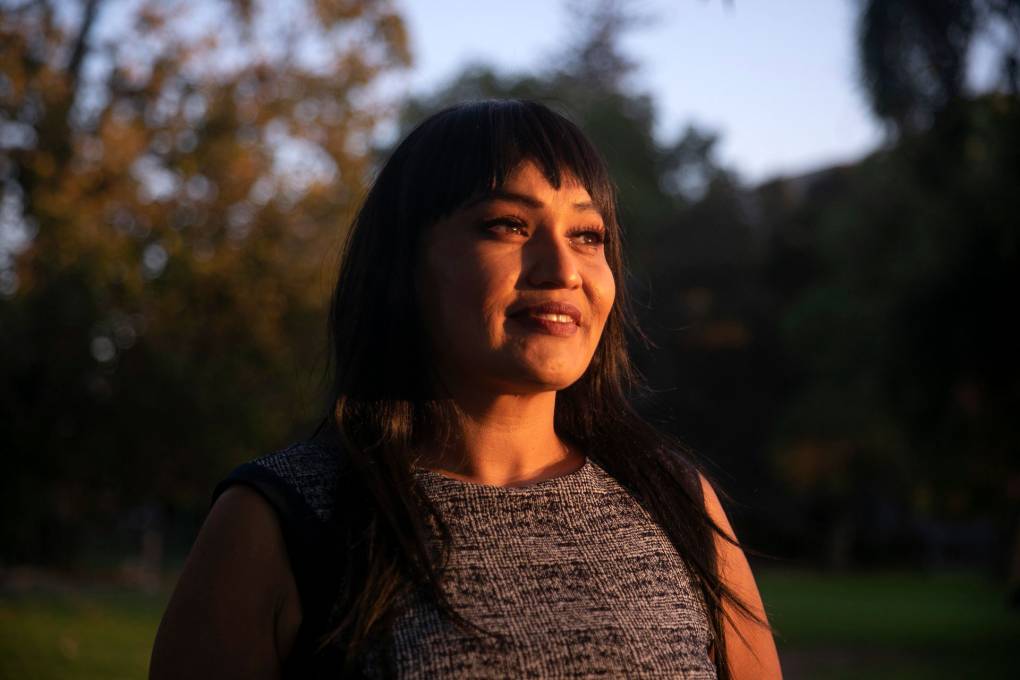
"caption": "UC Berkeley student association president and political science major Victoria Vera pictured outside The Golden Bear Cafe. Students and dining staff have been hit particularly hard by the school's short- and long-term financial woes.",
"description": "UC Berkeley student association president and political science major Victoria Vera pictured outside The Golden Bear Cafe. Students and dining staff have been hit particularly hard by the school's short- and long-term financial woes.",
"title": "RS46182_IMG_4913-qut",
"credit": "Chloe Veltman/KQED",
"status": "inherit",
"altTag": "\"\"",
"isLoading": false,
"fetchFailed": false
},
"news_11836099": {
"type": "attachments",
"id": "news_11836099",
"meta": {
"index": "attachments_1716263798",
"site": "news",
"id": "11836099",
"found": true
},
"parent": 11836098,
"imgSizes": {
"apple_news_ca_landscape_5_5": {
"file": "https://ww2.kqed.org/app/uploads/sites/10/2020/08/KQED_Oakland_OUSDTechGiveaway_08172020-qut-1044x783.jpg",
"width": 1044,
"mimeType": "image/jpeg",
"height": 783
},
"apple_news_ca_square_4_0": {
"file": "https://ww2.kqed.org/app/uploads/sites/10/2020/08/KQED_Oakland_OUSDTechGiveaway_08172020-qut-470x470.jpg",
"width": 470,
"mimeType": "image/jpeg",
"height": 470
},
"twentyfourteen-full-width": {
"file": "https://ww2.kqed.org/app/uploads/sites/10/2020/08/KQED_Oakland_OUSDTechGiveaway_08172020-qut-1038x576.jpg",
"width": 1038,
"mimeType": "image/jpeg",
"height": 576
},
"thumbnail": {
"file": "https://ww2.kqed.org/app/uploads/sites/10/2020/08/KQED_Oakland_OUSDTechGiveaway_08172020-qut-160x107.jpg",
"width": 160,
"mimeType": "image/jpeg",
"height": 107
},
"post-thumbnail": {
"file": "https://ww2.kqed.org/app/uploads/sites/10/2020/08/KQED_Oakland_OUSDTechGiveaway_08172020-qut-672x372.jpg",
"width": 672,
"mimeType": "image/jpeg",
"height": 372
},
"kqedFullSize": {
"file": "https://ww2.kqed.org/app/uploads/sites/10/2020/08/KQED_Oakland_OUSDTechGiveaway_08172020-qut.jpg",
"width": 1920,
"height": 1280
},
"apple_news_ca_landscape_4_7": {
"file": "https://ww2.kqed.org/app/uploads/sites/10/2020/08/KQED_Oakland_OUSDTechGiveaway_08172020-qut-632x474.jpg",
"width": 632,
"mimeType": "image/jpeg",
"height": 474
},
"large": {
"file": "https://ww2.kqed.org/app/uploads/sites/10/2020/08/KQED_Oakland_OUSDTechGiveaway_08172020-qut-1020x680.jpg",
"width": 1020,
"mimeType": "image/jpeg",
"height": 680
},
"apple_news_ca_landscape_4_0": {
"file": "https://ww2.kqed.org/app/uploads/sites/10/2020/08/KQED_Oakland_OUSDTechGiveaway_08172020-qut-536x402.jpg",
"width": 536,
"mimeType": "image/jpeg",
"height": 402
},
"apple_news_ca_portrait_12_9": {
"file": "https://ww2.kqed.org/app/uploads/sites/10/2020/08/KQED_Oakland_OUSDTechGiveaway_08172020-qut-1122x1280.jpg",
"width": 1122,
"mimeType": "image/jpeg",
"height": 1280
},
"medium": {
"file": "https://ww2.kqed.org/app/uploads/sites/10/2020/08/KQED_Oakland_OUSDTechGiveaway_08172020-qut-800x533.jpg",
"width": 800,
"mimeType": "image/jpeg",
"height": 533
},
"apple_news_ca_portrait_4_0": {
"file": "https://ww2.kqed.org/app/uploads/sites/10/2020/08/KQED_Oakland_OUSDTechGiveaway_08172020-qut-354x472.jpg",
"width": 354,
"mimeType": "image/jpeg",
"height": 472
},
"apple_news_ca_portrait_9_7": {
"file": "https://ww2.kqed.org/app/uploads/sites/10/2020/08/KQED_Oakland_OUSDTechGiveaway_08172020-qut-840x1120.jpg",
"width": 840,
"mimeType": "image/jpeg",
"height": 1120
},
"apple_news_ca_landscape_12_9": {
"file": "https://ww2.kqed.org/app/uploads/sites/10/2020/08/KQED_Oakland_OUSDTechGiveaway_08172020-qut-1832x1280.jpg",
"width": 1832,
"mimeType": "image/jpeg",
"height": 1280
},
"apple_news_ca_square_9_7": {
"file": "https://ww2.kqed.org/app/uploads/sites/10/2020/08/KQED_Oakland_OUSDTechGiveaway_08172020-qut-1104x1104.jpg",
"width": 1104,
"mimeType": "image/jpeg",
"height": 1104
},
"1536x1536": {
"file": "https://ww2.kqed.org/app/uploads/sites/10/2020/08/KQED_Oakland_OUSDTechGiveaway_08172020-qut-1536x1024.jpg",
"width": 1536,
"mimeType": "image/jpeg",
"height": 1024
},
"apple_news_ca_portrait_4_7": {
"file": "https://ww2.kqed.org/app/uploads/sites/10/2020/08/KQED_Oakland_OUSDTechGiveaway_08172020-qut-414x552.jpg",
"width": 414,
"mimeType": "image/jpeg",
"height": 552
},
"apple_news_ca_square_12_9": {
"file": "https://ww2.kqed.org/app/uploads/sites/10/2020/08/KQED_Oakland_OUSDTechGiveaway_08172020-qut-1472x1280.jpg",
"width": 1472,
"mimeType": "image/jpeg",
"height": 1280
},
"apple_news_ca_portrait_5_5": {
"file": "https://ww2.kqed.org/app/uploads/sites/10/2020/08/KQED_Oakland_OUSDTechGiveaway_08172020-qut-687x916.jpg",
"width": 687,
"mimeType": "image/jpeg",
"height": 916
},
"apple_news_ca_square_4_7": {
"file": "https://ww2.kqed.org/app/uploads/sites/10/2020/08/KQED_Oakland_OUSDTechGiveaway_08172020-qut-550x550.jpg",
"width": 550,
"mimeType": "image/jpeg",
"height": 550
},
"apple_news_ca_landscape_9_7": {
"file": "https://ww2.kqed.org/app/uploads/sites/10/2020/08/KQED_Oakland_OUSDTechGiveaway_08172020-qut-1376x1032.jpg",
"width": 1376,
"mimeType": "image/jpeg",
"height": 1032
},
"apple_news_ca_square_5_5": {
"file": "https://ww2.kqed.org/app/uploads/sites/10/2020/08/KQED_Oakland_OUSDTechGiveaway_08172020-qut-912x912.jpg",
"width": 912,
"mimeType": "image/jpeg",
"height": 912
}
},
"publishDate": 1598895076,
"modified": 1606934014,
"caption": "Micaela Ramirez, 13, a student at Coliseum College Prep Academy, receives a laptop at the school during a #OaklandUndivided Campaign on Aug. 17, 2020.",
"description": null,
"title": "KQED_Oakland_OUSDTechGiveaway_08172020-qut",
"credit": "Beth LaBerge/KQED",
"status": "inherit",
"isLoading": false,
"fetchFailed": false
},
"news_11848134": {
"type": "attachments",
"id": "news_11848134",
"meta": {
"index": "attachments_1716263798",
"site": "news",
"id": "11848134",
"found": true
},
"parent": 11848120,
"imgSizes": {
"apple_news_ca_landscape_5_5": {
"file": "https://ww2.kqed.org/app/uploads/sites/10/2020/11/parent_111920_final-1044x783.png",
"width": 1044,
"mimeType": "image/png",
"height": 783
},
"apple_news_ca_square_4_0": {
"file": "https://ww2.kqed.org/app/uploads/sites/10/2020/11/parent_111920_final-470x470.png",
"width": 470,
"mimeType": "image/png",
"height": 470
},
"twentyfourteen-full-width": {
"file": "https://ww2.kqed.org/app/uploads/sites/10/2020/11/parent_111920_final-1038x576.png",
"width": 1038,
"mimeType": "image/png",
"height": 576
},
"thumbnail": {
"file": "https://ww2.kqed.org/app/uploads/sites/10/2020/11/parent_111920_final-160x96.png",
"width": 160,
"mimeType": "image/png",
"height": 96
},
"post-thumbnail": {
"file": "https://ww2.kqed.org/app/uploads/sites/10/2020/11/parent_111920_final-672x372.png",
"width": 672,
"mimeType": "image/png",
"height": 372
},
"kqedFullSize": {
"file": "https://ww2.kqed.org/app/uploads/sites/10/2020/11/parent_111920_final.png",
"width": 1920,
"height": 1156
},
"apple_news_ca_landscape_4_7": {
"file": "https://ww2.kqed.org/app/uploads/sites/10/2020/11/parent_111920_final-632x474.png",
"width": 632,
"mimeType": "image/png",
"height": 474
},
"large": {
"file": "https://ww2.kqed.org/app/uploads/sites/10/2020/11/parent_111920_final-1020x614.png",
"width": 1020,
"mimeType": "image/png",
"height": 614
},
"apple_news_ca_landscape_4_0": {
"file": "https://ww2.kqed.org/app/uploads/sites/10/2020/11/parent_111920_final-536x402.png",
"width": 536,
"mimeType": "image/png",
"height": 402
},
"apple_news_ca_portrait_12_9": {
"file": "https://ww2.kqed.org/app/uploads/sites/10/2020/11/parent_111920_final-1122x1156.png",
"width": 1122,
"mimeType": "image/png",
"height": 1156
},
"medium": {
"file": "https://ww2.kqed.org/app/uploads/sites/10/2020/11/parent_111920_final-800x482.png",
"width": 800,
"mimeType": "image/png",
"height": 482
},
"apple_news_ca_portrait_4_0": {
"file": "https://ww2.kqed.org/app/uploads/sites/10/2020/11/parent_111920_final-354x472.png",
"width": 354,
"mimeType": "image/png",
"height": 472
},
"apple_news_ca_portrait_9_7": {
"file": "https://ww2.kqed.org/app/uploads/sites/10/2020/11/parent_111920_final-840x1120.png",
"width": 840,
"mimeType": "image/png",
"height": 1120
},
"apple_news_ca_landscape_12_9": {
"file": "https://ww2.kqed.org/app/uploads/sites/10/2020/11/parent_111920_final-1832x1156.png",
"width": 1832,
"mimeType": "image/png",
"height": 1156
},
"apple_news_ca_square_9_7": {
"file": "https://ww2.kqed.org/app/uploads/sites/10/2020/11/parent_111920_final-1104x1104.png",
"width": 1104,
"mimeType": "image/png",
"height": 1104
},
"1536x1536": {
"file": "https://ww2.kqed.org/app/uploads/sites/10/2020/11/parent_111920_final-1536x925.png",
"width": 1536,
"mimeType": "image/png",
"height": 925
},
"apple_news_ca_portrait_4_7": {
"file": "https://ww2.kqed.org/app/uploads/sites/10/2020/11/parent_111920_final-414x552.png",
"width": 414,
"mimeType": "image/png",
"height": 552
},
"apple_news_ca_square_12_9": {
"file": "https://ww2.kqed.org/app/uploads/sites/10/2020/11/parent_111920_final-1472x1156.png",
"width": 1472,
"mimeType": "image/png",
"height": 1156
},
"apple_news_ca_portrait_5_5": {
"file": "https://ww2.kqed.org/app/uploads/sites/10/2020/11/parent_111920_final-687x916.png",
"width": 687,
"mimeType": "image/png",
"height": 916
},
"apple_news_ca_square_4_7": {
"file": "https://ww2.kqed.org/app/uploads/sites/10/2020/11/parent_111920_final-550x550.png",
"width": 550,
"mimeType": "image/png",
"height": 550
},
"apple_news_ca_landscape_9_7": {
"file": "https://ww2.kqed.org/app/uploads/sites/10/2020/11/parent_111920_final-1376x1032.png",
"width": 1376,
"mimeType": "image/png",
"height": 1032
},
"apple_news_ca_square_5_5": {
"file": "https://ww2.kqed.org/app/uploads/sites/10/2020/11/parent_111920_final-912x912.png",
"width": 912,
"mimeType": "image/png",
"height": 912
}
},
"publishDate": 1605827031,
"modified": 1605827064,
"caption": null,
"description": null,
"title": "parent_111920_final",
"credit": null,
"status": "inherit",
"isLoading": false,
"fetchFailed": false
},
"news_11848014": {
"type": "attachments",
"id": "news_11848014",
"meta": {
"index": "attachments_1716263798",
"site": "news",
"id": "11848014",
"found": true
},
"parent": 11848013,
"imgSizes": {
"apple_news_ca_landscape_5_5": {
"file": "https://ww2.kqed.org/app/uploads/sites/10/2020/11/RS45896_011_KQED_Oakland_GuptaFamily_11092020-qut-1044x783.jpg",
"width": 1044,
"mimeType": "image/jpeg",
"height": 783
},
"apple_news_ca_square_4_0": {
"file": "https://ww2.kqed.org/app/uploads/sites/10/2020/11/RS45896_011_KQED_Oakland_GuptaFamily_11092020-qut-470x470.jpg",
"width": 470,
"mimeType": "image/jpeg",
"height": 470
},
"twentyfourteen-full-width": {
"file": "https://ww2.kqed.org/app/uploads/sites/10/2020/11/RS45896_011_KQED_Oakland_GuptaFamily_11092020-qut-1038x576.jpg",
"width": 1038,
"mimeType": "image/jpeg",
"height": 576
},
"thumbnail": {
"file": "https://ww2.kqed.org/app/uploads/sites/10/2020/11/RS45896_011_KQED_Oakland_GuptaFamily_11092020-qut-160x107.jpg",
"width": 160,
"mimeType": "image/jpeg",
"height": 107
},
"post-thumbnail": {
"file": "https://ww2.kqed.org/app/uploads/sites/10/2020/11/RS45896_011_KQED_Oakland_GuptaFamily_11092020-qut-672x372.jpg",
"width": 672,
"mimeType": "image/jpeg",
"height": 372
},
"kqedFullSize": {
"file": "https://ww2.kqed.org/app/uploads/sites/10/2020/11/RS45896_011_KQED_Oakland_GuptaFamily_11092020-qut.jpg",
"width": 1920,
"height": 1280
},
"apple_news_ca_landscape_4_7": {
"file": "https://ww2.kqed.org/app/uploads/sites/10/2020/11/RS45896_011_KQED_Oakland_GuptaFamily_11092020-qut-632x474.jpg",
"width": 632,
"mimeType": "image/jpeg",
"height": 474
},
"large": {
"file": "https://ww2.kqed.org/app/uploads/sites/10/2020/11/RS45896_011_KQED_Oakland_GuptaFamily_11092020-qut-1020x680.jpg",
"width": 1020,
"mimeType": "image/jpeg",
"height": 680
},
"apple_news_ca_landscape_4_0": {
"file": "https://ww2.kqed.org/app/uploads/sites/10/2020/11/RS45896_011_KQED_Oakland_GuptaFamily_11092020-qut-536x402.jpg",
"width": 536,
"mimeType": "image/jpeg",
"height": 402
},
"apple_news_ca_portrait_12_9": {
"file": "https://ww2.kqed.org/app/uploads/sites/10/2020/11/RS45896_011_KQED_Oakland_GuptaFamily_11092020-qut-1122x1280.jpg",
"width": 1122,
"mimeType": "image/jpeg",
"height": 1280
},
"medium": {
"file": "https://ww2.kqed.org/app/uploads/sites/10/2020/11/RS45896_011_KQED_Oakland_GuptaFamily_11092020-qut-800x533.jpg",
"width": 800,
"mimeType": "image/jpeg",
"height": 533
},
"apple_news_ca_portrait_4_0": {
"file": "https://ww2.kqed.org/app/uploads/sites/10/2020/11/RS45896_011_KQED_Oakland_GuptaFamily_11092020-qut-354x472.jpg",
"width": 354,
"mimeType": "image/jpeg",
"height": 472
},
"apple_news_ca_portrait_9_7": {
"file": "https://ww2.kqed.org/app/uploads/sites/10/2020/11/RS45896_011_KQED_Oakland_GuptaFamily_11092020-qut-840x1120.jpg",
"width": 840,
"mimeType": "image/jpeg",
"height": 1120
},
"apple_news_ca_landscape_12_9": {
"file": "https://ww2.kqed.org/app/uploads/sites/10/2020/11/RS45896_011_KQED_Oakland_GuptaFamily_11092020-qut-1832x1280.jpg",
"width": 1832,
"mimeType": "image/jpeg",
"height": 1280
},
"apple_news_ca_square_9_7": {
"file": "https://ww2.kqed.org/app/uploads/sites/10/2020/11/RS45896_011_KQED_Oakland_GuptaFamily_11092020-qut-1104x1104.jpg",
"width": 1104,
"mimeType": "image/jpeg",
"height": 1104
},
"1536x1536": {
"file": "https://ww2.kqed.org/app/uploads/sites/10/2020/11/RS45896_011_KQED_Oakland_GuptaFamily_11092020-qut-1536x1024.jpg",
"width": 1536,
"mimeType": "image/jpeg",
"height": 1024
},
"apple_news_ca_portrait_4_7": {
"file": "https://ww2.kqed.org/app/uploads/sites/10/2020/11/RS45896_011_KQED_Oakland_GuptaFamily_11092020-qut-414x552.jpg",
"width": 414,
"mimeType": "image/jpeg",
"height": 552
},
"apple_news_ca_square_12_9": {
"file": "https://ww2.kqed.org/app/uploads/sites/10/2020/11/RS45896_011_KQED_Oakland_GuptaFamily_11092020-qut-1472x1280.jpg",
"width": 1472,
"mimeType": "image/jpeg",
"height": 1280
},
"apple_news_ca_portrait_5_5": {
"file": "https://ww2.kqed.org/app/uploads/sites/10/2020/11/RS45896_011_KQED_Oakland_GuptaFamily_11092020-qut-687x916.jpg",
"width": 687,
"mimeType": "image/jpeg",
"height": 916
},
"apple_news_ca_square_4_7": {
"file": "https://ww2.kqed.org/app/uploads/sites/10/2020/11/RS45896_011_KQED_Oakland_GuptaFamily_11092020-qut-550x550.jpg",
"width": 550,
"mimeType": "image/jpeg",
"height": 550
},
"apple_news_ca_landscape_9_7": {
"file": "https://ww2.kqed.org/app/uploads/sites/10/2020/11/RS45896_011_KQED_Oakland_GuptaFamily_11092020-qut-1376x1032.jpg",
"width": 1376,
"mimeType": "image/jpeg",
"height": 1032
},
"apple_news_ca_square_5_5": {
"file": "https://ww2.kqed.org/app/uploads/sites/10/2020/11/RS45896_011_KQED_Oakland_GuptaFamily_11092020-qut-912x912.jpg",
"width": 912,
"mimeType": "image/jpeg",
"height": 912
}
},
"publishDate": 1605747596,
"modified": 1605824902,
"caption": "Jay Gupta says his twins, Anakin and Kenley, have struggled with loneliness during the pandemic, but the isolation has been much more acute for his daughter. ",
"description": null,
"title": "RS45896_011_KQED_Oakland_GuptaFamily_11092020-qut",
"credit": "Beth LaBerge/KQED",
"status": "inherit",
"isLoading": false,
"fetchFailed": false
},
"news_11847974": {
"type": "attachments",
"id": "news_11847974",
"meta": {
"index": "attachments_1716263798",
"site": "news",
"id": "11847974",
"found": true
},
"parent": 11847924,
"imgSizes": {
"apple_news_ca_landscape_5_5": {
"file": "https://ww2.kqed.org/app/uploads/sites/10/2020/11/LeConte-Hall-UC-Berkeley-1044x783.jpg",
"width": 1044,
"mimeType": "image/jpeg",
"height": 783
},
"apple_news_ca_square_4_0": {
"file": "https://ww2.kqed.org/app/uploads/sites/10/2020/11/LeConte-Hall-UC-Berkeley-470x470.jpg",
"width": 470,
"mimeType": "image/jpeg",
"height": 470
},
"twentyfourteen-full-width": {
"file": "https://ww2.kqed.org/app/uploads/sites/10/2020/11/LeConte-Hall-UC-Berkeley-1038x576.jpg",
"width": 1038,
"mimeType": "image/jpeg",
"height": 576
},
"thumbnail": {
"file": "https://ww2.kqed.org/app/uploads/sites/10/2020/11/LeConte-Hall-UC-Berkeley-160x107.jpg",
"width": 160,
"mimeType": "image/jpeg",
"height": 107
},
"post-thumbnail": {
"file": "https://ww2.kqed.org/app/uploads/sites/10/2020/11/LeConte-Hall-UC-Berkeley-672x372.jpg",
"width": 672,
"mimeType": "image/jpeg",
"height": 372
},
"kqedFullSize": {
"file": "https://ww2.kqed.org/app/uploads/sites/10/2020/11/LeConte-Hall-UC-Berkeley.jpg",
"width": 1920,
"height": 1280
},
"apple_news_ca_landscape_4_7": {
"file": "https://ww2.kqed.org/app/uploads/sites/10/2020/11/LeConte-Hall-UC-Berkeley-632x474.jpg",
"width": 632,
"mimeType": "image/jpeg",
"height": 474
},
"large": {
"file": "https://ww2.kqed.org/app/uploads/sites/10/2020/11/LeConte-Hall-UC-Berkeley-1020x680.jpg",
"width": 1020,
"mimeType": "image/jpeg",
"height": 680
},
"apple_news_ca_landscape_4_0": {
"file": "https://ww2.kqed.org/app/uploads/sites/10/2020/11/LeConte-Hall-UC-Berkeley-536x402.jpg",
"width": 536,
"mimeType": "image/jpeg",
"height": 402
},
"apple_news_ca_portrait_12_9": {
"file": "https://ww2.kqed.org/app/uploads/sites/10/2020/11/LeConte-Hall-UC-Berkeley-1122x1280.jpg",
"width": 1122,
"mimeType": "image/jpeg",
"height": 1280
},
"medium": {
"file": "https://ww2.kqed.org/app/uploads/sites/10/2020/11/LeConte-Hall-UC-Berkeley-800x533.jpg",
"width": 800,
"mimeType": "image/jpeg",
"height": 533
},
"apple_news_ca_portrait_4_0": {
"file": "https://ww2.kqed.org/app/uploads/sites/10/2020/11/LeConte-Hall-UC-Berkeley-354x472.jpg",
"width": 354,
"mimeType": "image/jpeg",
"height": 472
},
"apple_news_ca_portrait_9_7": {
"file": "https://ww2.kqed.org/app/uploads/sites/10/2020/11/LeConte-Hall-UC-Berkeley-840x1120.jpg",
"width": 840,
"mimeType": "image/jpeg",
"height": 1120
},
"apple_news_ca_landscape_12_9": {
"file": "https://ww2.kqed.org/app/uploads/sites/10/2020/11/LeConte-Hall-UC-Berkeley-1832x1280.jpg",
"width": 1832,
"mimeType": "image/jpeg",
"height": 1280
},
"apple_news_ca_square_9_7": {
"file": "https://ww2.kqed.org/app/uploads/sites/10/2020/11/LeConte-Hall-UC-Berkeley-1104x1104.jpg",
"width": 1104,
"mimeType": "image/jpeg",
"height": 1104
},
"1536x1536": {
"file": "https://ww2.kqed.org/app/uploads/sites/10/2020/11/LeConte-Hall-UC-Berkeley-1536x1024.jpg",
"width": 1536,
"mimeType": "image/jpeg",
"height": 1024
},
"apple_news_ca_portrait_4_7": {
"file": "https://ww2.kqed.org/app/uploads/sites/10/2020/11/LeConte-Hall-UC-Berkeley-414x552.jpg",
"width": 414,
"mimeType": "image/jpeg",
"height": 552
},
"apple_news_ca_square_12_9": {
"file": "https://ww2.kqed.org/app/uploads/sites/10/2020/11/LeConte-Hall-UC-Berkeley-1472x1280.jpg",
"width": 1472,
"mimeType": "image/jpeg",
"height": 1280
},
"apple_news_ca_portrait_5_5": {
"file": "https://ww2.kqed.org/app/uploads/sites/10/2020/11/LeConte-Hall-UC-Berkeley-687x916.jpg",
"width": 687,
"mimeType": "image/jpeg",
"height": 916
},
"apple_news_ca_square_4_7": {
"file": "https://ww2.kqed.org/app/uploads/sites/10/2020/11/LeConte-Hall-UC-Berkeley-550x550.jpg",
"width": 550,
"mimeType": "image/jpeg",
"height": 550
},
"apple_news_ca_landscape_9_7": {
"file": "https://ww2.kqed.org/app/uploads/sites/10/2020/11/LeConte-Hall-UC-Berkeley-1376x1032.jpg",
"width": 1376,
"mimeType": "image/jpeg",
"height": 1032
},
"apple_news_ca_square_5_5": {
"file": "https://ww2.kqed.org/app/uploads/sites/10/2020/11/LeConte-Hall-UC-Berkeley-912x912.jpg",
"width": 912,
"mimeType": "image/jpeg",
"height": 912
}
},
"publishDate": 1605737949,
"modified": 1605738095,
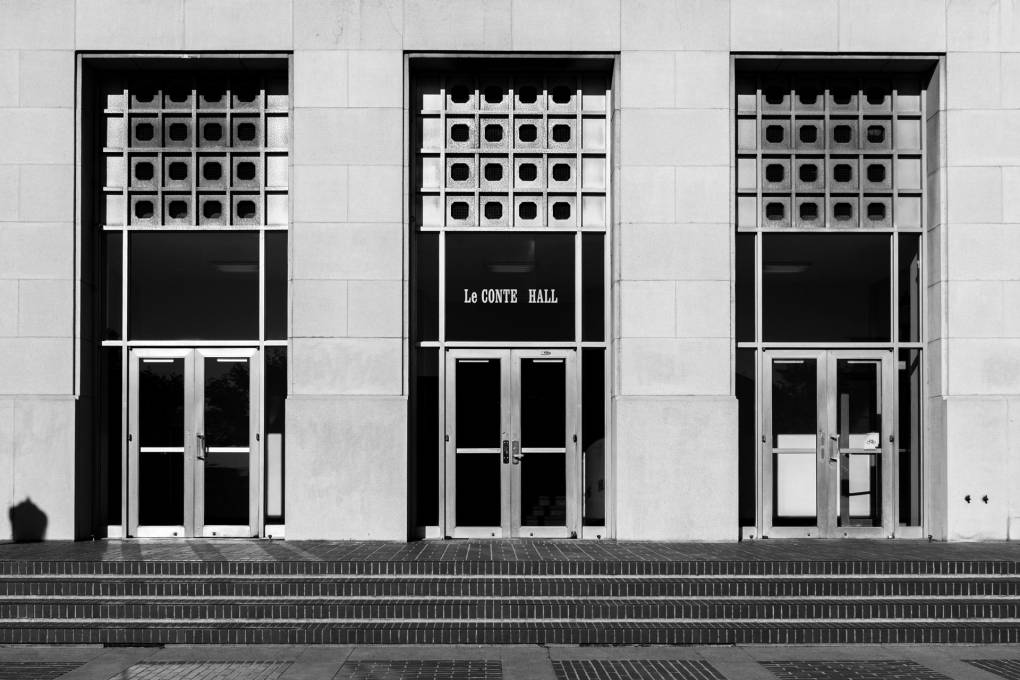
"caption": "LeConte Hall, which houses UC Berkeley's physics department, will be renamed.",
"description": null,
"title": "LeConte-Hall-UC-Berkeley",
"credit": "\u003ca href=\"https://www.flickr.com/photos/alisinan/\">ali sinan köksal\u003c/a>/Flickr",
"status": "inherit",
"isLoading": false,
"fetchFailed": false
},
"news_11777430": {
"type": "attachments",
"id": "news_11777430",
"meta": {
"index": "attachments_1716263798",
"site": "news",
"id": "11777430",
"found": true
},
"parent": 11777328,
"imgSizes": {
"apple_news_ca_landscape_5_5": {
"file": "https://ww2.kqed.org/app/uploads/sites/10/2019/09/iStock-1125881964-1044x783.jpg",
"width": 1044,
"mimeType": "image/jpeg",
"height": 783
},
"apple_news_ca_square_4_0": {
"file": "https://ww2.kqed.org/app/uploads/sites/10/2019/09/iStock-1125881964-470x470.jpg",
"width": 470,
"mimeType": "image/jpeg",
"height": 470
},
"twentyfourteen-full-width": {
"file": "https://ww2.kqed.org/app/uploads/sites/10/2019/09/iStock-1125881964-1038x576.jpg",
"width": 1038,
"mimeType": "image/jpeg",
"height": 576
},
"thumbnail": {
"file": "https://ww2.kqed.org/app/uploads/sites/10/2019/09/iStock-1125881964-160x105.jpg",
"width": 160,
"mimeType": "image/jpeg",
"height": 105
},
"post-thumbnail": {
"file": "https://ww2.kqed.org/app/uploads/sites/10/2019/09/iStock-1125881964-672x372.jpg",
"width": 672,
"mimeType": "image/jpeg",
"height": 372
},
"kqedFullSize": {
"file": "https://ww2.kqed.org/app/uploads/sites/10/2019/09/iStock-1125881964-e1569886516853.jpg",
"width": 1920,
"height": 1260
},
"apple_news_ca_landscape_4_7": {
"file": "https://ww2.kqed.org/app/uploads/sites/10/2019/09/iStock-1125881964-632x474.jpg",
"width": 632,
"mimeType": "image/jpeg",
"height": 474
},
"large": {
"file": "https://ww2.kqed.org/app/uploads/sites/10/2019/09/iStock-1125881964-1020x670.jpg",
"width": 1020,
"mimeType": "image/jpeg",
"height": 670
},
"complete_open_graph": {
"file": "https://ww2.kqed.org/app/uploads/sites/10/2019/09/iStock-1125881964-1200x788.jpg",
"width": 1200,
"mimeType": "image/jpeg",
"height": 788
},
"apple_news_ca_landscape_4_0": {
"file": "https://ww2.kqed.org/app/uploads/sites/10/2019/09/iStock-1125881964-536x402.jpg",
"width": 536,
"mimeType": "image/jpeg",
"height": 402
},
"apple_news_ca_portrait_12_9": {
"file": "https://ww2.kqed.org/app/uploads/sites/10/2019/09/iStock-1125881964-1122x1496.jpg",
"width": 1122,
"mimeType": "image/jpeg",
"height": 1496
},
"medium": {
"file": "https://ww2.kqed.org/app/uploads/sites/10/2019/09/iStock-1125881964-800x525.jpg",
"width": 800,
"mimeType": "image/jpeg",
"height": 525
},
"apple_news_ca_portrait_4_0": {
"file": "https://ww2.kqed.org/app/uploads/sites/10/2019/09/iStock-1125881964-354x472.jpg",
"width": 354,
"mimeType": "image/jpeg",
"height": 472
},
"apple_news_ca_portrait_9_7": {
"file": "https://ww2.kqed.org/app/uploads/sites/10/2019/09/iStock-1125881964-840x1120.jpg",
"width": 840,
"mimeType": "image/jpeg",
"height": 1120
},
"apple_news_ca_landscape_12_9": {
"file": "https://ww2.kqed.org/app/uploads/sites/10/2019/09/iStock-1125881964-1832x1374.jpg",
"width": 1832,
"mimeType": "image/jpeg",
"height": 1374
},
"apple_news_ca_square_9_7": {
"file": "https://ww2.kqed.org/app/uploads/sites/10/2019/09/iStock-1125881964-1104x1104.jpg",
"width": 1104,
"mimeType": "image/jpeg",
"height": 1104
},
"apple_news_ca_portrait_4_7": {
"file": "https://ww2.kqed.org/app/uploads/sites/10/2019/09/iStock-1125881964-414x552.jpg",
"width": 414,
"mimeType": "image/jpeg",
"height": 552
},
"apple_news_ca_square_12_9": {
"file": "https://ww2.kqed.org/app/uploads/sites/10/2019/09/iStock-1125881964-1472x1472.jpg",
"width": 1472,
"mimeType": "image/jpeg",
"height": 1472
},
"apple_news_ca_portrait_5_5": {
"file": "https://ww2.kqed.org/app/uploads/sites/10/2019/09/iStock-1125881964-687x916.jpg",
"width": 687,
"mimeType": "image/jpeg",
"height": 916
},
"full-width": {
"file": "https://ww2.kqed.org/app/uploads/sites/10/2019/09/iStock-1125881964-1920x1260.jpg",
"width": 1920,
"mimeType": "image/jpeg",
"height": 1260
},
"apple_news_ca_square_4_7": {
"file": "https://ww2.kqed.org/app/uploads/sites/10/2019/09/iStock-1125881964-550x550.jpg",
"width": 550,
"mimeType": "image/jpeg",
"height": 550
},
"apple_news_ca_landscape_9_7": {
"file": "https://ww2.kqed.org/app/uploads/sites/10/2019/09/iStock-1125881964-1376x1032.jpg",
"width": 1376,
"mimeType": "image/jpeg",
"height": 1032
},
"apple_news_ca_square_5_5": {
"file": "https://ww2.kqed.org/app/uploads/sites/10/2019/09/iStock-1125881964-912x912.jpg",
"width": 912,
"mimeType": "image/jpeg",
"height": 912
}
},
"publishDate": 1569886397,
"modified": 1605725349,
"caption": "A new California law allowed certain in-home child care providers to unionize.",
"description": null,
"title": "Nursery children playing with teacher in the classroom",
"credit": "Rawpixel/iStock",
"status": "inherit",
"isLoading": false,
"fetchFailed": false
},
"news_11847722": {
"type": "attachments",
"id": "news_11847722",
"meta": {
"index": "attachments_1716263798",
"site": "news",
"id": "11847722",
"found": true
},
"parent": 11847719,
"imgSizes": {
"apple_news_ca_landscape_5_5": {
"file": "https://ww2.kqed.org/app/uploads/sites/10/2020/11/1920_GettyImages-1257652269-copy-1044x783.jpg",
"width": 1044,
"mimeType": "image/jpeg",
"height": 783
},
"apple_news_ca_square_4_0": {
"file": "https://ww2.kqed.org/app/uploads/sites/10/2020/11/1920_GettyImages-1257652269-copy-470x470.jpg",
"width": 470,
"mimeType": "image/jpeg",
"height": 470
},
"twentyfourteen-full-width": {
"file": "https://ww2.kqed.org/app/uploads/sites/10/2020/11/1920_GettyImages-1257652269-copy-1038x576.jpg",
"width": 1038,
"mimeType": "image/jpeg",
"height": 576
},
"thumbnail": {
"file": "https://ww2.kqed.org/app/uploads/sites/10/2020/11/1920_GettyImages-1257652269-copy-160x90.jpg",
"width": 160,
"mimeType": "image/jpeg",
"height": 90
},
"post-thumbnail": {
"file": "https://ww2.kqed.org/app/uploads/sites/10/2020/11/1920_GettyImages-1257652269-copy-672x372.jpg",
"width": 672,
"mimeType": "image/jpeg",
"height": 372
},
"kqedFullSize": {
"file": "https://ww2.kqed.org/app/uploads/sites/10/2020/11/1920_GettyImages-1257652269-copy-scaled.jpg",
"width": 2560,
"height": 1440
},
"2048x2048": {
"file": "https://ww2.kqed.org/app/uploads/sites/10/2020/11/1920_GettyImages-1257652269-copy-2048x1152.jpg",
"width": 2048,
"mimeType": "image/jpeg",
"height": 1152
},
"apple_news_ca_landscape_4_7": {
"file": "https://ww2.kqed.org/app/uploads/sites/10/2020/11/1920_GettyImages-1257652269-copy-632x474.jpg",
"width": 632,
"mimeType": "image/jpeg",
"height": 474
},
"large": {
"file": "https://ww2.kqed.org/app/uploads/sites/10/2020/11/1920_GettyImages-1257652269-copy-1020x574.jpg",
"width": 1020,
"mimeType": "image/jpeg",
"height": 574
},
"apple_news_ca_landscape_4_0": {
"file": "https://ww2.kqed.org/app/uploads/sites/10/2020/11/1920_GettyImages-1257652269-copy-536x402.jpg",
"width": 536,
"mimeType": "image/jpeg",
"height": 402
},
"apple_news_ca_portrait_12_9": {
"file": "https://ww2.kqed.org/app/uploads/sites/10/2020/11/1920_GettyImages-1257652269-copy-1122x1496.jpg",
"width": 1122,
"mimeType": "image/jpeg",
"height": 1496
},
"medium": {
"file": "https://ww2.kqed.org/app/uploads/sites/10/2020/11/1920_GettyImages-1257652269-copy-800x450.jpg",
"width": 800,
"mimeType": "image/jpeg",
"height": 450
},
"apple_news_ca_portrait_4_0": {
"file": "https://ww2.kqed.org/app/uploads/sites/10/2020/11/1920_GettyImages-1257652269-copy-354x472.jpg",
"width": 354,
"mimeType": "image/jpeg",
"height": 472
},
"apple_news_ca_portrait_9_7": {
"file": "https://ww2.kqed.org/app/uploads/sites/10/2020/11/1920_GettyImages-1257652269-copy-840x1120.jpg",
"width": 840,
"mimeType": "image/jpeg",
"height": 1120
},
"apple_news_ca_landscape_12_9": {
"file": "https://ww2.kqed.org/app/uploads/sites/10/2020/11/1920_GettyImages-1257652269-copy-1832x1374.jpg",
"width": 1832,
"mimeType": "image/jpeg",
"height": 1374
},
"apple_news_ca_square_9_7": {
"file": "https://ww2.kqed.org/app/uploads/sites/10/2020/11/1920_GettyImages-1257652269-copy-1104x1104.jpg",
"width": 1104,
"mimeType": "image/jpeg",
"height": 1104
},
"1536x1536": {
"file": "https://ww2.kqed.org/app/uploads/sites/10/2020/11/1920_GettyImages-1257652269-copy-1536x864.jpg",
"width": 1536,
"mimeType": "image/jpeg",
"height": 864
},
"apple_news_ca_portrait_4_7": {
"file": "https://ww2.kqed.org/app/uploads/sites/10/2020/11/1920_GettyImages-1257652269-copy-414x552.jpg",
"width": 414,
"mimeType": "image/jpeg",
"height": 552
},
"apple_news_ca_square_12_9": {
"file": "https://ww2.kqed.org/app/uploads/sites/10/2020/11/1920_GettyImages-1257652269-copy-1472x1472.jpg",
"width": 1472,
"mimeType": "image/jpeg",
"height": 1472
},
"apple_news_ca_portrait_5_5": {
"file": "https://ww2.kqed.org/app/uploads/sites/10/2020/11/1920_GettyImages-1257652269-copy-687x916.jpg",
"width": 687,
"mimeType": "image/jpeg",
"height": 916
},
"full-width": {
"file": "https://ww2.kqed.org/app/uploads/sites/10/2020/11/1920_GettyImages-1257652269-copy-1920x1080.jpg",
"width": 1920,
"mimeType": "image/jpeg",
"height": 1080
},
"apple_news_ca_square_4_7": {
"file": "https://ww2.kqed.org/app/uploads/sites/10/2020/11/1920_GettyImages-1257652269-copy-550x550.jpg",
"width": 550,
"mimeType": "image/jpeg",
"height": 550
},
"apple_news_ca_landscape_9_7": {
"file": "https://ww2.kqed.org/app/uploads/sites/10/2020/11/1920_GettyImages-1257652269-copy-1376x1032.jpg",
"width": 1376,
"mimeType": "image/jpeg",
"height": 1032
},
"apple_news_ca_square_5_5": {
"file": "https://ww2.kqed.org/app/uploads/sites/10/2020/11/1920_GettyImages-1257652269-copy-912x912.jpg",
"width": 912,
"mimeType": "image/jpeg",
"height": 912
}
},
"publishDate": 1605584155,
"modified": 1646802636,
"caption": null,
"description": null,
"title": null,
"credit": "Justin Sullivan/Getty Images",
"status": "inherit",
"altTag": null,
"isLoading": false,
"fetchFailed": false
},
"news_11847079": {
"type": "attachments",
"id": "news_11847079",
"meta": {
"index": "attachments_1716263798",
"site": "news",
"id": "11847079",
"found": true
},
"parent": 11846956,
"imgSizes": {
"apple_news_ca_landscape_5_5": {
"file": "https://ww2.kqed.org/app/uploads/sites/10/2020/11/RS41990_023_KQED_SanFrancisco_SFSU_03112020_6857-qut-1044x783.jpg",
"width": 1044,
"mimeType": "image/jpeg",
"height": 783
},
"apple_news_ca_square_4_0": {
"file": "https://ww2.kqed.org/app/uploads/sites/10/2020/11/RS41990_023_KQED_SanFrancisco_SFSU_03112020_6857-qut-470x470.jpg",
"width": 470,
"mimeType": "image/jpeg",
"height": 470
},
"twentyfourteen-full-width": {
"file": "https://ww2.kqed.org/app/uploads/sites/10/2020/11/RS41990_023_KQED_SanFrancisco_SFSU_03112020_6857-qut-1038x576.jpg",
"width": 1038,
"mimeType": "image/jpeg",
"height": 576
},
"thumbnail": {
"file": "https://ww2.kqed.org/app/uploads/sites/10/2020/11/RS41990_023_KQED_SanFrancisco_SFSU_03112020_6857-qut-160x107.jpg",
"width": 160,
"mimeType": "image/jpeg",
"height": 107
},
"post-thumbnail": {
"file": "https://ww2.kqed.org/app/uploads/sites/10/2020/11/RS41990_023_KQED_SanFrancisco_SFSU_03112020_6857-qut-672x372.jpg",
"width": 672,
"mimeType": "image/jpeg",
"height": 372
},
"kqedFullSize": {
"file": "https://ww2.kqed.org/app/uploads/sites/10/2020/11/RS41990_023_KQED_SanFrancisco_SFSU_03112020_6857-qut.jpg",
"width": 1920,
"height": 1280
},
"apple_news_ca_landscape_4_7": {
"file": "https://ww2.kqed.org/app/uploads/sites/10/2020/11/RS41990_023_KQED_SanFrancisco_SFSU_03112020_6857-qut-632x474.jpg",
"width": 632,
"mimeType": "image/jpeg",
"height": 474
},
"large": {
"file": "https://ww2.kqed.org/app/uploads/sites/10/2020/11/RS41990_023_KQED_SanFrancisco_SFSU_03112020_6857-qut-1020x680.jpg",
"width": 1020,
"mimeType": "image/jpeg",
"height": 680
},
"apple_news_ca_landscape_4_0": {
"file": "https://ww2.kqed.org/app/uploads/sites/10/2020/11/RS41990_023_KQED_SanFrancisco_SFSU_03112020_6857-qut-536x402.jpg",
"width": 536,
"mimeType": "image/jpeg",
"height": 402
},
"apple_news_ca_portrait_12_9": {
"file": "https://ww2.kqed.org/app/uploads/sites/10/2020/11/RS41990_023_KQED_SanFrancisco_SFSU_03112020_6857-qut-1122x1280.jpg",
"width": 1122,
"mimeType": "image/jpeg",
"height": 1280
},
"medium": {
"file": "https://ww2.kqed.org/app/uploads/sites/10/2020/11/RS41990_023_KQED_SanFrancisco_SFSU_03112020_6857-qut-800x533.jpg",
"width": 800,
"mimeType": "image/jpeg",
"height": 533
},
"apple_news_ca_portrait_4_0": {
"file": "https://ww2.kqed.org/app/uploads/sites/10/2020/11/RS41990_023_KQED_SanFrancisco_SFSU_03112020_6857-qut-354x472.jpg",
"width": 354,
"mimeType": "image/jpeg",
"height": 472
},
"apple_news_ca_portrait_9_7": {
"file": "https://ww2.kqed.org/app/uploads/sites/10/2020/11/RS41990_023_KQED_SanFrancisco_SFSU_03112020_6857-qut-840x1120.jpg",
"width": 840,
"mimeType": "image/jpeg",
"height": 1120
},
"apple_news_ca_landscape_12_9": {
"file": "https://ww2.kqed.org/app/uploads/sites/10/2020/11/RS41990_023_KQED_SanFrancisco_SFSU_03112020_6857-qut-1832x1280.jpg",
"width": 1832,
"mimeType": "image/jpeg",
"height": 1280
},
"apple_news_ca_square_9_7": {
"file": "https://ww2.kqed.org/app/uploads/sites/10/2020/11/RS41990_023_KQED_SanFrancisco_SFSU_03112020_6857-qut-1104x1104.jpg",
"width": 1104,
"mimeType": "image/jpeg",
"height": 1104
},
"1536x1536": {
"file": "https://ww2.kqed.org/app/uploads/sites/10/2020/11/RS41990_023_KQED_SanFrancisco_SFSU_03112020_6857-qut-1536x1024.jpg",
"width": 1536,
"mimeType": "image/jpeg",
"height": 1024
},
"apple_news_ca_portrait_4_7": {
"file": "https://ww2.kqed.org/app/uploads/sites/10/2020/11/RS41990_023_KQED_SanFrancisco_SFSU_03112020_6857-qut-414x552.jpg",
"width": 414,
"mimeType": "image/jpeg",
"height": 552
},
"apple_news_ca_square_12_9": {
"file": "https://ww2.kqed.org/app/uploads/sites/10/2020/11/RS41990_023_KQED_SanFrancisco_SFSU_03112020_6857-qut-1472x1280.jpg",
"width": 1472,
"mimeType": "image/jpeg",
"height": 1280
},
"apple_news_ca_portrait_5_5": {
"file": "https://ww2.kqed.org/app/uploads/sites/10/2020/11/RS41990_023_KQED_SanFrancisco_SFSU_03112020_6857-qut-687x916.jpg",
"width": 687,
"mimeType": "image/jpeg",
"height": 916
},
"apple_news_ca_square_4_7": {
"file": "https://ww2.kqed.org/app/uploads/sites/10/2020/11/RS41990_023_KQED_SanFrancisco_SFSU_03112020_6857-qut-550x550.jpg",
"width": 550,
"mimeType": "image/jpeg",
"height": 550
},
"apple_news_ca_landscape_9_7": {
"file": "https://ww2.kqed.org/app/uploads/sites/10/2020/11/RS41990_023_KQED_SanFrancisco_SFSU_03112020_6857-qut-1376x1032.jpg",
"width": 1376,
"mimeType": "image/jpeg",
"height": 1032
},
"apple_news_ca_square_5_5": {
"file": "https://ww2.kqed.org/app/uploads/sites/10/2020/11/RS41990_023_KQED_SanFrancisco_SFSU_03112020_6857-qut-912x912.jpg",
"width": 912,
"mimeType": "image/jpeg",
"height": 912
}
},
"publishDate": 1605122027,
"modified": 1605122055,
"caption": "An empty campus at San Francisco State University on Wednesday, Mar. 11, 2020.",
"description": null,
"title": "An empty campus at San Francisco State University on Wednesday, Mar. 11, 2020.",
"credit": "Beth LaBerge/KQED",
"status": "inherit",
"isLoading": false,
"fetchFailed": false
},
"news_11845952": {
"type": "attachments",
"id": "news_11845952",
"meta": {
"index": "attachments_1716263798",
"site": "news",
"id": "11845952",
"found": true
},
"parent": 11845943,
"imgSizes": {
"apple_news_ca_landscape_5_5": {
"file": "https://ww2.kqed.org/app/uploads/sites/10/2020/11/Nona-Claypool-1044x783.jpg",
"width": 1044,
"mimeType": "image/jpeg",
"height": 783
},
"apple_news_ca_square_4_0": {
"file": "https://ww2.kqed.org/app/uploads/sites/10/2020/11/Nona-Claypool-470x470.jpg",
"width": 470,
"mimeType": "image/jpeg",
"height": 470
},
"twentyfourteen-full-width": {
"file": "https://ww2.kqed.org/app/uploads/sites/10/2020/11/Nona-Claypool-1038x576.jpg",
"width": 1038,
"mimeType": "image/jpeg",
"height": 576
},
"thumbnail": {
"file": "https://ww2.kqed.org/app/uploads/sites/10/2020/11/Nona-Claypool-160x107.jpg",
"width": 160,
"mimeType": "image/jpeg",
"height": 107
},
"post-thumbnail": {
"file": "https://ww2.kqed.org/app/uploads/sites/10/2020/11/Nona-Claypool-672x372.jpg",
"width": 672,
"mimeType": "image/jpeg",
"height": 372
},
"kqedFullSize": {
"file": "https://ww2.kqed.org/app/uploads/sites/10/2020/11/Nona-Claypool.jpg",
"width": 1920,
"height": 1280
},
"apple_news_ca_landscape_4_7": {
"file": "https://ww2.kqed.org/app/uploads/sites/10/2020/11/Nona-Claypool-632x474.jpg",
"width": 632,
"mimeType": "image/jpeg",
"height": 474
},
"large": {
"file": "https://ww2.kqed.org/app/uploads/sites/10/2020/11/Nona-Claypool-1020x680.jpg",
"width": 1020,
"mimeType": "image/jpeg",
"height": 680
},
"apple_news_ca_landscape_4_0": {
"file": "https://ww2.kqed.org/app/uploads/sites/10/2020/11/Nona-Claypool-536x402.jpg",
"width": 536,
"mimeType": "image/jpeg",
"height": 402
},
"apple_news_ca_portrait_12_9": {
"file": "https://ww2.kqed.org/app/uploads/sites/10/2020/11/Nona-Claypool-1122x1280.jpg",
"width": 1122,
"mimeType": "image/jpeg",
"height": 1280
},
"medium": {
"file": "https://ww2.kqed.org/app/uploads/sites/10/2020/11/Nona-Claypool-800x533.jpg",
"width": 800,
"mimeType": "image/jpeg",
"height": 533
},
"apple_news_ca_portrait_4_0": {
"file": "https://ww2.kqed.org/app/uploads/sites/10/2020/11/Nona-Claypool-354x472.jpg",
"width": 354,
"mimeType": "image/jpeg",
"height": 472
},
"apple_news_ca_portrait_9_7": {
"file": "https://ww2.kqed.org/app/uploads/sites/10/2020/11/Nona-Claypool-840x1120.jpg",
"width": 840,
"mimeType": "image/jpeg",
"height": 1120
},
"apple_news_ca_landscape_12_9": {
"file": "https://ww2.kqed.org/app/uploads/sites/10/2020/11/Nona-Claypool-1832x1280.jpg",
"width": 1832,
"mimeType": "image/jpeg",
"height": 1280
},
"apple_news_ca_square_9_7": {
"file": "https://ww2.kqed.org/app/uploads/sites/10/2020/11/Nona-Claypool-1104x1104.jpg",
"width": 1104,
"mimeType": "image/jpeg",
"height": 1104
},
"1536x1536": {
"file": "https://ww2.kqed.org/app/uploads/sites/10/2020/11/Nona-Claypool-1536x1024.jpg",
"width": 1536,
"mimeType": "image/jpeg",
"height": 1024
},
"apple_news_ca_portrait_4_7": {
"file": "https://ww2.kqed.org/app/uploads/sites/10/2020/11/Nona-Claypool-414x552.jpg",
"width": 414,
"mimeType": "image/jpeg",
"height": 552
},
"apple_news_ca_square_12_9": {
"file": "https://ww2.kqed.org/app/uploads/sites/10/2020/11/Nona-Claypool-1472x1280.jpg",
"width": 1472,
"mimeType": "image/jpeg",
"height": 1280
},
"apple_news_ca_portrait_5_5": {
"file": "https://ww2.kqed.org/app/uploads/sites/10/2020/11/Nona-Claypool-687x916.jpg",
"width": 687,
"mimeType": "image/jpeg",
"height": 916
},
"apple_news_ca_square_4_7": {
"file": "https://ww2.kqed.org/app/uploads/sites/10/2020/11/Nona-Claypool-550x550.jpg",
"width": 550,
"mimeType": "image/jpeg",
"height": 550
},
"apple_news_ca_landscape_9_7": {
"file": "https://ww2.kqed.org/app/uploads/sites/10/2020/11/Nona-Claypool-1376x1032.jpg",
"width": 1376,
"mimeType": "image/jpeg",
"height": 1032
},
"apple_news_ca_square_5_5": {
"file": "https://ww2.kqed.org/app/uploads/sites/10/2020/11/Nona-Claypool-912x912.jpg",
"width": 912,
"mimeType": "image/jpeg",
"height": 912
}
},
"publishDate": 1604609529,
"modified": 1604609616,
"caption": "Nona Claypool, a third-year student at UC Berkeley and transfer student coordinator, at Mosswood Park in Oakland on Oct. 28, 2020. Claypool, who focuses her work on recruiting Native American transfer students from community colleges, says it is often the students who would benefit most from higher education who are unable to access it.",
"description": "Nona Claypool, a third-year student at UC Berkeley and transfer student coordinator, at Mosswood Park in Oakland on Oct. 28, 2020. Claypool, who focuses her work on recruiting Native American transfer students from community colleges, says it is often the students who would benefit most from higher education who are unable to access it.",
"title": "Nona-Claypool",
"credit": "Anne Wernikoff/CALmatters",
"status": "inherit",
"isLoading": false,
"fetchFailed": false
},
"news_11845149": {
"type": "attachments",
"id": "news_11845149",
"meta": {
"index": "attachments_1716263798",
"site": "news",
"id": "11845149",
"found": true
},
"parent": 0,
"imgSizes": {
"apple_news_ca_landscape_5_5": {
"file": "https://ww2.kqed.org/app/uploads/sites/10/2020/11/KQED-Election-Updates-1044x630.png",
"width": 1044,
"mimeType": "image/png",
"height": 630
},
"apple_news_ca_square_4_0": {
"file": "https://ww2.kqed.org/app/uploads/sites/10/2020/11/KQED-Election-Updates-470x470.png",
"width": 470,
"mimeType": "image/png",
"height": 470
},
"twentyfourteen-full-width": {
"file": "https://ww2.kqed.org/app/uploads/sites/10/2020/11/KQED-Election-Updates-1038x576.png",
"width": 1038,
"mimeType": "image/png",
"height": 576
},
"thumbnail": {
"file": "https://ww2.kqed.org/app/uploads/sites/10/2020/11/KQED-Election-Updates-160x84.png",
"width": 160,
"mimeType": "image/png",
"height": 84
},
"post-thumbnail": {
"file": "https://ww2.kqed.org/app/uploads/sites/10/2020/11/KQED-Election-Updates-672x372.png",
"width": 672,
"mimeType": "image/png",
"height": 372
},
"kqedFullSize": {
"file": "https://ww2.kqed.org/app/uploads/sites/10/2020/11/KQED-Election-Updates.png",
"width": 1200,
"height": 630
},
"apple_news_ca_landscape_4_7": {
"file": "https://ww2.kqed.org/app/uploads/sites/10/2020/11/KQED-Election-Updates-632x474.png",
"width": 632,
"mimeType": "image/png",
"height": 474
},
"large": {
"file": "https://ww2.kqed.org/app/uploads/sites/10/2020/11/KQED-Election-Updates-1020x536.png",
"width": 1020,
"mimeType": "image/png",
"height": 536
},
"apple_news_ca_landscape_4_0": {
"file": "https://ww2.kqed.org/app/uploads/sites/10/2020/11/KQED-Election-Updates-536x402.png",
"width": 536,
"mimeType": "image/png",
"height": 402
},
"apple_news_ca_portrait_12_9": {
"file": "https://ww2.kqed.org/app/uploads/sites/10/2020/11/KQED-Election-Updates-1122x630.png",
"width": 1122,
"mimeType": "image/png",
"height": 630
},
"medium": {
"file": "https://ww2.kqed.org/app/uploads/sites/10/2020/11/KQED-Election-Updates-800x420.png",
"width": 800,
"mimeType": "image/png",
"height": 420
},
"apple_news_ca_portrait_4_0": {
"file": "https://ww2.kqed.org/app/uploads/sites/10/2020/11/KQED-Election-Updates-354x472.png",
"width": 354,
"mimeType": "image/png",
"height": 472
},
"apple_news_ca_portrait_9_7": {
"file": "https://ww2.kqed.org/app/uploads/sites/10/2020/11/KQED-Election-Updates-840x630.png",
"width": 840,
"mimeType": "image/png",
"height": 630
},
"apple_news_ca_square_9_7": {
"file": "https://ww2.kqed.org/app/uploads/sites/10/2020/11/KQED-Election-Updates-1104x630.png",
"width": 1104,
"mimeType": "image/png",
"height": 630
},
"apple_news_ca_portrait_4_7": {
"file": "https://ww2.kqed.org/app/uploads/sites/10/2020/11/KQED-Election-Updates-414x552.png",
"width": 414,
"mimeType": "image/png",
"height": 552
},
"apple_news_ca_portrait_5_5": {
"file": "https://ww2.kqed.org/app/uploads/sites/10/2020/11/KQED-Election-Updates-687x630.png",
"width": 687,
"mimeType": "image/png",
"height": 630
},
"apple_news_ca_square_4_7": {
"file": "https://ww2.kqed.org/app/uploads/sites/10/2020/11/KQED-Election-Updates-550x550.png",
"width": 550,
"mimeType": "image/png",
"height": 550
},
"apple_news_ca_square_5_5": {
"file": "https://ww2.kqed.org/app/uploads/sites/10/2020/11/KQED-Election-Updates-912x630.png",
"width": 912,
"mimeType": "image/png",
"height": 630
}
},
"publishDate": 1604433766,
"modified": 1604434655,
"caption": null,
"description": "electionupdates",
"title": "KQED-Election-Updates",
"credit": null,
"status": "inherit",
"isLoading": false,
"fetchFailed": false
},
"news_11844034": {
"type": "attachments",
"id": "news_11844034",
"meta": {
"index": "attachments_1716263798",
"site": "news",
"id": "11844034",
"found": true
},
"parent": 11843602,
"imgSizes": {
"apple_news_ca_landscape_5_5": {
"file": "https://ww2.kqed.org/app/uploads/sites/10/2020/10/6060462041_d74155e803_k-1044x783.jpg",
"width": 1044,
"mimeType": "image/jpeg",
"height": 783
},
"apple_news_ca_square_4_0": {
"file": "https://ww2.kqed.org/app/uploads/sites/10/2020/10/6060462041_d74155e803_k-470x470.jpg",
"width": 470,
"mimeType": "image/jpeg",
"height": 470
},
"twentyfourteen-full-width": {
"file": "https://ww2.kqed.org/app/uploads/sites/10/2020/10/6060462041_d74155e803_k-1038x576.jpg",
"width": 1038,
"mimeType": "image/jpeg",
"height": 576
},
"thumbnail": {
"file": "https://ww2.kqed.org/app/uploads/sites/10/2020/10/6060462041_d74155e803_k-160x120.jpg",
"width": 160,
"mimeType": "image/jpeg",
"height": 120
},
"post-thumbnail": {
"file": "https://ww2.kqed.org/app/uploads/sites/10/2020/10/6060462041_d74155e803_k-672x372.jpg",
"width": 672,
"mimeType": "image/jpeg",
"height": 372
},
"kqedFullSize": {
"file": "https://ww2.kqed.org/app/uploads/sites/10/2020/10/6060462041_d74155e803_k-e1603857592675.jpg",
"width": 1920,
"height": 1439
},
"apple_news_ca_landscape_4_7": {
"file": "https://ww2.kqed.org/app/uploads/sites/10/2020/10/6060462041_d74155e803_k-632x474.jpg",
"width": 632,
"mimeType": "image/jpeg",
"height": 474
},
"large": {
"file": "https://ww2.kqed.org/app/uploads/sites/10/2020/10/6060462041_d74155e803_k-1020x765.jpg",
"width": 1020,
"mimeType": "image/jpeg",
"height": 765
},
"apple_news_ca_landscape_4_0": {
"file": "https://ww2.kqed.org/app/uploads/sites/10/2020/10/6060462041_d74155e803_k-536x402.jpg",
"width": 536,
"mimeType": "image/jpeg",
"height": 402
},
"apple_news_ca_portrait_12_9": {
"file": "https://ww2.kqed.org/app/uploads/sites/10/2020/10/6060462041_d74155e803_k-1122x1496.jpg",
"width": 1122,
"mimeType": "image/jpeg",
"height": 1496
},
"medium": {
"file": "https://ww2.kqed.org/app/uploads/sites/10/2020/10/6060462041_d74155e803_k-800x600.jpg",
"width": 800,
"mimeType": "image/jpeg",
"height": 600
},
"apple_news_ca_portrait_4_0": {
"file": "https://ww2.kqed.org/app/uploads/sites/10/2020/10/6060462041_d74155e803_k-354x472.jpg",
"width": 354,
"mimeType": "image/jpeg",
"height": 472
},
"apple_news_ca_portrait_9_7": {
"file": "https://ww2.kqed.org/app/uploads/sites/10/2020/10/6060462041_d74155e803_k-840x1120.jpg",
"width": 840,
"mimeType": "image/jpeg",
"height": 1120
},
"apple_news_ca_landscape_12_9": {
"file": "https://ww2.kqed.org/app/uploads/sites/10/2020/10/6060462041_d74155e803_k-1832x1374.jpg",
"width": 1832,
"mimeType": "image/jpeg",
"height": 1374
},
"apple_news_ca_square_9_7": {
"file": "https://ww2.kqed.org/app/uploads/sites/10/2020/10/6060462041_d74155e803_k-1104x1104.jpg",
"width": 1104,
"mimeType": "image/jpeg",
"height": 1104
},
"1536x1536": {
"file": "https://ww2.kqed.org/app/uploads/sites/10/2020/10/6060462041_d74155e803_k-1536x1151.jpg",
"width": 1536,
"mimeType": "image/jpeg",
"height": 1151
},
"apple_news_ca_portrait_4_7": {
"file": "https://ww2.kqed.org/app/uploads/sites/10/2020/10/6060462041_d74155e803_k-414x552.jpg",
"width": 414,
"mimeType": "image/jpeg",
"height": 552
},
"apple_news_ca_square_12_9": {
"file": "https://ww2.kqed.org/app/uploads/sites/10/2020/10/6060462041_d74155e803_k-1472x1472.jpg",
"width": 1472,
"mimeType": "image/jpeg",
"height": 1472
},
"apple_news_ca_portrait_5_5": {
"file": "https://ww2.kqed.org/app/uploads/sites/10/2020/10/6060462041_d74155e803_k-687x916.jpg",
"width": 687,
"mimeType": "image/jpeg",
"height": 916
},
"full-width": {
"file": "https://ww2.kqed.org/app/uploads/sites/10/2020/10/6060462041_d74155e803_k-1920x1439.jpg",
"width": 1920,
"mimeType": "image/jpeg",
"height": 1439
},
"apple_news_ca_square_4_7": {
"file": "https://ww2.kqed.org/app/uploads/sites/10/2020/10/6060462041_d74155e803_k-550x550.jpg",
"width": 550,
"mimeType": "image/jpeg",
"height": 550
},
"apple_news_ca_landscape_9_7": {
"file": "https://ww2.kqed.org/app/uploads/sites/10/2020/10/6060462041_d74155e803_k-1376x1032.jpg",
"width": 1376,
"mimeType": "image/jpeg",
"height": 1032
},
"apple_news_ca_square_5_5": {
"file": "https://ww2.kqed.org/app/uploads/sites/10/2020/10/6060462041_d74155e803_k-912x912.jpg",
"width": 912,
"mimeType": "image/jpeg",
"height": 912
}
},
"publishDate": 1603857319,
"modified": 1603923995,
"caption": "A pile of illegally dumped trash underneath a 'No Dumping' sign in East Oakland.",
"description": null,
"title": "6060462041_d74155e803_k",
"credit": "Oakland North via Flickr",
"status": "inherit",
"isLoading": false,
"fetchFailed": false
},
"news_11844485": {
"type": "attachments",
"id": "news_11844485",
"meta": {
"index": "attachments_1716263798",
"site": "news",
"id": "11844485",
"found": true
},
"parent": 11844383,
"imgSizes": {
"apple_news_ca_landscape_5_5": {
"file": "https://ww2.kqed.org/app/uploads/sites/10/2020/10/RS45520_021_KQED_Oakland_RideOuttoVote_10292020-qut-1044x783.jpg",
"width": 1044,
"mimeType": "image/jpeg",
"height": 783
},
"apple_news_ca_square_4_0": {
"file": "https://ww2.kqed.org/app/uploads/sites/10/2020/10/RS45520_021_KQED_Oakland_RideOuttoVote_10292020-qut-470x470.jpg",
"width": 470,
"mimeType": "image/jpeg",
"height": 470
},
"twentyfourteen-full-width": {
"file": "https://ww2.kqed.org/app/uploads/sites/10/2020/10/RS45520_021_KQED_Oakland_RideOuttoVote_10292020-qut-1038x576.jpg",
"width": 1038,
"mimeType": "image/jpeg",
"height": 576
},
"thumbnail": {
"file": "https://ww2.kqed.org/app/uploads/sites/10/2020/10/RS45520_021_KQED_Oakland_RideOuttoVote_10292020-qut-160x107.jpg",
"width": 160,
"mimeType": "image/jpeg",
"height": 107
},
"post-thumbnail": {
"file": "https://ww2.kqed.org/app/uploads/sites/10/2020/10/RS45520_021_KQED_Oakland_RideOuttoVote_10292020-qut-672x372.jpg",
"width": 672,
"mimeType": "image/jpeg",
"height": 372
},
"kqedFullSize": {
"file": "https://ww2.kqed.org/app/uploads/sites/10/2020/10/RS45520_021_KQED_Oakland_RideOuttoVote_10292020-qut.jpg",
"width": 1920,
"height": 1280
},
"apple_news_ca_landscape_4_7": {
"file": "https://ww2.kqed.org/app/uploads/sites/10/2020/10/RS45520_021_KQED_Oakland_RideOuttoVote_10292020-qut-632x474.jpg",
"width": 632,
"mimeType": "image/jpeg",
"height": 474
},
"large": {
"file": "https://ww2.kqed.org/app/uploads/sites/10/2020/10/RS45520_021_KQED_Oakland_RideOuttoVote_10292020-qut-1020x680.jpg",
"width": 1020,
"mimeType": "image/jpeg",
"height": 680
},
"apple_news_ca_landscape_4_0": {
"file": "https://ww2.kqed.org/app/uploads/sites/10/2020/10/RS45520_021_KQED_Oakland_RideOuttoVote_10292020-qut-536x402.jpg",
"width": 536,
"mimeType": "image/jpeg",
"height": 402
},
"apple_news_ca_portrait_12_9": {
"file": "https://ww2.kqed.org/app/uploads/sites/10/2020/10/RS45520_021_KQED_Oakland_RideOuttoVote_10292020-qut-1122x1280.jpg",
"width": 1122,
"mimeType": "image/jpeg",
"height": 1280
},
"medium": {
"file": "https://ww2.kqed.org/app/uploads/sites/10/2020/10/RS45520_021_KQED_Oakland_RideOuttoVote_10292020-qut-800x533.jpg",
"width": 800,
"mimeType": "image/jpeg",
"height": 533
},
"apple_news_ca_portrait_4_0": {
"file": "https://ww2.kqed.org/app/uploads/sites/10/2020/10/RS45520_021_KQED_Oakland_RideOuttoVote_10292020-qut-354x472.jpg",
"width": 354,
"mimeType": "image/jpeg",
"height": 472
},
"apple_news_ca_portrait_9_7": {
"file": "https://ww2.kqed.org/app/uploads/sites/10/2020/10/RS45520_021_KQED_Oakland_RideOuttoVote_10292020-qut-840x1120.jpg",
"width": 840,
"mimeType": "image/jpeg",
"height": 1120
},
"apple_news_ca_landscape_12_9": {
"file": "https://ww2.kqed.org/app/uploads/sites/10/2020/10/RS45520_021_KQED_Oakland_RideOuttoVote_10292020-qut-1832x1280.jpg",
"width": 1832,
"mimeType": "image/jpeg",
"height": 1280
},
"apple_news_ca_square_9_7": {
"file": "https://ww2.kqed.org/app/uploads/sites/10/2020/10/RS45520_021_KQED_Oakland_RideOuttoVote_10292020-qut-1104x1104.jpg",
"width": 1104,
"mimeType": "image/jpeg",
"height": 1104
},
"1536x1536": {
"file": "https://ww2.kqed.org/app/uploads/sites/10/2020/10/RS45520_021_KQED_Oakland_RideOuttoVote_10292020-qut-1536x1024.jpg",
"width": 1536,
"mimeType": "image/jpeg",
"height": 1024
},
"apple_news_ca_portrait_4_7": {
"file": "https://ww2.kqed.org/app/uploads/sites/10/2020/10/RS45520_021_KQED_Oakland_RideOuttoVote_10292020-qut-414x552.jpg",
"width": 414,
"mimeType": "image/jpeg",
"height": 552
},
"apple_news_ca_square_12_9": {
"file": "https://ww2.kqed.org/app/uploads/sites/10/2020/10/RS45520_021_KQED_Oakland_RideOuttoVote_10292020-qut-1472x1280.jpg",
"width": 1472,
"mimeType": "image/jpeg",
"height": 1280
},
"apple_news_ca_portrait_5_5": {
"file": "https://ww2.kqed.org/app/uploads/sites/10/2020/10/RS45520_021_KQED_Oakland_RideOuttoVote_10292020-qut-687x916.jpg",
"width": 687,
"mimeType": "image/jpeg",
"height": 916
},
"apple_news_ca_square_4_7": {
"file": "https://ww2.kqed.org/app/uploads/sites/10/2020/10/RS45520_021_KQED_Oakland_RideOuttoVote_10292020-qut-550x550.jpg",
"width": 550,
"mimeType": "image/jpeg",
"height": 550
},
"apple_news_ca_landscape_9_7": {
"file": "https://ww2.kqed.org/app/uploads/sites/10/2020/10/RS45520_021_KQED_Oakland_RideOuttoVote_10292020-qut-1376x1032.jpg",
"width": 1376,
"mimeType": "image/jpeg",
"height": 1032
},
"apple_news_ca_square_5_5": {
"file": "https://ww2.kqed.org/app/uploads/sites/10/2020/10/RS45520_021_KQED_Oakland_RideOuttoVote_10292020-qut-912x912.jpg",
"width": 912,
"mimeType": "image/jpeg",
"height": 912
}
},
"publishDate": 1604031396,
"modified": 1604083822,
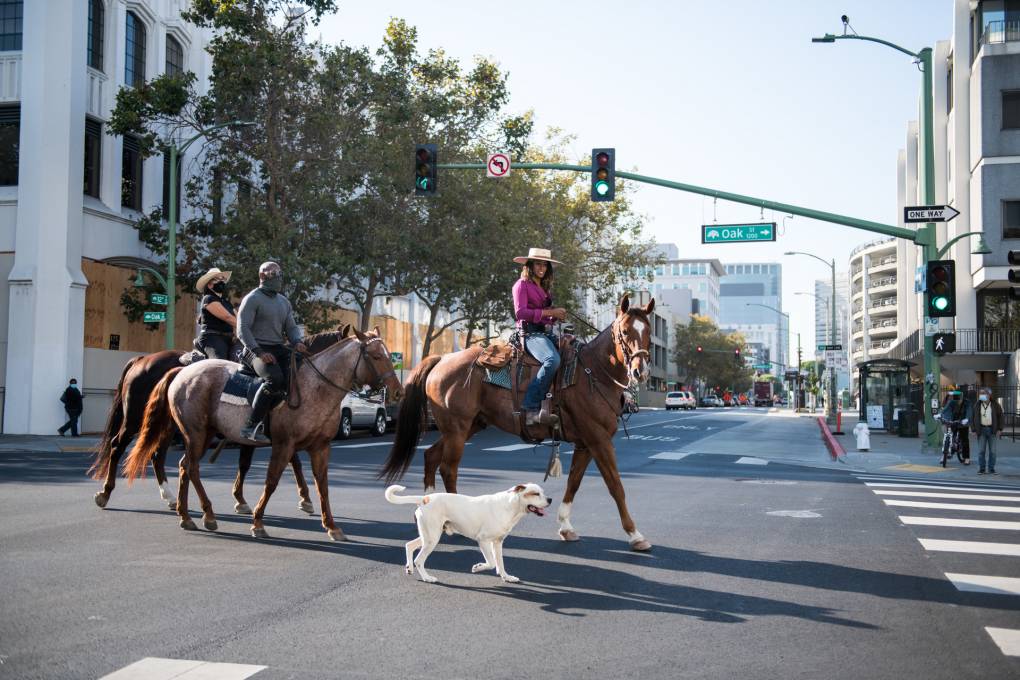
"caption": "(From left) Rachel Royce, Dale Johnson and Brianna Noble ride their horses down Oak Street towards the Alameda County Superior Courthouse in Oakland during a Ride Out to Vote event on Oct. 29, 2020.",
"description": "(From left) Rachel Royce, Dale Johnson and Brianna Noble ride their horses down Oak Street towards the Alameda County Courthouse in Oakland during a Ride Out to Vote event on Oct. 29, 2020.",
"title": "RS45520_021_KQED_Oakland_RideOuttoVote_10292020-qut",
"credit": "Beth LaBerge/KQED",
"status": "inherit",
"isLoading": false,
"fetchFailed": false
}
},
"audioPlayerReducer": {
"postId": "stream_live",
"isPaused": true,
"isPlaying": false,
"pfsActive": false,
"pledgeModalIsOpen": true,
"playerDrawerIsOpen": false,
"liveAudioPlayStartedAt": 0,
"liveAudioPlayContext": ""
},
"authorsReducer": {
"byline_news_11847719": {
"type": "authors",
"id": "byline_news_11847719",
"meta": {
"override": true
},
"slug": "byline_news_11847719",
"name": "Stefanie Dazio \u003cbr> Associated Press",
"isLoading": false
},
"byline_news_11845943": {
"type": "authors",
"id": "byline_news_11845943",
"meta": {
"override": true
},
"slug": "byline_news_11845943",
"name": "\u003ca href=\"https://calmatters.org/author/kayleen-carter/\">Kayleen Carter\u003c/a>",
"isLoading": false
},
"kqednewsstaffandwires": {
"type": "authors",
"id": "237",
"meta": {
"index": "authors_1716337520",
"id": "237",
"found": true
},
"name": "KQED News Staff and Wires",
"firstName": "KQED News Staff and Wires",
"lastName": null,
"slug": "kqednewsstaffandwires",
"email": "onlinenewsstaff@kqed.org",
"display_author_email": false,
"staff_mastheads": [],
"title": null,
"bio": null,
"avatar": "https://secure.gravatar.com/avatar/72295af8ebbfbd19a4948f5271285664?s=600&d=blank&r=g",
"twitter": null,
"facebook": null,
"instagram": null,
"linkedin": null,
"sites": [
{
"site": "arts",
"roles": [
"contributor"
]
},
{
"site": "news",
"roles": [
"contributor"
]
},
{
"site": "lowdown",
"roles": [
"author"
]
},
{
"site": "stateofhealth",
"roles": [
"contributor"
]
},
{
"site": "food",
"roles": [
"author"
]
}
],
"headData": {
"title": "KQED News Staff and Wires | KQED",
"description": null,
"ogImgSrc": "https://secure.gravatar.com/avatar/72295af8ebbfbd19a4948f5271285664?s=600&d=blank&r=g",
"twImgSrc": "https://secure.gravatar.com/avatar/72295af8ebbfbd19a4948f5271285664?s=600&d=blank&r=g"
},
"isLoading": false,
"link": "/author/kqednewsstaffandwires"
},
"mlam": {
"type": "authors",
"id": "244",
"meta": {
"index": "authors_1716337520",
"id": "244",
"found": true
},
"name": "Monica Lam",
"firstName": "Monica Z.",
"lastName": "Lam",
"slug": "mlam",
"email": "mlam@kqed.org",
"display_author_email": true,
"staff_mastheads": [
"news"
],
"title": "KQED Senior Producer",
"bio": "Monica is senior producer of the weekly current affairs program, \"KQED Newsroom.\" She's also served as senior editor of digital content at KQED. She likes to report and edit as well as produce video and take photos.\r\n\r\nBefore joining KQED, Monica worked at the Center for Investigative Reporting, where she examined conditions inside \u003cspan style=\"font-weight: 400;\">maximum security \u003c/span>prisons and abuse in state-run institutions for the developmentally disabled. Prior to that, she produced and directed \u003cem>Journey of the Bonesetter's Daughter,\u003c/em> a documentary that follows novelist Amy Tan as she creates an opera based on her family history.\r\n\r\nMonica's work has been honored with a duPont Award, five Emmys, regional and national Murrow Awards, and has been recognized by Investigative Reporters and Editors, the Society of Professional Journalists, Religion Newswriters Association and the San Francisco Peninsula Press Club. Monica studied urban studies at Stanford University and earned a master's in journalism at University of California at Berkeley. Follow her on twitter: @monicazlam",
"avatar": "https://secure.gravatar.com/avatar/018c474b2b71f43e0e6ca9b15a0ad36f?s=600&d=blank&r=g",
"twitter": "@monicazlam",
"facebook": null,
"instagram": null,
"linkedin": null,
"sites": [
{
"site": "arts",
"roles": [
"administrator"
]
},
{
"site": "news",
"roles": [
"editor"
]
},
{
"site": "trulyca",
"roles": [
"editor"
]
},
{
"site": "science",
"roles": [
"editor"
]
},
{
"site": "breakingnews",
"roles": [
"editor"
]
}
],
"headData": {
"title": "Monica Lam | KQED",
"description": "KQED Senior Producer",
"ogImgSrc": "https://secure.gravatar.com/avatar/018c474b2b71f43e0e6ca9b15a0ad36f?s=600&d=blank&r=g",
"twImgSrc": "https://secure.gravatar.com/avatar/018c474b2b71f43e0e6ca9b15a0ad36f?s=600&d=blank&r=g"
},
"isLoading": false,
"link": "/author/mlam"
},
"markfiore": {
"type": "authors",
"id": "3236",
"meta": {
"index": "authors_1716337520",
"id": "3236",
"found": true
},
"name": "Mark Fiore",
"firstName": "Mark",
"lastName": "Fiore",
"slug": "markfiore",
"email": "mark@markfiore.com",
"display_author_email": false,
"staff_mastheads": [
"news"
],
"title": "KQED News Cartoonist",
"bio": "\u003ca href=\"http://www.MarkFiore.com\">MarkFiore.com\u003c/a> | \u003ca href=\"https://twitter.com/markfiore\">Follow on Twitter\u003c/a> | \u003ca href=\"https://www.facebook.com/pages/Mark-Fiore-Animated-Political-Cartoons/94451707396?ref=bookmarks\">Facebook\u003c/a> | \u003ca href=\"mailto:mark@markfiore.com\">email\u003c/a>\r\n\r\nPulitzer Prize-winner, Mark Fiore, who the Wall Street Journal has called “the undisputed guru of the form,” creates animated political cartoons in San Francisco, where his work has been featured regularly on the San Francisco Chronicle’s web site, SFGate.com. His work has appeared on Newsweek.com, Slate.com, CBSNews.com, MotherJones.com, DailyKos.com and NPR’s web site. Fiore’s political animation has appeared on CNN, Frontline, Bill Moyers Journal, Salon.com and cable and broadcast outlets across the globe.\r\n\r\nBeginning his professional life by drawing traditional political cartoons for newspapers, Fiore’s work appeared in publications ranging from the Washington Post to the Los Angeles Times. In the late 1990s, he began to experiment with animating political cartoons and, after a short stint at the San Jose Mercury News as their staff cartoonist, Fiore devoted all his energies to animation.\r\nGrowing up in California, Fiore also spent a good portion of his life in the backwoods of Idaho. It was this combination that shaped him politically. Mark majored in political science at Colorado College, where, in a perfect send-off for a cartoonist, he received his diploma in 1991 as commencement speaker Dick Cheney smiled approvingly.\r\nMark Fiore was awarded the Pulitzer Prize for political cartooning in 2010, a Robert F. Kennedy Journalism Award in 2004 and has twice received an Online Journalism Award for commentary from the Online News Association (2002, 2008). Fiore has received two awards for his work in new media from the National Cartoonists Society (2001, 2002), and in 2006 received The James Madison Freedom of Information Award from The Society of Professional Journalists.",
"avatar": "https://secure.gravatar.com/avatar/fc4e2a612b15b67bad0c6f0e1db4ca9b?s=600&d=blank&r=g",
"twitter": "MarkFiore",
"facebook": null,
"instagram": "https://www.instagram.com/markfiore/?hl=en",
"linkedin": null,
"sites": [
{
"site": "arts",
"roles": [
"contributor"
]
},
{
"site": "news",
"roles": [
"editor"
]
},
{
"site": "futureofyou",
"roles": [
"editor"
]
},
{
"site": "science",
"roles": [
"editor"
]
}
],
"headData": {
"title": "Mark Fiore | KQED",
"description": "KQED News Cartoonist",
"ogImgSrc": "https://secure.gravatar.com/avatar/fc4e2a612b15b67bad0c6f0e1db4ca9b?s=600&d=blank&r=g",
"twImgSrc": "https://secure.gravatar.com/avatar/fc4e2a612b15b67bad0c6f0e1db4ca9b?s=600&d=blank&r=g"
},
"isLoading": false,
"link": "/author/markfiore"
},
"cveltman": {
"type": "authors",
"id": "8608",
"meta": {
"index": "authors_1716337520",
"id": "8608",
"found": true
},
"name": "Chloe Veltman",
"firstName": "Chloe",
"lastName": "Veltman",
"slug": "cveltman",
"email": "cveltman@kqed.org",
"display_author_email": true,
"staff_mastheads": [],
"title": "Arts and Culture Reporter",
"bio": "Chloe Veltman is a former arts and culture reporter for KQED. Prior to joining the organization, she launched and led the arts bureau at Colorado Public Radio, served as the Bay Area's culture columnist for the New York Times, and was the founder, host and executive producer of VoiceBox, a national award-winning weekly podcast/radio show and live events series all about the human voice. Chloe is the recipient of numerous prizes, grants and fellowships including a Webby Award for her work on interactive storytelling, both the John S Knight Journalism Fellowship and Humanities Center Fellowship at Stanford University, the Sundance Arts Writing Fellowship and a Library of Congress Research Fellowship. She is the author of the book \"On Acting\" and has appeared as a guest lecturer at Yale University and the San Francisco Conservatory of Music among other institutions. She holds a BA in english literature from King's College, Cambridge, and a Masters in Dramaturgy from the Central School of Speech and Drama/Harvard Institute for Advanced Theater Training.\r\n\u003ca href=\"https://www.chloeveltman.com\">www.chloeveltman.com\u003c/a>",
"avatar": "https://secure.gravatar.com/avatar/55403394b00a1ddab683952c2eb2cf85?s=600&d=blank&r=g",
"twitter": "chloeveltman",
"facebook": null,
"instagram": null,
"linkedin": null,
"sites": [
{
"site": "arts",
"roles": []
},
{
"site": "news",
"roles": [
"author"
]
},
{
"site": "pop",
"roles": [
"editor"
]
},
{
"site": "science",
"roles": []
}
],
"headData": {
"title": "Chloe Veltman | KQED",
"description": "Arts and Culture Reporter",
"ogImgSrc": "https://secure.gravatar.com/avatar/55403394b00a1ddab683952c2eb2cf85?s=600&d=blank&r=g",
"twImgSrc": "https://secure.gravatar.com/avatar/55403394b00a1ddab683952c2eb2cf85?s=600&d=blank&r=g"
},
"isLoading": false,
"link": "/author/cveltman"
},
"korr": {
"type": "authors",
"id": "11200",
"meta": {
"index": "authors_1716337520",
"id": "11200",
"found": true
},
"name": "Katie Orr",
"firstName": "Katie",
"lastName": "Orr",
"slug": "korr",
"email": "korr@kqed.org",
"display_author_email": false,
"staff_mastheads": [],
"title": "KQED Contributor",
"bio": "Katie Orr was a Sacramento-based reporter for KQED's Politics and Government Desk, covering the state Capitol and a variety of issues including women in politics, voting and elections and legislation. Prior to joining KQED in 2016, Katie was state government reporter for Capital Public Radio in Sacramento. She's also worked for KPBS in San Diego, where she covered City Hall.\r\n\r\nKatie received her masters degree in political science from San Diego State University and holds a Bachelors degree in broadcast journalism from Arizona State University.\r\n\r\nIn 2015 Katie won a national Clarion Award for a series of stories she did on women in California politics. She's been honored by the Society for Professional Journalists and, in 2013, was named by \u003cem>The Washington Post\u003c/em> as one of the country's top state Capitol reporters. She's also reported for the award-winning documentary series \u003cem>The View from Here \u003c/em>and was part of the team that won national PRNDI and Gabriel Awards in 2015. She lives in Sacramento with her husband. Twitter: @1KatieOrr",
"avatar": "https://secure.gravatar.com/avatar/41a40b25845adc78f50808670860449e?s=600&d=blank&r=g",
"twitter": "1katieorr",
"facebook": null,
"instagram": null,
"linkedin": null,
"sites": [
{
"site": "news",
"roles": [
"subscriber"
]
},
{
"site": "stateofhealth",
"roles": [
"author"
]
},
{
"site": "forum",
"roles": [
"author"
]
}
],
"headData": {
"title": "Katie Orr | KQED",
"description": "KQED Contributor",
"ogImgSrc": "https://secure.gravatar.com/avatar/41a40b25845adc78f50808670860449e?s=600&d=blank&r=g",
"twImgSrc": "https://secure.gravatar.com/avatar/41a40b25845adc78f50808670860449e?s=600&d=blank&r=g"
},
"isLoading": false,
"link": "/author/korr"
},
"lesleymcclurg": {
"type": "authors",
"id": "11229",
"meta": {
"index": "authors_1716337520",
"id": "11229",
"found": true
},
"name": "Lesley McClurg",
"firstName": "Lesley",
"lastName": "McClurg",
"slug": "lesleymcclurg",
"email": "lmcclurg@KQED.org",
"display_author_email": false,
"staff_mastheads": [
"news",
"science"
],
"title": "KQED Health Correspondent",
"bio": "Lesley McClurg is a health correspondent and fill-in host whose work is regularly rebroadcast on NPR and PBS programs. She’s earned multiple regional Emmy awards, a national and a regional Edward R. Murrow award, and was named Best Beat Reporter by the Association of Health Care Journalists. The Society of Professional Journalists has recognized her work several times, and the Society of Environmental Journalists spotlighted her coverage of California’s historic drought.\r\n\r\nBefore joining KQED in 2016, Lesley covered food and sustainability for Capital Public Radio, environmental issues for Colorado Public Radio, and reported for KUOW and KCTS 9 in Seattle. Away from the newsroom, she loves skiing with her daughter, mountain biking with her partner, and playing with Ollie, the family’s goldendoodle. On deadline, she runs almost entirely on chocolate chips.\r\n\r\n ",
"avatar": "https://secure.gravatar.com/avatar/bab49e972ea10c774fe0f5e29dba1722b158f7c0d58a360923d1389d380b2978?s=600&d=blank&r=g",
"twitter": "lesleywmcclurg",
"bluesky": null,
"facebook": null,
"instagram": null,
"linkedin": null,
"sites": [
{
"site": "arts",
"roles": [
"author"
]
},
{
"site": "news",
"roles": [
"editor"
]
},
{
"site": "futureofyou",
"roles": [
"editor"
]
},
{
"site": "stateofhealth",
"roles": [
"author"
]
},
{
"site": "science",
"roles": [
"editor"
]
},
{
"site": "quest",
"roles": [
"subscriber"
]
},
{
"site": "forum",
"roles": [
"administrator"
]
},
{
"site": "liveblog",
"roles": [
"author"
]
}
],
"headData": {
"title": "Lesley McClurg | KQED",
"description": "KQED Health Correspondent",
"ogImgSrc": "https://secure.gravatar.com/avatar/bab49e972ea10c774fe0f5e29dba1722b158f7c0d58a360923d1389d380b2978?s=600&d=blank&r=g",
"twImgSrc": "https://secure.gravatar.com/avatar/bab49e972ea10c774fe0f5e29dba1722b158f7c0d58a360923d1389d380b2978?s=600&d=blank&r=g"
},
"isLoading": false,
"link": "/author/lesleymcclurg"
},
"vrancano": {
"type": "authors",
"id": "11276",
"meta": {
"index": "authors_1716337520",
"id": "11276",
"found": true
},
"name": "Vanessa Rancaño",
"firstName": "Vanessa",
"lastName": "Rancaño",
"slug": "vrancano",
"email": "vrancano@kqed.org",
"display_author_email": false,
"staff_mastheads": [
"news"
],
"title": "Reporter",
"bio": "Vanessa Rancaño is a features reporter for KQED. She’s also covered homelessness and education for the station and reported from the Central Valley. Her work has aired across public radio, from flagship national news shows to longform narrative podcasts. Before taking up a mic, she worked as a freelance print journalist. She’s been recognized with a number of national and regional awards. Vanessa grew up in California's Central Valley. She's a former NPR Kroc Fellow, and a graduate of the UC Berkeley Graduate School of Journalism.",
"avatar": "https://secure.gravatar.com/avatar/b3a383dfb0e7ee1c17568f2cf067904ab654d6e3de9743fc661f3c788ade1bed?s=600&d=blank&r=g",
"twitter": "vanessarancano",
"bluesky": null,
"facebook": null,
"instagram": null,
"linkedin": null,
"sites": [
{
"site": "arts",
"roles": [
"editor"
]
},
{
"site": "news",
"roles": [
"editor"
]
},
{
"site": "liveblog",
"roles": [
"contributor"
]
}
],
"headData": {
"title": "Vanessa Rancaño | KQED",
"description": "Reporter",
"ogImgSrc": "https://secure.gravatar.com/avatar/b3a383dfb0e7ee1c17568f2cf067904ab654d6e3de9743fc661f3c788ade1bed?s=600&d=blank&r=g",
"twImgSrc": "https://secure.gravatar.com/avatar/b3a383dfb0e7ee1c17568f2cf067904ab654d6e3de9743fc661f3c788ade1bed?s=600&d=blank&r=g"
},
"isLoading": false,
"link": "/author/vrancano"
},
"hmcdede": {
"type": "authors",
"id": "11635",
"meta": {
"index": "authors_1716337520",
"id": "11635",
"found": true
},
"name": "Holly McDede",
"firstName": "Holly",
"lastName": "McDede",
"slug": "hmcdede",
"email": "hmcdede@KQED.org",
"display_author_email": false,
"staff_mastheads": [],
"title": "KQED Contributor",
"bio": null,
"avatar": "https://secure.gravatar.com/avatar/35d1a1f5422c9d266f7ace9348d170f2136671a65fffc90a592e4d7fbf8dc3f6?s=600&d=blank&r=g",
"twitter": null,
"bluesky": null,
"facebook": null,
"instagram": null,
"linkedin": null,
"sites": [
{
"site": "arts",
"roles": [
"editor"
]
},
{
"site": "news",
"roles": [
"edit_others_posts",
"editor"
]
},
{
"site": "science",
"roles": [
"editor"
]
},
{
"site": "forum",
"roles": [
"editor"
]
},
{
"site": "perspectives",
"roles": [
"administrator"
]
}
],
"headData": {
"title": "Holly McDede | KQED",
"description": "KQED Contributor",
"ogImgSrc": "https://secure.gravatar.com/avatar/35d1a1f5422c9d266f7ace9348d170f2136671a65fffc90a592e4d7fbf8dc3f6?s=600&d=blank&r=g",
"twImgSrc": "https://secure.gravatar.com/avatar/35d1a1f5422c9d266f7ace9348d170f2136671a65fffc90a592e4d7fbf8dc3f6?s=600&d=blank&r=g"
},
"isLoading": false,
"link": "/author/hmcdede"
},
"kpatadia": {
"type": "authors",
"id": "11659",
"meta": {
"index": "authors_1716337520",
"id": "11659",
"found": true
},
"name": "Karishma Patadia",
"firstName": "Karishma",
"lastName": "Patadia",
"slug": "kpatadia",
"email": "kpatadia@kqed.org",
"display_author_email": false,
"staff_mastheads": [],
"title": "KQED Contributor",
"bio": null,
"avatar": "https://secure.gravatar.com/avatar/8fc70c6ed9e8f84b84d81108f3c6403d?s=600&d=blank&r=g",
"twitter": null,
"facebook": null,
"instagram": null,
"linkedin": null,
"sites": [
{
"site": "arts",
"roles": [
"author"
]
},
{
"site": "news",
"roles": [
"author"
]
}
],
"headData": {
"title": "Karishma Patadia | KQED",
"description": "KQED Contributor",
"ogImgSrc": "https://secure.gravatar.com/avatar/8fc70c6ed9e8f84b84d81108f3c6403d?s=600&d=blank&r=g",
"twImgSrc": "https://secure.gravatar.com/avatar/8fc70c6ed9e8f84b84d81108f3c6403d?s=600&d=blank&r=g"
},
"isLoading": false,
"link": "/author/kpatadia"
},
"blaberge": {
"type": "authors",
"id": "11667",
"meta": {
"index": "authors_1716337520",
"id": "11667",
"found": true
},
"name": "Beth LaBerge",
"firstName": "Beth",
"lastName": "LaBerge",
"slug": "blaberge",
"email": "blaberge@KQED.org",
"display_author_email": true,
"staff_mastheads": [
"news"
],
"title": "Photographer, News",
"bio": "Beth LaBerge is a visual journalist for \u003ca href=\"https://www.kqed.org/news\">KQED News\u003c/a>.",
"avatar": "https://secure.gravatar.com/avatar/ce49ecd7a1306685637b45a1f6f5dedfc4ae9481966eb596fea5160466dd6319?s=600&d=blank&r=g",
"twitter": null,
"bluesky": null,
"facebook": null,
"instagram": "https://www.instagram.com/bethlaberge/",
"linkedin": null,
"sites": [
{
"site": "arts",
"roles": [
"editor",
"manage_categories"
]
},
{
"site": "news",
"roles": [
"editor",
"edit_plugins",
"manage_categories"
]
},
{
"site": "science",
"roles": [
"editor",
"contributor",
"author",
"manage_categories"
]
},
{
"site": "perspectives",
"roles": [
"editor"
]
},
{
"site": "liveblog",
"roles": [
"editor"
]
}
],
"headData": {
"title": "Beth LaBerge | KQED",
"description": "Photographer, News",
"ogImgSrc": "https://secure.gravatar.com/avatar/ce49ecd7a1306685637b45a1f6f5dedfc4ae9481966eb596fea5160466dd6319?s=600&d=blank&r=g",
"twImgSrc": "https://secure.gravatar.com/avatar/ce49ecd7a1306685637b45a1f6f5dedfc4ae9481966eb596fea5160466dd6319?s=600&d=blank&r=g"
},
"isLoading": false,
"link": "/author/blaberge"
},
"jrodriguez": {
"type": "authors",
"id": "11690",
"meta": {
"index": "authors_1716337520",
"id": "11690",
"found": true
},
"name": "Joe Fitzgerald Rodriguez",
"firstName": "Joe",
"lastName": "Fitzgerald Rodriguez",
"slug": "jrodriguez",
"email": "jrodriguez@kqed.org",
"display_author_email": true,
"staff_mastheads": [
"news"
],
"title": "Reporter and Producer",
"bio": "Joe Fitzgerald Rodriguez is a reporter and digital producer for KQED covering politics. Joe most recently wrote for the \u003cem>San Francisco Examiner\u003c/em> as a political columnist covering The City. He was raised in San Francisco and has spent his reporting career in his beloved, foggy, city by the bay. Joe was 12-years-old when he conducted his first interview in journalism, grilling former San Francisco Mayor Willie Brown for the Marina Middle School newspaper, \u003cem>The Penguin Press, \u003c/em>and he continues to report on the San Francisco Bay Area to this day.",
"avatar": "https://secure.gravatar.com/avatar/2247beb0564c1e9c62228d5649d2edac?s=600&d=blank&r=g",
"twitter": "FitztheReporter",
"facebook": null,
"instagram": "https://www.instagram.com/fitzthereporter/",
"linkedin": null,
"sites": [
{
"site": "",
"roles": [
"editor"
]
},
{
"site": "arts",
"roles": [
"editor"
]
},
{
"site": "news",
"roles": [
"editor"
]
},
{
"site": "science",
"roles": [
"editor"
]
},
{
"site": "elections",
"roles": [
"editor"
]
},
{
"site": "liveblog",
"roles": [
"editor"
]
}
],
"headData": {
"title": "Joe Fitzgerald Rodriguez | KQED",
"description": "Reporter and Producer",
"ogImgSrc": "https://secure.gravatar.com/avatar/2247beb0564c1e9c62228d5649d2edac?s=600&d=blank&r=g",
"twImgSrc": "https://secure.gravatar.com/avatar/2247beb0564c1e9c62228d5649d2edac?s=600&d=blank&r=g"
},
"isLoading": false,
"link": "/author/jrodriguez"
}
},
"pagesReducer": {
"news_category_education": {
"type": "terms",
"id": "news_18540",
"meta": {
"index": "terms_1716263798",
"site": "news",
"id": "18540",
"score": 10.973179
},
"featImg": null,
"name": "Education",
"description": null,
"taxonomy": "category",
"headData": {
"twImgId": null,
"twTitle": null,
"ogTitle": null,
"ogImgId": null,
"twDescription": null,
"description": null,
"title": "Education Archives | KQED News",
"ogDescription": null
},
"ttid": 2595,
"slug": "education",
"isLoading": false,
"title": "Education",
"pageMeta": {
"site": "news",
"WpPageTemplate": "page-topic-editorial",
"currentPage": 90
},
"blocks": [
{
"blockName": "kqed/post-list",
"attrs": {
"layout": "cardArticle2",
"query": "posts/news?category=education",
"seeMore": false,
"paginated": true,
"page": 90
}
},
{
"blockName": "kqed/ad"
}
]
}
},
"pfsSessionReducer": {},
"postsReducer": {
"stream_live": {
"type": "live",
"id": "stream_live",
"audioUrl": "https://streams.kqed.org/kqedradio",
"title": "Live Stream",
"excerpt": "Live Stream information currently unavailable.",
"link": "/radio",
"featImg": "",
"label": {
"name": "KQED Live",
"link": "/"
}
},
"stream_kqedNewscast": {
"type": "posts",
"id": "stream_kqedNewscast",
"audioUrl": "https://www.kqed.org/.stream/anon/radio/RDnews/newscast.mp3?_=1",
"title": "KQED Newscast",
"featImg": "",
"label": {
"name": "88.5 FM",
"link": "/"
}
},
"news_11849485": {
"type": "posts",
"id": "news_11849485",
"meta": {
"index": "posts_1716263798",
"site": "news",
"id": "11849485",
"score": null,
"sort": [
1607094004000
]
},
"parent": 0,
"labelTerm": {
"site": "news"
},
"blocks": [],
"publishDate": 1607094004,
"format": "audio",
"disqusTitle": "'We're Fragile': UC Berkeley Officials Battle Budget Woes",
"title": "'We're Fragile': UC Berkeley Officials Battle Budget Woes",
"headTitle": "KQED News",
"content": "\u003cp>The Bay Area’s flagship public university, UC Berkeley, is trying to work its way out of an unprecedented \u003ca href=\"https://news.berkeley.edu/2020/07/15/update-on-budget-expense-reduction-measures/\" target=\"_blank\" rel=\"noopener noreferrer\">$340 million deficit\u003c/a> due to the pandemic. And that means some of the hardest-hit departments and individuals on campus are having to fend for themselves.\u003c/p>\n\u003cp>The campus has seen plunging revenue on several fronts, including $35 million gone in tuition fees.\u003c/p>\n\u003cp>\"We had about 800 students that decided not to come back to the fall,\" said Rosemarie Rae, Berkeley's vice chancellor of finance and chief financial officer.\u003c/p>\n\u003cfigure id=\"attachment_11849562\" class=\"wp-caption alignright\" style=\"max-width: 1806px\">\u003cimg class=\"size-full wp-image-11849562\" src=\"https://ww2.kqed.org/app/uploads/sites/10/2020/12/rosemarie-rae-scaled.jpg\" alt='\"\"' width=\"1806\" height=\"2560\" srcset=\"https://ww2.kqed.org/app/uploads/sites/10/2020/12/rosemarie-rae-scaled.jpg 1806w, https://ww2.kqed.org/app/uploads/sites/10/2020/12/rosemarie-rae-800x1134.jpg 800w, https://ww2.kqed.org/app/uploads/sites/10/2020/12/rosemarie-rae-1020x1446.jpg 1020w, https://ww2.kqed.org/app/uploads/sites/10/2020/12/rosemarie-rae-160x227.jpg 160w, https://ww2.kqed.org/app/uploads/sites/10/2020/12/rosemarie-rae-1084x1536.jpg 1084w, https://ww2.kqed.org/app/uploads/sites/10/2020/12/rosemarie-rae-1445x2048.jpg 1445w, https://ww2.kqed.org/app/uploads/sites/10/2020/12/rosemarie-rae-1920x2722.jpg 1920w\" sizes=\"(max-width: 1806px) 100vw, 1806px\">\u003cfigcaption class=\"wp-caption-text\">Rosemarie Rae, Berkeley's vice chancellor of finance and chief financial officer. \u003ccite>(Courtesy of UC Berkeley)\u003c/cite>\u003c/figcaption>\u003c/figure>\n\u003cp>Then there's the $100 million to $140 million anticipated loss in housing and dining income. Plus $33 million in revenue from sports events.\u003c/p>\n\u003cp>On top of all of the losses, Rae pointed to tens of millions of dollars in additional pandemic-related expenses — from COVID-19 testing and sanitization, to upgrading systems to accommodate remote learning and meetings.\u003c/p>\n\u003cp>That’s a lot of pain.\u003c/p>\n\u003cp>It’s been especially tough for Rae herself, who came in seven years ago to oversee the university’s complex $3 billion budget. She spent those years getting the campus out of a $150 million shortfall caused by declining state support, years of frozen tuition and substantial long-term debt.\u003c/p>\n\u003cp>\"We're fragile,\" Rae said. \"We were already running skinny as we came into COVID-19.\"\u003c/p>\n\u003cp>The university isn't reducing tuition costs — a pain-point for many students who decided to go ahead with their studies during the pandemic.\u003c/p>\n\u003cp>\"A lot of students are frustrated with this because we have a lot of fees here at Berkeley, like campus service fees and student service fees,\" said Victoria Vera, political science major and student union president. \"Their argument is, 'If I'm not on campus and I'm not in the area to utilize these services, why should I pay into them?' \"\u003c/p>\n\u003cp>Rae said the school's strategy for getting back on financial track includes digging into reserves, taking out loans and relying on federal support. Berkeley has received approximately $30 million in federal CARES Act funding.\u003c/p>\n\u003cp>But she said revenue-generating areas like athletics, and housing and dining, are supposed to be self-sustaining. So aside from some loans that UC Berkeley is making available to these areas, they’re largely on their own when it comes to navigating financial challenges.\u003c/p>\n\u003cp>[pullquote size='medium' align='right' citation='Victoria Vera, political science major and student union president']'A lot of students are frustrated with this because we have a lot of fees here at Berkeley, like campus service fees and student service fees ... Their argument is, 'If I'm not on campus and I'm not in the area to utilize these services, why should I pay into them?''[/pullquote]\u003c/p>\n\u003cp>\"My goal is to solve as much of our shortfall as we can through our own internal controls, through reductions to our operating budget, controls on compensation,\" said Tom Lowry, UC Berkeley's senior associate athletics director and chief financial officer. \"But depending on the way this football season plays out, we may need more or less of that borrowing authority to remain solvent.\"\u003c/p>\n\u003cp>Just under one third of the athletics department’s revenue comes from televised athletics events — especially football.\u003c/p>\n\u003cp>Berkeley's Nov. 15 game against UCLA, the first of the season, came after months of pandemic-related cancellations, delays and expenses that threw Cal’s athletics department into financial chaos. The original financial projections, based on an entirely canceled season, were harsh.\u003c/p>\n\u003cp>\"You're talking about losing 50% of your revenue just like that,\" Lowry said.\u003c/p>\n\u003cp>Now that some competitive play has started up again, Lowry said the financial picture is looking less grim. But he said the projections could change again with COVID-19 cases now on the upswing.\u003c/p>\n\u003cp>\"Our employees may sustain some unpaid time off in order to deal with this financial crisis,\" he said. [ad fullwidth]\u003c/p>\n\u003cp>Athletics isn’t the only part of campus taking a long, hard look at workforce costs.\u003c/p>\n\u003cp>CFO Rae said, \"65 percent of our budget is related to salaries and benefits. So if we're going to try to contain our costs, it primarily happens there.\"\u003c/p>\n\u003cp>Rae said the entire campus has implemented a hiring freeze. Some top administrators and senior athletics staff took a 10% dip in pay. And there have been well over 100 temporary layoffs, mainly in the realms of Housing & Dining, and Cal Performances, the university's performing arts presenter.\u003c/p>\n\u003cp>Omar Prevost is one of the people the university temporarily let go. He's lead custodian at The Golden Bear Cafe, one of the few eateries currently open on campus.\u003c/p>\n\u003cfigure id=\"attachment_11849510\" class=\"wp-caption aligncenter\" style=\"max-width: 800px\">\u003cimg class=\"size-medium wp-image-11849510\" src=\"https://ww2.kqed.org/app/uploads/sites/10/2020/12/RS46183_IMG_4907-qut-800x600.jpg\" alt=\"\" width=\"800\" height=\"600\" srcset=\"https://ww2.kqed.org/app/uploads/sites/10/2020/12/RS46183_IMG_4907-qut-800x600.jpg 800w, https://ww2.kqed.org/app/uploads/sites/10/2020/12/RS46183_IMG_4907-qut-1020x765.jpg 1020w, https://ww2.kqed.org/app/uploads/sites/10/2020/12/RS46183_IMG_4907-qut-160x120.jpg 160w, https://ww2.kqed.org/app/uploads/sites/10/2020/12/RS46183_IMG_4907-qut-1536x1152.jpg 1536w, https://ww2.kqed.org/app/uploads/sites/10/2020/12/RS46183_IMG_4907-qut-1832x1374.jpg 1832w, https://ww2.kqed.org/app/uploads/sites/10/2020/12/RS46183_IMG_4907-qut-1376x1032.jpg 1376w, https://ww2.kqed.org/app/uploads/sites/10/2020/12/RS46183_IMG_4907-qut-1044x783.jpg 1044w, https://ww2.kqed.org/app/uploads/sites/10/2020/12/RS46183_IMG_4907-qut-632x474.jpg 632w, https://ww2.kqed.org/app/uploads/sites/10/2020/12/RS46183_IMG_4907-qut-536x402.jpg 536w, https://ww2.kqed.org/app/uploads/sites/10/2020/12/RS46183_IMG_4907-qut.jpg 1920w\" sizes=\"(max-width: 800px) 100vw, 800px\">\u003cfigcaption class=\"wp-caption-text\">The Golden Bear Cafe. One of few eateries currently open on Berkeley's campus. The school's housing and dining operations have sustained enormous losses as a result of the pandemic. \u003ccite>(Chloe Veltman/KQED)\u003c/cite>\u003c/figcaption>\u003c/figure>\n\u003cp>\"We're doing simple stuff like coming out every 30 minutes and doing wipe downs on all high contact point areas inside and outside,\" he told KQED while making his rounds one recent lunch time as students chatted and ate around him on the Golden Bear's sunny patio. \"Just trying to stay on pace.\"\u003c/p>\n\u003cp>Prevost said he was out of work for five months while The Golden Bear was closed. According to UC Berkeley's media relations office, just over 100 campus dining services employees were temporarily laid off as a result of the pandemic.\u003c/p>\n\u003cp>\"It was the most challenging time,\" Prevost said. \"I definitely learned something about budgeting.\"\u003c/p>\n\u003cp>Prevost said since he's come back to work, he's been sharing his hard-earned financial know-how with his co-workers.\u003c/p>\n\u003cp>\"Especially with some of the newer people that are working here,\" he said. \"Like, a lot of us don't make a significant amount of money.\"\u003c/p>\n\u003cp>UC Berkeley reports no \u003cem>permanent\u003c/em> layoffs so far. However, that doesn’t take into account the roughly 100 lecturers — non-tenure-track teaching staff, also known as \"adjunct professors\" — who were on payroll last academic year, but not this one. [aside tag=\"higher-education\" label=\"more coverage\"]\u003c/p>\n\u003cp>\"They're usually hired on one-semester or one-year contracts that often aren't renewed,\" said Mia McIver, president of the \u003ca href=\"https://ucaft.org/\" target=\"_blank\" rel=\"noopener noreferrer\">University Council-American Federation of Teachers (UC-AFT)\u003c/a>, the union that advocates for non-tenure-track instructors in the UC system, and a lecturer in the writing program at UCLA.\u003c/p>\n\u003cp>Berkeley has set aside $10 million to minimize COVID-19-related layoffs, especially for low-income staff, funded through faculty and non-union staff pay freezes.\u003c/p>\n\u003cp>Though they praise the administration's handling of COVID-19-related health and safety measures, some of Berkeley's tenure-track professors are not happy with this type of approach to solving the university's short- and long-term financial woes.\u003c/p>\n\u003cp>\"We're concerned that the already uncompetitive salaries that we have — that don't really sustain a reasonable quality of life in the Bay Area for many — are going to be furloughed,\" said history professor and Berkeley Faculty Association co-chair James Vernon.\u003c/p>\n\u003cp>His concerns will not be unfounded if Berkeley moves ahead with further proposed cuts.\u003c/p>\n\u003cp>UC Berkeley's financial challenges mirror what's happening in the UC system overall. Since the onset of COVID-19, the 10 campuses have sustained around $1.4 billion in lost revenue and other costs, according to the UC Office of the President.\u003c/p>\n\u003cp>\"Campuses are using federal CARES Act funding and reserves to mitigate the negative impacts of some of the losses,\" said Office of the President spokesperson Stett Holbrook.\u003c/p>\n\u003cp>Many members of the Berkeley community are saying all of this belt-tightening points to a deeper systemic problem with how we fund higher education.\u003c/p>\n\u003cp>\"We need support as a public institution,\" said student union president Vera. \"We need support from our state government and we need support from our federal government, too.\"\u003c/p>\n\u003cp>[pullquote size='medium' align='right' citation='James Vernon, history professor and Berkeley Faculty Association co-chair']'Our campus leaders haven’t done a good enough job articulating why UC Berkeley education is a public good that should get publicly funded.'[/pullquote]\u003c/p>\n\u003cp>Three decades ago, the state provided half of Berkeley’s revenue. \u003ca href=\"https://calparents.berkeley.edu/the-funding-conundrum-cals-dwindling-state-support/#:~:text=Since%20UC%20Berkeley%20is%20a,vast%20majority%20of%20Cal's%20budget.&text=Today%2C%20the%20state%20funds%20just,other%20sources%20cover%20the%20rest\" target=\"_blank\" rel=\"noopener noreferrer\">Today, it covers roughly one-seventh\u003c/a>. Vernon said instead of focusing on cost-cutting measures and pursuing more commercial income streams, Berkeley should redouble its efforts to make the case for increased public funding.\u003c/p>\n\u003cp>\"Our campus leaders haven’t done a good enough job articulating why UC Berkeley education is a public good that should get publicly funded,\" Vernon said.\u003c/p>\n\u003cp>Rae said the university is continuing to advocate for more state and federal funding.\u003c/p>\n\u003cp>The Budget Act of 2020 included a stipulation that would have enabled campuses to receive up to $169.2 million. According to the UC Office of the President, this would have represented a 5% increase in funding equivalent to the FY20-21 state budget allocation before the pandemic. But Congress did not approve those funds.\u003c/p>\n\u003cp>Rae said Berkeley alone would have received around $40 million from the state if the funding had been approved.\u003c/p>\n\u003cp>Meanwhile, arguably the main reason for Berkeley's existence — its students — are getting hurt as a result of the longstanding drop in state support.\u003c/p>\n\u003cp>\"When we don't get the proper funding we need to maintain our university, that impacts marginalized students in particular,\" Vera said. \"Not having access to tutoring, to retention recruitment programing, to affordable housing, it really impacts what it's like to be a current student, what it's like to live in the Bay Area.\"\u003c/p>\n\u003cp>[ad floatright]\u003c/p>\n",
"disqusIdentifier": "11849485 https://ww2.kqed.org/news/?p=11849485",
"disqusUrl": "https://ww2.kqed.org/news/2020/12/04/were-fragile-uc-berkeley-officials-battle-budget-woes/",
"stats": {
"hasVideo": false,
"hasChartOrMap": false,
"hasAudio": false,
"hasPolis": false,
"wordCount": 1630,
"hasGoogleForm": false,
"hasGallery": false,
"hasHearkenModule": false,
"iframeSrcs": [],
"paragraphCount": 47
},
"modified": 1607121336,
"excerpt": "From lost income from televised football games to temporary layoffs for dining services staff, the unprecedented $340 million deficit is impacting all corners of the Bay Area's flagship public university. ",
"headData": {
"twImgId": "",
"twTitle": "",
"ogTitle": "",
"ogImgId": "",
"twDescription": "",
"description": "From lost income from televised football games to temporary layoffs for dining services staff, the unprecedented $340 million deficit is impacting all corners of the Bay Area's flagship public university. ",
"title": "'We're Fragile': UC Berkeley Officials Battle Budget Woes | KQED",
"ogDescription": "",
"schema": {
"@context": "https://schema.org",
"@type": "NewsArticle",
"headline": "'We're Fragile': UC Berkeley Officials Battle Budget Woes",
"datePublished": "2020-12-04T07:00:04-08:00",
"dateModified": "2020-12-04T14:35:36-08:00",
"image": "https://cdn.kqed.org/wp-content/uploads/2020/02/KQED-OG-Image@1x.png",
"isAccessibleForFree": "True",
"publisher": {
"@type": "NewsMediaOrganization",
"@id": "https://www.kqed.org/#organization",
"name": "KQED",
"logo": "https://cdn.kqed.org/wp-content/uploads/2020/02/KQED-OG-Image@1x.png",
"url": "https://www.kqed.org",
"sameAs": [
"https://www.facebook.com/KQED",
"https://twitter.com/KQED",
"https://www.instagram.com/kqed/",
"https://www.tiktok.com/@kqedofficial",
"https://www.linkedin.com/company/kqed",
"https://www.youtube.com/channel/UCeC0IOo7i1P_61zVUWbJ4nw"
]
}
}
},
"guestAuthors": [],
"slug": "were-fragile-uc-berkeley-officials-battle-budget-woes",
"status": "publish",
"audioUrl": "https://traffic.omny.fm/d/clips/0af137ef-751e-4b19-a055-aaef00d2d578/ffca7e9f-6831-41c5-bcaf-aaef00f5a073/2081a39a-c34f-4ba8-9b9f-ac8701313f01/audio.mp3",
"path": "/news/11849485/were-fragile-uc-berkeley-officials-battle-budget-woes",
"audioDuration": 275000,
"audioTrackLength": null,
"parsedContent": [
{
"type": "contentString",
"content": "\u003cdiv class=\"post-body\">\u003cp>\u003cp>The Bay Area’s flagship public university, UC Berkeley, is trying to work its way out of an unprecedented \u003ca href=\"https://news.berkeley.edu/2020/07/15/update-on-budget-expense-reduction-measures/\" target=\"_blank\" rel=\"noopener noreferrer\">$340 million deficit\u003c/a> due to the pandemic. And that means some of the hardest-hit departments and individuals on campus are having to fend for themselves.\u003c/p>\n\u003cp>The campus has seen plunging revenue on several fronts, including $35 million gone in tuition fees.\u003c/p>\n\u003cp>\"We had about 800 students that decided not to come back to the fall,\" said Rosemarie Rae, Berkeley's vice chancellor of finance and chief financial officer.\u003c/p>\n\u003cfigure id=\"attachment_11849562\" class=\"wp-caption alignright\" style=\"max-width: 1806px\">\u003cimg class=\"size-full wp-image-11849562\" src=\"https://ww2.kqed.org/app/uploads/sites/10/2020/12/rosemarie-rae-scaled.jpg\" alt='\"\"' width=\"1806\" height=\"2560\" srcset=\"https://ww2.kqed.org/app/uploads/sites/10/2020/12/rosemarie-rae-scaled.jpg 1806w, https://ww2.kqed.org/app/uploads/sites/10/2020/12/rosemarie-rae-800x1134.jpg 800w, https://ww2.kqed.org/app/uploads/sites/10/2020/12/rosemarie-rae-1020x1446.jpg 1020w, https://ww2.kqed.org/app/uploads/sites/10/2020/12/rosemarie-rae-160x227.jpg 160w, https://ww2.kqed.org/app/uploads/sites/10/2020/12/rosemarie-rae-1084x1536.jpg 1084w, https://ww2.kqed.org/app/uploads/sites/10/2020/12/rosemarie-rae-1445x2048.jpg 1445w, https://ww2.kqed.org/app/uploads/sites/10/2020/12/rosemarie-rae-1920x2722.jpg 1920w\" sizes=\"(max-width: 1806px) 100vw, 1806px\">\u003cfigcaption class=\"wp-caption-text\">Rosemarie Rae, Berkeley's vice chancellor of finance and chief financial officer. \u003ccite>(Courtesy of UC Berkeley)\u003c/cite>\u003c/figcaption>\u003c/figure>\n\u003cp>Then there's the $100 million to $140 million anticipated loss in housing and dining income. Plus $33 million in revenue from sports events.\u003c/p>\n\u003cp>On top of all of the losses, Rae pointed to tens of millions of dollars in additional pandemic-related expenses — from COVID-19 testing and sanitization, to upgrading systems to accommodate remote learning and meetings.\u003c/p>\n\u003cp>That’s a lot of pain.\u003c/p>\n\u003cp>It’s been especially tough for Rae herself, who came in seven years ago to oversee the university’s complex $3 billion budget. She spent those years getting the campus out of a $150 million shortfall caused by declining state support, years of frozen tuition and substantial long-term debt.\u003c/p>\n\u003cp>\"We're fragile,\" Rae said. \"We were already running skinny as we came into COVID-19.\"\u003c/p>\n\u003cp>The university isn't reducing tuition costs — a pain-point for many students who decided to go ahead with their studies during the pandemic.\u003c/p>\n\u003cp>\"A lot of students are frustrated with this because we have a lot of fees here at Berkeley, like campus service fees and student service fees,\" said Victoria Vera, political science major and student union president. \"Their argument is, 'If I'm not on campus and I'm not in the area to utilize these services, why should I pay into them?' \"\u003c/p>\n\u003cp>Rae said the school's strategy for getting back on financial track includes digging into reserves, taking out loans and relying on federal support. Berkeley has received approximately $30 million in federal CARES Act funding.\u003c/p>\n\u003cp>But she said revenue-generating areas like athletics, and housing and dining, are supposed to be self-sustaining. So aside from some loans that UC Berkeley is making available to these areas, they’re largely on their own when it comes to navigating financial challenges.\u003c/p>\n\u003cp>\u003c/p>\u003c/div>",
"attributes": {
"named": {},
"numeric": []
}
},
{
"type": "component",
"content": "'A lot of students are frustrated with this because we have a lot of fees here at Berkeley, like campus service fees and student service fees ... Their argument is, 'If I'm not on campus and I'm not in the area to utilize these services, why should I pay into them?''",
"name": "pullquote",
"attributes": {
"named": {
"size": "medium",
"align": "right",
"citation": "Victoria Vera, political science major and student union president",
"label": ""
},
"numeric": []
}
},
{
"type": "contentString",
"content": "\u003cdiv class=\"post-body\">\u003cp>\u003c/p>\n\u003cp>\"My goal is to solve as much of our shortfall as we can through our own internal controls, through reductions to our operating budget, controls on compensation,\" said Tom Lowry, UC Berkeley's senior associate athletics director and chief financial officer. \"But depending on the way this football season plays out, we may need more or less of that borrowing authority to remain solvent.\"\u003c/p>\n\u003cp>Just under one third of the athletics department’s revenue comes from televised athletics events — especially football.\u003c/p>\n\u003cp>Berkeley's Nov. 15 game against UCLA, the first of the season, came after months of pandemic-related cancellations, delays and expenses that threw Cal’s athletics department into financial chaos. The original financial projections, based on an entirely canceled season, were harsh.\u003c/p>\n\u003cp>\"You're talking about losing 50% of your revenue just like that,\" Lowry said.\u003c/p>\n\u003cp>Now that some competitive play has started up again, Lowry said the financial picture is looking less grim. But he said the projections could change again with COVID-19 cases now on the upswing.\u003c/p>\n\u003cp>\"Our employees may sustain some unpaid time off in order to deal with this financial crisis,\" he said. \u003c/p>\u003c/div>",
"attributes": {
"named": {},
"numeric": []
}
},
{
"type": "component",
"content": "",
"name": "ad",
"attributes": {
"named": {
"label": "fullwidth"
},
"numeric": [
"fullwidth"
]
}
},
{
"type": "contentString",
"content": "\u003cdiv class=\"post-body\">\u003cp>\u003c/p>\n\u003cp>Athletics isn’t the only part of campus taking a long, hard look at workforce costs.\u003c/p>\n\u003cp>CFO Rae said, \"65 percent of our budget is related to salaries and benefits. So if we're going to try to contain our costs, it primarily happens there.\"\u003c/p>\n\u003cp>Rae said the entire campus has implemented a hiring freeze. Some top administrators and senior athletics staff took a 10% dip in pay. And there have been well over 100 temporary layoffs, mainly in the realms of Housing & Dining, and Cal Performances, the university's performing arts presenter.\u003c/p>\n\u003cp>Omar Prevost is one of the people the university temporarily let go. He's lead custodian at The Golden Bear Cafe, one of the few eateries currently open on campus.\u003c/p>\n\u003cfigure id=\"attachment_11849510\" class=\"wp-caption aligncenter\" style=\"max-width: 800px\">\u003cimg class=\"size-medium wp-image-11849510\" src=\"https://ww2.kqed.org/app/uploads/sites/10/2020/12/RS46183_IMG_4907-qut-800x600.jpg\" alt=\"\" width=\"800\" height=\"600\" srcset=\"https://ww2.kqed.org/app/uploads/sites/10/2020/12/RS46183_IMG_4907-qut-800x600.jpg 800w, https://ww2.kqed.org/app/uploads/sites/10/2020/12/RS46183_IMG_4907-qut-1020x765.jpg 1020w, https://ww2.kqed.org/app/uploads/sites/10/2020/12/RS46183_IMG_4907-qut-160x120.jpg 160w, https://ww2.kqed.org/app/uploads/sites/10/2020/12/RS46183_IMG_4907-qut-1536x1152.jpg 1536w, https://ww2.kqed.org/app/uploads/sites/10/2020/12/RS46183_IMG_4907-qut-1832x1374.jpg 1832w, https://ww2.kqed.org/app/uploads/sites/10/2020/12/RS46183_IMG_4907-qut-1376x1032.jpg 1376w, https://ww2.kqed.org/app/uploads/sites/10/2020/12/RS46183_IMG_4907-qut-1044x783.jpg 1044w, https://ww2.kqed.org/app/uploads/sites/10/2020/12/RS46183_IMG_4907-qut-632x474.jpg 632w, https://ww2.kqed.org/app/uploads/sites/10/2020/12/RS46183_IMG_4907-qut-536x402.jpg 536w, https://ww2.kqed.org/app/uploads/sites/10/2020/12/RS46183_IMG_4907-qut.jpg 1920w\" sizes=\"(max-width: 800px) 100vw, 800px\">\u003cfigcaption class=\"wp-caption-text\">The Golden Bear Cafe. One of few eateries currently open on Berkeley's campus. The school's housing and dining operations have sustained enormous losses as a result of the pandemic. \u003ccite>(Chloe Veltman/KQED)\u003c/cite>\u003c/figcaption>\u003c/figure>\n\u003cp>\"We're doing simple stuff like coming out every 30 minutes and doing wipe downs on all high contact point areas inside and outside,\" he told KQED while making his rounds one recent lunch time as students chatted and ate around him on the Golden Bear's sunny patio. \"Just trying to stay on pace.\"\u003c/p>\n\u003cp>Prevost said he was out of work for five months while The Golden Bear was closed. According to UC Berkeley's media relations office, just over 100 campus dining services employees were temporarily laid off as a result of the pandemic.\u003c/p>\n\u003cp>\"It was the most challenging time,\" Prevost said. \"I definitely learned something about budgeting.\"\u003c/p>\n\u003cp>Prevost said since he's come back to work, he's been sharing his hard-earned financial know-how with his co-workers.\u003c/p>\n\u003cp>\"Especially with some of the newer people that are working here,\" he said. \"Like, a lot of us don't make a significant amount of money.\"\u003c/p>\n\u003cp>UC Berkeley reports no \u003cem>permanent\u003c/em> layoffs so far. However, that doesn’t take into account the roughly 100 lecturers — non-tenure-track teaching staff, also known as \"adjunct professors\" — who were on payroll last academic year, but not this one. \u003c/p>\u003c/div>",
"attributes": {
"named": {},
"numeric": []
}
},
{
"type": "component",
"content": "",
"name": "aside",
"attributes": {
"named": {
"tag": "higher-education",
"label": "more coverage "
},
"numeric": []
}
},
{
"type": "contentString",
"content": "\u003cdiv class=\"post-body\">\u003cp>\u003c/p>\n\u003cp>\"They're usually hired on one-semester or one-year contracts that often aren't renewed,\" said Mia McIver, president of the \u003ca href=\"https://ucaft.org/\" target=\"_blank\" rel=\"noopener noreferrer\">University Council-American Federation of Teachers (UC-AFT)\u003c/a>, the union that advocates for non-tenure-track instructors in the UC system, and a lecturer in the writing program at UCLA.\u003c/p>\n\u003cp>Berkeley has set aside $10 million to minimize COVID-19-related layoffs, especially for low-income staff, funded through faculty and non-union staff pay freezes.\u003c/p>\n\u003cp>Though they praise the administration's handling of COVID-19-related health and safety measures, some of Berkeley's tenure-track professors are not happy with this type of approach to solving the university's short- and long-term financial woes.\u003c/p>\n\u003cp>\"We're concerned that the already uncompetitive salaries that we have — that don't really sustain a reasonable quality of life in the Bay Area for many — are going to be furloughed,\" said history professor and Berkeley Faculty Association co-chair James Vernon.\u003c/p>\n\u003cp>His concerns will not be unfounded if Berkeley moves ahead with further proposed cuts.\u003c/p>\n\u003cp>UC Berkeley's financial challenges mirror what's happening in the UC system overall. Since the onset of COVID-19, the 10 campuses have sustained around $1.4 billion in lost revenue and other costs, according to the UC Office of the President.\u003c/p>\n\u003cp>\"Campuses are using federal CARES Act funding and reserves to mitigate the negative impacts of some of the losses,\" said Office of the President spokesperson Stett Holbrook.\u003c/p>\n\u003cp>Many members of the Berkeley community are saying all of this belt-tightening points to a deeper systemic problem with how we fund higher education.\u003c/p>\n\u003cp>\"We need support as a public institution,\" said student union president Vera. \"We need support from our state government and we need support from our federal government, too.\"\u003c/p>\n\u003cp>\u003c/p>\u003c/div>",
"attributes": {
"named": {},
"numeric": []
}
},
{
"type": "component",
"content": "'Our campus leaders haven’t done a good enough job articulating why UC Berkeley education is a public good that should get publicly funded.'",
"name": "pullquote",
"attributes": {
"named": {
"size": "medium",
"align": "right",
"citation": "James Vernon, history professor and Berkeley Faculty Association co-chair",
"label": ""
},
"numeric": []
}
},
{
"type": "contentString",
"content": "\u003cdiv class=\"post-body\">\u003cp>\u003c/p>\n\u003cp>Three decades ago, the state provided half of Berkeley’s revenue. \u003ca href=\"https://calparents.berkeley.edu/the-funding-conundrum-cals-dwindling-state-support/#:~:text=Since%20UC%20Berkeley%20is%20a,vast%20majority%20of%20Cal's%20budget.&text=Today%2C%20the%20state%20funds%20just,other%20sources%20cover%20the%20rest\" target=\"_blank\" rel=\"noopener noreferrer\">Today, it covers roughly one-seventh\u003c/a>. Vernon said instead of focusing on cost-cutting measures and pursuing more commercial income streams, Berkeley should redouble its efforts to make the case for increased public funding.\u003c/p>\n\u003cp>\"Our campus leaders haven’t done a good enough job articulating why UC Berkeley education is a public good that should get publicly funded,\" Vernon said.\u003c/p>\n\u003cp>Rae said the university is continuing to advocate for more state and federal funding.\u003c/p>\n\u003cp>The Budget Act of 2020 included a stipulation that would have enabled campuses to receive up to $169.2 million. According to the UC Office of the President, this would have represented a 5% increase in funding equivalent to the FY20-21 state budget allocation before the pandemic. But Congress did not approve those funds.\u003c/p>\n\u003cp>Rae said Berkeley alone would have received around $40 million from the state if the funding had been approved.\u003c/p>\n\u003cp>Meanwhile, arguably the main reason for Berkeley's existence — its students — are getting hurt as a result of the longstanding drop in state support.\u003c/p>\n\u003cp>\"When we don't get the proper funding we need to maintain our university, that impacts marginalized students in particular,\" Vera said. \"Not having access to tutoring, to retention recruitment programing, to affordable housing, it really impacts what it's like to be a current student, what it's like to live in the Bay Area.\"\u003c/p>\n\u003cp>\u003c/p>\u003c/div>",
"attributes": {
"named": {},
"numeric": []
}
},
{
"type": "component",
"content": "",
"name": "ad",
"attributes": {
"named": {
"label": "floatright"
},
"numeric": [
"floatright"
]
}
},
{
"type": "contentString",
"content": "\u003cdiv class=\"post-body\">\u003cp>\u003c/p>\n\u003c/div>\u003c/p>",
"attributes": {
"named": {},
"numeric": []
}
}
],
"link": "/news/11849485/were-fragile-uc-berkeley-officials-battle-budget-woes",
"authors": [
"8608"
],
"categories": [
"news_18540",
"news_8"
],
"tags": [
"news_27350",
"news_27504",
"news_20013",
"news_4843",
"news_17597"
],
"featImg": "news_11849507",
"label": "news"
},
"news_11849194": {
"type": "posts",
"id": "news_11849194",
"meta": {
"index": "posts_1716263798",
"site": "news",
"id": "11849194",
"score": null,
"sort": [
1606914004000
]
},
"guestAuthors": [],
"slug": "oakland-students-join-suit-against-state-alleging-unequal-access-to-online-learning",
"title": "Oakland Students Join Suit Against State, Alleging Unequal Access to Online Learning",
"publishDate": 1606914004,
"format": "audio",
"headTitle": "Oakland Students Join Suit Against State, Alleging Unequal Access to Online Learning | KQED",
"labelTerm": {
"site": "news"
},
"content": "\u003cp>Oakland students are part of a larger group who filed a lawsuit Monday accusing California and its top education leaders of violating the state constitution by denying traditionally underserved students equal access to educational opportunities during the pandemic.\u003c/p>\n\u003cp>“In California, the state has a constitutional duty to provide equal access to education to all students,” said Jesselyn Friley, an attorney with the firm Public Counsel, who helped file the suit. “Our theory is that the state has fallen behind on that responsibility, and during the pandemic it has only gotten worse.”\u003c/p>\n\u003cp>The suit, filed in Alameda County Superior Court, calls out the state and its education department for mishandling remote education by failing to provide districts with adequate guidance and neglecting to ensure that students, teachers and parents have the basic tools and support needed for distance learning. It also accuses the state of failing to hold school districts accountable for meeting distance education standards put in place by the state Legislature in response to the pandemic.\u003c/p>\n\u003cp>Plaintiffs, who include students and community organizations from Oakland and Los Angeles, contend that Black and brown students, low-income students and those who are unhoused or have disabilities have not received the remote learning support they need.\u003c/p>\n\u003cp>Angela J. has three children — including twins — in the Oakland Unified School District who are plaintiffs in the suit. (Attorneys for Public Counsel asked KQED to not provide her real name because of concerns about retaliation.)\u003c/p>\n\u003cfigure id=\"attachment_11829281\" class=\"wp-caption aligncenter\" style=\"max-width: 800px\">\u003cimg loading=\"lazy\" decoding=\"async\" class=\"wp-image-11829281 size-medium\" src=\"https://ww2.kqed.org/app/uploads/sites/10/2020/07/RS43885_IMG_2893-qut-800x600.jpg\" alt=\"\" width=\"800\" height=\"600\" srcset=\"https://cdn.kqed.org/wp-content/uploads/sites/10/2020/07/RS43885_IMG_2893-qut-800x600.jpg 800w, https://cdn.kqed.org/wp-content/uploads/sites/10/2020/07/RS43885_IMG_2893-qut-1020x765.jpg 1020w, https://cdn.kqed.org/wp-content/uploads/sites/10/2020/07/RS43885_IMG_2893-qut-160x120.jpg 160w, https://cdn.kqed.org/wp-content/uploads/sites/10/2020/07/RS43885_IMG_2893-qut-1536x1152.jpg 1536w, https://cdn.kqed.org/wp-content/uploads/sites/10/2020/07/RS43885_IMG_2893-qut-1832x1374.jpg 1832w, https://cdn.kqed.org/wp-content/uploads/sites/10/2020/07/RS43885_IMG_2893-qut-1376x1032.jpg 1376w, https://cdn.kqed.org/wp-content/uploads/sites/10/2020/07/RS43885_IMG_2893-qut-1044x783.jpg 1044w, https://cdn.kqed.org/wp-content/uploads/sites/10/2020/07/RS43885_IMG_2893-qut-632x474.jpg 632w, https://cdn.kqed.org/wp-content/uploads/sites/10/2020/07/RS43885_IMG_2893-qut-536x402.jpg 536w, https://cdn.kqed.org/wp-content/uploads/sites/10/2020/07/RS43885_IMG_2893-qut.jpg 1920w\" sizes=\"(max-width: 800px) 100vw, 800px\">\u003cfigcaption class=\"wp-caption-text\">Oakland REACH founder Lakisha Young at Sydewayz Cafe in East Oakland, greeting parents arriving to pick up computers and other summer school supplies. \u003ccite>(Vanessa Rancaño/KQED)\u003c/cite>\u003c/figcaption>\u003c/figure>\n\u003cp>During the spring, Angela said, her twins’ second grade teacher met with students on Zoom only twice between mid-March and late May. “She just abandoned the whole class,” she said.\u003c/p>\n\u003cp>As a result, her twins have fallen behind in school; they’re still struggling with subtraction when curriculum dictates they should be learning multiplication and division, she said. And their brief daily online interactions with teachers this fall aren’t making up the slack.\u003c/p>\n\u003cp>[aside postID=news_11829180 hero='https://ww2.kqed.org/app/uploads/sites/10/2020/07/RS43909_001_KQED_Oakland_REACH_07092020-qut-1020x680.jpg']“I can’t afford to put my kids in private school. So I have to take what they’re giving me,” said Angela, who has three additional children and works a full-time job and two part-time jobs. “I want the Oakland Unified School District to honor our constitutional rights.”\u003c/p>\n\u003cp>Angela contrasts that experience with \u003ca href=\"https://www.kqed.org/news/11829180/how-an-oakland-parent-advocate-group-is-making-distance-learning-possible-this-summer\" target=\"_blank\" rel=\"noopener noreferrer\">a distance learning program\u003c/a> her twins participated in this summer, run by parent advocacy organization The Oakland REACH, one of the plaintiffs in the lawsuit. In that program, she said, remote learning worked remarkably well both for her and her children.\u003c/p>\n\u003cp>“The secret sauce to really making that happen was family liaisons,” said Lakisha Young, Oakland REACH co-founder and executive director. Each family of the 200 students who participated in the program was paired with a fellow OUSD parent who was trained to provide mentorship and facilitate connections to resources.\u003c/p>\n\u003cp>“This person has got your back to make sure you make it to the finish line,” Young said. The liaison might call in the morning just to check in, offer advice about communicating with a teacher or help solve a technology issue. “That makes a huge difference in keeping people in the game, keeping them engaged and even helping them succeed.”\u003c/p>\n\u003cfigure id=\"attachment_11703995\" class=\"wp-caption aligncenter\" style=\"max-width: 800px\">\u003cimg loading=\"lazy\" decoding=\"async\" class=\"size-medium wp-image-11703995\" src=\"https://ww2.kqed.org/app/uploads/sites/10/2018/11/Lakisha-Young-e1541535688680-800x636.jpg\" alt=\"Oakland Reach founder Lakisha Young tells parents in low-performing schools to advocate for their kids.\" width=\"800\" height=\"636\">\u003cfigcaption class=\"wp-caption-text\">Oakland REACH founder Lakisha Young speaking to Oakland parents about how to advocate for their kids. \u003ccite>(Julia McEvoy/KQED)\u003c/cite>\u003c/figcaption>\u003c/figure>\n\u003cp>Angela credits Oakland REACH for engaging parents and designing the program to meet their needs. The organization did so in part by providing each child with a computer and Wi-Fi hot spot, if needed, in addition to ongoing tech support. It also paid parents to participate in their own classes on how to support their kids through distance learning.\u003c/p>\n\u003cp>“I think distance learning can work if the teachers put forth an effort and they have a system that supports them,” she said. “I don’t want to blame it all on the teachers, I think it’s the system.”\u003c/p>\n\u003cp>Ultimately, Angela, Oakland REACH and the other plaintiffs are asking courts to step in to force the state to ensure that all students have access to the tools they need to successfully participate in online classes. They also want the state to come up with a plan for a return to in-person learning that helps students make up for the learning losses that occurred during the pandemic.\u003c/p>\n\u003cp>[ad fullwidth]\u003c/p>\n\u003cp>In a statement, California State Superintendent of Public Instruction Tony Thurmond acknowledged the disproportionate impacts of the pandemic on “those who have been made vulnerable by historic and systemic inequities,” and pointed to his department’s efforts to distribute devices, expand internet access and increase mental health resources available to students.\u003c/p>\n\u003cp>“As California experiences a dramatic surge in COVID-19 infections,” he said, “we will maintain a laser focus on protecting the health and safety of our school communities while providing the supports needed to ensure learning continues and, where gaps persist, is improved.”\u003c/p>\n\u003cp>Meanwhile, Jesse Melgar, a spokesman for Gov. Gavin Newsom, defended the administration’s response to remote learning challenges. “Throughout the pandemic this administration has taken important actions to protect student learning while also taking necessary steps to protect public health,” Melgar said in an email. “We will defend our position in court.”\u003c/p>\n\u003cfigure id=\"attachment_11829280\" class=\"wp-caption aligncenter\" style=\"max-width: 800px\">\u003cimg loading=\"lazy\" decoding=\"async\" class=\"wp-image-11829280 size-medium\" src=\"https://ww2.kqed.org/app/uploads/sites/10/2020/07/RS43884_IMG_2889-qut-800x600.jpg\" alt=\"\" width=\"800\" height=\"600\" srcset=\"https://cdn.kqed.org/wp-content/uploads/sites/10/2020/07/RS43884_IMG_2889-qut-800x600.jpg 800w, https://cdn.kqed.org/wp-content/uploads/sites/10/2020/07/RS43884_IMG_2889-qut-1020x765.jpg 1020w, https://cdn.kqed.org/wp-content/uploads/sites/10/2020/07/RS43884_IMG_2889-qut-160x120.jpg 160w, https://cdn.kqed.org/wp-content/uploads/sites/10/2020/07/RS43884_IMG_2889-qut-1536x1152.jpg 1536w, https://cdn.kqed.org/wp-content/uploads/sites/10/2020/07/RS43884_IMG_2889-qut-1832x1374.jpg 1832w, https://cdn.kqed.org/wp-content/uploads/sites/10/2020/07/RS43884_IMG_2889-qut-1376x1032.jpg 1376w, https://cdn.kqed.org/wp-content/uploads/sites/10/2020/07/RS43884_IMG_2889-qut-1044x783.jpg 1044w, https://cdn.kqed.org/wp-content/uploads/sites/10/2020/07/RS43884_IMG_2889-qut-632x474.jpg 632w, https://cdn.kqed.org/wp-content/uploads/sites/10/2020/07/RS43884_IMG_2889-qut-536x402.jpg 536w, https://cdn.kqed.org/wp-content/uploads/sites/10/2020/07/RS43884_IMG_2889-qut.jpg 1920w\" sizes=\"(max-width: 800px) 100vw, 800px\">\u003cfigcaption class=\"wp-caption-text\">Oakland REACH organizers preparing to hand out laptops and other school supplies to Oakland Unified School District students participating in the organization’s summer school program. \u003ccite>(Vanessa Rancaño/KQED)\u003c/cite>\u003c/figcaption>\u003c/figure>\n\u003cp>“What we’re seeking is not a return to normal, it’s a new way of running school for Black and brown kids in California,” said Friley, the attorney.\u003c/p>\n\u003cp>Earlier this year, Public Counsel settled two lawsuits, in \u003ca href=\"http://www.publiccounsel.org/stories?id=0288\" target=\"_blank\" rel=\"noopener noreferrer\">California\u003c/a> and \u003ca href=\"http://www.publiccounsel.org/stories?id=0303\" target=\"_blank\" rel=\"noopener noreferrer\">Michigan\u003c/a>, that charged the states with denying underserved students an equal educational opportunity by failing to teach them to read and write. Under the California deal, the state agreed to pay $50 million to some of the state’s neediest schools so they can examine why performance is so low and come up with a three-year action plan. The settlement also created a literacy expert position at the state level to help schools carry out those plans.\u003c/p>\n\u003cp>“We want a world where parents and community organizations are working with schools, with districts, with the state, to try and make sure that no kid is being left behind,” Friley said. “And that’s true regardless of whether we’re in a pandemic or post pandemic.”\u003c/p>\n\u003cp>[ad floatright]\u003c/p>\n",
"blocks": [],
"excerpt": "The suit accuses the state of denying underserved students equal access to quality online educational opportunities during the pandemic.",
"status": "publish",
"parent": 0,
"modified": 1721127936,
"stats": {
"hasAudio": false,
"hasVideo": false,
"hasChartOrMap": false,
"iframeSrcs": [],
"hasGoogleForm": false,
"hasGallery": false,
"hasHearkenModule": false,
"hasPolis": false,
"paragraphCount": 22,
"wordCount": 1156
},
"headData": {
"title": "Oakland Students Join Suit Against State, Alleging Unequal Access to Online Learning | KQED",
"description": "The suit accuses the state of denying underserved students equal access to quality online educational opportunities during the pandemic.",
"ogTitle": "",
"ogDescription": "",
"ogImgId": "",
"twTitle": "",
"twDescription": "",
"twImgId": "",
"schema": {
"@context": "https://schema.org",
"@type": "NewsArticle",
"headline": "Oakland Students Join Suit Against State, Alleging Unequal Access to Online Learning",
"datePublished": "2020-12-02T05:00:04-08:00",
"dateModified": "2024-07-16T04:05:36-07:00",
"image": "https://cdn.kqed.org/wp-content/uploads/2020/02/KQED-OG-Image@1x.png",
"isAccessibleForFree": "True",
"publisher": {
"@type": "NewsMediaOrganization",
"@id": "https://www.kqed.org/#organization",
"name": "KQED",
"logo": "https://cdn.kqed.org/wp-content/uploads/2020/02/KQED-OG-Image@1x.png",
"url": "https://www.kqed.org",
"sameAs": [
"https://www.facebook.com/KQED",
"https://twitter.com/KQED",
"https://www.instagram.com/kqed/",
"https://www.tiktok.com/@kqedofficial",
"https://www.linkedin.com/company/kqed",
"https://www.youtube.com/channel/UCeC0IOo7i1P_61zVUWbJ4nw"
]
}
}
},
"audioUrl": "https://www.kqed.org/.stream/anon/radio/RDnews/2020/11/RancanoDillonOaklandStudentLawsuit2Way.mp3",
"sticky": false,
"path": "/news/11849194/oakland-students-join-suit-against-state-alleging-unequal-access-to-online-learning",
"audioTrackLength": null,
"parsedContent": [
{
"type": "contentString",
"content": "\u003cdiv class=\"post-body\">\u003cp>\u003cp>Oakland students are part of a larger group who filed a lawsuit Monday accusing California and its top education leaders of violating the state constitution by denying traditionally underserved students equal access to educational opportunities during the pandemic.\u003c/p>\n\u003cp>“In California, the state has a constitutional duty to provide equal access to education to all students,” said Jesselyn Friley, an attorney with the firm Public Counsel, who helped file the suit. “Our theory is that the state has fallen behind on that responsibility, and during the pandemic it has only gotten worse.”\u003c/p>\n\u003cp>The suit, filed in Alameda County Superior Court, calls out the state and its education department for mishandling remote education by failing to provide districts with adequate guidance and neglecting to ensure that students, teachers and parents have the basic tools and support needed for distance learning. It also accuses the state of failing to hold school districts accountable for meeting distance education standards put in place by the state Legislature in response to the pandemic.\u003c/p>\n\u003cp>Plaintiffs, who include students and community organizations from Oakland and Los Angeles, contend that Black and brown students, low-income students and those who are unhoused or have disabilities have not received the remote learning support they need.\u003c/p>\n\u003cp>Angela J. has three children — including twins — in the Oakland Unified School District who are plaintiffs in the suit. (Attorneys for Public Counsel asked KQED to not provide her real name because of concerns about retaliation.)\u003c/p>\n\u003cfigure id=\"attachment_11829281\" class=\"wp-caption aligncenter\" style=\"max-width: 800px\">\u003cimg loading=\"lazy\" decoding=\"async\" class=\"wp-image-11829281 size-medium\" src=\"https://ww2.kqed.org/app/uploads/sites/10/2020/07/RS43885_IMG_2893-qut-800x600.jpg\" alt=\"\" width=\"800\" height=\"600\" srcset=\"https://cdn.kqed.org/wp-content/uploads/sites/10/2020/07/RS43885_IMG_2893-qut-800x600.jpg 800w, https://cdn.kqed.org/wp-content/uploads/sites/10/2020/07/RS43885_IMG_2893-qut-1020x765.jpg 1020w, https://cdn.kqed.org/wp-content/uploads/sites/10/2020/07/RS43885_IMG_2893-qut-160x120.jpg 160w, https://cdn.kqed.org/wp-content/uploads/sites/10/2020/07/RS43885_IMG_2893-qut-1536x1152.jpg 1536w, https://cdn.kqed.org/wp-content/uploads/sites/10/2020/07/RS43885_IMG_2893-qut-1832x1374.jpg 1832w, https://cdn.kqed.org/wp-content/uploads/sites/10/2020/07/RS43885_IMG_2893-qut-1376x1032.jpg 1376w, https://cdn.kqed.org/wp-content/uploads/sites/10/2020/07/RS43885_IMG_2893-qut-1044x783.jpg 1044w, https://cdn.kqed.org/wp-content/uploads/sites/10/2020/07/RS43885_IMG_2893-qut-632x474.jpg 632w, https://cdn.kqed.org/wp-content/uploads/sites/10/2020/07/RS43885_IMG_2893-qut-536x402.jpg 536w, https://cdn.kqed.org/wp-content/uploads/sites/10/2020/07/RS43885_IMG_2893-qut.jpg 1920w\" sizes=\"(max-width: 800px) 100vw, 800px\">\u003cfigcaption class=\"wp-caption-text\">Oakland REACH founder Lakisha Young at Sydewayz Cafe in East Oakland, greeting parents arriving to pick up computers and other summer school supplies. \u003ccite>(Vanessa Rancaño/KQED)\u003c/cite>\u003c/figcaption>\u003c/figure>\n\u003cp>During the spring, Angela said, her twins’ second grade teacher met with students on Zoom only twice between mid-March and late May. “She just abandoned the whole class,” she said.\u003c/p>\n\u003cp>As a result, her twins have fallen behind in school; they’re still struggling with subtraction when curriculum dictates they should be learning multiplication and division, she said. And their brief daily online interactions with teachers this fall aren’t making up the slack.\u003c/p>\n\u003cp>\u003c/p>\u003c/div>",
"attributes": {
"named": {},
"numeric": []
}
},
{
"type": "component",
"content": "",
"name": "aside",
"attributes": {
"named": {
"postid": "news_11829180",
"hero": "https://ww2.kqed.org/app/uploads/sites/10/2020/07/RS43909_001_KQED_Oakland_REACH_07092020-qut-1020x680.jpg",
"label": ""
},
"numeric": []
}
},
{
"type": "contentString",
"content": "\u003cdiv class=\"post-body\">\u003cp>“I can’t afford to put my kids in private school. So I have to take what they’re giving me,” said Angela, who has three additional children and works a full-time job and two part-time jobs. “I want the Oakland Unified School District to honor our constitutional rights.”\u003c/p>\n\u003cp>Angela contrasts that experience with \u003ca href=\"https://www.kqed.org/news/11829180/how-an-oakland-parent-advocate-group-is-making-distance-learning-possible-this-summer\" target=\"_blank\" rel=\"noopener noreferrer\">a distance learning program\u003c/a> her twins participated in this summer, run by parent advocacy organization The Oakland REACH, one of the plaintiffs in the lawsuit. In that program, she said, remote learning worked remarkably well both for her and her children.\u003c/p>\n\u003cp>“The secret sauce to really making that happen was family liaisons,” said Lakisha Young, Oakland REACH co-founder and executive director. Each family of the 200 students who participated in the program was paired with a fellow OUSD parent who was trained to provide mentorship and facilitate connections to resources.\u003c/p>\n\u003cp>“This person has got your back to make sure you make it to the finish line,” Young said. The liaison might call in the morning just to check in, offer advice about communicating with a teacher or help solve a technology issue. “That makes a huge difference in keeping people in the game, keeping them engaged and even helping them succeed.”\u003c/p>\n\u003cfigure id=\"attachment_11703995\" class=\"wp-caption aligncenter\" style=\"max-width: 800px\">\u003cimg loading=\"lazy\" decoding=\"async\" class=\"size-medium wp-image-11703995\" src=\"https://ww2.kqed.org/app/uploads/sites/10/2018/11/Lakisha-Young-e1541535688680-800x636.jpg\" alt=\"Oakland Reach founder Lakisha Young tells parents in low-performing schools to advocate for their kids.\" width=\"800\" height=\"636\">\u003cfigcaption class=\"wp-caption-text\">Oakland REACH founder Lakisha Young speaking to Oakland parents about how to advocate for their kids. \u003ccite>(Julia McEvoy/KQED)\u003c/cite>\u003c/figcaption>\u003c/figure>\n\u003cp>Angela credits Oakland REACH for engaging parents and designing the program to meet their needs. The organization did so in part by providing each child with a computer and Wi-Fi hot spot, if needed, in addition to ongoing tech support. It also paid parents to participate in their own classes on how to support their kids through distance learning.\u003c/p>\n\u003cp>“I think distance learning can work if the teachers put forth an effort and they have a system that supports them,” she said. “I don’t want to blame it all on the teachers, I think it’s the system.”\u003c/p>\n\u003cp>Ultimately, Angela, Oakland REACH and the other plaintiffs are asking courts to step in to force the state to ensure that all students have access to the tools they need to successfully participate in online classes. They also want the state to come up with a plan for a return to in-person learning that helps students make up for the learning losses that occurred during the pandemic.\u003c/p>\n\u003cp>\u003c/p>\u003c/div>",
"attributes": {
"named": {},
"numeric": []
}
},
{
"type": "component",
"content": "",
"name": "ad",
"attributes": {
"named": {
"label": "fullwidth"
},
"numeric": [
"fullwidth"
]
}
},
{
"type": "contentString",
"content": "\u003cdiv class=\"post-body\">\u003cp>\u003c/p>\n\u003cp>In a statement, California State Superintendent of Public Instruction Tony Thurmond acknowledged the disproportionate impacts of the pandemic on “those who have been made vulnerable by historic and systemic inequities,” and pointed to his department’s efforts to distribute devices, expand internet access and increase mental health resources available to students.\u003c/p>\n\u003cp>“As California experiences a dramatic surge in COVID-19 infections,” he said, “we will maintain a laser focus on protecting the health and safety of our school communities while providing the supports needed to ensure learning continues and, where gaps persist, is improved.”\u003c/p>\n\u003cp>Meanwhile, Jesse Melgar, a spokesman for Gov. Gavin Newsom, defended the administration’s response to remote learning challenges. “Throughout the pandemic this administration has taken important actions to protect student learning while also taking necessary steps to protect public health,” Melgar said in an email. “We will defend our position in court.”\u003c/p>\n\u003cfigure id=\"attachment_11829280\" class=\"wp-caption aligncenter\" style=\"max-width: 800px\">\u003cimg loading=\"lazy\" decoding=\"async\" class=\"wp-image-11829280 size-medium\" src=\"https://ww2.kqed.org/app/uploads/sites/10/2020/07/RS43884_IMG_2889-qut-800x600.jpg\" alt=\"\" width=\"800\" height=\"600\" srcset=\"https://cdn.kqed.org/wp-content/uploads/sites/10/2020/07/RS43884_IMG_2889-qut-800x600.jpg 800w, https://cdn.kqed.org/wp-content/uploads/sites/10/2020/07/RS43884_IMG_2889-qut-1020x765.jpg 1020w, https://cdn.kqed.org/wp-content/uploads/sites/10/2020/07/RS43884_IMG_2889-qut-160x120.jpg 160w, https://cdn.kqed.org/wp-content/uploads/sites/10/2020/07/RS43884_IMG_2889-qut-1536x1152.jpg 1536w, https://cdn.kqed.org/wp-content/uploads/sites/10/2020/07/RS43884_IMG_2889-qut-1832x1374.jpg 1832w, https://cdn.kqed.org/wp-content/uploads/sites/10/2020/07/RS43884_IMG_2889-qut-1376x1032.jpg 1376w, https://cdn.kqed.org/wp-content/uploads/sites/10/2020/07/RS43884_IMG_2889-qut-1044x783.jpg 1044w, https://cdn.kqed.org/wp-content/uploads/sites/10/2020/07/RS43884_IMG_2889-qut-632x474.jpg 632w, https://cdn.kqed.org/wp-content/uploads/sites/10/2020/07/RS43884_IMG_2889-qut-536x402.jpg 536w, https://cdn.kqed.org/wp-content/uploads/sites/10/2020/07/RS43884_IMG_2889-qut.jpg 1920w\" sizes=\"(max-width: 800px) 100vw, 800px\">\u003cfigcaption class=\"wp-caption-text\">Oakland REACH organizers preparing to hand out laptops and other school supplies to Oakland Unified School District students participating in the organization’s summer school program. \u003ccite>(Vanessa Rancaño/KQED)\u003c/cite>\u003c/figcaption>\u003c/figure>\n\u003cp>“What we’re seeking is not a return to normal, it’s a new way of running school for Black and brown kids in California,” said Friley, the attorney.\u003c/p>\n\u003cp>Earlier this year, Public Counsel settled two lawsuits, in \u003ca href=\"http://www.publiccounsel.org/stories?id=0288\" target=\"_blank\" rel=\"noopener noreferrer\">California\u003c/a> and \u003ca href=\"http://www.publiccounsel.org/stories?id=0303\" target=\"_blank\" rel=\"noopener noreferrer\">Michigan\u003c/a>, that charged the states with denying underserved students an equal educational opportunity by failing to teach them to read and write. Under the California deal, the state agreed to pay $50 million to some of the state’s neediest schools so they can examine why performance is so low and come up with a three-year action plan. The settlement also created a literacy expert position at the state level to help schools carry out those plans.\u003c/p>\n\u003cp>“We want a world where parents and community organizations are working with schools, with districts, with the state, to try and make sure that no kid is being left behind,” Friley said. “And that’s true regardless of whether we’re in a pandemic or post pandemic.”\u003c/p>\n\u003cp>\u003c/p>\u003c/div>",
"attributes": {
"named": {},
"numeric": []
}
},
{
"type": "component",
"content": "",
"name": "ad",
"attributes": {
"named": {
"label": "floatright"
},
"numeric": [
"floatright"
]
}
},
{
"type": "contentString",
"content": "\u003cdiv class=\"post-body\">\u003cp>\u003c/p>\n\u003c/div>\u003c/p>",
"attributes": {
"named": {},
"numeric": []
}
}
],
"link": "/news/11849194/oakland-students-join-suit-against-state-alleging-unequal-access-to-online-learning",
"authors": [
"11276"
],
"categories": [
"news_18540",
"news_8"
],
"tags": [
"news_27666",
"news_20013",
"news_24471",
"news_20661",
"news_3366",
"news_27660",
"news_28515"
],
"featImg": "news_11836099",
"label": "news"
},
"news_11848120": {
"type": "posts",
"id": "news_11848120",
"meta": {
"index": "posts_1716263798",
"site": "news",
"id": "11848120",
"score": null,
"sort": [
1605830811000
]
},
"guestAuthors": [],
"slug": "its-harder-than-it-looks",
"title": "It's Harder Than it Looks...",
"publishDate": 1605830811,
"format": "standard",
"headTitle": "It’s Harder Than it Looks… | KQED",
"labelTerm": {
"term": 18515,
"site": "news"
},
"content": "\u003cp>With coronavirus infection rates on the rise and distance learning here for the long haul, it’s a \u003ca href=\"https://bit.ly/fiorepandemicparents\">very, very tough time\u003c/a> for parents and kids.\u003c/p>\n\u003cp>The mental health of school-age children does not look good, no matter how much Zoom has enabled educators to stay somewhat connected with their students.\u003c/p>\n\u003cp>Isolation is tough.\u003c/p>\n\u003cp>New York Times columnist Nicholas Kristof recently pointed out the potential benefit of \u003ca href=\"https://www.nytimes.com/2020/11/18/opinion/coronavirus-school-closures.html\">keeping schools open\u003c/a> but bars and restaurants closed.\u003c/p>\n\u003cp>There are a lot of moving parts to this public health equation, but personally, I will gladly eat and drink at home if my kids are able to return to a fulfilling in-person school life.\u003c/p>\n\u003cp>[ad fullwidth]\u003c/p>\n\u003cp>\u003c/p>\n",
"blocks": [],
"excerpt": "With coronavirus infection rates on the rise and distance learning here for the long haul, it's a very, very tough time for parents and kids.",
"status": "publish",
"parent": 0,
"modified": 1721127135,
"stats": {
"hasAudio": false,
"hasVideo": false,
"hasChartOrMap": false,
"iframeSrcs": [],
"hasGoogleForm": false,
"hasGallery": false,
"hasHearkenModule": false,
"hasPolis": false,
"paragraphCount": 7,
"wordCount": 115
},
"headData": {
"title": "It's Harder Than it Looks... | KQED",
"description": "With coronavirus infection rates on the rise and distance learning here for the long haul, it's a very, very tough time for parents and kids.",
"ogTitle": "",
"ogDescription": "",
"ogImgId": "",
"twTitle": "",
"twDescription": "",
"twImgId": "",
"schema": {
"@context": "https://schema.org",
"@type": "NewsArticle",
"headline": "It's Harder Than it Looks...",
"datePublished": "2020-11-19T16:06:51-08:00",
"dateModified": "2024-07-16T03:52:15-07:00",
"image": "https://cdn.kqed.org/wp-content/uploads/2020/02/KQED-OG-Image@1x.png",
"isAccessibleForFree": "True",
"publisher": {
"@type": "NewsMediaOrganization",
"@id": "https://www.kqed.org/#organization",
"name": "KQED",
"logo": "https://cdn.kqed.org/wp-content/uploads/2020/02/KQED-OG-Image@1x.png",
"url": "https://www.kqed.org",
"sameAs": [
"https://www.facebook.com/KQED",
"https://twitter.com/KQED",
"https://www.instagram.com/kqed/",
"https://www.tiktok.com/@kqedofficial",
"https://www.linkedin.com/company/kqed",
"https://www.youtube.com/channel/UCeC0IOo7i1P_61zVUWbJ4nw"
]
}
}
},
"sticky": false,
"path": "/news/11848120/its-harder-than-it-looks",
"audioTrackLength": null,
"parsedContent": [
{
"type": "contentString",
"content": "\u003cdiv class=\"post-body\">\u003cp>\u003cp>With coronavirus infection rates on the rise and distance learning here for the long haul, it’s a \u003ca href=\"https://bit.ly/fiorepandemicparents\">very, very tough time\u003c/a> for parents and kids.\u003c/p>\n\u003cp>The mental health of school-age children does not look good, no matter how much Zoom has enabled educators to stay somewhat connected with their students.\u003c/p>\n\u003cp>Isolation is tough.\u003c/p>\n\u003cp>New York Times columnist Nicholas Kristof recently pointed out the potential benefit of \u003ca href=\"https://www.nytimes.com/2020/11/18/opinion/coronavirus-school-closures.html\">keeping schools open\u003c/a> but bars and restaurants closed.\u003c/p>\n\u003cp>There are a lot of moving parts to this public health equation, but personally, I will gladly eat and drink at home if my kids are able to return to a fulfilling in-person school life.\u003c/p>\n\u003cp>\u003c/p>\u003c/div>",
"attributes": {
"named": {},
"numeric": []
}
},
{
"type": "component",
"content": "",
"name": "ad",
"attributes": {
"named": {
"label": "fullwidth"
},
"numeric": [
"fullwidth"
]
}
},
{
"type": "contentString",
"content": "\u003cdiv class=\"post-body\">\u003cp>\u003c/p>\n\u003cp>\u003c/p>\n\u003c/div>\u003c/p>",
"attributes": {
"named": {},
"numeric": []
}
}
],
"link": "/news/11848120/its-harder-than-it-looks",
"authors": [
"3236"
],
"series": [
"news_18515"
],
"categories": [
"news_1758",
"news_18540",
"news_457"
],
"tags": [
"news_27350",
"news_27504",
"news_27666",
"news_20013",
"news_20949",
"news_20661",
"news_27660"
],
"featImg": "news_11848134",
"label": "news_18515"
},
"news_11848013": {
"type": "posts",
"id": "news_11848013",
"meta": {
"index": "posts_1716263798",
"site": "news",
"id": "11848013",
"score": null,
"sort": [
1605792605000
]
},
"parent": 0,
"labelTerm": {
"site": "news"
},
"blocks": [],
"publishDate": 1605792605,
"format": "audio",
"disqusTitle": "For Some Kids, Distance Learning Is Rough. For Others It's Excruciating",
"title": "For Some Kids, Distance Learning Is Rough. For Others It's Excruciating",
"headTitle": "KQED News",
"content": "\u003cp class=\"p1\">\u003cspan style=\"font-weight: 400\">As a toddler, Kenley Gupta stopped speaking after her mom died. Over the years, she recovered from the anxiety disorder, called \u003c/span>\u003ca href=\"https://childmind.org/guide/selective-mutism/\">\u003cspan style=\"font-weight: 400\">mutism\u003c/span>\u003c/a>\u003cspan style=\"font-weight: 400\">, but in March went silent again, at the age of 8.\u003c/span>\u003c/p>\n\u003cp class=\"p3\">The mood change occurred soon after her school shut down.\u003c/p>\n\u003cp class=\"p5\">Normally a social butterfly and a good student, after the pandemic forced the school to adopt full-time distance learning, Kenley often crumpled into a ball and hid under her blanket, clutching Green Guy, her favorite stuffed animal. Most of the time she refused to talk. The few words she did utter were expressed in her stuffy’s cartoon voice.\u003c/p>\n\u003cp class=\"p5\">Instead of logging onto Zoom for classes, she spent much of the day gaming, glued to a hot pink iPad. She also stopped drawing and started to eat more.\u003c/p>\n\u003cp class=\"p5\">“There was a kind of almost compulsive snacking that I had never seen before,” said Jay Gupta, Kenley’s dad.\u003c/p>\n\u003cp class=\"p5\">Kenley said she was \"really shocked\" when her school closed.\u003c/p>\n\u003cp class=\"p5\">\"I was really sad I couldn’t see my friends,” she explained.\u003c/p>\n\u003cp class=\"p5\">As a single dad, Jay is struggling, too. He's trying to juggle his job as a philosophy professor and\u003ci> \u003c/i>keep Kenley’s twin brother, Anakin, on track as well. Anakin despises distance learning as much as his sister does.\u003c/p>\n\u003cp class=\"p5\">“I much prefer real school because I’m an energy boy,” he said. “Home school, I just sit on the couch and say blaah.”\u003c/p>\n\u003cp class=\"p5\">Though Anakin’s mental health hasn’t declined during the lockdown, the 8-year-old did fall behind in his school work as the months passed.\u003c/p>\n\u003cp class=\"p5\">“I really felt like I was out at sea,” said his father. “At some point, I gave up.”\u003c/p>\n\u003cp>[ad fullwidth]\u003c/p>\n\u003ch3>Alarming Trends\u003c/h3>\n\u003cp class=\"p7\">Even before the coronavirus hit, \u003ca href=\"https://www.cdc.gov/childrensmentalhealth/data.html\">\u003cspan class=\"s4\">mental health problems\u003c/span>\u003c/a> like depression and anxiety were on the rise in children from ages 6 to 17, according to the Centers for Disease Control and Prevention. \u003ca href=\"https://www.ncbi.nlm.nih.gov/pmc/articles/PMC7267797/\">\u003cspan class=\"s4\">Research\u003c/span>\u003c/a> shows social isolation can make these symptoms worse.\u003c/p>\n\u003cfigure id=\"attachment_11848016\" class=\"wp-caption alignright\" style=\"max-width: 800px\">\u003cimg class=\"wp-image-11848016 size-medium\" src=\"https://ww2.kqed.org/app/uploads/sites/10/2020/11/RS45889_004_KQED_Oakland_GuptaFamily_11092020-qut-800x533.jpg\" alt=\"On stressful days Kenley and Anakin Gupta jump on their trampoline at their home in Oakland.\" width=\"800\" height=\"533\" srcset=\"https://ww2.kqed.org/app/uploads/sites/10/2020/11/RS45889_004_KQED_Oakland_GuptaFamily_11092020-qut-800x533.jpg 800w, https://ww2.kqed.org/app/uploads/sites/10/2020/11/RS45889_004_KQED_Oakland_GuptaFamily_11092020-qut-1020x680.jpg 1020w, https://ww2.kqed.org/app/uploads/sites/10/2020/11/RS45889_004_KQED_Oakland_GuptaFamily_11092020-qut-160x107.jpg 160w, https://ww2.kqed.org/app/uploads/sites/10/2020/11/RS45889_004_KQED_Oakland_GuptaFamily_11092020-qut-1536x1024.jpg 1536w, https://ww2.kqed.org/app/uploads/sites/10/2020/11/RS45889_004_KQED_Oakland_GuptaFamily_11092020-qut.jpg 1920w\" sizes=\"(max-width: 800px) 100vw, 800px\">\u003cfigcaption class=\"wp-caption-text\">On stressful days, Kenley and Anakin Gupta jump on their trampoline at their home in Oakland. \u003ccite>(Beth LaBerge)\u003c/cite>\u003c/figcaption>\u003c/figure>\n\u003cp class=\"p8\">Currently there’s little hard data about how the pandemic is affecting children’s mental health, mostly because the outbreak is still unfolding and research takes time. The little that scientists have measured is worrisome.\u003c/p>\n\u003cp>A national \u003ca href=\"https://www.americaspromise.org/sites/default/files/d8/Updated%20Appendix.pdf\" target=\"_blank\" rel=\"noopener noreferrer\">survey\u003c/a> conducted in late April and early May of 3,300 high school students \u003ca href=\"https://www.americaspromise.org/sites/default/files/d8/YouthDuringCOVID_FINAL%20%281%29.pdf\" target=\"_blank\" rel=\"noopener noreferrer\">found\u003c/a> nearly a third reporting they were unhappy and depressed \"much more than usual\" in the past month. Almost 51% said they felt a lot more uncertainty about the future as well.\u003c/p>\n\u003cp>Overseas, in a \u003ca href=\"https://www.researchgate.net/publication/340763347_Immediate_psychological_effects_of_the_COVID-19_quarantine_in_youth_from_Italy_and_Spain\" target=\"_blank\" rel=\"noopener noreferrer\">\u003cspan class=\"s4\">survey\u003c/span>\u003c/a> of 1,143 parents measuring the effects of the lockdowns in Italy and Spain, nearly 86% reported changes in their children such as difficulty concentrating and spending more time online and asleep, and less time engaging in physical activity. A\u003cspan class=\"s5\"> \u003ca href=\"https://jamanetwork.com/journals/jamapediatrics/fullarticle/2765196\">\u003cspan class=\"s4\">study\u003c/span>\u003c/a> of 2,330 schoolchildren in China after a month of sheltering in place reported that a\u003c/span>nxiety more than doubled the rates found in previous surveys of the age group.\u003c/p>\n\u003cp class=\"p11\">There's plenty of anecdotal evidence, at least, to corroborate these findings.\u003c/p>\n\u003cp class=\"p7\">“We see high levels of anxiety,” said Saun-Toy Trotter, a psychotherapist at UCSF Benioff Children's Hospital in Oakland. “High levels of depression.”\u003c/p>\n\u003cp class=\"p7\">Her school based clinic recorded more youth suicide attempts in the first four weeks of the pandemic than it did in the entire previous year, she says.\u003c/p>\n\u003cp class=\"p7\">“They’re giving up hope,” Trotter said. “There's nowhere to go. There's nothing to do. There's nothing to connect with. There’s just deflatedness.”\u003c/p>\n\u003cp class=\"p7\">Trotter advises parents to check in often with their kids, listen closely and set routines. And to remember self-care.\u003c/p>\n\u003cp class=\"p5\">“Give yourself as much permission as possible to relax,” she said. “Rest. Reset. Restore.”\u003c/p>\n\u003cp class=\"p7\">Schools and community organizations are also learning how to support students through virtual events, telehealth sessions and socially distanced activities. Trotter cites the working farm at Castlemont High School in Oakland.\u003c/p>\n\u003cp class=\"p7\">“There are students who garden there three days a week growing kiwis and red peppers,\" she said.\u003c/p>\n\u003cp class=\"p7\">She quoted one teen who was looking on the bright side. \"‘If it weren’t for COVID, I wouldn’t be sticking my hands in the dirt for the first time,'” she said.\u003c/p>\n\u003ch3>\u003cb>Finding Resilience\u003c/b>\u003c/h3>\n\u003cp class=\"p5\">The Gupta family turned a corner over the summer when the twins enrolled in a daily outdoor camp. Within weeks Kenley rebounded and was back to her old self.\u003c/p>\n\u003cp class=\"p7\">“It is notable that her mood took a 180,” Jay said. “She’s a different person.”\u003c/p>\n\u003cp class=\"p7\">The increased social interaction paved the way for a soft landing when the twins returned to distance learning in the fall. An art therapist recently inspired Kenley to start sketching again.\u003c/p>\n\u003cp class=\"p7\">She still sulks, battling a kind of internal silent storm, but her father is discovering new ways to help her cope. If someone in the family sits next to Kenley during Zoom classes, she pays closer attention, for instance. Just the simple presence of someone familiar keeps her anchored.\u003c/p>\n\u003cp class=\"p7\">Jay looks forward to the day when Kenley is supported by her teachers in person again.\u003c/p>\n\u003cp>\u003cb>\u003c/b>\"I'm all for opening the schools,\" he said, as long as its done safely.\u003c/p>\n\u003cp>\u003c/p>\n",
"disqusIdentifier": "11848013 https://ww2.kqed.org/news/?p=11848013",
"disqusUrl": "https://ww2.kqed.org/news/2020/11/19/for-some-kids-distance-learning-is-rough-for-others-its-excruciating/",
"stats": {
"hasVideo": false,
"hasChartOrMap": false,
"hasAudio": false,
"hasPolis": false,
"wordCount": 910,
"hasGoogleForm": false,
"hasGallery": false,
"hasHearkenModule": false,
"iframeSrcs": [],
"paragraphCount": 5
},
"modified": 1605826349,
"excerpt": "Even before the coronavirus hit, mental health problems like depression and anxiety were on the rise in children. Research shows social isolation can make these symptoms worse.",
"headData": {
"twImgId": "",
"twTitle": "",
"ogTitle": "",
"ogImgId": "",
"twDescription": "",
"description": "Even before the coronavirus hit, mental health problems like depression and anxiety were on the rise in children. Research shows social isolation can make these symptoms worse.",
"title": "For Some Kids, Distance Learning Is Rough. For Others It's Excruciating | KQED",
"ogDescription": "",
"schema": {
"@context": "https://schema.org",
"@type": "NewsArticle",
"headline": "For Some Kids, Distance Learning Is Rough. For Others It's Excruciating",
"datePublished": "2020-11-19T05:30:05-08:00",
"dateModified": "2020-11-19T14:52:29-08:00",
"image": "https://cdn.kqed.org/wp-content/uploads/2020/02/KQED-OG-Image@1x.png",
"isAccessibleForFree": "True",
"publisher": {
"@type": "NewsMediaOrganization",
"@id": "https://www.kqed.org/#organization",
"name": "KQED",
"logo": "https://cdn.kqed.org/wp-content/uploads/2020/02/KQED-OG-Image@1x.png",
"url": "https://www.kqed.org",
"sameAs": [
"https://www.facebook.com/KQED",
"https://twitter.com/KQED",
"https://www.instagram.com/kqed/",
"https://www.tiktok.com/@kqedofficial",
"https://www.linkedin.com/company/kqed",
"https://www.youtube.com/channel/UCeC0IOo7i1P_61zVUWbJ4nw"
]
}
}
},
"guestAuthors": [],
"slug": "for-some-kids-distance-learning-is-rough-for-others-its-excruciating",
"status": "publish",
"audioUrl": "https://traffic.omny.fm/d/clips/0af137ef-751e-4b19-a055-aaef00d2d578/ffca7e9f-6831-41c5-bcaf-aaef00f5a073/3d1ec3da-84b4-41c3-bb79-ac760143857d/audio.mp3",
"path": "/news/11848013/for-some-kids-distance-learning-is-rough-for-others-its-excruciating",
"audioDuration": 300000,
"audioTrackLength": null,
"parsedContent": [
{
"type": "contentString",
"content": "\u003cdiv class=\"post-body\">\u003cp>\u003cp class=\"p1\">\u003cspan style=\"font-weight: 400\">As a toddler, Kenley Gupta stopped speaking after her mom died. Over the years, she recovered from the anxiety disorder, called \u003c/span>\u003ca href=\"https://childmind.org/guide/selective-mutism/\">\u003cspan style=\"font-weight: 400\">mutism\u003c/span>\u003c/a>\u003cspan style=\"font-weight: 400\">, but in March went silent again, at the age of 8.\u003c/span>\u003c/p>\n\u003cp class=\"p3\">The mood change occurred soon after her school shut down.\u003c/p>\n\u003cp class=\"p5\">Normally a social butterfly and a good student, after the pandemic forced the school to adopt full-time distance learning, Kenley often crumpled into a ball and hid under her blanket, clutching Green Guy, her favorite stuffed animal. Most of the time she refused to talk. The few words she did utter were expressed in her stuffy’s cartoon voice.\u003c/p>\n\u003cp class=\"p5\">Instead of logging onto Zoom for classes, she spent much of the day gaming, glued to a hot pink iPad. She also stopped drawing and started to eat more.\u003c/p>\n\u003cp class=\"p5\">“There was a kind of almost compulsive snacking that I had never seen before,” said Jay Gupta, Kenley’s dad.\u003c/p>\n\u003cp class=\"p5\">Kenley said she was \"really shocked\" when her school closed.\u003c/p>\n\u003cp class=\"p5\">\"I was really sad I couldn’t see my friends,” she explained.\u003c/p>\n\u003cp class=\"p5\">As a single dad, Jay is struggling, too. He's trying to juggle his job as a philosophy professor and\u003ci> \u003c/i>keep Kenley’s twin brother, Anakin, on track as well. Anakin despises distance learning as much as his sister does.\u003c/p>\n\u003cp class=\"p5\">“I much prefer real school because I’m an energy boy,” he said. “Home school, I just sit on the couch and say blaah.”\u003c/p>\n\u003cp class=\"p5\">Though Anakin’s mental health hasn’t declined during the lockdown, the 8-year-old did fall behind in his school work as the months passed.\u003c/p>\n\u003cp class=\"p5\">“I really felt like I was out at sea,” said his father. “At some point, I gave up.”\u003c/p>\n\u003cp>\u003c/p>\u003c/div>",
"attributes": {
"named": {},
"numeric": []
}
},
{
"type": "component",
"content": "",
"name": "ad",
"attributes": {
"named": {
"label": "fullwidth"
},
"numeric": [
"fullwidth"
]
}
},
{
"type": "contentString",
"content": "\u003cdiv class=\"post-body\">\u003cp>\u003c/p>\n\u003ch3>Alarming Trends\u003c/h3>\n\u003cp class=\"p7\">Even before the coronavirus hit, \u003ca href=\"https://www.cdc.gov/childrensmentalhealth/data.html\">\u003cspan class=\"s4\">mental health problems\u003c/span>\u003c/a> like depression and anxiety were on the rise in children from ages 6 to 17, according to the Centers for Disease Control and Prevention. \u003ca href=\"https://www.ncbi.nlm.nih.gov/pmc/articles/PMC7267797/\">\u003cspan class=\"s4\">Research\u003c/span>\u003c/a> shows social isolation can make these symptoms worse.\u003c/p>\n\u003cfigure id=\"attachment_11848016\" class=\"wp-caption alignright\" style=\"max-width: 800px\">\u003cimg class=\"wp-image-11848016 size-medium\" src=\"https://ww2.kqed.org/app/uploads/sites/10/2020/11/RS45889_004_KQED_Oakland_GuptaFamily_11092020-qut-800x533.jpg\" alt=\"On stressful days Kenley and Anakin Gupta jump on their trampoline at their home in Oakland.\" width=\"800\" height=\"533\" srcset=\"https://ww2.kqed.org/app/uploads/sites/10/2020/11/RS45889_004_KQED_Oakland_GuptaFamily_11092020-qut-800x533.jpg 800w, https://ww2.kqed.org/app/uploads/sites/10/2020/11/RS45889_004_KQED_Oakland_GuptaFamily_11092020-qut-1020x680.jpg 1020w, https://ww2.kqed.org/app/uploads/sites/10/2020/11/RS45889_004_KQED_Oakland_GuptaFamily_11092020-qut-160x107.jpg 160w, https://ww2.kqed.org/app/uploads/sites/10/2020/11/RS45889_004_KQED_Oakland_GuptaFamily_11092020-qut-1536x1024.jpg 1536w, https://ww2.kqed.org/app/uploads/sites/10/2020/11/RS45889_004_KQED_Oakland_GuptaFamily_11092020-qut.jpg 1920w\" sizes=\"(max-width: 800px) 100vw, 800px\">\u003cfigcaption class=\"wp-caption-text\">On stressful days, Kenley and Anakin Gupta jump on their trampoline at their home in Oakland. \u003ccite>(Beth LaBerge)\u003c/cite>\u003c/figcaption>\u003c/figure>\n\u003cp class=\"p8\">Currently there’s little hard data about how the pandemic is affecting children’s mental health, mostly because the outbreak is still unfolding and research takes time. The little that scientists have measured is worrisome.\u003c/p>\n\u003cp>A national \u003ca href=\"https://www.americaspromise.org/sites/default/files/d8/Updated%20Appendix.pdf\" target=\"_blank\" rel=\"noopener noreferrer\">survey\u003c/a> conducted in late April and early May of 3,300 high school students \u003ca href=\"https://www.americaspromise.org/sites/default/files/d8/YouthDuringCOVID_FINAL%20%281%29.pdf\" target=\"_blank\" rel=\"noopener noreferrer\">found\u003c/a> nearly a third reporting they were unhappy and depressed \"much more than usual\" in the past month. Almost 51% said they felt a lot more uncertainty about the future as well.\u003c/p>\n\u003cp>Overseas, in a \u003ca href=\"https://www.researchgate.net/publication/340763347_Immediate_psychological_effects_of_the_COVID-19_quarantine_in_youth_from_Italy_and_Spain\" target=\"_blank\" rel=\"noopener noreferrer\">\u003cspan class=\"s4\">survey\u003c/span>\u003c/a> of 1,143 parents measuring the effects of the lockdowns in Italy and Spain, nearly 86% reported changes in their children such as difficulty concentrating and spending more time online and asleep, and less time engaging in physical activity. A\u003cspan class=\"s5\"> \u003ca href=\"https://jamanetwork.com/journals/jamapediatrics/fullarticle/2765196\">\u003cspan class=\"s4\">study\u003c/span>\u003c/a> of 2,330 schoolchildren in China after a month of sheltering in place reported that a\u003c/span>nxiety more than doubled the rates found in previous surveys of the age group.\u003c/p>\n\u003cp class=\"p11\">There's plenty of anecdotal evidence, at least, to corroborate these findings.\u003c/p>\n\u003cp class=\"p7\">“We see high levels of anxiety,” said Saun-Toy Trotter, a psychotherapist at UCSF Benioff Children's Hospital in Oakland. “High levels of depression.”\u003c/p>\n\u003cp class=\"p7\">Her school based clinic recorded more youth suicide attempts in the first four weeks of the pandemic than it did in the entire previous year, she says.\u003c/p>\n\u003cp class=\"p7\">“They’re giving up hope,” Trotter said. “There's nowhere to go. There's nothing to do. There's nothing to connect with. There’s just deflatedness.”\u003c/p>\n\u003cp class=\"p7\">Trotter advises parents to check in often with their kids, listen closely and set routines. And to remember self-care.\u003c/p>\n\u003cp class=\"p5\">“Give yourself as much permission as possible to relax,” she said. “Rest. Reset. Restore.”\u003c/p>\n\u003cp class=\"p7\">Schools and community organizations are also learning how to support students through virtual events, telehealth sessions and socially distanced activities. Trotter cites the working farm at Castlemont High School in Oakland.\u003c/p>\n\u003cp class=\"p7\">“There are students who garden there three days a week growing kiwis and red peppers,\" she said.\u003c/p>\n\u003cp class=\"p7\">She quoted one teen who was looking on the bright side. \"‘If it weren’t for COVID, I wouldn’t be sticking my hands in the dirt for the first time,'” she said.\u003c/p>\n\u003ch3>\u003cb>Finding Resilience\u003c/b>\u003c/h3>\n\u003cp class=\"p5\">The Gupta family turned a corner over the summer when the twins enrolled in a daily outdoor camp. Within weeks Kenley rebounded and was back to her old self.\u003c/p>\n\u003cp class=\"p7\">“It is notable that her mood took a 180,” Jay said. “She’s a different person.”\u003c/p>\n\u003cp class=\"p7\">The increased social interaction paved the way for a soft landing when the twins returned to distance learning in the fall. An art therapist recently inspired Kenley to start sketching again.\u003c/p>\n\u003cp class=\"p7\">She still sulks, battling a kind of internal silent storm, but her father is discovering new ways to help her cope. If someone in the family sits next to Kenley during Zoom classes, she pays closer attention, for instance. Just the simple presence of someone familiar keeps her anchored.\u003c/p>\n\u003cp class=\"p7\">Jay looks forward to the day when Kenley is supported by her teachers in person again.\u003c/p>\n\u003cp>\u003cb>\u003c/b>\"I'm all for opening the schools,\" he said, as long as its done safely.\u003c/p>\n\u003cp>\u003c/p>\n\u003c/div>\u003c/p>",
"attributes": {
"named": {},
"numeric": []
}
}
],
"link": "/news/11848013/for-some-kids-distance-learning-is-rough-for-others-its-excruciating",
"authors": [
"11229"
],
"categories": [
"news_18540",
"news_457",
"news_8",
"news_356"
],
"tags": [
"news_27350",
"news_20013",
"news_2109",
"news_27660"
],
"featImg": "news_11848014",
"label": "news"
},
"news_11847924": {
"type": "posts",
"id": "news_11847924",
"meta": {
"index": "posts_1716263798",
"site": "news",
"id": "11847924",
"score": null,
"sort": [
1605740209000
]
},
"parent": 0,
"labelTerm": {
"site": "news"
},
"blocks": [],
"publishDate": 1605740209,
"format": "audio",
"disqusTitle": "UC Berkeley Removes Names From 2 More Buildings With Racist Namesakes",
"title": "UC Berkeley Removes Names From 2 More Buildings With Racist Namesakes",
"headTitle": "KQED News",
"content": "\u003cp>After a formal review process lasting four months, officials at UC Berkeley announced the removal of the names on two of its buildings on Wednesday.\u003c/p>\n\u003cp>LeConte Hall, comprised of a north and south wing housing the physics department, and the social sciences-oriented Barrows Hall, which also houses campus radio station KALX, will be renamed because of their namesakes’ racist and white supremacist legacies.\u003c/p>\n\u003cp>Nineteenth-century science professor Joseph LeConte came from a slave-owning confederate family and used scientific language to promote racist ideas. LeConte's brother, John, also taught science at the university and shared similar ideas. Both brothers served the South in the Civil War.\u003c/p>\n\u003cp>\"Despite their service to the university, the brothers’ words and deeds profoundly conflict with our values, and with our commitment to equity, inclusion and a true sense of belonging for every member of our community,\" wrote UC Berkeley Chancellor Carol Christ in a \u003ca href=\"https://news.berkeley.edu/2020/11/18/chancellor-christ-on-the-unnaming-of-leconte-and-barrows-halls/\">statement\u003c/a> on Wednesday.\u003c/p>\n\u003cp>[pullquote size=\"medium\" align=\"right\" citation=\"Melissa Charles, assistant director of African American student development at UC Berkeley\"]'Unnamings are just the tip of the issue. They’re a step in the right direction — a necessary step, but a small step.'[/pullquote]\u003c/p>\n\u003cp>David Prescott Barrows was UC president from 1919 to 1923, and was also a white supremacist. A participant on the front lines of U.S. colonialism in the Philippines, he peppered his writings with dehumanizing statements about people of color.\u003c/p>\n\u003cp>\"Barrows' words and actions were anti-Black, anti-Filipinx, anti-Indigenous, xenophobic and Anglocentric” and “advanced the interests of white supremacy,” the \u003ca href=\"https://chancellor.berkeley.edu/task-forces/building-name-review-committee/building-name-review-barrows-hall\">proposal\u003c/a> to un-name Barrows Hall stated.\u003c/p>\n\u003cp>[ad fullwidth]\u003c/p>\n\u003cp>Until the buildings receive new names, university officials said the two wings of LeConte Hall will be known as \"Physics South\" and \"Physics North.\" Barrows Hall will be called \"The Social Sciences Building.\"\u003c/p>\n\u003cp>\"I think it's a step towards increasing inclusion on our campus and challenging our historic lens of the university,\" student union president and fourth year undergraduate political science major Victoria Vera told KQED earlier this week.\u003c/p>\n\u003cp>Vera said UC Berkeley is forming a task force to consider how to rename the buildings.\u003c/p>\n\u003cp>Earlier this year, the university removed namesake John Henry Boalt from its law school, due to his racist leanings. That building is currently called \"The Law Building.\"\u003c/p>\n\u003cp>[aside postID=news_11798912]In her statement, Chancellor Christ said the removal of legacy namesakes from buildings is part of a larger process.\u003c/p>\n\u003cp>\"I have committed my administration to doing everything in its power to identify and eliminate racism, wherever it may be found on our campus and in our community,\" Christ said.\u003c/p>\n\u003cp>“Unnamings are just the tip of the issue,\" said Melissa Charles, UC Berkeley’s assistant director of African American student development. \"They’re a step in the right direction — a necessary step, but a small step.\"\u003c/p>\n\u003cp>\u003c/p>\n",
"disqusIdentifier": "11847924 https://ww2.kqed.org/news/?p=11847924",
"disqusUrl": "https://ww2.kqed.org/news/2020/11/18/uc-berkeley-removes-names-from-2-more-buildings-with-racist-namesakes/",
"stats": {
"hasVideo": false,
"hasChartOrMap": false,
"hasAudio": false,
"hasPolis": false,
"wordCount": 479,
"hasGoogleForm": false,
"hasGallery": false,
"hasHearkenModule": false,
"iframeSrcs": [],
"paragraphCount": 16
},
"modified": 1605746368,
"excerpt": "LeConte Hall, which houses the physics department, and the social studies-oriented Barrows Hall will be de-named because of their namesakes’ racist and white supremacist legacies.",
"headData": {
"twImgId": "",
"twTitle": "",
"ogTitle": "",
"ogImgId": "",
"twDescription": "",
"description": "LeConte Hall, which houses the physics department, and the social studies-oriented Barrows Hall will be de-named because of their namesakes’ racist and white supremacist legacies.",
"title": "UC Berkeley Removes Names From 2 More Buildings With Racist Namesakes | KQED",
"ogDescription": "",
"schema": {
"@context": "https://schema.org",
"@type": "NewsArticle",
"headline": "UC Berkeley Removes Names From 2 More Buildings With Racist Namesakes",
"datePublished": "2020-11-18T14:56:49-08:00",
"dateModified": "2020-11-18T16:39:28-08:00",
"image": "https://cdn.kqed.org/wp-content/uploads/2020/02/KQED-OG-Image@1x.png",
"isAccessibleForFree": "True",
"publisher": {
"@type": "NewsMediaOrganization",
"@id": "https://www.kqed.org/#organization",
"name": "KQED",
"logo": "https://cdn.kqed.org/wp-content/uploads/2020/02/KQED-OG-Image@1x.png",
"url": "https://www.kqed.org",
"sameAs": [
"https://www.facebook.com/KQED",
"https://twitter.com/KQED",
"https://www.instagram.com/kqed/",
"https://www.tiktok.com/@kqedofficial",
"https://www.linkedin.com/company/kqed",
"https://www.youtube.com/channel/UCeC0IOo7i1P_61zVUWbJ4nw"
]
}
}
},
"guestAuthors": [],
"slug": "uc-berkeley-removes-names-from-2-more-buildings-with-racist-namesakes",
"status": "publish",
"audioUrl": "https://www.kqed.org/.stream/anon/radio/RDnews/2020/11/VeltmanUCBerkeleyNames.mp3",
"path": "/news/11847924/uc-berkeley-removes-names-from-2-more-buildings-with-racist-namesakes",
"audioDuration": 67000,
"audioTrackLength": null,
"parsedContent": [
{
"type": "contentString",
"content": "\u003cdiv class=\"post-body\">\u003cp>\u003cp>After a formal review process lasting four months, officials at UC Berkeley announced the removal of the names on two of its buildings on Wednesday.\u003c/p>\n\u003cp>LeConte Hall, comprised of a north and south wing housing the physics department, and the social sciences-oriented Barrows Hall, which also houses campus radio station KALX, will be renamed because of their namesakes’ racist and white supremacist legacies.\u003c/p>\n\u003cp>Nineteenth-century science professor Joseph LeConte came from a slave-owning confederate family and used scientific language to promote racist ideas. LeConte's brother, John, also taught science at the university and shared similar ideas. Both brothers served the South in the Civil War.\u003c/p>\n\u003cp>\"Despite their service to the university, the brothers’ words and deeds profoundly conflict with our values, and with our commitment to equity, inclusion and a true sense of belonging for every member of our community,\" wrote UC Berkeley Chancellor Carol Christ in a \u003ca href=\"https://news.berkeley.edu/2020/11/18/chancellor-christ-on-the-unnaming-of-leconte-and-barrows-halls/\">statement\u003c/a> on Wednesday.\u003c/p>\n\u003cp>\u003c/p>\u003c/div>",
"attributes": {
"named": {},
"numeric": []
}
},
{
"type": "component",
"content": "'Unnamings are just the tip of the issue. They’re a step in the right direction — a necessary step, but a small step.'",
"name": "pullquote",
"attributes": {
"named": {
"size": "medium",
"align": "right",
"citation": "Melissa Charles, assistant director of African American student development at UC Berkeley",
"label": ""
},
"numeric": []
}
},
{
"type": "contentString",
"content": "\u003cdiv class=\"post-body\">\u003cp>\u003c/p>\n\u003cp>David Prescott Barrows was UC president from 1919 to 1923, and was also a white supremacist. A participant on the front lines of U.S. colonialism in the Philippines, he peppered his writings with dehumanizing statements about people of color.\u003c/p>\n\u003cp>\"Barrows' words and actions were anti-Black, anti-Filipinx, anti-Indigenous, xenophobic and Anglocentric” and “advanced the interests of white supremacy,” the \u003ca href=\"https://chancellor.berkeley.edu/task-forces/building-name-review-committee/building-name-review-barrows-hall\">proposal\u003c/a> to un-name Barrows Hall stated.\u003c/p>\n\u003cp>\u003c/p>\u003c/div>",
"attributes": {
"named": {},
"numeric": []
}
},
{
"type": "component",
"content": "",
"name": "ad",
"attributes": {
"named": {
"label": "fullwidth"
},
"numeric": [
"fullwidth"
]
}
},
{
"type": "contentString",
"content": "\u003cdiv class=\"post-body\">\u003cp>\u003c/p>\n\u003cp>Until the buildings receive new names, university officials said the two wings of LeConte Hall will be known as \"Physics South\" and \"Physics North.\" Barrows Hall will be called \"The Social Sciences Building.\"\u003c/p>\n\u003cp>\"I think it's a step towards increasing inclusion on our campus and challenging our historic lens of the university,\" student union president and fourth year undergraduate political science major Victoria Vera told KQED earlier this week.\u003c/p>\n\u003cp>Vera said UC Berkeley is forming a task force to consider how to rename the buildings.\u003c/p>\n\u003cp>Earlier this year, the university removed namesake John Henry Boalt from its law school, due to his racist leanings. That building is currently called \"The Law Building.\"\u003c/p>\n\u003cp>\u003c/p>\u003c/div>",
"attributes": {
"named": {},
"numeric": []
}
},
{
"type": "component",
"content": "",
"name": "aside",
"attributes": {
"named": {
"postid": "news_11798912",
"label": ""
},
"numeric": []
}
},
{
"type": "contentString",
"content": "\u003cdiv class=\"post-body\">\u003cp>In her statement, Chancellor Christ said the removal of legacy namesakes from buildings is part of a larger process.\u003c/p>\n\u003cp>\"I have committed my administration to doing everything in its power to identify and eliminate racism, wherever it may be found on our campus and in our community,\" Christ said.\u003c/p>\n\u003cp>“Unnamings are just the tip of the issue,\" said Melissa Charles, UC Berkeley’s assistant director of African American student development. \"They’re a step in the right direction — a necessary step, but a small step.\"\u003c/p>\n\u003cp>\u003c/p>\n\u003c/div>\u003c/p>",
"attributes": {
"named": {},
"numeric": []
}
}
],
"link": "/news/11847924/uc-berkeley-removes-names-from-2-more-buildings-with-racist-namesakes",
"authors": [
"8608"
],
"categories": [
"news_18540",
"news_8"
],
"tags": [
"news_18538",
"news_20648",
"news_28820",
"news_28819",
"news_19216",
"news_28818",
"news_17597",
"news_206"
],
"featImg": "news_11847974",
"label": "news"
},
"news_11847863": {
"type": "posts",
"id": "news_11847863",
"meta": {
"index": "posts_1716263798",
"site": "news",
"id": "11847863",
"score": null,
"sort": [
1605737453000
]
},
"parent": 0,
"labelTerm": {
"site": "news",
"term": 72
},
"blocks": [],
"publishDate": 1605737453,
"format": "audio",
"disqusTitle": "Child Care System for Families in Need on Verge of Collapse, Warn Providers",
"title": "Child Care System for Families in Need on Verge of Collapse, Warn Providers",
"headTitle": "The California Report | KQED News",
"content": "\u003cp>Child care providers who care for some of California's neediest families have been warning for months that the system is going to collapse if they don’t get help soon. \u003ca href=\"https://www.kqed.org/news/11754857/they-may-be-in-demand-but-child-care-workers-still-struggle-to-make-ends-meet\">In-home providers\u003c/a> already operated on razor-thin margins. Now, those who take care of kids receiving \u003ca href=\"https://www.kqed.org/news/11745428/one-womans-endless-wait-for-state-subsidized-child-care\">state subsidies\u003c/a> for care say their costs and responsibilities are skyrocketing, and support from the state has not kept pace.\u003c/p>\n\u003cp>The newly formed union representing those providers, \u003ca href=\"https://childcareprovidersunited.org/\">Child Care Providers United\u003c/a> (CCPU), filed on Tuesday an unfair labor practice complaint against the state, accusing officials of failing to collaborate with providers on solutions to pandemic-related issues.\u003c/p>\n\u003cp>The complaint states, in part, \"the Governor, through CalHR, has denied CCPU rights guaranteed it by the Childcare Provider Act and refused or failed to meet and confer in good faith.\"\u003c/p>\n\u003cp>The union says nearly 6,000 child care centers have closed since the pandemic started, leaving more than 60,000 kids without access to care — and many child care workers without a job. CCPU Chairman Max Arias said the state needs to pay attention.\u003c/p>\n\u003cp>“With thousands of child care centers already closed and more closing every week, we are at the breaking point,\" Arias said. \"The state can no longer ignore the child care crisis. We demand the state leaders protect the children and families who are counting on child care before the system collapses.”\u003c/p>\n\u003cp>[ad fullwidth]\u003c/p>\n\u003cp>[aside tag=\"child-care\" label=\"related coverage\"]\u003c/p>\n\u003cp>The union is calling on the state to increase reimbursement rates for providers caring for older children participating in distance learning. Currently, providers are only being reimbursed for the time students would typically be in their care if schools were in session as usual, but many providers are now caring for those students all day while providing a space to do distance learning.\u003c/p>\n\u003cp>CCPU also wants California to fully financially support providers who must temporarily shut down after a possible COVID-19 exposure. It also wants the state to follow through on its promise to reimburse fees for families affected by the pandemic — the state has set aside money for reimbursement, but has not yet distributed it.\u003c/p>\n\u003cp>A \u003ca href=\"https://www.americanprogress.org/issues/early-childhood/reports/2020/09/03/489900/true-cost-providing-safe-child-care-coronavirus-pandemic/\">recent study\u003c/a> by the progressive think tank Center for American Progress found that U.S. child care providers are facing, on average, a 47% increase in operating costs during the pandemic. The increase is higher for programs serving 3- and 4-year-olds. In California, the union estimates some providers have seen their costs shoot up by 75%.\u003c/p>\n\u003cp>[pullquote size=\"medium\" align=\"right\" citation=\"Katina Richardson, child care provider\"]'While we provide essential child care to the children of other front-line workers, we have no one to turn to for any slight sense of security ourselves.'[/pullquote]\u003c/p>\n\u003cp>Between increased cleaning costs, unexpected pandemic-related shutdowns and distance learning expenses, in-home providers like Charlotte Neal of Sacramento say they’re exhausted.\u003c/p>\n\u003cp>“We're sanitizing our homes like operating rooms. We're upgrading our Wi-Fi so kids can do distance learning and can stay connected,\" she said. \"And we're helping these precious little children deal with the stress, the trauma of the scary times that we are living in.”\u003c/p>\n\u003cp>Katina Richardson, who runs a day care in Alameda County, said she has put her health and the health of her family at risk to support essential workers. But she's not getting the same support from the government, she said.\u003c/p>\n\u003cp>\"While we provide essential child care to the children of other front-line workers, we have no one to turn to for any slight sense of security ourselves,\" she said.\u003c/p>\n\u003cp>There could be some hope on the horizon for providers, because early budget projections for the state show revenues coming in well above what was expected.\u003c/p>\n\u003cp>A \u003ca href=\"https://lao.ca.gov/Publications/Report/4297\">new report\u003c/a> from the nonpartisan Legislative Analyst’s Office shows tax revenues have actually come in ahead of projections, while the number of people signing up for assistance programs has been below expectations.\u003c/p>\n\u003cp>Legislative Analyst Gabriel Petek said those are among the reasons the state finds itself with a one-time windfall of $26 billion. He’s recommending putting half of it toward budget reserves and paying off borrowing.\u003c/p>\n\u003cp>“The other half of the windfall, we do think it would be reasonable to consider using it for the mitigation of economic hardship or pandemic-related activities,\" Petek said.\u003c/p>\n\u003cp>\u003c/p>\n\u003cp>Child care providers likely hope they'll be among those that get some relief.\u003c/p>\n\n",
"disqusIdentifier": "11847863 https://ww2.kqed.org/news/?p=11847863",
"disqusUrl": "https://ww2.kqed.org/news/2020/11/18/child-care-providers-say-californias-subsidized-system-is-collapsing-under-pandemic-pressure/",
"stats": {
"hasVideo": false,
"hasChartOrMap": false,
"hasAudio": false,
"hasPolis": false,
"wordCount": 750,
"hasGoogleForm": false,
"hasGallery": false,
"hasHearkenModule": false,
"iframeSrcs": [],
"paragraphCount": 21
},
"modified": 1605759240,
"excerpt": "Child Care Providers United filed an unfair labor practice complaint saying that costs and responsibilities are skyrocketing under COVID-19, but support from the state has not kept pace.",
"headData": {
"twImgId": "",
"twTitle": "",
"ogTitle": "",
"ogImgId": "",
"twDescription": "",
"description": "Child Care Providers United filed an unfair labor practice complaint saying that costs and responsibilities are skyrocketing under COVID-19, but support from the state has not kept pace.",
"title": "Child Care System for Families in Need on Verge of Collapse, Warn Providers | KQED",
"ogDescription": "",
"schema": {
"@context": "https://schema.org",
"@type": "NewsArticle",
"headline": "Child Care System for Families in Need on Verge of Collapse, Warn Providers",
"datePublished": "2020-11-18T14:10:53-08:00",
"dateModified": "2020-11-18T20:14:00-08:00",
"image": "https://cdn.kqed.org/wp-content/uploads/2020/02/KQED-OG-Image@1x.png",
"isAccessibleForFree": "True",
"publisher": {
"@type": "NewsMediaOrganization",
"@id": "https://www.kqed.org/#organization",
"name": "KQED",
"logo": "https://cdn.kqed.org/wp-content/uploads/2020/02/KQED-OG-Image@1x.png",
"url": "https://www.kqed.org",
"sameAs": [
"https://www.facebook.com/KQED",
"https://twitter.com/KQED",
"https://www.instagram.com/kqed/",
"https://www.tiktok.com/@kqedofficial",
"https://www.linkedin.com/company/kqed",
"https://www.youtube.com/channel/UCeC0IOo7i1P_61zVUWbJ4nw"
]
}
}
},
"guestAuthors": [],
"slug": "child-care-providers-say-californias-subsidized-system-is-collapsing-under-pandemic-pressure",
"status": "publish",
"audioUrl": "https://traffic.omny.fm/d/clips/0af137ef-751e-4b19-a055-aaef00d2d578/ffca7e9f-6831-41c5-bcaf-aaef00f5a073/8686f8ce-6dfe-4477-b06a-ac7701043785/audio.mp3",
"path": "/news/11847863/child-care-providers-say-californias-subsidized-system-is-collapsing-under-pandemic-pressure",
"audioTrackLength": null,
"parsedContent": [
{
"type": "contentString",
"content": "\u003cdiv class=\"post-body\">\u003cp>\u003cp>Child care providers who care for some of California's neediest families have been warning for months that the system is going to collapse if they don’t get help soon. \u003ca href=\"https://www.kqed.org/news/11754857/they-may-be-in-demand-but-child-care-workers-still-struggle-to-make-ends-meet\">In-home providers\u003c/a> already operated on razor-thin margins. Now, those who take care of kids receiving \u003ca href=\"https://www.kqed.org/news/11745428/one-womans-endless-wait-for-state-subsidized-child-care\">state subsidies\u003c/a> for care say their costs and responsibilities are skyrocketing, and support from the state has not kept pace.\u003c/p>\n\u003cp>The newly formed union representing those providers, \u003ca href=\"https://childcareprovidersunited.org/\">Child Care Providers United\u003c/a> (CCPU), filed on Tuesday an unfair labor practice complaint against the state, accusing officials of failing to collaborate with providers on solutions to pandemic-related issues.\u003c/p>\n\u003cp>The complaint states, in part, \"the Governor, through CalHR, has denied CCPU rights guaranteed it by the Childcare Provider Act and refused or failed to meet and confer in good faith.\"\u003c/p>\n\u003cp>The union says nearly 6,000 child care centers have closed since the pandemic started, leaving more than 60,000 kids without access to care — and many child care workers without a job. CCPU Chairman Max Arias said the state needs to pay attention.\u003c/p>\n\u003cp>“With thousands of child care centers already closed and more closing every week, we are at the breaking point,\" Arias said. \"The state can no longer ignore the child care crisis. We demand the state leaders protect the children and families who are counting on child care before the system collapses.”\u003c/p>\n\u003cp>\u003c/p>\u003c/div>",
"attributes": {
"named": {},
"numeric": []
}
},
{
"type": "component",
"content": "",
"name": "ad",
"attributes": {
"named": {
"label": "fullwidth"
},
"numeric": [
"fullwidth"
]
}
},
{
"type": "contentString",
"content": "\u003cdiv class=\"post-body\">\u003cp>\u003c/p>\n\u003cp>\u003c/p>\u003c/div>",
"attributes": {
"named": {},
"numeric": []
}
},
{
"type": "component",
"content": "",
"name": "aside",
"attributes": {
"named": {
"tag": "child-care",
"label": "related coverage "
},
"numeric": []
}
},
{
"type": "contentString",
"content": "\u003cdiv class=\"post-body\">\u003cp>\u003c/p>\n\u003cp>The union is calling on the state to increase reimbursement rates for providers caring for older children participating in distance learning. Currently, providers are only being reimbursed for the time students would typically be in their care if schools were in session as usual, but many providers are now caring for those students all day while providing a space to do distance learning.\u003c/p>\n\u003cp>CCPU also wants California to fully financially support providers who must temporarily shut down after a possible COVID-19 exposure. It also wants the state to follow through on its promise to reimburse fees for families affected by the pandemic — the state has set aside money for reimbursement, but has not yet distributed it.\u003c/p>\n\u003cp>A \u003ca href=\"https://www.americanprogress.org/issues/early-childhood/reports/2020/09/03/489900/true-cost-providing-safe-child-care-coronavirus-pandemic/\">recent study\u003c/a> by the progressive think tank Center for American Progress found that U.S. child care providers are facing, on average, a 47% increase in operating costs during the pandemic. The increase is higher for programs serving 3- and 4-year-olds. In California, the union estimates some providers have seen their costs shoot up by 75%.\u003c/p>\n\u003cp>\u003c/p>\u003c/div>",
"attributes": {
"named": {},
"numeric": []
}
},
{
"type": "component",
"content": "'While we provide essential child care to the children of other front-line workers, we have no one to turn to for any slight sense of security ourselves.'",
"name": "pullquote",
"attributes": {
"named": {
"size": "medium",
"align": "right",
"citation": "Katina Richardson, child care provider",
"label": ""
},
"numeric": []
}
},
{
"type": "contentString",
"content": "\u003cdiv class=\"post-body\">\u003cp>\u003c/p>\n\u003cp>Between increased cleaning costs, unexpected pandemic-related shutdowns and distance learning expenses, in-home providers like Charlotte Neal of Sacramento say they’re exhausted.\u003c/p>\n\u003cp>“We're sanitizing our homes like operating rooms. We're upgrading our Wi-Fi so kids can do distance learning and can stay connected,\" she said. \"And we're helping these precious little children deal with the stress, the trauma of the scary times that we are living in.”\u003c/p>\n\u003cp>Katina Richardson, who runs a day care in Alameda County, said she has put her health and the health of her family at risk to support essential workers. But she's not getting the same support from the government, she said.\u003c/p>\n\u003cp>\"While we provide essential child care to the children of other front-line workers, we have no one to turn to for any slight sense of security ourselves,\" she said.\u003c/p>\n\u003cp>There could be some hope on the horizon for providers, because early budget projections for the state show revenues coming in well above what was expected.\u003c/p>\n\u003cp>A \u003ca href=\"https://lao.ca.gov/Publications/Report/4297\">new report\u003c/a> from the nonpartisan Legislative Analyst’s Office shows tax revenues have actually come in ahead of projections, while the number of people signing up for assistance programs has been below expectations.\u003c/p>\n\u003cp>Legislative Analyst Gabriel Petek said those are among the reasons the state finds itself with a one-time windfall of $26 billion. He’s recommending putting half of it toward budget reserves and paying off borrowing.\u003c/p>\n\u003cp>“The other half of the windfall, we do think it would be reasonable to consider using it for the mitigation of economic hardship or pandemic-related activities,\" Petek said.\u003c/p>\n\u003cp>\u003c/p>\n\u003cp>Child care providers likely hope they'll be among those that get some relief.\u003c/p>\n\n\u003c/div>\u003c/p>",
"attributes": {
"named": {},
"numeric": []
}
}
],
"link": "/news/11847863/child-care-providers-say-californias-subsidized-system-is-collapsing-under-pandemic-pressure",
"authors": [
"11200"
],
"programs": [
"news_72"
],
"categories": [
"news_1758",
"news_18540",
"news_8",
"news_13"
],
"tags": [
"news_25647",
"news_18538",
"news_20754",
"news_27350",
"news_27504",
"news_27666",
"news_20013",
"news_27660",
"news_17968"
],
"featImg": "news_11777430",
"label": "news_72"
},
"news_11847719": {
"type": "posts",
"id": "news_11847719",
"meta": {
"index": "posts_1716263798",
"site": "news",
"id": "11847719",
"score": null,
"sort": [
1605584791000
]
},
"parent": 0,
"labelTerm": {
"site": "news"
},
"blocks": [],
"publishDate": 1605584791,
"format": "standard",
"disqusTitle": "University of California Agrees to $73M Sex Abuse Settlement",
"title": "University of California Agrees to $73M Sex Abuse Settlement",
"headTitle": "KQED News",
"content": "\u003cp>The University of California system has reached a proposed $73 million settlement with seven women who accused a former gynecologist of sexual abuse.\u003c/p>\n\u003cp>As part of the class-action lawsuit, more than 6,600 patients of Dr. James Heaps could receive part of the settlement — even if they have not accused the former UCLA gynecologist of abuse.\u003c/p>\n\u003cp>A federal judge must approve the deal between the seven plaintiffs, representing thousands of Heaps’ patients, and the University of California regents and the doctor. The proposed agreement, which includes several mandated reforms at UCLA, was filed Monday in federal court.\u003c/p>\n\u003cp>Patients have accused Heaps of sexual assault and sexual misconduct between 1983 and 2018, when he worked at the UCLA student health center and UCLA Medical Center. Accusations include making sexually inappropriate comments to patients, touching women sexually during exams without wearing gloves and simulating intercourse, often roughly, with an ultrasound probe.\u003c/p>\n\u003cp>The settlement is separate from criminal charges against Heaps, 63, whose medical license has been suspended by court order as that case moves forward. He has pleaded not guilty to the charges involving seven women and denied wrongdoing. He is due back in state court on Dec. 7.\u003c/p>\n\u003cp>[ad fullwidth]\u003c/p>\n\u003cp>Some of his former patients have come to his defense, saying he never acted improperly during their medical appointments.\u003c/p>\n\u003cp>The proposed settlement is the latest agreement to give payouts to thousands of patients of male doctors who are accused of sexual assault and sexual misconduct. A federal judge approved a $215 million settlement for 18,000 women who were patients of a former gynecologist, Dr. George Tyndall, at the University of Southern California, a private university also in Los Angeles.\u003c/p>\n\u003cp>Heaps’ attorney did not immediately return a request for comment.\u003c/p>\n\u003cp>UCLA has said its investigation into the gynecologist began in December 2017, though officials did not alert the campus community of the allegations until Heaps was in court last year. He retired in 2018 when UCLA declined to renew his contract.\u003c/p>\n\u003cp>“The incidents described in the lawsuit reflect alleged conduct that is contrary to our values,” UCLA Health said Monday in a statement. “We thank the individuals who came forward and hope that this settlement — which is still subject to court approval — is one small step forward for the patients involved.”\u003c/p>\n\u003cp>More than 200 women contacted UCLA after Heaps was arrested in June 2019 to report their experiences with the doctor, according to the settlement. UCLA has identified about 5,000 patients who were previously under Heaps’ care and estimate that an additional 1,600 women were treated by him but that their records no longer exist at the university. They are all covered under the settlement.\u003c/p>\n\u003cp>The agreement does not require Heaps to admit wrongdoing or contribute toward the $73 million, though he signed off on the settlement.\u003c/p>\n\u003cp>UCLA said it will implement a new process for investigating allegations of sexual assault, harassment and misconduct, as well as institute a formal chaperone policy. Other reforms stipulated in the settlement include training on boundaries, advertising of patient reporting options, compliance monitoring and investigations into potential misconduct allegations as medical staff are credentialed.\u003c/p>\n\u003cp>The patients’ payouts begin at a guaranteed minimum of $2,500, regardless of whether the women accused Heaps of harassment or assault.\u003c/p>\n\u003cp>“In our view, these women were still put in harm’s way and deserve compensation on those grounds,” said Elizabeth Kramer, one of several attorneys representing the victims. “We don’t have a way of knowing every single woman who would allege sexual misconduct by Dr. Heaps.”\u003c/p>\n\u003cp>One of the lawsuit’s plaintiffs, known as E.F. in the lawsuit, had been seeing Heaps regularly for several years when she said his conduct changed and he touched her breasts sexually and made inappropriate comments in a 2014 appointment.\u003c/p>\n\u003cp>During a 2016 visit to his office, she said Heaps touched her sexually during a pelvic exam. She shifted her body and looked at him in disgust, court documents say, and he smirked and left the room.\u003c/p>\n\u003cp>“I knew in my gut that something was wrong,” she told The Associated Press, which does not identify victims of sexual assault. “I was completely violated. It was that simple.”\u003c/p>\n\u003cp>E.F., now 49, did not report her allegations to UCLA or law enforcement. She decided to come forward as a plaintiff in the lawsuit to set an example for her teenage daughters and be a part of pushing UCLA to enact reforms.\u003c/p>\n\u003cp>When it is time for her daughters to visit gynecologists, “I want to know that they’re safe,” she said.\u003c/p>\n\u003cp>Patients can seek amounts of $250,000, or higher in certain cases. A panel of experts will decide how much each patient is paid based on her experience.\u003c/p>\n\u003cp>The $73 million does not include attorneys’ fees or litigation expenses. UCLA will pay those separately.\u003c/p>\n\u003cp>More than 100 of Heaps’ former patients have filed individual lawsuits. University of California regents have settled at least two, while others are ongoing.\u003c/p>\n\u003cp>\u003c/p>\n\u003cp>Last month, Gov. Gavin Newsom approved a measure allowing a one-year window — all of 2021 — for victims to file legal claims against Heaps and UCLA that could otherwise have been too late under an existing statute of limitations.\u003c/p>\n\n",
"disqusIdentifier": "11847719 https://ww2.kqed.org/news/?p=11847719",
"disqusUrl": "https://ww2.kqed.org/news/2020/11/16/university-of-california-agrees-to-73m-sex-abuse-settlement/",
"stats": {
"hasVideo": false,
"hasChartOrMap": false,
"hasAudio": false,
"hasPolis": false,
"wordCount": 898,
"hasGoogleForm": false,
"hasGallery": false,
"hasHearkenModule": false,
"iframeSrcs": [],
"paragraphCount": 26
},
"modified": 1605637832,
"excerpt": "'The incidents described in the lawsuit reflect alleged conduct that is contrary to our values,' UCLA Health said Monday in a statement.",
"headData": {
"twImgId": "",
"twTitle": "",
"ogTitle": "",
"ogImgId": "",
"twDescription": "",
"description": "'The incidents described in the lawsuit reflect alleged conduct that is contrary to our values,' UCLA Health said Monday in a statement.",
"title": "University of California Agrees to $73M Sex Abuse Settlement | KQED",
"ogDescription": "",
"schema": {
"@context": "https://schema.org",
"@type": "NewsArticle",
"headline": "University of California Agrees to $73M Sex Abuse Settlement",
"datePublished": "2020-11-16T19:46:31-08:00",
"dateModified": "2020-11-17T10:30:32-08:00",
"image": "https://cdn.kqed.org/wp-content/uploads/2020/02/KQED-OG-Image@1x.png",
"isAccessibleForFree": "True",
"publisher": {
"@type": "NewsMediaOrganization",
"@id": "https://www.kqed.org/#organization",
"name": "KQED",
"logo": "https://cdn.kqed.org/wp-content/uploads/2020/02/KQED-OG-Image@1x.png",
"url": "https://www.kqed.org",
"sameAs": [
"https://www.facebook.com/KQED",
"https://twitter.com/KQED",
"https://www.instagram.com/kqed/",
"https://www.tiktok.com/@kqedofficial",
"https://www.linkedin.com/company/kqed",
"https://www.youtube.com/channel/UCeC0IOo7i1P_61zVUWbJ4nw"
]
}
}
},
"guestAuthors": [],
"slug": "university-of-california-agrees-to-73m-sex-abuse-settlement",
"status": "publish",
"nprByline": "Stefanie Dazio \u003cbr> Associated Press",
"path": "/news/11847719/university-of-california-agrees-to-73m-sex-abuse-settlement",
"audioTrackLength": null,
"parsedContent": [
{
"type": "contentString",
"content": "\u003cdiv class=\"post-body\">\u003cp>\u003cp>The University of California system has reached a proposed $73 million settlement with seven women who accused a former gynecologist of sexual abuse.\u003c/p>\n\u003cp>As part of the class-action lawsuit, more than 6,600 patients of Dr. James Heaps could receive part of the settlement — even if they have not accused the former UCLA gynecologist of abuse.\u003c/p>\n\u003cp>A federal judge must approve the deal between the seven plaintiffs, representing thousands of Heaps’ patients, and the University of California regents and the doctor. The proposed agreement, which includes several mandated reforms at UCLA, was filed Monday in federal court.\u003c/p>\n\u003cp>Patients have accused Heaps of sexual assault and sexual misconduct between 1983 and 2018, when he worked at the UCLA student health center and UCLA Medical Center. Accusations include making sexually inappropriate comments to patients, touching women sexually during exams without wearing gloves and simulating intercourse, often roughly, with an ultrasound probe.\u003c/p>\n\u003cp>The settlement is separate from criminal charges against Heaps, 63, whose medical license has been suspended by court order as that case moves forward. He has pleaded not guilty to the charges involving seven women and denied wrongdoing. He is due back in state court on Dec. 7.\u003c/p>\n\u003cp>\u003c/p>\u003c/div>",
"attributes": {
"named": {},
"numeric": []
}
},
{
"type": "component",
"content": "",
"name": "ad",
"attributes": {
"named": {
"label": "fullwidth"
},
"numeric": [
"fullwidth"
]
}
},
{
"type": "contentString",
"content": "\u003cdiv class=\"post-body\">\u003cp>\u003c/p>\n\u003cp>Some of his former patients have come to his defense, saying he never acted improperly during their medical appointments.\u003c/p>\n\u003cp>The proposed settlement is the latest agreement to give payouts to thousands of patients of male doctors who are accused of sexual assault and sexual misconduct. A federal judge approved a $215 million settlement for 18,000 women who were patients of a former gynecologist, Dr. George Tyndall, at the University of Southern California, a private university also in Los Angeles.\u003c/p>\n\u003cp>Heaps’ attorney did not immediately return a request for comment.\u003c/p>\n\u003cp>UCLA has said its investigation into the gynecologist began in December 2017, though officials did not alert the campus community of the allegations until Heaps was in court last year. He retired in 2018 when UCLA declined to renew his contract.\u003c/p>\n\u003cp>“The incidents described in the lawsuit reflect alleged conduct that is contrary to our values,” UCLA Health said Monday in a statement. “We thank the individuals who came forward and hope that this settlement — which is still subject to court approval — is one small step forward for the patients involved.”\u003c/p>\n\u003cp>More than 200 women contacted UCLA after Heaps was arrested in June 2019 to report their experiences with the doctor, according to the settlement. UCLA has identified about 5,000 patients who were previously under Heaps’ care and estimate that an additional 1,600 women were treated by him but that their records no longer exist at the university. They are all covered under the settlement.\u003c/p>\n\u003cp>The agreement does not require Heaps to admit wrongdoing or contribute toward the $73 million, though he signed off on the settlement.\u003c/p>\n\u003cp>UCLA said it will implement a new process for investigating allegations of sexual assault, harassment and misconduct, as well as institute a formal chaperone policy. Other reforms stipulated in the settlement include training on boundaries, advertising of patient reporting options, compliance monitoring and investigations into potential misconduct allegations as medical staff are credentialed.\u003c/p>\n\u003cp>The patients’ payouts begin at a guaranteed minimum of $2,500, regardless of whether the women accused Heaps of harassment or assault.\u003c/p>\n\u003cp>“In our view, these women were still put in harm’s way and deserve compensation on those grounds,” said Elizabeth Kramer, one of several attorneys representing the victims. “We don’t have a way of knowing every single woman who would allege sexual misconduct by Dr. Heaps.”\u003c/p>\n\u003cp>One of the lawsuit’s plaintiffs, known as E.F. in the lawsuit, had been seeing Heaps regularly for several years when she said his conduct changed and he touched her breasts sexually and made inappropriate comments in a 2014 appointment.\u003c/p>\n\u003cp>During a 2016 visit to his office, she said Heaps touched her sexually during a pelvic exam. She shifted her body and looked at him in disgust, court documents say, and he smirked and left the room.\u003c/p>\n\u003cp>“I knew in my gut that something was wrong,” she told The Associated Press, which does not identify victims of sexual assault. “I was completely violated. It was that simple.”\u003c/p>\n\u003cp>E.F., now 49, did not report her allegations to UCLA or law enforcement. She decided to come forward as a plaintiff in the lawsuit to set an example for her teenage daughters and be a part of pushing UCLA to enact reforms.\u003c/p>\n\u003cp>When it is time for her daughters to visit gynecologists, “I want to know that they’re safe,” she said.\u003c/p>\n\u003cp>Patients can seek amounts of $250,000, or higher in certain cases. A panel of experts will decide how much each patient is paid based on her experience.\u003c/p>\n\u003cp>The $73 million does not include attorneys’ fees or litigation expenses. UCLA will pay those separately.\u003c/p>\n\u003cp>More than 100 of Heaps’ former patients have filed individual lawsuits. University of California regents have settled at least two, while others are ongoing.\u003c/p>\n\u003cp>\u003c/p>\n\u003cp>Last month, Gov. Gavin Newsom approved a measure allowing a one-year window — all of 2021 — for victims to file legal claims against Heaps and UCLA that could otherwise have been too late under an existing statute of limitations.\u003c/p>\n\n\u003c/div>\u003c/p>",
"attributes": {
"named": {},
"numeric": []
}
}
],
"link": "/news/11847719/university-of-california-agrees-to-73m-sex-abuse-settlement",
"authors": [
"byline_news_11847719"
],
"categories": [
"news_18540",
"news_8"
],
"tags": [
"news_20013",
"news_1527",
"news_4606",
"news_206"
],
"featImg": "news_11847722",
"label": "news"
},
"news_11846956": {
"type": "posts",
"id": "news_11846956",
"meta": {
"index": "posts_1716263798",
"site": "news",
"id": "11846956",
"score": null,
"sort": [
1605313792000
]
},
"guestAuthors": [],
"slug": "cal-state-international-students-face-stark-decisions-due-to-covid-19-immigration-uncertainty",
"title": "Cal State International Students Face Stark Decisions Due to COVID-19, Immigration Uncertainty",
"publishDate": 1605313792,
"format": "image",
"headTitle": "Cal State International Students Face Stark Decisions Due to COVID-19, Immigration Uncertainty | KQED",
"labelTerm": {
"site": "news"
},
"content": "\u003cp>Sora Matsushita had no idea just how big of an impact COVID-19 would have on everyday life. The 23-year-old international student from Japan, now a senior at San Francisco State University, believed stay-at-home orders issued in early March would essentially constitute an early Spring Break, and that the virus would be under control by April – he and his friends even nicknamed the shutdown ‘corona-cation.’\u003c/p>\n\u003cp>“Initially, when I heard that the school is going fully online, me and my friends kind of thought of it lightly, sort of like a vacation,” Matsushita said. But what first seemed like a joke has resulted in grim realities and difficult choices. \u003c/p>\n\u003cp>In addition to the COVID-19-related health concerns all students face, international students in California are grappling with continuing to pay full tuition for online-only learning that was supposed to be a rich, in-person cultural experience – on top of worries about whether they would be allowed to return to the United States if they left for their home counties due to confusing guidance from the Trump administration.\u003c/p>\n\u003cp>[pullquote size=\"medium\" align=\"right\" citation=\"Chayanee Jantaradaval, international student at SF State\"]‘We’re staying in San Francisco, paying San Francisco prices, but we’re not getting the San Francisco experience that we looked forward to, coming as an international student.’[/pullquote]The California State University system typically enrolls about 4,000 new international students annually across 23 campuses, constituting about 3% of the student population. However, due to the coronavirus, the CSU system has seen an 11% decrease in the total international student population and a 40% decrease in new international students in its Fall 2020 census. That’s despite a \u003ca href=\"https://www.latimes.com/california/story/2020-11-10/cal-state-enrollment-surge-coronavirus-covid-online-classes\">surge in overall enrollment\u003c/a> during the pandemic.\u003c/p>\n\u003cp>The lack of outreach CSUs were able to do because of shelter-at-home orders as well as visa closures in April directly impacted the number of admitted students for the fall semester, according to a spokesperson from CSU.\u003c/p>\n\u003cp>\u003ca href=\"https://apnews.com/article/38b6562b7aaa73ea66fb72b06472e05d\" target=\"_blank\" rel=\"noopener noreferrer\">Nationwide, most international students come from countries in Asia,\u003c/a> and these students contribute a large amount of money to the U.S. economy. According to a report conducted last November by NAFSA, a nonprofit association of international educators, \u003ca href=\"https://www.nafsa.org/policy-and-advocacy/policy-resources/nafsa-international-student-economic-value-tool-v2\" target=\"_blank\" rel=\"noopener noreferrer\">international students contributed a total of $41 billion\u003c/a> to America’s economy in the 2018-2019 academic school year. In California, international students contributed $6.8 billion to the state’s economy, the report said, a figure which includes students from CSU campuses and the UC system.\u003c/p>\n\u003cp>[ad fullwidth]\u003c/p>\n\u003cp>Those who attend \u003ca href=\"https://www.nafsa.org/isev/reports/district?year=2018&state=CA&district=19\" target=\"_blank\" rel=\"noopener noreferrer\">San Jose State University\u003c/a> – which admits the most international students of any CSU – contribute $148.2 million to the economy and support 852 jobs, according to the NAFSA report. International students who attend \u003ca href=\"https://www.nafsa.org/isev/reports/district?year=2018&state=CA&district=14\" target=\"_blank\" rel=\"noopener noreferrer\">SFSU\u003c/a> contribute $75.1 million to the economy and support 430 jobs. And \u003ca href=\"https://www.nafsa.org/isev/reports/district?year=2018&state=CA&district=15\" target=\"_blank\" rel=\"noopener noreferrer\">Cal State East Bay’s\u003c/a> international students contribute $40.5 million to the economy and support 234 jobs.\u003c/p>\n\u003cp>[pullquote size=\"medium\" align=\"right\" citation=\"Leo Van Cleve, CSU assistant vice chancellor\"]‘[International Students] add to the diversity of the campus, the exchange of differing perspectives which benefit fellow students and the entire university community.’[/pullquote]CSU officials have been trying to preserve their current numbers. Dr. Leo Van Cleve, who oversees international programs across Cal State universities, explained that if the number of total international students at a CSU declines in a given year, that decline will continue to impact that university for at least four years.\u003c/p>\n\u003cp>“For that reason, we would like to maintain our international enrollment so that when we are able to reopen campuses, we have not lost that element of our students,” Van Cleve said.\u003c/p>\n\u003cp>But the pandemic has impacted recruitment efforts and increased bureaucratic roadblocks.\u003c/p>\n\u003cp>Since shelter-in-place orders are forcing many people to work from home, international programs are unable to do their usual outreach. Despite trying various online methods, the program struggled to spread information about their study abroad programs because there were no in-person meetings.\u003c/p>\n\u003cp>Another reason why the number of international students has declined is due to limitations in visa sections in U.S. consulates worldwide since April. For international students, obtaining a visa is the first priority for studying abroad. Typically, students have to apply for a student visa, schedule an interview with the consulate and if they are approved then they have to gather the appropriate documents and prepare to come into the country.\u003c/p>\n\u003cp>But since the consulates were closed during the time of admittance, students were unable to obtain a valid visa because the process can take months to complete.\u003c/p>\n\u003cp>“Consulates began reopening in June and July, but it may not have been enough time for students to get their visas,” Van Cleve said.\u003c/p>\n\u003cp>The impact of the 11% decrease in international students goes beyond money. “They add to the diversity of the campus, the exchange of differing perspectives which benefit fellow students and the entire university community,” Van Cleve wrote in an email.\u003c/p>\n\u003ch3>A Deportation Threat, Rescinded\u003c/h3>\n\u003cp>Van Cleve also mentioned that the Trump administration’s rash decision to deport international students due to all virtual classes caused confusion and fear among students.\u003c/p>\n\u003cp>The Trump administration \u003ca href=\"https://www.ice.gov/news/releases/sevp-modifies-temporary-exemptions-nonimmigrant-students-taking-online-courses-during\" target=\"_blank\" rel=\"noopener noreferrer\">issued guidance in July\u003c/a> that threatened to deport international students to their home countries if they were unable to take at least one in-person class due to the pandemic. Soon after, big institutions like Harvard and MIT\u003ca href=\"https://www.harvard.edu/sites/default/files/content/sevp_filing.pdf\" target=\"_blank\" rel=\"noopener noreferrer\"> filed a lawsuit,\u003c/a> resulting in the initial guidance being rescinded \u003ca href=\"https://www.acenet.edu/News-Room/Pages/Trump-Administration-Withdraws-Directive-Banning-International-Students.aspx\" target=\"_blank\" rel=\"noopener noreferrer\">before the lawsuit moved forward\u003c/a>.\u003c/p>\n\u003cp>Despite the guidance being rescinded, the initial threat created a lot of concern among international students, who feared they might not be able to re-enter the country for school if the guidance were to have been approved.\u003c/p>\n\u003cfigure id=\"attachment_11847090\" class=\"wp-caption alignright\" style=\"max-width: 800px\">\u003cimg loading=\"lazy\" decoding=\"async\" class=\"size-medium wp-image-11847090\" src=\"https://ww2.kqed.org/app/uploads/sites/10/2020/11/IMG_2221-800x1210.jpg\" alt=\"\" width=\"800\" height=\"1210\" srcset=\"https://cdn.kqed.org/wp-content/uploads/sites/10/2020/11/IMG_2221-800x1210.jpg 800w, https://cdn.kqed.org/wp-content/uploads/sites/10/2020/11/IMG_2221-1020x1542.jpg 1020w, https://cdn.kqed.org/wp-content/uploads/sites/10/2020/11/IMG_2221-160x242.jpg 160w, https://cdn.kqed.org/wp-content/uploads/sites/10/2020/11/IMG_2221-1016x1536.jpg 1016w, https://cdn.kqed.org/wp-content/uploads/sites/10/2020/11/IMG_2221.jpg 1064w\" sizes=\"(max-width: 800px) 100vw, 800px\">\u003cfigcaption class=\"wp-caption-text\">Om Dhankara is an international student from Gujarat, India studying at SFSU. \u003ccite>(Courtesy of Om Dhankara)\u003c/cite>\u003c/figcaption>\u003c/figure>\n\u003cp>And some students are faced with a stark decision to stay or return to their home country to care for family members.\u003c/p>\n\u003cp>Om Dhankara, originally from Gujarat, India, came to the Bay Area at the end of last year. Before COVID-19, the 19-year-old was looking forward to the next four years experiencing a new campus. He decided to go to the Cal State University with the fifth-highest acceptance rate of international students: San Francisco State University.\u003c/p>\n\u003cp>He began his studies at SFSU in January and was only able to experience in-person instruction for a month and a half. In that short amount of time, Dhankara saw the culture and diversity that makes up San Francisco and made connections with professors and students. \u003c/p>\n\u003cp>“I was really excited to have those classes as this was like a new thing for me to learn. I was meeting new people, new professors, and new culture and everything,” Dhankara said.\u003c/p>\n\u003cp>Dhankara feels grateful that he was able to arrive at SFSU before the pandemic hit, but now he is faced with a difficult decision: whether to stay, social distancing in the Bay Area with five of his roommates, or return to India to take care of his father, who’s battling the coronavirus.\u003c/p>\n\u003cp>“It’s not good for me right now, to stay here, but I can’t do anything right now,” he said.\u003c/p>\n\u003cp>Dhankara plans on staying at SFSU until 2024, and as soon as a vaccine for the virus comes out, he plans on visiting his family in India.\u003c/p>\n\u003cp>Another student, Chayanee Jantaradaval, originally from Thailand, is in her last year at San Francisco State studying international business. Jantaradaval came to the Bay Area in 2017. Luckily, she was able to have a typical college experience for most of her undergraduate career – but Jantaradaval never expected to finish her last year at SFSU online.\u003c/p>\n\u003cp>“We’re staying in San Francisco, paying San Francisco prices, but we’re not getting the San Francisco experience that we looked forward to, coming as an international student,” said Jantaradaval.\u003c/p>\n\u003cp>She said that she pays about $25,000 per semester. That includes per-unit class fees and off-campus living, food and transportation expenses. Despite the cost, Jantaradaval decided to persevere and complete her education during the pandemic. She’s on-track to graduate in the spring.\u003c/p>\n\u003cp>Sora Matsushita – who returned back to Japan on Oct. 21 – made the decision to head home after confirming he could watch his SF State courses’ online lectures at a time convenient for him. \u003c/p>\n\u003cp>“It’s a shame that I have to learn this way because I feel like I could be learning much more in person,” said Matsushita, who is studying behavioral economics. He decided to continue his studies in Japan while taking care of his mother, who currently lives alone. \u003c/p>\n\u003cp>“I didn’t want her to go out and expose herself,” he said of his mother, who is at high risk for COVID-19. He plans to come back to San Francisco in January to finish his last semester.\u003c/p>\n\u003cp>Although the pandemic continues to keep people grappling with uncertainty, international students remain hopeful that after they graduate they will be able to get a job in the US. Upon graduating, international students are allowed to stay in the country for 90 days to find a job that will sponsor their visa.\u003c/p>\n\u003cp>“You need to be hired within the first three months, and that opportunity is definitely one of the reasons that I chose to even come to the United States,” Jantaradaval said. She still hopes to secure a job in real estate, despite the struggles the coronavirus has posed.\u003c/p>\n\u003cp>[ad floatright]\u003c/p>\n",
"blocks": [],
"excerpt": "Amid the coronavirus and threats of deportation, international students face a situation they never considered before: they’re paying full tuition for virtual classes while sheltering-in-place in another country.",
"status": "publish",
"parent": 0,
"modified": 1721127570,
"stats": {
"hasAudio": false,
"hasVideo": false,
"hasChartOrMap": false,
"iframeSrcs": [],
"hasGoogleForm": false,
"hasGallery": false,
"hasHearkenModule": false,
"hasPolis": false,
"paragraphCount": 35,
"wordCount": 1637
},
"headData": {
"title": "Cal State International Students Face Stark Decisions Due to COVID-19, Immigration Uncertainty | KQED",
"description": "Amid the coronavirus and threats of deportation, international students face a situation they never considered before: they’re paying full tuition for virtual classes while sheltering-in-place in another country.",
"ogTitle": "",
"ogDescription": "",
"ogImgId": "",
"twTitle": "",
"twDescription": "",
"twImgId": "",
"schema": {
"@context": "https://schema.org",
"@type": "NewsArticle",
"headline": "Cal State International Students Face Stark Decisions Due to COVID-19, Immigration Uncertainty",
"datePublished": "2020-11-13T16:29:52-08:00",
"dateModified": "2024-07-16T03:59:30-07:00",
"image": "https://cdn.kqed.org/wp-content/uploads/2020/02/KQED-OG-Image@1x.png",
"isAccessibleForFree": "True",
"publisher": {
"@type": "NewsMediaOrganization",
"@id": "https://www.kqed.org/#organization",
"name": "KQED",
"logo": "https://cdn.kqed.org/wp-content/uploads/2020/02/KQED-OG-Image@1x.png",
"url": "https://www.kqed.org",
"sameAs": [
"https://www.facebook.com/KQED",
"https://twitter.com/KQED",
"https://www.instagram.com/kqed/",
"https://www.tiktok.com/@kqedofficial",
"https://www.linkedin.com/company/kqed",
"https://www.youtube.com/channel/UCeC0IOo7i1P_61zVUWbJ4nw"
]
}
}
},
"audioUrl": "https://www.kqed.org/.stream/anon/radio/RDnews/2020/10/PatadiaCSUInternationalStudents.mp3",
"sticky": false,
"path": "/news/11846956/cal-state-international-students-face-stark-decisions-due-to-covid-19-immigration-uncertainty",
"audioTrackLength": null,
"parsedContent": [
{
"type": "contentString",
"content": "\u003cdiv class=\"post-body\">\u003cp>\u003cp>Sora Matsushita had no idea just how big of an impact COVID-19 would have on everyday life. The 23-year-old international student from Japan, now a senior at San Francisco State University, believed stay-at-home orders issued in early March would essentially constitute an early Spring Break, and that the virus would be under control by April – he and his friends even nicknamed the shutdown ‘corona-cation.’\u003c/p>\n\u003cp>“Initially, when I heard that the school is going fully online, me and my friends kind of thought of it lightly, sort of like a vacation,” Matsushita said. But what first seemed like a joke has resulted in grim realities and difficult choices. \u003c/p>\n\u003cp>In addition to the COVID-19-related health concerns all students face, international students in California are grappling with continuing to pay full tuition for online-only learning that was supposed to be a rich, in-person cultural experience – on top of worries about whether they would be allowed to return to the United States if they left for their home counties due to confusing guidance from the Trump administration.\u003c/p>\n\u003cp>\u003c/p>\u003c/div>",
"attributes": {
"named": {},
"numeric": []
}
},
{
"type": "component",
"content": "‘We’re staying in San Francisco, paying San Francisco prices, but we’re not getting the San Francisco experience that we looked forward to, coming as an international student.’",
"name": "pullquote",
"attributes": {
"named": {
"size": "medium",
"align": "right",
"citation": "Chayanee Jantaradaval, international student at SF State",
"label": ""
},
"numeric": []
}
},
{
"type": "contentString",
"content": "\u003cdiv class=\"post-body\">\u003cp>The California State University system typically enrolls about 4,000 new international students annually across 23 campuses, constituting about 3% of the student population. However, due to the coronavirus, the CSU system has seen an 11% decrease in the total international student population and a 40% decrease in new international students in its Fall 2020 census. That’s despite a \u003ca href=\"https://www.latimes.com/california/story/2020-11-10/cal-state-enrollment-surge-coronavirus-covid-online-classes\">surge in overall enrollment\u003c/a> during the pandemic.\u003c/p>\n\u003cp>The lack of outreach CSUs were able to do because of shelter-at-home orders as well as visa closures in April directly impacted the number of admitted students for the fall semester, according to a spokesperson from CSU.\u003c/p>\n\u003cp>\u003ca href=\"https://apnews.com/article/38b6562b7aaa73ea66fb72b06472e05d\" target=\"_blank\" rel=\"noopener noreferrer\">Nationwide, most international students come from countries in Asia,\u003c/a> and these students contribute a large amount of money to the U.S. economy. According to a report conducted last November by NAFSA, a nonprofit association of international educators, \u003ca href=\"https://www.nafsa.org/policy-and-advocacy/policy-resources/nafsa-international-student-economic-value-tool-v2\" target=\"_blank\" rel=\"noopener noreferrer\">international students contributed a total of $41 billion\u003c/a> to America’s economy in the 2018-2019 academic school year. In California, international students contributed $6.8 billion to the state’s economy, the report said, a figure which includes students from CSU campuses and the UC system.\u003c/p>\n\u003cp>\u003c/p>\u003c/div>",
"attributes": {
"named": {},
"numeric": []
}
},
{
"type": "component",
"content": "",
"name": "ad",
"attributes": {
"named": {
"label": "fullwidth"
},
"numeric": [
"fullwidth"
]
}
},
{
"type": "contentString",
"content": "\u003cdiv class=\"post-body\">\u003cp>\u003c/p>\n\u003cp>Those who attend \u003ca href=\"https://www.nafsa.org/isev/reports/district?year=2018&state=CA&district=19\" target=\"_blank\" rel=\"noopener noreferrer\">San Jose State University\u003c/a> – which admits the most international students of any CSU – contribute $148.2 million to the economy and support 852 jobs, according to the NAFSA report. International students who attend \u003ca href=\"https://www.nafsa.org/isev/reports/district?year=2018&state=CA&district=14\" target=\"_blank\" rel=\"noopener noreferrer\">SFSU\u003c/a> contribute $75.1 million to the economy and support 430 jobs. And \u003ca href=\"https://www.nafsa.org/isev/reports/district?year=2018&state=CA&district=15\" target=\"_blank\" rel=\"noopener noreferrer\">Cal State East Bay’s\u003c/a> international students contribute $40.5 million to the economy and support 234 jobs.\u003c/p>\n\u003cp>\u003c/p>\u003c/div>",
"attributes": {
"named": {},
"numeric": []
}
},
{
"type": "component",
"content": "‘[International Students] add to the diversity of the campus, the exchange of differing perspectives which benefit fellow students and the entire university community.’",
"name": "pullquote",
"attributes": {
"named": {
"size": "medium",
"align": "right",
"citation": "Leo Van Cleve, CSU assistant vice chancellor",
"label": ""
},
"numeric": []
}
},
{
"type": "contentString",
"content": "\u003cdiv class=\"post-body\">\u003cp>CSU officials have been trying to preserve their current numbers. Dr. Leo Van Cleve, who oversees international programs across Cal State universities, explained that if the number of total international students at a CSU declines in a given year, that decline will continue to impact that university for at least four years.\u003c/p>\n\u003cp>“For that reason, we would like to maintain our international enrollment so that when we are able to reopen campuses, we have not lost that element of our students,” Van Cleve said.\u003c/p>\n\u003cp>But the pandemic has impacted recruitment efforts and increased bureaucratic roadblocks.\u003c/p>\n\u003cp>Since shelter-in-place orders are forcing many people to work from home, international programs are unable to do their usual outreach. Despite trying various online methods, the program struggled to spread information about their study abroad programs because there were no in-person meetings.\u003c/p>\n\u003cp>Another reason why the number of international students has declined is due to limitations in visa sections in U.S. consulates worldwide since April. For international students, obtaining a visa is the first priority for studying abroad. Typically, students have to apply for a student visa, schedule an interview with the consulate and if they are approved then they have to gather the appropriate documents and prepare to come into the country.\u003c/p>\n\u003cp>But since the consulates were closed during the time of admittance, students were unable to obtain a valid visa because the process can take months to complete.\u003c/p>\n\u003cp>“Consulates began reopening in June and July, but it may not have been enough time for students to get their visas,” Van Cleve said.\u003c/p>\n\u003cp>The impact of the 11% decrease in international students goes beyond money. “They add to the diversity of the campus, the exchange of differing perspectives which benefit fellow students and the entire university community,” Van Cleve wrote in an email.\u003c/p>\n\u003ch3>A Deportation Threat, Rescinded\u003c/h3>\n\u003cp>Van Cleve also mentioned that the Trump administration’s rash decision to deport international students due to all virtual classes caused confusion and fear among students.\u003c/p>\n\u003cp>The Trump administration \u003ca href=\"https://www.ice.gov/news/releases/sevp-modifies-temporary-exemptions-nonimmigrant-students-taking-online-courses-during\" target=\"_blank\" rel=\"noopener noreferrer\">issued guidance in July\u003c/a> that threatened to deport international students to their home countries if they were unable to take at least one in-person class due to the pandemic. Soon after, big institutions like Harvard and MIT\u003ca href=\"https://www.harvard.edu/sites/default/files/content/sevp_filing.pdf\" target=\"_blank\" rel=\"noopener noreferrer\"> filed a lawsuit,\u003c/a> resulting in the initial guidance being rescinded \u003ca href=\"https://www.acenet.edu/News-Room/Pages/Trump-Administration-Withdraws-Directive-Banning-International-Students.aspx\" target=\"_blank\" rel=\"noopener noreferrer\">before the lawsuit moved forward\u003c/a>.\u003c/p>\n\u003cp>Despite the guidance being rescinded, the initial threat created a lot of concern among international students, who feared they might not be able to re-enter the country for school if the guidance were to have been approved.\u003c/p>\n\u003cfigure id=\"attachment_11847090\" class=\"wp-caption alignright\" style=\"max-width: 800px\">\u003cimg loading=\"lazy\" decoding=\"async\" class=\"size-medium wp-image-11847090\" src=\"https://ww2.kqed.org/app/uploads/sites/10/2020/11/IMG_2221-800x1210.jpg\" alt=\"\" width=\"800\" height=\"1210\" srcset=\"https://cdn.kqed.org/wp-content/uploads/sites/10/2020/11/IMG_2221-800x1210.jpg 800w, https://cdn.kqed.org/wp-content/uploads/sites/10/2020/11/IMG_2221-1020x1542.jpg 1020w, https://cdn.kqed.org/wp-content/uploads/sites/10/2020/11/IMG_2221-160x242.jpg 160w, https://cdn.kqed.org/wp-content/uploads/sites/10/2020/11/IMG_2221-1016x1536.jpg 1016w, https://cdn.kqed.org/wp-content/uploads/sites/10/2020/11/IMG_2221.jpg 1064w\" sizes=\"(max-width: 800px) 100vw, 800px\">\u003cfigcaption class=\"wp-caption-text\">Om Dhankara is an international student from Gujarat, India studying at SFSU. \u003ccite>(Courtesy of Om Dhankara)\u003c/cite>\u003c/figcaption>\u003c/figure>\n\u003cp>And some students are faced with a stark decision to stay or return to their home country to care for family members.\u003c/p>\n\u003cp>Om Dhankara, originally from Gujarat, India, came to the Bay Area at the end of last year. Before COVID-19, the 19-year-old was looking forward to the next four years experiencing a new campus. He decided to go to the Cal State University with the fifth-highest acceptance rate of international students: San Francisco State University.\u003c/p>\n\u003cp>He began his studies at SFSU in January and was only able to experience in-person instruction for a month and a half. In that short amount of time, Dhankara saw the culture and diversity that makes up San Francisco and made connections with professors and students. \u003c/p>\n\u003cp>“I was really excited to have those classes as this was like a new thing for me to learn. I was meeting new people, new professors, and new culture and everything,” Dhankara said.\u003c/p>\n\u003cp>Dhankara feels grateful that he was able to arrive at SFSU before the pandemic hit, but now he is faced with a difficult decision: whether to stay, social distancing in the Bay Area with five of his roommates, or return to India to take care of his father, who’s battling the coronavirus.\u003c/p>\n\u003cp>“It’s not good for me right now, to stay here, but I can’t do anything right now,” he said.\u003c/p>\n\u003cp>Dhankara plans on staying at SFSU until 2024, and as soon as a vaccine for the virus comes out, he plans on visiting his family in India.\u003c/p>\n\u003cp>Another student, Chayanee Jantaradaval, originally from Thailand, is in her last year at San Francisco State studying international business. Jantaradaval came to the Bay Area in 2017. Luckily, she was able to have a typical college experience for most of her undergraduate career – but Jantaradaval never expected to finish her last year at SFSU online.\u003c/p>\n\u003cp>“We’re staying in San Francisco, paying San Francisco prices, but we’re not getting the San Francisco experience that we looked forward to, coming as an international student,” said Jantaradaval.\u003c/p>\n\u003cp>She said that she pays about $25,000 per semester. That includes per-unit class fees and off-campus living, food and transportation expenses. Despite the cost, Jantaradaval decided to persevere and complete her education during the pandemic. She’s on-track to graduate in the spring.\u003c/p>\n\u003cp>Sora Matsushita – who returned back to Japan on Oct. 21 – made the decision to head home after confirming he could watch his SF State courses’ online lectures at a time convenient for him. \u003c/p>\n\u003cp>“It’s a shame that I have to learn this way because I feel like I could be learning much more in person,” said Matsushita, who is studying behavioral economics. He decided to continue his studies in Japan while taking care of his mother, who currently lives alone. \u003c/p>\n\u003cp>“I didn’t want her to go out and expose herself,” he said of his mother, who is at high risk for COVID-19. He plans to come back to San Francisco in January to finish his last semester.\u003c/p>\n\u003cp>Although the pandemic continues to keep people grappling with uncertainty, international students remain hopeful that after they graduate they will be able to get a job in the US. Upon graduating, international students are allowed to stay in the country for 90 days to find a job that will sponsor their visa.\u003c/p>\n\u003cp>“You need to be hired within the first three months, and that opportunity is definitely one of the reasons that I chose to even come to the United States,” Jantaradaval said. She still hopes to secure a job in real estate, despite the struggles the coronavirus has posed.\u003c/p>\n\u003cp>\u003c/p>\u003c/div>",
"attributes": {
"named": {},
"numeric": []
}
},
{
"type": "component",
"content": "",
"name": "ad",
"attributes": {
"named": {
"label": "floatright"
},
"numeric": [
"floatright"
]
}
},
{
"type": "contentString",
"content": "\u003cdiv class=\"post-body\">\u003cp>\u003c/p>\n\u003c/div>\u003c/p>",
"attributes": {
"named": {},
"numeric": []
}
}
],
"link": "/news/11846956/cal-state-international-students-face-stark-decisions-due-to-covid-19-immigration-uncertainty",
"authors": [
"11659"
],
"categories": [
"news_18540",
"news_8"
],
"tags": [
"news_27350",
"news_27504",
"news_20013",
"news_2200",
"news_1394"
],
"featImg": "news_11847079",
"label": "news"
},
"news_11845943": {
"type": "posts",
"id": "news_11845943",
"meta": {
"index": "posts_1716263798",
"site": "news",
"id": "11845943",
"score": null,
"sort": [
1604613408000
]
},
"parent": 0,
"labelTerm": {},
"blocks": [],
"publishDate": 1604613408,
"format": "audio",
"disqusTitle": "Proposition 16 Failed. But These Students Will Keep Fighting to Diversify Their Universities",
"title": "Proposition 16 Failed. But These Students Will Keep Fighting to Diversify Their Universities",
"headTitle": "The California Report | KQED News",
"content": "\u003cp>\u003cem>\u003ca href=\"https://calmatters.org/calmatters-en-espanol/2020/11/la-medida-de-la-balota-de-accion-afirmativa-falla-pero-estos-estudiantes-aun-luchan-por-diversificar-sus-universidades/\">Lea este artículo en español\u003c/a>.\u003c/em>\u003c/p>\n\u003cp>When Ayo Banjo arrived at UC Santa Cruz for his freshman year, he was surprised to find that only a small fraction, about 4%, of the campus population was Black. It was “stressful,” he recalls, to not see other people who looked like him on campus.\u003c/p>\n\u003cp>“Where’s the outreach?” Banjo, now a senior, remembers asking himself. “We’re supposed to be this diverse campus ... but as a Black student, I didn’t feel that representation.”\u003c/p>\n\u003cp>So Banjo got to work creating the community he was searching for. He started an NAACP chapter on campus and ran for student body president, becoming the first Black man to be elected to the position. He partnered with the Black Student Union on a mentoring program for Black students considering UC Santa Cruz to help encourage them to come to the university. And last year, he and other student leaders from across the UC founded the Pan African Student Association, a coalition of Black and African student unions that advocates for the welfare of Black students. \u003c/p>\n\u003cp>In rejecting Proposition 16 by a 56.1% to 43.9% margin this week, Californians \u003ca href=\"https://www.kqed.org/news/11844364/californians-voting-to-keep-states-affirmative-action-ban\">effectively voted to continue the state’s ban\u003c/a> on considering race, ethnicity and gender in public college admissions, hiring and contracting. But universities are pushing forward with other efforts to recruit and retain a diverse student body. Often, they’re led by students from underrepresented backgrounds like Banjo, who take time out from their studies to make their campuses more welcoming for other students like them. They say that even though Proposition 16 did not pass, their work will continue.\u003c/p>\n\u003cp>[aside postID=news_11844364 hero='https://ww2.kqed.org/app/uploads/sites/10/2020/06/RS30257_GettyImages-941502788-qut-1020x694.jpg']Black and Latino students are underrepresented at the University of California compared to those groups’ share of the state’s population. Statewide, many students of color enter college but don’t graduate. Among Californians who identify as Black, Latino, Native American and Pacific Islander, about half of those who attended college left without a degree, according to a 2019 report by the Campaign for College Opportunity. That’s compared with only 20% of Asian students and 32% of white students.\u003c/p>\n\u003cp>The University of California runs outreach programs that provide academic advising and college application assistance to high school students who are low-income, from an underrepresented group or the first in their families to attend college. High schoolers who participate in the programs are more likely than their peers to be admitted to and enroll at UC, according to the university. But since 2000, the annual budget for those programs has fallen from about $85 million in 2000 to just over $24 million.\u003c/p>\n\u003cp>And after California banned affirmative action at public universities with Proposition 209 in 1996 – the measure Proposition 16 would have overturned – enrollment of Black and Native American students in UC’s outreach programs fell, too. Afraid of running afoul of the law, campuses pulled back on targeted outreach to students of color, said Fabrizio Mejia, assistant vice chancellor for student equity and success at UC Berkeley.\u003c/p>\n\u003cp>“Back when Prop. 209 happened, I think everybody swung to the conservative. ‘We don’t want to get sued, let’s stay away from all of that,’ ” said Mejia. \u003c/p>\n\u003cp>But in recent years, Mejia said, campus leaders have begun to look for creative ways to support recruitment and retention through fundraising from foundations and individual donors, and working with students on fee referenda. \u003c/p>\n\u003cp>[ad fullwidth]\u003c/p>\n\u003cp>The number of staff at Berkeley’s on-campus retention and support centers has grown from about nine to more than 25 over the last eight years, Mejia said. While the centers target specific populations like transfer and formerly incarcerated students as well as those from underrepresented ethnic groups, their services are open to any interested students, Mejia said — a key element in complying with Proposition 209.\u003c/p>\n\u003cp>But not every campus has the resources of a Berkeley or UCLA, he said.\u003c/p>\n\u003cp>“It’s a lot easier (at Berkeley) because we have a bigger donor base and a bigger fundraising infrastructure,” said Mejia. “Once the fundraising infrastructure understands the opportunity to raise money for equity purposes, it’s on. It’s a go.”\u003c/p>\n\u003cp>[pullquote size=\"medium\" align=\"right\" citation=\"Ayo Banjo, Pan African Student Association, UC Santa Cruz\"]'We're trying to help shape the UC as a model for successful Black students in higher education ... while Black students are compensated for that labor as organizers and scholars.'[/pullquote]Berkeley junior Nona Claypool works at the Indigenous Native Coalition at UC Berkeley, one of seven on-campus recruitment and retention centers for underrepresented groups, doing outreach to Native American community college students. A member of the Cheyenne River Sioux Tribe, Claypool grew up in Wyoming near the Wind River Reservation. \u003c/p>\n\u003cp>“When I was 9 years old, I knew that I had to get out of Wyoming,” she said. “I knew that I lacked opportunity there to grow. So I knew I had to be, like, in the city. I knew I had to get a university education.”\u003c/p>\n\u003cp>Claypool moved to California and enrolled at Laney Community College in Oakland, when she first encountered the Indigenous Native Coalition. Students from the program helped her apply to Berkeley and introduced her to the Native community there.\u003c/p>\n\u003cp>Inspired by her experience, Claypool is currently surveying Native American students about the challenges they face in getting to college — asking them about things like housing and financial aid. Communicating directly with students, she believes, is the best way to identify and address those hurdles. \u003c/p>\n\u003cp>“Native Americans represent about the smallest population in higher education,” Claypool said. “But we would benefit greatly from education. We need more tribal leaders who can speak up for tribes and assert, you know, on policy and legislation and things that affect our communities directly.”\u003c/p>\n\u003cp>Over the summer, the Pan African Student Association sat down with representatives of the University of California’s Office of the President to discuss ways the UC could support its Black students. They proposed a Black research grant that would fund Black student leaders to study how the university could improve recruitment and retention in their community. \u003c/p>\n\u003cp>Among the topics Banjo said students hope to tackle: how to improve Black graduation rates, and why Black alumni from some campuses earn significantly less than white alumni after graduation. \u003c/p>\n\u003cp>“We’re trying to help shape the UC as a model for successful Black students in higher education,” he said, “while Black students are compensated for that labor as organizers and scholars.” \u003c/p>\n\u003cp>[aside postID=news_11844299 hero='https://ww2.kqed.org/app/uploads/sites/10/2020/10/BreanneYee_AW_sized-1020x693.jpg']UC spokesperson Claire Doan said that the university was “interested in the idea of a Black research grant program systemwide” and had asked students for a detailed, written proposal. But, she added, “We cannot take any action until we have a clearer idea of our budget and whether we have the funding necessary.”\u003c/p>\n\u003cp>Proposition 16 would have given the UC more legal flexibility to support projects like Claypool’s and Banjo’s. But perhaps a bigger challenge is finding the money to boost recruitment and retention of underrepresented students systemwide. The university lost $300 million in funding this year after the coronavirus pandemic put the squeeze on state budgets. \u003c/p>\n\u003cp>“Our capacity does not in any way meet the demand, and as California’s population has continued to grow and diversify and as students (from underrepresented backgrounds) have moved out of urban centers into more suburban areas, our ability to reach those students has been impacted,” Yvette Gullatt, UC’s chief diversity officer, told the university’s regents at a recent meeting.\u003c/p>\n\u003cp>On Wednesday, as the vote totals for Proposition 16 rolled in, the No on 16 campaign jubilantly declared victory over a measure that California’s Democratic-dominated Legislature had placed on the ballot. \u003c/p>\n\u003cp>“We have successfully defeated a far-left measure in America’s bluest state!” Wenyuan Yu, executive director of Californians for Equal Rights wrote in a statement.\u003c/p>\n\u003cp>UC President Michael Drake called the measure’s defeat a “setback” for the university, but added, “We will continue our unwavering efforts to expand underrepresented groups’ access to a UC education.”\u003c/p>\n\u003cp>Banjo said that for students working on recruitment and retention, Proposition 16’s defeat is “disheartening” but also creates an opportunity.\u003c/p>\n\u003cp>“Hopefully, It’s also empowering for our student organizers and communities,” he said. “Because it gives them a reason to continue to translate what could have been the benefits of Prop. 16 into an intentional plan that’s created by their campus.”\u003c/p>\n\u003cp>\u003cem>Kayleen Carter is a fellow with the \u003ca href=\"https://calmatters.org/projects/college-journalism-network/\">CalMatters College Journalism Network\u003c/a>, a collaboration between CalMatters and student journalists from across California. This story and other higher education coverage are supported by the College Futures Foundation.\u003c/em>\u003c/p>\n\u003cp>[ad floatright]\u003c/p>\n",
"disqusIdentifier": "11845943 https://ww2.kqed.org/news/?p=11845943",
"disqusUrl": "https://ww2.kqed.org/news/2020/11/05/prop-16-failed-but-these-students-will-keep-fighting-to-diversify-their-universities/",
"stats": {
"hasVideo": false,
"hasChartOrMap": false,
"hasAudio": false,
"hasPolis": false,
"wordCount": 1559,
"hasGoogleForm": false,
"hasGallery": false,
"hasHearkenModule": false,
"iframeSrcs": [],
"paragraphCount": 32
},
"modified": 1604623750,
"excerpt": "Voters didn't overturn California's affirmative action ban. But students of color have been trying to increase representation at their campuses for years — and they won't stop.",
"headData": {
"twImgId": "",
"twTitle": "",
"ogTitle": "",
"ogImgId": "",
"twDescription": "",
"description": "Voters didn't overturn California's affirmative action ban. But students of color have been trying to increase representation at their campuses for years — and they won't stop.",
"title": "Proposition 16 Failed. But These Students Will Keep Fighting to Diversify Their Universities | KQED",
"ogDescription": "",
"schema": {
"@context": "https://schema.org",
"@type": "NewsArticle",
"headline": "Proposition 16 Failed. But These Students Will Keep Fighting to Diversify Their Universities",
"datePublished": "2020-11-05T13:56:48-08:00",
"dateModified": "2020-11-05T16:49:10-08:00",
"image": "https://cdn.kqed.org/wp-content/uploads/2020/02/KQED-OG-Image@1x.png",
"isAccessibleForFree": "True",
"publisher": {
"@type": "NewsMediaOrganization",
"@id": "https://www.kqed.org/#organization",
"name": "KQED",
"logo": "https://cdn.kqed.org/wp-content/uploads/2020/02/KQED-OG-Image@1x.png",
"url": "https://www.kqed.org",
"sameAs": [
"https://www.facebook.com/KQED",
"https://twitter.com/KQED",
"https://www.instagram.com/kqed/",
"https://www.tiktok.com/@kqedofficial",
"https://www.linkedin.com/company/kqed",
"https://www.youtube.com/channel/UCeC0IOo7i1P_61zVUWbJ4nw"
]
}
}
},
"guestAuthors": [],
"slug": "prop-16-failed-but-these-students-will-keep-fighting-to-diversify-their-universities",
"status": "publish",
"sourceUrl": "https://calmatters.org/",
"audioUrl": "https://www.kqed.org/.stream/anon/radio/tcr/2020/11/CarterRetentionnolede.mp3",
"nprByline": "\u003ca href=\"https://calmatters.org/author/kayleen-carter/\">Kayleen Carter\u003c/a>",
"source": "CalMatters",
"path": "/news/11845943/prop-16-failed-but-these-students-will-keep-fighting-to-diversify-their-universities",
"audioDuration": 226000,
"audioTrackLength": null,
"parsedContent": [
{
"type": "contentString",
"content": "\u003cdiv class=\"post-body\">\u003cp>\u003cp>\u003cem>\u003ca href=\"https://calmatters.org/calmatters-en-espanol/2020/11/la-medida-de-la-balota-de-accion-afirmativa-falla-pero-estos-estudiantes-aun-luchan-por-diversificar-sus-universidades/\">Lea este artículo en español\u003c/a>.\u003c/em>\u003c/p>\n\u003cp>When Ayo Banjo arrived at UC Santa Cruz for his freshman year, he was surprised to find that only a small fraction, about 4%, of the campus population was Black. It was “stressful,” he recalls, to not see other people who looked like him on campus.\u003c/p>\n\u003cp>“Where’s the outreach?” Banjo, now a senior, remembers asking himself. “We’re supposed to be this diverse campus ... but as a Black student, I didn’t feel that representation.”\u003c/p>\n\u003cp>So Banjo got to work creating the community he was searching for. He started an NAACP chapter on campus and ran for student body president, becoming the first Black man to be elected to the position. He partnered with the Black Student Union on a mentoring program for Black students considering UC Santa Cruz to help encourage them to come to the university. And last year, he and other student leaders from across the UC founded the Pan African Student Association, a coalition of Black and African student unions that advocates for the welfare of Black students. \u003c/p>\n\u003cp>In rejecting Proposition 16 by a 56.1% to 43.9% margin this week, Californians \u003ca href=\"https://www.kqed.org/news/11844364/californians-voting-to-keep-states-affirmative-action-ban\">effectively voted to continue the state’s ban\u003c/a> on considering race, ethnicity and gender in public college admissions, hiring and contracting. But universities are pushing forward with other efforts to recruit and retain a diverse student body. Often, they’re led by students from underrepresented backgrounds like Banjo, who take time out from their studies to make their campuses more welcoming for other students like them. They say that even though Proposition 16 did not pass, their work will continue.\u003c/p>\n\u003cp>\u003c/p>\u003c/div>",
"attributes": {
"named": {},
"numeric": []
}
},
{
"type": "component",
"content": "",
"name": "aside",
"attributes": {
"named": {
"postid": "news_11844364",
"hero": "https://ww2.kqed.org/app/uploads/sites/10/2020/06/RS30257_GettyImages-941502788-qut-1020x694.jpg",
"label": ""
},
"numeric": []
}
},
{
"type": "contentString",
"content": "\u003cdiv class=\"post-body\">\u003cp>Black and Latino students are underrepresented at the University of California compared to those groups’ share of the state’s population. Statewide, many students of color enter college but don’t graduate. Among Californians who identify as Black, Latino, Native American and Pacific Islander, about half of those who attended college left without a degree, according to a 2019 report by the Campaign for College Opportunity. That’s compared with only 20% of Asian students and 32% of white students.\u003c/p>\n\u003cp>The University of California runs outreach programs that provide academic advising and college application assistance to high school students who are low-income, from an underrepresented group or the first in their families to attend college. High schoolers who participate in the programs are more likely than their peers to be admitted to and enroll at UC, according to the university. But since 2000, the annual budget for those programs has fallen from about $85 million in 2000 to just over $24 million.\u003c/p>\n\u003cp>And after California banned affirmative action at public universities with Proposition 209 in 1996 – the measure Proposition 16 would have overturned – enrollment of Black and Native American students in UC’s outreach programs fell, too. Afraid of running afoul of the law, campuses pulled back on targeted outreach to students of color, said Fabrizio Mejia, assistant vice chancellor for student equity and success at UC Berkeley.\u003c/p>\n\u003cp>“Back when Prop. 209 happened, I think everybody swung to the conservative. ‘We don’t want to get sued, let’s stay away from all of that,’ ” said Mejia. \u003c/p>\n\u003cp>But in recent years, Mejia said, campus leaders have begun to look for creative ways to support recruitment and retention through fundraising from foundations and individual donors, and working with students on fee referenda. \u003c/p>\n\u003cp>\u003c/p>\u003c/div>",
"attributes": {
"named": {},
"numeric": []
}
},
{
"type": "component",
"content": "",
"name": "ad",
"attributes": {
"named": {
"label": "fullwidth"
},
"numeric": [
"fullwidth"
]
}
},
{
"type": "contentString",
"content": "\u003cdiv class=\"post-body\">\u003cp>\u003c/p>\n\u003cp>The number of staff at Berkeley’s on-campus retention and support centers has grown from about nine to more than 25 over the last eight years, Mejia said. While the centers target specific populations like transfer and formerly incarcerated students as well as those from underrepresented ethnic groups, their services are open to any interested students, Mejia said — a key element in complying with Proposition 209.\u003c/p>\n\u003cp>But not every campus has the resources of a Berkeley or UCLA, he said.\u003c/p>\n\u003cp>“It’s a lot easier (at Berkeley) because we have a bigger donor base and a bigger fundraising infrastructure,” said Mejia. “Once the fundraising infrastructure understands the opportunity to raise money for equity purposes, it’s on. It’s a go.”\u003c/p>\n\u003cp>\u003c/p>\u003c/div>",
"attributes": {
"named": {},
"numeric": []
}
},
{
"type": "component",
"content": "'We're trying to help shape the UC as a model for successful Black students in higher education ... while Black students are compensated for that labor as organizers and scholars.'",
"name": "pullquote",
"attributes": {
"named": {
"size": "medium",
"align": "right",
"citation": "Ayo Banjo, Pan African Student Association, UC Santa Cruz",
"label": ""
},
"numeric": []
}
},
{
"type": "contentString",
"content": "\u003cdiv class=\"post-body\">\u003cp>Berkeley junior Nona Claypool works at the Indigenous Native Coalition at UC Berkeley, one of seven on-campus recruitment and retention centers for underrepresented groups, doing outreach to Native American community college students. A member of the Cheyenne River Sioux Tribe, Claypool grew up in Wyoming near the Wind River Reservation. \u003c/p>\n\u003cp>“When I was 9 years old, I knew that I had to get out of Wyoming,” she said. “I knew that I lacked opportunity there to grow. So I knew I had to be, like, in the city. I knew I had to get a university education.”\u003c/p>\n\u003cp>Claypool moved to California and enrolled at Laney Community College in Oakland, when she first encountered the Indigenous Native Coalition. Students from the program helped her apply to Berkeley and introduced her to the Native community there.\u003c/p>\n\u003cp>Inspired by her experience, Claypool is currently surveying Native American students about the challenges they face in getting to college — asking them about things like housing and financial aid. Communicating directly with students, she believes, is the best way to identify and address those hurdles. \u003c/p>\n\u003cp>“Native Americans represent about the smallest population in higher education,” Claypool said. “But we would benefit greatly from education. We need more tribal leaders who can speak up for tribes and assert, you know, on policy and legislation and things that affect our communities directly.”\u003c/p>\n\u003cp>Over the summer, the Pan African Student Association sat down with representatives of the University of California’s Office of the President to discuss ways the UC could support its Black students. They proposed a Black research grant that would fund Black student leaders to study how the university could improve recruitment and retention in their community. \u003c/p>\n\u003cp>Among the topics Banjo said students hope to tackle: how to improve Black graduation rates, and why Black alumni from some campuses earn significantly less than white alumni after graduation. \u003c/p>\n\u003cp>“We’re trying to help shape the UC as a model for successful Black students in higher education,” he said, “while Black students are compensated for that labor as organizers and scholars.” \u003c/p>\n\u003cp>\u003c/p>\u003c/div>",
"attributes": {
"named": {},
"numeric": []
}
},
{
"type": "component",
"content": "",
"name": "aside",
"attributes": {
"named": {
"postid": "news_11844299",
"hero": "https://ww2.kqed.org/app/uploads/sites/10/2020/10/BreanneYee_AW_sized-1020x693.jpg",
"label": ""
},
"numeric": []
}
},
{
"type": "contentString",
"content": "\u003cdiv class=\"post-body\">\u003cp>UC spokesperson Claire Doan said that the university was “interested in the idea of a Black research grant program systemwide” and had asked students for a detailed, written proposal. But, she added, “We cannot take any action until we have a clearer idea of our budget and whether we have the funding necessary.”\u003c/p>\n\u003cp>Proposition 16 would have given the UC more legal flexibility to support projects like Claypool’s and Banjo’s. But perhaps a bigger challenge is finding the money to boost recruitment and retention of underrepresented students systemwide. The university lost $300 million in funding this year after the coronavirus pandemic put the squeeze on state budgets. \u003c/p>\n\u003cp>“Our capacity does not in any way meet the demand, and as California’s population has continued to grow and diversify and as students (from underrepresented backgrounds) have moved out of urban centers into more suburban areas, our ability to reach those students has been impacted,” Yvette Gullatt, UC’s chief diversity officer, told the university’s regents at a recent meeting.\u003c/p>\n\u003cp>On Wednesday, as the vote totals for Proposition 16 rolled in, the No on 16 campaign jubilantly declared victory over a measure that California’s Democratic-dominated Legislature had placed on the ballot. \u003c/p>\n\u003cp>“We have successfully defeated a far-left measure in America’s bluest state!” Wenyuan Yu, executive director of Californians for Equal Rights wrote in a statement.\u003c/p>\n\u003cp>UC President Michael Drake called the measure’s defeat a “setback” for the university, but added, “We will continue our unwavering efforts to expand underrepresented groups’ access to a UC education.”\u003c/p>\n\u003cp>Banjo said that for students working on recruitment and retention, Proposition 16’s defeat is “disheartening” but also creates an opportunity.\u003c/p>\n\u003cp>“Hopefully, It’s also empowering for our student organizers and communities,” he said. “Because it gives them a reason to continue to translate what could have been the benefits of Prop. 16 into an intentional plan that’s created by their campus.”\u003c/p>\n\u003cp>\u003cem>Kayleen Carter is a fellow with the \u003ca href=\"https://calmatters.org/projects/college-journalism-network/\">CalMatters College Journalism Network\u003c/a>, a collaboration between CalMatters and student journalists from across California. This story and other higher education coverage are supported by the College Futures Foundation.\u003c/em>\u003c/p>\n\u003cp>\u003c/p>\u003c/div>",
"attributes": {
"named": {},
"numeric": []
}
},
{
"type": "component",
"content": "",
"name": "ad",
"attributes": {
"named": {
"label": "floatright"
},
"numeric": [
"floatright"
]
}
},
{
"type": "contentString",
"content": "\u003cdiv class=\"post-body\">\u003cp>\u003c/p>\n\u003c/div>\u003c/p>",
"attributes": {
"named": {},
"numeric": []
}
}
],
"link": "/news/11845943/prop-16-failed-but-these-students-will-keep-fighting-to-diversify-their-universities",
"authors": [
"byline_news_11845943"
],
"programs": [
"news_72"
],
"categories": [
"news_18540",
"news_8",
"news_13"
],
"tags": [
"news_1895",
"news_18538",
"news_27370",
"news_17968",
"news_28626"
],
"affiliates": [
"news_18481"
],
"featImg": "news_11845952",
"label": "source_news_11845943"
},
"news_11845846": {
"type": "posts",
"id": "news_11845846",
"meta": {
"index": "posts_1716263798",
"site": "news",
"id": "11845846",
"score": null,
"sort": [
1604549271000
]
},
"guestAuthors": [],
"slug": "hundreds-rally-in-oakland-to-urge-states-to-count-every-vote",
"title": "Hundreds Rally in Oakland to Urge States to Count Every Vote",
"publishDate": 1604549271,
"format": "standard",
"headTitle": "Hundreds Rally in Oakland to Urge States to Count Every Vote | KQED",
"labelTerm": {
"site": "news"
},
"content": "\u003cp>One day after a nail-biter of a presidential election that still remains too close to call, a rally in front of Oakland City Hall Wednesday afternoon drew as many as 300 demonstrators urging states to count every vote.\u003c/p>\n\u003cp>The event, organized by Bay Resistance, a collective of local progressive activist groups, drew participants who were alarmed by President Trump’s \u003ca href=\"https://www.kqed.org/electionupdates/news/11845474/how-did-news-networks-handle-trumps-false-victory-claims\" target=\"_blank\" rel=\"noopener noreferrer\">false claims of victory\u003c/a> and his efforts to \u003ca href=\"https://www.kqed.org/electionupdates/news/11845807/trump-files-election-lawsuits-as-biden-edges-ahead-in-key-states\" target=\"_blank\" rel=\"noopener noreferrer\">block remaining mail-in votes from being counted\u003c/a> in critical battleground states.\u003c/p>\n\u003cp>The group said it plans to organize “escalating actions” in the Bay Area and across the country if Trump is defeated by Joe Biden but refuses to concede power, or if bad actors interfere with the remaining vote count.\u003c/p>\n\u003cp>Read the full story \u003ca href=\"https://www.kqed.org/news/11845661/count-every-vote-rally-in-oakland-draws-hundreds\" target=\"_blank\" rel=\"noopener noreferrer\">here\u003c/a>.\u003c/p>\n\u003cp>\u003cem>— Matthew Green (\u003ca href=\"https://twitter.com/MGreenKQED\">@MGreenKQED\u003c/a>), Raquel Maria Dillon (\u003ca href=\"https://twitter.com/RaquelMDillon\">@RaquelMDillon\u003c/a>)\u003c/em>\u003c/p>\n\u003cp>[ad fullwidth]\u003c/p>\u003cp>\u003c/p>\n",
"blocks": [],
"excerpt": "Organizers of the rally promised 'escalating actions' if President Trump is defeated by Joe Biden but refuses to concede power.",
"status": "publish",
"parent": 0,
"modified": 1728430559,
"stats": {
"hasAudio": false,
"hasVideo": false,
"hasChartOrMap": false,
"iframeSrcs": [],
"hasGoogleForm": false,
"hasGallery": false,
"hasHearkenModule": false,
"hasPolis": false,
"paragraphCount": 7,
"wordCount": 138
},
"headData": {
"title": "Hundreds Rally in Oakland to Urge States to Count Every Vote | KQED",
"description": "Organizers of the rally promised 'escalating actions' if President Trump is defeated by Joe Biden but refuses to concede power.",
"ogTitle": "",
"ogDescription": "",
"ogImgId": "",
"twTitle": "",
"twDescription": "",
"twImgId": "",
"schema": {
"@context": "https://schema.org",
"@type": "NewsArticle",
"headline": "Hundreds Rally in Oakland to Urge States to Count Every Vote",
"datePublished": "2020-11-04T20:07:51-08:00",
"dateModified": "2024-10-08T16:35:59-07:00",
"image": "https://cdn.kqed.org/wp-content/uploads/2020/02/KQED-OG-Image@1x.png",
"isAccessibleForFree": "True",
"publisher": {
"@type": "NewsMediaOrganization",
"@id": "https://www.kqed.org/#organization",
"name": "KQED",
"logo": "https://cdn.kqed.org/wp-content/uploads/2020/02/KQED-OG-Image@1x.png",
"url": "https://www.kqed.org",
"sameAs": [
"https://www.facebook.com/KQED",
"https://twitter.com/KQED",
"https://www.instagram.com/kqed/",
"https://www.tiktok.com/@kqedofficial",
"https://www.linkedin.com/company/kqed",
"https://www.youtube.com/channel/UCeC0IOo7i1P_61zVUWbJ4nw"
]
}
}
},
"sticky": false,
"templateType": "standard",
"featuredImageType": "standard",
"justInHeadline": "Hundreds rally in Oakland to urge states to count every vote",
"subhead": "Hundreds join rally to 'Count Every Vote' in Oakland",
"excludeFromSiteSearch": "Include",
"articleAge": "0",
"path": "/news/11845846/hundreds-rally-in-oakland-to-urge-states-to-count-every-vote",
"audioTrackLength": null,
"parsedContent": [
{
"type": "contentString",
"content": "\u003cdiv class=\"post-body\">\u003cp>\u003cp>One day after a nail-biter of a presidential election that still remains too close to call, a rally in front of Oakland City Hall Wednesday afternoon drew as many as 300 demonstrators urging states to count every vote.\u003c/p>\n\u003cp>The event, organized by Bay Resistance, a collective of local progressive activist groups, drew participants who were alarmed by President Trump’s \u003ca href=\"https://www.kqed.org/electionupdates/news/11845474/how-did-news-networks-handle-trumps-false-victory-claims\" target=\"_blank\" rel=\"noopener noreferrer\">false claims of victory\u003c/a> and his efforts to \u003ca href=\"https://www.kqed.org/electionupdates/news/11845807/trump-files-election-lawsuits-as-biden-edges-ahead-in-key-states\" target=\"_blank\" rel=\"noopener noreferrer\">block remaining mail-in votes from being counted\u003c/a> in critical battleground states.\u003c/p>\n\u003cp>The group said it plans to organize “escalating actions” in the Bay Area and across the country if Trump is defeated by Joe Biden but refuses to concede power, or if bad actors interfere with the remaining vote count.\u003c/p>\n\u003cp>Read the full story \u003ca href=\"https://www.kqed.org/news/11845661/count-every-vote-rally-in-oakland-draws-hundreds\" target=\"_blank\" rel=\"noopener noreferrer\">here\u003c/a>.\u003c/p>\n\u003cp>\u003cem>— Matthew Green (\u003ca href=\"https://twitter.com/MGreenKQED\">@MGreenKQED\u003c/a>), Raquel Maria Dillon (\u003ca href=\"https://twitter.com/RaquelMDillon\">@RaquelMDillon\u003c/a>)\u003c/em>\u003c/p>\n\u003cp>\u003c/p>\u003c/div>",
"attributes": {
"named": {},
"numeric": []
}
},
{
"type": "component",
"content": "",
"name": "ad",
"attributes": {
"named": {
"label": "fullwidth"
},
"numeric": [
"fullwidth"
]
}
},
{
"type": "contentString",
"content": "\u003cdiv class=\"post-body\">\u003cp>\u003c/p>\u003cp>\u003c/p>\n\u003c/div>\u003c/p>",
"attributes": {
"named": {},
"numeric": []
}
}
],
"link": "/news/11845846/hundreds-rally-in-oakland-to-urge-states-to-count-every-vote",
"authors": [
"237"
],
"categories": [
"news_18540"
],
"tags": [
"news_20013",
"news_28756",
"news_745",
"news_2027"
],
"featImg": "news_11845149",
"label": "news"
},
"news_11845376": {
"type": "posts",
"id": "news_11845376",
"meta": {
"index": "posts_1716263798",
"site": "news",
"id": "11845376",
"score": null,
"sort": [
1604481388000
]
},
"guestAuthors": [],
"slug": "oakland-voters-poised-to-pass-measure-rr-to-raise-fines-for-illegal-dumping",
"title": "Oakland Voters Poised to Pass Measure RR to Raise Fines for Illegal Dumping",
"publishDate": 1604481388,
"format": "standard",
"headTitle": "Oakland Voters Poised to Pass Measure RR to Raise Fines for Illegal Dumping | KQED",
"labelTerm": {
"site": "news"
},
"content": "\u003cp>Oakland voters appear poised to approve a measure to raise fines for municipal code violations like illegal dumping, with early returns Tuesday night showing over 59% support.\u003c/p>\n\u003cp>Oakland capped the amount anyone could be fined for major city code violations back in 1968 at $1,000. Oakland Councilmember Dan Kalb introduced \u003ca href=\"https://cdn.kqed.org/wp-content/uploads/2020/10/23-Measure-RR-City-of-Oakland-City-Charter-Amendment.pdf\">Measure RR\u003c/a> to remove that limit. He said Measure RR was meant to target particularly egregious offenders, like “professional dumpers” who are paid to remove people’s junk, but then end up tossing it around the city.\u003c/p>\n\u003cp>“The goal of the fine is not to collect more money. It’s to prevent inappropriate or harmful behavior,” he said. “If we’re able to raise the fines for the major transgressions, then the businesses engaging in those transgressions will think twice, and that’s what we want.”\u003c/p>\n\u003cp>The Alameda County Taxpayers Association opposed the measure, however, saying it gave the city too much power to impose fines for minor violations.\u003c/p>\n\u003cp>But Kalb said the limit should be raised to at least $5,000. The City Council still needs to work out the details on what the new limits would be and how to implement the measure, a process Kalb said will begin early next year.\u003c/p>\n\u003cp>[ad fullwidth]\u003c/p>\n\u003cp>\u003c/p>\n\u003cp>\u003cem>— Holly McDede (\u003ca href=\"https://twitter.com/HollyMcDede\">@HollyMcDede\u003c/a>)\u003c/em>\u003c/p>\n\n",
"blocks": [],
"excerpt": "The measure eliminates a $1,000 cap on fines for major city code violations and allows the Oakland City Council to set new fines.",
"status": "publish",
"parent": 0,
"modified": 1727130788,
"stats": {
"hasAudio": false,
"hasVideo": false,
"hasChartOrMap": false,
"iframeSrcs": [],
"hasGoogleForm": false,
"hasGallery": false,
"hasHearkenModule": false,
"hasPolis": false,
"paragraphCount": 8,
"wordCount": 221
},
"headData": {
"title": "Oakland Voters Poised to Pass Measure RR to Raise Fines for Illegal Dumping | KQED",
"description": "The measure eliminates a $1,000 cap on fines for major city code violations and allows the Oakland City Council to set new fines.",
"ogTitle": "",
"ogDescription": "",
"ogImgId": "",
"twTitle": "",
"twDescription": "",
"twImgId": "",
"schema": {
"@context": "https://schema.org",
"@type": "NewsArticle",
"headline": "Oakland Voters Poised to Pass Measure RR to Raise Fines for Illegal Dumping",
"datePublished": "2020-11-04T01:16:28-08:00",
"dateModified": "2024-09-23T15:33:08-07:00",
"image": "https://cdn.kqed.org/wp-content/uploads/2020/02/KQED-OG-Image@1x.png",
"isAccessibleForFree": "True",
"publisher": {
"@type": "NewsMediaOrganization",
"@id": "https://www.kqed.org/#organization",
"name": "KQED",
"logo": "https://cdn.kqed.org/wp-content/uploads/2020/02/KQED-OG-Image@1x.png",
"url": "https://www.kqed.org",
"sameAs": [
"https://www.facebook.com/KQED",
"https://twitter.com/KQED",
"https://www.instagram.com/kqed/",
"https://www.tiktok.com/@kqedofficial",
"https://www.linkedin.com/company/kqed",
"https://www.youtube.com/channel/UCeC0IOo7i1P_61zVUWbJ4nw"
]
}
}
},
"sticky": false,
"templateType": "standard",
"featuredImageType": "standard",
"excludeFromSiteSearch": "Include",
"articleAge": "0",
"path": "/news/11845376/oakland-voters-poised-to-pass-measure-rr-to-raise-fines-for-illegal-dumping",
"audioTrackLength": null,
"parsedContent": [
{
"type": "contentString",
"content": "\u003cdiv class=\"post-body\">\u003cp>\u003cp>Oakland voters appear poised to approve a measure to raise fines for municipal code violations like illegal dumping, with early returns Tuesday night showing over 59% support.\u003c/p>\n\u003cp>Oakland capped the amount anyone could be fined for major city code violations back in 1968 at $1,000. Oakland Councilmember Dan Kalb introduced \u003ca href=\"https://cdn.kqed.org/wp-content/uploads/2020/10/23-Measure-RR-City-of-Oakland-City-Charter-Amendment.pdf\">Measure RR\u003c/a> to remove that limit. He said Measure RR was meant to target particularly egregious offenders, like “professional dumpers” who are paid to remove people’s junk, but then end up tossing it around the city.\u003c/p>\n\u003cp>“The goal of the fine is not to collect more money. It’s to prevent inappropriate or harmful behavior,” he said. “If we’re able to raise the fines for the major transgressions, then the businesses engaging in those transgressions will think twice, and that’s what we want.”\u003c/p>\n\u003cp>The Alameda County Taxpayers Association opposed the measure, however, saying it gave the city too much power to impose fines for minor violations.\u003c/p>\n\u003cp>But Kalb said the limit should be raised to at least $5,000. The City Council still needs to work out the details on what the new limits would be and how to implement the measure, a process Kalb said will begin early next year.\u003c/p>\n\u003cp>\u003c/p>\u003c/div>",
"attributes": {
"named": {},
"numeric": []
}
},
{
"type": "component",
"content": "",
"name": "ad",
"attributes": {
"named": {
"label": "fullwidth"
},
"numeric": [
"fullwidth"
]
}
},
{
"type": "contentString",
"content": "\u003cdiv class=\"post-body\">\u003cp>\u003c/p>\n\u003cp>\u003c/p>\n\u003cp>\u003cem>— Holly McDede (\u003ca href=\"https://twitter.com/HollyMcDede\">@HollyMcDede\u003c/a>)\u003c/em>\u003c/p>\n\n\u003c/div>\u003c/p>",
"attributes": {
"named": {},
"numeric": []
}
}
],
"link": "/news/11845376/oakland-voters-poised-to-pass-measure-rr-to-raise-fines-for-illegal-dumping",
"authors": [
"11635"
],
"categories": [
"news_18540"
],
"tags": [
"news_20013",
"news_28756"
],
"featImg": "news_11844034",
"label": "news"
},
"news_11844383": {
"type": "posts",
"id": "news_11844383",
"meta": {
"index": "posts_1716263798",
"site": "news",
"id": "11844383",
"score": null,
"sort": [
1604055919000
]
},
"guestAuthors": [],
"slug": "just-vote-why-these-riders-delivered-their-ballots-on-horseback",
"title": "'Just Vote': Why These Riders Delivered Their Ballots on Horseback",
"publishDate": 1604055919,
"format": "standard",
"headTitle": "‘Just Vote’: Why These Riders Delivered Their Ballots on Horseback | KQED",
"labelTerm": {
"site": "news"
},
"content": "\u003cp>With just five days to go before Election Day, Brianna Noble mounted up, put her ballot in her saddle bag and rode out. She was joined by several dozen people and two other riders in a “Ride Out to Vote” event that traveled from Laney College to a designated ballot drop box in front of the Alameda County Superior Courthouse in Oakland.\u003c/p>\n\u003cp>“Voting is important,” Noble said simply, when asked why she organized the event. “Just vote.”\u003c/p>\n\u003cfigure id=\"attachment_11844482\" class=\"wp-caption alignnone\" style=\"max-width: 800px\">\u003cimg loading=\"lazy\" decoding=\"async\" class=\"size-medium wp-image-11844482\" src=\"https://ww2.kqed.org/app/uploads/sites/10/2020/10/RS45523_026_KQED_Oakland_RideOuttoVote_10292020-qut-800x533.jpg\" alt=\"Brianna Noble (front), Dale Johnson (L) and Rachel Royce (R) ride their horses to the Alameda County Courthouse in Oakland to drop off their mail-in ballots as part of a Ride Out to Vote event on Oct. 29, 2020.\" width=\"800\" height=\"533\" srcset=\"https://cdn.kqed.org/wp-content/uploads/sites/10/2020/10/RS45523_026_KQED_Oakland_RideOuttoVote_10292020-qut-800x533.jpg 800w, https://cdn.kqed.org/wp-content/uploads/sites/10/2020/10/RS45523_026_KQED_Oakland_RideOuttoVote_10292020-qut-1020x679.jpg 1020w, https://cdn.kqed.org/wp-content/uploads/sites/10/2020/10/RS45523_026_KQED_Oakland_RideOuttoVote_10292020-qut-160x107.jpg 160w, https://cdn.kqed.org/wp-content/uploads/sites/10/2020/10/RS45523_026_KQED_Oakland_RideOuttoVote_10292020-qut-1536x1022.jpg 1536w, https://cdn.kqed.org/wp-content/uploads/sites/10/2020/10/RS45523_026_KQED_Oakland_RideOuttoVote_10292020-qut.jpg 1920w\" sizes=\"(max-width: 800px) 100vw, 800px\">\u003cfigcaption class=\"wp-caption-text\">Brianna Noble (front), Dale Johnson (L), and Rachel Royce (R) ride their horses to the Alameda County Superior Courthouse in Oakland to drop off their mail-in ballots as part of a Ride Out to Vote event on Oct. 29, 2020. \u003ccite>(Beth LaBerge/KQED)\u003c/cite>\u003c/figcaption>\u003c/figure>\n\u003cp>Noble, the founder of the nonprofit \u003ca href=\"https://www.mulattomeadows.com/humble\" target=\"_blank\" rel=\"noopener noreferrer\">Humble\u003c/a>, which mentors youth through horseback riding, said she especially wanted to get out the vote in her own community, among “people that look like me.”\u003c/p>\n\u003cp>[pullquote size=\"medium\" align=\"right\" citation=\"Rachel Royce, president of Metropolitan Horsemen's Association\"]‘If you want to have some change, you have to step up.’[/pullquote]\u003c/p>\n\u003cp>“Any time you bring horses around to do anything, people pay attention,” Noble said. “I’m going to try to use that ‘Look, a horse!’ moment as much as I can, to influence my community.”\u003c/p>\n\u003cp>There were certainly plenty of people who said, “Look a horse!” when Noble rode through the streets of Oakland during a Black Lives Matter protest in June. As the nation was roiled with anger and anguish over the death of George Floyd at the hands of Minneapolis police, Noble’s image quickly became a beacon of strength. \u003ca href=\"https://www.kqed.org/news/11822227/oaklands-protest-rider-on-why-she-took-to-horseback-for-george-floyd\">Photos of her\u003c/a> astride her Appaloosa, Dapper Dan, with her fist raised in the air, went viral.\u003c/p>\n\u003cfigure id=\"attachment_11844475\" class=\"wp-caption alignnone\" style=\"max-width: 800px\">\u003cimg loading=\"lazy\" decoding=\"async\" class=\"size-medium wp-image-11844475\" src=\"https://ww2.kqed.org/app/uploads/sites/10/2020/10/RS45551_058_KQED_Oakland_RideOuttoVote_10292020-qut-800x533.jpg\" alt=\"\" width=\"800\" height=\"533\" srcset=\"https://cdn.kqed.org/wp-content/uploads/sites/10/2020/10/RS45551_058_KQED_Oakland_RideOuttoVote_10292020-qut-800x533.jpg 800w, https://cdn.kqed.org/wp-content/uploads/sites/10/2020/10/RS45551_058_KQED_Oakland_RideOuttoVote_10292020-qut-1020x679.jpg 1020w, https://cdn.kqed.org/wp-content/uploads/sites/10/2020/10/RS45551_058_KQED_Oakland_RideOuttoVote_10292020-qut-160x107.jpg 160w, https://cdn.kqed.org/wp-content/uploads/sites/10/2020/10/RS45551_058_KQED_Oakland_RideOuttoVote_10292020-qut-1536x1022.jpg 1536w, https://cdn.kqed.org/wp-content/uploads/sites/10/2020/10/RS45551_058_KQED_Oakland_RideOuttoVote_10292020-qut.jpg 1920w\" sizes=\"(max-width: 800px) 100vw, 800px\">\u003cfigcaption class=\"wp-caption-text\">Elka Karl and her son Uli ride their bikes to the Alameda County Superior Courthouse in Oakland during a Ride Out to Vote event on Oct. 29, 2020. \u003ccite>(Beth LaBerge/KQED)\u003c/cite>\u003c/figcaption>\u003c/figure>\n\u003cp>“There was such power in that image for me, especially in the context of the protest and especially in the context of all these images of police officers with their knees on the necks of Black men,“ said Molly Gore, one of the coordinators of Thursday’s ride to the ballot box. “To see Brianna on her horse evoked such power and such hope and such courage at a time that felt so disempowering.”\u003c/p>\n\u003cp>Thursday’s ride included people strolling along on foot and pedaling bicycles.\u003c/p>\n\u003cp>[ad fullwidth]\u003c/p>\n\u003cp>“It’s very important in this day and age, if you want to have some change, you have to step up,” said Rachel Royce, one of the equestrians at the march and the president of the Metropolitan Horsemen’s Association. “That’s why I’m here.”\u003c/p>\n\u003cp>“I think everybody should just go out and exercise their right to vote,” said Dale Johnson, who said his grandparents were born in the segregated South in the early 1900s. “No matter where you fall on the spectrum, I think it’s important that everyone get their voice out.”\u003c/p>\n\u003cp>[aside tag=\"election-2020\" label=\"Election 2020 Coverage\"]\u003c/p>\n\u003cp>The riders didn’t need a permit for the day’s event, said Gore, because the city of Oakland considers horses similar to vehicles — as long as they ride responsibly and observe traffic rules.\u003c/p>\n\u003cp>The Oakland march was one of several similar events taking place around the country, including in Maryland and Pennsylvania, as part of “\u003ca href=\"https://www.fucktalkinggovote.com/\" target=\"_blank\" rel=\"noopener noreferrer\">Fuck Talking. Go Vote\u003c/a>,” a project of the Compton Cowboys.\u003c/p>\n\u003cp>With stables located in the heart of the city of Compton, the Cowboys’ mission is to “provide a positive influence on inner-city youth and to combat negative stereotypes about African-Americans.” When the \u003ca href=\"https://c4aa.org/2020/10/unstoppable-voters-projects\" target=\"_blank\" rel=\"noopener noreferrer\">Unstoppable Voters Project\u003c/a> offered funding to support creative ways to get people to the polls, Compton Cowboys co-founder Randy Savvy had an idea.\u003c/p>\n\u003cfigure id=\"attachment_11844476\" class=\"wp-caption alignnone\" style=\"max-width: 800px\">\u003cimg loading=\"lazy\" decoding=\"async\" class=\"size-medium wp-image-11844476\" src=\"https://ww2.kqed.org/app/uploads/sites/10/2020/10/RS45546_054_KQED_Oakland_RideOuttoVote_10292020-qut-800x533.jpg\" alt=\"Brianna Noble's horse, Dapper Dan, wears her 'I Voted' sticker after she dropped off her mail-in ballot at the Alameda County Courthouse during a Ride Out to Vote event on Oct. 29, 2020.\" width=\"800\" height=\"533\" srcset=\"https://cdn.kqed.org/wp-content/uploads/sites/10/2020/10/RS45546_054_KQED_Oakland_RideOuttoVote_10292020-qut-800x533.jpg 800w, https://cdn.kqed.org/wp-content/uploads/sites/10/2020/10/RS45546_054_KQED_Oakland_RideOuttoVote_10292020-qut-1020x679.jpg 1020w, https://cdn.kqed.org/wp-content/uploads/sites/10/2020/10/RS45546_054_KQED_Oakland_RideOuttoVote_10292020-qut-160x107.jpg 160w, https://cdn.kqed.org/wp-content/uploads/sites/10/2020/10/RS45546_054_KQED_Oakland_RideOuttoVote_10292020-qut-1536x1022.jpg 1536w, https://cdn.kqed.org/wp-content/uploads/sites/10/2020/10/RS45546_054_KQED_Oakland_RideOuttoVote_10292020-qut.jpg 1920w\" sizes=\"(max-width: 800px) 100vw, 800px\">\u003cfigcaption class=\"wp-caption-text\">Brianna Noble’s horse Dapper Dan wears her ‘I Voted’ sticker after she dropped off her mail-in ballot at the Alameda County Superior Courthouse during a Ride Out to Vote event on Oct. 29, 2020. \u003ccite>(Beth LaBerge/KQED)\u003c/cite>\u003c/figcaption>\u003c/figure>\n\u003cp>“We wanted it to be loud and very different and something that will create shock value,” Savvy said, who is also known by the last name Hook. “It’s all about getting people out and community and civic engagement and participating in the democratic process.”\u003c/p>\n\u003cp>In their video, the Cowboys make a powerful pitch for voting: “The future of our country is at stake.”\u003c/p>\n\u003cp>“I always felt like the cowboy represents being a force for some type of change, like a trailblazer,” Savvy says in the video. “Somebody who, when there wasn’t a way, they made one.”\u003c/p>\n\u003cp>https://youtu.be/RNcjxuXuZcI\u003c/p>\n\u003cp>“People have a lot of reason to feel that their vote doesn’t matter right now and to be disillusioned by what we’re calling a democracy that isn’t actually serving the people,” said co-coordinator Gore. “It points to this idea that your vote is your voice and you can talk as much as you want … but the way we effect change in the system is through voting.”\u003c/p>\n\u003cp>Noble’s nonprofit Humble also filmed a video, “Ride Out to Vote,” featuring riders galloping across the Bay Area, from Fort Funston in San Francisco to Wildcat Canyon Regional Park in Richmond to Gilroy. The video plays on a Pony Express theme.\u003c/p>\n\u003cp>https://youtu.be/n-p0d4URc_4\u003c/p>\n\u003cp>“Every vote counts. Get yours in by Nov. 3,” the video concludes.\u003c/p>\n\u003cp>\u003c/p>\n",
"blocks": [],
"excerpt": "Equestrians, bicyclists and pedestrians marched through Oakland Thursday to deliver their ballots in person and raise awareness for the importance of voting.",
"status": "publish",
"parent": 0,
"modified": 1728430607,
"stats": {
"hasAudio": false,
"hasVideo": false,
"hasChartOrMap": false,
"iframeSrcs": [],
"hasGoogleForm": false,
"hasGallery": false,
"hasHearkenModule": false,
"hasPolis": false,
"paragraphCount": 22,
"wordCount": 980
},
"headData": {
"title": "'Just Vote': Why These Riders Delivered Their Ballots on Horseback | KQED",
"description": "Equestrians, bicyclists and pedestrians marched through Oakland Thursday to deliver their ballots in person and raise awareness for the importance of voting.",
"ogTitle": "",
"ogDescription": "",
"ogImgId": "",
"twTitle": "",
"twDescription": "",
"twImgId": "",
"schema": {
"@context": "https://schema.org",
"@type": "NewsArticle",
"headline": "'Just Vote': Why These Riders Delivered Their Ballots on Horseback",
"datePublished": "2020-10-30T04:05:19-07:00",
"dateModified": "2024-10-08T16:36:47-07:00",
"image": "https://cdn.kqed.org/wp-content/uploads/2020/02/KQED-OG-Image@1x.png",
"isAccessibleForFree": "True",
"publisher": {
"@type": "NewsMediaOrganization",
"@id": "https://www.kqed.org/#organization",
"name": "KQED",
"logo": "https://cdn.kqed.org/wp-content/uploads/2020/02/KQED-OG-Image@1x.png",
"url": "https://www.kqed.org",
"sameAs": [
"https://www.facebook.com/KQED",
"https://twitter.com/KQED",
"https://www.instagram.com/kqed/",
"https://www.tiktok.com/@kqedofficial",
"https://www.linkedin.com/company/kqed",
"https://www.youtube.com/channel/UCeC0IOo7i1P_61zVUWbJ4nw"
]
}
}
},
"sticky": false,
"path": "/news/11844383/just-vote-why-these-riders-delivered-their-ballots-on-horseback",
"audioTrackLength": null,
"parsedContent": [
{
"type": "contentString",
"content": "\u003cdiv class=\"post-body\">\u003cp>\u003cp>With just five days to go before Election Day, Brianna Noble mounted up, put her ballot in her saddle bag and rode out. She was joined by several dozen people and two other riders in a “Ride Out to Vote” event that traveled from Laney College to a designated ballot drop box in front of the Alameda County Superior Courthouse in Oakland.\u003c/p>\n\u003cp>“Voting is important,” Noble said simply, when asked why she organized the event. “Just vote.”\u003c/p>\n\u003cfigure id=\"attachment_11844482\" class=\"wp-caption alignnone\" style=\"max-width: 800px\">\u003cimg loading=\"lazy\" decoding=\"async\" class=\"size-medium wp-image-11844482\" src=\"https://ww2.kqed.org/app/uploads/sites/10/2020/10/RS45523_026_KQED_Oakland_RideOuttoVote_10292020-qut-800x533.jpg\" alt=\"Brianna Noble (front), Dale Johnson (L) and Rachel Royce (R) ride their horses to the Alameda County Courthouse in Oakland to drop off their mail-in ballots as part of a Ride Out to Vote event on Oct. 29, 2020.\" width=\"800\" height=\"533\" srcset=\"https://cdn.kqed.org/wp-content/uploads/sites/10/2020/10/RS45523_026_KQED_Oakland_RideOuttoVote_10292020-qut-800x533.jpg 800w, https://cdn.kqed.org/wp-content/uploads/sites/10/2020/10/RS45523_026_KQED_Oakland_RideOuttoVote_10292020-qut-1020x679.jpg 1020w, https://cdn.kqed.org/wp-content/uploads/sites/10/2020/10/RS45523_026_KQED_Oakland_RideOuttoVote_10292020-qut-160x107.jpg 160w, https://cdn.kqed.org/wp-content/uploads/sites/10/2020/10/RS45523_026_KQED_Oakland_RideOuttoVote_10292020-qut-1536x1022.jpg 1536w, https://cdn.kqed.org/wp-content/uploads/sites/10/2020/10/RS45523_026_KQED_Oakland_RideOuttoVote_10292020-qut.jpg 1920w\" sizes=\"(max-width: 800px) 100vw, 800px\">\u003cfigcaption class=\"wp-caption-text\">Brianna Noble (front), Dale Johnson (L), and Rachel Royce (R) ride their horses to the Alameda County Superior Courthouse in Oakland to drop off their mail-in ballots as part of a Ride Out to Vote event on Oct. 29, 2020. \u003ccite>(Beth LaBerge/KQED)\u003c/cite>\u003c/figcaption>\u003c/figure>\n\u003cp>Noble, the founder of the nonprofit \u003ca href=\"https://www.mulattomeadows.com/humble\" target=\"_blank\" rel=\"noopener noreferrer\">Humble\u003c/a>, which mentors youth through horseback riding, said she especially wanted to get out the vote in her own community, among “people that look like me.”\u003c/p>\n\u003cp>\u003c/p>\u003c/div>",
"attributes": {
"named": {},
"numeric": []
}
},
{
"type": "component",
"content": "‘If you want to have some change, you have to step up.’",
"name": "pullquote",
"attributes": {
"named": {
"size": "medium",
"align": "right",
"citation": "Rachel Royce, president of Metropolitan Horsemen's Association",
"label": ""
},
"numeric": []
}
},
{
"type": "contentString",
"content": "\u003cdiv class=\"post-body\">\u003cp>\u003c/p>\n\u003cp>“Any time you bring horses around to do anything, people pay attention,” Noble said. “I’m going to try to use that ‘Look, a horse!’ moment as much as I can, to influence my community.”\u003c/p>\n\u003cp>There were certainly plenty of people who said, “Look a horse!” when Noble rode through the streets of Oakland during a Black Lives Matter protest in June. As the nation was roiled with anger and anguish over the death of George Floyd at the hands of Minneapolis police, Noble’s image quickly became a beacon of strength. \u003ca href=\"https://www.kqed.org/news/11822227/oaklands-protest-rider-on-why-she-took-to-horseback-for-george-floyd\">Photos of her\u003c/a> astride her Appaloosa, Dapper Dan, with her fist raised in the air, went viral.\u003c/p>\n\u003cfigure id=\"attachment_11844475\" class=\"wp-caption alignnone\" style=\"max-width: 800px\">\u003cimg loading=\"lazy\" decoding=\"async\" class=\"size-medium wp-image-11844475\" src=\"https://ww2.kqed.org/app/uploads/sites/10/2020/10/RS45551_058_KQED_Oakland_RideOuttoVote_10292020-qut-800x533.jpg\" alt=\"\" width=\"800\" height=\"533\" srcset=\"https://cdn.kqed.org/wp-content/uploads/sites/10/2020/10/RS45551_058_KQED_Oakland_RideOuttoVote_10292020-qut-800x533.jpg 800w, https://cdn.kqed.org/wp-content/uploads/sites/10/2020/10/RS45551_058_KQED_Oakland_RideOuttoVote_10292020-qut-1020x679.jpg 1020w, https://cdn.kqed.org/wp-content/uploads/sites/10/2020/10/RS45551_058_KQED_Oakland_RideOuttoVote_10292020-qut-160x107.jpg 160w, https://cdn.kqed.org/wp-content/uploads/sites/10/2020/10/RS45551_058_KQED_Oakland_RideOuttoVote_10292020-qut-1536x1022.jpg 1536w, https://cdn.kqed.org/wp-content/uploads/sites/10/2020/10/RS45551_058_KQED_Oakland_RideOuttoVote_10292020-qut.jpg 1920w\" sizes=\"(max-width: 800px) 100vw, 800px\">\u003cfigcaption class=\"wp-caption-text\">Elka Karl and her son Uli ride their bikes to the Alameda County Superior Courthouse in Oakland during a Ride Out to Vote event on Oct. 29, 2020. \u003ccite>(Beth LaBerge/KQED)\u003c/cite>\u003c/figcaption>\u003c/figure>\n\u003cp>“There was such power in that image for me, especially in the context of the protest and especially in the context of all these images of police officers with their knees on the necks of Black men,“ said Molly Gore, one of the coordinators of Thursday’s ride to the ballot box. “To see Brianna on her horse evoked such power and such hope and such courage at a time that felt so disempowering.”\u003c/p>\n\u003cp>Thursday’s ride included people strolling along on foot and pedaling bicycles.\u003c/p>\n\u003cp>\u003c/p>\u003c/div>",
"attributes": {
"named": {},
"numeric": []
}
},
{
"type": "component",
"content": "",
"name": "ad",
"attributes": {
"named": {
"label": "fullwidth"
},
"numeric": [
"fullwidth"
]
}
},
{
"type": "contentString",
"content": "\u003cdiv class=\"post-body\">\u003cp>\u003c/p>\n\u003cp>“It’s very important in this day and age, if you want to have some change, you have to step up,” said Rachel Royce, one of the equestrians at the march and the president of the Metropolitan Horsemen’s Association. “That’s why I’m here.”\u003c/p>\n\u003cp>“I think everybody should just go out and exercise their right to vote,” said Dale Johnson, who said his grandparents were born in the segregated South in the early 1900s. “No matter where you fall on the spectrum, I think it’s important that everyone get their voice out.”\u003c/p>\n\u003cp>\u003c/p>\u003c/div>",
"attributes": {
"named": {},
"numeric": []
}
},
{
"type": "component",
"content": "",
"name": "aside",
"attributes": {
"named": {
"tag": "election-2020",
"label": "Election 2020 Coverage "
},
"numeric": []
}
},
{
"type": "contentString",
"content": "\u003cdiv class=\"post-body\">\u003cp>\u003c/p>\n\u003cp>The riders didn’t need a permit for the day’s event, said Gore, because the city of Oakland considers horses similar to vehicles — as long as they ride responsibly and observe traffic rules.\u003c/p>\n\u003cp>The Oakland march was one of several similar events taking place around the country, including in Maryland and Pennsylvania, as part of “\u003ca href=\"https://www.fucktalkinggovote.com/\" target=\"_blank\" rel=\"noopener noreferrer\">Fuck Talking. Go Vote\u003c/a>,” a project of the Compton Cowboys.\u003c/p>\n\u003cp>With stables located in the heart of the city of Compton, the Cowboys’ mission is to “provide a positive influence on inner-city youth and to combat negative stereotypes about African-Americans.” When the \u003ca href=\"https://c4aa.org/2020/10/unstoppable-voters-projects\" target=\"_blank\" rel=\"noopener noreferrer\">Unstoppable Voters Project\u003c/a> offered funding to support creative ways to get people to the polls, Compton Cowboys co-founder Randy Savvy had an idea.\u003c/p>\n\u003cfigure id=\"attachment_11844476\" class=\"wp-caption alignnone\" style=\"max-width: 800px\">\u003cimg loading=\"lazy\" decoding=\"async\" class=\"size-medium wp-image-11844476\" src=\"https://ww2.kqed.org/app/uploads/sites/10/2020/10/RS45546_054_KQED_Oakland_RideOuttoVote_10292020-qut-800x533.jpg\" alt=\"Brianna Noble's horse, Dapper Dan, wears her 'I Voted' sticker after she dropped off her mail-in ballot at the Alameda County Courthouse during a Ride Out to Vote event on Oct. 29, 2020.\" width=\"800\" height=\"533\" srcset=\"https://cdn.kqed.org/wp-content/uploads/sites/10/2020/10/RS45546_054_KQED_Oakland_RideOuttoVote_10292020-qut-800x533.jpg 800w, https://cdn.kqed.org/wp-content/uploads/sites/10/2020/10/RS45546_054_KQED_Oakland_RideOuttoVote_10292020-qut-1020x679.jpg 1020w, https://cdn.kqed.org/wp-content/uploads/sites/10/2020/10/RS45546_054_KQED_Oakland_RideOuttoVote_10292020-qut-160x107.jpg 160w, https://cdn.kqed.org/wp-content/uploads/sites/10/2020/10/RS45546_054_KQED_Oakland_RideOuttoVote_10292020-qut-1536x1022.jpg 1536w, https://cdn.kqed.org/wp-content/uploads/sites/10/2020/10/RS45546_054_KQED_Oakland_RideOuttoVote_10292020-qut.jpg 1920w\" sizes=\"(max-width: 800px) 100vw, 800px\">\u003cfigcaption class=\"wp-caption-text\">Brianna Noble’s horse Dapper Dan wears her ‘I Voted’ sticker after she dropped off her mail-in ballot at the Alameda County Superior Courthouse during a Ride Out to Vote event on Oct. 29, 2020. \u003ccite>(Beth LaBerge/KQED)\u003c/cite>\u003c/figcaption>\u003c/figure>\n\u003cp>“We wanted it to be loud and very different and something that will create shock value,” Savvy said, who is also known by the last name Hook. “It’s all about getting people out and community and civic engagement and participating in the democratic process.”\u003c/p>\n\u003cp>In their video, the Cowboys make a powerful pitch for voting: “The future of our country is at stake.”\u003c/p>\n\u003cp>“I always felt like the cowboy represents being a force for some type of change, like a trailblazer,” Savvy says in the video. “Somebody who, when there wasn’t a way, they made one.”\u003c/p>\u003c/p>\u003cp>\u003cspan class='utils-parseShortcode-shortcodes-__youtubeShortcode__embedYoutube'>\n \u003cspan class='utils-parseShortcode-shortcodes-__youtubeShortcode__embedYoutubeInside'>\n \u003ciframe\n loading='lazy'\n class='utils-parseShortcode-shortcodes-__youtubeShortcode__youtubePlayer'\n type='text/html'\n src='//www.youtube.com/embed/RNcjxuXuZcI'\n title='//www.youtube.com/embed/RNcjxuXuZcI'\n allowfullscreen='true'\n style='border:0;'>\u003c/iframe>\n \u003c/span>\n \u003c/span>\u003c/p>\u003cp>\u003cp>“People have a lot of reason to feel that their vote doesn’t matter right now and to be disillusioned by what we’re calling a democracy that isn’t actually serving the people,” said co-coordinator Gore. “It points to this idea that your vote is your voice and you can talk as much as you want … but the way we effect change in the system is through voting.”\u003c/p>\n\u003cp>Noble’s nonprofit Humble also filmed a video, “Ride Out to Vote,” featuring riders galloping across the Bay Area, from Fort Funston in San Francisco to Wildcat Canyon Regional Park in Richmond to Gilroy. The video plays on a Pony Express theme.\u003c/p>\u003c/p>\u003cp>\u003cspan class='utils-parseShortcode-shortcodes-__youtubeShortcode__embedYoutube'>\n \u003cspan class='utils-parseShortcode-shortcodes-__youtubeShortcode__embedYoutubeInside'>\n \u003ciframe\n loading='lazy'\n class='utils-parseShortcode-shortcodes-__youtubeShortcode__youtubePlayer'\n type='text/html'\n src='//www.youtube.com/embed/n-p0d4URc_4'\n title='//www.youtube.com/embed/n-p0d4URc_4'\n allowfullscreen='true'\n style='border:0;'>\u003c/iframe>\n \u003c/span>\n \u003c/span>\u003c/p>\u003cp>\u003cp>“Every vote counts. Get yours in by Nov. 3,” the video concludes.\u003c/p>\n\u003cp>\u003c/p>\n\u003c/div>\u003c/p>",
"attributes": {
"named": {},
"numeric": []
}
}
],
"link": "/news/11844383/just-vote-why-these-riders-delivered-their-ballots-on-horseback",
"authors": [
"244",
"11667",
"11690"
],
"categories": [
"news_223",
"news_18540",
"news_8",
"news_13"
],
"tags": [
"news_19971",
"news_20013",
"news_28756",
"news_21616",
"news_2027"
],
"featImg": "news_11844485",
"label": "news"
}
},
"podcastsReducer": {
"isFetching": false,
"fetchFailed": false,
"hasFetched": false,
"podcasts": {}
},
"radioProgramsReducer": {
"isFetching": false,
"fetchFailed": false,
"hasFetched": false,
"radioPrograms": {}
},
"radioSearchSegmentsReducer": {},
"programsReducer": {
"all-things-considered": {
"id": "all-things-considered",
"title": "All Things Considered",
"info": "Every weekday, \u003cem>All Things Considered\u003c/em> hosts Robert Siegel, Audie Cornish, Ari Shapiro, and Kelly McEvers present the program's trademark mix of news, interviews, commentaries, reviews, and offbeat features. Michel Martin hosts on the weekends.",
"airtime": "MON-FRI 1pm-2pm, 4:30pm-6:30pm\u003cbr />SAT-SUN 5pm-6pm",
"imageSrc": "https://cdn.kqed.org/wp-content/uploads/2024/04/All-Things-Considered-Podcast-Tile-360x360-1.jpg",
"officialWebsiteLink": "https://www.npr.org/programs/all-things-considered/",
"meta": {
"site": "news",
"source": "npr"
},
"link": "/radio/program/all-things-considered"
},
"american-suburb-podcast": {
"id": "american-suburb-podcast",
"title": "American Suburb: The Podcast",
"tagline": "The flip side of gentrification, told through one town",
"info": "Gentrification is changing cities across America, forcing people from neighborhoods they have long called home. Call them the displaced. Now those priced out of the Bay Area are looking for a better life in an unlikely place. American Suburb follows this migration to one California town along the Delta, 45 miles from San Francisco. But is this once sleepy suburb ready for them?",
"imageSrc": "https://cdn.kqed.org/wp-content/uploads/2024/04/American-Suburb-Podcast-Tile-703x703-1.jpg",
"officialWebsiteLink": "/news/series/american-suburb-podcast",
"meta": {
"site": "news",
"source": "kqed",
"order": 19
},
"link": "/news/series/american-suburb-podcast/",
"subscribe": {
"npr": "https://rpb3r.app.goo.gl/RBrW",
"apple": "https://itunes.apple.com/WebObjects/MZStore.woa/wa/viewPodcast?mt=2&id=1287748328",
"tuneIn": "https://tunein.com/radio/American-Suburb-p1086805/",
"rss": "https://ww2.kqed.org/news/series/american-suburb-podcast/feed/podcast",
"google": "https://podcasts.google.com/feed/aHR0cHM6Ly9mZWVkcy5tZWdhcGhvbmUuZm0vS1FJTkMzMDExODgxNjA5"
}
},
"baycurious": {
"id": "baycurious",
"title": "Bay Curious",
"tagline": "Exploring the Bay Area, one question at a time",
"info": "KQED’s new podcast, Bay Curious, gets to the bottom of the mysteries — both profound and peculiar — that give the Bay Area its unique identity. And we’ll do it with your help! You ask the questions. You decide what Bay Curious investigates. And you join us on the journey to find the answers.",
"imageSrc": "https://cdn.kqed.org/wp-content/uploads/2024/04/Bay-Curious-Podcast-Tile-703x703-1.jpg",
"imageAlt": "KQED Bay Curious",
"officialWebsiteLink": "/news/series/baycurious",
"meta": {
"site": "news",
"source": "kqed",
"order": 3
},
"link": "/podcasts/baycurious",
"subscribe": {
"apple": "https://podcasts.apple.com/us/podcast/bay-curious/id1172473406",
"npr": "https://www.npr.org/podcasts/500557090/bay-curious",
"rss": "https://ww2.kqed.org/news/category/bay-curious-podcast/feed/podcast",
"amazon": "https://music.amazon.com/podcasts/9a90d476-aa04-455d-9a4c-0871ed6216d4/bay-curious",
"stitcher": "https://www.stitcher.com/podcast/kqed/bay-curious",
"spotify": "https://open.spotify.com/show/6O76IdmhixfijmhTZLIJ8k"
}
},
"bbc-world-service": {
"id": "bbc-world-service",
"title": "BBC World Service",
"info": "The day's top stories from BBC News compiled twice daily in the week, once at weekends.",
"airtime": "MON-FRI 9pm-10pm, TUE-FRI 1am-2am",
"imageSrc": "https://cdn.kqed.org/wp-content/uploads/2024/04/BBC-World-Service-Podcast-Tile-360x360-1.jpg",
"officialWebsiteLink": "https://www.bbc.co.uk/sounds/play/live:bbc_world_service",
"meta": {
"site": "news",
"source": "BBC World Service"
},
"link": "/radio/program/bbc-world-service",
"subscribe": {
"apple": "https://itunes.apple.com/us/podcast/global-news-podcast/id135067274?mt=2",
"tuneIn": "https://tunein.com/radio/BBC-World-Service-p455581/",
"rss": "https://podcasts.files.bbci.co.uk/p02nq0gn.rss"
}
},
"californiareport": {
"id": "californiareport",
"title": "The California Report",
"tagline": "California, day by day",
"info": "KQED’s statewide radio news program providing daily coverage of issues, trends and public policy decisions.",
"imageSrc": "https://cdn.kqed.org/wp-content/uploads/2024/04/The-California-Report-Podcast-Tile-703x703-1.jpg",
"imageAlt": "KQED The California Report",
"officialWebsiteLink": "/californiareport",
"meta": {
"site": "news",
"source": "kqed",
"order": 8
},
"link": "/californiareport",
"subscribe": {
"apple": "https://podcasts.apple.com/us/podcast/kqeds-the-california-report/id79681292",
"amazon": "https://music.amazon.com/podcasts/26099305-72af-4542-9dde-ac1807fe36d5/kqed-s-the-california-report",
"npr": "https://www.npr.org/podcasts/432285393/the-california-report",
"stitcher": "https://www.stitcher.com/podcast/kqedfm-kqeds-the-california-report-podcast-8838",
"rss": "https://ww2.kqed.org/news/tag/tcram/feed/podcast"
}
},
"californiareportmagazine": {
"id": "californiareportmagazine",
"title": "The California Report Magazine",
"tagline": "Your state, your stories",
"info": "Every week, The California Report Magazine takes you on a road trip for the ears: to visit the places and meet the people who make California unique. The in-depth storytelling podcast from the California Report.",
"airtime": "FRI 4:30pm-5pm, 6:30pm-7pm, 11pm-11:30pm",
"imageSrc": "https://cdn.kqed.org/wp-content/uploads/2024/04/The-California-Report-Magazine-Podcast-Tile-703x703-1.jpg",
"imageAlt": "KQED The California Report Magazine",
"officialWebsiteLink": "/californiareportmagazine",
"meta": {
"site": "news",
"source": "kqed",
"order": 10
},
"link": "/californiareportmagazine",
"subscribe": {
"apple": "https://podcasts.apple.com/us/podcast/the-california-report-magazine/id1314750545",
"google": "https://podcasts.google.com/feed/aHR0cHM6Ly9mZWVkcy5tZWdhcGhvbmUuZm0vS1FJTkM3NjkwNjk1OTAz",
"npr": "https://www.npr.org/podcasts/564733126/the-california-report-magazine",
"stitcher": "https://www.stitcher.com/podcast/kqed/the-california-report-magazine",
"rss": "https://ww2.kqed.org/news/tag/tcrmag/feed/podcast"
}
},
"city-arts": {
"id": "city-arts",
"title": "City Arts & Lectures",
"info": "A one-hour radio program to hear celebrated writers, artists and thinkers address contemporary ideas and values, often discussing the creative process. Please note: tapes or transcripts are not available",
"imageSrc": "https://ww2.kqed.org/radio/wp-content/uploads/sites/50/2018/05/cityartsandlecture-300x300.jpg",
"officialWebsiteLink": "https://www.cityarts.net/",
"airtime": "SUN 1pm-2pm, TUE 10pm, WED 1am",
"meta": {
"site": "news",
"source": "City Arts & Lectures"
},
"link": "https://www.cityarts.net",
"subscribe": {
"tuneIn": "https://tunein.com/radio/City-Arts-and-Lectures-p692/",
"rss": "https://www.cityarts.net/feed/"
}
},
"closealltabs": {
"id": "closealltabs",
"title": "Close All Tabs",
"tagline": "Your irreverent guide to the trends redefining our world",
"info": "Close All Tabs breaks down how digital culture shapes our world through thoughtful insights and irreverent humor.",
"imageSrc": "https://cdn.kqed.org/wp-content/uploads/2025/02/CAT_2_Tile-scaled.jpg",
"imageAlt": "KQED Close All Tabs",
"officialWebsiteLink": "/podcasts/closealltabs",
"meta": {
"site": "news",
"source": "kqed",
"order": 1
},
"link": "/podcasts/closealltabs",
"subscribe": {
"apple": "https://podcasts.apple.com/us/podcast/close-all-tabs/id214663465",
"rss": "https://feeds.megaphone.fm/KQINC6993880386",
"amazon": "https://music.amazon.com/podcasts/92d9d4ac-67a3-4eed-b10a-fb45d45b1ef2/close-all-tabs",
"spotify": "https://open.spotify.com/show/6LAJFHnGK1pYXYzv6SIol6?si=deb0cae19813417c"
}
},
"code-switch-life-kit": {
"id": "code-switch-life-kit",
"title": "Code Switch / Life Kit",
"info": "\u003cem>Code Switch\u003c/em>, which listeners will hear in the first part of the hour, has fearless and much-needed conversations about race. Hosted by journalists of color, the show tackles the subject of race head-on, exploring how it impacts every part of society — from politics and pop culture to history, sports and more.\u003cbr />\u003cbr />\u003cem>Life Kit\u003c/em>, which will be in the second part of the hour, guides you through spaces and feelings no one prepares you for — from finances to mental health, from workplace microaggressions to imposter syndrome, from relationships to parenting. The show features experts with real world experience and shares their knowledge. Because everyone needs a little help being human.\u003cbr />\u003cbr />\u003ca href=\"https://www.npr.org/podcasts/510312/codeswitch\">\u003cem>Code Switch\u003c/em> offical site and podcast\u003c/a>\u003cbr />\u003ca href=\"https://www.npr.org/lifekit\">\u003cem>Life Kit\u003c/em> offical site and podcast\u003c/a>\u003cbr />",
"airtime": "SUN 9pm-10pm",
"imageSrc": "https://cdn.kqed.org/wp-content/uploads/2024/04/Code-Switch-Life-Kit-Podcast-Tile-360x360-1.jpg",
"meta": {
"site": "radio",
"source": "npr"
},
"link": "/radio/program/code-switch-life-kit",
"subscribe": {
"apple": "https://podcasts.apple.com/podcast/1112190608?mt=2&at=11l79Y&ct=nprdirectory",
"google": "https://podcasts.google.com/feed/aHR0cHM6Ly93d3cubnByLm9yZy9yc3MvcG9kY2FzdC5waHA_aWQ9NTEwMzEy",
"spotify": "https://open.spotify.com/show/3bExJ9JQpkwNhoHvaIIuyV",
"rss": "https://feeds.npr.org/510312/podcast.xml"
}
},
"commonwealth-club": {
"id": "commonwealth-club",
"title": "Commonwealth Club of California Podcast",
"info": "The Commonwealth Club of California is the nation's oldest and largest public affairs forum. As a non-partisan forum, The Club brings to the public airwaves diverse viewpoints on important topics. The Club's weekly radio broadcast - the oldest in the U.S., dating back to 1924 - is carried across the nation on public radio stations and is now podcasting. Our website archive features audio of our recent programs, as well as selected speeches from our long and distinguished history. This podcast feed is usually updated twice a week and is always un-edited.",
"airtime": "THU 10pm, FRI 1am",
"imageSrc": "https://cdn.kqed.org/wp-content/uploads/2024/04/Commonwealth-Club-Podcast-Tile-360x360-1.jpg",
"officialWebsiteLink": "https://www.commonwealthclub.org/podcasts",
"meta": {
"site": "news",
"source": "Commonwealth Club of California"
},
"link": "/radio/program/commonwealth-club",
"subscribe": {
"apple": "https://itunes.apple.com/us/podcast/commonwealth-club-of-california-podcast/id976334034?mt=2",
"google": "https://podcasts.google.com/feed/aHR0cDovL3d3dy5jb21tb253ZWFsdGhjbHViLm9yZy9hdWRpby9wb2RjYXN0L3dlZWtseS54bWw",
"tuneIn": "https://tunein.com/radio/Commonwealth-Club-of-California-p1060/"
}
},
"forum": {
"id": "forum",
"title": "Forum",
"tagline": "The conversation starts here",
"info": "KQED’s live call-in program discussing local, state, national and international issues, as well as in-depth interviews.",
"airtime": "MON-FRI 9am-11am, 10pm-11pm",
"imageSrc": "https://cdn.kqed.org/wp-content/uploads/2024/04/Forum-Podcast-Tile-703x703-1.jpg",
"imageAlt": "KQED Forum with Mina Kim and Alexis Madrigal",
"officialWebsiteLink": "/forum",
"meta": {
"site": "news",
"source": "kqed",
"order": 9
},
"link": "/forum",
"subscribe": {
"apple": "https://podcasts.apple.com/us/podcast/kqeds-forum/id73329719",
"google": "https://podcasts.google.com/feed/aHR0cHM6Ly9mZWVkcy5tZWdhcGhvbmUuZm0vS1FJTkM5NTU3MzgxNjMz",
"npr": "https://www.npr.org/podcasts/432307980/forum",
"stitcher": "https://www.stitcher.com/podcast/kqedfm-kqeds-forum-podcast",
"rss": "https://feeds.megaphone.fm/KQINC9557381633"
}
},
"freakonomics-radio": {
"id": "freakonomics-radio",
"title": "Freakonomics Radio",
"info": "Freakonomics Radio is a one-hour award-winning podcast and public-radio project hosted by Stephen Dubner, with co-author Steve Levitt as a regular guest. It is produced in partnership with WNYC.",
"imageSrc": "https://ww2.kqed.org/news/wp-content/uploads/sites/10/2018/05/freakonomicsRadio.png",
"officialWebsiteLink": "http://freakonomics.com/",
"airtime": "SUN 1am-2am, SAT 3pm-4pm",
"meta": {
"site": "radio",
"source": "WNYC"
},
"link": "/radio/program/freakonomics-radio",
"subscribe": {
"npr": "https://rpb3r.app.goo.gl/4s8b",
"apple": "https://itunes.apple.com/us/podcast/freakonomics-radio/id354668519",
"tuneIn": "https://tunein.com/podcasts/WNYC-Podcasts/Freakonomics-Radio-p272293/",
"rss": "https://feeds.feedburner.com/freakonomicsradio"
}
},
"fresh-air": {
"id": "fresh-air",
"title": "Fresh Air",
"info": "Hosted by Terry Gross, \u003cem>Fresh Air from WHYY\u003c/em> is the Peabody Award-winning weekday magazine of contemporary arts and issues. One of public radio's most popular programs, Fresh Air features intimate conversations with today's biggest luminaries.",
"airtime": "MON-FRI 7pm-8pm",
"imageSrc": "https://cdn.kqed.org/wp-content/uploads/2024/04/Fresh-Air-Podcast-Tile-360x360-1.jpg",
"officialWebsiteLink": "https://www.npr.org/programs/fresh-air/",
"meta": {
"site": "radio",
"source": "npr"
},
"link": "/radio/program/fresh-air",
"subscribe": {
"npr": "https://rpb3r.app.goo.gl/4s8b",
"apple": "https://itunes.apple.com/WebObjects/MZStore.woa/wa/viewPodcast?s=143441&mt=2&id=214089682&at=11l79Y&ct=nprdirectory",
"tuneIn": "https://tunein.com/radio/Fresh-Air-p17/",
"rss": "https://feeds.npr.org/381444908/podcast.xml"
}
},
"here-and-now": {
"id": "here-and-now",
"title": "Here & Now",
"info": "A live production of NPR and WBUR Boston, in collaboration with stations across the country, Here & Now reflects the fluid world of news as it's happening in the middle of the day, with timely, in-depth news, interviews and conversation. Hosted by Robin Young, Jeremy Hobson and Tonya Mosley.",
"airtime": "MON-THU 11am-12pm",
"imageSrc": "https://cdn.kqed.org/wp-content/uploads/2024/04/Here-And-Now-Podcast-Tile-360x360-1.jpg",
"officialWebsiteLink": "http://www.wbur.org/hereandnow",
"meta": {
"site": "news",
"source": "npr"
},
"link": "/radio/program/here-and-now",
"subsdcribe": {
"apple": "https://itunes.apple.com/WebObjects/MZStore.woa/wa/viewPodcast?mt=2&id=426698661",
"tuneIn": "https://tunein.com/radio/Here--Now-p211/",
"rss": "https://feeds.npr.org/510051/podcast.xml"
}
},
"hidden-brain": {
"id": "hidden-brain",
"title": "Hidden Brain",
"info": "Shankar Vedantam uses science and storytelling to reveal the unconscious patterns that drive human behavior, shape our choices and direct our relationships.",
"imageSrc": "https://ww2.kqed.org/radio/wp-content/uploads/sites/50/2018/05/hiddenbrain.jpg",
"officialWebsiteLink": "https://www.npr.org/series/423302056/hidden-brain",
"airtime": "SUN 7pm-8pm",
"meta": {
"site": "news",
"source": "NPR"
},
"link": "/radio/program/hidden-brain",
"subscribe": {
"apple": "https://itunes.apple.com/us/podcast/hidden-brain/id1028908750?mt=2",
"tuneIn": "https://tunein.com/podcasts/Science-Podcasts/Hidden-Brain-p787503/",
"rss": "https://feeds.npr.org/510308/podcast.xml"
}
},
"how-i-built-this": {
"id": "how-i-built-this",
"title": "How I Built This with Guy Raz",
"info": "Guy Raz dives into the stories behind some of the world's best known companies. How I Built This weaves a narrative journey about innovators, entrepreneurs and idealists—and the movements they built.",
"imageSrc": "https://ww2.kqed.org/news/wp-content/uploads/sites/10/2018/05/howIBuiltThis.png",
"officialWebsiteLink": "https://www.npr.org/podcasts/510313/how-i-built-this",
"airtime": "SUN 7:30pm-8pm",
"meta": {
"site": "news",
"source": "npr"
},
"link": "/radio/program/how-i-built-this",
"subscribe": {
"npr": "https://rpb3r.app.goo.gl/3zxy",
"apple": "https://itunes.apple.com/us/podcast/how-i-built-this-with-guy-raz/id1150510297?mt=2",
"tuneIn": "https://tunein.com/podcasts/Arts--Culture-Podcasts/How-I-Built-This-p910896/",
"rss": "https://feeds.npr.org/510313/podcast.xml"
}
},
"hyphenacion": {
"id": "hyphenacion",
"title": "Hyphenación",
"tagline": "Where conversation and cultura meet",
"info": "What kind of no sabo word is Hyphenación? For us, it’s about living within a hyphenation. Like being a third-gen Mexican-American from the Texas border now living that Bay Area Chicano life. Like Xorje! Each week we bring together a couple of hyphenated Latinos to talk all about personal life choices: family, careers, relationships, belonging … everything is on the table. ",
"imageSrc": "https://cdn.kqed.org/wp-content/uploads/2025/03/Hyphenacion_FinalAssets_PodcastTile.png",
"imageAlt": "KQED Hyphenación",
"officialWebsiteLink": "/podcasts/hyphenacion",
"meta": {
"site": "news",
"source": "kqed",
"order": 15
},
"link": "/podcasts/hyphenacion",
"subscribe": {
"apple": "https://podcasts.apple.com/us/podcast/hyphenaci%C3%B3n/id1191591838",
"spotify": "https://open.spotify.com/show/2p3Fifq96nw9BPcmFdIq0o?si=39209f7b25774f38",
"youtube": "https://www.youtube.com/c/kqedarts",
"amazon": "https://music.amazon.com/podcasts/6c3dd23c-93fb-4aab-97ba-1725fa6315f1/hyphenaci%C3%B3n",
"rss": "https://feeds.megaphone.fm/KQINC2275451163"
}
},
"jerrybrown": {
"id": "jerrybrown",
"title": "The Political Mind of Jerry Brown",
"tagline": "Lessons from a lifetime in politics",
"info": "The Political Mind of Jerry Brown brings listeners the wisdom of the former Governor, Mayor, and presidential candidate. Scott Shafer interviewed Brown for more than 40 hours, covering the former governor's life and half-century in the political game – and Brown has some lessons he'd like to share. ",
"imageSrc": "https://cdn.kqed.org/wp-content/uploads/2024/04/The-Political-Mind-of-Jerry-Brown-Podcast-Tile-703x703-1.jpg",
"imageAlt": "KQED The Political Mind of Jerry Brown",
"officialWebsiteLink": "/podcasts/jerrybrown",
"meta": {
"site": "news",
"source": "kqed",
"order": 18
},
"link": "/podcasts/jerrybrown",
"subscribe": {
"npr": "https://www.npr.org/podcasts/790253322/the-political-mind-of-jerry-brown",
"apple": "https://itunes.apple.com/us/podcast/id1492194549",
"rss": "https://ww2.kqed.org/news/series/jerrybrown/feed/podcast/",
"tuneIn": "http://tun.in/pjGcK",
"stitcher": "https://www.stitcher.com/podcast/kqed/the-political-mind-of-jerry-brown",
"spotify": "https://open.spotify.com/show/54C1dmuyFyKMFttY6X2j6r?si=K8SgRCoISNK6ZbjpXrX5-w",
"amazon": "https://music.amazon.com/podcasts/44420f75-3b0e-4301-ab3b-16da6b09e543/the-political-mind-of-jerry-brown"
}
},
"latino-usa": {
"id": "latino-usa",
"title": "Latino USA",
"airtime": "MON 1am-2am, SUN 6pm-7pm",
"info": "Latino USA, the radio journal of news and culture, is the only national, English-language radio program produced from a Latino perspective.",
"imageSrc": "https://ww2.kqed.org/radio/wp-content/uploads/sites/50/2018/04/latinoUsa.jpg",
"officialWebsiteLink": "http://latinousa.org/",
"meta": {
"site": "news",
"source": "npr"
},
"link": "/radio/program/latino-usa",
"subscribe": {
"npr": "https://rpb3r.app.goo.gl/xtTd",
"apple": "https://itunes.apple.com/WebObjects/MZStore.woa/wa/viewPodcast?s=143441&mt=2&id=79681317&at=11l79Y&ct=nprdirectory",
"tuneIn": "https://tunein.com/radio/Latino-USA-p621/",
"rss": "https://feeds.npr.org/510016/podcast.xml"
}
},
"marketplace": {
"id": "marketplace",
"title": "Marketplace",
"info": "Our flagship program, helmed by Kai Ryssdal, examines what the day in money delivered, through stories, conversations, newsworthy numbers and more. Updated Monday through Friday at about 3:30 p.m. PT.",
"airtime": "MON-FRI 4pm-4:30pm, MON-WED 6:30pm-7pm",
"imageSrc": "https://cdn.kqed.org/wp-content/uploads/2024/04/Marketplace-Podcast-Tile-360x360-1.jpg",
"officialWebsiteLink": "https://www.marketplace.org/",
"meta": {
"site": "news",
"source": "American Public Media"
},
"link": "/radio/program/marketplace",
"subscribe": {
"apple": "https://itunes.apple.com/WebObjects/MZStore.woa/wa/viewPodcast?s=143441&mt=2&id=201853034&at=11l79Y&ct=nprdirectory",
"tuneIn": "https://tunein.com/radio/APM-Marketplace-p88/",
"rss": "https://feeds.publicradio.org/public_feeds/marketplace-pm/rss/rss"
}
},
"masters-of-scale": {
"id": "masters-of-scale",
"title": "Masters of Scale",
"info": "Masters of Scale is an original podcast in which LinkedIn co-founder and Greylock Partner Reid Hoffman sets out to describe and prove theories that explain how great entrepreneurs take their companies from zero to a gazillion in ingenious fashion.",
"airtime": "Every other Wednesday June 12 through October 16 at 8pm (repeats Thursdays at 2am)",
"imageSrc": "https://cdn.kqed.org/wp-content/uploads/2024/04/Masters-of-Scale-Podcast-Tile-360x360-1.jpg",
"officialWebsiteLink": "https://mastersofscale.com/",
"meta": {
"site": "radio",
"source": "WaitWhat"
},
"link": "/radio/program/masters-of-scale",
"subscribe": {
"apple": "http://mastersofscale.app.link/",
"rss": "https://rss.art19.com/masters-of-scale"
}
},
"mindshift": {
"id": "mindshift",
"title": "MindShift",
"tagline": "A podcast about the future of learning and how we raise our kids",
"info": "The MindShift podcast explores the innovations in education that are shaping how kids learn. Hosts Ki Sung and Katrina Schwartz introduce listeners to educators, researchers, parents and students who are developing effective ways to improve how kids learn. We cover topics like how fed-up administrators are developing surprising tactics to deal with classroom disruptions; how listening to podcasts are helping kids develop reading skills; the consequences of overparenting; and why interdisciplinary learning can engage students on all ends of the traditional achievement spectrum. This podcast is part of the MindShift education site, a division of KQED News. KQED is an NPR/PBS member station based in San Francisco. You can also visit the MindShift website for episodes and supplemental blog posts or tweet us \u003ca href=\"https://twitter.com/MindShiftKQED\">@MindShiftKQED\u003c/a> or visit us at \u003ca href=\"/mindshift\">MindShift.KQED.org\u003c/a>",
"imageSrc": "https://cdn.kqed.org/wp-content/uploads/2024/04/Mindshift-Podcast-Tile-703x703-1.jpg",
"imageAlt": "KQED MindShift: How We Will Learn",
"officialWebsiteLink": "/mindshift/",
"meta": {
"site": "news",
"source": "kqed",
"order": 12
},
"link": "/podcasts/mindshift",
"subscribe": {
"apple": "https://podcasts.apple.com/us/podcast/mindshift-podcast/id1078765985",
"google": "https://podcasts.google.com/feed/aHR0cHM6Ly9mZWVkcy5tZWdhcGhvbmUuZm0vS1FJTkM1NzY0NjAwNDI5",
"npr": "https://www.npr.org/podcasts/464615685/mind-shift-podcast",
"stitcher": "https://www.stitcher.com/podcast/kqed/stories-teachers-share",
"spotify": "https://open.spotify.com/show/0MxSpNYZKNprFLCl7eEtyx"
}
},
"morning-edition": {
"id": "morning-edition",
"title": "Morning Edition",
"info": "\u003cem>Morning Edition\u003c/em> takes listeners around the country and the world with multi-faceted stories and commentaries every weekday. Hosts Steve Inskeep, David Greene and Rachel Martin bring you the latest breaking news and features to prepare you for the day.",
"airtime": "MON-FRI 3am-9am",
"imageSrc": "https://cdn.kqed.org/wp-content/uploads/2024/04/Morning-Edition-Podcast-Tile-360x360-1.jpg",
"officialWebsiteLink": "https://www.npr.org/programs/morning-edition/",
"meta": {
"site": "news",
"source": "npr"
},
"link": "/radio/program/morning-edition"
},
"onourwatch": {
"id": "onourwatch",
"title": "On Our Watch",
"tagline": "Deeply-reported investigative journalism",
"info": "For decades, the process for how police police themselves has been inconsistent – if not opaque. In some states, like California, these proceedings were completely hidden. After a new police transparency law unsealed scores of internal affairs files, our reporters set out to examine these cases and the shadow world of police discipline. On Our Watch brings listeners into the rooms where officers are questioned and witnesses are interrogated to find out who this system is really protecting. Is it the officers, or the public they've sworn to serve?",
"imageSrc": "https://cdn.kqed.org/wp-content/uploads/2024/04/On-Our-Watch-Podcast-Tile-703x703-1.jpg",
"imageAlt": "On Our Watch from NPR and KQED",
"officialWebsiteLink": "/podcasts/onourwatch",
"meta": {
"site": "news",
"source": "kqed",
"order": 11
},
"link": "/podcasts/onourwatch",
"subscribe": {
"apple": "https://podcasts.apple.com/podcast/id1567098962",
"google": "https://podcasts.google.com/feed/aHR0cHM6Ly9mZWVkcy5ucHIub3JnLzUxMDM2MC9wb2RjYXN0LnhtbD9zYz1nb29nbGVwb2RjYXN0cw",
"npr": "https://rpb3r.app.goo.gl/onourwatch",
"spotify": "https://open.spotify.com/show/0OLWoyizopu6tY1XiuX70x",
"tuneIn": "https://tunein.com/radio/On-Our-Watch-p1436229/",
"stitcher": "https://www.stitcher.com/show/on-our-watch",
"rss": "https://feeds.npr.org/510360/podcast.xml"
}
},
"on-the-media": {
"id": "on-the-media",
"title": "On The Media",
"info": "Our weekly podcast explores how the media 'sausage' is made, casts an incisive eye on fluctuations in the marketplace of ideas, and examines threats to the freedom of information and expression in America and abroad. For one hour a week, the show tries to lift the veil from the process of \"making media,\" especially news media, because it's through that lens that we see the world and the world sees us",
"airtime": "SUN 2pm-3pm, MON 12am-1am",
"imageSrc": "https://ww2.kqed.org/radio/wp-content/uploads/sites/50/2018/04/onTheMedia.png",
"officialWebsiteLink": "https://www.wnycstudios.org/shows/otm",
"meta": {
"site": "news",
"source": "wnyc"
},
"link": "/radio/program/on-the-media",
"subscribe": {
"apple": "https://itunes.apple.com/us/podcast/on-the-media/id73330715?mt=2",
"tuneIn": "https://tunein.com/radio/On-the-Media-p69/",
"rss": "http://feeds.wnyc.org/onthemedia"
}
},
"pbs-newshour": {
"id": "pbs-newshour",
"title": "PBS NewsHour",
"info": "Analysis, background reports and updates from the PBS NewsHour putting today's news in context.",
"airtime": "MON-FRI 3pm-4pm",
"imageSrc": "https://cdn.kqed.org/wp-content/uploads/2024/04/PBS-News-Hour-Podcast-Tile-360x360-1.jpg",
"officialWebsiteLink": "https://www.pbs.org/newshour/",
"meta": {
"site": "news",
"source": "pbs"
},
"link": "/radio/program/pbs-newshour",
"subscribe": {
"apple": "https://itunes.apple.com/us/podcast/pbs-newshour-full-show/id394432287?mt=2",
"tuneIn": "https://tunein.com/radio/PBS-NewsHour---Full-Show-p425698/",
"rss": "https://www.pbs.org/newshour/feeds/rss/podcasts/show"
}
},
"perspectives": {
"id": "perspectives",
"title": "Perspectives",
"tagline": "KQED's series of daily listener commentaries since 1991",
"info": "KQED's series of daily listener commentaries since 1991.",
"imageSrc": "https://cdn.kqed.org/wp-content/uploads/2025/01/Perspectives_Tile_Final.jpg",
"imageAlt": "KQED Perspectives",
"officialWebsiteLink": "/perspectives/",
"meta": {
"site": "radio",
"source": "kqed",
"order": 14
},
"link": "/perspectives",
"subscribe": {
"apple": "https://podcasts.apple.com/us/podcast/id73801135",
"npr": "https://www.npr.org/podcasts/432309616/perspectives",
"rss": "https://ww2.kqed.org/perspectives/category/perspectives/feed/",
"google": "https://podcasts.google.com/feed/aHR0cHM6Ly93dzIua3FlZC5vcmcvcGVyc3BlY3RpdmVzL2NhdGVnb3J5L3BlcnNwZWN0aXZlcy9mZWVkLw"
}
},
"planet-money": {
"id": "planet-money",
"title": "Planet Money",
"info": "The economy explained. Imagine you could call up a friend and say, Meet me at the bar and tell me what's going on with the economy. Now imagine that's actually a fun evening.",
"airtime": "SUN 3pm-4pm",
"imageSrc": "https://ww2.kqed.org/radio/wp-content/uploads/sites/50/2018/04/planetmoney.jpg",
"officialWebsiteLink": "https://www.npr.org/sections/money/",
"meta": {
"site": "news",
"source": "npr"
},
"link": "/radio/program/planet-money",
"subscribe": {
"npr": "https://rpb3r.app.goo.gl/M4f5",
"apple": "https://itunes.apple.com/us/podcast/planet-money/id290783428?mt=2",
"tuneIn": "https://tunein.com/podcasts/Business--Economics-Podcasts/Planet-Money-p164680/",
"rss": "https://feeds.npr.org/510289/podcast.xml"
}
},
"politicalbreakdown": {
"id": "politicalbreakdown",
"title": "Political Breakdown",
"tagline": "Politics from a personal perspective",
"info": "Political Breakdown is a new series that explores the political intersection of California and the nation. Each week hosts Scott Shafer and Marisa Lagos are joined with a new special guest to unpack politics -- with personality — and offer an insider’s glimpse at how politics happens.",
"airtime": "THU 6:30pm-7pm",
"imageSrc": "https://cdn.kqed.org/wp-content/uploads/2024/04/Political-Breakdown-2024-Podcast-Tile-703x703-1.jpg",
"imageAlt": "KQED Political Breakdown",
"officialWebsiteLink": "/podcasts/politicalbreakdown",
"meta": {
"site": "radio",
"source": "kqed",
"order": 5
},
"link": "/podcasts/politicalbreakdown",
"subscribe": {
"apple": "https://podcasts.apple.com/us/podcast/political-breakdown/id1327641087",
"amazon": "https://music.amazon.com/podcasts/e0c2d153-ad36-4c8d-901d-f1da6a724824/political-breakdown",
"npr": "https://www.npr.org/podcasts/572155894/political-breakdown",
"stitcher": "https://www.stitcher.com/podcast/kqed/political-breakdown",
"spotify": "https://open.spotify.com/show/07RVyIjIdk2WDuVehvBMoN",
"rss": "https://ww2.kqed.org/news/tag/political-breakdown/feed/podcast"
}
},
"possible": {
"id": "possible",
"title": "Possible",
"info": "Possible is hosted by entrepreneur Reid Hoffman and writer Aria Finger. Together in Possible, Hoffman and Finger lead enlightening discussions about building a brighter collective future. The show features interviews with visionary guests like Trevor Noah, Sam Altman and Janette Sadik-Khan. Possible paints an optimistic portrait of the world we can create through science, policy, business, art and our shared humanity. It asks: What if everything goes right for once? How can we get there? Each episode also includes a short fiction story generated by advanced AI GPT-4, serving as a thought-provoking springboard to speculate how humanity could leverage technology for good.",
"airtime": "SUN 2pm",
"imageSrc": "https://cdn.kqed.org/wp-content/uploads/2024/04/Possible-Podcast-Tile-360x360-1.jpg",
"officialWebsiteLink": "https://www.possible.fm/",
"meta": {
"site": "news",
"source": "Possible"
},
"link": "/radio/program/possible",
"subscribe": {
"apple": "https://podcasts.apple.com/us/podcast/possible/id1677184070",
"spotify": "https://open.spotify.com/show/730YpdUSNlMyPQwNnyjp4k"
}
},
"pri-the-world": {
"id": "pri-the-world",
"title": "PRI's The World: Latest Edition",
"info": "Each weekday, host Marco Werman and his team of producers bring you the world's most interesting stories in an hour of radio that reminds us just how small our planet really is.",
"airtime": "MON-FRI 2pm-3pm",
"imageSrc": "https://cdn.kqed.org/wp-content/uploads/2024/04/The-World-Podcast-Tile-360x360-1.jpg",
"officialWebsiteLink": "https://www.pri.org/programs/the-world",
"meta": {
"site": "news",
"source": "PRI"
},
"link": "/radio/program/pri-the-world",
"subscribe": {
"apple": "https://itunes.apple.com/us/podcast/pris-the-world-latest-edition/id278196007?mt=2",
"tuneIn": "https://tunein.com/podcasts/News--Politics-Podcasts/PRIs-The-World-p24/",
"rss": "http://feeds.feedburner.com/pri/theworld"
}
},
"radiolab": {
"id": "radiolab",
"title": "Radiolab",
"info": "A two-time Peabody Award-winner, Radiolab is an investigation told through sounds and stories, and centered around one big idea. In the Radiolab world, information sounds like music and science and culture collide. Hosted by Jad Abumrad and Robert Krulwich, the show is designed for listeners who demand skepticism, but appreciate wonder. WNYC Studios is the producer of other leading podcasts including Freakonomics Radio, Death, Sex & Money, On the Media and many more.",
"airtime": "SUN 12am-1am, SAT 2pm-3pm",
"imageSrc": "https://ww2.kqed.org/radio/wp-content/uploads/sites/50/2018/04/radiolab1400.png",
"officialWebsiteLink": "https://www.wnycstudios.org/shows/radiolab/",
"meta": {
"site": "science",
"source": "WNYC"
},
"link": "/radio/program/radiolab",
"subscribe": {
"apple": "https://itunes.apple.com/us/podcast/radiolab/id152249110?mt=2",
"tuneIn": "https://tunein.com/radio/RadioLab-p68032/",
"rss": "https://feeds.wnyc.org/radiolab"
}
},
"reveal": {
"id": "reveal",
"title": "Reveal",
"info": "Created by The Center for Investigative Reporting and PRX, Reveal is public radios first one-hour weekly radio show and podcast dedicated to investigative reporting. Credible, fact based and without a partisan agenda, Reveal combines the power and artistry of driveway moment storytelling with data-rich reporting on critically important issues. The result is stories that inform and inspire, arming our listeners with information to right injustices, hold the powerful accountable and improve lives.Reveal is hosted by Al Letson and showcases the award-winning work of CIR and newsrooms large and small across the nation. In a radio and podcast market crowded with choices, Reveal focuses on important and often surprising stories that illuminate the world for our listeners.",
"airtime": "SAT 4pm-5pm",
"imageSrc": "https://ww2.kqed.org/radio/wp-content/uploads/sites/50/2018/04/reveal300px.png",
"officialWebsiteLink": "https://www.revealnews.org/episodes/",
"meta": {
"site": "news",
"source": "npr"
},
"link": "/radio/program/reveal",
"subscribe": {
"apple": "https://itunes.apple.com/us/podcast/reveal/id886009669",
"tuneIn": "https://tunein.com/radio/Reveal-p679597/",
"rss": "http://feeds.revealradio.org/revealpodcast"
}
},
"rightnowish": {
"id": "rightnowish",
"title": "Rightnowish",
"tagline": "Art is where you find it",
"info": "Rightnowish digs into life in the Bay Area right now… ish. Journalist Pendarvis Harshaw takes us to galleries painted on the sides of liquor stores in West Oakland. We'll dance in warehouses in the Bayview, make smoothies with kids in South Berkeley, and listen to classical music in a 1984 Cutlass Supreme in Richmond. Every week, Pen talks to movers and shakers about how the Bay Area shapes what they create, and how they shape the place we call home.",
"imageSrc": "https://cdn.kqed.org/wp-content/uploads/2024/04/Rightnowish-Podcast-Tile-500x500-1.jpg",
"imageAlt": "KQED Rightnowish with Pendarvis Harshaw",
"officialWebsiteLink": "/podcasts/rightnowish",
"meta": {
"site": "arts",
"source": "kqed",
"order": 16
},
"link": "/podcasts/rightnowish",
"subscribe": {
"npr": "https://www.npr.org/podcasts/721590300/rightnowish",
"rss": "https://ww2.kqed.org/arts/programs/rightnowish/feed/podcast",
"apple": "https://podcasts.apple.com/us/podcast/rightnowish/id1482187648",
"stitcher": "https://www.stitcher.com/podcast/kqed/rightnowish",
"google": "https://podcasts.google.com/feed/aHR0cHM6Ly9mZWVkcy5tZWdhcGhvbmUuZm0vS1FJTkMxMjU5MTY3NDc4",
"spotify": "https://open.spotify.com/show/7kEJuafTzTVan7B78ttz1I"
}
},
"science-friday": {
"id": "science-friday",
"title": "Science Friday",
"info": "Science Friday is a weekly science talk show, broadcast live over public radio stations nationwide. Each week, the show focuses on science topics that are in the news and tries to bring an educated, balanced discussion to bear on the scientific issues at hand. Panels of expert guests join host Ira Flatow, a veteran science journalist, to discuss science and to take questions from listeners during the call-in portion of the program.",
"airtime": "FRI 11am-1pm",
"imageSrc": "https://cdn.kqed.org/wp-content/uploads/2024/04/Science-Friday-Podcast-Tile-360x360-1.jpg",
"officialWebsiteLink": "https://www.wnycstudios.org/shows/science-friday",
"meta": {
"site": "news",
"source": "npr"
},
"link": "/radio/program/science-friday",
"subscribe": {
"apple": "https://itunes.apple.com/WebObjects/MZStore.woa/wa/viewPodcast?s=143441&mt=2&id=73329284&at=11l79Y&ct=nprdirectory",
"tuneIn": "https://tunein.com/radio/Science-Friday-p394/",
"rss": "http://feeds.wnyc.org/science-friday"
}
},
"snap-judgment": {
"id": "snap-judgment",
"title": "Snap Judgment",
"tagline": "Real stories with killer beats",
"info": "The Snap Judgment radio show and podcast mixes real stories with killer beats to produce cinematic, dramatic radio. Snap's musical brand of storytelling dares listeners to see the world through the eyes of another. This is storytelling... with a BEAT!! Snap first aired on public radio stations nationwide in July 2010. Today, Snap Judgment airs on over 450 public radio stations and is brought to the airwaves by KQED & PRX.",
"airtime": "SAT 1pm-2pm, 9pm-10pm",
"imageSrc": "https://cdn.kqed.org/wp-content/uploads/2024/05/Snap-Judgment-Podcast-Tile-703x703-1.jpg",
"imageAlt": "KQED Snap Judgment",
"officialWebsiteLink": "https://snapjudgment.org",
"meta": {
"site": "arts",
"source": "kqed",
"order": 4
},
"link": "https://snapjudgment.org",
"subscribe": {
"apple": "https://podcasts.apple.com/us/podcast/snap-judgment/id283657561",
"npr": "https://www.npr.org/podcasts/449018144/snap-judgment",
"stitcher": "https://www.pandora.com/podcast/snap-judgment/PC:241?source=stitcher-sunset",
"spotify": "https://open.spotify.com/show/3Cct7ZWmxHNAtLgBTqjC5v",
"rss": "https://snap.feed.snapjudgment.org/"
}
},
"soldout": {
"id": "soldout",
"title": "SOLD OUT: Rethinking Housing in America",
"tagline": "A new future for housing",
"info": "Sold Out: Rethinking Housing in America",
"imageSrc": "https://cdn.kqed.org/wp-content/uploads/2024/04/Sold-Out-Podcast-Tile-703x703-1.jpg",
"imageAlt": "KQED Sold Out: Rethinking Housing in America",
"officialWebsiteLink": "/podcasts/soldout",
"meta": {
"site": "news",
"source": "kqed",
"order": 13
},
"link": "/podcasts/soldout",
"subscribe": {
"npr": "https://www.npr.org/podcasts/911586047/s-o-l-d-o-u-t-a-new-future-for-housing",
"apple": "https://podcasts.apple.com/us/podcast/introducing-sold-out-rethinking-housing-in-america/id1531354937",
"rss": "https://feeds.megaphone.fm/soldout",
"spotify": "https://open.spotify.com/show/38dTBSk2ISFoPiyYNoKn1X",
"stitcher": "https://www.stitcher.com/podcast/kqed/sold-out-rethinking-housing-in-america",
"tunein": "https://tunein.com/radio/SOLD-OUT-Rethinking-Housing-in-America-p1365871/"
}
},
"spooked": {
"id": "spooked",
"title": "Spooked",
"tagline": "True-life supernatural stories",
"info": "",
"imageSrc": "https://cdn.kqed.org/wp-content/uploads/2024/10/Spooked-Podcast-Tile-703x703-1.jpg",
"imageAlt": "KQED Spooked",
"officialWebsiteLink": "https://spookedpodcast.org/",
"meta": {
"site": "news",
"source": "kqed",
"order": 7
},
"link": "https://spookedpodcast.org/",
"subscribe": {
"apple": "https://podcasts.apple.com/us/podcast/spooked/id1279361017",
"npr": "https://www.npr.org/podcasts/549547848/snap-judgment-presents-spooked",
"spotify": "https://open.spotify.com/show/76571Rfl3m7PLJQZKQIGCT",
"rss": "https://feeds.simplecast.com/TBotaapn"
}
},
"tech-nation": {
"id": "tech-nation",
"title": "Tech Nation Radio Podcast",
"info": "Tech Nation is a weekly public radio program, hosted by Dr. Moira Gunn. Founded in 1993, it has grown from a simple interview show to a multi-faceted production, featuring conversations with noted technology and science leaders, and a weekly science and technology-related commentary.",
"airtime": "FRI 10pm",
"imageSrc": "https://cdn.kqed.org/wp-content/uploads/2024/04/Tech-Nation-Radio-Podcast-Tile-360x360-1.jpg",
"officialWebsiteLink": "http://technation.podomatic.com/",
"meta": {
"site": "science",
"source": "Tech Nation Media"
},
"link": "/radio/program/tech-nation",
"subscribe": {
"rss": "https://technation.podomatic.com/rss2.xml"
}
},
"ted-radio-hour": {
"id": "ted-radio-hour",
"title": "TED Radio Hour",
"info": "The TED Radio Hour is a journey through fascinating ideas, astonishing inventions, fresh approaches to old problems, and new ways to think and create.",
"airtime": "SUN 3pm-4pm, SAT 10pm-11pm",
"imageSrc": "https://ww2.kqed.org/radio/wp-content/uploads/sites/50/2018/04/tedRadioHour.jpg",
"officialWebsiteLink": "https://www.npr.org/programs/ted-radio-hour/?showDate=2018-06-22",
"meta": {
"site": "news",
"source": "npr"
},
"link": "/radio/program/ted-radio-hour",
"subscribe": {
"npr": "https://rpb3r.app.goo.gl/8vsS",
"apple": "https://itunes.apple.com/WebObjects/MZStore.woa/wa/viewPodcast?s=143441&mt=2&id=523121474&at=11l79Y&ct=nprdirectory",
"tuneIn": "https://tunein.com/radio/TED-Radio-Hour-p418021/",
"rss": "https://feeds.npr.org/510298/podcast.xml"
}
},
"thebay": {
"id": "thebay",
"title": "The Bay",
"tagline": "Local news to keep you rooted",
"info": "Host Devin Katayama walks you through the biggest story of the day with reporters and newsmakers.",
"imageSrc": "https://cdn.kqed.org/wp-content/uploads/2024/04/The-Bay-Podcast-Tile-703x703-1.jpg",
"imageAlt": "KQED The Bay",
"officialWebsiteLink": "/podcasts/thebay",
"meta": {
"site": "radio",
"source": "kqed",
"order": 2
},
"link": "/podcasts/thebay",
"subscribe": {
"apple": "https://podcasts.apple.com/us/podcast/the-bay/id1350043452",
"amazon": "https://music.amazon.com/podcasts/d800ea4c-7a2c-42f2-b861-edaf78a5db0b/the-bay",
"npr": "https://www.npr.org/podcasts/586725995/the-bay",
"stitcher": "https://www.stitcher.com/podcast/kqed/the-bay",
"spotify": "https://open.spotify.com/show/4BIKBKIujizLHlIlBNaAqQ",
"rss": "https://feeds.megaphone.fm/KQINC8259786327"
}
},
"thelatest": {
"id": "thelatest",
"title": "The Latest",
"tagline": "Trusted local news in real time",
"info": "",
"imageSrc": "https://cdn.kqed.org/wp-content/uploads/2025/05/The-Latest-2025-Podcast-Tile-703x703-1.jpg",
"imageAlt": "KQED The Latest",
"officialWebsiteLink": "/thelatest",
"meta": {
"site": "news",
"source": "kqed",
"order": 6
},
"link": "/thelatest",
"subscribe": {
"apple": "https://podcasts.apple.com/us/podcast/the-latest-from-kqed/id1197721799",
"npr": "https://www.npr.org/podcasts/1257949365/the-latest-from-k-q-e-d",
"spotify": "https://open.spotify.com/show/5KIIXMgM9GTi5AepwOYvIZ?si=bd3053fec7244dba",
"rss": "https://feeds.megaphone.fm/KQINC9137121918"
}
},
"theleap": {
"id": "theleap",
"title": "The Leap",
"tagline": "What if you closed your eyes, and jumped?",
"info": "Stories about people making dramatic, risky changes, told by award-winning public radio reporter Judy Campbell.",
"imageSrc": "https://cdn.kqed.org/wp-content/uploads/2024/04/The-Leap-Podcast-Tile-703x703-1.jpg",
"imageAlt": "KQED The Leap",
"officialWebsiteLink": "/podcasts/theleap",
"meta": {
"site": "news",
"source": "kqed",
"order": 17
},
"link": "/podcasts/theleap",
"subscribe": {
"apple": "https://podcasts.apple.com/us/podcast/the-leap/id1046668171",
"npr": "https://www.npr.org/podcasts/447248267/the-leap",
"stitcher": "https://www.stitcher.com/podcast/kqed/the-leap",
"spotify": "https://open.spotify.com/show/3sSlVHHzU0ytLwuGs1SD1U",
"rss": "https://ww2.kqed.org/news/programs/the-leap/feed/podcast"
}
},
"the-moth-radio-hour": {
"id": "the-moth-radio-hour",
"title": "The Moth Radio Hour",
"info": "Since its launch in 1997, The Moth has presented thousands of true stories, told live and without notes, to standing-room-only crowds worldwide. Moth storytellers stand alone, under a spotlight, with only a microphone and a roomful of strangers. The storyteller and the audience embark on a high-wire act of shared experience which is both terrifying and exhilarating. Since 2008, The Moth podcast has featured many of our favorite stories told live on Moth stages around the country. For information on all of our programs and live events, visit themoth.org.",
"airtime": "SAT 8pm-9pm and SUN 11am-12pm",
"imageSrc": "https://ww2.kqed.org/radio/wp-content/uploads/sites/50/2018/04/theMoth.jpg",
"officialWebsiteLink": "https://themoth.org/",
"meta": {
"site": "arts",
"source": "prx"
},
"link": "/radio/program/the-moth-radio-hour",
"subscribe": {
"apple": "https://itunes.apple.com/us/podcast/the-moth-podcast/id275699983?mt=2",
"tuneIn": "https://tunein.com/radio/The-Moth-p273888/",
"rss": "http://feeds.themoth.org/themothpodcast"
}
},
"the-new-yorker-radio-hour": {
"id": "the-new-yorker-radio-hour",
"title": "The New Yorker Radio Hour",
"info": "The New Yorker Radio Hour is a weekly program presented by the magazine's editor, David Remnick, and produced by WNYC Studios and The New Yorker. Each episode features a diverse mix of interviews, profiles, storytelling, and an occasional burst of humor inspired by the magazine, and shaped by its writers, artists, and editors. This isn't a radio version of a magazine, but something all its own, reflecting the rich possibilities of audio storytelling and conversation. Theme music for the show was composed and performed by Merrill Garbus of tUnE-YArDs.",
"airtime": "SAT 10am-11am",
"imageSrc": "https://cdn.kqed.org/wp-content/uploads/2024/04/The-New-Yorker-Podcast-Tile-360x360-1.jpg",
"officialWebsiteLink": "https://www.wnycstudios.org/shows/tnyradiohour",
"meta": {
"site": "arts",
"source": "WNYC"
},
"link": "/radio/program/the-new-yorker-radio-hour",
"subscribe": {
"apple": "https://itunes.apple.com/us/podcast/id1050430296",
"tuneIn": "https://tunein.com/podcasts/WNYC-Podcasts/New-Yorker-Radio-Hour-p803804/",
"rss": "https://feeds.feedburner.com/newyorkerradiohour"
}
},
"the-sam-sanders-show": {
"id": "the-sam-sanders-show",
"title": "The Sam Sanders Show",
"info": "One of public radio's most dynamic voices, Sam Sanders helped launch The NPR Politics Podcast and hosted NPR's hit show It's Been A Minute. Now, the award-winning host returns with something brand new, The Sam Sanders Show. Every week, Sam Sanders and friends dig into the culture that shapes our lives: what's driving the biggest trends, how artists really think, and even the memes you can't stop scrolling past. Sam is beloved for his way of unpacking the world and bringing you up close to fresh currents and engaging conversations. The Sam Sanders Show is smart, funny and always a good time.",
"airtime": "FRI 12-1pm AND SAT 11am-12pm",
"imageSrc": "https://cdn.kqed.org/wp-content/uploads/2025/11/The-Sam-Sanders-Show-Podcast-Tile-400x400-1.jpg",
"officialWebsiteLink": "https://www.kcrw.com/shows/the-sam-sanders-show/latest",
"meta": {
"site": "arts",
"source": "KCRW"
},
"link": "https://www.kcrw.com/shows/the-sam-sanders-show/latest",
"subscribe": {
"rss": "https://feed.cdnstream1.com/zjb/feed/download/ac/28/59/ac28594c-e1d0-4231-8728-61865cdc80e8.xml"
}
},
"the-splendid-table": {
"id": "the-splendid-table",
"title": "The Splendid Table",
"info": "\u003cem>The Splendid Table\u003c/em> hosts our nation's conversations about cooking, sustainability and food culture.",
"imageSrc": "https://cdn.kqed.org/wp-content/uploads/2024/04/The-Splendid-Table-Podcast-Tile-360x360-1.jpg",
"officialWebsiteLink": "https://www.splendidtable.org/",
"airtime": "SUN 10-11 pm",
"meta": {
"site": "radio",
"source": "npr"
},
"link": "/radio/program/the-splendid-table"
},
"this-american-life": {
"id": "this-american-life",
"title": "This American Life",
"info": "This American Life is a weekly public radio show, heard by 2.2 million people on more than 500 stations. Another 2.5 million people download the weekly podcast. It is hosted by Ira Glass, produced in collaboration with Chicago Public Media, delivered to stations by PRX The Public Radio Exchange, and has won all of the major broadcasting awards.",
"airtime": "SAT 12pm-1pm, 7pm-8pm",
"imageSrc": "https://ww2.kqed.org/radio/wp-content/uploads/sites/50/2018/04/thisAmericanLife.png",
"officialWebsiteLink": "https://www.thisamericanlife.org/",
"meta": {
"site": "news",
"source": "wbez"
},
"link": "/radio/program/this-american-life",
"subscribe": {
"apple": "https://itunes.apple.com/WebObjects/MZStore.woa/wa/viewPodcast?s=143441&mt=2&id=201671138&at=11l79Y&ct=nprdirectory",
"rss": "https://www.thisamericanlife.org/podcast/rss.xml"
}
},
"tinydeskradio": {
"id": "tinydeskradio",
"title": "Tiny Desk Radio",
"info": "We're bringing the best of Tiny Desk to the airwaves, only on public radio.",
"airtime": "SUN 8pm and SAT 9pm",
"imageSrc": "https://cdn.kqed.org/wp-content/uploads/2025/04/300x300-For-Member-Station-Logo-Tiny-Desk-Radio-@2x.png",
"officialWebsiteLink": "https://www.npr.org/series/g-s1-52030/tiny-desk-radio",
"meta": {
"site": "news",
"source": "npr"
},
"link": "/radio/program/tinydeskradio",
"subscribe": {
"rss": "https://feeds.npr.org/g-s1-52030/rss.xml"
}
},
"wait-wait-dont-tell-me": {
"id": "wait-wait-dont-tell-me",
"title": "Wait Wait... Don't Tell Me!",
"info": "Peter Sagal and Bill Kurtis host the weekly NPR News quiz show alongside some of the best and brightest news and entertainment personalities.",
"airtime": "SUN 10am-11am, SAT 11am-12pm, SAT 6pm-7pm",
"imageSrc": "https://cdn.kqed.org/wp-content/uploads/2024/04/Wait-Wait-Podcast-Tile-300x300-1.jpg",
"officialWebsiteLink": "https://www.npr.org/programs/wait-wait-dont-tell-me/",
"meta": {
"site": "news",
"source": "npr"
},
"link": "/radio/program/wait-wait-dont-tell-me",
"subscribe": {
"npr": "https://rpb3r.app.goo.gl/Xogv",
"apple": "https://itunes.apple.com/WebObjects/MZStore.woa/wa/viewPodcast?s=143441&mt=2&id=121493804&at=11l79Y&ct=nprdirectory",
"tuneIn": "https://tunein.com/radio/Wait-Wait-Dont-Tell-Me-p46/",
"rss": "https://feeds.npr.org/344098539/podcast.xml"
}
},
"weekend-edition-saturday": {
"id": "weekend-edition-saturday",
"title": "Weekend Edition Saturday",
"info": "Weekend Edition Saturday wraps up the week's news and offers a mix of analysis and features on a wide range of topics, including arts, sports, entertainment, and human interest stories. The two-hour program is hosted by NPR's Peabody Award-winning Scott Simon.",
"airtime": "SAT 5am-10am",
"imageSrc": "https://cdn.kqed.org/wp-content/uploads/2024/04/Weekend-Edition-Podcast-Tile-360x360-1.jpg",
"officialWebsiteLink": "https://www.npr.org/programs/weekend-edition-saturday/",
"meta": {
"site": "news",
"source": "npr"
},
"link": "/radio/program/weekend-edition-saturday"
},
"weekend-edition-sunday": {
"id": "weekend-edition-sunday",
"title": "Weekend Edition Sunday",
"info": "Weekend Edition Sunday features interviews with newsmakers, artists, scientists, politicians, musicians, writers, theologians and historians. The program has covered news events from Nelson Mandela's 1990 release from a South African prison to the capture of Saddam Hussein.",
"airtime": "SUN 5am-10am",
"imageSrc": "https://cdn.kqed.org/wp-content/uploads/2024/04/Weekend-Edition-Podcast-Tile-360x360-1.jpg",
"officialWebsiteLink": "https://www.npr.org/programs/weekend-edition-sunday/",
"meta": {
"site": "news",
"source": "npr"
},
"link": "/radio/program/weekend-edition-sunday"
}
},
"racesReducer": {},
"racesGenElectionReducer": {},
"racesGenElection2026Reducer": {},
"racesGenElection2026PresidentialReducer": {},
"radioSchedulesReducer": {},
"listsReducer": {
"posts/news?category=education": {
"isFetching": false,
"latestQuery": {
"from": 1068,
"size": 12
},
"vitalsOnly": false,
"totalRequested": 12,
"isLoading": false,
"isLoadingMore": true,
"total": {
"value": 2621,
"relation": "eq"
},
"items": [
"news_11849485",
"news_11849194",
"news_11848120",
"news_11848013",
"news_11847924",
"news_11847863",
"news_11847719",
"news_11846956",
"news_11845943",
"news_11845846",
"news_11845376",
"news_11844383"
],
"complete": true
}
},
"recallGuideReducer": {
"intros": {},
"policy": {},
"candidates": {}
},
"savedArticleReducer": {
"articles": [],
"status": {}
},
"newslettersReducer": {
"isFetching": false,
"fetchFailed": false,
"hasFetched": false,
"newsletters": {},
"isSubscribing": false,
"isUnsubscribing": false,
"subscribedNewsletters": {}
},
"termsReducer": {
"about": {
"name": "About",
"type": "terms",
"id": "about",
"slug": "about",
"link": "/about",
"taxonomy": "site"
},
"arts": {
"name": "Arts & Culture",
"grouping": [
"arts",
"pop",
"trulyca"
],
"description": "KQED Arts provides daily in-depth coverage of the Bay Area's music, art, film, performing arts, literature and arts news, as well as cultural commentary and criticism.",
"type": "terms",
"id": "arts",
"slug": "arts",
"link": "/arts",
"taxonomy": "site"
},
"artschool": {
"name": "Art School",
"parent": "arts",
"type": "terms",
"id": "artschool",
"slug": "artschool",
"link": "/artschool",
"taxonomy": "site"
},
"bayareabites": {
"name": "KQED food",
"grouping": [
"food",
"bayareabites",
"checkplease"
],
"parent": "food",
"type": "terms",
"id": "bayareabites",
"slug": "bayareabites",
"link": "/food",
"taxonomy": "site"
},
"bayareahiphop": {
"name": "Bay Area Hiphop",
"type": "terms",
"id": "bayareahiphop",
"slug": "bayareahiphop",
"link": "/bayareahiphop",
"taxonomy": "site"
},
"campaign21": {
"name": "Campaign 21",
"type": "terms",
"id": "campaign21",
"slug": "campaign21",
"link": "/campaign21",
"taxonomy": "site"
},
"careers": {
"name": "Careers",
"type": "terms",
"id": "careers",
"slug": "careers",
"link": "/careers",
"taxonomy": "site"
},
"checkplease": {
"name": "KQED food",
"grouping": [
"food",
"bayareabites",
"checkplease"
],
"parent": "food",
"type": "terms",
"id": "checkplease",
"slug": "checkplease",
"link": "/food",
"taxonomy": "site"
},
"education": {
"name": "Education",
"grouping": [
"education"
],
"type": "terms",
"id": "education",
"slug": "education",
"link": "/education",
"taxonomy": "site"
},
"elections": {
"name": "Elections",
"type": "terms",
"id": "elections",
"slug": "elections",
"link": "/elections",
"taxonomy": "site"
},
"events": {
"name": "Events",
"type": "terms",
"id": "events",
"slug": "events",
"link": "/events",
"taxonomy": "site"
},
"event": {
"name": "Event",
"alias": "events",
"type": "terms",
"id": "event",
"slug": "event",
"link": "/event",
"taxonomy": "site"
},
"filmschoolshorts": {
"name": "Film School Shorts",
"type": "terms",
"id": "filmschoolshorts",
"slug": "filmschoolshorts",
"link": "/filmschoolshorts",
"taxonomy": "site"
},
"food": {
"name": "KQED food",
"grouping": [
"food",
"bayareabites",
"checkplease"
],
"type": "terms",
"id": "food",
"slug": "food",
"link": "/food",
"taxonomy": "site"
},
"forum": {
"name": "Forum",
"relatedContentQuery": "posts/forum?",
"parent": "news",
"type": "terms",
"id": "forum",
"slug": "forum",
"link": "/forum",
"taxonomy": "site"
},
"futureofyou": {
"name": "Future of You",
"grouping": [
"science",
"futureofyou"
],
"parent": "science",
"type": "terms",
"id": "futureofyou",
"slug": "futureofyou",
"link": "/futureofyou",
"taxonomy": "site"
},
"jpepinheart": {
"name": "KQED food",
"relatedContentQuery": "posts/food,bayareabites,checkplease",
"parent": "food",
"type": "terms",
"id": "jpepinheart",
"slug": "jpepinheart",
"link": "/food",
"taxonomy": "site"
},
"liveblog": {
"name": "Live Blog",
"type": "terms",
"id": "liveblog",
"slug": "liveblog",
"link": "/liveblog",
"taxonomy": "site"
},
"livetv": {
"name": "Live TV",
"parent": "tv",
"type": "terms",
"id": "livetv",
"slug": "livetv",
"link": "/livetv",
"taxonomy": "site"
},
"lowdown": {
"name": "The Lowdown",
"relatedContentQuery": "posts/lowdown?",
"parent": "news",
"type": "terms",
"id": "lowdown",
"slug": "lowdown",
"link": "/lowdown",
"taxonomy": "site"
},
"mindshift": {
"name": "Mindshift",
"parent": "news",
"description": "MindShift explores the future of education by highlighting the innovative – and sometimes counterintuitive – ways educators and parents are helping all children succeed.",
"type": "terms",
"id": "mindshift",
"slug": "mindshift",
"link": "/mindshift",
"taxonomy": "site"
},
"news": {
"name": "News",
"grouping": [
"news",
"forum"
],
"type": "terms",
"id": "news",
"slug": "news",
"link": "/news",
"taxonomy": "site"
},
"newsletters": {
"name": "newsletters",
"type": "terms",
"id": "newsletters",
"slug": "newsletters",
"link": "/newsletters",
"taxonomy": "site"
},
"perspectives": {
"name": "Perspectives",
"parent": "radio",
"type": "terms",
"id": "perspectives",
"slug": "perspectives",
"link": "/perspectives",
"taxonomy": "site"
},
"podcasts": {
"name": "Podcasts",
"type": "terms",
"id": "podcasts",
"slug": "podcasts",
"link": "/podcasts",
"taxonomy": "site"
},
"pop": {
"name": "Pop",
"parent": "arts",
"type": "terms",
"id": "pop",
"slug": "pop",
"link": "/pop",
"taxonomy": "site"
},
"pressroom": {
"name": "Pressroom",
"type": "terms",
"id": "pressroom",
"slug": "pressroom",
"link": "/pressroom",
"taxonomy": "site"
},
"quest": {
"name": "Quest",
"parent": "science",
"type": "terms",
"id": "quest",
"slug": "quest",
"link": "/quest",
"taxonomy": "site"
},
"radio": {
"name": "Radio",
"grouping": [
"forum",
"perspectives"
],
"description": "Listen to KQED Public Radio – home of Forum and The California Report – on 88.5 FM in San Francisco, 89.3 FM in Sacramento, 88.3 FM in Santa Rosa and 88.1 FM in Martinez.",
"type": "terms",
"id": "radio",
"slug": "radio",
"link": "/radio",
"taxonomy": "site"
},
"root": {
"name": "KQED",
"image": "https://ww2.kqed.org/app/uploads/2020/02/KQED-OG-Image@1x.png",
"imageWidth": 1200,
"imageHeight": 630,
"headData": {
"title": "KQED | News, Radio, Podcasts, TV | Public Media for Northern California",
"description": "KQED provides public radio, television, and independent reporting on issues that matter to the Bay Area. We’re the NPR and PBS member station for Northern California."
},
"type": "terms",
"id": "root",
"slug": "root",
"link": "/root",
"taxonomy": "site"
},
"science": {
"name": "Science",
"grouping": [
"science",
"futureofyou"
],
"description": "KQED Science brings you award-winning science and environment coverage from the Bay Area and beyond.",
"type": "terms",
"id": "science",
"slug": "science",
"link": "/science",
"taxonomy": "site"
},
"stateofhealth": {
"name": "State of Health",
"parent": "science",
"type": "terms",
"id": "stateofhealth",
"slug": "stateofhealth",
"link": "/stateofhealth",
"taxonomy": "site"
},
"support": {
"name": "Support",
"type": "terms",
"id": "support",
"slug": "support",
"link": "/support",
"taxonomy": "site"
},
"thedolist": {
"name": "The Do List",
"parent": "arts",
"type": "terms",
"id": "thedolist",
"slug": "thedolist",
"link": "/thedolist",
"taxonomy": "site"
},
"trulyca": {
"name": "Truly CA",
"grouping": [
"arts",
"pop",
"trulyca"
],
"parent": "arts",
"type": "terms",
"id": "trulyca",
"slug": "trulyca",
"link": "/trulyca",
"taxonomy": "site"
},
"tv": {
"name": "TV",
"type": "terms",
"id": "tv",
"slug": "tv",
"link": "/tv",
"taxonomy": "site"
},
"voterguide": {
"name": "Voter Guide",
"parent": "elections",
"alias": "elections",
"type": "terms",
"id": "voterguide",
"slug": "voterguide",
"link": "/voterguide",
"taxonomy": "site"
},
"guiaelectoral": {
"name": "Guia Electoral",
"parent": "elections",
"alias": "elections",
"type": "terms",
"id": "guiaelectoral",
"slug": "guiaelectoral",
"link": "/guiaelectoral",
"taxonomy": "site"
},
"news_category_education": {
"isLoading": true
},
"news_18540": {
"type": "terms",
"id": "news_18540",
"meta": {
"index": "terms_1716263798",
"site": "news",
"id": "18540",
"found": true
},
"relationships": {},
"featImg": null,
"name": "Education",
"description": null,
"taxonomy": "category",
"headData": {
"twImgId": null,
"twTitle": null,
"ogTitle": null,
"ogImgId": null,
"twDescription": null,
"description": null,
"title": "Education Archives | KQED News",
"ogDescription": null
},
"ttid": 2595,
"slug": "education",
"isLoading": false,
"link": "/news/category/education"
},
"source_news_11845943": {
"type": "terms",
"id": "source_news_11845943",
"meta": {
"override": true
},
"name": "CalMatters",
"link": "https://calmatters.org/",
"isLoading": false
},
"news_8": {
"type": "terms",
"id": "news_8",
"meta": {
"index": "terms_1716263798",
"site": "news",
"id": "8",
"found": true
},
"relationships": {},
"featImg": null,
"name": "News",
"description": null,
"taxonomy": "category",
"headData": {
"twImgId": null,
"twTitle": null,
"ogTitle": null,
"ogImgId": null,
"twDescription": null,
"description": null,
"title": "News Archives | KQED News",
"ogDescription": null
},
"ttid": 8,
"slug": "news",
"isLoading": false,
"link": "/news/category/news"
},
"news_27350": {
"type": "terms",
"id": "news_27350",
"meta": {
"index": "terms_1716263798",
"site": "news",
"id": "27350",
"found": true
},
"relationships": {},
"featImg": null,
"name": "coronavirus",
"description": null,
"taxonomy": "tag",
"headData": {
"twImgId": null,
"twTitle": null,
"ogTitle": null,
"ogImgId": null,
"twDescription": null,
"description": null,
"title": "coronavirus Archives | KQED News",
"ogDescription": null
},
"ttid": 27367,
"slug": "coronavirus",
"isLoading": false,
"link": "/news/tag/coronavirus"
},
"news_27504": {
"type": "terms",
"id": "news_27504",
"meta": {
"index": "terms_1716263798",
"site": "news",
"id": "27504",
"found": true
},
"relationships": {},
"featImg": null,
"name": "covid-19",
"description": null,
"taxonomy": "tag",
"headData": {
"twImgId": null,
"twTitle": null,
"ogTitle": null,
"ogImgId": null,
"twDescription": null,
"description": null,
"title": "covid-19 Archives | KQED News",
"ogDescription": null
},
"ttid": 27521,
"slug": "covid-19",
"isLoading": false,
"link": "/news/tag/covid-19"
},
"news_20013": {
"type": "terms",
"id": "news_20013",
"meta": {
"index": "terms_1716263798",
"site": "news",
"id": "20013",
"found": true
},
"relationships": {},
"featImg": null,
"name": "education",
"description": null,
"taxonomy": "tag",
"headData": {
"twImgId": null,
"twTitle": null,
"ogTitle": null,
"ogImgId": null,
"twDescription": null,
"description": null,
"title": "education Archives | KQED News",
"ogDescription": null
},
"ttid": 20030,
"slug": "education",
"isLoading": false,
"link": "/news/tag/education"
},
"news_4843": {
"type": "terms",
"id": "news_4843",
"meta": {
"index": "terms_1716263798",
"site": "news",
"id": "4843",
"found": true
},
"relationships": {},
"featImg": null,
"name": "higher education",
"description": null,
"taxonomy": "tag",
"headData": {
"twImgId": null,
"twTitle": null,
"ogTitle": null,
"ogImgId": null,
"twDescription": null,
"description": null,
"title": "higher education Archives | KQED News",
"ogDescription": null
},
"ttid": 4862,
"slug": "higher-education",
"isLoading": false,
"link": "/news/tag/higher-education"
},
"news_17597": {
"type": "terms",
"id": "news_17597",
"meta": {
"index": "terms_1716263798",
"site": "news",
"id": "17597",
"found": true
},
"relationships": {},
"featImg": null,
"name": "UC Berkeley",
"description": null,
"taxonomy": "tag",
"headData": {
"twImgId": null,
"twTitle": null,
"ogTitle": null,
"ogImgId": null,
"twDescription": null,
"description": null,
"title": "UC Berkeley Archives | KQED News",
"ogDescription": null
},
"ttid": 17631,
"slug": "uc-berkeley",
"isLoading": false,
"link": "/news/tag/uc-berkeley"
},
"news_27666": {
"type": "terms",
"id": "news_27666",
"meta": {
"index": "terms_1716263798",
"site": "news",
"id": "27666",
"found": true
},
"relationships": {},
"featImg": null,
"name": "distance learning",
"description": null,
"taxonomy": "tag",
"headData": {
"twImgId": null,
"twTitle": null,
"ogTitle": null,
"ogImgId": null,
"twDescription": null,
"description": null,
"title": "distance learning Archives | KQED News",
"ogDescription": null
},
"ttid": 27683,
"slug": "distance-learning",
"isLoading": false,
"link": "/news/tag/distance-learning"
},
"news_24471": {
"type": "terms",
"id": "news_24471",
"meta": {
"index": "terms_1716263798",
"site": "news",
"id": "24471",
"found": true
},
"relationships": {},
"featImg": null,
"name": "Oakland Reach",
"description": null,
"taxonomy": "tag",
"headData": {
"twImgId": null,
"twTitle": null,
"ogTitle": null,
"ogImgId": null,
"twDescription": null,
"description": null,
"title": "Oakland Reach Archives | KQED News",
"ogDescription": null
},
"ttid": 24488,
"slug": "oakland-reach",
"isLoading": false,
"link": "/news/tag/oakland-reach"
},
"news_20661": {
"type": "terms",
"id": "news_20661",
"meta": {
"index": "terms_1716263798",
"site": "news",
"id": "20661",
"found": true
},
"relationships": {},
"featImg": null,
"name": "online learning",
"description": null,
"taxonomy": "tag",
"headData": {
"twImgId": null,
"twTitle": null,
"ogTitle": null,
"ogImgId": null,
"twDescription": null,
"description": null,
"title": "online learning Archives | KQED News",
"ogDescription": null
},
"ttid": 20678,
"slug": "online-learning",
"isLoading": false,
"link": "/news/tag/online-learning"
},
"news_3366": {
"type": "terms",
"id": "news_3366",
"meta": {
"index": "terms_1716263798",
"site": "news",
"id": "3366",
"found": true
},
"relationships": {},
"featImg": null,
"name": "OUSD",
"description": null,
"taxonomy": "tag",
"headData": {
"twImgId": null,
"twTitle": null,
"ogTitle": null,
"ogImgId": null,
"twDescription": null,
"description": null,
"title": "OUSD Archives | KQED News",
"ogDescription": null
},
"ttid": 3384,
"slug": "ousd",
"isLoading": false,
"link": "/news/tag/ousd"
},
"news_27660": {
"type": "terms",
"id": "news_27660",
"meta": {
"index": "terms_1716263798",
"site": "news",
"id": "27660",
"found": true
},
"relationships": {},
"featImg": null,
"name": "pandemic",
"description": null,
"taxonomy": "tag",
"headData": {
"twImgId": null,
"twTitle": null,
"ogTitle": null,
"ogImgId": null,
"twDescription": null,
"description": null,
"title": "pandemic Archives | KQED News",
"ogDescription": null
},
"ttid": 27677,
"slug": "pandemic",
"isLoading": false,
"link": "/news/tag/pandemic"
},
"news_28515": {
"type": "terms",
"id": "news_28515",
"meta": {
"index": "terms_1716263798",
"site": "news",
"id": "28515",
"found": true
},
"relationships": {},
"featImg": null,
"name": "remote learning",
"description": null,
"taxonomy": "tag",
"headData": {
"twImgId": null,
"twTitle": null,
"ogTitle": null,
"ogImgId": null,
"twDescription": null,
"description": null,
"title": "remote learning Archives | KQED News",
"ogDescription": null
},
"ttid": 28532,
"slug": "remote-learning",
"isLoading": false,
"link": "/news/tag/remote-learning"
},
"news_18515": {
"type": "terms",
"id": "news_18515",
"meta": {
"index": "terms_1716263798",
"site": "news",
"id": "18515",
"found": true
},
"relationships": {},
"featImg": "https://ww2.kqed.org/app/uploads/sites/10/2015/09/DrawnBayHeader.jpg",
"name": "Mark Fiore: Drawn to the Bay",
"description": "\"Mark Fiore: Drawn to the Bay\" is a look at the Bay Area through the eyes of a longtime local cartoonist. Sometimes current, sometimes quirky, always interesting and engaging, you can find Drawn to the Bay here and on KQED’s Facebook, Twitter and Instagram feeds Monday through Friday. Mark Fiore is a Pulitzer Prize-winning political animator and cartoonist who hatched in California before the Intertubes were even invented.\r\n",
"taxonomy": "series",
"headData": {
"twImgId": null,
"twTitle": null,
"ogTitle": null,
"ogImgId": null,
"twDescription": null,
"description": "\"Mark Fiore: Drawn to the Bay\" is a look at the Bay Area through the eyes of a longtime local cartoonist. Sometimes current, sometimes quirky, always interesting and engaging, you can find Drawn to the Bay here and on KQED’s Facebook, Twitter and Instagram feeds Monday through Friday. Mark Fiore is a Pulitzer Prize-winning political animator and cartoonist who hatched in California before the Intertubes were even invented.",
"title": "Mark Fiore: Drawn to the Bay Archives | KQED News",
"ogDescription": null
},
"ttid": 18549,
"slug": "mark-fiore-drawn-to-the-bay",
"isLoading": false,
"link": "/news/series/mark-fiore-drawn-to-the-bay"
},
"news_1758": {
"type": "terms",
"id": "news_1758",
"meta": {
"index": "terms_1716263798",
"site": "news",
"id": "1758",
"found": true
},
"relationships": {},
"featImg": null,
"name": "Economy",
"description": null,
"taxonomy": "category",
"headData": {
"twImgId": null,
"twTitle": null,
"ogTitle": null,
"ogImgId": null,
"twDescription": null,
"description": "Full coverage of the economy",
"title": "Economy Archives | KQED News",
"ogDescription": null
},
"ttid": 2648,
"slug": "economy",
"isLoading": false,
"link": "/news/category/economy"
},
"news_457": {
"type": "terms",
"id": "news_457",
"meta": {
"index": "terms_1716263798",
"site": "news",
"id": "457",
"found": true
},
"relationships": {},
"featImg": null,
"name": "Health",
"description": null,
"taxonomy": "category",
"headData": {
"twImgId": null,
"twTitle": null,
"ogTitle": null,
"ogImgId": null,
"twDescription": null,
"description": null,
"title": "Health Archives | KQED News",
"ogDescription": null
},
"ttid": 16998,
"slug": "health",
"isLoading": false,
"link": "/news/category/health"
},
"news_20949": {
"type": "terms",
"id": "news_20949",
"meta": {
"index": "terms_1716263798",
"site": "news",
"id": "20949",
"found": true
},
"relationships": {},
"featImg": null,
"name": "mark-fiore-drawn-to-the-bay-featured",
"description": null,
"taxonomy": "tag",
"headData": {
"twImgId": null,
"twTitle": null,
"ogTitle": null,
"ogImgId": null,
"twDescription": null,
"description": null,
"title": "mark-fiore-drawn-to-the-bay-featured Archives | KQED News",
"ogDescription": null
},
"ttid": 20966,
"slug": "mark-fiore-drawn-to-the-bay-featured",
"isLoading": false,
"link": "/news/tag/mark-fiore-drawn-to-the-bay-featured"
},
"news_356": {
"type": "terms",
"id": "news_356",
"meta": {
"index": "terms_1716263798",
"site": "news",
"id": "356",
"found": true
},
"relationships": {},
"featImg": null,
"name": "Science",
"description": null,
"taxonomy": "category",
"headData": {
"twImgId": null,
"twTitle": null,
"ogTitle": null,
"ogImgId": null,
"twDescription": null,
"description": null,
"title": "Science Archives | KQED News",
"ogDescription": null
},
"ttid": 364,
"slug": "science",
"isLoading": false,
"link": "/news/category/science"
},
"news_2109": {
"type": "terms",
"id": "news_2109",
"meta": {
"index": "terms_1716263798",
"site": "news",
"id": "2109",
"found": true
},
"relationships": {},
"featImg": null,
"name": "mental health",
"description": null,
"taxonomy": "tag",
"headData": {
"twImgId": null,
"twTitle": null,
"ogTitle": null,
"ogImgId": null,
"twDescription": null,
"description": null,
"title": "mental health Archives | KQED News",
"ogDescription": null
},
"ttid": 2124,
"slug": "mental-health",
"isLoading": false,
"link": "/news/tag/mental-health"
},
"news_18538": {
"type": "terms",
"id": "news_18538",
"meta": {
"index": "terms_1716263798",
"site": "news",
"id": "18538",
"found": true
},
"relationships": {},
"featImg": null,
"name": "California",
"description": null,
"taxonomy": "tag",
"headData": {
"twImgId": null,
"twTitle": null,
"ogTitle": null,
"ogImgId": null,
"twDescription": null,
"description": null,
"title": "California Archives | KQED News",
"ogDescription": null
},
"ttid": 31,
"slug": "california",
"isLoading": false,
"link": "/news/tag/california"
},
"news_20648": {
"type": "terms",
"id": "news_20648",
"meta": {
"index": "terms_1716263798",
"site": "news",
"id": "20648",
"found": true
},
"relationships": {},
"featImg": null,
"name": "Carol Christ",
"description": null,
"taxonomy": "tag",
"headData": {
"twImgId": null,
"twTitle": null,
"ogTitle": null,
"ogImgId": null,
"twDescription": null,
"description": null,
"title": "Carol Christ Archives | KQED News",
"ogDescription": null
},
"ttid": 20665,
"slug": "carol-christ",
"isLoading": false,
"link": "/news/tag/carol-christ"
},
"news_19216": {
"type": "terms",
"id": "news_19216",
"meta": {
"index": "terms_1716263798",
"site": "news",
"id": "19216",
"found": true
},
"relationships": {},
"featImg": null,
"name": "racism",
"description": null,
"taxonomy": "tag",
"headData": {
"twImgId": null,
"twTitle": null,
"ogTitle": null,
"ogImgId": null,
"twDescription": null,
"description": null,
"title": "racism Archives | KQED News",
"ogDescription": null
},
"ttid": 19233,
"slug": "racism",
"isLoading": false,
"link": "/news/tag/racism"
},
"news_28818": {
"type": "terms",
"id": "news_28818",
"meta": {
"index": "terms_1716263798",
"site": "news",
"id": "28818",
"found": true
},
"relationships": {},
"featImg": null,
"name": "renaming",
"description": null,
"taxonomy": "tag",
"headData": {
"twImgId": null,
"twTitle": null,
"ogTitle": null,
"ogImgId": null,
"twDescription": null,
"description": null,
"title": "renaming Archives | KQED News",
"ogDescription": null
},
"ttid": 28835,
"slug": "renaming",
"isLoading": false,
"link": "/news/tag/renaming"
},
"news_206": {
"type": "terms",
"id": "news_206",
"meta": {
"index": "terms_1716263798",
"site": "news",
"id": "206",
"found": true
},
"relationships": {},
"featImg": null,
"name": "University of California",
"description": null,
"taxonomy": "tag",
"headData": {
"twImgId": null,
"twTitle": null,
"ogTitle": null,
"ogImgId": null,
"twDescription": null,
"description": null,
"title": "University of California Archives | KQED News",
"ogDescription": null
},
"ttid": 214,
"slug": "university-of-california",
"isLoading": false,
"link": "/news/tag/university-of-california"
},
"news_72": {
"type": "terms",
"id": "news_72",
"meta": {
"index": "terms_1716263798",
"site": "news",
"id": "72",
"found": true
},
"relationships": {},
"featImg": "https://ww2.kqed.org/app/uploads/sites/10/2014/10/TCR-2-Logo-Web-Banners-03.png",
"name": "The California Report",
"description": null,
"taxonomy": "program",
"headData": {
"twImgId": null,
"twTitle": null,
"ogTitle": null,
"ogImgId": null,
"twDescription": null,
"description": null,
"title": "The California Report Archives | KQED News",
"ogDescription": null
},
"ttid": 6969,
"slug": "the-california-report",
"isLoading": false,
"link": "/news/program/the-california-report"
},
"news_13": {
"type": "terms",
"id": "news_13",
"meta": {
"index": "terms_1716263798",
"site": "news",
"id": "13",
"found": true
},
"relationships": {},
"name": "Politics",
"slug": "politics",
"taxonomy": "category",
"description": null,
"featImg": null,
"headData": {
"title": "Politics | KQED News",
"description": null,
"ogTitle": null,
"ogDescription": null,
"ogImgId": null,
"twTitle": null,
"twDescription": null,
"twImgId": null
},
"ttid": 13,
"isLoading": false,
"link": "/news/category/politics"
},
"news_25647": {
"type": "terms",
"id": "news_25647",
"meta": {
"index": "terms_1716263798",
"site": "news",
"id": "25647",
"found": true
},
"relationships": {},
"name": "affordable child care",
"slug": "affordable-child-care",
"taxonomy": "tag",
"description": null,
"featImg": null,
"headData": {
"title": "affordable child care | KQED News",
"description": null,
"ogTitle": null,
"ogDescription": null,
"ogImgId": null,
"twTitle": null,
"twDescription": null,
"twImgId": null,
"metaRobotsNoIndex": "noindex"
},
"ttid": 25664,
"isLoading": false,
"link": "/news/tag/affordable-child-care"
},
"news_20754": {
"type": "terms",
"id": "news_20754",
"meta": {
"index": "terms_1716263798",
"site": "news",
"id": "20754",
"found": true
},
"relationships": {},
"featImg": null,
"name": "child care",
"description": null,
"taxonomy": "tag",
"headData": {
"twImgId": null,
"twTitle": null,
"ogTitle": null,
"ogImgId": null,
"twDescription": null,
"description": null,
"title": "child care Archives | KQED News",
"ogDescription": null
},
"ttid": 20771,
"slug": "child-care",
"isLoading": false,
"link": "/news/tag/child-care"
},
"news_17968": {
"type": "terms",
"id": "news_17968",
"meta": {
"index": "terms_1716263798",
"site": "news",
"id": "17968",
"found": true
},
"relationships": {},
"name": "Politics",
"slug": "politics",
"taxonomy": "tag",
"description": null,
"featImg": null,
"headData": {
"title": "Politics | KQED News",
"description": null,
"ogTitle": null,
"ogDescription": null,
"ogImgId": null,
"twTitle": null,
"twDescription": null,
"twImgId": null
},
"ttid": 18002,
"isLoading": false,
"link": "/news/tag/politics"
},
"news_1527": {
"type": "terms",
"id": "news_1527",
"meta": {
"index": "terms_1716263798",
"site": "news",
"id": "1527",
"found": true
},
"relationships": {},
"featImg": null,
"name": "sexual assault",
"description": null,
"taxonomy": "tag",
"headData": {
"twImgId": null,
"twTitle": null,
"ogTitle": null,
"ogImgId": null,
"twDescription": null,
"description": null,
"title": "sexual assault Archives | KQED News",
"ogDescription": null
},
"ttid": 1539,
"slug": "sexual-assault",
"isLoading": false,
"link": "/news/tag/sexual-assault"
},
"news_4606": {
"type": "terms",
"id": "news_4606",
"meta": {
"index": "terms_1716263798",
"site": "news",
"id": "4606",
"found": true
},
"relationships": {},
"featImg": null,
"name": "UC system",
"description": null,
"taxonomy": "tag",
"headData": {
"twImgId": null,
"twTitle": null,
"ogTitle": null,
"ogImgId": null,
"twDescription": null,
"description": null,
"title": "UC system Archives | KQED News",
"ogDescription": null
},
"ttid": 4625,
"slug": "uc-system",
"isLoading": false,
"link": "/news/tag/uc-system"
},
"news_2200": {
"type": "terms",
"id": "news_2200",
"meta": {
"index": "terms_1716263798",
"site": "news",
"id": "2200",
"found": true
},
"relationships": {},
"featImg": null,
"name": "San Francisco State University",
"description": null,
"taxonomy": "tag",
"headData": {
"twImgId": null,
"twTitle": null,
"ogTitle": null,
"ogImgId": null,
"twDescription": null,
"description": null,
"title": "San Francisco State University Archives | KQED News",
"ogDescription": null
},
"ttid": 2215,
"slug": "san-francisco-state-university",
"isLoading": false,
"link": "/news/tag/san-francisco-state-university"
},
"news_1394": {
"type": "terms",
"id": "news_1394",
"meta": {
"index": "terms_1716263798",
"site": "news",
"id": "1394",
"found": true
},
"relationships": {},
"featImg": null,
"name": "SJSU",
"description": null,
"taxonomy": "tag",
"headData": {
"twImgId": null,
"twTitle": null,
"ogTitle": null,
"ogImgId": null,
"twDescription": null,
"description": null,
"title": "SJSU Archives | KQED News",
"ogDescription": null
},
"ttid": 1406,
"slug": "sjsu",
"isLoading": false,
"link": "/news/tag/sjsu"
},
"news_1895": {
"type": "terms",
"id": "news_1895",
"meta": {
"index": "terms_1716263798",
"site": "news",
"id": "1895",
"found": true
},
"relationships": {},
"featImg": null,
"name": "affirmative action",
"description": null,
"taxonomy": "tag",
"headData": {
"twImgId": null,
"twTitle": null,
"ogTitle": null,
"ogImgId": null,
"twDescription": null,
"description": null,
"title": "affirmative action Archives | KQED News",
"ogDescription": null
},
"ttid": 1910,
"slug": "affirmative-action",
"isLoading": false,
"link": "/news/tag/affirmative-action"
},
"news_27370": {
"type": "terms",
"id": "news_27370",
"meta": {
"index": "terms_1716263798",
"site": "news",
"id": "27370",
"found": true
},
"relationships": {},
"name": "Election2020",
"slug": "election2020",
"taxonomy": "tag",
"description": null,
"featImg": null,
"headData": {
"title": "Election2020 | KQED News",
"description": null,
"ogTitle": null,
"ogDescription": null,
"ogImgId": null,
"twTitle": null,
"twDescription": null,
"twImgId": null
},
"ttid": 27387,
"isLoading": false,
"link": "/news/tag/election2020"
},
"news_28626": {
"type": "terms",
"id": "news_28626",
"meta": {
"index": "terms_1716263798",
"site": "news",
"id": "28626",
"found": true
},
"relationships": {},
"featImg": null,
"name": "proposition 16",
"description": null,
"taxonomy": "tag",
"headData": {
"twImgId": null,
"twTitle": null,
"ogTitle": null,
"ogImgId": null,
"twDescription": null,
"description": null,
"title": "proposition 16 Archives | KQED News",
"ogDescription": null
},
"ttid": 28643,
"slug": "proposition-16",
"isLoading": false,
"link": "/news/tag/proposition-16"
},
"news_18481": {
"type": "terms",
"id": "news_18481",
"meta": {
"index": "terms_1716263798",
"site": "news",
"id": "18481",
"found": true
},
"relationships": {},
"featImg": null,
"name": "CALmatters",
"description": null,
"taxonomy": "affiliate",
"headData": {
"twImgId": null,
"twTitle": null,
"ogTitle": null,
"ogImgId": null,
"twDescription": null,
"description": null,
"title": "CALmatters Archives | KQED Arts",
"ogDescription": null
},
"ttid": 18515,
"slug": "calmatters",
"isLoading": false,
"link": "/news/affiliate/calmatters"
},
"news_28756": {
"type": "terms",
"id": "news_28756",
"meta": {
"index": "terms_1716263798",
"site": "news",
"id": "28756",
"found": true
},
"relationships": {},
"name": "Election 2020",
"slug": "election-2020",
"taxonomy": "tag",
"description": null,
"featImg": null,
"headData": {
"title": "Election 2020 | KQED News",
"description": null,
"ogTitle": null,
"ogDescription": null,
"ogImgId": null,
"twTitle": null,
"twDescription": null,
"twImgId": null
},
"ttid": 28773,
"isLoading": false,
"link": "/news/tag/election-2020"
},
"news_745": {
"type": "terms",
"id": "news_745",
"meta": {
"index": "terms_1716263798",
"site": "news",
"id": "745",
"found": true
},
"relationships": {},
"featImg": null,
"name": "protests",
"description": null,
"taxonomy": "tag",
"headData": {
"twImgId": null,
"twTitle": null,
"ogTitle": null,
"ogImgId": null,
"twDescription": null,
"description": null,
"title": "protests Archives | KQED News",
"ogDescription": null
},
"ttid": 754,
"slug": "protests",
"isLoading": false,
"link": "/news/tag/protests"
},
"news_2027": {
"type": "terms",
"id": "news_2027",
"meta": {
"index": "terms_1716263798",
"site": "news",
"id": "2027",
"found": true
},
"relationships": {},
"featImg": null,
"name": "voting",
"description": null,
"taxonomy": "tag",
"headData": {
"twImgId": null,
"twTitle": null,
"ogTitle": null,
"ogImgId": null,
"twDescription": null,
"description": null,
"title": "voting Archives | KQED News",
"ogDescription": null
},
"ttid": 2042,
"slug": "voting",
"isLoading": false,
"link": "/news/tag/voting"
},
"news_223": {
"type": "terms",
"id": "news_223",
"meta": {
"index": "terms_1716263798",
"site": "news",
"id": "223",
"found": true
},
"relationships": {},
"featImg": null,
"name": "Arts and Culture",
"description": null,
"taxonomy": "category",
"headData": {
"twImgId": null,
"twTitle": null,
"ogTitle": null,
"ogImgId": null,
"twDescription": null,
"description": null,
"title": "Arts and Culture Archives | KQED News",
"ogDescription": null
},
"ttid": 231,
"slug": "arts-and-culture",
"isLoading": false,
"link": "/news/category/arts-and-culture"
},
"news_19971": {
"type": "terms",
"id": "news_19971",
"meta": {
"index": "terms_1716263798",
"site": "news",
"id": "19971",
"found": true
},
"relationships": {},
"featImg": null,
"name": "black lives matter",
"description": null,
"taxonomy": "tag",
"headData": {
"twImgId": null,
"twTitle": null,
"ogTitle": null,
"ogImgId": null,
"twDescription": null,
"description": null,
"title": "black lives matter Archives | KQED News",
"ogDescription": null
},
"ttid": 19988,
"slug": "black-lives-matter",
"isLoading": false,
"link": "/news/tag/black-lives-matter"
},
"news_21616": {
"type": "terms",
"id": "news_21616",
"meta": {
"index": "terms_1716263798",
"site": "news",
"id": "21616",
"found": true
},
"relationships": {},
"featImg": null,
"name": "vote",
"description": null,
"taxonomy": "tag",
"headData": {
"twImgId": null,
"twTitle": null,
"ogTitle": null,
"ogImgId": null,
"twDescription": null,
"description": null,
"title": "vote Archives | KQED News",
"ogDescription": null
},
"ttid": 21633,
"slug": "vote",
"isLoading": false,
"link": "/news/tag/vote"
}
},
"userPermissionsReducer": {
"wpLoggedIn": false
},
"eventsReducer": {},
"fssReducer": {},
"tvDailyScheduleReducer": {},
"tvWeeklyScheduleReducer": {},
"tvPrimetimeScheduleReducer": {},
"tvMonthlyScheduleReducer": {},
"userAccountReducer": {
"user": {
"email": null,
"emailStatus": "EMAIL_UNVALIDATED",
"loggedStatus": "LOGGED_OUT",
"loggingChecked": false,
"articles": [],
"firstName": null,
"lastName": null,
"phoneNumber": null,
"fetchingMembership": false,
"membershipError": false,
"memberships": [
{
"id": null,
"startDate": null,
"firstName": null,
"lastName": null,
"familyNumber": null,
"memberNumber": null,
"memberSince": null,
"expirationDate": null,
"pfsEligible": false,
"isSustaining": false,
"membershipLevel": "Prospect",
"membershipStatus": "Non Member",
"lastGiftDate": null,
"renewalDate": null,
"lastDonationAmount": null
}
]
},
"authModal": {
"isOpen": false,
"view": "LANDING_VIEW"
},
"error": null
},
"youthMediaReducer": {},
"checkPleaseReducer": {
"filterData": {
"region": {
"key": "Restaurant Region",
"filters": [
"Any Region"
]
},
"cuisine": {
"key": "Restaurant Cuisine",
"filters": [
"Any Cuisine"
]
}
},
"restaurantDataById": {},
"restaurantIdsSorted": [],
"error": null
},
"userAgentReducer": {
"userAgent": "Mozilla/5.0 AppleWebKit/537.36 (KHTML, like Gecko; compatible; ClaudeBot/1.0; +claudebot@anthropic.com)",
"isBot": true
},
"requestOutcomesReducer": {
"notFound": []
}
}