window.__IS_SSR__=true
window.__INITIAL_STATE__={
"attachmentsReducer": {
"audio_0": {
"type": "attachments",
"id": "audio_0",
"imgSizes": {
"kqedFullSize": {
"file": "https://ww2.kqed.org/news/wp-content/themes/KQED-unified/img/audio_bgs/background0.jpg"
}
}
},
"audio_1": {
"type": "attachments",
"id": "audio_1",
"imgSizes": {
"kqedFullSize": {
"file": "https://ww2.kqed.org/news/wp-content/themes/KQED-unified/img/audio_bgs/background1.jpg"
}
}
},
"audio_2": {
"type": "attachments",
"id": "audio_2",
"imgSizes": {
"kqedFullSize": {
"file": "https://ww2.kqed.org/news/wp-content/themes/KQED-unified/img/audio_bgs/background2.jpg"
}
}
},
"audio_3": {
"type": "attachments",
"id": "audio_3",
"imgSizes": {
"kqedFullSize": {
"file": "https://ww2.kqed.org/news/wp-content/themes/KQED-unified/img/audio_bgs/background3.jpg"
}
}
},
"audio_4": {
"type": "attachments",
"id": "audio_4",
"imgSizes": {
"kqedFullSize": {
"file": "https://ww2.kqed.org/news/wp-content/themes/KQED-unified/img/audio_bgs/background4.jpg"
}
}
},
"placeholder": {
"type": "attachments",
"id": "placeholder",
"imgSizes": {
"thumbnail": {
"file": "https://cdn.kqed.org/wp-content/uploads/2024/12/KQED-Default-Image-816638274-2000x1333-1-160x107.jpg",
"width": 160,
"height": 107,
"mimeType": "image/jpeg"
},
"medium": {
"file": "https://cdn.kqed.org/wp-content/uploads/2024/12/KQED-Default-Image-816638274-2000x1333-1-800x533.jpg",
"width": 800,
"height": 533,
"mimeType": "image/jpeg"
},
"medium_large": {
"file": "https://cdn.kqed.org/wp-content/uploads/2024/12/KQED-Default-Image-816638274-2000x1333-1-768x512.jpg",
"width": 768,
"height": 512,
"mimeType": "image/jpeg"
},
"large": {
"file": "https://cdn.kqed.org/wp-content/uploads/2024/12/KQED-Default-Image-816638274-2000x1333-1-1020x680.jpg",
"width": 1020,
"height": 680,
"mimeType": "image/jpeg"
},
"1536x1536": {
"file": "https://cdn.kqed.org/wp-content/uploads/2024/12/KQED-Default-Image-816638274-2000x1333-1-1536x1024.jpg",
"width": 1536,
"height": 1024,
"mimeType": "image/jpeg"
},
"fd-lrg": {
"file": "https://cdn.kqed.org/wp-content/uploads/2024/12/KQED-Default-Image-816638274-2000x1333-1-1536x1024.jpg",
"width": 1536,
"height": 1024,
"mimeType": "image/jpeg"
},
"fd-med": {
"file": "https://cdn.kqed.org/wp-content/uploads/2024/12/KQED-Default-Image-816638274-2000x1333-1-1020x680.jpg",
"width": 1020,
"height": 680,
"mimeType": "image/jpeg"
},
"fd-sm": {
"file": "https://cdn.kqed.org/wp-content/uploads/2024/12/KQED-Default-Image-816638274-2000x1333-1-800x533.jpg",
"width": 800,
"height": 533,
"mimeType": "image/jpeg"
},
"post-thumbnail": {
"file": "https://cdn.kqed.org/wp-content/uploads/2024/12/KQED-Default-Image-816638274-2000x1333-1-672x372.jpg",
"width": 672,
"height": 372,
"mimeType": "image/jpeg"
},
"twentyfourteen-full-width": {
"file": "https://cdn.kqed.org/wp-content/uploads/2024/12/KQED-Default-Image-816638274-2000x1333-1-1038x576.jpg",
"width": 1038,
"height": 576,
"mimeType": "image/jpeg"
},
"xxsmall": {
"file": "https://cdn.kqed.org/wp-content/uploads/2024/12/KQED-Default-Image-816638274-2000x1333-1-160x107.jpg",
"width": 160,
"height": 107,
"mimeType": "image/jpeg"
},
"xsmall": {
"file": "https://cdn.kqed.org/wp-content/uploads/2024/12/KQED-Default-Image-816638274-2000x1333-1-672x372.jpg",
"width": 672,
"height": 372,
"mimeType": "image/jpeg"
},
"small": {
"file": "https://cdn.kqed.org/wp-content/uploads/2024/12/KQED-Default-Image-816638274-2000x1333-1-672x372.jpg",
"width": 672,
"height": 372,
"mimeType": "image/jpeg"
},
"xlarge": {
"file": "https://cdn.kqed.org/wp-content/uploads/2024/12/KQED-Default-Image-816638274-2000x1333-1-1020x680.jpg",
"width": 1020,
"height": 680,
"mimeType": "image/jpeg"
},
"full-width": {
"file": "https://cdn.kqed.org/wp-content/uploads/2024/12/KQED-Default-Image-816638274-2000x1333-1-1920x1280.jpg",
"width": 1920,
"height": 1280,
"mimeType": "image/jpeg"
},
"guest-author-32": {
"file": "https://cdn.kqed.org/wp-content/uploads/2025/01/KQED-Default-Image-816638274-1333x1333-1-160x160.jpg",
"width": 32,
"height": 32,
"mimeType": "image/jpeg"
},
"guest-author-50": {
"file": "https://cdn.kqed.org/wp-content/uploads/2025/01/KQED-Default-Image-816638274-1333x1333-1-160x160.jpg",
"width": 50,
"height": 50,
"mimeType": "image/jpeg"
},
"guest-author-64": {
"file": "https://cdn.kqed.org/wp-content/uploads/2025/01/KQED-Default-Image-816638274-1333x1333-1-160x160.jpg",
"width": 64,
"height": 64,
"mimeType": "image/jpeg"
},
"guest-author-96": {
"file": "https://cdn.kqed.org/wp-content/uploads/2025/01/KQED-Default-Image-816638274-1333x1333-1-160x160.jpg",
"width": 96,
"height": 96,
"mimeType": "image/jpeg"
},
"guest-author-128": {
"file": "https://cdn.kqed.org/wp-content/uploads/2025/01/KQED-Default-Image-816638274-1333x1333-1-160x160.jpg",
"width": 128,
"height": 128,
"mimeType": "image/jpeg"
},
"detail": {
"file": "https://cdn.kqed.org/wp-content/uploads/2025/01/KQED-Default-Image-816638274-1333x1333-1-160x160.jpg",
"width": 160,
"height": 160,
"mimeType": "image/jpeg"
},
"kqedFullSize": {
"file": "https://cdn.kqed.org/wp-content/uploads/2024/12/KQED-Default-Image-816638274-2000x1333-1.jpg",
"width": 2000,
"height": 1333
}
}
},
"news_11956474": {
"type": "attachments",
"id": "news_11956474",
"meta": {
"index": "attachments_1716263798",
"site": "news",
"id": "11956474",
"found": true
},
"parent": 11956472,
"imgSizes": {
"twentyfourteen-full-width": {
"file": "https://ww2.kqed.org/app/uploads/sites/10/2023/07/GettyImages-498129995-1038x576.jpg",
"width": 1038,
"mimeType": "image/jpeg",
"height": 576
},
"thumbnail": {
"file": "https://ww2.kqed.org/app/uploads/sites/10/2023/07/GettyImages-498129995-160x107.jpg",
"width": 160,
"mimeType": "image/jpeg",
"height": 107
},
"post-thumbnail": {
"file": "https://ww2.kqed.org/app/uploads/sites/10/2023/07/GettyImages-498129995-672x372.jpg",
"width": 672,
"mimeType": "image/jpeg",
"height": 372
},
"kqedFullSize": {
"file": "https://ww2.kqed.org/app/uploads/sites/10/2023/07/GettyImages-498129995.jpg",
"width": 2121,
"height": 1414
},
"2048x2048": {
"file": "https://ww2.kqed.org/app/uploads/sites/10/2023/07/GettyImages-498129995-2048x1365.jpg",
"width": 2048,
"mimeType": "image/jpeg",
"height": 1365
},
"large": {
"file": "https://ww2.kqed.org/app/uploads/sites/10/2023/07/GettyImages-498129995-1020x680.jpg",
"width": 1020,
"mimeType": "image/jpeg",
"height": 680
},
"1536x1536": {
"file": "https://ww2.kqed.org/app/uploads/sites/10/2023/07/GettyImages-498129995-1536x1024.jpg",
"width": 1536,
"mimeType": "image/jpeg",
"height": 1024
},
"full-width": {
"file": "https://ww2.kqed.org/app/uploads/sites/10/2023/07/GettyImages-498129995-1920x1280.jpg",
"width": 1920,
"mimeType": "image/jpeg",
"height": 1280
},
"medium": {
"file": "https://ww2.kqed.org/app/uploads/sites/10/2023/07/GettyImages-498129995-800x533.jpg",
"width": 800,
"mimeType": "image/jpeg",
"height": 533
}
},
"publishDate": 1690316980,
"modified": 1690324144,
"caption": "A stock image of a female pupil playing the guitar in a high school orchestra while reading a music sheet.",
"description": null,
"title": "Female Pupil Playing Guitar In High School Orchestra",
"credit": "Monkeybusinessimages via iStock/Getty Images Plus",
"status": "inherit",
"altTag": "A young woman holds a guitar while looking at a sheet of paper with other young people seated holding instruments in a classroom.",
"isLoading": false,
"fetchFailed": false
},
"news_11956341": {
"type": "attachments",
"id": "news_11956341",
"meta": {
"index": "attachments_1716263798",
"site": "news",
"id": "11956341",
"found": true
},
"parent": 0,
"imgSizes": {
"twentyfourteen-full-width": {
"file": "https://ww2.kqed.org/app/uploads/sites/10/2023/07/EdSourceCommunityCollege03-1038x576.jpg",
"width": 1038,
"mimeType": "image/jpeg",
"height": 576
},
"thumbnail": {
"file": "https://ww2.kqed.org/app/uploads/sites/10/2023/07/EdSourceCommunityCollege03-160x107.jpg",
"width": 160,
"mimeType": "image/jpeg",
"height": 107
},
"post-thumbnail": {
"file": "https://ww2.kqed.org/app/uploads/sites/10/2023/07/EdSourceCommunityCollege03-672x372.jpg",
"width": 672,
"mimeType": "image/jpeg",
"height": 372
},
"kqedFullSize": {
"file": "https://ww2.kqed.org/app/uploads/sites/10/2023/07/EdSourceCommunityCollege03.jpg",
"width": 1920,
"height": 1280
},
"large": {
"file": "https://ww2.kqed.org/app/uploads/sites/10/2023/07/EdSourceCommunityCollege03-1020x680.jpg",
"width": 1020,
"mimeType": "image/jpeg",
"height": 680
},
"1536x1536": {
"file": "https://ww2.kqed.org/app/uploads/sites/10/2023/07/EdSourceCommunityCollege03-1536x1024.jpg",
"width": 1536,
"mimeType": "image/jpeg",
"height": 1024
},
"medium": {
"file": "https://ww2.kqed.org/app/uploads/sites/10/2023/07/EdSourceCommunityCollege03-800x533.jpg",
"width": 800,
"mimeType": "image/jpeg",
"height": 533
}
},
"publishDate": 1690224789,
"modified": 1690479435,
"caption": "A 2021 study found that only 2.5% of community college students transfer into the state's university system in 2 years or less, and just 23% in 4 years or less.",
"description": null,
"title": "college students electing online versus in class sessions",
"credit": "Dania Maxwell/Los Angeles Times via Getty Images",
"status": "inherit",
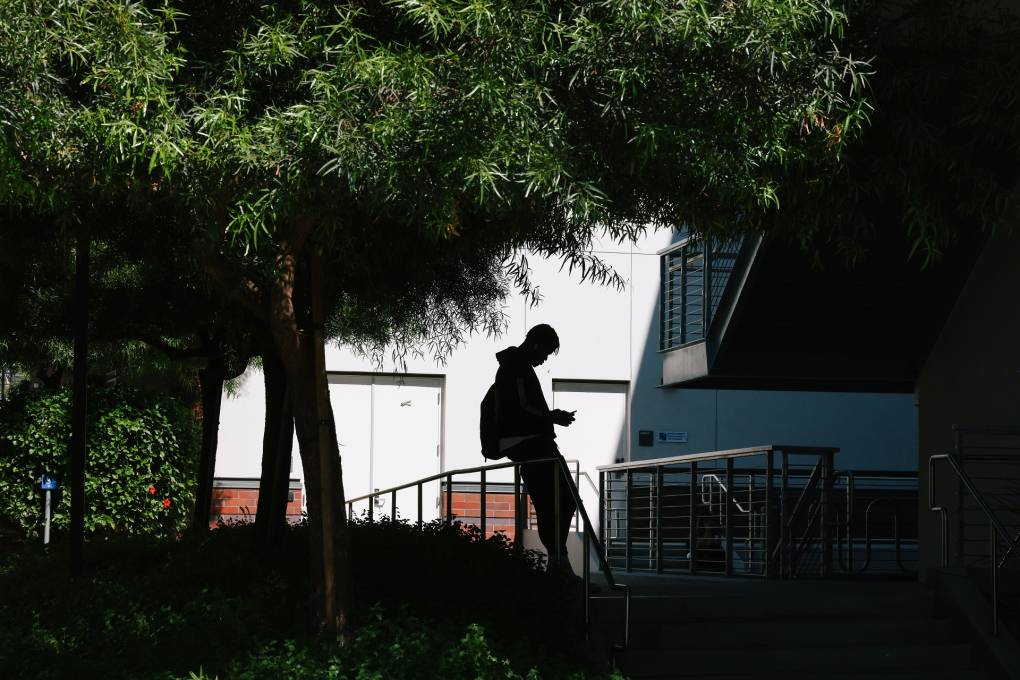
"altTag": "In the shadows under a shady tree, a community college student is seen on their phone. They're wearing a bulky backpack. They're leaning against some staircase rails.",
"isLoading": false,
"fetchFailed": false
},
"news_11956028": {
"type": "attachments",
"id": "news_11956028",
"meta": {
"index": "attachments_1716263798",
"site": "news",
"id": "11956028",
"found": true
},
"title": "Stanford University",
"publishDate": 1689798100,
"status": "inherit",
"parent": 12024203,
"modified": 1739323014,
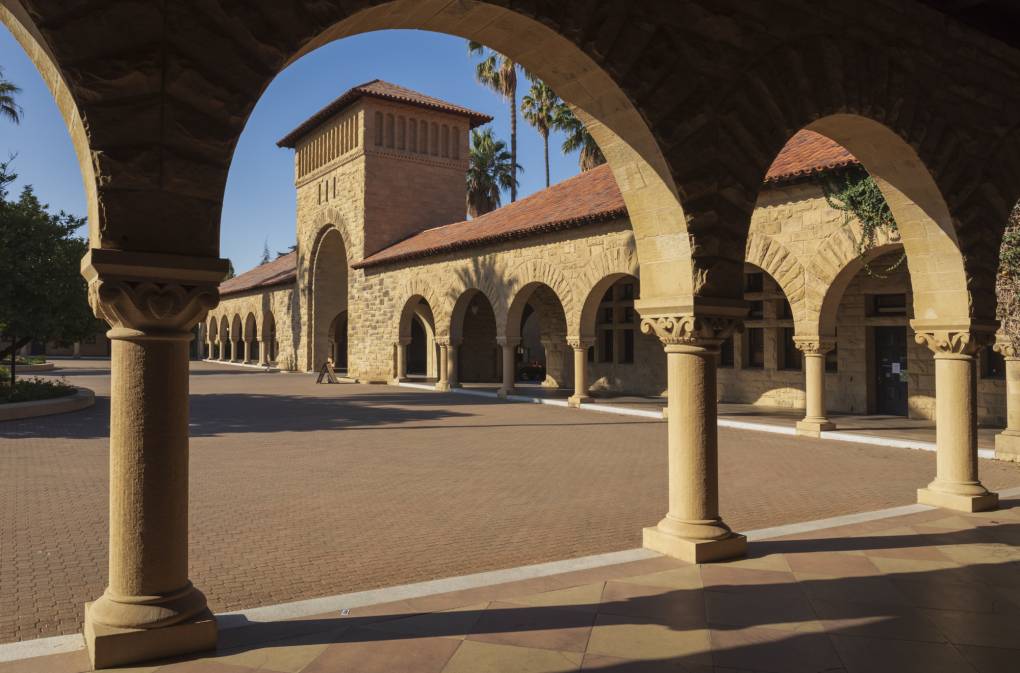
"caption": "The arches of the Main Quadrangle buildings on the campus of Stanford University in Palo Alto on Oct. 2, 2021.",
"credit": "David Madison/Getty Images",
"altTag": "An ornate sandstone-colored building with a series of arches sitting on a brick plaza.",
"description": null,
"imgSizes": {
"medium": {
"file": "https://cdn.kqed.org/wp-content/uploads/sites/10/2023/07/230719-STANFORD-GETTY-DM-KQED-800x528.jpg",
"width": 800,
"height": 528,
"mimeType": "image/jpeg"
},
"large": {
"file": "https://cdn.kqed.org/wp-content/uploads/sites/10/2023/07/230719-STANFORD-GETTY-DM-KQED-1020x673.jpg",
"width": 1020,
"height": 673,
"mimeType": "image/jpeg"
},
"thumbnail": {
"file": "https://cdn.kqed.org/wp-content/uploads/sites/10/2023/07/230719-STANFORD-GETTY-DM-KQED-160x106.jpg",
"width": 160,
"height": 106,
"mimeType": "image/jpeg"
},
"1536x1536": {
"file": "https://cdn.kqed.org/wp-content/uploads/sites/10/2023/07/230719-STANFORD-GETTY-DM-KQED-1536x1014.jpg",
"width": 1536,
"height": 1014,
"mimeType": "image/jpeg"
},
"post-thumbnail": {
"file": "https://cdn.kqed.org/wp-content/uploads/sites/10/2023/07/230719-STANFORD-GETTY-DM-KQED-672x372.jpg",
"width": 672,
"height": 372,
"mimeType": "image/jpeg"
},
"twentyfourteen-full-width": {
"file": "https://cdn.kqed.org/wp-content/uploads/sites/10/2023/07/230719-STANFORD-GETTY-DM-KQED-1038x576.jpg",
"width": 1038,
"height": 576,
"mimeType": "image/jpeg"
},
"full-width": {
"file": "https://cdn.kqed.org/wp-content/uploads/sites/10/2023/07/230719-STANFORD-GETTY-DM-KQED-1920x1267.jpg",
"width": 1920,
"height": 1267,
"mimeType": "image/jpeg"
},
"kqedFullSize": {
"file": "https://cdn.kqed.org/wp-content/uploads/sites/10/2023/07/230719-STANFORD-GETTY-DM-KQED.jpg",
"width": 2000,
"height": 1320
}
},
"isLoading": false,
"fetchFailed": false
},
"news_11955965": {
"type": "attachments",
"id": "news_11955965",
"meta": {
"index": "attachments_1716263798",
"site": "news",
"id": "11955965",
"found": true
},
"parent": 0,
"imgSizes": {
"twentyfourteen-full-width": {
"file": "https://ww2.kqed.org/app/uploads/sites/10/2023/07/230718-SAN-DIEGO-STATE-AP-GB-KQED-1038x576.jpg",
"width": 1038,
"mimeType": "image/jpeg",
"height": 576
},
"thumbnail": {
"file": "https://ww2.kqed.org/app/uploads/sites/10/2023/07/230718-SAN-DIEGO-STATE-AP-GB-KQED-160x107.jpg",
"width": 160,
"mimeType": "image/jpeg",
"height": 107
},
"post-thumbnail": {
"file": "https://ww2.kqed.org/app/uploads/sites/10/2023/07/230718-SAN-DIEGO-STATE-AP-GB-KQED-672x372.jpg",
"width": 672,
"mimeType": "image/jpeg",
"height": 372
},
"kqedFullSize": {
"file": "https://ww2.kqed.org/app/uploads/sites/10/2023/07/230718-SAN-DIEGO-STATE-AP-GB-KQED.jpg",
"width": 2000,
"height": 1333
},
"large": {
"file": "https://ww2.kqed.org/app/uploads/sites/10/2023/07/230718-SAN-DIEGO-STATE-AP-GB-KQED-1020x680.jpg",
"width": 1020,
"mimeType": "image/jpeg",
"height": 680
},
"1536x1536": {
"file": "https://ww2.kqed.org/app/uploads/sites/10/2023/07/230718-SAN-DIEGO-STATE-AP-GB-KQED-1536x1024.jpg",
"width": 1536,
"mimeType": "image/jpeg",
"height": 1024
},
"full-width": {
"file": "https://ww2.kqed.org/app/uploads/sites/10/2023/07/230718-SAN-DIEGO-STATE-AP-GB-KQED-1920x1280.jpg",
"width": 1920,
"mimeType": "image/jpeg",
"height": 1280
},
"medium": {
"file": "https://ww2.kqed.org/app/uploads/sites/10/2023/07/230718-SAN-DIEGO-STATE-AP-GB-KQED-800x533.jpg",
"width": 800,
"mimeType": "image/jpeg",
"height": 533
}
},
"publishDate": 1689724141,
"modified": 1689791687,
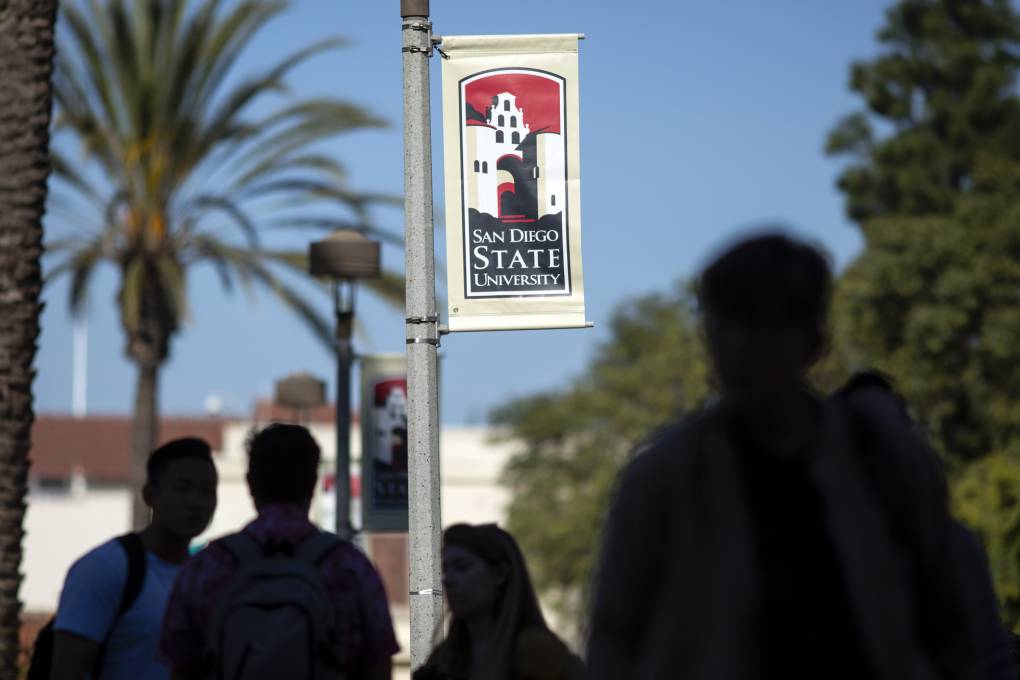
"caption": "People walk on campus at San Diego State University Tuesday, Nov. 12, 2019, in San Diego.",
"description": " SDSU says a freshman who was hospitalized after attending a fraternity party last week has died. University President Adela de la Torre announced Monday that 19-year-old Dylan Hernandez died Sunday, Nov. 10, 2019, surrounded by his family. The university says its police are investigating the death but gave no further details about possible causes.",
"title": "Fraternity Death",
"credit": "Gregory Bull/AP Photo",
"status": "inherit",
"altTag": "A group of people beside a San Diego State University sign on a lamp post.",
"isLoading": false,
"fetchFailed": false
},
"news_11955727": {
"type": "attachments",
"id": "news_11955727",
"meta": {
"index": "attachments_1716263798",
"site": "news",
"id": "11955727",
"found": true
},
"title": "Supreme Courts Rules On Major LGBTQ Case And Strikes Down Biden's Student Loan Forgiveness Plan",
"publishDate": 1689360216,
"status": "inherit",
"parent": 12065967,
"modified": 1765577210,
"caption": "D'Aungilique Jackson, of Fresno, California, holds a \"Cancel Student Debt\" sign outside of the Supreme Court of the United States after the nation's high court struck down President Biden's student debt relief program in Washington, D.C., on June 30, 2023.",
"credit": "Kent Nishimura/Los Angeles Times via Getty Images",
"altTag": "A person with long hair and a black T-shirt holds up a bright yellow sign reading \"Cancel Student Debt\" amidst others doing similar.",
"description": null,
"imgSizes": {
"medium": {
"file": "https://cdn.kqed.org/wp-content/uploads/sites/10/2023/07/230714-SUPREME-COURT-STUDENT-DEBT-Getty-KN-KQED-800x533.jpg",
"width": 800,
"height": 533,
"mimeType": "image/jpeg"
},
"large": {
"file": "https://cdn.kqed.org/wp-content/uploads/sites/10/2023/07/230714-SUPREME-COURT-STUDENT-DEBT-Getty-KN-KQED-1020x680.jpg",
"width": 1020,
"height": 680,
"mimeType": "image/jpeg"
},
"thumbnail": {
"file": "https://cdn.kqed.org/wp-content/uploads/sites/10/2023/07/230714-SUPREME-COURT-STUDENT-DEBT-Getty-KN-KQED-160x107.jpg",
"width": 160,
"height": 107,
"mimeType": "image/jpeg"
},
"1536x1536": {
"file": "https://cdn.kqed.org/wp-content/uploads/sites/10/2023/07/230714-SUPREME-COURT-STUDENT-DEBT-Getty-KN-KQED-1536x1024.jpg",
"width": 1536,
"height": 1024,
"mimeType": "image/jpeg"
},
"post-thumbnail": {
"file": "https://cdn.kqed.org/wp-content/uploads/sites/10/2023/07/230714-SUPREME-COURT-STUDENT-DEBT-Getty-KN-KQED-672x372.jpg",
"width": 672,
"height": 372,
"mimeType": "image/jpeg"
},
"twentyfourteen-full-width": {
"file": "https://cdn.kqed.org/wp-content/uploads/sites/10/2023/07/230714-SUPREME-COURT-STUDENT-DEBT-Getty-KN-KQED-1038x576.jpg",
"width": 1038,
"height": 576,
"mimeType": "image/jpeg"
},
"full-width": {
"file": "https://cdn.kqed.org/wp-content/uploads/sites/10/2023/07/230714-SUPREME-COURT-STUDENT-DEBT-Getty-KN-KQED-1920x1280.jpg",
"width": 1920,
"height": 1280,
"mimeType": "image/jpeg"
},
"kqedFullSize": {
"file": "https://cdn.kqed.org/wp-content/uploads/sites/10/2023/07/230714-SUPREME-COURT-STUDENT-DEBT-Getty-KN-KQED.jpg",
"width": 2000,
"height": 1333
}
},
"isLoading": false,
"fetchFailed": false
},
"news_11955155": {
"type": "attachments",
"id": "news_11955155",
"meta": {
"index": "attachments_1716263798",
"site": "news",
"id": "11955155",
"found": true
},
"parent": 0,
"imgSizes": {
"twentyfourteen-full-width": {
"file": "https://ww2.kqed.org/app/uploads/sites/10/2023/07/230705-SOLAR-CAR-MHN-01-KQED-1038x576.jpg",
"width": 1038,
"mimeType": "image/jpeg",
"height": 576
},
"thumbnail": {
"file": "https://ww2.kqed.org/app/uploads/sites/10/2023/07/230705-SOLAR-CAR-MHN-01-KQED-160x107.jpg",
"width": 160,
"mimeType": "image/jpeg",
"height": 107
},
"post-thumbnail": {
"file": "https://ww2.kqed.org/app/uploads/sites/10/2023/07/230705-SOLAR-CAR-MHN-01-KQED-672x372.jpg",
"width": 672,
"mimeType": "image/jpeg",
"height": 372
},
"kqedFullSize": {
"file": "https://ww2.kqed.org/app/uploads/sites/10/2023/07/230705-SOLAR-CAR-MHN-01-KQED.jpg",
"width": 2000,
"height": 1333
},
"large": {
"file": "https://ww2.kqed.org/app/uploads/sites/10/2023/07/230705-SOLAR-CAR-MHN-01-KQED-1020x680.jpg",
"width": 1020,
"mimeType": "image/jpeg",
"height": 680
},
"1536x1536": {
"file": "https://ww2.kqed.org/app/uploads/sites/10/2023/07/230705-SOLAR-CAR-MHN-01-KQED-1536x1024.jpg",
"width": 1536,
"mimeType": "image/jpeg",
"height": 1024
},
"full-width": {
"file": "https://ww2.kqed.org/app/uploads/sites/10/2023/07/230705-SOLAR-CAR-MHN-01-KQED-1920x1280.jpg",
"width": 1920,
"mimeType": "image/jpeg",
"height": 1280
},
"medium": {
"file": "https://ww2.kqed.org/app/uploads/sites/10/2023/07/230705-SOLAR-CAR-MHN-01-KQED-800x533.jpg",
"width": 800,
"mimeType": "image/jpeg",
"height": 533
}
},
"publishDate": 1688749906,
"modified": 1689378352,
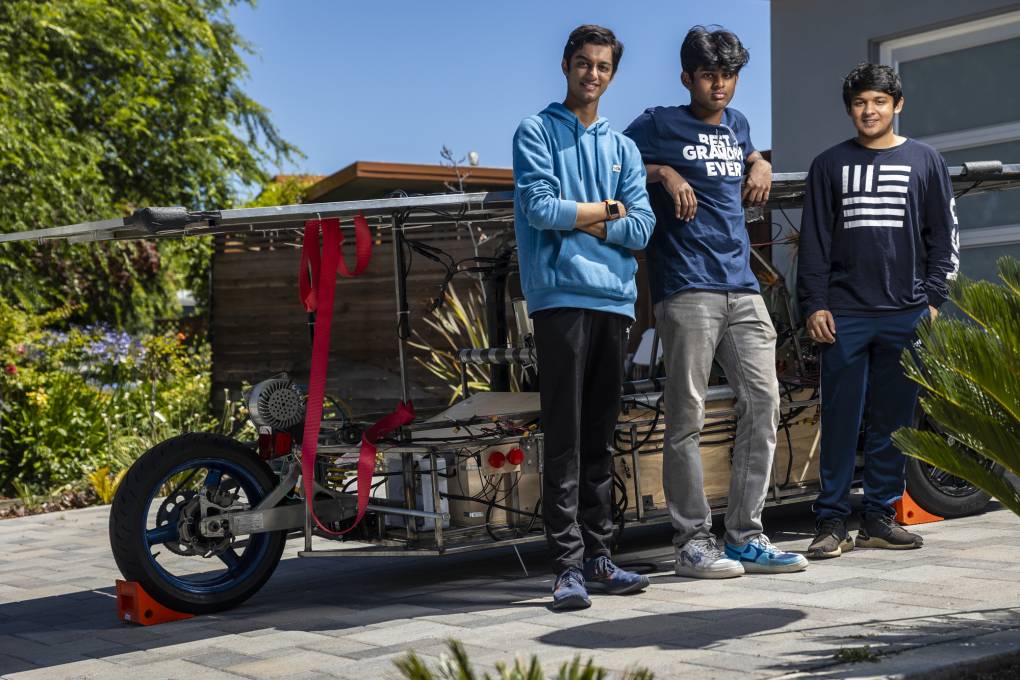
"caption": "Raghav Ranga (left), Alaap Nair (center) and Daniel Alam, members of the Palo Alto High School team competing in the 30th Solar Car Challenge, stand beside the team’s solar-powered car in Palo Alto on July 6, 2023. Ranga, Nair and Alam are the team's drivers, and will drive from Fort Worth, Texas, to Palmdale, California, as part of the challenge.",
"description": null,
"title": "230705-SOLAR CAR-MHN-01-KQED",
"credit": "Martin do Nascimento/KQED",
"status": "inherit",
"altTag": "Three high school students lean against a large metallic structure in the driveway of a home.",
"isLoading": false,
"fetchFailed": false
},
"news_11955400": {
"type": "attachments",
"id": "news_11955400",
"meta": {
"index": "attachments_1716263798",
"site": "news",
"id": "11955400",
"found": true
},
"parent": 11955366,
"imgSizes": {
"twentyfourteen-full-width": {
"file": "https://ww2.kqed.org/app/uploads/sites/10/2023/07/RHS_101-1200x750-1-1038x576.jpg",
"width": 1038,
"mimeType": "image/jpeg",
"height": 576
},
"thumbnail": {
"file": "https://ww2.kqed.org/app/uploads/sites/10/2023/07/RHS_101-1200x750-1-160x100.jpg",
"width": 160,
"mimeType": "image/jpeg",
"height": 100
},
"post-thumbnail": {
"file": "https://ww2.kqed.org/app/uploads/sites/10/2023/07/RHS_101-1200x750-1-672x372.jpg",
"width": 672,
"mimeType": "image/jpeg",
"height": 372
},
"kqedFullSize": {
"file": "https://ww2.kqed.org/app/uploads/sites/10/2023/07/RHS_101-1200x750-1.jpg",
"width": 1200,
"height": 750
},
"large": {
"file": "https://ww2.kqed.org/app/uploads/sites/10/2023/07/RHS_101-1200x750-1-1020x638.jpg",
"width": 1020,
"mimeType": "image/jpeg",
"height": 638
},
"medium": {
"file": "https://ww2.kqed.org/app/uploads/sites/10/2023/07/RHS_101-1200x750-1-800x500.jpg",
"width": 800,
"mimeType": "image/jpeg",
"height": 500
}
},
"publishDate": 1689102351,
"modified": 1689108327,
"caption": "Fifth graders at Redwood Heights Elementary School in Oakland, on Wednesday, June 4, 2014.",
"description": null,
"title": "Redwood Heights Elementary School",
"credit": "Alison Yin/EdSource",
"status": "inherit",
"altTag": "Numbers written in red marker on a small white board. A student is in the foreground holding the red marker.",
"isLoading": false,
"fetchFailed": false
},
"news_11951966": {
"type": "attachments",
"id": "news_11951966",
"meta": {
"index": "attachments_1716263798",
"site": "news",
"id": "11951966",
"found": true
},
"parent": 11951849,
"imgSizes": {
"twentyfourteen-full-width": {
"file": "https://ww2.kqed.org/app/uploads/sites/10/2023/06/RS65953_003_KQED_StanfordGradUnion_05302023-qut-1038x576.jpg",
"width": 1038,
"mimeType": "image/jpeg",
"height": 576
},
"thumbnail": {
"file": "https://ww2.kqed.org/app/uploads/sites/10/2023/06/RS65953_003_KQED_StanfordGradUnion_05302023-qut-160x107.jpg",
"width": 160,
"mimeType": "image/jpeg",
"height": 107
},
"post-thumbnail": {
"file": "https://ww2.kqed.org/app/uploads/sites/10/2023/06/RS65953_003_KQED_StanfordGradUnion_05302023-qut-672x372.jpg",
"width": 672,
"mimeType": "image/jpeg",
"height": 372
},
"kqedFullSize": {
"file": "https://ww2.kqed.org/app/uploads/sites/10/2023/06/RS65953_003_KQED_StanfordGradUnion_05302023-qut.jpg",
"width": 1920,
"height": 1280
},
"large": {
"file": "https://ww2.kqed.org/app/uploads/sites/10/2023/06/RS65953_003_KQED_StanfordGradUnion_05302023-qut-1020x680.jpg",
"width": 1020,
"mimeType": "image/jpeg",
"height": 680
},
"1536x1536": {
"file": "https://ww2.kqed.org/app/uploads/sites/10/2023/06/RS65953_003_KQED_StanfordGradUnion_05302023-qut-1536x1024.jpg",
"width": 1536,
"mimeType": "image/jpeg",
"height": 1024
},
"medium": {
"file": "https://ww2.kqed.org/app/uploads/sites/10/2023/06/RS65953_003_KQED_StanfordGradUnion_05302023-qut-800x533.jpg",
"width": 800,
"mimeType": "image/jpeg",
"height": 533
}
},
"publishDate": 1685655107,
"modified": 1685664597,
"caption": "Chloé Brault, a Ph.D. candidate in comparative literature, stands near Wallenberg Hall on the Stanford campus on May 30, 2023.",
"description": null,
"title": "RS65953_003_KQED_StanfordGradUnion_05302023-qut",
"credit": "Beth LaBerge/KQED",
"status": "inherit",
"altTag": "A woman with long, brown hair stares off into the distance. She stands in an outdoor hallway of a building with chunky pillars. She wears a black T-shirt that reads, \"Stanford Graduate Workers Union.\"",
"isLoading": false,
"fetchFailed": false
},
"news_11955022": {
"type": "attachments",
"id": "news_11955022",
"meta": {
"index": "attachments_1716263798",
"site": "news",
"id": "11955022",
"found": true
},
"parent": 0,
"imgSizes": {
"twentyfourteen-full-width": {
"file": "https://ww2.kqed.org/app/uploads/sites/10/2023/07/SummerCamps01-1-1038x576.jpg",
"width": 1038,
"mimeType": "image/jpeg",
"height": 576
},
"thumbnail": {
"file": "https://ww2.kqed.org/app/uploads/sites/10/2023/07/SummerCamps01-1-160x106.jpg",
"width": 160,
"mimeType": "image/jpeg",
"height": 106
},
"post-thumbnail": {
"file": "https://ww2.kqed.org/app/uploads/sites/10/2023/07/SummerCamps01-1-672x372.jpg",
"width": 672,
"mimeType": "image/jpeg",
"height": 372
},
"kqedFullSize": {
"file": "https://ww2.kqed.org/app/uploads/sites/10/2023/07/SummerCamps01-1.jpg",
"width": 1920,
"height": 1268
},
"large": {
"file": "https://ww2.kqed.org/app/uploads/sites/10/2023/07/SummerCamps01-1-1020x674.jpg",
"width": 1020,
"mimeType": "image/jpeg",
"height": 674
},
"1536x1536": {
"file": "https://ww2.kqed.org/app/uploads/sites/10/2023/07/SummerCamps01-1-1536x1014.jpg",
"width": 1536,
"mimeType": "image/jpeg",
"height": 1014
},
"medium": {
"file": "https://ww2.kqed.org/app/uploads/sites/10/2023/07/SummerCamps01-1-800x528.jpg",
"width": 800,
"mimeType": "image/jpeg",
"height": 528
}
},
"publishDate": 1688585838,
"modified": 1688588048,
"caption": "A group of young students participate in a science experiment learning about gases at a UCSF summer camp on Tuesday, Aug. 16, 2011, in San Francisco.",
"description": null,
"title": "summer-camp-near-me",
"credit": "Michael Macor/The San Francisco Chronicle via Getty Images",
"status": "inherit",
"altTag": "A group of four elementary school-aged girls are wearing white lab coats, clear goggles as they participate in a science experiment with styrofoam cups, balloons and air. A box of Crayola crayons are scattered on the table. The little girls' lab papers are also on the table.",
"isLoading": false,
"fetchFailed": false
},
"news_11954796": {
"type": "attachments",
"id": "news_11954796",
"meta": {
"index": "attachments_1716263798",
"site": "news",
"id": "11954796",
"found": true
},
"parent": 0,
"imgSizes": {
"twentyfourteen-full-width": {
"file": "https://ww2.kqed.org/app/uploads/sites/10/2023/06/230630-UC-BERKELEY-GETTY-JS-KQED-1038x576.jpg",
"width": 1038,
"mimeType": "image/jpeg",
"height": 576
},
"thumbnail": {
"file": "https://ww2.kqed.org/app/uploads/sites/10/2023/06/230630-UC-BERKELEY-GETTY-JS-KQED-160x107.jpg",
"width": 160,
"mimeType": "image/jpeg",
"height": 107
},
"post-thumbnail": {
"file": "https://ww2.kqed.org/app/uploads/sites/10/2023/06/230630-UC-BERKELEY-GETTY-JS-KQED-672x372.jpg",
"width": 672,
"mimeType": "image/jpeg",
"height": 372
},
"kqedFullSize": {
"file": "https://ww2.kqed.org/app/uploads/sites/10/2023/06/230630-UC-BERKELEY-GETTY-JS-KQED.jpg",
"width": 2000,
"height": 1333
},
"large": {
"file": "https://ww2.kqed.org/app/uploads/sites/10/2023/06/230630-UC-BERKELEY-GETTY-JS-KQED-1020x680.jpg",
"width": 1020,
"mimeType": "image/jpeg",
"height": 680
},
"1536x1536": {
"file": "https://ww2.kqed.org/app/uploads/sites/10/2023/06/230630-UC-BERKELEY-GETTY-JS-KQED-1536x1024.jpg",
"width": 1536,
"mimeType": "image/jpeg",
"height": 1024
},
"full-width": {
"file": "https://ww2.kqed.org/app/uploads/sites/10/2023/06/230630-UC-BERKELEY-GETTY-JS-KQED-1920x1280.jpg",
"width": 1920,
"mimeType": "image/jpeg",
"height": 1280
},
"medium": {
"file": "https://ww2.kqed.org/app/uploads/sites/10/2023/06/230630-UC-BERKELEY-GETTY-JS-KQED-800x533.jpg",
"width": 800,
"mimeType": "image/jpeg",
"height": 533
}
},
"publishDate": 1688153411,
"modified": 1688163511,
"caption": "People walk by Wheeler Hall at the UC Berkeley campus on March 14, 2022 in Berkeley.",
"description": null,
"title": "California Universities In A Legal Bind Amid Student Housing Shortage",
"credit": "Justin Sullivan/Getty Images",
"status": "inherit",
"altTag": "People walk by Wheeler Hall on the UC Berkeley campus on March 14, 2022 in Berkeley, California.",
"isLoading": false,
"fetchFailed": false
},
"news_11954671": {
"type": "attachments",
"id": "news_11954671",
"meta": {
"index": "attachments_1716263798",
"site": "news",
"id": "11954671",
"found": true
},
"parent": 11954612,
"imgSizes": {
"twentyfourteen-full-width": {
"file": "https://ww2.kqed.org/app/uploads/sites/10/2023/06/AP23180684729490-1038x576.jpg",
"width": 1038,
"mimeType": "image/jpeg",
"height": 576
},
"thumbnail": {
"file": "https://ww2.kqed.org/app/uploads/sites/10/2023/06/AP23180684729490-160x107.jpg",
"width": 160,
"mimeType": "image/jpeg",
"height": 107
},
"post-thumbnail": {
"file": "https://ww2.kqed.org/app/uploads/sites/10/2023/06/AP23180684729490-672x372.jpg",
"width": 672,
"mimeType": "image/jpeg",
"height": 372
},
"kqedFullSize": {
"file": "https://ww2.kqed.org/app/uploads/sites/10/2023/06/AP23180684729490-scaled.jpg",
"width": 2560,
"height": 1707
},
"2048x2048": {
"file": "https://ww2.kqed.org/app/uploads/sites/10/2023/06/AP23180684729490-2048x1365.jpg",
"width": 2048,
"mimeType": "image/jpeg",
"height": 1365
},
"large": {
"file": "https://ww2.kqed.org/app/uploads/sites/10/2023/06/AP23180684729490-1020x680.jpg",
"width": 1020,
"mimeType": "image/jpeg",
"height": 680
},
"1536x1536": {
"file": "https://ww2.kqed.org/app/uploads/sites/10/2023/06/AP23180684729490-1536x1024.jpg",
"width": 1536,
"mimeType": "image/jpeg",
"height": 1024
},
"full-width": {
"file": "https://ww2.kqed.org/app/uploads/sites/10/2023/06/AP23180684729490-1920x1280.jpg",
"width": 1920,
"mimeType": "image/jpeg",
"height": 1280
},
"medium": {
"file": "https://ww2.kqed.org/app/uploads/sites/10/2023/06/AP23180684729490-800x533.jpg",
"width": 800,
"mimeType": "image/jpeg",
"height": 533
}
},
"publishDate": 1688078964,
"modified": 1688080499,
"caption": "Supporters of affirmative action protest outside of the US Supreme Court in Washington, DC on Thursday, June 29, 2023. The high court on Thursday struck down affirmative action in college admissions decisions, ruling that race cannot be a factor, forcing institutions of higher education to look for new ways to achieve diverse student bodies.",
"description": null,
"title": "Supreme Court Affirmative Action",
"credit": "Jose Luis Magana/AP",
"status": "inherit",
"altTag": "Supporters of affirmative action hold signs and rally in front of the U.S. Supreme Court. One sign says: 'We won't go back.'",
"isLoading": false,
"fetchFailed": false
},
"news_11954404": {
"type": "attachments",
"id": "news_11954404",
"meta": {
"index": "attachments_1716263798",
"site": "news",
"id": "11954404",
"found": true
},
"parent": 11954194,
"imgSizes": {
"twentyfourteen-full-width": {
"file": "https://ww2.kqed.org/app/uploads/sites/10/2023/06/Oak_Tech_011-1200x750-1-1038x576.jpeg",
"width": 1038,
"mimeType": "image/jpeg",
"height": 576
},
"thumbnail": {
"file": "https://ww2.kqed.org/app/uploads/sites/10/2023/06/Oak_Tech_011-1200x750-1-160x100.jpeg",
"width": 160,
"mimeType": "image/jpeg",
"height": 100
},
"post-thumbnail": {
"file": "https://ww2.kqed.org/app/uploads/sites/10/2023/06/Oak_Tech_011-1200x750-1-672x372.jpeg",
"width": 672,
"mimeType": "image/jpeg",
"height": 372
},
"kqedFullSize": {
"file": "https://ww2.kqed.org/app/uploads/sites/10/2023/06/Oak_Tech_011-1200x750-1.jpeg",
"width": 1200,
"height": 750
},
"large": {
"file": "https://ww2.kqed.org/app/uploads/sites/10/2023/06/Oak_Tech_011-1200x750-1-1020x638.jpeg",
"width": 1020,
"mimeType": "image/jpeg",
"height": 638
},
"medium": {
"file": "https://ww2.kqed.org/app/uploads/sites/10/2023/06/Oak_Tech_011-1200x750-1-800x500.jpeg",
"width": 800,
"mimeType": "image/jpeg",
"height": 500
}
},
"publishDate": 1687985237,
"modified": 1687985341,
"caption": "Students at Oakland Technical High School. About 133,000 students in California attend alternative schools.",
"description": null,
"title": "Oakland Tech",
"credit": "Alison Yin/EdSource",
"status": "inherit",
"altTag": "A handful of teenagers of different ethnicities are walking up a small set of concrete stairs, with a couple of them walking down the stairs",
"isLoading": false,
"fetchFailed": false
}
},
"audioPlayerReducer": {
"postId": "stream_live",
"isPaused": true,
"isPlaying": false,
"pfsActive": false,
"pledgeModalIsOpen": true,
"playerDrawerIsOpen": false,
"liveAudioPlayStartedAt": 0,
"liveAudioPlayContext": ""
},
"authorsReducer": {
"byline_news_11956472": {
"type": "authors",
"id": "byline_news_11956472",
"meta": {
"override": true
},
"slug": "byline_news_11956472",
"name": "\u003ca href=\"https://edsource.org/author/kdsouza\">Karen D'Souza\u003c/a>",
"isLoading": false
},
"byline_news_11956322": {
"type": "authors",
"id": "byline_news_11956322",
"meta": {
"override": true
},
"slug": "byline_news_11956322",
"name": "\u003ca href=\"https://edsource.org/2023/transferring-from-california-community-colleges-its-a-tough-road-edsource-survey-finds/693791\">Ashley A. Smith and Michael Burke\u003c/a>",
"isLoading": false
},
"byline_news_11955994": {
"type": "authors",
"id": "byline_news_11955994",
"meta": {
"override": true
},
"slug": "byline_news_11955994",
"name": "\u003ca href=\"https://apnews.com/\">Janie Har\u003c/a>\u003cbr> The Associated Press",
"isLoading": false
},
"byline_news_11955960": {
"type": "authors",
"id": "byline_news_11955960",
"meta": {
"override": true
},
"slug": "byline_news_11955960",
"name": "\u003ca href=\"https://edsource.org/author/asmith\">Ashley A. Smith\u003c/a>",
"isLoading": false
},
"byline_news_11955366": {
"type": "authors",
"id": "byline_news_11955366",
"meta": {
"override": true
},
"slug": "byline_news_11955366",
"name": "John Fensterwald ",
"isLoading": false
},
"byline_news_11954995": {
"type": "authors",
"id": "byline_news_11954995",
"meta": {
"override": true
},
"slug": "byline_news_11954995",
"name": "\u003ca href=\"https://www.kqed.org/author/nkhan\">Nisa Khan\u003c/a> and \u003ca href=\"https://www.kqed.org/author/gwon\">Grace Won\u003c/a>",
"isLoading": false
},
"byline_news_11954761": {
"type": "authors",
"id": "byline_news_11954761",
"meta": {
"override": true
},
"slug": "byline_news_11954761",
"name": "\u003ca href=\"https://edsource.org/author/mburke\">Michael Burke\u003c/a>",
"isLoading": false
},
"byline_news_11954194": {
"type": "authors",
"id": "byline_news_11954194",
"meta": {
"override": true
},
"slug": "byline_news_11954194",
"name": "\u003ca href=\"https://edsource.org/author/bmarquez\">Betty Márquez Rosales\u003c/a>",
"isLoading": false
},
"carlysevern": {
"type": "authors",
"id": "3243",
"meta": {
"index": "authors_1716337520",
"id": "3243",
"found": true
},
"name": "Carly Severn",
"firstName": "Carly",
"lastName": "Severn",
"slug": "carlysevern",
"email": "csevern@kqed.org",
"display_author_email": false,
"staff_mastheads": [
"news"
],
"title": "Senior Editor, Audience News ",
"bio": "Carly is KQED's Senior Editor of Audience News on the Digital News team, and has reported for the California Report Magazine, Bay Curious and KQED Arts. She's formerly the host of \u003ca href=\"http://ww2.kqed.org/pop/category/the-cooler/\" rel=\"noopener noreferrer\">The Cooler\u003c/a> podcast.",
"avatar": "https://secure.gravatar.com/avatar/54037bf5c128fe678f0ef26cec97a93f2e7f220a22d7285703328f12c42c1b1d?s=600&d=blank&r=g",
"twitter": "teacupinthebay",
"bluesky": null,
"facebook": null,
"instagram": null,
"linkedin": null,
"sites": [
{
"site": "",
"roles": [
"editor"
]
},
{
"site": "arts",
"roles": [
"editor"
]
},
{
"site": "news",
"roles": [
"administrator"
]
},
{
"site": "pop",
"roles": [
"editor"
]
},
{
"site": "futureofyou",
"roles": [
"editor"
]
},
{
"site": "about",
"roles": [
"administrator"
]
},
{
"site": "mindshift",
"roles": [
"editor"
]
},
{
"site": "bayareabites",
"roles": [
"editor"
]
},
{
"site": "stateofhealth",
"roles": [
"editor"
]
},
{
"site": "science",
"roles": [
"editor"
]
},
{
"site": "food",
"roles": [
"contributor"
]
},
{
"site": "forum",
"roles": [
"editor"
]
},
{
"site": "perspectives",
"roles": [
"administrator"
]
},
{
"site": "liveblog",
"roles": [
"editor"
]
}
],
"headData": {
"title": "Carly Severn | KQED",
"description": "Senior Editor, Audience News ",
"ogImgSrc": "https://secure.gravatar.com/avatar/54037bf5c128fe678f0ef26cec97a93f2e7f220a22d7285703328f12c42c1b1d?s=600&d=blank&r=g",
"twImgSrc": "https://secure.gravatar.com/avatar/54037bf5c128fe678f0ef26cec97a93f2e7f220a22d7285703328f12c42c1b1d?s=600&d=blank&r=g"
},
"isLoading": false,
"link": "/author/carlysevern"
},
"hmcdede": {
"type": "authors",
"id": "11635",
"meta": {
"index": "authors_1716337520",
"id": "11635",
"found": true
},
"name": "Holly McDede",
"firstName": "Holly",
"lastName": "McDede",
"slug": "hmcdede",
"email": "hmcdede@KQED.org",
"display_author_email": false,
"staff_mastheads": [],
"title": "KQED Contributor",
"bio": null,
"avatar": "https://secure.gravatar.com/avatar/35d1a1f5422c9d266f7ace9348d170f2136671a65fffc90a592e4d7fbf8dc3f6?s=600&d=blank&r=g",
"twitter": null,
"bluesky": null,
"facebook": null,
"instagram": null,
"linkedin": null,
"sites": [
{
"site": "arts",
"roles": [
"editor"
]
},
{
"site": "news",
"roles": [
"edit_others_posts",
"editor"
]
},
{
"site": "science",
"roles": [
"editor"
]
},
{
"site": "forum",
"roles": [
"editor"
]
},
{
"site": "perspectives",
"roles": [
"administrator"
]
}
],
"headData": {
"title": "Holly McDede | KQED",
"description": "KQED Contributor",
"ogImgSrc": "https://secure.gravatar.com/avatar/35d1a1f5422c9d266f7ace9348d170f2136671a65fffc90a592e4d7fbf8dc3f6?s=600&d=blank&r=g",
"twImgSrc": "https://secure.gravatar.com/avatar/35d1a1f5422c9d266f7ace9348d170f2136671a65fffc90a592e4d7fbf8dc3f6?s=600&d=blank&r=g"
},
"isLoading": false,
"link": "/author/hmcdede"
},
"sjohnson": {
"type": "authors",
"id": "11840",
"meta": {
"index": "authors_1716337520",
"id": "11840",
"found": true
},
"name": "Sydney Johnson",
"firstName": "Sydney",
"lastName": "Johnson",
"slug": "sjohnson",
"email": "sjohnson@kqed.org",
"display_author_email": false,
"staff_mastheads": [
"news"
],
"title": "KQED Reporter",
"bio": "Sydney Johnson is a general assignment reporter at KQED. She previously reported on public health and city government at the San Francisco Examiner, and before that, she covered statewide education policy for EdSource. Her reporting has won multiple local, state and national awards. Sydney is a graduate of the University of California, Berkeley and lives in San Francisco.",
"avatar": "https://secure.gravatar.com/avatar/97855f2719b72ad6190b7c535fe642c8?s=600&d=blank&r=g",
"twitter": "sydneyfjohnson",
"facebook": null,
"instagram": null,
"linkedin": null,
"sites": [
{
"site": "news",
"roles": [
"editor"
]
}
],
"headData": {
"title": "Sydney Johnson | KQED",
"description": "KQED Reporter",
"ogImgSrc": "https://secure.gravatar.com/avatar/97855f2719b72ad6190b7c535fe642c8?s=600&d=blank&r=g",
"twImgSrc": "https://secure.gravatar.com/avatar/97855f2719b72ad6190b7c535fe642c8?s=600&d=blank&r=g"
},
"isLoading": false,
"link": "/author/sjohnson"
},
"kmonahan": {
"type": "authors",
"id": "11842",
"meta": {
"index": "authors_1716337520",
"id": "11842",
"found": true
},
"name": "Katherine Monahan",
"firstName": "Katherine",
"lastName": "Monahan",
"slug": "kmonahan",
"email": "kmonahan@kqed.org",
"display_author_email": true,
"staff_mastheads": [],
"title": "Reporter / Sound Engineer",
"bio": "I cover state and local news. I’m also a sound engineer at the station, mixing stories and running live broadcasts. I link to source materials so that readers can draw their own conclusions, and seek comment from a range of perspectives, including from people directly affected by events. Awards received include from the Society of Professional Journalists, Northern California chapter and the Alaska Press Club. I speak multiple languages and have reported and engineered in the Bay Area, Alaska, West Africa and Latin America.",
"avatar": "https://secure.gravatar.com/avatar/ff257b3a5da88893781a3d3266904b2d2f91c7f0e1bbf728f61f5fb81b74a669?s=600&d=blank&r=g",
"twitter": null,
"bluesky": null,
"facebook": null,
"instagram": null,
"linkedin": null,
"sites": [
{
"site": "news",
"roles": [
"editor"
]
},
{
"site": "science",
"roles": [
"contributor"
]
}
],
"headData": {
"title": "Katherine Monahan | KQED",
"description": "Reporter / Sound Engineer",
"ogImgSrc": "https://secure.gravatar.com/avatar/ff257b3a5da88893781a3d3266904b2d2f91c7f0e1bbf728f61f5fb81b74a669?s=600&d=blank&r=g",
"twImgSrc": "https://secure.gravatar.com/avatar/ff257b3a5da88893781a3d3266904b2d2f91c7f0e1bbf728f61f5fb81b74a669?s=600&d=blank&r=g"
},
"isLoading": false,
"link": "/author/kmonahan"
}
},
"pagesReducer": {
"news_category_education": {
"type": "terms",
"id": "news_18540",
"meta": {
"index": "terms_1716263798",
"site": "news",
"id": "18540",
"score": 10.973221
},
"featImg": null,
"name": "Education",
"description": null,
"taxonomy": "category",
"headData": {
"twImgId": null,
"twTitle": null,
"ogTitle": null,
"ogImgId": null,
"twDescription": null,
"description": null,
"title": "Education Archives | KQED News",
"ogDescription": null
},
"ttid": 2595,
"slug": "education",
"isLoading": false,
"title": "Education",
"pageMeta": {
"site": "news",
"WpPageTemplate": "page-topic-editorial",
"currentPage": 60
},
"blocks": [
{
"blockName": "kqed/post-list",
"attrs": {
"layout": "cardArticle2",
"query": "posts/news?category=education",
"seeMore": false,
"paginated": true,
"page": 60
}
},
{
"blockName": "kqed/ad"
}
]
}
},
"pfsSessionReducer": {},
"postsReducer": {
"stream_live": {
"type": "live",
"id": "stream_live",
"audioUrl": "https://streams.kqed.org/kqedradio",
"title": "Live Stream",
"excerpt": "Live Stream information currently unavailable.",
"link": "/radio",
"featImg": "",
"label": {
"name": "KQED Live",
"link": "/"
}
},
"stream_kqedNewscast": {
"type": "posts",
"id": "stream_kqedNewscast",
"audioUrl": "https://www.kqed.org/.stream/anon/radio/RDnews/newscast.mp3?_=1",
"title": "KQED Newscast",
"featImg": "",
"label": {
"name": "88.5 FM",
"link": "/"
}
},
"news_11956472": {
"type": "posts",
"id": "news_11956472",
"meta": {
"index": "posts_1716263798",
"site": "news",
"id": "11956472",
"score": null,
"sort": [
1690326441000
]
},
"guestAuthors": [],
"slug": "california-educators-brainstorm-new-arts-education-plans-after-funding-increase",
"title": "California Educators Brainstorm New Arts Education Plans After Funding Increase",
"publishDate": 1690326441,
"format": "standard",
"headTitle": "California Educators Brainstorm New Arts Education Plans After Funding Increase | KQED",
"labelTerm": {},
"content": "\u003cp>Amid a \u003ca href=\"https://www.washingtonpost.com/education/2023/07/19/teaching-instruction-pandemic-scores/\">national reckoning\u003c/a> over the deepening achievement gaps caused by the pandemic, arts education may be one of the keys to boosting children’s engagement in school, \u003ca href=\"https://onlinelibrary.wiley.com/doi/10.1002/pam.22449\">research suggests\u003c/a>. Like sports, the arts can spark the kind of excitement that makes students, and their families, look forward to coming to school. Both realms tap deeply into the primal impulse to play and learn.\u003c/p>\n\u003cp>“Children are already artists in many ways,” said Allison Gamlen, visual and performing arts coordinator for the San Mateo County Office of Education. “They already kind of know what to do. If you give a bunch of 6-year-olds musical instruments, they’re going to know what to do. They just can jam more than adults can.”[pullquote size=\"medium\" align=\"right\" citation=\"Rush Rehm, professor of drama and classics, Stanford University\"]‘Encouraging students from an early age to explore their creative interests can set them up for a life that recognizes the arts as an essential part of life, both as a means of expression and of understanding the world.’[/pullquote]The need to ignite that innate creativity is why principals, superintendents and arts educators across the state are brainstorming new and expanded arts education plans in the wake of \u003ca href=\"https://edsource.org/2023/arts-education-funding-in-california-how-will-proposition-28-roll-out/685800\">Proposition 28\u003c/a>, which guarantees an annual funding stream for music and arts education that equals 1% of the state’s general fund spending on K–12 — roughly $1 billion this year. This \u003ca href=\"https://edsource.org/2023/prop-28-a-windfall-for-arts-education-but-implementation-poses-challenges/692858\">game-changing legislation\u003c/a> means that the arts can be more than a luxury enjoyed by the privileged few who can afford it. It can be a source of discovery and joy for all students.\u003c/p>\n\u003cp>“Encouraging students from an early age to explore their creative interests can set them up for a life that recognizes the arts as an essential part of life, both as a means of expression and of understanding the world,” said Rush Rehm, professor of drama and classics at Stanford. “Education should provide the basic skills one needs to survive in an imperfect world. But living is more than surviving, and for that reason funding the arts makes good, common sense. That is, if one has any hope of making the world a little less imperfect.”\u003c/p>\n\u003cp>Bolstered by this infusion of arts funding, which is \u003ca href=\"https://www.cde.ca.gov/eo/in/prop28artsandmusicedfundingfaq.asp\">currently expected to arrive\u003c/a> late this fall, some schools are launching something big in the 2023–24 school year while others are planning ahead and setting the stage for new programs. Schools can accumulate funds over three years toward a bigger goal. Other principals, particularly those who have long championed the power of the arts to transform children’s lives, are eager to raise the curtain on new programs.\u003c/p>\n\u003cp>Take Chris Read, the principal of San Pablo’s E.M. Downer Elementary School. He’s a true believer in arts education as a tool to spark student engagement. That’s why he’s spending money out of his tight budget to pay roughly half the cost of a full-time arts teacher and using his Proposition 28 allotment to pick up the other half of the tab. Over the years, he has come to see the pivotal role arts education can play in a student’s personal development, a view buttressed by \u003ca href=\"https://www.amacad.org/sites/default/files/publication/downloads/2021-Art-for-Lifes-Sake.pdf\">exhaustive research (PDF)\u003c/a>.\u003c/p>\n\u003cp>[ad fullwidth]\u003c/p>\n\u003cp>“The impact will be great within a number of areas,” Read said. “Mainly with skills in problem-solving, critical thinking, creativity, social-emotional learning, physical or emotional trauma and with enhancing social skills. We have tried to introduce or give different art experiences or opportunities in all the art disciplines.”\u003c/p>\n\u003cp>In fact, it’s far more important to him that his students have exposure to the arts at large than any particular craft or discipline. Given the state’s teacher shortage, which worsened during the pandemic, he is not pursuing an artist whose specific expertise might speak to his students, instead searching high and low for the right individual, the arts educator whose personality and character best clicks with his school.\u003c/p>\n\u003cp>“We are wanting to offer the position to the best candidate in whatever medium they are best at,” Read said. “We’d rather have the best possible candidate to support our learners because we believe all of the arts are important.”[aside postID=\"news_11954066,news_11928837,news_11934191\" label=\"Related Stories\"]The readiness is all, as Shakespeare put it. Planning ahead may be the key to making the most of the funds on the table, experts say. After decades of cutting and scrimping, arts educators finally have money to spend. It should be noted, however, that \u003ca href=\"https://createca.org/create-cas-request-to-cde-for-urgent-staffing-and-guidance-about-prop-28/\">many arts advocates\u003c/a> feel the California Department of Education, \u003ca href=\"https://www.cde.ca.gov/eo/in/prop28artsandmusicedfundingfaq.asp\">which is administering the program\u003c/a>, has yet to provide sufficient guidance regarding the rules of implementation, perhaps due to lack of staff.\u003c/p>\n\u003cp>“It’s awesome and amazing, and we need it so badly,” Gamlen said. “There is solid arts funding coming for the first time that I can remember. Arts programs and electives are often the first thing on the cutting board, although they’re so crucial to student well-being.”\u003c/p>\n\u003cp>Her advice to schools is to first take the temperature of their community to see what parents, students and teachers are most passionate about, whether it’s high-tech animation or ancient Indian dance, and then dig in with serious planning.\u003c/p>\n\u003cp>“I do hope that parents and community members can join in and share their voices and tell schools what they would like to see,” Gamlen said. “We’re trying to encourage districts to go slow and have a plan. Have a one-year, five-year, 10-year plan. This money is coming in perpetuity.”\u003c/p>\n\u003cp>Some schools are going all in with a single artistic discipline that resonates most deeply with their students. The Pacifica school district, for example, plans to strike up the band, using Proposition 28 funds to have music embedded throughout the K–8 curriculum, she said.\u003c/p>\n\u003cp>“It’s a sequential music program,” Gamlen said. “Kids will finish second grade and they’ll know how to do X, Y and Z. And their third grade music teacher will know that and can take them further. I appreciate that they are going deep with one art form.”\u003c/p>\n\u003cp>Fillmore Rydeen, who is visual and performing arts director at Oakland Unified, notes that the OUSD already has a robust arts program, including music and dance, so that makes it more complicated to hammer out a plan than a school that previously had no arts at all. He is advising principals to begin planning but cautions against moving too hastily.\u003c/p>\n\u003cp>“There are a lot of different circumstances the principal may want to think about when they’re doing this,” he said. “What do you have currently? What would you like to add to it? Where does it make sense to add, and does that addition actually give more kids art?”\u003c/p>\n\u003cp>With only about 5,000 credentialed arts teachers in the state and a need for roughly 15,000, some warn of a coming arts teacher shortage. While some schools may tap working artists, as opposed to credentialed arts teachers, to flesh out their new programs, some say that may also create complications. For example, working artists may come into the classroom to teach their expertise, say, script writing or sculpture, as \u003ca href=\"https://cacountyarts.org/wp-content/uploads/California-County-Superintendents-Teacher-Brief.pdf\">classified staff (PDF)\u003c/a>, but the classroom teacher also needs to be present.\u003c/p>\n\u003cp>“Where are we going to get the people to fill these positions, and if we fill the positions with unqualified people, how do we support them?” Rydeen said. “If you have no teaching credential, no teaching experience, but we put you in front of a classroom, sometimes it works out. But oftentimes folks struggle.”\u003c/p>\n\u003cp>By contrast, San Diego Unified, which also already has a vibrant arts education program, is planning to hire enough teachers to expand its arts program in five different genres: dance, music, theater, visual art and media arts.\u003c/p>\n\u003cp>“The new funding will be transformative because we are expanding all five programs,” said Anne Fennell, K–12 music program manager for San Diego Unified, “so that more students can have the arts as well as meeting the students’ needs in the arts classes that they want to study.”\u003c/p>\n\u003cp>Like a work of art, experts say it may well take time to craft and then fine-tune an arts ed plan.\u003c/p>\n\u003cp>“The classes should reflect what the students want and what the families want,” said Gamlen, “and what they want might be really different from what the school principals want.”\u003c/p>\n\u003cp>It’s also likely that the needs and wants of the student body will evolve over time. One cohort of students may be drawn to digital arts, another to dance. That’s why experts say most arts ed plans will be a moving target.\u003c/p>\n\u003cp>The therapeutic power of movement is one thing Gamlen hopes educators will consider as they explore their options in arts education. Sitting still for most of the day is trying for many children — particularly in the post-pandemic era. After months of online studies during the shutdown, many students struggle to focus in in-person school, and physical activity may be a balm for the anxious ones.\u003c/p>\n\u003cp>“Dance might feel extra to some administrators, but it’s such a great way to teach musicality and rhythm, and it can also be really culturally relevant to students,” Gamlen said. “It’s a way to teach history, and it’s very physical. Students with disabilities and English language learners can access dance in a different way than some of their other classes that might be much more verbal or text dependent.”\u003c/p>\n\u003cp>Many arts advocates suggest that the myriad challenges of launching a new program will almost certainly pay off in higher student engagement, which may be critical to \u003ca href=\"https://www.washingtonpost.com/education/2023/07/19/teaching-instruction-pandemic-scores/\">boosting lackluster pandemic recovery efforts\u003c/a>.\u003c/p>\n\u003cp>The restorative nature of the arts — giving children permission to express themselves against the backdrop of the alarming \u003ca href=\"https://www.hhs.gov/about/news/2023/05/23/surgeon-general-issues-new-advisory-about-effects-social-media-use-has-youth-mental-health.html\">youth mental health crisis\u003c/a> — may help spark joy in a generation traumatized by the stress and strain of the last few years.\u003c/p>\n\u003cp>“Joy is fundamental to the learning process,” said Shantel Meek, founding director of the Children’s Equity Project, an advocacy/research organization based at Arizona State University. “First, it’s critical for establishing intrinsic motivation for learning and associating positive feelings with school. Second, it’s important for mental health. Kids have been through a lot. Kids are still going through a lot. It is important for kids to feel joy in school because they are humans, and they deserve to feel joy in a place where they are spending much of their waking hours, like we all do.”\u003c/p>\n\u003cp>[ad floatright]\u003c/p>\n\u003cp>\u003cem>\u003ca href=\"https://edsource.org/2023/behind-the-scenes-californias-new-arts-education-plans/694383\">This story originally appeared in EdSource.\u003c/a>\u003c/em>\u003c/p>\n\n",
"blocks": [],
"excerpt": "Amid a national reckoning over the deepening achievement gaps caused by the pandemic, arts education may be one of the keys to boosting children's engagement in school, research suggests.",
"status": "publish",
"parent": 0,
"modified": 1721134960,
"stats": {
"hasAudio": false,
"hasVideo": false,
"hasChartOrMap": false,
"iframeSrcs": [],
"hasGoogleForm": false,
"hasGallery": false,
"hasHearkenModule": false,
"hasPolis": false,
"paragraphCount": 30,
"wordCount": 1863
},
"headData": {
"title": "California Educators Brainstorm New Arts Education Plans After Funding Increase | KQED",
"description": "Amid a national reckoning over the deepening achievement gaps caused by the pandemic, arts education may be one of the keys to boosting children's engagement in school, research suggests.",
"ogTitle": "",
"ogDescription": "",
"ogImgId": "",
"twTitle": "",
"twDescription": "",
"twImgId": "",
"schema": {
"@context": "https://schema.org",
"@type": "NewsArticle",
"headline": "California Educators Brainstorm New Arts Education Plans After Funding Increase",
"datePublished": "2023-07-25T16:07:21-07:00",
"dateModified": "2024-07-16T06:02:40-07:00",
"image": "https://cdn.kqed.org/wp-content/uploads/2020/02/KQED-OG-Image@1x.png",
"isAccessibleForFree": "True",
"publisher": {
"@type": "NewsMediaOrganization",
"@id": "https://www.kqed.org/#organization",
"name": "KQED",
"logo": "https://cdn.kqed.org/wp-content/uploads/2020/02/KQED-OG-Image@1x.png",
"url": "https://www.kqed.org",
"sameAs": [
"https://www.facebook.com/KQED",
"https://twitter.com/KQED",
"https://www.instagram.com/kqed/",
"https://www.tiktok.com/@kqedofficial",
"https://www.linkedin.com/company/kqed",
"https://www.youtube.com/channel/UCeC0IOo7i1P_61zVUWbJ4nw"
]
}
}
},
"source": "EdSource",
"sourceUrl": "https://edsource.org",
"sticky": false,
"nprByline": "\u003ca href=\"https://edsource.org/author/kdsouza\">Karen D'Souza\u003c/a>",
"excludeFromSiteSearch": "Include",
"showOnAuthorArchivePages": "No",
"articleAge": "0",
"path": "/news/11956472/california-educators-brainstorm-new-arts-education-plans-after-funding-increase",
"audioTrackLength": null,
"parsedContent": [
{
"type": "contentString",
"content": "\u003cdiv class=\"post-body\">\u003cp>\u003cp>Amid a \u003ca href=\"https://www.washingtonpost.com/education/2023/07/19/teaching-instruction-pandemic-scores/\">national reckoning\u003c/a> over the deepening achievement gaps caused by the pandemic, arts education may be one of the keys to boosting children’s engagement in school, \u003ca href=\"https://onlinelibrary.wiley.com/doi/10.1002/pam.22449\">research suggests\u003c/a>. Like sports, the arts can spark the kind of excitement that makes students, and their families, look forward to coming to school. Both realms tap deeply into the primal impulse to play and learn.\u003c/p>\n\u003cp>“Children are already artists in many ways,” said Allison Gamlen, visual and performing arts coordinator for the San Mateo County Office of Education. “They already kind of know what to do. If you give a bunch of 6-year-olds musical instruments, they’re going to know what to do. They just can jam more than adults can.”\u003c/p>\u003c/div>",
"attributes": {
"named": {},
"numeric": []
}
},
{
"type": "component",
"content": "‘Encouraging students from an early age to explore their creative interests can set them up for a life that recognizes the arts as an essential part of life, both as a means of expression and of understanding the world.’",
"name": "pullquote",
"attributes": {
"named": {
"size": "medium",
"align": "right",
"citation": "Rush Rehm, professor of drama and classics, Stanford University",
"label": ""
},
"numeric": []
}
},
{
"type": "contentString",
"content": "\u003cdiv class=\"post-body\">\u003cp>The need to ignite that innate creativity is why principals, superintendents and arts educators across the state are brainstorming new and expanded arts education plans in the wake of \u003ca href=\"https://edsource.org/2023/arts-education-funding-in-california-how-will-proposition-28-roll-out/685800\">Proposition 28\u003c/a>, which guarantees an annual funding stream for music and arts education that equals 1% of the state’s general fund spending on K–12 — roughly $1 billion this year. This \u003ca href=\"https://edsource.org/2023/prop-28-a-windfall-for-arts-education-but-implementation-poses-challenges/692858\">game-changing legislation\u003c/a> means that the arts can be more than a luxury enjoyed by the privileged few who can afford it. It can be a source of discovery and joy for all students.\u003c/p>\n\u003cp>“Encouraging students from an early age to explore their creative interests can set them up for a life that recognizes the arts as an essential part of life, both as a means of expression and of understanding the world,” said Rush Rehm, professor of drama and classics at Stanford. “Education should provide the basic skills one needs to survive in an imperfect world. But living is more than surviving, and for that reason funding the arts makes good, common sense. That is, if one has any hope of making the world a little less imperfect.”\u003c/p>\n\u003cp>Bolstered by this infusion of arts funding, which is \u003ca href=\"https://www.cde.ca.gov/eo/in/prop28artsandmusicedfundingfaq.asp\">currently expected to arrive\u003c/a> late this fall, some schools are launching something big in the 2023–24 school year while others are planning ahead and setting the stage for new programs. Schools can accumulate funds over three years toward a bigger goal. Other principals, particularly those who have long championed the power of the arts to transform children’s lives, are eager to raise the curtain on new programs.\u003c/p>\n\u003cp>Take Chris Read, the principal of San Pablo’s E.M. Downer Elementary School. He’s a true believer in arts education as a tool to spark student engagement. That’s why he’s spending money out of his tight budget to pay roughly half the cost of a full-time arts teacher and using his Proposition 28 allotment to pick up the other half of the tab. Over the years, he has come to see the pivotal role arts education can play in a student’s personal development, a view buttressed by \u003ca href=\"https://www.amacad.org/sites/default/files/publication/downloads/2021-Art-for-Lifes-Sake.pdf\">exhaustive research (PDF)\u003c/a>.\u003c/p>\n\u003cp>\u003c/p>\u003c/div>",
"attributes": {
"named": {},
"numeric": []
}
},
{
"type": "component",
"content": "",
"name": "ad",
"attributes": {
"named": {
"label": "fullwidth"
},
"numeric": [
"fullwidth"
]
}
},
{
"type": "contentString",
"content": "\u003cdiv class=\"post-body\">\u003cp>\u003c/p>\n\u003cp>“The impact will be great within a number of areas,” Read said. “Mainly with skills in problem-solving, critical thinking, creativity, social-emotional learning, physical or emotional trauma and with enhancing social skills. We have tried to introduce or give different art experiences or opportunities in all the art disciplines.”\u003c/p>\n\u003cp>In fact, it’s far more important to him that his students have exposure to the arts at large than any particular craft or discipline. Given the state’s teacher shortage, which worsened during the pandemic, he is not pursuing an artist whose specific expertise might speak to his students, instead searching high and low for the right individual, the arts educator whose personality and character best clicks with his school.\u003c/p>\n\u003cp>“We are wanting to offer the position to the best candidate in whatever medium they are best at,” Read said. “We’d rather have the best possible candidate to support our learners because we believe all of the arts are important.”\u003c/p>\u003c/div>",
"attributes": {
"named": {},
"numeric": []
}
},
{
"type": "component",
"content": "",
"name": "aside",
"attributes": {
"named": {
"postid": "news_11954066,news_11928837,news_11934191",
"label": "Related Stories "
},
"numeric": []
}
},
{
"type": "contentString",
"content": "\u003cdiv class=\"post-body\">\u003cp>The readiness is all, as Shakespeare put it. Planning ahead may be the key to making the most of the funds on the table, experts say. After decades of cutting and scrimping, arts educators finally have money to spend. It should be noted, however, that \u003ca href=\"https://createca.org/create-cas-request-to-cde-for-urgent-staffing-and-guidance-about-prop-28/\">many arts advocates\u003c/a> feel the California Department of Education, \u003ca href=\"https://www.cde.ca.gov/eo/in/prop28artsandmusicedfundingfaq.asp\">which is administering the program\u003c/a>, has yet to provide sufficient guidance regarding the rules of implementation, perhaps due to lack of staff.\u003c/p>\n\u003cp>“It’s awesome and amazing, and we need it so badly,” Gamlen said. “There is solid arts funding coming for the first time that I can remember. Arts programs and electives are often the first thing on the cutting board, although they’re so crucial to student well-being.”\u003c/p>\n\u003cp>Her advice to schools is to first take the temperature of their community to see what parents, students and teachers are most passionate about, whether it’s high-tech animation or ancient Indian dance, and then dig in with serious planning.\u003c/p>\n\u003cp>“I do hope that parents and community members can join in and share their voices and tell schools what they would like to see,” Gamlen said. “We’re trying to encourage districts to go slow and have a plan. Have a one-year, five-year, 10-year plan. This money is coming in perpetuity.”\u003c/p>\n\u003cp>Some schools are going all in with a single artistic discipline that resonates most deeply with their students. The Pacifica school district, for example, plans to strike up the band, using Proposition 28 funds to have music embedded throughout the K–8 curriculum, she said.\u003c/p>\n\u003cp>“It’s a sequential music program,” Gamlen said. “Kids will finish second grade and they’ll know how to do X, Y and Z. And their third grade music teacher will know that and can take them further. I appreciate that they are going deep with one art form.”\u003c/p>\n\u003cp>Fillmore Rydeen, who is visual and performing arts director at Oakland Unified, notes that the OUSD already has a robust arts program, including music and dance, so that makes it more complicated to hammer out a plan than a school that previously had no arts at all. He is advising principals to begin planning but cautions against moving too hastily.\u003c/p>\n\u003cp>“There are a lot of different circumstances the principal may want to think about when they’re doing this,” he said. “What do you have currently? What would you like to add to it? Where does it make sense to add, and does that addition actually give more kids art?”\u003c/p>\n\u003cp>With only about 5,000 credentialed arts teachers in the state and a need for roughly 15,000, some warn of a coming arts teacher shortage. While some schools may tap working artists, as opposed to credentialed arts teachers, to flesh out their new programs, some say that may also create complications. For example, working artists may come into the classroom to teach their expertise, say, script writing or sculpture, as \u003ca href=\"https://cacountyarts.org/wp-content/uploads/California-County-Superintendents-Teacher-Brief.pdf\">classified staff (PDF)\u003c/a>, but the classroom teacher also needs to be present.\u003c/p>\n\u003cp>“Where are we going to get the people to fill these positions, and if we fill the positions with unqualified people, how do we support them?” Rydeen said. “If you have no teaching credential, no teaching experience, but we put you in front of a classroom, sometimes it works out. But oftentimes folks struggle.”\u003c/p>\n\u003cp>By contrast, San Diego Unified, which also already has a vibrant arts education program, is planning to hire enough teachers to expand its arts program in five different genres: dance, music, theater, visual art and media arts.\u003c/p>\n\u003cp>“The new funding will be transformative because we are expanding all five programs,” said Anne Fennell, K–12 music program manager for San Diego Unified, “so that more students can have the arts as well as meeting the students’ needs in the arts classes that they want to study.”\u003c/p>\n\u003cp>Like a work of art, experts say it may well take time to craft and then fine-tune an arts ed plan.\u003c/p>\n\u003cp>“The classes should reflect what the students want and what the families want,” said Gamlen, “and what they want might be really different from what the school principals want.”\u003c/p>\n\u003cp>It’s also likely that the needs and wants of the student body will evolve over time. One cohort of students may be drawn to digital arts, another to dance. That’s why experts say most arts ed plans will be a moving target.\u003c/p>\n\u003cp>The therapeutic power of movement is one thing Gamlen hopes educators will consider as they explore their options in arts education. Sitting still for most of the day is trying for many children — particularly in the post-pandemic era. After months of online studies during the shutdown, many students struggle to focus in in-person school, and physical activity may be a balm for the anxious ones.\u003c/p>\n\u003cp>“Dance might feel extra to some administrators, but it’s such a great way to teach musicality and rhythm, and it can also be really culturally relevant to students,” Gamlen said. “It’s a way to teach history, and it’s very physical. Students with disabilities and English language learners can access dance in a different way than some of their other classes that might be much more verbal or text dependent.”\u003c/p>\n\u003cp>Many arts advocates suggest that the myriad challenges of launching a new program will almost certainly pay off in higher student engagement, which may be critical to \u003ca href=\"https://www.washingtonpost.com/education/2023/07/19/teaching-instruction-pandemic-scores/\">boosting lackluster pandemic recovery efforts\u003c/a>.\u003c/p>\n\u003cp>The restorative nature of the arts — giving children permission to express themselves against the backdrop of the alarming \u003ca href=\"https://www.hhs.gov/about/news/2023/05/23/surgeon-general-issues-new-advisory-about-effects-social-media-use-has-youth-mental-health.html\">youth mental health crisis\u003c/a> — may help spark joy in a generation traumatized by the stress and strain of the last few years.\u003c/p>\n\u003cp>“Joy is fundamental to the learning process,” said Shantel Meek, founding director of the Children’s Equity Project, an advocacy/research organization based at Arizona State University. “First, it’s critical for establishing intrinsic motivation for learning and associating positive feelings with school. Second, it’s important for mental health. Kids have been through a lot. Kids are still going through a lot. It is important for kids to feel joy in school because they are humans, and they deserve to feel joy in a place where they are spending much of their waking hours, like we all do.”\u003c/p>\n\u003cp>\u003c/p>\u003c/div>",
"attributes": {
"named": {},
"numeric": []
}
},
{
"type": "component",
"content": "",
"name": "ad",
"attributes": {
"named": {
"label": "floatright"
},
"numeric": [
"floatright"
]
}
},
{
"type": "contentString",
"content": "\u003cdiv class=\"post-body\">\u003cp>\u003c/p>\n\u003cp>\u003cem>\u003ca href=\"https://edsource.org/2023/behind-the-scenes-californias-new-arts-education-plans/694383\">This story originally appeared in EdSource.\u003c/a>\u003c/em>\u003c/p>\n\n\u003c/div>\u003c/p>",
"attributes": {
"named": {},
"numeric": []
}
}
],
"link": "/news/11956472/california-educators-brainstorm-new-arts-education-plans-after-funding-increase",
"authors": [
"byline_news_11956472"
],
"categories": [
"news_223",
"news_18540",
"news_8"
],
"tags": [
"news_32947",
"news_20013",
"news_32948"
],
"featImg": "news_11956474",
"label": "source_news_11956472"
},
"news_11956322": {
"type": "posts",
"id": "news_11956322",
"meta": {
"index": "posts_1716263798",
"site": "news",
"id": "11956322",
"score": null,
"sort": [
1690231800000
]
},
"parent": 0,
"labelTerm": {},
"blocks": [],
"publishDate": 1690231800,
"format": "standard",
"title": "California Community College Students Face Tough Barriers When Transferring",
"headTitle": "California Community College Students Face Tough Barriers When Transferring | KQED",
"content": "\u003cp>Jacob Beeman’s transfer goals were pushed back by about a year because he was taking the wrong community college classes to transfer.\u003c/p>\n\u003cp>“I had been jumping through all these hoops to try and get the right classes I needed to transfer and going off the advice of people who I trusted to know what they were doing,” he said.\u003c/p>\n\u003cp>Except Beeman, 26, who was interested in transferring into the University of California system to study chemical engineering, said he was incorrectly advised by three different advisers while attending Fresno City College.\u003c/p>\n\u003cp>“Different advisers thought I needed one particular class — a communications class,” he said. “And then I found out later that that particular class UC didn’t accept, so I had to sign up for another one. And then I was told the UC doesn’t actually require a communications class at all.”\u003c/p>\n\u003cp>[ad fullwidth]\u003c/p>\n\u003cp>Beeman’s experience is familiar to many students. A recent EdSource special report, “\u003ca href=\"https://edsource.org/2023/despite-decades-of-calls-to-action-california-community-college-students-face-roadblocks-to-transfer/689984\">A broken system of university transfers\u003c/a>,” detailed the barriers for students who want to transfer into the state’s public universities.\u003c/p>\n\u003cp>As a\u003ca href=\"https://collegecampaign.org/wp-content/uploads/imported-files/Chutes-or-Ladders-final-web.pdf\"> 2021 study (PDF)\u003c/a> found, only 2.5% actually do so in two years or less and 23% in four years or less. EdSource also conducted a survey of current and former students, which revealed that over half had difficulties with the transfer process. The responses reflect the problems that the state, universities and two-year colleges have addressed or are working to improve but former and current students say they continue to experience.\u003c/p>\n\u003cp>When it came to understanding the courses they needed to take to transfer, among 586 respondents, more than 52% agreed with Beeman that the process was difficult to understand.\u003c/p>\n\u003cp>Most current students indicated they had successfully transferred to a four-year university, but nearly half said they had found the transfer process difficult to understand.\u003c/p>\n\u003cp>\u003c!-- iframe plugin v.4.3 wordpress.org/plugins/iframe/ -->\u003cbr>\n\u003ciframe loading=\"lazy\" title=\"Do you agree with this statement: The transfer process from a community college to a university is easy to understand\" aria-label=\"Bar Chart\" id=\"datawrapper-chart-u1H78\" src=\"https://datawrapper.dwcdn.net/u1H78/1/\" scrolling=\"no\" frameborder=\"0\" style=\"width: 0; min-width: 100% !important; border: none;\" height=\"300\" data-external=\"1\" width=\"100%\" class=\"iframe-class\">\u003c/iframe>\u003c/p>\n\u003cp>More than 700 people responded, with 45% identifying as current students and nearly 47% as former students.\u003c/p>\n\u003cp>After his experience, Beeman said his attitude about transfer changed.\u003c/p>\n\u003cp>“It empowered me to take it into my own hands,” said Beeman who started by reading the detailed transfer agreements between the California community colleges, the California State University system and the UC system.\u003c/p>\n\u003cp>\u003cspan style=\"font-weight: 400\">[pullquote size=\"medium\" align=\"right\" citation=\"Jacob Beeman, incoming UC Riverside student\"]‘I had been jumping through all these hoops to try and get the right classes I needed to transfer and going off the advice of people who I trusted to know what they were doing.’[/pullquote]\u003c/span>\u003c/p>\n\u003cp>Beeman said it wasn’t easy. He would compare the agreements to figure out which classes he needed and return to the transfer center to see if they agreed with his assessment. Finally, he was able to put together a plan that worked for him.\u003c/p>\n\u003cp>Beeman graduated from Fresno City College this spring with plans to attend UC Riverside this fall.\u003c/p>\n\u003cp>Aisha Lowe, the community college system’s vice chancellor for educational services, said she understands students’ frustrations and confusion with the transfer process. She cited “local authority” that allows individual CSU campuses to determine whether certain associate degrees will be accepted for transfer into their campus.\u003c/p>\n\u003cp>“It really leaves our students in a position where if they want to be competitive, they end up taking a multiplicity of courses so that they can align to a diversity of requirements across any particular set of university institutions that they’re trying to gain admissions into,” Lowe said.\u003c/p>\n\u003cp>UC also makes its own rules about transfers and last week declared its opposition to automatically admitting students who complete an “associate degree for transfer,” saying it would leave some students unprepared for their majors because they would enter lacking required courses. CSU has adopted the pathway, and lawmakers are pushing it as a way to ease transfer from community colleges to the nine UC campuses.\u003c/p>\n\u003ch2>Years to transfer\u003c/h2>\n\u003cp>For some community college students, current and former, it’s taken years or even decades to complete their transfer goal. Among current students who took the survey, more than 68% reported it’s taking them more than two years to complete their community college degree, with nearly 8% of them reporting it’s taking more than four years.\u003c/p>\n\u003cp>[pullquote size=\"medium\" align=\"right\" citation=\"Marvin Espinoza, current CSU San Bernardino student\"]‘I was working full-time and going to school at night. Most of my classmates relied heavily on each other to keep informed.’[/pullquote]Marvin Espinoza said he found there was little support for working students when he first enrolled in community college in 1991. He would eventually transfer to CSU Dominguez Hills in 1997.\u003c/p>\n\u003cp>“I was working full-time and going to school at night,” he said. “Most of my classmates relied heavily on each other to keep informed.”\u003c/p>\n\u003cp>Espinoza, who was also supporting a family while in college, said he ultimately transferred with more than 100 credit hours because, at the time, he had to take a host of remedial classes, which don’t offer credit. The vast majority of remedial education in California’s community colleges was\u003ca href=\"https://edsource.org/2022/dozens-of-community-colleges-offer-remedial-classes-bill-to-ban-them-awaits-newsoms-signature/677640\"> banned only\u003c/a> last year when Gov. Gavin Newsom signed Assembly Bill 1705.\u003c/p>\n\u003cp>“It was very discouraging,” said Espinoza, who dropped and withdrew from a variety of classes during his community college time while studying child development at LA Southwest. After being placed on academic probation, Espinoza had to appeal to the college that he would gradually pass his classes.\u003c/p>\n\u003cp>“I wanted to get out of there,” he said, adding that it was his determination and his work within Los Angeles Unified School District to move up the career ladder that encouraged him to get his degree and pursue a transfer. At the time, Espinoza worked as a teaching aide and traveling playground supervisor for the school district.\u003c/p>\n\u003cp>Now, Espinoza is pursuing his doctoral degree from CSU San Bernardino where he’s working on a dissertation examining the experiences of Black and Latino males’ transitioning to college. Espinoza, who describes himself as Black, said he wants to use his experience to help other men of color earn their degrees.\u003c/p>\n\u003cp>Most respondents — nearly 77% of 648 of them — said they took breaks or dropped out of college for financial, academic, family or work obligations.\u003c/p>\n\u003cp>It took Arlene Del Bene nearly 40 years, and three community colleges, to eventually transfer to UC Davis. She first enrolled in Hartnell College shortly after graduating from high school in 1979.\u003c/p>\n\u003cp>[aside label='More on California Community Colleges' tag='california-community-colleges']“I had always wanted to go to UC, even when I was in high school,” Del Bene said. “I’m a first-generation college student, or at least I was at the time. I was the oldest in my family, but I didn’t know how to get (to UC).”\u003c/p>\n\u003cp>Del Bene said there wasn’t a road map for transferring. And eventually, other priorities like getting married, having children, and maintaining a job became more important.\u003c/p>\n\u003cp>Del Bene watched her younger siblings and children attend and graduate from college. But she remained determined to earn a UC degree.\u003c/p>\n\u003cp>It wasn’t until 2000 that Del Bene enrolled once again at Los Medanos College to try to transfer again. By then she had four children and was working full-time. It would be another 15 years before she would transfer to UC Davis in 2015, where she earned her bachelor’s degree in psychology in 2017.\u003c/p>\n\u003ch2>The importance of counseling\u003c/h2>\n\u003cp>Out of 648 respondents, nearly 82% reported they had an adviser who guided them in selecting their college courses. And of the 18% of respondents who said they didn’t have an adviser, 32% said having help would have made the process easier for them.\u003c/p>\n\u003cp>\u003c!-- iframe plugin v.4.3 wordpress.org/plugins/iframe/ -->\u003cbr>\n\u003ciframe loading=\"lazy\" title=\"Do you agree with this statement: It is or was easy to schedule a timely appointment with my counselor or adviser\" aria-label=\"Bar Chart\" id=\"datawrapper-chart-1mZg8\" src=\"https://datawrapper.dwcdn.net/1mZg8/1/\" scrolling=\"no\" frameborder=\"0\" style=\"width: 0; min-width: 100% !important; border: none;\" height=\"300\" data-external=\"1\" width=\"100%\" class=\"iframe-class\">\u003c/iframe>\u003c/p>\n\u003cp>Mauricio Gonzalez became so disillusioned with California’s transfer process, both as a student and later as a college counselor, that he decided to do something about it: He left his job to launch a tech startup to help students navigate the college experience.\u003c/p>\n\u003cp>Gonzalez, originally from King City in Salinas Valley, enrolled at Cuesta College in 1994.\u003c/p>\n\u003cp>[pullquote size=\"medium\" align=\"right\" citation=\"Mauricio Gonzalez, college counselor\"]‘I’m going straight to the students and their families. My wife and I said enough is enough. We left our jobs to revolutionize how people survive higher ed. And I say ‘survive’ because it’s survival.’[/pullquote]A first-generation college student, Gonzalez said he likely would have dropped out if not for Janet Flores, a counselor he met by chance at Cuesta. Flores, who was Latina, helped keep him motivated and eventually became his mentor. Before being introduced to Flores, Gonzalez said he never met faculty or staff “who resembled me” or who understood him.\u003c/p>\n\u003cp>“She understood why I didn’t really have a goal or a plan. She understood all that, and she took me under her wing and started counseling me,” he said.\u003c/p>\n\u003cp>When Gonzalez entered college, he didn’t know what he wanted to study but decided on Chicano studies after Flores introduced him to her own undergraduate major.\u003c/p>\n\u003cp>“Before those classes, I never saw my people in history books. I was only taught white history. We were taught that we are farmworkers, that we are the labor, that we are the cleaners of the home, the construction workers. But those classes changed my life. I now understood systematic racism and discrimination,” he said.\u003c/p>\n\u003cp>He eventually transferred to Sonoma State University and, drawing inspiration from Flores, would go on to get his master’s degree in counseling at San Jose State.\u003c/p>\n\u003cp>Since finishing his master’s in 2001, Gonzalez has worked as a counselor at community colleges, most recently at Sacramento City College. But he became discouraged when, as one of 10 counselors, he could only see a maximum of 10 students a day for 30 minutes at a time. It wasn’t enough time with students, and Gonzalez realized that most students aren’t fortunate enough to build relationships with counselors like he did with Flores.\u003c/p>\n\u003cp>He’s hoping he can make more of an impact with his new company, called \u003ca href=\"https://inspirame.com/\">Inspirame\u003c/a> — or “inspire me” in Spanish. One of its main features is to take information about courses and degree programs and simplify it for students. Students can also find out what financial aid they are eligible to receive.\u003c/p>\n\u003cp>“I’m going straight to the students and their families. My wife and I said enough is enough. We left our jobs to revolutionize how people survive higher ed. And I say ‘survive’ because it’s survival,” he said.\u003c/p>\n\u003ch2>Confusing pathways\u003c/h2>\n\u003cp>Confusion over what courses to take also affects students who return to community colleges for advanced training.\u003c/p>\n\u003cp>Laura Jennings had already had her teaching degree when she moved from Delaware to California with her military husband. But, in order to continue teaching special education in the state, Jennings needed certifications in autism and English as a second language. So, in 2013, she enrolled at Solano Community College near Travis Air Force Base, where her husband was stationed.\u003c/p>\n\u003cp>[pullquote size=\"medium\" align=\"right\" citation=\"Laura Jennings, special education teacher\"]‘Figuring out which classes to take was difficult and the advisers really had no clue about state licensure or how any of the courses related to what I was trying to accomplish in terms of career movement. That was frustrating.’[/pullquote]“Figuring out which classes to take was difficult and the advisers really had no clue about state licensure or how any of the courses related to what I was trying to accomplish in terms of career movement,” Jennings, 41, said. “That was frustrating.”\u003c/p>\n\u003cp>Jennings, who worked as a teacher on a provisional license at the time, said she contacted the military veterans representative in Solano County for help and reached out to the state’s teacher credentialing office, which eventually helped her figure out that she needed six autism and eight ESL classes. But Solano’s class schedules required her to take them one at a time, which meant finishing in two years.\u003c/p>\n\u003cp>“I always did look at the community college and thinking this is the place where you get the lowest cost, and usually you can enroll, do the class, and be done,” she said. “You don’t have to do the huge admissions process of a university, but it’s just really hard to get classes that you want at the time that you want them.”\u003c/p>\n\u003cp>Jennings learned that she could finish the credentials online in one year at the former non-profit Brandman University, now UMass Global. Although choosing a private, nonprofit or for-profit institution tends to cost students more than attending a community college, Jennings said she worked as a teacher on a provisional license and her school covered her tuition costs. Jennings said she also didn’t qualify for any financial aid at the community college because she already had a degree and is married.\u003c/p>\n\u003cp>“Maybe if I was about to get my degree, I would’ve advocated more and said, ‘Hey, we need to change this, it needs to be easier,” Jennings said.\u003c/p>\n\u003cp>Jennings was among the 5% who said they did not complete their program or degree. She ended up becoming a website builder with skills she learned from Google training through Coursera, an open online learning platform that partners with businesses, universities and colleges to provide degrees and certifications.\u003c/p>\n\u003cp>“I would rather have taken those classes in person, too,” she said. “But the community colleges don’t really offer those accelerated programs that are online.”\u003c/p>\n\u003ch2>A smooth transfer for some\u003c/h2>\n\u003cp>Despite the barriers to transfer, 36% of respondents said it was easy for them to understand which courses they needed to take for transfer, of which nearly 8% reported it was extremely easy to understand.\u003c/p>\n\u003cp>\u003c!-- iframe plugin v.4.3 wordpress.org/plugins/iframe/ -->\u003cbr>\n\u003ciframe loading=\"lazy\" title=\"How easy was/is it for you to know which courses are needed for transfer?\" aria-label=\"Bar Chart\" id=\"datawrapper-chart-cxior\" src=\"https://datawrapper.dwcdn.net/cxior/1/\" scrolling=\"no\" frameborder=\"0\" style=\"width: 0; min-width: 100% !important; border: none;\" height=\"274\" data-external=\"1\" width=\"100%\" class=\"iframe-class\">\u003c/iframe>\u003c/p>\n\u003cp>A transfer system often described as complex and confusing was anything but that for Alex Moxon, something he attributes to his counselors at Butte College.\u003c/p>\n\u003cp>Moxon started at the University of Arizona, but after a semester returned to his hometown near Chico and enrolled in 2019 at Butte.\u003c/p>\n\u003cp>While at Butte, Moxon met regularly with an adviser who helped guide him through his computer science bachelor’s degree.\u003c/p>\n\u003cp>“When I first showed up for orientation, I met with this adviser and she asked me what my goals were and what I was thinking degree-wise and where I wanted to go. And based on that, she gave me a road map of what classes I needed to take and which ones would transfer to CSU,” Moxon said.\u003c/p>\n\u003cp>Moxon said he met in person with that adviser every semester. On top of that, he got regular emails from her as she checked in to see how his classes were going and make sure he was staying on track. Once he got to Chico State, he had a similarly positive experience with the computer science faculty, who held workshops and provided him with road maps each semester so he knew what classes to take. He graduated in 2021 and now works for American Express as a software engineer.\u003c/p>\n\u003cfigure id=\"attachment_11956340\" class=\"wp-caption aligncenter\" style=\"max-width: 1920px\">\u003cimg decoding=\"async\" loading=\"lazy\" class=\"size-full wp-image-11956340\" src=\"https://ww2.kqed.org/app/uploads/sites/10/2023/07/EdSourceCommunityCollege01.jpg\" alt=\"The outside of a community college student services building. It's a large, gray building with many windows. College students are seen with backpacks entering and exiting the building on a sunny day.\" width=\"1920\" height=\"1280\" srcset=\"https://ww2.kqed.org/app/uploads/sites/10/2023/07/EdSourceCommunityCollege01.jpg 1920w, https://ww2.kqed.org/app/uploads/sites/10/2023/07/EdSourceCommunityCollege01-800x533.jpg 800w, https://ww2.kqed.org/app/uploads/sites/10/2023/07/EdSourceCommunityCollege01-1020x680.jpg 1020w, https://ww2.kqed.org/app/uploads/sites/10/2023/07/EdSourceCommunityCollege01-160x107.jpg 160w, https://ww2.kqed.org/app/uploads/sites/10/2023/07/EdSourceCommunityCollege01-1536x1024.jpg 1536w\" sizes=\"(max-width: 1920px) 100vw, 1920px\">\u003cfigcaption class=\"wp-caption-text\">Students walk around campus at East Los Angeles College on Tuesday, Sept. 27, 2022 in Los Angeles. \u003ccite>(Dania Maxwell/Los Angeles Times via Getty Images)\u003c/cite>\u003c/figcaption>\u003c/figure>\n\u003cp>His only complaint about the process was having to hand-deliver his transcripts to Chico State after two attempts by mail, a snafu his roommates faced as well.\u003c/p>\n\u003cp>Tatiana Torres, who was recently accepted as a transfer student to UC Berkeley for this fall, also described her experience as mostly positive. She credits this to her assertive nature.\u003c/p>\n\u003cp>Growing up in Contra Costa County, Torres always dreamed of attending Berkeley. Her aunt, the first in their family to go to college, attended Berkeley. Torres’ dad would also often take her to volleyball games at Berkeley.\u003c/p>\n\u003cp>[aside label='More Stories on the UC System' tag='university-of-california']After Torres was rejected from most of UC’s campuses when she was a senior in high school, she decided to attend a community college, Los Medanos, and try to transfer to Berkeley.\u003c/p>\n\u003cp>Torres aimed to finish her classes at Los Medanos within one year, an ambitious but doable goal because she entered with 23 credits from Advanced Placement and dual enrollment classes she took in high school.\u003c/p>\n\u003cp>Transferring within one year was “really stressful,” said Torres, who took classes last summer and over the winter term. Among the most challenging tasks was making sure she was taking the specific courses she needed for her political science major.\u003c/p>\n\u003cp>Torres said she would often show up at the transfer center at Los Medanos, ask to meet with counselors and “ask a lot of questions.” She also joined a mentorship program and got paired with a student from Berkeley who had successfully transferred. Torres said she talked to her mentor “all the time” and the two of them worked tirelessly on the essays that Torres submitted as part of her application, which she felt were crucial.\u003c/p>\n\u003cp>She was ultimately accepted both at Berkeley and at UC Davis and chose to enroll at Berkeley, where she begins classes in August.\u003c/p>\n\u003cp>“You definitely have to go out, and you have to look for resources and advocate for yourself,” Torres said of the transfer process.\u003c/p>\n\u003cp>\u003cem>\u003ca href=\"https://edsource.org/2023/transferring-from-california-community-colleges-its-a-tough-road-edsource-survey-finds/693791\">This story originally appeared in EdSource.\u003c/a>\u003c/em>\u003c/p>\n\u003cp>[ad floatright]\u003c/p>\n",
"stats": {
"hasVideo": false,
"hasChartOrMap": true,
"hasAudio": false,
"hasPolis": false,
"wordCount": 3012,
"hasGoogleForm": false,
"hasGallery": false,
"hasHearkenModule": false,
"iframeSrcs": [
"https://datawrapper.dwcdn.net/u1H78/1/",
"https://datawrapper.dwcdn.net/1mZg8/1/",
"https://datawrapper.dwcdn.net/cxior/1/"
],
"paragraphCount": 71
},
"modified": 1690490014,
"excerpt": "A 2021 study found that just 2.5% of students transfer to California state colleges in 2 years or less.",
"headData": {
"twImgId": "",
"twTitle": "",
"ogTitle": "",
"ogImgId": "",
"twDescription": "",
"description": "A 2021 study found that just 2.5% of students transfer to California state colleges in 2 years or less.",
"title": "California Community College Students Face Tough Barriers When Transferring | KQED",
"ogDescription": "",
"schema": {
"@context": "https://schema.org",
"@type": "NewsArticle",
"headline": "California Community College Students Face Tough Barriers When Transferring",
"datePublished": "2023-07-24T13:50:00-07:00",
"dateModified": "2023-07-27T13:33:34-07:00",
"image": "https://cdn.kqed.org/wp-content/uploads/2020/02/KQED-OG-Image@1x.png",
"isAccessibleForFree": "True",
"publisher": {
"@type": "NewsMediaOrganization",
"@id": "https://www.kqed.org/#organization",
"name": "KQED",
"logo": "https://cdn.kqed.org/wp-content/uploads/2020/02/KQED-OG-Image@1x.png",
"url": "https://www.kqed.org",
"sameAs": [
"https://www.facebook.com/KQED",
"https://twitter.com/KQED",
"https://www.instagram.com/kqed/",
"https://www.tiktok.com/@kqedofficial",
"https://www.linkedin.com/company/kqed",
"https://www.youtube.com/channel/UCeC0IOo7i1P_61zVUWbJ4nw"
]
}
}
},
"guestAuthors": [],
"slug": "california-community-college-students-face-tough-barriers-when-transferring",
"status": "publish",
"sourceUrl": "https://edsource.org/",
"nprByline": "\u003ca href=\"https://edsource.org/2023/transferring-from-california-community-colleges-its-a-tough-road-edsource-survey-finds/693791\">Ashley A. Smith and Michael Burke\u003c/a>",
"excludeFromSiteSearch": "Include",
"source": "EdSource",
"showOnAuthorArchivePages": "No",
"articleAge": "0",
"path": "/news/11956322/california-community-college-students-face-tough-barriers-when-transferring",
"audioTrackLength": null,
"parsedContent": [
{
"type": "contentString",
"content": "\u003cdiv class=\"post-body\">\u003cp>\u003cp>Jacob Beeman’s transfer goals were pushed back by about a year because he was taking the wrong community college classes to transfer.\u003c/p>\n\u003cp>“I had been jumping through all these hoops to try and get the right classes I needed to transfer and going off the advice of people who I trusted to know what they were doing,” he said.\u003c/p>\n\u003cp>Except Beeman, 26, who was interested in transferring into the University of California system to study chemical engineering, said he was incorrectly advised by three different advisers while attending Fresno City College.\u003c/p>\n\u003cp>“Different advisers thought I needed one particular class — a communications class,” he said. “And then I found out later that that particular class UC didn’t accept, so I had to sign up for another one. And then I was told the UC doesn’t actually require a communications class at all.”\u003c/p>\n\u003cp>\u003c/p>\u003c/div>",
"attributes": {
"named": {},
"numeric": []
}
},
{
"type": "component",
"content": "",
"name": "ad",
"attributes": {
"named": {
"label": "fullwidth"
},
"numeric": [
"fullwidth"
]
}
},
{
"type": "contentString",
"content": "\u003cdiv class=\"post-body\">\u003cp>\u003c/p>\n\u003cp>Beeman’s experience is familiar to many students. A recent EdSource special report, “\u003ca href=\"https://edsource.org/2023/despite-decades-of-calls-to-action-california-community-college-students-face-roadblocks-to-transfer/689984\">A broken system of university transfers\u003c/a>,” detailed the barriers for students who want to transfer into the state’s public universities.\u003c/p>\n\u003cp>As a\u003ca href=\"https://collegecampaign.org/wp-content/uploads/imported-files/Chutes-or-Ladders-final-web.pdf\"> 2021 study (PDF)\u003c/a> found, only 2.5% actually do so in two years or less and 23% in four years or less. EdSource also conducted a survey of current and former students, which revealed that over half had difficulties with the transfer process. The responses reflect the problems that the state, universities and two-year colleges have addressed or are working to improve but former and current students say they continue to experience.\u003c/p>\n\u003cp>When it came to understanding the courses they needed to take to transfer, among 586 respondents, more than 52% agreed with Beeman that the process was difficult to understand.\u003c/p>\n\u003cp>Most current students indicated they had successfully transferred to a four-year university, but nearly half said they had found the transfer process difficult to understand.\u003c/p>\n\u003cp>\u003c!-- iframe plugin v.4.3 wordpress.org/plugins/iframe/ -->\u003cbr>\n\u003ciframe loading=\"lazy\" title=\"Do you agree with this statement: The transfer process from a community college to a university is easy to understand\" aria-label=\"Bar Chart\" id=\"datawrapper-chart-u1H78\" src=\"https://datawrapper.dwcdn.net/u1H78/1/\" scrolling=\"no\" frameborder=\"0\" style=\"width: 0; min-width: 100% !important; border: none;\" height=\"300\" data-external=\"1\" width=\"100%\" class=\"iframe-class\">\u003c/iframe>\u003c/p>\n\u003cp>More than 700 people responded, with 45% identifying as current students and nearly 47% as former students.\u003c/p>\n\u003cp>After his experience, Beeman said his attitude about transfer changed.\u003c/p>\n\u003cp>“It empowered me to take it into my own hands,” said Beeman who started by reading the detailed transfer agreements between the California community colleges, the California State University system and the UC system.\u003c/p>\n\u003cp>\u003cspan style=\"font-weight: 400\">\u003c/p>\u003c/div>",
"attributes": {
"named": {},
"numeric": []
}
},
{
"type": "component",
"content": "‘I had been jumping through all these hoops to try and get the right classes I needed to transfer and going off the advice of people who I trusted to know what they were doing.’",
"name": "pullquote",
"attributes": {
"named": {
"size": "medium",
"align": "right",
"citation": "Jacob Beeman, incoming UC Riverside student",
"label": ""
},
"numeric": []
}
},
{
"type": "contentString",
"content": "\u003cdiv class=\"post-body\">\u003cp>\u003c/span>\u003c/p>\n\u003cp>Beeman said it wasn’t easy. He would compare the agreements to figure out which classes he needed and return to the transfer center to see if they agreed with his assessment. Finally, he was able to put together a plan that worked for him.\u003c/p>\n\u003cp>Beeman graduated from Fresno City College this spring with plans to attend UC Riverside this fall.\u003c/p>\n\u003cp>Aisha Lowe, the community college system’s vice chancellor for educational services, said she understands students’ frustrations and confusion with the transfer process. She cited “local authority” that allows individual CSU campuses to determine whether certain associate degrees will be accepted for transfer into their campus.\u003c/p>\n\u003cp>“It really leaves our students in a position where if they want to be competitive, they end up taking a multiplicity of courses so that they can align to a diversity of requirements across any particular set of university institutions that they’re trying to gain admissions into,” Lowe said.\u003c/p>\n\u003cp>UC also makes its own rules about transfers and last week declared its opposition to automatically admitting students who complete an “associate degree for transfer,” saying it would leave some students unprepared for their majors because they would enter lacking required courses. CSU has adopted the pathway, and lawmakers are pushing it as a way to ease transfer from community colleges to the nine UC campuses.\u003c/p>\n\u003ch2>Years to transfer\u003c/h2>\n\u003cp>For some community college students, current and former, it’s taken years or even decades to complete their transfer goal. Among current students who took the survey, more than 68% reported it’s taking them more than two years to complete their community college degree, with nearly 8% of them reporting it’s taking more than four years.\u003c/p>\n\u003cp>\u003c/p>\u003c/div>",
"attributes": {
"named": {},
"numeric": []
}
},
{
"type": "component",
"content": "‘I was working full-time and going to school at night. Most of my classmates relied heavily on each other to keep informed.’",
"name": "pullquote",
"attributes": {
"named": {
"size": "medium",
"align": "right",
"citation": "Marvin Espinoza, current CSU San Bernardino student",
"label": ""
},
"numeric": []
}
},
{
"type": "contentString",
"content": "\u003cdiv class=\"post-body\">\u003cp>Marvin Espinoza said he found there was little support for working students when he first enrolled in community college in 1991. He would eventually transfer to CSU Dominguez Hills in 1997.\u003c/p>\n\u003cp>“I was working full-time and going to school at night,” he said. “Most of my classmates relied heavily on each other to keep informed.”\u003c/p>\n\u003cp>Espinoza, who was also supporting a family while in college, said he ultimately transferred with more than 100 credit hours because, at the time, he had to take a host of remedial classes, which don’t offer credit. The vast majority of remedial education in California’s community colleges was\u003ca href=\"https://edsource.org/2022/dozens-of-community-colleges-offer-remedial-classes-bill-to-ban-them-awaits-newsoms-signature/677640\"> banned only\u003c/a> last year when Gov. Gavin Newsom signed Assembly Bill 1705.\u003c/p>\n\u003cp>“It was very discouraging,” said Espinoza, who dropped and withdrew from a variety of classes during his community college time while studying child development at LA Southwest. After being placed on academic probation, Espinoza had to appeal to the college that he would gradually pass his classes.\u003c/p>\n\u003cp>“I wanted to get out of there,” he said, adding that it was his determination and his work within Los Angeles Unified School District to move up the career ladder that encouraged him to get his degree and pursue a transfer. At the time, Espinoza worked as a teaching aide and traveling playground supervisor for the school district.\u003c/p>\n\u003cp>Now, Espinoza is pursuing his doctoral degree from CSU San Bernardino where he’s working on a dissertation examining the experiences of Black and Latino males’ transitioning to college. Espinoza, who describes himself as Black, said he wants to use his experience to help other men of color earn their degrees.\u003c/p>\n\u003cp>Most respondents — nearly 77% of 648 of them — said they took breaks or dropped out of college for financial, academic, family or work obligations.\u003c/p>\n\u003cp>It took Arlene Del Bene nearly 40 years, and three community colleges, to eventually transfer to UC Davis. She first enrolled in Hartnell College shortly after graduating from high school in 1979.\u003c/p>\n\u003cp>\u003c/p>\u003c/div>",
"attributes": {
"named": {},
"numeric": []
}
},
{
"type": "component",
"content": "",
"name": "aside",
"attributes": {
"named": {
"label": "More on California Community Colleges ",
"tag": "california-community-colleges"
},
"numeric": []
}
},
{
"type": "contentString",
"content": "\u003cdiv class=\"post-body\">\u003cp>“I had always wanted to go to UC, even when I was in high school,” Del Bene said. “I’m a first-generation college student, or at least I was at the time. I was the oldest in my family, but I didn’t know how to get (to UC).”\u003c/p>\n\u003cp>Del Bene said there wasn’t a road map for transferring. And eventually, other priorities like getting married, having children, and maintaining a job became more important.\u003c/p>\n\u003cp>Del Bene watched her younger siblings and children attend and graduate from college. But she remained determined to earn a UC degree.\u003c/p>\n\u003cp>It wasn’t until 2000 that Del Bene enrolled once again at Los Medanos College to try to transfer again. By then she had four children and was working full-time. It would be another 15 years before she would transfer to UC Davis in 2015, where she earned her bachelor’s degree in psychology in 2017.\u003c/p>\n\u003ch2>The importance of counseling\u003c/h2>\n\u003cp>Out of 648 respondents, nearly 82% reported they had an adviser who guided them in selecting their college courses. And of the 18% of respondents who said they didn’t have an adviser, 32% said having help would have made the process easier for them.\u003c/p>\n\u003cp>\u003c!-- iframe plugin v.4.3 wordpress.org/plugins/iframe/ -->\u003cbr>\n\u003ciframe loading=\"lazy\" title=\"Do you agree with this statement: It is or was easy to schedule a timely appointment with my counselor or adviser\" aria-label=\"Bar Chart\" id=\"datawrapper-chart-1mZg8\" src=\"https://datawrapper.dwcdn.net/1mZg8/1/\" scrolling=\"no\" frameborder=\"0\" style=\"width: 0; min-width: 100% !important; border: none;\" height=\"300\" data-external=\"1\" width=\"100%\" class=\"iframe-class\">\u003c/iframe>\u003c/p>\n\u003cp>Mauricio Gonzalez became so disillusioned with California’s transfer process, both as a student and later as a college counselor, that he decided to do something about it: He left his job to launch a tech startup to help students navigate the college experience.\u003c/p>\n\u003cp>Gonzalez, originally from King City in Salinas Valley, enrolled at Cuesta College in 1994.\u003c/p>\n\u003cp>\u003c/p>\u003c/div>",
"attributes": {
"named": {},
"numeric": []
}
},
{
"type": "component",
"content": "‘I’m going straight to the students and their families. My wife and I said enough is enough. We left our jobs to revolutionize how people survive higher ed. And I say ‘survive’ because it’s survival.’",
"name": "pullquote",
"attributes": {
"named": {
"size": "medium",
"align": "right",
"citation": "Mauricio Gonzalez, college counselor",
"label": ""
},
"numeric": []
}
},
{
"type": "contentString",
"content": "\u003cdiv class=\"post-body\">\u003cp>A first-generation college student, Gonzalez said he likely would have dropped out if not for Janet Flores, a counselor he met by chance at Cuesta. Flores, who was Latina, helped keep him motivated and eventually became his mentor. Before being introduced to Flores, Gonzalez said he never met faculty or staff “who resembled me” or who understood him.\u003c/p>\n\u003cp>“She understood why I didn’t really have a goal or a plan. She understood all that, and she took me under her wing and started counseling me,” he said.\u003c/p>\n\u003cp>When Gonzalez entered college, he didn’t know what he wanted to study but decided on Chicano studies after Flores introduced him to her own undergraduate major.\u003c/p>\n\u003cp>“Before those classes, I never saw my people in history books. I was only taught white history. We were taught that we are farmworkers, that we are the labor, that we are the cleaners of the home, the construction workers. But those classes changed my life. I now understood systematic racism and discrimination,” he said.\u003c/p>\n\u003cp>He eventually transferred to Sonoma State University and, drawing inspiration from Flores, would go on to get his master’s degree in counseling at San Jose State.\u003c/p>\n\u003cp>Since finishing his master’s in 2001, Gonzalez has worked as a counselor at community colleges, most recently at Sacramento City College. But he became discouraged when, as one of 10 counselors, he could only see a maximum of 10 students a day for 30 minutes at a time. It wasn’t enough time with students, and Gonzalez realized that most students aren’t fortunate enough to build relationships with counselors like he did with Flores.\u003c/p>\n\u003cp>He’s hoping he can make more of an impact with his new company, called \u003ca href=\"https://inspirame.com/\">Inspirame\u003c/a> — or “inspire me” in Spanish. One of its main features is to take information about courses and degree programs and simplify it for students. Students can also find out what financial aid they are eligible to receive.\u003c/p>\n\u003cp>“I’m going straight to the students and their families. My wife and I said enough is enough. We left our jobs to revolutionize how people survive higher ed. And I say ‘survive’ because it’s survival,” he said.\u003c/p>\n\u003ch2>Confusing pathways\u003c/h2>\n\u003cp>Confusion over what courses to take also affects students who return to community colleges for advanced training.\u003c/p>\n\u003cp>Laura Jennings had already had her teaching degree when she moved from Delaware to California with her military husband. But, in order to continue teaching special education in the state, Jennings needed certifications in autism and English as a second language. So, in 2013, she enrolled at Solano Community College near Travis Air Force Base, where her husband was stationed.\u003c/p>\n\u003cp>\u003c/p>\u003c/div>",
"attributes": {
"named": {},
"numeric": []
}
},
{
"type": "component",
"content": "‘Figuring out which classes to take was difficult and the advisers really had no clue about state licensure or how any of the courses related to what I was trying to accomplish in terms of career movement. That was frustrating.’",
"name": "pullquote",
"attributes": {
"named": {
"size": "medium",
"align": "right",
"citation": "Laura Jennings, special education teacher",
"label": ""
},
"numeric": []
}
},
{
"type": "contentString",
"content": "\u003cdiv class=\"post-body\">\u003cp>“Figuring out which classes to take was difficult and the advisers really had no clue about state licensure or how any of the courses related to what I was trying to accomplish in terms of career movement,” Jennings, 41, said. “That was frustrating.”\u003c/p>\n\u003cp>Jennings, who worked as a teacher on a provisional license at the time, said she contacted the military veterans representative in Solano County for help and reached out to the state’s teacher credentialing office, which eventually helped her figure out that she needed six autism and eight ESL classes. But Solano’s class schedules required her to take them one at a time, which meant finishing in two years.\u003c/p>\n\u003cp>“I always did look at the community college and thinking this is the place where you get the lowest cost, and usually you can enroll, do the class, and be done,” she said. “You don’t have to do the huge admissions process of a university, but it’s just really hard to get classes that you want at the time that you want them.”\u003c/p>\n\u003cp>Jennings learned that she could finish the credentials online in one year at the former non-profit Brandman University, now UMass Global. Although choosing a private, nonprofit or for-profit institution tends to cost students more than attending a community college, Jennings said she worked as a teacher on a provisional license and her school covered her tuition costs. Jennings said she also didn’t qualify for any financial aid at the community college because she already had a degree and is married.\u003c/p>\n\u003cp>“Maybe if I was about to get my degree, I would’ve advocated more and said, ‘Hey, we need to change this, it needs to be easier,” Jennings said.\u003c/p>\n\u003cp>Jennings was among the 5% who said they did not complete their program or degree. She ended up becoming a website builder with skills she learned from Google training through Coursera, an open online learning platform that partners with businesses, universities and colleges to provide degrees and certifications.\u003c/p>\n\u003cp>“I would rather have taken those classes in person, too,” she said. “But the community colleges don’t really offer those accelerated programs that are online.”\u003c/p>\n\u003ch2>A smooth transfer for some\u003c/h2>\n\u003cp>Despite the barriers to transfer, 36% of respondents said it was easy for them to understand which courses they needed to take for transfer, of which nearly 8% reported it was extremely easy to understand.\u003c/p>\n\u003cp>\u003c!-- iframe plugin v.4.3 wordpress.org/plugins/iframe/ -->\u003cbr>\n\u003ciframe loading=\"lazy\" title=\"How easy was/is it for you to know which courses are needed for transfer?\" aria-label=\"Bar Chart\" id=\"datawrapper-chart-cxior\" src=\"https://datawrapper.dwcdn.net/cxior/1/\" scrolling=\"no\" frameborder=\"0\" style=\"width: 0; min-width: 100% !important; border: none;\" height=\"274\" data-external=\"1\" width=\"100%\" class=\"iframe-class\">\u003c/iframe>\u003c/p>\n\u003cp>A transfer system often described as complex and confusing was anything but that for Alex Moxon, something he attributes to his counselors at Butte College.\u003c/p>\n\u003cp>Moxon started at the University of Arizona, but after a semester returned to his hometown near Chico and enrolled in 2019 at Butte.\u003c/p>\n\u003cp>While at Butte, Moxon met regularly with an adviser who helped guide him through his computer science bachelor’s degree.\u003c/p>\n\u003cp>“When I first showed up for orientation, I met with this adviser and she asked me what my goals were and what I was thinking degree-wise and where I wanted to go. And based on that, she gave me a road map of what classes I needed to take and which ones would transfer to CSU,” Moxon said.\u003c/p>\n\u003cp>Moxon said he met in person with that adviser every semester. On top of that, he got regular emails from her as she checked in to see how his classes were going and make sure he was staying on track. Once he got to Chico State, he had a similarly positive experience with the computer science faculty, who held workshops and provided him with road maps each semester so he knew what classes to take. He graduated in 2021 and now works for American Express as a software engineer.\u003c/p>\n\u003cfigure id=\"attachment_11956340\" class=\"wp-caption aligncenter\" style=\"max-width: 1920px\">\u003cimg decoding=\"async\" loading=\"lazy\" class=\"size-full wp-image-11956340\" src=\"https://ww2.kqed.org/app/uploads/sites/10/2023/07/EdSourceCommunityCollege01.jpg\" alt=\"The outside of a community college student services building. It's a large, gray building with many windows. College students are seen with backpacks entering and exiting the building on a sunny day.\" width=\"1920\" height=\"1280\" srcset=\"https://ww2.kqed.org/app/uploads/sites/10/2023/07/EdSourceCommunityCollege01.jpg 1920w, https://ww2.kqed.org/app/uploads/sites/10/2023/07/EdSourceCommunityCollege01-800x533.jpg 800w, https://ww2.kqed.org/app/uploads/sites/10/2023/07/EdSourceCommunityCollege01-1020x680.jpg 1020w, https://ww2.kqed.org/app/uploads/sites/10/2023/07/EdSourceCommunityCollege01-160x107.jpg 160w, https://ww2.kqed.org/app/uploads/sites/10/2023/07/EdSourceCommunityCollege01-1536x1024.jpg 1536w\" sizes=\"(max-width: 1920px) 100vw, 1920px\">\u003cfigcaption class=\"wp-caption-text\">Students walk around campus at East Los Angeles College on Tuesday, Sept. 27, 2022 in Los Angeles. \u003ccite>(Dania Maxwell/Los Angeles Times via Getty Images)\u003c/cite>\u003c/figcaption>\u003c/figure>\n\u003cp>His only complaint about the process was having to hand-deliver his transcripts to Chico State after two attempts by mail, a snafu his roommates faced as well.\u003c/p>\n\u003cp>Tatiana Torres, who was recently accepted as a transfer student to UC Berkeley for this fall, also described her experience as mostly positive. She credits this to her assertive nature.\u003c/p>\n\u003cp>Growing up in Contra Costa County, Torres always dreamed of attending Berkeley. Her aunt, the first in their family to go to college, attended Berkeley. Torres’ dad would also often take her to volleyball games at Berkeley.\u003c/p>\n\u003cp>\u003c/p>\u003c/div>",
"attributes": {
"named": {},
"numeric": []
}
},
{
"type": "component",
"content": "",
"name": "aside",
"attributes": {
"named": {
"label": "More Stories on the UC System ",
"tag": "university-of-california"
},
"numeric": []
}
},
{
"type": "contentString",
"content": "\u003cdiv class=\"post-body\">\u003cp>After Torres was rejected from most of UC’s campuses when she was a senior in high school, she decided to attend a community college, Los Medanos, and try to transfer to Berkeley.\u003c/p>\n\u003cp>Torres aimed to finish her classes at Los Medanos within one year, an ambitious but doable goal because she entered with 23 credits from Advanced Placement and dual enrollment classes she took in high school.\u003c/p>\n\u003cp>Transferring within one year was “really stressful,” said Torres, who took classes last summer and over the winter term. Among the most challenging tasks was making sure she was taking the specific courses she needed for her political science major.\u003c/p>\n\u003cp>Torres said she would often show up at the transfer center at Los Medanos, ask to meet with counselors and “ask a lot of questions.” She also joined a mentorship program and got paired with a student from Berkeley who had successfully transferred. Torres said she talked to her mentor “all the time” and the two of them worked tirelessly on the essays that Torres submitted as part of her application, which she felt were crucial.\u003c/p>\n\u003cp>She was ultimately accepted both at Berkeley and at UC Davis and chose to enroll at Berkeley, where she begins classes in August.\u003c/p>\n\u003cp>“You definitely have to go out, and you have to look for resources and advocate for yourself,” Torres said of the transfer process.\u003c/p>\n\u003cp>\u003cem>\u003ca href=\"https://edsource.org/2023/transferring-from-california-community-colleges-its-a-tough-road-edsource-survey-finds/693791\">This story originally appeared in EdSource.\u003c/a>\u003c/em>\u003c/p>\n\u003cp>\u003c/p>\u003c/div>",
"attributes": {
"named": {},
"numeric": []
}
},
{
"type": "component",
"content": "",
"name": "ad",
"attributes": {
"named": {
"label": "floatright"
},
"numeric": [
"floatright"
]
}
},
{
"type": "contentString",
"content": "\u003cdiv class=\"post-body\">\u003cp>\u003c/p>\n\u003c/div>\u003c/p>",
"attributes": {
"named": {},
"numeric": []
}
}
],
"link": "/news/11956322/california-community-college-students-face-tough-barriers-when-transferring",
"authors": [
"byline_news_11956322"
],
"categories": [
"news_18540",
"news_8"
],
"tags": [
"news_20334",
"news_31933",
"news_18085",
"news_22809",
"news_20652",
"news_25365",
"news_20013",
"news_28907",
"news_206"
],
"featImg": "news_11956341",
"label": "source_news_11956322"
},
"news_11955994": {
"type": "posts",
"id": "news_11955994",
"meta": {
"index": "posts_1716263798",
"site": "news",
"id": "11955994",
"score": null,
"sort": [
1689809114000
]
},
"guestAuthors": [],
"slug": "stanford-university-president-to-resign-after-concerns-about-his-research",
"title": "Stanford University President to Resign After Concerns About His Research",
"publishDate": 1689809114,
"format": "standard",
"headTitle": "Stanford University President to Resign After Concerns About His Research | KQED",
"labelTerm": {
"site": "news"
},
"content": "\u003cp>The president of \u003ca href=\"https://www.kqed.org/news/tag/stanford-university\">Stanford University\u003c/a> said Wednesday he would resign, citing an \u003ca href=\"https://boardoftrustees.stanford.edu/wp-content/uploads/sites/5/2023/07/Scientific-Panel-Final-Report.pdf\">independent review (PDF)\u003c/a> that cleared him of research misconduct but found flaws in papers authored by his lab.\u003c/p>\n\u003cp>Marc Tessier-Lavigne said in a statement to students and staff that he would step down Aug. 31.\u003c/p>\n\u003cp>The resignation comes after the board of trustees launched a review in December following allegations he engaged in fraud and other unethical conduct related to his research and papers.\u003c/p>\n\u003cp>Tessier-Lavigne said he “never submitted a scientific paper without firmly believing that the data were correct and accurately presented.” But he added he should have been more diligent in seeking corrections regarding his work.\u003c/p>\n\u003cp>[ad fullwidth]\u003c/p>\n\u003cp>The review assessed 12 papers that Tessier-Lavigne worked on, and he is the principal author of five of them. He said he was aware of issues with four of the five papers, but acknowledged taking “insufficient” steps to deal with the issues. He said he’ll retract three of the papers and correct two.\u003c/p>\n\u003cp>The panel reviewed a dozen scientific papers on which Tessier-Lavigne is listed as a co-author after allegations of misconduct aired on PubPeer, a website where members of the scientific community can raise issues or concerns regarding scientific publications, the report stated.\u003c/p>\n\u003cp>[aside label='More on Education' tag='education']\u003c/p>\n\u003cp>“Those comments were essentially ignored until November of 2022,” said Dr. Ivan Oransky, who teaches at \u003ca href=\"https://journalism.nyu.edu/about-us/profile/ivan-oransky-md/\">New York University’s Arthur L. Carter Journalism Institute\u003c/a> and co-founded the nonprofit \u003ca href=\"https://retractionwatch.com/\">Retraction Watch\u003c/a>. He’s also on the board of directors for PubPeer.\u003c/p>\n\u003cp>Oransky told KQED that the rise of online publication of scientific journals has encouraged more scientists and reporters to discuss concerns in a variety of forums.\u003c/p>\n\u003cp>“Let’s treat scientific error and frankly misconduct as the regular, frequent event that it is. There are 5,000 retractions a year now,” Oransky said. “I don’t know that they’re happening much more often. They’re in the news much more often.”\u003c/p>\n\u003cp>“The devil is always in the details,” Oransky went on, “so you don’t actually have to know about something to be responsible for it. I see a very common pattern of a leader who created and encouraged a culture of success above all else. … We must get these results and we must be able to publish them in these big journals because that’s how he (Tessier-Lavigne) continues to get grants and win support and get good positions. There was a deeper problem in that lab.”\u003c/p>\n\u003cp>The panel cleared him of the most serious allegation, that a 2009 paper published in the scientific journal Nature, was the subject of a fraud investigation and that fraud was found. The paper proposed a model of neurodegeneration, which could have great potential for Alzheimer’s disease research and therapy, the panel wrote in its report.\u003c/p>\n\u003cp>But the panel also concluded the paper had multiple problems, including a lack of rigor in its development and that the research that went into the paper and its presentation contained “various errors and shortcomings.” The panel did not find evidence that Tessier-Lavigne was aware of the lack of rigor.\u003c/p>\n\u003cp>The review, however, did find that Tessier-Lavigne did not work hard enough to get some of the problematic papers retracted.\u003c/p>\n\u003cp>“The Scientific Panel has concluded that at various times when concerns with Dr. Tessier-Lavigne’s papers emerged … [he] failed to decisively and forthrightly correct mistakes in the scientific record,” the review stated. “… timely correction or retraction and/or more forthright and transparent actions toward correcting the scientific record would have better-served science and all concerned.”[pullquote size=\"medium\" align=\"right\" citation=\"Matthew Schrag, assistant professor of neurology, Vanderbilt University Medical Center\"]‘This is not one single episode — and this has been pointed out to him and to the scientific community in various forums for quite a lot of years.’[/pullquote]Matthew Schrag, assistant professor of neurology at Vanderbilt University Medical Center, told KQED he understands how people could also look at this pattern as somewhat eyebrow-raising.\u003c/p>\n\u003cp>“This is not one single episode — and this has been pointed out to him and to the scientific community in various forums for quite a lot of years — to the point that you see that he initiated some corrective steps years ago that were never completed,” he said.\u003c/p>\n\u003cp>“When the supervising scientists become aware, they acquire a responsibility,” Schrag added. “It doesn’t mean they’re at fault for what happened, but they do have a responsibility to correct it.”\u003c/p>\n\u003cp>Tessier-Lavigne said he’s stepping down because he expects continued debate about his ability to lead the university. He will remain on the faculty as a biology professor. He also said he will continue his research into brain development and neurodegeneration.\u003c/p>\n\u003cp>He has been president for nearly seven years.\u003c/p>\n\u003cp>\u003cem>KQED’s \u003ca href=\"https://www.kqed.org/author/rachael-myrow\">Rachael Myrow\u003c/a> contributed to this report.\u003c/em>\u003c/p>\n\u003cp>\u003c/p>\n",
"blocks": [],
"excerpt": "Stanford University President Marc Tessier-Lavigne will step down in August after a review of alleged misconduct on papers he authored. He will remain on faculty.",
"status": "publish",
"parent": 0,
"modified": 1729027511,
"stats": {
"hasAudio": false,
"hasVideo": false,
"hasChartOrMap": false,
"iframeSrcs": [],
"hasGoogleForm": false,
"hasGallery": false,
"hasHearkenModule": false,
"hasPolis": false,
"paragraphCount": 22,
"wordCount": 866
},
"headData": {
"title": "Stanford University President to Resign After Concerns About His Research | KQED",
"description": "Stanford University President Marc Tessier-Lavigne will step down in August after a review of alleged misconduct on papers he authored. He will remain on faculty.",
"ogTitle": "",
"ogDescription": "",
"ogImgId": "",
"twTitle": "",
"twDescription": "",
"twImgId": "",
"schema": {
"@context": "https://schema.org",
"@type": "NewsArticle",
"headline": "Stanford University President to Resign After Concerns About His Research",
"datePublished": "2023-07-19T16:25:14-07:00",
"dateModified": "2024-10-15T14:25:11-07:00",
"image": "https://cdn.kqed.org/wp-content/uploads/2020/02/KQED-OG-Image@1x.png",
"isAccessibleForFree": "True",
"publisher": {
"@type": "NewsMediaOrganization",
"@id": "https://www.kqed.org/#organization",
"name": "KQED",
"logo": "https://cdn.kqed.org/wp-content/uploads/2020/02/KQED-OG-Image@1x.png",
"url": "https://www.kqed.org",
"sameAs": [
"https://www.facebook.com/KQED",
"https://twitter.com/KQED",
"https://www.instagram.com/kqed/",
"https://www.tiktok.com/@kqedofficial",
"https://www.linkedin.com/company/kqed",
"https://www.youtube.com/channel/UCeC0IOo7i1P_61zVUWbJ4nw"
]
}
}
},
"sticky": false,
"nprByline": "\u003ca href=\"https://apnews.com/\">Janie Har\u003c/a>\u003cbr> The Associated Press",
"excludeFromSiteSearch": "Include",
"showOnAuthorArchivePages": "No",
"articleAge": "0",
"path": "/news/11955994/stanford-university-president-to-resign-after-concerns-about-his-research",
"audioTrackLength": null,
"parsedContent": [
{
"type": "contentString",
"content": "\u003cdiv class=\"post-body\">\u003cp>\u003cp>The president of \u003ca href=\"https://www.kqed.org/news/tag/stanford-university\">Stanford University\u003c/a> said Wednesday he would resign, citing an \u003ca href=\"https://boardoftrustees.stanford.edu/wp-content/uploads/sites/5/2023/07/Scientific-Panel-Final-Report.pdf\">independent review (PDF)\u003c/a> that cleared him of research misconduct but found flaws in papers authored by his lab.\u003c/p>\n\u003cp>Marc Tessier-Lavigne said in a statement to students and staff that he would step down Aug. 31.\u003c/p>\n\u003cp>The resignation comes after the board of trustees launched a review in December following allegations he engaged in fraud and other unethical conduct related to his research and papers.\u003c/p>\n\u003cp>Tessier-Lavigne said he “never submitted a scientific paper without firmly believing that the data were correct and accurately presented.” But he added he should have been more diligent in seeking corrections regarding his work.\u003c/p>\n\u003cp>\u003c/p>\u003c/div>",
"attributes": {
"named": {},
"numeric": []
}
},
{
"type": "component",
"content": "",
"name": "ad",
"attributes": {
"named": {
"label": "fullwidth"
},
"numeric": [
"fullwidth"
]
}
},
{
"type": "contentString",
"content": "\u003cdiv class=\"post-body\">\u003cp>\u003c/p>\n\u003cp>The review assessed 12 papers that Tessier-Lavigne worked on, and he is the principal author of five of them. He said he was aware of issues with four of the five papers, but acknowledged taking “insufficient” steps to deal with the issues. He said he’ll retract three of the papers and correct two.\u003c/p>\n\u003cp>The panel reviewed a dozen scientific papers on which Tessier-Lavigne is listed as a co-author after allegations of misconduct aired on PubPeer, a website where members of the scientific community can raise issues or concerns regarding scientific publications, the report stated.\u003c/p>\n\u003cp>\u003c/p>\u003c/div>",
"attributes": {
"named": {},
"numeric": []
}
},
{
"type": "component",
"content": "",
"name": "aside",
"attributes": {
"named": {
"label": "More on Education ",
"tag": "education"
},
"numeric": []
}
},
{
"type": "contentString",
"content": "\u003cdiv class=\"post-body\">\u003cp>\u003c/p>\n\u003cp>“Those comments were essentially ignored until November of 2022,” said Dr. Ivan Oransky, who teaches at \u003ca href=\"https://journalism.nyu.edu/about-us/profile/ivan-oransky-md/\">New York University’s Arthur L. Carter Journalism Institute\u003c/a> and co-founded the nonprofit \u003ca href=\"https://retractionwatch.com/\">Retraction Watch\u003c/a>. He’s also on the board of directors for PubPeer.\u003c/p>\n\u003cp>Oransky told KQED that the rise of online publication of scientific journals has encouraged more scientists and reporters to discuss concerns in a variety of forums.\u003c/p>\n\u003cp>“Let’s treat scientific error and frankly misconduct as the regular, frequent event that it is. There are 5,000 retractions a year now,” Oransky said. “I don’t know that they’re happening much more often. They’re in the news much more often.”\u003c/p>\n\u003cp>“The devil is always in the details,” Oransky went on, “so you don’t actually have to know about something to be responsible for it. I see a very common pattern of a leader who created and encouraged a culture of success above all else. … We must get these results and we must be able to publish them in these big journals because that’s how he (Tessier-Lavigne) continues to get grants and win support and get good positions. There was a deeper problem in that lab.”\u003c/p>\n\u003cp>The panel cleared him of the most serious allegation, that a 2009 paper published in the scientific journal Nature, was the subject of a fraud investigation and that fraud was found. The paper proposed a model of neurodegeneration, which could have great potential for Alzheimer’s disease research and therapy, the panel wrote in its report.\u003c/p>\n\u003cp>But the panel also concluded the paper had multiple problems, including a lack of rigor in its development and that the research that went into the paper and its presentation contained “various errors and shortcomings.” The panel did not find evidence that Tessier-Lavigne was aware of the lack of rigor.\u003c/p>\n\u003cp>The review, however, did find that Tessier-Lavigne did not work hard enough to get some of the problematic papers retracted.\u003c/p>\n\u003cp>“The Scientific Panel has concluded that at various times when concerns with Dr. Tessier-Lavigne’s papers emerged … [he] failed to decisively and forthrightly correct mistakes in the scientific record,” the review stated. “… timely correction or retraction and/or more forthright and transparent actions toward correcting the scientific record would have better-served science and all concerned.”\u003c/p>\u003c/div>",
"attributes": {
"named": {},
"numeric": []
}
},
{
"type": "component",
"content": "‘This is not one single episode — and this has been pointed out to him and to the scientific community in various forums for quite a lot of years.’",
"name": "pullquote",
"attributes": {
"named": {
"size": "medium",
"align": "right",
"citation": "Matthew Schrag, assistant professor of neurology, Vanderbilt University Medical Center",
"label": ""
},
"numeric": []
}
},
{
"type": "contentString",
"content": "\u003cdiv class=\"post-body\">\u003cp>Matthew Schrag, assistant professor of neurology at Vanderbilt University Medical Center, told KQED he understands how people could also look at this pattern as somewhat eyebrow-raising.\u003c/p>\n\u003cp>“This is not one single episode — and this has been pointed out to him and to the scientific community in various forums for quite a lot of years — to the point that you see that he initiated some corrective steps years ago that were never completed,” he said.\u003c/p>\n\u003cp>“When the supervising scientists become aware, they acquire a responsibility,” Schrag added. “It doesn’t mean they’re at fault for what happened, but they do have a responsibility to correct it.”\u003c/p>\n\u003cp>Tessier-Lavigne said he’s stepping down because he expects continued debate about his ability to lead the university. He will remain on the faculty as a biology professor. He also said he will continue his research into brain development and neurodegeneration.\u003c/p>\n\u003cp>He has been president for nearly seven years.\u003c/p>\n\u003cp>\u003cem>KQED’s \u003ca href=\"https://www.kqed.org/author/rachael-myrow\">Rachael Myrow\u003c/a> contributed to this report.\u003c/em>\u003c/p>\n\u003cp>\u003c/p>\n\u003c/div>\u003c/p>",
"attributes": {
"named": {},
"numeric": []
}
}
],
"link": "/news/11955994/stanford-university-president-to-resign-after-concerns-about-his-research",
"authors": [
"byline_news_11955994"
],
"categories": [
"news_18540",
"news_8",
"news_248"
],
"tags": [
"news_18538",
"news_221",
"news_31934",
"news_20013",
"news_1631"
],
"featImg": "news_11956028",
"label": "news"
},
"news_11955960": {
"type": "posts",
"id": "news_11955960",
"meta": {
"index": "posts_1716263798",
"site": "news",
"id": "11955960",
"score": null,
"sort": [
1689791691000
]
},
"guestAuthors": [],
"slug": "audit-finds-csu-failed-to-address-some-sexual-harassment-cases-on-campuses",
"title": "Audit Finds CSU Failed to Address Some Sexual Harassment Cases on Campuses",
"publishDate": 1689791691,
"format": "standard",
"headTitle": "Audit Finds CSU Failed to Address Some Sexual Harassment Cases on Campuses | KQED",
"labelTerm": {},
"content": "\u003cp>\u003cem>To view the campus reports, \u003ca href=\"https://www.calstate.edu/titleix/Pages/cozen-title-ix-assessment.aspx\">click this link\u003c/a>. There’s a dropdown for each campus.\u003c/em>\u003c/p>\n\u003cp>The California State Auditor found \u003ca href=\"https://www.kqed.org/news/tag/california-state-university\">California State University\u003c/a> routinely failed to address sexual harassment allegations across some of its 23 campuses.\u003c/p>\n\u003cp>\u003ca href=\"https://www.auditor.ca.gov/reports/2022-109/index.html#section1\">The audit\u003c/a>, released Tuesday, continues to shed light on a system in disarray and disorder. The state auditor reviewed multiple alleged cases of sexual harassment and several investigations to determine that, in some cases, universities improperly closed cases and failed to provide adequate discipline or take action against offenders.\u003c/p>\n\u003cp>The audit arrives one day after the release of \u003ca href=\"https://edsource.org/2023/cal-state-fails-to-fully-address-sexual-harassment-and-discrimination-complaints/694120\">a year-long independent investigation\u003c/a> ordered by the CSU Board of Trustees to review the system’s \u003ca href=\"https://www.hhs.gov/civil-rights/for-individuals/sex-discrimination/title-ix-education-amendments/index.html\">Title IX\u003c/a> practices.\u003c/p>\n\u003cp>\u003ca href=\"https://www.calstate.edu/titleix/Documents/california-state-university_systemwide-report_july-17-2023.pdf\">That report (PDF)\u003c/a>, assembled by Cozen O’Connor law firm, also found that the nation’s largest public university system fails to respond adequately to sexual harassment and discrimination complaints from employees and students because of few resources and little staffing.\u003c/p>\n\u003cp>The state auditor reviewed 40 CSU sexual harassment cases from 2016 to 2022 that showed employees potentially engaging in sexual harassment. Twenty-one of those cases led to a formal investigation and four led to an informal resolution agreement. Out of 15 cases that were closed upon their first assessments, the audit found that campuses did not provide clear reasons for closing 11 cases.\u003c/p>\n\u003cp>[ad fullwidth]\u003c/p>\n\u003cp>“In those cases, the campuses did not move forward with a formal investigation, even though the cases contained concerning allegations that may have warranted an investigation,” according to the audit.\u003c/p>\n\u003cp>The audit gives one such example of a student who alleged that a faculty member made, “inappropriate comments about her body, consistently walked her toward her residence after class, talked about his personal and romantic life, and compared her to women he dated.”\u003c/p>\n\u003cp>The student filed a written complaint, met with a campus official and made it clear she wanted to take action. But the campus, which is unnamed in the audit, declined to investigate stating that the alleged conduct was “on the border” of the campus’s purview.\u003c/p>\n\u003cp>The auditor found that some campuses did not contact all the complainants before closing cases or made little effort to pursue investigating allegations if the complainants chose not to participate in the investigation.\u003c/p>\n\u003cp>[pullquote size=\"medium\" align=\"right\" citation=\"Individual, according to the audit\"]‘In those cases, the campuses did not move forward with a formal investigation, even though the cases contained concerning allegations that may have warranted an investigation.’[/pullquote]\u003c/p>\n\u003cp>The auditor also found issues with the way CSU conducts investigations. Seven investigations contained “deficiencies that caused us to question the campuses’ determinations that sexual harassment had not occurred.”\u003c/p>\n\u003cp>In another example from the audit, a contractor reported that a faculty member made “inappropriate comments to her on multiple occasions, hugged her, touched her hair, and kissed a different staff member without that person’s consent.”\u003c/p>\n\u003cp>The university substantiated the allegations but found the conduct “did not meet the definition of sexual harassment in CSU’s policy — an outcome we question, given the details of the case and deficiencies in the campus’ investigative analysis.”\u003c/p>\n\u003cp>In seven cases, the audit found that the university failed to implement action even when campuses determined an employee’s behavior required discipline. Three cases were closed by campuses that also referred those cases to a different university department for possible corrective action, such as having a conversation with the accused person or a letter of reprimand.\u003c/p>\n\u003cp>In another example, an unnamed campus found a male professor responsible for sexual harassment, sexual violence, and stalking in 2016 but failed to take disciplinary action for more than five years. The campus did issue a letter reprimanding the professor for his conduct, but nothing else because the campus determined it missed the statute of limitations for any other disciplinary action.\u003c/p>\n\u003cp>And that letter wasn’t given to the professor until six years later in 2022 when a new report alleged he engaged in inappropriate conduct.\u003c/p>\n\u003cp>“This professor is also participating in a faculty early-retirement program that reduces his employment to half-time until his anticipated retirement,” according to the audit. “The personnel administrator for that campus stated that given the professor’s past behavior, the campus is making every effort to keep him away from the classroom and engaged only in projects that do not involve students.”[aside postID=news_11950873 hero='https://ww2.kqed.org/app/uploads/sites/10/2023/05/GettyImages-1490480975-1020x680.jpg']The Joint Legislative Audit Committee called for the audit last summer after multiple reports showed poor responses to sexual harassment complaints from faculty, administrators and students. The committee requested access to sexual harassment complaints against employees at the chancellor’s office, San Jose State, Fresno State and Sonoma State campuses where there had been publicly reported allegations of misconduct.\u003c/p>\n\u003cp>The report found that from 2018 to 2022, the system received 1,251 sexual harassment reports against CSU employees across the 23 campuses. However, the audit cautions that the data from the chancellor’s office is unreliable and inconsistent.\u003c/p>\n\u003cp>The audit also found that of the 40 cases, 24 were missing documents, making it difficult for auditors to assess if campuses handled the allegations appropriately. Those missing documents included interview notes, relevant evidence, outreach to complainants, and timeline extensions.\u003c/p>\n\u003cp>“We also identified two cases in which a campus’s lack of accessible documentation about the outcome of a previous case may have affected its handling of a new allegation of sexual harassment against the same” individual, according to the audit.\u003c/p>\n\u003cp>Sometimes the corrective actions were not severe enough to stop individuals from misconduct. In another example from the audit, a female student reported a male faculty member repeatedly asked her out, hugged and kissed her. When the Title IX coordinator and a personnel administrator met with the faculty member to address his behavior. But three years later, the faculty member was the subject of similar allegations.\u003c/p>\n\u003cp>In four cases, campuses reached settlement agreements that contained conditions like suspension without pay, voluntary resignation, training, or a letter of reprimand in exchange for monetary awards or removal of disciplinary documents from a personnel file. Those actions could allow the employees to be hired elsewhere with no information shared on the allegations that led to the settlements.[pullquote size=\"medium\" align=\"right\" citation=\"Jolene Koester, interim chancellor, California State University\"]‘We agree with and will implement the recommendations provided in the audit report … to strengthen our culture of care and compliance and advance the CSU’s core values of equity, diversity and inclusion.’[/pullquote]The chancellor’s office has partially addressed this issue by creating a new policy that doesn’t award positive letters of recommendation to any employee that has been fired or separated from the system due to sexual misconduct. But the audit found that the new policy would not cover seven cases where employees had findings of sexual harassment.\u003c/p>\n\u003cp>For example, the professor that committed sexual harassment, violence and stalking could still receive a letter of positive recommendation because the discipline in that case didn’t lead to his firing.\u003c/p>\n\u003cp>The auditor also found that CSU needs a way to address unprofessional behavior that isn’t sexual harassment. In one case, the audit cited an investigation that found the behavior inappropriate and recommended the individual’s supervisor address it, but there was no evidence the campus took any action.\u003c/p>\n\u003cp>The chancellor’s office also failed to collect data and analysis adequately across the 23 campuses, so “it lacks complete and accurate information about the total number of cases of alleged sexual harassment,” according to the audit. The office also doesn’t have standard practices for preventing, detecting or addressing sexual harassment.\u003c/p>\n\u003cp>“Ultimately the Chancellor’s Office has both the responsibility and the authority to ensure that campuses consistently and adequately address sexual harassment concerns,” according to the audit.\u003c/p>\n\u003cp>State Auditor Grant Parks, in his letter to the legislature, said: “The problems and inconsistencies we found during this audit warrant system-wide changes at CSU. In particular, the Chancellor’s Office must take a more active approach to overseeing campuses’ efforts to prevent and address sexual harassment.”\u003c/p>\n\u003cp>Parks recommends the chancellor’s office close gaps in its policies, collect and analyze critical data, and regularly review its campuses for compliance with legal requirements.\u003c/p>\n\u003cp>In response to the audit, interim Chancellor Jolene Koester said, “We agree with and will implement the recommendations provided in the audit report, as well as those identified in the Cozen assessment, to strengthen our culture of care and compliance and advance the CSU’s core values of equity, diversity and inclusion.”\u003c/p>\n\u003cp>Koester said that CSU will strengthen its accountability and prioritize prevention, mitigating barriers to reporting and ensuring appropriate response and support systems.[aside postID=news_11946741 hero='https://ww2.kqed.org/app/uploads/sites/10/2023/04/CMUndergrads01-1020x680.jpg']Mike Fong, chair of the Assembly Higher Education committee, said he would work with the university system, faculty and students to “address the identified problems and provide avenues for healing for all those involved. Our students, faculty and staff deserve a safe campus environment, and the knowledge that when they report any discrimination or misconduct, their voices will be heard, their complaints investigated, and the system will work.”\u003c/p>\n\u003cp>Fong also said that while CSU was the subject of two investigations, the problem of how systems respond to allegations of sexual misconduct and discrimination isn’t isolated.\u003c/p>\n\u003cp>“We will work to address Title IX compliance at all higher education institutions in California,” he said.\u003c/p>\n\u003cp>Cal State’s new chancellor-select, Mildred Garcia, following her appointment last week, said of the law firm’s report released yesterday: “There are no ifs, and, or buts, and we say that to our communities, and we demonstrate what we’re doing. It is my understanding that campuses have already started the implementation teams. It is my role to make sure that work gets implemented and that we hold people accountable to get it done.”\u003c/p>\n\u003cp>The issue of sexual harassment in the CSU system blew up early last year when USA Today reported that recently appointed Chancellor Joseph I. Castro, while president of Fresno State, ignored complaints of sexual misconduct for years by his vice president of student affairs, Frank Lamas, before his actions were finally investigated.\u003c/p>\n\u003cp>CSU has increasingly come under scrutiny from state auditors and news organizations for poor responses to sexual harassment complaints filed by faculty, administrators and students.\u003c/p>\n\u003cp>[ad floatright]\u003c/p>\n",
"blocks": [],
"excerpt": "The state auditor issued a critical report of California State University's handling of sexual harassment and misconduct complaints across the system.",
"status": "publish",
"parent": 0,
"modified": 1740612844,
"stats": {
"hasAudio": false,
"hasVideo": false,
"hasChartOrMap": false,
"iframeSrcs": [],
"hasGoogleForm": false,
"hasGallery": false,
"hasHearkenModule": false,
"hasPolis": false,
"paragraphCount": 38,
"wordCount": 1809
},
"headData": {
"title": "Audit Finds CSU Failed to Address Some Sexual Harassment Cases on Campuses | KQED",
"description": "The state auditor issued a critical report of California State University's handling of sexual harassment and misconduct complaints across the system.",
"ogTitle": "",
"ogDescription": "",
"ogImgId": "",
"twTitle": "",
"twDescription": "",
"twImgId": "",
"schema": {
"@context": "https://schema.org",
"@type": "NewsArticle",
"headline": "Audit Finds CSU Failed to Address Some Sexual Harassment Cases on Campuses",
"datePublished": "2023-07-19T11:34:51-07:00",
"dateModified": "2025-02-26T15:34:04-08:00",
"image": "https://cdn.kqed.org/wp-content/uploads/2020/02/KQED-OG-Image@1x.png",
"isAccessibleForFree": "True",
"publisher": {
"@type": "NewsMediaOrganization",
"@id": "https://www.kqed.org/#organization",
"name": "KQED",
"logo": "https://cdn.kqed.org/wp-content/uploads/2020/02/KQED-OG-Image@1x.png",
"url": "https://www.kqed.org",
"sameAs": [
"https://www.facebook.com/KQED",
"https://twitter.com/KQED",
"https://www.instagram.com/kqed/",
"https://www.tiktok.com/@kqedofficial",
"https://www.linkedin.com/company/kqed",
"https://www.youtube.com/channel/UCeC0IOo7i1P_61zVUWbJ4nw"
]
}
}
},
"source": "EdSource",
"sourceUrl": "https://edsource.org/",
"sticky": false,
"nprByline": "\u003ca href=\"https://edsource.org/author/asmith\">Ashley A. Smith\u003c/a>",
"excludeFromSiteSearch": "Include",
"showOnAuthorArchivePages": "No",
"articleAge": "0",
"path": "/news/11955960/audit-finds-csu-failed-to-address-some-sexual-harassment-cases-on-campuses",
"audioTrackLength": null,
"parsedContent": [
{
"type": "contentString",
"content": "\u003cdiv class=\"post-body\">\u003cp>\u003cp>\u003cem>To view the campus reports, \u003ca href=\"https://www.calstate.edu/titleix/Pages/cozen-title-ix-assessment.aspx\">click this link\u003c/a>. There’s a dropdown for each campus.\u003c/em>\u003c/p>\n\u003cp>The California State Auditor found \u003ca href=\"https://www.kqed.org/news/tag/california-state-university\">California State University\u003c/a> routinely failed to address sexual harassment allegations across some of its 23 campuses.\u003c/p>\n\u003cp>\u003ca href=\"https://www.auditor.ca.gov/reports/2022-109/index.html#section1\">The audit\u003c/a>, released Tuesday, continues to shed light on a system in disarray and disorder. The state auditor reviewed multiple alleged cases of sexual harassment and several investigations to determine that, in some cases, universities improperly closed cases and failed to provide adequate discipline or take action against offenders.\u003c/p>\n\u003cp>The audit arrives one day after the release of \u003ca href=\"https://edsource.org/2023/cal-state-fails-to-fully-address-sexual-harassment-and-discrimination-complaints/694120\">a year-long independent investigation\u003c/a> ordered by the CSU Board of Trustees to review the system’s \u003ca href=\"https://www.hhs.gov/civil-rights/for-individuals/sex-discrimination/title-ix-education-amendments/index.html\">Title IX\u003c/a> practices.\u003c/p>\n\u003cp>\u003ca href=\"https://www.calstate.edu/titleix/Documents/california-state-university_systemwide-report_july-17-2023.pdf\">That report (PDF)\u003c/a>, assembled by Cozen O’Connor law firm, also found that the nation’s largest public university system fails to respond adequately to sexual harassment and discrimination complaints from employees and students because of few resources and little staffing.\u003c/p>\n\u003cp>The state auditor reviewed 40 CSU sexual harassment cases from 2016 to 2022 that showed employees potentially engaging in sexual harassment. Twenty-one of those cases led to a formal investigation and four led to an informal resolution agreement. Out of 15 cases that were closed upon their first assessments, the audit found that campuses did not provide clear reasons for closing 11 cases.\u003c/p>\n\u003cp>\u003c/p>\u003c/div>",
"attributes": {
"named": {},
"numeric": []
}
},
{
"type": "component",
"content": "",
"name": "ad",
"attributes": {
"named": {
"label": "fullwidth"
},
"numeric": [
"fullwidth"
]
}
},
{
"type": "contentString",
"content": "\u003cdiv class=\"post-body\">\u003cp>\u003c/p>\n\u003cp>“In those cases, the campuses did not move forward with a formal investigation, even though the cases contained concerning allegations that may have warranted an investigation,” according to the audit.\u003c/p>\n\u003cp>The audit gives one such example of a student who alleged that a faculty member made, “inappropriate comments about her body, consistently walked her toward her residence after class, talked about his personal and romantic life, and compared her to women he dated.”\u003c/p>\n\u003cp>The student filed a written complaint, met with a campus official and made it clear she wanted to take action. But the campus, which is unnamed in the audit, declined to investigate stating that the alleged conduct was “on the border” of the campus’s purview.\u003c/p>\n\u003cp>The auditor found that some campuses did not contact all the complainants before closing cases or made little effort to pursue investigating allegations if the complainants chose not to participate in the investigation.\u003c/p>\n\u003cp>\u003c/p>\u003c/div>",
"attributes": {
"named": {},
"numeric": []
}
},
{
"type": "component",
"content": "‘In those cases, the campuses did not move forward with a formal investigation, even though the cases contained concerning allegations that may have warranted an investigation.’",
"name": "pullquote",
"attributes": {
"named": {
"size": "medium",
"align": "right",
"citation": "Individual, according to the audit",
"label": ""
},
"numeric": []
}
},
{
"type": "contentString",
"content": "\u003cdiv class=\"post-body\">\u003cp>\u003c/p>\n\u003cp>The auditor also found issues with the way CSU conducts investigations. Seven investigations contained “deficiencies that caused us to question the campuses’ determinations that sexual harassment had not occurred.”\u003c/p>\n\u003cp>In another example from the audit, a contractor reported that a faculty member made “inappropriate comments to her on multiple occasions, hugged her, touched her hair, and kissed a different staff member without that person’s consent.”\u003c/p>\n\u003cp>The university substantiated the allegations but found the conduct “did not meet the definition of sexual harassment in CSU’s policy — an outcome we question, given the details of the case and deficiencies in the campus’ investigative analysis.”\u003c/p>\n\u003cp>In seven cases, the audit found that the university failed to implement action even when campuses determined an employee’s behavior required discipline. Three cases were closed by campuses that also referred those cases to a different university department for possible corrective action, such as having a conversation with the accused person or a letter of reprimand.\u003c/p>\n\u003cp>In another example, an unnamed campus found a male professor responsible for sexual harassment, sexual violence, and stalking in 2016 but failed to take disciplinary action for more than five years. The campus did issue a letter reprimanding the professor for his conduct, but nothing else because the campus determined it missed the statute of limitations for any other disciplinary action.\u003c/p>\n\u003cp>And that letter wasn’t given to the professor until six years later in 2022 when a new report alleged he engaged in inappropriate conduct.\u003c/p>\n\u003cp>“This professor is also participating in a faculty early-retirement program that reduces his employment to half-time until his anticipated retirement,” according to the audit. “The personnel administrator for that campus stated that given the professor’s past behavior, the campus is making every effort to keep him away from the classroom and engaged only in projects that do not involve students.”\u003c/p>\u003c/div>",
"attributes": {
"named": {},
"numeric": []
}
},
{
"type": "component",
"content": "",
"name": "aside",
"attributes": {
"named": {
"postid": "news_11950873",
"hero": "https://ww2.kqed.org/app/uploads/sites/10/2023/05/GettyImages-1490480975-1020x680.jpg",
"label": ""
},
"numeric": []
}
},
{
"type": "contentString",
"content": "\u003cdiv class=\"post-body\">\u003cp>The Joint Legislative Audit Committee called for the audit last summer after multiple reports showed poor responses to sexual harassment complaints from faculty, administrators and students. The committee requested access to sexual harassment complaints against employees at the chancellor’s office, San Jose State, Fresno State and Sonoma State campuses where there had been publicly reported allegations of misconduct.\u003c/p>\n\u003cp>The report found that from 2018 to 2022, the system received 1,251 sexual harassment reports against CSU employees across the 23 campuses. However, the audit cautions that the data from the chancellor’s office is unreliable and inconsistent.\u003c/p>\n\u003cp>The audit also found that of the 40 cases, 24 were missing documents, making it difficult for auditors to assess if campuses handled the allegations appropriately. Those missing documents included interview notes, relevant evidence, outreach to complainants, and timeline extensions.\u003c/p>\n\u003cp>“We also identified two cases in which a campus’s lack of accessible documentation about the outcome of a previous case may have affected its handling of a new allegation of sexual harassment against the same” individual, according to the audit.\u003c/p>\n\u003cp>Sometimes the corrective actions were not severe enough to stop individuals from misconduct. In another example from the audit, a female student reported a male faculty member repeatedly asked her out, hugged and kissed her. When the Title IX coordinator and a personnel administrator met with the faculty member to address his behavior. But three years later, the faculty member was the subject of similar allegations.\u003c/p>\n\u003cp>In four cases, campuses reached settlement agreements that contained conditions like suspension without pay, voluntary resignation, training, or a letter of reprimand in exchange for monetary awards or removal of disciplinary documents from a personnel file. Those actions could allow the employees to be hired elsewhere with no information shared on the allegations that led to the settlements.\u003c/p>\u003c/div>",
"attributes": {
"named": {},
"numeric": []
}
},
{
"type": "component",
"content": "‘We agree with and will implement the recommendations provided in the audit report … to strengthen our culture of care and compliance and advance the CSU’s core values of equity, diversity and inclusion.’",
"name": "pullquote",
"attributes": {
"named": {
"size": "medium",
"align": "right",
"citation": "Jolene Koester, interim chancellor, California State University",
"label": ""
},
"numeric": []
}
},
{
"type": "contentString",
"content": "\u003cdiv class=\"post-body\">\u003cp>The chancellor’s office has partially addressed this issue by creating a new policy that doesn’t award positive letters of recommendation to any employee that has been fired or separated from the system due to sexual misconduct. But the audit found that the new policy would not cover seven cases where employees had findings of sexual harassment.\u003c/p>\n\u003cp>For example, the professor that committed sexual harassment, violence and stalking could still receive a letter of positive recommendation because the discipline in that case didn’t lead to his firing.\u003c/p>\n\u003cp>The auditor also found that CSU needs a way to address unprofessional behavior that isn’t sexual harassment. In one case, the audit cited an investigation that found the behavior inappropriate and recommended the individual’s supervisor address it, but there was no evidence the campus took any action.\u003c/p>\n\u003cp>The chancellor’s office also failed to collect data and analysis adequately across the 23 campuses, so “it lacks complete and accurate information about the total number of cases of alleged sexual harassment,” according to the audit. The office also doesn’t have standard practices for preventing, detecting or addressing sexual harassment.\u003c/p>\n\u003cp>“Ultimately the Chancellor’s Office has both the responsibility and the authority to ensure that campuses consistently and adequately address sexual harassment concerns,” according to the audit.\u003c/p>\n\u003cp>State Auditor Grant Parks, in his letter to the legislature, said: “The problems and inconsistencies we found during this audit warrant system-wide changes at CSU. In particular, the Chancellor’s Office must take a more active approach to overseeing campuses’ efforts to prevent and address sexual harassment.”\u003c/p>\n\u003cp>Parks recommends the chancellor’s office close gaps in its policies, collect and analyze critical data, and regularly review its campuses for compliance with legal requirements.\u003c/p>\n\u003cp>In response to the audit, interim Chancellor Jolene Koester said, “We agree with and will implement the recommendations provided in the audit report, as well as those identified in the Cozen assessment, to strengthen our culture of care and compliance and advance the CSU’s core values of equity, diversity and inclusion.”\u003c/p>\n\u003cp>Koester said that CSU will strengthen its accountability and prioritize prevention, mitigating barriers to reporting and ensuring appropriate response and support systems.\u003c/p>\u003c/div>",
"attributes": {
"named": {},
"numeric": []
}
},
{
"type": "component",
"content": "",
"name": "aside",
"attributes": {
"named": {
"postid": "news_11946741",
"hero": "https://ww2.kqed.org/app/uploads/sites/10/2023/04/CMUndergrads01-1020x680.jpg",
"label": ""
},
"numeric": []
}
},
{
"type": "contentString",
"content": "\u003cdiv class=\"post-body\">\u003cp>Mike Fong, chair of the Assembly Higher Education committee, said he would work with the university system, faculty and students to “address the identified problems and provide avenues for healing for all those involved. Our students, faculty and staff deserve a safe campus environment, and the knowledge that when they report any discrimination or misconduct, their voices will be heard, their complaints investigated, and the system will work.”\u003c/p>\n\u003cp>Fong also said that while CSU was the subject of two investigations, the problem of how systems respond to allegations of sexual misconduct and discrimination isn’t isolated.\u003c/p>\n\u003cp>“We will work to address Title IX compliance at all higher education institutions in California,” he said.\u003c/p>\n\u003cp>Cal State’s new chancellor-select, Mildred Garcia, following her appointment last week, said of the law firm’s report released yesterday: “There are no ifs, and, or buts, and we say that to our communities, and we demonstrate what we’re doing. It is my understanding that campuses have already started the implementation teams. It is my role to make sure that work gets implemented and that we hold people accountable to get it done.”\u003c/p>\n\u003cp>The issue of sexual harassment in the CSU system blew up early last year when USA Today reported that recently appointed Chancellor Joseph I. Castro, while president of Fresno State, ignored complaints of sexual misconduct for years by his vice president of student affairs, Frank Lamas, before his actions were finally investigated.\u003c/p>\n\u003cp>CSU has increasingly come under scrutiny from state auditors and news organizations for poor responses to sexual harassment complaints filed by faculty, administrators and students.\u003c/p>\n\u003cp>\u003c/p>\u003c/div>",
"attributes": {
"named": {},
"numeric": []
}
},
{
"type": "component",
"content": "",
"name": "ad",
"attributes": {
"named": {
"label": "floatright"
},
"numeric": [
"floatright"
]
}
},
{
"type": "contentString",
"content": "\u003cdiv class=\"post-body\">\u003cp>\u003c/p>\n\u003c/div>\u003c/p>",
"attributes": {
"named": {},
"numeric": []
}
}
],
"link": "/news/11955960/audit-finds-csu-failed-to-address-some-sexual-harassment-cases-on-campuses",
"authors": [
"byline_news_11955960"
],
"categories": [
"news_18540",
"news_8"
],
"tags": [
"news_18538",
"news_221",
"news_18738",
"news_20228",
"news_20013",
"news_279",
"news_1405",
"news_20614",
"news_3457",
"news_6215"
],
"featImg": "news_11955965",
"label": "source_news_11955960"
},
"news_11955675": {
"type": "posts",
"id": "news_11955675",
"meta": {
"index": "posts_1716263798",
"site": "news",
"id": "11955675",
"score": null,
"sort": [
1689615214000
]
},
"guestAuthors": [],
"slug": "how-to-navigate-student-loans-affirmative-action-scotus",
"title": "How to Navigate Student Loans & Affirmative Action: What You Need to Know",
"publishDate": 1689615214,
"format": "standard",
"headTitle": "How to Navigate Student Loans & Affirmative Action: What You Need to Know | KQED",
"labelTerm": {
"site": "news"
},
"content": "\u003cp>\u003cem>Read Part One of this story about \u003ca href=\"https://www.kqed.org/news/11955680/explaining-303-creative-decision\">the Supreme Court’s recent ruling on LGBTQ+ discrimination\u003c/a>.\u003c/em>\u003c/p>\n\u003cp>In the last days of June, the Supreme Court struck down affirmative action, opened the door to LGBTQ+ discrimination and outlawed the Biden administration’s plan to forgive student loans. These are monumental rulings that directly affect people of color, queer folks, prospective students and the 43 million Americans who would have had some relief from their student debt — leaving many devastated and fearful for the future.[aside label='More Supreme Court Explainers' tag='explaining-the-supreme-court']\u003c/p>\n\u003cp>In \u003ca href=\"https://www.kqed.org/news/tag/explaining-the-supreme-court\">our series on the ramifications of these Supreme Court decisions\u003c/a>, we’re unpacking how they’ll affect you — and what can be done about it. In this explainer, we hear from experts about the Supreme Court’s two decisions that affect students: namely, the court’s rulings against affirmative action, and student loan forgiveness.\u003c/p>\n\u003cp>What do you need to know if you’re a current or prospective student? How will these decisions impact social mobility and diversity — not only in higher education but in the workforce and society more broadly? And how can you empower yourself in the face of these rulings that have proven devastating news for many?\u003c/p>\n\u003cp>Speaking in front of an assembled crowd at Manny’s, a San Francisco community space, was the panel:\u003c/p>\n\u003cul>\n\u003cli>\u003cstrong>Courtney Liss\u003c/strong>, associate at San Francisco law firm Keker, Van Nest and Peters\u003c/li>\n\u003cli>\u003cstrong>Cody Harri\u003c/strong>s, partner at Keker, Van Nest and Peters\u003c/li>\n\u003cli>\u003cstrong>Matthew Coles\u003c/strong>, professor of practice at UC Law SF (formerly UC Hastings)\u003c/li>\n\u003c/ul>\n\u003ch2>June 29: The Supreme Court strikes down affirmative action in college admissions\u003c/h2>\n\u003cp>In the case \u003ca href=\"https://www.supremecourt.gov/opinions/22pdf/20-1199_hgdj.pdf\">Students for Fair Admissions, Inc. v. President and Fellows of Harvard College\u003c/a>, the Supreme Court declared that race cannot be a factor in admissions. Colleges and admissions can no longer consider an applicant’s race as one of many factors in deciding who to admit.[aside label='More Stories on Affirmative Action' tag='affirmative-action']\u003c/p>\n\u003cp>The court’s conservative majority effectively overturned cases reaching back 45 years in invalidating admissions plans at Harvard and the University of North Carolina, the nation’s oldest private and public colleges, respectively.\u003c/p>\n\u003cp>In the decision for the court majority, Chief Justice John Roberts said that the nation’s colleges and universities must use colorblind criteria in admissions. Justice Ketanji Brown Jackson, the first-ever Black female justice on the Supreme Court, wrote in her dissent that “with let-them-eat-cake obliviousness,” the court’s majority “pulls the ripcord and announces ‘colorblindness for all’ by legal fiat. But deeming race irrelevant in law does not make it so in life.” \u003ca href=\"https://www.npr.org/2023/06/29/1181138066/affirmative-action-supreme-court-decision\">Read more on the affirmative action ruling from NPR.\u003c/a>\u003c/p>\n\u003cp>\u003cstrong>What prospective students need to know about these changes\u003c/strong>\u003c/p>\n\u003cp>“You can technically still, in your main essay, write about diversity,” said San Francisco lawyer Courtney Liss, “as long as you are discussing how it individually strengthens \u003cem>your \u003c/em>application.”\u003c/p>\n\u003cp>Giving the example of her own background, Liss said that she herself could write in her application essay about how “growing up with a mom who’s a refugee, who didn’t know how to navigate social systems, made me want to go to law school.” But then, Liss added, college admissions officers now have to consider, “Did my race impact me personally in being braver?”\u003c/p>\n\u003cp>“They can’t say, ‘Yeah, it’s automatically hard to have parents who don’t speak English.’ Even though it is often very hard,” Liss said.\u003c/p>\n\u003cp>\u003cstrong>Who’s behind this case?\u003c/strong>\u003c/p>\n\u003cp>The affirmative action cases were brought by conservative activist Edward Blum, the founder of Students for Fair Admissions — the group that filed the lawsuits against both schools in 2014. The group’s argument was that the Constitution forbids the use of race in college admissions and called for overturning earlier Supreme Court decisions that said otherwise.\u003c/p>\n\u003cp>[pullquote size=\"medium\" align=\"right\" citation=\"Courtney Liss, lawyer, Keker, Van Nest and Peters\"]‘You can technically still, in your main essay, write about diversity,” said San Francisco lawyer Courtney Liss, “as long as you are discussing how it individually strengthens your application.’[/pullquote]\u003c/p>\n\u003cp>Students for Fair Admissions’ suit claimed that the schools particularly discriminated against Asian American students. Liss noted that as an Asian American who was the first in her family to go to college, she found this case “really tragic” in how she saw the Asian American community being “pitted against or used against, like as a wedge, in the broader community of color in which we are — and should be considered — part.”\u003c/p>\n\u003cp>She also noted the plurality of experiences among Asian Americans, saying, “So many of which are so far removed from this lawsuit” — and how the perception that “Asians are harmed by affirmative action practices” is based on this notion of the community as a monolith.\u003c/p>\n\u003cp>\u003cstrong>How this ruling could impact students and society now\u003c/strong>\u003c/p>\n\u003cp>In June, NPR reported on places where affirmative action has already been eliminated and found that \u003ca href=\"https://www.npr.org/2023/06/29/1181138066/affirmative-action-supreme-court-decision\">there was a severe drop in admissions of people of color\u003c/a> — particularly among Black students.\u003c/p>\n\u003cfigure id=\"attachment_11955729\" class=\"wp-caption aligncenter\" style=\"max-width: 2000px\">\u003cimg loading=\"lazy\" decoding=\"async\" class=\"size-full wp-image-11955729\" src=\"https://ww2.kqed.org/app/uploads/sites/10/2023/07/230714-AFFIRMATIVE-ACTION-GETTY-IMAGES-KN-KQED.jpg\" alt=\"Dozens of people protest holding signs and yelling in each other's faces.\" width=\"2000\" height=\"1333\" srcset=\"https://cdn.kqed.org/wp-content/uploads/sites/10/2023/07/230714-AFFIRMATIVE-ACTION-GETTY-IMAGES-KN-KQED.jpg 2000w, https://cdn.kqed.org/wp-content/uploads/sites/10/2023/07/230714-AFFIRMATIVE-ACTION-GETTY-IMAGES-KN-KQED-800x533.jpg 800w, https://cdn.kqed.org/wp-content/uploads/sites/10/2023/07/230714-AFFIRMATIVE-ACTION-GETTY-IMAGES-KN-KQED-1020x680.jpg 1020w, https://cdn.kqed.org/wp-content/uploads/sites/10/2023/07/230714-AFFIRMATIVE-ACTION-GETTY-IMAGES-KN-KQED-160x107.jpg 160w, https://cdn.kqed.org/wp-content/uploads/sites/10/2023/07/230714-AFFIRMATIVE-ACTION-GETTY-IMAGES-KN-KQED-1536x1024.jpg 1536w, https://cdn.kqed.org/wp-content/uploads/sites/10/2023/07/230714-AFFIRMATIVE-ACTION-GETTY-IMAGES-KN-KQED-1920x1280.jpg 1920w\" sizes=\"auto, (max-width: 2000px) 100vw, 2000px\">\u003cfigcaption class=\"wp-caption-text\">Pro-affirmative action supporters and counterprotesters shout at each outside the Supreme Court in Washington, DC, on June 29, 2023. \u003ccite>(Kent Nishimura / Los Angeles Times via Getty Images)\u003c/cite>\u003c/figcaption>\u003c/figure>\n\u003cp>These places include the University of California, which \u003ca href=\"https://edsource.org/2023/university-of-california-looks-to-share-expertise-after-decades-without-affirmative-action/693374\">in 1996, was prohibited from considering race as a factor in admissions\u003c/a> after the state’s voters passed a ballot measure against affirmative action.\u003c/p>\n\u003cp>After the Supreme Court’s decision on June 29, UC President Michael Drake wrote that without being able to consider race in the admissions process, institutions would now have to “work much harder to identify and address the root causes of societal inequities that hinder diverse students in pursuing and achieving a higher education.”\u003c/p>\n\u003cp>[pullquote size=\"medium\" align=\"right\" citation=\"Courtney Liss, lawyer, Keker, Van Nest and Peters\"]‘We live in a country where there are so few CEOs of color, and this only strengthens that — and it only strengthens the pipeline for white students, against the interests of students of color.’[/pullquote]\u003c/p>\n\u003cp>Striking down affirmative action, Liss said, will not only hold back individuals, but society more broadly.\u003c/p>\n\u003cp>“When you have fewer students of color in college, you have fewer students of color in med school and fewer students of color who become doctors … already, we live in a country with some of the highest maternal mortality rates, especially for Black mothers,” Liss said.\u003c/p>\n\u003cp>“We live in a country where there are so few CEOs of color, and this only strengthens that — and it only strengthens the pipeline for white students, against the interests of students of color,” she said.\u003c/p>\n\u003ch2>June 30: The Supreme Court strikes down Biden’s student loan forgiveness program\u003c/h2>\n\u003cp>By ruling against the Biden administration in the case \u003ca href=\"https://www.supremecourt.gov/opinions/22pdf/22-506_nmip.pdf\">Biden v. Nebraska\u003c/a>, the Supreme Court effectively \u003ca href=\"https://www.kqed.org/news/11954741/supreme-court-student-loan-decision-how-affects-you\">killed the White House’s $400 billion plan\u003c/a> to cancel or reduce federal student loan debts for millions of Americans.\u003c/p>\n\u003cp>The 6-3 decision, with conservative justices in the majority, said the Biden administration overstepped its authority with the plan, and it left borrowers on the hook for \u003ca href=\"https://www.kqed.org/news/11954741/supreme-court-student-loan-decision-how-affects-you\">repayments that are expected to resume in the fall\u003c/a>.\u003c/p>\n\u003cp>Biden’s loan forgiveness plan would have canceled up to $20,000 in federal student loans for 43 million people. Of those, 20 million would have had their remaining student debt erased completely.\u003c/p>\n\u003cp>\u003cstrong>How the student loans case will impact prospective students\u003c/strong>\u003c/p>\n\u003cp>Addressing the practical impact of this decision on student loans, Liss said: “A lot of students like me, and like a lot of other people, won’t go [to college] … or they won’t be able to afford to go.” It was a decision, she said, that would undoubtedly “disproportionately affect people of color and people from other underrepresented backgrounds.”\u003c/p>\n\u003cp>For those students who would still take on massive student loans to be able to go to college, Liss expressed deep concern about how the decision could change “the shape of their lives” on account of the sheer amount of debt they’d undertake.\u003c/p>\n\u003cp>When thinking about the professions that many graduates now wouldn’t feel able to embark upon — “students who might be future doctors or lawyers or legislators” — because they couldn’t afford to, Liss said it was “really f—— sad.”\u003c/p>\n\u003cp>“My education has been not just like a door for me, but a door for my whole family,” Liss said. “And it’s like, just slamming that door shut in people’s faces.”\u003c/p>\n\u003cp>\u003cstrong>What’s the future of student loan forgiveness after this ruling?\u003c/strong>\u003c/p>\n\u003cp>In response to the Supreme Court’s decision, Biden vowed to push ahead with a new plan to provide student loan relief for millions of borrowers, while blaming Republican “hypocrisy” for triggering the decision that wiped out his original plan.\u003c/p>\n\u003cp>If you have student loans,\u003ca href=\"https://www.kqed.org/news/11954741/supreme-court-student-loan-decision-how-affects-you\"> payment requirements for student loans will resume in October\u003c/a>. But Biden said that in the coming weeks, he’ll work under the authority of the Higher Education Act to begin a new program designed to \u003ca href=\"https://apnews.com/article/student-loan-new-proposal-biden-b74e9dd2b535c97a7ce0f43b600fa28b\">ease borrowers’ threat of default\u003c/a> if they fall behind over the next year. \u003ca href=\"https://apnews.com/article/student-loan-new-proposal-biden-b74e9dd2b535c97a7ce0f43b600fa28b\">Read more about the White House’s plans for student debt forgiveness after the Supreme Court ruling\u003c/a>.\u003c/p>\n\u003cp>Biden’s SAVE Plan, framed as “a student loan safety net,” would also allow millions of Americans with student loans to enroll in a new repayment plan that offers some of the most lenient terms ever.\u003c/p>\n\u003cp>Interest won’t pile up as long as borrowers make regular payments. Millions of people will have monthly payments reduced to $0. And in as little as 10 years, any remaining debt will be canceled. The Education Department says the SAVE Plan will be available to all borrowers in the Direct Loan Program who are in good standing on their loans, and that borrowers will be notified when the new application process launches this summer. \u003ca href=\"https://apnews.com/article/student-loans-debt-college-cancellation-forgiveness-34152bb5000128a413efd2287887a37a\">Read more about the SAVE Plan.\u003c/a>\u003c/p>\n\u003cp>In addition, more than 800,000 federal student loan borrowers will still have their student loan debts automatically erased, independent of the Supreme Court’s recent decision — as part of a one-time “account adjustment” for those borrowers specifically impacted by \u003ca href=\"https://www.npr.org/2022/04/19/1093310151/student-loans-income-based-repayment\">the White House’s controversial income-driven repayment (IDR) plans\u003c/a>.\u003c/p>\n\u003cp>This targeted student loan forgiveness is the result of the Biden administration’s 2022 pledge to help these borrowers after multiple complaints, lawsuits and \u003ca href=\"https://www.npr.org/2022/04/01/1089750113/student-loan-debt-investigation\">an NPR investigation into IDR plans\u003c/a> into mismanagement by the department and loan servicers. \u003ca href=\"https://www.npr.org/2023/07/14/1187660793/student-loan-forgiveness-income-driven-repayment\">Read more about student loan forgiveness for these borrowers around IDR plans.\u003c/a>\u003c/p>\n\u003cp>[ad fullwidth]\u003c/p>\n\u003ch2>Answering more questions about the Supreme Court\u003c/h2>\n\u003cp>\u003cstrong>Why it’s important to engage with Supreme Court rulings — even when the content is painful\u003c/strong>\u003c/p>\n\u003cp>Harris issued a general urge for audiences to read and educate themselves about Supreme Court cases by finding and downloading them online.\u003c/p>\n\u003cul>\n\u003cli>\u003cstrong>\u003ca href=\"#tellus\">Tell us: What else do you need information about right now?\u003c/a>\u003c/strong>\u003c/li>\n\u003c/ul>\n\u003cp>“They’re daunting at first,” he acknowledged. “But you get used to them as you read them” — adding that people shouldn’t worry if they want to “skip the boring parts and kind of get to the guts.” Eventually, Harris said, their Supreme Court-reading “muscle” will develop and they’ll “get the feel for what these things are like.”\u003c/p>\n\u003cp>Why \u003cem>should \u003c/em>you read Supreme Court cases for yourself?\u003c/p>\n\u003cp>“If we just leave these issues to people like us — lawyers, professors — that’s you sort of giving away your birthright,” Harris warned. “This is part of the country. This is part of our charter of government. These people — these nine people, these lawyers in robes — are making a lot of decisions that affect all of us very personally — and our country and how it operates.”\u003c/p>\n\u003cp>“It’s incumbent upon all of us as Americans,” Harris urged, “to engage with it — as difficult as it is.”\u003c/p>\n\u003cp>\u003cstrong>Could the Supreme Court be changed?\u003c/strong>\u003c/p>\n\u003cp>With these recent rulings on affirmative action, student loan forgiveness, discrimination against LGBTQ+ people and the constitutional right to an abortion, the Supreme Court’s conservative supermajority has led many to question what’s even possible in terms of reforming the Court.\u003c/p>\n\u003cp>Could there, hypothetically, be another court \u003cem>above \u003c/em>the Supreme Court?\u003c/p>\n\u003cp>“The answer is no,” Harris confirmed. “The Constitution only provides for one court, which is the Supreme Court. It doesn’t say how many justices have to be in it, but it’s just one.”\u003c/p>\n\u003cp>[pullquote size=\"medium\" align=\"right\" citation=\"Cody Harris, lawyer, Keker, Van Nest and Peters\"]‘This hasn’t been a steady march towards equality. It’s like a sine wave. It’s gone up and down — and up and down.’[/pullquote]\u003c/p>\n\u003cp>But Harris was nonetheless keen to provide context and perspective for how the Supreme Court’s rulings have, historically, “changed over time” depending on the composition of its justices.\u003c/p>\n\u003cp>“This hasn’t been a steady march towards equality,” he said. “It’s like a sine wave. It’s gone up and down — and up and down.”\u003c/p>\n\u003cp>A key focus of reform advocates has been the term limits of Supreme Court justices. On June 30, California Representative Ro Khanna (D-Fremont) reintroduced the \u003ca href=\"https://khanna.house.gov/media/press-releases/khanna-and-beyer-reintroduce-scotus-term-limits-bill-following-court-blocking\">Supreme Court Term Limits and Regular Appointments Act\u003c/a>, specifically prompted by the Supreme Court’s decision that blocked the Biden administration’s plan to forgive student loan debt. Khanna’s bill aims to enact 18-year term limits for the justices and to “stop extreme partisanship” in a court he described as “regressive.”\u003c/p>\n\u003cp>\u003ca href=\"https://www.kqed.org/news/11955326/supreme-court-reform-would-ro-khannas-term-limit-proposal-work\">Read more about how Khanna’s bill would work, and its potential chances of success.\u003c/a>\u003c/p>\n\u003cfigure id=\"attachment_11955722\" class=\"wp-caption aligncenter\" style=\"max-width: 2000px\">\u003cimg loading=\"lazy\" decoding=\"async\" class=\"size-full wp-image-11955722\" src=\"https://ww2.kqed.org/app/uploads/sites/10/2023/07/230714-SUPREME-COURT-STUDENT-DEBT-Getty-KD-KQED.jpg\" alt='People hold signs reading \"Cancel Student Debt Now!\" in front of the columned facade of the supreme court.' width=\"2000\" height=\"1302\" srcset=\"https://cdn.kqed.org/wp-content/uploads/sites/10/2023/07/230714-SUPREME-COURT-STUDENT-DEBT-Getty-KD-KQED.jpg 2000w, https://cdn.kqed.org/wp-content/uploads/sites/10/2023/07/230714-SUPREME-COURT-STUDENT-DEBT-Getty-KD-KQED-800x521.jpg 800w, https://cdn.kqed.org/wp-content/uploads/sites/10/2023/07/230714-SUPREME-COURT-STUDENT-DEBT-Getty-KD-KQED-1020x664.jpg 1020w, https://cdn.kqed.org/wp-content/uploads/sites/10/2023/07/230714-SUPREME-COURT-STUDENT-DEBT-Getty-KD-KQED-160x104.jpg 160w, https://cdn.kqed.org/wp-content/uploads/sites/10/2023/07/230714-SUPREME-COURT-STUDENT-DEBT-Getty-KD-KQED-1536x1000.jpg 1536w, https://cdn.kqed.org/wp-content/uploads/sites/10/2023/07/230714-SUPREME-COURT-STUDENT-DEBT-Getty-KD-KQED-1920x1250.jpg 1920w\" sizes=\"auto, (max-width: 2000px) 100vw, 2000px\">\u003cfigcaption class=\"wp-caption-text\">Student debt relief activists participate in a rally at the US Supreme Court on June 30, 2023, in Washington, DC. \u003ccite>(Kevin Dietsch/Getty Images)\u003c/cite>\u003c/figcaption>\u003c/figure>\n\u003cp>\u003cstrong>Does the Supreme Court care about public opinion?\u003c/strong>\u003c/p>\n\u003cp>From Dobbs in 2022 to affirmative action last month, the Court’s recent rulings have drawn sharp criticism and spurred many public protests. Does this dissent have an impact on the justices?\u003c/p>\n\u003cp>Perhaps, Harris said — who noted that throughout its history, the Supreme Court has been “very mindful of its legitimacy — and its jealously guards it because it’s all it has.”\u003c/p>\n\u003cp>Unlike \u003ca href=\"https://www.whitehouse.gov/about-the-white-house/our-government/the-executive-branch/\">the executive branch\u003c/a> of the United States government, which includes the military, the Supreme Court “doesn’t have an army to enforce its rules and its rulings,” Harris stressed. So amid the absence of that ability to enforce its rules, “what they have is legitimacy — that when they speak, everyone up to and including the President of the United States and the military [says] ‘OK, the court has spoken.’”\u003c/p>\n\u003cp>If that accord was to ever go away, Harris said, “That’s how you get what’s called a constitutional crisis.”\u003c/p>\n\u003cp>“I think they’re beginning to get sensitive to the notion that there’s wide, ever-growing public belief that some of what they’re doing is not legitimate,” said Matthew Coles of the conservative justices.\u003c/p>\n\u003cp>“It’s really important if you think what they’re doing is not legitimate, to keep voicing that.”\u003c/p>\n\u003cp>\u003cem>This story contains reporting from The Associated Press.\u003c/em>\u003c/p>\n\u003ch2>\u003ca id=\"tellus\">\u003c/a>Tell us: What else do you need information about?\u003c/h2>\n\u003cp>At KQED News, we know that it can sometimes be hard to track down the answers to navigate life in the Bay Area in 2023. We’ve published \u003ca href=\"https://www.kqed.org/news/tag/coronavirus-resources-and-explainers\">clear, practical explainers and guides about COVID\u003c/a>, \u003ca href=\"https://www.kqed.org/news/11936674/how-to-prepare-for-this-weeks-atmospheric-river-storm-sandbags-emergency-kits-and-more\">how to cope with intense winter weather\u003c/a> and \u003ca href=\"https://www.kqed.org/news/11821950/how-to-safely-attend-a-protest-in-the-bay-area\">how to exercise your right to protest safely\u003c/a>.\u003c/p>\n\u003cp>So tell us: What do you need to know more about? Tell us, and you could see your question answered online or on social media. What you submit will make our reporting stronger, and help us decide what to cover here on our site, and on KQED Public Radio, too.\u003c/p>\n\u003cp>[hearken id=\"10483\" src=\"https://modules.wearehearken.com/kqed/embed/10483.js\"]\u003c/p>\n\u003cp>[ad floatright]\u003c/p>\n",
"blocks": [],
"excerpt": "SCOTUS' monumental rulings directly affect people of color, queer folks, prospective students and 43 million Americans who stood to gain student debt relief.",
"status": "publish",
"parent": 0,
"modified": 1746618470,
"stats": {
"hasAudio": false,
"hasVideo": false,
"hasChartOrMap": false,
"iframeSrcs": [],
"hasGoogleForm": false,
"hasGallery": false,
"hasHearkenModule": true,
"hasPolis": false,
"paragraphCount": 68,
"wordCount": 2823
},
"headData": {
"title": "Understand Student Loans & Affirmative Action Changes | KQED",
"description": "Manage student loans after the Supreme Court rulings on affirmative action. Get guidance on repayment options and understand the changes.",
"ogTitle": "",
"ogDescription": "",
"ogImgId": "",
"twTitle": "",
"twDescription": "",
"twImgId": "",
"socialTitle": "Understand Student Loans & Affirmative Action Changes | KQED",
"socialDescription": "Manage student loans after the Supreme Court rulings on affirmative action. Get guidance on repayment options and understand the changes.",
"schema": {
"@context": "https://schema.org",
"@type": "NewsArticle",
"headline": "How to Navigate Student Loans & Affirmative Action: What You Need to Know",
"datePublished": "2023-07-17T10:33:34-07:00",
"dateModified": "2025-05-07T04:47:50-07:00",
"image": "https://cdn.kqed.org/wp-content/uploads/2020/02/KQED-OG-Image@1x.png",
"isAccessibleForFree": "True",
"publisher": {
"@type": "NewsMediaOrganization",
"@id": "https://www.kqed.org/#organization",
"name": "KQED",
"logo": "https://cdn.kqed.org/wp-content/uploads/2020/02/KQED-OG-Image@1x.png",
"url": "https://www.kqed.org",
"sameAs": [
"https://www.facebook.com/KQED",
"https://twitter.com/KQED",
"https://www.instagram.com/kqed/",
"https://www.tiktok.com/@kqedofficial",
"https://www.linkedin.com/company/kqed",
"https://www.youtube.com/channel/UCeC0IOo7i1P_61zVUWbJ4nw"
]
}
}
},
"sticky": false,
"templateType": "standard",
"featuredImageType": "standard",
"excludeFromSiteSearch": "Include",
"articleAge": "0",
"path": "/news/11955675/how-to-navigate-student-loans-affirmative-action-scotus",
"audioTrackLength": null,
"parsedContent": [
{
"type": "contentString",
"content": "\u003cdiv class=\"post-body\">\u003cp>\u003cp>\u003cem>Read Part One of this story about \u003ca href=\"https://www.kqed.org/news/11955680/explaining-303-creative-decision\">the Supreme Court’s recent ruling on LGBTQ+ discrimination\u003c/a>.\u003c/em>\u003c/p>\n\u003cp>In the last days of June, the Supreme Court struck down affirmative action, opened the door to LGBTQ+ discrimination and outlawed the Biden administration’s plan to forgive student loans. These are monumental rulings that directly affect people of color, queer folks, prospective students and the 43 million Americans who would have had some relief from their student debt — leaving many devastated and fearful for the future.\u003c/p>\u003c/div>",
"attributes": {
"named": {},
"numeric": []
}
},
{
"type": "component",
"content": "",
"name": "aside",
"attributes": {
"named": {
"label": "More Supreme Court Explainers ",
"tag": "explaining-the-supreme-court"
},
"numeric": []
}
},
{
"type": "contentString",
"content": "\u003cdiv class=\"post-body\">\u003cp>\u003c/p>\n\u003cp>In \u003ca href=\"https://www.kqed.org/news/tag/explaining-the-supreme-court\">our series on the ramifications of these Supreme Court decisions\u003c/a>, we’re unpacking how they’ll affect you — and what can be done about it. In this explainer, we hear from experts about the Supreme Court’s two decisions that affect students: namely, the court’s rulings against affirmative action, and student loan forgiveness.\u003c/p>\n\u003cp>What do you need to know if you’re a current or prospective student? How will these decisions impact social mobility and diversity — not only in higher education but in the workforce and society more broadly? And how can you empower yourself in the face of these rulings that have proven devastating news for many?\u003c/p>\n\u003cp>Speaking in front of an assembled crowd at Manny’s, a San Francisco community space, was the panel:\u003c/p>\n\u003cul>\n\u003cli>\u003cstrong>Courtney Liss\u003c/strong>, associate at San Francisco law firm Keker, Van Nest and Peters\u003c/li>\n\u003cli>\u003cstrong>Cody Harri\u003c/strong>s, partner at Keker, Van Nest and Peters\u003c/li>\n\u003cli>\u003cstrong>Matthew Coles\u003c/strong>, professor of practice at UC Law SF (formerly UC Hastings)\u003c/li>\n\u003c/ul>\n\u003ch2>June 29: The Supreme Court strikes down affirmative action in college admissions\u003c/h2>\n\u003cp>In the case \u003ca href=\"https://www.supremecourt.gov/opinions/22pdf/20-1199_hgdj.pdf\">Students for Fair Admissions, Inc. v. President and Fellows of Harvard College\u003c/a>, the Supreme Court declared that race cannot be a factor in admissions. Colleges and admissions can no longer consider an applicant’s race as one of many factors in deciding who to admit.\u003c/p>\u003c/div>",
"attributes": {
"named": {},
"numeric": []
}
},
{
"type": "component",
"content": "",
"name": "aside",
"attributes": {
"named": {
"label": "More Stories on Affirmative Action ",
"tag": "affirmative-action"
},
"numeric": []
}
},
{
"type": "contentString",
"content": "\u003cdiv class=\"post-body\">\u003cp>\u003c/p>\n\u003cp>The court’s conservative majority effectively overturned cases reaching back 45 years in invalidating admissions plans at Harvard and the University of North Carolina, the nation’s oldest private and public colleges, respectively.\u003c/p>\n\u003cp>In the decision for the court majority, Chief Justice John Roberts said that the nation’s colleges and universities must use colorblind criteria in admissions. Justice Ketanji Brown Jackson, the first-ever Black female justice on the Supreme Court, wrote in her dissent that “with let-them-eat-cake obliviousness,” the court’s majority “pulls the ripcord and announces ‘colorblindness for all’ by legal fiat. But deeming race irrelevant in law does not make it so in life.” \u003ca href=\"https://www.npr.org/2023/06/29/1181138066/affirmative-action-supreme-court-decision\">Read more on the affirmative action ruling from NPR.\u003c/a>\u003c/p>\n\u003cp>\u003cstrong>What prospective students need to know about these changes\u003c/strong>\u003c/p>\n\u003cp>“You can technically still, in your main essay, write about diversity,” said San Francisco lawyer Courtney Liss, “as long as you are discussing how it individually strengthens \u003cem>your \u003c/em>application.”\u003c/p>\n\u003cp>Giving the example of her own background, Liss said that she herself could write in her application essay about how “growing up with a mom who’s a refugee, who didn’t know how to navigate social systems, made me want to go to law school.” But then, Liss added, college admissions officers now have to consider, “Did my race impact me personally in being braver?”\u003c/p>\n\u003cp>“They can’t say, ‘Yeah, it’s automatically hard to have parents who don’t speak English.’ Even though it is often very hard,” Liss said.\u003c/p>\n\u003cp>\u003cstrong>Who’s behind this case?\u003c/strong>\u003c/p>\n\u003cp>The affirmative action cases were brought by conservative activist Edward Blum, the founder of Students for Fair Admissions — the group that filed the lawsuits against both schools in 2014. The group’s argument was that the Constitution forbids the use of race in college admissions and called for overturning earlier Supreme Court decisions that said otherwise.\u003c/p>\n\u003cp>\u003c/p>\u003c/div>",
"attributes": {
"named": {},
"numeric": []
}
},
{
"type": "component",
"content": "‘You can technically still, in your main essay, write about diversity,” said San Francisco lawyer Courtney Liss, “as long as you are discussing how it individually strengthens your application.’",
"name": "pullquote",
"attributes": {
"named": {
"size": "medium",
"align": "right",
"citation": "Courtney Liss, lawyer, Keker, Van Nest and Peters",
"label": ""
},
"numeric": []
}
},
{
"type": "contentString",
"content": "\u003cdiv class=\"post-body\">\u003cp>\u003c/p>\n\u003cp>Students for Fair Admissions’ suit claimed that the schools particularly discriminated against Asian American students. Liss noted that as an Asian American who was the first in her family to go to college, she found this case “really tragic” in how she saw the Asian American community being “pitted against or used against, like as a wedge, in the broader community of color in which we are — and should be considered — part.”\u003c/p>\n\u003cp>She also noted the plurality of experiences among Asian Americans, saying, “So many of which are so far removed from this lawsuit” — and how the perception that “Asians are harmed by affirmative action practices” is based on this notion of the community as a monolith.\u003c/p>\n\u003cp>\u003cstrong>How this ruling could impact students and society now\u003c/strong>\u003c/p>\n\u003cp>In June, NPR reported on places where affirmative action has already been eliminated and found that \u003ca href=\"https://www.npr.org/2023/06/29/1181138066/affirmative-action-supreme-court-decision\">there was a severe drop in admissions of people of color\u003c/a> — particularly among Black students.\u003c/p>\n\u003cfigure id=\"attachment_11955729\" class=\"wp-caption aligncenter\" style=\"max-width: 2000px\">\u003cimg loading=\"lazy\" decoding=\"async\" class=\"size-full wp-image-11955729\" src=\"https://ww2.kqed.org/app/uploads/sites/10/2023/07/230714-AFFIRMATIVE-ACTION-GETTY-IMAGES-KN-KQED.jpg\" alt=\"Dozens of people protest holding signs and yelling in each other's faces.\" width=\"2000\" height=\"1333\" srcset=\"https://cdn.kqed.org/wp-content/uploads/sites/10/2023/07/230714-AFFIRMATIVE-ACTION-GETTY-IMAGES-KN-KQED.jpg 2000w, https://cdn.kqed.org/wp-content/uploads/sites/10/2023/07/230714-AFFIRMATIVE-ACTION-GETTY-IMAGES-KN-KQED-800x533.jpg 800w, https://cdn.kqed.org/wp-content/uploads/sites/10/2023/07/230714-AFFIRMATIVE-ACTION-GETTY-IMAGES-KN-KQED-1020x680.jpg 1020w, https://cdn.kqed.org/wp-content/uploads/sites/10/2023/07/230714-AFFIRMATIVE-ACTION-GETTY-IMAGES-KN-KQED-160x107.jpg 160w, https://cdn.kqed.org/wp-content/uploads/sites/10/2023/07/230714-AFFIRMATIVE-ACTION-GETTY-IMAGES-KN-KQED-1536x1024.jpg 1536w, https://cdn.kqed.org/wp-content/uploads/sites/10/2023/07/230714-AFFIRMATIVE-ACTION-GETTY-IMAGES-KN-KQED-1920x1280.jpg 1920w\" sizes=\"auto, (max-width: 2000px) 100vw, 2000px\">\u003cfigcaption class=\"wp-caption-text\">Pro-affirmative action supporters and counterprotesters shout at each outside the Supreme Court in Washington, DC, on June 29, 2023. \u003ccite>(Kent Nishimura / Los Angeles Times via Getty Images)\u003c/cite>\u003c/figcaption>\u003c/figure>\n\u003cp>These places include the University of California, which \u003ca href=\"https://edsource.org/2023/university-of-california-looks-to-share-expertise-after-decades-without-affirmative-action/693374\">in 1996, was prohibited from considering race as a factor in admissions\u003c/a> after the state’s voters passed a ballot measure against affirmative action.\u003c/p>\n\u003cp>After the Supreme Court’s decision on June 29, UC President Michael Drake wrote that without being able to consider race in the admissions process, institutions would now have to “work much harder to identify and address the root causes of societal inequities that hinder diverse students in pursuing and achieving a higher education.”\u003c/p>\n\u003cp>\u003c/p>\u003c/div>",
"attributes": {
"named": {},
"numeric": []
}
},
{
"type": "component",
"content": "‘We live in a country where there are so few CEOs of color, and this only strengthens that — and it only strengthens the pipeline for white students, against the interests of students of color.’",
"name": "pullquote",
"attributes": {
"named": {
"size": "medium",
"align": "right",
"citation": "Courtney Liss, lawyer, Keker, Van Nest and Peters",
"label": ""
},
"numeric": []
}
},
{
"type": "contentString",
"content": "\u003cdiv class=\"post-body\">\u003cp>\u003c/p>\n\u003cp>Striking down affirmative action, Liss said, will not only hold back individuals, but society more broadly.\u003c/p>\n\u003cp>“When you have fewer students of color in college, you have fewer students of color in med school and fewer students of color who become doctors … already, we live in a country with some of the highest maternal mortality rates, especially for Black mothers,” Liss said.\u003c/p>\n\u003cp>“We live in a country where there are so few CEOs of color, and this only strengthens that — and it only strengthens the pipeline for white students, against the interests of students of color,” she said.\u003c/p>\n\u003ch2>June 30: The Supreme Court strikes down Biden’s student loan forgiveness program\u003c/h2>\n\u003cp>By ruling against the Biden administration in the case \u003ca href=\"https://www.supremecourt.gov/opinions/22pdf/22-506_nmip.pdf\">Biden v. Nebraska\u003c/a>, the Supreme Court effectively \u003ca href=\"https://www.kqed.org/news/11954741/supreme-court-student-loan-decision-how-affects-you\">killed the White House’s $400 billion plan\u003c/a> to cancel or reduce federal student loan debts for millions of Americans.\u003c/p>\n\u003cp>The 6-3 decision, with conservative justices in the majority, said the Biden administration overstepped its authority with the plan, and it left borrowers on the hook for \u003ca href=\"https://www.kqed.org/news/11954741/supreme-court-student-loan-decision-how-affects-you\">repayments that are expected to resume in the fall\u003c/a>.\u003c/p>\n\u003cp>Biden’s loan forgiveness plan would have canceled up to $20,000 in federal student loans for 43 million people. Of those, 20 million would have had their remaining student debt erased completely.\u003c/p>\n\u003cp>\u003cstrong>How the student loans case will impact prospective students\u003c/strong>\u003c/p>\n\u003cp>Addressing the practical impact of this decision on student loans, Liss said: “A lot of students like me, and like a lot of other people, won’t go [to college] … or they won’t be able to afford to go.” It was a decision, she said, that would undoubtedly “disproportionately affect people of color and people from other underrepresented backgrounds.”\u003c/p>\n\u003cp>For those students who would still take on massive student loans to be able to go to college, Liss expressed deep concern about how the decision could change “the shape of their lives” on account of the sheer amount of debt they’d undertake.\u003c/p>\n\u003cp>When thinking about the professions that many graduates now wouldn’t feel able to embark upon — “students who might be future doctors or lawyers or legislators” — because they couldn’t afford to, Liss said it was “really f—— sad.”\u003c/p>\n\u003cp>“My education has been not just like a door for me, but a door for my whole family,” Liss said. “And it’s like, just slamming that door shut in people’s faces.”\u003c/p>\n\u003cp>\u003cstrong>What’s the future of student loan forgiveness after this ruling?\u003c/strong>\u003c/p>\n\u003cp>In response to the Supreme Court’s decision, Biden vowed to push ahead with a new plan to provide student loan relief for millions of borrowers, while blaming Republican “hypocrisy” for triggering the decision that wiped out his original plan.\u003c/p>\n\u003cp>If you have student loans,\u003ca href=\"https://www.kqed.org/news/11954741/supreme-court-student-loan-decision-how-affects-you\"> payment requirements for student loans will resume in October\u003c/a>. But Biden said that in the coming weeks, he’ll work under the authority of the Higher Education Act to begin a new program designed to \u003ca href=\"https://apnews.com/article/student-loan-new-proposal-biden-b74e9dd2b535c97a7ce0f43b600fa28b\">ease borrowers’ threat of default\u003c/a> if they fall behind over the next year. \u003ca href=\"https://apnews.com/article/student-loan-new-proposal-biden-b74e9dd2b535c97a7ce0f43b600fa28b\">Read more about the White House’s plans for student debt forgiveness after the Supreme Court ruling\u003c/a>.\u003c/p>\n\u003cp>Biden’s SAVE Plan, framed as “a student loan safety net,” would also allow millions of Americans with student loans to enroll in a new repayment plan that offers some of the most lenient terms ever.\u003c/p>\n\u003cp>Interest won’t pile up as long as borrowers make regular payments. Millions of people will have monthly payments reduced to $0. And in as little as 10 years, any remaining debt will be canceled. The Education Department says the SAVE Plan will be available to all borrowers in the Direct Loan Program who are in good standing on their loans, and that borrowers will be notified when the new application process launches this summer. \u003ca href=\"https://apnews.com/article/student-loans-debt-college-cancellation-forgiveness-34152bb5000128a413efd2287887a37a\">Read more about the SAVE Plan.\u003c/a>\u003c/p>\n\u003cp>In addition, more than 800,000 federal student loan borrowers will still have their student loan debts automatically erased, independent of the Supreme Court’s recent decision — as part of a one-time “account adjustment” for those borrowers specifically impacted by \u003ca href=\"https://www.npr.org/2022/04/19/1093310151/student-loans-income-based-repayment\">the White House’s controversial income-driven repayment (IDR) plans\u003c/a>.\u003c/p>\n\u003cp>This targeted student loan forgiveness is the result of the Biden administration’s 2022 pledge to help these borrowers after multiple complaints, lawsuits and \u003ca href=\"https://www.npr.org/2022/04/01/1089750113/student-loan-debt-investigation\">an NPR investigation into IDR plans\u003c/a> into mismanagement by the department and loan servicers. \u003ca href=\"https://www.npr.org/2023/07/14/1187660793/student-loan-forgiveness-income-driven-repayment\">Read more about student loan forgiveness for these borrowers around IDR plans.\u003c/a>\u003c/p>\n\u003cp>\u003c/p>\u003c/div>",
"attributes": {
"named": {},
"numeric": []
}
},
{
"type": "component",
"content": "",
"name": "ad",
"attributes": {
"named": {
"label": "fullwidth"
},
"numeric": [
"fullwidth"
]
}
},
{
"type": "contentString",
"content": "\u003cdiv class=\"post-body\">\u003cp>\u003c/p>\n\u003ch2>Answering more questions about the Supreme Court\u003c/h2>\n\u003cp>\u003cstrong>Why it’s important to engage with Supreme Court rulings — even when the content is painful\u003c/strong>\u003c/p>\n\u003cp>Harris issued a general urge for audiences to read and educate themselves about Supreme Court cases by finding and downloading them online.\u003c/p>\n\u003cul>\n\u003cli>\u003cstrong>\u003ca href=\"#tellus\">Tell us: What else do you need information about right now?\u003c/a>\u003c/strong>\u003c/li>\n\u003c/ul>\n\u003cp>“They’re daunting at first,” he acknowledged. “But you get used to them as you read them” — adding that people shouldn’t worry if they want to “skip the boring parts and kind of get to the guts.” Eventually, Harris said, their Supreme Court-reading “muscle” will develop and they’ll “get the feel for what these things are like.”\u003c/p>\n\u003cp>Why \u003cem>should \u003c/em>you read Supreme Court cases for yourself?\u003c/p>\n\u003cp>“If we just leave these issues to people like us — lawyers, professors — that’s you sort of giving away your birthright,” Harris warned. “This is part of the country. This is part of our charter of government. These people — these nine people, these lawyers in robes — are making a lot of decisions that affect all of us very personally — and our country and how it operates.”\u003c/p>\n\u003cp>“It’s incumbent upon all of us as Americans,” Harris urged, “to engage with it — as difficult as it is.”\u003c/p>\n\u003cp>\u003cstrong>Could the Supreme Court be changed?\u003c/strong>\u003c/p>\n\u003cp>With these recent rulings on affirmative action, student loan forgiveness, discrimination against LGBTQ+ people and the constitutional right to an abortion, the Supreme Court’s conservative supermajority has led many to question what’s even possible in terms of reforming the Court.\u003c/p>\n\u003cp>Could there, hypothetically, be another court \u003cem>above \u003c/em>the Supreme Court?\u003c/p>\n\u003cp>“The answer is no,” Harris confirmed. “The Constitution only provides for one court, which is the Supreme Court. It doesn’t say how many justices have to be in it, but it’s just one.”\u003c/p>\n\u003cp>\u003c/p>\u003c/div>",
"attributes": {
"named": {},
"numeric": []
}
},
{
"type": "component",
"content": "‘This hasn’t been a steady march towards equality. It’s like a sine wave. It’s gone up and down — and up and down.’",
"name": "pullquote",
"attributes": {
"named": {
"size": "medium",
"align": "right",
"citation": "Cody Harris, lawyer, Keker, Van Nest and Peters",
"label": ""
},
"numeric": []
}
},
{
"type": "contentString",
"content": "\u003cdiv class=\"post-body\">\u003cp>\u003c/p>\n\u003cp>But Harris was nonetheless keen to provide context and perspective for how the Supreme Court’s rulings have, historically, “changed over time” depending on the composition of its justices.\u003c/p>\n\u003cp>“This hasn’t been a steady march towards equality,” he said. “It’s like a sine wave. It’s gone up and down — and up and down.”\u003c/p>\n\u003cp>A key focus of reform advocates has been the term limits of Supreme Court justices. On June 30, California Representative Ro Khanna (D-Fremont) reintroduced the \u003ca href=\"https://khanna.house.gov/media/press-releases/khanna-and-beyer-reintroduce-scotus-term-limits-bill-following-court-blocking\">Supreme Court Term Limits and Regular Appointments Act\u003c/a>, specifically prompted by the Supreme Court’s decision that blocked the Biden administration’s plan to forgive student loan debt. Khanna’s bill aims to enact 18-year term limits for the justices and to “stop extreme partisanship” in a court he described as “regressive.”\u003c/p>\n\u003cp>\u003ca href=\"https://www.kqed.org/news/11955326/supreme-court-reform-would-ro-khannas-term-limit-proposal-work\">Read more about how Khanna’s bill would work, and its potential chances of success.\u003c/a>\u003c/p>\n\u003cfigure id=\"attachment_11955722\" class=\"wp-caption aligncenter\" style=\"max-width: 2000px\">\u003cimg loading=\"lazy\" decoding=\"async\" class=\"size-full wp-image-11955722\" src=\"https://ww2.kqed.org/app/uploads/sites/10/2023/07/230714-SUPREME-COURT-STUDENT-DEBT-Getty-KD-KQED.jpg\" alt='People hold signs reading \"Cancel Student Debt Now!\" in front of the columned facade of the supreme court.' width=\"2000\" height=\"1302\" srcset=\"https://cdn.kqed.org/wp-content/uploads/sites/10/2023/07/230714-SUPREME-COURT-STUDENT-DEBT-Getty-KD-KQED.jpg 2000w, https://cdn.kqed.org/wp-content/uploads/sites/10/2023/07/230714-SUPREME-COURT-STUDENT-DEBT-Getty-KD-KQED-800x521.jpg 800w, https://cdn.kqed.org/wp-content/uploads/sites/10/2023/07/230714-SUPREME-COURT-STUDENT-DEBT-Getty-KD-KQED-1020x664.jpg 1020w, https://cdn.kqed.org/wp-content/uploads/sites/10/2023/07/230714-SUPREME-COURT-STUDENT-DEBT-Getty-KD-KQED-160x104.jpg 160w, https://cdn.kqed.org/wp-content/uploads/sites/10/2023/07/230714-SUPREME-COURT-STUDENT-DEBT-Getty-KD-KQED-1536x1000.jpg 1536w, https://cdn.kqed.org/wp-content/uploads/sites/10/2023/07/230714-SUPREME-COURT-STUDENT-DEBT-Getty-KD-KQED-1920x1250.jpg 1920w\" sizes=\"auto, (max-width: 2000px) 100vw, 2000px\">\u003cfigcaption class=\"wp-caption-text\">Student debt relief activists participate in a rally at the US Supreme Court on June 30, 2023, in Washington, DC. \u003ccite>(Kevin Dietsch/Getty Images)\u003c/cite>\u003c/figcaption>\u003c/figure>\n\u003cp>\u003cstrong>Does the Supreme Court care about public opinion?\u003c/strong>\u003c/p>\n\u003cp>From Dobbs in 2022 to affirmative action last month, the Court’s recent rulings have drawn sharp criticism and spurred many public protests. Does this dissent have an impact on the justices?\u003c/p>\n\u003cp>Perhaps, Harris said — who noted that throughout its history, the Supreme Court has been “very mindful of its legitimacy — and its jealously guards it because it’s all it has.”\u003c/p>\n\u003cp>Unlike \u003ca href=\"https://www.whitehouse.gov/about-the-white-house/our-government/the-executive-branch/\">the executive branch\u003c/a> of the United States government, which includes the military, the Supreme Court “doesn’t have an army to enforce its rules and its rulings,” Harris stressed. So amid the absence of that ability to enforce its rules, “what they have is legitimacy — that when they speak, everyone up to and including the President of the United States and the military [says] ‘OK, the court has spoken.’”\u003c/p>\n\u003cp>If that accord was to ever go away, Harris said, “That’s how you get what’s called a constitutional crisis.”\u003c/p>\n\u003cp>“I think they’re beginning to get sensitive to the notion that there’s wide, ever-growing public belief that some of what they’re doing is not legitimate,” said Matthew Coles of the conservative justices.\u003c/p>\n\u003cp>“It’s really important if you think what they’re doing is not legitimate, to keep voicing that.”\u003c/p>\n\u003cp>\u003cem>This story contains reporting from The Associated Press.\u003c/em>\u003c/p>\n\u003ch2>\u003ca id=\"tellus\">\u003c/a>Tell us: What else do you need information about?\u003c/h2>\n\u003cp>At KQED News, we know that it can sometimes be hard to track down the answers to navigate life in the Bay Area in 2023. We’ve published \u003ca href=\"https://www.kqed.org/news/tag/coronavirus-resources-and-explainers\">clear, practical explainers and guides about COVID\u003c/a>, \u003ca href=\"https://www.kqed.org/news/11936674/how-to-prepare-for-this-weeks-atmospheric-river-storm-sandbags-emergency-kits-and-more\">how to cope with intense winter weather\u003c/a> and \u003ca href=\"https://www.kqed.org/news/11821950/how-to-safely-attend-a-protest-in-the-bay-area\">how to exercise your right to protest safely\u003c/a>.\u003c/p>\n\u003cp>So tell us: What do you need to know more about? Tell us, and you could see your question answered online or on social media. What you submit will make our reporting stronger, and help us decide what to cover here on our site, and on KQED Public Radio, too.\u003c/p>\n\u003cp>\u003c/p>\u003c/div>",
"attributes": {
"named": {},
"numeric": []
}
},
{
"type": "component",
"content": "",
"name": "hearken",
"attributes": {
"named": {
"id": "10483",
"src": "https://modules.wearehearken.com/kqed/embed/10483.js",
"label": ""
},
"numeric": []
}
},
{
"type": "contentString",
"content": "\u003cdiv class=\"post-body\">\u003cp>\u003c/p>\n\u003cp>\u003c/p>\u003c/div>",
"attributes": {
"named": {},
"numeric": []
}
},
{
"type": "component",
"content": "",
"name": "ad",
"attributes": {
"named": {
"label": "floatright"
},
"numeric": [
"floatright"
]
}
},
{
"type": "contentString",
"content": "\u003cdiv class=\"post-body\">\u003cp>\u003c/p>\n\u003c/div>\u003c/p>",
"attributes": {
"named": {},
"numeric": []
}
}
],
"link": "/news/11955675/how-to-navigate-student-loans-affirmative-action-scotus",
"authors": [
"3243"
],
"categories": [
"news_18540",
"news_8",
"news_13"
],
"tags": [
"news_1895",
"news_32707",
"news_18538",
"news_22809",
"news_20228",
"news_20013",
"news_32909",
"news_27626",
"news_20004",
"news_38",
"news_201",
"news_25523",
"news_18037",
"news_32743"
],
"featImg": "news_11955727",
"label": "news"
},
"news_11955745": {
"type": "posts",
"id": "news_11955745",
"meta": {
"index": "posts_1716263798",
"site": "news",
"id": "11955745",
"score": null,
"sort": [
1689505366000
]
},
"guestAuthors": [],
"slug": "bay-area-students-enter-1400-mile-solar-car-challenge-across-country",
"title": "Bay Area Students Enter 1,400-Mile Solar Car Challenge Across the Country",
"publishDate": 1689505366,
"format": "standard",
"headTitle": "Bay Area Students Enter 1,400-Mile Solar Car Challenge Across the Country | KQED",
"labelTerm": {
"site": "news"
},
"content": "\u003cp>\u003cem>Editor’s Note: A day after the publication of this story, KQED learned that the Palo Alto High School team decided not to compete in the Solar Car Challenge. The team had been preparing for the event for nearly a week in the Texas heat at triple-digit temperatures. Program director Rupa Chaturvedi said she thought driving six hours a day in those conditions would be too dangerous for the kids. “We’re super happy that we were able to produce a roadworthy car, but pushing the limits, based on the weather conditions didn’t make any sense,” she said.\u003c/em>\u003c/p>\n\u003cp>As of Sunday, Palo Alto High School and 19 other student-led teams have embarked on an eight-day, 1,400-mile trip for the \u003ca href=\"https://www.solarcarchallenge.org/challenge/teams2023.shtml\">30th annual Solar Car Challenge\u003c/a>. \u003ca href=\"https://www.kqed.org/news/tag/students\">Students\u003c/a> from across the country built roadworthy solar cars and are driving them on freeways from the starting point in Fort Worth, Texas, to Palmdale, California.\u003c/p>\n\u003cp>The Palo Alto team, made up of 13 sophomores and juniors, spent six months building their car, which they’ve named “The Beast.” At the end of each school day, students would meet at an off-campus workshop to design, weld and tinker. The work typically involved late nights to problem-solve.\u003c/p>\n\u003cp>“I never thought we’d actually make a whole car,” said Alice Jambon, 16, the project’s build lead. “And when we saw it finally run perfectly, it was mind-blowing, honestly.”\u003c/p>\n\u003cp>[ad fullwidth]\u003c/p>\n\u003cp>The Beast has three wheels on an ATV suspension system that the students welded to an open metal frame. Its flat roof is completely covered with solar panels.\u003c/p>\n\u003cp>The car’s electric motor can go up to 50 mph, but the team is driving it at about 20 to 30 mph. The Solar Car Challenge is not a race. The winning team is the one that shows the most strategy and efficiency by covering \u003ca href=\"https://www.solarcarchallenge.org/challenge/docs/NatureOfCompetition.pdf\">the most total miles (PDF)\u003c/a>.\u003c/p>\n\u003cp>“The world sort of caught up to us,” said Lehman Marks, founder of the Solar Car Challenge.\u003c/p>\n\u003cp>[pullquote size=\"medium\" align=\"right\" citation=\"Alice Jambon, 16, Palo Alto High School student\"]‘When we saw it finally run perfectly, it was mind-blowing, honestly.’[/pullquote]\u003c/p>\n\u003cp>Marks, a retired physics teacher, started the challenge in 1993 to motivate students in science and engineering. At that time, electric cars were rare. But they have since become more efficient and affordable. With help from \u003ca href=\"https://www.whitehouse.gov/briefing-room/statements-releases/2023/02/15/fact-sheet-biden-harris-administration-announces-new-standards-and-major-progress-for-a-made-in-america-national-network-of-electric-vehicle-chargers/\">government green energy initiatives\u003c/a>, electric vehicles are even projected to outsell gasoline-powered cars \u003ca href=\"https://www.nytimes.com/interactive/2021/03/10/climate/electric-vehicle-fleet-turnover.html\">by 2050\u003c/a>.\u003c/p>\n\u003cp>Marks’ program has grown as well. The Solar Car Challenge now includes 261 teams in 39 states, in addition to Canada, Mexico, Costa Rica, Puerto Rico, the Bahamas, Spain and Singapore. “We’re spinning dreams for these kids,” he said.\u003c/p>\n\u003cp>This year, he expects 200,000 people will come out to watch the high schoolers drive their solar vehicles across the southwestern U.S. — despite projected triple-digit temperatures.\u003c/p>\n\u003cfigure id=\"attachment_11955259\" class=\"wp-caption aligncenter\" style=\"max-width: 2000px\">\u003cimg loading=\"lazy\" decoding=\"async\" class=\"wp-image-11955259 size-full\" src=\"https://ww2.kqed.org/app/uploads/sites/10/2023/07/230705-SOLAR-CAR-MHN-05-KQED-1.jpg\" alt=\"An East Indian high school student sits in the middle of a metallic frame as other students work around him.\" width=\"2000\" height=\"1333\" srcset=\"https://cdn.kqed.org/wp-content/uploads/sites/10/2023/07/230705-SOLAR-CAR-MHN-05-KQED-1.jpg 2000w, https://cdn.kqed.org/wp-content/uploads/sites/10/2023/07/230705-SOLAR-CAR-MHN-05-KQED-1-800x533.jpg 800w, https://cdn.kqed.org/wp-content/uploads/sites/10/2023/07/230705-SOLAR-CAR-MHN-05-KQED-1-1020x680.jpg 1020w, https://cdn.kqed.org/wp-content/uploads/sites/10/2023/07/230705-SOLAR-CAR-MHN-05-KQED-1-160x107.jpg 160w, https://cdn.kqed.org/wp-content/uploads/sites/10/2023/07/230705-SOLAR-CAR-MHN-05-KQED-1-1536x1024.jpg 1536w, https://cdn.kqed.org/wp-content/uploads/sites/10/2023/07/230705-SOLAR-CAR-MHN-05-KQED-1-1920x1280.jpg 1920w\" sizes=\"auto, (max-width: 2000px) 100vw, 2000px\">\u003cfigcaption class=\"wp-caption-text\">Raghav Ranga (center), a member of the Palo Alto High School team competing in the 30th Solar Car Challenge, tests out the placement of the steering wheel in the solar car in Palo Alto on July 6, 2023. \u003ccite>(Martin do Nascimento/KQED)\u003c/cite>\u003c/figcaption>\u003c/figure>\n\u003cp>“It’s a very serious project,” said Rupa Chaturvedi, the Palo Alto team’s program director. “It’s putting a human being in the car and, most likely, a 16-year-old on the freeway, right?”[aside label='More Stories on Electric Cars' tag='electric-cars']Each car is flanked by a three-vehicle convoy, which maintains radio communication with the driver and shields the solar car from passing traffic. EMT teams and a registered nurse accompany the competitors.\u003c/p>\n\u003cp>Alaap Nair, a 17-year-old driver for the Palo Alto team, just got his driver’s license.\u003c/p>\n\u003cp>“All the adrenaline that will go through my body is definitely going to keep me, like, completely focused,” he said. “Completely focused and really immersed in what I’m really driving.”\u003c/p>\n\u003cp>California teams have been part of the Solar Car Challenge since it began, but this is the first time a Bay Area team is competing. While there are no cash prizes, awards are given for elements like distance and engineering. The Palo Alto High School team is already plotting a new design to enter in next year’s challenge.\u003c/p>\n\u003cp>“We’re in Silicon Valley, and that’s where things get started,” Nair said. “Being able to be part of a group that starts something that can have a huge impact on the world — just being one of those pioneers means a lot to the whole team.”\u003c/p>\n\u003cp>\u003c/p>\n",
"blocks": [],
"excerpt": "Palo Alto High School enters the 30th annual Solar Car Challenge for the first time ever with 19 other student-led teams testing solar-powered cars they built.",
"status": "publish",
"parent": 0,
"modified": 1740613335,
"stats": {
"hasAudio": false,
"hasVideo": false,
"hasChartOrMap": false,
"iframeSrcs": [],
"hasGoogleForm": false,
"hasGallery": false,
"hasHearkenModule": false,
"hasPolis": false,
"paragraphCount": 18,
"wordCount": 807
},
"headData": {
"title": "Bay Area Students Enter 1,400-Mile Solar Car Challenge Across the Country | KQED",
"description": "Palo Alto High School enters the 30th annual Solar Car Challenge for the first time ever with 19 other student-led teams testing solar-powered cars they built.",
"ogTitle": "",
"ogDescription": "",
"ogImgId": "",
"twTitle": "",
"twDescription": "",
"twImgId": "",
"schema": {
"@context": "https://schema.org",
"@type": "NewsArticle",
"headline": "Bay Area Students Enter 1,400-Mile Solar Car Challenge Across the Country",
"datePublished": "2023-07-16T04:02:46-07:00",
"dateModified": "2025-02-26T15:42:15-08:00",
"image": "https://cdn.kqed.org/wp-content/uploads/2020/02/KQED-OG-Image@1x.png",
"isAccessibleForFree": "True",
"publisher": {
"@type": "NewsMediaOrganization",
"@id": "https://www.kqed.org/#organization",
"name": "KQED",
"logo": "https://cdn.kqed.org/wp-content/uploads/2020/02/KQED-OG-Image@1x.png",
"url": "https://www.kqed.org",
"sameAs": [
"https://www.facebook.com/KQED",
"https://twitter.com/KQED",
"https://www.instagram.com/kqed/",
"https://www.tiktok.com/@kqedofficial",
"https://www.linkedin.com/company/kqed",
"https://www.youtube.com/channel/UCeC0IOo7i1P_61zVUWbJ4nw"
]
}
}
},
"audioUrl": "https://traffic.omny.fm/d/clips/0af137ef-751e-4b19-a055-aaef00d2d578/ffca7e9f-6831-41c5-bcaf-aaef00f5a073/32001124-274b-4b82-8a66-b04201251db2/audio.mp3",
"sticky": false,
"excludeFromSiteSearch": "Include",
"showOnAuthorArchivePages": "No",
"articleAge": "0",
"path": "/news/11955745/bay-area-students-enter-1400-mile-solar-car-challenge-across-country",
"audioTrackLength": null,
"parsedContent": [
{
"type": "contentString",
"content": "\u003cdiv class=\"post-body\">\u003cp>\u003cp>\u003cem>Editor’s Note: A day after the publication of this story, KQED learned that the Palo Alto High School team decided not to compete in the Solar Car Challenge. The team had been preparing for the event for nearly a week in the Texas heat at triple-digit temperatures. Program director Rupa Chaturvedi said she thought driving six hours a day in those conditions would be too dangerous for the kids. “We’re super happy that we were able to produce a roadworthy car, but pushing the limits, based on the weather conditions didn’t make any sense,” she said.\u003c/em>\u003c/p>\n\u003cp>As of Sunday, Palo Alto High School and 19 other student-led teams have embarked on an eight-day, 1,400-mile trip for the \u003ca href=\"https://www.solarcarchallenge.org/challenge/teams2023.shtml\">30th annual Solar Car Challenge\u003c/a>. \u003ca href=\"https://www.kqed.org/news/tag/students\">Students\u003c/a> from across the country built roadworthy solar cars and are driving them on freeways from the starting point in Fort Worth, Texas, to Palmdale, California.\u003c/p>\n\u003cp>The Palo Alto team, made up of 13 sophomores and juniors, spent six months building their car, which they’ve named “The Beast.” At the end of each school day, students would meet at an off-campus workshop to design, weld and tinker. The work typically involved late nights to problem-solve.\u003c/p>\n\u003cp>“I never thought we’d actually make a whole car,” said Alice Jambon, 16, the project’s build lead. “And when we saw it finally run perfectly, it was mind-blowing, honestly.”\u003c/p>\n\u003cp>\u003c/p>\u003c/div>",
"attributes": {
"named": {},
"numeric": []
}
},
{
"type": "component",
"content": "",
"name": "ad",
"attributes": {
"named": {
"label": "fullwidth"
},
"numeric": [
"fullwidth"
]
}
},
{
"type": "contentString",
"content": "\u003cdiv class=\"post-body\">\u003cp>\u003c/p>\n\u003cp>The Beast has three wheels on an ATV suspension system that the students welded to an open metal frame. Its flat roof is completely covered with solar panels.\u003c/p>\n\u003cp>The car’s electric motor can go up to 50 mph, but the team is driving it at about 20 to 30 mph. The Solar Car Challenge is not a race. The winning team is the one that shows the most strategy and efficiency by covering \u003ca href=\"https://www.solarcarchallenge.org/challenge/docs/NatureOfCompetition.pdf\">the most total miles (PDF)\u003c/a>.\u003c/p>\n\u003cp>“The world sort of caught up to us,” said Lehman Marks, founder of the Solar Car Challenge.\u003c/p>\n\u003cp>\u003c/p>\u003c/div>",
"attributes": {
"named": {},
"numeric": []
}
},
{
"type": "component",
"content": "‘When we saw it finally run perfectly, it was mind-blowing, honestly.’",
"name": "pullquote",
"attributes": {
"named": {
"size": "medium",
"align": "right",
"citation": "Alice Jambon, 16, Palo Alto High School student",
"label": ""
},
"numeric": []
}
},
{
"type": "contentString",
"content": "\u003cdiv class=\"post-body\">\u003cp>\u003c/p>\n\u003cp>Marks, a retired physics teacher, started the challenge in 1993 to motivate students in science and engineering. At that time, electric cars were rare. But they have since become more efficient and affordable. With help from \u003ca href=\"https://www.whitehouse.gov/briefing-room/statements-releases/2023/02/15/fact-sheet-biden-harris-administration-announces-new-standards-and-major-progress-for-a-made-in-america-national-network-of-electric-vehicle-chargers/\">government green energy initiatives\u003c/a>, electric vehicles are even projected to outsell gasoline-powered cars \u003ca href=\"https://www.nytimes.com/interactive/2021/03/10/climate/electric-vehicle-fleet-turnover.html\">by 2050\u003c/a>.\u003c/p>\n\u003cp>Marks’ program has grown as well. The Solar Car Challenge now includes 261 teams in 39 states, in addition to Canada, Mexico, Costa Rica, Puerto Rico, the Bahamas, Spain and Singapore. “We’re spinning dreams for these kids,” he said.\u003c/p>\n\u003cp>This year, he expects 200,000 people will come out to watch the high schoolers drive their solar vehicles across the southwestern U.S. — despite projected triple-digit temperatures.\u003c/p>\n\u003cfigure id=\"attachment_11955259\" class=\"wp-caption aligncenter\" style=\"max-width: 2000px\">\u003cimg loading=\"lazy\" decoding=\"async\" class=\"wp-image-11955259 size-full\" src=\"https://ww2.kqed.org/app/uploads/sites/10/2023/07/230705-SOLAR-CAR-MHN-05-KQED-1.jpg\" alt=\"An East Indian high school student sits in the middle of a metallic frame as other students work around him.\" width=\"2000\" height=\"1333\" srcset=\"https://cdn.kqed.org/wp-content/uploads/sites/10/2023/07/230705-SOLAR-CAR-MHN-05-KQED-1.jpg 2000w, https://cdn.kqed.org/wp-content/uploads/sites/10/2023/07/230705-SOLAR-CAR-MHN-05-KQED-1-800x533.jpg 800w, https://cdn.kqed.org/wp-content/uploads/sites/10/2023/07/230705-SOLAR-CAR-MHN-05-KQED-1-1020x680.jpg 1020w, https://cdn.kqed.org/wp-content/uploads/sites/10/2023/07/230705-SOLAR-CAR-MHN-05-KQED-1-160x107.jpg 160w, https://cdn.kqed.org/wp-content/uploads/sites/10/2023/07/230705-SOLAR-CAR-MHN-05-KQED-1-1536x1024.jpg 1536w, https://cdn.kqed.org/wp-content/uploads/sites/10/2023/07/230705-SOLAR-CAR-MHN-05-KQED-1-1920x1280.jpg 1920w\" sizes=\"auto, (max-width: 2000px) 100vw, 2000px\">\u003cfigcaption class=\"wp-caption-text\">Raghav Ranga (center), a member of the Palo Alto High School team competing in the 30th Solar Car Challenge, tests out the placement of the steering wheel in the solar car in Palo Alto on July 6, 2023. \u003ccite>(Martin do Nascimento/KQED)\u003c/cite>\u003c/figcaption>\u003c/figure>\n\u003cp>“It’s a very serious project,” said Rupa Chaturvedi, the Palo Alto team’s program director. “It’s putting a human being in the car and, most likely, a 16-year-old on the freeway, right?”\u003c/p>\u003c/div>",
"attributes": {
"named": {},
"numeric": []
}
},
{
"type": "component",
"content": "",
"name": "aside",
"attributes": {
"named": {
"label": "More Stories on Electric Cars ",
"tag": "electric-cars"
},
"numeric": []
}
},
{
"type": "contentString",
"content": "\u003cdiv class=\"post-body\">\u003cp>Each car is flanked by a three-vehicle convoy, which maintains radio communication with the driver and shields the solar car from passing traffic. EMT teams and a registered nurse accompany the competitors.\u003c/p>\n\u003cp>Alaap Nair, a 17-year-old driver for the Palo Alto team, just got his driver’s license.\u003c/p>\n\u003cp>“All the adrenaline that will go through my body is definitely going to keep me, like, completely focused,” he said. “Completely focused and really immersed in what I’m really driving.”\u003c/p>\n\u003cp>California teams have been part of the Solar Car Challenge since it began, but this is the first time a Bay Area team is competing. While there are no cash prizes, awards are given for elements like distance and engineering. The Palo Alto High School team is already plotting a new design to enter in next year’s challenge.\u003c/p>\n\u003cp>“We’re in Silicon Valley, and that’s where things get started,” Nair said. “Being able to be part of a group that starts something that can have a huge impact on the world — just being one of those pioneers means a lot to the whole team.”\u003c/p>\n\u003cp>\u003c/p>\n\u003c/div>\u003c/p>",
"attributes": {
"named": {},
"numeric": []
}
}
],
"link": "/news/11955745/bay-area-students-enter-1400-mile-solar-car-challenge-across-country",
"authors": [
"11842"
],
"categories": [
"news_18540",
"news_8",
"news_356"
],
"tags": [
"news_18538",
"news_20013",
"news_27626",
"news_28113",
"news_803",
"news_3187",
"news_4695",
"news_394",
"news_6793",
"news_3457",
"news_21540",
"news_20517"
],
"featImg": "news_11955155",
"label": "news"
},
"news_11955366": {
"type": "posts",
"id": "news_11955366",
"meta": {
"index": "posts_1716263798",
"site": "news",
"id": "11955366",
"score": null,
"sort": [
1689108759000
]
},
"guestAuthors": [],
"slug": "california-moves-closer-to-passing-new-guidelines-for-teaching-math",
"title": "California Moves Closer to Passing New Guidelines for Teaching Math",
"publishDate": 1689108759,
"format": "standard",
"headTitle": "California Moves Closer to Passing New Guidelines for Teaching Math | KQED",
"labelTerm": {},
"content": "\u003cp>The State Board of Education is poised to approve a nearly 1,000-page guidance for math instruction this week with the ambitious, much-contested goal of transforming how math is taught in California, where only a third of students — and 1 in 5 low-income students — met standards in the latest state standardized test.\u003c/p>\n\u003cp>With the adoption of new textbooks, it may take years of intensive teacher training on a magnitude the state has not funded in decades before it becomes clear whether \u003ca class=\"external\" href=\"https://www.cde.ca.gov/ci/ma/cf/\">the revised Mathematics Framework for California Public Schools\u003c/a> will move the needle of student engagement and achievement. Many teachers are confident it will, but there are skeptics.\u003c/p>\n\u003cp>The revised framework is nearly four years in the making. The third and likely last version, in response to more than 900 comments and petitions pro and con, took 14 months to complete. It was drafted by a new set of writers connected with \u003ca class=\"external\" href=\"https://www.wested.org/project/region-15-comprehensive-center/\">the Region 15 Comprehensive Center\u003c/a> of WestEd, the San Francisco-based research and service organization contracted by the California Department of Education.\u003c/p>\n\u003cp>The state board \u003ca class=\"external\" href=\"https://www.cde.ca.gov/ci/ma/cf/\">released the new draft\u003c/a> on June 26; it accepted comments only through noon on July 7. After a final hearing scheduled for Wednesday, the board is expected to pass it, perhaps with minor changes.\u003c/p>\n\u003cp>Among those who will urge the board to adopt the final draft is Kyndall Brown, a former high school math teacher who is the executive director of the state-funded California Mathematics Project Statewide Office. Saying he was pleased that the “spirit” of the framework remains intact, Brown added, “This is the most equity-focused math framework I have ever seen as an educator in California.”\u003c/p>\n\u003cp>[ad fullwidth]\u003c/p>\n\u003cp>“The biggest and strongest part of this framework are the chapters on teaching and structuring school experiences for equity and engagement,” he said. “The math ed community, the people I interact with on a regular basis, support the framework, and we are ready to move forward and get this implemented.”\u003c/p>\n\u003cp>The framework’s recommendations are voluntary, but they heavily influence districts’ and teachers’ decisions and serve as guidelines for textbook publishers. The first two drafts have stirred \u003ca class=\"external\" href=\"https://www.newyorker.com/news/our-columnists/how-math-became-an-object-of-the-culture-wars\">national interest\u003c/a>, in part because California, with 5.8 million students, is the nation’s largest and most lucrative market for textbook publishers, who, the framework’s authors make clear (see Chapter 13), will have to hew to its guidelines to make the list of approved publishers.\u003c/p>\n\u003cp>But the proposed framework also adds another twist in the decades long debate over math instruction. Math traditionalists are warning that a proposed student-centered, inquiry-based, “big-ideas” driven instructional strategy, which de-emphasizes memorization and attention to procedures, will fail most students.[pullquote size='medium' align='right' citation=\"Kyndall Brown, executive director, California Mathematics Project Statewide Office\"]‘The biggest and strongest part of this framework are the chapters on teaching and structuring school experiences for equity and engagement.’[/pullquote]Thousands of university STEM professionals signed petitions criticizing a proposed high school pathway that appeared to favor data science over the traditional course sequence to calculus, which is required for college students majoring in science, technology, engineering and math. Parents of students with advanced math skills and 6,000 others \u003ca class=\"external\" href=\"https://www.change.org/p/protect-advanced-students-from-the-california-department-of-education-removing-advanced-math-classes-and-options-for-acceleration\">who signed a related petition\u003c/a> were angry that the framework discouraged districts from starting algebra in eighth grade. The early start would give students a leg up on fitting in calculus before high school graduation.\u003c/p>\n\u003cp>In response, the new writers did eliminate the call for a new data science pathway; instead, they wove data skills into math instruction throughout grade spans. They also made some effort to clear up confusion conflating courses in data literacy, which all 21st-century students need, with a more rigorous, math-intensive data science course that, together with calculus, would prepare students for a data science major in college.\u003c/p>\n\u003cp>What the framework didn’t discuss, however, is a related controversy \u003ca class=\"external\" href=\"https://www.chronicle.com/article/the-university-of-california-changed-its-math-standards-some-faculty-arent-happy?utm_source=Iterable&utm_medium=email&utm_campaign=campaign_7204756_nl_Academe-Today_date_20230707&cid=at&source=&sourceid=\">roiling the University of California and California State University faculties\u003c/a> over whether a growing list of UC-authorized data science courses, with minimal advanced math content, will leave students unprepared for math-intensive courses in college.\u003c/p>\n\u003cp>Last week, a committee of the UC faculty senate, called BOARS, which oversees high school course qualifications, publicly acknowledged it is having second thoughts on the approved courses. In \u003ca class=\"external\" href=\"https://edsource.org/wp-content/uploads/2023/07/Math-Framework-Final-BOARS-let-070723.pdf\">a July 7 letter to the state board (PDF)\u003c/a>, the chair of BOARS asked that the revised framework delete references in the text and in a diagram (see below) indicating that data science courses can substitute as a math requirement for Algebra II. The letter indicated that BOARS planned to look into the issue further.\u003c/p>\n\u003cfigure id=\"attachment_11955399\" class=\"wp-caption aligncenter\" style=\"max-width: 1900px\">\u003cimg loading=\"lazy\" decoding=\"async\" class=\"size-full wp-image-11955399\" src=\"https://ww2.kqed.org/app/uploads/sites/10/2023/07/Screen-Shot-2023-07-07-at-11.00.51-PM.png\" alt=\"A screenshot of a chart.\" width=\"1900\" height=\"1042\" srcset=\"https://cdn.kqed.org/wp-content/uploads/sites/10/2023/07/Screen-Shot-2023-07-07-at-11.00.51-PM.png 1900w, https://cdn.kqed.org/wp-content/uploads/sites/10/2023/07/Screen-Shot-2023-07-07-at-11.00.51-PM-800x439.png 800w, https://cdn.kqed.org/wp-content/uploads/sites/10/2023/07/Screen-Shot-2023-07-07-at-11.00.51-PM-1020x559.png 1020w, https://cdn.kqed.org/wp-content/uploads/sites/10/2023/07/Screen-Shot-2023-07-07-at-11.00.51-PM-160x88.png 160w, https://cdn.kqed.org/wp-content/uploads/sites/10/2023/07/Screen-Shot-2023-07-07-at-11.00.51-PM-1536x842.png 1536w\" sizes=\"(max-width: 1900px) 100vw, 1900px\">\u003cfigcaption class=\"wp-caption-text\">BOARS, the UC faculty committee overseeing the criteria for high school courses meeting the A-G requirements for admission to the University of California and California State University, is asking that the State Board of Education delete Data Science I and II from the circle indicating the current high school data science courses that can be substituted for Algebra II. \u003ccite>(Source: UNE 26, 2023 Revision of the California Mathematics Framework, page 30, Chapter 8)\u003c/cite>\u003c/figcaption>\u003c/figure>\n\u003cp>The writers of the latest revision \u003ca href=\"https://edsource.org/2022/deep-divisions-further-delay-for-californias-math-guidelines/675881\" data-saferedirecturl=\"https://www.google.com/url?q=https://edsource.org/2022/deep-divisions-further-delay-for-californias-math-guidelines/675881&source=gmail&ust=1689110802672000&usg=AOvVaw0aekap1bu-59WRFtjSHtum\">rephrased or removed some citations of works\u003c/a> in the prior version, on neuroscience and other topics. Some of the citations of work support the instructional methods promoted by math instruction experts, including Stanford University math education professor Jo Boaler, one of the original framework’s team of authors.\u003c/p>\n\u003cp>At least some critics who had hoped that a year of work would fix the numerous problems they raised remain dissatisfied. The most prolific, if not most influential of them, Brian Conrad, professor of mathematics and director of undergraduate studies in math at Stanford, once again called for rejection of the framework due to shortcomings he cited.\u003c/p>\n\u003cp>In \u003ca class=\"external\" href=\"https://drive.google.com/file/d/1cawqhfgphnIJxOf01XzP4KvAzsvUv3Y9/view\">a nine-page update\u003c/a> of his dissertation-length critique from a year ago, he pointed to remaining citation misrepresentations, and inconsistencies that could lead to contradictory interpretations of the framework and data science issues. “Critical concerns remain, and the (framework) does not live up to the standards of a document that sets state-wide education policy,” he wrote in a public comment last week.\u003c/p>\n\u003ch2>Philosophy intact\u003c/h2>\n\u003cp>Most of the past year’s effort went into clarifying, shortening and reorganizing the massive document. The focus of rewriting was on a half-dozen chapters, including the first two, laying out how to develop positive mindsets about math, like the belief that all students can succeed in math, and use students’ diverse backgrounds as “cultural assets.” Vignettes useful for teachers that lengthened chapters were moved to an appendix.[aside label=\"More Education Stories\" tag=\"education\"]Most significantly, the new draft didn’t retreat from its primary charge to make math engaging and relevant for the many students who, particularly once they hit middle school, see math as abstract and inaccessible. That was the guidance of focus groups of teachers, an advisory group of California educators called the \u003ca class=\"external\" href=\"https://www.cde.ca.gov/ci/ma/cf/mathcfccapplicants.asp\">Curriculum Framework and Evaluation Criteria Committee\u003c/a>, and the state board.\u003c/p>\n\u003cp>Using “open, engaging tasks” and “inviting student questions and conjectures” will be among the classroom strategies the framework cites as ways to meet the needs of diverse students; another is to “teach toward social justice,” such as creating graphs of student homelessness or doing data analysis of air and ground pollutants by neighborhood.\u003c/p>\n\u003cp>“Teaching towards social justice is really about using activities and discussions that really highlight some of the inequities in the world,” Boaler said during a June 29 webinar with writers of the original draft following the release of the new draft.\u003c/p>\n\u003ch2>Discouraging Algebra 1 in eighth grade\u003c/h2>\n\u003cp>The earlier writers weren’t involved in the latest rewrite, but, during the webinar, they generally praised the result. Brian Lindaman, co-faculty director of the Center for Science and Mathematics Instruction at Chico State, and the lead of five authors of the earlier framework, said that based on the chapters he had read, “I have liked and appreciated the changes by and large,” including improvements in “the readability, the flow, the coherence of it.”\u003c/p>\n\u003cp>The revised framework also didn’t back off the previous recommendation that nearly all students shouldn’t take Algebra I until ninth grade. It does acknowledge that “some students will be ready to accelerate” into Algebra I in eighth grade, affording them greater access to advanced courses in high school. But those students should be tested for algebra readiness, and schools should consider offering them summer courses, like \u003ca class=\"external\" href=\"https://algebra.org/wp/\">Bob Moses’ Algebra Project\u003c/a>, which has successfully prepared underrepresented students for algebra, the framework states.[pullquote size='medium' align='right' citation=\"Cole Sampson, administrator of professional learning and student support, Kern County superintendent’s office\"]‘If we can wait to hold the tracking off until at least eighth grade, we’ve given more kids opportunities to stay on the pathway to get high-level math classes.’[/pullquote]Districts have the authority to decide which students can take algebra in eighth grade; a 2015 state law, the \u003ca class=\"external\" href=\"https://casetext.com/statute/california-codes/california-education-code/title-2-elementary-and-secondary-education/division-4-instruction-and-services/part-28-general-instructional-programs/chapter-2-required-courses-of-study/article-3-courses-of-study-grades-7-to-12/section-512247-california-mathematics-placement-act\">Math Placement Act\u003c/a>, requires districts to adopt objective criteria for placing students in math courses, and consistently apply their policies. But many districts will take their lead from the state.\u003c/p>\n\u003cp>To discourage widespread enrollment in eighth-grade algebra, the framework’s diagram laying out STEM and non-STEM course pathways omits eighth-grade algebra as an option. To justify its position, the framework cites California’s experience in the early 2000s, when the state pressured districts to offer eighth-grade algebra; studies showed many students were unprepared and ended up repeating the course, with no better outcome. “Success for many students was undermined,” the framework said.\u003c/p>\n\u003cp>But Conrad counters that the more recent experience in San Francisco Unified, forcing all students to learn algebra in ninth grade, “was a total failure, exacerbating the very inequities it aimed to prevent, and is especially misguided since this country faces a dire shortage of STEM professionals.”\u003c/p>\n\u003cp>A “common ninth-grade experience” in math also is a strategy to prevent tracking, the practice of identifying potentially advanced math students as early as elementary school. That can have the effect of stunting the self-image, aspirations and abilities of non-tracked students. These students, predominantly low-income Black and Hispanic children, tend to end up with the least inspiring curriculums and least experienced teachers, Brown said. The harmful effects of tracking, he said, are real.\u003c/p>\n\u003cp>“If we can wait to hold the tracking off until at least eighth grade, we’ve given more kids opportunities to stay on the pathway to get high-level math classes,” said Cole Sampson, a member of the education advisory group to the framework and administrator of professional learning and student support for the Kern County superintendent’s office.\u003c/p>\n\u003cp>But placing algebra-ready students into a heterogeneous classroom of students with a wide range of skills can compound the challenges for teachers. It also denies eighth graders ready for algebra a jump-start to high-school math. To get to calculus, they must now double up math courses, enroll in a summer course or take a challenging compression math course, with supplemental help if they’re lucky. For low-income students holding down jobs, the obstacles hindering acceleration can force them to abandon plans for a STEM concentration in college.\u003c/p>\n\u003ch2>Shorter path to calculus\u003c/h2>\n\u003cp>As an alternative to eighth-grade algebra, the framework recommends that a task force investigate whether eliminating redundancies in the content of current courses could reduce four courses — Algebra I, Geometry, Algebra II and Precalculus — to three and reach advanced math like calculus by senior year.\u003c/p>\n\u003cp>Brown is confident this could be done. Conrad is skeptical, noting the framework drafters have had three years to come up with an alternative and haven’t. Mathematics professor Katherine Stevenson, the director of developmental mathematics at CSU Northridge, finds herself in between: It won’t be possible to pare down a course sequence without first looking at the 2013 Common Core math standards through the lens of what standards students will need in 2030, and then redesign a course sequence based on those standards.\u003c/p>\n\u003cp>Most students don’t major in STEM in college or take calculus. The biggest challenge to high school math is to design courses that will enable students to “exercise choice about their futures” by, the framework says, providing them “more opportunities to make choices that reflect their interests and aspirations.”[aside label=\"Related Stories\" tag=\"california-schools\"]School districts have considerable latitude to design third- and fourth-year courses, and the framework cites Financial Algebra, comparable in rigor to Algebra II, where students do mathematical modeling related to personal finance. Another is \u003ca class=\"external\" href=\"https://bridgecourses.calstate.edu/sites/default/files/inline-files/TCMS%20Brochure%20_2.pdf\">Transition to College Math and Statistics (PDF)\u003c/a>, which Stevenson designed in partnership with Los Angeles Unified. It provides math practices, like reading and interpreting data from two-way frequency tables and bar graphs, for high school seniors uncertain of their plans for college.\u003c/p>\n\u003cp>The goal should be flexibility, keeping students’ options open. The framework cites examples of students’ journeys: A student who plans to major in non-STEM graphics arts discovers an interest in software applications, so she takes Pre-calculus as a senior with a support class, setting herself up for freshman calculus and programming classes. After the standard first two years of math, another student who plans to work in a fabrication shop after graduation takes a course in modeling to understand the math of three-dimensional printing.\u003c/p>\n\u003cp>High school sequences have drawn the most contention, but it’s the underlying instructional strategies that could create the framework’s biggest impact. The approach, which academics call constructivism, underlies the math standards that were adopted in California in the early 1990s, then abandoned after \u003ca class=\"external\" href=\"https://www.nytimes.com/1997/11/27/us/california-goes-to-war-over-math-instruction.html\">a grassroots revolt\u003c/a> in 1997. While the changes wouldn’t be new, they could be drastic, fundamentally turning classroom instruction on its head.\u003c/p>\n\u003cp>The framework defines the difference in contrasting the beliefs in “unproductive” and “productive” roles of teachers.\u003c/p>\n\u003cp>The former, found in many classrooms, is “to tell students exactly what definitions, formulas, and rules they should know and demonstrate how to use this information to solve mathematics problems. The role of the student is to memorize information that is presented and then use it to solve routine problems on homework, quizzes, and tests.”\u003c/p>\n\u003cp>The latter should be “to engage students in tasks that promote reasoning and problem-solving and facilitate discourse that moves students toward shared understanding of mathematics. The role of the student is to be actively involved in making sense of mathematics tasks by using varied strategies and representations, justifying solutions, making connections to prior knowledge or familiar contexts and experiences, and considering the reasoning of others.”\u003c/p>\n\u003ch2>Connecting to the world around them\u003c/h2>\n\u003cp>Math isn’t working for the majority of students, the framework says, because there’s no context or connection with what they learn from one day to the next or to the world around them. A year is divided into units of “power standards,” which are taught individually, demonstrated with a procedure, and then assessed, before moving on to the next one.\u003c/p>\n\u003cp>The alternative is to tap into students’ curiosity with the goal of building deep understanding of math ideas. Classes should start with student-based questions about math and explore from there. Teachers should anchor lessons to “big ideas” in each grade that connect clusters of standards within the topic, like number sense, and across domains to show how algebra relates to geometry. Big ideas in third grade include fractions as relationships and number flexibility to 100; in sixth grade, they include relationships between variables.\u003c/p>\n\u003cp>“The framework is saying that we really need to make sure that the conceptual precedes the procedure to provide the understanding, so that when we get to those steps later on, we understand the why behind it. It’s not a mystery any more,” said Sampson.\u003c/p>\n\u003cp>A teacher might start off this way, said Stevenson: “Here’s the situation: What do you notice and wonder about it? Here’s a bunch of things that we’re going to talk about today. Which ones do you already know?” Answers will lead to procedures needed to solve it, whether how to do two-digit multiplication or to calculate the volume of a cylinder.[pullquote size='medium' align='right' citation=\"Cole Sampson, administrator of professional learning and student support, Kern County superintendent’s office\"]‘The framework is saying that we really need to make sure that the conceptual precedes the procedure to provide the understanding, so that when we get to those steps later on, we understand the why behind it. It’s not a mystery any more.’[/pullquote]“Just the idea of the big ideas is huge, so that teachers aren’t feeling they’re teaching things in isolation,” said Vicki Murray, a learning coordinator in Buellton Unified who has taught elementary grades math, agrees. “Jo Boaler has really done an amazing job showing the mile-high view, that this idea connects to all these different other pieces of math.” Buellton is a 600-student district north of Santa Barbara.\u003c/p>\n\u003cp>“A lot of K-6 teachers are super excited about it, and it makes sense to them,” Stevenson said. “It’s actually asking them to teach math the same way they teach a lot of other things,” like the Next Generation Science Standards. But high school teachers may feel disoriented with the approach and burdened by the complex set of rubrics around which teachers should design lessons.\u003c/p>\n\u003cp>“I support the idea that we need to teach differently. I do agree that what we’re doing right now is not working. We’re trying to teach too much too fast,” Stevenson said. “I wonder if there isn’t a simpler formulation of what they (the authors) are trying to get at.” At the end of a class, she said, students may walk away with a “muddy sense of what they were to have learned.”\u003c/p>\n\u003cp>Tom Loveless, an education researcher who now lives near Sacramento, a former senior fellow at the Brookings Institution and the author of a book on the Common Core standards, gave a harsh assessment of the framework’s philosophy. The authors, he said, created a “false dichotomy” about the need for “conceptual understanding before procedural fluency. Good teachers teach both.”\u003c/p>\n\u003cp>The math framework should be organized around the content of the Common Core standards, not around “rather fuzzy ideas about process,” he said.\u003c/p>\n\u003cp>He said he is sympathetic with the critics that math facts and procedures have been taught poorly. “But there will be a toll paid for pushing them in the background.”\u003c/p>\n\u003cp>“The previous framework was very clear that math fluency involves speed and accuracy. The proposed framework rejects speed as being even part of fluency, and that’s a problem,” he said.[pullquote size='medium' align='right' citation=\"Tom Loveless, education researcher\"]‘The previous framework was very clear that math fluency involves speed and accuracy. The proposed framework rejects speed as being even part of fluency, and that’s a problem.’[/pullquote]Math facts learned and stored in long-term memory can be retrieved effortlessly when students take on more-complex cognitive tasks, he \u003ca class=\"external\" href=\"https://www.educationnext.org/californias-new-math-framework-doesnt-add-up/\">wrote in a recent article\u003c/a>. Contrary to the requirements of the Common Core standards, the framework calls for pushing back fluency in multiplication and division tables until late elementary grades. The delay will carry forward, and he expects fewer students will be prepared for algebra in ninth grade.\u003c/p>\n\u003cp>That has been the experience of Jane Molnar, who has been teaching math for 43 years as a math specialist working in classrooms and as a tutor. “If you don’t master certain things in first grade, second grade, third grade and instead you’re just exploring and talking about numbers, kids just can’t keep up. And when the same thing continues through middle school, students who wouldn’t know how to divide with ease using the division algorithm would find trying to divide polynomials in algebra way too complicated.”\u003c/p>\n\u003ch2>Training is essential\u003c/h2>\n\u003cp>Advocates of the framework agree that intensive training will be critical and a heavy lift for teachers who lack strong content knowledge.\u003c/p>\n\u003cp>“There’s going to be some discomfort for sure at the front end for those who really have a very regimented routine about how math should be taught,” said Sampson.\u003c/p>\n\u003cp>Brown said his biggest hope is that the framework “will really influence the way that teachers think about teaching and engaging their students.” His biggest fear is that “the state will not really fully fund the rollout and provide teachers with the support they need to really implement it.”\u003c/p>\n\u003cp>Like Brown, the framework’s original authors said the payoff would be huge.\u003c/p>\n\u003cp>“One of the missions of this framework is to get rid of ways of thinking that only some students can do mathematics to high levels and open up this beautiful subject of mathematics for everyone,” said Boaler.\u003c/p>\n\u003cp>Ben Ford, a math professor at Sonoma State University, said, “If my students start arriving at university understanding mathematics as a set of lenses for exploring questions that they’re actually interested in, I would be ecstatic. And that is one of the goals of this framework.”\u003c/p>\n\u003cp>Loveless, however, predicts history will repeat itself.\u003c/p>\n\u003cp>Just as more parents now are demanding an end to whole-language instruction and adoption of reading curricula with basic literacy skills, parents seeing poor results in math will demand change in a few years, as they did in the ’90s, he said.\u003c/p>\n\u003cp>“Math facts are to math as phonics is to reading,” Loveless said.\u003c/p>\n\u003cp>[ad floatright]\u003c/p>\n\u003cp>\u003cem>\u003ca href=\"https://edsource.org/2023/next-maybe-last-big-test-for-californias-controversial-math-framework/693653\">This story was originally published by EdSource.\u003c/a>\u003c/em>\u003c/p>\n\n",
"blocks": [],
"excerpt": "The State Board of Education is expected to pass the latest, clearer version, though critics are still not mollified.",
"status": "publish",
"parent": 0,
"modified": 1721150661,
"stats": {
"hasAudio": false,
"hasVideo": false,
"hasChartOrMap": false,
"iframeSrcs": [],
"hasGoogleForm": false,
"hasGallery": false,
"hasHearkenModule": false,
"hasPolis": false,
"paragraphCount": 55,
"wordCount": 3768
},
"headData": {
"title": "California Moves Closer to Passing New Guidelines for Teaching Math | KQED",
"description": "The State Board of Education is expected to pass the latest, clearer version, though critics are still not mollified.",
"ogTitle": "",
"ogDescription": "",
"ogImgId": "",
"twTitle": "",
"twDescription": "",
"twImgId": "",
"schema": {
"@context": "https://schema.org",
"@type": "NewsArticle",
"headline": "California Moves Closer to Passing New Guidelines for Teaching Math",
"datePublished": "2023-07-11T13:52:39-07:00",
"dateModified": "2024-07-16T10:24:21-07:00",
"image": "https://cdn.kqed.org/wp-content/uploads/2020/02/KQED-OG-Image@1x.png",
"isAccessibleForFree": "True",
"publisher": {
"@type": "NewsMediaOrganization",
"@id": "https://www.kqed.org/#organization",
"name": "KQED",
"logo": "https://cdn.kqed.org/wp-content/uploads/2020/02/KQED-OG-Image@1x.png",
"url": "https://www.kqed.org",
"sameAs": [
"https://www.facebook.com/KQED",
"https://twitter.com/KQED",
"https://www.instagram.com/kqed/",
"https://www.tiktok.com/@kqedofficial",
"https://www.linkedin.com/company/kqed",
"https://www.youtube.com/channel/UCeC0IOo7i1P_61zVUWbJ4nw"
]
}
}
},
"source": "EdSource",
"sourceUrl": "https://edsource.org/",
"sticky": false,
"nprByline": "John Fensterwald ",
"excludeFromSiteSearch": "Include",
"showOnAuthorArchivePages": "No",
"articleAge": "0",
"path": "/news/11955366/california-moves-closer-to-passing-new-guidelines-for-teaching-math",
"audioTrackLength": null,
"parsedContent": [
{
"type": "contentString",
"content": "\u003cdiv class=\"post-body\">\u003cp>\u003cp>The State Board of Education is poised to approve a nearly 1,000-page guidance for math instruction this week with the ambitious, much-contested goal of transforming how math is taught in California, where only a third of students — and 1 in 5 low-income students — met standards in the latest state standardized test.\u003c/p>\n\u003cp>With the adoption of new textbooks, it may take years of intensive teacher training on a magnitude the state has not funded in decades before it becomes clear whether \u003ca class=\"external\" href=\"https://www.cde.ca.gov/ci/ma/cf/\">the revised Mathematics Framework for California Public Schools\u003c/a> will move the needle of student engagement and achievement. Many teachers are confident it will, but there are skeptics.\u003c/p>\n\u003cp>The revised framework is nearly four years in the making. The third and likely last version, in response to more than 900 comments and petitions pro and con, took 14 months to complete. It was drafted by a new set of writers connected with \u003ca class=\"external\" href=\"https://www.wested.org/project/region-15-comprehensive-center/\">the Region 15 Comprehensive Center\u003c/a> of WestEd, the San Francisco-based research and service organization contracted by the California Department of Education.\u003c/p>\n\u003cp>The state board \u003ca class=\"external\" href=\"https://www.cde.ca.gov/ci/ma/cf/\">released the new draft\u003c/a> on June 26; it accepted comments only through noon on July 7. After a final hearing scheduled for Wednesday, the board is expected to pass it, perhaps with minor changes.\u003c/p>\n\u003cp>Among those who will urge the board to adopt the final draft is Kyndall Brown, a former high school math teacher who is the executive director of the state-funded California Mathematics Project Statewide Office. Saying he was pleased that the “spirit” of the framework remains intact, Brown added, “This is the most equity-focused math framework I have ever seen as an educator in California.”\u003c/p>\n\u003cp>\u003c/p>\u003c/div>",
"attributes": {
"named": {},
"numeric": []
}
},
{
"type": "component",
"content": "",
"name": "ad",
"attributes": {
"named": {
"label": "fullwidth"
},
"numeric": [
"fullwidth"
]
}
},
{
"type": "contentString",
"content": "\u003cdiv class=\"post-body\">\u003cp>\u003c/p>\n\u003cp>“The biggest and strongest part of this framework are the chapters on teaching and structuring school experiences for equity and engagement,” he said. “The math ed community, the people I interact with on a regular basis, support the framework, and we are ready to move forward and get this implemented.”\u003c/p>\n\u003cp>The framework’s recommendations are voluntary, but they heavily influence districts’ and teachers’ decisions and serve as guidelines for textbook publishers. The first two drafts have stirred \u003ca class=\"external\" href=\"https://www.newyorker.com/news/our-columnists/how-math-became-an-object-of-the-culture-wars\">national interest\u003c/a>, in part because California, with 5.8 million students, is the nation’s largest and most lucrative market for textbook publishers, who, the framework’s authors make clear (see Chapter 13), will have to hew to its guidelines to make the list of approved publishers.\u003c/p>\n\u003cp>But the proposed framework also adds another twist in the decades long debate over math instruction. Math traditionalists are warning that a proposed student-centered, inquiry-based, “big-ideas” driven instructional strategy, which de-emphasizes memorization and attention to procedures, will fail most students.\u003c/p>\u003c/div>",
"attributes": {
"named": {},
"numeric": []
}
},
{
"type": "component",
"content": "‘The biggest and strongest part of this framework are the chapters on teaching and structuring school experiences for equity and engagement.’",
"name": "pullquote",
"attributes": {
"named": {
"size": "medium",
"align": "right",
"citation": "Kyndall Brown, executive director, California Mathematics Project Statewide Office",
"label": ""
},
"numeric": []
}
},
{
"type": "contentString",
"content": "\u003cdiv class=\"post-body\">\u003cp>Thousands of university STEM professionals signed petitions criticizing a proposed high school pathway that appeared to favor data science over the traditional course sequence to calculus, which is required for college students majoring in science, technology, engineering and math. Parents of students with advanced math skills and 6,000 others \u003ca class=\"external\" href=\"https://www.change.org/p/protect-advanced-students-from-the-california-department-of-education-removing-advanced-math-classes-and-options-for-acceleration\">who signed a related petition\u003c/a> were angry that the framework discouraged districts from starting algebra in eighth grade. The early start would give students a leg up on fitting in calculus before high school graduation.\u003c/p>\n\u003cp>In response, the new writers did eliminate the call for a new data science pathway; instead, they wove data skills into math instruction throughout grade spans. They also made some effort to clear up confusion conflating courses in data literacy, which all 21st-century students need, with a more rigorous, math-intensive data science course that, together with calculus, would prepare students for a data science major in college.\u003c/p>\n\u003cp>What the framework didn’t discuss, however, is a related controversy \u003ca class=\"external\" href=\"https://www.chronicle.com/article/the-university-of-california-changed-its-math-standards-some-faculty-arent-happy?utm_source=Iterable&utm_medium=email&utm_campaign=campaign_7204756_nl_Academe-Today_date_20230707&cid=at&source=&sourceid=\">roiling the University of California and California State University faculties\u003c/a> over whether a growing list of UC-authorized data science courses, with minimal advanced math content, will leave students unprepared for math-intensive courses in college.\u003c/p>\n\u003cp>Last week, a committee of the UC faculty senate, called BOARS, which oversees high school course qualifications, publicly acknowledged it is having second thoughts on the approved courses. In \u003ca class=\"external\" href=\"https://edsource.org/wp-content/uploads/2023/07/Math-Framework-Final-BOARS-let-070723.pdf\">a July 7 letter to the state board (PDF)\u003c/a>, the chair of BOARS asked that the revised framework delete references in the text and in a diagram (see below) indicating that data science courses can substitute as a math requirement for Algebra II. The letter indicated that BOARS planned to look into the issue further.\u003c/p>\n\u003cfigure id=\"attachment_11955399\" class=\"wp-caption aligncenter\" style=\"max-width: 1900px\">\u003cimg loading=\"lazy\" decoding=\"async\" class=\"size-full wp-image-11955399\" src=\"https://ww2.kqed.org/app/uploads/sites/10/2023/07/Screen-Shot-2023-07-07-at-11.00.51-PM.png\" alt=\"A screenshot of a chart.\" width=\"1900\" height=\"1042\" srcset=\"https://cdn.kqed.org/wp-content/uploads/sites/10/2023/07/Screen-Shot-2023-07-07-at-11.00.51-PM.png 1900w, https://cdn.kqed.org/wp-content/uploads/sites/10/2023/07/Screen-Shot-2023-07-07-at-11.00.51-PM-800x439.png 800w, https://cdn.kqed.org/wp-content/uploads/sites/10/2023/07/Screen-Shot-2023-07-07-at-11.00.51-PM-1020x559.png 1020w, https://cdn.kqed.org/wp-content/uploads/sites/10/2023/07/Screen-Shot-2023-07-07-at-11.00.51-PM-160x88.png 160w, https://cdn.kqed.org/wp-content/uploads/sites/10/2023/07/Screen-Shot-2023-07-07-at-11.00.51-PM-1536x842.png 1536w\" sizes=\"(max-width: 1900px) 100vw, 1900px\">\u003cfigcaption class=\"wp-caption-text\">BOARS, the UC faculty committee overseeing the criteria for high school courses meeting the A-G requirements for admission to the University of California and California State University, is asking that the State Board of Education delete Data Science I and II from the circle indicating the current high school data science courses that can be substituted for Algebra II. \u003ccite>(Source: UNE 26, 2023 Revision of the California Mathematics Framework, page 30, Chapter 8)\u003c/cite>\u003c/figcaption>\u003c/figure>\n\u003cp>The writers of the latest revision \u003ca href=\"https://edsource.org/2022/deep-divisions-further-delay-for-californias-math-guidelines/675881\" data-saferedirecturl=\"https://www.google.com/url?q=https://edsource.org/2022/deep-divisions-further-delay-for-californias-math-guidelines/675881&source=gmail&ust=1689110802672000&usg=AOvVaw0aekap1bu-59WRFtjSHtum\">rephrased or removed some citations of works\u003c/a> in the prior version, on neuroscience and other topics. Some of the citations of work support the instructional methods promoted by math instruction experts, including Stanford University math education professor Jo Boaler, one of the original framework’s team of authors.\u003c/p>\n\u003cp>At least some critics who had hoped that a year of work would fix the numerous problems they raised remain dissatisfied. The most prolific, if not most influential of them, Brian Conrad, professor of mathematics and director of undergraduate studies in math at Stanford, once again called for rejection of the framework due to shortcomings he cited.\u003c/p>\n\u003cp>In \u003ca class=\"external\" href=\"https://drive.google.com/file/d/1cawqhfgphnIJxOf01XzP4KvAzsvUv3Y9/view\">a nine-page update\u003c/a> of his dissertation-length critique from a year ago, he pointed to remaining citation misrepresentations, and inconsistencies that could lead to contradictory interpretations of the framework and data science issues. “Critical concerns remain, and the (framework) does not live up to the standards of a document that sets state-wide education policy,” he wrote in a public comment last week.\u003c/p>\n\u003ch2>Philosophy intact\u003c/h2>\n\u003cp>Most of the past year’s effort went into clarifying, shortening and reorganizing the massive document. The focus of rewriting was on a half-dozen chapters, including the first two, laying out how to develop positive mindsets about math, like the belief that all students can succeed in math, and use students’ diverse backgrounds as “cultural assets.” Vignettes useful for teachers that lengthened chapters were moved to an appendix.\u003c/p>\u003c/div>",
"attributes": {
"named": {},
"numeric": []
}
},
{
"type": "component",
"content": "",
"name": "aside",
"attributes": {
"named": {
"label": "More Education Stories ",
"tag": "education"
},
"numeric": []
}
},
{
"type": "contentString",
"content": "\u003cdiv class=\"post-body\">\u003cp>Most significantly, the new draft didn’t retreat from its primary charge to make math engaging and relevant for the many students who, particularly once they hit middle school, see math as abstract and inaccessible. That was the guidance of focus groups of teachers, an advisory group of California educators called the \u003ca class=\"external\" href=\"https://www.cde.ca.gov/ci/ma/cf/mathcfccapplicants.asp\">Curriculum Framework and Evaluation Criteria Committee\u003c/a>, and the state board.\u003c/p>\n\u003cp>Using “open, engaging tasks” and “inviting student questions and conjectures” will be among the classroom strategies the framework cites as ways to meet the needs of diverse students; another is to “teach toward social justice,” such as creating graphs of student homelessness or doing data analysis of air and ground pollutants by neighborhood.\u003c/p>\n\u003cp>“Teaching towards social justice is really about using activities and discussions that really highlight some of the inequities in the world,” Boaler said during a June 29 webinar with writers of the original draft following the release of the new draft.\u003c/p>\n\u003ch2>Discouraging Algebra 1 in eighth grade\u003c/h2>\n\u003cp>The earlier writers weren’t involved in the latest rewrite, but, during the webinar, they generally praised the result. Brian Lindaman, co-faculty director of the Center for Science and Mathematics Instruction at Chico State, and the lead of five authors of the earlier framework, said that based on the chapters he had read, “I have liked and appreciated the changes by and large,” including improvements in “the readability, the flow, the coherence of it.”\u003c/p>\n\u003cp>The revised framework also didn’t back off the previous recommendation that nearly all students shouldn’t take Algebra I until ninth grade. It does acknowledge that “some students will be ready to accelerate” into Algebra I in eighth grade, affording them greater access to advanced courses in high school. But those students should be tested for algebra readiness, and schools should consider offering them summer courses, like \u003ca class=\"external\" href=\"https://algebra.org/wp/\">Bob Moses’ Algebra Project\u003c/a>, which has successfully prepared underrepresented students for algebra, the framework states.\u003c/p>\u003c/div>",
"attributes": {
"named": {},
"numeric": []
}
},
{
"type": "component",
"content": "‘If we can wait to hold the tracking off until at least eighth grade, we’ve given more kids opportunities to stay on the pathway to get high-level math classes.’",
"name": "pullquote",
"attributes": {
"named": {
"size": "medium",
"align": "right",
"citation": "Cole Sampson, administrator of professional learning and student support, Kern County superintendent’s office",
"label": ""
},
"numeric": []
}
},
{
"type": "contentString",
"content": "\u003cdiv class=\"post-body\">\u003cp>Districts have the authority to decide which students can take algebra in eighth grade; a 2015 state law, the \u003ca class=\"external\" href=\"https://casetext.com/statute/california-codes/california-education-code/title-2-elementary-and-secondary-education/division-4-instruction-and-services/part-28-general-instructional-programs/chapter-2-required-courses-of-study/article-3-courses-of-study-grades-7-to-12/section-512247-california-mathematics-placement-act\">Math Placement Act\u003c/a>, requires districts to adopt objective criteria for placing students in math courses, and consistently apply their policies. But many districts will take their lead from the state.\u003c/p>\n\u003cp>To discourage widespread enrollment in eighth-grade algebra, the framework’s diagram laying out STEM and non-STEM course pathways omits eighth-grade algebra as an option. To justify its position, the framework cites California’s experience in the early 2000s, when the state pressured districts to offer eighth-grade algebra; studies showed many students were unprepared and ended up repeating the course, with no better outcome. “Success for many students was undermined,” the framework said.\u003c/p>\n\u003cp>But Conrad counters that the more recent experience in San Francisco Unified, forcing all students to learn algebra in ninth grade, “was a total failure, exacerbating the very inequities it aimed to prevent, and is especially misguided since this country faces a dire shortage of STEM professionals.”\u003c/p>\n\u003cp>A “common ninth-grade experience” in math also is a strategy to prevent tracking, the practice of identifying potentially advanced math students as early as elementary school. That can have the effect of stunting the self-image, aspirations and abilities of non-tracked students. These students, predominantly low-income Black and Hispanic children, tend to end up with the least inspiring curriculums and least experienced teachers, Brown said. The harmful effects of tracking, he said, are real.\u003c/p>\n\u003cp>“If we can wait to hold the tracking off until at least eighth grade, we’ve given more kids opportunities to stay on the pathway to get high-level math classes,” said Cole Sampson, a member of the education advisory group to the framework and administrator of professional learning and student support for the Kern County superintendent’s office.\u003c/p>\n\u003cp>But placing algebra-ready students into a heterogeneous classroom of students with a wide range of skills can compound the challenges for teachers. It also denies eighth graders ready for algebra a jump-start to high-school math. To get to calculus, they must now double up math courses, enroll in a summer course or take a challenging compression math course, with supplemental help if they’re lucky. For low-income students holding down jobs, the obstacles hindering acceleration can force them to abandon plans for a STEM concentration in college.\u003c/p>\n\u003ch2>Shorter path to calculus\u003c/h2>\n\u003cp>As an alternative to eighth-grade algebra, the framework recommends that a task force investigate whether eliminating redundancies in the content of current courses could reduce four courses — Algebra I, Geometry, Algebra II and Precalculus — to three and reach advanced math like calculus by senior year.\u003c/p>\n\u003cp>Brown is confident this could be done. Conrad is skeptical, noting the framework drafters have had three years to come up with an alternative and haven’t. Mathematics professor Katherine Stevenson, the director of developmental mathematics at CSU Northridge, finds herself in between: It won’t be possible to pare down a course sequence without first looking at the 2013 Common Core math standards through the lens of what standards students will need in 2030, and then redesign a course sequence based on those standards.\u003c/p>\n\u003cp>Most students don’t major in STEM in college or take calculus. The biggest challenge to high school math is to design courses that will enable students to “exercise choice about their futures” by, the framework says, providing them “more opportunities to make choices that reflect their interests and aspirations.”\u003c/p>\u003c/div>",
"attributes": {
"named": {},
"numeric": []
}
},
{
"type": "component",
"content": "",
"name": "aside",
"attributes": {
"named": {
"label": "Related Stories ",
"tag": "california-schools"
},
"numeric": []
}
},
{
"type": "contentString",
"content": "\u003cdiv class=\"post-body\">\u003cp>School districts have considerable latitude to design third- and fourth-year courses, and the framework cites Financial Algebra, comparable in rigor to Algebra II, where students do mathematical modeling related to personal finance. Another is \u003ca class=\"external\" href=\"https://bridgecourses.calstate.edu/sites/default/files/inline-files/TCMS%20Brochure%20_2.pdf\">Transition to College Math and Statistics (PDF)\u003c/a>, which Stevenson designed in partnership with Los Angeles Unified. It provides math practices, like reading and interpreting data from two-way frequency tables and bar graphs, for high school seniors uncertain of their plans for college.\u003c/p>\n\u003cp>The goal should be flexibility, keeping students’ options open. The framework cites examples of students’ journeys: A student who plans to major in non-STEM graphics arts discovers an interest in software applications, so she takes Pre-calculus as a senior with a support class, setting herself up for freshman calculus and programming classes. After the standard first two years of math, another student who plans to work in a fabrication shop after graduation takes a course in modeling to understand the math of three-dimensional printing.\u003c/p>\n\u003cp>High school sequences have drawn the most contention, but it’s the underlying instructional strategies that could create the framework’s biggest impact. The approach, which academics call constructivism, underlies the math standards that were adopted in California in the early 1990s, then abandoned after \u003ca class=\"external\" href=\"https://www.nytimes.com/1997/11/27/us/california-goes-to-war-over-math-instruction.html\">a grassroots revolt\u003c/a> in 1997. While the changes wouldn’t be new, they could be drastic, fundamentally turning classroom instruction on its head.\u003c/p>\n\u003cp>The framework defines the difference in contrasting the beliefs in “unproductive” and “productive” roles of teachers.\u003c/p>\n\u003cp>The former, found in many classrooms, is “to tell students exactly what definitions, formulas, and rules they should know and demonstrate how to use this information to solve mathematics problems. The role of the student is to memorize information that is presented and then use it to solve routine problems on homework, quizzes, and tests.”\u003c/p>\n\u003cp>The latter should be “to engage students in tasks that promote reasoning and problem-solving and facilitate discourse that moves students toward shared understanding of mathematics. The role of the student is to be actively involved in making sense of mathematics tasks by using varied strategies and representations, justifying solutions, making connections to prior knowledge or familiar contexts and experiences, and considering the reasoning of others.”\u003c/p>\n\u003ch2>Connecting to the world around them\u003c/h2>\n\u003cp>Math isn’t working for the majority of students, the framework says, because there’s no context or connection with what they learn from one day to the next or to the world around them. A year is divided into units of “power standards,” which are taught individually, demonstrated with a procedure, and then assessed, before moving on to the next one.\u003c/p>\n\u003cp>The alternative is to tap into students’ curiosity with the goal of building deep understanding of math ideas. Classes should start with student-based questions about math and explore from there. Teachers should anchor lessons to “big ideas” in each grade that connect clusters of standards within the topic, like number sense, and across domains to show how algebra relates to geometry. Big ideas in third grade include fractions as relationships and number flexibility to 100; in sixth grade, they include relationships between variables.\u003c/p>\n\u003cp>“The framework is saying that we really need to make sure that the conceptual precedes the procedure to provide the understanding, so that when we get to those steps later on, we understand the why behind it. It’s not a mystery any more,” said Sampson.\u003c/p>\n\u003cp>A teacher might start off this way, said Stevenson: “Here’s the situation: What do you notice and wonder about it? Here’s a bunch of things that we’re going to talk about today. Which ones do you already know?” Answers will lead to procedures needed to solve it, whether how to do two-digit multiplication or to calculate the volume of a cylinder.\u003c/p>\u003c/div>",
"attributes": {
"named": {},
"numeric": []
}
},
{
"type": "component",
"content": "‘The framework is saying that we really need to make sure that the conceptual precedes the procedure to provide the understanding, so that when we get to those steps later on, we understand the why behind it. It’s not a mystery any more.’",
"name": "pullquote",
"attributes": {
"named": {
"size": "medium",
"align": "right",
"citation": "Cole Sampson, administrator of professional learning and student support, Kern County superintendent’s office",
"label": ""
},
"numeric": []
}
},
{
"type": "contentString",
"content": "\u003cdiv class=\"post-body\">\u003cp>“Just the idea of the big ideas is huge, so that teachers aren’t feeling they’re teaching things in isolation,” said Vicki Murray, a learning coordinator in Buellton Unified who has taught elementary grades math, agrees. “Jo Boaler has really done an amazing job showing the mile-high view, that this idea connects to all these different other pieces of math.” Buellton is a 600-student district north of Santa Barbara.\u003c/p>\n\u003cp>“A lot of K-6 teachers are super excited about it, and it makes sense to them,” Stevenson said. “It’s actually asking them to teach math the same way they teach a lot of other things,” like the Next Generation Science Standards. But high school teachers may feel disoriented with the approach and burdened by the complex set of rubrics around which teachers should design lessons.\u003c/p>\n\u003cp>“I support the idea that we need to teach differently. I do agree that what we’re doing right now is not working. We’re trying to teach too much too fast,” Stevenson said. “I wonder if there isn’t a simpler formulation of what they (the authors) are trying to get at.” At the end of a class, she said, students may walk away with a “muddy sense of what they were to have learned.”\u003c/p>\n\u003cp>Tom Loveless, an education researcher who now lives near Sacramento, a former senior fellow at the Brookings Institution and the author of a book on the Common Core standards, gave a harsh assessment of the framework’s philosophy. The authors, he said, created a “false dichotomy” about the need for “conceptual understanding before procedural fluency. Good teachers teach both.”\u003c/p>\n\u003cp>The math framework should be organized around the content of the Common Core standards, not around “rather fuzzy ideas about process,” he said.\u003c/p>\n\u003cp>He said he is sympathetic with the critics that math facts and procedures have been taught poorly. “But there will be a toll paid for pushing them in the background.”\u003c/p>\n\u003cp>“The previous framework was very clear that math fluency involves speed and accuracy. The proposed framework rejects speed as being even part of fluency, and that’s a problem,” he said.\u003c/p>\u003c/div>",
"attributes": {
"named": {},
"numeric": []
}
},
{
"type": "component",
"content": "‘The previous framework was very clear that math fluency involves speed and accuracy. The proposed framework rejects speed as being even part of fluency, and that’s a problem.’",
"name": "pullquote",
"attributes": {
"named": {
"size": "medium",
"align": "right",
"citation": "Tom Loveless, education researcher",
"label": ""
},
"numeric": []
}
},
{
"type": "contentString",
"content": "\u003cdiv class=\"post-body\">\u003cp>Math facts learned and stored in long-term memory can be retrieved effortlessly when students take on more-complex cognitive tasks, he \u003ca class=\"external\" href=\"https://www.educationnext.org/californias-new-math-framework-doesnt-add-up/\">wrote in a recent article\u003c/a>. Contrary to the requirements of the Common Core standards, the framework calls for pushing back fluency in multiplication and division tables until late elementary grades. The delay will carry forward, and he expects fewer students will be prepared for algebra in ninth grade.\u003c/p>\n\u003cp>That has been the experience of Jane Molnar, who has been teaching math for 43 years as a math specialist working in classrooms and as a tutor. “If you don’t master certain things in first grade, second grade, third grade and instead you’re just exploring and talking about numbers, kids just can’t keep up. And when the same thing continues through middle school, students who wouldn’t know how to divide with ease using the division algorithm would find trying to divide polynomials in algebra way too complicated.”\u003c/p>\n\u003ch2>Training is essential\u003c/h2>\n\u003cp>Advocates of the framework agree that intensive training will be critical and a heavy lift for teachers who lack strong content knowledge.\u003c/p>\n\u003cp>“There’s going to be some discomfort for sure at the front end for those who really have a very regimented routine about how math should be taught,” said Sampson.\u003c/p>\n\u003cp>Brown said his biggest hope is that the framework “will really influence the way that teachers think about teaching and engaging their students.” His biggest fear is that “the state will not really fully fund the rollout and provide teachers with the support they need to really implement it.”\u003c/p>\n\u003cp>Like Brown, the framework’s original authors said the payoff would be huge.\u003c/p>\n\u003cp>“One of the missions of this framework is to get rid of ways of thinking that only some students can do mathematics to high levels and open up this beautiful subject of mathematics for everyone,” said Boaler.\u003c/p>\n\u003cp>Ben Ford, a math professor at Sonoma State University, said, “If my students start arriving at university understanding mathematics as a set of lenses for exploring questions that they’re actually interested in, I would be ecstatic. And that is one of the goals of this framework.”\u003c/p>\n\u003cp>Loveless, however, predicts history will repeat itself.\u003c/p>\n\u003cp>Just as more parents now are demanding an end to whole-language instruction and adoption of reading curricula with basic literacy skills, parents seeing poor results in math will demand change in a few years, as they did in the ’90s, he said.\u003c/p>\n\u003cp>“Math facts are to math as phonics is to reading,” Loveless said.\u003c/p>\n\u003cp>\u003c/p>\u003c/div>",
"attributes": {
"named": {},
"numeric": []
}
},
{
"type": "component",
"content": "",
"name": "ad",
"attributes": {
"named": {
"label": "floatright"
},
"numeric": [
"floatright"
]
}
},
{
"type": "contentString",
"content": "\u003cdiv class=\"post-body\">\u003cp>\u003c/p>\n\u003cp>\u003cem>\u003ca href=\"https://edsource.org/2023/next-maybe-last-big-test-for-californias-controversial-math-framework/693653\">This story was originally published by EdSource.\u003c/a>\u003c/em>\u003c/p>\n\n\u003c/div>\u003c/p>",
"attributes": {
"named": {},
"numeric": []
}
}
],
"link": "/news/11955366/california-moves-closer-to-passing-new-guidelines-for-teaching-math",
"authors": [
"byline_news_11955366"
],
"categories": [
"news_18540",
"news_8"
],
"tags": [
"news_25612",
"news_30911",
"news_20013",
"news_32903"
],
"featImg": "news_11955400",
"label": "source_news_11955366"
},
"news_11951849": {
"type": "posts",
"id": "news_11951849",
"meta": {
"index": "posts_1716263798",
"site": "news",
"id": "11951849",
"score": null,
"sort": [
1688685376000
]
},
"guestAuthors": [],
"slug": "stanford-graduate-workers-move-to-unionize-to-improve-working-conditions",
"title": "Stanford Graduate Workers Vote to Unionize to Improve Working Conditions",
"publishDate": 1688685376,
"format": "standard",
"headTitle": "Stanford Graduate Workers Vote to Unionize to Improve Working Conditions | KQED",
"labelTerm": {
"term": 72,
"site": "news"
},
"content": "\u003cp>\u003cstrong>Update, 4 p.m. Thursday: \u003c/strong>Stanford University graduate students have voted to unionize after an election conducted through the National Labor Relations Board came back with over 90% support Thursday.\u003c/p>\n\u003cp>Katherine Whatley, a Ph.D. student at Stanford, said the labor of grad students often goes unnoticed.\u003c/p>\n\u003cp>“Whether it be working in the lab or in the classroom or doing research, giving presentations — all of that is labor,” Whatley told KQED. “So, we use the [term] Stanford Graduate Workers because we want to highlight the fact that we are workers, not only students, and that the work that we do, the labor that we do, is vital to Stanford as an institution.”\u003c/p>\n\u003cp>With the election results finalized, the union can now bargain with the university for a contract. In a statement, Stanford said it looks forward to working in good faith with the union.\u003c/p>\n\u003cp>\u003cstrong>Original story, June 1:\u003c/strong> Graduate workers at \u003ca href=\"https://www.kqed.org/news/tag/stanford-university\">Stanford University\u003c/a> voted this week on whether to form a union.\u003c/p>\n\u003cp>If the campaign succeeds, thousands of graduate students who provide teaching and research duties could represent one of the nation’s largest bargaining units among graduate workers at a private university.\u003c/p>\n\u003cp>The vote comes months after \u003ca href=\"https://www.kqed.org/forum/2010101891301/48000-academic-workers-strike-across-university-of-california-campuse\">academic workers at the University of California walked off the job\u003c/a> in the largest higher education strike in U.S. history, and is part of a wave of union drives among graduate workers nationwide. Graduate workers at \u003ca href=\"https://news.yale.edu/2023/01/09/yale-graduate-students-vote-form-labor-union\">Yale University\u003c/a>, the \u003ca href=\"https://www.latimes.com/california/story/2023-02-17/usc-graduate-student-workers-vote-yes-to-unionization\">University of Southern California\u003c/a> and the \u003ca href=\"https://chicago.suntimes.com/education/2023/3/17/23645593/graduate-students-unionize-university-chicago-teaching-research\">University of Chicago\u003c/a> all voted to unionize this year.\u003c/p>\n\u003cp>The outcome of the election at Stanford is \u003ca href=\"https://news.stanford.edu/report/2023/05/18/graduate-student-union-election-scheduled/\">expected this summer\u003c/a>.\u003c/p>\n\u003cp>[ad fullwidth]\u003c/p>\n\u003cp>Amid soaring housing costs and a tumultuous academic job market, graduate workers at Stanford and elsewhere are pushing to increase wages and improve benefits. They say academic hierarchies and low pay can leave graduate workers vulnerable to harassment, bullying and discrimination.\u003c/p>\n\u003cp>Graduate workers see collective bargaining as a way to change that, and to create more fair, effective grievance processes when graduate employees do file complaints.\u003c/p>\n\u003cp>The \u003ca href=\"https://www.npr.org/sections/thetwo-way/2016/08/23/491090762/nlrb-rules-graduate-students-are-employees-with-the-right-to-unionize#:~:text=The%20National%20Labor%20Relations%20Board%20ruled%203%2D1%20Tuesday%20that,the%20right%20to%20collective%20bargaining.\">National Labor Relations Board ruled in 2016\u003c/a> that graduate students working as teaching or research assistants at private universities are employees. But graduate workers say the process for filing harassment complaints through the Title IX office — officially known as the SHARE (Sexual Harassment/Assault Response and Education) Title IX Office — is not equipped to support graduate student employees.\u003c/p>\n\u003ch2>A complaint process designed for students, not graduate workers\u003c/h2>\n\u003cp>Chloé Brault, a Ph.D. candidate in comparative literature at Stanford, said graduate workers need a process that treats reports of abuse or predatory behavior like workplace safety issues.\u003c/p>\n\u003cfigure id=\"attachment_11951864\" class=\"wp-caption aligncenter\" style=\"max-width: 1920px\">\u003cimg loading=\"lazy\" decoding=\"async\" class=\"size-full wp-image-11951864\" src=\"https://ww2.kqed.org/app/uploads/sites/10/2023/05/RS65954_002_KQED_StanfordGradUnion_05302023-qut.jpg\" alt=\"A shot of the back of a woman's black T-shirt that reads, "Stanford works because we do."\" width=\"1920\" height=\"1280\" srcset=\"https://cdn.kqed.org/wp-content/uploads/sites/10/2023/05/RS65954_002_KQED_StanfordGradUnion_05302023-qut.jpg 1920w, https://cdn.kqed.org/wp-content/uploads/sites/10/2023/05/RS65954_002_KQED_StanfordGradUnion_05302023-qut-800x533.jpg 800w, https://cdn.kqed.org/wp-content/uploads/sites/10/2023/05/RS65954_002_KQED_StanfordGradUnion_05302023-qut-1020x680.jpg 1020w, https://cdn.kqed.org/wp-content/uploads/sites/10/2023/05/RS65954_002_KQED_StanfordGradUnion_05302023-qut-160x107.jpg 160w, https://cdn.kqed.org/wp-content/uploads/sites/10/2023/05/RS65954_002_KQED_StanfordGradUnion_05302023-qut-1536x1024.jpg 1536w\" sizes=\"auto, (max-width: 1920px) 100vw, 1920px\">\u003cfigcaption class=\"wp-caption-text\">Chloé Brault, a Stanford Ph.D. candidate, shows the back of her T-shirt, which says, ‘Stanford Works Because We Do,’ near Wallenberg Hall on the Stanford campus on May 30, 2023. \u003ccite>(Beth LaBerge/KQED)\u003c/cite>\u003c/figcaption>\u003c/figure>\n\u003cp>“The idea of power abuse — if you define harassment as power abuse — is very familiar to any graduate worker at Stanford,” Brault said. “This might look like bullying, it might look like retaining pay, it may look like undermining in a meeting in a professional setting, it might look like stalking. Frankly, I’ve heard it all.”\u003c/p>\n\u003cp>Brault said over the past six years, she’s been involved in three cases filed with the Title IX office as a witness, and she’s seen how traumatizing the process can be.\u003c/p>\n\u003cp>[pullquote size=\"medium\" align=\"right\" citation=\"Chloé Brault, Stanford Ph.D. candidate\"]‘The idea of power abuse — if you define harassment as power abuse — is very familiar to any graduate worker at Stanford.’[/pullquote]\u003c/p>\n\u003cp>Regulations adopted during the Trump administration narrowed the definition of sexual harassment to conduct that is “so severe, pervasive and objectively offensive” it denies a person’s access to their education.\u003c/p>\n\u003cp>The \u003ca href=\"https://www.equalrights.org/issue/the-title-ix-process/\">Title IX process can take several months or longer\u003c/a>, and focus on determining whether allegations meet that federal definition of sexual harassment rather than providing support.\u003c/p>\n\u003cp>“We get told, ‘This meets the threshold, this does not, the grievance process will proceed whether you like it or not, we’ll give you options to opt in or opt out, but otherwise the investigation is happening with or without you,’” Brault said.\u003c/p>\n\u003cp>Brault added that international student workers face additional barriers to reporting, and for them taking a leave of absence can mean losing campus housing, income and visas.\u003c/p>\n\u003ch2>A push for a fairer, more transparent, more effective complaint process\u003c/h2>\n\u003cp>Through unionizing, Stanford graduate workers could bargain for an official grievance process that takes those concerns into account, and be provided with union representation in disciplinary proceedings. They’re also advocating for contingency plans for graduate workers when supervisors are accused of abuse.\u003c/p>\n\u003cfigure id=\"attachment_11951859\" class=\"wp-caption aligncenter\" style=\"max-width: 1920px\">\u003cimg loading=\"lazy\" decoding=\"async\" class=\"size-full wp-image-11951859\" src=\"https://ww2.kqed.org/app/uploads/sites/10/2023/05/RS65956_005_KQED_StanfordGradUnion_05302023-qut.jpg\" alt=\"A shot of a college campus from inside an arched tunnel.\" width=\"1920\" height=\"1280\" srcset=\"https://cdn.kqed.org/wp-content/uploads/sites/10/2023/05/RS65956_005_KQED_StanfordGradUnion_05302023-qut.jpg 1920w, https://cdn.kqed.org/wp-content/uploads/sites/10/2023/05/RS65956_005_KQED_StanfordGradUnion_05302023-qut-800x533.jpg 800w, https://cdn.kqed.org/wp-content/uploads/sites/10/2023/05/RS65956_005_KQED_StanfordGradUnion_05302023-qut-1020x680.jpg 1020w, https://cdn.kqed.org/wp-content/uploads/sites/10/2023/05/RS65956_005_KQED_StanfordGradUnion_05302023-qut-160x107.jpg 160w, https://cdn.kqed.org/wp-content/uploads/sites/10/2023/05/RS65956_005_KQED_StanfordGradUnion_05302023-qut-1536x1024.jpg 1536w\" sizes=\"auto, (max-width: 1920px) 100vw, 1920px\">\u003cfigcaption class=\"wp-caption-text\">The Stanford campus, on May 30, 2023. \u003ccite>(Beth LaBerge/KQED)\u003c/cite>\u003c/figcaption>\u003c/figure>\n\u003cp>Gabriela Basel, a third-year Ph.D. student studying chemical engineering, said she knows too many people at Stanford who have gone through the Title IX process only to see no changes.\u003c/p>\n\u003cp>“And it’s just gut-wrenching to hear these stories of power abuse and sexual abuse from supervisors and knowing that there’s nothing that graduate employees can do, there’s nowhere we can go,” Basel said.\u003c/p>\n\u003cp>But with a union, she said, Stanford will have no choice but to listen and sit down with workers at the bargaining table.[aside postID=news_11950873 hero='https://ww2.kqed.org/app/uploads/sites/10/2023/05/GettyImages-1490480975-1020x680.jpg']Stett Holbrook, senior director of media relations and issues management at Stanford, said in a statement that the university values the many contributions graduate students make to Stanford’s mission of teaching and research.\u003c/p>\n\u003cp>Holbrook also noted that the university is encouraging every eligible graduate student to educate themselves about what it means to become a member of a union and then to exercise their right to vote in the election.\u003c/p>\n\u003cp>Holbrook said the university is committed to providing a campus that is free of sex-based discrimination, sexual harassment and all forms of sexual misconduct. He said the school’s Title IX office has been working with the Graduate Life Office to increase its visibility within the graduate student community.\u003c/p>\n\u003cp>Stanford graduate workers are not alone in organizing to improve protections for those who experience abuse on the job. Student workers at \u003ca href=\"http://harvardgradunion.org/times-up-committee/nocarveout/\">Harvard\u003c/a> and \u003ca href=\"https://www.washingtonpost.com/education/2022/01/07/columbia-university-strike-ends/\">Columbia\u003c/a> both have pushed for the option of third-party arbitration for discrimination and harassment complaints.\u003c/p>\n\u003ch2>Labor movement meets the fight against gender-based violence\u003c/h2>\n\u003cp>Labor movements must think about sexual harassment and discrimination as a labor issue, said Erin O’Callaghan, an incoming assistant professor at Colorado State University who participated in two strikes while she was a graduate student worker at the University of Illinois at Chicago.\u003c/p>\n\u003cp>O’Callaghan co-authored a paper, ‘‘\u003ca href=\"https://pubmed.ncbi.nlm.nih.gov/34661481/#full-view-affiliation-1\">Sexual Harassment in the Academy: Harnessing the Growing Labor Movement in Higher Education to Address Sexual Harassment Against Graduate Workers\u003c/a>,” that calls for structural changes in academia to address gender-based violence.\u003c/p>\n\u003cp>According to a study cited in that paper, \u003ca href=\"https://journals.sagepub.com/doi/abs/10.1177/0361684316644838\">nearly 60% of female graduate students reported experiencing sexual harassment\u003c/a> from other students, and 38% of female graduate students reported sexual harassment by faculty or staff.\u003c/p>\n\u003cfigure id=\"attachment_11951861\" class=\"wp-caption aligncenter\" style=\"max-width: 1920px\">\u003cimg loading=\"lazy\" decoding=\"async\" class=\"size-full wp-image-11951861\" src=\"https://ww2.kqed.org/app/uploads/sites/10/2023/05/RS65958_002_StanfordUnionRally_DSC_6426-qut.jpg\" alt=\"On a college campus hundreds of students are gathered in a quad-like area surrounded by chunky buildings and green trees. It's a sea of students.\" width=\"1920\" height=\"1281\" srcset=\"https://cdn.kqed.org/wp-content/uploads/sites/10/2023/05/RS65958_002_StanfordUnionRally_DSC_6426-qut.jpg 1920w, https://cdn.kqed.org/wp-content/uploads/sites/10/2023/05/RS65958_002_StanfordUnionRally_DSC_6426-qut-800x534.jpg 800w, https://cdn.kqed.org/wp-content/uploads/sites/10/2023/05/RS65958_002_StanfordUnionRally_DSC_6426-qut-1020x681.jpg 1020w, https://cdn.kqed.org/wp-content/uploads/sites/10/2023/05/RS65958_002_StanfordUnionRally_DSC_6426-qut-160x107.jpg 160w, https://cdn.kqed.org/wp-content/uploads/sites/10/2023/05/RS65958_002_StanfordUnionRally_DSC_6426-qut-1536x1025.jpg 1536w\" sizes=\"auto, (max-width: 1920px) 100vw, 1920px\">\u003cfigcaption class=\"wp-caption-text\">Students gather for a union rally at Stanford on April 3, 2023. \u003ccite>(Courtesy Fletcher Chapin)\u003c/cite>\u003c/figcaption>\u003c/figure>\n\u003cp>“The bottom line is that because [graduate workers] are such a cheap form of labor, and there’s another one to take your place, there’s no incentive to protect people that are in that type of working environment,” O’Callaghan said. “You could have four graduate students working under you as a faculty member and their collective salary would not come close to what you are paid.”\u003c/p>\n\u003cp>Union organizers are aiming to address some of that power imbalance by campaigning for a living wage, affordable housing and better benefits like full dental and vision coverage and subsidized child care.[pullquote size=\"medium\" align=\"right\" citation=\"Erin O’Callaghan, assistant professor, Colorado State University\"]‘The bottom line is that because [graduate workers] are such a cheap form of labor, and there’s another one to take your place, there’s no incentive to protect people that are in that type of working environment.’[/pullquote]Working conditions can be particularly precarious for \u003ca href=\"https://facts.stanford.edu/academics/graduate/\">international students, who make up about 35% of all graduate students at Stanford\u003c/a>.\u003c/p>\n\u003cp>Miikka Jaarte, a fourth-year Ph.D. candidate from Finland who is studying philosophy, said an estimated 45% of his annual take-home pay goes toward rent.\u003c/p>\n\u003cp>“Every year I was in Stanford housing, I would get a little pay bump and I would get a larger rent bump,” Jaarte said. “We would just like our wages to keep up with the cost of housing and with inflation.”\u003c/p>\n\u003cp>Union organizers are also pushing for better protections for international student workers, like improving legal resources and creating a grievance procedure for graduate workers who have been unjustly terminated and fear deportation.\u003c/p>\n\u003ch2>Workers organizing amid a bleak academic job market\u003c/h2>\n\u003cp>For Allen Nie, a fourth-year computer science Ph.D. student, unionizing is a way to acknowledge the value graduate student workers bring to the university, and their identities as workers.\u003c/p>\n\u003cfigure id=\"attachment_11951860\" class=\"wp-caption aligncenter\" style=\"max-width: 1920px\">\u003cimg loading=\"lazy\" decoding=\"async\" class=\"size-full wp-image-11951860\" src=\"https://ww2.kqed.org/app/uploads/sites/10/2023/05/RS65957_001_StanfordUnionRally_DSC_6418-qut.jpg\" alt=\"College students in hoodies with backpacks chat on campus on a sunny day. Many students are on a quad area with trees and big tan buildings.\" width=\"1920\" height=\"1281\" srcset=\"https://cdn.kqed.org/wp-content/uploads/sites/10/2023/05/RS65957_001_StanfordUnionRally_DSC_6418-qut.jpg 1920w, https://cdn.kqed.org/wp-content/uploads/sites/10/2023/05/RS65957_001_StanfordUnionRally_DSC_6418-qut-800x534.jpg 800w, https://cdn.kqed.org/wp-content/uploads/sites/10/2023/05/RS65957_001_StanfordUnionRally_DSC_6418-qut-1020x681.jpg 1020w, https://cdn.kqed.org/wp-content/uploads/sites/10/2023/05/RS65957_001_StanfordUnionRally_DSC_6418-qut-160x107.jpg 160w, https://cdn.kqed.org/wp-content/uploads/sites/10/2023/05/RS65957_001_StanfordUnionRally_DSC_6418-qut-1536x1025.jpg 1536w\" sizes=\"auto, (max-width: 1920px) 100vw, 1920px\">\u003cfigcaption class=\"wp-caption-text\">Allen Nie, a fourth-year Stanford Ph.D. student, attends a rally on campus on April 3, 2023. \u003ccite>(Courtesy Fletcher Chapin)\u003c/cite>\u003c/figcaption>\u003c/figure>\n\u003cp>“Even though there is some enrichment of our knowledge, we’re not just purely passively receiving that from the university,” he said. “To those of my fellow workers, I would say, ‘Take a hard look at how much you’re getting from the university and take a look at how much you’re contributing to the scientific community.'”\u003c/p>\n\u003cp>The wave of graduate workers organizing appears poised to continue. According to Bloomberg Law, \u003ca href=\"https://news.bloomberglaw.com/daily-labor-report/college-university-strike-wave-continues-its-swell-into-2023\">professors, graduate teaching and research assistants and other academic workers went on strike 15 times in 2022\u003c/a>, and the \u003ca href=\"https://twitter.com/unionelections/status/1599824581325336576\">largest union election petitions last year were filed by graduate workers\u003c/a>, according to Daily Union Elections.[pullquote size=\"medium\" align=\"right\" citation=\"Sarah Mason, graduate student researcher, UC Santa Cruz Center for Labor and Community\"]‘We need to be fighting now for what we need. And more than that, those fights can be the basis for truly transforming the university on our terms.’[/pullquote]Workers in higher education are responding to structural changes in academia over the last few decades, said Sarah Mason, a Ph.D. candidate in sociology and a graduate student researcher at the UC Santa Cruz Center for Labor and Community.\u003c/p>\n\u003cp>Departments and divisions have been financially gutted, workloads have exploded and tenured faculty positions have been replaced by a precarious workforce, Mason said. She added that students are crushed by private debt and described the prospects for future employment as incredibly bleak.\u003c/p>\n\u003cp>“I think there’s an increasing sense that these problems are not going to be solved by the people who created them,” Mason said. “We need to be fighting now for what we need. And more than that, those fights can be the basis for truly transforming the university on our terms.”\u003c/p>\n\u003cp>[ad floatright]\u003c/p>\n",
"blocks": [],
"excerpt": "Thousands of Stanford University graduate student workers will represent one of the largest bargaining units in the US.",
"status": "publish",
"parent": 0,
"modified": 1740612850,
"stats": {
"hasAudio": false,
"hasVideo": false,
"hasChartOrMap": false,
"iframeSrcs": [],
"hasGoogleForm": false,
"hasGallery": false,
"hasHearkenModule": false,
"hasPolis": false,
"paragraphCount": 41,
"wordCount": 1898
},
"headData": {
"title": "Stanford Graduate Workers Vote to Unionize to Improve Working Conditions | KQED",
"description": "Thousands of Stanford University graduate student workers will represent one of the largest bargaining units in the US.",
"ogTitle": "",
"ogDescription": "",
"ogImgId": "",
"twTitle": "",
"twDescription": "",
"twImgId": "",
"schema": {
"@context": "https://schema.org",
"@type": "NewsArticle",
"headline": "Stanford Graduate Workers Vote to Unionize to Improve Working Conditions",
"datePublished": "2023-07-06T16:16:16-07:00",
"dateModified": "2025-02-26T15:34:10-08:00",
"image": "https://cdn.kqed.org/wp-content/uploads/2020/02/KQED-OG-Image@1x.png",
"isAccessibleForFree": "True",
"publisher": {
"@type": "NewsMediaOrganization",
"@id": "https://www.kqed.org/#organization",
"name": "KQED",
"logo": "https://cdn.kqed.org/wp-content/uploads/2020/02/KQED-OG-Image@1x.png",
"url": "https://www.kqed.org",
"sameAs": [
"https://www.facebook.com/KQED",
"https://twitter.com/KQED",
"https://www.instagram.com/kqed/",
"https://www.tiktok.com/@kqedofficial",
"https://www.linkedin.com/company/kqed",
"https://www.youtube.com/channel/UCeC0IOo7i1P_61zVUWbJ4nw"
]
}
}
},
"audioUrl": "https://traffic.omny.fm/d/clips/0af137ef-751e-4b19-a055-aaef00d2d578/ffca7e9f-6831-41c5-bcaf-aaef00f5a073/27c56816-cb2d-4c38-88fe-b0150106e28c/audio.mp3",
"sticky": false,
"excludeFromSiteSearch": "Include",
"articleAge": "0",
"path": "/news/11951849/stanford-graduate-workers-move-to-unionize-to-improve-working-conditions",
"audioTrackLength": null,
"parsedContent": [
{
"type": "contentString",
"content": "\u003cdiv class=\"post-body\">\u003cp>\u003cp>\u003cstrong>Update, 4 p.m. Thursday: \u003c/strong>Stanford University graduate students have voted to unionize after an election conducted through the National Labor Relations Board came back with over 90% support Thursday.\u003c/p>\n\u003cp>Katherine Whatley, a Ph.D. student at Stanford, said the labor of grad students often goes unnoticed.\u003c/p>\n\u003cp>“Whether it be working in the lab or in the classroom or doing research, giving presentations — all of that is labor,” Whatley told KQED. “So, we use the [term] Stanford Graduate Workers because we want to highlight the fact that we are workers, not only students, and that the work that we do, the labor that we do, is vital to Stanford as an institution.”\u003c/p>\n\u003cp>With the election results finalized, the union can now bargain with the university for a contract. In a statement, Stanford said it looks forward to working in good faith with the union.\u003c/p>\n\u003cp>\u003cstrong>Original story, June 1:\u003c/strong> Graduate workers at \u003ca href=\"https://www.kqed.org/news/tag/stanford-university\">Stanford University\u003c/a> voted this week on whether to form a union.\u003c/p>\n\u003cp>If the campaign succeeds, thousands of graduate students who provide teaching and research duties could represent one of the nation’s largest bargaining units among graduate workers at a private university.\u003c/p>\n\u003cp>The vote comes months after \u003ca href=\"https://www.kqed.org/forum/2010101891301/48000-academic-workers-strike-across-university-of-california-campuse\">academic workers at the University of California walked off the job\u003c/a> in the largest higher education strike in U.S. history, and is part of a wave of union drives among graduate workers nationwide. Graduate workers at \u003ca href=\"https://news.yale.edu/2023/01/09/yale-graduate-students-vote-form-labor-union\">Yale University\u003c/a>, the \u003ca href=\"https://www.latimes.com/california/story/2023-02-17/usc-graduate-student-workers-vote-yes-to-unionization\">University of Southern California\u003c/a> and the \u003ca href=\"https://chicago.suntimes.com/education/2023/3/17/23645593/graduate-students-unionize-university-chicago-teaching-research\">University of Chicago\u003c/a> all voted to unionize this year.\u003c/p>\n\u003cp>The outcome of the election at Stanford is \u003ca href=\"https://news.stanford.edu/report/2023/05/18/graduate-student-union-election-scheduled/\">expected this summer\u003c/a>.\u003c/p>\n\u003cp>\u003c/p>\u003c/div>",
"attributes": {
"named": {},
"numeric": []
}
},
{
"type": "component",
"content": "",
"name": "ad",
"attributes": {
"named": {
"label": "fullwidth"
},
"numeric": [
"fullwidth"
]
}
},
{
"type": "contentString",
"content": "\u003cdiv class=\"post-body\">\u003cp>\u003c/p>\n\u003cp>Amid soaring housing costs and a tumultuous academic job market, graduate workers at Stanford and elsewhere are pushing to increase wages and improve benefits. They say academic hierarchies and low pay can leave graduate workers vulnerable to harassment, bullying and discrimination.\u003c/p>\n\u003cp>Graduate workers see collective bargaining as a way to change that, and to create more fair, effective grievance processes when graduate employees do file complaints.\u003c/p>\n\u003cp>The \u003ca href=\"https://www.npr.org/sections/thetwo-way/2016/08/23/491090762/nlrb-rules-graduate-students-are-employees-with-the-right-to-unionize#:~:text=The%20National%20Labor%20Relations%20Board%20ruled%203%2D1%20Tuesday%20that,the%20right%20to%20collective%20bargaining.\">National Labor Relations Board ruled in 2016\u003c/a> that graduate students working as teaching or research assistants at private universities are employees. But graduate workers say the process for filing harassment complaints through the Title IX office — officially known as the SHARE (Sexual Harassment/Assault Response and Education) Title IX Office — is not equipped to support graduate student employees.\u003c/p>\n\u003ch2>A complaint process designed for students, not graduate workers\u003c/h2>\n\u003cp>Chloé Brault, a Ph.D. candidate in comparative literature at Stanford, said graduate workers need a process that treats reports of abuse or predatory behavior like workplace safety issues.\u003c/p>\n\u003cfigure id=\"attachment_11951864\" class=\"wp-caption aligncenter\" style=\"max-width: 1920px\">\u003cimg loading=\"lazy\" decoding=\"async\" class=\"size-full wp-image-11951864\" src=\"https://ww2.kqed.org/app/uploads/sites/10/2023/05/RS65954_002_KQED_StanfordGradUnion_05302023-qut.jpg\" alt=\"A shot of the back of a woman's black T-shirt that reads, "Stanford works because we do."\" width=\"1920\" height=\"1280\" srcset=\"https://cdn.kqed.org/wp-content/uploads/sites/10/2023/05/RS65954_002_KQED_StanfordGradUnion_05302023-qut.jpg 1920w, https://cdn.kqed.org/wp-content/uploads/sites/10/2023/05/RS65954_002_KQED_StanfordGradUnion_05302023-qut-800x533.jpg 800w, https://cdn.kqed.org/wp-content/uploads/sites/10/2023/05/RS65954_002_KQED_StanfordGradUnion_05302023-qut-1020x680.jpg 1020w, https://cdn.kqed.org/wp-content/uploads/sites/10/2023/05/RS65954_002_KQED_StanfordGradUnion_05302023-qut-160x107.jpg 160w, https://cdn.kqed.org/wp-content/uploads/sites/10/2023/05/RS65954_002_KQED_StanfordGradUnion_05302023-qut-1536x1024.jpg 1536w\" sizes=\"auto, (max-width: 1920px) 100vw, 1920px\">\u003cfigcaption class=\"wp-caption-text\">Chloé Brault, a Stanford Ph.D. candidate, shows the back of her T-shirt, which says, ‘Stanford Works Because We Do,’ near Wallenberg Hall on the Stanford campus on May 30, 2023. \u003ccite>(Beth LaBerge/KQED)\u003c/cite>\u003c/figcaption>\u003c/figure>\n\u003cp>“The idea of power abuse — if you define harassment as power abuse — is very familiar to any graduate worker at Stanford,” Brault said. “This might look like bullying, it might look like retaining pay, it may look like undermining in a meeting in a professional setting, it might look like stalking. Frankly, I’ve heard it all.”\u003c/p>\n\u003cp>Brault said over the past six years, she’s been involved in three cases filed with the Title IX office as a witness, and she’s seen how traumatizing the process can be.\u003c/p>\n\u003cp>\u003c/p>\u003c/div>",
"attributes": {
"named": {},
"numeric": []
}
},
{
"type": "component",
"content": "‘The idea of power abuse — if you define harassment as power abuse — is very familiar to any graduate worker at Stanford.’",
"name": "pullquote",
"attributes": {
"named": {
"size": "medium",
"align": "right",
"citation": "Chloé Brault, Stanford Ph.D. candidate",
"label": ""
},
"numeric": []
}
},
{
"type": "contentString",
"content": "\u003cdiv class=\"post-body\">\u003cp>\u003c/p>\n\u003cp>Regulations adopted during the Trump administration narrowed the definition of sexual harassment to conduct that is “so severe, pervasive and objectively offensive” it denies a person’s access to their education.\u003c/p>\n\u003cp>The \u003ca href=\"https://www.equalrights.org/issue/the-title-ix-process/\">Title IX process can take several months or longer\u003c/a>, and focus on determining whether allegations meet that federal definition of sexual harassment rather than providing support.\u003c/p>\n\u003cp>“We get told, ‘This meets the threshold, this does not, the grievance process will proceed whether you like it or not, we’ll give you options to opt in or opt out, but otherwise the investigation is happening with or without you,’” Brault said.\u003c/p>\n\u003cp>Brault added that international student workers face additional barriers to reporting, and for them taking a leave of absence can mean losing campus housing, income and visas.\u003c/p>\n\u003ch2>A push for a fairer, more transparent, more effective complaint process\u003c/h2>\n\u003cp>Through unionizing, Stanford graduate workers could bargain for an official grievance process that takes those concerns into account, and be provided with union representation in disciplinary proceedings. They’re also advocating for contingency plans for graduate workers when supervisors are accused of abuse.\u003c/p>\n\u003cfigure id=\"attachment_11951859\" class=\"wp-caption aligncenter\" style=\"max-width: 1920px\">\u003cimg loading=\"lazy\" decoding=\"async\" class=\"size-full wp-image-11951859\" src=\"https://ww2.kqed.org/app/uploads/sites/10/2023/05/RS65956_005_KQED_StanfordGradUnion_05302023-qut.jpg\" alt=\"A shot of a college campus from inside an arched tunnel.\" width=\"1920\" height=\"1280\" srcset=\"https://cdn.kqed.org/wp-content/uploads/sites/10/2023/05/RS65956_005_KQED_StanfordGradUnion_05302023-qut.jpg 1920w, https://cdn.kqed.org/wp-content/uploads/sites/10/2023/05/RS65956_005_KQED_StanfordGradUnion_05302023-qut-800x533.jpg 800w, https://cdn.kqed.org/wp-content/uploads/sites/10/2023/05/RS65956_005_KQED_StanfordGradUnion_05302023-qut-1020x680.jpg 1020w, https://cdn.kqed.org/wp-content/uploads/sites/10/2023/05/RS65956_005_KQED_StanfordGradUnion_05302023-qut-160x107.jpg 160w, https://cdn.kqed.org/wp-content/uploads/sites/10/2023/05/RS65956_005_KQED_StanfordGradUnion_05302023-qut-1536x1024.jpg 1536w\" sizes=\"auto, (max-width: 1920px) 100vw, 1920px\">\u003cfigcaption class=\"wp-caption-text\">The Stanford campus, on May 30, 2023. \u003ccite>(Beth LaBerge/KQED)\u003c/cite>\u003c/figcaption>\u003c/figure>\n\u003cp>Gabriela Basel, a third-year Ph.D. student studying chemical engineering, said she knows too many people at Stanford who have gone through the Title IX process only to see no changes.\u003c/p>\n\u003cp>“And it’s just gut-wrenching to hear these stories of power abuse and sexual abuse from supervisors and knowing that there’s nothing that graduate employees can do, there’s nowhere we can go,” Basel said.\u003c/p>\n\u003cp>But with a union, she said, Stanford will have no choice but to listen and sit down with workers at the bargaining table.\u003c/p>\u003c/div>",
"attributes": {
"named": {},
"numeric": []
}
},
{
"type": "component",
"content": "",
"name": "aside",
"attributes": {
"named": {
"postid": "news_11950873",
"hero": "https://ww2.kqed.org/app/uploads/sites/10/2023/05/GettyImages-1490480975-1020x680.jpg",
"label": ""
},
"numeric": []
}
},
{
"type": "contentString",
"content": "\u003cdiv class=\"post-body\">\u003cp>Stett Holbrook, senior director of media relations and issues management at Stanford, said in a statement that the university values the many contributions graduate students make to Stanford’s mission of teaching and research.\u003c/p>\n\u003cp>Holbrook also noted that the university is encouraging every eligible graduate student to educate themselves about what it means to become a member of a union and then to exercise their right to vote in the election.\u003c/p>\n\u003cp>Holbrook said the university is committed to providing a campus that is free of sex-based discrimination, sexual harassment and all forms of sexual misconduct. He said the school’s Title IX office has been working with the Graduate Life Office to increase its visibility within the graduate student community.\u003c/p>\n\u003cp>Stanford graduate workers are not alone in organizing to improve protections for those who experience abuse on the job. Student workers at \u003ca href=\"http://harvardgradunion.org/times-up-committee/nocarveout/\">Harvard\u003c/a> and \u003ca href=\"https://www.washingtonpost.com/education/2022/01/07/columbia-university-strike-ends/\">Columbia\u003c/a> both have pushed for the option of third-party arbitration for discrimination and harassment complaints.\u003c/p>\n\u003ch2>Labor movement meets the fight against gender-based violence\u003c/h2>\n\u003cp>Labor movements must think about sexual harassment and discrimination as a labor issue, said Erin O’Callaghan, an incoming assistant professor at Colorado State University who participated in two strikes while she was a graduate student worker at the University of Illinois at Chicago.\u003c/p>\n\u003cp>O’Callaghan co-authored a paper, ‘‘\u003ca href=\"https://pubmed.ncbi.nlm.nih.gov/34661481/#full-view-affiliation-1\">Sexual Harassment in the Academy: Harnessing the Growing Labor Movement in Higher Education to Address Sexual Harassment Against Graduate Workers\u003c/a>,” that calls for structural changes in academia to address gender-based violence.\u003c/p>\n\u003cp>According to a study cited in that paper, \u003ca href=\"https://journals.sagepub.com/doi/abs/10.1177/0361684316644838\">nearly 60% of female graduate students reported experiencing sexual harassment\u003c/a> from other students, and 38% of female graduate students reported sexual harassment by faculty or staff.\u003c/p>\n\u003cfigure id=\"attachment_11951861\" class=\"wp-caption aligncenter\" style=\"max-width: 1920px\">\u003cimg loading=\"lazy\" decoding=\"async\" class=\"size-full wp-image-11951861\" src=\"https://ww2.kqed.org/app/uploads/sites/10/2023/05/RS65958_002_StanfordUnionRally_DSC_6426-qut.jpg\" alt=\"On a college campus hundreds of students are gathered in a quad-like area surrounded by chunky buildings and green trees. It's a sea of students.\" width=\"1920\" height=\"1281\" srcset=\"https://cdn.kqed.org/wp-content/uploads/sites/10/2023/05/RS65958_002_StanfordUnionRally_DSC_6426-qut.jpg 1920w, https://cdn.kqed.org/wp-content/uploads/sites/10/2023/05/RS65958_002_StanfordUnionRally_DSC_6426-qut-800x534.jpg 800w, https://cdn.kqed.org/wp-content/uploads/sites/10/2023/05/RS65958_002_StanfordUnionRally_DSC_6426-qut-1020x681.jpg 1020w, https://cdn.kqed.org/wp-content/uploads/sites/10/2023/05/RS65958_002_StanfordUnionRally_DSC_6426-qut-160x107.jpg 160w, https://cdn.kqed.org/wp-content/uploads/sites/10/2023/05/RS65958_002_StanfordUnionRally_DSC_6426-qut-1536x1025.jpg 1536w\" sizes=\"auto, (max-width: 1920px) 100vw, 1920px\">\u003cfigcaption class=\"wp-caption-text\">Students gather for a union rally at Stanford on April 3, 2023. \u003ccite>(Courtesy Fletcher Chapin)\u003c/cite>\u003c/figcaption>\u003c/figure>\n\u003cp>“The bottom line is that because [graduate workers] are such a cheap form of labor, and there’s another one to take your place, there’s no incentive to protect people that are in that type of working environment,” O’Callaghan said. “You could have four graduate students working under you as a faculty member and their collective salary would not come close to what you are paid.”\u003c/p>\n\u003cp>Union organizers are aiming to address some of that power imbalance by campaigning for a living wage, affordable housing and better benefits like full dental and vision coverage and subsidized child care.\u003c/p>\u003c/div>",
"attributes": {
"named": {},
"numeric": []
}
},
{
"type": "component",
"content": "‘The bottom line is that because [graduate workers] are such a cheap form of labor, and there’s another one to take your place, there’s no incentive to protect people that are in that type of working environment.’",
"name": "pullquote",
"attributes": {
"named": {
"size": "medium",
"align": "right",
"citation": "Erin O’Callaghan, assistant professor, Colorado State University",
"label": ""
},
"numeric": []
}
},
{
"type": "contentString",
"content": "\u003cdiv class=\"post-body\">\u003cp>Working conditions can be particularly precarious for \u003ca href=\"https://facts.stanford.edu/academics/graduate/\">international students, who make up about 35% of all graduate students at Stanford\u003c/a>.\u003c/p>\n\u003cp>Miikka Jaarte, a fourth-year Ph.D. candidate from Finland who is studying philosophy, said an estimated 45% of his annual take-home pay goes toward rent.\u003c/p>\n\u003cp>“Every year I was in Stanford housing, I would get a little pay bump and I would get a larger rent bump,” Jaarte said. “We would just like our wages to keep up with the cost of housing and with inflation.”\u003c/p>\n\u003cp>Union organizers are also pushing for better protections for international student workers, like improving legal resources and creating a grievance procedure for graduate workers who have been unjustly terminated and fear deportation.\u003c/p>\n\u003ch2>Workers organizing amid a bleak academic job market\u003c/h2>\n\u003cp>For Allen Nie, a fourth-year computer science Ph.D. student, unionizing is a way to acknowledge the value graduate student workers bring to the university, and their identities as workers.\u003c/p>\n\u003cfigure id=\"attachment_11951860\" class=\"wp-caption aligncenter\" style=\"max-width: 1920px\">\u003cimg loading=\"lazy\" decoding=\"async\" class=\"size-full wp-image-11951860\" src=\"https://ww2.kqed.org/app/uploads/sites/10/2023/05/RS65957_001_StanfordUnionRally_DSC_6418-qut.jpg\" alt=\"College students in hoodies with backpacks chat on campus on a sunny day. Many students are on a quad area with trees and big tan buildings.\" width=\"1920\" height=\"1281\" srcset=\"https://cdn.kqed.org/wp-content/uploads/sites/10/2023/05/RS65957_001_StanfordUnionRally_DSC_6418-qut.jpg 1920w, https://cdn.kqed.org/wp-content/uploads/sites/10/2023/05/RS65957_001_StanfordUnionRally_DSC_6418-qut-800x534.jpg 800w, https://cdn.kqed.org/wp-content/uploads/sites/10/2023/05/RS65957_001_StanfordUnionRally_DSC_6418-qut-1020x681.jpg 1020w, https://cdn.kqed.org/wp-content/uploads/sites/10/2023/05/RS65957_001_StanfordUnionRally_DSC_6418-qut-160x107.jpg 160w, https://cdn.kqed.org/wp-content/uploads/sites/10/2023/05/RS65957_001_StanfordUnionRally_DSC_6418-qut-1536x1025.jpg 1536w\" sizes=\"auto, (max-width: 1920px) 100vw, 1920px\">\u003cfigcaption class=\"wp-caption-text\">Allen Nie, a fourth-year Stanford Ph.D. student, attends a rally on campus on April 3, 2023. \u003ccite>(Courtesy Fletcher Chapin)\u003c/cite>\u003c/figcaption>\u003c/figure>\n\u003cp>“Even though there is some enrichment of our knowledge, we’re not just purely passively receiving that from the university,” he said. “To those of my fellow workers, I would say, ‘Take a hard look at how much you’re getting from the university and take a look at how much you’re contributing to the scientific community.'”\u003c/p>\n\u003cp>The wave of graduate workers organizing appears poised to continue. According to Bloomberg Law, \u003ca href=\"https://news.bloomberglaw.com/daily-labor-report/college-university-strike-wave-continues-its-swell-into-2023\">professors, graduate teaching and research assistants and other academic workers went on strike 15 times in 2022\u003c/a>, and the \u003ca href=\"https://twitter.com/unionelections/status/1599824581325336576\">largest union election petitions last year were filed by graduate workers\u003c/a>, according to Daily Union Elections.\u003c/p>\u003c/div>",
"attributes": {
"named": {},
"numeric": []
}
},
{
"type": "component",
"content": "‘We need to be fighting now for what we need. And more than that, those fights can be the basis for truly transforming the university on our terms.’",
"name": "pullquote",
"attributes": {
"named": {
"size": "medium",
"align": "right",
"citation": "Sarah Mason, graduate student researcher, UC Santa Cruz Center for Labor and Community",
"label": ""
},
"numeric": []
}
},
{
"type": "contentString",
"content": "\u003cdiv class=\"post-body\">\u003cp>Workers in higher education are responding to structural changes in academia over the last few decades, said Sarah Mason, a Ph.D. candidate in sociology and a graduate student researcher at the UC Santa Cruz Center for Labor and Community.\u003c/p>\n\u003cp>Departments and divisions have been financially gutted, workloads have exploded and tenured faculty positions have been replaced by a precarious workforce, Mason said. She added that students are crushed by private debt and described the prospects for future employment as incredibly bleak.\u003c/p>\n\u003cp>“I think there’s an increasing sense that these problems are not going to be solved by the people who created them,” Mason said. “We need to be fighting now for what we need. And more than that, those fights can be the basis for truly transforming the university on our terms.”\u003c/p>\n\u003cp>\u003c/p>\u003c/div>",
"attributes": {
"named": {},
"numeric": []
}
},
{
"type": "component",
"content": "",
"name": "ad",
"attributes": {
"named": {
"label": "floatright"
},
"numeric": [
"floatright"
]
}
},
{
"type": "contentString",
"content": "\u003cdiv class=\"post-body\">\u003cp>\u003c/p>\n\u003c/div>\u003c/p>",
"attributes": {
"named": {},
"numeric": []
}
}
],
"link": "/news/11951849/stanford-graduate-workers-move-to-unionize-to-improve-working-conditions",
"authors": [
"11635"
],
"programs": [
"news_72"
],
"categories": [
"news_18540",
"news_34551",
"news_8",
"news_33520"
],
"tags": [
"news_20013",
"news_19904",
"news_20482",
"news_178",
"news_3457"
],
"featImg": "news_11951966",
"label": "news_72"
},
"news_11954995": {
"type": "posts",
"id": "news_11954995",
"meta": {
"index": "posts_1716263798",
"site": "news",
"id": "11954995",
"score": null,
"sort": [
1688595348000
]
},
"guestAuthors": [],
"slug": "how-summer-camp-for-kids-got-so-complicated-and-expensive",
"title": "The Rising Cost of Summer Camp: What Parents Need to Know",
"publishDate": 1688595348,
"format": "standard",
"headTitle": "The Rising Cost of Summer Camp: What Parents Need to Know | KQED",
"labelTerm": {
"site": "news"
},
"content": "\u003cp>What time is it? \u003ca href=\"https://www.youtube.com/watch?v=x42aPmtnVDg\">Summertime.\u003c/a>\u003c/p>\n\u003cp>Summer is the best few months of the year for most students everywhere. For some, it may conjure expectations of canoes, lakes and sleepaway experiences. This time of year can also mean day camps that are close to home — and they likely have specialized activities such as sports, art or science for an enriching vacation time.\u003c/p>\n\u003cp>But for parents and caregivers facing an annual, prohibitive expense, summertime can be a stressful period of hustling to find — and secure — a spot for their kids in the increasingly harried and pricey summer camp landscape. One KQED listener shared with KQED Forum \u003ca href=\"https://www.kqed.org/forum/2010101893505/why-summer-camp-is-a-hot-mess-for-parents\">during a recent show about summer camp\u003c/a> just how difficult it can be: “I found getting into camps harder than getting Bruce Springsteen tickets.”\u003c/p>\n\u003cp>So if getting a space in camp feels like a race against the clock and a tremendous strain on the wallet — especially if you didn’t secure one in January — you are not alone.\u003c/p>\n\u003cul>\n\u003cli>\u003cstrong>\u003ca href=\"#tellus\">Tell us: What else do you need information about right now?\u003c/a>\u003c/strong>\u003c/li>\n\u003c/ul>\n\u003cp>\u003ca href=\"https://www.kqed.org/forum/2010101893505/why-summer-camp-is-a-hot-mess-for-parents\">KQED Forum\u003c/a> spoke to three experts to learn how the United States developed such an expensive summer camp scene and \u003ca href=\"https://www.kqed.org/forum/2010101893505/why-summer-camp-is-a-hot-mess-for-parents\">how to provide the best summer camp experience for your kids at a more reasonable price\u003c/a>. (And if you’re one of the many parents who \u003cem>don’t \u003c/em>send your kids to camp, these experts can help provide a glimpse into the experience.)\u003c/p>\n\u003cul>\n\u003cli>\u003cstrong>Lydia Kiesling\u003c/strong>, journalist and author. Kiesling’s most recent piece for Bloomberg is “\u003ca href=\"https://www.bloomberg.com/news/features/2023-06-01/rising-2023-summer-camp-costs-show-waitlists-have-usurped-fun#xj4y7vzkg\">How Summer Camp Became Such a Hot Mess for Parents\u003c/a>.”\u003c/li>\n\u003cli>\u003cstrong>Eduardo Caballero\u003c/strong>, co-founder and executive director of \u003ca href=\"https://edmo.org/\">EDMO, a summer camp in the Bay Area\u003c/a>\u003c/li>\n\u003cli>\u003cstrong>Jessica Calarco\u003c/strong>, an expert on inequalities in education and family life, and associate professor of sociology at the University of Wisconsin-Madison\u003c/li>\n\u003c/ul>\n\u003ch2>You are seriously not alone — it \u003cem>is \u003c/em>wild out there\u003c/h2>\n\u003cp>Journalist Lydia Kiesling said she made a super spreadsheet to track down all the most attractive camps, nailing down prices, locations and more. And she learned she wasn’t the only one after posting questions on social media to learn from other parents.\u003c/p>\n\u003cp>[ad fullwidth]\u003c/p>\n\u003cp>“I was not expecting to hear the word ‘spreadsheet’ so many times,” she said. “I want to emphasize that if you are having a spreadsheet, you’re probably already in a position of relative privilege compared to many parents who are not in a position to start that scramble in January, and be doing that like a complex whiteboard — with all your maps and pins of figuring out how it’s going to work.”\u003c/p>\n\u003cp>[pullquote size=\"medium\" align=\"right\" citation=\"Lydia Kiesling, journalist and author\"]‘It is very complex. Parents are really finding that it takes just a massive amount of logistical arranging to figure out a whole summer of care.’[/pullquote]\u003c/p>\n\u003cp>With camps, however, having special weekly schedules — and with some parents trying to secure spots for multiple kids — it’s become a worryingly expensive dance.\u003c/p>\n\u003cp>“It is very complex. Parents are really finding that it takes just a massive amount of logistical arranging to figure out a whole summer of care,” Kiesling said.\u003c/p>\n\u003ch2>How did summer camps become a part of American life?\u003c/h2>\n\u003cp>In many ways, summer camps reveal a lot about child care and the social safety net in the United States.\u003c/p>\n\u003cp>Jessica Calarco, an associate professor from the University of Wisconsin-Madison, said workers in other countries like France get ample paid vacation time.\u003c/p>\n\u003cp>“That means that most families don’t have to worry about what to do with their kids during the summer because they have that time off to travel or to spend time with their kids at home,” Calarco said.\u003c/p>\n\u003cp>“In the U.S., we don’t provide those protections for families,” she added. “We don’t provide guaranteed paid time off for workers. And that means that most families can’t afford to just stay home with their kids while schools are closed.”\u003c/p>\n\u003cp>In the United States, said Calarco, this mismatch “disproportionately gets pushed onto moms to deal with, because we haven’t structured our society and our economy in ways that make it possible for families to try to fill these gaps.”\u003c/p>\n\u003cp>These aren’t new anxieties for American parents and caregivers. Kiesling, the journalist, used newspaper archives to look at the development of attitudes toward summer camps over the decades, dating as far back as the 1950s.\u003c/p>\n\u003cp>“There were these articles that were targeted to relatively affluent readers of \u003cem>The [New York] Times\u003c/em>, [that] were really kind of stoking that concern, like, ‘It’s January. What is your child going to do? What exciting and enriching experience are you going to give them? All these camps fill up very quickly. You’ve got to get ready.’”\u003c/p>\n\u003cp>“And that just sort of ramped up over the years,” said Kiesling.\u003c/p>\n\u003cp>As sleepaway camps shut down in the 1970s due to economic factors, day camps began to evolve, and computer camps became all the rage in the ’80s. Then, Kiesling said, “There would be a backlash article: ‘What are we doing to our kids? They’re so overscheduled.’”\u003c/p>\n\u003cp>“Which is exactly what people say today,” she noted.\u003c/p>\n\u003ch2>Before you say, ‘Back in my day … ’\u003c/h2>\n\u003cp>American life has changed a lot in the past few decades. Namely, more two-parent families have both parents working.\u003c/p>\n\u003cp>Many American adults may remember childhood feeling much looser when it came to supervision. And while Kiesling said she doesn’t want to “impugn anybody’s memory of their childhood,” she believes there’s “a little bit of selective memory on that front.”\u003c/p>\n\u003cp>“There are adults now of all ages who remember this kind of pastoral childhood where they could go out in the morning and come back in the evening. I think often that was possible because they perhaps had a parent at home who was likely a mom at home,” she said.\u003c/p>\n\u003cp>Kiesling emphasized that while women have always been working outside of the home, that number soared in the middle of the 20th century.\u003c/p>\n\u003cp>“There are some kids who had wonderful kind of latchkey experiences, but then there were others who did not — who were placed with family members, or neighbors or really just left to kind of rattle around … [in] possibly unsafe situations,” she said.\u003c/p>\n\u003cp>Kiesling stressed that she wants to “honor the experiences that people have had of kind of unstructured childhoods,” but said she can’t help but feel skeptical when she perceives people using their own childhoods “as a cudgel to sort of beat modern parents with.”\u003c/p>\n\u003cp>So while some people call it “helicopter” parenting, Kiesling points out that the lack of a social safety net has left parents and kids on their own for a long time in the United States.\u003c/p>\n\u003ch2>If you don’t send your kids to camp, you’re not alone\u003c/h2>\n\u003cp>Calarco said it’s important to remember that camp is not a universal experience. Not every kid will attend one, and of the ones who do, many may choose a less expensive option — such as those run by the Boys and Girls Clubs, which offer enriching activities.\u003c/p>\n\u003cp>“Only about a third of kids in the U.S. go to camp during the summer, and less than 10% of them go to overnight camp,” Calarco said. “And essentially, summer is one of the most segregated times of the year, in part because of the high cost of camps. And that those kids who are going to summer camp are disproportionately affluent white kids.”[pullquote size=\"medium\" align=\"right\" citation=\"Jessica Calarco, associate professor of sociology, University of Wisconsin-Madison\"]‘Only about a third of kids in the U.S. go to camp during the summer, and less than 10% of them go to overnight camp.’[/pullquote]“I think certainly we need a whole host of new programs for families that provide the kind of support they need, both logistically in terms of paid time off and also in terms of ample support for child care,” she said.\u003c/p>\n\u003cp>Also, most American families still tend to live near their extended families. But the state of the economy may make the option of leaving your kid with the grandparents even harder.\u003c/p>\n\u003cp>“People are retiring later because of the financial precarity that we’re in right now,” Calarco said. “And so, Grandma may not be \u003cem>available \u003c/em>during the summer, if she’s still around to provide that kind of care.”\u003c/p>\n\u003cp>“I think short of making child care a universal public system — which many countries have done in terms of providing year-round care for kids, making sure that parents are able to be in the workforce when they don’t have that paid time off — that the next steps that we can do are to provide kind of ample subsidies for families,” she said.\u003c/p>\n\u003cp>“At the same time, I think it’s hard to do that in a way that is equitable,” Calarco added. “Given the differences in the kinds of camps that families want and that families are able to pay for.”\u003c/p>\n\u003ch2>Here’s where you can find a summer camp\u003c/h2>\n\u003cp>According to Eduardo Caballero, director of the Bay Area-based, out-of-classroom educational program EDMO, preregistration for the summer camps he oversees starts as early as November.\u003c/p>\n\u003cp>At EDMO, 40% of the spots are filled by the end of February, he said. But that still leaves more than half available.[pullquote size=\"medium\" align=\"right\" citation=\"Eduardo Caballero, director, EDMO\"]‘I always recommend that families do a program for at least two weeks so that kids can build relationships with other kids and also the staff.’[/pullquote]“I imagine this year, [enrollment is] back to probably close to pre-pandemic levels,” he said.\u003c/p>\n\u003cp>“I always recommend that families do a program for at least two weeks so that kids can build relationships with other kids and also the staff,” Caballero recommended. “It takes time for that staff to get to know your child, takes time for your staff to get your child to understand the culture of that camp, that specific camp, and build those lasting relationships.”\u003c/p>\n\u003cp>Of course, a longer stay like this is not going to be possible for all families.\u003c/p>\n\u003cp>A \u003ca href=\"https://edmo.org/partner/summer-partners\">comprehensive directory of programs is available on EDMO’s website\u003c/a>; many of the camps are partnered with school districts. If you’re seeking financial assistance, \u003ca href=\"https://docs.google.com/forms/d/e/1FAIpQLSfoHOWNhIiRuX0yAXm04g4AnLbRHK5oeVXvTu_6fyKrK8xWSg/viewform\">fill out this form\u003c/a>.\u003c/p>\n\u003ch2>A few summer camp options around the Bay Area\u003c/h2>\n\u003cp>One of EDMO’s programs is the \u003ca href=\"https://edmo.org/partners/dcyf-teca-summer-2023\">Thomas Edison Charter Academy\u003c/a>, which has a three-week-long session that costs $30; it’s open to any child living in San Francisco who meets certain requirements, as well as those who identify as Black, Hispanic, Asian or Pacific Islander.\u003c/p>\n\u003cp>For kids closer to their teens, Caballero said, volunteering at camps is a great leadership opportunity. You can check out Berkeley options on \u003ca href=\"https://www.berkeleyside.org/summer-camp-guide\">Berkleyside’s East Bay Summer Camp Guide\u003c/a>, including \u003ca href=\"https://www.berkeleyside.org/listings/items/aim-high-2\">Aim High, a free camp for fifth to eighth graders\u003c/a>.\u003c/p>\n\u003cp>The Bay Area offers many affordable camps for kids and teens with disabilities. \u003ca href=\"https://campingunlimited.org/about/mission-history/\">Camping Unlimited\u003c/a> was cited by listeners who called into Forum as an organization that was accessible to children and adults with developmental disabilities. And \u003ca href=\"https://sharedadventures.org/about-shared-adventures/\">Shared Adventures in Santa Cruz\u003c/a> provides free recreational events for disabled people of any age. (\u003ca href=\"https://sharedadventures.org/accessibility-rentals/\">Check out accessibility rentals on their website.\u003c/a>)[aside label='More on Summertime Activities' tag='summer']\u003ca class=\"c-link\" href=\"https://www.abilityfirst.org/camp-paivika/programs/\" target=\"_blank\" rel=\"noopener noreferrer\" data-stringify-link=\"https://www.abilityfirst.org/camp-paivika/programs/\" data-sk=\"tooltip_parent\">Camp Paivika\u003c/a> has programs for “children, teens and adults with mild to severe physical and developmental disabilities,” while \u003ca class=\"c-link\" href=\"https://www.questcamps.com/\" target=\"_blank\" rel=\"noopener noreferrer\" data-stringify-link=\"https://www.questcamps.com/\" data-sk=\"tooltip_parent\">Quest Camp\u003c/a> has offerings for adolescents and young adults up to the age of 22 “who experience emotional and social issues.” \u003ca href=\"https://lighthouse-sf.org/enchanted-hills/about-enchanted-hills/\">Enchanted Hill Camp\u003c/a> from Lighthouse for the Blind and Visually Impaired is a program for children, teens and adults.\u003c/p>\n\u003cp>For children facing childhood cancer, there is \u003ca href=\"http://okizu.org/\">Okizu\u003c/a>; for kids with Crohn’s disease and ulcerative colitis, \u003ca href=\"https://www.crohnscolitisfoundation.org/get-involved/camp-oasis\">Camp Oasis\u003c/a>; and for children with Type 1 diabetes, there’s \u003ca href=\"https://dyf.org/dyf-programs-schedule/\">DYF\u003c/a>.\u003c/p>\n\u003cp>For more resources, Support for Families of Children With Disabilities has \u003ca href=\"https://www.supportforfamilies.org/wp-content/uploads/2021/11/RecreationalProgramsforKidswithExceptionalNeeds2020.pdf\">a list from 2021 of accessible recreation programs (PDF)\u003c/a>. (Note: Some websites have since closed, such as Edventure More and Galileo Learning. Camp Pacifica is no longer a children’s camp, and Camp Edmo is now EDMO.) \u003ca href=\"https://www.bgca.org/get-involved/find-a-club\">You can also find a Boys and Girls Club in your region.\u003c/a>\u003c/p>\n\u003ch2>\u003ca id=\"tellus\">\u003c/a>Tell us: What else do you need information about?\u003c/h2>\n\u003cp>At KQED News, we know that it can sometimes be hard to track down the answers to navigate life in the Bay Area in 2023. We’ve published \u003ca href=\"https://www.kqed.org/news/tag/coronavirus-resources-and-explainers\">clear, practical explainers and guides about COVID\u003c/a>, \u003ca href=\"https://www.kqed.org/news/11936674/how-to-prepare-for-this-weeks-atmospheric-river-storm-sandbags-emergency-kits-and-more\">how to cope with intense winter weather\u003c/a> and \u003ca href=\"https://www.kqed.org/news/11821950/how-to-safely-attend-a-protest-in-the-bay-area\">how to exercise your right to protest safely\u003c/a>.\u003c/p>\n\u003cp>So tell us: What do you need to know more about? Tell us, and you could see your question answered online or on social media. What you submit will make our reporting stronger, and help us decide what to cover here on our site, and on KQED Public Radio, too.\u003c/p>\n\u003cp>[ad floatright]\u003c/p>\n\u003cp>[hearken id=\"10483\" src=\"https://modules.wearehearken.com/kqed/embed/10483.js\"]\u003c/p>\n\n",
"blocks": [],
"excerpt": "Experts weigh in on why finding a summer camp for your kids is so hard and pricey. Plus, where to find more affordable options in the Bay Area.",
"status": "publish",
"parent": 0,
"modified": 1746617746,
"stats": {
"hasAudio": false,
"hasVideo": false,
"hasChartOrMap": false,
"iframeSrcs": [],
"hasGoogleForm": false,
"hasGallery": false,
"hasHearkenModule": true,
"hasPolis": false,
"paragraphCount": 48,
"wordCount": 2300
},
"headData": {
"title": "Summer Camp Costs: Why It's So Complicated & Pricey | KQED",
"description": "Find out why summer camp for kids has become so complicated and expensive. Explore the rising costs and challenges in finding affordable options.",
"ogTitle": "",
"ogDescription": "",
"ogImgId": "",
"twTitle": "",
"twDescription": "",
"twImgId": "",
"socialTitle": "Summer Camp Costs: Why It's So Complicated & Pricey | KQED",
"socialDescription": "Find out why summer camp for kids has become so complicated and expensive. Explore the rising costs and challenges in finding affordable options.",
"schema": {
"@context": "https://schema.org",
"@type": "NewsArticle",
"headline": "The Rising Cost of Summer Camp: What Parents Need to Know",
"datePublished": "2023-07-05T15:15:48-07:00",
"dateModified": "2025-05-07T04:35:46-07:00",
"image": "https://cdn.kqed.org/wp-content/uploads/2020/02/KQED-OG-Image@1x.png",
"isAccessibleForFree": "True",
"publisher": {
"@type": "NewsMediaOrganization",
"@id": "https://www.kqed.org/#organization",
"name": "KQED",
"logo": "https://cdn.kqed.org/wp-content/uploads/2020/02/KQED-OG-Image@1x.png",
"url": "https://www.kqed.org",
"sameAs": [
"https://www.facebook.com/KQED",
"https://twitter.com/KQED",
"https://www.instagram.com/kqed/",
"https://www.tiktok.com/@kqedofficial",
"https://www.linkedin.com/company/kqed",
"https://www.youtube.com/channel/UCeC0IOo7i1P_61zVUWbJ4nw"
]
}
}
},
"sticky": false,
"nprByline": "\u003ca href=\"https://www.kqed.org/author/nkhan\">Nisa Khan\u003c/a> and \u003ca href=\"https://www.kqed.org/author/gwon\">Grace Won\u003c/a>",
"templateType": "standard",
"featuredImageType": "standard",
"excludeFromSiteSearch": "Include",
"showOnAuthorArchivePages": "No",
"articleAge": "0",
"path": "/news/11954995/how-summer-camp-for-kids-got-so-complicated-and-expensive",
"audioTrackLength": null,
"parsedContent": [
{
"type": "contentString",
"content": "\u003cdiv class=\"post-body\">\u003cp>\u003cp>What time is it? \u003ca href=\"https://www.youtube.com/watch?v=x42aPmtnVDg\">Summertime.\u003c/a>\u003c/p>\n\u003cp>Summer is the best few months of the year for most students everywhere. For some, it may conjure expectations of canoes, lakes and sleepaway experiences. This time of year can also mean day camps that are close to home — and they likely have specialized activities such as sports, art or science for an enriching vacation time.\u003c/p>\n\u003cp>But for parents and caregivers facing an annual, prohibitive expense, summertime can be a stressful period of hustling to find — and secure — a spot for their kids in the increasingly harried and pricey summer camp landscape. One KQED listener shared with KQED Forum \u003ca href=\"https://www.kqed.org/forum/2010101893505/why-summer-camp-is-a-hot-mess-for-parents\">during a recent show about summer camp\u003c/a> just how difficult it can be: “I found getting into camps harder than getting Bruce Springsteen tickets.”\u003c/p>\n\u003cp>So if getting a space in camp feels like a race against the clock and a tremendous strain on the wallet — especially if you didn’t secure one in January — you are not alone.\u003c/p>\n\u003cul>\n\u003cli>\u003cstrong>\u003ca href=\"#tellus\">Tell us: What else do you need information about right now?\u003c/a>\u003c/strong>\u003c/li>\n\u003c/ul>\n\u003cp>\u003ca href=\"https://www.kqed.org/forum/2010101893505/why-summer-camp-is-a-hot-mess-for-parents\">KQED Forum\u003c/a> spoke to three experts to learn how the United States developed such an expensive summer camp scene and \u003ca href=\"https://www.kqed.org/forum/2010101893505/why-summer-camp-is-a-hot-mess-for-parents\">how to provide the best summer camp experience for your kids at a more reasonable price\u003c/a>. (And if you’re one of the many parents who \u003cem>don’t \u003c/em>send your kids to camp, these experts can help provide a glimpse into the experience.)\u003c/p>\n\u003cul>\n\u003cli>\u003cstrong>Lydia Kiesling\u003c/strong>, journalist and author. Kiesling’s most recent piece for Bloomberg is “\u003ca href=\"https://www.bloomberg.com/news/features/2023-06-01/rising-2023-summer-camp-costs-show-waitlists-have-usurped-fun#xj4y7vzkg\">How Summer Camp Became Such a Hot Mess for Parents\u003c/a>.”\u003c/li>\n\u003cli>\u003cstrong>Eduardo Caballero\u003c/strong>, co-founder and executive director of \u003ca href=\"https://edmo.org/\">EDMO, a summer camp in the Bay Area\u003c/a>\u003c/li>\n\u003cli>\u003cstrong>Jessica Calarco\u003c/strong>, an expert on inequalities in education and family life, and associate professor of sociology at the University of Wisconsin-Madison\u003c/li>\n\u003c/ul>\n\u003ch2>You are seriously not alone — it \u003cem>is \u003c/em>wild out there\u003c/h2>\n\u003cp>Journalist Lydia Kiesling said she made a super spreadsheet to track down all the most attractive camps, nailing down prices, locations and more. And she learned she wasn’t the only one after posting questions on social media to learn from other parents.\u003c/p>\n\u003cp>\u003c/p>\u003c/div>",
"attributes": {
"named": {},
"numeric": []
}
},
{
"type": "component",
"content": "",
"name": "ad",
"attributes": {
"named": {
"label": "fullwidth"
},
"numeric": [
"fullwidth"
]
}
},
{
"type": "contentString",
"content": "\u003cdiv class=\"post-body\">\u003cp>\u003c/p>\n\u003cp>“I was not expecting to hear the word ‘spreadsheet’ so many times,” she said. “I want to emphasize that if you are having a spreadsheet, you’re probably already in a position of relative privilege compared to many parents who are not in a position to start that scramble in January, and be doing that like a complex whiteboard — with all your maps and pins of figuring out how it’s going to work.”\u003c/p>\n\u003cp>\u003c/p>\u003c/div>",
"attributes": {
"named": {},
"numeric": []
}
},
{
"type": "component",
"content": "‘It is very complex. Parents are really finding that it takes just a massive amount of logistical arranging to figure out a whole summer of care.’",
"name": "pullquote",
"attributes": {
"named": {
"size": "medium",
"align": "right",
"citation": "Lydia Kiesling, journalist and author",
"label": ""
},
"numeric": []
}
},
{
"type": "contentString",
"content": "\u003cdiv class=\"post-body\">\u003cp>\u003c/p>\n\u003cp>With camps, however, having special weekly schedules — and with some parents trying to secure spots for multiple kids — it’s become a worryingly expensive dance.\u003c/p>\n\u003cp>“It is very complex. Parents are really finding that it takes just a massive amount of logistical arranging to figure out a whole summer of care,” Kiesling said.\u003c/p>\n\u003ch2>How did summer camps become a part of American life?\u003c/h2>\n\u003cp>In many ways, summer camps reveal a lot about child care and the social safety net in the United States.\u003c/p>\n\u003cp>Jessica Calarco, an associate professor from the University of Wisconsin-Madison, said workers in other countries like France get ample paid vacation time.\u003c/p>\n\u003cp>“That means that most families don’t have to worry about what to do with their kids during the summer because they have that time off to travel or to spend time with their kids at home,” Calarco said.\u003c/p>\n\u003cp>“In the U.S., we don’t provide those protections for families,” she added. “We don’t provide guaranteed paid time off for workers. And that means that most families can’t afford to just stay home with their kids while schools are closed.”\u003c/p>\n\u003cp>In the United States, said Calarco, this mismatch “disproportionately gets pushed onto moms to deal with, because we haven’t structured our society and our economy in ways that make it possible for families to try to fill these gaps.”\u003c/p>\n\u003cp>These aren’t new anxieties for American parents and caregivers. Kiesling, the journalist, used newspaper archives to look at the development of attitudes toward summer camps over the decades, dating as far back as the 1950s.\u003c/p>\n\u003cp>“There were these articles that were targeted to relatively affluent readers of \u003cem>The [New York] Times\u003c/em>, [that] were really kind of stoking that concern, like, ‘It’s January. What is your child going to do? What exciting and enriching experience are you going to give them? All these camps fill up very quickly. You’ve got to get ready.’”\u003c/p>\n\u003cp>“And that just sort of ramped up over the years,” said Kiesling.\u003c/p>\n\u003cp>As sleepaway camps shut down in the 1970s due to economic factors, day camps began to evolve, and computer camps became all the rage in the ’80s. Then, Kiesling said, “There would be a backlash article: ‘What are we doing to our kids? They’re so overscheduled.’”\u003c/p>\n\u003cp>“Which is exactly what people say today,” she noted.\u003c/p>\n\u003ch2>Before you say, ‘Back in my day … ’\u003c/h2>\n\u003cp>American life has changed a lot in the past few decades. Namely, more two-parent families have both parents working.\u003c/p>\n\u003cp>Many American adults may remember childhood feeling much looser when it came to supervision. And while Kiesling said she doesn’t want to “impugn anybody’s memory of their childhood,” she believes there’s “a little bit of selective memory on that front.”\u003c/p>\n\u003cp>“There are adults now of all ages who remember this kind of pastoral childhood where they could go out in the morning and come back in the evening. I think often that was possible because they perhaps had a parent at home who was likely a mom at home,” she said.\u003c/p>\n\u003cp>Kiesling emphasized that while women have always been working outside of the home, that number soared in the middle of the 20th century.\u003c/p>\n\u003cp>“There are some kids who had wonderful kind of latchkey experiences, but then there were others who did not — who were placed with family members, or neighbors or really just left to kind of rattle around … [in] possibly unsafe situations,” she said.\u003c/p>\n\u003cp>Kiesling stressed that she wants to “honor the experiences that people have had of kind of unstructured childhoods,” but said she can’t help but feel skeptical when she perceives people using their own childhoods “as a cudgel to sort of beat modern parents with.”\u003c/p>\n\u003cp>So while some people call it “helicopter” parenting, Kiesling points out that the lack of a social safety net has left parents and kids on their own for a long time in the United States.\u003c/p>\n\u003ch2>If you don’t send your kids to camp, you’re not alone\u003c/h2>\n\u003cp>Calarco said it’s important to remember that camp is not a universal experience. Not every kid will attend one, and of the ones who do, many may choose a less expensive option — such as those run by the Boys and Girls Clubs, which offer enriching activities.\u003c/p>\n\u003cp>“Only about a third of kids in the U.S. go to camp during the summer, and less than 10% of them go to overnight camp,” Calarco said. “And essentially, summer is one of the most segregated times of the year, in part because of the high cost of camps. And that those kids who are going to summer camp are disproportionately affluent white kids.”\u003c/p>\u003c/div>",
"attributes": {
"named": {},
"numeric": []
}
},
{
"type": "component",
"content": "‘Only about a third of kids in the U.S. go to camp during the summer, and less than 10% of them go to overnight camp.’",
"name": "pullquote",
"attributes": {
"named": {
"size": "medium",
"align": "right",
"citation": "Jessica Calarco, associate professor of sociology, University of Wisconsin-Madison",
"label": ""
},
"numeric": []
}
},
{
"type": "contentString",
"content": "\u003cdiv class=\"post-body\">\u003cp>“I think certainly we need a whole host of new programs for families that provide the kind of support they need, both logistically in terms of paid time off and also in terms of ample support for child care,” she said.\u003c/p>\n\u003cp>Also, most American families still tend to live near their extended families. But the state of the economy may make the option of leaving your kid with the grandparents even harder.\u003c/p>\n\u003cp>“People are retiring later because of the financial precarity that we’re in right now,” Calarco said. “And so, Grandma may not be \u003cem>available \u003c/em>during the summer, if she’s still around to provide that kind of care.”\u003c/p>\n\u003cp>“I think short of making child care a universal public system — which many countries have done in terms of providing year-round care for kids, making sure that parents are able to be in the workforce when they don’t have that paid time off — that the next steps that we can do are to provide kind of ample subsidies for families,” she said.\u003c/p>\n\u003cp>“At the same time, I think it’s hard to do that in a way that is equitable,” Calarco added. “Given the differences in the kinds of camps that families want and that families are able to pay for.”\u003c/p>\n\u003ch2>Here’s where you can find a summer camp\u003c/h2>\n\u003cp>According to Eduardo Caballero, director of the Bay Area-based, out-of-classroom educational program EDMO, preregistration for the summer camps he oversees starts as early as November.\u003c/p>\n\u003cp>At EDMO, 40% of the spots are filled by the end of February, he said. But that still leaves more than half available.\u003c/p>\u003c/div>",
"attributes": {
"named": {},
"numeric": []
}
},
{
"type": "component",
"content": "‘I always recommend that families do a program for at least two weeks so that kids can build relationships with other kids and also the staff.’",
"name": "pullquote",
"attributes": {
"named": {
"size": "medium",
"align": "right",
"citation": "Eduardo Caballero, director, EDMO",
"label": ""
},
"numeric": []
}
},
{
"type": "contentString",
"content": "\u003cdiv class=\"post-body\">\u003cp>“I imagine this year, [enrollment is] back to probably close to pre-pandemic levels,” he said.\u003c/p>\n\u003cp>“I always recommend that families do a program for at least two weeks so that kids can build relationships with other kids and also the staff,” Caballero recommended. “It takes time for that staff to get to know your child, takes time for your staff to get your child to understand the culture of that camp, that specific camp, and build those lasting relationships.”\u003c/p>\n\u003cp>Of course, a longer stay like this is not going to be possible for all families.\u003c/p>\n\u003cp>A \u003ca href=\"https://edmo.org/partner/summer-partners\">comprehensive directory of programs is available on EDMO’s website\u003c/a>; many of the camps are partnered with school districts. If you’re seeking financial assistance, \u003ca href=\"https://docs.google.com/forms/d/e/1FAIpQLSfoHOWNhIiRuX0yAXm04g4AnLbRHK5oeVXvTu_6fyKrK8xWSg/viewform\">fill out this form\u003c/a>.\u003c/p>\n\u003ch2>A few summer camp options around the Bay Area\u003c/h2>\n\u003cp>One of EDMO’s programs is the \u003ca href=\"https://edmo.org/partners/dcyf-teca-summer-2023\">Thomas Edison Charter Academy\u003c/a>, which has a three-week-long session that costs $30; it’s open to any child living in San Francisco who meets certain requirements, as well as those who identify as Black, Hispanic, Asian or Pacific Islander.\u003c/p>\n\u003cp>For kids closer to their teens, Caballero said, volunteering at camps is a great leadership opportunity. You can check out Berkeley options on \u003ca href=\"https://www.berkeleyside.org/summer-camp-guide\">Berkleyside’s East Bay Summer Camp Guide\u003c/a>, including \u003ca href=\"https://www.berkeleyside.org/listings/items/aim-high-2\">Aim High, a free camp for fifth to eighth graders\u003c/a>.\u003c/p>\n\u003cp>The Bay Area offers many affordable camps for kids and teens with disabilities. \u003ca href=\"https://campingunlimited.org/about/mission-history/\">Camping Unlimited\u003c/a> was cited by listeners who called into Forum as an organization that was accessible to children and adults with developmental disabilities. And \u003ca href=\"https://sharedadventures.org/about-shared-adventures/\">Shared Adventures in Santa Cruz\u003c/a> provides free recreational events for disabled people of any age. (\u003ca href=\"https://sharedadventures.org/accessibility-rentals/\">Check out accessibility rentals on their website.\u003c/a>)\u003c/p>\u003c/div>",
"attributes": {
"named": {},
"numeric": []
}
},
{
"type": "component",
"content": "",
"name": "aside",
"attributes": {
"named": {
"label": "More on Summertime Activities ",
"tag": "summer"
},
"numeric": []
}
},
{
"type": "contentString",
"content": "\u003cdiv class=\"post-body\">\u003cp>\u003ca class=\"c-link\" href=\"https://www.abilityfirst.org/camp-paivika/programs/\" target=\"_blank\" rel=\"noopener noreferrer\" data-stringify-link=\"https://www.abilityfirst.org/camp-paivika/programs/\" data-sk=\"tooltip_parent\">Camp Paivika\u003c/a> has programs for “children, teens and adults with mild to severe physical and developmental disabilities,” while \u003ca class=\"c-link\" href=\"https://www.questcamps.com/\" target=\"_blank\" rel=\"noopener noreferrer\" data-stringify-link=\"https://www.questcamps.com/\" data-sk=\"tooltip_parent\">Quest Camp\u003c/a> has offerings for adolescents and young adults up to the age of 22 “who experience emotional and social issues.” \u003ca href=\"https://lighthouse-sf.org/enchanted-hills/about-enchanted-hills/\">Enchanted Hill Camp\u003c/a> from Lighthouse for the Blind and Visually Impaired is a program for children, teens and adults.\u003c/p>\n\u003cp>For children facing childhood cancer, there is \u003ca href=\"http://okizu.org/\">Okizu\u003c/a>; for kids with Crohn’s disease and ulcerative colitis, \u003ca href=\"https://www.crohnscolitisfoundation.org/get-involved/camp-oasis\">Camp Oasis\u003c/a>; and for children with Type 1 diabetes, there’s \u003ca href=\"https://dyf.org/dyf-programs-schedule/\">DYF\u003c/a>.\u003c/p>\n\u003cp>For more resources, Support for Families of Children With Disabilities has \u003ca href=\"https://www.supportforfamilies.org/wp-content/uploads/2021/11/RecreationalProgramsforKidswithExceptionalNeeds2020.pdf\">a list from 2021 of accessible recreation programs (PDF)\u003c/a>. (Note: Some websites have since closed, such as Edventure More and Galileo Learning. Camp Pacifica is no longer a children’s camp, and Camp Edmo is now EDMO.) \u003ca href=\"https://www.bgca.org/get-involved/find-a-club\">You can also find a Boys and Girls Club in your region.\u003c/a>\u003c/p>\n\u003ch2>\u003ca id=\"tellus\">\u003c/a>Tell us: What else do you need information about?\u003c/h2>\n\u003cp>At KQED News, we know that it can sometimes be hard to track down the answers to navigate life in the Bay Area in 2023. We’ve published \u003ca href=\"https://www.kqed.org/news/tag/coronavirus-resources-and-explainers\">clear, practical explainers and guides about COVID\u003c/a>, \u003ca href=\"https://www.kqed.org/news/11936674/how-to-prepare-for-this-weeks-atmospheric-river-storm-sandbags-emergency-kits-and-more\">how to cope with intense winter weather\u003c/a> and \u003ca href=\"https://www.kqed.org/news/11821950/how-to-safely-attend-a-protest-in-the-bay-area\">how to exercise your right to protest safely\u003c/a>.\u003c/p>\n\u003cp>So tell us: What do you need to know more about? Tell us, and you could see your question answered online or on social media. What you submit will make our reporting stronger, and help us decide what to cover here on our site, and on KQED Public Radio, too.\u003c/p>\n\u003cp>\u003c/p>\u003c/div>",
"attributes": {
"named": {},
"numeric": []
}
},
{
"type": "component",
"content": "",
"name": "ad",
"attributes": {
"named": {
"label": "floatright"
},
"numeric": [
"floatright"
]
}
},
{
"type": "contentString",
"content": "\u003cdiv class=\"post-body\">\u003cp>\u003c/p>\n\u003cp>\u003c/p>\u003c/div>",
"attributes": {
"named": {},
"numeric": []
}
},
{
"type": "component",
"content": "",
"name": "hearken",
"attributes": {
"named": {
"id": "10483",
"src": "https://modules.wearehearken.com/kqed/embed/10483.js",
"label": ""
},
"numeric": []
}
},
{
"type": "contentString",
"content": "\u003cdiv class=\"post-body\">\u003cp>\u003c/p>\n\n\u003c/div>\u003c/p>",
"attributes": {
"named": {},
"numeric": []
}
}
],
"link": "/news/11954995/how-summer-camp-for-kids-got-so-complicated-and-expensive",
"authors": [
"byline_news_11954995"
],
"categories": [
"news_18540",
"news_8"
],
"tags": [
"news_32707",
"news_18538",
"news_20013",
"news_17762",
"news_28373",
"news_20385",
"news_28486"
],
"featImg": "news_11955022",
"label": "news"
},
"news_11954761": {
"type": "posts",
"id": "news_11954761",
"meta": {
"index": "posts_1716263798",
"site": "news",
"id": "11954761",
"score": null,
"sort": [
1688164606000
]
},
"guestAuthors": [],
"slug": "uc-offers-its-admissions-reviews-strategy-to-encourage-us-campus-diversity",
"title": "UC Offers Its Admissions' Reviews Strategy to Encourage US Campus Diversity",
"publishDate": 1688164606,
"format": "standard",
"headTitle": "UC Offers Its Admissions’ Reviews Strategy to Encourage US Campus Diversity | KQED",
"labelTerm": {},
"content": "\u003cp>With the U.S. Supreme Court \u003ca href=\"https://www.supremecourt.gov/opinions/22pdf/20-1199_hgdj.pdf\">ruling Thursday (PDF)\u003c/a> that\u003ca href=\"https://edsource.org/2023/supreme-court-rules-against-affirmative-action-in-college-admissions/693314\"> race-conscious admissions are unlawful\u003c/a>, colleges and universities across the country hoping to enroll diverse student bodies will need to turn to different strategies to do so.\u003c/p>\n\u003cp>For ideas, those institutions could look to California, where public colleges haven’t considered race in admissions since voters in 1996 approved a ballot measure banning it.\u003c/p>\n\u003cp>The University of California has since turned to holistic review practices to make admissions decisions in an effort to maintain a diverse student body.\u003c/p>\n\u003cp>[ad fullwidth]\u003c/p>\n\u003cp>Rather than only looking at a student’s grades or test scores, UC campuses have considered a range of factors, including the location of an applicant’s school, an applicant’s socioeconomic status and an applicant’s achievements relative to the opportunities available at their high school. UC over the years has also ramped up its outreach to lower-income students and students enrolled at underserved high schools.\u003c/p>\n\u003cp>Those efforts have been far from perfect, however.[pullquote size=\"medium\" align=\"right\" citation=\"Michael Drake, UC's systemwide president\"]‘We stand ready to share our expertise and lessons learned as we collaborate with our partners to achieve a higher education landscape that reflects the rich diversity of our nation.’[/pullquote]In fact, \u003ca href=\"https://www.supremecourt.gov/DocketPDF/20/20-1199/232355/20220801134931730_20-1199%20bsac%20University%20of%20California.pdf\">UC officials acknowledged in a brief submitted to the Supreme Court last fall (PDF)\u003c/a> that it has failed to enroll a sufficiently diverse student body or one that is representative of the state’s demographics. But in the absence of being able to consider race, experts and college officials say UC’s strategies may be at least somewhat helpful in promoting racial diversity on campuses.\u003c/p>\n\u003cp>Without being able to consider race in admissions, universities will be forced to “work much harder to identify and address the root causes of societal inequities that hinder diverse students in pursuing and achieving a higher education,” said Michael Drake, UC’s systemwide president, in a statement Thursday.\u003c/p>\n\u003cp>For colleges that will now for the first time enter a world without race-conscious admissions, Drake added that UC is prepared to help.\u003c/p>\n\u003cp>“We stand ready to share our expertise and lessons learned as we collaborate with our partners to achieve a higher education landscape that reflects the rich diversity of our nation,” he said.\u003c/p>\n\u003cp>Among the institutions that may have something to learn from UC are the dozens of private colleges and universities in California, which, unlike California’s public colleges, have previously been free to consider race in admissions but will now be outlawed from doing so. Many of them are likely to seek UC’s guidance when it comes to developing new student outreach programs, refining their own holistic review processes and potentially investing more in admission staff, said Kristen Soares, president of the \u003ca href=\"https://aiccu.edu/\">Association of Independent California Colleges and Universities. \u003c/a>\u003c/p>\n\u003cp>“We’ll have a lot to learn from them,” Soares said.\u003c/p>\n\u003cfigure id=\"attachment_11954788\" class=\"wp-caption aligncenter\" style=\"max-width: 1920px\">\u003cimg loading=\"lazy\" decoding=\"async\" class=\"size-full wp-image-11954788\" src=\"https://ww2.kqed.org/app/uploads/sites/10/2023/06/RS31207_GettyImages-959667464-qut.jpg\" alt=\"A gigantic, prestigious brick and tan building is pictured on USC's campus. It's the Engemann Student Health Center. Trees surround the front of the building as it hovers over students seen down below entering its glass doors. It's a sunny day with blue skies and puffy clouds.\" width=\"1920\" height=\"1280\" srcset=\"https://cdn.kqed.org/wp-content/uploads/sites/10/2023/06/RS31207_GettyImages-959667464-qut.jpg 1920w, https://cdn.kqed.org/wp-content/uploads/sites/10/2023/06/RS31207_GettyImages-959667464-qut-800x533.jpg 800w, https://cdn.kqed.org/wp-content/uploads/sites/10/2023/06/RS31207_GettyImages-959667464-qut-1020x680.jpg 1020w, https://cdn.kqed.org/wp-content/uploads/sites/10/2023/06/RS31207_GettyImages-959667464-qut-160x107.jpg 160w, https://cdn.kqed.org/wp-content/uploads/sites/10/2023/06/RS31207_GettyImages-959667464-qut-1536x1024.jpg 1536w\" sizes=\"(max-width: 1920px) 100vw, 1920px\">\u003cfigcaption class=\"wp-caption-text\">The entrance to the Engemann Student Health Center on the campus of the University of Southern California is seen in Los Angeles on May 17, 2018. \u003ccite>(Robyn Beck/AFP/Getty Images)\u003c/cite>\u003c/figcaption>\u003c/figure>\n\u003cp>About 27 years after Proposition 209 banned the consideration of race in admissions, the racial makeup of UC’s student body doesn’t come close to matching the diversity of the state. For example, in fall 2022, UC’s incoming first-year students were 26.7% Latino. The state’s high school seniors in 2022 \u003ca href=\"https://dq.cde.ca.gov/dataquest/\">were 55.7% Latino.\u003c/a>\u003c/p>\n\u003cp>But the university maintains that holistic review, introduced in 2001, has allowed the system to make some gains. In the two decades from fall 2002 to fall 2022, the percentage of undergraduate Latino students enrolled across UC has increased from 13% to 25%, though some of that is likely also due to demographic changes in the state, as Latinos now make up a larger share of high school seniors.[aside postID=news_11954612 hero='https://ww2.kqed.org/app/uploads/sites/10/2023/06/AP23180684729490-1020x680.jpg']The share of Black students has also increased from 3% to 4.4%, while the percentage of white students has decreased from 36.5% to 20.7%. White students made up 21.2% of high school seniors last year and Black students accounted for 4.9%.\u003c/p>\n\u003cp>“Holistic review can be a powerful tool to ensure that students are really getting a fair shot at being reviewed in a much more equitable fashion,” said Michele Siqueiros, president of the Campaign for College Opportunity, an organization based in Los Angeles that advocates for more equitable access to college.\u003c/p>\n\u003cp>In the Supreme Court’s majority opinion issued Thursday, Chief Justice John Roberts said universities can consider factors consistent with holistic review, such as a student’s socioeconomic status, status as a first-generation college student or an essay describing how their race or ethnicity has impacted their life experiences.\u003c/p>\n\u003cp>One concern, however, is whether students of color will even apply to competitive universities now that affirmative action has been banned in admissions.\u003c/p>\n\u003cp>“I worry about how this might change the behavior of students and that students will be discouraged from applying to selective institutions,” said Maricela Martinez, the vice president of enrollment management at Occidental College, a selective liberal arts college in northeast Los Angeles.[pullquote size=\"medium\" align=\"right\" citation=\"Michele Siqueiros, president, Campaign for College Opportunity\"]‘I think there’s a lot that UC has learned, and can teach others across the country about admissions and how to do it in a much more thoughtful fashion.’[/pullquote]In UC’s case, the system has tried to deal with that by increasing its outreach programs aimed at students from lower-income families, such as its \u003ca href=\"https://eaop.universityofcalifornia.edu/about.html\">Early Academic Outreach program\u003c/a> aimed at students from underserved high schools. UC has a total of 13 of those types of programs, and they collectively reach more than 200,000 students, the university told the Supreme Court in the brief it filed last year. UC said those programs haven’t been particularly effective in reaching Black or Native American students, but that Latino students have benefited.\u003c/p>\n\u003cp>UC in 2020 also eliminated standardized test scores from admissions. That was followed by a big increase in applications to the university, including among Black and Latino students. Experts attributed that partly to the elimination of those tests, saying students likely felt more optimistic about their chances of being admitted.\u003c/p>\n\u003cp>“I think there’s a lot that UC has learned, and can teach others across the country about admissions and how to do it in a much more thoughtful fashion,” Siqueiros said.\u003c/p>\n\u003cp>\u003ca href=\"https://edsource.org/2023/university-of-california-looks-to-share-expertise-after-decades-without-affirmative-action/693374\">\u003cem>This story originally appeared in EdSource.\u003c/em>\u003c/a>\u003c/p>\n\u003cp>[ad floatright]\u003c/p>\n",
"blocks": [],
"excerpt": "As the Supreme Court ends affirmative action, US colleges could turn to California's methods to maintain student diversity after voters ousted admissions based on race in 1996.",
"status": "publish",
"parent": 0,
"modified": 1721145652,
"stats": {
"hasAudio": false,
"hasVideo": false,
"hasChartOrMap": false,
"iframeSrcs": [],
"hasGoogleForm": false,
"hasGallery": false,
"hasHearkenModule": false,
"hasPolis": false,
"paragraphCount": 21,
"wordCount": 1138
},
"headData": {
"title": "UC Offers Its Admissions' Reviews Strategy to Encourage US Campus Diversity | KQED",
"description": "As the Supreme Court ends affirmative action, US colleges could turn to California's methods to maintain student diversity after voters ousted admissions based on race in 1996.",
"ogTitle": "",
"ogDescription": "",
"ogImgId": "",
"twTitle": "",
"twDescription": "",
"twImgId": "",
"schema": {
"@context": "https://schema.org",
"@type": "NewsArticle",
"headline": "UC Offers Its Admissions' Reviews Strategy to Encourage US Campus Diversity",
"datePublished": "2023-06-30T15:36:46-07:00",
"dateModified": "2024-07-16T09:00:52-07:00",
"image": "https://cdn.kqed.org/wp-content/uploads/2020/02/KQED-OG-Image@1x.png",
"isAccessibleForFree": "True",
"publisher": {
"@type": "NewsMediaOrganization",
"@id": "https://www.kqed.org/#organization",
"name": "KQED",
"logo": "https://cdn.kqed.org/wp-content/uploads/2020/02/KQED-OG-Image@1x.png",
"url": "https://www.kqed.org",
"sameAs": [
"https://www.facebook.com/KQED",
"https://twitter.com/KQED",
"https://www.instagram.com/kqed/",
"https://www.tiktok.com/@kqedofficial",
"https://www.linkedin.com/company/kqed",
"https://www.youtube.com/channel/UCeC0IOo7i1P_61zVUWbJ4nw"
]
}
}
},
"source": "EDSOURCE",
"sourceUrl": "https://edsource.org/",
"sticky": false,
"nprByline": "\u003ca href=\"https://edsource.org/author/mburke\">Michael Burke\u003c/a>",
"excludeFromSiteSearch": "Include",
"showOnAuthorArchivePages": "No",
"articleAge": "0",
"path": "/news/11954761/uc-offers-its-admissions-reviews-strategy-to-encourage-us-campus-diversity",
"audioTrackLength": null,
"parsedContent": [
{
"type": "contentString",
"content": "\u003cdiv class=\"post-body\">\u003cp>\u003cp>With the U.S. Supreme Court \u003ca href=\"https://www.supremecourt.gov/opinions/22pdf/20-1199_hgdj.pdf\">ruling Thursday (PDF)\u003c/a> that\u003ca href=\"https://edsource.org/2023/supreme-court-rules-against-affirmative-action-in-college-admissions/693314\"> race-conscious admissions are unlawful\u003c/a>, colleges and universities across the country hoping to enroll diverse student bodies will need to turn to different strategies to do so.\u003c/p>\n\u003cp>For ideas, those institutions could look to California, where public colleges haven’t considered race in admissions since voters in 1996 approved a ballot measure banning it.\u003c/p>\n\u003cp>The University of California has since turned to holistic review practices to make admissions decisions in an effort to maintain a diverse student body.\u003c/p>\n\u003cp>\u003c/p>\u003c/div>",
"attributes": {
"named": {},
"numeric": []
}
},
{
"type": "component",
"content": "",
"name": "ad",
"attributes": {
"named": {
"label": "fullwidth"
},
"numeric": [
"fullwidth"
]
}
},
{
"type": "contentString",
"content": "\u003cdiv class=\"post-body\">\u003cp>\u003c/p>\n\u003cp>Rather than only looking at a student’s grades or test scores, UC campuses have considered a range of factors, including the location of an applicant’s school, an applicant’s socioeconomic status and an applicant’s achievements relative to the opportunities available at their high school. UC over the years has also ramped up its outreach to lower-income students and students enrolled at underserved high schools.\u003c/p>\n\u003cp>Those efforts have been far from perfect, however.\u003c/p>\u003c/div>",
"attributes": {
"named": {},
"numeric": []
}
},
{
"type": "component",
"content": "‘We stand ready to share our expertise and lessons learned as we collaborate with our partners to achieve a higher education landscape that reflects the rich diversity of our nation.’",
"name": "pullquote",
"attributes": {
"named": {
"size": "medium",
"align": "right",
"citation": "Michael Drake, UC's systemwide president",
"label": ""
},
"numeric": []
}
},
{
"type": "contentString",
"content": "\u003cdiv class=\"post-body\">\u003cp>In fact, \u003ca href=\"https://www.supremecourt.gov/DocketPDF/20/20-1199/232355/20220801134931730_20-1199%20bsac%20University%20of%20California.pdf\">UC officials acknowledged in a brief submitted to the Supreme Court last fall (PDF)\u003c/a> that it has failed to enroll a sufficiently diverse student body or one that is representative of the state’s demographics. But in the absence of being able to consider race, experts and college officials say UC’s strategies may be at least somewhat helpful in promoting racial diversity on campuses.\u003c/p>\n\u003cp>Without being able to consider race in admissions, universities will be forced to “work much harder to identify and address the root causes of societal inequities that hinder diverse students in pursuing and achieving a higher education,” said Michael Drake, UC’s systemwide president, in a statement Thursday.\u003c/p>\n\u003cp>For colleges that will now for the first time enter a world without race-conscious admissions, Drake added that UC is prepared to help.\u003c/p>\n\u003cp>“We stand ready to share our expertise and lessons learned as we collaborate with our partners to achieve a higher education landscape that reflects the rich diversity of our nation,” he said.\u003c/p>\n\u003cp>Among the institutions that may have something to learn from UC are the dozens of private colleges and universities in California, which, unlike California’s public colleges, have previously been free to consider race in admissions but will now be outlawed from doing so. Many of them are likely to seek UC’s guidance when it comes to developing new student outreach programs, refining their own holistic review processes and potentially investing more in admission staff, said Kristen Soares, president of the \u003ca href=\"https://aiccu.edu/\">Association of Independent California Colleges and Universities. \u003c/a>\u003c/p>\n\u003cp>“We’ll have a lot to learn from them,” Soares said.\u003c/p>\n\u003cfigure id=\"attachment_11954788\" class=\"wp-caption aligncenter\" style=\"max-width: 1920px\">\u003cimg loading=\"lazy\" decoding=\"async\" class=\"size-full wp-image-11954788\" src=\"https://ww2.kqed.org/app/uploads/sites/10/2023/06/RS31207_GettyImages-959667464-qut.jpg\" alt=\"A gigantic, prestigious brick and tan building is pictured on USC's campus. It's the Engemann Student Health Center. Trees surround the front of the building as it hovers over students seen down below entering its glass doors. It's a sunny day with blue skies and puffy clouds.\" width=\"1920\" height=\"1280\" srcset=\"https://cdn.kqed.org/wp-content/uploads/sites/10/2023/06/RS31207_GettyImages-959667464-qut.jpg 1920w, https://cdn.kqed.org/wp-content/uploads/sites/10/2023/06/RS31207_GettyImages-959667464-qut-800x533.jpg 800w, https://cdn.kqed.org/wp-content/uploads/sites/10/2023/06/RS31207_GettyImages-959667464-qut-1020x680.jpg 1020w, https://cdn.kqed.org/wp-content/uploads/sites/10/2023/06/RS31207_GettyImages-959667464-qut-160x107.jpg 160w, https://cdn.kqed.org/wp-content/uploads/sites/10/2023/06/RS31207_GettyImages-959667464-qut-1536x1024.jpg 1536w\" sizes=\"(max-width: 1920px) 100vw, 1920px\">\u003cfigcaption class=\"wp-caption-text\">The entrance to the Engemann Student Health Center on the campus of the University of Southern California is seen in Los Angeles on May 17, 2018. \u003ccite>(Robyn Beck/AFP/Getty Images)\u003c/cite>\u003c/figcaption>\u003c/figure>\n\u003cp>About 27 years after Proposition 209 banned the consideration of race in admissions, the racial makeup of UC’s student body doesn’t come close to matching the diversity of the state. For example, in fall 2022, UC’s incoming first-year students were 26.7% Latino. The state’s high school seniors in 2022 \u003ca href=\"https://dq.cde.ca.gov/dataquest/\">were 55.7% Latino.\u003c/a>\u003c/p>\n\u003cp>But the university maintains that holistic review, introduced in 2001, has allowed the system to make some gains. In the two decades from fall 2002 to fall 2022, the percentage of undergraduate Latino students enrolled across UC has increased from 13% to 25%, though some of that is likely also due to demographic changes in the state, as Latinos now make up a larger share of high school seniors.\u003c/p>\u003c/div>",
"attributes": {
"named": {},
"numeric": []
}
},
{
"type": "component",
"content": "",
"name": "aside",
"attributes": {
"named": {
"postid": "news_11954612",
"hero": "https://ww2.kqed.org/app/uploads/sites/10/2023/06/AP23180684729490-1020x680.jpg",
"label": ""
},
"numeric": []
}
},
{
"type": "contentString",
"content": "\u003cdiv class=\"post-body\">\u003cp>The share of Black students has also increased from 3% to 4.4%, while the percentage of white students has decreased from 36.5% to 20.7%. White students made up 21.2% of high school seniors last year and Black students accounted for 4.9%.\u003c/p>\n\u003cp>“Holistic review can be a powerful tool to ensure that students are really getting a fair shot at being reviewed in a much more equitable fashion,” said Michele Siqueiros, president of the Campaign for College Opportunity, an organization based in Los Angeles that advocates for more equitable access to college.\u003c/p>\n\u003cp>In the Supreme Court’s majority opinion issued Thursday, Chief Justice John Roberts said universities can consider factors consistent with holistic review, such as a student’s socioeconomic status, status as a first-generation college student or an essay describing how their race or ethnicity has impacted their life experiences.\u003c/p>\n\u003cp>One concern, however, is whether students of color will even apply to competitive universities now that affirmative action has been banned in admissions.\u003c/p>\n\u003cp>“I worry about how this might change the behavior of students and that students will be discouraged from applying to selective institutions,” said Maricela Martinez, the vice president of enrollment management at Occidental College, a selective liberal arts college in northeast Los Angeles.\u003c/p>\u003c/div>",
"attributes": {
"named": {},
"numeric": []
}
},
{
"type": "component",
"content": "‘I think there’s a lot that UC has learned, and can teach others across the country about admissions and how to do it in a much more thoughtful fashion.’",
"name": "pullquote",
"attributes": {
"named": {
"size": "medium",
"align": "right",
"citation": "Michele Siqueiros, president, Campaign for College Opportunity",
"label": ""
},
"numeric": []
}
},
{
"type": "contentString",
"content": "\u003cdiv class=\"post-body\">\u003cp>In UC’s case, the system has tried to deal with that by increasing its outreach programs aimed at students from lower-income families, such as its \u003ca href=\"https://eaop.universityofcalifornia.edu/about.html\">Early Academic Outreach program\u003c/a> aimed at students from underserved high schools. UC has a total of 13 of those types of programs, and they collectively reach more than 200,000 students, the university told the Supreme Court in the brief it filed last year. UC said those programs haven’t been particularly effective in reaching Black or Native American students, but that Latino students have benefited.\u003c/p>\n\u003cp>UC in 2020 also eliminated standardized test scores from admissions. That was followed by a big increase in applications to the university, including among Black and Latino students. Experts attributed that partly to the elimination of those tests, saying students likely felt more optimistic about their chances of being admitted.\u003c/p>\n\u003cp>“I think there’s a lot that UC has learned, and can teach others across the country about admissions and how to do it in a much more thoughtful fashion,” Siqueiros said.\u003c/p>\n\u003cp>\u003ca href=\"https://edsource.org/2023/university-of-california-looks-to-share-expertise-after-decades-without-affirmative-action/693374\">\u003cem>This story originally appeared in EdSource.\u003c/em>\u003c/a>\u003c/p>\n\u003cp>\u003c/p>\u003c/div>",
"attributes": {
"named": {},
"numeric": []
}
},
{
"type": "component",
"content": "",
"name": "ad",
"attributes": {
"named": {
"label": "floatright"
},
"numeric": [
"floatright"
]
}
},
{
"type": "contentString",
"content": "\u003cdiv class=\"post-body\">\u003cp>\u003c/p>\n\u003c/div>\u003c/p>",
"attributes": {
"named": {},
"numeric": []
}
}
],
"link": "/news/11954761/uc-offers-its-admissions-reviews-strategy-to-encourage-us-campus-diversity",
"authors": [
"byline_news_11954761"
],
"categories": [
"news_18540",
"news_8"
],
"tags": [
"news_1895",
"news_22809",
"news_17687",
"news_20013",
"news_21405",
"news_27626",
"news_932",
"news_30280",
"news_206"
],
"featImg": "news_11954796",
"label": "source_news_11954761"
},
"news_11954612": {
"type": "posts",
"id": "news_11954612",
"meta": {
"index": "posts_1716263798",
"site": "news",
"id": "11954612",
"score": null,
"sort": [
1688079287000
]
},
"guestAuthors": [],
"slug": "u-s-supreme-court-strikes-down-affirmative-action-barring-california-private-universities-from-considering-race-in-admissions",
"title": "US Supreme Court Strikes Down Affirmative Action, Barring California Private Universities From Considering Race in Admissions",
"publishDate": 1688079287,
"format": "standard",
"headTitle": "US Supreme Court Strikes Down Affirmative Action, Barring California Private Universities From Considering Race in Admissions | KQED",
"labelTerm": {
"site": "news"
},
"content": "\u003cp>A \u003ca href=\"https://www.supremecourt.gov/opinions/22pdf/20-1199_hgdj.pdf\">U.S. Supreme Court ruling (PDF)\u003c/a> barring colleges from considering race in admissions effectively outlaws affirmative action at California’s private universities, broadly expanding a ban that had previously only applied to the state’s public campuses.\u003c/p>\n\u003cp>In Thursday’s 6-3 decision, the court’s conservative majority invalidated race-conscious admissions policies at Harvard University and the University of North Carolina, the nation’s oldest private and public colleges, respectively, finding them in violation of the Constitution’s guarantee of equal protection. The historic ruling overturns a spate of cases reaching back nearly half a century and will force the nation’s private and public universities to dramatically alter how they select their students.[pullquote align=\"right\" size=\"medium\" citation=\"Rev. Paul Fitzgerald, president, University of San Francisco\"]‘We’ve spent decades building out an academic program to welcome a student population that looks like the future of our nation. To be told now that we cannot use race as a particular factor is going to cause us to think very hard to figure out a way to continue our mission.’[/pullquote]Writing for the court’s majority, Chief Justice John Roberts said that for too long universities have “concluded, wrongly, that the touchstone of an individual’s identity is not challenges bested, skills built, or lessons learned but the color of their skin. Our constitutional history does not tolerate that choice.”\u003c/p>\n\u003cp>“The entire point of the Equal Protection Clause is that treating someone differently because of their skin color is not like treating them differently because they are from a city or from a suburb, or because they play the violin poorly or well,” Roberts said.\u003c/p>\n\u003cp>The decision, bringing a long-sought conservative goal to fruition, comes nearly 30 years after California voters \u003ca href=\"https://lao.ca.gov/ballot/1996/prop209_11_1996.html\">passed Proposition 209\u003c/a>, which prohibited the state’s public universities — including those in the University of California and California State University systems — from considering race and gender in admissions and hiring decisions. But that law did not apply to the state’s private colleges, including University of San Francisco, Stanford and Santa Clara universities, who until now have continued to consider race as a factor in admissions.\u003c/p>\n\u003cp>Leaders of numerous private colleges across California were quick to denounce the court’s decision, calling it a major setback to efforts aimed at diversifying campuses and to expand opportunities for underrepresented student populations.\u003c/p>\n\u003cp>“The ruling is quite disturbing and really quite challenging to us,” said Rev. Paul Fitzgerald, president of the University of San Francisco. “We’ve spent decades building out an academic program to welcome a student population that looks like the future of our nation. To be told now that we cannot use race as a particular factor is going to cause us to think very hard to figure out a way to continue our mission.”\u003c/p>\n\u003cp>Fitzgerald noted his school has worked to draw communities that are historically underrepresented on college campuses, including outreach at high schools that serve primarily Black, Latino or Indigenous students.\u003c/p>\n\u003cp>The court’s ruling was the culmination of a lawsuit first brought against Harvard in 2014 when a group called Students for Fair Admissions argued the university’s consideration of race in admission decisions unfairly discriminated against Asian students. The group made a similar argument in its subsequent suit against the University of North Carolina.\u003c/p>\n\u003cfigure id=\"attachment_11954607\" class=\"wp-caption alignnone\" style=\"max-width: 2000px\">\u003ca href=\"https://ww2.kqed.org/app/uploads/sites/10/2023/06/230629-SCOTUS-AFFIRMATIVE-ACTION-GETTY-KN-02-KQED.jpg\">\u003cimg loading=\"lazy\" decoding=\"async\" class=\"size-full wp-image-11954607\" src=\"https://ww2.kqed.org/app/uploads/sites/10/2023/06/230629-SCOTUS-AFFIRMATIVE-ACTION-GETTY-KN-02-KQED.jpg\" alt=\"People with the Asian American Coalition for Education rally outside of the Supreme Court of the United States in Washington, DC on June 29, 2023.\" width=\"2000\" height=\"1333\" srcset=\"https://cdn.kqed.org/wp-content/uploads/sites/10/2023/06/230629-SCOTUS-AFFIRMATIVE-ACTION-GETTY-KN-02-KQED.jpg 2000w, https://cdn.kqed.org/wp-content/uploads/sites/10/2023/06/230629-SCOTUS-AFFIRMATIVE-ACTION-GETTY-KN-02-KQED-800x533.jpg 800w, https://cdn.kqed.org/wp-content/uploads/sites/10/2023/06/230629-SCOTUS-AFFIRMATIVE-ACTION-GETTY-KN-02-KQED-1020x680.jpg 1020w, https://cdn.kqed.org/wp-content/uploads/sites/10/2023/06/230629-SCOTUS-AFFIRMATIVE-ACTION-GETTY-KN-02-KQED-160x107.jpg 160w, https://cdn.kqed.org/wp-content/uploads/sites/10/2023/06/230629-SCOTUS-AFFIRMATIVE-ACTION-GETTY-KN-02-KQED-1536x1024.jpg 1536w, https://cdn.kqed.org/wp-content/uploads/sites/10/2023/06/230629-SCOTUS-AFFIRMATIVE-ACTION-GETTY-KN-02-KQED-1920x1280.jpg 1920w\" sizes=\"(max-width: 2000px) 100vw, 2000px\">\u003c/a>\u003cfigcaption class=\"wp-caption-text\">Members of the Asian American Coalition for Education, who oppose affirmative action in college admissions decisions, rally outside of the US Supreme Court in Washington, DC on June 29, 2023. \u003ccite>(Kent Nishimura/Los Angeles Times via Getty Images)\u003c/cite>\u003c/figcaption>\u003c/figure>\n\u003cp>Stanford threw its support behind the school’s affirmative action policies, and last August submitted an amicus brief to the Supreme Court outlining how race is just one element the university considers when reviewing applications.\u003c/p>\n\u003cp>“These factors, among numerous others and viewed in the context of the entire application, may sometimes shed light on the critical questions of a candidate’s ability to deal with adversity and make the most of the opportunities that the University offers,” Stanford’s \u003ca href=\"https://news.stanford.edu/report/wp-content/uploads/sites/3/2022/08/20-1199-21-707-MIT-et-al.-Amici-Brief.pdf\">brief (PDF)\u003c/a> reads.\u003c/p>\n\u003cp>In an email to students and faculty on Thursday, Stanford President Marc Tessier-Lavigne said he was “deeply disappointed” by the court’s decision, arguing it would hinder his school’s efforts to build a more diverse student body.\u003c/p>\n\u003cp>“The ability to consider race as one part of a holistic review of each applicant has helped to foster a campus environment at Stanford that is diverse in many ways, where people of varied backgrounds and experiences are able to learn from one another and contribute to the creation of knowledge,” he wrote.\u003c/p>\n\u003cp>Supporters of affirmative action bans, which have already been enacted to some degree in nine states — including California — say the practice is racially discriminatory and does little to increase economic mobility for the lowest-income students.\u003c/p>\n\u003cp>But until now, the high court has consistently preserved race-conscious admission practices, upholding affirmative action in two separate challenges over the last 20 years.\u003c/p>\n\u003cp>That departure was underscored in Justice Ketanji Brown Jackson’s biting dissent.\u003c/p>\n\u003cp>“With let-them-eat-cake obliviousness, today, the majority pulls the ripcord and announces ‘colorblindness for all’ by legal fiat,” she wrote. “But deeming race irrelevant in law does not make it so in life.”\u003c/p>\n\u003cp>Since banning affirmative action in 1996, the University of California has spent more than $500 million on programs aimed at recruiting and graduating lower-income students and students who are first in their family to attend college.[aside label=\"more on affirmative action\" tag=\"affirmative-action\"]The UC system also \u003ca href=\"https://admission.universityofcalifornia.edu/admission-requirements/freshman-requirements/california-residents/statewide-guarantee/\">started a program\u003c/a> that guarantees admission to the top 9% of students in each high school across the state, an attempt to attract strong students from diverse backgrounds.\u003c/p>\n\u003cp>But those efforts have not had the success many had hoped for. By 1998, just two years after the state ban went into effect, \u003ca href=\"https://www.nytimes.com/1998/04/01/us/black-and-hispanic-admissions-off-sharply-at-u-of-california.html\">Black and Hispanic enrollment fell dramatically at UC Berkeley and UCLA\u003c/a>, the system’s two most selective campuses.\u003c/p>\n\u003cp>“Particularly at UC’s most selective campuses, feelings of racial isolation persist and hinder UC’s efforts to provide the educational benefits of diversity,” the \u003ca href=\"https://www.supremecourt.gov/DocketPDF/20/20-1199/232355/20220801134931730_20-1199%20bsac%20University%20of%20California.pdf\">University of California wrote (PDF)\u003c/a> in a brief submitted to the Supreme Court, urging it to uphold affirmative action policies. “Second, UC’s student population at many of its campuses is now starkly different, demographically speaking, from the population of California high school graduates. That raises concerns that UC is not enrolling sufficient students with diverse perspectives, and that it will not be perceived as open to, and welcoming of, all students across the State — which in turn threatens its legitimacy in the eyes of citizens of California.”\u003c/p>\n\u003cp>In the wake of the court’s decision on Thursday, \u003ca href=\"https://www.politico.com/newsletters/playbook-pm/2023/06/29/biden-slams-scotus-this-is-not-a-normal-court-00104223?tab=most-read\">President Joe Biden\u003c/a> and Gov. Gavin Newsom expressed similar concerns.\u003c/p>\n\u003cp>“Right-wing activists — including those donning robes — are trying to take us back to the era of book bans and segregated campuses,” Newsom said in a press statement. “While the path to equal opportunity has now been narrowed for millions of students, no court case will ever shatter the California Dream. Our campus doors remain open for all who want to work hard — and our commitment to diversity, equity, and equal opportunity has never been stronger.”\u003c/p>\n\u003cp>Meanwhile, a host of progressive organizations in California that focus on racial and economic justice for Asian Americans lambasted the decision as an attack on racial diversity and opportunity.\u003c/p>\n\u003cp>“For Asian American students and all others, racially diverse student bodies both enhance their learning and foster understanding of each student’s lived experience,” Connie Chung Joe, CEO of Asian Americans Advancing Justice Southern California, said in a press statement. “In our ever-changing global economy and platform, we must continue to give all students the opportunity to fulfill their potential and shape a future built strong on our biggest asset — our diversity.”\u003c/p>\n\u003cp>And San Francisco City Attorney David Chiu said that affirmative action policies have helped people like him have opportunities that may not have otherwise been possible.\u003c/p>\n\u003cp>“I am an Asian American Harvard graduate, who would not be in a public policy career but for an affirmative action program,” Chiu said in a press statement following the decision Tuesday. We know that students at more diverse campuses benefit academically and socially.”\u003c/p>\n\u003cp>The court’s decision, he added, “is simply another attempt to roll back civil rights and the progress made in recent years.”\u003c/p>\n\u003cp>[ad fullwidth]\u003c/p>\n\u003cp>[ad floatright]\u003c/p>\n",
"blocks": [],
"excerpt": "The decision, which comes nearly 30 years after California voters banned the state's public universities from considering race in admissions, effectively extends that ban to private colleges, including the University of San Francisco, Stanford and Santa Clara universities. ",
"status": "publish",
"parent": 0,
"modified": 1721126424,
"stats": {
"hasAudio": false,
"hasVideo": false,
"hasChartOrMap": false,
"iframeSrcs": [],
"hasGoogleForm": false,
"hasGallery": false,
"hasHearkenModule": false,
"hasPolis": false,
"paragraphCount": 28,
"wordCount": 1480
},
"headData": {
"title": "US Supreme Court Strikes Down Affirmative Action, Barring California Private Universities From Considering Race in Admissions | KQED",
"description": "The decision, which comes nearly 30 years after California voters banned the state's public universities from considering race in admissions, effectively extends that ban to private colleges, including the University of San Francisco, Stanford and Santa Clara universities. ",
"ogTitle": "",
"ogDescription": "",
"ogImgId": "",
"twTitle": "",
"twDescription": "",
"twImgId": "",
"schema": {
"@context": "https://schema.org",
"@type": "NewsArticle",
"headline": "US Supreme Court Strikes Down Affirmative Action, Barring California Private Universities From Considering Race in Admissions",
"datePublished": "2023-06-29T15:54:47-07:00",
"dateModified": "2024-07-16T03:40:24-07:00",
"image": "https://cdn.kqed.org/wp-content/uploads/2020/02/KQED-OG-Image@1x.png",
"isAccessibleForFree": "True",
"publisher": {
"@type": "NewsMediaOrganization",
"@id": "https://www.kqed.org/#organization",
"name": "KQED",
"logo": "https://cdn.kqed.org/wp-content/uploads/2020/02/KQED-OG-Image@1x.png",
"url": "https://www.kqed.org",
"sameAs": [
"https://www.facebook.com/KQED",
"https://twitter.com/KQED",
"https://www.instagram.com/kqed/",
"https://www.tiktok.com/@kqedofficial",
"https://www.linkedin.com/company/kqed",
"https://www.youtube.com/channel/UCeC0IOo7i1P_61zVUWbJ4nw"
]
}
}
},
"sticky": false,
"excludeFromSiteSearch": "Include",
"articleAge": "0",
"path": "/news/11954612/u-s-supreme-court-strikes-down-affirmative-action-barring-california-private-universities-from-considering-race-in-admissions",
"audioTrackLength": null,
"parsedContent": [
{
"type": "contentString",
"content": "\u003cdiv class=\"post-body\">\u003cp>\u003cp>A \u003ca href=\"https://www.supremecourt.gov/opinions/22pdf/20-1199_hgdj.pdf\">U.S. Supreme Court ruling (PDF)\u003c/a> barring colleges from considering race in admissions effectively outlaws affirmative action at California’s private universities, broadly expanding a ban that had previously only applied to the state’s public campuses.\u003c/p>\n\u003cp>In Thursday’s 6-3 decision, the court’s conservative majority invalidated race-conscious admissions policies at Harvard University and the University of North Carolina, the nation’s oldest private and public colleges, respectively, finding them in violation of the Constitution’s guarantee of equal protection. The historic ruling overturns a spate of cases reaching back nearly half a century and will force the nation’s private and public universities to dramatically alter how they select their students.\u003c/p>\u003c/div>",
"attributes": {
"named": {},
"numeric": []
}
},
{
"type": "component",
"content": "‘We’ve spent decades building out an academic program to welcome a student population that looks like the future of our nation. To be told now that we cannot use race as a particular factor is going to cause us to think very hard to figure out a way to continue our mission.’",
"name": "pullquote",
"attributes": {
"named": {
"align": "right",
"size": "medium",
"citation": "Rev. Paul Fitzgerald, president, University of San Francisco",
"label": ""
},
"numeric": []
}
},
{
"type": "contentString",
"content": "\u003cdiv class=\"post-body\">\u003cp>Writing for the court’s majority, Chief Justice John Roberts said that for too long universities have “concluded, wrongly, that the touchstone of an individual’s identity is not challenges bested, skills built, or lessons learned but the color of their skin. Our constitutional history does not tolerate that choice.”\u003c/p>\n\u003cp>“The entire point of the Equal Protection Clause is that treating someone differently because of their skin color is not like treating them differently because they are from a city or from a suburb, or because they play the violin poorly or well,” Roberts said.\u003c/p>\n\u003cp>The decision, bringing a long-sought conservative goal to fruition, comes nearly 30 years after California voters \u003ca href=\"https://lao.ca.gov/ballot/1996/prop209_11_1996.html\">passed Proposition 209\u003c/a>, which prohibited the state’s public universities — including those in the University of California and California State University systems — from considering race and gender in admissions and hiring decisions. But that law did not apply to the state’s private colleges, including University of San Francisco, Stanford and Santa Clara universities, who until now have continued to consider race as a factor in admissions.\u003c/p>\n\u003cp>Leaders of numerous private colleges across California were quick to denounce the court’s decision, calling it a major setback to efforts aimed at diversifying campuses and to expand opportunities for underrepresented student populations.\u003c/p>\n\u003cp>“The ruling is quite disturbing and really quite challenging to us,” said Rev. Paul Fitzgerald, president of the University of San Francisco. “We’ve spent decades building out an academic program to welcome a student population that looks like the future of our nation. To be told now that we cannot use race as a particular factor is going to cause us to think very hard to figure out a way to continue our mission.”\u003c/p>\n\u003cp>Fitzgerald noted his school has worked to draw communities that are historically underrepresented on college campuses, including outreach at high schools that serve primarily Black, Latino or Indigenous students.\u003c/p>\n\u003cp>The court’s ruling was the culmination of a lawsuit first brought against Harvard in 2014 when a group called Students for Fair Admissions argued the university’s consideration of race in admission decisions unfairly discriminated against Asian students. The group made a similar argument in its subsequent suit against the University of North Carolina.\u003c/p>\n\u003cfigure id=\"attachment_11954607\" class=\"wp-caption alignnone\" style=\"max-width: 2000px\">\u003ca href=\"https://ww2.kqed.org/app/uploads/sites/10/2023/06/230629-SCOTUS-AFFIRMATIVE-ACTION-GETTY-KN-02-KQED.jpg\">\u003cimg loading=\"lazy\" decoding=\"async\" class=\"size-full wp-image-11954607\" src=\"https://ww2.kqed.org/app/uploads/sites/10/2023/06/230629-SCOTUS-AFFIRMATIVE-ACTION-GETTY-KN-02-KQED.jpg\" alt=\"People with the Asian American Coalition for Education rally outside of the Supreme Court of the United States in Washington, DC on June 29, 2023.\" width=\"2000\" height=\"1333\" srcset=\"https://cdn.kqed.org/wp-content/uploads/sites/10/2023/06/230629-SCOTUS-AFFIRMATIVE-ACTION-GETTY-KN-02-KQED.jpg 2000w, https://cdn.kqed.org/wp-content/uploads/sites/10/2023/06/230629-SCOTUS-AFFIRMATIVE-ACTION-GETTY-KN-02-KQED-800x533.jpg 800w, https://cdn.kqed.org/wp-content/uploads/sites/10/2023/06/230629-SCOTUS-AFFIRMATIVE-ACTION-GETTY-KN-02-KQED-1020x680.jpg 1020w, https://cdn.kqed.org/wp-content/uploads/sites/10/2023/06/230629-SCOTUS-AFFIRMATIVE-ACTION-GETTY-KN-02-KQED-160x107.jpg 160w, https://cdn.kqed.org/wp-content/uploads/sites/10/2023/06/230629-SCOTUS-AFFIRMATIVE-ACTION-GETTY-KN-02-KQED-1536x1024.jpg 1536w, https://cdn.kqed.org/wp-content/uploads/sites/10/2023/06/230629-SCOTUS-AFFIRMATIVE-ACTION-GETTY-KN-02-KQED-1920x1280.jpg 1920w\" sizes=\"(max-width: 2000px) 100vw, 2000px\">\u003c/a>\u003cfigcaption class=\"wp-caption-text\">Members of the Asian American Coalition for Education, who oppose affirmative action in college admissions decisions, rally outside of the US Supreme Court in Washington, DC on June 29, 2023. \u003ccite>(Kent Nishimura/Los Angeles Times via Getty Images)\u003c/cite>\u003c/figcaption>\u003c/figure>\n\u003cp>Stanford threw its support behind the school’s affirmative action policies, and last August submitted an amicus brief to the Supreme Court outlining how race is just one element the university considers when reviewing applications.\u003c/p>\n\u003cp>“These factors, among numerous others and viewed in the context of the entire application, may sometimes shed light on the critical questions of a candidate’s ability to deal with adversity and make the most of the opportunities that the University offers,” Stanford’s \u003ca href=\"https://news.stanford.edu/report/wp-content/uploads/sites/3/2022/08/20-1199-21-707-MIT-et-al.-Amici-Brief.pdf\">brief (PDF)\u003c/a> reads.\u003c/p>\n\u003cp>In an email to students and faculty on Thursday, Stanford President Marc Tessier-Lavigne said he was “deeply disappointed” by the court’s decision, arguing it would hinder his school’s efforts to build a more diverse student body.\u003c/p>\n\u003cp>“The ability to consider race as one part of a holistic review of each applicant has helped to foster a campus environment at Stanford that is diverse in many ways, where people of varied backgrounds and experiences are able to learn from one another and contribute to the creation of knowledge,” he wrote.\u003c/p>\n\u003cp>Supporters of affirmative action bans, which have already been enacted to some degree in nine states — including California — say the practice is racially discriminatory and does little to increase economic mobility for the lowest-income students.\u003c/p>\n\u003cp>But until now, the high court has consistently preserved race-conscious admission practices, upholding affirmative action in two separate challenges over the last 20 years.\u003c/p>\n\u003cp>That departure was underscored in Justice Ketanji Brown Jackson’s biting dissent.\u003c/p>\n\u003cp>“With let-them-eat-cake obliviousness, today, the majority pulls the ripcord and announces ‘colorblindness for all’ by legal fiat,” she wrote. “But deeming race irrelevant in law does not make it so in life.”\u003c/p>\n\u003cp>Since banning affirmative action in 1996, the University of California has spent more than $500 million on programs aimed at recruiting and graduating lower-income students and students who are first in their family to attend college.\u003c/p>\u003c/div>",
"attributes": {
"named": {},
"numeric": []
}
},
{
"type": "component",
"content": "",
"name": "aside",
"attributes": {
"named": {
"label": "more on affirmative action ",
"tag": "affirmative-action"
},
"numeric": []
}
},
{
"type": "contentString",
"content": "\u003cdiv class=\"post-body\">\u003cp>The UC system also \u003ca href=\"https://admission.universityofcalifornia.edu/admission-requirements/freshman-requirements/california-residents/statewide-guarantee/\">started a program\u003c/a> that guarantees admission to the top 9% of students in each high school across the state, an attempt to attract strong students from diverse backgrounds.\u003c/p>\n\u003cp>But those efforts have not had the success many had hoped for. By 1998, just two years after the state ban went into effect, \u003ca href=\"https://www.nytimes.com/1998/04/01/us/black-and-hispanic-admissions-off-sharply-at-u-of-california.html\">Black and Hispanic enrollment fell dramatically at UC Berkeley and UCLA\u003c/a>, the system’s two most selective campuses.\u003c/p>\n\u003cp>“Particularly at UC’s most selective campuses, feelings of racial isolation persist and hinder UC’s efforts to provide the educational benefits of diversity,” the \u003ca href=\"https://www.supremecourt.gov/DocketPDF/20/20-1199/232355/20220801134931730_20-1199%20bsac%20University%20of%20California.pdf\">University of California wrote (PDF)\u003c/a> in a brief submitted to the Supreme Court, urging it to uphold affirmative action policies. “Second, UC’s student population at many of its campuses is now starkly different, demographically speaking, from the population of California high school graduates. That raises concerns that UC is not enrolling sufficient students with diverse perspectives, and that it will not be perceived as open to, and welcoming of, all students across the State — which in turn threatens its legitimacy in the eyes of citizens of California.”\u003c/p>\n\u003cp>In the wake of the court’s decision on Thursday, \u003ca href=\"https://www.politico.com/newsletters/playbook-pm/2023/06/29/biden-slams-scotus-this-is-not-a-normal-court-00104223?tab=most-read\">President Joe Biden\u003c/a> and Gov. Gavin Newsom expressed similar concerns.\u003c/p>\n\u003cp>“Right-wing activists — including those donning robes — are trying to take us back to the era of book bans and segregated campuses,” Newsom said in a press statement. “While the path to equal opportunity has now been narrowed for millions of students, no court case will ever shatter the California Dream. Our campus doors remain open for all who want to work hard — and our commitment to diversity, equity, and equal opportunity has never been stronger.”\u003c/p>\n\u003cp>Meanwhile, a host of progressive organizations in California that focus on racial and economic justice for Asian Americans lambasted the decision as an attack on racial diversity and opportunity.\u003c/p>\n\u003cp>“For Asian American students and all others, racially diverse student bodies both enhance their learning and foster understanding of each student’s lived experience,” Connie Chung Joe, CEO of Asian Americans Advancing Justice Southern California, said in a press statement. “In our ever-changing global economy and platform, we must continue to give all students the opportunity to fulfill their potential and shape a future built strong on our biggest asset — our diversity.”\u003c/p>\n\u003cp>And San Francisco City Attorney David Chiu said that affirmative action policies have helped people like him have opportunities that may not have otherwise been possible.\u003c/p>\n\u003cp>“I am an Asian American Harvard graduate, who would not be in a public policy career but for an affirmative action program,” Chiu said in a press statement following the decision Tuesday. We know that students at more diverse campuses benefit academically and socially.”\u003c/p>\n\u003cp>The court’s decision, he added, “is simply another attempt to roll back civil rights and the progress made in recent years.”\u003c/p>\n\u003cp>\u003c/p>\u003c/div>",
"attributes": {
"named": {},
"numeric": []
}
},
{
"type": "component",
"content": "",
"name": "ad",
"attributes": {
"named": {
"label": "fullwidth"
},
"numeric": [
"fullwidth"
]
}
},
{
"type": "contentString",
"content": "\u003cdiv class=\"post-body\">\u003cp>\u003c/p>\n\u003cp>\u003c/p>\u003c/div>",
"attributes": {
"named": {},
"numeric": []
}
},
{
"type": "component",
"content": "",
"name": "ad",
"attributes": {
"named": {
"label": "floatright"
},
"numeric": [
"floatright"
]
}
},
{
"type": "contentString",
"content": "\u003cdiv class=\"post-body\">\u003cp>\u003c/p>\n\u003c/div>\u003c/p>",
"attributes": {
"named": {},
"numeric": []
}
}
],
"link": "/news/11954612/u-s-supreme-court-strikes-down-affirmative-action-barring-california-private-universities-from-considering-race-in-admissions",
"authors": [
"11840"
],
"categories": [
"news_18540",
"news_8"
],
"tags": [
"news_1895",
"news_221",
"news_20013",
"news_27626",
"news_1172",
"news_206"
],
"featImg": "news_11954671",
"label": "news"
},
"news_11954194": {
"type": "posts",
"id": "news_11954194",
"meta": {
"index": "posts_1716263798",
"site": "news",
"id": "11954194",
"score": null,
"sort": [
1687988514000
]
},
"guestAuthors": [],
"slug": "could-a-new-funding-model-help-alternative-and-juvenile-court-school-students",
"title": "Could a New Funding Model Help Alternative and Juvenile Court School Students?",
"publishDate": 1687988514,
"format": "standard",
"headTitle": "Could a New Funding Model Help Alternative and Juvenile Court School Students? | KQED",
"labelTerm": {},
"content": "\u003cp>If California’s \u003ca href=\"https://www.kqed.org/news/11954314/3-big-takeaways-from-californias-311-billion-budget-deal\">proposed budget\u003c/a> is approved as it currently stands, county offices of education will get an increase of $80 million in ongoing funding to be used toward juvenile court schools and alternative schools. It’s an amount that staff in county offices say would help them better support the students they serve and that education researchers hope will include accountability reporting for greater transparency into how county offices allocate such funding.\u003c/p>\n\u003cp>The proposed increase in Proposition 98 funds would go toward both juvenile court schools and alternative education schools run by county offices of education. Alternative schools serve those who have faced challenges in their traditional public school, including expulsion, suspension and chronic absenteeism. Some of these schools enroll students with unique needs, such as teen parents, students experiencing homelessness, and students in the foster care system.\u003c/p>\n\u003cp>A set of formulas outlined in Proposition 98 are used to determine the minimum funding level for education in California, year after year. One of these formulas takes students’ average daily attendance into account, which assumes that students are enrolled in a single academic institution for long periods of time. This is most often the opposite in the juvenile justice system, as the population of students they serve remain in their schools anywhere between several days to a few months.\u003c/p>\n\u003cp>As the state’s juvenile justice system fully shifts to being entirely county-led at the end of June, juvenile court schools will also be serving some students that were previously held in state facilities for years at a time. But for most counties, it’s far more common that the majority of their students will not be enrolled long enough to finish a single semester.\u003c/p>\n\u003cp>[aside postID=news_11924009,news_11942615,perspectives_201601138855 label='More on Juvenile Justice']“There’s something inherently wrong about the idea that this particular population has a funding mechanism that is so variable and inconsistent, when I think everyone in California would say that that is absolutely not what they want,” said Susan Connolly, assistant superintendent of student services in Placer County.\u003c/p>\n\u003cp>“They want these particular students who have had the most traumatic experiences and who have had potentially disproportionate disciplinary experiences and maybe not positive school experiences, to have absolutely the most stable funding and access to all of the supports and services that they require.”\u003c/p>\n\u003cp>As legislative leaders and the governor negotiate on the final budget, the possibility remains that the $80 million increase may not make it through.\u003c/p>\n\u003cp>In Placer County, the daily student attendance has ranged in recent years from four to 30 on any given day, according to Connolly. And this doesn’t account for emergencies, like when a fire broke out a few years ago and they needed to suddenly house six additional students from neighboring El Dorado.\u003c/p>\n\u003cp>While it may not be uncommon to see 30 students in a single classroom, such a sight is rare in juvenile court schools, which serve students involved in the juvenile justice system. Students are rarely placed in a single classroom, or even the same living unit — where they are placed depends on various factors such as the seriousness of their infraction and their age. Given the unpredictability in day-to-day enrollment, administrators must still fully staff their schools with teachers and other education staff like behavioral therapists and social workers, Connolly said.\u003c/p>\n\u003cp>Connolly said they may have a classroom with one to three students or several classrooms with a higher number of students. They may be housing a seventh grader plus 24-year-olds, for example, each requiring a different level of education, she said.\u003c/p>\n\u003cp>“I have to have appropriate staff for that amount of units regardless of the number of students that I have or the number of units that are open on that particular day, because it could change very quickly,” Connolly said.\u003c/p>\n\u003cp>About 120 youths entered Placer County’s single juvenile hall this past school year, and the average length of stay was 21 days, she said. About five of these students were there for more than 90 days.\u003c/p>\n\u003cp>Some say the proposed funding increase should include transparency measures to better understand the quality of instruction being administered by county offices of education.\u003c/p>\n\u003cp>[ad fullwidth]\u003c/p>\n\u003cp>\u003ca href=\"https://youthlaw.org/sites/default/files/attachments/2023-03/2023%20Decoding%20Alternative%20Education%20FINAL.pdf\">A 2023 report (PDF)\u003c/a> from \u003ca href=\"https://www.aclusocal.org/\">the ACLU Southern California\u003c/a>, \u003ca href=\"https://youthlaw.org/\">National Center for Youth Law\u003c/a>, and \u003ca href=\"https://ebclc.org/\">the East Bay Community Law Center\u003c/a> found that the top five largest county offices of education in California lacked the transparency required to evaluate the quality of education being offered due to a lack of “clear public-facing information about curriculum or student support systems,” the report authors wrote.\u003c/p>\n\u003cp>“The main thing that we’ve been hoping for is that the Legislature would build in some additional accountability and transparency mechanisms with this $80 million,” said Atasi Uppal, director of the education justice clinic at East Bay Community Law Center and co-author of the report.\u003c/p>\n\u003cp>The Legislature has not indicated if such accountability measures would be included in this fiscal allotment if it were to be included in the final budget.\u003c/p>\n\u003cp>San Diego County has two court schools and 26 alternative schools, which are often referred to as county community schools. Each of those 26 alternative schools has different funding needs, said Paul Gothold, San Diego County’s superintendent.\u003c/p>\n\u003cp>The school that enrolls student parents, for example, offers child care along with a pregnancy and parenting program.\u003c/p>\n\u003cp>“In a district, you do your enrollment projections, you staff up, you open school, and you have this wiggle room to shuffle folks around and deal with the numbers when kids are actually there,” Gothold said.\u003c/p>\n\u003cp>Echoing county staff from other regions of the state, Gothold said funding court schools and alternative schools similarly to traditional public schools is “a basic and fundamental flaw.”\u003c/p>\n\u003cp>[pullquote size=\"medium\" align=\"right\" citation=\"Susan Connolly, student services in Placer County\"]‘These are our most vulnerable children and they have the most unstable funding and resources.’[/pullquote]“The kids come from incredibly extraordinary circumstances, a lot of that associated with being incarcerated and the trauma that comes with that,” he said. “The level of support, the level of need for our children is really unprecedented.”\u003c/p>\n\u003cp>On Census Day, the first Wednesday of October during the 2021-22 school year, San Bernardino County in Southern California had 93 students enrolled. By the end of the school year, they’d enrolled a cumulative total of 661.\u003c/p>\n\u003cp>The majority of these students, as is the case for other counties, stayed for a short period of time, according to Myrlene Pierre, the county’s assistant superintendent of student services.\u003c/p>\n\u003cp>Because San Bernardino is a large county, Pierre has more people on her staff than Connolly does in Placer County; still, she said additional funding could help them expand their services.\u003c/p>\n\u003cp>“We always have the basics covered regardless of the funding, but when we’re looking for extras to really make it a rich and valuable experience for the students, which is important, that’s where we’re looking for additional funds,” Pierre said.\u003c/p>\n\u003cp>Those extras include activities such as learning to use artificial intelligence programs like ChatGPT and access to language classes, she said. The proposed budget increase would also be used to fund behavioral health counselors, providing additional professional development for teachers, and ensuring students have access to A-G coursework.\u003c/p>\n\u003cp>“These are our most vulnerable children and they have the most unstable funding and resources, so I’m very excited to have this idea of something that makes sense for our students that’s crafted to support their unique needs,” said Placer County’s Connolly.\u003c/p>\n\u003cp>\u003cem>\u003ca href=\"https://edsource.org/2023/californias-most-vulnerable-students-may-be-seeing-increased-funding-soon/692969\">This story originally appeared in EdSource\u003c/a>.\u003c/em>\u003c/p>\n\u003cp>[ad floatright]\u003c/p>\n",
"blocks": [],
"excerpt": "The proposed state budget includes $80 million for these programs, but some say it should come with accountability measures.",
"status": "publish",
"parent": 0,
"modified": 1721110325,
"stats": {
"hasAudio": false,
"hasVideo": false,
"hasChartOrMap": false,
"iframeSrcs": [],
"hasGoogleForm": false,
"hasGallery": false,
"hasHearkenModule": false,
"hasPolis": false,
"paragraphCount": 30,
"wordCount": 1318
},
"headData": {
"title": "Could a New Funding Model Help Alternative and Juvenile Court School Students? | KQED",
"description": "The proposed state budget includes $80 million for these programs, but some say it should come with accountability measures.",
"ogTitle": "",
"ogDescription": "",
"ogImgId": "",
"twTitle": "",
"twDescription": "",
"twImgId": "",
"schema": {
"@context": "https://schema.org",
"@type": "NewsArticle",
"headline": "Could a New Funding Model Help Alternative and Juvenile Court School Students?",
"datePublished": "2023-06-28T14:41:54-07:00",
"dateModified": "2024-07-15T23:12:05-07:00",
"image": "https://cdn.kqed.org/wp-content/uploads/2020/02/KQED-OG-Image@1x.png",
"isAccessibleForFree": "True",
"publisher": {
"@type": "NewsMediaOrganization",
"@id": "https://www.kqed.org/#organization",
"name": "KQED",
"logo": "https://cdn.kqed.org/wp-content/uploads/2020/02/KQED-OG-Image@1x.png",
"url": "https://www.kqed.org",
"sameAs": [
"https://www.facebook.com/KQED",
"https://twitter.com/KQED",
"https://www.instagram.com/kqed/",
"https://www.tiktok.com/@kqedofficial",
"https://www.linkedin.com/company/kqed",
"https://www.youtube.com/channel/UCeC0IOo7i1P_61zVUWbJ4nw"
]
}
}
},
"source": "EdSource",
"sourceUrl": "https://edsource.org/2023/californias-most-vulnerable-students-may-be-seeing-increased-funding-soon/692969",
"sticky": false,
"nprByline": "\u003ca href=\"https://edsource.org/author/bmarquez\">Betty Márquez Rosales\u003c/a>",
"excludeFromSiteSearch": "Include",
"showOnAuthorArchivePages": "No",
"articleAge": "0",
"path": "/news/11954194/could-a-new-funding-model-help-alternative-and-juvenile-court-school-students",
"audioTrackLength": null,
"parsedContent": [
{
"type": "contentString",
"content": "\u003cdiv class=\"post-body\">\u003cp>\u003cp>If California’s \u003ca href=\"https://www.kqed.org/news/11954314/3-big-takeaways-from-californias-311-billion-budget-deal\">proposed budget\u003c/a> is approved as it currently stands, county offices of education will get an increase of $80 million in ongoing funding to be used toward juvenile court schools and alternative schools. It’s an amount that staff in county offices say would help them better support the students they serve and that education researchers hope will include accountability reporting for greater transparency into how county offices allocate such funding.\u003c/p>\n\u003cp>The proposed increase in Proposition 98 funds would go toward both juvenile court schools and alternative education schools run by county offices of education. Alternative schools serve those who have faced challenges in their traditional public school, including expulsion, suspension and chronic absenteeism. Some of these schools enroll students with unique needs, such as teen parents, students experiencing homelessness, and students in the foster care system.\u003c/p>\n\u003cp>A set of formulas outlined in Proposition 98 are used to determine the minimum funding level for education in California, year after year. One of these formulas takes students’ average daily attendance into account, which assumes that students are enrolled in a single academic institution for long periods of time. This is most often the opposite in the juvenile justice system, as the population of students they serve remain in their schools anywhere between several days to a few months.\u003c/p>\n\u003cp>As the state’s juvenile justice system fully shifts to being entirely county-led at the end of June, juvenile court schools will also be serving some students that were previously held in state facilities for years at a time. But for most counties, it’s far more common that the majority of their students will not be enrolled long enough to finish a single semester.\u003c/p>\n\u003cp>\u003c/p>\u003c/div>",
"attributes": {
"named": {},
"numeric": []
}
},
{
"type": "component",
"content": "",
"name": "aside",
"attributes": {
"named": {
"postid": "news_11924009,news_11942615,perspectives_201601138855",
"label": "More on Juvenile Justice "
},
"numeric": []
}
},
{
"type": "contentString",
"content": "\u003cdiv class=\"post-body\">\u003cp>“There’s something inherently wrong about the idea that this particular population has a funding mechanism that is so variable and inconsistent, when I think everyone in California would say that that is absolutely not what they want,” said Susan Connolly, assistant superintendent of student services in Placer County.\u003c/p>\n\u003cp>“They want these particular students who have had the most traumatic experiences and who have had potentially disproportionate disciplinary experiences and maybe not positive school experiences, to have absolutely the most stable funding and access to all of the supports and services that they require.”\u003c/p>\n\u003cp>As legislative leaders and the governor negotiate on the final budget, the possibility remains that the $80 million increase may not make it through.\u003c/p>\n\u003cp>In Placer County, the daily student attendance has ranged in recent years from four to 30 on any given day, according to Connolly. And this doesn’t account for emergencies, like when a fire broke out a few years ago and they needed to suddenly house six additional students from neighboring El Dorado.\u003c/p>\n\u003cp>While it may not be uncommon to see 30 students in a single classroom, such a sight is rare in juvenile court schools, which serve students involved in the juvenile justice system. Students are rarely placed in a single classroom, or even the same living unit — where they are placed depends on various factors such as the seriousness of their infraction and their age. Given the unpredictability in day-to-day enrollment, administrators must still fully staff their schools with teachers and other education staff like behavioral therapists and social workers, Connolly said.\u003c/p>\n\u003cp>Connolly said they may have a classroom with one to three students or several classrooms with a higher number of students. They may be housing a seventh grader plus 24-year-olds, for example, each requiring a different level of education, she said.\u003c/p>\n\u003cp>“I have to have appropriate staff for that amount of units regardless of the number of students that I have or the number of units that are open on that particular day, because it could change very quickly,” Connolly said.\u003c/p>\n\u003cp>About 120 youths entered Placer County’s single juvenile hall this past school year, and the average length of stay was 21 days, she said. About five of these students were there for more than 90 days.\u003c/p>\n\u003cp>Some say the proposed funding increase should include transparency measures to better understand the quality of instruction being administered by county offices of education.\u003c/p>\n\u003cp>\u003c/p>\u003c/div>",
"attributes": {
"named": {},
"numeric": []
}
},
{
"type": "component",
"content": "",
"name": "ad",
"attributes": {
"named": {
"label": "fullwidth"
},
"numeric": [
"fullwidth"
]
}
},
{
"type": "contentString",
"content": "\u003cdiv class=\"post-body\">\u003cp>\u003c/p>\n\u003cp>\u003ca href=\"https://youthlaw.org/sites/default/files/attachments/2023-03/2023%20Decoding%20Alternative%20Education%20FINAL.pdf\">A 2023 report (PDF)\u003c/a> from \u003ca href=\"https://www.aclusocal.org/\">the ACLU Southern California\u003c/a>, \u003ca href=\"https://youthlaw.org/\">National Center for Youth Law\u003c/a>, and \u003ca href=\"https://ebclc.org/\">the East Bay Community Law Center\u003c/a> found that the top five largest county offices of education in California lacked the transparency required to evaluate the quality of education being offered due to a lack of “clear public-facing information about curriculum or student support systems,” the report authors wrote.\u003c/p>\n\u003cp>“The main thing that we’ve been hoping for is that the Legislature would build in some additional accountability and transparency mechanisms with this $80 million,” said Atasi Uppal, director of the education justice clinic at East Bay Community Law Center and co-author of the report.\u003c/p>\n\u003cp>The Legislature has not indicated if such accountability measures would be included in this fiscal allotment if it were to be included in the final budget.\u003c/p>\n\u003cp>San Diego County has two court schools and 26 alternative schools, which are often referred to as county community schools. Each of those 26 alternative schools has different funding needs, said Paul Gothold, San Diego County’s superintendent.\u003c/p>\n\u003cp>The school that enrolls student parents, for example, offers child care along with a pregnancy and parenting program.\u003c/p>\n\u003cp>“In a district, you do your enrollment projections, you staff up, you open school, and you have this wiggle room to shuffle folks around and deal with the numbers when kids are actually there,” Gothold said.\u003c/p>\n\u003cp>Echoing county staff from other regions of the state, Gothold said funding court schools and alternative schools similarly to traditional public schools is “a basic and fundamental flaw.”\u003c/p>\n\u003cp>\u003c/p>\u003c/div>",
"attributes": {
"named": {},
"numeric": []
}
},
{
"type": "component",
"content": "‘These are our most vulnerable children and they have the most unstable funding and resources.’",
"name": "pullquote",
"attributes": {
"named": {
"size": "medium",
"align": "right",
"citation": "Susan Connolly, student services in Placer County",
"label": ""
},
"numeric": []
}
},
{
"type": "contentString",
"content": "\u003cdiv class=\"post-body\">\u003cp>“The kids come from incredibly extraordinary circumstances, a lot of that associated with being incarcerated and the trauma that comes with that,” he said. “The level of support, the level of need for our children is really unprecedented.”\u003c/p>\n\u003cp>On Census Day, the first Wednesday of October during the 2021-22 school year, San Bernardino County in Southern California had 93 students enrolled. By the end of the school year, they’d enrolled a cumulative total of 661.\u003c/p>\n\u003cp>The majority of these students, as is the case for other counties, stayed for a short period of time, according to Myrlene Pierre, the county’s assistant superintendent of student services.\u003c/p>\n\u003cp>Because San Bernardino is a large county, Pierre has more people on her staff than Connolly does in Placer County; still, she said additional funding could help them expand their services.\u003c/p>\n\u003cp>“We always have the basics covered regardless of the funding, but when we’re looking for extras to really make it a rich and valuable experience for the students, which is important, that’s where we’re looking for additional funds,” Pierre said.\u003c/p>\n\u003cp>Those extras include activities such as learning to use artificial intelligence programs like ChatGPT and access to language classes, she said. The proposed budget increase would also be used to fund behavioral health counselors, providing additional professional development for teachers, and ensuring students have access to A-G coursework.\u003c/p>\n\u003cp>“These are our most vulnerable children and they have the most unstable funding and resources, so I’m very excited to have this idea of something that makes sense for our students that’s crafted to support their unique needs,” said Placer County’s Connolly.\u003c/p>\n\u003cp>\u003cem>\u003ca href=\"https://edsource.org/2023/californias-most-vulnerable-students-may-be-seeing-increased-funding-soon/692969\">This story originally appeared in EdSource\u003c/a>.\u003c/em>\u003c/p>\n\u003cp>\u003c/p>\u003c/div>",
"attributes": {
"named": {},
"numeric": []
}
},
{
"type": "component",
"content": "",
"name": "ad",
"attributes": {
"named": {
"label": "floatright"
},
"numeric": [
"floatright"
]
}
},
{
"type": "contentString",
"content": "\u003cdiv class=\"post-body\">\u003cp>\u003c/p>\n\u003c/div>\u003c/p>",
"attributes": {
"named": {},
"numeric": []
}
}
],
"link": "/news/11954194/could-a-new-funding-model-help-alternative-and-juvenile-court-school-students",
"authors": [
"byline_news_11954194"
],
"categories": [
"news_18540",
"news_8"
],
"tags": [
"news_402",
"news_17725",
"news_4961"
],
"featImg": "news_11954404",
"label": "source_news_11954194"
}
},
"podcastsReducer": {
"isFetching": false,
"fetchFailed": false,
"hasFetched": false,
"podcasts": {}
},
"radioProgramsReducer": {
"isFetching": false,
"fetchFailed": false,
"hasFetched": false,
"radioPrograms": {}
},
"radioSearchSegmentsReducer": {},
"programsReducer": {
"all-things-considered": {
"id": "all-things-considered",
"title": "All Things Considered",
"info": "Every weekday, \u003cem>All Things Considered\u003c/em> hosts Robert Siegel, Audie Cornish, Ari Shapiro, and Kelly McEvers present the program's trademark mix of news, interviews, commentaries, reviews, and offbeat features. Michel Martin hosts on the weekends.",
"airtime": "MON-FRI 1pm-2pm, 4:30pm-6:30pm\u003cbr />SAT-SUN 5pm-6pm",
"imageSrc": "https://cdn.kqed.org/wp-content/uploads/2024/04/All-Things-Considered-Podcast-Tile-360x360-1.jpg",
"officialWebsiteLink": "https://www.npr.org/programs/all-things-considered/",
"meta": {
"site": "news",
"source": "npr"
},
"link": "/radio/program/all-things-considered"
},
"american-suburb-podcast": {
"id": "american-suburb-podcast",
"title": "American Suburb: The Podcast",
"tagline": "The flip side of gentrification, told through one town",
"info": "Gentrification is changing cities across America, forcing people from neighborhoods they have long called home. Call them the displaced. Now those priced out of the Bay Area are looking for a better life in an unlikely place. American Suburb follows this migration to one California town along the Delta, 45 miles from San Francisco. But is this once sleepy suburb ready for them?",
"imageSrc": "https://cdn.kqed.org/wp-content/uploads/2024/04/American-Suburb-Podcast-Tile-703x703-1.jpg",
"officialWebsiteLink": "/news/series/american-suburb-podcast",
"meta": {
"site": "news",
"source": "kqed",
"order": 19
},
"link": "/news/series/american-suburb-podcast/",
"subscribe": {
"npr": "https://rpb3r.app.goo.gl/RBrW",
"apple": "https://itunes.apple.com/WebObjects/MZStore.woa/wa/viewPodcast?mt=2&id=1287748328",
"tuneIn": "https://tunein.com/radio/American-Suburb-p1086805/",
"rss": "https://ww2.kqed.org/news/series/american-suburb-podcast/feed/podcast",
"google": "https://podcasts.google.com/feed/aHR0cHM6Ly9mZWVkcy5tZWdhcGhvbmUuZm0vS1FJTkMzMDExODgxNjA5"
}
},
"baycurious": {
"id": "baycurious",
"title": "Bay Curious",
"tagline": "Exploring the Bay Area, one question at a time",
"info": "KQED’s new podcast, Bay Curious, gets to the bottom of the mysteries — both profound and peculiar — that give the Bay Area its unique identity. And we’ll do it with your help! You ask the questions. You decide what Bay Curious investigates. And you join us on the journey to find the answers.",
"imageSrc": "https://cdn.kqed.org/wp-content/uploads/2024/04/Bay-Curious-Podcast-Tile-703x703-1.jpg",
"imageAlt": "KQED Bay Curious",
"officialWebsiteLink": "/news/series/baycurious",
"meta": {
"site": "news",
"source": "kqed",
"order": 3
},
"link": "/podcasts/baycurious",
"subscribe": {
"apple": "https://podcasts.apple.com/us/podcast/bay-curious/id1172473406",
"npr": "https://www.npr.org/podcasts/500557090/bay-curious",
"rss": "https://ww2.kqed.org/news/category/bay-curious-podcast/feed/podcast",
"amazon": "https://music.amazon.com/podcasts/9a90d476-aa04-455d-9a4c-0871ed6216d4/bay-curious",
"stitcher": "https://www.stitcher.com/podcast/kqed/bay-curious",
"spotify": "https://open.spotify.com/show/6O76IdmhixfijmhTZLIJ8k"
}
},
"bbc-world-service": {
"id": "bbc-world-service",
"title": "BBC World Service",
"info": "The day's top stories from BBC News compiled twice daily in the week, once at weekends.",
"airtime": "MON-FRI 9pm-10pm, TUE-FRI 1am-2am",
"imageSrc": "https://cdn.kqed.org/wp-content/uploads/2024/04/BBC-World-Service-Podcast-Tile-360x360-1.jpg",
"officialWebsiteLink": "https://www.bbc.co.uk/sounds/play/live:bbc_world_service",
"meta": {
"site": "news",
"source": "BBC World Service"
},
"link": "/radio/program/bbc-world-service",
"subscribe": {
"apple": "https://itunes.apple.com/us/podcast/global-news-podcast/id135067274?mt=2",
"tuneIn": "https://tunein.com/radio/BBC-World-Service-p455581/",
"rss": "https://podcasts.files.bbci.co.uk/p02nq0gn.rss"
}
},
"californiareport": {
"id": "californiareport",
"title": "The California Report",
"tagline": "California, day by day",
"info": "KQED’s statewide radio news program providing daily coverage of issues, trends and public policy decisions.",
"imageSrc": "https://cdn.kqed.org/wp-content/uploads/2024/04/The-California-Report-Podcast-Tile-703x703-1.jpg",
"imageAlt": "KQED The California Report",
"officialWebsiteLink": "/californiareport",
"meta": {
"site": "news",
"source": "kqed",
"order": 8
},
"link": "/californiareport",
"subscribe": {
"apple": "https://podcasts.apple.com/us/podcast/kqeds-the-california-report/id79681292",
"amazon": "https://music.amazon.com/podcasts/26099305-72af-4542-9dde-ac1807fe36d5/kqed-s-the-california-report",
"npr": "https://www.npr.org/podcasts/432285393/the-california-report",
"stitcher": "https://www.stitcher.com/podcast/kqedfm-kqeds-the-california-report-podcast-8838",
"rss": "https://ww2.kqed.org/news/tag/tcram/feed/podcast"
}
},
"californiareportmagazine": {
"id": "californiareportmagazine",
"title": "The California Report Magazine",
"tagline": "Your state, your stories",
"info": "Every week, The California Report Magazine takes you on a road trip for the ears: to visit the places and meet the people who make California unique. The in-depth storytelling podcast from the California Report.",
"airtime": "FRI 4:30pm-5pm, 6:30pm-7pm, 11pm-11:30pm",
"imageSrc": "https://cdn.kqed.org/wp-content/uploads/2024/04/The-California-Report-Magazine-Podcast-Tile-703x703-1.jpg",
"imageAlt": "KQED The California Report Magazine",
"officialWebsiteLink": "/californiareportmagazine",
"meta": {
"site": "news",
"source": "kqed",
"order": 10
},
"link": "/californiareportmagazine",
"subscribe": {
"apple": "https://podcasts.apple.com/us/podcast/the-california-report-magazine/id1314750545",
"google": "https://podcasts.google.com/feed/aHR0cHM6Ly9mZWVkcy5tZWdhcGhvbmUuZm0vS1FJTkM3NjkwNjk1OTAz",
"npr": "https://www.npr.org/podcasts/564733126/the-california-report-magazine",
"stitcher": "https://www.stitcher.com/podcast/kqed/the-california-report-magazine",
"rss": "https://ww2.kqed.org/news/tag/tcrmag/feed/podcast"
}
},
"city-arts": {
"id": "city-arts",
"title": "City Arts & Lectures",
"info": "A one-hour radio program to hear celebrated writers, artists and thinkers address contemporary ideas and values, often discussing the creative process. Please note: tapes or transcripts are not available",
"imageSrc": "https://ww2.kqed.org/radio/wp-content/uploads/sites/50/2018/05/cityartsandlecture-300x300.jpg",
"officialWebsiteLink": "https://www.cityarts.net/",
"airtime": "SUN 1pm-2pm, TUE 10pm, WED 1am",
"meta": {
"site": "news",
"source": "City Arts & Lectures"
},
"link": "https://www.cityarts.net",
"subscribe": {
"tuneIn": "https://tunein.com/radio/City-Arts-and-Lectures-p692/",
"rss": "https://www.cityarts.net/feed/"
}
},
"closealltabs": {
"id": "closealltabs",
"title": "Close All Tabs",
"tagline": "Your irreverent guide to the trends redefining our world",
"info": "Close All Tabs breaks down how digital culture shapes our world through thoughtful insights and irreverent humor.",
"imageSrc": "https://cdn.kqed.org/wp-content/uploads/2025/02/CAT_2_Tile-scaled.jpg",
"imageAlt": "KQED Close All Tabs",
"officialWebsiteLink": "/podcasts/closealltabs",
"meta": {
"site": "news",
"source": "kqed",
"order": 1
},
"link": "/podcasts/closealltabs",
"subscribe": {
"apple": "https://podcasts.apple.com/us/podcast/close-all-tabs/id214663465",
"rss": "https://feeds.megaphone.fm/KQINC6993880386",
"amazon": "https://music.amazon.com/podcasts/92d9d4ac-67a3-4eed-b10a-fb45d45b1ef2/close-all-tabs",
"spotify": "https://open.spotify.com/show/6LAJFHnGK1pYXYzv6SIol6?si=deb0cae19813417c"
}
},
"code-switch-life-kit": {
"id": "code-switch-life-kit",
"title": "Code Switch / Life Kit",
"info": "\u003cem>Code Switch\u003c/em>, which listeners will hear in the first part of the hour, has fearless and much-needed conversations about race. Hosted by journalists of color, the show tackles the subject of race head-on, exploring how it impacts every part of society — from politics and pop culture to history, sports and more.\u003cbr />\u003cbr />\u003cem>Life Kit\u003c/em>, which will be in the second part of the hour, guides you through spaces and feelings no one prepares you for — from finances to mental health, from workplace microaggressions to imposter syndrome, from relationships to parenting. The show features experts with real world experience and shares their knowledge. Because everyone needs a little help being human.\u003cbr />\u003cbr />\u003ca href=\"https://www.npr.org/podcasts/510312/codeswitch\">\u003cem>Code Switch\u003c/em> offical site and podcast\u003c/a>\u003cbr />\u003ca href=\"https://www.npr.org/lifekit\">\u003cem>Life Kit\u003c/em> offical site and podcast\u003c/a>\u003cbr />",
"airtime": "SUN 9pm-10pm",
"imageSrc": "https://cdn.kqed.org/wp-content/uploads/2024/04/Code-Switch-Life-Kit-Podcast-Tile-360x360-1.jpg",
"meta": {
"site": "radio",
"source": "npr"
},
"link": "/radio/program/code-switch-life-kit",
"subscribe": {
"apple": "https://podcasts.apple.com/podcast/1112190608?mt=2&at=11l79Y&ct=nprdirectory",
"google": "https://podcasts.google.com/feed/aHR0cHM6Ly93d3cubnByLm9yZy9yc3MvcG9kY2FzdC5waHA_aWQ9NTEwMzEy",
"spotify": "https://open.spotify.com/show/3bExJ9JQpkwNhoHvaIIuyV",
"rss": "https://feeds.npr.org/510312/podcast.xml"
}
},
"commonwealth-club": {
"id": "commonwealth-club",
"title": "Commonwealth Club of California Podcast",
"info": "The Commonwealth Club of California is the nation's oldest and largest public affairs forum. As a non-partisan forum, The Club brings to the public airwaves diverse viewpoints on important topics. The Club's weekly radio broadcast - the oldest in the U.S., dating back to 1924 - is carried across the nation on public radio stations and is now podcasting. Our website archive features audio of our recent programs, as well as selected speeches from our long and distinguished history. This podcast feed is usually updated twice a week and is always un-edited.",
"airtime": "THU 10pm, FRI 1am",
"imageSrc": "https://cdn.kqed.org/wp-content/uploads/2024/04/Commonwealth-Club-Podcast-Tile-360x360-1.jpg",
"officialWebsiteLink": "https://www.commonwealthclub.org/podcasts",
"meta": {
"site": "news",
"source": "Commonwealth Club of California"
},
"link": "/radio/program/commonwealth-club",
"subscribe": {
"apple": "https://itunes.apple.com/us/podcast/commonwealth-club-of-california-podcast/id976334034?mt=2",
"google": "https://podcasts.google.com/feed/aHR0cDovL3d3dy5jb21tb253ZWFsdGhjbHViLm9yZy9hdWRpby9wb2RjYXN0L3dlZWtseS54bWw",
"tuneIn": "https://tunein.com/radio/Commonwealth-Club-of-California-p1060/"
}
},
"forum": {
"id": "forum",
"title": "Forum",
"tagline": "The conversation starts here",
"info": "KQED’s live call-in program discussing local, state, national and international issues, as well as in-depth interviews.",
"airtime": "MON-FRI 9am-11am, 10pm-11pm",
"imageSrc": "https://cdn.kqed.org/wp-content/uploads/2024/04/Forum-Podcast-Tile-703x703-1.jpg",
"imageAlt": "KQED Forum with Mina Kim and Alexis Madrigal",
"officialWebsiteLink": "/forum",
"meta": {
"site": "news",
"source": "kqed",
"order": 9
},
"link": "/forum",
"subscribe": {
"apple": "https://podcasts.apple.com/us/podcast/kqeds-forum/id73329719",
"google": "https://podcasts.google.com/feed/aHR0cHM6Ly9mZWVkcy5tZWdhcGhvbmUuZm0vS1FJTkM5NTU3MzgxNjMz",
"npr": "https://www.npr.org/podcasts/432307980/forum",
"stitcher": "https://www.stitcher.com/podcast/kqedfm-kqeds-forum-podcast",
"rss": "https://feeds.megaphone.fm/KQINC9557381633"
}
},
"freakonomics-radio": {
"id": "freakonomics-radio",
"title": "Freakonomics Radio",
"info": "Freakonomics Radio is a one-hour award-winning podcast and public-radio project hosted by Stephen Dubner, with co-author Steve Levitt as a regular guest. It is produced in partnership with WNYC.",
"imageSrc": "https://ww2.kqed.org/news/wp-content/uploads/sites/10/2018/05/freakonomicsRadio.png",
"officialWebsiteLink": "http://freakonomics.com/",
"airtime": "SUN 1am-2am, SAT 3pm-4pm",
"meta": {
"site": "radio",
"source": "WNYC"
},
"link": "/radio/program/freakonomics-radio",
"subscribe": {
"npr": "https://rpb3r.app.goo.gl/4s8b",
"apple": "https://itunes.apple.com/us/podcast/freakonomics-radio/id354668519",
"tuneIn": "https://tunein.com/podcasts/WNYC-Podcasts/Freakonomics-Radio-p272293/",
"rss": "https://feeds.feedburner.com/freakonomicsradio"
}
},
"fresh-air": {
"id": "fresh-air",
"title": "Fresh Air",
"info": "Hosted by Terry Gross, \u003cem>Fresh Air from WHYY\u003c/em> is the Peabody Award-winning weekday magazine of contemporary arts and issues. One of public radio's most popular programs, Fresh Air features intimate conversations with today's biggest luminaries.",
"airtime": "MON-FRI 7pm-8pm",
"imageSrc": "https://cdn.kqed.org/wp-content/uploads/2024/04/Fresh-Air-Podcast-Tile-360x360-1.jpg",
"officialWebsiteLink": "https://www.npr.org/programs/fresh-air/",
"meta": {
"site": "radio",
"source": "npr"
},
"link": "/radio/program/fresh-air",
"subscribe": {
"npr": "https://rpb3r.app.goo.gl/4s8b",
"apple": "https://itunes.apple.com/WebObjects/MZStore.woa/wa/viewPodcast?s=143441&mt=2&id=214089682&at=11l79Y&ct=nprdirectory",
"tuneIn": "https://tunein.com/radio/Fresh-Air-p17/",
"rss": "https://feeds.npr.org/381444908/podcast.xml"
}
},
"here-and-now": {
"id": "here-and-now",
"title": "Here & Now",
"info": "A live production of NPR and WBUR Boston, in collaboration with stations across the country, Here & Now reflects the fluid world of news as it's happening in the middle of the day, with timely, in-depth news, interviews and conversation. Hosted by Robin Young, Jeremy Hobson and Tonya Mosley.",
"airtime": "MON-THU 11am-12pm",
"imageSrc": "https://cdn.kqed.org/wp-content/uploads/2024/04/Here-And-Now-Podcast-Tile-360x360-1.jpg",
"officialWebsiteLink": "http://www.wbur.org/hereandnow",
"meta": {
"site": "news",
"source": "npr"
},
"link": "/radio/program/here-and-now",
"subsdcribe": {
"apple": "https://itunes.apple.com/WebObjects/MZStore.woa/wa/viewPodcast?mt=2&id=426698661",
"tuneIn": "https://tunein.com/radio/Here--Now-p211/",
"rss": "https://feeds.npr.org/510051/podcast.xml"
}
},
"hidden-brain": {
"id": "hidden-brain",
"title": "Hidden Brain",
"info": "Shankar Vedantam uses science and storytelling to reveal the unconscious patterns that drive human behavior, shape our choices and direct our relationships.",
"imageSrc": "https://ww2.kqed.org/radio/wp-content/uploads/sites/50/2018/05/hiddenbrain.jpg",
"officialWebsiteLink": "https://www.npr.org/series/423302056/hidden-brain",
"airtime": "SUN 7pm-8pm",
"meta": {
"site": "news",
"source": "NPR"
},
"link": "/radio/program/hidden-brain",
"subscribe": {
"apple": "https://itunes.apple.com/us/podcast/hidden-brain/id1028908750?mt=2",
"tuneIn": "https://tunein.com/podcasts/Science-Podcasts/Hidden-Brain-p787503/",
"rss": "https://feeds.npr.org/510308/podcast.xml"
}
},
"how-i-built-this": {
"id": "how-i-built-this",
"title": "How I Built This with Guy Raz",
"info": "Guy Raz dives into the stories behind some of the world's best known companies. How I Built This weaves a narrative journey about innovators, entrepreneurs and idealists—and the movements they built.",
"imageSrc": "https://ww2.kqed.org/news/wp-content/uploads/sites/10/2018/05/howIBuiltThis.png",
"officialWebsiteLink": "https://www.npr.org/podcasts/510313/how-i-built-this",
"airtime": "SUN 7:30pm-8pm",
"meta": {
"site": "news",
"source": "npr"
},
"link": "/radio/program/how-i-built-this",
"subscribe": {
"npr": "https://rpb3r.app.goo.gl/3zxy",
"apple": "https://itunes.apple.com/us/podcast/how-i-built-this-with-guy-raz/id1150510297?mt=2",
"tuneIn": "https://tunein.com/podcasts/Arts--Culture-Podcasts/How-I-Built-This-p910896/",
"rss": "https://feeds.npr.org/510313/podcast.xml"
}
},
"hyphenacion": {
"id": "hyphenacion",
"title": "Hyphenación",
"tagline": "Where conversation and cultura meet",
"info": "What kind of no sabo word is Hyphenación? For us, it’s about living within a hyphenation. Like being a third-gen Mexican-American from the Texas border now living that Bay Area Chicano life. Like Xorje! Each week we bring together a couple of hyphenated Latinos to talk all about personal life choices: family, careers, relationships, belonging … everything is on the table. ",
"imageSrc": "https://cdn.kqed.org/wp-content/uploads/2025/03/Hyphenacion_FinalAssets_PodcastTile.png",
"imageAlt": "KQED Hyphenación",
"officialWebsiteLink": "/podcasts/hyphenacion",
"meta": {
"site": "news",
"source": "kqed",
"order": 15
},
"link": "/podcasts/hyphenacion",
"subscribe": {
"apple": "https://podcasts.apple.com/us/podcast/hyphenaci%C3%B3n/id1191591838",
"spotify": "https://open.spotify.com/show/2p3Fifq96nw9BPcmFdIq0o?si=39209f7b25774f38",
"youtube": "https://www.youtube.com/c/kqedarts",
"amazon": "https://music.amazon.com/podcasts/6c3dd23c-93fb-4aab-97ba-1725fa6315f1/hyphenaci%C3%B3n",
"rss": "https://feeds.megaphone.fm/KQINC2275451163"
}
},
"jerrybrown": {
"id": "jerrybrown",
"title": "The Political Mind of Jerry Brown",
"tagline": "Lessons from a lifetime in politics",
"info": "The Political Mind of Jerry Brown brings listeners the wisdom of the former Governor, Mayor, and presidential candidate. Scott Shafer interviewed Brown for more than 40 hours, covering the former governor's life and half-century in the political game – and Brown has some lessons he'd like to share. ",
"imageSrc": "https://cdn.kqed.org/wp-content/uploads/2024/04/The-Political-Mind-of-Jerry-Brown-Podcast-Tile-703x703-1.jpg",
"imageAlt": "KQED The Political Mind of Jerry Brown",
"officialWebsiteLink": "/podcasts/jerrybrown",
"meta": {
"site": "news",
"source": "kqed",
"order": 18
},
"link": "/podcasts/jerrybrown",
"subscribe": {
"npr": "https://www.npr.org/podcasts/790253322/the-political-mind-of-jerry-brown",
"apple": "https://itunes.apple.com/us/podcast/id1492194549",
"rss": "https://ww2.kqed.org/news/series/jerrybrown/feed/podcast/",
"tuneIn": "http://tun.in/pjGcK",
"stitcher": "https://www.stitcher.com/podcast/kqed/the-political-mind-of-jerry-brown",
"spotify": "https://open.spotify.com/show/54C1dmuyFyKMFttY6X2j6r?si=K8SgRCoISNK6ZbjpXrX5-w",
"amazon": "https://music.amazon.com/podcasts/44420f75-3b0e-4301-ab3b-16da6b09e543/the-political-mind-of-jerry-brown"
}
},
"latino-usa": {
"id": "latino-usa",
"title": "Latino USA",
"airtime": "MON 1am-2am, SUN 6pm-7pm",
"info": "Latino USA, the radio journal of news and culture, is the only national, English-language radio program produced from a Latino perspective.",
"imageSrc": "https://ww2.kqed.org/radio/wp-content/uploads/sites/50/2018/04/latinoUsa.jpg",
"officialWebsiteLink": "http://latinousa.org/",
"meta": {
"site": "news",
"source": "npr"
},
"link": "/radio/program/latino-usa",
"subscribe": {
"npr": "https://rpb3r.app.goo.gl/xtTd",
"apple": "https://itunes.apple.com/WebObjects/MZStore.woa/wa/viewPodcast?s=143441&mt=2&id=79681317&at=11l79Y&ct=nprdirectory",
"tuneIn": "https://tunein.com/radio/Latino-USA-p621/",
"rss": "https://feeds.npr.org/510016/podcast.xml"
}
},
"marketplace": {
"id": "marketplace",
"title": "Marketplace",
"info": "Our flagship program, helmed by Kai Ryssdal, examines what the day in money delivered, through stories, conversations, newsworthy numbers and more. Updated Monday through Friday at about 3:30 p.m. PT.",
"airtime": "MON-FRI 4pm-4:30pm, MON-WED 6:30pm-7pm",
"imageSrc": "https://cdn.kqed.org/wp-content/uploads/2024/04/Marketplace-Podcast-Tile-360x360-1.jpg",
"officialWebsiteLink": "https://www.marketplace.org/",
"meta": {
"site": "news",
"source": "American Public Media"
},
"link": "/radio/program/marketplace",
"subscribe": {
"apple": "https://itunes.apple.com/WebObjects/MZStore.woa/wa/viewPodcast?s=143441&mt=2&id=201853034&at=11l79Y&ct=nprdirectory",
"tuneIn": "https://tunein.com/radio/APM-Marketplace-p88/",
"rss": "https://feeds.publicradio.org/public_feeds/marketplace-pm/rss/rss"
}
},
"masters-of-scale": {
"id": "masters-of-scale",
"title": "Masters of Scale",
"info": "Masters of Scale is an original podcast in which LinkedIn co-founder and Greylock Partner Reid Hoffman sets out to describe and prove theories that explain how great entrepreneurs take their companies from zero to a gazillion in ingenious fashion.",
"airtime": "Every other Wednesday June 12 through October 16 at 8pm (repeats Thursdays at 2am)",
"imageSrc": "https://cdn.kqed.org/wp-content/uploads/2024/04/Masters-of-Scale-Podcast-Tile-360x360-1.jpg",
"officialWebsiteLink": "https://mastersofscale.com/",
"meta": {
"site": "radio",
"source": "WaitWhat"
},
"link": "/radio/program/masters-of-scale",
"subscribe": {
"apple": "http://mastersofscale.app.link/",
"rss": "https://rss.art19.com/masters-of-scale"
}
},
"mindshift": {
"id": "mindshift",
"title": "MindShift",
"tagline": "A podcast about the future of learning and how we raise our kids",
"info": "The MindShift podcast explores the innovations in education that are shaping how kids learn. Hosts Ki Sung and Katrina Schwartz introduce listeners to educators, researchers, parents and students who are developing effective ways to improve how kids learn. We cover topics like how fed-up administrators are developing surprising tactics to deal with classroom disruptions; how listening to podcasts are helping kids develop reading skills; the consequences of overparenting; and why interdisciplinary learning can engage students on all ends of the traditional achievement spectrum. This podcast is part of the MindShift education site, a division of KQED News. KQED is an NPR/PBS member station based in San Francisco. You can also visit the MindShift website for episodes and supplemental blog posts or tweet us \u003ca href=\"https://twitter.com/MindShiftKQED\">@MindShiftKQED\u003c/a> or visit us at \u003ca href=\"/mindshift\">MindShift.KQED.org\u003c/a>",
"imageSrc": "https://cdn.kqed.org/wp-content/uploads/2024/04/Mindshift-Podcast-Tile-703x703-1.jpg",
"imageAlt": "KQED MindShift: How We Will Learn",
"officialWebsiteLink": "/mindshift/",
"meta": {
"site": "news",
"source": "kqed",
"order": 12
},
"link": "/podcasts/mindshift",
"subscribe": {
"apple": "https://podcasts.apple.com/us/podcast/mindshift-podcast/id1078765985",
"google": "https://podcasts.google.com/feed/aHR0cHM6Ly9mZWVkcy5tZWdhcGhvbmUuZm0vS1FJTkM1NzY0NjAwNDI5",
"npr": "https://www.npr.org/podcasts/464615685/mind-shift-podcast",
"stitcher": "https://www.stitcher.com/podcast/kqed/stories-teachers-share",
"spotify": "https://open.spotify.com/show/0MxSpNYZKNprFLCl7eEtyx"
}
},
"morning-edition": {
"id": "morning-edition",
"title": "Morning Edition",
"info": "\u003cem>Morning Edition\u003c/em> takes listeners around the country and the world with multi-faceted stories and commentaries every weekday. Hosts Steve Inskeep, David Greene and Rachel Martin bring you the latest breaking news and features to prepare you for the day.",
"airtime": "MON-FRI 3am-9am",
"imageSrc": "https://cdn.kqed.org/wp-content/uploads/2024/04/Morning-Edition-Podcast-Tile-360x360-1.jpg",
"officialWebsiteLink": "https://www.npr.org/programs/morning-edition/",
"meta": {
"site": "news",
"source": "npr"
},
"link": "/radio/program/morning-edition"
},
"onourwatch": {
"id": "onourwatch",
"title": "On Our Watch",
"tagline": "Deeply-reported investigative journalism",
"info": "For decades, the process for how police police themselves has been inconsistent – if not opaque. In some states, like California, these proceedings were completely hidden. After a new police transparency law unsealed scores of internal affairs files, our reporters set out to examine these cases and the shadow world of police discipline. On Our Watch brings listeners into the rooms where officers are questioned and witnesses are interrogated to find out who this system is really protecting. Is it the officers, or the public they've sworn to serve?",
"imageSrc": "https://cdn.kqed.org/wp-content/uploads/2024/04/On-Our-Watch-Podcast-Tile-703x703-1.jpg",
"imageAlt": "On Our Watch from NPR and KQED",
"officialWebsiteLink": "/podcasts/onourwatch",
"meta": {
"site": "news",
"source": "kqed",
"order": 11
},
"link": "/podcasts/onourwatch",
"subscribe": {
"apple": "https://podcasts.apple.com/podcast/id1567098962",
"google": "https://podcasts.google.com/feed/aHR0cHM6Ly9mZWVkcy5ucHIub3JnLzUxMDM2MC9wb2RjYXN0LnhtbD9zYz1nb29nbGVwb2RjYXN0cw",
"npr": "https://rpb3r.app.goo.gl/onourwatch",
"spotify": "https://open.spotify.com/show/0OLWoyizopu6tY1XiuX70x",
"tuneIn": "https://tunein.com/radio/On-Our-Watch-p1436229/",
"stitcher": "https://www.stitcher.com/show/on-our-watch",
"rss": "https://feeds.npr.org/510360/podcast.xml"
}
},
"on-the-media": {
"id": "on-the-media",
"title": "On The Media",
"info": "Our weekly podcast explores how the media 'sausage' is made, casts an incisive eye on fluctuations in the marketplace of ideas, and examines threats to the freedom of information and expression in America and abroad. For one hour a week, the show tries to lift the veil from the process of \"making media,\" especially news media, because it's through that lens that we see the world and the world sees us",
"airtime": "SUN 2pm-3pm, MON 12am-1am",
"imageSrc": "https://ww2.kqed.org/radio/wp-content/uploads/sites/50/2018/04/onTheMedia.png",
"officialWebsiteLink": "https://www.wnycstudios.org/shows/otm",
"meta": {
"site": "news",
"source": "wnyc"
},
"link": "/radio/program/on-the-media",
"subscribe": {
"apple": "https://itunes.apple.com/us/podcast/on-the-media/id73330715?mt=2",
"tuneIn": "https://tunein.com/radio/On-the-Media-p69/",
"rss": "http://feeds.wnyc.org/onthemedia"
}
},
"pbs-newshour": {
"id": "pbs-newshour",
"title": "PBS NewsHour",
"info": "Analysis, background reports and updates from the PBS NewsHour putting today's news in context.",
"airtime": "MON-FRI 3pm-4pm",
"imageSrc": "https://cdn.kqed.org/wp-content/uploads/2024/04/PBS-News-Hour-Podcast-Tile-360x360-1.jpg",
"officialWebsiteLink": "https://www.pbs.org/newshour/",
"meta": {
"site": "news",
"source": "pbs"
},
"link": "/radio/program/pbs-newshour",
"subscribe": {
"apple": "https://itunes.apple.com/us/podcast/pbs-newshour-full-show/id394432287?mt=2",
"tuneIn": "https://tunein.com/radio/PBS-NewsHour---Full-Show-p425698/",
"rss": "https://www.pbs.org/newshour/feeds/rss/podcasts/show"
}
},
"perspectives": {
"id": "perspectives",
"title": "Perspectives",
"tagline": "KQED's series of daily listener commentaries since 1991",
"info": "KQED's series of daily listener commentaries since 1991.",
"imageSrc": "https://cdn.kqed.org/wp-content/uploads/2025/01/Perspectives_Tile_Final.jpg",
"imageAlt": "KQED Perspectives",
"officialWebsiteLink": "/perspectives/",
"meta": {
"site": "radio",
"source": "kqed",
"order": 14
},
"link": "/perspectives",
"subscribe": {
"apple": "https://podcasts.apple.com/us/podcast/id73801135",
"npr": "https://www.npr.org/podcasts/432309616/perspectives",
"rss": "https://ww2.kqed.org/perspectives/category/perspectives/feed/",
"google": "https://podcasts.google.com/feed/aHR0cHM6Ly93dzIua3FlZC5vcmcvcGVyc3BlY3RpdmVzL2NhdGVnb3J5L3BlcnNwZWN0aXZlcy9mZWVkLw"
}
},
"planet-money": {
"id": "planet-money",
"title": "Planet Money",
"info": "The economy explained. Imagine you could call up a friend and say, Meet me at the bar and tell me what's going on with the economy. Now imagine that's actually a fun evening.",
"airtime": "SUN 3pm-4pm",
"imageSrc": "https://ww2.kqed.org/radio/wp-content/uploads/sites/50/2018/04/planetmoney.jpg",
"officialWebsiteLink": "https://www.npr.org/sections/money/",
"meta": {
"site": "news",
"source": "npr"
},
"link": "/radio/program/planet-money",
"subscribe": {
"npr": "https://rpb3r.app.goo.gl/M4f5",
"apple": "https://itunes.apple.com/us/podcast/planet-money/id290783428?mt=2",
"tuneIn": "https://tunein.com/podcasts/Business--Economics-Podcasts/Planet-Money-p164680/",
"rss": "https://feeds.npr.org/510289/podcast.xml"
}
},
"politicalbreakdown": {
"id": "politicalbreakdown",
"title": "Political Breakdown",
"tagline": "Politics from a personal perspective",
"info": "Political Breakdown is a new series that explores the political intersection of California and the nation. Each week hosts Scott Shafer and Marisa Lagos are joined with a new special guest to unpack politics -- with personality — and offer an insider’s glimpse at how politics happens.",
"airtime": "THU 6:30pm-7pm",
"imageSrc": "https://cdn.kqed.org/wp-content/uploads/2024/04/Political-Breakdown-2024-Podcast-Tile-703x703-1.jpg",
"imageAlt": "KQED Political Breakdown",
"officialWebsiteLink": "/podcasts/politicalbreakdown",
"meta": {
"site": "radio",
"source": "kqed",
"order": 5
},
"link": "/podcasts/politicalbreakdown",
"subscribe": {
"apple": "https://podcasts.apple.com/us/podcast/political-breakdown/id1327641087",
"amazon": "https://music.amazon.com/podcasts/e0c2d153-ad36-4c8d-901d-f1da6a724824/political-breakdown",
"npr": "https://www.npr.org/podcasts/572155894/political-breakdown",
"stitcher": "https://www.stitcher.com/podcast/kqed/political-breakdown",
"spotify": "https://open.spotify.com/show/07RVyIjIdk2WDuVehvBMoN",
"rss": "https://ww2.kqed.org/news/tag/political-breakdown/feed/podcast"
}
},
"possible": {
"id": "possible",
"title": "Possible",
"info": "Possible is hosted by entrepreneur Reid Hoffman and writer Aria Finger. Together in Possible, Hoffman and Finger lead enlightening discussions about building a brighter collective future. The show features interviews with visionary guests like Trevor Noah, Sam Altman and Janette Sadik-Khan. Possible paints an optimistic portrait of the world we can create through science, policy, business, art and our shared humanity. It asks: What if everything goes right for once? How can we get there? Each episode also includes a short fiction story generated by advanced AI GPT-4, serving as a thought-provoking springboard to speculate how humanity could leverage technology for good.",
"airtime": "SUN 2pm",
"imageSrc": "https://cdn.kqed.org/wp-content/uploads/2024/04/Possible-Podcast-Tile-360x360-1.jpg",
"officialWebsiteLink": "https://www.possible.fm/",
"meta": {
"site": "news",
"source": "Possible"
},
"link": "/radio/program/possible",
"subscribe": {
"apple": "https://podcasts.apple.com/us/podcast/possible/id1677184070",
"spotify": "https://open.spotify.com/show/730YpdUSNlMyPQwNnyjp4k"
}
},
"pri-the-world": {
"id": "pri-the-world",
"title": "PRI's The World: Latest Edition",
"info": "Each weekday, host Marco Werman and his team of producers bring you the world's most interesting stories in an hour of radio that reminds us just how small our planet really is.",
"airtime": "MON-FRI 2pm-3pm",
"imageSrc": "https://cdn.kqed.org/wp-content/uploads/2024/04/The-World-Podcast-Tile-360x360-1.jpg",
"officialWebsiteLink": "https://www.pri.org/programs/the-world",
"meta": {
"site": "news",
"source": "PRI"
},
"link": "/radio/program/pri-the-world",
"subscribe": {
"apple": "https://itunes.apple.com/us/podcast/pris-the-world-latest-edition/id278196007?mt=2",
"tuneIn": "https://tunein.com/podcasts/News--Politics-Podcasts/PRIs-The-World-p24/",
"rss": "http://feeds.feedburner.com/pri/theworld"
}
},
"radiolab": {
"id": "radiolab",
"title": "Radiolab",
"info": "A two-time Peabody Award-winner, Radiolab is an investigation told through sounds and stories, and centered around one big idea. In the Radiolab world, information sounds like music and science and culture collide. Hosted by Jad Abumrad and Robert Krulwich, the show is designed for listeners who demand skepticism, but appreciate wonder. WNYC Studios is the producer of other leading podcasts including Freakonomics Radio, Death, Sex & Money, On the Media and many more.",
"airtime": "SUN 12am-1am, SAT 2pm-3pm",
"imageSrc": "https://ww2.kqed.org/radio/wp-content/uploads/sites/50/2018/04/radiolab1400.png",
"officialWebsiteLink": "https://www.wnycstudios.org/shows/radiolab/",
"meta": {
"site": "science",
"source": "WNYC"
},
"link": "/radio/program/radiolab",
"subscribe": {
"apple": "https://itunes.apple.com/us/podcast/radiolab/id152249110?mt=2",
"tuneIn": "https://tunein.com/radio/RadioLab-p68032/",
"rss": "https://feeds.wnyc.org/radiolab"
}
},
"reveal": {
"id": "reveal",
"title": "Reveal",
"info": "Created by The Center for Investigative Reporting and PRX, Reveal is public radios first one-hour weekly radio show and podcast dedicated to investigative reporting. Credible, fact based and without a partisan agenda, Reveal combines the power and artistry of driveway moment storytelling with data-rich reporting on critically important issues. The result is stories that inform and inspire, arming our listeners with information to right injustices, hold the powerful accountable and improve lives.Reveal is hosted by Al Letson and showcases the award-winning work of CIR and newsrooms large and small across the nation. In a radio and podcast market crowded with choices, Reveal focuses on important and often surprising stories that illuminate the world for our listeners.",
"airtime": "SAT 4pm-5pm",
"imageSrc": "https://ww2.kqed.org/radio/wp-content/uploads/sites/50/2018/04/reveal300px.png",
"officialWebsiteLink": "https://www.revealnews.org/episodes/",
"meta": {
"site": "news",
"source": "npr"
},
"link": "/radio/program/reveal",
"subscribe": {
"apple": "https://itunes.apple.com/us/podcast/reveal/id886009669",
"tuneIn": "https://tunein.com/radio/Reveal-p679597/",
"rss": "http://feeds.revealradio.org/revealpodcast"
}
},
"rightnowish": {
"id": "rightnowish",
"title": "Rightnowish",
"tagline": "Art is where you find it",
"info": "Rightnowish digs into life in the Bay Area right now… ish. Journalist Pendarvis Harshaw takes us to galleries painted on the sides of liquor stores in West Oakland. We'll dance in warehouses in the Bayview, make smoothies with kids in South Berkeley, and listen to classical music in a 1984 Cutlass Supreme in Richmond. Every week, Pen talks to movers and shakers about how the Bay Area shapes what they create, and how they shape the place we call home.",
"imageSrc": "https://cdn.kqed.org/wp-content/uploads/2024/04/Rightnowish-Podcast-Tile-500x500-1.jpg",
"imageAlt": "KQED Rightnowish with Pendarvis Harshaw",
"officialWebsiteLink": "/podcasts/rightnowish",
"meta": {
"site": "arts",
"source": "kqed",
"order": 16
},
"link": "/podcasts/rightnowish",
"subscribe": {
"npr": "https://www.npr.org/podcasts/721590300/rightnowish",
"rss": "https://ww2.kqed.org/arts/programs/rightnowish/feed/podcast",
"apple": "https://podcasts.apple.com/us/podcast/rightnowish/id1482187648",
"stitcher": "https://www.stitcher.com/podcast/kqed/rightnowish",
"google": "https://podcasts.google.com/feed/aHR0cHM6Ly9mZWVkcy5tZWdhcGhvbmUuZm0vS1FJTkMxMjU5MTY3NDc4",
"spotify": "https://open.spotify.com/show/7kEJuafTzTVan7B78ttz1I"
}
},
"science-friday": {
"id": "science-friday",
"title": "Science Friday",
"info": "Science Friday is a weekly science talk show, broadcast live over public radio stations nationwide. Each week, the show focuses on science topics that are in the news and tries to bring an educated, balanced discussion to bear on the scientific issues at hand. Panels of expert guests join host Ira Flatow, a veteran science journalist, to discuss science and to take questions from listeners during the call-in portion of the program.",
"airtime": "FRI 11am-1pm",
"imageSrc": "https://cdn.kqed.org/wp-content/uploads/2024/04/Science-Friday-Podcast-Tile-360x360-1.jpg",
"officialWebsiteLink": "https://www.wnycstudios.org/shows/science-friday",
"meta": {
"site": "news",
"source": "npr"
},
"link": "/radio/program/science-friday",
"subscribe": {
"apple": "https://itunes.apple.com/WebObjects/MZStore.woa/wa/viewPodcast?s=143441&mt=2&id=73329284&at=11l79Y&ct=nprdirectory",
"tuneIn": "https://tunein.com/radio/Science-Friday-p394/",
"rss": "http://feeds.wnyc.org/science-friday"
}
},
"snap-judgment": {
"id": "snap-judgment",
"title": "Snap Judgment",
"tagline": "Real stories with killer beats",
"info": "The Snap Judgment radio show and podcast mixes real stories with killer beats to produce cinematic, dramatic radio. Snap's musical brand of storytelling dares listeners to see the world through the eyes of another. This is storytelling... with a BEAT!! Snap first aired on public radio stations nationwide in July 2010. Today, Snap Judgment airs on over 450 public radio stations and is brought to the airwaves by KQED & PRX.",
"airtime": "SAT 1pm-2pm, 9pm-10pm",
"imageSrc": "https://cdn.kqed.org/wp-content/uploads/2024/05/Snap-Judgment-Podcast-Tile-703x703-1.jpg",
"imageAlt": "KQED Snap Judgment",
"officialWebsiteLink": "https://snapjudgment.org",
"meta": {
"site": "arts",
"source": "kqed",
"order": 4
},
"link": "https://snapjudgment.org",
"subscribe": {
"apple": "https://podcasts.apple.com/us/podcast/snap-judgment/id283657561",
"npr": "https://www.npr.org/podcasts/449018144/snap-judgment",
"stitcher": "https://www.pandora.com/podcast/snap-judgment/PC:241?source=stitcher-sunset",
"spotify": "https://open.spotify.com/show/3Cct7ZWmxHNAtLgBTqjC5v",
"rss": "https://snap.feed.snapjudgment.org/"
}
},
"soldout": {
"id": "soldout",
"title": "SOLD OUT: Rethinking Housing in America",
"tagline": "A new future for housing",
"info": "Sold Out: Rethinking Housing in America",
"imageSrc": "https://cdn.kqed.org/wp-content/uploads/2024/04/Sold-Out-Podcast-Tile-703x703-1.jpg",
"imageAlt": "KQED Sold Out: Rethinking Housing in America",
"officialWebsiteLink": "/podcasts/soldout",
"meta": {
"site": "news",
"source": "kqed",
"order": 13
},
"link": "/podcasts/soldout",
"subscribe": {
"npr": "https://www.npr.org/podcasts/911586047/s-o-l-d-o-u-t-a-new-future-for-housing",
"apple": "https://podcasts.apple.com/us/podcast/introducing-sold-out-rethinking-housing-in-america/id1531354937",
"rss": "https://feeds.megaphone.fm/soldout",
"spotify": "https://open.spotify.com/show/38dTBSk2ISFoPiyYNoKn1X",
"stitcher": "https://www.stitcher.com/podcast/kqed/sold-out-rethinking-housing-in-america",
"tunein": "https://tunein.com/radio/SOLD-OUT-Rethinking-Housing-in-America-p1365871/"
}
},
"spooked": {
"id": "spooked",
"title": "Spooked",
"tagline": "True-life supernatural stories",
"info": "",
"imageSrc": "https://cdn.kqed.org/wp-content/uploads/2024/10/Spooked-Podcast-Tile-703x703-1.jpg",
"imageAlt": "KQED Spooked",
"officialWebsiteLink": "https://spookedpodcast.org/",
"meta": {
"site": "news",
"source": "kqed",
"order": 7
},
"link": "https://spookedpodcast.org/",
"subscribe": {
"apple": "https://podcasts.apple.com/us/podcast/spooked/id1279361017",
"npr": "https://www.npr.org/podcasts/549547848/snap-judgment-presents-spooked",
"spotify": "https://open.spotify.com/show/76571Rfl3m7PLJQZKQIGCT",
"rss": "https://feeds.simplecast.com/TBotaapn"
}
},
"tech-nation": {
"id": "tech-nation",
"title": "Tech Nation Radio Podcast",
"info": "Tech Nation is a weekly public radio program, hosted by Dr. Moira Gunn. Founded in 1993, it has grown from a simple interview show to a multi-faceted production, featuring conversations with noted technology and science leaders, and a weekly science and technology-related commentary.",
"airtime": "FRI 10pm",
"imageSrc": "https://cdn.kqed.org/wp-content/uploads/2024/04/Tech-Nation-Radio-Podcast-Tile-360x360-1.jpg",
"officialWebsiteLink": "http://technation.podomatic.com/",
"meta": {
"site": "science",
"source": "Tech Nation Media"
},
"link": "/radio/program/tech-nation",
"subscribe": {
"rss": "https://technation.podomatic.com/rss2.xml"
}
},
"ted-radio-hour": {
"id": "ted-radio-hour",
"title": "TED Radio Hour",
"info": "The TED Radio Hour is a journey through fascinating ideas, astonishing inventions, fresh approaches to old problems, and new ways to think and create.",
"airtime": "SUN 3pm-4pm, SAT 10pm-11pm",
"imageSrc": "https://ww2.kqed.org/radio/wp-content/uploads/sites/50/2018/04/tedRadioHour.jpg",
"officialWebsiteLink": "https://www.npr.org/programs/ted-radio-hour/?showDate=2018-06-22",
"meta": {
"site": "news",
"source": "npr"
},
"link": "/radio/program/ted-radio-hour",
"subscribe": {
"npr": "https://rpb3r.app.goo.gl/8vsS",
"apple": "https://itunes.apple.com/WebObjects/MZStore.woa/wa/viewPodcast?s=143441&mt=2&id=523121474&at=11l79Y&ct=nprdirectory",
"tuneIn": "https://tunein.com/radio/TED-Radio-Hour-p418021/",
"rss": "https://feeds.npr.org/510298/podcast.xml"
}
},
"thebay": {
"id": "thebay",
"title": "The Bay",
"tagline": "Local news to keep you rooted",
"info": "Host Devin Katayama walks you through the biggest story of the day with reporters and newsmakers.",
"imageSrc": "https://cdn.kqed.org/wp-content/uploads/2024/04/The-Bay-Podcast-Tile-703x703-1.jpg",
"imageAlt": "KQED The Bay",
"officialWebsiteLink": "/podcasts/thebay",
"meta": {
"site": "radio",
"source": "kqed",
"order": 2
},
"link": "/podcasts/thebay",
"subscribe": {
"apple": "https://podcasts.apple.com/us/podcast/the-bay/id1350043452",
"amazon": "https://music.amazon.com/podcasts/d800ea4c-7a2c-42f2-b861-edaf78a5db0b/the-bay",
"npr": "https://www.npr.org/podcasts/586725995/the-bay",
"stitcher": "https://www.stitcher.com/podcast/kqed/the-bay",
"spotify": "https://open.spotify.com/show/4BIKBKIujizLHlIlBNaAqQ",
"rss": "https://feeds.megaphone.fm/KQINC8259786327"
}
},
"thelatest": {
"id": "thelatest",
"title": "The Latest",
"tagline": "Trusted local news in real time",
"info": "",
"imageSrc": "https://cdn.kqed.org/wp-content/uploads/2025/05/The-Latest-2025-Podcast-Tile-703x703-1.jpg",
"imageAlt": "KQED The Latest",
"officialWebsiteLink": "/thelatest",
"meta": {
"site": "news",
"source": "kqed",
"order": 6
},
"link": "/thelatest",
"subscribe": {
"apple": "https://podcasts.apple.com/us/podcast/the-latest-from-kqed/id1197721799",
"npr": "https://www.npr.org/podcasts/1257949365/the-latest-from-k-q-e-d",
"spotify": "https://open.spotify.com/show/5KIIXMgM9GTi5AepwOYvIZ?si=bd3053fec7244dba",
"rss": "https://feeds.megaphone.fm/KQINC9137121918"
}
},
"theleap": {
"id": "theleap",
"title": "The Leap",
"tagline": "What if you closed your eyes, and jumped?",
"info": "Stories about people making dramatic, risky changes, told by award-winning public radio reporter Judy Campbell.",
"imageSrc": "https://cdn.kqed.org/wp-content/uploads/2024/04/The-Leap-Podcast-Tile-703x703-1.jpg",
"imageAlt": "KQED The Leap",
"officialWebsiteLink": "/podcasts/theleap",
"meta": {
"site": "news",
"source": "kqed",
"order": 17
},
"link": "/podcasts/theleap",
"subscribe": {
"apple": "https://podcasts.apple.com/us/podcast/the-leap/id1046668171",
"npr": "https://www.npr.org/podcasts/447248267/the-leap",
"stitcher": "https://www.stitcher.com/podcast/kqed/the-leap",
"spotify": "https://open.spotify.com/show/3sSlVHHzU0ytLwuGs1SD1U",
"rss": "https://ww2.kqed.org/news/programs/the-leap/feed/podcast"
}
},
"the-moth-radio-hour": {
"id": "the-moth-radio-hour",
"title": "The Moth Radio Hour",
"info": "Since its launch in 1997, The Moth has presented thousands of true stories, told live and without notes, to standing-room-only crowds worldwide. Moth storytellers stand alone, under a spotlight, with only a microphone and a roomful of strangers. The storyteller and the audience embark on a high-wire act of shared experience which is both terrifying and exhilarating. Since 2008, The Moth podcast has featured many of our favorite stories told live on Moth stages around the country. For information on all of our programs and live events, visit themoth.org.",
"airtime": "SAT 8pm-9pm and SUN 11am-12pm",
"imageSrc": "https://ww2.kqed.org/radio/wp-content/uploads/sites/50/2018/04/theMoth.jpg",
"officialWebsiteLink": "https://themoth.org/",
"meta": {
"site": "arts",
"source": "prx"
},
"link": "/radio/program/the-moth-radio-hour",
"subscribe": {
"apple": "https://itunes.apple.com/us/podcast/the-moth-podcast/id275699983?mt=2",
"tuneIn": "https://tunein.com/radio/The-Moth-p273888/",
"rss": "http://feeds.themoth.org/themothpodcast"
}
},
"the-new-yorker-radio-hour": {
"id": "the-new-yorker-radio-hour",
"title": "The New Yorker Radio Hour",
"info": "The New Yorker Radio Hour is a weekly program presented by the magazine's editor, David Remnick, and produced by WNYC Studios and The New Yorker. Each episode features a diverse mix of interviews, profiles, storytelling, and an occasional burst of humor inspired by the magazine, and shaped by its writers, artists, and editors. This isn't a radio version of a magazine, but something all its own, reflecting the rich possibilities of audio storytelling and conversation. Theme music for the show was composed and performed by Merrill Garbus of tUnE-YArDs.",
"airtime": "SAT 10am-11am",
"imageSrc": "https://cdn.kqed.org/wp-content/uploads/2024/04/The-New-Yorker-Podcast-Tile-360x360-1.jpg",
"officialWebsiteLink": "https://www.wnycstudios.org/shows/tnyradiohour",
"meta": {
"site": "arts",
"source": "WNYC"
},
"link": "/radio/program/the-new-yorker-radio-hour",
"subscribe": {
"apple": "https://itunes.apple.com/us/podcast/id1050430296",
"tuneIn": "https://tunein.com/podcasts/WNYC-Podcasts/New-Yorker-Radio-Hour-p803804/",
"rss": "https://feeds.feedburner.com/newyorkerradiohour"
}
},
"the-sam-sanders-show": {
"id": "the-sam-sanders-show",
"title": "The Sam Sanders Show",
"info": "One of public radio's most dynamic voices, Sam Sanders helped launch The NPR Politics Podcast and hosted NPR's hit show It's Been A Minute. Now, the award-winning host returns with something brand new, The Sam Sanders Show. Every week, Sam Sanders and friends dig into the culture that shapes our lives: what's driving the biggest trends, how artists really think, and even the memes you can't stop scrolling past. Sam is beloved for his way of unpacking the world and bringing you up close to fresh currents and engaging conversations. The Sam Sanders Show is smart, funny and always a good time.",
"airtime": "FRI 12-1pm AND SAT 11am-12pm",
"imageSrc": "https://cdn.kqed.org/wp-content/uploads/2025/11/The-Sam-Sanders-Show-Podcast-Tile-400x400-1.jpg",
"officialWebsiteLink": "https://www.kcrw.com/shows/the-sam-sanders-show/latest",
"meta": {
"site": "arts",
"source": "KCRW"
},
"link": "https://www.kcrw.com/shows/the-sam-sanders-show/latest",
"subscribe": {
"rss": "https://feed.cdnstream1.com/zjb/feed/download/ac/28/59/ac28594c-e1d0-4231-8728-61865cdc80e8.xml"
}
},
"the-splendid-table": {
"id": "the-splendid-table",
"title": "The Splendid Table",
"info": "\u003cem>The Splendid Table\u003c/em> hosts our nation's conversations about cooking, sustainability and food culture.",
"imageSrc": "https://cdn.kqed.org/wp-content/uploads/2024/04/The-Splendid-Table-Podcast-Tile-360x360-1.jpg",
"officialWebsiteLink": "https://www.splendidtable.org/",
"airtime": "SUN 10-11 pm",
"meta": {
"site": "radio",
"source": "npr"
},
"link": "/radio/program/the-splendid-table"
},
"this-american-life": {
"id": "this-american-life",
"title": "This American Life",
"info": "This American Life is a weekly public radio show, heard by 2.2 million people on more than 500 stations. Another 2.5 million people download the weekly podcast. It is hosted by Ira Glass, produced in collaboration with Chicago Public Media, delivered to stations by PRX The Public Radio Exchange, and has won all of the major broadcasting awards.",
"airtime": "SAT 12pm-1pm, 7pm-8pm",
"imageSrc": "https://ww2.kqed.org/radio/wp-content/uploads/sites/50/2018/04/thisAmericanLife.png",
"officialWebsiteLink": "https://www.thisamericanlife.org/",
"meta": {
"site": "news",
"source": "wbez"
},
"link": "/radio/program/this-american-life",
"subscribe": {
"apple": "https://itunes.apple.com/WebObjects/MZStore.woa/wa/viewPodcast?s=143441&mt=2&id=201671138&at=11l79Y&ct=nprdirectory",
"rss": "https://www.thisamericanlife.org/podcast/rss.xml"
}
},
"tinydeskradio": {
"id": "tinydeskradio",
"title": "Tiny Desk Radio",
"info": "We're bringing the best of Tiny Desk to the airwaves, only on public radio.",
"airtime": "SUN 8pm and SAT 9pm",
"imageSrc": "https://cdn.kqed.org/wp-content/uploads/2025/04/300x300-For-Member-Station-Logo-Tiny-Desk-Radio-@2x.png",
"officialWebsiteLink": "https://www.npr.org/series/g-s1-52030/tiny-desk-radio",
"meta": {
"site": "news",
"source": "npr"
},
"link": "/radio/program/tinydeskradio",
"subscribe": {
"rss": "https://feeds.npr.org/g-s1-52030/rss.xml"
}
},
"wait-wait-dont-tell-me": {
"id": "wait-wait-dont-tell-me",
"title": "Wait Wait... Don't Tell Me!",
"info": "Peter Sagal and Bill Kurtis host the weekly NPR News quiz show alongside some of the best and brightest news and entertainment personalities.",
"airtime": "SUN 10am-11am, SAT 11am-12pm, SAT 6pm-7pm",
"imageSrc": "https://cdn.kqed.org/wp-content/uploads/2024/04/Wait-Wait-Podcast-Tile-300x300-1.jpg",
"officialWebsiteLink": "https://www.npr.org/programs/wait-wait-dont-tell-me/",
"meta": {
"site": "news",
"source": "npr"
},
"link": "/radio/program/wait-wait-dont-tell-me",
"subscribe": {
"npr": "https://rpb3r.app.goo.gl/Xogv",
"apple": "https://itunes.apple.com/WebObjects/MZStore.woa/wa/viewPodcast?s=143441&mt=2&id=121493804&at=11l79Y&ct=nprdirectory",
"tuneIn": "https://tunein.com/radio/Wait-Wait-Dont-Tell-Me-p46/",
"rss": "https://feeds.npr.org/344098539/podcast.xml"
}
},
"weekend-edition-saturday": {
"id": "weekend-edition-saturday",
"title": "Weekend Edition Saturday",
"info": "Weekend Edition Saturday wraps up the week's news and offers a mix of analysis and features on a wide range of topics, including arts, sports, entertainment, and human interest stories. The two-hour program is hosted by NPR's Peabody Award-winning Scott Simon.",
"airtime": "SAT 5am-10am",
"imageSrc": "https://cdn.kqed.org/wp-content/uploads/2024/04/Weekend-Edition-Podcast-Tile-360x360-1.jpg",
"officialWebsiteLink": "https://www.npr.org/programs/weekend-edition-saturday/",
"meta": {
"site": "news",
"source": "npr"
},
"link": "/radio/program/weekend-edition-saturday"
},
"weekend-edition-sunday": {
"id": "weekend-edition-sunday",
"title": "Weekend Edition Sunday",
"info": "Weekend Edition Sunday features interviews with newsmakers, artists, scientists, politicians, musicians, writers, theologians and historians. The program has covered news events from Nelson Mandela's 1990 release from a South African prison to the capture of Saddam Hussein.",
"airtime": "SUN 5am-10am",
"imageSrc": "https://cdn.kqed.org/wp-content/uploads/2024/04/Weekend-Edition-Podcast-Tile-360x360-1.jpg",
"officialWebsiteLink": "https://www.npr.org/programs/weekend-edition-sunday/",
"meta": {
"site": "news",
"source": "npr"
},
"link": "/radio/program/weekend-edition-sunday"
}
},
"racesReducer": {},
"racesGenElectionReducer": {},
"racesGenElection2026Reducer": {},
"racesGenElection2026PresidentialReducer": {},
"radioSchedulesReducer": {},
"listsReducer": {
"posts/news?category=education": {
"isFetching": false,
"latestQuery": {
"from": 708,
"size": 12
},
"vitalsOnly": false,
"totalRequested": 12,
"isLoading": false,
"isLoadingMore": true,
"total": {
"value": 2621,
"relation": "eq"
},
"items": [
"news_11956472",
"news_11956322",
"news_11955994",
"news_11955960",
"news_11955675",
"news_11955745",
"news_11955366",
"news_11951849",
"news_11954995",
"news_11954761",
"news_11954612",
"news_11954194"
],
"complete": true
}
},
"recallGuideReducer": {
"intros": {},
"policy": {},
"candidates": {}
},
"savedArticleReducer": {
"articles": [],
"status": {}
},
"newslettersReducer": {
"isFetching": false,
"fetchFailed": false,
"hasFetched": false,
"newsletters": {},
"isSubscribing": false,
"isUnsubscribing": false,
"subscribedNewsletters": {}
},
"termsReducer": {
"about": {
"name": "About",
"type": "terms",
"id": "about",
"slug": "about",
"link": "/about",
"taxonomy": "site"
},
"arts": {
"name": "Arts & Culture",
"grouping": [
"arts",
"pop",
"trulyca"
],
"description": "KQED Arts provides daily in-depth coverage of the Bay Area's music, art, film, performing arts, literature and arts news, as well as cultural commentary and criticism.",
"type": "terms",
"id": "arts",
"slug": "arts",
"link": "/arts",
"taxonomy": "site"
},
"artschool": {
"name": "Art School",
"parent": "arts",
"type": "terms",
"id": "artschool",
"slug": "artschool",
"link": "/artschool",
"taxonomy": "site"
},
"bayareabites": {
"name": "KQED food",
"grouping": [
"food",
"bayareabites",
"checkplease"
],
"parent": "food",
"type": "terms",
"id": "bayareabites",
"slug": "bayareabites",
"link": "/food",
"taxonomy": "site"
},
"bayareahiphop": {
"name": "Bay Area Hiphop",
"type": "terms",
"id": "bayareahiphop",
"slug": "bayareahiphop",
"link": "/bayareahiphop",
"taxonomy": "site"
},
"campaign21": {
"name": "Campaign 21",
"type": "terms",
"id": "campaign21",
"slug": "campaign21",
"link": "/campaign21",
"taxonomy": "site"
},
"careers": {
"name": "Careers",
"type": "terms",
"id": "careers",
"slug": "careers",
"link": "/careers",
"taxonomy": "site"
},
"checkplease": {
"name": "KQED food",
"grouping": [
"food",
"bayareabites",
"checkplease"
],
"parent": "food",
"type": "terms",
"id": "checkplease",
"slug": "checkplease",
"link": "/food",
"taxonomy": "site"
},
"education": {
"name": "Education",
"grouping": [
"education"
],
"type": "terms",
"id": "education",
"slug": "education",
"link": "/education",
"taxonomy": "site"
},
"elections": {
"name": "Elections",
"type": "terms",
"id": "elections",
"slug": "elections",
"link": "/elections",
"taxonomy": "site"
},
"events": {
"name": "Events",
"type": "terms",
"id": "events",
"slug": "events",
"link": "/events",
"taxonomy": "site"
},
"event": {
"name": "Event",
"alias": "events",
"type": "terms",
"id": "event",
"slug": "event",
"link": "/event",
"taxonomy": "site"
},
"filmschoolshorts": {
"name": "Film School Shorts",
"type": "terms",
"id": "filmschoolshorts",
"slug": "filmschoolshorts",
"link": "/filmschoolshorts",
"taxonomy": "site"
},
"food": {
"name": "KQED food",
"grouping": [
"food",
"bayareabites",
"checkplease"
],
"type": "terms",
"id": "food",
"slug": "food",
"link": "/food",
"taxonomy": "site"
},
"forum": {
"name": "Forum",
"relatedContentQuery": "posts/forum?",
"parent": "news",
"type": "terms",
"id": "forum",
"slug": "forum",
"link": "/forum",
"taxonomy": "site"
},
"futureofyou": {
"name": "Future of You",
"grouping": [
"science",
"futureofyou"
],
"parent": "science",
"type": "terms",
"id": "futureofyou",
"slug": "futureofyou",
"link": "/futureofyou",
"taxonomy": "site"
},
"jpepinheart": {
"name": "KQED food",
"relatedContentQuery": "posts/food,bayareabites,checkplease",
"parent": "food",
"type": "terms",
"id": "jpepinheart",
"slug": "jpepinheart",
"link": "/food",
"taxonomy": "site"
},
"liveblog": {
"name": "Live Blog",
"type": "terms",
"id": "liveblog",
"slug": "liveblog",
"link": "/liveblog",
"taxonomy": "site"
},
"livetv": {
"name": "Live TV",
"parent": "tv",
"type": "terms",
"id": "livetv",
"slug": "livetv",
"link": "/livetv",
"taxonomy": "site"
},
"lowdown": {
"name": "The Lowdown",
"relatedContentQuery": "posts/lowdown?",
"parent": "news",
"type": "terms",
"id": "lowdown",
"slug": "lowdown",
"link": "/lowdown",
"taxonomy": "site"
},
"mindshift": {
"name": "Mindshift",
"parent": "news",
"description": "MindShift explores the future of education by highlighting the innovative – and sometimes counterintuitive – ways educators and parents are helping all children succeed.",
"type": "terms",
"id": "mindshift",
"slug": "mindshift",
"link": "/mindshift",
"taxonomy": "site"
},
"news": {
"name": "News",
"grouping": [
"news",
"forum"
],
"type": "terms",
"id": "news",
"slug": "news",
"link": "/news",
"taxonomy": "site"
},
"newsletters": {
"name": "newsletters",
"type": "terms",
"id": "newsletters",
"slug": "newsletters",
"link": "/newsletters",
"taxonomy": "site"
},
"perspectives": {
"name": "Perspectives",
"parent": "radio",
"type": "terms",
"id": "perspectives",
"slug": "perspectives",
"link": "/perspectives",
"taxonomy": "site"
},
"podcasts": {
"name": "Podcasts",
"type": "terms",
"id": "podcasts",
"slug": "podcasts",
"link": "/podcasts",
"taxonomy": "site"
},
"pop": {
"name": "Pop",
"parent": "arts",
"type": "terms",
"id": "pop",
"slug": "pop",
"link": "/pop",
"taxonomy": "site"
},
"pressroom": {
"name": "Pressroom",
"type": "terms",
"id": "pressroom",
"slug": "pressroom",
"link": "/pressroom",
"taxonomy": "site"
},
"quest": {
"name": "Quest",
"parent": "science",
"type": "terms",
"id": "quest",
"slug": "quest",
"link": "/quest",
"taxonomy": "site"
},
"radio": {
"name": "Radio",
"grouping": [
"forum",
"perspectives"
],
"description": "Listen to KQED Public Radio – home of Forum and The California Report – on 88.5 FM in San Francisco, 89.3 FM in Sacramento, 88.3 FM in Santa Rosa and 88.1 FM in Martinez.",
"type": "terms",
"id": "radio",
"slug": "radio",
"link": "/radio",
"taxonomy": "site"
},
"root": {
"name": "KQED",
"image": "https://ww2.kqed.org/app/uploads/2020/02/KQED-OG-Image@1x.png",
"imageWidth": 1200,
"imageHeight": 630,
"headData": {
"title": "KQED | News, Radio, Podcasts, TV | Public Media for Northern California",
"description": "KQED provides public radio, television, and independent reporting on issues that matter to the Bay Area. We’re the NPR and PBS member station for Northern California."
},
"type": "terms",
"id": "root",
"slug": "root",
"link": "/root",
"taxonomy": "site"
},
"science": {
"name": "Science",
"grouping": [
"science",
"futureofyou"
],
"description": "KQED Science brings you award-winning science and environment coverage from the Bay Area and beyond.",
"type": "terms",
"id": "science",
"slug": "science",
"link": "/science",
"taxonomy": "site"
},
"stateofhealth": {
"name": "State of Health",
"parent": "science",
"type": "terms",
"id": "stateofhealth",
"slug": "stateofhealth",
"link": "/stateofhealth",
"taxonomy": "site"
},
"support": {
"name": "Support",
"type": "terms",
"id": "support",
"slug": "support",
"link": "/support",
"taxonomy": "site"
},
"thedolist": {
"name": "The Do List",
"parent": "arts",
"type": "terms",
"id": "thedolist",
"slug": "thedolist",
"link": "/thedolist",
"taxonomy": "site"
},
"trulyca": {
"name": "Truly CA",
"grouping": [
"arts",
"pop",
"trulyca"
],
"parent": "arts",
"type": "terms",
"id": "trulyca",
"slug": "trulyca",
"link": "/trulyca",
"taxonomy": "site"
},
"tv": {
"name": "TV",
"type": "terms",
"id": "tv",
"slug": "tv",
"link": "/tv",
"taxonomy": "site"
},
"voterguide": {
"name": "Voter Guide",
"parent": "elections",
"alias": "elections",
"type": "terms",
"id": "voterguide",
"slug": "voterguide",
"link": "/voterguide",
"taxonomy": "site"
},
"guiaelectoral": {
"name": "Guia Electoral",
"parent": "elections",
"alias": "elections",
"type": "terms",
"id": "guiaelectoral",
"slug": "guiaelectoral",
"link": "/guiaelectoral",
"taxonomy": "site"
},
"news_category_education": {
"isLoading": true
},
"news_18540": {
"type": "terms",
"id": "news_18540",
"meta": {
"index": "terms_1716263798",
"site": "news",
"id": "18540",
"found": true
},
"relationships": {},
"featImg": null,
"name": "Education",
"description": null,
"taxonomy": "category",
"headData": {
"twImgId": null,
"twTitle": null,
"ogTitle": null,
"ogImgId": null,
"twDescription": null,
"description": null,
"title": "Education Archives | KQED News",
"ogDescription": null
},
"ttid": 2595,
"slug": "education",
"isLoading": false,
"link": "/news/category/education"
},
"source_news_11956472": {
"type": "terms",
"id": "source_news_11956472",
"meta": {
"override": true
},
"name": "EdSource",
"link": "https://edsource.org",
"isLoading": false
},
"source_news_11956322": {
"type": "terms",
"id": "source_news_11956322",
"meta": {
"override": true
},
"name": "EdSource",
"link": "https://edsource.org/",
"isLoading": false
},
"source_news_11955960": {
"type": "terms",
"id": "source_news_11955960",
"meta": {
"override": true
},
"name": "EdSource",
"link": "https://edsource.org/",
"isLoading": false
},
"source_news_11955366": {
"type": "terms",
"id": "source_news_11955366",
"meta": {
"override": true
},
"name": "EdSource",
"link": "https://edsource.org/",
"isLoading": false
},
"source_news_11954761": {
"type": "terms",
"id": "source_news_11954761",
"meta": {
"override": true
},
"name": "EDSOURCE",
"link": "https://edsource.org/",
"isLoading": false
},
"source_news_11954194": {
"type": "terms",
"id": "source_news_11954194",
"meta": {
"override": true
},
"name": "EdSource",
"link": "https://edsource.org/2023/californias-most-vulnerable-students-may-be-seeing-increased-funding-soon/692969",
"isLoading": false
},
"news_223": {
"type": "terms",
"id": "news_223",
"meta": {
"index": "terms_1716263798",
"site": "news",
"id": "223",
"found": true
},
"relationships": {},
"featImg": null,
"name": "Arts and Culture",
"description": null,
"taxonomy": "category",
"headData": {
"twImgId": null,
"twTitle": null,
"ogTitle": null,
"ogImgId": null,
"twDescription": null,
"description": null,
"title": "Arts and Culture Archives | KQED News",
"ogDescription": null
},
"ttid": 231,
"slug": "arts-and-culture",
"isLoading": false,
"link": "/news/category/arts-and-culture"
},
"news_8": {
"type": "terms",
"id": "news_8",
"meta": {
"index": "terms_1716263798",
"site": "news",
"id": "8",
"found": true
},
"relationships": {},
"featImg": null,
"name": "News",
"description": null,
"taxonomy": "category",
"headData": {
"twImgId": null,
"twTitle": null,
"ogTitle": null,
"ogImgId": null,
"twDescription": null,
"description": null,
"title": "News Archives | KQED News",
"ogDescription": null
},
"ttid": 8,
"slug": "news",
"isLoading": false,
"link": "/news/category/news"
},
"news_32947": {
"type": "terms",
"id": "news_32947",
"meta": {
"index": "terms_1716263798",
"site": "news",
"id": "32947",
"found": true
},
"relationships": {},
"name": "arts teachers",
"slug": "arts-teachers",
"taxonomy": "tag",
"description": null,
"featImg": null,
"headData": {
"title": "arts teachers | KQED News",
"description": null,
"ogTitle": null,
"ogDescription": null,
"ogImgId": null,
"twTitle": null,
"twDescription": null,
"twImgId": null,
"metaRobotsNoIndex": "noindex"
},
"ttid": 32964,
"isLoading": false,
"link": "/news/tag/arts-teachers"
},
"news_20013": {
"type": "terms",
"id": "news_20013",
"meta": {
"index": "terms_1716263798",
"site": "news",
"id": "20013",
"found": true
},
"relationships": {},
"featImg": null,
"name": "education",
"description": null,
"taxonomy": "tag",
"headData": {
"twImgId": null,
"twTitle": null,
"ogTitle": null,
"ogImgId": null,
"twDescription": null,
"description": null,
"title": "education Archives | KQED News",
"ogDescription": null
},
"ttid": 20030,
"slug": "education",
"isLoading": false,
"link": "/news/tag/education"
},
"news_32948": {
"type": "terms",
"id": "news_32948",
"meta": {
"index": "terms_1716263798",
"site": "news",
"id": "32948",
"found": true
},
"relationships": {},
"name": "music programs",
"slug": "music-programs",
"taxonomy": "tag",
"description": null,
"featImg": null,
"headData": {
"title": "music programs | KQED News",
"description": null,
"ogTitle": null,
"ogDescription": null,
"ogImgId": null,
"twTitle": null,
"twDescription": null,
"twImgId": null,
"metaRobotsNoIndex": "noindex"
},
"ttid": 32965,
"isLoading": false,
"link": "/news/tag/music-programs"
},
"news_20334": {
"type": "terms",
"id": "news_20334",
"meta": {
"index": "terms_1716263798",
"site": "news",
"id": "20334",
"found": true
},
"relationships": {},
"featImg": null,
"name": "California Community Colleges",
"description": null,
"taxonomy": "tag",
"headData": {
"twImgId": null,
"twTitle": null,
"ogTitle": null,
"ogImgId": null,
"twDescription": null,
"description": null,
"title": "California Community Colleges Archives | KQED News",
"ogDescription": null
},
"ttid": 20351,
"slug": "california-community-colleges",
"isLoading": false,
"link": "/news/tag/california-community-colleges"
},
"news_31933": {
"type": "terms",
"id": "news_31933",
"meta": {
"index": "terms_1716263798",
"site": "news",
"id": "31933",
"found": true
},
"relationships": {},
"featImg": null,
"name": "California education",
"description": null,
"taxonomy": "tag",
"headData": {
"twImgId": null,
"twTitle": null,
"ogTitle": null,
"ogImgId": null,
"twDescription": null,
"description": null,
"title": "California education Archives | KQED News",
"ogDescription": null
},
"ttid": 31950,
"slug": "california-education",
"isLoading": false,
"link": "/news/tag/california-education"
},
"news_18085": {
"type": "terms",
"id": "news_18085",
"meta": {
"index": "terms_1716263798",
"site": "news",
"id": "18085",
"found": true
},
"relationships": {},
"name": "College",
"slug": "college",
"taxonomy": "tag",
"description": null,
"featImg": null,
"headData": {
"title": "College | KQED News",
"description": null,
"ogTitle": null,
"ogDescription": null,
"ogImgId": null,
"twTitle": null,
"twDescription": null,
"twImgId": null
},
"ttid": 18119,
"isLoading": false,
"link": "/news/tag/college"
},
"news_22809": {
"type": "terms",
"id": "news_22809",
"meta": {
"index": "terms_1716263798",
"site": "news",
"id": "22809",
"found": true
},
"relationships": {},
"featImg": null,
"name": "college admissions",
"description": null,
"taxonomy": "tag",
"headData": {
"twImgId": null,
"twTitle": null,
"ogTitle": null,
"ogImgId": null,
"twDescription": null,
"description": null,
"title": "college admissions Archives | KQED News",
"ogDescription": null
},
"ttid": 22826,
"slug": "college-admissions",
"isLoading": false,
"link": "/news/tag/college-admissions"
},
"news_20652": {
"type": "terms",
"id": "news_20652",
"meta": {
"index": "terms_1716263798",
"site": "news",
"id": "20652",
"found": true
},
"relationships": {},
"featImg": null,
"name": "community college",
"description": null,
"taxonomy": "tag",
"headData": {
"twImgId": null,
"twTitle": null,
"ogTitle": null,
"ogImgId": null,
"twDescription": null,
"description": null,
"title": "community college Archives | KQED News",
"ogDescription": null
},
"ttid": 20669,
"slug": "community-college",
"isLoading": false,
"link": "/news/tag/community-college"
},
"news_25365": {
"type": "terms",
"id": "news_25365",
"meta": {
"index": "terms_1716263798",
"site": "news",
"id": "25365",
"found": true
},
"relationships": {},
"featImg": null,
"name": "community colleges",
"description": null,
"taxonomy": "tag",
"headData": {
"twImgId": null,
"twTitle": null,
"ogTitle": null,
"ogImgId": null,
"twDescription": null,
"description": null,
"title": "community colleges Archives | KQED News",
"ogDescription": null
},
"ttid": 25382,
"slug": "community-colleges",
"isLoading": false,
"link": "/news/tag/community-colleges"
},
"news_28907": {
"type": "terms",
"id": "news_28907",
"meta": {
"index": "terms_1716263798",
"site": "news",
"id": "28907",
"found": true
},
"relationships": {},
"name": "transfers",
"slug": "transfers",
"taxonomy": "tag",
"description": null,
"featImg": null,
"headData": {
"title": "transfers | KQED News",
"description": null,
"ogTitle": null,
"ogDescription": null,
"ogImgId": null,
"twTitle": null,
"twDescription": null,
"twImgId": null,
"metaRobotsNoIndex": "noindex"
},
"ttid": 28924,
"isLoading": false,
"link": "/news/tag/transfers"
},
"news_206": {
"type": "terms",
"id": "news_206",
"meta": {
"index": "terms_1716263798",
"site": "news",
"id": "206",
"found": true
},
"relationships": {},
"featImg": null,
"name": "University of California",
"description": null,
"taxonomy": "tag",
"headData": {
"twImgId": null,
"twTitle": null,
"ogTitle": null,
"ogImgId": null,
"twDescription": null,
"description": null,
"title": "University of California Archives | KQED News",
"ogDescription": null
},
"ttid": 214,
"slug": "university-of-california",
"isLoading": false,
"link": "/news/tag/university-of-california"
},
"news_248": {
"type": "terms",
"id": "news_248",
"meta": {
"index": "terms_1716263798",
"site": "news",
"id": "248",
"found": true
},
"relationships": {},
"featImg": null,
"name": "Technology",
"description": null,
"taxonomy": "category",
"headData": {
"twImgId": null,
"twTitle": null,
"ogTitle": null,
"ogImgId": null,
"twDescription": null,
"description": null,
"title": "Technology Archives | KQED News",
"ogDescription": null
},
"ttid": 256,
"slug": "technology",
"isLoading": false,
"link": "/news/category/technology"
},
"news_18538": {
"type": "terms",
"id": "news_18538",
"meta": {
"index": "terms_1716263798",
"site": "news",
"id": "18538",
"found": true
},
"relationships": {},
"featImg": null,
"name": "California",
"description": null,
"taxonomy": "tag",
"headData": {
"twImgId": null,
"twTitle": null,
"ogTitle": null,
"ogImgId": null,
"twDescription": null,
"description": null,
"title": "California Archives | KQED News",
"ogDescription": null
},
"ttid": 31,
"slug": "california",
"isLoading": false,
"link": "/news/tag/california"
},
"news_221": {
"type": "terms",
"id": "news_221",
"meta": {
"index": "terms_1716263798",
"site": "news",
"id": "221",
"found": true
},
"relationships": {},
"featImg": null,
"name": "California State University",
"description": null,
"taxonomy": "tag",
"headData": {
"twImgId": null,
"twTitle": null,
"ogTitle": null,
"ogImgId": null,
"twDescription": null,
"description": null,
"title": "California State University Archives | KQED News",
"ogDescription": null
},
"ttid": 229,
"slug": "california-state-university",
"isLoading": false,
"link": "/news/tag/california-state-university"
},
"news_31934": {
"type": "terms",
"id": "news_31934",
"meta": {
"index": "terms_1716263798",
"site": "news",
"id": "31934",
"found": true
},
"relationships": {},
"name": "college president",
"slug": "college-president",
"taxonomy": "tag",
"description": null,
"featImg": null,
"headData": {
"title": "college president | KQED News",
"description": null,
"ogTitle": null,
"ogDescription": null,
"ogImgId": null,
"twTitle": null,
"twDescription": null,
"twImgId": null,
"metaRobotsNoIndex": "noindex"
},
"ttid": 31951,
"isLoading": false,
"link": "/news/tag/college-president"
},
"news_1631": {
"type": "terms",
"id": "news_1631",
"meta": {
"index": "terms_1716263798",
"site": "news",
"id": "1631",
"found": true
},
"relationships": {},
"name": "Technology",
"slug": "technology",
"taxonomy": "tag",
"description": null,
"featImg": null,
"headData": {
"title": "Technology | KQED News",
"description": null,
"ogTitle": null,
"ogDescription": null,
"ogImgId": null,
"twTitle": null,
"twDescription": null,
"twImgId": null
},
"ttid": 1643,
"isLoading": false,
"link": "/news/tag/technology"
},
"news_18738": {
"type": "terms",
"id": "news_18738",
"meta": {
"index": "terms_1716263798",
"site": "news",
"id": "18738",
"found": true
},
"relationships": {},
"featImg": null,
"name": "CSU",
"description": null,
"taxonomy": "tag",
"headData": {
"twImgId": null,
"twTitle": null,
"ogTitle": null,
"ogImgId": null,
"twDescription": null,
"description": null,
"title": "CSU Archives | KQED News",
"ogDescription": null
},
"ttid": 18755,
"slug": "csu",
"isLoading": false,
"link": "/news/tag/csu"
},
"news_20228": {
"type": "terms",
"id": "news_20228",
"meta": {
"index": "terms_1716263798",
"site": "news",
"id": "20228",
"found": true
},
"relationships": {},
"featImg": null,
"name": "discrimination",
"description": null,
"taxonomy": "tag",
"headData": {
"twImgId": null,
"twTitle": null,
"ogTitle": null,
"ogImgId": null,
"twDescription": null,
"description": null,
"title": "discrimination Archives | KQED News",
"ogDescription": null
},
"ttid": 20245,
"slug": "discrimination",
"isLoading": false,
"link": "/news/tag/discrimination"
},
"news_279": {
"type": "terms",
"id": "news_279",
"meta": {
"index": "terms_1716263798",
"site": "news",
"id": "279",
"found": true
},
"relationships": {},
"featImg": null,
"name": "Fresno State",
"description": null,
"taxonomy": "tag",
"headData": {
"twImgId": null,
"twTitle": null,
"ogTitle": null,
"ogImgId": null,
"twDescription": null,
"description": null,
"title": "Fresno State Archives | KQED News",
"ogDescription": null
},
"ttid": 287,
"slug": "fresno-state",
"isLoading": false,
"link": "/news/tag/fresno-state"
},
"news_1405": {
"type": "terms",
"id": "news_1405",
"meta": {
"index": "terms_1716263798",
"site": "news",
"id": "1405",
"found": true
},
"relationships": {},
"featImg": null,
"name": "San Jose State",
"description": null,
"taxonomy": "tag",
"headData": {
"twImgId": null,
"twTitle": null,
"ogTitle": null,
"ogImgId": null,
"twDescription": null,
"description": null,
"title": "San Jose State Archives | KQED News",
"ogDescription": null
},
"ttid": 1417,
"slug": "san-jose-state",
"isLoading": false,
"link": "/news/tag/san-jose-state"
},
"news_20614": {
"type": "terms",
"id": "news_20614",
"meta": {
"index": "terms_1716263798",
"site": "news",
"id": "20614",
"found": true
},
"relationships": {},
"featImg": null,
"name": "sexual harrassment",
"description": null,
"taxonomy": "tag",
"headData": {
"twImgId": null,
"twTitle": null,
"ogTitle": null,
"ogImgId": null,
"twDescription": null,
"description": null,
"title": "sexual harrassment Archives | KQED News",
"ogDescription": null
},
"ttid": 20631,
"slug": "sexual-harrassment",
"isLoading": false,
"link": "/news/tag/sexual-harrassment"
},
"news_3457": {
"type": "terms",
"id": "news_3457",
"meta": {
"index": "terms_1716263798",
"site": "news",
"id": "3457",
"found": true
},
"relationships": {},
"name": "Students",
"slug": "students",
"taxonomy": "tag",
"description": null,
"featImg": null,
"headData": {
"title": "Students | KQED News",
"description": null,
"ogTitle": null,
"ogDescription": null,
"ogImgId": null,
"twTitle": null,
"twDescription": null,
"twImgId": null
},
"ttid": 3475,
"isLoading": false,
"link": "/news/tag/students"
},
"news_6215": {
"type": "terms",
"id": "news_6215",
"meta": {
"index": "terms_1716263798",
"site": "news",
"id": "6215",
"found": true
},
"relationships": {},
"featImg": null,
"name": "Title IX",
"description": null,
"taxonomy": "tag",
"headData": {
"twImgId": null,
"twTitle": null,
"ogTitle": null,
"ogImgId": null,
"twDescription": null,
"description": null,
"title": "Title IX Archives | KQED News",
"ogDescription": null
},
"ttid": 6239,
"slug": "title-ix",
"isLoading": false,
"link": "/news/tag/title-ix"
},
"news_13": {
"type": "terms",
"id": "news_13",
"meta": {
"index": "terms_1716263798",
"site": "news",
"id": "13",
"found": true
},
"relationships": {},
"name": "Politics",
"slug": "politics",
"taxonomy": "category",
"description": null,
"featImg": null,
"headData": {
"title": "Politics | KQED News",
"description": null,
"ogTitle": null,
"ogDescription": null,
"ogImgId": null,
"twTitle": null,
"twDescription": null,
"twImgId": null
},
"ttid": 13,
"isLoading": false,
"link": "/news/category/politics"
},
"news_1895": {
"type": "terms",
"id": "news_1895",
"meta": {
"index": "terms_1716263798",
"site": "news",
"id": "1895",
"found": true
},
"relationships": {},
"featImg": null,
"name": "affirmative action",
"description": null,
"taxonomy": "tag",
"headData": {
"twImgId": null,
"twTitle": null,
"ogTitle": null,
"ogImgId": null,
"twDescription": null,
"description": null,
"title": "affirmative action Archives | KQED News",
"ogDescription": null
},
"ttid": 1910,
"slug": "affirmative-action",
"isLoading": false,
"link": "/news/tag/affirmative-action"
},
"news_32707": {
"type": "terms",
"id": "news_32707",
"meta": {
"index": "terms_1716263798",
"site": "news",
"id": "32707",
"found": true
},
"relationships": {},
"featImg": null,
"name": "audience-news",
"description": null,
"taxonomy": "tag",
"headData": {
"twImgId": null,
"twTitle": null,
"ogTitle": null,
"ogImgId": null,
"twDescription": null,
"description": null,
"title": "audience-news Archives | KQED News",
"ogDescription": null
},
"ttid": 32724,
"slug": "audience-news",
"isLoading": false,
"link": "/news/tag/audience-news"
},
"news_32909": {
"type": "terms",
"id": "news_32909",
"meta": {
"index": "terms_1716263798",
"site": "news",
"id": "32909",
"found": true
},
"relationships": {},
"name": "Explaining the Supreme Court",
"slug": "explaining-the-supreme-court",
"taxonomy": "tag",
"description": null,
"featImg": null,
"headData": {
"title": "Explaining the Supreme Court | KQED News",
"description": null,
"ogTitle": null,
"ogDescription": null,
"ogImgId": null,
"twTitle": null,
"twDescription": null,
"twImgId": null,
"metaRobotsNoIndex": "noindex"
},
"ttid": 32926,
"isLoading": false,
"link": "/news/tag/explaining-the-supreme-court"
},
"news_27626": {
"type": "terms",
"id": "news_27626",
"meta": {
"index": "terms_1716263798",
"site": "news",
"id": "27626",
"found": true
},
"relationships": {},
"featImg": null,
"name": "featured-news",
"description": null,
"taxonomy": "tag",
"headData": {
"twImgId": null,
"twTitle": null,
"ogTitle": null,
"ogImgId": null,
"twDescription": null,
"description": null,
"title": "featured-news Archives | KQED News",
"ogDescription": null
},
"ttid": 27643,
"slug": "featured-news",
"isLoading": false,
"link": "/news/tag/featured-news"
},
"news_20004": {
"type": "terms",
"id": "news_20004",
"meta": {
"index": "terms_1716263798",
"site": "news",
"id": "20004",
"found": true
},
"relationships": {},
"featImg": null,
"name": "LGBTQ",
"description": null,
"taxonomy": "tag",
"headData": {
"twImgId": null,
"twTitle": null,
"ogTitle": null,
"ogImgId": null,
"twDescription": null,
"description": null,
"title": "LGBTQ Archives | KQED News",
"ogDescription": null
},
"ttid": 20021,
"slug": "lgbtq",
"isLoading": false,
"link": "/news/tag/lgbtq"
},
"news_38": {
"type": "terms",
"id": "news_38",
"meta": {
"index": "terms_1716263798",
"site": "news",
"id": "38",
"found": true
},
"relationships": {},
"featImg": null,
"name": "San Francisco",
"description": null,
"taxonomy": "tag",
"headData": {
"twImgId": null,
"twTitle": null,
"ogTitle": null,
"ogImgId": null,
"twDescription": null,
"description": null,
"title": "San Francisco Archives | KQED News",
"ogDescription": null
},
"ttid": 58,
"slug": "san-francisco",
"isLoading": false,
"link": "/news/tag/san-francisco"
},
"news_201": {
"type": "terms",
"id": "news_201",
"meta": {
"index": "terms_1716263798",
"site": "news",
"id": "201",
"found": true
},
"relationships": {},
"featImg": null,
"name": "SCOTUS",
"description": null,
"taxonomy": "tag",
"headData": {
"twImgId": null,
"twTitle": null,
"ogTitle": null,
"ogImgId": null,
"twDescription": null,
"description": null,
"title": "SCOTUS Archives | KQED News",
"ogDescription": null
},
"ttid": 209,
"slug": "scotus",
"isLoading": false,
"link": "/news/tag/scotus"
},
"news_25523": {
"type": "terms",
"id": "news_25523",
"meta": {
"index": "terms_1716263798",
"site": "news",
"id": "25523",
"found": true
},
"relationships": {},
"featImg": null,
"name": "student loans",
"description": null,
"taxonomy": "tag",
"headData": {
"twImgId": null,
"twTitle": null,
"ogTitle": null,
"ogImgId": null,
"twDescription": null,
"description": null,
"title": "student loans Archives | KQED News",
"ogDescription": null
},
"ttid": 25540,
"slug": "student-loans",
"isLoading": false,
"link": "/news/tag/student-loans"
},
"news_18037": {
"type": "terms",
"id": "news_18037",
"meta": {
"index": "terms_1716263798",
"site": "news",
"id": "18037",
"found": true
},
"relationships": {},
"featImg": null,
"name": "Supreme Court of the United States",
"description": null,
"taxonomy": "tag",
"headData": {
"twImgId": null,
"twTitle": null,
"ogTitle": null,
"ogImgId": null,
"twDescription": null,
"description": null,
"title": "Supreme Court of the United States Archives | KQED News",
"ogDescription": null
},
"ttid": 18071,
"slug": "supreme-court-of-the-united-states",
"isLoading": false,
"link": "/news/tag/supreme-court-of-the-united-states"
},
"news_32743": {
"type": "terms",
"id": "news_32743",
"meta": {
"index": "terms_1716263798",
"site": "news",
"id": "32743",
"found": true
},
"relationships": {},
"featImg": null,
"name": "UC Law SF",
"description": null,
"taxonomy": "tag",
"headData": {
"twImgId": null,
"twTitle": null,
"ogTitle": null,
"ogImgId": null,
"twDescription": null,
"description": null,
"title": "UC Law SF Archives | KQED News",
"ogDescription": null
},
"ttid": 32760,
"slug": "uc-law-sf",
"isLoading": false,
"link": "/news/tag/uc-law-sf"
},
"news_356": {
"type": "terms",
"id": "news_356",
"meta": {
"index": "terms_1716263798",
"site": "news",
"id": "356",
"found": true
},
"relationships": {},
"featImg": null,
"name": "Science",
"description": null,
"taxonomy": "category",
"headData": {
"twImgId": null,
"twTitle": null,
"ogTitle": null,
"ogImgId": null,
"twDescription": null,
"description": null,
"title": "Science Archives | KQED News",
"ogDescription": null
},
"ttid": 364,
"slug": "science",
"isLoading": false,
"link": "/news/category/science"
},
"news_28113": {
"type": "terms",
"id": "news_28113",
"meta": {
"index": "terms_1716263798",
"site": "news",
"id": "28113",
"found": true
},
"relationships": {},
"name": "Palmdale",
"slug": "palmdale",
"taxonomy": "tag",
"description": null,
"featImg": null,
"headData": {
"title": "Palmdale | KQED News",
"description": null,
"ogTitle": null,
"ogDescription": null,
"ogImgId": null,
"twTitle": null,
"twDescription": null,
"twImgId": null,
"metaRobotsNoIndex": "noindex"
},
"ttid": 28130,
"isLoading": false,
"link": "/news/tag/palmdale"
},
"news_803": {
"type": "terms",
"id": "news_803",
"meta": {
"index": "terms_1716263798",
"site": "news",
"id": "803",
"found": true
},
"relationships": {},
"featImg": null,
"name": "Palo Alto",
"description": null,
"taxonomy": "tag",
"headData": {
"twImgId": null,
"twTitle": null,
"ogTitle": null,
"ogImgId": null,
"twDescription": null,
"description": null,
"title": "Palo Alto Archives | KQED News",
"ogDescription": null
},
"ttid": 813,
"slug": "palo-alto",
"isLoading": false,
"link": "/news/tag/palo-alto"
},
"news_3187": {
"type": "terms",
"id": "news_3187",
"meta": {
"index": "terms_1716263798",
"site": "news",
"id": "3187",
"found": true
},
"relationships": {},
"featImg": null,
"name": "science",
"description": null,
"taxonomy": "tag",
"headData": {
"twImgId": null,
"twTitle": null,
"ogTitle": null,
"ogImgId": null,
"twDescription": null,
"description": null,
"title": "science Archives | KQED News",
"ogDescription": null
},
"ttid": 3205,
"slug": "science-2",
"isLoading": false,
"link": "/news/tag/science-2"
},
"news_4695": {
"type": "terms",
"id": "news_4695",
"meta": {
"index": "terms_1716263798",
"site": "news",
"id": "4695",
"found": true
},
"relationships": {},
"featImg": null,
"name": "solar energy",
"description": null,
"taxonomy": "tag",
"headData": {
"twImgId": null,
"twTitle": null,
"ogTitle": null,
"ogImgId": null,
"twDescription": null,
"description": null,
"title": "solar energy Archives | KQED News",
"ogDescription": null
},
"ttid": 4714,
"slug": "solar-energy",
"isLoading": false,
"link": "/news/tag/solar-energy"
},
"news_394": {
"type": "terms",
"id": "news_394",
"meta": {
"index": "terms_1716263798",
"site": "news",
"id": "394",
"found": true
},
"relationships": {},
"featImg": null,
"name": "solar power",
"description": null,
"taxonomy": "tag",
"headData": {
"twImgId": null,
"twTitle": null,
"ogTitle": null,
"ogImgId": null,
"twDescription": null,
"description": null,
"title": "solar power Archives | KQED News",
"ogDescription": null
},
"ttid": 402,
"slug": "solar-power",
"isLoading": false,
"link": "/news/tag/solar-power"
},
"news_6793": {
"type": "terms",
"id": "news_6793",
"meta": {
"index": "terms_1716263798",
"site": "news",
"id": "6793",
"found": true
},
"relationships": {},
"featImg": null,
"name": "STEM",
"description": null,
"taxonomy": "tag",
"headData": {
"twImgId": null,
"twTitle": null,
"ogTitle": null,
"ogImgId": null,
"twDescription": null,
"description": null,
"title": "STEM Archives | KQED News",
"ogDescription": null
},
"ttid": 6817,
"slug": "stem",
"isLoading": false,
"link": "/news/tag/stem"
},
"news_21540": {
"type": "terms",
"id": "news_21540",
"meta": {
"index": "terms_1716263798",
"site": "news",
"id": "21540",
"found": true
},
"relationships": {},
"featImg": null,
"name": "Texas",
"description": null,
"taxonomy": "tag",
"headData": {
"twImgId": null,
"twTitle": null,
"ogTitle": null,
"ogImgId": null,
"twDescription": null,
"description": null,
"title": "Texas Archives | KQED News",
"ogDescription": null
},
"ttid": 21557,
"slug": "texas",
"isLoading": false,
"link": "/news/tag/texas"
},
"news_20517": {
"type": "terms",
"id": "news_20517",
"meta": {
"index": "terms_1716263798",
"site": "news",
"id": "20517",
"found": true
},
"relationships": {},
"featImg": null,
"name": "transportation",
"description": null,
"taxonomy": "tag",
"headData": {
"twImgId": null,
"twTitle": null,
"ogTitle": null,
"ogImgId": null,
"twDescription": null,
"description": null,
"title": "transportation Archives | KQED News",
"ogDescription": null
},
"ttid": 20534,
"slug": "transportation",
"isLoading": false,
"link": "/news/tag/transportation"
},
"news_25612": {
"type": "terms",
"id": "news_25612",
"meta": {
"index": "terms_1716263798",
"site": "news",
"id": "25612",
"found": true
},
"relationships": {},
"featImg": null,
"name": "California Department of Education",
"description": null,
"taxonomy": "tag",
"headData": {
"twImgId": null,
"twTitle": null,
"ogTitle": null,
"ogImgId": null,
"twDescription": null,
"description": null,
"title": "California Department of Education Archives | KQED News",
"ogDescription": null
},
"ttid": 25629,
"slug": "california-department-of-education",
"isLoading": false,
"link": "/news/tag/california-department-of-education"
},
"news_30911": {
"type": "terms",
"id": "news_30911",
"meta": {
"index": "terms_1716263798",
"site": "news",
"id": "30911",
"found": true
},
"relationships": {},
"featImg": null,
"name": "california schools",
"description": null,
"taxonomy": "tag",
"headData": {
"twImgId": null,
"twTitle": null,
"ogTitle": null,
"ogImgId": null,
"twDescription": null,
"description": null,
"title": "california schools Archives | KQED News",
"ogDescription": null
},
"ttid": 30928,
"slug": "california-schools",
"isLoading": false,
"link": "/news/tag/california-schools"
},
"news_32903": {
"type": "terms",
"id": "news_32903",
"meta": {
"index": "terms_1716263798",
"site": "news",
"id": "32903",
"found": true
},
"relationships": {},
"featImg": null,
"name": "mathematics",
"description": null,
"taxonomy": "tag",
"headData": {
"twImgId": null,
"twTitle": null,
"ogTitle": null,
"ogImgId": null,
"twDescription": null,
"description": null,
"title": "mathematics Archives | KQED News",
"ogDescription": null
},
"ttid": 32920,
"slug": "mathematics",
"isLoading": false,
"link": "/news/tag/mathematics"
},
"news_72": {
"type": "terms",
"id": "news_72",
"meta": {
"index": "terms_1716263798",
"site": "news",
"id": "72",
"found": true
},
"relationships": {},
"featImg": "https://ww2.kqed.org/app/uploads/sites/10/2014/10/TCR-2-Logo-Web-Banners-03.png",
"name": "The California Report",
"description": null,
"taxonomy": "program",
"headData": {
"twImgId": null,
"twTitle": null,
"ogTitle": null,
"ogImgId": null,
"twDescription": null,
"description": null,
"title": "The California Report Archives | KQED News",
"ogDescription": null
},
"ttid": 6969,
"slug": "the-california-report",
"isLoading": false,
"link": "/news/program/the-california-report"
},
"news_34551": {
"type": "terms",
"id": "news_34551",
"meta": {
"index": "terms_1716263798",
"site": "news",
"id": "34551",
"found": true
},
"relationships": {},
"name": "Labor",
"slug": "labor",
"taxonomy": "category",
"description": "We examine worker safety, workplace regulation, employment trends and union organizing.",
"featImg": null,
"headData": {
"title": "Labor | KQED News",
"description": "We examine worker safety, workplace regulation, employment trends and union organizing.",
"ogTitle": null,
"ogDescription": null,
"ogImgId": null,
"twTitle": null,
"twDescription": null,
"twImgId": null
},
"ttid": 34568,
"isLoading": false,
"link": "/news/category/labor"
},
"news_33520": {
"type": "terms",
"id": "news_33520",
"meta": {
"index": "terms_1716263798",
"site": "news",
"id": "33520",
"found": true
},
"relationships": {},
"featImg": null,
"name": "Podcast",
"description": null,
"taxonomy": "category",
"headData": {
"twImgId": null,
"twTitle": null,
"ogTitle": null,
"ogImgId": null,
"twDescription": null,
"description": null,
"title": "Podcast Archives | KQED News",
"ogDescription": null
},
"ttid": 33537,
"slug": "podcast",
"isLoading": false,
"link": "/news/category/podcast"
},
"news_19904": {
"type": "terms",
"id": "news_19904",
"meta": {
"index": "terms_1716263798",
"site": "news",
"id": "19904",
"found": true
},
"relationships": {},
"name": "Labor",
"slug": "labor",
"taxonomy": "tag",
"description": null,
"featImg": null,
"headData": {
"title": "Labor | KQED News",
"description": null,
"ogTitle": null,
"ogDescription": null,
"ogImgId": null,
"twTitle": null,
"twDescription": null,
"twImgId": null
},
"ttid": 19921,
"isLoading": false,
"link": "/news/tag/labor"
},
"news_20482": {
"type": "terms",
"id": "news_20482",
"meta": {
"index": "terms_1716263798",
"site": "news",
"id": "20482",
"found": true
},
"relationships": {},
"featImg": null,
"name": "labor unions",
"description": null,
"taxonomy": "tag",
"headData": {
"twImgId": null,
"twTitle": null,
"ogTitle": null,
"ogImgId": null,
"twDescription": null,
"description": null,
"title": "labor unions Archives | KQED News",
"ogDescription": null
},
"ttid": 20499,
"slug": "labor-unions",
"isLoading": false,
"link": "/news/tag/labor-unions"
},
"news_178": {
"type": "terms",
"id": "news_178",
"meta": {
"index": "terms_1716263798",
"site": "news",
"id": "178",
"found": true
},
"relationships": {},
"featImg": null,
"name": "Stanford",
"description": null,
"taxonomy": "tag",
"headData": {
"twImgId": null,
"twTitle": null,
"ogTitle": null,
"ogImgId": null,
"twDescription": null,
"description": null,
"title": "Stanford Archives | KQED News",
"ogDescription": null
},
"ttid": 185,
"slug": "stanford",
"isLoading": false,
"link": "/news/tag/stanford"
},
"news_17762": {
"type": "terms",
"id": "news_17762",
"meta": {
"index": "terms_1716263798",
"site": "news",
"id": "17762",
"found": true
},
"relationships": {},
"featImg": null,
"name": "kids",
"description": null,
"taxonomy": "tag",
"headData": {
"twImgId": null,
"twTitle": null,
"ogTitle": null,
"ogImgId": null,
"twDescription": null,
"description": null,
"title": "kids Archives | KQED News",
"ogDescription": null
},
"ttid": 17796,
"slug": "kids",
"isLoading": false,
"link": "/news/tag/kids"
},
"news_28373": {
"type": "terms",
"id": "news_28373",
"meta": {
"index": "terms_1716263798",
"site": "news",
"id": "28373",
"found": true
},
"relationships": {},
"featImg": null,
"name": "parents",
"description": null,
"taxonomy": "tag",
"headData": {
"twImgId": null,
"twTitle": null,
"ogTitle": null,
"ogImgId": null,
"twDescription": null,
"description": null,
"title": "parents Archives | KQED News",
"ogDescription": null
},
"ttid": 28390,
"slug": "parents",
"isLoading": false,
"link": "/news/tag/parents"
},
"news_20385": {
"type": "terms",
"id": "news_20385",
"meta": {
"index": "terms_1716263798",
"site": "news",
"id": "20385",
"found": true
},
"relationships": {},
"featImg": null,
"name": "teens",
"description": null,
"taxonomy": "tag",
"headData": {
"twImgId": null,
"twTitle": null,
"ogTitle": null,
"ogImgId": null,
"twDescription": null,
"description": null,
"title": "teens Archives | KQED News",
"ogDescription": null
},
"ttid": 20402,
"slug": "teens",
"isLoading": false,
"link": "/news/tag/teens"
},
"news_28486": {
"type": "terms",
"id": "news_28486",
"meta": {
"index": "terms_1716263798",
"site": "news",
"id": "28486",
"found": true
},
"relationships": {},
"featImg": null,
"name": "working mothers",
"description": null,
"taxonomy": "tag",
"headData": {
"twImgId": null,
"twTitle": null,
"ogTitle": null,
"ogImgId": null,
"twDescription": null,
"description": null,
"title": "working mothers Archives | KQED News",
"ogDescription": null
},
"ttid": 28503,
"slug": "working-mothers",
"isLoading": false,
"link": "/news/tag/working-mothers"
},
"news_17687": {
"type": "terms",
"id": "news_17687",
"meta": {
"index": "terms_1716263798",
"site": "news",
"id": "17687",
"found": true
},
"relationships": {},
"featImg": null,
"name": "diversity",
"description": null,
"taxonomy": "tag",
"headData": {
"twImgId": null,
"twTitle": null,
"ogTitle": null,
"ogImgId": null,
"twDescription": null,
"description": null,
"title": "diversity Archives | KQED News",
"ogDescription": null
},
"ttid": 17721,
"slug": "diversity",
"isLoading": false,
"link": "/news/tag/diversity"
},
"news_21405": {
"type": "terms",
"id": "news_21405",
"meta": {
"index": "terms_1716263798",
"site": "news",
"id": "21405",
"found": true
},
"relationships": {},
"featImg": null,
"name": "equity",
"description": null,
"taxonomy": "tag",
"headData": {
"twImgId": null,
"twTitle": null,
"ogTitle": null,
"ogImgId": null,
"twDescription": null,
"description": null,
"title": "equity Archives | KQED News",
"ogDescription": null
},
"ttid": 21422,
"slug": "equity",
"isLoading": false,
"link": "/news/tag/equity"
},
"news_932": {
"type": "terms",
"id": "news_932",
"meta": {
"index": "terms_1716263798",
"site": "news",
"id": "932",
"found": true
},
"relationships": {},
"featImg": null,
"name": "supreme court",
"description": null,
"taxonomy": "tag",
"headData": {
"twImgId": null,
"twTitle": null,
"ogTitle": null,
"ogImgId": null,
"twDescription": null,
"description": null,
"title": "supreme court Archives | KQED News",
"ogDescription": null
},
"ttid": 942,
"slug": "supreme-court",
"isLoading": false,
"link": "/news/tag/supreme-court"
},
"news_30280": {
"type": "terms",
"id": "news_30280",
"meta": {
"index": "terms_1716263798",
"site": "news",
"id": "30280",
"found": true
},
"relationships": {},
"name": "uc admissions",
"slug": "uc-admissions",
"taxonomy": "tag",
"description": null,
"featImg": null,
"headData": {
"title": "uc admissions | KQED News",
"description": null,
"ogTitle": null,
"ogDescription": null,
"ogImgId": null,
"twTitle": null,
"twDescription": null,
"twImgId": null,
"metaRobotsNoIndex": "noindex"
},
"ttid": 30297,
"isLoading": false,
"link": "/news/tag/uc-admissions"
},
"news_1172": {
"type": "terms",
"id": "news_1172",
"meta": {
"index": "terms_1716263798",
"site": "news",
"id": "1172",
"found": true
},
"relationships": {},
"featImg": null,
"name": "U.S. Supreme Court",
"description": null,
"taxonomy": "tag",
"headData": {
"twImgId": null,
"twTitle": null,
"ogTitle": null,
"ogImgId": null,
"twDescription": null,
"description": null,
"title": "U.S. Supreme Court Archives | KQED News",
"ogDescription": null
},
"ttid": 1183,
"slug": "u-s-supreme-court",
"isLoading": false,
"link": "/news/tag/u-s-supreme-court"
},
"news_402": {
"type": "terms",
"id": "news_402",
"meta": {
"index": "terms_1716263798",
"site": "news",
"id": "402",
"found": true
},
"relationships": {},
"featImg": null,
"name": "California budget",
"description": null,
"taxonomy": "tag",
"headData": {
"twImgId": null,
"twTitle": null,
"ogTitle": null,
"ogImgId": null,
"twDescription": null,
"description": null,
"title": "California budget Archives | KQED News",
"ogDescription": null
},
"ttid": 410,
"slug": "california-budget",
"isLoading": false,
"link": "/news/tag/california-budget"
},
"news_17725": {
"type": "terms",
"id": "news_17725",
"meta": {
"index": "terms_1716263798",
"site": "news",
"id": "17725",
"found": true
},
"relationships": {},
"featImg": null,
"name": "criminal justice",
"description": null,
"taxonomy": "tag",
"headData": {
"twImgId": null,
"twTitle": null,
"ogTitle": null,
"ogImgId": null,
"twDescription": null,
"description": null,
"title": "criminal justice Archives | KQED News",
"ogDescription": null
},
"ttid": 17759,
"slug": "criminal-justice",
"isLoading": false,
"link": "/news/tag/criminal-justice"
},
"news_4961": {
"type": "terms",
"id": "news_4961",
"meta": {
"index": "terms_1716263798",
"site": "news",
"id": "4961",
"found": true
},
"relationships": {},
"featImg": null,
"name": "school funding",
"description": null,
"taxonomy": "tag",
"headData": {
"twImgId": null,
"twTitle": null,
"ogTitle": null,
"ogImgId": null,
"twDescription": null,
"description": null,
"title": "school funding Archives | KQED News",
"ogDescription": null
},
"ttid": 4980,
"slug": "school-funding",
"isLoading": false,
"link": "/news/tag/school-funding"
}
},
"userPermissionsReducer": {
"wpLoggedIn": false
},
"eventsReducer": {},
"fssReducer": {},
"tvDailyScheduleReducer": {},
"tvWeeklyScheduleReducer": {},
"tvPrimetimeScheduleReducer": {},
"tvMonthlyScheduleReducer": {},
"userAccountReducer": {
"user": {
"email": null,
"emailStatus": "EMAIL_UNVALIDATED",
"loggedStatus": "LOGGED_OUT",
"loggingChecked": false,
"articles": [],
"firstName": null,
"lastName": null,
"phoneNumber": null,
"fetchingMembership": false,
"membershipError": false,
"memberships": [
{
"id": null,
"startDate": null,
"firstName": null,
"lastName": null,
"familyNumber": null,
"memberNumber": null,
"memberSince": null,
"expirationDate": null,
"pfsEligible": false,
"isSustaining": false,
"membershipLevel": "Prospect",
"membershipStatus": "Non Member",
"lastGiftDate": null,
"renewalDate": null,
"lastDonationAmount": null
}
]
},
"authModal": {
"isOpen": false,
"view": "LANDING_VIEW"
},
"error": null
},
"youthMediaReducer": {},
"checkPleaseReducer": {
"filterData": {
"region": {
"key": "Restaurant Region",
"filters": [
"Any Region"
]
},
"cuisine": {
"key": "Restaurant Cuisine",
"filters": [
"Any Cuisine"
]
}
},
"restaurantDataById": {},
"restaurantIdsSorted": [],
"error": null
},
"userAgentReducer": {
"userAgent": "Mozilla/5.0 AppleWebKit/537.36 (KHTML, like Gecko; compatible; ClaudeBot/1.0; +claudebot@anthropic.com)",
"isBot": true
},
"requestOutcomesReducer": {
"notFound": []
}
}