window.__IS_SSR__=true
window.__INITIAL_STATE__={
"attachmentsReducer": {
"audio_0": {
"type": "attachments",
"id": "audio_0",
"imgSizes": {
"kqedFullSize": {
"file": "https://ww2.kqed.org/news/wp-content/themes/KQED-unified/img/audio_bgs/background0.jpg"
}
}
},
"audio_1": {
"type": "attachments",
"id": "audio_1",
"imgSizes": {
"kqedFullSize": {
"file": "https://ww2.kqed.org/news/wp-content/themes/KQED-unified/img/audio_bgs/background1.jpg"
}
}
},
"audio_2": {
"type": "attachments",
"id": "audio_2",
"imgSizes": {
"kqedFullSize": {
"file": "https://ww2.kqed.org/news/wp-content/themes/KQED-unified/img/audio_bgs/background2.jpg"
}
}
},
"audio_3": {
"type": "attachments",
"id": "audio_3",
"imgSizes": {
"kqedFullSize": {
"file": "https://ww2.kqed.org/news/wp-content/themes/KQED-unified/img/audio_bgs/background3.jpg"
}
}
},
"audio_4": {
"type": "attachments",
"id": "audio_4",
"imgSizes": {
"kqedFullSize": {
"file": "https://ww2.kqed.org/news/wp-content/themes/KQED-unified/img/audio_bgs/background4.jpg"
}
}
},
"placeholder": {
"type": "attachments",
"id": "placeholder",
"imgSizes": {
"thumbnail": {
"file": "https://cdn.kqed.org/wp-content/uploads/2024/12/KQED-Default-Image-816638274-2000x1333-1-160x107.jpg",
"width": 160,
"height": 107,
"mimeType": "image/jpeg"
},
"medium": {
"file": "https://cdn.kqed.org/wp-content/uploads/2024/12/KQED-Default-Image-816638274-2000x1333-1-800x533.jpg",
"width": 800,
"height": 533,
"mimeType": "image/jpeg"
},
"medium_large": {
"file": "https://cdn.kqed.org/wp-content/uploads/2024/12/KQED-Default-Image-816638274-2000x1333-1-768x512.jpg",
"width": 768,
"height": 512,
"mimeType": "image/jpeg"
},
"large": {
"file": "https://cdn.kqed.org/wp-content/uploads/2024/12/KQED-Default-Image-816638274-2000x1333-1-1020x680.jpg",
"width": 1020,
"height": 680,
"mimeType": "image/jpeg"
},
"1536x1536": {
"file": "https://cdn.kqed.org/wp-content/uploads/2024/12/KQED-Default-Image-816638274-2000x1333-1-1536x1024.jpg",
"width": 1536,
"height": 1024,
"mimeType": "image/jpeg"
},
"fd-lrg": {
"file": "https://cdn.kqed.org/wp-content/uploads/2024/12/KQED-Default-Image-816638274-2000x1333-1-1536x1024.jpg",
"width": 1536,
"height": 1024,
"mimeType": "image/jpeg"
},
"fd-med": {
"file": "https://cdn.kqed.org/wp-content/uploads/2024/12/KQED-Default-Image-816638274-2000x1333-1-1020x680.jpg",
"width": 1020,
"height": 680,
"mimeType": "image/jpeg"
},
"fd-sm": {
"file": "https://cdn.kqed.org/wp-content/uploads/2024/12/KQED-Default-Image-816638274-2000x1333-1-800x533.jpg",
"width": 800,
"height": 533,
"mimeType": "image/jpeg"
},
"post-thumbnail": {
"file": "https://cdn.kqed.org/wp-content/uploads/2024/12/KQED-Default-Image-816638274-2000x1333-1-672x372.jpg",
"width": 672,
"height": 372,
"mimeType": "image/jpeg"
},
"twentyfourteen-full-width": {
"file": "https://cdn.kqed.org/wp-content/uploads/2024/12/KQED-Default-Image-816638274-2000x1333-1-1038x576.jpg",
"width": 1038,
"height": 576,
"mimeType": "image/jpeg"
},
"xxsmall": {
"file": "https://cdn.kqed.org/wp-content/uploads/2024/12/KQED-Default-Image-816638274-2000x1333-1-160x107.jpg",
"width": 160,
"height": 107,
"mimeType": "image/jpeg"
},
"xsmall": {
"file": "https://cdn.kqed.org/wp-content/uploads/2024/12/KQED-Default-Image-816638274-2000x1333-1-672x372.jpg",
"width": 672,
"height": 372,
"mimeType": "image/jpeg"
},
"small": {
"file": "https://cdn.kqed.org/wp-content/uploads/2024/12/KQED-Default-Image-816638274-2000x1333-1-672x372.jpg",
"width": 672,
"height": 372,
"mimeType": "image/jpeg"
},
"xlarge": {
"file": "https://cdn.kqed.org/wp-content/uploads/2024/12/KQED-Default-Image-816638274-2000x1333-1-1020x680.jpg",
"width": 1020,
"height": 680,
"mimeType": "image/jpeg"
},
"full-width": {
"file": "https://cdn.kqed.org/wp-content/uploads/2024/12/KQED-Default-Image-816638274-2000x1333-1-1920x1280.jpg",
"width": 1920,
"height": 1280,
"mimeType": "image/jpeg"
},
"guest-author-32": {
"file": "https://cdn.kqed.org/wp-content/uploads/2025/01/KQED-Default-Image-816638274-1333x1333-1-160x160.jpg",
"width": 32,
"height": 32,
"mimeType": "image/jpeg"
},
"guest-author-50": {
"file": "https://cdn.kqed.org/wp-content/uploads/2025/01/KQED-Default-Image-816638274-1333x1333-1-160x160.jpg",
"width": 50,
"height": 50,
"mimeType": "image/jpeg"
},
"guest-author-64": {
"file": "https://cdn.kqed.org/wp-content/uploads/2025/01/KQED-Default-Image-816638274-1333x1333-1-160x160.jpg",
"width": 64,
"height": 64,
"mimeType": "image/jpeg"
},
"guest-author-96": {
"file": "https://cdn.kqed.org/wp-content/uploads/2025/01/KQED-Default-Image-816638274-1333x1333-1-160x160.jpg",
"width": 96,
"height": 96,
"mimeType": "image/jpeg"
},
"guest-author-128": {
"file": "https://cdn.kqed.org/wp-content/uploads/2025/01/KQED-Default-Image-816638274-1333x1333-1-160x160.jpg",
"width": 128,
"height": 128,
"mimeType": "image/jpeg"
},
"detail": {
"file": "https://cdn.kqed.org/wp-content/uploads/2025/01/KQED-Default-Image-816638274-1333x1333-1-160x160.jpg",
"width": 160,
"height": 160,
"mimeType": "image/jpeg"
},
"kqedFullSize": {
"file": "https://cdn.kqed.org/wp-content/uploads/2024/12/KQED-Default-Image-816638274-2000x1333-1.jpg",
"width": 2000,
"height": 1333
}
}
},
"news_11960371": {
"type": "attachments",
"id": "news_11960371",
"meta": {
"index": "attachments_1716263798",
"site": "news",
"id": "11960371",
"found": true
},
"parent": 11959904,
"imgSizes": {
"twentyfourteen-full-width": {
"file": "https://ww2.kqed.org/app/uploads/sites/10/2023/09/RS68797_iStock-684059604-qut-1038x576.jpg",
"width": 1038,
"mimeType": "image/jpeg",
"height": 576
},
"thumbnail": {
"file": "https://ww2.kqed.org/app/uploads/sites/10/2023/09/RS68797_iStock-684059604-qut-160x107.jpg",
"width": 160,
"mimeType": "image/jpeg",
"height": 107
},
"post-thumbnail": {
"file": "https://ww2.kqed.org/app/uploads/sites/10/2023/09/RS68797_iStock-684059604-qut-672x372.jpg",
"width": 672,
"mimeType": "image/jpeg",
"height": 372
},
"kqedFullSize": {
"file": "https://ww2.kqed.org/app/uploads/sites/10/2023/09/RS68797_iStock-684059604-qut.jpg",
"width": 1920,
"height": 1280
},
"large": {
"file": "https://ww2.kqed.org/app/uploads/sites/10/2023/09/RS68797_iStock-684059604-qut-1020x680.jpg",
"width": 1020,
"mimeType": "image/jpeg",
"height": 680
},
"1536x1536": {
"file": "https://ww2.kqed.org/app/uploads/sites/10/2023/09/RS68797_iStock-684059604-qut-1536x1024.jpg",
"width": 1536,
"mimeType": "image/jpeg",
"height": 1024
},
"medium": {
"file": "https://ww2.kqed.org/app/uploads/sites/10/2023/09/RS68797_iStock-684059604-qut-800x533.jpg",
"width": 800,
"mimeType": "image/jpeg",
"height": 533
}
},
"publishDate": 1694125719,
"modified": 1694125850,
"caption": "With child care becoming increasingly harder to access, California parents are having to navigate kindergarten readiness on their own. Here’s a guide to help.",
"description": null,
"title": "Teacher And Pupils Using Wooden Shapes In Montessori School",
"credit": "Getty Images",
"status": "inherit",
"altTag": "A young Black woman teacher sits at a classroom table smiling at kindergarten-aged children of various races",
"isLoading": false,
"fetchFailed": false
},
"news_11960340": {
"type": "attachments",
"id": "news_11960340",
"meta": {
"index": "attachments_1716263798",
"site": "news",
"id": "11960340",
"found": true
},
"parent": 11960324,
"imgSizes": {
"twentyfourteen-full-width": {
"file": "https://ww2.kqed.org/app/uploads/sites/10/2023/09/080923_School-Attendance_SN_CM_19-1038x576.jpg",
"width": 1038,
"mimeType": "image/jpeg",
"height": 576
},
"thumbnail": {
"file": "https://ww2.kqed.org/app/uploads/sites/10/2023/09/080923_School-Attendance_SN_CM_19-160x107.jpg",
"width": 160,
"mimeType": "image/jpeg",
"height": 107
},
"post-thumbnail": {
"file": "https://ww2.kqed.org/app/uploads/sites/10/2023/09/080923_School-Attendance_SN_CM_19-672x372.jpg",
"width": 672,
"mimeType": "image/jpeg",
"height": 372
},
"kqedFullSize": {
"file": "https://ww2.kqed.org/app/uploads/sites/10/2023/09/080923_School-Attendance_SN_CM_19.jpg",
"width": 2000,
"height": 1333
},
"large": {
"file": "https://ww2.kqed.org/app/uploads/sites/10/2023/09/080923_School-Attendance_SN_CM_19-1020x680.jpg",
"width": 1020,
"mimeType": "image/jpeg",
"height": 680
},
"1536x1536": {
"file": "https://ww2.kqed.org/app/uploads/sites/10/2023/09/080923_School-Attendance_SN_CM_19-1536x1024.jpg",
"width": 1536,
"mimeType": "image/jpeg",
"height": 1024
},
"full-width": {
"file": "https://ww2.kqed.org/app/uploads/sites/10/2023/09/080923_School-Attendance_SN_CM_19-1920x1280.jpg",
"width": 1920,
"mimeType": "image/jpeg",
"height": 1280
},
"medium": {
"file": "https://ww2.kqed.org/app/uploads/sites/10/2023/09/080923_School-Attendance_SN_CM_19-800x533.jpg",
"width": 800,
"mimeType": "image/jpeg",
"height": 533
}
},
"publishDate": 1694117456,
"modified": 1694117773,
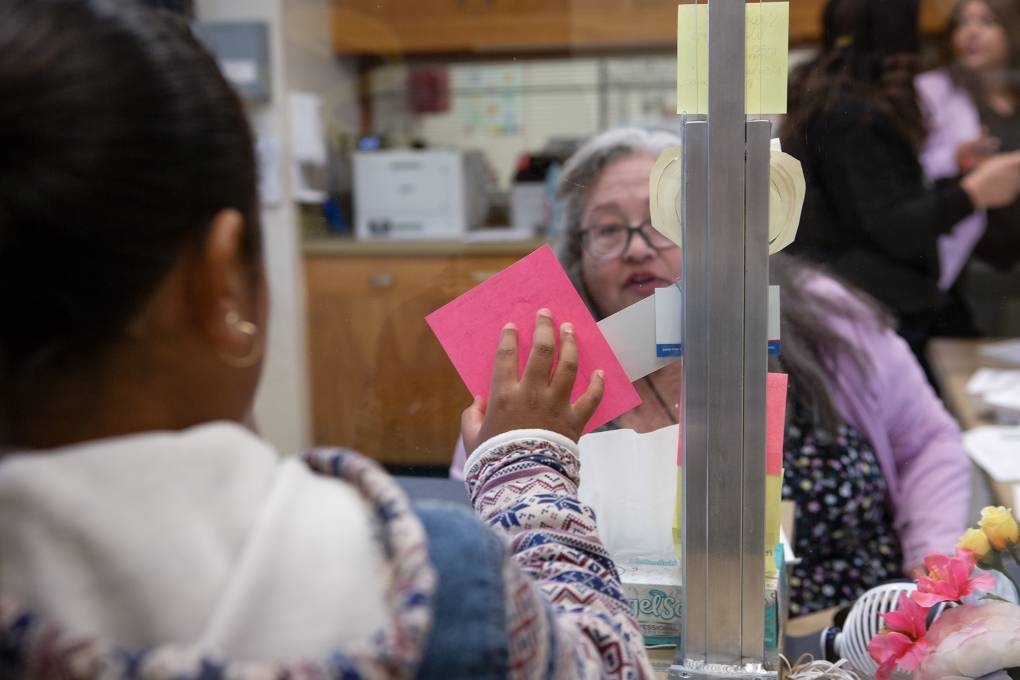
"caption": "A student holds up a nurse note for Catalina Cisneros, secretary at Loma Vista Elementary School, on the first day of school in Salinas on Aug. 8, 2023. ",
"description": null,
"title": "080923_School-Attendance_SN_CM_19",
"credit": "Semantha Norris/CalMatters",
"status": "inherit",
"altTag": "A young woman holds a pink card against a glass window as a woman wearing glasses looks at her.",
"isLoading": false,
"fetchFailed": false
},
"news_11960230": {
"type": "attachments",
"id": "news_11960230",
"meta": {
"index": "attachments_1716263798",
"site": "news",
"id": "11960230",
"found": true
},
"title": "Chino Valley School District Passes Policy For Parental Rights",
"publishDate": 1694031517,
"status": "inherit",
"parent": 12075180,
"modified": 1772579133,
"caption": "People hold up signs in support of gay and transgender student rights during the Chino Valley Unified School District board meeting at Don Lugo High School in Chino on Thursday night July 20, 2023.",
"credit": "Will Lester/MediaNews Group/Inland Valley Daily Bulletin via Getty Images",
"altTag": "A crowd of people in an indoor setting including some holding signs, one of which reads \"Let Queer & Trans Kids Be Kids Too!\"",
"description": null,
"imgSizes": {
"medium": {
"file": "https://cdn.kqed.org/wp-content/uploads/sites/10/2023/09/230806-Kids-Pronouns-Protest-Getty-WL-KQED-800x533.jpg",
"width": 800,
"height": 533,
"mimeType": "image/jpeg"
},
"large": {
"file": "https://cdn.kqed.org/wp-content/uploads/sites/10/2023/09/230806-Kids-Pronouns-Protest-Getty-WL-KQED-1020x680.jpg",
"width": 1020,
"height": 680,
"mimeType": "image/jpeg"
},
"thumbnail": {
"file": "https://cdn.kqed.org/wp-content/uploads/sites/10/2023/09/230806-Kids-Pronouns-Protest-Getty-WL-KQED-160x107.jpg",
"width": 160,
"height": 107,
"mimeType": "image/jpeg"
},
"1536x1536": {
"file": "https://cdn.kqed.org/wp-content/uploads/sites/10/2023/09/230806-Kids-Pronouns-Protest-Getty-WL-KQED-1536x1024.jpg",
"width": 1536,
"height": 1024,
"mimeType": "image/jpeg"
},
"post-thumbnail": {
"file": "https://cdn.kqed.org/wp-content/uploads/sites/10/2023/09/230806-Kids-Pronouns-Protest-Getty-WL-KQED-672x372.jpg",
"width": 672,
"height": 372,
"mimeType": "image/jpeg"
},
"twentyfourteen-full-width": {
"file": "https://cdn.kqed.org/wp-content/uploads/sites/10/2023/09/230806-Kids-Pronouns-Protest-Getty-WL-KQED-1038x576.jpg",
"width": 1038,
"height": 576,
"mimeType": "image/jpeg"
},
"full-width": {
"file": "https://cdn.kqed.org/wp-content/uploads/sites/10/2023/09/230806-Kids-Pronouns-Protest-Getty-WL-KQED-1920x1280.jpg",
"width": 1920,
"height": 1280,
"mimeType": "image/jpeg"
},
"kqedFullSize": {
"file": "https://cdn.kqed.org/wp-content/uploads/sites/10/2023/09/230806-Kids-Pronouns-Protest-Getty-WL-KQED.jpg",
"width": 2000,
"height": 1333
}
},
"isLoading": false,
"fetchFailed": false
},
"news_11959764": {
"type": "attachments",
"id": "news_11959764",
"meta": {
"index": "attachments_1716263798",
"site": "news",
"id": "11959764",
"found": true
},
"parent": 11959751,
"imgSizes": {
"twentyfourteen-full-width": {
"file": "https://ww2.kqed.org/app/uploads/sites/10/2023/08/GettyImages-1242692566-1038x576.jpg",
"width": 1038,
"mimeType": "image/jpeg",
"height": 576
},
"thumbnail": {
"file": "https://ww2.kqed.org/app/uploads/sites/10/2023/08/GettyImages-1242692566-160x108.jpg",
"width": 160,
"mimeType": "image/jpeg",
"height": 108
},
"post-thumbnail": {
"file": "https://ww2.kqed.org/app/uploads/sites/10/2023/08/GettyImages-1242692566-672x372.jpg",
"width": 672,
"mimeType": "image/jpeg",
"height": 372
},
"kqedFullSize": {
"file": "https://ww2.kqed.org/app/uploads/sites/10/2023/08/GettyImages-1242692566-scaled.jpg",
"width": 2560,
"height": 1729
},
"2048x2048": {
"file": "https://ww2.kqed.org/app/uploads/sites/10/2023/08/GettyImages-1242692566-2048x1383.jpg",
"width": 2048,
"mimeType": "image/jpeg",
"height": 1383
},
"large": {
"file": "https://ww2.kqed.org/app/uploads/sites/10/2023/08/GettyImages-1242692566-1020x689.jpg",
"width": 1020,
"mimeType": "image/jpeg",
"height": 689
},
"1536x1536": {
"file": "https://ww2.kqed.org/app/uploads/sites/10/2023/08/GettyImages-1242692566-1536x1038.jpg",
"width": 1536,
"mimeType": "image/jpeg",
"height": 1038
},
"full-width": {
"file": "https://ww2.kqed.org/app/uploads/sites/10/2023/08/GettyImages-1242692566-1920x1297.jpg",
"width": 1920,
"mimeType": "image/jpeg",
"height": 1297
},
"medium": {
"file": "https://ww2.kqed.org/app/uploads/sites/10/2023/08/GettyImages-1242692566-800x540.jpg",
"width": 800,
"mimeType": "image/jpeg",
"height": 540
}
},
"publishDate": 1693509996,
"modified": 1693514103,
"caption": "President Joe Biden talks about his student loan relief plan. Biden announced on Aug. 30, 2023 that student loans from the for-profit Ashford University would be canceled.",
"description": null,
"title": "US-politics-BIDEN-education-debt",
"credit": "OLIVIER DOULIERY/AFP via Getty Images",
"status": "inherit",
"altTag": "President Joe Biden at a lectern",
"isLoading": false,
"fetchFailed": false
},
"news_11959636": {
"type": "attachments",
"id": "news_11959636",
"meta": {
"index": "attachments_1716263798",
"site": "news",
"id": "11959636",
"found": true
},
"parent": 11959618,
"imgSizes": {
"twentyfourteen-full-width": {
"file": "https://ww2.kqed.org/app/uploads/sites/10/2023/08/081623_Berkeley-Student-Housing_SN_CM_19-1038x576.jpeg",
"width": 1038,
"mimeType": "image/jpeg",
"height": 576
},
"thumbnail": {
"file": "https://ww2.kqed.org/app/uploads/sites/10/2023/08/081623_Berkeley-Student-Housing_SN_CM_19-160x107.jpeg",
"width": 160,
"mimeType": "image/jpeg",
"height": 107
},
"post-thumbnail": {
"file": "https://ww2.kqed.org/app/uploads/sites/10/2023/08/081623_Berkeley-Student-Housing_SN_CM_19-672x372.jpeg",
"width": 672,
"mimeType": "image/jpeg",
"height": 372
},
"kqedFullSize": {
"file": "https://ww2.kqed.org/app/uploads/sites/10/2023/08/081623_Berkeley-Student-Housing_SN_CM_19.jpeg",
"width": 2000,
"height": 1334
},
"large": {
"file": "https://ww2.kqed.org/app/uploads/sites/10/2023/08/081623_Berkeley-Student-Housing_SN_CM_19-1020x680.jpeg",
"width": 1020,
"mimeType": "image/jpeg",
"height": 680
},
"1536x1536": {
"file": "https://ww2.kqed.org/app/uploads/sites/10/2023/08/081623_Berkeley-Student-Housing_SN_CM_19-1536x1025.jpeg",
"width": 1536,
"mimeType": "image/jpeg",
"height": 1025
},
"full-width": {
"file": "https://ww2.kqed.org/app/uploads/sites/10/2023/08/081623_Berkeley-Student-Housing_SN_CM_19-1920x1281.jpeg",
"width": 1920,
"mimeType": "image/jpeg",
"height": 1281
},
"medium": {
"file": "https://ww2.kqed.org/app/uploads/sites/10/2023/08/081623_Berkeley-Student-Housing_SN_CM_19-800x534.jpeg",
"width": 800,
"mimeType": "image/jpeg",
"height": 534
}
},
"publishDate": 1693429968,
"modified": 1693430031,
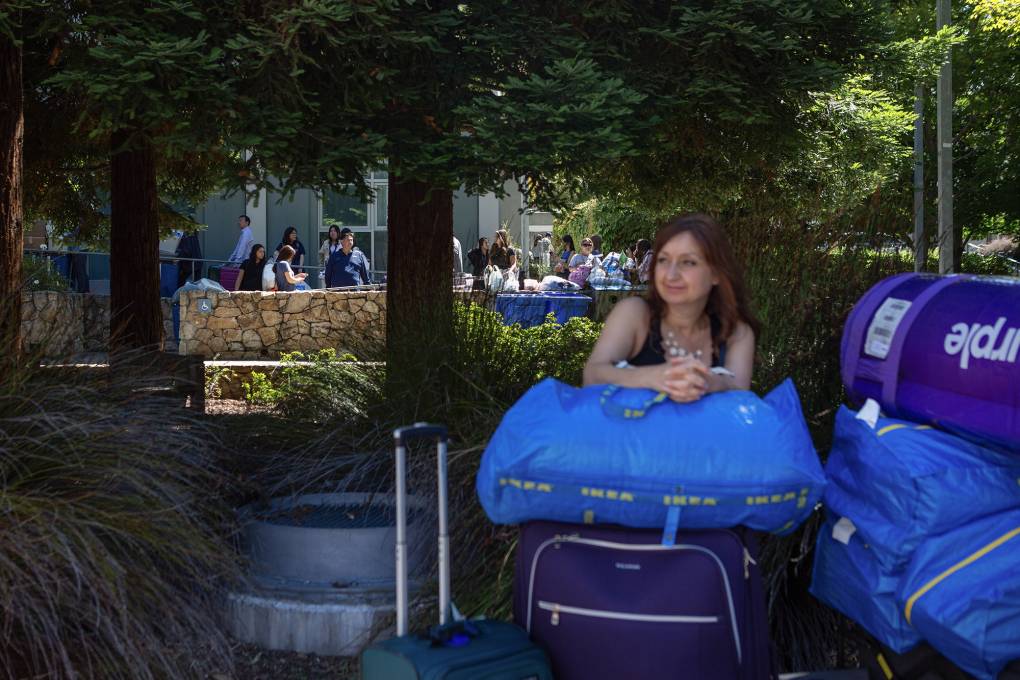
"caption": "Students move into the University of California, Berkeley dorms in Berkeley on Aug. 16, 2023. ",
"description": null,
"title": "081623_Berkeley-Student-Housing_SN_CM_19",
"credit": "Semantha Norris/CalMatters",
"status": "inherit",
"altTag": "A woman sits with a blue bag on top of a purple suitcase in front of a tree.",
"isLoading": false,
"fetchFailed": false
},
"news_11959457": {
"type": "attachments",
"id": "news_11959457",
"meta": {
"index": "attachments_1716263798",
"site": "news",
"id": "11959457",
"found": true
},
"parent": 11959451,
"imgSizes": {
"twentyfourteen-full-width": {
"file": "https://ww2.kqed.org/app/uploads/sites/10/2023/08/08282023-Protect-Kids-California-Presser-RL-CM-03-1038x576.jpg",
"width": 1038,
"mimeType": "image/jpeg",
"height": 576
},
"thumbnail": {
"file": "https://ww2.kqed.org/app/uploads/sites/10/2023/08/08282023-Protect-Kids-California-Presser-RL-CM-03-160x107.jpg",
"width": 160,
"mimeType": "image/jpeg",
"height": 107
},
"post-thumbnail": {
"file": "https://ww2.kqed.org/app/uploads/sites/10/2023/08/08282023-Protect-Kids-California-Presser-RL-CM-03-672x372.jpg",
"width": 672,
"mimeType": "image/jpeg",
"height": 372
},
"kqedFullSize": {
"file": "https://ww2.kqed.org/app/uploads/sites/10/2023/08/08282023-Protect-Kids-California-Presser-RL-CM-03.jpg",
"width": 2000,
"height": 1333
},
"large": {
"file": "https://ww2.kqed.org/app/uploads/sites/10/2023/08/08282023-Protect-Kids-California-Presser-RL-CM-03-1020x680.jpg",
"width": 1020,
"mimeType": "image/jpeg",
"height": 680
},
"1536x1536": {
"file": "https://ww2.kqed.org/app/uploads/sites/10/2023/08/08282023-Protect-Kids-California-Presser-RL-CM-03-1536x1024.jpg",
"width": 1536,
"mimeType": "image/jpeg",
"height": 1024
},
"full-width": {
"file": "https://ww2.kqed.org/app/uploads/sites/10/2023/08/08282023-Protect-Kids-California-Presser-RL-CM-03-1920x1280.jpg",
"width": 1920,
"mimeType": "image/jpeg",
"height": 1280
},
"medium": {
"file": "https://ww2.kqed.org/app/uploads/sites/10/2023/08/08282023-Protect-Kids-California-Presser-RL-CM-03-800x533.jpg",
"width": 800,
"mimeType": "image/jpeg",
"height": 533
}
},
"publishDate": 1693332062,
"modified": 1693337950,
"caption": "People show support for 3 statewide initiatives at a press conference at the state Capitol in Sacramento on Aug. 28, 2023.",
"description": null,
"title": "08282023-Protect-Kids-California-Presser-RL-CM-03",
"credit": "Rahul Lal/CalMatters",
"status": "inherit",
"altTag": "People stand side-by-side holding up signs.",
"isLoading": false,
"fetchFailed": false
},
"news_11958970": {
"type": "attachments",
"id": "news_11958970",
"meta": {
"index": "attachments_1716263798",
"site": "news",
"id": "11958970",
"found": true
},
"title": "College graduation cap and gown made of $100 bill",
"publishDate": 1692829672,
"status": "inherit",
"parent": 11958969,
"modified": 1765569023,
"caption": "College graduation cap and gown made of $100 bill.",
"credit": "LA Johnson/NPR",
"altTag": "A collage of a graduation gown made with 100-dollar bills.",
"description": "College graduation cap and gown made of $100 bill",
"imgSizes": {
"medium": {
"file": "https://cdn.kqed.org/wp-content/uploads/sites/10/2023/08/hidden-college-costs2-958c77fcebcb8e89277ecc459c74466c9ce289db-800x600.jpg",
"width": 800,
"height": 600,
"mimeType": "image/jpeg"
},
"large": {
"file": "https://cdn.kqed.org/wp-content/uploads/sites/10/2023/08/hidden-college-costs2-958c77fcebcb8e89277ecc459c74466c9ce289db-1020x765.jpg",
"width": 1020,
"height": 765,
"mimeType": "image/jpeg"
},
"thumbnail": {
"file": "https://cdn.kqed.org/wp-content/uploads/sites/10/2023/08/hidden-college-costs2-958c77fcebcb8e89277ecc459c74466c9ce289db-160x120.jpg",
"width": 160,
"height": 120,
"mimeType": "image/jpeg"
},
"1536x1536": {
"file": "https://cdn.kqed.org/wp-content/uploads/sites/10/2023/08/hidden-college-costs2-958c77fcebcb8e89277ecc459c74466c9ce289db-1536x1152.jpg",
"width": 1536,
"height": 1152,
"mimeType": "image/jpeg"
},
"2048x2048": {
"file": "https://cdn.kqed.org/wp-content/uploads/sites/10/2023/08/hidden-college-costs2-958c77fcebcb8e89277ecc459c74466c9ce289db-2048x1536.jpg",
"width": 2048,
"height": 1536,
"mimeType": "image/jpeg"
},
"post-thumbnail": {
"file": "https://cdn.kqed.org/wp-content/uploads/sites/10/2023/08/hidden-college-costs2-958c77fcebcb8e89277ecc459c74466c9ce289db-672x372.jpg",
"width": 672,
"height": 372,
"mimeType": "image/jpeg"
},
"twentyfourteen-full-width": {
"file": "https://cdn.kqed.org/wp-content/uploads/sites/10/2023/08/hidden-college-costs2-958c77fcebcb8e89277ecc459c74466c9ce289db-1038x576.jpg",
"width": 1038,
"height": 576,
"mimeType": "image/jpeg"
},
"full-width": {
"file": "https://cdn.kqed.org/wp-content/uploads/sites/10/2023/08/hidden-college-costs2-958c77fcebcb8e89277ecc459c74466c9ce289db-1920x1440.jpg",
"width": 1920,
"height": 1440,
"mimeType": "image/jpeg"
},
"kqedFullSize": {
"file": "https://cdn.kqed.org/wp-content/uploads/sites/10/2023/08/hidden-college-costs2-958c77fcebcb8e89277ecc459c74466c9ce289db-scaled.jpg",
"width": 2560,
"height": 1920
}
},
"isLoading": false,
"fetchFailed": false
},
"news_11958826": {
"type": "attachments",
"id": "news_11958826",
"meta": {
"index": "attachments_1716263798",
"site": "news",
"id": "11958826",
"found": true
},
"parent": 0,
"imgSizes": {
"twentyfourteen-full-width": {
"file": "https://ww2.kqed.org/app/uploads/sites/10/2023/08/230822-HOME-HEALTHCARE-WORKER-LM-KQED-1038x576.jpg",
"width": 1038,
"mimeType": "image/jpeg",
"height": 576
},
"thumbnail": {
"file": "https://ww2.kqed.org/app/uploads/sites/10/2023/08/230822-HOME-HEALTHCARE-WORKER-LM-KQED-160x107.jpg",
"width": 160,
"mimeType": "image/jpeg",
"height": 107
},
"post-thumbnail": {
"file": "https://ww2.kqed.org/app/uploads/sites/10/2023/08/230822-HOME-HEALTHCARE-WORKER-LM-KQED-672x372.jpg",
"width": 672,
"mimeType": "image/jpeg",
"height": 372
},
"kqedFullSize": {
"file": "https://ww2.kqed.org/app/uploads/sites/10/2023/08/230822-HOME-HEALTHCARE-WORKER-LM-KQED.jpg",
"width": 2000,
"height": 1333
},
"large": {
"file": "https://ww2.kqed.org/app/uploads/sites/10/2023/08/230822-HOME-HEALTHCARE-WORKER-LM-KQED-1020x680.jpg",
"width": 1020,
"mimeType": "image/jpeg",
"height": 680
},
"1536x1536": {
"file": "https://ww2.kqed.org/app/uploads/sites/10/2023/08/230822-HOME-HEALTHCARE-WORKER-LM-KQED-1536x1024.jpg",
"width": 1536,
"mimeType": "image/jpeg",
"height": 1024
},
"full-width": {
"file": "https://ww2.kqed.org/app/uploads/sites/10/2023/08/230822-HOME-HEALTHCARE-WORKER-LM-KQED-1920x1280.jpg",
"width": 1920,
"mimeType": "image/jpeg",
"height": 1280
},
"medium": {
"file": "https://ww2.kqed.org/app/uploads/sites/10/2023/08/230822-HOME-HEALTHCARE-WORKER-LM-KQED-800x533.jpg",
"width": 800,
"mimeType": "image/jpeg",
"height": 533
}
},
"publishDate": 1692740342,
"modified": 1692818481,
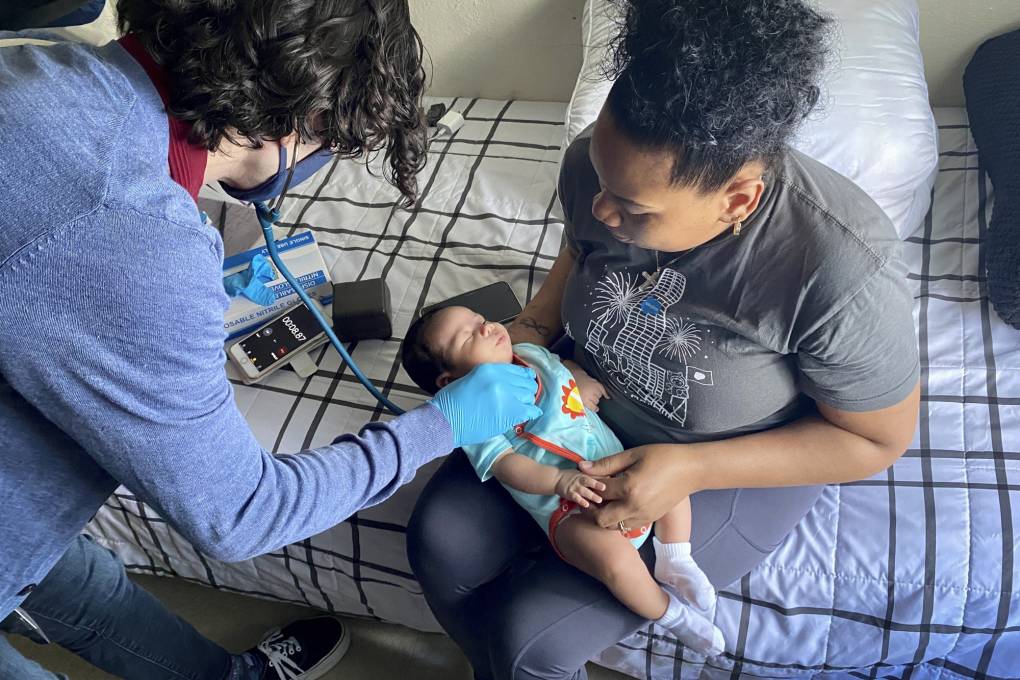
"caption": "Alvin Vallejo, a public health nurse in San Francisco, checks the heartbeat of Ibrahim Jose as his mother Dayanis holds him at his 6 week check-up.",
"description": null,
"title": "230822-HOME HEALTHCARE WORKER-LM-KQED",
"credit": "Lesley McClurg/KQED",
"status": "inherit",
"altTag": "A person cradles a baby in their lap while sitting on a bed as a person wearing medical gloves uses a stethoscope on the baby.",
"isLoading": false,
"fetchFailed": false
},
"news_11958565": {
"type": "attachments",
"id": "news_11958565",
"meta": {
"index": "attachments_1716263798",
"site": "news",
"id": "11958565",
"found": true
},
"parent": 11958561,
"imgSizes": {
"twentyfourteen-full-width": {
"file": "https://ww2.kqed.org/app/uploads/sites/10/2023/08/081822_NewsomFresno_LV_CM_006-copy-1038x576.jpg",
"width": 1038,
"mimeType": "image/jpeg",
"height": 576
},
"thumbnail": {
"file": "https://ww2.kqed.org/app/uploads/sites/10/2023/08/081822_NewsomFresno_LV_CM_006-copy-160x107.jpg",
"width": 160,
"mimeType": "image/jpeg",
"height": 107
},
"post-thumbnail": {
"file": "https://ww2.kqed.org/app/uploads/sites/10/2023/08/081822_NewsomFresno_LV_CM_006-copy-672x372.jpg",
"width": 672,
"mimeType": "image/jpeg",
"height": 372
},
"kqedFullSize": {
"file": "https://ww2.kqed.org/app/uploads/sites/10/2023/08/081822_NewsomFresno_LV_CM_006-copy.jpg",
"width": 2000,
"height": 1333
},
"large": {
"file": "https://ww2.kqed.org/app/uploads/sites/10/2023/08/081822_NewsomFresno_LV_CM_006-copy-1020x680.jpg",
"width": 1020,
"mimeType": "image/jpeg",
"height": 680
},
"1536x1536": {
"file": "https://ww2.kqed.org/app/uploads/sites/10/2023/08/081822_NewsomFresno_LV_CM_006-copy-1536x1024.jpg",
"width": 1536,
"mimeType": "image/jpeg",
"height": 1024
},
"full-width": {
"file": "https://ww2.kqed.org/app/uploads/sites/10/2023/08/081822_NewsomFresno_LV_CM_006-copy-1920x1280.jpg",
"width": 1920,
"mimeType": "image/jpeg",
"height": 1280
},
"medium": {
"file": "https://ww2.kqed.org/app/uploads/sites/10/2023/08/081822_NewsomFresno_LV_CM_006-copy-800x533.jpg",
"width": 800,
"mimeType": "image/jpeg",
"height": 533
}
},
"publishDate": 1692383651,
"modified": 1692383792,
"caption": "Gov. Gavin Newsom outlined new efforts to support the mental health of students at McLane High School in Fresno on Aug. 18, 2022.",
"description": null,
"title": "081822_NewsomFresno_LV_CM_006 copy",
"credit": "Larry Valenzuela, CalMatters/CatchLight Local",
"status": "inherit",
"altTag": "A white middle-aged man in a blue suit and blue tie speaks behind a dais that says \"Healthy Minds For California Kids\" surrounded by people.",
"isLoading": false,
"fetchFailed": false
},
"news_11955857": {
"type": "attachments",
"id": "news_11955857",
"meta": {
"index": "attachments_1716263798",
"site": "news",
"id": "11955857",
"found": true
},
"parent": 0,
"imgSizes": {
"twentyfourteen-full-width": {
"file": "https://ww2.kqed.org/app/uploads/sites/10/2023/07/RS67026_230714-EducatorGraduation-04-BL-KQED-1038x576.jpg",
"width": 1038,
"mimeType": "image/jpeg",
"height": 576
},
"thumbnail": {
"file": "https://ww2.kqed.org/app/uploads/sites/10/2023/07/RS67026_230714-EducatorGraduation-04-BL-KQED-160x107.jpg",
"width": 160,
"mimeType": "image/jpeg",
"height": 107
},
"post-thumbnail": {
"file": "https://ww2.kqed.org/app/uploads/sites/10/2023/07/RS67026_230714-EducatorGraduation-04-BL-KQED-672x372.jpg",
"width": 672,
"mimeType": "image/jpeg",
"height": 372
},
"kqedFullSize": {
"file": "https://ww2.kqed.org/app/uploads/sites/10/2023/07/RS67026_230714-EducatorGraduation-04-BL-KQED.jpg",
"width": 2000,
"height": 1333
},
"large": {
"file": "https://ww2.kqed.org/app/uploads/sites/10/2023/07/RS67026_230714-EducatorGraduation-04-BL-KQED-1020x680.jpg",
"width": 1020,
"mimeType": "image/jpeg",
"height": 680
},
"1536x1536": {
"file": "https://ww2.kqed.org/app/uploads/sites/10/2023/07/RS67026_230714-EducatorGraduation-04-BL-KQED-1536x1024.jpg",
"width": 1536,
"mimeType": "image/jpeg",
"height": 1024
},
"full-width": {
"file": "https://ww2.kqed.org/app/uploads/sites/10/2023/07/RS67026_230714-EducatorGraduation-04-BL-KQED-1920x1280.jpg",
"width": 1920,
"mimeType": "image/jpeg",
"height": 1280
},
"medium": {
"file": "https://ww2.kqed.org/app/uploads/sites/10/2023/07/RS67026_230714-EducatorGraduation-04-BL-KQED-800x533.jpg",
"width": 800,
"mimeType": "image/jpeg",
"height": 533
}
},
"publishDate": 1689614206,
"modified": 1691972665,
"caption": "Graduate Djimon Asberry poses for a photo outside of the Bayview Opera House in San Francisco on July 14, 2023, before a graduation ceremony for the Black Early Childhood Educator Career Pipeline.",
"description": null,
"title": "RS67026_230714-EducatorGraduation-04-BL-KQED",
"credit": "Beth LaBerge/KQED",
"status": "inherit",
"altTag": "A person holds out a black, green, yellow and red striped graduation stole with the words \"Class of 2023\" written on it.",
"isLoading": false,
"fetchFailed": false
},
"news_11957034": {
"type": "attachments",
"id": "news_11957034",
"meta": {
"index": "attachments_1716263798",
"site": "news",
"id": "11957034",
"found": true
},
"parent": 11970292,
"imgSizes": {
"twentyfourteen-full-width": {
"file": "https://cdn.kqed.org/wp-content/uploads/sites/10/2023/08/RS67469_20230731-EastOaklandTrackGems-43-JY-KQED-1038x576.jpg",
"width": 1038,
"mimeType": "image/jpeg",
"height": 576
},
"thumbnail": {
"file": "https://cdn.kqed.org/wp-content/uploads/sites/10/2023/08/RS67469_20230731-EastOaklandTrackGems-43-JY-KQED-160x107.jpg",
"width": 160,
"mimeType": "image/jpeg",
"height": 107
},
"post-thumbnail": {
"file": "https://cdn.kqed.org/wp-content/uploads/sites/10/2023/08/RS67469_20230731-EastOaklandTrackGems-43-JY-KQED-672x372.jpg",
"width": 672,
"mimeType": "image/jpeg",
"height": 372
},
"kqedFullSize": {
"file": "https://cdn.kqed.org/wp-content/uploads/sites/10/2023/08/RS67469_20230731-EastOaklandTrackGems-43-JY-KQED.jpg",
"width": 2000,
"height": 1333
},
"large": {
"file": "https://cdn.kqed.org/wp-content/uploads/sites/10/2023/08/RS67469_20230731-EastOaklandTrackGems-43-JY-KQED-1020x680.jpg",
"width": 1020,
"mimeType": "image/jpeg",
"height": 680
},
"1536x1536": {
"file": "https://cdn.kqed.org/wp-content/uploads/sites/10/2023/08/RS67469_20230731-EastOaklandTrackGems-43-JY-KQED-1536x1024.jpg",
"width": 1536,
"mimeType": "image/jpeg",
"height": 1024
},
"full-width": {
"file": "https://cdn.kqed.org/wp-content/uploads/sites/10/2023/08/RS67469_20230731-EastOaklandTrackGems-43-JY-KQED-1920x1280.jpg",
"width": 1920,
"mimeType": "image/jpeg",
"height": 1280
},
"medium": {
"file": "https://cdn.kqed.org/wp-content/uploads/sites/10/2023/08/RS67469_20230731-EastOaklandTrackGems-43-JY-KQED-800x533.jpg",
"width": 800,
"mimeType": "image/jpeg",
"height": 533
}
},
"publishDate": 1690912802,
"modified": 1702927773,
"caption": "Kaden Remson, 9, poses for a portrait with his track medals during track practice at Castlemont High School in Oakland, on Monday, July 31, 2023. Remson runs track with the East Oakland Track Gems, a nonprofit that introduces OUSD students to track and field.",
"description": null,
"title": "RS67469_20230731-EastOaklandTrackGems-43-JY-KQED",
"credit": "Juliana Yamada/KQED",
"status": "inherit",
"altTag": "A boy poses for a photo with medals hanging from around his neck.",
"isLoading": false,
"fetchFailed": false
},
"news_11956882": {
"type": "attachments",
"id": "news_11956882",
"meta": {
"index": "attachments_1716263798",
"site": "news",
"id": "11956882",
"found": true
},
"parent": 11956879,
"imgSizes": {
"twentyfourteen-full-width": {
"file": "https://ww2.kqed.org/app/uploads/sites/10/2023/07/GettyImages-1546204762-1038x576.jpg",
"width": 1038,
"mimeType": "image/jpeg",
"height": 576
},
"thumbnail": {
"file": "https://ww2.kqed.org/app/uploads/sites/10/2023/07/GettyImages-1546204762-160x119.jpg",
"width": 160,
"mimeType": "image/jpeg",
"height": 119
},
"post-thumbnail": {
"file": "https://ww2.kqed.org/app/uploads/sites/10/2023/07/GettyImages-1546204762-672x372.jpg",
"width": 672,
"mimeType": "image/jpeg",
"height": 372
},
"kqedFullSize": {
"file": "https://ww2.kqed.org/app/uploads/sites/10/2023/07/GettyImages-1546204762-scaled.jpg",
"width": 2560,
"height": 1898
},
"2048x2048": {
"file": "https://ww2.kqed.org/app/uploads/sites/10/2023/07/GettyImages-1546204762-2048x1518.jpg",
"width": 2048,
"mimeType": "image/jpeg",
"height": 1518
},
"large": {
"file": "https://ww2.kqed.org/app/uploads/sites/10/2023/07/GettyImages-1546204762-1020x756.jpg",
"width": 1020,
"mimeType": "image/jpeg",
"height": 756
},
"1536x1536": {
"file": "https://ww2.kqed.org/app/uploads/sites/10/2023/07/GettyImages-1546204762-1536x1139.jpg",
"width": 1536,
"mimeType": "image/jpeg",
"height": 1139
},
"full-width": {
"file": "https://ww2.kqed.org/app/uploads/sites/10/2023/07/GettyImages-1546204762-1920x1423.jpg",
"width": 1920,
"mimeType": "image/jpeg",
"height": 1423
},
"medium": {
"file": "https://ww2.kqed.org/app/uploads/sites/10/2023/07/GettyImages-1546204762-800x593.jpg",
"width": 800,
"mimeType": "image/jpeg",
"height": 593
}
},
"publishDate": 1690593633,
"modified": 1694095437,
"caption": "A contentious Chino Valley Unified School District board meeting over a policy to notify a student's parents if they identify as a gender they weren't assigned at birth ended with Superintendent of Public Instruction Tony Thurmond being escorted from the meeting.",
"description": null,
"title": "Chino Valley School District Passes Policy For Parental Rights",
"credit": "Photo by Will Lester/MediaNews Group/Inland Valley Daily Bulletin via Getty Images",
"status": "inherit",
"altTag": "a view from the back of a room filled with people, holding signs, facing a table with five chairs in front",
"isLoading": false,
"fetchFailed": false
}
},
"audioPlayerReducer": {
"postId": "stream_live",
"isPaused": true,
"isPlaying": false,
"pfsActive": false,
"pledgeModalIsOpen": true,
"playerDrawerIsOpen": false,
"liveAudioPlayStartedAt": 0,
"liveAudioPlayContext": ""
},
"authorsReducer": {
"byline_news_11960324": {
"type": "authors",
"id": "byline_news_11960324",
"meta": {
"override": true
},
"slug": "byline_news_11960324",
"name": "\u003ca href=\"https://calmatters.org/author/carolyn-jones/\">Carolyn Jones\u003c/a>",
"isLoading": false
},
"byline_news_11960202": {
"type": "authors",
"id": "byline_news_11960202",
"meta": {
"override": true
},
"slug": "byline_news_11960202",
"name": "\u003ca href=\"https://twitter.com/ataxin\">Amy Taxin\u003c/a>\u003cbr>The Associated Press",
"isLoading": false
},
"byline_news_11959751": {
"type": "authors",
"id": "byline_news_11959751",
"meta": {
"override": true
},
"slug": "byline_news_11959751",
"name": "Collin Binkley\u003cbr>The Associated Press",
"isLoading": false
},
"byline_news_11959618": {
"type": "authors",
"id": "byline_news_11959618",
"meta": {
"override": true
},
"slug": "byline_news_11959618",
"name": "\u003ca href=\"https://calmatters.org/author/mikhailzinshteyn/\">Mikhail Zinshteyn\u003c/a>",
"isLoading": false
},
"byline_news_11959451": {
"type": "authors",
"id": "byline_news_11959451",
"meta": {
"override": true
},
"slug": "byline_news_11959451",
"name": "\u003ca href=\"https://calmatters.org/author/carolyn-jones/\">Carolyn Jones\u003c/a> and \u003ca href=\"https://calmatters.org/author/alexei-koseff/\">Alexei Koseff\u003c/a>",
"isLoading": false
},
"byline_news_11958969": {
"type": "authors",
"id": "byline_news_11958969",
"meta": {
"override": true
},
"slug": "byline_news_11958969",
"name": "\u003ca href=\"https://www.npr.org/people/349625027/cory-turner\">Cory Turner\u003c/a>",
"isLoading": false
},
"byline_news_11958561": {
"type": "authors",
"id": "byline_news_11958561",
"meta": {
"override": true
},
"slug": "byline_news_11958561",
"name": "\u003ca href=\"https://calmatters.org/author/kristen-hwang/\">Kristen Hwang\u003c/a>",
"isLoading": false
},
"byline_news_11956879": {
"type": "authors",
"id": "byline_news_11956879",
"meta": {
"override": true
},
"slug": "byline_news_11956879",
"name": "\u003ca href=\"https://calmatters.org/author/carolyn-jones/\">Carolyn Jones\u003c/a>",
"isLoading": false
},
"astupi": {
"type": "authors",
"id": "70",
"meta": {
"index": "authors_1716337520",
"id": "70",
"found": true
},
"name": "Amanda Stupi",
"firstName": "Amanda",
"lastName": "Stupi",
"slug": "astupi",
"email": "astupi@kqed.org",
"display_author_email": false,
"staff_mastheads": [],
"title": "Senior Engagement Producer",
"bio": "Amanda joined KQED Science’s engagement team as a Senior Audience Engagement Strategist in the spring of 2019. She has helped craft messaging around wildfires, the coronavirus pandemic, climate change and many other stories. She has also brought KQED Science to new platforms such as Reddit’s Ask Me Anything series. Prior to joining KQED Science, Amanda spent seven years as an engagement producer with Forum, KQED’s daily live call-in show. She got her start in radio at KALW's weekly call in show, City Visions, before going on to an internship and stint at NPR's Talk of the Nation.\r\n\r\nPrior to journalism, Amanda taught English at Lowell High School. She's a native of Petaluma and currently lives under the \"South San Francisco the Industrial City\" sign in South City. She believes that engagement is vital to news’s future and that good journalism listens as much as it asks questions.",
"avatar": "https://secure.gravatar.com/avatar/e981c503e5c162da701dcaccfbf87e35?s=600&d=blank&r=g",
"twitter": null,
"facebook": null,
"instagram": null,
"linkedin": null,
"sites": [
{
"site": "arts",
"roles": [
"Contributor"
]
},
{
"site": "news",
"roles": [
"editor"
]
},
{
"site": "pop",
"roles": [
"contributor"
]
},
{
"site": "stateofhealth",
"roles": [
"editor"
]
},
{
"site": "science",
"roles": []
},
{
"site": "perspectives",
"roles": [
"editor"
]
}
],
"headData": {
"title": "Amanda Stupi | KQED",
"description": "Senior Engagement Producer",
"ogImgSrc": "https://secure.gravatar.com/avatar/e981c503e5c162da701dcaccfbf87e35?s=600&d=blank&r=g",
"twImgSrc": "https://secure.gravatar.com/avatar/e981c503e5c162da701dcaccfbf87e35?s=600&d=blank&r=g"
},
"isLoading": false,
"link": "/author/astupi"
},
"lesleymcclurg": {
"type": "authors",
"id": "11229",
"meta": {
"index": "authors_1716337520",
"id": "11229",
"found": true
},
"name": "Lesley McClurg",
"firstName": "Lesley",
"lastName": "McClurg",
"slug": "lesleymcclurg",
"email": "lmcclurg@KQED.org",
"display_author_email": false,
"staff_mastheads": [
"news",
"science"
],
"title": "KQED Health Correspondent",
"bio": "Lesley McClurg is a health correspondent and fill-in host whose work is regularly rebroadcast on NPR and PBS programs. She’s earned multiple regional Emmy awards, a national and a regional Edward R. Murrow award, and was named Best Beat Reporter by the Association of Health Care Journalists. The Society of Professional Journalists has recognized her work several times, and the Society of Environmental Journalists spotlighted her coverage of California’s historic drought.\r\n\r\nBefore joining KQED in 2016, Lesley covered food and sustainability for Capital Public Radio, environmental issues for Colorado Public Radio, and reported for KUOW and KCTS 9 in Seattle. Away from the newsroom, she loves skiing with her daughter, mountain biking with her partner, and playing with Ollie, the family’s goldendoodle. On deadline, she runs almost entirely on chocolate chips.\r\n\r\n ",
"avatar": "https://secure.gravatar.com/avatar/bab49e972ea10c774fe0f5e29dba1722b158f7c0d58a360923d1389d380b2978?s=600&d=blank&r=g",
"twitter": "lesleywmcclurg",
"bluesky": null,
"facebook": null,
"instagram": null,
"linkedin": null,
"sites": [
{
"site": "arts",
"roles": [
"author"
]
},
{
"site": "news",
"roles": [
"editor"
]
},
{
"site": "futureofyou",
"roles": [
"editor"
]
},
{
"site": "stateofhealth",
"roles": [
"author"
]
},
{
"site": "science",
"roles": [
"editor"
]
},
{
"site": "quest",
"roles": [
"subscriber"
]
},
{
"site": "forum",
"roles": [
"administrator"
]
},
{
"site": "liveblog",
"roles": [
"author"
]
}
],
"headData": {
"title": "Lesley McClurg | KQED",
"description": "KQED Health Correspondent",
"ogImgSrc": "https://secure.gravatar.com/avatar/bab49e972ea10c774fe0f5e29dba1722b158f7c0d58a360923d1389d380b2978?s=600&d=blank&r=g",
"twImgSrc": "https://secure.gravatar.com/avatar/bab49e972ea10c774fe0f5e29dba1722b158f7c0d58a360923d1389d380b2978?s=600&d=blank&r=g"
},
"isLoading": false,
"link": "/author/lesleymcclurg"
},
"daisynguyen": {
"type": "authors",
"id": "11829",
"meta": {
"index": "authors_1716337520",
"id": "11829",
"found": true
},
"name": "Daisy Nguyen",
"firstName": "Daisy",
"lastName": "Nguyen",
"slug": "daisynguyen",
"email": "daisynguyen@kqed.org",
"display_author_email": true,
"staff_mastheads": [
"news"
],
"title": "KQED Contributor",
"bio": "I have covered early childhood education and child care for KQED since 2022. I focus on policies aimed at increasing access to early care and education and how they shape individual lives. I've been a journalist for more than two decades, with most of that time devoted to covering breaking news throughout California for The Associated Press. I grew up in San Francisco and studied at UC Davis and Columbia University's Graduate School of Journalism. I live in Oakland with my husband and two kids.",
"avatar": "https://secure.gravatar.com/avatar/2da2127c27f7143b53ebd419800fd55f?s=600&d=blank&r=g",
"twitter": null,
"facebook": null,
"instagram": null,
"linkedin": "https://www.linkedin.com/in/daisynguyen/",
"sites": [
{
"site": "news",
"roles": [
"author"
]
},
{
"site": "liveblog",
"roles": [
"author"
]
}
],
"headData": {
"title": "Daisy Nguyen | KQED",
"description": "KQED Contributor",
"ogImgSrc": "https://secure.gravatar.com/avatar/2da2127c27f7143b53ebd419800fd55f?s=600&d=blank&r=g",
"twImgSrc": "https://secure.gravatar.com/avatar/2da2127c27f7143b53ebd419800fd55f?s=600&d=blank&r=g"
},
"isLoading": false,
"link": "/author/daisynguyen"
},
"srodriguez": {
"type": "authors",
"id": "11852",
"meta": {
"index": "authors_1716337520",
"id": "11852",
"found": true
},
"name": "Steph Rodriguez",
"firstName": "Steph",
"lastName": "Rodriguez",
"slug": "srodriguez",
"email": "srodriguez@KQED.org",
"display_author_email": true,
"staff_mastheads": [
"news"
],
"title": "KQED Contributor",
"bio": "Steph Rodriguez is an award-winning editor and journalist who specializes in writing stories about food and music, arts and culture. She’s currently a Digital Editor for KQED News in San Francisco. Her past professional experience includes Food Editor for SFGATE as well as Managing Editor and Dining Editor for the Sacramento News & Review. She has roots in Bakersfield and Sacramento California and currently lives in Oakland with her family.",
"avatar": "https://secure.gravatar.com/avatar/5220c101baf7d495ca871563de9b8653e5863afdbd5f55ea5db0dda0732db3a2?s=600&d=blank&r=g",
"twitter": "wordstospill",
"bluesky": null,
"facebook": null,
"instagram": null,
"linkedin": null,
"sites": [
{
"site": "",
"roles": [
"administrator"
]
},
{
"site": "arts",
"roles": [
"administrator"
]
},
{
"site": "news",
"roles": [
"administrator"
]
},
{
"site": "science",
"roles": [
"administrator"
]
}
],
"headData": {
"title": "Steph Rodriguez | KQED",
"description": "KQED Contributor",
"ogImgSrc": "https://secure.gravatar.com/avatar/5220c101baf7d495ca871563de9b8653e5863afdbd5f55ea5db0dda0732db3a2?s=600&d=blank&r=g",
"twImgSrc": "https://secure.gravatar.com/avatar/5220c101baf7d495ca871563de9b8653e5863afdbd5f55ea5db0dda0732db3a2?s=600&d=blank&r=g"
},
"isLoading": false,
"link": "/author/srodriguez"
}
},
"pagesReducer": {
"news_category_education": {
"type": "terms",
"id": "news_18540",
"meta": {
"index": "terms_1716263798",
"site": "news",
"id": "18540",
"score": 10.973179
},
"featImg": null,
"name": "Education",
"description": null,
"taxonomy": "category",
"headData": {
"twImgId": null,
"twTitle": null,
"ogTitle": null,
"ogImgId": null,
"twDescription": null,
"description": null,
"title": "Education Archives | KQED News",
"ogDescription": null
},
"ttid": 2595,
"slug": "education",
"isLoading": false,
"title": "Education",
"pageMeta": {
"site": "news",
"WpPageTemplate": "page-topic-editorial",
"currentPage": 59
},
"blocks": [
{
"blockName": "kqed/post-list",
"attrs": {
"layout": "cardArticle2",
"query": "posts/news?category=education",
"seeMore": false,
"paginated": true,
"page": 59
}
},
{
"blockName": "kqed/ad"
}
]
}
},
"pfsSessionReducer": {},
"postsReducer": {
"stream_live": {
"type": "live",
"id": "stream_live",
"audioUrl": "https://streams.kqed.org/kqedradio",
"title": "Live Stream",
"excerpt": "Live Stream information currently unavailable.",
"link": "/radio",
"featImg": "",
"label": {
"name": "KQED Live",
"link": "/"
}
},
"stream_kqedNewscast": {
"type": "posts",
"id": "stream_kqedNewscast",
"audioUrl": "https://www.kqed.org/.stream/anon/radio/RDnews/newscast.mp3?_=1",
"title": "KQED Newscast",
"featImg": "",
"label": {
"name": "88.5 FM",
"link": "/"
}
},
"news_11959904": {
"type": "posts",
"id": "news_11959904",
"meta": {
"index": "posts_1716263798",
"site": "news",
"id": "11959904",
"score": null,
"sort": [
1694430092000
]
},
"guestAuthors": [],
"slug": "how-to-prep-your-kid-for-kindergarten-if-they-havent-been-to-preschool",
"title": "Kindergarten Readiness: A Guide for Parents Without Preschool Access",
"publishDate": 1694430092,
"format": "image",
"headTitle": "Kindergarten Readiness: A Guide for Parents Without Preschool Access | KQED",
"labelTerm": {
"site": "news"
},
"content": "\u003cp>[dropcap]I[/dropcap]t’s a harsh reality that the first few years of being a parent, when you’re operating on little sleep and learning a completely new set of skills, are some of \u003ca href=\"https://www.zerotothree.org/\">the most important years in a child’s brain development\u003c/a>.\u003c/p>\n\u003cp>America’s child care shortage makes the first few years even trickier for parents to navigate. \u003ca href=\"https://strongnation.s3.amazonaws.com/documents/1596/4db2b14c-a85b-4b49-9390-c6b90935e3de.pdf\">Seventy-four percent of parents who responded to a nationwide survey in 2022 (PDF)\u003c/a> reported that child care was difficult to access. In 2018, The Center for American Progress found that \u003ca href=\"https://childcaredeserts.org/2018/index.html?state=CA&split=true\">about 51% of Americans and 60% of Californians lived in a “child care desert,”\u003c/a> where the supply of licensed child care is not enough to meet the demand.\u003c/p>\n\u003cp>Finding child care could get even harder \u003ca href=\"https://tcf.org/content/report/child-care-cliff/\">when stabilization funding from the federal American Recovery Plan Act (ARPA) ends \u003c/a>Sept. 30. One estimate found that \u003ca href=\"https://tcf.org/content/report/child-care-cliff/#\">funding loss could cause more than 13,000 child care programs in California to close\u003c/a> and more than 84,000 kids to lose child care.\u003c/p>\n\u003cp>That loss in care will likely affect elementary classrooms down the line because \u003ca href=\"https://publications.aap.org/pediatrics/article/146/6/e20200978/77108/Kindergarten-Readiness-Later-Health-and-Social?autolog\">child care programs, including preschool, play a huge role in preparing children for kindergarten\u003c/a>, and influence kids’ academic performance throughout elementary school.\u003c/p>\n\u003cp>Many parents want to place their kids in child care, but don’t qualify for state-subsidized care and can’t afford private care. Others either don’t have care close by or the available care doesn’t match up with their work schedules.\u003c/p>\n\u003cp>So how can parents be sure that their children are growing and learning at a healthy pace without the help of early childhood educators?\u003c/p>\n\u003cp>No matter the situation, there are still lots of things California parents can do to prepare their children for kindergarten, even if child care and preschool are not viable options. We created this guide with those parents in mind, to help connect them to resources so that they don’t have to face the school readiness challenge alone.\u003c/p>\n\u003cp>Keep reading to learn why preparing a child for kindergarten is so important, and\u003cspan style=\"font-weight: 400;\"> about the tools available to help California families\u003c/span>. Or jump straight to:\u003c/p>\n\u003cul>\n\u003cli>\u003cstrong>\u003ca href=\"#milestones\">What are my child’s developmental milestones to know?\u003c/a>\u003c/strong>\u003c/li>\n\u003cli>\u003cstrong>\u003ca href=\"#readiness\">How can I improve my kid’s “kindergarten readiness”?\u003c/a>\u003c/strong>\u003c/li>\n\u003cli>\u003cstrong>\u003ca href=\"#statewide\">What early learning and development resources does the state offer?\u003c/a>\u003c/strong>\u003c/li>\n\u003cli>\u003cstrong>\u003ca href=\"#local\">What early learning and development resources does my Bay Area county offer?\u003c/a>\u003c/strong>\u003c/li>\n\u003c/ul>\n\u003cp>[ad fullwidth]\u003c/p>\n\u003ch2>Preparing for kindergarten without child care\u003c/h2>\n\u003cp>\u003ca href=\"https://www.kqed.org/news/11922708/californias-2-7-billion-plan-to-expand-transitional-kindergarten-is-off-to-an-uneven-start\">California is in the process of expanding transitional kindergarten\u003c/a> to include all 4-year-olds, which will help close the school readiness gap for children who don’t have access to private preschool. \u003ca href=\"https://www.childcarelaw.org/content/quick-guide-to-affordable-child-care-programs-in-california/\">There are state and federal no-cost or subsidized child care programs\u003c/a> for families that receive CalWORKS benefits, for children experiencing homelessness and abuse, some foster children, and for families who meet low-income requirements.\u003c/p>\n\u003cul>\n\u003cli>\u003cstrong>\u003ca href=\"#tellus\">Tell us: What else do you need a guide on right now?\u003c/a>\u003c/strong>\u003c/li>\n\u003c/ul>\n\u003cp>But for the many Californians who don’t qualify for public programs and who cannot find or afford early childhood care on their own, there are some parenting resources and support systems in place.\u003c/p>\n\u003cp>\u003ca href=\"#statewide\">Statewide initiatives like Early Start and First 5 California\u003c/a> offer developmental assessments and tools to help build early literacy and numeracy skills at home. And state programs often contract with local nonprofit organizations to provide culturally-relevant programming. These resources can help parents navigate the first few years when child care is hardest to find and when kids’ neural networks are developing at a rapid rate.\u003c/p>\n\u003cp>One example of a culturally-relevant resource is the \u003ca href=\"https://www.capsonoma.org/pasitos-playgroups/\">Pasitos program\u003c/a>, started by Community Action Partnership of Sonoma County in 2006 to help boost school readiness for the county’s Latinx communities. Resources like Pasitos are especially crucial in Sonoma County, where the supply of licensed care has been decimated by repeated natural disasters — the devastating \u003ca href=\"https://www.kqed.org/news/11715439/pge-says-unlicensed-electrical-work-may-have-sparked-tubbs-fire-disaster\">Tubbs Fire\u003c/a> in 2017 \u003ca href=\"https://www.santarosametrochamber.com/programs/employer-supported-child-care/\">resulted in the loss of 15 programs, displacing 444 children practically overnight\u003c/a>.\u003c/p>\n\u003cp>At Pasitos, parents and their kids attend weekly classes, taught in Spanish, at numerous sites throughout the county.[pullquote size=\"medium\" align=\"right\" citation=\"Samantha Carranza, Pasitos parent\"]‘Even a small program like this, when we come for a few hours a week, it’s made a huge difference in my children.’[/pullquote]“We are celebrating the ending of the first school year for these children,” said Ingrid Arceo as she looked around at the toddlers swarming the play structure at a neighborhood park in Santa Rosa. “They are in our Primero Pasitos, that’s when they’re 16 months to two years. For some of them, this is their very first time they’re attending a playgroup for any social setting.”\u003c/p>\n\u003cp>One way that Pasitos prepares students for school is by getting them familiar with routine and structure.\u003c/p>\n\u003cp>“They have free play at the beginning of their class and then they gather for a circle with the teacher where they sing and read books,” said Arceo. “They talk about different themes every week, like weather, or animals. And then they have an activity that the teacher plans.”\u003c/p>\n\u003cp>Kids also get a chance to play and work through conflict with other children. That’s especially important because social and emotional regulation is a large component of kindergarten readiness.\u003c/p>\n\u003ch2>A link to early intervention\u003c/h2>\n\u003cp>When Samantha Carranza and her husband calculated what child care would cost, they decided it made more sense for Samantha to stay at home full-time rather than return to work. Carranza and her husband are now celebrating their daughter’s graduation from Primero Pasitos, something they wish they knew about when they were first-time parents.\u003c/p>\n\u003cp>“My daughter has the advantage of coming to this program and it’s night and day,” said Carranza. “Even a small program like this, when we come for a few hours a week, it’s made a huge difference in my children.”\u003c/p>\n\u003cfigure id=\"attachment_11960470\" class=\"wp-caption aligncenter\" style=\"max-width: 2000px\">\u003cimg loading=\"lazy\" decoding=\"async\" class=\"size-full wp-image-11960470\" src=\"https://ww2.kqed.org/app/uploads/sites/10/2023/09/Certificates-and-gifts.jpg-LJ-KQED.jpg\" alt='A table top with with a blue table cloth and cardboard graduation caps and paperwork reading \"Primeros Pasitos: Congratulations.\"' width=\"2000\" height=\"1500\" srcset=\"https://cdn.kqed.org/wp-content/uploads/sites/10/2023/09/Certificates-and-gifts.jpg-LJ-KQED.jpg 2000w, https://cdn.kqed.org/wp-content/uploads/sites/10/2023/09/Certificates-and-gifts.jpg-LJ-KQED-800x600.jpg 800w, https://cdn.kqed.org/wp-content/uploads/sites/10/2023/09/Certificates-and-gifts.jpg-LJ-KQED-1020x765.jpg 1020w, https://cdn.kqed.org/wp-content/uploads/sites/10/2023/09/Certificates-and-gifts.jpg-LJ-KQED-160x120.jpg 160w, https://cdn.kqed.org/wp-content/uploads/sites/10/2023/09/Certificates-and-gifts.jpg-LJ-KQED-1536x1152.jpg 1536w, https://cdn.kqed.org/wp-content/uploads/sites/10/2023/09/Certificates-and-gifts.jpg-LJ-KQED-1920x1440.jpg 1920w\" sizes=\"auto, (max-width: 2000px) 100vw, 2000px\">\u003cfigcaption class=\"wp-caption-text\">Graduation gifts and certificates ready to be handed out to participants of the Primero Pasitos program in Santa Rosa on May 17. 2023. \u003ccite>(Amanda Stupi/KQED)\u003c/cite>\u003c/figcaption>\u003c/figure>\n\u003cp>Carranza’s son has a speech delay. She said if she had enrolled in Pasitos when he was younger, she would have sought help for his delay earlier because the program taught her about developmental timelines.\u003c/p>\n\u003cp>“I knew that it wasn’t normal for a 2-year-old to have no words,” said Carranza. “When I brought it up to his pediatrician, she said, ‘Well, it’s the middle of the pandemic and he’s a boy. Boys talk a lot later.’ In a way, dismissing me. But at the time it was kind of what I wanted to hear.”\u003c/p>\n\u003cp>After learning about speech therapy from another parent, Carranza connected with the North Bay Regional Center, part of California’s Early Start Program that offers evaluations and services to kids under the age of 3 who are at risk of having developmental or intellectual disabilities.\u003c/p>\n\u003cp>“I didn’t really know how serious it is to really make sure that your children are hitting certain milestones,” said Carranza. “And I think a lot of us, we don’t know.”\u003c/p>\n\u003ch2>The advantage of a peer group\u003c/h2>\n\u003cp>Amy Westling, executive director of the Association of Regional Center Agencies, said parents with kids in child care or preschool have an advantage when it comes to identifying developmental differences in their kids.\u003c/p>\n\u003cp>“When you see children who are about the same age as your child, doing things that your child hasn’t done, it sometimes triggers families to think through perhaps there could be a challenge that their child needs some additional support with,” said Westling.\u003c/p>\n\u003cp>Similarly, a preschool teacher or caregiver can offer a second opinion when a doctor raises or dismisses concerns.\u003c/p>\n\u003ch2>When doctor visits fall short\u003c/h2>\n\u003cp>\u003ca href=\"https://www.healthychildren.org/English/family-life/health-management/Pages/Well-Child-Care-A-Check-Up-for-Success.aspx\">The American Association of Pediatrics (AAP) recommends that children have preventative check-ins\u003c/a>, often called “well visits,” at 12 different times between birth and 3 years of age. These visits should continue once a year after a child turns 3.\u003c/p>\n\u003cp>AAP recommends that kids receive developmental and behavioral screenings during the 9-, 18- and 30-month well visits, and that kids be screened for autism spectrum disorder (ASD) at their 18- and 24-month visits.\u003c/p>\n\u003cp>But studies indicate that \u003ca href=\"https://www.zerotothree.org/resource/whats-the-most-compelling-data-or-statistic-in-the-early-childhood-field-youve-seen-lately/\">many kids are not being assessed\u003c/a> and that \u003ca href=\"https://publications.aap.org/pediatrics/article-abstract/129/6/1027/32022/Missed-Opportunities-in-the-Referral-of-High-Risk\">developmental delays are being missed\u003c/a>. Research shows that \u003ca href=\"https://ectacenter.org/~pdfs/topics/racialequity/factsheet-racialequity-2023.pdf\">white children and children of wealthier and more educated parents are more likely to be screened (PDF)\u003c/a>.\u003c/p>\n\u003cp>[aside label='Early Childhood Education and Care' tag='early-childhood-education-and-care']Westling says that pediatricians and other healthcare providers often don’t have enough time with patients to complete an adequate assessment.\u003c/p>\n\u003cp>“They often see them for 10 or 15 minutes every three months or so,” said Westling. “They may rely upon families’ identification of concerns to really trigger a more in-depth exploration. But their families don’t have the awareness that the child may be falling behind same-age peers. They may not flag that.”\u003c/p>\n\u003cp>Families on \u003ca href=\"https://www.kqed.org/news/11944543/on-medi-cal-eligibility-changes-starting-in-april-could-mean-you-lose-coverage-heres-what-to-do\">Medi-Cal\u003c/a> should be especially concerned about short visits, says Westling.\u003c/p>\n\u003cp>“Pediatricians who accept various types of insurance, particularly Medi-Cal, have to make their practices financially viable, oftentimes through high volume.” said Westling. “So it may be that children who have Medi-Cal as their primary insurance may find that their appointment times are shorter than children who have private commercial insurance.”\u003c/p>\n\u003cp>Sometimes even if a pediatrician takes the time to conduct an assessment, a child may behave differently in a clinical setting, making it harder to discern between a developmental delay and a scared child acting timid.\u003c/p>\n\u003cfigure id=\"attachment_11960375\" class=\"wp-caption aligncenter\" style=\"max-width: 1920px\">\u003cimg loading=\"lazy\" decoding=\"async\" class=\"size-full wp-image-11960375\" src=\"https://ww2.kqed.org/app/uploads/sites/10/2023/09/RS68798_iStock-1408303916-qut.jpg\" alt=\"A kindergarten-age white child high-fives a young Black woman teacher in a classroom\" width=\"1920\" height=\"1280\" srcset=\"https://cdn.kqed.org/wp-content/uploads/sites/10/2023/09/RS68798_iStock-1408303916-qut.jpg 1920w, https://cdn.kqed.org/wp-content/uploads/sites/10/2023/09/RS68798_iStock-1408303916-qut-800x533.jpg 800w, https://cdn.kqed.org/wp-content/uploads/sites/10/2023/09/RS68798_iStock-1408303916-qut-1020x680.jpg 1020w, https://cdn.kqed.org/wp-content/uploads/sites/10/2023/09/RS68798_iStock-1408303916-qut-160x107.jpg 160w, https://cdn.kqed.org/wp-content/uploads/sites/10/2023/09/RS68798_iStock-1408303916-qut-1536x1024.jpg 1536w\" sizes=\"auto, (max-width: 1920px) 100vw, 1920px\">\u003cfigcaption class=\"wp-caption-text\">Developmental milestones are important to track because the earlier a child receives help, the more likely they are to overcome a challenge. \u003ccite>(Getty Images)\u003c/cite>\u003c/figcaption>\u003c/figure>\n\u003ch2>\u003ca id=\"milestones\">\u003c/a>Resources to learn about developmental milestones\u003c/h2>\n\u003cp>\u003ca href=\"https://www.cdc.gov/ncbddd/actearly/milestones/milestones-2mo.html\">The Centers for Disease Control and Prevention (CDC) defines a developmental milestone\u003c/a> as something that 75% or more children can do by a certain age.\u003c/p>\n\u003cp>The milestones help parents and doctors track children’s growth across physical, cognitive, language and social-emotional areas. Examples of milestones include a child’s ability to hold their head up, to point or to string a certain number of words together in a sentence. If a child misses a milestone it could be an indication that they need extra help to fully develop in one area or that they face a more serious disability or health problem.\u003c/p>\n\u003cp>Milestones are important to track because the earlier a child receives help, the more likely they are to overcome a delay or challenge.\u003c/p>\n\u003cp>“The most important thing for people to realize is that children can make incredible progress,” said Westling. “And they make the best progress the earlier we can intervene in their lives and in their development. Their little minds are like sponges.”\u003c/p>\n\u003cul>\n\u003cli>\u003ca href=\"https://www.cdc.gov/ncbddd/actearly/index.html\">The CDC has lots of great information on developmental milestones\u003c/a>, including \u003ca href=\"https://www.cdc.gov/ncbddd/actearly/milestones/milestones-in-action.html\">videos of milestones in action\u003c/a> as well as a \u003ca href=\"https://www.cdc.gov/ncbddd/actearly/milestones-app.html\">milestone-tracking app\u003c/a>, available in English and Spanish, to help you keep track of your child’s development.\u003c/li>\n\u003cli>The \u003ca href=\"https://www.healthychildren.org/English/Pages/default.aspx\">American Academy of Pediatrics’ website organizes milestones and skills by age, making it fairly easy to find information quickly\u003c/a>.\u003c/li>\n\u003cli>The Ages & Stages Questionnaires (ASQ) is a common screening tool. \u003ca href=\"https://agesandstages.com/about-asq/for-parents/\">Read answers to commonly-asked questions about this questionnaire.\u003c/a>\u003c/li>\n\u003cli>California’s Early Start operates a toll-free “babyline” at 800–515–BABY (800–515–2229). You can also email \u003ca href=\"mailto:earlystart@dds.ca.gov\">earlystart@dds.ca.gov\u003c/a>.\u003c/li>\n\u003c/ul>\n\u003ch2>\u003ca id=\"readiness\">\u003c/a>Resources to learn about kindergarten readiness\u003c/h2>\n\u003cp>There’s no single, standardized checklist for kindergarten readiness skills, largely because there is no state or federal requirement for schools to assess them.\u003c/p>\n\u003cp>Among the school districts that do track kindergarten readiness, several different assessment tools are used. Sarah Crow, managing director of the \u003ca href=\"https://first5center.org/publications/readying-our-state-how-kindergarten-readiness-inventories-can-benefit-california\">First 5 Center for Children’s Policy\u003c/a>, says 35 states are in the process of implementing assessments and that 25 counties in California currently track kindergarten readiness.\u003c/p>\n\u003cp>Most experts agree that kids entering kindergarten should have some exposure to language and reading, numbers and counting, logic and sorting, and some practice regulating emotions and playing with other children their age.\u003c/p>\n\u003cp>“Readiness, as it’s sort of been defined and studied, is about literacy and numeracy knowledge,” said Crow. “But it also refers to things like the ability to listen and ask questions, express your thoughts and communicate and demonstrate some self regulation, like sit on a rug in a kindergarten classroom.”\u003c/p>\n\u003cp>Child care providers trained in early childhood development incorporate these skills into daily activities. Similarly, parents may already be teaching these skills without even realizing it — \u003ca href=\"https://www.naeyc.org/sites/default/files/globally-shared/downloads/PDFs/resources/pubs/pi2e-first-look.pdf\">every interaction has potential to be educational for babies and infants (PDF)\u003c/a>. Still, intention goes a long way and experts have tips for how to incorporate numeracy and literacy into your day-to-day.\u003c/p>\n\u003cul>\n\u003cli>\u003ca href=\"https://www.healthychildren.org/English/ages-stages/preschool/Pages/Is-Your-Child-Ready-for-School.aspx\">The American Academy of Pediatrics offers a good overview of kindergarten readiness\u003c/a>, including addressing misconceptions about “redshirting,” the parental practice of starting kids in kindergarten late in an attempt to give them a better chance at success.\u003c/li>\n\u003cli>\u003ca href=\"https://www.cocokids.org/beginning-kindergarten-skills/\">Explore an exhaustive list of actions kindergartners may be expected to have the ability to do\u003c/a> via CocoKids, a nonprofit that champions quality child care and early education in Contra Costa County.\u003c/li>\n\u003cli>The National Association for the Education of Young Children (NAEYC) \u003ca href=\"https://www.naeyc.org/our-work/families/math\">offers lots of resources to help you incorporate math concepts at home\u003c/a>.\u003c/li>\n\u003cli>First 5’s parenting site \u003ca href=\"https://www.first5california.com/en-us/articles/everyday-opportunities-for-speech-language-and-literacy-development-newborn-baby-toddler-preschooler/\">features a list of ways to encourage language skills in your child\u003c/a>.\u003c/li>\n\u003cli>The \u003ca href=\"https://talkingisteaching.org/\">Talking Is Teaching public awareness campaign\u003c/a> has great advice for how to have verbal interactions with someone who can’t talk back to you yet — their \u003ca href=\"https://talkingisteaching.org/big-feelings\">videos about developing social-emotional skills are helpful too\u003c/a>.\u003c/li>\n\u003cli>Here’s a \u003ca href=\"https://d4804za1f1gw.cloudfront.net/wp-content/uploads/sites/72/2019/10/28103533/HelpChildRead.pdf\">helpful quick-reference PDF from Contra Costa County Library (PDF)\u003c/a> with guidance on how to have everyday educational interactions with your child, from talking to reading and playing. (You may want to paste this one to the fridge.)\u003c/li>\n\u003c/ul>\n\u003ch2>\u003ca id=\"statewide\">\u003c/a>Statewide resources for early learning and development\u003c/h2>\n\u003cp>When it comes to finding resources related to child care and child development, three California programs will be key: the California Child Care Resource and Referral Network, First 5 California and Early Start.\u003c/p>\n\u003cp>\u003cstrong>\u003ca href=\"https://rrnetwork.org/family-services/find-child-care\">California Child Care Resource and Referral Network\u003c/a> \u003c/strong>\u003c/p>\n\u003cp>Each county in California \u003ca href=\"https://www.cde.ca.gov/sp/cd/re/rragencylist.asp\">has at least one agency that’s part of the California Child Care Resource and Referral Network\u003c/a>. These offices focus on helping parents find child care and recruiting and training more family child care providers: people who care for small groups of kids in their homes. Even if you’re not looking for child care specifically, these agencies can be a good place to contact.\u003c/p>\n\u003cp>Sometimes the organizations that have resource and referral (R&R) contracts provide other services as well — think play groups, parenting classes and financial assistance. Each agency varies, but chances are the people working at your local R&R center know about many of the resources in your community.\u003c/p>\n\u003cp>\u003ca href=\"https://rrnetwork.org/\">Look up your local resource and referral agency within the California Child Care Resource and Referral Network\u003c/a>.\u003c/p>\n\u003cp>\u003cstrong>\u003ca href=\"https://www.ccfc.ca.gov/index.html\">First 5 California\u003c/a>\u003c/strong>\u003c/p>\n\u003cp>First 5 California is a statewide organization with a presence in each county. First 5 was established in 1998 when voters approved \u003ca href=\"https://www.ccfc.ca.gov/about/prop_10.html\">Proposition 10\u003c/a>, which imposed a tax on tobacco products. The collected funds are divided between First 5 at the state level and a First 5 commission in each county. At a statewide level, First 5 advocates for policies that support children up to 5 years of age and their families. \u003ca href=\"https://www.first5california.com/en-us/\">First 5 operates a resource website for parents that’s worth checking out\u003c/a>.\u003c/p>\n\u003cp>Like R&R agencies, each First 5 county commission varies in focus, depending on what challenges families in the region face. Local efforts range from parenting groups to child development classes to tracking kindergarten readiness. Again, if your local First 5 office doesn’t offer a service directly, the people working there likely know who does.\u003c/p>\n\u003cp>\u003ca href=\"https://www.ccfc.ca.gov/family/family.html#find\">Find your local First 5 office\u003c/a>.\u003c/p>\n\u003cp>\u003cstrong>\u003ca href=\"https://www.dds.ca.gov/services/early-start/\">Early Start\u003c/a>\u003c/strong>\u003c/p>\n\u003cp>Early Start is California’s early intervention program for infants and toddlers with developmental delays or those at risk for having a developmental disability. Most people interact with Early Start through one of 21 regional centers throughout the state. Regional centers are agencies contracted by the state to manage services for families with children under 3 years old who have or are at risk of having a developmental disability or delay. Some families are referred to regional centers immediately after birth by a neonatal intensive care unit. Other families may be referred later on by a pediatrician, and still other parents call on their own.\u003c/p>\n\u003cp>There is no cost for an evaluation, and one is supposed to be conducted within 45 days of when a parent first contacts the center. \u003ca href=\"https://www.dds.ca.gov/wp-content/uploads/2023/02/EarlyStart_FAQ_01262023-.pdf\">This FAQ by the California Dept. of Developmental Services is straightforward and may answer many of the questions you have about calling a center \u003c/a>\u003ca href=\"https://www.dds.ca.gov/wp-content/uploads/2023/02/EarlyStart_FAQ_01262023-.pdf\">(PDF)\u003c/a>.\u003c/p>\n\u003cp>\u003ca href=\"https://www.dds.ca.gov/rc/lookup-rcs-by-county/\">Look up an Early Start regional center near you\u003c/a>.\u003c/p>\n\u003ch2>\u003ca id=\"local\">\u003c/a>Bay Area resources by county for early learning and development\u003c/h2>\n\u003cp>Scroll down to find your Bay Area county below. This guide focuses on programs that can help parents without access to child care make sure their young children are kindergarten-ready. The classes and playgroups here do not require the time or financial commitment of more traditional child care or preschool.\u003c/p>\n\u003cp>In addition to the local outposts of the larger statewide organizations mentioned above, parents looking to bolster their kids’ school readiness should check out their local libraries and recreation departments.\u003c/p>\n\u003cp>Bay Area libraries offer much more than traditional storytimes. Kids can dial a number and have a story read to them in English or Spanish — another library has worked to place books in barbershops — and several libraries have project kits that kids can check out.\u003c/p>\n\u003cp>Most recreation departments offer some kind of financial assistance for classes, but that information is often not easy to find. If cost is preventing you from registering for a class, call your county’s recreation and parks department and ask about scholarships.\u003c/p>\n\u003cp>\u003cstrong>Alameda County\u003c/strong>\u003c/p>\n\u003cul>\n\u003cli>\u003ca href=\"https://alamedakids.org/resource-directory/early-childhood-resource-directory.php\">Explore First 5 Alameda County’s parenting resources.\u003c/a>\u003c/li>\n\u003cli>\u003ca href=\"https://4calameda.org/\">Alameda County 4Cs\u003c/a> offers a play group for children ages 3-5. Find more information on their \u003ca href=\"https://4calameda.org/events-trainings/\">events calendar\u003c/a>.\u003c/li>\n\u003cli>Find \u003ca href=\"https://alamedakids.org/resource-directory/view-program.php?id=782\">free playgroups offered by Oakland Parks and Recreation\u003c/a>.\u003c/li>\n\u003cli>Kids attending kindergarten the next year can enroll in a \u003ca href=\"https://alamedakids.org/summer-pre-kindergarten\">free 5–6 week crash course called Summer Pre-Kindergarten\u003c/a>.\u003c/li>\n\u003cli>\u003ca href=\"https://bananasbunch.org/\">Bananas Bunch\u003c/a> in Oakland offers \u003ca href=\"https://bananasbunch.org/bananas-workshops-trainings/\">workshops for parents and caregivers\u003c/a> at multiple locations, \u003ca href=\"https://bananasbunch.org/east-oakland-office-resources/\">including one in East Oakland\u003c/a>.\u003c/li>\n\u003cli>510 Families features a \u003ca href=\"https://www.510families.com/free-storytimes-east-bay/\">helpful listing of free storytimes in the East Bay\u003c/a>.\u003c/li>\n\u003cli>\u003ca href=\"https://berkeleyca.gov/community-recreation/parks-recreation\">Berkeley’s Parks and Rec Dept.\u003c/a> offers \u003ca href=\"https://rec.berkeleyca.gov/CA/berkeley-ca/catalog/index/1b0541170dcfdbf827582958f16afda6?filter=c2VhcmNoPXdlZSUyMHBsYXk=\">Together Wee Play\u003c/a>, a drop-in playgroup for parents and their kids. Staff offer ideas for play and skill building. Some scholarships available. There’s \u003ca href=\"https://berkeleyca.gov/sites/default/files/documents/Fall-Winter-Activity-Guide_2023-08-15.pdf\">much more in their fall and winter activity guide (PDF)\u003c/a>.\u003c/li>\n\u003cli>Explore the \u003ca href=\"https://aclibrary.bibliocommons.com/v2/events\">Alameda County Library’s Event Calendar here\u003c/a>, including make and play labs, storytimes and more.\u003c/li>\n\u003cli>\u003ca href=\"https://www.alamedafree.org/PROGRAMS-SERVICES/Childrens-Services/Childrens-Activities\">Find storytimes at the city of Alameda’s Free Library\u003c/a>.\u003c/li>\n\u003cli>\u003ca href=\"https://behively.org/\">Hively\u003c/a> operates five family resource centers throughout the county and offers child care resource and referral services.\u003c/li>\n\u003c/ul>\n\u003cp>\u003cstrong>Contra Costa County\u003c/strong>\u003c/p>\n\u003cul>\n\u003cli>\u003ca href=\"https://www.first5coco.org/who-we-are/\">First 5 Contra Costa\u003c/a> operates \u003ca href=\"https://www.first5coco.org/strengthening-families/first-5-centers/first-5-centers/\">five centers throughout the county, each with a downloadable event calendar available in English and Spanish\u003c/a>.\u003c/li>\n\u003cli>\u003ca href=\"https://www.cocokids.org/\">Coco Kids offers child care resource and referral services\u003c/a> and other family supportive services.\u003c/li>\n\u003cli>\u003ca href=\"https://www.ci.richmond.ca.us/106/Recreation\">Richmond’s recreation department\u003c/a> offers a drop-in play group at two locations. Cost is $5. \u003ca href=\"https://www.ci.richmond.ca.us/DocumentCenter/View/66240/2023-Fall-Activity-Guide---Eng-PDF\">Find more information on page 6 of the Fall Activity Guide (PDF)\u003c/a>.\u003c/li>\n\u003cli>\u003ca href=\"https://pram.net/playgroups-1\">Pram (Parents, Resources and More) operates volunteer-led playgroups in and around Richmond\u003c/a>.\u003c/li>\n\u003cli>Contra Costa County libraries offer \u003ca href=\"https://ccclib.org/earlylit/\">storytimes\u003c/a> and \u003ca href=\"https://ccclib.org/kids/#story-walk\">story walks\u003c/a>. They also offer \u003ca href=\"https://ccclib.org/kindergarten-countdown/\">Kindergarten Countdown activity kits\u003c/a>, with some also available in Spanish.\u003c/li>\n\u003cli>\u003ca href=\"https://www.antiochca.gov/recreation/\">Antioch’s\u003c/a> Recreation Department \u003ca href=\"https://www.antiochca.gov/fc/recreation/RecGuide.pdf\">offers tumbling and dance classes, some on Saturdays, for young kids (PDF)\u003c/a>. Scholarships are available.\u003c/li>\n\u003cli>Pittsburg’s recreation department \u003ca href=\"https://secure.rec1.com/CA/city-of-pittsburg/catalog\">offers a Mommy and Me Yoga class and more\u003c/a>.\u003c/li>\n\u003c/ul>\n\u003cp>\u003cstrong>Marin County\u003c/strong>\u003c/p>\n\u003cul>\n\u003cli>Explore \u003ca href=\"https://www.first5marin.org/parenting/\">First 5 Marin’s parenting resources\u003c/a>.\u003c/li>\n\u003cli>Marin Child Care Council \u003ca href=\"https://www.mc3.org/\">offers child care referrals and training for parents and providers\u003c/a>. They also run \u003ca href=\"https://www.mc3.org/playgroups\">Kaleidoscope Play and Learn\u003c/a>, a playgroup for children ages 0–5.\u003c/li>\n\u003cli>Help Me Grow Marin \u003ca href=\"https://helpmegrowmarin.org/\">helps parents find developmental and behavioral screenings\u003c/a>.\u003c/li>\n\u003cli>The Parent Services Project \u003ca href=\"https://parentservices.org/program/literacy-child-development-supports/\">offers a Raising a Reader program where participants access a rotating selection of books\u003c/a>. They also offer playgroups in San Rafael’s Canal neighborhood and in Point Reyes.\u003c/li>\n\u003cli>North Marin Community Services operates out of Novato and offers lots of services \u003ca href=\"https://www.northmarincs.org/education-programs/developmental-playgroup/\">including a developmental playgroup for ages 2–5\u003c/a>. They also \u003ca href=\"https://www.northmarincs.org/pathways-to-programs/\">offer individual peer emotional support\u003c/a> for Spanish speakers.\u003c/li>\n\u003cli>The Marin County Free Library \u003ca href=\"https://marinlibrary.org/kids-0-5/\">offers multiple story times throughout the week and also has online story playlists\u003c/a>. There’s also a \u003ca href=\"https://marinlibrary.org/learning-bus/\">learning bus\u003c/a> that brings free, bilingual activities to locations throughout the county. In West Marin, they \u003ca href=\"https://marinlibrary.org/west-marin-literacy-services/\">offer a yearly Día de los Niños/Día de los Libros (Children’s Day/Book Day) program and a summertime Reading on the Ranches program\u003c/a>.\u003c/li>\n\u003c/ul>\n\u003cp>\u003cstrong>Napa County\u003c/strong>\u003c/p>\n\u003cul>\n\u003cli>\u003ca href=\"https://www.first5napa.org/\">Explore First 5 Napa’s parenting resources\u003c/a>.\u003c/li>\n\u003cli>\u003ca href=\"https://crcnapa.org/family-friend-and-neighbor/\">Community Resources for Children\u003c/a> offers bilingual resources with a focus on informal caregivers like family, friends, and neighbors. They also offer \u003ca href=\"https://crcnapa.org/portfolio-item/active-minds/\">Active Minds, a six-week program for parents and their children designed to promote school readiness skills through play\u003c/a>. Space is limited.\u003c/li>\n\u003cli>The \u003ca href=\"https://www.countyofnapa.org/911/Storytimes\">Napa County Library offers storytimes at four locations\u003c/a>. The Napa branch offers a Spanish-language storytime. That branch also hosts \u003ca href=\"https://www.countyofnapa.org/236/Parenting-Classes\">Triple P positive parenting classes\u003c/a>, which provide parenting information and support.\u003c/li>\n\u003cli>Cope Family Center \u003ca href=\"https://www.copefamilycenter.org/about-parenting-classes\">offers Triple P positive parenting classes for parents of kids 2 years and older\u003c/a>. The classes are free and most are offered in Spanish and English.\u003c/li>\n\u003cli>UpValley Family Resource Center \u003ca href=\"https://upvalleyfamilycenters.org/events/\">offers playgroups in St. Helena and Calistoga\u003c/a>. It also offers books through the Raising a Reader program and a \u003ca href=\"https://upvalleyfamilycenters.org/children-youth-schools/\">summer bridge program for incoming kindergartners\u003c/a>.\u003c/li>\n\u003c/ul>\n\u003cp>\u003cstrong>San Mateo County\u003c/strong>\u003c/p>\n\u003cul>\n\u003cli>\u003ca href=\"https://first5sanmateo.org/\">Explore First 5 San Mateo’s parenting resources\u003c/a>.\u003c/li>\n\u003cli>\u003ca href=\"https://sanmateo4cs.org/families/child-care-referrals/\">San Mateo 4Cs\u003c/a> offers child care referrals and training and support for providers.\u003c/li>\n\u003cli>\u003ca href=\"https://helpmegrowsmc.org/\">Help Me Grow\u003c/a> connects parents, caregivers and providers with information and resources about early childhood development.\u003c/li>\n\u003cli>The \u003ca href=\"https://web2.myvscloud.com/wbwsc/casanmateowt.wsc/\">city of San Mateo Parks and Recreation Department\u003c/a> offers several child care programs and a variety of Adult and Child classes. Kids can participate in some activities like ballet and soccer by themselves starting at age 4. There are class fees but the city activity guide says that financial assistance may be available if requested at least 10 business days before a class starts.\u003c/li>\n\u003cli>\u003ca href=\"https://www.burlingame.org/library/services/kids/storytimecorner.php\">Burlingame City Library\u003c/a> hosts four different storytimes throughout the week.\u003c/li>\n\u003cli>\u003ca href=\"https://ccy.jfcs.org/workshops/\">Center for Children and Youth, part of Jewish Family and Children’s Services\u003c/a>, puts on playgroups throughout the Bay Area. The most regular offerings appear to be on the Peninsula. Playgroups cost $10 each.\u003c/li>\n\u003cli>\u003ca href=\"https://www.dalycity.org/845/About-Us\">Daly City’s\u003c/a> recreation department \u003ca href=\"https://anc.apm.activecommunities.com/dalycity/daycare/program/185?onlineSiteId=0&locale=en-US&from_original_cui=true&online=true\">hosts a Tiny Tot Playtime\u003c/a>. Cost is $5 for residents, $6.50 for nonresidents. The department \u003ca href=\"https://www.dalycity.org/DocumentCenter/View/769/Scholarship-Policy-and-Application-PDF?bidId=\">does have some scholarships available (PDF)\u003c/a>.\u003c/li>\n\u003cli>\u003ca href=\"https://www.dalycity.org/289/Kids\">Daly City Library\u003c/a> offers numerous storytimes at its branches, including two that start at 6 p.m.\u003c/li>\n\u003cli>\u003ca href=\"https://smcl.bibliocommons.com/v2/events?_gl=1*rq44ly*_ga*NTIwNTgxMzAxLjE2OTI2NzkzMjA.*_ga_G99DMMNG39*MTY5MjY3OTMyMS4xLjAuMTY5MjY3OTMyMS4wLjAuMA..*_ga_C65HB4ZH63*MTY5MjY3OTMyMS4xLjAuMTY5MjY3OTMyMS4wLjAuMA..&locations=1E\">The San Mateo County Library\u003c/a> hosts a weekly bilingual story time at the East Palo Alto branch.\u003c/li>\n\u003cli>\u003ca href=\"https://www.redwoodcity.org/departments/library/events/storytimes-calendar-events\">Redwood City Public Library’s offerings\u003c/a> include evening “pajama” storytimes in Spanish and English.\u003c/li>\n\u003cli>\u003ca href=\"https://www.redwoodcity.org/departments/parks-recreation-and-community-services/activities-programs/activity-guide\">Redwood City Parks and Recreation offers several different preschool options\u003c/a> including Spanish and Persian immersion programs. \u003ca href=\"https://www.redwoodcity.org/departments/parks-recreation-and-community-services/early-learning\">Various Adult and Child classes are offered\u003c/a>.\u003c/li>\n\u003cli>\u003ca href=\"https://www.ssf.net/departments/parks-recreation/\">South San Francisco\u003c/a> Parks and Recreation Department \u003ca href=\"https://www.ssf.net/home/showpublisheddocument/30344/638263894278470000\">offers some preschool programming and classes (PDF)\u003c/a>, including a PE-style class called “Gym Daddy.” Scholarships are available for city residents.\u003c/li>\n\u003cli>\u003ca href=\"https://www.ssf.net/departments/library/kids\">The South San Francisco Public Library offers storytimes\u003c/a> in Cantonese and Tagalog, as well as a storytime that takes place outside.\u003c/li>\n\u003c/ul>\n\u003cp>\u003cstrong>San Francisco\u003c/strong>\u003c/p>\n\u003cul>\n\u003cli>\u003ca href=\"https://sfdec.org/\">San Francisco’s Department of Early Childhood\u003c/a> operates 26 family resource centers throughout the city. Offerings at each vary, but span from playgroups to Triple P positive parenting classes. \u003ca href=\"https://sfdec.org/family-event-calendar/\">Explore the department’s family event calendar\u003c/a>.\u003c/li>\n\u003cli>\u003ca href=\"https://sfrecpark.org/\">San Francisco’s Department of Recreation and Parks\u003c/a> offers free, drop-in “kinder gyms” for kids 4 years and younger and their caregivers \u003ca href=\"https://sfrecpark.org/406/Recreation-Programs\">at various sites throughout the city\u003c/a>. Some classes are also geared for kids ages 3–5.\u003c/li>\n\u003cli>\u003ca href=\"https://sfpl.org/kids\">San Francisco Public Library\u003c/a> offers storytimes for different age groups in multiple languages at branches across the city.\u003c/li>\n\u003cli>The \u003ca href=\"https://www.ymcasf.org/family-resource-centers\">YMCA of San Francisco\u003c/a> operates a handful of family resource centers across the city.\u003c/li>\n\u003c/ul>\n\u003cp>\u003cstrong>Santa Clara County\u003c/strong>\u003c/p>\n\u003cul>\n\u003cli>\u003ca href=\"https://www.first5kids.org/\">First 5 Santa Clara\u003c/a> operates 20 Family Resource Centers throughout the county that \u003ca href=\"https://www.first5kids.org/what-we-fund/family-strengthening-initiative/family-resource-center/\">offer parenting classes and a wide range of resources\u003c/a>, including bridge libraries with books available in English, Spanish, Vietnamese and other languages.\u003c/li>\n\u003cli>\u003ca href=\"https://www.childcarescc.org/\">Santa Clara County Childcare Resource and Referral agencies\u003c/a> help families locate child care, offer training for child care providers and help with locating developmental screenings.\u003c/li>\n\u003cli>\u003ca href=\"http://www.inclusioncollaborative.org/warmline.aspx\">Inclusion Support WarmLine\u003c/a> offers support for parents and caregivers of children with disabilities and other challenges. They can also be reached at (408) 453-6651 or by email at \u003ca href=\"mailto:inclusionwarmline@sccoe.org\">inclusionwarmline@sccoe.org\u003c/a>.\u003c/li>\n\u003cli>\u003ca href=\"https://sccld.org/kids/\">The Santa Clara County Library District\u003c/a> offers storytimes for different age groups at multiple branches including bilingual options and one geared toward kids with special needs. There’s also a “Play and Learn” offering that incorporates 30 minutes of free play for kids 1–5 years old.\u003c/li>\n\u003cli>The district also offers members free access to \u003ca href=\"https://sccld.org/ready-rosie/\">Ready Rosie, an online subscription tool that provides videos and tips for early literacy\u003c/a>. Ready Rosie is available in English and Spanish. The district’s website also includes a page \u003ca href=\"https://sccld.org/kinderreadiness/\">dedicated to kindergarten readiness\u003c/a>, which includes resources for developing literacy and information on registering for kindergarten.\u003c/li>\n\u003cli>\u003ca href=\"https://www.cupertino.org/our-city/departments/parks-recreation\">Cupertino Parks and Recreation\u003c/a> offers dance, sport and music classes starting as young as 2 years old, but most start at age 4. There are class fees but limited scholarships are available. Search by activities \u003ca href=\"https://anc.apm.activecommunities.com/cupertino/activity/search?onlineSiteId=0&locale=en-US&activity_select_param=2&max_age=4&viewMode=list\">here\u003c/a>.\u003c/li>\n\u003cli>\u003ca href=\"https://www.cityofgilroy.org/340/Recreation-Division\">Gilroy Recreation’s classes for kids\u003c/a> include dance, soccer and science classes. \u003ca href=\"https://secure.rec1.com/CA/gilroy-ca/catalog\">Some of Gilroy Recreation’s classes start as early as age 2\u003c/a>.\u003c/li>\n\u003cli>\u003ca href=\"https://www.lasmadres.org/content.aspx?page_id=22&club_id=177487&module_id=9888\">Las Madres playgroups\u003c/a> offers memberships at $85 annually.\u003c/li>\n\u003cli>\u003ca href=\"https://www.sjpl.org/early-education\">San José Public Library events for kids\u003c/a> include storytimes, play groups, art activities. Library members also get free access to Ready4K, a service that texts early learning strategies once a week. The library also has \u003ca href=\"https://www.youtube.com/playlist?list=PLC29BE8C245D07700\">70 recorded story times on YouTube\u003c/a>.\u003c/li>\n\u003cli>\u003ca href=\"https://www.sclibrary.org/kids-teens/kids/resources-for-little-ones-kindergarten-under\">The Santa Clara City Library\u003c/a> offers storytimes, including bilingual and “Stay and Play” options. They also \u003ca href=\"https://www.sclibrary.org/kids-teens/kids/dial-a-story\">offer a Dial-a-Story service\u003c/a> in English and Spanish and \u003ca href=\"https://www.sclibrary.org/kids-teens/kids/early-literacy-kits\">early literacy kits that you can check out\u003c/a> and use while at the library.\u003c/li>\n\u003c/ul>\n\u003cp>\u003cstrong>Solano County\u003c/strong>\u003c/p>\n\u003cul>\n\u003cli>\u003ca href=\"https://www.solanocounty.com/depts/first5/default.asp\">First 5 Solano County\u003c/a> operates a family center in Vallejo which offers parenting classes, developmental assessments, car seat fittings and drop-in play groups and \u003ca href=\"https://solanotriplep.com/\">offers Triple P positive parenting classes\u003c/a>.\u003c/li>\n\u003cli>\u003ca href=\"https://solanofamily.org/\">Solano Family and Children’s Services\u003c/a> offers child care referrals and trainings for providers.\u003c/li>\n\u003cli>The Solano County Library \u003ca href=\"https://solanolibrary.com/services/storytimes/\">offers storytimes for three different age groups under 5\u003c/a> and \u003ca href=\"https://solanolibrary.evanced.info/signup\">events\u003c/a> like Coloring Book Week and Read to a Dog. They also \u003ca href=\"https://solanolibrary.com/kids/storytime-kits/\">offer thematic online literacy kits\u003c/a> for young children and operate \u003ca href=\"https://solanolibrary.com/kids/reading-at-the-barbershop/\">Reading at the Barbershop,\u003c/a> which places books at barbershops around the county.\u003c/li>\n\u003cli>Explore programs \u003ca href=\"https://www.gvrd.org/teacher-kay-s-mini-alphapals\">from the Greater Vallejo Recreation District\u003c/a>.\u003c/li>\n\u003cli>\u003ca href=\"https://www.solanocounty.com/depts/fvp/community_resources/family_resource_center_(frc).asp\">Nine family resource centers\u003c/a> are located throughout the county, offering a myriad of services and supports.\u003c/li>\n\u003c/ul>\n\u003cp>\u003cstrong>Sonoma County\u003c/strong>\u003c/p>\n\u003cul>\n\u003cli>\u003ca href=\"https://first5sonomacounty.org/resources-for-parents/parents-resource-guide/child-activities-safety-and-clubs-for-families/\">Explore offerings from First 5 Sonoma County\u003c/a>.\u003c/li>\n\u003cli>4Cs of Sonoma County \u003ca href=\"https://www.sonoma4cs.org/families/\">offers child care referrals and training and support of child care providers\u003c/a>.\u003c/li>\n\u003cli>\u003ca href=\"https://www.earlylearninginstitute.com/playgroup\">The Early Learning Institute offers multiple playgroups\u003c/a> including one for children with special needs.\u003c/li>\n\u003cli>Children’s Museum of Sonoma County \u003ca href=\"https://www.cmosc.org/visit/membership/access-program/\">offers Family Access Programs with reduced membership rates\u003c/a> as low as $18 a year.\u003c/li>\n\u003cli>\u003ca href=\"https://www.capsonoma.org/education/\">Community Action Partnership\u003c/a> offers parenting classes and support groups in English and Spanish, \u003ca href=\"https://www.capsonoma.org/pasitos-playgroups/\">including the Pasitos and Primeros program\u003c/a>. They also operate \u003ca href=\"https://www.capsonoma.org/padres-unidos/\">FUERZA\u003c/a>, a parent and youth support center.\u003c/li>\n\u003cli>\u003ca href=\"https://www.corazonhealdsburg.org/\">Corazón Healdsburg\u003c/a> runs a bilingual family resource center, offering case management services and classes for a variety of age groups.\u003c/li>\n\u003cli>\u003ca href=\"https://www.rpcity.org/cms/One.aspx?portalId=3037873&pageId=3360871\">Rohnert Park’s Community Services Department\u003c/a> runs a preschool program for kids ages 3–5 and offers a variety of youth classes.\u003c/li>\n\u003cli>\u003ca href=\"https://rccservices.org/\">River to Coast Children’s Services\u003c/a> serves Western Sonoma County. They offer services ranging from child care referral, trainings for providers and a \u003ca href=\"https://rccservices.org/kindergym.html\">weekly kindergym playgroup\u003c/a> in Forestville.\u003c/li>\n\u003cli>The City of Santa Rosa Parks offers a variety classes for kids which cost money — \u003ca href=\"https://www.srcity.org/1235/Apply-for-a-Scholarship\">but you can apply for scholarships\u003c/a>.\u003c/li>\n\u003cli>Sonoma County Library \u003ca href=\"https://legacy.sonomalibrary.org/kids/early-literacy/storytimes\">offers storytimes geared for different age groups at branches throughout the county\u003c/a>.\u003c/li>\n\u003c/ul>\n\u003ch2>\u003ca id=\"tellus\">\u003c/a>Tell us: What else do you need information about?\u003c/h2>\n\u003cp>At KQED News, we know that it can sometimes be hard to track down the answers to navigate life in the Bay Area. We’ve published \u003ca href=\"https://www.kqed.org/news/tag/coronavirus-resources-and-explainers\">clear, practical explainers and guides about COVID\u003c/a>, \u003ca href=\"https://www.kqed.org/news/11936674/how-to-prepare-for-this-weeks-atmospheric-river-storm-sandbags-emergency-kits-and-more\">how to cope with intense winter weather\u003c/a> and \u003ca href=\"https://www.kqed.org/news/11821950/how-to-safely-attend-a-protest-in-the-bay-area\">how to exercise your right to protest safely\u003c/a>.\u003c/p>\n\u003cp>So tell us: What do you need to know more about? Tell us, and you could see your question answered online or on social media. What you submit will make our reporting stronger, and help us decide what to cover here on our site, and on KQED Public Radio, too.\u003c/p>\n\u003cp>[hearken id=\"10483\" src=\"https://modules.wearehearken.com/kqed/embed/10483.js\"]\u003c/p>\n\u003cp>[ad floatright]\u003c/p>\n",
"blocks": [],
"excerpt": "With child care becoming increasingly harder to access, parents are having to navigate kindergarten readiness on their own. Here’s a guide to help them do that.",
"status": "publish",
"parent": 0,
"modified": 1746621939,
"stats": {
"hasAudio": false,
"hasVideo": false,
"hasChartOrMap": false,
"iframeSrcs": [],
"hasGoogleForm": false,
"hasGallery": false,
"hasHearkenModule": true,
"hasPolis": false,
"paragraphCount": 73,
"wordCount": 4957
},
"headData": {
"title": "Preparing Child for Kindergarten Without Preschool | KQED",
"description": "Help your child succeed in kindergarten without preschool experience. Discover practical strategies to develop social, emotional & academic skills at home.",
"ogTitle": "",
"ogDescription": "",
"ogImgId": "",
"twTitle": "",
"twDescription": "",
"twImgId": "",
"socialTitle": "Preparing Child for Kindergarten Without Preschool | KQED",
"socialDescription": "Help your child succeed in kindergarten without preschool experience. Discover practical strategies to develop social, emotional & academic skills at home.",
"schema": {
"@context": "https://schema.org",
"@type": "NewsArticle",
"headline": "Kindergarten Readiness: A Guide for Parents Without Preschool Access",
"datePublished": "2023-09-11T04:01:32-07:00",
"dateModified": "2025-05-07T05:45:39-07:00",
"image": "https://cdn.kqed.org/wp-content/uploads/2020/02/KQED-OG-Image@1x.png",
"isAccessibleForFree": "True",
"publisher": {
"@type": "NewsMediaOrganization",
"@id": "https://www.kqed.org/#organization",
"name": "KQED",
"logo": "https://cdn.kqed.org/wp-content/uploads/2020/02/KQED-OG-Image@1x.png",
"url": "https://www.kqed.org",
"sameAs": [
"https://www.facebook.com/KQED",
"https://twitter.com/KQED",
"https://www.instagram.com/kqed/",
"https://www.tiktok.com/@kqedofficial",
"https://www.linkedin.com/company/kqed",
"https://www.youtube.com/channel/UCeC0IOo7i1P_61zVUWbJ4nw"
]
}
}
},
"audioUrl": "https://traffic.omny.fm/d/clips/0af137ef-751e-4b19-a055-aaef00d2d578/ffca7e9f-6831-41c5-bcaf-aaef00f5a073/bea73393-44fd-4cbc-adc2-b07a0112166b/audio.mp3",
"sticky": false,
"templateType": "standard",
"featuredImageType": "standard",
"excludeFromSiteSearch": "Include",
"articleAge": "0",
"path": "/news/11959904/how-to-prep-your-kid-for-kindergarten-if-they-havent-been-to-preschool",
"audioTrackLength": null,
"parsedContent": [
{
"type": "contentString",
"content": "\u003cdiv class=\"post-body\">\u003cp>\u003cp>\u003c/p>\u003cp>\u003cspan class=\"utils-parseShortcode-shortcodes-__dropcapShortcode__dropcap\">I\u003c/span>\u003c/p>\u003cp>t’s a harsh reality that the first few years of being a parent, when you’re operating on little sleep and learning a completely new set of skills, are some of \u003ca href=\"https://www.zerotothree.org/\">the most important years in a child’s brain development\u003c/a>.\u003c/p>\n\u003cp>America’s child care shortage makes the first few years even trickier for parents to navigate. \u003ca href=\"https://strongnation.s3.amazonaws.com/documents/1596/4db2b14c-a85b-4b49-9390-c6b90935e3de.pdf\">Seventy-four percent of parents who responded to a nationwide survey in 2022 (PDF)\u003c/a> reported that child care was difficult to access. In 2018, The Center for American Progress found that \u003ca href=\"https://childcaredeserts.org/2018/index.html?state=CA&split=true\">about 51% of Americans and 60% of Californians lived in a “child care desert,”\u003c/a> where the supply of licensed child care is not enough to meet the demand.\u003c/p>\n\u003cp>Finding child care could get even harder \u003ca href=\"https://tcf.org/content/report/child-care-cliff/\">when stabilization funding from the federal American Recovery Plan Act (ARPA) ends \u003c/a>Sept. 30. One estimate found that \u003ca href=\"https://tcf.org/content/report/child-care-cliff/#\">funding loss could cause more than 13,000 child care programs in California to close\u003c/a> and more than 84,000 kids to lose child care.\u003c/p>\n\u003cp>That loss in care will likely affect elementary classrooms down the line because \u003ca href=\"https://publications.aap.org/pediatrics/article/146/6/e20200978/77108/Kindergarten-Readiness-Later-Health-and-Social?autolog\">child care programs, including preschool, play a huge role in preparing children for kindergarten\u003c/a>, and influence kids’ academic performance throughout elementary school.\u003c/p>\n\u003cp>Many parents want to place their kids in child care, but don’t qualify for state-subsidized care and can’t afford private care. Others either don’t have care close by or the available care doesn’t match up with their work schedules.\u003c/p>\n\u003cp>So how can parents be sure that their children are growing and learning at a healthy pace without the help of early childhood educators?\u003c/p>\n\u003cp>No matter the situation, there are still lots of things California parents can do to prepare their children for kindergarten, even if child care and preschool are not viable options. We created this guide with those parents in mind, to help connect them to resources so that they don’t have to face the school readiness challenge alone.\u003c/p>\n\u003cp>Keep reading to learn why preparing a child for kindergarten is so important, and\u003cspan style=\"font-weight: 400;\"> about the tools available to help California families\u003c/span>. Or jump straight to:\u003c/p>\n\u003cul>\n\u003cli>\u003cstrong>\u003ca href=\"#milestones\">What are my child’s developmental milestones to know?\u003c/a>\u003c/strong>\u003c/li>\n\u003cli>\u003cstrong>\u003ca href=\"#readiness\">How can I improve my kid’s “kindergarten readiness”?\u003c/a>\u003c/strong>\u003c/li>\n\u003cli>\u003cstrong>\u003ca href=\"#statewide\">What early learning and development resources does the state offer?\u003c/a>\u003c/strong>\u003c/li>\n\u003cli>\u003cstrong>\u003ca href=\"#local\">What early learning and development resources does my Bay Area county offer?\u003c/a>\u003c/strong>\u003c/li>\n\u003c/ul>\n\u003cp>\u003c/p>\u003c/div>",
"attributes": {
"named": {},
"numeric": []
}
},
{
"type": "component",
"content": "",
"name": "ad",
"attributes": {
"named": {
"label": "fullwidth"
},
"numeric": [
"fullwidth"
]
}
},
{
"type": "contentString",
"content": "\u003cdiv class=\"post-body\">\u003cp>\u003c/p>\n\u003ch2>Preparing for kindergarten without child care\u003c/h2>\n\u003cp>\u003ca href=\"https://www.kqed.org/news/11922708/californias-2-7-billion-plan-to-expand-transitional-kindergarten-is-off-to-an-uneven-start\">California is in the process of expanding transitional kindergarten\u003c/a> to include all 4-year-olds, which will help close the school readiness gap for children who don’t have access to private preschool. \u003ca href=\"https://www.childcarelaw.org/content/quick-guide-to-affordable-child-care-programs-in-california/\">There are state and federal no-cost or subsidized child care programs\u003c/a> for families that receive CalWORKS benefits, for children experiencing homelessness and abuse, some foster children, and for families who meet low-income requirements.\u003c/p>\n\u003cul>\n\u003cli>\u003cstrong>\u003ca href=\"#tellus\">Tell us: What else do you need a guide on right now?\u003c/a>\u003c/strong>\u003c/li>\n\u003c/ul>\n\u003cp>But for the many Californians who don’t qualify for public programs and who cannot find or afford early childhood care on their own, there are some parenting resources and support systems in place.\u003c/p>\n\u003cp>\u003ca href=\"#statewide\">Statewide initiatives like Early Start and First 5 California\u003c/a> offer developmental assessments and tools to help build early literacy and numeracy skills at home. And state programs often contract with local nonprofit organizations to provide culturally-relevant programming. These resources can help parents navigate the first few years when child care is hardest to find and when kids’ neural networks are developing at a rapid rate.\u003c/p>\n\u003cp>One example of a culturally-relevant resource is the \u003ca href=\"https://www.capsonoma.org/pasitos-playgroups/\">Pasitos program\u003c/a>, started by Community Action Partnership of Sonoma County in 2006 to help boost school readiness for the county’s Latinx communities. Resources like Pasitos are especially crucial in Sonoma County, where the supply of licensed care has been decimated by repeated natural disasters — the devastating \u003ca href=\"https://www.kqed.org/news/11715439/pge-says-unlicensed-electrical-work-may-have-sparked-tubbs-fire-disaster\">Tubbs Fire\u003c/a> in 2017 \u003ca href=\"https://www.santarosametrochamber.com/programs/employer-supported-child-care/\">resulted in the loss of 15 programs, displacing 444 children practically overnight\u003c/a>.\u003c/p>\n\u003cp>At Pasitos, parents and their kids attend weekly classes, taught in Spanish, at numerous sites throughout the county.\u003c/p>\u003c/div>",
"attributes": {
"named": {},
"numeric": []
}
},
{
"type": "component",
"content": "‘Even a small program like this, when we come for a few hours a week, it’s made a huge difference in my children.’",
"name": "pullquote",
"attributes": {
"named": {
"size": "medium",
"align": "right",
"citation": "Samantha Carranza, Pasitos parent",
"label": ""
},
"numeric": []
}
},
{
"type": "contentString",
"content": "\u003cdiv class=\"post-body\">\u003cp>“We are celebrating the ending of the first school year for these children,” said Ingrid Arceo as she looked around at the toddlers swarming the play structure at a neighborhood park in Santa Rosa. “They are in our Primero Pasitos, that’s when they’re 16 months to two years. For some of them, this is their very first time they’re attending a playgroup for any social setting.”\u003c/p>\n\u003cp>One way that Pasitos prepares students for school is by getting them familiar with routine and structure.\u003c/p>\n\u003cp>“They have free play at the beginning of their class and then they gather for a circle with the teacher where they sing and read books,” said Arceo. “They talk about different themes every week, like weather, or animals. And then they have an activity that the teacher plans.”\u003c/p>\n\u003cp>Kids also get a chance to play and work through conflict with other children. That’s especially important because social and emotional regulation is a large component of kindergarten readiness.\u003c/p>\n\u003ch2>A link to early intervention\u003c/h2>\n\u003cp>When Samantha Carranza and her husband calculated what child care would cost, they decided it made more sense for Samantha to stay at home full-time rather than return to work. Carranza and her husband are now celebrating their daughter’s graduation from Primero Pasitos, something they wish they knew about when they were first-time parents.\u003c/p>\n\u003cp>“My daughter has the advantage of coming to this program and it’s night and day,” said Carranza. “Even a small program like this, when we come for a few hours a week, it’s made a huge difference in my children.”\u003c/p>\n\u003cfigure id=\"attachment_11960470\" class=\"wp-caption aligncenter\" style=\"max-width: 2000px\">\u003cimg loading=\"lazy\" decoding=\"async\" class=\"size-full wp-image-11960470\" src=\"https://ww2.kqed.org/app/uploads/sites/10/2023/09/Certificates-and-gifts.jpg-LJ-KQED.jpg\" alt='A table top with with a blue table cloth and cardboard graduation caps and paperwork reading \"Primeros Pasitos: Congratulations.\"' width=\"2000\" height=\"1500\" srcset=\"https://cdn.kqed.org/wp-content/uploads/sites/10/2023/09/Certificates-and-gifts.jpg-LJ-KQED.jpg 2000w, https://cdn.kqed.org/wp-content/uploads/sites/10/2023/09/Certificates-and-gifts.jpg-LJ-KQED-800x600.jpg 800w, https://cdn.kqed.org/wp-content/uploads/sites/10/2023/09/Certificates-and-gifts.jpg-LJ-KQED-1020x765.jpg 1020w, https://cdn.kqed.org/wp-content/uploads/sites/10/2023/09/Certificates-and-gifts.jpg-LJ-KQED-160x120.jpg 160w, https://cdn.kqed.org/wp-content/uploads/sites/10/2023/09/Certificates-and-gifts.jpg-LJ-KQED-1536x1152.jpg 1536w, https://cdn.kqed.org/wp-content/uploads/sites/10/2023/09/Certificates-and-gifts.jpg-LJ-KQED-1920x1440.jpg 1920w\" sizes=\"auto, (max-width: 2000px) 100vw, 2000px\">\u003cfigcaption class=\"wp-caption-text\">Graduation gifts and certificates ready to be handed out to participants of the Primero Pasitos program in Santa Rosa on May 17. 2023. \u003ccite>(Amanda Stupi/KQED)\u003c/cite>\u003c/figcaption>\u003c/figure>\n\u003cp>Carranza’s son has a speech delay. She said if she had enrolled in Pasitos when he was younger, she would have sought help for his delay earlier because the program taught her about developmental timelines.\u003c/p>\n\u003cp>“I knew that it wasn’t normal for a 2-year-old to have no words,” said Carranza. “When I brought it up to his pediatrician, she said, ‘Well, it’s the middle of the pandemic and he’s a boy. Boys talk a lot later.’ In a way, dismissing me. But at the time it was kind of what I wanted to hear.”\u003c/p>\n\u003cp>After learning about speech therapy from another parent, Carranza connected with the North Bay Regional Center, part of California’s Early Start Program that offers evaluations and services to kids under the age of 3 who are at risk of having developmental or intellectual disabilities.\u003c/p>\n\u003cp>“I didn’t really know how serious it is to really make sure that your children are hitting certain milestones,” said Carranza. “And I think a lot of us, we don’t know.”\u003c/p>\n\u003ch2>The advantage of a peer group\u003c/h2>\n\u003cp>Amy Westling, executive director of the Association of Regional Center Agencies, said parents with kids in child care or preschool have an advantage when it comes to identifying developmental differences in their kids.\u003c/p>\n\u003cp>“When you see children who are about the same age as your child, doing things that your child hasn’t done, it sometimes triggers families to think through perhaps there could be a challenge that their child needs some additional support with,” said Westling.\u003c/p>\n\u003cp>Similarly, a preschool teacher or caregiver can offer a second opinion when a doctor raises or dismisses concerns.\u003c/p>\n\u003ch2>When doctor visits fall short\u003c/h2>\n\u003cp>\u003ca href=\"https://www.healthychildren.org/English/family-life/health-management/Pages/Well-Child-Care-A-Check-Up-for-Success.aspx\">The American Association of Pediatrics (AAP) recommends that children have preventative check-ins\u003c/a>, often called “well visits,” at 12 different times between birth and 3 years of age. These visits should continue once a year after a child turns 3.\u003c/p>\n\u003cp>AAP recommends that kids receive developmental and behavioral screenings during the 9-, 18- and 30-month well visits, and that kids be screened for autism spectrum disorder (ASD) at their 18- and 24-month visits.\u003c/p>\n\u003cp>But studies indicate that \u003ca href=\"https://www.zerotothree.org/resource/whats-the-most-compelling-data-or-statistic-in-the-early-childhood-field-youve-seen-lately/\">many kids are not being assessed\u003c/a> and that \u003ca href=\"https://publications.aap.org/pediatrics/article-abstract/129/6/1027/32022/Missed-Opportunities-in-the-Referral-of-High-Risk\">developmental delays are being missed\u003c/a>. Research shows that \u003ca href=\"https://ectacenter.org/~pdfs/topics/racialequity/factsheet-racialequity-2023.pdf\">white children and children of wealthier and more educated parents are more likely to be screened (PDF)\u003c/a>.\u003c/p>\n\u003cp>\u003c/p>\u003c/div>",
"attributes": {
"named": {},
"numeric": []
}
},
{
"type": "component",
"content": "",
"name": "aside",
"attributes": {
"named": {
"label": "Early Childhood Education and Care ",
"tag": "early-childhood-education-and-care"
},
"numeric": []
}
},
{
"type": "contentString",
"content": "\u003cdiv class=\"post-body\">\u003cp>Westling says that pediatricians and other healthcare providers often don’t have enough time with patients to complete an adequate assessment.\u003c/p>\n\u003cp>“They often see them for 10 or 15 minutes every three months or so,” said Westling. “They may rely upon families’ identification of concerns to really trigger a more in-depth exploration. But their families don’t have the awareness that the child may be falling behind same-age peers. They may not flag that.”\u003c/p>\n\u003cp>Families on \u003ca href=\"https://www.kqed.org/news/11944543/on-medi-cal-eligibility-changes-starting-in-april-could-mean-you-lose-coverage-heres-what-to-do\">Medi-Cal\u003c/a> should be especially concerned about short visits, says Westling.\u003c/p>\n\u003cp>“Pediatricians who accept various types of insurance, particularly Medi-Cal, have to make their practices financially viable, oftentimes through high volume.” said Westling. “So it may be that children who have Medi-Cal as their primary insurance may find that their appointment times are shorter than children who have private commercial insurance.”\u003c/p>\n\u003cp>Sometimes even if a pediatrician takes the time to conduct an assessment, a child may behave differently in a clinical setting, making it harder to discern between a developmental delay and a scared child acting timid.\u003c/p>\n\u003cfigure id=\"attachment_11960375\" class=\"wp-caption aligncenter\" style=\"max-width: 1920px\">\u003cimg loading=\"lazy\" decoding=\"async\" class=\"size-full wp-image-11960375\" src=\"https://ww2.kqed.org/app/uploads/sites/10/2023/09/RS68798_iStock-1408303916-qut.jpg\" alt=\"A kindergarten-age white child high-fives a young Black woman teacher in a classroom\" width=\"1920\" height=\"1280\" srcset=\"https://cdn.kqed.org/wp-content/uploads/sites/10/2023/09/RS68798_iStock-1408303916-qut.jpg 1920w, https://cdn.kqed.org/wp-content/uploads/sites/10/2023/09/RS68798_iStock-1408303916-qut-800x533.jpg 800w, https://cdn.kqed.org/wp-content/uploads/sites/10/2023/09/RS68798_iStock-1408303916-qut-1020x680.jpg 1020w, https://cdn.kqed.org/wp-content/uploads/sites/10/2023/09/RS68798_iStock-1408303916-qut-160x107.jpg 160w, https://cdn.kqed.org/wp-content/uploads/sites/10/2023/09/RS68798_iStock-1408303916-qut-1536x1024.jpg 1536w\" sizes=\"auto, (max-width: 1920px) 100vw, 1920px\">\u003cfigcaption class=\"wp-caption-text\">Developmental milestones are important to track because the earlier a child receives help, the more likely they are to overcome a challenge. \u003ccite>(Getty Images)\u003c/cite>\u003c/figcaption>\u003c/figure>\n\u003ch2>\u003ca id=\"milestones\">\u003c/a>Resources to learn about developmental milestones\u003c/h2>\n\u003cp>\u003ca href=\"https://www.cdc.gov/ncbddd/actearly/milestones/milestones-2mo.html\">The Centers for Disease Control and Prevention (CDC) defines a developmental milestone\u003c/a> as something that 75% or more children can do by a certain age.\u003c/p>\n\u003cp>The milestones help parents and doctors track children’s growth across physical, cognitive, language and social-emotional areas. Examples of milestones include a child’s ability to hold their head up, to point or to string a certain number of words together in a sentence. If a child misses a milestone it could be an indication that they need extra help to fully develop in one area or that they face a more serious disability or health problem.\u003c/p>\n\u003cp>Milestones are important to track because the earlier a child receives help, the more likely they are to overcome a delay or challenge.\u003c/p>\n\u003cp>“The most important thing for people to realize is that children can make incredible progress,” said Westling. “And they make the best progress the earlier we can intervene in their lives and in their development. Their little minds are like sponges.”\u003c/p>\n\u003cul>\n\u003cli>\u003ca href=\"https://www.cdc.gov/ncbddd/actearly/index.html\">The CDC has lots of great information on developmental milestones\u003c/a>, including \u003ca href=\"https://www.cdc.gov/ncbddd/actearly/milestones/milestones-in-action.html\">videos of milestones in action\u003c/a> as well as a \u003ca href=\"https://www.cdc.gov/ncbddd/actearly/milestones-app.html\">milestone-tracking app\u003c/a>, available in English and Spanish, to help you keep track of your child’s development.\u003c/li>\n\u003cli>The \u003ca href=\"https://www.healthychildren.org/English/Pages/default.aspx\">American Academy of Pediatrics’ website organizes milestones and skills by age, making it fairly easy to find information quickly\u003c/a>.\u003c/li>\n\u003cli>The Ages & Stages Questionnaires (ASQ) is a common screening tool. \u003ca href=\"https://agesandstages.com/about-asq/for-parents/\">Read answers to commonly-asked questions about this questionnaire.\u003c/a>\u003c/li>\n\u003cli>California’s Early Start operates a toll-free “babyline” at 800–515–BABY (800–515–2229). You can also email \u003ca href=\"mailto:earlystart@dds.ca.gov\">earlystart@dds.ca.gov\u003c/a>.\u003c/li>\n\u003c/ul>\n\u003ch2>\u003ca id=\"readiness\">\u003c/a>Resources to learn about kindergarten readiness\u003c/h2>\n\u003cp>There’s no single, standardized checklist for kindergarten readiness skills, largely because there is no state or federal requirement for schools to assess them.\u003c/p>\n\u003cp>Among the school districts that do track kindergarten readiness, several different assessment tools are used. Sarah Crow, managing director of the \u003ca href=\"https://first5center.org/publications/readying-our-state-how-kindergarten-readiness-inventories-can-benefit-california\">First 5 Center for Children’s Policy\u003c/a>, says 35 states are in the process of implementing assessments and that 25 counties in California currently track kindergarten readiness.\u003c/p>\n\u003cp>Most experts agree that kids entering kindergarten should have some exposure to language and reading, numbers and counting, logic and sorting, and some practice regulating emotions and playing with other children their age.\u003c/p>\n\u003cp>“Readiness, as it’s sort of been defined and studied, is about literacy and numeracy knowledge,” said Crow. “But it also refers to things like the ability to listen and ask questions, express your thoughts and communicate and demonstrate some self regulation, like sit on a rug in a kindergarten classroom.”\u003c/p>\n\u003cp>Child care providers trained in early childhood development incorporate these skills into daily activities. Similarly, parents may already be teaching these skills without even realizing it — \u003ca href=\"https://www.naeyc.org/sites/default/files/globally-shared/downloads/PDFs/resources/pubs/pi2e-first-look.pdf\">every interaction has potential to be educational for babies and infants (PDF)\u003c/a>. Still, intention goes a long way and experts have tips for how to incorporate numeracy and literacy into your day-to-day.\u003c/p>\n\u003cul>\n\u003cli>\u003ca href=\"https://www.healthychildren.org/English/ages-stages/preschool/Pages/Is-Your-Child-Ready-for-School.aspx\">The American Academy of Pediatrics offers a good overview of kindergarten readiness\u003c/a>, including addressing misconceptions about “redshirting,” the parental practice of starting kids in kindergarten late in an attempt to give them a better chance at success.\u003c/li>\n\u003cli>\u003ca href=\"https://www.cocokids.org/beginning-kindergarten-skills/\">Explore an exhaustive list of actions kindergartners may be expected to have the ability to do\u003c/a> via CocoKids, a nonprofit that champions quality child care and early education in Contra Costa County.\u003c/li>\n\u003cli>The National Association for the Education of Young Children (NAEYC) \u003ca href=\"https://www.naeyc.org/our-work/families/math\">offers lots of resources to help you incorporate math concepts at home\u003c/a>.\u003c/li>\n\u003cli>First 5’s parenting site \u003ca href=\"https://www.first5california.com/en-us/articles/everyday-opportunities-for-speech-language-and-literacy-development-newborn-baby-toddler-preschooler/\">features a list of ways to encourage language skills in your child\u003c/a>.\u003c/li>\n\u003cli>The \u003ca href=\"https://talkingisteaching.org/\">Talking Is Teaching public awareness campaign\u003c/a> has great advice for how to have verbal interactions with someone who can’t talk back to you yet — their \u003ca href=\"https://talkingisteaching.org/big-feelings\">videos about developing social-emotional skills are helpful too\u003c/a>.\u003c/li>\n\u003cli>Here’s a \u003ca href=\"https://d4804za1f1gw.cloudfront.net/wp-content/uploads/sites/72/2019/10/28103533/HelpChildRead.pdf\">helpful quick-reference PDF from Contra Costa County Library (PDF)\u003c/a> with guidance on how to have everyday educational interactions with your child, from talking to reading and playing. (You may want to paste this one to the fridge.)\u003c/li>\n\u003c/ul>\n\u003ch2>\u003ca id=\"statewide\">\u003c/a>Statewide resources for early learning and development\u003c/h2>\n\u003cp>When it comes to finding resources related to child care and child development, three California programs will be key: the California Child Care Resource and Referral Network, First 5 California and Early Start.\u003c/p>\n\u003cp>\u003cstrong>\u003ca href=\"https://rrnetwork.org/family-services/find-child-care\">California Child Care Resource and Referral Network\u003c/a> \u003c/strong>\u003c/p>\n\u003cp>Each county in California \u003ca href=\"https://www.cde.ca.gov/sp/cd/re/rragencylist.asp\">has at least one agency that’s part of the California Child Care Resource and Referral Network\u003c/a>. These offices focus on helping parents find child care and recruiting and training more family child care providers: people who care for small groups of kids in their homes. Even if you’re not looking for child care specifically, these agencies can be a good place to contact.\u003c/p>\n\u003cp>Sometimes the organizations that have resource and referral (R&R) contracts provide other services as well — think play groups, parenting classes and financial assistance. Each agency varies, but chances are the people working at your local R&R center know about many of the resources in your community.\u003c/p>\n\u003cp>\u003ca href=\"https://rrnetwork.org/\">Look up your local resource and referral agency within the California Child Care Resource and Referral Network\u003c/a>.\u003c/p>\n\u003cp>\u003cstrong>\u003ca href=\"https://www.ccfc.ca.gov/index.html\">First 5 California\u003c/a>\u003c/strong>\u003c/p>\n\u003cp>First 5 California is a statewide organization with a presence in each county. First 5 was established in 1998 when voters approved \u003ca href=\"https://www.ccfc.ca.gov/about/prop_10.html\">Proposition 10\u003c/a>, which imposed a tax on tobacco products. The collected funds are divided between First 5 at the state level and a First 5 commission in each county. At a statewide level, First 5 advocates for policies that support children up to 5 years of age and their families. \u003ca href=\"https://www.first5california.com/en-us/\">First 5 operates a resource website for parents that’s worth checking out\u003c/a>.\u003c/p>\n\u003cp>Like R&R agencies, each First 5 county commission varies in focus, depending on what challenges families in the region face. Local efforts range from parenting groups to child development classes to tracking kindergarten readiness. Again, if your local First 5 office doesn’t offer a service directly, the people working there likely know who does.\u003c/p>\n\u003cp>\u003ca href=\"https://www.ccfc.ca.gov/family/family.html#find\">Find your local First 5 office\u003c/a>.\u003c/p>\n\u003cp>\u003cstrong>\u003ca href=\"https://www.dds.ca.gov/services/early-start/\">Early Start\u003c/a>\u003c/strong>\u003c/p>\n\u003cp>Early Start is California’s early intervention program for infants and toddlers with developmental delays or those at risk for having a developmental disability. Most people interact with Early Start through one of 21 regional centers throughout the state. Regional centers are agencies contracted by the state to manage services for families with children under 3 years old who have or are at risk of having a developmental disability or delay. Some families are referred to regional centers immediately after birth by a neonatal intensive care unit. Other families may be referred later on by a pediatrician, and still other parents call on their own.\u003c/p>\n\u003cp>There is no cost for an evaluation, and one is supposed to be conducted within 45 days of when a parent first contacts the center. \u003ca href=\"https://www.dds.ca.gov/wp-content/uploads/2023/02/EarlyStart_FAQ_01262023-.pdf\">This FAQ by the California Dept. of Developmental Services is straightforward and may answer many of the questions you have about calling a center \u003c/a>\u003ca href=\"https://www.dds.ca.gov/wp-content/uploads/2023/02/EarlyStart_FAQ_01262023-.pdf\">(PDF)\u003c/a>.\u003c/p>\n\u003cp>\u003ca href=\"https://www.dds.ca.gov/rc/lookup-rcs-by-county/\">Look up an Early Start regional center near you\u003c/a>.\u003c/p>\n\u003ch2>\u003ca id=\"local\">\u003c/a>Bay Area resources by county for early learning and development\u003c/h2>\n\u003cp>Scroll down to find your Bay Area county below. This guide focuses on programs that can help parents without access to child care make sure their young children are kindergarten-ready. The classes and playgroups here do not require the time or financial commitment of more traditional child care or preschool.\u003c/p>\n\u003cp>In addition to the local outposts of the larger statewide organizations mentioned above, parents looking to bolster their kids’ school readiness should check out their local libraries and recreation departments.\u003c/p>\n\u003cp>Bay Area libraries offer much more than traditional storytimes. Kids can dial a number and have a story read to them in English or Spanish — another library has worked to place books in barbershops — and several libraries have project kits that kids can check out.\u003c/p>\n\u003cp>Most recreation departments offer some kind of financial assistance for classes, but that information is often not easy to find. If cost is preventing you from registering for a class, call your county’s recreation and parks department and ask about scholarships.\u003c/p>\n\u003cp>\u003cstrong>Alameda County\u003c/strong>\u003c/p>\n\u003cul>\n\u003cli>\u003ca href=\"https://alamedakids.org/resource-directory/early-childhood-resource-directory.php\">Explore First 5 Alameda County’s parenting resources.\u003c/a>\u003c/li>\n\u003cli>\u003ca href=\"https://4calameda.org/\">Alameda County 4Cs\u003c/a> offers a play group for children ages 3-5. Find more information on their \u003ca href=\"https://4calameda.org/events-trainings/\">events calendar\u003c/a>.\u003c/li>\n\u003cli>Find \u003ca href=\"https://alamedakids.org/resource-directory/view-program.php?id=782\">free playgroups offered by Oakland Parks and Recreation\u003c/a>.\u003c/li>\n\u003cli>Kids attending kindergarten the next year can enroll in a \u003ca href=\"https://alamedakids.org/summer-pre-kindergarten\">free 5–6 week crash course called Summer Pre-Kindergarten\u003c/a>.\u003c/li>\n\u003cli>\u003ca href=\"https://bananasbunch.org/\">Bananas Bunch\u003c/a> in Oakland offers \u003ca href=\"https://bananasbunch.org/bananas-workshops-trainings/\">workshops for parents and caregivers\u003c/a> at multiple locations, \u003ca href=\"https://bananasbunch.org/east-oakland-office-resources/\">including one in East Oakland\u003c/a>.\u003c/li>\n\u003cli>510 Families features a \u003ca href=\"https://www.510families.com/free-storytimes-east-bay/\">helpful listing of free storytimes in the East Bay\u003c/a>.\u003c/li>\n\u003cli>\u003ca href=\"https://berkeleyca.gov/community-recreation/parks-recreation\">Berkeley’s Parks and Rec Dept.\u003c/a> offers \u003ca href=\"https://rec.berkeleyca.gov/CA/berkeley-ca/catalog/index/1b0541170dcfdbf827582958f16afda6?filter=c2VhcmNoPXdlZSUyMHBsYXk=\">Together Wee Play\u003c/a>, a drop-in playgroup for parents and their kids. Staff offer ideas for play and skill building. Some scholarships available. There’s \u003ca href=\"https://berkeleyca.gov/sites/default/files/documents/Fall-Winter-Activity-Guide_2023-08-15.pdf\">much more in their fall and winter activity guide (PDF)\u003c/a>.\u003c/li>\n\u003cli>Explore the \u003ca href=\"https://aclibrary.bibliocommons.com/v2/events\">Alameda County Library’s Event Calendar here\u003c/a>, including make and play labs, storytimes and more.\u003c/li>\n\u003cli>\u003ca href=\"https://www.alamedafree.org/PROGRAMS-SERVICES/Childrens-Services/Childrens-Activities\">Find storytimes at the city of Alameda’s Free Library\u003c/a>.\u003c/li>\n\u003cli>\u003ca href=\"https://behively.org/\">Hively\u003c/a> operates five family resource centers throughout the county and offers child care resource and referral services.\u003c/li>\n\u003c/ul>\n\u003cp>\u003cstrong>Contra Costa County\u003c/strong>\u003c/p>\n\u003cul>\n\u003cli>\u003ca href=\"https://www.first5coco.org/who-we-are/\">First 5 Contra Costa\u003c/a> operates \u003ca href=\"https://www.first5coco.org/strengthening-families/first-5-centers/first-5-centers/\">five centers throughout the county, each with a downloadable event calendar available in English and Spanish\u003c/a>.\u003c/li>\n\u003cli>\u003ca href=\"https://www.cocokids.org/\">Coco Kids offers child care resource and referral services\u003c/a> and other family supportive services.\u003c/li>\n\u003cli>\u003ca href=\"https://www.ci.richmond.ca.us/106/Recreation\">Richmond’s recreation department\u003c/a> offers a drop-in play group at two locations. Cost is $5. \u003ca href=\"https://www.ci.richmond.ca.us/DocumentCenter/View/66240/2023-Fall-Activity-Guide---Eng-PDF\">Find more information on page 6 of the Fall Activity Guide (PDF)\u003c/a>.\u003c/li>\n\u003cli>\u003ca href=\"https://pram.net/playgroups-1\">Pram (Parents, Resources and More) operates volunteer-led playgroups in and around Richmond\u003c/a>.\u003c/li>\n\u003cli>Contra Costa County libraries offer \u003ca href=\"https://ccclib.org/earlylit/\">storytimes\u003c/a> and \u003ca href=\"https://ccclib.org/kids/#story-walk\">story walks\u003c/a>. They also offer \u003ca href=\"https://ccclib.org/kindergarten-countdown/\">Kindergarten Countdown activity kits\u003c/a>, with some also available in Spanish.\u003c/li>\n\u003cli>\u003ca href=\"https://www.antiochca.gov/recreation/\">Antioch’s\u003c/a> Recreation Department \u003ca href=\"https://www.antiochca.gov/fc/recreation/RecGuide.pdf\">offers tumbling and dance classes, some on Saturdays, for young kids (PDF)\u003c/a>. Scholarships are available.\u003c/li>\n\u003cli>Pittsburg’s recreation department \u003ca href=\"https://secure.rec1.com/CA/city-of-pittsburg/catalog\">offers a Mommy and Me Yoga class and more\u003c/a>.\u003c/li>\n\u003c/ul>\n\u003cp>\u003cstrong>Marin County\u003c/strong>\u003c/p>\n\u003cul>\n\u003cli>Explore \u003ca href=\"https://www.first5marin.org/parenting/\">First 5 Marin’s parenting resources\u003c/a>.\u003c/li>\n\u003cli>Marin Child Care Council \u003ca href=\"https://www.mc3.org/\">offers child care referrals and training for parents and providers\u003c/a>. They also run \u003ca href=\"https://www.mc3.org/playgroups\">Kaleidoscope Play and Learn\u003c/a>, a playgroup for children ages 0–5.\u003c/li>\n\u003cli>Help Me Grow Marin \u003ca href=\"https://helpmegrowmarin.org/\">helps parents find developmental and behavioral screenings\u003c/a>.\u003c/li>\n\u003cli>The Parent Services Project \u003ca href=\"https://parentservices.org/program/literacy-child-development-supports/\">offers a Raising a Reader program where participants access a rotating selection of books\u003c/a>. They also offer playgroups in San Rafael’s Canal neighborhood and in Point Reyes.\u003c/li>\n\u003cli>North Marin Community Services operates out of Novato and offers lots of services \u003ca href=\"https://www.northmarincs.org/education-programs/developmental-playgroup/\">including a developmental playgroup for ages 2–5\u003c/a>. They also \u003ca href=\"https://www.northmarincs.org/pathways-to-programs/\">offer individual peer emotional support\u003c/a> for Spanish speakers.\u003c/li>\n\u003cli>The Marin County Free Library \u003ca href=\"https://marinlibrary.org/kids-0-5/\">offers multiple story times throughout the week and also has online story playlists\u003c/a>. There’s also a \u003ca href=\"https://marinlibrary.org/learning-bus/\">learning bus\u003c/a> that brings free, bilingual activities to locations throughout the county. In West Marin, they \u003ca href=\"https://marinlibrary.org/west-marin-literacy-services/\">offer a yearly Día de los Niños/Día de los Libros (Children’s Day/Book Day) program and a summertime Reading on the Ranches program\u003c/a>.\u003c/li>\n\u003c/ul>\n\u003cp>\u003cstrong>Napa County\u003c/strong>\u003c/p>\n\u003cul>\n\u003cli>\u003ca href=\"https://www.first5napa.org/\">Explore First 5 Napa’s parenting resources\u003c/a>.\u003c/li>\n\u003cli>\u003ca href=\"https://crcnapa.org/family-friend-and-neighbor/\">Community Resources for Children\u003c/a> offers bilingual resources with a focus on informal caregivers like family, friends, and neighbors. They also offer \u003ca href=\"https://crcnapa.org/portfolio-item/active-minds/\">Active Minds, a six-week program for parents and their children designed to promote school readiness skills through play\u003c/a>. Space is limited.\u003c/li>\n\u003cli>The \u003ca href=\"https://www.countyofnapa.org/911/Storytimes\">Napa County Library offers storytimes at four locations\u003c/a>. The Napa branch offers a Spanish-language storytime. That branch also hosts \u003ca href=\"https://www.countyofnapa.org/236/Parenting-Classes\">Triple P positive parenting classes\u003c/a>, which provide parenting information and support.\u003c/li>\n\u003cli>Cope Family Center \u003ca href=\"https://www.copefamilycenter.org/about-parenting-classes\">offers Triple P positive parenting classes for parents of kids 2 years and older\u003c/a>. The classes are free and most are offered in Spanish and English.\u003c/li>\n\u003cli>UpValley Family Resource Center \u003ca href=\"https://upvalleyfamilycenters.org/events/\">offers playgroups in St. Helena and Calistoga\u003c/a>. It also offers books through the Raising a Reader program and a \u003ca href=\"https://upvalleyfamilycenters.org/children-youth-schools/\">summer bridge program for incoming kindergartners\u003c/a>.\u003c/li>\n\u003c/ul>\n\u003cp>\u003cstrong>San Mateo County\u003c/strong>\u003c/p>\n\u003cul>\n\u003cli>\u003ca href=\"https://first5sanmateo.org/\">Explore First 5 San Mateo’s parenting resources\u003c/a>.\u003c/li>\n\u003cli>\u003ca href=\"https://sanmateo4cs.org/families/child-care-referrals/\">San Mateo 4Cs\u003c/a> offers child care referrals and training and support for providers.\u003c/li>\n\u003cli>\u003ca href=\"https://helpmegrowsmc.org/\">Help Me Grow\u003c/a> connects parents, caregivers and providers with information and resources about early childhood development.\u003c/li>\n\u003cli>The \u003ca href=\"https://web2.myvscloud.com/wbwsc/casanmateowt.wsc/\">city of San Mateo Parks and Recreation Department\u003c/a> offers several child care programs and a variety of Adult and Child classes. Kids can participate in some activities like ballet and soccer by themselves starting at age 4. There are class fees but the city activity guide says that financial assistance may be available if requested at least 10 business days before a class starts.\u003c/li>\n\u003cli>\u003ca href=\"https://www.burlingame.org/library/services/kids/storytimecorner.php\">Burlingame City Library\u003c/a> hosts four different storytimes throughout the week.\u003c/li>\n\u003cli>\u003ca href=\"https://ccy.jfcs.org/workshops/\">Center for Children and Youth, part of Jewish Family and Children’s Services\u003c/a>, puts on playgroups throughout the Bay Area. The most regular offerings appear to be on the Peninsula. Playgroups cost $10 each.\u003c/li>\n\u003cli>\u003ca href=\"https://www.dalycity.org/845/About-Us\">Daly City’s\u003c/a> recreation department \u003ca href=\"https://anc.apm.activecommunities.com/dalycity/daycare/program/185?onlineSiteId=0&locale=en-US&from_original_cui=true&online=true\">hosts a Tiny Tot Playtime\u003c/a>. Cost is $5 for residents, $6.50 for nonresidents. The department \u003ca href=\"https://www.dalycity.org/DocumentCenter/View/769/Scholarship-Policy-and-Application-PDF?bidId=\">does have some scholarships available (PDF)\u003c/a>.\u003c/li>\n\u003cli>\u003ca href=\"https://www.dalycity.org/289/Kids\">Daly City Library\u003c/a> offers numerous storytimes at its branches, including two that start at 6 p.m.\u003c/li>\n\u003cli>\u003ca href=\"https://smcl.bibliocommons.com/v2/events?_gl=1*rq44ly*_ga*NTIwNTgxMzAxLjE2OTI2NzkzMjA.*_ga_G99DMMNG39*MTY5MjY3OTMyMS4xLjAuMTY5MjY3OTMyMS4wLjAuMA..*_ga_C65HB4ZH63*MTY5MjY3OTMyMS4xLjAuMTY5MjY3OTMyMS4wLjAuMA..&locations=1E\">The San Mateo County Library\u003c/a> hosts a weekly bilingual story time at the East Palo Alto branch.\u003c/li>\n\u003cli>\u003ca href=\"https://www.redwoodcity.org/departments/library/events/storytimes-calendar-events\">Redwood City Public Library’s offerings\u003c/a> include evening “pajama” storytimes in Spanish and English.\u003c/li>\n\u003cli>\u003ca href=\"https://www.redwoodcity.org/departments/parks-recreation-and-community-services/activities-programs/activity-guide\">Redwood City Parks and Recreation offers several different preschool options\u003c/a> including Spanish and Persian immersion programs. \u003ca href=\"https://www.redwoodcity.org/departments/parks-recreation-and-community-services/early-learning\">Various Adult and Child classes are offered\u003c/a>.\u003c/li>\n\u003cli>\u003ca href=\"https://www.ssf.net/departments/parks-recreation/\">South San Francisco\u003c/a> Parks and Recreation Department \u003ca href=\"https://www.ssf.net/home/showpublisheddocument/30344/638263894278470000\">offers some preschool programming and classes (PDF)\u003c/a>, including a PE-style class called “Gym Daddy.” Scholarships are available for city residents.\u003c/li>\n\u003cli>\u003ca href=\"https://www.ssf.net/departments/library/kids\">The South San Francisco Public Library offers storytimes\u003c/a> in Cantonese and Tagalog, as well as a storytime that takes place outside.\u003c/li>\n\u003c/ul>\n\u003cp>\u003cstrong>San Francisco\u003c/strong>\u003c/p>\n\u003cul>\n\u003cli>\u003ca href=\"https://sfdec.org/\">San Francisco’s Department of Early Childhood\u003c/a> operates 26 family resource centers throughout the city. Offerings at each vary, but span from playgroups to Triple P positive parenting classes. \u003ca href=\"https://sfdec.org/family-event-calendar/\">Explore the department’s family event calendar\u003c/a>.\u003c/li>\n\u003cli>\u003ca href=\"https://sfrecpark.org/\">San Francisco’s Department of Recreation and Parks\u003c/a> offers free, drop-in “kinder gyms” for kids 4 years and younger and their caregivers \u003ca href=\"https://sfrecpark.org/406/Recreation-Programs\">at various sites throughout the city\u003c/a>. Some classes are also geared for kids ages 3–5.\u003c/li>\n\u003cli>\u003ca href=\"https://sfpl.org/kids\">San Francisco Public Library\u003c/a> offers storytimes for different age groups in multiple languages at branches across the city.\u003c/li>\n\u003cli>The \u003ca href=\"https://www.ymcasf.org/family-resource-centers\">YMCA of San Francisco\u003c/a> operates a handful of family resource centers across the city.\u003c/li>\n\u003c/ul>\n\u003cp>\u003cstrong>Santa Clara County\u003c/strong>\u003c/p>\n\u003cul>\n\u003cli>\u003ca href=\"https://www.first5kids.org/\">First 5 Santa Clara\u003c/a> operates 20 Family Resource Centers throughout the county that \u003ca href=\"https://www.first5kids.org/what-we-fund/family-strengthening-initiative/family-resource-center/\">offer parenting classes and a wide range of resources\u003c/a>, including bridge libraries with books available in English, Spanish, Vietnamese and other languages.\u003c/li>\n\u003cli>\u003ca href=\"https://www.childcarescc.org/\">Santa Clara County Childcare Resource and Referral agencies\u003c/a> help families locate child care, offer training for child care providers and help with locating developmental screenings.\u003c/li>\n\u003cli>\u003ca href=\"http://www.inclusioncollaborative.org/warmline.aspx\">Inclusion Support WarmLine\u003c/a> offers support for parents and caregivers of children with disabilities and other challenges. They can also be reached at (408) 453-6651 or by email at \u003ca href=\"mailto:inclusionwarmline@sccoe.org\">inclusionwarmline@sccoe.org\u003c/a>.\u003c/li>\n\u003cli>\u003ca href=\"https://sccld.org/kids/\">The Santa Clara County Library District\u003c/a> offers storytimes for different age groups at multiple branches including bilingual options and one geared toward kids with special needs. There’s also a “Play and Learn” offering that incorporates 30 minutes of free play for kids 1–5 years old.\u003c/li>\n\u003cli>The district also offers members free access to \u003ca href=\"https://sccld.org/ready-rosie/\">Ready Rosie, an online subscription tool that provides videos and tips for early literacy\u003c/a>. Ready Rosie is available in English and Spanish. The district’s website also includes a page \u003ca href=\"https://sccld.org/kinderreadiness/\">dedicated to kindergarten readiness\u003c/a>, which includes resources for developing literacy and information on registering for kindergarten.\u003c/li>\n\u003cli>\u003ca href=\"https://www.cupertino.org/our-city/departments/parks-recreation\">Cupertino Parks and Recreation\u003c/a> offers dance, sport and music classes starting as young as 2 years old, but most start at age 4. There are class fees but limited scholarships are available. Search by activities \u003ca href=\"https://anc.apm.activecommunities.com/cupertino/activity/search?onlineSiteId=0&locale=en-US&activity_select_param=2&max_age=4&viewMode=list\">here\u003c/a>.\u003c/li>\n\u003cli>\u003ca href=\"https://www.cityofgilroy.org/340/Recreation-Division\">Gilroy Recreation’s classes for kids\u003c/a> include dance, soccer and science classes. \u003ca href=\"https://secure.rec1.com/CA/gilroy-ca/catalog\">Some of Gilroy Recreation’s classes start as early as age 2\u003c/a>.\u003c/li>\n\u003cli>\u003ca href=\"https://www.lasmadres.org/content.aspx?page_id=22&club_id=177487&module_id=9888\">Las Madres playgroups\u003c/a> offers memberships at $85 annually.\u003c/li>\n\u003cli>\u003ca href=\"https://www.sjpl.org/early-education\">San José Public Library events for kids\u003c/a> include storytimes, play groups, art activities. Library members also get free access to Ready4K, a service that texts early learning strategies once a week. The library also has \u003ca href=\"https://www.youtube.com/playlist?list=PLC29BE8C245D07700\">70 recorded story times on YouTube\u003c/a>.\u003c/li>\n\u003cli>\u003ca href=\"https://www.sclibrary.org/kids-teens/kids/resources-for-little-ones-kindergarten-under\">The Santa Clara City Library\u003c/a> offers storytimes, including bilingual and “Stay and Play” options. They also \u003ca href=\"https://www.sclibrary.org/kids-teens/kids/dial-a-story\">offer a Dial-a-Story service\u003c/a> in English and Spanish and \u003ca href=\"https://www.sclibrary.org/kids-teens/kids/early-literacy-kits\">early literacy kits that you can check out\u003c/a> and use while at the library.\u003c/li>\n\u003c/ul>\n\u003cp>\u003cstrong>Solano County\u003c/strong>\u003c/p>\n\u003cul>\n\u003cli>\u003ca href=\"https://www.solanocounty.com/depts/first5/default.asp\">First 5 Solano County\u003c/a> operates a family center in Vallejo which offers parenting classes, developmental assessments, car seat fittings and drop-in play groups and \u003ca href=\"https://solanotriplep.com/\">offers Triple P positive parenting classes\u003c/a>.\u003c/li>\n\u003cli>\u003ca href=\"https://solanofamily.org/\">Solano Family and Children’s Services\u003c/a> offers child care referrals and trainings for providers.\u003c/li>\n\u003cli>The Solano County Library \u003ca href=\"https://solanolibrary.com/services/storytimes/\">offers storytimes for three different age groups under 5\u003c/a> and \u003ca href=\"https://solanolibrary.evanced.info/signup\">events\u003c/a> like Coloring Book Week and Read to a Dog. They also \u003ca href=\"https://solanolibrary.com/kids/storytime-kits/\">offer thematic online literacy kits\u003c/a> for young children and operate \u003ca href=\"https://solanolibrary.com/kids/reading-at-the-barbershop/\">Reading at the Barbershop,\u003c/a> which places books at barbershops around the county.\u003c/li>\n\u003cli>Explore programs \u003ca href=\"https://www.gvrd.org/teacher-kay-s-mini-alphapals\">from the Greater Vallejo Recreation District\u003c/a>.\u003c/li>\n\u003cli>\u003ca href=\"https://www.solanocounty.com/depts/fvp/community_resources/family_resource_center_(frc).asp\">Nine family resource centers\u003c/a> are located throughout the county, offering a myriad of services and supports.\u003c/li>\n\u003c/ul>\n\u003cp>\u003cstrong>Sonoma County\u003c/strong>\u003c/p>\n\u003cul>\n\u003cli>\u003ca href=\"https://first5sonomacounty.org/resources-for-parents/parents-resource-guide/child-activities-safety-and-clubs-for-families/\">Explore offerings from First 5 Sonoma County\u003c/a>.\u003c/li>\n\u003cli>4Cs of Sonoma County \u003ca href=\"https://www.sonoma4cs.org/families/\">offers child care referrals and training and support of child care providers\u003c/a>.\u003c/li>\n\u003cli>\u003ca href=\"https://www.earlylearninginstitute.com/playgroup\">The Early Learning Institute offers multiple playgroups\u003c/a> including one for children with special needs.\u003c/li>\n\u003cli>Children’s Museum of Sonoma County \u003ca href=\"https://www.cmosc.org/visit/membership/access-program/\">offers Family Access Programs with reduced membership rates\u003c/a> as low as $18 a year.\u003c/li>\n\u003cli>\u003ca href=\"https://www.capsonoma.org/education/\">Community Action Partnership\u003c/a> offers parenting classes and support groups in English and Spanish, \u003ca href=\"https://www.capsonoma.org/pasitos-playgroups/\">including the Pasitos and Primeros program\u003c/a>. They also operate \u003ca href=\"https://www.capsonoma.org/padres-unidos/\">FUERZA\u003c/a>, a parent and youth support center.\u003c/li>\n\u003cli>\u003ca href=\"https://www.corazonhealdsburg.org/\">Corazón Healdsburg\u003c/a> runs a bilingual family resource center, offering case management services and classes for a variety of age groups.\u003c/li>\n\u003cli>\u003ca href=\"https://www.rpcity.org/cms/One.aspx?portalId=3037873&pageId=3360871\">Rohnert Park’s Community Services Department\u003c/a> runs a preschool program for kids ages 3–5 and offers a variety of youth classes.\u003c/li>\n\u003cli>\u003ca href=\"https://rccservices.org/\">River to Coast Children’s Services\u003c/a> serves Western Sonoma County. They offer services ranging from child care referral, trainings for providers and a \u003ca href=\"https://rccservices.org/kindergym.html\">weekly kindergym playgroup\u003c/a> in Forestville.\u003c/li>\n\u003cli>The City of Santa Rosa Parks offers a variety classes for kids which cost money — \u003ca href=\"https://www.srcity.org/1235/Apply-for-a-Scholarship\">but you can apply for scholarships\u003c/a>.\u003c/li>\n\u003cli>Sonoma County Library \u003ca href=\"https://legacy.sonomalibrary.org/kids/early-literacy/storytimes\">offers storytimes geared for different age groups at branches throughout the county\u003c/a>.\u003c/li>\n\u003c/ul>\n\u003ch2>\u003ca id=\"tellus\">\u003c/a>Tell us: What else do you need information about?\u003c/h2>\n\u003cp>At KQED News, we know that it can sometimes be hard to track down the answers to navigate life in the Bay Area. We’ve published \u003ca href=\"https://www.kqed.org/news/tag/coronavirus-resources-and-explainers\">clear, practical explainers and guides about COVID\u003c/a>, \u003ca href=\"https://www.kqed.org/news/11936674/how-to-prepare-for-this-weeks-atmospheric-river-storm-sandbags-emergency-kits-and-more\">how to cope with intense winter weather\u003c/a> and \u003ca href=\"https://www.kqed.org/news/11821950/how-to-safely-attend-a-protest-in-the-bay-area\">how to exercise your right to protest safely\u003c/a>.\u003c/p>\n\u003cp>So tell us: What do you need to know more about? Tell us, and you could see your question answered online or on social media. What you submit will make our reporting stronger, and help us decide what to cover here on our site, and on KQED Public Radio, too.\u003c/p>\n\u003cp>\u003c/p>\u003c/div>",
"attributes": {
"named": {},
"numeric": []
}
},
{
"type": "component",
"content": "",
"name": "hearken",
"attributes": {
"named": {
"id": "10483",
"src": "https://modules.wearehearken.com/kqed/embed/10483.js",
"label": ""
},
"numeric": []
}
},
{
"type": "contentString",
"content": "\u003cdiv class=\"post-body\">\u003cp>\u003c/p>\n\u003cp>\u003c/p>\u003c/div>",
"attributes": {
"named": {},
"numeric": []
}
},
{
"type": "component",
"content": "",
"name": "ad",
"attributes": {
"named": {
"label": "floatright"
},
"numeric": [
"floatright"
]
}
},
{
"type": "contentString",
"content": "\u003cdiv class=\"post-body\">\u003cp>\u003c/p>\n\u003c/div>\u003c/p>",
"attributes": {
"named": {},
"numeric": []
}
}
],
"link": "/news/11959904/how-to-prep-your-kid-for-kindergarten-if-they-havent-been-to-preschool",
"authors": [
"70"
],
"categories": [
"news_18540",
"news_8"
],
"tags": [
"news_32707",
"news_18538",
"news_20754",
"news_20013",
"news_27626",
"news_22350",
"news_689",
"news_2252"
],
"featImg": "news_11960371",
"label": "news"
},
"news_11960324": {
"type": "posts",
"id": "news_11960324",
"meta": {
"index": "posts_1716263798",
"site": "news",
"id": "11960324",
"score": null,
"sort": [
1694183434000
]
},
"parent": 0,
"labelTerm": {
"site": "news",
"term": 18481
},
"blocks": [],
"publishDate": 1694183434,
"format": "standard",
"title": "California Schools Struggle to Deal With Soaring Chronic Absenteeism",
"headTitle": "California Schools Struggle to Deal With Soaring Chronic Absenteeism | KQED",
"content": "\u003cp>As a new school year gets underway in California, districts are desperately trying to lure thousands of missing, tardy and truant students back to the classroom in what many view as a pivotal moment for education in California.\u003c/p>\n\u003cp>In 2021–22, 30% of students in California’s public schools were chronically absent, an all-time high and more than three times the pre-pandemic rate. Advocates fear that unless schools can reverse the trend, so many students will fall behind that they may never catch up.\u003c/p>\n\u003cp>“This is a crisis, and it’s not going to change until we do everything we can to get kids back in school 100%,” said Heather Hough, director of Policy Analysis for California Education. “What we all fear is that this will become the new normal. … It is hard to overstate the importance of this issue, and it is absolutely a pivotal moment.”[pullquote size=\"medium\" align=\"right\" citation=\"Hedy Chang, executive director, Attendance Works\"]‘We need to create those deep connections, so every child knows that there’s an adult waiting with open arms to welcome them to school. That needs to be the new normal.’[/pullquote]Before the pandemic, about 10% of students in California’s public schools missed at least 10% (or 18 days) in a school year, which the state defines as chronically absent. But COVID-related school closures, remote learning and quarantines have created a new habit for millions of families: optional, not mandatory, daily school attendance.\u003c/p>\n\u003cp>Even though California \u003ca href=\"https://www.cde.ca.gov/ls/ai/sb/#:~:text=California%20compulsory%20education%20law%20requires,Exam%20and%20obtained%20parental%20permission.\">law\u003c/a> requires all children ages 6 through 18 to attend school every day, nearly 2 million students were chronically absent in 2021–22, the most recent year data is available. Nearly every group of students had high rates of absenteeism, but the highest rates were among kindergartners. Kindergartners who are Black, Pacific Islander or have disabilities all had rates of 50% or higher.\u003c/p>\n\u003cfigure id=\"attachment_11960341\" class=\"wp-caption aligncenter\" style=\"max-width: 800px\">\u003ca href=\"https://ww2.kqed.org/app/uploads/sites/10/2023/09/080923_School-Attendance_SN_CM_21.jpg\">\u003cimg decoding=\"async\" loading=\"lazy\" class=\"size-medium wp-image-11960341\" src=\"https://ww2.kqed.org/app/uploads/sites/10/2023/09/080923_School-Attendance_SN_CM_21-800x533.jpg\" alt=\"Seven small children stand in line on a playground.\" width=\"800\" height=\"533\" srcset=\"https://ww2.kqed.org/app/uploads/sites/10/2023/09/080923_School-Attendance_SN_CM_21-800x533.jpg 800w, https://ww2.kqed.org/app/uploads/sites/10/2023/09/080923_School-Attendance_SN_CM_21-1020x680.jpg 1020w, https://ww2.kqed.org/app/uploads/sites/10/2023/09/080923_School-Attendance_SN_CM_21-160x107.jpg 160w, https://ww2.kqed.org/app/uploads/sites/10/2023/09/080923_School-Attendance_SN_CM_21-1536x1024.jpg 1536w, https://ww2.kqed.org/app/uploads/sites/10/2023/09/080923_School-Attendance_SN_CM_21-1920x1280.jpg 1920w, https://ww2.kqed.org/app/uploads/sites/10/2023/09/080923_School-Attendance_SN_CM_21.jpg 2000w\" sizes=\"(max-width: 800px) 100vw, 800px\">\u003c/a>\u003cfigcaption class=\"wp-caption-text\">Students line up on the first day of school at Loma Vista Elementary School in Salinas on Aug. 8, 2023. \u003ccite>(Semantha Norris/CalMatters)\u003c/cite>\u003c/figcaption>\u003c/figure>\n\u003cp>Students’ specific reasons for missing school are varied. Lack of transportation is among the most common reasons, but sometimes students have to look after younger siblings or go to work. In some cases, students stay home because they’re being bullied or don’t like their teachers. After COVID, some parents have become overly cautious about sending their children to school with minor ailments.\u003c/p>\n\u003cp>Personal connections have made all the difference at an elementary school in Salinas — thanks in part to a school secretary the students call “Miss Cathy.”[aside postID=\"mindshift_61166,mindshift_61278,news_11940901\" label=\"Related Stories\"]As students and their parents file into Loma Vista Elementary every morning, Catalina Cisneros greets them by name, gives them hugs and catches up in Spanish, the predominant language in that part of the city. Cisneros, a Salinas native, said she understands the struggles that families face as they raise their children while working long hours, sometimes starting their days at 4 a.m. in the nearby lettuce fields.\u003c/p>\n\u003cp>“I treat the parents how I’d like to be treated, with empathy and compassion,” said Cisneros, who started working at Loma Vista Elementary three years ago. “We have to, because we want the kids in school. The parents want their kids in school, too. They’re doing the best they can, and sometimes it’s hard. I get that.”\u003c/p>\n\u003cp>Absenteeism has myriad negative impacts. For students, they’re more likely to fall behind academically, drop out and not graduate. For schools, lower attendance means less revenue from the state, which bases its funding on how many students show up every day. For teachers, poor attendance means half-empty classrooms, with some students who are weeks or months behind their peers.\u003c/p>\n\u003cfigure id=\"attachment_11960342\" class=\"wp-caption aligncenter\" style=\"max-width: 800px\">\u003ca href=\"https://ww2.kqed.org/app/uploads/sites/10/2023/09/080923_School-Attendance_SN_CM_26.jpg\">\u003cimg decoding=\"async\" loading=\"lazy\" class=\"size-medium wp-image-11960342\" src=\"https://ww2.kqed.org/app/uploads/sites/10/2023/09/080923_School-Attendance_SN_CM_26-800x533.jpg\" alt=\"A woman wearing a dress and pink sweater embraces a child wearing a blue sweater and jeans on a playground.\" width=\"800\" height=\"533\" srcset=\"https://ww2.kqed.org/app/uploads/sites/10/2023/09/080923_School-Attendance_SN_CM_26-800x533.jpg 800w, https://ww2.kqed.org/app/uploads/sites/10/2023/09/080923_School-Attendance_SN_CM_26-1020x680.jpg 1020w, https://ww2.kqed.org/app/uploads/sites/10/2023/09/080923_School-Attendance_SN_CM_26-160x107.jpg 160w, https://ww2.kqed.org/app/uploads/sites/10/2023/09/080923_School-Attendance_SN_CM_26-1536x1024.jpg 1536w, https://ww2.kqed.org/app/uploads/sites/10/2023/09/080923_School-Attendance_SN_CM_26-1920x1280.jpg 1920w, https://ww2.kqed.org/app/uploads/sites/10/2023/09/080923_School-Attendance_SN_CM_26.jpg 2000w\" sizes=\"(max-width: 800px) 100vw, 800px\">\u003c/a>\u003cfigcaption class=\"wp-caption-text\">Catalina Cisneros, secretary at Loma Vista Elementary School, gets a hug from a student on the first day of school in Salinas on Aug. 8, 2023. \u003ccite>(Semantha Norris/CalMatters)\u003c/cite>\u003c/figcaption>\u003c/figure>\n\u003cp>There are legal implications, as well. In extreme cases, local district attorneys can get involved, citing and fining parents or students who persistently flout the mandatory attendance law.\u003c/p>\n\u003cp>Alarmed at the extent of the crisis, the Legislature is intervening. The Assembly recently asked Hough’s organization, Policy Analysis for California Education, to study the issue and come up with recommendations.\u003c/p>\n\u003cp>The findings could lead to legislation that would address the issue directly. A few possibilities include increased accountability at the local level, such as offering districts more incentives to get students back in class; better data collection; and broader efforts to make school a more attractive place for students to be.\u003c/p>\n\u003cp>In response to the pandemic, the state has already invested billions in initiatives aimed at boosting student engagement, including:\u003c/p>\n\u003cul>\n\u003cli>\u003ca href=\"https://www.cde.ca.gov/ls/ex/elopinfo.asp\">After-school and summer programs\u003c/a>.\u003c/li>\n\u003cli>\u003ca href=\"https://calmatters.org/education/k-12-education/2023/08/school-lunches/\">Improved school meals\u003c/a>.\u003c/li>\n\u003cli>\u003ca href=\"https://www.cde.ca.gov/eo/in/ts-communityschools.asp\">Community schools\u003c/a>, which offer social services to students, their families and others in the neighborhood.\u003c/li>\n\u003cli>\u003ca href=\"https://www.gov.ca.gov/2022/08/18/governor-newsom-unveils-new-plan-to-transform-kids-mental-health/\">Mental health\u003c/a> counselors, on-campus wellness centers and staff training on social-emotional learning.\u003c/li>\n\u003cli>\u003ca href=\"https://stnonline.com/special-reports/historic-california-budget-provides-more-funding-to-school-transportation-questions-remain/\">Expanded school bus services\u003c/a>.\u003c/li>\n\u003c/ul>\n\u003cp>It’s unclear how much impact these programs have had so far, or if they’ll survive once COVID relief funding expires or the state budget tightens. But in any case, the state needs to do more, said Assembly Budget Chair Phil Ting, a Democrat representing San Francisco.\u003c/p>\n\u003cp>“It’s worrisome that kids are still staying home from school in record numbers,” Ting said. “Our investments in universal school meals, after-school programs and home-to-school transportation have not been enough to bring students back.”\u003c/p>\n\u003cp>[ad fullwidth]\u003c/p>\n\u003cp>Ting said he’s hopeful that studying the issue will lead to solutions.\u003c/p>\n\u003cp>“When children don’t regularly attend class, they fall behind on their lessons, and they are more likely to drop out — some as early as kindergarten. The implications of a less-educated generation are great,” he said. “We need to understand why attendance is below pre-COVID levels, so that we can better direct state resources and education leaders where they’ll be most effective in re-engaging students.”\u003c/p>\n\u003cp>Absenteeism has been so high in the Salinas City Elementary District — approaching 40% last year — that the district convened a group of teachers, administrators, counselors and others to brainstorm how to get students back in the classroom. Among the steps is encouraging office staff to be friendly, welcoming and non-judgmental, even when students are late or absent for long periods. Another step is talking to the families and students who have struggled the most with attendance, and addressing the specific reasons they can’t get to school.\u003c/p>\n\u003cfigure id=\"attachment_11960336\" class=\"wp-caption aligncenter\" style=\"max-width: 800px\">\u003ca href=\"https://ww2.kqed.org/app/uploads/sites/10/2023/09/080923_School-Attendance_SN_CM_03.jpg\">\u003cimg decoding=\"async\" loading=\"lazy\" class=\"size-medium wp-image-11960336\" src=\"https://ww2.kqed.org/app/uploads/sites/10/2023/09/080923_School-Attendance_SN_CM_03-800x533.jpg\" alt=\"A small girl wearing a purple skirt and pink backpack walks with a bald man wearing a black shirt and camouflage pants in a crosswalk.\" width=\"800\" height=\"533\" srcset=\"https://ww2.kqed.org/app/uploads/sites/10/2023/09/080923_School-Attendance_SN_CM_03-800x533.jpg 800w, https://ww2.kqed.org/app/uploads/sites/10/2023/09/080923_School-Attendance_SN_CM_03-1020x680.jpg 1020w, https://ww2.kqed.org/app/uploads/sites/10/2023/09/080923_School-Attendance_SN_CM_03-160x107.jpg 160w, https://ww2.kqed.org/app/uploads/sites/10/2023/09/080923_School-Attendance_SN_CM_03-1536x1024.jpg 1536w, https://ww2.kqed.org/app/uploads/sites/10/2023/09/080923_School-Attendance_SN_CM_03-1920x1280.jpg 1920w, https://ww2.kqed.org/app/uploads/sites/10/2023/09/080923_School-Attendance_SN_CM_03.jpg 2000w\" sizes=\"(max-width: 800px) 100vw, 800px\">\u003c/a>\u003cfigcaption class=\"wp-caption-text\">Parents walk their kids to school on the first day of classes at Loma Vista Elementary School in Salinas on Aug. 8, 2023. \u003ccite>(Semantha Norris/CalMatters)\u003c/cite>\u003c/figcaption>\u003c/figure>\n\u003cp>In some cases, families said the bus pickup time was too early. So the district purchased a fleet of vans that could do shorter bus routes, allowing for later pickup times. Other families said their children didn’t want to go to school because they felt anxious or bullied, so the district connected students with counselors, tried to end the bullying and worked to improve the overall campus climate. Some students said they simply hate school, so the district arranged for them to transfer to a school that might be a better fit.\u003c/p>\n\u003cp>The efforts appear to be working. In 2021–22, the district’s chronic absenteeism rate was 38%, almost triple the pre-pandemic rate and well above the state average. By January, it had fallen to 29%, and last week it had fallen to 21%. Loma Vista, which had one of the district’s highest absenteeism rates — 46% in 2021–22 — saw its rate drop to just over 24% so far this school year.\u003c/p>\n\u003cp>The numbers are important, said Superintendent Rebeca Andrade, but students’ success is more important. The pandemic was particularly hard on the community, and families in the lower-income agricultural region have struggled to rebound.\u003c/p>\n\u003cp>“To see so many kids missing school — it wasn’t just frustrating. It was heartbreaking,” Andrade said. “School is supposed to be a safe place, and too many students were missing that. We knew we had to do something.”\u003c/p>\n\u003cfigure id=\"attachment_11960339\" class=\"wp-caption aligncenter\" style=\"max-width: 800px\">\u003ca href=\"https://ww2.kqed.org/app/uploads/sites/10/2023/09/080923_School-Attendance_SN_CM_12.jpg\">\u003cimg decoding=\"async\" loading=\"lazy\" class=\"size-medium wp-image-11960339\" src=\"https://ww2.kqed.org/app/uploads/sites/10/2023/09/080923_School-Attendance_SN_CM_12-800x533.jpg\" alt='A woman wearing a shirt with blue and white designs holds a book that reads \"Good Morning\" with illustrations in front of children.' width=\"800\" height=\"533\" srcset=\"https://ww2.kqed.org/app/uploads/sites/10/2023/09/080923_School-Attendance_SN_CM_12-800x533.jpg 800w, https://ww2.kqed.org/app/uploads/sites/10/2023/09/080923_School-Attendance_SN_CM_12-1020x680.jpg 1020w, https://ww2.kqed.org/app/uploads/sites/10/2023/09/080923_School-Attendance_SN_CM_12-160x107.jpg 160w, https://ww2.kqed.org/app/uploads/sites/10/2023/09/080923_School-Attendance_SN_CM_12-1536x1024.jpg 1536w, https://ww2.kqed.org/app/uploads/sites/10/2023/09/080923_School-Attendance_SN_CM_12-1920x1280.jpg 1920w, https://ww2.kqed.org/app/uploads/sites/10/2023/09/080923_School-Attendance_SN_CM_12.jpg 2000w\" sizes=\"(max-width: 800px) 100vw, 800px\">\u003c/a>\u003cfigcaption class=\"wp-caption-text\">A teacher greets her students as they enter the classroom on the first day of school at Loma Vista Elementary School in Salinas on Aug. 8, 2023. \u003ccite>(Semantha Norris/CalMatters)\u003c/cite>\u003c/figcaption>\u003c/figure>\n\u003cp>Stemming absenteeism ultimately may be up to individual schools and staff, said Hedy Chang, executive director of the advocacy group Attendance Works.\u003c/p>\n\u003cp>For starters, health standards need to change, she said. Schools should promote better preventative care for students, but also convince parents that COVID is no longer a public health emergency and that children should not miss school “for every sniffle or tummy ache.”\u003c/p>\n\u003cp>But more importantly, school staff must work directly with families to address the specific reasons for absenteeism, taking into account language and cultural barriers, and build strong personal relationships with parents and students, she said.\u003c/p>\n\u003cfigure id=\"attachment_11960337\" class=\"wp-caption aligncenter\" style=\"max-width: 800px\">\u003ca href=\"https://ww2.kqed.org/app/uploads/sites/10/2023/09/080923_School-Attendance_SN_CM_08.jpg\">\u003cimg decoding=\"async\" loading=\"lazy\" class=\"size-medium wp-image-11960337\" src=\"https://ww2.kqed.org/app/uploads/sites/10/2023/09/080923_School-Attendance_SN_CM_08-800x533.jpg\" alt=\"Eight children sit in chairs on a playground with their hands on their heads facing a woman who is doing the same thing while standing.\" width=\"800\" height=\"533\" srcset=\"https://ww2.kqed.org/app/uploads/sites/10/2023/09/080923_School-Attendance_SN_CM_08-800x533.jpg 800w, https://ww2.kqed.org/app/uploads/sites/10/2023/09/080923_School-Attendance_SN_CM_08-1020x680.jpg 1020w, https://ww2.kqed.org/app/uploads/sites/10/2023/09/080923_School-Attendance_SN_CM_08-160x107.jpg 160w, https://ww2.kqed.org/app/uploads/sites/10/2023/09/080923_School-Attendance_SN_CM_08-1536x1024.jpg 1536w, https://ww2.kqed.org/app/uploads/sites/10/2023/09/080923_School-Attendance_SN_CM_08-1920x1280.jpg 1920w, https://ww2.kqed.org/app/uploads/sites/10/2023/09/080923_School-Attendance_SN_CM_08.jpg 2000w\" sizes=\"(max-width: 800px) 100vw, 800px\">\u003c/a>\u003cfigcaption class=\"wp-caption-text\">A teacher plays a game with students before an assembly on the first day of school at Loma Vista Elementary School in Salinas on Aug. 8, 2023. \u003ccite>(Semantha Norris/CalMatters)\u003c/cite>\u003c/figcaption>\u003c/figure>\n\u003cp>“We need to create those deep connections, so every child knows that there’s an adult waiting with open arms to welcome them to school,” Chang said. “That needs to be the new normal.”\u003c/p>\n\u003cp>Maria Perez, a parent at Loma Vista, said she wakes up at 5:30 a.m. to get her fourth grade daughter to school in time to be at her job at a Castroville fruit distribution center by 8 a.m. It doesn’t help, she said, when her daughter oversleeps or doesn’t feel well.\u003c/p>\n\u003cp>“Sometimes it’s a challenge. I tell her, it’s going to be a good day, it’s alright, don’t worry,” Perez said. “It’s important she goes to school because I want her to meet people, to make friends, to learn, to be someone in life.”\u003c/p>\n\u003cp>Parent Leslie Naranjo, who dropped four of her six kids off at Loma Vista on a recent morning, said getting out the door every day can be a Herculean task. She hasn’t always been as punctual as she’d like to be, but she’s trying: She now puts out her kids’ clothes the night before, bought a shoe rack so they’re not constantly searching for lost shoes, and has them shower before bed instead of in the morning.\u003c/p>\n\u003cp>It’s all helped, she said, but it’s Miss Cathy’s smiles that have made the difference.\u003c/p>\n\u003cp>“When we come in, she always says, ‘Hi!’ She’s always so happy to see us,” Naranjo said. “The kids see she’s excited to be here, so they get excited. It works.”\u003c/p>\n\u003cp>[ad floatright]\u003c/p>\n",
"stats": {
"hasVideo": false,
"hasChartOrMap": false,
"hasAudio": false,
"hasPolis": false,
"wordCount": 1873,
"hasGoogleForm": false,
"hasGallery": false,
"hasHearkenModule": false,
"iframeSrcs": [],
"paragraphCount": 32
},
"modified": 1694129158,
"excerpt": "Nearly a third of K–12 students statewide were chronically absent in 2020–21, more than 3 times the pre-pandemic rate. Some school officials fear that pattern will become the new normal.",
"headData": {
"twImgId": "",
"twTitle": "",
"ogTitle": "",
"ogImgId": "",
"twDescription": "",
"description": "Nearly a third of K–12 students statewide were chronically absent in 2020–21, more than 3 times the pre-pandemic rate. Some school officials fear that pattern will become the new normal.",
"title": "California Schools Struggle to Deal With Soaring Chronic Absenteeism | KQED",
"ogDescription": "",
"schema": {
"@context": "https://schema.org",
"@type": "NewsArticle",
"headline": "California Schools Struggle to Deal With Soaring Chronic Absenteeism",
"datePublished": "2023-09-08T07:30:34-07:00",
"dateModified": "2023-09-07T16:25:58-07:00",
"image": "https://cdn.kqed.org/wp-content/uploads/2020/02/KQED-OG-Image@1x.png",
"isAccessibleForFree": "True",
"publisher": {
"@type": "NewsMediaOrganization",
"@id": "https://www.kqed.org/#organization",
"name": "KQED",
"logo": "https://cdn.kqed.org/wp-content/uploads/2020/02/KQED-OG-Image@1x.png",
"url": "https://www.kqed.org",
"sameAs": [
"https://www.facebook.com/KQED",
"https://twitter.com/KQED",
"https://www.instagram.com/kqed/",
"https://www.tiktok.com/@kqedofficial",
"https://www.linkedin.com/company/kqed",
"https://www.youtube.com/channel/UCeC0IOo7i1P_61zVUWbJ4nw"
]
}
}
},
"guestAuthors": [],
"slug": "california-schools-struggle-to-deal-with-soaring-chronic-absenteeism",
"status": "publish",
"nprByline": "\u003ca href=\"https://calmatters.org/author/carolyn-jones/\">Carolyn Jones\u003c/a>",
"excludeFromSiteSearch": "Include",
"showOnAuthorArchivePages": "No",
"articleAge": "0",
"path": "/news/11960324/california-schools-struggle-to-deal-with-soaring-chronic-absenteeism",
"audioTrackLength": null,
"parsedContent": [
{
"type": "contentString",
"content": "\u003cdiv class=\"post-body\">\u003cp>\u003cp>As a new school year gets underway in California, districts are desperately trying to lure thousands of missing, tardy and truant students back to the classroom in what many view as a pivotal moment for education in California.\u003c/p>\n\u003cp>In 2021–22, 30% of students in California’s public schools were chronically absent, an all-time high and more than three times the pre-pandemic rate. Advocates fear that unless schools can reverse the trend, so many students will fall behind that they may never catch up.\u003c/p>\n\u003cp>“This is a crisis, and it’s not going to change until we do everything we can to get kids back in school 100%,” said Heather Hough, director of Policy Analysis for California Education. “What we all fear is that this will become the new normal. … It is hard to overstate the importance of this issue, and it is absolutely a pivotal moment.”\u003c/p>\u003c/div>",
"attributes": {
"named": {},
"numeric": []
}
},
{
"type": "component",
"content": "‘We need to create those deep connections, so every child knows that there’s an adult waiting with open arms to welcome them to school. That needs to be the new normal.’",
"name": "pullquote",
"attributes": {
"named": {
"size": "medium",
"align": "right",
"citation": "Hedy Chang, executive director, Attendance Works",
"label": ""
},
"numeric": []
}
},
{
"type": "contentString",
"content": "\u003cdiv class=\"post-body\">\u003cp>Before the pandemic, about 10% of students in California’s public schools missed at least 10% (or 18 days) in a school year, which the state defines as chronically absent. But COVID-related school closures, remote learning and quarantines have created a new habit for millions of families: optional, not mandatory, daily school attendance.\u003c/p>\n\u003cp>Even though California \u003ca href=\"https://www.cde.ca.gov/ls/ai/sb/#:~:text=California%20compulsory%20education%20law%20requires,Exam%20and%20obtained%20parental%20permission.\">law\u003c/a> requires all children ages 6 through 18 to attend school every day, nearly 2 million students were chronically absent in 2021–22, the most recent year data is available. Nearly every group of students had high rates of absenteeism, but the highest rates were among kindergartners. Kindergartners who are Black, Pacific Islander or have disabilities all had rates of 50% or higher.\u003c/p>\n\u003cfigure id=\"attachment_11960341\" class=\"wp-caption aligncenter\" style=\"max-width: 800px\">\u003ca href=\"https://ww2.kqed.org/app/uploads/sites/10/2023/09/080923_School-Attendance_SN_CM_21.jpg\">\u003cimg decoding=\"async\" loading=\"lazy\" class=\"size-medium wp-image-11960341\" src=\"https://ww2.kqed.org/app/uploads/sites/10/2023/09/080923_School-Attendance_SN_CM_21-800x533.jpg\" alt=\"Seven small children stand in line on a playground.\" width=\"800\" height=\"533\" srcset=\"https://ww2.kqed.org/app/uploads/sites/10/2023/09/080923_School-Attendance_SN_CM_21-800x533.jpg 800w, https://ww2.kqed.org/app/uploads/sites/10/2023/09/080923_School-Attendance_SN_CM_21-1020x680.jpg 1020w, https://ww2.kqed.org/app/uploads/sites/10/2023/09/080923_School-Attendance_SN_CM_21-160x107.jpg 160w, https://ww2.kqed.org/app/uploads/sites/10/2023/09/080923_School-Attendance_SN_CM_21-1536x1024.jpg 1536w, https://ww2.kqed.org/app/uploads/sites/10/2023/09/080923_School-Attendance_SN_CM_21-1920x1280.jpg 1920w, https://ww2.kqed.org/app/uploads/sites/10/2023/09/080923_School-Attendance_SN_CM_21.jpg 2000w\" sizes=\"(max-width: 800px) 100vw, 800px\">\u003c/a>\u003cfigcaption class=\"wp-caption-text\">Students line up on the first day of school at Loma Vista Elementary School in Salinas on Aug. 8, 2023. \u003ccite>(Semantha Norris/CalMatters)\u003c/cite>\u003c/figcaption>\u003c/figure>\n\u003cp>Students’ specific reasons for missing school are varied. Lack of transportation is among the most common reasons, but sometimes students have to look after younger siblings or go to work. In some cases, students stay home because they’re being bullied or don’t like their teachers. After COVID, some parents have become overly cautious about sending their children to school with minor ailments.\u003c/p>\n\u003cp>Personal connections have made all the difference at an elementary school in Salinas — thanks in part to a school secretary the students call “Miss Cathy.”\u003c/p>\u003c/div>",
"attributes": {
"named": {},
"numeric": []
}
},
{
"type": "component",
"content": "",
"name": "aside",
"attributes": {
"named": {
"postid": "mindshift_61166,mindshift_61278,news_11940901",
"label": "Related Stories "
},
"numeric": []
}
},
{
"type": "contentString",
"content": "\u003cdiv class=\"post-body\">\u003cp>As students and their parents file into Loma Vista Elementary every morning, Catalina Cisneros greets them by name, gives them hugs and catches up in Spanish, the predominant language in that part of the city. Cisneros, a Salinas native, said she understands the struggles that families face as they raise their children while working long hours, sometimes starting their days at 4 a.m. in the nearby lettuce fields.\u003c/p>\n\u003cp>“I treat the parents how I’d like to be treated, with empathy and compassion,” said Cisneros, who started working at Loma Vista Elementary three years ago. “We have to, because we want the kids in school. The parents want their kids in school, too. They’re doing the best they can, and sometimes it’s hard. I get that.”\u003c/p>\n\u003cp>Absenteeism has myriad negative impacts. For students, they’re more likely to fall behind academically, drop out and not graduate. For schools, lower attendance means less revenue from the state, which bases its funding on how many students show up every day. For teachers, poor attendance means half-empty classrooms, with some students who are weeks or months behind their peers.\u003c/p>\n\u003cfigure id=\"attachment_11960342\" class=\"wp-caption aligncenter\" style=\"max-width: 800px\">\u003ca href=\"https://ww2.kqed.org/app/uploads/sites/10/2023/09/080923_School-Attendance_SN_CM_26.jpg\">\u003cimg decoding=\"async\" loading=\"lazy\" class=\"size-medium wp-image-11960342\" src=\"https://ww2.kqed.org/app/uploads/sites/10/2023/09/080923_School-Attendance_SN_CM_26-800x533.jpg\" alt=\"A woman wearing a dress and pink sweater embraces a child wearing a blue sweater and jeans on a playground.\" width=\"800\" height=\"533\" srcset=\"https://ww2.kqed.org/app/uploads/sites/10/2023/09/080923_School-Attendance_SN_CM_26-800x533.jpg 800w, https://ww2.kqed.org/app/uploads/sites/10/2023/09/080923_School-Attendance_SN_CM_26-1020x680.jpg 1020w, https://ww2.kqed.org/app/uploads/sites/10/2023/09/080923_School-Attendance_SN_CM_26-160x107.jpg 160w, https://ww2.kqed.org/app/uploads/sites/10/2023/09/080923_School-Attendance_SN_CM_26-1536x1024.jpg 1536w, https://ww2.kqed.org/app/uploads/sites/10/2023/09/080923_School-Attendance_SN_CM_26-1920x1280.jpg 1920w, https://ww2.kqed.org/app/uploads/sites/10/2023/09/080923_School-Attendance_SN_CM_26.jpg 2000w\" sizes=\"(max-width: 800px) 100vw, 800px\">\u003c/a>\u003cfigcaption class=\"wp-caption-text\">Catalina Cisneros, secretary at Loma Vista Elementary School, gets a hug from a student on the first day of school in Salinas on Aug. 8, 2023. \u003ccite>(Semantha Norris/CalMatters)\u003c/cite>\u003c/figcaption>\u003c/figure>\n\u003cp>There are legal implications, as well. In extreme cases, local district attorneys can get involved, citing and fining parents or students who persistently flout the mandatory attendance law.\u003c/p>\n\u003cp>Alarmed at the extent of the crisis, the Legislature is intervening. The Assembly recently asked Hough’s organization, Policy Analysis for California Education, to study the issue and come up with recommendations.\u003c/p>\n\u003cp>The findings could lead to legislation that would address the issue directly. A few possibilities include increased accountability at the local level, such as offering districts more incentives to get students back in class; better data collection; and broader efforts to make school a more attractive place for students to be.\u003c/p>\n\u003cp>In response to the pandemic, the state has already invested billions in initiatives aimed at boosting student engagement, including:\u003c/p>\n\u003cul>\n\u003cli>\u003ca href=\"https://www.cde.ca.gov/ls/ex/elopinfo.asp\">After-school and summer programs\u003c/a>.\u003c/li>\n\u003cli>\u003ca href=\"https://calmatters.org/education/k-12-education/2023/08/school-lunches/\">Improved school meals\u003c/a>.\u003c/li>\n\u003cli>\u003ca href=\"https://www.cde.ca.gov/eo/in/ts-communityschools.asp\">Community schools\u003c/a>, which offer social services to students, their families and others in the neighborhood.\u003c/li>\n\u003cli>\u003ca href=\"https://www.gov.ca.gov/2022/08/18/governor-newsom-unveils-new-plan-to-transform-kids-mental-health/\">Mental health\u003c/a> counselors, on-campus wellness centers and staff training on social-emotional learning.\u003c/li>\n\u003cli>\u003ca href=\"https://stnonline.com/special-reports/historic-california-budget-provides-more-funding-to-school-transportation-questions-remain/\">Expanded school bus services\u003c/a>.\u003c/li>\n\u003c/ul>\n\u003cp>It’s unclear how much impact these programs have had so far, or if they’ll survive once COVID relief funding expires or the state budget tightens. But in any case, the state needs to do more, said Assembly Budget Chair Phil Ting, a Democrat representing San Francisco.\u003c/p>\n\u003cp>“It’s worrisome that kids are still staying home from school in record numbers,” Ting said. “Our investments in universal school meals, after-school programs and home-to-school transportation have not been enough to bring students back.”\u003c/p>\n\u003cp>\u003c/p>\u003c/div>",
"attributes": {
"named": {},
"numeric": []
}
},
{
"type": "component",
"content": "",
"name": "ad",
"attributes": {
"named": {
"label": "fullwidth"
},
"numeric": [
"fullwidth"
]
}
},
{
"type": "contentString",
"content": "\u003cdiv class=\"post-body\">\u003cp>\u003c/p>\n\u003cp>Ting said he’s hopeful that studying the issue will lead to solutions.\u003c/p>\n\u003cp>“When children don’t regularly attend class, they fall behind on their lessons, and they are more likely to drop out — some as early as kindergarten. The implications of a less-educated generation are great,” he said. “We need to understand why attendance is below pre-COVID levels, so that we can better direct state resources and education leaders where they’ll be most effective in re-engaging students.”\u003c/p>\n\u003cp>Absenteeism has been so high in the Salinas City Elementary District — approaching 40% last year — that the district convened a group of teachers, administrators, counselors and others to brainstorm how to get students back in the classroom. Among the steps is encouraging office staff to be friendly, welcoming and non-judgmental, even when students are late or absent for long periods. Another step is talking to the families and students who have struggled the most with attendance, and addressing the specific reasons they can’t get to school.\u003c/p>\n\u003cfigure id=\"attachment_11960336\" class=\"wp-caption aligncenter\" style=\"max-width: 800px\">\u003ca href=\"https://ww2.kqed.org/app/uploads/sites/10/2023/09/080923_School-Attendance_SN_CM_03.jpg\">\u003cimg decoding=\"async\" loading=\"lazy\" class=\"size-medium wp-image-11960336\" src=\"https://ww2.kqed.org/app/uploads/sites/10/2023/09/080923_School-Attendance_SN_CM_03-800x533.jpg\" alt=\"A small girl wearing a purple skirt and pink backpack walks with a bald man wearing a black shirt and camouflage pants in a crosswalk.\" width=\"800\" height=\"533\" srcset=\"https://ww2.kqed.org/app/uploads/sites/10/2023/09/080923_School-Attendance_SN_CM_03-800x533.jpg 800w, https://ww2.kqed.org/app/uploads/sites/10/2023/09/080923_School-Attendance_SN_CM_03-1020x680.jpg 1020w, https://ww2.kqed.org/app/uploads/sites/10/2023/09/080923_School-Attendance_SN_CM_03-160x107.jpg 160w, https://ww2.kqed.org/app/uploads/sites/10/2023/09/080923_School-Attendance_SN_CM_03-1536x1024.jpg 1536w, https://ww2.kqed.org/app/uploads/sites/10/2023/09/080923_School-Attendance_SN_CM_03-1920x1280.jpg 1920w, https://ww2.kqed.org/app/uploads/sites/10/2023/09/080923_School-Attendance_SN_CM_03.jpg 2000w\" sizes=\"(max-width: 800px) 100vw, 800px\">\u003c/a>\u003cfigcaption class=\"wp-caption-text\">Parents walk their kids to school on the first day of classes at Loma Vista Elementary School in Salinas on Aug. 8, 2023. \u003ccite>(Semantha Norris/CalMatters)\u003c/cite>\u003c/figcaption>\u003c/figure>\n\u003cp>In some cases, families said the bus pickup time was too early. So the district purchased a fleet of vans that could do shorter bus routes, allowing for later pickup times. Other families said their children didn’t want to go to school because they felt anxious or bullied, so the district connected students with counselors, tried to end the bullying and worked to improve the overall campus climate. Some students said they simply hate school, so the district arranged for them to transfer to a school that might be a better fit.\u003c/p>\n\u003cp>The efforts appear to be working. In 2021–22, the district’s chronic absenteeism rate was 38%, almost triple the pre-pandemic rate and well above the state average. By January, it had fallen to 29%, and last week it had fallen to 21%. Loma Vista, which had one of the district’s highest absenteeism rates — 46% in 2021–22 — saw its rate drop to just over 24% so far this school year.\u003c/p>\n\u003cp>The numbers are important, said Superintendent Rebeca Andrade, but students’ success is more important. The pandemic was particularly hard on the community, and families in the lower-income agricultural region have struggled to rebound.\u003c/p>\n\u003cp>“To see so many kids missing school — it wasn’t just frustrating. It was heartbreaking,” Andrade said. “School is supposed to be a safe place, and too many students were missing that. We knew we had to do something.”\u003c/p>\n\u003cfigure id=\"attachment_11960339\" class=\"wp-caption aligncenter\" style=\"max-width: 800px\">\u003ca href=\"https://ww2.kqed.org/app/uploads/sites/10/2023/09/080923_School-Attendance_SN_CM_12.jpg\">\u003cimg decoding=\"async\" loading=\"lazy\" class=\"size-medium wp-image-11960339\" src=\"https://ww2.kqed.org/app/uploads/sites/10/2023/09/080923_School-Attendance_SN_CM_12-800x533.jpg\" alt='A woman wearing a shirt with blue and white designs holds a book that reads \"Good Morning\" with illustrations in front of children.' width=\"800\" height=\"533\" srcset=\"https://ww2.kqed.org/app/uploads/sites/10/2023/09/080923_School-Attendance_SN_CM_12-800x533.jpg 800w, https://ww2.kqed.org/app/uploads/sites/10/2023/09/080923_School-Attendance_SN_CM_12-1020x680.jpg 1020w, https://ww2.kqed.org/app/uploads/sites/10/2023/09/080923_School-Attendance_SN_CM_12-160x107.jpg 160w, https://ww2.kqed.org/app/uploads/sites/10/2023/09/080923_School-Attendance_SN_CM_12-1536x1024.jpg 1536w, https://ww2.kqed.org/app/uploads/sites/10/2023/09/080923_School-Attendance_SN_CM_12-1920x1280.jpg 1920w, https://ww2.kqed.org/app/uploads/sites/10/2023/09/080923_School-Attendance_SN_CM_12.jpg 2000w\" sizes=\"(max-width: 800px) 100vw, 800px\">\u003c/a>\u003cfigcaption class=\"wp-caption-text\">A teacher greets her students as they enter the classroom on the first day of school at Loma Vista Elementary School in Salinas on Aug. 8, 2023. \u003ccite>(Semantha Norris/CalMatters)\u003c/cite>\u003c/figcaption>\u003c/figure>\n\u003cp>Stemming absenteeism ultimately may be up to individual schools and staff, said Hedy Chang, executive director of the advocacy group Attendance Works.\u003c/p>\n\u003cp>For starters, health standards need to change, she said. Schools should promote better preventative care for students, but also convince parents that COVID is no longer a public health emergency and that children should not miss school “for every sniffle or tummy ache.”\u003c/p>\n\u003cp>But more importantly, school staff must work directly with families to address the specific reasons for absenteeism, taking into account language and cultural barriers, and build strong personal relationships with parents and students, she said.\u003c/p>\n\u003cfigure id=\"attachment_11960337\" class=\"wp-caption aligncenter\" style=\"max-width: 800px\">\u003ca href=\"https://ww2.kqed.org/app/uploads/sites/10/2023/09/080923_School-Attendance_SN_CM_08.jpg\">\u003cimg decoding=\"async\" loading=\"lazy\" class=\"size-medium wp-image-11960337\" src=\"https://ww2.kqed.org/app/uploads/sites/10/2023/09/080923_School-Attendance_SN_CM_08-800x533.jpg\" alt=\"Eight children sit in chairs on a playground with their hands on their heads facing a woman who is doing the same thing while standing.\" width=\"800\" height=\"533\" srcset=\"https://ww2.kqed.org/app/uploads/sites/10/2023/09/080923_School-Attendance_SN_CM_08-800x533.jpg 800w, https://ww2.kqed.org/app/uploads/sites/10/2023/09/080923_School-Attendance_SN_CM_08-1020x680.jpg 1020w, https://ww2.kqed.org/app/uploads/sites/10/2023/09/080923_School-Attendance_SN_CM_08-160x107.jpg 160w, https://ww2.kqed.org/app/uploads/sites/10/2023/09/080923_School-Attendance_SN_CM_08-1536x1024.jpg 1536w, https://ww2.kqed.org/app/uploads/sites/10/2023/09/080923_School-Attendance_SN_CM_08-1920x1280.jpg 1920w, https://ww2.kqed.org/app/uploads/sites/10/2023/09/080923_School-Attendance_SN_CM_08.jpg 2000w\" sizes=\"(max-width: 800px) 100vw, 800px\">\u003c/a>\u003cfigcaption class=\"wp-caption-text\">A teacher plays a game with students before an assembly on the first day of school at Loma Vista Elementary School in Salinas on Aug. 8, 2023. \u003ccite>(Semantha Norris/CalMatters)\u003c/cite>\u003c/figcaption>\u003c/figure>\n\u003cp>“We need to create those deep connections, so every child knows that there’s an adult waiting with open arms to welcome them to school,” Chang said. “That needs to be the new normal.”\u003c/p>\n\u003cp>Maria Perez, a parent at Loma Vista, said she wakes up at 5:30 a.m. to get her fourth grade daughter to school in time to be at her job at a Castroville fruit distribution center by 8 a.m. It doesn’t help, she said, when her daughter oversleeps or doesn’t feel well.\u003c/p>\n\u003cp>“Sometimes it’s a challenge. I tell her, it’s going to be a good day, it’s alright, don’t worry,” Perez said. “It’s important she goes to school because I want her to meet people, to make friends, to learn, to be someone in life.”\u003c/p>\n\u003cp>Parent Leslie Naranjo, who dropped four of her six kids off at Loma Vista on a recent morning, said getting out the door every day can be a Herculean task. She hasn’t always been as punctual as she’d like to be, but she’s trying: She now puts out her kids’ clothes the night before, bought a shoe rack so they’re not constantly searching for lost shoes, and has them shower before bed instead of in the morning.\u003c/p>\n\u003cp>It’s all helped, she said, but it’s Miss Cathy’s smiles that have made the difference.\u003c/p>\n\u003cp>“When we come in, she always says, ‘Hi!’ She’s always so happy to see us,” Naranjo said. “The kids see she’s excited to be here, so they get excited. It works.”\u003c/p>\n\u003cp>\u003c/p>\u003c/div>",
"attributes": {
"named": {},
"numeric": []
}
},
{
"type": "component",
"content": "",
"name": "ad",
"attributes": {
"named": {
"label": "floatright"
},
"numeric": [
"floatright"
]
}
},
{
"type": "contentString",
"content": "\u003cdiv class=\"post-body\">\u003cp>\u003c/p>\n\u003c/div>\u003c/p>",
"attributes": {
"named": {},
"numeric": []
}
}
],
"link": "/news/11960324/california-schools-struggle-to-deal-with-soaring-chronic-absenteeism",
"authors": [
"byline_news_11960324"
],
"categories": [
"news_18540",
"news_8"
],
"tags": [
"news_28367",
"news_30911",
"news_31231",
"news_20517"
],
"affiliates": [
"news_18481"
],
"featImg": "news_11960340",
"label": "news_18481"
},
"news_11960202": {
"type": "posts",
"id": "news_11960202",
"meta": {
"index": "posts_1716263798",
"site": "news",
"id": "11960202",
"score": null,
"sort": [
1694034354000
]
},
"guestAuthors": [],
"slug": "judge-halts-district-policy-that-notified-parents-when-kids-change-pronouns",
"title": "Judge Halts Southern California School District's Transgender Outing Policy",
"publishDate": 1694034354,
"format": "standard",
"headTitle": "Judge Halts Southern California School District’s Transgender Outing Policy | KQED",
"labelTerm": {
"site": "news"
},
"content": "\u003cp>A judge on Wednesday halted a Southern California school district from requiring parents to be notified if their children change their gender identification or pronouns at school.\u003c/p>\n\u003cp>San Bernardino County Superior Court Judge Thomas S. Garza ruled after California Attorney General Rob Bonta \u003ca href=\"https://www.kqed.org/news/11959323/california-sues-southern-california-school-district-over-transgender-notification-policy\">sued the Chino Valley Unified School District\u003c/a> for adopting a policy requiring schools to tell parents when their children change their pronouns or use a bathroom of a gender other than the one listed on their official paperwork.\u003c/p>\n\u003cp>“Today’s decision by the San Bernardino Superior Court rightfully upholds the state rights of our LGBTQ+ students and protects kids from harm by immediately halting the board’s forced outing policy,” Attorney General Rob Bonta said in a statement.\u003c/p>\n\u003cp>Garza’s order halts the district’s policy while Bonta’s lawsuit continues. During a court hearing Wednesday, Garza raised questions about why the policy came up in the first place and how it protected students.\u003c/p>\n\u003cp>Full details of the order were not immediately available. The next court hearing on the issue was scheduled for Oct. 13.\u003c/p>\n\u003cp>[ad fullwidth]\u003c/p>\n\u003cp>Sonja Shaw, president of the Chino Valley Unified Board of Education, said she was disappointed by the ruling but hopes the case will bring attention to the issue. She said she and other parents feel state officials are limiting their ability to be involved in their children’s education on issues ranging from gender identification to curriculum.\u003c/p>\n\u003cp>“I don’t understand why they are so gung ho on this issue, but everything else we have to inform the parents about,” Shaw said. “There is obviously an issue and parents are concerned.”[pullquote size=\"medium\" align=\"right\" citation=\"California Attorney General Rob Bonta\"]‘Today’s decision by the San Bernardino Superior Court rightfully upholds the state rights of our LGBTQ+ students and protects kids from harm by immediately halting the board’s forced outing policy.’[/pullquote]Chino Valley Unified, which serves 27,000 students about 35 miles east of Los Angeles, is one of several that requires parents to be informed if their children are transgender. The district passed the policy this summer, saying it supported the rights of parents to be involved in their children’s care and education.\u003c/p>\n\u003cp>Two nearby districts have done the same, while at least two others in the state are bringing up similar measures this week.\u003c/p>\n\u003cp>Bonta argues the policy will forcibly out transgender students in violation of their privacy rights and threaten their well-being. Chino Valley contends the policy seeks to involve parents so they can provide the support their children need.\u003c/p>\n\u003cp>During Wednesday’s hearing, Delbert Tran, a deputy attorney general for California, said students were already being affected by the policy and feared being themselves at school, and that risking the safety of one transgender student would be too many. “This policy needs to be addressed now,” Tran told the court.\u003c/p>\n\u003cp>Anthony De Marco, an attorney for Chino Valley Unified, argued the policy would not affect students who were holding private conversations with teachers, but would involve parents in situations where students were making more public decisions such as changing their name or pronouns or using bathrooms or joining sports teams of a gender other than the one on their official paperwork. “We need those parents to be part of a successful transition,” De Marco said.[aside label='More on California Schools' tag='california-schools']He also questioned whether elementary school students as young as 4 and 5 years old should be treated the same as high school teens involved in confidential counseling.\u003c/p>\n\u003cp>The national conversation over transgender rights has intensified as other states have sought to \u003ca href=\"https://apnews.com/article/politics-health-texas-state-government-tennessee-minnesota-878a9217fa434f3ecd83738a71e40572\">impose bans on gender-affirming care\u003c/a>, \u003ca href=\"https://apnews.com/article/congress-transgender-women-sports-ban-athletes-1c58c20cac2b191e323e4376d7949a2d\">bar transgender athletes\u003c/a> from girls’ and women’s sports, and require schools to “out” transgender and nonbinary students to their parents.\u003c/p>\n\u003cp>In California, parental notification policies cropped up after Republican state lawmaker Bill Essayli proposed a statewide bill on the issue, but it never received a hearing in Sacramento. He then worked with school board members and the California Family Council to draft the policy that was voted on in Chino Valley.\u003c/p>\n\u003cp>Essayli said he hopes other school districts evaluating similar proposals will not be discouraged by the judge’s decision.\u003c/p>\n\u003cp>Many of the conversations about transgender students and LGBTQ+ curriculum are taking place in communities that elected more conservative school board members after the pandemic drove many parents who were angry about closures to political action. The districts are increasingly at odds with Gov. Gavin Newsom and fellow Democrats who dominate the state’s political leadership.\u003c/p>\n\u003cp>\u003c/p>\n",
"blocks": [],
"excerpt": "The ruling stops Chino Valley Unified School District from notifying parents if their children change their gender identification and pronouns on campus.",
"status": "publish",
"parent": 0,
"modified": 1721121102,
"stats": {
"hasAudio": false,
"hasVideo": false,
"hasChartOrMap": false,
"iframeSrcs": [],
"hasGoogleForm": false,
"hasGallery": false,
"hasHearkenModule": false,
"hasPolis": false,
"paragraphCount": 17,
"wordCount": 792
},
"headData": {
"title": "Judge Halts Southern California School District's Transgender Outing Policy | KQED",
"description": "The ruling stops Chino Valley Unified School District from notifying parents if their children change their gender identification and pronouns on campus.",
"ogTitle": "",
"ogDescription": "",
"ogImgId": "",
"twTitle": "",
"twDescription": "",
"twImgId": "",
"schema": {
"@context": "https://schema.org",
"@type": "NewsArticle",
"headline": "Judge Halts Southern California School District's Transgender Outing Policy",
"datePublished": "2023-09-06T14:05:54-07:00",
"dateModified": "2024-07-16T02:11:42-07:00",
"image": "https://cdn.kqed.org/wp-content/uploads/2020/02/KQED-OG-Image@1x.png",
"isAccessibleForFree": "True",
"publisher": {
"@type": "NewsMediaOrganization",
"@id": "https://www.kqed.org/#organization",
"name": "KQED",
"logo": "https://cdn.kqed.org/wp-content/uploads/2020/02/KQED-OG-Image@1x.png",
"url": "https://www.kqed.org",
"sameAs": [
"https://www.facebook.com/KQED",
"https://twitter.com/KQED",
"https://www.instagram.com/kqed/",
"https://www.tiktok.com/@kqedofficial",
"https://www.linkedin.com/company/kqed",
"https://www.youtube.com/channel/UCeC0IOo7i1P_61zVUWbJ4nw"
]
}
}
},
"sticky": false,
"nprByline": "\u003ca href=\"https://twitter.com/ataxin\">Amy Taxin\u003c/a>\u003cbr>The Associated Press",
"excludeFromSiteSearch": "Include",
"showOnAuthorArchivePages": "No",
"articleAge": "0",
"path": "/news/11960202/judge-halts-district-policy-that-notified-parents-when-kids-change-pronouns",
"audioTrackLength": null,
"parsedContent": [
{
"type": "contentString",
"content": "\u003cdiv class=\"post-body\">\u003cp>\u003cp>A judge on Wednesday halted a Southern California school district from requiring parents to be notified if their children change their gender identification or pronouns at school.\u003c/p>\n\u003cp>San Bernardino County Superior Court Judge Thomas S. Garza ruled after California Attorney General Rob Bonta \u003ca href=\"https://www.kqed.org/news/11959323/california-sues-southern-california-school-district-over-transgender-notification-policy\">sued the Chino Valley Unified School District\u003c/a> for adopting a policy requiring schools to tell parents when their children change their pronouns or use a bathroom of a gender other than the one listed on their official paperwork.\u003c/p>\n\u003cp>“Today’s decision by the San Bernardino Superior Court rightfully upholds the state rights of our LGBTQ+ students and protects kids from harm by immediately halting the board’s forced outing policy,” Attorney General Rob Bonta said in a statement.\u003c/p>\n\u003cp>Garza’s order halts the district’s policy while Bonta’s lawsuit continues. During a court hearing Wednesday, Garza raised questions about why the policy came up in the first place and how it protected students.\u003c/p>\n\u003cp>Full details of the order were not immediately available. The next court hearing on the issue was scheduled for Oct. 13.\u003c/p>\n\u003cp>\u003c/p>\u003c/div>",
"attributes": {
"named": {},
"numeric": []
}
},
{
"type": "component",
"content": "",
"name": "ad",
"attributes": {
"named": {
"label": "fullwidth"
},
"numeric": [
"fullwidth"
]
}
},
{
"type": "contentString",
"content": "\u003cdiv class=\"post-body\">\u003cp>\u003c/p>\n\u003cp>Sonja Shaw, president of the Chino Valley Unified Board of Education, said she was disappointed by the ruling but hopes the case will bring attention to the issue. She said she and other parents feel state officials are limiting their ability to be involved in their children’s education on issues ranging from gender identification to curriculum.\u003c/p>\n\u003cp>“I don’t understand why they are so gung ho on this issue, but everything else we have to inform the parents about,” Shaw said. “There is obviously an issue and parents are concerned.”\u003c/p>\u003c/div>",
"attributes": {
"named": {},
"numeric": []
}
},
{
"type": "component",
"content": "‘Today’s decision by the San Bernardino Superior Court rightfully upholds the state rights of our LGBTQ+ students and protects kids from harm by immediately halting the board’s forced outing policy.’",
"name": "pullquote",
"attributes": {
"named": {
"size": "medium",
"align": "right",
"citation": "California Attorney General Rob Bonta",
"label": ""
},
"numeric": []
}
},
{
"type": "contentString",
"content": "\u003cdiv class=\"post-body\">\u003cp>Chino Valley Unified, which serves 27,000 students about 35 miles east of Los Angeles, is one of several that requires parents to be informed if their children are transgender. The district passed the policy this summer, saying it supported the rights of parents to be involved in their children’s care and education.\u003c/p>\n\u003cp>Two nearby districts have done the same, while at least two others in the state are bringing up similar measures this week.\u003c/p>\n\u003cp>Bonta argues the policy will forcibly out transgender students in violation of their privacy rights and threaten their well-being. Chino Valley contends the policy seeks to involve parents so they can provide the support their children need.\u003c/p>\n\u003cp>During Wednesday’s hearing, Delbert Tran, a deputy attorney general for California, said students were already being affected by the policy and feared being themselves at school, and that risking the safety of one transgender student would be too many. “This policy needs to be addressed now,” Tran told the court.\u003c/p>\n\u003cp>Anthony De Marco, an attorney for Chino Valley Unified, argued the policy would not affect students who were holding private conversations with teachers, but would involve parents in situations where students were making more public decisions such as changing their name or pronouns or using bathrooms or joining sports teams of a gender other than the one on their official paperwork. “We need those parents to be part of a successful transition,” De Marco said.\u003c/p>\u003c/div>",
"attributes": {
"named": {},
"numeric": []
}
},
{
"type": "component",
"content": "",
"name": "aside",
"attributes": {
"named": {
"label": "More on California Schools ",
"tag": "california-schools"
},
"numeric": []
}
},
{
"type": "contentString",
"content": "\u003cdiv class=\"post-body\">\u003cp>He also questioned whether elementary school students as young as 4 and 5 years old should be treated the same as high school teens involved in confidential counseling.\u003c/p>\n\u003cp>The national conversation over transgender rights has intensified as other states have sought to \u003ca href=\"https://apnews.com/article/politics-health-texas-state-government-tennessee-minnesota-878a9217fa434f3ecd83738a71e40572\">impose bans on gender-affirming care\u003c/a>, \u003ca href=\"https://apnews.com/article/congress-transgender-women-sports-ban-athletes-1c58c20cac2b191e323e4376d7949a2d\">bar transgender athletes\u003c/a> from girls’ and women’s sports, and require schools to “out” transgender and nonbinary students to their parents.\u003c/p>\n\u003cp>In California, parental notification policies cropped up after Republican state lawmaker Bill Essayli proposed a statewide bill on the issue, but it never received a hearing in Sacramento. He then worked with school board members and the California Family Council to draft the policy that was voted on in Chino Valley.\u003c/p>\n\u003cp>Essayli said he hopes other school districts evaluating similar proposals will not be discouraged by the judge’s decision.\u003c/p>\n\u003cp>Many of the conversations about transgender students and LGBTQ+ curriculum are taking place in communities that elected more conservative school board members after the pandemic drove many parents who were angry about closures to political action. The districts are increasingly at odds with Gov. Gavin Newsom and fellow Democrats who dominate the state’s political leadership.\u003c/p>\n\u003cp>\u003c/p>\n\u003c/div>\u003c/p>",
"attributes": {
"named": {},
"numeric": []
}
}
],
"link": "/news/11960202/judge-halts-district-policy-that-notified-parents-when-kids-change-pronouns",
"authors": [
"byline_news_11960202"
],
"categories": [
"news_31795",
"news_18540",
"news_8"
],
"tags": [
"news_18538",
"news_31933",
"news_30069",
"news_20013",
"news_20004",
"news_19345",
"news_32549",
"news_4",
"news_17968"
],
"featImg": "news_11960230",
"label": "news"
},
"news_11959751": {
"type": "posts",
"id": "news_11959751",
"meta": {
"index": "posts_1716263798",
"site": "news",
"id": "11959751",
"score": null,
"sort": [
1693514696000
]
},
"guestAuthors": [],
"slug": "feds-cancel-72-million-in-student-loans-at-for-profit-college-that-california-sued",
"title": "Feds Cancel $72 Million in Student Loans at For-Profit College That California Sued",
"publishDate": 1693514696,
"format": "standard",
"headTitle": "Feds Cancel $72 Million in Student Loans at For-Profit College That California Sued | KQED",
"labelTerm": {
"site": "news"
},
"content": "\u003cp>The Biden administration is canceling $72 million in student loans for 2,300 borrowers who say they were cheated by Ashford University, a former for-profit college that was purchased by the University of Arizona in 2020.\u003c/p>\n\u003cp>The U.S. Department of Education announced the action Wednesday, saying it will seek to recoup the money from the University of Arizona.[aside postID=news_11773028]The university denies any liability, saying in a statement that it had “absolutely no involvement in, and is not directly or indirectly responsible for, the actions of Ashford and its parent company” and will be “assessing its options.”\u003c/p>\n\u003cp>Before its sale, Ashford was an online for-profit college that enrolled more than 100,000 students. It was owned by the company Zovio and based in San Diego.\u003c/p>\n\u003cp>A California court in 2022 found that Ashford frequently lied to students to get them to enroll. Its recruiters misled students about the college’s accreditation, costs and the amount of time it would take to graduate, the court concluded.\u003c/p>\n\u003cp>That lawsuit, brought by the state of California, was the basis of the Education Department’s cancellation.\u003c/p>\n\u003cp>President Joe Biden said his administration “won’t stand for colleges taking advantage of hardworking students and borrowers.”\u003c/p>\n\u003cp>“These borrowers were lied to about the cost of attending Ashford, were misled about how long it would take to get a degree, and were deceived about the transferability of Ashford credits,” Biden said in a statement. “They deserve better.”[pullquote align=\"right\" size=\"medium\" citation=\"President Joe Biden\"]‘These borrowers were lied to about the cost of attending Ashford, were misled about how long it would take to get a degree, and were deceived about the transferability of Ashford credits. … They deserve better.’[/pullquote]The action will automatically discharge loans for 2,300 borrowers who attended Ashford from March 2009 through April 2020 and applied for cancellation through the Education Department’s borrower defense program. Those borrowers will see their loan balances zeroed out, and they will be refunded for payments on their federal loans.\u003c/p>\n\u003cp>California Attorney General Rob Bonta encouraged other former Ashford students to apply for relief if they were deceived.\u003c/p>\n\u003cp>“What Ashford University did to its students was unconscionable and illegal,” Bonta said. “That’s why the California Department of Justice took Ashford and its parent company to court.”\u003c/p>\n\u003cp>Under its previous ownership, Ashford’s recruiters told students they would be able to work as teachers, social workers, nurses and drug and alcohol counselors, but the school never got accreditation for those professions, according to California’s lawsuit.\u003c/p>\n\u003cp>Recruiters also told potential students they would never face out-of-pocket costs, which wasn’t always true, and they boasted about “accelerated” programs, even though the bachelor’s degree programs were structured to take five years to finish, the suit said.\u003c/p>\n\u003cp>Only 25% of Ashford students graduated within eight years of enrolling.[aside postID=news_11955675]The court ruled in favor of California in 2022 after an 18-day trial and imposed a civil penalty of $22.3 million against Ashford. The penalty is being appealed.\u003c/p>\n\u003cp>The University of Arizona purchased Ashford University in 2020 and turned it into an online branch of the school, changing its name to the University of Arizona Global Campus.\u003c/p>\n\u003cp>It’s one of several for-profit colleges that have been purchased and absorbed by nonprofit universities, including Purdue University’s purchase of Kaplan University, and the University of Idaho’s purchase of the University of Phoenix, which is expected to be finalized next year.\u003c/p>\n\u003cp>The Biden administration is separately taking steps to propose widespread student debt cancellation after \u003ca href=\"https://www.kqed.org/news/11955675/how-to-navigate-student-loans-affirmative-action-scotus\">the Supreme Court rejected the president’s previous proposal in June\u003c/a>. The Education Department is gathering negotiators for a rulemaking process that will get underway in October.\u003c/p>\n\u003cp>The department said it plans to issue a final rule on cancellation sometime next year.\u003c/p>\n\u003cp>[ad fullwidth]\u003c/p>\n\u003cp>\u003c/p>\n",
"blocks": [],
"excerpt": "The Biden administration is canceling student loans for 2,300 borrowers at Ashford University, a former for-profit college that was sued by the state of California in 2022 over what they said were fraudulent practices.",
"status": "publish",
"parent": 0,
"modified": 1740612455,
"stats": {
"hasAudio": false,
"hasVideo": false,
"hasChartOrMap": false,
"iframeSrcs": [],
"hasGoogleForm": false,
"hasGallery": false,
"hasHearkenModule": false,
"hasPolis": false,
"paragraphCount": 18,
"wordCount": 677
},
"headData": {
"title": "Feds Cancel $72 Million in Student Loans at For-Profit College That California Sued | KQED",
"description": "The Biden administration is canceling student loans for 2,300 borrowers at Ashford University, a former for-profit college that was sued by the state of California in 2022 over what they said were fraudulent practices.",
"ogTitle": "",
"ogDescription": "",
"ogImgId": "",
"twTitle": "",
"twDescription": "",
"twImgId": "",
"schema": {
"@context": "https://schema.org",
"@type": "NewsArticle",
"headline": "Feds Cancel $72 Million in Student Loans at For-Profit College That California Sued",
"datePublished": "2023-08-31T13:44:56-07:00",
"dateModified": "2025-02-26T15:27:35-08:00",
"image": "https://cdn.kqed.org/wp-content/uploads/2020/02/KQED-OG-Image@1x.png",
"isAccessibleForFree": "True",
"publisher": {
"@type": "NewsMediaOrganization",
"@id": "https://www.kqed.org/#organization",
"name": "KQED",
"logo": "https://cdn.kqed.org/wp-content/uploads/2020/02/KQED-OG-Image@1x.png",
"url": "https://www.kqed.org",
"sameAs": [
"https://www.facebook.com/KQED",
"https://twitter.com/KQED",
"https://www.instagram.com/kqed/",
"https://www.tiktok.com/@kqedofficial",
"https://www.linkedin.com/company/kqed",
"https://www.youtube.com/channel/UCeC0IOo7i1P_61zVUWbJ4nw"
]
}
}
},
"sticky": false,
"nprByline": "Collin Binkley\u003cbr>The Associated Press",
"excludeFromSiteSearch": "Include",
"showOnAuthorArchivePages": "No",
"articleAge": "0",
"path": "/news/11959751/feds-cancel-72-million-in-student-loans-at-for-profit-college-that-california-sued",
"audioTrackLength": null,
"parsedContent": [
{
"type": "contentString",
"content": "\u003cdiv class=\"post-body\">\u003cp>\u003cp>The Biden administration is canceling $72 million in student loans for 2,300 borrowers who say they were cheated by Ashford University, a former for-profit college that was purchased by the University of Arizona in 2020.\u003c/p>\n\u003cp>The U.S. Department of Education announced the action Wednesday, saying it will seek to recoup the money from the University of Arizona.\u003c/p>\u003c/div>",
"attributes": {
"named": {},
"numeric": []
}
},
{
"type": "component",
"content": "",
"name": "aside",
"attributes": {
"named": {
"postid": "news_11773028",
"label": ""
},
"numeric": []
}
},
{
"type": "contentString",
"content": "\u003cdiv class=\"post-body\">\u003cp>The university denies any liability, saying in a statement that it had “absolutely no involvement in, and is not directly or indirectly responsible for, the actions of Ashford and its parent company” and will be “assessing its options.”\u003c/p>\n\u003cp>Before its sale, Ashford was an online for-profit college that enrolled more than 100,000 students. It was owned by the company Zovio and based in San Diego.\u003c/p>\n\u003cp>A California court in 2022 found that Ashford frequently lied to students to get them to enroll. Its recruiters misled students about the college’s accreditation, costs and the amount of time it would take to graduate, the court concluded.\u003c/p>\n\u003cp>That lawsuit, brought by the state of California, was the basis of the Education Department’s cancellation.\u003c/p>\n\u003cp>President Joe Biden said his administration “won’t stand for colleges taking advantage of hardworking students and borrowers.”\u003c/p>\n\u003cp>“These borrowers were lied to about the cost of attending Ashford, were misled about how long it would take to get a degree, and were deceived about the transferability of Ashford credits,” Biden said in a statement. “They deserve better.”\u003c/p>\u003c/div>",
"attributes": {
"named": {},
"numeric": []
}
},
{
"type": "component",
"content": "‘These borrowers were lied to about the cost of attending Ashford, were misled about how long it would take to get a degree, and were deceived about the transferability of Ashford credits. … They deserve better.’",
"name": "pullquote",
"attributes": {
"named": {
"align": "right",
"size": "medium",
"citation": "President Joe Biden",
"label": ""
},
"numeric": []
}
},
{
"type": "contentString",
"content": "\u003cdiv class=\"post-body\">\u003cp>The action will automatically discharge loans for 2,300 borrowers who attended Ashford from March 2009 through April 2020 and applied for cancellation through the Education Department’s borrower defense program. Those borrowers will see their loan balances zeroed out, and they will be refunded for payments on their federal loans.\u003c/p>\n\u003cp>California Attorney General Rob Bonta encouraged other former Ashford students to apply for relief if they were deceived.\u003c/p>\n\u003cp>“What Ashford University did to its students was unconscionable and illegal,” Bonta said. “That’s why the California Department of Justice took Ashford and its parent company to court.”\u003c/p>\n\u003cp>Under its previous ownership, Ashford’s recruiters told students they would be able to work as teachers, social workers, nurses and drug and alcohol counselors, but the school never got accreditation for those professions, according to California’s lawsuit.\u003c/p>\n\u003cp>Recruiters also told potential students they would never face out-of-pocket costs, which wasn’t always true, and they boasted about “accelerated” programs, even though the bachelor’s degree programs were structured to take five years to finish, the suit said.\u003c/p>\n\u003cp>Only 25% of Ashford students graduated within eight years of enrolling.\u003c/p>\u003c/div>",
"attributes": {
"named": {},
"numeric": []
}
},
{
"type": "component",
"content": "",
"name": "aside",
"attributes": {
"named": {
"postid": "news_11955675",
"label": ""
},
"numeric": []
}
},
{
"type": "contentString",
"content": "\u003cdiv class=\"post-body\">\u003cp>The court ruled in favor of California in 2022 after an 18-day trial and imposed a civil penalty of $22.3 million against Ashford. The penalty is being appealed.\u003c/p>\n\u003cp>The University of Arizona purchased Ashford University in 2020 and turned it into an online branch of the school, changing its name to the University of Arizona Global Campus.\u003c/p>\n\u003cp>It’s one of several for-profit colleges that have been purchased and absorbed by nonprofit universities, including Purdue University’s purchase of Kaplan University, and the University of Idaho’s purchase of the University of Phoenix, which is expected to be finalized next year.\u003c/p>\n\u003cp>The Biden administration is separately taking steps to propose widespread student debt cancellation after \u003ca href=\"https://www.kqed.org/news/11955675/how-to-navigate-student-loans-affirmative-action-scotus\">the Supreme Court rejected the president’s previous proposal in June\u003c/a>. The Education Department is gathering negotiators for a rulemaking process that will get underway in October.\u003c/p>\n\u003cp>The department said it plans to issue a final rule on cancellation sometime next year.\u003c/p>\n\u003cp>\u003c/p>\u003c/div>",
"attributes": {
"named": {},
"numeric": []
}
},
{
"type": "component",
"content": "",
"name": "ad",
"attributes": {
"named": {
"label": "fullwidth"
},
"numeric": [
"fullwidth"
]
}
},
{
"type": "contentString",
"content": "\u003cdiv class=\"post-body\">\u003cp>\u003c/p>\n\u003cp>\u003c/p>\n\u003c/div>\u003c/p>",
"attributes": {
"named": {},
"numeric": []
}
}
],
"link": "/news/11959751/feds-cancel-72-million-in-student-loans-at-for-profit-college-that-california-sued",
"authors": [
"byline_news_11959751"
],
"categories": [
"news_18540",
"news_8"
],
"tags": [
"news_20013",
"news_2924",
"news_717",
"news_3674",
"news_25523"
],
"featImg": "news_11959764",
"label": "news"
},
"news_11959618": {
"type": "posts",
"id": "news_11959618",
"meta": {
"index": "posts_1716263798",
"site": "news",
"id": "11959618",
"score": null,
"sort": [
1693433895000
]
},
"guestAuthors": [],
"slug": "why-new-uc-berkeley-housing-law-if-approved-wont-clear-the-way-to-build-dorms-yet",
"title": "Why New UC Berkeley Housing Law, if Approved, Won’t Clear the Way to Build Dorms Yet",
"publishDate": 1693433895,
"format": "standard",
"headTitle": "Why New UC Berkeley Housing Law, if Approved, Won’t Clear the Way to Build Dorms Yet | KQED",
"labelTerm": {
"term": 18481,
"site": "news"
},
"content": "\u003cp>Yes, a bill meant to help UC Berkeley build dorms for 1,100 students passed the Legislature this week, but the campus said it cannot begin construction until the state’s judicial system gives the green light.\u003c/p>\n\u003cp>The Legislature’s goal with \u003ca href=\"https://leginfo.legislature.ca.gov/faces/billTextClient.xhtml?bill_id=202320240AB1307\">AB 1307\u003c/a> is to reverse a state court decision that in effect blocked UC Berkeley from building dorms on the grounds of the \u003ca href=\"https://www.berkeleyside.org/2022/05/31/peoples-park-listed-on-national-register-of-historic-places\">storied People’s Park\u003c/a> in Berkeley. A key part of that decision was that human noise caused by housing development is a kind of pollution in California, \u003ca href=\"https://calmatters.org/housing/2023/08/ceqa-noise-pollution/\">a new legal standard\u003c/a> that the bill seeks to refute. But for UC Berkeley, the bill’s impact will take time, as the issue must still play out in courts, even if Gov. Gavin Newsom signs the bill as many expect.\u003c/p>\n\u003cp>“The (state) Supreme Court still has jurisdiction to resolve our pending appeal of the appellate court ruling, even if the statute is adopted,” wrote Dan Mogulof, a senior spokesperson for UC Berkeley, in an email to CalMatters. “The campus will resume construction of the People’s Park project when the lawsuit is resolved and hopes that the new law will substantially hasten the resolution of the lawsuit.”\u003c/p>\n\u003cp>[ad fullwidth]\u003c/p>\n\u003cp>A spokesperson for Assemblymember Buffy Wicks, a Democrat from Oakland who is the lead author of the bill, echoed that sentiment. “The bill would let the court process run its course, but give (it) direction,” wrote Erin Ivie, in an email.\u003c/p>\n\u003cp>When the courts will make a conclusive ruling on the case is unclear. “It depends on the specific issue before the court and the effect of the legislation,” said Cathal Conneely, a spokesperson for the California Supreme Court.\u003c/p>\n\u003cp>Nor will the bill stymie one of the groups suing UC Berkeley. Harvey Smith, president of the People’s Park Historic District Advocacy Group, said in an interview they’ll “absolutely” proceed with their legal complaint against the campus. How they’ll respond to the bill is to be determined, he added. “Our legal team has been focused on the Supreme Court case, and so, it’s kind of like for us one step at a time.”\u003c/p>\n\u003cp>UC Berkeley’s project has been stalled since last summer and has incurred higher projected costs of “many millions of dollars,” Mogulof said, though he declined to give a precise figure.\u003c/p>\n\u003cp>Construction costs in the Bay Area and Los Angeles have \u003ca href=\"https://www.dgs.ca.gov/RESD/Resources/Page-Content/Real-Estate-Services-Division-Resources-List-Folder/DGS-California-Construction-Cost-Index-CCCI\">increased by 21% in the past two years\u003c/a>. The project cost was \u003ca href=\"https://calmatters.org/wp-content/uploads/2023/08/UCB-SB169-COBCP.pdf\">$312 million in 2021 (PDF)\u003c/a>, a third of that backed by a \u003ca href=\"https://calmatters.org/education/higher-education/2022/07/student-housing-affordable-dorms/\">state student housing program\u003c/a> to support at least 300 beds for lower-income students who’ll pay cheaper rents.\u003c/p>\n\u003ch2>How did we get here?\u003c/h2>\n\u003cp>The February appellate court decision overturned a lower court’s ruling that sided with UC Berkeley. \u003ca href=\"https://calmatters.org/newsletters/whatmatters/2023/02/california-cannabis-emerald-triangle/#wm-story-1\">The appellate court wrote\u003c/a> that the university ran afoul of the California Environmental Quality Act on two fronts: that UC Berkeley needs to study and mitigate the potential “\u003ca href=\"https://www.courts.ca.gov/opinions/revpub/A165451M.PDF#page=6\">noise impacts from loud student parties (PDF)\u003c/a>” and that UC Berkeley should have considered a different site for its proposed dorms — arguments made by two neighborhood groups that sued UC Berkeley. The University of California appealed and now the case is before the state Supreme Court.[pullquote size=\"medium\" align=\"right\" citation=\"Harvey Smith, president, People’s Park Historic District Advocacy Group\"]‘We don’t see students as pollution, but noise can be an issue, and we certainly are not NIMBY neighbors.’[/pullquote]UC Berkeley for years has struggled to build enough housing for its growing student population — a legacy that came to a head last year when a court nearly forced the campus to enroll fewer new students \u003ca href=\"https://calmatters.org/education/2022/03/uc-enrollment-cap-fix/\">before lawmakers and the governor intervened\u003c/a>.\u003c/p>\n\u003cp>UCLA legal scholar Jonathan Zasloff wrote that UC Berkeley lost its February appellate case \u003ca href=\"https://legal-planet.org/2023/02/28/ceqa-and-uc-berkeley-housing-dont-panic/#:~:text=Calm%20down.%20This%20isn%E2%80%99t%20a%20good%20decision%2C%20but%20it%20isn%E2%80%99t%20an%20awful%20one%2C%20either.%20It%20shows%20a%20Court%20trying%20to%20figure%20things%20out%3A%20while%20it%20could%20have%20been%20more%20creative%2C%20and%20the%20statute%20is%20badly%20flawed%2C%20the%20biggest%20problem%20comes%20from%20the%20university%2C%20which%20basically%20didn%E2%80%99t%20do%20its%20homework.\">largely because it “didn’t do its homework.”\u003c/a> The campus itself \u003ca href=\"https://www.courts.ca.gov/opinions/revpub/A165451M.PDF#page=36\">previously conceded to the court (PDF)\u003c/a> that its students make a lot of noise, yet \u003ca href=\"https://legal-planet.org/2023/02/28/ceqa-and-uc-berkeley-housing-dont-panic/#:~:text=And%20then%20the%20University%20just%20chose%20not%20to%20deal%20with%20it%20in%20the%20EIR.%20That%E2%80%99s%20on%20the%20University%2C%20not%20CEQA.\">didn’t address that point\u003c/a> in its environmental review.\u003c/p>\n\u003cp>Smith’s group wants UC Berkeley to instead build the dorms one block over, on the site of what they say is a 60-year-old parking structure that needs to be demolished soon anyway.\u003c/p>\n\u003cp>“We don’t see students as pollution, but noise can be an issue, and we certainly are not NIMBY neighbors,” Smith said in an interview. “We want UC to build housing. We want them to do what they neglected to do for nearly a half century. But we see it’s a big problem if you destroy an open space.”\u003c/p>\n\u003cp>Since the February ruling, another state court cited it in a decision that pumped the brakes on a residential development in Los Angeles, \u003ca href=\"https://calmatters.org/housing/2023/08/ceqa-noise-pollution/\">reanimating worries that the February decision\u003c/a> will encourage other neighborhood groups to sue developers from creating much-needed housing in California. Environmentalists argue the February decision was the right one, in large part because noise of any kind was always viewed as a potentially significant environmental impact under the state environmental law.\u003c/p>\n\u003cp>Lawmakers showed no love for that appellate court ruling, never once voting against the bill during any of its hearings.\u003c/p>\n\u003cp>Wicks said in May her proposed law “will reverse the bizarre ‘people is pollution’ decision that was created by the recent appellate court decision (in) the UC Berkeley People’s Park case.” She made the comments during an Assembly hearing.\u003c/p>\n\u003cp>The bill was introduced in March and along the way had input from the University of California Office of the President, a spokesperson for Wicks wrote in an email. For its part, UC Berkeley “did not ask for or initiate the legislation,” Mogulof wrote.\u003c/p>\n\u003cp>Just before lawmakers sent the bill to Newsom’s desk Monday, Wicks underscored that the proposed law “has been done in response to the court case (at) UC Berkeley; folks are trying to fight student housing there.”\u003c/p>\n\u003cp>Unlike most bills, if Newsom signs the bill, it will take effect immediately because it secured two-thirds of the votes in both chambers of the Legislature. Bills that pass with less than two-thirds in each chamber take effect at the start of the next year.\u003c/p>\n\u003cp>Still, a signature from Newsom isn’t enough to give UC Berkeley the green light to start building.\u003c/p>\n\u003ch2>Why won’t this law guarantee student housing at UC Berkeley?\u003c/h2>\n\u003cp>In short, the Legislature cannot tell the courts how to handle a case, even with a new law, so a parallel process in the judicial branch of government must proceed.[pullquote size=\"medium\" align=\"right\" citation=\"Asm. Buffy Wicks (D-Oakland)\"]The proposed law ‘will reverse the bizarre ‘people is pollution’ decision that was created by the recent appellate court decision (in) the UC Berkeley People’s Park case.’[/pullquote]What that process looks like, no one can say with certainty. Legal experts CalMatters spoke with said that what’ll likely happen first is that lawyers representing the University of California and UC Berkeley will write a letter or brief to the Supreme Court noting that Wicks’ bill is now law.\u003c/p>\n\u003cp>That’ll probably prompt the court to determine whether it should continue reviewing the case or kick it back to the appellate court to redo its ruling given the new law. It’s doubtful that the Supreme Court will want to hear the case because there’ll be no thorny legal issue at hand if Newsom signs Wicks’ bill — assuming the bill fully neutralized what the appellate court ruled in February, said Brandon Stracener, a senior research fellow at the California Constitution Center, in an interview.\u003c/p>\n\u003cp>In the event the case goes back to the appellate court, then both the UC and the neighborhood groups can file more legal briefs within a 30-day window.\u003c/p>\n\u003cp>If the appellate court sees nothing wrong with the new law, it’ll probably de-publish its original ruling so that other courts cannot cite it as precedent, Stracener added.[aside postID=news_119429754,news_11959483]But even if the old ruling is de-published, UC Berkeley still needs to complete required paperwork, though it’ll likely have the legal upper hand if Newsom signs the bill, said Zasloff, who focuses on environmental, housing and land-use issues, in an interview.\u003c/p>\n\u003cp>He said if he were legal counsel for UC Berkeley, he’d tell administrators that they will probably need to submit an environmental impact report — the same document that the appellate court ruled was in violation of state environmental law. But in this scenario, because Wicks’ bill would be law, UC Berkeley can use the same draft it submitted the first time and “the neighbors won’t be able to sue you over the things that they sued you” for the last time, Zasloff said.\u003c/p>\n\u003cp>The draft report would require another round of public comment, which takes at least 30 days, \u003ca href=\"https://www.califaep.org/docs/CEQA_Handbook_2023_final.pdf#page=267\">according to state guidance (PDF)\u003c/a>. After that, the UC regents will probably have to approve the environmental report to make it final, which will allow UC Berkeley to start building the dorms.\u003c/p>\n\u003cp>Whether neighborhood groups can mount another round of legal maneuvers over the same draft environmental report is unclear, Zasloff said. Regardless, he said they may choose to sue again and basically say, “we’re just going to keep delaying you unless you make a deal with us.”\u003c/p>\n\u003cp>[ad floatright]\u003c/p>\n",
"blocks": [],
"excerpt": "Asm. Buffy Wicks proposed legislation to help get around a court's rejection of a UC Berkeley housing plan. But even if the law is approved, its fate is in the hands of the state Supreme Court.",
"status": "publish",
"parent": 0,
"modified": 1721146188,
"stats": {
"hasAudio": false,
"hasVideo": false,
"hasChartOrMap": false,
"iframeSrcs": [],
"hasGoogleForm": false,
"hasGallery": false,
"hasHearkenModule": false,
"hasPolis": false,
"paragraphCount": 28,
"wordCount": 1629
},
"headData": {
"title": "Why New UC Berkeley Housing Law, if Approved, Won’t Clear the Way to Build Dorms Yet | KQED",
"description": "Asm. Buffy Wicks proposed legislation to help get around a court's rejection of a UC Berkeley housing plan. But even if the law is approved, its fate is in the hands of the state Supreme Court.",
"ogTitle": "",
"ogDescription": "",
"ogImgId": "",
"twTitle": "",
"twDescription": "",
"twImgId": "",
"schema": {
"@context": "https://schema.org",
"@type": "NewsArticle",
"headline": "Why New UC Berkeley Housing Law, if Approved, Won’t Clear the Way to Build Dorms Yet",
"datePublished": "2023-08-30T15:18:15-07:00",
"dateModified": "2024-07-16T09:09:48-07:00",
"image": "https://cdn.kqed.org/wp-content/uploads/2020/02/KQED-OG-Image@1x.png",
"isAccessibleForFree": "True",
"publisher": {
"@type": "NewsMediaOrganization",
"@id": "https://www.kqed.org/#organization",
"name": "KQED",
"logo": "https://cdn.kqed.org/wp-content/uploads/2020/02/KQED-OG-Image@1x.png",
"url": "https://www.kqed.org",
"sameAs": [
"https://www.facebook.com/KQED",
"https://twitter.com/KQED",
"https://www.instagram.com/kqed/",
"https://www.tiktok.com/@kqedofficial",
"https://www.linkedin.com/company/kqed",
"https://www.youtube.com/channel/UCeC0IOo7i1P_61zVUWbJ4nw"
]
}
}
},
"sticky": false,
"nprByline": "\u003ca href=\"https://calmatters.org/author/mikhailzinshteyn/\">Mikhail Zinshteyn\u003c/a>",
"excludeFromSiteSearch": "Include",
"showOnAuthorArchivePages": "No",
"articleAge": "0",
"path": "/news/11959618/why-new-uc-berkeley-housing-law-if-approved-wont-clear-the-way-to-build-dorms-yet",
"audioTrackLength": null,
"parsedContent": [
{
"type": "contentString",
"content": "\u003cdiv class=\"post-body\">\u003cp>\u003cp>Yes, a bill meant to help UC Berkeley build dorms for 1,100 students passed the Legislature this week, but the campus said it cannot begin construction until the state’s judicial system gives the green light.\u003c/p>\n\u003cp>The Legislature’s goal with \u003ca href=\"https://leginfo.legislature.ca.gov/faces/billTextClient.xhtml?bill_id=202320240AB1307\">AB 1307\u003c/a> is to reverse a state court decision that in effect blocked UC Berkeley from building dorms on the grounds of the \u003ca href=\"https://www.berkeleyside.org/2022/05/31/peoples-park-listed-on-national-register-of-historic-places\">storied People’s Park\u003c/a> in Berkeley. A key part of that decision was that human noise caused by housing development is a kind of pollution in California, \u003ca href=\"https://calmatters.org/housing/2023/08/ceqa-noise-pollution/\">a new legal standard\u003c/a> that the bill seeks to refute. But for UC Berkeley, the bill’s impact will take time, as the issue must still play out in courts, even if Gov. Gavin Newsom signs the bill as many expect.\u003c/p>\n\u003cp>“The (state) Supreme Court still has jurisdiction to resolve our pending appeal of the appellate court ruling, even if the statute is adopted,” wrote Dan Mogulof, a senior spokesperson for UC Berkeley, in an email to CalMatters. “The campus will resume construction of the People’s Park project when the lawsuit is resolved and hopes that the new law will substantially hasten the resolution of the lawsuit.”\u003c/p>\n\u003cp>\u003c/p>\u003c/div>",
"attributes": {
"named": {},
"numeric": []
}
},
{
"type": "component",
"content": "",
"name": "ad",
"attributes": {
"named": {
"label": "fullwidth"
},
"numeric": [
"fullwidth"
]
}
},
{
"type": "contentString",
"content": "\u003cdiv class=\"post-body\">\u003cp>\u003c/p>\n\u003cp>A spokesperson for Assemblymember Buffy Wicks, a Democrat from Oakland who is the lead author of the bill, echoed that sentiment. “The bill would let the court process run its course, but give (it) direction,” wrote Erin Ivie, in an email.\u003c/p>\n\u003cp>When the courts will make a conclusive ruling on the case is unclear. “It depends on the specific issue before the court and the effect of the legislation,” said Cathal Conneely, a spokesperson for the California Supreme Court.\u003c/p>\n\u003cp>Nor will the bill stymie one of the groups suing UC Berkeley. Harvey Smith, president of the People’s Park Historic District Advocacy Group, said in an interview they’ll “absolutely” proceed with their legal complaint against the campus. How they’ll respond to the bill is to be determined, he added. “Our legal team has been focused on the Supreme Court case, and so, it’s kind of like for us one step at a time.”\u003c/p>\n\u003cp>UC Berkeley’s project has been stalled since last summer and has incurred higher projected costs of “many millions of dollars,” Mogulof said, though he declined to give a precise figure.\u003c/p>\n\u003cp>Construction costs in the Bay Area and Los Angeles have \u003ca href=\"https://www.dgs.ca.gov/RESD/Resources/Page-Content/Real-Estate-Services-Division-Resources-List-Folder/DGS-California-Construction-Cost-Index-CCCI\">increased by 21% in the past two years\u003c/a>. The project cost was \u003ca href=\"https://calmatters.org/wp-content/uploads/2023/08/UCB-SB169-COBCP.pdf\">$312 million in 2021 (PDF)\u003c/a>, a third of that backed by a \u003ca href=\"https://calmatters.org/education/higher-education/2022/07/student-housing-affordable-dorms/\">state student housing program\u003c/a> to support at least 300 beds for lower-income students who’ll pay cheaper rents.\u003c/p>\n\u003ch2>How did we get here?\u003c/h2>\n\u003cp>The February appellate court decision overturned a lower court’s ruling that sided with UC Berkeley. \u003ca href=\"https://calmatters.org/newsletters/whatmatters/2023/02/california-cannabis-emerald-triangle/#wm-story-1\">The appellate court wrote\u003c/a> that the university ran afoul of the California Environmental Quality Act on two fronts: that UC Berkeley needs to study and mitigate the potential “\u003ca href=\"https://www.courts.ca.gov/opinions/revpub/A165451M.PDF#page=6\">noise impacts from loud student parties (PDF)\u003c/a>” and that UC Berkeley should have considered a different site for its proposed dorms — arguments made by two neighborhood groups that sued UC Berkeley. The University of California appealed and now the case is before the state Supreme Court.\u003c/p>\u003c/div>",
"attributes": {
"named": {},
"numeric": []
}
},
{
"type": "component",
"content": "‘We don’t see students as pollution, but noise can be an issue, and we certainly are not NIMBY neighbors.’",
"name": "pullquote",
"attributes": {
"named": {
"size": "medium",
"align": "right",
"citation": "Harvey Smith, president, People’s Park Historic District Advocacy Group",
"label": ""
},
"numeric": []
}
},
{
"type": "contentString",
"content": "\u003cdiv class=\"post-body\">\u003cp>UC Berkeley for years has struggled to build enough housing for its growing student population — a legacy that came to a head last year when a court nearly forced the campus to enroll fewer new students \u003ca href=\"https://calmatters.org/education/2022/03/uc-enrollment-cap-fix/\">before lawmakers and the governor intervened\u003c/a>.\u003c/p>\n\u003cp>UCLA legal scholar Jonathan Zasloff wrote that UC Berkeley lost its February appellate case \u003ca href=\"https://legal-planet.org/2023/02/28/ceqa-and-uc-berkeley-housing-dont-panic/#:~:text=Calm%20down.%20This%20isn%E2%80%99t%20a%20good%20decision%2C%20but%20it%20isn%E2%80%99t%20an%20awful%20one%2C%20either.%20It%20shows%20a%20Court%20trying%20to%20figure%20things%20out%3A%20while%20it%20could%20have%20been%20more%20creative%2C%20and%20the%20statute%20is%20badly%20flawed%2C%20the%20biggest%20problem%20comes%20from%20the%20university%2C%20which%20basically%20didn%E2%80%99t%20do%20its%20homework.\">largely because it “didn’t do its homework.”\u003c/a> The campus itself \u003ca href=\"https://www.courts.ca.gov/opinions/revpub/A165451M.PDF#page=36\">previously conceded to the court (PDF)\u003c/a> that its students make a lot of noise, yet \u003ca href=\"https://legal-planet.org/2023/02/28/ceqa-and-uc-berkeley-housing-dont-panic/#:~:text=And%20then%20the%20University%20just%20chose%20not%20to%20deal%20with%20it%20in%20the%20EIR.%20That%E2%80%99s%20on%20the%20University%2C%20not%20CEQA.\">didn’t address that point\u003c/a> in its environmental review.\u003c/p>\n\u003cp>Smith’s group wants UC Berkeley to instead build the dorms one block over, on the site of what they say is a 60-year-old parking structure that needs to be demolished soon anyway.\u003c/p>\n\u003cp>“We don’t see students as pollution, but noise can be an issue, and we certainly are not NIMBY neighbors,” Smith said in an interview. “We want UC to build housing. We want them to do what they neglected to do for nearly a half century. But we see it’s a big problem if you destroy an open space.”\u003c/p>\n\u003cp>Since the February ruling, another state court cited it in a decision that pumped the brakes on a residential development in Los Angeles, \u003ca href=\"https://calmatters.org/housing/2023/08/ceqa-noise-pollution/\">reanimating worries that the February decision\u003c/a> will encourage other neighborhood groups to sue developers from creating much-needed housing in California. Environmentalists argue the February decision was the right one, in large part because noise of any kind was always viewed as a potentially significant environmental impact under the state environmental law.\u003c/p>\n\u003cp>Lawmakers showed no love for that appellate court ruling, never once voting against the bill during any of its hearings.\u003c/p>\n\u003cp>Wicks said in May her proposed law “will reverse the bizarre ‘people is pollution’ decision that was created by the recent appellate court decision (in) the UC Berkeley People’s Park case.” She made the comments during an Assembly hearing.\u003c/p>\n\u003cp>The bill was introduced in March and along the way had input from the University of California Office of the President, a spokesperson for Wicks wrote in an email. For its part, UC Berkeley “did not ask for or initiate the legislation,” Mogulof wrote.\u003c/p>\n\u003cp>Just before lawmakers sent the bill to Newsom’s desk Monday, Wicks underscored that the proposed law “has been done in response to the court case (at) UC Berkeley; folks are trying to fight student housing there.”\u003c/p>\n\u003cp>Unlike most bills, if Newsom signs the bill, it will take effect immediately because it secured two-thirds of the votes in both chambers of the Legislature. Bills that pass with less than two-thirds in each chamber take effect at the start of the next year.\u003c/p>\n\u003cp>Still, a signature from Newsom isn’t enough to give UC Berkeley the green light to start building.\u003c/p>\n\u003ch2>Why won’t this law guarantee student housing at UC Berkeley?\u003c/h2>\n\u003cp>In short, the Legislature cannot tell the courts how to handle a case, even with a new law, so a parallel process in the judicial branch of government must proceed.\u003c/p>\u003c/div>",
"attributes": {
"named": {},
"numeric": []
}
},
{
"type": "component",
"content": "The proposed law ‘will reverse the bizarre ‘people is pollution’ decision that was created by the recent appellate court decision (in) the UC Berkeley People’s Park case.’",
"name": "pullquote",
"attributes": {
"named": {
"size": "medium",
"align": "right",
"citation": "Asm. Buffy Wicks (D-Oakland)",
"label": ""
},
"numeric": []
}
},
{
"type": "contentString",
"content": "\u003cdiv class=\"post-body\">\u003cp>What that process looks like, no one can say with certainty. Legal experts CalMatters spoke with said that what’ll likely happen first is that lawyers representing the University of California and UC Berkeley will write a letter or brief to the Supreme Court noting that Wicks’ bill is now law.\u003c/p>\n\u003cp>That’ll probably prompt the court to determine whether it should continue reviewing the case or kick it back to the appellate court to redo its ruling given the new law. It’s doubtful that the Supreme Court will want to hear the case because there’ll be no thorny legal issue at hand if Newsom signs Wicks’ bill — assuming the bill fully neutralized what the appellate court ruled in February, said Brandon Stracener, a senior research fellow at the California Constitution Center, in an interview.\u003c/p>\n\u003cp>In the event the case goes back to the appellate court, then both the UC and the neighborhood groups can file more legal briefs within a 30-day window.\u003c/p>\n\u003cp>If the appellate court sees nothing wrong with the new law, it’ll probably de-publish its original ruling so that other courts cannot cite it as precedent, Stracener added.\u003c/p>\u003c/div>",
"attributes": {
"named": {},
"numeric": []
}
},
{
"type": "component",
"content": "",
"name": "aside",
"attributes": {
"named": {
"postid": "news_119429754,news_11959483",
"label": ""
},
"numeric": []
}
},
{
"type": "contentString",
"content": "\u003cdiv class=\"post-body\">\u003cp>But even if the old ruling is de-published, UC Berkeley still needs to complete required paperwork, though it’ll likely have the legal upper hand if Newsom signs the bill, said Zasloff, who focuses on environmental, housing and land-use issues, in an interview.\u003c/p>\n\u003cp>He said if he were legal counsel for UC Berkeley, he’d tell administrators that they will probably need to submit an environmental impact report — the same document that the appellate court ruled was in violation of state environmental law. But in this scenario, because Wicks’ bill would be law, UC Berkeley can use the same draft it submitted the first time and “the neighbors won’t be able to sue you over the things that they sued you” for the last time, Zasloff said.\u003c/p>\n\u003cp>The draft report would require another round of public comment, which takes at least 30 days, \u003ca href=\"https://www.califaep.org/docs/CEQA_Handbook_2023_final.pdf#page=267\">according to state guidance (PDF)\u003c/a>. After that, the UC regents will probably have to approve the environmental report to make it final, which will allow UC Berkeley to start building the dorms.\u003c/p>\n\u003cp>Whether neighborhood groups can mount another round of legal maneuvers over the same draft environmental report is unclear, Zasloff said. Regardless, he said they may choose to sue again and basically say, “we’re just going to keep delaying you unless you make a deal with us.”\u003c/p>\n\u003cp>\u003c/p>\u003c/div>",
"attributes": {
"named": {},
"numeric": []
}
},
{
"type": "component",
"content": "",
"name": "ad",
"attributes": {
"named": {
"label": "floatright"
},
"numeric": [
"floatright"
]
}
},
{
"type": "contentString",
"content": "\u003cdiv class=\"post-body\">\u003cp>\u003c/p>\n\u003c/div>\u003c/p>",
"attributes": {
"named": {},
"numeric": []
}
}
],
"link": "/news/11959618/why-new-uc-berkeley-housing-law-if-approved-wont-clear-the-way-to-build-dorms-yet",
"authors": [
"byline_news_11959618"
],
"categories": [
"news_31795",
"news_1758",
"news_18540",
"news_6266",
"news_8"
],
"tags": [
"news_316",
"news_20013",
"news_1775",
"news_29198",
"news_17597"
],
"affiliates": [
"news_18481"
],
"featImg": "news_11959636",
"label": "news_18481"
},
"news_11959451": {
"type": "posts",
"id": "news_11959451",
"meta": {
"index": "posts_1716263798",
"site": "news",
"id": "11959451",
"score": null,
"sort": [
1693342905000
]
},
"guestAuthors": [],
"slug": "culture-wars-escalate-as-state-takes-on-school-boards-over-lgbtq-rights",
"title": "California Officials Spar With Local School Boards Over LGBTQ Rights",
"publishDate": 1693342905,
"format": "standard",
"headTitle": "California Officials Spar With Local School Boards Over LGBTQ Rights | KQED",
"labelTerm": {
"term": 18481,
"site": "news"
},
"content": "\u003cp>California’s culture wars escalated Monday as the state sued a school district over its transgender student policy, and a parents’ group took the first step toward placing a trio of initiatives on next year’s ballot that would restrict protections for transgender youth.\u003c/p>\n\u003cp>The moves follow highly publicized \u003ca href=\"https://calmatters.org/education/k-12-education/2023/07/school-boards/\">incidents\u003c/a> last month in which state leaders attempted to rein in school boards they said had run afoul of civil rights laws. Under California’s local control system, school boards have wide latitude to enact their own policies — a freedom that’s now being tested as a handful of districts move to expand parental rights by limiting the rights of LGBTQ students.\u003c/p>\n\u003cp>Monday morning, Attorney General Rob Bonta filed a \u003ca href=\"https://oag.ca.gov/system/files/attachments/press-docs/082723.Complaint.pdf\">complaint (PDF)\u003c/a> against the Chino Valley Unified School District in San Bernardino County over its new \u003ca href=\"https://www.chino.k12.ca.us/cms/lib/CA01902308/Centricity/domain/693/series_5000/BP%205020.1.pdf\">policy (PDF)\u003c/a> requiring parental notification when students change their gender identity at school.\u003c/p>\n\u003cp>The complaint, filed in San Bernardino County Superior Court, seeks a temporary restraining order against enforcement of the policy, which Bonta referred to as the “forced outing” of transgender and gender nonconforming students, while the court determines whether it violates state law.\u003c/p>\n\u003cp>“It presents students with a terrible choice,” the attorney general said at a news conference in Los Angeles. “Either walk back your rights to gender identity and gender expression, to be yourself, to be who you are, or face the risk of serious harm. Mental harm, emotional harm, physical harm.”\u003c/p>\n\u003cp>[ad fullwidth]\u003c/p>\n\u003cp>The policy requires schools to notify parents when students request to be identified by a name or pronoun, or use facilities or participate in a program that does not align with the sex on their official records. Parents would be notified even if they do not have the student’s permission.\u003c/p>\n\u003cp>Bonta said this could potentially put students with parents hostile to their gender expression in danger. He argued that the policy violates California’s constitutional right to privacy, as well as the state’s equal protection clause and state laws that guarantee students the equal right to an education regardless of their gender identity.\u003c/p>\n\u003cp>Citing comments from school board members who said transgender students were suffering from a mental illness and a perversion, Bonta said the policy was plainly discriminatory.\u003c/p>\n\u003cp>“In its function, in its text and in its context, this policy is destructive, it’s discriminatory and it is downright dangerous,” Bonta said. “It has no place in California, which is why we have moved in court to strike it down.”\u003c/p>\n\u003ch2>‘Desperate attempt to stop us’\u003c/h2>\n\u003cp>Sonja Shaw, Chino Valley’s school board president, was undaunted by the lawsuit, and said the district’s policy is legally sound.[pullquote size='medium' align='right' citation=\"Sonja Shaw, president, Chino Valley Unified School Board of Education\"]‘This is a desperate attempt to stop us, and quite honestly, it’s embarrassing that Bonta is wasting so much time and money on this.’[/pullquote]“This is a desperate attempt to stop us, and quite honestly, it’s embarrassing that Bonta is wasting so much time and money on this,” Shaw said Monday. “Every time he does something like this, it’s a gift, because it exposes who these people really are — extremists who want to come between students and their parents.”\u003c/p>\n\u003cp>At a boisterous meeting July 20, the Chino Valley Unified board voted 4–1 to pass the policy requiring school staff to notify parents within three days of discovering that a child has changed their gender identity. That could include changing their name or pronouns, joining a single-sex team or club or using bathrooms or locker rooms that don’t align with their gender at birth.\u003c/p>\n\u003cp>State Superintendent of Public Instruction Tony Thurmond attended the meeting to protest the policy, but police escorted him out when he spoke longer than his allotted time.\u003c/p>\n\u003cp>Andi Johnston, Chino Valley Unified communications director, said that the district’s policy does actually include protections for students who might be at risk for abuse from parents. If a student believes they are in danger or may be abused, injured or neglected due to their parents knowing of their preferred gender identity, staff must notify police or child protective services and won’t immediately notify parents.\u003c/p>\n\u003cfigure id=\"attachment_11959460\" class=\"wp-caption aligncenter\" style=\"max-width: 1568px\">\u003cimg loading=\"lazy\" decoding=\"async\" class=\"size-full wp-image-11959460\" src=\"https://ww2.kqed.org/app/uploads/sites/10/2023/08/08282023-Protect-Kids-California-Presser-RL-CM-01.jpg\" alt=\"A state representative speaks behind a podium. \" width=\"1568\" height=\"1045\" srcset=\"https://cdn.kqed.org/wp-content/uploads/sites/10/2023/08/08282023-Protect-Kids-California-Presser-RL-CM-01.jpg 1568w, https://cdn.kqed.org/wp-content/uploads/sites/10/2023/08/08282023-Protect-Kids-California-Presser-RL-CM-01-800x533.jpg 800w, https://cdn.kqed.org/wp-content/uploads/sites/10/2023/08/08282023-Protect-Kids-California-Presser-RL-CM-01-1020x680.jpg 1020w, https://cdn.kqed.org/wp-content/uploads/sites/10/2023/08/08282023-Protect-Kids-California-Presser-RL-CM-01-160x107.jpg 160w, https://cdn.kqed.org/wp-content/uploads/sites/10/2023/08/08282023-Protect-Kids-California-Presser-RL-CM-01-1536x1024.jpg 1536w\" sizes=\"auto, (max-width: 1568px) 100vw, 1568px\">\u003cfigcaption class=\"wp-caption-text\">Assemblymember Bill Essayli, a Corona Republican, speaks during a press conference at the state Capitol in Sacramento on Aug. 28, 2023. \u003ccite>(Rahul Lal/CalMatters)\u003c/cite>\u003c/figcaption>\u003c/figure>\n\u003cp>Chino Valley Unified was among the state’s first districts to enact such a policy, which is based on a bill that’s currently stalled in the Legislature. \u003ca href=\"https://leginfo.legislature.ca.gov/faces/billTextClient.xhtml?bill_id=202320240AB1314\">Assembly Bill 1314\u003c/a>, proposed by Assemblymember Bill Essayli, a Republican from Riverside, would have reversed the state’s current policy of protecting the privacy of LGBTQ students who might not be “out” at home. Because the chair of the Assembly education committee, Al Muratsuchi, declined to schedule the bill for a hearing, Essayli said he would contact school boards directly and urge them to pursue the issue.\u003c/p>\n\u003cp>Since then, three other districts — Anderson Union High School District in Shasta County, and Murrieta Valley Unified and Temecula Valley Unified in Riverside County — have adopted similar policies. Several others have proposals in the works.\u003c/p>\n\u003ch2>Going to the voters in 2024\u003c/h2>\n\u003cp>A few hours after Bonta filed his lawsuit, the group Protect Kids California filed state paperwork to place \u003ca href=\"https://oag.ca.gov/initiatives/active-measures\">three initiatives\u003c/a> on the fall 2024 ballot that would require schools to notify parents when students alter their gender identity; restrict girls’ locker rooms, bathrooms and sports teams to “biological” girls, based on the sex assigned them on their birth certificates; and ban surgery and hormone therapy for transgender minors.[aside postID=\"news_11959323,news_11936552\" label=\"Related Coverage\"]“These initiatives are necessary because we have a Legislature that’s out of touch with most Californians, so we’re taking these issues directly to the voters,” said Jonathan Zachreson, a Roseville City School District board member and president of Students First California, which is backing the initiatives.\u003c/p>\n\u003cp>The group has until April to gather close to 550,000 signatures per initiative to qualify for the ballot.\u003c/p>\n\u003cp>At a press conference Monday afternoon on the steps of the Capitol, backers of the initiatives said they were eager to return rights to parents, who they say are best suited to help their children.\u003c/p>\n\u003cp>“What we are concerned with is who gets to raise our kids, who gets to raise the next generation of students in the state of California,” Essayli said. “Is it the government or is it their parents?”\u003c/p>\n\u003cp>At the end of the event, a group of young activists confronted one of the speakers but was then surrounded by backers of the initiatives. The activists wanted to know why adults were speaking on behalf of youth who’d be affected by the policies.\u003c/p>\n\u003ch2>Impacts on young people\u003c/h2>\n\u003cp>LGBTQ groups said both efforts — the proposed initiatives and the school board actions — are deeply harmful to LGBTQ students, and that the state is right to intervene. The 2015 \u003ca href=\"https://www.ustranssurvey.org/\">U.S. Trans Survey\u003c/a> found that 10% of transgender people had faced violence from a family member due to their gender identity, and 15% had run away or been forced from their homes. In general, LGBTQ youth are more prone to depression and anxiety and are four times as likely to attempt suicide as their peers, according to the\u003ca href=\"https://www.thetrevorproject.org/\"> Trevor Project,\u003c/a> which advocates for LGBTQ youth.[pullquote size='medium' align='right' citation=\"Jorge Reyes Salinas, communications director, Equality California\"]‘These anti-LGBTQ policies are spreading like wildfire, and people need to realize the harmful impact that these policies have on young people.’[/pullquote]“These anti-LGBTQ policies are spreading like wildfire, and people need to realize the harmful impact that these policies have on young people,” said Jorge Reyes Salinas, communications director for \u003ca href=\"https://www.eqca.org/\">Equality California\u003c/a>, a civil rights organization focusing on LGBTQ issues. “It’s imperative that the state take action. … We’re grateful that Bonta filed this suit to uphold the rights and dignity of LGBTQ students.”\u003c/p>\n\u003cp>He said he’s confident the ballot initiatives will fail, saying that most Californians oppose “hate and discrimination, especially when it comes to LGBTQ students. But we are ready to continue fighting, and we’re not going to stop until we’re victorious.”\u003c/p>\n\u003cp>Meanwhile, members of the California Legislative LGBT Caucus, with help from Gov. Gavin Newsom, said they were continuing to craft a bill strengthening the rights of transgender students.\u003c/p>\n\u003cp>“Recognizing the nuance and complexity of this work, we are continuing to refine our legislative approach in this two-year session, including working with the governor and key stakeholders, to ensure the most comprehensive and responsible legislation is proposed,” said Assemblymember Chris Ward, a Democrat from San Diego. “Our LGBTQ Caucus is fully committed to assuring that every student feels safe and supported in their school environment and that teachers aren’t forced into policing and outing students. We know that lives and careers are at stake here.”\u003c/p>\n\u003cp>[ad floatright]\u003c/p>\n",
"blocks": [],
"excerpt": "Under a system that has long prioritized local control for school districts, state officials are now fighting some recent board decisions regarding LGBTQ students.",
"status": "publish",
"parent": 0,
"modified": 1738777595,
"stats": {
"hasAudio": false,
"hasVideo": false,
"hasChartOrMap": false,
"iframeSrcs": [],
"hasGoogleForm": false,
"hasGallery": false,
"hasHearkenModule": false,
"hasPolis": false,
"paragraphCount": 26,
"wordCount": 1573
},
"headData": {
"title": "California Officials Spar With Local School Boards Over LGBTQ Rights | KQED",
"description": "Under a system that has long prioritized local control for school districts, state officials are now fighting some recent board decisions regarding LGBTQ students.",
"ogTitle": "",
"ogDescription": "",
"ogImgId": "",
"twTitle": "",
"twDescription": "",
"twImgId": "",
"schema": {
"@context": "https://schema.org",
"@type": "NewsArticle",
"headline": "California Officials Spar With Local School Boards Over LGBTQ Rights",
"datePublished": "2023-08-29T14:01:45-07:00",
"dateModified": "2025-02-05T09:46:35-08:00",
"image": "https://cdn.kqed.org/wp-content/uploads/2020/02/KQED-OG-Image@1x.png",
"isAccessibleForFree": "True",
"publisher": {
"@type": "NewsMediaOrganization",
"@id": "https://www.kqed.org/#organization",
"name": "KQED",
"logo": "https://cdn.kqed.org/wp-content/uploads/2020/02/KQED-OG-Image@1x.png",
"url": "https://www.kqed.org",
"sameAs": [
"https://www.facebook.com/KQED",
"https://twitter.com/KQED",
"https://www.instagram.com/kqed/",
"https://www.tiktok.com/@kqedofficial",
"https://www.linkedin.com/company/kqed",
"https://www.youtube.com/channel/UCeC0IOo7i1P_61zVUWbJ4nw"
]
}
}
},
"sticky": false,
"nprByline": "\u003ca href=\"https://calmatters.org/author/carolyn-jones/\">Carolyn Jones\u003c/a> and \u003ca href=\"https://calmatters.org/author/alexei-koseff/\">Alexei Koseff\u003c/a>",
"excludeFromSiteSearch": "Include",
"showOnAuthorArchivePages": "No",
"articleAge": "0",
"path": "/news/11959451/culture-wars-escalate-as-state-takes-on-school-boards-over-lgbtq-rights",
"audioTrackLength": null,
"parsedContent": [
{
"type": "contentString",
"content": "\u003cdiv class=\"post-body\">\u003cp>\u003cp>California’s culture wars escalated Monday as the state sued a school district over its transgender student policy, and a parents’ group took the first step toward placing a trio of initiatives on next year’s ballot that would restrict protections for transgender youth.\u003c/p>\n\u003cp>The moves follow highly publicized \u003ca href=\"https://calmatters.org/education/k-12-education/2023/07/school-boards/\">incidents\u003c/a> last month in which state leaders attempted to rein in school boards they said had run afoul of civil rights laws. Under California’s local control system, school boards have wide latitude to enact their own policies — a freedom that’s now being tested as a handful of districts move to expand parental rights by limiting the rights of LGBTQ students.\u003c/p>\n\u003cp>Monday morning, Attorney General Rob Bonta filed a \u003ca href=\"https://oag.ca.gov/system/files/attachments/press-docs/082723.Complaint.pdf\">complaint (PDF)\u003c/a> against the Chino Valley Unified School District in San Bernardino County over its new \u003ca href=\"https://www.chino.k12.ca.us/cms/lib/CA01902308/Centricity/domain/693/series_5000/BP%205020.1.pdf\">policy (PDF)\u003c/a> requiring parental notification when students change their gender identity at school.\u003c/p>\n\u003cp>The complaint, filed in San Bernardino County Superior Court, seeks a temporary restraining order against enforcement of the policy, which Bonta referred to as the “forced outing” of transgender and gender nonconforming students, while the court determines whether it violates state law.\u003c/p>\n\u003cp>“It presents students with a terrible choice,” the attorney general said at a news conference in Los Angeles. “Either walk back your rights to gender identity and gender expression, to be yourself, to be who you are, or face the risk of serious harm. Mental harm, emotional harm, physical harm.”\u003c/p>\n\u003cp>\u003c/p>\u003c/div>",
"attributes": {
"named": {},
"numeric": []
}
},
{
"type": "component",
"content": "",
"name": "ad",
"attributes": {
"named": {
"label": "fullwidth"
},
"numeric": [
"fullwidth"
]
}
},
{
"type": "contentString",
"content": "\u003cdiv class=\"post-body\">\u003cp>\u003c/p>\n\u003cp>The policy requires schools to notify parents when students request to be identified by a name or pronoun, or use facilities or participate in a program that does not align with the sex on their official records. Parents would be notified even if they do not have the student’s permission.\u003c/p>\n\u003cp>Bonta said this could potentially put students with parents hostile to their gender expression in danger. He argued that the policy violates California’s constitutional right to privacy, as well as the state’s equal protection clause and state laws that guarantee students the equal right to an education regardless of their gender identity.\u003c/p>\n\u003cp>Citing comments from school board members who said transgender students were suffering from a mental illness and a perversion, Bonta said the policy was plainly discriminatory.\u003c/p>\n\u003cp>“In its function, in its text and in its context, this policy is destructive, it’s discriminatory and it is downright dangerous,” Bonta said. “It has no place in California, which is why we have moved in court to strike it down.”\u003c/p>\n\u003ch2>‘Desperate attempt to stop us’\u003c/h2>\n\u003cp>Sonja Shaw, Chino Valley’s school board president, was undaunted by the lawsuit, and said the district’s policy is legally sound.\u003c/p>\u003c/div>",
"attributes": {
"named": {},
"numeric": []
}
},
{
"type": "component",
"content": "‘This is a desperate attempt to stop us, and quite honestly, it’s embarrassing that Bonta is wasting so much time and money on this.’",
"name": "pullquote",
"attributes": {
"named": {
"size": "medium",
"align": "right",
"citation": "Sonja Shaw, president, Chino Valley Unified School Board of Education",
"label": ""
},
"numeric": []
}
},
{
"type": "contentString",
"content": "\u003cdiv class=\"post-body\">\u003cp>“This is a desperate attempt to stop us, and quite honestly, it’s embarrassing that Bonta is wasting so much time and money on this,” Shaw said Monday. “Every time he does something like this, it’s a gift, because it exposes who these people really are — extremists who want to come between students and their parents.”\u003c/p>\n\u003cp>At a boisterous meeting July 20, the Chino Valley Unified board voted 4–1 to pass the policy requiring school staff to notify parents within three days of discovering that a child has changed their gender identity. That could include changing their name or pronouns, joining a single-sex team or club or using bathrooms or locker rooms that don’t align with their gender at birth.\u003c/p>\n\u003cp>State Superintendent of Public Instruction Tony Thurmond attended the meeting to protest the policy, but police escorted him out when he spoke longer than his allotted time.\u003c/p>\n\u003cp>Andi Johnston, Chino Valley Unified communications director, said that the district’s policy does actually include protections for students who might be at risk for abuse from parents. If a student believes they are in danger or may be abused, injured or neglected due to their parents knowing of their preferred gender identity, staff must notify police or child protective services and won’t immediately notify parents.\u003c/p>\n\u003cfigure id=\"attachment_11959460\" class=\"wp-caption aligncenter\" style=\"max-width: 1568px\">\u003cimg loading=\"lazy\" decoding=\"async\" class=\"size-full wp-image-11959460\" src=\"https://ww2.kqed.org/app/uploads/sites/10/2023/08/08282023-Protect-Kids-California-Presser-RL-CM-01.jpg\" alt=\"A state representative speaks behind a podium. \" width=\"1568\" height=\"1045\" srcset=\"https://cdn.kqed.org/wp-content/uploads/sites/10/2023/08/08282023-Protect-Kids-California-Presser-RL-CM-01.jpg 1568w, https://cdn.kqed.org/wp-content/uploads/sites/10/2023/08/08282023-Protect-Kids-California-Presser-RL-CM-01-800x533.jpg 800w, https://cdn.kqed.org/wp-content/uploads/sites/10/2023/08/08282023-Protect-Kids-California-Presser-RL-CM-01-1020x680.jpg 1020w, https://cdn.kqed.org/wp-content/uploads/sites/10/2023/08/08282023-Protect-Kids-California-Presser-RL-CM-01-160x107.jpg 160w, https://cdn.kqed.org/wp-content/uploads/sites/10/2023/08/08282023-Protect-Kids-California-Presser-RL-CM-01-1536x1024.jpg 1536w\" sizes=\"auto, (max-width: 1568px) 100vw, 1568px\">\u003cfigcaption class=\"wp-caption-text\">Assemblymember Bill Essayli, a Corona Republican, speaks during a press conference at the state Capitol in Sacramento on Aug. 28, 2023. \u003ccite>(Rahul Lal/CalMatters)\u003c/cite>\u003c/figcaption>\u003c/figure>\n\u003cp>Chino Valley Unified was among the state’s first districts to enact such a policy, which is based on a bill that’s currently stalled in the Legislature. \u003ca href=\"https://leginfo.legislature.ca.gov/faces/billTextClient.xhtml?bill_id=202320240AB1314\">Assembly Bill 1314\u003c/a>, proposed by Assemblymember Bill Essayli, a Republican from Riverside, would have reversed the state’s current policy of protecting the privacy of LGBTQ students who might not be “out” at home. Because the chair of the Assembly education committee, Al Muratsuchi, declined to schedule the bill for a hearing, Essayli said he would contact school boards directly and urge them to pursue the issue.\u003c/p>\n\u003cp>Since then, three other districts — Anderson Union High School District in Shasta County, and Murrieta Valley Unified and Temecula Valley Unified in Riverside County — have adopted similar policies. Several others have proposals in the works.\u003c/p>\n\u003ch2>Going to the voters in 2024\u003c/h2>\n\u003cp>A few hours after Bonta filed his lawsuit, the group Protect Kids California filed state paperwork to place \u003ca href=\"https://oag.ca.gov/initiatives/active-measures\">three initiatives\u003c/a> on the fall 2024 ballot that would require schools to notify parents when students alter their gender identity; restrict girls’ locker rooms, bathrooms and sports teams to “biological” girls, based on the sex assigned them on their birth certificates; and ban surgery and hormone therapy for transgender minors.\u003c/p>\u003c/div>",
"attributes": {
"named": {},
"numeric": []
}
},
{
"type": "component",
"content": "",
"name": "aside",
"attributes": {
"named": {
"postid": "news_11959323,news_11936552",
"label": "Related Coverage "
},
"numeric": []
}
},
{
"type": "contentString",
"content": "\u003cdiv class=\"post-body\">\u003cp>“These initiatives are necessary because we have a Legislature that’s out of touch with most Californians, so we’re taking these issues directly to the voters,” said Jonathan Zachreson, a Roseville City School District board member and president of Students First California, which is backing the initiatives.\u003c/p>\n\u003cp>The group has until April to gather close to 550,000 signatures per initiative to qualify for the ballot.\u003c/p>\n\u003cp>At a press conference Monday afternoon on the steps of the Capitol, backers of the initiatives said they were eager to return rights to parents, who they say are best suited to help their children.\u003c/p>\n\u003cp>“What we are concerned with is who gets to raise our kids, who gets to raise the next generation of students in the state of California,” Essayli said. “Is it the government or is it their parents?”\u003c/p>\n\u003cp>At the end of the event, a group of young activists confronted one of the speakers but was then surrounded by backers of the initiatives. The activists wanted to know why adults were speaking on behalf of youth who’d be affected by the policies.\u003c/p>\n\u003ch2>Impacts on young people\u003c/h2>\n\u003cp>LGBTQ groups said both efforts — the proposed initiatives and the school board actions — are deeply harmful to LGBTQ students, and that the state is right to intervene. The 2015 \u003ca href=\"https://www.ustranssurvey.org/\">U.S. Trans Survey\u003c/a> found that 10% of transgender people had faced violence from a family member due to their gender identity, and 15% had run away or been forced from their homes. In general, LGBTQ youth are more prone to depression and anxiety and are four times as likely to attempt suicide as their peers, according to the\u003ca href=\"https://www.thetrevorproject.org/\"> Trevor Project,\u003c/a> which advocates for LGBTQ youth.\u003c/p>\u003c/div>",
"attributes": {
"named": {},
"numeric": []
}
},
{
"type": "component",
"content": "‘These anti-LGBTQ policies are spreading like wildfire, and people need to realize the harmful impact that these policies have on young people.’",
"name": "pullquote",
"attributes": {
"named": {
"size": "medium",
"align": "right",
"citation": "Jorge Reyes Salinas, communications director, Equality California",
"label": ""
},
"numeric": []
}
},
{
"type": "contentString",
"content": "\u003cdiv class=\"post-body\">\u003cp>“These anti-LGBTQ policies are spreading like wildfire, and people need to realize the harmful impact that these policies have on young people,” said Jorge Reyes Salinas, communications director for \u003ca href=\"https://www.eqca.org/\">Equality California\u003c/a>, a civil rights organization focusing on LGBTQ issues. “It’s imperative that the state take action. … We’re grateful that Bonta filed this suit to uphold the rights and dignity of LGBTQ students.”\u003c/p>\n\u003cp>He said he’s confident the ballot initiatives will fail, saying that most Californians oppose “hate and discrimination, especially when it comes to LGBTQ students. But we are ready to continue fighting, and we’re not going to stop until we’re victorious.”\u003c/p>\n\u003cp>Meanwhile, members of the California Legislative LGBT Caucus, with help from Gov. Gavin Newsom, said they were continuing to craft a bill strengthening the rights of transgender students.\u003c/p>\n\u003cp>“Recognizing the nuance and complexity of this work, we are continuing to refine our legislative approach in this two-year session, including working with the governor and key stakeholders, to ensure the most comprehensive and responsible legislation is proposed,” said Assemblymember Chris Ward, a Democrat from San Diego. “Our LGBTQ Caucus is fully committed to assuring that every student feels safe and supported in their school environment and that teachers aren’t forced into policing and outing students. We know that lives and careers are at stake here.”\u003c/p>\n\u003cp>\u003c/p>\u003c/div>",
"attributes": {
"named": {},
"numeric": []
}
},
{
"type": "component",
"content": "",
"name": "ad",
"attributes": {
"named": {
"label": "floatright"
},
"numeric": [
"floatright"
]
}
},
{
"type": "contentString",
"content": "\u003cdiv class=\"post-body\">\u003cp>\u003c/p>\n\u003c/div>\u003c/p>",
"attributes": {
"named": {},
"numeric": []
}
}
],
"link": "/news/11959451/culture-wars-escalate-as-state-takes-on-school-boards-over-lgbtq-rights",
"authors": [
"byline_news_11959451"
],
"categories": [
"news_31795",
"news_18540",
"news_8"
],
"tags": [
"news_33094",
"news_82",
"news_20004",
"news_3674",
"news_2486"
],
"affiliates": [
"news_18481"
],
"featImg": "news_11959457",
"label": "news_18481"
},
"news_11958969": {
"type": "posts",
"id": "news_11958969",
"meta": {
"index": "posts_1716263798",
"site": "news",
"id": "11958969",
"score": null,
"sort": [
1692833454000
]
},
"parent": 0,
"labelTerm": {
"site": "news",
"term": 253
},
"blocks": [],
"publishDate": 1692833454,
"format": "standard",
"title": "Borrowers Can Now Apply for New, Income-Based Student Loan Repayment",
"headTitle": "Borrowers Can Now Apply for New, Income-Based Student Loan Repayment | KQED",
"content": "\u003cp>A new repayment program opened yesterday to more than 20 million student loan borrowers, with payments based on their income and family size.\u003c/p>\n\u003cp>The Biden administration \u003ca href=\"https://www.npr.org/2023/07/14/1187545921/student-loan-forgiveness-save-repayment\">announced the Saving on a Valuable Education (SAVE) program\u003c/a> earlier this summer, following the Supreme Court’s decision to overturn their proposed loan cancellation program.\u003c/p>\n\u003cp>“We refuse to go back to those days before the pandemic when nearly a million borrowers defaulted on their loans every single year because they couldn’t afford the payments,” Education Secretary Miguel Cardona said on a press call. “Starting today, borrowers can enroll in the most affordable student loan repayment plan ever available.”\u003c/p>\n\u003cp>[ad fullwidth]\u003c/p>\n\u003cp>The SAVE program does not deliver debt forgiveness in one fell swoop, as the administration initially sought to do. But millions of borrowers — \u003ca href=\"https://www.npr.org/2023/08/08/1192703211/biden-save-plan-how-it-works\">including those with higher incomes\u003c/a> — will see some of their debt forgiven under this plan.\u003c/p>\n\u003cp>The program will calculate monthly payments based on the borrower’s income and family size. The administration estimates that under SAVE more than a million borrowers will qualify for $0 monthly payments, while the average borrower will save about $1,000 a year. The new plan also seeks to prevent interest from exploding.\u003c/p>\n\u003cp>“The nightmare of making payments and watching your loan balance get bigger and bigger will finally be over,” Cardona says.\u003c/p>\n\u003cp>Under the SAVE plan, as long as borrowers make their monthly payments, interest will not accumulate. With previous plans, borrowers with low or $0 payments — too low to cover their monthly interest charge — saw that interest accrue. Now, the government says, that won’t happen.\u003c/p>\n\u003cp>The department says that under the old plan, borrowers repaid, on average, $10,956 for every $10,000 they borrowed. Under the new plan, they would pay back just $6,121.\u003c/p>\n\u003cp>“This is a big new loan forgiveness policy, particularly for undergraduates,” says Jason Delisle, who studies higher education at the Urban Institute.\u003c/p>\n\u003cp>In a January review of the SAVE plan, Delisle and his colleagues found that, for bachelor’s degree recipients, “the share fully paying off their loans would fall from 59% under current [income-driven repayment] to 22%.”\u003c/p>\n\u003ch2>Who qualifies?\u003c/h2>\n\u003cp>Borrowers with federally held loans including direct subsidized, unsubsidized and consolidated loans qualify for SAVE.[aside tag=\"education, fafsa, loan\" label=\"More Related Stories\"]Those with Federal Family Education Loans (FFEL) or Perkins Loans that are held by a commercial lender would need to consolidate that debt into a federal direct loan in order to qualify.\u003c/p>\n\u003cp>Parents who took out a federal loan to help their children pay for college (known as Parent PLUS loans) are not eligible for SAVE, but are eligible for other income-driven repayment plans. Borrowers can find the best plan for them at \u003ca href=\"https://studentaid.gov/\">studentaid.gov\u003c/a>\u003c/p>\n\u003cp>Unlike the now defunct forgiveness program, the SAVE program will benefit not only current student loan borrowers, but also future ones.\u003c/p>\n\u003ch2>How can I apply?\u003c/h2>\n\u003cp>Borrowers can now apply at \u003ca href=\"https://studentaid.gov/announcements-events/save-plan\">studentaid.gov/SAVE\u003c/a>. In \u003ca href=\"https://youtu.be/VPPmMLAQsCo\">an announcement video\u003c/a>, President Biden assured borrowers that the application will take “10 minutes.”\u003c/p>\n\u003cp>The program allows borrowers to opt in to a feature that allows the Education Department to access their tax returns from the Internal Revenue Service. This will allow the department to automatically recertify borrowers’ enrollment every year, so they don’t have to keep applying and updating.\u003c/p>\n\u003cp>The administration is urging borrowers to apply soon because, after three years of pause extensions, student loan payments are set to resume in October, with interest starting to accrue in September.\u003c/p>\n\u003cp>A senior administration official told reporters that borrowers who apply early enough will be able to see the new plan’s savings reflected in their first payment in October.\u003c/p>\n\u003cdiv class=\"fullattribution\">\u003cem>Copyright 2023 NPR. To see more, visit https://www.npr.org.\u003cimg decoding=\"async\" src=\"https://www.google-analytics.com/__utm.gif?utmac=UA-5828686-4&utmdt=Borrowers+can+now+apply+for+new%2C+income-based+student+loan+repayment&utme=8(APIKey)9(MDAxOTAwOTE4MDEyMTkxMDAzNjczZDljZA004)\">\u003c/em>\u003c/div>\n\u003cp>\u003c/p>\n",
"stats": {
"hasVideo": false,
"hasChartOrMap": false,
"hasAudio": false,
"hasPolis": false,
"wordCount": 643,
"hasGoogleForm": false,
"hasGallery": false,
"hasHearkenModule": false,
"iframeSrcs": [],
"paragraphCount": 19
},
"modified": 1692834333,
"excerpt": "More than 20 million borrowers are eligible under the new repayment plan, and many will see lower payments.",
"headData": {
"twImgId": "",
"twTitle": "",
"ogTitle": "",
"ogImgId": "",
"twDescription": "",
"description": "More than 20 million borrowers are eligible under the new repayment plan, and many will see lower payments.",
"title": "Borrowers Can Now Apply for New, Income-Based Student Loan Repayment | KQED",
"ogDescription": "",
"schema": {
"@context": "https://schema.org",
"@type": "NewsArticle",
"headline": "Borrowers Can Now Apply for New, Income-Based Student Loan Repayment",
"datePublished": "2023-08-23T16:30:54-07:00",
"dateModified": "2023-08-23T16:45:33-07:00",
"image": "https://cdn.kqed.org/wp-content/uploads/2020/02/KQED-OG-Image@1x.png",
"isAccessibleForFree": "True",
"publisher": {
"@type": "NewsMediaOrganization",
"@id": "https://www.kqed.org/#organization",
"name": "KQED",
"logo": "https://cdn.kqed.org/wp-content/uploads/2020/02/KQED-OG-Image@1x.png",
"url": "https://www.kqed.org",
"sameAs": [
"https://www.facebook.com/KQED",
"https://twitter.com/KQED",
"https://www.instagram.com/kqed/",
"https://www.tiktok.com/@kqedofficial",
"https://www.linkedin.com/company/kqed",
"https://www.youtube.com/channel/UCeC0IOo7i1P_61zVUWbJ4nw"
]
}
}
},
"guestAuthors": [],
"slug": "borrowers-can-now-apply-for-new-income-based-student-loan-repayment",
"status": "publish",
"nprApiLink": "http://api.npr.org/query?id=1195141913&apiKey=MDAxOTAwOTE4MDEyMTkxMDAzNjczZDljZA004",
"nprStoryDate": "Tue, 22 Aug 2023 08:30:47 -0400",
"excludeFromSiteSearch": "Include",
"nprLastModifiedDate": "Tue, 22 Aug 2023 13:36:44 -0400",
"nprHtmlLink": "https://www.npr.org/2023/08/22/1195141913/borrowers-can-now-apply-for-new-income-based-student-loan-repayment?ft=nprml&f=1195141913",
"nprAudio": "https://play.podtrac.com/npr-191676894/edge1.pod.npr.org/anon.npr-mp3/npr/atc/2023/08/20230822_atc_borrowers_can_now_apply_for_new_income-based_student_loan_repayment.mp3?orgId=1&topicId=1013&d=197&p=2&story=1195141913&awCollectionId=1&awEpisodeId=1195141913&ft=nprml&f=1195141913",
"nprImageAgency": "NPR",
"nprAudioM3u": "http://api.npr.org/m3u/11195291876-242dcd.m3u?orgId=1&topicId=1013&d=197&p=2&story=1195141913&ft=nprml&f=1195141913",
"nprStoryId": "1195141913",
"nprByline": "\u003ca href=\"https://www.npr.org/people/349625027/cory-turner\">Cory Turner\u003c/a>",
"nprImageCredit": "LA Johnson",
"showOnAuthorArchivePages": "No",
"articleAge": "0",
"nprRetrievedStory": "1",
"nprPubDate": "Tue, 22 Aug 2023 18:14:00 -0400",
"path": "/news/11958969/borrowers-can-now-apply-for-new-income-based-student-loan-repayment",
"audioUrl": "https://play.podtrac.com/npr-191676894/edge1.pod.npr.org/anon.npr-mp3/npr/atc/2023/08/20230822_atc_borrowers_can_now_apply_for_new_income-based_student_loan_repayment.mp3?orgId=1&topicId=1013&d=197&p=2&story=1195141913&awCollectionId=1&awEpisodeId=1195141913&ft=nprml&f=1195141913",
"audioTrackLength": null,
"parsedContent": [
{
"type": "contentString",
"content": "\u003cdiv class=\"post-body\">\u003cp>\u003cp>A new repayment program opened yesterday to more than 20 million student loan borrowers, with payments based on their income and family size.\u003c/p>\n\u003cp>The Biden administration \u003ca href=\"https://www.npr.org/2023/07/14/1187545921/student-loan-forgiveness-save-repayment\">announced the Saving on a Valuable Education (SAVE) program\u003c/a> earlier this summer, following the Supreme Court’s decision to overturn their proposed loan cancellation program.\u003c/p>\n\u003cp>“We refuse to go back to those days before the pandemic when nearly a million borrowers defaulted on their loans every single year because they couldn’t afford the payments,” Education Secretary Miguel Cardona said on a press call. “Starting today, borrowers can enroll in the most affordable student loan repayment plan ever available.”\u003c/p>\n\u003cp>\u003c/p>\u003c/div>",
"attributes": {
"named": {},
"numeric": []
}
},
{
"type": "component",
"content": "",
"name": "ad",
"attributes": {
"named": {
"label": "fullwidth"
},
"numeric": [
"fullwidth"
]
}
},
{
"type": "contentString",
"content": "\u003cdiv class=\"post-body\">\u003cp>\u003c/p>\n\u003cp>The SAVE program does not deliver debt forgiveness in one fell swoop, as the administration initially sought to do. But millions of borrowers — \u003ca href=\"https://www.npr.org/2023/08/08/1192703211/biden-save-plan-how-it-works\">including those with higher incomes\u003c/a> — will see some of their debt forgiven under this plan.\u003c/p>\n\u003cp>The program will calculate monthly payments based on the borrower’s income and family size. The administration estimates that under SAVE more than a million borrowers will qualify for $0 monthly payments, while the average borrower will save about $1,000 a year. The new plan also seeks to prevent interest from exploding.\u003c/p>\n\u003cp>“The nightmare of making payments and watching your loan balance get bigger and bigger will finally be over,” Cardona says.\u003c/p>\n\u003cp>Under the SAVE plan, as long as borrowers make their monthly payments, interest will not accumulate. With previous plans, borrowers with low or $0 payments — too low to cover their monthly interest charge — saw that interest accrue. Now, the government says, that won’t happen.\u003c/p>\n\u003cp>The department says that under the old plan, borrowers repaid, on average, $10,956 for every $10,000 they borrowed. Under the new plan, they would pay back just $6,121.\u003c/p>\n\u003cp>“This is a big new loan forgiveness policy, particularly for undergraduates,” says Jason Delisle, who studies higher education at the Urban Institute.\u003c/p>\n\u003cp>In a January review of the SAVE plan, Delisle and his colleagues found that, for bachelor’s degree recipients, “the share fully paying off their loans would fall from 59% under current [income-driven repayment] to 22%.”\u003c/p>\n\u003ch2>Who qualifies?\u003c/h2>\n\u003cp>Borrowers with federally held loans including direct subsidized, unsubsidized and consolidated loans qualify for SAVE.\u003c/p>\u003c/div>",
"attributes": {
"named": {},
"numeric": []
}
},
{
"type": "component",
"content": "",
"name": "aside",
"attributes": {
"named": {
"tag": "education, fafsa, loan",
"label": "More Related Stories "
},
"numeric": []
}
},
{
"type": "contentString",
"content": "\u003cdiv class=\"post-body\">\u003cp>Those with Federal Family Education Loans (FFEL) or Perkins Loans that are held by a commercial lender would need to consolidate that debt into a federal direct loan in order to qualify.\u003c/p>\n\u003cp>Parents who took out a federal loan to help their children pay for college (known as Parent PLUS loans) are not eligible for SAVE, but are eligible for other income-driven repayment plans. Borrowers can find the best plan for them at \u003ca href=\"https://studentaid.gov/\">studentaid.gov\u003c/a>\u003c/p>\n\u003cp>Unlike the now defunct forgiveness program, the SAVE program will benefit not only current student loan borrowers, but also future ones.\u003c/p>\n\u003ch2>How can I apply?\u003c/h2>\n\u003cp>Borrowers can now apply at \u003ca href=\"https://studentaid.gov/announcements-events/save-plan\">studentaid.gov/SAVE\u003c/a>. In \u003ca href=\"https://youtu.be/VPPmMLAQsCo\">an announcement video\u003c/a>, President Biden assured borrowers that the application will take “10 minutes.”\u003c/p>\n\u003cp>The program allows borrowers to opt in to a feature that allows the Education Department to access their tax returns from the Internal Revenue Service. This will allow the department to automatically recertify borrowers’ enrollment every year, so they don’t have to keep applying and updating.\u003c/p>\n\u003cp>The administration is urging borrowers to apply soon because, after three years of pause extensions, student loan payments are set to resume in October, with interest starting to accrue in September.\u003c/p>\n\u003cp>A senior administration official told reporters that borrowers who apply early enough will be able to see the new plan’s savings reflected in their first payment in October.\u003c/p>\n\u003cdiv class=\"fullattribution\">\u003cem>Copyright 2023 NPR. To see more, visit https://www.npr.org.\u003cimg decoding=\"async\" src=\"https://www.google-analytics.com/__utm.gif?utmac=UA-5828686-4&utmdt=Borrowers+can+now+apply+for+new%2C+income-based+student+loan+repayment&utme=8(APIKey)9(MDAxOTAwOTE4MDEyMTkxMDAzNjczZDljZA004)\">\u003c/em>\u003c/div>\n\u003cp>\u003c/p>\n\u003c/div>\u003c/p>",
"attributes": {
"named": {},
"numeric": []
}
}
],
"link": "/news/11958969/borrowers-can-now-apply-for-new-income-based-student-loan-repayment",
"authors": [
"byline_news_11958969"
],
"categories": [
"news_1758",
"news_18540",
"news_8"
],
"tags": [
"news_18085",
"news_20382",
"news_20013",
"news_29779",
"news_33078"
],
"affiliates": [
"news_253"
],
"featImg": "news_11958970",
"label": "news_253"
},
"news_11958841": {
"type": "posts",
"id": "news_11958841",
"meta": {
"index": "posts_1716263798",
"site": "news",
"id": "11958841",
"score": null,
"sort": [
1692824454000
]
},
"guestAuthors": [],
"slug": "californias-high-maternal-mortality-rates-drive-push-more-home-care",
"title": "California’s High Maternal Mortality Rates Drive Push for More At-Home Care",
"publishDate": 1692824454,
"format": "audio",
"headTitle": "California’s High Maternal Mortality Rates Drive Push for More At-Home Care | KQED",
"labelTerm": {
"site": "news"
},
"content": "\u003cp>Alvin Vallejo, a public health nurse in San Francisco, steps inside a dilapidated apartment building in the Tenderloin neighborhood.\u003c/p>\n\u003cp>He climbs a narrow staircase to visit a client on the third floor recovering from a high-risk pregnancy and a difficult birth. Vallejo turns down the hall, passes a communal bathroom, and knocks on a door.\u003c/p>\n\u003cp>Dayanis, a 35-year-old mother cradling a newborn dressed in a turquoise onesie, answers the door. (Only her first name is used to protect her medical privacy.)\u003c/p>\n\u003cp>[ad fullwidth]\u003c/p>\n\u003cp>Last year, she and her husband immigrated from Cuba, determined for a better life. They left two adolescent daughters behind with relatives. Their newest child, Abraham José, was unplanned.\u003c/p>\n\u003cp>Maternal mortality is at its \u003ca href=\"https://www.cdc.gov/nchs/data/hestat/maternal-mortality/2021/maternal-mortality-rates-2021.htm\">highest level\u003c/a> since 1965. But a new state bill, \u003ca href=\"https://legiscan.com/CA/text/AB1057/id/2701737\">AB 1057\u003c/a>, aims to improve conditions by helping more at-risk families like Dayanis’ receive \u003ca href=\"https://www.cdph.ca.gov/Programs/CFH/DMCAH/CHVP/Pages/default.aspx\">medical care at home in the early postpartum period\u003c/a> to ensure she and the baby thrive.[pullquote size=\"medium\" align=\"right\" citation=\"Michelle Gibbons, executive director, County Health Executives Association of California\"]‘How awesome is it to have a nurse come into your home and just be there to support you? … This offers quality care in an intimate setting and engagement with a nurse.’[/pullquote]Dayanis ushers Vallejo inside the orderly but tiny, tightly packed room. A makeshift kitchen lines one wall with a single burner and a tiny fridge. Dayanis sits on a twin bed before covering her baby’s ears as the wails from a nearby police siren fill the space.\u003c/p>\n\u003cp>Vallejo pulls up a metal chair and opens his clipboard before asking questions about medications, vitamins, unusual symptoms and eating habits. Dayanis says she’s recuperating well.\u003c/p>\n\u003cp>Vallejo routinely measures her blood pressure. Dayanis’s pulse is a touch high, but he assures her it’s nothing to worry about. He then asks about the baby.\u003c/p>\n\u003cp>During Vallejo’s visit, Dayanis rocks her son gently as he closes his eyes. She assures Vallejo that her baby, Abraham, is well, but he doesn’t like drinking from a bottle.[aside label='More Stories on Health Care' tag='health-care']So Vallejo offers to order a new one to help. After about an hour and a half, the appointment concludes and Vallejo schedules a time to return the following week.\u003c/p>\n\u003cp>“Wow. How awesome is it to have a nurse come into your home and just be there to support you?” asks Michelle Gibbons, executive director of the County Health Executives Association of California. “Everybody wants to do what’s best for your kid, and yet, not knowing if you’re actually doing what’s best for your kid. This offers quality care in an intimate setting and engagement with a nurse.”\u003c/p>\n\u003cp>She says public health nurses provide education on child development, nutrition, housing, and safety and also offer mental health screenings. \u003ca href=\"https://www.cdph.ca.gov/Programs/CFH/DMCAH/CHVP/CDPH%20Document%20Library/CHVP-AnnualFederalReportSummary-2020.pdf\">Research (PDF)\u003c/a> suggests that home-visiting programs increase breastfeeding rates and lead to lower cases of child abuse and substance abuse.\u003c/p>\n\u003cp>“It’s just one strategy to be able to address some of the disparities that we see in getting these kids off to a really good start in life,” Gibbons said.[pullquote size=\"medium\" align=\"right\" citation=\"Dayanis, mother\"]‘I have been well taken care of. I am very grateful.’[/pullquote]She added that she would love to see the program address more people, including options for the unhoused and families with more than one child. It’s why, she says, her group is backing AB 1057. The bill would expand the number of evidenced-based, home-visiting models that can be implemented. The legislation was unanimously passed in the state Assembly. Now, the proposal is before the Senate.\u003c/p>\n\u003cp>Back inside Dayanis’ studio, she says home health visits have improved her mental health and connected her to useful services like housing. Soon, her family plans to move into a city-supported unit nearby with two bedrooms and a private bathroom.\u003c/p>\n\u003cp>“I have been well taken care of,” Dayanis said in Spanish. “I am very grateful.”\u003c/p>\n\u003cp>\u003c/p>\n",
"blocks": [],
"excerpt": "AB 1057 expands in-home postpartum care to more at-risk families. Proponents say public health nurses provide vital support that helps mother and baby thrive.",
"status": "publish",
"parent": 0,
"modified": 1738186318,
"stats": {
"hasAudio": false,
"hasVideo": false,
"hasChartOrMap": false,
"iframeSrcs": [],
"hasGoogleForm": false,
"hasGallery": false,
"hasHearkenModule": false,
"hasPolis": false,
"paragraphCount": 15,
"wordCount": 702
},
"headData": {
"title": "California’s High Maternal Mortality Rates Drive Push for More At-Home Care | KQED",
"description": "AB 1057 expands in-home postpartum care to more at-risk families. Proponents say public health nurses provide vital support that helps mother and baby thrive.",
"ogTitle": "",
"ogDescription": "",
"ogImgId": "",
"twTitle": "",
"twDescription": "",
"twImgId": "",
"schema": {
"@context": "https://schema.org",
"@type": "NewsArticle",
"headline": "California’s High Maternal Mortality Rates Drive Push for More At-Home Care",
"datePublished": "2023-08-23T14:00:54-07:00",
"dateModified": "2025-01-29T13:31:58-08:00",
"image": "https://cdn.kqed.org/wp-content/uploads/2020/02/KQED-OG-Image@1x.png",
"isAccessibleForFree": "True",
"publisher": {
"@type": "NewsMediaOrganization",
"@id": "https://www.kqed.org/#organization",
"name": "KQED",
"logo": "https://cdn.kqed.org/wp-content/uploads/2020/02/KQED-OG-Image@1x.png",
"url": "https://www.kqed.org",
"sameAs": [
"https://www.facebook.com/KQED",
"https://twitter.com/KQED",
"https://www.instagram.com/kqed/",
"https://www.tiktok.com/@kqedofficial",
"https://www.linkedin.com/company/kqed",
"https://www.youtube.com/channel/UCeC0IOo7i1P_61zVUWbJ4nw"
]
}
}
},
"audioUrl": "https://traffic.omny.fm/d/clips/0af137ef-751e-4b19-a055-aaef00d2d578/ffca7e9f-6831-4[…]f-aaef00f5a073/a31c3e15-3a66-4443-9cfc-b0670100134c/audio.mp3",
"sticky": false,
"excludeFromSiteSearch": "Include",
"articleAge": "0",
"path": "/news/11958841/californias-high-maternal-mortality-rates-drive-push-more-home-care",
"audioTrackLength": null,
"parsedContent": [
{
"type": "contentString",
"content": "\u003cdiv class=\"post-body\">\u003cp>\u003cp>Alvin Vallejo, a public health nurse in San Francisco, steps inside a dilapidated apartment building in the Tenderloin neighborhood.\u003c/p>\n\u003cp>He climbs a narrow staircase to visit a client on the third floor recovering from a high-risk pregnancy and a difficult birth. Vallejo turns down the hall, passes a communal bathroom, and knocks on a door.\u003c/p>\n\u003cp>Dayanis, a 35-year-old mother cradling a newborn dressed in a turquoise onesie, answers the door. (Only her first name is used to protect her medical privacy.)\u003c/p>\n\u003cp>\u003c/p>\u003c/div>",
"attributes": {
"named": {},
"numeric": []
}
},
{
"type": "component",
"content": "",
"name": "ad",
"attributes": {
"named": {
"label": "fullwidth"
},
"numeric": [
"fullwidth"
]
}
},
{
"type": "contentString",
"content": "\u003cdiv class=\"post-body\">\u003cp>\u003c/p>\n\u003cp>Last year, she and her husband immigrated from Cuba, determined for a better life. They left two adolescent daughters behind with relatives. Their newest child, Abraham José, was unplanned.\u003c/p>\n\u003cp>Maternal mortality is at its \u003ca href=\"https://www.cdc.gov/nchs/data/hestat/maternal-mortality/2021/maternal-mortality-rates-2021.htm\">highest level\u003c/a> since 1965. But a new state bill, \u003ca href=\"https://legiscan.com/CA/text/AB1057/id/2701737\">AB 1057\u003c/a>, aims to improve conditions by helping more at-risk families like Dayanis’ receive \u003ca href=\"https://www.cdph.ca.gov/Programs/CFH/DMCAH/CHVP/Pages/default.aspx\">medical care at home in the early postpartum period\u003c/a> to ensure she and the baby thrive.\u003c/p>\u003c/div>",
"attributes": {
"named": {},
"numeric": []
}
},
{
"type": "component",
"content": "‘How awesome is it to have a nurse come into your home and just be there to support you? … This offers quality care in an intimate setting and engagement with a nurse.’",
"name": "pullquote",
"attributes": {
"named": {
"size": "medium",
"align": "right",
"citation": "Michelle Gibbons, executive director, County Health Executives Association of California",
"label": ""
},
"numeric": []
}
},
{
"type": "contentString",
"content": "\u003cdiv class=\"post-body\">\u003cp>Dayanis ushers Vallejo inside the orderly but tiny, tightly packed room. A makeshift kitchen lines one wall with a single burner and a tiny fridge. Dayanis sits on a twin bed before covering her baby’s ears as the wails from a nearby police siren fill the space.\u003c/p>\n\u003cp>Vallejo pulls up a metal chair and opens his clipboard before asking questions about medications, vitamins, unusual symptoms and eating habits. Dayanis says she’s recuperating well.\u003c/p>\n\u003cp>Vallejo routinely measures her blood pressure. Dayanis’s pulse is a touch high, but he assures her it’s nothing to worry about. He then asks about the baby.\u003c/p>\n\u003cp>During Vallejo’s visit, Dayanis rocks her son gently as he closes his eyes. She assures Vallejo that her baby, Abraham, is well, but he doesn’t like drinking from a bottle.\u003c/p>\u003c/div>",
"attributes": {
"named": {},
"numeric": []
}
},
{
"type": "component",
"content": "",
"name": "aside",
"attributes": {
"named": {
"label": "More Stories on Health Care ",
"tag": "health-care"
},
"numeric": []
}
},
{
"type": "contentString",
"content": "\u003cdiv class=\"post-body\">\u003cp>So Vallejo offers to order a new one to help. After about an hour and a half, the appointment concludes and Vallejo schedules a time to return the following week.\u003c/p>\n\u003cp>“Wow. How awesome is it to have a nurse come into your home and just be there to support you?” asks Michelle Gibbons, executive director of the County Health Executives Association of California. “Everybody wants to do what’s best for your kid, and yet, not knowing if you’re actually doing what’s best for your kid. This offers quality care in an intimate setting and engagement with a nurse.”\u003c/p>\n\u003cp>She says public health nurses provide education on child development, nutrition, housing, and safety and also offer mental health screenings. \u003ca href=\"https://www.cdph.ca.gov/Programs/CFH/DMCAH/CHVP/CDPH%20Document%20Library/CHVP-AnnualFederalReportSummary-2020.pdf\">Research (PDF)\u003c/a> suggests that home-visiting programs increase breastfeeding rates and lead to lower cases of child abuse and substance abuse.\u003c/p>\n\u003cp>“It’s just one strategy to be able to address some of the disparities that we see in getting these kids off to a really good start in life,” Gibbons said.\u003c/p>\u003c/div>",
"attributes": {
"named": {},
"numeric": []
}
},
{
"type": "component",
"content": "‘I have been well taken care of. I am very grateful.’",
"name": "pullquote",
"attributes": {
"named": {
"size": "medium",
"align": "right",
"citation": "Dayanis, mother",
"label": ""
},
"numeric": []
}
},
{
"type": "contentString",
"content": "\u003cdiv class=\"post-body\">\u003cp>She added that she would love to see the program address more people, including options for the unhoused and families with more than one child. It’s why, she says, her group is backing AB 1057. The bill would expand the number of evidenced-based, home-visiting models that can be implemented. The legislation was unanimously passed in the state Assembly. Now, the proposal is before the Senate.\u003c/p>\n\u003cp>Back inside Dayanis’ studio, she says home health visits have improved her mental health and connected her to useful services like housing. Soon, her family plans to move into a city-supported unit nearby with two bedrooms and a private bathroom.\u003c/p>\n\u003cp>“I have been well taken care of,” Dayanis said in Spanish. “I am very grateful.”\u003c/p>\n\u003cp>\u003c/p>\n\u003c/div>\u003c/p>",
"attributes": {
"named": {},
"numeric": []
}
}
],
"link": "/news/11958841/californias-high-maternal-mortality-rates-drive-push-more-home-care",
"authors": [
"11229"
],
"categories": [
"news_18540",
"news_457",
"news_8"
],
"tags": [
"news_18538",
"news_29886",
"news_20013",
"news_23333",
"news_18543",
"news_23792",
"news_23490",
"news_38",
"news_3181"
],
"featImg": "news_11958826",
"label": "news"
},
"news_11958561": {
"type": "posts",
"id": "news_11958561",
"meta": {
"index": "posts_1716263798",
"site": "news",
"id": "11958561",
"score": null,
"sort": [
1692392452000
]
},
"guestAuthors": [],
"slug": "gov-newsom-gives-ground-to-critics-on-mental-health-plan-but-will-voters-support-it",
"title": "Gov. Newsom Gives Ground to Critics on Mental Health Plan — but Will Voters Support It?",
"publishDate": 1692392452,
"format": "standard",
"headTitle": "Gov. Newsom Gives Ground to Critics on Mental Health Plan — but Will Voters Support It? | KQED",
"labelTerm": {
"term": 18481,
"site": "news"
},
"content": "\u003cp>In a major about-face, Gov. Gavin Newsom gave ground this week on his signature mental health plan, aiming to appease critics who have argued his overhaul would starve youth services and other county-run programs of millions of dollars of tax revenue.\u003c/p>\n\u003cp>The proposal is the second time in as many years that Newsom has advocated for significant changes to the state’s behavioral health system, following the passage of last year’s \u003ca href=\"https://calmatters.org/health/2022/07/care-court-california/\">controversial CARE Court law\u003c/a>. This year’s proposal aims to update the Mental Health Services Act, a 20-year-old ballot initiative that has raised billions of dollars per year for mental health programs through a tax on high incomes. The tax funds nearly one-third of the state’s mental health infrastructure and raised $4.8 billion last year.\u003c/p>\n\u003cp>At its crux, Newsom’s proposal would require counties to spend two-thirds of revenue from the tax on housing and 24/7 services for the state’s severely mentally ill homeless population. That equates to roughly $3.1 billion based on last year’s Mental Health Services Act revenue.\u003c/p>\n\u003cp>[ad fullwidth]\u003c/p>\n\u003cp>Some of the concessions introduced this week would loosen the definition of the “housing interventions” counties would be required to fund, reinstate some local spending flexibility, remove a requirement to add services for people suffering from addiction, and carve out money for children and youth programs.\u003c/p>\n\u003cp>Newsom’s reform needs more than legislative buy-in. It also requires voter support to change the original ballot initiative. His pitch to voters: Redirect some of the money in an effort to help address California’s out-of-control homelessness crisis. The \u003ca href=\"https://calmatters.org/housing/homelessness/2023/04/california-homeless-spending-audit/\">state has spent more than $20 billion\u003c/a> on homelessness in the past five years with little impact.\u003c/p>\n\u003cp>However, key mental health advocates remain skeptical. Many of the organizations that voiced concerns with the initial proposal say the recent amendments are “weak” and continue to stretch vital resources too thin.\u003c/p>\n\u003cp>“We’re still slicing up the too-small pie,” said Clare Cortright, policy director for Cal Voices, a coalition of mental health peer support organizations. “What happens to the people with services now? What happens to the people with housing now?”\u003c/p>\n\u003cp>The plan, which mental health groups have criticized for being rushed, will get its first full legislative hearing next week. Lawmakers then would have four weeks before the end of the session to decide whether to place the measure on the March 2024 ballot.\u003c/p>\n\u003cp>Newsom argues that his administration has spent “years preparing for this” overhaul in tandem with other major changes to the state’s health care delivery system.\u003c/p>\n\u003cp>“We’ve organized this very deliberatively,” Newsom told reporters last week. “This is very methodical, very focused. It’s not ready, fire, aim. It’s ready, aim, fire. It’s long overdue, and the consequences of neglect, delay denial — it’s too great.”\u003c/p>\n\u003ch2>What Newsom’s mental health amendments allow\u003c/h2>\n\u003cp>While Tuesday night’s amendments preserve the most significant change Newsom put forward — that a majority of the money be used on housing interventions and intensive services for unhoused people — it offers counties more local control.\u003c/p>\n\u003cp>The amended proposal:\u003c/p>\n\u003cul>\n\u003cli>Allows counties to transfer some money between spending categories like housing and prevention.\u003c/li>\n\u003cli>Offers small counties with more volatile year-to-year budgets exemptions from meeting some mandates.\u003c/li>\n\u003cli>Increases the amount of money allocated to the “flexible” spending bucket by 5%.\u003c/li>\n\u003cli>Expands the definition of housing interventions to include a wide range of social services like housing navigation rather than only “hard” costs like rent.\u003c/li>\n\u003cli>Requires 51% of money spent on prevention programs go toward children and youth.\u003c/li>\n\u003cli>Reinstates some of the power previously stripped from the Mental Health Services Oversight and Accountability Committee.\u003c/li>\n\u003c/ul>\n\u003cp>“We’ve seen some changes and certainly changes that seem helpful in moving to ameliorate some of the concerns that we’ve had. However, there’s also a bunch of new stuff in here that we’re trying to figure out,” said Jacqueline Wong-Hernandez, chief policy officer for the California State Association of Counties.\u003c/p>\n\u003cp>County leaders and behavioral health directors are most concerned with proposed minimum spending mandates that are funded through volatile income tax revenue. The Mental Health Services Act levies a 1% tax on earnings over $1 million, an income bracket that depends on capital gains. They have also questioned how many existing services would be cut to meet the new housing mandate.\u003c/p>\n\u003cp>The amendments come on the heels of several \u003ca href=\"https://lao.ca.gov/Publications/Report/4782\">Legislative Analyst’s Office briefs\u003c/a> that estimated $718 million would be stripped from existing county mental health programs, including children and youth early intervention services, to fund the proposed housing mandate. The briefs said the Newsom administration gave “incomplete justification” for the changes without an impact analysis.\u003c/p>\n\u003ch2>Momentum builds from youth advocates\u003c/h2>\n\u003cp>Despite Newsom investing significant political capital into pushing this reform, it became increasingly difficult to ignore the \u003ca href=\"https://calmatters.org/health/mental-health/2023/06/mental-health-funding-2/\">opposition of children’s mental health advocates,\u003c/a> who said the governor was unnecessarily pitting the needs of the state’s homeless population against children’s mental services. Prevention and early intervention services would take the biggest cuts, they said, ultimately \u003ca href=\"https://calmatters.org/series/california-mental-health/\">worsening a parallel mental health crisis\u003c/a>.[pullquote align=\"right\" size=\"medium\" citation=\"Adrienne Shilton, lobbyist, California Alliance of Child and Family Services\"]‘We’re moving in a positive direction here … The administration has come a long way in partnership with us.’[/pullquote]Last week a coalition of nearly 300 groups representing local mental health agencies, school districts, and family resource centers among others, sent a letter to Newsom and Senate Health Committee Chair Susan Talamantes-Eggman, urging them to continue funding programs targeting ages 0 to 25. Eggman, a Democrat from Stockton, is carrying the bill that would place Newsom’s proposal on the ballot and was instrumental in passing Newsom’s CARE Court legislation last year. Eggman has not responded to multiple requests for comment.\u003c/p>\n\u003cp>“For years, children’s advocates have worked to ensure (this) funding prioritizes children and youth given the historic lack of focus on this population,” the letter states. “We are deeply concerned by the current proposal … to severely limit and reroute hard fought investments away from child-serving programs.”\u003c/p>\n\u003cp>The amendments address the primary concerns raised by the coalition and preserve a majority of the roughly $448 million spent on children and youth mental health programs annually, said Adrienne Shilton, a lobbyist for the California Alliance of Child and Family Services.\u003c/p>\n\u003cp>“We’re moving in a positive direction here,” Shilton said. “The administration has come a long way in partnership with us.”\u003c/p>\n\u003cp>Newsom administration officials contend that the proposal is part of a larger effort to remake the state’s health care system. They point to last year’s \u003ca href=\"https://calmatters.org/health/2022/03/california-children-mental-health-crisis/?series=california-mental-health\">$4.3 billion budget allocation for children and youth mental health services\u003c/a> and Medi-Cal as alternate funding sources for current programs. But advocates say a majority of that investment comes from one-time allocations and integral programs like family support groups, parenting classes and suicide prevention programs don’t qualify for Medi-Cal reimbursement.\u003c/p>\n\u003cp>Courtney Armstrong, director of government affairs with the First 5 Association of California, said roughly 95% of programs statewide that serve infants and children up to age 5 are not reimbursable through Medi-Cal.\u003c/p>\n\u003ch2>Who is still left out in mental health plan\u003c/h2>\n\u003cp>Despite the concessions, disability rights groups, peer support advocates, and many of the advocates that opposed last year’s CARE Court legislation are still against this version of Newsom’s overhaul. They want more assurances that the money won’t be used to place homeless people in locked treatment facilities against their will.\u003c/p>\n\u003cp>“The average Californian absolutely wants more services and more housing for those who need it most, but they don’t want to be duped into funding the legal system and criminalization of communities of color and more involuntary institutionalization,” said Carolina Valle, senior policy director with the California Pan Ethnic Health Network.\u003c/p>\n\u003cp>Historically institutionalization and jail-based services have disproportionately impacted \u003ca href=\"https://cpehn.org/assets/uploads/2021/09/A-Right-To-Heal-Report_final.pdf\">communities of color (PDF)\u003c/a>, Valle said. Critics also point out that \u003ca href=\"https://calmatters.org/housing/2023/06/california-homeless-growth-report/\">California’s homelessness crisis\u003c/a> is primarily driven by lack of affordable housing and incomes that have not kept pace with the cost of living, not mental illness.\u003c/p>\n\u003cp>“This budget fight around the (Mental Health Services Act) is not a moment in time. It’s a continuation of failed mental health policy and failed housing policy in California,” Valle said.\u003c/p>\n\u003cp>[ad floatright]\u003c/p>\n",
"blocks": [],
"excerpt": "Gov. Newsom wants counties to spend some revenue from California’s so-called 'millionaire’s tax' on the state’s homeless crisis. That alarms advocates for programs that are getting that money today.",
"status": "publish",
"parent": 0,
"modified": 1740530302,
"stats": {
"hasAudio": false,
"hasVideo": false,
"hasChartOrMap": false,
"iframeSrcs": [],
"hasGoogleForm": false,
"hasGallery": false,
"hasHearkenModule": false,
"hasPolis": false,
"paragraphCount": 27,
"wordCount": 1494
},
"headData": {
"title": "Gov. Newsom Gives Ground to Critics on Mental Health Plan — but Will Voters Support It? | KQED",
"description": "Gov. Newsom wants counties to spend some revenue from California’s so-called 'millionaire’s tax' on the state’s homeless crisis. That alarms advocates for programs that are getting that money today.",
"ogTitle": "",
"ogDescription": "",
"ogImgId": "",
"twTitle": "",
"twDescription": "",
"twImgId": "",
"schema": {
"@context": "https://schema.org",
"@type": "NewsArticle",
"headline": "Gov. Newsom Gives Ground to Critics on Mental Health Plan — but Will Voters Support It?",
"datePublished": "2023-08-18T14:00:52-07:00",
"dateModified": "2025-02-25T16:38:22-08:00",
"image": "https://cdn.kqed.org/wp-content/uploads/2020/02/KQED-OG-Image@1x.png",
"isAccessibleForFree": "True",
"publisher": {
"@type": "NewsMediaOrganization",
"@id": "https://www.kqed.org/#organization",
"name": "KQED",
"logo": "https://cdn.kqed.org/wp-content/uploads/2020/02/KQED-OG-Image@1x.png",
"url": "https://www.kqed.org",
"sameAs": [
"https://www.facebook.com/KQED",
"https://twitter.com/KQED",
"https://www.instagram.com/kqed/",
"https://www.tiktok.com/@kqedofficial",
"https://www.linkedin.com/company/kqed",
"https://www.youtube.com/channel/UCeC0IOo7i1P_61zVUWbJ4nw"
]
}
}
},
"sticky": false,
"nprByline": "\u003ca href=\"https://calmatters.org/author/kristen-hwang/\">Kristen Hwang\u003c/a>",
"excludeFromSiteSearch": "Include",
"showOnAuthorArchivePages": "No",
"articleAge": "0",
"path": "/news/11958561/gov-newsom-gives-ground-to-critics-on-mental-health-plan-but-will-voters-support-it",
"audioTrackLength": null,
"parsedContent": [
{
"type": "contentString",
"content": "\u003cdiv class=\"post-body\">\u003cp>\u003cp>In a major about-face, Gov. Gavin Newsom gave ground this week on his signature mental health plan, aiming to appease critics who have argued his overhaul would starve youth services and other county-run programs of millions of dollars of tax revenue.\u003c/p>\n\u003cp>The proposal is the second time in as many years that Newsom has advocated for significant changes to the state’s behavioral health system, following the passage of last year’s \u003ca href=\"https://calmatters.org/health/2022/07/care-court-california/\">controversial CARE Court law\u003c/a>. This year’s proposal aims to update the Mental Health Services Act, a 20-year-old ballot initiative that has raised billions of dollars per year for mental health programs through a tax on high incomes. The tax funds nearly one-third of the state’s mental health infrastructure and raised $4.8 billion last year.\u003c/p>\n\u003cp>At its crux, Newsom’s proposal would require counties to spend two-thirds of revenue from the tax on housing and 24/7 services for the state’s severely mentally ill homeless population. That equates to roughly $3.1 billion based on last year’s Mental Health Services Act revenue.\u003c/p>\n\u003cp>\u003c/p>\u003c/div>",
"attributes": {
"named": {},
"numeric": []
}
},
{
"type": "component",
"content": "",
"name": "ad",
"attributes": {
"named": {
"label": "fullwidth"
},
"numeric": [
"fullwidth"
]
}
},
{
"type": "contentString",
"content": "\u003cdiv class=\"post-body\">\u003cp>\u003c/p>\n\u003cp>Some of the concessions introduced this week would loosen the definition of the “housing interventions” counties would be required to fund, reinstate some local spending flexibility, remove a requirement to add services for people suffering from addiction, and carve out money for children and youth programs.\u003c/p>\n\u003cp>Newsom’s reform needs more than legislative buy-in. It also requires voter support to change the original ballot initiative. His pitch to voters: Redirect some of the money in an effort to help address California’s out-of-control homelessness crisis. The \u003ca href=\"https://calmatters.org/housing/homelessness/2023/04/california-homeless-spending-audit/\">state has spent more than $20 billion\u003c/a> on homelessness in the past five years with little impact.\u003c/p>\n\u003cp>However, key mental health advocates remain skeptical. Many of the organizations that voiced concerns with the initial proposal say the recent amendments are “weak” and continue to stretch vital resources too thin.\u003c/p>\n\u003cp>“We’re still slicing up the too-small pie,” said Clare Cortright, policy director for Cal Voices, a coalition of mental health peer support organizations. “What happens to the people with services now? What happens to the people with housing now?”\u003c/p>\n\u003cp>The plan, which mental health groups have criticized for being rushed, will get its first full legislative hearing next week. Lawmakers then would have four weeks before the end of the session to decide whether to place the measure on the March 2024 ballot.\u003c/p>\n\u003cp>Newsom argues that his administration has spent “years preparing for this” overhaul in tandem with other major changes to the state’s health care delivery system.\u003c/p>\n\u003cp>“We’ve organized this very deliberatively,” Newsom told reporters last week. “This is very methodical, very focused. It’s not ready, fire, aim. It’s ready, aim, fire. It’s long overdue, and the consequences of neglect, delay denial — it’s too great.”\u003c/p>\n\u003ch2>What Newsom’s mental health amendments allow\u003c/h2>\n\u003cp>While Tuesday night’s amendments preserve the most significant change Newsom put forward — that a majority of the money be used on housing interventions and intensive services for unhoused people — it offers counties more local control.\u003c/p>\n\u003cp>The amended proposal:\u003c/p>\n\u003cul>\n\u003cli>Allows counties to transfer some money between spending categories like housing and prevention.\u003c/li>\n\u003cli>Offers small counties with more volatile year-to-year budgets exemptions from meeting some mandates.\u003c/li>\n\u003cli>Increases the amount of money allocated to the “flexible” spending bucket by 5%.\u003c/li>\n\u003cli>Expands the definition of housing interventions to include a wide range of social services like housing navigation rather than only “hard” costs like rent.\u003c/li>\n\u003cli>Requires 51% of money spent on prevention programs go toward children and youth.\u003c/li>\n\u003cli>Reinstates some of the power previously stripped from the Mental Health Services Oversight and Accountability Committee.\u003c/li>\n\u003c/ul>\n\u003cp>“We’ve seen some changes and certainly changes that seem helpful in moving to ameliorate some of the concerns that we’ve had. However, there’s also a bunch of new stuff in here that we’re trying to figure out,” said Jacqueline Wong-Hernandez, chief policy officer for the California State Association of Counties.\u003c/p>\n\u003cp>County leaders and behavioral health directors are most concerned with proposed minimum spending mandates that are funded through volatile income tax revenue. The Mental Health Services Act levies a 1% tax on earnings over $1 million, an income bracket that depends on capital gains. They have also questioned how many existing services would be cut to meet the new housing mandate.\u003c/p>\n\u003cp>The amendments come on the heels of several \u003ca href=\"https://lao.ca.gov/Publications/Report/4782\">Legislative Analyst’s Office briefs\u003c/a> that estimated $718 million would be stripped from existing county mental health programs, including children and youth early intervention services, to fund the proposed housing mandate. The briefs said the Newsom administration gave “incomplete justification” for the changes without an impact analysis.\u003c/p>\n\u003ch2>Momentum builds from youth advocates\u003c/h2>\n\u003cp>Despite Newsom investing significant political capital into pushing this reform, it became increasingly difficult to ignore the \u003ca href=\"https://calmatters.org/health/mental-health/2023/06/mental-health-funding-2/\">opposition of children’s mental health advocates,\u003c/a> who said the governor was unnecessarily pitting the needs of the state’s homeless population against children’s mental services. Prevention and early intervention services would take the biggest cuts, they said, ultimately \u003ca href=\"https://calmatters.org/series/california-mental-health/\">worsening a parallel mental health crisis\u003c/a>.\u003c/p>\u003c/div>",
"attributes": {
"named": {},
"numeric": []
}
},
{
"type": "component",
"content": "‘We’re moving in a positive direction here … The administration has come a long way in partnership with us.’",
"name": "pullquote",
"attributes": {
"named": {
"align": "right",
"size": "medium",
"citation": "Adrienne Shilton, lobbyist, California Alliance of Child and Family Services",
"label": ""
},
"numeric": []
}
},
{
"type": "contentString",
"content": "\u003cdiv class=\"post-body\">\u003cp>Last week a coalition of nearly 300 groups representing local mental health agencies, school districts, and family resource centers among others, sent a letter to Newsom and Senate Health Committee Chair Susan Talamantes-Eggman, urging them to continue funding programs targeting ages 0 to 25. Eggman, a Democrat from Stockton, is carrying the bill that would place Newsom’s proposal on the ballot and was instrumental in passing Newsom’s CARE Court legislation last year. Eggman has not responded to multiple requests for comment.\u003c/p>\n\u003cp>“For years, children’s advocates have worked to ensure (this) funding prioritizes children and youth given the historic lack of focus on this population,” the letter states. “We are deeply concerned by the current proposal … to severely limit and reroute hard fought investments away from child-serving programs.”\u003c/p>\n\u003cp>The amendments address the primary concerns raised by the coalition and preserve a majority of the roughly $448 million spent on children and youth mental health programs annually, said Adrienne Shilton, a lobbyist for the California Alliance of Child and Family Services.\u003c/p>\n\u003cp>“We’re moving in a positive direction here,” Shilton said. “The administration has come a long way in partnership with us.”\u003c/p>\n\u003cp>Newsom administration officials contend that the proposal is part of a larger effort to remake the state’s health care system. They point to last year’s \u003ca href=\"https://calmatters.org/health/2022/03/california-children-mental-health-crisis/?series=california-mental-health\">$4.3 billion budget allocation for children and youth mental health services\u003c/a> and Medi-Cal as alternate funding sources for current programs. But advocates say a majority of that investment comes from one-time allocations and integral programs like family support groups, parenting classes and suicide prevention programs don’t qualify for Medi-Cal reimbursement.\u003c/p>\n\u003cp>Courtney Armstrong, director of government affairs with the First 5 Association of California, said roughly 95% of programs statewide that serve infants and children up to age 5 are not reimbursable through Medi-Cal.\u003c/p>\n\u003ch2>Who is still left out in mental health plan\u003c/h2>\n\u003cp>Despite the concessions, disability rights groups, peer support advocates, and many of the advocates that opposed last year’s CARE Court legislation are still against this version of Newsom’s overhaul. They want more assurances that the money won’t be used to place homeless people in locked treatment facilities against their will.\u003c/p>\n\u003cp>“The average Californian absolutely wants more services and more housing for those who need it most, but they don’t want to be duped into funding the legal system and criminalization of communities of color and more involuntary institutionalization,” said Carolina Valle, senior policy director with the California Pan Ethnic Health Network.\u003c/p>\n\u003cp>Historically institutionalization and jail-based services have disproportionately impacted \u003ca href=\"https://cpehn.org/assets/uploads/2021/09/A-Right-To-Heal-Report_final.pdf\">communities of color (PDF)\u003c/a>, Valle said. Critics also point out that \u003ca href=\"https://calmatters.org/housing/2023/06/california-homeless-growth-report/\">California’s homelessness crisis\u003c/a> is primarily driven by lack of affordable housing and incomes that have not kept pace with the cost of living, not mental illness.\u003c/p>\n\u003cp>“This budget fight around the (Mental Health Services Act) is not a moment in time. It’s a continuation of failed mental health policy and failed housing policy in California,” Valle said.\u003c/p>\n\u003cp>\u003c/p>\u003c/div>",
"attributes": {
"named": {},
"numeric": []
}
},
{
"type": "component",
"content": "",
"name": "ad",
"attributes": {
"named": {
"label": "floatright"
},
"numeric": [
"floatright"
]
}
},
{
"type": "contentString",
"content": "\u003cdiv class=\"post-body\">\u003cp>\u003c/p>\n\u003c/div>\u003c/p>",
"attributes": {
"named": {},
"numeric": []
}
}
],
"link": "/news/11958561/gov-newsom-gives-ground-to-critics-on-mental-health-plan-but-will-voters-support-it",
"authors": [
"byline_news_11958561"
],
"categories": [
"news_31795",
"news_18540",
"news_6266",
"news_8"
],
"tags": [
"news_30826",
"news_16",
"news_4020"
],
"affiliates": [
"news_18481"
],
"featImg": "news_11958565",
"label": "news_18481"
},
"news_11958048": {
"type": "posts",
"id": "news_11958048",
"meta": {
"index": "posts_1716263798",
"site": "news",
"id": "11958048",
"score": null,
"sort": [
1692010874000
]
},
"parent": 0,
"labelTerm": {},
"blocks": [],
"publishDate": 1692010874,
"format": "standard",
"title": "How San Francisco Is Graduating More Black Early Educators — and Why It Matters",
"headTitle": "How San Francisco Is Graduating More Black Early Educators — and Why It Matters | KQED",
"content": "\u003cp>One sunny morning in mid-July, dozens of people filled the Bayview Opera House, in the heart of San Francisco’s historically Black neighborhood, to celebrate the 39 women and men who graduated from a training program for Black early childhood educators. The audience sang “Lift Every Voice and Sing,” watched Mayor London Breed deliver the commencement address, and cheered as the graduates walked across the stage to receive their certificate of completion — each one wearing graduation stoles with the words “Black Grads Matter.”\u003c/p>\n\u003cp>Their achievements were a cause for celebration because of the high expectations riding on this city-funded program: to increase the number of Black early educators in San Francisco so they can help Black infants, toddlers and preschoolers gain the skills necessary to succeed in kindergarten and beyond.\u003c/p>\n\u003cp>“This is about changing lives, this is about changing the future of African Americans in San Francisco,” the mayor said at the graduation ceremony, hailing the program as an effective investment of her signature \u003ca href=\"https://www.dreamkeepersf.org/\">Dream Keeper Initiative\u003c/a>.\u003c/p>\n\u003cfigure id=\"attachment_11955861\" class=\"wp-caption aligncenter\" style=\"max-width: 2000px\">\u003ca href=\"https://ww2.kqed.org/news/rs67037_230714-educatorgraduation-19-bl-kqed/\">\u003cimg decoding=\"async\" loading=\"lazy\" class=\"size-full wp-image-11955861\" src=\"https://ww2.kqed.org/app/uploads/sites/10/2023/07/RS67037_230714-EducatorGraduation-19-BL-KQED.jpg\" alt=\"A person stands on stage and speaks at a podium with their hand raised.\" width=\"2000\" height=\"1333\" srcset=\"https://ww2.kqed.org/app/uploads/sites/10/2023/07/RS67037_230714-EducatorGraduation-19-BL-KQED.jpg 2000w, https://ww2.kqed.org/app/uploads/sites/10/2023/07/RS67037_230714-EducatorGraduation-19-BL-KQED-800x533.jpg 800w, https://ww2.kqed.org/app/uploads/sites/10/2023/07/RS67037_230714-EducatorGraduation-19-BL-KQED-1020x680.jpg 1020w, https://ww2.kqed.org/app/uploads/sites/10/2023/07/RS67037_230714-EducatorGraduation-19-BL-KQED-160x107.jpg 160w, https://ww2.kqed.org/app/uploads/sites/10/2023/07/RS67037_230714-EducatorGraduation-19-BL-KQED-1536x1024.jpg 1536w, https://ww2.kqed.org/app/uploads/sites/10/2023/07/RS67037_230714-EducatorGraduation-19-BL-KQED-1920x1280.jpg 1920w\" sizes=\"(max-width: 2000px) 100vw, 2000px\">\u003c/a>\u003cfigcaption class=\"wp-caption-text\">Josiane Stokes sings ‘Lift Every Voice and Sing’ during a graduation ceremony for the Black Early Childhood Educator Career Pipeline at the Bayview Opera House in San Francisco on July 14, 2023. \u003ccite>(Beth LaBerge/KQED)\u003c/cite>\u003c/figcaption>\u003c/figure>\n\u003ch2>Creating a Black early childhood educator pipeline\u003c/h2>\n\u003cp>Breed and Supervisor Shamann Walton co-founded the initiative in 2021 after the police killing of George Floyd sparked demands for police reform and a rethinking of policies that \u003ca href=\"https://sf.gov/sites/default/files/2023-07/AARAC%20Reparations%20Final%20Report%20July%207%2C%202023.pdf\">contributed to decades of inequities (PDF)\u003c/a> and the decline of San Francisco’s Black population. They began by \u003ca href=\"https://www.kqed.org/news/11862094/sf-mayor-breed-unveils-plan-for-reinvesting-120-million-from-police-into-black-communities\">steering $60 million annually in Police Department funding\u003c/a> toward helping Black residents start businesses and take out loans to buy homes. At the time, Walton called the initiative “a first step towards true reparations for the Black community here in San Francisco.”\u003c/p>\n\u003cp>About $1.6 million from that fund was also set aside to support \u003ca href=\"https://www.childrenscouncil.org/support-us/key-initiatives/apprenticeship-program-pipeline-for-black-early-childhood-educator-career-development/\">the Pipeline for Black Early Childhood Educator pilot program\u003c/a>. Je Ton Carey, who oversees the program for the nonprofit Children’s Council San Francisco, said it’s already showing promising results. Over the past two years, 62 out of about 80 participating students obtained associate teaching permits in early childhood education from City College of San Francisco and have gone on to work in classrooms, start their own family child care business or pursue higher degrees. Recently, the city approved an additional two years of funding for the program.[aside postID=news_11935433,news_11929082,news_11948690,news_11948419 label='Child Care Costs']“This is huge, and why that’s important is because when you look at the data, when you look at the research, you see the decline of folks entering this field,” Carey said.\u003c/p>\n\u003cp>Even though there’s high demand for well-trained early childhood educators,\u003ca href=\"https://www.kqed.org/news/11948419/care-cant-wait-californias-child-care-workers-demand-better-funding-for-essential-services\"> low pay can make it hard to attract or retain people in the profession\u003c/a>. Fewer students are enrolling in early childhood education programs, \u003ca href=\"https://www.naeyc.org/sites/default/files/globally-shared/downloads/PDFs/accreditation/higher-ed/brief_-_covid_higher_ed_survey_results_fall_2021.pdf\">according to a 2021 survey of 400 colleges (PDF)\u003c/a> conducted by the National Association for the Education of Young Children, and \u003ca href=\"https://www.edsurge.com/news/2022-02-23-why-are-colleges-hesitant-to-train-more-early-childhood-educators\">some colleges stopped offering early education certification programs\u003c/a> because they don’t want to steer their students into careers that don’t pay a living wage.\u003c/p>\n\u003cp>To bring more Black students into the profession, San Francisco’s pipeline program covers tuition, provides $10,000 in stipends, laptops, a flexible class schedule, regular check-ins with a case manager and other forms of support over the course of 10 months.\u003c/p>\n\u003cp>For some of the program’s participants, however, the stipend and free classes they received through the training wasn’t enough to offset the high cost of living in San Francisco. Twenty-three out of 40 students in the first cohort dropped out of the pipeline program, many of them citing financial reasons.\u003c/p>\n\u003cp>“These are folks who’ve been impacted by the housing crisis, impacted by economic conditions that have pushed them out of San Francisco and they’re hoping that this opportunity will stabilize them,” Carey said.\u003c/p>\n\u003cp>In the second year, 39 out of 40 students stuck it out. Carey thinks more students succeeded because the program provided more help, such as transportation and child care during classes. One student, for example, was experiencing homelessness. Carey said her staff helped the woman find temporary housing until she was able to graduate and find work at a child care center.\u003c/p>\n\u003cp>[ad fullwidth]\u003c/p>\n\u003ch2>Why ‘Black Grads Matter’\u003c/h2>\n\u003cp>San Francisco is trying to fix the broader early education workforce issue \u003ca href=\"https://www.kqed.org/news/11948690/business-tax-provides-crucial-funding-for-early-childhood-education-and-care-in-san-francisco\">by using a local business tax\u003c/a> to both pay teachers higher salaries and to lower child care costs for families. But in order to see that pay bump, teachers have to meet certain criteria: They must be trained to offer high-quality care and teaching to young kids, and agree to serve lower-income families.\u003c/p>\n\u003cp>The problem is only 10 out of 287 family child care businesses that meet those requirements are Black-owned, according to the city’s Department of Early Childhood.\u003c/p>\n\u003cp>“That number is too low,” Carey said.\u003c/p>\n\u003cp>The disparity underscores the need to diversify the workforce, she said, because all children, and especially Black children, benefit from having Black role models in the classroom.\u003c/p>\n\u003cp>Research shows that Black students who have even one Black teacher during elementary school are \u003ca href=\"https://www.nber.org/papers/w25254\">more likely to graduate high school\u003c/a> and enroll in college and less likely to be \u003ca href=\"https://www.educationnext.org/teacher-race-and-school-discipline-suspensions-research/\">removed from the classroom as a form of discipline\u003c/a>.\u003c/p>\n\u003cp>“There’s something about affirming a child’s culture when there is a teacher that represents them in a classroom … that understands their experiences, their family … there’s something around that that has impacted Black children’s success,” Carey said.\u003c/p>\n\u003cfigure id=\"attachment_11955858\" class=\"wp-caption aligncenter\" style=\"max-width: 2000px\">\u003ca href=\"https://ww2.kqed.org/news/rs67029_230714-educatorgraduation-03-bl-kqed/\">\u003cimg decoding=\"async\" loading=\"lazy\" class=\"size-full wp-image-11955858\" src=\"https://ww2.kqed.org/app/uploads/sites/10/2023/07/RS67029_230714-EducatorGraduation-03-BL-KQED.jpg\" alt='A black, green, yellow and red striped graduation stole with the words \"Class of 2023\" and \"Black Grads Matter\" written on it.' width=\"2000\" height=\"1333\" srcset=\"https://ww2.kqed.org/app/uploads/sites/10/2023/07/RS67029_230714-EducatorGraduation-03-BL-KQED.jpg 2000w, https://ww2.kqed.org/app/uploads/sites/10/2023/07/RS67029_230714-EducatorGraduation-03-BL-KQED-800x533.jpg 800w, https://ww2.kqed.org/app/uploads/sites/10/2023/07/RS67029_230714-EducatorGraduation-03-BL-KQED-1020x680.jpg 1020w, https://ww2.kqed.org/app/uploads/sites/10/2023/07/RS67029_230714-EducatorGraduation-03-BL-KQED-160x107.jpg 160w, https://ww2.kqed.org/app/uploads/sites/10/2023/07/RS67029_230714-EducatorGraduation-03-BL-KQED-1536x1024.jpg 1536w, https://ww2.kqed.org/app/uploads/sites/10/2023/07/RS67029_230714-EducatorGraduation-03-BL-KQED-1920x1280.jpg 1920w\" sizes=\"(max-width: 2000px) 100vw, 2000px\">\u003c/a>\u003cfigcaption class=\"wp-caption-text\">Graduate Maryetta Jefferson, 60, poses for a photo outside of the Bayview Opera House in San Francisco on July 14, 2023, before a graduation ceremony for the Black Early Childhood Educator Career Pipeline. \u003ccite>(Beth LaBerge/KQED)\u003c/cite>\u003c/figcaption>\u003c/figure>\n\u003cp>The hope is that having more Black early educators will help narrow persistent educational disparities in San Francisco. The \u003ca href=\"https://go.boarddocs.com/ca/sfusd/Board.nsf/files/CG5V977F8741/%24file/6_28_22%20-%20SFUSD%20Student%20Performance%20Analysis.pdf\">most recent data from San Francisco Unified School District (PDF)\u003c/a> shows only 43.8% of Black children were deemed ready for kindergarten, compared to nearly 70% of white and 67.6% of Asian American children.\u003c/p>\n\u003cp>Kindergarten readiness is a major concern among education advocates and policymakers because research shows children who enter kindergarten behind \u003ca href=\"https://bipartisanpolicy.org/download/?file=/wp-content/uploads/2019/09/Early-Childhood-Report_36-years-later_September-2019.pdf\">are likely to stay behind throughout their educational careers (PDF)\u003c/a>. At SFUSD, Black students graduate high school and attend college at lower rates than the district’s Asian American and white students.\u003c/p>\n\u003cp>A panel of early education experts formed by the Children’s Council concluded \u003ca href=\"https://www.childrenscouncil.org/wp-content/uploads/2023/02/Childrens-Council-SF-AAECEP-White-Paper-Nov-2022-final.pdf\">in a 2021 report (PDF)\u003c/a> that the city’s early education systems weren’t supporting Black children enough.\u003c/p>\n\u003cp>Because 90% of a child’s brain develops during the first five years of life, the report said, Black children need high-quality early education and care because it “can serve as a positive intervention that allows a child’s brain to overcome the stresses of poverty, hunger, violence, housing instability and economic racism.”\u003c/p>\n\u003cp>The onus falls on Black early educators, then, to nurture these children and chart their social-emotional, cognitive and physical development to ensure they have the foundational skills for kindergarten, said Dr. Patricia Sullivan, who taught most of the classes to this year’s program cohort.\u003c/p>\n\u003ch2>‘I found a passion that I didn’t know I had’\u003c/h2>\n\u003cp>Like some of the students in the cohort, Sullivan started out providing child care out of her home before she went back to school to obtain degrees in developmental psychology and early childhood education.\u003c/p>\n\u003cp>The importance of being a Black teacher in the classroom, and being the first in her family to graduate to college, isn’t lost on Sullivan.[pullquote size=\"medium\" align=\"right\" citation=\"Matthew Sullivan\"]‘I get to see them grow. I get to see them go from being little sprouts to tall giants that can actually change the world.’[/pullquote]“For some students in classes that I teach at [San Francisco State University and City College], I’m the first Black professor they’ve ever seen,” she said. “For this group, it was really important to not only show them that someone could be in higher education and be Black, but that, you know, this stuff is not as hard as you think.”\u003c/p>\n\u003cp>Besides teaching 12 core units of child growth and development to the cohort, Sullivan facilitated discussions about the Black experience and how to respond to and care for children who have experienced neglect, abuse, violence, family separation, racism and other traumas. \u003ca href=\"https://www.first5california.com/en-us/articles/how-toxic-stress-can-affect-childrens-development/\">Emerging research\u003c/a> has found that toxic stress from these types of trauma can disrupt children’s brain development and undermine their ability to learn.\u003c/p>\n\u003cp>“First, we talked about how we got this way. And then, how do we find a way to make sure that when we’re helping kids grow, that we are avoiding some of these dangerous pitfalls, barriers and situations that could cause trauma and how could we get around them? And then if we can’t get around them, how do we help people get past them?”\u003c/p>\n\u003cp>Among this year’s cohort is Djimon Asberry. The 25-year-old said those lessons validated her decision to become an early educator. Asberry had plans to become a nurse after graduating from a historically Black college in east Texas two years ago, but a summer job caring for babies and toddlers at a daycare made her realize that she could make a difference in a child’s life.\u003c/p>\n\u003cp>“I found a passion that I didn’t know I had,” she said.\u003c/p>\n\u003cp>In the pipeline program, Asberry said, having a Black professor and an all-Black cohort created a supportive environment where everyone pushed each other to do their best.\u003c/p>\n\u003cp>“It’s not ‘no, you’re not going to finish,’ you’re going to finish, you’re going to be successful,” she said. “Because they understand everybody has a life, everybody goes through things but they still push and encourage you and check on you every month to make sure your mind and mental [health] is correct so you’re able to finish.”\u003c/p>\n\u003cp>Asberry recently got a job as a substitute teacher at a Head Start program, but she’s thinking of taking more classes so she can one day open her own daycare.\u003c/p>\n\u003cfigure id=\"attachment_11956701\" class=\"wp-caption aligncenter\" style=\"max-width: 1100px\">\u003ca href=\"https://ww2.kqed.org/news/230727-educator-graduation-01-kqed/\">\u003cimg decoding=\"async\" loading=\"lazy\" class=\"size-full wp-image-11956701\" src=\"https://ww2.kqed.org/app/uploads/sites/10/2023/07/230727-Educator-Graduation-01-KQED.jpg\" alt=\"A group of African-American women pose for a photo in a large indoor space.\" width=\"1100\" height=\"733\" srcset=\"https://ww2.kqed.org/app/uploads/sites/10/2023/07/230727-Educator-Graduation-01-KQED.jpg 1100w, https://ww2.kqed.org/app/uploads/sites/10/2023/07/230727-Educator-Graduation-01-KQED-800x533.jpg 800w, https://ww2.kqed.org/app/uploads/sites/10/2023/07/230727-Educator-Graduation-01-KQED-1020x680.jpg 1020w, https://ww2.kqed.org/app/uploads/sites/10/2023/07/230727-Educator-Graduation-01-KQED-160x107.jpg 160w\" sizes=\"(max-width: 1100px) 100vw, 1100px\">\u003c/a>\u003cfigcaption class=\"wp-caption-text\">The graduating class and San Francisco Mayor London Breed at a graduation ceremony for the Black Early Childhood Educator Career Pipeline at the Bayview Opera House in San Francisco on July 14, 2023. \u003ccite>(Courtesy of Children's Council of San Francisco)\u003c/cite>\u003c/figcaption>\u003c/figure>\n\u003cp>Another student was Sullivan’s own 35-year-old son, Matthew, who had been helping out at his mother’s daycare, Baby Steps Nature School, for years before enrolling in the pipeline program. He said although he went to art school and has a bachelor’s degree in Recreation, Parks and Tourism Administration, he wants to one day run the family business.\u003c/p>\n\u003cp>“I just think that there’s value in doing this kind of work,” he said.\u003c/p>\n\u003cp>The infants under his care “make this worthwhile because I get to see them grow. I get to see them go from being little sprouts to tall giants that can actually change the world.”\u003c/p>\n\u003cp>[ad floatright]\u003c/p>\n",
"stats": {
"hasVideo": false,
"hasChartOrMap": false,
"hasAudio": false,
"hasPolis": false,
"wordCount": 1956,
"hasGoogleForm": false,
"hasGallery": false,
"hasHearkenModule": false,
"iframeSrcs": [],
"paragraphCount": 35
},
"modified": 1692214023,
"excerpt": "A city-funded program that provides training and financial support for Black students pursuing degrees in early childhood education hopes to solve a teacher shortage and improve outcomes for Black children.",
"headData": {
"twImgId": "",
"twTitle": "",
"ogTitle": "",
"ogImgId": "",
"twDescription": "",
"description": "A city-funded program that provides training and financial support for Black students pursuing degrees in early childhood education hopes to solve a teacher shortage and improve outcomes for Black children.",
"title": "How San Francisco Is Graduating More Black Early Educators — and Why It Matters | KQED",
"ogDescription": "",
"schema": {
"@context": "https://schema.org",
"@type": "NewsArticle",
"headline": "How San Francisco Is Graduating More Black Early Educators — and Why It Matters",
"datePublished": "2023-08-14T04:01:14-07:00",
"dateModified": "2023-08-16T12:27:03-07:00",
"image": "https://cdn.kqed.org/wp-content/uploads/2020/02/KQED-OG-Image@1x.png",
"isAccessibleForFree": "True",
"publisher": {
"@type": "NewsMediaOrganization",
"@id": "https://www.kqed.org/#organization",
"name": "KQED",
"logo": "https://cdn.kqed.org/wp-content/uploads/2020/02/KQED-OG-Image@1x.png",
"url": "https://www.kqed.org",
"sameAs": [
"https://www.facebook.com/KQED",
"https://twitter.com/KQED",
"https://www.instagram.com/kqed/",
"https://www.tiktok.com/@kqedofficial",
"https://www.linkedin.com/company/kqed",
"https://www.youtube.com/channel/UCeC0IOo7i1P_61zVUWbJ4nw"
]
}
}
},
"guestAuthors": [],
"slug": "how-san-francisco-is-getting-more-black-early-educators-into-the-classroom-and-why-it-matters",
"status": "publish",
"sourceUrl": "https://www.kqed.org/early-childhood-education-and-care",
"audioUrl": "https://traffic.omny.fm/d/clips/0af137ef-751e-4b19-a055-aaef00d2d578/ffca7e9f-6831-41c5-bcaf-aaef00f5a073/7210d0e5-9c43-40cf-ac51-b0600102f1a6/audio.mp3",
"excludeFromSiteSearch": "Include",
"source": "Early Childhood Education and Care",
"articleAge": "0",
"path": "/news/11958048/how-san-francisco-is-getting-more-black-early-educators-into-the-classroom-and-why-it-matters",
"audioTrackLength": null,
"parsedContent": [
{
"type": "contentString",
"content": "\u003cdiv class=\"post-body\">\u003cp>\u003cp>One sunny morning in mid-July, dozens of people filled the Bayview Opera House, in the heart of San Francisco’s historically Black neighborhood, to celebrate the 39 women and men who graduated from a training program for Black early childhood educators. The audience sang “Lift Every Voice and Sing,” watched Mayor London Breed deliver the commencement address, and cheered as the graduates walked across the stage to receive their certificate of completion — each one wearing graduation stoles with the words “Black Grads Matter.”\u003c/p>\n\u003cp>Their achievements were a cause for celebration because of the high expectations riding on this city-funded program: to increase the number of Black early educators in San Francisco so they can help Black infants, toddlers and preschoolers gain the skills necessary to succeed in kindergarten and beyond.\u003c/p>\n\u003cp>“This is about changing lives, this is about changing the future of African Americans in San Francisco,” the mayor said at the graduation ceremony, hailing the program as an effective investment of her signature \u003ca href=\"https://www.dreamkeepersf.org/\">Dream Keeper Initiative\u003c/a>.\u003c/p>\n\u003cfigure id=\"attachment_11955861\" class=\"wp-caption aligncenter\" style=\"max-width: 2000px\">\u003ca href=\"https://ww2.kqed.org/news/rs67037_230714-educatorgraduation-19-bl-kqed/\">\u003cimg decoding=\"async\" loading=\"lazy\" class=\"size-full wp-image-11955861\" src=\"https://ww2.kqed.org/app/uploads/sites/10/2023/07/RS67037_230714-EducatorGraduation-19-BL-KQED.jpg\" alt=\"A person stands on stage and speaks at a podium with their hand raised.\" width=\"2000\" height=\"1333\" srcset=\"https://ww2.kqed.org/app/uploads/sites/10/2023/07/RS67037_230714-EducatorGraduation-19-BL-KQED.jpg 2000w, https://ww2.kqed.org/app/uploads/sites/10/2023/07/RS67037_230714-EducatorGraduation-19-BL-KQED-800x533.jpg 800w, https://ww2.kqed.org/app/uploads/sites/10/2023/07/RS67037_230714-EducatorGraduation-19-BL-KQED-1020x680.jpg 1020w, https://ww2.kqed.org/app/uploads/sites/10/2023/07/RS67037_230714-EducatorGraduation-19-BL-KQED-160x107.jpg 160w, https://ww2.kqed.org/app/uploads/sites/10/2023/07/RS67037_230714-EducatorGraduation-19-BL-KQED-1536x1024.jpg 1536w, https://ww2.kqed.org/app/uploads/sites/10/2023/07/RS67037_230714-EducatorGraduation-19-BL-KQED-1920x1280.jpg 1920w\" sizes=\"(max-width: 2000px) 100vw, 2000px\">\u003c/a>\u003cfigcaption class=\"wp-caption-text\">Josiane Stokes sings ‘Lift Every Voice and Sing’ during a graduation ceremony for the Black Early Childhood Educator Career Pipeline at the Bayview Opera House in San Francisco on July 14, 2023. \u003ccite>(Beth LaBerge/KQED)\u003c/cite>\u003c/figcaption>\u003c/figure>\n\u003ch2>Creating a Black early childhood educator pipeline\u003c/h2>\n\u003cp>Breed and Supervisor Shamann Walton co-founded the initiative in 2021 after the police killing of George Floyd sparked demands for police reform and a rethinking of policies that \u003ca href=\"https://sf.gov/sites/default/files/2023-07/AARAC%20Reparations%20Final%20Report%20July%207%2C%202023.pdf\">contributed to decades of inequities (PDF)\u003c/a> and the decline of San Francisco’s Black population. They began by \u003ca href=\"https://www.kqed.org/news/11862094/sf-mayor-breed-unveils-plan-for-reinvesting-120-million-from-police-into-black-communities\">steering $60 million annually in Police Department funding\u003c/a> toward helping Black residents start businesses and take out loans to buy homes. At the time, Walton called the initiative “a first step towards true reparations for the Black community here in San Francisco.”\u003c/p>\n\u003cp>About $1.6 million from that fund was also set aside to support \u003ca href=\"https://www.childrenscouncil.org/support-us/key-initiatives/apprenticeship-program-pipeline-for-black-early-childhood-educator-career-development/\">the Pipeline for Black Early Childhood Educator pilot program\u003c/a>. Je Ton Carey, who oversees the program for the nonprofit Children’s Council San Francisco, said it’s already showing promising results. Over the past two years, 62 out of about 80 participating students obtained associate teaching permits in early childhood education from City College of San Francisco and have gone on to work in classrooms, start their own family child care business or pursue higher degrees. Recently, the city approved an additional two years of funding for the program.\u003c/p>\u003c/div>",
"attributes": {
"named": {},
"numeric": []
}
},
{
"type": "component",
"content": "",
"name": "aside",
"attributes": {
"named": {
"postid": "news_11935433,news_11929082,news_11948690,news_11948419",
"label": "Child Care Costs "
},
"numeric": []
}
},
{
"type": "contentString",
"content": "\u003cdiv class=\"post-body\">\u003cp>“This is huge, and why that’s important is because when you look at the data, when you look at the research, you see the decline of folks entering this field,” Carey said.\u003c/p>\n\u003cp>Even though there’s high demand for well-trained early childhood educators,\u003ca href=\"https://www.kqed.org/news/11948419/care-cant-wait-californias-child-care-workers-demand-better-funding-for-essential-services\"> low pay can make it hard to attract or retain people in the profession\u003c/a>. Fewer students are enrolling in early childhood education programs, \u003ca href=\"https://www.naeyc.org/sites/default/files/globally-shared/downloads/PDFs/accreditation/higher-ed/brief_-_covid_higher_ed_survey_results_fall_2021.pdf\">according to a 2021 survey of 400 colleges (PDF)\u003c/a> conducted by the National Association for the Education of Young Children, and \u003ca href=\"https://www.edsurge.com/news/2022-02-23-why-are-colleges-hesitant-to-train-more-early-childhood-educators\">some colleges stopped offering early education certification programs\u003c/a> because they don’t want to steer their students into careers that don’t pay a living wage.\u003c/p>\n\u003cp>To bring more Black students into the profession, San Francisco’s pipeline program covers tuition, provides $10,000 in stipends, laptops, a flexible class schedule, regular check-ins with a case manager and other forms of support over the course of 10 months.\u003c/p>\n\u003cp>For some of the program’s participants, however, the stipend and free classes they received through the training wasn’t enough to offset the high cost of living in San Francisco. Twenty-three out of 40 students in the first cohort dropped out of the pipeline program, many of them citing financial reasons.\u003c/p>\n\u003cp>“These are folks who’ve been impacted by the housing crisis, impacted by economic conditions that have pushed them out of San Francisco and they’re hoping that this opportunity will stabilize them,” Carey said.\u003c/p>\n\u003cp>In the second year, 39 out of 40 students stuck it out. Carey thinks more students succeeded because the program provided more help, such as transportation and child care during classes. One student, for example, was experiencing homelessness. Carey said her staff helped the woman find temporary housing until she was able to graduate and find work at a child care center.\u003c/p>\n\u003cp>\u003c/p>\u003c/div>",
"attributes": {
"named": {},
"numeric": []
}
},
{
"type": "component",
"content": "",
"name": "ad",
"attributes": {
"named": {
"label": "fullwidth"
},
"numeric": [
"fullwidth"
]
}
},
{
"type": "contentString",
"content": "\u003cdiv class=\"post-body\">\u003cp>\u003c/p>\n\u003ch2>Why ‘Black Grads Matter’\u003c/h2>\n\u003cp>San Francisco is trying to fix the broader early education workforce issue \u003ca href=\"https://www.kqed.org/news/11948690/business-tax-provides-crucial-funding-for-early-childhood-education-and-care-in-san-francisco\">by using a local business tax\u003c/a> to both pay teachers higher salaries and to lower child care costs for families. But in order to see that pay bump, teachers have to meet certain criteria: They must be trained to offer high-quality care and teaching to young kids, and agree to serve lower-income families.\u003c/p>\n\u003cp>The problem is only 10 out of 287 family child care businesses that meet those requirements are Black-owned, according to the city’s Department of Early Childhood.\u003c/p>\n\u003cp>“That number is too low,” Carey said.\u003c/p>\n\u003cp>The disparity underscores the need to diversify the workforce, she said, because all children, and especially Black children, benefit from having Black role models in the classroom.\u003c/p>\n\u003cp>Research shows that Black students who have even one Black teacher during elementary school are \u003ca href=\"https://www.nber.org/papers/w25254\">more likely to graduate high school\u003c/a> and enroll in college and less likely to be \u003ca href=\"https://www.educationnext.org/teacher-race-and-school-discipline-suspensions-research/\">removed from the classroom as a form of discipline\u003c/a>.\u003c/p>\n\u003cp>“There’s something about affirming a child’s culture when there is a teacher that represents them in a classroom … that understands their experiences, their family … there’s something around that that has impacted Black children’s success,” Carey said.\u003c/p>\n\u003cfigure id=\"attachment_11955858\" class=\"wp-caption aligncenter\" style=\"max-width: 2000px\">\u003ca href=\"https://ww2.kqed.org/news/rs67029_230714-educatorgraduation-03-bl-kqed/\">\u003cimg decoding=\"async\" loading=\"lazy\" class=\"size-full wp-image-11955858\" src=\"https://ww2.kqed.org/app/uploads/sites/10/2023/07/RS67029_230714-EducatorGraduation-03-BL-KQED.jpg\" alt='A black, green, yellow and red striped graduation stole with the words \"Class of 2023\" and \"Black Grads Matter\" written on it.' width=\"2000\" height=\"1333\" srcset=\"https://ww2.kqed.org/app/uploads/sites/10/2023/07/RS67029_230714-EducatorGraduation-03-BL-KQED.jpg 2000w, https://ww2.kqed.org/app/uploads/sites/10/2023/07/RS67029_230714-EducatorGraduation-03-BL-KQED-800x533.jpg 800w, https://ww2.kqed.org/app/uploads/sites/10/2023/07/RS67029_230714-EducatorGraduation-03-BL-KQED-1020x680.jpg 1020w, https://ww2.kqed.org/app/uploads/sites/10/2023/07/RS67029_230714-EducatorGraduation-03-BL-KQED-160x107.jpg 160w, https://ww2.kqed.org/app/uploads/sites/10/2023/07/RS67029_230714-EducatorGraduation-03-BL-KQED-1536x1024.jpg 1536w, https://ww2.kqed.org/app/uploads/sites/10/2023/07/RS67029_230714-EducatorGraduation-03-BL-KQED-1920x1280.jpg 1920w\" sizes=\"(max-width: 2000px) 100vw, 2000px\">\u003c/a>\u003cfigcaption class=\"wp-caption-text\">Graduate Maryetta Jefferson, 60, poses for a photo outside of the Bayview Opera House in San Francisco on July 14, 2023, before a graduation ceremony for the Black Early Childhood Educator Career Pipeline. \u003ccite>(Beth LaBerge/KQED)\u003c/cite>\u003c/figcaption>\u003c/figure>\n\u003cp>The hope is that having more Black early educators will help narrow persistent educational disparities in San Francisco. The \u003ca href=\"https://go.boarddocs.com/ca/sfusd/Board.nsf/files/CG5V977F8741/%24file/6_28_22%20-%20SFUSD%20Student%20Performance%20Analysis.pdf\">most recent data from San Francisco Unified School District (PDF)\u003c/a> shows only 43.8% of Black children were deemed ready for kindergarten, compared to nearly 70% of white and 67.6% of Asian American children.\u003c/p>\n\u003cp>Kindergarten readiness is a major concern among education advocates and policymakers because research shows children who enter kindergarten behind \u003ca href=\"https://bipartisanpolicy.org/download/?file=/wp-content/uploads/2019/09/Early-Childhood-Report_36-years-later_September-2019.pdf\">are likely to stay behind throughout their educational careers (PDF)\u003c/a>. At SFUSD, Black students graduate high school and attend college at lower rates than the district’s Asian American and white students.\u003c/p>\n\u003cp>A panel of early education experts formed by the Children’s Council concluded \u003ca href=\"https://www.childrenscouncil.org/wp-content/uploads/2023/02/Childrens-Council-SF-AAECEP-White-Paper-Nov-2022-final.pdf\">in a 2021 report (PDF)\u003c/a> that the city’s early education systems weren’t supporting Black children enough.\u003c/p>\n\u003cp>Because 90% of a child’s brain develops during the first five years of life, the report said, Black children need high-quality early education and care because it “can serve as a positive intervention that allows a child’s brain to overcome the stresses of poverty, hunger, violence, housing instability and economic racism.”\u003c/p>\n\u003cp>The onus falls on Black early educators, then, to nurture these children and chart their social-emotional, cognitive and physical development to ensure they have the foundational skills for kindergarten, said Dr. Patricia Sullivan, who taught most of the classes to this year’s program cohort.\u003c/p>\n\u003ch2>‘I found a passion that I didn’t know I had’\u003c/h2>\n\u003cp>Like some of the students in the cohort, Sullivan started out providing child care out of her home before she went back to school to obtain degrees in developmental psychology and early childhood education.\u003c/p>\n\u003cp>The importance of being a Black teacher in the classroom, and being the first in her family to graduate to college, isn’t lost on Sullivan.\u003c/p>\u003c/div>",
"attributes": {
"named": {},
"numeric": []
}
},
{
"type": "component",
"content": "‘I get to see them grow. I get to see them go from being little sprouts to tall giants that can actually change the world.’",
"name": "pullquote",
"attributes": {
"named": {
"size": "medium",
"align": "right",
"citation": "Matthew Sullivan",
"label": ""
},
"numeric": []
}
},
{
"type": "contentString",
"content": "\u003cdiv class=\"post-body\">\u003cp>“For some students in classes that I teach at [San Francisco State University and City College], I’m the first Black professor they’ve ever seen,” she said. “For this group, it was really important to not only show them that someone could be in higher education and be Black, but that, you know, this stuff is not as hard as you think.”\u003c/p>\n\u003cp>Besides teaching 12 core units of child growth and development to the cohort, Sullivan facilitated discussions about the Black experience and how to respond to and care for children who have experienced neglect, abuse, violence, family separation, racism and other traumas. \u003ca href=\"https://www.first5california.com/en-us/articles/how-toxic-stress-can-affect-childrens-development/\">Emerging research\u003c/a> has found that toxic stress from these types of trauma can disrupt children’s brain development and undermine their ability to learn.\u003c/p>\n\u003cp>“First, we talked about how we got this way. And then, how do we find a way to make sure that when we’re helping kids grow, that we are avoiding some of these dangerous pitfalls, barriers and situations that could cause trauma and how could we get around them? And then if we can’t get around them, how do we help people get past them?”\u003c/p>\n\u003cp>Among this year’s cohort is Djimon Asberry. The 25-year-old said those lessons validated her decision to become an early educator. Asberry had plans to become a nurse after graduating from a historically Black college in east Texas two years ago, but a summer job caring for babies and toddlers at a daycare made her realize that she could make a difference in a child’s life.\u003c/p>\n\u003cp>“I found a passion that I didn’t know I had,” she said.\u003c/p>\n\u003cp>In the pipeline program, Asberry said, having a Black professor and an all-Black cohort created a supportive environment where everyone pushed each other to do their best.\u003c/p>\n\u003cp>“It’s not ‘no, you’re not going to finish,’ you’re going to finish, you’re going to be successful,” she said. “Because they understand everybody has a life, everybody goes through things but they still push and encourage you and check on you every month to make sure your mind and mental [health] is correct so you’re able to finish.”\u003c/p>\n\u003cp>Asberry recently got a job as a substitute teacher at a Head Start program, but she’s thinking of taking more classes so she can one day open her own daycare.\u003c/p>\n\u003cfigure id=\"attachment_11956701\" class=\"wp-caption aligncenter\" style=\"max-width: 1100px\">\u003ca href=\"https://ww2.kqed.org/news/230727-educator-graduation-01-kqed/\">\u003cimg decoding=\"async\" loading=\"lazy\" class=\"size-full wp-image-11956701\" src=\"https://ww2.kqed.org/app/uploads/sites/10/2023/07/230727-Educator-Graduation-01-KQED.jpg\" alt=\"A group of African-American women pose for a photo in a large indoor space.\" width=\"1100\" height=\"733\" srcset=\"https://ww2.kqed.org/app/uploads/sites/10/2023/07/230727-Educator-Graduation-01-KQED.jpg 1100w, https://ww2.kqed.org/app/uploads/sites/10/2023/07/230727-Educator-Graduation-01-KQED-800x533.jpg 800w, https://ww2.kqed.org/app/uploads/sites/10/2023/07/230727-Educator-Graduation-01-KQED-1020x680.jpg 1020w, https://ww2.kqed.org/app/uploads/sites/10/2023/07/230727-Educator-Graduation-01-KQED-160x107.jpg 160w\" sizes=\"(max-width: 1100px) 100vw, 1100px\">\u003c/a>\u003cfigcaption class=\"wp-caption-text\">The graduating class and San Francisco Mayor London Breed at a graduation ceremony for the Black Early Childhood Educator Career Pipeline at the Bayview Opera House in San Francisco on July 14, 2023. \u003ccite>(Courtesy of Children's Council of San Francisco)\u003c/cite>\u003c/figcaption>\u003c/figure>\n\u003cp>Another student was Sullivan’s own 35-year-old son, Matthew, who had been helping out at his mother’s daycare, Baby Steps Nature School, for years before enrolling in the pipeline program. He said although he went to art school and has a bachelor’s degree in Recreation, Parks and Tourism Administration, he wants to one day run the family business.\u003c/p>\n\u003cp>“I just think that there’s value in doing this kind of work,” he said.\u003c/p>\n\u003cp>The infants under his care “make this worthwhile because I get to see them grow. I get to see them go from being little sprouts to tall giants that can actually change the world.”\u003c/p>\n\u003cp>\u003c/p>\u003c/div>",
"attributes": {
"named": {},
"numeric": []
}
},
{
"type": "component",
"content": "",
"name": "ad",
"attributes": {
"named": {
"label": "floatright"
},
"numeric": [
"floatright"
]
}
},
{
"type": "contentString",
"content": "\u003cdiv class=\"post-body\">\u003cp>\u003c/p>\n\u003c/div>\u003c/p>",
"attributes": {
"named": {},
"numeric": []
}
}
],
"link": "/news/11958048/how-san-francisco-is-getting-more-black-early-educators-into-the-classroom-and-why-it-matters",
"authors": [
"11829"
],
"categories": [
"news_18540",
"news_8"
],
"tags": [
"news_20754",
"news_25966",
"news_32102",
"news_27626",
"news_38"
],
"featImg": "news_11955857",
"label": "source_news_11958048"
},
"news_11957043": {
"type": "posts",
"id": "news_11957043",
"meta": {
"index": "posts_1716263798",
"site": "news",
"id": "11957043",
"score": null,
"sort": [
1690977606000
]
},
"guestAuthors": [],
"slug": "oaklands-youngest-track-stars-make-junior-olympics-debut-in-two-states",
"title": "Oakland’s Youngest Track Stars Make Junior Olympics Debut in 2 States",
"publishDate": 1690977606,
"format": "standard",
"headTitle": "Oakland’s Youngest Track Stars Make Junior Olympics Debut in 2 States | KQED",
"labelTerm": {
"site": "news"
},
"content": "\u003cp>While some kids soak up the last days of \u003ca href=\"http://www.kqed.org/summerguide2023\">summer\u003c/a> vacation before another school year begins, five elementary school track-and-field athletes from Oakland are ready to lace up their sneakers to compete in the Junior Olympics in Iowa this week.\u003c/p>\n\u003cp>These 8-to-10-year-old competitors, along with a swift, 5-year-old teammate, are a part of the \u003ca href=\"https://eastoaklandgems.com/\">East Oakland Track Gems\u003c/a>, a nonprofit organization that prepares students from various OUSD campuses for success in the sport — and offers mentorship.\u003c/p>\n\u003cp>EOTG was originally founded in the early aughts by Cal Athletics Hall of Fame track star, the late \u003ca href=\"https://pac-12.com/article/2021/07/15/cal-hall-famer-willie-white-passes-away\">Coach Willie White\u003c/a>. Coach White died in 2021 at 82 years old. But during his time as a mega-athlete in the 1950s, he received countless honors and awards through his more than 60-year career as a mentor in track and field. In 1981, the City of Berkeley dedicated July 11 as “Coach Willie White Day,” followed by the City of Oakland proclaiming June 7 as a day in his honor in 2016.\u003c/p>\n\u003cfigure id=\"attachment_11956923\" class=\"wp-caption aligncenter\" style=\"max-width: 1597px\">\u003cimg loading=\"lazy\" decoding=\"async\" class=\"size-full wp-image-11956923\" src=\"https://ww2.kqed.org/app/uploads/sites/10/2023/07/230731-White-Willie-CA-KQED.jpg\" alt='A man runs on a track with the word \"California\" written on his shirt.' width=\"1597\" height=\"2000\" srcset=\"https://cdn.kqed.org/wp-content/uploads/sites/10/2023/07/230731-White-Willie-CA-KQED.jpg 1597w, https://cdn.kqed.org/wp-content/uploads/sites/10/2023/07/230731-White-Willie-CA-KQED-800x1002.jpg 800w, https://cdn.kqed.org/wp-content/uploads/sites/10/2023/07/230731-White-Willie-CA-KQED-1020x1277.jpg 1020w, https://cdn.kqed.org/wp-content/uploads/sites/10/2023/07/230731-White-Willie-CA-KQED-160x200.jpg 160w, https://cdn.kqed.org/wp-content/uploads/sites/10/2023/07/230731-White-Willie-CA-KQED-1226x1536.jpg 1226w\" sizes=\"(max-width: 1597px) 100vw, 1597px\">\u003cfigcaption class=\"wp-caption-text\">Cal Athletics Hall of Fame track star Willie White. During his time as a mega-athlete in the 1950s, he received countless honors and awards through his more than 60-year career as a mentor in track and field. White was the original founder of the East Oakland Track Gems. \u003ccite>(Courtesy of Cal Athletics)\u003c/cite>\u003c/figcaption>\u003c/figure>\n\u003cp>Picking up Coach White’s baton by keeping EOTG an active community organization, is Coach Traivon Soto-Johnson (who goes by Coach Soto), a longtime friend of White’s and current leader of the nonprofit. Coach Soto said about 25 kids ages 5 to 18 participated in the program during the school year.\u003c/p>\n\u003cp>This year, five students qualified for the \u003ca href=\"https://www.usatf.org/events/2023/2023-usatf-national-junior-olympic-track-field-cha\">USA Track and Field (USATF) Junior Olympics\u003c/a> in Eugene, Oregon, where they competed in three categories last weekend: the 4×100-meter sprint relay, long jump and shot put. Although EOTG athletes often qualify for the Junior Olympics, this is the first season the team made it to the finals and traveled for the event.\u003c/p>\n\u003cp>[ad fullwidth]\u003c/p>\n\u003cp>The relay team is currently \u003ca href=\"https://live.athletictiming.net/meets/26447\">ranked No. 9 in the nation overall\u003c/a>. One 8-year-old, John Howard III, placed No. 8 in shot put, qualified for the finals and received the All-American medal. In his first year on the Gems, 9-year-old Kaden Remson said he achieved a personal record by throwing a round, 6-pound shot at a distance of 6 feet, 14 inches. His mother, Jasmine Remson-Omari, drove him to Oregon to compete.\u003c/p>\n\u003cfigure id=\"attachment_11957030\" class=\"wp-caption aligncenter\" style=\"max-width: 2000px\">\u003cimg loading=\"lazy\" decoding=\"async\" class=\"size-full wp-image-11957030\" src=\"https://ww2.kqed.org/app/uploads/sites/10/2023/08/RS67462_20230731-EastOaklandTrackGems-36-JY-KQED.jpg\" alt=\"Four children wearing lots of medals pose for a photo with a man on an athletic field.\" width=\"2000\" height=\"1333\" srcset=\"https://cdn.kqed.org/wp-content/uploads/sites/10/2023/08/RS67462_20230731-EastOaklandTrackGems-36-JY-KQED.jpg 2000w, https://cdn.kqed.org/wp-content/uploads/sites/10/2023/08/RS67462_20230731-EastOaklandTrackGems-36-JY-KQED-800x533.jpg 800w, https://cdn.kqed.org/wp-content/uploads/sites/10/2023/08/RS67462_20230731-EastOaklandTrackGems-36-JY-KQED-1020x680.jpg 1020w, https://cdn.kqed.org/wp-content/uploads/sites/10/2023/08/RS67462_20230731-EastOaklandTrackGems-36-JY-KQED-160x107.jpg 160w, https://cdn.kqed.org/wp-content/uploads/sites/10/2023/08/RS67462_20230731-EastOaklandTrackGems-36-JY-KQED-1536x1024.jpg 1536w, https://cdn.kqed.org/wp-content/uploads/sites/10/2023/08/RS67462_20230731-EastOaklandTrackGems-36-JY-KQED-1920x1280.jpg 1920w\" sizes=\"(max-width: 2000px) 100vw, 2000px\">\u003cfigcaption class=\"wp-caption-text\">East Oakland Track Gems Coach Traivon Soto-Johnson with team members Kaden Remson, Elijah Soto-Sims, Kayden Thompson and John Howard III at Castlemont High School. \u003ccite>(Juliana Yamada/KQED)\u003c/cite>\u003c/figcaption>\u003c/figure>\n\u003cp>“I think that this whole entire season has been a confidence builder. And then, to get to that level, he stood a little bit taller, arms and shoulders a little bit back,” she said. “Everyone that stopped him was just telling him, dude, no matter where you place, no matter what you did, there’s thousands of kids that want to be here.”\u003c/p>\n\u003cp>Coach Soto’s son, Elijah Soto-Sims, was the only athlete on the team who qualified in all three of the events he entered. William Blackwell III, an 8-year-old anchor leg with several gold medals in long jump and the 100-meter, zoomed by many tough competitors while in Oregon to help the relay team achieve its national ranking. (The anchor leg is the final position in a relay race and is generally reserved for the fastest runner on a team.) The Gems even have a 5-year-old in the mix with Kayden Thompson, who earned a whopping 19 medals over the entire season, all while keeping up with his older teammates.\u003c/p>\n\u003cfigure id=\"attachment_11957031\" class=\"wp-caption aligncenter\" style=\"max-width: 2000px\">\u003cimg loading=\"lazy\" decoding=\"async\" class=\"size-full wp-image-11957031\" src=\"https://ww2.kqed.org/app/uploads/sites/10/2023/08/RS67463_20230731-EastOaklandTrackGems-37-JY-KQED.jpg\" alt=\"A boy flexes his bicep muscle while posing for a photo with over ten medals hanging from around his neck.\" width=\"2000\" height=\"1333\" srcset=\"https://cdn.kqed.org/wp-content/uploads/sites/10/2023/08/RS67463_20230731-EastOaklandTrackGems-37-JY-KQED.jpg 2000w, https://cdn.kqed.org/wp-content/uploads/sites/10/2023/08/RS67463_20230731-EastOaklandTrackGems-37-JY-KQED-800x533.jpg 800w, https://cdn.kqed.org/wp-content/uploads/sites/10/2023/08/RS67463_20230731-EastOaklandTrackGems-37-JY-KQED-1020x680.jpg 1020w, https://cdn.kqed.org/wp-content/uploads/sites/10/2023/08/RS67463_20230731-EastOaklandTrackGems-37-JY-KQED-160x107.jpg 160w, https://cdn.kqed.org/wp-content/uploads/sites/10/2023/08/RS67463_20230731-EastOaklandTrackGems-37-JY-KQED-1536x1024.jpg 1536w, https://cdn.kqed.org/wp-content/uploads/sites/10/2023/08/RS67463_20230731-EastOaklandTrackGems-37-JY-KQED-1920x1280.jpg 1920w\" sizes=\"(max-width: 2000px) 100vw, 2000px\">\u003cfigcaption class=\"wp-caption-text\">Kayden Thompson, 5, poses for a portrait with his track medals at Castlemont High School in Oakland. Thompson earned 19 medals total during this season as the youngest member of the East Oakland Track Gems. \u003ccite>(Juliana Yamada/KQED)\u003c/cite>\u003c/figcaption>\u003c/figure>\n\u003cp>“As a parent, I can be proud until I’m blue in the face. But I ask him, ‘Are you proud of you?’ Because that matters,” said Jocelyn Evans, Thompson’s mother, during Monday afternoon’s practice at Castlemont High School. “I just love to see them in their element. It’s just so organic. It makes me so proud because how many people can say their kids went to the Junior Olympics?”[pullquote size=\"medium\" align=\"right\" citation=\"Jocelyn Evans, mother of 5-year-old Kayden Thompson\"]‘As a parent, I can be proud until I’m blue in the face. But I ask him, ‘Are you proud of you?’ Because that matters.’[/pullquote]With their Olympic debut in Eugene behind them, these Oakland students are now gearing up to compete in the second biggest competition of their lives so far: the \u003ca href=\"https://aausports.org/news.php?news_id=1982860\">Amateur Athletic Union\u003c/a> (AAU) Junior Olympics in Des Moines, Iowa, running from July 26 to Aug. 5.\u003c/p>\n\u003cp>“Tears come to my eyes just thinking about it,” said Coach Soto, holding back emotion. “Coach Willie White is a legendary coach. I’ve been working with him for over 15 years helping build the program. So to be in this position, where we’re at right now, I said, ‘Coach, we’re going to do it, Coach. We’re going to do it.’”\u003c/p>\n\u003ch2>Rooted in Oakland\u003c/h2>\n\u003cp>EOTG’s path to the Junior Olympics wasn’t easy. In fact, it wasn’t even paved. When training started, the team didn’t have a track to practice on, let alone access to a long jump pit. The Gems typically train in the evenings at Castlemont High School on MacArthur Boulevard, but at the time, the field was under construction. So Coach Soto rented space where he could at Bancroft Middle School to keep his athletes sharp until Castlemont’s track was ready to welcome the team back in May.\u003c/p>\n\u003cfigure id=\"attachment_11957024\" class=\"wp-caption aligncenter\" style=\"max-width: 2000px\">\u003cimg loading=\"lazy\" decoding=\"async\" class=\"size-full wp-image-11957024\" src=\"https://ww2.kqed.org/app/uploads/sites/10/2023/08/RS67429_20230731-EastOaklandTrackGems-05-JY-KQED.jpg\" alt=\"Four children run around a track.\" width=\"2000\" height=\"1333\" srcset=\"https://cdn.kqed.org/wp-content/uploads/sites/10/2023/08/RS67429_20230731-EastOaklandTrackGems-05-JY-KQED.jpg 2000w, https://cdn.kqed.org/wp-content/uploads/sites/10/2023/08/RS67429_20230731-EastOaklandTrackGems-05-JY-KQED-800x533.jpg 800w, https://cdn.kqed.org/wp-content/uploads/sites/10/2023/08/RS67429_20230731-EastOaklandTrackGems-05-JY-KQED-1020x680.jpg 1020w, https://cdn.kqed.org/wp-content/uploads/sites/10/2023/08/RS67429_20230731-EastOaklandTrackGems-05-JY-KQED-160x107.jpg 160w, https://cdn.kqed.org/wp-content/uploads/sites/10/2023/08/RS67429_20230731-EastOaklandTrackGems-05-JY-KQED-1536x1024.jpg 1536w, https://cdn.kqed.org/wp-content/uploads/sites/10/2023/08/RS67429_20230731-EastOaklandTrackGems-05-JY-KQED-1920x1280.jpg 1920w\" sizes=\"(max-width: 2000px) 100vw, 2000px\">\u003cfigcaption class=\"wp-caption-text\">From left to right: John Howard III, Elijah Soto-Sims, Kayden Thompson and Kaden Remson run on the track at Castlemont High School during one of their last practices before the Junior Olympics in Iowa. \u003ccite>(Juliana Yamada/KQED)\u003c/cite>\u003c/figcaption>\u003c/figure>\n\u003cp>“It’s just an amazing year,” Coach Soto said. “We had nine [students] qualify for Iowa, but we didn’t have the funding available to have everybody go. A lot of the funding came in after we had to register. But we had enough to take the relay team because they qualified, and then, the [10-year-old] long jumper, we were able to get him out there as well.”\u003c/p>\n\u003cp>When asked what OUSD can do to support EOTG in its future endeavors, Director of Communications, John Sasaki, told KQED that since the organization exists outside the district, it couldn’t directly dedicate funds to the team. But it can show support in other ways by connecting the team to local companies that often partner with the district.\u003c/p>\n\u003cp>“Anytime that we have a great organization that we work closely with and that helps our kids, we want to raise those up,” Sasaki said. “Because it does, without a doubt, take a village to raise our kids with all these wonderful organizations.”\u003c/p>\n\u003cfigure id=\"attachment_11957032\" class=\"wp-caption aligncenter\" style=\"max-width: 2000px\">\u003cimg loading=\"lazy\" decoding=\"async\" class=\"size-full wp-image-11957032\" src=\"https://ww2.kqed.org/app/uploads/sites/10/2023/08/RS67465_20230731-EastOaklandTrackGems-39-JY-KQED.jpg\" alt=\"A boy flexes his bicep muscles while posing for a photo with over ten medals hanging from around his neck.\" width=\"2000\" height=\"1333\" srcset=\"https://cdn.kqed.org/wp-content/uploads/sites/10/2023/08/RS67465_20230731-EastOaklandTrackGems-39-JY-KQED.jpg 2000w, https://cdn.kqed.org/wp-content/uploads/sites/10/2023/08/RS67465_20230731-EastOaklandTrackGems-39-JY-KQED-800x533.jpg 800w, https://cdn.kqed.org/wp-content/uploads/sites/10/2023/08/RS67465_20230731-EastOaklandTrackGems-39-JY-KQED-1020x680.jpg 1020w, https://cdn.kqed.org/wp-content/uploads/sites/10/2023/08/RS67465_20230731-EastOaklandTrackGems-39-JY-KQED-160x107.jpg 160w, https://cdn.kqed.org/wp-content/uploads/sites/10/2023/08/RS67465_20230731-EastOaklandTrackGems-39-JY-KQED-1536x1024.jpg 1536w, https://cdn.kqed.org/wp-content/uploads/sites/10/2023/08/RS67465_20230731-EastOaklandTrackGems-39-JY-KQED-1920x1280.jpg 1920w\" sizes=\"(max-width: 2000px) 100vw, 2000px\">\u003cfigcaption class=\"wp-caption-text\">Elijah Soto-Sims, 7, poses for a portrait with his track medals at Castlemont High School in Oakland, on Monday, July 31, 2023. Soto-Sims runs track with the East Oakland Track Gems. \u003ccite>(Juliana Yamada/KQED)\u003c/cite>\u003c/figcaption>\u003c/figure>\n\u003cp>Once word spread through the community that nine EOTG athletes qualified for Iowa, but the team lacked funds to send everyone to compete — Oakland stepped up. Coach Soto started a \u003ca href=\"https://www.gofundme.com/f/help-our-team-travel-to-the-junior-olympics?member=27879679&utm_campaign=p_cp+share-sheet&utm_content=undefined&utm_location=undefined&utm_medium=copy_link_all&utm_source=customer&utm_term=undefined\">GoFundMe\u003c/a> campaign for his team, which as of this reporting, received over $7,600 out of its $20,000 goal from 130 donations.\u003c/p>\n\u003cp>The funds raised will go toward helping the team with travel, food and hotel expenses as they compete in Iowa. Before the Junior Olympics in Oregon, many of the students had never stepped foot outside of California.\u003c/p>\n\u003cp>Local businesses such as Radius Recycling (formerly Schnitzer Steel), a company that operates in both East and West Oakland, heard about the Gems qualifying for the Junior Olympics and donated an additional $10,000 to support their trip.\u003c/p>\n\u003cfigure id=\"attachment_11957026\" class=\"wp-caption aligncenter\" style=\"max-width: 2000px\">\u003cimg loading=\"lazy\" decoding=\"async\" class=\"size-full wp-image-11957026\" src=\"https://ww2.kqed.org/app/uploads/sites/10/2023/08/RS67440_20230731-EastOaklandTrackGems-14-JY-KQED.jpg\" alt=\"Two children stretch leaning on the metal fence around a track.\" width=\"2000\" height=\"1333\" srcset=\"https://cdn.kqed.org/wp-content/uploads/sites/10/2023/08/RS67440_20230731-EastOaklandTrackGems-14-JY-KQED.jpg 2000w, https://cdn.kqed.org/wp-content/uploads/sites/10/2023/08/RS67440_20230731-EastOaklandTrackGems-14-JY-KQED-800x533.jpg 800w, https://cdn.kqed.org/wp-content/uploads/sites/10/2023/08/RS67440_20230731-EastOaklandTrackGems-14-JY-KQED-1020x680.jpg 1020w, https://cdn.kqed.org/wp-content/uploads/sites/10/2023/08/RS67440_20230731-EastOaklandTrackGems-14-JY-KQED-160x107.jpg 160w, https://cdn.kqed.org/wp-content/uploads/sites/10/2023/08/RS67440_20230731-EastOaklandTrackGems-14-JY-KQED-1536x1024.jpg 1536w, https://cdn.kqed.org/wp-content/uploads/sites/10/2023/08/RS67440_20230731-EastOaklandTrackGems-14-JY-KQED-1920x1280.jpg 1920w\" sizes=\"(max-width: 2000px) 100vw, 2000px\">\u003cfigcaption class=\"wp-caption-text\">John Howard III (front) and Kaden Remson do a drill at track practice with their coach, Traivon Soto-Johnson at Castlemont High School. \u003ccite>(Juliana Yamada/KQED)\u003c/cite>\u003c/figcaption>\u003c/figure>\n\u003cp>Tasion Kwamilele, director of educational partnerships and government and public affairs manager for Radius Recycling, told KQED she grew up attending various Oakland schools, from Martin Luther King Jr. Elementary to the Oakland School for the Arts.\u003c/p>\n\u003cp>“Recognizing the public safety issues that we’ve been having in our city, it’s the work that Coach Soto’s doing, it really is keeping a group of kids off the streets,” she said. “Beyond that, it’s also showing them the possibilities of what’s out there.”[aside postID=news_11942006 hero='https://ww2.kqed.org/app/uploads/sites/10/2023/03/Mother-and-Son-1020x765.jpeg']Kwamilele said she knew Coach White and watched as Coach Soto continued his legacy.\u003c/p>\n\u003cp>“I’ve known about Coach Soto just continuing to keep the team thriving and his promise to Coach White to keep the team going,” she said. “I’ve been so proud of him for keeping his promise. It’s kind of been a fairytale season for the team.”\u003c/p>\n\u003ch2>‘We are like hidden gems’\u003c/h2>\n\u003cp>The light tinging sounds of metal clinking together radiate from a distance as four kids and a group of parents stand on a pristine football field surrounded by a terracotta-colored running track. On a warm, Monday afternoon at Castlemont High’s newly renovated sports stadium, the Gems hold one of their final practices before they fly to Iowa.\u003c/p>\n\u003cp>“These are hurting my neck,” said 8-year-old John Howard III, who proudly wore every medal from the entire season on his little body. Another child busted out a quick cartwheel near the end field before Coach Soto called the boys to focus on warm-up exercises on the track.\u003c/p>\n\u003cfigure id=\"attachment_11957033\" class=\"wp-caption aligncenter\" style=\"max-width: 2000px\">\u003cimg loading=\"lazy\" decoding=\"async\" class=\"size-full wp-image-11957033\" src=\"https://ww2.kqed.org/app/uploads/sites/10/2023/08/RS67467_20230731-EastOaklandTrackGems-41-JY-KQED.jpg\" alt=\"A boy poses for a photo with over ten medals hanging from around his neck.\" width=\"2000\" height=\"1333\" srcset=\"https://cdn.kqed.org/wp-content/uploads/sites/10/2023/08/RS67467_20230731-EastOaklandTrackGems-41-JY-KQED.jpg 2000w, https://cdn.kqed.org/wp-content/uploads/sites/10/2023/08/RS67467_20230731-EastOaklandTrackGems-41-JY-KQED-800x533.jpg 800w, https://cdn.kqed.org/wp-content/uploads/sites/10/2023/08/RS67467_20230731-EastOaklandTrackGems-41-JY-KQED-1020x680.jpg 1020w, https://cdn.kqed.org/wp-content/uploads/sites/10/2023/08/RS67467_20230731-EastOaklandTrackGems-41-JY-KQED-160x107.jpg 160w, https://cdn.kqed.org/wp-content/uploads/sites/10/2023/08/RS67467_20230731-EastOaklandTrackGems-41-JY-KQED-1536x1024.jpg 1536w, https://cdn.kqed.org/wp-content/uploads/sites/10/2023/08/RS67467_20230731-EastOaklandTrackGems-41-JY-KQED-1920x1280.jpg 1920w\" sizes=\"(max-width: 2000px) 100vw, 2000px\">\u003cfigcaption class=\"wp-caption-text\">John Howard III, 8, poses for a portrait with his track medals at Castlemont High School. In Eugene, Oregon, Howard III placed No. 8 in shot put, qualified for the finals and received the All-American medal. \u003ccite>(Juliana Yamada/KQED)\u003c/cite>\u003c/figcaption>\u003c/figure>\n\u003cp>As parents stood on the field, faces beaming with pride, Coach Soto told KQED the Gems’ parents, along with the support of Oakland, gave the kids the push they needed to succeed going into their next competition.\u003c/p>\n\u003cp>“The Oakland community is rooting for y’all right now,” Coach Soto said. “We are like hidden gems. There’s so much negativity about Oakland, you don’t get to see the positive. This was one of the positive things that I saw that we were doing because we’re not just about being competitive or being good at track and field. We’re about health. We’re trying to improve the health of the community through track and field.”\u003c/p>\n\u003cfigure id=\"attachment_11957027\" class=\"wp-caption aligncenter\" style=\"max-width: 2000px\">\u003cimg loading=\"lazy\" decoding=\"async\" class=\"size-full wp-image-11957027\" src=\"https://ww2.kqed.org/app/uploads/sites/10/2023/08/RS67447_20230731-EastOaklandTrackGems-21-JY-KQED.jpg\" alt=\"A man inspects the shoe of a child on a sports field.\" width=\"2000\" height=\"1333\" srcset=\"https://cdn.kqed.org/wp-content/uploads/sites/10/2023/08/RS67447_20230731-EastOaklandTrackGems-21-JY-KQED.jpg 2000w, https://cdn.kqed.org/wp-content/uploads/sites/10/2023/08/RS67447_20230731-EastOaklandTrackGems-21-JY-KQED-800x533.jpg 800w, https://cdn.kqed.org/wp-content/uploads/sites/10/2023/08/RS67447_20230731-EastOaklandTrackGems-21-JY-KQED-1020x680.jpg 1020w, https://cdn.kqed.org/wp-content/uploads/sites/10/2023/08/RS67447_20230731-EastOaklandTrackGems-21-JY-KQED-160x107.jpg 160w, https://cdn.kqed.org/wp-content/uploads/sites/10/2023/08/RS67447_20230731-EastOaklandTrackGems-21-JY-KQED-1536x1024.jpg 1536w, https://cdn.kqed.org/wp-content/uploads/sites/10/2023/08/RS67447_20230731-EastOaklandTrackGems-21-JY-KQED-1920x1280.jpg 1920w\" sizes=\"(max-width: 2000px) 100vw, 2000px\">\u003cfigcaption class=\"wp-caption-text\">East Oakland Track Gems Coach Traivon Soto-Johnson (right) helps Kayden Thompson (left) tie his shoes at Castlemont High School. \u003ccite>(Juliana Yamada/KQED)\u003c/cite>\u003c/figcaption>\u003c/figure>\n\u003cp>During practice, one Gem was already in-flight to Iowa with his family as he was scheduled to compete in events starting Tuesday. William Blackwell III, son of former wide receiver for the Pittsburgh Steelers William Blackwell Jr., told KQED his son has surprised him and his wife, Aisha Blackwell since he was 9 months old. Still, seeing his boy run after new goals at full speed never gets old.\u003c/p>\n\u003cp>“He’s getting to show the world what he can actually do,” Blackwell Jr. said. “I’m going to always be there supporting him, training him, pushing him, encouraging him, strengthening him, loving him. Because sports only last for so long. But a father, for me, is a lifetime.”\u003c/p>\n\u003cp>[ad floatright]\u003c/p>\n",
"blocks": [],
"excerpt": "The East Oakland Track Gems, a nonprofit supporting OUSD students in track and field, qualified for the Junior Olympics — twice. One runner is only 5 years old.",
"status": "publish",
"parent": 0,
"modified": 1721136067,
"stats": {
"hasAudio": false,
"hasVideo": false,
"hasChartOrMap": false,
"iframeSrcs": [],
"hasGoogleForm": false,
"hasGallery": false,
"hasHearkenModule": false,
"hasPolis": false,
"paragraphCount": 28,
"wordCount": 2063
},
"headData": {
"title": "Oakland’s Youngest Track Stars Make Junior Olympics Debut in 2 States | KQED",
"description": "The East Oakland Track Gems, a nonprofit supporting OUSD students in track and field, qualified for the Junior Olympics — twice. One runner is only 5 years old.",
"ogTitle": "",
"ogDescription": "",
"ogImgId": "",
"twTitle": "",
"twDescription": "",
"twImgId": "",
"schema": {
"@context": "https://schema.org",
"@type": "NewsArticle",
"headline": "Oakland’s Youngest Track Stars Make Junior Olympics Debut in 2 States",
"datePublished": "2023-08-02T05:00:06-07:00",
"dateModified": "2024-07-16T06:21:07-07:00",
"image": "https://cdn.kqed.org/wp-content/uploads/2020/02/KQED-OG-Image@1x.png",
"isAccessibleForFree": "True",
"publisher": {
"@type": "NewsMediaOrganization",
"@id": "https://www.kqed.org/#organization",
"name": "KQED",
"logo": "https://cdn.kqed.org/wp-content/uploads/2020/02/KQED-OG-Image@1x.png",
"url": "https://www.kqed.org",
"sameAs": [
"https://www.facebook.com/KQED",
"https://twitter.com/KQED",
"https://www.instagram.com/kqed/",
"https://www.tiktok.com/@kqedofficial",
"https://www.linkedin.com/company/kqed",
"https://www.youtube.com/channel/UCeC0IOo7i1P_61zVUWbJ4nw"
]
}
}
},
"audioUrl": "https://traffic.omny.fm/d/clips/0af137ef-751e-4b19-a055-aaef00d2d578/ffca7e9f-6831-41c5-bcaf-aaef00f5a073/1c9b09b1-5855-426d-af55-b059010e662f/audio.mp3",
"sticky": false,
"excludeFromSiteSearch": "Include",
"articleAge": "0",
"path": "/news/11957043/oaklands-youngest-track-stars-make-junior-olympics-debut-in-two-states",
"audioTrackLength": null,
"parsedContent": [
{
"type": "contentString",
"content": "\u003cdiv class=\"post-body\">\u003cp>\u003cp>While some kids soak up the last days of \u003ca href=\"http://www.kqed.org/summerguide2023\">summer\u003c/a> vacation before another school year begins, five elementary school track-and-field athletes from Oakland are ready to lace up their sneakers to compete in the Junior Olympics in Iowa this week.\u003c/p>\n\u003cp>These 8-to-10-year-old competitors, along with a swift, 5-year-old teammate, are a part of the \u003ca href=\"https://eastoaklandgems.com/\">East Oakland Track Gems\u003c/a>, a nonprofit organization that prepares students from various OUSD campuses for success in the sport — and offers mentorship.\u003c/p>\n\u003cp>EOTG was originally founded in the early aughts by Cal Athletics Hall of Fame track star, the late \u003ca href=\"https://pac-12.com/article/2021/07/15/cal-hall-famer-willie-white-passes-away\">Coach Willie White\u003c/a>. Coach White died in 2021 at 82 years old. But during his time as a mega-athlete in the 1950s, he received countless honors and awards through his more than 60-year career as a mentor in track and field. In 1981, the City of Berkeley dedicated July 11 as “Coach Willie White Day,” followed by the City of Oakland proclaiming June 7 as a day in his honor in 2016.\u003c/p>\n\u003cfigure id=\"attachment_11956923\" class=\"wp-caption aligncenter\" style=\"max-width: 1597px\">\u003cimg loading=\"lazy\" decoding=\"async\" class=\"size-full wp-image-11956923\" src=\"https://ww2.kqed.org/app/uploads/sites/10/2023/07/230731-White-Willie-CA-KQED.jpg\" alt='A man runs on a track with the word \"California\" written on his shirt.' width=\"1597\" height=\"2000\" srcset=\"https://cdn.kqed.org/wp-content/uploads/sites/10/2023/07/230731-White-Willie-CA-KQED.jpg 1597w, https://cdn.kqed.org/wp-content/uploads/sites/10/2023/07/230731-White-Willie-CA-KQED-800x1002.jpg 800w, https://cdn.kqed.org/wp-content/uploads/sites/10/2023/07/230731-White-Willie-CA-KQED-1020x1277.jpg 1020w, https://cdn.kqed.org/wp-content/uploads/sites/10/2023/07/230731-White-Willie-CA-KQED-160x200.jpg 160w, https://cdn.kqed.org/wp-content/uploads/sites/10/2023/07/230731-White-Willie-CA-KQED-1226x1536.jpg 1226w\" sizes=\"(max-width: 1597px) 100vw, 1597px\">\u003cfigcaption class=\"wp-caption-text\">Cal Athletics Hall of Fame track star Willie White. During his time as a mega-athlete in the 1950s, he received countless honors and awards through his more than 60-year career as a mentor in track and field. White was the original founder of the East Oakland Track Gems. \u003ccite>(Courtesy of Cal Athletics)\u003c/cite>\u003c/figcaption>\u003c/figure>\n\u003cp>Picking up Coach White’s baton by keeping EOTG an active community organization, is Coach Traivon Soto-Johnson (who goes by Coach Soto), a longtime friend of White’s and current leader of the nonprofit. Coach Soto said about 25 kids ages 5 to 18 participated in the program during the school year.\u003c/p>\n\u003cp>This year, five students qualified for the \u003ca href=\"https://www.usatf.org/events/2023/2023-usatf-national-junior-olympic-track-field-cha\">USA Track and Field (USATF) Junior Olympics\u003c/a> in Eugene, Oregon, where they competed in three categories last weekend: the 4×100-meter sprint relay, long jump and shot put. Although EOTG athletes often qualify for the Junior Olympics, this is the first season the team made it to the finals and traveled for the event.\u003c/p>\n\u003cp>\u003c/p>\u003c/div>",
"attributes": {
"named": {},
"numeric": []
}
},
{
"type": "component",
"content": "",
"name": "ad",
"attributes": {
"named": {
"label": "fullwidth"
},
"numeric": [
"fullwidth"
]
}
},
{
"type": "contentString",
"content": "\u003cdiv class=\"post-body\">\u003cp>\u003c/p>\n\u003cp>The relay team is currently \u003ca href=\"https://live.athletictiming.net/meets/26447\">ranked No. 9 in the nation overall\u003c/a>. One 8-year-old, John Howard III, placed No. 8 in shot put, qualified for the finals and received the All-American medal. In his first year on the Gems, 9-year-old Kaden Remson said he achieved a personal record by throwing a round, 6-pound shot at a distance of 6 feet, 14 inches. His mother, Jasmine Remson-Omari, drove him to Oregon to compete.\u003c/p>\n\u003cfigure id=\"attachment_11957030\" class=\"wp-caption aligncenter\" style=\"max-width: 2000px\">\u003cimg loading=\"lazy\" decoding=\"async\" class=\"size-full wp-image-11957030\" src=\"https://ww2.kqed.org/app/uploads/sites/10/2023/08/RS67462_20230731-EastOaklandTrackGems-36-JY-KQED.jpg\" alt=\"Four children wearing lots of medals pose for a photo with a man on an athletic field.\" width=\"2000\" height=\"1333\" srcset=\"https://cdn.kqed.org/wp-content/uploads/sites/10/2023/08/RS67462_20230731-EastOaklandTrackGems-36-JY-KQED.jpg 2000w, https://cdn.kqed.org/wp-content/uploads/sites/10/2023/08/RS67462_20230731-EastOaklandTrackGems-36-JY-KQED-800x533.jpg 800w, https://cdn.kqed.org/wp-content/uploads/sites/10/2023/08/RS67462_20230731-EastOaklandTrackGems-36-JY-KQED-1020x680.jpg 1020w, https://cdn.kqed.org/wp-content/uploads/sites/10/2023/08/RS67462_20230731-EastOaklandTrackGems-36-JY-KQED-160x107.jpg 160w, https://cdn.kqed.org/wp-content/uploads/sites/10/2023/08/RS67462_20230731-EastOaklandTrackGems-36-JY-KQED-1536x1024.jpg 1536w, https://cdn.kqed.org/wp-content/uploads/sites/10/2023/08/RS67462_20230731-EastOaklandTrackGems-36-JY-KQED-1920x1280.jpg 1920w\" sizes=\"(max-width: 2000px) 100vw, 2000px\">\u003cfigcaption class=\"wp-caption-text\">East Oakland Track Gems Coach Traivon Soto-Johnson with team members Kaden Remson, Elijah Soto-Sims, Kayden Thompson and John Howard III at Castlemont High School. \u003ccite>(Juliana Yamada/KQED)\u003c/cite>\u003c/figcaption>\u003c/figure>\n\u003cp>“I think that this whole entire season has been a confidence builder. And then, to get to that level, he stood a little bit taller, arms and shoulders a little bit back,” she said. “Everyone that stopped him was just telling him, dude, no matter where you place, no matter what you did, there’s thousands of kids that want to be here.”\u003c/p>\n\u003cp>Coach Soto’s son, Elijah Soto-Sims, was the only athlete on the team who qualified in all three of the events he entered. William Blackwell III, an 8-year-old anchor leg with several gold medals in long jump and the 100-meter, zoomed by many tough competitors while in Oregon to help the relay team achieve its national ranking. (The anchor leg is the final position in a relay race and is generally reserved for the fastest runner on a team.) The Gems even have a 5-year-old in the mix with Kayden Thompson, who earned a whopping 19 medals over the entire season, all while keeping up with his older teammates.\u003c/p>\n\u003cfigure id=\"attachment_11957031\" class=\"wp-caption aligncenter\" style=\"max-width: 2000px\">\u003cimg loading=\"lazy\" decoding=\"async\" class=\"size-full wp-image-11957031\" src=\"https://ww2.kqed.org/app/uploads/sites/10/2023/08/RS67463_20230731-EastOaklandTrackGems-37-JY-KQED.jpg\" alt=\"A boy flexes his bicep muscle while posing for a photo with over ten medals hanging from around his neck.\" width=\"2000\" height=\"1333\" srcset=\"https://cdn.kqed.org/wp-content/uploads/sites/10/2023/08/RS67463_20230731-EastOaklandTrackGems-37-JY-KQED.jpg 2000w, https://cdn.kqed.org/wp-content/uploads/sites/10/2023/08/RS67463_20230731-EastOaklandTrackGems-37-JY-KQED-800x533.jpg 800w, https://cdn.kqed.org/wp-content/uploads/sites/10/2023/08/RS67463_20230731-EastOaklandTrackGems-37-JY-KQED-1020x680.jpg 1020w, https://cdn.kqed.org/wp-content/uploads/sites/10/2023/08/RS67463_20230731-EastOaklandTrackGems-37-JY-KQED-160x107.jpg 160w, https://cdn.kqed.org/wp-content/uploads/sites/10/2023/08/RS67463_20230731-EastOaklandTrackGems-37-JY-KQED-1536x1024.jpg 1536w, https://cdn.kqed.org/wp-content/uploads/sites/10/2023/08/RS67463_20230731-EastOaklandTrackGems-37-JY-KQED-1920x1280.jpg 1920w\" sizes=\"(max-width: 2000px) 100vw, 2000px\">\u003cfigcaption class=\"wp-caption-text\">Kayden Thompson, 5, poses for a portrait with his track medals at Castlemont High School in Oakland. Thompson earned 19 medals total during this season as the youngest member of the East Oakland Track Gems. \u003ccite>(Juliana Yamada/KQED)\u003c/cite>\u003c/figcaption>\u003c/figure>\n\u003cp>“As a parent, I can be proud until I’m blue in the face. But I ask him, ‘Are you proud of you?’ Because that matters,” said Jocelyn Evans, Thompson’s mother, during Monday afternoon’s practice at Castlemont High School. “I just love to see them in their element. It’s just so organic. It makes me so proud because how many people can say their kids went to the Junior Olympics?”\u003c/p>\u003c/div>",
"attributes": {
"named": {},
"numeric": []
}
},
{
"type": "component",
"content": "‘As a parent, I can be proud until I’m blue in the face. But I ask him, ‘Are you proud of you?’ Because that matters.’",
"name": "pullquote",
"attributes": {
"named": {
"size": "medium",
"align": "right",
"citation": "Jocelyn Evans, mother of 5-year-old Kayden Thompson",
"label": ""
},
"numeric": []
}
},
{
"type": "contentString",
"content": "\u003cdiv class=\"post-body\">\u003cp>With their Olympic debut in Eugene behind them, these Oakland students are now gearing up to compete in the second biggest competition of their lives so far: the \u003ca href=\"https://aausports.org/news.php?news_id=1982860\">Amateur Athletic Union\u003c/a> (AAU) Junior Olympics in Des Moines, Iowa, running from July 26 to Aug. 5.\u003c/p>\n\u003cp>“Tears come to my eyes just thinking about it,” said Coach Soto, holding back emotion. “Coach Willie White is a legendary coach. I’ve been working with him for over 15 years helping build the program. So to be in this position, where we’re at right now, I said, ‘Coach, we’re going to do it, Coach. We’re going to do it.’”\u003c/p>\n\u003ch2>Rooted in Oakland\u003c/h2>\n\u003cp>EOTG’s path to the Junior Olympics wasn’t easy. In fact, it wasn’t even paved. When training started, the team didn’t have a track to practice on, let alone access to a long jump pit. The Gems typically train in the evenings at Castlemont High School on MacArthur Boulevard, but at the time, the field was under construction. So Coach Soto rented space where he could at Bancroft Middle School to keep his athletes sharp until Castlemont’s track was ready to welcome the team back in May.\u003c/p>\n\u003cfigure id=\"attachment_11957024\" class=\"wp-caption aligncenter\" style=\"max-width: 2000px\">\u003cimg loading=\"lazy\" decoding=\"async\" class=\"size-full wp-image-11957024\" src=\"https://ww2.kqed.org/app/uploads/sites/10/2023/08/RS67429_20230731-EastOaklandTrackGems-05-JY-KQED.jpg\" alt=\"Four children run around a track.\" width=\"2000\" height=\"1333\" srcset=\"https://cdn.kqed.org/wp-content/uploads/sites/10/2023/08/RS67429_20230731-EastOaklandTrackGems-05-JY-KQED.jpg 2000w, https://cdn.kqed.org/wp-content/uploads/sites/10/2023/08/RS67429_20230731-EastOaklandTrackGems-05-JY-KQED-800x533.jpg 800w, https://cdn.kqed.org/wp-content/uploads/sites/10/2023/08/RS67429_20230731-EastOaklandTrackGems-05-JY-KQED-1020x680.jpg 1020w, https://cdn.kqed.org/wp-content/uploads/sites/10/2023/08/RS67429_20230731-EastOaklandTrackGems-05-JY-KQED-160x107.jpg 160w, https://cdn.kqed.org/wp-content/uploads/sites/10/2023/08/RS67429_20230731-EastOaklandTrackGems-05-JY-KQED-1536x1024.jpg 1536w, https://cdn.kqed.org/wp-content/uploads/sites/10/2023/08/RS67429_20230731-EastOaklandTrackGems-05-JY-KQED-1920x1280.jpg 1920w\" sizes=\"(max-width: 2000px) 100vw, 2000px\">\u003cfigcaption class=\"wp-caption-text\">From left to right: John Howard III, Elijah Soto-Sims, Kayden Thompson and Kaden Remson run on the track at Castlemont High School during one of their last practices before the Junior Olympics in Iowa. \u003ccite>(Juliana Yamada/KQED)\u003c/cite>\u003c/figcaption>\u003c/figure>\n\u003cp>“It’s just an amazing year,” Coach Soto said. “We had nine [students] qualify for Iowa, but we didn’t have the funding available to have everybody go. A lot of the funding came in after we had to register. But we had enough to take the relay team because they qualified, and then, the [10-year-old] long jumper, we were able to get him out there as well.”\u003c/p>\n\u003cp>When asked what OUSD can do to support EOTG in its future endeavors, Director of Communications, John Sasaki, told KQED that since the organization exists outside the district, it couldn’t directly dedicate funds to the team. But it can show support in other ways by connecting the team to local companies that often partner with the district.\u003c/p>\n\u003cp>“Anytime that we have a great organization that we work closely with and that helps our kids, we want to raise those up,” Sasaki said. “Because it does, without a doubt, take a village to raise our kids with all these wonderful organizations.”\u003c/p>\n\u003cfigure id=\"attachment_11957032\" class=\"wp-caption aligncenter\" style=\"max-width: 2000px\">\u003cimg loading=\"lazy\" decoding=\"async\" class=\"size-full wp-image-11957032\" src=\"https://ww2.kqed.org/app/uploads/sites/10/2023/08/RS67465_20230731-EastOaklandTrackGems-39-JY-KQED.jpg\" alt=\"A boy flexes his bicep muscles while posing for a photo with over ten medals hanging from around his neck.\" width=\"2000\" height=\"1333\" srcset=\"https://cdn.kqed.org/wp-content/uploads/sites/10/2023/08/RS67465_20230731-EastOaklandTrackGems-39-JY-KQED.jpg 2000w, https://cdn.kqed.org/wp-content/uploads/sites/10/2023/08/RS67465_20230731-EastOaklandTrackGems-39-JY-KQED-800x533.jpg 800w, https://cdn.kqed.org/wp-content/uploads/sites/10/2023/08/RS67465_20230731-EastOaklandTrackGems-39-JY-KQED-1020x680.jpg 1020w, https://cdn.kqed.org/wp-content/uploads/sites/10/2023/08/RS67465_20230731-EastOaklandTrackGems-39-JY-KQED-160x107.jpg 160w, https://cdn.kqed.org/wp-content/uploads/sites/10/2023/08/RS67465_20230731-EastOaklandTrackGems-39-JY-KQED-1536x1024.jpg 1536w, https://cdn.kqed.org/wp-content/uploads/sites/10/2023/08/RS67465_20230731-EastOaklandTrackGems-39-JY-KQED-1920x1280.jpg 1920w\" sizes=\"(max-width: 2000px) 100vw, 2000px\">\u003cfigcaption class=\"wp-caption-text\">Elijah Soto-Sims, 7, poses for a portrait with his track medals at Castlemont High School in Oakland, on Monday, July 31, 2023. Soto-Sims runs track with the East Oakland Track Gems. \u003ccite>(Juliana Yamada/KQED)\u003c/cite>\u003c/figcaption>\u003c/figure>\n\u003cp>Once word spread through the community that nine EOTG athletes qualified for Iowa, but the team lacked funds to send everyone to compete — Oakland stepped up. Coach Soto started a \u003ca href=\"https://www.gofundme.com/f/help-our-team-travel-to-the-junior-olympics?member=27879679&utm_campaign=p_cp+share-sheet&utm_content=undefined&utm_location=undefined&utm_medium=copy_link_all&utm_source=customer&utm_term=undefined\">GoFundMe\u003c/a> campaign for his team, which as of this reporting, received over $7,600 out of its $20,000 goal from 130 donations.\u003c/p>\n\u003cp>The funds raised will go toward helping the team with travel, food and hotel expenses as they compete in Iowa. Before the Junior Olympics in Oregon, many of the students had never stepped foot outside of California.\u003c/p>\n\u003cp>Local businesses such as Radius Recycling (formerly Schnitzer Steel), a company that operates in both East and West Oakland, heard about the Gems qualifying for the Junior Olympics and donated an additional $10,000 to support their trip.\u003c/p>\n\u003cfigure id=\"attachment_11957026\" class=\"wp-caption aligncenter\" style=\"max-width: 2000px\">\u003cimg loading=\"lazy\" decoding=\"async\" class=\"size-full wp-image-11957026\" src=\"https://ww2.kqed.org/app/uploads/sites/10/2023/08/RS67440_20230731-EastOaklandTrackGems-14-JY-KQED.jpg\" alt=\"Two children stretch leaning on the metal fence around a track.\" width=\"2000\" height=\"1333\" srcset=\"https://cdn.kqed.org/wp-content/uploads/sites/10/2023/08/RS67440_20230731-EastOaklandTrackGems-14-JY-KQED.jpg 2000w, https://cdn.kqed.org/wp-content/uploads/sites/10/2023/08/RS67440_20230731-EastOaklandTrackGems-14-JY-KQED-800x533.jpg 800w, https://cdn.kqed.org/wp-content/uploads/sites/10/2023/08/RS67440_20230731-EastOaklandTrackGems-14-JY-KQED-1020x680.jpg 1020w, https://cdn.kqed.org/wp-content/uploads/sites/10/2023/08/RS67440_20230731-EastOaklandTrackGems-14-JY-KQED-160x107.jpg 160w, https://cdn.kqed.org/wp-content/uploads/sites/10/2023/08/RS67440_20230731-EastOaklandTrackGems-14-JY-KQED-1536x1024.jpg 1536w, https://cdn.kqed.org/wp-content/uploads/sites/10/2023/08/RS67440_20230731-EastOaklandTrackGems-14-JY-KQED-1920x1280.jpg 1920w\" sizes=\"(max-width: 2000px) 100vw, 2000px\">\u003cfigcaption class=\"wp-caption-text\">John Howard III (front) and Kaden Remson do a drill at track practice with their coach, Traivon Soto-Johnson at Castlemont High School. \u003ccite>(Juliana Yamada/KQED)\u003c/cite>\u003c/figcaption>\u003c/figure>\n\u003cp>Tasion Kwamilele, director of educational partnerships and government and public affairs manager for Radius Recycling, told KQED she grew up attending various Oakland schools, from Martin Luther King Jr. Elementary to the Oakland School for the Arts.\u003c/p>\n\u003cp>“Recognizing the public safety issues that we’ve been having in our city, it’s the work that Coach Soto’s doing, it really is keeping a group of kids off the streets,” she said. “Beyond that, it’s also showing them the possibilities of what’s out there.”\u003c/p>\u003c/div>",
"attributes": {
"named": {},
"numeric": []
}
},
{
"type": "component",
"content": "",
"name": "aside",
"attributes": {
"named": {
"postid": "news_11942006",
"hero": "https://ww2.kqed.org/app/uploads/sites/10/2023/03/Mother-and-Son-1020x765.jpeg",
"label": ""
},
"numeric": []
}
},
{
"type": "contentString",
"content": "\u003cdiv class=\"post-body\">\u003cp>Kwamilele said she knew Coach White and watched as Coach Soto continued his legacy.\u003c/p>\n\u003cp>“I’ve known about Coach Soto just continuing to keep the team thriving and his promise to Coach White to keep the team going,” she said. “I’ve been so proud of him for keeping his promise. It’s kind of been a fairytale season for the team.”\u003c/p>\n\u003ch2>‘We are like hidden gems’\u003c/h2>\n\u003cp>The light tinging sounds of metal clinking together radiate from a distance as four kids and a group of parents stand on a pristine football field surrounded by a terracotta-colored running track. On a warm, Monday afternoon at Castlemont High’s newly renovated sports stadium, the Gems hold one of their final practices before they fly to Iowa.\u003c/p>\n\u003cp>“These are hurting my neck,” said 8-year-old John Howard III, who proudly wore every medal from the entire season on his little body. Another child busted out a quick cartwheel near the end field before Coach Soto called the boys to focus on warm-up exercises on the track.\u003c/p>\n\u003cfigure id=\"attachment_11957033\" class=\"wp-caption aligncenter\" style=\"max-width: 2000px\">\u003cimg loading=\"lazy\" decoding=\"async\" class=\"size-full wp-image-11957033\" src=\"https://ww2.kqed.org/app/uploads/sites/10/2023/08/RS67467_20230731-EastOaklandTrackGems-41-JY-KQED.jpg\" alt=\"A boy poses for a photo with over ten medals hanging from around his neck.\" width=\"2000\" height=\"1333\" srcset=\"https://cdn.kqed.org/wp-content/uploads/sites/10/2023/08/RS67467_20230731-EastOaklandTrackGems-41-JY-KQED.jpg 2000w, https://cdn.kqed.org/wp-content/uploads/sites/10/2023/08/RS67467_20230731-EastOaklandTrackGems-41-JY-KQED-800x533.jpg 800w, https://cdn.kqed.org/wp-content/uploads/sites/10/2023/08/RS67467_20230731-EastOaklandTrackGems-41-JY-KQED-1020x680.jpg 1020w, https://cdn.kqed.org/wp-content/uploads/sites/10/2023/08/RS67467_20230731-EastOaklandTrackGems-41-JY-KQED-160x107.jpg 160w, https://cdn.kqed.org/wp-content/uploads/sites/10/2023/08/RS67467_20230731-EastOaklandTrackGems-41-JY-KQED-1536x1024.jpg 1536w, https://cdn.kqed.org/wp-content/uploads/sites/10/2023/08/RS67467_20230731-EastOaklandTrackGems-41-JY-KQED-1920x1280.jpg 1920w\" sizes=\"(max-width: 2000px) 100vw, 2000px\">\u003cfigcaption class=\"wp-caption-text\">John Howard III, 8, poses for a portrait with his track medals at Castlemont High School. In Eugene, Oregon, Howard III placed No. 8 in shot put, qualified for the finals and received the All-American medal. \u003ccite>(Juliana Yamada/KQED)\u003c/cite>\u003c/figcaption>\u003c/figure>\n\u003cp>As parents stood on the field, faces beaming with pride, Coach Soto told KQED the Gems’ parents, along with the support of Oakland, gave the kids the push they needed to succeed going into their next competition.\u003c/p>\n\u003cp>“The Oakland community is rooting for y’all right now,” Coach Soto said. “We are like hidden gems. There’s so much negativity about Oakland, you don’t get to see the positive. This was one of the positive things that I saw that we were doing because we’re not just about being competitive or being good at track and field. We’re about health. We’re trying to improve the health of the community through track and field.”\u003c/p>\n\u003cfigure id=\"attachment_11957027\" class=\"wp-caption aligncenter\" style=\"max-width: 2000px\">\u003cimg loading=\"lazy\" decoding=\"async\" class=\"size-full wp-image-11957027\" src=\"https://ww2.kqed.org/app/uploads/sites/10/2023/08/RS67447_20230731-EastOaklandTrackGems-21-JY-KQED.jpg\" alt=\"A man inspects the shoe of a child on a sports field.\" width=\"2000\" height=\"1333\" srcset=\"https://cdn.kqed.org/wp-content/uploads/sites/10/2023/08/RS67447_20230731-EastOaklandTrackGems-21-JY-KQED.jpg 2000w, https://cdn.kqed.org/wp-content/uploads/sites/10/2023/08/RS67447_20230731-EastOaklandTrackGems-21-JY-KQED-800x533.jpg 800w, https://cdn.kqed.org/wp-content/uploads/sites/10/2023/08/RS67447_20230731-EastOaklandTrackGems-21-JY-KQED-1020x680.jpg 1020w, https://cdn.kqed.org/wp-content/uploads/sites/10/2023/08/RS67447_20230731-EastOaklandTrackGems-21-JY-KQED-160x107.jpg 160w, https://cdn.kqed.org/wp-content/uploads/sites/10/2023/08/RS67447_20230731-EastOaklandTrackGems-21-JY-KQED-1536x1024.jpg 1536w, https://cdn.kqed.org/wp-content/uploads/sites/10/2023/08/RS67447_20230731-EastOaklandTrackGems-21-JY-KQED-1920x1280.jpg 1920w\" sizes=\"(max-width: 2000px) 100vw, 2000px\">\u003cfigcaption class=\"wp-caption-text\">East Oakland Track Gems Coach Traivon Soto-Johnson (right) helps Kayden Thompson (left) tie his shoes at Castlemont High School. \u003ccite>(Juliana Yamada/KQED)\u003c/cite>\u003c/figcaption>\u003c/figure>\n\u003cp>During practice, one Gem was already in-flight to Iowa with his family as he was scheduled to compete in events starting Tuesday. William Blackwell III, son of former wide receiver for the Pittsburgh Steelers William Blackwell Jr., told KQED his son has surprised him and his wife, Aisha Blackwell since he was 9 months old. Still, seeing his boy run after new goals at full speed never gets old.\u003c/p>\n\u003cp>“He’s getting to show the world what he can actually do,” Blackwell Jr. said. “I’m going to always be there supporting him, training him, pushing him, encouraging him, strengthening him, loving him. Because sports only last for so long. But a father, for me, is a lifetime.”\u003c/p>\n\u003cp>\u003c/p>\u003c/div>",
"attributes": {
"named": {},
"numeric": []
}
},
{
"type": "component",
"content": "",
"name": "ad",
"attributes": {
"named": {
"label": "floatright"
},
"numeric": [
"floatright"
]
}
},
{
"type": "contentString",
"content": "\u003cdiv class=\"post-body\">\u003cp>\u003c/p>\n\u003c/div>\u003c/p>",
"attributes": {
"named": {},
"numeric": []
}
}
],
"link": "/news/11957043/oaklands-youngest-track-stars-make-junior-olympics-debut-in-two-states",
"authors": [
"11852"
],
"categories": [
"news_18540",
"news_8",
"news_10"
],
"tags": [
"news_20013",
"news_27626",
"news_31026",
"news_2811"
],
"featImg": "news_11957034",
"label": "news"
},
"news_11956879": {
"type": "posts",
"id": "news_11956879",
"meta": {
"index": "posts_1716263798",
"site": "news",
"id": "11956879",
"score": null,
"sort": [
1690722012000
]
},
"guestAuthors": [],
"slug": "when-culture-wars-rip-through-school-boards-should-the-state-intervene",
"title": "When Culture Wars Rip Through School Boards, Should the State Intervene?",
"publishDate": 1690722012,
"format": "standard",
"headTitle": "When Culture Wars Rip Through School Boards, Should the State Intervene? | KQED",
"labelTerm": {
"term": 18481,
"site": "news"
},
"content": "\u003cp>Last week’s tussles between state officials and a pair of Southern California school boards may have died down, but they’ve thrown a spotlight on deeper tensions over who makes decisions for local schools — a rift that’s likely to grow as the culture wars escalate.\u003c/p>\n\u003cp>Both incidents, which garnered national attention, centered on LGBTQ issues and the state’s ability to rein in local boards that it says may have violated California’s education and civil rights laws.\u003c/p>\n\u003cp>“We can expect to see more of this as these right-wing groups now follow a scripted playbook and there’s a new level of organization,” said Bruce Fuller, a UC Berkeley professor of education and public policy. “And certainly as long as we have an ambitious governor, we can expect to see these battles repeated.”\u003c/p>\n\u003cp>[ad fullwidth]\u003c/p>\n\u003cp>Last week, Chino police \u003ca href=\"https://edsource.org/updates/conservative-school-board-kicks-out-state-superintendent-tony-thurmond-from-meeting\">escorted the state’s top education official\u003c/a>, Superintendent of Public Instruction Tony Thurmond, from a school board meeting after he urged the board to reject a plan he viewed as harmful to LGBTQ students. The plan, based on a stalled Assembly bill, called for school staff to notify parents if a child identifies as a gender they weren’t assigned at birth. The board ended up approving the proposal 4–1.\u003c/p>\n\u003cp>Earlier in the month, Gov. Gavin Newsom \u003ca href=\"https://www.gov.ca.gov/2023/07/21/temecula-curriculum-adoption/\">threatened\u003c/a> to fine Temecula Valley Unified $1.5 million for rejecting a state-approved textbook that included a supplemental lesson on Harvey Milk, the former San Francisco supervisor who was assassinated in 1978. Newsom said the state would order the new textbooks on its own and bill the district. Last week, the board relented and agreed to purchase the new textbooks but \u003ca href=\"https://simbli.eboardsolutions.com/SB_Meetings/ViewMeeting.aspx?S=36030186&MID=23246\">review\u003c/a> the material related to gay rights, replacing it with a curriculum that reflects “the board’s commitment to exclude sexualized topics of instruction from the elementary school grade levels.”\u003c/p>\n\u003ch2>Enforcing the education code\u003c/h2>\n\u003cp>State officials have several enforcement options when they believe districts have run afoul of the education code. Those include fines, like the one Newsom threatened in Temecula Valley; publicly voicing disapproval, such as Thurmond’s comments in Chino Valley; and investigation and litigation, which Attorney General Rob Bonta \u003ca href=\"https://oag.ca.gov/system/files/attachments/press-docs/Letter%20to%20TVUSD.pdf\">said (PDF)\u003c/a> he would pursue in Temecula Valley. The California Department of Education also has a complaint process, which anyone can use if they believe their district isn’t complying with state law.\u003c/p>\n\u003cp>There’s also legislation. Recently, Thurmond and Newsom have thrown their support behind \u003ca href=\"https://leginfo.legislature.ca.gov/faces/billNavClient.xhtml?bill_id=202320240AB1078\">AB 1078\u003c/a>, which would raise the threshold for school districts to ban books, from a simple board majority to a two-thirds majority. The bill would also strengthen the \u003ca href=\"https://www.cde.ca.gov/ci/cr/cf/senatebill48faq.asp\">FAIR Act\u003c/a>, a state law that requires districts to include the contributions of African American, Native American, Mexican American, LGBTQ and other under-represented groups in history and social studies curriculum.[pullquote align=\"right\" size=\"medium\" citation=\"Asm. Corey Jackson (D-Moreno Valley)\"]‘Once you start creating a climate that is not welcoming to all students you’re mandated to serve, districts need to know: We are coming for you.’[/pullquote]The bill’s author, Democratic Assemblymember Corey Jackson of Moreno Valley, said legislation like AB 1078 is more important than ever as the state seeks tougher tools to punish districts that stray from civil rights laws.\u003c/p>\n\u003cp>“These culture wars are being used to generate anger to achieve political goals,” Jackson said. “We have to close as many loopholes as possible.”\u003c/p>\n\u003cp>The crux of the issue, Jackson said, is local control, the decade-old policy that gives school districts a large degree of autonomy in how they operate. Put forth by then-Gov. Jerry Brown, \u003ca href=\"https://www.cde.ca.gov/fg/aa/lc/\">the Local Control Funding Formula\u003c/a> was meant to decentralize state education, allowing districts to tailor their spending policies to the unique needs of their students.\u003c/p>\n\u003cp>In some cases, Jackson said, local control has gone too far.\u003c/p>\n\u003cp>“I know my history too well to have faith in local control,” Jackson said. “If a school district discriminates against students, puts politics ahead of education, I honestly don’t have any limits when it comes to limiting local control. … Once you start creating a climate that is not welcoming to all students you’re mandated to serve, districts need to know: We are coming for you.”\u003c/p>\n\u003ch2>Nuances of local control\u003c/h2>\n\u003cp>Under the previous funding system, schools received money through grants earmarked for specific programs. Under local control, district funding comes through a formula based on how many lower-income students, English learners and foster youth are enrolled. School boards, not the state, decide how to spend the money, allowing them a degree of autonomy they didn’t have previously.\u003c/p>\n\u003cp>But some districts fear that with bills like Jackson’s and other recent moves, the state might be taking back some of that control. Recently, the state has added several categorical grants and mandated programs and increased its interest in local school board matters, such as in Temecula Valley and Chino Valley. That’s one reason the California School Boards Association has so far opposed Jackson’s bill, saying it would pose an unnecessary hardship for the vast majority of school districts that comply with the law, and that the state already has adequate safeguards.[aside postID=news_11953735 hero='https://ww2.kqed.org/app/uploads/sites/10/2023/06/RS55638_011_KQED_GrassValleyElementarySchoolOakland_04282022-KQED-1020x680.jpg']“We are greatly concerned with how (the bill) is drawn from the experience of two or three school districts to apply statewide,” the association wrote to the chair of the Senate Education Committee, noting that California has nearly 1,000 school districts.\u003c/p>\n\u003cp>Troy Flint, the school board association’s spokesperson, said districts are hoping that the trend does not continue, even as the culture wars intensify.\u003c/p>\n\u003cp>“There has been increased encroachment on local control from a budgetary, policy and administrative perspective,” he said. “School districts and county offices of education believe that their knowledge base and relationships, as members of the community, are essential in developing and implementing policies that make sense for their particular student populations. So naturally, they are very protective of local control.”\u003c/p>\n\u003cp>A spokesman for Newsom’s office said that the governor is committed to local control, and the incident in Temecula Valley was an isolated, egregious example of a district flouting the law.\u003c/p>\n\u003cp>“Local control is not — and has never been — a license to willfully violate the law,” said Ben Chida, the governor’s chief deputy cabinet secretary and senior education policy advisor.\u003c/p>\n\u003cp>Steve Zimmer, California’s deputy superintendent for student support services, reiterated the state’s support for local control.\u003c/p>\n\u003cp>“The Superintendent and I are both former school board members. We believe strongly in local control. Local control is a core value of the California public education system,” Zimmer said. “But there have to be checks and balances.”\u003c/p>\n\u003ch2>Increasing vitriol\u003c/h2>\n\u003cp>Regardless, school boards are likely to remain an epicenter of conflict, especially as the presidential election nears, said Julie Marsh, professor of education policy in the Rossier School of Education and the Sol Price School of Public Policy at the University of Southern California.\u003c/p>\n\u003cp>“I don’t think it’s going to die down. School boards have become a pawn in a broader national campaign,” Marsh said. “All of this is bringing to a head a classic conflict in education — what’s the role of the state? Local control has to be for everyone, but in some districts we’re now seeing a need for guardrails.”\u003c/p>\n\u003cfigure id=\"attachment_11956883\" class=\"wp-caption aligncenter\" style=\"max-width: 1024px\">\u003ca href=\"https://ww2.kqed.org/news/?attachment_id=11956883\" rel=\"attachment wp-att-11956883\">\u003cimg loading=\"lazy\" decoding=\"async\" class=\"size-full wp-image-11956883\" src=\"https://ww2.kqed.org/app/uploads/sites/10/2023/07/GettyImages-1258884803.jpg\" alt=\"a police officer, in riot gear, stands in front of a barricade, with a group of people holding signs behind it saying 'protect our children'\" width=\"1024\" height=\"683\" srcset=\"https://cdn.kqed.org/wp-content/uploads/sites/10/2023/07/GettyImages-1258884803.jpg 1024w, https://cdn.kqed.org/wp-content/uploads/sites/10/2023/07/GettyImages-1258884803-800x534.jpg 800w, https://cdn.kqed.org/wp-content/uploads/sites/10/2023/07/GettyImages-1258884803-1020x680.jpg 1020w, https://cdn.kqed.org/wp-content/uploads/sites/10/2023/07/GettyImages-1258884803-160x107.jpg 160w\" sizes=\"(max-width: 1024px) 100vw, 1024px\">\u003c/a>\u003cfigcaption class=\"wp-caption-text\">A school board meeting in Glendale in June required the police to intervene, coming 2 weeks after another meeting sparked violent protests over declaring June as Pride Month. \u003ccite>(David McNew/Getty Images)\u003c/cite>\u003c/figcaption>\u003c/figure>\n\u003cp>She worries about the growing lack of civility and threats of violence. In his response to Temecula Valley, Newsom described three of the board members as “radicalized zealots” and “extremists.” In Chino Valley, board President Sonja Shaw accused Thurmond of “proposing things that pervert children.”\u003c/p>\n\u003cp>Some of the vitriol began during the pandemic, when angry parents in some parts of the state protested school closures, mask mandates and vaccines. For some parents, the anger grew to encompass how schools teach subjects related to race, sex and other culture war issues.[pullquote align=\"right\" size=\"medium\" citation=\"Julie Marsh, professor of education policy, USC\"]‘All of this is bringing to a head a classic conflict in education — what’s the role of the state? Local control has to be for everyone, but in some districts we’re now seeing a need for guardrails.’[/pullquote]Capitalizing on some of the dissatisfaction, the state Republican party last year launched the \u003ca href=\"https://www.kqed.org/news/11932143/the-gop-wanted-to-flip-california-school-boards-it-looks-like-they-didnt-succeed\">“Parent Revolt” campaign\u003c/a>, urging \u003ca href=\"https://www.kqed.org/news/11922860/california-republicans-are-betting-big-on-local-school-board-races\">frustrated parents\u003c/a> to run for their local school boards. Shaw, the Chino Valley board president, was elected as part of that wave.\u003c/p>\n\u003cp>Angry rhetoric undoubtedly plays a role in the high turnover rate among superintendents, and the fact that some school boards can’t fill their vacancies, Marsh said. It also deters members of the public from speaking out, for fear of threats or intimidation.\u003c/p>\n\u003cp>“This is not unique to California and it’s not unique to school boards,” she said. “We’re very concerned about the extreme emotion, the tone, the polarization, the personal attacks. We need some kind of legislation to protect civility in public meetings.”\u003c/p>\n\u003cp>Fuller agreed that the rhetoric can have a corrosive effect on schools and other institutions. While the governor and state superintendent were right to step in, perhaps they could have settled the conflict behind the scenes, instead of drawing more attention to the matter.\u003c/p>\n\u003cp>“They could have deployed their influence to expand understanding and engage people with whom they disagree. Instead they became antagonistic to gain political attention,” Fuller said. “They could have settled the issue quietly, rather than spurring it on. There are compelling reasons for the state to intervene in some cases, but why not first try to negotiate an agreement.”\u003c/p>\n\u003cp>Meanwhile, the battle over the rights of LGBTQ students is likely to continue. Zimmer said the state is looking at various options to pressure Chino Valley to overturn its policy related to LGBTQ students.\u003c/p>\n\u003cp>The state is also urging students in that district to seek help if they need it. The state’s Department of Education offers numerous \u003ca href=\"https://www.cde.ca.gov/pd/ee/supportlgbtq.asp\">resources\u003c/a> for LGBTQ students, families and schools.\u003c/p>\n\u003cp>“We’re very clear that their dignity and humanity matters, and they have a right to a welcoming, safe school environment,” Zimmer said. “Superintendent Thurmond stands behind them and will continue to fight for them.”\u003c/p>\n\u003cp>[ad floatright]\u003c/p>\n",
"blocks": [],
"excerpt": "California laws give school boards a certain amount of local control, but recent events have pushed the state to rein that in.",
"status": "publish",
"parent": 0,
"modified": 1721132121,
"stats": {
"hasAudio": false,
"hasVideo": false,
"hasChartOrMap": false,
"iframeSrcs": [],
"hasGoogleForm": false,
"hasGallery": false,
"hasHearkenModule": false,
"hasPolis": false,
"paragraphCount": 32,
"wordCount": 1838
},
"headData": {
"title": "When Culture Wars Rip Through School Boards, Should the State Intervene? | KQED",
"description": "California laws give school boards a certain amount of local control, but recent events have pushed the state to rein that in.",
"ogTitle": "",
"ogDescription": "",
"ogImgId": "",
"twTitle": "",
"twDescription": "",
"twImgId": "",
"schema": {
"@context": "https://schema.org",
"@type": "NewsArticle",
"headline": "When Culture Wars Rip Through School Boards, Should the State Intervene?",
"datePublished": "2023-07-30T06:00:12-07:00",
"dateModified": "2024-07-16T05:15:21-07:00",
"image": "https://cdn.kqed.org/wp-content/uploads/2020/02/KQED-OG-Image@1x.png",
"isAccessibleForFree": "True",
"publisher": {
"@type": "NewsMediaOrganization",
"@id": "https://www.kqed.org/#organization",
"name": "KQED",
"logo": "https://cdn.kqed.org/wp-content/uploads/2020/02/KQED-OG-Image@1x.png",
"url": "https://www.kqed.org",
"sameAs": [
"https://www.facebook.com/KQED",
"https://twitter.com/KQED",
"https://www.instagram.com/kqed/",
"https://www.tiktok.com/@kqedofficial",
"https://www.linkedin.com/company/kqed",
"https://www.youtube.com/channel/UCeC0IOo7i1P_61zVUWbJ4nw"
]
}
}
},
"sticky": false,
"nprByline": "\u003ca href=\"https://calmatters.org/author/carolyn-jones/\">Carolyn Jones\u003c/a>",
"excludeFromSiteSearch": "Include",
"showOnAuthorArchivePages": "No",
"articleAge": "0",
"path": "/news/11956879/when-culture-wars-rip-through-school-boards-should-the-state-intervene",
"audioTrackLength": null,
"parsedContent": [
{
"type": "contentString",
"content": "\u003cdiv class=\"post-body\">\u003cp>\u003cp>Last week’s tussles between state officials and a pair of Southern California school boards may have died down, but they’ve thrown a spotlight on deeper tensions over who makes decisions for local schools — a rift that’s likely to grow as the culture wars escalate.\u003c/p>\n\u003cp>Both incidents, which garnered national attention, centered on LGBTQ issues and the state’s ability to rein in local boards that it says may have violated California’s education and civil rights laws.\u003c/p>\n\u003cp>“We can expect to see more of this as these right-wing groups now follow a scripted playbook and there’s a new level of organization,” said Bruce Fuller, a UC Berkeley professor of education and public policy. “And certainly as long as we have an ambitious governor, we can expect to see these battles repeated.”\u003c/p>\n\u003cp>\u003c/p>\u003c/div>",
"attributes": {
"named": {},
"numeric": []
}
},
{
"type": "component",
"content": "",
"name": "ad",
"attributes": {
"named": {
"label": "fullwidth"
},
"numeric": [
"fullwidth"
]
}
},
{
"type": "contentString",
"content": "\u003cdiv class=\"post-body\">\u003cp>\u003c/p>\n\u003cp>Last week, Chino police \u003ca href=\"https://edsource.org/updates/conservative-school-board-kicks-out-state-superintendent-tony-thurmond-from-meeting\">escorted the state’s top education official\u003c/a>, Superintendent of Public Instruction Tony Thurmond, from a school board meeting after he urged the board to reject a plan he viewed as harmful to LGBTQ students. The plan, based on a stalled Assembly bill, called for school staff to notify parents if a child identifies as a gender they weren’t assigned at birth. The board ended up approving the proposal 4–1.\u003c/p>\n\u003cp>Earlier in the month, Gov. Gavin Newsom \u003ca href=\"https://www.gov.ca.gov/2023/07/21/temecula-curriculum-adoption/\">threatened\u003c/a> to fine Temecula Valley Unified $1.5 million for rejecting a state-approved textbook that included a supplemental lesson on Harvey Milk, the former San Francisco supervisor who was assassinated in 1978. Newsom said the state would order the new textbooks on its own and bill the district. Last week, the board relented and agreed to purchase the new textbooks but \u003ca href=\"https://simbli.eboardsolutions.com/SB_Meetings/ViewMeeting.aspx?S=36030186&MID=23246\">review\u003c/a> the material related to gay rights, replacing it with a curriculum that reflects “the board’s commitment to exclude sexualized topics of instruction from the elementary school grade levels.”\u003c/p>\n\u003ch2>Enforcing the education code\u003c/h2>\n\u003cp>State officials have several enforcement options when they believe districts have run afoul of the education code. Those include fines, like the one Newsom threatened in Temecula Valley; publicly voicing disapproval, such as Thurmond’s comments in Chino Valley; and investigation and litigation, which Attorney General Rob Bonta \u003ca href=\"https://oag.ca.gov/system/files/attachments/press-docs/Letter%20to%20TVUSD.pdf\">said (PDF)\u003c/a> he would pursue in Temecula Valley. The California Department of Education also has a complaint process, which anyone can use if they believe their district isn’t complying with state law.\u003c/p>\n\u003cp>There’s also legislation. Recently, Thurmond and Newsom have thrown their support behind \u003ca href=\"https://leginfo.legislature.ca.gov/faces/billNavClient.xhtml?bill_id=202320240AB1078\">AB 1078\u003c/a>, which would raise the threshold for school districts to ban books, from a simple board majority to a two-thirds majority. The bill would also strengthen the \u003ca href=\"https://www.cde.ca.gov/ci/cr/cf/senatebill48faq.asp\">FAIR Act\u003c/a>, a state law that requires districts to include the contributions of African American, Native American, Mexican American, LGBTQ and other under-represented groups in history and social studies curriculum.\u003c/p>\u003c/div>",
"attributes": {
"named": {},
"numeric": []
}
},
{
"type": "component",
"content": "‘Once you start creating a climate that is not welcoming to all students you’re mandated to serve, districts need to know: We are coming for you.’",
"name": "pullquote",
"attributes": {
"named": {
"align": "right",
"size": "medium",
"citation": "Asm. Corey Jackson (D-Moreno Valley)",
"label": ""
},
"numeric": []
}
},
{
"type": "contentString",
"content": "\u003cdiv class=\"post-body\">\u003cp>The bill’s author, Democratic Assemblymember Corey Jackson of Moreno Valley, said legislation like AB 1078 is more important than ever as the state seeks tougher tools to punish districts that stray from civil rights laws.\u003c/p>\n\u003cp>“These culture wars are being used to generate anger to achieve political goals,” Jackson said. “We have to close as many loopholes as possible.”\u003c/p>\n\u003cp>The crux of the issue, Jackson said, is local control, the decade-old policy that gives school districts a large degree of autonomy in how they operate. Put forth by then-Gov. Jerry Brown, \u003ca href=\"https://www.cde.ca.gov/fg/aa/lc/\">the Local Control Funding Formula\u003c/a> was meant to decentralize state education, allowing districts to tailor their spending policies to the unique needs of their students.\u003c/p>\n\u003cp>In some cases, Jackson said, local control has gone too far.\u003c/p>\n\u003cp>“I know my history too well to have faith in local control,” Jackson said. “If a school district discriminates against students, puts politics ahead of education, I honestly don’t have any limits when it comes to limiting local control. … Once you start creating a climate that is not welcoming to all students you’re mandated to serve, districts need to know: We are coming for you.”\u003c/p>\n\u003ch2>Nuances of local control\u003c/h2>\n\u003cp>Under the previous funding system, schools received money through grants earmarked for specific programs. Under local control, district funding comes through a formula based on how many lower-income students, English learners and foster youth are enrolled. School boards, not the state, decide how to spend the money, allowing them a degree of autonomy they didn’t have previously.\u003c/p>\n\u003cp>But some districts fear that with bills like Jackson’s and other recent moves, the state might be taking back some of that control. Recently, the state has added several categorical grants and mandated programs and increased its interest in local school board matters, such as in Temecula Valley and Chino Valley. That’s one reason the California School Boards Association has so far opposed Jackson’s bill, saying it would pose an unnecessary hardship for the vast majority of school districts that comply with the law, and that the state already has adequate safeguards.\u003c/p>\u003c/div>",
"attributes": {
"named": {},
"numeric": []
}
},
{
"type": "component",
"content": "",
"name": "aside",
"attributes": {
"named": {
"postid": "news_11953735",
"hero": "https://ww2.kqed.org/app/uploads/sites/10/2023/06/RS55638_011_KQED_GrassValleyElementarySchoolOakland_04282022-KQED-1020x680.jpg",
"label": ""
},
"numeric": []
}
},
{
"type": "contentString",
"content": "\u003cdiv class=\"post-body\">\u003cp>“We are greatly concerned with how (the bill) is drawn from the experience of two or three school districts to apply statewide,” the association wrote to the chair of the Senate Education Committee, noting that California has nearly 1,000 school districts.\u003c/p>\n\u003cp>Troy Flint, the school board association’s spokesperson, said districts are hoping that the trend does not continue, even as the culture wars intensify.\u003c/p>\n\u003cp>“There has been increased encroachment on local control from a budgetary, policy and administrative perspective,” he said. “School districts and county offices of education believe that their knowledge base and relationships, as members of the community, are essential in developing and implementing policies that make sense for their particular student populations. So naturally, they are very protective of local control.”\u003c/p>\n\u003cp>A spokesman for Newsom’s office said that the governor is committed to local control, and the incident in Temecula Valley was an isolated, egregious example of a district flouting the law.\u003c/p>\n\u003cp>“Local control is not — and has never been — a license to willfully violate the law,” said Ben Chida, the governor’s chief deputy cabinet secretary and senior education policy advisor.\u003c/p>\n\u003cp>Steve Zimmer, California’s deputy superintendent for student support services, reiterated the state’s support for local control.\u003c/p>\n\u003cp>“The Superintendent and I are both former school board members. We believe strongly in local control. Local control is a core value of the California public education system,” Zimmer said. “But there have to be checks and balances.”\u003c/p>\n\u003ch2>Increasing vitriol\u003c/h2>\n\u003cp>Regardless, school boards are likely to remain an epicenter of conflict, especially as the presidential election nears, said Julie Marsh, professor of education policy in the Rossier School of Education and the Sol Price School of Public Policy at the University of Southern California.\u003c/p>\n\u003cp>“I don’t think it’s going to die down. School boards have become a pawn in a broader national campaign,” Marsh said. “All of this is bringing to a head a classic conflict in education — what’s the role of the state? Local control has to be for everyone, but in some districts we’re now seeing a need for guardrails.”\u003c/p>\n\u003cfigure id=\"attachment_11956883\" class=\"wp-caption aligncenter\" style=\"max-width: 1024px\">\u003ca href=\"https://ww2.kqed.org/news/?attachment_id=11956883\" rel=\"attachment wp-att-11956883\">\u003cimg loading=\"lazy\" decoding=\"async\" class=\"size-full wp-image-11956883\" src=\"https://ww2.kqed.org/app/uploads/sites/10/2023/07/GettyImages-1258884803.jpg\" alt=\"a police officer, in riot gear, stands in front of a barricade, with a group of people holding signs behind it saying 'protect our children'\" width=\"1024\" height=\"683\" srcset=\"https://cdn.kqed.org/wp-content/uploads/sites/10/2023/07/GettyImages-1258884803.jpg 1024w, https://cdn.kqed.org/wp-content/uploads/sites/10/2023/07/GettyImages-1258884803-800x534.jpg 800w, https://cdn.kqed.org/wp-content/uploads/sites/10/2023/07/GettyImages-1258884803-1020x680.jpg 1020w, https://cdn.kqed.org/wp-content/uploads/sites/10/2023/07/GettyImages-1258884803-160x107.jpg 160w\" sizes=\"(max-width: 1024px) 100vw, 1024px\">\u003c/a>\u003cfigcaption class=\"wp-caption-text\">A school board meeting in Glendale in June required the police to intervene, coming 2 weeks after another meeting sparked violent protests over declaring June as Pride Month. \u003ccite>(David McNew/Getty Images)\u003c/cite>\u003c/figcaption>\u003c/figure>\n\u003cp>She worries about the growing lack of civility and threats of violence. In his response to Temecula Valley, Newsom described three of the board members as “radicalized zealots” and “extremists.” In Chino Valley, board President Sonja Shaw accused Thurmond of “proposing things that pervert children.”\u003c/p>\n\u003cp>Some of the vitriol began during the pandemic, when angry parents in some parts of the state protested school closures, mask mandates and vaccines. For some parents, the anger grew to encompass how schools teach subjects related to race, sex and other culture war issues.\u003c/p>\u003c/div>",
"attributes": {
"named": {},
"numeric": []
}
},
{
"type": "component",
"content": "‘All of this is bringing to a head a classic conflict in education — what’s the role of the state? Local control has to be for everyone, but in some districts we’re now seeing a need for guardrails.’",
"name": "pullquote",
"attributes": {
"named": {
"align": "right",
"size": "medium",
"citation": "Julie Marsh, professor of education policy, USC",
"label": ""
},
"numeric": []
}
},
{
"type": "contentString",
"content": "\u003cdiv class=\"post-body\">\u003cp>Capitalizing on some of the dissatisfaction, the state Republican party last year launched the \u003ca href=\"https://www.kqed.org/news/11932143/the-gop-wanted-to-flip-california-school-boards-it-looks-like-they-didnt-succeed\">“Parent Revolt” campaign\u003c/a>, urging \u003ca href=\"https://www.kqed.org/news/11922860/california-republicans-are-betting-big-on-local-school-board-races\">frustrated parents\u003c/a> to run for their local school boards. Shaw, the Chino Valley board president, was elected as part of that wave.\u003c/p>\n\u003cp>Angry rhetoric undoubtedly plays a role in the high turnover rate among superintendents, and the fact that some school boards can’t fill their vacancies, Marsh said. It also deters members of the public from speaking out, for fear of threats or intimidation.\u003c/p>\n\u003cp>“This is not unique to California and it’s not unique to school boards,” she said. “We’re very concerned about the extreme emotion, the tone, the polarization, the personal attacks. We need some kind of legislation to protect civility in public meetings.”\u003c/p>\n\u003cp>Fuller agreed that the rhetoric can have a corrosive effect on schools and other institutions. While the governor and state superintendent were right to step in, perhaps they could have settled the conflict behind the scenes, instead of drawing more attention to the matter.\u003c/p>\n\u003cp>“They could have deployed their influence to expand understanding and engage people with whom they disagree. Instead they became antagonistic to gain political attention,” Fuller said. “They could have settled the issue quietly, rather than spurring it on. There are compelling reasons for the state to intervene in some cases, but why not first try to negotiate an agreement.”\u003c/p>\n\u003cp>Meanwhile, the battle over the rights of LGBTQ students is likely to continue. Zimmer said the state is looking at various options to pressure Chino Valley to overturn its policy related to LGBTQ students.\u003c/p>\n\u003cp>The state is also urging students in that district to seek help if they need it. The state’s Department of Education offers numerous \u003ca href=\"https://www.cde.ca.gov/pd/ee/supportlgbtq.asp\">resources\u003c/a> for LGBTQ students, families and schools.\u003c/p>\n\u003cp>“We’re very clear that their dignity and humanity matters, and they have a right to a welcoming, safe school environment,” Zimmer said. “Superintendent Thurmond stands behind them and will continue to fight for them.”\u003c/p>\n\u003cp>\u003c/p>\u003c/div>",
"attributes": {
"named": {},
"numeric": []
}
},
{
"type": "component",
"content": "",
"name": "ad",
"attributes": {
"named": {
"label": "floatright"
},
"numeric": [
"floatright"
]
}
},
{
"type": "contentString",
"content": "\u003cdiv class=\"post-body\">\u003cp>\u003c/p>\n\u003c/div>\u003c/p>",
"attributes": {
"named": {},
"numeric": []
}
}
],
"link": "/news/11956879/when-culture-wars-rip-through-school-boards-should-the-state-intervene",
"authors": [
"byline_news_11956879"
],
"categories": [
"news_18540",
"news_8"
],
"tags": [
"news_20013",
"news_16",
"news_20004",
"news_23313"
],
"affiliates": [
"news_18481"
],
"featImg": "news_11956882",
"label": "news_18481"
}
},
"podcastsReducer": {
"isFetching": false,
"fetchFailed": false,
"hasFetched": false,
"podcasts": {}
},
"radioProgramsReducer": {
"isFetching": false,
"fetchFailed": false,
"hasFetched": false,
"radioPrograms": {}
},
"radioSearchSegmentsReducer": {},
"programsReducer": {
"all-things-considered": {
"id": "all-things-considered",
"title": "All Things Considered",
"info": "Every weekday, \u003cem>All Things Considered\u003c/em> hosts Robert Siegel, Audie Cornish, Ari Shapiro, and Kelly McEvers present the program's trademark mix of news, interviews, commentaries, reviews, and offbeat features. Michel Martin hosts on the weekends.",
"airtime": "MON-FRI 1pm-2pm, 4:30pm-6:30pm\u003cbr />SAT-SUN 5pm-6pm",
"imageSrc": "https://cdn.kqed.org/wp-content/uploads/2024/04/All-Things-Considered-Podcast-Tile-360x360-1.jpg",
"officialWebsiteLink": "https://www.npr.org/programs/all-things-considered/",
"meta": {
"site": "news",
"source": "npr"
},
"link": "/radio/program/all-things-considered"
},
"american-suburb-podcast": {
"id": "american-suburb-podcast",
"title": "American Suburb: The Podcast",
"tagline": "The flip side of gentrification, told through one town",
"info": "Gentrification is changing cities across America, forcing people from neighborhoods they have long called home. Call them the displaced. Now those priced out of the Bay Area are looking for a better life in an unlikely place. American Suburb follows this migration to one California town along the Delta, 45 miles from San Francisco. But is this once sleepy suburb ready for them?",
"imageSrc": "https://cdn.kqed.org/wp-content/uploads/2024/04/American-Suburb-Podcast-Tile-703x703-1.jpg",
"officialWebsiteLink": "/news/series/american-suburb-podcast",
"meta": {
"site": "news",
"source": "kqed",
"order": 19
},
"link": "/news/series/american-suburb-podcast/",
"subscribe": {
"npr": "https://rpb3r.app.goo.gl/RBrW",
"apple": "https://itunes.apple.com/WebObjects/MZStore.woa/wa/viewPodcast?mt=2&id=1287748328",
"tuneIn": "https://tunein.com/radio/American-Suburb-p1086805/",
"rss": "https://ww2.kqed.org/news/series/american-suburb-podcast/feed/podcast",
"google": "https://podcasts.google.com/feed/aHR0cHM6Ly9mZWVkcy5tZWdhcGhvbmUuZm0vS1FJTkMzMDExODgxNjA5"
}
},
"baycurious": {
"id": "baycurious",
"title": "Bay Curious",
"tagline": "Exploring the Bay Area, one question at a time",
"info": "KQED’s new podcast, Bay Curious, gets to the bottom of the mysteries — both profound and peculiar — that give the Bay Area its unique identity. And we’ll do it with your help! You ask the questions. You decide what Bay Curious investigates. And you join us on the journey to find the answers.",
"imageSrc": "https://cdn.kqed.org/wp-content/uploads/2024/04/Bay-Curious-Podcast-Tile-703x703-1.jpg",
"imageAlt": "KQED Bay Curious",
"officialWebsiteLink": "/news/series/baycurious",
"meta": {
"site": "news",
"source": "kqed",
"order": 3
},
"link": "/podcasts/baycurious",
"subscribe": {
"apple": "https://podcasts.apple.com/us/podcast/bay-curious/id1172473406",
"npr": "https://www.npr.org/podcasts/500557090/bay-curious",
"rss": "https://ww2.kqed.org/news/category/bay-curious-podcast/feed/podcast",
"amazon": "https://music.amazon.com/podcasts/9a90d476-aa04-455d-9a4c-0871ed6216d4/bay-curious",
"stitcher": "https://www.stitcher.com/podcast/kqed/bay-curious",
"spotify": "https://open.spotify.com/show/6O76IdmhixfijmhTZLIJ8k"
}
},
"bbc-world-service": {
"id": "bbc-world-service",
"title": "BBC World Service",
"info": "The day's top stories from BBC News compiled twice daily in the week, once at weekends.",
"airtime": "MON-FRI 9pm-10pm, TUE-FRI 1am-2am",
"imageSrc": "https://cdn.kqed.org/wp-content/uploads/2024/04/BBC-World-Service-Podcast-Tile-360x360-1.jpg",
"officialWebsiteLink": "https://www.bbc.co.uk/sounds/play/live:bbc_world_service",
"meta": {
"site": "news",
"source": "BBC World Service"
},
"link": "/radio/program/bbc-world-service",
"subscribe": {
"apple": "https://itunes.apple.com/us/podcast/global-news-podcast/id135067274?mt=2",
"tuneIn": "https://tunein.com/radio/BBC-World-Service-p455581/",
"rss": "https://podcasts.files.bbci.co.uk/p02nq0gn.rss"
}
},
"californiareport": {
"id": "californiareport",
"title": "The California Report",
"tagline": "California, day by day",
"info": "KQED’s statewide radio news program providing daily coverage of issues, trends and public policy decisions.",
"imageSrc": "https://cdn.kqed.org/wp-content/uploads/2024/04/The-California-Report-Podcast-Tile-703x703-1.jpg",
"imageAlt": "KQED The California Report",
"officialWebsiteLink": "/californiareport",
"meta": {
"site": "news",
"source": "kqed",
"order": 8
},
"link": "/californiareport",
"subscribe": {
"apple": "https://podcasts.apple.com/us/podcast/kqeds-the-california-report/id79681292",
"amazon": "https://music.amazon.com/podcasts/26099305-72af-4542-9dde-ac1807fe36d5/kqed-s-the-california-report",
"npr": "https://www.npr.org/podcasts/432285393/the-california-report",
"stitcher": "https://www.stitcher.com/podcast/kqedfm-kqeds-the-california-report-podcast-8838",
"rss": "https://ww2.kqed.org/news/tag/tcram/feed/podcast"
}
},
"californiareportmagazine": {
"id": "californiareportmagazine",
"title": "The California Report Magazine",
"tagline": "Your state, your stories",
"info": "Every week, The California Report Magazine takes you on a road trip for the ears: to visit the places and meet the people who make California unique. The in-depth storytelling podcast from the California Report.",
"airtime": "FRI 4:30pm-5pm, 6:30pm-7pm, 11pm-11:30pm",
"imageSrc": "https://cdn.kqed.org/wp-content/uploads/2024/04/The-California-Report-Magazine-Podcast-Tile-703x703-1.jpg",
"imageAlt": "KQED The California Report Magazine",
"officialWebsiteLink": "/californiareportmagazine",
"meta": {
"site": "news",
"source": "kqed",
"order": 10
},
"link": "/californiareportmagazine",
"subscribe": {
"apple": "https://podcasts.apple.com/us/podcast/the-california-report-magazine/id1314750545",
"google": "https://podcasts.google.com/feed/aHR0cHM6Ly9mZWVkcy5tZWdhcGhvbmUuZm0vS1FJTkM3NjkwNjk1OTAz",
"npr": "https://www.npr.org/podcasts/564733126/the-california-report-magazine",
"stitcher": "https://www.stitcher.com/podcast/kqed/the-california-report-magazine",
"rss": "https://ww2.kqed.org/news/tag/tcrmag/feed/podcast"
}
},
"city-arts": {
"id": "city-arts",
"title": "City Arts & Lectures",
"info": "A one-hour radio program to hear celebrated writers, artists and thinkers address contemporary ideas and values, often discussing the creative process. Please note: tapes or transcripts are not available",
"imageSrc": "https://ww2.kqed.org/radio/wp-content/uploads/sites/50/2018/05/cityartsandlecture-300x300.jpg",
"officialWebsiteLink": "https://www.cityarts.net/",
"airtime": "SUN 1pm-2pm, TUE 10pm, WED 1am",
"meta": {
"site": "news",
"source": "City Arts & Lectures"
},
"link": "https://www.cityarts.net",
"subscribe": {
"tuneIn": "https://tunein.com/radio/City-Arts-and-Lectures-p692/",
"rss": "https://www.cityarts.net/feed/"
}
},
"closealltabs": {
"id": "closealltabs",
"title": "Close All Tabs",
"tagline": "Your irreverent guide to the trends redefining our world",
"info": "Close All Tabs breaks down how digital culture shapes our world through thoughtful insights and irreverent humor.",
"imageSrc": "https://cdn.kqed.org/wp-content/uploads/2025/02/CAT_2_Tile-scaled.jpg",
"imageAlt": "KQED Close All Tabs",
"officialWebsiteLink": "/podcasts/closealltabs",
"meta": {
"site": "news",
"source": "kqed",
"order": 1
},
"link": "/podcasts/closealltabs",
"subscribe": {
"apple": "https://podcasts.apple.com/us/podcast/close-all-tabs/id214663465",
"rss": "https://feeds.megaphone.fm/KQINC6993880386",
"amazon": "https://music.amazon.com/podcasts/92d9d4ac-67a3-4eed-b10a-fb45d45b1ef2/close-all-tabs",
"spotify": "https://open.spotify.com/show/6LAJFHnGK1pYXYzv6SIol6?si=deb0cae19813417c"
}
},
"code-switch-life-kit": {
"id": "code-switch-life-kit",
"title": "Code Switch / Life Kit",
"info": "\u003cem>Code Switch\u003c/em>, which listeners will hear in the first part of the hour, has fearless and much-needed conversations about race. Hosted by journalists of color, the show tackles the subject of race head-on, exploring how it impacts every part of society — from politics and pop culture to history, sports and more.\u003cbr />\u003cbr />\u003cem>Life Kit\u003c/em>, which will be in the second part of the hour, guides you through spaces and feelings no one prepares you for — from finances to mental health, from workplace microaggressions to imposter syndrome, from relationships to parenting. The show features experts with real world experience and shares their knowledge. Because everyone needs a little help being human.\u003cbr />\u003cbr />\u003ca href=\"https://www.npr.org/podcasts/510312/codeswitch\">\u003cem>Code Switch\u003c/em> offical site and podcast\u003c/a>\u003cbr />\u003ca href=\"https://www.npr.org/lifekit\">\u003cem>Life Kit\u003c/em> offical site and podcast\u003c/a>\u003cbr />",
"airtime": "SUN 9pm-10pm",
"imageSrc": "https://cdn.kqed.org/wp-content/uploads/2024/04/Code-Switch-Life-Kit-Podcast-Tile-360x360-1.jpg",
"meta": {
"site": "radio",
"source": "npr"
},
"link": "/radio/program/code-switch-life-kit",
"subscribe": {
"apple": "https://podcasts.apple.com/podcast/1112190608?mt=2&at=11l79Y&ct=nprdirectory",
"google": "https://podcasts.google.com/feed/aHR0cHM6Ly93d3cubnByLm9yZy9yc3MvcG9kY2FzdC5waHA_aWQ9NTEwMzEy",
"spotify": "https://open.spotify.com/show/3bExJ9JQpkwNhoHvaIIuyV",
"rss": "https://feeds.npr.org/510312/podcast.xml"
}
},
"commonwealth-club": {
"id": "commonwealth-club",
"title": "Commonwealth Club of California Podcast",
"info": "The Commonwealth Club of California is the nation's oldest and largest public affairs forum. As a non-partisan forum, The Club brings to the public airwaves diverse viewpoints on important topics. The Club's weekly radio broadcast - the oldest in the U.S., dating back to 1924 - is carried across the nation on public radio stations and is now podcasting. Our website archive features audio of our recent programs, as well as selected speeches from our long and distinguished history. This podcast feed is usually updated twice a week and is always un-edited.",
"airtime": "THU 10pm, FRI 1am",
"imageSrc": "https://cdn.kqed.org/wp-content/uploads/2024/04/Commonwealth-Club-Podcast-Tile-360x360-1.jpg",
"officialWebsiteLink": "https://www.commonwealthclub.org/podcasts",
"meta": {
"site": "news",
"source": "Commonwealth Club of California"
},
"link": "/radio/program/commonwealth-club",
"subscribe": {
"apple": "https://itunes.apple.com/us/podcast/commonwealth-club-of-california-podcast/id976334034?mt=2",
"google": "https://podcasts.google.com/feed/aHR0cDovL3d3dy5jb21tb253ZWFsdGhjbHViLm9yZy9hdWRpby9wb2RjYXN0L3dlZWtseS54bWw",
"tuneIn": "https://tunein.com/radio/Commonwealth-Club-of-California-p1060/"
}
},
"forum": {
"id": "forum",
"title": "Forum",
"tagline": "The conversation starts here",
"info": "KQED’s live call-in program discussing local, state, national and international issues, as well as in-depth interviews.",
"airtime": "MON-FRI 9am-11am, 10pm-11pm",
"imageSrc": "https://cdn.kqed.org/wp-content/uploads/2024/04/Forum-Podcast-Tile-703x703-1.jpg",
"imageAlt": "KQED Forum with Mina Kim and Alexis Madrigal",
"officialWebsiteLink": "/forum",
"meta": {
"site": "news",
"source": "kqed",
"order": 9
},
"link": "/forum",
"subscribe": {
"apple": "https://podcasts.apple.com/us/podcast/kqeds-forum/id73329719",
"google": "https://podcasts.google.com/feed/aHR0cHM6Ly9mZWVkcy5tZWdhcGhvbmUuZm0vS1FJTkM5NTU3MzgxNjMz",
"npr": "https://www.npr.org/podcasts/432307980/forum",
"stitcher": "https://www.stitcher.com/podcast/kqedfm-kqeds-forum-podcast",
"rss": "https://feeds.megaphone.fm/KQINC9557381633"
}
},
"freakonomics-radio": {
"id": "freakonomics-radio",
"title": "Freakonomics Radio",
"info": "Freakonomics Radio is a one-hour award-winning podcast and public-radio project hosted by Stephen Dubner, with co-author Steve Levitt as a regular guest. It is produced in partnership with WNYC.",
"imageSrc": "https://ww2.kqed.org/news/wp-content/uploads/sites/10/2018/05/freakonomicsRadio.png",
"officialWebsiteLink": "http://freakonomics.com/",
"airtime": "SUN 1am-2am, SAT 3pm-4pm",
"meta": {
"site": "radio",
"source": "WNYC"
},
"link": "/radio/program/freakonomics-radio",
"subscribe": {
"npr": "https://rpb3r.app.goo.gl/4s8b",
"apple": "https://itunes.apple.com/us/podcast/freakonomics-radio/id354668519",
"tuneIn": "https://tunein.com/podcasts/WNYC-Podcasts/Freakonomics-Radio-p272293/",
"rss": "https://feeds.feedburner.com/freakonomicsradio"
}
},
"fresh-air": {
"id": "fresh-air",
"title": "Fresh Air",
"info": "Hosted by Terry Gross, \u003cem>Fresh Air from WHYY\u003c/em> is the Peabody Award-winning weekday magazine of contemporary arts and issues. One of public radio's most popular programs, Fresh Air features intimate conversations with today's biggest luminaries.",
"airtime": "MON-FRI 7pm-8pm",
"imageSrc": "https://cdn.kqed.org/wp-content/uploads/2024/04/Fresh-Air-Podcast-Tile-360x360-1.jpg",
"officialWebsiteLink": "https://www.npr.org/programs/fresh-air/",
"meta": {
"site": "radio",
"source": "npr"
},
"link": "/radio/program/fresh-air",
"subscribe": {
"npr": "https://rpb3r.app.goo.gl/4s8b",
"apple": "https://itunes.apple.com/WebObjects/MZStore.woa/wa/viewPodcast?s=143441&mt=2&id=214089682&at=11l79Y&ct=nprdirectory",
"tuneIn": "https://tunein.com/radio/Fresh-Air-p17/",
"rss": "https://feeds.npr.org/381444908/podcast.xml"
}
},
"here-and-now": {
"id": "here-and-now",
"title": "Here & Now",
"info": "A live production of NPR and WBUR Boston, in collaboration with stations across the country, Here & Now reflects the fluid world of news as it's happening in the middle of the day, with timely, in-depth news, interviews and conversation. Hosted by Robin Young, Jeremy Hobson and Tonya Mosley.",
"airtime": "MON-THU 11am-12pm",
"imageSrc": "https://cdn.kqed.org/wp-content/uploads/2024/04/Here-And-Now-Podcast-Tile-360x360-1.jpg",
"officialWebsiteLink": "http://www.wbur.org/hereandnow",
"meta": {
"site": "news",
"source": "npr"
},
"link": "/radio/program/here-and-now",
"subsdcribe": {
"apple": "https://itunes.apple.com/WebObjects/MZStore.woa/wa/viewPodcast?mt=2&id=426698661",
"tuneIn": "https://tunein.com/radio/Here--Now-p211/",
"rss": "https://feeds.npr.org/510051/podcast.xml"
}
},
"hidden-brain": {
"id": "hidden-brain",
"title": "Hidden Brain",
"info": "Shankar Vedantam uses science and storytelling to reveal the unconscious patterns that drive human behavior, shape our choices and direct our relationships.",
"imageSrc": "https://ww2.kqed.org/radio/wp-content/uploads/sites/50/2018/05/hiddenbrain.jpg",
"officialWebsiteLink": "https://www.npr.org/series/423302056/hidden-brain",
"airtime": "SUN 7pm-8pm",
"meta": {
"site": "news",
"source": "NPR"
},
"link": "/radio/program/hidden-brain",
"subscribe": {
"apple": "https://itunes.apple.com/us/podcast/hidden-brain/id1028908750?mt=2",
"tuneIn": "https://tunein.com/podcasts/Science-Podcasts/Hidden-Brain-p787503/",
"rss": "https://feeds.npr.org/510308/podcast.xml"
}
},
"how-i-built-this": {
"id": "how-i-built-this",
"title": "How I Built This with Guy Raz",
"info": "Guy Raz dives into the stories behind some of the world's best known companies. How I Built This weaves a narrative journey about innovators, entrepreneurs and idealists—and the movements they built.",
"imageSrc": "https://ww2.kqed.org/news/wp-content/uploads/sites/10/2018/05/howIBuiltThis.png",
"officialWebsiteLink": "https://www.npr.org/podcasts/510313/how-i-built-this",
"airtime": "SUN 7:30pm-8pm",
"meta": {
"site": "news",
"source": "npr"
},
"link": "/radio/program/how-i-built-this",
"subscribe": {
"npr": "https://rpb3r.app.goo.gl/3zxy",
"apple": "https://itunes.apple.com/us/podcast/how-i-built-this-with-guy-raz/id1150510297?mt=2",
"tuneIn": "https://tunein.com/podcasts/Arts--Culture-Podcasts/How-I-Built-This-p910896/",
"rss": "https://feeds.npr.org/510313/podcast.xml"
}
},
"hyphenacion": {
"id": "hyphenacion",
"title": "Hyphenación",
"tagline": "Where conversation and cultura meet",
"info": "What kind of no sabo word is Hyphenación? For us, it’s about living within a hyphenation. Like being a third-gen Mexican-American from the Texas border now living that Bay Area Chicano life. Like Xorje! Each week we bring together a couple of hyphenated Latinos to talk all about personal life choices: family, careers, relationships, belonging … everything is on the table. ",
"imageSrc": "https://cdn.kqed.org/wp-content/uploads/2025/03/Hyphenacion_FinalAssets_PodcastTile.png",
"imageAlt": "KQED Hyphenación",
"officialWebsiteLink": "/podcasts/hyphenacion",
"meta": {
"site": "news",
"source": "kqed",
"order": 15
},
"link": "/podcasts/hyphenacion",
"subscribe": {
"apple": "https://podcasts.apple.com/us/podcast/hyphenaci%C3%B3n/id1191591838",
"spotify": "https://open.spotify.com/show/2p3Fifq96nw9BPcmFdIq0o?si=39209f7b25774f38",
"youtube": "https://www.youtube.com/c/kqedarts",
"amazon": "https://music.amazon.com/podcasts/6c3dd23c-93fb-4aab-97ba-1725fa6315f1/hyphenaci%C3%B3n",
"rss": "https://feeds.megaphone.fm/KQINC2275451163"
}
},
"jerrybrown": {
"id": "jerrybrown",
"title": "The Political Mind of Jerry Brown",
"tagline": "Lessons from a lifetime in politics",
"info": "The Political Mind of Jerry Brown brings listeners the wisdom of the former Governor, Mayor, and presidential candidate. Scott Shafer interviewed Brown for more than 40 hours, covering the former governor's life and half-century in the political game – and Brown has some lessons he'd like to share. ",
"imageSrc": "https://cdn.kqed.org/wp-content/uploads/2024/04/The-Political-Mind-of-Jerry-Brown-Podcast-Tile-703x703-1.jpg",
"imageAlt": "KQED The Political Mind of Jerry Brown",
"officialWebsiteLink": "/podcasts/jerrybrown",
"meta": {
"site": "news",
"source": "kqed",
"order": 18
},
"link": "/podcasts/jerrybrown",
"subscribe": {
"npr": "https://www.npr.org/podcasts/790253322/the-political-mind-of-jerry-brown",
"apple": "https://itunes.apple.com/us/podcast/id1492194549",
"rss": "https://ww2.kqed.org/news/series/jerrybrown/feed/podcast/",
"tuneIn": "http://tun.in/pjGcK",
"stitcher": "https://www.stitcher.com/podcast/kqed/the-political-mind-of-jerry-brown",
"spotify": "https://open.spotify.com/show/54C1dmuyFyKMFttY6X2j6r?si=K8SgRCoISNK6ZbjpXrX5-w",
"amazon": "https://music.amazon.com/podcasts/44420f75-3b0e-4301-ab3b-16da6b09e543/the-political-mind-of-jerry-brown"
}
},
"latino-usa": {
"id": "latino-usa",
"title": "Latino USA",
"airtime": "MON 1am-2am, SUN 6pm-7pm",
"info": "Latino USA, the radio journal of news and culture, is the only national, English-language radio program produced from a Latino perspective.",
"imageSrc": "https://ww2.kqed.org/radio/wp-content/uploads/sites/50/2018/04/latinoUsa.jpg",
"officialWebsiteLink": "http://latinousa.org/",
"meta": {
"site": "news",
"source": "npr"
},
"link": "/radio/program/latino-usa",
"subscribe": {
"npr": "https://rpb3r.app.goo.gl/xtTd",
"apple": "https://itunes.apple.com/WebObjects/MZStore.woa/wa/viewPodcast?s=143441&mt=2&id=79681317&at=11l79Y&ct=nprdirectory",
"tuneIn": "https://tunein.com/radio/Latino-USA-p621/",
"rss": "https://feeds.npr.org/510016/podcast.xml"
}
},
"marketplace": {
"id": "marketplace",
"title": "Marketplace",
"info": "Our flagship program, helmed by Kai Ryssdal, examines what the day in money delivered, through stories, conversations, newsworthy numbers and more. Updated Monday through Friday at about 3:30 p.m. PT.",
"airtime": "MON-FRI 4pm-4:30pm, MON-WED 6:30pm-7pm",
"imageSrc": "https://cdn.kqed.org/wp-content/uploads/2024/04/Marketplace-Podcast-Tile-360x360-1.jpg",
"officialWebsiteLink": "https://www.marketplace.org/",
"meta": {
"site": "news",
"source": "American Public Media"
},
"link": "/radio/program/marketplace",
"subscribe": {
"apple": "https://itunes.apple.com/WebObjects/MZStore.woa/wa/viewPodcast?s=143441&mt=2&id=201853034&at=11l79Y&ct=nprdirectory",
"tuneIn": "https://tunein.com/radio/APM-Marketplace-p88/",
"rss": "https://feeds.publicradio.org/public_feeds/marketplace-pm/rss/rss"
}
},
"masters-of-scale": {
"id": "masters-of-scale",
"title": "Masters of Scale",
"info": "Masters of Scale is an original podcast in which LinkedIn co-founder and Greylock Partner Reid Hoffman sets out to describe and prove theories that explain how great entrepreneurs take their companies from zero to a gazillion in ingenious fashion.",
"airtime": "Every other Wednesday June 12 through October 16 at 8pm (repeats Thursdays at 2am)",
"imageSrc": "https://cdn.kqed.org/wp-content/uploads/2024/04/Masters-of-Scale-Podcast-Tile-360x360-1.jpg",
"officialWebsiteLink": "https://mastersofscale.com/",
"meta": {
"site": "radio",
"source": "WaitWhat"
},
"link": "/radio/program/masters-of-scale",
"subscribe": {
"apple": "http://mastersofscale.app.link/",
"rss": "https://rss.art19.com/masters-of-scale"
}
},
"mindshift": {
"id": "mindshift",
"title": "MindShift",
"tagline": "A podcast about the future of learning and how we raise our kids",
"info": "The MindShift podcast explores the innovations in education that are shaping how kids learn. Hosts Ki Sung and Katrina Schwartz introduce listeners to educators, researchers, parents and students who are developing effective ways to improve how kids learn. We cover topics like how fed-up administrators are developing surprising tactics to deal with classroom disruptions; how listening to podcasts are helping kids develop reading skills; the consequences of overparenting; and why interdisciplinary learning can engage students on all ends of the traditional achievement spectrum. This podcast is part of the MindShift education site, a division of KQED News. KQED is an NPR/PBS member station based in San Francisco. You can also visit the MindShift website for episodes and supplemental blog posts or tweet us \u003ca href=\"https://twitter.com/MindShiftKQED\">@MindShiftKQED\u003c/a> or visit us at \u003ca href=\"/mindshift\">MindShift.KQED.org\u003c/a>",
"imageSrc": "https://cdn.kqed.org/wp-content/uploads/2024/04/Mindshift-Podcast-Tile-703x703-1.jpg",
"imageAlt": "KQED MindShift: How We Will Learn",
"officialWebsiteLink": "/mindshift/",
"meta": {
"site": "news",
"source": "kqed",
"order": 12
},
"link": "/podcasts/mindshift",
"subscribe": {
"apple": "https://podcasts.apple.com/us/podcast/mindshift-podcast/id1078765985",
"google": "https://podcasts.google.com/feed/aHR0cHM6Ly9mZWVkcy5tZWdhcGhvbmUuZm0vS1FJTkM1NzY0NjAwNDI5",
"npr": "https://www.npr.org/podcasts/464615685/mind-shift-podcast",
"stitcher": "https://www.stitcher.com/podcast/kqed/stories-teachers-share",
"spotify": "https://open.spotify.com/show/0MxSpNYZKNprFLCl7eEtyx"
}
},
"morning-edition": {
"id": "morning-edition",
"title": "Morning Edition",
"info": "\u003cem>Morning Edition\u003c/em> takes listeners around the country and the world with multi-faceted stories and commentaries every weekday. Hosts Steve Inskeep, David Greene and Rachel Martin bring you the latest breaking news and features to prepare you for the day.",
"airtime": "MON-FRI 3am-9am",
"imageSrc": "https://cdn.kqed.org/wp-content/uploads/2024/04/Morning-Edition-Podcast-Tile-360x360-1.jpg",
"officialWebsiteLink": "https://www.npr.org/programs/morning-edition/",
"meta": {
"site": "news",
"source": "npr"
},
"link": "/radio/program/morning-edition"
},
"onourwatch": {
"id": "onourwatch",
"title": "On Our Watch",
"tagline": "Deeply-reported investigative journalism",
"info": "For decades, the process for how police police themselves has been inconsistent – if not opaque. In some states, like California, these proceedings were completely hidden. After a new police transparency law unsealed scores of internal affairs files, our reporters set out to examine these cases and the shadow world of police discipline. On Our Watch brings listeners into the rooms where officers are questioned and witnesses are interrogated to find out who this system is really protecting. Is it the officers, or the public they've sworn to serve?",
"imageSrc": "https://cdn.kqed.org/wp-content/uploads/2024/04/On-Our-Watch-Podcast-Tile-703x703-1.jpg",
"imageAlt": "On Our Watch from NPR and KQED",
"officialWebsiteLink": "/podcasts/onourwatch",
"meta": {
"site": "news",
"source": "kqed",
"order": 11
},
"link": "/podcasts/onourwatch",
"subscribe": {
"apple": "https://podcasts.apple.com/podcast/id1567098962",
"google": "https://podcasts.google.com/feed/aHR0cHM6Ly9mZWVkcy5ucHIub3JnLzUxMDM2MC9wb2RjYXN0LnhtbD9zYz1nb29nbGVwb2RjYXN0cw",
"npr": "https://rpb3r.app.goo.gl/onourwatch",
"spotify": "https://open.spotify.com/show/0OLWoyizopu6tY1XiuX70x",
"tuneIn": "https://tunein.com/radio/On-Our-Watch-p1436229/",
"stitcher": "https://www.stitcher.com/show/on-our-watch",
"rss": "https://feeds.npr.org/510360/podcast.xml"
}
},
"on-the-media": {
"id": "on-the-media",
"title": "On The Media",
"info": "Our weekly podcast explores how the media 'sausage' is made, casts an incisive eye on fluctuations in the marketplace of ideas, and examines threats to the freedom of information and expression in America and abroad. For one hour a week, the show tries to lift the veil from the process of \"making media,\" especially news media, because it's through that lens that we see the world and the world sees us",
"airtime": "SUN 2pm-3pm, MON 12am-1am",
"imageSrc": "https://ww2.kqed.org/radio/wp-content/uploads/sites/50/2018/04/onTheMedia.png",
"officialWebsiteLink": "https://www.wnycstudios.org/shows/otm",
"meta": {
"site": "news",
"source": "wnyc"
},
"link": "/radio/program/on-the-media",
"subscribe": {
"apple": "https://itunes.apple.com/us/podcast/on-the-media/id73330715?mt=2",
"tuneIn": "https://tunein.com/radio/On-the-Media-p69/",
"rss": "http://feeds.wnyc.org/onthemedia"
}
},
"pbs-newshour": {
"id": "pbs-newshour",
"title": "PBS NewsHour",
"info": "Analysis, background reports and updates from the PBS NewsHour putting today's news in context.",
"airtime": "MON-FRI 3pm-4pm",
"imageSrc": "https://cdn.kqed.org/wp-content/uploads/2024/04/PBS-News-Hour-Podcast-Tile-360x360-1.jpg",
"officialWebsiteLink": "https://www.pbs.org/newshour/",
"meta": {
"site": "news",
"source": "pbs"
},
"link": "/radio/program/pbs-newshour",
"subscribe": {
"apple": "https://itunes.apple.com/us/podcast/pbs-newshour-full-show/id394432287?mt=2",
"tuneIn": "https://tunein.com/radio/PBS-NewsHour---Full-Show-p425698/",
"rss": "https://www.pbs.org/newshour/feeds/rss/podcasts/show"
}
},
"perspectives": {
"id": "perspectives",
"title": "Perspectives",
"tagline": "KQED's series of daily listener commentaries since 1991",
"info": "KQED's series of daily listener commentaries since 1991.",
"imageSrc": "https://cdn.kqed.org/wp-content/uploads/2025/01/Perspectives_Tile_Final.jpg",
"imageAlt": "KQED Perspectives",
"officialWebsiteLink": "/perspectives/",
"meta": {
"site": "radio",
"source": "kqed",
"order": 14
},
"link": "/perspectives",
"subscribe": {
"apple": "https://podcasts.apple.com/us/podcast/id73801135",
"npr": "https://www.npr.org/podcasts/432309616/perspectives",
"rss": "https://ww2.kqed.org/perspectives/category/perspectives/feed/",
"google": "https://podcasts.google.com/feed/aHR0cHM6Ly93dzIua3FlZC5vcmcvcGVyc3BlY3RpdmVzL2NhdGVnb3J5L3BlcnNwZWN0aXZlcy9mZWVkLw"
}
},
"planet-money": {
"id": "planet-money",
"title": "Planet Money",
"info": "The economy explained. Imagine you could call up a friend and say, Meet me at the bar and tell me what's going on with the economy. Now imagine that's actually a fun evening.",
"airtime": "SUN 3pm-4pm",
"imageSrc": "https://ww2.kqed.org/radio/wp-content/uploads/sites/50/2018/04/planetmoney.jpg",
"officialWebsiteLink": "https://www.npr.org/sections/money/",
"meta": {
"site": "news",
"source": "npr"
},
"link": "/radio/program/planet-money",
"subscribe": {
"npr": "https://rpb3r.app.goo.gl/M4f5",
"apple": "https://itunes.apple.com/us/podcast/planet-money/id290783428?mt=2",
"tuneIn": "https://tunein.com/podcasts/Business--Economics-Podcasts/Planet-Money-p164680/",
"rss": "https://feeds.npr.org/510289/podcast.xml"
}
},
"politicalbreakdown": {
"id": "politicalbreakdown",
"title": "Political Breakdown",
"tagline": "Politics from a personal perspective",
"info": "Political Breakdown is a new series that explores the political intersection of California and the nation. Each week hosts Scott Shafer and Marisa Lagos are joined with a new special guest to unpack politics -- with personality — and offer an insider’s glimpse at how politics happens.",
"airtime": "THU 6:30pm-7pm",
"imageSrc": "https://cdn.kqed.org/wp-content/uploads/2024/04/Political-Breakdown-2024-Podcast-Tile-703x703-1.jpg",
"imageAlt": "KQED Political Breakdown",
"officialWebsiteLink": "/podcasts/politicalbreakdown",
"meta": {
"site": "radio",
"source": "kqed",
"order": 5
},
"link": "/podcasts/politicalbreakdown",
"subscribe": {
"apple": "https://podcasts.apple.com/us/podcast/political-breakdown/id1327641087",
"amazon": "https://music.amazon.com/podcasts/e0c2d153-ad36-4c8d-901d-f1da6a724824/political-breakdown",
"npr": "https://www.npr.org/podcasts/572155894/political-breakdown",
"stitcher": "https://www.stitcher.com/podcast/kqed/political-breakdown",
"spotify": "https://open.spotify.com/show/07RVyIjIdk2WDuVehvBMoN",
"rss": "https://ww2.kqed.org/news/tag/political-breakdown/feed/podcast"
}
},
"possible": {
"id": "possible",
"title": "Possible",
"info": "Possible is hosted by entrepreneur Reid Hoffman and writer Aria Finger. Together in Possible, Hoffman and Finger lead enlightening discussions about building a brighter collective future. The show features interviews with visionary guests like Trevor Noah, Sam Altman and Janette Sadik-Khan. Possible paints an optimistic portrait of the world we can create through science, policy, business, art and our shared humanity. It asks: What if everything goes right for once? How can we get there? Each episode also includes a short fiction story generated by advanced AI GPT-4, serving as a thought-provoking springboard to speculate how humanity could leverage technology for good.",
"airtime": "SUN 2pm",
"imageSrc": "https://cdn.kqed.org/wp-content/uploads/2024/04/Possible-Podcast-Tile-360x360-1.jpg",
"officialWebsiteLink": "https://www.possible.fm/",
"meta": {
"site": "news",
"source": "Possible"
},
"link": "/radio/program/possible",
"subscribe": {
"apple": "https://podcasts.apple.com/us/podcast/possible/id1677184070",
"spotify": "https://open.spotify.com/show/730YpdUSNlMyPQwNnyjp4k"
}
},
"pri-the-world": {
"id": "pri-the-world",
"title": "PRI's The World: Latest Edition",
"info": "Each weekday, host Marco Werman and his team of producers bring you the world's most interesting stories in an hour of radio that reminds us just how small our planet really is.",
"airtime": "MON-FRI 2pm-3pm",
"imageSrc": "https://cdn.kqed.org/wp-content/uploads/2024/04/The-World-Podcast-Tile-360x360-1.jpg",
"officialWebsiteLink": "https://www.pri.org/programs/the-world",
"meta": {
"site": "news",
"source": "PRI"
},
"link": "/radio/program/pri-the-world",
"subscribe": {
"apple": "https://itunes.apple.com/us/podcast/pris-the-world-latest-edition/id278196007?mt=2",
"tuneIn": "https://tunein.com/podcasts/News--Politics-Podcasts/PRIs-The-World-p24/",
"rss": "http://feeds.feedburner.com/pri/theworld"
}
},
"radiolab": {
"id": "radiolab",
"title": "Radiolab",
"info": "A two-time Peabody Award-winner, Radiolab is an investigation told through sounds and stories, and centered around one big idea. In the Radiolab world, information sounds like music and science and culture collide. Hosted by Jad Abumrad and Robert Krulwich, the show is designed for listeners who demand skepticism, but appreciate wonder. WNYC Studios is the producer of other leading podcasts including Freakonomics Radio, Death, Sex & Money, On the Media and many more.",
"airtime": "SUN 12am-1am, SAT 2pm-3pm",
"imageSrc": "https://ww2.kqed.org/radio/wp-content/uploads/sites/50/2018/04/radiolab1400.png",
"officialWebsiteLink": "https://www.wnycstudios.org/shows/radiolab/",
"meta": {
"site": "science",
"source": "WNYC"
},
"link": "/radio/program/radiolab",
"subscribe": {
"apple": "https://itunes.apple.com/us/podcast/radiolab/id152249110?mt=2",
"tuneIn": "https://tunein.com/radio/RadioLab-p68032/",
"rss": "https://feeds.wnyc.org/radiolab"
}
},
"reveal": {
"id": "reveal",
"title": "Reveal",
"info": "Created by The Center for Investigative Reporting and PRX, Reveal is public radios first one-hour weekly radio show and podcast dedicated to investigative reporting. Credible, fact based and without a partisan agenda, Reveal combines the power and artistry of driveway moment storytelling with data-rich reporting on critically important issues. The result is stories that inform and inspire, arming our listeners with information to right injustices, hold the powerful accountable and improve lives.Reveal is hosted by Al Letson and showcases the award-winning work of CIR and newsrooms large and small across the nation. In a radio and podcast market crowded with choices, Reveal focuses on important and often surprising stories that illuminate the world for our listeners.",
"airtime": "SAT 4pm-5pm",
"imageSrc": "https://ww2.kqed.org/radio/wp-content/uploads/sites/50/2018/04/reveal300px.png",
"officialWebsiteLink": "https://www.revealnews.org/episodes/",
"meta": {
"site": "news",
"source": "npr"
},
"link": "/radio/program/reveal",
"subscribe": {
"apple": "https://itunes.apple.com/us/podcast/reveal/id886009669",
"tuneIn": "https://tunein.com/radio/Reveal-p679597/",
"rss": "http://feeds.revealradio.org/revealpodcast"
}
},
"rightnowish": {
"id": "rightnowish",
"title": "Rightnowish",
"tagline": "Art is where you find it",
"info": "Rightnowish digs into life in the Bay Area right now… ish. Journalist Pendarvis Harshaw takes us to galleries painted on the sides of liquor stores in West Oakland. We'll dance in warehouses in the Bayview, make smoothies with kids in South Berkeley, and listen to classical music in a 1984 Cutlass Supreme in Richmond. Every week, Pen talks to movers and shakers about how the Bay Area shapes what they create, and how they shape the place we call home.",
"imageSrc": "https://cdn.kqed.org/wp-content/uploads/2024/04/Rightnowish-Podcast-Tile-500x500-1.jpg",
"imageAlt": "KQED Rightnowish with Pendarvis Harshaw",
"officialWebsiteLink": "/podcasts/rightnowish",
"meta": {
"site": "arts",
"source": "kqed",
"order": 16
},
"link": "/podcasts/rightnowish",
"subscribe": {
"npr": "https://www.npr.org/podcasts/721590300/rightnowish",
"rss": "https://ww2.kqed.org/arts/programs/rightnowish/feed/podcast",
"apple": "https://podcasts.apple.com/us/podcast/rightnowish/id1482187648",
"stitcher": "https://www.stitcher.com/podcast/kqed/rightnowish",
"google": "https://podcasts.google.com/feed/aHR0cHM6Ly9mZWVkcy5tZWdhcGhvbmUuZm0vS1FJTkMxMjU5MTY3NDc4",
"spotify": "https://open.spotify.com/show/7kEJuafTzTVan7B78ttz1I"
}
},
"science-friday": {
"id": "science-friday",
"title": "Science Friday",
"info": "Science Friday is a weekly science talk show, broadcast live over public radio stations nationwide. Each week, the show focuses on science topics that are in the news and tries to bring an educated, balanced discussion to bear on the scientific issues at hand. Panels of expert guests join host Ira Flatow, a veteran science journalist, to discuss science and to take questions from listeners during the call-in portion of the program.",
"airtime": "FRI 11am-1pm",
"imageSrc": "https://cdn.kqed.org/wp-content/uploads/2024/04/Science-Friday-Podcast-Tile-360x360-1.jpg",
"officialWebsiteLink": "https://www.wnycstudios.org/shows/science-friday",
"meta": {
"site": "news",
"source": "npr"
},
"link": "/radio/program/science-friday",
"subscribe": {
"apple": "https://itunes.apple.com/WebObjects/MZStore.woa/wa/viewPodcast?s=143441&mt=2&id=73329284&at=11l79Y&ct=nprdirectory",
"tuneIn": "https://tunein.com/radio/Science-Friday-p394/",
"rss": "http://feeds.wnyc.org/science-friday"
}
},
"snap-judgment": {
"id": "snap-judgment",
"title": "Snap Judgment",
"tagline": "Real stories with killer beats",
"info": "The Snap Judgment radio show and podcast mixes real stories with killer beats to produce cinematic, dramatic radio. Snap's musical brand of storytelling dares listeners to see the world through the eyes of another. This is storytelling... with a BEAT!! Snap first aired on public radio stations nationwide in July 2010. Today, Snap Judgment airs on over 450 public radio stations and is brought to the airwaves by KQED & PRX.",
"airtime": "SAT 1pm-2pm, 9pm-10pm",
"imageSrc": "https://cdn.kqed.org/wp-content/uploads/2024/05/Snap-Judgment-Podcast-Tile-703x703-1.jpg",
"imageAlt": "KQED Snap Judgment",
"officialWebsiteLink": "https://snapjudgment.org",
"meta": {
"site": "arts",
"source": "kqed",
"order": 4
},
"link": "https://snapjudgment.org",
"subscribe": {
"apple": "https://podcasts.apple.com/us/podcast/snap-judgment/id283657561",
"npr": "https://www.npr.org/podcasts/449018144/snap-judgment",
"stitcher": "https://www.pandora.com/podcast/snap-judgment/PC:241?source=stitcher-sunset",
"spotify": "https://open.spotify.com/show/3Cct7ZWmxHNAtLgBTqjC5v",
"rss": "https://snap.feed.snapjudgment.org/"
}
},
"soldout": {
"id": "soldout",
"title": "SOLD OUT: Rethinking Housing in America",
"tagline": "A new future for housing",
"info": "Sold Out: Rethinking Housing in America",
"imageSrc": "https://cdn.kqed.org/wp-content/uploads/2024/04/Sold-Out-Podcast-Tile-703x703-1.jpg",
"imageAlt": "KQED Sold Out: Rethinking Housing in America",
"officialWebsiteLink": "/podcasts/soldout",
"meta": {
"site": "news",
"source": "kqed",
"order": 13
},
"link": "/podcasts/soldout",
"subscribe": {
"npr": "https://www.npr.org/podcasts/911586047/s-o-l-d-o-u-t-a-new-future-for-housing",
"apple": "https://podcasts.apple.com/us/podcast/introducing-sold-out-rethinking-housing-in-america/id1531354937",
"rss": "https://feeds.megaphone.fm/soldout",
"spotify": "https://open.spotify.com/show/38dTBSk2ISFoPiyYNoKn1X",
"stitcher": "https://www.stitcher.com/podcast/kqed/sold-out-rethinking-housing-in-america",
"tunein": "https://tunein.com/radio/SOLD-OUT-Rethinking-Housing-in-America-p1365871/"
}
},
"spooked": {
"id": "spooked",
"title": "Spooked",
"tagline": "True-life supernatural stories",
"info": "",
"imageSrc": "https://cdn.kqed.org/wp-content/uploads/2024/10/Spooked-Podcast-Tile-703x703-1.jpg",
"imageAlt": "KQED Spooked",
"officialWebsiteLink": "https://spookedpodcast.org/",
"meta": {
"site": "news",
"source": "kqed",
"order": 7
},
"link": "https://spookedpodcast.org/",
"subscribe": {
"apple": "https://podcasts.apple.com/us/podcast/spooked/id1279361017",
"npr": "https://www.npr.org/podcasts/549547848/snap-judgment-presents-spooked",
"spotify": "https://open.spotify.com/show/76571Rfl3m7PLJQZKQIGCT",
"rss": "https://feeds.simplecast.com/TBotaapn"
}
},
"tech-nation": {
"id": "tech-nation",
"title": "Tech Nation Radio Podcast",
"info": "Tech Nation is a weekly public radio program, hosted by Dr. Moira Gunn. Founded in 1993, it has grown from a simple interview show to a multi-faceted production, featuring conversations with noted technology and science leaders, and a weekly science and technology-related commentary.",
"airtime": "FRI 10pm",
"imageSrc": "https://cdn.kqed.org/wp-content/uploads/2024/04/Tech-Nation-Radio-Podcast-Tile-360x360-1.jpg",
"officialWebsiteLink": "http://technation.podomatic.com/",
"meta": {
"site": "science",
"source": "Tech Nation Media"
},
"link": "/radio/program/tech-nation",
"subscribe": {
"rss": "https://technation.podomatic.com/rss2.xml"
}
},
"ted-radio-hour": {
"id": "ted-radio-hour",
"title": "TED Radio Hour",
"info": "The TED Radio Hour is a journey through fascinating ideas, astonishing inventions, fresh approaches to old problems, and new ways to think and create.",
"airtime": "SUN 3pm-4pm, SAT 10pm-11pm",
"imageSrc": "https://ww2.kqed.org/radio/wp-content/uploads/sites/50/2018/04/tedRadioHour.jpg",
"officialWebsiteLink": "https://www.npr.org/programs/ted-radio-hour/?showDate=2018-06-22",
"meta": {
"site": "news",
"source": "npr"
},
"link": "/radio/program/ted-radio-hour",
"subscribe": {
"npr": "https://rpb3r.app.goo.gl/8vsS",
"apple": "https://itunes.apple.com/WebObjects/MZStore.woa/wa/viewPodcast?s=143441&mt=2&id=523121474&at=11l79Y&ct=nprdirectory",
"tuneIn": "https://tunein.com/radio/TED-Radio-Hour-p418021/",
"rss": "https://feeds.npr.org/510298/podcast.xml"
}
},
"thebay": {
"id": "thebay",
"title": "The Bay",
"tagline": "Local news to keep you rooted",
"info": "Host Devin Katayama walks you through the biggest story of the day with reporters and newsmakers.",
"imageSrc": "https://cdn.kqed.org/wp-content/uploads/2024/04/The-Bay-Podcast-Tile-703x703-1.jpg",
"imageAlt": "KQED The Bay",
"officialWebsiteLink": "/podcasts/thebay",
"meta": {
"site": "radio",
"source": "kqed",
"order": 2
},
"link": "/podcasts/thebay",
"subscribe": {
"apple": "https://podcasts.apple.com/us/podcast/the-bay/id1350043452",
"amazon": "https://music.amazon.com/podcasts/d800ea4c-7a2c-42f2-b861-edaf78a5db0b/the-bay",
"npr": "https://www.npr.org/podcasts/586725995/the-bay",
"stitcher": "https://www.stitcher.com/podcast/kqed/the-bay",
"spotify": "https://open.spotify.com/show/4BIKBKIujizLHlIlBNaAqQ",
"rss": "https://feeds.megaphone.fm/KQINC8259786327"
}
},
"thelatest": {
"id": "thelatest",
"title": "The Latest",
"tagline": "Trusted local news in real time",
"info": "",
"imageSrc": "https://cdn.kqed.org/wp-content/uploads/2025/05/The-Latest-2025-Podcast-Tile-703x703-1.jpg",
"imageAlt": "KQED The Latest",
"officialWebsiteLink": "/thelatest",
"meta": {
"site": "news",
"source": "kqed",
"order": 6
},
"link": "/thelatest",
"subscribe": {
"apple": "https://podcasts.apple.com/us/podcast/the-latest-from-kqed/id1197721799",
"npr": "https://www.npr.org/podcasts/1257949365/the-latest-from-k-q-e-d",
"spotify": "https://open.spotify.com/show/5KIIXMgM9GTi5AepwOYvIZ?si=bd3053fec7244dba",
"rss": "https://feeds.megaphone.fm/KQINC9137121918"
}
},
"theleap": {
"id": "theleap",
"title": "The Leap",
"tagline": "What if you closed your eyes, and jumped?",
"info": "Stories about people making dramatic, risky changes, told by award-winning public radio reporter Judy Campbell.",
"imageSrc": "https://cdn.kqed.org/wp-content/uploads/2024/04/The-Leap-Podcast-Tile-703x703-1.jpg",
"imageAlt": "KQED The Leap",
"officialWebsiteLink": "/podcasts/theleap",
"meta": {
"site": "news",
"source": "kqed",
"order": 17
},
"link": "/podcasts/theleap",
"subscribe": {
"apple": "https://podcasts.apple.com/us/podcast/the-leap/id1046668171",
"npr": "https://www.npr.org/podcasts/447248267/the-leap",
"stitcher": "https://www.stitcher.com/podcast/kqed/the-leap",
"spotify": "https://open.spotify.com/show/3sSlVHHzU0ytLwuGs1SD1U",
"rss": "https://ww2.kqed.org/news/programs/the-leap/feed/podcast"
}
},
"the-moth-radio-hour": {
"id": "the-moth-radio-hour",
"title": "The Moth Radio Hour",
"info": "Since its launch in 1997, The Moth has presented thousands of true stories, told live and without notes, to standing-room-only crowds worldwide. Moth storytellers stand alone, under a spotlight, with only a microphone and a roomful of strangers. The storyteller and the audience embark on a high-wire act of shared experience which is both terrifying and exhilarating. Since 2008, The Moth podcast has featured many of our favorite stories told live on Moth stages around the country. For information on all of our programs and live events, visit themoth.org.",
"airtime": "SAT 8pm-9pm and SUN 11am-12pm",
"imageSrc": "https://ww2.kqed.org/radio/wp-content/uploads/sites/50/2018/04/theMoth.jpg",
"officialWebsiteLink": "https://themoth.org/",
"meta": {
"site": "arts",
"source": "prx"
},
"link": "/radio/program/the-moth-radio-hour",
"subscribe": {
"apple": "https://itunes.apple.com/us/podcast/the-moth-podcast/id275699983?mt=2",
"tuneIn": "https://tunein.com/radio/The-Moth-p273888/",
"rss": "http://feeds.themoth.org/themothpodcast"
}
},
"the-new-yorker-radio-hour": {
"id": "the-new-yorker-radio-hour",
"title": "The New Yorker Radio Hour",
"info": "The New Yorker Radio Hour is a weekly program presented by the magazine's editor, David Remnick, and produced by WNYC Studios and The New Yorker. Each episode features a diverse mix of interviews, profiles, storytelling, and an occasional burst of humor inspired by the magazine, and shaped by its writers, artists, and editors. This isn't a radio version of a magazine, but something all its own, reflecting the rich possibilities of audio storytelling and conversation. Theme music for the show was composed and performed by Merrill Garbus of tUnE-YArDs.",
"airtime": "SAT 10am-11am",
"imageSrc": "https://cdn.kqed.org/wp-content/uploads/2024/04/The-New-Yorker-Podcast-Tile-360x360-1.jpg",
"officialWebsiteLink": "https://www.wnycstudios.org/shows/tnyradiohour",
"meta": {
"site": "arts",
"source": "WNYC"
},
"link": "/radio/program/the-new-yorker-radio-hour",
"subscribe": {
"apple": "https://itunes.apple.com/us/podcast/id1050430296",
"tuneIn": "https://tunein.com/podcasts/WNYC-Podcasts/New-Yorker-Radio-Hour-p803804/",
"rss": "https://feeds.feedburner.com/newyorkerradiohour"
}
},
"the-sam-sanders-show": {
"id": "the-sam-sanders-show",
"title": "The Sam Sanders Show",
"info": "One of public radio's most dynamic voices, Sam Sanders helped launch The NPR Politics Podcast and hosted NPR's hit show It's Been A Minute. Now, the award-winning host returns with something brand new, The Sam Sanders Show. Every week, Sam Sanders and friends dig into the culture that shapes our lives: what's driving the biggest trends, how artists really think, and even the memes you can't stop scrolling past. Sam is beloved for his way of unpacking the world and bringing you up close to fresh currents and engaging conversations. The Sam Sanders Show is smart, funny and always a good time.",
"airtime": "FRI 12-1pm AND SAT 11am-12pm",
"imageSrc": "https://cdn.kqed.org/wp-content/uploads/2025/11/The-Sam-Sanders-Show-Podcast-Tile-400x400-1.jpg",
"officialWebsiteLink": "https://www.kcrw.com/shows/the-sam-sanders-show/latest",
"meta": {
"site": "arts",
"source": "KCRW"
},
"link": "https://www.kcrw.com/shows/the-sam-sanders-show/latest",
"subscribe": {
"rss": "https://feed.cdnstream1.com/zjb/feed/download/ac/28/59/ac28594c-e1d0-4231-8728-61865cdc80e8.xml"
}
},
"the-splendid-table": {
"id": "the-splendid-table",
"title": "The Splendid Table",
"info": "\u003cem>The Splendid Table\u003c/em> hosts our nation's conversations about cooking, sustainability and food culture.",
"imageSrc": "https://cdn.kqed.org/wp-content/uploads/2024/04/The-Splendid-Table-Podcast-Tile-360x360-1.jpg",
"officialWebsiteLink": "https://www.splendidtable.org/",
"airtime": "SUN 10-11 pm",
"meta": {
"site": "radio",
"source": "npr"
},
"link": "/radio/program/the-splendid-table"
},
"this-american-life": {
"id": "this-american-life",
"title": "This American Life",
"info": "This American Life is a weekly public radio show, heard by 2.2 million people on more than 500 stations. Another 2.5 million people download the weekly podcast. It is hosted by Ira Glass, produced in collaboration with Chicago Public Media, delivered to stations by PRX The Public Radio Exchange, and has won all of the major broadcasting awards.",
"airtime": "SAT 12pm-1pm, 7pm-8pm",
"imageSrc": "https://ww2.kqed.org/radio/wp-content/uploads/sites/50/2018/04/thisAmericanLife.png",
"officialWebsiteLink": "https://www.thisamericanlife.org/",
"meta": {
"site": "news",
"source": "wbez"
},
"link": "/radio/program/this-american-life",
"subscribe": {
"apple": "https://itunes.apple.com/WebObjects/MZStore.woa/wa/viewPodcast?s=143441&mt=2&id=201671138&at=11l79Y&ct=nprdirectory",
"rss": "https://www.thisamericanlife.org/podcast/rss.xml"
}
},
"tinydeskradio": {
"id": "tinydeskradio",
"title": "Tiny Desk Radio",
"info": "We're bringing the best of Tiny Desk to the airwaves, only on public radio.",
"airtime": "SUN 8pm and SAT 9pm",
"imageSrc": "https://cdn.kqed.org/wp-content/uploads/2025/04/300x300-For-Member-Station-Logo-Tiny-Desk-Radio-@2x.png",
"officialWebsiteLink": "https://www.npr.org/series/g-s1-52030/tiny-desk-radio",
"meta": {
"site": "news",
"source": "npr"
},
"link": "/radio/program/tinydeskradio",
"subscribe": {
"rss": "https://feeds.npr.org/g-s1-52030/rss.xml"
}
},
"wait-wait-dont-tell-me": {
"id": "wait-wait-dont-tell-me",
"title": "Wait Wait... Don't Tell Me!",
"info": "Peter Sagal and Bill Kurtis host the weekly NPR News quiz show alongside some of the best and brightest news and entertainment personalities.",
"airtime": "SUN 10am-11am, SAT 11am-12pm, SAT 6pm-7pm",
"imageSrc": "https://cdn.kqed.org/wp-content/uploads/2024/04/Wait-Wait-Podcast-Tile-300x300-1.jpg",
"officialWebsiteLink": "https://www.npr.org/programs/wait-wait-dont-tell-me/",
"meta": {
"site": "news",
"source": "npr"
},
"link": "/radio/program/wait-wait-dont-tell-me",
"subscribe": {
"npr": "https://rpb3r.app.goo.gl/Xogv",
"apple": "https://itunes.apple.com/WebObjects/MZStore.woa/wa/viewPodcast?s=143441&mt=2&id=121493804&at=11l79Y&ct=nprdirectory",
"tuneIn": "https://tunein.com/radio/Wait-Wait-Dont-Tell-Me-p46/",
"rss": "https://feeds.npr.org/344098539/podcast.xml"
}
},
"weekend-edition-saturday": {
"id": "weekend-edition-saturday",
"title": "Weekend Edition Saturday",
"info": "Weekend Edition Saturday wraps up the week's news and offers a mix of analysis and features on a wide range of topics, including arts, sports, entertainment, and human interest stories. The two-hour program is hosted by NPR's Peabody Award-winning Scott Simon.",
"airtime": "SAT 5am-10am",
"imageSrc": "https://cdn.kqed.org/wp-content/uploads/2024/04/Weekend-Edition-Podcast-Tile-360x360-1.jpg",
"officialWebsiteLink": "https://www.npr.org/programs/weekend-edition-saturday/",
"meta": {
"site": "news",
"source": "npr"
},
"link": "/radio/program/weekend-edition-saturday"
},
"weekend-edition-sunday": {
"id": "weekend-edition-sunday",
"title": "Weekend Edition Sunday",
"info": "Weekend Edition Sunday features interviews with newsmakers, artists, scientists, politicians, musicians, writers, theologians and historians. The program has covered news events from Nelson Mandela's 1990 release from a South African prison to the capture of Saddam Hussein.",
"airtime": "SUN 5am-10am",
"imageSrc": "https://cdn.kqed.org/wp-content/uploads/2024/04/Weekend-Edition-Podcast-Tile-360x360-1.jpg",
"officialWebsiteLink": "https://www.npr.org/programs/weekend-edition-sunday/",
"meta": {
"site": "news",
"source": "npr"
},
"link": "/radio/program/weekend-edition-sunday"
}
},
"racesReducer": {},
"racesGenElectionReducer": {},
"racesGenElection2026Reducer": {},
"racesGenElection2026PresidentialReducer": {},
"radioSchedulesReducer": {},
"listsReducer": {
"posts/news?category=education": {
"isFetching": false,
"latestQuery": {
"from": 696,
"size": 12
},
"vitalsOnly": false,
"totalRequested": 12,
"isLoading": false,
"isLoadingMore": true,
"total": {
"value": 2621,
"relation": "eq"
},
"items": [
"news_11959904",
"news_11960324",
"news_11960202",
"news_11959751",
"news_11959618",
"news_11959451",
"news_11958969",
"news_11958841",
"news_11958561",
"news_11958048",
"news_11957043",
"news_11956879"
],
"complete": true
}
},
"recallGuideReducer": {
"intros": {},
"policy": {},
"candidates": {}
},
"savedArticleReducer": {
"articles": [],
"status": {}
},
"newslettersReducer": {
"isFetching": false,
"fetchFailed": false,
"hasFetched": false,
"newsletters": {},
"isSubscribing": false,
"isUnsubscribing": false,
"subscribedNewsletters": {}
},
"termsReducer": {
"about": {
"name": "About",
"type": "terms",
"id": "about",
"slug": "about",
"link": "/about",
"taxonomy": "site"
},
"arts": {
"name": "Arts & Culture",
"grouping": [
"arts",
"pop",
"trulyca"
],
"description": "KQED Arts provides daily in-depth coverage of the Bay Area's music, art, film, performing arts, literature and arts news, as well as cultural commentary and criticism.",
"type": "terms",
"id": "arts",
"slug": "arts",
"link": "/arts",
"taxonomy": "site"
},
"artschool": {
"name": "Art School",
"parent": "arts",
"type": "terms",
"id": "artschool",
"slug": "artschool",
"link": "/artschool",
"taxonomy": "site"
},
"bayareabites": {
"name": "KQED food",
"grouping": [
"food",
"bayareabites",
"checkplease"
],
"parent": "food",
"type": "terms",
"id": "bayareabites",
"slug": "bayareabites",
"link": "/food",
"taxonomy": "site"
},
"bayareahiphop": {
"name": "Bay Area Hiphop",
"type": "terms",
"id": "bayareahiphop",
"slug": "bayareahiphop",
"link": "/bayareahiphop",
"taxonomy": "site"
},
"campaign21": {
"name": "Campaign 21",
"type": "terms",
"id": "campaign21",
"slug": "campaign21",
"link": "/campaign21",
"taxonomy": "site"
},
"careers": {
"name": "Careers",
"type": "terms",
"id": "careers",
"slug": "careers",
"link": "/careers",
"taxonomy": "site"
},
"checkplease": {
"name": "KQED food",
"grouping": [
"food",
"bayareabites",
"checkplease"
],
"parent": "food",
"type": "terms",
"id": "checkplease",
"slug": "checkplease",
"link": "/food",
"taxonomy": "site"
},
"education": {
"name": "Education",
"grouping": [
"education"
],
"type": "terms",
"id": "education",
"slug": "education",
"link": "/education",
"taxonomy": "site"
},
"elections": {
"name": "Elections",
"type": "terms",
"id": "elections",
"slug": "elections",
"link": "/elections",
"taxonomy": "site"
},
"events": {
"name": "Events",
"type": "terms",
"id": "events",
"slug": "events",
"link": "/events",
"taxonomy": "site"
},
"event": {
"name": "Event",
"alias": "events",
"type": "terms",
"id": "event",
"slug": "event",
"link": "/event",
"taxonomy": "site"
},
"filmschoolshorts": {
"name": "Film School Shorts",
"type": "terms",
"id": "filmschoolshorts",
"slug": "filmschoolshorts",
"link": "/filmschoolshorts",
"taxonomy": "site"
},
"food": {
"name": "KQED food",
"grouping": [
"food",
"bayareabites",
"checkplease"
],
"type": "terms",
"id": "food",
"slug": "food",
"link": "/food",
"taxonomy": "site"
},
"forum": {
"name": "Forum",
"relatedContentQuery": "posts/forum?",
"parent": "news",
"type": "terms",
"id": "forum",
"slug": "forum",
"link": "/forum",
"taxonomy": "site"
},
"futureofyou": {
"name": "Future of You",
"grouping": [
"science",
"futureofyou"
],
"parent": "science",
"type": "terms",
"id": "futureofyou",
"slug": "futureofyou",
"link": "/futureofyou",
"taxonomy": "site"
},
"jpepinheart": {
"name": "KQED food",
"relatedContentQuery": "posts/food,bayareabites,checkplease",
"parent": "food",
"type": "terms",
"id": "jpepinheart",
"slug": "jpepinheart",
"link": "/food",
"taxonomy": "site"
},
"liveblog": {
"name": "Live Blog",
"type": "terms",
"id": "liveblog",
"slug": "liveblog",
"link": "/liveblog",
"taxonomy": "site"
},
"livetv": {
"name": "Live TV",
"parent": "tv",
"type": "terms",
"id": "livetv",
"slug": "livetv",
"link": "/livetv",
"taxonomy": "site"
},
"lowdown": {
"name": "The Lowdown",
"relatedContentQuery": "posts/lowdown?",
"parent": "news",
"type": "terms",
"id": "lowdown",
"slug": "lowdown",
"link": "/lowdown",
"taxonomy": "site"
},
"mindshift": {
"name": "Mindshift",
"parent": "news",
"description": "MindShift explores the future of education by highlighting the innovative – and sometimes counterintuitive – ways educators and parents are helping all children succeed.",
"type": "terms",
"id": "mindshift",
"slug": "mindshift",
"link": "/mindshift",
"taxonomy": "site"
},
"news": {
"name": "News",
"grouping": [
"news",
"forum"
],
"type": "terms",
"id": "news",
"slug": "news",
"link": "/news",
"taxonomy": "site"
},
"newsletters": {
"name": "newsletters",
"type": "terms",
"id": "newsletters",
"slug": "newsletters",
"link": "/newsletters",
"taxonomy": "site"
},
"perspectives": {
"name": "Perspectives",
"parent": "radio",
"type": "terms",
"id": "perspectives",
"slug": "perspectives",
"link": "/perspectives",
"taxonomy": "site"
},
"podcasts": {
"name": "Podcasts",
"type": "terms",
"id": "podcasts",
"slug": "podcasts",
"link": "/podcasts",
"taxonomy": "site"
},
"pop": {
"name": "Pop",
"parent": "arts",
"type": "terms",
"id": "pop",
"slug": "pop",
"link": "/pop",
"taxonomy": "site"
},
"pressroom": {
"name": "Pressroom",
"type": "terms",
"id": "pressroom",
"slug": "pressroom",
"link": "/pressroom",
"taxonomy": "site"
},
"quest": {
"name": "Quest",
"parent": "science",
"type": "terms",
"id": "quest",
"slug": "quest",
"link": "/quest",
"taxonomy": "site"
},
"radio": {
"name": "Radio",
"grouping": [
"forum",
"perspectives"
],
"description": "Listen to KQED Public Radio – home of Forum and The California Report – on 88.5 FM in San Francisco, 89.3 FM in Sacramento, 88.3 FM in Santa Rosa and 88.1 FM in Martinez.",
"type": "terms",
"id": "radio",
"slug": "radio",
"link": "/radio",
"taxonomy": "site"
},
"root": {
"name": "KQED",
"image": "https://ww2.kqed.org/app/uploads/2020/02/KQED-OG-Image@1x.png",
"imageWidth": 1200,
"imageHeight": 630,
"headData": {
"title": "KQED | News, Radio, Podcasts, TV | Public Media for Northern California",
"description": "KQED provides public radio, television, and independent reporting on issues that matter to the Bay Area. We’re the NPR and PBS member station for Northern California."
},
"type": "terms",
"id": "root",
"slug": "root",
"link": "/root",
"taxonomy": "site"
},
"science": {
"name": "Science",
"grouping": [
"science",
"futureofyou"
],
"description": "KQED Science brings you award-winning science and environment coverage from the Bay Area and beyond.",
"type": "terms",
"id": "science",
"slug": "science",
"link": "/science",
"taxonomy": "site"
},
"stateofhealth": {
"name": "State of Health",
"parent": "science",
"type": "terms",
"id": "stateofhealth",
"slug": "stateofhealth",
"link": "/stateofhealth",
"taxonomy": "site"
},
"support": {
"name": "Support",
"type": "terms",
"id": "support",
"slug": "support",
"link": "/support",
"taxonomy": "site"
},
"thedolist": {
"name": "The Do List",
"parent": "arts",
"type": "terms",
"id": "thedolist",
"slug": "thedolist",
"link": "/thedolist",
"taxonomy": "site"
},
"trulyca": {
"name": "Truly CA",
"grouping": [
"arts",
"pop",
"trulyca"
],
"parent": "arts",
"type": "terms",
"id": "trulyca",
"slug": "trulyca",
"link": "/trulyca",
"taxonomy": "site"
},
"tv": {
"name": "TV",
"type": "terms",
"id": "tv",
"slug": "tv",
"link": "/tv",
"taxonomy": "site"
},
"voterguide": {
"name": "Voter Guide",
"parent": "elections",
"alias": "elections",
"type": "terms",
"id": "voterguide",
"slug": "voterguide",
"link": "/voterguide",
"taxonomy": "site"
},
"guiaelectoral": {
"name": "Guia Electoral",
"parent": "elections",
"alias": "elections",
"type": "terms",
"id": "guiaelectoral",
"slug": "guiaelectoral",
"link": "/guiaelectoral",
"taxonomy": "site"
},
"news_category_education": {
"isLoading": true
},
"news_18540": {
"type": "terms",
"id": "news_18540",
"meta": {
"index": "terms_1716263798",
"site": "news",
"id": "18540",
"found": true
},
"relationships": {},
"featImg": null,
"name": "Education",
"description": null,
"taxonomy": "category",
"headData": {
"twImgId": null,
"twTitle": null,
"ogTitle": null,
"ogImgId": null,
"twDescription": null,
"description": null,
"title": "Education Archives | KQED News",
"ogDescription": null
},
"ttid": 2595,
"slug": "education",
"isLoading": false,
"link": "/news/category/education"
},
"source_news_11958048": {
"type": "terms",
"id": "source_news_11958048",
"meta": {
"override": true
},
"name": "Early Childhood Education and Care",
"link": "https://www.kqed.org/early-childhood-education-and-care",
"isLoading": false
},
"news_8": {
"type": "terms",
"id": "news_8",
"meta": {
"index": "terms_1716263798",
"site": "news",
"id": "8",
"found": true
},
"relationships": {},
"featImg": null,
"name": "News",
"description": null,
"taxonomy": "category",
"headData": {
"twImgId": null,
"twTitle": null,
"ogTitle": null,
"ogImgId": null,
"twDescription": null,
"description": null,
"title": "News Archives | KQED News",
"ogDescription": null
},
"ttid": 8,
"slug": "news",
"isLoading": false,
"link": "/news/category/news"
},
"news_32707": {
"type": "terms",
"id": "news_32707",
"meta": {
"index": "terms_1716263798",
"site": "news",
"id": "32707",
"found": true
},
"relationships": {},
"featImg": null,
"name": "audience-news",
"description": null,
"taxonomy": "tag",
"headData": {
"twImgId": null,
"twTitle": null,
"ogTitle": null,
"ogImgId": null,
"twDescription": null,
"description": null,
"title": "audience-news Archives | KQED News",
"ogDescription": null
},
"ttid": 32724,
"slug": "audience-news",
"isLoading": false,
"link": "/news/tag/audience-news"
},
"news_18538": {
"type": "terms",
"id": "news_18538",
"meta": {
"index": "terms_1716263798",
"site": "news",
"id": "18538",
"found": true
},
"relationships": {},
"featImg": null,
"name": "California",
"description": null,
"taxonomy": "tag",
"headData": {
"twImgId": null,
"twTitle": null,
"ogTitle": null,
"ogImgId": null,
"twDescription": null,
"description": null,
"title": "California Archives | KQED News",
"ogDescription": null
},
"ttid": 31,
"slug": "california",
"isLoading": false,
"link": "/news/tag/california"
},
"news_20754": {
"type": "terms",
"id": "news_20754",
"meta": {
"index": "terms_1716263798",
"site": "news",
"id": "20754",
"found": true
},
"relationships": {},
"featImg": null,
"name": "child care",
"description": null,
"taxonomy": "tag",
"headData": {
"twImgId": null,
"twTitle": null,
"ogTitle": null,
"ogImgId": null,
"twDescription": null,
"description": null,
"title": "child care Archives | KQED News",
"ogDescription": null
},
"ttid": 20771,
"slug": "child-care",
"isLoading": false,
"link": "/news/tag/child-care"
},
"news_20013": {
"type": "terms",
"id": "news_20013",
"meta": {
"index": "terms_1716263798",
"site": "news",
"id": "20013",
"found": true
},
"relationships": {},
"featImg": null,
"name": "education",
"description": null,
"taxonomy": "tag",
"headData": {
"twImgId": null,
"twTitle": null,
"ogTitle": null,
"ogImgId": null,
"twDescription": null,
"description": null,
"title": "education Archives | KQED News",
"ogDescription": null
},
"ttid": 20030,
"slug": "education",
"isLoading": false,
"link": "/news/tag/education"
},
"news_27626": {
"type": "terms",
"id": "news_27626",
"meta": {
"index": "terms_1716263798",
"site": "news",
"id": "27626",
"found": true
},
"relationships": {},
"featImg": null,
"name": "featured-news",
"description": null,
"taxonomy": "tag",
"headData": {
"twImgId": null,
"twTitle": null,
"ogTitle": null,
"ogImgId": null,
"twDescription": null,
"description": null,
"title": "featured-news Archives | KQED News",
"ogDescription": null
},
"ttid": 27643,
"slug": "featured-news",
"isLoading": false,
"link": "/news/tag/featured-news"
},
"news_22350": {
"type": "terms",
"id": "news_22350",
"meta": {
"index": "terms_1716263798",
"site": "news",
"id": "22350",
"found": true
},
"relationships": {},
"featImg": null,
"name": "kindergarten",
"description": null,
"taxonomy": "tag",
"headData": {
"twImgId": null,
"twTitle": null,
"ogTitle": null,
"ogImgId": null,
"twDescription": null,
"description": null,
"title": "kindergarten Archives | KQED News",
"ogDescription": null
},
"ttid": 22367,
"slug": "kindergarten",
"isLoading": false,
"link": "/news/tag/kindergarten"
},
"news_689": {
"type": "terms",
"id": "news_689",
"meta": {
"index": "terms_1716263798",
"site": "news",
"id": "689",
"found": true
},
"relationships": {},
"featImg": null,
"name": "Parenting",
"description": null,
"taxonomy": "tag",
"headData": {
"twImgId": null,
"twTitle": null,
"ogTitle": null,
"ogImgId": null,
"twDescription": null,
"description": null,
"title": "Parenting Archives | KQED News",
"ogDescription": null
},
"ttid": 698,
"slug": "parenting",
"isLoading": false,
"link": "/news/tag/parenting"
},
"news_2252": {
"type": "terms",
"id": "news_2252",
"meta": {
"index": "terms_1716263798",
"site": "news",
"id": "2252",
"found": true
},
"relationships": {},
"featImg": null,
"name": "transitional kindergarten",
"description": null,
"taxonomy": "tag",
"headData": {
"twImgId": null,
"twTitle": null,
"ogTitle": null,
"ogImgId": null,
"twDescription": null,
"description": null,
"title": "transitional kindergarten Archives | KQED News",
"ogDescription": null
},
"ttid": 2267,
"slug": "transitional-kindergarten",
"isLoading": false,
"link": "/news/tag/transitional-kindergarten"
},
"news_28367": {
"type": "terms",
"id": "news_28367",
"meta": {
"index": "terms_1716263798",
"site": "news",
"id": "28367",
"found": true
},
"relationships": {},
"name": "attendance",
"slug": "attendance",
"taxonomy": "tag",
"description": null,
"featImg": null,
"headData": {
"title": "attendance | KQED News",
"description": null,
"ogTitle": null,
"ogDescription": null,
"ogImgId": null,
"twTitle": null,
"twDescription": null,
"twImgId": null,
"metaRobotsNoIndex": "noindex"
},
"ttid": 28384,
"isLoading": false,
"link": "/news/tag/attendance"
},
"news_30911": {
"type": "terms",
"id": "news_30911",
"meta": {
"index": "terms_1716263798",
"site": "news",
"id": "30911",
"found": true
},
"relationships": {},
"featImg": null,
"name": "california schools",
"description": null,
"taxonomy": "tag",
"headData": {
"twImgId": null,
"twTitle": null,
"ogTitle": null,
"ogImgId": null,
"twDescription": null,
"description": null,
"title": "california schools Archives | KQED News",
"ogDescription": null
},
"ttid": 30928,
"slug": "california-schools",
"isLoading": false,
"link": "/news/tag/california-schools"
},
"news_31231": {
"type": "terms",
"id": "news_31231",
"meta": {
"index": "terms_1716263798",
"site": "news",
"id": "31231",
"found": true
},
"relationships": {},
"name": "chronic absenteeism",
"slug": "chronic-absenteeism",
"taxonomy": "tag",
"description": null,
"featImg": null,
"headData": {
"title": "chronic absenteeism | KQED News",
"description": null,
"ogTitle": null,
"ogDescription": null,
"ogImgId": null,
"twTitle": null,
"twDescription": null,
"twImgId": null,
"metaRobotsNoIndex": "noindex"
},
"ttid": 31248,
"isLoading": false,
"link": "/news/tag/chronic-absenteeism"
},
"news_20517": {
"type": "terms",
"id": "news_20517",
"meta": {
"index": "terms_1716263798",
"site": "news",
"id": "20517",
"found": true
},
"relationships": {},
"featImg": null,
"name": "transportation",
"description": null,
"taxonomy": "tag",
"headData": {
"twImgId": null,
"twTitle": null,
"ogTitle": null,
"ogImgId": null,
"twDescription": null,
"description": null,
"title": "transportation Archives | KQED News",
"ogDescription": null
},
"ttid": 20534,
"slug": "transportation",
"isLoading": false,
"link": "/news/tag/transportation"
},
"news_18481": {
"type": "terms",
"id": "news_18481",
"meta": {
"index": "terms_1716263798",
"site": "news",
"id": "18481",
"found": true
},
"relationships": {},
"featImg": null,
"name": "CALmatters",
"description": null,
"taxonomy": "affiliate",
"headData": {
"twImgId": null,
"twTitle": null,
"ogTitle": null,
"ogImgId": null,
"twDescription": null,
"description": null,
"title": "CALmatters Archives | KQED Arts",
"ogDescription": null
},
"ttid": 18515,
"slug": "calmatters",
"isLoading": false,
"link": "/news/affiliate/calmatters"
},
"news_31795": {
"type": "terms",
"id": "news_31795",
"meta": {
"index": "terms_1716263798",
"site": "news",
"id": "31795",
"found": true
},
"relationships": {},
"featImg": null,
"name": "California",
"description": null,
"taxonomy": "category",
"headData": {
"twImgId": null,
"twTitle": null,
"ogTitle": null,
"ogImgId": null,
"twDescription": null,
"description": null,
"title": "California Archives | KQED News",
"ogDescription": null
},
"ttid": 31812,
"slug": "california",
"isLoading": false,
"link": "/news/category/california"
},
"news_31933": {
"type": "terms",
"id": "news_31933",
"meta": {
"index": "terms_1716263798",
"site": "news",
"id": "31933",
"found": true
},
"relationships": {},
"featImg": null,
"name": "California education",
"description": null,
"taxonomy": "tag",
"headData": {
"twImgId": null,
"twTitle": null,
"ogTitle": null,
"ogImgId": null,
"twDescription": null,
"description": null,
"title": "California education Archives | KQED News",
"ogDescription": null
},
"ttid": 31950,
"slug": "california-education",
"isLoading": false,
"link": "/news/tag/california-education"
},
"news_30069": {
"type": "terms",
"id": "news_30069",
"meta": {
"index": "terms_1716263798",
"site": "news",
"id": "30069",
"found": true
},
"relationships": {},
"featImg": null,
"name": "california law",
"description": null,
"taxonomy": "tag",
"headData": {
"twImgId": null,
"twTitle": null,
"ogTitle": null,
"ogImgId": null,
"twDescription": null,
"description": null,
"title": "california law Archives | KQED News",
"ogDescription": null
},
"ttid": 30086,
"slug": "california-law",
"isLoading": false,
"link": "/news/tag/california-law"
},
"news_20004": {
"type": "terms",
"id": "news_20004",
"meta": {
"index": "terms_1716263798",
"site": "news",
"id": "20004",
"found": true
},
"relationships": {},
"featImg": null,
"name": "LGBTQ",
"description": null,
"taxonomy": "tag",
"headData": {
"twImgId": null,
"twTitle": null,
"ogTitle": null,
"ogImgId": null,
"twDescription": null,
"description": null,
"title": "LGBTQ Archives | KQED News",
"ogDescription": null
},
"ttid": 20021,
"slug": "lgbtq",
"isLoading": false,
"link": "/news/tag/lgbtq"
},
"news_19345": {
"type": "terms",
"id": "news_19345",
"meta": {
"index": "terms_1716263798",
"site": "news",
"id": "19345",
"found": true
},
"relationships": {},
"featImg": null,
"name": "LGBTQ rights",
"description": null,
"taxonomy": "tag",
"headData": {
"twImgId": null,
"twTitle": null,
"ogTitle": null,
"ogImgId": null,
"twDescription": null,
"description": null,
"title": "LGBTQ rights Archives | KQED News",
"ogDescription": null
},
"ttid": 19362,
"slug": "lgbtq-rights",
"isLoading": false,
"link": "/news/tag/lgbtq-rights"
},
"news_32549": {
"type": "terms",
"id": "news_32549",
"meta": {
"index": "terms_1716263798",
"site": "news",
"id": "32549",
"found": true
},
"relationships": {},
"featImg": null,
"name": "LGBTQ youth",
"description": null,
"taxonomy": "tag",
"headData": {
"twImgId": null,
"twTitle": null,
"ogTitle": null,
"ogImgId": null,
"twDescription": null,
"description": null,
"title": "LGBTQ youth Archives | KQED News",
"ogDescription": null
},
"ttid": 32566,
"slug": "lgbtq-youth",
"isLoading": false,
"link": "/news/tag/lgbtq-youth"
},
"news_4": {
"type": "terms",
"id": "news_4",
"meta": {
"index": "terms_1716263798",
"site": "news",
"id": "4",
"found": true
},
"relationships": {},
"featImg": null,
"name": "los angeles",
"description": null,
"taxonomy": "tag",
"headData": {
"twImgId": null,
"twTitle": null,
"ogTitle": null,
"ogImgId": null,
"twDescription": null,
"description": null,
"title": "los angeles Archives | KQED News",
"ogDescription": null
},
"ttid": 4,
"slug": "los-angeles",
"isLoading": false,
"link": "/news/tag/los-angeles"
},
"news_17968": {
"type": "terms",
"id": "news_17968",
"meta": {
"index": "terms_1716263798",
"site": "news",
"id": "17968",
"found": true
},
"relationships": {},
"name": "Politics",
"slug": "politics",
"taxonomy": "tag",
"description": null,
"featImg": null,
"headData": {
"title": "Politics | KQED News",
"description": null,
"ogTitle": null,
"ogDescription": null,
"ogImgId": null,
"twTitle": null,
"twDescription": null,
"twImgId": null
},
"ttid": 18002,
"isLoading": false,
"link": "/news/tag/politics"
},
"news_2924": {
"type": "terms",
"id": "news_2924",
"meta": {
"index": "terms_1716263798",
"site": "news",
"id": "2924",
"found": true
},
"relationships": {},
"featImg": null,
"name": "for-profit colleges",
"description": null,
"taxonomy": "tag",
"headData": {
"twImgId": null,
"twTitle": null,
"ogTitle": null,
"ogImgId": null,
"twDescription": null,
"description": null,
"title": "for-profit colleges Archives | KQED News",
"ogDescription": null
},
"ttid": 2942,
"slug": "for-profit-colleges",
"isLoading": false,
"link": "/news/tag/for-profit-colleges"
},
"news_717": {
"type": "terms",
"id": "news_717",
"meta": {
"index": "terms_1716263798",
"site": "news",
"id": "717",
"found": true
},
"relationships": {},
"featImg": null,
"name": "Joe Biden",
"description": null,
"taxonomy": "tag",
"headData": {
"twImgId": null,
"twTitle": null,
"ogTitle": null,
"ogImgId": null,
"twDescription": null,
"description": null,
"title": "Joe Biden Archives | KQED News",
"ogDescription": null
},
"ttid": 726,
"slug": "joe-biden",
"isLoading": false,
"link": "/news/tag/joe-biden"
},
"news_3674": {
"type": "terms",
"id": "news_3674",
"meta": {
"index": "terms_1716263798",
"site": "news",
"id": "3674",
"found": true
},
"relationships": {},
"featImg": null,
"name": "Rob Bonta",
"description": null,
"taxonomy": "tag",
"headData": {
"twImgId": null,
"twTitle": null,
"ogTitle": null,
"ogImgId": null,
"twDescription": null,
"description": null,
"title": "Rob Bonta Archives | KQED News",
"ogDescription": null
},
"ttid": 3692,
"slug": "rob-bonta",
"isLoading": false,
"link": "/news/tag/rob-bonta"
},
"news_25523": {
"type": "terms",
"id": "news_25523",
"meta": {
"index": "terms_1716263798",
"site": "news",
"id": "25523",
"found": true
},
"relationships": {},
"featImg": null,
"name": "student loans",
"description": null,
"taxonomy": "tag",
"headData": {
"twImgId": null,
"twTitle": null,
"ogTitle": null,
"ogImgId": null,
"twDescription": null,
"description": null,
"title": "student loans Archives | KQED News",
"ogDescription": null
},
"ttid": 25540,
"slug": "student-loans",
"isLoading": false,
"link": "/news/tag/student-loans"
},
"news_1758": {
"type": "terms",
"id": "news_1758",
"meta": {
"index": "terms_1716263798",
"site": "news",
"id": "1758",
"found": true
},
"relationships": {},
"featImg": null,
"name": "Economy",
"description": null,
"taxonomy": "category",
"headData": {
"twImgId": null,
"twTitle": null,
"ogTitle": null,
"ogImgId": null,
"twDescription": null,
"description": "Full coverage of the economy",
"title": "Economy Archives | KQED News",
"ogDescription": null
},
"ttid": 2648,
"slug": "economy",
"isLoading": false,
"link": "/news/category/economy"
},
"news_6266": {
"type": "terms",
"id": "news_6266",
"meta": {
"index": "terms_1716263798",
"site": "news",
"id": "6266",
"found": true
},
"relationships": {},
"featImg": null,
"name": "Housing",
"description": null,
"taxonomy": "category",
"headData": {
"twImgId": null,
"twTitle": null,
"ogTitle": null,
"ogImgId": null,
"twDescription": null,
"description": null,
"title": "Housing Archives | KQED News",
"ogDescription": null
},
"ttid": 6290,
"slug": "housing",
"isLoading": false,
"link": "/news/category/housing"
},
"news_316": {
"type": "terms",
"id": "news_316",
"meta": {
"index": "terms_1716263798",
"site": "news",
"id": "316",
"found": true
},
"relationships": {},
"featImg": null,
"name": "Cal",
"description": null,
"taxonomy": "tag",
"headData": {
"twImgId": null,
"twTitle": null,
"ogTitle": null,
"ogImgId": null,
"twDescription": null,
"description": null,
"title": "Cal Archives | KQED News",
"ogDescription": null
},
"ttid": 324,
"slug": "cal",
"isLoading": false,
"link": "/news/tag/cal"
},
"news_1775": {
"type": "terms",
"id": "news_1775",
"meta": {
"index": "terms_1716263798",
"site": "news",
"id": "1775",
"found": true
},
"relationships": {},
"featImg": null,
"name": "housing",
"description": null,
"taxonomy": "tag",
"headData": {
"twImgId": null,
"twTitle": null,
"ogTitle": null,
"ogImgId": null,
"twDescription": null,
"description": null,
"title": "housing Archives | KQED News",
"ogDescription": null
},
"ttid": 1790,
"slug": "housing",
"isLoading": false,
"link": "/news/tag/housing"
},
"news_29198": {
"type": "terms",
"id": "news_29198",
"meta": {
"index": "terms_1716263798",
"site": "news",
"id": "29198",
"found": true
},
"relationships": {},
"featImg": null,
"name": "people's park",
"description": null,
"taxonomy": "tag",
"headData": {
"twImgId": null,
"twTitle": null,
"ogTitle": null,
"ogImgId": null,
"twDescription": null,
"description": null,
"title": "people's park Archives | KQED News",
"ogDescription": null
},
"ttid": 29215,
"slug": "peoples-park",
"isLoading": false,
"link": "/news/tag/peoples-park"
},
"news_17597": {
"type": "terms",
"id": "news_17597",
"meta": {
"index": "terms_1716263798",
"site": "news",
"id": "17597",
"found": true
},
"relationships": {},
"featImg": null,
"name": "UC Berkeley",
"description": null,
"taxonomy": "tag",
"headData": {
"twImgId": null,
"twTitle": null,
"ogTitle": null,
"ogImgId": null,
"twDescription": null,
"description": null,
"title": "UC Berkeley Archives | KQED News",
"ogDescription": null
},
"ttid": 17631,
"slug": "uc-berkeley",
"isLoading": false,
"link": "/news/tag/uc-berkeley"
},
"news_33094": {
"type": "terms",
"id": "news_33094",
"meta": {
"index": "terms_1716263798",
"site": "news",
"id": "33094",
"found": true
},
"relationships": {},
"name": "Chino Valley Unified School District",
"slug": "chino-valley-unified-school-district",
"taxonomy": "tag",
"description": null,
"featImg": null,
"headData": {
"title": "Chino Valley Unified School District | KQED News",
"description": null,
"ogTitle": null,
"ogDescription": null,
"ogImgId": null,
"twTitle": null,
"twDescription": null,
"twImgId": null,
"metaRobotsNoIndex": "noindex"
},
"ttid": 33111,
"isLoading": false,
"link": "/news/tag/chino-valley-unified-school-district"
},
"news_82": {
"type": "terms",
"id": "news_82",
"meta": {
"index": "terms_1716263798",
"site": "news",
"id": "82",
"found": true
},
"relationships": {},
"featImg": null,
"name": "LGBT",
"description": null,
"taxonomy": "tag",
"headData": {
"twImgId": null,
"twTitle": null,
"ogTitle": null,
"ogImgId": null,
"twDescription": null,
"description": null,
"title": "LGBT Archives | KQED News",
"ogDescription": null
},
"ttid": 83,
"slug": "lgbt",
"isLoading": false,
"link": "/news/tag/lgbt"
},
"news_2486": {
"type": "terms",
"id": "news_2486",
"meta": {
"index": "terms_1716263798",
"site": "news",
"id": "2486",
"found": true
},
"relationships": {},
"featImg": null,
"name": "transgender",
"description": null,
"taxonomy": "tag",
"headData": {
"twImgId": null,
"twTitle": null,
"ogTitle": null,
"ogImgId": null,
"twDescription": null,
"description": null,
"title": "transgender Archives | KQED News",
"ogDescription": null
},
"ttid": 2501,
"slug": "transgender",
"isLoading": false,
"link": "/news/tag/transgender"
},
"news_18085": {
"type": "terms",
"id": "news_18085",
"meta": {
"index": "terms_1716263798",
"site": "news",
"id": "18085",
"found": true
},
"relationships": {},
"name": "College",
"slug": "college",
"taxonomy": "tag",
"description": null,
"featImg": null,
"headData": {
"title": "College | KQED News",
"description": null,
"ogTitle": null,
"ogDescription": null,
"ogImgId": null,
"twTitle": null,
"twDescription": null,
"twImgId": null
},
"ttid": 18119,
"isLoading": false,
"link": "/news/tag/college"
},
"news_20382": {
"type": "terms",
"id": "news_20382",
"meta": {
"index": "terms_1716263798",
"site": "news",
"id": "20382",
"found": true
},
"relationships": {},
"featImg": null,
"name": "debt",
"description": null,
"taxonomy": "tag",
"headData": {
"twImgId": null,
"twTitle": null,
"ogTitle": null,
"ogImgId": null,
"twDescription": null,
"description": null,
"title": "debt Archives | KQED News",
"ogDescription": null
},
"ttid": 20399,
"slug": "debt",
"isLoading": false,
"link": "/news/tag/debt"
},
"news_29779": {
"type": "terms",
"id": "news_29779",
"meta": {
"index": "terms_1716263798",
"site": "news",
"id": "29779",
"found": true
},
"relationships": {},
"name": "loan",
"slug": "loan",
"taxonomy": "tag",
"description": null,
"featImg": null,
"headData": {
"title": "loan | KQED News",
"description": null,
"ogTitle": null,
"ogDescription": null,
"ogImgId": null,
"twTitle": null,
"twDescription": null,
"twImgId": null,
"metaRobotsNoIndex": "noindex"
},
"ttid": 29796,
"isLoading": false,
"link": "/news/tag/loan"
},
"news_253": {
"type": "terms",
"id": "news_253",
"meta": {
"index": "terms_1716263798",
"site": "news",
"id": "253",
"found": true
},
"relationships": {},
"featImg": null,
"name": "NPR",
"description": null,
"taxonomy": "affiliate",
"headData": {
"twImgId": null,
"twTitle": null,
"ogTitle": null,
"ogImgId": null,
"twDescription": null,
"description": "KQED is the NPR station for the Bay Area, providing award-winning news, programming, and community engagement.",
"title": "NPR Archives - Get the Latest News and Reports from California | KQED",
"ogDescription": null
},
"ttid": 7083,
"slug": "npr",
"isLoading": false,
"link": "/news/affiliate/npr"
},
"news_457": {
"type": "terms",
"id": "news_457",
"meta": {
"index": "terms_1716263798",
"site": "news",
"id": "457",
"found": true
},
"relationships": {},
"featImg": null,
"name": "Health",
"description": null,
"taxonomy": "category",
"headData": {
"twImgId": null,
"twTitle": null,
"ogTitle": null,
"ogImgId": null,
"twDescription": null,
"description": null,
"title": "Health Archives | KQED News",
"ogDescription": null
},
"ttid": 16998,
"slug": "health",
"isLoading": false,
"link": "/news/category/health"
},
"news_29886": {
"type": "terms",
"id": "news_29886",
"meta": {
"index": "terms_1716263798",
"site": "news",
"id": "29886",
"found": true
},
"relationships": {},
"featImg": null,
"name": "children's health",
"description": null,
"taxonomy": "tag",
"headData": {
"twImgId": null,
"twTitle": null,
"ogTitle": null,
"ogImgId": null,
"twDescription": null,
"description": null,
"title": "children's health Archives | KQED News",
"ogDescription": null
},
"ttid": 29903,
"slug": "childrens-health",
"isLoading": false,
"link": "/news/tag/childrens-health"
},
"news_23333": {
"type": "terms",
"id": "news_23333",
"meta": {
"index": "terms_1716263798",
"site": "news",
"id": "23333",
"found": true
},
"relationships": {},
"featImg": null,
"name": "families",
"description": null,
"taxonomy": "tag",
"headData": {
"twImgId": null,
"twTitle": null,
"ogTitle": null,
"ogImgId": null,
"twDescription": null,
"description": null,
"title": "families Archives | KQED News",
"ogDescription": null
},
"ttid": 23350,
"slug": "families",
"isLoading": false,
"link": "/news/tag/families"
},
"news_18543": {
"type": "terms",
"id": "news_18543",
"meta": {
"index": "terms_1716263798",
"site": "news",
"id": "18543",
"found": true
},
"relationships": {},
"featImg": null,
"name": "Health",
"description": null,
"taxonomy": "tag",
"headData": {
"twImgId": null,
"twTitle": null,
"ogTitle": null,
"ogImgId": null,
"twDescription": null,
"description": null,
"title": "Health Archives | KQED News",
"ogDescription": null
},
"ttid": 466,
"slug": "health",
"isLoading": false,
"link": "/news/tag/health"
},
"news_23792": {
"type": "terms",
"id": "news_23792",
"meta": {
"index": "terms_1716263798",
"site": "news",
"id": "23792",
"found": true
},
"relationships": {},
"featImg": null,
"name": "migrant families",
"description": null,
"taxonomy": "tag",
"headData": {
"twImgId": null,
"twTitle": null,
"ogTitle": null,
"ogImgId": null,
"twDescription": null,
"description": null,
"title": "migrant families Archives | KQED News",
"ogDescription": null
},
"ttid": 23809,
"slug": "migrant-families",
"isLoading": false,
"link": "/news/tag/migrant-families"
},
"news_23490": {
"type": "terms",
"id": "news_23490",
"meta": {
"index": "terms_1716263798",
"site": "news",
"id": "23490",
"found": true
},
"relationships": {},
"featImg": null,
"name": "reproductive health",
"description": null,
"taxonomy": "tag",
"headData": {
"twImgId": null,
"twTitle": null,
"ogTitle": null,
"ogImgId": null,
"twDescription": null,
"description": null,
"title": "reproductive health Archives | KQED News",
"ogDescription": null
},
"ttid": 23507,
"slug": "reproductive-health",
"isLoading": false,
"link": "/news/tag/reproductive-health"
},
"news_38": {
"type": "terms",
"id": "news_38",
"meta": {
"index": "terms_1716263798",
"site": "news",
"id": "38",
"found": true
},
"relationships": {},
"featImg": null,
"name": "San Francisco",
"description": null,
"taxonomy": "tag",
"headData": {
"twImgId": null,
"twTitle": null,
"ogTitle": null,
"ogImgId": null,
"twDescription": null,
"description": null,
"title": "San Francisco Archives | KQED News",
"ogDescription": null
},
"ttid": 58,
"slug": "san-francisco",
"isLoading": false,
"link": "/news/tag/san-francisco"
},
"news_3181": {
"type": "terms",
"id": "news_3181",
"meta": {
"index": "terms_1716263798",
"site": "news",
"id": "3181",
"found": true
},
"relationships": {},
"featImg": null,
"name": "Tenderloin",
"description": null,
"taxonomy": "tag",
"headData": {
"twImgId": null,
"twTitle": null,
"ogTitle": null,
"ogImgId": null,
"twDescription": null,
"description": null,
"title": "Tenderloin Archives | KQED News",
"ogDescription": null
},
"ttid": 3199,
"slug": "tenderloin",
"isLoading": false,
"link": "/news/tag/tenderloin"
},
"news_30826": {
"type": "terms",
"id": "news_30826",
"meta": {
"index": "terms_1716263798",
"site": "news",
"id": "30826",
"found": true
},
"relationships": {},
"featImg": null,
"name": "children's mental health",
"description": null,
"taxonomy": "tag",
"headData": {
"twImgId": null,
"twTitle": null,
"ogTitle": null,
"ogImgId": null,
"twDescription": null,
"description": null,
"title": "children's mental health Archives | KQED News",
"ogDescription": null
},
"ttid": 30843,
"slug": "childrens-mental-health",
"isLoading": false,
"link": "/news/tag/childrens-mental-health"
},
"news_16": {
"type": "terms",
"id": "news_16",
"meta": {
"index": "terms_1716263798",
"site": "news",
"id": "16",
"found": true
},
"relationships": {},
"featImg": null,
"name": "Gavin Newsom",
"description": null,
"taxonomy": "tag",
"headData": {
"twImgId": null,
"twTitle": null,
"ogTitle": null,
"ogImgId": null,
"twDescription": null,
"description": null,
"title": "Gavin Newsom Archives | KQED News",
"ogDescription": null
},
"ttid": 16,
"slug": "gavin-newsom",
"isLoading": false,
"link": "/news/tag/gavin-newsom"
},
"news_4020": {
"type": "terms",
"id": "news_4020",
"meta": {
"index": "terms_1716263798",
"site": "news",
"id": "4020",
"found": true
},
"relationships": {},
"name": "Homelessness",
"slug": "homelessness",
"taxonomy": "tag",
"description": null,
"featImg": null,
"headData": {
"title": "Homelessness | KQED News",
"description": null,
"ogTitle": null,
"ogDescription": null,
"ogImgId": null,
"twTitle": null,
"twDescription": null,
"twImgId": null,
"metaRobotsNoIndex": "index"
},
"ttid": 4039,
"isLoading": false,
"link": "/news/tag/homelessness"
},
"news_25966": {
"type": "terms",
"id": "news_25966",
"meta": {
"index": "terms_1716263798",
"site": "news",
"id": "25966",
"found": true
},
"relationships": {},
"featImg": null,
"name": "child care providers",
"description": null,
"taxonomy": "tag",
"headData": {
"twImgId": null,
"twTitle": null,
"ogTitle": null,
"ogImgId": null,
"twDescription": null,
"description": null,
"title": "child care providers Archives | KQED News",
"ogDescription": null
},
"ttid": 25983,
"slug": "child-care-providers",
"isLoading": false,
"link": "/news/tag/child-care-providers"
},
"news_32102": {
"type": "terms",
"id": "news_32102",
"meta": {
"index": "terms_1716263798",
"site": "news",
"id": "32102",
"found": true
},
"relationships": {},
"featImg": null,
"name": "early childhood education and care",
"description": null,
"taxonomy": "tag",
"headData": {
"twImgId": null,
"twTitle": null,
"ogTitle": null,
"ogImgId": null,
"twDescription": null,
"description": null,
"title": "early childhood education and care Archives | KQED News",
"ogDescription": null
},
"ttid": 32119,
"slug": "early-childhood-education-and-care",
"isLoading": false,
"link": "/news/tag/early-childhood-education-and-care"
},
"news_10": {
"type": "terms",
"id": "news_10",
"meta": {
"index": "terms_1716263798",
"site": "news",
"id": "10",
"found": true
},
"relationships": {},
"featImg": null,
"name": "Sports",
"description": null,
"taxonomy": "category",
"headData": {
"twImgId": null,
"twTitle": null,
"ogTitle": null,
"ogImgId": null,
"twDescription": null,
"description": null,
"title": "Sports Archives | KQED News",
"ogDescription": null
},
"ttid": 10,
"slug": "sports",
"isLoading": false,
"link": "/news/category/sports"
},
"news_31026": {
"type": "terms",
"id": "news_31026",
"meta": {
"index": "terms_1716263798",
"site": "news",
"id": "31026",
"found": true
},
"relationships": {},
"name": "Grass Valley Elementary",
"slug": "grass-valley-elementary",
"taxonomy": "tag",
"description": null,
"featImg": null,
"headData": {
"title": "Grass Valley Elementary | KQED News",
"description": null,
"ogTitle": null,
"ogDescription": null,
"ogImgId": null,
"twTitle": null,
"twDescription": null,
"twImgId": null,
"metaRobotsNoIndex": "noindex"
},
"ttid": 31043,
"isLoading": false,
"link": "/news/tag/grass-valley-elementary"
},
"news_2811": {
"type": "terms",
"id": "news_2811",
"meta": {
"index": "terms_1716263798",
"site": "news",
"id": "2811",
"found": true
},
"relationships": {},
"featImg": null,
"name": "track and field",
"description": null,
"taxonomy": "tag",
"headData": {
"twImgId": null,
"twTitle": null,
"ogTitle": null,
"ogImgId": null,
"twDescription": null,
"description": null,
"title": "track and field Archives | KQED News",
"ogDescription": null
},
"ttid": 2829,
"slug": "track-and-field",
"isLoading": false,
"link": "/news/tag/track-and-field"
},
"news_23313": {
"type": "terms",
"id": "news_23313",
"meta": {
"index": "terms_1716263798",
"site": "news",
"id": "23313",
"found": true
},
"relationships": {},
"featImg": null,
"name": "Tony Thurmond",
"description": null,
"taxonomy": "tag",
"headData": {
"twImgId": null,
"twTitle": null,
"ogTitle": null,
"ogImgId": null,
"twDescription": null,
"description": null,
"title": "Tony Thurmond Archives | KQED News",
"ogDescription": null
},
"ttid": 23330,
"slug": "tony-thurmond",
"isLoading": false,
"link": "/news/tag/tony-thurmond"
}
},
"userPermissionsReducer": {
"wpLoggedIn": false
},
"eventsReducer": {},
"fssReducer": {},
"tvDailyScheduleReducer": {},
"tvWeeklyScheduleReducer": {},
"tvPrimetimeScheduleReducer": {},
"tvMonthlyScheduleReducer": {},
"userAccountReducer": {
"user": {
"email": null,
"emailStatus": "EMAIL_UNVALIDATED",
"loggedStatus": "LOGGED_OUT",
"loggingChecked": false,
"articles": [],
"firstName": null,
"lastName": null,
"phoneNumber": null,
"fetchingMembership": false,
"membershipError": false,
"memberships": [
{
"id": null,
"startDate": null,
"firstName": null,
"lastName": null,
"familyNumber": null,
"memberNumber": null,
"memberSince": null,
"expirationDate": null,
"pfsEligible": false,
"isSustaining": false,
"membershipLevel": "Prospect",
"membershipStatus": "Non Member",
"lastGiftDate": null,
"renewalDate": null,
"lastDonationAmount": null
}
]
},
"authModal": {
"isOpen": false,
"view": "LANDING_VIEW"
},
"error": null
},
"youthMediaReducer": {},
"checkPleaseReducer": {
"filterData": {
"region": {
"key": "Restaurant Region",
"filters": [
"Any Region"
]
},
"cuisine": {
"key": "Restaurant Cuisine",
"filters": [
"Any Cuisine"
]
}
},
"restaurantDataById": {},
"restaurantIdsSorted": [],
"error": null
},
"userAgentReducer": {
"userAgent": "Mozilla/5.0 AppleWebKit/537.36 (KHTML, like Gecko; compatible; ClaudeBot/1.0; +claudebot@anthropic.com)",
"isBot": true
},
"requestOutcomesReducer": {
"notFound": []
}
}