window.__IS_SSR__=true
window.__INITIAL_STATE__={
"attachmentsReducer": {
"audio_0": {
"type": "attachments",
"id": "audio_0",
"imgSizes": {
"kqedFullSize": {
"file": "https://ww2.kqed.org/news/wp-content/themes/KQED-unified/img/audio_bgs/background0.jpg"
}
}
},
"audio_1": {
"type": "attachments",
"id": "audio_1",
"imgSizes": {
"kqedFullSize": {
"file": "https://ww2.kqed.org/news/wp-content/themes/KQED-unified/img/audio_bgs/background1.jpg"
}
}
},
"audio_2": {
"type": "attachments",
"id": "audio_2",
"imgSizes": {
"kqedFullSize": {
"file": "https://ww2.kqed.org/news/wp-content/themes/KQED-unified/img/audio_bgs/background2.jpg"
}
}
},
"audio_3": {
"type": "attachments",
"id": "audio_3",
"imgSizes": {
"kqedFullSize": {
"file": "https://ww2.kqed.org/news/wp-content/themes/KQED-unified/img/audio_bgs/background3.jpg"
}
}
},
"audio_4": {
"type": "attachments",
"id": "audio_4",
"imgSizes": {
"kqedFullSize": {
"file": "https://ww2.kqed.org/news/wp-content/themes/KQED-unified/img/audio_bgs/background4.jpg"
}
}
},
"placeholder": {
"type": "attachments",
"id": "placeholder",
"imgSizes": {
"thumbnail": {
"file": "https://cdn.kqed.org/wp-content/uploads/2024/12/KQED-Default-Image-816638274-2000x1333-1-160x107.jpg",
"width": 160,
"height": 107,
"mimeType": "image/jpeg"
},
"medium": {
"file": "https://cdn.kqed.org/wp-content/uploads/2024/12/KQED-Default-Image-816638274-2000x1333-1-800x533.jpg",
"width": 800,
"height": 533,
"mimeType": "image/jpeg"
},
"medium_large": {
"file": "https://cdn.kqed.org/wp-content/uploads/2024/12/KQED-Default-Image-816638274-2000x1333-1-768x512.jpg",
"width": 768,
"height": 512,
"mimeType": "image/jpeg"
},
"large": {
"file": "https://cdn.kqed.org/wp-content/uploads/2024/12/KQED-Default-Image-816638274-2000x1333-1-1020x680.jpg",
"width": 1020,
"height": 680,
"mimeType": "image/jpeg"
},
"1536x1536": {
"file": "https://cdn.kqed.org/wp-content/uploads/2024/12/KQED-Default-Image-816638274-2000x1333-1-1536x1024.jpg",
"width": 1536,
"height": 1024,
"mimeType": "image/jpeg"
},
"fd-lrg": {
"file": "https://cdn.kqed.org/wp-content/uploads/2024/12/KQED-Default-Image-816638274-2000x1333-1-1536x1024.jpg",
"width": 1536,
"height": 1024,
"mimeType": "image/jpeg"
},
"fd-med": {
"file": "https://cdn.kqed.org/wp-content/uploads/2024/12/KQED-Default-Image-816638274-2000x1333-1-1020x680.jpg",
"width": 1020,
"height": 680,
"mimeType": "image/jpeg"
},
"fd-sm": {
"file": "https://cdn.kqed.org/wp-content/uploads/2024/12/KQED-Default-Image-816638274-2000x1333-1-800x533.jpg",
"width": 800,
"height": 533,
"mimeType": "image/jpeg"
},
"post-thumbnail": {
"file": "https://cdn.kqed.org/wp-content/uploads/2024/12/KQED-Default-Image-816638274-2000x1333-1-672x372.jpg",
"width": 672,
"height": 372,
"mimeType": "image/jpeg"
},
"twentyfourteen-full-width": {
"file": "https://cdn.kqed.org/wp-content/uploads/2024/12/KQED-Default-Image-816638274-2000x1333-1-1038x576.jpg",
"width": 1038,
"height": 576,
"mimeType": "image/jpeg"
},
"xxsmall": {
"file": "https://cdn.kqed.org/wp-content/uploads/2024/12/KQED-Default-Image-816638274-2000x1333-1-160x107.jpg",
"width": 160,
"height": 107,
"mimeType": "image/jpeg"
},
"xsmall": {
"file": "https://cdn.kqed.org/wp-content/uploads/2024/12/KQED-Default-Image-816638274-2000x1333-1-672x372.jpg",
"width": 672,
"height": 372,
"mimeType": "image/jpeg"
},
"small": {
"file": "https://cdn.kqed.org/wp-content/uploads/2024/12/KQED-Default-Image-816638274-2000x1333-1-672x372.jpg",
"width": 672,
"height": 372,
"mimeType": "image/jpeg"
},
"xlarge": {
"file": "https://cdn.kqed.org/wp-content/uploads/2024/12/KQED-Default-Image-816638274-2000x1333-1-1020x680.jpg",
"width": 1020,
"height": 680,
"mimeType": "image/jpeg"
},
"full-width": {
"file": "https://cdn.kqed.org/wp-content/uploads/2024/12/KQED-Default-Image-816638274-2000x1333-1-1920x1280.jpg",
"width": 1920,
"height": 1280,
"mimeType": "image/jpeg"
},
"guest-author-32": {
"file": "https://cdn.kqed.org/wp-content/uploads/2025/01/KQED-Default-Image-816638274-1333x1333-1-160x160.jpg",
"width": 32,
"height": 32,
"mimeType": "image/jpeg"
},
"guest-author-50": {
"file": "https://cdn.kqed.org/wp-content/uploads/2025/01/KQED-Default-Image-816638274-1333x1333-1-160x160.jpg",
"width": 50,
"height": 50,
"mimeType": "image/jpeg"
},
"guest-author-64": {
"file": "https://cdn.kqed.org/wp-content/uploads/2025/01/KQED-Default-Image-816638274-1333x1333-1-160x160.jpg",
"width": 64,
"height": 64,
"mimeType": "image/jpeg"
},
"guest-author-96": {
"file": "https://cdn.kqed.org/wp-content/uploads/2025/01/KQED-Default-Image-816638274-1333x1333-1-160x160.jpg",
"width": 96,
"height": 96,
"mimeType": "image/jpeg"
},
"guest-author-128": {
"file": "https://cdn.kqed.org/wp-content/uploads/2025/01/KQED-Default-Image-816638274-1333x1333-1-160x160.jpg",
"width": 128,
"height": 128,
"mimeType": "image/jpeg"
},
"detail": {
"file": "https://cdn.kqed.org/wp-content/uploads/2025/01/KQED-Default-Image-816638274-1333x1333-1-160x160.jpg",
"width": 160,
"height": 160,
"mimeType": "image/jpeg"
},
"kqedFullSize": {
"file": "https://cdn.kqed.org/wp-content/uploads/2024/12/KQED-Default-Image-816638274-2000x1333-1.jpg",
"width": 2000,
"height": 1333
}
}
},
"news_11795169": {
"type": "attachments",
"id": "news_11795169",
"meta": {
"index": "attachments_1716263798",
"site": "news",
"id": "11795169",
"found": true
},
"parent": 11793388,
"imgSizes": {
"apple_news_ca_landscape_5_5": {
"file": "https://ww2.kqed.org/app/uploads/sites/10/2020/01/RS40659_cris-melo-qut-1044x783.jpg",
"width": 1044,
"mimeType": "image/jpeg",
"height": 783
},
"apple_news_ca_square_4_0": {
"file": "https://ww2.kqed.org/app/uploads/sites/10/2020/01/RS40659_cris-melo-qut-470x470.jpg",
"width": 470,
"mimeType": "image/jpeg",
"height": 470
},
"twentyfourteen-full-width": {
"file": "https://ww2.kqed.org/app/uploads/sites/10/2020/01/RS40659_cris-melo-qut-1038x576.jpg",
"width": 1038,
"mimeType": "image/jpeg",
"height": 576
},
"thumbnail": {
"file": "https://ww2.kqed.org/app/uploads/sites/10/2020/01/RS40659_cris-melo-qut-160x120.jpg",
"width": 160,
"mimeType": "image/jpeg",
"height": 120
},
"post-thumbnail": {
"file": "https://ww2.kqed.org/app/uploads/sites/10/2020/01/RS40659_cris-melo-qut-672x372.jpg",
"width": 672,
"mimeType": "image/jpeg",
"height": 372
},
"kqedFullSize": {
"file": "https://ww2.kqed.org/app/uploads/sites/10/2020/01/RS40659_cris-melo-qut.jpg",
"width": 1920,
"height": 1440
},
"apple_news_ca_landscape_4_7": {
"file": "https://ww2.kqed.org/app/uploads/sites/10/2020/01/RS40659_cris-melo-qut-632x474.jpg",
"width": 632,
"mimeType": "image/jpeg",
"height": 474
},
"large": {
"file": "https://ww2.kqed.org/app/uploads/sites/10/2020/01/RS40659_cris-melo-qut-1020x765.jpg",
"width": 1020,
"mimeType": "image/jpeg",
"height": 765
},
"complete_open_graph": {
"file": "https://ww2.kqed.org/app/uploads/sites/10/2020/01/RS40659_cris-melo-qut-1200x900.jpg",
"width": 1200,
"mimeType": "image/jpeg",
"height": 900
},
"apple_news_ca_landscape_4_0": {
"file": "https://ww2.kqed.org/app/uploads/sites/10/2020/01/RS40659_cris-melo-qut-536x402.jpg",
"width": 536,
"mimeType": "image/jpeg",
"height": 402
},
"apple_news_ca_portrait_12_9": {
"file": "https://ww2.kqed.org/app/uploads/sites/10/2020/01/RS40659_cris-melo-qut-1122x1440.jpg",
"width": 1122,
"mimeType": "image/jpeg",
"height": 1440
},
"medium": {
"file": "https://ww2.kqed.org/app/uploads/sites/10/2020/01/RS40659_cris-melo-qut-800x600.jpg",
"width": 800,
"mimeType": "image/jpeg",
"height": 600
},
"apple_news_ca_portrait_4_0": {
"file": "https://ww2.kqed.org/app/uploads/sites/10/2020/01/RS40659_cris-melo-qut-354x472.jpg",
"width": 354,
"mimeType": "image/jpeg",
"height": 472
},
"apple_news_ca_portrait_9_7": {
"file": "https://ww2.kqed.org/app/uploads/sites/10/2020/01/RS40659_cris-melo-qut-840x1120.jpg",
"width": 840,
"mimeType": "image/jpeg",
"height": 1120
},
"apple_news_ca_landscape_12_9": {
"file": "https://ww2.kqed.org/app/uploads/sites/10/2020/01/RS40659_cris-melo-qut-1832x1374.jpg",
"width": 1832,
"mimeType": "image/jpeg",
"height": 1374
},
"apple_news_ca_square_9_7": {
"file": "https://ww2.kqed.org/app/uploads/sites/10/2020/01/RS40659_cris-melo-qut-1104x1104.jpg",
"width": 1104,
"mimeType": "image/jpeg",
"height": 1104
},
"apple_news_ca_portrait_4_7": {
"file": "https://ww2.kqed.org/app/uploads/sites/10/2020/01/RS40659_cris-melo-qut-414x552.jpg",
"width": 414,
"mimeType": "image/jpeg",
"height": 552
},
"apple_news_ca_square_12_9": {
"file": "https://ww2.kqed.org/app/uploads/sites/10/2020/01/RS40659_cris-melo-qut-1472x1440.jpg",
"width": 1472,
"mimeType": "image/jpeg",
"height": 1440
},
"apple_news_ca_portrait_5_5": {
"file": "https://ww2.kqed.org/app/uploads/sites/10/2020/01/RS40659_cris-melo-qut-687x916.jpg",
"width": 687,
"mimeType": "image/jpeg",
"height": 916
},
"full-width": {
"file": "https://ww2.kqed.org/app/uploads/sites/10/2020/01/RS40659_cris-melo-qut-1920x1440.jpg",
"width": 1920,
"mimeType": "image/jpeg",
"height": 1440
},
"apple_news_ca_square_4_7": {
"file": "https://ww2.kqed.org/app/uploads/sites/10/2020/01/RS40659_cris-melo-qut-550x550.jpg",
"width": 550,
"mimeType": "image/jpeg",
"height": 550
},
"apple_news_ca_landscape_9_7": {
"file": "https://ww2.kqed.org/app/uploads/sites/10/2020/01/RS40659_cris-melo-qut-1376x1032.jpg",
"width": 1376,
"mimeType": "image/jpeg",
"height": 1032
},
"apple_news_ca_square_5_5": {
"file": "https://ww2.kqed.org/app/uploads/sites/10/2020/01/RS40659_cris-melo-qut-912x912.jpg",
"width": 912,
"mimeType": "image/jpeg",
"height": 912
}
},
"publishDate": 1578614005,
"modified": 1579237589,
"caption": "Lake County artist Cris Melo is suing the Frida Kahlo Corporation over the right to sell her Kahlo-inspired artwork on digital platforms like Zazzle and Redbubble.",
"description": "Lake County Cris Melo is suing the Frida Kahlo Corporation over the right to sell her Kahlo-inspired artworks on online platforms like Zazzle and Redbubble.",
"title": "RS40659_cris melo-qut",
"credit": "Chloe Veltman/KQED",
"status": "inherit",
"isLoading": false,
"fetchFailed": false
},
"news_11794027": {
"type": "attachments",
"id": "news_11794027",
"meta": {
"index": "attachments_1716263798",
"site": "news",
"id": "11794027",
"found": true
},
"parent": 11794018,
"imgSizes": {
"apple_news_ca_landscape_5_5": {
"file": "https://ww2.kqed.org/app/uploads/sites/10/2020/01/2395454616_32ea5d4be8_o-1-1-1044x783.jpg",
"width": 1044,
"mimeType": "image/jpeg",
"height": 783
},
"apple_news_ca_square_4_0": {
"file": "https://ww2.kqed.org/app/uploads/sites/10/2020/01/2395454616_32ea5d4be8_o-1-1-470x470.jpg",
"width": 470,
"mimeType": "image/jpeg",
"height": 470
},
"twentyfourteen-full-width": {
"file": "https://ww2.kqed.org/app/uploads/sites/10/2020/01/2395454616_32ea5d4be8_o-1-1-1038x576.jpg",
"width": 1038,
"mimeType": "image/jpeg",
"height": 576
},
"thumbnail": {
"file": "https://ww2.kqed.org/app/uploads/sites/10/2020/01/2395454616_32ea5d4be8_o-1-1-160x120.jpg",
"width": 160,
"mimeType": "image/jpeg",
"height": 120
},
"post-thumbnail": {
"file": "https://ww2.kqed.org/app/uploads/sites/10/2020/01/2395454616_32ea5d4be8_o-1-1-672x372.jpg",
"width": 672,
"mimeType": "image/jpeg",
"height": 372
},
"kqedFullSize": {
"file": "https://ww2.kqed.org/app/uploads/sites/10/2020/01/2395454616_32ea5d4be8_o-1-1.jpg",
"width": 1920,
"height": 1440
},
"apple_news_ca_landscape_4_7": {
"file": "https://ww2.kqed.org/app/uploads/sites/10/2020/01/2395454616_32ea5d4be8_o-1-1-632x474.jpg",
"width": 632,
"mimeType": "image/jpeg",
"height": 474
},
"large": {
"file": "https://ww2.kqed.org/app/uploads/sites/10/2020/01/2395454616_32ea5d4be8_o-1-1-1020x765.jpg",
"width": 1020,
"mimeType": "image/jpeg",
"height": 765
},
"complete_open_graph": {
"file": "https://ww2.kqed.org/app/uploads/sites/10/2020/01/2395454616_32ea5d4be8_o-1-1-1200x900.jpg",
"width": 1200,
"mimeType": "image/jpeg",
"height": 900
},
"apple_news_ca_landscape_4_0": {
"file": "https://ww2.kqed.org/app/uploads/sites/10/2020/01/2395454616_32ea5d4be8_o-1-1-536x402.jpg",
"width": 536,
"mimeType": "image/jpeg",
"height": 402
},
"apple_news_ca_portrait_12_9": {
"file": "https://ww2.kqed.org/app/uploads/sites/10/2020/01/2395454616_32ea5d4be8_o-1-1-1122x1440.jpg",
"width": 1122,
"mimeType": "image/jpeg",
"height": 1440
},
"medium": {
"file": "https://ww2.kqed.org/app/uploads/sites/10/2020/01/2395454616_32ea5d4be8_o-1-1-800x600.jpg",
"width": 800,
"mimeType": "image/jpeg",
"height": 600
},
"apple_news_ca_portrait_4_0": {
"file": "https://ww2.kqed.org/app/uploads/sites/10/2020/01/2395454616_32ea5d4be8_o-1-1-354x472.jpg",
"width": 354,
"mimeType": "image/jpeg",
"height": 472
},
"apple_news_ca_portrait_9_7": {
"file": "https://ww2.kqed.org/app/uploads/sites/10/2020/01/2395454616_32ea5d4be8_o-1-1-840x1120.jpg",
"width": 840,
"mimeType": "image/jpeg",
"height": 1120
},
"apple_news_ca_landscape_12_9": {
"file": "https://ww2.kqed.org/app/uploads/sites/10/2020/01/2395454616_32ea5d4be8_o-1-1-1832x1374.jpg",
"width": 1832,
"mimeType": "image/jpeg",
"height": 1374
},
"apple_news_ca_square_9_7": {
"file": "https://ww2.kqed.org/app/uploads/sites/10/2020/01/2395454616_32ea5d4be8_o-1-1-1104x1104.jpg",
"width": 1104,
"mimeType": "image/jpeg",
"height": 1104
},
"apple_news_ca_portrait_4_7": {
"file": "https://ww2.kqed.org/app/uploads/sites/10/2020/01/2395454616_32ea5d4be8_o-1-1-414x552.jpg",
"width": 414,
"mimeType": "image/jpeg",
"height": 552
},
"apple_news_ca_square_12_9": {
"file": "https://ww2.kqed.org/app/uploads/sites/10/2020/01/2395454616_32ea5d4be8_o-1-1-1472x1440.jpg",
"width": 1472,
"mimeType": "image/jpeg",
"height": 1440
},
"apple_news_ca_portrait_5_5": {
"file": "https://ww2.kqed.org/app/uploads/sites/10/2020/01/2395454616_32ea5d4be8_o-1-1-687x916.jpg",
"width": 687,
"mimeType": "image/jpeg",
"height": 916
},
"full-width": {
"file": "https://ww2.kqed.org/app/uploads/sites/10/2020/01/2395454616_32ea5d4be8_o-1-1-1920x1440.jpg",
"width": 1920,
"mimeType": "image/jpeg",
"height": 1440
},
"apple_news_ca_square_4_7": {
"file": "https://ww2.kqed.org/app/uploads/sites/10/2020/01/2395454616_32ea5d4be8_o-1-1-550x550.jpg",
"width": 550,
"mimeType": "image/jpeg",
"height": 550
},
"apple_news_ca_landscape_9_7": {
"file": "https://ww2.kqed.org/app/uploads/sites/10/2020/01/2395454616_32ea5d4be8_o-1-1-1376x1032.jpg",
"width": 1376,
"mimeType": "image/jpeg",
"height": 1032
},
"apple_news_ca_square_5_5": {
"file": "https://ww2.kqed.org/app/uploads/sites/10/2020/01/2395454616_32ea5d4be8_o-1-1-912x912.jpg",
"width": 912,
"mimeType": "image/jpeg",
"height": 912
}
},
"publishDate": 1578188939,
"modified": 1578260681,
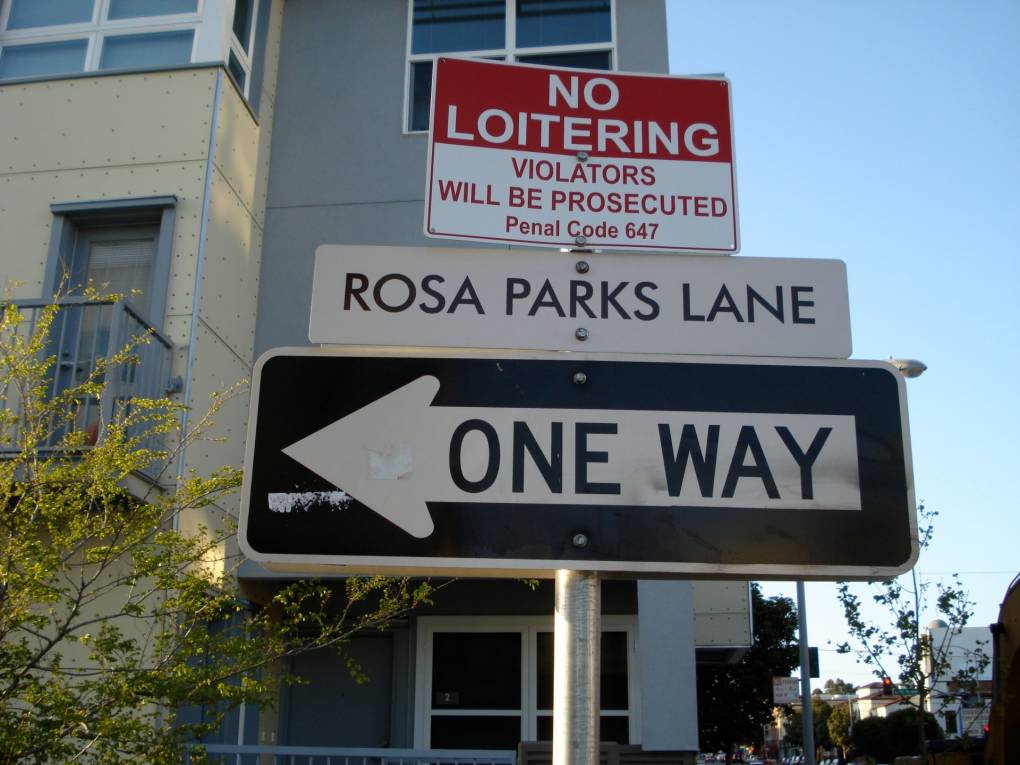
"caption": "Rosa Parks Lane in San Francisco's Mission District. A report by the city's Department on the Status of Women found a large disparity in the number of public spaces named after women.",
"description": "Rosa Parks Lane in San Francisco's Mission District. A report by the city's Department on the Status of Women found a large disparity in the number of public spaces named after women.",
"title": "2395454616_32ea5d4be8_o (1) (1)",
"credit": "Eric Fischer/Flickr",
"status": "inherit",
"isLoading": false,
"fetchFailed": false
},
"news_11793400": {
"type": "attachments",
"id": "news_11793400",
"meta": {
"index": "attachments_1716263798",
"site": "news",
"id": "11793400",
"found": true
},
"parent": 11791667,
"imgSizes": {
"apple_news_ca_landscape_5_5": {
"file": "https://ww2.kqed.org/app/uploads/sites/10/2020/01/11915634055_97bb3a859d_k-1044x783.jpg",
"width": 1044,
"mimeType": "image/jpeg",
"height": 783
},
"apple_news_ca_square_4_0": {
"file": "https://ww2.kqed.org/app/uploads/sites/10/2020/01/11915634055_97bb3a859d_k-470x470.jpg",
"width": 470,
"mimeType": "image/jpeg",
"height": 470
},
"twentyfourteen-full-width": {
"file": "https://ww2.kqed.org/app/uploads/sites/10/2020/01/11915634055_97bb3a859d_k-1038x576.jpg",
"width": 1038,
"mimeType": "image/jpeg",
"height": 576
},
"thumbnail": {
"file": "https://ww2.kqed.org/app/uploads/sites/10/2020/01/11915634055_97bb3a859d_k-160x107.jpg",
"width": 160,
"mimeType": "image/jpeg",
"height": 107
},
"post-thumbnail": {
"file": "https://ww2.kqed.org/app/uploads/sites/10/2020/01/11915634055_97bb3a859d_k-672x372.jpg",
"width": 672,
"mimeType": "image/jpeg",
"height": 372
},
"kqedFullSize": {
"file": "https://ww2.kqed.org/app/uploads/sites/10/2020/01/11915634055_97bb3a859d_k.jpg",
"width": 2048,
"height": 1364
},
"apple_news_ca_landscape_4_7": {
"file": "https://ww2.kqed.org/app/uploads/sites/10/2020/01/11915634055_97bb3a859d_k-632x474.jpg",
"width": 632,
"mimeType": "image/jpeg",
"height": 474
},
"large": {
"file": "https://ww2.kqed.org/app/uploads/sites/10/2020/01/11915634055_97bb3a859d_k-1020x679.jpg",
"width": 1020,
"mimeType": "image/jpeg",
"height": 679
},
"complete_open_graph": {
"file": "https://ww2.kqed.org/app/uploads/sites/10/2020/01/11915634055_97bb3a859d_k-1200x799.jpg",
"width": 1200,
"mimeType": "image/jpeg",
"height": 799
},
"apple_news_ca_landscape_4_0": {
"file": "https://ww2.kqed.org/app/uploads/sites/10/2020/01/11915634055_97bb3a859d_k-536x402.jpg",
"width": 536,
"mimeType": "image/jpeg",
"height": 402
},
"apple_news_ca_portrait_12_9": {
"file": "https://ww2.kqed.org/app/uploads/sites/10/2020/01/11915634055_97bb3a859d_k-1122x1364.jpg",
"width": 1122,
"mimeType": "image/jpeg",
"height": 1364
},
"medium": {
"file": "https://ww2.kqed.org/app/uploads/sites/10/2020/01/11915634055_97bb3a859d_k-800x533.jpg",
"width": 800,
"mimeType": "image/jpeg",
"height": 533
},
"apple_news_ca_portrait_4_0": {
"file": "https://ww2.kqed.org/app/uploads/sites/10/2020/01/11915634055_97bb3a859d_k-354x472.jpg",
"width": 354,
"mimeType": "image/jpeg",
"height": 472
},
"apple_news_ca_portrait_9_7": {
"file": "https://ww2.kqed.org/app/uploads/sites/10/2020/01/11915634055_97bb3a859d_k-840x1120.jpg",
"width": 840,
"mimeType": "image/jpeg",
"height": 1120
},
"apple_news_ca_landscape_12_9": {
"file": "https://ww2.kqed.org/app/uploads/sites/10/2020/01/11915634055_97bb3a859d_k-1832x1364.jpg",
"width": 1832,
"mimeType": "image/jpeg",
"height": 1364
},
"apple_news_ca_square_9_7": {
"file": "https://ww2.kqed.org/app/uploads/sites/10/2020/01/11915634055_97bb3a859d_k-1104x1104.jpg",
"width": 1104,
"mimeType": "image/jpeg",
"height": 1104
},
"apple_news_ca_portrait_4_7": {
"file": "https://ww2.kqed.org/app/uploads/sites/10/2020/01/11915634055_97bb3a859d_k-414x552.jpg",
"width": 414,
"mimeType": "image/jpeg",
"height": 552
},
"apple_news_ca_square_12_9": {
"file": "https://ww2.kqed.org/app/uploads/sites/10/2020/01/11915634055_97bb3a859d_k-1472x1364.jpg",
"width": 1472,
"mimeType": "image/jpeg",
"height": 1364
},
"apple_news_ca_portrait_5_5": {
"file": "https://ww2.kqed.org/app/uploads/sites/10/2020/01/11915634055_97bb3a859d_k-687x916.jpg",
"width": 687,
"mimeType": "image/jpeg",
"height": 916
},
"full-width": {
"file": "https://ww2.kqed.org/app/uploads/sites/10/2020/01/11915634055_97bb3a859d_k-1920x1279.jpg",
"width": 1920,
"mimeType": "image/jpeg",
"height": 1279
},
"apple_news_ca_square_4_7": {
"file": "https://ww2.kqed.org/app/uploads/sites/10/2020/01/11915634055_97bb3a859d_k-550x550.jpg",
"width": 550,
"mimeType": "image/jpeg",
"height": 550
},
"apple_news_ca_landscape_9_7": {
"file": "https://ww2.kqed.org/app/uploads/sites/10/2020/01/11915634055_97bb3a859d_k-1376x1032.jpg",
"width": 1376,
"mimeType": "image/jpeg",
"height": 1032
},
"apple_news_ca_square_5_5": {
"file": "https://ww2.kqed.org/app/uploads/sites/10/2020/01/11915634055_97bb3a859d_k-912x912.jpg",
"width": 912,
"mimeType": "image/jpeg",
"height": 912
}
},
"publishDate": 1577814605,
"modified": 1577814683,
"caption": "Walking around San Francisco and Oakland, you're likely to come across a grid of vault lights on the sidewalk.",
"description": "Walking around San Francisco and Oakland, you're likely to come across a grid of vault lights on the sidewalk.",
"title": "11915634055_97bb3a859d_k",
"credit": "\u003ca href=\"https://www.flickr.com/photos/squeakymarmot/11915634055/\">Mike\u003c/a>/flickr",
"status": "inherit",
"isLoading": false,
"fetchFailed": false
},
"news_11793525": {
"type": "attachments",
"id": "news_11793525",
"meta": {
"index": "attachments_1716263798",
"site": "news",
"id": "11793525",
"found": true
},
"parent": 11754695,
"imgSizes": {
"apple_news_ca_landscape_5_5": {
"file": "https://ww2.kqed.org/app/uploads/sites/10/2020/01/Hagia_Sophia-1044x783.jpg",
"width": 1044,
"mimeType": "image/jpeg",
"height": 783
},
"apple_news_ca_square_4_0": {
"file": "https://ww2.kqed.org/app/uploads/sites/10/2020/01/Hagia_Sophia-470x470.jpg",
"width": 470,
"mimeType": "image/jpeg",
"height": 470
},
"twentyfourteen-full-width": {
"file": "https://ww2.kqed.org/app/uploads/sites/10/2020/01/Hagia_Sophia-1038x576.jpg",
"width": 1038,
"mimeType": "image/jpeg",
"height": 576
},
"thumbnail": {
"file": "https://ww2.kqed.org/app/uploads/sites/10/2020/01/Hagia_Sophia-160x107.jpg",
"width": 160,
"mimeType": "image/jpeg",
"height": 107
},
"post-thumbnail": {
"file": "https://ww2.kqed.org/app/uploads/sites/10/2020/01/Hagia_Sophia-672x372.jpg",
"width": 672,
"mimeType": "image/jpeg",
"height": 372
},
"kqedFullSize": {
"file": "https://ww2.kqed.org/app/uploads/sites/10/2020/01/Hagia_Sophia.jpg",
"width": 1379,
"height": 921
},
"apple_news_ca_landscape_4_7": {
"file": "https://ww2.kqed.org/app/uploads/sites/10/2020/01/Hagia_Sophia-632x474.jpg",
"width": 632,
"mimeType": "image/jpeg",
"height": 474
},
"large": {
"file": "https://ww2.kqed.org/app/uploads/sites/10/2020/01/Hagia_Sophia-1020x681.jpg",
"width": 1020,
"mimeType": "image/jpeg",
"height": 681
},
"complete_open_graph": {
"file": "https://ww2.kqed.org/app/uploads/sites/10/2020/01/Hagia_Sophia-1200x801.jpg",
"width": 1200,
"mimeType": "image/jpeg",
"height": 801
},
"apple_news_ca_landscape_4_0": {
"file": "https://ww2.kqed.org/app/uploads/sites/10/2020/01/Hagia_Sophia-536x402.jpg",
"width": 536,
"mimeType": "image/jpeg",
"height": 402
},
"apple_news_ca_portrait_12_9": {
"file": "https://ww2.kqed.org/app/uploads/sites/10/2020/01/Hagia_Sophia-1122x921.jpg",
"width": 1122,
"mimeType": "image/jpeg",
"height": 921
},
"medium": {
"file": "https://ww2.kqed.org/app/uploads/sites/10/2020/01/Hagia_Sophia-800x534.jpg",
"width": 800,
"mimeType": "image/jpeg",
"height": 534
},
"apple_news_ca_portrait_4_0": {
"file": "https://ww2.kqed.org/app/uploads/sites/10/2020/01/Hagia_Sophia-354x472.jpg",
"width": 354,
"mimeType": "image/jpeg",
"height": 472
},
"apple_news_ca_portrait_9_7": {
"file": "https://ww2.kqed.org/app/uploads/sites/10/2020/01/Hagia_Sophia-840x921.jpg",
"width": 840,
"mimeType": "image/jpeg",
"height": 921
},
"apple_news_ca_square_9_7": {
"file": "https://ww2.kqed.org/app/uploads/sites/10/2020/01/Hagia_Sophia-1104x921.jpg",
"width": 1104,
"mimeType": "image/jpeg",
"height": 921
},
"apple_news_ca_portrait_4_7": {
"file": "https://ww2.kqed.org/app/uploads/sites/10/2020/01/Hagia_Sophia-414x552.jpg",
"width": 414,
"mimeType": "image/jpeg",
"height": 552
},
"apple_news_ca_portrait_5_5": {
"file": "https://ww2.kqed.org/app/uploads/sites/10/2020/01/Hagia_Sophia-687x916.jpg",
"width": 687,
"mimeType": "image/jpeg",
"height": 916
},
"apple_news_ca_square_4_7": {
"file": "https://ww2.kqed.org/app/uploads/sites/10/2020/01/Hagia_Sophia-550x550.jpg",
"width": 550,
"mimeType": "image/jpeg",
"height": 550
},
"apple_news_ca_landscape_9_7": {
"file": "https://ww2.kqed.org/app/uploads/sites/10/2020/01/Hagia_Sophia-1376x921.jpg",
"width": 1376,
"mimeType": "image/jpeg",
"height": 921
},
"apple_news_ca_square_5_5": {
"file": "https://ww2.kqed.org/app/uploads/sites/10/2020/01/Hagia_Sophia-912x912.jpg",
"width": 912,
"mimeType": "image/jpeg",
"height": 912
}
},
"publishDate": 1577894861,
"modified": 1577898605,
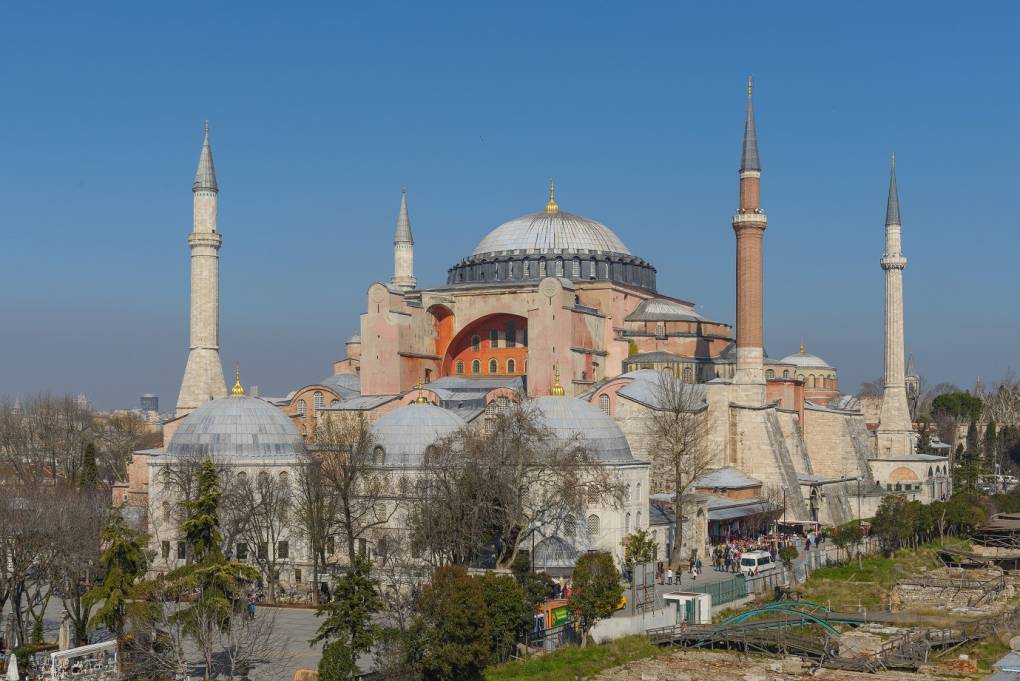
"caption": "A church choir has not been able to sing inside the Hagia Sophia for over 500 years.",
"description": "A church choir has not been able to sing inside the Hagia Sophia for over 500 years.",
"title": "Hagia_Sophia",
"credit": "Arild Vågen/Wikimedia Commons",
"status": "inherit",
"isLoading": false,
"fetchFailed": false
},
"news_11793342": {
"type": "attachments",
"id": "news_11793342",
"meta": {
"index": "attachments_1716263798",
"site": "news",
"id": "11793342",
"found": true
},
"parent": 11793305,
"imgSizes": {
"apple_news_ca_landscape_5_5": {
"file": "https://ww2.kqed.org/app/uploads/sites/10/2019/12/RS3632_july4-20120703-1-1044x783.jpg",
"width": 1044,
"mimeType": "image/jpeg",
"height": 783
},
"apple_news_ca_square_4_0": {
"file": "https://ww2.kqed.org/app/uploads/sites/10/2019/12/RS3632_july4-20120703-1-470x470.jpg",
"width": 470,
"mimeType": "image/jpeg",
"height": 470
},
"twentyfourteen-full-width": {
"file": "https://ww2.kqed.org/app/uploads/sites/10/2019/12/RS3632_july4-20120703-1-1038x576.jpg",
"width": 1038,
"mimeType": "image/jpeg",
"height": 576
},
"thumbnail": {
"file": "https://ww2.kqed.org/app/uploads/sites/10/2019/12/RS3632_july4-20120703-1-160x107.jpg",
"width": 160,
"mimeType": "image/jpeg",
"height": 107
},
"post-thumbnail": {
"file": "https://ww2.kqed.org/app/uploads/sites/10/2019/12/RS3632_july4-20120703-1-672x372.jpg",
"width": 672,
"mimeType": "image/jpeg",
"height": 372
},
"kqedFullSize": {
"file": "https://ww2.kqed.org/app/uploads/sites/10/2019/12/RS3632_july4-20120703-1.jpg",
"width": 1920,
"height": 1286
},
"apple_news_ca_landscape_4_7": {
"file": "https://ww2.kqed.org/app/uploads/sites/10/2019/12/RS3632_july4-20120703-1-632x474.jpg",
"width": 632,
"mimeType": "image/jpeg",
"height": 474
},
"large": {
"file": "https://ww2.kqed.org/app/uploads/sites/10/2019/12/RS3632_july4-20120703-1-1020x683.jpg",
"width": 1020,
"mimeType": "image/jpeg",
"height": 683
},
"complete_open_graph": {
"file": "https://ww2.kqed.org/app/uploads/sites/10/2019/12/RS3632_july4-20120703-1-1200x804.jpg",
"width": 1200,
"mimeType": "image/jpeg",
"height": 804
},
"apple_news_ca_landscape_4_0": {
"file": "https://ww2.kqed.org/app/uploads/sites/10/2019/12/RS3632_july4-20120703-1-536x402.jpg",
"width": 536,
"mimeType": "image/jpeg",
"height": 402
},
"apple_news_ca_portrait_12_9": {
"file": "https://ww2.kqed.org/app/uploads/sites/10/2019/12/RS3632_july4-20120703-1-1122x1286.jpg",
"width": 1122,
"mimeType": "image/jpeg",
"height": 1286
},
"medium": {
"file": "https://ww2.kqed.org/app/uploads/sites/10/2019/12/RS3632_july4-20120703-1-800x536.jpg",
"width": 800,
"mimeType": "image/jpeg",
"height": 536
},
"apple_news_ca_portrait_4_0": {
"file": "https://ww2.kqed.org/app/uploads/sites/10/2019/12/RS3632_july4-20120703-1-354x472.jpg",
"width": 354,
"mimeType": "image/jpeg",
"height": 472
},
"apple_news_ca_portrait_9_7": {
"file": "https://ww2.kqed.org/app/uploads/sites/10/2019/12/RS3632_july4-20120703-1-840x1120.jpg",
"width": 840,
"mimeType": "image/jpeg",
"height": 1120
},
"apple_news_ca_landscape_12_9": {
"file": "https://ww2.kqed.org/app/uploads/sites/10/2019/12/RS3632_july4-20120703-1-1832x1286.jpg",
"width": 1832,
"mimeType": "image/jpeg",
"height": 1286
},
"apple_news_ca_square_9_7": {
"file": "https://ww2.kqed.org/app/uploads/sites/10/2019/12/RS3632_july4-20120703-1-1104x1104.jpg",
"width": 1104,
"mimeType": "image/jpeg",
"height": 1104
},
"apple_news_ca_portrait_4_7": {
"file": "https://ww2.kqed.org/app/uploads/sites/10/2019/12/RS3632_july4-20120703-1-414x552.jpg",
"width": 414,
"mimeType": "image/jpeg",
"height": 552
},
"apple_news_ca_square_12_9": {
"file": "https://ww2.kqed.org/app/uploads/sites/10/2019/12/RS3632_july4-20120703-1-1472x1286.jpg",
"width": 1472,
"mimeType": "image/jpeg",
"height": 1286
},
"apple_news_ca_portrait_5_5": {
"file": "https://ww2.kqed.org/app/uploads/sites/10/2019/12/RS3632_july4-20120703-1-687x916.jpg",
"width": 687,
"mimeType": "image/jpeg",
"height": 916
},
"full-width": {
"file": "https://ww2.kqed.org/app/uploads/sites/10/2019/12/RS3632_july4-20120703-1-1920x1286.jpg",
"width": 1920,
"mimeType": "image/jpeg",
"height": 1286
},
"apple_news_ca_square_4_7": {
"file": "https://ww2.kqed.org/app/uploads/sites/10/2019/12/RS3632_july4-20120703-1-550x550.jpg",
"width": 550,
"mimeType": "image/jpeg",
"height": 550
},
"apple_news_ca_landscape_9_7": {
"file": "https://ww2.kqed.org/app/uploads/sites/10/2019/12/RS3632_july4-20120703-1-1376x1032.jpg",
"width": 1376,
"mimeType": "image/jpeg",
"height": 1032
},
"apple_news_ca_square_5_5": {
"file": "https://ww2.kqed.org/app/uploads/sites/10/2019/12/RS3632_july4-20120703-1-912x912.jpg",
"width": 912,
"mimeType": "image/jpeg",
"height": 912
}
},
"publishDate": 1577750275,
"modified": 1577750426,
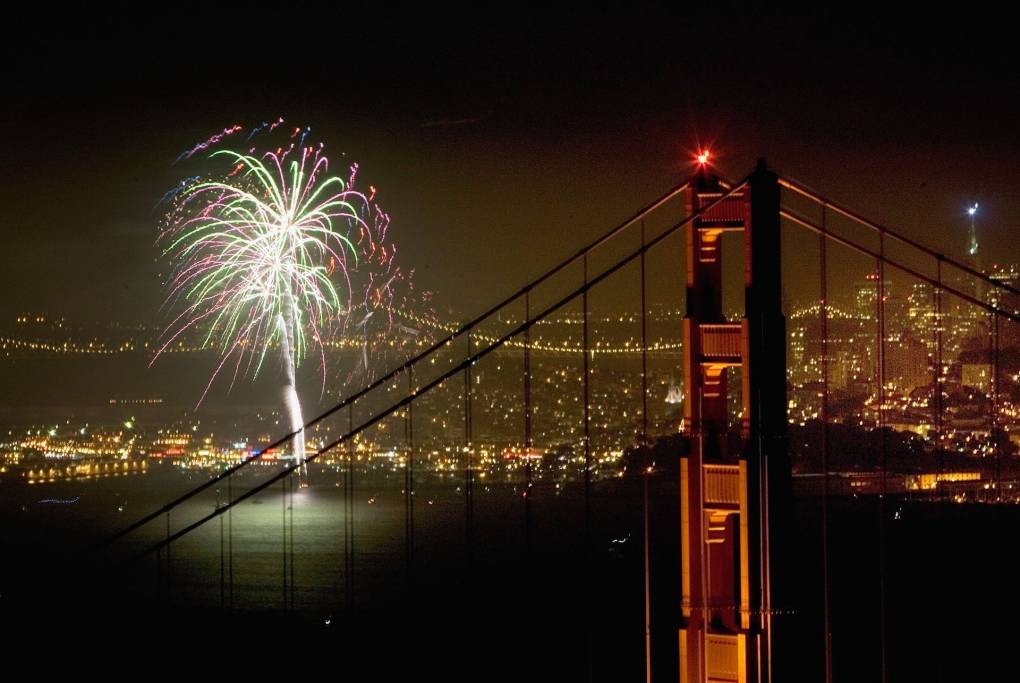
"caption": "Fireworks light up the Golden Gate Bridge and San Francisco Bay.",
"description": "Fireworks light up the Golden Gate Bridge and San Francisco Bay.",
"title": "Fireworks Light up Golden Gate Bridge On Independence Day",
"credit": "David Paul Morris/Getty Images",
"status": "inherit",
"isLoading": false,
"fetchFailed": false
},
"news_11793291": {
"type": "attachments",
"id": "news_11793291",
"meta": {
"index": "attachments_1716263798",
"site": "news",
"id": "11793291",
"found": true
},
"parent": 11793277,
"imgSizes": {
"apple_news_ca_landscape_5_5": {
"file": "https://ww2.kqed.org/app/uploads/sites/10/2019/12/fireworks-825652_1280-1-1044x722.jpg",
"width": 1044,
"mimeType": "image/jpeg",
"height": 722
},
"apple_news_ca_square_4_0": {
"file": "https://ww2.kqed.org/app/uploads/sites/10/2019/12/fireworks-825652_1280-1-470x470.jpg",
"width": 470,
"mimeType": "image/jpeg",
"height": 470
},
"twentyfourteen-full-width": {
"file": "https://ww2.kqed.org/app/uploads/sites/10/2019/12/fireworks-825652_1280-1-1038x576.jpg",
"width": 1038,
"mimeType": "image/jpeg",
"height": 576
},
"thumbnail": {
"file": "https://ww2.kqed.org/app/uploads/sites/10/2019/12/fireworks-825652_1280-1-160x90.jpg",
"width": 160,
"mimeType": "image/jpeg",
"height": 90
},
"post-thumbnail": {
"file": "https://ww2.kqed.org/app/uploads/sites/10/2019/12/fireworks-825652_1280-1-672x372.jpg",
"width": 672,
"mimeType": "image/jpeg",
"height": 372
},
"kqedFullSize": {
"file": "https://ww2.kqed.org/app/uploads/sites/10/2019/12/fireworks-825652_1280-1.jpg",
"width": 1280,
"height": 722
},
"apple_news_ca_landscape_4_7": {
"file": "https://ww2.kqed.org/app/uploads/sites/10/2019/12/fireworks-825652_1280-1-632x474.jpg",
"width": 632,
"mimeType": "image/jpeg",
"height": 474
},
"large": {
"file": "https://ww2.kqed.org/app/uploads/sites/10/2019/12/fireworks-825652_1280-1-1020x575.jpg",
"width": 1020,
"mimeType": "image/jpeg",
"height": 575
},
"complete_open_graph": {
"file": "https://ww2.kqed.org/app/uploads/sites/10/2019/12/fireworks-825652_1280-1-1200x677.jpg",
"width": 1200,
"mimeType": "image/jpeg",
"height": 677
},
"apple_news_ca_landscape_4_0": {
"file": "https://ww2.kqed.org/app/uploads/sites/10/2019/12/fireworks-825652_1280-1-536x402.jpg",
"width": 536,
"mimeType": "image/jpeg",
"height": 402
},
"apple_news_ca_portrait_12_9": {
"file": "https://ww2.kqed.org/app/uploads/sites/10/2019/12/fireworks-825652_1280-1-1122x722.jpg",
"width": 1122,
"mimeType": "image/jpeg",
"height": 722
},
"medium": {
"file": "https://ww2.kqed.org/app/uploads/sites/10/2019/12/fireworks-825652_1280-1-800x451.jpg",
"width": 800,
"mimeType": "image/jpeg",
"height": 451
},
"apple_news_ca_portrait_4_0": {
"file": "https://ww2.kqed.org/app/uploads/sites/10/2019/12/fireworks-825652_1280-1-354x472.jpg",
"width": 354,
"mimeType": "image/jpeg",
"height": 472
},
"apple_news_ca_portrait_9_7": {
"file": "https://ww2.kqed.org/app/uploads/sites/10/2019/12/fireworks-825652_1280-1-840x722.jpg",
"width": 840,
"mimeType": "image/jpeg",
"height": 722
},
"apple_news_ca_square_9_7": {
"file": "https://ww2.kqed.org/app/uploads/sites/10/2019/12/fireworks-825652_1280-1-1104x722.jpg",
"width": 1104,
"mimeType": "image/jpeg",
"height": 722
},
"apple_news_ca_portrait_4_7": {
"file": "https://ww2.kqed.org/app/uploads/sites/10/2019/12/fireworks-825652_1280-1-414x552.jpg",
"width": 414,
"mimeType": "image/jpeg",
"height": 552
},
"apple_news_ca_portrait_5_5": {
"file": "https://ww2.kqed.org/app/uploads/sites/10/2019/12/fireworks-825652_1280-1-687x722.jpg",
"width": 687,
"mimeType": "image/jpeg",
"height": 722
},
"apple_news_ca_square_4_7": {
"file": "https://ww2.kqed.org/app/uploads/sites/10/2019/12/fireworks-825652_1280-1-550x550.jpg",
"width": 550,
"mimeType": "image/jpeg",
"height": 550
},
"apple_news_ca_square_5_5": {
"file": "https://ww2.kqed.org/app/uploads/sites/10/2019/12/fireworks-825652_1280-1-912x722.jpg",
"width": 912,
"mimeType": "image/jpeg",
"height": 722
}
},
"publishDate": 1577735537,
"modified": 1577746043,
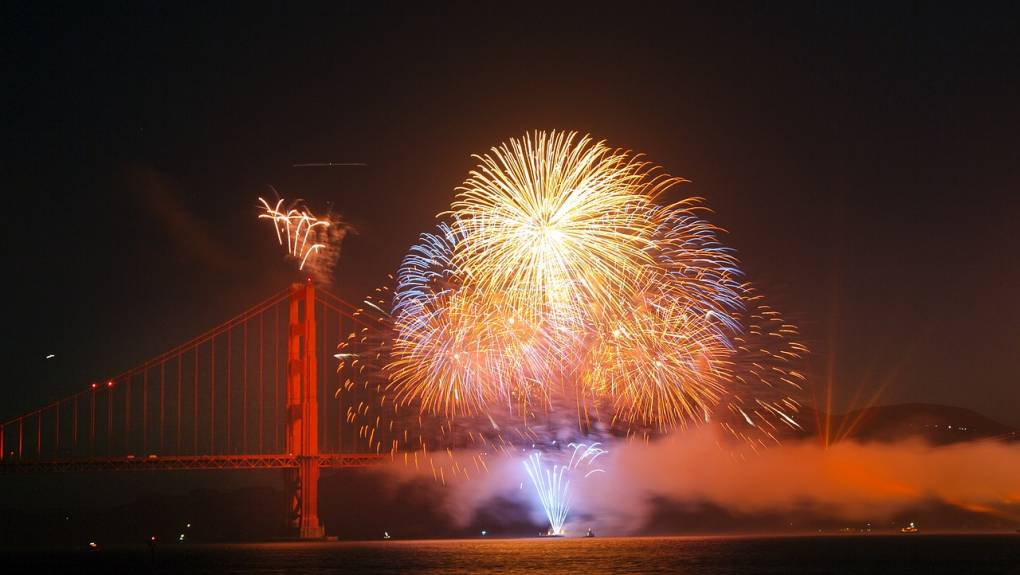
"caption": "Fireworks explode over the Golden Gate Bridge on New Year's Eve.",
"description": "Fireworks explode over the Golden Gate Bridge on New Year's Eve.",
"title": "fireworks-825652_1280 (1)",
"credit": "skeeze/Pixabay",
"status": "inherit",
"isLoading": false,
"fetchFailed": false
},
"news_11780435": {
"type": "attachments",
"id": "news_11780435",
"meta": {
"index": "attachments_1716263798",
"site": "news",
"id": "11780435",
"found": true
},
"parent": 11780183,
"imgSizes": {
"apple_news_ca_landscape_5_5": {
"file": "https://ww2.kqed.org/app/uploads/sites/10/2019/10/RS39494_Von-Trump-Family-qut-e1576889785360-1044x783.jpg",
"width": 1044,
"mimeType": "image/jpeg",
"height": 783
},
"apple_news_ca_square_4_0": {
"file": "https://ww2.kqed.org/app/uploads/sites/10/2019/10/RS39494_Von-Trump-Family-qut-e1576889785360-470x470.jpg",
"width": 470,
"mimeType": "image/jpeg",
"height": 470
},
"twentyfourteen-full-width": {
"file": "https://ww2.kqed.org/app/uploads/sites/10/2019/10/RS39494_Von-Trump-Family-qut-e1576889785360-1038x576.jpg",
"width": 1038,
"mimeType": "image/jpeg",
"height": 576
},
"thumbnail": {
"file": "https://ww2.kqed.org/app/uploads/sites/10/2019/10/RS39494_Von-Trump-Family-qut-e1576889785360-160x120.jpg",
"width": 160,
"mimeType": "image/jpeg",
"height": 120
},
"post-thumbnail": {
"file": "https://ww2.kqed.org/app/uploads/sites/10/2019/10/RS39494_Von-Trump-Family-qut-e1576889785360-672x372.jpg",
"width": 672,
"mimeType": "image/jpeg",
"height": 372
},
"kqedFullSize": {
"file": "https://ww2.kqed.org/app/uploads/sites/10/2019/10/RS39494_Von-Trump-Family-qut-e1576889785360.jpg",
"width": 1561,
"height": 1172
},
"apple_news_ca_landscape_4_7": {
"file": "https://ww2.kqed.org/app/uploads/sites/10/2019/10/RS39494_Von-Trump-Family-qut-e1576889785360-632x474.jpg",
"width": 632,
"mimeType": "image/jpeg",
"height": 474
},
"large": {
"file": "https://ww2.kqed.org/app/uploads/sites/10/2019/10/RS39494_Von-Trump-Family-qut-e1576889785360-1020x766.jpg",
"width": 1020,
"mimeType": "image/jpeg",
"height": 766
},
"complete_open_graph": {
"file": "https://ww2.kqed.org/app/uploads/sites/10/2019/10/RS39494_Von-Trump-Family-qut-e1576889785360-1200x901.jpg",
"width": 1200,
"mimeType": "image/jpeg",
"height": 901
},
"apple_news_ca_landscape_4_0": {
"file": "https://ww2.kqed.org/app/uploads/sites/10/2019/10/RS39494_Von-Trump-Family-qut-e1576889785360-536x402.jpg",
"width": 536,
"mimeType": "image/jpeg",
"height": 402
},
"apple_news_ca_portrait_12_9": {
"file": "https://ww2.kqed.org/app/uploads/sites/10/2019/10/RS39494_Von-Trump-Family-qut-e1576889785360-1122x1172.jpg",
"width": 1122,
"mimeType": "image/jpeg",
"height": 1172
},
"medium": {
"file": "https://ww2.kqed.org/app/uploads/sites/10/2019/10/RS39494_Von-Trump-Family-qut-e1576889785360-800x601.jpg",
"width": 800,
"mimeType": "image/jpeg",
"height": 601
},
"apple_news_ca_portrait_4_0": {
"file": "https://ww2.kqed.org/app/uploads/sites/10/2019/10/RS39494_Von-Trump-Family-qut-e1576889785360-354x472.jpg",
"width": 354,
"mimeType": "image/jpeg",
"height": 472
},
"apple_news_ca_portrait_9_7": {
"file": "https://ww2.kqed.org/app/uploads/sites/10/2019/10/RS39494_Von-Trump-Family-qut-e1576889785360-840x1120.jpg",
"width": 840,
"mimeType": "image/jpeg",
"height": 1120
},
"apple_news_ca_landscape_12_9": {
"file": "https://ww2.kqed.org/app/uploads/sites/10/2019/10/RS39494_Von-Trump-Family-qut-1560x1374.jpg",
"width": 1560,
"mimeType": "image/jpeg",
"height": 1374
},
"apple_news_ca_square_9_7": {
"file": "https://ww2.kqed.org/app/uploads/sites/10/2019/10/RS39494_Von-Trump-Family-qut-e1576889785360-1104x1104.jpg",
"width": 1104,
"mimeType": "image/jpeg",
"height": 1104
},
"apple_news_ca_portrait_4_7": {
"file": "https://ww2.kqed.org/app/uploads/sites/10/2019/10/RS39494_Von-Trump-Family-qut-e1576889785360-414x552.jpg",
"width": 414,
"mimeType": "image/jpeg",
"height": 552
},
"apple_news_ca_square_12_9": {
"file": "https://ww2.kqed.org/app/uploads/sites/10/2019/10/RS39494_Von-Trump-Family-qut-e1576889785360-1472x1172.jpg",
"width": 1472,
"mimeType": "image/jpeg",
"height": 1172
},
"apple_news_ca_portrait_5_5": {
"file": "https://ww2.kqed.org/app/uploads/sites/10/2019/10/RS39494_Von-Trump-Family-qut-e1576889785360-687x916.jpg",
"width": 687,
"mimeType": "image/jpeg",
"height": 916
},
"apple_news_ca_square_4_7": {
"file": "https://ww2.kqed.org/app/uploads/sites/10/2019/10/RS39494_Von-Trump-Family-qut-e1576889785360-550x550.jpg",
"width": 550,
"mimeType": "image/jpeg",
"height": 550
},
"apple_news_ca_landscape_9_7": {
"file": "https://ww2.kqed.org/app/uploads/sites/10/2019/10/RS39494_Von-Trump-Family-qut-e1576889785360-1376x1032.jpg",
"width": 1376,
"mimeType": "image/jpeg",
"height": 1032
},
"apple_news_ca_square_5_5": {
"file": "https://ww2.kqed.org/app/uploads/sites/10/2019/10/RS39494_Von-Trump-Family-qut-e1576889785360-912x912.jpg",
"width": 912,
"mimeType": "image/jpeg",
"height": 912
}
},
"publishDate": 1571245740,
"modified": 1577119922,
"caption": "The Von Trump Family in a Beach Blanket Babylon skit based on 'The Sound of Music'. L to R: Ryan Cowles, Rena Wilson, Lauren Howard-Brintz, Kirk Mills, Darrin Glasser, and Lizzie Moss.",
"description": "The Von Trump Family in a Beach Blanket Babylon skit based on 'The Sound of Music'. L to R: Ryan Cowles, Rena Wilson, Lauren Howard-Brintz, Kirk Mills, Darrin Glasser, and Lizzie Moss.",
"title": "RS39494_Von Trump Family-qut",
"credit": "Courtesy of Rick Markovich, Beach Blanket Babylon",
"status": "inherit",
"isLoading": false,
"fetchFailed": false
},
"news_11792627": {
"type": "attachments",
"id": "news_11792627",
"meta": {
"index": "attachments_1716263798",
"site": "news",
"id": "11792627",
"found": true
},
"parent": 11792625,
"imgSizes": {
"apple_news_ca_landscape_5_5": {
"file": "https://ww2.kqed.org/app/uploads/sites/10/2019/12/BBB_Gallery_Mary-Poppins-1044x783.jpg",
"width": 1044,
"mimeType": "image/jpeg",
"height": 783
},
"apple_news_ca_square_4_0": {
"file": "https://ww2.kqed.org/app/uploads/sites/10/2019/12/BBB_Gallery_Mary-Poppins-470x470.jpg",
"width": 470,
"mimeType": "image/jpeg",
"height": 470
},
"twentyfourteen-full-width": {
"file": "https://ww2.kqed.org/app/uploads/sites/10/2019/12/BBB_Gallery_Mary-Poppins-1038x576.jpg",
"width": 1038,
"mimeType": "image/jpeg",
"height": 576
},
"thumbnail": {
"file": "https://ww2.kqed.org/app/uploads/sites/10/2019/12/BBB_Gallery_Mary-Poppins-160x84.jpg",
"width": 160,
"mimeType": "image/jpeg",
"height": 84
},
"post-thumbnail": {
"file": "https://ww2.kqed.org/app/uploads/sites/10/2019/12/BBB_Gallery_Mary-Poppins-672x372.jpg",
"width": 672,
"mimeType": "image/jpeg",
"height": 372
},
"kqedFullSize": {
"file": "https://ww2.kqed.org/app/uploads/sites/10/2019/12/BBB_Gallery_Mary-Poppins.jpg",
"width": 1600,
"height": 840
},
"apple_news_ca_landscape_4_7": {
"file": "https://ww2.kqed.org/app/uploads/sites/10/2019/12/BBB_Gallery_Mary-Poppins-632x474.jpg",
"width": 632,
"mimeType": "image/jpeg",
"height": 474
},
"large": {
"file": "https://ww2.kqed.org/app/uploads/sites/10/2019/12/BBB_Gallery_Mary-Poppins-1020x536.jpg",
"width": 1020,
"mimeType": "image/jpeg",
"height": 536
},
"complete_open_graph": {
"file": "https://ww2.kqed.org/app/uploads/sites/10/2019/12/BBB_Gallery_Mary-Poppins-1200x630.jpg",
"width": 1200,
"mimeType": "image/jpeg",
"height": 630
},
"apple_news_ca_landscape_4_0": {
"file": "https://ww2.kqed.org/app/uploads/sites/10/2019/12/BBB_Gallery_Mary-Poppins-536x402.jpg",
"width": 536,
"mimeType": "image/jpeg",
"height": 402
},
"apple_news_ca_portrait_12_9": {
"file": "https://ww2.kqed.org/app/uploads/sites/10/2019/12/BBB_Gallery_Mary-Poppins-1122x840.jpg",
"width": 1122,
"mimeType": "image/jpeg",
"height": 840
},
"medium": {
"file": "https://ww2.kqed.org/app/uploads/sites/10/2019/12/BBB_Gallery_Mary-Poppins-800x420.jpg",
"width": 800,
"mimeType": "image/jpeg",
"height": 420
},
"apple_news_ca_portrait_4_0": {
"file": "https://ww2.kqed.org/app/uploads/sites/10/2019/12/BBB_Gallery_Mary-Poppins-354x472.jpg",
"width": 354,
"mimeType": "image/jpeg",
"height": 472
},
"apple_news_ca_portrait_9_7": {
"file": "https://ww2.kqed.org/app/uploads/sites/10/2019/12/BBB_Gallery_Mary-Poppins-840x840.jpg",
"width": 840,
"mimeType": "image/jpeg",
"height": 840
},
"apple_news_ca_square_9_7": {
"file": "https://ww2.kqed.org/app/uploads/sites/10/2019/12/BBB_Gallery_Mary-Poppins-1104x840.jpg",
"width": 1104,
"mimeType": "image/jpeg",
"height": 840
},
"apple_news_ca_portrait_4_7": {
"file": "https://ww2.kqed.org/app/uploads/sites/10/2019/12/BBB_Gallery_Mary-Poppins-414x552.jpg",
"width": 414,
"mimeType": "image/jpeg",
"height": 552
},
"apple_news_ca_square_12_9": {
"file": "https://ww2.kqed.org/app/uploads/sites/10/2019/12/BBB_Gallery_Mary-Poppins-1472x840.jpg",
"width": 1472,
"mimeType": "image/jpeg",
"height": 840
},
"apple_news_ca_portrait_5_5": {
"file": "https://ww2.kqed.org/app/uploads/sites/10/2019/12/BBB_Gallery_Mary-Poppins-687x840.jpg",
"width": 687,
"mimeType": "image/jpeg",
"height": 840
},
"apple_news_ca_square_4_7": {
"file": "https://ww2.kqed.org/app/uploads/sites/10/2019/12/BBB_Gallery_Mary-Poppins-550x550.jpg",
"width": 550,
"mimeType": "image/jpeg",
"height": 550
},
"apple_news_ca_landscape_9_7": {
"file": "https://ww2.kqed.org/app/uploads/sites/10/2019/12/BBB_Gallery_Mary-Poppins-1376x840.jpg",
"width": 1376,
"mimeType": "image/jpeg",
"height": 840
},
"apple_news_ca_square_5_5": {
"file": "https://ww2.kqed.org/app/uploads/sites/10/2019/12/BBB_Gallery_Mary-Poppins-912x840.jpg",
"width": 912,
"mimeType": "image/jpeg",
"height": 840
}
},
"publishDate": 1576955889,
"modified": 1576955930,
"caption": "The curtain is closing on America's longest continuously running musical, a San Francisco show that's been a must-see for tourists and locals for more than 45 years. ",
"description": "The curtain is closing on America's longest continuously running musical, a San Francisco show that's been a must-see for tourists and locals for more than 45 years. ",
"title": "BBB_Gallery_Mary-Poppins",
"credit": "Courtesy of Beach Blanket Babylon",
"status": "inherit",
"isLoading": false,
"fetchFailed": false
},
"news_11791866": {
"type": "attachments",
"id": "news_11791866",
"meta": {
"index": "attachments_1716263798",
"site": "news",
"id": "11791866",
"found": true
},
"parent": 11791781,
"imgSizes": {
"apple_news_ca_square_4_0": {
"file": "https://ww2.kqed.org/app/uploads/sites/10/2019/12/A-non-binary-person-using-a-laptop-at-work-1020x574-470x470.jpg",
"width": 470,
"mimeType": "image/jpeg",
"height": 470
},
"thumbnail": {
"file": "https://ww2.kqed.org/app/uploads/sites/10/2019/12/A-non-binary-person-using-a-laptop-at-work-1020x574-160x90.jpg",
"width": 160,
"mimeType": "image/jpeg",
"height": 90
},
"post-thumbnail": {
"file": "https://ww2.kqed.org/app/uploads/sites/10/2019/12/A-non-binary-person-using-a-laptop-at-work-1020x574-672x372.jpg",
"width": 672,
"mimeType": "image/jpeg",
"height": 372
},
"kqedFullSize": {
"file": "https://ww2.kqed.org/app/uploads/sites/10/2019/12/A-non-binary-person-using-a-laptop-at-work-1020x574.jpg",
"width": 1020,
"height": 574
},
"apple_news_ca_landscape_4_7": {
"file": "https://ww2.kqed.org/app/uploads/sites/10/2019/12/A-non-binary-person-using-a-laptop-at-work-1020x574-632x474.jpg",
"width": 632,
"mimeType": "image/jpeg",
"height": 474
},
"large": {
"file": "https://ww2.kqed.org/app/uploads/sites/10/2019/12/A-non-binary-person-using-a-laptop-at-work-1020x574-1020x574.jpg",
"width": 1020,
"mimeType": "image/jpeg",
"height": 574
},
"apple_news_ca_landscape_4_0": {
"file": "https://ww2.kqed.org/app/uploads/sites/10/2019/12/A-non-binary-person-using-a-laptop-at-work-1020x574-536x402.jpg",
"width": 536,
"mimeType": "image/jpeg",
"height": 402
},
"medium": {
"file": "https://ww2.kqed.org/app/uploads/sites/10/2019/12/A-non-binary-person-using-a-laptop-at-work-1020x574-800x450.jpg",
"width": 800,
"mimeType": "image/jpeg",
"height": 450
},
"apple_news_ca_portrait_4_0": {
"file": "https://ww2.kqed.org/app/uploads/sites/10/2019/12/A-non-binary-person-using-a-laptop-at-work-1020x574-354x472.jpg",
"width": 354,
"mimeType": "image/jpeg",
"height": 472
},
"apple_news_ca_portrait_9_7": {
"file": "https://ww2.kqed.org/app/uploads/sites/10/2019/12/A-non-binary-person-using-a-laptop-at-work-1020x574-840x574.jpg",
"width": 840,
"mimeType": "image/jpeg",
"height": 574
},
"apple_news_ca_portrait_4_7": {
"file": "https://ww2.kqed.org/app/uploads/sites/10/2019/12/A-non-binary-person-using-a-laptop-at-work-1020x574-414x552.jpg",
"width": 414,
"mimeType": "image/jpeg",
"height": 552
},
"apple_news_ca_portrait_5_5": {
"file": "https://ww2.kqed.org/app/uploads/sites/10/2019/12/A-non-binary-person-using-a-laptop-at-work-1020x574-687x574.jpg",
"width": 687,
"mimeType": "image/jpeg",
"height": 574
},
"apple_news_ca_square_4_7": {
"file": "https://ww2.kqed.org/app/uploads/sites/10/2019/12/A-non-binary-person-using-a-laptop-at-work-1020x574-550x550.jpg",
"width": 550,
"mimeType": "image/jpeg",
"height": 550
},
"apple_news_ca_square_5_5": {
"file": "https://ww2.kqed.org/app/uploads/sites/10/2019/12/A-non-binary-person-using-a-laptop-at-work-1020x574-912x574.jpg",
"width": 912,
"mimeType": "image/jpeg",
"height": 574
}
},
"publishDate": 1576632569,
"modified": 1576702535,
"caption": "One of our most read stories in 2019: How new research from Duke University demonstrates that people find exploitation more justified if a worker is passionate about what they do. ",
"description": null,
"title": "A non-binary person using a laptop at work.",
"credit": "The Gender Spectrum Collection",
"status": "inherit",
"isLoading": false,
"fetchFailed": false
},
"news_11206090": {
"type": "attachments",
"id": "news_11206090",
"meta": {
"index": "attachments_1716263798",
"site": "news",
"id": "11206090",
"found": true
},
"parent": 11203042,
"imgSizes": {
"small": {
"file": "https://ww2.kqed.org/app/uploads/sites/10/2016/12/GettyImages-627709214-520x347.jpg",
"width": 520,
"mimeType": "image/jpeg",
"height": 347
},
"twentyfourteen-full-width": {
"file": "https://ww2.kqed.org/app/uploads/sites/10/2016/12/GettyImages-627709214-1038x576.jpg",
"width": 1038,
"mimeType": "image/jpeg",
"height": 576
},
"thumbnail": {
"file": "https://ww2.kqed.org/app/uploads/sites/10/2016/12/GettyImages-627709214-160x107.jpg",
"width": 160,
"mimeType": "image/jpeg",
"height": 107
},
"fd-sm": {
"file": "https://ww2.kqed.org/app/uploads/sites/10/2016/12/GettyImages-627709214-960x640.jpg",
"width": 960,
"mimeType": "image/jpeg",
"height": 640
},
"post-thumbnail": {
"file": "https://ww2.kqed.org/app/uploads/sites/10/2016/12/GettyImages-627709214-672x372.jpg",
"width": 672,
"mimeType": "image/jpeg",
"height": 372
},
"xsmall": {
"file": "https://ww2.kqed.org/app/uploads/sites/10/2016/12/GettyImages-627709214-375x250.jpg",
"width": 375,
"mimeType": "image/jpeg",
"height": 250
},
"kqedFullSize": {
"file": "https://ww2.kqed.org/app/uploads/sites/10/2016/12/GettyImages-627709214-e1480951115778.jpg",
"width": 1920,
"height": 1280
},
"large": {
"file": "https://ww2.kqed.org/app/uploads/sites/10/2016/12/GettyImages-627709214-1020x680.jpg",
"width": 1020,
"mimeType": "image/jpeg",
"height": 680
},
"xlarge": {
"file": "https://ww2.kqed.org/app/uploads/sites/10/2016/12/GettyImages-627709214-1180x787.jpg",
"width": 1180,
"mimeType": "image/jpeg",
"height": 787
},
"guest-author-50": {
"file": "https://ww2.kqed.org/app/uploads/sites/10/2016/12/GettyImages-627709214-50x50.jpg",
"width": 50,
"mimeType": "image/jpeg",
"height": 50
},
"guest-author-96": {
"file": "https://ww2.kqed.org/app/uploads/sites/10/2016/12/GettyImages-627709214-96x96.jpg",
"width": 96,
"mimeType": "image/jpeg",
"height": 96
},
"medium": {
"file": "https://ww2.kqed.org/app/uploads/sites/10/2016/12/GettyImages-627709214-800x533.jpg",
"width": 800,
"mimeType": "image/jpeg",
"height": 533
},
"guest-author-64": {
"file": "https://ww2.kqed.org/app/uploads/sites/10/2016/12/GettyImages-627709214-64x64.jpg",
"width": 64,
"mimeType": "image/jpeg",
"height": 64
},
"guest-author-32": {
"file": "https://ww2.kqed.org/app/uploads/sites/10/2016/12/GettyImages-627709214-32x32.jpg",
"width": 32,
"mimeType": "image/jpeg",
"height": 32
},
"jmtc-small-thumb": {
"file": "https://ww2.kqed.org/app/uploads/sites/10/2016/12/GettyImages-627709214-280x150.jpg",
"width": 280,
"mimeType": "image/jpeg",
"height": 150
},
"fd-lrg": {
"file": "https://ww2.kqed.org/app/uploads/sites/10/2016/12/GettyImages-627709214-1920x1280.jpg",
"width": 1920,
"mimeType": "image/jpeg",
"height": 1280
},
"fd-med": {
"file": "https://ww2.kqed.org/app/uploads/sites/10/2016/12/GettyImages-627709214-1180x787.jpg",
"width": 1180,
"mimeType": "image/jpeg",
"height": 787
},
"full-width": {
"file": "https://ww2.kqed.org/app/uploads/sites/10/2016/12/GettyImages-627709214-1920x1280.jpg",
"width": 1920,
"mimeType": "image/jpeg",
"height": 1280
},
"detail": {
"file": "https://ww2.kqed.org/app/uploads/sites/10/2016/12/GettyImages-627709214-150x150.jpg",
"width": 150,
"mimeType": "image/jpeg",
"height": 150
},
"guest-author-128": {
"file": "https://ww2.kqed.org/app/uploads/sites/10/2016/12/GettyImages-627709214-128x128.jpg",
"width": 128,
"mimeType": "image/jpeg",
"height": 128
},
"xxsmall": {
"file": "https://ww2.kqed.org/app/uploads/sites/10/2016/12/GettyImages-627709214-240x160.jpg",
"width": 240,
"mimeType": "image/jpeg",
"height": 160
}
},
"publishDate": 1480950966,
"modified": 1576623042,
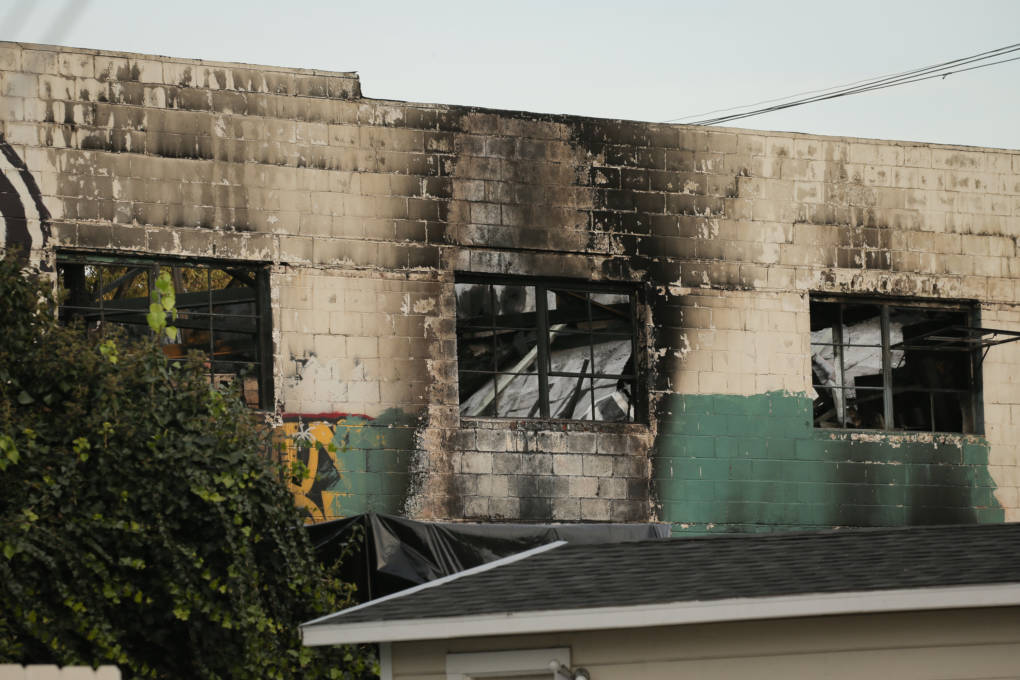
"caption": "The exterior of the warehouse where 36 people died when a fire broke out during a late-night concert on Dec. 2, 2016. ",
"description": null,
"title": "Oakland-Ghost Ship Fire",
"credit": "Elijah Nouvelage/Getty Images",
"status": "inherit",
"isLoading": false,
"fetchFailed": false
},
"news_11790811": {
"type": "attachments",
"id": "news_11790811",
"meta": {
"index": "attachments_1716263798",
"site": "news",
"id": "11790811",
"found": true
},
"parent": 11790795,
"imgSizes": {
"apple_news_ca_landscape_5_5": {
"file": "https://ww2.kqed.org/app/uploads/sites/10/2019/12/RS40422_Dosshaus_Paper-Thin-Hotel_Pop-Goes-qut-1044x783.jpg",
"width": 1044,
"mimeType": "image/jpeg",
"height": 783
},
"apple_news_ca_square_4_0": {
"file": "https://ww2.kqed.org/app/uploads/sites/10/2019/12/RS40422_Dosshaus_Paper-Thin-Hotel_Pop-Goes-qut-470x470.jpg",
"width": 470,
"mimeType": "image/jpeg",
"height": 470
},
"twentyfourteen-full-width": {
"file": "https://ww2.kqed.org/app/uploads/sites/10/2019/12/RS40422_Dosshaus_Paper-Thin-Hotel_Pop-Goes-qut-1038x576.jpg",
"width": 1038,
"mimeType": "image/jpeg",
"height": 576
},
"thumbnail": {
"file": "https://ww2.kqed.org/app/uploads/sites/10/2019/12/RS40422_Dosshaus_Paper-Thin-Hotel_Pop-Goes-qut-160x107.jpg",
"width": 160,
"mimeType": "image/jpeg",
"height": 107
},
"post-thumbnail": {
"file": "https://ww2.kqed.org/app/uploads/sites/10/2019/12/RS40422_Dosshaus_Paper-Thin-Hotel_Pop-Goes-qut-672x372.jpg",
"width": 672,
"mimeType": "image/jpeg",
"height": 372
},
"kqedFullSize": {
"file": "https://ww2.kqed.org/app/uploads/sites/10/2019/12/RS40422_Dosshaus_Paper-Thin-Hotel_Pop-Goes-qut.jpg",
"width": 1500,
"height": 1000
},
"apple_news_ca_landscape_4_7": {
"file": "https://ww2.kqed.org/app/uploads/sites/10/2019/12/RS40422_Dosshaus_Paper-Thin-Hotel_Pop-Goes-qut-632x474.jpg",
"width": 632,
"mimeType": "image/jpeg",
"height": 474
},
"large": {
"file": "https://ww2.kqed.org/app/uploads/sites/10/2019/12/RS40422_Dosshaus_Paper-Thin-Hotel_Pop-Goes-qut-1020x680.jpg",
"width": 1020,
"mimeType": "image/jpeg",
"height": 680
},
"complete_open_graph": {
"file": "https://ww2.kqed.org/app/uploads/sites/10/2019/12/RS40422_Dosshaus_Paper-Thin-Hotel_Pop-Goes-qut-1200x800.jpg",
"width": 1200,
"mimeType": "image/jpeg",
"height": 800
},
"apple_news_ca_landscape_4_0": {
"file": "https://ww2.kqed.org/app/uploads/sites/10/2019/12/RS40422_Dosshaus_Paper-Thin-Hotel_Pop-Goes-qut-536x402.jpg",
"width": 536,
"mimeType": "image/jpeg",
"height": 402
},
"apple_news_ca_portrait_12_9": {
"file": "https://ww2.kqed.org/app/uploads/sites/10/2019/12/RS40422_Dosshaus_Paper-Thin-Hotel_Pop-Goes-qut-1122x1000.jpg",
"width": 1122,
"mimeType": "image/jpeg",
"height": 1000
},
"medium": {
"file": "https://ww2.kqed.org/app/uploads/sites/10/2019/12/RS40422_Dosshaus_Paper-Thin-Hotel_Pop-Goes-qut-800x533.jpg",
"width": 800,
"mimeType": "image/jpeg",
"height": 533
},
"apple_news_ca_portrait_4_0": {
"file": "https://ww2.kqed.org/app/uploads/sites/10/2019/12/RS40422_Dosshaus_Paper-Thin-Hotel_Pop-Goes-qut-354x472.jpg",
"width": 354,
"mimeType": "image/jpeg",
"height": 472
},
"apple_news_ca_portrait_9_7": {
"file": "https://ww2.kqed.org/app/uploads/sites/10/2019/12/RS40422_Dosshaus_Paper-Thin-Hotel_Pop-Goes-qut-840x1000.jpg",
"width": 840,
"mimeType": "image/jpeg",
"height": 1000
},
"apple_news_ca_square_9_7": {
"file": "https://ww2.kqed.org/app/uploads/sites/10/2019/12/RS40422_Dosshaus_Paper-Thin-Hotel_Pop-Goes-qut-1104x1000.jpg",
"width": 1104,
"mimeType": "image/jpeg",
"height": 1000
},
"apple_news_ca_portrait_4_7": {
"file": "https://ww2.kqed.org/app/uploads/sites/10/2019/12/RS40422_Dosshaus_Paper-Thin-Hotel_Pop-Goes-qut-414x552.jpg",
"width": 414,
"mimeType": "image/jpeg",
"height": 552
},
"apple_news_ca_square_12_9": {
"file": "https://ww2.kqed.org/app/uploads/sites/10/2019/12/RS40422_Dosshaus_Paper-Thin-Hotel_Pop-Goes-qut-1472x1000.jpg",
"width": 1472,
"mimeType": "image/jpeg",
"height": 1000
},
"apple_news_ca_portrait_5_5": {
"file": "https://ww2.kqed.org/app/uploads/sites/10/2019/12/RS40422_Dosshaus_Paper-Thin-Hotel_Pop-Goes-qut-687x916.jpg",
"width": 687,
"mimeType": "image/jpeg",
"height": 916
},
"apple_news_ca_square_4_7": {
"file": "https://ww2.kqed.org/app/uploads/sites/10/2019/12/RS40422_Dosshaus_Paper-Thin-Hotel_Pop-Goes-qut-550x550.jpg",
"width": 550,
"mimeType": "image/jpeg",
"height": 550
},
"apple_news_ca_landscape_9_7": {
"file": "https://ww2.kqed.org/app/uploads/sites/10/2019/12/RS40422_Dosshaus_Paper-Thin-Hotel_Pop-Goes-qut-1376x1000.jpg",
"width": 1376,
"mimeType": "image/jpeg",
"height": 1000
},
"apple_news_ca_square_5_5": {
"file": "https://ww2.kqed.org/app/uploads/sites/10/2019/12/RS40422_Dosshaus_Paper-Thin-Hotel_Pop-Goes-qut-912x912.jpg",
"width": 912,
"mimeType": "image/jpeg",
"height": 912
}
},
"publishDate": 1576108978,
"modified": 1576109117,
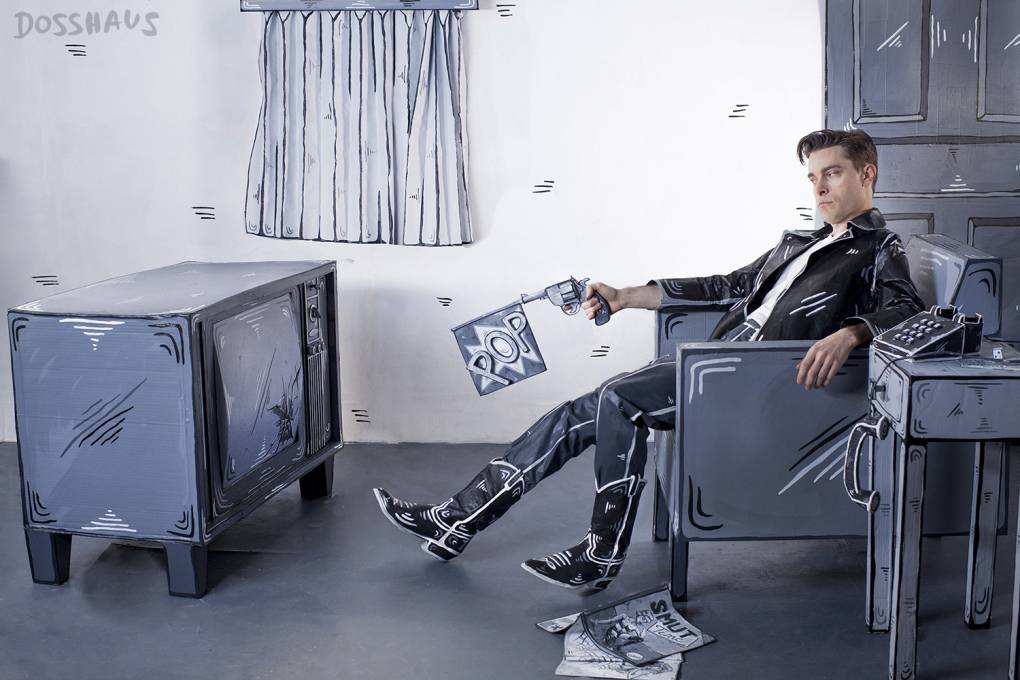
"caption": "Artist David Connelly at his Paper Thin Hotel exhibition, where every single item is made from cardboard, tape, and glue.",
"description": null,
"title": "RS40422_Dosshaus_Paper Thin Hotel_Pop Goes-qut",
"credit": "Courtesy of Dosshaus",
"status": "inherit",
"isLoading": false,
"fetchFailed": false
},
"news_11791249": {
"type": "attachments",
"id": "news_11791249",
"meta": {
"index": "attachments_1716263798",
"site": "news",
"id": "11791249",
"found": true
},
"parent": 11791033,
"imgSizes": {
"apple_news_ca_square_4_0": {
"file": "https://ww2.kqed.org/app/uploads/sites/10/2019/12/Cristina-Kim-And-Dad-470x470.jpg",
"width": 470,
"mimeType": "image/jpeg",
"height": 470
},
"twentyfourteen-full-width": {
"file": "https://ww2.kqed.org/app/uploads/sites/10/2019/12/Cristina-Kim-And-Dad-1024x576.jpg",
"width": 1024,
"mimeType": "image/jpeg",
"height": 576
},
"thumbnail": {
"file": "https://ww2.kqed.org/app/uploads/sites/10/2019/12/Cristina-Kim-And-Dad-160x118.jpg",
"width": 160,
"mimeType": "image/jpeg",
"height": 118
},
"post-thumbnail": {
"file": "https://ww2.kqed.org/app/uploads/sites/10/2019/12/Cristina-Kim-And-Dad-672x372.jpg",
"width": 672,
"mimeType": "image/jpeg",
"height": 372
},
"kqedFullSize": {
"file": "https://ww2.kqed.org/app/uploads/sites/10/2019/12/Cristina-Kim-And-Dad.jpg",
"width": 1024,
"height": 756
},
"apple_news_ca_landscape_4_7": {
"file": "https://ww2.kqed.org/app/uploads/sites/10/2019/12/Cristina-Kim-And-Dad-632x474.jpg",
"width": 632,
"mimeType": "image/jpeg",
"height": 474
},
"large": {
"file": "https://ww2.kqed.org/app/uploads/sites/10/2019/12/Cristina-Kim-And-Dad-1020x753.jpg",
"width": 1020,
"mimeType": "image/jpeg",
"height": 753
},
"apple_news_ca_landscape_4_0": {
"file": "https://ww2.kqed.org/app/uploads/sites/10/2019/12/Cristina-Kim-And-Dad-536x402.jpg",
"width": 536,
"mimeType": "image/jpeg",
"height": 402
},
"medium": {
"file": "https://ww2.kqed.org/app/uploads/sites/10/2019/12/Cristina-Kim-And-Dad-800x591.jpg",
"width": 800,
"mimeType": "image/jpeg",
"height": 591
},
"apple_news_ca_portrait_4_0": {
"file": "https://ww2.kqed.org/app/uploads/sites/10/2019/12/Cristina-Kim-And-Dad-354x472.jpg",
"width": 354,
"mimeType": "image/jpeg",
"height": 472
},
"apple_news_ca_portrait_9_7": {
"file": "https://ww2.kqed.org/app/uploads/sites/10/2019/12/Cristina-Kim-And-Dad-840x756.jpg",
"width": 840,
"mimeType": "image/jpeg",
"height": 756
},
"apple_news_ca_portrait_4_7": {
"file": "https://ww2.kqed.org/app/uploads/sites/10/2019/12/Cristina-Kim-And-Dad-414x552.jpg",
"width": 414,
"mimeType": "image/jpeg",
"height": 552
},
"apple_news_ca_portrait_5_5": {
"file": "https://ww2.kqed.org/app/uploads/sites/10/2019/12/Cristina-Kim-And-Dad-687x756.jpg",
"width": 687,
"mimeType": "image/jpeg",
"height": 756
},
"apple_news_ca_square_4_7": {
"file": "https://ww2.kqed.org/app/uploads/sites/10/2019/12/Cristina-Kim-And-Dad-550x550.jpg",
"width": 550,
"mimeType": "image/jpeg",
"height": 550
},
"apple_news_ca_square_5_5": {
"file": "https://ww2.kqed.org/app/uploads/sites/10/2019/12/Cristina-Kim-And-Dad-912x756.jpg",
"width": 912,
"mimeType": "image/jpeg",
"height": 756
}
},
"publishDate": 1576286897,
"modified": 1576286938,
"caption": "Cristina's father, Javier Kim, and her in a market in Seoul during her first and only trip to Korea in 2012. ",
"description": "Cristina's father, Javier Kim, and her in a market in Seoul during her first and only trip to Korea in 2012. ",
"title": "Cristina-Kim-And-Dad",
"credit": "Courtesy Cristina Kim",
"status": "inherit",
"isLoading": false,
"fetchFailed": false
}
},
"audioPlayerReducer": {
"postId": "stream_live",
"isPaused": true,
"isPlaying": false,
"pfsActive": false,
"pledgeModalIsOpen": true,
"playerDrawerIsOpen": false,
"liveAudioPlayStartedAt": 0,
"liveAudioPlayContext": ""
},
"authorsReducer": {
"byline_news_11794018": {
"type": "authors",
"id": "byline_news_11794018",
"meta": {
"override": true
},
"slug": "byline_news_11794018",
"name": "Gabriel Greschler",
"isLoading": false
},
"byline_news_11792625": {
"type": "authors",
"id": "byline_news_11792625",
"meta": {
"override": true
},
"slug": "byline_news_11792625",
"name": "\u003cstrong>Haven Daley\u003cbr />Associated Press\u003c/strong>",
"isLoading": false
},
"byline_news_11791033": {
"type": "authors",
"id": "byline_news_11791033",
"meta": {
"override": true
},
"slug": "byline_news_11791033",
"name": "Cristina Kim",
"isLoading": false
},
"danbrekke": {
"type": "authors",
"id": "222",
"meta": {
"index": "authors_1716337520",
"id": "222",
"found": true
},
"name": "Dan Brekke",
"firstName": "Dan",
"lastName": "Brekke",
"slug": "danbrekke",
"email": "dbrekke@kqed.org",
"display_author_email": true,
"staff_mastheads": [
"news",
"science"
],
"title": "KQED Editor and Reporter",
"bio": "Dan Brekke is a reporter and editor for KQED News, responsible for coverage of topics ranging from California water issues to the Bay Area's transportation challenges. In a newsroom career that began in Chicago in 1972, Dan has worked for \u003cem>The San Francisco Examiner,\u003c/em> Wired and TechTV and has been published in The New York Times, The New York Times Magazine, Business 2.0, Salon and elsewhere.\r\n\r\nSince joining KQED in 2007, Dan has reported, edited and produced both radio and online features and breaking news pieces. He has shared as both editor and reporter in four Society of Professional Journalists Norcal Excellence in Journalism awards and one Edward R. Murrow regional award. He was chosen for a spring 2017 residency at the Mesa Refuge to advance his research on California salmon.\r\n\r\nEmail Dan at: \u003ca href=\"mailto:dbrekke@kqed.org\">dbrekke@kqed.org\u003c/a>\r\n\r\n\u003cstrong>Twitter:\u003c/strong> \u003ca href=\"https://twitter.com/danbrekke\" rel=\"noopener noreferrer\">twitter.com/danbrekke\u003c/a>\r\n\u003cstrong>Facebook:\u003c/strong> \u003ca href=\"https://www.facebook.com/danbrekke\" rel=\"noopener noreferrer\">www.facebook.com/danbrekke\u003c/a>\r\n\u003cstrong>LinkedIn:\u003c/strong> \u003ca href=\"https://www.linkedin.com/in/danbrekke\" rel=\"noopener noreferrer\">www.linkedin.com/in/danbrekke\u003c/a>",
"avatar": "https://secure.gravatar.com/avatar/8f1f0d2a978fb3b23426c922c7e2af558fa36905b49c4ce76a97dc3c72d27226?s=600&d=mm&r=g",
"twitter": "danbrekke",
"bluesky": null,
"facebook": null,
"instagram": "https://www.instagram.com/dan.brekke/",
"linkedin": "https://www.linkedin.com/in/danbrekke/",
"sites": [
{
"site": "news",
"roles": [
"administrator",
"create_posts"
]
},
{
"site": "stateofhealth",
"roles": [
"editor"
]
},
{
"site": "science",
"roles": [
"editor"
]
},
{
"site": "quest",
"roles": [
"contributor"
]
},
{
"site": "food",
"roles": [
"contributor"
]
},
{
"site": "forum",
"roles": [
"contributor"
]
},
{
"site": "elections",
"roles": [
"editor"
]
},
{
"site": "liveblog",
"roles": [
"editor"
]
}
],
"headData": {
"title": "Dan Brekke | KQED",
"description": "KQED Editor and Reporter",
"ogImgSrc": "https://secure.gravatar.com/avatar/8f1f0d2a978fb3b23426c922c7e2af558fa36905b49c4ce76a97dc3c72d27226?s=600&d=mm&r=g",
"twImgSrc": "https://secure.gravatar.com/avatar/8f1f0d2a978fb3b23426c922c7e2af558fa36905b49c4ce76a97dc3c72d27226?s=600&d=mm&r=g"
},
"isLoading": false,
"link": "/author/danbrekke"
},
"samharnett": {
"type": "authors",
"id": "253",
"meta": {
"index": "authors_1716337520",
"id": "253",
"found": true
},
"name": "Sam Harnett",
"firstName": "Sam",
"lastName": "Harnett",
"slug": "samharnett",
"email": "samharnett@gmail.com",
"display_author_email": false,
"staff_mastheads": [],
"title": "KQED Contributor",
"bio": "Sam Harnett covered tech and work at KQED. He is the co-creator of \u003cem>\u003ca href=\"http://www.theworldaccordingtosound.org\">The World According to Sound\u003c/a>,\u003c/em> a 90-second podcast that features different sounds and the stories behind them.\r\n\r\nBefore coming to KQED, Sam worked as an independent reporter who contributed regularly to \u003cem>The California Report, Marketplace,\u003c/em> \u003cem>The World \u003c/em>and NPR.",
"avatar": "https://secure.gravatar.com/avatar/2538b972ac02f2b9546c7a6c59a0f3d0?s=600&d=blank&r=g",
"twitter": "Samwharnett",
"facebook": null,
"instagram": null,
"linkedin": null,
"sites": [
{
"site": "news",
"roles": [
"edit_others_posts",
"subscriber"
]
},
{
"site": "stateofhealth",
"roles": [
"author"
]
},
{
"site": "science",
"roles": [
"editor"
]
},
{
"site": "quest",
"roles": [
"subscriber"
]
}
],
"headData": {
"title": "Sam Harnett | KQED",
"description": "KQED Contributor",
"ogImgSrc": "https://secure.gravatar.com/avatar/2538b972ac02f2b9546c7a6c59a0f3d0?s=600&d=blank&r=g",
"twImgSrc": "https://secure.gravatar.com/avatar/2538b972ac02f2b9546c7a6c59a0f3d0?s=600&d=blank&r=g"
},
"isLoading": false,
"link": "/author/samharnett"
},
"carlysevern": {
"type": "authors",
"id": "3243",
"meta": {
"index": "authors_1716337520",
"id": "3243",
"found": true
},
"name": "Carly Severn",
"firstName": "Carly",
"lastName": "Severn",
"slug": "carlysevern",
"email": "csevern@kqed.org",
"display_author_email": false,
"staff_mastheads": [
"news"
],
"title": "Senior Editor, Audience News ",
"bio": "Carly is KQED's Senior Editor of Audience News on the Digital News team, and has reported for the California Report Magazine, Bay Curious and KQED Arts. She's formerly the host of \u003ca href=\"http://ww2.kqed.org/pop/category/the-cooler/\" rel=\"noopener noreferrer\">The Cooler\u003c/a> podcast.",
"avatar": "https://secure.gravatar.com/avatar/54037bf5c128fe678f0ef26cec97a93f2e7f220a22d7285703328f12c42c1b1d?s=600&d=blank&r=g",
"twitter": "teacupinthebay",
"bluesky": null,
"facebook": null,
"instagram": null,
"linkedin": null,
"sites": [
{
"site": "",
"roles": [
"editor"
]
},
{
"site": "arts",
"roles": [
"editor"
]
},
{
"site": "news",
"roles": [
"administrator"
]
},
{
"site": "pop",
"roles": [
"editor"
]
},
{
"site": "futureofyou",
"roles": [
"editor"
]
},
{
"site": "about",
"roles": [
"administrator"
]
},
{
"site": "mindshift",
"roles": [
"editor"
]
},
{
"site": "bayareabites",
"roles": [
"editor"
]
},
{
"site": "stateofhealth",
"roles": [
"editor"
]
},
{
"site": "science",
"roles": [
"editor"
]
},
{
"site": "food",
"roles": [
"contributor"
]
},
{
"site": "forum",
"roles": [
"editor"
]
},
{
"site": "perspectives",
"roles": [
"administrator"
]
},
{
"site": "liveblog",
"roles": [
"editor"
]
}
],
"headData": {
"title": "Carly Severn | KQED",
"description": "Senior Editor, Audience News ",
"ogImgSrc": "https://secure.gravatar.com/avatar/54037bf5c128fe678f0ef26cec97a93f2e7f220a22d7285703328f12c42c1b1d?s=600&d=blank&r=g",
"twImgSrc": "https://secure.gravatar.com/avatar/54037bf5c128fe678f0ef26cec97a93f2e7f220a22d7285703328f12c42c1b1d?s=600&d=blank&r=g"
},
"isLoading": false,
"link": "/author/carlysevern"
},
"jplaczek": {
"type": "authors",
"id": "8606",
"meta": {
"index": "authors_1716337520",
"id": "8606",
"found": true
},
"name": "Jessica Placzek",
"firstName": "Jessica",
"lastName": "Placzek",
"slug": "jplaczek",
"email": "jessicalplaczek@gmail.com",
"display_author_email": false,
"staff_mastheads": [
"news"
],
"title": "KQED Contributor",
"bio": "Jessica Placzek is a former senior editor of podcasts at KQED where she served as the editorial lead of the podcast department. She worked with shows like MindShift, Rightnowish, Consider This, SOLD OUT, Bay Curious and The Bay. She’s also been a reporter and audio producer at KQED, KPFA, and KALW. She taught audio production to men incarcerated at California State Prison Solano and edited pieces they produced for the Uncuffed podcast through KALW. In 2018 she co-hosted and produced the third season of Raw Material for SFMOMA. In New Orleans she wrote for the Nola Defender. Her work has also appeared on Marketplace, All Things Considered, The California Report, and Vice. You can find more at jessicaplaczek.com",
"avatar": "https://secure.gravatar.com/avatar/5ead103b5880f672eceb84ce75eecd1b4b6f74a47edc457684a73ad5b8b158e9?s=600&d=blank&r=g",
"twitter": null,
"bluesky": null,
"facebook": null,
"instagram": null,
"linkedin": null,
"sites": [
{
"site": "arts",
"roles": [
"subscriber"
]
},
{
"site": "news",
"roles": [
"subscriber"
]
},
{
"site": "stateofhealth",
"roles": [
"editor"
]
},
{
"site": "forum",
"roles": [
"editor"
]
}
],
"headData": {
"title": "Jessica Placzek | KQED",
"description": "KQED Contributor",
"ogImgSrc": "https://secure.gravatar.com/avatar/5ead103b5880f672eceb84ce75eecd1b4b6f74a47edc457684a73ad5b8b158e9?s=600&d=blank&r=g",
"twImgSrc": "https://secure.gravatar.com/avatar/5ead103b5880f672eceb84ce75eecd1b4b6f74a47edc457684a73ad5b8b158e9?s=600&d=blank&r=g"
},
"isLoading": false,
"link": "/author/jplaczek"
},
"cveltman": {
"type": "authors",
"id": "8608",
"meta": {
"index": "authors_1716337520",
"id": "8608",
"found": true
},
"name": "Chloe Veltman",
"firstName": "Chloe",
"lastName": "Veltman",
"slug": "cveltman",
"email": "cveltman@kqed.org",
"display_author_email": true,
"staff_mastheads": [],
"title": "Arts and Culture Reporter",
"bio": "Chloe Veltman is a former arts and culture reporter for KQED. Prior to joining the organization, she launched and led the arts bureau at Colorado Public Radio, served as the Bay Area's culture columnist for the New York Times, and was the founder, host and executive producer of VoiceBox, a national award-winning weekly podcast/radio show and live events series all about the human voice. Chloe is the recipient of numerous prizes, grants and fellowships including a Webby Award for her work on interactive storytelling, both the John S Knight Journalism Fellowship and Humanities Center Fellowship at Stanford University, the Sundance Arts Writing Fellowship and a Library of Congress Research Fellowship. She is the author of the book \"On Acting\" and has appeared as a guest lecturer at Yale University and the San Francisco Conservatory of Music among other institutions. She holds a BA in english literature from King's College, Cambridge, and a Masters in Dramaturgy from the Central School of Speech and Drama/Harvard Institute for Advanced Theater Training.\r\n\u003ca href=\"https://www.chloeveltman.com\">www.chloeveltman.com\u003c/a>",
"avatar": "https://secure.gravatar.com/avatar/55403394b00a1ddab683952c2eb2cf85?s=600&d=blank&r=g",
"twitter": "chloeveltman",
"facebook": null,
"instagram": null,
"linkedin": null,
"sites": [
{
"site": "arts",
"roles": []
},
{
"site": "news",
"roles": [
"author"
]
},
{
"site": "pop",
"roles": [
"editor"
]
},
{
"site": "science",
"roles": []
}
],
"headData": {
"title": "Chloe Veltman | KQED",
"description": "Arts and Culture Reporter",
"ogImgSrc": "https://secure.gravatar.com/avatar/55403394b00a1ddab683952c2eb2cf85?s=600&d=blank&r=g",
"twImgSrc": "https://secure.gravatar.com/avatar/55403394b00a1ddab683952c2eb2cf85?s=600&d=blank&r=g"
},
"isLoading": false,
"link": "/author/cveltman"
},
"bhernandez": {
"type": "authors",
"id": "11359",
"meta": {
"index": "authors_1716337520",
"id": "11359",
"found": true
},
"name": "Bianca Hernandez",
"firstName": "Bianca",
"lastName": "Hernandez",
"slug": "bhernandez",
"email": "bhernandez@kqed.org",
"display_author_email": false,
"staff_mastheads": [],
"title": "KQED Contributor",
"bio": "Bianca Hernandez is a former Interactive Producer for KQED. She has produced at KGPE, KSEE24 and Sierra Magazine. In 2011 she received an undergraduate degree in Journalism and Anthropology from CSU, Chico . She earned a Master's from the University of Southern California in 2013, where she completed a documentary on teenage farmworkers. She is an avid Jane Austen fan and takes lightsaber combat class for fun.",
"avatar": "https://secure.gravatar.com/avatar/75b3424851e2f9fa131f2cb6a051aeac?s=600&d=blank&r=g",
"twitter": "bookhoarding",
"facebook": null,
"instagram": null,
"linkedin": null,
"sites": [
{
"site": "arts",
"roles": []
},
{
"site": "news",
"roles": []
},
{
"site": "science",
"roles": []
},
{
"site": "forum",
"roles": []
}
],
"headData": {
"title": "Bianca Hernandez | KQED",
"description": "KQED Contributor",
"ogImgSrc": "https://secure.gravatar.com/avatar/75b3424851e2f9fa131f2cb6a051aeac?s=600&d=blank&r=g",
"twImgSrc": "https://secure.gravatar.com/avatar/75b3424851e2f9fa131f2cb6a051aeac?s=600&d=blank&r=g"
},
"isLoading": false,
"link": "/author/bhernandez"
},
"agarces": {
"type": "authors",
"id": "11367",
"meta": {
"index": "authors_1716337520",
"id": "11367",
"found": true
},
"name": "Audrey Garces",
"firstName": "Audrey",
"lastName": "Garces",
"slug": "agarces",
"email": "agarces@kqed.org",
"display_author_email": false,
"staff_mastheads": [
"news"
],
"title": "Digital Producer",
"bio": "Audrey is a former digital producer at KQED News. Previously, she was a KQED Raul Ramirez Diversity Fund intern where she developed stories that focused on highlighting diverse voices in journalism. Prior to her work at KQED, she worked as a news intern at the San Francisco Examiner. Audrey graduated from San Francisco State University with a B.A. in journalism and a minor in political science.",
"avatar": "https://secure.gravatar.com/avatar/5211bc2e6a809b9956da169e35ce63d5?s=600&d=blank&r=g",
"twitter": "audgar",
"facebook": null,
"instagram": null,
"linkedin": null,
"sites": [
{
"site": "arts",
"roles": []
},
{
"site": "news",
"roles": [
"subscriber"
]
},
{
"site": "science",
"roles": [
"editor"
]
},
{
"site": "forum",
"roles": [
"editor"
]
},
{
"site": "perspectives",
"roles": [
"administrator"
]
}
],
"headData": {
"title": "Audrey Garces | KQED",
"description": "Digital Producer",
"ogImgSrc": "https://secure.gravatar.com/avatar/5211bc2e6a809b9956da169e35ce63d5?s=600&d=blank&r=g",
"twImgSrc": "https://secure.gravatar.com/avatar/5211bc2e6a809b9956da169e35ce63d5?s=600&d=blank&r=g"
},
"isLoading": false,
"link": "/author/agarces"
},
"aehsanipour": {
"type": "authors",
"id": "11580",
"meta": {
"index": "authors_1716337520",
"id": "11580",
"found": true
},
"name": "Asal Ehsanipour",
"firstName": "Asal",
"lastName": "Ehsanipour",
"slug": "aehsanipour",
"email": "aehsanipour@kqed.org",
"display_author_email": false,
"staff_mastheads": [],
"title": "Reporter and Producer",
"bio": "Asal Ehsanipour is a producer and reporter for Rightnowish, Bay Curious and The California Report Magazine. She is also a producer for \u003ca href=\"https://www.thedoubleshift.com/\">The Double Shift\u003c/a>, a podcast about a new generation of working mothers. In 2018, Asal was named an Emerging Journalist Fellow by the Journalism and Women’s Symposium. Her work has appeared on KQED, KALW, PRI’s The World, and in several food and travel publications.",
"avatar": "https://secure.gravatar.com/avatar/c0e210438f5dca1b76921ff9f0eada52?s=600&d=blank&r=g",
"twitter": null,
"facebook": null,
"instagram": null,
"linkedin": null,
"sites": [
{
"site": "arts",
"roles": []
},
{
"site": "news",
"roles": [
"author",
"edit_others_posts"
]
}
],
"headData": {
"title": "Asal Ehsanipour | KQED",
"description": "Reporter and Producer",
"ogImgSrc": "https://secure.gravatar.com/avatar/c0e210438f5dca1b76921ff9f0eada52?s=600&d=blank&r=g",
"twImgSrc": "https://secure.gravatar.com/avatar/c0e210438f5dca1b76921ff9f0eada52?s=600&d=blank&r=g"
},
"isLoading": false,
"link": "/author/aehsanipour"
}
},
"pagesReducer": {
"news_category_arts-and-culture": {
"type": "terms",
"id": "news_223",
"meta": {
"index": "terms_1716263798",
"site": "news",
"id": "223",
"score": 11.241959
},
"featImg": null,
"name": "Arts and Culture",
"description": null,
"taxonomy": "category",
"headData": {
"twImgId": null,
"twTitle": null,
"ogTitle": null,
"ogImgId": null,
"twDescription": null,
"description": null,
"title": "Arts and Culture Archives | KQED News",
"ogDescription": null
},
"ttid": 231,
"slug": "arts-and-culture",
"isLoading": false,
"title": "Arts and Culture",
"pageMeta": {
"site": "news",
"WpPageTemplate": "page-topic-editorial",
"currentPage": 49
},
"blocks": [
{
"blockName": "kqed/post-list",
"attrs": {
"layout": "cardArticle2",
"query": "posts/news?category=arts-and-culture",
"seeMore": false,
"paginated": true,
"page": 49
}
},
{
"blockName": "kqed/ad"
}
]
}
},
"pfsSessionReducer": {},
"postsReducer": {
"stream_live": {
"type": "live",
"id": "stream_live",
"audioUrl": "https://streams.kqed.org/kqedradio",
"title": "Live Stream",
"excerpt": "Live Stream information currently unavailable.",
"link": "/radio",
"featImg": "",
"label": {
"name": "KQED Live",
"link": "/"
}
},
"stream_kqedNewscast": {
"type": "posts",
"id": "stream_kqedNewscast",
"audioUrl": "https://www.kqed.org/.stream/anon/radio/RDnews/newscast.mp3?_=1",
"title": "KQED Newscast",
"featImg": "",
"label": {
"name": "88.5 FM",
"link": "/"
}
},
"news_11793388": {
"type": "posts",
"id": "news_11793388",
"meta": {
"index": "posts_1716263798",
"site": "news",
"id": "11793388",
"score": null,
"sort": [
1579289703000
]
},
"guestAuthors": [],
"slug": "why-a-california-artist-is-taking-the-frida-kahlo-corporation-to-court",
"title": "Why a California Artist Is Taking the Frida Kahlo Corporation to Court",
"publishDate": 1579289703,
"format": "audio",
"headTitle": "Why a California Artist Is Taking the Frida Kahlo Corporation to Court | KQED",
"labelTerm": {
"term": 72,
"site": "news"
},
"content": "\u003cp>Frida Kahlo is everywhere. The iconic Mexican artist’s defiant red-painted lips, knowing gaze and proudly worn unibrow framed by serpentine braids can be seen on the front of countless mugs, socks, key rings, mouse pads and pieces of jewelry.\u003c/p>\n\u003cp>Makers sell these products in stores and on websites like \u003ca href=\"https://www.etsy.com/search?q=frida%20kahlo\" target=\"_blank\" rel=\"noopener noreferrer\">Etsy\u003c/a>, where the search term “Frida Kahlo” brings up nearly 20,000 results.\u003c/p>\n\u003cp>But the Frida Kahlo brand is big business, too. Multinational corporations like Mattel and Converse are also cashing in on the iconic artist, marketing products like the \u003ca href=\"https://barbie.mattel.com/shop/en-us/ba/inspiring-women-series/barbie-inspiring-women-series-frida-kahlo-doll-fjh65\" target=\"_blank\" rel=\"noopener noreferrer\">Frida Barbie doll\u003c/a> and \u003ca href=\"https://www.facebook.com/watch/?v=2133795450259477\" target=\"_blank\" rel=\"noopener noreferrer\">Frida sneakers\u003c/a>, respectively.\u003c/p>\n\u003cp>https://www.youtube.com/watch?v=1XPZW7KlP-I\u003c/p>\n\u003cp>And now, some small-scale artisans are finding themselves in a head-to-head fight against those corporations, a confrontation that raises complex questions about ownership of cultural heroes in the digital age.\u003c/p>\n\u003cp>One of these artists is \u003ca href=\"https://www.facebook.com/crismeloearth/\" target=\"_blank\" rel=\"noopener noreferrer\">Cris Melo\u003c/a>. The Brazilian-born painter lives in Nice, a small town in Lake County, and has been making whimsical portraits inspired by Frida Kahlo’s image for the past 20 years.\u003c/p>\n\u003cfigure id=\"attachment_11795172\" class=\"wp-caption alignright\" style=\"max-width: 800px\">\u003cimg loading=\"lazy\" decoding=\"async\" class=\"wp-image-11795172 size-medium\" src=\"https://ww2.kqed.org/app/uploads/sites/10/2020/01/RS40660_frida-art-by-cris-qut-800x600.jpg\" alt=\"\" width=\"800\" height=\"600\" srcset=\"https://cdn.kqed.org/wp-content/uploads/sites/10/2020/01/RS40660_frida-art-by-cris-qut-800x600.jpg 800w, https://cdn.kqed.org/wp-content/uploads/sites/10/2020/01/RS40660_frida-art-by-cris-qut-160x120.jpg 160w, https://cdn.kqed.org/wp-content/uploads/sites/10/2020/01/RS40660_frida-art-by-cris-qut-1020x765.jpg 1020w, https://cdn.kqed.org/wp-content/uploads/sites/10/2020/01/RS40660_frida-art-by-cris-qut-1200x900.jpg 1200w, https://cdn.kqed.org/wp-content/uploads/sites/10/2020/01/RS40660_frida-art-by-cris-qut.jpg 1920w, https://cdn.kqed.org/wp-content/uploads/sites/10/2020/01/RS40660_frida-art-by-cris-qut-1832x1374.jpg 1832w, https://cdn.kqed.org/wp-content/uploads/sites/10/2020/01/RS40660_frida-art-by-cris-qut-1376x1032.jpg 1376w, https://cdn.kqed.org/wp-content/uploads/sites/10/2020/01/RS40660_frida-art-by-cris-qut-1044x783.jpg 1044w, https://cdn.kqed.org/wp-content/uploads/sites/10/2020/01/RS40660_frida-art-by-cris-qut-632x474.jpg 632w, https://cdn.kqed.org/wp-content/uploads/sites/10/2020/01/RS40660_frida-art-by-cris-qut-536x402.jpg 536w\" sizes=\"(max-width: 800px) 100vw, 800px\">\u003cfigcaption class=\"wp-caption-text\">A selection of Cris Melo’s Frida Kahlo-inspired paintings \u003ccite>(Chloe Veltman/KQED)\u003c/cite>\u003c/figcaption>\u003c/figure>\n\u003cp>Melo says she isn’t a particularly religious person. But she feels very attached to Kahlo and sometimes even offers up a prayer to her.\u003c/p>\n\u003cp>“I tell her, I’m not doing this for me. I’m doing this for you,” she says. “So stand with me. Hold my hand. Because it’s scary.”\u003c/p>\n\u003cp>Melo is timid and elfin, with dark eyes and a wide, expressive mouth. She certainly doesn’t look like the type of person who’d launch legal proceedings against a powerful corporation. Yet she’s suing the company that claims to own the Frida Kahlo brand.\u003c/p>\n\u003ch3>Making an Icon\u003c/h3>\n\u003cp>Though the Mexican government has declared Kahlo’s works part of the country’s national heritage, and people \u003ca href=\"https://artdaily.cc/news/39818/Visitors-Wait-in-Line-for-Seven-Hours-to-See-Frida-Kahlo-Exhibition-in-Berlin\" target=\"_blank\" rel=\"noopener noreferrer\">wait in line for hours\u003c/a> to see exhibitions of the artist’s work at major museums around the world, she wasn’t at all well-known during her lifetime.\u003c/p>\n\u003cp>Kahlo spent years living in the shadow of her husband, the monumental Mexican muralist \u003ca href=\"https://www.moma.org/artists/4942\" target=\"_blank\" rel=\"noopener noreferrer\">Diego Rivera\u003c/a>. It wasn’t until the 1970s, more than 20 years after her death, that Kahlo biographies began to appear, lifting her out of obscurity.\u003c/p>\n\u003cfigure id=\"attachment_11795363\" class=\"wp-caption alignright\" style=\"max-width: 314px\">\u003cimg loading=\"lazy\" decoding=\"async\" class=\"size-full wp-image-11795363\" src=\"https://ww2.kqed.org/app/uploads/sites/10/2020/01/RS40715_Frida_Kahlo_Diego_Rivera_1932-qut.jpg\" alt=\"\" width=\"314\" height=\"407\" srcset=\"https://cdn.kqed.org/wp-content/uploads/sites/10/2020/01/RS40715_Frida_Kahlo_Diego_Rivera_1932-qut.jpg 314w, https://cdn.kqed.org/wp-content/uploads/sites/10/2020/01/RS40715_Frida_Kahlo_Diego_Rivera_1932-qut-160x207.jpg 160w\" sizes=\"(max-width: 314px) 100vw, 314px\">\u003cfigcaption class=\"wp-caption-text\">Frida Kahlo and her husband Diego Rivera \u003ccite>(Carl Van Vechten / Library of Congress)\u003c/cite>\u003c/figcaption>\u003c/figure>\n\u003cp>Her paintings started to fetch millions of dollars at auctions. Then, in 2002, came the release of the \u003ca href=\"https://youtu.be/uOUzQYqba4Y\" target=\"_blank\" rel=\"noopener noreferrer\">“Frida” biopic\u003c/a>, starring Salma Hayek.\u003c/p>\n\u003cp>The movie helped amplify the Kahlo brand; it became synonymous with feminine strength in the face of adversity, as well as outsider-underdog power.\u003c/p>\n\u003cp>“She was a female artist, and Mexican, dark-skinned, disabled and queer,” says Circe Henestrosa, curator of a \u003ca href=\"https://deyoung.famsf.org/press-room/frida-kahlo-appearances-can-be-deceiving\" target=\"_blank\" rel=\"noopener noreferrer\">major Kahlo exhibition\u003c/a> traveling to San Francisco’s de Young Museum in March. “Frida’s persona and ethos represents and gives hope and a voice to all these different, diverse groups.”\u003c/p>\n\u003ch3>The Big Business\u003c/h3>\n\u003cp>Even before the movie came out, Melo was among the many artists who not only identified with Kahlo, but also found a way to capitalize on all the Fridamania. In 2001, after noticing Kahlo-inspired products on eBay, Melo set up her own online storefront, featuring her Kahlo-like paintings printed on a range of everyday goods, like magnets, T-shirts and tote bags.\u003c/p>\n\u003cp>“I mean, I would refresh the computer every time and there would be a new bid,” Melo says. “It was amazing. It was so good.”\u003c/p>\n\u003cp>But then something changed.\u003c/p>\n\u003cp>Around 2004, Carlos Dorado, a Venezuelan businessman, also saw a big economic opportunity.\u003c/p>\n\u003cp>Dorado teamed up with the artist’s niece, Isolda Pinedo Kahlo, and eventually her daughter, to launch the \u003ca href=\"https://fridakahlocorporation.com/\" target=\"_blank\" rel=\"noopener noreferrer\">Frida Kahlo Corporation\u003c/a> (FKC), which registered dozens of Kahlo-related trademarks and set about licensing a pile of merchandise.\u003c/p>\n\u003cp>FKC’s portfolio includes products like \u003ca href=\"http://www.dpsons.com/\" target=\"_blank\" rel=\"noopener noreferrer\">Frida Kahlo tequila\u003c/a>, \u003ca href=\"https://www.ulta.com/frida-kahlo-by-ulta-beauty-signature-box?productId=pimprod2007518\" target=\"_blank\" rel=\"noopener noreferrer\">Frida Kahlo makeup\u003c/a>, \u003ca href=\"https://www.sassandbelle.co.uk/search-results/?pricelistid=6&sessionid=63231241&searchterm_submit=go&searchterm=frida+tweezers\" target=\"_blank\" rel=\"noopener noreferrer\">Frida Kahlo Tweezers\u003c/a> — an odd choice given the artist’s iconic unibrow — and the aforementioned Barbie doll and Converse sneakers.\u003c/p>\n\u003cp>“It’s an honor to have a piece of Frida Kahlo that will inspire you day-to-day,” FKC spokeswoman Beatriz Alvarado told NPR \u003ca href=\"https://www.npr.org/2018/06/02/616129555/as-mexico-capitalizes-on-her-image-has-frida-kahlo-become-over-commercialized\" target=\"_blank\" rel=\"noopener noreferrer\">in a 2018\u003c/a> interview about the Kahlo Barbie.\u003c/p>\n\u003cp>[pullquote size='medium' align='right' citation='Cris Melo']‘We have been selling Frida all these years with no problem. And now they want us to pay them to sell Fridas. This is our work. We don’t have to.’[/pullquote]While the company was making mega-deals with the likes of Mattel, they were also trying to get individual artists like Melo to pay them for the right to sell their Kahlo-inspired art online by entering into licensing partnerships with online marketplaces.\u003c/p>\n\u003cp>Alvarado declined to speak directly with KQED for this story, though she did respond to a some questions by email.\u003c/p>\n\u003cp>“FKC has a legal obligation to police its trademarks,” Alvarado said in her email. “Otherwise, FKC will lose its trademark rights.”\u003c/p>\n\u003ch3>Takedown Troubles\u003c/h3>\n\u003cp>That didn’t sit well with Melo.\u003c/p>\n\u003cp>“We have been selling Frida all these years with no problem,” she says. “And now they want us to pay them to sell Fridas. This is our work. We don’t have to.”\u003c/p>\n\u003cp>So she ignored payment-request notices from the company. But in October 2011, she received a message from \u003ca href=\"https://www.zazzle.com/\" target=\"_blank\" rel=\"noopener noreferrer\">Zazzle\u003c/a>, one of the online marketplaces where she sells her work, concerning a Kahlo-inspired greeting card she had displayed on the site.\u003c/p>\n\u003cfigure id=\"attachment_11795367\" class=\"wp-caption alignright\" style=\"max-width: 800px\">\u003cimg loading=\"lazy\" decoding=\"async\" class=\"size-medium wp-image-11795367\" src=\"https://ww2.kqed.org/app/uploads/sites/10/2020/01/RS40716_zazzle-qut-800x757.jpg\" alt=\"\" width=\"800\" height=\"757\" srcset=\"https://cdn.kqed.org/wp-content/uploads/sites/10/2020/01/RS40716_zazzle-qut-800x757.jpg 800w, https://cdn.kqed.org/wp-content/uploads/sites/10/2020/01/RS40716_zazzle-qut-160x151.jpg 160w, https://cdn.kqed.org/wp-content/uploads/sites/10/2020/01/RS40716_zazzle-qut-1020x965.jpg 1020w, https://cdn.kqed.org/wp-content/uploads/sites/10/2020/01/RS40716_zazzle-qut-1200x1136.jpg 1200w, https://cdn.kqed.org/wp-content/uploads/sites/10/2020/01/RS40716_zazzle-qut.jpg 1232w\" sizes=\"(max-width: 800px) 100vw, 800px\">\u003cfigcaption class=\"wp-caption-text\">Cris Melo’s first takedown notice from Zazzle. \u003ccite>(Screenshot from Zazzle website)\u003c/cite>\u003c/figcaption>\u003c/figure>\n\u003cp>“They sent me an email saying that I was violating trademarks, and they were going to take it down,” she says.\u003c/p>\n\u003cp>This was the first of many such emails, promptly followed by takedowns. But only some of her Kahlo-centric creations were being removed, which Melo says seemed frustratingly arbitrary.\u003c/p>\n\u003cp>“I was mad from the get go,” she says.\u003c/p>\n\u003cp>It wasn’t just Melo’s finances that took a hit. Her health did, too. She felt depressed and helpless.\u003c/p>\n\u003cp>“I stopped painting Frida for a while,” she says. “Because if this is going to be happening, why am I going to paint more?”\u003c/p>\n\u003cp>Melo’s situation was far from unique. On social media, she discovered many other artists dealing with similar frustrations.\u003c/p>\n\u003cp>Alvarado, the FKC representative, in an email said her company’s mission is to “protect the Frida Kahlo legacy.” And she denied taking artists’ work down.\u003c/p>\n\u003cp>Technically that’s true.\u003c/p>\n\u003cp>FKC doesn’t do the takedowns directly. The company uses a “brand protection agency” called \u003ca href=\"https://www.redpoints.com/?utm_source=google&utm_medium=cpc&utm_campaign=us-bus-001&utm_content=redpoints-branding&utm_term=red%20points&gclid=CjwKCAiAu9vwBRAEEiwAzvjq-8Vb8OB0SOeh4RUgvXMtSisdMB1OMbA8C0xG3gugn-6OPSWXAcZEUxoCv4YQAvD_BwE\" target=\"_blank\" rel=\"noopener noreferrer\">Red Points\u003c/a> to scout the web for potential trademark violations. Its technology then alerts popular online artisan marketplaces like Zazzle and \u003ca href=\"https://www.redbubble.com/\" target=\"_blank\" rel=\"noopener noreferrer\">Redbubble\u003c/a> when it identifies red flags. And then those sites take the work down.\u003c/p>\n\u003cp>“We’re not in a position to be the legal arbiter on the platform,” says Redbubble CEO Barry Newstead, adding that he trusts rights holders like FKC to do their due diligence. “It is their responsibility to ensure that they are actually, you know, requesting stuff to be taken down that is is actually infringing,” he says.\u003c/p>\n\u003ch3>Taking It to the Courthouse\u003c/h3>\n\u003cp>But sometimes the technology takes content down that’s not actually an infringement.\u003c/p>\n\u003cp>FKC does not own all things Frida Kahlo — just material in the product lines that they’ve trademarked. And that doesn’t necessarily include work by Melo and other artists.\u003c/p>\n\u003cp>That’s why Melo is now \u003ca href=\"https://dockets.justia.com/docket/california/candce/3:2019cv05449/347489\" target=\"_blank\" rel=\"noopener noreferrer\">suing FKC in federal court \u003c/a>in San Francisco, alleging that using the name “Frida Kahlo” to describe her paintings of the artist does not infringe on any of the company’s ownership rights.\u003c/p>\n\u003cp>“These are my images from my imagination,” Melo says. “I’m painting a public figure. I don’t know what I’m doing wrong.”\u003c/p>\n\u003cp>https://www.youtube.com/watch?v=_cbJlpO4JiA\u003c/p>\n\u003cp>And, in fact, FKC agrees — sort of. In legal documents, the company acknowledged that Melo’s work was removed in error and was then promptly reinstated. But it then changed its position, arguing that some of the takedowns may have been legally justifiable. Regardless, Melo says she is still receiving takedown notices.\u003c/p>\n\u003cp>“Sometimes, in the course of policing unauthorized use of FKC’s trademarks, Red Points may accidentally capture non-infringing use of the Frida Kahlo brand by artists that are describing their artwork,” FKC’s Alvarado said in an email. “The Frida Kahlo Corporation has always been willing to work with these listings to have them modified and adapted to honor Frida Kahlo without infringing FKC’s trademark rights.”\u003c/p>\n\u003ch3>Celebrity Brands\u003c/h3>\n\u003cp>Many celebrities, both living and deceased, are at the center of squabbles over unauthorized commercial uses of their brands. Besides Kahlo, there have been disputes in recent years involving actor Humphrey Bogart, civil rights activist Rosa Parks and graffiti artist Banksy, to name but three.\u003c/p>\n\u003cp>The proliferation of cases isn’t surprising. Many celebrity brands, from Marilyn Monroe to Bob Marley, are \u003ca href=\"https://www.forbes.com/sites/steveolenski/2017/06/12/the-branding-of-dead-celebrities/#7f960b8d6d80\" target=\"_blank\" rel=\"noopener noreferrer\">worth tens of millions of dollars\u003c/a>. And the laws governing intellectual property are complex and often exceedingly difficult to understand.\u003c/p>\n\u003cp>But some legal observers say Melo’s case points to a larger issue.\u003c/p>\n\u003cp>“It really highlights the fact that small artists, they’re held captive to online marketplaces, and that corporations, such as the Frida Kahlo Corporation, can send numerous and maybe improper takedown notices without much oversight from the platform,” says Louise Carron, who runs the \u003ca href=\"https://itsartlaw.org/\" target=\"_blank\" rel=\"noopener noreferrer\">Center for Art Law\u003c/a>, a research and education nonprofit based in New York.\u003c/p>\n\u003cp>“I think one of the most important issues raised by this case is a general trend towards trying to commercialize and own famous people and historical public figures,” adds Jennifer Rothman, professor of law at \u003ca href=\"https://www.lls.edu/\" target=\"_blank\" rel=\"noopener noreferrer\">Loyola Law School\u003c/a> in Los Angeles. “And that raises some very complicated questions about what limits there are on the public’s ability to engage with these people, as well as for artists to refer to them.”\u003c/p>\n\u003cp>That’s why some artists like Melo are testing that power in the courts, in an effort to continue pursuing their livelihoods and keep important public figures, like Frida Kahlo, within the public realm.\u003c/p>\n\u003cp>A federal judge will hear Melo’s case at the end of the month and decide whether to throw the case out or force FKC to stop its agents from issuing takedown notices to Melo.\u003c/p>\n\u003cp>“What I would like as an artist is for us to go back to being able to paint Frida and sell her just the way we did before the Frida Kahlo Corporation was formed,” Melo says. “I just want us to be free to continue doing what we did without harassment.”\u003c/p>\n\u003cp>[ad fullwidth]\u003c/p>\n\u003cp>[ad floatright]\u003c/p>\n",
"blocks": [],
"excerpt": "The battle, making its way through a federal court in San Francisco, raises complex questions about ownership of cultural heroes. ",
"status": "publish",
"parent": 0,
"modified": 1721117296,
"stats": {
"hasAudio": false,
"hasVideo": true,
"hasChartOrMap": false,
"iframeSrcs": [],
"hasGoogleForm": false,
"hasGallery": false,
"hasHearkenModule": false,
"hasPolis": false,
"paragraphCount": 52,
"wordCount": 1884
},
"headData": {
"title": "Why a California Artist Is Taking the Frida Kahlo Corporation to Court | KQED",
"description": "The battle, making its way through a federal court in San Francisco, raises complex questions about ownership of cultural heroes. ",
"ogTitle": "",
"ogDescription": "",
"ogImgId": "",
"twTitle": "",
"twDescription": "",
"twImgId": "",
"schema": {
"@context": "https://schema.org",
"@type": "NewsArticle",
"headline": "Why a California Artist Is Taking the Frida Kahlo Corporation to Court",
"datePublished": "2020-01-17T11:35:03-08:00",
"dateModified": "2024-07-16T01:08:16-07:00",
"image": "https://cdn.kqed.org/wp-content/uploads/2020/02/KQED-OG-Image@1x.png",
"isAccessibleForFree": "True",
"publisher": {
"@type": "NewsMediaOrganization",
"@id": "https://www.kqed.org/#organization",
"name": "KQED",
"logo": "https://cdn.kqed.org/wp-content/uploads/2020/02/KQED-OG-Image@1x.png",
"url": "https://www.kqed.org",
"sameAs": [
"https://www.facebook.com/KQED",
"https://twitter.com/KQED",
"https://www.instagram.com/kqed/",
"https://www.tiktok.com/@kqedofficial",
"https://www.linkedin.com/company/kqed",
"https://www.youtube.com/channel/UCeC0IOo7i1P_61zVUWbJ4nw"
]
}
}
},
"audioUrl": "https://www.kqed.org/.stream/anon/radio/tcrmag/2020/01/VeltmanFridaKahlo.mp3",
"sticky": false,
"audioTrackLength": 556,
"path": "/news/11793388/why-a-california-artist-is-taking-the-frida-kahlo-corporation-to-court",
"audioDuration": 552000,
"parsedContent": [
{
"type": "contentString",
"content": "\u003cdiv class=\"post-body\">\u003cp>\u003cp>Frida Kahlo is everywhere. The iconic Mexican artist’s defiant red-painted lips, knowing gaze and proudly worn unibrow framed by serpentine braids can be seen on the front of countless mugs, socks, key rings, mouse pads and pieces of jewelry.\u003c/p>\n\u003cp>Makers sell these products in stores and on websites like \u003ca href=\"https://www.etsy.com/search?q=frida%20kahlo\" target=\"_blank\" rel=\"noopener noreferrer\">Etsy\u003c/a>, where the search term “Frida Kahlo” brings up nearly 20,000 results.\u003c/p>\n\u003cp>But the Frida Kahlo brand is big business, too. Multinational corporations like Mattel and Converse are also cashing in on the iconic artist, marketing products like the \u003ca href=\"https://barbie.mattel.com/shop/en-us/ba/inspiring-women-series/barbie-inspiring-women-series-frida-kahlo-doll-fjh65\" target=\"_blank\" rel=\"noopener noreferrer\">Frida Barbie doll\u003c/a> and \u003ca href=\"https://www.facebook.com/watch/?v=2133795450259477\" target=\"_blank\" rel=\"noopener noreferrer\">Frida sneakers\u003c/a>, respectively.\u003c/p>\u003c/p>\u003cp>\u003cspan class='utils-parseShortcode-shortcodes-__youtubeShortcode__embedYoutube'>\n \u003cspan class='utils-parseShortcode-shortcodes-__youtubeShortcode__embedYoutubeInside'>\n \u003ciframe\n loading='lazy'\n class='utils-parseShortcode-shortcodes-__youtubeShortcode__youtubePlayer'\n type='text/html'\n src='//www.youtube.com/embed/1XPZW7KlP-I'\n title='//www.youtube.com/embed/1XPZW7KlP-I'\n allowfullscreen='true'\n style='border:0;'>\u003c/iframe>\n \u003c/span>\n \u003c/span>\u003c/p>\u003cp>\u003cp>And now, some small-scale artisans are finding themselves in a head-to-head fight against those corporations, a confrontation that raises complex questions about ownership of cultural heroes in the digital age.\u003c/p>\n\u003cp>One of these artists is \u003ca href=\"https://www.facebook.com/crismeloearth/\" target=\"_blank\" rel=\"noopener noreferrer\">Cris Melo\u003c/a>. The Brazilian-born painter lives in Nice, a small town in Lake County, and has been making whimsical portraits inspired by Frida Kahlo’s image for the past 20 years.\u003c/p>\n\u003cfigure id=\"attachment_11795172\" class=\"wp-caption alignright\" style=\"max-width: 800px\">\u003cimg loading=\"lazy\" decoding=\"async\" class=\"wp-image-11795172 size-medium\" src=\"https://ww2.kqed.org/app/uploads/sites/10/2020/01/RS40660_frida-art-by-cris-qut-800x600.jpg\" alt=\"\" width=\"800\" height=\"600\" srcset=\"https://cdn.kqed.org/wp-content/uploads/sites/10/2020/01/RS40660_frida-art-by-cris-qut-800x600.jpg 800w, https://cdn.kqed.org/wp-content/uploads/sites/10/2020/01/RS40660_frida-art-by-cris-qut-160x120.jpg 160w, https://cdn.kqed.org/wp-content/uploads/sites/10/2020/01/RS40660_frida-art-by-cris-qut-1020x765.jpg 1020w, https://cdn.kqed.org/wp-content/uploads/sites/10/2020/01/RS40660_frida-art-by-cris-qut-1200x900.jpg 1200w, https://cdn.kqed.org/wp-content/uploads/sites/10/2020/01/RS40660_frida-art-by-cris-qut.jpg 1920w, https://cdn.kqed.org/wp-content/uploads/sites/10/2020/01/RS40660_frida-art-by-cris-qut-1832x1374.jpg 1832w, https://cdn.kqed.org/wp-content/uploads/sites/10/2020/01/RS40660_frida-art-by-cris-qut-1376x1032.jpg 1376w, https://cdn.kqed.org/wp-content/uploads/sites/10/2020/01/RS40660_frida-art-by-cris-qut-1044x783.jpg 1044w, https://cdn.kqed.org/wp-content/uploads/sites/10/2020/01/RS40660_frida-art-by-cris-qut-632x474.jpg 632w, https://cdn.kqed.org/wp-content/uploads/sites/10/2020/01/RS40660_frida-art-by-cris-qut-536x402.jpg 536w\" sizes=\"(max-width: 800px) 100vw, 800px\">\u003cfigcaption class=\"wp-caption-text\">A selection of Cris Melo’s Frida Kahlo-inspired paintings \u003ccite>(Chloe Veltman/KQED)\u003c/cite>\u003c/figcaption>\u003c/figure>\n\u003cp>Melo says she isn’t a particularly religious person. But she feels very attached to Kahlo and sometimes even offers up a prayer to her.\u003c/p>\n\u003cp>“I tell her, I’m not doing this for me. I’m doing this for you,” she says. “So stand with me. Hold my hand. Because it’s scary.”\u003c/p>\n\u003cp>Melo is timid and elfin, with dark eyes and a wide, expressive mouth. She certainly doesn’t look like the type of person who’d launch legal proceedings against a powerful corporation. Yet she’s suing the company that claims to own the Frida Kahlo brand.\u003c/p>\n\u003ch3>Making an Icon\u003c/h3>\n\u003cp>Though the Mexican government has declared Kahlo’s works part of the country’s national heritage, and people \u003ca href=\"https://artdaily.cc/news/39818/Visitors-Wait-in-Line-for-Seven-Hours-to-See-Frida-Kahlo-Exhibition-in-Berlin\" target=\"_blank\" rel=\"noopener noreferrer\">wait in line for hours\u003c/a> to see exhibitions of the artist’s work at major museums around the world, she wasn’t at all well-known during her lifetime.\u003c/p>\n\u003cp>Kahlo spent years living in the shadow of her husband, the monumental Mexican muralist \u003ca href=\"https://www.moma.org/artists/4942\" target=\"_blank\" rel=\"noopener noreferrer\">Diego Rivera\u003c/a>. It wasn’t until the 1970s, more than 20 years after her death, that Kahlo biographies began to appear, lifting her out of obscurity.\u003c/p>\n\u003cfigure id=\"attachment_11795363\" class=\"wp-caption alignright\" style=\"max-width: 314px\">\u003cimg loading=\"lazy\" decoding=\"async\" class=\"size-full wp-image-11795363\" src=\"https://ww2.kqed.org/app/uploads/sites/10/2020/01/RS40715_Frida_Kahlo_Diego_Rivera_1932-qut.jpg\" alt=\"\" width=\"314\" height=\"407\" srcset=\"https://cdn.kqed.org/wp-content/uploads/sites/10/2020/01/RS40715_Frida_Kahlo_Diego_Rivera_1932-qut.jpg 314w, https://cdn.kqed.org/wp-content/uploads/sites/10/2020/01/RS40715_Frida_Kahlo_Diego_Rivera_1932-qut-160x207.jpg 160w\" sizes=\"(max-width: 314px) 100vw, 314px\">\u003cfigcaption class=\"wp-caption-text\">Frida Kahlo and her husband Diego Rivera \u003ccite>(Carl Van Vechten / Library of Congress)\u003c/cite>\u003c/figcaption>\u003c/figure>\n\u003cp>Her paintings started to fetch millions of dollars at auctions. Then, in 2002, came the release of the \u003ca href=\"https://youtu.be/uOUzQYqba4Y\" target=\"_blank\" rel=\"noopener noreferrer\">“Frida” biopic\u003c/a>, starring Salma Hayek.\u003c/p>\n\u003cp>The movie helped amplify the Kahlo brand; it became synonymous with feminine strength in the face of adversity, as well as outsider-underdog power.\u003c/p>\n\u003cp>“She was a female artist, and Mexican, dark-skinned, disabled and queer,” says Circe Henestrosa, curator of a \u003ca href=\"https://deyoung.famsf.org/press-room/frida-kahlo-appearances-can-be-deceiving\" target=\"_blank\" rel=\"noopener noreferrer\">major Kahlo exhibition\u003c/a> traveling to San Francisco’s de Young Museum in March. “Frida’s persona and ethos represents and gives hope and a voice to all these different, diverse groups.”\u003c/p>\n\u003ch3>The Big Business\u003c/h3>\n\u003cp>Even before the movie came out, Melo was among the many artists who not only identified with Kahlo, but also found a way to capitalize on all the Fridamania. In 2001, after noticing Kahlo-inspired products on eBay, Melo set up her own online storefront, featuring her Kahlo-like paintings printed on a range of everyday goods, like magnets, T-shirts and tote bags.\u003c/p>\n\u003cp>“I mean, I would refresh the computer every time and there would be a new bid,” Melo says. “It was amazing. It was so good.”\u003c/p>\n\u003cp>But then something changed.\u003c/p>\n\u003cp>Around 2004, Carlos Dorado, a Venezuelan businessman, also saw a big economic opportunity.\u003c/p>\n\u003cp>Dorado teamed up with the artist’s niece, Isolda Pinedo Kahlo, and eventually her daughter, to launch the \u003ca href=\"https://fridakahlocorporation.com/\" target=\"_blank\" rel=\"noopener noreferrer\">Frida Kahlo Corporation\u003c/a> (FKC), which registered dozens of Kahlo-related trademarks and set about licensing a pile of merchandise.\u003c/p>\n\u003cp>FKC’s portfolio includes products like \u003ca href=\"http://www.dpsons.com/\" target=\"_blank\" rel=\"noopener noreferrer\">Frida Kahlo tequila\u003c/a>, \u003ca href=\"https://www.ulta.com/frida-kahlo-by-ulta-beauty-signature-box?productId=pimprod2007518\" target=\"_blank\" rel=\"noopener noreferrer\">Frida Kahlo makeup\u003c/a>, \u003ca href=\"https://www.sassandbelle.co.uk/search-results/?pricelistid=6&sessionid=63231241&searchterm_submit=go&searchterm=frida+tweezers\" target=\"_blank\" rel=\"noopener noreferrer\">Frida Kahlo Tweezers\u003c/a> — an odd choice given the artist’s iconic unibrow — and the aforementioned Barbie doll and Converse sneakers.\u003c/p>\n\u003cp>“It’s an honor to have a piece of Frida Kahlo that will inspire you day-to-day,” FKC spokeswoman Beatriz Alvarado told NPR \u003ca href=\"https://www.npr.org/2018/06/02/616129555/as-mexico-capitalizes-on-her-image-has-frida-kahlo-become-over-commercialized\" target=\"_blank\" rel=\"noopener noreferrer\">in a 2018\u003c/a> interview about the Kahlo Barbie.\u003c/p>\n\u003cp>\u003c/p>\u003c/div>",
"attributes": {
"named": {},
"numeric": []
}
},
{
"type": "component",
"content": "‘We have been selling Frida all these years with no problem. And now they want us to pay them to sell Fridas. This is our work. We don’t have to.’",
"name": "pullquote",
"attributes": {
"named": {
"size": "medium",
"align": "right",
"citation": "Cris Melo",
"label": ""
},
"numeric": []
}
},
{
"type": "contentString",
"content": "\u003cdiv class=\"post-body\">\u003cp>While the company was making mega-deals with the likes of Mattel, they were also trying to get individual artists like Melo to pay them for the right to sell their Kahlo-inspired art online by entering into licensing partnerships with online marketplaces.\u003c/p>\n\u003cp>Alvarado declined to speak directly with KQED for this story, though she did respond to a some questions by email.\u003c/p>\n\u003cp>“FKC has a legal obligation to police its trademarks,” Alvarado said in her email. “Otherwise, FKC will lose its trademark rights.”\u003c/p>\n\u003ch3>Takedown Troubles\u003c/h3>\n\u003cp>That didn’t sit well with Melo.\u003c/p>\n\u003cp>“We have been selling Frida all these years with no problem,” she says. “And now they want us to pay them to sell Fridas. This is our work. We don’t have to.”\u003c/p>\n\u003cp>So she ignored payment-request notices from the company. But in October 2011, she received a message from \u003ca href=\"https://www.zazzle.com/\" target=\"_blank\" rel=\"noopener noreferrer\">Zazzle\u003c/a>, one of the online marketplaces where she sells her work, concerning a Kahlo-inspired greeting card she had displayed on the site.\u003c/p>\n\u003cfigure id=\"attachment_11795367\" class=\"wp-caption alignright\" style=\"max-width: 800px\">\u003cimg loading=\"lazy\" decoding=\"async\" class=\"size-medium wp-image-11795367\" src=\"https://ww2.kqed.org/app/uploads/sites/10/2020/01/RS40716_zazzle-qut-800x757.jpg\" alt=\"\" width=\"800\" height=\"757\" srcset=\"https://cdn.kqed.org/wp-content/uploads/sites/10/2020/01/RS40716_zazzle-qut-800x757.jpg 800w, https://cdn.kqed.org/wp-content/uploads/sites/10/2020/01/RS40716_zazzle-qut-160x151.jpg 160w, https://cdn.kqed.org/wp-content/uploads/sites/10/2020/01/RS40716_zazzle-qut-1020x965.jpg 1020w, https://cdn.kqed.org/wp-content/uploads/sites/10/2020/01/RS40716_zazzle-qut-1200x1136.jpg 1200w, https://cdn.kqed.org/wp-content/uploads/sites/10/2020/01/RS40716_zazzle-qut.jpg 1232w\" sizes=\"(max-width: 800px) 100vw, 800px\">\u003cfigcaption class=\"wp-caption-text\">Cris Melo’s first takedown notice from Zazzle. \u003ccite>(Screenshot from Zazzle website)\u003c/cite>\u003c/figcaption>\u003c/figure>\n\u003cp>“They sent me an email saying that I was violating trademarks, and they were going to take it down,” she says.\u003c/p>\n\u003cp>This was the first of many such emails, promptly followed by takedowns. But only some of her Kahlo-centric creations were being removed, which Melo says seemed frustratingly arbitrary.\u003c/p>\n\u003cp>“I was mad from the get go,” she says.\u003c/p>\n\u003cp>It wasn’t just Melo’s finances that took a hit. Her health did, too. She felt depressed and helpless.\u003c/p>\n\u003cp>“I stopped painting Frida for a while,” she says. “Because if this is going to be happening, why am I going to paint more?”\u003c/p>\n\u003cp>Melo’s situation was far from unique. On social media, she discovered many other artists dealing with similar frustrations.\u003c/p>\n\u003cp>Alvarado, the FKC representative, in an email said her company’s mission is to “protect the Frida Kahlo legacy.” And she denied taking artists’ work down.\u003c/p>\n\u003cp>Technically that’s true.\u003c/p>\n\u003cp>FKC doesn’t do the takedowns directly. The company uses a “brand protection agency” called \u003ca href=\"https://www.redpoints.com/?utm_source=google&utm_medium=cpc&utm_campaign=us-bus-001&utm_content=redpoints-branding&utm_term=red%20points&gclid=CjwKCAiAu9vwBRAEEiwAzvjq-8Vb8OB0SOeh4RUgvXMtSisdMB1OMbA8C0xG3gugn-6OPSWXAcZEUxoCv4YQAvD_BwE\" target=\"_blank\" rel=\"noopener noreferrer\">Red Points\u003c/a> to scout the web for potential trademark violations. Its technology then alerts popular online artisan marketplaces like Zazzle and \u003ca href=\"https://www.redbubble.com/\" target=\"_blank\" rel=\"noopener noreferrer\">Redbubble\u003c/a> when it identifies red flags. And then those sites take the work down.\u003c/p>\n\u003cp>“We’re not in a position to be the legal arbiter on the platform,” says Redbubble CEO Barry Newstead, adding that he trusts rights holders like FKC to do their due diligence. “It is their responsibility to ensure that they are actually, you know, requesting stuff to be taken down that is is actually infringing,” he says.\u003c/p>\n\u003ch3>Taking It to the Courthouse\u003c/h3>\n\u003cp>But sometimes the technology takes content down that’s not actually an infringement.\u003c/p>\n\u003cp>FKC does not own all things Frida Kahlo — just material in the product lines that they’ve trademarked. And that doesn’t necessarily include work by Melo and other artists.\u003c/p>\n\u003cp>That’s why Melo is now \u003ca href=\"https://dockets.justia.com/docket/california/candce/3:2019cv05449/347489\" target=\"_blank\" rel=\"noopener noreferrer\">suing FKC in federal court \u003c/a>in San Francisco, alleging that using the name “Frida Kahlo” to describe her paintings of the artist does not infringe on any of the company’s ownership rights.\u003c/p>\n\u003cp>“These are my images from my imagination,” Melo says. “I’m painting a public figure. I don’t know what I’m doing wrong.”\u003c/p>\u003c/p>\u003cp>\u003cspan class='utils-parseShortcode-shortcodes-__youtubeShortcode__embedYoutube'>\n \u003cspan class='utils-parseShortcode-shortcodes-__youtubeShortcode__embedYoutubeInside'>\n \u003ciframe\n loading='lazy'\n class='utils-parseShortcode-shortcodes-__youtubeShortcode__youtubePlayer'\n type='text/html'\n src='//www.youtube.com/embed/_cbJlpO4JiA'\n title='//www.youtube.com/embed/_cbJlpO4JiA'\n allowfullscreen='true'\n style='border:0;'>\u003c/iframe>\n \u003c/span>\n \u003c/span>\u003c/p>\u003cp>\u003cp>And, in fact, FKC agrees — sort of. In legal documents, the company acknowledged that Melo’s work was removed in error and was then promptly reinstated. But it then changed its position, arguing that some of the takedowns may have been legally justifiable. Regardless, Melo says she is still receiving takedown notices.\u003c/p>\n\u003cp>“Sometimes, in the course of policing unauthorized use of FKC’s trademarks, Red Points may accidentally capture non-infringing use of the Frida Kahlo brand by artists that are describing their artwork,” FKC’s Alvarado said in an email. “The Frida Kahlo Corporation has always been willing to work with these listings to have them modified and adapted to honor Frida Kahlo without infringing FKC’s trademark rights.”\u003c/p>\n\u003ch3>Celebrity Brands\u003c/h3>\n\u003cp>Many celebrities, both living and deceased, are at the center of squabbles over unauthorized commercial uses of their brands. Besides Kahlo, there have been disputes in recent years involving actor Humphrey Bogart, civil rights activist Rosa Parks and graffiti artist Banksy, to name but three.\u003c/p>\n\u003cp>The proliferation of cases isn’t surprising. Many celebrity brands, from Marilyn Monroe to Bob Marley, are \u003ca href=\"https://www.forbes.com/sites/steveolenski/2017/06/12/the-branding-of-dead-celebrities/#7f960b8d6d80\" target=\"_blank\" rel=\"noopener noreferrer\">worth tens of millions of dollars\u003c/a>. And the laws governing intellectual property are complex and often exceedingly difficult to understand.\u003c/p>\n\u003cp>But some legal observers say Melo’s case points to a larger issue.\u003c/p>\n\u003cp>“It really highlights the fact that small artists, they’re held captive to online marketplaces, and that corporations, such as the Frida Kahlo Corporation, can send numerous and maybe improper takedown notices without much oversight from the platform,” says Louise Carron, who runs the \u003ca href=\"https://itsartlaw.org/\" target=\"_blank\" rel=\"noopener noreferrer\">Center for Art Law\u003c/a>, a research and education nonprofit based in New York.\u003c/p>\n\u003cp>“I think one of the most important issues raised by this case is a general trend towards trying to commercialize and own famous people and historical public figures,” adds Jennifer Rothman, professor of law at \u003ca href=\"https://www.lls.edu/\" target=\"_blank\" rel=\"noopener noreferrer\">Loyola Law School\u003c/a> in Los Angeles. “And that raises some very complicated questions about what limits there are on the public’s ability to engage with these people, as well as for artists to refer to them.”\u003c/p>\n\u003cp>That’s why some artists like Melo are testing that power in the courts, in an effort to continue pursuing their livelihoods and keep important public figures, like Frida Kahlo, within the public realm.\u003c/p>\n\u003cp>A federal judge will hear Melo’s case at the end of the month and decide whether to throw the case out or force FKC to stop its agents from issuing takedown notices to Melo.\u003c/p>\n\u003cp>“What I would like as an artist is for us to go back to being able to paint Frida and sell her just the way we did before the Frida Kahlo Corporation was formed,” Melo says. “I just want us to be free to continue doing what we did without harassment.”\u003c/p>\n\u003cp>\u003c/p>\u003c/div>",
"attributes": {
"named": {},
"numeric": []
}
},
{
"type": "component",
"content": "",
"name": "ad",
"attributes": {
"named": {
"label": "fullwidth"
},
"numeric": [
"fullwidth"
]
}
},
{
"type": "contentString",
"content": "\u003cdiv class=\"post-body\">\u003cp>\u003c/p>\n\u003cp>\u003c/p>\u003c/div>",
"attributes": {
"named": {},
"numeric": []
}
},
{
"type": "component",
"content": "",
"name": "ad",
"attributes": {
"named": {
"label": "floatright"
},
"numeric": [
"floatright"
]
}
},
{
"type": "contentString",
"content": "\u003cdiv class=\"post-body\">\u003cp>\u003c/p>\n\u003c/div>\u003c/p>",
"attributes": {
"named": {},
"numeric": []
}
}
],
"link": "/news/11793388/why-a-california-artist-is-taking-the-frida-kahlo-corporation-to-court",
"authors": [
"8608"
],
"programs": [
"news_72"
],
"categories": [
"news_223",
"news_8"
],
"tags": [
"news_21334",
"news_19133",
"news_17879",
"news_19542",
"news_17041"
],
"featImg": "news_11795169",
"label": "news_72"
},
"news_11794018": {
"type": "posts",
"id": "news_11794018",
"meta": {
"index": "posts_1716263798",
"site": "news",
"id": "11794018",
"score": null,
"sort": [
1578262916000
]
},
"parent": 0,
"labelTerm": {
"site": "news"
},
"blocks": [],
"publishDate": 1578262916,
"format": "standard",
"disqusTitle": "San Francisco Report Reveals Large Discrepancy of Public Spaces Named After Women",
"title": "San Francisco Report Reveals Large Discrepancy of Public Spaces Named After Women",
"headTitle": "KQED News",
"content": "\u003cp>Out of all of San Francisco's parks, buildings, streets and art named after people, just 13 percent are women, according to \u003ca href=\"https://sfgov.org/dosw/sites/default/files/DOSW%202019%20Report%20Representation%20of%20Women%20in%20City%20Property.pdf\" target=\"_blank\" rel=\"noopener noreferrer\">a report\u003c/a> published by the Department on the Status of Women last month.\u003c/p>\n\u003cp>It's the first time the city has completed a comprehensive analysis of who public spaces are named after and their gender, according to the report's authors, and may lead to increased pressure for lawmakers to reconsider who is named on city property.\u003c/p>\n\u003cp>\"This is not a good ratio,\" said the department's Public Policy Fellow Micaela Leonarte, who led the research for the study. \"[It's] a huge disparity.\"\u003c/p>\n\u003ch3>Diving Into the Numbers\u003c/h3>\n\u003cp>City streets named after people represent the largest gender gap in the report.\u003c/p>\n\u003cul>\n\u003cli>Out of 596 streets, only seven percent are named after women. (Leonarte noted that a large majority of women-named streets are clustered in the Bayview-Hunters Point and Lake Merced neighborhoods.)\u003c/li>\n\u003c/ul>\n\u003cfigure id=\"attachment_11794073\" class=\"wp-caption aligncenter\" style=\"max-width: 1494px\">\u003cimg class=\"size-full wp-image-11794073\" src=\"https://ww2.kqed.org/app/uploads/sites/10/2020/01/Capture.png\" alt=\"\" width=\"1494\" height=\"725\" srcset=\"https://ww2.kqed.org/app/uploads/sites/10/2020/01/Capture.png 1494w, https://ww2.kqed.org/app/uploads/sites/10/2020/01/Capture-160x78.png 160w, https://ww2.kqed.org/app/uploads/sites/10/2020/01/Capture-800x388.png 800w, https://ww2.kqed.org/app/uploads/sites/10/2020/01/Capture-1020x495.png 1020w, https://ww2.kqed.org/app/uploads/sites/10/2020/01/Capture-1200x582.png 1200w\" sizes=\"(max-width: 1494px) 100vw, 1494px\">\u003cfigcaption class=\"wp-caption-text\">Out of 596 streets named after people in San Francisco, only seven percent are named after women. \u003ccite>(Courtesy of Department on the Status of Women)\u003c/cite>\u003c/figcaption>\u003c/figure>\n\u003cul>\n\u003cli>Next is public art, where out of 68 monuments or memorials, only nine percent are female.\u003c/li>\n\u003cli>Buildings fared slightly better; out of 106 buildings, 14 percent represent women.\u003c/li>\n\u003cli>Parks, which include gardens, playgrounds, golf courses and other spaces, had the highest representation of women. Out of 128 spots, 22 percent are named after women.\u003c/li>\n\u003c/ul>\n\u003cp>Department on the Status of Women Director Emily Murase said that the results of the study are neither good or bad. \"I think this report was really bench marking, saying, 'Here are the facts,'\" she said. \"It's an artifact of old thinking.\"\u003c/p>\n\u003cp>Established in 1975, the Department on the Status of Women \"promotes equitable treatment and fosters the advancement of women and girls throughout San Francisco through policies, legislation, and programs,\" \u003ca href=\"https://sfgov.org/dosw/\" target=\"_blank\" rel=\"noopener noreferrer\">according to their website\u003c/a>. The department's 2018-19 budget was close to \u003ca href=\"https://sfmayor.org/sites/default/files/CSF_Budget_Book_June_2019_Final_Web_REV2.pdf\" target=\"_blank\" rel=\"noopener noreferrer\">$10 million\u003c/a>.\u003c/p>\n\u003cp>\"I wasn't too surprised [with the results],\" said Breanna Zwart, who serves as the president of the Department on the Status of Women's commission. \"When you look at public spaces, who do we choose to exalt? And who do we not? This report takes a hard look at trying to correct that.\"\u003c/p>\n\u003ch3>Increasing Representation\u003c/h3>\n\u003cp>The findings of the report are the result of \u003ca href=\"https://sfbos.org/sites/default/files/o0243-18.pdf\" target=\"_blank\" rel=\"noopener noreferrer\">Ordinance 243-18\u003c/a>, a piece of legislation \u003ca href=\"https://www.kqed.org/news/11695768/s-f-moves-toward-requiring-more-representation-of-women-in-public-spaces\" target=\"_blank\" rel=\"noopener noreferrer\">passed in Oct. 2018\u003c/a> that required the study and ultimately seeks to increase women's representation in San Francisco's public spaces to 30 percent total.\u003c/p>\n\u003cp>The ordinance cites research that suggests once the 30 percent number is reached, \"voices of the minority group become heard in their own right, rather than simply representing the minority.\"\u003c/p>\n\u003cp>Both Leonarte and Murase said they hope that this new report serves as a guide for San Francisco's city supervisors to either create new spaces named after women, or \u003ca href=\"https://www.kqed.org/news/11710877/san-francisco-unveils-frida-kahlo-way-renaming-phelan-avenue\" target=\"_blank\" rel=\"noopener noreferrer\">rename existing ones\u003c/a>.\u003c/p>\n\u003cp>[pullquote size='medium' align='right' citation='Department on the Status of Women Commission President Breanna Zwart']'When you look at public spaces, who do we choose to exalt? And who do we not? This report takes a hard look at trying to correct that.'[/pullquote]\u003c/p>\n\u003cp>\"That's always controversial,\" Murase said, referring to the renaming process. \"There is going to be pros and cons to taking someone's name [away].\"\u003c/p>\n\u003cp>City supervisors have the final vote on renaming buildings, streets and art, while a seven-member Parks Department commission votes on renaming parks.\u003c/p>\n\u003cp>In a statement, the Parks Department said they were \"committed to rectifying\" the lack of female representation.\u003c/p>\n\u003cp>\"Women's accomplishments must be celebrated and honored in public spaces, just as men's have been recognized throughout history, and we will work with the parks community and City officials to continue to right this wrong,\" the department said.\u003c/p>\n\u003cfigure id=\"attachment_11794032\" class=\"wp-caption aligncenter\" style=\"max-width: 1020px\">\u003cimg class=\"wp-image-11794032 size-full\" src=\"https://ww2.kqed.org/app/uploads/sites/10/2020/01/LavaThomas_MayaAngelouSculpture_Front_COVER-1020x574.jpg\" alt=\"\" width=\"1020\" height=\"574\" srcset=\"https://ww2.kqed.org/app/uploads/sites/10/2020/01/LavaThomas_MayaAngelouSculpture_Front_COVER-1020x574.jpg 1020w, https://ww2.kqed.org/app/uploads/sites/10/2020/01/LavaThomas_MayaAngelouSculpture_Front_COVER-1020x574-160x90.jpg 160w, https://ww2.kqed.org/app/uploads/sites/10/2020/01/LavaThomas_MayaAngelouSculpture_Front_COVER-1020x574-800x450.jpg 800w\" sizes=\"(max-width: 1020px) 100vw, 1020px\">\u003cfigcaption class=\"wp-caption-text\">A rendering of a proposed monument to Maya Angelou, \"Portrait of a Phenomenal Woman,\" outside San Francisco's main library branch. (Courtesy of Eren Hebert)\u003c/figcaption>\u003c/figure>\n\u003cp>Efforts to build new spaces with female representation are already underway in San Francisco.\u003c/p>\n\u003cp>Part of Ordinance 243-18 calls for a work of public art in front of the city's main library depicting poet and civil rights activist Maya Angelou, who was the \u003ca href=\"https://sfist.com/2014/05/28/how_maya_angelou_became_san_francis/\" target=\"_blank\" rel=\"noopener noreferrer\">city's first African-American female streetcar conductor\u003c/a> in 1944. There is disagreement, however, between the city's Arts Department and local arts community \u003ca href=\"https://www.kqed.org/news/11789064/the-debate-in-s-f-over-representing-women-in-public-art\" target=\"_blank\" rel=\"noopener noreferrer\">over how Angelou should be depicted\u003c/a>.\u003c/p>\n\u003cp>Supervisor Catherine Stefani, who helped author the ordinance, did not provide a comment in time for publication.\u003c/p>\n\u003cp>[ad fullwidth]\u003c/p>\n\u003cp>\u003c/p>\n",
"disqusIdentifier": "11794018 https://ww2.kqed.org/news/?p=11794018",
"disqusUrl": "https://ww2.kqed.org/news/2020/01/05/san-francisco-report-reveals-large-discrepancy-of-public-spaces-named-after-women/",
"stats": {
"hasVideo": false,
"hasChartOrMap": false,
"hasAudio": false,
"hasPolis": false,
"wordCount": 752,
"hasGoogleForm": false,
"hasGallery": false,
"hasHearkenModule": false,
"iframeSrcs": [],
"paragraphCount": 20
},
"modified": 1578430606,
"excerpt": "\"When you look at public spaces, who do we choose to exalt?\" Department on the Status of Women Commission President Breanna Zwart said. \"And who do we not? This report takes a hard look at trying to correct that.\"",
"headData": {
"twImgId": "",
"twTitle": "",
"ogTitle": "",
"ogImgId": "",
"twDescription": "",
"description": ""When you look at public spaces, who do we choose to exalt?" Department on the Status of Women Commission President Breanna Zwart said. "And who do we not? This report takes a hard look at trying to correct that."",
"title": "San Francisco Report Reveals Large Discrepancy of Public Spaces Named After Women | KQED",
"ogDescription": "",
"schema": {
"@context": "https://schema.org",
"@type": "NewsArticle",
"headline": "San Francisco Report Reveals Large Discrepancy of Public Spaces Named After Women",
"datePublished": "2020-01-05T14:21:56-08:00",
"dateModified": "2020-01-07T12:56:46-08:00",
"image": "https://cdn.kqed.org/wp-content/uploads/2020/02/KQED-OG-Image@1x.png",
"isAccessibleForFree": "True",
"publisher": {
"@type": "NewsMediaOrganization",
"@id": "https://www.kqed.org/#organization",
"name": "KQED",
"logo": "https://cdn.kqed.org/wp-content/uploads/2020/02/KQED-OG-Image@1x.png",
"url": "https://www.kqed.org",
"sameAs": [
"https://www.facebook.com/KQED",
"https://twitter.com/KQED",
"https://www.instagram.com/kqed/",
"https://www.tiktok.com/@kqedofficial",
"https://www.linkedin.com/company/kqed",
"https://www.youtube.com/channel/UCeC0IOo7i1P_61zVUWbJ4nw"
]
}
}
},
"guestAuthors": [],
"slug": "san-francisco-report-reveals-large-discrepancy-of-public-spaces-named-after-women",
"status": "publish",
"templateType": "standard",
"nprByline": "Gabriel Greschler",
"featuredImageType": "standard",
"path": "/news/11794018/san-francisco-report-reveals-large-discrepancy-of-public-spaces-named-after-women",
"audioTrackLength": null,
"parsedContent": [
{
"type": "contentString",
"content": "\u003cdiv class=\"post-body\">\u003cp>\u003cp>Out of all of San Francisco's parks, buildings, streets and art named after people, just 13 percent are women, according to \u003ca href=\"https://sfgov.org/dosw/sites/default/files/DOSW%202019%20Report%20Representation%20of%20Women%20in%20City%20Property.pdf\" target=\"_blank\" rel=\"noopener noreferrer\">a report\u003c/a> published by the Department on the Status of Women last month.\u003c/p>\n\u003cp>It's the first time the city has completed a comprehensive analysis of who public spaces are named after and their gender, according to the report's authors, and may lead to increased pressure for lawmakers to reconsider who is named on city property.\u003c/p>\n\u003cp>\"This is not a good ratio,\" said the department's Public Policy Fellow Micaela Leonarte, who led the research for the study. \"[It's] a huge disparity.\"\u003c/p>\n\u003ch3>Diving Into the Numbers\u003c/h3>\n\u003cp>City streets named after people represent the largest gender gap in the report.\u003c/p>\n\u003cul>\n\u003cli>Out of 596 streets, only seven percent are named after women. (Leonarte noted that a large majority of women-named streets are clustered in the Bayview-Hunters Point and Lake Merced neighborhoods.)\u003c/li>\n\u003c/ul>\n\u003cfigure id=\"attachment_11794073\" class=\"wp-caption aligncenter\" style=\"max-width: 1494px\">\u003cimg class=\"size-full wp-image-11794073\" src=\"https://ww2.kqed.org/app/uploads/sites/10/2020/01/Capture.png\" alt=\"\" width=\"1494\" height=\"725\" srcset=\"https://ww2.kqed.org/app/uploads/sites/10/2020/01/Capture.png 1494w, https://ww2.kqed.org/app/uploads/sites/10/2020/01/Capture-160x78.png 160w, https://ww2.kqed.org/app/uploads/sites/10/2020/01/Capture-800x388.png 800w, https://ww2.kqed.org/app/uploads/sites/10/2020/01/Capture-1020x495.png 1020w, https://ww2.kqed.org/app/uploads/sites/10/2020/01/Capture-1200x582.png 1200w\" sizes=\"(max-width: 1494px) 100vw, 1494px\">\u003cfigcaption class=\"wp-caption-text\">Out of 596 streets named after people in San Francisco, only seven percent are named after women. \u003ccite>(Courtesy of Department on the Status of Women)\u003c/cite>\u003c/figcaption>\u003c/figure>\n\u003cul>\n\u003cli>Next is public art, where out of 68 monuments or memorials, only nine percent are female.\u003c/li>\n\u003cli>Buildings fared slightly better; out of 106 buildings, 14 percent represent women.\u003c/li>\n\u003cli>Parks, which include gardens, playgrounds, golf courses and other spaces, had the highest representation of women. Out of 128 spots, 22 percent are named after women.\u003c/li>\n\u003c/ul>\n\u003cp>Department on the Status of Women Director Emily Murase said that the results of the study are neither good or bad. \"I think this report was really bench marking, saying, 'Here are the facts,'\" she said. \"It's an artifact of old thinking.\"\u003c/p>\n\u003cp>Established in 1975, the Department on the Status of Women \"promotes equitable treatment and fosters the advancement of women and girls throughout San Francisco through policies, legislation, and programs,\" \u003ca href=\"https://sfgov.org/dosw/\" target=\"_blank\" rel=\"noopener noreferrer\">according to their website\u003c/a>. The department's 2018-19 budget was close to \u003ca href=\"https://sfmayor.org/sites/default/files/CSF_Budget_Book_June_2019_Final_Web_REV2.pdf\" target=\"_blank\" rel=\"noopener noreferrer\">$10 million\u003c/a>.\u003c/p>\n\u003cp>\"I wasn't too surprised [with the results],\" said Breanna Zwart, who serves as the president of the Department on the Status of Women's commission. \"When you look at public spaces, who do we choose to exalt? And who do we not? This report takes a hard look at trying to correct that.\"\u003c/p>\n\u003ch3>Increasing Representation\u003c/h3>\n\u003cp>The findings of the report are the result of \u003ca href=\"https://sfbos.org/sites/default/files/o0243-18.pdf\" target=\"_blank\" rel=\"noopener noreferrer\">Ordinance 243-18\u003c/a>, a piece of legislation \u003ca href=\"https://www.kqed.org/news/11695768/s-f-moves-toward-requiring-more-representation-of-women-in-public-spaces\" target=\"_blank\" rel=\"noopener noreferrer\">passed in Oct. 2018\u003c/a> that required the study and ultimately seeks to increase women's representation in San Francisco's public spaces to 30 percent total.\u003c/p>\n\u003cp>The ordinance cites research that suggests once the 30 percent number is reached, \"voices of the minority group become heard in their own right, rather than simply representing the minority.\"\u003c/p>\n\u003cp>Both Leonarte and Murase said they hope that this new report serves as a guide for San Francisco's city supervisors to either create new spaces named after women, or \u003ca href=\"https://www.kqed.org/news/11710877/san-francisco-unveils-frida-kahlo-way-renaming-phelan-avenue\" target=\"_blank\" rel=\"noopener noreferrer\">rename existing ones\u003c/a>.\u003c/p>\n\u003cp>\u003c/p>\u003c/div>",
"attributes": {
"named": {},
"numeric": []
}
},
{
"type": "component",
"content": "'When you look at public spaces, who do we choose to exalt? And who do we not? This report takes a hard look at trying to correct that.'",
"name": "pullquote",
"attributes": {
"named": {
"size": "medium",
"align": "right",
"citation": "Department on the Status of Women Commission President Breanna Zwart",
"label": ""
},
"numeric": []
}
},
{
"type": "contentString",
"content": "\u003cdiv class=\"post-body\">\u003cp>\u003c/p>\n\u003cp>\"That's always controversial,\" Murase said, referring to the renaming process. \"There is going to be pros and cons to taking someone's name [away].\"\u003c/p>\n\u003cp>City supervisors have the final vote on renaming buildings, streets and art, while a seven-member Parks Department commission votes on renaming parks.\u003c/p>\n\u003cp>In a statement, the Parks Department said they were \"committed to rectifying\" the lack of female representation.\u003c/p>\n\u003cp>\"Women's accomplishments must be celebrated and honored in public spaces, just as men's have been recognized throughout history, and we will work with the parks community and City officials to continue to right this wrong,\" the department said.\u003c/p>\n\u003cfigure id=\"attachment_11794032\" class=\"wp-caption aligncenter\" style=\"max-width: 1020px\">\u003cimg class=\"wp-image-11794032 size-full\" src=\"https://ww2.kqed.org/app/uploads/sites/10/2020/01/LavaThomas_MayaAngelouSculpture_Front_COVER-1020x574.jpg\" alt=\"\" width=\"1020\" height=\"574\" srcset=\"https://ww2.kqed.org/app/uploads/sites/10/2020/01/LavaThomas_MayaAngelouSculpture_Front_COVER-1020x574.jpg 1020w, https://ww2.kqed.org/app/uploads/sites/10/2020/01/LavaThomas_MayaAngelouSculpture_Front_COVER-1020x574-160x90.jpg 160w, https://ww2.kqed.org/app/uploads/sites/10/2020/01/LavaThomas_MayaAngelouSculpture_Front_COVER-1020x574-800x450.jpg 800w\" sizes=\"(max-width: 1020px) 100vw, 1020px\">\u003cfigcaption class=\"wp-caption-text\">A rendering of a proposed monument to Maya Angelou, \"Portrait of a Phenomenal Woman,\" outside San Francisco's main library branch. (Courtesy of Eren Hebert)\u003c/figcaption>\u003c/figure>\n\u003cp>Efforts to build new spaces with female representation are already underway in San Francisco.\u003c/p>\n\u003cp>Part of Ordinance 243-18 calls for a work of public art in front of the city's main library depicting poet and civil rights activist Maya Angelou, who was the \u003ca href=\"https://sfist.com/2014/05/28/how_maya_angelou_became_san_francis/\" target=\"_blank\" rel=\"noopener noreferrer\">city's first African-American female streetcar conductor\u003c/a> in 1944. There is disagreement, however, between the city's Arts Department and local arts community \u003ca href=\"https://www.kqed.org/news/11789064/the-debate-in-s-f-over-representing-women-in-public-art\" target=\"_blank\" rel=\"noopener noreferrer\">over how Angelou should be depicted\u003c/a>.\u003c/p>\n\u003cp>Supervisor Catherine Stefani, who helped author the ordinance, did not provide a comment in time for publication.\u003c/p>\n\u003cp>\u003c/p>\u003c/div>",
"attributes": {
"named": {},
"numeric": []
}
},
{
"type": "component",
"content": "",
"name": "ad",
"attributes": {
"named": {
"label": "fullwidth"
},
"numeric": [
"fullwidth"
]
}
},
{
"type": "contentString",
"content": "\u003cdiv class=\"post-body\">\u003cp>\u003c/p>\n\u003cp>\u003c/p>\n\u003c/div>\u003c/p>",
"attributes": {
"named": {},
"numeric": []
}
}
],
"link": "/news/11794018/san-francisco-report-reveals-large-discrepancy-of-public-spaces-named-after-women",
"authors": [
"byline_news_11794018"
],
"categories": [
"news_223",
"news_8",
"news_13"
],
"tags": [
"news_38",
"news_2833"
],
"featImg": "news_11794027",
"label": "news"
},
"news_11791667": {
"type": "posts",
"id": "news_11791667",
"meta": {
"index": "posts_1716263798",
"site": "news",
"id": "11791667",
"score": null,
"sort": [
1577962805000
]
},
"parent": 0,
"labelTerm": {},
"blocks": [],
"publishDate": 1577962805,
"format": "standard",
"title": "What Are Those Grids of Glass in the Sidewalk — And Why Are They Purple?",
"headTitle": "What Are Those Grids of Glass in the Sidewalk — And Why Are They Purple? | KQED",
"content": "\u003cp>All over the city you can see glass squares and circles in big grid patterns covering a few feet of sidewalk. Sometimes the glass is clear, but often it’s a purple hue.\u003c/p>\n\u003cp>[baycuriouspodcastinfo]\u003c/p>\n\u003ch3>What are they?\u003c/h3>\n\u003cp>They’re vault lights, which are essentially skylights for below ground. The little glass pieces are projecting sunlight down into subterranean spaces.\u003c/p>\n\u003cp>While the top of the glass is flat, so it doesn’t trip anyone, underneath the glass can take a variety of shapes. Some are shaped into prism forms that diffuse and bend the light so it reaches the inner areas of underground spaces.\u003c/p>\n\u003cfigure id=\"attachment_11792094\" class=\"wp-caption alignnone\" style=\"max-width: 609px\">\u003cimg decoding=\"async\" loading=\"lazy\" class=\"size-full wp-image-11792094\" src=\"https://ww2.kqed.org/app/uploads/sites/10/2020/01/SidewalkLights.jpg\" alt=\"This is originally from a 1914 "Metal Building Materials" catalog, displaying "Berger's Raydiant Sidewalk Lights."\" width=\"609\" height=\"258\" srcset=\"https://ww2.kqed.org/app/uploads/sites/10/2020/01/SidewalkLights.jpg 609w, https://ww2.kqed.org/app/uploads/sites/10/2020/01/SidewalkLights-160x68.jpg 160w\" sizes=\"(max-width: 609px) 100vw, 609px\">\u003cfigcaption class=\"wp-caption-text\">This illustration appeared in a 1914 “Metal Building Materials” catalog, displaying “Berger’s Raydiant Sidewalk Lights.” \u003ccite>(Collection of Ian Macky /glassian.org)\u003c/cite>\u003c/figcaption>\u003c/figure>\n\u003cp>Across the country, vault lights are used to illuminate a variety of iconic and interesting projects.\u003c/p>\n\u003cp>Vault lights were used to light \u003ca href=\"https://www.nytimes.com/2002/05/19/realestate/streetscapes-subway-platforms-letting-the-sun-shine-in.html\">some of New York City’s first subway stations\u003c/a> and were placed in the ground of the opulent passenger concourse in the city’s original Pennsylvania Station. In that now destroyed icon, natural light would pour through the buildings arched glass canopy and would then spill down into the lower levels of the station through hundreds of vault lights in the ground.\u003c/p>\n\u003cfigure id=\"attachment_11791702\" class=\"wp-caption aligncenter\" style=\"max-width: 800px\">\u003cimg decoding=\"async\" loading=\"lazy\" class=\"size-medium wp-image-11791702\" src=\"https://ww2.kqed.org/app/uploads/sites/10/2019/12/PennStation-800x628.png\" alt=\"The passenger concourse at the original Pennsylvania Station in New York City, built in 1910. The floor is covered in vault lighting.\" width=\"800\" height=\"628\" srcset=\"https://ww2.kqed.org/app/uploads/sites/10/2019/12/PennStation-800x628.png 800w, https://ww2.kqed.org/app/uploads/sites/10/2019/12/PennStation-160x126.png 160w, https://ww2.kqed.org/app/uploads/sites/10/2019/12/PennStation-1020x801.png 1020w, https://ww2.kqed.org/app/uploads/sites/10/2019/12/PennStation.png 1190w\" sizes=\"(max-width: 800px) 100vw, 800px\">\u003cfigcaption class=\"wp-caption-text\">The passenger concourse at the original Pennsylvania Station in New York City, built in 1910. The ground is mostly made up of pieces of glass that provide vault lighting. \u003ccite>(Library of Congress)\u003c/cite>\u003c/figcaption>\u003c/figure>\n\u003cp>In 1862, parts of Sacramento were raised as much as 14 feet to protect against flooding. (That year, California’s newly elected governor, Leland Stanford, was brought to his inauguration in a rowboat.) In some places, instead of lifting the building, they simply built over the first floor. Which means below the sidewalk it’s now possible to walk between abandoned storefronts, bathed in the purple glow of vault lights. Similar projects have taken place in cities across the country.\u003c/p>\n\u003cfigure id=\"attachment_11792461\" class=\"wp-caption aligncenter\" style=\"max-width: 800px\">\u003cimg decoding=\"async\" loading=\"lazy\" class=\"size-medium wp-image-11792461\" src=\"https://ww2.kqed.org/app/uploads/sites/10/2020/01/8666275137_af6449709a_k-800x600.jpg\" alt=\"\" width=\"800\" height=\"600\" srcset=\"https://ww2.kqed.org/app/uploads/sites/10/2020/01/8666275137_af6449709a_k-800x600.jpg 800w, https://ww2.kqed.org/app/uploads/sites/10/2020/01/8666275137_af6449709a_k-160x120.jpg 160w, https://ww2.kqed.org/app/uploads/sites/10/2020/01/8666275137_af6449709a_k-1020x765.jpg 1020w, https://ww2.kqed.org/app/uploads/sites/10/2020/01/8666275137_af6449709a_k-1200x900.jpg 1200w, https://ww2.kqed.org/app/uploads/sites/10/2020/01/8666275137_af6449709a_k-1920x1440.jpg 1920w, https://ww2.kqed.org/app/uploads/sites/10/2020/01/8666275137_af6449709a_k-1832x1374.jpg 1832w, https://ww2.kqed.org/app/uploads/sites/10/2020/01/8666275137_af6449709a_k-1376x1032.jpg 1376w, https://ww2.kqed.org/app/uploads/sites/10/2020/01/8666275137_af6449709a_k-1044x783.jpg 1044w, https://ww2.kqed.org/app/uploads/sites/10/2020/01/8666275137_af6449709a_k-632x474.jpg 632w, https://ww2.kqed.org/app/uploads/sites/10/2020/01/8666275137_af6449709a_k-536x402.jpg 536w, https://ww2.kqed.org/app/uploads/sites/10/2020/01/8666275137_af6449709a_k.jpg 2048w\" sizes=\"(max-width: 800px) 100vw, 800px\">\u003cfigcaption class=\"wp-caption-text\">Old sidewalk prisms, many of which have broken. \u003ccite>(Britta Gustafson/flickr)\u003c/cite>\u003c/figcaption>\u003c/figure>\n\u003cp>In San Francisco, vault lights are mostly used to illuminate sub-sidewalk basements — ie. basements that extend under the sidewalk. Often, these are used as extra storage or work space.\u003c/p>\n\u003cfigure id=\"attachment_11791675\" class=\"wp-caption aligncenter\" style=\"max-width: 800px\">\u003cimg decoding=\"async\" loading=\"lazy\" class=\"size-medium wp-image-11791675\" src=\"https://ww2.kqed.org/app/uploads/sites/10/2019/12/IMG_5900-800x600.jpg\" alt=\"Beneath a vault light inside a sub-sidewalk basement.\" width=\"800\" height=\"600\" srcset=\"https://ww2.kqed.org/app/uploads/sites/10/2019/12/IMG_5900-800x600.jpg 800w, https://ww2.kqed.org/app/uploads/sites/10/2019/12/IMG_5900-160x120.jpg 160w, https://ww2.kqed.org/app/uploads/sites/10/2019/12/IMG_5900-1020x765.jpg 1020w, https://ww2.kqed.org/app/uploads/sites/10/2019/12/IMG_5900-1200x900.jpg 1200w, https://ww2.kqed.org/app/uploads/sites/10/2019/12/IMG_5900-1920x1440.jpg 1920w, https://ww2.kqed.org/app/uploads/sites/10/2019/12/IMG_5900-1832x1374.jpg 1832w, https://ww2.kqed.org/app/uploads/sites/10/2019/12/IMG_5900-1376x1032.jpg 1376w, https://ww2.kqed.org/app/uploads/sites/10/2019/12/IMG_5900-1044x783.jpg 1044w, https://ww2.kqed.org/app/uploads/sites/10/2019/12/IMG_5900-632x474.jpg 632w, https://ww2.kqed.org/app/uploads/sites/10/2019/12/IMG_5900-536x402.jpg 536w, https://ww2.kqed.org/app/uploads/sites/10/2019/12/IMG_5900.jpg 2016w\" sizes=\"(max-width: 800px) 100vw, 800px\">\u003cfigcaption class=\"wp-caption-text\">Beneath a vault light inside a sub-sidewalk basement. \u003ccite>(Jessica Placzek/KQED)\u003c/cite>\u003c/figcaption>\u003c/figure>\n\u003ch3>Why is the glass colored?\u003c/h3>\n\u003cp>Glass is made of silica, which can be found in sand. Often, though, sand will have other elements in it too. In order to clarify and stabilize the glass from these other elements, chemists could use manganese dioxide. When vault lights were first installed, much of the glass was clear. But when the manganese is exposed to UV rays for long periods of time, it photo-oxidizes and turns purple or pinkish. Hence, the reason so much of the glass is now purple.\u003c/p>\n\u003cp>This process can take decades. So when you see colored glass, it’s either really old or someone dyed it to mimic the old glass.\u003c/p>\n\u003ch3>Where were vault lights first used?\u003c/h3>\n\u003cp>This kind of technology was used on ships as deck lights.\u003c/p>\n\u003cp>“It’s long been the traditional way of lighting the interior of ships. While kerosene lamps were sometimes used, the smoke could make interior spaces uncomfortable. And candles could become a fire hazard on wooden ships,” says Diane Cooper, a museum technician at the San Francisco Maritime National Historic Park.\u003c/p>\n\u003cfigure id=\"attachment_11791720\" class=\"wp-caption alignnone\" style=\"max-width: 800px\">\u003cimg decoding=\"async\" loading=\"lazy\" class=\"size-medium wp-image-11791720\" src=\"https://ww2.kqed.org/app/uploads/sites/10/2019/12/DeckPrisms-800x572.jpg\" alt='The purple six-sided pointed prism has a flat bottom that would have been flush with the deck of a ship. The rectangular deck light has a series of \"ribs\" that run the length of the prism. ' width=\"800\" height=\"572\" srcset=\"https://ww2.kqed.org/app/uploads/sites/10/2019/12/DeckPrisms-800x572.jpg 800w, https://ww2.kqed.org/app/uploads/sites/10/2019/12/DeckPrisms-160x114.jpg 160w, https://ww2.kqed.org/app/uploads/sites/10/2019/12/DeckPrisms-1020x729.jpg 1020w, https://ww2.kqed.org/app/uploads/sites/10/2019/12/DeckPrisms-1200x858.jpg 1200w, https://ww2.kqed.org/app/uploads/sites/10/2019/12/DeckPrisms.jpg 1920w\" sizes=\"(max-width: 800px) 100vw, 800px\">\u003cfigcaption class=\"wp-caption-text\">The purple six-sided pointed prism has a flat bottom that would have been flush with the deck of a ship. The rectangular deck light has a series of “ribs” that run the length of the prism. \u003ccite>(Courtesy of San Francisco Maritime National Historical Park, photographed by Chris Wilhite)\u003c/cite>\u003c/figcaption>\u003c/figure>\n\u003cp>The prisms inlaid into the deck were intended to direct light both down and up. The daylight comes down to light potential sleeping areas where sailors might forget about a candle. And if a fire breaks out below, the prisms would glow with warning for the sailors above.\u003c/p>\n\u003cp>“If you had coal in your hold, you’d need to be able to see that there’s light down there,” says Cooper.\u003c/p>\n\u003cp>[ad fullwidth]\u003c/p>\n\u003cfigure id=\"attachment_11791721\" class=\"wp-caption alignnone\" style=\"max-width: 800px\">\u003cimg decoding=\"async\" loading=\"lazy\" class=\"size-medium wp-image-11791721\" src=\"https://ww2.kqed.org/app/uploads/sites/10/2019/12/DeckLights3-800x625.jpg\" alt=\"Two deck lights can be seen beneath the life ring on the steam tug Herculese. The lights shine into the crew's fo'c's'le.\" width=\"800\" height=\"625\" srcset=\"https://ww2.kqed.org/app/uploads/sites/10/2019/12/DeckLights3-800x625.jpg 800w, https://ww2.kqed.org/app/uploads/sites/10/2019/12/DeckLights3-160x125.jpg 160w, https://ww2.kqed.org/app/uploads/sites/10/2019/12/DeckLights3-1020x797.jpg 1020w, https://ww2.kqed.org/app/uploads/sites/10/2019/12/DeckLights3-1200x938.jpg 1200w, https://ww2.kqed.org/app/uploads/sites/10/2019/12/DeckLights3.jpg 1920w\" sizes=\"(max-width: 800px) 100vw, 800px\">\u003cfigcaption class=\"wp-caption-text\">Two deck lights can be seen beneath the life ring on the steam tug Herculese. The lights shine into the crew’s fo’c’s’le. \u003ccite>(Courtesy of San Francisco Maritime National Historical Park, photographed by Chris Wilhite)\u003c/cite>\u003c/figcaption>\u003c/figure>\n\u003cp>On land, it was also difficult to use a flame to light subterranean spaces due to smoke, fire hazard and expense. Instead they sometimes used open grates, which had the disadvantage of letting water seep through and could be difficult to walk atop when wearing heels.\u003c/p>\n\u003cp>In 1845, inventor Thaddeus Hyatt developed a vault cover with a series of glass lenses in big cast-iron panels. The panels were modular so you could use them over large areas.\u003c/p>\n\u003cp>Hyatt produced glass pieces that were both flat on the bottom, and “refracting” lenses that were prism shaped.\u003c/p>\n\u003cp>Hyatt’s innovation in subterranean lighting made him rich as his vault covers were used all over the country. With his newly acquired wealth he spent much of the rest of his time and money fighting for the abolition of slavery.\u003c/p>\n\u003cfigure id=\"attachment_11792091\" class=\"wp-caption alignnone\" style=\"max-width: 800px\">\u003cimg decoding=\"async\" loading=\"lazy\" class=\"size-medium wp-image-11792091\" src=\"https://ww2.kqed.org/app/uploads/sites/10/2020/01/Hyatt-800x700.jpg\" alt=\"A vault light designed by Thaddeus Hyatt.\" width=\"800\" height=\"700\" srcset=\"https://ww2.kqed.org/app/uploads/sites/10/2020/01/Hyatt-800x700.jpg 800w, https://ww2.kqed.org/app/uploads/sites/10/2020/01/Hyatt-160x140.jpg 160w, https://ww2.kqed.org/app/uploads/sites/10/2020/01/Hyatt-1020x893.jpg 1020w, https://ww2.kqed.org/app/uploads/sites/10/2020/01/Hyatt-1200x1050.jpg 1200w, https://ww2.kqed.org/app/uploads/sites/10/2020/01/Hyatt.jpg 1248w\" sizes=\"(max-width: 800px) 100vw, 800px\">\u003cfigcaption class=\"wp-caption-text\">A vault light designed by Thaddeus Hyatt. \u003ccite>(Collection of Ian Macky/glassian.org)\u003c/cite>\u003c/figcaption>\u003c/figure>\n\u003cp>[baycuriousquestion]\u003c/p>\n\u003cp>\u003c/p>\n",
"stats": {
"hasVideo": false,
"hasChartOrMap": false,
"hasAudio": false,
"hasPolis": false,
"wordCount": 895,
"hasGoogleForm": false,
"hasGallery": false,
"hasHearkenModule": true,
"iframeSrcs": [],
"paragraphCount": 21
},
"modified": 1700590856,
"excerpt": "They are called vault lights and they've been used to illuminate a lot of iconic architecture projects.",
"headData": {
"twImgId": "",
"twTitle": "",
"ogTitle": "",
"ogImgId": "",
"twDescription": "",
"description": "They are called vault lights and they've been used to illuminate a lot of iconic architecture projects.",
"title": "What Are Those Grids of Glass in the Sidewalk — And Why Are They Purple? | KQED",
"ogDescription": "",
"schema": {
"@context": "https://schema.org",
"@type": "NewsArticle",
"headline": "What Are Those Grids of Glass in the Sidewalk — And Why Are They Purple?",
"datePublished": "2020-01-02T03:00:05-08:00",
"dateModified": "2023-11-21T10:20:56-08:00",
"image": "https://cdn.kqed.org/wp-content/uploads/2020/02/KQED-OG-Image@1x.png",
"isAccessibleForFree": "True",
"publisher": {
"@type": "NewsMediaOrganization",
"@id": "https://www.kqed.org/#organization",
"name": "KQED",
"logo": "https://cdn.kqed.org/wp-content/uploads/2020/02/KQED-OG-Image@1x.png",
"url": "https://www.kqed.org",
"sameAs": [
"https://www.facebook.com/KQED",
"https://twitter.com/KQED",
"https://www.instagram.com/kqed/",
"https://www.tiktok.com/@kqedofficial",
"https://www.linkedin.com/company/kqed",
"https://www.youtube.com/channel/UCeC0IOo7i1P_61zVUWbJ4nw"
]
}
}
},
"guestAuthors": [],
"slug": "what-are-those-grids-of-glass-in-the-sidewalk-and-why-are-they-purple",
"status": "publish",
"sourceUrl": "https://www.kqed.org/podcasts/baycurious",
"audioUrl": "https://traffic.megaphone.fm/KQINC6667203092.mp3",
"audioTrackLength": 553,
"source": "Bay Curious",
"path": "/news/11791667/what-are-those-grids-of-glass-in-the-sidewalk-and-why-are-they-purple",
"parsedContent": [
{
"type": "contentString",
"content": "\u003cdiv class=\"post-body\">\u003cp>\u003cp>All over the city you can see glass squares and circles in big grid patterns covering a few feet of sidewalk. Sometimes the glass is clear, but often it’s a purple hue.\u003c/p>\n\u003cp>\u003c/p>\u003cp>\u003caside class=\"alignleft utils-parseShortcode-shortcodes-__bayCuriousPodcastShortcode__bayCurious\">\u003cimg src=https://cdn.kqed.org/wp-content/uploads/2023/02/bayCuriousLogo.png alt=\"Bay Curious Podcast\" loading=\"lazy\" />\n \u003ca href=\"/news/series/baycurious\">Bay Curious\u003c/a> is a podcast that answers your questions about the Bay Area.\n Subscribe on \u003ca href=\"https://itunes.apple.com/us/podcast/bay-curious/id1172473406\" target=\"_blank\" rel=\"noopener noreferrer\">Apple Podcasts\u003c/a>,\n \u003ca href=\"http://www.npr.org/podcasts/500557090/bay-curious\" target=\"_blank\" rel=\"noopener noreferrer\">NPR One\u003c/a> or your favorite podcast platform.\u003c/aside>\u003c/p>\u003cp>\u003c/p>\n\u003ch3>What are they?\u003c/h3>\n\u003cp>They’re vault lights, which are essentially skylights for below ground. The little glass pieces are projecting sunlight down into subterranean spaces.\u003c/p>\n\u003cp>While the top of the glass is flat, so it doesn’t trip anyone, underneath the glass can take a variety of shapes. Some are shaped into prism forms that diffuse and bend the light so it reaches the inner areas of underground spaces.\u003c/p>\n\u003cfigure id=\"attachment_11792094\" class=\"wp-caption alignnone\" style=\"max-width: 609px\">\u003cimg decoding=\"async\" loading=\"lazy\" class=\"size-full wp-image-11792094\" src=\"https://ww2.kqed.org/app/uploads/sites/10/2020/01/SidewalkLights.jpg\" alt=\"This is originally from a 1914 "Metal Building Materials" catalog, displaying "Berger's Raydiant Sidewalk Lights."\" width=\"609\" height=\"258\" srcset=\"https://ww2.kqed.org/app/uploads/sites/10/2020/01/SidewalkLights.jpg 609w, https://ww2.kqed.org/app/uploads/sites/10/2020/01/SidewalkLights-160x68.jpg 160w\" sizes=\"(max-width: 609px) 100vw, 609px\">\u003cfigcaption class=\"wp-caption-text\">This illustration appeared in a 1914 “Metal Building Materials” catalog, displaying “Berger’s Raydiant Sidewalk Lights.” \u003ccite>(Collection of Ian Macky /glassian.org)\u003c/cite>\u003c/figcaption>\u003c/figure>\n\u003cp>Across the country, vault lights are used to illuminate a variety of iconic and interesting projects.\u003c/p>\n\u003cp>Vault lights were used to light \u003ca href=\"https://www.nytimes.com/2002/05/19/realestate/streetscapes-subway-platforms-letting-the-sun-shine-in.html\">some of New York City’s first subway stations\u003c/a> and were placed in the ground of the opulent passenger concourse in the city’s original Pennsylvania Station. In that now destroyed icon, natural light would pour through the buildings arched glass canopy and would then spill down into the lower levels of the station through hundreds of vault lights in the ground.\u003c/p>\n\u003cfigure id=\"attachment_11791702\" class=\"wp-caption aligncenter\" style=\"max-width: 800px\">\u003cimg decoding=\"async\" loading=\"lazy\" class=\"size-medium wp-image-11791702\" src=\"https://ww2.kqed.org/app/uploads/sites/10/2019/12/PennStation-800x628.png\" alt=\"The passenger concourse at the original Pennsylvania Station in New York City, built in 1910. The floor is covered in vault lighting.\" width=\"800\" height=\"628\" srcset=\"https://ww2.kqed.org/app/uploads/sites/10/2019/12/PennStation-800x628.png 800w, https://ww2.kqed.org/app/uploads/sites/10/2019/12/PennStation-160x126.png 160w, https://ww2.kqed.org/app/uploads/sites/10/2019/12/PennStation-1020x801.png 1020w, https://ww2.kqed.org/app/uploads/sites/10/2019/12/PennStation.png 1190w\" sizes=\"(max-width: 800px) 100vw, 800px\">\u003cfigcaption class=\"wp-caption-text\">The passenger concourse at the original Pennsylvania Station in New York City, built in 1910. The ground is mostly made up of pieces of glass that provide vault lighting. \u003ccite>(Library of Congress)\u003c/cite>\u003c/figcaption>\u003c/figure>\n\u003cp>In 1862, parts of Sacramento were raised as much as 14 feet to protect against flooding. (That year, California’s newly elected governor, Leland Stanford, was brought to his inauguration in a rowboat.) In some places, instead of lifting the building, they simply built over the first floor. Which means below the sidewalk it’s now possible to walk between abandoned storefronts, bathed in the purple glow of vault lights. Similar projects have taken place in cities across the country.\u003c/p>\n\u003cfigure id=\"attachment_11792461\" class=\"wp-caption aligncenter\" style=\"max-width: 800px\">\u003cimg decoding=\"async\" loading=\"lazy\" class=\"size-medium wp-image-11792461\" src=\"https://ww2.kqed.org/app/uploads/sites/10/2020/01/8666275137_af6449709a_k-800x600.jpg\" alt=\"\" width=\"800\" height=\"600\" srcset=\"https://ww2.kqed.org/app/uploads/sites/10/2020/01/8666275137_af6449709a_k-800x600.jpg 800w, https://ww2.kqed.org/app/uploads/sites/10/2020/01/8666275137_af6449709a_k-160x120.jpg 160w, https://ww2.kqed.org/app/uploads/sites/10/2020/01/8666275137_af6449709a_k-1020x765.jpg 1020w, https://ww2.kqed.org/app/uploads/sites/10/2020/01/8666275137_af6449709a_k-1200x900.jpg 1200w, https://ww2.kqed.org/app/uploads/sites/10/2020/01/8666275137_af6449709a_k-1920x1440.jpg 1920w, https://ww2.kqed.org/app/uploads/sites/10/2020/01/8666275137_af6449709a_k-1832x1374.jpg 1832w, https://ww2.kqed.org/app/uploads/sites/10/2020/01/8666275137_af6449709a_k-1376x1032.jpg 1376w, https://ww2.kqed.org/app/uploads/sites/10/2020/01/8666275137_af6449709a_k-1044x783.jpg 1044w, https://ww2.kqed.org/app/uploads/sites/10/2020/01/8666275137_af6449709a_k-632x474.jpg 632w, https://ww2.kqed.org/app/uploads/sites/10/2020/01/8666275137_af6449709a_k-536x402.jpg 536w, https://ww2.kqed.org/app/uploads/sites/10/2020/01/8666275137_af6449709a_k.jpg 2048w\" sizes=\"(max-width: 800px) 100vw, 800px\">\u003cfigcaption class=\"wp-caption-text\">Old sidewalk prisms, many of which have broken. \u003ccite>(Britta Gustafson/flickr)\u003c/cite>\u003c/figcaption>\u003c/figure>\n\u003cp>In San Francisco, vault lights are mostly used to illuminate sub-sidewalk basements — ie. basements that extend under the sidewalk. Often, these are used as extra storage or work space.\u003c/p>\n\u003cfigure id=\"attachment_11791675\" class=\"wp-caption aligncenter\" style=\"max-width: 800px\">\u003cimg decoding=\"async\" loading=\"lazy\" class=\"size-medium wp-image-11791675\" src=\"https://ww2.kqed.org/app/uploads/sites/10/2019/12/IMG_5900-800x600.jpg\" alt=\"Beneath a vault light inside a sub-sidewalk basement.\" width=\"800\" height=\"600\" srcset=\"https://ww2.kqed.org/app/uploads/sites/10/2019/12/IMG_5900-800x600.jpg 800w, https://ww2.kqed.org/app/uploads/sites/10/2019/12/IMG_5900-160x120.jpg 160w, https://ww2.kqed.org/app/uploads/sites/10/2019/12/IMG_5900-1020x765.jpg 1020w, https://ww2.kqed.org/app/uploads/sites/10/2019/12/IMG_5900-1200x900.jpg 1200w, https://ww2.kqed.org/app/uploads/sites/10/2019/12/IMG_5900-1920x1440.jpg 1920w, https://ww2.kqed.org/app/uploads/sites/10/2019/12/IMG_5900-1832x1374.jpg 1832w, https://ww2.kqed.org/app/uploads/sites/10/2019/12/IMG_5900-1376x1032.jpg 1376w, https://ww2.kqed.org/app/uploads/sites/10/2019/12/IMG_5900-1044x783.jpg 1044w, https://ww2.kqed.org/app/uploads/sites/10/2019/12/IMG_5900-632x474.jpg 632w, https://ww2.kqed.org/app/uploads/sites/10/2019/12/IMG_5900-536x402.jpg 536w, https://ww2.kqed.org/app/uploads/sites/10/2019/12/IMG_5900.jpg 2016w\" sizes=\"(max-width: 800px) 100vw, 800px\">\u003cfigcaption class=\"wp-caption-text\">Beneath a vault light inside a sub-sidewalk basement. \u003ccite>(Jessica Placzek/KQED)\u003c/cite>\u003c/figcaption>\u003c/figure>\n\u003ch3>Why is the glass colored?\u003c/h3>\n\u003cp>Glass is made of silica, which can be found in sand. Often, though, sand will have other elements in it too. In order to clarify and stabilize the glass from these other elements, chemists could use manganese dioxide. When vault lights were first installed, much of the glass was clear. But when the manganese is exposed to UV rays for long periods of time, it photo-oxidizes and turns purple or pinkish. Hence, the reason so much of the glass is now purple.\u003c/p>\n\u003cp>This process can take decades. So when you see colored glass, it’s either really old or someone dyed it to mimic the old glass.\u003c/p>\n\u003ch3>Where were vault lights first used?\u003c/h3>\n\u003cp>This kind of technology was used on ships as deck lights.\u003c/p>\n\u003cp>“It’s long been the traditional way of lighting the interior of ships. While kerosene lamps were sometimes used, the smoke could make interior spaces uncomfortable. And candles could become a fire hazard on wooden ships,” says Diane Cooper, a museum technician at the San Francisco Maritime National Historic Park.\u003c/p>\n\u003cfigure id=\"attachment_11791720\" class=\"wp-caption alignnone\" style=\"max-width: 800px\">\u003cimg decoding=\"async\" loading=\"lazy\" class=\"size-medium wp-image-11791720\" src=\"https://ww2.kqed.org/app/uploads/sites/10/2019/12/DeckPrisms-800x572.jpg\" alt='The purple six-sided pointed prism has a flat bottom that would have been flush with the deck of a ship. The rectangular deck light has a series of \"ribs\" that run the length of the prism. ' width=\"800\" height=\"572\" srcset=\"https://ww2.kqed.org/app/uploads/sites/10/2019/12/DeckPrisms-800x572.jpg 800w, https://ww2.kqed.org/app/uploads/sites/10/2019/12/DeckPrisms-160x114.jpg 160w, https://ww2.kqed.org/app/uploads/sites/10/2019/12/DeckPrisms-1020x729.jpg 1020w, https://ww2.kqed.org/app/uploads/sites/10/2019/12/DeckPrisms-1200x858.jpg 1200w, https://ww2.kqed.org/app/uploads/sites/10/2019/12/DeckPrisms.jpg 1920w\" sizes=\"(max-width: 800px) 100vw, 800px\">\u003cfigcaption class=\"wp-caption-text\">The purple six-sided pointed prism has a flat bottom that would have been flush with the deck of a ship. The rectangular deck light has a series of “ribs” that run the length of the prism. \u003ccite>(Courtesy of San Francisco Maritime National Historical Park, photographed by Chris Wilhite)\u003c/cite>\u003c/figcaption>\u003c/figure>\n\u003cp>The prisms inlaid into the deck were intended to direct light both down and up. The daylight comes down to light potential sleeping areas where sailors might forget about a candle. And if a fire breaks out below, the prisms would glow with warning for the sailors above.\u003c/p>\n\u003cp>“If you had coal in your hold, you’d need to be able to see that there’s light down there,” says Cooper.\u003c/p>\n\u003cp>\u003c/p>\u003c/div>",
"attributes": {
"named": {},
"numeric": []
}
},
{
"type": "component",
"content": "",
"name": "ad",
"attributes": {
"named": {
"label": "fullwidth"
},
"numeric": [
"fullwidth"
]
}
},
{
"type": "contentString",
"content": "\u003cdiv class=\"post-body\">\u003cp>\u003c/p>\n\u003cfigure id=\"attachment_11791721\" class=\"wp-caption alignnone\" style=\"max-width: 800px\">\u003cimg decoding=\"async\" loading=\"lazy\" class=\"size-medium wp-image-11791721\" src=\"https://ww2.kqed.org/app/uploads/sites/10/2019/12/DeckLights3-800x625.jpg\" alt=\"Two deck lights can be seen beneath the life ring on the steam tug Herculese. The lights shine into the crew's fo'c's'le.\" width=\"800\" height=\"625\" srcset=\"https://ww2.kqed.org/app/uploads/sites/10/2019/12/DeckLights3-800x625.jpg 800w, https://ww2.kqed.org/app/uploads/sites/10/2019/12/DeckLights3-160x125.jpg 160w, https://ww2.kqed.org/app/uploads/sites/10/2019/12/DeckLights3-1020x797.jpg 1020w, https://ww2.kqed.org/app/uploads/sites/10/2019/12/DeckLights3-1200x938.jpg 1200w, https://ww2.kqed.org/app/uploads/sites/10/2019/12/DeckLights3.jpg 1920w\" sizes=\"(max-width: 800px) 100vw, 800px\">\u003cfigcaption class=\"wp-caption-text\">Two deck lights can be seen beneath the life ring on the steam tug Herculese. The lights shine into the crew’s fo’c’s’le. \u003ccite>(Courtesy of San Francisco Maritime National Historical Park, photographed by Chris Wilhite)\u003c/cite>\u003c/figcaption>\u003c/figure>\n\u003cp>On land, it was also difficult to use a flame to light subterranean spaces due to smoke, fire hazard and expense. Instead they sometimes used open grates, which had the disadvantage of letting water seep through and could be difficult to walk atop when wearing heels.\u003c/p>\n\u003cp>In 1845, inventor Thaddeus Hyatt developed a vault cover with a series of glass lenses in big cast-iron panels. The panels were modular so you could use them over large areas.\u003c/p>\n\u003cp>Hyatt produced glass pieces that were both flat on the bottom, and “refracting” lenses that were prism shaped.\u003c/p>\n\u003cp>Hyatt’s innovation in subterranean lighting made him rich as his vault covers were used all over the country. With his newly acquired wealth he spent much of the rest of his time and money fighting for the abolition of slavery.\u003c/p>\n\u003cfigure id=\"attachment_11792091\" class=\"wp-caption alignnone\" style=\"max-width: 800px\">\u003cimg decoding=\"async\" loading=\"lazy\" class=\"size-medium wp-image-11792091\" src=\"https://ww2.kqed.org/app/uploads/sites/10/2020/01/Hyatt-800x700.jpg\" alt=\"A vault light designed by Thaddeus Hyatt.\" width=\"800\" height=\"700\" srcset=\"https://ww2.kqed.org/app/uploads/sites/10/2020/01/Hyatt-800x700.jpg 800w, https://ww2.kqed.org/app/uploads/sites/10/2020/01/Hyatt-160x140.jpg 160w, https://ww2.kqed.org/app/uploads/sites/10/2020/01/Hyatt-1020x893.jpg 1020w, https://ww2.kqed.org/app/uploads/sites/10/2020/01/Hyatt-1200x1050.jpg 1200w, https://ww2.kqed.org/app/uploads/sites/10/2020/01/Hyatt.jpg 1248w\" sizes=\"(max-width: 800px) 100vw, 800px\">\u003cfigcaption class=\"wp-caption-text\">A vault light designed by Thaddeus Hyatt. \u003ccite>(Collection of Ian Macky/glassian.org)\u003c/cite>\u003c/figcaption>\u003c/figure>\n\u003cp>\u003c/p>\u003c/div>",
"attributes": {
"named": {},
"numeric": []
}
},
{
"type": "component",
"content": "",
"name": "baycuriousquestion",
"attributes": {
"named": {
"label": ""
},
"numeric": []
}
},
{
"type": "contentString",
"content": "\u003cdiv class=\"post-body\">\u003cp>\u003c/p>\n\u003cp>\u003c/p>\n\u003c/div>\u003c/p>",
"attributes": {
"named": {},
"numeric": []
}
}
],
"link": "/news/11791667/what-are-those-grids-of-glass-in-the-sidewalk-and-why-are-they-purple",
"authors": [
"8606"
],
"programs": [
"news_33523"
],
"series": [
"news_17986"
],
"categories": [
"news_223",
"news_8",
"news_33520"
],
"tags": [
"news_18426"
],
"featImg": "news_11793400",
"label": "source_news_11791667"
},
"news_11754695": {
"type": "posts",
"id": "news_11754695",
"meta": {
"index": "posts_1716263798",
"site": "news",
"id": "11754695",
"score": null,
"sort": [
1577900370000
]
},
"guestAuthors": [],
"slug": "california-sounds-new-years-day-music-that-hasnt-been-heard-in-500-years",
"title": "California Sounds: New Year's Day Music That Hasn't Been Heard in 500 Years",
"publishDate": 1577900370,
"format": "standard",
"headTitle": "California Sounds: New Year’s Day Music That Hasn’t Been Heard in 500 Years | KQED",
"labelTerm": {
"site": "news"
},
"content": "\u003cp>The \u003ca href=\"https://www.britannica.com/topic/Hagia-Sophia\" target=\"_blank\" rel=\"noopener noreferrer\">Hagia Sophia cathedral\u003c/a> in Istanbul is incredibly reverberant — a sound will echo around and remain audible for eleven seconds. That reverberance shaped nearly a thousand years of music written to be performed inside the cathedral. But no one has been able to listen to what it’s like to hear a church choir sing inside the Hagia Sophia for over 500 years. That is, until now.\u003c/p>\n\u003cp>[aside tag='california-sounds' label='Related Coverage.']When the Hagia Sophia was completed in 537 AD, it was the largest building in the world, and for a thousand years it was the biggest cathedral on the planet. Countless songs were written for the acoustics of the Hagia Sophia. The architecture of this one building influenced the whole trajectory of Eastern Orthodox church music.\u003c/p>\n\u003cp>At the end of the 15th century, the Ottomans crushed the Byzantine Empire. They turned the Hagia Sophia into a mosque, and in 1935 it became a museum. Church choirs are not allowed to perform inside, so it has been centuries since anyone heard the music as it was supposed to sound inside the Hagia Sophia.\u003c/p>\n\u003cp>But thanks to some professors at Stanford, that’s no longer the case.\u003c/p>\n\u003cp>About a decade ago, art history professor \u003ca href=\"https://art.stanford.edu/people/bissera-pentcheva\" target=\"_blank\" rel=\"noopener noreferrer\">Bissera Pentcheva\u003c/a> and computer music professor Jonathan Abel started a mission to map the acoustic profile of the Hagia Sophia and created a digital filter that could be applied to any sound. The feat required the latest theories of “convolution reverb,” a few trips to Istanbul and at least one pack of balloons.\u003c/p>\n\u003cp>Finally, to replicate the music heard inside of the Hagia Sophia, they shared their filter with Cappella Romana, a Portland-based choir that specializes in Byzantine chants. Take a listen to hear how Pentcheva, Abel and Cappella Romana have brought back music that hasn’t been heard exactly as it was intended for over 500 years.\u003c/p>\n\u003cp>For the full surround sound effect, throw on a pair of headphones before you listen!\u003c/p>\n\u003chr>\n\u003cp>This story comes to us from Chris Hoff and Sam Harnett of \u003ca href=\"http://www.theworldaccordingtosound.org/\" target=\"_blank\" rel=\"noopener noreferrer\">The World According to Sound podcast\u003c/a>. They’re partnering with the \u003ca href=\"http://lighthouse-sf.org/\" target=\"_blank\" rel=\"noopener noreferrer\">LightHouse for the Blind and Visually Impaired\u003c/a> in San Francisco to help us reimagine California in the rich way blind people experience it every day. The project has additional support from\u003ca href=\"https://calhum.org/\" target=\"_blank\" rel=\"noopener noreferrer\"> California Humanities\u003c/a>.\u003c/p>\n\u003cp>[ad fullwidth]\u003c/p>\n\u003cp>\u003c/p>\n",
"blocks": [],
"excerpt": "For centuries, church choirs have not been able to sing in the Hagia Sophia. But now we can hear what they sound like.",
"status": "publish",
"parent": 0,
"modified": 1726007444,
"stats": {
"hasAudio": false,
"hasVideo": false,
"hasChartOrMap": false,
"iframeSrcs": [],
"hasGoogleForm": false,
"hasGallery": false,
"hasHearkenModule": false,
"hasPolis": false,
"paragraphCount": 10,
"wordCount": 396
},
"headData": {
"title": "California Sounds: New Year's Day Music That Hasn't Been Heard in 500 Years | KQED",
"description": "For centuries, church choirs have not been able to sing in the Hagia Sophia. But now we can hear what they sound like.",
"ogTitle": "",
"ogDescription": "",
"ogImgId": "",
"twTitle": "",
"twDescription": "",
"twImgId": "",
"schema": {
"@context": "https://schema.org",
"@type": "NewsArticle",
"headline": "California Sounds: New Year's Day Music That Hasn't Been Heard in 500 Years",
"datePublished": "2020-01-01T09:39:30-08:00",
"dateModified": "2024-09-10T15:30:44-07:00",
"image": "https://cdn.kqed.org/wp-content/uploads/2020/02/KQED-OG-Image@1x.png",
"isAccessibleForFree": "True",
"publisher": {
"@type": "NewsMediaOrganization",
"@id": "https://www.kqed.org/#organization",
"name": "KQED",
"logo": "https://cdn.kqed.org/wp-content/uploads/2020/02/KQED-OG-Image@1x.png",
"url": "https://www.kqed.org",
"sameAs": [
"https://www.facebook.com/KQED",
"https://twitter.com/KQED",
"https://www.instagram.com/kqed/",
"https://www.tiktok.com/@kqedofficial",
"https://www.linkedin.com/company/kqed",
"https://www.youtube.com/channel/UCeC0IOo7i1P_61zVUWbJ4nw"
]
}
}
},
"audioUrl": "https://www.kqed.org/.stream/anon/radio/RDnews/2019/12/HarnettHagiaSofia.mp3",
"sticky": false,
"audioTrackLength": 432,
"path": "/news/11754695/california-sounds-new-years-day-music-that-hasnt-been-heard-in-500-years",
"parsedContent": [
{
"type": "contentString",
"content": "\u003cdiv class=\"post-body\">\u003cp>\u003cp>The \u003ca href=\"https://www.britannica.com/topic/Hagia-Sophia\" target=\"_blank\" rel=\"noopener noreferrer\">Hagia Sophia cathedral\u003c/a> in Istanbul is incredibly reverberant — a sound will echo around and remain audible for eleven seconds. That reverberance shaped nearly a thousand years of music written to be performed inside the cathedral. But no one has been able to listen to what it’s like to hear a church choir sing inside the Hagia Sophia for over 500 years. That is, until now.\u003c/p>\n\u003cp>\u003c/p>\u003c/div>",
"attributes": {
"named": {},
"numeric": []
}
},
{
"type": "component",
"content": "",
"name": "aside",
"attributes": {
"named": {
"tag": "california-sounds",
"label": "Related Coverage. "
},
"numeric": []
}
},
{
"type": "contentString",
"content": "\u003cdiv class=\"post-body\">\u003cp>When the Hagia Sophia was completed in 537 AD, it was the largest building in the world, and for a thousand years it was the biggest cathedral on the planet. Countless songs were written for the acoustics of the Hagia Sophia. The architecture of this one building influenced the whole trajectory of Eastern Orthodox church music.\u003c/p>\n\u003cp>At the end of the 15th century, the Ottomans crushed the Byzantine Empire. They turned the Hagia Sophia into a mosque, and in 1935 it became a museum. Church choirs are not allowed to perform inside, so it has been centuries since anyone heard the music as it was supposed to sound inside the Hagia Sophia.\u003c/p>\n\u003cp>But thanks to some professors at Stanford, that’s no longer the case.\u003c/p>\n\u003cp>About a decade ago, art history professor \u003ca href=\"https://art.stanford.edu/people/bissera-pentcheva\" target=\"_blank\" rel=\"noopener noreferrer\">Bissera Pentcheva\u003c/a> and computer music professor Jonathan Abel started a mission to map the acoustic profile of the Hagia Sophia and created a digital filter that could be applied to any sound. The feat required the latest theories of “convolution reverb,” a few trips to Istanbul and at least one pack of balloons.\u003c/p>\n\u003cp>Finally, to replicate the music heard inside of the Hagia Sophia, they shared their filter with Cappella Romana, a Portland-based choir that specializes in Byzantine chants. Take a listen to hear how Pentcheva, Abel and Cappella Romana have brought back music that hasn’t been heard exactly as it was intended for over 500 years.\u003c/p>\n\u003cp>For the full surround sound effect, throw on a pair of headphones before you listen!\u003c/p>\n\u003chr>\n\u003cp>This story comes to us from Chris Hoff and Sam Harnett of \u003ca href=\"http://www.theworldaccordingtosound.org/\" target=\"_blank\" rel=\"noopener noreferrer\">The World According to Sound podcast\u003c/a>. They’re partnering with the \u003ca href=\"http://lighthouse-sf.org/\" target=\"_blank\" rel=\"noopener noreferrer\">LightHouse for the Blind and Visually Impaired\u003c/a> in San Francisco to help us reimagine California in the rich way blind people experience it every day. The project has additional support from\u003ca href=\"https://calhum.org/\" target=\"_blank\" rel=\"noopener noreferrer\"> California Humanities\u003c/a>.\u003c/p>\n\u003cp>\u003c/p>\u003c/div>",
"attributes": {
"named": {},
"numeric": []
}
},
{
"type": "component",
"content": "",
"name": "ad",
"attributes": {
"named": {
"label": "fullwidth"
},
"numeric": [
"fullwidth"
]
}
},
{
"type": "contentString",
"content": "\u003cdiv class=\"post-body\">\u003cp>\u003c/p>\n\u003cp>\u003c/p>\n\u003c/div>\u003c/p>",
"attributes": {
"named": {},
"numeric": []
}
}
],
"link": "/news/11754695/california-sounds-new-years-day-music-that-hasnt-been-heard-in-500-years",
"authors": [
"253"
],
"categories": [
"news_223",
"news_457",
"news_8",
"news_248"
],
"tags": [
"news_25962",
"news_18543",
"news_1425"
],
"featImg": "news_11793525",
"label": "news"
},
"news_11793305": {
"type": "posts",
"id": "news_11793305",
"meta": {
"index": "posts_1716263798",
"site": "news",
"id": "11793305",
"score": null,
"sort": [
1577755266000
]
},
"guestAuthors": [],
"slug": "fireworks-and-free-or-cheap-new-years-eve-events-in-the-bay-area",
"title": "Fireworks and Free (or Cheap) New Year's Eve Events in the Bay Area",
"publishDate": 1577755266,
"format": "standard",
"headTitle": "Fireworks and Free (or Cheap) New Year’s Eve Events in the Bay Area | KQED",
"labelTerm": {
"site": "news"
},
"content": "\u003cp>Whether you’re looking for fireworks or you prefer avoiding the crowds, the Bay Area offers a variety of budget-friendly ways to ring in the new year.\u003c/p>\n\u003ch2>Fireworks\u003c/h2>\n\u003cp>One of the most iconic parts of New Year’s Eve is the fireworks. Lucky for us, you don’t have to go far to find them.\u003c/p>\n\u003cp>The \u003ca href=\"https://sfport.com/event/new-year%E2%80%99s-eve-fireworks-celebration-0\" target=\"_blank\" rel=\"noopener noreferrer\">fireworks show\u003c/a> along San Francisco’s Embarcadero starts Tuesday evening as midnight approaches. The fireworks will be launched from the bay, \u003ca href=\"https://www.sfmta.com/press-releases/ride-muni-free-new-years-eve-2019\" target=\"_blank\" rel=\"noopener noreferrer\">south of the Ferry Building\u003c/a>, so keep that in mind when scouting out the best spots to watch from.\u003c/p>\n\u003cp>It’s expected to be partly cloudy in San Francisco on Tuesday night. For the most accurate forecast — or when deciding on how many layers to bring — check the weather before going out.\u003c/p>\n\u003cp>Word to the wise: If you don’t like crowds, avoid the Embarcadero area around midnight.\u003c/p>\n\u003cp>[ad fullwidth]\u003c/p>\n\u003ch2>Free (or cheap) events\u003c/h2>\n\u003cp>If you’re looking for free parties, here’s \u003ca href=\"https://sf.funcheap.com/city-guide/years-eve-party-guide-2/\">a quick collection\u003c/a> — though some may involve a cover fee.\u003c/p>\n\u003cp>Looking for something a little calmer? There are a \u003ca href=\"https://www.eventbrite.com/e/new-years-eve-meditation-vigil-and-service-tickets-81878076531?aff=ebdssbdestsearch\" target=\"_blank\" rel=\"noopener noreferrer\">bunch\u003c/a> of \u003ca href=\"https://www.eventbrite.com/e/new-years-eve-meditation-celebration-tickets-72190486689?aff=ebdssbdestsearch\" target=\"_blank\" rel=\"noopener noreferrer\">meditation\u003c/a> \u003ca href=\"https://www.eventbrite.com/e/alternative-nye-celebration-creating-inner-and-outer-peace-tickets-87629114039?aff=ebdssbdestsearch\" target=\"_blank\" rel=\"noopener noreferrer\">events\u003c/a> across the Bay Area.\u003c/p>\n\u003cp>Take a hike. No really, you can take a \u003ca href=\"https://www.meetup.com/sanfranciscobay/events/257900900/\" target=\"_blank\" rel=\"noopener noreferrer\">moonlit hike\u003c/a> Tuesday evening from Ohlone College to Mission Peak summit. If a stroll is on the agenda, you can walk past \u003ca href=\"https://sfgov.org/cityhall/lighting\" target=\"_blank\" rel=\"noopener noreferrer\">San Francisco City Hall\u003c/a> to see it enveloped in gold lighting for New Year’s Eve.\u003c/p>\n\u003cp>Arcade games more your speed? \u003ca href=\"https://www.facebook.com/events/2695983553792522/\" target=\"_blank\" rel=\"noopener noreferrer\">Coin-Op in San Francisco\u003c/a> will have free play until midnight if you want to get one more game of Pac-Man or pinball in before the ball drops.\u003c/p>\n\u003cp>[aside postID='news_11793277' label='Get Home Safe on New Year's Eve']\u003c/p>\n\u003ch2>For the kids\u003c/h2>\n\u003cp>In Santa Clara, Northside Branch Library is putting on a free “Noon Year’s Eve” event at 11 a.m. Tuesday for families to celebrate a little early. You can RSVP \u003ca href=\"https://www.eventbrite.com/e/northside-5th-annual-noon-years-eve-all-ages-tickets-83934047997\" target=\"_blank\" rel=\"noopener noreferrer\">here\u003c/a>.\u003c/p>\n\u003cp>The Albany Community Center is also hosting a “\u003ca href=\"https://www.albanyca.org/Home/Components/Calendar/Event/16464/561?backlist=%2fdepartments%2frecreation-community-services\" target=\"_blank\" rel=\"noopener noreferrer\">Noon Year’s Eve Celebration”\u003c/a> from 11 a.m. to 1 p.m. on Tuesday. The event and activities are geared toward families with kids 12 and under.\u003c/p>\n\u003cp>\u003c/p>\n",
"blocks": [],
"excerpt": "From fireworks to meditation to a moonlit hike, we've got a lineup of free (or cheap) events for your New Year's Eve celebrations. ",
"status": "publish",
"parent": 0,
"modified": 1726007448,
"stats": {
"hasAudio": false,
"hasVideo": false,
"hasChartOrMap": false,
"iframeSrcs": [],
"hasGoogleForm": false,
"hasGallery": false,
"hasHearkenModule": false,
"hasPolis": false,
"paragraphCount": 14,
"wordCount": 371
},
"headData": {
"title": "Fireworks and Free (or Cheap) New Year's Eve Events in the Bay Area | KQED",
"description": "From fireworks to meditation to a moonlit hike, we've got a lineup of free (or cheap) events for your New Year's Eve celebrations. ",
"ogTitle": "",
"ogDescription": "",
"ogImgId": "",
"twTitle": "",
"twDescription": "",
"twImgId": "",
"schema": {
"@context": "https://schema.org",
"@type": "NewsArticle",
"headline": "Fireworks and Free (or Cheap) New Year's Eve Events in the Bay Area",
"datePublished": "2019-12-30T17:21:06-08:00",
"dateModified": "2024-09-10T15:30:48-07:00",
"image": "https://cdn.kqed.org/wp-content/uploads/2020/02/KQED-OG-Image@1x.png",
"isAccessibleForFree": "True",
"publisher": {
"@type": "NewsMediaOrganization",
"@id": "https://www.kqed.org/#organization",
"name": "KQED",
"logo": "https://cdn.kqed.org/wp-content/uploads/2020/02/KQED-OG-Image@1x.png",
"url": "https://www.kqed.org",
"sameAs": [
"https://www.facebook.com/KQED",
"https://twitter.com/KQED",
"https://www.instagram.com/kqed/",
"https://www.tiktok.com/@kqedofficial",
"https://www.linkedin.com/company/kqed",
"https://www.youtube.com/channel/UCeC0IOo7i1P_61zVUWbJ4nw"
]
}
}
},
"sticky": false,
"path": "/news/11793305/fireworks-and-free-or-cheap-new-years-eve-events-in-the-bay-area",
"audioTrackLength": null,
"parsedContent": [
{
"type": "contentString",
"content": "\u003cdiv class=\"post-body\">\u003cp>\u003cp>Whether you’re looking for fireworks or you prefer avoiding the crowds, the Bay Area offers a variety of budget-friendly ways to ring in the new year.\u003c/p>\n\u003ch2>Fireworks\u003c/h2>\n\u003cp>One of the most iconic parts of New Year’s Eve is the fireworks. Lucky for us, you don’t have to go far to find them.\u003c/p>\n\u003cp>The \u003ca href=\"https://sfport.com/event/new-year%E2%80%99s-eve-fireworks-celebration-0\" target=\"_blank\" rel=\"noopener noreferrer\">fireworks show\u003c/a> along San Francisco’s Embarcadero starts Tuesday evening as midnight approaches. The fireworks will be launched from the bay, \u003ca href=\"https://www.sfmta.com/press-releases/ride-muni-free-new-years-eve-2019\" target=\"_blank\" rel=\"noopener noreferrer\">south of the Ferry Building\u003c/a>, so keep that in mind when scouting out the best spots to watch from.\u003c/p>\n\u003cp>It’s expected to be partly cloudy in San Francisco on Tuesday night. For the most accurate forecast — or when deciding on how many layers to bring — check the weather before going out.\u003c/p>\n\u003cp>Word to the wise: If you don’t like crowds, avoid the Embarcadero area around midnight.\u003c/p>\n\u003cp>\u003c/p>\u003c/div>",
"attributes": {
"named": {},
"numeric": []
}
},
{
"type": "component",
"content": "",
"name": "ad",
"attributes": {
"named": {
"label": "fullwidth"
},
"numeric": [
"fullwidth"
]
}
},
{
"type": "contentString",
"content": "\u003cdiv class=\"post-body\">\u003cp>\u003c/p>\n\u003ch2>Free (or cheap) events\u003c/h2>\n\u003cp>If you’re looking for free parties, here’s \u003ca href=\"https://sf.funcheap.com/city-guide/years-eve-party-guide-2/\">a quick collection\u003c/a> — though some may involve a cover fee.\u003c/p>\n\u003cp>Looking for something a little calmer? There are a \u003ca href=\"https://www.eventbrite.com/e/new-years-eve-meditation-vigil-and-service-tickets-81878076531?aff=ebdssbdestsearch\" target=\"_blank\" rel=\"noopener noreferrer\">bunch\u003c/a> of \u003ca href=\"https://www.eventbrite.com/e/new-years-eve-meditation-celebration-tickets-72190486689?aff=ebdssbdestsearch\" target=\"_blank\" rel=\"noopener noreferrer\">meditation\u003c/a> \u003ca href=\"https://www.eventbrite.com/e/alternative-nye-celebration-creating-inner-and-outer-peace-tickets-87629114039?aff=ebdssbdestsearch\" target=\"_blank\" rel=\"noopener noreferrer\">events\u003c/a> across the Bay Area.\u003c/p>\n\u003cp>Take a hike. No really, you can take a \u003ca href=\"https://www.meetup.com/sanfranciscobay/events/257900900/\" target=\"_blank\" rel=\"noopener noreferrer\">moonlit hike\u003c/a> Tuesday evening from Ohlone College to Mission Peak summit. If a stroll is on the agenda, you can walk past \u003ca href=\"https://sfgov.org/cityhall/lighting\" target=\"_blank\" rel=\"noopener noreferrer\">San Francisco City Hall\u003c/a> to see it enveloped in gold lighting for New Year’s Eve.\u003c/p>\n\u003cp>Arcade games more your speed? \u003ca href=\"https://www.facebook.com/events/2695983553792522/\" target=\"_blank\" rel=\"noopener noreferrer\">Coin-Op in San Francisco\u003c/a> will have free play until midnight if you want to get one more game of Pac-Man or pinball in before the ball drops.\u003c/p>\n\u003cp>\u003c/p>\u003c/div>",
"attributes": {
"named": {},
"numeric": []
}
},
{
"type": "component",
"content": "",
"name": "aside",
"attributes": {
"named": {
"postid": "news_11793277",
"label": "label='Get Home Safe on New Year's Eve'"
},
"numeric": [
"label='Get",
"Home",
"Safe",
"on",
"New",
"Year's",
"Eve'"
]
}
},
{
"type": "contentString",
"content": "\u003cdiv class=\"post-body\">\u003cp>\u003c/p>\n\u003ch2>For the kids\u003c/h2>\n\u003cp>In Santa Clara, Northside Branch Library is putting on a free “Noon Year’s Eve” event at 11 a.m. Tuesday for families to celebrate a little early. You can RSVP \u003ca href=\"https://www.eventbrite.com/e/northside-5th-annual-noon-years-eve-all-ages-tickets-83934047997\" target=\"_blank\" rel=\"noopener noreferrer\">here\u003c/a>.\u003c/p>\n\u003cp>The Albany Community Center is also hosting a “\u003ca href=\"https://www.albanyca.org/Home/Components/Calendar/Event/16464/561?backlist=%2fdepartments%2frecreation-community-services\" target=\"_blank\" rel=\"noopener noreferrer\">Noon Year’s Eve Celebration”\u003c/a> from 11 a.m. to 1 p.m. on Tuesday. The event and activities are geared toward families with kids 12 and under.\u003c/p>\n\u003cp>\u003c/p>\n\u003c/div>\u003c/p>",
"attributes": {
"named": {},
"numeric": []
}
}
],
"link": "/news/11793305/fireworks-and-free-or-cheap-new-years-eve-events-in-the-bay-area",
"authors": [
"11359"
],
"categories": [
"news_223",
"news_457",
"news_8",
"news_356"
],
"tags": [
"news_19542",
"news_1619",
"news_18543",
"news_17925",
"news_527"
],
"featImg": "news_11793342",
"label": "news"
},
"news_11793277": {
"type": "posts",
"id": "news_11793277",
"meta": {
"index": "posts_1716263798",
"site": "news",
"id": "11793277",
"score": null,
"sort": [
1577746050000
]
},
"guestAuthors": [],
"slug": "your-bay-area-guide-to-getting-home-safely-on-new-years-eve-2",
"title": "Your Bay Area Guide to Getting Home Safely on New Year's Eve",
"publishDate": 1577746050,
"format": "standard",
"headTitle": "Your Bay Area Guide to Getting Home Safely on New Year’s Eve | KQED",
"labelTerm": {
"term": 72,
"site": "news"
},
"content": "\u003cp>Planning on ringing in 2020 with a rockin’ New Year’s Eve? Here are some ways to make sure you end your night right, by getting home safely:\u003c/p>\n\u003cp>[aside postID=\"news_11793305\" label=\"\"]\u003c/p>\n\u003cul>\n\u003cli>\u003ca href=\"https://www.bart.gov/\" target=\"_blank\" rel=\"noopener noreferrer\">\u003cstrong>BART\u003c/strong>\u003c/a>: Regular service runs until 8 p.m. and special service from 8 p.m. to 3 a.m. During that time, trains will run about every 20 minutes, and some will skip stops in downtown San Francisco to avoid platform overcrowding from the \u003ca href=\"http://sf.funcheap.com/san-francisco-new-years-eve-fireworks/\" target=\"_blank\" rel=\"noopener noreferrer\">midnight fireworks show.\u003c/a> Antioch and Richmond line trains won’t stop at Embarcadero. Dublin/Pleasanton and South Fremont/Warm Springs line trains will not stop at Montgomery, and after the fireworks, they also won’t stop at the West Oakland station. Check the \u003ca href=\"https://www.bart.gov/news/articles/2019/news20191212-0\" target=\"_blank\" rel=\"noopener noreferrer\">BART announcement \u003c/a>and its \u003ca href=\"https://www.bart.gov/sites/default/files/docs/2019%20NYE%20Public%20Timetablev1.pdf\" target=\"_blank\" rel=\"noopener noreferrer\">timetables\u003c/a> for full details. BART will operate on a Sunday timetable with service beginning at 8 a.m. on New Year’s Day.\u003c/li>\n\u003cli>\u003cstrong>\u003ca href=\"https://www.sfmta.com/muni\" target=\"_blank\" rel=\"noopener noreferrer\">Muni\u003c/a>\u003c/strong>: Muni is offering free rides this year from 8 p.m. to 5 a.m. Remember not to tag on with a Clipper card or MuniMobile ticket, unless you\u003cem> want\u003c/em> to get charged. Muni has also added extra service on Muni Metro and buses. More route information is available on \u003ca href=\"https://www.sfmta.com/alerts/new-years-eve-free-muni-and-extra-service\" target=\"_blank\" rel=\"noopener noreferrer\">SFMTA’s website.\u003c/a>\u003c/li>\n\u003cli>\u003cstrong>\u003ca href=\"http://www.actransit.org/\" target=\"_blank\" rel=\"noopener noreferrer\">AC Transit\u003c/a>\u003c/strong>: All AC Transit rides will be free from 8 p.m. to 5 a.m. You can see their full schedule and route maps \u003ca href=\"http://www.actransit.org/maps/\" target=\"_blank\" rel=\"noopener noreferrer\">here\u003c/a>.\u003c/li>\n\u003cli>\u003cstrong>\u003ca href=\"http://www.samtrans.com/\" target=\"_blank\" rel=\"noopener noreferrer\">Sam Trans\u003c/a>\u003c/strong>: You can ride Sam Trans for free from 8 p.m. to 5 a.m. On New Year’s Day, Sam Trans will run on its regular \u003ca href=\"http://www.samtrans.com/schedulesandmaps/timetables.html\" target=\"_blank\" rel=\"noopener noreferrer\">Sunday schedule.\u003c/a>\u003c/li>\n\u003cli>\u003cstrong>\u003ca href=\"http://www.caltrain.com/\" target=\"_blank\" rel=\"noopener noreferrer\">Caltrain\u003c/a>\u003c/strong>: Rides on Caltrain are\u003ca href=\"http://www.caltrain.com/about/MediaRelations/news/Caltrain_to_Increase_Service__Offer_Free_Rides_for_New_Year_s_Eve_6424.html\" target=\"_blank\" rel=\"noopener noreferrer\"> free from 8 p.m. to 2 a.m.\u003c/a> Northbound service headed to San Francisco will have two extra trains, and Caltrain will run extra southbound trains following the fireworks show. The frequency of those trains will depend on crowd size. Caltrain will run its regular \u003ca href=\"http://www.caltrain.com/schedules/weekend-timetable.html\" target=\"_blank\" rel=\"noopener noreferrer\">Sunday schedule\u003c/a> on New Year’s Day.\u003c/li>\n\u003cli>\u003cstrong>\u003ca href=\"http://www.vta.org/\" target=\"_blank\" rel=\"noopener noreferrer\">VTA\u003c/a>\u003c/strong>: VTA is\u003ca href=\"https://www.vta.org/blog/free-rides-and-new-transit-service-plan-ringing-new-year\" target=\"_blank\" rel=\"noopener noreferrer\"> offering free rides\u003c/a> from Dec. 28-31. On New Year’s Eve, 181 bus line and light rail lines will run an hour later than usual. You can find specific route information on \u003ca href=\"https://www.vta.org/blog/free-rides-and-new-transit-service-plan-ringing-new-year\" target=\"_blank\" rel=\"noopener noreferrer\">VTA’s website.\u003c/a>\u003c/li>\n\u003cli>\u003cstrong>\u003ca href=\"https://www.capitolcorridor.org/\" target=\"_blank\" rel=\"noopener noreferrer\">Capitol Corridor\u003c/a>\u003c/strong>: Connecting bus service to Pier 39/Fisherman’s Wharf and Financial District/Hyatt won’t be available from 7 p.m. until midnight. The buses will stop at Salesforce Plaza instead. On New Year’s Day, Capitol Corridor will run on its \u003ca href=\"https://www.capitolcorridor.org/schedules/\" target=\"_blank\" rel=\"noopener noreferrer\">holiday and weekend schedule\u003c/a>.\u003c/li>\n\u003c/ul>\n\u003cp>[ad fullwidth]\u003c/p>\u003cp>\u003c/p>\n",
"blocks": [],
"excerpt": "Muni, AC Transit, Caltrain, SamTrans and VTA are all offering free rides. BART is still full price but will run extended service.",
"status": "publish",
"parent": 0,
"modified": 1721154368,
"stats": {
"hasAudio": false,
"hasVideo": false,
"hasChartOrMap": false,
"iframeSrcs": [],
"hasGoogleForm": false,
"hasGallery": false,
"hasHearkenModule": false,
"hasPolis": false,
"paragraphCount": 4,
"wordCount": 419
},
"headData": {
"title": "Your Bay Area Guide to Getting Home Safely on New Year's Eve | KQED",
"description": "Muni, AC Transit, Caltrain, SamTrans and VTA are all offering free rides. BART is still full price but will run extended service.",
"ogTitle": "",
"ogDescription": "",
"ogImgId": "",
"twTitle": "",
"twDescription": "",
"twImgId": "",
"schema": {
"@context": "https://schema.org",
"@type": "NewsArticle",
"headline": "Your Bay Area Guide to Getting Home Safely on New Year's Eve",
"datePublished": "2019-12-30T14:47:30-08:00",
"dateModified": "2024-07-16T11:26:08-07:00",
"image": "https://cdn.kqed.org/wp-content/uploads/2020/02/KQED-OG-Image@1x.png",
"isAccessibleForFree": "True",
"publisher": {
"@type": "NewsMediaOrganization",
"@id": "https://www.kqed.org/#organization",
"name": "KQED",
"logo": "https://cdn.kqed.org/wp-content/uploads/2020/02/KQED-OG-Image@1x.png",
"url": "https://www.kqed.org",
"sameAs": [
"https://www.facebook.com/KQED",
"https://twitter.com/KQED",
"https://www.instagram.com/kqed/",
"https://www.tiktok.com/@kqedofficial",
"https://www.linkedin.com/company/kqed",
"https://www.youtube.com/channel/UCeC0IOo7i1P_61zVUWbJ4nw"
]
}
}
},
"sticky": false,
"path": "/news/11793277/your-bay-area-guide-to-getting-home-safely-on-new-years-eve-2",
"audioTrackLength": null,
"parsedContent": [
{
"type": "contentString",
"content": "\u003cdiv class=\"post-body\">\u003cp>\u003cp>Planning on ringing in 2020 with a rockin’ New Year’s Eve? Here are some ways to make sure you end your night right, by getting home safely:\u003c/p>\n\u003cp>\u003c/p>\u003c/div>",
"attributes": {
"named": {},
"numeric": []
}
},
{
"type": "component",
"content": "",
"name": "aside",
"attributes": {
"named": {
"postid": "news_11793305",
"label": ""
},
"numeric": []
}
},
{
"type": "contentString",
"content": "\u003cdiv class=\"post-body\">\u003cp>\u003c/p>\n\u003cul>\n\u003cli>\u003ca href=\"https://www.bart.gov/\" target=\"_blank\" rel=\"noopener noreferrer\">\u003cstrong>BART\u003c/strong>\u003c/a>: Regular service runs until 8 p.m. and special service from 8 p.m. to 3 a.m. During that time, trains will run about every 20 minutes, and some will skip stops in downtown San Francisco to avoid platform overcrowding from the \u003ca href=\"http://sf.funcheap.com/san-francisco-new-years-eve-fireworks/\" target=\"_blank\" rel=\"noopener noreferrer\">midnight fireworks show.\u003c/a> Antioch and Richmond line trains won’t stop at Embarcadero. Dublin/Pleasanton and South Fremont/Warm Springs line trains will not stop at Montgomery, and after the fireworks, they also won’t stop at the West Oakland station. Check the \u003ca href=\"https://www.bart.gov/news/articles/2019/news20191212-0\" target=\"_blank\" rel=\"noopener noreferrer\">BART announcement \u003c/a>and its \u003ca href=\"https://www.bart.gov/sites/default/files/docs/2019%20NYE%20Public%20Timetablev1.pdf\" target=\"_blank\" rel=\"noopener noreferrer\">timetables\u003c/a> for full details. BART will operate on a Sunday timetable with service beginning at 8 a.m. on New Year’s Day.\u003c/li>\n\u003cli>\u003cstrong>\u003ca href=\"https://www.sfmta.com/muni\" target=\"_blank\" rel=\"noopener noreferrer\">Muni\u003c/a>\u003c/strong>: Muni is offering free rides this year from 8 p.m. to 5 a.m. Remember not to tag on with a Clipper card or MuniMobile ticket, unless you\u003cem> want\u003c/em> to get charged. Muni has also added extra service on Muni Metro and buses. More route information is available on \u003ca href=\"https://www.sfmta.com/alerts/new-years-eve-free-muni-and-extra-service\" target=\"_blank\" rel=\"noopener noreferrer\">SFMTA’s website.\u003c/a>\u003c/li>\n\u003cli>\u003cstrong>\u003ca href=\"http://www.actransit.org/\" target=\"_blank\" rel=\"noopener noreferrer\">AC Transit\u003c/a>\u003c/strong>: All AC Transit rides will be free from 8 p.m. to 5 a.m. You can see their full schedule and route maps \u003ca href=\"http://www.actransit.org/maps/\" target=\"_blank\" rel=\"noopener noreferrer\">here\u003c/a>.\u003c/li>\n\u003cli>\u003cstrong>\u003ca href=\"http://www.samtrans.com/\" target=\"_blank\" rel=\"noopener noreferrer\">Sam Trans\u003c/a>\u003c/strong>: You can ride Sam Trans for free from 8 p.m. to 5 a.m. On New Year’s Day, Sam Trans will run on its regular \u003ca href=\"http://www.samtrans.com/schedulesandmaps/timetables.html\" target=\"_blank\" rel=\"noopener noreferrer\">Sunday schedule.\u003c/a>\u003c/li>\n\u003cli>\u003cstrong>\u003ca href=\"http://www.caltrain.com/\" target=\"_blank\" rel=\"noopener noreferrer\">Caltrain\u003c/a>\u003c/strong>: Rides on Caltrain are\u003ca href=\"http://www.caltrain.com/about/MediaRelations/news/Caltrain_to_Increase_Service__Offer_Free_Rides_for_New_Year_s_Eve_6424.html\" target=\"_blank\" rel=\"noopener noreferrer\"> free from 8 p.m. to 2 a.m.\u003c/a> Northbound service headed to San Francisco will have two extra trains, and Caltrain will run extra southbound trains following the fireworks show. The frequency of those trains will depend on crowd size. Caltrain will run its regular \u003ca href=\"http://www.caltrain.com/schedules/weekend-timetable.html\" target=\"_blank\" rel=\"noopener noreferrer\">Sunday schedule\u003c/a> on New Year’s Day.\u003c/li>\n\u003cli>\u003cstrong>\u003ca href=\"http://www.vta.org/\" target=\"_blank\" rel=\"noopener noreferrer\">VTA\u003c/a>\u003c/strong>: VTA is\u003ca href=\"https://www.vta.org/blog/free-rides-and-new-transit-service-plan-ringing-new-year\" target=\"_blank\" rel=\"noopener noreferrer\"> offering free rides\u003c/a> from Dec. 28-31. On New Year’s Eve, 181 bus line and light rail lines will run an hour later than usual. You can find specific route information on \u003ca href=\"https://www.vta.org/blog/free-rides-and-new-transit-service-plan-ringing-new-year\" target=\"_blank\" rel=\"noopener noreferrer\">VTA’s website.\u003c/a>\u003c/li>\n\u003cli>\u003cstrong>\u003ca href=\"https://www.capitolcorridor.org/\" target=\"_blank\" rel=\"noopener noreferrer\">Capitol Corridor\u003c/a>\u003c/strong>: Connecting bus service to Pier 39/Fisherman’s Wharf and Financial District/Hyatt won’t be available from 7 p.m. until midnight. The buses will stop at Salesforce Plaza instead. On New Year’s Day, Capitol Corridor will run on its \u003ca href=\"https://www.capitolcorridor.org/schedules/\" target=\"_blank\" rel=\"noopener noreferrer\">holiday and weekend schedule\u003c/a>.\u003c/li>\n\u003c/ul>\n\u003cp>\u003c/p>\u003c/div>",
"attributes": {
"named": {},
"numeric": []
}
},
{
"type": "component",
"content": "",
"name": "ad",
"attributes": {
"named": {
"label": "fullwidth"
},
"numeric": [
"fullwidth"
]
}
},
{
"type": "contentString",
"content": "\u003cdiv class=\"post-body\">\u003cp>\u003c/p>\u003cp>\u003c/p>\n\u003c/div>\u003c/p>",
"attributes": {
"named": {},
"numeric": []
}
}
],
"link": "/news/11793277/your-bay-area-guide-to-getting-home-safely-on-new-years-eve-2",
"authors": [
"11367"
],
"programs": [
"news_72"
],
"categories": [
"news_223",
"news_8",
"news_1397"
],
"tags": [
"news_1386",
"news_527"
],
"featImg": "news_11793291",
"label": "news_72"
},
"news_11780183": {
"type": "posts",
"id": "news_11780183",
"meta": {
"index": "posts_1716263798",
"site": "news",
"id": "11780183",
"score": null,
"sort": [
1577120647000
]
},
"guestAuthors": [],
"slug": "from-schwarzenegger-to-trump-beach-blanket-babylon-has-stayed-on-top-of-headlines-for-45-years",
"title": "From Schwarzenegger to Trump, Beach Blanket Babylon Has Stayed on Top of Headlines for Nearly Half a Century",
"publishDate": 1577120647,
"format": "standard",
"headTitle": "From Schwarzenegger to Trump, Beach Blanket Babylon Has Stayed on Top of Headlines for Nearly Half a Century | KQED",
"labelTerm": {
"term": 72,
"site": "news"
},
"content": "\u003cp>Many people will remember “\u003ca href=\"https://www.beachblanketbabylon.com\" target=\"_blank\" rel=\"noopener noreferrer\">Beach Blanket Babylon\u003c/a>,” the iconic San Francisco cabaret that’s closing after a 45-year run, for its peppy theme song, kitsch sense of humor and big, fantastical hats.\u003c/p>\n\u003cp>But the show’s quick-witted reaction to the political zeitgeist has also left an indelible mark on audiences.\u003c/p>\n\u003cp>[pullquote size='medium' align='right' citation=\"Jo Schuman Silver, Beach Blanket Babylon producer\"]‘I just never wanted the show to get old or not be fabulous and popular and on top.”[/pullquote]\u003c/p>\n\u003cp>Producer Jo Schuman Silver says President Trump has provided the show’s writers with a constant supply of material.\u003c/p>\n\u003cp>“I mean, it’s like all Trump all the time,” Schuman Silver said.\u003c/p>\n\u003cp>In the wake of the 2016 election, the “Beach Blanket Babylon” team fashioned a skit based on “The Sound of Music,” starring the Von Trump Family in place of the Von Trapps.\u003c/p>\n\u003cp>As Melania Trump strums a guitar, the president and his children sing a skewed version of one of the musical’s most beloved numbers, “Do-Re-Mi”:\u003c/p>\n\u003cp>\u003cem>Dough: like cash, we got a lot \u003c/em>\u003cbr>\n\u003cem>Ray: a drop of golden sun (Like daddy’s hair?) \u003c/em>\u003cbr>\n\u003cem>Me: it’s all about myself\u003c/em>\u003cbr>\n\u003cem>Far: a long, long way we’ve come \u003c/em>\u003cbr>\n\u003cem>So: there’s nothing more to say\u003c/em>\u003cbr>\n\u003cem>Laws: he’ll change them everyday. \u003c/em>\u003cbr>\n\u003cem>T: for Trumps, we’re here to stay. \u003c/em>\u003cbr>\n\u003cem>That will bring us tons of dough, dough, dough, dough.\u003c/em>\u003c/p>\n\u003cp>More recently, Schuman Silver tweaked the show’s script to include lines about the Trump impeachment inquiry.\u003c/p>\n\u003cp>The campy “Beach Blanket Babylon” debuted in 1974, and is now the nation’s longest continuously running musical revue. Its \u003ca href=\"https://www.npr.org/2019/12/22/790553940/long-running-san-francisco-musical-revue-beach-blanket-babylon-nears-end\" target=\"_blank\" rel=\"noopener noreferrer\">final performance\u003c/a> is set for New Year’s Eve.\u003c/p>\n\u003cp>“It’s going to be so bittersweet,” said Curt Branom, one of its longtime performers. “We’re all moving on to other things, but we all know [what] a magical moment, really, in time that this place has been for all of us.”\u003c/p>\n\u003cp>Take its ongoing response to news from the White House.\u003cbr>\nSchuman Silver took over producing “Beach Blanket” from her husband after he died of complications from AIDS in 1995. She says the revue is closing for creative rather than financial reasons.\u003c/p>\n\u003cp>“My late husband Steve Silver, whose show it is, said to me, you’re going to know when it’s the right time for the show to be done,” she said. “I just never wanted the show to get old or not be fabulous and popular and on top.”\u003c/p>\n\u003cp>Soon after she announced it was curtains earlier this year, the show sold out the rest of its run. \u003c/p>\n\u003cp>The show spoofs politics and pop culture and features performers in colorful costumes and massive hats, including one featuring San Francisco’s entire skyline. It was originally scheduled to run for only six weeks, but word spread, and it quickly became a quintessential San Francisco experience.\u003c/p>\n\u003cp>“Beach Blanket Babylon” has since been performed more than 17,000 times in front of 6.5 million people, including Queen Elizabeth II, Prince Charles, David Bowie and Robin Williams.\u003c/p>\n\u003cfigure id=\"attachment_11780436\" class=\"wp-caption alignnone\" style=\"max-width: 640px\">\u003cimg loading=\"lazy\" decoding=\"async\" class=\"wp-image-11780436 size-large\" src=\"https://ww2.kqed.org/app/uploads/sites/10/2019/10/RS39499_Anita-Hill-qut-1020x1436.jpg\" alt=\"Renee Lubin (left) and Art Hervey (right) as Anita Hill and Clarence Thomas in Beach Blanket Babylon, 1991.\" width=\"640\" height=\"901\" data-wp-editing=\"1\">\u003cfigcaption class=\"wp-caption-text\">Renee Lubin (left) and Art Hervey (right) as Anita Hill and Clarence Thomas in Beach Blanket Babylon, 1991. \u003ccite>(Courtesy of David Allen, Beach Blanket Babylon)\u003c/cite>\u003c/figcaption>\u003c/figure>\n\u003cp>The production tries to maintain a politically agnostic stance. There have been skits over the years making fun of Barack Obama and Bill Clinton.\u003c/p>\n\u003cp>And regardless of who or what they are spoofing, the cast members seem to relish the opportunity to respond to the news.\u003c/p>\n\u003cp>Renee Lubin, “Beach Blanket’s” longest-serving cast member, who’s been with the show for nearly 34 years, has a particularly fond memory of portraying Anita Hill.\u003c/p>\n\u003cp>“I got to drag Clarence Thomas all around the stage singing ‘Respect.’ That was a blast,” Lubin said about jumping into the role when news broke in 1991 about Hill’s sexual harassment allegations against the Supreme Court justice.\u003c/p>\n\u003cp>Actor Ben Jones appeared in “Beach Blanket” around the time of the 2008 presidential elections.\u003c/p>\n\u003cp>He played George W. Bush. Carrying a small suitcase on his way out of the White House, his character sang a doctored version of “One Day More,” a famous number from the musical “Les Miserables.”\u003c/p>\n\u003cp>[aside label=\"related coverage\" tag=\"beach-blanket-babylon\"]\u003cem>A few days more, and very soon I will be history \u003c/em>\u003cbr>\n\u003cem>And now they’re starting to throw shoes at me\u003c/em>\u003cbr>\n\u003cem>America: please hear my call\u003c/em>\u003cbr>\n\u003cem>Cheney made me do it all.\u003c/em>\u003c/p>\n\u003cp>Jones said it’s not unusual show up at rehearsal to find the script for that evening’s performance in a state of flux. Cast members might be learning new lines right up to the moment they make their entrance through the sliding doors center stage.\u003c/p>\n\u003cp>“Sometimes there would be a new line taped to the back of the doors,” Jones said. “So you’d be standing there and literally reading something and memorizing it, and then the doors would open.”\u003c/p>\n\u003cp>Jones said between the hectic costume changes (most of the performers have at least 10 different outfits) and constantly changing script, it was sometimes hard to stay on top of things.\u003c/p>\n\u003cp>“There were times when you would go on stage with a wig half on,” Jones said. “There might have been times when I went on stage without a wig on; without shoes on, certainly.”\u003c/p>\n\u003cp>But the payoff of responding to the headlines almost as fast as they happen is often worth the moments of chaos.\u003c/p>\n\u003cp>Schuman Silver, a self-described “news junkie,” happened to be watching “The Tonight Show” when Arnold Schwarzenegger announced his plans to run for California governor in August 2003.\u003c/p>\n\u003cp>Her mind immediately went back to a 1991 “Beach Blanket” skit based on Schwarzenegger’s “Terminator” movie franchise.\u003c/p>\n\u003cp>She sent one of her stage managers to search “Beach Blanket’s” cavernous warehouse.\u003c/p>\n\u003cp>“I just said, ‘Please go to the warehouse and get the Arnold breastplate. Get the leather jacket and get the big pants,’ ” Schuman Silver said.\u003c/p>\n\u003cfigure id=\"attachment_11780437\" class=\"wp-caption alignnone\" style=\"max-width: 640px\">\u003cimg loading=\"lazy\" decoding=\"async\" class=\"wp-image-11780437 size-large\" src=\"https://ww2.kqed.org/app/uploads/sites/10/2019/10/RS39498_Arnold-Schwarzenegger-qut-1020x1550.jpg\" alt=\"Doug Magpiong as Arnold Schwarzenegger in a 2003 performance of Beach Blanket\" width=\"640\" height=\"973\" srcset=\"https://cdn.kqed.org/wp-content/uploads/sites/10/2019/10/RS39498_Arnold-Schwarzenegger-qut-1020x1550.jpg 1020w, https://cdn.kqed.org/wp-content/uploads/sites/10/2019/10/RS39498_Arnold-Schwarzenegger-qut-160x243.jpg 160w, https://cdn.kqed.org/wp-content/uploads/sites/10/2019/10/RS39498_Arnold-Schwarzenegger-qut-800x1216.jpg 800w, https://cdn.kqed.org/wp-content/uploads/sites/10/2019/10/RS39498_Arnold-Schwarzenegger-qut-789x1200.jpg 789w, https://cdn.kqed.org/wp-content/uploads/sites/10/2019/10/RS39498_Arnold-Schwarzenegger-qut.jpg 1692w\" sizes=\"(max-width: 640px) 100vw, 640px\">\u003cfigcaption class=\"wp-caption-text\">Doug Magpiong as Arnold Schwarzenegger in a 2003 performance of Beach Blanket. \u003ccite>(Courtesy of Rick Markovich, Beach Blanket Babylon)\u003c/cite>\u003c/figcaption>\u003c/figure>\n\u003cp>Schuman Silver said they had the story up on stage the very next day — as fast as it was carried by many pre-Internet era news outlets.\u003c/p>\n\u003cp>It took the form of a riff on Jerry Lee Lewis’ rock classic, “Great Balls of Fire”:\u003c/p>\n\u003cp>\u003cem>They work my nerves and they rattle my brain \u003c/em>\u003cbr>\n\u003cem>Those Democrats drive me insane\u003c/em>\u003cbr>\n\u003cem>One thing is for sure, now I’m the governor\u003c/em>\u003cbr>\n\u003cem>Goodness Gracious Arnold’s on fire.\u003c/em>\u003c/p>\n\u003cp>Schuman Silver said public figures like Schwarzenegger and Trump always make a comeback in “Beach Blanket” sooner or later. The production’s desire to respond quickly to the news throughout its entire 45-year history explains the the enormous size of the company’s props and costumes warehouse.\u003c/p>\n\u003cp>“We never throw anything out,” she added.\u003c/p>\n\u003cp>\u003cem>Additional reporting from the AP’s Haven Daley\u003c/em>\u003cbr>\n[ad fullwidth]\u003c/p>\n\u003cp>[ad floatright]\u003c/p>\n",
"blocks": [],
"excerpt": "San Francisco's longest-running cabaret, which closes this year, has left an indelible mark on audiences as much for its fantastical hats as its quick-witted response to the political zeitgeist.",
"status": "publish",
"parent": 0,
"modified": 1721154648,
"stats": {
"hasAudio": false,
"hasVideo": false,
"hasChartOrMap": false,
"iframeSrcs": [],
"hasGoogleForm": false,
"hasGallery": false,
"hasHearkenModule": false,
"hasPolis": false,
"paragraphCount": 39,
"wordCount": 1255
},
"headData": {
"title": "From Schwarzenegger to Trump, Beach Blanket Babylon Has Stayed on Top of Headlines for Nearly Half a Century | KQED",
"description": "San Francisco's longest-running cabaret, which closes this year, has left an indelible mark on audiences as much for its fantastical hats as its quick-witted response to the political zeitgeist.",
"ogTitle": "",
"ogDescription": "",
"ogImgId": "",
"twTitle": "",
"twDescription": "",
"twImgId": "",
"schema": {
"@context": "https://schema.org",
"@type": "NewsArticle",
"headline": "From Schwarzenegger to Trump, Beach Blanket Babylon Has Stayed on Top of Headlines for Nearly Half a Century",
"datePublished": "2019-12-23T09:04:07-08:00",
"dateModified": "2024-07-16T11:30:48-07:00",
"image": "https://cdn.kqed.org/wp-content/uploads/2020/02/KQED-OG-Image@1x.png",
"isAccessibleForFree": "True",
"publisher": {
"@type": "NewsMediaOrganization",
"@id": "https://www.kqed.org/#organization",
"name": "KQED",
"logo": "https://cdn.kqed.org/wp-content/uploads/2020/02/KQED-OG-Image@1x.png",
"url": "https://www.kqed.org",
"sameAs": [
"https://www.facebook.com/KQED",
"https://twitter.com/KQED",
"https://www.instagram.com/kqed/",
"https://www.tiktok.com/@kqedofficial",
"https://www.linkedin.com/company/kqed",
"https://www.youtube.com/channel/UCeC0IOo7i1P_61zVUWbJ4nw"
]
}
}
},
"sticky": false,
"audioTrackLength": 291,
"path": "/news/11780183/from-schwarzenegger-to-trump-beach-blanket-babylon-has-stayed-on-top-of-headlines-for-45-years",
"audioUrl": "https://www.kqed.org/.stream/anon/radio/tcr/2019/12/VeltmanBBB.mp3",
"audioDuration": 291000,
"parsedContent": [
{
"type": "contentString",
"content": "\u003cdiv class=\"post-body\">\u003cp>\u003cp>Many people will remember “\u003ca href=\"https://www.beachblanketbabylon.com\" target=\"_blank\" rel=\"noopener noreferrer\">Beach Blanket Babylon\u003c/a>,” the iconic San Francisco cabaret that’s closing after a 45-year run, for its peppy theme song, kitsch sense of humor and big, fantastical hats.\u003c/p>\n\u003cp>But the show’s quick-witted reaction to the political zeitgeist has also left an indelible mark on audiences.\u003c/p>\n\u003cp>\u003c/p>\u003c/div>",
"attributes": {
"named": {},
"numeric": []
}
},
{
"type": "component",
"content": "‘I just never wanted the show to get old or not be fabulous and popular and on top.”",
"name": "pullquote",
"attributes": {
"named": {
"size": "medium",
"align": "right",
"citation": "Jo Schuman Silver, Beach Blanket Babylon producer",
"label": ""
},
"numeric": []
}
},
{
"type": "contentString",
"content": "\u003cdiv class=\"post-body\">\u003cp>\u003c/p>\n\u003cp>Producer Jo Schuman Silver says President Trump has provided the show’s writers with a constant supply of material.\u003c/p>\n\u003cp>“I mean, it’s like all Trump all the time,” Schuman Silver said.\u003c/p>\n\u003cp>In the wake of the 2016 election, the “Beach Blanket Babylon” team fashioned a skit based on “The Sound of Music,” starring the Von Trump Family in place of the Von Trapps.\u003c/p>\n\u003cp>As Melania Trump strums a guitar, the president and his children sing a skewed version of one of the musical’s most beloved numbers, “Do-Re-Mi”:\u003c/p>\n\u003cp>\u003cem>Dough: like cash, we got a lot \u003c/em>\u003cbr>\n\u003cem>Ray: a drop of golden sun (Like daddy’s hair?) \u003c/em>\u003cbr>\n\u003cem>Me: it’s all about myself\u003c/em>\u003cbr>\n\u003cem>Far: a long, long way we’ve come \u003c/em>\u003cbr>\n\u003cem>So: there’s nothing more to say\u003c/em>\u003cbr>\n\u003cem>Laws: he’ll change them everyday. \u003c/em>\u003cbr>\n\u003cem>T: for Trumps, we’re here to stay. \u003c/em>\u003cbr>\n\u003cem>That will bring us tons of dough, dough, dough, dough.\u003c/em>\u003c/p>\n\u003cp>More recently, Schuman Silver tweaked the show’s script to include lines about the Trump impeachment inquiry.\u003c/p>\n\u003cp>The campy “Beach Blanket Babylon” debuted in 1974, and is now the nation’s longest continuously running musical revue. Its \u003ca href=\"https://www.npr.org/2019/12/22/790553940/long-running-san-francisco-musical-revue-beach-blanket-babylon-nears-end\" target=\"_blank\" rel=\"noopener noreferrer\">final performance\u003c/a> is set for New Year’s Eve.\u003c/p>\n\u003cp>“It’s going to be so bittersweet,” said Curt Branom, one of its longtime performers. “We’re all moving on to other things, but we all know [what] a magical moment, really, in time that this place has been for all of us.”\u003c/p>\n\u003cp>Take its ongoing response to news from the White House.\u003cbr>\nSchuman Silver took over producing “Beach Blanket” from her husband after he died of complications from AIDS in 1995. She says the revue is closing for creative rather than financial reasons.\u003c/p>\n\u003cp>“My late husband Steve Silver, whose show it is, said to me, you’re going to know when it’s the right time for the show to be done,” she said. “I just never wanted the show to get old or not be fabulous and popular and on top.”\u003c/p>\n\u003cp>Soon after she announced it was curtains earlier this year, the show sold out the rest of its run. \u003c/p>\n\u003cp>The show spoofs politics and pop culture and features performers in colorful costumes and massive hats, including one featuring San Francisco’s entire skyline. It was originally scheduled to run for only six weeks, but word spread, and it quickly became a quintessential San Francisco experience.\u003c/p>\n\u003cp>“Beach Blanket Babylon” has since been performed more than 17,000 times in front of 6.5 million people, including Queen Elizabeth II, Prince Charles, David Bowie and Robin Williams.\u003c/p>\n\u003cfigure id=\"attachment_11780436\" class=\"wp-caption alignnone\" style=\"max-width: 640px\">\u003cimg loading=\"lazy\" decoding=\"async\" class=\"wp-image-11780436 size-large\" src=\"https://ww2.kqed.org/app/uploads/sites/10/2019/10/RS39499_Anita-Hill-qut-1020x1436.jpg\" alt=\"Renee Lubin (left) and Art Hervey (right) as Anita Hill and Clarence Thomas in Beach Blanket Babylon, 1991.\" width=\"640\" height=\"901\" data-wp-editing=\"1\">\u003cfigcaption class=\"wp-caption-text\">Renee Lubin (left) and Art Hervey (right) as Anita Hill and Clarence Thomas in Beach Blanket Babylon, 1991. \u003ccite>(Courtesy of David Allen, Beach Blanket Babylon)\u003c/cite>\u003c/figcaption>\u003c/figure>\n\u003cp>The production tries to maintain a politically agnostic stance. There have been skits over the years making fun of Barack Obama and Bill Clinton.\u003c/p>\n\u003cp>And regardless of who or what they are spoofing, the cast members seem to relish the opportunity to respond to the news.\u003c/p>\n\u003cp>Renee Lubin, “Beach Blanket’s” longest-serving cast member, who’s been with the show for nearly 34 years, has a particularly fond memory of portraying Anita Hill.\u003c/p>\n\u003cp>“I got to drag Clarence Thomas all around the stage singing ‘Respect.’ That was a blast,” Lubin said about jumping into the role when news broke in 1991 about Hill’s sexual harassment allegations against the Supreme Court justice.\u003c/p>\n\u003cp>Actor Ben Jones appeared in “Beach Blanket” around the time of the 2008 presidential elections.\u003c/p>\n\u003cp>He played George W. Bush. Carrying a small suitcase on his way out of the White House, his character sang a doctored version of “One Day More,” a famous number from the musical “Les Miserables.”\u003c/p>\n\u003cp>\u003c/p>\u003c/div>",
"attributes": {
"named": {},
"numeric": []
}
},
{
"type": "component",
"content": "",
"name": "aside",
"attributes": {
"named": {
"label": "related coverage ",
"tag": "beach-blanket-babylon"
},
"numeric": []
}
},
{
"type": "contentString",
"content": "\u003cdiv class=\"post-body\">\u003cp>\u003cem>A few days more, and very soon I will be history \u003c/em>\u003cbr>\n\u003cem>And now they’re starting to throw shoes at me\u003c/em>\u003cbr>\n\u003cem>America: please hear my call\u003c/em>\u003cbr>\n\u003cem>Cheney made me do it all.\u003c/em>\u003c/p>\n\u003cp>Jones said it’s not unusual show up at rehearsal to find the script for that evening’s performance in a state of flux. Cast members might be learning new lines right up to the moment they make their entrance through the sliding doors center stage.\u003c/p>\n\u003cp>“Sometimes there would be a new line taped to the back of the doors,” Jones said. “So you’d be standing there and literally reading something and memorizing it, and then the doors would open.”\u003c/p>\n\u003cp>Jones said between the hectic costume changes (most of the performers have at least 10 different outfits) and constantly changing script, it was sometimes hard to stay on top of things.\u003c/p>\n\u003cp>“There were times when you would go on stage with a wig half on,” Jones said. “There might have been times when I went on stage without a wig on; without shoes on, certainly.”\u003c/p>\n\u003cp>But the payoff of responding to the headlines almost as fast as they happen is often worth the moments of chaos.\u003c/p>\n\u003cp>Schuman Silver, a self-described “news junkie,” happened to be watching “The Tonight Show” when Arnold Schwarzenegger announced his plans to run for California governor in August 2003.\u003c/p>\n\u003cp>Her mind immediately went back to a 1991 “Beach Blanket” skit based on Schwarzenegger’s “Terminator” movie franchise.\u003c/p>\n\u003cp>She sent one of her stage managers to search “Beach Blanket’s” cavernous warehouse.\u003c/p>\n\u003cp>“I just said, ‘Please go to the warehouse and get the Arnold breastplate. Get the leather jacket and get the big pants,’ ” Schuman Silver said.\u003c/p>\n\u003cfigure id=\"attachment_11780437\" class=\"wp-caption alignnone\" style=\"max-width: 640px\">\u003cimg loading=\"lazy\" decoding=\"async\" class=\"wp-image-11780437 size-large\" src=\"https://ww2.kqed.org/app/uploads/sites/10/2019/10/RS39498_Arnold-Schwarzenegger-qut-1020x1550.jpg\" alt=\"Doug Magpiong as Arnold Schwarzenegger in a 2003 performance of Beach Blanket\" width=\"640\" height=\"973\" srcset=\"https://cdn.kqed.org/wp-content/uploads/sites/10/2019/10/RS39498_Arnold-Schwarzenegger-qut-1020x1550.jpg 1020w, https://cdn.kqed.org/wp-content/uploads/sites/10/2019/10/RS39498_Arnold-Schwarzenegger-qut-160x243.jpg 160w, https://cdn.kqed.org/wp-content/uploads/sites/10/2019/10/RS39498_Arnold-Schwarzenegger-qut-800x1216.jpg 800w, https://cdn.kqed.org/wp-content/uploads/sites/10/2019/10/RS39498_Arnold-Schwarzenegger-qut-789x1200.jpg 789w, https://cdn.kqed.org/wp-content/uploads/sites/10/2019/10/RS39498_Arnold-Schwarzenegger-qut.jpg 1692w\" sizes=\"(max-width: 640px) 100vw, 640px\">\u003cfigcaption class=\"wp-caption-text\">Doug Magpiong as Arnold Schwarzenegger in a 2003 performance of Beach Blanket. \u003ccite>(Courtesy of Rick Markovich, Beach Blanket Babylon)\u003c/cite>\u003c/figcaption>\u003c/figure>\n\u003cp>Schuman Silver said they had the story up on stage the very next day — as fast as it was carried by many pre-Internet era news outlets.\u003c/p>\n\u003cp>It took the form of a riff on Jerry Lee Lewis’ rock classic, “Great Balls of Fire”:\u003c/p>\n\u003cp>\u003cem>They work my nerves and they rattle my brain \u003c/em>\u003cbr>\n\u003cem>Those Democrats drive me insane\u003c/em>\u003cbr>\n\u003cem>One thing is for sure, now I’m the governor\u003c/em>\u003cbr>\n\u003cem>Goodness Gracious Arnold’s on fire.\u003c/em>\u003c/p>\n\u003cp>Schuman Silver said public figures like Schwarzenegger and Trump always make a comeback in “Beach Blanket” sooner or later. The production’s desire to respond quickly to the news throughout its entire 45-year history explains the the enormous size of the company’s props and costumes warehouse.\u003c/p>\n\u003cp>“We never throw anything out,” she added.\u003c/p>\n\u003cp>\u003cem>Additional reporting from the AP’s Haven Daley\u003c/em>\u003cbr>\n\u003c/p>\u003c/div>",
"attributes": {
"named": {},
"numeric": []
}
},
{
"type": "component",
"content": "",
"name": "ad",
"attributes": {
"named": {
"label": "fullwidth"
},
"numeric": [
"fullwidth"
]
}
},
{
"type": "contentString",
"content": "\u003cdiv class=\"post-body\">\u003cp>\u003c/p>\n\u003cp>\u003c/p>\u003c/div>",
"attributes": {
"named": {},
"numeric": []
}
},
{
"type": "component",
"content": "",
"name": "ad",
"attributes": {
"named": {
"label": "floatright"
},
"numeric": [
"floatright"
]
}
},
{
"type": "contentString",
"content": "\u003cdiv class=\"post-body\">\u003cp>\u003c/p>\n\u003c/div>\u003c/p>",
"attributes": {
"named": {},
"numeric": []
}
}
],
"link": "/news/11780183/from-schwarzenegger-to-trump-beach-blanket-babylon-has-stayed-on-top-of-headlines-for-45-years",
"authors": [
"8608"
],
"programs": [
"news_72"
],
"categories": [
"news_223",
"news_8"
],
"tags": [
"news_65",
"news_19133",
"news_1323",
"news_26777"
],
"featImg": "news_11780435",
"label": "news_72"
},
"news_11792625": {
"type": "posts",
"id": "news_11792625",
"meta": {
"index": "posts_1716263798",
"site": "news",
"id": "11792625",
"score": null,
"sort": [
1576957144000
]
},
"guestAuthors": [],
"slug": "san-francisco-musical-longest-running-in-us-to-hang-up-hat",
"title": "San Francisco Musical, Longest Running in US, to Hang Up Hat",
"publishDate": 1576957144,
"format": "standard",
"headTitle": "San Francisco Musical, Longest Running in US, to Hang Up Hat | KQED",
"labelTerm": {},
"content": "\u003cp>When you think of America’s longest-running musicals, Broadway favorites such as “The Lion King” or “Chicago” may come to mind.\u003c/p>\n\u003cp>But there’s a small San Francisco show that’s been a must-see for tourists and locals alike for more than 45 years — and now the curtain is closing.\u003c/p>\n\u003cp>[aside tag='theatre' label='More Coverage.']\u003c/p>\n\u003cp>The campy “Beach Blanket Babylon” debuted in 1974, making it the nation’s longest continuously running musical revue. Its final performance is set for New Year’s Eve.\u003c/p>\n\u003cp>“It’s going to be so bittersweet,” said Curt Branom, one of its longtime performers. “We’re all moving on to other things, but we all know that a magical moment, really, in time that this place has been for all of us.”\u003c/p>\n\u003cp>The show spoofs politics and pop culture and features performers in colorful costumes and massive hats, including one featuring San Francisco’s entire skyline. It was originally scheduled to run for only six weeks, but word spread, and it quickly became a quintessential San Francisco experience.\u003c/p>\n\u003cp>“Beach Blanket Babylon” has since been performed more than 17,000 times in front of 6.5 million people, including Queen Elizabeth II, Prince Charles, David Bowie and Robin Williams. \u003c/p>\n\u003cp>The plot follows Snow White around the world as she searches for her Prince Charming. Along the way, she encounters an ever-changing lineup of political and pop culture figures. Recent characters have included Donald and Melania Trump, Nancy Pelosi, Vladimir Putin, Bernie Sanders and Oprah Winfrey.\u003c/p>\n\u003cp>[pullquote size='medium' align='right' citation='Longtime \"Beach Blanket Babylon\" performer Curt Branom']‘We’re all moving on to other things, but we all know that a magical moment, really, in time that this place has been for all of us.’[/pullquote]\u003c/p>\n\u003cp>Producer Jo Schuman Silver said the show is ending not for financial reasons but because she wanted it to go out on a high note and felt the time was right. \u003c/p>\n\u003cp>Cast and crew, most of whom have worked with “Beach Blanket Babylon” for decades, say the remaining performances are bound to be emotional.\u003c/p>\n\u003cp>Stage Manager John Camajani, who joined the musical in 1979, says his wife will be at the final show.\u003c/p>\n\u003cp>“She’ll be crying, and all of us will be crying because it’s the end of an era,” he said.\u003c/p>\n\u003cp>It’s believed that “Phantom of the Opera,” which premiered in 1988 and has continuously run on Broadway since, will now become the longest-running musical still being performed in the U.S.\u003c/p>\n\u003cp>[ad fullwidth]\u003c/p>\n\u003cp>\u003c/p>\n",
"blocks": [],
"excerpt": "The show was originally scheduled to run for only six weeks. But word spread, and it quickly became a quintessential San Francisco experience.",
"status": "publish",
"parent": 0,
"modified": 1721154652,
"stats": {
"hasAudio": false,
"hasVideo": false,
"hasChartOrMap": false,
"iframeSrcs": [],
"hasGoogleForm": false,
"hasGallery": false,
"hasHearkenModule": false,
"hasPolis": false,
"paragraphCount": 16,
"wordCount": 456
},
"headData": {
"title": "San Francisco Musical, Longest Running in US, to Hang Up Hat | KQED",
"description": "The show was originally scheduled to run for only six weeks. But word spread, and it quickly became a quintessential San Francisco experience.",
"ogTitle": "",
"ogDescription": "",
"ogImgId": "",
"twTitle": "",
"twDescription": "",
"twImgId": "",
"schema": {
"@context": "https://schema.org",
"@type": "NewsArticle",
"headline": "San Francisco Musical, Longest Running in US, to Hang Up Hat",
"datePublished": "2019-12-21T11:39:04-08:00",
"dateModified": "2024-07-16T11:30:52-07:00",
"image": "https://cdn.kqed.org/wp-content/uploads/2020/02/KQED-OG-Image@1x.png",
"isAccessibleForFree": "True",
"publisher": {
"@type": "NewsMediaOrganization",
"@id": "https://www.kqed.org/#organization",
"name": "KQED",
"logo": "https://cdn.kqed.org/wp-content/uploads/2020/02/KQED-OG-Image@1x.png",
"url": "https://www.kqed.org",
"sameAs": [
"https://www.facebook.com/KQED",
"https://twitter.com/KQED",
"https://www.instagram.com/kqed/",
"https://www.tiktok.com/@kqedofficial",
"https://www.linkedin.com/company/kqed",
"https://www.youtube.com/channel/UCeC0IOo7i1P_61zVUWbJ4nw"
]
}
}
},
"source": "Associated Press",
"sourceUrl": "https://apnews.com/",
"sticky": false,
"nprByline": "\u003cstrong>Haven Daley\u003cbr />Associated Press\u003c/strong>",
"path": "/news/11792625/san-francisco-musical-longest-running-in-us-to-hang-up-hat",
"audioTrackLength": null,
"parsedContent": [
{
"type": "contentString",
"content": "\u003cdiv class=\"post-body\">\u003cp>\u003cp>When you think of America’s longest-running musicals, Broadway favorites such as “The Lion King” or “Chicago” may come to mind.\u003c/p>\n\u003cp>But there’s a small San Francisco show that’s been a must-see for tourists and locals alike for more than 45 years — and now the curtain is closing.\u003c/p>\n\u003cp>\u003c/p>\u003c/div>",
"attributes": {
"named": {},
"numeric": []
}
},
{
"type": "component",
"content": "",
"name": "aside",
"attributes": {
"named": {
"tag": "theatre",
"label": "More Coverage. "
},
"numeric": []
}
},
{
"type": "contentString",
"content": "\u003cdiv class=\"post-body\">\u003cp>\u003c/p>\n\u003cp>The campy “Beach Blanket Babylon” debuted in 1974, making it the nation’s longest continuously running musical revue. Its final performance is set for New Year’s Eve.\u003c/p>\n\u003cp>“It’s going to be so bittersweet,” said Curt Branom, one of its longtime performers. “We’re all moving on to other things, but we all know that a magical moment, really, in time that this place has been for all of us.”\u003c/p>\n\u003cp>The show spoofs politics and pop culture and features performers in colorful costumes and massive hats, including one featuring San Francisco’s entire skyline. It was originally scheduled to run for only six weeks, but word spread, and it quickly became a quintessential San Francisco experience.\u003c/p>\n\u003cp>“Beach Blanket Babylon” has since been performed more than 17,000 times in front of 6.5 million people, including Queen Elizabeth II, Prince Charles, David Bowie and Robin Williams. \u003c/p>\n\u003cp>The plot follows Snow White around the world as she searches for her Prince Charming. Along the way, she encounters an ever-changing lineup of political and pop culture figures. Recent characters have included Donald and Melania Trump, Nancy Pelosi, Vladimir Putin, Bernie Sanders and Oprah Winfrey.\u003c/p>\n\u003cp>\u003c/p>\u003c/div>",
"attributes": {
"named": {},
"numeric": []
}
},
{
"type": "component",
"content": "‘We’re all moving on to other things, but we all know that a magical moment, really, in time that this place has been for all of us.’",
"name": "pullquote",
"attributes": {
"named": {
"size": "medium",
"align": "right",
"citation": "Longtime \"Beach Blanket Babylon\" performer Curt Branom",
"label": ""
},
"numeric": []
}
},
{
"type": "contentString",
"content": "\u003cdiv class=\"post-body\">\u003cp>\u003c/p>\n\u003cp>Producer Jo Schuman Silver said the show is ending not for financial reasons but because she wanted it to go out on a high note and felt the time was right. \u003c/p>\n\u003cp>Cast and crew, most of whom have worked with “Beach Blanket Babylon” for decades, say the remaining performances are bound to be emotional.\u003c/p>\n\u003cp>Stage Manager John Camajani, who joined the musical in 1979, says his wife will be at the final show.\u003c/p>\n\u003cp>“She’ll be crying, and all of us will be crying because it’s the end of an era,” he said.\u003c/p>\n\u003cp>It’s believed that “Phantom of the Opera,” which premiered in 1988 and has continuously run on Broadway since, will now become the longest-running musical still being performed in the U.S.\u003c/p>\n\u003cp>\u003c/p>\u003c/div>",
"attributes": {
"named": {},
"numeric": []
}
},
{
"type": "component",
"content": "",
"name": "ad",
"attributes": {
"named": {
"label": "fullwidth"
},
"numeric": [
"fullwidth"
]
}
},
{
"type": "contentString",
"content": "\u003cdiv class=\"post-body\">\u003cp>\u003c/p>\n\u003cp>\u003c/p>\n\u003c/div>\u003c/p>",
"attributes": {
"named": {},
"numeric": []
}
}
],
"link": "/news/11792625/san-francisco-musical-longest-running-in-us-to-hang-up-hat",
"authors": [
"byline_news_11792625"
],
"categories": [
"news_223",
"news_8"
],
"tags": [
"news_38"
],
"featImg": "news_11792627",
"label": "source_news_11792625"
},
"news_11791781": {
"type": "posts",
"id": "news_11791781",
"meta": {
"index": "posts_1716263798",
"site": "news",
"id": "11791781",
"score": null,
"sort": [
1576701980000
]
},
"guestAuthors": [],
"slug": "the-top-stories-on-kqed-in-2019",
"title": "The Top Stories on KQED in 2019",
"publishDate": 1576701980,
"format": "image",
"headTitle": "The Top Stories on KQED in 2019 | KQED",
"labelTerm": {},
"content": "\u003cp>Family separations at the border. Anxiety and trauma in young people. Wildfires and power outages. The ever-present fear of the Big One.\u003c/p>\n\u003cp>Every year, we take a look at what you’ve been most interested in reading on KQED — and 2019’s list might initially strike you as a sobering one. Yet amid these serious topics, you also found time to read about personal health and wellness, why artists are underpaid and the very best places to find the ultimate dumpling.\u003c/p>\n\u003cp>\u003cem>Our most-read stories on KQED this year:\u003c/em>\u003c/p>\n\u003cp>\u003cstrong>\u003ca href=\"https://www.kqed.org/mindshift/52994/how-to-help-teenage-girls-reframe-anxiety-and-strengthen-resilience\">How to Help Teenage Girls Reframe Anxiety and Strengthen Resilience\u003c/a>\u003c/strong>\u003cbr>\nKQED’s Mindshift blog (now also a \u003ca href=\"https://www.kqed.org/podcasts/mindshift\">podcast\u003c/a>) is consistently one of our most-visited, popular with educators and parents alike for its perspectives on the future of learning. This story from February — the most-read on our site in 2019 — explores how some degree of stress and anxiety is not only normal but essential for human growth, and how we can particularly help adolescent girls through life’s tough times.\u003c/p>\n\u003cp>\u003cstrong>\u003ca href=\"https://www.kqed.org/news/11724799/family-separations-flourish-in-homeland-security-grey-area-despite-ban\">Family Separations Continue in Homeland Security ‘Gray Area’ Despite Ban\u003c/a>\u003c/strong>\u003cbr>\nFamily separation at the border was a major concern for KQED readers this year. This story from February reported how hundreds of migrant children have been separated from their parents — even after a federal judge ordered the Trump administration to stop the practice in June 2018.\u003c/p>\n\u003cp>[ad fullwidth]\u003c/p>\n\u003cp>\u003cstrong>\u003ca href=\"https://www.kqed.org/news/11722223/toddler-separated-from-family-at-border-is-returned-in-san-francisco\">Toddler Separated From Family at Border Reunited with Mom in San Francisco\u003c/a>\u003c/strong>\u003cbr>\nGiving a personal insight into how family separation impacts individual families, this affecting story detailed the Bay Area reunion between 23-year-old Sindy Ortiz Flores and her 18-month-old daughter, after the child was taken from her father near Calexico by U.S. Border Patrol agents.\u003c/p>\n\u003cp>\u003cimg loading=\"lazy\" decoding=\"async\" class=\"alignnone size-full wp-image-11791863\" src=\"https://ww2.kqed.org/app/uploads/sites/10/2019/12/girl-thru-glass-1180x664.jpg\" alt=\"\" width=\"1180\" height=\"664\" srcset=\"https://cdn.kqed.org/wp-content/uploads/sites/10/2019/12/girl-thru-glass-1180x664.jpg 1180w, https://cdn.kqed.org/wp-content/uploads/sites/10/2019/12/girl-thru-glass-1180x664-160x90.jpg 160w, https://cdn.kqed.org/wp-content/uploads/sites/10/2019/12/girl-thru-glass-1180x664-800x450.jpg 800w, https://cdn.kqed.org/wp-content/uploads/sites/10/2019/12/girl-thru-glass-1180x664-1020x574.jpg 1020w\" sizes=\"(max-width: 1180px) 100vw, 1180px\">\u003c/p>\n\u003cp>\u003cstrong>\u003ca href=\"https://www.kqed.org/mindshift/52881/why-mindfulness-and-trauma-informed-teaching-dont-always-go-together\">Why Mindfulness And Trauma-Informed Teaching Don’t Always Go Together\u003c/a>\u003c/strong>\u003cbr>\nMindfulness is a fast-growing trend and teachers are turning to the practice as a simple way to restore calm to the classroom — but that might not be as simple as it seems. This story explores how some of the ways mindfulness is practiced — sitting still, eyes closed, in silence — can also be triggers for students who have experienced trauma.\u003c/p>\n\u003cp>\u003cstrong>\u003ca href=\"https://www.kqed.org/science/1949669/map-of-potential-power-shutoffs-in-northern-california-by-pge\">Map: Current PG&E Power Outages\u003c/a>\u003c/strong>\u003cbr>\nIn October, the beleaguered utility began its historic shutoff program in an effort to prevent destructive fires, affecting millions of California residents — and \u003ca href=\"https://www.kqed.org/news/11781060/pge-power-safety-shutoffs-could-continue-for-10-years-says-ceo\">PG&E says that’s just the start\u003c/a>. No wonder so many of you were interested in this map showing which areas would be affected.\u003c/p>\n\u003cp>\u003cstrong>\u003ca href=\"https://www.kqed.org/science/1949911/map-of-the-kincade-fire-in-sonoma-county\">Map of Kincade Fire in Sonoma County\u003c/a>\u003c/strong>\u003cbr>\nThe Kincade Fire, which ignited outside Geyserville in October, destroyed many structures but thankfully took zero lives. Our map showed readers the fire perimeter, evacuation zones, road closures, emergency shelters and more, alongside \u003ca href=\"https://www.kqed.org/news/11782314/what-you-need-to-know-sonoma-countys-kincade-fire\">a regularly updated list of fire resources from KQED News\u003c/a>.\u003c/p>\n\u003cp>\u003cem>A look at some other stories that were hugely popular on KQED this year:\u003c/em>\u003c/p>\n\u003ch3>The science stories you read most\u003c/h3>\n\u003cfigure id=\"attachment_11791865\" class=\"wp-caption alignnone\" style=\"max-width: 1020px\">\u003cimg loading=\"lazy\" decoding=\"async\" class=\"size-full wp-image-11791865\" src=\"https://ww2.kqed.org/app/uploads/sites/10/2019/12/05-1020x574.jpg\" alt=\"\" width=\"1020\" height=\"574\" srcset=\"https://cdn.kqed.org/wp-content/uploads/sites/10/2019/12/05-1020x574.jpg 1020w, https://cdn.kqed.org/wp-content/uploads/sites/10/2019/12/05-1020x574-160x90.jpg 160w, https://cdn.kqed.org/wp-content/uploads/sites/10/2019/12/05-1020x574-800x450.jpg 800w\" sizes=\"(max-width: 1020px) 100vw, 1020px\">\u003cfigcaption class=\"wp-caption-text\">Scientists say the Hayward Fault is due for another major earthquake. \u003ccite>(Teodros Hailye)\u003c/cite>\u003c/figcaption>\u003c/figure>\n\u003cp>\u003cstrong>\u003ca href=\"https://www.kqed.org/science/1930023/map-heres-your-daily-air-quality-report-for-the-bay-area\">Map: Here’s Your Current Air Quality Report for the Bay Area\u003c/a>\u003c/strong>\u003cbr>\nWith wildfires becoming California’s “new normal,” the potentially dangerous impact on air quality was clearly a priority for many of you in fire-adjacent areas. Our resources on \u003ca href=\"https://www.kqed.org/science/1926793/protecting-your-health-from-toxic-wildfire-smoke\">how to protect yourself from smoke\u003c/a> were also viewed and shared many times.\u003c/p>\n\u003cp>\u003cstrong>\u003ca href=\"https://www.kqed.org/science/1936949/do-little-quakes-mean-the-big-one-is-close-at-hand\">Do Little Earthquakes Mean the Big One Is Close at Hand?\u003c/a>\u003c/strong>\u003cbr>\nThis year brought us several disconcerting shakes, with each one making us think about the terrifying possibilities of a bigger earthquake hitting the Bay Area. It’s unsurprising, therefore, that so many of you wanted this question answered.\u003c/p>\n\u003cp>\u003cstrong>\u003ca href=\"https://www.kqed.org/science/1949019/its-about-time-how-to-get-ready-for-the-next-emergency\">Prepping for the Next Big Quake, One Hour a Day\u003c/a>\u003c/strong>\u003cbr>\nMore quake concerns: This time, you turned to KQED Science’s comprehensive guide to prepping your family and your home for a potential major emergency. From evacuation planning to earthquake kits and home improvement, there’s never a bad time to read this guide. Seriously.\u003c/p>\n\u003ch3>The arts and culture cuts you loved\u003c/h3>\n\u003cfigure id=\"attachment_11792018\" class=\"wp-caption alignnone\" style=\"max-width: 801px\">\u003cimg loading=\"lazy\" decoding=\"async\" class=\"size-full wp-image-11792018\" src=\"https://ww2.kqed.org/app/uploads/sites/10/2019/12/keak.png\" alt=\"\" width=\"801\" height=\"509\" srcset=\"https://cdn.kqed.org/wp-content/uploads/sites/10/2019/12/keak.png 801w, https://cdn.kqed.org/wp-content/uploads/sites/10/2019/12/keak-160x102.png 160w, https://cdn.kqed.org/wp-content/uploads/sites/10/2019/12/keak-800x508.png 800w\" sizes=\"(max-width: 801px) 100vw, 801px\">\u003cfigcaption class=\"wp-caption-text\">In our interview, rapper Keak Da Sneak worried that California correctional facilities have little compassion for inmates with disabilities. \u003ccite>(Joel Galvan)\u003c/cite>\u003c/figcaption>\u003c/figure>\n\u003cp>\u003cstrong>\u003ca href=\"https://www.kqed.org/arts/13849409/keak-da-sneak-heads-to-prison-no-compassion-for-disabilities-he-says\">Keak Da Sneak Heads to Prison; ‘No Compassion’ for Disabilities, He Says\u003c/a>\u003c/strong>\u003cbr>\nLongtime Bay Area hip-hop fixture Keak Da Sneak was left disabled by a 2017 shooting that placed him in critical condition. In this interview he detailed his concern about the medical care he would receive during his upcoming prison sentence for firearm possession. After KQED broke the story, the rapper’s sentence was delayed: A decision his manager attributed in part to the coverage this story led to.\u003c/p>\n\u003cp>\u003cstrong>\u003ca href=\"https://www.kqed.org/arts/13857471/artist-passion-exploitation-duke-study\">Why Do Employers Lowball Creatives? A New Study Has Answers\u003c/a>\u003cbr>\n\u003c/strong>Artists being asked to work for “exposure” is a long-running complaint in the creative industry — but what if their passion for their craft was actually being used as a justification for their exploitation? We \u003ca href=\"https://www.kqed.org/arts/13853392/working-for-exposure-audience-survey\">heard from many of you\u003c/a> who read this and shared your experiences, too.\u003c/p>\n\u003cp>\u003cstrong>\u003ca href=\"https://www.kqed.org/arts/13865555/thirty-seconds-to-mars-jared-leto-started-a-cult-because-of-course-he-did\">Thirty Seconds to Mars’ Jared Leto Started a Cult—Because of Course He Did\u003c/a>\u003c/strong>\u003cbr>\nOne of the frankly weirder stories on our site in 2019, this deep dive into actor and musician Jared Leto’s band Thirty Seconds to Mars and their increasingly cultish activities surrounding their fan communities continues to be one of our most-read articles. When, it wonders, does fan devotion begin to resemble something more disconcerting?\u003c/p>\n\u003ch3>The food stories you ate up\u003c/h3>\n\u003cfigure id=\"attachment_11791868\" class=\"wp-caption alignnone\" style=\"max-width: 1020px\">\u003cimg loading=\"lazy\" decoding=\"async\" class=\"size-full wp-image-11791868\" src=\"https://ww2.kqed.org/app/uploads/sites/10/2019/12/iStock-860957840-1020x625.jpg\" alt=\"\" width=\"1020\" height=\"625\" srcset=\"https://cdn.kqed.org/wp-content/uploads/sites/10/2019/12/iStock-860957840-1020x625.jpg 1020w, https://cdn.kqed.org/wp-content/uploads/sites/10/2019/12/iStock-860957840-1020x625-160x98.jpg 160w, https://cdn.kqed.org/wp-content/uploads/sites/10/2019/12/iStock-860957840-1020x625-800x490.jpg 800w\" sizes=\"(max-width: 1020px) 100vw, 1020px\">\u003cfigcaption class=\"wp-caption-text\">What are the best dumplings around the Bay Area? Our list investigated. \u003ccite>(Min Jing/iStock)\u003c/cite>\u003c/figcaption>\u003c/figure>\n\u003cp>\u003cstrong>\u003ca href=\"https://www.kqed.org/bayareabites/134814/a-guide-to-the-bay-areas-favorite-dumplings\">Are These the Best Dumpling Spots in the Bay Area?\u003c/a>\u003c/strong>\u003cbr>\nKQED’s \u003ca href=\"https://www.kqed.org/bayareabites/category/guides-2\">food guides\u003c/a> are some of the most popular pages on our website, and this list of top-notch dumpling restaurants around the Bay Area was no exception. But…did we include your favorite?\u003c/p>\n\u003cp>\u003cstrong>\u003ca href=\"https://www.kqed.org/bayareabites/130967/5-bay-area-coffee-shops-you-should-visit-before-they-disappear\">5 Bay Area Coffee Shops You Should Visit Before They Disappear \u003c/a>\u003c/strong>\u003cbr>\nA high turnover of beloved cafes, restaurants and bars is one of the Bay Area’s more sobering economic realities, making it no surprise this guide — which celebrates old-fashioned diners — struck a chord with you all.\u003c/p>\n\u003cp>\u003cstrong>\u003ca href=\"https://www.kqed.org/bayareabites/135303/eat-drink-like-youre-in-the-1920s-two-nights-a-week\">Eat & Drink Like You’re in the 1920s, Two Nights a Week\u003c/a>\u003c/strong>\u003cbr>\nSince we’re headed into the 20s (again), it’s perhaps fitting how many of you wanted to read about this 1920s-style spot in San Jose, which boasts an invisible ragtime orchestra and an authentic soda fountain.\u003c/p>\n\u003ch3>The most popular Forum interviews\u003c/h3>\n\u003cp>\u003cimg loading=\"lazy\" decoding=\"async\" class=\"alignnone size-full wp-image-11791869\" src=\"https://ww2.kqed.org/app/uploads/sites/10/2019/12/Capture.png\" alt=\"\" width=\"804\" height=\"466\" srcset=\"https://cdn.kqed.org/wp-content/uploads/sites/10/2019/12/Capture.png 804w, https://cdn.kqed.org/wp-content/uploads/sites/10/2019/12/Capture-160x93.png 160w, https://cdn.kqed.org/wp-content/uploads/sites/10/2019/12/Capture-800x464.png 800w\" sizes=\"(max-width: 804px) 100vw, 804px\">\u003c/p>\n\u003cp>\u003cstrong>\u003ca href=\"https://www.kqed.org/forum/2010101869165/ucsfs-dean-ornish-on-how-to-undo-chronic-diseases\">UCSF’s Dean Ornish on How to ‘Undo’ Chronic Diseases\u003c/a>\u003c/strong>\u003cbr>\nAlthough interviews with experts are the backbone of our morning call-in show, health and wellness was a clear theme in 2019 — as evidenced by your interest in this interview with the founder of UCSF’s Preventive Medicine Research Institute.\u003c/p>\n\u003cp>\u003cstrong>\u003ca href=\"https://www.kqed.org/forum/2010101869290/mary-pipher-celebrates-power-of-older-women-in-women-who-row-north\">Mary Pipher Celebrates Power of Older Women in ‘Women Who Row North’\u003c/a>\u003c/strong>\u003cbr>\nBest-known for her 1994 bestseller “Reviving Ophelia,” examining the societal pressures on adolescent girls, this interview with author Mary Pipher explores how women contend with aging in a society that often values them less as they get older.\u003c/p>\n\u003cp>[ad floatright]\u003c/p>\n\u003cp>\u003cstrong>\u003ca href=\"https://www.kqed.org/forum/2010101873734/a-doctors-quest-to-heal-her-mysterious-chronic-illness\">A Doctor’s Quest to Heal Her Mysterious, Chronic Illness\u003c/a>\u003c/strong>\u003cbr>\nCynthia Li was a successful doctor in her 30s when an autoimmune disease torpedoed her health, with mysterious symptoms that baffled her doctors. She joined us to explain her long journey to understanding her condition and rethinking the way medicine is practiced.\u003c/p>\n\n",
"blocks": [],
"excerpt": "Every year, we look at what you were most interested in. Here are the most popular stories from KQED in 2019.",
"status": "publish",
"parent": 0,
"modified": 1721116999,
"stats": {
"hasAudio": false,
"hasVideo": false,
"hasChartOrMap": false,
"iframeSrcs": [],
"hasGoogleForm": false,
"hasGallery": false,
"hasHearkenModule": false,
"hasPolis": false,
"paragraphCount": 26,
"wordCount": 1275
},
"headData": {
"title": "The Top Stories on KQED in 2019 | KQED",
"description": "Every year, we look at what you were most interested in. Here are the most popular stories from KQED in 2019.",
"ogTitle": "",
"ogDescription": "",
"ogImgId": "",
"twTitle": "",
"twDescription": "",
"twImgId": "",
"schema": {
"@context": "https://schema.org",
"@type": "NewsArticle",
"headline": "The Top Stories on KQED in 2019",
"datePublished": "2019-12-18T12:46:20-08:00",
"dateModified": "2024-07-16T01:03:19-07:00",
"image": "https://cdn.kqed.org/wp-content/uploads/2020/02/KQED-OG-Image@1x.png",
"isAccessibleForFree": "True",
"publisher": {
"@type": "NewsMediaOrganization",
"@id": "https://www.kqed.org/#organization",
"name": "KQED",
"logo": "https://cdn.kqed.org/wp-content/uploads/2020/02/KQED-OG-Image@1x.png",
"url": "https://www.kqed.org",
"sameAs": [
"https://www.facebook.com/KQED",
"https://twitter.com/KQED",
"https://www.instagram.com/kqed/",
"https://www.tiktok.com/@kqedofficial",
"https://www.linkedin.com/company/kqed",
"https://www.youtube.com/channel/UCeC0IOo7i1P_61zVUWbJ4nw"
]
}
}
},
"source": "Food",
"sourceUrl": "https://www.kqed.org/food",
"sticky": false,
"path": "/news/11791781/the-top-stories-on-kqed-in-2019",
"audioTrackLength": null,
"parsedContent": [
{
"type": "contentString",
"content": "\u003cdiv class=\"post-body\">\u003cp>\u003cp>Family separations at the border. Anxiety and trauma in young people. Wildfires and power outages. The ever-present fear of the Big One.\u003c/p>\n\u003cp>Every year, we take a look at what you’ve been most interested in reading on KQED — and 2019’s list might initially strike you as a sobering one. Yet amid these serious topics, you also found time to read about personal health and wellness, why artists are underpaid and the very best places to find the ultimate dumpling.\u003c/p>\n\u003cp>\u003cem>Our most-read stories on KQED this year:\u003c/em>\u003c/p>\n\u003cp>\u003cstrong>\u003ca href=\"https://www.kqed.org/mindshift/52994/how-to-help-teenage-girls-reframe-anxiety-and-strengthen-resilience\">How to Help Teenage Girls Reframe Anxiety and Strengthen Resilience\u003c/a>\u003c/strong>\u003cbr>\nKQED’s Mindshift blog (now also a \u003ca href=\"https://www.kqed.org/podcasts/mindshift\">podcast\u003c/a>) is consistently one of our most-visited, popular with educators and parents alike for its perspectives on the future of learning. This story from February — the most-read on our site in 2019 — explores how some degree of stress and anxiety is not only normal but essential for human growth, and how we can particularly help adolescent girls through life’s tough times.\u003c/p>\n\u003cp>\u003cstrong>\u003ca href=\"https://www.kqed.org/news/11724799/family-separations-flourish-in-homeland-security-grey-area-despite-ban\">Family Separations Continue in Homeland Security ‘Gray Area’ Despite Ban\u003c/a>\u003c/strong>\u003cbr>\nFamily separation at the border was a major concern for KQED readers this year. This story from February reported how hundreds of migrant children have been separated from their parents — even after a federal judge ordered the Trump administration to stop the practice in June 2018.\u003c/p>\n\u003cp>\u003c/p>\u003c/div>",
"attributes": {
"named": {},
"numeric": []
}
},
{
"type": "component",
"content": "",
"name": "ad",
"attributes": {
"named": {
"label": "fullwidth"
},
"numeric": [
"fullwidth"
]
}
},
{
"type": "contentString",
"content": "\u003cdiv class=\"post-body\">\u003cp>\u003c/p>\n\u003cp>\u003cstrong>\u003ca href=\"https://www.kqed.org/news/11722223/toddler-separated-from-family-at-border-is-returned-in-san-francisco\">Toddler Separated From Family at Border Reunited with Mom in San Francisco\u003c/a>\u003c/strong>\u003cbr>\nGiving a personal insight into how family separation impacts individual families, this affecting story detailed the Bay Area reunion between 23-year-old Sindy Ortiz Flores and her 18-month-old daughter, after the child was taken from her father near Calexico by U.S. Border Patrol agents.\u003c/p>\n\u003cp>\u003cimg loading=\"lazy\" decoding=\"async\" class=\"alignnone size-full wp-image-11791863\" src=\"https://ww2.kqed.org/app/uploads/sites/10/2019/12/girl-thru-glass-1180x664.jpg\" alt=\"\" width=\"1180\" height=\"664\" srcset=\"https://cdn.kqed.org/wp-content/uploads/sites/10/2019/12/girl-thru-glass-1180x664.jpg 1180w, https://cdn.kqed.org/wp-content/uploads/sites/10/2019/12/girl-thru-glass-1180x664-160x90.jpg 160w, https://cdn.kqed.org/wp-content/uploads/sites/10/2019/12/girl-thru-glass-1180x664-800x450.jpg 800w, https://cdn.kqed.org/wp-content/uploads/sites/10/2019/12/girl-thru-glass-1180x664-1020x574.jpg 1020w\" sizes=\"(max-width: 1180px) 100vw, 1180px\">\u003c/p>\n\u003cp>\u003cstrong>\u003ca href=\"https://www.kqed.org/mindshift/52881/why-mindfulness-and-trauma-informed-teaching-dont-always-go-together\">Why Mindfulness And Trauma-Informed Teaching Don’t Always Go Together\u003c/a>\u003c/strong>\u003cbr>\nMindfulness is a fast-growing trend and teachers are turning to the practice as a simple way to restore calm to the classroom — but that might not be as simple as it seems. This story explores how some of the ways mindfulness is practiced — sitting still, eyes closed, in silence — can also be triggers for students who have experienced trauma.\u003c/p>\n\u003cp>\u003cstrong>\u003ca href=\"https://www.kqed.org/science/1949669/map-of-potential-power-shutoffs-in-northern-california-by-pge\">Map: Current PG&E Power Outages\u003c/a>\u003c/strong>\u003cbr>\nIn October, the beleaguered utility began its historic shutoff program in an effort to prevent destructive fires, affecting millions of California residents — and \u003ca href=\"https://www.kqed.org/news/11781060/pge-power-safety-shutoffs-could-continue-for-10-years-says-ceo\">PG&E says that’s just the start\u003c/a>. No wonder so many of you were interested in this map showing which areas would be affected.\u003c/p>\n\u003cp>\u003cstrong>\u003ca href=\"https://www.kqed.org/science/1949911/map-of-the-kincade-fire-in-sonoma-county\">Map of Kincade Fire in Sonoma County\u003c/a>\u003c/strong>\u003cbr>\nThe Kincade Fire, which ignited outside Geyserville in October, destroyed many structures but thankfully took zero lives. Our map showed readers the fire perimeter, evacuation zones, road closures, emergency shelters and more, alongside \u003ca href=\"https://www.kqed.org/news/11782314/what-you-need-to-know-sonoma-countys-kincade-fire\">a regularly updated list of fire resources from KQED News\u003c/a>.\u003c/p>\n\u003cp>\u003cem>A look at some other stories that were hugely popular on KQED this year:\u003c/em>\u003c/p>\n\u003ch3>The science stories you read most\u003c/h3>\n\u003cfigure id=\"attachment_11791865\" class=\"wp-caption alignnone\" style=\"max-width: 1020px\">\u003cimg loading=\"lazy\" decoding=\"async\" class=\"size-full wp-image-11791865\" src=\"https://ww2.kqed.org/app/uploads/sites/10/2019/12/05-1020x574.jpg\" alt=\"\" width=\"1020\" height=\"574\" srcset=\"https://cdn.kqed.org/wp-content/uploads/sites/10/2019/12/05-1020x574.jpg 1020w, https://cdn.kqed.org/wp-content/uploads/sites/10/2019/12/05-1020x574-160x90.jpg 160w, https://cdn.kqed.org/wp-content/uploads/sites/10/2019/12/05-1020x574-800x450.jpg 800w\" sizes=\"(max-width: 1020px) 100vw, 1020px\">\u003cfigcaption class=\"wp-caption-text\">Scientists say the Hayward Fault is due for another major earthquake. \u003ccite>(Teodros Hailye)\u003c/cite>\u003c/figcaption>\u003c/figure>\n\u003cp>\u003cstrong>\u003ca href=\"https://www.kqed.org/science/1930023/map-heres-your-daily-air-quality-report-for-the-bay-area\">Map: Here’s Your Current Air Quality Report for the Bay Area\u003c/a>\u003c/strong>\u003cbr>\nWith wildfires becoming California’s “new normal,” the potentially dangerous impact on air quality was clearly a priority for many of you in fire-adjacent areas. Our resources on \u003ca href=\"https://www.kqed.org/science/1926793/protecting-your-health-from-toxic-wildfire-smoke\">how to protect yourself from smoke\u003c/a> were also viewed and shared many times.\u003c/p>\n\u003cp>\u003cstrong>\u003ca href=\"https://www.kqed.org/science/1936949/do-little-quakes-mean-the-big-one-is-close-at-hand\">Do Little Earthquakes Mean the Big One Is Close at Hand?\u003c/a>\u003c/strong>\u003cbr>\nThis year brought us several disconcerting shakes, with each one making us think about the terrifying possibilities of a bigger earthquake hitting the Bay Area. It’s unsurprising, therefore, that so many of you wanted this question answered.\u003c/p>\n\u003cp>\u003cstrong>\u003ca href=\"https://www.kqed.org/science/1949019/its-about-time-how-to-get-ready-for-the-next-emergency\">Prepping for the Next Big Quake, One Hour a Day\u003c/a>\u003c/strong>\u003cbr>\nMore quake concerns: This time, you turned to KQED Science’s comprehensive guide to prepping your family and your home for a potential major emergency. From evacuation planning to earthquake kits and home improvement, there’s never a bad time to read this guide. Seriously.\u003c/p>\n\u003ch3>The arts and culture cuts you loved\u003c/h3>\n\u003cfigure id=\"attachment_11792018\" class=\"wp-caption alignnone\" style=\"max-width: 801px\">\u003cimg loading=\"lazy\" decoding=\"async\" class=\"size-full wp-image-11792018\" src=\"https://ww2.kqed.org/app/uploads/sites/10/2019/12/keak.png\" alt=\"\" width=\"801\" height=\"509\" srcset=\"https://cdn.kqed.org/wp-content/uploads/sites/10/2019/12/keak.png 801w, https://cdn.kqed.org/wp-content/uploads/sites/10/2019/12/keak-160x102.png 160w, https://cdn.kqed.org/wp-content/uploads/sites/10/2019/12/keak-800x508.png 800w\" sizes=\"(max-width: 801px) 100vw, 801px\">\u003cfigcaption class=\"wp-caption-text\">In our interview, rapper Keak Da Sneak worried that California correctional facilities have little compassion for inmates with disabilities. \u003ccite>(Joel Galvan)\u003c/cite>\u003c/figcaption>\u003c/figure>\n\u003cp>\u003cstrong>\u003ca href=\"https://www.kqed.org/arts/13849409/keak-da-sneak-heads-to-prison-no-compassion-for-disabilities-he-says\">Keak Da Sneak Heads to Prison; ‘No Compassion’ for Disabilities, He Says\u003c/a>\u003c/strong>\u003cbr>\nLongtime Bay Area hip-hop fixture Keak Da Sneak was left disabled by a 2017 shooting that placed him in critical condition. In this interview he detailed his concern about the medical care he would receive during his upcoming prison sentence for firearm possession. After KQED broke the story, the rapper’s sentence was delayed: A decision his manager attributed in part to the coverage this story led to.\u003c/p>\n\u003cp>\u003cstrong>\u003ca href=\"https://www.kqed.org/arts/13857471/artist-passion-exploitation-duke-study\">Why Do Employers Lowball Creatives? A New Study Has Answers\u003c/a>\u003cbr>\n\u003c/strong>Artists being asked to work for “exposure” is a long-running complaint in the creative industry — but what if their passion for their craft was actually being used as a justification for their exploitation? We \u003ca href=\"https://www.kqed.org/arts/13853392/working-for-exposure-audience-survey\">heard from many of you\u003c/a> who read this and shared your experiences, too.\u003c/p>\n\u003cp>\u003cstrong>\u003ca href=\"https://www.kqed.org/arts/13865555/thirty-seconds-to-mars-jared-leto-started-a-cult-because-of-course-he-did\">Thirty Seconds to Mars’ Jared Leto Started a Cult—Because of Course He Did\u003c/a>\u003c/strong>\u003cbr>\nOne of the frankly weirder stories on our site in 2019, this deep dive into actor and musician Jared Leto’s band Thirty Seconds to Mars and their increasingly cultish activities surrounding their fan communities continues to be one of our most-read articles. When, it wonders, does fan devotion begin to resemble something more disconcerting?\u003c/p>\n\u003ch3>The food stories you ate up\u003c/h3>\n\u003cfigure id=\"attachment_11791868\" class=\"wp-caption alignnone\" style=\"max-width: 1020px\">\u003cimg loading=\"lazy\" decoding=\"async\" class=\"size-full wp-image-11791868\" src=\"https://ww2.kqed.org/app/uploads/sites/10/2019/12/iStock-860957840-1020x625.jpg\" alt=\"\" width=\"1020\" height=\"625\" srcset=\"https://cdn.kqed.org/wp-content/uploads/sites/10/2019/12/iStock-860957840-1020x625.jpg 1020w, https://cdn.kqed.org/wp-content/uploads/sites/10/2019/12/iStock-860957840-1020x625-160x98.jpg 160w, https://cdn.kqed.org/wp-content/uploads/sites/10/2019/12/iStock-860957840-1020x625-800x490.jpg 800w\" sizes=\"(max-width: 1020px) 100vw, 1020px\">\u003cfigcaption class=\"wp-caption-text\">What are the best dumplings around the Bay Area? Our list investigated. \u003ccite>(Min Jing/iStock)\u003c/cite>\u003c/figcaption>\u003c/figure>\n\u003cp>\u003cstrong>\u003ca href=\"https://www.kqed.org/bayareabites/134814/a-guide-to-the-bay-areas-favorite-dumplings\">Are These the Best Dumpling Spots in the Bay Area?\u003c/a>\u003c/strong>\u003cbr>\nKQED’s \u003ca href=\"https://www.kqed.org/bayareabites/category/guides-2\">food guides\u003c/a> are some of the most popular pages on our website, and this list of top-notch dumpling restaurants around the Bay Area was no exception. But…did we include your favorite?\u003c/p>\n\u003cp>\u003cstrong>\u003ca href=\"https://www.kqed.org/bayareabites/130967/5-bay-area-coffee-shops-you-should-visit-before-they-disappear\">5 Bay Area Coffee Shops You Should Visit Before They Disappear \u003c/a>\u003c/strong>\u003cbr>\nA high turnover of beloved cafes, restaurants and bars is one of the Bay Area’s more sobering economic realities, making it no surprise this guide — which celebrates old-fashioned diners — struck a chord with you all.\u003c/p>\n\u003cp>\u003cstrong>\u003ca href=\"https://www.kqed.org/bayareabites/135303/eat-drink-like-youre-in-the-1920s-two-nights-a-week\">Eat & Drink Like You’re in the 1920s, Two Nights a Week\u003c/a>\u003c/strong>\u003cbr>\nSince we’re headed into the 20s (again), it’s perhaps fitting how many of you wanted to read about this 1920s-style spot in San Jose, which boasts an invisible ragtime orchestra and an authentic soda fountain.\u003c/p>\n\u003ch3>The most popular Forum interviews\u003c/h3>\n\u003cp>\u003cimg loading=\"lazy\" decoding=\"async\" class=\"alignnone size-full wp-image-11791869\" src=\"https://ww2.kqed.org/app/uploads/sites/10/2019/12/Capture.png\" alt=\"\" width=\"804\" height=\"466\" srcset=\"https://cdn.kqed.org/wp-content/uploads/sites/10/2019/12/Capture.png 804w, https://cdn.kqed.org/wp-content/uploads/sites/10/2019/12/Capture-160x93.png 160w, https://cdn.kqed.org/wp-content/uploads/sites/10/2019/12/Capture-800x464.png 800w\" sizes=\"(max-width: 804px) 100vw, 804px\">\u003c/p>\n\u003cp>\u003cstrong>\u003ca href=\"https://www.kqed.org/forum/2010101869165/ucsfs-dean-ornish-on-how-to-undo-chronic-diseases\">UCSF’s Dean Ornish on How to ‘Undo’ Chronic Diseases\u003c/a>\u003c/strong>\u003cbr>\nAlthough interviews with experts are the backbone of our morning call-in show, health and wellness was a clear theme in 2019 — as evidenced by your interest in this interview with the founder of UCSF’s Preventive Medicine Research Institute.\u003c/p>\n\u003cp>\u003cstrong>\u003ca href=\"https://www.kqed.org/forum/2010101869290/mary-pipher-celebrates-power-of-older-women-in-women-who-row-north\">Mary Pipher Celebrates Power of Older Women in ‘Women Who Row North’\u003c/a>\u003c/strong>\u003cbr>\nBest-known for her 1994 bestseller “Reviving Ophelia,” examining the societal pressures on adolescent girls, this interview with author Mary Pipher explores how women contend with aging in a society that often values them less as they get older.\u003c/p>\n\u003cp>\u003c/p>\u003c/div>",
"attributes": {
"named": {},
"numeric": []
}
},
{
"type": "component",
"content": "",
"name": "ad",
"attributes": {
"named": {
"label": "floatright"
},
"numeric": [
"floatright"
]
}
},
{
"type": "contentString",
"content": "\u003cdiv class=\"post-body\">\u003cp>\u003c/p>\n\u003cp>\u003cstrong>\u003ca href=\"https://www.kqed.org/forum/2010101873734/a-doctors-quest-to-heal-her-mysterious-chronic-illness\">A Doctor’s Quest to Heal Her Mysterious, Chronic Illness\u003c/a>\u003c/strong>\u003cbr>\nCynthia Li was a successful doctor in her 30s when an autoimmune disease torpedoed her health, with mysterious symptoms that baffled her doctors. She joined us to explain her long journey to understanding her condition and rethinking the way medicine is practiced.\u003c/p>\n\n\u003c/div>\u003c/p>",
"attributes": {
"named": {},
"numeric": []
}
}
],
"link": "/news/11791781/the-top-stories-on-kqed-in-2019",
"authors": [
"3243"
],
"categories": [
"news_223",
"news_24114",
"news_1169",
"news_8",
"news_356"
],
"tags": [
"news_20202",
"news_140",
"news_26802",
"news_4463"
],
"featImg": "news_11791866",
"label": "source_news_11791781"
},
"news_11791737": {
"type": "posts",
"id": "news_11791737",
"meta": {
"index": "posts_1716263798",
"site": "news",
"id": "11791737",
"score": null,
"sort": [
1576618196000
]
},
"parent": 0,
"labelTerm": {
"site": "news"
},
"blocks": [],
"publishDate": 1576618196,
"format": "standard",
"disqusTitle": "Bankruptcy Judge Rules That Ghost Ship Lawsuit Against PG&E Can Proceed",
"title": "Bankruptcy Judge Rules That Ghost Ship Lawsuit Against PG&E Can Proceed",
"headTitle": "KQED News",
"content": "\u003cp>The judge overseeing PG&E's bankruptcy case has ruled that litigation against the utility for its alleged role in Oakland's 2016 Ghost Ship fire can go forward.\u003c/p>\n\u003cp>In a ruling Tuesday, U.S. Bankruptcy Judge Dennis Montali said he wanted families of the 36 people who died in the blaze \"to have their day in court.\"\u003c/p>\n\u003cp>The ruling, made over PG&E's opposition, means the company could face a pretrial hearing later this week.\u003c/p>\n\u003cp>[aside label=\"Related Coverage\" tag=\"ghost-ship\"]\u003c/p>\n\u003cp>The \u003ca href=\"https://www.kqed.org/news/11461422/relatives-of-ghost-ship-fire-victims-add-pge-to-consolidated-lawsuit\" target=\"_blank\" rel=\"noopener noreferrer\">wrongful death lawsuit\u003c/a>, in which the company is named with the city of Oakland, the owners and proprietors of the Ghost Ship warehouse and others, is scheduled to go to trial in Alameda County Superior Court next May.\u003c/p>\n\u003cp>All litigation against PG&E was stayed when the company filed for Chapter 11 bankruptcy protection last January, including the Ghost Ship case and numerous lawsuits the utility faces for its role in starting a series of catastrophic wildfires in 2017 and 2018.\u003c/p>\n\u003cp>Attorneys for the Ghost Ship plaintiffs, who have alleged that PG&E's negligence contributed to the fire, have argued that their case against the company should be allowed to proceed.\u003c/p>\n\u003cp>[ad fullwidth]\u003c/p>\n\u003cp>PG&E's lawyers have told Montali that any liability it faced for the Ghost Ship fire could be addressed as part of the bankruptcy proceeding. The company's \u003ca href=\"https://www.kqed.org/news/11790175/pge-announces-13-5-billion-deal-to-resolve-wildfire-claims\" target=\"_blank\" rel=\"noopener noreferrer\">proposed $13.5 billion settlement\u003c/a> with fire victims and others, announced on Dec. 7 and rejected by Gov. Gavin Newsom last Friday, included a provision to pay the Ghost Ship plaintiffs.\u003c/p>\n\u003cp>Montali is scheduled to rule later Tuesday on whether he'll accept the company's settlement package.\u003c/p>\n\u003cp>Newsom has informed the company that the agreement falls short of what newly adopted state legislation requires in the way of financial and operational stability.\u003c/p>\n\u003cp>\u003c/p>\n",
"disqusIdentifier": "11791737 https://ww2.kqed.org/news/?p=11791737",
"disqusUrl": "https://ww2.kqed.org/news/2019/12/17/bankruptcy-judge-rules-that-ghost-ship-lawsuit-against-pge-can-proceed/",
"stats": {
"hasVideo": false,
"hasChartOrMap": false,
"hasAudio": false,
"hasPolis": false,
"wordCount": 306,
"hasGoogleForm": false,
"hasGallery": false,
"hasHearkenModule": false,
"iframeSrcs": [],
"paragraphCount": 12
},
"modified": 1576625316,
"excerpt": "Utility faces allegations that its negligence contributed to the deaths of 36 Oakland concertgoers in December 2016. ",
"headData": {
"twImgId": "",
"twTitle": "",
"ogTitle": "",
"ogImgId": "",
"twDescription": "",
"description": "Utility faces allegations that its negligence contributed to the deaths of 36 Oakland concertgoers in December 2016. ",
"title": "Bankruptcy Judge Rules That Ghost Ship Lawsuit Against PG&E Can Proceed | KQED",
"ogDescription": "",
"schema": {
"@context": "https://schema.org",
"@type": "NewsArticle",
"headline": "Bankruptcy Judge Rules That Ghost Ship Lawsuit Against PG&E Can Proceed",
"datePublished": "2019-12-17T13:29:56-08:00",
"dateModified": "2019-12-17T15:28:36-08:00",
"image": "https://cdn.kqed.org/wp-content/uploads/2020/02/KQED-OG-Image@1x.png",
"isAccessibleForFree": "True",
"publisher": {
"@type": "NewsMediaOrganization",
"@id": "https://www.kqed.org/#organization",
"name": "KQED",
"logo": "https://cdn.kqed.org/wp-content/uploads/2020/02/KQED-OG-Image@1x.png",
"url": "https://www.kqed.org",
"sameAs": [
"https://www.facebook.com/KQED",
"https://twitter.com/KQED",
"https://www.instagram.com/kqed/",
"https://www.tiktok.com/@kqedofficial",
"https://www.linkedin.com/company/kqed",
"https://www.youtube.com/channel/UCeC0IOo7i1P_61zVUWbJ4nw"
]
}
}
},
"guestAuthors": [],
"slug": "bankruptcy-judge-rules-that-ghost-ship-lawsuit-against-pge-can-proceed",
"status": "publish",
"path": "/news/11791737/bankruptcy-judge-rules-that-ghost-ship-lawsuit-against-pge-can-proceed",
"audioTrackLength": null,
"parsedContent": [
{
"type": "contentString",
"content": "\u003cdiv class=\"post-body\">\u003cp>\u003cp>The judge overseeing PG&E's bankruptcy case has ruled that litigation against the utility for its alleged role in Oakland's 2016 Ghost Ship fire can go forward.\u003c/p>\n\u003cp>In a ruling Tuesday, U.S. Bankruptcy Judge Dennis Montali said he wanted families of the 36 people who died in the blaze \"to have their day in court.\"\u003c/p>\n\u003cp>The ruling, made over PG&E's opposition, means the company could face a pretrial hearing later this week.\u003c/p>\n\u003cp>\u003c/p>\u003c/div>",
"attributes": {
"named": {},
"numeric": []
}
},
{
"type": "component",
"content": "",
"name": "aside",
"attributes": {
"named": {
"label": "Related Coverage ",
"tag": "ghost-ship"
},
"numeric": []
}
},
{
"type": "contentString",
"content": "\u003cdiv class=\"post-body\">\u003cp>\u003c/p>\n\u003cp>The \u003ca href=\"https://www.kqed.org/news/11461422/relatives-of-ghost-ship-fire-victims-add-pge-to-consolidated-lawsuit\" target=\"_blank\" rel=\"noopener noreferrer\">wrongful death lawsuit\u003c/a>, in which the company is named with the city of Oakland, the owners and proprietors of the Ghost Ship warehouse and others, is scheduled to go to trial in Alameda County Superior Court next May.\u003c/p>\n\u003cp>All litigation against PG&E was stayed when the company filed for Chapter 11 bankruptcy protection last January, including the Ghost Ship case and numerous lawsuits the utility faces for its role in starting a series of catastrophic wildfires in 2017 and 2018.\u003c/p>\n\u003cp>Attorneys for the Ghost Ship plaintiffs, who have alleged that PG&E's negligence contributed to the fire, have argued that their case against the company should be allowed to proceed.\u003c/p>\n\u003cp>\u003c/p>\u003c/div>",
"attributes": {
"named": {},
"numeric": []
}
},
{
"type": "component",
"content": "",
"name": "ad",
"attributes": {
"named": {
"label": "fullwidth"
},
"numeric": [
"fullwidth"
]
}
},
{
"type": "contentString",
"content": "\u003cdiv class=\"post-body\">\u003cp>\u003c/p>\n\u003cp>PG&E's lawyers have told Montali that any liability it faced for the Ghost Ship fire could be addressed as part of the bankruptcy proceeding. The company's \u003ca href=\"https://www.kqed.org/news/11790175/pge-announces-13-5-billion-deal-to-resolve-wildfire-claims\" target=\"_blank\" rel=\"noopener noreferrer\">proposed $13.5 billion settlement\u003c/a> with fire victims and others, announced on Dec. 7 and rejected by Gov. Gavin Newsom last Friday, included a provision to pay the Ghost Ship plaintiffs.\u003c/p>\n\u003cp>Montali is scheduled to rule later Tuesday on whether he'll accept the company's settlement package.\u003c/p>\n\u003cp>Newsom has informed the company that the agreement falls short of what newly adopted state legislation requires in the way of financial and operational stability.\u003c/p>\n\u003cp>\u003c/p>\n\u003c/div>\u003c/p>",
"attributes": {
"named": {},
"numeric": []
}
}
],
"link": "/news/11791737/bankruptcy-judge-rules-that-ghost-ship-lawsuit-against-pge-can-proceed",
"authors": [
"222"
],
"categories": [
"news_223",
"news_6188",
"news_8"
],
"tags": [
"news_20259",
"news_140",
"news_24802"
],
"featImg": "news_11206090",
"label": "news"
},
"news_11790795": {
"type": "posts",
"id": "news_11790795",
"meta": {
"index": "posts_1716263798",
"site": "news",
"id": "11790795",
"score": null,
"sort": [
1576339224000
]
},
"parent": 0,
"labelTerm": {
"site": "news",
"term": 26731
},
"blocks": [],
"publishDate": 1576339224,
"format": "audio",
"disqusTitle": "Welcome to a Fantasy World of... Cardboard?",
"title": "Welcome to a Fantasy World of... Cardboard?",
"headTitle": "The California Report Magazine | KQED News",
"content": "\u003cp>\u003cem>\u003ca href=\"http://itunes.apple.com/us/podcast/the-california-report-magazine/id1314750545?mt=2\" target=\"_blank\" rel=\"noopener noreferrer\">Listen to this and more in-depth storytelling by subscribing to The California Report Magazine podcast.\u003c/a>\u003c/em>\u003c/p>\n\u003cp>Imagine a room with retro relics like a vintage video camera, a manual typewriter and an old bottle of Moonshine. Now imagine that the room—and everything in it—is entirely made of cardboard.\u003c/p>\n\u003cp>This is a Los Angeles-based installation called “\u003ca href=\"http://www.dosshaus.com/installation\">The Artist’s Room\u003c/a>,” where sound is layered over a cartoonish fantasy world created from old cardboard boxes. It includes the plinking of an upright piano and the strumming of an acoustic guitar. There’s even an old-fashioned pay phone in a cardboard phone booth and an antique radio that gets tuned to different languages using cardboard pliers.\u003c/p>\n\u003cp>https://vimeo.com/202325636\u003c/p>\n\u003cp>This is the work of an art collective called \u003ca href=\"http://www.dosshaus.com/\">Dosshaus\u003c/a>, founded by L.A.-based artist David Connelly.\u003c/p>\n\u003cp>[ad fullwidth]\u003c/p>\n\u003cp>\"Everybody knows what it’s like to be a kid and have that big cardboard box,\" says Connelly. \"Either a refrigerator box or a TV box, and it can become anything. It’s a castle. It’s a rocket ship. It’s a race car. It’s a fort.\"\u003c/p>\n\u003cp>At his studio in Ventura, Connelly uses cardboard to create cartoon-like worlds, breathing new life into an object people typically throw away.\u003c/p>\n\u003cp>People donate recycled cardboard boxes to the artists. Connelly then strips off the labels and tape, whips out his box cutter and hacksaw, and transforms the cardboard into everyday items, which he paints using shades of black and white.\u003c/p>\n\u003cfigure id=\"attachment_11791003\" class=\"wp-caption alignnone\" style=\"max-width: 800px\">\u003cimg class=\"wp-image-11791003 size-medium\" src=\"https://ww2.kqed.org/app/uploads/sites/10/2019/12/RS40436_odP65Gsg-qut-800x533.jpg\" alt=\"\" width=\"800\" height=\"533\" srcset=\"https://ww2.kqed.org/app/uploads/sites/10/2019/12/RS40436_odP65Gsg-qut-800x533.jpg 800w, https://ww2.kqed.org/app/uploads/sites/10/2019/12/RS40436_odP65Gsg-qut-160x107.jpg 160w, https://ww2.kqed.org/app/uploads/sites/10/2019/12/RS40436_odP65Gsg-qut-1020x680.jpg 1020w, https://ww2.kqed.org/app/uploads/sites/10/2019/12/RS40436_odP65Gsg-qut-1200x800.jpg 1200w, https://ww2.kqed.org/app/uploads/sites/10/2019/12/RS40436_odP65Gsg-qut.jpg 1500w\" sizes=\"(max-width: 800px) 100vw, 800px\">\u003cfigcaption class=\"wp-caption-text\">Connelly creates everyday items out of recycled cardboard, like typewriters, grand pianos, matchsticks and decks of cards. \u003ccite>(Courtesy of Dosshaus)\u003c/cite>\u003c/figcaption>\u003c/figure>\n\u003cp>\"I just like working with cardboard. I like the way it works. I like the way it fights you. It doesn’t necessarily want to be anything but a box,\" explains Connelly. \"But if you can work with it and you can work within its limitations, it will allow you to let it become something completely different.\"\u003c/p>\n\u003cp>Collaborating with artist Zoey Taylor, Connelly made lots of objects like this for a life-size installation called \"\u003ca href=\"http://www.dosshaus.com/paper-thin-hotel\">The Paper Thin Hotel\u003c/a>\" in L.A. last year. Every detail was made using cardboard, paper, tape and glue—from ashtrays to light fixtures to the clothes the artists wore while moving around inside the installation. The end result feels like walking into a two-dimensional, black and white world.\u003c/p>\n\u003cp>\"I like the idea of subverting people’s sense of reality,\" says Connelly. \"Every single piece I make is all about shifting your perspective, even if it’s just for a moment.\"\u003c/p>\n\u003cp>https://vimeo.com/266785405\u003c/p>\n\u003cp>Conelley's latest work can be seen at a new show at L.A.'s \u003ca href=\"http://coreyhelfordgallery.com\">Corey Helford Gallery\u003c/a>. His pieces explores the theme of explosions, with creative explorations bursting out from the wall.\u003c/p>\n\u003cfigure id=\"attachment_11791113\" class=\"wp-caption alignnone\" style=\"max-width: 800px\">\u003cimg class=\"size-medium wp-image-11791113\" src=\"https://ww2.kqed.org/app/uploads/sites/10/2019/12/RS40454_Dosshaus_Pop-qut-800x1200.jpg\" alt=\"\" width=\"800\" height=\"1200\" srcset=\"https://ww2.kqed.org/app/uploads/sites/10/2019/12/RS40454_Dosshaus_Pop-qut-800x1200.jpg 800w, https://ww2.kqed.org/app/uploads/sites/10/2019/12/RS40454_Dosshaus_Pop-qut-160x240.jpg 160w, https://ww2.kqed.org/app/uploads/sites/10/2019/12/RS40454_Dosshaus_Pop-qut.jpg 1000w\" sizes=\"(max-width: 800px) 100vw, 800px\">\u003cfigcaption class=\"wp-caption-text\">New work from Dosshaus explores the theme of explosions. \"People think of explosions are inherently destructive,\" says David Connelly. \"But they can also be a creative force.\" \u003ccite>(Courtesy of Dosshaus)\u003c/cite>\u003c/figcaption>\u003c/figure>\n\u003cp>\u003c/p>\n\u003cp>Dosshaus also has pieces in a show called \"Dress Rehearsal\" at the \u003ca href=\"https://oma-online.org/dress/\">Oceanside Museum of Art\u003c/a> through Jan. 19, 2020. It includes examples of wearable paper clothing, as well as sculptures arranged as an installation to create the feeling that the viewer is backstage at a theater performance.\u003c/p>\n\u003cfigure id=\"attachment_11791114\" class=\"wp-caption alignnone\" style=\"max-width: 800px\">\u003cimg class=\"size-medium wp-image-11791114\" src=\"https://ww2.kqed.org/app/uploads/sites/10/2019/12/RS40455_Dosshaus_Paper-Thin-Homage_Bowie-Yamamoto-qut-800x1080.jpg\" alt=\"\" width=\"800\" height=\"1080\" srcset=\"https://ww2.kqed.org/app/uploads/sites/10/2019/12/RS40455_Dosshaus_Paper-Thin-Homage_Bowie-Yamamoto-qut-800x1080.jpg 800w, https://ww2.kqed.org/app/uploads/sites/10/2019/12/RS40455_Dosshaus_Paper-Thin-Homage_Bowie-Yamamoto-qut-160x216.jpg 160w, https://ww2.kqed.org/app/uploads/sites/10/2019/12/RS40455_Dosshaus_Paper-Thin-Homage_Bowie-Yamamoto-qut-1020x1377.jpg 1020w, https://ww2.kqed.org/app/uploads/sites/10/2019/12/RS40455_Dosshaus_Paper-Thin-Homage_Bowie-Yamamoto-qut-889x1200.jpg 889w, https://ww2.kqed.org/app/uploads/sites/10/2019/12/RS40455_Dosshaus_Paper-Thin-Homage_Bowie-Yamamoto-qut.jpg 1111w\" sizes=\"(max-width: 800px) 100vw, 800px\">\u003cfigcaption class=\"wp-caption-text\">A piece of wearable paper art from the \"Paper Thin Hotel\" series is an homage to David Bowie. \u003ccite>(Courtesy of Dosshaus)\u003c/cite>\u003c/figcaption>\u003c/figure>\n\n",
"disqusIdentifier": "11790795 https://ww2.kqed.org/news/?p=11790795",
"disqusUrl": "https://ww2.kqed.org/news/2019/12/14/welcome-to-a-fantasy-world-of-cardboard/",
"stats": {
"hasVideo": false,
"hasChartOrMap": false,
"hasAudio": false,
"hasPolis": false,
"wordCount": 583,
"hasGoogleForm": false,
"hasGallery": false,
"hasHearkenModule": false,
"iframeSrcs": [],
"paragraphCount": 14
},
"modified": 1576285984,
"excerpt": "David Connelly makes entire art pieces entirely of cardboard to challenge people's perceptions of reality.",
"headData": {
"twImgId": "",
"twTitle": "",
"ogTitle": "",
"ogImgId": "",
"twDescription": "",
"description": "David Connelly makes entire art pieces entirely of cardboard to challenge people's perceptions of reality.",
"title": "Welcome to a Fantasy World of... Cardboard? | KQED",
"ogDescription": "",
"schema": {
"@context": "https://schema.org",
"@type": "NewsArticle",
"headline": "Welcome to a Fantasy World of... Cardboard?",
"datePublished": "2019-12-14T08:00:24-08:00",
"dateModified": "2019-12-13T17:13:04-08:00",
"image": "https://cdn.kqed.org/wp-content/uploads/2020/02/KQED-OG-Image@1x.png",
"isAccessibleForFree": "True",
"publisher": {
"@type": "NewsMediaOrganization",
"@id": "https://www.kqed.org/#organization",
"name": "KQED",
"logo": "https://cdn.kqed.org/wp-content/uploads/2020/02/KQED-OG-Image@1x.png",
"url": "https://www.kqed.org",
"sameAs": [
"https://www.facebook.com/KQED",
"https://twitter.com/KQED",
"https://www.instagram.com/kqed/",
"https://www.tiktok.com/@kqedofficial",
"https://www.linkedin.com/company/kqed",
"https://www.youtube.com/channel/UCeC0IOo7i1P_61zVUWbJ4nw"
]
}
}
},
"guestAuthors": [],
"slug": "welcome-to-a-fantasy-world-of-cardboard",
"status": "publish",
"audioUrl": "https://www.kqed.org/.stream/anon/radio/tcrmag/2019/12/Cardboard.mp3",
"audioTrackLength": 186,
"path": "/news/11790795/welcome-to-a-fantasy-world-of-cardboard",
"audioDuration": 167000,
"parsedContent": [
{
"type": "contentString",
"content": "\u003cdiv class=\"post-body\">\u003cp>\u003cp>\u003cem>\u003ca href=\"http://itunes.apple.com/us/podcast/the-california-report-magazine/id1314750545?mt=2\" target=\"_blank\" rel=\"noopener noreferrer\">Listen to this and more in-depth storytelling by subscribing to The California Report Magazine podcast.\u003c/a>\u003c/em>\u003c/p>\n\u003cp>Imagine a room with retro relics like a vintage video camera, a manual typewriter and an old bottle of Moonshine. Now imagine that the room—and everything in it—is entirely made of cardboard.\u003c/p>\n\u003cp>This is a Los Angeles-based installation called “\u003ca href=\"http://www.dosshaus.com/installation\">The Artist’s Room\u003c/a>,” where sound is layered over a cartoonish fantasy world created from old cardboard boxes. It includes the plinking of an upright piano and the strumming of an acoustic guitar. There’s even an old-fashioned pay phone in a cardboard phone booth and an antique radio that gets tuned to different languages using cardboard pliers.\u003c/p>\u003c/p>\u003c/div>",
"attributes": {
"named": {},
"numeric": []
}
},
{
"type": "component",
"content": "",
"name": "vimeoLink",
"attributes": {
"named": {
"vimeoId": "202325636"
},
"numeric": []
}
},
{
"type": "contentString",
"content": "\u003cdiv class=\"post-body\">\u003cp>\u003cp>This is the work of an art collective called \u003ca href=\"http://www.dosshaus.com/\">Dosshaus\u003c/a>, founded by L.A.-based artist David Connelly.\u003c/p>\n\u003cp>\u003c/p>\u003c/div>",
"attributes": {
"named": {},
"numeric": []
}
},
{
"type": "component",
"content": "",
"name": "ad",
"attributes": {
"named": {
"label": "fullwidth"
},
"numeric": [
"fullwidth"
]
}
},
{
"type": "contentString",
"content": "\u003cdiv class=\"post-body\">\u003cp>\u003c/p>\n\u003cp>\"Everybody knows what it’s like to be a kid and have that big cardboard box,\" says Connelly. \"Either a refrigerator box or a TV box, and it can become anything. It’s a castle. It’s a rocket ship. It’s a race car. It’s a fort.\"\u003c/p>\n\u003cp>At his studio in Ventura, Connelly uses cardboard to create cartoon-like worlds, breathing new life into an object people typically throw away.\u003c/p>\n\u003cp>People donate recycled cardboard boxes to the artists. Connelly then strips off the labels and tape, whips out his box cutter and hacksaw, and transforms the cardboard into everyday items, which he paints using shades of black and white.\u003c/p>\n\u003cfigure id=\"attachment_11791003\" class=\"wp-caption alignnone\" style=\"max-width: 800px\">\u003cimg class=\"wp-image-11791003 size-medium\" src=\"https://ww2.kqed.org/app/uploads/sites/10/2019/12/RS40436_odP65Gsg-qut-800x533.jpg\" alt=\"\" width=\"800\" height=\"533\" srcset=\"https://ww2.kqed.org/app/uploads/sites/10/2019/12/RS40436_odP65Gsg-qut-800x533.jpg 800w, https://ww2.kqed.org/app/uploads/sites/10/2019/12/RS40436_odP65Gsg-qut-160x107.jpg 160w, https://ww2.kqed.org/app/uploads/sites/10/2019/12/RS40436_odP65Gsg-qut-1020x680.jpg 1020w, https://ww2.kqed.org/app/uploads/sites/10/2019/12/RS40436_odP65Gsg-qut-1200x800.jpg 1200w, https://ww2.kqed.org/app/uploads/sites/10/2019/12/RS40436_odP65Gsg-qut.jpg 1500w\" sizes=\"(max-width: 800px) 100vw, 800px\">\u003cfigcaption class=\"wp-caption-text\">Connelly creates everyday items out of recycled cardboard, like typewriters, grand pianos, matchsticks and decks of cards. \u003ccite>(Courtesy of Dosshaus)\u003c/cite>\u003c/figcaption>\u003c/figure>\n\u003cp>\"I just like working with cardboard. I like the way it works. I like the way it fights you. It doesn’t necessarily want to be anything but a box,\" explains Connelly. \"But if you can work with it and you can work within its limitations, it will allow you to let it become something completely different.\"\u003c/p>\n\u003cp>Collaborating with artist Zoey Taylor, Connelly made lots of objects like this for a life-size installation called \"\u003ca href=\"http://www.dosshaus.com/paper-thin-hotel\">The Paper Thin Hotel\u003c/a>\" in L.A. last year. Every detail was made using cardboard, paper, tape and glue—from ashtrays to light fixtures to the clothes the artists wore while moving around inside the installation. The end result feels like walking into a two-dimensional, black and white world.\u003c/p>\n\u003cp>\"I like the idea of subverting people’s sense of reality,\" says Connelly. \"Every single piece I make is all about shifting your perspective, even if it’s just for a moment.\"\u003c/p>\u003c/p>\u003c/div>",
"attributes": {
"named": {},
"numeric": []
}
},
{
"type": "component",
"content": "",
"name": "vimeoLink",
"attributes": {
"named": {
"vimeoId": "266785405"
},
"numeric": []
}
},
{
"type": "contentString",
"content": "\u003cdiv class=\"post-body\">\u003cp>\u003cp>Conelley's latest work can be seen at a new show at L.A.'s \u003ca href=\"http://coreyhelfordgallery.com\">Corey Helford Gallery\u003c/a>. His pieces explores the theme of explosions, with creative explorations bursting out from the wall.\u003c/p>\n\u003cfigure id=\"attachment_11791113\" class=\"wp-caption alignnone\" style=\"max-width: 800px\">\u003cimg class=\"size-medium wp-image-11791113\" src=\"https://ww2.kqed.org/app/uploads/sites/10/2019/12/RS40454_Dosshaus_Pop-qut-800x1200.jpg\" alt=\"\" width=\"800\" height=\"1200\" srcset=\"https://ww2.kqed.org/app/uploads/sites/10/2019/12/RS40454_Dosshaus_Pop-qut-800x1200.jpg 800w, https://ww2.kqed.org/app/uploads/sites/10/2019/12/RS40454_Dosshaus_Pop-qut-160x240.jpg 160w, https://ww2.kqed.org/app/uploads/sites/10/2019/12/RS40454_Dosshaus_Pop-qut.jpg 1000w\" sizes=\"(max-width: 800px) 100vw, 800px\">\u003cfigcaption class=\"wp-caption-text\">New work from Dosshaus explores the theme of explosions. \"People think of explosions are inherently destructive,\" says David Connelly. \"But they can also be a creative force.\" \u003ccite>(Courtesy of Dosshaus)\u003c/cite>\u003c/figcaption>\u003c/figure>\n\u003cp>\u003c/p>\n\u003cp>Dosshaus also has pieces in a show called \"Dress Rehearsal\" at the \u003ca href=\"https://oma-online.org/dress/\">Oceanside Museum of Art\u003c/a> through Jan. 19, 2020. It includes examples of wearable paper clothing, as well as sculptures arranged as an installation to create the feeling that the viewer is backstage at a theater performance.\u003c/p>\n\u003cfigure id=\"attachment_11791114\" class=\"wp-caption alignnone\" style=\"max-width: 800px\">\u003cimg class=\"size-medium wp-image-11791114\" src=\"https://ww2.kqed.org/app/uploads/sites/10/2019/12/RS40455_Dosshaus_Paper-Thin-Homage_Bowie-Yamamoto-qut-800x1080.jpg\" alt=\"\" width=\"800\" height=\"1080\" srcset=\"https://ww2.kqed.org/app/uploads/sites/10/2019/12/RS40455_Dosshaus_Paper-Thin-Homage_Bowie-Yamamoto-qut-800x1080.jpg 800w, https://ww2.kqed.org/app/uploads/sites/10/2019/12/RS40455_Dosshaus_Paper-Thin-Homage_Bowie-Yamamoto-qut-160x216.jpg 160w, https://ww2.kqed.org/app/uploads/sites/10/2019/12/RS40455_Dosshaus_Paper-Thin-Homage_Bowie-Yamamoto-qut-1020x1377.jpg 1020w, https://ww2.kqed.org/app/uploads/sites/10/2019/12/RS40455_Dosshaus_Paper-Thin-Homage_Bowie-Yamamoto-qut-889x1200.jpg 889w, https://ww2.kqed.org/app/uploads/sites/10/2019/12/RS40455_Dosshaus_Paper-Thin-Homage_Bowie-Yamamoto-qut.jpg 1111w\" sizes=\"(max-width: 800px) 100vw, 800px\">\u003cfigcaption class=\"wp-caption-text\">A piece of wearable paper art from the \"Paper Thin Hotel\" series is an homage to David Bowie. \u003ccite>(Courtesy of Dosshaus)\u003c/cite>\u003c/figcaption>\u003c/figure>\n\n\u003c/div>\u003c/p>",
"attributes": {
"named": {},
"numeric": []
}
}
],
"link": "/news/11790795/welcome-to-a-fantasy-world-of-cardboard",
"authors": [
"11580"
],
"programs": [
"news_72",
"news_26731"
],
"categories": [
"news_223",
"news_8"
],
"tags": [
"news_20257",
"news_4",
"news_22130"
],
"featImg": "news_11790811",
"label": "news_26731"
},
"news_11791033": {
"type": "posts",
"id": "news_11791033",
"meta": {
"index": "posts_1716263798",
"site": "news",
"id": "11791033",
"score": null,
"sort": [
1576285813000
]
},
"guestAuthors": [],
"slug": "mixed-race-and-the-daughter-of-immigrants-what-it-means-to-be-enough",
"title": "Mixed Race and the Daughter of Immigrants: What It Means to Be 'Enough'",
"publishDate": 1576285813,
"format": "audio",
"headTitle": "Mixed Race and the Daughter of Immigrants: What It Means to Be ‘Enough’ | KQED",
"labelTerm": {
"term": 26731,
"site": "news"
},
"content": "\u003cp>\u003cem>\u003ca href=\"http://itunes.apple.com/us/podcast/the-california-report-magazine/id1314750545?mt=2\" rel=\"noopener noreferrer\" target=\"_blank\">Listen to this and more in-depth storytelling by subscribing to The California Report Magazine podcast.\u003c/a>\u003c/em>\u003c/p>\n\u003cp>I have never felt enough. As a mixed race kid—half-Korean, half-Spaniard—and the daughter of immigrants, I have always been illegible because I don’t fit nicely into the boxes society uses to structure our identities and experiences.\u003c/p>\n\u003cp>To not be or feel “enough” denotes a sense of inadequacy and deficiency, which oddly in my case stems from my unruly excessiveness. I may not feel enough, but I am also too much.\u003c/p>\n\u003cp>I have always been too Spanish for my Korean side, too Korean for my Spanish side, and a little too brown for everyone. When I was little, I dreamed of going somewhere and having someone claim me as their own. To hear someone call out to me, “Hey, you are one of us,” and in the moment have a sense of who “us” might be.\u003c/p>\n\u003cp>When you’re like me — from two different worlds but living in a third new world, the United States — language becomes your calling card and currency. It’s what helps you translate things for your parents and it’s what connects you, like a secret handshake, to the invisible network of communities and cultures underpinning this country.\u003c/p>\n\u003cp>[ad fullwidth]\u003c/p>\n\u003cp>I know this experience intimately because whenever I get to speak Spanish with someone in the middle of an otherwise English-only day, I feel momentarily whole as we share that fleeting smile of recognition and understanding.\u003c/p>\n\u003cp>I don’t speak Korean. I can count the number of Korean words and phrases I know on one hand. Perhaps that’s why all my life I have had a difficult time claiming my Asian (-American) identity. I have always felt that I am not Korean enough.\u003c/p>\n\u003cp>And while I rationally know that language shouldn’t define or police our identities and that we have to instead deconstruct privilege and power, that logic doesn’t really address the pain of feeling erased, of feeling less my father’s daughter. In truth my complicated relationship to what it means to be “enough” is actually a story about my dad.\u003c/p>\n\u003cfigure id=\"attachment_11791123\" class=\"wp-caption aligncenter\" style=\"max-width: 1024px\">\u003ca href=\"https://ww2.kqed.org/news/2019/12/13/mixed-race-and-the-daughter-of-immigrants-what-it-means-to-be-enough/rs40438_javier-kim-airport-001/\" rel=\"attachment wp-att-11791123\">\u003cimg loading=\"lazy\" decoding=\"async\" class=\"size-full wp-image-11791123\" src=\"https://ww2.kqed.org/app/uploads/sites/10/2019/12/RS40438_Javier-Kim-Airport.001.jpeg\" alt=\"\" width=\"1024\" height=\"768\" srcset=\"https://cdn.kqed.org/wp-content/uploads/sites/10/2019/12/RS40438_Javier-Kim-Airport.001.jpeg 1024w, https://cdn.kqed.org/wp-content/uploads/sites/10/2019/12/RS40438_Javier-Kim-Airport.001-160x120.jpeg 160w, https://cdn.kqed.org/wp-content/uploads/sites/10/2019/12/RS40438_Javier-Kim-Airport.001-800x600.jpeg 800w, https://cdn.kqed.org/wp-content/uploads/sites/10/2019/12/RS40438_Javier-Kim-Airport.001-1020x765.jpeg 1020w, https://cdn.kqed.org/wp-content/uploads/sites/10/2019/12/RS40438_Javier-Kim-Airport.001-632x474.jpeg 632w, https://cdn.kqed.org/wp-content/uploads/sites/10/2019/12/RS40438_Javier-Kim-Airport.001-536x402.jpeg 536w\" sizes=\"(max-width: 1024px) 100vw, 1024px\">\u003c/a>\u003cfigcaption class=\"wp-caption-text\">Cristina’s father, Javier Kim (far left), at the airport with his grandparents (center) and his parents (far right) about to board the plane to Madrid, Spain from Seoul in 1967.\u003c/figcaption>\u003c/figure>\n\u003cp>My father, Kim Dong Ju, was born in Gwangju, South Korea, in 1946, a year after Hiroshima and four years before the Korean War, which he still remembers in the fragmented flashbacks of a child. He was destined to fight in yet another war, the Vietnam War, but my grandfather didn’t want his first-born son to go to fight (and possibly die) in a war so far from home.\u003c/p>\n\u003cp>Luckily my grandfather knew a Jesuit priest who knew people that could help my father secure a student visa to get his graduate degree in Spain. This plan took him even farther from home, but it seemed like a step forward in an era defined by its pursuit of progress and modernity.\u003c/p>\n\u003cp>My grandparents took my father to the airport. In photos, my grandmother dons one of her nicest hanboks while my dad, with a distant look in his eye, sports a modern, slick suit. When he boards the plane to Madrid that day in 1967, he doesn’t yet know that he’s leaving Korea forever, that he will visit but never live there again.\u003c/p>\n\u003cp>From the unknown violence of the Vietnam War to the conservative reality of the Franco dictatorship in Spain, my father flies straight into his future in Madrid, where he is one of the few Koreans or Asians of any kind in the whole country. Caught in the crosswind of history, he makes the best of things by making some friends, getting into fast cars and sporting the latest mod fashions. It’s only at night that he takes the time to write long letters to his mother and poetry about a homeland that’s increasingly becoming more foreign to him.\u003c/p>\n\u003cp>He eventually meets my mom, Cristina Rajal, on a blind date. They fall in love, get engaged and my mother’s family tells my dad that he is going to become a Catholic. My dad gets baptized and he becomes who I have always known him as — Javier Kim.\u003c/p>\n\u003cfigure id=\"attachment_11791124\" class=\"wp-caption aligncenter\" style=\"max-width: 1024px\">\u003ca href=\"https://ww2.kqed.org/news/2019/12/13/mixed-race-and-the-daughter-of-immigrants-what-it-means-to-be-enough/rs40437_javier-kim-mama-papa-001/\" rel=\"attachment wp-att-11791124\">\u003cimg loading=\"lazy\" decoding=\"async\" class=\"size-full wp-image-11791124\" src=\"https://ww2.kqed.org/app/uploads/sites/10/2019/12/RS40437_Javier-Kim-mama-papa.001.jpeg\" alt=\"\" width=\"1024\" height=\"768\" srcset=\"https://cdn.kqed.org/wp-content/uploads/sites/10/2019/12/RS40437_Javier-Kim-mama-papa.001.jpeg 1024w, https://cdn.kqed.org/wp-content/uploads/sites/10/2019/12/RS40437_Javier-Kim-mama-papa.001-160x120.jpeg 160w, https://cdn.kqed.org/wp-content/uploads/sites/10/2019/12/RS40437_Javier-Kim-mama-papa.001-800x600.jpeg 800w, https://cdn.kqed.org/wp-content/uploads/sites/10/2019/12/RS40437_Javier-Kim-mama-papa.001-1020x765.jpeg 1020w, https://cdn.kqed.org/wp-content/uploads/sites/10/2019/12/RS40437_Javier-Kim-mama-papa.001-632x474.jpeg 632w, https://cdn.kqed.org/wp-content/uploads/sites/10/2019/12/RS40437_Javier-Kim-mama-papa.001-536x402.jpeg 536w\" sizes=\"(max-width: 1024px) 100vw, 1024px\">\u003c/a>\u003cfigcaption class=\"wp-caption-text\">Cristina’s father, Javier Kim, and mother, Cristina Rajal, met in Spain on a blind date.\u003c/figcaption>\u003c/figure>\n\u003cp>They have my two sisters in Madrid, but spend the next few years traveling around Spain helping local banks set up ATM machines before landing in the up-and-coming Madrid suburb of Majadahonda.\u003c/p>\n\u003cp>To hear both my parents talk about this time in their lives, it sounds like the golden age of the Kim-Rajal family. But my dad had a dream and he couldn’t shake it even though it meant having to leave their lives in Spain. In 1983 the American dream still felt tangible, when my parents, with my teenage sisters in tow, immigrated to California.\u003c/p>\n\u003cp>Fast forward to 1986, my parents have their first and only American-born baby: me, Cristina Hyun-Mi Kim. Growing up in California, being Korean wasn’t something we really talked about. It wasn’t like Spain and my Spanish family, which shaped every aspect of my life, or like the Univision news my whole family would watch at night.\u003c/p>\n\u003cfigure id=\"attachment_11791125\" class=\"wp-caption alignright\" style=\"max-width: 640px\">\u003ca href=\"https://ww2.kqed.org/news/2019/12/13/mixed-race-and-the-daughter-of-immigrants-what-it-means-to-be-enough/rs40440_javier-kim-wedding-001/\" rel=\"attachment wp-att-11791125\">\u003cimg loading=\"lazy\" decoding=\"async\" class=\"size-large wp-image-11791125\" src=\"https://ww2.kqed.org/app/uploads/sites/10/2019/12/RS40440_JAvier-Kim-Wedding.001-1020x765.jpeg\" alt=\"\" width=\"640\" height=\"480\" srcset=\"https://cdn.kqed.org/wp-content/uploads/sites/10/2019/12/RS40440_JAvier-Kim-Wedding.001-1020x765.jpeg 1020w, https://cdn.kqed.org/wp-content/uploads/sites/10/2019/12/RS40440_JAvier-Kim-Wedding.001-160x120.jpeg 160w, https://cdn.kqed.org/wp-content/uploads/sites/10/2019/12/RS40440_JAvier-Kim-Wedding.001-800x600.jpeg 800w, https://cdn.kqed.org/wp-content/uploads/sites/10/2019/12/RS40440_JAvier-Kim-Wedding.001-632x474.jpeg 632w, https://cdn.kqed.org/wp-content/uploads/sites/10/2019/12/RS40440_JAvier-Kim-Wedding.001-536x402.jpeg 536w, https://cdn.kqed.org/wp-content/uploads/sites/10/2019/12/RS40440_JAvier-Kim-Wedding.001.jpeg 1024w\" sizes=\"(max-width: 640px) 100vw, 640px\">\u003c/a>\u003cfigcaption class=\"wp-caption-text\">Cristina’s parents on their wedding day with what they say is the entire Korean community in Madrid in 1971.\u003c/figcaption>\u003c/figure>\n\u003cp>Everything Korean about our lives felt muted, hidden or inaccessible. It was my dad talking in hushed tones and me not knowing what he said. It was my dad’s Korean newspaper that only he could read. And it was my dad ordering for all of us and laughing with the Korean waitress in Oakland’s K-Town while we all smiled quietly.\u003c/p>\n\u003cp>Being Korean was hearing my dad singing “Arirang,” a Korean folk song, quietly in his room. And me walking in and seeing him cry as he listened and me crying with him, but not really knowing why — just crying.\u003c/p>\n\u003cp>I didn’t go to Korea until I was 25 years old, when I finally got my dad to go with me. Armed with my crappy recorder, I was determined to find myself and connect with him.\u003c/p>\n\u003cp>There was a part of me that hoped I would get there and instantly feel claimed and at home. I was sad our first night because of course that didn’t happen. No one even thought I was Korean.\u003c/p>\n\u003cp>In the days that followed, I listened intently as my dad proudly explained the origins of Hangul and showed me the Buddhist temple. We laughed while we ate ddukbboki and navigated the Seoul fish market. We took quiet walks as he showed me his old school. He told me about his friends there and about the ones that would go on to die in Gwangju during the 1980 uprising. We explored and fell in love with the Korea of his memory and the Korea of today that was as foreign to him as it was to me.\u003c/p>\n\u003cp>One day, in the middle of a busy food market, when I asked my dad for kimchi lavado, which means “washed kimchi” in Spanish, which is what our family has always called mul kimchi, I realized that we hadn’t stopped speaking in Spanish the whole time we had been in Korea.\u003c/p>\n\u003cp>I was learning all about Korea not in Korean but in Spanish. And that, in fact, speaking Spanish with my dad in Korea is the most authentically me I could ever be, and that telling me all about Korea in Spanish is actually my dad being his most authentic self.\u003c/p>\n\u003cp>In that moment, it dawned on me that we hadn’t talked a lot about Korea growing up not because he didn’t want to share it with me, but because he too was trying to figure out what it means to be Korean. First as a Korean in Spain and now as both Korean and Spanish in the U.S., where he speaks Spanish at home, English at work and Korean rarely. For him, kimchi lavado is also his way of saying mul kimchi.\u003c/p>\n\u003cfigure id=\"attachment_11791044\" class=\"wp-caption aligncenter\" style=\"max-width: 1024px\">\u003ca href=\"https://ww2.kqed.org/news/2019/12/13/mixed-race-and-the-daughter-of-immigrants-what-it-means-to-be-enough/rs40439_javier-kim-collage-001-qut/\" rel=\"attachment wp-att-11791044\">\u003cimg loading=\"lazy\" decoding=\"async\" class=\"size-full wp-image-11791044\" src=\"https://ww2.kqed.org/app/uploads/sites/10/2019/12/RS40439_Javier-Kim-Collage-.001-qut.jpg\" alt=\"\" width=\"1024\" height=\"768\" srcset=\"https://cdn.kqed.org/wp-content/uploads/sites/10/2019/12/RS40439_Javier-Kim-Collage-.001-qut.jpg 1024w, https://cdn.kqed.org/wp-content/uploads/sites/10/2019/12/RS40439_Javier-Kim-Collage-.001-qut-160x120.jpg 160w, https://cdn.kqed.org/wp-content/uploads/sites/10/2019/12/RS40439_Javier-Kim-Collage-.001-qut-800x600.jpg 800w, https://cdn.kqed.org/wp-content/uploads/sites/10/2019/12/RS40439_Javier-Kim-Collage-.001-qut-1020x765.jpg 1020w, https://cdn.kqed.org/wp-content/uploads/sites/10/2019/12/RS40439_Javier-Kim-Collage-.001-qut-632x474.jpg 632w, https://cdn.kqed.org/wp-content/uploads/sites/10/2019/12/RS40439_Javier-Kim-Collage-.001-qut-536x402.jpg 536w\" sizes=\"(max-width: 1024px) 100vw, 1024px\">\u003c/a>\u003cfigcaption class=\"wp-caption-text\">Cristina’s father, Javier Kim.\u003c/figcaption>\u003c/figure>\n\u003cp>Mi papá, the Korean immigrant that went around the world and ended up in California, is just like me. He was Korean, Spanish and even a little American too. He was something in between all three — too much and yet not enough.\u003c/p>\n\u003cp>It brings me back to the Korean folk song that my dad always listens to and that inexplicably makes us both cry. “Arirang,” the unofficial anthem of Korea—both Koreas—and a resistance song during Japanese occupation, tells the story of two lovers indefinitely separated on different mountain tops and forever longing for each other.\u003c/p>\n\u003cp>The song perfectly encapsulates the division of Korea, but it also speaks to the beautiful sadness of being an immigrant, like my dad, of longing for a home you once knew, that’s forever out of reach, that you long for even as you make new homes elsewhere.\u003c/p>\n\u003cp>[ad floatright]\u003c/p>\n\u003cp>And in turn it captures my experience too. The fluidity of being mixed and living in the borderlands — that interstitial space in between the two lovers in “Arirang.” The space where both my dad and I belong and are always enough.\u003c/p>\n\n",
"blocks": [],
"excerpt": "\"I have always been too Spanish for my Korean side, too Korean for my Spanish side, and a little too brown for everyone.\"",
"status": "publish",
"parent": 0,
"modified": 1721155263,
"stats": {
"hasAudio": false,
"hasVideo": false,
"hasChartOrMap": false,
"iframeSrcs": [],
"hasGoogleForm": false,
"hasGallery": false,
"hasHearkenModule": false,
"hasPolis": false,
"paragraphCount": 30,
"wordCount": 1636
},
"headData": {
"title": "Mixed Race and the Daughter of Immigrants: What It Means to Be 'Enough' | KQED",
"description": ""I have always been too Spanish for my Korean side, too Korean for my Spanish side, and a little too brown for everyone."",
"ogTitle": "",
"ogDescription": "",
"ogImgId": "",
"twTitle": "",
"twDescription": "",
"twImgId": "",
"schema": {
"@context": "https://schema.org",
"@type": "NewsArticle",
"headline": "Mixed Race and the Daughter of Immigrants: What It Means to Be 'Enough'",
"datePublished": "2019-12-13T17:10:13-08:00",
"dateModified": "2024-07-16T11:41:03-07:00",
"image": "https://cdn.kqed.org/wp-content/uploads/2020/02/KQED-OG-Image@1x.png",
"isAccessibleForFree": "True",
"publisher": {
"@type": "NewsMediaOrganization",
"@id": "https://www.kqed.org/#organization",
"name": "KQED",
"logo": "https://cdn.kqed.org/wp-content/uploads/2020/02/KQED-OG-Image@1x.png",
"url": "https://www.kqed.org",
"sameAs": [
"https://www.facebook.com/KQED",
"https://twitter.com/KQED",
"https://www.instagram.com/kqed/",
"https://www.tiktok.com/@kqedofficial",
"https://www.linkedin.com/company/kqed",
"https://www.youtube.com/channel/UCeC0IOo7i1P_61zVUWbJ4nw"
]
}
}
},
"audioUrl": "https://www.kqed.org/.stream/anon/radio/tcrmag/2019/12/CristinaKimEnough.mp3",
"sticky": false,
"nprByline": "Cristina Kim",
"audioTrackLength": 473,
"path": "/news/11791033/mixed-race-and-the-daughter-of-immigrants-what-it-means-to-be-enough",
"audioDuration": 492000,
"parsedContent": [
{
"type": "contentString",
"content": "\u003cdiv class=\"post-body\">\u003cp>\u003cp>\u003cem>\u003ca href=\"http://itunes.apple.com/us/podcast/the-california-report-magazine/id1314750545?mt=2\" rel=\"noopener noreferrer\" target=\"_blank\">Listen to this and more in-depth storytelling by subscribing to The California Report Magazine podcast.\u003c/a>\u003c/em>\u003c/p>\n\u003cp>I have never felt enough. As a mixed race kid—half-Korean, half-Spaniard—and the daughter of immigrants, I have always been illegible because I don’t fit nicely into the boxes society uses to structure our identities and experiences.\u003c/p>\n\u003cp>To not be or feel “enough” denotes a sense of inadequacy and deficiency, which oddly in my case stems from my unruly excessiveness. I may not feel enough, but I am also too much.\u003c/p>\n\u003cp>I have always been too Spanish for my Korean side, too Korean for my Spanish side, and a little too brown for everyone. When I was little, I dreamed of going somewhere and having someone claim me as their own. To hear someone call out to me, “Hey, you are one of us,” and in the moment have a sense of who “us” might be.\u003c/p>\n\u003cp>When you’re like me — from two different worlds but living in a third new world, the United States — language becomes your calling card and currency. It’s what helps you translate things for your parents and it’s what connects you, like a secret handshake, to the invisible network of communities and cultures underpinning this country.\u003c/p>\n\u003cp>\u003c/p>\u003c/div>",
"attributes": {
"named": {},
"numeric": []
}
},
{
"type": "component",
"content": "",
"name": "ad",
"attributes": {
"named": {
"label": "fullwidth"
},
"numeric": [
"fullwidth"
]
}
},
{
"type": "contentString",
"content": "\u003cdiv class=\"post-body\">\u003cp>\u003c/p>\n\u003cp>I know this experience intimately because whenever I get to speak Spanish with someone in the middle of an otherwise English-only day, I feel momentarily whole as we share that fleeting smile of recognition and understanding.\u003c/p>\n\u003cp>I don’t speak Korean. I can count the number of Korean words and phrases I know on one hand. Perhaps that’s why all my life I have had a difficult time claiming my Asian (-American) identity. I have always felt that I am not Korean enough.\u003c/p>\n\u003cp>And while I rationally know that language shouldn’t define or police our identities and that we have to instead deconstruct privilege and power, that logic doesn’t really address the pain of feeling erased, of feeling less my father’s daughter. In truth my complicated relationship to what it means to be “enough” is actually a story about my dad.\u003c/p>\n\u003cfigure id=\"attachment_11791123\" class=\"wp-caption aligncenter\" style=\"max-width: 1024px\">\u003ca href=\"https://ww2.kqed.org/news/2019/12/13/mixed-race-and-the-daughter-of-immigrants-what-it-means-to-be-enough/rs40438_javier-kim-airport-001/\" rel=\"attachment wp-att-11791123\">\u003cimg loading=\"lazy\" decoding=\"async\" class=\"size-full wp-image-11791123\" src=\"https://ww2.kqed.org/app/uploads/sites/10/2019/12/RS40438_Javier-Kim-Airport.001.jpeg\" alt=\"\" width=\"1024\" height=\"768\" srcset=\"https://cdn.kqed.org/wp-content/uploads/sites/10/2019/12/RS40438_Javier-Kim-Airport.001.jpeg 1024w, https://cdn.kqed.org/wp-content/uploads/sites/10/2019/12/RS40438_Javier-Kim-Airport.001-160x120.jpeg 160w, https://cdn.kqed.org/wp-content/uploads/sites/10/2019/12/RS40438_Javier-Kim-Airport.001-800x600.jpeg 800w, https://cdn.kqed.org/wp-content/uploads/sites/10/2019/12/RS40438_Javier-Kim-Airport.001-1020x765.jpeg 1020w, https://cdn.kqed.org/wp-content/uploads/sites/10/2019/12/RS40438_Javier-Kim-Airport.001-632x474.jpeg 632w, https://cdn.kqed.org/wp-content/uploads/sites/10/2019/12/RS40438_Javier-Kim-Airport.001-536x402.jpeg 536w\" sizes=\"(max-width: 1024px) 100vw, 1024px\">\u003c/a>\u003cfigcaption class=\"wp-caption-text\">Cristina’s father, Javier Kim (far left), at the airport with his grandparents (center) and his parents (far right) about to board the plane to Madrid, Spain from Seoul in 1967.\u003c/figcaption>\u003c/figure>\n\u003cp>My father, Kim Dong Ju, was born in Gwangju, South Korea, in 1946, a year after Hiroshima and four years before the Korean War, which he still remembers in the fragmented flashbacks of a child. He was destined to fight in yet another war, the Vietnam War, but my grandfather didn’t want his first-born son to go to fight (and possibly die) in a war so far from home.\u003c/p>\n\u003cp>Luckily my grandfather knew a Jesuit priest who knew people that could help my father secure a student visa to get his graduate degree in Spain. This plan took him even farther from home, but it seemed like a step forward in an era defined by its pursuit of progress and modernity.\u003c/p>\n\u003cp>My grandparents took my father to the airport. In photos, my grandmother dons one of her nicest hanboks while my dad, with a distant look in his eye, sports a modern, slick suit. When he boards the plane to Madrid that day in 1967, he doesn’t yet know that he’s leaving Korea forever, that he will visit but never live there again.\u003c/p>\n\u003cp>From the unknown violence of the Vietnam War to the conservative reality of the Franco dictatorship in Spain, my father flies straight into his future in Madrid, where he is one of the few Koreans or Asians of any kind in the whole country. Caught in the crosswind of history, he makes the best of things by making some friends, getting into fast cars and sporting the latest mod fashions. It’s only at night that he takes the time to write long letters to his mother and poetry about a homeland that’s increasingly becoming more foreign to him.\u003c/p>\n\u003cp>He eventually meets my mom, Cristina Rajal, on a blind date. They fall in love, get engaged and my mother’s family tells my dad that he is going to become a Catholic. My dad gets baptized and he becomes who I have always known him as — Javier Kim.\u003c/p>\n\u003cfigure id=\"attachment_11791124\" class=\"wp-caption aligncenter\" style=\"max-width: 1024px\">\u003ca href=\"https://ww2.kqed.org/news/2019/12/13/mixed-race-and-the-daughter-of-immigrants-what-it-means-to-be-enough/rs40437_javier-kim-mama-papa-001/\" rel=\"attachment wp-att-11791124\">\u003cimg loading=\"lazy\" decoding=\"async\" class=\"size-full wp-image-11791124\" src=\"https://ww2.kqed.org/app/uploads/sites/10/2019/12/RS40437_Javier-Kim-mama-papa.001.jpeg\" alt=\"\" width=\"1024\" height=\"768\" srcset=\"https://cdn.kqed.org/wp-content/uploads/sites/10/2019/12/RS40437_Javier-Kim-mama-papa.001.jpeg 1024w, https://cdn.kqed.org/wp-content/uploads/sites/10/2019/12/RS40437_Javier-Kim-mama-papa.001-160x120.jpeg 160w, https://cdn.kqed.org/wp-content/uploads/sites/10/2019/12/RS40437_Javier-Kim-mama-papa.001-800x600.jpeg 800w, https://cdn.kqed.org/wp-content/uploads/sites/10/2019/12/RS40437_Javier-Kim-mama-papa.001-1020x765.jpeg 1020w, https://cdn.kqed.org/wp-content/uploads/sites/10/2019/12/RS40437_Javier-Kim-mama-papa.001-632x474.jpeg 632w, https://cdn.kqed.org/wp-content/uploads/sites/10/2019/12/RS40437_Javier-Kim-mama-papa.001-536x402.jpeg 536w\" sizes=\"(max-width: 1024px) 100vw, 1024px\">\u003c/a>\u003cfigcaption class=\"wp-caption-text\">Cristina’s father, Javier Kim, and mother, Cristina Rajal, met in Spain on a blind date.\u003c/figcaption>\u003c/figure>\n\u003cp>They have my two sisters in Madrid, but spend the next few years traveling around Spain helping local banks set up ATM machines before landing in the up-and-coming Madrid suburb of Majadahonda.\u003c/p>\n\u003cp>To hear both my parents talk about this time in their lives, it sounds like the golden age of the Kim-Rajal family. But my dad had a dream and he couldn’t shake it even though it meant having to leave their lives in Spain. In 1983 the American dream still felt tangible, when my parents, with my teenage sisters in tow, immigrated to California.\u003c/p>\n\u003cp>Fast forward to 1986, my parents have their first and only American-born baby: me, Cristina Hyun-Mi Kim. Growing up in California, being Korean wasn’t something we really talked about. It wasn’t like Spain and my Spanish family, which shaped every aspect of my life, or like the Univision news my whole family would watch at night.\u003c/p>\n\u003cfigure id=\"attachment_11791125\" class=\"wp-caption alignright\" style=\"max-width: 640px\">\u003ca href=\"https://ww2.kqed.org/news/2019/12/13/mixed-race-and-the-daughter-of-immigrants-what-it-means-to-be-enough/rs40440_javier-kim-wedding-001/\" rel=\"attachment wp-att-11791125\">\u003cimg loading=\"lazy\" decoding=\"async\" class=\"size-large wp-image-11791125\" src=\"https://ww2.kqed.org/app/uploads/sites/10/2019/12/RS40440_JAvier-Kim-Wedding.001-1020x765.jpeg\" alt=\"\" width=\"640\" height=\"480\" srcset=\"https://cdn.kqed.org/wp-content/uploads/sites/10/2019/12/RS40440_JAvier-Kim-Wedding.001-1020x765.jpeg 1020w, https://cdn.kqed.org/wp-content/uploads/sites/10/2019/12/RS40440_JAvier-Kim-Wedding.001-160x120.jpeg 160w, https://cdn.kqed.org/wp-content/uploads/sites/10/2019/12/RS40440_JAvier-Kim-Wedding.001-800x600.jpeg 800w, https://cdn.kqed.org/wp-content/uploads/sites/10/2019/12/RS40440_JAvier-Kim-Wedding.001-632x474.jpeg 632w, https://cdn.kqed.org/wp-content/uploads/sites/10/2019/12/RS40440_JAvier-Kim-Wedding.001-536x402.jpeg 536w, https://cdn.kqed.org/wp-content/uploads/sites/10/2019/12/RS40440_JAvier-Kim-Wedding.001.jpeg 1024w\" sizes=\"(max-width: 640px) 100vw, 640px\">\u003c/a>\u003cfigcaption class=\"wp-caption-text\">Cristina’s parents on their wedding day with what they say is the entire Korean community in Madrid in 1971.\u003c/figcaption>\u003c/figure>\n\u003cp>Everything Korean about our lives felt muted, hidden or inaccessible. It was my dad talking in hushed tones and me not knowing what he said. It was my dad’s Korean newspaper that only he could read. And it was my dad ordering for all of us and laughing with the Korean waitress in Oakland’s K-Town while we all smiled quietly.\u003c/p>\n\u003cp>Being Korean was hearing my dad singing “Arirang,” a Korean folk song, quietly in his room. And me walking in and seeing him cry as he listened and me crying with him, but not really knowing why — just crying.\u003c/p>\n\u003cp>I didn’t go to Korea until I was 25 years old, when I finally got my dad to go with me. Armed with my crappy recorder, I was determined to find myself and connect with him.\u003c/p>\n\u003cp>There was a part of me that hoped I would get there and instantly feel claimed and at home. I was sad our first night because of course that didn’t happen. No one even thought I was Korean.\u003c/p>\n\u003cp>In the days that followed, I listened intently as my dad proudly explained the origins of Hangul and showed me the Buddhist temple. We laughed while we ate ddukbboki and navigated the Seoul fish market. We took quiet walks as he showed me his old school. He told me about his friends there and about the ones that would go on to die in Gwangju during the 1980 uprising. We explored and fell in love with the Korea of his memory and the Korea of today that was as foreign to him as it was to me.\u003c/p>\n\u003cp>One day, in the middle of a busy food market, when I asked my dad for kimchi lavado, which means “washed kimchi” in Spanish, which is what our family has always called mul kimchi, I realized that we hadn’t stopped speaking in Spanish the whole time we had been in Korea.\u003c/p>\n\u003cp>I was learning all about Korea not in Korean but in Spanish. And that, in fact, speaking Spanish with my dad in Korea is the most authentically me I could ever be, and that telling me all about Korea in Spanish is actually my dad being his most authentic self.\u003c/p>\n\u003cp>In that moment, it dawned on me that we hadn’t talked a lot about Korea growing up not because he didn’t want to share it with me, but because he too was trying to figure out what it means to be Korean. First as a Korean in Spain and now as both Korean and Spanish in the U.S., where he speaks Spanish at home, English at work and Korean rarely. For him, kimchi lavado is also his way of saying mul kimchi.\u003c/p>\n\u003cfigure id=\"attachment_11791044\" class=\"wp-caption aligncenter\" style=\"max-width: 1024px\">\u003ca href=\"https://ww2.kqed.org/news/2019/12/13/mixed-race-and-the-daughter-of-immigrants-what-it-means-to-be-enough/rs40439_javier-kim-collage-001-qut/\" rel=\"attachment wp-att-11791044\">\u003cimg loading=\"lazy\" decoding=\"async\" class=\"size-full wp-image-11791044\" src=\"https://ww2.kqed.org/app/uploads/sites/10/2019/12/RS40439_Javier-Kim-Collage-.001-qut.jpg\" alt=\"\" width=\"1024\" height=\"768\" srcset=\"https://cdn.kqed.org/wp-content/uploads/sites/10/2019/12/RS40439_Javier-Kim-Collage-.001-qut.jpg 1024w, https://cdn.kqed.org/wp-content/uploads/sites/10/2019/12/RS40439_Javier-Kim-Collage-.001-qut-160x120.jpg 160w, https://cdn.kqed.org/wp-content/uploads/sites/10/2019/12/RS40439_Javier-Kim-Collage-.001-qut-800x600.jpg 800w, https://cdn.kqed.org/wp-content/uploads/sites/10/2019/12/RS40439_Javier-Kim-Collage-.001-qut-1020x765.jpg 1020w, https://cdn.kqed.org/wp-content/uploads/sites/10/2019/12/RS40439_Javier-Kim-Collage-.001-qut-632x474.jpg 632w, https://cdn.kqed.org/wp-content/uploads/sites/10/2019/12/RS40439_Javier-Kim-Collage-.001-qut-536x402.jpg 536w\" sizes=\"(max-width: 1024px) 100vw, 1024px\">\u003c/a>\u003cfigcaption class=\"wp-caption-text\">Cristina’s father, Javier Kim.\u003c/figcaption>\u003c/figure>\n\u003cp>Mi papá, the Korean immigrant that went around the world and ended up in California, is just like me. He was Korean, Spanish and even a little American too. He was something in between all three — too much and yet not enough.\u003c/p>\n\u003cp>It brings me back to the Korean folk song that my dad always listens to and that inexplicably makes us both cry. “Arirang,” the unofficial anthem of Korea—both Koreas—and a resistance song during Japanese occupation, tells the story of two lovers indefinitely separated on different mountain tops and forever longing for each other.\u003c/p>\n\u003cp>The song perfectly encapsulates the division of Korea, but it also speaks to the beautiful sadness of being an immigrant, like my dad, of longing for a home you once knew, that’s forever out of reach, that you long for even as you make new homes elsewhere.\u003c/p>\n\u003cp>\u003c/p>\u003c/div>",
"attributes": {
"named": {},
"numeric": []
}
},
{
"type": "component",
"content": "",
"name": "ad",
"attributes": {
"named": {
"label": "floatright"
},
"numeric": [
"floatright"
]
}
},
{
"type": "contentString",
"content": "\u003cdiv class=\"post-body\">\u003cp>\u003c/p>\n\u003cp>And in turn it captures my experience too. The fluidity of being mixed and living in the borderlands — that interstitial space in between the two lovers in “Arirang.” The space where both my dad and I belong and are always enough.\u003c/p>\n\n\u003c/div>\u003c/p>",
"attributes": {
"named": {},
"numeric": []
}
}
],
"link": "/news/11791033/mixed-race-and-the-daughter-of-immigrants-what-it-means-to-be-enough",
"authors": [
"byline_news_11791033"
],
"programs": [
"news_72",
"news_26731"
],
"categories": [
"news_223",
"news_1169",
"news_8"
],
"tags": [
"news_20611",
"news_27160"
],
"featImg": "news_11791249",
"label": "news_26731"
}
},
"podcastsReducer": {
"isFetching": false,
"fetchFailed": false,
"hasFetched": false,
"podcasts": {}
},
"radioProgramsReducer": {
"isFetching": false,
"fetchFailed": false,
"hasFetched": false,
"radioPrograms": {}
},
"radioSearchSegmentsReducer": {},
"programsReducer": {
"all-things-considered": {
"id": "all-things-considered",
"title": "All Things Considered",
"info": "Every weekday, \u003cem>All Things Considered\u003c/em> hosts Robert Siegel, Audie Cornish, Ari Shapiro, and Kelly McEvers present the program's trademark mix of news, interviews, commentaries, reviews, and offbeat features. Michel Martin hosts on the weekends.",
"airtime": "MON-FRI 1pm-2pm, 4:30pm-6:30pm\u003cbr />SAT-SUN 5pm-6pm",
"imageSrc": "https://cdn.kqed.org/wp-content/uploads/2024/04/All-Things-Considered-Podcast-Tile-360x360-1.jpg",
"officialWebsiteLink": "https://www.npr.org/programs/all-things-considered/",
"meta": {
"site": "news",
"source": "npr"
},
"link": "/radio/program/all-things-considered"
},
"american-suburb-podcast": {
"id": "american-suburb-podcast",
"title": "American Suburb: The Podcast",
"tagline": "The flip side of gentrification, told through one town",
"info": "Gentrification is changing cities across America, forcing people from neighborhoods they have long called home. Call them the displaced. Now those priced out of the Bay Area are looking for a better life in an unlikely place. American Suburb follows this migration to one California town along the Delta, 45 miles from San Francisco. But is this once sleepy suburb ready for them?",
"imageSrc": "https://cdn.kqed.org/wp-content/uploads/2024/04/American-Suburb-Podcast-Tile-703x703-1.jpg",
"officialWebsiteLink": "/news/series/american-suburb-podcast",
"meta": {
"site": "news",
"source": "kqed",
"order": 19
},
"link": "/news/series/american-suburb-podcast/",
"subscribe": {
"npr": "https://rpb3r.app.goo.gl/RBrW",
"apple": "https://itunes.apple.com/WebObjects/MZStore.woa/wa/viewPodcast?mt=2&id=1287748328",
"tuneIn": "https://tunein.com/radio/American-Suburb-p1086805/",
"rss": "https://ww2.kqed.org/news/series/american-suburb-podcast/feed/podcast",
"google": "https://podcasts.google.com/feed/aHR0cHM6Ly9mZWVkcy5tZWdhcGhvbmUuZm0vS1FJTkMzMDExODgxNjA5"
}
},
"baycurious": {
"id": "baycurious",
"title": "Bay Curious",
"tagline": "Exploring the Bay Area, one question at a time",
"info": "KQED’s new podcast, Bay Curious, gets to the bottom of the mysteries — both profound and peculiar — that give the Bay Area its unique identity. And we’ll do it with your help! You ask the questions. You decide what Bay Curious investigates. And you join us on the journey to find the answers.",
"imageSrc": "https://cdn.kqed.org/wp-content/uploads/2024/04/Bay-Curious-Podcast-Tile-703x703-1.jpg",
"imageAlt": "KQED Bay Curious",
"officialWebsiteLink": "/news/series/baycurious",
"meta": {
"site": "news",
"source": "kqed",
"order": 3
},
"link": "/podcasts/baycurious",
"subscribe": {
"apple": "https://podcasts.apple.com/us/podcast/bay-curious/id1172473406",
"npr": "https://www.npr.org/podcasts/500557090/bay-curious",
"rss": "https://ww2.kqed.org/news/category/bay-curious-podcast/feed/podcast",
"amazon": "https://music.amazon.com/podcasts/9a90d476-aa04-455d-9a4c-0871ed6216d4/bay-curious",
"stitcher": "https://www.stitcher.com/podcast/kqed/bay-curious",
"spotify": "https://open.spotify.com/show/6O76IdmhixfijmhTZLIJ8k"
}
},
"bbc-world-service": {
"id": "bbc-world-service",
"title": "BBC World Service",
"info": "The day's top stories from BBC News compiled twice daily in the week, once at weekends.",
"airtime": "MON-FRI 9pm-10pm, TUE-FRI 1am-2am",
"imageSrc": "https://cdn.kqed.org/wp-content/uploads/2024/04/BBC-World-Service-Podcast-Tile-360x360-1.jpg",
"officialWebsiteLink": "https://www.bbc.co.uk/sounds/play/live:bbc_world_service",
"meta": {
"site": "news",
"source": "BBC World Service"
},
"link": "/radio/program/bbc-world-service",
"subscribe": {
"apple": "https://itunes.apple.com/us/podcast/global-news-podcast/id135067274?mt=2",
"tuneIn": "https://tunein.com/radio/BBC-World-Service-p455581/",
"rss": "https://podcasts.files.bbci.co.uk/p02nq0gn.rss"
}
},
"californiareport": {
"id": "californiareport",
"title": "The California Report",
"tagline": "California, day by day",
"info": "KQED’s statewide radio news program providing daily coverage of issues, trends and public policy decisions.",
"imageSrc": "https://cdn.kqed.org/wp-content/uploads/2024/04/The-California-Report-Podcast-Tile-703x703-1.jpg",
"imageAlt": "KQED The California Report",
"officialWebsiteLink": "/californiareport",
"meta": {
"site": "news",
"source": "kqed",
"order": 8
},
"link": "/californiareport",
"subscribe": {
"apple": "https://podcasts.apple.com/us/podcast/kqeds-the-california-report/id79681292",
"amazon": "https://music.amazon.com/podcasts/26099305-72af-4542-9dde-ac1807fe36d5/kqed-s-the-california-report",
"npr": "https://www.npr.org/podcasts/432285393/the-california-report",
"stitcher": "https://www.stitcher.com/podcast/kqedfm-kqeds-the-california-report-podcast-8838",
"rss": "https://ww2.kqed.org/news/tag/tcram/feed/podcast"
}
},
"californiareportmagazine": {
"id": "californiareportmagazine",
"title": "The California Report Magazine",
"tagline": "Your state, your stories",
"info": "Every week, The California Report Magazine takes you on a road trip for the ears: to visit the places and meet the people who make California unique. The in-depth storytelling podcast from the California Report.",
"airtime": "FRI 4:30pm-5pm, 6:30pm-7pm, 11pm-11:30pm",
"imageSrc": "https://cdn.kqed.org/wp-content/uploads/2024/04/The-California-Report-Magazine-Podcast-Tile-703x703-1.jpg",
"imageAlt": "KQED The California Report Magazine",
"officialWebsiteLink": "/californiareportmagazine",
"meta": {
"site": "news",
"source": "kqed",
"order": 10
},
"link": "/californiareportmagazine",
"subscribe": {
"apple": "https://podcasts.apple.com/us/podcast/the-california-report-magazine/id1314750545",
"google": "https://podcasts.google.com/feed/aHR0cHM6Ly9mZWVkcy5tZWdhcGhvbmUuZm0vS1FJTkM3NjkwNjk1OTAz",
"npr": "https://www.npr.org/podcasts/564733126/the-california-report-magazine",
"stitcher": "https://www.stitcher.com/podcast/kqed/the-california-report-magazine",
"rss": "https://ww2.kqed.org/news/tag/tcrmag/feed/podcast"
}
},
"city-arts": {
"id": "city-arts",
"title": "City Arts & Lectures",
"info": "A one-hour radio program to hear celebrated writers, artists and thinkers address contemporary ideas and values, often discussing the creative process. Please note: tapes or transcripts are not available",
"imageSrc": "https://ww2.kqed.org/radio/wp-content/uploads/sites/50/2018/05/cityartsandlecture-300x300.jpg",
"officialWebsiteLink": "https://www.cityarts.net/",
"airtime": "SUN 1pm-2pm, TUE 10pm, WED 1am",
"meta": {
"site": "news",
"source": "City Arts & Lectures"
},
"link": "https://www.cityarts.net",
"subscribe": {
"tuneIn": "https://tunein.com/radio/City-Arts-and-Lectures-p692/",
"rss": "https://www.cityarts.net/feed/"
}
},
"closealltabs": {
"id": "closealltabs",
"title": "Close All Tabs",
"tagline": "Your irreverent guide to the trends redefining our world",
"info": "Close All Tabs breaks down how digital culture shapes our world through thoughtful insights and irreverent humor.",
"imageSrc": "https://cdn.kqed.org/wp-content/uploads/2025/02/CAT_2_Tile-scaled.jpg",
"imageAlt": "KQED Close All Tabs",
"officialWebsiteLink": "/podcasts/closealltabs",
"meta": {
"site": "news",
"source": "kqed",
"order": 1
},
"link": "/podcasts/closealltabs",
"subscribe": {
"apple": "https://podcasts.apple.com/us/podcast/close-all-tabs/id214663465",
"rss": "https://feeds.megaphone.fm/KQINC6993880386",
"amazon": "https://music.amazon.com/podcasts/92d9d4ac-67a3-4eed-b10a-fb45d45b1ef2/close-all-tabs",
"spotify": "https://open.spotify.com/show/6LAJFHnGK1pYXYzv6SIol6?si=deb0cae19813417c"
}
},
"code-switch-life-kit": {
"id": "code-switch-life-kit",
"title": "Code Switch / Life Kit",
"info": "\u003cem>Code Switch\u003c/em>, which listeners will hear in the first part of the hour, has fearless and much-needed conversations about race. Hosted by journalists of color, the show tackles the subject of race head-on, exploring how it impacts every part of society — from politics and pop culture to history, sports and more.\u003cbr />\u003cbr />\u003cem>Life Kit\u003c/em>, which will be in the second part of the hour, guides you through spaces and feelings no one prepares you for — from finances to mental health, from workplace microaggressions to imposter syndrome, from relationships to parenting. The show features experts with real world experience and shares their knowledge. Because everyone needs a little help being human.\u003cbr />\u003cbr />\u003ca href=\"https://www.npr.org/podcasts/510312/codeswitch\">\u003cem>Code Switch\u003c/em> offical site and podcast\u003c/a>\u003cbr />\u003ca href=\"https://www.npr.org/lifekit\">\u003cem>Life Kit\u003c/em> offical site and podcast\u003c/a>\u003cbr />",
"airtime": "SUN 9pm-10pm",
"imageSrc": "https://cdn.kqed.org/wp-content/uploads/2024/04/Code-Switch-Life-Kit-Podcast-Tile-360x360-1.jpg",
"meta": {
"site": "radio",
"source": "npr"
},
"link": "/radio/program/code-switch-life-kit",
"subscribe": {
"apple": "https://podcasts.apple.com/podcast/1112190608?mt=2&at=11l79Y&ct=nprdirectory",
"google": "https://podcasts.google.com/feed/aHR0cHM6Ly93d3cubnByLm9yZy9yc3MvcG9kY2FzdC5waHA_aWQ9NTEwMzEy",
"spotify": "https://open.spotify.com/show/3bExJ9JQpkwNhoHvaIIuyV",
"rss": "https://feeds.npr.org/510312/podcast.xml"
}
},
"commonwealth-club": {
"id": "commonwealth-club",
"title": "Commonwealth Club of California Podcast",
"info": "The Commonwealth Club of California is the nation's oldest and largest public affairs forum. As a non-partisan forum, The Club brings to the public airwaves diverse viewpoints on important topics. The Club's weekly radio broadcast - the oldest in the U.S., dating back to 1924 - is carried across the nation on public radio stations and is now podcasting. Our website archive features audio of our recent programs, as well as selected speeches from our long and distinguished history. This podcast feed is usually updated twice a week and is always un-edited.",
"airtime": "THU 10pm, FRI 1am",
"imageSrc": "https://cdn.kqed.org/wp-content/uploads/2024/04/Commonwealth-Club-Podcast-Tile-360x360-1.jpg",
"officialWebsiteLink": "https://www.commonwealthclub.org/podcasts",
"meta": {
"site": "news",
"source": "Commonwealth Club of California"
},
"link": "/radio/program/commonwealth-club",
"subscribe": {
"apple": "https://itunes.apple.com/us/podcast/commonwealth-club-of-california-podcast/id976334034?mt=2",
"google": "https://podcasts.google.com/feed/aHR0cDovL3d3dy5jb21tb253ZWFsdGhjbHViLm9yZy9hdWRpby9wb2RjYXN0L3dlZWtseS54bWw",
"tuneIn": "https://tunein.com/radio/Commonwealth-Club-of-California-p1060/"
}
},
"forum": {
"id": "forum",
"title": "Forum",
"tagline": "The conversation starts here",
"info": "KQED’s live call-in program discussing local, state, national and international issues, as well as in-depth interviews.",
"airtime": "MON-FRI 9am-11am, 10pm-11pm",
"imageSrc": "https://cdn.kqed.org/wp-content/uploads/2024/04/Forum-Podcast-Tile-703x703-1.jpg",
"imageAlt": "KQED Forum with Mina Kim and Alexis Madrigal",
"officialWebsiteLink": "/forum",
"meta": {
"site": "news",
"source": "kqed",
"order": 9
},
"link": "/forum",
"subscribe": {
"apple": "https://podcasts.apple.com/us/podcast/kqeds-forum/id73329719",
"google": "https://podcasts.google.com/feed/aHR0cHM6Ly9mZWVkcy5tZWdhcGhvbmUuZm0vS1FJTkM5NTU3MzgxNjMz",
"npr": "https://www.npr.org/podcasts/432307980/forum",
"stitcher": "https://www.stitcher.com/podcast/kqedfm-kqeds-forum-podcast",
"rss": "https://feeds.megaphone.fm/KQINC9557381633"
}
},
"freakonomics-radio": {
"id": "freakonomics-radio",
"title": "Freakonomics Radio",
"info": "Freakonomics Radio is a one-hour award-winning podcast and public-radio project hosted by Stephen Dubner, with co-author Steve Levitt as a regular guest. It is produced in partnership with WNYC.",
"imageSrc": "https://ww2.kqed.org/news/wp-content/uploads/sites/10/2018/05/freakonomicsRadio.png",
"officialWebsiteLink": "http://freakonomics.com/",
"airtime": "SUN 1am-2am, SAT 3pm-4pm",
"meta": {
"site": "radio",
"source": "WNYC"
},
"link": "/radio/program/freakonomics-radio",
"subscribe": {
"npr": "https://rpb3r.app.goo.gl/4s8b",
"apple": "https://itunes.apple.com/us/podcast/freakonomics-radio/id354668519",
"tuneIn": "https://tunein.com/podcasts/WNYC-Podcasts/Freakonomics-Radio-p272293/",
"rss": "https://feeds.feedburner.com/freakonomicsradio"
}
},
"fresh-air": {
"id": "fresh-air",
"title": "Fresh Air",
"info": "Hosted by Terry Gross, \u003cem>Fresh Air from WHYY\u003c/em> is the Peabody Award-winning weekday magazine of contemporary arts and issues. One of public radio's most popular programs, Fresh Air features intimate conversations with today's biggest luminaries.",
"airtime": "MON-FRI 7pm-8pm",
"imageSrc": "https://cdn.kqed.org/wp-content/uploads/2024/04/Fresh-Air-Podcast-Tile-360x360-1.jpg",
"officialWebsiteLink": "https://www.npr.org/programs/fresh-air/",
"meta": {
"site": "radio",
"source": "npr"
},
"link": "/radio/program/fresh-air",
"subscribe": {
"npr": "https://rpb3r.app.goo.gl/4s8b",
"apple": "https://itunes.apple.com/WebObjects/MZStore.woa/wa/viewPodcast?s=143441&mt=2&id=214089682&at=11l79Y&ct=nprdirectory",
"tuneIn": "https://tunein.com/radio/Fresh-Air-p17/",
"rss": "https://feeds.npr.org/381444908/podcast.xml"
}
},
"here-and-now": {
"id": "here-and-now",
"title": "Here & Now",
"info": "A live production of NPR and WBUR Boston, in collaboration with stations across the country, Here & Now reflects the fluid world of news as it's happening in the middle of the day, with timely, in-depth news, interviews and conversation. Hosted by Robin Young, Jeremy Hobson and Tonya Mosley.",
"airtime": "MON-THU 11am-12pm",
"imageSrc": "https://cdn.kqed.org/wp-content/uploads/2024/04/Here-And-Now-Podcast-Tile-360x360-1.jpg",
"officialWebsiteLink": "http://www.wbur.org/hereandnow",
"meta": {
"site": "news",
"source": "npr"
},
"link": "/radio/program/here-and-now",
"subsdcribe": {
"apple": "https://itunes.apple.com/WebObjects/MZStore.woa/wa/viewPodcast?mt=2&id=426698661",
"tuneIn": "https://tunein.com/radio/Here--Now-p211/",
"rss": "https://feeds.npr.org/510051/podcast.xml"
}
},
"hidden-brain": {
"id": "hidden-brain",
"title": "Hidden Brain",
"info": "Shankar Vedantam uses science and storytelling to reveal the unconscious patterns that drive human behavior, shape our choices and direct our relationships.",
"imageSrc": "https://ww2.kqed.org/radio/wp-content/uploads/sites/50/2018/05/hiddenbrain.jpg",
"officialWebsiteLink": "https://www.npr.org/series/423302056/hidden-brain",
"airtime": "SUN 7pm-8pm",
"meta": {
"site": "news",
"source": "NPR"
},
"link": "/radio/program/hidden-brain",
"subscribe": {
"apple": "https://itunes.apple.com/us/podcast/hidden-brain/id1028908750?mt=2",
"tuneIn": "https://tunein.com/podcasts/Science-Podcasts/Hidden-Brain-p787503/",
"rss": "https://feeds.npr.org/510308/podcast.xml"
}
},
"how-i-built-this": {
"id": "how-i-built-this",
"title": "How I Built This with Guy Raz",
"info": "Guy Raz dives into the stories behind some of the world's best known companies. How I Built This weaves a narrative journey about innovators, entrepreneurs and idealists—and the movements they built.",
"imageSrc": "https://ww2.kqed.org/news/wp-content/uploads/sites/10/2018/05/howIBuiltThis.png",
"officialWebsiteLink": "https://www.npr.org/podcasts/510313/how-i-built-this",
"airtime": "SUN 7:30pm-8pm",
"meta": {
"site": "news",
"source": "npr"
},
"link": "/radio/program/how-i-built-this",
"subscribe": {
"npr": "https://rpb3r.app.goo.gl/3zxy",
"apple": "https://itunes.apple.com/us/podcast/how-i-built-this-with-guy-raz/id1150510297?mt=2",
"tuneIn": "https://tunein.com/podcasts/Arts--Culture-Podcasts/How-I-Built-This-p910896/",
"rss": "https://feeds.npr.org/510313/podcast.xml"
}
},
"hyphenacion": {
"id": "hyphenacion",
"title": "Hyphenación",
"tagline": "Where conversation and cultura meet",
"info": "What kind of no sabo word is Hyphenación? For us, it’s about living within a hyphenation. Like being a third-gen Mexican-American from the Texas border now living that Bay Area Chicano life. Like Xorje! Each week we bring together a couple of hyphenated Latinos to talk all about personal life choices: family, careers, relationships, belonging … everything is on the table. ",
"imageSrc": "https://cdn.kqed.org/wp-content/uploads/2025/03/Hyphenacion_FinalAssets_PodcastTile.png",
"imageAlt": "KQED Hyphenación",
"officialWebsiteLink": "/podcasts/hyphenacion",
"meta": {
"site": "news",
"source": "kqed",
"order": 15
},
"link": "/podcasts/hyphenacion",
"subscribe": {
"apple": "https://podcasts.apple.com/us/podcast/hyphenaci%C3%B3n/id1191591838",
"spotify": "https://open.spotify.com/show/2p3Fifq96nw9BPcmFdIq0o?si=39209f7b25774f38",
"youtube": "https://www.youtube.com/c/kqedarts",
"amazon": "https://music.amazon.com/podcasts/6c3dd23c-93fb-4aab-97ba-1725fa6315f1/hyphenaci%C3%B3n",
"rss": "https://feeds.megaphone.fm/KQINC2275451163"
}
},
"jerrybrown": {
"id": "jerrybrown",
"title": "The Political Mind of Jerry Brown",
"tagline": "Lessons from a lifetime in politics",
"info": "The Political Mind of Jerry Brown brings listeners the wisdom of the former Governor, Mayor, and presidential candidate. Scott Shafer interviewed Brown for more than 40 hours, covering the former governor's life and half-century in the political game – and Brown has some lessons he'd like to share. ",
"imageSrc": "https://cdn.kqed.org/wp-content/uploads/2024/04/The-Political-Mind-of-Jerry-Brown-Podcast-Tile-703x703-1.jpg",
"imageAlt": "KQED The Political Mind of Jerry Brown",
"officialWebsiteLink": "/podcasts/jerrybrown",
"meta": {
"site": "news",
"source": "kqed",
"order": 18
},
"link": "/podcasts/jerrybrown",
"subscribe": {
"npr": "https://www.npr.org/podcasts/790253322/the-political-mind-of-jerry-brown",
"apple": "https://itunes.apple.com/us/podcast/id1492194549",
"rss": "https://ww2.kqed.org/news/series/jerrybrown/feed/podcast/",
"tuneIn": "http://tun.in/pjGcK",
"stitcher": "https://www.stitcher.com/podcast/kqed/the-political-mind-of-jerry-brown",
"spotify": "https://open.spotify.com/show/54C1dmuyFyKMFttY6X2j6r?si=K8SgRCoISNK6ZbjpXrX5-w",
"amazon": "https://music.amazon.com/podcasts/44420f75-3b0e-4301-ab3b-16da6b09e543/the-political-mind-of-jerry-brown"
}
},
"latino-usa": {
"id": "latino-usa",
"title": "Latino USA",
"airtime": "MON 1am-2am, SUN 6pm-7pm",
"info": "Latino USA, the radio journal of news and culture, is the only national, English-language radio program produced from a Latino perspective.",
"imageSrc": "https://ww2.kqed.org/radio/wp-content/uploads/sites/50/2018/04/latinoUsa.jpg",
"officialWebsiteLink": "http://latinousa.org/",
"meta": {
"site": "news",
"source": "npr"
},
"link": "/radio/program/latino-usa",
"subscribe": {
"npr": "https://rpb3r.app.goo.gl/xtTd",
"apple": "https://itunes.apple.com/WebObjects/MZStore.woa/wa/viewPodcast?s=143441&mt=2&id=79681317&at=11l79Y&ct=nprdirectory",
"tuneIn": "https://tunein.com/radio/Latino-USA-p621/",
"rss": "https://feeds.npr.org/510016/podcast.xml"
}
},
"marketplace": {
"id": "marketplace",
"title": "Marketplace",
"info": "Our flagship program, helmed by Kai Ryssdal, examines what the day in money delivered, through stories, conversations, newsworthy numbers and more. Updated Monday through Friday at about 3:30 p.m. PT.",
"airtime": "MON-FRI 4pm-4:30pm, MON-WED 6:30pm-7pm",
"imageSrc": "https://cdn.kqed.org/wp-content/uploads/2024/04/Marketplace-Podcast-Tile-360x360-1.jpg",
"officialWebsiteLink": "https://www.marketplace.org/",
"meta": {
"site": "news",
"source": "American Public Media"
},
"link": "/radio/program/marketplace",
"subscribe": {
"apple": "https://itunes.apple.com/WebObjects/MZStore.woa/wa/viewPodcast?s=143441&mt=2&id=201853034&at=11l79Y&ct=nprdirectory",
"tuneIn": "https://tunein.com/radio/APM-Marketplace-p88/",
"rss": "https://feeds.publicradio.org/public_feeds/marketplace-pm/rss/rss"
}
},
"masters-of-scale": {
"id": "masters-of-scale",
"title": "Masters of Scale",
"info": "Masters of Scale is an original podcast in which LinkedIn co-founder and Greylock Partner Reid Hoffman sets out to describe and prove theories that explain how great entrepreneurs take their companies from zero to a gazillion in ingenious fashion.",
"airtime": "Every other Wednesday June 12 through October 16 at 8pm (repeats Thursdays at 2am)",
"imageSrc": "https://cdn.kqed.org/wp-content/uploads/2024/04/Masters-of-Scale-Podcast-Tile-360x360-1.jpg",
"officialWebsiteLink": "https://mastersofscale.com/",
"meta": {
"site": "radio",
"source": "WaitWhat"
},
"link": "/radio/program/masters-of-scale",
"subscribe": {
"apple": "http://mastersofscale.app.link/",
"rss": "https://rss.art19.com/masters-of-scale"
}
},
"mindshift": {
"id": "mindshift",
"title": "MindShift",
"tagline": "A podcast about the future of learning and how we raise our kids",
"info": "The MindShift podcast explores the innovations in education that are shaping how kids learn. Hosts Ki Sung and Katrina Schwartz introduce listeners to educators, researchers, parents and students who are developing effective ways to improve how kids learn. We cover topics like how fed-up administrators are developing surprising tactics to deal with classroom disruptions; how listening to podcasts are helping kids develop reading skills; the consequences of overparenting; and why interdisciplinary learning can engage students on all ends of the traditional achievement spectrum. This podcast is part of the MindShift education site, a division of KQED News. KQED is an NPR/PBS member station based in San Francisco. You can also visit the MindShift website for episodes and supplemental blog posts or tweet us \u003ca href=\"https://twitter.com/MindShiftKQED\">@MindShiftKQED\u003c/a> or visit us at \u003ca href=\"/mindshift\">MindShift.KQED.org\u003c/a>",
"imageSrc": "https://cdn.kqed.org/wp-content/uploads/2024/04/Mindshift-Podcast-Tile-703x703-1.jpg",
"imageAlt": "KQED MindShift: How We Will Learn",
"officialWebsiteLink": "/mindshift/",
"meta": {
"site": "news",
"source": "kqed",
"order": 12
},
"link": "/podcasts/mindshift",
"subscribe": {
"apple": "https://podcasts.apple.com/us/podcast/mindshift-podcast/id1078765985",
"google": "https://podcasts.google.com/feed/aHR0cHM6Ly9mZWVkcy5tZWdhcGhvbmUuZm0vS1FJTkM1NzY0NjAwNDI5",
"npr": "https://www.npr.org/podcasts/464615685/mind-shift-podcast",
"stitcher": "https://www.stitcher.com/podcast/kqed/stories-teachers-share",
"spotify": "https://open.spotify.com/show/0MxSpNYZKNprFLCl7eEtyx"
}
},
"morning-edition": {
"id": "morning-edition",
"title": "Morning Edition",
"info": "\u003cem>Morning Edition\u003c/em> takes listeners around the country and the world with multi-faceted stories and commentaries every weekday. Hosts Steve Inskeep, David Greene and Rachel Martin bring you the latest breaking news and features to prepare you for the day.",
"airtime": "MON-FRI 3am-9am",
"imageSrc": "https://cdn.kqed.org/wp-content/uploads/2024/04/Morning-Edition-Podcast-Tile-360x360-1.jpg",
"officialWebsiteLink": "https://www.npr.org/programs/morning-edition/",
"meta": {
"site": "news",
"source": "npr"
},
"link": "/radio/program/morning-edition"
},
"onourwatch": {
"id": "onourwatch",
"title": "On Our Watch",
"tagline": "Deeply-reported investigative journalism",
"info": "For decades, the process for how police police themselves has been inconsistent – if not opaque. In some states, like California, these proceedings were completely hidden. After a new police transparency law unsealed scores of internal affairs files, our reporters set out to examine these cases and the shadow world of police discipline. On Our Watch brings listeners into the rooms where officers are questioned and witnesses are interrogated to find out who this system is really protecting. Is it the officers, or the public they've sworn to serve?",
"imageSrc": "https://cdn.kqed.org/wp-content/uploads/2024/04/On-Our-Watch-Podcast-Tile-703x703-1.jpg",
"imageAlt": "On Our Watch from NPR and KQED",
"officialWebsiteLink": "/podcasts/onourwatch",
"meta": {
"site": "news",
"source": "kqed",
"order": 11
},
"link": "/podcasts/onourwatch",
"subscribe": {
"apple": "https://podcasts.apple.com/podcast/id1567098962",
"google": "https://podcasts.google.com/feed/aHR0cHM6Ly9mZWVkcy5ucHIub3JnLzUxMDM2MC9wb2RjYXN0LnhtbD9zYz1nb29nbGVwb2RjYXN0cw",
"npr": "https://rpb3r.app.goo.gl/onourwatch",
"spotify": "https://open.spotify.com/show/0OLWoyizopu6tY1XiuX70x",
"tuneIn": "https://tunein.com/radio/On-Our-Watch-p1436229/",
"stitcher": "https://www.stitcher.com/show/on-our-watch",
"rss": "https://feeds.npr.org/510360/podcast.xml"
}
},
"on-the-media": {
"id": "on-the-media",
"title": "On The Media",
"info": "Our weekly podcast explores how the media 'sausage' is made, casts an incisive eye on fluctuations in the marketplace of ideas, and examines threats to the freedom of information and expression in America and abroad. For one hour a week, the show tries to lift the veil from the process of \"making media,\" especially news media, because it's through that lens that we see the world and the world sees us",
"airtime": "SUN 2pm-3pm, MON 12am-1am",
"imageSrc": "https://ww2.kqed.org/radio/wp-content/uploads/sites/50/2018/04/onTheMedia.png",
"officialWebsiteLink": "https://www.wnycstudios.org/shows/otm",
"meta": {
"site": "news",
"source": "wnyc"
},
"link": "/radio/program/on-the-media",
"subscribe": {
"apple": "https://itunes.apple.com/us/podcast/on-the-media/id73330715?mt=2",
"tuneIn": "https://tunein.com/radio/On-the-Media-p69/",
"rss": "http://feeds.wnyc.org/onthemedia"
}
},
"pbs-newshour": {
"id": "pbs-newshour",
"title": "PBS NewsHour",
"info": "Analysis, background reports and updates from the PBS NewsHour putting today's news in context.",
"airtime": "MON-FRI 3pm-4pm",
"imageSrc": "https://cdn.kqed.org/wp-content/uploads/2024/04/PBS-News-Hour-Podcast-Tile-360x360-1.jpg",
"officialWebsiteLink": "https://www.pbs.org/newshour/",
"meta": {
"site": "news",
"source": "pbs"
},
"link": "/radio/program/pbs-newshour",
"subscribe": {
"apple": "https://itunes.apple.com/us/podcast/pbs-newshour-full-show/id394432287?mt=2",
"tuneIn": "https://tunein.com/radio/PBS-NewsHour---Full-Show-p425698/",
"rss": "https://www.pbs.org/newshour/feeds/rss/podcasts/show"
}
},
"perspectives": {
"id": "perspectives",
"title": "Perspectives",
"tagline": "KQED's series of daily listener commentaries since 1991",
"info": "KQED's series of daily listener commentaries since 1991.",
"imageSrc": "https://cdn.kqed.org/wp-content/uploads/2025/01/Perspectives_Tile_Final.jpg",
"imageAlt": "KQED Perspectives",
"officialWebsiteLink": "/perspectives/",
"meta": {
"site": "radio",
"source": "kqed",
"order": 14
},
"link": "/perspectives",
"subscribe": {
"apple": "https://podcasts.apple.com/us/podcast/id73801135",
"npr": "https://www.npr.org/podcasts/432309616/perspectives",
"rss": "https://ww2.kqed.org/perspectives/category/perspectives/feed/",
"google": "https://podcasts.google.com/feed/aHR0cHM6Ly93dzIua3FlZC5vcmcvcGVyc3BlY3RpdmVzL2NhdGVnb3J5L3BlcnNwZWN0aXZlcy9mZWVkLw"
}
},
"planet-money": {
"id": "planet-money",
"title": "Planet Money",
"info": "The economy explained. Imagine you could call up a friend and say, Meet me at the bar and tell me what's going on with the economy. Now imagine that's actually a fun evening.",
"airtime": "SUN 3pm-4pm",
"imageSrc": "https://ww2.kqed.org/radio/wp-content/uploads/sites/50/2018/04/planetmoney.jpg",
"officialWebsiteLink": "https://www.npr.org/sections/money/",
"meta": {
"site": "news",
"source": "npr"
},
"link": "/radio/program/planet-money",
"subscribe": {
"npr": "https://rpb3r.app.goo.gl/M4f5",
"apple": "https://itunes.apple.com/us/podcast/planet-money/id290783428?mt=2",
"tuneIn": "https://tunein.com/podcasts/Business--Economics-Podcasts/Planet-Money-p164680/",
"rss": "https://feeds.npr.org/510289/podcast.xml"
}
},
"politicalbreakdown": {
"id": "politicalbreakdown",
"title": "Political Breakdown",
"tagline": "Politics from a personal perspective",
"info": "Political Breakdown is a new series that explores the political intersection of California and the nation. Each week hosts Scott Shafer and Marisa Lagos are joined with a new special guest to unpack politics -- with personality — and offer an insider’s glimpse at how politics happens.",
"airtime": "THU 6:30pm-7pm",
"imageSrc": "https://cdn.kqed.org/wp-content/uploads/2024/04/Political-Breakdown-2024-Podcast-Tile-703x703-1.jpg",
"imageAlt": "KQED Political Breakdown",
"officialWebsiteLink": "/podcasts/politicalbreakdown",
"meta": {
"site": "radio",
"source": "kqed",
"order": 5
},
"link": "/podcasts/politicalbreakdown",
"subscribe": {
"apple": "https://podcasts.apple.com/us/podcast/political-breakdown/id1327641087",
"amazon": "https://music.amazon.com/podcasts/e0c2d153-ad36-4c8d-901d-f1da6a724824/political-breakdown",
"npr": "https://www.npr.org/podcasts/572155894/political-breakdown",
"stitcher": "https://www.stitcher.com/podcast/kqed/political-breakdown",
"spotify": "https://open.spotify.com/show/07RVyIjIdk2WDuVehvBMoN",
"rss": "https://ww2.kqed.org/news/tag/political-breakdown/feed/podcast"
}
},
"possible": {
"id": "possible",
"title": "Possible",
"info": "Possible is hosted by entrepreneur Reid Hoffman and writer Aria Finger. Together in Possible, Hoffman and Finger lead enlightening discussions about building a brighter collective future. The show features interviews with visionary guests like Trevor Noah, Sam Altman and Janette Sadik-Khan. Possible paints an optimistic portrait of the world we can create through science, policy, business, art and our shared humanity. It asks: What if everything goes right for once? How can we get there? Each episode also includes a short fiction story generated by advanced AI GPT-4, serving as a thought-provoking springboard to speculate how humanity could leverage technology for good.",
"airtime": "SUN 2pm",
"imageSrc": "https://cdn.kqed.org/wp-content/uploads/2024/04/Possible-Podcast-Tile-360x360-1.jpg",
"officialWebsiteLink": "https://www.possible.fm/",
"meta": {
"site": "news",
"source": "Possible"
},
"link": "/radio/program/possible",
"subscribe": {
"apple": "https://podcasts.apple.com/us/podcast/possible/id1677184070",
"spotify": "https://open.spotify.com/show/730YpdUSNlMyPQwNnyjp4k"
}
},
"pri-the-world": {
"id": "pri-the-world",
"title": "PRI's The World: Latest Edition",
"info": "Each weekday, host Marco Werman and his team of producers bring you the world's most interesting stories in an hour of radio that reminds us just how small our planet really is.",
"airtime": "MON-FRI 2pm-3pm",
"imageSrc": "https://cdn.kqed.org/wp-content/uploads/2024/04/The-World-Podcast-Tile-360x360-1.jpg",
"officialWebsiteLink": "https://www.pri.org/programs/the-world",
"meta": {
"site": "news",
"source": "PRI"
},
"link": "/radio/program/pri-the-world",
"subscribe": {
"apple": "https://itunes.apple.com/us/podcast/pris-the-world-latest-edition/id278196007?mt=2",
"tuneIn": "https://tunein.com/podcasts/News--Politics-Podcasts/PRIs-The-World-p24/",
"rss": "http://feeds.feedburner.com/pri/theworld"
}
},
"radiolab": {
"id": "radiolab",
"title": "Radiolab",
"info": "A two-time Peabody Award-winner, Radiolab is an investigation told through sounds and stories, and centered around one big idea. In the Radiolab world, information sounds like music and science and culture collide. Hosted by Jad Abumrad and Robert Krulwich, the show is designed for listeners who demand skepticism, but appreciate wonder. WNYC Studios is the producer of other leading podcasts including Freakonomics Radio, Death, Sex & Money, On the Media and many more.",
"airtime": "SUN 12am-1am, SAT 2pm-3pm",
"imageSrc": "https://ww2.kqed.org/radio/wp-content/uploads/sites/50/2018/04/radiolab1400.png",
"officialWebsiteLink": "https://www.wnycstudios.org/shows/radiolab/",
"meta": {
"site": "science",
"source": "WNYC"
},
"link": "/radio/program/radiolab",
"subscribe": {
"apple": "https://itunes.apple.com/us/podcast/radiolab/id152249110?mt=2",
"tuneIn": "https://tunein.com/radio/RadioLab-p68032/",
"rss": "https://feeds.wnyc.org/radiolab"
}
},
"reveal": {
"id": "reveal",
"title": "Reveal",
"info": "Created by The Center for Investigative Reporting and PRX, Reveal is public radios first one-hour weekly radio show and podcast dedicated to investigative reporting. Credible, fact based and without a partisan agenda, Reveal combines the power and artistry of driveway moment storytelling with data-rich reporting on critically important issues. The result is stories that inform and inspire, arming our listeners with information to right injustices, hold the powerful accountable and improve lives.Reveal is hosted by Al Letson and showcases the award-winning work of CIR and newsrooms large and small across the nation. In a radio and podcast market crowded with choices, Reveal focuses on important and often surprising stories that illuminate the world for our listeners.",
"airtime": "SAT 4pm-5pm",
"imageSrc": "https://ww2.kqed.org/radio/wp-content/uploads/sites/50/2018/04/reveal300px.png",
"officialWebsiteLink": "https://www.revealnews.org/episodes/",
"meta": {
"site": "news",
"source": "npr"
},
"link": "/radio/program/reveal",
"subscribe": {
"apple": "https://itunes.apple.com/us/podcast/reveal/id886009669",
"tuneIn": "https://tunein.com/radio/Reveal-p679597/",
"rss": "http://feeds.revealradio.org/revealpodcast"
}
},
"rightnowish": {
"id": "rightnowish",
"title": "Rightnowish",
"tagline": "Art is where you find it",
"info": "Rightnowish digs into life in the Bay Area right now… ish. Journalist Pendarvis Harshaw takes us to galleries painted on the sides of liquor stores in West Oakland. We'll dance in warehouses in the Bayview, make smoothies with kids in South Berkeley, and listen to classical music in a 1984 Cutlass Supreme in Richmond. Every week, Pen talks to movers and shakers about how the Bay Area shapes what they create, and how they shape the place we call home.",
"imageSrc": "https://cdn.kqed.org/wp-content/uploads/2024/04/Rightnowish-Podcast-Tile-500x500-1.jpg",
"imageAlt": "KQED Rightnowish with Pendarvis Harshaw",
"officialWebsiteLink": "/podcasts/rightnowish",
"meta": {
"site": "arts",
"source": "kqed",
"order": 16
},
"link": "/podcasts/rightnowish",
"subscribe": {
"npr": "https://www.npr.org/podcasts/721590300/rightnowish",
"rss": "https://ww2.kqed.org/arts/programs/rightnowish/feed/podcast",
"apple": "https://podcasts.apple.com/us/podcast/rightnowish/id1482187648",
"stitcher": "https://www.stitcher.com/podcast/kqed/rightnowish",
"google": "https://podcasts.google.com/feed/aHR0cHM6Ly9mZWVkcy5tZWdhcGhvbmUuZm0vS1FJTkMxMjU5MTY3NDc4",
"spotify": "https://open.spotify.com/show/7kEJuafTzTVan7B78ttz1I"
}
},
"science-friday": {
"id": "science-friday",
"title": "Science Friday",
"info": "Science Friday is a weekly science talk show, broadcast live over public radio stations nationwide. Each week, the show focuses on science topics that are in the news and tries to bring an educated, balanced discussion to bear on the scientific issues at hand. Panels of expert guests join host Ira Flatow, a veteran science journalist, to discuss science and to take questions from listeners during the call-in portion of the program.",
"airtime": "FRI 11am-1pm",
"imageSrc": "https://cdn.kqed.org/wp-content/uploads/2024/04/Science-Friday-Podcast-Tile-360x360-1.jpg",
"officialWebsiteLink": "https://www.wnycstudios.org/shows/science-friday",
"meta": {
"site": "news",
"source": "npr"
},
"link": "/radio/program/science-friday",
"subscribe": {
"apple": "https://itunes.apple.com/WebObjects/MZStore.woa/wa/viewPodcast?s=143441&mt=2&id=73329284&at=11l79Y&ct=nprdirectory",
"tuneIn": "https://tunein.com/radio/Science-Friday-p394/",
"rss": "http://feeds.wnyc.org/science-friday"
}
},
"snap-judgment": {
"id": "snap-judgment",
"title": "Snap Judgment",
"tagline": "Real stories with killer beats",
"info": "The Snap Judgment radio show and podcast mixes real stories with killer beats to produce cinematic, dramatic radio. Snap's musical brand of storytelling dares listeners to see the world through the eyes of another. This is storytelling... with a BEAT!! Snap first aired on public radio stations nationwide in July 2010. Today, Snap Judgment airs on over 450 public radio stations and is brought to the airwaves by KQED & PRX.",
"airtime": "SAT 1pm-2pm, 9pm-10pm",
"imageSrc": "https://cdn.kqed.org/wp-content/uploads/2024/05/Snap-Judgment-Podcast-Tile-703x703-1.jpg",
"imageAlt": "KQED Snap Judgment",
"officialWebsiteLink": "https://snapjudgment.org",
"meta": {
"site": "arts",
"source": "kqed",
"order": 4
},
"link": "https://snapjudgment.org",
"subscribe": {
"apple": "https://podcasts.apple.com/us/podcast/snap-judgment/id283657561",
"npr": "https://www.npr.org/podcasts/449018144/snap-judgment",
"stitcher": "https://www.pandora.com/podcast/snap-judgment/PC:241?source=stitcher-sunset",
"spotify": "https://open.spotify.com/show/3Cct7ZWmxHNAtLgBTqjC5v",
"rss": "https://snap.feed.snapjudgment.org/"
}
},
"soldout": {
"id": "soldout",
"title": "SOLD OUT: Rethinking Housing in America",
"tagline": "A new future for housing",
"info": "Sold Out: Rethinking Housing in America",
"imageSrc": "https://cdn.kqed.org/wp-content/uploads/2024/04/Sold-Out-Podcast-Tile-703x703-1.jpg",
"imageAlt": "KQED Sold Out: Rethinking Housing in America",
"officialWebsiteLink": "/podcasts/soldout",
"meta": {
"site": "news",
"source": "kqed",
"order": 13
},
"link": "/podcasts/soldout",
"subscribe": {
"npr": "https://www.npr.org/podcasts/911586047/s-o-l-d-o-u-t-a-new-future-for-housing",
"apple": "https://podcasts.apple.com/us/podcast/introducing-sold-out-rethinking-housing-in-america/id1531354937",
"rss": "https://feeds.megaphone.fm/soldout",
"spotify": "https://open.spotify.com/show/38dTBSk2ISFoPiyYNoKn1X",
"stitcher": "https://www.stitcher.com/podcast/kqed/sold-out-rethinking-housing-in-america",
"tunein": "https://tunein.com/radio/SOLD-OUT-Rethinking-Housing-in-America-p1365871/"
}
},
"spooked": {
"id": "spooked",
"title": "Spooked",
"tagline": "True-life supernatural stories",
"info": "",
"imageSrc": "https://cdn.kqed.org/wp-content/uploads/2024/10/Spooked-Podcast-Tile-703x703-1.jpg",
"imageAlt": "KQED Spooked",
"officialWebsiteLink": "https://spookedpodcast.org/",
"meta": {
"site": "news",
"source": "kqed",
"order": 7
},
"link": "https://spookedpodcast.org/",
"subscribe": {
"apple": "https://podcasts.apple.com/us/podcast/spooked/id1279361017",
"npr": "https://www.npr.org/podcasts/549547848/snap-judgment-presents-spooked",
"spotify": "https://open.spotify.com/show/76571Rfl3m7PLJQZKQIGCT",
"rss": "https://feeds.simplecast.com/TBotaapn"
}
},
"tech-nation": {
"id": "tech-nation",
"title": "Tech Nation Radio Podcast",
"info": "Tech Nation is a weekly public radio program, hosted by Dr. Moira Gunn. Founded in 1993, it has grown from a simple interview show to a multi-faceted production, featuring conversations with noted technology and science leaders, and a weekly science and technology-related commentary.",
"airtime": "FRI 10pm",
"imageSrc": "https://cdn.kqed.org/wp-content/uploads/2024/04/Tech-Nation-Radio-Podcast-Tile-360x360-1.jpg",
"officialWebsiteLink": "http://technation.podomatic.com/",
"meta": {
"site": "science",
"source": "Tech Nation Media"
},
"link": "/radio/program/tech-nation",
"subscribe": {
"rss": "https://technation.podomatic.com/rss2.xml"
}
},
"ted-radio-hour": {
"id": "ted-radio-hour",
"title": "TED Radio Hour",
"info": "The TED Radio Hour is a journey through fascinating ideas, astonishing inventions, fresh approaches to old problems, and new ways to think and create.",
"airtime": "SUN 3pm-4pm, SAT 10pm-11pm",
"imageSrc": "https://ww2.kqed.org/radio/wp-content/uploads/sites/50/2018/04/tedRadioHour.jpg",
"officialWebsiteLink": "https://www.npr.org/programs/ted-radio-hour/?showDate=2018-06-22",
"meta": {
"site": "news",
"source": "npr"
},
"link": "/radio/program/ted-radio-hour",
"subscribe": {
"npr": "https://rpb3r.app.goo.gl/8vsS",
"apple": "https://itunes.apple.com/WebObjects/MZStore.woa/wa/viewPodcast?s=143441&mt=2&id=523121474&at=11l79Y&ct=nprdirectory",
"tuneIn": "https://tunein.com/radio/TED-Radio-Hour-p418021/",
"rss": "https://feeds.npr.org/510298/podcast.xml"
}
},
"thebay": {
"id": "thebay",
"title": "The Bay",
"tagline": "Local news to keep you rooted",
"info": "Host Devin Katayama walks you through the biggest story of the day with reporters and newsmakers.",
"imageSrc": "https://cdn.kqed.org/wp-content/uploads/2024/04/The-Bay-Podcast-Tile-703x703-1.jpg",
"imageAlt": "KQED The Bay",
"officialWebsiteLink": "/podcasts/thebay",
"meta": {
"site": "radio",
"source": "kqed",
"order": 2
},
"link": "/podcasts/thebay",
"subscribe": {
"apple": "https://podcasts.apple.com/us/podcast/the-bay/id1350043452",
"amazon": "https://music.amazon.com/podcasts/d800ea4c-7a2c-42f2-b861-edaf78a5db0b/the-bay",
"npr": "https://www.npr.org/podcasts/586725995/the-bay",
"stitcher": "https://www.stitcher.com/podcast/kqed/the-bay",
"spotify": "https://open.spotify.com/show/4BIKBKIujizLHlIlBNaAqQ",
"rss": "https://feeds.megaphone.fm/KQINC8259786327"
}
},
"thelatest": {
"id": "thelatest",
"title": "The Latest",
"tagline": "Trusted local news in real time",
"info": "",
"imageSrc": "https://cdn.kqed.org/wp-content/uploads/2025/05/The-Latest-2025-Podcast-Tile-703x703-1.jpg",
"imageAlt": "KQED The Latest",
"officialWebsiteLink": "/thelatest",
"meta": {
"site": "news",
"source": "kqed",
"order": 6
},
"link": "/thelatest",
"subscribe": {
"apple": "https://podcasts.apple.com/us/podcast/the-latest-from-kqed/id1197721799",
"npr": "https://www.npr.org/podcasts/1257949365/the-latest-from-k-q-e-d",
"spotify": "https://open.spotify.com/show/5KIIXMgM9GTi5AepwOYvIZ?si=bd3053fec7244dba",
"rss": "https://feeds.megaphone.fm/KQINC9137121918"
}
},
"theleap": {
"id": "theleap",
"title": "The Leap",
"tagline": "What if you closed your eyes, and jumped?",
"info": "Stories about people making dramatic, risky changes, told by award-winning public radio reporter Judy Campbell.",
"imageSrc": "https://cdn.kqed.org/wp-content/uploads/2024/04/The-Leap-Podcast-Tile-703x703-1.jpg",
"imageAlt": "KQED The Leap",
"officialWebsiteLink": "/podcasts/theleap",
"meta": {
"site": "news",
"source": "kqed",
"order": 17
},
"link": "/podcasts/theleap",
"subscribe": {
"apple": "https://podcasts.apple.com/us/podcast/the-leap/id1046668171",
"npr": "https://www.npr.org/podcasts/447248267/the-leap",
"stitcher": "https://www.stitcher.com/podcast/kqed/the-leap",
"spotify": "https://open.spotify.com/show/3sSlVHHzU0ytLwuGs1SD1U",
"rss": "https://ww2.kqed.org/news/programs/the-leap/feed/podcast"
}
},
"the-moth-radio-hour": {
"id": "the-moth-radio-hour",
"title": "The Moth Radio Hour",
"info": "Since its launch in 1997, The Moth has presented thousands of true stories, told live and without notes, to standing-room-only crowds worldwide. Moth storytellers stand alone, under a spotlight, with only a microphone and a roomful of strangers. The storyteller and the audience embark on a high-wire act of shared experience which is both terrifying and exhilarating. Since 2008, The Moth podcast has featured many of our favorite stories told live on Moth stages around the country. For information on all of our programs and live events, visit themoth.org.",
"airtime": "SAT 8pm-9pm and SUN 11am-12pm",
"imageSrc": "https://ww2.kqed.org/radio/wp-content/uploads/sites/50/2018/04/theMoth.jpg",
"officialWebsiteLink": "https://themoth.org/",
"meta": {
"site": "arts",
"source": "prx"
},
"link": "/radio/program/the-moth-radio-hour",
"subscribe": {
"apple": "https://itunes.apple.com/us/podcast/the-moth-podcast/id275699983?mt=2",
"tuneIn": "https://tunein.com/radio/The-Moth-p273888/",
"rss": "http://feeds.themoth.org/themothpodcast"
}
},
"the-new-yorker-radio-hour": {
"id": "the-new-yorker-radio-hour",
"title": "The New Yorker Radio Hour",
"info": "The New Yorker Radio Hour is a weekly program presented by the magazine's editor, David Remnick, and produced by WNYC Studios and The New Yorker. Each episode features a diverse mix of interviews, profiles, storytelling, and an occasional burst of humor inspired by the magazine, and shaped by its writers, artists, and editors. This isn't a radio version of a magazine, but something all its own, reflecting the rich possibilities of audio storytelling and conversation. Theme music for the show was composed and performed by Merrill Garbus of tUnE-YArDs.",
"airtime": "SAT 10am-11am",
"imageSrc": "https://cdn.kqed.org/wp-content/uploads/2024/04/The-New-Yorker-Podcast-Tile-360x360-1.jpg",
"officialWebsiteLink": "https://www.wnycstudios.org/shows/tnyradiohour",
"meta": {
"site": "arts",
"source": "WNYC"
},
"link": "/radio/program/the-new-yorker-radio-hour",
"subscribe": {
"apple": "https://itunes.apple.com/us/podcast/id1050430296",
"tuneIn": "https://tunein.com/podcasts/WNYC-Podcasts/New-Yorker-Radio-Hour-p803804/",
"rss": "https://feeds.feedburner.com/newyorkerradiohour"
}
},
"the-sam-sanders-show": {
"id": "the-sam-sanders-show",
"title": "The Sam Sanders Show",
"info": "One of public radio's most dynamic voices, Sam Sanders helped launch The NPR Politics Podcast and hosted NPR's hit show It's Been A Minute. Now, the award-winning host returns with something brand new, The Sam Sanders Show. Every week, Sam Sanders and friends dig into the culture that shapes our lives: what's driving the biggest trends, how artists really think, and even the memes you can't stop scrolling past. Sam is beloved for his way of unpacking the world and bringing you up close to fresh currents and engaging conversations. The Sam Sanders Show is smart, funny and always a good time.",
"airtime": "FRI 12-1pm AND SAT 11am-12pm",
"imageSrc": "https://cdn.kqed.org/wp-content/uploads/2025/11/The-Sam-Sanders-Show-Podcast-Tile-400x400-1.jpg",
"officialWebsiteLink": "https://www.kcrw.com/shows/the-sam-sanders-show/latest",
"meta": {
"site": "arts",
"source": "KCRW"
},
"link": "https://www.kcrw.com/shows/the-sam-sanders-show/latest",
"subscribe": {
"rss": "https://feed.cdnstream1.com/zjb/feed/download/ac/28/59/ac28594c-e1d0-4231-8728-61865cdc80e8.xml"
}
},
"the-splendid-table": {
"id": "the-splendid-table",
"title": "The Splendid Table",
"info": "\u003cem>The Splendid Table\u003c/em> hosts our nation's conversations about cooking, sustainability and food culture.",
"imageSrc": "https://cdn.kqed.org/wp-content/uploads/2024/04/The-Splendid-Table-Podcast-Tile-360x360-1.jpg",
"officialWebsiteLink": "https://www.splendidtable.org/",
"airtime": "SUN 10-11 pm",
"meta": {
"site": "radio",
"source": "npr"
},
"link": "/radio/program/the-splendid-table"
},
"this-american-life": {
"id": "this-american-life",
"title": "This American Life",
"info": "This American Life is a weekly public radio show, heard by 2.2 million people on more than 500 stations. Another 2.5 million people download the weekly podcast. It is hosted by Ira Glass, produced in collaboration with Chicago Public Media, delivered to stations by PRX The Public Radio Exchange, and has won all of the major broadcasting awards.",
"airtime": "SAT 12pm-1pm, 7pm-8pm",
"imageSrc": "https://ww2.kqed.org/radio/wp-content/uploads/sites/50/2018/04/thisAmericanLife.png",
"officialWebsiteLink": "https://www.thisamericanlife.org/",
"meta": {
"site": "news",
"source": "wbez"
},
"link": "/radio/program/this-american-life",
"subscribe": {
"apple": "https://itunes.apple.com/WebObjects/MZStore.woa/wa/viewPodcast?s=143441&mt=2&id=201671138&at=11l79Y&ct=nprdirectory",
"rss": "https://www.thisamericanlife.org/podcast/rss.xml"
}
},
"tinydeskradio": {
"id": "tinydeskradio",
"title": "Tiny Desk Radio",
"info": "We're bringing the best of Tiny Desk to the airwaves, only on public radio.",
"airtime": "SUN 8pm and SAT 9pm",
"imageSrc": "https://cdn.kqed.org/wp-content/uploads/2025/04/300x300-For-Member-Station-Logo-Tiny-Desk-Radio-@2x.png",
"officialWebsiteLink": "https://www.npr.org/series/g-s1-52030/tiny-desk-radio",
"meta": {
"site": "news",
"source": "npr"
},
"link": "/radio/program/tinydeskradio",
"subscribe": {
"rss": "https://feeds.npr.org/g-s1-52030/rss.xml"
}
},
"wait-wait-dont-tell-me": {
"id": "wait-wait-dont-tell-me",
"title": "Wait Wait... Don't Tell Me!",
"info": "Peter Sagal and Bill Kurtis host the weekly NPR News quiz show alongside some of the best and brightest news and entertainment personalities.",
"airtime": "SUN 10am-11am, SAT 11am-12pm, SAT 6pm-7pm",
"imageSrc": "https://cdn.kqed.org/wp-content/uploads/2024/04/Wait-Wait-Podcast-Tile-300x300-1.jpg",
"officialWebsiteLink": "https://www.npr.org/programs/wait-wait-dont-tell-me/",
"meta": {
"site": "news",
"source": "npr"
},
"link": "/radio/program/wait-wait-dont-tell-me",
"subscribe": {
"npr": "https://rpb3r.app.goo.gl/Xogv",
"apple": "https://itunes.apple.com/WebObjects/MZStore.woa/wa/viewPodcast?s=143441&mt=2&id=121493804&at=11l79Y&ct=nprdirectory",
"tuneIn": "https://tunein.com/radio/Wait-Wait-Dont-Tell-Me-p46/",
"rss": "https://feeds.npr.org/344098539/podcast.xml"
}
},
"weekend-edition-saturday": {
"id": "weekend-edition-saturday",
"title": "Weekend Edition Saturday",
"info": "Weekend Edition Saturday wraps up the week's news and offers a mix of analysis and features on a wide range of topics, including arts, sports, entertainment, and human interest stories. The two-hour program is hosted by NPR's Peabody Award-winning Scott Simon.",
"airtime": "SAT 5am-10am",
"imageSrc": "https://cdn.kqed.org/wp-content/uploads/2024/04/Weekend-Edition-Podcast-Tile-360x360-1.jpg",
"officialWebsiteLink": "https://www.npr.org/programs/weekend-edition-saturday/",
"meta": {
"site": "news",
"source": "npr"
},
"link": "/radio/program/weekend-edition-saturday"
},
"weekend-edition-sunday": {
"id": "weekend-edition-sunday",
"title": "Weekend Edition Sunday",
"info": "Weekend Edition Sunday features interviews with newsmakers, artists, scientists, politicians, musicians, writers, theologians and historians. The program has covered news events from Nelson Mandela's 1990 release from a South African prison to the capture of Saddam Hussein.",
"airtime": "SUN 5am-10am",
"imageSrc": "https://cdn.kqed.org/wp-content/uploads/2024/04/Weekend-Edition-Podcast-Tile-360x360-1.jpg",
"officialWebsiteLink": "https://www.npr.org/programs/weekend-edition-sunday/",
"meta": {
"site": "news",
"source": "npr"
},
"link": "/radio/program/weekend-edition-sunday"
}
},
"racesReducer": {},
"racesGenElectionReducer": {},
"racesGenElection2026Reducer": {},
"radioSchedulesReducer": {},
"listsReducer": {
"posts/news?category=arts-and-culture": {
"isFetching": false,
"latestQuery": {
"from": 576,
"size": 12
},
"vitalsOnly": false,
"totalRequested": 12,
"isLoading": false,
"isLoadingMore": true,
"total": {
"value": 2196,
"relation": "eq"
},
"items": [
"news_11793388",
"news_11794018",
"news_11791667",
"news_11754695",
"news_11793305",
"news_11793277",
"news_11780183",
"news_11792625",
"news_11791781",
"news_11791737",
"news_11790795",
"news_11791033"
],
"complete": true
}
},
"recallGuideReducer": {
"intros": {},
"policy": {},
"candidates": {}
},
"savedArticleReducer": {
"articles": [],
"status": {}
},
"newslettersReducer": {
"isFetching": false,
"fetchFailed": false,
"hasFetched": false,
"newsletters": {},
"isSubscribing": false,
"isUnsubscribing": false,
"subscribedNewsletters": {}
},
"termsReducer": {
"about": {
"name": "About",
"type": "terms",
"id": "about",
"slug": "about",
"link": "/about",
"taxonomy": "site"
},
"arts": {
"name": "Arts & Culture",
"grouping": [
"arts",
"pop",
"trulyca"
],
"description": "KQED Arts provides daily in-depth coverage of the Bay Area's music, art, film, performing arts, literature and arts news, as well as cultural commentary and criticism.",
"type": "terms",
"id": "arts",
"slug": "arts",
"link": "/arts",
"taxonomy": "site"
},
"artschool": {
"name": "Art School",
"parent": "arts",
"type": "terms",
"id": "artschool",
"slug": "artschool",
"link": "/artschool",
"taxonomy": "site"
},
"bayareabites": {
"name": "KQED food",
"grouping": [
"food",
"bayareabites",
"checkplease"
],
"parent": "food",
"type": "terms",
"id": "bayareabites",
"slug": "bayareabites",
"link": "/food",
"taxonomy": "site"
},
"bayareahiphop": {
"name": "Bay Area Hiphop",
"type": "terms",
"id": "bayareahiphop",
"slug": "bayareahiphop",
"link": "/bayareahiphop",
"taxonomy": "site"
},
"campaign21": {
"name": "Campaign 21",
"type": "terms",
"id": "campaign21",
"slug": "campaign21",
"link": "/campaign21",
"taxonomy": "site"
},
"careers": {
"name": "Careers",
"type": "terms",
"id": "careers",
"slug": "careers",
"link": "/careers",
"taxonomy": "site"
},
"checkplease": {
"name": "KQED food",
"grouping": [
"food",
"bayareabites",
"checkplease"
],
"parent": "food",
"type": "terms",
"id": "checkplease",
"slug": "checkplease",
"link": "/food",
"taxonomy": "site"
},
"education": {
"name": "Education",
"grouping": [
"education"
],
"type": "terms",
"id": "education",
"slug": "education",
"link": "/education",
"taxonomy": "site"
},
"elections": {
"name": "Elections",
"type": "terms",
"id": "elections",
"slug": "elections",
"link": "/elections",
"taxonomy": "site"
},
"events": {
"name": "Events",
"type": "terms",
"id": "events",
"slug": "events",
"link": "/events",
"taxonomy": "site"
},
"event": {
"name": "Event",
"alias": "events",
"type": "terms",
"id": "event",
"slug": "event",
"link": "/event",
"taxonomy": "site"
},
"filmschoolshorts": {
"name": "Film School Shorts",
"type": "terms",
"id": "filmschoolshorts",
"slug": "filmschoolshorts",
"link": "/filmschoolshorts",
"taxonomy": "site"
},
"food": {
"name": "KQED food",
"grouping": [
"food",
"bayareabites",
"checkplease"
],
"type": "terms",
"id": "food",
"slug": "food",
"link": "/food",
"taxonomy": "site"
},
"forum": {
"name": "Forum",
"relatedContentQuery": "posts/forum?",
"parent": "news",
"type": "terms",
"id": "forum",
"slug": "forum",
"link": "/forum",
"taxonomy": "site"
},
"futureofyou": {
"name": "Future of You",
"grouping": [
"science",
"futureofyou"
],
"parent": "science",
"type": "terms",
"id": "futureofyou",
"slug": "futureofyou",
"link": "/futureofyou",
"taxonomy": "site"
},
"jpepinheart": {
"name": "KQED food",
"relatedContentQuery": "posts/food,bayareabites,checkplease",
"parent": "food",
"type": "terms",
"id": "jpepinheart",
"slug": "jpepinheart",
"link": "/food",
"taxonomy": "site"
},
"liveblog": {
"name": "Live Blog",
"type": "terms",
"id": "liveblog",
"slug": "liveblog",
"link": "/liveblog",
"taxonomy": "site"
},
"livetv": {
"name": "Live TV",
"parent": "tv",
"type": "terms",
"id": "livetv",
"slug": "livetv",
"link": "/livetv",
"taxonomy": "site"
},
"lowdown": {
"name": "The Lowdown",
"relatedContentQuery": "posts/lowdown?",
"parent": "news",
"type": "terms",
"id": "lowdown",
"slug": "lowdown",
"link": "/lowdown",
"taxonomy": "site"
},
"mindshift": {
"name": "Mindshift",
"parent": "news",
"description": "MindShift explores the future of education by highlighting the innovative – and sometimes counterintuitive – ways educators and parents are helping all children succeed.",
"type": "terms",
"id": "mindshift",
"slug": "mindshift",
"link": "/mindshift",
"taxonomy": "site"
},
"news": {
"name": "News",
"grouping": [
"news",
"forum"
],
"type": "terms",
"id": "news",
"slug": "news",
"link": "/news",
"taxonomy": "site"
},
"newsletters": {
"name": "newsletters",
"type": "terms",
"id": "newsletters",
"slug": "newsletters",
"link": "/newsletters",
"taxonomy": "site"
},
"perspectives": {
"name": "Perspectives",
"parent": "radio",
"type": "terms",
"id": "perspectives",
"slug": "perspectives",
"link": "/perspectives",
"taxonomy": "site"
},
"podcasts": {
"name": "Podcasts",
"type": "terms",
"id": "podcasts",
"slug": "podcasts",
"link": "/podcasts",
"taxonomy": "site"
},
"pop": {
"name": "Pop",
"parent": "arts",
"type": "terms",
"id": "pop",
"slug": "pop",
"link": "/pop",
"taxonomy": "site"
},
"pressroom": {
"name": "Pressroom",
"type": "terms",
"id": "pressroom",
"slug": "pressroom",
"link": "/pressroom",
"taxonomy": "site"
},
"quest": {
"name": "Quest",
"parent": "science",
"type": "terms",
"id": "quest",
"slug": "quest",
"link": "/quest",
"taxonomy": "site"
},
"radio": {
"name": "Radio",
"grouping": [
"forum",
"perspectives"
],
"description": "Listen to KQED Public Radio – home of Forum and The California Report – on 88.5 FM in San Francisco, 89.3 FM in Sacramento, 88.3 FM in Santa Rosa and 88.1 FM in Martinez.",
"type": "terms",
"id": "radio",
"slug": "radio",
"link": "/radio",
"taxonomy": "site"
},
"root": {
"name": "KQED",
"image": "https://ww2.kqed.org/app/uploads/2020/02/KQED-OG-Image@1x.png",
"imageWidth": 1200,
"imageHeight": 630,
"headData": {
"title": "KQED | News, Radio, Podcasts, TV | Public Media for Northern California",
"description": "KQED provides public radio, television, and independent reporting on issues that matter to the Bay Area. We’re the NPR and PBS member station for Northern California."
},
"type": "terms",
"id": "root",
"slug": "root",
"link": "/root",
"taxonomy": "site"
},
"science": {
"name": "Science",
"grouping": [
"science",
"futureofyou"
],
"description": "KQED Science brings you award-winning science and environment coverage from the Bay Area and beyond.",
"type": "terms",
"id": "science",
"slug": "science",
"link": "/science",
"taxonomy": "site"
},
"stateofhealth": {
"name": "State of Health",
"parent": "science",
"type": "terms",
"id": "stateofhealth",
"slug": "stateofhealth",
"link": "/stateofhealth",
"taxonomy": "site"
},
"support": {
"name": "Support",
"type": "terms",
"id": "support",
"slug": "support",
"link": "/support",
"taxonomy": "site"
},
"thedolist": {
"name": "The Do List",
"parent": "arts",
"type": "terms",
"id": "thedolist",
"slug": "thedolist",
"link": "/thedolist",
"taxonomy": "site"
},
"trulyca": {
"name": "Truly CA",
"grouping": [
"arts",
"pop",
"trulyca"
],
"parent": "arts",
"type": "terms",
"id": "trulyca",
"slug": "trulyca",
"link": "/trulyca",
"taxonomy": "site"
},
"tv": {
"name": "TV",
"type": "terms",
"id": "tv",
"slug": "tv",
"link": "/tv",
"taxonomy": "site"
},
"voterguide": {
"name": "Voter Guide",
"parent": "elections",
"alias": "elections",
"type": "terms",
"id": "voterguide",
"slug": "voterguide",
"link": "/voterguide",
"taxonomy": "site"
},
"guiaelectoral": {
"name": "Guia Electoral",
"parent": "elections",
"alias": "elections",
"type": "terms",
"id": "guiaelectoral",
"slug": "guiaelectoral",
"link": "/guiaelectoral",
"taxonomy": "site"
},
"news_category_arts-and-culture": {
"isLoading": true
},
"news_223": {
"type": "terms",
"id": "news_223",
"meta": {
"index": "terms_1716263798",
"site": "news",
"id": "223",
"found": true
},
"relationships": {},
"featImg": null,
"name": "Arts and Culture",
"description": null,
"taxonomy": "category",
"headData": {
"twImgId": null,
"twTitle": null,
"ogTitle": null,
"ogImgId": null,
"twDescription": null,
"description": null,
"title": "Arts and Culture Archives | KQED News",
"ogDescription": null
},
"ttid": 231,
"slug": "arts-and-culture",
"isLoading": false,
"link": "/news/category/arts-and-culture"
},
"source_news_11791667": {
"type": "terms",
"id": "source_news_11791667",
"meta": {
"override": true
},
"name": "Bay Curious",
"link": "https://www.kqed.org/podcasts/baycurious",
"isLoading": false
},
"source_news_11792625": {
"type": "terms",
"id": "source_news_11792625",
"meta": {
"override": true
},
"name": "Associated Press",
"link": "https://apnews.com/",
"isLoading": false
},
"source_news_11791781": {
"type": "terms",
"id": "source_news_11791781",
"meta": {
"override": true
},
"name": "Food",
"link": "https://www.kqed.org/food",
"isLoading": false
},
"news_72": {
"type": "terms",
"id": "news_72",
"meta": {
"index": "terms_1716263798",
"site": "news",
"id": "72",
"found": true
},
"relationships": {},
"featImg": "https://ww2.kqed.org/app/uploads/sites/10/2014/10/TCR-2-Logo-Web-Banners-03.png",
"name": "The California Report",
"description": null,
"taxonomy": "program",
"headData": {
"twImgId": null,
"twTitle": null,
"ogTitle": null,
"ogImgId": null,
"twDescription": null,
"description": null,
"title": "The California Report Archives | KQED News",
"ogDescription": null
},
"ttid": 6969,
"slug": "the-california-report",
"isLoading": false,
"link": "/news/program/the-california-report"
},
"news_8": {
"type": "terms",
"id": "news_8",
"meta": {
"index": "terms_1716263798",
"site": "news",
"id": "8",
"found": true
},
"relationships": {},
"featImg": null,
"name": "News",
"description": null,
"taxonomy": "category",
"headData": {
"twImgId": null,
"twTitle": null,
"ogTitle": null,
"ogImgId": null,
"twDescription": null,
"description": null,
"title": "News Archives | KQED News",
"ogDescription": null
},
"ttid": 8,
"slug": "news",
"isLoading": false,
"link": "/news/category/news"
},
"news_21334": {
"type": "terms",
"id": "news_21334",
"meta": {
"index": "terms_1716263798",
"site": "news",
"id": "21334",
"found": true
},
"relationships": {},
"featImg": null,
"name": "artists",
"description": null,
"taxonomy": "tag",
"headData": {
"twImgId": null,
"twTitle": null,
"ogTitle": null,
"ogImgId": null,
"twDescription": null,
"description": null,
"title": "artists Archives | KQED News",
"ogDescription": null
},
"ttid": 21351,
"slug": "artists",
"isLoading": false,
"link": "/news/tag/artists"
},
"news_19133": {
"type": "terms",
"id": "news_19133",
"meta": {
"index": "terms_1716263798",
"site": "news",
"id": "19133",
"found": true
},
"relationships": {},
"featImg": null,
"name": "Arts",
"description": null,
"taxonomy": "tag",
"headData": {
"twImgId": null,
"twTitle": null,
"ogTitle": null,
"ogImgId": null,
"twDescription": null,
"description": null,
"title": "Arts Archives | KQED News",
"ogDescription": null
},
"ttid": 19150,
"slug": "arts",
"isLoading": false,
"link": "/news/tag/arts"
},
"news_17879": {
"type": "terms",
"id": "news_17879",
"meta": {
"index": "terms_1716263798",
"site": "news",
"id": "17879",
"found": true
},
"relationships": {},
"featImg": null,
"name": "copyright",
"description": null,
"taxonomy": "tag",
"headData": {
"twImgId": null,
"twTitle": null,
"ogTitle": null,
"ogImgId": null,
"twDescription": null,
"description": null,
"title": "copyright Archives | KQED News",
"ogDescription": null
},
"ttid": 17913,
"slug": "copyright",
"isLoading": false,
"link": "/news/tag/copyright"
},
"news_19542": {
"type": "terms",
"id": "news_19542",
"meta": {
"index": "terms_1716263798",
"site": "news",
"id": "19542",
"found": true
},
"relationships": {},
"featImg": null,
"name": "featured",
"description": null,
"taxonomy": "tag",
"headData": {
"twImgId": null,
"twTitle": null,
"ogTitle": null,
"ogImgId": null,
"twDescription": null,
"description": null,
"title": "featured Archives | KQED News",
"ogDescription": null
},
"ttid": 19559,
"slug": "featured",
"isLoading": false,
"link": "/news/tag/featured"
},
"news_17041": {
"type": "terms",
"id": "news_17041",
"meta": {
"index": "terms_1716263798",
"site": "news",
"id": "17041",
"found": true
},
"relationships": {},
"featImg": null,
"name": "the-california-report-featured",
"description": null,
"taxonomy": "tag",
"headData": {
"twImgId": null,
"twTitle": null,
"ogTitle": null,
"ogImgId": null,
"twDescription": null,
"description": null,
"title": "the-california-report-featured Archives | KQED News",
"ogDescription": null
},
"ttid": 17067,
"slug": "the-california-report-featured",
"isLoading": false,
"link": "/news/tag/the-california-report-featured"
},
"news_13": {
"type": "terms",
"id": "news_13",
"meta": {
"index": "terms_1716263798",
"site": "news",
"id": "13",
"found": true
},
"relationships": {},
"name": "Politics",
"slug": "politics",
"taxonomy": "category",
"description": null,
"featImg": null,
"headData": {
"title": "Politics | KQED News",
"description": null,
"ogTitle": null,
"ogDescription": null,
"ogImgId": null,
"twTitle": null,
"twDescription": null,
"twImgId": null
},
"ttid": 13,
"isLoading": false,
"link": "/news/category/politics"
},
"news_38": {
"type": "terms",
"id": "news_38",
"meta": {
"index": "terms_1716263798",
"site": "news",
"id": "38",
"found": true
},
"relationships": {},
"featImg": null,
"name": "San Francisco",
"description": null,
"taxonomy": "tag",
"headData": {
"twImgId": null,
"twTitle": null,
"ogTitle": null,
"ogImgId": null,
"twDescription": null,
"description": null,
"title": "San Francisco Archives | KQED News",
"ogDescription": null
},
"ttid": 58,
"slug": "san-francisco",
"isLoading": false,
"link": "/news/tag/san-francisco"
},
"news_2833": {
"type": "terms",
"id": "news_2833",
"meta": {
"index": "terms_1716263798",
"site": "news",
"id": "2833",
"found": true
},
"relationships": {},
"featImg": null,
"name": "women",
"description": null,
"taxonomy": "tag",
"headData": {
"twImgId": null,
"twTitle": null,
"ogTitle": null,
"ogImgId": null,
"twDescription": null,
"description": null,
"title": "women Archives | KQED News",
"ogDescription": null
},
"ttid": 2851,
"slug": "women",
"isLoading": false,
"link": "/news/tag/women"
},
"news_33523": {
"type": "terms",
"id": "news_33523",
"meta": {
"index": "terms_1716263798",
"site": "news",
"id": "33523",
"found": true
},
"relationships": {},
"featImg": null,
"name": "Bay Curious",
"description": null,
"taxonomy": "program",
"headData": {
"twImgId": null,
"twTitle": null,
"ogTitle": null,
"ogImgId": null,
"twDescription": null,
"description": null,
"title": "Bay Curious Archives | KQED News",
"ogDescription": null
},
"ttid": 33540,
"slug": "bay-curious",
"isLoading": false,
"link": "/news/program/bay-curious"
},
"news_17986": {
"type": "terms",
"id": "news_17986",
"meta": {
"index": "terms_1716263798",
"site": "news",
"id": "17986",
"found": true
},
"relationships": {},
"featImg": "https://ww2.kqed.org/app/uploads/sites/10/2016/11/BayCuriousLogoFinal01-e1493662037229.png",
"name": "Bay Curious",
"description": "\u003ch2>A podcast exploring the Bay Area one question at a time\u003c/h2>\r\n\r\n\u003caside>\r\n\u003cdiv style=\"width: 100%; padding-right: 20px;\">\r\n\r\nKQED’s \u003cstrong>Bay Curious\u003c/strong> gets to the bottom of the mysteries — both profound and peculiar — that give the Bay Area its unique identity. And we’ll do it with your help! You ask the questions. You decide what Bay Curious investigates. And you join us on the journey to find the answers.\r\n\u003cbr />\r\n\u003cspan class=\"alignleft\">\u003ca href=\"https://itunes.apple.com/us/podcast/id1172473406\">\u003cimg width=\"75px\" src=\"https://ww2.kqed.org/news/wp-content/uploads/sites/10/2016/11/DownloadOniTunes_100x100.png\">\u003c/a> \u003ca href=\"https://goo.gl/app/playmusic?ibi=com.google.PlayMusic&isi=691797987&ius=googleplaymusic&link=https://play.google.com/music/m/Ipi2mc5aqfen4nr2daayiziiyuy?t%3DBay_Curious\">\u003cimg width=\"75px\" src=\"https://ww2.kqed.org/news/wp-content/uploads/sites/10/2016/11/Google_Play_100x100.png\">\u003c/a>\u003c/span>\u003c/div>\r\n\u003c/aside> \r\n\u003ch2>What's your question?\u003c/h2>\r\n\u003cdiv id=\"huxq6\" class=\"curiosity-module\" data-pym-src=\"//modules.wearehearken.com/kqed/curiosity_modules/133\">\u003c/div>\r\n\u003cscript src=\"//assets.wearehearken.com/production/thirdparty/p.m.js\">\u003c/script>\r\n\u003ch2>Bay Curious monthly newsletter\u003c/h2>\r\nWe're launching it soon! \u003ca href=\"https://docs.google.com/forms/d/e/1FAIpQLSdEtzbyNbSQkRHCCAkKhoGiAl3Bd0zWxhk0ZseJ1KH_o_ZDjQ/viewform\" target=\"_blank\">Sign up\u003c/a> so you don't miss it when it drops.\r\n",
"taxonomy": "series",
"headData": {
"twImgId": null,
"twTitle": null,
"ogTitle": null,
"ogImgId": null,
"twDescription": null,
"description": "A podcast exploring the Bay Area one question at a time KQED’s Bay Curious gets to the bottom of the mysteries — both profound and peculiar — that give the Bay Area its unique identity. And we’ll do it with your help! You ask the questions. You decide what Bay Curious investigates. And you join us on the journey to find the answers. What's your question? Bay Curious monthly newsletter We're launching it soon! Sign up so you don't miss it when it drops.",
"title": "Bay Curious Archives | KQED News",
"ogDescription": null
},
"ttid": 18020,
"slug": "baycurious",
"isLoading": false,
"link": "/news/series/baycurious"
},
"news_33520": {
"type": "terms",
"id": "news_33520",
"meta": {
"index": "terms_1716263798",
"site": "news",
"id": "33520",
"found": true
},
"relationships": {},
"featImg": null,
"name": "Podcast",
"description": null,
"taxonomy": "category",
"headData": {
"twImgId": null,
"twTitle": null,
"ogTitle": null,
"ogImgId": null,
"twDescription": null,
"description": null,
"title": "Podcast Archives | KQED News",
"ogDescription": null
},
"ttid": 33537,
"slug": "podcast",
"isLoading": false,
"link": "/news/category/podcast"
},
"news_18426": {
"type": "terms",
"id": "news_18426",
"meta": {
"index": "terms_1716263798",
"site": "news",
"id": "18426",
"found": true
},
"relationships": {},
"featImg": null,
"name": "Bay Curious",
"description": null,
"taxonomy": "tag",
"headData": {
"twImgId": null,
"twTitle": null,
"ogTitle": null,
"ogImgId": null,
"twDescription": null,
"description": null,
"title": "Bay Curious Archives | KQED News",
"ogDescription": null
},
"ttid": 18460,
"slug": "bay-curious",
"isLoading": false,
"link": "/news/tag/bay-curious"
},
"news_457": {
"type": "terms",
"id": "news_457",
"meta": {
"index": "terms_1716263798",
"site": "news",
"id": "457",
"found": true
},
"relationships": {},
"featImg": null,
"name": "Health",
"description": null,
"taxonomy": "category",
"headData": {
"twImgId": null,
"twTitle": null,
"ogTitle": null,
"ogImgId": null,
"twDescription": null,
"description": null,
"title": "Health Archives | KQED News",
"ogDescription": null
},
"ttid": 16998,
"slug": "health",
"isLoading": false,
"link": "/news/category/health"
},
"news_248": {
"type": "terms",
"id": "news_248",
"meta": {
"index": "terms_1716263798",
"site": "news",
"id": "248",
"found": true
},
"relationships": {},
"featImg": null,
"name": "Technology",
"description": null,
"taxonomy": "category",
"headData": {
"twImgId": null,
"twTitle": null,
"ogTitle": null,
"ogImgId": null,
"twDescription": null,
"description": null,
"title": "Technology Archives | KQED News",
"ogDescription": null
},
"ttid": 256,
"slug": "technology",
"isLoading": false,
"link": "/news/category/technology"
},
"news_25962": {
"type": "terms",
"id": "news_25962",
"meta": {
"index": "terms_1716263798",
"site": "news",
"id": "25962",
"found": true
},
"relationships": {},
"featImg": null,
"name": "California Sounds",
"description": null,
"taxonomy": "tag",
"headData": {
"twImgId": null,
"twTitle": null,
"ogTitle": null,
"ogImgId": null,
"twDescription": null,
"description": null,
"title": "California Sounds Archives | KQED News",
"ogDescription": null
},
"ttid": 25979,
"slug": "california-sounds",
"isLoading": false,
"link": "/news/tag/california-sounds"
},
"news_18543": {
"type": "terms",
"id": "news_18543",
"meta": {
"index": "terms_1716263798",
"site": "news",
"id": "18543",
"found": true
},
"relationships": {},
"featImg": null,
"name": "Health",
"description": null,
"taxonomy": "tag",
"headData": {
"twImgId": null,
"twTitle": null,
"ogTitle": null,
"ogImgId": null,
"twDescription": null,
"description": null,
"title": "Health Archives | KQED News",
"ogDescription": null
},
"ttid": 466,
"slug": "health",
"isLoading": false,
"link": "/news/tag/health"
},
"news_1425": {
"type": "terms",
"id": "news_1425",
"meta": {
"index": "terms_1716263798",
"site": "news",
"id": "1425",
"found": true
},
"relationships": {},
"featImg": null,
"name": "music",
"description": null,
"taxonomy": "tag",
"headData": {
"twImgId": null,
"twTitle": null,
"ogTitle": null,
"ogImgId": null,
"twDescription": null,
"description": null,
"title": "music Archives | KQED News",
"ogDescription": null
},
"ttid": 1437,
"slug": "music",
"isLoading": false,
"link": "/news/tag/music"
},
"news_356": {
"type": "terms",
"id": "news_356",
"meta": {
"index": "terms_1716263798",
"site": "news",
"id": "356",
"found": true
},
"relationships": {},
"featImg": null,
"name": "Science",
"description": null,
"taxonomy": "category",
"headData": {
"twImgId": null,
"twTitle": null,
"ogTitle": null,
"ogImgId": null,
"twDescription": null,
"description": null,
"title": "Science Archives | KQED News",
"ogDescription": null
},
"ttid": 364,
"slug": "science",
"isLoading": false,
"link": "/news/category/science"
},
"news_1619": {
"type": "terms",
"id": "news_1619",
"meta": {
"index": "terms_1716263798",
"site": "news",
"id": "1619",
"found": true
},
"relationships": {},
"featImg": null,
"name": "fireworks",
"description": null,
"taxonomy": "tag",
"headData": {
"twImgId": null,
"twTitle": null,
"ogTitle": null,
"ogImgId": null,
"twDescription": null,
"description": null,
"title": "fireworks Archives | KQED News",
"ogDescription": null
},
"ttid": 1631,
"slug": "fireworks",
"isLoading": false,
"link": "/news/tag/fireworks"
},
"news_17925": {
"type": "terms",
"id": "news_17925",
"meta": {
"index": "terms_1716263798",
"site": "news",
"id": "17925",
"found": true
},
"relationships": {},
"featImg": null,
"name": "hiking",
"description": null,
"taxonomy": "tag",
"headData": {
"twImgId": null,
"twTitle": null,
"ogTitle": null,
"ogImgId": null,
"twDescription": null,
"description": null,
"title": "hiking Archives | KQED News",
"ogDescription": null
},
"ttid": 17959,
"slug": "hiking",
"isLoading": false,
"link": "/news/tag/hiking"
},
"news_527": {
"type": "terms",
"id": "news_527",
"meta": {
"index": "terms_1716263798",
"site": "news",
"id": "527",
"found": true
},
"relationships": {},
"featImg": null,
"name": "New Year's Eve",
"description": null,
"taxonomy": "tag",
"headData": {
"twImgId": null,
"twTitle": null,
"ogTitle": null,
"ogImgId": null,
"twDescription": null,
"description": null,
"title": "New Year's Eve Archives | KQED News",
"ogDescription": null
},
"ttid": 536,
"slug": "new-years-eve",
"isLoading": false,
"link": "/news/tag/new-years-eve"
},
"news_1397": {
"type": "terms",
"id": "news_1397",
"meta": {
"index": "terms_1716263798",
"site": "news",
"id": "1397",
"found": true
},
"relationships": {},
"featImg": null,
"name": "Transportation",
"description": null,
"taxonomy": "category",
"headData": {
"twImgId": null,
"twTitle": null,
"ogTitle": null,
"ogImgId": null,
"twDescription": null,
"description": null,
"title": "Transportation Archives | KQED News",
"ogDescription": null
},
"ttid": 1409,
"slug": "transportation",
"isLoading": false,
"link": "/news/category/transportation"
},
"news_1386": {
"type": "terms",
"id": "news_1386",
"meta": {
"index": "terms_1716263798",
"site": "news",
"id": "1386",
"found": true
},
"relationships": {},
"featImg": null,
"name": "Bay Area",
"description": null,
"taxonomy": "tag",
"headData": {
"twImgId": null,
"twTitle": null,
"ogTitle": null,
"ogImgId": null,
"twDescription": null,
"description": null,
"title": "Bay Area Archives | KQED News",
"ogDescription": null
},
"ttid": 1398,
"slug": "bay-area",
"isLoading": false,
"link": "/news/tag/bay-area"
},
"news_65": {
"type": "terms",
"id": "news_65",
"meta": {
"index": "terms_1716263798",
"site": "news",
"id": "65",
"found": true
},
"relationships": {},
"featImg": null,
"name": "Arnold Schwarzenegger",
"description": null,
"taxonomy": "tag",
"headData": {
"twImgId": null,
"twTitle": null,
"ogTitle": null,
"ogImgId": null,
"twDescription": null,
"description": null,
"title": "Arnold Schwarzenegger Archives | KQED News",
"ogDescription": null
},
"ttid": 66,
"slug": "arnold-schwarzenegger",
"isLoading": false,
"link": "/news/tag/arnold-schwarzenegger"
},
"news_1323": {
"type": "terms",
"id": "news_1323",
"meta": {
"index": "terms_1716263798",
"site": "news",
"id": "1323",
"found": true
},
"relationships": {},
"featImg": null,
"name": "Donald Trump",
"description": null,
"taxonomy": "tag",
"headData": {
"twImgId": null,
"twTitle": null,
"ogTitle": null,
"ogImgId": null,
"twDescription": null,
"description": null,
"title": "Donald Trump Archives | KQED News",
"ogDescription": null
},
"ttid": 1335,
"slug": "donald-trump",
"isLoading": false,
"link": "/news/tag/donald-trump"
},
"news_26777": {
"type": "terms",
"id": "news_26777",
"meta": {
"index": "terms_1716263798",
"site": "news",
"id": "26777",
"found": true
},
"relationships": {},
"featImg": null,
"name": "SEG_B",
"description": null,
"taxonomy": "tag",
"headData": {
"twImgId": null,
"twTitle": null,
"ogTitle": null,
"ogImgId": null,
"twDescription": null,
"description": null,
"title": "SEG_B Archives | KQED News",
"ogDescription": null
},
"ttid": 26794,
"slug": "seg_b",
"isLoading": false,
"link": "/news/tag/seg_b"
},
"news_24114": {
"type": "terms",
"id": "news_24114",
"meta": {
"index": "terms_1716263798",
"site": "news",
"id": "24114",
"found": true
},
"relationships": {},
"featImg": null,
"name": "Food",
"description": null,
"taxonomy": "category",
"headData": {
"twImgId": null,
"twTitle": null,
"ogTitle": null,
"ogImgId": null,
"twDescription": null,
"description": null,
"title": "Food Archives | KQED News",
"ogDescription": null
},
"ttid": 24131,
"slug": "food",
"isLoading": false,
"link": "/news/category/food"
},
"news_1169": {
"type": "terms",
"id": "news_1169",
"meta": {
"index": "terms_1716263798",
"site": "news",
"id": "1169",
"found": true
},
"relationships": {},
"featImg": null,
"name": "Immigration",
"description": null,
"taxonomy": "category",
"headData": {
"twImgId": null,
"twTitle": null,
"ogTitle": null,
"ogImgId": null,
"twDescription": null,
"description": null,
"title": "Immigration Archives | KQED News",
"ogDescription": null
},
"ttid": 1180,
"slug": "immigration",
"isLoading": false,
"link": "/news/category/immigration"
},
"news_20202": {
"type": "terms",
"id": "news_20202",
"meta": {
"index": "terms_1716263798",
"site": "news",
"id": "20202",
"found": true
},
"relationships": {},
"featImg": null,
"name": "immigration",
"description": null,
"taxonomy": "tag",
"headData": {
"twImgId": null,
"twTitle": null,
"ogTitle": null,
"ogImgId": null,
"twDescription": null,
"description": null,
"title": "immigration Archives | KQED News",
"ogDescription": null
},
"ttid": 20219,
"slug": "immigration",
"isLoading": false,
"link": "/news/tag/immigration"
},
"news_140": {
"type": "terms",
"id": "news_140",
"meta": {
"index": "terms_1716263798",
"site": "news",
"id": "140",
"found": true
},
"relationships": {},
"featImg": null,
"name": "PG&E",
"description": null,
"taxonomy": "tag",
"headData": {
"twImgId": null,
"twTitle": null,
"ogTitle": null,
"ogImgId": null,
"twDescription": null,
"description": null,
"title": "PG&E Archives | KQED News",
"ogDescription": null
},
"ttid": 144,
"slug": "pge",
"isLoading": false,
"link": "/news/tag/pge"
},
"news_26802": {
"type": "terms",
"id": "news_26802",
"meta": {
"index": "terms_1716263798",
"site": "news",
"id": "26802",
"found": true
},
"relationships": {},
"featImg": null,
"name": "power shutoffs",
"description": null,
"taxonomy": "tag",
"headData": {
"twImgId": null,
"twTitle": null,
"ogTitle": null,
"ogImgId": null,
"twDescription": null,
"description": null,
"title": "power shutoffs Archives | KQED News",
"ogDescription": null
},
"ttid": 26819,
"slug": "power-shutoffs",
"isLoading": false,
"link": "/news/tag/power-shutoffs"
},
"news_4463": {
"type": "terms",
"id": "news_4463",
"meta": {
"index": "terms_1716263798",
"site": "news",
"id": "4463",
"found": true
},
"relationships": {},
"featImg": null,
"name": "wildfires",
"description": null,
"taxonomy": "tag",
"headData": {
"twImgId": null,
"twTitle": null,
"ogTitle": null,
"ogImgId": null,
"twDescription": null,
"description": null,
"title": "wildfires Archives | KQED News",
"ogDescription": null
},
"ttid": 4482,
"slug": "wildfires",
"isLoading": false,
"link": "/news/tag/wildfires"
},
"news_6188": {
"type": "terms",
"id": "news_6188",
"meta": {
"index": "terms_1716263798",
"site": "news",
"id": "6188",
"found": true
},
"relationships": {},
"featImg": null,
"name": "Law and Justice",
"description": null,
"taxonomy": "category",
"headData": {
"twImgId": null,
"twTitle": null,
"ogTitle": null,
"ogImgId": null,
"twDescription": null,
"description": null,
"title": "Law and Justice Archives | KQED News",
"ogDescription": null
},
"ttid": 6212,
"slug": "law-and-justice",
"isLoading": false,
"link": "/news/category/law-and-justice"
},
"news_20259": {
"type": "terms",
"id": "news_20259",
"meta": {
"index": "terms_1716263798",
"site": "news",
"id": "20259",
"found": true
},
"relationships": {},
"featImg": null,
"name": "Ghost Ship",
"description": null,
"taxonomy": "tag",
"headData": {
"twImgId": null,
"twTitle": null,
"ogTitle": null,
"ogImgId": null,
"twDescription": null,
"description": null,
"title": "Ghost Ship Archives | KQED News",
"ogDescription": null
},
"ttid": 20276,
"slug": "ghost-ship",
"isLoading": false,
"link": "/news/tag/ghost-ship"
},
"news_24802": {
"type": "terms",
"id": "news_24802",
"meta": {
"index": "terms_1716263798",
"site": "news",
"id": "24802",
"found": true
},
"relationships": {},
"featImg": null,
"name": "PG&E bankruptcy",
"description": null,
"taxonomy": "tag",
"headData": {
"twImgId": null,
"twTitle": null,
"ogTitle": null,
"ogImgId": null,
"twDescription": null,
"description": null,
"title": "PG&E bankruptcy Archives | KQED News",
"ogDescription": null
},
"ttid": 24819,
"slug": "pge-bankruptcy",
"isLoading": false,
"link": "/news/tag/pge-bankruptcy"
},
"news_26731": {
"type": "terms",
"id": "news_26731",
"meta": {
"index": "terms_1716263798",
"site": "news",
"id": "26731",
"found": true
},
"relationships": {},
"featImg": null,
"name": "The California Report Magazine",
"description": null,
"taxonomy": "program",
"headData": {
"twImgId": null,
"twTitle": null,
"ogTitle": null,
"ogImgId": null,
"twDescription": null,
"description": null,
"title": "The California Report Magazine Archives | KQED News",
"ogDescription": null
},
"ttid": 26748,
"slug": "the-california-report-magazine",
"isLoading": false,
"link": "/news/program/the-california-report-magazine"
},
"news_20257": {
"type": "terms",
"id": "news_20257",
"meta": {
"index": "terms_1716263798",
"site": "news",
"id": "20257",
"found": true
},
"relationships": {},
"featImg": null,
"name": "art",
"description": null,
"taxonomy": "tag",
"headData": {
"twImgId": null,
"twTitle": null,
"ogTitle": null,
"ogImgId": null,
"twDescription": null,
"description": null,
"title": "art Archives | KQED News",
"ogDescription": null
},
"ttid": 20274,
"slug": "art",
"isLoading": false,
"link": "/news/tag/art"
},
"news_4": {
"type": "terms",
"id": "news_4",
"meta": {
"index": "terms_1716263798",
"site": "news",
"id": "4",
"found": true
},
"relationships": {},
"featImg": null,
"name": "los angeles",
"description": null,
"taxonomy": "tag",
"headData": {
"twImgId": null,
"twTitle": null,
"ogTitle": null,
"ogImgId": null,
"twDescription": null,
"description": null,
"title": "los angeles Archives | KQED News",
"ogDescription": null
},
"ttid": 4,
"slug": "los-angeles",
"isLoading": false,
"link": "/news/tag/los-angeles"
},
"news_22130": {
"type": "terms",
"id": "news_22130",
"meta": {
"index": "terms_1716263798",
"site": "news",
"id": "22130",
"found": true
},
"relationships": {},
"featImg": null,
"name": "Ventura",
"description": null,
"taxonomy": "tag",
"headData": {
"twImgId": null,
"twTitle": null,
"ogTitle": null,
"ogImgId": null,
"twDescription": null,
"description": null,
"title": "Ventura Archives | KQED News",
"ogDescription": null
},
"ttid": 22147,
"slug": "ventura",
"isLoading": false,
"link": "/news/tag/ventura"
},
"news_20611": {
"type": "terms",
"id": "news_20611",
"meta": {
"index": "terms_1716263798",
"site": "news",
"id": "20611",
"found": true
},
"relationships": {},
"featImg": null,
"name": "immigrant",
"description": null,
"taxonomy": "tag",
"headData": {
"twImgId": null,
"twTitle": null,
"ogTitle": null,
"ogImgId": null,
"twDescription": null,
"description": null,
"title": "immigrant Archives | KQED News",
"ogDescription": null
},
"ttid": 20628,
"slug": "immigrant",
"isLoading": false,
"link": "/news/tag/immigrant"
},
"news_27160": {
"type": "terms",
"id": "news_27160",
"meta": {
"index": "terms_1716263798",
"site": "news",
"id": "27160",
"found": true
},
"relationships": {},
"featImg": null,
"name": "Spanish",
"description": null,
"taxonomy": "tag",
"headData": {
"twImgId": null,
"twTitle": null,
"ogTitle": null,
"ogImgId": null,
"twDescription": null,
"description": null,
"title": "Spanish Archives | KQED News",
"ogDescription": null
},
"ttid": 27177,
"slug": "spanish",
"isLoading": false,
"link": "/news/tag/spanish"
}
},
"userPermissionsReducer": {
"wpLoggedIn": false
},
"eventsReducer": {},
"fssReducer": {},
"tvDailyScheduleReducer": {},
"tvWeeklyScheduleReducer": {},
"tvPrimetimeScheduleReducer": {},
"tvMonthlyScheduleReducer": {},
"userAccountReducer": {
"user": {
"email": null,
"emailStatus": "EMAIL_UNVALIDATED",
"loggedStatus": "LOGGED_OUT",
"loggingChecked": false,
"articles": [],
"firstName": null,
"lastName": null,
"phoneNumber": null,
"fetchingMembership": false,
"membershipError": false,
"memberships": [
{
"id": null,
"startDate": null,
"firstName": null,
"lastName": null,
"familyNumber": null,
"memberNumber": null,
"memberSince": null,
"expirationDate": null,
"pfsEligible": false,
"isSustaining": false,
"membershipLevel": "Prospect",
"membershipStatus": "Non Member",
"lastGiftDate": null,
"renewalDate": null,
"lastDonationAmount": null
}
]
},
"authModal": {
"isOpen": false,
"view": "LANDING_VIEW"
},
"error": null
},
"youthMediaReducer": {},
"checkPleaseReducer": {
"filterData": {
"region": {
"key": "Restaurant Region",
"filters": [
"Any Region"
]
},
"cuisine": {
"key": "Restaurant Cuisine",
"filters": [
"Any Cuisine"
]
}
},
"restaurantDataById": {},
"restaurantIdsSorted": [],
"error": null
},
"userAgentReducer": {
"userAgent": "Mozilla/5.0 AppleWebKit/537.36 (KHTML, like Gecko; compatible; ClaudeBot/1.0; +claudebot@anthropic.com)",
"isBot": true
},
"requestOutcomesReducer": {
"notFound": []
}
}