window.__IS_SSR__=true
window.__INITIAL_STATE__={
"attachmentsReducer": {
"audio_0": {
"type": "attachments",
"id": "audio_0",
"imgSizes": {
"kqedFullSize": {
"file": "https://ww2.kqed.org/news/wp-content/themes/KQED-unified/img/audio_bgs/background0.jpg"
}
}
},
"audio_1": {
"type": "attachments",
"id": "audio_1",
"imgSizes": {
"kqedFullSize": {
"file": "https://ww2.kqed.org/news/wp-content/themes/KQED-unified/img/audio_bgs/background1.jpg"
}
}
},
"audio_2": {
"type": "attachments",
"id": "audio_2",
"imgSizes": {
"kqedFullSize": {
"file": "https://ww2.kqed.org/news/wp-content/themes/KQED-unified/img/audio_bgs/background2.jpg"
}
}
},
"audio_3": {
"type": "attachments",
"id": "audio_3",
"imgSizes": {
"kqedFullSize": {
"file": "https://ww2.kqed.org/news/wp-content/themes/KQED-unified/img/audio_bgs/background3.jpg"
}
}
},
"audio_4": {
"type": "attachments",
"id": "audio_4",
"imgSizes": {
"kqedFullSize": {
"file": "https://ww2.kqed.org/news/wp-content/themes/KQED-unified/img/audio_bgs/background4.jpg"
}
}
},
"placeholder": {
"type": "attachments",
"id": "placeholder",
"imgSizes": {
"thumbnail": {
"file": "https://cdn.kqed.org/wp-content/uploads/2024/12/KQED-Default-Image-816638274-2000x1333-1-160x107.jpg",
"width": 160,
"height": 107,
"mimeType": "image/jpeg"
},
"medium": {
"file": "https://cdn.kqed.org/wp-content/uploads/2024/12/KQED-Default-Image-816638274-2000x1333-1-800x533.jpg",
"width": 800,
"height": 533,
"mimeType": "image/jpeg"
},
"medium_large": {
"file": "https://cdn.kqed.org/wp-content/uploads/2024/12/KQED-Default-Image-816638274-2000x1333-1-768x512.jpg",
"width": 768,
"height": 512,
"mimeType": "image/jpeg"
},
"large": {
"file": "https://cdn.kqed.org/wp-content/uploads/2024/12/KQED-Default-Image-816638274-2000x1333-1-1020x680.jpg",
"width": 1020,
"height": 680,
"mimeType": "image/jpeg"
},
"1536x1536": {
"file": "https://cdn.kqed.org/wp-content/uploads/2024/12/KQED-Default-Image-816638274-2000x1333-1-1536x1024.jpg",
"width": 1536,
"height": 1024,
"mimeType": "image/jpeg"
},
"fd-lrg": {
"file": "https://cdn.kqed.org/wp-content/uploads/2024/12/KQED-Default-Image-816638274-2000x1333-1-1536x1024.jpg",
"width": 1536,
"height": 1024,
"mimeType": "image/jpeg"
},
"fd-med": {
"file": "https://cdn.kqed.org/wp-content/uploads/2024/12/KQED-Default-Image-816638274-2000x1333-1-1020x680.jpg",
"width": 1020,
"height": 680,
"mimeType": "image/jpeg"
},
"fd-sm": {
"file": "https://cdn.kqed.org/wp-content/uploads/2024/12/KQED-Default-Image-816638274-2000x1333-1-800x533.jpg",
"width": 800,
"height": 533,
"mimeType": "image/jpeg"
},
"post-thumbnail": {
"file": "https://cdn.kqed.org/wp-content/uploads/2024/12/KQED-Default-Image-816638274-2000x1333-1-672x372.jpg",
"width": 672,
"height": 372,
"mimeType": "image/jpeg"
},
"twentyfourteen-full-width": {
"file": "https://cdn.kqed.org/wp-content/uploads/2024/12/KQED-Default-Image-816638274-2000x1333-1-1038x576.jpg",
"width": 1038,
"height": 576,
"mimeType": "image/jpeg"
},
"xxsmall": {
"file": "https://cdn.kqed.org/wp-content/uploads/2024/12/KQED-Default-Image-816638274-2000x1333-1-160x107.jpg",
"width": 160,
"height": 107,
"mimeType": "image/jpeg"
},
"xsmall": {
"file": "https://cdn.kqed.org/wp-content/uploads/2024/12/KQED-Default-Image-816638274-2000x1333-1-672x372.jpg",
"width": 672,
"height": 372,
"mimeType": "image/jpeg"
},
"small": {
"file": "https://cdn.kqed.org/wp-content/uploads/2024/12/KQED-Default-Image-816638274-2000x1333-1-672x372.jpg",
"width": 672,
"height": 372,
"mimeType": "image/jpeg"
},
"xlarge": {
"file": "https://cdn.kqed.org/wp-content/uploads/2024/12/KQED-Default-Image-816638274-2000x1333-1-1020x680.jpg",
"width": 1020,
"height": 680,
"mimeType": "image/jpeg"
},
"full-width": {
"file": "https://cdn.kqed.org/wp-content/uploads/2024/12/KQED-Default-Image-816638274-2000x1333-1-1920x1280.jpg",
"width": 1920,
"height": 1280,
"mimeType": "image/jpeg"
},
"guest-author-32": {
"file": "https://cdn.kqed.org/wp-content/uploads/2025/01/KQED-Default-Image-816638274-1333x1333-1-160x160.jpg",
"width": 32,
"height": 32,
"mimeType": "image/jpeg"
},
"guest-author-50": {
"file": "https://cdn.kqed.org/wp-content/uploads/2025/01/KQED-Default-Image-816638274-1333x1333-1-160x160.jpg",
"width": 50,
"height": 50,
"mimeType": "image/jpeg"
},
"guest-author-64": {
"file": "https://cdn.kqed.org/wp-content/uploads/2025/01/KQED-Default-Image-816638274-1333x1333-1-160x160.jpg",
"width": 64,
"height": 64,
"mimeType": "image/jpeg"
},
"guest-author-96": {
"file": "https://cdn.kqed.org/wp-content/uploads/2025/01/KQED-Default-Image-816638274-1333x1333-1-160x160.jpg",
"width": 96,
"height": 96,
"mimeType": "image/jpeg"
},
"guest-author-128": {
"file": "https://cdn.kqed.org/wp-content/uploads/2025/01/KQED-Default-Image-816638274-1333x1333-1-160x160.jpg",
"width": 128,
"height": 128,
"mimeType": "image/jpeg"
},
"detail": {
"file": "https://cdn.kqed.org/wp-content/uploads/2025/01/KQED-Default-Image-816638274-1333x1333-1-160x160.jpg",
"width": 160,
"height": 160,
"mimeType": "image/jpeg"
},
"kqedFullSize": {
"file": "https://cdn.kqed.org/wp-content/uploads/2024/12/KQED-Default-Image-816638274-2000x1333-1.jpg",
"width": 2000,
"height": 1333
}
}
},
"news_11797439": {
"type": "attachments",
"id": "news_11797439",
"meta": {
"index": "attachments_1716263798",
"site": "news",
"id": "11797439",
"found": true
},
"parent": 11797325,
"imgSizes": {
"apple_news_ca_landscape_5_5": {
"file": "https://ww2.kqed.org/app/uploads/sites/10/2020/01/KQED19DreamingGS_CRM-318-1044x783.jpg",
"width": 1044,
"mimeType": "image/jpeg",
"height": 783
},
"apple_news_ca_square_4_0": {
"file": "https://ww2.kqed.org/app/uploads/sites/10/2020/01/KQED19DreamingGS_CRM-318-470x470.jpg",
"width": 470,
"mimeType": "image/jpeg",
"height": 470
},
"twentyfourteen-full-width": {
"file": "https://ww2.kqed.org/app/uploads/sites/10/2020/01/KQED19DreamingGS_CRM-318-1038x576.jpg",
"width": 1038,
"mimeType": "image/jpeg",
"height": 576
},
"thumbnail": {
"file": "https://ww2.kqed.org/app/uploads/sites/10/2020/01/KQED19DreamingGS_CRM-318-160x103.jpg",
"width": 160,
"mimeType": "image/jpeg",
"height": 103
},
"post-thumbnail": {
"file": "https://ww2.kqed.org/app/uploads/sites/10/2020/01/KQED19DreamingGS_CRM-318-672x372.jpg",
"width": 672,
"mimeType": "image/jpeg",
"height": 372
},
"kqedFullSize": {
"file": "https://ww2.kqed.org/app/uploads/sites/10/2020/01/KQED19DreamingGS_CRM-318.jpg",
"width": 1920,
"height": 1232
},
"apple_news_ca_landscape_4_7": {
"file": "https://ww2.kqed.org/app/uploads/sites/10/2020/01/KQED19DreamingGS_CRM-318-632x474.jpg",
"width": 632,
"mimeType": "image/jpeg",
"height": 474
},
"large": {
"file": "https://ww2.kqed.org/app/uploads/sites/10/2020/01/KQED19DreamingGS_CRM-318-1020x655.jpg",
"width": 1020,
"mimeType": "image/jpeg",
"height": 655
},
"apple_news_ca_landscape_4_0": {
"file": "https://ww2.kqed.org/app/uploads/sites/10/2020/01/KQED19DreamingGS_CRM-318-536x402.jpg",
"width": 536,
"mimeType": "image/jpeg",
"height": 402
},
"apple_news_ca_portrait_12_9": {
"file": "https://ww2.kqed.org/app/uploads/sites/10/2020/01/KQED19DreamingGS_CRM-318-1122x1232.jpg",
"width": 1122,
"mimeType": "image/jpeg",
"height": 1232
},
"medium": {
"file": "https://ww2.kqed.org/app/uploads/sites/10/2020/01/KQED19DreamingGS_CRM-318-800x513.jpg",
"width": 800,
"mimeType": "image/jpeg",
"height": 513
},
"apple_news_ca_portrait_4_0": {
"file": "https://ww2.kqed.org/app/uploads/sites/10/2020/01/KQED19DreamingGS_CRM-318-354x472.jpg",
"width": 354,
"mimeType": "image/jpeg",
"height": 472
},
"apple_news_ca_portrait_9_7": {
"file": "https://ww2.kqed.org/app/uploads/sites/10/2020/01/KQED19DreamingGS_CRM-318-840x1120.jpg",
"width": 840,
"mimeType": "image/jpeg",
"height": 1120
},
"apple_news_ca_landscape_12_9": {
"file": "https://ww2.kqed.org/app/uploads/sites/10/2020/01/KQED19DreamingGS_CRM-318-1832x1232.jpg",
"width": 1832,
"mimeType": "image/jpeg",
"height": 1232
},
"apple_news_ca_square_9_7": {
"file": "https://ww2.kqed.org/app/uploads/sites/10/2020/01/KQED19DreamingGS_CRM-318-1104x1104.jpg",
"width": 1104,
"mimeType": "image/jpeg",
"height": 1104
},
"apple_news_ca_portrait_4_7": {
"file": "https://ww2.kqed.org/app/uploads/sites/10/2020/01/KQED19DreamingGS_CRM-318-414x552.jpg",
"width": 414,
"mimeType": "image/jpeg",
"height": 552
},
"apple_news_ca_square_12_9": {
"file": "https://ww2.kqed.org/app/uploads/sites/10/2020/01/KQED19DreamingGS_CRM-318-1472x1232.jpg",
"width": 1472,
"mimeType": "image/jpeg",
"height": 1232
},
"apple_news_ca_portrait_5_5": {
"file": "https://ww2.kqed.org/app/uploads/sites/10/2020/01/KQED19DreamingGS_CRM-318-687x916.jpg",
"width": 687,
"mimeType": "image/jpeg",
"height": 916
},
"full-width": {
"file": "https://ww2.kqed.org/app/uploads/sites/10/2020/01/KQED19DreamingGS_CRM-318-1920x1232.jpg",
"width": 1920,
"mimeType": "image/jpeg",
"height": 1232
},
"apple_news_ca_square_4_7": {
"file": "https://ww2.kqed.org/app/uploads/sites/10/2020/01/KQED19DreamingGS_CRM-318-550x550.jpg",
"width": 550,
"mimeType": "image/jpeg",
"height": 550
},
"apple_news_ca_landscape_9_7": {
"file": "https://ww2.kqed.org/app/uploads/sites/10/2020/01/KQED19DreamingGS_CRM-318-1376x1032.jpg",
"width": 1376,
"mimeType": "image/jpeg",
"height": 1032
},
"apple_news_ca_square_5_5": {
"file": "https://ww2.kqed.org/app/uploads/sites/10/2020/01/KQED19DreamingGS_CRM-318-912x912.jpg",
"width": 912,
"mimeType": "image/jpeg",
"height": 912
}
},
"publishDate": 1579744006,
"modified": 1580503250,
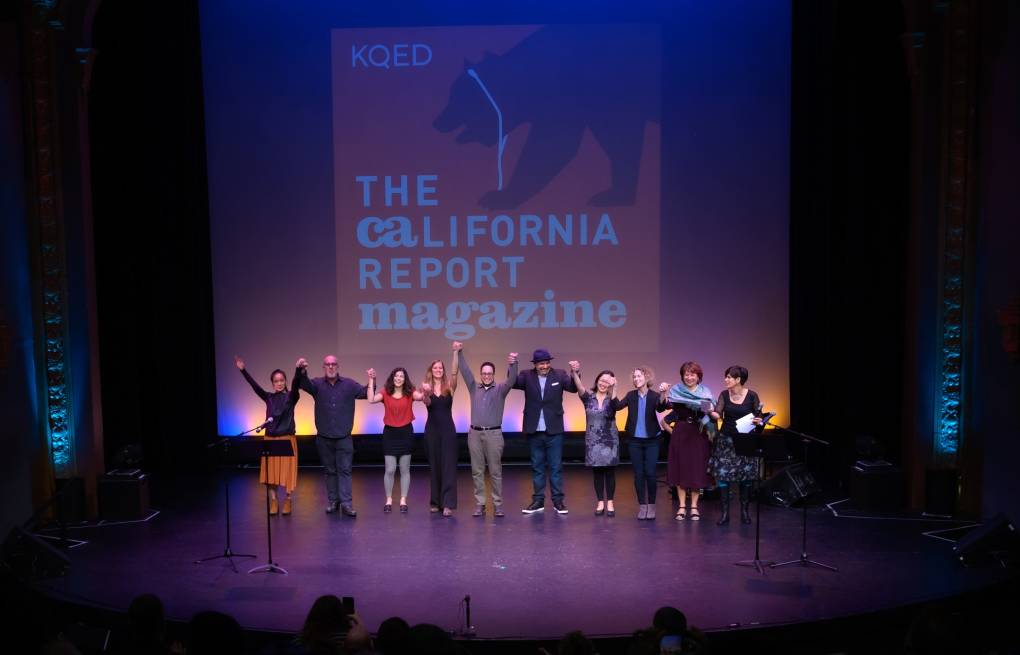
"caption": "In November 2019, The California Report Magazine held a live event at the Brava Theater in San Francisco.",
"description": null,
"title": "KQED19DreamingGS_CRM-318",
"credit": "Courtesy of Alain McLaughlin",
"status": "inherit",
"isLoading": false,
"fetchFailed": false
},
"news_11798111": {
"type": "attachments",
"id": "news_11798111",
"meta": {
"index": "attachments_1716263798",
"site": "news",
"id": "11798111",
"found": true
},
"parent": 11797562,
"imgSizes": {
"apple_news_ca_landscape_5_5": {
"file": "https://ww2.kqed.org/app/uploads/sites/10/2020/01/RS40906_006_KQED_ClayTheater_RockyHorror_01252020_6887-qut-1044x783.jpg",
"width": 1044,
"mimeType": "image/jpeg",
"height": 783
},
"apple_news_ca_square_4_0": {
"file": "https://ww2.kqed.org/app/uploads/sites/10/2020/01/RS40906_006_KQED_ClayTheater_RockyHorror_01252020_6887-qut-470x470.jpg",
"width": 470,
"mimeType": "image/jpeg",
"height": 470
},
"twentyfourteen-full-width": {
"file": "https://ww2.kqed.org/app/uploads/sites/10/2020/01/RS40906_006_KQED_ClayTheater_RockyHorror_01252020_6887-qut-1038x576.jpg",
"width": 1038,
"mimeType": "image/jpeg",
"height": 576
},
"thumbnail": {
"file": "https://ww2.kqed.org/app/uploads/sites/10/2020/01/RS40906_006_KQED_ClayTheater_RockyHorror_01252020_6887-qut-160x107.jpg",
"width": 160,
"mimeType": "image/jpeg",
"height": 107
},
"post-thumbnail": {
"file": "https://ww2.kqed.org/app/uploads/sites/10/2020/01/RS40906_006_KQED_ClayTheater_RockyHorror_01252020_6887-qut-672x372.jpg",
"width": 672,
"mimeType": "image/jpeg",
"height": 372
},
"kqedFullSize": {
"file": "https://ww2.kqed.org/app/uploads/sites/10/2020/01/RS40906_006_KQED_ClayTheater_RockyHorror_01252020_6887-qut.jpg",
"width": 1920,
"height": 1278
},
"apple_news_ca_landscape_4_7": {
"file": "https://ww2.kqed.org/app/uploads/sites/10/2020/01/RS40906_006_KQED_ClayTheater_RockyHorror_01252020_6887-qut-632x474.jpg",
"width": 632,
"mimeType": "image/jpeg",
"height": 474
},
"large": {
"file": "https://ww2.kqed.org/app/uploads/sites/10/2020/01/RS40906_006_KQED_ClayTheater_RockyHorror_01252020_6887-qut-1020x679.jpg",
"width": 1020,
"mimeType": "image/jpeg",
"height": 679
},
"apple_news_ca_landscape_4_0": {
"file": "https://ww2.kqed.org/app/uploads/sites/10/2020/01/RS40906_006_KQED_ClayTheater_RockyHorror_01252020_6887-qut-536x402.jpg",
"width": 536,
"mimeType": "image/jpeg",
"height": 402
},
"apple_news_ca_portrait_12_9": {
"file": "https://ww2.kqed.org/app/uploads/sites/10/2020/01/RS40906_006_KQED_ClayTheater_RockyHorror_01252020_6887-qut-1122x1278.jpg",
"width": 1122,
"mimeType": "image/jpeg",
"height": 1278
},
"medium": {
"file": "https://ww2.kqed.org/app/uploads/sites/10/2020/01/RS40906_006_KQED_ClayTheater_RockyHorror_01252020_6887-qut-800x533.jpg",
"width": 800,
"mimeType": "image/jpeg",
"height": 533
},
"apple_news_ca_portrait_4_0": {
"file": "https://ww2.kqed.org/app/uploads/sites/10/2020/01/RS40906_006_KQED_ClayTheater_RockyHorror_01252020_6887-qut-354x472.jpg",
"width": 354,
"mimeType": "image/jpeg",
"height": 472
},
"apple_news_ca_portrait_9_7": {
"file": "https://ww2.kqed.org/app/uploads/sites/10/2020/01/RS40906_006_KQED_ClayTheater_RockyHorror_01252020_6887-qut-840x1120.jpg",
"width": 840,
"mimeType": "image/jpeg",
"height": 1120
},
"apple_news_ca_landscape_12_9": {
"file": "https://ww2.kqed.org/app/uploads/sites/10/2020/01/RS40906_006_KQED_ClayTheater_RockyHorror_01252020_6887-qut-1832x1278.jpg",
"width": 1832,
"mimeType": "image/jpeg",
"height": 1278
},
"apple_news_ca_square_9_7": {
"file": "https://ww2.kqed.org/app/uploads/sites/10/2020/01/RS40906_006_KQED_ClayTheater_RockyHorror_01252020_6887-qut-1104x1104.jpg",
"width": 1104,
"mimeType": "image/jpeg",
"height": 1104
},
"apple_news_ca_portrait_4_7": {
"file": "https://ww2.kqed.org/app/uploads/sites/10/2020/01/RS40906_006_KQED_ClayTheater_RockyHorror_01252020_6887-qut-414x552.jpg",
"width": 414,
"mimeType": "image/jpeg",
"height": 552
},
"apple_news_ca_square_12_9": {
"file": "https://ww2.kqed.org/app/uploads/sites/10/2020/01/RS40906_006_KQED_ClayTheater_RockyHorror_01252020_6887-qut-1472x1278.jpg",
"width": 1472,
"mimeType": "image/jpeg",
"height": 1278
},
"apple_news_ca_portrait_5_5": {
"file": "https://ww2.kqed.org/app/uploads/sites/10/2020/01/RS40906_006_KQED_ClayTheater_RockyHorror_01252020_6887-qut-687x916.jpg",
"width": 687,
"mimeType": "image/jpeg",
"height": 916
},
"full-width": {
"file": "https://ww2.kqed.org/app/uploads/sites/10/2020/01/RS40906_006_KQED_ClayTheater_RockyHorror_01252020_6887-qut-1920x1278.jpg",
"width": 1920,
"mimeType": "image/jpeg",
"height": 1278
},
"apple_news_ca_square_4_7": {
"file": "https://ww2.kqed.org/app/uploads/sites/10/2020/01/RS40906_006_KQED_ClayTheater_RockyHorror_01252020_6887-qut-550x550.jpg",
"width": 550,
"mimeType": "image/jpeg",
"height": 550
},
"apple_news_ca_landscape_9_7": {
"file": "https://ww2.kqed.org/app/uploads/sites/10/2020/01/RS40906_006_KQED_ClayTheater_RockyHorror_01252020_6887-qut-1376x1032.jpg",
"width": 1376,
"mimeType": "image/jpeg",
"height": 1032
},
"apple_news_ca_square_5_5": {
"file": "https://ww2.kqed.org/app/uploads/sites/10/2020/01/RS40906_006_KQED_ClayTheater_RockyHorror_01252020_6887-qut-912x912.jpg",
"width": 912,
"mimeType": "image/jpeg",
"height": 912
}
},
"publishDate": 1580073824,
"modified": 1580073905,
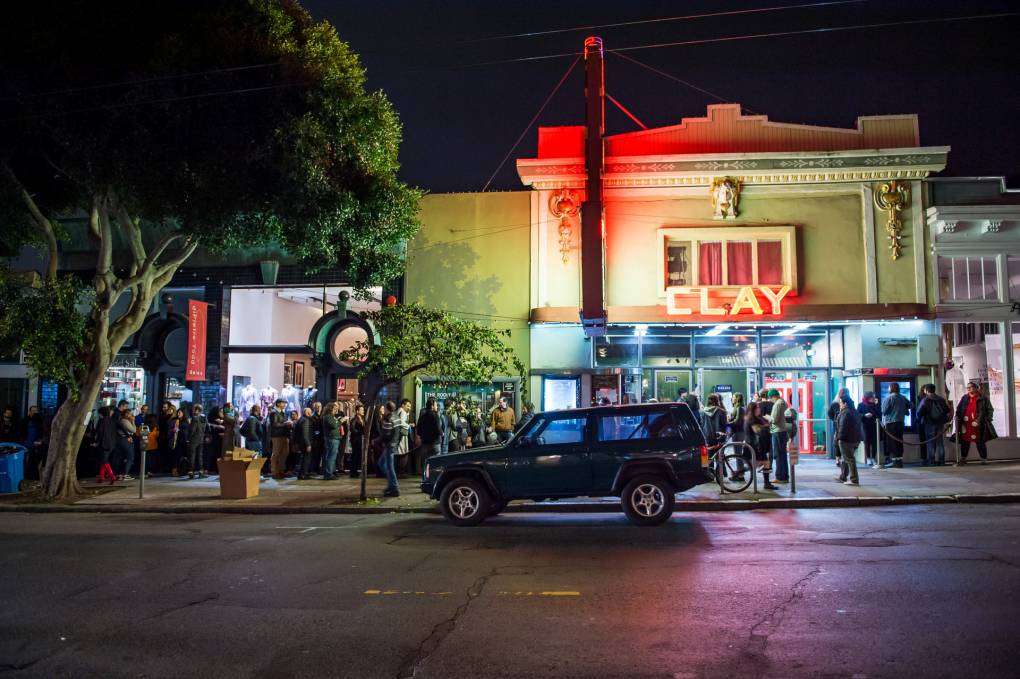
"caption": "Crowds line the sidewalk waiting to enter the Clay Theater for a sold-out performance of the Rocky Horror Picture show on Saturday. This midnight movie performance is the last for the theater, which is shutting its doors on Sunday after 110 years.",
"description": "Crowds line the sidewalk waiting to enter the Clay Theater for a sold-out performance of the Rocky Horror Picture show on Saturday. This midnight movie performance is the last for the theater, which is shutting its doors on Sunday after 110 years.",
"title": "Clay Theater Rocky Horror Picture Show",
"credit": "Beth LaBerge/KQED",
"status": "inherit",
"isLoading": false,
"fetchFailed": false
},
"news_11798003": {
"type": "attachments",
"id": "news_11798003",
"meta": {
"index": "attachments_1716263798",
"site": "news",
"id": "11798003",
"found": true
},
"parent": 11798001,
"imgSizes": {
"apple_news_ca_landscape_5_5": {
"file": "https://ww2.kqed.org/app/uploads/sites/10/2020/01/GettyImages-1188919681-1-1044x783.jpg",
"width": 1044,
"mimeType": "image/jpeg",
"height": 783
},
"apple_news_ca_square_4_0": {
"file": "https://ww2.kqed.org/app/uploads/sites/10/2020/01/GettyImages-1188919681-1-470x470.jpg",
"width": 470,
"mimeType": "image/jpeg",
"height": 470
},
"twentyfourteen-full-width": {
"file": "https://ww2.kqed.org/app/uploads/sites/10/2020/01/GettyImages-1188919681-1-1038x576.jpg",
"width": 1038,
"mimeType": "image/jpeg",
"height": 576
},
"thumbnail": {
"file": "https://ww2.kqed.org/app/uploads/sites/10/2020/01/GettyImages-1188919681-1-160x107.jpg",
"width": 160,
"mimeType": "image/jpeg",
"height": 107
},
"post-thumbnail": {
"file": "https://ww2.kqed.org/app/uploads/sites/10/2020/01/GettyImages-1188919681-1-672x372.jpg",
"width": 672,
"mimeType": "image/jpeg",
"height": 372
},
"kqedFullSize": {
"file": "https://ww2.kqed.org/app/uploads/sites/10/2020/01/GettyImages-1188919681-1.jpg",
"width": 1920,
"height": 1279
},
"apple_news_ca_landscape_4_7": {
"file": "https://ww2.kqed.org/app/uploads/sites/10/2020/01/GettyImages-1188919681-1-632x474.jpg",
"width": 632,
"mimeType": "image/jpeg",
"height": 474
},
"large": {
"file": "https://ww2.kqed.org/app/uploads/sites/10/2020/01/GettyImages-1188919681-1-1020x679.jpg",
"width": 1020,
"mimeType": "image/jpeg",
"height": 679
},
"apple_news_ca_landscape_4_0": {
"file": "https://ww2.kqed.org/app/uploads/sites/10/2020/01/GettyImages-1188919681-1-536x402.jpg",
"width": 536,
"mimeType": "image/jpeg",
"height": 402
},
"apple_news_ca_portrait_12_9": {
"file": "https://ww2.kqed.org/app/uploads/sites/10/2020/01/GettyImages-1188919681-1-1122x1279.jpg",
"width": 1122,
"mimeType": "image/jpeg",
"height": 1279
},
"medium": {
"file": "https://ww2.kqed.org/app/uploads/sites/10/2020/01/GettyImages-1188919681-1-800x533.jpg",
"width": 800,
"mimeType": "image/jpeg",
"height": 533
},
"apple_news_ca_portrait_4_0": {
"file": "https://ww2.kqed.org/app/uploads/sites/10/2020/01/GettyImages-1188919681-1-354x472.jpg",
"width": 354,
"mimeType": "image/jpeg",
"height": 472
},
"apple_news_ca_portrait_9_7": {
"file": "https://ww2.kqed.org/app/uploads/sites/10/2020/01/GettyImages-1188919681-1-840x1120.jpg",
"width": 840,
"mimeType": "image/jpeg",
"height": 1120
},
"apple_news_ca_landscape_12_9": {
"file": "https://ww2.kqed.org/app/uploads/sites/10/2020/01/GettyImages-1188919681-1-1832x1279.jpg",
"width": 1832,
"mimeType": "image/jpeg",
"height": 1279
},
"apple_news_ca_square_9_7": {
"file": "https://ww2.kqed.org/app/uploads/sites/10/2020/01/GettyImages-1188919681-1-1104x1104.jpg",
"width": 1104,
"mimeType": "image/jpeg",
"height": 1104
},
"apple_news_ca_portrait_4_7": {
"file": "https://ww2.kqed.org/app/uploads/sites/10/2020/01/GettyImages-1188919681-1-414x552.jpg",
"width": 414,
"mimeType": "image/jpeg",
"height": 552
},
"apple_news_ca_square_12_9": {
"file": "https://ww2.kqed.org/app/uploads/sites/10/2020/01/GettyImages-1188919681-1-1472x1279.jpg",
"width": 1472,
"mimeType": "image/jpeg",
"height": 1279
},
"apple_news_ca_portrait_5_5": {
"file": "https://ww2.kqed.org/app/uploads/sites/10/2020/01/GettyImages-1188919681-1-687x916.jpg",
"width": 687,
"mimeType": "image/jpeg",
"height": 916
},
"full-width": {
"file": "https://ww2.kqed.org/app/uploads/sites/10/2020/01/GettyImages-1188919681-1-1920x1279.jpg",
"width": 1920,
"mimeType": "image/jpeg",
"height": 1279
},
"apple_news_ca_square_4_7": {
"file": "https://ww2.kqed.org/app/uploads/sites/10/2020/01/GettyImages-1188919681-1-550x550.jpg",
"width": 550,
"mimeType": "image/jpeg",
"height": 550
},
"apple_news_ca_landscape_9_7": {
"file": "https://ww2.kqed.org/app/uploads/sites/10/2020/01/GettyImages-1188919681-1-1376x1032.jpg",
"width": 1376,
"mimeType": "image/jpeg",
"height": 1032
},
"apple_news_ca_square_5_5": {
"file": "https://ww2.kqed.org/app/uploads/sites/10/2020/01/GettyImages-1188919681-1-912x912.jpg",
"width": 912,
"mimeType": "image/jpeg",
"height": 912
}
},
"publishDate": 1579982019,
"modified": 1579982168,
"caption": "Recording Academy President, Chair and CEO Deborah Dugan in Nov. 2019.",
"description": null,
"title": "GettyImages-1188919681 (1)",
"credit": "Bryan Bedder/Getty Images",
"status": "inherit",
"isLoading": false,
"fetchFailed": false
},
"news_11797949": {
"type": "attachments",
"id": "news_11797949",
"meta": {
"index": "attachments_1716263798",
"site": "news",
"id": "11797949",
"found": true
},
"parent": 11797856,
"imgSizes": {
"apple_news_ca_landscape_5_5": {
"file": "https://ww2.kqed.org/app/uploads/sites/10/2020/01/RS40904_Photo-Jan-23-5-46-38-PM-qut-1044x783.jpg",
"width": 1044,
"mimeType": "image/jpeg",
"height": 783
},
"apple_news_ca_square_4_0": {
"file": "https://ww2.kqed.org/app/uploads/sites/10/2020/01/RS40904_Photo-Jan-23-5-46-38-PM-qut-470x470.jpg",
"width": 470,
"mimeType": "image/jpeg",
"height": 470
},
"twentyfourteen-full-width": {
"file": "https://ww2.kqed.org/app/uploads/sites/10/2020/01/RS40904_Photo-Jan-23-5-46-38-PM-qut-1038x576.jpg",
"width": 1038,
"mimeType": "image/jpeg",
"height": 576
},
"thumbnail": {
"file": "https://ww2.kqed.org/app/uploads/sites/10/2020/01/RS40904_Photo-Jan-23-5-46-38-PM-qut-160x120.jpg",
"width": 160,
"mimeType": "image/jpeg",
"height": 120
},
"post-thumbnail": {
"file": "https://ww2.kqed.org/app/uploads/sites/10/2020/01/RS40904_Photo-Jan-23-5-46-38-PM-qut-672x372.jpg",
"width": 672,
"mimeType": "image/jpeg",
"height": 372
},
"kqedFullSize": {
"file": "https://ww2.kqed.org/app/uploads/sites/10/2020/01/RS40904_Photo-Jan-23-5-46-38-PM-qut.jpg",
"width": 1920,
"height": 1440
},
"apple_news_ca_landscape_4_7": {
"file": "https://ww2.kqed.org/app/uploads/sites/10/2020/01/RS40904_Photo-Jan-23-5-46-38-PM-qut-632x474.jpg",
"width": 632,
"mimeType": "image/jpeg",
"height": 474
},
"large": {
"file": "https://ww2.kqed.org/app/uploads/sites/10/2020/01/RS40904_Photo-Jan-23-5-46-38-PM-qut-1020x765.jpg",
"width": 1020,
"mimeType": "image/jpeg",
"height": 765
},
"apple_news_ca_landscape_4_0": {
"file": "https://ww2.kqed.org/app/uploads/sites/10/2020/01/RS40904_Photo-Jan-23-5-46-38-PM-qut-536x402.jpg",
"width": 536,
"mimeType": "image/jpeg",
"height": 402
},
"apple_news_ca_portrait_12_9": {
"file": "https://ww2.kqed.org/app/uploads/sites/10/2020/01/RS40904_Photo-Jan-23-5-46-38-PM-qut-1122x1440.jpg",
"width": 1122,
"mimeType": "image/jpeg",
"height": 1440
},
"medium": {
"file": "https://ww2.kqed.org/app/uploads/sites/10/2020/01/RS40904_Photo-Jan-23-5-46-38-PM-qut-800x600.jpg",
"width": 800,
"mimeType": "image/jpeg",
"height": 600
},
"apple_news_ca_portrait_4_0": {
"file": "https://ww2.kqed.org/app/uploads/sites/10/2020/01/RS40904_Photo-Jan-23-5-46-38-PM-qut-354x472.jpg",
"width": 354,
"mimeType": "image/jpeg",
"height": 472
},
"apple_news_ca_portrait_9_7": {
"file": "https://ww2.kqed.org/app/uploads/sites/10/2020/01/RS40904_Photo-Jan-23-5-46-38-PM-qut-840x1120.jpg",
"width": 840,
"mimeType": "image/jpeg",
"height": 1120
},
"apple_news_ca_landscape_12_9": {
"file": "https://ww2.kqed.org/app/uploads/sites/10/2020/01/RS40904_Photo-Jan-23-5-46-38-PM-qut-1832x1374.jpg",
"width": 1832,
"mimeType": "image/jpeg",
"height": 1374
},
"apple_news_ca_square_9_7": {
"file": "https://ww2.kqed.org/app/uploads/sites/10/2020/01/RS40904_Photo-Jan-23-5-46-38-PM-qut-1104x1104.jpg",
"width": 1104,
"mimeType": "image/jpeg",
"height": 1104
},
"apple_news_ca_portrait_4_7": {
"file": "https://ww2.kqed.org/app/uploads/sites/10/2020/01/RS40904_Photo-Jan-23-5-46-38-PM-qut-414x552.jpg",
"width": 414,
"mimeType": "image/jpeg",
"height": 552
},
"apple_news_ca_square_12_9": {
"file": "https://ww2.kqed.org/app/uploads/sites/10/2020/01/RS40904_Photo-Jan-23-5-46-38-PM-qut-1472x1440.jpg",
"width": 1472,
"mimeType": "image/jpeg",
"height": 1440
},
"apple_news_ca_portrait_5_5": {
"file": "https://ww2.kqed.org/app/uploads/sites/10/2020/01/RS40904_Photo-Jan-23-5-46-38-PM-qut-687x916.jpg",
"width": 687,
"mimeType": "image/jpeg",
"height": 916
},
"full-width": {
"file": "https://ww2.kqed.org/app/uploads/sites/10/2020/01/RS40904_Photo-Jan-23-5-46-38-PM-qut-1920x1440.jpg",
"width": 1920,
"mimeType": "image/jpeg",
"height": 1440
},
"apple_news_ca_square_4_7": {
"file": "https://ww2.kqed.org/app/uploads/sites/10/2020/01/RS40904_Photo-Jan-23-5-46-38-PM-qut-550x550.jpg",
"width": 550,
"mimeType": "image/jpeg",
"height": 550
},
"apple_news_ca_landscape_9_7": {
"file": "https://ww2.kqed.org/app/uploads/sites/10/2020/01/RS40904_Photo-Jan-23-5-46-38-PM-qut-1376x1032.jpg",
"width": 1376,
"mimeType": "image/jpeg",
"height": 1032
},
"apple_news_ca_square_5_5": {
"file": "https://ww2.kqed.org/app/uploads/sites/10/2020/01/RS40904_Photo-Jan-23-5-46-38-PM-qut-912x912.jpg",
"width": 912,
"mimeType": "image/jpeg",
"height": 912
}
},
"publishDate": 1579924342,
"modified": 1579924383,
"caption": "Trami Cron of Chopsticks Alley points to the wide variety of traditional baked goodies available at Dzui’s Cakes and Desserts in San Jose.",
"description": "Trami Cron of Chopsticks Alley points to the wide variety of traditional baked goodies available at Dzui’s Cakes and Desserts in San Jose.",
"title": "RS40904_Photo Jan 23, 5 46 38 PM-qut",
"credit": "Rachael Myrow/KQED",
"status": "inherit",
"isLoading": false,
"fetchFailed": false
},
"news_11797894": {
"type": "attachments",
"id": "news_11797894",
"meta": {
"index": "attachments_1716263798",
"site": "news",
"id": "11797894",
"found": true
},
"parent": 11797773,
"imgSizes": {
"apple_news_ca_landscape_5_5": {
"file": "https://ww2.kqed.org/app/uploads/sites/10/2020/01/John-Waters-1044x783.jpg",
"width": 1044,
"mimeType": "image/jpeg",
"height": 783
},
"apple_news_ca_square_4_0": {
"file": "https://ww2.kqed.org/app/uploads/sites/10/2020/01/John-Waters-470x470.jpg",
"width": 470,
"mimeType": "image/jpeg",
"height": 470
},
"twentyfourteen-full-width": {
"file": "https://ww2.kqed.org/app/uploads/sites/10/2020/01/John-Waters-1038x576.jpg",
"width": 1038,
"mimeType": "image/jpeg",
"height": 576
},
"thumbnail": {
"file": "https://ww2.kqed.org/app/uploads/sites/10/2020/01/John-Waters-160x107.jpg",
"width": 160,
"mimeType": "image/jpeg",
"height": 107
},
"post-thumbnail": {
"file": "https://ww2.kqed.org/app/uploads/sites/10/2020/01/John-Waters-672x372.jpg",
"width": 672,
"mimeType": "image/jpeg",
"height": 372
},
"kqedFullSize": {
"file": "https://ww2.kqed.org/app/uploads/sites/10/2020/01/John-Waters.jpg",
"width": 1920,
"height": 1280
},
"apple_news_ca_landscape_4_7": {
"file": "https://ww2.kqed.org/app/uploads/sites/10/2020/01/John-Waters-632x474.jpg",
"width": 632,
"mimeType": "image/jpeg",
"height": 474
},
"large": {
"file": "https://ww2.kqed.org/app/uploads/sites/10/2020/01/John-Waters-1020x680.jpg",
"width": 1020,
"mimeType": "image/jpeg",
"height": 680
},
"apple_news_ca_landscape_4_0": {
"file": "https://ww2.kqed.org/app/uploads/sites/10/2020/01/John-Waters-536x402.jpg",
"width": 536,
"mimeType": "image/jpeg",
"height": 402
},
"apple_news_ca_portrait_12_9": {
"file": "https://ww2.kqed.org/app/uploads/sites/10/2020/01/John-Waters-1122x1280.jpg",
"width": 1122,
"mimeType": "image/jpeg",
"height": 1280
},
"medium": {
"file": "https://ww2.kqed.org/app/uploads/sites/10/2020/01/John-Waters-800x533.jpg",
"width": 800,
"mimeType": "image/jpeg",
"height": 533
},
"apple_news_ca_portrait_4_0": {
"file": "https://ww2.kqed.org/app/uploads/sites/10/2020/01/John-Waters-354x472.jpg",
"width": 354,
"mimeType": "image/jpeg",
"height": 472
},
"apple_news_ca_portrait_9_7": {
"file": "https://ww2.kqed.org/app/uploads/sites/10/2020/01/John-Waters-840x1120.jpg",
"width": 840,
"mimeType": "image/jpeg",
"height": 1120
},
"apple_news_ca_landscape_12_9": {
"file": "https://ww2.kqed.org/app/uploads/sites/10/2020/01/John-Waters-1832x1280.jpg",
"width": 1832,
"mimeType": "image/jpeg",
"height": 1280
},
"apple_news_ca_square_9_7": {
"file": "https://ww2.kqed.org/app/uploads/sites/10/2020/01/John-Waters-1104x1104.jpg",
"width": 1104,
"mimeType": "image/jpeg",
"height": 1104
},
"apple_news_ca_portrait_4_7": {
"file": "https://ww2.kqed.org/app/uploads/sites/10/2020/01/John-Waters-414x552.jpg",
"width": 414,
"mimeType": "image/jpeg",
"height": 552
},
"apple_news_ca_square_12_9": {
"file": "https://ww2.kqed.org/app/uploads/sites/10/2020/01/John-Waters-1472x1280.jpg",
"width": 1472,
"mimeType": "image/jpeg",
"height": 1280
},
"apple_news_ca_portrait_5_5": {
"file": "https://ww2.kqed.org/app/uploads/sites/10/2020/01/John-Waters-687x916.jpg",
"width": 687,
"mimeType": "image/jpeg",
"height": 916
},
"full-width": {
"file": "https://ww2.kqed.org/app/uploads/sites/10/2020/01/John-Waters-1920x1280.jpg",
"width": 1920,
"mimeType": "image/jpeg",
"height": 1280
},
"apple_news_ca_square_4_7": {
"file": "https://ww2.kqed.org/app/uploads/sites/10/2020/01/John-Waters-550x550.jpg",
"width": 550,
"mimeType": "image/jpeg",
"height": 550
},
"apple_news_ca_landscape_9_7": {
"file": "https://ww2.kqed.org/app/uploads/sites/10/2020/01/John-Waters-1376x1032.jpg",
"width": 1376,
"mimeType": "image/jpeg",
"height": 1032
},
"apple_news_ca_square_5_5": {
"file": "https://ww2.kqed.org/app/uploads/sites/10/2020/01/John-Waters-912x912.jpg",
"width": 912,
"mimeType": "image/jpeg",
"height": 912
}
},
"publishDate": 1579912453,
"modified": 1579912526,
"caption": "John Waters ",
"description": null,
"title": "John-Waters",
"credit": "Amy Sussman/Getty Images",
"status": "inherit",
"isLoading": false,
"fetchFailed": false
},
"news_11797847": {
"type": "attachments",
"id": "news_11797847",
"meta": {
"index": "attachments_1716263798",
"site": "news",
"id": "11797847",
"found": true
},
"parent": 0,
"imgSizes": {
"apple_news_ca_landscape_5_5": {
"file": "https://ww2.kqed.org/app/uploads/sites/10/2020/01/DreamingGoldenState_Eventbrite-1044x783.jpg",
"width": 1044,
"mimeType": "image/jpeg",
"height": 783
},
"apple_news_ca_square_4_0": {
"file": "https://ww2.kqed.org/app/uploads/sites/10/2020/01/DreamingGoldenState_Eventbrite-470x470.jpg",
"width": 470,
"mimeType": "image/jpeg",
"height": 470
},
"twentyfourteen-full-width": {
"file": "https://ww2.kqed.org/app/uploads/sites/10/2020/01/DreamingGoldenState_Eventbrite-1038x576.jpg",
"width": 1038,
"mimeType": "image/jpeg",
"height": 576
},
"thumbnail": {
"file": "https://ww2.kqed.org/app/uploads/sites/10/2020/01/DreamingGoldenState_Eventbrite-160x84.jpg",
"width": 160,
"mimeType": "image/jpeg",
"height": 84
},
"post-thumbnail": {
"file": "https://ww2.kqed.org/app/uploads/sites/10/2020/01/DreamingGoldenState_Eventbrite-672x372.jpg",
"width": 672,
"mimeType": "image/jpeg",
"height": 372
},
"kqedFullSize": {
"file": "https://ww2.kqed.org/app/uploads/sites/10/2020/01/DreamingGoldenState_Eventbrite.jpg",
"width": 1920,
"height": 1013
},
"apple_news_ca_landscape_4_7": {
"file": "https://ww2.kqed.org/app/uploads/sites/10/2020/01/DreamingGoldenState_Eventbrite-632x474.jpg",
"width": 632,
"mimeType": "image/jpeg",
"height": 474
},
"large": {
"file": "https://ww2.kqed.org/app/uploads/sites/10/2020/01/DreamingGoldenState_Eventbrite-1020x538.jpg",
"width": 1020,
"mimeType": "image/jpeg",
"height": 538
},
"apple_news_ca_landscape_4_0": {
"file": "https://ww2.kqed.org/app/uploads/sites/10/2020/01/DreamingGoldenState_Eventbrite-536x402.jpg",
"width": 536,
"mimeType": "image/jpeg",
"height": 402
},
"apple_news_ca_portrait_12_9": {
"file": "https://ww2.kqed.org/app/uploads/sites/10/2020/01/DreamingGoldenState_Eventbrite-1122x1013.jpg",
"width": 1122,
"mimeType": "image/jpeg",
"height": 1013
},
"medium": {
"file": "https://ww2.kqed.org/app/uploads/sites/10/2020/01/DreamingGoldenState_Eventbrite-800x422.jpg",
"width": 800,
"mimeType": "image/jpeg",
"height": 422
},
"apple_news_ca_portrait_4_0": {
"file": "https://ww2.kqed.org/app/uploads/sites/10/2020/01/DreamingGoldenState_Eventbrite-354x472.jpg",
"width": 354,
"mimeType": "image/jpeg",
"height": 472
},
"apple_news_ca_portrait_9_7": {
"file": "https://ww2.kqed.org/app/uploads/sites/10/2020/01/DreamingGoldenState_Eventbrite-840x1013.jpg",
"width": 840,
"mimeType": "image/jpeg",
"height": 1013
},
"apple_news_ca_landscape_12_9": {
"file": "https://ww2.kqed.org/app/uploads/sites/10/2020/01/DreamingGoldenState_Eventbrite-1832x1013.jpg",
"width": 1832,
"mimeType": "image/jpeg",
"height": 1013
},
"apple_news_ca_square_9_7": {
"file": "https://ww2.kqed.org/app/uploads/sites/10/2020/01/DreamingGoldenState_Eventbrite-1104x1013.jpg",
"width": 1104,
"mimeType": "image/jpeg",
"height": 1013
},
"apple_news_ca_portrait_4_7": {
"file": "https://ww2.kqed.org/app/uploads/sites/10/2020/01/DreamingGoldenState_Eventbrite-414x552.jpg",
"width": 414,
"mimeType": "image/jpeg",
"height": 552
},
"apple_news_ca_square_12_9": {
"file": "https://ww2.kqed.org/app/uploads/sites/10/2020/01/DreamingGoldenState_Eventbrite-1472x1013.jpg",
"width": 1472,
"mimeType": "image/jpeg",
"height": 1013
},
"apple_news_ca_portrait_5_5": {
"file": "https://ww2.kqed.org/app/uploads/sites/10/2020/01/DreamingGoldenState_Eventbrite-687x916.jpg",
"width": 687,
"mimeType": "image/jpeg",
"height": 916
},
"full-width": {
"file": "https://ww2.kqed.org/app/uploads/sites/10/2020/01/DreamingGoldenState_Eventbrite-1920x1013.jpg",
"width": 1920,
"mimeType": "image/jpeg",
"height": 1013
},
"apple_news_ca_square_4_7": {
"file": "https://ww2.kqed.org/app/uploads/sites/10/2020/01/DreamingGoldenState_Eventbrite-550x550.jpg",
"width": 550,
"mimeType": "image/jpeg",
"height": 550
},
"apple_news_ca_landscape_9_7": {
"file": "https://ww2.kqed.org/app/uploads/sites/10/2020/01/DreamingGoldenState_Eventbrite-1376x1013.jpg",
"width": 1376,
"mimeType": "image/jpeg",
"height": 1013
},
"apple_news_ca_square_5_5": {
"file": "https://ww2.kqed.org/app/uploads/sites/10/2020/01/DreamingGoldenState_Eventbrite-912x912.jpg",
"width": 912,
"mimeType": "image/jpeg",
"height": 912
}
},
"publishDate": 1579908712,
"modified": 1579908742,
"caption": "In November 2019, The California Report Magazine held a live event at the Brava Theater in San Francisco. ",
"description": null,
"title": "DreamingGoldenState_Eventbrite",
"credit": null,
"status": "inherit",
"isLoading": false,
"fetchFailed": false
},
"news_11797862": {
"type": "attachments",
"id": "news_11797862",
"meta": {
"index": "attachments_1716263798",
"site": "news",
"id": "11797862",
"found": true
},
"parent": 11797793,
"imgSizes": {
"apple_news_ca_landscape_5_5": {
"file": "https://ww2.kqed.org/app/uploads/sites/10/2020/01/MARQUEE_714-1044x720.jpg",
"width": 1044,
"mimeType": "image/jpeg",
"height": 720
},
"apple_news_ca_square_4_0": {
"file": "https://ww2.kqed.org/app/uploads/sites/10/2020/01/MARQUEE_714-470x470.jpg",
"width": 470,
"mimeType": "image/jpeg",
"height": 470
},
"twentyfourteen-full-width": {
"file": "https://ww2.kqed.org/app/uploads/sites/10/2020/01/MARQUEE_714-1038x576.jpg",
"width": 1038,
"mimeType": "image/jpeg",
"height": 576
},
"thumbnail": {
"file": "https://ww2.kqed.org/app/uploads/sites/10/2020/01/MARQUEE_714-160x90.jpg",
"width": 160,
"mimeType": "image/jpeg",
"height": 90
},
"post-thumbnail": {
"file": "https://ww2.kqed.org/app/uploads/sites/10/2020/01/MARQUEE_714-672x372.jpg",
"width": 672,
"mimeType": "image/jpeg",
"height": 372
},
"kqedFullSize": {
"file": "https://ww2.kqed.org/app/uploads/sites/10/2020/01/MARQUEE_714.jpg",
"width": 1280,
"height": 720
},
"apple_news_ca_landscape_4_7": {
"file": "https://ww2.kqed.org/app/uploads/sites/10/2020/01/MARQUEE_714-632x474.jpg",
"width": 632,
"mimeType": "image/jpeg",
"height": 474
},
"large": {
"file": "https://ww2.kqed.org/app/uploads/sites/10/2020/01/MARQUEE_714-1020x574.jpg",
"width": 1020,
"mimeType": "image/jpeg",
"height": 574
},
"apple_news_ca_landscape_4_0": {
"file": "https://ww2.kqed.org/app/uploads/sites/10/2020/01/MARQUEE_714-536x402.jpg",
"width": 536,
"mimeType": "image/jpeg",
"height": 402
},
"apple_news_ca_portrait_12_9": {
"file": "https://ww2.kqed.org/app/uploads/sites/10/2020/01/MARQUEE_714-1122x720.jpg",
"width": 1122,
"mimeType": "image/jpeg",
"height": 720
},
"medium": {
"file": "https://ww2.kqed.org/app/uploads/sites/10/2020/01/MARQUEE_714-800x450.jpg",
"width": 800,
"mimeType": "image/jpeg",
"height": 450
},
"apple_news_ca_portrait_4_0": {
"file": "https://ww2.kqed.org/app/uploads/sites/10/2020/01/MARQUEE_714-354x472.jpg",
"width": 354,
"mimeType": "image/jpeg",
"height": 472
},
"apple_news_ca_portrait_9_7": {
"file": "https://ww2.kqed.org/app/uploads/sites/10/2020/01/MARQUEE_714-840x720.jpg",
"width": 840,
"mimeType": "image/jpeg",
"height": 720
},
"apple_news_ca_square_9_7": {
"file": "https://ww2.kqed.org/app/uploads/sites/10/2020/01/MARQUEE_714-1104x720.jpg",
"width": 1104,
"mimeType": "image/jpeg",
"height": 720
},
"apple_news_ca_portrait_4_7": {
"file": "https://ww2.kqed.org/app/uploads/sites/10/2020/01/MARQUEE_714-414x552.jpg",
"width": 414,
"mimeType": "image/jpeg",
"height": 552
},
"apple_news_ca_portrait_5_5": {
"file": "https://ww2.kqed.org/app/uploads/sites/10/2020/01/MARQUEE_714-687x720.jpg",
"width": 687,
"mimeType": "image/jpeg",
"height": 720
},
"apple_news_ca_square_4_7": {
"file": "https://ww2.kqed.org/app/uploads/sites/10/2020/01/MARQUEE_714-550x550.jpg",
"width": 550,
"mimeType": "image/jpeg",
"height": 550
},
"apple_news_ca_square_5_5": {
"file": "https://ww2.kqed.org/app/uploads/sites/10/2020/01/MARQUEE_714-912x720.jpg",
"width": 912,
"mimeType": "image/jpeg",
"height": 720
}
},
"publishDate": 1579909860,
"modified": 1579909860,
"caption": null,
"description": null,
"title": "MARQUEE_714",
"credit": null,
"status": "inherit",
"isLoading": false,
"fetchFailed": false
},
"news_11796785": {
"type": "attachments",
"id": "news_11796785",
"meta": {
"index": "attachments_1716263798",
"site": "news",
"id": "11796785",
"found": true
},
"parent": 11796351,
"imgSizes": {
"apple_news_ca_landscape_5_5": {
"file": "https://ww2.kqed.org/app/uploads/sites/10/2020/01/Image-from-iOS-24-1044x783.jpg",
"width": 1044,
"mimeType": "image/jpeg",
"height": 783
},
"apple_news_ca_square_4_0": {
"file": "https://ww2.kqed.org/app/uploads/sites/10/2020/01/Image-from-iOS-24-470x470.jpg",
"width": 470,
"mimeType": "image/jpeg",
"height": 470
},
"twentyfourteen-full-width": {
"file": "https://ww2.kqed.org/app/uploads/sites/10/2020/01/Image-from-iOS-24-1038x576.jpg",
"width": 1038,
"mimeType": "image/jpeg",
"height": 576
},
"thumbnail": {
"file": "https://ww2.kqed.org/app/uploads/sites/10/2020/01/Image-from-iOS-24-160x120.jpg",
"width": 160,
"mimeType": "image/jpeg",
"height": 120
},
"post-thumbnail": {
"file": "https://ww2.kqed.org/app/uploads/sites/10/2020/01/Image-from-iOS-24-672x372.jpg",
"width": 672,
"mimeType": "image/jpeg",
"height": 372
},
"kqedFullSize": {
"file": "https://ww2.kqed.org/app/uploads/sites/10/2020/01/Image-from-iOS-24-e1579310156371.jpg",
"width": 1920,
"height": 1440
},
"apple_news_ca_landscape_4_7": {
"file": "https://ww2.kqed.org/app/uploads/sites/10/2020/01/Image-from-iOS-24-632x474.jpg",
"width": 632,
"mimeType": "image/jpeg",
"height": 474
},
"large": {
"file": "https://ww2.kqed.org/app/uploads/sites/10/2020/01/Image-from-iOS-24-1020x765.jpg",
"width": 1020,
"mimeType": "image/jpeg",
"height": 765
},
"apple_news_ca_landscape_4_0": {
"file": "https://ww2.kqed.org/app/uploads/sites/10/2020/01/Image-from-iOS-24-536x402.jpg",
"width": 536,
"mimeType": "image/jpeg",
"height": 402
},
"apple_news_ca_portrait_12_9": {
"file": "https://ww2.kqed.org/app/uploads/sites/10/2020/01/Image-from-iOS-24-1122x1496.jpg",
"width": 1122,
"mimeType": "image/jpeg",
"height": 1496
},
"medium": {
"file": "https://ww2.kqed.org/app/uploads/sites/10/2020/01/Image-from-iOS-24-800x600.jpg",
"width": 800,
"mimeType": "image/jpeg",
"height": 600
},
"apple_news_ca_portrait_4_0": {
"file": "https://ww2.kqed.org/app/uploads/sites/10/2020/01/Image-from-iOS-24-354x472.jpg",
"width": 354,
"mimeType": "image/jpeg",
"height": 472
},
"apple_news_ca_portrait_9_7": {
"file": "https://ww2.kqed.org/app/uploads/sites/10/2020/01/Image-from-iOS-24-840x1120.jpg",
"width": 840,
"mimeType": "image/jpeg",
"height": 1120
},
"apple_news_ca_landscape_12_9": {
"file": "https://ww2.kqed.org/app/uploads/sites/10/2020/01/Image-from-iOS-24-1832x1374.jpg",
"width": 1832,
"mimeType": "image/jpeg",
"height": 1374
},
"apple_news_ca_square_9_7": {
"file": "https://ww2.kqed.org/app/uploads/sites/10/2020/01/Image-from-iOS-24-1104x1104.jpg",
"width": 1104,
"mimeType": "image/jpeg",
"height": 1104
},
"apple_news_ca_portrait_4_7": {
"file": "https://ww2.kqed.org/app/uploads/sites/10/2020/01/Image-from-iOS-24-414x552.jpg",
"width": 414,
"mimeType": "image/jpeg",
"height": 552
},
"apple_news_ca_square_12_9": {
"file": "https://ww2.kqed.org/app/uploads/sites/10/2020/01/Image-from-iOS-24-1472x1472.jpg",
"width": 1472,
"mimeType": "image/jpeg",
"height": 1472
},
"apple_news_ca_portrait_5_5": {
"file": "https://ww2.kqed.org/app/uploads/sites/10/2020/01/Image-from-iOS-24-687x916.jpg",
"width": 687,
"mimeType": "image/jpeg",
"height": 916
},
"full-width": {
"file": "https://ww2.kqed.org/app/uploads/sites/10/2020/01/Image-from-iOS-24-1920x1440.jpg",
"width": 1920,
"mimeType": "image/jpeg",
"height": 1440
},
"apple_news_ca_square_4_7": {
"file": "https://ww2.kqed.org/app/uploads/sites/10/2020/01/Image-from-iOS-24-550x550.jpg",
"width": 550,
"mimeType": "image/jpeg",
"height": 550
},
"apple_news_ca_landscape_9_7": {
"file": "https://ww2.kqed.org/app/uploads/sites/10/2020/01/Image-from-iOS-24-1376x1032.jpg",
"width": 1376,
"mimeType": "image/jpeg",
"height": 1032
},
"apple_news_ca_square_5_5": {
"file": "https://ww2.kqed.org/app/uploads/sites/10/2020/01/Image-from-iOS-24-912x912.jpg",
"width": 912,
"mimeType": "image/jpeg",
"height": 912
}
},
"publishDate": 1579302507,
"modified": 1579310179,
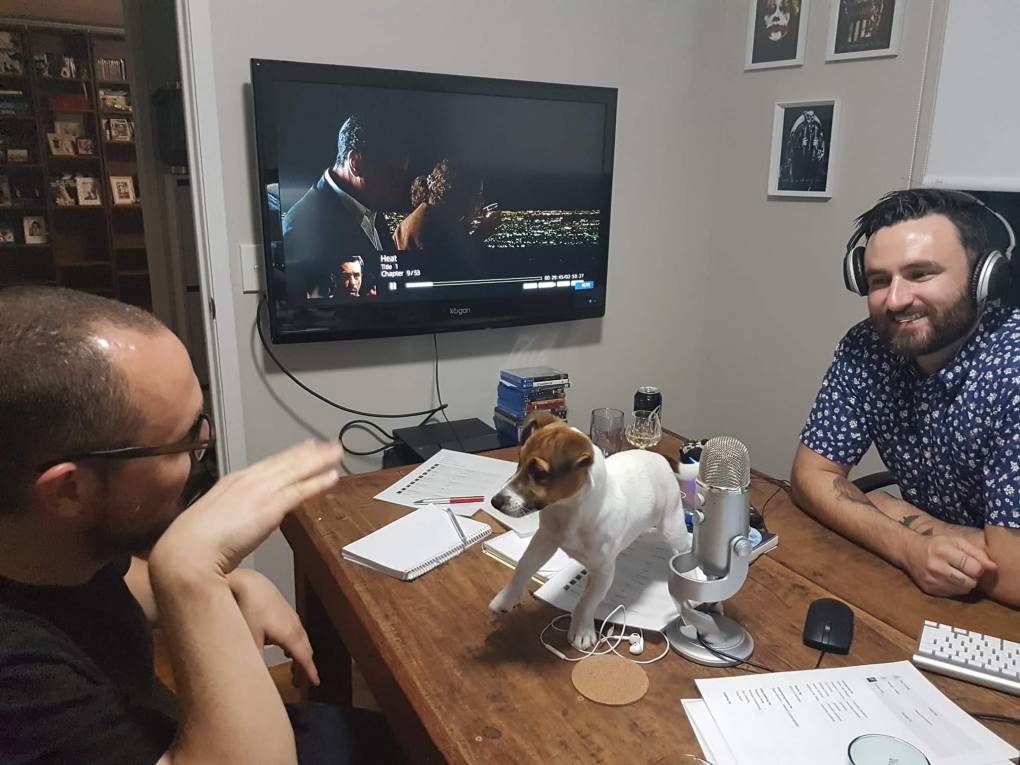
"caption": "Blake Howard and critic Luke Buckmaster tape an episode of 'One Heat Minute', watched by Buckmaster's dog Bessie)",
"description": "Blake Howard and critic Luke Buckmaster tape an episode of 'One Heat Minute', watched by Buckmaster's dog Bessie)",
"title": "Image from iOS (24)",
"credit": "Courtesy Luke Buckmaster",
"status": "inherit",
"isLoading": false,
"fetchFailed": false
},
"news_11796867": {
"type": "attachments",
"id": "news_11796867",
"meta": {
"index": "attachments_1716263798",
"site": "news",
"id": "11796867",
"found": true
},
"parent": 11796666,
"imgSizes": {
"apple_news_ca_landscape_5_5": {
"file": "https://ww2.kqed.org/app/uploads/sites/10/2020/01/MARQUEE_713-1044x720.jpg",
"width": 1044,
"mimeType": "image/jpeg",
"height": 720
},
"apple_news_ca_square_4_0": {
"file": "https://ww2.kqed.org/app/uploads/sites/10/2020/01/MARQUEE_713-470x470.jpg",
"width": 470,
"mimeType": "image/jpeg",
"height": 470
},
"twentyfourteen-full-width": {
"file": "https://ww2.kqed.org/app/uploads/sites/10/2020/01/MARQUEE_713-1038x576.jpg",
"width": 1038,
"mimeType": "image/jpeg",
"height": 576
},
"thumbnail": {
"file": "https://ww2.kqed.org/app/uploads/sites/10/2020/01/MARQUEE_713-160x90.jpg",
"width": 160,
"mimeType": "image/jpeg",
"height": 90
},
"post-thumbnail": {
"file": "https://ww2.kqed.org/app/uploads/sites/10/2020/01/MARQUEE_713-672x372.jpg",
"width": 672,
"mimeType": "image/jpeg",
"height": 372
},
"kqedFullSize": {
"file": "https://ww2.kqed.org/app/uploads/sites/10/2020/01/MARQUEE_713.jpg",
"width": 1280,
"height": 720
},
"apple_news_ca_landscape_4_7": {
"file": "https://ww2.kqed.org/app/uploads/sites/10/2020/01/MARQUEE_713-632x474.jpg",
"width": 632,
"mimeType": "image/jpeg",
"height": 474
},
"large": {
"file": "https://ww2.kqed.org/app/uploads/sites/10/2020/01/MARQUEE_713-1020x574.jpg",
"width": 1020,
"mimeType": "image/jpeg",
"height": 574
},
"apple_news_ca_landscape_4_0": {
"file": "https://ww2.kqed.org/app/uploads/sites/10/2020/01/MARQUEE_713-536x402.jpg",
"width": 536,
"mimeType": "image/jpeg",
"height": 402
},
"apple_news_ca_portrait_12_9": {
"file": "https://ww2.kqed.org/app/uploads/sites/10/2020/01/MARQUEE_713-1122x720.jpg",
"width": 1122,
"mimeType": "image/jpeg",
"height": 720
},
"medium": {
"file": "https://ww2.kqed.org/app/uploads/sites/10/2020/01/MARQUEE_713-800x450.jpg",
"width": 800,
"mimeType": "image/jpeg",
"height": 450
},
"apple_news_ca_portrait_4_0": {
"file": "https://ww2.kqed.org/app/uploads/sites/10/2020/01/MARQUEE_713-354x472.jpg",
"width": 354,
"mimeType": "image/jpeg",
"height": 472
},
"apple_news_ca_portrait_9_7": {
"file": "https://ww2.kqed.org/app/uploads/sites/10/2020/01/MARQUEE_713-840x720.jpg",
"width": 840,
"mimeType": "image/jpeg",
"height": 720
},
"apple_news_ca_square_9_7": {
"file": "https://ww2.kqed.org/app/uploads/sites/10/2020/01/MARQUEE_713-1104x720.jpg",
"width": 1104,
"mimeType": "image/jpeg",
"height": 720
},
"apple_news_ca_portrait_4_7": {
"file": "https://ww2.kqed.org/app/uploads/sites/10/2020/01/MARQUEE_713-414x552.jpg",
"width": 414,
"mimeType": "image/jpeg",
"height": 552
},
"apple_news_ca_portrait_5_5": {
"file": "https://ww2.kqed.org/app/uploads/sites/10/2020/01/MARQUEE_713-687x720.jpg",
"width": 687,
"mimeType": "image/jpeg",
"height": 720
},
"apple_news_ca_square_4_7": {
"file": "https://ww2.kqed.org/app/uploads/sites/10/2020/01/MARQUEE_713-550x550.jpg",
"width": 550,
"mimeType": "image/jpeg",
"height": 550
},
"apple_news_ca_square_5_5": {
"file": "https://ww2.kqed.org/app/uploads/sites/10/2020/01/MARQUEE_713-912x720.jpg",
"width": 912,
"mimeType": "image/jpeg",
"height": 720
}
},
"publishDate": 1579307515,
"modified": 1579307515,
"caption": null,
"description": null,
"title": "MARQUEE_713",
"credit": null,
"status": "inherit",
"isLoading": false,
"fetchFailed": false
},
"news_11796798": {
"type": "attachments",
"id": "news_11796798",
"meta": {
"index": "attachments_1716263798",
"site": "news",
"id": "11796798",
"found": true
},
"parent": 11796631,
"imgSizes": {
"apple_news_ca_landscape_5_5": {
"file": "https://ww2.kqed.org/app/uploads/sites/10/2020/01/mlk-1044x783.jpg",
"width": 1044,
"mimeType": "image/jpeg",
"height": 783
},
"apple_news_ca_square_4_0": {
"file": "https://ww2.kqed.org/app/uploads/sites/10/2020/01/mlk-470x470.jpg",
"width": 470,
"mimeType": "image/jpeg",
"height": 470
},
"twentyfourteen-full-width": {
"file": "https://ww2.kqed.org/app/uploads/sites/10/2020/01/mlk-1038x576.jpg",
"width": 1038,
"mimeType": "image/jpeg",
"height": 576
},
"thumbnail": {
"file": "https://ww2.kqed.org/app/uploads/sites/10/2020/01/mlk-160x107.jpg",
"width": 160,
"mimeType": "image/jpeg",
"height": 107
},
"post-thumbnail": {
"file": "https://ww2.kqed.org/app/uploads/sites/10/2020/01/mlk-672x372.jpg",
"width": 672,
"mimeType": "image/jpeg",
"height": 372
},
"kqedFullSize": {
"file": "https://ww2.kqed.org/app/uploads/sites/10/2020/01/mlk.jpg",
"width": 1370,
"height": 912
},
"apple_news_ca_landscape_4_7": {
"file": "https://ww2.kqed.org/app/uploads/sites/10/2020/01/mlk-632x474.jpg",
"width": 632,
"mimeType": "image/jpeg",
"height": 474
},
"large": {
"file": "https://ww2.kqed.org/app/uploads/sites/10/2020/01/mlk-1020x679.jpg",
"width": 1020,
"mimeType": "image/jpeg",
"height": 679
},
"apple_news_ca_landscape_4_0": {
"file": "https://ww2.kqed.org/app/uploads/sites/10/2020/01/mlk-536x402.jpg",
"width": 536,
"mimeType": "image/jpeg",
"height": 402
},
"apple_news_ca_portrait_12_9": {
"file": "https://ww2.kqed.org/app/uploads/sites/10/2020/01/mlk-1122x912.jpg",
"width": 1122,
"mimeType": "image/jpeg",
"height": 912
},
"medium": {
"file": "https://ww2.kqed.org/app/uploads/sites/10/2020/01/mlk-800x533.jpg",
"width": 800,
"mimeType": "image/jpeg",
"height": 533
},
"apple_news_ca_portrait_4_0": {
"file": "https://ww2.kqed.org/app/uploads/sites/10/2020/01/mlk-354x472.jpg",
"width": 354,
"mimeType": "image/jpeg",
"height": 472
},
"apple_news_ca_portrait_9_7": {
"file": "https://ww2.kqed.org/app/uploads/sites/10/2020/01/mlk-840x912.jpg",
"width": 840,
"mimeType": "image/jpeg",
"height": 912
},
"apple_news_ca_square_9_7": {
"file": "https://ww2.kqed.org/app/uploads/sites/10/2020/01/mlk-1104x912.jpg",
"width": 1104,
"mimeType": "image/jpeg",
"height": 912
},
"apple_news_ca_portrait_4_7": {
"file": "https://ww2.kqed.org/app/uploads/sites/10/2020/01/mlk-414x552.jpg",
"width": 414,
"mimeType": "image/jpeg",
"height": 552
},
"apple_news_ca_portrait_5_5": {
"file": "https://ww2.kqed.org/app/uploads/sites/10/2020/01/mlk-687x912.jpg",
"width": 687,
"mimeType": "image/jpeg",
"height": 912
},
"apple_news_ca_square_4_7": {
"file": "https://ww2.kqed.org/app/uploads/sites/10/2020/01/mlk-550x550.jpg",
"width": 550,
"mimeType": "image/jpeg",
"height": 550
},
"apple_news_ca_square_5_5": {
"file": "https://ww2.kqed.org/app/uploads/sites/10/2020/01/mlk-912x912.jpg",
"width": 912,
"mimeType": "image/jpeg",
"height": 912
}
},
"publishDate": 1579303183,
"modified": 1579303245,
"caption": "The lead cast members in a scene from \"The Apollos.\" Samuel Getachew is in the back row, top left.",
"description": null,
"title": "mlk",
"credit": "Chloe Veltman/KQED",
"status": "inherit",
"isLoading": false,
"fetchFailed": false
},
"news_11796740": {
"type": "attachments",
"id": "news_11796740",
"meta": {
"index": "attachments_1716263798",
"site": "news",
"id": "11796740",
"found": true
},
"parent": 11796609,
"imgSizes": {
"apple_news_ca_landscape_5_5": {
"file": "https://ww2.kqed.org/app/uploads/sites/10/2020/01/RS40761_GettyImages-51419417-qut-1044x783.jpg",
"width": 1044,
"mimeType": "image/jpeg",
"height": 783
},
"apple_news_ca_square_4_0": {
"file": "https://ww2.kqed.org/app/uploads/sites/10/2020/01/RS40761_GettyImages-51419417-qut-470x470.jpg",
"width": 470,
"mimeType": "image/jpeg",
"height": 470
},
"twentyfourteen-full-width": {
"file": "https://ww2.kqed.org/app/uploads/sites/10/2020/01/RS40761_GettyImages-51419417-qut-1038x576.jpg",
"width": 1038,
"mimeType": "image/jpeg",
"height": 576
},
"thumbnail": {
"file": "https://ww2.kqed.org/app/uploads/sites/10/2020/01/RS40761_GettyImages-51419417-qut-160x119.jpg",
"width": 160,
"mimeType": "image/jpeg",
"height": 119
},
"post-thumbnail": {
"file": "https://ww2.kqed.org/app/uploads/sites/10/2020/01/RS40761_GettyImages-51419417-qut-672x372.jpg",
"width": 672,
"mimeType": "image/jpeg",
"height": 372
},
"kqedFullSize": {
"file": "https://ww2.kqed.org/app/uploads/sites/10/2020/01/RS40761_GettyImages-51419417-qut.jpg",
"width": 1920,
"height": 1433
},
"apple_news_ca_landscape_4_7": {
"file": "https://ww2.kqed.org/app/uploads/sites/10/2020/01/RS40761_GettyImages-51419417-qut-632x474.jpg",
"width": 632,
"mimeType": "image/jpeg",
"height": 474
},
"large": {
"file": "https://ww2.kqed.org/app/uploads/sites/10/2020/01/RS40761_GettyImages-51419417-qut-1020x761.jpg",
"width": 1020,
"mimeType": "image/jpeg",
"height": 761
},
"apple_news_ca_landscape_4_0": {
"file": "https://ww2.kqed.org/app/uploads/sites/10/2020/01/RS40761_GettyImages-51419417-qut-536x402.jpg",
"width": 536,
"mimeType": "image/jpeg",
"height": 402
},
"apple_news_ca_portrait_12_9": {
"file": "https://ww2.kqed.org/app/uploads/sites/10/2020/01/RS40761_GettyImages-51419417-qut-1122x1433.jpg",
"width": 1122,
"mimeType": "image/jpeg",
"height": 1433
},
"medium": {
"file": "https://ww2.kqed.org/app/uploads/sites/10/2020/01/RS40761_GettyImages-51419417-qut-800x597.jpg",
"width": 800,
"mimeType": "image/jpeg",
"height": 597
},
"apple_news_ca_portrait_4_0": {
"file": "https://ww2.kqed.org/app/uploads/sites/10/2020/01/RS40761_GettyImages-51419417-qut-354x472.jpg",
"width": 354,
"mimeType": "image/jpeg",
"height": 472
},
"apple_news_ca_portrait_9_7": {
"file": "https://ww2.kqed.org/app/uploads/sites/10/2020/01/RS40761_GettyImages-51419417-qut-840x1120.jpg",
"width": 840,
"mimeType": "image/jpeg",
"height": 1120
},
"apple_news_ca_landscape_12_9": {
"file": "https://ww2.kqed.org/app/uploads/sites/10/2020/01/RS40761_GettyImages-51419417-qut-1832x1374.jpg",
"width": 1832,
"mimeType": "image/jpeg",
"height": 1374
},
"apple_news_ca_square_9_7": {
"file": "https://ww2.kqed.org/app/uploads/sites/10/2020/01/RS40761_GettyImages-51419417-qut-1104x1104.jpg",
"width": 1104,
"mimeType": "image/jpeg",
"height": 1104
},
"apple_news_ca_portrait_4_7": {
"file": "https://ww2.kqed.org/app/uploads/sites/10/2020/01/RS40761_GettyImages-51419417-qut-414x552.jpg",
"width": 414,
"mimeType": "image/jpeg",
"height": 552
},
"apple_news_ca_square_12_9": {
"file": "https://ww2.kqed.org/app/uploads/sites/10/2020/01/RS40761_GettyImages-51419417-qut-1472x1433.jpg",
"width": 1472,
"mimeType": "image/jpeg",
"height": 1433
},
"apple_news_ca_portrait_5_5": {
"file": "https://ww2.kqed.org/app/uploads/sites/10/2020/01/RS40761_GettyImages-51419417-qut-687x916.jpg",
"width": 687,
"mimeType": "image/jpeg",
"height": 916
},
"full-width": {
"file": "https://ww2.kqed.org/app/uploads/sites/10/2020/01/RS40761_GettyImages-51419417-qut-1920x1433.jpg",
"width": 1920,
"mimeType": "image/jpeg",
"height": 1433
},
"apple_news_ca_square_4_7": {
"file": "https://ww2.kqed.org/app/uploads/sites/10/2020/01/RS40761_GettyImages-51419417-qut-550x550.jpg",
"width": 550,
"mimeType": "image/jpeg",
"height": 550
},
"apple_news_ca_landscape_9_7": {
"file": "https://ww2.kqed.org/app/uploads/sites/10/2020/01/RS40761_GettyImages-51419417-qut-1376x1032.jpg",
"width": 1376,
"mimeType": "image/jpeg",
"height": 1032
},
"apple_news_ca_square_5_5": {
"file": "https://ww2.kqed.org/app/uploads/sites/10/2020/01/RS40761_GettyImages-51419417-qut-912x912.jpg",
"width": 912,
"mimeType": "image/jpeg",
"height": 912
}
},
"publishDate": 1579298906,
"modified": 1579308506,
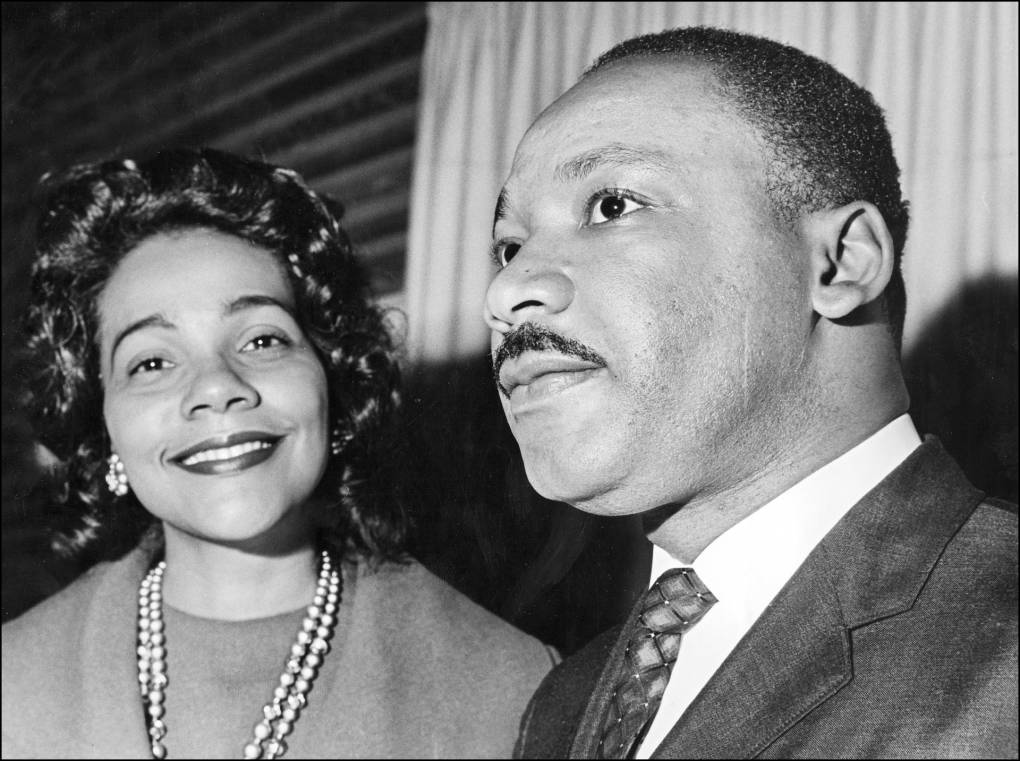
"caption": "Martin Luther King Jr. was deeply troubled by the Vietnam War for years, but the \"Beyond Vietnam\" speech was his first major policy statement on the issue. His wife, Coretta Scott King, on the other hand, critiqued the war publicly for years before her husband did.",
"description": "Dr. Martin Luther King Jr. was deeply troubled by the Vietnam War for years, but the \"Beyond Vietnam\" speech was his first major policy statement on the issue. His wife, Coretta Scott King, on the other hand, critiqued the war publicly for years before her husband did.",
"title": "Coretta Scott King and her husband Martin Luther King Jr.",
"credit": "AFP via Getty Images",
"status": "inherit",
"isLoading": false,
"fetchFailed": false
},
"news_11796610": {
"type": "attachments",
"id": "news_11796610",
"meta": {
"index": "attachments_1716263798",
"site": "news",
"id": "11796610",
"found": true
},
"parent": 11796439,
"imgSizes": {
"apple_news_ca_landscape_5_5": {
"file": "https://ww2.kqed.org/app/uploads/sites/10/2020/01/Screen-Shot-2020-01-17-at-7.36.24-AM-1044x783.png",
"width": 1044,
"mimeType": "image/png",
"height": 783
},
"apple_news_ca_square_4_0": {
"file": "https://ww2.kqed.org/app/uploads/sites/10/2020/01/Screen-Shot-2020-01-17-at-7.36.24-AM-470x470.png",
"width": 470,
"mimeType": "image/png",
"height": 470
},
"twentyfourteen-full-width": {
"file": "https://ww2.kqed.org/app/uploads/sites/10/2020/01/Screen-Shot-2020-01-17-at-7.36.24-AM-1038x576.png",
"width": 1038,
"mimeType": "image/png",
"height": 576
},
"thumbnail": {
"file": "https://ww2.kqed.org/app/uploads/sites/10/2020/01/Screen-Shot-2020-01-17-at-7.36.24-AM-160x114.png",
"width": 160,
"mimeType": "image/png",
"height": 114
},
"post-thumbnail": {
"file": "https://ww2.kqed.org/app/uploads/sites/10/2020/01/Screen-Shot-2020-01-17-at-7.36.24-AM-672x372.png",
"width": 672,
"mimeType": "image/png",
"height": 372
},
"kqedFullSize": {
"file": "https://ww2.kqed.org/app/uploads/sites/10/2020/01/Screen-Shot-2020-01-17-at-7.36.24-AM.png",
"width": 1178,
"height": 837
},
"apple_news_ca_landscape_4_7": {
"file": "https://ww2.kqed.org/app/uploads/sites/10/2020/01/Screen-Shot-2020-01-17-at-7.36.24-AM-632x474.png",
"width": 632,
"mimeType": "image/png",
"height": 474
},
"large": {
"file": "https://ww2.kqed.org/app/uploads/sites/10/2020/01/Screen-Shot-2020-01-17-at-7.36.24-AM-1020x725.png",
"width": 1020,
"mimeType": "image/png",
"height": 725
},
"apple_news_ca_landscape_4_0": {
"file": "https://ww2.kqed.org/app/uploads/sites/10/2020/01/Screen-Shot-2020-01-17-at-7.36.24-AM-536x402.png",
"width": 536,
"mimeType": "image/png",
"height": 402
},
"apple_news_ca_portrait_12_9": {
"file": "https://ww2.kqed.org/app/uploads/sites/10/2020/01/Screen-Shot-2020-01-17-at-7.36.24-AM-1122x837.png",
"width": 1122,
"mimeType": "image/png",
"height": 837
},
"medium": {
"file": "https://ww2.kqed.org/app/uploads/sites/10/2020/01/Screen-Shot-2020-01-17-at-7.36.24-AM-800x568.png",
"width": 800,
"mimeType": "image/png",
"height": 568
},
"apple_news_ca_portrait_4_0": {
"file": "https://ww2.kqed.org/app/uploads/sites/10/2020/01/Screen-Shot-2020-01-17-at-7.36.24-AM-354x472.png",
"width": 354,
"mimeType": "image/png",
"height": 472
},
"apple_news_ca_portrait_9_7": {
"file": "https://ww2.kqed.org/app/uploads/sites/10/2020/01/Screen-Shot-2020-01-17-at-7.36.24-AM-840x837.png",
"width": 840,
"mimeType": "image/png",
"height": 837
},
"apple_news_ca_square_9_7": {
"file": "https://ww2.kqed.org/app/uploads/sites/10/2020/01/Screen-Shot-2020-01-17-at-7.36.24-AM-1104x837.png",
"width": 1104,
"mimeType": "image/png",
"height": 837
},
"apple_news_ca_portrait_4_7": {
"file": "https://ww2.kqed.org/app/uploads/sites/10/2020/01/Screen-Shot-2020-01-17-at-7.36.24-AM-414x552.png",
"width": 414,
"mimeType": "image/png",
"height": 552
},
"apple_news_ca_portrait_5_5": {
"file": "https://ww2.kqed.org/app/uploads/sites/10/2020/01/Screen-Shot-2020-01-17-at-7.36.24-AM-687x837.png",
"width": 687,
"mimeType": "image/png",
"height": 837
},
"apple_news_ca_square_4_7": {
"file": "https://ww2.kqed.org/app/uploads/sites/10/2020/01/Screen-Shot-2020-01-17-at-7.36.24-AM-550x550.png",
"width": 550,
"mimeType": "image/png",
"height": 550
},
"apple_news_ca_square_5_5": {
"file": "https://ww2.kqed.org/app/uploads/sites/10/2020/01/Screen-Shot-2020-01-17-at-7.36.24-AM-912x837.png",
"width": 912,
"mimeType": "image/png",
"height": 837
}
},
"publishDate": 1579277048,
"modified": 1579290803,
"caption": "Martin Luther King Jr. spoke at UC Berkeley's Sproul Plaza on May 17, 1967.",
"description": "KQED archival footage shows Martin Luther King Jr. speaking at UC Berkeley's Sproul Plaza on May 17, 1967.",
"title": "Martin Luther King Jr. Sproul Plaza UC Berkeley",
"credit": "NCPB/KQED",
"status": "inherit",
"isLoading": false,
"fetchFailed": false
}
},
"audioPlayerReducer": {
"postId": "stream_live",
"isPaused": true,
"isPlaying": false,
"pfsActive": false,
"pledgeModalIsOpen": true,
"playerDrawerIsOpen": false,
"liveAudioPlayStartedAt": 0,
"liveAudioPlayContext": ""
},
"authorsReducer": {
"byline_news_11798001": {
"type": "authors",
"id": "byline_news_11798001",
"meta": {
"override": true
},
"slug": "byline_news_11798001",
"name": "\u003ca href=\"https://www.npr.org/people/182335974/anastasia-tsioulcas\"> Anastasia Tsioulcas \u003ca />",
"isLoading": false
},
"kqed": {
"type": "authors",
"id": "236",
"meta": {
"index": "authors_1716337520",
"id": "236",
"found": true
},
"name": "KQED News Staff",
"firstName": "KQED News Staff",
"lastName": null,
"slug": "kqed",
"email": "faq@kqed.org",
"display_author_email": false,
"staff_mastheads": [],
"title": null,
"bio": null,
"avatar": "https://secure.gravatar.com/avatar/ef0e801a68c4c54afa9180db14084167?s=600&d=blank&r=g",
"twitter": null,
"facebook": null,
"instagram": null,
"linkedin": null,
"sites": [
{
"site": "arts",
"roles": [
"contributor"
]
},
{
"site": "news",
"roles": [
"editor"
]
},
{
"site": "futureofyou",
"roles": [
"author"
]
}
],
"headData": {
"title": "KQED News Staff | KQED",
"description": null,
"ogImgSrc": "https://secure.gravatar.com/avatar/ef0e801a68c4c54afa9180db14084167?s=600&d=blank&r=g",
"twImgSrc": "https://secure.gravatar.com/avatar/ef0e801a68c4c54afa9180db14084167?s=600&d=blank&r=g"
},
"isLoading": false,
"link": "/author/kqed"
},
"rachael-myrow": {
"type": "authors",
"id": "251",
"meta": {
"index": "authors_1716337520",
"id": "251",
"found": true
},
"name": "Rachael Myrow",
"firstName": "Rachael",
"lastName": "Myrow",
"slug": "rachael-myrow",
"email": "rmyrow@kqed.org",
"display_author_email": true,
"staff_mastheads": [
"news"
],
"title": "Senior Editor of KQED's Silicon Valley News Desk",
"bio": "• I write and edit stories about how Silicon Valley power and policies shape everyday life in California. I’m also passionate about making Bay Area history and culture more accessible to a broad public. • I’ve been a journalist for most of my life, starting in high school with The Franklin Press in Los Angeles, where I grew up. While earning my first degree in English at UC Berkeley, I got my start in public radio at KALX-FM. After completing a second degree in journalism at Cal, I landed my first professional job at Marketplace, then moved on to KPCC (now LAist), and then KQED, where I hosted The California Report for more than seven years. • My reporting has appeared on NPR, The World, WBUR’s \u003ci>Here & Now\u003c/i>, and the BBC. I also guest host for KQED’s \u003ci>Forum\u003c/i>, as well as the Commonwealth Club in San Francisco. • I speak periodically on media, democracy and technology issues, and do voiceover work for documentaries and educational video projects. • Outside of the studio, you'll find me hiking Bay Area trails and whipping up Insta-ready meals in my kitchen. • I do not accept gifts, money, or favors from anyone connected to my reporting, I don't pay people for information, and I do not support or donate to political causes. • I strive to treat the people I report on with fairness, honesty, and respect. I also recognize there are often multiple sides to a story and work to verify information through multiple sources and documentation. If I get something wrong, I correct it.",
"avatar": "https://secure.gravatar.com/avatar/3ed8a3c5f26025e4a805ba634cda8cd764906b97438a6d9ce216b044e340da4e?s=600&d=blank&r=g",
"twitter": "rachaelmyrow",
"bluesky": null,
"facebook": null,
"instagram": null,
"linkedin": "https://www.linkedin.com/in/rachaelmyrow/",
"sites": [
{
"site": "arts",
"roles": [
"administrator"
]
},
{
"site": "news",
"roles": [
"edit_others_posts",
"editor"
]
},
{
"site": "futureofyou",
"roles": [
"editor"
]
},
{
"site": "bayareabites",
"roles": [
"editor"
]
},
{
"site": "stateofhealth",
"roles": [
"editor"
]
},
{
"site": "science",
"roles": [
"editor"
]
},
{
"site": "food",
"roles": [
"editor"
]
},
{
"site": "forum",
"roles": [
"editor"
]
},
{
"site": "liveblog",
"roles": [
"author"
]
}
],
"headData": {
"title": "Rachael Myrow | KQED",
"description": "Senior Editor of KQED's Silicon Valley News Desk",
"ogImgSrc": "https://secure.gravatar.com/avatar/3ed8a3c5f26025e4a805ba634cda8cd764906b97438a6d9ce216b044e340da4e?s=600&d=blank&r=g",
"twImgSrc": "https://secure.gravatar.com/avatar/3ed8a3c5f26025e4a805ba634cda8cd764906b97438a6d9ce216b044e340da4e?s=600&d=blank&r=g"
},
"isLoading": false,
"link": "/author/rachael-myrow"
},
"carlysevern": {
"type": "authors",
"id": "3243",
"meta": {
"index": "authors_1716337520",
"id": "3243",
"found": true
},
"name": "Carly Severn",
"firstName": "Carly",
"lastName": "Severn",
"slug": "carlysevern",
"email": "csevern@kqed.org",
"display_author_email": false,
"staff_mastheads": [
"news"
],
"title": "Senior Editor, Audience News ",
"bio": "Carly is KQED's Senior Editor of Audience News on the Digital News team, and has reported for the California Report Magazine, Bay Curious and KQED Arts. She's formerly the host of \u003ca href=\"http://ww2.kqed.org/pop/category/the-cooler/\" rel=\"noopener noreferrer\">The Cooler\u003c/a> podcast.",
"avatar": "https://secure.gravatar.com/avatar/54037bf5c128fe678f0ef26cec97a93f2e7f220a22d7285703328f12c42c1b1d?s=600&d=blank&r=g",
"twitter": "teacupinthebay",
"bluesky": null,
"facebook": null,
"instagram": null,
"linkedin": null,
"sites": [
{
"site": "",
"roles": [
"editor"
]
},
{
"site": "arts",
"roles": [
"editor"
]
},
{
"site": "news",
"roles": [
"administrator"
]
},
{
"site": "pop",
"roles": [
"editor"
]
},
{
"site": "futureofyou",
"roles": [
"editor"
]
},
{
"site": "about",
"roles": [
"administrator"
]
},
{
"site": "mindshift",
"roles": [
"editor"
]
},
{
"site": "bayareabites",
"roles": [
"editor"
]
},
{
"site": "stateofhealth",
"roles": [
"editor"
]
},
{
"site": "science",
"roles": [
"editor"
]
},
{
"site": "food",
"roles": [
"contributor"
]
},
{
"site": "forum",
"roles": [
"editor"
]
},
{
"site": "perspectives",
"roles": [
"administrator"
]
},
{
"site": "liveblog",
"roles": [
"editor"
]
}
],
"headData": {
"title": "Carly Severn | KQED",
"description": "Senior Editor, Audience News ",
"ogImgSrc": "https://secure.gravatar.com/avatar/54037bf5c128fe678f0ef26cec97a93f2e7f220a22d7285703328f12c42c1b1d?s=600&d=blank&r=g",
"twImgSrc": "https://secure.gravatar.com/avatar/54037bf5c128fe678f0ef26cec97a93f2e7f220a22d7285703328f12c42c1b1d?s=600&d=blank&r=g"
},
"isLoading": false,
"link": "/author/carlysevern"
},
"cveltman": {
"type": "authors",
"id": "8608",
"meta": {
"index": "authors_1716337520",
"id": "8608",
"found": true
},
"name": "Chloe Veltman",
"firstName": "Chloe",
"lastName": "Veltman",
"slug": "cveltman",
"email": "cveltman@kqed.org",
"display_author_email": true,
"staff_mastheads": [],
"title": "Arts and Culture Reporter",
"bio": "Chloe Veltman is a former arts and culture reporter for KQED. Prior to joining the organization, she launched and led the arts bureau at Colorado Public Radio, served as the Bay Area's culture columnist for the New York Times, and was the founder, host and executive producer of VoiceBox, a national award-winning weekly podcast/radio show and live events series all about the human voice. Chloe is the recipient of numerous prizes, grants and fellowships including a Webby Award for her work on interactive storytelling, both the John S Knight Journalism Fellowship and Humanities Center Fellowship at Stanford University, the Sundance Arts Writing Fellowship and a Library of Congress Research Fellowship. She is the author of the book \"On Acting\" and has appeared as a guest lecturer at Yale University and the San Francisco Conservatory of Music among other institutions. She holds a BA in english literature from King's College, Cambridge, and a Masters in Dramaturgy from the Central School of Speech and Drama/Harvard Institute for Advanced Theater Training.\r\n\u003ca href=\"https://www.chloeveltman.com\">www.chloeveltman.com\u003c/a>",
"avatar": "https://secure.gravatar.com/avatar/55403394b00a1ddab683952c2eb2cf85?s=600&d=blank&r=g",
"twitter": "chloeveltman",
"facebook": null,
"instagram": null,
"linkedin": null,
"sites": [
{
"site": "arts",
"roles": []
},
{
"site": "news",
"roles": [
"author"
]
},
{
"site": "pop",
"roles": [
"editor"
]
},
{
"site": "science",
"roles": []
}
],
"headData": {
"title": "Chloe Veltman | KQED",
"description": "Arts and Culture Reporter",
"ogImgSrc": "https://secure.gravatar.com/avatar/55403394b00a1ddab683952c2eb2cf85?s=600&d=blank&r=g",
"twImgSrc": "https://secure.gravatar.com/avatar/55403394b00a1ddab683952c2eb2cf85?s=600&d=blank&r=g"
},
"isLoading": false,
"link": "/author/cveltman"
},
"agarces": {
"type": "authors",
"id": "11367",
"meta": {
"index": "authors_1716337520",
"id": "11367",
"found": true
},
"name": "Audrey Garces",
"firstName": "Audrey",
"lastName": "Garces",
"slug": "agarces",
"email": "agarces@kqed.org",
"display_author_email": false,
"staff_mastheads": [
"news"
],
"title": "Digital Producer",
"bio": "Audrey is a former digital producer at KQED News. Previously, she was a KQED Raul Ramirez Diversity Fund intern where she developed stories that focused on highlighting diverse voices in journalism. Prior to her work at KQED, she worked as a news intern at the San Francisco Examiner. Audrey graduated from San Francisco State University with a B.A. in journalism and a minor in political science.",
"avatar": "https://secure.gravatar.com/avatar/5211bc2e6a809b9956da169e35ce63d5?s=600&d=blank&r=g",
"twitter": "audgar",
"facebook": null,
"instagram": null,
"linkedin": null,
"sites": [
{
"site": "arts",
"roles": []
},
{
"site": "news",
"roles": [
"subscriber"
]
},
{
"site": "science",
"roles": [
"editor"
]
},
{
"site": "forum",
"roles": [
"editor"
]
},
{
"site": "perspectives",
"roles": [
"administrator"
]
}
],
"headData": {
"title": "Audrey Garces | KQED",
"description": "Digital Producer",
"ogImgSrc": "https://secure.gravatar.com/avatar/5211bc2e6a809b9956da169e35ce63d5?s=600&d=blank&r=g",
"twImgSrc": "https://secure.gravatar.com/avatar/5211bc2e6a809b9956da169e35ce63d5?s=600&d=blank&r=g"
},
"isLoading": false,
"link": "/author/agarces"
},
"blaberge": {
"type": "authors",
"id": "11667",
"meta": {
"index": "authors_1716337520",
"id": "11667",
"found": true
},
"name": "Beth LaBerge",
"firstName": "Beth",
"lastName": "LaBerge",
"slug": "blaberge",
"email": "blaberge@KQED.org",
"display_author_email": true,
"staff_mastheads": [
"news"
],
"title": "Photographer, News",
"bio": "Beth LaBerge is a visual journalist for \u003ca href=\"https://www.kqed.org/news\">KQED News\u003c/a>.",
"avatar": "https://secure.gravatar.com/avatar/ce49ecd7a1306685637b45a1f6f5dedfc4ae9481966eb596fea5160466dd6319?s=600&d=blank&r=g",
"twitter": null,
"bluesky": null,
"facebook": null,
"instagram": "https://www.instagram.com/bethlaberge/",
"linkedin": null,
"sites": [
{
"site": "arts",
"roles": [
"editor",
"manage_categories"
]
},
{
"site": "news",
"roles": [
"editor",
"edit_plugins",
"manage_categories"
]
},
{
"site": "science",
"roles": [
"editor",
"contributor",
"author",
"manage_categories"
]
},
{
"site": "perspectives",
"roles": [
"editor"
]
},
{
"site": "liveblog",
"roles": [
"editor"
]
}
],
"headData": {
"title": "Beth LaBerge | KQED",
"description": "Photographer, News",
"ogImgSrc": "https://secure.gravatar.com/avatar/ce49ecd7a1306685637b45a1f6f5dedfc4ae9481966eb596fea5160466dd6319?s=600&d=blank&r=g",
"twImgSrc": "https://secure.gravatar.com/avatar/ce49ecd7a1306685637b45a1f6f5dedfc4ae9481966eb596fea5160466dd6319?s=600&d=blank&r=g"
},
"isLoading": false,
"link": "/author/blaberge"
}
},
"pagesReducer": {
"news_category_arts-and-culture": {
"type": "terms",
"id": "news_223",
"meta": {
"index": "terms_1716263798",
"site": "news",
"id": "223",
"score": 11.242002
},
"featImg": null,
"name": "Arts and Culture",
"description": null,
"taxonomy": "category",
"headData": {
"twImgId": null,
"twTitle": null,
"ogTitle": null,
"ogImgId": null,
"twDescription": null,
"description": null,
"title": "Arts and Culture Archives | KQED News",
"ogDescription": null
},
"ttid": 231,
"slug": "arts-and-culture",
"isLoading": false,
"title": "Arts and Culture",
"pageMeta": {
"site": "news",
"WpPageTemplate": "page-topic-editorial",
"currentPage": 48
},
"blocks": [
{
"blockName": "kqed/post-list",
"attrs": {
"layout": "cardArticle2",
"query": "posts/news?category=arts-and-culture",
"seeMore": false,
"paginated": true,
"page": 48
}
},
{
"blockName": "kqed/ad"
}
]
}
},
"pfsSessionReducer": {},
"postsReducer": {
"stream_live": {
"type": "live",
"id": "stream_live",
"audioUrl": "https://streams.kqed.org/kqedradio",
"title": "Live Stream",
"excerpt": "Live Stream information currently unavailable.",
"link": "/radio",
"featImg": "",
"label": {
"name": "KQED Live",
"link": "/"
}
},
"stream_kqedNewscast": {
"type": "posts",
"id": "stream_kqedNewscast",
"audioUrl": "https://www.kqed.org/.stream/anon/radio/RDnews/newscast.mp3?_=1",
"title": "KQED Newscast",
"featImg": "",
"label": {
"name": "88.5 FM",
"link": "/"
}
},
"news_11797325": {
"type": "posts",
"id": "news_11797325",
"meta": {
"index": "posts_1716263798",
"site": "news",
"id": "11797325",
"score": null,
"sort": [
1580517039000
]
},
"guestAuthors": [],
"slug": "dreaming-the-golden-state-with-the-california-report-magazine-part-two",
"title": "'Dreaming the Golden State' With The California Report Magazine (Part Two)",
"publishDate": 1580517039,
"format": "audio",
"headTitle": "‘Dreaming the Golden State’ With The California Report Magazine (Part Two) | KQED",
"labelTerm": {},
"content": "\u003cp>In late November, The California Report Magazine held a night of live storytelling that explored stories about California dreams found, and lost, and whether that dream is still alive. In Part Two, hear selected highlights from the event, “Dreaming the Golden State,” held at the Brava Theater in San Francisco. You can listen to part one of our program \u003ca href=\"https://www.kqed.org/news/11796176/dreaming-the-golden-state-with-the-california-report-magazine-part-one\" target=\"_blank\" rel=\"noopener noreferrer\">here\u003c/a>.\u003c/p>\n\u003ch2>Letter to My California Dreamer: Discovering My True Self in Modesto\u003c/h2>\n\u003cfigure id=\"attachment_11797334\" class=\"wp-caption aligncenter\" style=\"max-width: 800px\">\u003ca href=\"https://ww2.kqed.org/app/uploads/sites/10/2020/01/KQED19DreamingGS_CRM-193.jpg\">\u003cimg loading=\"lazy\" decoding=\"async\" class=\"size-medium wp-image-11797334\" src=\"https://ww2.kqed.org/app/uploads/sites/10/2020/01/KQED19DreamingGS_CRM-193-800x532.jpg\" alt=\"\" width=\"800\" height=\"532\" srcset=\"https://cdn.kqed.org/wp-content/uploads/sites/10/2020/01/KQED19DreamingGS_CRM-193-800x532.jpg 800w, https://cdn.kqed.org/wp-content/uploads/sites/10/2020/01/KQED19DreamingGS_CRM-193-160x106.jpg 160w, https://cdn.kqed.org/wp-content/uploads/sites/10/2020/01/KQED19DreamingGS_CRM-193-1020x678.jpg 1020w, https://cdn.kqed.org/wp-content/uploads/sites/10/2020/01/KQED19DreamingGS_CRM-193.jpg 1920w\" sizes=\"(max-width: 800px) 100vw, 800px\">\u003c/a>\u003cfigcaption class=\"wp-caption-text\">Toni Rodriguez of Modesto performs his ‘Letter to My California Dreamer’ that he wrote to himself, live on stage at San Francisco’s Brava Theater. \u003ccite>(Courtesy of Alain McLaughlin)\u003c/cite>\u003c/figcaption>\u003c/figure>\n\u003cp>As part of the show’s “Letter to My California Dreamer” series, several listeners shared what they had written to the first person in their family who moved to the Golden State with a dream. For Toni Rodriguez, that person was himself. He wrote a \u003ca href=\"https://www.kqed.org/news/11707691/letter-to-my-california-dreamer-discovering-my-true-self-in-modesto\" target=\"_blank\" rel=\"noopener noreferrer\">letter\u003c/a> to the kid from the Bronx who dreamed of moving west and surfing with the Beach Boys. After arriving in California, he was able to find and live as his true self.\u003c/p>\n\u003ch2>Her Double Life\u003c/h2>\n\u003cfigure id=\"attachment_11797371\" class=\"wp-caption aligncenter\" style=\"max-width: 800px\">\u003ca href=\"https://ww2.kqed.org/app/uploads/sites/10/2020/01/KQED19DreamingGS_CRM-272.jpg\">\u003cimg loading=\"lazy\" decoding=\"async\" class=\"size-medium wp-image-11797371\" src=\"https://ww2.kqed.org/app/uploads/sites/10/2020/01/KQED19DreamingGS_CRM-272-800x548.jpg\" alt=\"\" width=\"800\" height=\"548\" srcset=\"https://cdn.kqed.org/wp-content/uploads/sites/10/2020/01/KQED19DreamingGS_CRM-272-800x548.jpg 800w, https://cdn.kqed.org/wp-content/uploads/sites/10/2020/01/KQED19DreamingGS_CRM-272-160x110.jpg 160w, https://cdn.kqed.org/wp-content/uploads/sites/10/2020/01/KQED19DreamingGS_CRM-272-1020x698.jpg 1020w, https://cdn.kqed.org/wp-content/uploads/sites/10/2020/01/KQED19DreamingGS_CRM-272.jpg 1920w\" sizes=\"(max-width: 800px) 100vw, 800px\">\u003c/a>\u003cfigcaption class=\"wp-caption-text\">My Linh Le performs a dance titled ‘Underwater.’ \u003ccite>(Courtesy of Alain McLaughlin)\u003c/cite>\u003c/figcaption>\u003c/figure>\n\u003cp>My Linh Le has been lying to her family about who she really is for decades. Growing up, her Vietnamese immigrant parents were extremely strict and prone to rage. So she didn’t tell them when she decided to switch her major from biochemistry to dance. As My Linh told reporter April Dembosky, she’s had to take some big steps to cover up \u003ca href=\"https://www.kqed.org/news/11670259/her-double-life\" target=\"_blank\" rel=\"noopener noreferrer\">her double life\u003c/a>, and she has her reasons.\u003c/p>\n\u003ch2>Letter to My California Dreamer: Finding Home and Harvest in Salinas\u003c/h2>\n\u003cfigure id=\"attachment_11797386\" class=\"wp-caption aligncenter\" style=\"max-width: 800px\">\u003ca href=\"https://ww2.kqed.org/app/uploads/sites/10/2020/01/KQED19DreamingGS_CRM-254.jpg\">\u003cimg loading=\"lazy\" decoding=\"async\" class=\"size-medium wp-image-11797386\" src=\"https://ww2.kqed.org/app/uploads/sites/10/2020/01/KQED19DreamingGS_CRM-254-800x526.jpg\" alt=\"\" width=\"800\" height=\"526\" srcset=\"https://cdn.kqed.org/wp-content/uploads/sites/10/2020/01/KQED19DreamingGS_CRM-254-800x526.jpg 800w, https://cdn.kqed.org/wp-content/uploads/sites/10/2020/01/KQED19DreamingGS_CRM-254-160x105.jpg 160w, https://cdn.kqed.org/wp-content/uploads/sites/10/2020/01/KQED19DreamingGS_CRM-254-1020x670.jpg 1020w, https://cdn.kqed.org/wp-content/uploads/sites/10/2020/01/KQED19DreamingGS_CRM-254.jpg 1920w\" sizes=\"(max-width: 800px) 100vw, 800px\">\u003c/a>\u003cfigcaption class=\"wp-caption-text\">Sandra Barocio reads a letter she wrote to her big brother, Humberto. \u003ccite>(Courtesy of Alain McLaughlin)\u003c/cite>\u003c/figcaption>\u003c/figure>\n\u003cp>Sandra Barocio of Moss Beach wrote a\u003ca href=\"https://www.kqed.org/news/11674420/letter-to-my-california-dreamer-finding-home-and-harvest-in-salinas\" target=\"_blank\" rel=\"noopener noreferrer\"> letter\u003c/a> to the family member who brought her to California, her older brother, Humberto. She remembers making the long drive north from Mexico in the family’s brown Dodge Polara, and how she and her parents and siblings had to sleep under a tree, until Humberto found them shelter. Fifty-two year later, she wants to thank him for delivering their family safely to the Golden State.\u003c/p>\n\u003cp>[ad fullwidth]\u003c/p>\n\u003ch2>Daps and Hugs: I’m Moving Out of Oakland\u003c/h2>\n\u003cfigure id=\"attachment_11797412\" class=\"wp-caption aligncenter\" style=\"max-width: 800px\">\u003ca href=\"https://ww2.kqed.org/app/uploads/sites/10/2020/01/KQED19DreamingGS-Pendarvis-Harshaw.jpg\">\u003cimg loading=\"lazy\" decoding=\"async\" class=\"size-medium wp-image-11797412\" src=\"https://ww2.kqed.org/app/uploads/sites/10/2020/01/KQED19DreamingGS-Pendarvis-Harshaw-800x598.jpg\" alt=\"\" width=\"800\" height=\"598\" srcset=\"https://cdn.kqed.org/wp-content/uploads/sites/10/2020/01/KQED19DreamingGS-Pendarvis-Harshaw-800x598.jpg 800w, https://cdn.kqed.org/wp-content/uploads/sites/10/2020/01/KQED19DreamingGS-Pendarvis-Harshaw-160x120.jpg 160w, https://cdn.kqed.org/wp-content/uploads/sites/10/2020/01/KQED19DreamingGS-Pendarvis-Harshaw-1020x762.jpg 1020w, https://cdn.kqed.org/wp-content/uploads/sites/10/2020/01/KQED19DreamingGS-Pendarvis-Harshaw.jpg 1920w, https://cdn.kqed.org/wp-content/uploads/sites/10/2020/01/KQED19DreamingGS-Pendarvis-Harshaw-536x402.jpg 536w\" sizes=\"(max-width: 800px) 100vw, 800px\">\u003c/a>\u003cfigcaption class=\"wp-caption-text\">Pendarvis Harshaw, host of KQED’s arts and culture podcast ‘Rightnowish’ describes leaving his hometown. (Courtesy of Alain McLaughlin)\u003c/figcaption>\u003c/figure>\n\u003cp>\u003ca href=\"https://twitter.com/ogpenn?lang=en\" target=\"_blank\" rel=\"noopener noreferrer\">Pendarvis Harshaw\u003c/a> is a cultural icon in his own right, with deep roots in Oakland. He’s also the host of KQED’s “\u003ca href=\"https://www.kqed.org/podcasts/rightnowish\" target=\"_blank\" rel=\"noopener noreferrer\">Rightnowish\u003c/a>” podcast, which explores how Bay Area identity shapes the artists who live and create there. At the event, Pen describes the weekend he \u003ca href=\"https://www.kqed.org/arts/13865533/daps-and-hugs-im-moving-out-of-oakland\" target=\"_blank\" rel=\"noopener noreferrer\">moved away\u003c/a> from his home town.\u003c/p>\n\u003ch2>Letter to My California Dreamer: Pursuing the Next Great American Novel\u003c/h2>\n\u003cfigure id=\"attachment_11797432\" class=\"wp-caption aligncenter\" style=\"max-width: 800px\">\u003ca href=\"https://ww2.kqed.org/app/uploads/sites/10/2020/01/KQED19DreamingGS_CRM-289.jpg\">\u003cimg loading=\"lazy\" decoding=\"async\" class=\"size-medium wp-image-11797432\" src=\"https://ww2.kqed.org/app/uploads/sites/10/2020/01/KQED19DreamingGS_CRM-289-800x558.jpg\" alt=\"\" width=\"800\" height=\"558\" srcset=\"https://cdn.kqed.org/wp-content/uploads/sites/10/2020/01/KQED19DreamingGS_CRM-289-800x558.jpg 800w, https://cdn.kqed.org/wp-content/uploads/sites/10/2020/01/KQED19DreamingGS_CRM-289-160x112.jpg 160w, https://cdn.kqed.org/wp-content/uploads/sites/10/2020/01/KQED19DreamingGS_CRM-289-1020x711.jpg 1020w, https://cdn.kqed.org/wp-content/uploads/sites/10/2020/01/KQED19DreamingGS_CRM-289.jpg 1920w\" sizes=\"(max-width: 800px) 100vw, 800px\">\u003c/a>\u003cfigcaption class=\"wp-caption-text\">Tai Moses reads a letter to her father, who moved to California with dreams of becoming a writer. (Courtesy of Alain McLaughlin)\u003c/figcaption>\u003c/figure>\n\u003cp>The last “\u003ca href=\"https://www.kqed.org/news/tag/letters-to-my-california-dreamer\" target=\"_blank\" rel=\"noopener noreferrer\">Letter to My California Dreamer\u003c/a>” was read by Tai Moses. She \u003ca href=\"https://www.kqed.org/news/11694742/letter-to-my-california-dreamer-pursuing-the-next-great-american-novel\" target=\"_blank\" rel=\"noopener noreferrer\">wrote\u003c/a> to her father, who crossed the country from Coney Island to Los Angeles, with his portable typewriter in hand.\u003c/p>\n\u003ch2>Mike Marshall Gets a Second Chance\u003c/h2>\n\u003cfigure id=\"attachment_11797646\" class=\"wp-caption aligncenter\" style=\"max-width: 800px\">\u003ca href=\"https://ww2.kqed.org/app/uploads/sites/10/2020/01/KQED19DreamingGS_CRM-226.jpg\">\u003cimg loading=\"lazy\" decoding=\"async\" class=\"wp-image-11797646 size-medium\" src=\"https://ww2.kqed.org/app/uploads/sites/10/2020/01/KQED19DreamingGS_CRM-226-800x532.jpg\" alt=\"\" width=\"800\" height=\"532\" srcset=\"https://cdn.kqed.org/wp-content/uploads/sites/10/2020/01/KQED19DreamingGS_CRM-226-800x532.jpg 800w, https://cdn.kqed.org/wp-content/uploads/sites/10/2020/01/KQED19DreamingGS_CRM-226-160x106.jpg 160w, https://cdn.kqed.org/wp-content/uploads/sites/10/2020/01/KQED19DreamingGS_CRM-226-1020x678.jpg 1020w, https://cdn.kqed.org/wp-content/uploads/sites/10/2020/01/KQED19DreamingGS_CRM-226.jpg 1920w\" sizes=\"(max-width: 800px) 100vw, 800px\">\u003c/a>\u003cfigcaption class=\"wp-caption-text\">R&B singer Mike Marshall performs “I Love Music.” (Courtesy of Alain McLaughlin)\u003c/figcaption>\u003c/figure>\n\u003cp>[aside postID=news_11796176 label='Part One' hero=\"https://cdn.kqed.org/wp-content/uploads/sites/10/2020/01/DreamingGoldenState_Eventbrite-1020x538.jpg\"]\u003c/p>\n\u003cp>You may \u003ca href=\"https://www.youtube.com/watch?v=DRte0S2a_dA\" target=\"_blank\" rel=\"noopener noreferrer\">recognize\u003c/a> Mike Marshall’s voice, even if you don’t know his name. The R&B singer wasn’t always credited for his hits, and he struggled for many years with addiction. Now he’s starting to get the recognition he deserves and a \u003ca href=\"https://www.kqed.org/arts/13864913/after-last-black-man-and-us-singer-mike-marshall-gets-a-second-chance\" target=\"_blank\" rel=\"noopener noreferrer\">second chance\u003c/a>. His music has recently been featured in the films “\u003ca href=\"https://youtu.be/hNCmb-4oXJA\" target=\"_blank\" rel=\"noopener noreferrer\">Us\u003c/a>” and “\u003ca href=\"https://www.youtube.com/watch?v=C0FnJDhY9-0\" target=\"_blank\" rel=\"noopener noreferrer\">The Last Black Man in San Francisco.\u003c/a>” Mike Marshall closed out our event with a live performance.\u003c/p>\n\u003cp>\u003c/p>\n",
"blocks": [],
"excerpt": "The California Report Magazine listeners and reporters take the stage to share their stories about the 'California Dream' and whether it's still alive.",
"status": "publish",
"parent": 0,
"modified": 1721151286,
"stats": {
"hasAudio": false,
"hasVideo": false,
"hasChartOrMap": false,
"iframeSrcs": [],
"hasGoogleForm": false,
"hasGallery": false,
"hasHearkenModule": false,
"hasPolis": false,
"paragraphCount": 10,
"wordCount": 670
},
"headData": {
"title": "'Dreaming the Golden State' With The California Report Magazine (Part Two) | KQED",
"description": "The California Report Magazine listeners and reporters take the stage to share their stories about the 'California Dream' and whether it's still alive.",
"ogTitle": "",
"ogDescription": "",
"ogImgId": "",
"twTitle": "",
"twDescription": "",
"twImgId": "",
"schema": {
"@context": "https://schema.org",
"@type": "NewsArticle",
"headline": "'Dreaming the Golden State' With The California Report Magazine (Part Two)",
"datePublished": "2020-01-31T16:30:39-08:00",
"dateModified": "2024-07-16T10:34:46-07:00",
"image": "https://cdn.kqed.org/wp-content/uploads/2020/02/KQED-OG-Image@1x.png",
"isAccessibleForFree": "True",
"publisher": {
"@type": "NewsMediaOrganization",
"@id": "https://www.kqed.org/#organization",
"name": "KQED",
"logo": "https://cdn.kqed.org/wp-content/uploads/2020/02/KQED-OG-Image@1x.png",
"url": "https://www.kqed.org",
"sameAs": [
"https://www.facebook.com/KQED",
"https://twitter.com/KQED",
"https://www.instagram.com/kqed/",
"https://www.tiktok.com/@kqedofficial",
"https://www.linkedin.com/company/kqed",
"https://www.youtube.com/channel/UCeC0IOo7i1P_61zVUWbJ4nw"
]
}
}
},
"source": "The California Report Magazine",
"sourceUrl": "https://www.kqed.org/news/program/the-california-report-magazine",
"sticky": false,
"audioTrackLength": 1699,
"path": "/news/11797325/dreaming-the-golden-state-with-the-california-report-magazine-part-two",
"audioUrl": "https://www.kqed.org/.stream/anon/radio/tcrmag/2020/01/TCRPM20200131.mp3",
"audioDuration": 1703000,
"parsedContent": [
{
"type": "contentString",
"content": "\u003cdiv class=\"post-body\">\u003cp>\u003cp>In late November, The California Report Magazine held a night of live storytelling that explored stories about California dreams found, and lost, and whether that dream is still alive. In Part Two, hear selected highlights from the event, “Dreaming the Golden State,” held at the Brava Theater in San Francisco. You can listen to part one of our program \u003ca href=\"https://www.kqed.org/news/11796176/dreaming-the-golden-state-with-the-california-report-magazine-part-one\" target=\"_blank\" rel=\"noopener noreferrer\">here\u003c/a>.\u003c/p>\n\u003ch2>Letter to My California Dreamer: Discovering My True Self in Modesto\u003c/h2>\n\u003cfigure id=\"attachment_11797334\" class=\"wp-caption aligncenter\" style=\"max-width: 800px\">\u003ca href=\"https://ww2.kqed.org/app/uploads/sites/10/2020/01/KQED19DreamingGS_CRM-193.jpg\">\u003cimg loading=\"lazy\" decoding=\"async\" class=\"size-medium wp-image-11797334\" src=\"https://ww2.kqed.org/app/uploads/sites/10/2020/01/KQED19DreamingGS_CRM-193-800x532.jpg\" alt=\"\" width=\"800\" height=\"532\" srcset=\"https://cdn.kqed.org/wp-content/uploads/sites/10/2020/01/KQED19DreamingGS_CRM-193-800x532.jpg 800w, https://cdn.kqed.org/wp-content/uploads/sites/10/2020/01/KQED19DreamingGS_CRM-193-160x106.jpg 160w, https://cdn.kqed.org/wp-content/uploads/sites/10/2020/01/KQED19DreamingGS_CRM-193-1020x678.jpg 1020w, https://cdn.kqed.org/wp-content/uploads/sites/10/2020/01/KQED19DreamingGS_CRM-193.jpg 1920w\" sizes=\"(max-width: 800px) 100vw, 800px\">\u003c/a>\u003cfigcaption class=\"wp-caption-text\">Toni Rodriguez of Modesto performs his ‘Letter to My California Dreamer’ that he wrote to himself, live on stage at San Francisco’s Brava Theater. \u003ccite>(Courtesy of Alain McLaughlin)\u003c/cite>\u003c/figcaption>\u003c/figure>\n\u003cp>As part of the show’s “Letter to My California Dreamer” series, several listeners shared what they had written to the first person in their family who moved to the Golden State with a dream. For Toni Rodriguez, that person was himself. He wrote a \u003ca href=\"https://www.kqed.org/news/11707691/letter-to-my-california-dreamer-discovering-my-true-self-in-modesto\" target=\"_blank\" rel=\"noopener noreferrer\">letter\u003c/a> to the kid from the Bronx who dreamed of moving west and surfing with the Beach Boys. After arriving in California, he was able to find and live as his true self.\u003c/p>\n\u003ch2>Her Double Life\u003c/h2>\n\u003cfigure id=\"attachment_11797371\" class=\"wp-caption aligncenter\" style=\"max-width: 800px\">\u003ca href=\"https://ww2.kqed.org/app/uploads/sites/10/2020/01/KQED19DreamingGS_CRM-272.jpg\">\u003cimg loading=\"lazy\" decoding=\"async\" class=\"size-medium wp-image-11797371\" src=\"https://ww2.kqed.org/app/uploads/sites/10/2020/01/KQED19DreamingGS_CRM-272-800x548.jpg\" alt=\"\" width=\"800\" height=\"548\" srcset=\"https://cdn.kqed.org/wp-content/uploads/sites/10/2020/01/KQED19DreamingGS_CRM-272-800x548.jpg 800w, https://cdn.kqed.org/wp-content/uploads/sites/10/2020/01/KQED19DreamingGS_CRM-272-160x110.jpg 160w, https://cdn.kqed.org/wp-content/uploads/sites/10/2020/01/KQED19DreamingGS_CRM-272-1020x698.jpg 1020w, https://cdn.kqed.org/wp-content/uploads/sites/10/2020/01/KQED19DreamingGS_CRM-272.jpg 1920w\" sizes=\"(max-width: 800px) 100vw, 800px\">\u003c/a>\u003cfigcaption class=\"wp-caption-text\">My Linh Le performs a dance titled ‘Underwater.’ \u003ccite>(Courtesy of Alain McLaughlin)\u003c/cite>\u003c/figcaption>\u003c/figure>\n\u003cp>My Linh Le has been lying to her family about who she really is for decades. Growing up, her Vietnamese immigrant parents were extremely strict and prone to rage. So she didn’t tell them when she decided to switch her major from biochemistry to dance. As My Linh told reporter April Dembosky, she’s had to take some big steps to cover up \u003ca href=\"https://www.kqed.org/news/11670259/her-double-life\" target=\"_blank\" rel=\"noopener noreferrer\">her double life\u003c/a>, and she has her reasons.\u003c/p>\n\u003ch2>Letter to My California Dreamer: Finding Home and Harvest in Salinas\u003c/h2>\n\u003cfigure id=\"attachment_11797386\" class=\"wp-caption aligncenter\" style=\"max-width: 800px\">\u003ca href=\"https://ww2.kqed.org/app/uploads/sites/10/2020/01/KQED19DreamingGS_CRM-254.jpg\">\u003cimg loading=\"lazy\" decoding=\"async\" class=\"size-medium wp-image-11797386\" src=\"https://ww2.kqed.org/app/uploads/sites/10/2020/01/KQED19DreamingGS_CRM-254-800x526.jpg\" alt=\"\" width=\"800\" height=\"526\" srcset=\"https://cdn.kqed.org/wp-content/uploads/sites/10/2020/01/KQED19DreamingGS_CRM-254-800x526.jpg 800w, https://cdn.kqed.org/wp-content/uploads/sites/10/2020/01/KQED19DreamingGS_CRM-254-160x105.jpg 160w, https://cdn.kqed.org/wp-content/uploads/sites/10/2020/01/KQED19DreamingGS_CRM-254-1020x670.jpg 1020w, https://cdn.kqed.org/wp-content/uploads/sites/10/2020/01/KQED19DreamingGS_CRM-254.jpg 1920w\" sizes=\"(max-width: 800px) 100vw, 800px\">\u003c/a>\u003cfigcaption class=\"wp-caption-text\">Sandra Barocio reads a letter she wrote to her big brother, Humberto. \u003ccite>(Courtesy of Alain McLaughlin)\u003c/cite>\u003c/figcaption>\u003c/figure>\n\u003cp>Sandra Barocio of Moss Beach wrote a\u003ca href=\"https://www.kqed.org/news/11674420/letter-to-my-california-dreamer-finding-home-and-harvest-in-salinas\" target=\"_blank\" rel=\"noopener noreferrer\"> letter\u003c/a> to the family member who brought her to California, her older brother, Humberto. She remembers making the long drive north from Mexico in the family’s brown Dodge Polara, and how she and her parents and siblings had to sleep under a tree, until Humberto found them shelter. Fifty-two year later, she wants to thank him for delivering their family safely to the Golden State.\u003c/p>\n\u003cp>\u003c/p>\u003c/div>",
"attributes": {
"named": {},
"numeric": []
}
},
{
"type": "component",
"content": "",
"name": "ad",
"attributes": {
"named": {
"label": "fullwidth"
},
"numeric": [
"fullwidth"
]
}
},
{
"type": "contentString",
"content": "\u003cdiv class=\"post-body\">\u003cp>\u003c/p>\n\u003ch2>Daps and Hugs: I’m Moving Out of Oakland\u003c/h2>\n\u003cfigure id=\"attachment_11797412\" class=\"wp-caption aligncenter\" style=\"max-width: 800px\">\u003ca href=\"https://ww2.kqed.org/app/uploads/sites/10/2020/01/KQED19DreamingGS-Pendarvis-Harshaw.jpg\">\u003cimg loading=\"lazy\" decoding=\"async\" class=\"size-medium wp-image-11797412\" src=\"https://ww2.kqed.org/app/uploads/sites/10/2020/01/KQED19DreamingGS-Pendarvis-Harshaw-800x598.jpg\" alt=\"\" width=\"800\" height=\"598\" srcset=\"https://cdn.kqed.org/wp-content/uploads/sites/10/2020/01/KQED19DreamingGS-Pendarvis-Harshaw-800x598.jpg 800w, https://cdn.kqed.org/wp-content/uploads/sites/10/2020/01/KQED19DreamingGS-Pendarvis-Harshaw-160x120.jpg 160w, https://cdn.kqed.org/wp-content/uploads/sites/10/2020/01/KQED19DreamingGS-Pendarvis-Harshaw-1020x762.jpg 1020w, https://cdn.kqed.org/wp-content/uploads/sites/10/2020/01/KQED19DreamingGS-Pendarvis-Harshaw.jpg 1920w, https://cdn.kqed.org/wp-content/uploads/sites/10/2020/01/KQED19DreamingGS-Pendarvis-Harshaw-536x402.jpg 536w\" sizes=\"(max-width: 800px) 100vw, 800px\">\u003c/a>\u003cfigcaption class=\"wp-caption-text\">Pendarvis Harshaw, host of KQED’s arts and culture podcast ‘Rightnowish’ describes leaving his hometown. (Courtesy of Alain McLaughlin)\u003c/figcaption>\u003c/figure>\n\u003cp>\u003ca href=\"https://twitter.com/ogpenn?lang=en\" target=\"_blank\" rel=\"noopener noreferrer\">Pendarvis Harshaw\u003c/a> is a cultural icon in his own right, with deep roots in Oakland. He’s also the host of KQED’s “\u003ca href=\"https://www.kqed.org/podcasts/rightnowish\" target=\"_blank\" rel=\"noopener noreferrer\">Rightnowish\u003c/a>” podcast, which explores how Bay Area identity shapes the artists who live and create there. At the event, Pen describes the weekend he \u003ca href=\"https://www.kqed.org/arts/13865533/daps-and-hugs-im-moving-out-of-oakland\" target=\"_blank\" rel=\"noopener noreferrer\">moved away\u003c/a> from his home town.\u003c/p>\n\u003ch2>Letter to My California Dreamer: Pursuing the Next Great American Novel\u003c/h2>\n\u003cfigure id=\"attachment_11797432\" class=\"wp-caption aligncenter\" style=\"max-width: 800px\">\u003ca href=\"https://ww2.kqed.org/app/uploads/sites/10/2020/01/KQED19DreamingGS_CRM-289.jpg\">\u003cimg loading=\"lazy\" decoding=\"async\" class=\"size-medium wp-image-11797432\" src=\"https://ww2.kqed.org/app/uploads/sites/10/2020/01/KQED19DreamingGS_CRM-289-800x558.jpg\" alt=\"\" width=\"800\" height=\"558\" srcset=\"https://cdn.kqed.org/wp-content/uploads/sites/10/2020/01/KQED19DreamingGS_CRM-289-800x558.jpg 800w, https://cdn.kqed.org/wp-content/uploads/sites/10/2020/01/KQED19DreamingGS_CRM-289-160x112.jpg 160w, https://cdn.kqed.org/wp-content/uploads/sites/10/2020/01/KQED19DreamingGS_CRM-289-1020x711.jpg 1020w, https://cdn.kqed.org/wp-content/uploads/sites/10/2020/01/KQED19DreamingGS_CRM-289.jpg 1920w\" sizes=\"(max-width: 800px) 100vw, 800px\">\u003c/a>\u003cfigcaption class=\"wp-caption-text\">Tai Moses reads a letter to her father, who moved to California with dreams of becoming a writer. (Courtesy of Alain McLaughlin)\u003c/figcaption>\u003c/figure>\n\u003cp>The last “\u003ca href=\"https://www.kqed.org/news/tag/letters-to-my-california-dreamer\" target=\"_blank\" rel=\"noopener noreferrer\">Letter to My California Dreamer\u003c/a>” was read by Tai Moses. She \u003ca href=\"https://www.kqed.org/news/11694742/letter-to-my-california-dreamer-pursuing-the-next-great-american-novel\" target=\"_blank\" rel=\"noopener noreferrer\">wrote\u003c/a> to her father, who crossed the country from Coney Island to Los Angeles, with his portable typewriter in hand.\u003c/p>\n\u003ch2>Mike Marshall Gets a Second Chance\u003c/h2>\n\u003cfigure id=\"attachment_11797646\" class=\"wp-caption aligncenter\" style=\"max-width: 800px\">\u003ca href=\"https://ww2.kqed.org/app/uploads/sites/10/2020/01/KQED19DreamingGS_CRM-226.jpg\">\u003cimg loading=\"lazy\" decoding=\"async\" class=\"wp-image-11797646 size-medium\" src=\"https://ww2.kqed.org/app/uploads/sites/10/2020/01/KQED19DreamingGS_CRM-226-800x532.jpg\" alt=\"\" width=\"800\" height=\"532\" srcset=\"https://cdn.kqed.org/wp-content/uploads/sites/10/2020/01/KQED19DreamingGS_CRM-226-800x532.jpg 800w, https://cdn.kqed.org/wp-content/uploads/sites/10/2020/01/KQED19DreamingGS_CRM-226-160x106.jpg 160w, https://cdn.kqed.org/wp-content/uploads/sites/10/2020/01/KQED19DreamingGS_CRM-226-1020x678.jpg 1020w, https://cdn.kqed.org/wp-content/uploads/sites/10/2020/01/KQED19DreamingGS_CRM-226.jpg 1920w\" sizes=\"(max-width: 800px) 100vw, 800px\">\u003c/a>\u003cfigcaption class=\"wp-caption-text\">R&B singer Mike Marshall performs “I Love Music.” (Courtesy of Alain McLaughlin)\u003c/figcaption>\u003c/figure>\n\u003cp>\u003c/p>\u003c/div>",
"attributes": {
"named": {},
"numeric": []
}
},
{
"type": "component",
"content": "",
"name": "aside",
"attributes": {
"named": {
"postid": "news_11796176",
"label": "Part One ",
"hero": "https://cdn.kqed.org/wp-content/uploads/sites/10/2020/01/DreamingGoldenState_Eventbrite-1020x538.jpg"
},
"numeric": []
}
},
{
"type": "contentString",
"content": "\u003cdiv class=\"post-body\">\u003cp>\u003c/p>\n\u003cp>You may \u003ca href=\"https://www.youtube.com/watch?v=DRte0S2a_dA\" target=\"_blank\" rel=\"noopener noreferrer\">recognize\u003c/a> Mike Marshall’s voice, even if you don’t know his name. The R&B singer wasn’t always credited for his hits, and he struggled for many years with addiction. Now he’s starting to get the recognition he deserves and a \u003ca href=\"https://www.kqed.org/arts/13864913/after-last-black-man-and-us-singer-mike-marshall-gets-a-second-chance\" target=\"_blank\" rel=\"noopener noreferrer\">second chance\u003c/a>. His music has recently been featured in the films “\u003ca href=\"https://youtu.be/hNCmb-4oXJA\" target=\"_blank\" rel=\"noopener noreferrer\">Us\u003c/a>” and “\u003ca href=\"https://www.youtube.com/watch?v=C0FnJDhY9-0\" target=\"_blank\" rel=\"noopener noreferrer\">The Last Black Man in San Francisco.\u003c/a>” Mike Marshall closed out our event with a live performance.\u003c/p>\n\u003cp>\u003c/p>\n\u003c/div>\u003c/p>",
"attributes": {
"named": {},
"numeric": []
}
}
],
"link": "/news/11797325/dreaming-the-golden-state-with-the-california-report-magazine-part-two",
"authors": [
"236"
],
"programs": [
"news_72",
"news_26731"
],
"series": [
"news_24148"
],
"categories": [
"news_223",
"news_8"
],
"tags": [
"news_21840",
"news_20013",
"news_24389",
"news_23499",
"news_4889",
"news_21268",
"news_22018"
],
"featImg": "news_11797439",
"label": "source_news_11797325"
},
"news_11797562": {
"type": "posts",
"id": "news_11797562",
"meta": {
"index": "posts_1716263798",
"site": "news",
"id": "11797562",
"score": null,
"sort": [
1580085982000
]
},
"guestAuthors": [],
"slug": "last-picture-show-historic-sf-theater-plays-its-final-midnight-movie",
"title": "Last Picture Show: Historic SF Theater Plays its Final Midnight Movie",
"publishDate": 1580085982,
"format": "image",
"headTitle": "Last Picture Show: Historic SF Theater Plays its Final Midnight Movie | KQED",
"labelTerm": {
"site": "news"
},
"content": "\u003cp>The Clay Theatre in San Francisco showed cult-classic “The Rocky Horror Picture Show” one last time this weekend before closing its doors for good.\u003c/p>\n\u003cp>On the last Saturday of the month for the past 13 years, “Rocky Horror” has been a midnight movie staple at the theater. The Clay took on the show when no other theater in San Francisco was hosting it, and the cast followed the “Rocky Horror” tradition of creating an inclusive space where everyone is made to feel like family.\u003c/p>\n\u003cp>Many are mourning the loss of the single-screen independent movie theater in Pacific Heights, including filmmaker \u003ca href=\"https://www.kqed.org/news/11797773/john-waters-on-clay-theatre-closure-a-real-era-for-me-is-shutting-down-in-sf\" target=\"_blank\" rel=\"noopener noreferrer\">John Waters\u003c/a>.\u003c/p>\n\u003cp>“If you played at the Clay it gave your movie kind of a little honor of being a real art movie, and being difficult, and causing trouble, and it was just a good club to belong to,” Waters told KQED. “It really mattered very much of climbing up from the underground to play there.”\u003c/p>\n\u003cp>While “Rocky Horror” — performed by the troupe \u003ca href=\"http://www.bawdycaste.org/\" target=\"_blank\" rel=\"noopener noreferrer\">Bawdy Caste\u003c/a> — will live on in San Francisco at a to-be-determined location, the Clay Theatre is set to close Sunday, Jan. 26, after 110 years in business.\u003c/p>\n\u003cfigure id=\"attachment_11798112\" class=\"wp-caption alignnone\" style=\"max-width: 800px\">\u003cimg loading=\"lazy\" decoding=\"async\" class=\"size-medium wp-image-11798112\" src=\"https://ww2.kqed.org/app/uploads/sites/10/2020/01/002_KQED_ClayTheater_RockyHorror_01252020_-800x533.jpg\" alt=\"The Rocky Horror Picture Show character Dr. Scott meets with the cast outside of the Clay Theater before their midnight movie performance on Saturday. The theater is closing its doors on Sunday January 26, 2020 after the last showing, after 110 years in business.\" width=\"800\" height=\"533\" srcset=\"https://cdn.kqed.org/wp-content/uploads/sites/10/2020/01/002_KQED_ClayTheater_RockyHorror_01252020_-800x533.jpg 800w, https://cdn.kqed.org/wp-content/uploads/sites/10/2020/01/002_KQED_ClayTheater_RockyHorror_01252020_-160x107.jpg 160w, https://cdn.kqed.org/wp-content/uploads/sites/10/2020/01/002_KQED_ClayTheater_RockyHorror_01252020_-1020x680.jpg 1020w, https://cdn.kqed.org/wp-content/uploads/sites/10/2020/01/002_KQED_ClayTheater_RockyHorror_01252020_.jpg 1920w\" sizes=\"(max-width: 800px) 100vw, 800px\">\u003cfigcaption class=\"wp-caption-text\">The Rocky Horror Picture Show character Dr. Scott laughs with the cast and crew outside of the Clay Theatre before their last midnight movie performance at the theater on Saturday. After 110 years in business, the theater will close its doors on Sunday, January 26, 2020. \u003ccite>(Beth LaBerge/KQED)\u003c/cite>\u003c/figcaption>\u003c/figure>\n\u003cfigure id=\"attachment_11798130\" class=\"wp-caption alignnone\" style=\"max-width: 800px\">\u003cimg loading=\"lazy\" decoding=\"async\" class=\"size-medium wp-image-11798130\" src=\"https://ww2.kqed.org/app/uploads/sites/10/2020/01/RS40908_011_KQED_ClayTheater_RockyHorror_01252020_8912-qut-800x533.jpg\" alt=\"Carolyn Patten and Blake Griffin, both dressed as the character Dr. Frank-N-Furter, pick up tickets from the box office at the Clay Theater for a sold-out performance of the Rocky Horror Picture show on Saturday. This midnight movie performance is the last for the theater, which is shutting its doors on Sunday after 110 years.\" width=\"800\" height=\"533\" srcset=\"https://cdn.kqed.org/wp-content/uploads/sites/10/2020/01/RS40908_011_KQED_ClayTheater_RockyHorror_01252020_8912-qut-800x533.jpg 800w, https://cdn.kqed.org/wp-content/uploads/sites/10/2020/01/RS40908_011_KQED_ClayTheater_RockyHorror_01252020_8912-qut-160x107.jpg 160w, https://cdn.kqed.org/wp-content/uploads/sites/10/2020/01/RS40908_011_KQED_ClayTheater_RockyHorror_01252020_8912-qut-1020x680.jpg 1020w, https://cdn.kqed.org/wp-content/uploads/sites/10/2020/01/RS40908_011_KQED_ClayTheater_RockyHorror_01252020_8912-qut.jpg 1920w\" sizes=\"(max-width: 800px) 100vw, 800px\">\u003cfigcaption class=\"wp-caption-text\">Blake Griffin and Carolyn Patten, both dressed as the character Dr. Frank-N-Furter, pick up tickets from the box office at the Clay Theatre for a sold-out performance of the Rocky Horror Picture show on Saturday. This midnight movie performance is the last for the theater, which is shutting its doors on Sunday after 110 years. \u003ccite>(Beth LaBerge/KQED)\u003c/cite>\u003c/figcaption>\u003c/figure>\n\u003cfigure id=\"attachment_11798118\" class=\"wp-caption alignnone\" style=\"max-width: 800px\">\u003cimg loading=\"lazy\" decoding=\"async\" class=\"size-medium wp-image-11798118\" src=\"https://ww2.kqed.org/app/uploads/sites/10/2020/01/RS40914_010_KQED_ClayTheater_RockyHorror_01262020_7061-qut-800x533.jpg\" alt=\"Clay Theater projectionist and employee of 15 years, Michael Blythe, talks on stage to a sold-out crowd for the last performance of Rocky Horror Picture Show at the theater on Saturday. 10 years previously when the theater faced a shut-down, he was able to stand on stage with the good news that the theater would stay open. This Saturday, he didn't share the same news but remained optimistic about the theaters future.\" width=\"800\" height=\"533\" srcset=\"https://cdn.kqed.org/wp-content/uploads/sites/10/2020/01/RS40914_010_KQED_ClayTheater_RockyHorror_01262020_7061-qut-800x533.jpg 800w, https://cdn.kqed.org/wp-content/uploads/sites/10/2020/01/RS40914_010_KQED_ClayTheater_RockyHorror_01262020_7061-qut-160x107.jpg 160w, https://cdn.kqed.org/wp-content/uploads/sites/10/2020/01/RS40914_010_KQED_ClayTheater_RockyHorror_01262020_7061-qut-1020x679.jpg 1020w, https://cdn.kqed.org/wp-content/uploads/sites/10/2020/01/RS40914_010_KQED_ClayTheater_RockyHorror_01262020_7061-qut.jpg 1920w\" sizes=\"(max-width: 800px) 100vw, 800px\">\u003cfigcaption class=\"wp-caption-text\">Clay Theatre projectionist and employee of 15 years, Michael Blythe, talks on stage to a sold-out crowd for the last performance of Rocky Horror Picture Show at the theater on Saturday. 10 years previously when the theater faced a shut-down, he was able to stand on stage with the good news that the theater would stay open. This Saturday, he didn’t share the same news but remained optimistic about the theater’s future. \u003ccite>(Beth LaBerge/KQED)\u003c/cite>\u003c/figcaption>\u003c/figure>\n\u003cfigure id=\"attachment_11798156\" class=\"wp-caption alignnone\" style=\"max-width: 800px\">\u003cimg loading=\"lazy\" decoding=\"async\" class=\"size-medium wp-image-11798156\" src=\"https://ww2.kqed.org/app/uploads/sites/10/2020/01/RS40921_003_KQED_ClayTheater_RockyHorror_01262020_8975-qut-800x533.jpg\" alt=\"Crowds fill the Clay Theater in San Francisco for the final midnight movie on Saturday, before the theater closes after 110 years of operation. The independent theater is known for its arthouse movies and showed the San Francisco midnight premiere of John Water's film, Pink Flamingos, in 1972.\" width=\"800\" height=\"533\" srcset=\"https://cdn.kqed.org/wp-content/uploads/sites/10/2020/01/RS40921_003_KQED_ClayTheater_RockyHorror_01262020_8975-qut-800x533.jpg 800w, https://cdn.kqed.org/wp-content/uploads/sites/10/2020/01/RS40921_003_KQED_ClayTheater_RockyHorror_01262020_8975-qut-160x107.jpg 160w, https://cdn.kqed.org/wp-content/uploads/sites/10/2020/01/RS40921_003_KQED_ClayTheater_RockyHorror_01262020_8975-qut-1020x680.jpg 1020w, https://cdn.kqed.org/wp-content/uploads/sites/10/2020/01/RS40921_003_KQED_ClayTheater_RockyHorror_01262020_8975-qut.jpg 1920w\" sizes=\"(max-width: 800px) 100vw, 800px\">\u003cfigcaption class=\"wp-caption-text\">Crowds fill the Clay Theatre in San Francisco for the final midnight movie on Saturday, before the theater closes after 110 years of operation. The independent theater is known for its arthouse movies and showed the San Francisco midnight premiere of John Water’s film, Pink Flamingos, in 1972. \u003ccite>(Beth LaBerge/KQED)\u003c/cite>\u003c/figcaption>\u003c/figure>\n\u003cfigure id=\"attachment_11798123\" class=\"wp-caption alignnone\" style=\"max-width: 800px\">\u003cimg loading=\"lazy\" decoding=\"async\" class=\"size-medium wp-image-11798123\" src=\"https://ww2.kqed.org/app/uploads/sites/10/2020/01/018_KQED_ClayTheater_RockyHorror_01262020_7113-800x533.jpg\" alt=\"The Rocky Horror Picture Show, performed by Bawdy Caste, opened up at the Clay Theater for its last midnight movie show Saturday night, before its doors will close on Sunday.\" width=\"800\" height=\"533\" srcset=\"https://cdn.kqed.org/wp-content/uploads/sites/10/2020/01/018_KQED_ClayTheater_RockyHorror_01262020_7113-800x533.jpg 800w, https://cdn.kqed.org/wp-content/uploads/sites/10/2020/01/018_KQED_ClayTheater_RockyHorror_01262020_7113-160x107.jpg 160w, https://cdn.kqed.org/wp-content/uploads/sites/10/2020/01/018_KQED_ClayTheater_RockyHorror_01262020_7113-1020x679.jpg 1020w, https://cdn.kqed.org/wp-content/uploads/sites/10/2020/01/018_KQED_ClayTheater_RockyHorror_01262020_7113.jpg 1920w\" sizes=\"(max-width: 800px) 100vw, 800px\">\u003cfigcaption class=\"wp-caption-text\">The Rocky Horror Picture Show, performed by Bawdy Caste, opened up at the Clay Theatre for its last midnight movie show Saturday night. \u003ccite>(Beth LaBerge/KQED)\u003c/cite>\u003c/figcaption>\u003c/figure>\n\u003cfigure id=\"attachment_11798148\" class=\"wp-caption alignnone\" style=\"max-width: 800px\">\u003cimg loading=\"lazy\" decoding=\"async\" class=\"size-medium wp-image-11798148\" src=\"https://ww2.kqed.org/app/uploads/sites/10/2020/01/RS40925_012_KQED_ClayTheater_RockyHorror_01262020_7066-qut-800x533.jpg\" alt=\"An emotional Julie Shepard took the stage to talk about the loss of the Clay Theater before the Rocky Horror Picture Show performance on Saturday. She has performed in the show since it first opened at the Clay in January of 2007 and on Saturday played Susan Sarandon's character Janet Weiss. She said that Rocky would find a new home but as far as the theater, "it's a real loss for the City, employees and the neighborhood."\" width=\"800\" height=\"533\" srcset=\"https://cdn.kqed.org/wp-content/uploads/sites/10/2020/01/RS40925_012_KQED_ClayTheater_RockyHorror_01262020_7066-qut-800x533.jpg 800w, https://cdn.kqed.org/wp-content/uploads/sites/10/2020/01/RS40925_012_KQED_ClayTheater_RockyHorror_01262020_7066-qut-160x107.jpg 160w, https://cdn.kqed.org/wp-content/uploads/sites/10/2020/01/RS40925_012_KQED_ClayTheater_RockyHorror_01262020_7066-qut-1020x679.jpg 1020w, https://cdn.kqed.org/wp-content/uploads/sites/10/2020/01/RS40925_012_KQED_ClayTheater_RockyHorror_01262020_7066-qut.jpg 1920w\" sizes=\"(max-width: 800px) 100vw, 800px\">\u003cfigcaption class=\"wp-caption-text\">An emotional Julie Shepard took the stage to talk about the loss of the Clay Theatre before the Rocky Horror Picture Show performance on Saturday. She has performed in the show since it first opened at the Clay in January of 2007 and on Saturday played Susan Sarandon’s character, Janet Weiss. She said that Rocky would find a new home but as far as the theater, “it’s a real loss for the City, employees and the neighborhood.” \u003ccite>(Beth LaBerge/KQED)\u003c/cite>\u003c/figcaption>\u003c/figure>\n\u003cfigure id=\"attachment_11798126\" class=\"wp-caption alignnone\" style=\"max-width: 800px\">\u003cimg loading=\"lazy\" decoding=\"async\" class=\"size-medium wp-image-11798126\" src=\"https://ww2.kqed.org/app/uploads/sites/10/2020/01/019_KQED_ClayTheater_RockyHorror_01262020_7125-800x533.jpg\" alt=\"Rice flies in the air during the wedding scene in the Rocky Horror Picture Show during a sold out performance at the Clay Theater on Saturday. Many theaters don't like to host Rocky Horror due to the mess of rice and toilet paper and the late night debauchery. The Clay welcomed the cast of Rocky Horror in 2007 when no other theater was playing the film.\" width=\"800\" height=\"533\" srcset=\"https://cdn.kqed.org/wp-content/uploads/sites/10/2020/01/019_KQED_ClayTheater_RockyHorror_01262020_7125-800x533.jpg 800w, https://cdn.kqed.org/wp-content/uploads/sites/10/2020/01/019_KQED_ClayTheater_RockyHorror_01262020_7125-160x107.jpg 160w, https://cdn.kqed.org/wp-content/uploads/sites/10/2020/01/019_KQED_ClayTheater_RockyHorror_01262020_7125-1020x679.jpg 1020w, https://cdn.kqed.org/wp-content/uploads/sites/10/2020/01/019_KQED_ClayTheater_RockyHorror_01262020_7125.jpg 1920w\" sizes=\"(max-width: 800px) 100vw, 800px\">\u003cfigcaption class=\"wp-caption-text\">Rice flies in the air during the wedding scene in the Rocky Horror Picture Show during a sold-out performance at the Clay Theatre on Saturday. Many theaters don’t like to host Rocky Horror due to the mess of rice and toilet paper and the late-night debauchery. The Clay welcomed the cast of Rocky Horror in 2007 when no other theater was playing the film. \u003ccite>(Beth LaBerge/KQED)\u003c/cite>\u003c/figcaption>\u003c/figure>\n\u003cdiv class=\"mceTemp\">\u003c/div>\n\u003cfigure id=\"attachment_11798135\" class=\"wp-caption alignnone\" style=\"max-width: 800px\">\u003cimg loading=\"lazy\" decoding=\"async\" class=\"size-medium wp-image-11798135\" src=\"https://ww2.kqed.org/app/uploads/sites/10/2020/01/007_KQED_ClayTheater_RockyHorror_01262020_7045-800x533.jpg\" alt=\"The last midnight movie at the Clay Theater on Fillmore Street in San Francisco on Saturday. The theater is set to close on Sunday January 26, 2020.\" width=\"800\" height=\"533\" srcset=\"https://cdn.kqed.org/wp-content/uploads/sites/10/2020/01/007_KQED_ClayTheater_RockyHorror_01262020_7045-800x533.jpg 800w, https://cdn.kqed.org/wp-content/uploads/sites/10/2020/01/007_KQED_ClayTheater_RockyHorror_01262020_7045-160x107.jpg 160w, https://cdn.kqed.org/wp-content/uploads/sites/10/2020/01/007_KQED_ClayTheater_RockyHorror_01262020_7045-1020x679.jpg 1020w, https://cdn.kqed.org/wp-content/uploads/sites/10/2020/01/007_KQED_ClayTheater_RockyHorror_01262020_7045.jpg 1920w\" sizes=\"(max-width: 800px) 100vw, 800px\">\u003cfigcaption class=\"wp-caption-text\">The last midnight movie at the Clay Theatre on Fillmore Street in San Francisco on Saturday. The theater is set to close on Sunday, January 26, 2020. \u003ccite>(Beth LaBerge/KQED)\u003c/cite>\u003c/figcaption>\u003c/figure>\n\u003cp>[ad fullwidth]\u003c/p>\u003cp>\u003c/p>\n",
"blocks": [],
"excerpt": "While \"Rocky Horror\" will live on in San Francisco at a to-be-determined location, the Clay Theatre is set to close after 110 years in business.",
"status": "publish",
"parent": 0,
"modified": 1718399825,
"stats": {
"hasAudio": false,
"hasVideo": false,
"hasChartOrMap": false,
"iframeSrcs": [],
"hasGoogleForm": false,
"hasGallery": false,
"hasHearkenModule": false,
"hasPolis": false,
"paragraphCount": 7,
"wordCount": 667
},
"headData": {
"title": "Last Picture Show: Historic SF Theater Plays its Final Midnight Movie | KQED",
"description": "While "Rocky Horror" will live on in San Francisco at a to-be-determined location, the Clay Theatre is set to close after 110 years in business.",
"ogTitle": "",
"ogDescription": "",
"ogImgId": "",
"twTitle": "",
"twDescription": "",
"twImgId": "",
"schema": {
"@context": "https://schema.org",
"@type": "NewsArticle",
"headline": "Last Picture Show: Historic SF Theater Plays its Final Midnight Movie",
"datePublished": "2020-01-26T16:46:22-08:00",
"dateModified": "2024-06-14T14:17:05-07:00",
"image": "https://cdn.kqed.org/wp-content/uploads/2020/02/KQED-OG-Image@1x.png",
"isAccessibleForFree": "True",
"publisher": {
"@type": "NewsMediaOrganization",
"@id": "https://www.kqed.org/#organization",
"name": "KQED",
"logo": "https://cdn.kqed.org/wp-content/uploads/2020/02/KQED-OG-Image@1x.png",
"url": "https://www.kqed.org",
"sameAs": [
"https://www.facebook.com/KQED",
"https://twitter.com/KQED",
"https://www.instagram.com/kqed/",
"https://www.tiktok.com/@kqedofficial",
"https://www.linkedin.com/company/kqed",
"https://www.youtube.com/channel/UCeC0IOo7i1P_61zVUWbJ4nw"
]
}
}
},
"sticky": false,
"templateType": "standard",
"featuredImageType": "standard",
"excludeFromSiteSearch": "Include",
"articleAge": "0",
"path": "/news/11797562/last-picture-show-historic-sf-theater-plays-its-final-midnight-movie",
"audioTrackLength": null,
"parsedContent": [
{
"type": "contentString",
"content": "\u003cdiv class=\"post-body\">\u003cp>\u003cp>The Clay Theatre in San Francisco showed cult-classic “The Rocky Horror Picture Show” one last time this weekend before closing its doors for good.\u003c/p>\n\u003cp>On the last Saturday of the month for the past 13 years, “Rocky Horror” has been a midnight movie staple at the theater. The Clay took on the show when no other theater in San Francisco was hosting it, and the cast followed the “Rocky Horror” tradition of creating an inclusive space where everyone is made to feel like family.\u003c/p>\n\u003cp>Many are mourning the loss of the single-screen independent movie theater in Pacific Heights, including filmmaker \u003ca href=\"https://www.kqed.org/news/11797773/john-waters-on-clay-theatre-closure-a-real-era-for-me-is-shutting-down-in-sf\" target=\"_blank\" rel=\"noopener noreferrer\">John Waters\u003c/a>.\u003c/p>\n\u003cp>“If you played at the Clay it gave your movie kind of a little honor of being a real art movie, and being difficult, and causing trouble, and it was just a good club to belong to,” Waters told KQED. “It really mattered very much of climbing up from the underground to play there.”\u003c/p>\n\u003cp>While “Rocky Horror” — performed by the troupe \u003ca href=\"http://www.bawdycaste.org/\" target=\"_blank\" rel=\"noopener noreferrer\">Bawdy Caste\u003c/a> — will live on in San Francisco at a to-be-determined location, the Clay Theatre is set to close Sunday, Jan. 26, after 110 years in business.\u003c/p>\n\u003cfigure id=\"attachment_11798112\" class=\"wp-caption alignnone\" style=\"max-width: 800px\">\u003cimg loading=\"lazy\" decoding=\"async\" class=\"size-medium wp-image-11798112\" src=\"https://ww2.kqed.org/app/uploads/sites/10/2020/01/002_KQED_ClayTheater_RockyHorror_01252020_-800x533.jpg\" alt=\"The Rocky Horror Picture Show character Dr. Scott meets with the cast outside of the Clay Theater before their midnight movie performance on Saturday. The theater is closing its doors on Sunday January 26, 2020 after the last showing, after 110 years in business.\" width=\"800\" height=\"533\" srcset=\"https://cdn.kqed.org/wp-content/uploads/sites/10/2020/01/002_KQED_ClayTheater_RockyHorror_01252020_-800x533.jpg 800w, https://cdn.kqed.org/wp-content/uploads/sites/10/2020/01/002_KQED_ClayTheater_RockyHorror_01252020_-160x107.jpg 160w, https://cdn.kqed.org/wp-content/uploads/sites/10/2020/01/002_KQED_ClayTheater_RockyHorror_01252020_-1020x680.jpg 1020w, https://cdn.kqed.org/wp-content/uploads/sites/10/2020/01/002_KQED_ClayTheater_RockyHorror_01252020_.jpg 1920w\" sizes=\"(max-width: 800px) 100vw, 800px\">\u003cfigcaption class=\"wp-caption-text\">The Rocky Horror Picture Show character Dr. Scott laughs with the cast and crew outside of the Clay Theatre before their last midnight movie performance at the theater on Saturday. After 110 years in business, the theater will close its doors on Sunday, January 26, 2020. \u003ccite>(Beth LaBerge/KQED)\u003c/cite>\u003c/figcaption>\u003c/figure>\n\u003cfigure id=\"attachment_11798130\" class=\"wp-caption alignnone\" style=\"max-width: 800px\">\u003cimg loading=\"lazy\" decoding=\"async\" class=\"size-medium wp-image-11798130\" src=\"https://ww2.kqed.org/app/uploads/sites/10/2020/01/RS40908_011_KQED_ClayTheater_RockyHorror_01252020_8912-qut-800x533.jpg\" alt=\"Carolyn Patten and Blake Griffin, both dressed as the character Dr. Frank-N-Furter, pick up tickets from the box office at the Clay Theater for a sold-out performance of the Rocky Horror Picture show on Saturday. This midnight movie performance is the last for the theater, which is shutting its doors on Sunday after 110 years.\" width=\"800\" height=\"533\" srcset=\"https://cdn.kqed.org/wp-content/uploads/sites/10/2020/01/RS40908_011_KQED_ClayTheater_RockyHorror_01252020_8912-qut-800x533.jpg 800w, https://cdn.kqed.org/wp-content/uploads/sites/10/2020/01/RS40908_011_KQED_ClayTheater_RockyHorror_01252020_8912-qut-160x107.jpg 160w, https://cdn.kqed.org/wp-content/uploads/sites/10/2020/01/RS40908_011_KQED_ClayTheater_RockyHorror_01252020_8912-qut-1020x680.jpg 1020w, https://cdn.kqed.org/wp-content/uploads/sites/10/2020/01/RS40908_011_KQED_ClayTheater_RockyHorror_01252020_8912-qut.jpg 1920w\" sizes=\"(max-width: 800px) 100vw, 800px\">\u003cfigcaption class=\"wp-caption-text\">Blake Griffin and Carolyn Patten, both dressed as the character Dr. Frank-N-Furter, pick up tickets from the box office at the Clay Theatre for a sold-out performance of the Rocky Horror Picture show on Saturday. This midnight movie performance is the last for the theater, which is shutting its doors on Sunday after 110 years. \u003ccite>(Beth LaBerge/KQED)\u003c/cite>\u003c/figcaption>\u003c/figure>\n\u003cfigure id=\"attachment_11798118\" class=\"wp-caption alignnone\" style=\"max-width: 800px\">\u003cimg loading=\"lazy\" decoding=\"async\" class=\"size-medium wp-image-11798118\" src=\"https://ww2.kqed.org/app/uploads/sites/10/2020/01/RS40914_010_KQED_ClayTheater_RockyHorror_01262020_7061-qut-800x533.jpg\" alt=\"Clay Theater projectionist and employee of 15 years, Michael Blythe, talks on stage to a sold-out crowd for the last performance of Rocky Horror Picture Show at the theater on Saturday. 10 years previously when the theater faced a shut-down, he was able to stand on stage with the good news that the theater would stay open. This Saturday, he didn't share the same news but remained optimistic about the theaters future.\" width=\"800\" height=\"533\" srcset=\"https://cdn.kqed.org/wp-content/uploads/sites/10/2020/01/RS40914_010_KQED_ClayTheater_RockyHorror_01262020_7061-qut-800x533.jpg 800w, https://cdn.kqed.org/wp-content/uploads/sites/10/2020/01/RS40914_010_KQED_ClayTheater_RockyHorror_01262020_7061-qut-160x107.jpg 160w, https://cdn.kqed.org/wp-content/uploads/sites/10/2020/01/RS40914_010_KQED_ClayTheater_RockyHorror_01262020_7061-qut-1020x679.jpg 1020w, https://cdn.kqed.org/wp-content/uploads/sites/10/2020/01/RS40914_010_KQED_ClayTheater_RockyHorror_01262020_7061-qut.jpg 1920w\" sizes=\"(max-width: 800px) 100vw, 800px\">\u003cfigcaption class=\"wp-caption-text\">Clay Theatre projectionist and employee of 15 years, Michael Blythe, talks on stage to a sold-out crowd for the last performance of Rocky Horror Picture Show at the theater on Saturday. 10 years previously when the theater faced a shut-down, he was able to stand on stage with the good news that the theater would stay open. This Saturday, he didn’t share the same news but remained optimistic about the theater’s future. \u003ccite>(Beth LaBerge/KQED)\u003c/cite>\u003c/figcaption>\u003c/figure>\n\u003cfigure id=\"attachment_11798156\" class=\"wp-caption alignnone\" style=\"max-width: 800px\">\u003cimg loading=\"lazy\" decoding=\"async\" class=\"size-medium wp-image-11798156\" src=\"https://ww2.kqed.org/app/uploads/sites/10/2020/01/RS40921_003_KQED_ClayTheater_RockyHorror_01262020_8975-qut-800x533.jpg\" alt=\"Crowds fill the Clay Theater in San Francisco for the final midnight movie on Saturday, before the theater closes after 110 years of operation. The independent theater is known for its arthouse movies and showed the San Francisco midnight premiere of John Water's film, Pink Flamingos, in 1972.\" width=\"800\" height=\"533\" srcset=\"https://cdn.kqed.org/wp-content/uploads/sites/10/2020/01/RS40921_003_KQED_ClayTheater_RockyHorror_01262020_8975-qut-800x533.jpg 800w, https://cdn.kqed.org/wp-content/uploads/sites/10/2020/01/RS40921_003_KQED_ClayTheater_RockyHorror_01262020_8975-qut-160x107.jpg 160w, https://cdn.kqed.org/wp-content/uploads/sites/10/2020/01/RS40921_003_KQED_ClayTheater_RockyHorror_01262020_8975-qut-1020x680.jpg 1020w, https://cdn.kqed.org/wp-content/uploads/sites/10/2020/01/RS40921_003_KQED_ClayTheater_RockyHorror_01262020_8975-qut.jpg 1920w\" sizes=\"(max-width: 800px) 100vw, 800px\">\u003cfigcaption class=\"wp-caption-text\">Crowds fill the Clay Theatre in San Francisco for the final midnight movie on Saturday, before the theater closes after 110 years of operation. The independent theater is known for its arthouse movies and showed the San Francisco midnight premiere of John Water’s film, Pink Flamingos, in 1972. \u003ccite>(Beth LaBerge/KQED)\u003c/cite>\u003c/figcaption>\u003c/figure>\n\u003cfigure id=\"attachment_11798123\" class=\"wp-caption alignnone\" style=\"max-width: 800px\">\u003cimg loading=\"lazy\" decoding=\"async\" class=\"size-medium wp-image-11798123\" src=\"https://ww2.kqed.org/app/uploads/sites/10/2020/01/018_KQED_ClayTheater_RockyHorror_01262020_7113-800x533.jpg\" alt=\"The Rocky Horror Picture Show, performed by Bawdy Caste, opened up at the Clay Theater for its last midnight movie show Saturday night, before its doors will close on Sunday.\" width=\"800\" height=\"533\" srcset=\"https://cdn.kqed.org/wp-content/uploads/sites/10/2020/01/018_KQED_ClayTheater_RockyHorror_01262020_7113-800x533.jpg 800w, https://cdn.kqed.org/wp-content/uploads/sites/10/2020/01/018_KQED_ClayTheater_RockyHorror_01262020_7113-160x107.jpg 160w, https://cdn.kqed.org/wp-content/uploads/sites/10/2020/01/018_KQED_ClayTheater_RockyHorror_01262020_7113-1020x679.jpg 1020w, https://cdn.kqed.org/wp-content/uploads/sites/10/2020/01/018_KQED_ClayTheater_RockyHorror_01262020_7113.jpg 1920w\" sizes=\"(max-width: 800px) 100vw, 800px\">\u003cfigcaption class=\"wp-caption-text\">The Rocky Horror Picture Show, performed by Bawdy Caste, opened up at the Clay Theatre for its last midnight movie show Saturday night. \u003ccite>(Beth LaBerge/KQED)\u003c/cite>\u003c/figcaption>\u003c/figure>\n\u003cfigure id=\"attachment_11798148\" class=\"wp-caption alignnone\" style=\"max-width: 800px\">\u003cimg loading=\"lazy\" decoding=\"async\" class=\"size-medium wp-image-11798148\" src=\"https://ww2.kqed.org/app/uploads/sites/10/2020/01/RS40925_012_KQED_ClayTheater_RockyHorror_01262020_7066-qut-800x533.jpg\" alt=\"An emotional Julie Shepard took the stage to talk about the loss of the Clay Theater before the Rocky Horror Picture Show performance on Saturday. She has performed in the show since it first opened at the Clay in January of 2007 and on Saturday played Susan Sarandon's character Janet Weiss. She said that Rocky would find a new home but as far as the theater, "it's a real loss for the City, employees and the neighborhood."\" width=\"800\" height=\"533\" srcset=\"https://cdn.kqed.org/wp-content/uploads/sites/10/2020/01/RS40925_012_KQED_ClayTheater_RockyHorror_01262020_7066-qut-800x533.jpg 800w, https://cdn.kqed.org/wp-content/uploads/sites/10/2020/01/RS40925_012_KQED_ClayTheater_RockyHorror_01262020_7066-qut-160x107.jpg 160w, https://cdn.kqed.org/wp-content/uploads/sites/10/2020/01/RS40925_012_KQED_ClayTheater_RockyHorror_01262020_7066-qut-1020x679.jpg 1020w, https://cdn.kqed.org/wp-content/uploads/sites/10/2020/01/RS40925_012_KQED_ClayTheater_RockyHorror_01262020_7066-qut.jpg 1920w\" sizes=\"(max-width: 800px) 100vw, 800px\">\u003cfigcaption class=\"wp-caption-text\">An emotional Julie Shepard took the stage to talk about the loss of the Clay Theatre before the Rocky Horror Picture Show performance on Saturday. She has performed in the show since it first opened at the Clay in January of 2007 and on Saturday played Susan Sarandon’s character, Janet Weiss. She said that Rocky would find a new home but as far as the theater, “it’s a real loss for the City, employees and the neighborhood.” \u003ccite>(Beth LaBerge/KQED)\u003c/cite>\u003c/figcaption>\u003c/figure>\n\u003cfigure id=\"attachment_11798126\" class=\"wp-caption alignnone\" style=\"max-width: 800px\">\u003cimg loading=\"lazy\" decoding=\"async\" class=\"size-medium wp-image-11798126\" src=\"https://ww2.kqed.org/app/uploads/sites/10/2020/01/019_KQED_ClayTheater_RockyHorror_01262020_7125-800x533.jpg\" alt=\"Rice flies in the air during the wedding scene in the Rocky Horror Picture Show during a sold out performance at the Clay Theater on Saturday. Many theaters don't like to host Rocky Horror due to the mess of rice and toilet paper and the late night debauchery. The Clay welcomed the cast of Rocky Horror in 2007 when no other theater was playing the film.\" width=\"800\" height=\"533\" srcset=\"https://cdn.kqed.org/wp-content/uploads/sites/10/2020/01/019_KQED_ClayTheater_RockyHorror_01262020_7125-800x533.jpg 800w, https://cdn.kqed.org/wp-content/uploads/sites/10/2020/01/019_KQED_ClayTheater_RockyHorror_01262020_7125-160x107.jpg 160w, https://cdn.kqed.org/wp-content/uploads/sites/10/2020/01/019_KQED_ClayTheater_RockyHorror_01262020_7125-1020x679.jpg 1020w, https://cdn.kqed.org/wp-content/uploads/sites/10/2020/01/019_KQED_ClayTheater_RockyHorror_01262020_7125.jpg 1920w\" sizes=\"(max-width: 800px) 100vw, 800px\">\u003cfigcaption class=\"wp-caption-text\">Rice flies in the air during the wedding scene in the Rocky Horror Picture Show during a sold-out performance at the Clay Theatre on Saturday. Many theaters don’t like to host Rocky Horror due to the mess of rice and toilet paper and the late-night debauchery. The Clay welcomed the cast of Rocky Horror in 2007 when no other theater was playing the film. \u003ccite>(Beth LaBerge/KQED)\u003c/cite>\u003c/figcaption>\u003c/figure>\n\u003cdiv class=\"mceTemp\">\u003c/div>\n\u003cfigure id=\"attachment_11798135\" class=\"wp-caption alignnone\" style=\"max-width: 800px\">\u003cimg loading=\"lazy\" decoding=\"async\" class=\"size-medium wp-image-11798135\" src=\"https://ww2.kqed.org/app/uploads/sites/10/2020/01/007_KQED_ClayTheater_RockyHorror_01262020_7045-800x533.jpg\" alt=\"The last midnight movie at the Clay Theater on Fillmore Street in San Francisco on Saturday. The theater is set to close on Sunday January 26, 2020.\" width=\"800\" height=\"533\" srcset=\"https://cdn.kqed.org/wp-content/uploads/sites/10/2020/01/007_KQED_ClayTheater_RockyHorror_01262020_7045-800x533.jpg 800w, https://cdn.kqed.org/wp-content/uploads/sites/10/2020/01/007_KQED_ClayTheater_RockyHorror_01262020_7045-160x107.jpg 160w, https://cdn.kqed.org/wp-content/uploads/sites/10/2020/01/007_KQED_ClayTheater_RockyHorror_01262020_7045-1020x679.jpg 1020w, https://cdn.kqed.org/wp-content/uploads/sites/10/2020/01/007_KQED_ClayTheater_RockyHorror_01262020_7045.jpg 1920w\" sizes=\"(max-width: 800px) 100vw, 800px\">\u003cfigcaption class=\"wp-caption-text\">The last midnight movie at the Clay Theatre on Fillmore Street in San Francisco on Saturday. The theater is set to close on Sunday, January 26, 2020. \u003ccite>(Beth LaBerge/KQED)\u003c/cite>\u003c/figcaption>\u003c/figure>\n\u003cp>\u003c/p>\u003c/div>",
"attributes": {
"named": {},
"numeric": []
}
},
{
"type": "component",
"content": "",
"name": "ad",
"attributes": {
"named": {
"label": "fullwidth"
},
"numeric": [
"fullwidth"
]
}
},
{
"type": "contentString",
"content": "\u003cdiv class=\"post-body\">\u003cp>\u003c/p>\u003cp>\u003c/p>\n\u003c/div>\u003c/p>",
"attributes": {
"named": {},
"numeric": []
}
}
],
"link": "/news/11797562/last-picture-show-historic-sf-theater-plays-its-final-midnight-movie",
"authors": [
"11667"
],
"categories": [
"news_223",
"news_8"
],
"tags": [
"news_2672",
"news_4731"
],
"featImg": "news_11798111",
"label": "news"
},
"news_11798001": {
"type": "posts",
"id": "news_11798001",
"meta": {
"index": "posts_1716263798",
"site": "news",
"id": "11798001",
"score": null,
"sort": [
1579982942000
]
},
"parent": 0,
"labelTerm": {},
"blocks": [],
"publishDate": 1579982942,
"format": "standard",
"disqusTitle": "The Cloud Over The Grammys: Allegations Of Sexual Misconduct, Vote Rigging",
"title": "The Cloud Over The Grammys: Allegations Of Sexual Misconduct, Vote Rigging",
"headTitle": "NPR | KQED News",
"content": "\u003cp>Winners of the 62nd Grammy Awards will be announced Sunday night — but there's a cloud hanging over the ceremony. Last week, Deborah Dugan, the recently installed president and CEO of the Recording Academy — which hands out the awards — was placed on administrative leave. Earlier this week, Dugan filed a discrimination \u003ca href=\"https://www.documentcloud.org/documents/6667812-Dugan-EEOC-Complaint.html\" target=\"_blank\" rel=\"noopener noreferrer\">complaint\u003c/a> with the Equal Employment Opportunity Commission that includes allegations of sexual misconduct and vote rigging.\u003c/p>\n\u003cp>The Recording Academy has been struggling for years with criticism that the Grammys were too male, too white, too old and too insular. In came Dugan five months ago, as the Academy's first female leader.\u003c/p>\n\u003cp>She pledged that the organization could do better, as she told NPR in an interview \u003ca href=\"https://www.npr.org/2019/12/12/787171580/grammys-pledge-more-diversity-under-new-leadership\" target=\"_blank\" rel=\"noopener noreferrer\">last month\u003c/a>: \"We've known as an industry for a long time that we have a monumental problem with gender issues.\"\u003c/p>\n\u003cp>Then, just over a week ago and only 10 days before the awards telecast, the Recording Academy \u003ca href=\"https://www.npr.org/2020/01/17/797208517/recording-academy-ceo-suspended-amid-allegations-of-misconduct\">abruptly announced\u003c/a> that it had placed Dugan on leave pending an investigation into an allegation of bullying that came from a female assistant. But in an interview Thursday, Dugan claimed she was placed on leave as retaliation for accusations she made, and changes she proposed.\u003c/p>\n\u003cp>Specifically, Dugan says her suspension is the result of a memo she sent in December to the Academy's Human Resources director, which included an accusation that she had been sexually harassed by the Academy's general counsel, \u003ca href=\"https://www.gtlaw.com/en/professionals/k/katz-joel-a\" target=\"_blank\" rel=\"noopener noreferrer\">Joel Katz\u003c/a>. (Katz is also a former Academy board chair.)\u003c/p>\n\u003cp>In her EEOC complaint, Dugan reiterated her accusations against Katz — and she said she learned that her predecessor, Neil Portnow, had been accused of raping a female artist. Both Katz and Portnow \u003ca href=\"https://www.npr.org/2020/01/21/798269611/ousted-female-chief-files-discrimination-complaint-against-the-grammys\" target=\"_blank\" rel=\"noopener noreferrer\">deny the accusations\u003c/a>, and Portnow said in a statement that he was investigated and exonerated. In the complaint, Dugan also repeated and elaborated upon her accusations from the HR memo related to questionable financial expenditures, rigged Grammy voting and self-dealing at the public, non-profit organization.\u003c/p>\n\u003cp>In an interview with NPR on Thursday, Dugan reiterated her accusation against Katz as it is laid out in the EEOC complaint. She said that the incident occurred on May 18, 2019, before she had started officially working at the Academy in August. She had been invited to attend the first day of a three-day board session held at the Ritz Carlton hotel in Laguna Niguel, Calif. She says Katz (an extremely high-profile attorney who recently negotiated \u003ca href=\"https://www.npr.org/2019/07/01/737613627/taylor-swifts-former-label-big-machine-is-sold-rankling-the-star\" target=\"_blank\" rel=\"noopener noreferrer\">the sale\u003c/a> of Taylor Swift's former label home, Big Machine Label Group, to Scooter Braun's Ithaca Holdings Group) invited her to dine with him that evening.\u003c/p>\n\u003cp>\"Under the guise of a work dinner,\" she told NPR, \"I was propositioned by the general counsel — that is, Joel [Katz]. It started with calling me 'baby' and telling me how pretty I was. And then in the course of the dinner, after ordering a bottle of wine, I got a little more uncomfortable. He was talking about his private plane and trips that we could do and it ended with him leaning forward to kiss me. As I look back now, I think that there — the fact that they had me meet him and have dinner with him first — was sort of a test of how much I would acquiesce to.\"\u003cspan style=\"font-weight: 400\">[aside tag='sexual-harassment' label='Related Coverage']\u003c/span>In the moment, Dugan added, she had been \"disgusted and bewildered,\" and that she immediately went back to her hotel room and called \"quite a few people\" to tell them what had happened.\u003c/p>\n\u003cp>In a statement sent to NPR on Wednesday, Katz's lawyer, Howard Weitzman, said in part: \"Ms. Dugan's allegations of harassment and her description of a dinner at the steakhouse in the Ritz Carlton, Laguna Niguel are false, and Mr. Katz categorically and emphatically denies her version of that evening. .... Mr. Katz believed they had a productive and professional meeting in a restaurant where a number of members of the Board of Trustees of the Academy, and others, were dining. ... Mr. Katz will cooperate in any and all investigations or lawsuits by telling the absolute and whole truth. Hopefully Ms. Dugan will do the same.\"\u003c/p>\n\u003cp>\"You hear about these things in entertainment and certainly for women in leadership,\" said Dugan, who immediately prior to coming the Academy had led the charity (RED) after roles as president of Disney Publishing Worldwide and as an executive at EMI Records Group. \"But after so many years, and having such a track record of integrity and purpose, to have this happen — I was very disillusioned and to be honest, a little scared ... And there was a continuing pattern afterwards of whenever we had private conversations, he was calling me 'baby,' telling me how pretty I was.\"\u003c/p>\n\u003cp>Dugan and her lawyer, Douglas Wigdor, denied to NPR that she had bullied the Academy employee — a woman named Claudine Little, who had previously served as the executive assistant to Portnow. The Academy has said that Dugan \u003ca href=\"https://www.npr.org/2020/01/21/798269611/ousted-female-chief-files-discrimination-complaint-against-the-grammys\" target=\"_blank\" rel=\"noopener noreferrer\">is accused\u003c/a> of creating a \"toxic and intolerable\" work environment and engaging in \"abusive and bullying conduct.\"\u003c/p>\n\u003cp>In a statement sent to NPR via the Recording Academy on Wednesday, Little said: \"Ms. Dugan's choice to litigate in the press and spread a false narrative about the Academy and me and my colleagues is regrettable, but it is also emblematic of Ms. Dugan's abusive and bullying conduct while she served as the Academy's president and CEO. I am proud of my career with the Academy—where, as a woman, I was able to work my way from secretary to director of administration in the executive suite, solely based on merit and while working for and with leaders far more demanding and hard-charging than Ms. Dugan. It is disappointing that Ms. Dugan hopes to leverage public opinion along gender lines and expects not to be scrutinized for her inexcusable behavior simply because she is a woman; she should be held to the same standard.\"\u003c/p>\n\u003cp>In the Thursday NPR interview, Dugan said that she had found Little's work lacking, and that she had suggested moving the assistant into another role at the Academy rather than terminate her employment. (The situation with Little is also described in the EEOC complaint.)\u003c/p>\n\u003cp>Wigdor added: \"Neil Portnow was accused of rape. Was he placed on administrative leave? No. So to place Deborah on an administrative leave over being bossy — and by the way, women are bossy, men are bosses — to put her on an administrative leave over something as innocuous and benign as being allegedly bossy to an administrative assistant just doesn't make any sense.\"\u003c/p>\n\u003cp>In the discrimination complaint, Dugan also repeated her allegations of irregularities and conflicts of interest in the Grammy voting process, as well as substantial payouts of fees to outside law firms and to individual board members.\u003c/p>\n\u003cp>These include payouts to Greenberg Traurig, where Joel Katz is an attorney. In \u003ca href=\"https://www.grammy.com/sites/com/files/2017_naras_form_990_public_inspection.pdf\" target=\"_blank\" rel=\"noopener noreferrer\">2017\u003c/a>, according to the Academy's 990 forms, the firm was paid $6.3 million, as well as $1.75 million in \u003ca href=\"https://www.grammy.com/sites/com/files/2016_naras_form_990_public_inspection.pdf\" target=\"_blank\" rel=\"noopener noreferrer\">2016\u003c/a> and over $1.1 million in \u003ca href=\"https://www.grammy.com/sites/com/files/2015_naras_form_990_public_discolusre_copy.pdf\" target=\"_blank\" rel=\"noopener noreferrer\">2015\u003c/a>, with similar amounts in the two previous years. According to the EEOC filing, the Academy also pays Katz personally $250,000 annually as a retainer.\u003c/p>\n\u003cp>Ms. Dugan's choice to litigate in the press and spread a false narrative about the Academy and me and my colleagues is regrettable, but it is also emblematic of Ms. Dugan's abusive and bullying conduct while she served as the Academy's president and CEO.\u003c/p>\n\u003cp>On Thursday, Dugan also said that the board and executive committee reacted negatively to some urgent recommendations from the Academy's Diversity and Inclusion Task Force, a group formed in the wake of widely denounced comments made by her predecessor, longtime Academy president and CEO Portnow. (After the 2018 Grammy Awards ceremony was criticized for a lack of female nominees and performers, Portnow said that women in the industry would just have to \"\u003ca href=\"https://www.npr.org/sections/therecord/2018/02/06/583464118/women-in-the-music-industry-call-for-evolution-at-the-grammys\" target=\"_blank\" rel=\"noopener noreferrer\">step up\u003c/a>\" to be recognized.)\u003c/p>\n\u003cp>\"There were some things I got pushback on like, 'Oh, we don't need a chief diversity officer,\" Dugan told NPR. She also described what she saw as conflicts of interest in the process of nominating artists for Grammys.\u003c/p>\n\u003cp>\"There is a degree of corruption in that system,\" she said. \"There is a problem when you have board members on those committees who have a vested interest in having certain artists winning.\"\u003cspan style=\"font-weight: 400\">[pullquote size='large' align='right' citation='Statement from the Recording Academy']'Ms. Dugan's choice to litigate in the press and spread a false narrative about the Academy and me and my colleagues is regrettable, but it is also emblematic of Ms. Dugan's abusive and bullying conduct while she served as the Academy's president and CEO.'[/pullquote]\u003c/span>\u003c/p>\n\u003cp>She also reiterated in her EEOC complaint that the telecast's producer of 40 years, Ken Ehrlich, holds undue influence over the nominations for high-profile Grammy award categories, including Record of the Year and Album of the Year.\u003c/p>\n\u003cp>\"Do I think that this system of him making it clear who he'd like on the show to the board members who are then in the room voting is not a correct one going forward?\" she asked rhetorically. \"I do. I think it should be changed.\"\u003c/p>\n\u003cp>In an email sent to \u003ca href=\"https://www.nytimes.com/2020/01/23/arts/music/grammys-deborah-dugan.html\" target=\"_blank\" rel=\"noopener noreferrer\">The New York Times\u003c/a> on Thursday, Ehrlich said, \"There is no truth to what she alleges.\"\u003c/p>\n\u003cp>In a statement sent to NPR on Thursday afternoon, the chairman of the Recording Academy, Harvey Mason, Jr., and Bill Freimuth, the Academy's Chief Awards Officer, said in part: \"Spurious allegations claiming members or committees use our process to push forward nominations for artists they have relationships with are categorically false, misleading and wrong. ... Because these committee members are at the top of their craft, and many members work with multiple artists, it is not unusual that some of the people in each room will end up with nominations from the first round. There are strict rules in place to address any conflict of interest.\"\u003c/p>\n\u003cp>(Up until about a decade ago, I was a Grammy voter, and also served on the \"craft\" committee for the Best Album Notes field, one of a small group of Grammy categories outside the \"nomination review\" process and not voted on by the general membership. In addition, my husband, Joshua Sherman, was also a Grammy voter, and served on Academy committees; he was also part of teams that created several Grammy-winning recordings, and he produced several other Grammy-nominated albums. In my own experience, it is certainly true that in certain Grammy categories, especially in smaller genres or for fields involving particular professional expertise, there is a limited universe of accredited Grammy voters willing to volunteer their time to serve on award committees.)\u003c/p>\n\u003cp>Mason, a Grammy-nominated songwriter, record producer and music executive, just became the chair of the Recording Academy's board of trustees \u003ca href=\"https://www.grammy.com/press-releases/recording-academy%E2%84%A2-announces-harvey-mason-jr-tammy-hurt-terry-hemmings-and-christine\" target=\"_blank\" rel=\"noopener noreferrer\">in June\u003c/a>. After Dugan was put on leave, he became its is acting CEO. In a Thursday interview with NPR, he would not answer any specific questions about the Dugan situation or the conflicting narratives, saying that the behind-the-scenes struggle detracted from the awards ceremony.\u003c/p>\n\u003cp>\"This is our biggest season for me,\" he said, \"and this night is everything to our organization. What we are doing is really focusing on the show and the musicians, and trying to make sure that the spotlight doesn't get taken away from that.\"\u003c/p>\n\u003cp>When asked if he took Dugan's allegations — including sexual misconduct, significant financial improprieties, and vote rigging — as grave matters, Mason said, \"Everything is taken seriously. Anything that somebody says, whether it's a guy at the coffee shop that I run into and says, 'You know, the Academy should do this...' I take all that stuff seriously.\"\u003c/p>\n\u003cp>In speaking to NPR, Mason also emphasized that the Academy has begun two separate investigations into the allegations by Little and Dugan; Mason said the investigations would be independent and transparent. But he declined to give any timeline for that work, and said repeatedly that he did not know what firm or firms were leading those investigations, adding that they were \"people that we had no association with and no connection to.\"\u003c/p>\n\u003cp>According to Dugan's EEOC complaint, however, the investigators were selected by the law firm Proskauer Rose — a firm that charged the Academy over \u003ca href=\"https://www.grammy.com/sites/com/files/2017_naras_form_990_public_inspection.pdf\" target=\"_blank\" rel=\"noopener noreferrer\">$900,000\u003c/a> in 2017 and over \u003ca href=\"https://www.grammy.com/sites/com/files/2016_naras_form_990_public_inspection.pdf\" target=\"_blank\" rel=\"noopener noreferrer\">$870,000\u003c/a> in 2016, the most recent years for which financial information is available. (A partner at Proskauer Rose, \u003ca href=\"https://www.proskauer.com/professionals/charles-ortner\" target=\"_blank\" rel=\"noopener noreferrer\">Charles Ortner\u003c/a>, serves as national legal counsel to the Academy, and is one of the most powerful lawyers in the entertainment industry; his client list has included Universal Music Group, Sony Music Entertainment, U2 and Madonna.)\u003c/p>\n\u003cp>On Thursday night, the Academy's Task Force on Diversity and Inclusion, (which is chaired by Tina Tchen, the president and CEO of Time's Up), issued its own statement. It reiterated its December recommendations, which Dugan had promised to implement almost in entirety.\u003c/p>\n\u003cp>Writing of its collective \"shock and dismay,\" the 18-member volunteer group urged the Grammy organization to implement several concrete steps in particular, including hiring a dedicated diversity executive \"to lead the deeper changes that are obviously needed.\" The statement continued, in part: \"We are deeply disappointed at the level of commitment by some of the Academy's leadership in effecting the kind of real and constructive change presented in our report. We are confident that they can do better.\"\u003c/p>\n\u003cp>Mason told NPR on Thursday that he was still very committed to diversity improvements at the Academy, noting that they had been part of his own campaign for chair. \"The plan is definitely to continue to push those through and make sure they all happen,\" he said.\u003c/p>\n\u003cp>But least one more member of the task force has spoken out even more forcefully as an individual. Ty Stiklorius, a prominent artist manager whose client roster includes singer John Legend and crossover violinist Lindsey Stirling, posted on Twitter Thursday: \"I won't stay quiet on this. As an Academy Inclusivity Task Force member I saw the inner workings & lack of transparency. The board voted down our recommendation of Ranked Choice Voting. They have not implemented our recommendations but used us \u003ca href=\"https://twitter.com/tystiklorius/status/1220431046258364419?s=20\" target=\"_blank\" rel=\"noopener noreferrer\">as a pawn\u003c/a>.\"\u003c/p>\n\u003cp>https://twitter.com/tystiklorius/status/1220431046258364419?s=20\u003c/p>\n\u003cp>As of now, however, no artists slated to perform at the Grammys telecast Sunday night have pulled out. Billboard magazine's executive editor West Coast and Nashville, Melinda Newman, has a theory.\u003c/p>\n\u003cp>\"I honestly think this is so complex,\" she says. \"Once you've heard one thing and you think you might have enough information to make your mind up, something else drops and you're like, 'Wow, hang on a second.' I think we haven't seen the reaction yet because people are shocked.\"\u003c/p>\n\u003cp>As Sunday night approaches, Deborah Dugan said that her short tenure at the Recording Academy illustrates three things.\u003c/p>\n\u003cp>\"This has hit me about women CEOs and corporate America,\" she said. \"This has hit me on how hard it is for women in the music industry. And it's hit me, and I can't believe it, that three years after the #MeToo movement... we still have this system of character assassination — dig up dirt on this woman and trying to trash her in the press. I'm deeply saddened and profoundly upset that I was slapped with all three of those issues.\"\u003c/p>\n\u003cp>That is, all of the issues she was hired to address.\u003c/p>\n\u003cp>[ad fullwidth]\u003c/p>\n\u003cp>[ad floatright]\u003c/p>\n",
"disqusIdentifier": "11798001 https://ww2.kqed.org/news/?p=11798001",
"disqusUrl": "https://ww2.kqed.org/news/2020/01/25/the-cloud-over-the-grammys-allegations-of-sexual-misconduct-vote-rigging/",
"stats": {
"hasVideo": false,
"hasChartOrMap": false,
"hasAudio": false,
"hasPolis": false,
"wordCount": 2609,
"hasGoogleForm": false,
"hasGallery": false,
"hasHearkenModule": false,
"iframeSrcs": [],
"paragraphCount": 41
},
"modified": 1579982942,
"excerpt": "Winners of the 62nd Grammy Awards will be announced Sunday night — but there's a cloud hanging over the ceremony. ",
"headData": {
"twImgId": "",
"twTitle": "",
"ogTitle": "",
"ogImgId": "",
"twDescription": "",
"description": "Winners of the 62nd Grammy Awards will be announced Sunday night — but there's a cloud hanging over the ceremony. ",
"title": "The Cloud Over The Grammys: Allegations Of Sexual Misconduct, Vote Rigging | KQED",
"ogDescription": "",
"schema": {
"@context": "https://schema.org",
"@type": "NewsArticle",
"headline": "The Cloud Over The Grammys: Allegations Of Sexual Misconduct, Vote Rigging",
"datePublished": "2020-01-25T12:09:02-08:00",
"dateModified": "2020-01-25T12:09:02-08:00",
"image": "https://cdn.kqed.org/wp-content/uploads/2020/02/KQED-OG-Image@1x.png",
"isAccessibleForFree": "True",
"publisher": {
"@type": "NewsMediaOrganization",
"@id": "https://www.kqed.org/#organization",
"name": "KQED",
"logo": "https://cdn.kqed.org/wp-content/uploads/2020/02/KQED-OG-Image@1x.png",
"url": "https://www.kqed.org",
"sameAs": [
"https://www.facebook.com/KQED",
"https://twitter.com/KQED",
"https://www.instagram.com/kqed/",
"https://www.tiktok.com/@kqedofficial",
"https://www.linkedin.com/company/kqed",
"https://www.youtube.com/channel/UCeC0IOo7i1P_61zVUWbJ4nw"
]
}
}
},
"guestAuthors": [],
"slug": "the-cloud-over-the-grammys-allegations-of-sexual-misconduct-vote-rigging",
"status": "publish",
"sourceUrl": "https://www.npr.org/",
"nprByline": "\u003ca href=\"https://www.npr.org/people/182335974/anastasia-tsioulcas\"> Anastasia Tsioulcas \u003ca />",
"source": "NPR",
"path": "/news/11798001/the-cloud-over-the-grammys-allegations-of-sexual-misconduct-vote-rigging",
"audioTrackLength": null,
"parsedContent": [
{
"type": "contentString",
"content": "\u003cdiv class=\"post-body\">\u003cp>\u003cp>Winners of the 62nd Grammy Awards will be announced Sunday night — but there's a cloud hanging over the ceremony. Last week, Deborah Dugan, the recently installed president and CEO of the Recording Academy — which hands out the awards — was placed on administrative leave. Earlier this week, Dugan filed a discrimination \u003ca href=\"https://www.documentcloud.org/documents/6667812-Dugan-EEOC-Complaint.html\" target=\"_blank\" rel=\"noopener noreferrer\">complaint\u003c/a> with the Equal Employment Opportunity Commission that includes allegations of sexual misconduct and vote rigging.\u003c/p>\n\u003cp>The Recording Academy has been struggling for years with criticism that the Grammys were too male, too white, too old and too insular. In came Dugan five months ago, as the Academy's first female leader.\u003c/p>\n\u003cp>She pledged that the organization could do better, as she told NPR in an interview \u003ca href=\"https://www.npr.org/2019/12/12/787171580/grammys-pledge-more-diversity-under-new-leadership\" target=\"_blank\" rel=\"noopener noreferrer\">last month\u003c/a>: \"We've known as an industry for a long time that we have a monumental problem with gender issues.\"\u003c/p>\n\u003cp>Then, just over a week ago and only 10 days before the awards telecast, the Recording Academy \u003ca href=\"https://www.npr.org/2020/01/17/797208517/recording-academy-ceo-suspended-amid-allegations-of-misconduct\">abruptly announced\u003c/a> that it had placed Dugan on leave pending an investigation into an allegation of bullying that came from a female assistant. But in an interview Thursday, Dugan claimed she was placed on leave as retaliation for accusations she made, and changes she proposed.\u003c/p>\n\u003cp>Specifically, Dugan says her suspension is the result of a memo she sent in December to the Academy's Human Resources director, which included an accusation that she had been sexually harassed by the Academy's general counsel, \u003ca href=\"https://www.gtlaw.com/en/professionals/k/katz-joel-a\" target=\"_blank\" rel=\"noopener noreferrer\">Joel Katz\u003c/a>. (Katz is also a former Academy board chair.)\u003c/p>\n\u003cp>In her EEOC complaint, Dugan reiterated her accusations against Katz — and she said she learned that her predecessor, Neil Portnow, had been accused of raping a female artist. Both Katz and Portnow \u003ca href=\"https://www.npr.org/2020/01/21/798269611/ousted-female-chief-files-discrimination-complaint-against-the-grammys\" target=\"_blank\" rel=\"noopener noreferrer\">deny the accusations\u003c/a>, and Portnow said in a statement that he was investigated and exonerated. In the complaint, Dugan also repeated and elaborated upon her accusations from the HR memo related to questionable financial expenditures, rigged Grammy voting and self-dealing at the public, non-profit organization.\u003c/p>\n\u003cp>In an interview with NPR on Thursday, Dugan reiterated her accusation against Katz as it is laid out in the EEOC complaint. She said that the incident occurred on May 18, 2019, before she had started officially working at the Academy in August. She had been invited to attend the first day of a three-day board session held at the Ritz Carlton hotel in Laguna Niguel, Calif. She says Katz (an extremely high-profile attorney who recently negotiated \u003ca href=\"https://www.npr.org/2019/07/01/737613627/taylor-swifts-former-label-big-machine-is-sold-rankling-the-star\" target=\"_blank\" rel=\"noopener noreferrer\">the sale\u003c/a> of Taylor Swift's former label home, Big Machine Label Group, to Scooter Braun's Ithaca Holdings Group) invited her to dine with him that evening.\u003c/p>\n\u003cp>\"Under the guise of a work dinner,\" she told NPR, \"I was propositioned by the general counsel — that is, Joel [Katz]. It started with calling me 'baby' and telling me how pretty I was. And then in the course of the dinner, after ordering a bottle of wine, I got a little more uncomfortable. He was talking about his private plane and trips that we could do and it ended with him leaning forward to kiss me. As I look back now, I think that there — the fact that they had me meet him and have dinner with him first — was sort of a test of how much I would acquiesce to.\"\u003cspan style=\"font-weight: 400\">\u003c/p>\u003c/div>",
"attributes": {
"named": {},
"numeric": []
}
},
{
"type": "component",
"content": "",
"name": "aside",
"attributes": {
"named": {
"tag": "sexual-harassment",
"label": "Related Coverage "
},
"numeric": []
}
},
{
"type": "contentString",
"content": "\u003cdiv class=\"post-body\">\u003cp>\u003c/span>In the moment, Dugan added, she had been \"disgusted and bewildered,\" and that she immediately went back to her hotel room and called \"quite a few people\" to tell them what had happened.\u003c/p>\n\u003cp>In a statement sent to NPR on Wednesday, Katz's lawyer, Howard Weitzman, said in part: \"Ms. Dugan's allegations of harassment and her description of a dinner at the steakhouse in the Ritz Carlton, Laguna Niguel are false, and Mr. Katz categorically and emphatically denies her version of that evening. .... Mr. Katz believed they had a productive and professional meeting in a restaurant where a number of members of the Board of Trustees of the Academy, and others, were dining. ... Mr. Katz will cooperate in any and all investigations or lawsuits by telling the absolute and whole truth. Hopefully Ms. Dugan will do the same.\"\u003c/p>\n\u003cp>\"You hear about these things in entertainment and certainly for women in leadership,\" said Dugan, who immediately prior to coming the Academy had led the charity (RED) after roles as president of Disney Publishing Worldwide and as an executive at EMI Records Group. \"But after so many years, and having such a track record of integrity and purpose, to have this happen — I was very disillusioned and to be honest, a little scared ... And there was a continuing pattern afterwards of whenever we had private conversations, he was calling me 'baby,' telling me how pretty I was.\"\u003c/p>\n\u003cp>Dugan and her lawyer, Douglas Wigdor, denied to NPR that she had bullied the Academy employee — a woman named Claudine Little, who had previously served as the executive assistant to Portnow. The Academy has said that Dugan \u003ca href=\"https://www.npr.org/2020/01/21/798269611/ousted-female-chief-files-discrimination-complaint-against-the-grammys\" target=\"_blank\" rel=\"noopener noreferrer\">is accused\u003c/a> of creating a \"toxic and intolerable\" work environment and engaging in \"abusive and bullying conduct.\"\u003c/p>\n\u003cp>In a statement sent to NPR via the Recording Academy on Wednesday, Little said: \"Ms. Dugan's choice to litigate in the press and spread a false narrative about the Academy and me and my colleagues is regrettable, but it is also emblematic of Ms. Dugan's abusive and bullying conduct while she served as the Academy's president and CEO. I am proud of my career with the Academy—where, as a woman, I was able to work my way from secretary to director of administration in the executive suite, solely based on merit and while working for and with leaders far more demanding and hard-charging than Ms. Dugan. It is disappointing that Ms. Dugan hopes to leverage public opinion along gender lines and expects not to be scrutinized for her inexcusable behavior simply because she is a woman; she should be held to the same standard.\"\u003c/p>\n\u003cp>In the Thursday NPR interview, Dugan said that she had found Little's work lacking, and that she had suggested moving the assistant into another role at the Academy rather than terminate her employment. (The situation with Little is also described in the EEOC complaint.)\u003c/p>\n\u003cp>Wigdor added: \"Neil Portnow was accused of rape. Was he placed on administrative leave? No. So to place Deborah on an administrative leave over being bossy — and by the way, women are bossy, men are bosses — to put her on an administrative leave over something as innocuous and benign as being allegedly bossy to an administrative assistant just doesn't make any sense.\"\u003c/p>\n\u003cp>In the discrimination complaint, Dugan also repeated her allegations of irregularities and conflicts of interest in the Grammy voting process, as well as substantial payouts of fees to outside law firms and to individual board members.\u003c/p>\n\u003cp>These include payouts to Greenberg Traurig, where Joel Katz is an attorney. In \u003ca href=\"https://www.grammy.com/sites/com/files/2017_naras_form_990_public_inspection.pdf\" target=\"_blank\" rel=\"noopener noreferrer\">2017\u003c/a>, according to the Academy's 990 forms, the firm was paid $6.3 million, as well as $1.75 million in \u003ca href=\"https://www.grammy.com/sites/com/files/2016_naras_form_990_public_inspection.pdf\" target=\"_blank\" rel=\"noopener noreferrer\">2016\u003c/a> and over $1.1 million in \u003ca href=\"https://www.grammy.com/sites/com/files/2015_naras_form_990_public_discolusre_copy.pdf\" target=\"_blank\" rel=\"noopener noreferrer\">2015\u003c/a>, with similar amounts in the two previous years. According to the EEOC filing, the Academy also pays Katz personally $250,000 annually as a retainer.\u003c/p>\n\u003cp>Ms. Dugan's choice to litigate in the press and spread a false narrative about the Academy and me and my colleagues is regrettable, but it is also emblematic of Ms. Dugan's abusive and bullying conduct while she served as the Academy's president and CEO.\u003c/p>\n\u003cp>On Thursday, Dugan also said that the board and executive committee reacted negatively to some urgent recommendations from the Academy's Diversity and Inclusion Task Force, a group formed in the wake of widely denounced comments made by her predecessor, longtime Academy president and CEO Portnow. (After the 2018 Grammy Awards ceremony was criticized for a lack of female nominees and performers, Portnow said that women in the industry would just have to \"\u003ca href=\"https://www.npr.org/sections/therecord/2018/02/06/583464118/women-in-the-music-industry-call-for-evolution-at-the-grammys\" target=\"_blank\" rel=\"noopener noreferrer\">step up\u003c/a>\" to be recognized.)\u003c/p>\n\u003cp>\"There were some things I got pushback on like, 'Oh, we don't need a chief diversity officer,\" Dugan told NPR. She also described what she saw as conflicts of interest in the process of nominating artists for Grammys.\u003c/p>\n\u003cp>\"There is a degree of corruption in that system,\" she said. \"There is a problem when you have board members on those committees who have a vested interest in having certain artists winning.\"\u003cspan style=\"font-weight: 400\">\u003c/p>\u003c/div>",
"attributes": {
"named": {},
"numeric": []
}
},
{
"type": "component",
"content": "'Ms. Dugan's choice to litigate in the press and spread a false narrative about the Academy and me and my colleagues is regrettable, but it is also emblematic of Ms. Dugan's abusive and bullying conduct while she served as the Academy's president and CEO.'",
"name": "pullquote",
"attributes": {
"named": {
"size": "large",
"align": "right",
"citation": "Statement from the Recording Academy",
"label": ""
},
"numeric": []
}
},
{
"type": "contentString",
"content": "\u003cdiv class=\"post-body\">\u003cp>\u003c/span>\u003c/p>\n\u003cp>She also reiterated in her EEOC complaint that the telecast's producer of 40 years, Ken Ehrlich, holds undue influence over the nominations for high-profile Grammy award categories, including Record of the Year and Album of the Year.\u003c/p>\n\u003cp>\"Do I think that this system of him making it clear who he'd like on the show to the board members who are then in the room voting is not a correct one going forward?\" she asked rhetorically. \"I do. I think it should be changed.\"\u003c/p>\n\u003cp>In an email sent to \u003ca href=\"https://www.nytimes.com/2020/01/23/arts/music/grammys-deborah-dugan.html\" target=\"_blank\" rel=\"noopener noreferrer\">The New York Times\u003c/a> on Thursday, Ehrlich said, \"There is no truth to what she alleges.\"\u003c/p>\n\u003cp>In a statement sent to NPR on Thursday afternoon, the chairman of the Recording Academy, Harvey Mason, Jr., and Bill Freimuth, the Academy's Chief Awards Officer, said in part: \"Spurious allegations claiming members or committees use our process to push forward nominations for artists they have relationships with are categorically false, misleading and wrong. ... Because these committee members are at the top of their craft, and many members work with multiple artists, it is not unusual that some of the people in each room will end up with nominations from the first round. There are strict rules in place to address any conflict of interest.\"\u003c/p>\n\u003cp>(Up until about a decade ago, I was a Grammy voter, and also served on the \"craft\" committee for the Best Album Notes field, one of a small group of Grammy categories outside the \"nomination review\" process and not voted on by the general membership. In addition, my husband, Joshua Sherman, was also a Grammy voter, and served on Academy committees; he was also part of teams that created several Grammy-winning recordings, and he produced several other Grammy-nominated albums. In my own experience, it is certainly true that in certain Grammy categories, especially in smaller genres or for fields involving particular professional expertise, there is a limited universe of accredited Grammy voters willing to volunteer their time to serve on award committees.)\u003c/p>\n\u003cp>Mason, a Grammy-nominated songwriter, record producer and music executive, just became the chair of the Recording Academy's board of trustees \u003ca href=\"https://www.grammy.com/press-releases/recording-academy%E2%84%A2-announces-harvey-mason-jr-tammy-hurt-terry-hemmings-and-christine\" target=\"_blank\" rel=\"noopener noreferrer\">in June\u003c/a>. After Dugan was put on leave, he became its is acting CEO. In a Thursday interview with NPR, he would not answer any specific questions about the Dugan situation or the conflicting narratives, saying that the behind-the-scenes struggle detracted from the awards ceremony.\u003c/p>\n\u003cp>\"This is our biggest season for me,\" he said, \"and this night is everything to our organization. What we are doing is really focusing on the show and the musicians, and trying to make sure that the spotlight doesn't get taken away from that.\"\u003c/p>\n\u003cp>When asked if he took Dugan's allegations — including sexual misconduct, significant financial improprieties, and vote rigging — as grave matters, Mason said, \"Everything is taken seriously. Anything that somebody says, whether it's a guy at the coffee shop that I run into and says, 'You know, the Academy should do this...' I take all that stuff seriously.\"\u003c/p>\n\u003cp>In speaking to NPR, Mason also emphasized that the Academy has begun two separate investigations into the allegations by Little and Dugan; Mason said the investigations would be independent and transparent. But he declined to give any timeline for that work, and said repeatedly that he did not know what firm or firms were leading those investigations, adding that they were \"people that we had no association with and no connection to.\"\u003c/p>\n\u003cp>According to Dugan's EEOC complaint, however, the investigators were selected by the law firm Proskauer Rose — a firm that charged the Academy over \u003ca href=\"https://www.grammy.com/sites/com/files/2017_naras_form_990_public_inspection.pdf\" target=\"_blank\" rel=\"noopener noreferrer\">$900,000\u003c/a> in 2017 and over \u003ca href=\"https://www.grammy.com/sites/com/files/2016_naras_form_990_public_inspection.pdf\" target=\"_blank\" rel=\"noopener noreferrer\">$870,000\u003c/a> in 2016, the most recent years for which financial information is available. (A partner at Proskauer Rose, \u003ca href=\"https://www.proskauer.com/professionals/charles-ortner\" target=\"_blank\" rel=\"noopener noreferrer\">Charles Ortner\u003c/a>, serves as national legal counsel to the Academy, and is one of the most powerful lawyers in the entertainment industry; his client list has included Universal Music Group, Sony Music Entertainment, U2 and Madonna.)\u003c/p>\n\u003cp>On Thursday night, the Academy's Task Force on Diversity and Inclusion, (which is chaired by Tina Tchen, the president and CEO of Time's Up), issued its own statement. It reiterated its December recommendations, which Dugan had promised to implement almost in entirety.\u003c/p>\n\u003cp>Writing of its collective \"shock and dismay,\" the 18-member volunteer group urged the Grammy organization to implement several concrete steps in particular, including hiring a dedicated diversity executive \"to lead the deeper changes that are obviously needed.\" The statement continued, in part: \"We are deeply disappointed at the level of commitment by some of the Academy's leadership in effecting the kind of real and constructive change presented in our report. We are confident that they can do better.\"\u003c/p>\n\u003cp>Mason told NPR on Thursday that he was still very committed to diversity improvements at the Academy, noting that they had been part of his own campaign for chair. \"The plan is definitely to continue to push those through and make sure they all happen,\" he said.\u003c/p>\n\u003cp>But least one more member of the task force has spoken out even more forcefully as an individual. Ty Stiklorius, a prominent artist manager whose client roster includes singer John Legend and crossover violinist Lindsey Stirling, posted on Twitter Thursday: \"I won't stay quiet on this. As an Academy Inclusivity Task Force member I saw the inner workings & lack of transparency. The board voted down our recommendation of Ranked Choice Voting. They have not implemented our recommendations but used us \u003ca href=\"https://twitter.com/tystiklorius/status/1220431046258364419?s=20\" target=\"_blank\" rel=\"noopener noreferrer\">as a pawn\u003c/a>.\"\u003c/p>\u003c/p>\u003c/div>",
"attributes": {
"named": {},
"numeric": []
}
},
{
"type": "component",
"content": "",
"name": "singleTwitterStatus",
"attributes": {
"named": {
"id": "1220431046258364419"
},
"numeric": []
}
},
{
"type": "contentString",
"content": "\u003cdiv class=\"post-body\">\u003cp>\n\u003cp>As of now, however, no artists slated to perform at the Grammys telecast Sunday night have pulled out. Billboard magazine's executive editor West Coast and Nashville, Melinda Newman, has a theory.\u003c/p>\n\u003cp>\"I honestly think this is so complex,\" she says. \"Once you've heard one thing and you think you might have enough information to make your mind up, something else drops and you're like, 'Wow, hang on a second.' I think we haven't seen the reaction yet because people are shocked.\"\u003c/p>\n\u003cp>As Sunday night approaches, Deborah Dugan said that her short tenure at the Recording Academy illustrates three things.\u003c/p>\n\u003cp>\"This has hit me about women CEOs and corporate America,\" she said. \"This has hit me on how hard it is for women in the music industry. And it's hit me, and I can't believe it, that three years after the #MeToo movement... we still have this system of character assassination — dig up dirt on this woman and trying to trash her in the press. I'm deeply saddened and profoundly upset that I was slapped with all three of those issues.\"\u003c/p>\n\u003cp>That is, all of the issues she was hired to address.\u003c/p>\n\u003cp>\u003c/p>\u003c/div>",
"attributes": {
"named": {},
"numeric": []
}
},
{
"type": "component",
"content": "",
"name": "ad",
"attributes": {
"named": {
"label": "fullwidth"
},
"numeric": [
"fullwidth"
]
}
},
{
"type": "contentString",
"content": "\u003cdiv class=\"post-body\">\u003cp>\u003c/p>\n\u003cp>\u003c/p>\u003c/div>",
"attributes": {
"named": {},
"numeric": []
}
},
{
"type": "component",
"content": "",
"name": "ad",
"attributes": {
"named": {
"label": "floatright"
},
"numeric": [
"floatright"
]
}
},
{
"type": "contentString",
"content": "\u003cdiv class=\"post-body\">\u003cp>\u003c/p>\n\u003c/div>\u003c/p>",
"attributes": {
"named": {},
"numeric": []
}
}
],
"link": "/news/11798001/the-cloud-over-the-grammys-allegations-of-sexual-misconduct-vote-rigging",
"authors": [
"byline_news_11798001"
],
"categories": [
"news_223",
"news_8"
],
"tags": [
"news_2299",
"news_20618"
],
"affiliates": [
"news_253"
],
"featImg": "news_11798003",
"label": "source_news_11798001"
},
"news_11797856": {
"type": "posts",
"id": "news_11797856",
"meta": {
"index": "posts_1716263798",
"site": "news",
"id": "11797856",
"score": null,
"sort": [
1579974558000
]
},
"guestAuthors": [],
"slug": "tasty-treats-await-in-the-year-of-the-rat",
"title": "Tasty Treats Await in the Year of the Rat",
"publishDate": 1579974558,
"format": "audio",
"headTitle": "Tasty Treats Await in the Year of the Rat | KQED",
"labelTerm": {},
"content": "\u003cp>It’s at a time like Lunar New Year, or Tết, that you realize what a privilege it is to live in the San Francisco Bay Area, where a wide variety of cultural celebrations are available for all to partake in, no matter your level of familiarity or expertise.\u003c/p>\n\u003cp>Take San Jose, where the size of the Vietnamese-American community supports a host of restaurants, bakeries and grocery stores serving Vietnamese specialties that are both traditional and next-gen.\u003c/p>\n\u003cp>Love \u003ca href=\"https://www.kqed.org/bayareabites/106934/bay-area-bites-guide-to-5-favorite-dim-sum-restaurants-south-of-san-francisco\" target=\"_blank\" rel=\"noopener noreferrer\">dumplings\u003c/a>? \u003ca href=\"https://www.kqed.org/bayareabites/93275/40-years-of-vietnamese-food-in-california-a-conversation-with-andrew-lam\" target=\"_blank\" rel=\"noopener noreferrer\">Noodles\u003c/a>? \u003ca href=\"https://www.kqed.org/bayareabites/79934/food-spirituality-a-visit-to-charles-phans-home-kitchen\" target=\"_blank\" rel=\"noopener noreferrer\">Rice cakes\u003c/a>? This is your time.\u003c/p>\n\u003cp>This is how I found myself in San Jose’s Little Saigon at \u003ca href=\"https://www.facebook.com/pages/category/Bakery/Dzuis-Cakes-Desserts-771574152953969/\" target=\"_blank\" rel=\"noopener noreferrer\">Dzui’s Cakes and Desserts\u003c/a>, which sells sweet and savory pastries to gobble up with tea on site.\u003c/p>\n\u003cp>“This is where you come to get all the goodies,” said Trami Cron, executive artistic director of \u003ca href=\"https://www.chopsticksalley.com\" target=\"_blank\" rel=\"noopener noreferrer\">Chopsticks Alley\u003c/a>, an organization supporting Southeast Asian artists with exhibits, classes and events in San Jose.\u003c/p>\n\u003cp>Cron agreed to meet me at the dessert shop to talk about Vietnamese goodies. She’s proud to be a rat, this year’s Chinese zodiac animal.\u003c/p>\n\u003cp>“It’s a good year for me,” Cron said. “I’m just saying.”\u003c/p>\n\u003cfigure id=\"attachment_11797950\" class=\"wp-caption aligncenter\" style=\"max-width: 1920px\">\u003cimg loading=\"lazy\" decoding=\"async\" class=\"wp-image-11797950 size-full\" src=\"https://ww2.kqed.org/app/uploads/sites/10/2020/01/RS40903_Photo-Jan-23-5-47-11-PM-qut.jpg\" alt=\"Bánh pía resemble the Cantonese mooncake, but these feature flaky pastry and the fillings are different, too. The ones in this case at Dzui’s Cakes and Desserts in San Jose features fillings like mung bean paste, durian and pork.\" width=\"1920\" height=\"1440\" srcset=\"https://cdn.kqed.org/wp-content/uploads/sites/10/2020/01/RS40903_Photo-Jan-23-5-47-11-PM-qut.jpg 1920w, https://cdn.kqed.org/wp-content/uploads/sites/10/2020/01/RS40903_Photo-Jan-23-5-47-11-PM-qut-160x120.jpg 160w, https://cdn.kqed.org/wp-content/uploads/sites/10/2020/01/RS40903_Photo-Jan-23-5-47-11-PM-qut-800x600.jpg 800w, https://cdn.kqed.org/wp-content/uploads/sites/10/2020/01/RS40903_Photo-Jan-23-5-47-11-PM-qut-1020x765.jpg 1020w, https://cdn.kqed.org/wp-content/uploads/sites/10/2020/01/RS40903_Photo-Jan-23-5-47-11-PM-qut-1832x1374.jpg 1832w, https://cdn.kqed.org/wp-content/uploads/sites/10/2020/01/RS40903_Photo-Jan-23-5-47-11-PM-qut-1376x1032.jpg 1376w, https://cdn.kqed.org/wp-content/uploads/sites/10/2020/01/RS40903_Photo-Jan-23-5-47-11-PM-qut-1044x783.jpg 1044w, https://cdn.kqed.org/wp-content/uploads/sites/10/2020/01/RS40903_Photo-Jan-23-5-47-11-PM-qut-632x474.jpg 632w, https://cdn.kqed.org/wp-content/uploads/sites/10/2020/01/RS40903_Photo-Jan-23-5-47-11-PM-qut-536x402.jpg 536w\" sizes=\"(max-width: 1920px) 100vw, 1920px\">\u003cfigcaption class=\"wp-caption-text\">Bánh pía resemble the Cantonese mooncake, but these feature flaky pastry and the fillings are different, too. The ones in this case at Dzui’s Cakes and Desserts in San Jose features fillings like mung bean paste, durian and pork. \u003ccite>(Rachael Myrow/KQED)\u003c/cite>\u003c/figcaption>\u003c/figure>\n\u003cp>Cron is aware many Americans turn up their noses at the very thought of a rat. Except for those kept as pets, the rat has a bad rap.\u003c/p>\n\u003cp>“It’s dirty, a sewer animal,” she said. “It eats yucky things.”\u003c/p>\n\u003cp>But in Vietnamese culture, and really, most East Asian and Southeast Asian cultures, “as soon as you say you’re a rat, everyone’s like ‘Oh! She’s intelligent, clever.’ Also, ‘better watch out for her,'” Cron said.\u003c/p>\n\u003cp>That’s because rats are thought to be social, charming, and just a little bit devious in their pursuit of material success.\u003c/p>\n\u003cp>Cron recently held a workshop to help young Vietnamese-Americans learn how to cook one of the most traditional treats of the season, a sticky rice cake wrapped in banana leaves called bánh chưng. Inside the glutinous rice, you’ll find mung bean and pork belly.\u003c/p>\n\u003cp>This goodie is eaten all year round. But it’s right about now families gather to make it at home. It’s a dish that usually involves a small army getting together in the kitchen to prepare and combine the ingredients, then hover over the pots in which piles of banh chưng are boiled. Small, hungry children typically watch with great interest, but the first banh chưng go to the family’s altar honoring ancestors.\u003c/p>\n\u003cp>Cron recommends using a pressure cooker to speed up the process (and make it more appealing to younger generations who don’t want to spend so much time in the kitchen).\u003c/p>\n\u003cp>“40 minutes, you’re done,” Cron said. “Cause it’s very intimidating.”\u003c/p>\n\u003cfigure id=\"attachment_11797951\" class=\"wp-caption aligncenter\" style=\"max-width: 1920px\">\u003cimg loading=\"lazy\" decoding=\"async\" class=\"size-full wp-image-11797951\" src=\"https://ww2.kqed.org/app/uploads/sites/10/2020/01/RS40901_Photo-Jan-23-5-47-30-PM-qut.jpg\" alt=\"Taro pastries at Dzui’s Cakes and Desserts in San Jose.\" width=\"1920\" height=\"1440\" srcset=\"https://cdn.kqed.org/wp-content/uploads/sites/10/2020/01/RS40901_Photo-Jan-23-5-47-30-PM-qut.jpg 1920w, https://cdn.kqed.org/wp-content/uploads/sites/10/2020/01/RS40901_Photo-Jan-23-5-47-30-PM-qut-160x120.jpg 160w, https://cdn.kqed.org/wp-content/uploads/sites/10/2020/01/RS40901_Photo-Jan-23-5-47-30-PM-qut-800x600.jpg 800w, https://cdn.kqed.org/wp-content/uploads/sites/10/2020/01/RS40901_Photo-Jan-23-5-47-30-PM-qut-1020x765.jpg 1020w, https://cdn.kqed.org/wp-content/uploads/sites/10/2020/01/RS40901_Photo-Jan-23-5-47-30-PM-qut-1832x1374.jpg 1832w, https://cdn.kqed.org/wp-content/uploads/sites/10/2020/01/RS40901_Photo-Jan-23-5-47-30-PM-qut-1376x1032.jpg 1376w, https://cdn.kqed.org/wp-content/uploads/sites/10/2020/01/RS40901_Photo-Jan-23-5-47-30-PM-qut-1044x783.jpg 1044w, https://cdn.kqed.org/wp-content/uploads/sites/10/2020/01/RS40901_Photo-Jan-23-5-47-30-PM-qut-632x474.jpg 632w, https://cdn.kqed.org/wp-content/uploads/sites/10/2020/01/RS40901_Photo-Jan-23-5-47-30-PM-qut-536x402.jpg 536w\" sizes=\"(max-width: 1920px) 100vw, 1920px\">\u003cfigcaption class=\"wp-caption-text\">Taro pastries at Dzui’s Cakes and Desserts in San Jose. \u003ccite>(Rachael Myrow/KQED)\u003c/cite>\u003c/figcaption>\u003c/figure>\n\u003cp>But at a bakery like Dzui’s, you’ll want to sample everything in the glass case. Take bánh pia. It’s about the size of a hockey puck, with a dense but flaky crust on the outside, finished with an egg wash glaze and a red stamp on top.\u003c/p>\n\u003cp>Given that it’s the Year of the Rat, many bakers will opt for a playful stamp of the animal on top. Pick one made fresh and filled with taro, mung bean or pork and you’ll go in for seconds. I did, at least.\u003c/p>\n\u003cp>If the traditional mung bean filling is not your thing, Dzui’s is where you can find other fillings to fit the bill, like durian and salted egg.\u003c/p>\n\u003cp>It also goes without saying that fresh is always tastier than pre-packaged.\u003c/p>\n\u003cp>“Next generation Vietnamese bakeries are combining a more modern look and feel — and the traditional homage to French sensibilities about sugar and flour,” says my KQED colleague Luke Lam, who independently recommended this bakery.\u003c/p>\n\u003cp>So what are you waiting for? Bring your appetite and a sense of adventure to Little Saigon this weekend.\u003c/p>\n\u003cp>Chúc Mừng Năm Mới! (Happy Lunar New Year!)\u003c/p>\n\u003cfigure id=\"attachment_11797966\" class=\"wp-caption aligncenter\" style=\"max-width: 1920px\">\u003cimg loading=\"lazy\" decoding=\"async\" class=\"size-full wp-image-11797966\" src=\"https://ww2.kqed.org/app/uploads/sites/10/2020/01/RS40902_Photo-Jan-23-5-47-16-PM-qut.jpg\" alt=\"Salted egg yolk buns at Dzui’s Cakes and Desserts in San Jose.\" width=\"1920\" height=\"1440\" srcset=\"https://cdn.kqed.org/wp-content/uploads/sites/10/2020/01/RS40902_Photo-Jan-23-5-47-16-PM-qut.jpg 1920w, https://cdn.kqed.org/wp-content/uploads/sites/10/2020/01/RS40902_Photo-Jan-23-5-47-16-PM-qut-160x120.jpg 160w, https://cdn.kqed.org/wp-content/uploads/sites/10/2020/01/RS40902_Photo-Jan-23-5-47-16-PM-qut-800x600.jpg 800w, https://cdn.kqed.org/wp-content/uploads/sites/10/2020/01/RS40902_Photo-Jan-23-5-47-16-PM-qut-1020x765.jpg 1020w, https://cdn.kqed.org/wp-content/uploads/sites/10/2020/01/RS40902_Photo-Jan-23-5-47-16-PM-qut-1832x1374.jpg 1832w, https://cdn.kqed.org/wp-content/uploads/sites/10/2020/01/RS40902_Photo-Jan-23-5-47-16-PM-qut-1376x1032.jpg 1376w, https://cdn.kqed.org/wp-content/uploads/sites/10/2020/01/RS40902_Photo-Jan-23-5-47-16-PM-qut-1044x783.jpg 1044w, https://cdn.kqed.org/wp-content/uploads/sites/10/2020/01/RS40902_Photo-Jan-23-5-47-16-PM-qut-632x474.jpg 632w, https://cdn.kqed.org/wp-content/uploads/sites/10/2020/01/RS40902_Photo-Jan-23-5-47-16-PM-qut-536x402.jpg 536w\" sizes=\"(max-width: 1920px) 100vw, 1920px\">\u003cfigcaption class=\"wp-caption-text\">Salted egg yolk buns at Dzui’s Cakes and Desserts in San Jose. \u003ccite>(Rachael Myrow/KQED)\u003c/cite>\u003c/figcaption>\u003c/figure>\n\u003cp>[ad fullwidth]\u003c/p>\n\u003cp>\u003c/p>\n",
"blocks": [],
"excerpt": "Get yourself to a Vietnamese bakery this time of year to enjoy seasonal specialities made to celebrate the new year.",
"status": "publish",
"parent": 0,
"modified": 1721153551,
"stats": {
"hasAudio": false,
"hasVideo": false,
"hasChartOrMap": false,
"iframeSrcs": [],
"hasGoogleForm": false,
"hasGallery": false,
"hasHearkenModule": false,
"hasPolis": false,
"paragraphCount": 24,
"wordCount": 803
},
"headData": {
"title": "Tasty Treats Await in the Year of the Rat | KQED",
"description": "Get yourself to a Vietnamese bakery this time of year to enjoy seasonal specialities made to celebrate the new year.",
"ogTitle": "",
"ogDescription": "",
"ogImgId": "",
"twTitle": "",
"twDescription": "",
"twImgId": "",
"schema": {
"@context": "https://schema.org",
"@type": "NewsArticle",
"headline": "Tasty Treats Await in the Year of the Rat",
"datePublished": "2020-01-25T09:49:18-08:00",
"dateModified": "2024-07-16T11:12:31-07:00",
"image": "https://cdn.kqed.org/wp-content/uploads/2020/02/KQED-OG-Image@1x.png",
"isAccessibleForFree": "True",
"publisher": {
"@type": "NewsMediaOrganization",
"@id": "https://www.kqed.org/#organization",
"name": "KQED",
"logo": "https://cdn.kqed.org/wp-content/uploads/2020/02/KQED-OG-Image@1x.png",
"url": "https://www.kqed.org",
"sameAs": [
"https://www.facebook.com/KQED",
"https://twitter.com/KQED",
"https://www.instagram.com/kqed/",
"https://www.tiktok.com/@kqedofficial",
"https://www.linkedin.com/company/kqed",
"https://www.youtube.com/channel/UCeC0IOo7i1P_61zVUWbJ4nw"
]
}
}
},
"source": "Food",
"sourceUrl": "/food/",
"audioUrl": "https://www.kqed.org/.stream/anon/radio/RDnews/2020/01/MyrowYearoftheRat.mp3",
"sticky": false,
"audioTrackLength": 106,
"excludeFromSiteSearch": "Include",
"path": "/news/11797856/tasty-treats-await-in-the-year-of-the-rat",
"audioDuration": 106000,
"parsedContent": [
{
"type": "contentString",
"content": "\u003cdiv class=\"post-body\">\u003cp>\u003cp>It’s at a time like Lunar New Year, or Tết, that you realize what a privilege it is to live in the San Francisco Bay Area, where a wide variety of cultural celebrations are available for all to partake in, no matter your level of familiarity or expertise.\u003c/p>\n\u003cp>Take San Jose, where the size of the Vietnamese-American community supports a host of restaurants, bakeries and grocery stores serving Vietnamese specialties that are both traditional and next-gen.\u003c/p>\n\u003cp>Love \u003ca href=\"https://www.kqed.org/bayareabites/106934/bay-area-bites-guide-to-5-favorite-dim-sum-restaurants-south-of-san-francisco\" target=\"_blank\" rel=\"noopener noreferrer\">dumplings\u003c/a>? \u003ca href=\"https://www.kqed.org/bayareabites/93275/40-years-of-vietnamese-food-in-california-a-conversation-with-andrew-lam\" target=\"_blank\" rel=\"noopener noreferrer\">Noodles\u003c/a>? \u003ca href=\"https://www.kqed.org/bayareabites/79934/food-spirituality-a-visit-to-charles-phans-home-kitchen\" target=\"_blank\" rel=\"noopener noreferrer\">Rice cakes\u003c/a>? This is your time.\u003c/p>\n\u003cp>This is how I found myself in San Jose’s Little Saigon at \u003ca href=\"https://www.facebook.com/pages/category/Bakery/Dzuis-Cakes-Desserts-771574152953969/\" target=\"_blank\" rel=\"noopener noreferrer\">Dzui’s Cakes and Desserts\u003c/a>, which sells sweet and savory pastries to gobble up with tea on site.\u003c/p>\n\u003cp>“This is where you come to get all the goodies,” said Trami Cron, executive artistic director of \u003ca href=\"https://www.chopsticksalley.com\" target=\"_blank\" rel=\"noopener noreferrer\">Chopsticks Alley\u003c/a>, an organization supporting Southeast Asian artists with exhibits, classes and events in San Jose.\u003c/p>\n\u003cp>Cron agreed to meet me at the dessert shop to talk about Vietnamese goodies. She’s proud to be a rat, this year’s Chinese zodiac animal.\u003c/p>\n\u003cp>“It’s a good year for me,” Cron said. “I’m just saying.”\u003c/p>\n\u003cfigure id=\"attachment_11797950\" class=\"wp-caption aligncenter\" style=\"max-width: 1920px\">\u003cimg loading=\"lazy\" decoding=\"async\" class=\"wp-image-11797950 size-full\" src=\"https://ww2.kqed.org/app/uploads/sites/10/2020/01/RS40903_Photo-Jan-23-5-47-11-PM-qut.jpg\" alt=\"Bánh pía resemble the Cantonese mooncake, but these feature flaky pastry and the fillings are different, too. The ones in this case at Dzui’s Cakes and Desserts in San Jose features fillings like mung bean paste, durian and pork.\" width=\"1920\" height=\"1440\" srcset=\"https://cdn.kqed.org/wp-content/uploads/sites/10/2020/01/RS40903_Photo-Jan-23-5-47-11-PM-qut.jpg 1920w, https://cdn.kqed.org/wp-content/uploads/sites/10/2020/01/RS40903_Photo-Jan-23-5-47-11-PM-qut-160x120.jpg 160w, https://cdn.kqed.org/wp-content/uploads/sites/10/2020/01/RS40903_Photo-Jan-23-5-47-11-PM-qut-800x600.jpg 800w, https://cdn.kqed.org/wp-content/uploads/sites/10/2020/01/RS40903_Photo-Jan-23-5-47-11-PM-qut-1020x765.jpg 1020w, https://cdn.kqed.org/wp-content/uploads/sites/10/2020/01/RS40903_Photo-Jan-23-5-47-11-PM-qut-1832x1374.jpg 1832w, https://cdn.kqed.org/wp-content/uploads/sites/10/2020/01/RS40903_Photo-Jan-23-5-47-11-PM-qut-1376x1032.jpg 1376w, https://cdn.kqed.org/wp-content/uploads/sites/10/2020/01/RS40903_Photo-Jan-23-5-47-11-PM-qut-1044x783.jpg 1044w, https://cdn.kqed.org/wp-content/uploads/sites/10/2020/01/RS40903_Photo-Jan-23-5-47-11-PM-qut-632x474.jpg 632w, https://cdn.kqed.org/wp-content/uploads/sites/10/2020/01/RS40903_Photo-Jan-23-5-47-11-PM-qut-536x402.jpg 536w\" sizes=\"(max-width: 1920px) 100vw, 1920px\">\u003cfigcaption class=\"wp-caption-text\">Bánh pía resemble the Cantonese mooncake, but these feature flaky pastry and the fillings are different, too. The ones in this case at Dzui’s Cakes and Desserts in San Jose features fillings like mung bean paste, durian and pork. \u003ccite>(Rachael Myrow/KQED)\u003c/cite>\u003c/figcaption>\u003c/figure>\n\u003cp>Cron is aware many Americans turn up their noses at the very thought of a rat. Except for those kept as pets, the rat has a bad rap.\u003c/p>\n\u003cp>“It’s dirty, a sewer animal,” she said. “It eats yucky things.”\u003c/p>\n\u003cp>But in Vietnamese culture, and really, most East Asian and Southeast Asian cultures, “as soon as you say you’re a rat, everyone’s like ‘Oh! She’s intelligent, clever.’ Also, ‘better watch out for her,'” Cron said.\u003c/p>\n\u003cp>That’s because rats are thought to be social, charming, and just a little bit devious in their pursuit of material success.\u003c/p>\n\u003cp>Cron recently held a workshop to help young Vietnamese-Americans learn how to cook one of the most traditional treats of the season, a sticky rice cake wrapped in banana leaves called bánh chưng. Inside the glutinous rice, you’ll find mung bean and pork belly.\u003c/p>\n\u003cp>This goodie is eaten all year round. But it’s right about now families gather to make it at home. It’s a dish that usually involves a small army getting together in the kitchen to prepare and combine the ingredients, then hover over the pots in which piles of banh chưng are boiled. Small, hungry children typically watch with great interest, but the first banh chưng go to the family’s altar honoring ancestors.\u003c/p>\n\u003cp>Cron recommends using a pressure cooker to speed up the process (and make it more appealing to younger generations who don’t want to spend so much time in the kitchen).\u003c/p>\n\u003cp>“40 minutes, you’re done,” Cron said. “Cause it’s very intimidating.”\u003c/p>\n\u003cfigure id=\"attachment_11797951\" class=\"wp-caption aligncenter\" style=\"max-width: 1920px\">\u003cimg loading=\"lazy\" decoding=\"async\" class=\"size-full wp-image-11797951\" src=\"https://ww2.kqed.org/app/uploads/sites/10/2020/01/RS40901_Photo-Jan-23-5-47-30-PM-qut.jpg\" alt=\"Taro pastries at Dzui’s Cakes and Desserts in San Jose.\" width=\"1920\" height=\"1440\" srcset=\"https://cdn.kqed.org/wp-content/uploads/sites/10/2020/01/RS40901_Photo-Jan-23-5-47-30-PM-qut.jpg 1920w, https://cdn.kqed.org/wp-content/uploads/sites/10/2020/01/RS40901_Photo-Jan-23-5-47-30-PM-qut-160x120.jpg 160w, https://cdn.kqed.org/wp-content/uploads/sites/10/2020/01/RS40901_Photo-Jan-23-5-47-30-PM-qut-800x600.jpg 800w, https://cdn.kqed.org/wp-content/uploads/sites/10/2020/01/RS40901_Photo-Jan-23-5-47-30-PM-qut-1020x765.jpg 1020w, https://cdn.kqed.org/wp-content/uploads/sites/10/2020/01/RS40901_Photo-Jan-23-5-47-30-PM-qut-1832x1374.jpg 1832w, https://cdn.kqed.org/wp-content/uploads/sites/10/2020/01/RS40901_Photo-Jan-23-5-47-30-PM-qut-1376x1032.jpg 1376w, https://cdn.kqed.org/wp-content/uploads/sites/10/2020/01/RS40901_Photo-Jan-23-5-47-30-PM-qut-1044x783.jpg 1044w, https://cdn.kqed.org/wp-content/uploads/sites/10/2020/01/RS40901_Photo-Jan-23-5-47-30-PM-qut-632x474.jpg 632w, https://cdn.kqed.org/wp-content/uploads/sites/10/2020/01/RS40901_Photo-Jan-23-5-47-30-PM-qut-536x402.jpg 536w\" sizes=\"(max-width: 1920px) 100vw, 1920px\">\u003cfigcaption class=\"wp-caption-text\">Taro pastries at Dzui’s Cakes and Desserts in San Jose. \u003ccite>(Rachael Myrow/KQED)\u003c/cite>\u003c/figcaption>\u003c/figure>\n\u003cp>But at a bakery like Dzui’s, you’ll want to sample everything in the glass case. Take bánh pia. It’s about the size of a hockey puck, with a dense but flaky crust on the outside, finished with an egg wash glaze and a red stamp on top.\u003c/p>\n\u003cp>Given that it’s the Year of the Rat, many bakers will opt for a playful stamp of the animal on top. Pick one made fresh and filled with taro, mung bean or pork and you’ll go in for seconds. I did, at least.\u003c/p>\n\u003cp>If the traditional mung bean filling is not your thing, Dzui’s is where you can find other fillings to fit the bill, like durian and salted egg.\u003c/p>\n\u003cp>It also goes without saying that fresh is always tastier than pre-packaged.\u003c/p>\n\u003cp>“Next generation Vietnamese bakeries are combining a more modern look and feel — and the traditional homage to French sensibilities about sugar and flour,” says my KQED colleague Luke Lam, who independently recommended this bakery.\u003c/p>\n\u003cp>So what are you waiting for? Bring your appetite and a sense of adventure to Little Saigon this weekend.\u003c/p>\n\u003cp>Chúc Mừng Năm Mới! (Happy Lunar New Year!)\u003c/p>\n\u003cfigure id=\"attachment_11797966\" class=\"wp-caption aligncenter\" style=\"max-width: 1920px\">\u003cimg loading=\"lazy\" decoding=\"async\" class=\"size-full wp-image-11797966\" src=\"https://ww2.kqed.org/app/uploads/sites/10/2020/01/RS40902_Photo-Jan-23-5-47-16-PM-qut.jpg\" alt=\"Salted egg yolk buns at Dzui’s Cakes and Desserts in San Jose.\" width=\"1920\" height=\"1440\" srcset=\"https://cdn.kqed.org/wp-content/uploads/sites/10/2020/01/RS40902_Photo-Jan-23-5-47-16-PM-qut.jpg 1920w, https://cdn.kqed.org/wp-content/uploads/sites/10/2020/01/RS40902_Photo-Jan-23-5-47-16-PM-qut-160x120.jpg 160w, https://cdn.kqed.org/wp-content/uploads/sites/10/2020/01/RS40902_Photo-Jan-23-5-47-16-PM-qut-800x600.jpg 800w, https://cdn.kqed.org/wp-content/uploads/sites/10/2020/01/RS40902_Photo-Jan-23-5-47-16-PM-qut-1020x765.jpg 1020w, https://cdn.kqed.org/wp-content/uploads/sites/10/2020/01/RS40902_Photo-Jan-23-5-47-16-PM-qut-1832x1374.jpg 1832w, https://cdn.kqed.org/wp-content/uploads/sites/10/2020/01/RS40902_Photo-Jan-23-5-47-16-PM-qut-1376x1032.jpg 1376w, https://cdn.kqed.org/wp-content/uploads/sites/10/2020/01/RS40902_Photo-Jan-23-5-47-16-PM-qut-1044x783.jpg 1044w, https://cdn.kqed.org/wp-content/uploads/sites/10/2020/01/RS40902_Photo-Jan-23-5-47-16-PM-qut-632x474.jpg 632w, https://cdn.kqed.org/wp-content/uploads/sites/10/2020/01/RS40902_Photo-Jan-23-5-47-16-PM-qut-536x402.jpg 536w\" sizes=\"(max-width: 1920px) 100vw, 1920px\">\u003cfigcaption class=\"wp-caption-text\">Salted egg yolk buns at Dzui’s Cakes and Desserts in San Jose. \u003ccite>(Rachael Myrow/KQED)\u003c/cite>\u003c/figcaption>\u003c/figure>\n\u003cp>\u003c/p>\u003c/div>",
"attributes": {
"named": {},
"numeric": []
}
},
{
"type": "component",
"content": "",
"name": "ad",
"attributes": {
"named": {
"label": "fullwidth"
},
"numeric": [
"fullwidth"
]
}
},
{
"type": "contentString",
"content": "\u003cdiv class=\"post-body\">\u003cp>\u003c/p>\n\u003cp>\u003c/p>\n\u003c/div>\u003c/p>",
"attributes": {
"named": {},
"numeric": []
}
}
],
"link": "/news/11797856/tasty-treats-await-in-the-year-of-the-rat",
"authors": [
"251"
],
"categories": [
"news_223",
"news_24114",
"news_8"
],
"tags": [
"news_2293",
"news_24932",
"news_18541",
"news_20043"
],
"featImg": "news_11797949",
"label": "source_news_11797856"
},
"news_11797773": {
"type": "posts",
"id": "news_11797773",
"meta": {
"index": "posts_1716263798",
"site": "news",
"id": "11797773",
"score": null,
"sort": [
1579914892000
]
},
"guestAuthors": [],
"slug": "john-waters-on-clay-theatre-closure-a-real-era-for-me-is-shutting-down-in-sf",
"title": "John Waters on Clay Theatre Closure: 'A Real Era for Me Is Shutting Down in SF'",
"publishDate": 1579914892,
"format": "standard",
"headTitle": "John Waters on Clay Theatre Closure: ‘A Real Era for Me Is Shutting Down in SF’ | KQED",
"labelTerm": {
"site": "news"
},
"content": "\u003cp>On Sunday, San Francisco’s Clay Theatre will close its doors to moviegoers after more than a century in business. \u003c/p>\n\u003cp>The impending closure of this single-screen independent movie theater in Pacific Heights, known for its arthouse screenings and midnight movies, has been a cause for sorrow for many in the Bay Area — including filmmaker John Waters.\u003c/p>\n\u003cp>[pullquote size=\"medium\" align=\"right\" citation=\"John Waters\"]‘It was the coolest theater. It was the hippest art theater. I was really proud to show there.’[/pullquote]\u003c/p>\n\u003cp>One of the Clay’s claims to San Francisco cinema history was a midnight premiere of Waters’ “Pink Flamingos” in 1972.\u003c/p>\n\u003cp>It’s a milestone Waters remembers with pride — “the first commercial theater I ever played in at San Francisco that was part of an ‘above ground’ scene” — even if the popular legend that this was the city’s first-ever midnight movie screening isn’t quite accurate for him. \u003c/p>\n\u003cp>His earlier movies “Mondo Trasho” (1969) and “Multiple Maniacs” (1970) played at the now long-closed Palace Theatre at Powell and Columbus streets “all the time,” Waters recalled.\u003c/p>\n\u003cp>Waters, who has lived part time in San Francisco for years, spoke to KQED about his memories of the Clay, the joys and vices of midnight movies, and the San Francisco theaters he hopes stay in business.\u003c/p>\n\u003cp>[ad fullwidth]\u003c/p>\n\u003ch3>On What the Clay’s Closure Means to Him\u003c/h3>\n\u003cp>“It’s very sad to me because San Francisco is one of the first places outside of Baltimore where my films caught on … ‘Pink Flamingos’ started there, became quite successful there, and was really a help in my career. \u003c/p>\n\u003cp>“If you played at the Clay it gave your movie kind of a little honor of being a real \u003cem>art\u003c/em> movie, and being difficult, and causing trouble, and it was just a good club to belong to … it really mattered very much of climbing up from the underground to play there.\u003c/p>\n\u003cp>“I also lived very near the Clay Theatre during those years on California Street near Pierce. So it was my neighborhood theater, too. And they always had good cutting-edge movies there. I would say it was the coolest theater. It was the hippest art theater. So I was really proud to show there.”\u003c/p>\n\u003ch3>On the Movies He Watched at the Clay\u003c/h3>\n\u003cp>“I don’t remember, because this was in the ’70s. You know, as they say, if you remember the ’70s, you weren’t having fun … but I went there all the time.\u003c/p>\n\u003cp>“It played first-run art movies. It usually always played the movie I wanted to see first in San Francisco. So it was really lucky for me that I lived so near it.\u003c/p>\n\u003cp>“A real era for me is shutting down in San Francisco … all these theaters that I went to are no longer there.”\u003c/p>\n\u003cfigure id=\"attachment_11797913\" class=\"wp-caption aligncenter\" style=\"max-width: 800px\">\u003cimg loading=\"lazy\" decoding=\"async\" src=\"https://ww2.kqed.org/app/uploads/sites/10/2020/01/Clay-Theater-Exterior-800x533.jpg\" alt=\"The historic Clay Theatre, in San Francisco's Pacific Heights neighborhood, is slated to screen its final film on Sunday.\" width=\"800\" height=\"533\" class=\"size-medium wp-image-11797913\" srcset=\"https://cdn.kqed.org/wp-content/uploads/sites/10/2020/01/Clay-Theater-Exterior-800x533.jpg 800w, https://cdn.kqed.org/wp-content/uploads/sites/10/2020/01/Clay-Theater-Exterior-160x107.jpg 160w, https://cdn.kqed.org/wp-content/uploads/sites/10/2020/01/Clay-Theater-Exterior-1020x680.jpg 1020w, https://cdn.kqed.org/wp-content/uploads/sites/10/2020/01/Clay-Theater-Exterior.jpg 1920w\" sizes=\"(max-width: 800px) 100vw, 800px\">\u003cfigcaption class=\"wp-caption-text\">The historic Clay Theatre, in San Francisco’s Pacific Heights neighborhood, is slated to screen its final film on Sunday. \u003ccite>(Jeremy Brooks/Flickr)\u003c/cite>\u003c/figcaption>\u003c/figure>\n\u003ch3>On the Decline of Independent Movie Houses\u003c/h3>\n\u003cp>“It’s not just San Francisco. It’s everywhere that independent film is having a tough time because of television, and because young people maybe don’t like art movies quite as much as our generation did.\u003c/p>\n\u003cp>“I think there’s always going to be a market for offbeat movies. I don’t care if you call them underground, midnight, independent — they’re all the same thing. They’re movies that regular people don’t like and we always need a showcase for them. And I think we’ll always find one.\u003c/p>\n\u003ch3>On Indie Theater Culture and Midnight Movies\u003c/h3>\n\u003cp>“This was before the Internet, this was before DVD, when that was the only way you could see a movie. You couldn’t rewind: You had to come and see it again the next weekend. So it was like church. And I mean, everybody smoked pot at this midnight movie, are you kidding? That was a huge part of it.\u003c/p>\n\u003cp>“And as soon as the VCR came out, the midnight movie kind of ended. People could smoke pot and have sex in a theater at home. I’m not saying people had sex in the theater at the Clay … but I bet they did.\u003c/p>\n\u003cp>“I think the last real movie that worked at midnight was ‘The Human Centipede’ — and yes, I did see that. But I don’t know that the midnight movie now is a phenomenon. What was then a midnight movie could easily play at a regular theatrical run today.”\u003c/p>\n\u003ch3>On Which Other Indie Theaters Need Support in SF\u003c/h3>\n\u003cp>“All of ’em! The \u003ca href=\"https://www.landmarktheatres.com/san-francisco/opera-plaza-cinema\">Opera Plaza\u003c/a>, that’s next. And the \u003ca href=\"https://www.roxie.com/\">Roxie\u003c/a>, of course, I’ve gone to for years — and the\u003ca href=\"https://www.castrotheatre.com/\"> Castro\u003c/a> [Theatre], are you kidding? I mean, my movies all played there.\u003c/p>\n\u003cp>“San Francisco’s always been a great movie town and it will continue to be so forever, I think.”\u003c/p>\n\u003cp>\u003c/p>\n",
"blocks": [],
"excerpt": "As San Francisco's storied Clay Theatre closes, filmmaker John Waters shares his stories of midnight movies at what was once his neighborhood movie theater.",
"status": "publish",
"parent": 0,
"modified": 1721154748,
"stats": {
"hasAudio": false,
"hasVideo": false,
"hasChartOrMap": false,
"iframeSrcs": [],
"hasGoogleForm": false,
"hasGallery": false,
"hasHearkenModule": false,
"hasPolis": false,
"paragraphCount": 22,
"wordCount": 887
},
"headData": {
"title": "John Waters on Clay Theatre Closure: 'A Real Era for Me Is Shutting Down in SF' | KQED",
"description": "As San Francisco's storied Clay Theatre closes, filmmaker John Waters shares his stories of midnight movies at what was once his neighborhood movie theater.",
"ogTitle": "",
"ogDescription": "",
"ogImgId": "",
"twTitle": "",
"twDescription": "",
"twImgId": "",
"schema": {
"@context": "https://schema.org",
"@type": "NewsArticle",
"headline": "John Waters on Clay Theatre Closure: 'A Real Era for Me Is Shutting Down in SF'",
"datePublished": "2020-01-24T17:14:52-08:00",
"dateModified": "2024-07-16T11:32:28-07:00",
"image": "https://cdn.kqed.org/wp-content/uploads/2020/02/KQED-OG-Image@1x.png",
"isAccessibleForFree": "True",
"publisher": {
"@type": "NewsMediaOrganization",
"@id": "https://www.kqed.org/#organization",
"name": "KQED",
"logo": "https://cdn.kqed.org/wp-content/uploads/2020/02/KQED-OG-Image@1x.png",
"url": "https://www.kqed.org",
"sameAs": [
"https://www.facebook.com/KQED",
"https://twitter.com/KQED",
"https://www.instagram.com/kqed/",
"https://www.tiktok.com/@kqedofficial",
"https://www.linkedin.com/company/kqed",
"https://www.youtube.com/channel/UCeC0IOo7i1P_61zVUWbJ4nw"
]
}
}
},
"sticky": false,
"path": "/news/11797773/john-waters-on-clay-theatre-closure-a-real-era-for-me-is-shutting-down-in-sf",
"audioTrackLength": null,
"parsedContent": [
{
"type": "contentString",
"content": "\u003cdiv class=\"post-body\">\u003cp>\u003cp>On Sunday, San Francisco’s Clay Theatre will close its doors to moviegoers after more than a century in business. \u003c/p>\n\u003cp>The impending closure of this single-screen independent movie theater in Pacific Heights, known for its arthouse screenings and midnight movies, has been a cause for sorrow for many in the Bay Area — including filmmaker John Waters.\u003c/p>\n\u003cp>\u003c/p>\u003c/div>",
"attributes": {
"named": {},
"numeric": []
}
},
{
"type": "component",
"content": "‘It was the coolest theater. It was the hippest art theater. I was really proud to show there.’",
"name": "pullquote",
"attributes": {
"named": {
"size": "medium",
"align": "right",
"citation": "John Waters",
"label": ""
},
"numeric": []
}
},
{
"type": "contentString",
"content": "\u003cdiv class=\"post-body\">\u003cp>\u003c/p>\n\u003cp>One of the Clay’s claims to San Francisco cinema history was a midnight premiere of Waters’ “Pink Flamingos” in 1972.\u003c/p>\n\u003cp>It’s a milestone Waters remembers with pride — “the first commercial theater I ever played in at San Francisco that was part of an ‘above ground’ scene” — even if the popular legend that this was the city’s first-ever midnight movie screening isn’t quite accurate for him. \u003c/p>\n\u003cp>His earlier movies “Mondo Trasho” (1969) and “Multiple Maniacs” (1970) played at the now long-closed Palace Theatre at Powell and Columbus streets “all the time,” Waters recalled.\u003c/p>\n\u003cp>Waters, who has lived part time in San Francisco for years, spoke to KQED about his memories of the Clay, the joys and vices of midnight movies, and the San Francisco theaters he hopes stay in business.\u003c/p>\n\u003cp>\u003c/p>\u003c/div>",
"attributes": {
"named": {},
"numeric": []
}
},
{
"type": "component",
"content": "",
"name": "ad",
"attributes": {
"named": {
"label": "fullwidth"
},
"numeric": [
"fullwidth"
]
}
},
{
"type": "contentString",
"content": "\u003cdiv class=\"post-body\">\u003cp>\u003c/p>\n\u003ch3>On What the Clay’s Closure Means to Him\u003c/h3>\n\u003cp>“It’s very sad to me because San Francisco is one of the first places outside of Baltimore where my films caught on … ‘Pink Flamingos’ started there, became quite successful there, and was really a help in my career. \u003c/p>\n\u003cp>“If you played at the Clay it gave your movie kind of a little honor of being a real \u003cem>art\u003c/em> movie, and being difficult, and causing trouble, and it was just a good club to belong to … it really mattered very much of climbing up from the underground to play there.\u003c/p>\n\u003cp>“I also lived very near the Clay Theatre during those years on California Street near Pierce. So it was my neighborhood theater, too. And they always had good cutting-edge movies there. I would say it was the coolest theater. It was the hippest art theater. So I was really proud to show there.”\u003c/p>\n\u003ch3>On the Movies He Watched at the Clay\u003c/h3>\n\u003cp>“I don’t remember, because this was in the ’70s. You know, as they say, if you remember the ’70s, you weren’t having fun … but I went there all the time.\u003c/p>\n\u003cp>“It played first-run art movies. It usually always played the movie I wanted to see first in San Francisco. So it was really lucky for me that I lived so near it.\u003c/p>\n\u003cp>“A real era for me is shutting down in San Francisco … all these theaters that I went to are no longer there.”\u003c/p>\n\u003cfigure id=\"attachment_11797913\" class=\"wp-caption aligncenter\" style=\"max-width: 800px\">\u003cimg loading=\"lazy\" decoding=\"async\" src=\"https://ww2.kqed.org/app/uploads/sites/10/2020/01/Clay-Theater-Exterior-800x533.jpg\" alt=\"The historic Clay Theatre, in San Francisco's Pacific Heights neighborhood, is slated to screen its final film on Sunday.\" width=\"800\" height=\"533\" class=\"size-medium wp-image-11797913\" srcset=\"https://cdn.kqed.org/wp-content/uploads/sites/10/2020/01/Clay-Theater-Exterior-800x533.jpg 800w, https://cdn.kqed.org/wp-content/uploads/sites/10/2020/01/Clay-Theater-Exterior-160x107.jpg 160w, https://cdn.kqed.org/wp-content/uploads/sites/10/2020/01/Clay-Theater-Exterior-1020x680.jpg 1020w, https://cdn.kqed.org/wp-content/uploads/sites/10/2020/01/Clay-Theater-Exterior.jpg 1920w\" sizes=\"(max-width: 800px) 100vw, 800px\">\u003cfigcaption class=\"wp-caption-text\">The historic Clay Theatre, in San Francisco’s Pacific Heights neighborhood, is slated to screen its final film on Sunday. \u003ccite>(Jeremy Brooks/Flickr)\u003c/cite>\u003c/figcaption>\u003c/figure>\n\u003ch3>On the Decline of Independent Movie Houses\u003c/h3>\n\u003cp>“It’s not just San Francisco. It’s everywhere that independent film is having a tough time because of television, and because young people maybe don’t like art movies quite as much as our generation did.\u003c/p>\n\u003cp>“I think there’s always going to be a market for offbeat movies. I don’t care if you call them underground, midnight, independent — they’re all the same thing. They’re movies that regular people don’t like and we always need a showcase for them. And I think we’ll always find one.\u003c/p>\n\u003ch3>On Indie Theater Culture and Midnight Movies\u003c/h3>\n\u003cp>“This was before the Internet, this was before DVD, when that was the only way you could see a movie. You couldn’t rewind: You had to come and see it again the next weekend. So it was like church. And I mean, everybody smoked pot at this midnight movie, are you kidding? That was a huge part of it.\u003c/p>\n\u003cp>“And as soon as the VCR came out, the midnight movie kind of ended. People could smoke pot and have sex in a theater at home. I’m not saying people had sex in the theater at the Clay … but I bet they did.\u003c/p>\n\u003cp>“I think the last real movie that worked at midnight was ‘The Human Centipede’ — and yes, I did see that. But I don’t know that the midnight movie now is a phenomenon. What was then a midnight movie could easily play at a regular theatrical run today.”\u003c/p>\n\u003ch3>On Which Other Indie Theaters Need Support in SF\u003c/h3>\n\u003cp>“All of ’em! The \u003ca href=\"https://www.landmarktheatres.com/san-francisco/opera-plaza-cinema\">Opera Plaza\u003c/a>, that’s next. And the \u003ca href=\"https://www.roxie.com/\">Roxie\u003c/a>, of course, I’ve gone to for years — and the\u003ca href=\"https://www.castrotheatre.com/\"> Castro\u003c/a> [Theatre], are you kidding? I mean, my movies all played there.\u003c/p>\n\u003cp>“San Francisco’s always been a great movie town and it will continue to be so forever, I think.”\u003c/p>\n\u003cp>\u003c/p>\n\u003c/div>\u003c/p>",
"attributes": {
"named": {},
"numeric": []
}
}
],
"link": "/news/11797773/john-waters-on-clay-theatre-closure-a-real-era-for-me-is-shutting-down-in-sf",
"authors": [
"3243"
],
"categories": [
"news_223",
"news_8"
],
"featImg": "news_11797894",
"label": "news"
},
"news_11796176": {
"type": "posts",
"id": "news_11796176",
"meta": {
"index": "posts_1716263798",
"site": "news",
"id": "11796176",
"score": null,
"sort": [
1579912250000
]
},
"guestAuthors": [],
"slug": "dreaming-the-golden-state-with-the-california-report-magazine-part-one",
"title": "'Dreaming the Golden State' With the California Report Magazine (Part One)",
"publishDate": 1579912250,
"format": "audio",
"headTitle": "‘Dreaming the Golden State’ With the California Report Magazine (Part One) | KQED",
"labelTerm": {},
"content": "\u003cp>California has long lured dreamers. People looking to reinvent themselves. To find a better future for their children. To have a home with a palm tree in the front yard.\u003c/p>\n\u003cp>But we know that dream is also increasingly out of reach for many people. And some are beginning to question whether the California dream is worth it, or whether it’s even still alive.\u003c/p>\n\u003cp>To that end, KQED’s The California Report Magazine in November hosted “Dreaming the Golden State,” a night of live storytelling about California dreams found … and lost. The event, at San Francisco’s Brava Theater, featured some of KQED’s own radio reporters, transferring their stories from the airwaves to the stage, along with five listeners who shared their own California dreams.\u003c/p>\n\u003cp>Here is part one of highlights from the event.\u003c/p>\n\u003ch2>How My Parents Found a Place to Love in LA\u003c/h2>\n\u003cfigure id=\"attachment_11796333\" class=\"wp-caption alignnone\" style=\"max-width: 800px\">\u003cimg loading=\"lazy\" decoding=\"async\" class=\"wp-image-11796333 size-medium\" src=\"https://ww2.kqed.org/app/uploads/sites/10/2020/01/RS40743_01wxxNGA-qut-800x533.jpg\" alt=\"\" width=\"800\" height=\"533\" srcset=\"https://cdn.kqed.org/wp-content/uploads/sites/10/2020/01/RS40743_01wxxNGA-qut-800x533.jpg 800w, https://cdn.kqed.org/wp-content/uploads/sites/10/2020/01/RS40743_01wxxNGA-qut-160x107.jpg 160w, https://cdn.kqed.org/wp-content/uploads/sites/10/2020/01/RS40743_01wxxNGA-qut-1020x679.jpg 1020w, https://cdn.kqed.org/wp-content/uploads/sites/10/2020/01/RS40743_01wxxNGA-qut-1200x799.jpg 1200w, https://cdn.kqed.org/wp-content/uploads/sites/10/2020/01/RS40743_01wxxNGA-qut.jpg 1920w\" sizes=\"(max-width: 800px) 100vw, 800px\">\u003cfigcaption class=\"wp-caption-text\">The California Report Magazine’s host Sasha Khokha kicked off the evening with her own family’s California dream story. \u003ccite>(Courtesy of Alain McLaughlin)\u003c/cite>\u003c/figcaption>\u003c/figure>\n\u003cp>To kickoff the evening, TCR Magazine host Sasha Khokha shared her family’s California dream by reciting a \u003ca href=\"https://www.kqed.org/news/11670400/letter-to-my-california-dreamer-how-my-parents-found-a-place-to-love-in-l-a\" target=\"_blank\" rel=\"noopener noreferrer\">letter\u003c/a> she wrote to her parents. A rebellious Irish Catholic girl and a skinny Indian engineer, the two met and fell in love at a time when interracial marriage was still illegal in some parts of the country.\u003c/p>\n\u003ch2>Letter to My California Dreamer: Searching for New Beginnings on ‘Gold Mountain’\u003c/h2>\n\u003cfigure id=\"attachment_11796178\" class=\"wp-caption alignnone\" style=\"max-width: 800px\">\u003cimg loading=\"lazy\" decoding=\"async\" class=\"wp-image-11796178 size-medium\" src=\"https://ww2.kqed.org/app/uploads/sites/10/2020/01/RS40732_4qx2YgfY-qut-800x533.jpg\" alt=\"\" width=\"800\" height=\"533\" srcset=\"https://cdn.kqed.org/wp-content/uploads/sites/10/2020/01/RS40732_4qx2YgfY-qut-800x533.jpg 800w, https://cdn.kqed.org/wp-content/uploads/sites/10/2020/01/RS40732_4qx2YgfY-qut-160x107.jpg 160w, https://cdn.kqed.org/wp-content/uploads/sites/10/2020/01/RS40732_4qx2YgfY-qut-1020x679.jpg 1020w, https://cdn.kqed.org/wp-content/uploads/sites/10/2020/01/RS40732_4qx2YgfY-qut-1200x799.jpg 1200w, https://cdn.kqed.org/wp-content/uploads/sites/10/2020/01/RS40732_4qx2YgfY-qut.jpg 1920w\" sizes=\"(max-width: 800px) 100vw, 800px\">\u003cfigcaption class=\"wp-caption-text\">Tiffany Eng, of Oakland, performed her ‘Letter to my California Dreamer’ to her great great great grandparents. \u003ccite>(Courtesy of Alain McLaughlin)\u003c/cite>\u003c/figcaption>\u003c/figure>\n\u003cp>In our ‘\u003ca href=\"https://www.kqed.org/news/tag/letters-to-my-california-dreamer\" target=\"_blank\" rel=\"noopener noreferrer\">Letter to My California Dreamer\u003c/a>‘ series, we asked listeners to send us compositions written to the first people in their families who arrived in California. One of the first submissions we received was from Tiffany Eng of Oakland. On stage, she recited the \u003ca href=\"https://www.kqed.org/news/11684010/letter-to-my-california-dreamer-searching-for-new-beginnings-on-gold-mountain\" target=\"_blank\" rel=\"noopener noreferrer\">letter\u003c/a> she wrote to her great-great-great-grandparents, who settled in Oakland’s Chinatown in 1906. Six generations later, Eng said, her family’s roots in Oakland have grown deep.\u003c/p>\n\u003cp>[ad fullwidth]\u003c/p>\n\u003ch2>‘Pet Sounds’ at 50: What Ever Happened to Those Goats?\u003c/h2>\n\u003cfigure id=\"attachment_11796216\" class=\"wp-caption alignnone\" style=\"max-width: 800px\">\u003cimg loading=\"lazy\" decoding=\"async\" class=\"wp-image-11796216 size-medium\" src=\"https://ww2.kqed.org/app/uploads/sites/10/2020/01/RS40733_ELdxeAbo-qut-800x533.jpg\" alt=\"\" width=\"800\" height=\"533\" srcset=\"https://cdn.kqed.org/wp-content/uploads/sites/10/2020/01/RS40733_ELdxeAbo-qut-800x533.jpg 800w, https://cdn.kqed.org/wp-content/uploads/sites/10/2020/01/RS40733_ELdxeAbo-qut-160x107.jpg 160w, https://cdn.kqed.org/wp-content/uploads/sites/10/2020/01/RS40733_ELdxeAbo-qut-1020x679.jpg 1020w, https://cdn.kqed.org/wp-content/uploads/sites/10/2020/01/RS40733_ELdxeAbo-qut-1200x799.jpg 1200w, https://cdn.kqed.org/wp-content/uploads/sites/10/2020/01/RS40733_ELdxeAbo-qut.jpg 1920w\" sizes=\"(max-width: 800px) 100vw, 800px\">\u003cfigcaption class=\"wp-caption-text\">Los Angeles-based reporter Peter Gilstrap had a musical take on the California dream with a story about The Beach Boys’ album, ‘Pet Sounds.’ \u003ccite>(Courtesy of Alain McLaughlin)\u003c/cite>\u003c/figcaption>\u003c/figure>\n\u003cp>In the early 1960s, The Beach Boys, to many people, perfectly represented California. On every album cover, they sold the idealized version of life on the beach in sunny Southern California. But that changed in 1966, when The Beach Boys released \u003ca href=\"https://open.spotify.com/album/6GphKx2QAPRoVGWE9D7ou8\" target=\"_blank\" rel=\"noopener noreferrer\">Pet Sounds\u003c/a>, with an album cover that featured the very unbeachy image of the band feeding goats. The album was a collection of 13 groundbreaking songs that redefined pop music. In the decades since, critics and fans have scrutinized and analyzed every single aspect of the album, including the mysterious cover. One of our favorite reporters from Los Angeles, Peter Gilstrap, helped unearth the story behind the album.\u003c/p>\n\u003ch2>Letter to My California Dreamer: A Mother’s Brave Journey to Citizenship\u003c/h2>\n\u003cfigure id=\"attachment_11796368\" class=\"wp-caption alignnone\" style=\"max-width: 800px\">\u003cimg loading=\"lazy\" decoding=\"async\" class=\"wp-image-11796368 size-medium\" src=\"https://ww2.kqed.org/app/uploads/sites/10/2020/01/RS40745_g3CEjqpI-qut-800x533.jpg\" alt=\"\" width=\"800\" height=\"533\" srcset=\"https://cdn.kqed.org/wp-content/uploads/sites/10/2020/01/RS40745_g3CEjqpI-qut-800x533.jpg 800w, https://cdn.kqed.org/wp-content/uploads/sites/10/2020/01/RS40745_g3CEjqpI-qut-160x107.jpg 160w, https://cdn.kqed.org/wp-content/uploads/sites/10/2020/01/RS40745_g3CEjqpI-qut-1020x679.jpg 1020w, https://cdn.kqed.org/wp-content/uploads/sites/10/2020/01/RS40745_g3CEjqpI-qut-1200x799.jpg 1200w, https://cdn.kqed.org/wp-content/uploads/sites/10/2020/01/RS40745_g3CEjqpI-qut.jpg 1920w\" sizes=\"(max-width: 800px) 100vw, 800px\">\u003cfigcaption class=\"wp-caption-text\">Listener Javier Cervantes shares his ‘Letter to My California Dreamer’ about his mother, who crossed the Mexico-United States border illegally in search of a better life. \u003ccite>(Courtesy of Alain McLaughlin)\u003c/cite>\u003c/figcaption>\u003c/figure>\n\u003cp>Defying expectations to marry a farmer and have children, Maria Mojarro Cervantes fled Zacatecas in Central Mexico to find a better life in San Francisco. Listener Javier Cervantes of San Jose wrote a \u003ca href=\"https://www.kqed.org/news/11676288/letter-to-my-california-dreamer-a-mothers-brave-journey-to-citizenship\" target=\"_blank\" rel=\"noopener noreferrer\">letter\u003c/a> to Maria, his mother, about her brave journey to becoming a U.S. citizen.\u003c/p>\n\u003ch2>On Teaching for Nearly Five Decades at a West Oakland High School\u003c/h2>\n\u003cfigure id=\"attachment_11796223\" class=\"wp-caption alignnone\" style=\"max-width: 800px\">\u003cimg loading=\"lazy\" decoding=\"async\" class=\"wp-image-11796223 size-medium\" src=\"https://ww2.kqed.org/app/uploads/sites/10/2020/01/RS40734_gJdl3-aQ-qut-800x533.jpg\" alt=\"\" width=\"800\" height=\"533\" srcset=\"https://cdn.kqed.org/wp-content/uploads/sites/10/2020/01/RS40734_gJdl3-aQ-qut-800x533.jpg 800w, https://cdn.kqed.org/wp-content/uploads/sites/10/2020/01/RS40734_gJdl3-aQ-qut-160x107.jpg 160w, https://cdn.kqed.org/wp-content/uploads/sites/10/2020/01/RS40734_gJdl3-aQ-qut-1020x679.jpg 1020w, https://cdn.kqed.org/wp-content/uploads/sites/10/2020/01/RS40734_gJdl3-aQ-qut-1200x799.jpg 1200w, https://cdn.kqed.org/wp-content/uploads/sites/10/2020/01/RS40734_gJdl3-aQ-qut.jpg 1920w\" sizes=\"(max-width: 800px) 100vw, 800px\">\u003cfigcaption class=\"wp-caption-text\">From left: KQED education reporter Vanessa Rancaño, Dr. LuPaulette Taylor and Sasha Khokha discuss what keeps Taylor motivated after 50 years on the job. \u003ccite>(Courtesy of Alain McLaughlin)\u003c/cite>\u003c/figcaption>\u003c/figure>\n\u003cp>For many, a big part of the California dream has been the promise of a good public K-12 education — and two world-class public university systems. At a time when so many teachers are leaving the profession, KQED education reporter Vanessa Rancaño introduced us to Dr. LuPaulette Taylor, who recently began her 50th year on her feet teaching at McClymonds High School in West Oakland, a school that has long struggled with teacher retention.\u003c/p>\n\u003cp>\u003c/p>\n",
"blocks": [],
"excerpt": "Excerpts from a live stage version of The California Report Magazine's night of storytelling, 'Dreaming the Golden State,' which explored California dreams found, and lost. ",
"status": "publish",
"parent": 0,
"modified": 1721151292,
"stats": {
"hasAudio": false,
"hasVideo": false,
"hasChartOrMap": false,
"iframeSrcs": [],
"hasGoogleForm": false,
"hasGallery": false,
"hasHearkenModule": false,
"hasPolis": false,
"paragraphCount": 11,
"wordCount": 721
},
"headData": {
"title": "'Dreaming the Golden State' With the California Report Magazine (Part One) | KQED",
"description": "Excerpts from a live stage version of The California Report Magazine's night of storytelling, 'Dreaming the Golden State,' which explored California dreams found, and lost. ",
"ogTitle": "",
"ogDescription": "",
"ogImgId": "",
"twTitle": "",
"twDescription": "",
"twImgId": "",
"schema": {
"@context": "https://schema.org",
"@type": "NewsArticle",
"headline": "'Dreaming the Golden State' With the California Report Magazine (Part One)",
"datePublished": "2020-01-24T16:30:50-08:00",
"dateModified": "2024-07-16T10:34:52-07:00",
"image": "https://cdn.kqed.org/wp-content/uploads/2020/02/KQED-OG-Image@1x.png",
"isAccessibleForFree": "True",
"publisher": {
"@type": "NewsMediaOrganization",
"@id": "https://www.kqed.org/#organization",
"name": "KQED",
"logo": "https://cdn.kqed.org/wp-content/uploads/2020/02/KQED-OG-Image@1x.png",
"url": "https://www.kqed.org",
"sameAs": [
"https://www.facebook.com/KQED",
"https://twitter.com/KQED",
"https://www.instagram.com/kqed/",
"https://www.tiktok.com/@kqedofficial",
"https://www.linkedin.com/company/kqed",
"https://www.youtube.com/channel/UCeC0IOo7i1P_61zVUWbJ4nw"
]
}
}
},
"source": "The California Report Magazine",
"sourceUrl": "https://www.kqed.org/news/program/the-california-report-magazine",
"sticky": false,
"audioTrackLength": 1699,
"path": "/news/11796176/dreaming-the-golden-state-with-the-california-report-magazine-part-one",
"audioUrl": "https://www.kqed.org/.stream/anon/radio/tcrmag/2020/01/TCRPM20200124.mp3",
"audioDuration": 1699000,
"parsedContent": [
{
"type": "contentString",
"content": "\u003cdiv class=\"post-body\">\u003cp>\u003cp>California has long lured dreamers. People looking to reinvent themselves. To find a better future for their children. To have a home with a palm tree in the front yard.\u003c/p>\n\u003cp>But we know that dream is also increasingly out of reach for many people. And some are beginning to question whether the California dream is worth it, or whether it’s even still alive.\u003c/p>\n\u003cp>To that end, KQED’s The California Report Magazine in November hosted “Dreaming the Golden State,” a night of live storytelling about California dreams found … and lost. The event, at San Francisco’s Brava Theater, featured some of KQED’s own radio reporters, transferring their stories from the airwaves to the stage, along with five listeners who shared their own California dreams.\u003c/p>\n\u003cp>Here is part one of highlights from the event.\u003c/p>\n\u003ch2>How My Parents Found a Place to Love in LA\u003c/h2>\n\u003cfigure id=\"attachment_11796333\" class=\"wp-caption alignnone\" style=\"max-width: 800px\">\u003cimg loading=\"lazy\" decoding=\"async\" class=\"wp-image-11796333 size-medium\" src=\"https://ww2.kqed.org/app/uploads/sites/10/2020/01/RS40743_01wxxNGA-qut-800x533.jpg\" alt=\"\" width=\"800\" height=\"533\" srcset=\"https://cdn.kqed.org/wp-content/uploads/sites/10/2020/01/RS40743_01wxxNGA-qut-800x533.jpg 800w, https://cdn.kqed.org/wp-content/uploads/sites/10/2020/01/RS40743_01wxxNGA-qut-160x107.jpg 160w, https://cdn.kqed.org/wp-content/uploads/sites/10/2020/01/RS40743_01wxxNGA-qut-1020x679.jpg 1020w, https://cdn.kqed.org/wp-content/uploads/sites/10/2020/01/RS40743_01wxxNGA-qut-1200x799.jpg 1200w, https://cdn.kqed.org/wp-content/uploads/sites/10/2020/01/RS40743_01wxxNGA-qut.jpg 1920w\" sizes=\"(max-width: 800px) 100vw, 800px\">\u003cfigcaption class=\"wp-caption-text\">The California Report Magazine’s host Sasha Khokha kicked off the evening with her own family’s California dream story. \u003ccite>(Courtesy of Alain McLaughlin)\u003c/cite>\u003c/figcaption>\u003c/figure>\n\u003cp>To kickoff the evening, TCR Magazine host Sasha Khokha shared her family’s California dream by reciting a \u003ca href=\"https://www.kqed.org/news/11670400/letter-to-my-california-dreamer-how-my-parents-found-a-place-to-love-in-l-a\" target=\"_blank\" rel=\"noopener noreferrer\">letter\u003c/a> she wrote to her parents. A rebellious Irish Catholic girl and a skinny Indian engineer, the two met and fell in love at a time when interracial marriage was still illegal in some parts of the country.\u003c/p>\n\u003ch2>Letter to My California Dreamer: Searching for New Beginnings on ‘Gold Mountain’\u003c/h2>\n\u003cfigure id=\"attachment_11796178\" class=\"wp-caption alignnone\" style=\"max-width: 800px\">\u003cimg loading=\"lazy\" decoding=\"async\" class=\"wp-image-11796178 size-medium\" src=\"https://ww2.kqed.org/app/uploads/sites/10/2020/01/RS40732_4qx2YgfY-qut-800x533.jpg\" alt=\"\" width=\"800\" height=\"533\" srcset=\"https://cdn.kqed.org/wp-content/uploads/sites/10/2020/01/RS40732_4qx2YgfY-qut-800x533.jpg 800w, https://cdn.kqed.org/wp-content/uploads/sites/10/2020/01/RS40732_4qx2YgfY-qut-160x107.jpg 160w, https://cdn.kqed.org/wp-content/uploads/sites/10/2020/01/RS40732_4qx2YgfY-qut-1020x679.jpg 1020w, https://cdn.kqed.org/wp-content/uploads/sites/10/2020/01/RS40732_4qx2YgfY-qut-1200x799.jpg 1200w, https://cdn.kqed.org/wp-content/uploads/sites/10/2020/01/RS40732_4qx2YgfY-qut.jpg 1920w\" sizes=\"(max-width: 800px) 100vw, 800px\">\u003cfigcaption class=\"wp-caption-text\">Tiffany Eng, of Oakland, performed her ‘Letter to my California Dreamer’ to her great great great grandparents. \u003ccite>(Courtesy of Alain McLaughlin)\u003c/cite>\u003c/figcaption>\u003c/figure>\n\u003cp>In our ‘\u003ca href=\"https://www.kqed.org/news/tag/letters-to-my-california-dreamer\" target=\"_blank\" rel=\"noopener noreferrer\">Letter to My California Dreamer\u003c/a>‘ series, we asked listeners to send us compositions written to the first people in their families who arrived in California. One of the first submissions we received was from Tiffany Eng of Oakland. On stage, she recited the \u003ca href=\"https://www.kqed.org/news/11684010/letter-to-my-california-dreamer-searching-for-new-beginnings-on-gold-mountain\" target=\"_blank\" rel=\"noopener noreferrer\">letter\u003c/a> she wrote to her great-great-great-grandparents, who settled in Oakland’s Chinatown in 1906. Six generations later, Eng said, her family’s roots in Oakland have grown deep.\u003c/p>\n\u003cp>\u003c/p>\u003c/div>",
"attributes": {
"named": {},
"numeric": []
}
},
{
"type": "component",
"content": "",
"name": "ad",
"attributes": {
"named": {
"label": "fullwidth"
},
"numeric": [
"fullwidth"
]
}
},
{
"type": "contentString",
"content": "\u003cdiv class=\"post-body\">\u003cp>\u003c/p>\n\u003ch2>‘Pet Sounds’ at 50: What Ever Happened to Those Goats?\u003c/h2>\n\u003cfigure id=\"attachment_11796216\" class=\"wp-caption alignnone\" style=\"max-width: 800px\">\u003cimg loading=\"lazy\" decoding=\"async\" class=\"wp-image-11796216 size-medium\" src=\"https://ww2.kqed.org/app/uploads/sites/10/2020/01/RS40733_ELdxeAbo-qut-800x533.jpg\" alt=\"\" width=\"800\" height=\"533\" srcset=\"https://cdn.kqed.org/wp-content/uploads/sites/10/2020/01/RS40733_ELdxeAbo-qut-800x533.jpg 800w, https://cdn.kqed.org/wp-content/uploads/sites/10/2020/01/RS40733_ELdxeAbo-qut-160x107.jpg 160w, https://cdn.kqed.org/wp-content/uploads/sites/10/2020/01/RS40733_ELdxeAbo-qut-1020x679.jpg 1020w, https://cdn.kqed.org/wp-content/uploads/sites/10/2020/01/RS40733_ELdxeAbo-qut-1200x799.jpg 1200w, https://cdn.kqed.org/wp-content/uploads/sites/10/2020/01/RS40733_ELdxeAbo-qut.jpg 1920w\" sizes=\"(max-width: 800px) 100vw, 800px\">\u003cfigcaption class=\"wp-caption-text\">Los Angeles-based reporter Peter Gilstrap had a musical take on the California dream with a story about The Beach Boys’ album, ‘Pet Sounds.’ \u003ccite>(Courtesy of Alain McLaughlin)\u003c/cite>\u003c/figcaption>\u003c/figure>\n\u003cp>In the early 1960s, The Beach Boys, to many people, perfectly represented California. On every album cover, they sold the idealized version of life on the beach in sunny Southern California. But that changed in 1966, when The Beach Boys released \u003ca href=\"https://open.spotify.com/album/6GphKx2QAPRoVGWE9D7ou8\" target=\"_blank\" rel=\"noopener noreferrer\">Pet Sounds\u003c/a>, with an album cover that featured the very unbeachy image of the band feeding goats. The album was a collection of 13 groundbreaking songs that redefined pop music. In the decades since, critics and fans have scrutinized and analyzed every single aspect of the album, including the mysterious cover. One of our favorite reporters from Los Angeles, Peter Gilstrap, helped unearth the story behind the album.\u003c/p>\n\u003ch2>Letter to My California Dreamer: A Mother’s Brave Journey to Citizenship\u003c/h2>\n\u003cfigure id=\"attachment_11796368\" class=\"wp-caption alignnone\" style=\"max-width: 800px\">\u003cimg loading=\"lazy\" decoding=\"async\" class=\"wp-image-11796368 size-medium\" src=\"https://ww2.kqed.org/app/uploads/sites/10/2020/01/RS40745_g3CEjqpI-qut-800x533.jpg\" alt=\"\" width=\"800\" height=\"533\" srcset=\"https://cdn.kqed.org/wp-content/uploads/sites/10/2020/01/RS40745_g3CEjqpI-qut-800x533.jpg 800w, https://cdn.kqed.org/wp-content/uploads/sites/10/2020/01/RS40745_g3CEjqpI-qut-160x107.jpg 160w, https://cdn.kqed.org/wp-content/uploads/sites/10/2020/01/RS40745_g3CEjqpI-qut-1020x679.jpg 1020w, https://cdn.kqed.org/wp-content/uploads/sites/10/2020/01/RS40745_g3CEjqpI-qut-1200x799.jpg 1200w, https://cdn.kqed.org/wp-content/uploads/sites/10/2020/01/RS40745_g3CEjqpI-qut.jpg 1920w\" sizes=\"(max-width: 800px) 100vw, 800px\">\u003cfigcaption class=\"wp-caption-text\">Listener Javier Cervantes shares his ‘Letter to My California Dreamer’ about his mother, who crossed the Mexico-United States border illegally in search of a better life. \u003ccite>(Courtesy of Alain McLaughlin)\u003c/cite>\u003c/figcaption>\u003c/figure>\n\u003cp>Defying expectations to marry a farmer and have children, Maria Mojarro Cervantes fled Zacatecas in Central Mexico to find a better life in San Francisco. Listener Javier Cervantes of San Jose wrote a \u003ca href=\"https://www.kqed.org/news/11676288/letter-to-my-california-dreamer-a-mothers-brave-journey-to-citizenship\" target=\"_blank\" rel=\"noopener noreferrer\">letter\u003c/a> to Maria, his mother, about her brave journey to becoming a U.S. citizen.\u003c/p>\n\u003ch2>On Teaching for Nearly Five Decades at a West Oakland High School\u003c/h2>\n\u003cfigure id=\"attachment_11796223\" class=\"wp-caption alignnone\" style=\"max-width: 800px\">\u003cimg loading=\"lazy\" decoding=\"async\" class=\"wp-image-11796223 size-medium\" src=\"https://ww2.kqed.org/app/uploads/sites/10/2020/01/RS40734_gJdl3-aQ-qut-800x533.jpg\" alt=\"\" width=\"800\" height=\"533\" srcset=\"https://cdn.kqed.org/wp-content/uploads/sites/10/2020/01/RS40734_gJdl3-aQ-qut-800x533.jpg 800w, https://cdn.kqed.org/wp-content/uploads/sites/10/2020/01/RS40734_gJdl3-aQ-qut-160x107.jpg 160w, https://cdn.kqed.org/wp-content/uploads/sites/10/2020/01/RS40734_gJdl3-aQ-qut-1020x679.jpg 1020w, https://cdn.kqed.org/wp-content/uploads/sites/10/2020/01/RS40734_gJdl3-aQ-qut-1200x799.jpg 1200w, https://cdn.kqed.org/wp-content/uploads/sites/10/2020/01/RS40734_gJdl3-aQ-qut.jpg 1920w\" sizes=\"(max-width: 800px) 100vw, 800px\">\u003cfigcaption class=\"wp-caption-text\">From left: KQED education reporter Vanessa Rancaño, Dr. LuPaulette Taylor and Sasha Khokha discuss what keeps Taylor motivated after 50 years on the job. \u003ccite>(Courtesy of Alain McLaughlin)\u003c/cite>\u003c/figcaption>\u003c/figure>\n\u003cp>For many, a big part of the California dream has been the promise of a good public K-12 education — and two world-class public university systems. At a time when so many teachers are leaving the profession, KQED education reporter Vanessa Rancaño introduced us to Dr. LuPaulette Taylor, who recently began her 50th year on her feet teaching at McClymonds High School in West Oakland, a school that has long struggled with teacher retention.\u003c/p>\n\u003cp>\u003c/p>\n\u003c/div>\u003c/p>",
"attributes": {
"named": {},
"numeric": []
}
}
],
"link": "/news/11796176/dreaming-the-golden-state-with-the-california-report-magazine-part-one",
"authors": [
"236"
],
"programs": [
"news_72",
"news_26731"
],
"series": [
"news_24148"
],
"categories": [
"news_223",
"news_8"
],
"tags": [
"news_21840",
"news_20013",
"news_24389",
"news_23499",
"news_4",
"news_21268",
"news_22018"
],
"featImg": "news_11797847",
"label": "source_news_11796176"
},
"news_11797793": {
"type": "posts",
"id": "news_11797793",
"meta": {
"index": "posts_1716263798",
"site": "news",
"id": "11797793",
"score": null,
"sort": [
1579911892000
]
},
"parent": 0,
"labelTerm": {
"site": "news",
"term": 7052
},
"blocks": [],
"publishDate": 1579911892,
"format": "video",
"disqusTitle": "Impeachment Trial Update, Tech News Roundup, Noir City Film Festival",
"title": "Impeachment Trial Update, Tech News Roundup, Noir City Film Festival",
"headTitle": "KQED Newsroom | KQED News",
"content": "\u003cp>\u003cb>Impeachment Trial Update\u003c/b>\u003cbr>\n\u003cspan style=\"font-weight: 400\">Today marks the third and final day for House Democrats to present their opening arguments to the Senate to press their case that President Trump should be removed from office for abuse of power and obstruction of Congress. Lead House impeachment manager Rep. Adam Schiff, D-Calif., argued that rejecting witnesses such as White House acting chief of staff Mick Mulvaney and former national security adviser John Bolton would further add to the obstruction charges. Trump’s legal team is set to begin Saturday morning. The defense has up to 24 hours spread over three days to make their case — the same rules that applied to House impeachment managers.\u003c/span>\u003c/p>\n\u003cp>\u003cb>Guests:\u003c/b>\u003c/p>\n\u003cul>\n\u003cli style=\"font-weight: 400\">\u003cspan style=\"font-weight: 400\">Marisa Lagos, politics and government correspondent, KQED\u003c/span>\u003c/li>\n\u003cli style=\"font-weight: 400\">\u003cspan style=\"font-weight: 400\">Sean Walsh, GOP strategist, Wilson Walsh Consulting \u003c/span>\u003c/li>\n\u003c/ul>\n\u003cp>\u003cb>Tech News Roundup\u003c/b>\u003cbr>\n\u003cspan style=\"font-weight: 400\">This week, Silicon Valley got a shock when officials close to the Saudi crown prince told the Wall Street Journal they had knowledge of a plan to hack the phone of Amazon founder and CEO Jeff Bezos. Bezos’ phone was famously hacked last year leading to the self-revelation of an extramarital affair. Also this week, Google became the fourth company ever to reach $1 trillion in market value. And the latest battle for eyeballs in the streaming wars has begun and Netflix is feeling the pressure.\u003c/span>\u003c/p>\n\u003cp>\u003cb>Guests:\u003c/b>\u003c/p>\n\u003cul>\n\u003cli style=\"font-weight: 400\">\u003cspan style=\"font-weight: 400\">Jeremy Owens, San Francisco bureau chief and tech editor, MarketWatch\u003c/span>\u003c/li>\n\u003cli style=\"font-weight: 400\">\u003cspan style=\"font-weight: 400\">Michael Hiltzik, business columnist, Los Angeles Times\u003c/span>\u003c/li>\n\u003c/ul>\n\u003cp>\u003cb>Noir City Film Festival in San Francisco\u003c/b>\u003cbr>\n\u003cspan style=\"font-weight: 400\">A former Nazi hunting a serial killer. A social outcast framed for murder. A resistance fighter plotting assassination. These are just a few of the characters you’ll find at San Francisco’s annual Noir City Film Festival, which kicks off Friday at the Castro Theatre. For the first time, the 10-day festival will feature all foreign-made films from Japan, Germany, Mexico and more.\u003c/span>\u003c/p>\n\u003cp>[ad fullwidth]\u003c/p>\n\u003cp>\u003c/p>\n\u003cp>\u003cb>Guest:\u003c/b>\u003c/p>\n\u003cul>\n\u003cli style=\"font-weight: 400\">\u003cspan style=\"font-weight: 400\">Eddie Muller, founder and president, Film Noir Foundation\u003c/span>\u003c/li>\n\u003c/ul>\n\n",
"disqusIdentifier": "11797793 https://ww2.kqed.org/news/?p=11797793",
"disqusUrl": "https://ww2.kqed.org/news/2020/01/24/impeachment-trial-update-tech-news-roundup-noir-city-film-festival/",
"stats": {
"hasVideo": false,
"hasChartOrMap": false,
"hasAudio": false,
"hasPolis": false,
"wordCount": 325,
"hasGoogleForm": false,
"hasGallery": false,
"hasHearkenModule": false,
"iframeSrcs": [],
"paragraphCount": 8
},
"modified": 1579912136,
"excerpt": "This year, San Francisco's annual Noir City Film Festival goes international, featuring dark classics from around the globe.",
"headData": {
"twImgId": "",
"twTitle": "",
"ogTitle": "",
"ogImgId": "",
"twDescription": "",
"description": "This year, San Francisco's annual Noir City Film Festival goes international, featuring dark classics from around the globe.",
"title": "Impeachment Trial Update, Tech News Roundup, Noir City Film Festival | KQED",
"ogDescription": "",
"schema": {
"@context": "https://schema.org",
"@type": "NewsArticle",
"headline": "Impeachment Trial Update, Tech News Roundup, Noir City Film Festival",
"datePublished": "2020-01-24T16:24:52-08:00",
"dateModified": "2020-01-24T16:28:56-08:00",
"image": "https://cdn.kqed.org/wp-content/uploads/2020/02/KQED-OG-Image@1x.png",
"isAccessibleForFree": "True",
"publisher": {
"@type": "NewsMediaOrganization",
"@id": "https://www.kqed.org/#organization",
"name": "KQED",
"logo": "https://cdn.kqed.org/wp-content/uploads/2020/02/KQED-OG-Image@1x.png",
"url": "https://www.kqed.org",
"sameAs": [
"https://www.facebook.com/KQED",
"https://twitter.com/KQED",
"https://www.instagram.com/kqed/",
"https://www.tiktok.com/@kqedofficial",
"https://www.linkedin.com/company/kqed",
"https://www.youtube.com/channel/UCeC0IOo7i1P_61zVUWbJ4nw"
]
}
}
},
"guestAuthors": [],
"slug": "impeachment-trial-update-tech-news-roundup-noir-city-film-festival",
"status": "publish",
"videoEmbed": "https://youtu.be/m33o95Js5sE",
"path": "/news/11797793/impeachment-trial-update-tech-news-roundup-noir-city-film-festival",
"audioTrackLength": null,
"parsedContent": [
{
"type": "contentString",
"content": "\u003cdiv class=\"post-body\">\u003cp>\u003cp>\u003cb>Impeachment Trial Update\u003c/b>\u003cbr>\n\u003cspan style=\"font-weight: 400\">Today marks the third and final day for House Democrats to present their opening arguments to the Senate to press their case that President Trump should be removed from office for abuse of power and obstruction of Congress. Lead House impeachment manager Rep. Adam Schiff, D-Calif., argued that rejecting witnesses such as White House acting chief of staff Mick Mulvaney and former national security adviser John Bolton would further add to the obstruction charges. Trump’s legal team is set to begin Saturday morning. The defense has up to 24 hours spread over three days to make their case — the same rules that applied to House impeachment managers.\u003c/span>\u003c/p>\n\u003cp>\u003cb>Guests:\u003c/b>\u003c/p>\n\u003cul>\n\u003cli style=\"font-weight: 400\">\u003cspan style=\"font-weight: 400\">Marisa Lagos, politics and government correspondent, KQED\u003c/span>\u003c/li>\n\u003cli style=\"font-weight: 400\">\u003cspan style=\"font-weight: 400\">Sean Walsh, GOP strategist, Wilson Walsh Consulting \u003c/span>\u003c/li>\n\u003c/ul>\n\u003cp>\u003cb>Tech News Roundup\u003c/b>\u003cbr>\n\u003cspan style=\"font-weight: 400\">This week, Silicon Valley got a shock when officials close to the Saudi crown prince told the Wall Street Journal they had knowledge of a plan to hack the phone of Amazon founder and CEO Jeff Bezos. Bezos’ phone was famously hacked last year leading to the self-revelation of an extramarital affair. Also this week, Google became the fourth company ever to reach $1 trillion in market value. And the latest battle for eyeballs in the streaming wars has begun and Netflix is feeling the pressure.\u003c/span>\u003c/p>\n\u003cp>\u003cb>Guests:\u003c/b>\u003c/p>\n\u003cul>\n\u003cli style=\"font-weight: 400\">\u003cspan style=\"font-weight: 400\">Jeremy Owens, San Francisco bureau chief and tech editor, MarketWatch\u003c/span>\u003c/li>\n\u003cli style=\"font-weight: 400\">\u003cspan style=\"font-weight: 400\">Michael Hiltzik, business columnist, Los Angeles Times\u003c/span>\u003c/li>\n\u003c/ul>\n\u003cp>\u003cb>Noir City Film Festival in San Francisco\u003c/b>\u003cbr>\n\u003cspan style=\"font-weight: 400\">A former Nazi hunting a serial killer. A social outcast framed for murder. A resistance fighter plotting assassination. These are just a few of the characters you’ll find at San Francisco’s annual Noir City Film Festival, which kicks off Friday at the Castro Theatre. For the first time, the 10-day festival will feature all foreign-made films from Japan, Germany, Mexico and more.\u003c/span>\u003c/p>\n\u003cp>\u003c/p>\u003c/div>",
"attributes": {
"named": {},
"numeric": []
}
},
{
"type": "component",
"content": "",
"name": "ad",
"attributes": {
"named": {
"label": "fullwidth"
},
"numeric": [
"fullwidth"
]
}
},
{
"type": "contentString",
"content": "\u003cdiv class=\"post-body\">\u003cp>\u003c/p>\n\u003cp>\u003c/p>\n\u003cp>\u003cb>Guest:\u003c/b>\u003c/p>\n\u003cul>\n\u003cli style=\"font-weight: 400\">\u003cspan style=\"font-weight: 400\">Eddie Muller, founder and president, Film Noir Foundation\u003c/span>\u003c/li>\n\u003c/ul>\n\n\u003c/div>\u003c/p>",
"attributes": {
"named": {},
"numeric": []
}
}
],
"link": "/news/11797793/impeachment-trial-update-tech-news-roundup-noir-city-film-festival",
"authors": [
"236"
],
"programs": [
"news_7052"
],
"categories": [
"news_223",
"news_8",
"news_13",
"news_248",
"news_25641"
],
"tags": [
"news_22831",
"news_20297",
"news_19177",
"news_24571",
"news_20562"
],
"featImg": "news_11797862",
"label": "news_7052"
},
"news_11796351": {
"type": "posts",
"id": "news_11796351",
"meta": {
"index": "posts_1716263798",
"site": "news",
"id": "11796351",
"score": null,
"sort": [
1579359925000
]
},
"parent": 0,
"labelTerm": {
"site": "news",
"term": 72
},
"blocks": [],
"publishDate": 1579359925,
"format": "audio",
"disqusTitle": "'Heat' – The Ultimate L.A. Movie, the Ultimate Obsession",
"title": "'Heat' – The Ultimate L.A. Movie, the Ultimate Obsession",
"headTitle": "The California Report | KQED News",
"content": "\u003cp>\u003cem>\u003ca href=\"http://itunes.apple.com/us/podcast/the-california-report-magazine/id1314750545?mt=2\" rel=\"noopener noreferrer\" target=\"_blank\">Listen to this and more in-depth storytelling by subscribing to The California Report Magazine podcast.\u003c/a>\u003c/em>\u003c/p>\n\u003cp>Back in 2018, I heard about a guy in Australia called Blake Howard — for the reason that he loved the same movie as me. A \u003cem>lot\u003c/em>.\u003c/p>\n\u003cp>The movie was Michael Mann’s 1995 crime thriller \u003ca href=\"https://www.imdb.com/title/tt0113277/\">\"Heat\"\u003c/a>. Yet unlike me, Howard loved it so much that he was obsessively making a podcast series analyzing the film one minute at a time, episode by episode — all 170 minutes of it. The podcast was called \u003ca href=\"https://oneheatminute.com/podcast\">\"One Heat Minute\u003c/a>\".\u003c/p>\n\u003cfigure id=\"attachment_11796549\" class=\"wp-caption aligncenter\" style=\"max-width: 1500px\">\u003cimg class=\"size-full wp-image-11796549\" src=\"https://ww2.kqed.org/app/uploads/sites/10/2020/01/image-asset2.jpg\" alt=\"\" width=\"1500\" height=\"999\" srcset=\"https://ww2.kqed.org/app/uploads/sites/10/2020/01/image-asset2.jpg 1500w, https://ww2.kqed.org/app/uploads/sites/10/2020/01/image-asset2-160x107.jpg 160w, https://ww2.kqed.org/app/uploads/sites/10/2020/01/image-asset2-800x533.jpg 800w, https://ww2.kqed.org/app/uploads/sites/10/2020/01/image-asset2-1020x679.jpg 1020w\" sizes=\"(max-width: 1500px) 100vw, 1500px\">\u003cfigcaption class=\"wp-caption-text\">Blake Howard at the 2019 Sydney Film Festival \u003ccite>(Blake Howard)\u003c/cite>\u003c/figcaption>\u003c/figure>\n\u003cp>\u003ca href=\"https://www.theringer.com/2017/1/11/16043060/star-wars-minute-movies-by-minute-podcast-microculture-trend-7c45069cdb60\">Minute-by-minute movie podcasts\u003c/a> are nothing new, but I was so intrigued by Howard’s professional dedication to \"Heat,\" of all movies, that I \u003ca href=\"https://www.kqed.org/arts/13839885/a-movie-minutely-examined-how-an-obsession-made-an-unusual-podcast\">interviewed him in Sept., 2018\u003c/a>. We talked about both becoming obsessed with \"Heat\" as impressionable teens, podcasting’s ability to create community around extremely niche interests, and his wild fantasy that his cinematic idol, \"Heat\" director Mann, would one day be on \"One Heat Minute.\" We laughed about the sheer implausibility of that last idea, and I wrote up \u003ca href=\"https://www.kqed.org/arts/13839885/a-movie-minutely-examined-how-an-obsession-made-an-unusual-podcast\">our conversation\u003c/a> as a story about sincerity and obsession.\u003c/p>\n\u003cp>Now, at the end of his quest two years after he first started, \"One Heat Minute\" has spawned a \u003ca href=\"https://twitter.com/search?q=%23OneHeatMinute&src=typed_query\">hyper-enthusiastic online fan base\u003c/a>, been named in \"Vulture’s\" \u003ca href=\"https://www.vulture.com/article/best-podcasts.html\">100 Great Podcasts\u003c/a>, been \u003ca href=\"https://twitter.com/realgdt/status/1143695297891176448?s=21\">hailed by movie luminaries like Guillermo del Toro\u003c/a>, and welcomed its final guest... Michael Mann.\u003c/p>\n\u003cp>So now, \u003cem>this\u003c/em> is a story about sincerity, obsession and what happens when the usual gulf between famous creators and fandom gets unexpectedly obliterated.\u003c/p>\n\u003cp>[ad fullwidth]\u003c/p>\n\u003ch3>'Clinically Obsessed'\u003c/h3>\n\u003cp>Even if you haven’t seen \"Heat,\" trust me: you probably still \u003cem>know\u003c/em> \"Heat.\" De Niro as a meticulous L.A. bank robber planning the heist of a lifetime, Al Pacino as a volatile cop consumed by taking him down — with a supporting cast stuffed with '90s A-listers from Val Kilmer and Tom Sizemore to Ashley Judd and Natalie Portman.\u003c/p>\n\u003cp>https://www.youtube.com/watch?v=2GfZl4kuVNI\u003c/p>\n\u003cp>\"Heat\" is also loud, bombastic and drips with machismo, and even a lifelong superfan like me can giggle at the riper portions of its dialogue (“For me, the action \u003cem>is\u003c/em> the juice!”) — or roll my eyes a little at how much less drawn the female roles (wives, girlfriends) seem in comparison to their male counterparts. Pacino's performance is infamously brash, and makes a lot more sense when you find out his character was \u003ca href=\"https://news.avclub.com/al-pacino-finally-admits-his-heat-character-was-high-on-1798251639\">meant to be high on cocaine\u003c/a>.\u003c/p>\n\u003cp>Yet as a portrait of a dark, dangerous L.A., and two men obsessed with their professions to the exclusion of all else in life, \"Heat\" radiates an unusual kind of ennui not often found in action movies. Its major themes are loss and loneliness, and moments such as Pacino’s confession to his soon-to-be-ex-wife — “All I have is what I’m going after” — take Mann’s movie to far more melancholic places than most thrillers. Added to its two iconic leads, this at least partly explains why \"Heat\" has developed something of a cult following in the quarter century since it was released.\u003c/p>\n\u003cp>Part of that following since he first saw it? Blake Howard. He describes himself as becoming “clinically obsessed with movies” in his youth, thanks in part to an older brother who worked in a video warehouse and would bring back the VHS spoils for Howard’s consumption. Among those videotapes was \"Heat.\"\u003c/p>\n\u003cfigure id=\"attachment_11796548\" class=\"wp-caption aligncenter\" style=\"max-width: 1920px\">\u003cimg class=\"size-full wp-image-11796548\" src=\"https://ww2.kqed.org/app/uploads/sites/10/2020/01/baby-blake.jpg\" alt=\"\" width=\"1920\" height=\"1212\" srcset=\"https://ww2.kqed.org/app/uploads/sites/10/2020/01/baby-blake.jpg 1920w, https://ww2.kqed.org/app/uploads/sites/10/2020/01/baby-blake-160x101.jpg 160w, https://ww2.kqed.org/app/uploads/sites/10/2020/01/baby-blake-800x505.jpg 800w, https://ww2.kqed.org/app/uploads/sites/10/2020/01/baby-blake-1020x644.jpg 1020w\" sizes=\"(max-width: 1920px) 100vw, 1920px\">\u003cfigcaption class=\"wp-caption-text\">A young Blake Howard with sister Skye and brother Karn - the provider of his VHS collection. \u003ccite>(Blake Howard)\u003c/cite>\u003c/figcaption>\u003c/figure>\n\u003cp>Even though it’s regarded as one of the quintessential Los Angeles movies, the version of the city a young Howard saw in this movie — the lonely industrial landscapes, the car culture, the endless roads — was one he hadn’t seen before. It was one that in many ways reminded him of his native Sydney. “This sprawling place... [that] felt so \u003cem>dilapidated\u003c/em>,” he says, “like it was empty.” And as Howard grew older he found \"Heat\" assuming a place in his life as a kind of cinematic life companion, welded to him by “existential and philosophical underpinnings that kind of enriched every viewing.”\u003c/p>\n\u003cp>Of all the movies in the world, a melancholy '90s crime thriller about obsession and alienation, set thousands of miles away, wouldn’t let him go. “I never could satiate the itch to continue talking about it,” he says — even as he became a part time movie critic himself.\u003c/p>\n\u003cfigure id=\"attachment_11796572\" class=\"wp-caption aligncenter\" style=\"max-width: 1920px\">\u003cimg class=\"size-full wp-image-11796572\" src=\"https://ww2.kqed.org/app/uploads/sites/10/2020/01/thumb-1920-341563.jpg\" alt=\"\" width=\"1920\" height=\"1080\" srcset=\"https://ww2.kqed.org/app/uploads/sites/10/2020/01/thumb-1920-341563.jpg 1920w, https://ww2.kqed.org/app/uploads/sites/10/2020/01/thumb-1920-341563-160x90.jpg 160w, https://ww2.kqed.org/app/uploads/sites/10/2020/01/thumb-1920-341563-800x450.jpg 800w, https://ww2.kqed.org/app/uploads/sites/10/2020/01/thumb-1920-341563-1020x574.jpg 1020w\" sizes=\"(max-width: 1920px) 100vw, 1920px\">\u003cfigcaption class=\"wp-caption-text\">Robert De Niro and Al Pacino in \"Heat\" \u003ccite>(Warner Brothers)\u003c/cite>\u003c/figcaption>\u003c/figure>\n\u003cp>That’s why in 2017, Howard was affectionately goaded by fellow critic Stu Coote into realizing his dream to “just f****** talk about \"Heat\" every day” — and starting the \"One Heat Minute\" podcast. It was, Howard says, “the ultimate way to tackle and wrestle with this movie.”\u003c/p>\n\u003ch3>'This Is \u003cem>One Heat Minute\u003c/em>'\u003c/h3>\n\u003cp>Initially skeptical that anyone outside of his personal circle of movie critic buddies would be into it, Howard drew from them for his first guests. The first 14 episodes were recorded in a single day, with all the same people, and the production values were low.\u003c/p>\n\u003cp>But remember: \u003cem>a lot of people really like\u003c/em> \"Heat.\" By the time I first spoke with him in 2018, Howard’s monomaniacal, homespun podcast had begun to draw listening numbers in the thousands — and his guest list had moved into the heavy-hitters. Critics like \u003ca href=\"https://oneheatminute.com/podcast/2017/10/23/one-heat-minute-episode-89manohladargis\">Manohla Dargis\u003c/a> of the New York Times, \u003ca href=\"https://oneheatminute.com/podcast/one-heat-minute-episode-147\">Matt Zoller Sietz\u003c/a> of RoberEbert.com: all showing up, over Skype, to hear Howard intone \"This is 'One Heat Minute'\" and talk enthusiastically about nothing but \"Heat\" for well over an hour each.\u003c/p>\n\u003cfigure id=\"attachment_11796786\" class=\"wp-caption aligncenter\" style=\"max-width: 1900px\">\u003cimg class=\"size-full wp-image-11796786\" src=\"https://ww2.kqed.org/app/uploads/sites/10/2020/01/56be238ae2b49b2eaf4ce880ef7164d6-2.png\" alt=\"\" width=\"1900\" height=\"1163\" srcset=\"https://ww2.kqed.org/app/uploads/sites/10/2020/01/56be238ae2b49b2eaf4ce880ef7164d6-2.png 1900w, https://ww2.kqed.org/app/uploads/sites/10/2020/01/56be238ae2b49b2eaf4ce880ef7164d6-2-160x98.png 160w, https://ww2.kqed.org/app/uploads/sites/10/2020/01/56be238ae2b49b2eaf4ce880ef7164d6-2-800x490.png 800w, https://ww2.kqed.org/app/uploads/sites/10/2020/01/56be238ae2b49b2eaf4ce880ef7164d6-2-1020x624.png 1020w\" sizes=\"(max-width: 1900px) 100vw, 1900px\">\u003cfigcaption class=\"wp-caption-text\">Robert De Niro in \"Heat\" \u003ccite>(Warner Brothers)\u003c/cite>\u003c/figcaption>\u003c/figure>\n\u003cp>As the \"Heat\" minutes progressed, and his podcast episodes climbed over 100, Howard started scoring guests who’d actually been involved in \u003cem>making\u003c/em> the movie. Like legendary cinematographer \u003ca href=\"https://oneheatminute.com/podcast/2017/10/23/one-heat-minute-episode-100\">Dante Spinotti\u003c/a>, who’d created those shots that Howard had grown up imprinting on his brain, and editor \u003ca href=\"https://oneheatminute.com/podcast/2017/10/23/one-heat-minute-bonuspasqualebuba\">Pasquale “Pat” Buba\u003c/a>, who appeared on \"One Heat Minute\" before his death in September 2018. \u003c/p>\n\u003cp>“I was thrilled every single week to talk to every new person or sometimes repeat guests,” says Howard, “because they were just so great.”\u003c/p>\n\u003cp>After our first chat for KQED, I even joined Howard’s band of fanatics on \"One Heat Minute\" myself. That’s me on \u003ca href=\"https://oneheatminute.com/podcast/one-heat-minute-episode-148\">Episode 148\u003c/a> discussing the intricate progressions of Robert De Niro’s facial expressions. Coming off the Skype call with Howard, feeling almost drunk on the pleasures of discussing the minute details of a movie with which I’d been intimate since my teens, I was overwhelmed by how good such shared monomania could feel. I finally understood why he’d been able to secure so many guests.\u003c/p>\n\u003ch3>'All I Have is What I'm Going After'\u003c/h3>\n\u003cp>There was still that unfathomable dream in the back of Howard’s mind: scoring Michael Mann himself.\u003c/p>\n\u003cfigure id=\"attachment_11796575\" class=\"wp-caption aligncenter\" style=\"max-width: 1900px\">\u003cimg class=\"size-full wp-image-11796575\" src=\"https://ww2.kqed.org/app/uploads/sites/10/2020/01/GettyImages-513017606.jpg\" alt=\"\" width=\"1900\" height=\"1410\" srcset=\"https://ww2.kqed.org/app/uploads/sites/10/2020/01/GettyImages-513017606.jpg 1900w, https://ww2.kqed.org/app/uploads/sites/10/2020/01/GettyImages-513017606-160x119.jpg 160w, https://ww2.kqed.org/app/uploads/sites/10/2020/01/GettyImages-513017606-800x594.jpg 800w, https://ww2.kqed.org/app/uploads/sites/10/2020/01/GettyImages-513017606-1020x757.jpg 1020w\" sizes=\"(max-width: 1900px) 100vw, 1900px\">\u003cfigcaption class=\"wp-caption-text\">Director Michael Mann at the 2016 Academy Awards \u003ccite>( Jason Merritt / Getty)\u003c/cite>\u003c/figcaption>\u003c/figure>\n\u003cp>The idea that the award-winning director who made the movie that defined Howard’s entire life would even answer the phone — let alone sit down for an hour of taped conversation — still seemed crazy. Except for the fact that one of his \"One Heat Minute\" guests, \"Vulture\" critic Bilge Ebiri was on good terms with Mann — and was determined to lobby him on Howard’s behalf.\u003c/p>\n\u003cp>“I said ‘Even if he just knows about it, it would be great,’” says Howard. “But [Ebiri] is like ‘No: he's not only got to know about it, I'm going to tell him he has to do the show.”\u003c/p>\n\u003cp>Which is how, after much back-and-forth with the relevant representatives, on Episode 167, Michael Mann finally became Howard’s last \"One Heat Minute\" guest.\u003c/p>\n\u003ch3>'Very Flattered That You're Doing This'\u003c/h3>\n\u003cp>Were you nervous, I ask Howard? Knowing you had an hour with the man who’d made the movie that’s become the primary text of your life?\u003c/p>\n\u003cp>“In the \u003cem>before\u003c/em> moment, I was nervous,” he says. “I was mildly freaking out. But when we started talking I don't think I've ever been more confident in any interview that I've ever undertaken.”\u003c/p>\n\u003cp>“I was,” he reminds me, “the most prepared person to ever have a conversation about 'Heat' to Michael Mann.”\u003c/p>\n\u003cfigure id=\"attachment_11796573\" class=\"wp-caption aligncenter\" style=\"max-width: 1900px\">\u003cimg class=\"size-full wp-image-11796573\" src=\"https://ww2.kqed.org/app/uploads/sites/10/2020/01/MV5BMTc1NDg5MTMzOV5BMl5BanBnXkFtZTcwNjEzNzIwNA@@._V1_.jpg\" alt=\"\" width=\"1900\" height=\"1277\" srcset=\"https://ww2.kqed.org/app/uploads/sites/10/2020/01/MV5BMTc1NDg5MTMzOV5BMl5BanBnXkFtZTcwNjEzNzIwNA@@._V1_.jpg 1900w, https://ww2.kqed.org/app/uploads/sites/10/2020/01/MV5BMTc1NDg5MTMzOV5BMl5BanBnXkFtZTcwNjEzNzIwNA@@._V1_-160x108.jpg 160w, https://ww2.kqed.org/app/uploads/sites/10/2020/01/MV5BMTc1NDg5MTMzOV5BMl5BanBnXkFtZTcwNjEzNzIwNA@@._V1_-800x538.jpg 800w, https://ww2.kqed.org/app/uploads/sites/10/2020/01/MV5BMTc1NDg5MTMzOV5BMl5BanBnXkFtZTcwNjEzNzIwNA@@._V1_-1020x686.jpg 1020w\" sizes=\"(max-width: 1900px) 100vw, 1900px\">\u003cfigcaption class=\"wp-caption-text\">Robert De Niro and Val Kilmer in \"Heat\" \u003ccite>(Warner Brothers)\u003c/cite>\u003c/figcaption>\u003c/figure>\n\u003cp>And if you yourself \u003ca href=\"https://oneheatminute.com/podcast/one-heat-minute-finale\">listen to the episode\u003c/a>, what will you hear? A famously obsessive filmmaker discussing his own movie \u003cem>about\u003c/em> obsessive men, with the guy who’s so obsessed with it that he’s based over 150 podcast episodes on it.\u003c/p>\n\u003cp>“I’m very flattered that you’re doing this,” are Mann’s first words in his episode, and you can hear the grin in his voice. When Howard asks about the director’s decision to appear on the podcast, the director explains that the whole endeavor \"sounded completely insane in a totally wonderful way.\"\u003c/p>\n\u003cp>On the subject of his work and his intentions, Mann is a serious, sincere interviewee who employs terms like “contrapuntal” when describing his cinematic output. “His recall for a movie that was made in 1995 and the character motivations and things that he'd had in mind for how that would look was just unbelievable,” notes Howard.\u003c/p>\n\u003cp>https://twitter.com/michaelmann/status/1147591432917487616?s=21\u003c/p>\n\u003cp>Yet in conversation, Mann’s sheer enthusiasm for movies, often overlooked amid his professional reputation as an extreme perfectionist, is also given free rein. Reminiscing about filming that powerful final \"Heat\" minute, where Pacino and De Niro’s characters face off in LAX and only one survives, Mann is uncharacteristically effusive: “It felt like ‘man, I don’t want to be anywhere else on Planet Earth at this moment in time but this set, making this movie.’”\u003c/p>\n\u003cp>In terms of dedication and enthusiasm, the award-winning longtime Hollywood director suddenly sounded a lot... like Howard himself.\u003c/p>\n\u003ch3>'Our Little Campfire'\u003c/h3>\n\u003cp>“I compliment your obsessions,” Mann told Howard in a message recorded for a \"One Heat Minute\" live show at the 2019 Sydney Film Festival.\u003c/p>\n\u003cp>“And from one of the most fastidious and obsessive filmmakers that has ever walked the face of the Earth to compliment your obsessions? That's pretty special,” says Howard. But after all that, where does obsession \u003cem>go\u003c/em>?\u003c/p>\n\u003cfigure id=\"attachment_11796552\" class=\"wp-caption aligncenter\" style=\"max-width: 1500px\">\u003cimg class=\"size-full wp-image-11796552\" src=\"https://ww2.kqed.org/app/uploads/sites/10/2020/01/val-tee.png\" alt=\"\" width=\"1500\" height=\"1080\" srcset=\"https://ww2.kqed.org/app/uploads/sites/10/2020/01/val-tee.png 1500w, https://ww2.kqed.org/app/uploads/sites/10/2020/01/val-tee-160x115.png 160w, https://ww2.kqed.org/app/uploads/sites/10/2020/01/val-tee-800x576.png 800w, https://ww2.kqed.org/app/uploads/sites/10/2020/01/val-tee-1020x734.png 1020w\" sizes=\"(max-width: 1500px) 100vw, 1500px\">\u003cfigcaption class=\"wp-caption-text\">Blake Howard, appropriately dressed in Val Kilmer \"Heat\" t-shirt \u003ccite>(Blake Howard)\u003c/cite>\u003c/figcaption>\u003c/figure>\n\u003cp>With the conclusion of \"One Heat Minute,\" Howard is making even more podcasts about movies, including \"All the President’s Men\" (\"All the Presidents Minutes\") and Mann’s own \"Last of the Mohicans\" (\"The Last Twelve Minutes of the Mohicans\").\u003c/p>\n\u003cp>Yet \"One Heat Minute\" remains the fan project that a lot of people in Hollywood now know about. “For my name to be now synonymous with this movie is probably one of my greatest ever accomplishments” says Howard.\u003c/p>\n\u003cp>https://twitter.com/realgdt/status/1143695297891176448?s=21\u003c/p>\n\u003cp>“Podcasts themselves are little campfires that you can sort of huddle around,” Howard says. “Hopefully our little campfire has brought a lot of people... joy following along.\"\u003c/p>\n\u003cp>[ad floatright]\u003c/p>\n",
"disqusIdentifier": "11796351 https://ww2.kqed.org/news/?p=11796351",
"disqusUrl": "https://ww2.kqed.org/news/2020/01/18/heat-the-ultimate-l-a-movie-the-ultimate-obsession/",
"stats": {
"hasVideo": true,
"hasChartOrMap": false,
"hasAudio": false,
"hasPolis": false,
"wordCount": 1959,
"hasGoogleForm": false,
"hasGallery": false,
"hasHearkenModule": false,
"iframeSrcs": [],
"paragraphCount": 37
},
"modified": 1579311147,
"excerpt": "One man's fascination with a 1995 crime thriller led to almost 200 podcast episodes, and a most unexpected cinema encounter.",
"headData": {
"twImgId": "",
"twTitle": "",
"ogTitle": "",
"ogImgId": "",
"twDescription": "",
"description": "One man's fascination with a 1995 crime thriller led to almost 200 podcast episodes, and a most unexpected cinema encounter.",
"title": "'Heat' – The Ultimate L.A. Movie, the Ultimate Obsession | KQED",
"ogDescription": "",
"schema": {
"@context": "https://schema.org",
"@type": "NewsArticle",
"headline": "'Heat' – The Ultimate L.A. Movie, the Ultimate Obsession",
"datePublished": "2020-01-18T07:05:25-08:00",
"dateModified": "2020-01-17T17:32:27-08:00",
"image": "https://cdn.kqed.org/wp-content/uploads/2020/02/KQED-OG-Image@1x.png",
"isAccessibleForFree": "True",
"publisher": {
"@type": "NewsMediaOrganization",
"@id": "https://www.kqed.org/#organization",
"name": "KQED",
"logo": "https://cdn.kqed.org/wp-content/uploads/2020/02/KQED-OG-Image@1x.png",
"url": "https://www.kqed.org",
"sameAs": [
"https://www.facebook.com/KQED",
"https://twitter.com/KQED",
"https://www.instagram.com/kqed/",
"https://www.tiktok.com/@kqedofficial",
"https://www.linkedin.com/company/kqed",
"https://www.youtube.com/channel/UCeC0IOo7i1P_61zVUWbJ4nw"
]
}
}
},
"guestAuthors": [],
"slug": "heat-the-ultimate-l-a-movie-the-ultimate-obsession",
"status": "publish",
"audioUrl": "https://www.kqed.org/.stream/anon/radio/tcrmag/2020/01/SevernOneHeatMinute.mp3",
"audioTrackLength": 483,
"path": "/news/11796351/heat-the-ultimate-l-a-movie-the-ultimate-obsession",
"audioDuration": 483000,
"parsedContent": [
{
"type": "contentString",
"content": "\u003cdiv class=\"post-body\">\u003cp>\u003cp>\u003cem>\u003ca href=\"http://itunes.apple.com/us/podcast/the-california-report-magazine/id1314750545?mt=2\" rel=\"noopener noreferrer\" target=\"_blank\">Listen to this and more in-depth storytelling by subscribing to The California Report Magazine podcast.\u003c/a>\u003c/em>\u003c/p>\n\u003cp>Back in 2018, I heard about a guy in Australia called Blake Howard — for the reason that he loved the same movie as me. A \u003cem>lot\u003c/em>.\u003c/p>\n\u003cp>The movie was Michael Mann’s 1995 crime thriller \u003ca href=\"https://www.imdb.com/title/tt0113277/\">\"Heat\"\u003c/a>. Yet unlike me, Howard loved it so much that he was obsessively making a podcast series analyzing the film one minute at a time, episode by episode — all 170 minutes of it. The podcast was called \u003ca href=\"https://oneheatminute.com/podcast\">\"One Heat Minute\u003c/a>\".\u003c/p>\n\u003cfigure id=\"attachment_11796549\" class=\"wp-caption aligncenter\" style=\"max-width: 1500px\">\u003cimg class=\"size-full wp-image-11796549\" src=\"https://ww2.kqed.org/app/uploads/sites/10/2020/01/image-asset2.jpg\" alt=\"\" width=\"1500\" height=\"999\" srcset=\"https://ww2.kqed.org/app/uploads/sites/10/2020/01/image-asset2.jpg 1500w, https://ww2.kqed.org/app/uploads/sites/10/2020/01/image-asset2-160x107.jpg 160w, https://ww2.kqed.org/app/uploads/sites/10/2020/01/image-asset2-800x533.jpg 800w, https://ww2.kqed.org/app/uploads/sites/10/2020/01/image-asset2-1020x679.jpg 1020w\" sizes=\"(max-width: 1500px) 100vw, 1500px\">\u003cfigcaption class=\"wp-caption-text\">Blake Howard at the 2019 Sydney Film Festival \u003ccite>(Blake Howard)\u003c/cite>\u003c/figcaption>\u003c/figure>\n\u003cp>\u003ca href=\"https://www.theringer.com/2017/1/11/16043060/star-wars-minute-movies-by-minute-podcast-microculture-trend-7c45069cdb60\">Minute-by-minute movie podcasts\u003c/a> are nothing new, but I was so intrigued by Howard’s professional dedication to \"Heat,\" of all movies, that I \u003ca href=\"https://www.kqed.org/arts/13839885/a-movie-minutely-examined-how-an-obsession-made-an-unusual-podcast\">interviewed him in Sept., 2018\u003c/a>. We talked about both becoming obsessed with \"Heat\" as impressionable teens, podcasting’s ability to create community around extremely niche interests, and his wild fantasy that his cinematic idol, \"Heat\" director Mann, would one day be on \"One Heat Minute.\" We laughed about the sheer implausibility of that last idea, and I wrote up \u003ca href=\"https://www.kqed.org/arts/13839885/a-movie-minutely-examined-how-an-obsession-made-an-unusual-podcast\">our conversation\u003c/a> as a story about sincerity and obsession.\u003c/p>\n\u003cp>Now, at the end of his quest two years after he first started, \"One Heat Minute\" has spawned a \u003ca href=\"https://twitter.com/search?q=%23OneHeatMinute&src=typed_query\">hyper-enthusiastic online fan base\u003c/a>, been named in \"Vulture’s\" \u003ca href=\"https://www.vulture.com/article/best-podcasts.html\">100 Great Podcasts\u003c/a>, been \u003ca href=\"https://twitter.com/realgdt/status/1143695297891176448?s=21\">hailed by movie luminaries like Guillermo del Toro\u003c/a>, and welcomed its final guest... Michael Mann.\u003c/p>\n\u003cp>So now, \u003cem>this\u003c/em> is a story about sincerity, obsession and what happens when the usual gulf between famous creators and fandom gets unexpectedly obliterated.\u003c/p>\n\u003cp>\u003c/p>\u003c/div>",
"attributes": {
"named": {},
"numeric": []
}
},
{
"type": "component",
"content": "",
"name": "ad",
"attributes": {
"named": {
"label": "fullwidth"
},
"numeric": [
"fullwidth"
]
}
},
{
"type": "contentString",
"content": "\u003cdiv class=\"post-body\">\u003cp>\u003c/p>\n\u003ch3>'Clinically Obsessed'\u003c/h3>\n\u003cp>Even if you haven’t seen \"Heat,\" trust me: you probably still \u003cem>know\u003c/em> \"Heat.\" De Niro as a meticulous L.A. bank robber planning the heist of a lifetime, Al Pacino as a volatile cop consumed by taking him down — with a supporting cast stuffed with '90s A-listers from Val Kilmer and Tom Sizemore to Ashley Judd and Natalie Portman.\u003c/p>\u003c/p>\u003cp>\u003cspan class='utils-parseShortcode-shortcodes-__youtubeShortcode__embedYoutube'>\n \u003cspan class='utils-parseShortcode-shortcodes-__youtubeShortcode__embedYoutubeInside'>\n \u003ciframe\n loading='lazy'\n class='utils-parseShortcode-shortcodes-__youtubeShortcode__youtubePlayer'\n type='text/html'\n src='//www.youtube.com/embed/2GfZl4kuVNI'\n title='//www.youtube.com/embed/2GfZl4kuVNI'\n allowfullscreen='true'\n style='border:0;'>\u003c/iframe>\n \u003c/span>\n \u003c/span>\u003c/p>\u003cp>\u003cp>\"Heat\" is also loud, bombastic and drips with machismo, and even a lifelong superfan like me can giggle at the riper portions of its dialogue (“For me, the action \u003cem>is\u003c/em> the juice!”) — or roll my eyes a little at how much less drawn the female roles (wives, girlfriends) seem in comparison to their male counterparts. Pacino's performance is infamously brash, and makes a lot more sense when you find out his character was \u003ca href=\"https://news.avclub.com/al-pacino-finally-admits-his-heat-character-was-high-on-1798251639\">meant to be high on cocaine\u003c/a>.\u003c/p>\n\u003cp>Yet as a portrait of a dark, dangerous L.A., and two men obsessed with their professions to the exclusion of all else in life, \"Heat\" radiates an unusual kind of ennui not often found in action movies. Its major themes are loss and loneliness, and moments such as Pacino’s confession to his soon-to-be-ex-wife — “All I have is what I’m going after” — take Mann’s movie to far more melancholic places than most thrillers. Added to its two iconic leads, this at least partly explains why \"Heat\" has developed something of a cult following in the quarter century since it was released.\u003c/p>\n\u003cp>Part of that following since he first saw it? Blake Howard. He describes himself as becoming “clinically obsessed with movies” in his youth, thanks in part to an older brother who worked in a video warehouse and would bring back the VHS spoils for Howard’s consumption. Among those videotapes was \"Heat.\"\u003c/p>\n\u003cfigure id=\"attachment_11796548\" class=\"wp-caption aligncenter\" style=\"max-width: 1920px\">\u003cimg class=\"size-full wp-image-11796548\" src=\"https://ww2.kqed.org/app/uploads/sites/10/2020/01/baby-blake.jpg\" alt=\"\" width=\"1920\" height=\"1212\" srcset=\"https://ww2.kqed.org/app/uploads/sites/10/2020/01/baby-blake.jpg 1920w, https://ww2.kqed.org/app/uploads/sites/10/2020/01/baby-blake-160x101.jpg 160w, https://ww2.kqed.org/app/uploads/sites/10/2020/01/baby-blake-800x505.jpg 800w, https://ww2.kqed.org/app/uploads/sites/10/2020/01/baby-blake-1020x644.jpg 1020w\" sizes=\"(max-width: 1920px) 100vw, 1920px\">\u003cfigcaption class=\"wp-caption-text\">A young Blake Howard with sister Skye and brother Karn - the provider of his VHS collection. \u003ccite>(Blake Howard)\u003c/cite>\u003c/figcaption>\u003c/figure>\n\u003cp>Even though it’s regarded as one of the quintessential Los Angeles movies, the version of the city a young Howard saw in this movie — the lonely industrial landscapes, the car culture, the endless roads — was one he hadn’t seen before. It was one that in many ways reminded him of his native Sydney. “This sprawling place... [that] felt so \u003cem>dilapidated\u003c/em>,” he says, “like it was empty.” And as Howard grew older he found \"Heat\" assuming a place in his life as a kind of cinematic life companion, welded to him by “existential and philosophical underpinnings that kind of enriched every viewing.”\u003c/p>\n\u003cp>Of all the movies in the world, a melancholy '90s crime thriller about obsession and alienation, set thousands of miles away, wouldn’t let him go. “I never could satiate the itch to continue talking about it,” he says — even as he became a part time movie critic himself.\u003c/p>\n\u003cfigure id=\"attachment_11796572\" class=\"wp-caption aligncenter\" style=\"max-width: 1920px\">\u003cimg class=\"size-full wp-image-11796572\" src=\"https://ww2.kqed.org/app/uploads/sites/10/2020/01/thumb-1920-341563.jpg\" alt=\"\" width=\"1920\" height=\"1080\" srcset=\"https://ww2.kqed.org/app/uploads/sites/10/2020/01/thumb-1920-341563.jpg 1920w, https://ww2.kqed.org/app/uploads/sites/10/2020/01/thumb-1920-341563-160x90.jpg 160w, https://ww2.kqed.org/app/uploads/sites/10/2020/01/thumb-1920-341563-800x450.jpg 800w, https://ww2.kqed.org/app/uploads/sites/10/2020/01/thumb-1920-341563-1020x574.jpg 1020w\" sizes=\"(max-width: 1920px) 100vw, 1920px\">\u003cfigcaption class=\"wp-caption-text\">Robert De Niro and Al Pacino in \"Heat\" \u003ccite>(Warner Brothers)\u003c/cite>\u003c/figcaption>\u003c/figure>\n\u003cp>That’s why in 2017, Howard was affectionately goaded by fellow critic Stu Coote into realizing his dream to “just f****** talk about \"Heat\" every day” — and starting the \"One Heat Minute\" podcast. It was, Howard says, “the ultimate way to tackle and wrestle with this movie.”\u003c/p>\n\u003ch3>'This Is \u003cem>One Heat Minute\u003c/em>'\u003c/h3>\n\u003cp>Initially skeptical that anyone outside of his personal circle of movie critic buddies would be into it, Howard drew from them for his first guests. The first 14 episodes were recorded in a single day, with all the same people, and the production values were low.\u003c/p>\n\u003cp>But remember: \u003cem>a lot of people really like\u003c/em> \"Heat.\" By the time I first spoke with him in 2018, Howard’s monomaniacal, homespun podcast had begun to draw listening numbers in the thousands — and his guest list had moved into the heavy-hitters. Critics like \u003ca href=\"https://oneheatminute.com/podcast/2017/10/23/one-heat-minute-episode-89manohladargis\">Manohla Dargis\u003c/a> of the New York Times, \u003ca href=\"https://oneheatminute.com/podcast/one-heat-minute-episode-147\">Matt Zoller Sietz\u003c/a> of RoberEbert.com: all showing up, over Skype, to hear Howard intone \"This is 'One Heat Minute'\" and talk enthusiastically about nothing but \"Heat\" for well over an hour each.\u003c/p>\n\u003cfigure id=\"attachment_11796786\" class=\"wp-caption aligncenter\" style=\"max-width: 1900px\">\u003cimg class=\"size-full wp-image-11796786\" src=\"https://ww2.kqed.org/app/uploads/sites/10/2020/01/56be238ae2b49b2eaf4ce880ef7164d6-2.png\" alt=\"\" width=\"1900\" height=\"1163\" srcset=\"https://ww2.kqed.org/app/uploads/sites/10/2020/01/56be238ae2b49b2eaf4ce880ef7164d6-2.png 1900w, https://ww2.kqed.org/app/uploads/sites/10/2020/01/56be238ae2b49b2eaf4ce880ef7164d6-2-160x98.png 160w, https://ww2.kqed.org/app/uploads/sites/10/2020/01/56be238ae2b49b2eaf4ce880ef7164d6-2-800x490.png 800w, https://ww2.kqed.org/app/uploads/sites/10/2020/01/56be238ae2b49b2eaf4ce880ef7164d6-2-1020x624.png 1020w\" sizes=\"(max-width: 1900px) 100vw, 1900px\">\u003cfigcaption class=\"wp-caption-text\">Robert De Niro in \"Heat\" \u003ccite>(Warner Brothers)\u003c/cite>\u003c/figcaption>\u003c/figure>\n\u003cp>As the \"Heat\" minutes progressed, and his podcast episodes climbed over 100, Howard started scoring guests who’d actually been involved in \u003cem>making\u003c/em> the movie. Like legendary cinematographer \u003ca href=\"https://oneheatminute.com/podcast/2017/10/23/one-heat-minute-episode-100\">Dante Spinotti\u003c/a>, who’d created those shots that Howard had grown up imprinting on his brain, and editor \u003ca href=\"https://oneheatminute.com/podcast/2017/10/23/one-heat-minute-bonuspasqualebuba\">Pasquale “Pat” Buba\u003c/a>, who appeared on \"One Heat Minute\" before his death in September 2018. \u003c/p>\n\u003cp>“I was thrilled every single week to talk to every new person or sometimes repeat guests,” says Howard, “because they were just so great.”\u003c/p>\n\u003cp>After our first chat for KQED, I even joined Howard’s band of fanatics on \"One Heat Minute\" myself. That’s me on \u003ca href=\"https://oneheatminute.com/podcast/one-heat-minute-episode-148\">Episode 148\u003c/a> discussing the intricate progressions of Robert De Niro’s facial expressions. Coming off the Skype call with Howard, feeling almost drunk on the pleasures of discussing the minute details of a movie with which I’d been intimate since my teens, I was overwhelmed by how good such shared monomania could feel. I finally understood why he’d been able to secure so many guests.\u003c/p>\n\u003ch3>'All I Have is What I'm Going After'\u003c/h3>\n\u003cp>There was still that unfathomable dream in the back of Howard’s mind: scoring Michael Mann himself.\u003c/p>\n\u003cfigure id=\"attachment_11796575\" class=\"wp-caption aligncenter\" style=\"max-width: 1900px\">\u003cimg class=\"size-full wp-image-11796575\" src=\"https://ww2.kqed.org/app/uploads/sites/10/2020/01/GettyImages-513017606.jpg\" alt=\"\" width=\"1900\" height=\"1410\" srcset=\"https://ww2.kqed.org/app/uploads/sites/10/2020/01/GettyImages-513017606.jpg 1900w, https://ww2.kqed.org/app/uploads/sites/10/2020/01/GettyImages-513017606-160x119.jpg 160w, https://ww2.kqed.org/app/uploads/sites/10/2020/01/GettyImages-513017606-800x594.jpg 800w, https://ww2.kqed.org/app/uploads/sites/10/2020/01/GettyImages-513017606-1020x757.jpg 1020w\" sizes=\"(max-width: 1900px) 100vw, 1900px\">\u003cfigcaption class=\"wp-caption-text\">Director Michael Mann at the 2016 Academy Awards \u003ccite>( Jason Merritt / Getty)\u003c/cite>\u003c/figcaption>\u003c/figure>\n\u003cp>The idea that the award-winning director who made the movie that defined Howard’s entire life would even answer the phone — let alone sit down for an hour of taped conversation — still seemed crazy. Except for the fact that one of his \"One Heat Minute\" guests, \"Vulture\" critic Bilge Ebiri was on good terms with Mann — and was determined to lobby him on Howard’s behalf.\u003c/p>\n\u003cp>“I said ‘Even if he just knows about it, it would be great,’” says Howard. “But [Ebiri] is like ‘No: he's not only got to know about it, I'm going to tell him he has to do the show.”\u003c/p>\n\u003cp>Which is how, after much back-and-forth with the relevant representatives, on Episode 167, Michael Mann finally became Howard’s last \"One Heat Minute\" guest.\u003c/p>\n\u003ch3>'Very Flattered That You're Doing This'\u003c/h3>\n\u003cp>Were you nervous, I ask Howard? Knowing you had an hour with the man who’d made the movie that’s become the primary text of your life?\u003c/p>\n\u003cp>“In the \u003cem>before\u003c/em> moment, I was nervous,” he says. “I was mildly freaking out. But when we started talking I don't think I've ever been more confident in any interview that I've ever undertaken.”\u003c/p>\n\u003cp>“I was,” he reminds me, “the most prepared person to ever have a conversation about 'Heat' to Michael Mann.”\u003c/p>\n\u003cfigure id=\"attachment_11796573\" class=\"wp-caption aligncenter\" style=\"max-width: 1900px\">\u003cimg class=\"size-full wp-image-11796573\" src=\"https://ww2.kqed.org/app/uploads/sites/10/2020/01/MV5BMTc1NDg5MTMzOV5BMl5BanBnXkFtZTcwNjEzNzIwNA@@._V1_.jpg\" alt=\"\" width=\"1900\" height=\"1277\" srcset=\"https://ww2.kqed.org/app/uploads/sites/10/2020/01/MV5BMTc1NDg5MTMzOV5BMl5BanBnXkFtZTcwNjEzNzIwNA@@._V1_.jpg 1900w, https://ww2.kqed.org/app/uploads/sites/10/2020/01/MV5BMTc1NDg5MTMzOV5BMl5BanBnXkFtZTcwNjEzNzIwNA@@._V1_-160x108.jpg 160w, https://ww2.kqed.org/app/uploads/sites/10/2020/01/MV5BMTc1NDg5MTMzOV5BMl5BanBnXkFtZTcwNjEzNzIwNA@@._V1_-800x538.jpg 800w, https://ww2.kqed.org/app/uploads/sites/10/2020/01/MV5BMTc1NDg5MTMzOV5BMl5BanBnXkFtZTcwNjEzNzIwNA@@._V1_-1020x686.jpg 1020w\" sizes=\"(max-width: 1900px) 100vw, 1900px\">\u003cfigcaption class=\"wp-caption-text\">Robert De Niro and Val Kilmer in \"Heat\" \u003ccite>(Warner Brothers)\u003c/cite>\u003c/figcaption>\u003c/figure>\n\u003cp>And if you yourself \u003ca href=\"https://oneheatminute.com/podcast/one-heat-minute-finale\">listen to the episode\u003c/a>, what will you hear? A famously obsessive filmmaker discussing his own movie \u003cem>about\u003c/em> obsessive men, with the guy who’s so obsessed with it that he’s based over 150 podcast episodes on it.\u003c/p>\n\u003cp>“I’m very flattered that you’re doing this,” are Mann’s first words in his episode, and you can hear the grin in his voice. When Howard asks about the director’s decision to appear on the podcast, the director explains that the whole endeavor \"sounded completely insane in a totally wonderful way.\"\u003c/p>\n\u003cp>On the subject of his work and his intentions, Mann is a serious, sincere interviewee who employs terms like “contrapuntal” when describing his cinematic output. “His recall for a movie that was made in 1995 and the character motivations and things that he'd had in mind for how that would look was just unbelievable,” notes Howard.\u003c/p>\u003c/p>\u003c/div>",
"attributes": {
"named": {},
"numeric": []
}
},
{
"type": "component",
"content": "",
"name": "singleTwitterStatus",
"attributes": {
"named": {
"id": "1147591432917487616"
},
"numeric": []
}
},
{
"type": "contentString",
"content": "\u003cdiv class=\"post-body\">\u003cp>\n\u003cp>Yet in conversation, Mann’s sheer enthusiasm for movies, often overlooked amid his professional reputation as an extreme perfectionist, is also given free rein. Reminiscing about filming that powerful final \"Heat\" minute, where Pacino and De Niro’s characters face off in LAX and only one survives, Mann is uncharacteristically effusive: “It felt like ‘man, I don’t want to be anywhere else on Planet Earth at this moment in time but this set, making this movie.’”\u003c/p>\n\u003cp>In terms of dedication and enthusiasm, the award-winning longtime Hollywood director suddenly sounded a lot... like Howard himself.\u003c/p>\n\u003ch3>'Our Little Campfire'\u003c/h3>\n\u003cp>“I compliment your obsessions,” Mann told Howard in a message recorded for a \"One Heat Minute\" live show at the 2019 Sydney Film Festival.\u003c/p>\n\u003cp>“And from one of the most fastidious and obsessive filmmakers that has ever walked the face of the Earth to compliment your obsessions? That's pretty special,” says Howard. But after all that, where does obsession \u003cem>go\u003c/em>?\u003c/p>\n\u003cfigure id=\"attachment_11796552\" class=\"wp-caption aligncenter\" style=\"max-width: 1500px\">\u003cimg class=\"size-full wp-image-11796552\" src=\"https://ww2.kqed.org/app/uploads/sites/10/2020/01/val-tee.png\" alt=\"\" width=\"1500\" height=\"1080\" srcset=\"https://ww2.kqed.org/app/uploads/sites/10/2020/01/val-tee.png 1500w, https://ww2.kqed.org/app/uploads/sites/10/2020/01/val-tee-160x115.png 160w, https://ww2.kqed.org/app/uploads/sites/10/2020/01/val-tee-800x576.png 800w, https://ww2.kqed.org/app/uploads/sites/10/2020/01/val-tee-1020x734.png 1020w\" sizes=\"(max-width: 1500px) 100vw, 1500px\">\u003cfigcaption class=\"wp-caption-text\">Blake Howard, appropriately dressed in Val Kilmer \"Heat\" t-shirt \u003ccite>(Blake Howard)\u003c/cite>\u003c/figcaption>\u003c/figure>\n\u003cp>With the conclusion of \"One Heat Minute,\" Howard is making even more podcasts about movies, including \"All the President’s Men\" (\"All the Presidents Minutes\") and Mann’s own \"Last of the Mohicans\" (\"The Last Twelve Minutes of the Mohicans\").\u003c/p>\n\u003cp>Yet \"One Heat Minute\" remains the fan project that a lot of people in Hollywood now know about. “For my name to be now synonymous with this movie is probably one of my greatest ever accomplishments” says Howard.\u003c/p>\u003c/p>\u003c/div>",
"attributes": {
"named": {},
"numeric": []
}
},
{
"type": "component",
"content": "",
"name": "singleTwitterStatus",
"attributes": {
"named": {
"id": "1143695297891176448"
},
"numeric": []
}
},
{
"type": "contentString",
"content": "\u003cdiv class=\"post-body\">\u003cp>\n\u003cp>“Podcasts themselves are little campfires that you can sort of huddle around,” Howard says. “Hopefully our little campfire has brought a lot of people... joy following along.\"\u003c/p>\n\u003cp>\u003c/p>\u003c/div>",
"attributes": {
"named": {},
"numeric": []
}
},
{
"type": "component",
"content": "",
"name": "ad",
"attributes": {
"named": {
"label": "floatright"
},
"numeric": [
"floatright"
]
}
},
{
"type": "contentString",
"content": "\u003cdiv class=\"post-body\">\u003cp>\u003c/p>\n\u003c/div>\u003c/p>",
"attributes": {
"named": {},
"numeric": []
}
}
],
"link": "/news/11796351/heat-the-ultimate-l-a-movie-the-ultimate-obsession",
"authors": [
"3243"
],
"programs": [
"news_72"
],
"categories": [
"news_223",
"news_8"
],
"tags": [
"news_17719",
"news_4",
"news_701",
"news_17041"
],
"featImg": "news_11796785",
"label": "news_72"
},
"news_11796666": {
"type": "posts",
"id": "news_11796666",
"meta": {
"index": "posts_1716263798",
"site": "news",
"id": "11796666",
"score": null,
"sort": [
1579309655000
]
},
"parent": 0,
"labelTerm": {
"site": "news",
"term": 7052
},
"blocks": [],
"publishDate": 1579309655,
"format": "video",
"disqusTitle": "Trump Impeachment Trial, Jerry Brown Podcast, MLK Speech",
"title": "Trump Impeachment Trial, Jerry Brown Podcast, MLK Speech",
"headTitle": "KQED Newsroom | KQED News",
"content": "\u003cp>\u003cb>Impeachment Moves to U.S. Senate\u003c/b>\u003cbr>\n\u003cspan style=\"font-weight: 400\">On Thursday, seven House Democrats walked to the U.S. Senate to hand deliver two articles of impeachment against President Trump. The articles were read aloud by California congressman Adam Schiff, one of the lawmakers selected by House Speaker Nancy Pelosi to manage and prosecute the case against the president. The trial is expected to start in earnest next week. But it’s unclear if the Republican-led chamber will vote to approve hearing from additional witnesses or consider new evidence. Also this week, six Democratic presidential candidates debated in Des Moines, Iowa, where in less than three weeks, primary voters will cast their ballots. Meanwhile, a new poll from the Public Policy Institute of California released this week shows Bernie Sanders with a slim lead over Joe Biden and Elizabeth Warren among likely primary voters in the Golden State. \u003c/span>\u003c/p>\n\u003cp>\u003cb>Guests:\u003c/b>\u003c/p>\n\u003cul>\n\u003cli style=\"font-weight: 400\">\u003cspan style=\"font-weight: 400\">Marisa Lagos, politics and government correspondent, KQED\u003c/span>\u003c/li>\n\u003cli style=\"font-weight: 400\">\u003cspan style=\"font-weight: 400\">Ron Elving, senior Washington correspondent, NPR\u003c/span>\u003c/li>\n\u003c/ul>\n\u003cp>\u003cb>‘The Political Mind of Jerry Brown’ \u003c/b>\u003cbr>\n\u003cspan style=\"font-weight: 400\">Few politicians have had such an enduring impact on California as Jerry Brown. He’s the longest serving governor in California history, serving a total of four terms, starting with his election in 1974 when he was just 36 years old. Brown was also mayor of Oakland, a state attorney general and a three-time presidential candidate, in his roughly 50-year political career. Now, a new KQED podcast explores his remarkable life and political thinking through dozens of hours of interviews recorded with the iconic leader and those who know him best. \u003c/span>\u003c/p>\n\u003cp>\u003cb>Guests:\u003c/b>\u003c/p>\n\u003cul>\n\u003cli style=\"font-weight: 400\">\u003cspan style=\"font-weight: 400\">Guy Marzorati, politics and government reporter, KQED\u003c/span>\u003c/li>\n\u003c/ul>\n\u003cp>\u003cb>Newly Discovered Recording of Anti-Vietnam War MLK Speech\u003c/b>\u003cbr>\n\u003cspan style=\"font-weight: 400\">On Monday, the nation will observe Martin Luther King Jr. Day. The slain civil rights leader would have turned 91 this past Wednesday. In 1967, exactly one year before his assassination in Memphis, as protests against the Vietnam War gripped the nation, King delivered a speech at the Riverside Church in New York City. He explained why he opposed the war, such as the devastating toll it was taking on poor black communities. Now, more than 50 years later, a newly discovered recording of King’s “Beyond Vietnam” speech has been discovered and made publicly available for a new generation to hear. \u003c/span>\u003c/p>\n\u003cp>[ad fullwidth]\u003c/p>\n\u003cp>\u003c/p>\n\u003cp>\u003cb>Guest:\u003c/b>\u003c/p>\n\u003cul>\n\u003cli style=\"font-weight: 400\">\u003cspan style=\"font-weight: 400\">Professor Clayborne Carson, director, The Martin Luther King, Jr. Research and Education Institute at Stanford University\u003c/span>\u003c/li>\n\u003c/ul>\n\n",
"disqusIdentifier": "11796666 https://ww2.kqed.org/news/?p=11796666",
"disqusUrl": "https://ww2.kqed.org/news/2020/01/17/trump-impeachment-trial-jerry-brown-podcast-mlk-speech/",
"stats": {
"hasVideo": false,
"hasChartOrMap": false,
"hasAudio": false,
"hasPolis": false,
"wordCount": 409,
"hasGoogleForm": false,
"hasGallery": false,
"hasHearkenModule": false,
"iframeSrcs": [],
"paragraphCount": 8
},
"modified": 1579309655,
"excerpt": "On the eve of Martin Luther King Jr. Day, a new recording surfaces of a seminal speech made by the civil rights leader that resonates today.",
"headData": {
"twImgId": "",
"twTitle": "",
"ogTitle": "",
"ogImgId": "",
"twDescription": "",
"description": "On the eve of Martin Luther King Jr. Day, a new recording surfaces of a seminal speech made by the civil rights leader that resonates today.",
"title": "Trump Impeachment Trial, Jerry Brown Podcast, MLK Speech | KQED",
"ogDescription": "",
"schema": {
"@context": "https://schema.org",
"@type": "NewsArticle",
"headline": "Trump Impeachment Trial, Jerry Brown Podcast, MLK Speech",
"datePublished": "2020-01-17T17:07:35-08:00",
"dateModified": "2020-01-17T17:07:35-08:00",
"image": "https://cdn.kqed.org/wp-content/uploads/2020/02/KQED-OG-Image@1x.png",
"isAccessibleForFree": "True",
"publisher": {
"@type": "NewsMediaOrganization",
"@id": "https://www.kqed.org/#organization",
"name": "KQED",
"logo": "https://cdn.kqed.org/wp-content/uploads/2020/02/KQED-OG-Image@1x.png",
"url": "https://www.kqed.org",
"sameAs": [
"https://www.facebook.com/KQED",
"https://twitter.com/KQED",
"https://www.instagram.com/kqed/",
"https://www.tiktok.com/@kqedofficial",
"https://www.linkedin.com/company/kqed",
"https://www.youtube.com/channel/UCeC0IOo7i1P_61zVUWbJ4nw"
]
}
}
},
"guestAuthors": [],
"slug": "trump-impeachment-trial-jerry-brown-podcast-mlk-speech",
"status": "publish",
"videoEmbed": "https://youtu.be/xN6BaLO23ZQ",
"path": "/news/11796666/trump-impeachment-trial-jerry-brown-podcast-mlk-speech",
"audioTrackLength": null,
"parsedContent": [
{
"type": "contentString",
"content": "\u003cdiv class=\"post-body\">\u003cp>\u003cp>\u003cb>Impeachment Moves to U.S. Senate\u003c/b>\u003cbr>\n\u003cspan style=\"font-weight: 400\">On Thursday, seven House Democrats walked to the U.S. Senate to hand deliver two articles of impeachment against President Trump. The articles were read aloud by California congressman Adam Schiff, one of the lawmakers selected by House Speaker Nancy Pelosi to manage and prosecute the case against the president. The trial is expected to start in earnest next week. But it’s unclear if the Republican-led chamber will vote to approve hearing from additional witnesses or consider new evidence. Also this week, six Democratic presidential candidates debated in Des Moines, Iowa, where in less than three weeks, primary voters will cast their ballots. Meanwhile, a new poll from the Public Policy Institute of California released this week shows Bernie Sanders with a slim lead over Joe Biden and Elizabeth Warren among likely primary voters in the Golden State. \u003c/span>\u003c/p>\n\u003cp>\u003cb>Guests:\u003c/b>\u003c/p>\n\u003cul>\n\u003cli style=\"font-weight: 400\">\u003cspan style=\"font-weight: 400\">Marisa Lagos, politics and government correspondent, KQED\u003c/span>\u003c/li>\n\u003cli style=\"font-weight: 400\">\u003cspan style=\"font-weight: 400\">Ron Elving, senior Washington correspondent, NPR\u003c/span>\u003c/li>\n\u003c/ul>\n\u003cp>\u003cb>‘The Political Mind of Jerry Brown’ \u003c/b>\u003cbr>\n\u003cspan style=\"font-weight: 400\">Few politicians have had such an enduring impact on California as Jerry Brown. He’s the longest serving governor in California history, serving a total of four terms, starting with his election in 1974 when he was just 36 years old. Brown was also mayor of Oakland, a state attorney general and a three-time presidential candidate, in his roughly 50-year political career. Now, a new KQED podcast explores his remarkable life and political thinking through dozens of hours of interviews recorded with the iconic leader and those who know him best. \u003c/span>\u003c/p>\n\u003cp>\u003cb>Guests:\u003c/b>\u003c/p>\n\u003cul>\n\u003cli style=\"font-weight: 400\">\u003cspan style=\"font-weight: 400\">Guy Marzorati, politics and government reporter, KQED\u003c/span>\u003c/li>\n\u003c/ul>\n\u003cp>\u003cb>Newly Discovered Recording of Anti-Vietnam War MLK Speech\u003c/b>\u003cbr>\n\u003cspan style=\"font-weight: 400\">On Monday, the nation will observe Martin Luther King Jr. Day. The slain civil rights leader would have turned 91 this past Wednesday. In 1967, exactly one year before his assassination in Memphis, as protests against the Vietnam War gripped the nation, King delivered a speech at the Riverside Church in New York City. He explained why he opposed the war, such as the devastating toll it was taking on poor black communities. Now, more than 50 years later, a newly discovered recording of King’s “Beyond Vietnam” speech has been discovered and made publicly available for a new generation to hear. \u003c/span>\u003c/p>\n\u003cp>\u003c/p>\u003c/div>",
"attributes": {
"named": {},
"numeric": []
}
},
{
"type": "component",
"content": "",
"name": "ad",
"attributes": {
"named": {
"label": "fullwidth"
},
"numeric": [
"fullwidth"
]
}
},
{
"type": "contentString",
"content": "\u003cdiv class=\"post-body\">\u003cp>\u003c/p>\n\u003cp>\u003c/p>\n\u003cp>\u003cb>Guest:\u003c/b>\u003c/p>\n\u003cul>\n\u003cli style=\"font-weight: 400\">\u003cspan style=\"font-weight: 400\">Professor Clayborne Carson, director, The Martin Luther King, Jr. Research and Education Institute at Stanford University\u003c/span>\u003c/li>\n\u003c/ul>\n\n\u003c/div>\u003c/p>",
"attributes": {
"named": {},
"numeric": []
}
}
],
"link": "/news/11796666/trump-impeachment-trial-jerry-brown-podcast-mlk-speech",
"authors": [
"236"
],
"programs": [
"news_7052"
],
"categories": [
"news_223",
"news_8",
"news_13",
"news_17793"
],
"tags": [
"news_26437",
"news_23289",
"news_20297",
"news_19177",
"news_20562",
"news_26783"
],
"featImg": "news_11796867",
"label": "news_7052"
},
"news_11796631": {
"type": "posts",
"id": "news_11796631",
"meta": {
"index": "posts_1716263798",
"site": "news",
"id": "11796631",
"score": null,
"sort": [
1579306539000
]
},
"guestAuthors": [],
"slug": "oakland-tech-high-school-honors-its-own-role-in-mlk-day-40-years-on",
"title": "Oakland Tech High School Honors Its Own Role in MLK Day — 40 Years On",
"publishDate": 1579306539,
"format": "standard",
"headTitle": "Oakland Tech High School Honors Its Own Role in MLK Day — 40 Years On | KQED",
"labelTerm": {
"site": "news"
},
"content": "\u003cp>On stage, it’s the year 1981. A huddle of nerve-wracked teens waits to hear if state lawmakers will vote to pass \u003ca href=\"https://books.google.com/books?id=CBNWVWxKWgkC&pg=RA21-PA1&lpg=RA21-PA1&dq=Assembly+Bill+312+martin+luther+king+california&source=bl&ots=3WhsPPgZot&sig=ACfU3U0aa_t-CbUpXmCApmulIuw07MKNAw&hl=en&sa=X&ved=2ahUKEwjU7saj0IvnAhX2CjQIHVtqC1kQ6AEwAnoECAoQAQ#v=onepage&q=Assembly%20Bill%20312%20martin%20luther%20king%20california&f=false\" target=\"_blank\" rel=\"noopener noreferrer\">Assembly Bill 312\u003c/a>, the piece of legislation they’ve spent the last three years fighting for.\u003c/p>\n\u003cp>The votes come down in a cascade of “yays” and “nays,” as tense piano music bubbles underneath.\u003c/p>\n\u003cp>“It’s close. Shoot! It could go either way,” says one student, in a state of high anxiety.\u003c/p>\n\u003cp>This is “The Apollos,” a new play written, produced and performed by students from \u003ca href=\"https://oaklandtech.com/\" target=\"_blank\" rel=\"noopener noreferrer\">Oakland Technical High School \u003c/a>under the guidance of their drama teacher Ena Dallas. It’s based on the real-life story of an earlier generation of Oakland Tech students, who campaigned hard almost four decades ago to get Martin Luther King Jr. Day recognized as a California holiday — several years before the national holiday was signed into law in 1983.\u003c/p>\n\u003cfigure id=\"attachment_11796642\" class=\"wp-caption aligncenter\" style=\"max-width: 1920px\">\u003ca href=\"https://ww2.kqed.org/news/2020/01/17/oakland-tech-high-school-honors-its-own-role-in-mlk-day-40-years-on/rs40751_danae-thornton-and-karen-kennedy-qut/\" rel=\"attachment wp-att-11796642\">\u003cimg loading=\"lazy\" decoding=\"async\" class=\"size-full wp-image-11796642\" src=\"https://ww2.kqed.org/app/uploads/sites/10/2020/01/RS40751_Danae-Thornton-and-Karen-Kennedy-qut.jpg\" alt='Oakland tech student actor Danae Thornton (left) plays the real-life Apollo Karen Kennedy in \"The Apollos\".' width=\"1920\" height=\"1440\" srcset=\"https://cdn.kqed.org/wp-content/uploads/sites/10/2020/01/RS40751_Danae-Thornton-and-Karen-Kennedy-qut.jpg 1920w, https://cdn.kqed.org/wp-content/uploads/sites/10/2020/01/RS40751_Danae-Thornton-and-Karen-Kennedy-qut-160x120.jpg 160w, https://cdn.kqed.org/wp-content/uploads/sites/10/2020/01/RS40751_Danae-Thornton-and-Karen-Kennedy-qut-800x600.jpg 800w, https://cdn.kqed.org/wp-content/uploads/sites/10/2020/01/RS40751_Danae-Thornton-and-Karen-Kennedy-qut-1020x765.jpg 1020w, https://cdn.kqed.org/wp-content/uploads/sites/10/2020/01/RS40751_Danae-Thornton-and-Karen-Kennedy-qut-1832x1374.jpg 1832w, https://cdn.kqed.org/wp-content/uploads/sites/10/2020/01/RS40751_Danae-Thornton-and-Karen-Kennedy-qut-1376x1032.jpg 1376w, https://cdn.kqed.org/wp-content/uploads/sites/10/2020/01/RS40751_Danae-Thornton-and-Karen-Kennedy-qut-1044x783.jpg 1044w, https://cdn.kqed.org/wp-content/uploads/sites/10/2020/01/RS40751_Danae-Thornton-and-Karen-Kennedy-qut-632x474.jpg 632w, https://cdn.kqed.org/wp-content/uploads/sites/10/2020/01/RS40751_Danae-Thornton-and-Karen-Kennedy-qut-536x402.jpg 536w\" sizes=\"auto, (max-width: 1920px) 100vw, 1920px\">\u003c/a>\u003cfigcaption class=\"wp-caption-text\">Oakland Tech student actor Danae Thornton (left) plays the real-life Apollo Karen Kennedy in “The Apollos.” \u003ccite>(Ena Dallas)\u003c/cite>\u003c/figcaption>\u003c/figure>\n\u003cp>That class of students called themselves “The Apollos” after the NASA space program.\u003c/p>\n\u003cp>“Which means, ‘We who reach for the stars,’ ” says Karen Kennedy, one of the core group of five students who led the charge under the supervision of their teacher, Tay McArthur.\u003c/p>\n\u003cp>[aside postID='news_11796656,news_11796439' label='Martin Luther King Jr.']Kennedy, now a retired teacher herself, says the idea to push for the holiday came up one day in McArthur’s government class. It was 1978, and the students were learning about the legislative process.\u003c/p>\n\u003cp>“Mr. McArthur was going on with his long, long lectures,” Kennedy says. “And one of the questions came up was, ‘Why isn’t there a holiday for any people of color?'”\u003c/p>\n\u003cp>McArthur remembers it being a chance for the students to learn a real life lesson. “The students asked, ‘What would it take to make it happen for the state?’ ” says McArthur now. “And I said, ‘Open your books up to the page on how a bill becomes a law.’ I said, ‘This is what is required. It’s not easy.’ ”\u003c/p>\n\u003cp>The conversation sent Kennedy and her fellow Apollos on a long and challenging journey, driven by their desire to honor Martin Luther King Jr., who was assassinated a decade earlier.\u003c/p>\n\u003cp>“There weren’t very many African American figures to look up to that were strong leaders,” Kennedy says. “And he was one of the main positive role models in our time.”\u003c/p>\n\u003cfigure id=\"attachment_11796634\" class=\"wp-caption alignright\" style=\"max-width: 425px\">\u003cimg loading=\"lazy\" decoding=\"async\" class=\"size-full wp-image-11796634\" src=\"https://ww2.kqed.org/app/uploads/sites/10/2020/01/RS40754_Tay-McArthur-qut.jpg\" alt=\"Oakland Tech teacher Tay McArthur\" width=\"425\" height=\"292\" srcset=\"https://cdn.kqed.org/wp-content/uploads/sites/10/2020/01/RS40754_Tay-McArthur-qut.jpg 425w, https://cdn.kqed.org/wp-content/uploads/sites/10/2020/01/RS40754_Tay-McArthur-qut-160x110.jpg 160w\" sizes=\"auto, (max-width: 425px) 100vw, 425px\">\u003cfigcaption class=\"wp-caption-text\">Oakland Tech teacher Tay McArthur \u003ccite>(Oakland Technical High School)\u003c/cite>\u003c/figcaption>\u003c/figure>\n\u003cp>The Apollos spent the next three years writing letters to lawmakers, knocking on doors to drum up signatures for their petition and making many, many early morning trips to Sacramento in McArthur’s car.\u003c/p>\n\u003cp>“He even had his license plate named ‘The Apollos,’ ” Kennedy says.\u003c/p>\n\u003cp>Some politicians were receptive to the teenage lobbyists. But others pushed back. “Every time we made a positive gain, there was a setback,” she says. “But we never gave up.”\u003c/p>\n\u003cp>Besides being a lesson in the legislative process, McArthur also remembers how much it meant for the students to feel so empowered.\u003c/p>\n\u003cp>“When the bill passed, they shrieked and cried,” McArthur says. “Those 16, 17 and 18 year olds had power they never dreamed of. That’s a biggie. They had so much satisfaction.”\u003c/p>\n\u003cp>Forty years later, the current crop of Oakland Tech students are carrying on their spirit both on stage and off.\u003c/p>\n\u003cp>Senior Samuel Getachew, who co-wrote the new play and also performs in it, says Oakland Tech has a long history of student activism.\u003c/p>\n\u003cfigure id=\"attachment_11796632\" class=\"wp-caption aligncenter\" style=\"max-width: 1920px\">\u003ca href=\"https://ww2.kqed.org/news/2020/01/17/oakland-tech-high-school-honors-its-own-role-in-mlk-day-40-years-on/rs40757_the-apollos-scene-3-qut/\" rel=\"attachment wp-att-11796632\">\u003cimg loading=\"lazy\" decoding=\"async\" class=\"size-full wp-image-11796632\" src=\"https://ww2.kqed.org/app/uploads/sites/10/2020/01/RS40757_The-Apollos-scene-3-qut.jpg\" alt='The lead actors in \"The Apollos\", a new play written, performed and produced by Oakland Technical High School students.' width=\"1920\" height=\"1440\" srcset=\"https://cdn.kqed.org/wp-content/uploads/sites/10/2020/01/RS40757_The-Apollos-scene-3-qut.jpg 1920w, https://cdn.kqed.org/wp-content/uploads/sites/10/2020/01/RS40757_The-Apollos-scene-3-qut-160x120.jpg 160w, https://cdn.kqed.org/wp-content/uploads/sites/10/2020/01/RS40757_The-Apollos-scene-3-qut-800x600.jpg 800w, https://cdn.kqed.org/wp-content/uploads/sites/10/2020/01/RS40757_The-Apollos-scene-3-qut-1020x765.jpg 1020w, https://cdn.kqed.org/wp-content/uploads/sites/10/2020/01/RS40757_The-Apollos-scene-3-qut-1832x1374.jpg 1832w, https://cdn.kqed.org/wp-content/uploads/sites/10/2020/01/RS40757_The-Apollos-scene-3-qut-1376x1032.jpg 1376w, https://cdn.kqed.org/wp-content/uploads/sites/10/2020/01/RS40757_The-Apollos-scene-3-qut-1044x783.jpg 1044w, https://cdn.kqed.org/wp-content/uploads/sites/10/2020/01/RS40757_The-Apollos-scene-3-qut-632x474.jpg 632w, https://cdn.kqed.org/wp-content/uploads/sites/10/2020/01/RS40757_The-Apollos-scene-3-qut-536x402.jpg 536w\" sizes=\"auto, (max-width: 1920px) 100vw, 1920px\">\u003c/a>\u003cfigcaption class=\"wp-caption-text\">The lead actors in “The Apollos,” a new play written, performed and produced by Oakland Technical High School students. \u003ccite>(Chloe Veltman/KQED)\u003c/cite>\u003c/figcaption>\u003c/figure>\n\u003cp>“Huey P. Newton, one of the founders of the Black Panther Party, went here,” he says. “We’ve always loved a good protest.”\u003c/p>\n\u003cp>Getachew is also a proud activist.\u003c/p>\n\u003cp>“In my sophomore year, I was one of the lead organizers for a walkout in solidarity with the students from the Parkland shooting,” he says, reeling off a list of actions he’s undertaken. “We organized a voter registration drive in Tracy, California, which is a swing district for the upcoming midterm election.”\u003c/p>\n\u003cp>Getachew hopes his fellow students will find The Apollos’ story as much of a call to action as he does.\u003c/p>\n\u003cp>“Mr. McArthur always taught his students that there was no excuse that lay in their age for them being unable to do what they wanted to do,” he says. “And I want the parents in the audience to know their kids are more capable than they may think.”\u003c/p>\n\u003cp>\u003cem>“The Apollos” plays at Oakland Technical High School through Sunday, Jan 19. Tickets and information \u003ca href=\"https://m.bpt.me/event/4493246\" target=\"_blank\" rel=\"noopener noreferrer\">here\u003c/a>.\u003c/em>\u003c/p>\n\u003cp>\u003cem>The \u003ca href=\"https://www.sos.ca.gov/archives/\" target=\"_blank\" rel=\"noopener noreferrer\">California State Archives\u003c/a> contributed sourcing for this story.\u003c/em>\u003c/p>\n\u003cp>[ad fullwidth]\u003c/p>\n\u003cp>\u003c/p>\n",
"blocks": [],
"excerpt": "\"The Apollos,\" written, produced and performed by Oakland Tech students, is based on the real-life story of an earlier generation of students who campaigned to get MLK Day recognized as a California holiday.",
"status": "publish",
"parent": 0,
"modified": 1740180173,
"stats": {
"hasAudio": false,
"hasVideo": false,
"hasChartOrMap": false,
"iframeSrcs": [],
"hasGoogleForm": false,
"hasGallery": false,
"hasHearkenModule": false,
"hasPolis": false,
"paragraphCount": 27,
"wordCount": 866
},
"headData": {
"title": "Oakland Tech High School Honors Its Own Role in MLK Day — 40 Years On | KQED",
"description": ""The Apollos," written, produced and performed by Oakland Tech students, is based on the real-life story of an earlier generation of students who campaigned to get MLK Day recognized as a California holiday.",
"ogTitle": "",
"ogDescription": "",
"ogImgId": "",
"twTitle": "",
"twDescription": "",
"twImgId": "",
"schema": {
"@context": "https://schema.org",
"@type": "NewsArticle",
"headline": "Oakland Tech High School Honors Its Own Role in MLK Day — 40 Years On",
"datePublished": "2020-01-17T16:15:39-08:00",
"dateModified": "2025-02-21T15:22:53-08:00",
"image": "https://cdn.kqed.org/wp-content/uploads/2020/02/KQED-OG-Image@1x.png",
"isAccessibleForFree": "True",
"publisher": {
"@type": "NewsMediaOrganization",
"@id": "https://www.kqed.org/#organization",
"name": "KQED",
"logo": "https://cdn.kqed.org/wp-content/uploads/2020/02/KQED-OG-Image@1x.png",
"url": "https://www.kqed.org",
"sameAs": [
"https://www.facebook.com/KQED",
"https://twitter.com/KQED",
"https://www.instagram.com/kqed/",
"https://www.tiktok.com/@kqedofficial",
"https://www.linkedin.com/company/kqed",
"https://www.youtube.com/channel/UCeC0IOo7i1P_61zVUWbJ4nw"
]
}
}
},
"sticky": false,
"audioTrackLength": 207,
"path": "/news/11796631/oakland-tech-high-school-honors-its-own-role-in-mlk-day-40-years-on",
"audioUrl": "https://www.kqed.org/.stream/anon/radio/RDnews/2020/01/Apollosforwebincludinglede.mp3",
"audioDuration": 210000,
"parsedContent": [
{
"type": "contentString",
"content": "\u003cdiv class=\"post-body\">\u003cp>\u003cp>On stage, it’s the year 1981. A huddle of nerve-wracked teens waits to hear if state lawmakers will vote to pass \u003ca href=\"https://books.google.com/books?id=CBNWVWxKWgkC&pg=RA21-PA1&lpg=RA21-PA1&dq=Assembly+Bill+312+martin+luther+king+california&source=bl&ots=3WhsPPgZot&sig=ACfU3U0aa_t-CbUpXmCApmulIuw07MKNAw&hl=en&sa=X&ved=2ahUKEwjU7saj0IvnAhX2CjQIHVtqC1kQ6AEwAnoECAoQAQ#v=onepage&q=Assembly%20Bill%20312%20martin%20luther%20king%20california&f=false\" target=\"_blank\" rel=\"noopener noreferrer\">Assembly Bill 312\u003c/a>, the piece of legislation they’ve spent the last three years fighting for.\u003c/p>\n\u003cp>The votes come down in a cascade of “yays” and “nays,” as tense piano music bubbles underneath.\u003c/p>\n\u003cp>“It’s close. Shoot! It could go either way,” says one student, in a state of high anxiety.\u003c/p>\n\u003cp>This is “The Apollos,” a new play written, produced and performed by students from \u003ca href=\"https://oaklandtech.com/\" target=\"_blank\" rel=\"noopener noreferrer\">Oakland Technical High School \u003c/a>under the guidance of their drama teacher Ena Dallas. It’s based on the real-life story of an earlier generation of Oakland Tech students, who campaigned hard almost four decades ago to get Martin Luther King Jr. Day recognized as a California holiday — several years before the national holiday was signed into law in 1983.\u003c/p>\n\u003cfigure id=\"attachment_11796642\" class=\"wp-caption aligncenter\" style=\"max-width: 1920px\">\u003ca href=\"https://ww2.kqed.org/news/2020/01/17/oakland-tech-high-school-honors-its-own-role-in-mlk-day-40-years-on/rs40751_danae-thornton-and-karen-kennedy-qut/\" rel=\"attachment wp-att-11796642\">\u003cimg loading=\"lazy\" decoding=\"async\" class=\"size-full wp-image-11796642\" src=\"https://ww2.kqed.org/app/uploads/sites/10/2020/01/RS40751_Danae-Thornton-and-Karen-Kennedy-qut.jpg\" alt='Oakland tech student actor Danae Thornton (left) plays the real-life Apollo Karen Kennedy in \"The Apollos\".' width=\"1920\" height=\"1440\" srcset=\"https://cdn.kqed.org/wp-content/uploads/sites/10/2020/01/RS40751_Danae-Thornton-and-Karen-Kennedy-qut.jpg 1920w, https://cdn.kqed.org/wp-content/uploads/sites/10/2020/01/RS40751_Danae-Thornton-and-Karen-Kennedy-qut-160x120.jpg 160w, https://cdn.kqed.org/wp-content/uploads/sites/10/2020/01/RS40751_Danae-Thornton-and-Karen-Kennedy-qut-800x600.jpg 800w, https://cdn.kqed.org/wp-content/uploads/sites/10/2020/01/RS40751_Danae-Thornton-and-Karen-Kennedy-qut-1020x765.jpg 1020w, https://cdn.kqed.org/wp-content/uploads/sites/10/2020/01/RS40751_Danae-Thornton-and-Karen-Kennedy-qut-1832x1374.jpg 1832w, https://cdn.kqed.org/wp-content/uploads/sites/10/2020/01/RS40751_Danae-Thornton-and-Karen-Kennedy-qut-1376x1032.jpg 1376w, https://cdn.kqed.org/wp-content/uploads/sites/10/2020/01/RS40751_Danae-Thornton-and-Karen-Kennedy-qut-1044x783.jpg 1044w, https://cdn.kqed.org/wp-content/uploads/sites/10/2020/01/RS40751_Danae-Thornton-and-Karen-Kennedy-qut-632x474.jpg 632w, https://cdn.kqed.org/wp-content/uploads/sites/10/2020/01/RS40751_Danae-Thornton-and-Karen-Kennedy-qut-536x402.jpg 536w\" sizes=\"auto, (max-width: 1920px) 100vw, 1920px\">\u003c/a>\u003cfigcaption class=\"wp-caption-text\">Oakland Tech student actor Danae Thornton (left) plays the real-life Apollo Karen Kennedy in “The Apollos.” \u003ccite>(Ena Dallas)\u003c/cite>\u003c/figcaption>\u003c/figure>\n\u003cp>That class of students called themselves “The Apollos” after the NASA space program.\u003c/p>\n\u003cp>“Which means, ‘We who reach for the stars,’ ” says Karen Kennedy, one of the core group of five students who led the charge under the supervision of their teacher, Tay McArthur.\u003c/p>\n\u003cp>\u003c/p>\u003c/div>",
"attributes": {
"named": {},
"numeric": []
}
},
{
"type": "component",
"content": "",
"name": "aside",
"attributes": {
"named": {
"postid": "news_11796656,news_11796439",
"label": "Martin Luther King Jr. "
},
"numeric": []
}
},
{
"type": "contentString",
"content": "\u003cdiv class=\"post-body\">\u003cp>Kennedy, now a retired teacher herself, says the idea to push for the holiday came up one day in McArthur’s government class. It was 1978, and the students were learning about the legislative process.\u003c/p>\n\u003cp>“Mr. McArthur was going on with his long, long lectures,” Kennedy says. “And one of the questions came up was, ‘Why isn’t there a holiday for any people of color?'”\u003c/p>\n\u003cp>McArthur remembers it being a chance for the students to learn a real life lesson. “The students asked, ‘What would it take to make it happen for the state?’ ” says McArthur now. “And I said, ‘Open your books up to the page on how a bill becomes a law.’ I said, ‘This is what is required. It’s not easy.’ ”\u003c/p>\n\u003cp>The conversation sent Kennedy and her fellow Apollos on a long and challenging journey, driven by their desire to honor Martin Luther King Jr., who was assassinated a decade earlier.\u003c/p>\n\u003cp>“There weren’t very many African American figures to look up to that were strong leaders,” Kennedy says. “And he was one of the main positive role models in our time.”\u003c/p>\n\u003cfigure id=\"attachment_11796634\" class=\"wp-caption alignright\" style=\"max-width: 425px\">\u003cimg loading=\"lazy\" decoding=\"async\" class=\"size-full wp-image-11796634\" src=\"https://ww2.kqed.org/app/uploads/sites/10/2020/01/RS40754_Tay-McArthur-qut.jpg\" alt=\"Oakland Tech teacher Tay McArthur\" width=\"425\" height=\"292\" srcset=\"https://cdn.kqed.org/wp-content/uploads/sites/10/2020/01/RS40754_Tay-McArthur-qut.jpg 425w, https://cdn.kqed.org/wp-content/uploads/sites/10/2020/01/RS40754_Tay-McArthur-qut-160x110.jpg 160w\" sizes=\"auto, (max-width: 425px) 100vw, 425px\">\u003cfigcaption class=\"wp-caption-text\">Oakland Tech teacher Tay McArthur \u003ccite>(Oakland Technical High School)\u003c/cite>\u003c/figcaption>\u003c/figure>\n\u003cp>The Apollos spent the next three years writing letters to lawmakers, knocking on doors to drum up signatures for their petition and making many, many early morning trips to Sacramento in McArthur’s car.\u003c/p>\n\u003cp>“He even had his license plate named ‘The Apollos,’ ” Kennedy says.\u003c/p>\n\u003cp>Some politicians were receptive to the teenage lobbyists. But others pushed back. “Every time we made a positive gain, there was a setback,” she says. “But we never gave up.”\u003c/p>\n\u003cp>Besides being a lesson in the legislative process, McArthur also remembers how much it meant for the students to feel so empowered.\u003c/p>\n\u003cp>“When the bill passed, they shrieked and cried,” McArthur says. “Those 16, 17 and 18 year olds had power they never dreamed of. That’s a biggie. They had so much satisfaction.”\u003c/p>\n\u003cp>Forty years later, the current crop of Oakland Tech students are carrying on their spirit both on stage and off.\u003c/p>\n\u003cp>Senior Samuel Getachew, who co-wrote the new play and also performs in it, says Oakland Tech has a long history of student activism.\u003c/p>\n\u003cfigure id=\"attachment_11796632\" class=\"wp-caption aligncenter\" style=\"max-width: 1920px\">\u003ca href=\"https://ww2.kqed.org/news/2020/01/17/oakland-tech-high-school-honors-its-own-role-in-mlk-day-40-years-on/rs40757_the-apollos-scene-3-qut/\" rel=\"attachment wp-att-11796632\">\u003cimg loading=\"lazy\" decoding=\"async\" class=\"size-full wp-image-11796632\" src=\"https://ww2.kqed.org/app/uploads/sites/10/2020/01/RS40757_The-Apollos-scene-3-qut.jpg\" alt='The lead actors in \"The Apollos\", a new play written, performed and produced by Oakland Technical High School students.' width=\"1920\" height=\"1440\" srcset=\"https://cdn.kqed.org/wp-content/uploads/sites/10/2020/01/RS40757_The-Apollos-scene-3-qut.jpg 1920w, https://cdn.kqed.org/wp-content/uploads/sites/10/2020/01/RS40757_The-Apollos-scene-3-qut-160x120.jpg 160w, https://cdn.kqed.org/wp-content/uploads/sites/10/2020/01/RS40757_The-Apollos-scene-3-qut-800x600.jpg 800w, https://cdn.kqed.org/wp-content/uploads/sites/10/2020/01/RS40757_The-Apollos-scene-3-qut-1020x765.jpg 1020w, https://cdn.kqed.org/wp-content/uploads/sites/10/2020/01/RS40757_The-Apollos-scene-3-qut-1832x1374.jpg 1832w, https://cdn.kqed.org/wp-content/uploads/sites/10/2020/01/RS40757_The-Apollos-scene-3-qut-1376x1032.jpg 1376w, https://cdn.kqed.org/wp-content/uploads/sites/10/2020/01/RS40757_The-Apollos-scene-3-qut-1044x783.jpg 1044w, https://cdn.kqed.org/wp-content/uploads/sites/10/2020/01/RS40757_The-Apollos-scene-3-qut-632x474.jpg 632w, https://cdn.kqed.org/wp-content/uploads/sites/10/2020/01/RS40757_The-Apollos-scene-3-qut-536x402.jpg 536w\" sizes=\"auto, (max-width: 1920px) 100vw, 1920px\">\u003c/a>\u003cfigcaption class=\"wp-caption-text\">The lead actors in “The Apollos,” a new play written, performed and produced by Oakland Technical High School students. \u003ccite>(Chloe Veltman/KQED)\u003c/cite>\u003c/figcaption>\u003c/figure>\n\u003cp>“Huey P. Newton, one of the founders of the Black Panther Party, went here,” he says. “We’ve always loved a good protest.”\u003c/p>\n\u003cp>Getachew is also a proud activist.\u003c/p>\n\u003cp>“In my sophomore year, I was one of the lead organizers for a walkout in solidarity with the students from the Parkland shooting,” he says, reeling off a list of actions he’s undertaken. “We organized a voter registration drive in Tracy, California, which is a swing district for the upcoming midterm election.”\u003c/p>\n\u003cp>Getachew hopes his fellow students will find The Apollos’ story as much of a call to action as he does.\u003c/p>\n\u003cp>“Mr. McArthur always taught his students that there was no excuse that lay in their age for them being unable to do what they wanted to do,” he says. “And I want the parents in the audience to know their kids are more capable than they may think.”\u003c/p>\n\u003cp>\u003cem>“The Apollos” plays at Oakland Technical High School through Sunday, Jan 19. Tickets and information \u003ca href=\"https://m.bpt.me/event/4493246\" target=\"_blank\" rel=\"noopener noreferrer\">here\u003c/a>.\u003c/em>\u003c/p>\n\u003cp>\u003cem>The \u003ca href=\"https://www.sos.ca.gov/archives/\" target=\"_blank\" rel=\"noopener noreferrer\">California State Archives\u003c/a> contributed sourcing for this story.\u003c/em>\u003c/p>\n\u003cp>\u003c/p>\u003c/div>",
"attributes": {
"named": {},
"numeric": []
}
},
{
"type": "component",
"content": "",
"name": "ad",
"attributes": {
"named": {
"label": "fullwidth"
},
"numeric": [
"fullwidth"
]
}
},
{
"type": "contentString",
"content": "\u003cdiv class=\"post-body\">\u003cp>\u003c/p>\n\u003cp>\u003c/p>\n\u003c/div>\u003c/p>",
"attributes": {
"named": {},
"numeric": []
}
}
],
"link": "/news/11796631/oakland-tech-high-school-honors-its-own-role-in-mlk-day-40-years-on",
"authors": [
"8608"
],
"categories": [
"news_223",
"news_18540",
"news_8",
"news_13"
],
"tags": [
"news_20013",
"news_19542",
"news_20755"
],
"featImg": "news_11796798",
"label": "news"
},
"news_11796609": {
"type": "posts",
"id": "news_11796609",
"meta": {
"index": "posts_1716263798",
"site": "news",
"id": "11796609",
"score": null,
"sort": [
1579304451000
]
},
"parent": 0,
"labelTerm": {
"site": "news",
"term": 72
},
"blocks": [],
"publishDate": 1579304451,
"format": "standard",
"disqusTitle": "When Martin Luther King Jr. Spoke Out Against the Vietnam War",
"title": "When Martin Luther King Jr. Spoke Out Against the Vietnam War",
"headTitle": "The California Report | KQED News",
"content": "\u003cp>\u003cem>\"Why are you speaking about the war, Dr. King? Why are you joining the voices of dissent? Peace and civil rights don’t mix, they say. Aren’t you hurting the cause of your people, they ask.\" — Dr. Martin Luther King Jr.\u003c/em>\u003c/p>\n\u003cp>Stanford’s \u003ca href=\"https://kinginstitute.stanford.edu\" target=\"_blank\" rel=\"noopener noreferrer\">Martin Luther King, Jr. Research and Education Institute\u003c/a> is marking this coming Martin Luther King Jr. Day with a newly released recording of the most controversial speech he ever gave — against the war in Vietnam.\u003c/p>\n\u003cp>[pullquote size='medium' align='right' citation='Dr. Martin Luther King Jr.']'We were taking the black, young men who had been crippled by our society and sending them 8,000 miles away to guarantee liberties in Southeast Asia which they had not found in southwest Georgia and East Harlem.'[/pullquote] For years, historians had to muddle through a \u003ca href=\"http://okra.stanford.edu/media/audio/1967_04_04_beyond_vietnam.mp3\" target=\"_blank\" rel=\"noopener noreferrer\">recording\u003c/a> probably made too far away from the pulpit where the civil rights leader spoke. But then the \u003ca href=\"https://www.trcnyc.org\" target=\"_blank\" rel=\"noopener noreferrer\">Riverside Church\u003c/a> in New York City digitized their audio archives, and found\u003ca href=\"https://kinginstitute.stanford.edu/news/never-released-recordings-dr-king-riverside-church-1961-1967\" target=\"_blank\" rel=\"noopener noreferrer\"> six clean recordings\u003c/a> of various speeches King gave at the church from 1961 to 1967.\u003c/p>\n\u003cp>The other five recordings include: “Paul’s Letter to American Christians,” “The Dimensions of a Complete Life,” “A Knock at Midnight,” “The Man Who Was a Fool,” and “Transformed Nonconformist.”\u003c/p>\n\u003ch2>A Speech That Took a Stand\u003c/h2>\n\u003cp>But arguably “Beyond Vietnam” was the most famous, and widely denounced, since it came before the Tet Offensive and the massacre at My Lai — which turned public opinion in the U.S. broadly against the war.\u003c/p>\n\u003cp>King, who anticipated those concerns and addressed them preemptively in his speech, didn't see the cause of civil rights as separate from the cause of peace — for a few reasons.\u003c/p>\n\u003cp>First, it was clear to him, (and ultimately \u003ca href=\"https://www.vietnamwar50th.com/assets/1/7/African_Americans_in_the_Vietnam_War.pdf\" target=\"_blank\" rel=\"noopener noreferrer\">proven\u003c/a> by research) that African American men were dying at disproportionate rates to defend a country that wasn’t doing right by them at home.\u003c/p>\n\u003cblockquote>\u003cp>We were taking the black, young men who had been crippled by our society and sending them 8,000 miles away to guarantee liberties in Southeast Asia which they had not found in southwest Georgia and East Harlem. So, we have been repeatedly faced with the cruel irony of watching Negro and white boys on TV screens as they kill and die together for a nation that has been unable to seat them together in the same schools. So, we watch them in brutal solidarity burning the huts of a poor village, but we realize that they would hardly live on the same block in Chicago.\u003c/p>\u003c/blockquote>\n\u003cp>King also remarked on the way the nation's budget for war abroad gutted its budget at home for struggling Americans.\u003c/p>\n\u003cblockquote>\u003cp>It seemed as if there was a real promise of hope for the poor, both black and white, through the poverty program. There were experiments, hopes, new beginnings. Then came the buildup in Vietnam, and I watched this program broken and eviscerated as if it were some idle political plaything of a society gone mad on war. And I knew that America would never invest the necessary funds or energies in rehabilitation of its poor so long as adventures like Vietnam continued to draw men and skills and money like some demonic, destructive suction tube. So, I was increasingly compelled to see the war as an enemy of the poor and to attack it as such.\u003c/p>\u003c/blockquote>\n\u003cp>But King’s concerns ranged far beyond Vietnam. Speaking with what he called “the fierce urgency of now,” he decried \"a deeper malady within the American spirit.\" Specifically, he saw a series of presidential administrations embroiling themselves in armed conflicts across the globe for the wrong reason, which he defined as corporate profit at the expense of human life.\u003c/p>\n\u003cp>\"When machines and computers, profit motives and property rights, are considered more important than people, the giant triplets of racism, extreme materialism and militarism are incapable of being conquered,\" he said.\u003c/p>\n\u003cp>Clayborne Carson, who directs the Stanford Institute, said: \"He was concerned less about the war itself. More about what it said about our priorities.\"\u003c/p>\n\u003cp>\"I think he’s telling us if those resources could be devoted to making American society more just, more democratic, that would mean so much more to the security of the United States than anything that we could do abroad,\" he added.\u003c/p>\n\u003cfigure id=\"attachment_11719450\" class=\"wp-caption aligncenter\" style=\"max-width: 1186px\">\u003cimg class=\"size-full wp-image-11719450\" src=\"https://ww2.kqed.org/app/uploads/sites/10/2019/01/e0e81fb2-screen-shot-2019-01-15-at-8.46.17-pm.png\" alt=\"Martin Luther King Jr. at Stanford on April 14, 1967. The University is now home to the Martin Luther King, Jr. Research and Education Institute, which has released recently discovered recordings of his speeches at Riverside Church in New York City.\" width=\"1186\" height=\"672\" srcset=\"https://ww2.kqed.org/app/uploads/sites/10/2019/01/e0e81fb2-screen-shot-2019-01-15-at-8.46.17-pm.png 1186w, https://ww2.kqed.org/app/uploads/sites/10/2019/01/e0e81fb2-screen-shot-2019-01-15-at-8.46.17-pm-160x91.png 160w, https://ww2.kqed.org/app/uploads/sites/10/2019/01/e0e81fb2-screen-shot-2019-01-15-at-8.46.17-pm-800x453.png 800w, https://ww2.kqed.org/app/uploads/sites/10/2019/01/e0e81fb2-screen-shot-2019-01-15-at-8.46.17-pm-1020x578.png 1020w\" sizes=\"(max-width: 1186px) 100vw, 1186px\">\u003cfigcaption class=\"wp-caption-text\">Martin Luther King Jr. \u003ca href=\"https://www.kqed.org/news/11719386/remembering-martin-luther-king-jr-s-fight-against-poverty-and-the-vietnam-war\" target=\"_blank\" rel=\"noopener noreferrer\">at Stanford\u003c/a> on April 14, 1967. The university is now home to the Martin Luther King, Jr. Research and Education Institute, which has released recently discovered recordings of his speeches at Riverside Church in New York City. \u003ccite>(Courtesy of Stanford University Libraries)\u003c/cite>\u003c/figcaption>\u003c/figure>\n\u003ch2>Negative Reaction, Even From His Allies\u003c/h2>\n\u003cp>In an editorial titled “\u003ca href=\"https://www.nytimes.com/1967/04/07/archives/dr-kings-error.html\" target=\"_blank\" rel=\"noopener noreferrer\">Dr. King’s Error,\u003c/a>” The New York Times wrote, “There are no simple or easy answers to the war in Vietnam or to racial injustice in this country.”\u003c/p>\n\u003cp>The Times, like other papers, took issue with King's fusing of the two problems.\u003c/p>\n\u003cp>[pullquote size='medium' align='right' citation='Clayborne Carson, director of Stanford’s Martin Luther King, Jr. Research and Education Institute']'He was concerned less about the war itself. More about what it said about our priorities.'[/pullquote]\"By drawing them together, Dr. King has done a disservice to both. The moral issues in Vietnam are less clear-cut than he suggests; the political strategy of uniting the peace movement and the civil rights movement could very well be disastrous for both causes,\" the Times wrote.\u003c/p>\n\u003cp>King was also attacked by civil rights groups, including the \u003ca href=\"https://www.nytimes.com/1967/04/11/archives/naacp-decries-stand-of-dr-king-on-vietnam-calls-it-a-serious.html\" target=\"_blank\" rel=\"noopener noreferrer\">NAACP.\u003c/a> As reported by The New York Times, the organization's 60-member board voted unanimously to issue a resolution condemning the speech, calling it \"a serious tactical mistake.\"\u003c/p>\n\u003cp>[aside tag='martin-luther-king-jr' label='More Coverage']\"We are, of course, for a just peace. But there already exist dedicated organizations whose No. 1 task is to work for peace, just as our No. 1 job is to work for civil rights,\" the group said.\u003c/p>\n\u003cp>\"They felt he was doing harm to the movement,\" Carson said.\u003c/p>\n\u003cp>But it should have come as no surprise to King's allies that he was deeply troubled by the Vietnam War: He made multiple casual comments in the two years previous to \"Beyond Vietnam.\" His wife, Coretta Scott King, also spoke publicly against the war and was active in \u003ca href=\"https://kinginstitute.stanford.edu/encyclopedia/king-coretta-scott\" target=\"_blank\" rel=\"noopener noreferrer\">Women's Strike for Peace\u003c/a>.\u003c/p>\n\u003cp>\"To some degree, he was a latecomer,\" Carson said.\u003c/p>\n\u003cp>What prompted King to finally \"come out\" about his feelings towards the war? A photo essay in \u003ca href=\"https://ratical.org/ratville/JFK/ChildrenOfVietnam.html\" target=\"_blank\" rel=\"noopener noreferrer\">Ramparts Extra\u003c/a> magazine in early 1967, according to Carson. \"He realized at that point that he just had to speak out — simply seeing what napalm does to children.\"\u003c/p>\n\u003cp>[ad fullwidth]\u003c/p>\n\u003cp>[ad floatright]\u003c/p>\n",
"disqusIdentifier": "11796609 https://ww2.kqed.org/news/?p=11796609",
"disqusUrl": "https://ww2.kqed.org/news/2020/01/17/when-martin-luther-king-jr-spoke-out-against-the-vietnam-war/",
"stats": {
"hasVideo": false,
"hasChartOrMap": false,
"hasAudio": false,
"hasPolis": false,
"wordCount": 1153,
"hasGoogleForm": false,
"hasGallery": false,
"hasHearkenModule": false,
"iframeSrcs": [],
"paragraphCount": 25
},
"modified": 1641913296,
"excerpt": "The Martin Luther King, Jr. Research and Education Institute at Stanford University has released recently discovered recordings of his speeches at Riverside Church.",
"headData": {
"twImgId": "",
"twTitle": "",
"ogTitle": "",
"ogImgId": "",
"twDescription": "",
"description": "The Martin Luther King, Jr. Research and Education Institute at Stanford University has released recently discovered recordings of his speeches at Riverside Church.",
"title": "When Martin Luther King Jr. Spoke Out Against the Vietnam War | KQED",
"ogDescription": "",
"schema": {
"@context": "https://schema.org",
"@type": "NewsArticle",
"headline": "When Martin Luther King Jr. Spoke Out Against the Vietnam War",
"datePublished": "2020-01-17T15:40:51-08:00",
"dateModified": "2022-01-11T07:01:36-08:00",
"image": "https://cdn.kqed.org/wp-content/uploads/2020/02/KQED-OG-Image@1x.png",
"isAccessibleForFree": "True",
"publisher": {
"@type": "NewsMediaOrganization",
"@id": "https://www.kqed.org/#organization",
"name": "KQED",
"logo": "https://cdn.kqed.org/wp-content/uploads/2020/02/KQED-OG-Image@1x.png",
"url": "https://www.kqed.org",
"sameAs": [
"https://www.facebook.com/KQED",
"https://twitter.com/KQED",
"https://www.instagram.com/kqed/",
"https://www.tiktok.com/@kqedofficial",
"https://www.linkedin.com/company/kqed",
"https://www.youtube.com/channel/UCeC0IOo7i1P_61zVUWbJ4nw"
]
}
}
},
"guestAuthors": [],
"slug": "when-martin-luther-king-jr-spoke-out-against-the-vietnam-war",
"status": "publish",
"audioUrl": "https://www.kqed.org/.stream/anon/radio/RDnews/2020/01/MyrowMLKVietnamSpeech.mp3",
"excludeFromSiteSearch": "Include",
"audioTrackLength": 161,
"path": "/news/11796609/when-martin-luther-king-jr-spoke-out-against-the-vietnam-war",
"audioDuration": 161000,
"parsedContent": [
{
"type": "contentString",
"content": "\u003cdiv class=\"post-body\">\u003cp>\u003cp>\u003cem>\"Why are you speaking about the war, Dr. King? Why are you joining the voices of dissent? Peace and civil rights don’t mix, they say. Aren’t you hurting the cause of your people, they ask.\" — Dr. Martin Luther King Jr.\u003c/em>\u003c/p>\n\u003cp>Stanford’s \u003ca href=\"https://kinginstitute.stanford.edu\" target=\"_blank\" rel=\"noopener noreferrer\">Martin Luther King, Jr. Research and Education Institute\u003c/a> is marking this coming Martin Luther King Jr. Day with a newly released recording of the most controversial speech he ever gave — against the war in Vietnam.\u003c/p>\n\u003cp>\u003c/p>\u003c/div>",
"attributes": {
"named": {},
"numeric": []
}
},
{
"type": "component",
"content": "'We were taking the black, young men who had been crippled by our society and sending them 8,000 miles away to guarantee liberties in Southeast Asia which they had not found in southwest Georgia and East Harlem.'",
"name": "pullquote",
"attributes": {
"named": {
"size": "medium",
"align": "right",
"citation": "Dr. Martin Luther King Jr.",
"label": ""
},
"numeric": []
}
},
{
"type": "contentString",
"content": "\u003cdiv class=\"post-body\">\u003cp> For years, historians had to muddle through a \u003ca href=\"http://okra.stanford.edu/media/audio/1967_04_04_beyond_vietnam.mp3\" target=\"_blank\" rel=\"noopener noreferrer\">recording\u003c/a> probably made too far away from the pulpit where the civil rights leader spoke. But then the \u003ca href=\"https://www.trcnyc.org\" target=\"_blank\" rel=\"noopener noreferrer\">Riverside Church\u003c/a> in New York City digitized their audio archives, and found\u003ca href=\"https://kinginstitute.stanford.edu/news/never-released-recordings-dr-king-riverside-church-1961-1967\" target=\"_blank\" rel=\"noopener noreferrer\"> six clean recordings\u003c/a> of various speeches King gave at the church from 1961 to 1967.\u003c/p>\n\u003cp>The other five recordings include: “Paul’s Letter to American Christians,” “The Dimensions of a Complete Life,” “A Knock at Midnight,” “The Man Who Was a Fool,” and “Transformed Nonconformist.”\u003c/p>\n\u003ch2>A Speech That Took a Stand\u003c/h2>\n\u003cp>But arguably “Beyond Vietnam” was the most famous, and widely denounced, since it came before the Tet Offensive and the massacre at My Lai — which turned public opinion in the U.S. broadly against the war.\u003c/p>\n\u003cp>King, who anticipated those concerns and addressed them preemptively in his speech, didn't see the cause of civil rights as separate from the cause of peace — for a few reasons.\u003c/p>\n\u003cp>First, it was clear to him, (and ultimately \u003ca href=\"https://www.vietnamwar50th.com/assets/1/7/African_Americans_in_the_Vietnam_War.pdf\" target=\"_blank\" rel=\"noopener noreferrer\">proven\u003c/a> by research) that African American men were dying at disproportionate rates to defend a country that wasn’t doing right by them at home.\u003c/p>\n\u003cblockquote>\u003cp>We were taking the black, young men who had been crippled by our society and sending them 8,000 miles away to guarantee liberties in Southeast Asia which they had not found in southwest Georgia and East Harlem. So, we have been repeatedly faced with the cruel irony of watching Negro and white boys on TV screens as they kill and die together for a nation that has been unable to seat them together in the same schools. So, we watch them in brutal solidarity burning the huts of a poor village, but we realize that they would hardly live on the same block in Chicago.\u003c/p>\u003c/blockquote>\n\u003cp>King also remarked on the way the nation's budget for war abroad gutted its budget at home for struggling Americans.\u003c/p>\n\u003cblockquote>\u003cp>It seemed as if there was a real promise of hope for the poor, both black and white, through the poverty program. There were experiments, hopes, new beginnings. Then came the buildup in Vietnam, and I watched this program broken and eviscerated as if it were some idle political plaything of a society gone mad on war. And I knew that America would never invest the necessary funds or energies in rehabilitation of its poor so long as adventures like Vietnam continued to draw men and skills and money like some demonic, destructive suction tube. So, I was increasingly compelled to see the war as an enemy of the poor and to attack it as such.\u003c/p>\u003c/blockquote>\n\u003cp>But King’s concerns ranged far beyond Vietnam. Speaking with what he called “the fierce urgency of now,” he decried \"a deeper malady within the American spirit.\" Specifically, he saw a series of presidential administrations embroiling themselves in armed conflicts across the globe for the wrong reason, which he defined as corporate profit at the expense of human life.\u003c/p>\n\u003cp>\"When machines and computers, profit motives and property rights, are considered more important than people, the giant triplets of racism, extreme materialism and militarism are incapable of being conquered,\" he said.\u003c/p>\n\u003cp>Clayborne Carson, who directs the Stanford Institute, said: \"He was concerned less about the war itself. More about what it said about our priorities.\"\u003c/p>\n\u003cp>\"I think he’s telling us if those resources could be devoted to making American society more just, more democratic, that would mean so much more to the security of the United States than anything that we could do abroad,\" he added.\u003c/p>\n\u003cfigure id=\"attachment_11719450\" class=\"wp-caption aligncenter\" style=\"max-width: 1186px\">\u003cimg class=\"size-full wp-image-11719450\" src=\"https://ww2.kqed.org/app/uploads/sites/10/2019/01/e0e81fb2-screen-shot-2019-01-15-at-8.46.17-pm.png\" alt=\"Martin Luther King Jr. at Stanford on April 14, 1967. The University is now home to the Martin Luther King, Jr. Research and Education Institute, which has released recently discovered recordings of his speeches at Riverside Church in New York City.\" width=\"1186\" height=\"672\" srcset=\"https://ww2.kqed.org/app/uploads/sites/10/2019/01/e0e81fb2-screen-shot-2019-01-15-at-8.46.17-pm.png 1186w, https://ww2.kqed.org/app/uploads/sites/10/2019/01/e0e81fb2-screen-shot-2019-01-15-at-8.46.17-pm-160x91.png 160w, https://ww2.kqed.org/app/uploads/sites/10/2019/01/e0e81fb2-screen-shot-2019-01-15-at-8.46.17-pm-800x453.png 800w, https://ww2.kqed.org/app/uploads/sites/10/2019/01/e0e81fb2-screen-shot-2019-01-15-at-8.46.17-pm-1020x578.png 1020w\" sizes=\"(max-width: 1186px) 100vw, 1186px\">\u003cfigcaption class=\"wp-caption-text\">Martin Luther King Jr. \u003ca href=\"https://www.kqed.org/news/11719386/remembering-martin-luther-king-jr-s-fight-against-poverty-and-the-vietnam-war\" target=\"_blank\" rel=\"noopener noreferrer\">at Stanford\u003c/a> on April 14, 1967. The university is now home to the Martin Luther King, Jr. Research and Education Institute, which has released recently discovered recordings of his speeches at Riverside Church in New York City. \u003ccite>(Courtesy of Stanford University Libraries)\u003c/cite>\u003c/figcaption>\u003c/figure>\n\u003ch2>Negative Reaction, Even From His Allies\u003c/h2>\n\u003cp>In an editorial titled “\u003ca href=\"https://www.nytimes.com/1967/04/07/archives/dr-kings-error.html\" target=\"_blank\" rel=\"noopener noreferrer\">Dr. King’s Error,\u003c/a>” The New York Times wrote, “There are no simple or easy answers to the war in Vietnam or to racial injustice in this country.”\u003c/p>\n\u003cp>The Times, like other papers, took issue with King's fusing of the two problems.\u003c/p>\n\u003cp>\u003c/p>\u003c/div>",
"attributes": {
"named": {},
"numeric": []
}
},
{
"type": "component",
"content": "'He was concerned less about the war itself. More about what it said about our priorities.'",
"name": "pullquote",
"attributes": {
"named": {
"size": "medium",
"align": "right",
"citation": "Clayborne Carson, director of Stanford’s Martin Luther King, Jr. Research and Education Institute",
"label": ""
},
"numeric": []
}
},
{
"type": "contentString",
"content": "\u003cdiv class=\"post-body\">\u003cp>\"By drawing them together, Dr. King has done a disservice to both. The moral issues in Vietnam are less clear-cut than he suggests; the political strategy of uniting the peace movement and the civil rights movement could very well be disastrous for both causes,\" the Times wrote.\u003c/p>\n\u003cp>King was also attacked by civil rights groups, including the \u003ca href=\"https://www.nytimes.com/1967/04/11/archives/naacp-decries-stand-of-dr-king-on-vietnam-calls-it-a-serious.html\" target=\"_blank\" rel=\"noopener noreferrer\">NAACP.\u003c/a> As reported by The New York Times, the organization's 60-member board voted unanimously to issue a resolution condemning the speech, calling it \"a serious tactical mistake.\"\u003c/p>\n\u003cp>\u003c/p>\u003c/div>",
"attributes": {
"named": {},
"numeric": []
}
},
{
"type": "component",
"content": "",
"name": "aside",
"attributes": {
"named": {
"tag": "martin-luther-king-jr",
"label": "More Coverage "
},
"numeric": []
}
},
{
"type": "contentString",
"content": "\u003cdiv class=\"post-body\">\u003cp>\"We are, of course, for a just peace. But there already exist dedicated organizations whose No. 1 task is to work for peace, just as our No. 1 job is to work for civil rights,\" the group said.\u003c/p>\n\u003cp>\"They felt he was doing harm to the movement,\" Carson said.\u003c/p>\n\u003cp>But it should have come as no surprise to King's allies that he was deeply troubled by the Vietnam War: He made multiple casual comments in the two years previous to \"Beyond Vietnam.\" His wife, Coretta Scott King, also spoke publicly against the war and was active in \u003ca href=\"https://kinginstitute.stanford.edu/encyclopedia/king-coretta-scott\" target=\"_blank\" rel=\"noopener noreferrer\">Women's Strike for Peace\u003c/a>.\u003c/p>\n\u003cp>\"To some degree, he was a latecomer,\" Carson said.\u003c/p>\n\u003cp>What prompted King to finally \"come out\" about his feelings towards the war? A photo essay in \u003ca href=\"https://ratical.org/ratville/JFK/ChildrenOfVietnam.html\" target=\"_blank\" rel=\"noopener noreferrer\">Ramparts Extra\u003c/a> magazine in early 1967, according to Carson. \"He realized at that point that he just had to speak out — simply seeing what napalm does to children.\"\u003c/p>\n\u003cp>\u003c/p>\u003c/div>",
"attributes": {
"named": {},
"numeric": []
}
},
{
"type": "component",
"content": "",
"name": "ad",
"attributes": {
"named": {
"label": "fullwidth"
},
"numeric": [
"fullwidth"
]
}
},
{
"type": "contentString",
"content": "\u003cdiv class=\"post-body\">\u003cp>\u003c/p>\n\u003cp>\u003c/p>\u003c/div>",
"attributes": {
"named": {},
"numeric": []
}
},
{
"type": "component",
"content": "",
"name": "ad",
"attributes": {
"named": {
"label": "floatright"
},
"numeric": [
"floatright"
]
}
},
{
"type": "contentString",
"content": "\u003cdiv class=\"post-body\">\u003cp>\u003c/p>\n\u003c/div>\u003c/p>",
"attributes": {
"named": {},
"numeric": []
}
}
],
"link": "/news/11796609/when-martin-luther-king-jr-spoke-out-against-the-vietnam-war",
"authors": [
"251"
],
"programs": [
"news_72"
],
"categories": [
"news_223",
"news_18540",
"news_8"
],
"tags": [
"news_4750",
"news_20013",
"news_20755",
"news_22841",
"news_2011",
"news_178",
"news_5067"
],
"featImg": "news_11796740",
"label": "news_72"
},
"news_11796439": {
"type": "posts",
"id": "news_11796439",
"meta": {
"index": "posts_1716263798",
"site": "news",
"id": "11796439",
"score": null,
"sort": [
1579303389000
]
},
"parent": 0,
"labelTerm": {
"site": "news"
},
"blocks": [],
"publishDate": 1579303389,
"format": "video",
"disqusTitle": "Watch Archival KQED Footage of Martin Luther King Jr.'s 1967 Bay Area Speech",
"title": "Watch Archival KQED Footage of Martin Luther King Jr.'s 1967 Bay Area Speech",
"headTitle": "KQED News",
"content": "\u003cp>To honor Martin Luther King Jr.'s legacy, we're resurfacing footage of his last large-scale address in the Bay Area.\u003c/p>\n\u003cp>Seven thousand people surrounded the stage to hear King's anti-war speech at UC Berkeley's Sproul Plaza on May 17, 1967. Speaking a few years after the passage of the Civil Rights and Voting Rights Acts, he talked about the need for a \"revolution of values,\" including a radical redistribution of economic wealth and political power.\u003c/p>\n\u003cp>Looking out into the crowd of students — some sitting in trees, others crowded against the podium — he expressed his appreciation for the university's support of the civil rights movement.\u003c/p>\n\u003cp>\"Somehow I still have faith that keeps me going through these difficult days. ... I'll tell you why I have the faith, and it is because of universities like this where thousands of young people, black and white, who have the new vision that we need in this age,\" King said near the end of his speech. \"And so I can still sing 'We shall overcome.' I know many can't sing it now, but I can still sing it because I believe the arc of the moral universe is long but it bends towards justice.\"\u003c/p>\n\u003cp>\u003cem>KQED does not own the rights to the audio of this footage. You can view the entire speech \u003ca href=\"https://diva.sfsu.edu/collections/sfbatv/bundles/231146\">here\u003c/a>.\u003c/em>\u003c/p>\n\u003cp>[ad fullwidth]\u003c/p>\u003cp>\u003c/p>\n",
"disqusIdentifier": "11796439 https://ww2.kqed.org/news/?p=11796439",
"disqusUrl": "https://ww2.kqed.org/news/2020/01/17/watch-archival-kqed-footage-of-martin-luther-king-jr-s-1967-bay-area-speech/",
"stats": {
"hasVideo": false,
"hasChartOrMap": false,
"hasAudio": false,
"hasPolis": false,
"wordCount": 230,
"hasGoogleForm": false,
"hasGallery": false,
"hasHearkenModule": false,
"iframeSrcs": [],
"paragraphCount": 7
},
"modified": 1579307274,
"excerpt": "Speaking at UC Berkeley's Sproul Plaza in 1967, King addressed a crowd of 7,000, pushing for a 'revolution of values' that included a radical redistribution of economic wealth.",
"headData": {
"twImgId": "",
"twTitle": "",
"ogTitle": "",
"ogImgId": "",
"twDescription": "",
"description": "Speaking at UC Berkeley's Sproul Plaza in 1967, King addressed a crowd of 7,000, pushing for a 'revolution of values' that included a radical redistribution of economic wealth.",
"title": "Watch Archival KQED Footage of Martin Luther King Jr.'s 1967 Bay Area Speech | KQED",
"ogDescription": "",
"schema": {
"@context": "https://schema.org",
"@type": "NewsArticle",
"headline": "Watch Archival KQED Footage of Martin Luther King Jr.'s 1967 Bay Area Speech",
"datePublished": "2020-01-17T15:23:09-08:00",
"dateModified": "2020-01-17T16:27:54-08:00",
"image": "https://cdn.kqed.org/wp-content/uploads/2020/02/KQED-OG-Image@1x.png",
"isAccessibleForFree": "True",
"publisher": {
"@type": "NewsMediaOrganization",
"@id": "https://www.kqed.org/#organization",
"name": "KQED",
"logo": "https://cdn.kqed.org/wp-content/uploads/2020/02/KQED-OG-Image@1x.png",
"url": "https://www.kqed.org",
"sameAs": [
"https://www.facebook.com/KQED",
"https://twitter.com/KQED",
"https://www.instagram.com/kqed/",
"https://www.tiktok.com/@kqedofficial",
"https://www.linkedin.com/company/kqed",
"https://www.youtube.com/channel/UCeC0IOo7i1P_61zVUWbJ4nw"
]
}
}
},
"guestAuthors": [],
"slug": "watch-archival-kqed-footage-of-martin-luther-king-jr-s-1967-bay-area-speech",
"status": "publish",
"videoEmbed": "https://www.youtube.com/watch?v=GFUuE-MId2g&feature=youtu.be",
"path": "/news/11796439/watch-archival-kqed-footage-of-martin-luther-king-jr-s-1967-bay-area-speech",
"audioTrackLength": null,
"parsedContent": [
{
"type": "contentString",
"content": "\u003cdiv class=\"post-body\">\u003cp>\u003cp>To honor Martin Luther King Jr.'s legacy, we're resurfacing footage of his last large-scale address in the Bay Area.\u003c/p>\n\u003cp>Seven thousand people surrounded the stage to hear King's anti-war speech at UC Berkeley's Sproul Plaza on May 17, 1967. Speaking a few years after the passage of the Civil Rights and Voting Rights Acts, he talked about the need for a \"revolution of values,\" including a radical redistribution of economic wealth and political power.\u003c/p>\n\u003cp>Looking out into the crowd of students — some sitting in trees, others crowded against the podium — he expressed his appreciation for the university's support of the civil rights movement.\u003c/p>\n\u003cp>\"Somehow I still have faith that keeps me going through these difficult days. ... I'll tell you why I have the faith, and it is because of universities like this where thousands of young people, black and white, who have the new vision that we need in this age,\" King said near the end of his speech. \"And so I can still sing 'We shall overcome.' I know many can't sing it now, but I can still sing it because I believe the arc of the moral universe is long but it bends towards justice.\"\u003c/p>\n\u003cp>\u003cem>KQED does not own the rights to the audio of this footage. You can view the entire speech \u003ca href=\"https://diva.sfsu.edu/collections/sfbatv/bundles/231146\">here\u003c/a>.\u003c/em>\u003c/p>\n\u003cp>\u003c/p>\u003c/div>",
"attributes": {
"named": {},
"numeric": []
}
},
{
"type": "component",
"content": "",
"name": "ad",
"attributes": {
"named": {
"label": "fullwidth"
},
"numeric": [
"fullwidth"
]
}
},
{
"type": "contentString",
"content": "\u003cdiv class=\"post-body\">\u003cp>\u003c/p>\u003cp>\u003c/p>\n\u003c/div>\u003c/p>",
"attributes": {
"named": {},
"numeric": []
}
}
],
"link": "/news/11796439/watch-archival-kqed-footage-of-martin-luther-king-jr-s-1967-bay-area-speech",
"authors": [
"11367"
],
"categories": [
"news_223",
"news_8",
"news_13"
],
"tags": [
"news_4750",
"news_20755",
"news_17597"
],
"featImg": "news_11796610",
"label": "news"
}
},
"podcastsReducer": {
"isFetching": false,
"fetchFailed": false,
"hasFetched": false,
"podcasts": {}
},
"radioProgramsReducer": {
"isFetching": false,
"fetchFailed": false,
"hasFetched": false,
"radioPrograms": {}
},
"radioSearchSegmentsReducer": {},
"programsReducer": {
"all-things-considered": {
"id": "all-things-considered",
"title": "All Things Considered",
"info": "Every weekday, \u003cem>All Things Considered\u003c/em> hosts Robert Siegel, Audie Cornish, Ari Shapiro, and Kelly McEvers present the program's trademark mix of news, interviews, commentaries, reviews, and offbeat features. Michel Martin hosts on the weekends.",
"airtime": "MON-FRI 1pm-2pm, 4:30pm-6:30pm\u003cbr />SAT-SUN 5pm-6pm",
"imageSrc": "https://cdn.kqed.org/wp-content/uploads/2024/04/All-Things-Considered-Podcast-Tile-360x360-1.jpg",
"officialWebsiteLink": "https://www.npr.org/programs/all-things-considered/",
"meta": {
"site": "news",
"source": "npr"
},
"link": "/radio/program/all-things-considered"
},
"american-suburb-podcast": {
"id": "american-suburb-podcast",
"title": "American Suburb: The Podcast",
"tagline": "The flip side of gentrification, told through one town",
"info": "Gentrification is changing cities across America, forcing people from neighborhoods they have long called home. Call them the displaced. Now those priced out of the Bay Area are looking for a better life in an unlikely place. American Suburb follows this migration to one California town along the Delta, 45 miles from San Francisco. But is this once sleepy suburb ready for them?",
"imageSrc": "https://cdn.kqed.org/wp-content/uploads/2024/04/American-Suburb-Podcast-Tile-703x703-1.jpg",
"officialWebsiteLink": "/news/series/american-suburb-podcast",
"meta": {
"site": "news",
"source": "kqed",
"order": 19
},
"link": "/news/series/american-suburb-podcast/",
"subscribe": {
"npr": "https://rpb3r.app.goo.gl/RBrW",
"apple": "https://itunes.apple.com/WebObjects/MZStore.woa/wa/viewPodcast?mt=2&id=1287748328",
"tuneIn": "https://tunein.com/radio/American-Suburb-p1086805/",
"rss": "https://ww2.kqed.org/news/series/american-suburb-podcast/feed/podcast",
"google": "https://podcasts.google.com/feed/aHR0cHM6Ly9mZWVkcy5tZWdhcGhvbmUuZm0vS1FJTkMzMDExODgxNjA5"
}
},
"baycurious": {
"id": "baycurious",
"title": "Bay Curious",
"tagline": "Exploring the Bay Area, one question at a time",
"info": "KQED’s new podcast, Bay Curious, gets to the bottom of the mysteries — both profound and peculiar — that give the Bay Area its unique identity. And we’ll do it with your help! You ask the questions. You decide what Bay Curious investigates. And you join us on the journey to find the answers.",
"imageSrc": "https://cdn.kqed.org/wp-content/uploads/2024/04/Bay-Curious-Podcast-Tile-703x703-1.jpg",
"imageAlt": "KQED Bay Curious",
"officialWebsiteLink": "/news/series/baycurious",
"meta": {
"site": "news",
"source": "kqed",
"order": 3
},
"link": "/podcasts/baycurious",
"subscribe": {
"apple": "https://podcasts.apple.com/us/podcast/bay-curious/id1172473406",
"npr": "https://www.npr.org/podcasts/500557090/bay-curious",
"rss": "https://ww2.kqed.org/news/category/bay-curious-podcast/feed/podcast",
"amazon": "https://music.amazon.com/podcasts/9a90d476-aa04-455d-9a4c-0871ed6216d4/bay-curious",
"stitcher": "https://www.stitcher.com/podcast/kqed/bay-curious",
"spotify": "https://open.spotify.com/show/6O76IdmhixfijmhTZLIJ8k"
}
},
"bbc-world-service": {
"id": "bbc-world-service",
"title": "BBC World Service",
"info": "The day's top stories from BBC News compiled twice daily in the week, once at weekends.",
"airtime": "MON-FRI 9pm-10pm, TUE-FRI 1am-2am",
"imageSrc": "https://cdn.kqed.org/wp-content/uploads/2024/04/BBC-World-Service-Podcast-Tile-360x360-1.jpg",
"officialWebsiteLink": "https://www.bbc.co.uk/sounds/play/live:bbc_world_service",
"meta": {
"site": "news",
"source": "BBC World Service"
},
"link": "/radio/program/bbc-world-service",
"subscribe": {
"apple": "https://itunes.apple.com/us/podcast/global-news-podcast/id135067274?mt=2",
"tuneIn": "https://tunein.com/radio/BBC-World-Service-p455581/",
"rss": "https://podcasts.files.bbci.co.uk/p02nq0gn.rss"
}
},
"californiareport": {
"id": "californiareport",
"title": "The California Report",
"tagline": "California, day by day",
"info": "KQED’s statewide radio news program providing daily coverage of issues, trends and public policy decisions.",
"imageSrc": "https://cdn.kqed.org/wp-content/uploads/2024/04/The-California-Report-Podcast-Tile-703x703-1.jpg",
"imageAlt": "KQED The California Report",
"officialWebsiteLink": "/californiareport",
"meta": {
"site": "news",
"source": "kqed",
"order": 8
},
"link": "/californiareport",
"subscribe": {
"apple": "https://podcasts.apple.com/us/podcast/kqeds-the-california-report/id79681292",
"amazon": "https://music.amazon.com/podcasts/26099305-72af-4542-9dde-ac1807fe36d5/kqed-s-the-california-report",
"npr": "https://www.npr.org/podcasts/432285393/the-california-report",
"stitcher": "https://www.stitcher.com/podcast/kqedfm-kqeds-the-california-report-podcast-8838",
"rss": "https://ww2.kqed.org/news/tag/tcram/feed/podcast"
}
},
"californiareportmagazine": {
"id": "californiareportmagazine",
"title": "The California Report Magazine",
"tagline": "Your state, your stories",
"info": "Every week, The California Report Magazine takes you on a road trip for the ears: to visit the places and meet the people who make California unique. The in-depth storytelling podcast from the California Report.",
"airtime": "FRI 4:30pm-5pm, 6:30pm-7pm, 11pm-11:30pm",
"imageSrc": "https://cdn.kqed.org/wp-content/uploads/2024/04/The-California-Report-Magazine-Podcast-Tile-703x703-1.jpg",
"imageAlt": "KQED The California Report Magazine",
"officialWebsiteLink": "/californiareportmagazine",
"meta": {
"site": "news",
"source": "kqed",
"order": 10
},
"link": "/californiareportmagazine",
"subscribe": {
"apple": "https://podcasts.apple.com/us/podcast/the-california-report-magazine/id1314750545",
"google": "https://podcasts.google.com/feed/aHR0cHM6Ly9mZWVkcy5tZWdhcGhvbmUuZm0vS1FJTkM3NjkwNjk1OTAz",
"npr": "https://www.npr.org/podcasts/564733126/the-california-report-magazine",
"stitcher": "https://www.stitcher.com/podcast/kqed/the-california-report-magazine",
"rss": "https://ww2.kqed.org/news/tag/tcrmag/feed/podcast"
}
},
"city-arts": {
"id": "city-arts",
"title": "City Arts & Lectures",
"info": "A one-hour radio program to hear celebrated writers, artists and thinkers address contemporary ideas and values, often discussing the creative process. Please note: tapes or transcripts are not available",
"imageSrc": "https://ww2.kqed.org/radio/wp-content/uploads/sites/50/2018/05/cityartsandlecture-300x300.jpg",
"officialWebsiteLink": "https://www.cityarts.net/",
"airtime": "SUN 1pm-2pm, TUE 10pm, WED 1am",
"meta": {
"site": "news",
"source": "City Arts & Lectures"
},
"link": "https://www.cityarts.net",
"subscribe": {
"tuneIn": "https://tunein.com/radio/City-Arts-and-Lectures-p692/",
"rss": "https://www.cityarts.net/feed/"
}
},
"closealltabs": {
"id": "closealltabs",
"title": "Close All Tabs",
"tagline": "Your irreverent guide to the trends redefining our world",
"info": "Close All Tabs breaks down how digital culture shapes our world through thoughtful insights and irreverent humor.",
"imageSrc": "https://cdn.kqed.org/wp-content/uploads/2025/02/CAT_2_Tile-scaled.jpg",
"imageAlt": "KQED Close All Tabs",
"officialWebsiteLink": "/podcasts/closealltabs",
"meta": {
"site": "news",
"source": "kqed",
"order": 1
},
"link": "/podcasts/closealltabs",
"subscribe": {
"apple": "https://podcasts.apple.com/us/podcast/close-all-tabs/id214663465",
"rss": "https://feeds.megaphone.fm/KQINC6993880386",
"amazon": "https://music.amazon.com/podcasts/92d9d4ac-67a3-4eed-b10a-fb45d45b1ef2/close-all-tabs",
"spotify": "https://open.spotify.com/show/6LAJFHnGK1pYXYzv6SIol6?si=deb0cae19813417c"
}
},
"code-switch-life-kit": {
"id": "code-switch-life-kit",
"title": "Code Switch / Life Kit",
"info": "\u003cem>Code Switch\u003c/em>, which listeners will hear in the first part of the hour, has fearless and much-needed conversations about race. Hosted by journalists of color, the show tackles the subject of race head-on, exploring how it impacts every part of society — from politics and pop culture to history, sports and more.\u003cbr />\u003cbr />\u003cem>Life Kit\u003c/em>, which will be in the second part of the hour, guides you through spaces and feelings no one prepares you for — from finances to mental health, from workplace microaggressions to imposter syndrome, from relationships to parenting. The show features experts with real world experience and shares their knowledge. Because everyone needs a little help being human.\u003cbr />\u003cbr />\u003ca href=\"https://www.npr.org/podcasts/510312/codeswitch\">\u003cem>Code Switch\u003c/em> offical site and podcast\u003c/a>\u003cbr />\u003ca href=\"https://www.npr.org/lifekit\">\u003cem>Life Kit\u003c/em> offical site and podcast\u003c/a>\u003cbr />",
"airtime": "SUN 9pm-10pm",
"imageSrc": "https://cdn.kqed.org/wp-content/uploads/2024/04/Code-Switch-Life-Kit-Podcast-Tile-360x360-1.jpg",
"meta": {
"site": "radio",
"source": "npr"
},
"link": "/radio/program/code-switch-life-kit",
"subscribe": {
"apple": "https://podcasts.apple.com/podcast/1112190608?mt=2&at=11l79Y&ct=nprdirectory",
"google": "https://podcasts.google.com/feed/aHR0cHM6Ly93d3cubnByLm9yZy9yc3MvcG9kY2FzdC5waHA_aWQ9NTEwMzEy",
"spotify": "https://open.spotify.com/show/3bExJ9JQpkwNhoHvaIIuyV",
"rss": "https://feeds.npr.org/510312/podcast.xml"
}
},
"commonwealth-club": {
"id": "commonwealth-club",
"title": "Commonwealth Club of California Podcast",
"info": "The Commonwealth Club of California is the nation's oldest and largest public affairs forum. As a non-partisan forum, The Club brings to the public airwaves diverse viewpoints on important topics. The Club's weekly radio broadcast - the oldest in the U.S., dating back to 1924 - is carried across the nation on public radio stations and is now podcasting. Our website archive features audio of our recent programs, as well as selected speeches from our long and distinguished history. This podcast feed is usually updated twice a week and is always un-edited.",
"airtime": "THU 10pm, FRI 1am",
"imageSrc": "https://cdn.kqed.org/wp-content/uploads/2024/04/Commonwealth-Club-Podcast-Tile-360x360-1.jpg",
"officialWebsiteLink": "https://www.commonwealthclub.org/podcasts",
"meta": {
"site": "news",
"source": "Commonwealth Club of California"
},
"link": "/radio/program/commonwealth-club",
"subscribe": {
"apple": "https://itunes.apple.com/us/podcast/commonwealth-club-of-california-podcast/id976334034?mt=2",
"google": "https://podcasts.google.com/feed/aHR0cDovL3d3dy5jb21tb253ZWFsdGhjbHViLm9yZy9hdWRpby9wb2RjYXN0L3dlZWtseS54bWw",
"tuneIn": "https://tunein.com/radio/Commonwealth-Club-of-California-p1060/"
}
},
"forum": {
"id": "forum",
"title": "Forum",
"tagline": "The conversation starts here",
"info": "KQED’s live call-in program discussing local, state, national and international issues, as well as in-depth interviews.",
"airtime": "MON-FRI 9am-11am, 10pm-11pm",
"imageSrc": "https://cdn.kqed.org/wp-content/uploads/2024/04/Forum-Podcast-Tile-703x703-1.jpg",
"imageAlt": "KQED Forum with Mina Kim and Alexis Madrigal",
"officialWebsiteLink": "/forum",
"meta": {
"site": "news",
"source": "kqed",
"order": 9
},
"link": "/forum",
"subscribe": {
"apple": "https://podcasts.apple.com/us/podcast/kqeds-forum/id73329719",
"google": "https://podcasts.google.com/feed/aHR0cHM6Ly9mZWVkcy5tZWdhcGhvbmUuZm0vS1FJTkM5NTU3MzgxNjMz",
"npr": "https://www.npr.org/podcasts/432307980/forum",
"stitcher": "https://www.stitcher.com/podcast/kqedfm-kqeds-forum-podcast",
"rss": "https://feeds.megaphone.fm/KQINC9557381633"
}
},
"freakonomics-radio": {
"id": "freakonomics-radio",
"title": "Freakonomics Radio",
"info": "Freakonomics Radio is a one-hour award-winning podcast and public-radio project hosted by Stephen Dubner, with co-author Steve Levitt as a regular guest. It is produced in partnership with WNYC.",
"imageSrc": "https://ww2.kqed.org/news/wp-content/uploads/sites/10/2018/05/freakonomicsRadio.png",
"officialWebsiteLink": "http://freakonomics.com/",
"airtime": "SUN 1am-2am, SAT 3pm-4pm",
"meta": {
"site": "radio",
"source": "WNYC"
},
"link": "/radio/program/freakonomics-radio",
"subscribe": {
"npr": "https://rpb3r.app.goo.gl/4s8b",
"apple": "https://itunes.apple.com/us/podcast/freakonomics-radio/id354668519",
"tuneIn": "https://tunein.com/podcasts/WNYC-Podcasts/Freakonomics-Radio-p272293/",
"rss": "https://feeds.feedburner.com/freakonomicsradio"
}
},
"fresh-air": {
"id": "fresh-air",
"title": "Fresh Air",
"info": "Hosted by Terry Gross, \u003cem>Fresh Air from WHYY\u003c/em> is the Peabody Award-winning weekday magazine of contemporary arts and issues. One of public radio's most popular programs, Fresh Air features intimate conversations with today's biggest luminaries.",
"airtime": "MON-FRI 7pm-8pm",
"imageSrc": "https://cdn.kqed.org/wp-content/uploads/2024/04/Fresh-Air-Podcast-Tile-360x360-1.jpg",
"officialWebsiteLink": "https://www.npr.org/programs/fresh-air/",
"meta": {
"site": "radio",
"source": "npr"
},
"link": "/radio/program/fresh-air",
"subscribe": {
"npr": "https://rpb3r.app.goo.gl/4s8b",
"apple": "https://itunes.apple.com/WebObjects/MZStore.woa/wa/viewPodcast?s=143441&mt=2&id=214089682&at=11l79Y&ct=nprdirectory",
"tuneIn": "https://tunein.com/radio/Fresh-Air-p17/",
"rss": "https://feeds.npr.org/381444908/podcast.xml"
}
},
"here-and-now": {
"id": "here-and-now",
"title": "Here & Now",
"info": "A live production of NPR and WBUR Boston, in collaboration with stations across the country, Here & Now reflects the fluid world of news as it's happening in the middle of the day, with timely, in-depth news, interviews and conversation. Hosted by Robin Young, Jeremy Hobson and Tonya Mosley.",
"airtime": "MON-THU 11am-12pm",
"imageSrc": "https://cdn.kqed.org/wp-content/uploads/2024/04/Here-And-Now-Podcast-Tile-360x360-1.jpg",
"officialWebsiteLink": "http://www.wbur.org/hereandnow",
"meta": {
"site": "news",
"source": "npr"
},
"link": "/radio/program/here-and-now",
"subsdcribe": {
"apple": "https://itunes.apple.com/WebObjects/MZStore.woa/wa/viewPodcast?mt=2&id=426698661",
"tuneIn": "https://tunein.com/radio/Here--Now-p211/",
"rss": "https://feeds.npr.org/510051/podcast.xml"
}
},
"hidden-brain": {
"id": "hidden-brain",
"title": "Hidden Brain",
"info": "Shankar Vedantam uses science and storytelling to reveal the unconscious patterns that drive human behavior, shape our choices and direct our relationships.",
"imageSrc": "https://ww2.kqed.org/radio/wp-content/uploads/sites/50/2018/05/hiddenbrain.jpg",
"officialWebsiteLink": "https://www.npr.org/series/423302056/hidden-brain",
"airtime": "SUN 7pm-8pm",
"meta": {
"site": "news",
"source": "NPR"
},
"link": "/radio/program/hidden-brain",
"subscribe": {
"apple": "https://itunes.apple.com/us/podcast/hidden-brain/id1028908750?mt=2",
"tuneIn": "https://tunein.com/podcasts/Science-Podcasts/Hidden-Brain-p787503/",
"rss": "https://feeds.npr.org/510308/podcast.xml"
}
},
"how-i-built-this": {
"id": "how-i-built-this",
"title": "How I Built This with Guy Raz",
"info": "Guy Raz dives into the stories behind some of the world's best known companies. How I Built This weaves a narrative journey about innovators, entrepreneurs and idealists—and the movements they built.",
"imageSrc": "https://ww2.kqed.org/news/wp-content/uploads/sites/10/2018/05/howIBuiltThis.png",
"officialWebsiteLink": "https://www.npr.org/podcasts/510313/how-i-built-this",
"airtime": "SUN 7:30pm-8pm",
"meta": {
"site": "news",
"source": "npr"
},
"link": "/radio/program/how-i-built-this",
"subscribe": {
"npr": "https://rpb3r.app.goo.gl/3zxy",
"apple": "https://itunes.apple.com/us/podcast/how-i-built-this-with-guy-raz/id1150510297?mt=2",
"tuneIn": "https://tunein.com/podcasts/Arts--Culture-Podcasts/How-I-Built-This-p910896/",
"rss": "https://feeds.npr.org/510313/podcast.xml"
}
},
"hyphenacion": {
"id": "hyphenacion",
"title": "Hyphenación",
"tagline": "Where conversation and cultura meet",
"info": "What kind of no sabo word is Hyphenación? For us, it’s about living within a hyphenation. Like being a third-gen Mexican-American from the Texas border now living that Bay Area Chicano life. Like Xorje! Each week we bring together a couple of hyphenated Latinos to talk all about personal life choices: family, careers, relationships, belonging … everything is on the table. ",
"imageSrc": "https://cdn.kqed.org/wp-content/uploads/2025/03/Hyphenacion_FinalAssets_PodcastTile.png",
"imageAlt": "KQED Hyphenación",
"officialWebsiteLink": "/podcasts/hyphenacion",
"meta": {
"site": "news",
"source": "kqed",
"order": 15
},
"link": "/podcasts/hyphenacion",
"subscribe": {
"apple": "https://podcasts.apple.com/us/podcast/hyphenaci%C3%B3n/id1191591838",
"spotify": "https://open.spotify.com/show/2p3Fifq96nw9BPcmFdIq0o?si=39209f7b25774f38",
"youtube": "https://www.youtube.com/c/kqedarts",
"amazon": "https://music.amazon.com/podcasts/6c3dd23c-93fb-4aab-97ba-1725fa6315f1/hyphenaci%C3%B3n",
"rss": "https://feeds.megaphone.fm/KQINC2275451163"
}
},
"jerrybrown": {
"id": "jerrybrown",
"title": "The Political Mind of Jerry Brown",
"tagline": "Lessons from a lifetime in politics",
"info": "The Political Mind of Jerry Brown brings listeners the wisdom of the former Governor, Mayor, and presidential candidate. Scott Shafer interviewed Brown for more than 40 hours, covering the former governor's life and half-century in the political game – and Brown has some lessons he'd like to share. ",
"imageSrc": "https://cdn.kqed.org/wp-content/uploads/2024/04/The-Political-Mind-of-Jerry-Brown-Podcast-Tile-703x703-1.jpg",
"imageAlt": "KQED The Political Mind of Jerry Brown",
"officialWebsiteLink": "/podcasts/jerrybrown",
"meta": {
"site": "news",
"source": "kqed",
"order": 18
},
"link": "/podcasts/jerrybrown",
"subscribe": {
"npr": "https://www.npr.org/podcasts/790253322/the-political-mind-of-jerry-brown",
"apple": "https://itunes.apple.com/us/podcast/id1492194549",
"rss": "https://ww2.kqed.org/news/series/jerrybrown/feed/podcast/",
"tuneIn": "http://tun.in/pjGcK",
"stitcher": "https://www.stitcher.com/podcast/kqed/the-political-mind-of-jerry-brown",
"spotify": "https://open.spotify.com/show/54C1dmuyFyKMFttY6X2j6r?si=K8SgRCoISNK6ZbjpXrX5-w",
"amazon": "https://music.amazon.com/podcasts/44420f75-3b0e-4301-ab3b-16da6b09e543/the-political-mind-of-jerry-brown"
}
},
"latino-usa": {
"id": "latino-usa",
"title": "Latino USA",
"airtime": "MON 1am-2am, SUN 6pm-7pm",
"info": "Latino USA, the radio journal of news and culture, is the only national, English-language radio program produced from a Latino perspective.",
"imageSrc": "https://ww2.kqed.org/radio/wp-content/uploads/sites/50/2018/04/latinoUsa.jpg",
"officialWebsiteLink": "http://latinousa.org/",
"meta": {
"site": "news",
"source": "npr"
},
"link": "/radio/program/latino-usa",
"subscribe": {
"npr": "https://rpb3r.app.goo.gl/xtTd",
"apple": "https://itunes.apple.com/WebObjects/MZStore.woa/wa/viewPodcast?s=143441&mt=2&id=79681317&at=11l79Y&ct=nprdirectory",
"tuneIn": "https://tunein.com/radio/Latino-USA-p621/",
"rss": "https://feeds.npr.org/510016/podcast.xml"
}
},
"marketplace": {
"id": "marketplace",
"title": "Marketplace",
"info": "Our flagship program, helmed by Kai Ryssdal, examines what the day in money delivered, through stories, conversations, newsworthy numbers and more. Updated Monday through Friday at about 3:30 p.m. PT.",
"airtime": "MON-FRI 4pm-4:30pm, MON-WED 6:30pm-7pm",
"imageSrc": "https://cdn.kqed.org/wp-content/uploads/2024/04/Marketplace-Podcast-Tile-360x360-1.jpg",
"officialWebsiteLink": "https://www.marketplace.org/",
"meta": {
"site": "news",
"source": "American Public Media"
},
"link": "/radio/program/marketplace",
"subscribe": {
"apple": "https://itunes.apple.com/WebObjects/MZStore.woa/wa/viewPodcast?s=143441&mt=2&id=201853034&at=11l79Y&ct=nprdirectory",
"tuneIn": "https://tunein.com/radio/APM-Marketplace-p88/",
"rss": "https://feeds.publicradio.org/public_feeds/marketplace-pm/rss/rss"
}
},
"masters-of-scale": {
"id": "masters-of-scale",
"title": "Masters of Scale",
"info": "Masters of Scale is an original podcast in which LinkedIn co-founder and Greylock Partner Reid Hoffman sets out to describe and prove theories that explain how great entrepreneurs take their companies from zero to a gazillion in ingenious fashion.",
"airtime": "Every other Wednesday June 12 through October 16 at 8pm (repeats Thursdays at 2am)",
"imageSrc": "https://cdn.kqed.org/wp-content/uploads/2024/04/Masters-of-Scale-Podcast-Tile-360x360-1.jpg",
"officialWebsiteLink": "https://mastersofscale.com/",
"meta": {
"site": "radio",
"source": "WaitWhat"
},
"link": "/radio/program/masters-of-scale",
"subscribe": {
"apple": "http://mastersofscale.app.link/",
"rss": "https://rss.art19.com/masters-of-scale"
}
},
"mindshift": {
"id": "mindshift",
"title": "MindShift",
"tagline": "A podcast about the future of learning and how we raise our kids",
"info": "The MindShift podcast explores the innovations in education that are shaping how kids learn. Hosts Ki Sung and Katrina Schwartz introduce listeners to educators, researchers, parents and students who are developing effective ways to improve how kids learn. We cover topics like how fed-up administrators are developing surprising tactics to deal with classroom disruptions; how listening to podcasts are helping kids develop reading skills; the consequences of overparenting; and why interdisciplinary learning can engage students on all ends of the traditional achievement spectrum. This podcast is part of the MindShift education site, a division of KQED News. KQED is an NPR/PBS member station based in San Francisco. You can also visit the MindShift website for episodes and supplemental blog posts or tweet us \u003ca href=\"https://twitter.com/MindShiftKQED\">@MindShiftKQED\u003c/a> or visit us at \u003ca href=\"/mindshift\">MindShift.KQED.org\u003c/a>",
"imageSrc": "https://cdn.kqed.org/wp-content/uploads/2024/04/Mindshift-Podcast-Tile-703x703-1.jpg",
"imageAlt": "KQED MindShift: How We Will Learn",
"officialWebsiteLink": "/mindshift/",
"meta": {
"site": "news",
"source": "kqed",
"order": 12
},
"link": "/podcasts/mindshift",
"subscribe": {
"apple": "https://podcasts.apple.com/us/podcast/mindshift-podcast/id1078765985",
"google": "https://podcasts.google.com/feed/aHR0cHM6Ly9mZWVkcy5tZWdhcGhvbmUuZm0vS1FJTkM1NzY0NjAwNDI5",
"npr": "https://www.npr.org/podcasts/464615685/mind-shift-podcast",
"stitcher": "https://www.stitcher.com/podcast/kqed/stories-teachers-share",
"spotify": "https://open.spotify.com/show/0MxSpNYZKNprFLCl7eEtyx"
}
},
"morning-edition": {
"id": "morning-edition",
"title": "Morning Edition",
"info": "\u003cem>Morning Edition\u003c/em> takes listeners around the country and the world with multi-faceted stories and commentaries every weekday. Hosts Steve Inskeep, David Greene and Rachel Martin bring you the latest breaking news and features to prepare you for the day.",
"airtime": "MON-FRI 3am-9am",
"imageSrc": "https://cdn.kqed.org/wp-content/uploads/2024/04/Morning-Edition-Podcast-Tile-360x360-1.jpg",
"officialWebsiteLink": "https://www.npr.org/programs/morning-edition/",
"meta": {
"site": "news",
"source": "npr"
},
"link": "/radio/program/morning-edition"
},
"onourwatch": {
"id": "onourwatch",
"title": "On Our Watch",
"tagline": "Deeply-reported investigative journalism",
"info": "For decades, the process for how police police themselves has been inconsistent – if not opaque. In some states, like California, these proceedings were completely hidden. After a new police transparency law unsealed scores of internal affairs files, our reporters set out to examine these cases and the shadow world of police discipline. On Our Watch brings listeners into the rooms where officers are questioned and witnesses are interrogated to find out who this system is really protecting. Is it the officers, or the public they've sworn to serve?",
"imageSrc": "https://cdn.kqed.org/wp-content/uploads/2024/04/On-Our-Watch-Podcast-Tile-703x703-1.jpg",
"imageAlt": "On Our Watch from NPR and KQED",
"officialWebsiteLink": "/podcasts/onourwatch",
"meta": {
"site": "news",
"source": "kqed",
"order": 11
},
"link": "/podcasts/onourwatch",
"subscribe": {
"apple": "https://podcasts.apple.com/podcast/id1567098962",
"google": "https://podcasts.google.com/feed/aHR0cHM6Ly9mZWVkcy5ucHIub3JnLzUxMDM2MC9wb2RjYXN0LnhtbD9zYz1nb29nbGVwb2RjYXN0cw",
"npr": "https://rpb3r.app.goo.gl/onourwatch",
"spotify": "https://open.spotify.com/show/0OLWoyizopu6tY1XiuX70x",
"tuneIn": "https://tunein.com/radio/On-Our-Watch-p1436229/",
"stitcher": "https://www.stitcher.com/show/on-our-watch",
"rss": "https://feeds.npr.org/510360/podcast.xml"
}
},
"on-the-media": {
"id": "on-the-media",
"title": "On The Media",
"info": "Our weekly podcast explores how the media 'sausage' is made, casts an incisive eye on fluctuations in the marketplace of ideas, and examines threats to the freedom of information and expression in America and abroad. For one hour a week, the show tries to lift the veil from the process of \"making media,\" especially news media, because it's through that lens that we see the world and the world sees us",
"airtime": "SUN 2pm-3pm, MON 12am-1am",
"imageSrc": "https://ww2.kqed.org/radio/wp-content/uploads/sites/50/2018/04/onTheMedia.png",
"officialWebsiteLink": "https://www.wnycstudios.org/shows/otm",
"meta": {
"site": "news",
"source": "wnyc"
},
"link": "/radio/program/on-the-media",
"subscribe": {
"apple": "https://itunes.apple.com/us/podcast/on-the-media/id73330715?mt=2",
"tuneIn": "https://tunein.com/radio/On-the-Media-p69/",
"rss": "http://feeds.wnyc.org/onthemedia"
}
},
"pbs-newshour": {
"id": "pbs-newshour",
"title": "PBS NewsHour",
"info": "Analysis, background reports and updates from the PBS NewsHour putting today's news in context.",
"airtime": "MON-FRI 3pm-4pm",
"imageSrc": "https://cdn.kqed.org/wp-content/uploads/2024/04/PBS-News-Hour-Podcast-Tile-360x360-1.jpg",
"officialWebsiteLink": "https://www.pbs.org/newshour/",
"meta": {
"site": "news",
"source": "pbs"
},
"link": "/radio/program/pbs-newshour",
"subscribe": {
"apple": "https://itunes.apple.com/us/podcast/pbs-newshour-full-show/id394432287?mt=2",
"tuneIn": "https://tunein.com/radio/PBS-NewsHour---Full-Show-p425698/",
"rss": "https://www.pbs.org/newshour/feeds/rss/podcasts/show"
}
},
"perspectives": {
"id": "perspectives",
"title": "Perspectives",
"tagline": "KQED's series of daily listener commentaries since 1991",
"info": "KQED's series of daily listener commentaries since 1991.",
"imageSrc": "https://cdn.kqed.org/wp-content/uploads/2025/01/Perspectives_Tile_Final.jpg",
"imageAlt": "KQED Perspectives",
"officialWebsiteLink": "/perspectives/",
"meta": {
"site": "radio",
"source": "kqed",
"order": 14
},
"link": "/perspectives",
"subscribe": {
"apple": "https://podcasts.apple.com/us/podcast/id73801135",
"npr": "https://www.npr.org/podcasts/432309616/perspectives",
"rss": "https://ww2.kqed.org/perspectives/category/perspectives/feed/",
"google": "https://podcasts.google.com/feed/aHR0cHM6Ly93dzIua3FlZC5vcmcvcGVyc3BlY3RpdmVzL2NhdGVnb3J5L3BlcnNwZWN0aXZlcy9mZWVkLw"
}
},
"planet-money": {
"id": "planet-money",
"title": "Planet Money",
"info": "The economy explained. Imagine you could call up a friend and say, Meet me at the bar and tell me what's going on with the economy. Now imagine that's actually a fun evening.",
"airtime": "SUN 3pm-4pm",
"imageSrc": "https://ww2.kqed.org/radio/wp-content/uploads/sites/50/2018/04/planetmoney.jpg",
"officialWebsiteLink": "https://www.npr.org/sections/money/",
"meta": {
"site": "news",
"source": "npr"
},
"link": "/radio/program/planet-money",
"subscribe": {
"npr": "https://rpb3r.app.goo.gl/M4f5",
"apple": "https://itunes.apple.com/us/podcast/planet-money/id290783428?mt=2",
"tuneIn": "https://tunein.com/podcasts/Business--Economics-Podcasts/Planet-Money-p164680/",
"rss": "https://feeds.npr.org/510289/podcast.xml"
}
},
"politicalbreakdown": {
"id": "politicalbreakdown",
"title": "Political Breakdown",
"tagline": "Politics from a personal perspective",
"info": "Political Breakdown is a new series that explores the political intersection of California and the nation. Each week hosts Scott Shafer and Marisa Lagos are joined with a new special guest to unpack politics -- with personality — and offer an insider’s glimpse at how politics happens.",
"airtime": "THU 6:30pm-7pm",
"imageSrc": "https://cdn.kqed.org/wp-content/uploads/2024/04/Political-Breakdown-2024-Podcast-Tile-703x703-1.jpg",
"imageAlt": "KQED Political Breakdown",
"officialWebsiteLink": "/podcasts/politicalbreakdown",
"meta": {
"site": "radio",
"source": "kqed",
"order": 5
},
"link": "/podcasts/politicalbreakdown",
"subscribe": {
"apple": "https://podcasts.apple.com/us/podcast/political-breakdown/id1327641087",
"amazon": "https://music.amazon.com/podcasts/e0c2d153-ad36-4c8d-901d-f1da6a724824/political-breakdown",
"npr": "https://www.npr.org/podcasts/572155894/political-breakdown",
"stitcher": "https://www.stitcher.com/podcast/kqed/political-breakdown",
"spotify": "https://open.spotify.com/show/07RVyIjIdk2WDuVehvBMoN",
"rss": "https://ww2.kqed.org/news/tag/political-breakdown/feed/podcast"
}
},
"possible": {
"id": "possible",
"title": "Possible",
"info": "Possible is hosted by entrepreneur Reid Hoffman and writer Aria Finger. Together in Possible, Hoffman and Finger lead enlightening discussions about building a brighter collective future. The show features interviews with visionary guests like Trevor Noah, Sam Altman and Janette Sadik-Khan. Possible paints an optimistic portrait of the world we can create through science, policy, business, art and our shared humanity. It asks: What if everything goes right for once? How can we get there? Each episode also includes a short fiction story generated by advanced AI GPT-4, serving as a thought-provoking springboard to speculate how humanity could leverage technology for good.",
"airtime": "SUN 2pm",
"imageSrc": "https://cdn.kqed.org/wp-content/uploads/2024/04/Possible-Podcast-Tile-360x360-1.jpg",
"officialWebsiteLink": "https://www.possible.fm/",
"meta": {
"site": "news",
"source": "Possible"
},
"link": "/radio/program/possible",
"subscribe": {
"apple": "https://podcasts.apple.com/us/podcast/possible/id1677184070",
"spotify": "https://open.spotify.com/show/730YpdUSNlMyPQwNnyjp4k"
}
},
"pri-the-world": {
"id": "pri-the-world",
"title": "PRI's The World: Latest Edition",
"info": "Each weekday, host Marco Werman and his team of producers bring you the world's most interesting stories in an hour of radio that reminds us just how small our planet really is.",
"airtime": "MON-FRI 2pm-3pm",
"imageSrc": "https://cdn.kqed.org/wp-content/uploads/2024/04/The-World-Podcast-Tile-360x360-1.jpg",
"officialWebsiteLink": "https://www.pri.org/programs/the-world",
"meta": {
"site": "news",
"source": "PRI"
},
"link": "/radio/program/pri-the-world",
"subscribe": {
"apple": "https://itunes.apple.com/us/podcast/pris-the-world-latest-edition/id278196007?mt=2",
"tuneIn": "https://tunein.com/podcasts/News--Politics-Podcasts/PRIs-The-World-p24/",
"rss": "http://feeds.feedburner.com/pri/theworld"
}
},
"radiolab": {
"id": "radiolab",
"title": "Radiolab",
"info": "A two-time Peabody Award-winner, Radiolab is an investigation told through sounds and stories, and centered around one big idea. In the Radiolab world, information sounds like music and science and culture collide. Hosted by Jad Abumrad and Robert Krulwich, the show is designed for listeners who demand skepticism, but appreciate wonder. WNYC Studios is the producer of other leading podcasts including Freakonomics Radio, Death, Sex & Money, On the Media and many more.",
"airtime": "SUN 12am-1am, SAT 2pm-3pm",
"imageSrc": "https://ww2.kqed.org/radio/wp-content/uploads/sites/50/2018/04/radiolab1400.png",
"officialWebsiteLink": "https://www.wnycstudios.org/shows/radiolab/",
"meta": {
"site": "science",
"source": "WNYC"
},
"link": "/radio/program/radiolab",
"subscribe": {
"apple": "https://itunes.apple.com/us/podcast/radiolab/id152249110?mt=2",
"tuneIn": "https://tunein.com/radio/RadioLab-p68032/",
"rss": "https://feeds.wnyc.org/radiolab"
}
},
"reveal": {
"id": "reveal",
"title": "Reveal",
"info": "Created by The Center for Investigative Reporting and PRX, Reveal is public radios first one-hour weekly radio show and podcast dedicated to investigative reporting. Credible, fact based and without a partisan agenda, Reveal combines the power and artistry of driveway moment storytelling with data-rich reporting on critically important issues. The result is stories that inform and inspire, arming our listeners with information to right injustices, hold the powerful accountable and improve lives.Reveal is hosted by Al Letson and showcases the award-winning work of CIR and newsrooms large and small across the nation. In a radio and podcast market crowded with choices, Reveal focuses on important and often surprising stories that illuminate the world for our listeners.",
"airtime": "SAT 4pm-5pm",
"imageSrc": "https://ww2.kqed.org/radio/wp-content/uploads/sites/50/2018/04/reveal300px.png",
"officialWebsiteLink": "https://www.revealnews.org/episodes/",
"meta": {
"site": "news",
"source": "npr"
},
"link": "/radio/program/reveal",
"subscribe": {
"apple": "https://itunes.apple.com/us/podcast/reveal/id886009669",
"tuneIn": "https://tunein.com/radio/Reveal-p679597/",
"rss": "http://feeds.revealradio.org/revealpodcast"
}
},
"rightnowish": {
"id": "rightnowish",
"title": "Rightnowish",
"tagline": "Art is where you find it",
"info": "Rightnowish digs into life in the Bay Area right now… ish. Journalist Pendarvis Harshaw takes us to galleries painted on the sides of liquor stores in West Oakland. We'll dance in warehouses in the Bayview, make smoothies with kids in South Berkeley, and listen to classical music in a 1984 Cutlass Supreme in Richmond. Every week, Pen talks to movers and shakers about how the Bay Area shapes what they create, and how they shape the place we call home.",
"imageSrc": "https://cdn.kqed.org/wp-content/uploads/2024/04/Rightnowish-Podcast-Tile-500x500-1.jpg",
"imageAlt": "KQED Rightnowish with Pendarvis Harshaw",
"officialWebsiteLink": "/podcasts/rightnowish",
"meta": {
"site": "arts",
"source": "kqed",
"order": 16
},
"link": "/podcasts/rightnowish",
"subscribe": {
"npr": "https://www.npr.org/podcasts/721590300/rightnowish",
"rss": "https://ww2.kqed.org/arts/programs/rightnowish/feed/podcast",
"apple": "https://podcasts.apple.com/us/podcast/rightnowish/id1482187648",
"stitcher": "https://www.stitcher.com/podcast/kqed/rightnowish",
"google": "https://podcasts.google.com/feed/aHR0cHM6Ly9mZWVkcy5tZWdhcGhvbmUuZm0vS1FJTkMxMjU5MTY3NDc4",
"spotify": "https://open.spotify.com/show/7kEJuafTzTVan7B78ttz1I"
}
},
"science-friday": {
"id": "science-friday",
"title": "Science Friday",
"info": "Science Friday is a weekly science talk show, broadcast live over public radio stations nationwide. Each week, the show focuses on science topics that are in the news and tries to bring an educated, balanced discussion to bear on the scientific issues at hand. Panels of expert guests join host Ira Flatow, a veteran science journalist, to discuss science and to take questions from listeners during the call-in portion of the program.",
"airtime": "FRI 11am-1pm",
"imageSrc": "https://cdn.kqed.org/wp-content/uploads/2024/04/Science-Friday-Podcast-Tile-360x360-1.jpg",
"officialWebsiteLink": "https://www.wnycstudios.org/shows/science-friday",
"meta": {
"site": "news",
"source": "npr"
},
"link": "/radio/program/science-friday",
"subscribe": {
"apple": "https://itunes.apple.com/WebObjects/MZStore.woa/wa/viewPodcast?s=143441&mt=2&id=73329284&at=11l79Y&ct=nprdirectory",
"tuneIn": "https://tunein.com/radio/Science-Friday-p394/",
"rss": "http://feeds.wnyc.org/science-friday"
}
},
"snap-judgment": {
"id": "snap-judgment",
"title": "Snap Judgment",
"tagline": "Real stories with killer beats",
"info": "The Snap Judgment radio show and podcast mixes real stories with killer beats to produce cinematic, dramatic radio. Snap's musical brand of storytelling dares listeners to see the world through the eyes of another. This is storytelling... with a BEAT!! Snap first aired on public radio stations nationwide in July 2010. Today, Snap Judgment airs on over 450 public radio stations and is brought to the airwaves by KQED & PRX.",
"airtime": "SAT 1pm-2pm, 9pm-10pm",
"imageSrc": "https://cdn.kqed.org/wp-content/uploads/2024/05/Snap-Judgment-Podcast-Tile-703x703-1.jpg",
"imageAlt": "KQED Snap Judgment",
"officialWebsiteLink": "https://snapjudgment.org",
"meta": {
"site": "arts",
"source": "kqed",
"order": 4
},
"link": "https://snapjudgment.org",
"subscribe": {
"apple": "https://podcasts.apple.com/us/podcast/snap-judgment/id283657561",
"npr": "https://www.npr.org/podcasts/449018144/snap-judgment",
"stitcher": "https://www.pandora.com/podcast/snap-judgment/PC:241?source=stitcher-sunset",
"spotify": "https://open.spotify.com/show/3Cct7ZWmxHNAtLgBTqjC5v",
"rss": "https://snap.feed.snapjudgment.org/"
}
},
"soldout": {
"id": "soldout",
"title": "SOLD OUT: Rethinking Housing in America",
"tagline": "A new future for housing",
"info": "Sold Out: Rethinking Housing in America",
"imageSrc": "https://cdn.kqed.org/wp-content/uploads/2024/04/Sold-Out-Podcast-Tile-703x703-1.jpg",
"imageAlt": "KQED Sold Out: Rethinking Housing in America",
"officialWebsiteLink": "/podcasts/soldout",
"meta": {
"site": "news",
"source": "kqed",
"order": 13
},
"link": "/podcasts/soldout",
"subscribe": {
"npr": "https://www.npr.org/podcasts/911586047/s-o-l-d-o-u-t-a-new-future-for-housing",
"apple": "https://podcasts.apple.com/us/podcast/introducing-sold-out-rethinking-housing-in-america/id1531354937",
"rss": "https://feeds.megaphone.fm/soldout",
"spotify": "https://open.spotify.com/show/38dTBSk2ISFoPiyYNoKn1X",
"stitcher": "https://www.stitcher.com/podcast/kqed/sold-out-rethinking-housing-in-america",
"tunein": "https://tunein.com/radio/SOLD-OUT-Rethinking-Housing-in-America-p1365871/"
}
},
"spooked": {
"id": "spooked",
"title": "Spooked",
"tagline": "True-life supernatural stories",
"info": "",
"imageSrc": "https://cdn.kqed.org/wp-content/uploads/2024/10/Spooked-Podcast-Tile-703x703-1.jpg",
"imageAlt": "KQED Spooked",
"officialWebsiteLink": "https://spookedpodcast.org/",
"meta": {
"site": "news",
"source": "kqed",
"order": 7
},
"link": "https://spookedpodcast.org/",
"subscribe": {
"apple": "https://podcasts.apple.com/us/podcast/spooked/id1279361017",
"npr": "https://www.npr.org/podcasts/549547848/snap-judgment-presents-spooked",
"spotify": "https://open.spotify.com/show/76571Rfl3m7PLJQZKQIGCT",
"rss": "https://feeds.simplecast.com/TBotaapn"
}
},
"tech-nation": {
"id": "tech-nation",
"title": "Tech Nation Radio Podcast",
"info": "Tech Nation is a weekly public radio program, hosted by Dr. Moira Gunn. Founded in 1993, it has grown from a simple interview show to a multi-faceted production, featuring conversations with noted technology and science leaders, and a weekly science and technology-related commentary.",
"airtime": "FRI 10pm",
"imageSrc": "https://cdn.kqed.org/wp-content/uploads/2024/04/Tech-Nation-Radio-Podcast-Tile-360x360-1.jpg",
"officialWebsiteLink": "http://technation.podomatic.com/",
"meta": {
"site": "science",
"source": "Tech Nation Media"
},
"link": "/radio/program/tech-nation",
"subscribe": {
"rss": "https://technation.podomatic.com/rss2.xml"
}
},
"ted-radio-hour": {
"id": "ted-radio-hour",
"title": "TED Radio Hour",
"info": "The TED Radio Hour is a journey through fascinating ideas, astonishing inventions, fresh approaches to old problems, and new ways to think and create.",
"airtime": "SUN 3pm-4pm, SAT 10pm-11pm",
"imageSrc": "https://ww2.kqed.org/radio/wp-content/uploads/sites/50/2018/04/tedRadioHour.jpg",
"officialWebsiteLink": "https://www.npr.org/programs/ted-radio-hour/?showDate=2018-06-22",
"meta": {
"site": "news",
"source": "npr"
},
"link": "/radio/program/ted-radio-hour",
"subscribe": {
"npr": "https://rpb3r.app.goo.gl/8vsS",
"apple": "https://itunes.apple.com/WebObjects/MZStore.woa/wa/viewPodcast?s=143441&mt=2&id=523121474&at=11l79Y&ct=nprdirectory",
"tuneIn": "https://tunein.com/radio/TED-Radio-Hour-p418021/",
"rss": "https://feeds.npr.org/510298/podcast.xml"
}
},
"thebay": {
"id": "thebay",
"title": "The Bay",
"tagline": "Local news to keep you rooted",
"info": "Host Devin Katayama walks you through the biggest story of the day with reporters and newsmakers.",
"imageSrc": "https://cdn.kqed.org/wp-content/uploads/2024/04/The-Bay-Podcast-Tile-703x703-1.jpg",
"imageAlt": "KQED The Bay",
"officialWebsiteLink": "/podcasts/thebay",
"meta": {
"site": "radio",
"source": "kqed",
"order": 2
},
"link": "/podcasts/thebay",
"subscribe": {
"apple": "https://podcasts.apple.com/us/podcast/the-bay/id1350043452",
"amazon": "https://music.amazon.com/podcasts/d800ea4c-7a2c-42f2-b861-edaf78a5db0b/the-bay",
"npr": "https://www.npr.org/podcasts/586725995/the-bay",
"stitcher": "https://www.stitcher.com/podcast/kqed/the-bay",
"spotify": "https://open.spotify.com/show/4BIKBKIujizLHlIlBNaAqQ",
"rss": "https://feeds.megaphone.fm/KQINC8259786327"
}
},
"thelatest": {
"id": "thelatest",
"title": "The Latest",
"tagline": "Trusted local news in real time",
"info": "",
"imageSrc": "https://cdn.kqed.org/wp-content/uploads/2025/05/The-Latest-2025-Podcast-Tile-703x703-1.jpg",
"imageAlt": "KQED The Latest",
"officialWebsiteLink": "/thelatest",
"meta": {
"site": "news",
"source": "kqed",
"order": 6
},
"link": "/thelatest",
"subscribe": {
"apple": "https://podcasts.apple.com/us/podcast/the-latest-from-kqed/id1197721799",
"npr": "https://www.npr.org/podcasts/1257949365/the-latest-from-k-q-e-d",
"spotify": "https://open.spotify.com/show/5KIIXMgM9GTi5AepwOYvIZ?si=bd3053fec7244dba",
"rss": "https://feeds.megaphone.fm/KQINC9137121918"
}
},
"theleap": {
"id": "theleap",
"title": "The Leap",
"tagline": "What if you closed your eyes, and jumped?",
"info": "Stories about people making dramatic, risky changes, told by award-winning public radio reporter Judy Campbell.",
"imageSrc": "https://cdn.kqed.org/wp-content/uploads/2024/04/The-Leap-Podcast-Tile-703x703-1.jpg",
"imageAlt": "KQED The Leap",
"officialWebsiteLink": "/podcasts/theleap",
"meta": {
"site": "news",
"source": "kqed",
"order": 17
},
"link": "/podcasts/theleap",
"subscribe": {
"apple": "https://podcasts.apple.com/us/podcast/the-leap/id1046668171",
"npr": "https://www.npr.org/podcasts/447248267/the-leap",
"stitcher": "https://www.stitcher.com/podcast/kqed/the-leap",
"spotify": "https://open.spotify.com/show/3sSlVHHzU0ytLwuGs1SD1U",
"rss": "https://ww2.kqed.org/news/programs/the-leap/feed/podcast"
}
},
"the-moth-radio-hour": {
"id": "the-moth-radio-hour",
"title": "The Moth Radio Hour",
"info": "Since its launch in 1997, The Moth has presented thousands of true stories, told live and without notes, to standing-room-only crowds worldwide. Moth storytellers stand alone, under a spotlight, with only a microphone and a roomful of strangers. The storyteller and the audience embark on a high-wire act of shared experience which is both terrifying and exhilarating. Since 2008, The Moth podcast has featured many of our favorite stories told live on Moth stages around the country. For information on all of our programs and live events, visit themoth.org.",
"airtime": "SAT 8pm-9pm and SUN 11am-12pm",
"imageSrc": "https://ww2.kqed.org/radio/wp-content/uploads/sites/50/2018/04/theMoth.jpg",
"officialWebsiteLink": "https://themoth.org/",
"meta": {
"site": "arts",
"source": "prx"
},
"link": "/radio/program/the-moth-radio-hour",
"subscribe": {
"apple": "https://itunes.apple.com/us/podcast/the-moth-podcast/id275699983?mt=2",
"tuneIn": "https://tunein.com/radio/The-Moth-p273888/",
"rss": "http://feeds.themoth.org/themothpodcast"
}
},
"the-new-yorker-radio-hour": {
"id": "the-new-yorker-radio-hour",
"title": "The New Yorker Radio Hour",
"info": "The New Yorker Radio Hour is a weekly program presented by the magazine's editor, David Remnick, and produced by WNYC Studios and The New Yorker. Each episode features a diverse mix of interviews, profiles, storytelling, and an occasional burst of humor inspired by the magazine, and shaped by its writers, artists, and editors. This isn't a radio version of a magazine, but something all its own, reflecting the rich possibilities of audio storytelling and conversation. Theme music for the show was composed and performed by Merrill Garbus of tUnE-YArDs.",
"airtime": "SAT 10am-11am",
"imageSrc": "https://cdn.kqed.org/wp-content/uploads/2024/04/The-New-Yorker-Podcast-Tile-360x360-1.jpg",
"officialWebsiteLink": "https://www.wnycstudios.org/shows/tnyradiohour",
"meta": {
"site": "arts",
"source": "WNYC"
},
"link": "/radio/program/the-new-yorker-radio-hour",
"subscribe": {
"apple": "https://itunes.apple.com/us/podcast/id1050430296",
"tuneIn": "https://tunein.com/podcasts/WNYC-Podcasts/New-Yorker-Radio-Hour-p803804/",
"rss": "https://feeds.feedburner.com/newyorkerradiohour"
}
},
"the-sam-sanders-show": {
"id": "the-sam-sanders-show",
"title": "The Sam Sanders Show",
"info": "One of public radio's most dynamic voices, Sam Sanders helped launch The NPR Politics Podcast and hosted NPR's hit show It's Been A Minute. Now, the award-winning host returns with something brand new, The Sam Sanders Show. Every week, Sam Sanders and friends dig into the culture that shapes our lives: what's driving the biggest trends, how artists really think, and even the memes you can't stop scrolling past. Sam is beloved for his way of unpacking the world and bringing you up close to fresh currents and engaging conversations. The Sam Sanders Show is smart, funny and always a good time.",
"airtime": "FRI 12-1pm AND SAT 11am-12pm",
"imageSrc": "https://cdn.kqed.org/wp-content/uploads/2025/11/The-Sam-Sanders-Show-Podcast-Tile-400x400-1.jpg",
"officialWebsiteLink": "https://www.kcrw.com/shows/the-sam-sanders-show/latest",
"meta": {
"site": "arts",
"source": "KCRW"
},
"link": "https://www.kcrw.com/shows/the-sam-sanders-show/latest",
"subscribe": {
"rss": "https://feed.cdnstream1.com/zjb/feed/download/ac/28/59/ac28594c-e1d0-4231-8728-61865cdc80e8.xml"
}
},
"the-splendid-table": {
"id": "the-splendid-table",
"title": "The Splendid Table",
"info": "\u003cem>The Splendid Table\u003c/em> hosts our nation's conversations about cooking, sustainability and food culture.",
"imageSrc": "https://cdn.kqed.org/wp-content/uploads/2024/04/The-Splendid-Table-Podcast-Tile-360x360-1.jpg",
"officialWebsiteLink": "https://www.splendidtable.org/",
"airtime": "SUN 10-11 pm",
"meta": {
"site": "radio",
"source": "npr"
},
"link": "/radio/program/the-splendid-table"
},
"this-american-life": {
"id": "this-american-life",
"title": "This American Life",
"info": "This American Life is a weekly public radio show, heard by 2.2 million people on more than 500 stations. Another 2.5 million people download the weekly podcast. It is hosted by Ira Glass, produced in collaboration with Chicago Public Media, delivered to stations by PRX The Public Radio Exchange, and has won all of the major broadcasting awards.",
"airtime": "SAT 12pm-1pm, 7pm-8pm",
"imageSrc": "https://ww2.kqed.org/radio/wp-content/uploads/sites/50/2018/04/thisAmericanLife.png",
"officialWebsiteLink": "https://www.thisamericanlife.org/",
"meta": {
"site": "news",
"source": "wbez"
},
"link": "/radio/program/this-american-life",
"subscribe": {
"apple": "https://itunes.apple.com/WebObjects/MZStore.woa/wa/viewPodcast?s=143441&mt=2&id=201671138&at=11l79Y&ct=nprdirectory",
"rss": "https://www.thisamericanlife.org/podcast/rss.xml"
}
},
"tinydeskradio": {
"id": "tinydeskradio",
"title": "Tiny Desk Radio",
"info": "We're bringing the best of Tiny Desk to the airwaves, only on public radio.",
"airtime": "SUN 8pm and SAT 9pm",
"imageSrc": "https://cdn.kqed.org/wp-content/uploads/2025/04/300x300-For-Member-Station-Logo-Tiny-Desk-Radio-@2x.png",
"officialWebsiteLink": "https://www.npr.org/series/g-s1-52030/tiny-desk-radio",
"meta": {
"site": "news",
"source": "npr"
},
"link": "/radio/program/tinydeskradio",
"subscribe": {
"rss": "https://feeds.npr.org/g-s1-52030/rss.xml"
}
},
"wait-wait-dont-tell-me": {
"id": "wait-wait-dont-tell-me",
"title": "Wait Wait... Don't Tell Me!",
"info": "Peter Sagal and Bill Kurtis host the weekly NPR News quiz show alongside some of the best and brightest news and entertainment personalities.",
"airtime": "SUN 10am-11am, SAT 11am-12pm, SAT 6pm-7pm",
"imageSrc": "https://cdn.kqed.org/wp-content/uploads/2024/04/Wait-Wait-Podcast-Tile-300x300-1.jpg",
"officialWebsiteLink": "https://www.npr.org/programs/wait-wait-dont-tell-me/",
"meta": {
"site": "news",
"source": "npr"
},
"link": "/radio/program/wait-wait-dont-tell-me",
"subscribe": {
"npr": "https://rpb3r.app.goo.gl/Xogv",
"apple": "https://itunes.apple.com/WebObjects/MZStore.woa/wa/viewPodcast?s=143441&mt=2&id=121493804&at=11l79Y&ct=nprdirectory",
"tuneIn": "https://tunein.com/radio/Wait-Wait-Dont-Tell-Me-p46/",
"rss": "https://feeds.npr.org/344098539/podcast.xml"
}
},
"weekend-edition-saturday": {
"id": "weekend-edition-saturday",
"title": "Weekend Edition Saturday",
"info": "Weekend Edition Saturday wraps up the week's news and offers a mix of analysis and features on a wide range of topics, including arts, sports, entertainment, and human interest stories. The two-hour program is hosted by NPR's Peabody Award-winning Scott Simon.",
"airtime": "SAT 5am-10am",
"imageSrc": "https://cdn.kqed.org/wp-content/uploads/2024/04/Weekend-Edition-Podcast-Tile-360x360-1.jpg",
"officialWebsiteLink": "https://www.npr.org/programs/weekend-edition-saturday/",
"meta": {
"site": "news",
"source": "npr"
},
"link": "/radio/program/weekend-edition-saturday"
},
"weekend-edition-sunday": {
"id": "weekend-edition-sunday",
"title": "Weekend Edition Sunday",
"info": "Weekend Edition Sunday features interviews with newsmakers, artists, scientists, politicians, musicians, writers, theologians and historians. The program has covered news events from Nelson Mandela's 1990 release from a South African prison to the capture of Saddam Hussein.",
"airtime": "SUN 5am-10am",
"imageSrc": "https://cdn.kqed.org/wp-content/uploads/2024/04/Weekend-Edition-Podcast-Tile-360x360-1.jpg",
"officialWebsiteLink": "https://www.npr.org/programs/weekend-edition-sunday/",
"meta": {
"site": "news",
"source": "npr"
},
"link": "/radio/program/weekend-edition-sunday"
}
},
"racesReducer": {},
"racesGenElectionReducer": {},
"racesGenElection2026Reducer": {},
"radioSchedulesReducer": {},
"listsReducer": {
"posts/news?category=arts-and-culture": {
"isFetching": false,
"latestQuery": {
"from": 564,
"size": 12
},
"vitalsOnly": false,
"totalRequested": 12,
"isLoading": false,
"isLoadingMore": true,
"total": {
"value": 2196,
"relation": "eq"
},
"items": [
"news_11797325",
"news_11797562",
"news_11798001",
"news_11797856",
"news_11797773",
"news_11796176",
"news_11797793",
"news_11796351",
"news_11796666",
"news_11796631",
"news_11796609",
"news_11796439"
],
"complete": true
}
},
"recallGuideReducer": {
"intros": {},
"policy": {},
"candidates": {}
},
"savedArticleReducer": {
"articles": [],
"status": {}
},
"newslettersReducer": {
"isFetching": false,
"fetchFailed": false,
"hasFetched": false,
"newsletters": {},
"isSubscribing": false,
"isUnsubscribing": false,
"subscribedNewsletters": {}
},
"termsReducer": {
"about": {
"name": "About",
"type": "terms",
"id": "about",
"slug": "about",
"link": "/about",
"taxonomy": "site"
},
"arts": {
"name": "Arts & Culture",
"grouping": [
"arts",
"pop",
"trulyca"
],
"description": "KQED Arts provides daily in-depth coverage of the Bay Area's music, art, film, performing arts, literature and arts news, as well as cultural commentary and criticism.",
"type": "terms",
"id": "arts",
"slug": "arts",
"link": "/arts",
"taxonomy": "site"
},
"artschool": {
"name": "Art School",
"parent": "arts",
"type": "terms",
"id": "artschool",
"slug": "artschool",
"link": "/artschool",
"taxonomy": "site"
},
"bayareabites": {
"name": "KQED food",
"grouping": [
"food",
"bayareabites",
"checkplease"
],
"parent": "food",
"type": "terms",
"id": "bayareabites",
"slug": "bayareabites",
"link": "/food",
"taxonomy": "site"
},
"bayareahiphop": {
"name": "Bay Area Hiphop",
"type": "terms",
"id": "bayareahiphop",
"slug": "bayareahiphop",
"link": "/bayareahiphop",
"taxonomy": "site"
},
"campaign21": {
"name": "Campaign 21",
"type": "terms",
"id": "campaign21",
"slug": "campaign21",
"link": "/campaign21",
"taxonomy": "site"
},
"careers": {
"name": "Careers",
"type": "terms",
"id": "careers",
"slug": "careers",
"link": "/careers",
"taxonomy": "site"
},
"checkplease": {
"name": "KQED food",
"grouping": [
"food",
"bayareabites",
"checkplease"
],
"parent": "food",
"type": "terms",
"id": "checkplease",
"slug": "checkplease",
"link": "/food",
"taxonomy": "site"
},
"education": {
"name": "Education",
"grouping": [
"education"
],
"type": "terms",
"id": "education",
"slug": "education",
"link": "/education",
"taxonomy": "site"
},
"elections": {
"name": "Elections",
"type": "terms",
"id": "elections",
"slug": "elections",
"link": "/elections",
"taxonomy": "site"
},
"events": {
"name": "Events",
"type": "terms",
"id": "events",
"slug": "events",
"link": "/events",
"taxonomy": "site"
},
"event": {
"name": "Event",
"alias": "events",
"type": "terms",
"id": "event",
"slug": "event",
"link": "/event",
"taxonomy": "site"
},
"filmschoolshorts": {
"name": "Film School Shorts",
"type": "terms",
"id": "filmschoolshorts",
"slug": "filmschoolshorts",
"link": "/filmschoolshorts",
"taxonomy": "site"
},
"food": {
"name": "KQED food",
"grouping": [
"food",
"bayareabites",
"checkplease"
],
"type": "terms",
"id": "food",
"slug": "food",
"link": "/food",
"taxonomy": "site"
},
"forum": {
"name": "Forum",
"relatedContentQuery": "posts/forum?",
"parent": "news",
"type": "terms",
"id": "forum",
"slug": "forum",
"link": "/forum",
"taxonomy": "site"
},
"futureofyou": {
"name": "Future of You",
"grouping": [
"science",
"futureofyou"
],
"parent": "science",
"type": "terms",
"id": "futureofyou",
"slug": "futureofyou",
"link": "/futureofyou",
"taxonomy": "site"
},
"jpepinheart": {
"name": "KQED food",
"relatedContentQuery": "posts/food,bayareabites,checkplease",
"parent": "food",
"type": "terms",
"id": "jpepinheart",
"slug": "jpepinheart",
"link": "/food",
"taxonomy": "site"
},
"liveblog": {
"name": "Live Blog",
"type": "terms",
"id": "liveblog",
"slug": "liveblog",
"link": "/liveblog",
"taxonomy": "site"
},
"livetv": {
"name": "Live TV",
"parent": "tv",
"type": "terms",
"id": "livetv",
"slug": "livetv",
"link": "/livetv",
"taxonomy": "site"
},
"lowdown": {
"name": "The Lowdown",
"relatedContentQuery": "posts/lowdown?",
"parent": "news",
"type": "terms",
"id": "lowdown",
"slug": "lowdown",
"link": "/lowdown",
"taxonomy": "site"
},
"mindshift": {
"name": "Mindshift",
"parent": "news",
"description": "MindShift explores the future of education by highlighting the innovative – and sometimes counterintuitive – ways educators and parents are helping all children succeed.",
"type": "terms",
"id": "mindshift",
"slug": "mindshift",
"link": "/mindshift",
"taxonomy": "site"
},
"news": {
"name": "News",
"grouping": [
"news",
"forum"
],
"type": "terms",
"id": "news",
"slug": "news",
"link": "/news",
"taxonomy": "site"
},
"newsletters": {
"name": "newsletters",
"type": "terms",
"id": "newsletters",
"slug": "newsletters",
"link": "/newsletters",
"taxonomy": "site"
},
"perspectives": {
"name": "Perspectives",
"parent": "radio",
"type": "terms",
"id": "perspectives",
"slug": "perspectives",
"link": "/perspectives",
"taxonomy": "site"
},
"podcasts": {
"name": "Podcasts",
"type": "terms",
"id": "podcasts",
"slug": "podcasts",
"link": "/podcasts",
"taxonomy": "site"
},
"pop": {
"name": "Pop",
"parent": "arts",
"type": "terms",
"id": "pop",
"slug": "pop",
"link": "/pop",
"taxonomy": "site"
},
"pressroom": {
"name": "Pressroom",
"type": "terms",
"id": "pressroom",
"slug": "pressroom",
"link": "/pressroom",
"taxonomy": "site"
},
"quest": {
"name": "Quest",
"parent": "science",
"type": "terms",
"id": "quest",
"slug": "quest",
"link": "/quest",
"taxonomy": "site"
},
"radio": {
"name": "Radio",
"grouping": [
"forum",
"perspectives"
],
"description": "Listen to KQED Public Radio – home of Forum and The California Report – on 88.5 FM in San Francisco, 89.3 FM in Sacramento, 88.3 FM in Santa Rosa and 88.1 FM in Martinez.",
"type": "terms",
"id": "radio",
"slug": "radio",
"link": "/radio",
"taxonomy": "site"
},
"root": {
"name": "KQED",
"image": "https://ww2.kqed.org/app/uploads/2020/02/KQED-OG-Image@1x.png",
"imageWidth": 1200,
"imageHeight": 630,
"headData": {
"title": "KQED | News, Radio, Podcasts, TV | Public Media for Northern California",
"description": "KQED provides public radio, television, and independent reporting on issues that matter to the Bay Area. We’re the NPR and PBS member station for Northern California."
},
"type": "terms",
"id": "root",
"slug": "root",
"link": "/root",
"taxonomy": "site"
},
"science": {
"name": "Science",
"grouping": [
"science",
"futureofyou"
],
"description": "KQED Science brings you award-winning science and environment coverage from the Bay Area and beyond.",
"type": "terms",
"id": "science",
"slug": "science",
"link": "/science",
"taxonomy": "site"
},
"stateofhealth": {
"name": "State of Health",
"parent": "science",
"type": "terms",
"id": "stateofhealth",
"slug": "stateofhealth",
"link": "/stateofhealth",
"taxonomy": "site"
},
"support": {
"name": "Support",
"type": "terms",
"id": "support",
"slug": "support",
"link": "/support",
"taxonomy": "site"
},
"thedolist": {
"name": "The Do List",
"parent": "arts",
"type": "terms",
"id": "thedolist",
"slug": "thedolist",
"link": "/thedolist",
"taxonomy": "site"
},
"trulyca": {
"name": "Truly CA",
"grouping": [
"arts",
"pop",
"trulyca"
],
"parent": "arts",
"type": "terms",
"id": "trulyca",
"slug": "trulyca",
"link": "/trulyca",
"taxonomy": "site"
},
"tv": {
"name": "TV",
"type": "terms",
"id": "tv",
"slug": "tv",
"link": "/tv",
"taxonomy": "site"
},
"voterguide": {
"name": "Voter Guide",
"parent": "elections",
"alias": "elections",
"type": "terms",
"id": "voterguide",
"slug": "voterguide",
"link": "/voterguide",
"taxonomy": "site"
},
"guiaelectoral": {
"name": "Guia Electoral",
"parent": "elections",
"alias": "elections",
"type": "terms",
"id": "guiaelectoral",
"slug": "guiaelectoral",
"link": "/guiaelectoral",
"taxonomy": "site"
},
"news_category_arts-and-culture": {
"isLoading": true
},
"news_223": {
"type": "terms",
"id": "news_223",
"meta": {
"index": "terms_1716263798",
"site": "news",
"id": "223",
"found": true
},
"relationships": {},
"featImg": null,
"name": "Arts and Culture",
"description": null,
"taxonomy": "category",
"headData": {
"twImgId": null,
"twTitle": null,
"ogTitle": null,
"ogImgId": null,
"twDescription": null,
"description": null,
"title": "Arts and Culture Archives | KQED News",
"ogDescription": null
},
"ttid": 231,
"slug": "arts-and-culture",
"isLoading": false,
"link": "/news/category/arts-and-culture"
},
"source_news_11797325": {
"type": "terms",
"id": "source_news_11797325",
"meta": {
"override": true
},
"name": "The California Report Magazine",
"link": "https://www.kqed.org/news/program/the-california-report-magazine",
"isLoading": false
},
"source_news_11798001": {
"type": "terms",
"id": "source_news_11798001",
"meta": {
"override": true
},
"name": "NPR",
"link": "https://www.npr.org/",
"isLoading": false
},
"source_news_11797856": {
"type": "terms",
"id": "source_news_11797856",
"meta": {
"override": true
},
"name": "Food",
"link": "/food/",
"isLoading": false
},
"source_news_11796176": {
"type": "terms",
"id": "source_news_11796176",
"meta": {
"override": true
},
"name": "The California Report Magazine",
"link": "https://www.kqed.org/news/program/the-california-report-magazine",
"isLoading": false
},
"news_72": {
"type": "terms",
"id": "news_72",
"meta": {
"index": "terms_1716263798",
"site": "news",
"id": "72",
"found": true
},
"relationships": {},
"featImg": "https://ww2.kqed.org/app/uploads/sites/10/2014/10/TCR-2-Logo-Web-Banners-03.png",
"name": "The California Report",
"description": null,
"taxonomy": "program",
"headData": {
"twImgId": null,
"twTitle": null,
"ogTitle": null,
"ogImgId": null,
"twDescription": null,
"description": null,
"title": "The California Report Archives | KQED News",
"ogDescription": null
},
"ttid": 6969,
"slug": "the-california-report",
"isLoading": false,
"link": "/news/program/the-california-report"
},
"news_26731": {
"type": "terms",
"id": "news_26731",
"meta": {
"index": "terms_1716263798",
"site": "news",
"id": "26731",
"found": true
},
"relationships": {},
"featImg": null,
"name": "The California Report Magazine",
"description": null,
"taxonomy": "program",
"headData": {
"twImgId": null,
"twTitle": null,
"ogTitle": null,
"ogImgId": null,
"twDescription": null,
"description": null,
"title": "The California Report Magazine Archives | KQED News",
"ogDescription": null
},
"ttid": 26748,
"slug": "the-california-report-magazine",
"isLoading": false,
"link": "/news/program/the-california-report-magazine"
},
"news_24148": {
"type": "terms",
"id": "news_24148",
"meta": {
"index": "terms_1716263798",
"site": "news",
"id": "24148",
"found": true
},
"relationships": {},
"featImg": null,
"name": "Letter to My CA Dreamer",
"description": null,
"taxonomy": "series",
"headData": {
"twImgId": null,
"twTitle": null,
"ogTitle": null,
"ogImgId": null,
"twDescription": null,
"description": null,
"title": "Letter to My CA Dreamer Archives | KQED News",
"ogDescription": null
},
"ttid": 24165,
"slug": "letter-to-my-ca-dreamer",
"isLoading": false,
"link": "/news/series/letter-to-my-ca-dreamer"
},
"news_8": {
"type": "terms",
"id": "news_8",
"meta": {
"index": "terms_1716263798",
"site": "news",
"id": "8",
"found": true
},
"relationships": {},
"featImg": null,
"name": "News",
"description": null,
"taxonomy": "category",
"headData": {
"twImgId": null,
"twTitle": null,
"ogTitle": null,
"ogImgId": null,
"twDescription": null,
"description": null,
"title": "News Archives | KQED News",
"ogDescription": null
},
"ttid": 8,
"slug": "news",
"isLoading": false,
"link": "/news/category/news"
},
"news_21840": {
"type": "terms",
"id": "news_21840",
"meta": {
"index": "terms_1716263798",
"site": "news",
"id": "21840",
"found": true
},
"relationships": {},
"featImg": null,
"name": "California Dream",
"description": null,
"taxonomy": "tag",
"headData": {
"twImgId": null,
"twTitle": null,
"ogTitle": null,
"ogImgId": null,
"twDescription": null,
"description": null,
"title": "California Dream Archives | KQED News",
"ogDescription": null
},
"ttid": 21857,
"slug": "california-dream",
"isLoading": false,
"link": "/news/tag/california-dream"
},
"news_20013": {
"type": "terms",
"id": "news_20013",
"meta": {
"index": "terms_1716263798",
"site": "news",
"id": "20013",
"found": true
},
"relationships": {},
"featImg": null,
"name": "education",
"description": null,
"taxonomy": "tag",
"headData": {
"twImgId": null,
"twTitle": null,
"ogTitle": null,
"ogImgId": null,
"twDescription": null,
"description": null,
"title": "education Archives | KQED News",
"ogDescription": null
},
"ttid": 20030,
"slug": "education",
"isLoading": false,
"link": "/news/tag/education"
},
"news_24389": {
"type": "terms",
"id": "news_24389",
"meta": {
"index": "terms_1716263798",
"site": "news",
"id": "24389",
"found": true
},
"relationships": {},
"featImg": null,
"name": "Letter to My CA Dreamer",
"description": null,
"taxonomy": "tag",
"headData": {
"twImgId": null,
"twTitle": null,
"ogTitle": null,
"ogImgId": null,
"twDescription": null,
"description": null,
"title": "Letter to My CA Dreamer Archives | KQED News",
"ogDescription": null
},
"ttid": 24406,
"slug": "letter-to-my-ca-dreamer",
"isLoading": false,
"link": "/news/tag/letter-to-my-ca-dreamer"
},
"news_23499": {
"type": "terms",
"id": "news_23499",
"meta": {
"index": "terms_1716263798",
"site": "news",
"id": "23499",
"found": true
},
"relationships": {},
"featImg": null,
"name": "Letter to My California Dreamer",
"description": null,
"taxonomy": "tag",
"headData": {
"twImgId": null,
"twTitle": null,
"ogTitle": null,
"ogImgId": null,
"twDescription": null,
"description": null,
"title": "Letter to My California Dreamer Archives | KQED News",
"ogDescription": null
},
"ttid": 23516,
"slug": "letter-to-my-california-dreamer",
"isLoading": false,
"link": "/news/tag/letter-to-my-california-dreamer"
},
"news_4889": {
"type": "terms",
"id": "news_4889",
"meta": {
"index": "terms_1716263798",
"site": "news",
"id": "4889",
"found": true
},
"relationships": {},
"featImg": null,
"name": "Salinas",
"description": null,
"taxonomy": "tag",
"headData": {
"twImgId": null,
"twTitle": null,
"ogTitle": null,
"ogImgId": null,
"twDescription": null,
"description": null,
"title": "Salinas Archives | KQED News",
"ogDescription": null
},
"ttid": 4908,
"slug": "salinas",
"isLoading": false,
"link": "/news/tag/salinas"
},
"news_21268": {
"type": "terms",
"id": "news_21268",
"meta": {
"index": "terms_1716263798",
"site": "news",
"id": "21268",
"found": true
},
"relationships": {},
"featImg": null,
"name": "tcrarchive",
"description": null,
"taxonomy": "tag",
"headData": {
"twImgId": null,
"twTitle": null,
"ogTitle": null,
"ogImgId": null,
"twDescription": null,
"description": null,
"title": "tcrarchive Archives | KQED News",
"ogDescription": null
},
"ttid": 21285,
"slug": "tcrarchive",
"isLoading": false,
"link": "/news/tag/tcrarchive"
},
"news_22018": {
"type": "terms",
"id": "news_22018",
"meta": {
"index": "terms_1716263798",
"site": "news",
"id": "22018",
"found": true
},
"relationships": {},
"featImg": null,
"name": "TCRMag",
"description": null,
"taxonomy": "tag",
"headData": {
"twImgId": null,
"twTitle": null,
"ogTitle": null,
"ogImgId": null,
"twDescription": null,
"description": null,
"title": "TCRMag Archives | KQED News",
"ogDescription": null
},
"ttid": 22035,
"slug": "tcrmag",
"isLoading": false,
"link": "/news/tag/tcrmag"
},
"news_2672": {
"type": "terms",
"id": "news_2672",
"meta": {
"index": "terms_1716263798",
"site": "news",
"id": "2672",
"found": true
},
"relationships": {},
"featImg": null,
"name": "Photography",
"description": "Witness the Bay Area through captivating images and compelling narratives. Explore the latest visually-driven storytelling by KQED and immerse yourself in the heart of our community.",
"taxonomy": "tag",
"headData": {
"twImgId": null,
"twTitle": null,
"ogTitle": null,
"ogImgId": null,
"twDescription": null,
"description": "Witness the Bay Area through captivating images and compelling narratives. Explore the latest visually-driven storytelling by KQED and immerse yourself in the heart of our community.",
"title": "Photography Archives | KQED News",
"ogDescription": null
},
"ttid": 2689,
"slug": "photography",
"isLoading": false,
"link": "/news/tag/photography"
},
"news_4731": {
"type": "terms",
"id": "news_4731",
"meta": {
"index": "terms_1716263798",
"site": "news",
"id": "4731",
"found": true
},
"relationships": {},
"featImg": null,
"name": "Theater",
"description": null,
"taxonomy": "tag",
"headData": {
"twImgId": null,
"twTitle": null,
"ogTitle": null,
"ogImgId": null,
"twDescription": null,
"description": null,
"title": "Theater Archives | KQED News",
"ogDescription": null
},
"ttid": 4750,
"slug": "theater",
"isLoading": false,
"link": "/news/tag/theater"
},
"news_2299": {
"type": "terms",
"id": "news_2299",
"meta": {
"index": "terms_1716263798",
"site": "news",
"id": "2299",
"found": true
},
"relationships": {},
"name": "Grammys",
"slug": "grammys",
"taxonomy": "tag",
"description": null,
"featImg": null,
"headData": {
"title": "Grammys | KQED News",
"description": null,
"ogTitle": null,
"ogDescription": null,
"ogImgId": null,
"twTitle": null,
"twDescription": null,
"twImgId": null,
"metaRobotsNoIndex": "noindex"
},
"ttid": 2314,
"isLoading": false,
"link": "/news/tag/grammys"
},
"news_20618": {
"type": "terms",
"id": "news_20618",
"meta": {
"index": "terms_1716263798",
"site": "news",
"id": "20618",
"found": true
},
"relationships": {},
"featImg": null,
"name": "sexual misconduct",
"description": null,
"taxonomy": "tag",
"headData": {
"twImgId": null,
"twTitle": null,
"ogTitle": null,
"ogImgId": null,
"twDescription": null,
"description": null,
"title": "sexual misconduct Archives | KQED News",
"ogDescription": null
},
"ttid": 20635,
"slug": "sexual-misconduct",
"isLoading": false,
"link": "/news/tag/sexual-misconduct"
},
"news_253": {
"type": "terms",
"id": "news_253",
"meta": {
"index": "terms_1716263798",
"site": "news",
"id": "253",
"found": true
},
"relationships": {},
"featImg": null,
"name": "NPR",
"description": null,
"taxonomy": "affiliate",
"headData": {
"twImgId": null,
"twTitle": null,
"ogTitle": null,
"ogImgId": null,
"twDescription": null,
"description": "KQED is the NPR station for the Bay Area, providing award-winning news, programming, and community engagement.",
"title": "NPR Archives - Get the Latest News and Reports from California | KQED",
"ogDescription": null
},
"ttid": 7083,
"slug": "npr",
"isLoading": false,
"link": "/news/affiliate/npr"
},
"news_24114": {
"type": "terms",
"id": "news_24114",
"meta": {
"index": "terms_1716263798",
"site": "news",
"id": "24114",
"found": true
},
"relationships": {},
"featImg": null,
"name": "Food",
"description": null,
"taxonomy": "category",
"headData": {
"twImgId": null,
"twTitle": null,
"ogTitle": null,
"ogImgId": null,
"twDescription": null,
"description": null,
"title": "Food Archives | KQED News",
"ogDescription": null
},
"ttid": 24131,
"slug": "food",
"isLoading": false,
"link": "/news/category/food"
},
"news_2293": {
"type": "terms",
"id": "news_2293",
"meta": {
"index": "terms_1716263798",
"site": "news",
"id": "2293",
"found": true
},
"relationships": {},
"featImg": null,
"name": "Chinese New Year",
"description": null,
"taxonomy": "tag",
"headData": {
"twImgId": null,
"twTitle": null,
"ogTitle": null,
"ogImgId": null,
"twDescription": null,
"description": null,
"title": "Chinese New Year Archives | KQED News",
"ogDescription": null
},
"ttid": 2308,
"slug": "chinese-new-year",
"isLoading": false,
"link": "/news/tag/chinese-new-year"
},
"news_24932": {
"type": "terms",
"id": "news_24932",
"meta": {
"index": "terms_1716263798",
"site": "news",
"id": "24932",
"found": true
},
"relationships": {},
"featImg": null,
"name": "Lunar new year",
"description": null,
"taxonomy": "tag",
"headData": {
"twImgId": null,
"twTitle": null,
"ogTitle": null,
"ogImgId": null,
"twDescription": null,
"description": null,
"title": "Lunar new year Archives | KQED News",
"ogDescription": null
},
"ttid": 24949,
"slug": "lunar-new-year",
"isLoading": false,
"link": "/news/tag/lunar-new-year"
},
"news_18541": {
"type": "terms",
"id": "news_18541",
"meta": {
"index": "terms_1716263798",
"site": "news",
"id": "18541",
"found": true
},
"relationships": {},
"featImg": null,
"name": "San Jose",
"description": null,
"taxonomy": "tag",
"headData": {
"twImgId": null,
"twTitle": null,
"ogTitle": null,
"ogImgId": null,
"twDescription": null,
"description": null,
"title": "San Jose Archives | KQED News",
"ogDescription": null
},
"ttid": 91,
"slug": "san-jose",
"isLoading": false,
"link": "/news/tag/san-jose"
},
"news_20043": {
"type": "terms",
"id": "news_20043",
"meta": {
"index": "terms_1716263798",
"site": "news",
"id": "20043",
"found": true
},
"relationships": {},
"featImg": null,
"name": "Vietnamese-Americans",
"description": null,
"taxonomy": "tag",
"headData": {
"twImgId": null,
"twTitle": null,
"ogTitle": null,
"ogImgId": null,
"twDescription": null,
"description": null,
"title": "Vietnamese-Americans Archives | KQED News",
"ogDescription": null
},
"ttid": 20060,
"slug": "vietnamese-americans",
"isLoading": false,
"link": "/news/tag/vietnamese-americans"
},
"news_4": {
"type": "terms",
"id": "news_4",
"meta": {
"index": "terms_1716263798",
"site": "news",
"id": "4",
"found": true
},
"relationships": {},
"featImg": null,
"name": "los angeles",
"description": null,
"taxonomy": "tag",
"headData": {
"twImgId": null,
"twTitle": null,
"ogTitle": null,
"ogImgId": null,
"twDescription": null,
"description": null,
"title": "los angeles Archives | KQED News",
"ogDescription": null
},
"ttid": 4,
"slug": "los-angeles",
"isLoading": false,
"link": "/news/tag/los-angeles"
},
"news_7052": {
"type": "terms",
"id": "news_7052",
"meta": {
"index": "terms_1716263798",
"site": "news",
"id": "7052",
"found": true
},
"relationships": {
"ogImgId": {
"data": {
"type": "attachments",
"id": "news_117396"
}
}
},
"featImg": "https://ww2.kqed.org/app/uploads/sites/10/2014/10/KQED-Newsroom-Logo-Web-Banners-051.png",
"name": "KQED Newsroom",
"description": null,
"taxonomy": "program",
"headData": {
"twImgId": null,
"twTitle": null,
"ogTitle": "KQED Newsroom",
"ogImgId": "news_117396",
"twDescription": null,
"description": "KQED Newsroom airs every Friday on KQED-9",
"title": "KQED Newsroom | KQED Arts",
"ogDescription": "KQED Newsroom is our weekly show highlighting the issues that matter most to the people of Northern California."
},
"ttid": 7078,
"slug": "kqed-newsroom",
"isLoading": false,
"link": "/news/program/kqed-newsroom"
},
"news_13": {
"type": "terms",
"id": "news_13",
"meta": {
"index": "terms_1716263798",
"site": "news",
"id": "13",
"found": true
},
"relationships": {},
"name": "Politics",
"slug": "politics",
"taxonomy": "category",
"description": null,
"featImg": null,
"headData": {
"title": "Politics | KQED News",
"description": null,
"ogTitle": null,
"ogDescription": null,
"ogImgId": null,
"twTitle": null,
"twDescription": null,
"twImgId": null
},
"ttid": 13,
"isLoading": false,
"link": "/news/category/politics"
},
"news_248": {
"type": "terms",
"id": "news_248",
"meta": {
"index": "terms_1716263798",
"site": "news",
"id": "248",
"found": true
},
"relationships": {},
"featImg": null,
"name": "Technology",
"description": null,
"taxonomy": "category",
"headData": {
"twImgId": null,
"twTitle": null,
"ogTitle": null,
"ogImgId": null,
"twDescription": null,
"description": null,
"title": "Technology Archives | KQED News",
"ogDescription": null
},
"ttid": 256,
"slug": "technology",
"isLoading": false,
"link": "/news/category/technology"
},
"news_25641": {
"type": "terms",
"id": "news_25641",
"meta": {
"index": "terms_1716263798",
"site": "news",
"id": "25641",
"found": true
},
"relationships": {},
"featImg": null,
"name": "Youth Takeover",
"description": null,
"taxonomy": "category",
"headData": {
"twImgId": null,
"twTitle": null,
"ogTitle": null,
"ogImgId": null,
"twDescription": null,
"description": null,
"title": "Youth Takeover Archives | KQED News",
"ogDescription": null
},
"ttid": 25658,
"slug": "youth-takeover",
"isLoading": false,
"link": "/news/category/youth-takeover"
},
"news_22831": {
"type": "terms",
"id": "news_22831",
"meta": {
"index": "terms_1716263798",
"site": "news",
"id": "22831",
"found": true
},
"relationships": {},
"featImg": null,
"name": "jeremy owens",
"description": null,
"taxonomy": "tag",
"headData": {
"twImgId": null,
"twTitle": null,
"ogTitle": null,
"ogImgId": null,
"twDescription": null,
"description": null,
"title": "jeremy owens Archives | KQED News",
"ogDescription": null
},
"ttid": 22848,
"slug": "jeremy-owens",
"isLoading": false,
"link": "/news/tag/jeremy-owens"
},
"news_20297": {
"type": "terms",
"id": "news_20297",
"meta": {
"index": "terms_1716263798",
"site": "news",
"id": "20297",
"found": true
},
"relationships": {},
"featImg": "https://ww2.kqed.org/app/uploads/sites/10/2014/10/KQED-Newsroom-Logo-Web-Banners-051.png",
"name": "KQED Newsroom Full Episodes",
"description": null,
"taxonomy": "tag",
"headData": {
"twImgId": null,
"twTitle": null,
"ogTitle": null,
"ogImgId": null,
"twDescription": null,
"description": null,
"title": "KQED Newsroom Full Episodes Archives | KQED News",
"ogDescription": null
},
"ttid": 20314,
"slug": "kqed-newsroom-episode",
"isLoading": false,
"link": "/news/tag/kqed-newsroom-episode"
},
"news_19177": {
"type": "terms",
"id": "news_19177",
"meta": {
"index": "terms_1716263798",
"site": "news",
"id": "19177",
"found": true
},
"relationships": {},
"featImg": null,
"name": "kqed-newsroom-featured",
"description": null,
"taxonomy": "tag",
"headData": {
"twImgId": null,
"twTitle": null,
"ogTitle": null,
"ogImgId": null,
"twDescription": null,
"description": null,
"title": "kqed-newsroom-featured Archives | KQED News",
"ogDescription": null
},
"ttid": 19194,
"slug": "kqed-newsroom-featured",
"isLoading": false,
"link": "/news/tag/kqed-newsroom-featured"
},
"news_24571": {
"type": "terms",
"id": "news_24571",
"meta": {
"index": "terms_1716263798",
"site": "news",
"id": "24571",
"found": true
},
"relationships": {},
"featImg": null,
"name": "Lily Jamali",
"description": null,
"taxonomy": "tag",
"headData": {
"twImgId": null,
"twTitle": null,
"ogTitle": null,
"ogImgId": null,
"twDescription": null,
"description": null,
"title": "Lily Jamali Archives | KQED News",
"ogDescription": null
},
"ttid": 24588,
"slug": "lily-jamali",
"isLoading": false,
"link": "/news/tag/lily-jamali"
},
"news_20562": {
"type": "terms",
"id": "news_20562",
"meta": {
"index": "terms_1716263798",
"site": "news",
"id": "20562",
"found": true
},
"relationships": {},
"featImg": null,
"name": "Marisa Lagos",
"description": null,
"taxonomy": "tag",
"headData": {
"twImgId": null,
"twTitle": null,
"ogTitle": null,
"ogImgId": null,
"twDescription": null,
"description": null,
"title": "Marisa Lagos Archives | KQED News",
"ogDescription": null
},
"ttid": 20579,
"slug": "marisa-lagos",
"isLoading": false,
"link": "/news/tag/marisa-lagos"
},
"news_17719": {
"type": "terms",
"id": "news_17719",
"meta": {
"index": "terms_1716263798",
"site": "news",
"id": "17719",
"found": true
},
"relationships": {},
"featImg": null,
"name": "film",
"description": null,
"taxonomy": "tag",
"headData": {
"twImgId": null,
"twTitle": null,
"ogTitle": null,
"ogImgId": null,
"twDescription": null,
"description": null,
"title": "film Archives | KQED News",
"ogDescription": null
},
"ttid": 17753,
"slug": "film",
"isLoading": false,
"link": "/news/tag/film"
},
"news_701": {
"type": "terms",
"id": "news_701",
"meta": {
"index": "terms_1716263798",
"site": "news",
"id": "701",
"found": true
},
"relationships": {},
"featImg": null,
"name": "movies",
"description": null,
"taxonomy": "tag",
"headData": {
"twImgId": null,
"twTitle": null,
"ogTitle": null,
"ogImgId": null,
"twDescription": null,
"description": null,
"title": "movies Archives | KQED News",
"ogDescription": null
},
"ttid": 710,
"slug": "movies",
"isLoading": false,
"link": "/news/tag/movies"
},
"news_17041": {
"type": "terms",
"id": "news_17041",
"meta": {
"index": "terms_1716263798",
"site": "news",
"id": "17041",
"found": true
},
"relationships": {},
"featImg": null,
"name": "the-california-report-featured",
"description": null,
"taxonomy": "tag",
"headData": {
"twImgId": null,
"twTitle": null,
"ogTitle": null,
"ogImgId": null,
"twDescription": null,
"description": null,
"title": "the-california-report-featured Archives | KQED News",
"ogDescription": null
},
"ttid": 17067,
"slug": "the-california-report-featured",
"isLoading": false,
"link": "/news/tag/the-california-report-featured"
},
"news_17793": {
"type": "terms",
"id": "news_17793",
"meta": {
"index": "terms_1716263798",
"site": "news",
"id": "17793",
"found": true
},
"relationships": {},
"featImg": null,
"name": "Politics Podcast",
"description": null,
"taxonomy": "category",
"headData": {
"twImgId": null,
"twTitle": null,
"ogTitle": null,
"ogImgId": null,
"twDescription": null,
"description": null,
"title": "Politics Podcast Archives | KQED News",
"ogDescription": null
},
"ttid": 17827,
"slug": "politics-podcast",
"isLoading": false,
"link": "/news/category/politics-podcast"
},
"news_26437": {
"type": "terms",
"id": "news_26437",
"meta": {
"index": "terms_1716263798",
"site": "news",
"id": "26437",
"found": true
},
"relationships": {},
"featImg": null,
"name": "Brian Watt",
"description": null,
"taxonomy": "tag",
"headData": {
"twImgId": null,
"twTitle": null,
"ogTitle": null,
"ogImgId": null,
"twDescription": null,
"description": null,
"title": "Brian Watt Archives | KQED News",
"ogDescription": null
},
"ttid": 26454,
"slug": "brian-watt",
"isLoading": false,
"link": "/news/tag/brian-watt"
},
"news_23289": {
"type": "terms",
"id": "news_23289",
"meta": {
"index": "terms_1716263798",
"site": "news",
"id": "23289",
"found": true
},
"relationships": {},
"featImg": null,
"name": "Guy Marzorati",
"description": null,
"taxonomy": "tag",
"headData": {
"twImgId": null,
"twTitle": null,
"ogTitle": null,
"ogImgId": null,
"twDescription": null,
"description": null,
"title": "Guy Marzorati Archives | KQED News",
"ogDescription": null
},
"ttid": 23306,
"slug": "guy-marzorati",
"isLoading": false,
"link": "/news/tag/guy-marzorati"
},
"news_26783": {
"type": "terms",
"id": "news_26783",
"meta": {
"index": "terms_1716263798",
"site": "news",
"id": "26783",
"found": true
},
"relationships": {},
"featImg": null,
"name": "ron elving",
"description": null,
"taxonomy": "tag",
"headData": {
"twImgId": null,
"twTitle": null,
"ogTitle": null,
"ogImgId": null,
"twDescription": null,
"description": null,
"title": "ron elving Archives | KQED News",
"ogDescription": null
},
"ttid": 26800,
"slug": "ron-elving",
"isLoading": false,
"link": "/news/tag/ron-elving"
},
"news_18540": {
"type": "terms",
"id": "news_18540",
"meta": {
"index": "terms_1716263798",
"site": "news",
"id": "18540",
"found": true
},
"relationships": {},
"featImg": null,
"name": "Education",
"description": null,
"taxonomy": "category",
"headData": {
"twImgId": null,
"twTitle": null,
"ogTitle": null,
"ogImgId": null,
"twDescription": null,
"description": null,
"title": "Education Archives | KQED News",
"ogDescription": null
},
"ttid": 2595,
"slug": "education",
"isLoading": false,
"link": "/news/category/education"
},
"news_19542": {
"type": "terms",
"id": "news_19542",
"meta": {
"index": "terms_1716263798",
"site": "news",
"id": "19542",
"found": true
},
"relationships": {},
"featImg": null,
"name": "featured",
"description": null,
"taxonomy": "tag",
"headData": {
"twImgId": null,
"twTitle": null,
"ogTitle": null,
"ogImgId": null,
"twDescription": null,
"description": null,
"title": "featured Archives | KQED News",
"ogDescription": null
},
"ttid": 19559,
"slug": "featured",
"isLoading": false,
"link": "/news/tag/featured"
},
"news_20755": {
"type": "terms",
"id": "news_20755",
"meta": {
"index": "terms_1716263798",
"site": "news",
"id": "20755",
"found": true
},
"relationships": {},
"featImg": null,
"name": "Martin Luther King Jr.",
"description": null,
"taxonomy": "tag",
"headData": {
"twImgId": null,
"twTitle": null,
"ogTitle": null,
"ogImgId": null,
"twDescription": null,
"description": null,
"title": "Martin Luther King Jr. Archives | KQED News",
"ogDescription": null
},
"ttid": 20772,
"slug": "martin-luther-king-jr",
"isLoading": false,
"link": "/news/tag/martin-luther-king-jr"
},
"news_4750": {
"type": "terms",
"id": "news_4750",
"meta": {
"index": "terms_1716263798",
"site": "news",
"id": "4750",
"found": true
},
"relationships": {},
"featImg": null,
"name": "civil rights",
"description": null,
"taxonomy": "tag",
"headData": {
"twImgId": null,
"twTitle": null,
"ogTitle": null,
"ogImgId": null,
"twDescription": null,
"description": null,
"title": "civil rights Archives | KQED News",
"ogDescription": null
},
"ttid": 4769,
"slug": "civil-rights",
"isLoading": false,
"link": "/news/tag/civil-rights"
},
"news_22841": {
"type": "terms",
"id": "news_22841",
"meta": {
"index": "terms_1716263798",
"site": "news",
"id": "22841",
"found": true
},
"relationships": {},
"featImg": null,
"name": "NAACP",
"description": null,
"taxonomy": "tag",
"headData": {
"twImgId": null,
"twTitle": null,
"ogTitle": null,
"ogImgId": null,
"twDescription": null,
"description": null,
"title": "NAACP Archives | KQED News",
"ogDescription": null
},
"ttid": 22858,
"slug": "naacp",
"isLoading": false,
"link": "/news/tag/naacp"
},
"news_2011": {
"type": "terms",
"id": "news_2011",
"meta": {
"index": "terms_1716263798",
"site": "news",
"id": "2011",
"found": true
},
"relationships": {},
"featImg": null,
"name": "Rachael Myrow",
"description": null,
"taxonomy": "tag",
"headData": {
"twImgId": null,
"twTitle": null,
"ogTitle": null,
"ogImgId": null,
"twDescription": null,
"description": null,
"title": "Rachael Myrow Archives | KQED News",
"ogDescription": null
},
"ttid": 2026,
"slug": "rachael-myrow-2",
"isLoading": false,
"link": "/news/tag/rachael-myrow-2"
},
"news_178": {
"type": "terms",
"id": "news_178",
"meta": {
"index": "terms_1716263798",
"site": "news",
"id": "178",
"found": true
},
"relationships": {},
"featImg": null,
"name": "Stanford",
"description": null,
"taxonomy": "tag",
"headData": {
"twImgId": null,
"twTitle": null,
"ogTitle": null,
"ogImgId": null,
"twDescription": null,
"description": null,
"title": "Stanford Archives | KQED News",
"ogDescription": null
},
"ttid": 185,
"slug": "stanford",
"isLoading": false,
"link": "/news/tag/stanford"
},
"news_5067": {
"type": "terms",
"id": "news_5067",
"meta": {
"index": "terms_1716263798",
"site": "news",
"id": "5067",
"found": true
},
"relationships": {},
"featImg": null,
"name": "Vietnam War",
"description": null,
"taxonomy": "tag",
"headData": {
"twImgId": null,
"twTitle": null,
"ogTitle": null,
"ogImgId": null,
"twDescription": null,
"description": null,
"title": "Vietnam War Archives | KQED News",
"ogDescription": null
},
"ttid": 5088,
"slug": "vietnam-war",
"isLoading": false,
"link": "/news/tag/vietnam-war"
},
"news_17597": {
"type": "terms",
"id": "news_17597",
"meta": {
"index": "terms_1716263798",
"site": "news",
"id": "17597",
"found": true
},
"relationships": {},
"featImg": null,
"name": "UC Berkeley",
"description": null,
"taxonomy": "tag",
"headData": {
"twImgId": null,
"twTitle": null,
"ogTitle": null,
"ogImgId": null,
"twDescription": null,
"description": null,
"title": "UC Berkeley Archives | KQED News",
"ogDescription": null
},
"ttid": 17631,
"slug": "uc-berkeley",
"isLoading": false,
"link": "/news/tag/uc-berkeley"
}
},
"userPermissionsReducer": {
"wpLoggedIn": false
},
"eventsReducer": {},
"fssReducer": {},
"tvDailyScheduleReducer": {},
"tvWeeklyScheduleReducer": {},
"tvPrimetimeScheduleReducer": {},
"tvMonthlyScheduleReducer": {},
"userAccountReducer": {
"user": {
"email": null,
"emailStatus": "EMAIL_UNVALIDATED",
"loggedStatus": "LOGGED_OUT",
"loggingChecked": false,
"articles": [],
"firstName": null,
"lastName": null,
"phoneNumber": null,
"fetchingMembership": false,
"membershipError": false,
"memberships": [
{
"id": null,
"startDate": null,
"firstName": null,
"lastName": null,
"familyNumber": null,
"memberNumber": null,
"memberSince": null,
"expirationDate": null,
"pfsEligible": false,
"isSustaining": false,
"membershipLevel": "Prospect",
"membershipStatus": "Non Member",
"lastGiftDate": null,
"renewalDate": null,
"lastDonationAmount": null
}
]
},
"authModal": {
"isOpen": false,
"view": "LANDING_VIEW"
},
"error": null
},
"youthMediaReducer": {},
"checkPleaseReducer": {
"filterData": {
"region": {
"key": "Restaurant Region",
"filters": [
"Any Region"
]
},
"cuisine": {
"key": "Restaurant Cuisine",
"filters": [
"Any Cuisine"
]
}
},
"restaurantDataById": {},
"restaurantIdsSorted": [],
"error": null
},
"userAgentReducer": {
"userAgent": "Mozilla/5.0 AppleWebKit/537.36 (KHTML, like Gecko; compatible; ClaudeBot/1.0; +claudebot@anthropic.com)",
"isBot": true
},
"requestOutcomesReducer": {
"notFound": []
}
}