window.__IS_SSR__=true
window.__INITIAL_STATE__={
"attachmentsReducer": {
"audio_0": {
"type": "attachments",
"id": "audio_0",
"imgSizes": {
"kqedFullSize": {
"file": "https://ww2.kqed.org/news/wp-content/themes/KQED-unified/img/audio_bgs/background0.jpg"
}
}
},
"audio_1": {
"type": "attachments",
"id": "audio_1",
"imgSizes": {
"kqedFullSize": {
"file": "https://ww2.kqed.org/news/wp-content/themes/KQED-unified/img/audio_bgs/background1.jpg"
}
}
},
"audio_2": {
"type": "attachments",
"id": "audio_2",
"imgSizes": {
"kqedFullSize": {
"file": "https://ww2.kqed.org/news/wp-content/themes/KQED-unified/img/audio_bgs/background2.jpg"
}
}
},
"audio_3": {
"type": "attachments",
"id": "audio_3",
"imgSizes": {
"kqedFullSize": {
"file": "https://ww2.kqed.org/news/wp-content/themes/KQED-unified/img/audio_bgs/background3.jpg"
}
}
},
"audio_4": {
"type": "attachments",
"id": "audio_4",
"imgSizes": {
"kqedFullSize": {
"file": "https://ww2.kqed.org/news/wp-content/themes/KQED-unified/img/audio_bgs/background4.jpg"
}
}
},
"placeholder": {
"type": "attachments",
"id": "placeholder",
"imgSizes": {
"thumbnail": {
"file": "https://cdn.kqed.org/wp-content/uploads/2024/12/KQED-Default-Image-816638274-2000x1333-1-160x107.jpg",
"width": 160,
"height": 107,
"mimeType": "image/jpeg"
},
"medium": {
"file": "https://cdn.kqed.org/wp-content/uploads/2024/12/KQED-Default-Image-816638274-2000x1333-1-800x533.jpg",
"width": 800,
"height": 533,
"mimeType": "image/jpeg"
},
"medium_large": {
"file": "https://cdn.kqed.org/wp-content/uploads/2024/12/KQED-Default-Image-816638274-2000x1333-1-768x512.jpg",
"width": 768,
"height": 512,
"mimeType": "image/jpeg"
},
"large": {
"file": "https://cdn.kqed.org/wp-content/uploads/2024/12/KQED-Default-Image-816638274-2000x1333-1-1020x680.jpg",
"width": 1020,
"height": 680,
"mimeType": "image/jpeg"
},
"1536x1536": {
"file": "https://cdn.kqed.org/wp-content/uploads/2024/12/KQED-Default-Image-816638274-2000x1333-1-1536x1024.jpg",
"width": 1536,
"height": 1024,
"mimeType": "image/jpeg"
},
"fd-lrg": {
"file": "https://cdn.kqed.org/wp-content/uploads/2024/12/KQED-Default-Image-816638274-2000x1333-1-1536x1024.jpg",
"width": 1536,
"height": 1024,
"mimeType": "image/jpeg"
},
"fd-med": {
"file": "https://cdn.kqed.org/wp-content/uploads/2024/12/KQED-Default-Image-816638274-2000x1333-1-1020x680.jpg",
"width": 1020,
"height": 680,
"mimeType": "image/jpeg"
},
"fd-sm": {
"file": "https://cdn.kqed.org/wp-content/uploads/2024/12/KQED-Default-Image-816638274-2000x1333-1-800x533.jpg",
"width": 800,
"height": 533,
"mimeType": "image/jpeg"
},
"post-thumbnail": {
"file": "https://cdn.kqed.org/wp-content/uploads/2024/12/KQED-Default-Image-816638274-2000x1333-1-672x372.jpg",
"width": 672,
"height": 372,
"mimeType": "image/jpeg"
},
"twentyfourteen-full-width": {
"file": "https://cdn.kqed.org/wp-content/uploads/2024/12/KQED-Default-Image-816638274-2000x1333-1-1038x576.jpg",
"width": 1038,
"height": 576,
"mimeType": "image/jpeg"
},
"xxsmall": {
"file": "https://cdn.kqed.org/wp-content/uploads/2024/12/KQED-Default-Image-816638274-2000x1333-1-160x107.jpg",
"width": 160,
"height": 107,
"mimeType": "image/jpeg"
},
"xsmall": {
"file": "https://cdn.kqed.org/wp-content/uploads/2024/12/KQED-Default-Image-816638274-2000x1333-1-672x372.jpg",
"width": 672,
"height": 372,
"mimeType": "image/jpeg"
},
"small": {
"file": "https://cdn.kqed.org/wp-content/uploads/2024/12/KQED-Default-Image-816638274-2000x1333-1-672x372.jpg",
"width": 672,
"height": 372,
"mimeType": "image/jpeg"
},
"xlarge": {
"file": "https://cdn.kqed.org/wp-content/uploads/2024/12/KQED-Default-Image-816638274-2000x1333-1-1020x680.jpg",
"width": 1020,
"height": 680,
"mimeType": "image/jpeg"
},
"full-width": {
"file": "https://cdn.kqed.org/wp-content/uploads/2024/12/KQED-Default-Image-816638274-2000x1333-1-1920x1280.jpg",
"width": 1920,
"height": 1280,
"mimeType": "image/jpeg"
},
"guest-author-32": {
"file": "https://cdn.kqed.org/wp-content/uploads/2025/01/KQED-Default-Image-816638274-1333x1333-1-160x160.jpg",
"width": 32,
"height": 32,
"mimeType": "image/jpeg"
},
"guest-author-50": {
"file": "https://cdn.kqed.org/wp-content/uploads/2025/01/KQED-Default-Image-816638274-1333x1333-1-160x160.jpg",
"width": 50,
"height": 50,
"mimeType": "image/jpeg"
},
"guest-author-64": {
"file": "https://cdn.kqed.org/wp-content/uploads/2025/01/KQED-Default-Image-816638274-1333x1333-1-160x160.jpg",
"width": 64,
"height": 64,
"mimeType": "image/jpeg"
},
"guest-author-96": {
"file": "https://cdn.kqed.org/wp-content/uploads/2025/01/KQED-Default-Image-816638274-1333x1333-1-160x160.jpg",
"width": 96,
"height": 96,
"mimeType": "image/jpeg"
},
"guest-author-128": {
"file": "https://cdn.kqed.org/wp-content/uploads/2025/01/KQED-Default-Image-816638274-1333x1333-1-160x160.jpg",
"width": 128,
"height": 128,
"mimeType": "image/jpeg"
},
"detail": {
"file": "https://cdn.kqed.org/wp-content/uploads/2025/01/KQED-Default-Image-816638274-1333x1333-1-160x160.jpg",
"width": 160,
"height": 160,
"mimeType": "image/jpeg"
},
"kqedFullSize": {
"file": "https://cdn.kqed.org/wp-content/uploads/2024/12/KQED-Default-Image-816638274-2000x1333-1.jpg",
"width": 2000,
"height": 1333
}
}
},
"news_11790394": {
"type": "attachments",
"id": "news_11790394",
"meta": {
"index": "attachments_1716263798",
"site": "news",
"id": "11790394",
"found": true
},
"parent": 11789818,
"imgSizes": {
"apple_news_ca_landscape_5_5": {
"file": "https://ww2.kqed.org/app/uploads/sites/10/2019/12/RS40402_RS40378__DSC8180_edited-qut-1044x783.jpg",
"width": 1044,
"mimeType": "image/jpeg",
"height": 783
},
"apple_news_ca_square_4_0": {
"file": "https://ww2.kqed.org/app/uploads/sites/10/2019/12/RS40402_RS40378__DSC8180_edited-qut-470x470.jpg",
"width": 470,
"mimeType": "image/jpeg",
"height": 470
},
"twentyfourteen-full-width": {
"file": "https://ww2.kqed.org/app/uploads/sites/10/2019/12/RS40402_RS40378__DSC8180_edited-qut-1038x576.jpg",
"width": 1038,
"mimeType": "image/jpeg",
"height": 576
},
"thumbnail": {
"file": "https://ww2.kqed.org/app/uploads/sites/10/2019/12/RS40402_RS40378__DSC8180_edited-qut-160x90.jpg",
"width": 160,
"mimeType": "image/jpeg",
"height": 90
},
"post-thumbnail": {
"file": "https://ww2.kqed.org/app/uploads/sites/10/2019/12/RS40402_RS40378__DSC8180_edited-qut-672x372.jpg",
"width": 672,
"mimeType": "image/jpeg",
"height": 372
},
"kqedFullSize": {
"file": "https://ww2.kqed.org/app/uploads/sites/10/2019/12/RS40402_RS40378__DSC8180_edited-qut.jpg",
"width": 1920,
"height": 1080
},
"apple_news_ca_landscape_4_7": {
"file": "https://ww2.kqed.org/app/uploads/sites/10/2019/12/RS40402_RS40378__DSC8180_edited-qut-632x474.jpg",
"width": 632,
"mimeType": "image/jpeg",
"height": 474
},
"large": {
"file": "https://ww2.kqed.org/app/uploads/sites/10/2019/12/RS40402_RS40378__DSC8180_edited-qut-1020x574.jpg",
"width": 1020,
"mimeType": "image/jpeg",
"height": 574
},
"complete_open_graph": {
"file": "https://ww2.kqed.org/app/uploads/sites/10/2019/12/RS40402_RS40378__DSC8180_edited-qut-1200x675.jpg",
"width": 1200,
"mimeType": "image/jpeg",
"height": 675
},
"apple_news_ca_landscape_4_0": {
"file": "https://ww2.kqed.org/app/uploads/sites/10/2019/12/RS40402_RS40378__DSC8180_edited-qut-536x402.jpg",
"width": 536,
"mimeType": "image/jpeg",
"height": 402
},
"apple_news_ca_portrait_12_9": {
"file": "https://ww2.kqed.org/app/uploads/sites/10/2019/12/RS40402_RS40378__DSC8180_edited-qut-1122x1080.jpg",
"width": 1122,
"mimeType": "image/jpeg",
"height": 1080
},
"medium": {
"file": "https://ww2.kqed.org/app/uploads/sites/10/2019/12/RS40402_RS40378__DSC8180_edited-qut-800x450.jpg",
"width": 800,
"mimeType": "image/jpeg",
"height": 450
},
"apple_news_ca_portrait_4_0": {
"file": "https://ww2.kqed.org/app/uploads/sites/10/2019/12/RS40402_RS40378__DSC8180_edited-qut-354x472.jpg",
"width": 354,
"mimeType": "image/jpeg",
"height": 472
},
"apple_news_ca_portrait_9_7": {
"file": "https://ww2.kqed.org/app/uploads/sites/10/2019/12/RS40402_RS40378__DSC8180_edited-qut-840x1080.jpg",
"width": 840,
"mimeType": "image/jpeg",
"height": 1080
},
"apple_news_ca_landscape_12_9": {
"file": "https://ww2.kqed.org/app/uploads/sites/10/2019/12/RS40402_RS40378__DSC8180_edited-qut-1832x1080.jpg",
"width": 1832,
"mimeType": "image/jpeg",
"height": 1080
},
"apple_news_ca_square_9_7": {
"file": "https://ww2.kqed.org/app/uploads/sites/10/2019/12/RS40402_RS40378__DSC8180_edited-qut-1104x1080.jpg",
"width": 1104,
"mimeType": "image/jpeg",
"height": 1080
},
"apple_news_ca_portrait_4_7": {
"file": "https://ww2.kqed.org/app/uploads/sites/10/2019/12/RS40402_RS40378__DSC8180_edited-qut-414x552.jpg",
"width": 414,
"mimeType": "image/jpeg",
"height": 552
},
"apple_news_ca_square_12_9": {
"file": "https://ww2.kqed.org/app/uploads/sites/10/2019/12/RS40402_RS40378__DSC8180_edited-qut-1472x1080.jpg",
"width": 1472,
"mimeType": "image/jpeg",
"height": 1080
},
"apple_news_ca_portrait_5_5": {
"file": "https://ww2.kqed.org/app/uploads/sites/10/2019/12/RS40402_RS40378__DSC8180_edited-qut-687x916.jpg",
"width": 687,
"mimeType": "image/jpeg",
"height": 916
},
"full-width": {
"file": "https://ww2.kqed.org/app/uploads/sites/10/2019/12/RS40402_RS40378__DSC8180_edited-qut-1920x1080.jpg",
"width": 1920,
"mimeType": "image/jpeg",
"height": 1080
},
"apple_news_ca_square_4_7": {
"file": "https://ww2.kqed.org/app/uploads/sites/10/2019/12/RS40402_RS40378__DSC8180_edited-qut-550x550.jpg",
"width": 550,
"mimeType": "image/jpeg",
"height": 550
},
"apple_news_ca_landscape_9_7": {
"file": "https://ww2.kqed.org/app/uploads/sites/10/2019/12/RS40402_RS40378__DSC8180_edited-qut-1376x1032.jpg",
"width": 1376,
"mimeType": "image/jpeg",
"height": 1032
},
"apple_news_ca_square_5_5": {
"file": "https://ww2.kqed.org/app/uploads/sites/10/2019/12/RS40402_RS40378__DSC8180_edited-qut-912x912.jpg",
"width": 912,
"mimeType": "image/jpeg",
"height": 912
}
},
"publishDate": 1575937282,
"modified": 1576029554,
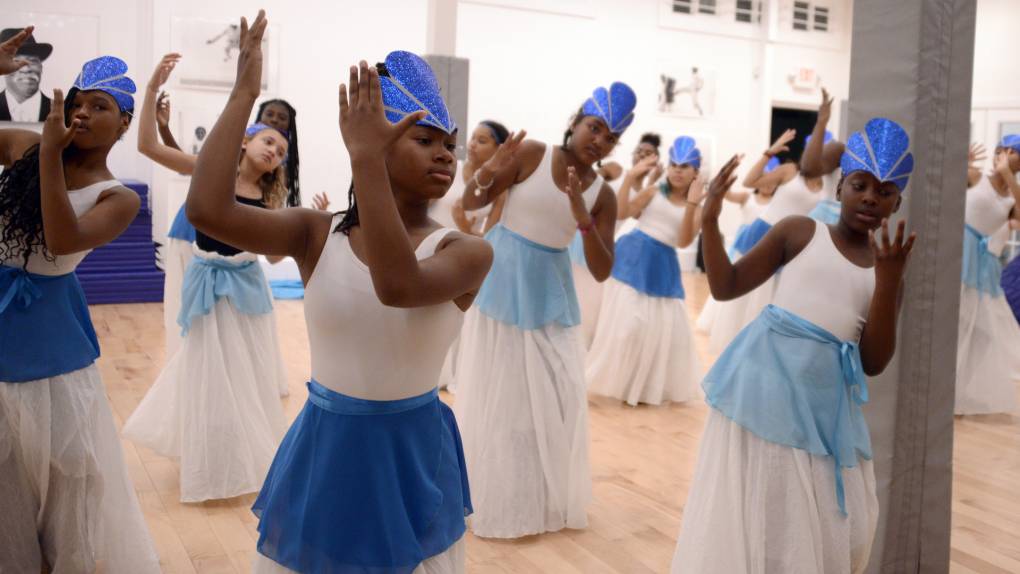
"caption": "Dancers rehearse for a new production from The People's Conservatory called 'Kola: An Afro Diasporic Remix of The Nutcracker.'",
"description": "Dancers rehearse for a new production from The People's Conservatory called Kola: An Afro Diasporic Remix of The Nutcracker.",
"title": "Afro Diasporic Nutcracker group blue",
"credit": "Stephanie Lister/KQED",
"status": "inherit",
"isLoading": false,
"fetchFailed": false
},
"news_11789448": {
"type": "attachments",
"id": "news_11789448",
"meta": {
"index": "attachments_1716263798",
"site": "news",
"id": "11789448",
"found": true
},
"parent": 11789158,
"imgSizes": {
"apple_news_ca_landscape_5_5": {
"file": "https://ww2.kqed.org/app/uploads/sites/10/2019/12/IRM_KQED-7-1044x783.jpg",
"width": 1044,
"mimeType": "image/jpeg",
"height": 783
},
"apple_news_ca_square_4_0": {
"file": "https://ww2.kqed.org/app/uploads/sites/10/2019/12/IRM_KQED-7-470x470.jpg",
"width": 470,
"mimeType": "image/jpeg",
"height": 470
},
"twentyfourteen-full-width": {
"file": "https://ww2.kqed.org/app/uploads/sites/10/2019/12/IRM_KQED-7-1038x576.jpg",
"width": 1038,
"mimeType": "image/jpeg",
"height": 576
},
"thumbnail": {
"file": "https://ww2.kqed.org/app/uploads/sites/10/2019/12/IRM_KQED-7-160x107.jpg",
"width": 160,
"mimeType": "image/jpeg",
"height": 107
},
"post-thumbnail": {
"file": "https://ww2.kqed.org/app/uploads/sites/10/2019/12/IRM_KQED-7-672x372.jpg",
"width": 672,
"mimeType": "image/jpeg",
"height": 372
},
"kqedFullSize": {
"file": "https://ww2.kqed.org/app/uploads/sites/10/2019/12/IRM_KQED-7-e1613003482580.jpg",
"width": 1920,
"height": 1280
},
"apple_news_ca_landscape_4_7": {
"file": "https://ww2.kqed.org/app/uploads/sites/10/2019/12/IRM_KQED-7-632x474.jpg",
"width": 632,
"mimeType": "image/jpeg",
"height": 474
},
"large": {
"file": "https://ww2.kqed.org/app/uploads/sites/10/2019/12/IRM_KQED-7-1020x680.jpg",
"width": 1020,
"mimeType": "image/jpeg",
"height": 680
},
"complete_open_graph": {
"file": "https://ww2.kqed.org/app/uploads/sites/10/2019/12/IRM_KQED-7-1200x800.jpg",
"width": 1200,
"mimeType": "image/jpeg",
"height": 800
},
"apple_news_ca_landscape_4_0": {
"file": "https://ww2.kqed.org/app/uploads/sites/10/2019/12/IRM_KQED-7-536x402.jpg",
"width": 536,
"mimeType": "image/jpeg",
"height": 402
},
"apple_news_ca_portrait_12_9": {
"file": "https://ww2.kqed.org/app/uploads/sites/10/2019/12/IRM_KQED-7-1122x1496.jpg",
"width": 1122,
"mimeType": "image/jpeg",
"height": 1496
},
"medium": {
"file": "https://ww2.kqed.org/app/uploads/sites/10/2019/12/IRM_KQED-7-800x533.jpg",
"width": 800,
"mimeType": "image/jpeg",
"height": 533
},
"apple_news_ca_portrait_4_0": {
"file": "https://ww2.kqed.org/app/uploads/sites/10/2019/12/IRM_KQED-7-354x472.jpg",
"width": 354,
"mimeType": "image/jpeg",
"height": 472
},
"apple_news_ca_portrait_9_7": {
"file": "https://ww2.kqed.org/app/uploads/sites/10/2019/12/IRM_KQED-7-840x1120.jpg",
"width": 840,
"mimeType": "image/jpeg",
"height": 1120
},
"apple_news_ca_landscape_12_9": {
"file": "https://ww2.kqed.org/app/uploads/sites/10/2019/12/IRM_KQED-7-1832x1374.jpg",
"width": 1832,
"mimeType": "image/jpeg",
"height": 1374
},
"apple_news_ca_square_9_7": {
"file": "https://ww2.kqed.org/app/uploads/sites/10/2019/12/IRM_KQED-7-1104x1104.jpg",
"width": 1104,
"mimeType": "image/jpeg",
"height": 1104
},
"apple_news_ca_portrait_4_7": {
"file": "https://ww2.kqed.org/app/uploads/sites/10/2019/12/IRM_KQED-7-414x552.jpg",
"width": 414,
"mimeType": "image/jpeg",
"height": 552
},
"apple_news_ca_square_12_9": {
"file": "https://ww2.kqed.org/app/uploads/sites/10/2019/12/IRM_KQED-7-1472x1472.jpg",
"width": 1472,
"mimeType": "image/jpeg",
"height": 1472
},
"apple_news_ca_portrait_5_5": {
"file": "https://ww2.kqed.org/app/uploads/sites/10/2019/12/IRM_KQED-7-687x916.jpg",
"width": 687,
"mimeType": "image/jpeg",
"height": 916
},
"full-width": {
"file": "https://ww2.kqed.org/app/uploads/sites/10/2019/12/IRM_KQED-7-1920x1280.jpg",
"width": 1920,
"mimeType": "image/jpeg",
"height": 1280
},
"apple_news_ca_square_4_7": {
"file": "https://ww2.kqed.org/app/uploads/sites/10/2019/12/IRM_KQED-7-550x550.jpg",
"width": 550,
"mimeType": "image/jpeg",
"height": 550
},
"apple_news_ca_landscape_9_7": {
"file": "https://ww2.kqed.org/app/uploads/sites/10/2019/12/IRM_KQED-7-1376x1032.jpg",
"width": 1376,
"mimeType": "image/jpeg",
"height": 1032
},
"apple_news_ca_square_5_5": {
"file": "https://ww2.kqed.org/app/uploads/sites/10/2019/12/IRM_KQED-7-912x912.jpg",
"width": 912,
"mimeType": "image/jpeg",
"height": 912
}
},
"publishDate": 1575424405,
"modified": 1613003717,
"caption": "Indigenous artists, chefs and vendors celebrate Native culture at the Indigenous Red Market. ",
"description": "Indigenous artists, chefs, and vendors celebrate native culture at the Indigenous Red Market. ",
"title": "Indigenous Red Market 1",
"credit": "Joey Montoya",
"status": "inherit",
"altTag": "Indigenous artists, chefs, and vendors celebrate native culture at the Indigenous Red Market.",
"isLoading": false,
"fetchFailed": false
},
"news_11789146": {
"type": "attachments",
"id": "news_11789146",
"meta": {
"index": "attachments_1716263798",
"site": "news",
"id": "11789146",
"found": true
},
"parent": 11789138,
"imgSizes": {
"apple_news_ca_landscape_5_5": {
"file": "https://ww2.kqed.org/app/uploads/sites/10/2019/12/RS40303_Screen-Shot-2019-12-02-at-9.33.45-AM-1044x783.png",
"width": 1044,
"mimeType": "image/png",
"height": 783
},
"apple_news_ca_square_4_0": {
"file": "https://ww2.kqed.org/app/uploads/sites/10/2019/12/RS40303_Screen-Shot-2019-12-02-at-9.33.45-AM-470x470.png",
"width": 470,
"mimeType": "image/png",
"height": 470
},
"twentyfourteen-full-width": {
"file": "https://ww2.kqed.org/app/uploads/sites/10/2019/12/RS40303_Screen-Shot-2019-12-02-at-9.33.45-AM-1038x576.png",
"width": 1038,
"mimeType": "image/png",
"height": 576
},
"thumbnail": {
"file": "https://ww2.kqed.org/app/uploads/sites/10/2019/12/RS40303_Screen-Shot-2019-12-02-at-9.33.45-AM-160x120.png",
"width": 160,
"mimeType": "image/png",
"height": 120
},
"post-thumbnail": {
"file": "https://ww2.kqed.org/app/uploads/sites/10/2019/12/RS40303_Screen-Shot-2019-12-02-at-9.33.45-AM-672x372.png",
"width": 672,
"mimeType": "image/png",
"height": 372
},
"kqedFullSize": {
"file": "https://ww2.kqed.org/app/uploads/sites/10/2019/12/RS40303_Screen-Shot-2019-12-02-at-9.33.45-AM.png",
"width": 1062,
"height": 798
},
"apple_news_ca_landscape_4_7": {
"file": "https://ww2.kqed.org/app/uploads/sites/10/2019/12/RS40303_Screen-Shot-2019-12-02-at-9.33.45-AM-632x474.png",
"width": 632,
"mimeType": "image/png",
"height": 474
},
"large": {
"file": "https://ww2.kqed.org/app/uploads/sites/10/2019/12/RS40303_Screen-Shot-2019-12-02-at-9.33.45-AM-1020x766.png",
"width": 1020,
"mimeType": "image/png",
"height": 766
},
"apple_news_ca_landscape_4_0": {
"file": "https://ww2.kqed.org/app/uploads/sites/10/2019/12/RS40303_Screen-Shot-2019-12-02-at-9.33.45-AM-536x402.png",
"width": 536,
"mimeType": "image/png",
"height": 402
},
"medium": {
"file": "https://ww2.kqed.org/app/uploads/sites/10/2019/12/RS40303_Screen-Shot-2019-12-02-at-9.33.45-AM-800x601.png",
"width": 800,
"mimeType": "image/png",
"height": 601
},
"apple_news_ca_portrait_4_0": {
"file": "https://ww2.kqed.org/app/uploads/sites/10/2019/12/RS40303_Screen-Shot-2019-12-02-at-9.33.45-AM-354x472.png",
"width": 354,
"mimeType": "image/png",
"height": 472
},
"apple_news_ca_portrait_9_7": {
"file": "https://ww2.kqed.org/app/uploads/sites/10/2019/12/RS40303_Screen-Shot-2019-12-02-at-9.33.45-AM-840x798.png",
"width": 840,
"mimeType": "image/png",
"height": 798
},
"apple_news_ca_portrait_4_7": {
"file": "https://ww2.kqed.org/app/uploads/sites/10/2019/12/RS40303_Screen-Shot-2019-12-02-at-9.33.45-AM-414x552.png",
"width": 414,
"mimeType": "image/png",
"height": 552
},
"apple_news_ca_portrait_5_5": {
"file": "https://ww2.kqed.org/app/uploads/sites/10/2019/12/RS40303_Screen-Shot-2019-12-02-at-9.33.45-AM-687x798.png",
"width": 687,
"mimeType": "image/png",
"height": 798
},
"apple_news_ca_square_4_7": {
"file": "https://ww2.kqed.org/app/uploads/sites/10/2019/12/RS40303_Screen-Shot-2019-12-02-at-9.33.45-AM-550x550.png",
"width": 550,
"mimeType": "image/png",
"height": 550
},
"apple_news_ca_square_5_5": {
"file": "https://ww2.kqed.org/app/uploads/sites/10/2019/12/RS40303_Screen-Shot-2019-12-02-at-9.33.45-AM-912x798.png",
"width": 912,
"mimeType": "image/png",
"height": 798
}
},
"publishDate": 1575308398,
"modified": 1575505521,
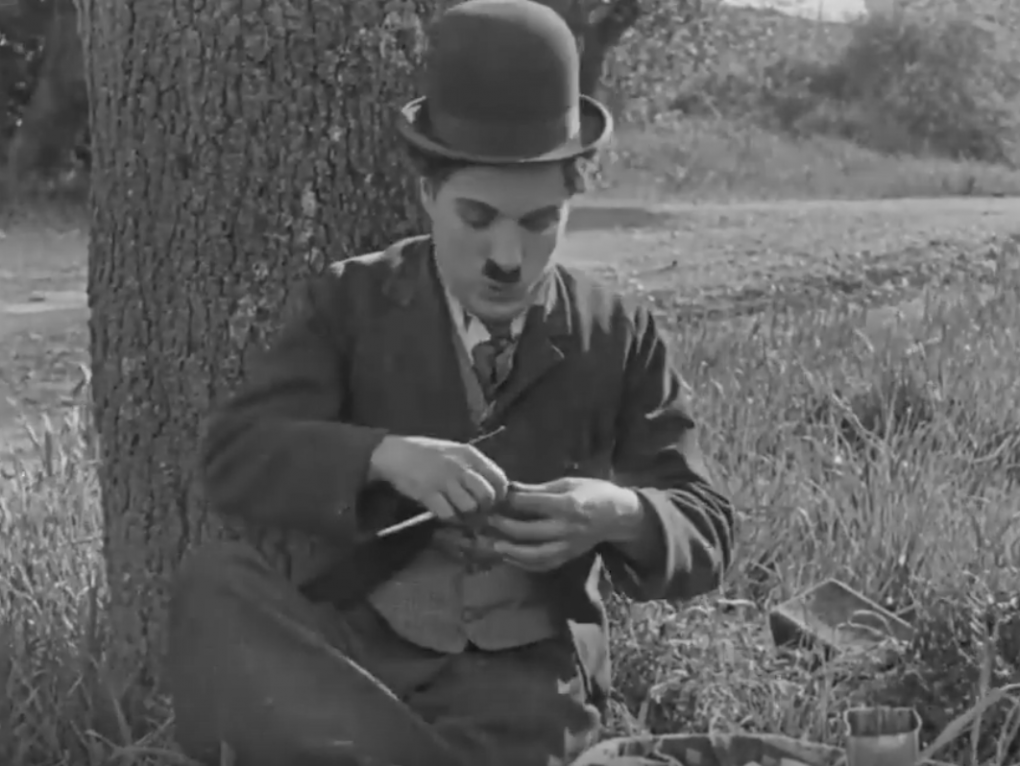
"caption": "Charlie Chaplin eats a meager picnic lunch in Niles, California, in \"The Tramp,\" shot for the Essanay Film Manufacturing Co. and released in 1915.",
"description": "Charlie Chaplin eats a meager picnic lunch in Niles, California in \"The Tramp,\" shot for the Essanay Film Manufacturing Company and released in 1915.",
"title": "RS40303_Screen Shot 2019-12-02 at 9.33.45 AM",
"credit": "Rachael Myrow/KQED",
"status": "inherit",
"isLoading": false,
"fetchFailed": false
},
"news_11788401": {
"type": "attachments",
"id": "news_11788401",
"meta": {
"index": "attachments_1716263798",
"site": "news",
"id": "11788401",
"found": true
},
"parent": 0,
"imgSizes": {
"apple_news_ca_landscape_5_5": {
"file": "https://ww2.kqed.org/app/uploads/sites/10/2019/11/DSC7054-1044x783.jpg",
"width": 1044,
"mimeType": "image/jpeg",
"height": 783
},
"apple_news_ca_square_4_0": {
"file": "https://ww2.kqed.org/app/uploads/sites/10/2019/11/DSC7054-470x470.jpg",
"width": 470,
"mimeType": "image/jpeg",
"height": 470
},
"twentyfourteen-full-width": {
"file": "https://ww2.kqed.org/app/uploads/sites/10/2019/11/DSC7054-1038x576.jpg",
"width": 1038,
"mimeType": "image/jpeg",
"height": 576
},
"thumbnail": {
"file": "https://ww2.kqed.org/app/uploads/sites/10/2019/11/DSC7054-160x107.jpg",
"width": 160,
"mimeType": "image/jpeg",
"height": 107
},
"post-thumbnail": {
"file": "https://ww2.kqed.org/app/uploads/sites/10/2019/11/DSC7054-672x372.jpg",
"width": 672,
"mimeType": "image/jpeg",
"height": 372
},
"kqedFullSize": {
"file": "https://ww2.kqed.org/app/uploads/sites/10/2019/11/DSC7054-e1574628322842.jpg",
"width": 1920,
"height": 1282
},
"apple_news_ca_landscape_4_7": {
"file": "https://ww2.kqed.org/app/uploads/sites/10/2019/11/DSC7054-632x474.jpg",
"width": 632,
"mimeType": "image/jpeg",
"height": 474
},
"large": {
"file": "https://ww2.kqed.org/app/uploads/sites/10/2019/11/DSC7054-1020x681.jpg",
"width": 1020,
"mimeType": "image/jpeg",
"height": 681
},
"complete_open_graph": {
"file": "https://ww2.kqed.org/app/uploads/sites/10/2019/11/DSC7054-1200x801.jpg",
"width": 1200,
"mimeType": "image/jpeg",
"height": 801
},
"apple_news_ca_landscape_4_0": {
"file": "https://ww2.kqed.org/app/uploads/sites/10/2019/11/DSC7054-536x402.jpg",
"width": 536,
"mimeType": "image/jpeg",
"height": 402
},
"apple_news_ca_portrait_12_9": {
"file": "https://ww2.kqed.org/app/uploads/sites/10/2019/11/DSC7054-1122x1496.jpg",
"width": 1122,
"mimeType": "image/jpeg",
"height": 1496
},
"medium": {
"file": "https://ww2.kqed.org/app/uploads/sites/10/2019/11/DSC7054-800x534.jpg",
"width": 800,
"mimeType": "image/jpeg",
"height": 534
},
"apple_news_ca_portrait_4_0": {
"file": "https://ww2.kqed.org/app/uploads/sites/10/2019/11/DSC7054-354x472.jpg",
"width": 354,
"mimeType": "image/jpeg",
"height": 472
},
"apple_news_ca_portrait_9_7": {
"file": "https://ww2.kqed.org/app/uploads/sites/10/2019/11/DSC7054-840x1120.jpg",
"width": 840,
"mimeType": "image/jpeg",
"height": 1120
},
"apple_news_ca_landscape_12_9": {
"file": "https://ww2.kqed.org/app/uploads/sites/10/2019/11/DSC7054-1832x1374.jpg",
"width": 1832,
"mimeType": "image/jpeg",
"height": 1374
},
"apple_news_ca_square_9_7": {
"file": "https://ww2.kqed.org/app/uploads/sites/10/2019/11/DSC7054-1104x1104.jpg",
"width": 1104,
"mimeType": "image/jpeg",
"height": 1104
},
"apple_news_ca_portrait_4_7": {
"file": "https://ww2.kqed.org/app/uploads/sites/10/2019/11/DSC7054-414x552.jpg",
"width": 414,
"mimeType": "image/jpeg",
"height": 552
},
"apple_news_ca_square_12_9": {
"file": "https://ww2.kqed.org/app/uploads/sites/10/2019/11/DSC7054-1472x1472.jpg",
"width": 1472,
"mimeType": "image/jpeg",
"height": 1472
},
"apple_news_ca_portrait_5_5": {
"file": "https://ww2.kqed.org/app/uploads/sites/10/2019/11/DSC7054-687x916.jpg",
"width": 687,
"mimeType": "image/jpeg",
"height": 916
},
"full-width": {
"file": "https://ww2.kqed.org/app/uploads/sites/10/2019/11/DSC7054-1920x1282.jpg",
"width": 1920,
"mimeType": "image/jpeg",
"height": 1282
},
"apple_news_ca_square_4_7": {
"file": "https://ww2.kqed.org/app/uploads/sites/10/2019/11/DSC7054-550x550.jpg",
"width": 550,
"mimeType": "image/jpeg",
"height": 550
},
"apple_news_ca_landscape_9_7": {
"file": "https://ww2.kqed.org/app/uploads/sites/10/2019/11/DSC7054-1376x1032.jpg",
"width": 1376,
"mimeType": "image/jpeg",
"height": 1032
},
"apple_news_ca_square_5_5": {
"file": "https://ww2.kqed.org/app/uploads/sites/10/2019/11/DSC7054-912x912.jpg",
"width": 912,
"mimeType": "image/jpeg",
"height": 912
}
},
"publishDate": 1574613243,
"modified": 1574628315,
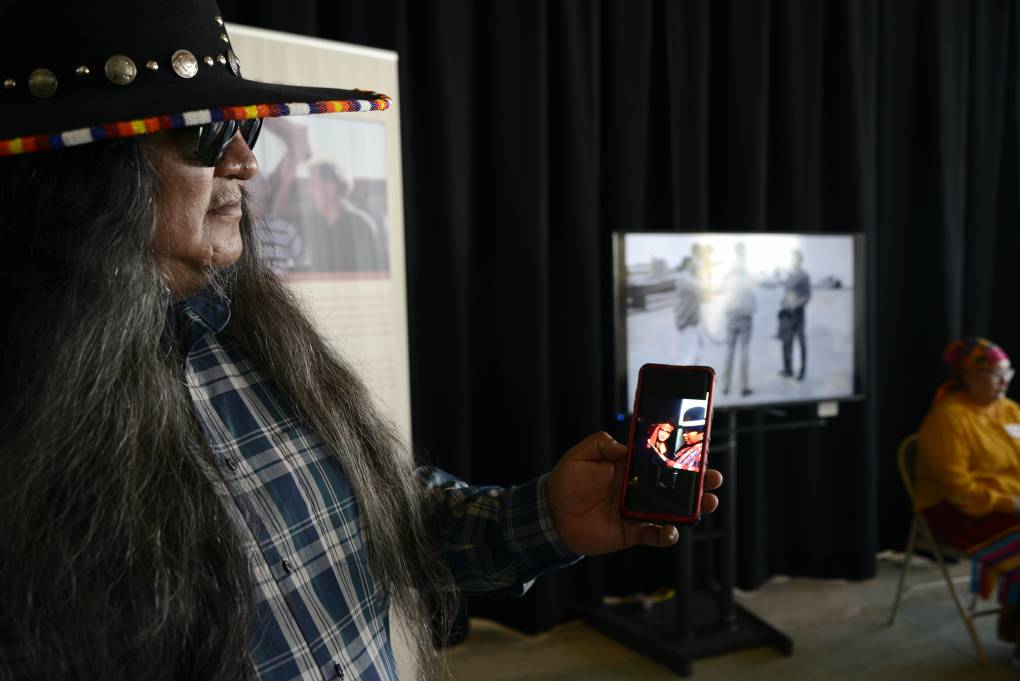
"caption": "Jason Morsette, of New Town, North Dakota, holds a picture of his mother, Geneva Seaboy and Alan Miller which is on display at the new exhibit Red Power on Alcatraz: Perspectives 50 Years Later, on Nov. 23, 2019. ",
"description": "Jason Morsette, of New Town, North Dakota, holds a picture of his mother, Geneva Seaboy and Alan Miller which is on display at the new exhibit Red Power on Alcatraz: Perspectives 50 Years Later, on Nov. 23, 2019. ",
"title": "_DSC7054",
"credit": "Stephanie Lister/KQED",
"status": "inherit",
"isLoading": false,
"fetchFailed": false
},
"news_11788147": {
"type": "attachments",
"id": "news_11788147",
"meta": {
"index": "attachments_1716263798",
"site": "news",
"id": "11788147",
"found": true
},
"parent": 11788133,
"imgSizes": {
"apple_news_ca_landscape_5_5": {
"file": "https://ww2.kqed.org/app/uploads/sites/10/2019/11/708-MARQUEE-1044x720.jpg",
"width": 1044,
"mimeType": "image/jpeg",
"height": 720
},
"apple_news_ca_square_4_0": {
"file": "https://ww2.kqed.org/app/uploads/sites/10/2019/11/708-MARQUEE-470x470.jpg",
"width": 470,
"mimeType": "image/jpeg",
"height": 470
},
"twentyfourteen-full-width": {
"file": "https://ww2.kqed.org/app/uploads/sites/10/2019/11/708-MARQUEE-1038x576.jpg",
"width": 1038,
"mimeType": "image/jpeg",
"height": 576
},
"thumbnail": {
"file": "https://ww2.kqed.org/app/uploads/sites/10/2019/11/708-MARQUEE-160x90.jpg",
"width": 160,
"mimeType": "image/jpeg",
"height": 90
},
"post-thumbnail": {
"file": "https://ww2.kqed.org/app/uploads/sites/10/2019/11/708-MARQUEE-672x372.jpg",
"width": 672,
"mimeType": "image/jpeg",
"height": 372
},
"kqedFullSize": {
"file": "https://ww2.kqed.org/app/uploads/sites/10/2019/11/708-MARQUEE.jpg",
"width": 1280,
"height": 720
},
"apple_news_ca_landscape_4_7": {
"file": "https://ww2.kqed.org/app/uploads/sites/10/2019/11/708-MARQUEE-632x474.jpg",
"width": 632,
"mimeType": "image/jpeg",
"height": 474
},
"large": {
"file": "https://ww2.kqed.org/app/uploads/sites/10/2019/11/708-MARQUEE-1020x574.jpg",
"width": 1020,
"mimeType": "image/jpeg",
"height": 574
},
"complete_open_graph": {
"file": "https://ww2.kqed.org/app/uploads/sites/10/2019/11/708-MARQUEE-1200x675.jpg",
"width": 1200,
"mimeType": "image/jpeg",
"height": 675
},
"apple_news_ca_landscape_4_0": {
"file": "https://ww2.kqed.org/app/uploads/sites/10/2019/11/708-MARQUEE-536x402.jpg",
"width": 536,
"mimeType": "image/jpeg",
"height": 402
},
"apple_news_ca_portrait_12_9": {
"file": "https://ww2.kqed.org/app/uploads/sites/10/2019/11/708-MARQUEE-1122x720.jpg",
"width": 1122,
"mimeType": "image/jpeg",
"height": 720
},
"medium": {
"file": "https://ww2.kqed.org/app/uploads/sites/10/2019/11/708-MARQUEE-800x450.jpg",
"width": 800,
"mimeType": "image/jpeg",
"height": 450
},
"apple_news_ca_portrait_4_0": {
"file": "https://ww2.kqed.org/app/uploads/sites/10/2019/11/708-MARQUEE-354x472.jpg",
"width": 354,
"mimeType": "image/jpeg",
"height": 472
},
"apple_news_ca_portrait_9_7": {
"file": "https://ww2.kqed.org/app/uploads/sites/10/2019/11/708-MARQUEE-840x720.jpg",
"width": 840,
"mimeType": "image/jpeg",
"height": 720
},
"apple_news_ca_square_9_7": {
"file": "https://ww2.kqed.org/app/uploads/sites/10/2019/11/708-MARQUEE-1104x720.jpg",
"width": 1104,
"mimeType": "image/jpeg",
"height": 720
},
"apple_news_ca_portrait_4_7": {
"file": "https://ww2.kqed.org/app/uploads/sites/10/2019/11/708-MARQUEE-414x552.jpg",
"width": 414,
"mimeType": "image/jpeg",
"height": 552
},
"apple_news_ca_portrait_5_5": {
"file": "https://ww2.kqed.org/app/uploads/sites/10/2019/11/708-MARQUEE-687x720.jpg",
"width": 687,
"mimeType": "image/jpeg",
"height": 720
},
"apple_news_ca_square_4_7": {
"file": "https://ww2.kqed.org/app/uploads/sites/10/2019/11/708-MARQUEE-550x550.jpg",
"width": 550,
"mimeType": "image/jpeg",
"height": 550
},
"apple_news_ca_square_5_5": {
"file": "https://ww2.kqed.org/app/uploads/sites/10/2019/11/708-MARQUEE-912x720.jpg",
"width": 912,
"mimeType": "image/jpeg",
"height": 720
}
},
"publishDate": 1574452522,
"modified": 1574452522,
"caption": null,
"description": null,
"title": "708 MARQUEE",
"credit": null,
"status": "inherit",
"isLoading": false,
"fetchFailed": false
},
"news_11784506": {
"type": "attachments",
"id": "news_11784506",
"meta": {
"index": "attachments_1716263798",
"site": "news",
"id": "11784506",
"found": true
},
"parent": 11784452,
"imgSizes": {
"apple_news_ca_landscape_5_5": {
"file": "https://ww2.kqed.org/app/uploads/sites/10/2019/11/RS40044_DayofDead_Morga_009-qut-1044x783.jpg",
"width": 1044,
"mimeType": "image/jpeg",
"height": 783
},
"apple_news_ca_square_4_0": {
"file": "https://ww2.kqed.org/app/uploads/sites/10/2019/11/RS40044_DayofDead_Morga_009-qut-470x470.jpg",
"width": 470,
"mimeType": "image/jpeg",
"height": 470
},
"twentyfourteen-full-width": {
"file": "https://ww2.kqed.org/app/uploads/sites/10/2019/11/RS40044_DayofDead_Morga_009-qut-1038x576.jpg",
"width": 1038,
"mimeType": "image/jpeg",
"height": 576
},
"thumbnail": {
"file": "https://ww2.kqed.org/app/uploads/sites/10/2019/11/RS40044_DayofDead_Morga_009-qut-160x107.jpg",
"width": 160,
"mimeType": "image/jpeg",
"height": 107
},
"post-thumbnail": {
"file": "https://ww2.kqed.org/app/uploads/sites/10/2019/11/RS40044_DayofDead_Morga_009-qut-672x372.jpg",
"width": 672,
"mimeType": "image/jpeg",
"height": 372
},
"kqedFullSize": {
"file": "https://ww2.kqed.org/app/uploads/sites/10/2019/11/RS40044_DayofDead_Morga_009-qut.jpg",
"width": 1920,
"height": 1280
},
"apple_news_ca_landscape_4_7": {
"file": "https://ww2.kqed.org/app/uploads/sites/10/2019/11/RS40044_DayofDead_Morga_009-qut-632x474.jpg",
"width": 632,
"mimeType": "image/jpeg",
"height": 474
},
"large": {
"file": "https://ww2.kqed.org/app/uploads/sites/10/2019/11/RS40044_DayofDead_Morga_009-qut-1020x680.jpg",
"width": 1020,
"mimeType": "image/jpeg",
"height": 680
},
"complete_open_graph": {
"file": "https://ww2.kqed.org/app/uploads/sites/10/2019/11/RS40044_DayofDead_Morga_009-qut-1200x800.jpg",
"width": 1200,
"mimeType": "image/jpeg",
"height": 800
},
"apple_news_ca_landscape_4_0": {
"file": "https://ww2.kqed.org/app/uploads/sites/10/2019/11/RS40044_DayofDead_Morga_009-qut-536x402.jpg",
"width": 536,
"mimeType": "image/jpeg",
"height": 402
},
"apple_news_ca_portrait_12_9": {
"file": "https://ww2.kqed.org/app/uploads/sites/10/2019/11/RS40044_DayofDead_Morga_009-qut-1122x1280.jpg",
"width": 1122,
"mimeType": "image/jpeg",
"height": 1280
},
"medium": {
"file": "https://ww2.kqed.org/app/uploads/sites/10/2019/11/RS40044_DayofDead_Morga_009-qut-800x533.jpg",
"width": 800,
"mimeType": "image/jpeg",
"height": 533
},
"apple_news_ca_portrait_4_0": {
"file": "https://ww2.kqed.org/app/uploads/sites/10/2019/11/RS40044_DayofDead_Morga_009-qut-354x472.jpg",
"width": 354,
"mimeType": "image/jpeg",
"height": 472
},
"apple_news_ca_portrait_9_7": {
"file": "https://ww2.kqed.org/app/uploads/sites/10/2019/11/RS40044_DayofDead_Morga_009-qut-840x1120.jpg",
"width": 840,
"mimeType": "image/jpeg",
"height": 1120
},
"apple_news_ca_landscape_12_9": {
"file": "https://ww2.kqed.org/app/uploads/sites/10/2019/11/RS40044_DayofDead_Morga_009-qut-1832x1280.jpg",
"width": 1832,
"mimeType": "image/jpeg",
"height": 1280
},
"apple_news_ca_square_9_7": {
"file": "https://ww2.kqed.org/app/uploads/sites/10/2019/11/RS40044_DayofDead_Morga_009-qut-1104x1104.jpg",
"width": 1104,
"mimeType": "image/jpeg",
"height": 1104
},
"apple_news_ca_portrait_4_7": {
"file": "https://ww2.kqed.org/app/uploads/sites/10/2019/11/RS40044_DayofDead_Morga_009-qut-414x552.jpg",
"width": 414,
"mimeType": "image/jpeg",
"height": 552
},
"apple_news_ca_square_12_9": {
"file": "https://ww2.kqed.org/app/uploads/sites/10/2019/11/RS40044_DayofDead_Morga_009-qut-1472x1280.jpg",
"width": 1472,
"mimeType": "image/jpeg",
"height": 1280
},
"apple_news_ca_portrait_5_5": {
"file": "https://ww2.kqed.org/app/uploads/sites/10/2019/11/RS40044_DayofDead_Morga_009-qut-687x916.jpg",
"width": 687,
"mimeType": "image/jpeg",
"height": 916
},
"full-width": {
"file": "https://ww2.kqed.org/app/uploads/sites/10/2019/11/RS40044_DayofDead_Morga_009-qut-1920x1280.jpg",
"width": 1920,
"mimeType": "image/jpeg",
"height": 1280
},
"apple_news_ca_square_4_7": {
"file": "https://ww2.kqed.org/app/uploads/sites/10/2019/11/RS40044_DayofDead_Morga_009-qut-550x550.jpg",
"width": 550,
"mimeType": "image/jpeg",
"height": 550
},
"apple_news_ca_landscape_9_7": {
"file": "https://ww2.kqed.org/app/uploads/sites/10/2019/11/RS40044_DayofDead_Morga_009-qut-1376x1032.jpg",
"width": 1376,
"mimeType": "image/jpeg",
"height": 1032
},
"apple_news_ca_square_5_5": {
"file": "https://ww2.kqed.org/app/uploads/sites/10/2019/11/RS40044_DayofDead_Morga_009-qut-912x912.jpg",
"width": 912,
"mimeType": "image/jpeg",
"height": 912
}
},
"publishDate": 1572654439,
"modified": 1572725664,
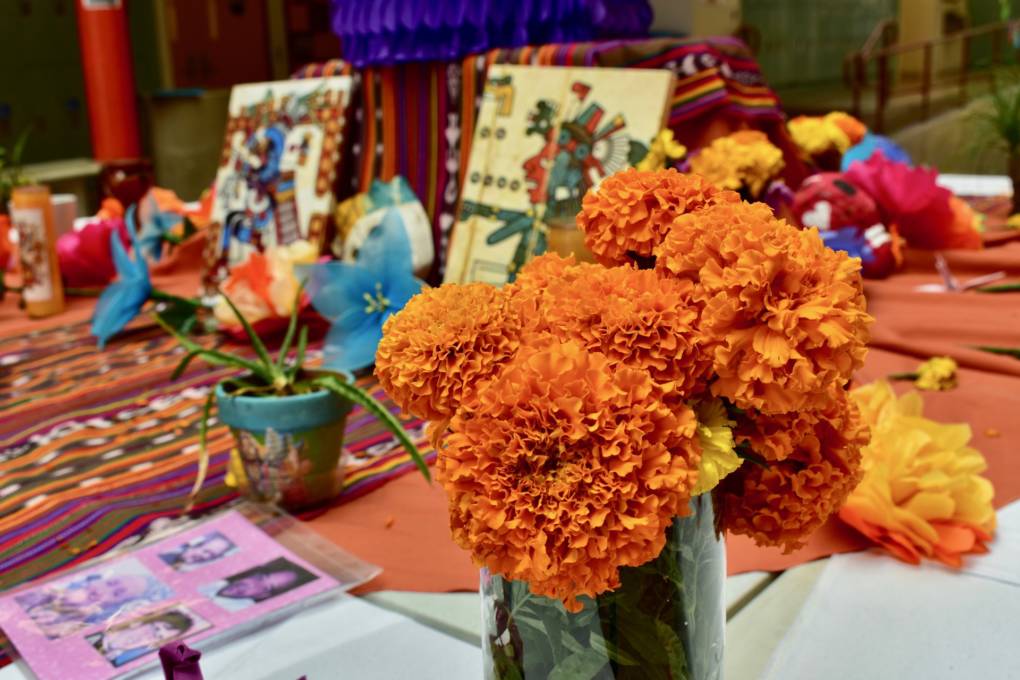
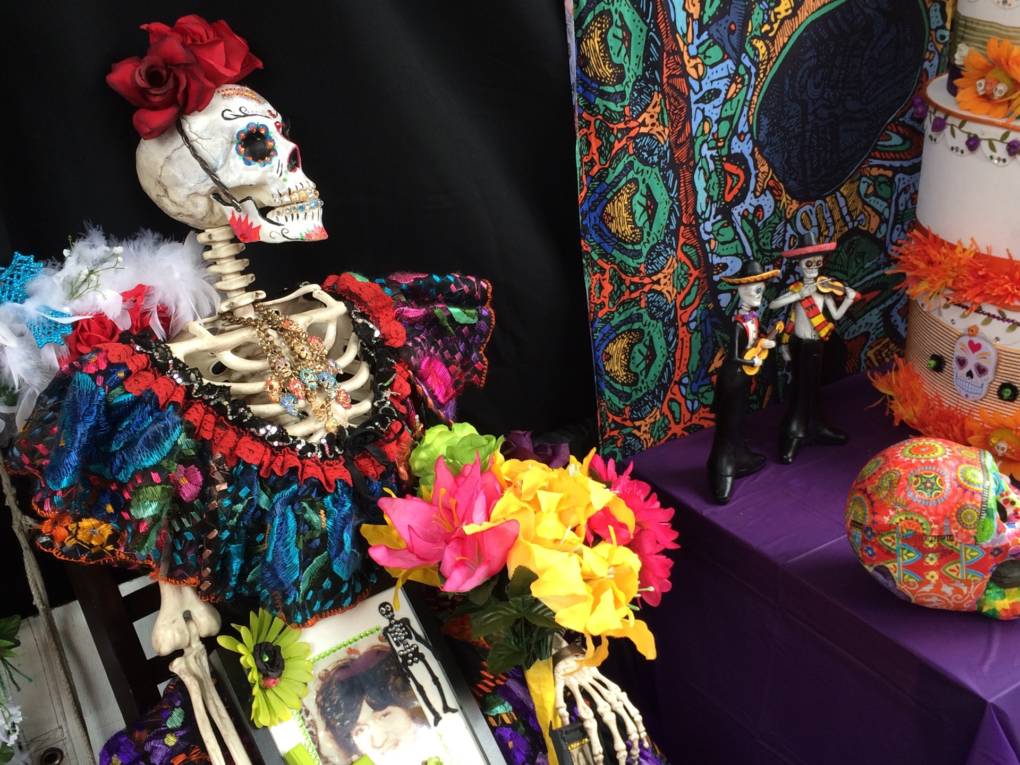
"caption": "Altar for Día de los Muertos at John O'Connell High School.",
"description": null,
"title": "RS40044_DayofDead_Morga_009-qut",
"credit": "Adriana Morga/KQED",
"status": "inherit",
"isLoading": false,
"fetchFailed": false
},
"news_11784068": {
"type": "attachments",
"id": "news_11784068",
"meta": {
"index": "attachments_1716263798",
"site": "news",
"id": "11784068",
"found": true
},
"parent": 11784055,
"imgSizes": {
"apple_news_ca_landscape_5_5": {
"file": "https://ww2.kqed.org/app/uploads/sites/10/2019/10/RS27788_Image-uploaded-from-iOS-25-qut-1044x783.jpg",
"width": 1044,
"mimeType": "image/jpeg",
"height": 783
},
"apple_news_ca_square_4_0": {
"file": "https://ww2.kqed.org/app/uploads/sites/10/2019/10/RS27788_Image-uploaded-from-iOS-25-qut-470x470.jpg",
"width": 470,
"mimeType": "image/jpeg",
"height": 470
},
"twentyfourteen-full-width": {
"file": "https://ww2.kqed.org/app/uploads/sites/10/2019/10/RS27788_Image-uploaded-from-iOS-25-qut-1038x576.jpg",
"width": 1038,
"mimeType": "image/jpeg",
"height": 576
},
"thumbnail": {
"file": "https://ww2.kqed.org/app/uploads/sites/10/2019/10/RS27788_Image-uploaded-from-iOS-25-qut-160x120.jpg",
"width": 160,
"mimeType": "image/jpeg",
"height": 120
},
"post-thumbnail": {
"file": "https://ww2.kqed.org/app/uploads/sites/10/2019/10/RS27788_Image-uploaded-from-iOS-25-qut-672x372.jpg",
"width": 672,
"mimeType": "image/jpeg",
"height": 372
},
"kqedFullSize": {
"file": "https://ww2.kqed.org/app/uploads/sites/10/2019/10/RS27788_Image-uploaded-from-iOS-25-qut.jpg",
"width": 1920,
"height": 1440
},
"apple_news_ca_landscape_4_7": {
"file": "https://ww2.kqed.org/app/uploads/sites/10/2019/10/RS27788_Image-uploaded-from-iOS-25-qut-632x474.jpg",
"width": 632,
"mimeType": "image/jpeg",
"height": 474
},
"large": {
"file": "https://ww2.kqed.org/app/uploads/sites/10/2019/10/RS27788_Image-uploaded-from-iOS-25-qut-1020x765.jpg",
"width": 1020,
"mimeType": "image/jpeg",
"height": 765
},
"complete_open_graph": {
"file": "https://ww2.kqed.org/app/uploads/sites/10/2019/10/RS27788_Image-uploaded-from-iOS-25-qut-1200x900.jpg",
"width": 1200,
"mimeType": "image/jpeg",
"height": 900
},
"apple_news_ca_landscape_4_0": {
"file": "https://ww2.kqed.org/app/uploads/sites/10/2019/10/RS27788_Image-uploaded-from-iOS-25-qut-536x402.jpg",
"width": 536,
"mimeType": "image/jpeg",
"height": 402
},
"apple_news_ca_portrait_12_9": {
"file": "https://ww2.kqed.org/app/uploads/sites/10/2019/10/RS27788_Image-uploaded-from-iOS-25-qut-1122x1440.jpg",
"width": 1122,
"mimeType": "image/jpeg",
"height": 1440
},
"medium": {
"file": "https://ww2.kqed.org/app/uploads/sites/10/2019/10/RS27788_Image-uploaded-from-iOS-25-qut-800x600.jpg",
"width": 800,
"mimeType": "image/jpeg",
"height": 600
},
"apple_news_ca_portrait_4_0": {
"file": "https://ww2.kqed.org/app/uploads/sites/10/2019/10/RS27788_Image-uploaded-from-iOS-25-qut-354x472.jpg",
"width": 354,
"mimeType": "image/jpeg",
"height": 472
},
"apple_news_ca_portrait_9_7": {
"file": "https://ww2.kqed.org/app/uploads/sites/10/2019/10/RS27788_Image-uploaded-from-iOS-25-qut-840x1120.jpg",
"width": 840,
"mimeType": "image/jpeg",
"height": 1120
},
"apple_news_ca_landscape_12_9": {
"file": "https://ww2.kqed.org/app/uploads/sites/10/2019/10/RS27788_Image-uploaded-from-iOS-25-qut-1832x1374.jpg",
"width": 1832,
"mimeType": "image/jpeg",
"height": 1374
},
"apple_news_ca_square_9_7": {
"file": "https://ww2.kqed.org/app/uploads/sites/10/2019/10/RS27788_Image-uploaded-from-iOS-25-qut-1104x1104.jpg",
"width": 1104,
"mimeType": "image/jpeg",
"height": 1104
},
"apple_news_ca_portrait_4_7": {
"file": "https://ww2.kqed.org/app/uploads/sites/10/2019/10/RS27788_Image-uploaded-from-iOS-25-qut-414x552.jpg",
"width": 414,
"mimeType": "image/jpeg",
"height": 552
},
"apple_news_ca_square_12_9": {
"file": "https://ww2.kqed.org/app/uploads/sites/10/2019/10/RS27788_Image-uploaded-from-iOS-25-qut-1472x1440.jpg",
"width": 1472,
"mimeType": "image/jpeg",
"height": 1440
},
"apple_news_ca_portrait_5_5": {
"file": "https://ww2.kqed.org/app/uploads/sites/10/2019/10/RS27788_Image-uploaded-from-iOS-25-qut-687x916.jpg",
"width": 687,
"mimeType": "image/jpeg",
"height": 916
},
"full-width": {
"file": "https://ww2.kqed.org/app/uploads/sites/10/2019/10/RS27788_Image-uploaded-from-iOS-25-qut-1920x1440.jpg",
"width": 1920,
"mimeType": "image/jpeg",
"height": 1440
},
"apple_news_ca_square_4_7": {
"file": "https://ww2.kqed.org/app/uploads/sites/10/2019/10/RS27788_Image-uploaded-from-iOS-25-qut-550x550.jpg",
"width": 550,
"mimeType": "image/jpeg",
"height": 550
},
"apple_news_ca_landscape_9_7": {
"file": "https://ww2.kqed.org/app/uploads/sites/10/2019/10/RS27788_Image-uploaded-from-iOS-25-qut-1376x1032.jpg",
"width": 1376,
"mimeType": "image/jpeg",
"height": 1032
},
"apple_news_ca_square_5_5": {
"file": "https://ww2.kqed.org/app/uploads/sites/10/2019/10/RS27788_Image-uploaded-from-iOS-25-qut-912x912.jpg",
"width": 912,
"mimeType": "image/jpeg",
"height": 912
}
},
"publishDate": 1572551080,
"modified": 1572551168,
"caption": "Tiffany Camhi snapped photos of Festival in the Fruitvale neighborhood of Oakland. Altar made by Lilia Olsen called \"Memories.\"",
"description": null,
"title": "Dia de los Muertos Fruitvale",
"credit": "Tiffany Camhi/KQED",
"status": "inherit",
"isLoading": false,
"fetchFailed": false
},
"news_11781422": {
"type": "attachments",
"id": "news_11781422",
"meta": {
"index": "attachments_1716263798",
"site": "news",
"id": "11781422",
"found": true
},
"parent": 11780176,
"imgSizes": {
"apple_news_ca_square_4_0": {
"file": "https://ww2.kqed.org/app/uploads/sites/10/2019/10/RS39638_IMG_0368-qut-470x470.jpg",
"width": 470,
"mimeType": "image/jpeg",
"height": 470
},
"twentyfourteen-full-width": {
"file": "https://ww2.kqed.org/app/uploads/sites/10/2019/10/RS39638_IMG_0368-qut-1024x576.jpg",
"width": 1024,
"mimeType": "image/jpeg",
"height": 576
},
"thumbnail": {
"file": "https://ww2.kqed.org/app/uploads/sites/10/2019/10/RS39638_IMG_0368-qut-160x96.jpg",
"width": 160,
"mimeType": "image/jpeg",
"height": 96
},
"post-thumbnail": {
"file": "https://ww2.kqed.org/app/uploads/sites/10/2019/10/RS39638_IMG_0368-qut-672x372.jpg",
"width": 672,
"mimeType": "image/jpeg",
"height": 372
},
"kqedFullSize": {
"file": "https://ww2.kqed.org/app/uploads/sites/10/2019/10/RS39638_IMG_0368-qut.jpg",
"width": 1024,
"height": 616
},
"apple_news_ca_landscape_4_7": {
"file": "https://ww2.kqed.org/app/uploads/sites/10/2019/10/RS39638_IMG_0368-qut-632x474.jpg",
"width": 632,
"mimeType": "image/jpeg",
"height": 474
},
"large": {
"file": "https://ww2.kqed.org/app/uploads/sites/10/2019/10/RS39638_IMG_0368-qut-1020x614.jpg",
"width": 1020,
"mimeType": "image/jpeg",
"height": 614
},
"apple_news_ca_landscape_4_0": {
"file": "https://ww2.kqed.org/app/uploads/sites/10/2019/10/RS39638_IMG_0368-qut-536x402.jpg",
"width": 536,
"mimeType": "image/jpeg",
"height": 402
},
"medium": {
"file": "https://ww2.kqed.org/app/uploads/sites/10/2019/10/RS39638_IMG_0368-qut-800x481.jpg",
"width": 800,
"mimeType": "image/jpeg",
"height": 481
},
"apple_news_ca_portrait_4_0": {
"file": "https://ww2.kqed.org/app/uploads/sites/10/2019/10/RS39638_IMG_0368-qut-354x472.jpg",
"width": 354,
"mimeType": "image/jpeg",
"height": 472
},
"apple_news_ca_portrait_9_7": {
"file": "https://ww2.kqed.org/app/uploads/sites/10/2019/10/RS39638_IMG_0368-qut-840x616.jpg",
"width": 840,
"mimeType": "image/jpeg",
"height": 616
},
"apple_news_ca_portrait_4_7": {
"file": "https://ww2.kqed.org/app/uploads/sites/10/2019/10/RS39638_IMG_0368-qut-414x552.jpg",
"width": 414,
"mimeType": "image/jpeg",
"height": 552
},
"apple_news_ca_portrait_5_5": {
"file": "https://ww2.kqed.org/app/uploads/sites/10/2019/10/RS39638_IMG_0368-qut-687x616.jpg",
"width": 687,
"mimeType": "image/jpeg",
"height": 616
},
"apple_news_ca_square_4_7": {
"file": "https://ww2.kqed.org/app/uploads/sites/10/2019/10/RS39638_IMG_0368-qut-550x550.jpg",
"width": 550,
"mimeType": "image/jpeg",
"height": 550
},
"apple_news_ca_square_5_5": {
"file": "https://ww2.kqed.org/app/uploads/sites/10/2019/10/RS39638_IMG_0368-qut-912x616.jpg",
"width": 912,
"mimeType": "image/jpeg",
"height": 616
}
},
"publishDate": 1571679985,
"modified": 1572476950,
"caption": "Students at Ettefagh School, a coed Jewish private school in Tehran, sometime before the 1979 Islamic Revolution.",
"description": "Students at Ettefagh School, a co-ed Jewish private school in Tehran, sometime before the 1979 Islamic Revolution.",
"title": "Ettefagh-School-photo1",
"credit": "Courtesy of Pirooz Abir",
"status": "inherit",
"isLoading": false,
"fetchFailed": false
},
"news_11781816": {
"type": "attachments",
"id": "news_11781816",
"meta": {
"index": "attachments_1716263798",
"site": "news",
"id": "11781816",
"found": true
},
"parent": 11781775,
"imgSizes": {
"apple_news_ca_landscape_5_5": {
"file": "https://ww2.kqed.org/app/uploads/sites/10/2019/10/01.-MOONFACE-Podcast-Artwork-1044x783.jpg",
"width": 1044,
"mimeType": "image/jpeg",
"height": 783
},
"apple_news_ca_square_4_0": {
"file": "https://ww2.kqed.org/app/uploads/sites/10/2019/10/01.-MOONFACE-Podcast-Artwork-470x470.jpg",
"width": 470,
"mimeType": "image/jpeg",
"height": 470
},
"twentyfourteen-full-width": {
"file": "https://ww2.kqed.org/app/uploads/sites/10/2019/10/01.-MOONFACE-Podcast-Artwork-1038x576.jpg",
"width": 1038,
"mimeType": "image/jpeg",
"height": 576
},
"thumbnail": {
"file": "https://ww2.kqed.org/app/uploads/sites/10/2019/10/01.-MOONFACE-Podcast-Artwork-160x160.jpg",
"width": 160,
"mimeType": "image/jpeg",
"height": 160
},
"post-thumbnail": {
"file": "https://ww2.kqed.org/app/uploads/sites/10/2019/10/01.-MOONFACE-Podcast-Artwork-672x372.jpg",
"width": 672,
"mimeType": "image/jpeg",
"height": 372
},
"kqedFullSize": {
"file": "https://ww2.kqed.org/app/uploads/sites/10/2019/10/01.-MOONFACE-Podcast-Artwork.jpg",
"width": 3000,
"height": 3000
},
"apple_news_ca_landscape_4_7": {
"file": "https://ww2.kqed.org/app/uploads/sites/10/2019/10/01.-MOONFACE-Podcast-Artwork-632x474.jpg",
"width": 632,
"mimeType": "image/jpeg",
"height": 474
},
"large": {
"file": "https://ww2.kqed.org/app/uploads/sites/10/2019/10/01.-MOONFACE-Podcast-Artwork-1020x1020.jpg",
"width": 1020,
"mimeType": "image/jpeg",
"height": 1020
},
"complete_open_graph": {
"file": "https://ww2.kqed.org/app/uploads/sites/10/2019/10/01.-MOONFACE-Podcast-Artwork-1200x1200.jpg",
"width": 1200,
"mimeType": "image/jpeg",
"height": 1200
},
"apple_news_ca_landscape_4_0": {
"file": "https://ww2.kqed.org/app/uploads/sites/10/2019/10/01.-MOONFACE-Podcast-Artwork-536x402.jpg",
"width": 536,
"mimeType": "image/jpeg",
"height": 402
},
"apple_news_ca_portrait_12_9": {
"file": "https://ww2.kqed.org/app/uploads/sites/10/2019/10/01.-MOONFACE-Podcast-Artwork-1122x1496.jpg",
"width": 1122,
"mimeType": "image/jpeg",
"height": 1496
},
"medium": {
"file": "https://ww2.kqed.org/app/uploads/sites/10/2019/10/01.-MOONFACE-Podcast-Artwork-800x800.jpg",
"width": 800,
"mimeType": "image/jpeg",
"height": 800
},
"apple_news_ca_portrait_4_0": {
"file": "https://ww2.kqed.org/app/uploads/sites/10/2019/10/01.-MOONFACE-Podcast-Artwork-354x472.jpg",
"width": 354,
"mimeType": "image/jpeg",
"height": 472
},
"apple_news_ca_portrait_9_7": {
"file": "https://ww2.kqed.org/app/uploads/sites/10/2019/10/01.-MOONFACE-Podcast-Artwork-840x1120.jpg",
"width": 840,
"mimeType": "image/jpeg",
"height": 1120
},
"apple_news_ca_landscape_12_9": {
"file": "https://ww2.kqed.org/app/uploads/sites/10/2019/10/01.-MOONFACE-Podcast-Artwork-1832x1374.jpg",
"width": 1832,
"mimeType": "image/jpeg",
"height": 1374
},
"apple_news_ca_square_9_7": {
"file": "https://ww2.kqed.org/app/uploads/sites/10/2019/10/01.-MOONFACE-Podcast-Artwork-1104x1104.jpg",
"width": 1104,
"mimeType": "image/jpeg",
"height": 1104
},
"apple_news_ca_portrait_4_7": {
"file": "https://ww2.kqed.org/app/uploads/sites/10/2019/10/01.-MOONFACE-Podcast-Artwork-414x552.jpg",
"width": 414,
"mimeType": "image/jpeg",
"height": 552
},
"apple_news_ca_square_12_9": {
"file": "https://ww2.kqed.org/app/uploads/sites/10/2019/10/01.-MOONFACE-Podcast-Artwork-1472x1472.jpg",
"width": 1472,
"mimeType": "image/jpeg",
"height": 1472
},
"apple_news_ca_portrait_5_5": {
"file": "https://ww2.kqed.org/app/uploads/sites/10/2019/10/01.-MOONFACE-Podcast-Artwork-687x916.jpg",
"width": 687,
"mimeType": "image/jpeg",
"height": 916
},
"full-width": {
"file": "https://ww2.kqed.org/app/uploads/sites/10/2019/10/01.-MOONFACE-Podcast-Artwork-1920x1920.jpg",
"width": 1920,
"mimeType": "image/jpeg",
"height": 1920
},
"apple_news_ca_square_4_7": {
"file": "https://ww2.kqed.org/app/uploads/sites/10/2019/10/01.-MOONFACE-Podcast-Artwork-550x550.jpg",
"width": 550,
"mimeType": "image/jpeg",
"height": 550
},
"apple_news_ca_landscape_9_7": {
"file": "https://ww2.kqed.org/app/uploads/sites/10/2019/10/01.-MOONFACE-Podcast-Artwork-1376x1032.jpg",
"width": 1376,
"mimeType": "image/jpeg",
"height": 1032
},
"apple_news_ca_square_5_5": {
"file": "https://ww2.kqed.org/app/uploads/sites/10/2019/10/01.-MOONFACE-Podcast-Artwork-912x912.jpg",
"width": 912,
"mimeType": "image/jpeg",
"height": 912
}
},
"publishDate": 1571781653,
"modified": 1571781653,
"caption": null,
"description": null,
"title": "01. MOONFACE Podcast Artwork",
"credit": null,
"status": "inherit",
"isLoading": false,
"fetchFailed": false
},
"news_11780479": {
"type": "attachments",
"id": "news_11780479",
"meta": {
"index": "attachments_1716263798",
"site": "news",
"id": "11780479",
"found": true
},
"parent": 11780468,
"imgSizes": {
"apple_news_ca_landscape_5_5": {
"file": "https://ww2.kqed.org/app/uploads/sites/10/2019/10/iStock-119689230-1044x783.jpg",
"width": 1044,
"mimeType": "image/jpeg",
"height": 783
},
"apple_news_ca_square_4_0": {
"file": "https://ww2.kqed.org/app/uploads/sites/10/2019/10/iStock-119689230-470x470.jpg",
"width": 470,
"mimeType": "image/jpeg",
"height": 470
},
"twentyfourteen-full-width": {
"file": "https://ww2.kqed.org/app/uploads/sites/10/2019/10/iStock-119689230-1038x576.jpg",
"width": 1038,
"mimeType": "image/jpeg",
"height": 576
},
"thumbnail": {
"file": "https://ww2.kqed.org/app/uploads/sites/10/2019/10/iStock-119689230-160x107.jpg",
"width": 160,
"mimeType": "image/jpeg",
"height": 107
},
"post-thumbnail": {
"file": "https://ww2.kqed.org/app/uploads/sites/10/2019/10/iStock-119689230-672x372.jpg",
"width": 672,
"mimeType": "image/jpeg",
"height": 372
},
"kqedFullSize": {
"file": "https://ww2.kqed.org/app/uploads/sites/10/2019/10/iStock-119689230.jpg",
"width": 1920,
"height": 1285
},
"apple_news_ca_landscape_4_7": {
"file": "https://ww2.kqed.org/app/uploads/sites/10/2019/10/iStock-119689230-632x474.jpg",
"width": 632,
"mimeType": "image/jpeg",
"height": 474
},
"large": {
"file": "https://ww2.kqed.org/app/uploads/sites/10/2019/10/iStock-119689230-1020x683.jpg",
"width": 1020,
"mimeType": "image/jpeg",
"height": 683
},
"complete_open_graph": {
"file": "https://ww2.kqed.org/app/uploads/sites/10/2019/10/iStock-119689230-1200x803.jpg",
"width": 1200,
"mimeType": "image/jpeg",
"height": 803
},
"apple_news_ca_landscape_4_0": {
"file": "https://ww2.kqed.org/app/uploads/sites/10/2019/10/iStock-119689230-536x402.jpg",
"width": 536,
"mimeType": "image/jpeg",
"height": 402
},
"apple_news_ca_portrait_12_9": {
"file": "https://ww2.kqed.org/app/uploads/sites/10/2019/10/iStock-119689230-1122x1285.jpg",
"width": 1122,
"mimeType": "image/jpeg",
"height": 1285
},
"medium": {
"file": "https://ww2.kqed.org/app/uploads/sites/10/2019/10/iStock-119689230-800x535.jpg",
"width": 800,
"mimeType": "image/jpeg",
"height": 535
},
"apple_news_ca_portrait_4_0": {
"file": "https://ww2.kqed.org/app/uploads/sites/10/2019/10/iStock-119689230-354x472.jpg",
"width": 354,
"mimeType": "image/jpeg",
"height": 472
},
"apple_news_ca_portrait_9_7": {
"file": "https://ww2.kqed.org/app/uploads/sites/10/2019/10/iStock-119689230-840x1120.jpg",
"width": 840,
"mimeType": "image/jpeg",
"height": 1120
},
"apple_news_ca_landscape_12_9": {
"file": "https://ww2.kqed.org/app/uploads/sites/10/2019/10/iStock-119689230-1832x1285.jpg",
"width": 1832,
"mimeType": "image/jpeg",
"height": 1285
},
"apple_news_ca_square_9_7": {
"file": "https://ww2.kqed.org/app/uploads/sites/10/2019/10/iStock-119689230-1104x1104.jpg",
"width": 1104,
"mimeType": "image/jpeg",
"height": 1104
},
"apple_news_ca_portrait_4_7": {
"file": "https://ww2.kqed.org/app/uploads/sites/10/2019/10/iStock-119689230-414x552.jpg",
"width": 414,
"mimeType": "image/jpeg",
"height": 552
},
"apple_news_ca_square_12_9": {
"file": "https://ww2.kqed.org/app/uploads/sites/10/2019/10/iStock-119689230-1472x1285.jpg",
"width": 1472,
"mimeType": "image/jpeg",
"height": 1285
},
"apple_news_ca_portrait_5_5": {
"file": "https://ww2.kqed.org/app/uploads/sites/10/2019/10/iStock-119689230-687x916.jpg",
"width": 687,
"mimeType": "image/jpeg",
"height": 916
},
"full-width": {
"file": "https://ww2.kqed.org/app/uploads/sites/10/2019/10/iStock-119689230-1920x1285.jpg",
"width": 1920,
"mimeType": "image/jpeg",
"height": 1285
},
"apple_news_ca_square_4_7": {
"file": "https://ww2.kqed.org/app/uploads/sites/10/2019/10/iStock-119689230-550x550.jpg",
"width": 550,
"mimeType": "image/jpeg",
"height": 550
},
"apple_news_ca_landscape_9_7": {
"file": "https://ww2.kqed.org/app/uploads/sites/10/2019/10/iStock-119689230-1376x1032.jpg",
"width": 1376,
"mimeType": "image/jpeg",
"height": 1032
},
"apple_news_ca_square_5_5": {
"file": "https://ww2.kqed.org/app/uploads/sites/10/2019/10/iStock-119689230-912x912.jpg",
"width": 912,
"mimeType": "image/jpeg",
"height": 912
}
},
"publishDate": 1571251968,
"modified": 1571252049,
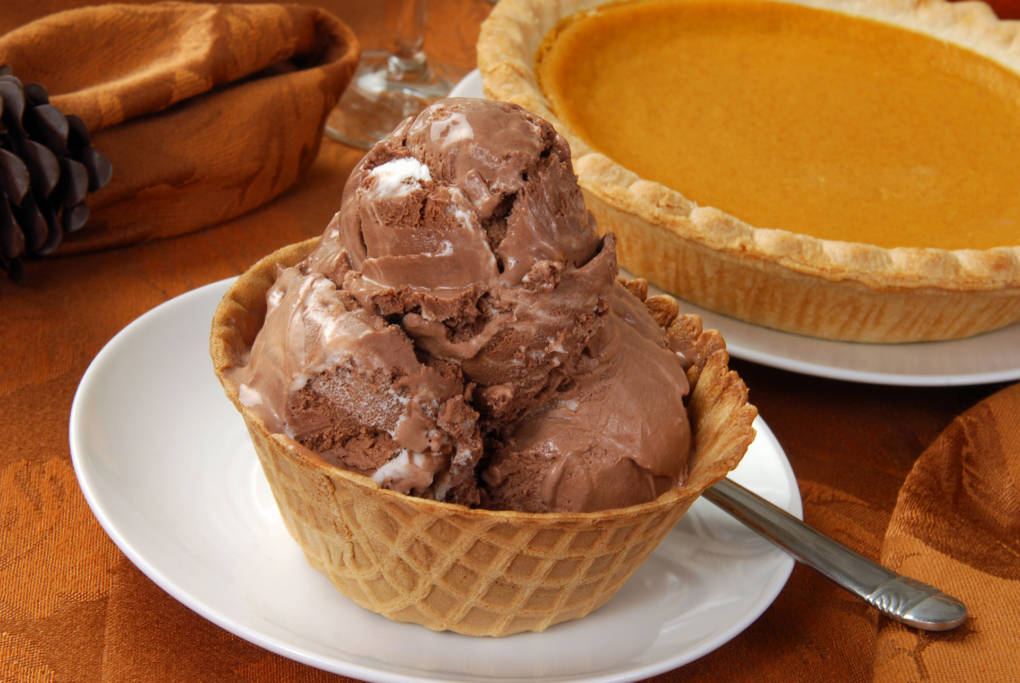
"caption": "Rocky Road was among the first flavors to incorporate \"mix ins.\" ",
"description": "Rocky Road was among the first flavors to incorporate \"mix ins.\" ",
"title": "Ice cream in a waffle bowl",
"credit": "MSPhotographic/iStock",
"status": "inherit",
"isLoading": false,
"fetchFailed": false
},
"news_11779555": {
"type": "attachments",
"id": "news_11779555",
"meta": {
"index": "attachments_1716263798",
"site": "news",
"id": "11779555",
"found": true
},
"parent": 11779554,
"imgSizes": {
"apple_news_ca_landscape_5_5": {
"file": "https://ww2.kqed.org/app/uploads/sites/10/2019/10/702-MARQUEE-1-1044x720.jpg",
"width": 1044,
"mimeType": "image/jpeg",
"height": 720
},
"apple_news_ca_square_4_0": {
"file": "https://ww2.kqed.org/app/uploads/sites/10/2019/10/702-MARQUEE-1-470x470.jpg",
"width": 470,
"mimeType": "image/jpeg",
"height": 470
},
"twentyfourteen-full-width": {
"file": "https://ww2.kqed.org/app/uploads/sites/10/2019/10/702-MARQUEE-1-1038x576.jpg",
"width": 1038,
"mimeType": "image/jpeg",
"height": 576
},
"thumbnail": {
"file": "https://ww2.kqed.org/app/uploads/sites/10/2019/10/702-MARQUEE-1-160x90.jpg",
"width": 160,
"mimeType": "image/jpeg",
"height": 90
},
"post-thumbnail": {
"file": "https://ww2.kqed.org/app/uploads/sites/10/2019/10/702-MARQUEE-1-672x372.jpg",
"width": 672,
"mimeType": "image/jpeg",
"height": 372
},
"kqedFullSize": {
"file": "https://ww2.kqed.org/app/uploads/sites/10/2019/10/702-MARQUEE-1.jpg",
"width": 1280,
"height": 720
},
"apple_news_ca_landscape_4_7": {
"file": "https://ww2.kqed.org/app/uploads/sites/10/2019/10/702-MARQUEE-1-632x474.jpg",
"width": 632,
"mimeType": "image/jpeg",
"height": 474
},
"large": {
"file": "https://ww2.kqed.org/app/uploads/sites/10/2019/10/702-MARQUEE-1-1020x574.jpg",
"width": 1020,
"mimeType": "image/jpeg",
"height": 574
},
"complete_open_graph": {
"file": "https://ww2.kqed.org/app/uploads/sites/10/2019/10/702-MARQUEE-1-1200x675.jpg",
"width": 1200,
"mimeType": "image/jpeg",
"height": 675
},
"apple_news_ca_landscape_4_0": {
"file": "https://ww2.kqed.org/app/uploads/sites/10/2019/10/702-MARQUEE-1-536x402.jpg",
"width": 536,
"mimeType": "image/jpeg",
"height": 402
},
"apple_news_ca_portrait_12_9": {
"file": "https://ww2.kqed.org/app/uploads/sites/10/2019/10/702-MARQUEE-1-1122x720.jpg",
"width": 1122,
"mimeType": "image/jpeg",
"height": 720
},
"medium": {
"file": "https://ww2.kqed.org/app/uploads/sites/10/2019/10/702-MARQUEE-1-800x450.jpg",
"width": 800,
"mimeType": "image/jpeg",
"height": 450
},
"apple_news_ca_portrait_4_0": {
"file": "https://ww2.kqed.org/app/uploads/sites/10/2019/10/702-MARQUEE-1-354x472.jpg",
"width": 354,
"mimeType": "image/jpeg",
"height": 472
},
"apple_news_ca_portrait_9_7": {
"file": "https://ww2.kqed.org/app/uploads/sites/10/2019/10/702-MARQUEE-1-840x720.jpg",
"width": 840,
"mimeType": "image/jpeg",
"height": 720
},
"apple_news_ca_square_9_7": {
"file": "https://ww2.kqed.org/app/uploads/sites/10/2019/10/702-MARQUEE-1-1104x720.jpg",
"width": 1104,
"mimeType": "image/jpeg",
"height": 720
},
"apple_news_ca_portrait_4_7": {
"file": "https://ww2.kqed.org/app/uploads/sites/10/2019/10/702-MARQUEE-1-414x552.jpg",
"width": 414,
"mimeType": "image/jpeg",
"height": 552
},
"apple_news_ca_portrait_5_5": {
"file": "https://ww2.kqed.org/app/uploads/sites/10/2019/10/702-MARQUEE-1-687x720.jpg",
"width": 687,
"mimeType": "image/jpeg",
"height": 720
},
"apple_news_ca_square_4_7": {
"file": "https://ww2.kqed.org/app/uploads/sites/10/2019/10/702-MARQUEE-1-550x550.jpg",
"width": 550,
"mimeType": "image/jpeg",
"height": 550
},
"apple_news_ca_square_5_5": {
"file": "https://ww2.kqed.org/app/uploads/sites/10/2019/10/702-MARQUEE-1-912x720.jpg",
"width": 912,
"mimeType": "image/jpeg",
"height": 720
}
},
"publishDate": 1570817057,
"modified": 1570817057,
"caption": null,
"description": null,
"title": "702 MARQUEE",
"credit": null,
"status": "inherit",
"isLoading": false,
"fetchFailed": false
},
"news_11778556": {
"type": "attachments",
"id": "news_11778556",
"meta": {
"index": "attachments_1716263798",
"site": "news",
"id": "11778556",
"found": true
},
"parent": 11778553,
"imgSizes": {
"apple_news_ca_landscape_5_5": {
"file": "https://ww2.kqed.org/app/uploads/sites/10/2019/10/Noel-Polishing-Rocks-1044x783.jpg",
"width": 1044,
"mimeType": "image/jpeg",
"height": 783
},
"apple_news_ca_square_4_0": {
"file": "https://ww2.kqed.org/app/uploads/sites/10/2019/10/Noel-Polishing-Rocks-470x470.jpg",
"width": 470,
"mimeType": "image/jpeg",
"height": 470
},
"twentyfourteen-full-width": {
"file": "https://ww2.kqed.org/app/uploads/sites/10/2019/10/Noel-Polishing-Rocks-1038x576.jpg",
"width": 1038,
"mimeType": "image/jpeg",
"height": 576
},
"thumbnail": {
"file": "https://ww2.kqed.org/app/uploads/sites/10/2019/10/Noel-Polishing-Rocks-160x120.jpg",
"width": 160,
"mimeType": "image/jpeg",
"height": 120
},
"post-thumbnail": {
"file": "https://ww2.kqed.org/app/uploads/sites/10/2019/10/Noel-Polishing-Rocks-672x372.jpg",
"width": 672,
"mimeType": "image/jpeg",
"height": 372
},
"kqedFullSize": {
"file": "https://ww2.kqed.org/app/uploads/sites/10/2019/10/Noel-Polishing-Rocks.jpg",
"width": 2048,
"height": 1536
},
"apple_news_ca_landscape_4_7": {
"file": "https://ww2.kqed.org/app/uploads/sites/10/2019/10/Noel-Polishing-Rocks-632x474.jpg",
"width": 632,
"mimeType": "image/jpeg",
"height": 474
},
"large": {
"file": "https://ww2.kqed.org/app/uploads/sites/10/2019/10/Noel-Polishing-Rocks-1020x765.jpg",
"width": 1020,
"mimeType": "image/jpeg",
"height": 765
},
"complete_open_graph": {
"file": "https://ww2.kqed.org/app/uploads/sites/10/2019/10/Noel-Polishing-Rocks-1200x900.jpg",
"width": 1200,
"mimeType": "image/jpeg",
"height": 900
},
"apple_news_ca_landscape_4_0": {
"file": "https://ww2.kqed.org/app/uploads/sites/10/2019/10/Noel-Polishing-Rocks-536x402.jpg",
"width": 536,
"mimeType": "image/jpeg",
"height": 402
},
"apple_news_ca_portrait_12_9": {
"file": "https://ww2.kqed.org/app/uploads/sites/10/2019/10/Noel-Polishing-Rocks-1122x1496.jpg",
"width": 1122,
"mimeType": "image/jpeg",
"height": 1496
},
"medium": {
"file": "https://ww2.kqed.org/app/uploads/sites/10/2019/10/Noel-Polishing-Rocks-800x600.jpg",
"width": 800,
"mimeType": "image/jpeg",
"height": 600
},
"apple_news_ca_portrait_4_0": {
"file": "https://ww2.kqed.org/app/uploads/sites/10/2019/10/Noel-Polishing-Rocks-354x472.jpg",
"width": 354,
"mimeType": "image/jpeg",
"height": 472
},
"apple_news_ca_portrait_9_7": {
"file": "https://ww2.kqed.org/app/uploads/sites/10/2019/10/Noel-Polishing-Rocks-840x1120.jpg",
"width": 840,
"mimeType": "image/jpeg",
"height": 1120
},
"apple_news_ca_landscape_12_9": {
"file": "https://ww2.kqed.org/app/uploads/sites/10/2019/10/Noel-Polishing-Rocks-1832x1374.jpg",
"width": 1832,
"mimeType": "image/jpeg",
"height": 1374
},
"apple_news_ca_square_9_7": {
"file": "https://ww2.kqed.org/app/uploads/sites/10/2019/10/Noel-Polishing-Rocks-1104x1104.jpg",
"width": 1104,
"mimeType": "image/jpeg",
"height": 1104
},
"apple_news_ca_portrait_4_7": {
"file": "https://ww2.kqed.org/app/uploads/sites/10/2019/10/Noel-Polishing-Rocks-414x552.jpg",
"width": 414,
"mimeType": "image/jpeg",
"height": 552
},
"apple_news_ca_square_12_9": {
"file": "https://ww2.kqed.org/app/uploads/sites/10/2019/10/Noel-Polishing-Rocks-1472x1472.jpg",
"width": 1472,
"mimeType": "image/jpeg",
"height": 1472
},
"apple_news_ca_portrait_5_5": {
"file": "https://ww2.kqed.org/app/uploads/sites/10/2019/10/Noel-Polishing-Rocks-687x916.jpg",
"width": 687,
"mimeType": "image/jpeg",
"height": 916
},
"full-width": {
"file": "https://ww2.kqed.org/app/uploads/sites/10/2019/10/Noel-Polishing-Rocks-1920x1440.jpg",
"width": 1920,
"mimeType": "image/jpeg",
"height": 1440
},
"apple_news_ca_square_4_7": {
"file": "https://ww2.kqed.org/app/uploads/sites/10/2019/10/Noel-Polishing-Rocks-550x550.jpg",
"width": 550,
"mimeType": "image/jpeg",
"height": 550
},
"apple_news_ca_landscape_9_7": {
"file": "https://ww2.kqed.org/app/uploads/sites/10/2019/10/Noel-Polishing-Rocks-1376x1032.jpg",
"width": 1376,
"mimeType": "image/jpeg",
"height": 1032
},
"apple_news_ca_square_5_5": {
"file": "https://ww2.kqed.org/app/uploads/sites/10/2019/10/Noel-Polishing-Rocks-912x912.jpg",
"width": 912,
"mimeType": "image/jpeg",
"height": 912
}
},
"publishDate": 1570482277,
"modified": 1570482344,
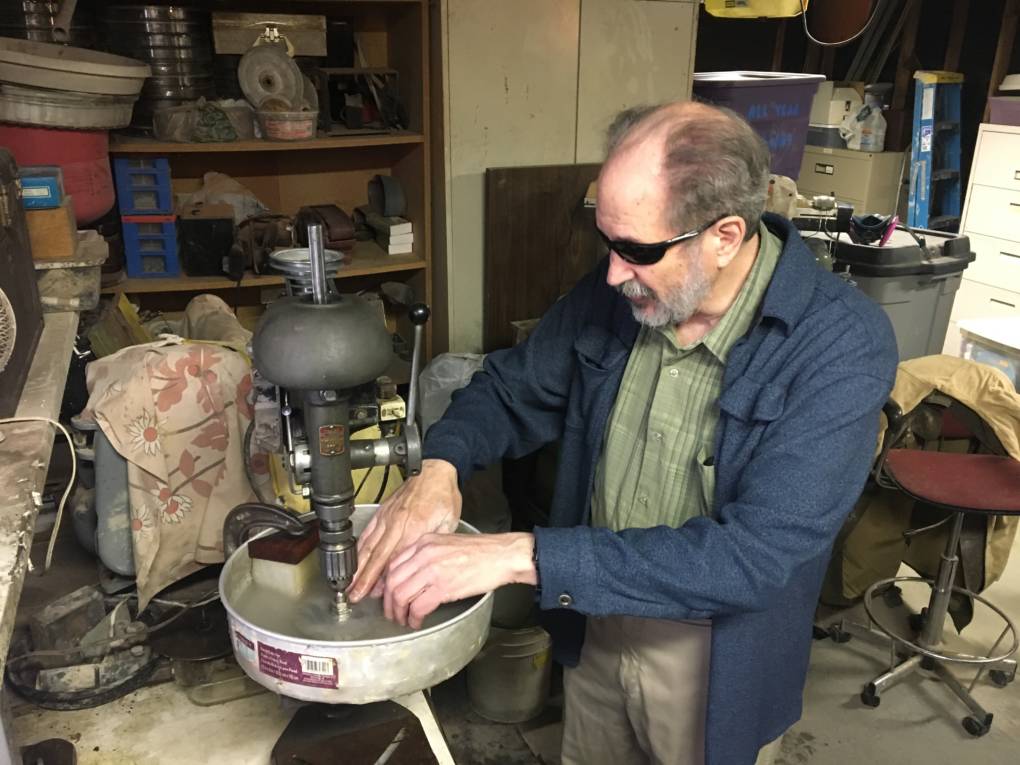
"caption": "Noel Runyan polishes rocks for competitions and uses his hands to tell if they look beautiful.",
"description": null,
"title": "Noel Polishing Rocks",
"credit": "Sam Harnett/KQED",
"status": "inherit",
"isLoading": false,
"fetchFailed": false
}
},
"audioPlayerReducer": {
"postId": "stream_live",
"isPaused": true,
"isPlaying": false,
"pfsActive": false,
"pledgeModalIsOpen": true,
"playerDrawerIsOpen": false,
"liveAudioPlayStartedAt": 0,
"liveAudioPlayContext": ""
},
"authorsReducer": {
"kqed": {
"type": "authors",
"id": "236",
"meta": {
"index": "authors_1716337520",
"id": "236",
"found": true
},
"name": "KQED News Staff",
"firstName": "KQED News Staff",
"lastName": null,
"slug": "kqed",
"email": "faq@kqed.org",
"display_author_email": false,
"staff_mastheads": [],
"title": null,
"bio": null,
"avatar": "https://secure.gravatar.com/avatar/ef0e801a68c4c54afa9180db14084167?s=600&d=blank&r=g",
"twitter": null,
"facebook": null,
"instagram": null,
"linkedin": null,
"sites": [
{
"site": "arts",
"roles": [
"contributor"
]
},
{
"site": "news",
"roles": [
"editor"
]
},
{
"site": "futureofyou",
"roles": [
"author"
]
}
],
"headData": {
"title": "KQED News Staff | KQED",
"description": null,
"ogImgSrc": "https://secure.gravatar.com/avatar/ef0e801a68c4c54afa9180db14084167?s=600&d=blank&r=g",
"twImgSrc": "https://secure.gravatar.com/avatar/ef0e801a68c4c54afa9180db14084167?s=600&d=blank&r=g"
},
"isLoading": false,
"link": "/author/kqed"
},
"rachael-myrow": {
"type": "authors",
"id": "251",
"meta": {
"index": "authors_1716337520",
"id": "251",
"found": true
},
"name": "Rachael Myrow",
"firstName": "Rachael",
"lastName": "Myrow",
"slug": "rachael-myrow",
"email": "rmyrow@kqed.org",
"display_author_email": true,
"staff_mastheads": [
"news"
],
"title": "Senior Editor of KQED's Silicon Valley News Desk",
"bio": "• I write and edit stories about how Silicon Valley power and policies shape everyday life in California. I’m also passionate about making Bay Area history and culture more accessible to a broad public. • I’ve been a journalist for most of my life, starting in high school with The Franklin Press in Los Angeles, where I grew up. While earning my first degree in English at UC Berkeley, I got my start in public radio at KALX-FM. After completing a second degree in journalism at Cal, I landed my first professional job at Marketplace, then moved on to KPCC (now LAist), and then KQED, where I hosted The California Report for more than seven years. • My reporting has appeared on NPR, The World, WBUR’s \u003ci>Here & Now\u003c/i>, and the BBC. I also guest host for KQED’s \u003ci>Forum\u003c/i>, as well as the Commonwealth Club in San Francisco. • I speak periodically on media, democracy and technology issues, and do voiceover work for documentaries and educational video projects. • Outside of the studio, you'll find me hiking Bay Area trails and whipping up Insta-ready meals in my kitchen. • I do not accept gifts, money, or favors from anyone connected to my reporting, I don't pay people for information, and I do not support or donate to political causes. • I strive to treat the people I report on with fairness, honesty, and respect. I also recognize there are often multiple sides to a story and work to verify information through multiple sources and documentation. If I get something wrong, I correct it.",
"avatar": "https://secure.gravatar.com/avatar/3ed8a3c5f26025e4a805ba634cda8cd764906b97438a6d9ce216b044e340da4e?s=600&d=blank&r=g",
"twitter": "rachaelmyrow",
"bluesky": null,
"facebook": null,
"instagram": null,
"linkedin": "https://www.linkedin.com/in/rachaelmyrow/",
"sites": [
{
"site": "arts",
"roles": [
"administrator"
]
},
{
"site": "news",
"roles": [
"edit_others_posts",
"editor"
]
},
{
"site": "futureofyou",
"roles": [
"editor"
]
},
{
"site": "bayareabites",
"roles": [
"editor"
]
},
{
"site": "stateofhealth",
"roles": [
"editor"
]
},
{
"site": "science",
"roles": [
"editor"
]
},
{
"site": "food",
"roles": [
"editor"
]
},
{
"site": "forum",
"roles": [
"editor"
]
},
{
"site": "liveblog",
"roles": [
"author"
]
}
],
"headData": {
"title": "Rachael Myrow | KQED",
"description": "Senior Editor of KQED's Silicon Valley News Desk",
"ogImgSrc": "https://secure.gravatar.com/avatar/3ed8a3c5f26025e4a805ba634cda8cd764906b97438a6d9ce216b044e340da4e?s=600&d=blank&r=g",
"twImgSrc": "https://secure.gravatar.com/avatar/3ed8a3c5f26025e4a805ba634cda8cd764906b97438a6d9ce216b044e340da4e?s=600&d=blank&r=g"
},
"isLoading": false,
"link": "/author/rachael-myrow"
},
"samharnett": {
"type": "authors",
"id": "253",
"meta": {
"index": "authors_1716337520",
"id": "253",
"found": true
},
"name": "Sam Harnett",
"firstName": "Sam",
"lastName": "Harnett",
"slug": "samharnett",
"email": "samharnett@gmail.com",
"display_author_email": false,
"staff_mastheads": [],
"title": "KQED Contributor",
"bio": "Sam Harnett covered tech and work at KQED. He is the co-creator of \u003cem>\u003ca href=\"http://www.theworldaccordingtosound.org\">The World According to Sound\u003c/a>,\u003c/em> a 90-second podcast that features different sounds and the stories behind them.\r\n\r\nBefore coming to KQED, Sam worked as an independent reporter who contributed regularly to \u003cem>The California Report, Marketplace,\u003c/em> \u003cem>The World \u003c/em>and NPR.",
"avatar": "https://secure.gravatar.com/avatar/2538b972ac02f2b9546c7a6c59a0f3d0?s=600&d=blank&r=g",
"twitter": "Samwharnett",
"facebook": null,
"instagram": null,
"linkedin": null,
"sites": [
{
"site": "news",
"roles": [
"edit_others_posts",
"subscriber"
]
},
{
"site": "stateofhealth",
"roles": [
"author"
]
},
{
"site": "science",
"roles": [
"editor"
]
},
{
"site": "quest",
"roles": [
"subscriber"
]
}
],
"headData": {
"title": "Sam Harnett | KQED",
"description": "KQED Contributor",
"ogImgSrc": "https://secure.gravatar.com/avatar/2538b972ac02f2b9546c7a6c59a0f3d0?s=600&d=blank&r=g",
"twImgSrc": "https://secure.gravatar.com/avatar/2538b972ac02f2b9546c7a6c59a0f3d0?s=600&d=blank&r=g"
},
"isLoading": false,
"link": "/author/samharnett"
},
"sasha-khokha": {
"type": "authors",
"id": "254",
"meta": {
"index": "authors_1716337520",
"id": "254",
"found": true
},
"name": "Sasha Khokha",
"firstName": "Sasha",
"lastName": "Khokha",
"slug": "sasha-khokha",
"email": "skhokha@kqed.org",
"display_author_email": true,
"staff_mastheads": [
"news"
],
"title": "Host, The California Report Magazine",
"bio": "Sasha Khokha is the host of \u003cem>The California Report's \u003c/em> weekly magazine program, which takes listeners on sound-rich excursions to meet the people that make the Golden State unique -- through audio documentaries and long-form stories. As \u003cem>The California Report's\u003c/em> Central Valley Bureau Chief based in Fresno for nearly a dozen years, Sasha brought the lives and concerns of rural Californians to listeners around the state. Her reporting helped expose the hidden price immigrant women janitors and farmworkers may pay to keep their jobs: sexual assault at work. It inspired two new California laws to protect them from sexual harassment. She was a key member of the reporting team for the Frontline film \u003cem>Rape on the Night Shift, \u003c/em>which was nominated for two national Emmys. Sasha has also won a national Edward R. Murrow and a national PRNDI award for investigative reporting, as well as multiple prizes from the Society for Professional Journalists. Sasha is a proud alum of the UC Berkeley Graduate School of Journalism and Brown University and a member of the South Asian Journalists Association.",
"avatar": "https://secure.gravatar.com/avatar/e4b5e1541aaeea2aa356aa1fb2a68950?s=600&d=blank&r=g",
"twitter": "KQEDSashaKhokha",
"facebook": null,
"instagram": null,
"linkedin": null,
"sites": [
{
"site": "news",
"roles": [
"editor"
]
},
{
"site": "stateofhealth",
"roles": [
"author"
]
},
{
"site": "science",
"roles": [
"author"
]
},
{
"site": "quest",
"roles": [
"subscriber"
]
}
],
"headData": {
"title": "Sasha Khokha | KQED",
"description": "Host, The California Report Magazine",
"ogImgSrc": "https://secure.gravatar.com/avatar/e4b5e1541aaeea2aa356aa1fb2a68950?s=600&d=blank&r=g",
"twImgSrc": "https://secure.gravatar.com/avatar/e4b5e1541aaeea2aa356aa1fb2a68950?s=600&d=blank&r=g"
},
"isLoading": false,
"link": "/author/sasha-khokha"
},
"mmedina": {
"type": "authors",
"id": "11528",
"meta": {
"index": "authors_1716337520",
"id": "11528",
"found": true
},
"name": "Marisol Medina-Cadena",
"firstName": "Marisol",
"lastName": "Medina-Cadena",
"slug": "mmedina",
"email": "mmedina@KQED.org",
"display_author_email": true,
"staff_mastheads": [],
"title": "Producer, Rightnowish Podcast",
"bio": "Marisol Medina-Cadena is a radio reporter and podcast producer. Before working at KQED, she produced for PBS member station, KCET, in Los Angeles. In 2017, Marisol won an Emmy Award for her work on the televised documentary, \u003cem>City Rising\u003c/em>, examining California's affordable housing crisis and the historical roots of gentrification.",
"avatar": "https://secure.gravatar.com/avatar/6c3db46a1cabb5e1fe9a365b5f4e681e?s=600&d=blank&r=g",
"twitter": "marisolreports",
"facebook": null,
"instagram": null,
"linkedin": null,
"sites": [
{
"site": "arts",
"roles": []
},
{
"site": "news",
"roles": [
"edit_others_posts"
]
}
],
"headData": {
"title": "Marisol Medina-Cadena | KQED",
"description": "Producer, Rightnowish Podcast",
"ogImgSrc": "https://secure.gravatar.com/avatar/6c3db46a1cabb5e1fe9a365b5f4e681e?s=600&d=blank&r=g",
"twImgSrc": "https://secure.gravatar.com/avatar/6c3db46a1cabb5e1fe9a365b5f4e681e?s=600&d=blank&r=g"
},
"isLoading": false,
"link": "/author/mmedina"
},
"aehsanipour": {
"type": "authors",
"id": "11580",
"meta": {
"index": "authors_1716337520",
"id": "11580",
"found": true
},
"name": "Asal Ehsanipour",
"firstName": "Asal",
"lastName": "Ehsanipour",
"slug": "aehsanipour",
"email": "aehsanipour@kqed.org",
"display_author_email": false,
"staff_mastheads": [],
"title": "Reporter and Producer",
"bio": "Asal Ehsanipour is a producer and reporter for Rightnowish, Bay Curious and The California Report Magazine. She is also a producer for \u003ca href=\"https://www.thedoubleshift.com/\">The Double Shift\u003c/a>, a podcast about a new generation of working mothers. In 2018, Asal was named an Emerging Journalist Fellow by the Journalism and Women’s Symposium. Her work has appeared on KQED, KALW, PRI’s The World, and in several food and travel publications.",
"avatar": "https://secure.gravatar.com/avatar/c0e210438f5dca1b76921ff9f0eada52?s=600&d=blank&r=g",
"twitter": null,
"facebook": null,
"instagram": null,
"linkedin": null,
"sites": [
{
"site": "arts",
"roles": []
},
{
"site": "news",
"roles": [
"author",
"edit_others_posts"
]
}
],
"headData": {
"title": "Asal Ehsanipour | KQED",
"description": "Reporter and Producer",
"ogImgSrc": "https://secure.gravatar.com/avatar/c0e210438f5dca1b76921ff9f0eada52?s=600&d=blank&r=g",
"twImgSrc": "https://secure.gravatar.com/avatar/c0e210438f5dca1b76921ff9f0eada52?s=600&d=blank&r=g"
},
"isLoading": false,
"link": "/author/aehsanipour"
},
"slister": {
"type": "authors",
"id": "11582",
"meta": {
"index": "authors_1716337520",
"id": "11582",
"found": true
},
"name": "Stephanie Lister",
"firstName": "Stephanie",
"lastName": "Lister",
"slug": "slister",
"email": "slister@kqed.org",
"display_author_email": false,
"staff_mastheads": [],
"title": "KQED Contributor",
"bio": null,
"avatar": "https://secure.gravatar.com/avatar/5393644d68259d7bd1c83bcfc9725ca5?s=600&d=blank&r=g",
"twitter": null,
"facebook": null,
"instagram": null,
"linkedin": null,
"sites": [
{
"site": "news",
"roles": [
"subscriber"
]
}
],
"headData": {
"title": "Stephanie Lister | KQED",
"description": "KQED Contributor",
"ogImgSrc": "https://secure.gravatar.com/avatar/5393644d68259d7bd1c83bcfc9725ca5?s=600&d=blank&r=g",
"twImgSrc": "https://secure.gravatar.com/avatar/5393644d68259d7bd1c83bcfc9725ca5?s=600&d=blank&r=g"
},
"isLoading": false,
"link": "/author/slister"
},
"amorga": {
"type": "authors",
"id": "11629",
"meta": {
"index": "authors_1716337520",
"id": "11629",
"found": true
},
"name": "Adriana Morga",
"firstName": "Adriana",
"lastName": "Morga",
"slug": "amorga",
"email": "amorga@kqed.org",
"display_author_email": false,
"staff_mastheads": [],
"title": "KQED Contributor",
"bio": "Adriana Morga is an on-call Digital Producer for KQED en Español. She is also completing her journalism degree at San Francisco State University. She has experience working in print and radio. Morga, who was born in Tijuana, Mexico, has spent her developing career covering the Latino community for English and Spanish-language publications including KALW and El Tecolote.",
"avatar": "https://secure.gravatar.com/avatar/9ef1c5a7ff2f2ae1ab05809325f43d03?s=600&d=blank&r=g",
"twitter": null,
"facebook": null,
"instagram": null,
"linkedin": null,
"sites": [
{
"site": "arts",
"roles": []
},
{
"site": "news",
"roles": [
"author"
]
},
{
"site": "science",
"roles": [
"editor"
]
}
],
"headData": {
"title": "Adriana Morga | KQED",
"description": "KQED Contributor",
"ogImgSrc": "https://secure.gravatar.com/avatar/9ef1c5a7ff2f2ae1ab05809325f43d03?s=600&d=blank&r=g",
"twImgSrc": "https://secure.gravatar.com/avatar/9ef1c5a7ff2f2ae1ab05809325f43d03?s=600&d=blank&r=g"
},
"isLoading": false,
"link": "/author/amorga"
},
"awoelfle": {
"type": "authors",
"id": "11630",
"meta": {
"index": "authors_1716337520",
"id": "11630",
"found": true
},
"name": "Alice Woelfle",
"firstName": "Alice",
"lastName": "Woelfle",
"slug": "awoelfle",
"email": "awoelfle@KQED.org",
"display_author_email": false,
"staff_mastheads": [],
"title": null,
"bio": null,
"avatar": "https://secure.gravatar.com/avatar/00e46668235dc71f4a7513cf5eb31df3?s=600&d=blank&r=g",
"twitter": null,
"facebook": null,
"instagram": null,
"linkedin": null,
"sites": [
{
"site": "news",
"roles": [
"subscriber"
]
}
],
"headData": {
"title": "Alice Woelfle | KQED",
"description": null,
"ogImgSrc": "https://secure.gravatar.com/avatar/00e46668235dc71f4a7513cf5eb31df3?s=600&d=blank&r=g",
"twImgSrc": "https://secure.gravatar.com/avatar/00e46668235dc71f4a7513cf5eb31df3?s=600&d=blank&r=g"
},
"isLoading": false,
"link": "/author/awoelfle"
}
},
"pagesReducer": {
"news_category_arts-and-culture": {
"type": "terms",
"id": "news_223",
"meta": {
"index": "terms_1716263798",
"site": "news",
"id": "223",
"score": 11.241959
},
"featImg": null,
"name": "Arts and Culture",
"description": null,
"taxonomy": "category",
"headData": {
"twImgId": null,
"twTitle": null,
"ogTitle": null,
"ogImgId": null,
"twDescription": null,
"description": null,
"title": "Arts and Culture Archives | KQED News",
"ogDescription": null
},
"ttid": 231,
"slug": "arts-and-culture",
"isLoading": false,
"title": "Arts and Culture",
"pageMeta": {
"site": "news",
"WpPageTemplate": "page-topic-editorial",
"currentPage": 50
},
"blocks": [
{
"blockName": "kqed/post-list",
"attrs": {
"layout": "cardArticle2",
"query": "posts/news?category=arts-and-culture",
"seeMore": false,
"paginated": true,
"page": 50
}
},
{
"blockName": "kqed/ad"
}
]
}
},
"pfsSessionReducer": {},
"postsReducer": {
"stream_live": {
"type": "live",
"id": "stream_live",
"audioUrl": "https://streams.kqed.org/kqedradio",
"title": "Live Stream",
"excerpt": "Live Stream information currently unavailable.",
"link": "/radio",
"featImg": "",
"label": {
"name": "KQED Live",
"link": "/"
}
},
"stream_kqedNewscast": {
"type": "posts",
"id": "stream_kqedNewscast",
"audioUrl": "https://www.kqed.org/.stream/anon/radio/RDnews/newscast.mp3?_=1",
"title": "KQED Newscast",
"featImg": "",
"label": {
"name": "88.5 FM",
"link": "/"
}
},
"news_11789818": {
"type": "posts",
"id": "news_11789818",
"meta": {
"index": "posts_1716263798",
"site": "news",
"id": "11789818",
"score": null,
"sort": [
1576005202000
]
},
"guestAuthors": [],
"slug": "oakland-dancers-present-nutcracker-with-an-african-diaspora-twist",
"title": "Oakland Dancers Present 'The Nutcracker' With an African Diaspora Twist",
"publishDate": 1576005202,
"format": "audio",
"headTitle": "Oakland Dancers Present ‘The Nutcracker’ With an African Diaspora Twist | KQED",
"labelTerm": {
"term": 26731,
"site": "news"
},
"content": "\u003cp>A new production of Tchaikovsky’s “The Nutcracker” called “\u003ca href=\"https://www.thepeoplesconservatory.org/events-1/kola-an-afro-diasporic-remix-of-the-nutcracker\">KOLA: An Afro Diasporic Remix of the Nutcracker\u003c/a>” is hitting the stage in Oakland this holiday season.\u003c/p>\n\u003cp>It’s a twist on the traditional ballet: There’s no nutcracker, there’s no mouse, and there’s no Clara either.\u003c/p>\n\u003cfigure id=\"attachment_11790392\" class=\"wp-caption alignnone\" style=\"max-width: 800px\">\u003cimg loading=\"lazy\" decoding=\"async\" class=\"size-medium wp-image-11790392\" src=\"https://ww2.kqed.org/app/uploads/sites/10/2019/12/RS40401_RS40379__DSC8544_edited-qut-800x450.jpg\" alt=\"Brazil Clement dances as Ogun during a rehearsal at Sullivan Community Space in Oakland on Dec. 8, 2019.\" width=\"800\" height=\"450\" srcset=\"https://cdn.kqed.org/wp-content/uploads/sites/10/2019/12/RS40401_RS40379__DSC8544_edited-qut-800x450.jpg 800w, https://cdn.kqed.org/wp-content/uploads/sites/10/2019/12/RS40401_RS40379__DSC8544_edited-qut-160x90.jpg 160w, https://cdn.kqed.org/wp-content/uploads/sites/10/2019/12/RS40401_RS40379__DSC8544_edited-qut-1020x574.jpg 1020w, https://cdn.kqed.org/wp-content/uploads/sites/10/2019/12/RS40401_RS40379__DSC8544_edited-qut-1200x675.jpg 1200w, https://cdn.kqed.org/wp-content/uploads/sites/10/2019/12/RS40401_RS40379__DSC8544_edited-qut.jpg 1920w\" sizes=\"(max-width: 800px) 100vw, 800px\">\u003cfigcaption class=\"wp-caption-text\">Brazil Clement dances as Ogun during a rehearsal at Sullivan Community Space in Oakland on Dec. 8, 2019. \u003ccite>(Stephanie Lister/KQED)\u003c/cite>\u003c/figcaption>\u003c/figure>\n\u003cp>Instead, 13-year-old dancer Amelinda Origunwa performs the lead role of Nzingha, who travels the African diaspora, learning different kinds of dance as the show unfolds.\u003c/p>\n\u003cp>“There’s Afro-Haitian, Afro-Cuban, all the different Orisha dances. There’s ballet, modern, jazz, hip-hop, break-dancing. And flamenco,” said Origunwa.\u003c/p>\n\u003cfigure id=\"attachment_11790396\" class=\"wp-caption alignnone\" style=\"max-width: 800px\">\u003cimg loading=\"lazy\" decoding=\"async\" class=\"size-medium wp-image-11790396\" src=\"https://ww2.kqed.org/app/uploads/sites/10/2019/12/RS40403_RS40386__DSC8282_edited-qut-800x450.jpg\" alt=\"Samara Cole-Mercado dancing as Yemanja during a rehearsal at Sullivan Community Space in Oakland on Dec. 8, 2019.\" width=\"800\" height=\"450\" srcset=\"https://cdn.kqed.org/wp-content/uploads/sites/10/2019/12/RS40403_RS40386__DSC8282_edited-qut-800x450.jpg 800w, https://cdn.kqed.org/wp-content/uploads/sites/10/2019/12/RS40403_RS40386__DSC8282_edited-qut-160x90.jpg 160w, https://cdn.kqed.org/wp-content/uploads/sites/10/2019/12/RS40403_RS40386__DSC8282_edited-qut-1020x574.jpg 1020w, https://cdn.kqed.org/wp-content/uploads/sites/10/2019/12/RS40403_RS40386__DSC8282_edited-qut-1200x675.jpg 1200w, https://cdn.kqed.org/wp-content/uploads/sites/10/2019/12/RS40403_RS40386__DSC8282_edited-qut.jpg 1920w\" sizes=\"(max-width: 800px) 100vw, 800px\">\u003cfigcaption class=\"wp-caption-text\">Samara Cole-Mercado dancing as Yemanja during a rehearsal at Sullivan Community Space in Oakland on Dec. 8, 2019. \u003ccite>(Stephanie Lister/KQED)\u003c/cite>\u003c/figcaption>\u003c/figure>\n\u003cp>The California Report Magazine’s Sasha Khokha spoke with Rozz Nash, the founder and director of \u003ca href=\"https://www.thepeoplesconservatory.org/\">The People’s Conservatory\u003c/a>, the dance company putting on the show.\u003c/p>\n\u003cfigure id=\"attachment_11790387\" class=\"wp-caption alignnone\" style=\"max-width: 800px\">\u003cimg loading=\"lazy\" decoding=\"async\" class=\"size-medium wp-image-11790387\" src=\"https://ww2.kqed.org/app/uploads/sites/10/2019/12/RS40398_RS40355__DSC7322_edited-qut-800x534.jpg\" alt=\"RyanNicole Peters, co-writer, co-director and lead dramatist (left) sits with Rozz Nash, executive director of The People’s Conservatory, during a rehearsal at Malonga Casquelourd Center for the Arts in Oakland on Dec. 5, 2019.\" width=\"800\" height=\"534\" srcset=\"https://cdn.kqed.org/wp-content/uploads/sites/10/2019/12/RS40398_RS40355__DSC7322_edited-qut-800x534.jpg 800w, https://cdn.kqed.org/wp-content/uploads/sites/10/2019/12/RS40398_RS40355__DSC7322_edited-qut-160x107.jpg 160w, https://cdn.kqed.org/wp-content/uploads/sites/10/2019/12/RS40398_RS40355__DSC7322_edited-qut-1020x681.jpg 1020w, https://cdn.kqed.org/wp-content/uploads/sites/10/2019/12/RS40398_RS40355__DSC7322_edited-qut-1200x801.jpg 1200w, https://cdn.kqed.org/wp-content/uploads/sites/10/2019/12/RS40398_RS40355__DSC7322_edited-qut.jpg 1920w\" sizes=\"(max-width: 800px) 100vw, 800px\">\u003cfigcaption class=\"wp-caption-text\">RyanNicole Peters, co-writer, co-director and lead dramatist (left) sits with Rozz Nash, executive director of The People’s Conservatory, during a rehearsal at Malonga Casquelourd Center for the Arts in Oakland on Dec. 5, 2019. \u003ccite>(Stephanie Lister/KQED)\u003c/cite>\u003c/figcaption>\u003c/figure>\n\u003cp>\u003cem>Note: the quotes below have been edited for clarity.\u003c/em>\u003c/p>\n\u003cp>\u003cb>On what makes this show different\u003cbr>\n\u003c/b>\u003cbr>\nNash: Ours really tours the globe, and focuses on not only the dances and music from different cultures, but also some of their gods, spirits and practices. We work Orishas into our work from the Ife tradition. We’re also focusing on a different, innovative narrative we created, which is not like “The Nutcracker” at all.\u003c/p>\n\u003cfigure id=\"attachment_11790389\" class=\"wp-caption alignnone\" style=\"max-width: 800px\">\u003cimg loading=\"lazy\" decoding=\"async\" class=\"size-medium wp-image-11790389\" src=\"https://ww2.kqed.org/app/uploads/sites/10/2019/12/RS40399_RS40363__DSC7503_edited-qut-800x534.jpg\" alt=\"Break dancers rehearse at Sullivan Community Space in Oakland on Dec. 8, 2019. \" width=\"800\" height=\"534\" srcset=\"https://cdn.kqed.org/wp-content/uploads/sites/10/2019/12/RS40399_RS40363__DSC7503_edited-qut-800x534.jpg 800w, https://cdn.kqed.org/wp-content/uploads/sites/10/2019/12/RS40399_RS40363__DSC7503_edited-qut-160x107.jpg 160w, https://cdn.kqed.org/wp-content/uploads/sites/10/2019/12/RS40399_RS40363__DSC7503_edited-qut-1020x681.jpg 1020w, https://cdn.kqed.org/wp-content/uploads/sites/10/2019/12/RS40399_RS40363__DSC7503_edited-qut-1200x801.jpg 1200w, https://cdn.kqed.org/wp-content/uploads/sites/10/2019/12/RS40399_RS40363__DSC7503_edited-qut.jpg 1920w\" sizes=\"(max-width: 800px) 100vw, 800px\">\u003cfigcaption class=\"wp-caption-text\">Break dancers rehearse at Sullivan Community Space in Oakland on Dec. 8, 2019. \u003ccite>(Stephanie Lister/KQED)\u003c/cite>\u003c/figcaption>\u003c/figure>\n\u003cp>\u003cb>On the plot\u003c/b>\u003c/p>\n\u003cp>Nash: We still have a young girl who’s a protagonist. Nzingha is13, and she’s desperately looking for connection. She’s looking to find her roots and what it is about this world that is meant for her to explore. We take her on a journey along the trans-Aatlantic slave trade from West Africa to Brazil to Cuba to Haiti to Spain, and we end up back in the continental U.S. All this is done through diasporic dances, music, movement and culture. We have an incredible creative team (including local artists Kev Choice, Jennifer Johns, and RyanNicole) that helped make it possible, so we jump from one culture to another through the music and story.\u003c/p>\n\u003cfigure id=\"attachment_11790398\" class=\"wp-caption alignnone\" style=\"max-width: 800px\">\u003cimg loading=\"lazy\" decoding=\"async\" class=\"size-medium wp-image-11790398\" src=\"https://ww2.kqed.org/app/uploads/sites/10/2019/12/RS40404_RS40361__DSC7456_edited-qut-800x450.jpg\" alt=\"Dancers rehearse for a new production from The People's Conservatory called Kola: An Afro Diasporic Remix of The Nutcracker.\" width=\"800\" height=\"450\" srcset=\"https://cdn.kqed.org/wp-content/uploads/sites/10/2019/12/RS40404_RS40361__DSC7456_edited-qut-800x450.jpg 800w, https://cdn.kqed.org/wp-content/uploads/sites/10/2019/12/RS40404_RS40361__DSC7456_edited-qut-160x90.jpg 160w, https://cdn.kqed.org/wp-content/uploads/sites/10/2019/12/RS40404_RS40361__DSC7456_edited-qut-1020x574.jpg 1020w, https://cdn.kqed.org/wp-content/uploads/sites/10/2019/12/RS40404_RS40361__DSC7456_edited-qut-1200x675.jpg 1200w, https://cdn.kqed.org/wp-content/uploads/sites/10/2019/12/RS40404_RS40361__DSC7456_edited-qut.jpg 1920w\" sizes=\"(max-width: 800px) 100vw, 800px\">\u003cfigcaption class=\"wp-caption-text\">Dancers rehearse for a new production from The People’s Conservatory called ‘Kola: An Afro Diasporic Remix of The Nutcracker.’ \u003ccite>(Stephanie Lister/KQED)\u003c/cite>\u003c/figcaption>\u003c/figure>\n\u003cp>[ad fullwidth]\u003c/p>\n\u003cp>\u003cb>On The People’s Conservatory\u003c/b>\u003c/p>\n\u003cp>Nash: The People’s Conservatory started about a year and half ago, but I’ve been working with these youth for five years at a school called \u003ca href=\"http://rosesinconcrete.org/\">Roses in Concrete,\u003c/a> where I was the director of performing and visual arts. We basically created an integrated arts school. Now that we are in 10 schools, we’re able to provide services to many more people and young people, and some of our students have gone off to other places. It’s a way for us to still keep them in the fold, work with them and help them to develop their art.\u003c/p>\n\u003cfigure id=\"attachment_11790390\" class=\"wp-caption alignnone\" style=\"max-width: 800px\">\u003cimg loading=\"lazy\" decoding=\"async\" class=\"size-medium wp-image-11790390\" src=\"https://ww2.kqed.org/app/uploads/sites/10/2019/12/RS40400_RS40366__DSC7555_edited-qut-800x450.jpg\" alt=\"James Davis, who dances Exu, break-dances with a group of snow angels during a rehearsal at Sullivan Community Space in Oakland on Dec. 8, 2019. \" width=\"800\" height=\"450\" srcset=\"https://cdn.kqed.org/wp-content/uploads/sites/10/2019/12/RS40400_RS40366__DSC7555_edited-qut-800x450.jpg 800w, https://cdn.kqed.org/wp-content/uploads/sites/10/2019/12/RS40400_RS40366__DSC7555_edited-qut-160x90.jpg 160w, https://cdn.kqed.org/wp-content/uploads/sites/10/2019/12/RS40400_RS40366__DSC7555_edited-qut-1020x574.jpg 1020w, https://cdn.kqed.org/wp-content/uploads/sites/10/2019/12/RS40400_RS40366__DSC7555_edited-qut-1200x675.jpg 1200w, https://cdn.kqed.org/wp-content/uploads/sites/10/2019/12/RS40400_RS40366__DSC7555_edited-qut.jpg 1920w\" sizes=\"(max-width: 800px) 100vw, 800px\">\u003cfigcaption class=\"wp-caption-text\">James Davis, who dances Exu, break-dances with a group of snow angels during a rehearsal at Sullivan Community Space in Oakland on Dec. 8, 2019. \u003ccite>(Stephanie Lister/KQED)\u003c/cite>\u003c/figcaption>\u003c/figure>\n\u003cp>\u003cb>On the history of Oakland and the history of slavery\u003c/b>\u003c/p>\n\u003cp>Nash: We want to make sure that we’re meeting students where they are and creating content with them that has to do with the history of where they live, who they are, where they come from and their indigeneity. The show is about how slavery has affected how folks exist and navigate the world and how folks in Oakland are navigating the world because of what their lineage had to suffer. “How did you get here? How did your family get here? What are some of the revolutionary background that comes from a lot of our students’ household and families?” We want to highlight that and not suppress that.\u003c/p>\n\u003cp>\u003c/p>\n",
"blocks": [],
"excerpt": "There's no mouse king and no Clara, but there's break-dancing, flamenco, and an Oakland remix of Tchaikovsky. ",
"status": "publish",
"parent": 0,
"modified": 1721109805,
"stats": {
"hasAudio": false,
"hasVideo": false,
"hasChartOrMap": false,
"iframeSrcs": [],
"hasGoogleForm": false,
"hasGallery": false,
"hasHearkenModule": false,
"hasPolis": false,
"paragraphCount": 15,
"wordCount": 733
},
"headData": {
"title": "Oakland Dancers Present 'The Nutcracker' With an African Diaspora Twist | KQED",
"description": "There's no mouse king and no Clara, but there's break-dancing, flamenco, and an Oakland remix of Tchaikovsky. ",
"ogTitle": "",
"ogDescription": "",
"ogImgId": "",
"twTitle": "",
"twDescription": "",
"twImgId": "",
"schema": {
"@context": "https://schema.org",
"@type": "NewsArticle",
"headline": "Oakland Dancers Present 'The Nutcracker' With an African Diaspora Twist",
"datePublished": "2019-12-10T11:13:22-08:00",
"dateModified": "2024-07-15T23:03:25-07:00",
"image": "https://cdn.kqed.org/wp-content/uploads/2020/02/KQED-OG-Image@1x.png",
"isAccessibleForFree": "True",
"publisher": {
"@type": "NewsMediaOrganization",
"@id": "https://www.kqed.org/#organization",
"name": "KQED",
"logo": "https://cdn.kqed.org/wp-content/uploads/2020/02/KQED-OG-Image@1x.png",
"url": "https://www.kqed.org",
"sameAs": [
"https://www.facebook.com/KQED",
"https://twitter.com/KQED",
"https://www.instagram.com/kqed/",
"https://www.tiktok.com/@kqedofficial",
"https://www.linkedin.com/company/kqed",
"https://www.youtube.com/channel/UCeC0IOo7i1P_61zVUWbJ4nw"
]
}
}
},
"audioUrl": "https://www.kqed.org/.stream/anon/radio/tcrmag/2019/12/NashKOLAKhokhaNutcracker.mp3",
"sticky": false,
"audioTrackLength": 408,
"path": "/news/11789818/oakland-dancers-present-nutcracker-with-an-african-diaspora-twist",
"audioDuration": 427000,
"parsedContent": [
{
"type": "contentString",
"content": "\u003cdiv class=\"post-body\">\u003cp>\u003cp>A new production of Tchaikovsky’s “The Nutcracker” called “\u003ca href=\"https://www.thepeoplesconservatory.org/events-1/kola-an-afro-diasporic-remix-of-the-nutcracker\">KOLA: An Afro Diasporic Remix of the Nutcracker\u003c/a>” is hitting the stage in Oakland this holiday season.\u003c/p>\n\u003cp>It’s a twist on the traditional ballet: There’s no nutcracker, there’s no mouse, and there’s no Clara either.\u003c/p>\n\u003cfigure id=\"attachment_11790392\" class=\"wp-caption alignnone\" style=\"max-width: 800px\">\u003cimg loading=\"lazy\" decoding=\"async\" class=\"size-medium wp-image-11790392\" src=\"https://ww2.kqed.org/app/uploads/sites/10/2019/12/RS40401_RS40379__DSC8544_edited-qut-800x450.jpg\" alt=\"Brazil Clement dances as Ogun during a rehearsal at Sullivan Community Space in Oakland on Dec. 8, 2019.\" width=\"800\" height=\"450\" srcset=\"https://cdn.kqed.org/wp-content/uploads/sites/10/2019/12/RS40401_RS40379__DSC8544_edited-qut-800x450.jpg 800w, https://cdn.kqed.org/wp-content/uploads/sites/10/2019/12/RS40401_RS40379__DSC8544_edited-qut-160x90.jpg 160w, https://cdn.kqed.org/wp-content/uploads/sites/10/2019/12/RS40401_RS40379__DSC8544_edited-qut-1020x574.jpg 1020w, https://cdn.kqed.org/wp-content/uploads/sites/10/2019/12/RS40401_RS40379__DSC8544_edited-qut-1200x675.jpg 1200w, https://cdn.kqed.org/wp-content/uploads/sites/10/2019/12/RS40401_RS40379__DSC8544_edited-qut.jpg 1920w\" sizes=\"(max-width: 800px) 100vw, 800px\">\u003cfigcaption class=\"wp-caption-text\">Brazil Clement dances as Ogun during a rehearsal at Sullivan Community Space in Oakland on Dec. 8, 2019. \u003ccite>(Stephanie Lister/KQED)\u003c/cite>\u003c/figcaption>\u003c/figure>\n\u003cp>Instead, 13-year-old dancer Amelinda Origunwa performs the lead role of Nzingha, who travels the African diaspora, learning different kinds of dance as the show unfolds.\u003c/p>\n\u003cp>“There’s Afro-Haitian, Afro-Cuban, all the different Orisha dances. There’s ballet, modern, jazz, hip-hop, break-dancing. And flamenco,” said Origunwa.\u003c/p>\n\u003cfigure id=\"attachment_11790396\" class=\"wp-caption alignnone\" style=\"max-width: 800px\">\u003cimg loading=\"lazy\" decoding=\"async\" class=\"size-medium wp-image-11790396\" src=\"https://ww2.kqed.org/app/uploads/sites/10/2019/12/RS40403_RS40386__DSC8282_edited-qut-800x450.jpg\" alt=\"Samara Cole-Mercado dancing as Yemanja during a rehearsal at Sullivan Community Space in Oakland on Dec. 8, 2019.\" width=\"800\" height=\"450\" srcset=\"https://cdn.kqed.org/wp-content/uploads/sites/10/2019/12/RS40403_RS40386__DSC8282_edited-qut-800x450.jpg 800w, https://cdn.kqed.org/wp-content/uploads/sites/10/2019/12/RS40403_RS40386__DSC8282_edited-qut-160x90.jpg 160w, https://cdn.kqed.org/wp-content/uploads/sites/10/2019/12/RS40403_RS40386__DSC8282_edited-qut-1020x574.jpg 1020w, https://cdn.kqed.org/wp-content/uploads/sites/10/2019/12/RS40403_RS40386__DSC8282_edited-qut-1200x675.jpg 1200w, https://cdn.kqed.org/wp-content/uploads/sites/10/2019/12/RS40403_RS40386__DSC8282_edited-qut.jpg 1920w\" sizes=\"(max-width: 800px) 100vw, 800px\">\u003cfigcaption class=\"wp-caption-text\">Samara Cole-Mercado dancing as Yemanja during a rehearsal at Sullivan Community Space in Oakland on Dec. 8, 2019. \u003ccite>(Stephanie Lister/KQED)\u003c/cite>\u003c/figcaption>\u003c/figure>\n\u003cp>The California Report Magazine’s Sasha Khokha spoke with Rozz Nash, the founder and director of \u003ca href=\"https://www.thepeoplesconservatory.org/\">The People’s Conservatory\u003c/a>, the dance company putting on the show.\u003c/p>\n\u003cfigure id=\"attachment_11790387\" class=\"wp-caption alignnone\" style=\"max-width: 800px\">\u003cimg loading=\"lazy\" decoding=\"async\" class=\"size-medium wp-image-11790387\" src=\"https://ww2.kqed.org/app/uploads/sites/10/2019/12/RS40398_RS40355__DSC7322_edited-qut-800x534.jpg\" alt=\"RyanNicole Peters, co-writer, co-director and lead dramatist (left) sits with Rozz Nash, executive director of The People’s Conservatory, during a rehearsal at Malonga Casquelourd Center for the Arts in Oakland on Dec. 5, 2019.\" width=\"800\" height=\"534\" srcset=\"https://cdn.kqed.org/wp-content/uploads/sites/10/2019/12/RS40398_RS40355__DSC7322_edited-qut-800x534.jpg 800w, https://cdn.kqed.org/wp-content/uploads/sites/10/2019/12/RS40398_RS40355__DSC7322_edited-qut-160x107.jpg 160w, https://cdn.kqed.org/wp-content/uploads/sites/10/2019/12/RS40398_RS40355__DSC7322_edited-qut-1020x681.jpg 1020w, https://cdn.kqed.org/wp-content/uploads/sites/10/2019/12/RS40398_RS40355__DSC7322_edited-qut-1200x801.jpg 1200w, https://cdn.kqed.org/wp-content/uploads/sites/10/2019/12/RS40398_RS40355__DSC7322_edited-qut.jpg 1920w\" sizes=\"(max-width: 800px) 100vw, 800px\">\u003cfigcaption class=\"wp-caption-text\">RyanNicole Peters, co-writer, co-director and lead dramatist (left) sits with Rozz Nash, executive director of The People’s Conservatory, during a rehearsal at Malonga Casquelourd Center for the Arts in Oakland on Dec. 5, 2019. \u003ccite>(Stephanie Lister/KQED)\u003c/cite>\u003c/figcaption>\u003c/figure>\n\u003cp>\u003cem>Note: the quotes below have been edited for clarity.\u003c/em>\u003c/p>\n\u003cp>\u003cb>On what makes this show different\u003cbr>\n\u003c/b>\u003cbr>\nNash: Ours really tours the globe, and focuses on not only the dances and music from different cultures, but also some of their gods, spirits and practices. We work Orishas into our work from the Ife tradition. We’re also focusing on a different, innovative narrative we created, which is not like “The Nutcracker” at all.\u003c/p>\n\u003cfigure id=\"attachment_11790389\" class=\"wp-caption alignnone\" style=\"max-width: 800px\">\u003cimg loading=\"lazy\" decoding=\"async\" class=\"size-medium wp-image-11790389\" src=\"https://ww2.kqed.org/app/uploads/sites/10/2019/12/RS40399_RS40363__DSC7503_edited-qut-800x534.jpg\" alt=\"Break dancers rehearse at Sullivan Community Space in Oakland on Dec. 8, 2019. \" width=\"800\" height=\"534\" srcset=\"https://cdn.kqed.org/wp-content/uploads/sites/10/2019/12/RS40399_RS40363__DSC7503_edited-qut-800x534.jpg 800w, https://cdn.kqed.org/wp-content/uploads/sites/10/2019/12/RS40399_RS40363__DSC7503_edited-qut-160x107.jpg 160w, https://cdn.kqed.org/wp-content/uploads/sites/10/2019/12/RS40399_RS40363__DSC7503_edited-qut-1020x681.jpg 1020w, https://cdn.kqed.org/wp-content/uploads/sites/10/2019/12/RS40399_RS40363__DSC7503_edited-qut-1200x801.jpg 1200w, https://cdn.kqed.org/wp-content/uploads/sites/10/2019/12/RS40399_RS40363__DSC7503_edited-qut.jpg 1920w\" sizes=\"(max-width: 800px) 100vw, 800px\">\u003cfigcaption class=\"wp-caption-text\">Break dancers rehearse at Sullivan Community Space in Oakland on Dec. 8, 2019. \u003ccite>(Stephanie Lister/KQED)\u003c/cite>\u003c/figcaption>\u003c/figure>\n\u003cp>\u003cb>On the plot\u003c/b>\u003c/p>\n\u003cp>Nash: We still have a young girl who’s a protagonist. Nzingha is13, and she’s desperately looking for connection. She’s looking to find her roots and what it is about this world that is meant for her to explore. We take her on a journey along the trans-Aatlantic slave trade from West Africa to Brazil to Cuba to Haiti to Spain, and we end up back in the continental U.S. All this is done through diasporic dances, music, movement and culture. We have an incredible creative team (including local artists Kev Choice, Jennifer Johns, and RyanNicole) that helped make it possible, so we jump from one culture to another through the music and story.\u003c/p>\n\u003cfigure id=\"attachment_11790398\" class=\"wp-caption alignnone\" style=\"max-width: 800px\">\u003cimg loading=\"lazy\" decoding=\"async\" class=\"size-medium wp-image-11790398\" src=\"https://ww2.kqed.org/app/uploads/sites/10/2019/12/RS40404_RS40361__DSC7456_edited-qut-800x450.jpg\" alt=\"Dancers rehearse for a new production from The People's Conservatory called Kola: An Afro Diasporic Remix of The Nutcracker.\" width=\"800\" height=\"450\" srcset=\"https://cdn.kqed.org/wp-content/uploads/sites/10/2019/12/RS40404_RS40361__DSC7456_edited-qut-800x450.jpg 800w, https://cdn.kqed.org/wp-content/uploads/sites/10/2019/12/RS40404_RS40361__DSC7456_edited-qut-160x90.jpg 160w, https://cdn.kqed.org/wp-content/uploads/sites/10/2019/12/RS40404_RS40361__DSC7456_edited-qut-1020x574.jpg 1020w, https://cdn.kqed.org/wp-content/uploads/sites/10/2019/12/RS40404_RS40361__DSC7456_edited-qut-1200x675.jpg 1200w, https://cdn.kqed.org/wp-content/uploads/sites/10/2019/12/RS40404_RS40361__DSC7456_edited-qut.jpg 1920w\" sizes=\"(max-width: 800px) 100vw, 800px\">\u003cfigcaption class=\"wp-caption-text\">Dancers rehearse for a new production from The People’s Conservatory called ‘Kola: An Afro Diasporic Remix of The Nutcracker.’ \u003ccite>(Stephanie Lister/KQED)\u003c/cite>\u003c/figcaption>\u003c/figure>\n\u003cp>\u003c/p>\u003c/div>",
"attributes": {
"named": {},
"numeric": []
}
},
{
"type": "component",
"content": "",
"name": "ad",
"attributes": {
"named": {
"label": "fullwidth"
},
"numeric": [
"fullwidth"
]
}
},
{
"type": "contentString",
"content": "\u003cdiv class=\"post-body\">\u003cp>\u003c/p>\n\u003cp>\u003cb>On The People’s Conservatory\u003c/b>\u003c/p>\n\u003cp>Nash: The People’s Conservatory started about a year and half ago, but I’ve been working with these youth for five years at a school called \u003ca href=\"http://rosesinconcrete.org/\">Roses in Concrete,\u003c/a> where I was the director of performing and visual arts. We basically created an integrated arts school. Now that we are in 10 schools, we’re able to provide services to many more people and young people, and some of our students have gone off to other places. It’s a way for us to still keep them in the fold, work with them and help them to develop their art.\u003c/p>\n\u003cfigure id=\"attachment_11790390\" class=\"wp-caption alignnone\" style=\"max-width: 800px\">\u003cimg loading=\"lazy\" decoding=\"async\" class=\"size-medium wp-image-11790390\" src=\"https://ww2.kqed.org/app/uploads/sites/10/2019/12/RS40400_RS40366__DSC7555_edited-qut-800x450.jpg\" alt=\"James Davis, who dances Exu, break-dances with a group of snow angels during a rehearsal at Sullivan Community Space in Oakland on Dec. 8, 2019. \" width=\"800\" height=\"450\" srcset=\"https://cdn.kqed.org/wp-content/uploads/sites/10/2019/12/RS40400_RS40366__DSC7555_edited-qut-800x450.jpg 800w, https://cdn.kqed.org/wp-content/uploads/sites/10/2019/12/RS40400_RS40366__DSC7555_edited-qut-160x90.jpg 160w, https://cdn.kqed.org/wp-content/uploads/sites/10/2019/12/RS40400_RS40366__DSC7555_edited-qut-1020x574.jpg 1020w, https://cdn.kqed.org/wp-content/uploads/sites/10/2019/12/RS40400_RS40366__DSC7555_edited-qut-1200x675.jpg 1200w, https://cdn.kqed.org/wp-content/uploads/sites/10/2019/12/RS40400_RS40366__DSC7555_edited-qut.jpg 1920w\" sizes=\"(max-width: 800px) 100vw, 800px\">\u003cfigcaption class=\"wp-caption-text\">James Davis, who dances Exu, break-dances with a group of snow angels during a rehearsal at Sullivan Community Space in Oakland on Dec. 8, 2019. \u003ccite>(Stephanie Lister/KQED)\u003c/cite>\u003c/figcaption>\u003c/figure>\n\u003cp>\u003cb>On the history of Oakland and the history of slavery\u003c/b>\u003c/p>\n\u003cp>Nash: We want to make sure that we’re meeting students where they are and creating content with them that has to do with the history of where they live, who they are, where they come from and their indigeneity. The show is about how slavery has affected how folks exist and navigate the world and how folks in Oakland are navigating the world because of what their lineage had to suffer. “How did you get here? How did your family get here? What are some of the revolutionary background that comes from a lot of our students’ household and families?” We want to highlight that and not suppress that.\u003c/p>\n\u003cp>\u003c/p>\n\u003c/div>\u003c/p>",
"attributes": {
"named": {},
"numeric": []
}
}
],
"link": "/news/11789818/oakland-dancers-present-nutcracker-with-an-african-diaspora-twist",
"authors": [
"254"
],
"programs": [
"news_26731"
],
"categories": [
"news_223",
"news_8"
],
"tags": [
"news_5241",
"news_19133",
"news_18192",
"news_20013"
],
"featImg": "news_11790394",
"label": "news_26731"
},
"news_11789158": {
"type": "posts",
"id": "news_11789158",
"meta": {
"index": "posts_1716263798",
"site": "news",
"id": "11789158",
"score": null,
"sort": [
1575677725000
]
},
"guestAuthors": [],
"slug": "get-your-kickapoo-chili-and-artwork-featuring-strong-babes-at-oaklands-indigenous-red-market",
"title": "At Oakland's Indigenous Red Market, Art, Food and Activism Celebrate Native Identities",
"publishDate": 1575677725,
"format": "audio",
"headTitle": "At Oakland’s Indigenous Red Market, Art, Food and Activism Celebrate Native Identities | KQED",
"labelTerm": {},
"content": "\u003cp>On the first Sunday of every month, a parking lot in the heart of Oakland’s Fruitvale neighborhood transforms into a vibrant marketplace featuring Indigenous artists, performers and chefs.\u003c/p>\n\u003cp>Since its start over a year ago, the Indigenous Red Market, organized by \u003ca href=\"https://urbannativeera.com\">Urban Native Era\u003c/a> and the\u003ca href=\"https://www.nativehealth.org/content/oakland-0\"> Native American Health Center,\u003c/a> has become more than a place to buy handcrafted items and mouthwatering foods. \u003c/p>\n\u003cp>“It’s a gathering place where we can come and be Native,” said Noah Gallo (Ysleta del Sur Pueblo) one of the event organizers with the Native American Health Center. “There is this misconception that Natives don’t exist anymore, but we do. We’re human beings. We have jobs. We live out here just like everybody else.”\u003c/p>\n\u003cp>Although Oakland is home to a number of Native American community centers, including the \u003ca href=\"https://www.ifhurbanrez.org\">Intertribal Friendship House\u003c/a>, Gallo says it’s important to also have spaces where all Indigenous people — including those from Latin America and the Pacific Islands — can come together.\u003c/p>\n\u003cfigure id=\"attachment_11789451\" class=\"wp-caption alignnone\" style=\"max-width: 800px\">\u003cimg loading=\"lazy\" decoding=\"async\" class=\"wp-image-11789451 size-medium\" src=\"https://ww2.kqed.org/app/uploads/sites/10/2019/12/RS40309_IRM_KQED-3-qut-800x533.jpg\" alt=\"Mexica dance group Calpulli Coatlicue dances at the Indigenous Red Market in Oakland.\" width=\"800\" height=\"533\">\u003cfigcaption class=\"wp-caption-text\">Mexica (Aztec) dance group Calpulli Coatlicue dances at the Indigenous Red Market in Oakland. \u003ccite>(Joey Montoya)\u003c/cite>\u003c/figcaption>\u003c/figure>\n\u003ch3>Kickapoo Chili\u003c/h3>\n\u003cp>The food options cover a wide range, too. At one corner of the market, you might find fry bread tacos. ‘Otai, a \u003ca href=\"https://www.instagram.com/otaimibreeze/\">Tongan watermelon drink, \u003c/a>is sold in another corner.\u003c/p>\n\u003cp>[aside tag=\"native-americans\" label=\"Related Coverage\"]\u003c/p>\n\u003cp>On a recent weekend, the \u003ca href=\"https://www.wahpepahskitchen.com\">Wahpepah’s Kitchen\u003c/a> food stand is slammed with customers waiting to order elderberry hibiscus tea and Kickapoo chili, a thick soup with bison and hominy topped with microgreens. The chef behind the popular food booth is Crystal Wahpepah (Kickapoo/Sac and Fox).\u003c/p>\n\u003cp>“[The chili] is something out of Oklahoma,” said Wahpepah. “It’s very inspired by my grandmother and all the Kickapoo ladies from Mexico all the way up to Oklahoma to Kansas to Michigan.”\u003c/p>\n\u003cp>Wahpepah’s family moved to Oakland from Oklahoma not long after the \u003ca href=\"https://www.apmreports.org/story/2019/11/01/uprooted-the-1950s-plan-to-erase-indian-country\">1956 Indian Relocation Act\u003c/a>, which encouraged rural Native Americans to leave their reservations for urban areas. The federal government circulated posters that promised “good jobs” and “happy homes” in places like Oakland, with the expectation that Native Americans would assimilate.\u003c/p>\n\u003cp>But many of those promises for quality housing and job training didn’t materialize.\u003c/p>\n\u003cfigure id=\"attachment_11789453\" class=\"wp-caption aligncenter\" style=\"max-width: 800px\">\u003cimg loading=\"lazy\" decoding=\"async\" class=\"size-medium wp-image-11789453\" src=\"https://ww2.kqed.org/app/uploads/sites/10/2019/12/come-to-denver-800x997.jpg\" alt=\"A relocation recruitment poster from the 1950s distributed by the Bureau of Indian Affairs.\" width=\"800\" height=\"997\" srcset=\"https://cdn.kqed.org/wp-content/uploads/sites/10/2019/12/come-to-denver-800x997.jpg 800w, https://cdn.kqed.org/wp-content/uploads/sites/10/2019/12/come-to-denver-160x199.jpg 160w, https://cdn.kqed.org/wp-content/uploads/sites/10/2019/12/come-to-denver-1020x1271.jpg 1020w, https://cdn.kqed.org/wp-content/uploads/sites/10/2019/12/come-to-denver-963x1200.jpg 963w, https://cdn.kqed.org/wp-content/uploads/sites/10/2019/12/come-to-denver-1920x2392.jpg 1920w\" sizes=\"(max-width: 800px) 100vw, 800px\">\u003cfigcaption class=\"wp-caption-text\">A relocation recruitment poster from the 1950s distributed by the Bureau of Indian Affairs. \u003ccite>(Courtesy National Archives and Records Administration)\u003c/cite>\u003c/figcaption>\u003c/figure>\n\u003cp>Despite pressure from the federal government to assimilate, Wahpepah’s family didn’t abandon their culture. Instead, they got involved with the local American Indian movement and held onto their traditional foods.\u003c/p>\n\u003cp>Wahpepah grew up among many Native Americans who also hung out at the Intertribal Friendship House. She wondered why there weren’t any restaurants where her community could eat Indigenous foods. That’s what ultimately inspired her to learn the recipes of her Kickapoo elders.\u003c/p>\n\u003cp>Fast forward a couple of years, and Wahpepah became the first Native American chef on the \u003ca href=\"https://www.foodnetwork.com/shows/chopped/episodes/tortellini-trials\">Food Network show “Chopped.”\u003c/a>\u003c/p>\n\u003cp>Nowadays, she’s busy running her booming catering company, but the \u003ca href=\"https://www.facebook.com/IndigenousRedMarket/\">Indigenous Red Market\u003c/a> is her favorite place to share her food.\u003c/p>\n\u003cp>“When we do food booths this is the one I like doing, because it represents who I am and where I’m from,” she said.\u003c/p>\n\u003ch3>‘Strong Indigenous Babes All Around Is My Theme’\u003c/h3>\n\u003cp>The Indigenous Red Market also provides a platform for activists and artists to report on social issues like the construction happening on sacred lands, including Mauna Kea in Hawaii.\u003c/p>\n\u003cp>These issues are at the forefront of \u003ca href=\"https://www.facebook.com/pg/jackiefawnillustrations/photos/?ref=page_internal\">Jackie Fawn’s\u003c/a> (Yurok/Washoe/Filipino) work. Her illustrations of Indigenous women — stylized like the characters of the comic “Sailor Moon” — are on display at her booth.\u003c/p>\n\u003cfigure id=\"attachment_11789493\" class=\"wp-caption aligncenter\" style=\"max-width: 800px\">\u003cimg loading=\"lazy\" decoding=\"async\" class=\"size-medium wp-image-11789493\" src=\"https://ww2.kqed.org/app/uploads/sites/10/2019/12/RS40316_74413575_10163059223725599_3383600945463033856_o-qut-800x801.jpg\" alt=\"One of the many posters artist Jackie Fawn has for sale at the Indigenous Red Market.\" width=\"800\" height=\"801\" srcset=\"https://cdn.kqed.org/wp-content/uploads/sites/10/2019/12/RS40316_74413575_10163059223725599_3383600945463033856_o-qut-800x801.jpg 800w, https://cdn.kqed.org/wp-content/uploads/sites/10/2019/12/RS40316_74413575_10163059223725599_3383600945463033856_o-qut-160x160.jpg 160w, https://cdn.kqed.org/wp-content/uploads/sites/10/2019/12/RS40316_74413575_10163059223725599_3383600945463033856_o-qut-912x912.jpg 912w, https://cdn.kqed.org/wp-content/uploads/sites/10/2019/12/RS40316_74413575_10163059223725599_3383600945463033856_o-qut-550x550.jpg 550w, https://cdn.kqed.org/wp-content/uploads/sites/10/2019/12/RS40316_74413575_10163059223725599_3383600945463033856_o-qut-470x470.jpg 470w, https://cdn.kqed.org/wp-content/uploads/sites/10/2019/12/RS40316_74413575_10163059223725599_3383600945463033856_o-qut.jpg 1001w\" sizes=\"(max-width: 800px) 100vw, 800px\">\u003cfigcaption class=\"wp-caption-text\">One of the many posters artist Jackie Fawn has for sale at the Indigenous Red Market. \u003ccite>(Courtesy of Jackie Fawn)\u003c/cite>\u003c/figcaption>\u003c/figure>\n\u003cp>“My favorite poster is a woman riding a horse into battle. She’s fighting a black snake, which symbolizes the pipelines,” said Fawn. “Strong Indigenous babes all around is my theme of work.”\u003c/p>\n\u003cp>On the other side of the market is jewelry maker \u003ca href=\"https://www.instagram.com/bravensaigeeagle/\">Desiree Adams\u003c/a> (Diné), who blends her Native culture with Bay Area aesthetics. Her handcrafted hoop earrings are intricately beaded in the pattern of Diné baskets and integrate the colors of local sports teams like the Oakland A’s and the Golden State Warriors.\u003c/p>\n\u003cp>“We’re not all on reservations. We’re urban. We’re just trying to bring awareness to who we are as people and let society know that we’re still here,” said Adams.\u003c/p>\n\u003cp>She also wants to share the diversity of Native people. “A lot of people think we’re just all one tribe,” said Adams. “We’re multiple tribes, multiple clans.”\u003c/p>\n\u003cp>[ad fullwidth]\u003c/p>\n\u003cp>Honoring and sharing different histories and identities is what draws many Indigenous people in the Bay Area to this market — and others have come from as far as Sacramento, Los Angeles and New Mexico.\u003c/p>\n\u003cp>For drummer and singer Manny Lieras (Navajo/Comanche), the market is also a place to share powwow drumming and singing.\u003c/p>\n\u003cp>To close out the event, he invited the crowd to join his family in a communal dance. Toddlers, 20-somethings and elders linked arms to form a circle. Together they stepped to the beat of the drum.\u003c/p>\n\u003cp>“All right, give yourselves a big round of applause for being out here at the Indigenous Red Market,” said Lieras. “Thank you for your time. Thank you for your participation. Thank you for your good vibes.”\u003c/p>\n\u003cp>Then friends, old and new, made plans to see each other at the next market.\u003c/p>\n\u003cp>The market is located at 3124 International Blvd, Oakland. For information on market dates, follow \u003ca href=\"https://www.instagram.com/indigenousredmarket/?utm_source=ig_embed\">@indigenousredmarket on Instagram \u003c/a>or the market’s\u003ca href=\"https://www.facebook.com/IndigenousRedMarket/\"> Facebook page.\u003c/a>\u003c/p>\n\u003cp>https://www.instagram.com/p/B5jeKrXF5QC/\u003c/p>\n\u003cp>\u003c/p>\n",
"blocks": [],
"excerpt": "On the first Sunday of every month, a parking lot in the heart of Oakland’s Fruitvale neighborhood transforms into a vibrant marketplace featuring Indigenous artists, performers and chefs.",
"status": "publish",
"parent": 0,
"modified": 1721123799,
"stats": {
"hasAudio": false,
"hasVideo": false,
"hasChartOrMap": false,
"iframeSrcs": [],
"hasGoogleForm": false,
"hasGallery": false,
"hasHearkenModule": false,
"hasPolis": false,
"paragraphCount": 29,
"wordCount": 1011
},
"headData": {
"title": "At Oakland's Indigenous Red Market, Art, Food and Activism Celebrate Native Identities | KQED",
"description": "On the first Sunday of every month, a parking lot in the heart of Oakland’s Fruitvale neighborhood transforms into a vibrant marketplace featuring Indigenous artists, performers and chefs.",
"ogTitle": "",
"ogDescription": "",
"ogImgId": "",
"twTitle": "",
"twDescription": "",
"twImgId": "",
"schema": {
"@context": "https://schema.org",
"@type": "NewsArticle",
"headline": "At Oakland's Indigenous Red Market, Art, Food and Activism Celebrate Native Identities",
"datePublished": "2019-12-06T16:15:25-08:00",
"dateModified": "2024-07-16T02:56:39-07:00",
"image": "https://cdn.kqed.org/wp-content/uploads/2020/02/KQED-OG-Image@1x.png",
"isAccessibleForFree": "True",
"publisher": {
"@type": "NewsMediaOrganization",
"@id": "https://www.kqed.org/#organization",
"name": "KQED",
"logo": "https://cdn.kqed.org/wp-content/uploads/2020/02/KQED-OG-Image@1x.png",
"url": "https://www.kqed.org",
"sameAs": [
"https://www.facebook.com/KQED",
"https://twitter.com/KQED",
"https://www.instagram.com/kqed/",
"https://www.tiktok.com/@kqedofficial",
"https://www.linkedin.com/company/kqed",
"https://www.youtube.com/channel/UCeC0IOo7i1P_61zVUWbJ4nw"
]
}
}
},
"audioUrl": "https://www.kqed.org/.stream/anon/radio/tcrmag/2019/12/MedinaCadenaIndigenousMarket.mp3",
"sticky": false,
"audioTrackLength": 322,
"templateType": "standard",
"featuredImageType": "standard",
"path": "/news/11789158/get-your-kickapoo-chili-and-artwork-featuring-strong-babes-at-oaklands-indigenous-red-market",
"audioDuration": 323000,
"parsedContent": [
{
"type": "contentString",
"content": "\u003cdiv class=\"post-body\">\u003cp>\u003cp>On the first Sunday of every month, a parking lot in the heart of Oakland’s Fruitvale neighborhood transforms into a vibrant marketplace featuring Indigenous artists, performers and chefs.\u003c/p>\n\u003cp>Since its start over a year ago, the Indigenous Red Market, organized by \u003ca href=\"https://urbannativeera.com\">Urban Native Era\u003c/a> and the\u003ca href=\"https://www.nativehealth.org/content/oakland-0\"> Native American Health Center,\u003c/a> has become more than a place to buy handcrafted items and mouthwatering foods. \u003c/p>\n\u003cp>“It’s a gathering place where we can come and be Native,” said Noah Gallo (Ysleta del Sur Pueblo) one of the event organizers with the Native American Health Center. “There is this misconception that Natives don’t exist anymore, but we do. We’re human beings. We have jobs. We live out here just like everybody else.”\u003c/p>\n\u003cp>Although Oakland is home to a number of Native American community centers, including the \u003ca href=\"https://www.ifhurbanrez.org\">Intertribal Friendship House\u003c/a>, Gallo says it’s important to also have spaces where all Indigenous people — including those from Latin America and the Pacific Islands — can come together.\u003c/p>\n\u003cfigure id=\"attachment_11789451\" class=\"wp-caption alignnone\" style=\"max-width: 800px\">\u003cimg loading=\"lazy\" decoding=\"async\" class=\"wp-image-11789451 size-medium\" src=\"https://ww2.kqed.org/app/uploads/sites/10/2019/12/RS40309_IRM_KQED-3-qut-800x533.jpg\" alt=\"Mexica dance group Calpulli Coatlicue dances at the Indigenous Red Market in Oakland.\" width=\"800\" height=\"533\">\u003cfigcaption class=\"wp-caption-text\">Mexica (Aztec) dance group Calpulli Coatlicue dances at the Indigenous Red Market in Oakland. \u003ccite>(Joey Montoya)\u003c/cite>\u003c/figcaption>\u003c/figure>\n\u003ch3>Kickapoo Chili\u003c/h3>\n\u003cp>The food options cover a wide range, too. At one corner of the market, you might find fry bread tacos. ‘Otai, a \u003ca href=\"https://www.instagram.com/otaimibreeze/\">Tongan watermelon drink, \u003c/a>is sold in another corner.\u003c/p>\n\u003cp>\u003c/p>\u003c/div>",
"attributes": {
"named": {},
"numeric": []
}
},
{
"type": "component",
"content": "",
"name": "aside",
"attributes": {
"named": {
"tag": "native-americans",
"label": "Related Coverage "
},
"numeric": []
}
},
{
"type": "contentString",
"content": "\u003cdiv class=\"post-body\">\u003cp>\u003c/p>\n\u003cp>On a recent weekend, the \u003ca href=\"https://www.wahpepahskitchen.com\">Wahpepah’s Kitchen\u003c/a> food stand is slammed with customers waiting to order elderberry hibiscus tea and Kickapoo chili, a thick soup with bison and hominy topped with microgreens. The chef behind the popular food booth is Crystal Wahpepah (Kickapoo/Sac and Fox).\u003c/p>\n\u003cp>“[The chili] is something out of Oklahoma,” said Wahpepah. “It’s very inspired by my grandmother and all the Kickapoo ladies from Mexico all the way up to Oklahoma to Kansas to Michigan.”\u003c/p>\n\u003cp>Wahpepah’s family moved to Oakland from Oklahoma not long after the \u003ca href=\"https://www.apmreports.org/story/2019/11/01/uprooted-the-1950s-plan-to-erase-indian-country\">1956 Indian Relocation Act\u003c/a>, which encouraged rural Native Americans to leave their reservations for urban areas. The federal government circulated posters that promised “good jobs” and “happy homes” in places like Oakland, with the expectation that Native Americans would assimilate.\u003c/p>\n\u003cp>But many of those promises for quality housing and job training didn’t materialize.\u003c/p>\n\u003cfigure id=\"attachment_11789453\" class=\"wp-caption aligncenter\" style=\"max-width: 800px\">\u003cimg loading=\"lazy\" decoding=\"async\" class=\"size-medium wp-image-11789453\" src=\"https://ww2.kqed.org/app/uploads/sites/10/2019/12/come-to-denver-800x997.jpg\" alt=\"A relocation recruitment poster from the 1950s distributed by the Bureau of Indian Affairs.\" width=\"800\" height=\"997\" srcset=\"https://cdn.kqed.org/wp-content/uploads/sites/10/2019/12/come-to-denver-800x997.jpg 800w, https://cdn.kqed.org/wp-content/uploads/sites/10/2019/12/come-to-denver-160x199.jpg 160w, https://cdn.kqed.org/wp-content/uploads/sites/10/2019/12/come-to-denver-1020x1271.jpg 1020w, https://cdn.kqed.org/wp-content/uploads/sites/10/2019/12/come-to-denver-963x1200.jpg 963w, https://cdn.kqed.org/wp-content/uploads/sites/10/2019/12/come-to-denver-1920x2392.jpg 1920w\" sizes=\"(max-width: 800px) 100vw, 800px\">\u003cfigcaption class=\"wp-caption-text\">A relocation recruitment poster from the 1950s distributed by the Bureau of Indian Affairs. \u003ccite>(Courtesy National Archives and Records Administration)\u003c/cite>\u003c/figcaption>\u003c/figure>\n\u003cp>Despite pressure from the federal government to assimilate, Wahpepah’s family didn’t abandon their culture. Instead, they got involved with the local American Indian movement and held onto their traditional foods.\u003c/p>\n\u003cp>Wahpepah grew up among many Native Americans who also hung out at the Intertribal Friendship House. She wondered why there weren’t any restaurants where her community could eat Indigenous foods. That’s what ultimately inspired her to learn the recipes of her Kickapoo elders.\u003c/p>\n\u003cp>Fast forward a couple of years, and Wahpepah became the first Native American chef on the \u003ca href=\"https://www.foodnetwork.com/shows/chopped/episodes/tortellini-trials\">Food Network show “Chopped.”\u003c/a>\u003c/p>\n\u003cp>Nowadays, she’s busy running her booming catering company, but the \u003ca href=\"https://www.facebook.com/IndigenousRedMarket/\">Indigenous Red Market\u003c/a> is her favorite place to share her food.\u003c/p>\n\u003cp>“When we do food booths this is the one I like doing, because it represents who I am and where I’m from,” she said.\u003c/p>\n\u003ch3>‘Strong Indigenous Babes All Around Is My Theme’\u003c/h3>\n\u003cp>The Indigenous Red Market also provides a platform for activists and artists to report on social issues like the construction happening on sacred lands, including Mauna Kea in Hawaii.\u003c/p>\n\u003cp>These issues are at the forefront of \u003ca href=\"https://www.facebook.com/pg/jackiefawnillustrations/photos/?ref=page_internal\">Jackie Fawn’s\u003c/a> (Yurok/Washoe/Filipino) work. Her illustrations of Indigenous women — stylized like the characters of the comic “Sailor Moon” — are on display at her booth.\u003c/p>\n\u003cfigure id=\"attachment_11789493\" class=\"wp-caption aligncenter\" style=\"max-width: 800px\">\u003cimg loading=\"lazy\" decoding=\"async\" class=\"size-medium wp-image-11789493\" src=\"https://ww2.kqed.org/app/uploads/sites/10/2019/12/RS40316_74413575_10163059223725599_3383600945463033856_o-qut-800x801.jpg\" alt=\"One of the many posters artist Jackie Fawn has for sale at the Indigenous Red Market.\" width=\"800\" height=\"801\" srcset=\"https://cdn.kqed.org/wp-content/uploads/sites/10/2019/12/RS40316_74413575_10163059223725599_3383600945463033856_o-qut-800x801.jpg 800w, https://cdn.kqed.org/wp-content/uploads/sites/10/2019/12/RS40316_74413575_10163059223725599_3383600945463033856_o-qut-160x160.jpg 160w, https://cdn.kqed.org/wp-content/uploads/sites/10/2019/12/RS40316_74413575_10163059223725599_3383600945463033856_o-qut-912x912.jpg 912w, https://cdn.kqed.org/wp-content/uploads/sites/10/2019/12/RS40316_74413575_10163059223725599_3383600945463033856_o-qut-550x550.jpg 550w, https://cdn.kqed.org/wp-content/uploads/sites/10/2019/12/RS40316_74413575_10163059223725599_3383600945463033856_o-qut-470x470.jpg 470w, https://cdn.kqed.org/wp-content/uploads/sites/10/2019/12/RS40316_74413575_10163059223725599_3383600945463033856_o-qut.jpg 1001w\" sizes=\"(max-width: 800px) 100vw, 800px\">\u003cfigcaption class=\"wp-caption-text\">One of the many posters artist Jackie Fawn has for sale at the Indigenous Red Market. \u003ccite>(Courtesy of Jackie Fawn)\u003c/cite>\u003c/figcaption>\u003c/figure>\n\u003cp>“My favorite poster is a woman riding a horse into battle. She’s fighting a black snake, which symbolizes the pipelines,” said Fawn. “Strong Indigenous babes all around is my theme of work.”\u003c/p>\n\u003cp>On the other side of the market is jewelry maker \u003ca href=\"https://www.instagram.com/bravensaigeeagle/\">Desiree Adams\u003c/a> (Diné), who blends her Native culture with Bay Area aesthetics. Her handcrafted hoop earrings are intricately beaded in the pattern of Diné baskets and integrate the colors of local sports teams like the Oakland A’s and the Golden State Warriors.\u003c/p>\n\u003cp>“We’re not all on reservations. We’re urban. We’re just trying to bring awareness to who we are as people and let society know that we’re still here,” said Adams.\u003c/p>\n\u003cp>She also wants to share the diversity of Native people. “A lot of people think we’re just all one tribe,” said Adams. “We’re multiple tribes, multiple clans.”\u003c/p>\n\u003cp>\u003c/p>\u003c/div>",
"attributes": {
"named": {},
"numeric": []
}
},
{
"type": "component",
"content": "",
"name": "ad",
"attributes": {
"named": {
"label": "fullwidth"
},
"numeric": [
"fullwidth"
]
}
},
{
"type": "contentString",
"content": "\u003cdiv class=\"post-body\">\u003cp>\u003c/p>\n\u003cp>Honoring and sharing different histories and identities is what draws many Indigenous people in the Bay Area to this market — and others have come from as far as Sacramento, Los Angeles and New Mexico.\u003c/p>\n\u003cp>For drummer and singer Manny Lieras (Navajo/Comanche), the market is also a place to share powwow drumming and singing.\u003c/p>\n\u003cp>To close out the event, he invited the crowd to join his family in a communal dance. Toddlers, 20-somethings and elders linked arms to form a circle. Together they stepped to the beat of the drum.\u003c/p>\n\u003cp>“All right, give yourselves a big round of applause for being out here at the Indigenous Red Market,” said Lieras. “Thank you for your time. Thank you for your participation. Thank you for your good vibes.”\u003c/p>\n\u003cp>Then friends, old and new, made plans to see each other at the next market.\u003c/p>\n\u003cp>The market is located at 3124 International Blvd, Oakland. For information on market dates, follow \u003ca href=\"https://www.instagram.com/indigenousredmarket/?utm_source=ig_embed\">@indigenousredmarket on Instagram \u003c/a>or the market’s\u003ca href=\"https://www.facebook.com/IndigenousRedMarket/\"> Facebook page.\u003c/a>\u003c/p>\u003c/p>\u003c/div>",
"attributes": {
"named": {},
"numeric": []
}
},
{
"type": "component",
"content": "",
"name": "instagramLink",
"attributes": {
"named": {
"instagramUrl": "https://www.instagram.com/p/B5jeKrXF5QC/"
},
"numeric": []
}
},
{
"type": "contentString",
"content": "\u003cdiv class=\"post-body\">\u003cp>\u003cp>\u003c/p>\n\u003c/div>\u003c/p>",
"attributes": {
"named": {},
"numeric": []
}
}
],
"link": "/news/11789158/get-your-kickapoo-chili-and-artwork-featuring-strong-babes-at-oaklands-indigenous-red-market",
"authors": [
"11528"
],
"programs": [
"news_72"
],
"categories": [
"news_223",
"news_24114",
"news_8"
],
"tags": [
"news_20013",
"news_333",
"news_85",
"news_21512",
"news_1262",
"news_17041"
],
"featImg": "news_11789448",
"label": "news"
},
"news_11789138": {
"type": "posts",
"id": "news_11789138",
"meta": {
"index": "posts_1716263798",
"site": "news",
"id": "11789138",
"score": null,
"sort": [
1575543624000
]
},
"guestAuthors": [],
"slug": "how-charlie-chaplin-and-silent-films-flourished-in-the-east-bay",
"title": "How Charlie Chaplin and Silent Films Flourished in the East Bay",
"publishDate": 1575543624,
"format": "standard",
"headTitle": "How Charlie Chaplin and Silent Films Flourished in the East Bay | KQED",
"labelTerm": {},
"content": "\u003cp>These days, thoughts of the silent screen era in the San Francisco Bay Area typically call up footage of Market Street shot by the Miles Brothers just days before the 1906 earthquake laid the city to waste.\u003c/p>\n\u003cp>San Francisco was a choice location for movie shoots at the turn of the 20th century, but fog and chill led at least one filmmaker from parts East to settle a wee bit farther south, in Niles, California.\u003c/p>\n\u003cp>I know this because José Muñoz, who grew up in Fremont, asked \u003ca href=\"https://www.kqed.org/podcasts/baycurious\" target=\"_blank\" rel=\"noopener noreferrer\">Bay Curious\u003c/a> to look into the history for him.\u003c/p>\n\u003cp>“I’ve always been fascinated by movies, always watched movies,” Muñoz said, and his parents told him something he’s wondered about for years: Movies were once made in Fremont.\u003c/p>\n\u003cp>“I wanted to reach out to you guys to get more insight on the matter, to see if we could say that Fremont was the first Hollywood,” he added.\u003c/p>\n\u003cp>[baycuriouspodcastinfo]\u003c/p>\n\u003cp>Back in the day, before Niles became a Fremont neighborhood, it used to be its own town, with sunny, warm weather more akin to that in Southern California — and easy access by train to San Francisco and Chicago.\u003c/p>\n\u003cp>That all had tremendous appeal for the Essanay Film Manufacturing Co., run in part by \u003ca href=\"https://en.wikipedia.org/wiki/Broncho_Billy_Anderson\" target=\"_blank\" rel=\"noopener noreferrer\">“Broncho Billy” Anderson\u003c/a> (born Maxwell Henry Aronson), the first Western movie star cowboy.\u003c/p>\n\u003cp>“Anderson had been traveling around the United States for three years, looking for the perfect weather and filming location for the Westerns that he was making,” explained David Kiehn, historian for the \u003ca href=\"http://nilesfilmmuseum.org\" target=\"_blank\" rel=\"noopener noreferrer\">Niles Essanay Silent Film Museum\u003c/a>, one of the most delightful \u003ca href=\"https://www.kqed.org/news/11778612/12-off-beat-museums-in-the-bay-area-to-visit-this-fall\" target=\"_blank\" rel=\"noopener noreferrer\">offbeat museums\u003c/a> you can visit in the region.\u003c/p>\n\u003cp>Anderson settled on Niles in 1912, and over the next four years Essanay made more than 350 films there. “It was the most successful silent film company in the Bay Area,” said Kiehn.\u003c/p>\n\u003ch2>Fast and Furious\u003c/h2>\n\u003cp>Film companies of the time churned out movies at the rate of several a week. They tended to be thin on plot and big on action; chase scenes and slapstick comedy. The companies hired a lot of actors from the world of vaudeville theater, actors with the physical stamina and comedic chops for this kind of work.\u003c/p>\n\u003cp>Broncho Billy spotted a rising talent at a rival film company in Hollywood: a young English comedian by the name of Charlie Chaplin.\u003c/p>\n\u003cfigure id=\"attachment_11789153\" class=\"wp-caption aligncenter\" style=\"max-width: 1920px\">\u003cimg loading=\"lazy\" decoding=\"async\" class=\"wp-image-11789153 size-full\" src=\"https://ww2.kqed.org/app/uploads/sites/10/2019/12/RS40306_IMG_8320-qut.jpg\" alt=\"Back in the 1910s, the Essanay Film Manufacturing Co. was a big deal in Niles, California, as well as West Coast filmmaking. \" width=\"1920\" height=\"1280\" srcset=\"https://cdn.kqed.org/wp-content/uploads/sites/10/2019/12/RS40306_IMG_8320-qut.jpg 1920w, https://cdn.kqed.org/wp-content/uploads/sites/10/2019/12/RS40306_IMG_8320-qut-160x107.jpg 160w, https://cdn.kqed.org/wp-content/uploads/sites/10/2019/12/RS40306_IMG_8320-qut-800x533.jpg 800w, https://cdn.kqed.org/wp-content/uploads/sites/10/2019/12/RS40306_IMG_8320-qut-1020x680.jpg 1020w, https://cdn.kqed.org/wp-content/uploads/sites/10/2019/12/RS40306_IMG_8320-qut-1200x800.jpg 1200w\" sizes=\"(max-width: 1920px) 100vw, 1920px\">\u003cfigcaption class=\"wp-caption-text\">Back in the 1910s, the Essanay Film Manufacturing Co. was a big deal in Niles, California, as well as West Coast filmmaking. \u003ccite>(Courtesy of Niles Essanay Silent Film Museum)\u003c/cite>\u003c/figcaption>\u003c/figure>\n\u003cp>“Chaplin had been working at the Keystone Film Co. for $150 a week, and his contract was almost up. And Broncho Billy’s righthand man, Jess Robbins, signed him at Essanay for $1,250 a week — and a $10,000 signing bonus,” said Kiehn.\u003c/p>\n\u003cp>It was an expensive bet that paid off for Essanay. Chaplin didn’t particularly like Niles, which was, after all, a bit of a backwater compared to Los Angeles, but he made five films in Niles that cemented his standing as a movie star.\u003c/p>\n\u003cp>One of those was “The Tramp.” You can still visit the places where scenes were shot. For instance, consider the final, iconic scene of this movie, when our brokenhearted tramp waddles away from the camera in Niles Canyon. The area still looks a lot like it did back then, with big trees waving over a winding country road, albeit paved now.\u003c/p>\n\u003cp>Essanay allowed Chaplin to transition from being an ensemble performer, with a popular bit in someone else’s film, to a filmmaker himself, exercising creative control.\u003c/p>\n\u003cp>“Niles is pivotal,” said film history expert \u003ca href=\"https://www.bisonarchives.com/aboutmarc.html\" target=\"_blank\" rel=\"noopener noreferrer\">Marc Wanamaker\u003c/a>. Chaplin, he said, fought for and achieved great autonomy with Essanay. “He could do whatever he wanted. This was the beginning of Chaplin as we know him.”\u003c/p>\n\u003cp>Chaplin itched to return to Hollywood, though, which by then was well on its way to becoming the center of the moviemaking universe. There, Chaplin made a few more movies for the company before striking out on his own as a producer.\u003c/p>\n\u003cp>The Niles studio kept on keeping on, until talkies became popular in the 1920s, and the film studio’s proximity to train tracks became an insurmountable problem.\u003c/p>\n\u003ch2>A Temple to Silent Film\u003c/h2>\n\u003cp>Fast forward to today, and the studio’s theater has become home to the Niles Essanay Silent Film Museum, itself home to an impressive and ever-growing archive of silent movies.\u003c/p>\n\u003cfigure id=\"attachment_11789166\" class=\"wp-caption aligncenter\" style=\"max-width: 1920px\">\u003cimg loading=\"lazy\" decoding=\"async\" class=\"wp-image-11789166 size-full\" src=\"https://ww2.kqed.org/app/uploads/sites/10/2019/12/RS40307_IMG_8297-qut.jpg\" alt=\"David Kiehn demonstrates the working projectors in the back of the theater at the Niles Essanay Silent Film Museum in Niles, California. "This is the original booth from 1913, tin lined, as you can see." Why? "Because of the nitrate fire hazard. You needed some kind of protection on the wood so that if a fire did start, it wouldn't burn the whole place down."\" width=\"1920\" height=\"1280\" srcset=\"https://cdn.kqed.org/wp-content/uploads/sites/10/2019/12/RS40307_IMG_8297-qut.jpg 1920w, https://cdn.kqed.org/wp-content/uploads/sites/10/2019/12/RS40307_IMG_8297-qut-160x107.jpg 160w, https://cdn.kqed.org/wp-content/uploads/sites/10/2019/12/RS40307_IMG_8297-qut-800x533.jpg 800w, https://cdn.kqed.org/wp-content/uploads/sites/10/2019/12/RS40307_IMG_8297-qut-1020x680.jpg 1020w, https://cdn.kqed.org/wp-content/uploads/sites/10/2019/12/RS40307_IMG_8297-qut-1200x800.jpg 1200w\" sizes=\"(max-width: 1920px) 100vw, 1920px\">\u003cfigcaption class=\"wp-caption-text\">David Kiehn demonstrates the working projectors in the back of the theater at the Niles Essanay Silent Film Museum in Niles, California. “This is the original booth from 1913, tin-lined, as you can see.” Why? “Because of the nitrate fire hazard. You needed some kind of protection on the wood so that if a fire did start, it wouldn’t burn the whole place down.” \u003ccite>(Carina Woudenberg/KQED)\u003c/cite>\u003c/figcaption>\u003c/figure>\n\u003cp>“Over 400 different silent feature films and over 600 silent short films. We’ve got a collection of 10,000 film prints that we show every Saturday night since Jan. 22, 2005, almost 15 years now,” Kiehn boasted, as he toured me around an impressive repository for beautifully restored and framed movie posters of the period, and the machinery of filmmaking, like early cameras and projectors.\u003c/p>\n\u003cp>Kiehn also repairs and researches the background of footage that people send here because they know Niles is a good home for silent film.\u003c/p>\n\u003cp>“It’s amazing what’s out there and what still is turning up. A family, not too long ago, brought us five nitrate films that were under a house in Stockton, rare films that I’ve never seen before,” he said.\u003c/p>\n\u003cp>Among the cache was one film, shot by the Miles Brothers in 1912 at Tanforan Park, of an aviation meet. Also, there was footage from the San Francisco earthquake aftermath in 1906. “Some pretty amazing stuff,” marveled Kiehn.\u003c/p>\n\u003cfigure id=\"attachment_11789167\" class=\"wp-caption aligncenter\" style=\"max-width: 1920px\">\u003cimg loading=\"lazy\" decoding=\"async\" class=\"size-full wp-image-11789167\" src=\"https://ww2.kqed.org/app/uploads/sites/10/2019/12/RS40308_IMG_8321-qut.jpg\" alt=\"The Niles Essanay Silent Film Museum in Niles, California has become a repository for all sorts of artifacts, ranging from era posters to film projectors.\" width=\"1920\" height=\"1280\" srcset=\"https://cdn.kqed.org/wp-content/uploads/sites/10/2019/12/RS40308_IMG_8321-qut.jpg 1920w, https://cdn.kqed.org/wp-content/uploads/sites/10/2019/12/RS40308_IMG_8321-qut-160x107.jpg 160w, https://cdn.kqed.org/wp-content/uploads/sites/10/2019/12/RS40308_IMG_8321-qut-800x533.jpg 800w, https://cdn.kqed.org/wp-content/uploads/sites/10/2019/12/RS40308_IMG_8321-qut-1020x680.jpg 1020w, https://cdn.kqed.org/wp-content/uploads/sites/10/2019/12/RS40308_IMG_8321-qut-1200x800.jpg 1200w\" sizes=\"(max-width: 1920px) 100vw, 1920px\">\u003cfigcaption class=\"wp-caption-text\">The Niles Essanay Silent Film Museum in Niles, California has become a repository for all sorts of artifacts, ranging from era posters to film projectors. \u003ccite>(Carina Woudenberg/KQED)\u003c/cite>\u003c/figcaption>\u003c/figure>\n\u003cp>The silent film era lasted almost 40 years, from the 1890s through the 1920s.\u003c/p>\n\u003cp>“It’s amazing how many films that were made in that time period. Thousands and thousands of films. Only a fraction survive, but because there were so many made, there are still a lot of them around,” said Kiehn.\u003c/p>\n\u003cp>Sure, you could just watch some of these films on YouTube. But the musical choices are typically awful, and there’s something to be said for the visceral experience of watching a movie in a theater, with a live piano player, on a Saturday night.\u003c/p>\n\u003cp>Kiehn curates the schedule, which typically involves a feature and two shorts on any given night. Chaplin gets a lot of love, but so do some of the talents lesser known today but big in their time.\u003c/p>\n\u003cp>Consider \u003ca href=\"https://wfpp.columbia.edu/pioneer/ccp-mabel-normand/\" target=\"_blank\" rel=\"noopener noreferrer\">Mabel Normand\u003c/a>, with bouncy curls and expressive eyebrows. She was the first actress to be tied to the railroad tracks. She was at Keystone when Charlie Chaplin arrived, and taught him a few things before he moved on to Essanay.\u003c/p>\n\u003cp>[youtube https://www.youtube.com/watch?v=GUsYq2MbFOI]She also directed some of the movies he was in, and served as his first leading lady for a stretch. Eventually, she even ran her own production company, just like Chaplin. Thanks to historians like Kiehn, we’re rediscovering treasures \u003ca href=\"https://www.kqed.org/arts/13836539/the-eradication-of-memory-on-netflix-amazon-and-other-streaming-video-sites\" target=\"_blank\" rel=\"noopener noreferrer\">hidden in plain sight\u003c/a> for close to a century now.\u003c/p>\n\u003cp>What does José Muñoz, who asked the question that prompted this story, have to say about what we found?\u003c/p>\n\u003cp>“It’s not only just a piece of history for Fremont or the Bay Area, but also all of California, ’cause people think moviemaking was born and still lives in SoCal, but this is as much as of a NorCal story as it is anything else.”\u003c/p>\n\u003cp>[ad fullwidth]\u003c/p>\n\u003cp>[baycuriousquestion]\u003c/p>\n\u003cp>[ad floatright]\u003c/p>\n",
"blocks": [],
"excerpt": "The surprising history of a Bay Area silent film studio that helped the era's biggest movie star.",
"status": "publish",
"parent": 0,
"modified": 1721114687,
"stats": {
"hasAudio": false,
"hasVideo": true,
"hasChartOrMap": false,
"iframeSrcs": [],
"hasGoogleForm": false,
"hasGallery": false,
"hasHearkenModule": true,
"hasPolis": false,
"paragraphCount": 35,
"wordCount": 1366
},
"headData": {
"title": "How Charlie Chaplin and Silent Films Flourished in the East Bay | KQED",
"description": "The surprising history of a Bay Area silent film studio that helped the era's biggest movie star.",
"ogTitle": "",
"ogDescription": "",
"ogImgId": "",
"twTitle": "",
"twDescription": "",
"twImgId": "",
"schema": {
"@context": "https://schema.org",
"@type": "NewsArticle",
"headline": "How Charlie Chaplin and Silent Films Flourished in the East Bay",
"datePublished": "2019-12-05T03:00:24-08:00",
"dateModified": "2024-07-16T00:24:47-07:00",
"image": "https://cdn.kqed.org/wp-content/uploads/2020/02/KQED-OG-Image@1x.png",
"isAccessibleForFree": "True",
"publisher": {
"@type": "NewsMediaOrganization",
"@id": "https://www.kqed.org/#organization",
"name": "KQED",
"logo": "https://cdn.kqed.org/wp-content/uploads/2020/02/KQED-OG-Image@1x.png",
"url": "https://www.kqed.org",
"sameAs": [
"https://www.facebook.com/KQED",
"https://twitter.com/KQED",
"https://www.instagram.com/kqed/",
"https://www.tiktok.com/@kqedofficial",
"https://www.linkedin.com/company/kqed",
"https://www.youtube.com/channel/UCeC0IOo7i1P_61zVUWbJ4nw"
]
}
}
},
"source": "Bay Curious",
"sourceUrl": "https://www.kqed.org/podcasts/baycurious",
"audioUrl": "http://traffic.megaphone.fm/KQINC3093690730.mp3",
"sticky": false,
"audioTrackLength": 744,
"path": "/news/11789138/how-charlie-chaplin-and-silent-films-flourished-in-the-east-bay",
"parsedContent": [
{
"type": "contentString",
"content": "\u003cdiv class=\"post-body\">\u003cp>\u003cp>These days, thoughts of the silent screen era in the San Francisco Bay Area typically call up footage of Market Street shot by the Miles Brothers just days before the 1906 earthquake laid the city to waste.\u003c/p>\n\u003cp>San Francisco was a choice location for movie shoots at the turn of the 20th century, but fog and chill led at least one filmmaker from parts East to settle a wee bit farther south, in Niles, California.\u003c/p>\n\u003cp>I know this because José Muñoz, who grew up in Fremont, asked \u003ca href=\"https://www.kqed.org/podcasts/baycurious\" target=\"_blank\" rel=\"noopener noreferrer\">Bay Curious\u003c/a> to look into the history for him.\u003c/p>\n\u003cp>“I’ve always been fascinated by movies, always watched movies,” Muñoz said, and his parents told him something he’s wondered about for years: Movies were once made in Fremont.\u003c/p>\n\u003cp>“I wanted to reach out to you guys to get more insight on the matter, to see if we could say that Fremont was the first Hollywood,” he added.\u003c/p>\n\u003cp>\u003c/p>\u003cp>\u003caside class=\"alignleft utils-parseShortcode-shortcodes-__bayCuriousPodcastShortcode__bayCurious\">\u003cimg src=https://cdn.kqed.org/wp-content/uploads/2023/02/bayCuriousLogo.png alt=\"Bay Curious Podcast\" loading=\"lazy\" />\n \u003ca href=\"/news/series/baycurious\">Bay Curious\u003c/a> is a podcast that answers your questions about the Bay Area.\n Subscribe on \u003ca href=\"https://itunes.apple.com/us/podcast/bay-curious/id1172473406\" target=\"_blank\" rel=\"noopener noreferrer\">Apple Podcasts\u003c/a>,\n \u003ca href=\"http://www.npr.org/podcasts/500557090/bay-curious\" target=\"_blank\" rel=\"noopener noreferrer\">NPR One\u003c/a> or your favorite podcast platform.\u003c/aside>\u003c/p>\u003cp>\u003c/p>\n\u003cp>Back in the day, before Niles became a Fremont neighborhood, it used to be its own town, with sunny, warm weather more akin to that in Southern California — and easy access by train to San Francisco and Chicago.\u003c/p>\n\u003cp>That all had tremendous appeal for the Essanay Film Manufacturing Co., run in part by \u003ca href=\"https://en.wikipedia.org/wiki/Broncho_Billy_Anderson\" target=\"_blank\" rel=\"noopener noreferrer\">“Broncho Billy” Anderson\u003c/a> (born Maxwell Henry Aronson), the first Western movie star cowboy.\u003c/p>\n\u003cp>“Anderson had been traveling around the United States for three years, looking for the perfect weather and filming location for the Westerns that he was making,” explained David Kiehn, historian for the \u003ca href=\"http://nilesfilmmuseum.org\" target=\"_blank\" rel=\"noopener noreferrer\">Niles Essanay Silent Film Museum\u003c/a>, one of the most delightful \u003ca href=\"https://www.kqed.org/news/11778612/12-off-beat-museums-in-the-bay-area-to-visit-this-fall\" target=\"_blank\" rel=\"noopener noreferrer\">offbeat museums\u003c/a> you can visit in the region.\u003c/p>\n\u003cp>Anderson settled on Niles in 1912, and over the next four years Essanay made more than 350 films there. “It was the most successful silent film company in the Bay Area,” said Kiehn.\u003c/p>\n\u003ch2>Fast and Furious\u003c/h2>\n\u003cp>Film companies of the time churned out movies at the rate of several a week. They tended to be thin on plot and big on action; chase scenes and slapstick comedy. The companies hired a lot of actors from the world of vaudeville theater, actors with the physical stamina and comedic chops for this kind of work.\u003c/p>\n\u003cp>Broncho Billy spotted a rising talent at a rival film company in Hollywood: a young English comedian by the name of Charlie Chaplin.\u003c/p>\n\u003cfigure id=\"attachment_11789153\" class=\"wp-caption aligncenter\" style=\"max-width: 1920px\">\u003cimg loading=\"lazy\" decoding=\"async\" class=\"wp-image-11789153 size-full\" src=\"https://ww2.kqed.org/app/uploads/sites/10/2019/12/RS40306_IMG_8320-qut.jpg\" alt=\"Back in the 1910s, the Essanay Film Manufacturing Co. was a big deal in Niles, California, as well as West Coast filmmaking. \" width=\"1920\" height=\"1280\" srcset=\"https://cdn.kqed.org/wp-content/uploads/sites/10/2019/12/RS40306_IMG_8320-qut.jpg 1920w, https://cdn.kqed.org/wp-content/uploads/sites/10/2019/12/RS40306_IMG_8320-qut-160x107.jpg 160w, https://cdn.kqed.org/wp-content/uploads/sites/10/2019/12/RS40306_IMG_8320-qut-800x533.jpg 800w, https://cdn.kqed.org/wp-content/uploads/sites/10/2019/12/RS40306_IMG_8320-qut-1020x680.jpg 1020w, https://cdn.kqed.org/wp-content/uploads/sites/10/2019/12/RS40306_IMG_8320-qut-1200x800.jpg 1200w\" sizes=\"(max-width: 1920px) 100vw, 1920px\">\u003cfigcaption class=\"wp-caption-text\">Back in the 1910s, the Essanay Film Manufacturing Co. was a big deal in Niles, California, as well as West Coast filmmaking. \u003ccite>(Courtesy of Niles Essanay Silent Film Museum)\u003c/cite>\u003c/figcaption>\u003c/figure>\n\u003cp>“Chaplin had been working at the Keystone Film Co. for $150 a week, and his contract was almost up. And Broncho Billy’s righthand man, Jess Robbins, signed him at Essanay for $1,250 a week — and a $10,000 signing bonus,” said Kiehn.\u003c/p>\n\u003cp>It was an expensive bet that paid off for Essanay. Chaplin didn’t particularly like Niles, which was, after all, a bit of a backwater compared to Los Angeles, but he made five films in Niles that cemented his standing as a movie star.\u003c/p>\n\u003cp>One of those was “The Tramp.” You can still visit the places where scenes were shot. For instance, consider the final, iconic scene of this movie, when our brokenhearted tramp waddles away from the camera in Niles Canyon. The area still looks a lot like it did back then, with big trees waving over a winding country road, albeit paved now.\u003c/p>\n\u003cp>Essanay allowed Chaplin to transition from being an ensemble performer, with a popular bit in someone else’s film, to a filmmaker himself, exercising creative control.\u003c/p>\n\u003cp>“Niles is pivotal,” said film history expert \u003ca href=\"https://www.bisonarchives.com/aboutmarc.html\" target=\"_blank\" rel=\"noopener noreferrer\">Marc Wanamaker\u003c/a>. Chaplin, he said, fought for and achieved great autonomy with Essanay. “He could do whatever he wanted. This was the beginning of Chaplin as we know him.”\u003c/p>\n\u003cp>Chaplin itched to return to Hollywood, though, which by then was well on its way to becoming the center of the moviemaking universe. There, Chaplin made a few more movies for the company before striking out on his own as a producer.\u003c/p>\n\u003cp>The Niles studio kept on keeping on, until talkies became popular in the 1920s, and the film studio’s proximity to train tracks became an insurmountable problem.\u003c/p>\n\u003ch2>A Temple to Silent Film\u003c/h2>\n\u003cp>Fast forward to today, and the studio’s theater has become home to the Niles Essanay Silent Film Museum, itself home to an impressive and ever-growing archive of silent movies.\u003c/p>\n\u003cfigure id=\"attachment_11789166\" class=\"wp-caption aligncenter\" style=\"max-width: 1920px\">\u003cimg loading=\"lazy\" decoding=\"async\" class=\"wp-image-11789166 size-full\" src=\"https://ww2.kqed.org/app/uploads/sites/10/2019/12/RS40307_IMG_8297-qut.jpg\" alt=\"David Kiehn demonstrates the working projectors in the back of the theater at the Niles Essanay Silent Film Museum in Niles, California. "This is the original booth from 1913, tin lined, as you can see." Why? "Because of the nitrate fire hazard. You needed some kind of protection on the wood so that if a fire did start, it wouldn't burn the whole place down."\" width=\"1920\" height=\"1280\" srcset=\"https://cdn.kqed.org/wp-content/uploads/sites/10/2019/12/RS40307_IMG_8297-qut.jpg 1920w, https://cdn.kqed.org/wp-content/uploads/sites/10/2019/12/RS40307_IMG_8297-qut-160x107.jpg 160w, https://cdn.kqed.org/wp-content/uploads/sites/10/2019/12/RS40307_IMG_8297-qut-800x533.jpg 800w, https://cdn.kqed.org/wp-content/uploads/sites/10/2019/12/RS40307_IMG_8297-qut-1020x680.jpg 1020w, https://cdn.kqed.org/wp-content/uploads/sites/10/2019/12/RS40307_IMG_8297-qut-1200x800.jpg 1200w\" sizes=\"(max-width: 1920px) 100vw, 1920px\">\u003cfigcaption class=\"wp-caption-text\">David Kiehn demonstrates the working projectors in the back of the theater at the Niles Essanay Silent Film Museum in Niles, California. “This is the original booth from 1913, tin-lined, as you can see.” Why? “Because of the nitrate fire hazard. You needed some kind of protection on the wood so that if a fire did start, it wouldn’t burn the whole place down.” \u003ccite>(Carina Woudenberg/KQED)\u003c/cite>\u003c/figcaption>\u003c/figure>\n\u003cp>“Over 400 different silent feature films and over 600 silent short films. We’ve got a collection of 10,000 film prints that we show every Saturday night since Jan. 22, 2005, almost 15 years now,” Kiehn boasted, as he toured me around an impressive repository for beautifully restored and framed movie posters of the period, and the machinery of filmmaking, like early cameras and projectors.\u003c/p>\n\u003cp>Kiehn also repairs and researches the background of footage that people send here because they know Niles is a good home for silent film.\u003c/p>\n\u003cp>“It’s amazing what’s out there and what still is turning up. A family, not too long ago, brought us five nitrate films that were under a house in Stockton, rare films that I’ve never seen before,” he said.\u003c/p>\n\u003cp>Among the cache was one film, shot by the Miles Brothers in 1912 at Tanforan Park, of an aviation meet. Also, there was footage from the San Francisco earthquake aftermath in 1906. “Some pretty amazing stuff,” marveled Kiehn.\u003c/p>\n\u003cfigure id=\"attachment_11789167\" class=\"wp-caption aligncenter\" style=\"max-width: 1920px\">\u003cimg loading=\"lazy\" decoding=\"async\" class=\"size-full wp-image-11789167\" src=\"https://ww2.kqed.org/app/uploads/sites/10/2019/12/RS40308_IMG_8321-qut.jpg\" alt=\"The Niles Essanay Silent Film Museum in Niles, California has become a repository for all sorts of artifacts, ranging from era posters to film projectors.\" width=\"1920\" height=\"1280\" srcset=\"https://cdn.kqed.org/wp-content/uploads/sites/10/2019/12/RS40308_IMG_8321-qut.jpg 1920w, https://cdn.kqed.org/wp-content/uploads/sites/10/2019/12/RS40308_IMG_8321-qut-160x107.jpg 160w, https://cdn.kqed.org/wp-content/uploads/sites/10/2019/12/RS40308_IMG_8321-qut-800x533.jpg 800w, https://cdn.kqed.org/wp-content/uploads/sites/10/2019/12/RS40308_IMG_8321-qut-1020x680.jpg 1020w, https://cdn.kqed.org/wp-content/uploads/sites/10/2019/12/RS40308_IMG_8321-qut-1200x800.jpg 1200w\" sizes=\"(max-width: 1920px) 100vw, 1920px\">\u003cfigcaption class=\"wp-caption-text\">The Niles Essanay Silent Film Museum in Niles, California has become a repository for all sorts of artifacts, ranging from era posters to film projectors. \u003ccite>(Carina Woudenberg/KQED)\u003c/cite>\u003c/figcaption>\u003c/figure>\n\u003cp>The silent film era lasted almost 40 years, from the 1890s through the 1920s.\u003c/p>\n\u003cp>“It’s amazing how many films that were made in that time period. Thousands and thousands of films. Only a fraction survive, but because there were so many made, there are still a lot of them around,” said Kiehn.\u003c/p>\n\u003cp>Sure, you could just watch some of these films on YouTube. But the musical choices are typically awful, and there’s something to be said for the visceral experience of watching a movie in a theater, with a live piano player, on a Saturday night.\u003c/p>\n\u003cp>Kiehn curates the schedule, which typically involves a feature and two shorts on any given night. Chaplin gets a lot of love, but so do some of the talents lesser known today but big in their time.\u003c/p>\n\u003cp>Consider \u003ca href=\"https://wfpp.columbia.edu/pioneer/ccp-mabel-normand/\" target=\"_blank\" rel=\"noopener noreferrer\">Mabel Normand\u003c/a>, with bouncy curls and expressive eyebrows. She was the first actress to be tied to the railroad tracks. She was at Keystone when Charlie Chaplin arrived, and taught him a few things before he moved on to Essanay.\u003c/p>\n\u003cp>\u003c/p>\u003cp>\u003cspan class='utils-parseShortcode-shortcodes-__youtubeShortcode__embedYoutube'>\n \u003cspan class='utils-parseShortcode-shortcodes-__youtubeShortcode__embedYoutubeInside'>\n \u003ciframe\n loading='lazy'\n class='utils-parseShortcode-shortcodes-__youtubeShortcode__youtubePlayer'\n type='text/html'\n src='//www.youtube.com/embed/GUsYq2MbFOI'\n title='//www.youtube.com/embed/GUsYq2MbFOI'\n allowfullscreen='true'\n style='border:0;'>\u003c/iframe>\n \u003c/span>\n \u003c/span>\u003c/p>\u003cp>She also directed some of the movies he was in, and served as his first leading lady for a stretch. Eventually, she even ran her own production company, just like Chaplin. Thanks to historians like Kiehn, we’re rediscovering treasures \u003ca href=\"https://www.kqed.org/arts/13836539/the-eradication-of-memory-on-netflix-amazon-and-other-streaming-video-sites\" target=\"_blank\" rel=\"noopener noreferrer\">hidden in plain sight\u003c/a> for close to a century now.\u003c/p>\n\u003cp>What does José Muñoz, who asked the question that prompted this story, have to say about what we found?\u003c/p>\n\u003cp>“It’s not only just a piece of history for Fremont or the Bay Area, but also all of California, ’cause people think moviemaking was born and still lives in SoCal, but this is as much as of a NorCal story as it is anything else.”\u003c/p>\n\u003cp>\u003c/p>\u003c/div>",
"attributes": {
"named": {},
"numeric": []
}
},
{
"type": "component",
"content": "",
"name": "ad",
"attributes": {
"named": {
"label": "fullwidth"
},
"numeric": [
"fullwidth"
]
}
},
{
"type": "contentString",
"content": "\u003cdiv class=\"post-body\">\u003cp>\u003c/p>\n\u003cp>\u003c/p>\u003c/div>",
"attributes": {
"named": {},
"numeric": []
}
},
{
"type": "component",
"content": "",
"name": "baycuriousquestion",
"attributes": {
"named": {
"label": ""
},
"numeric": []
}
},
{
"type": "contentString",
"content": "\u003cdiv class=\"post-body\">\u003cp>\u003c/p>\n\u003cp>\u003c/p>\u003c/div>",
"attributes": {
"named": {},
"numeric": []
}
},
{
"type": "component",
"content": "",
"name": "ad",
"attributes": {
"named": {
"label": "floatright"
},
"numeric": [
"floatright"
]
}
},
{
"type": "contentString",
"content": "\u003cdiv class=\"post-body\">\u003cp>\u003c/p>\n\u003c/div>\u003c/p>",
"attributes": {
"named": {},
"numeric": []
}
}
],
"link": "/news/11789138/how-charlie-chaplin-and-silent-films-flourished-in-the-east-bay",
"authors": [
"251"
],
"programs": [
"news_33523"
],
"series": [
"news_17986"
],
"categories": [
"news_223",
"news_8",
"news_33520"
],
"tags": [
"news_993",
"news_19133",
"news_66"
],
"featImg": "news_11789146",
"label": "source_news_11789138"
},
"news_11788361": {
"type": "posts",
"id": "news_11788361",
"meta": {
"index": "posts_1716263798",
"site": "news",
"id": "11788361",
"score": null,
"sort": [
1574631129000
]
},
"parent": 0,
"labelTerm": {
"site": "news"
},
"blocks": [],
"publishDate": 1574631129,
"format": "standard",
"disqusTitle": "PHOTOS: Alcatraz Occupation to Dedication, Different Time ... Same Place",
"title": "PHOTOS: Alcatraz Occupation to Dedication, Different Time ... Same Place",
"headTitle": "KQED News",
"content": "\u003cp>This month marks the 50th \u003ca href=\"https://www.kqed.org/arts/13870041/alcatraz-occupation-50\" target=\"_blank\" rel=\"noopener noreferrer\">anniversary of the occupation\u003c/a> of Alcatraz, when a group of Native Americans landed on the San Francisco Bay island, launching a 19-month occupation based on an established legal principle of reclaiming abandoned federal lands for Native use.\u003c/p>\n\u003cp>Now, for the next 19 months — the same amount of time that the Indians of All Tribes called the island home — an exhibition in the New Industries Building on that occupation, titled \"\u003ca href=\"https://www.nps.gov/goga/red-power-on-alcatraz.htm\" target=\"_blank\" rel=\"noopener noreferrer\">Red Power on Alcatraz\u003c/a>: Perspectives 50 Years Later,\" will be open to the public.\u003c/p>\n\u003cp>But the cliffside building was more than a gallery in recent days. It was a site of reunion, reflection and celebration.\u003c/p>\n\u003cp>The events commemorating the occupation on Saturday included an opening prayer and dedication to the exhibit by Geneva Seaboy, an original occupier. She thanked the National Park Service, which she called \"instrumental in putting the exhibit together.\"\u003c/p>\n\u003cfigure id=\"attachment_11788400\" class=\"wp-caption alignnone\" style=\"max-width: 800px\">\u003cimg class=\"wp-image-11788400 size-medium\" src=\"https://ww2.kqed.org/app/uploads/sites/10/2019/11/DSC7019-800x534.jpg\" alt=\"\" width=\"800\" height=\"534\" srcset=\"https://ww2.kqed.org/app/uploads/sites/10/2019/11/DSC7019-800x534.jpg 800w, https://ww2.kqed.org/app/uploads/sites/10/2019/11/DSC7019-160x107.jpg 160w, https://ww2.kqed.org/app/uploads/sites/10/2019/11/DSC7019-1020x681.jpg 1020w, https://ww2.kqed.org/app/uploads/sites/10/2019/11/DSC7019-1200x801.jpg 1200w, https://ww2.kqed.org/app/uploads/sites/10/2019/11/DSC7019-1920x1281.jpg 1920w\" sizes=\"(max-width: 800px) 100vw, 800px\">\u003cfigcaption class=\"wp-caption-text\">Elaine Duncan (left) and Geneva Seaboy (seated) watch a slideshow of photos taken by Brooks Townes, a sailor who brought the first organizers to the island and also was one of the first to photograph the occupation. \u003ccite>(Stephanie Lister/KQED)\u003c/cite>\u003c/figcaption>\u003c/figure>\n\u003cfigure id=\"attachment_11788375\" class=\"wp-caption alignnone\" style=\"max-width: 800px\">\u003cimg class=\"size-medium wp-image-11788375\" src=\"https://ww2.kqed.org/app/uploads/sites/10/2019/11/DSC7146-800x534.jpg\" alt=\"\" width=\"800\" height=\"534\" srcset=\"https://ww2.kqed.org/app/uploads/sites/10/2019/11/DSC7146-800x534.jpg 800w, https://ww2.kqed.org/app/uploads/sites/10/2019/11/DSC7146-160x107.jpg 160w, https://ww2.kqed.org/app/uploads/sites/10/2019/11/DSC7146-1020x681.jpg 1020w, https://ww2.kqed.org/app/uploads/sites/10/2019/11/DSC7146-1200x801.jpg 1200w, https://ww2.kqed.org/app/uploads/sites/10/2019/11/DSC7146-1920x1281.jpg 1920w\" sizes=\"(max-width: 800px) 100vw, 800px\">\u003cfigcaption class=\"wp-caption-text\">A teepee erected in the New Industries Building for the Red Power exhibition. Nov. 23, 2019. \u003ccite>(Stephanie Lister/KQED)\u003c/cite>\u003c/figcaption>\u003c/figure>\n\u003cp>Exhibitors Ilka Hartmann, Stephen Shames and Kent Blansett were present for the display to answer questions. Blansett and Dr. LaNada War Jack, another original occupier, gave presentations.\u003c/p>\n\u003cfigure id=\"attachment_11788423\" class=\"wp-caption alignnone\" style=\"max-width: 800px\">\u003cimg class=\"wp-image-11788423 size-medium\" src=\"https://ww2.kqed.org/app/uploads/sites/10/2019/11/DSC7125-800x534.jpg\" alt=\"\" width=\"800\" height=\"534\" srcset=\"https://ww2.kqed.org/app/uploads/sites/10/2019/11/DSC7125-800x534.jpg 800w, https://ww2.kqed.org/app/uploads/sites/10/2019/11/DSC7125-160x107.jpg 160w, https://ww2.kqed.org/app/uploads/sites/10/2019/11/DSC7125-1020x681.jpg 1020w, https://ww2.kqed.org/app/uploads/sites/10/2019/11/DSC7125-1200x801.jpg 1200w, https://ww2.kqed.org/app/uploads/sites/10/2019/11/DSC7125-1920x1282.jpg 1920w\" sizes=\"(max-width: 800px) 100vw, 800px\">\u003cfigcaption class=\"wp-caption-text\">Kent Blansett, an associate professor of history and Native American Studies at the University of Nebraska at Omaha and a descendant of Cherokee, Creek, Choctaw, Shawnee and Potawatomi, speaks at Alcatraz on Nov. 23, 2019. \u003ccite>(Stephanie Lister/KQED)\u003c/cite>\u003c/figcaption>\u003c/figure>\n\u003cp>Blansett's display, \"Not Your Indians Anymore,\" features ephemera, original artifacts and rare media from his personal collection.\u003c/p>\n\u003cfigure id=\"attachment_11788365\" class=\"wp-caption alignnone\" style=\"max-width: 800px\">\u003cimg class=\"wp-image-11788365 size-medium\" src=\"https://ww2.kqed.org/app/uploads/sites/10/2019/11/DSC7003-800x534.jpg\" alt=\"\" width=\"800\" height=\"534\" srcset=\"https://ww2.kqed.org/app/uploads/sites/10/2019/11/DSC7003-800x534.jpg 800w, https://ww2.kqed.org/app/uploads/sites/10/2019/11/DSC7003-160x107.jpg 160w, https://ww2.kqed.org/app/uploads/sites/10/2019/11/DSC7003-1020x681.jpg 1020w, https://ww2.kqed.org/app/uploads/sites/10/2019/11/DSC7003-1200x801.jpg 1200w, https://ww2.kqed.org/app/uploads/sites/10/2019/11/DSC7003-1920x1282.jpg 1920w\" sizes=\"(max-width: 800px) 100vw, 800px\">\u003cfigcaption class=\"wp-caption-text\">Ray St. Clair (Whitehawk) of White Earth, Minnesota, Ojibwe/Eagle Clan, wrapped in his Nation's flag, watches a video from Kent Blansett's display at Alcatraz on Nov. 23, 2019. \u003ccite>(Stephanie Lister/KQED)\u003c/cite>\u003c/figcaption>\u003c/figure>\n\u003cfigure id=\"attachment_11788374\" class=\"wp-caption alignnone\" style=\"max-width: 800px\">\u003cimg class=\"size-medium wp-image-11788374\" src=\"https://ww2.kqed.org/app/uploads/sites/10/2019/11/DSC7122-800x534.jpg\" alt=\"\" width=\"800\" height=\"534\" srcset=\"https://ww2.kqed.org/app/uploads/sites/10/2019/11/DSC7122-800x534.jpg 800w, https://ww2.kqed.org/app/uploads/sites/10/2019/11/DSC7122-160x107.jpg 160w, https://ww2.kqed.org/app/uploads/sites/10/2019/11/DSC7122-1020x681.jpg 1020w, https://ww2.kqed.org/app/uploads/sites/10/2019/11/DSC7122-1200x801.jpg 1200w, https://ww2.kqed.org/app/uploads/sites/10/2019/11/DSC7122-1920x1282.jpg 1920w\" sizes=\"(max-width: 800px) 100vw, 800px\">\u003cfigcaption class=\"wp-caption-text\">An original poster made by artist Joseph \"Indian Joe\" Morris (Blackfeet) featured at Alcatraz on Nov. 23, 2019. \u003ccite>(Stephanie Lister/KQED)\u003c/cite>\u003c/figcaption>\u003c/figure>\n\u003cfigure id=\"attachment_11788379\" class=\"wp-caption alignnone\" style=\"max-width: 800px\">\u003cimg class=\"size-medium wp-image-11788379\" src=\"https://ww2.kqed.org/app/uploads/sites/10/2019/11/DSC7202-800x534.jpg\" alt=\"\" width=\"800\" height=\"534\" srcset=\"https://ww2.kqed.org/app/uploads/sites/10/2019/11/DSC7202-800x534.jpg 800w, https://ww2.kqed.org/app/uploads/sites/10/2019/11/DSC7202-160x107.jpg 160w, https://ww2.kqed.org/app/uploads/sites/10/2019/11/DSC7202-1020x681.jpg 1020w, https://ww2.kqed.org/app/uploads/sites/10/2019/11/DSC7202-1200x801.jpg 1200w, https://ww2.kqed.org/app/uploads/sites/10/2019/11/DSC7202-1920x1282.jpg 1920w\" sizes=\"(max-width: 800px) 100vw, 800px\">\u003cfigcaption class=\"wp-caption-text\">Ilka Hartmann sitting in front of one of her photographs at Alcatraz on Nov. 23, 2019. \u003ccite>(Stephanie Lister/KQED)\u003c/cite>\u003c/figcaption>\u003c/figure>\n\u003cfigure id=\"attachment_11788373\" class=\"wp-caption alignnone\" style=\"max-width: 800px\">\u003cimg class=\"size-medium wp-image-11788373\" src=\"https://ww2.kqed.org/app/uploads/sites/10/2019/11/DSC7119-800x534.jpg\" alt=\"\" width=\"800\" height=\"534\" srcset=\"https://ww2.kqed.org/app/uploads/sites/10/2019/11/DSC7119-800x534.jpg 800w, https://ww2.kqed.org/app/uploads/sites/10/2019/11/DSC7119-160x107.jpg 160w, https://ww2.kqed.org/app/uploads/sites/10/2019/11/DSC7119-1020x681.jpg 1020w, https://ww2.kqed.org/app/uploads/sites/10/2019/11/DSC7119-1200x801.jpg 1200w, https://ww2.kqed.org/app/uploads/sites/10/2019/11/DSC7119-1920x1282.jpg 1920w\" sizes=\"(max-width: 800px) 100vw, 800px\">\u003cfigcaption class=\"wp-caption-text\">Visitors look at large photographs taken by Ilka Hartmann at Alcatraz on Nov. 23, 2019. \u003ccite>(Stephanie Lister/KQED)\u003c/cite>\u003c/figcaption>\u003c/figure>\n\u003cp>David Leach, who was the first to set foot on the island as an occupier, brought his son, Dana (Joe) Leach, to Alcatraz for the first time for the anniversary.\u003c/p>\n\u003cp>\"I never came here before because I couldn't afford it,\" Joe said.\u003c/p>\n\u003cp>Some photos of Joe's grandmother, Stella Means, who was a nurse on the island during the occupation, are in the show.\u003c/p>\n\u003cfigure id=\"attachment_11788372\" class=\"wp-caption alignnone\" style=\"max-width: 800px\">\u003cimg class=\"size-medium wp-image-11788372\" src=\"https://ww2.kqed.org/app/uploads/sites/10/2019/11/DSC7088-800x534.jpg\" alt=\"\" width=\"800\" height=\"534\" srcset=\"https://ww2.kqed.org/app/uploads/sites/10/2019/11/DSC7088-800x534.jpg 800w, https://ww2.kqed.org/app/uploads/sites/10/2019/11/DSC7088-160x107.jpg 160w, https://ww2.kqed.org/app/uploads/sites/10/2019/11/DSC7088-1020x681.jpg 1020w, https://ww2.kqed.org/app/uploads/sites/10/2019/11/DSC7088-1200x801.jpg 1200w, https://ww2.kqed.org/app/uploads/sites/10/2019/11/DSC7088-1920x1282.jpg 1920w\" sizes=\"(max-width: 800px) 100vw, 800px\">\u003cfigcaption class=\"wp-caption-text\">David Leach (Colville/Sioux) of Nespelem, poses in cell 13 in cell block A in Alcatraz on Nov. 23, 2019. \u003ccite>(Stephanie Lister/KQED)\u003c/cite>\u003c/figcaption>\u003c/figure>\n\u003cp>Toward the end of the event, Mutsun-Ohlone educator, singer and activist Kanyon Sayers-Roods read a letter written by her Ohlone relatives, whose ancestral land Alcatraz belongs to.\u003c/p>\n\u003cp>The letter said: \"Those on Alcatraz say they speak for all Indian people everywhere, but they do not... There is not one Ohlone Indian among those now on Alcatraz island.\"\u003c/p>\n\u003cp>Sayers-Roods said that although she supports the occupation herself, she chose to read the letter to honor the history and acknowledge differing perspectives.\u003c/p>\n\u003cp>\"I will do as much as I can for as long as I can, whenever I can and wherever I can, to honor truth in history and to be a good ancestor-in-training,\" said Sayers-Roods.\u003c/p>\n\u003cfigure id=\"attachment_11788378\" class=\"wp-caption alignnone\" style=\"max-width: 800px\">\u003cimg class=\"size-medium wp-image-11788378\" src=\"https://ww2.kqed.org/app/uploads/sites/10/2019/11/DSC7187-800x534.jpg\" alt=\"\" width=\"800\" height=\"534\" srcset=\"https://ww2.kqed.org/app/uploads/sites/10/2019/11/DSC7187-800x534.jpg 800w, https://ww2.kqed.org/app/uploads/sites/10/2019/11/DSC7187-160x107.jpg 160w, https://ww2.kqed.org/app/uploads/sites/10/2019/11/DSC7187-1020x681.jpg 1020w, https://ww2.kqed.org/app/uploads/sites/10/2019/11/DSC7187-1200x801.jpg 1200w, https://ww2.kqed.org/app/uploads/sites/10/2019/11/DSC7187-1920x1281.jpg 1920w\" sizes=\"(max-width: 800px) 100vw, 800px\">\u003cfigcaption class=\"wp-caption-text\">Kanyon Sayers-Roods (Ohlone/Chumash) speaks during the Red Power exhibit at Alcatraz on Nov. 23, 2019. \u003ccite>(Stephanie Lister/KQED)\u003c/cite>\u003c/figcaption>\u003c/figure>\n\u003cp>[ad fullwidth]\u003c/p>\n\u003cp>\u003c/p>\n",
"disqusIdentifier": "11788361 https://ww2.kqed.org/news/?p=11788361",
"disqusUrl": "https://ww2.kqed.org/news/2019/11/24/photos-alcatraz-occupation-to-dedication-different-time-same-place/",
"stats": {
"hasVideo": false,
"hasChartOrMap": false,
"hasAudio": false,
"hasPolis": false,
"wordCount": 613,
"hasGoogleForm": false,
"hasGallery": false,
"hasHearkenModule": false,
"iframeSrcs": [],
"paragraphCount": 15
},
"modified": 1574731262,
"excerpt": "The 19-month exhibition on Alcatraz mirrors the length of time the island was occupied by Native Americans in 1969.",
"headData": {
"twImgId": "",
"twTitle": "",
"ogTitle": "",
"ogImgId": "",
"twDescription": "",
"description": "The 19-month exhibition on Alcatraz mirrors the length of time the island was occupied by Native Americans in 1969.",
"title": "PHOTOS: Alcatraz Occupation to Dedication, Different Time ... Same Place | KQED",
"ogDescription": "",
"schema": {
"@context": "https://schema.org",
"@type": "NewsArticle",
"headline": "PHOTOS: Alcatraz Occupation to Dedication, Different Time ... Same Place",
"datePublished": "2019-11-24T13:32:09-08:00",
"dateModified": "2019-11-25T17:21:02-08:00",
"image": "https://cdn.kqed.org/wp-content/uploads/2020/02/KQED-OG-Image@1x.png",
"isAccessibleForFree": "True",
"publisher": {
"@type": "NewsMediaOrganization",
"@id": "https://www.kqed.org/#organization",
"name": "KQED",
"logo": "https://cdn.kqed.org/wp-content/uploads/2020/02/KQED-OG-Image@1x.png",
"url": "https://www.kqed.org",
"sameAs": [
"https://www.facebook.com/KQED",
"https://twitter.com/KQED",
"https://www.instagram.com/kqed/",
"https://www.tiktok.com/@kqedofficial",
"https://www.linkedin.com/company/kqed",
"https://www.youtube.com/channel/UCeC0IOo7i1P_61zVUWbJ4nw"
]
}
}
},
"guestAuthors": [],
"slug": "photos-alcatraz-occupation-to-dedication-different-time-same-place",
"status": "publish",
"path": "/news/11788361/photos-alcatraz-occupation-to-dedication-different-time-same-place",
"audioTrackLength": null,
"parsedContent": [
{
"type": "contentString",
"content": "\u003cdiv class=\"post-body\">\u003cp>\u003cp>This month marks the 50th \u003ca href=\"https://www.kqed.org/arts/13870041/alcatraz-occupation-50\" target=\"_blank\" rel=\"noopener noreferrer\">anniversary of the occupation\u003c/a> of Alcatraz, when a group of Native Americans landed on the San Francisco Bay island, launching a 19-month occupation based on an established legal principle of reclaiming abandoned federal lands for Native use.\u003c/p>\n\u003cp>Now, for the next 19 months — the same amount of time that the Indians of All Tribes called the island home — an exhibition in the New Industries Building on that occupation, titled \"\u003ca href=\"https://www.nps.gov/goga/red-power-on-alcatraz.htm\" target=\"_blank\" rel=\"noopener noreferrer\">Red Power on Alcatraz\u003c/a>: Perspectives 50 Years Later,\" will be open to the public.\u003c/p>\n\u003cp>But the cliffside building was more than a gallery in recent days. It was a site of reunion, reflection and celebration.\u003c/p>\n\u003cp>The events commemorating the occupation on Saturday included an opening prayer and dedication to the exhibit by Geneva Seaboy, an original occupier. She thanked the National Park Service, which she called \"instrumental in putting the exhibit together.\"\u003c/p>\n\u003cfigure id=\"attachment_11788400\" class=\"wp-caption alignnone\" style=\"max-width: 800px\">\u003cimg class=\"wp-image-11788400 size-medium\" src=\"https://ww2.kqed.org/app/uploads/sites/10/2019/11/DSC7019-800x534.jpg\" alt=\"\" width=\"800\" height=\"534\" srcset=\"https://ww2.kqed.org/app/uploads/sites/10/2019/11/DSC7019-800x534.jpg 800w, https://ww2.kqed.org/app/uploads/sites/10/2019/11/DSC7019-160x107.jpg 160w, https://ww2.kqed.org/app/uploads/sites/10/2019/11/DSC7019-1020x681.jpg 1020w, https://ww2.kqed.org/app/uploads/sites/10/2019/11/DSC7019-1200x801.jpg 1200w, https://ww2.kqed.org/app/uploads/sites/10/2019/11/DSC7019-1920x1281.jpg 1920w\" sizes=\"(max-width: 800px) 100vw, 800px\">\u003cfigcaption class=\"wp-caption-text\">Elaine Duncan (left) and Geneva Seaboy (seated) watch a slideshow of photos taken by Brooks Townes, a sailor who brought the first organizers to the island and also was one of the first to photograph the occupation. \u003ccite>(Stephanie Lister/KQED)\u003c/cite>\u003c/figcaption>\u003c/figure>\n\u003cfigure id=\"attachment_11788375\" class=\"wp-caption alignnone\" style=\"max-width: 800px\">\u003cimg class=\"size-medium wp-image-11788375\" src=\"https://ww2.kqed.org/app/uploads/sites/10/2019/11/DSC7146-800x534.jpg\" alt=\"\" width=\"800\" height=\"534\" srcset=\"https://ww2.kqed.org/app/uploads/sites/10/2019/11/DSC7146-800x534.jpg 800w, https://ww2.kqed.org/app/uploads/sites/10/2019/11/DSC7146-160x107.jpg 160w, https://ww2.kqed.org/app/uploads/sites/10/2019/11/DSC7146-1020x681.jpg 1020w, https://ww2.kqed.org/app/uploads/sites/10/2019/11/DSC7146-1200x801.jpg 1200w, https://ww2.kqed.org/app/uploads/sites/10/2019/11/DSC7146-1920x1281.jpg 1920w\" sizes=\"(max-width: 800px) 100vw, 800px\">\u003cfigcaption class=\"wp-caption-text\">A teepee erected in the New Industries Building for the Red Power exhibition. Nov. 23, 2019. \u003ccite>(Stephanie Lister/KQED)\u003c/cite>\u003c/figcaption>\u003c/figure>\n\u003cp>Exhibitors Ilka Hartmann, Stephen Shames and Kent Blansett were present for the display to answer questions. Blansett and Dr. LaNada War Jack, another original occupier, gave presentations.\u003c/p>\n\u003cfigure id=\"attachment_11788423\" class=\"wp-caption alignnone\" style=\"max-width: 800px\">\u003cimg class=\"wp-image-11788423 size-medium\" src=\"https://ww2.kqed.org/app/uploads/sites/10/2019/11/DSC7125-800x534.jpg\" alt=\"\" width=\"800\" height=\"534\" srcset=\"https://ww2.kqed.org/app/uploads/sites/10/2019/11/DSC7125-800x534.jpg 800w, https://ww2.kqed.org/app/uploads/sites/10/2019/11/DSC7125-160x107.jpg 160w, https://ww2.kqed.org/app/uploads/sites/10/2019/11/DSC7125-1020x681.jpg 1020w, https://ww2.kqed.org/app/uploads/sites/10/2019/11/DSC7125-1200x801.jpg 1200w, https://ww2.kqed.org/app/uploads/sites/10/2019/11/DSC7125-1920x1282.jpg 1920w\" sizes=\"(max-width: 800px) 100vw, 800px\">\u003cfigcaption class=\"wp-caption-text\">Kent Blansett, an associate professor of history and Native American Studies at the University of Nebraska at Omaha and a descendant of Cherokee, Creek, Choctaw, Shawnee and Potawatomi, speaks at Alcatraz on Nov. 23, 2019. \u003ccite>(Stephanie Lister/KQED)\u003c/cite>\u003c/figcaption>\u003c/figure>\n\u003cp>Blansett's display, \"Not Your Indians Anymore,\" features ephemera, original artifacts and rare media from his personal collection.\u003c/p>\n\u003cfigure id=\"attachment_11788365\" class=\"wp-caption alignnone\" style=\"max-width: 800px\">\u003cimg class=\"wp-image-11788365 size-medium\" src=\"https://ww2.kqed.org/app/uploads/sites/10/2019/11/DSC7003-800x534.jpg\" alt=\"\" width=\"800\" height=\"534\" srcset=\"https://ww2.kqed.org/app/uploads/sites/10/2019/11/DSC7003-800x534.jpg 800w, https://ww2.kqed.org/app/uploads/sites/10/2019/11/DSC7003-160x107.jpg 160w, https://ww2.kqed.org/app/uploads/sites/10/2019/11/DSC7003-1020x681.jpg 1020w, https://ww2.kqed.org/app/uploads/sites/10/2019/11/DSC7003-1200x801.jpg 1200w, https://ww2.kqed.org/app/uploads/sites/10/2019/11/DSC7003-1920x1282.jpg 1920w\" sizes=\"(max-width: 800px) 100vw, 800px\">\u003cfigcaption class=\"wp-caption-text\">Ray St. Clair (Whitehawk) of White Earth, Minnesota, Ojibwe/Eagle Clan, wrapped in his Nation's flag, watches a video from Kent Blansett's display at Alcatraz on Nov. 23, 2019. \u003ccite>(Stephanie Lister/KQED)\u003c/cite>\u003c/figcaption>\u003c/figure>\n\u003cfigure id=\"attachment_11788374\" class=\"wp-caption alignnone\" style=\"max-width: 800px\">\u003cimg class=\"size-medium wp-image-11788374\" src=\"https://ww2.kqed.org/app/uploads/sites/10/2019/11/DSC7122-800x534.jpg\" alt=\"\" width=\"800\" height=\"534\" srcset=\"https://ww2.kqed.org/app/uploads/sites/10/2019/11/DSC7122-800x534.jpg 800w, https://ww2.kqed.org/app/uploads/sites/10/2019/11/DSC7122-160x107.jpg 160w, https://ww2.kqed.org/app/uploads/sites/10/2019/11/DSC7122-1020x681.jpg 1020w, https://ww2.kqed.org/app/uploads/sites/10/2019/11/DSC7122-1200x801.jpg 1200w, https://ww2.kqed.org/app/uploads/sites/10/2019/11/DSC7122-1920x1282.jpg 1920w\" sizes=\"(max-width: 800px) 100vw, 800px\">\u003cfigcaption class=\"wp-caption-text\">An original poster made by artist Joseph \"Indian Joe\" Morris (Blackfeet) featured at Alcatraz on Nov. 23, 2019. \u003ccite>(Stephanie Lister/KQED)\u003c/cite>\u003c/figcaption>\u003c/figure>\n\u003cfigure id=\"attachment_11788379\" class=\"wp-caption alignnone\" style=\"max-width: 800px\">\u003cimg class=\"size-medium wp-image-11788379\" src=\"https://ww2.kqed.org/app/uploads/sites/10/2019/11/DSC7202-800x534.jpg\" alt=\"\" width=\"800\" height=\"534\" srcset=\"https://ww2.kqed.org/app/uploads/sites/10/2019/11/DSC7202-800x534.jpg 800w, https://ww2.kqed.org/app/uploads/sites/10/2019/11/DSC7202-160x107.jpg 160w, https://ww2.kqed.org/app/uploads/sites/10/2019/11/DSC7202-1020x681.jpg 1020w, https://ww2.kqed.org/app/uploads/sites/10/2019/11/DSC7202-1200x801.jpg 1200w, https://ww2.kqed.org/app/uploads/sites/10/2019/11/DSC7202-1920x1282.jpg 1920w\" sizes=\"(max-width: 800px) 100vw, 800px\">\u003cfigcaption class=\"wp-caption-text\">Ilka Hartmann sitting in front of one of her photographs at Alcatraz on Nov. 23, 2019. \u003ccite>(Stephanie Lister/KQED)\u003c/cite>\u003c/figcaption>\u003c/figure>\n\u003cfigure id=\"attachment_11788373\" class=\"wp-caption alignnone\" style=\"max-width: 800px\">\u003cimg class=\"size-medium wp-image-11788373\" src=\"https://ww2.kqed.org/app/uploads/sites/10/2019/11/DSC7119-800x534.jpg\" alt=\"\" width=\"800\" height=\"534\" srcset=\"https://ww2.kqed.org/app/uploads/sites/10/2019/11/DSC7119-800x534.jpg 800w, https://ww2.kqed.org/app/uploads/sites/10/2019/11/DSC7119-160x107.jpg 160w, https://ww2.kqed.org/app/uploads/sites/10/2019/11/DSC7119-1020x681.jpg 1020w, https://ww2.kqed.org/app/uploads/sites/10/2019/11/DSC7119-1200x801.jpg 1200w, https://ww2.kqed.org/app/uploads/sites/10/2019/11/DSC7119-1920x1282.jpg 1920w\" sizes=\"(max-width: 800px) 100vw, 800px\">\u003cfigcaption class=\"wp-caption-text\">Visitors look at large photographs taken by Ilka Hartmann at Alcatraz on Nov. 23, 2019. \u003ccite>(Stephanie Lister/KQED)\u003c/cite>\u003c/figcaption>\u003c/figure>\n\u003cp>David Leach, who was the first to set foot on the island as an occupier, brought his son, Dana (Joe) Leach, to Alcatraz for the first time for the anniversary.\u003c/p>\n\u003cp>\"I never came here before because I couldn't afford it,\" Joe said.\u003c/p>\n\u003cp>Some photos of Joe's grandmother, Stella Means, who was a nurse on the island during the occupation, are in the show.\u003c/p>\n\u003cfigure id=\"attachment_11788372\" class=\"wp-caption alignnone\" style=\"max-width: 800px\">\u003cimg class=\"size-medium wp-image-11788372\" src=\"https://ww2.kqed.org/app/uploads/sites/10/2019/11/DSC7088-800x534.jpg\" alt=\"\" width=\"800\" height=\"534\" srcset=\"https://ww2.kqed.org/app/uploads/sites/10/2019/11/DSC7088-800x534.jpg 800w, https://ww2.kqed.org/app/uploads/sites/10/2019/11/DSC7088-160x107.jpg 160w, https://ww2.kqed.org/app/uploads/sites/10/2019/11/DSC7088-1020x681.jpg 1020w, https://ww2.kqed.org/app/uploads/sites/10/2019/11/DSC7088-1200x801.jpg 1200w, https://ww2.kqed.org/app/uploads/sites/10/2019/11/DSC7088-1920x1282.jpg 1920w\" sizes=\"(max-width: 800px) 100vw, 800px\">\u003cfigcaption class=\"wp-caption-text\">David Leach (Colville/Sioux) of Nespelem, poses in cell 13 in cell block A in Alcatraz on Nov. 23, 2019. \u003ccite>(Stephanie Lister/KQED)\u003c/cite>\u003c/figcaption>\u003c/figure>\n\u003cp>Toward the end of the event, Mutsun-Ohlone educator, singer and activist Kanyon Sayers-Roods read a letter written by her Ohlone relatives, whose ancestral land Alcatraz belongs to.\u003c/p>\n\u003cp>The letter said: \"Those on Alcatraz say they speak for all Indian people everywhere, but they do not... There is not one Ohlone Indian among those now on Alcatraz island.\"\u003c/p>\n\u003cp>Sayers-Roods said that although she supports the occupation herself, she chose to read the letter to honor the history and acknowledge differing perspectives.\u003c/p>\n\u003cp>\"I will do as much as I can for as long as I can, whenever I can and wherever I can, to honor truth in history and to be a good ancestor-in-training,\" said Sayers-Roods.\u003c/p>\n\u003cfigure id=\"attachment_11788378\" class=\"wp-caption alignnone\" style=\"max-width: 800px\">\u003cimg class=\"size-medium wp-image-11788378\" src=\"https://ww2.kqed.org/app/uploads/sites/10/2019/11/DSC7187-800x534.jpg\" alt=\"\" width=\"800\" height=\"534\" srcset=\"https://ww2.kqed.org/app/uploads/sites/10/2019/11/DSC7187-800x534.jpg 800w, https://ww2.kqed.org/app/uploads/sites/10/2019/11/DSC7187-160x107.jpg 160w, https://ww2.kqed.org/app/uploads/sites/10/2019/11/DSC7187-1020x681.jpg 1020w, https://ww2.kqed.org/app/uploads/sites/10/2019/11/DSC7187-1200x801.jpg 1200w, https://ww2.kqed.org/app/uploads/sites/10/2019/11/DSC7187-1920x1281.jpg 1920w\" sizes=\"(max-width: 800px) 100vw, 800px\">\u003cfigcaption class=\"wp-caption-text\">Kanyon Sayers-Roods (Ohlone/Chumash) speaks during the Red Power exhibit at Alcatraz on Nov. 23, 2019. \u003ccite>(Stephanie Lister/KQED)\u003c/cite>\u003c/figcaption>\u003c/figure>\n\u003cp>\u003c/p>\u003c/div>",
"attributes": {
"named": {},
"numeric": []
}
},
{
"type": "component",
"content": "",
"name": "ad",
"attributes": {
"named": {
"label": "fullwidth"
},
"numeric": [
"fullwidth"
]
}
},
{
"type": "contentString",
"content": "\u003cdiv class=\"post-body\">\u003cp>\u003c/p>\n\u003cp>\u003c/p>\n\u003c/div>\u003c/p>",
"attributes": {
"named": {},
"numeric": []
}
}
],
"link": "/news/11788361/photos-alcatraz-occupation-to-dedication-different-time-same-place",
"authors": [
"11582"
],
"categories": [
"news_223",
"news_8"
],
"tags": [
"news_165",
"news_25738",
"news_19542",
"news_21512",
"news_21733"
],
"featImg": "news_11788401",
"label": "news"
},
"news_11788133": {
"type": "posts",
"id": "news_11788133",
"meta": {
"index": "posts_1716263798",
"site": "news",
"id": "11788133",
"score": null,
"sort": [
1574467752000
]
},
"guestAuthors": [],
"slug": "debate-and-impeachment-hearings-pge-alcatraz-anniversary",
"title": "Debate and Impeachment Hearings, PG&E, Alcatraz Anniversary",
"publishDate": 1574467752,
"format": "video",
"headTitle": "Debate and Impeachment Hearings, PG&E, Alcatraz Anniversary | KQED",
"labelTerm": {
"term": 7052,
"site": "news"
},
"content": "\u003cp>\u003cb>Democratic Debate and Second Week of Impeachment Hearings\u003cbr>\n\u003c/b>\u003cspan style=\"font-weight: 400\">On Wednesday, 10 candidates faced off for a Democratic presidential debate held in Atlanta. Reflecting his surge in the polls, South Bend Mayor Pete Buttigieg came under fire for his political inexperience, while California Sen. Kamala Harris tried to regain momentum in her flagging campaign. Meanwhile, on Capitol Hill, House Democrats heard from nine witnesses this week in their impeachment investigation of President Trump. Ambassador to the European Union Gordon Sondland and former White House adviser Fiona Hill were among those who testified. Sondland said that there was, in fact, a quid pro quo for the release of military aid to Ukraine, while Hill characterized the pressure campaign as a “domestic political errand” being run by Sondland and other White House officials.\u003c/span>\u003c/p>\n\u003cp>\u003cb>Guests:\u003c/b>\u003cspan style=\"font-weight: 400\"> \u003c/span>\u003c/p>\n\u003cul>\n\u003cli style=\"font-weight: 400\">\u003cspan style=\"font-weight: 400\">Joe Garofoli, senior political writer, San Francisco Chronicle\u003c/span>\u003c/li>\n\u003cli style=\"font-weight: 400\">\u003cspan style=\"font-weight: 400\">Aimee Allison, founder and president, She the People\u003c/span>\u003c/li>\n\u003c/ul>\n\u003cp>\u003cb>Latest PG&E Power Shutoff\u003cbr>\n\u003c/b>\u003cspan style=\"font-weight: 400\">On Wednesday, utility giant PG&E began shutting off power to customers in parts of 11 counties in Northern California, including Napa and Sonoma. PG&E had earlier warned that the outages could affect 300,000 customers, but changing weather conditions ultimately left only about 50,000 customers without power this week. It’s the second consecutive month that PG&E has preemptively cut off power to avoid sparking a wildfire with its equipment during dry and gusty winds. On Monday, lawmakers in Sacramento called executives from the state’s three largest investor-owned utilities, including PG&E, to testify about the impact from last month’s power outages. At the hearing, PG&E CEO Bill Johnson said the shutoffs are “not a sustainable solution” to the threat of wildfires, which have become more intense and deadly in recent years. \u003c/span>\u003c/p>\n\u003cp>\u003cb>Guest:\u003c/b>\u003cspan style=\"font-weight: 400\"> \u003c/span>\u003c/p>\n\u003cul>\n\u003cli style=\"font-weight: 400\">\u003cspan style=\"font-weight: 400\">Dan Brekke, KQED reporter and editor\u003c/span>\u003c/li>\n\u003c/ul>\n\u003cp>\u003cb>Alcatraz Occupation Anniversary\u003cbr>\n\u003c/b>\u003cspan style=\"font-weight: 400\">Wednesday marked the 50th anniversary of the occupation of Alcatraz Island by Native American students and community leaders. Calling themselves the “Indians of All Tribes,” the group of 89 activists took over the former penitentiary to protest unjust federal policies against Native Americans, including relocation and termination of sovereign tribal rights. The occupation ended when armed federal marshals raided the island 19 months later in June 1971. Today, a new generation of activists is commemorating this historic takeover and affirming why, in the words of one of the occupation’s leaders, Alcatraz is an idea, not an island.\u003c/span>\u003c/p>\n\u003cp>[ad fullwidth]\u003c/p>\n\u003cp>\u003c/p>\n\u003cp>\u003cspan style=\"font-weight: 400\"> \u003c/span>\u003cb>Guest:\u003c/b>\u003cspan style=\"font-weight: 400\"> \u003c/span>\u003c/p>\n\u003cul>\n\u003cli style=\"font-weight: 400\">\u003cspan style=\"font-weight: 400\">Eloy Martinez, Native American activist \u003c/span>\u003c/li>\n\u003c/ul>\n\n",
"blocks": [],
"excerpt": "Wednesday marked the 50th anniversary of the occupation of Alcatraz Island by Native American students and community leaders.",
"status": "publish",
"parent": 0,
"modified": 1721123736,
"stats": {
"hasAudio": false,
"hasVideo": false,
"hasChartOrMap": false,
"iframeSrcs": [],
"hasGoogleForm": false,
"hasGallery": false,
"hasHearkenModule": false,
"hasPolis": false,
"paragraphCount": 7,
"wordCount": 431
},
"headData": {
"title": "Debate and Impeachment Hearings, PG&E, Alcatraz Anniversary | KQED",
"description": "Wednesday marked the 50th anniversary of the occupation of Alcatraz Island by Native American students and community leaders.",
"ogTitle": "",
"ogDescription": "",
"ogImgId": "",
"twTitle": "",
"twDescription": "",
"twImgId": "",
"schema": {
"@context": "https://schema.org",
"@type": "NewsArticle",
"headline": "Debate and Impeachment Hearings, PG&E, Alcatraz Anniversary",
"datePublished": "2019-11-22T16:09:12-08:00",
"dateModified": "2024-07-16T02:55:36-07:00",
"image": "https://cdn.kqed.org/wp-content/uploads/2020/02/KQED-OG-Image@1x.png",
"isAccessibleForFree": "True",
"publisher": {
"@type": "NewsMediaOrganization",
"@id": "https://www.kqed.org/#organization",
"name": "KQED",
"logo": "https://cdn.kqed.org/wp-content/uploads/2020/02/KQED-OG-Image@1x.png",
"url": "https://www.kqed.org",
"sameAs": [
"https://www.facebook.com/KQED",
"https://twitter.com/KQED",
"https://www.instagram.com/kqed/",
"https://www.tiktok.com/@kqedofficial",
"https://www.linkedin.com/company/kqed",
"https://www.youtube.com/channel/UCeC0IOo7i1P_61zVUWbJ4nw"
]
}
}
},
"videoEmbed": "https://youtu.be/FSKFzEJwnYo",
"sticky": false,
"path": "/news/11788133/debate-and-impeachment-hearings-pge-alcatraz-anniversary",
"audioTrackLength": null,
"parsedContent": [
{
"type": "contentString",
"content": "\u003cdiv class=\"post-body\">\u003cp>\u003cp>\u003cb>Democratic Debate and Second Week of Impeachment Hearings\u003cbr>\n\u003c/b>\u003cspan style=\"font-weight: 400\">On Wednesday, 10 candidates faced off for a Democratic presidential debate held in Atlanta. Reflecting his surge in the polls, South Bend Mayor Pete Buttigieg came under fire for his political inexperience, while California Sen. Kamala Harris tried to regain momentum in her flagging campaign. Meanwhile, on Capitol Hill, House Democrats heard from nine witnesses this week in their impeachment investigation of President Trump. Ambassador to the European Union Gordon Sondland and former White House adviser Fiona Hill were among those who testified. Sondland said that there was, in fact, a quid pro quo for the release of military aid to Ukraine, while Hill characterized the pressure campaign as a “domestic political errand” being run by Sondland and other White House officials.\u003c/span>\u003c/p>\n\u003cp>\u003cb>Guests:\u003c/b>\u003cspan style=\"font-weight: 400\"> \u003c/span>\u003c/p>\n\u003cul>\n\u003cli style=\"font-weight: 400\">\u003cspan style=\"font-weight: 400\">Joe Garofoli, senior political writer, San Francisco Chronicle\u003c/span>\u003c/li>\n\u003cli style=\"font-weight: 400\">\u003cspan style=\"font-weight: 400\">Aimee Allison, founder and president, She the People\u003c/span>\u003c/li>\n\u003c/ul>\n\u003cp>\u003cb>Latest PG&E Power Shutoff\u003cbr>\n\u003c/b>\u003cspan style=\"font-weight: 400\">On Wednesday, utility giant PG&E began shutting off power to customers in parts of 11 counties in Northern California, including Napa and Sonoma. PG&E had earlier warned that the outages could affect 300,000 customers, but changing weather conditions ultimately left only about 50,000 customers without power this week. It’s the second consecutive month that PG&E has preemptively cut off power to avoid sparking a wildfire with its equipment during dry and gusty winds. On Monday, lawmakers in Sacramento called executives from the state’s three largest investor-owned utilities, including PG&E, to testify about the impact from last month’s power outages. At the hearing, PG&E CEO Bill Johnson said the shutoffs are “not a sustainable solution” to the threat of wildfires, which have become more intense and deadly in recent years. \u003c/span>\u003c/p>\n\u003cp>\u003cb>Guest:\u003c/b>\u003cspan style=\"font-weight: 400\"> \u003c/span>\u003c/p>\n\u003cul>\n\u003cli style=\"font-weight: 400\">\u003cspan style=\"font-weight: 400\">Dan Brekke, KQED reporter and editor\u003c/span>\u003c/li>\n\u003c/ul>\n\u003cp>\u003cb>Alcatraz Occupation Anniversary\u003cbr>\n\u003c/b>\u003cspan style=\"font-weight: 400\">Wednesday marked the 50th anniversary of the occupation of Alcatraz Island by Native American students and community leaders. Calling themselves the “Indians of All Tribes,” the group of 89 activists took over the former penitentiary to protest unjust federal policies against Native Americans, including relocation and termination of sovereign tribal rights. The occupation ended when armed federal marshals raided the island 19 months later in June 1971. Today, a new generation of activists is commemorating this historic takeover and affirming why, in the words of one of the occupation’s leaders, Alcatraz is an idea, not an island.\u003c/span>\u003c/p>\n\u003cp>\u003c/p>\u003c/div>",
"attributes": {
"named": {},
"numeric": []
}
},
{
"type": "component",
"content": "",
"name": "ad",
"attributes": {
"named": {
"label": "fullwidth"
},
"numeric": [
"fullwidth"
]
}
},
{
"type": "contentString",
"content": "\u003cdiv class=\"post-body\">\u003cp>\u003c/p>\n\u003cp>\u003c/p>\n\u003cp>\u003cspan style=\"font-weight: 400\"> \u003c/span>\u003cb>Guest:\u003c/b>\u003cspan style=\"font-weight: 400\"> \u003c/span>\u003c/p>\n\u003cul>\n\u003cli style=\"font-weight: 400\">\u003cspan style=\"font-weight: 400\">Eloy Martinez, Native American activist \u003c/span>\u003c/li>\n\u003c/ul>\n\n\u003c/div>\u003c/p>",
"attributes": {
"named": {},
"numeric": []
}
}
],
"link": "/news/11788133/debate-and-impeachment-hearings-pge-alcatraz-anniversary",
"authors": [
"236"
],
"programs": [
"news_7052"
],
"categories": [
"news_223",
"news_6188",
"news_8",
"news_13"
],
"tags": [
"news_21962",
"news_25738",
"news_24620",
"news_26648",
"news_1323",
"news_27014",
"news_3682",
"news_20297",
"news_19177",
"news_21512",
"news_140",
"news_17968"
],
"featImg": "news_11788147",
"label": "news_7052"
},
"news_11784452": {
"type": "posts",
"id": "news_11784452",
"meta": {
"index": "posts_1716263798",
"site": "news",
"id": "11784452",
"score": null,
"sort": [
1572725860000
]
},
"parent": 0,
"labelTerm": {
"site": "news",
"term": 72
},
"blocks": [],
"publishDate": 1572725860,
"format": "image",
"disqusTitle": "Students Honor Their Heritage During Día de los Muertos in SF's Mission District",
"title": "Students Honor Their Heritage During Día de los Muertos in SF's Mission District",
"headTitle": "The California Report | KQED News",
"content": "\u003cp>Rebeca Flores walked through the hallways of the school to the beat of her \u003cem>ayoyotes — \u003c/em>a percussion instrument made of hard shells \u003cem>—\u003c/em> with her bright orange Aztec regalia and a \u003cem>copili\u003c/em> headdress. Flores, the family liaison at John O'Connell High School in San Francisco's Mission District, led the \u003cem>Danza Azteca\u003c/em> at the Latinx Heritage assembly.\u003c/p>\n\u003cp>[aside postID=\"news_11784055\" label=\"\"]\u003c/p>\n\u003cp>On Friday, John O'Connell High School students celebrated their Latinx heritage during \u003cspan style=\"font-weight: 400\">Día\u003c/span> de los Muertos at an event coordinated by the Sueño Latinx student club. The assembly showcased Flores' dance group performing traditional Mexican dances.\u003c/p>\n\u003cfigure id=\"attachment_11784504\" class=\"wp-caption alignnone\" style=\"max-width: 800px\">\u003cimg class=\"wp-image-11784504 size-medium\" src=\"https://ww2.kqed.org/news/wp-content/uploads/sites/10/2019/11/Cropped_DayofDead_Morga_010-qut-800x533.jpg\" alt=\"\" width=\"800\" height=\"533\" srcset=\"https://ww2.kqed.org/app/uploads/sites/10/2019/11/Cropped_DayofDead_Morga_010-qut-800x533.jpg 800w, https://ww2.kqed.org/app/uploads/sites/10/2019/11/Cropped_DayofDead_Morga_010-qut-160x107.jpg 160w, https://ww2.kqed.org/app/uploads/sites/10/2019/11/Cropped_DayofDead_Morga_010-qut-1020x680.jpg 1020w, https://ww2.kqed.org/app/uploads/sites/10/2019/11/Cropped_DayofDead_Morga_010-qut-1200x800.jpg 1200w, https://ww2.kqed.org/app/uploads/sites/10/2019/11/Cropped_DayofDead_Morga_010-qut.jpg 1920w\" sizes=\"(max-width: 800px) 100vw, 800px\">\u003cfigcaption class=\"wp-caption-text\">Leeza Lopez (front) and Alejandra Gutierrez (back) dancing Danza Azteca at John O'Connell High School on Nov. 1. \u003ccite>(Adriana Morga/KQED)\u003c/cite>\u003c/figcaption>\u003c/figure>\n\u003cp>“It is a day when the ancestors come closest to our realm. It is a time to acknowledge them, to commune with them, sing songs to them, offer them food,\" Flores said. \"We offer them our prayer through dance. We stay all night and then we dance in sunrise. That is our offering for them taking care of us.”\u003c/p>\n\u003cfigure id=\"attachment_11784500\" class=\"wp-caption alignnone\" style=\"max-width: 800px\">\u003cimg class=\"size-medium wp-image-11784500\" src=\"https://ww2.kqed.org/news/wp-content/uploads/sites/10/2019/11/DiadelosMuertos_Morga_019-800x533.jpg\" alt=\"\" width=\"800\" height=\"533\" srcset=\"https://ww2.kqed.org/app/uploads/sites/10/2019/11/DiadelosMuertos_Morga_019-800x533.jpg 800w, https://ww2.kqed.org/app/uploads/sites/10/2019/11/DiadelosMuertos_Morga_019-160x107.jpg 160w, https://ww2.kqed.org/app/uploads/sites/10/2019/11/DiadelosMuertos_Morga_019-1020x680.jpg 1020w, https://ww2.kqed.org/app/uploads/sites/10/2019/11/DiadelosMuertos_Morga_019-1200x800.jpg 1200w, https://ww2.kqed.org/app/uploads/sites/10/2019/11/DiadelosMuertos_Morga_019.jpg 1920w\" sizes=\"(max-width: 800px) 100vw, 800px\">\u003cfigcaption class=\"wp-caption-text\">From left to right: Rebeca Flores, Leesa X. Lopez and Angelica Gutierrez pose at John O-Connell High School. \u003ccite>(Adriana Morga/KQED)\u003c/cite>\u003c/figcaption>\u003c/figure>\n\u003cp>Day of the Dead is an\u003ca href=\"https://www.npr.org/sections/thesalt/2012/11/01/163549325/day-of-the-dead-decoded-a-joyful-celebration-of-life-and-food\"> Aztec\u003c/a> tradition that focused on celebrating life instead of mourning death. According to the Aztecs, this holiday is an opportunity from those who reside in the afterlife to come back and visit the people they left behind.\u003c/p>\n\u003cp>[ad fullwidth]\u003c/p>\n\u003cp>On the holiday, people \u003ca href=\"https://www.npr.org/2017/11/02/561527322/mexicos-celebrated-d-a-de-los-muertos-evolves-in-the-u-s\">celebrate\u003c/a> and give \u003cem>ofrendas\u003c/em>, or offerings, to those who have passed — including family, friends or even artists that have stayed in the memory of those who loved them.\u003c/p>\n\u003cfigure id=\"attachment_11784519\" class=\"wp-caption alignnone\" style=\"max-width: 800px\">\u003cimg class=\"size-medium wp-image-11784519\" src=\"https://ww2.kqed.org/news/wp-content/uploads/sites/10/2019/11/RS40059_diadelosmuertos_morga-020-qut-800x533.jpg\" alt=\"\" width=\"800\" height=\"533\" srcset=\"https://ww2.kqed.org/app/uploads/sites/10/2019/11/RS40059_diadelosmuertos_morga-020-qut-800x533.jpg 800w, https://ww2.kqed.org/app/uploads/sites/10/2019/11/RS40059_diadelosmuertos_morga-020-qut-160x107.jpg 160w, https://ww2.kqed.org/app/uploads/sites/10/2019/11/RS40059_diadelosmuertos_morga-020-qut-1020x680.jpg 1020w, https://ww2.kqed.org/app/uploads/sites/10/2019/11/RS40059_diadelosmuertos_morga-020-qut-1200x800.jpg 1200w, https://ww2.kqed.org/app/uploads/sites/10/2019/11/RS40059_diadelosmuertos_morga-020-qut.jpg 1920w\" sizes=\"(max-width: 800px) 100vw, 800px\">\u003cfigcaption class=\"wp-caption-text\">Rebeca Flores performs the music for the Danza Azteca, a native Mexican dance. \u003ccite>(Adriana Morga/KQED)\u003c/cite>\u003c/figcaption>\u003c/figure>\n\u003cfigure id=\"attachment_11784547\" class=\"wp-caption alignnone\" style=\"max-width: 800px\">\u003cimg class=\"size-medium wp-image-11784547\" src=\"https://ww2.kqed.org/news/wp-content/uploads/sites/10/2019/11/RS40064_DSC_0760-qut-800x533.jpg\" alt=\"\" width=\"800\" height=\"533\" srcset=\"https://ww2.kqed.org/app/uploads/sites/10/2019/11/RS40064_DSC_0760-qut-800x533.jpg 800w, https://ww2.kqed.org/app/uploads/sites/10/2019/11/RS40064_DSC_0760-qut-160x107.jpg 160w, https://ww2.kqed.org/app/uploads/sites/10/2019/11/RS40064_DSC_0760-qut-1020x680.jpg 1020w, https://ww2.kqed.org/app/uploads/sites/10/2019/11/RS40064_DSC_0760-qut-1200x800.jpg 1200w, https://ww2.kqed.org/app/uploads/sites/10/2019/11/RS40064_DSC_0760-qut.jpg 1920w\" sizes=\"(max-width: 800px) 100vw, 800px\">\u003cfigcaption class=\"wp-caption-text\">Dancers wear ayoyotes, an Aztec percussion instrument wore in the ankles. \u003ccite>(Adriana Morga/KQED)\u003c/cite>\u003c/figcaption>\u003c/figure>\n\u003cp>\"It is a day to celebrate life with them [the ancestors] and also to remember that death is not an ending it is a transition,\" \u003cspan style=\"font-weight: 400\">said Leeza Lopez, a community health outreach worker at Thurgood Marshall High School and member of Flores' dance group.\u003c/span>\u003c/p>\n\u003cfigure id=\"attachment_11784487\" class=\"wp-caption alignnone\" style=\"max-width: 800px\">\u003cimg class=\"size-medium wp-image-11784487\" src=\"https://ww2.kqed.org/news/wp-content/uploads/sites/10/2019/11/RS40036_DayofDead_Morga_001-qut-800x533.jpg\" alt=\"\" width=\"800\" height=\"533\" srcset=\"https://ww2.kqed.org/app/uploads/sites/10/2019/11/RS40036_DayofDead_Morga_001-qut-800x533.jpg 800w, https://ww2.kqed.org/app/uploads/sites/10/2019/11/RS40036_DayofDead_Morga_001-qut-160x107.jpg 160w, https://ww2.kqed.org/app/uploads/sites/10/2019/11/RS40036_DayofDead_Morga_001-qut-1020x680.jpg 1020w, https://ww2.kqed.org/app/uploads/sites/10/2019/11/RS40036_DayofDead_Morga_001-qut-1200x800.jpg 1200w, https://ww2.kqed.org/app/uploads/sites/10/2019/11/RS40036_DayofDead_Morga_001-qut.jpg 1920w\" sizes=\"(max-width: 800px) 100vw, 800px\">\u003cfigcaption class=\"wp-caption-text\">Dia de los Muertos Altar in John O'Connell High School. \u003ccite>(Adriana Morga/KQED)\u003c/cite>\u003c/figcaption>\u003c/figure>\n\u003cp>This celebration \u003ca href=\"https://www.npr.org/sections/thesalt/2012/11/01/163549325/day-of-the-dead-decoded-a-joyful-celebration-of-life-and-food\">lasts\u003c/a> for two days: On Nov. 1, people remember the youth, and the next day they celebrate elders who passed away. While some materials change depending on who makes the altar, all of them have \u003cem>veladoras \u003c/em>(candles), \u003cem>calaveras de azúcar \u003c/em>(sugar skulls), \u003cem>papel picado \u003c/em>(pecked paper), \u003cem>pan de muerto \u003c/em>(bread) and \u003cem>cempasúchil \u003c/em>flowers.\u003c/p>\n\u003cfigure id=\"attachment_11784490\" class=\"wp-caption alignnone\" style=\"max-width: 800px\">\u003cimg class=\"size-medium wp-image-11784490\" src=\"https://ww2.kqed.org/news/wp-content/uploads/sites/10/2019/11/RS40043_DayofDead_Morga_008-qut-800x533.jpg\" alt=\"\" width=\"800\" height=\"533\" srcset=\"https://ww2.kqed.org/app/uploads/sites/10/2019/11/RS40043_DayofDead_Morga_008-qut-800x533.jpg 800w, https://ww2.kqed.org/app/uploads/sites/10/2019/11/RS40043_DayofDead_Morga_008-qut-160x107.jpg 160w, https://ww2.kqed.org/app/uploads/sites/10/2019/11/RS40043_DayofDead_Morga_008-qut-1020x680.jpg 1020w, https://ww2.kqed.org/app/uploads/sites/10/2019/11/RS40043_DayofDead_Morga_008-qut-1200x800.jpg 1200w, https://ww2.kqed.org/app/uploads/sites/10/2019/11/RS40043_DayofDead_Morga_008-qut.jpg 1920w\" sizes=\"(max-width: 800px) 100vw, 800px\">\u003cfigcaption class=\"wp-caption-text\">Altar for Dia de los Muertos at John O'Connell High School. \u003ccite>(Adriana Morga/KQED)\u003c/cite>\u003c/figcaption>\u003c/figure>\n\u003cp>“The day of the dead is when you bring all your memories of the people that passed away, even though it is sad how they died or how much you miss them,\" said Sissy Daniela Gomez, a Honduran-American student and president of Sueño Latinx club. \"It just brings memories and you feel like that person is next to you all the time, you feel their presence.”\u003c/p>\n\u003cp>Emely Urbina, Vice president of Sueño Latinx club, also performed a poem titled \"Los Muertos,\" or \"The Dead.\" She said that for her, the Day of the Dead is a time to get closer to our past.\u003c/p>\n\u003cfigure id=\"attachment_11784526\" class=\"wp-caption alignnone\" style=\"max-width: 800px\">\u003cimg class=\"wp-image-11784526 size-medium\" src=\"https://ww2.kqed.org/news/wp-content/uploads/sites/10/2019/11/RS40047_DayofDead_Morga_012-qut-800x533.jpg\" alt=\"\" width=\"800\" height=\"533\" srcset=\"https://ww2.kqed.org/app/uploads/sites/10/2019/11/RS40047_DayofDead_Morga_012-qut-800x533.jpg 800w, https://ww2.kqed.org/app/uploads/sites/10/2019/11/RS40047_DayofDead_Morga_012-qut-160x107.jpg 160w, https://ww2.kqed.org/app/uploads/sites/10/2019/11/RS40047_DayofDead_Morga_012-qut-1020x680.jpg 1020w, https://ww2.kqed.org/app/uploads/sites/10/2019/11/RS40047_DayofDead_Morga_012-qut-1200x800.jpg 1200w, https://ww2.kqed.org/app/uploads/sites/10/2019/11/RS40047_DayofDead_Morga_012-qut.jpg 1920w\" sizes=\"(max-width: 800px) 100vw, 800px\">\u003cfigcaption class=\"wp-caption-text\">Emely Urbina performs her poem at the Day of the Dead assembly at John O'Connell High School. \u003ccite>(Adriana Morga/KQED)\u003c/cite>\u003c/figcaption>\u003c/figure>\n\u003cp>In \u003cspan style=\"font-weight: 400\">Día\u003c/span> de los Muertos altars, people often add an object that signifies something that the person loved to do. For Toby Blanco-Arevalo, a student at John O'Connell high school, searching for this item is his favorite part of the celebration.\u003c/p>\n\u003cp>\"My grandpa was a carpenter, so he really liked building things,\" said Blanco-Arevalo. \"My grandma had one of his old tools, so we got it and we put it in the altar.\"\u003c/p>\n\u003cp>For others like Karina Peña, a junior student at John O'Connell, it's a holiday that brings her family together to paint their faces as \u003cem>calaveras\u003c/em> (skulls), while they also celebrate the lives of her aunt and grandmother.\u003c/p>\n\u003cfigure id=\"attachment_11784507\" class=\"wp-caption alignnone\" style=\"max-width: 800px\">\u003cimg class=\"size-medium wp-image-11784507\" src=\"https://ww2.kqed.org/news/wp-content/uploads/sites/10/2019/11/RS40050_DayofDead_Morga_015-qut-800x533.jpg\" alt=\"\" width=\"800\" height=\"533\" srcset=\"https://ww2.kqed.org/app/uploads/sites/10/2019/11/RS40050_DayofDead_Morga_015-qut-800x533.jpg 800w, https://ww2.kqed.org/app/uploads/sites/10/2019/11/RS40050_DayofDead_Morga_015-qut-160x107.jpg 160w, https://ww2.kqed.org/app/uploads/sites/10/2019/11/RS40050_DayofDead_Morga_015-qut-1020x680.jpg 1020w, https://ww2.kqed.org/app/uploads/sites/10/2019/11/RS40050_DayofDead_Morga_015-qut-1200x800.jpg 1200w, https://ww2.kqed.org/app/uploads/sites/10/2019/11/RS40050_DayofDead_Morga_015-qut.jpg 1920w\" sizes=\"(max-width: 800px) 100vw, 800px\">\u003cfigcaption class=\"wp-caption-text\">Karina Peña, student at John O'Connell High School, in front of the school's altar for Día de los Muertos. \u003ccite>(Adriana Morga/KQED)\u003c/cite>\u003c/figcaption>\u003c/figure>\n\u003cp>Leslie De Haro — an 11th and 12th grade counselor and advisor of Sueño Latinx club — wants her students to remember their Latino history and traditions even when they live in the United States.\u003c/p>\n\u003cfigure id=\"attachment_11784508\" class=\"wp-caption alignnone\" style=\"max-width: 800px\">\u003cimg class=\"size-medium wp-image-11784508\" src=\"https://ww2.kqed.org/news/wp-content/uploads/sites/10/2019/11/RS40051_DayofDead_Morga_016-qut-800x533.jpg\" alt=\"\" width=\"800\" height=\"533\" srcset=\"https://ww2.kqed.org/app/uploads/sites/10/2019/11/RS40051_DayofDead_Morga_016-qut-800x533.jpg 800w, https://ww2.kqed.org/app/uploads/sites/10/2019/11/RS40051_DayofDead_Morga_016-qut-160x107.jpg 160w, https://ww2.kqed.org/app/uploads/sites/10/2019/11/RS40051_DayofDead_Morga_016-qut-1020x680.jpg 1020w, https://ww2.kqed.org/app/uploads/sites/10/2019/11/RS40051_DayofDead_Morga_016-qut-1200x800.jpg 1200w, https://ww2.kqed.org/app/uploads/sites/10/2019/11/RS40051_DayofDead_Morga_016-qut.jpg 1920w\" sizes=\"(max-width: 800px) 100vw, 800px\">\u003cfigcaption class=\"wp-caption-text\">Leslie De Haro, school counselor and Sueño Latinx club advisor at John O'Connell high school. \u003ccite>(Adriana Morga/KQED)\u003c/cite>\u003c/figcaption>\u003c/figure>\n\u003cp>De Haro helped found the Sueño Latinx club when she started working at John O'Connell High School five years ago.\u003c/p>\n\u003cp>\u003c/p>\n\u003cp>\u003cspan style=\"font-weight: 400\">“I want my students to remember their ‘why,' a lot of the times our 'why' is our family,\" De Haro said. On Día de los Muertos, she celebrates the life of her dad who passed away when she was a teenager, but who continues to motivate her\u003c/span>\u003cspan style=\"font-weight: 400\">. \"I\u003c/span>\u003cspan style=\"font-weight: 400\">t really hurts when they are no longer with us, but [we're] remembering that they are in us, that we have a purpose and we have to continue going.”\u003c/span>\u003c/p>\n\n",
"disqusIdentifier": "11784452 https://ww2.kqed.org/news/?p=11784452",
"disqusUrl": "https://ww2.kqed.org/news/2019/11/02/students-honor-their-heritage-during-dia-de-los-muertos-in-sfs-mission-district/",
"stats": {
"hasVideo": false,
"hasChartOrMap": false,
"hasAudio": false,
"hasPolis": false,
"wordCount": 915,
"hasGoogleForm": false,
"hasGallery": false,
"hasHearkenModule": false,
"iframeSrcs": [],
"paragraphCount": 18
},
"modified": 1572729337,
"excerpt": "John O'Connell High School students celebrated Día de los Muertos on Friday. “I want my students to remember their 'why,' a lot of the times our 'why' is our family,\" said Leslie De Haro, a school counselor.",
"headData": {
"twImgId": "",
"twTitle": "",
"ogTitle": "",
"ogImgId": "",
"twDescription": "",
"description": "John O'Connell High School students celebrated Día de los Muertos on Friday. “I want my students to remember their 'why,' a lot of the times our 'why' is our family," said Leslie De Haro, a school counselor.",
"title": "Students Honor Their Heritage During Día de los Muertos in SF's Mission District | KQED",
"ogDescription": "",
"schema": {
"@context": "https://schema.org",
"@type": "NewsArticle",
"headline": "Students Honor Their Heritage During Día de los Muertos in SF's Mission District",
"datePublished": "2019-11-02T13:17:40-07:00",
"dateModified": "2019-11-02T14:15:37-07:00",
"image": "https://cdn.kqed.org/wp-content/uploads/2020/02/KQED-OG-Image@1x.png",
"isAccessibleForFree": "True",
"publisher": {
"@type": "NewsMediaOrganization",
"@id": "https://www.kqed.org/#organization",
"name": "KQED",
"logo": "https://cdn.kqed.org/wp-content/uploads/2020/02/KQED-OG-Image@1x.png",
"url": "https://www.kqed.org",
"sameAs": [
"https://www.facebook.com/KQED",
"https://twitter.com/KQED",
"https://www.instagram.com/kqed/",
"https://www.tiktok.com/@kqedofficial",
"https://www.linkedin.com/company/kqed",
"https://www.youtube.com/channel/UCeC0IOo7i1P_61zVUWbJ4nw"
]
}
}
},
"guestAuthors": [],
"slug": "students-honor-their-heritage-during-dia-de-los-muertos-in-sfs-mission-district",
"status": "publish",
"path": "/news/11784452/students-honor-their-heritage-during-dia-de-los-muertos-in-sfs-mission-district",
"audioTrackLength": null,
"parsedContent": [
{
"type": "contentString",
"content": "\u003cdiv class=\"post-body\">\u003cp>\u003cp>Rebeca Flores walked through the hallways of the school to the beat of her \u003cem>ayoyotes — \u003c/em>a percussion instrument made of hard shells \u003cem>—\u003c/em> with her bright orange Aztec regalia and a \u003cem>copili\u003c/em> headdress. Flores, the family liaison at John O'Connell High School in San Francisco's Mission District, led the \u003cem>Danza Azteca\u003c/em> at the Latinx Heritage assembly.\u003c/p>\n\u003cp>\u003c/p>\u003c/div>",
"attributes": {
"named": {},
"numeric": []
}
},
{
"type": "component",
"content": "",
"name": "aside",
"attributes": {
"named": {
"postid": "news_11784055",
"label": ""
},
"numeric": []
}
},
{
"type": "contentString",
"content": "\u003cdiv class=\"post-body\">\u003cp>\u003c/p>\n\u003cp>On Friday, John O'Connell High School students celebrated their Latinx heritage during \u003cspan style=\"font-weight: 400\">Día\u003c/span> de los Muertos at an event coordinated by the Sueño Latinx student club. The assembly showcased Flores' dance group performing traditional Mexican dances.\u003c/p>\n\u003cfigure id=\"attachment_11784504\" class=\"wp-caption alignnone\" style=\"max-width: 800px\">\u003cimg class=\"wp-image-11784504 size-medium\" src=\"https://ww2.kqed.org/news/wp-content/uploads/sites/10/2019/11/Cropped_DayofDead_Morga_010-qut-800x533.jpg\" alt=\"\" width=\"800\" height=\"533\" srcset=\"https://ww2.kqed.org/app/uploads/sites/10/2019/11/Cropped_DayofDead_Morga_010-qut-800x533.jpg 800w, https://ww2.kqed.org/app/uploads/sites/10/2019/11/Cropped_DayofDead_Morga_010-qut-160x107.jpg 160w, https://ww2.kqed.org/app/uploads/sites/10/2019/11/Cropped_DayofDead_Morga_010-qut-1020x680.jpg 1020w, https://ww2.kqed.org/app/uploads/sites/10/2019/11/Cropped_DayofDead_Morga_010-qut-1200x800.jpg 1200w, https://ww2.kqed.org/app/uploads/sites/10/2019/11/Cropped_DayofDead_Morga_010-qut.jpg 1920w\" sizes=\"(max-width: 800px) 100vw, 800px\">\u003cfigcaption class=\"wp-caption-text\">Leeza Lopez (front) and Alejandra Gutierrez (back) dancing Danza Azteca at John O'Connell High School on Nov. 1. \u003ccite>(Adriana Morga/KQED)\u003c/cite>\u003c/figcaption>\u003c/figure>\n\u003cp>“It is a day when the ancestors come closest to our realm. It is a time to acknowledge them, to commune with them, sing songs to them, offer them food,\" Flores said. \"We offer them our prayer through dance. We stay all night and then we dance in sunrise. That is our offering for them taking care of us.”\u003c/p>\n\u003cfigure id=\"attachment_11784500\" class=\"wp-caption alignnone\" style=\"max-width: 800px\">\u003cimg class=\"size-medium wp-image-11784500\" src=\"https://ww2.kqed.org/news/wp-content/uploads/sites/10/2019/11/DiadelosMuertos_Morga_019-800x533.jpg\" alt=\"\" width=\"800\" height=\"533\" srcset=\"https://ww2.kqed.org/app/uploads/sites/10/2019/11/DiadelosMuertos_Morga_019-800x533.jpg 800w, https://ww2.kqed.org/app/uploads/sites/10/2019/11/DiadelosMuertos_Morga_019-160x107.jpg 160w, https://ww2.kqed.org/app/uploads/sites/10/2019/11/DiadelosMuertos_Morga_019-1020x680.jpg 1020w, https://ww2.kqed.org/app/uploads/sites/10/2019/11/DiadelosMuertos_Morga_019-1200x800.jpg 1200w, https://ww2.kqed.org/app/uploads/sites/10/2019/11/DiadelosMuertos_Morga_019.jpg 1920w\" sizes=\"(max-width: 800px) 100vw, 800px\">\u003cfigcaption class=\"wp-caption-text\">From left to right: Rebeca Flores, Leesa X. Lopez and Angelica Gutierrez pose at John O-Connell High School. \u003ccite>(Adriana Morga/KQED)\u003c/cite>\u003c/figcaption>\u003c/figure>\n\u003cp>Day of the Dead is an\u003ca href=\"https://www.npr.org/sections/thesalt/2012/11/01/163549325/day-of-the-dead-decoded-a-joyful-celebration-of-life-and-food\"> Aztec\u003c/a> tradition that focused on celebrating life instead of mourning death. According to the Aztecs, this holiday is an opportunity from those who reside in the afterlife to come back and visit the people they left behind.\u003c/p>\n\u003cp>\u003c/p>\u003c/div>",
"attributes": {
"named": {},
"numeric": []
}
},
{
"type": "component",
"content": "",
"name": "ad",
"attributes": {
"named": {
"label": "fullwidth"
},
"numeric": [
"fullwidth"
]
}
},
{
"type": "contentString",
"content": "\u003cdiv class=\"post-body\">\u003cp>\u003c/p>\n\u003cp>On the holiday, people \u003ca href=\"https://www.npr.org/2017/11/02/561527322/mexicos-celebrated-d-a-de-los-muertos-evolves-in-the-u-s\">celebrate\u003c/a> and give \u003cem>ofrendas\u003c/em>, or offerings, to those who have passed — including family, friends or even artists that have stayed in the memory of those who loved them.\u003c/p>\n\u003cfigure id=\"attachment_11784519\" class=\"wp-caption alignnone\" style=\"max-width: 800px\">\u003cimg class=\"size-medium wp-image-11784519\" src=\"https://ww2.kqed.org/news/wp-content/uploads/sites/10/2019/11/RS40059_diadelosmuertos_morga-020-qut-800x533.jpg\" alt=\"\" width=\"800\" height=\"533\" srcset=\"https://ww2.kqed.org/app/uploads/sites/10/2019/11/RS40059_diadelosmuertos_morga-020-qut-800x533.jpg 800w, https://ww2.kqed.org/app/uploads/sites/10/2019/11/RS40059_diadelosmuertos_morga-020-qut-160x107.jpg 160w, https://ww2.kqed.org/app/uploads/sites/10/2019/11/RS40059_diadelosmuertos_morga-020-qut-1020x680.jpg 1020w, https://ww2.kqed.org/app/uploads/sites/10/2019/11/RS40059_diadelosmuertos_morga-020-qut-1200x800.jpg 1200w, https://ww2.kqed.org/app/uploads/sites/10/2019/11/RS40059_diadelosmuertos_morga-020-qut.jpg 1920w\" sizes=\"(max-width: 800px) 100vw, 800px\">\u003cfigcaption class=\"wp-caption-text\">Rebeca Flores performs the music for the Danza Azteca, a native Mexican dance. \u003ccite>(Adriana Morga/KQED)\u003c/cite>\u003c/figcaption>\u003c/figure>\n\u003cfigure id=\"attachment_11784547\" class=\"wp-caption alignnone\" style=\"max-width: 800px\">\u003cimg class=\"size-medium wp-image-11784547\" src=\"https://ww2.kqed.org/news/wp-content/uploads/sites/10/2019/11/RS40064_DSC_0760-qut-800x533.jpg\" alt=\"\" width=\"800\" height=\"533\" srcset=\"https://ww2.kqed.org/app/uploads/sites/10/2019/11/RS40064_DSC_0760-qut-800x533.jpg 800w, https://ww2.kqed.org/app/uploads/sites/10/2019/11/RS40064_DSC_0760-qut-160x107.jpg 160w, https://ww2.kqed.org/app/uploads/sites/10/2019/11/RS40064_DSC_0760-qut-1020x680.jpg 1020w, https://ww2.kqed.org/app/uploads/sites/10/2019/11/RS40064_DSC_0760-qut-1200x800.jpg 1200w, https://ww2.kqed.org/app/uploads/sites/10/2019/11/RS40064_DSC_0760-qut.jpg 1920w\" sizes=\"(max-width: 800px) 100vw, 800px\">\u003cfigcaption class=\"wp-caption-text\">Dancers wear ayoyotes, an Aztec percussion instrument wore in the ankles. \u003ccite>(Adriana Morga/KQED)\u003c/cite>\u003c/figcaption>\u003c/figure>\n\u003cp>\"It is a day to celebrate life with them [the ancestors] and also to remember that death is not an ending it is a transition,\" \u003cspan style=\"font-weight: 400\">said Leeza Lopez, a community health outreach worker at Thurgood Marshall High School and member of Flores' dance group.\u003c/span>\u003c/p>\n\u003cfigure id=\"attachment_11784487\" class=\"wp-caption alignnone\" style=\"max-width: 800px\">\u003cimg class=\"size-medium wp-image-11784487\" src=\"https://ww2.kqed.org/news/wp-content/uploads/sites/10/2019/11/RS40036_DayofDead_Morga_001-qut-800x533.jpg\" alt=\"\" width=\"800\" height=\"533\" srcset=\"https://ww2.kqed.org/app/uploads/sites/10/2019/11/RS40036_DayofDead_Morga_001-qut-800x533.jpg 800w, https://ww2.kqed.org/app/uploads/sites/10/2019/11/RS40036_DayofDead_Morga_001-qut-160x107.jpg 160w, https://ww2.kqed.org/app/uploads/sites/10/2019/11/RS40036_DayofDead_Morga_001-qut-1020x680.jpg 1020w, https://ww2.kqed.org/app/uploads/sites/10/2019/11/RS40036_DayofDead_Morga_001-qut-1200x800.jpg 1200w, https://ww2.kqed.org/app/uploads/sites/10/2019/11/RS40036_DayofDead_Morga_001-qut.jpg 1920w\" sizes=\"(max-width: 800px) 100vw, 800px\">\u003cfigcaption class=\"wp-caption-text\">Dia de los Muertos Altar in John O'Connell High School. \u003ccite>(Adriana Morga/KQED)\u003c/cite>\u003c/figcaption>\u003c/figure>\n\u003cp>This celebration \u003ca href=\"https://www.npr.org/sections/thesalt/2012/11/01/163549325/day-of-the-dead-decoded-a-joyful-celebration-of-life-and-food\">lasts\u003c/a> for two days: On Nov. 1, people remember the youth, and the next day they celebrate elders who passed away. While some materials change depending on who makes the altar, all of them have \u003cem>veladoras \u003c/em>(candles), \u003cem>calaveras de azúcar \u003c/em>(sugar skulls), \u003cem>papel picado \u003c/em>(pecked paper), \u003cem>pan de muerto \u003c/em>(bread) and \u003cem>cempasúchil \u003c/em>flowers.\u003c/p>\n\u003cfigure id=\"attachment_11784490\" class=\"wp-caption alignnone\" style=\"max-width: 800px\">\u003cimg class=\"size-medium wp-image-11784490\" src=\"https://ww2.kqed.org/news/wp-content/uploads/sites/10/2019/11/RS40043_DayofDead_Morga_008-qut-800x533.jpg\" alt=\"\" width=\"800\" height=\"533\" srcset=\"https://ww2.kqed.org/app/uploads/sites/10/2019/11/RS40043_DayofDead_Morga_008-qut-800x533.jpg 800w, https://ww2.kqed.org/app/uploads/sites/10/2019/11/RS40043_DayofDead_Morga_008-qut-160x107.jpg 160w, https://ww2.kqed.org/app/uploads/sites/10/2019/11/RS40043_DayofDead_Morga_008-qut-1020x680.jpg 1020w, https://ww2.kqed.org/app/uploads/sites/10/2019/11/RS40043_DayofDead_Morga_008-qut-1200x800.jpg 1200w, https://ww2.kqed.org/app/uploads/sites/10/2019/11/RS40043_DayofDead_Morga_008-qut.jpg 1920w\" sizes=\"(max-width: 800px) 100vw, 800px\">\u003cfigcaption class=\"wp-caption-text\">Altar for Dia de los Muertos at John O'Connell High School. \u003ccite>(Adriana Morga/KQED)\u003c/cite>\u003c/figcaption>\u003c/figure>\n\u003cp>“The day of the dead is when you bring all your memories of the people that passed away, even though it is sad how they died or how much you miss them,\" said Sissy Daniela Gomez, a Honduran-American student and president of Sueño Latinx club. \"It just brings memories and you feel like that person is next to you all the time, you feel their presence.”\u003c/p>\n\u003cp>Emely Urbina, Vice president of Sueño Latinx club, also performed a poem titled \"Los Muertos,\" or \"The Dead.\" She said that for her, the Day of the Dead is a time to get closer to our past.\u003c/p>\n\u003cfigure id=\"attachment_11784526\" class=\"wp-caption alignnone\" style=\"max-width: 800px\">\u003cimg class=\"wp-image-11784526 size-medium\" src=\"https://ww2.kqed.org/news/wp-content/uploads/sites/10/2019/11/RS40047_DayofDead_Morga_012-qut-800x533.jpg\" alt=\"\" width=\"800\" height=\"533\" srcset=\"https://ww2.kqed.org/app/uploads/sites/10/2019/11/RS40047_DayofDead_Morga_012-qut-800x533.jpg 800w, https://ww2.kqed.org/app/uploads/sites/10/2019/11/RS40047_DayofDead_Morga_012-qut-160x107.jpg 160w, https://ww2.kqed.org/app/uploads/sites/10/2019/11/RS40047_DayofDead_Morga_012-qut-1020x680.jpg 1020w, https://ww2.kqed.org/app/uploads/sites/10/2019/11/RS40047_DayofDead_Morga_012-qut-1200x800.jpg 1200w, https://ww2.kqed.org/app/uploads/sites/10/2019/11/RS40047_DayofDead_Morga_012-qut.jpg 1920w\" sizes=\"(max-width: 800px) 100vw, 800px\">\u003cfigcaption class=\"wp-caption-text\">Emely Urbina performs her poem at the Day of the Dead assembly at John O'Connell High School. \u003ccite>(Adriana Morga/KQED)\u003c/cite>\u003c/figcaption>\u003c/figure>\n\u003cp>In \u003cspan style=\"font-weight: 400\">Día\u003c/span> de los Muertos altars, people often add an object that signifies something that the person loved to do. For Toby Blanco-Arevalo, a student at John O'Connell high school, searching for this item is his favorite part of the celebration.\u003c/p>\n\u003cp>\"My grandpa was a carpenter, so he really liked building things,\" said Blanco-Arevalo. \"My grandma had one of his old tools, so we got it and we put it in the altar.\"\u003c/p>\n\u003cp>For others like Karina Peña, a junior student at John O'Connell, it's a holiday that brings her family together to paint their faces as \u003cem>calaveras\u003c/em> (skulls), while they also celebrate the lives of her aunt and grandmother.\u003c/p>\n\u003cfigure id=\"attachment_11784507\" class=\"wp-caption alignnone\" style=\"max-width: 800px\">\u003cimg class=\"size-medium wp-image-11784507\" src=\"https://ww2.kqed.org/news/wp-content/uploads/sites/10/2019/11/RS40050_DayofDead_Morga_015-qut-800x533.jpg\" alt=\"\" width=\"800\" height=\"533\" srcset=\"https://ww2.kqed.org/app/uploads/sites/10/2019/11/RS40050_DayofDead_Morga_015-qut-800x533.jpg 800w, https://ww2.kqed.org/app/uploads/sites/10/2019/11/RS40050_DayofDead_Morga_015-qut-160x107.jpg 160w, https://ww2.kqed.org/app/uploads/sites/10/2019/11/RS40050_DayofDead_Morga_015-qut-1020x680.jpg 1020w, https://ww2.kqed.org/app/uploads/sites/10/2019/11/RS40050_DayofDead_Morga_015-qut-1200x800.jpg 1200w, https://ww2.kqed.org/app/uploads/sites/10/2019/11/RS40050_DayofDead_Morga_015-qut.jpg 1920w\" sizes=\"(max-width: 800px) 100vw, 800px\">\u003cfigcaption class=\"wp-caption-text\">Karina Peña, student at John O'Connell High School, in front of the school's altar for Día de los Muertos. \u003ccite>(Adriana Morga/KQED)\u003c/cite>\u003c/figcaption>\u003c/figure>\n\u003cp>Leslie De Haro — an 11th and 12th grade counselor and advisor of Sueño Latinx club — wants her students to remember their Latino history and traditions even when they live in the United States.\u003c/p>\n\u003cfigure id=\"attachment_11784508\" class=\"wp-caption alignnone\" style=\"max-width: 800px\">\u003cimg class=\"size-medium wp-image-11784508\" src=\"https://ww2.kqed.org/news/wp-content/uploads/sites/10/2019/11/RS40051_DayofDead_Morga_016-qut-800x533.jpg\" alt=\"\" width=\"800\" height=\"533\" srcset=\"https://ww2.kqed.org/app/uploads/sites/10/2019/11/RS40051_DayofDead_Morga_016-qut-800x533.jpg 800w, https://ww2.kqed.org/app/uploads/sites/10/2019/11/RS40051_DayofDead_Morga_016-qut-160x107.jpg 160w, https://ww2.kqed.org/app/uploads/sites/10/2019/11/RS40051_DayofDead_Morga_016-qut-1020x680.jpg 1020w, https://ww2.kqed.org/app/uploads/sites/10/2019/11/RS40051_DayofDead_Morga_016-qut-1200x800.jpg 1200w, https://ww2.kqed.org/app/uploads/sites/10/2019/11/RS40051_DayofDead_Morga_016-qut.jpg 1920w\" sizes=\"(max-width: 800px) 100vw, 800px\">\u003cfigcaption class=\"wp-caption-text\">Leslie De Haro, school counselor and Sueño Latinx club advisor at John O'Connell high school. \u003ccite>(Adriana Morga/KQED)\u003c/cite>\u003c/figcaption>\u003c/figure>\n\u003cp>De Haro helped found the Sueño Latinx club when she started working at John O'Connell High School five years ago.\u003c/p>\n\u003cp>\u003c/p>\n\u003cp>\u003cspan style=\"font-weight: 400\">“I want my students to remember their ‘why,' a lot of the times our 'why' is our family,\" De Haro said. On Día de los Muertos, she celebrates the life of her dad who passed away when she was a teenager, but who continues to motivate her\u003c/span>\u003cspan style=\"font-weight: 400\">. \"I\u003c/span>\u003cspan style=\"font-weight: 400\">t really hurts when they are no longer with us, but [we're] remembering that they are in us, that we have a purpose and we have to continue going.”\u003c/span>\u003c/p>\n\n\u003c/div>\u003c/p>",
"attributes": {
"named": {},
"numeric": []
}
}
],
"link": "/news/11784452/students-honor-their-heritage-during-dia-de-los-muertos-in-sfs-mission-district",
"authors": [
"11629"
],
"programs": [
"news_72"
],
"categories": [
"news_223",
"news_18540",
"news_8"
],
"tags": [
"news_20131",
"news_20132"
],
"featImg": "news_11784506",
"label": "news_72"
},
"news_11784055": {
"type": "posts",
"id": "news_11784055",
"meta": {
"index": "posts_1716263798",
"site": "news",
"id": "11784055",
"score": null,
"sort": [
1572609629000
]
},
"guestAuthors": [],
"slug": "where-to-celebrate-dia-de-los-muertos-in-the-bay-area",
"title": "Where to Celebrate Dia de los Muertos in the Bay Area",
"publishDate": 1572609629,
"format": "image",
"headTitle": "Where to Celebrate Dia de los Muertos in the Bay Area | KQED",
"labelTerm": {
"site": "news"
},
"content": "\u003cp>Every year, the Bay Area Latin American community gathers their \u003cem>calaveras\u003c/em> (sugar skulls), \u003cem>papel picado\u003c/em> (pecked paper) and cempasuchil flowers to build altars and remember their loved ones on Nov. 1-2.\u003c/p>\n\u003cp>Día de los Muertos\u003cem>,\u003c/em> or Day of the Dead, is an ancient celebration \u003ca href=\"https://www.npr.org/sections/thesalt/2012/11/01/163549325/day-of-the-dead-decoded-a-joyful-celebration-of-life-and-food\">born\u003c/a> in central Mexico that commemorates people who have passed, but live on through memories. Here is a list of events in the Bay Area if you want to celebrate or learn more about the holiday:\u003c/p>\n\u003cfigure id=\"attachment_11784123\" class=\"wp-caption alignnone\" style=\"max-width: 800px\">\u003cimg loading=\"lazy\" decoding=\"async\" class=\"wp-image-11784123 size-medium\" src=\"https://ww2.kqed.org/news/wp-content/uploads/sites/10/2019/10/RS7407_DiaDe-Muertos_2nov2013_0020_web-800x534.jpg\" alt=\"\" width=\"800\" height=\"534\">\u003cfigcaption class=\"wp-caption-text\">A paper mache skeleton grins at passersby on 24th Street during the Day of the Dead in San Francisco. \u003ccite>(Sara Bloomberg/KQED)\u003c/cite>\u003c/figcaption>\u003c/figure>\n\u003ch3>San Francisco\u003c/h3>\n\u003cp>\u003cstrong>Festival of Altars\u003c/strong>\u003c/p>\n\u003cp>Where: Potrero del Sol Park, 2827 Cesar Chavez St., San Francisco, CA 94110\u003cbr>\nWhen: Nov. 2 from 4 p.m. to 11 p.m.\u003cbr>\n\u003ca href=\"https://www.dayofthedeadsf.org/festival-of-altars\">More information\u003c/a>\u003c/p>\n\u003cfigure id=\"attachment_11784065\" class=\"wp-caption alignnone\" style=\"max-width: 800px\">\u003cimg loading=\"lazy\" decoding=\"async\" class=\"wp-image-11784065 size-medium\" src=\"https://ww2.kqed.org/news/wp-content/uploads/sites/10/2019/10/RS39920_SF-Symphony-Dia-de-los-Muertos-qut-800x534.jpg\" alt=\"\" width=\"800\" height=\"534\" srcset=\"https://cdn.kqed.org/wp-content/uploads/sites/10/2019/10/RS39920_SF-Symphony-Dia-de-los-Muertos-qut-800x534.jpg 800w, https://cdn.kqed.org/wp-content/uploads/sites/10/2019/10/RS39920_SF-Symphony-Dia-de-los-Muertos-qut-160x107.jpg 160w, https://cdn.kqed.org/wp-content/uploads/sites/10/2019/10/RS39920_SF-Symphony-Dia-de-los-Muertos-qut-1020x681.jpg 1020w, https://cdn.kqed.org/wp-content/uploads/sites/10/2019/10/RS39920_SF-Symphony-Dia-de-los-Muertos-qut-1200x801.jpg 1200w, https://cdn.kqed.org/wp-content/uploads/sites/10/2019/10/RS39920_SF-Symphony-Dia-de-los-Muertos-qut.jpg 1920w\" sizes=\"(max-width: 800px) 100vw, 800px\">\u003cfigcaption class=\"wp-caption-text\">Catrinas y Catrines at SF Symphony \u003ccite>(Brandon Patoc/SF Symphony)\u003c/cite>\u003c/figcaption>\u003c/figure>\n\u003cp>\u003cstrong>San Francisco Symphony: Día de los Muertos Community Concert and “Coco” Screening\u003c/strong>\u003c/p>\n\u003cp>Where: Davies Symphony Hall, 201 Van Ness Ave., San Francisco, CA, 94102\u003cbr>\nWhen: “Coco” will be screened on Nov. 1 at 7:30 p.m. and November 2, 2019 at 7:30 p.m. The Día de los Muertos Community Concert is Nov. 2 at 11 a.m. and 2 p.m.\u003cbr>\n\u003ca href=\"https://www.sfsymphony.org/Buy-Tickets/Calendar.aspx#mo=2019:11\">More information\u003c/a>\u003c/p>\n\u003cp>\u003cstrong>Mission Cultural Center for Latino Arts: Cultivando Tiempo\u003c/strong>\u003c/p>\n\u003cp>Where: Mission Cultural Center for Latino Arts, 2868 Mission St., San Francisco, CA, 94110\u003cbr>\nWhen: Nov. 2 from 2 p.m. to 11 p.m.\u003cbr>\n\u003ca href=\"https://missionculturalcenter.org/event/day-of-the-dead/?fbclid=IwAR2qpnZMfAI_Klw_U4RsTL3Zcnb2vL1J4dQ61PzqVSG97JH-4gvRLgPTAZs\">More information\u003c/a>\u003c/p>\n\u003cfigure id=\"attachment_11784105\" class=\"wp-caption alignnone\" style=\"max-width: 800px\">\u003cimg loading=\"lazy\" decoding=\"async\" class=\"size-medium wp-image-11784105\" src=\"https://ww2.kqed.org/news/wp-content/uploads/sites/10/2019/10/RS27789_Image-uploaded-from-iOS-24-qut-800x600.jpg\" alt=\"\" width=\"800\" height=\"600\" srcset=\"https://cdn.kqed.org/wp-content/uploads/sites/10/2019/10/RS27789_Image-uploaded-from-iOS-24-qut-800x600.jpg 800w, https://cdn.kqed.org/wp-content/uploads/sites/10/2019/10/RS27789_Image-uploaded-from-iOS-24-qut-160x120.jpg 160w, https://cdn.kqed.org/wp-content/uploads/sites/10/2019/10/RS27789_Image-uploaded-from-iOS-24-qut-1020x765.jpg 1020w, https://cdn.kqed.org/wp-content/uploads/sites/10/2019/10/RS27789_Image-uploaded-from-iOS-24-qut-1200x900.jpg 1200w, https://cdn.kqed.org/wp-content/uploads/sites/10/2019/10/RS27789_Image-uploaded-from-iOS-24-qut.jpg 1920w, https://cdn.kqed.org/wp-content/uploads/sites/10/2019/10/RS27789_Image-uploaded-from-iOS-24-qut-1832x1374.jpg 1832w, https://cdn.kqed.org/wp-content/uploads/sites/10/2019/10/RS27789_Image-uploaded-from-iOS-24-qut-1376x1032.jpg 1376w, https://cdn.kqed.org/wp-content/uploads/sites/10/2019/10/RS27789_Image-uploaded-from-iOS-24-qut-1044x783.jpg 1044w, https://cdn.kqed.org/wp-content/uploads/sites/10/2019/10/RS27789_Image-uploaded-from-iOS-24-qut-632x474.jpg 632w, https://cdn.kqed.org/wp-content/uploads/sites/10/2019/10/RS27789_Image-uploaded-from-iOS-24-qut-536x402.jpg 536w\" sizes=\"(max-width: 800px) 100vw, 800px\">\u003cfigcaption class=\"wp-caption-text\">Festival in the 2017 Fruitvale neighborhood of Oakland. \u003ccite>(Tiffany Camhi/KQED)\u003c/cite>\u003c/figcaption>\u003c/figure>\n\u003ch1>East Bay\u003c/h1>\n\u003cp>\u003cstrong>The Union Council: 24th Annual Día de los Muertos Festival\u003c/strong>\u003c/p>\n\u003cp>Where: Fruitvale Village, 34th Avenue Oakland, CA 94601\u003cbr>\nWhen: Nov. 2 from 10 a.m. to 5 p.m.\u003cbr>\n\u003ca href=\"https://unitycouncil.org/dia-de-los-muertos/\">More information\u003c/a>\u003c/p>\n\u003cp>\u003cstrong>The Xocolate Bar: Día de los Muertos Chocolate Tasting\u003c/strong>\u003c/p>\n\u003cp>Where: The Xocolate Bar, 1709 Solano Ave., Berkeley, CA 94707\u003cbr>\nWhen: Nov. 2 from 1 p.m. to 3 p.m.\u003cbr>\n\u003ca href=\"https://www.eventbrite.com/e/dia-de-los-muertos-chocolate-tasting-at-1pm-130-2pm-and-230-tickets-71738821747\">More information\u003c/a>\u003c/p>\n\u003cfigure id=\"attachment_11784186\" class=\"wp-caption alignnone\" style=\"max-width: 800px\">\u003cimg loading=\"lazy\" decoding=\"async\" class=\"wp-image-11784186 size-medium\" src=\"https://ww2.kqed.org/news/wp-content/uploads/sites/10/2019/10/RS7408_DiaDe-Muertos_2nov2013_0058_web-800x534.jpg\" alt=\"\" width=\"800\" height=\"534\" srcset=\"https://cdn.kqed.org/wp-content/uploads/sites/10/2019/10/RS7408_DiaDe-Muertos_2nov2013_0058_web-800x534.jpg 800w, https://cdn.kqed.org/wp-content/uploads/sites/10/2019/10/RS7408_DiaDe-Muertos_2nov2013_0058_web-160x107.jpg 160w, https://cdn.kqed.org/wp-content/uploads/sites/10/2019/10/RS7408_DiaDe-Muertos_2nov2013_0058_web.jpg 1000w\" sizes=\"(max-width: 800px) 100vw, 800px\">\u003cfigcaption class=\"wp-caption-text\">Traditional sugar skulls and candles are used in every altar of the Day of the Dead. \u003ccite>(Sara Bloomberg/KQED)\u003c/cite>\u003c/figcaption>\u003c/figure>\n\u003cp>\u003cstrong>Oakland Ballet Company: Luna Mexicana\u003c/strong>\u003c/p>\n\u003cp>Where: Paramount Theater, 2025 Broadway, Oakland, CA 94162\u003cbr>\nWhen: Nov. 1 at 7:30 p.m. and Nov. 2 at 4 p.m.\u003cbr>\n\u003ca href=\"http://oaklandballet.org/wp/luna-mexicana/\">More information\u003c/a>\u003c/p>\n\u003cp>\u003cstrong>Ehrenber Cellars\u003c/strong>\u003c/p>\n\u003cp>Where: Ehrenber Cellars, 346 Earhart Way, Livermore, CA 94550\u003cbr>\nWhen: Nov. 1 from 4 p.m. to 8 p.m.\u003cbr>\n\u003ca href=\"http://ehrenbergcellars.com/\">More information\u003c/a>\u003c/p>\n\u003cfigure id=\"attachment_11784189\" class=\"wp-caption alignnone\" style=\"max-width: 800px\">\u003cimg loading=\"lazy\" decoding=\"async\" class=\"size-medium wp-image-11784189\" src=\"https://ww2.kqed.org/news/wp-content/uploads/sites/10/2019/10/RS27797_Image-uploaded-from-iOS-9-qut-800x600.jpg\" alt=\"\" width=\"800\" height=\"600\" srcset=\"https://cdn.kqed.org/wp-content/uploads/sites/10/2019/10/RS27797_Image-uploaded-from-iOS-9-qut-800x600.jpg 800w, https://cdn.kqed.org/wp-content/uploads/sites/10/2019/10/RS27797_Image-uploaded-from-iOS-9-qut-160x120.jpg 160w, https://cdn.kqed.org/wp-content/uploads/sites/10/2019/10/RS27797_Image-uploaded-from-iOS-9-qut-1020x765.jpg 1020w, https://cdn.kqed.org/wp-content/uploads/sites/10/2019/10/RS27797_Image-uploaded-from-iOS-9-qut-1200x900.jpg 1200w, https://cdn.kqed.org/wp-content/uploads/sites/10/2019/10/RS27797_Image-uploaded-from-iOS-9-qut.jpg 1920w, https://cdn.kqed.org/wp-content/uploads/sites/10/2019/10/RS27797_Image-uploaded-from-iOS-9-qut-1832x1374.jpg 1832w, https://cdn.kqed.org/wp-content/uploads/sites/10/2019/10/RS27797_Image-uploaded-from-iOS-9-qut-1376x1032.jpg 1376w, https://cdn.kqed.org/wp-content/uploads/sites/10/2019/10/RS27797_Image-uploaded-from-iOS-9-qut-1044x783.jpg 1044w, https://cdn.kqed.org/wp-content/uploads/sites/10/2019/10/RS27797_Image-uploaded-from-iOS-9-qut-632x474.jpg 632w, https://cdn.kqed.org/wp-content/uploads/sites/10/2019/10/RS27797_Image-uploaded-from-iOS-9-qut-536x402.jpg 536w\" sizes=\"(max-width: 800px) 100vw, 800px\">\u003cfigcaption class=\"wp-caption-text\">A Traditional Mexican altar for El Dia de los Muertos celebration. \u003ccite>(Tiffany Camhi/KQED)\u003c/cite>\u003c/figcaption>\u003c/figure>\n\u003ch1>North Bay\u003c/h1>\n\u003cp>[aside postID=\"news_11626474\" label=\"\"]\u003c/p>\n\u003cp>\u003cstrong>Napa Valley Latino Heritage: El Día de los Muertos Napa Celebration\u003c/strong>\u003c/p>\n\u003cp>Where: Boys’ & Girls’ Club of Napa, 1515 Pueblo Ave., Napa, CA 94558\u003cbr>\nWhen: Nov. 2 from 1 p.m. to 8 p.m.\u003cbr>\n\u003ca href=\"https://www.facebook.com/events/510383596474757/?active_tab=about\">More information\u003c/a>\u003c/p>\n\u003cp>\u003cstrong>Day of the Dead San Rafael: Día de los Muertos\u003c/strong>\u003c/p>\n\u003cp>Where: Albert J. Boro Community Center, 50 Canal St., San Rafael, CA 94901\u003cbr>\nWhen: Nov. 2 from 3 p.m. to 9 p.m.\u003cbr>\n\u003ca href=\"https://dayofthedeadsr.org/\">More information\u003c/a>\u003c/p>\n\u003cfigure id=\"attachment_11784119\" class=\"wp-caption alignnone\" style=\"max-width: 800px\">\u003cimg loading=\"lazy\" decoding=\"async\" class=\"size-medium wp-image-11784119\" src=\"https://ww2.kqed.org/news/wp-content/uploads/sites/10/2019/10/28131281788_d59c5f4164_k-800x533.jpg\" alt=\"\" width=\"800\" height=\"533\">\u003cfigcaption class=\"wp-caption-text\">Day of the Dead Celebration \u003ccite>(Courtesy of the Children's Discovery Museum of San Jose)\u003c/cite>\u003c/figcaption>\u003c/figure>\n\u003ch1>South Bay\u003c/h1>\n\u003cp>\u003cstrong>The Children’s Discovery Museum of San Jose\u003c/strong>\u003c/p>\n\u003cp>Where: Children’s Discovery Museum of San Jose, 180 Woz Way San Jose, CA 95110\u003cbr>\nWhen: Nov. 3 from 12 p.m. to 4 p.m.\u003cbr>\n\u003ca href=\"https://www.cdm.org/event/dia-de-los-muertos-5/\">More information\u003c/a>\u003c/p>\n\u003cp>\u003cstrong>“Día de los Muertos Celebration” by San Mateo County Parks\u003c/strong>\u003c/p>\n\u003cp>Where: Friendship Park, 290 Huntigton Ave., Redwood City, CA 94063\u003cbr>\nWhen: Nov. 2 from 9 a.m. to 11 a.m.\u003cbr>\n\u003ca href=\"https://parks.smcgov.org/d%C3%ADa-de-los-muertos-celebration\">More information\u003c/a>\u003c/p>\n\u003cp>[ad fullwidth]\u003c/p>\n\u003cp>\u003c/p>\n",
"blocks": [],
"excerpt": "Here is a list of Bay Area events celebrating the Day of the Dead this weekend.",
"status": "publish",
"parent": 0,
"modified": 1721154738,
"stats": {
"hasAudio": false,
"hasVideo": false,
"hasChartOrMap": false,
"iframeSrcs": [],
"hasGoogleForm": false,
"hasGallery": false,
"hasHearkenModule": false,
"hasPolis": false,
"paragraphCount": 27,
"wordCount": 627
},
"headData": {
"title": "Where to Celebrate Dia de los Muertos in the Bay Area | KQED",
"description": "Here is a list of Bay Area events celebrating the Day of the Dead this weekend.",
"ogTitle": "",
"ogDescription": "",
"ogImgId": "",
"twTitle": "",
"twDescription": "",
"twImgId": "",
"schema": {
"@context": "https://schema.org",
"@type": "NewsArticle",
"headline": "Where to Celebrate Dia de los Muertos in the Bay Area",
"datePublished": "2019-11-01T05:00:29-07:00",
"dateModified": "2024-07-16T11:32:18-07:00",
"image": "https://cdn.kqed.org/wp-content/uploads/2020/02/KQED-OG-Image@1x.png",
"isAccessibleForFree": "True",
"publisher": {
"@type": "NewsMediaOrganization",
"@id": "https://www.kqed.org/#organization",
"name": "KQED",
"logo": "https://cdn.kqed.org/wp-content/uploads/2020/02/KQED-OG-Image@1x.png",
"url": "https://www.kqed.org",
"sameAs": [
"https://www.facebook.com/KQED",
"https://twitter.com/KQED",
"https://www.instagram.com/kqed/",
"https://www.tiktok.com/@kqedofficial",
"https://www.linkedin.com/company/kqed",
"https://www.youtube.com/channel/UCeC0IOo7i1P_61zVUWbJ4nw"
]
}
}
},
"sticky": false,
"path": "/news/11784055/where-to-celebrate-dia-de-los-muertos-in-the-bay-area",
"audioTrackLength": null,
"parsedContent": [
{
"type": "contentString",
"content": "\u003cdiv class=\"post-body\">\u003cp>\u003cp>Every year, the Bay Area Latin American community gathers their \u003cem>calaveras\u003c/em> (sugar skulls), \u003cem>papel picado\u003c/em> (pecked paper) and cempasuchil flowers to build altars and remember their loved ones on Nov. 1-2.\u003c/p>\n\u003cp>Día de los Muertos\u003cem>,\u003c/em> or Day of the Dead, is an ancient celebration \u003ca href=\"https://www.npr.org/sections/thesalt/2012/11/01/163549325/day-of-the-dead-decoded-a-joyful-celebration-of-life-and-food\">born\u003c/a> in central Mexico that commemorates people who have passed, but live on through memories. Here is a list of events in the Bay Area if you want to celebrate or learn more about the holiday:\u003c/p>\n\u003cfigure id=\"attachment_11784123\" class=\"wp-caption alignnone\" style=\"max-width: 800px\">\u003cimg loading=\"lazy\" decoding=\"async\" class=\"wp-image-11784123 size-medium\" src=\"https://ww2.kqed.org/news/wp-content/uploads/sites/10/2019/10/RS7407_DiaDe-Muertos_2nov2013_0020_web-800x534.jpg\" alt=\"\" width=\"800\" height=\"534\">\u003cfigcaption class=\"wp-caption-text\">A paper mache skeleton grins at passersby on 24th Street during the Day of the Dead in San Francisco. \u003ccite>(Sara Bloomberg/KQED)\u003c/cite>\u003c/figcaption>\u003c/figure>\n\u003ch3>San Francisco\u003c/h3>\n\u003cp>\u003cstrong>Festival of Altars\u003c/strong>\u003c/p>\n\u003cp>Where: Potrero del Sol Park, 2827 Cesar Chavez St., San Francisco, CA 94110\u003cbr>\nWhen: Nov. 2 from 4 p.m. to 11 p.m.\u003cbr>\n\u003ca href=\"https://www.dayofthedeadsf.org/festival-of-altars\">More information\u003c/a>\u003c/p>\n\u003cfigure id=\"attachment_11784065\" class=\"wp-caption alignnone\" style=\"max-width: 800px\">\u003cimg loading=\"lazy\" decoding=\"async\" class=\"wp-image-11784065 size-medium\" src=\"https://ww2.kqed.org/news/wp-content/uploads/sites/10/2019/10/RS39920_SF-Symphony-Dia-de-los-Muertos-qut-800x534.jpg\" alt=\"\" width=\"800\" height=\"534\" srcset=\"https://cdn.kqed.org/wp-content/uploads/sites/10/2019/10/RS39920_SF-Symphony-Dia-de-los-Muertos-qut-800x534.jpg 800w, https://cdn.kqed.org/wp-content/uploads/sites/10/2019/10/RS39920_SF-Symphony-Dia-de-los-Muertos-qut-160x107.jpg 160w, https://cdn.kqed.org/wp-content/uploads/sites/10/2019/10/RS39920_SF-Symphony-Dia-de-los-Muertos-qut-1020x681.jpg 1020w, https://cdn.kqed.org/wp-content/uploads/sites/10/2019/10/RS39920_SF-Symphony-Dia-de-los-Muertos-qut-1200x801.jpg 1200w, https://cdn.kqed.org/wp-content/uploads/sites/10/2019/10/RS39920_SF-Symphony-Dia-de-los-Muertos-qut.jpg 1920w\" sizes=\"(max-width: 800px) 100vw, 800px\">\u003cfigcaption class=\"wp-caption-text\">Catrinas y Catrines at SF Symphony \u003ccite>(Brandon Patoc/SF Symphony)\u003c/cite>\u003c/figcaption>\u003c/figure>\n\u003cp>\u003cstrong>San Francisco Symphony: Día de los Muertos Community Concert and “Coco” Screening\u003c/strong>\u003c/p>\n\u003cp>Where: Davies Symphony Hall, 201 Van Ness Ave., San Francisco, CA, 94102\u003cbr>\nWhen: “Coco” will be screened on Nov. 1 at 7:30 p.m. and November 2, 2019 at 7:30 p.m. The Día de los Muertos Community Concert is Nov. 2 at 11 a.m. and 2 p.m.\u003cbr>\n\u003ca href=\"https://www.sfsymphony.org/Buy-Tickets/Calendar.aspx#mo=2019:11\">More information\u003c/a>\u003c/p>\n\u003cp>\u003cstrong>Mission Cultural Center for Latino Arts: Cultivando Tiempo\u003c/strong>\u003c/p>\n\u003cp>Where: Mission Cultural Center for Latino Arts, 2868 Mission St., San Francisco, CA, 94110\u003cbr>\nWhen: Nov. 2 from 2 p.m. to 11 p.m.\u003cbr>\n\u003ca href=\"https://missionculturalcenter.org/event/day-of-the-dead/?fbclid=IwAR2qpnZMfAI_Klw_U4RsTL3Zcnb2vL1J4dQ61PzqVSG97JH-4gvRLgPTAZs\">More information\u003c/a>\u003c/p>\n\u003cfigure id=\"attachment_11784105\" class=\"wp-caption alignnone\" style=\"max-width: 800px\">\u003cimg loading=\"lazy\" decoding=\"async\" class=\"size-medium wp-image-11784105\" src=\"https://ww2.kqed.org/news/wp-content/uploads/sites/10/2019/10/RS27789_Image-uploaded-from-iOS-24-qut-800x600.jpg\" alt=\"\" width=\"800\" height=\"600\" srcset=\"https://cdn.kqed.org/wp-content/uploads/sites/10/2019/10/RS27789_Image-uploaded-from-iOS-24-qut-800x600.jpg 800w, https://cdn.kqed.org/wp-content/uploads/sites/10/2019/10/RS27789_Image-uploaded-from-iOS-24-qut-160x120.jpg 160w, https://cdn.kqed.org/wp-content/uploads/sites/10/2019/10/RS27789_Image-uploaded-from-iOS-24-qut-1020x765.jpg 1020w, https://cdn.kqed.org/wp-content/uploads/sites/10/2019/10/RS27789_Image-uploaded-from-iOS-24-qut-1200x900.jpg 1200w, https://cdn.kqed.org/wp-content/uploads/sites/10/2019/10/RS27789_Image-uploaded-from-iOS-24-qut.jpg 1920w, https://cdn.kqed.org/wp-content/uploads/sites/10/2019/10/RS27789_Image-uploaded-from-iOS-24-qut-1832x1374.jpg 1832w, https://cdn.kqed.org/wp-content/uploads/sites/10/2019/10/RS27789_Image-uploaded-from-iOS-24-qut-1376x1032.jpg 1376w, https://cdn.kqed.org/wp-content/uploads/sites/10/2019/10/RS27789_Image-uploaded-from-iOS-24-qut-1044x783.jpg 1044w, https://cdn.kqed.org/wp-content/uploads/sites/10/2019/10/RS27789_Image-uploaded-from-iOS-24-qut-632x474.jpg 632w, https://cdn.kqed.org/wp-content/uploads/sites/10/2019/10/RS27789_Image-uploaded-from-iOS-24-qut-536x402.jpg 536w\" sizes=\"(max-width: 800px) 100vw, 800px\">\u003cfigcaption class=\"wp-caption-text\">Festival in the 2017 Fruitvale neighborhood of Oakland. \u003ccite>(Tiffany Camhi/KQED)\u003c/cite>\u003c/figcaption>\u003c/figure>\n\u003ch1>East Bay\u003c/h1>\n\u003cp>\u003cstrong>The Union Council: 24th Annual Día de los Muertos Festival\u003c/strong>\u003c/p>\n\u003cp>Where: Fruitvale Village, 34th Avenue Oakland, CA 94601\u003cbr>\nWhen: Nov. 2 from 10 a.m. to 5 p.m.\u003cbr>\n\u003ca href=\"https://unitycouncil.org/dia-de-los-muertos/\">More information\u003c/a>\u003c/p>\n\u003cp>\u003cstrong>The Xocolate Bar: Día de los Muertos Chocolate Tasting\u003c/strong>\u003c/p>\n\u003cp>Where: The Xocolate Bar, 1709 Solano Ave., Berkeley, CA 94707\u003cbr>\nWhen: Nov. 2 from 1 p.m. to 3 p.m.\u003cbr>\n\u003ca href=\"https://www.eventbrite.com/e/dia-de-los-muertos-chocolate-tasting-at-1pm-130-2pm-and-230-tickets-71738821747\">More information\u003c/a>\u003c/p>\n\u003cfigure id=\"attachment_11784186\" class=\"wp-caption alignnone\" style=\"max-width: 800px\">\u003cimg loading=\"lazy\" decoding=\"async\" class=\"wp-image-11784186 size-medium\" src=\"https://ww2.kqed.org/news/wp-content/uploads/sites/10/2019/10/RS7408_DiaDe-Muertos_2nov2013_0058_web-800x534.jpg\" alt=\"\" width=\"800\" height=\"534\" srcset=\"https://cdn.kqed.org/wp-content/uploads/sites/10/2019/10/RS7408_DiaDe-Muertos_2nov2013_0058_web-800x534.jpg 800w, https://cdn.kqed.org/wp-content/uploads/sites/10/2019/10/RS7408_DiaDe-Muertos_2nov2013_0058_web-160x107.jpg 160w, https://cdn.kqed.org/wp-content/uploads/sites/10/2019/10/RS7408_DiaDe-Muertos_2nov2013_0058_web.jpg 1000w\" sizes=\"(max-width: 800px) 100vw, 800px\">\u003cfigcaption class=\"wp-caption-text\">Traditional sugar skulls and candles are used in every altar of the Day of the Dead. \u003ccite>(Sara Bloomberg/KQED)\u003c/cite>\u003c/figcaption>\u003c/figure>\n\u003cp>\u003cstrong>Oakland Ballet Company: Luna Mexicana\u003c/strong>\u003c/p>\n\u003cp>Where: Paramount Theater, 2025 Broadway, Oakland, CA 94162\u003cbr>\nWhen: Nov. 1 at 7:30 p.m. and Nov. 2 at 4 p.m.\u003cbr>\n\u003ca href=\"http://oaklandballet.org/wp/luna-mexicana/\">More information\u003c/a>\u003c/p>\n\u003cp>\u003cstrong>Ehrenber Cellars\u003c/strong>\u003c/p>\n\u003cp>Where: Ehrenber Cellars, 346 Earhart Way, Livermore, CA 94550\u003cbr>\nWhen: Nov. 1 from 4 p.m. to 8 p.m.\u003cbr>\n\u003ca href=\"http://ehrenbergcellars.com/\">More information\u003c/a>\u003c/p>\n\u003cfigure id=\"attachment_11784189\" class=\"wp-caption alignnone\" style=\"max-width: 800px\">\u003cimg loading=\"lazy\" decoding=\"async\" class=\"size-medium wp-image-11784189\" src=\"https://ww2.kqed.org/news/wp-content/uploads/sites/10/2019/10/RS27797_Image-uploaded-from-iOS-9-qut-800x600.jpg\" alt=\"\" width=\"800\" height=\"600\" srcset=\"https://cdn.kqed.org/wp-content/uploads/sites/10/2019/10/RS27797_Image-uploaded-from-iOS-9-qut-800x600.jpg 800w, https://cdn.kqed.org/wp-content/uploads/sites/10/2019/10/RS27797_Image-uploaded-from-iOS-9-qut-160x120.jpg 160w, https://cdn.kqed.org/wp-content/uploads/sites/10/2019/10/RS27797_Image-uploaded-from-iOS-9-qut-1020x765.jpg 1020w, https://cdn.kqed.org/wp-content/uploads/sites/10/2019/10/RS27797_Image-uploaded-from-iOS-9-qut-1200x900.jpg 1200w, https://cdn.kqed.org/wp-content/uploads/sites/10/2019/10/RS27797_Image-uploaded-from-iOS-9-qut.jpg 1920w, https://cdn.kqed.org/wp-content/uploads/sites/10/2019/10/RS27797_Image-uploaded-from-iOS-9-qut-1832x1374.jpg 1832w, https://cdn.kqed.org/wp-content/uploads/sites/10/2019/10/RS27797_Image-uploaded-from-iOS-9-qut-1376x1032.jpg 1376w, https://cdn.kqed.org/wp-content/uploads/sites/10/2019/10/RS27797_Image-uploaded-from-iOS-9-qut-1044x783.jpg 1044w, https://cdn.kqed.org/wp-content/uploads/sites/10/2019/10/RS27797_Image-uploaded-from-iOS-9-qut-632x474.jpg 632w, https://cdn.kqed.org/wp-content/uploads/sites/10/2019/10/RS27797_Image-uploaded-from-iOS-9-qut-536x402.jpg 536w\" sizes=\"(max-width: 800px) 100vw, 800px\">\u003cfigcaption class=\"wp-caption-text\">A Traditional Mexican altar for El Dia de los Muertos celebration. \u003ccite>(Tiffany Camhi/KQED)\u003c/cite>\u003c/figcaption>\u003c/figure>\n\u003ch1>North Bay\u003c/h1>\n\u003cp>\u003c/p>\u003c/div>",
"attributes": {
"named": {},
"numeric": []
}
},
{
"type": "component",
"content": "",
"name": "aside",
"attributes": {
"named": {
"postid": "news_11626474",
"label": ""
},
"numeric": []
}
},
{
"type": "contentString",
"content": "\u003cdiv class=\"post-body\">\u003cp>\u003c/p>\n\u003cp>\u003cstrong>Napa Valley Latino Heritage: El Día de los Muertos Napa Celebration\u003c/strong>\u003c/p>\n\u003cp>Where: Boys’ & Girls’ Club of Napa, 1515 Pueblo Ave., Napa, CA 94558\u003cbr>\nWhen: Nov. 2 from 1 p.m. to 8 p.m.\u003cbr>\n\u003ca href=\"https://www.facebook.com/events/510383596474757/?active_tab=about\">More information\u003c/a>\u003c/p>\n\u003cp>\u003cstrong>Day of the Dead San Rafael: Día de los Muertos\u003c/strong>\u003c/p>\n\u003cp>Where: Albert J. Boro Community Center, 50 Canal St., San Rafael, CA 94901\u003cbr>\nWhen: Nov. 2 from 3 p.m. to 9 p.m.\u003cbr>\n\u003ca href=\"https://dayofthedeadsr.org/\">More information\u003c/a>\u003c/p>\n\u003cfigure id=\"attachment_11784119\" class=\"wp-caption alignnone\" style=\"max-width: 800px\">\u003cimg loading=\"lazy\" decoding=\"async\" class=\"size-medium wp-image-11784119\" src=\"https://ww2.kqed.org/news/wp-content/uploads/sites/10/2019/10/28131281788_d59c5f4164_k-800x533.jpg\" alt=\"\" width=\"800\" height=\"533\">\u003cfigcaption class=\"wp-caption-text\">Day of the Dead Celebration \u003ccite>(Courtesy of the Children's Discovery Museum of San Jose)\u003c/cite>\u003c/figcaption>\u003c/figure>\n\u003ch1>South Bay\u003c/h1>\n\u003cp>\u003cstrong>The Children’s Discovery Museum of San Jose\u003c/strong>\u003c/p>\n\u003cp>Where: Children’s Discovery Museum of San Jose, 180 Woz Way San Jose, CA 95110\u003cbr>\nWhen: Nov. 3 from 12 p.m. to 4 p.m.\u003cbr>\n\u003ca href=\"https://www.cdm.org/event/dia-de-los-muertos-5/\">More information\u003c/a>\u003c/p>\n\u003cp>\u003cstrong>“Día de los Muertos Celebration” by San Mateo County Parks\u003c/strong>\u003c/p>\n\u003cp>Where: Friendship Park, 290 Huntigton Ave., Redwood City, CA 94063\u003cbr>\nWhen: Nov. 2 from 9 a.m. to 11 a.m.\u003cbr>\n\u003ca href=\"https://parks.smcgov.org/d%C3%ADa-de-los-muertos-celebration\">More information\u003c/a>\u003c/p>\n\u003cp>\u003c/p>\u003c/div>",
"attributes": {
"named": {},
"numeric": []
}
},
{
"type": "component",
"content": "",
"name": "ad",
"attributes": {
"named": {
"label": "fullwidth"
},
"numeric": [
"fullwidth"
]
}
},
{
"type": "contentString",
"content": "\u003cdiv class=\"post-body\">\u003cp>\u003c/p>\n\u003cp>\u003c/p>\n\u003c/div>\u003c/p>",
"attributes": {
"named": {},
"numeric": []
}
}
],
"link": "/news/11784055/where-to-celebrate-dia-de-los-muertos-in-the-bay-area",
"authors": [
"11629"
],
"categories": [
"news_223",
"news_8"
],
"tags": [
"news_20131",
"news_20132",
"news_2403"
],
"featImg": "news_11784068",
"label": "news"
},
"news_11780176": {
"type": "posts",
"id": "news_11780176",
"meta": {
"index": "posts_1716263798",
"site": "news",
"id": "11780176",
"score": null,
"sort": [
1572526849000
]
},
"parent": 0,
"labelTerm": {
"site": "news",
"term": 26731
},
"blocks": [],
"publishDate": 1572526849,
"format": "audio",
"disqusTitle": "A High School Reunion for Iranian Americans, 40 Years After the Revolution",
"title": "A High School Reunion for Iranian Americans, 40 Years After the Revolution",
"headTitle": "The California Report Magazine | KQED News",
"content": "\u003cp>On a warm fall evening at the Bel Air Crest Clubhouse in Los Angeles, Mandana Vassigh put the finishing touches on displays of fruits and pastries, high school mementos and a glittering sign that read “1977.” Before long, guests arrived in cocktail attire and greeted each other with a kiss on each cheek, giggling and giddy.\u003c/p>\n\u003cp>But this was not a typical school reunion: Just as this group of students was graduating from high school in Iran, their country was gripped by revolutionary riots. Most of them fled the country as the monarchy was overthrown and Iran came under the rule of an Islamic theocracy.\u003c/p>\n\u003cp>Now, on the 40th anniversary of the Iranian revolution, these former classmates said that this reunion — their first in 42 years — took them back to a time and place that felt like a world away.\u003c/p>\n\u003cp>“We've been together since kindergarten,” said Vassigh, one of the reunion's organizers. “How many people do you know that are lucky enough to still be friends with their kindergarten friends?”\u003c/p>\n\u003cfigure id=\"attachment_11781514\" class=\"wp-caption alignnone\" style=\"max-width: 800px\">\u003cimg class=\"size-medium wp-image-11781514\" src=\"https://ww2.kqed.org/news/wp-content/uploads/sites/10/2019/10/RS39650_img_0078-qut-800x533.jpg\" alt=\"Former Ettefagh School classmates settled around the United States, Canada, and Israel after leaving Iran around the time of the 1979 Islamic Revolution. On Sept. 1, 2019, about 50 alumni came from around the world to attend their first formal high school reunion in 42 years.\" width=\"800\" height=\"533\" srcset=\"https://ww2.kqed.org/app/uploads/sites/10/2019/10/RS39650_img_0078-qut-800x533.jpg 800w, https://ww2.kqed.org/app/uploads/sites/10/2019/10/RS39650_img_0078-qut-160x107.jpg 160w, https://ww2.kqed.org/app/uploads/sites/10/2019/10/RS39650_img_0078-qut-1020x680.jpg 1020w, https://ww2.kqed.org/app/uploads/sites/10/2019/10/RS39650_img_0078-qut.jpg 1101w\" sizes=\"(max-width: 800px) 100vw, 800px\">\u003cfigcaption class=\"wp-caption-text\">Former Ettefagh School classmates settled around the United States, Canada and Israel after leaving Iran around the time of the 1979 Islamic Revolution. On Sept. 1, 2019, about 50 alumni came from around the world to attend their first formal high school reunion in 42 years. \u003ccite>(Courtesy of Pirooz Abir)\u003c/cite>\u003c/figcaption>\u003c/figure>\n\u003ch3>'Iran is What You See Here Tonight'\u003c/h3>\n\u003cp>The air was thick with Middle Eastern party music and the thrill of childhood nostalgia as a screen projected black-and-white photos of the alumni during their school days in Iran.\u003c/p>\n\u003cp>All of the 50 or so partygoers attended Ettefagh School, a private Iranian Jewish school that spanned kindergarten through 12th grade. And full disclosure: I know about it because my mom attended high school there, although she was not part of this graduating class.\u003c/p>\n\u003cp>Ettefagh was established by Iraqi Jews as a gift to the Iranian Jewish community in Tehran. During the 1970s the school, which promoted a strong English-language curriculum, became one of the city's most prestigious schools.\u003c/p>\n\u003cfigure id=\"attachment_11781525\" class=\"wp-caption alignnone\" style=\"max-width: 800px\">\u003cimg class=\"size-medium wp-image-11781525\" src=\"https://ww2.kqed.org/news/wp-content/uploads/sites/10/2019/10/RS39655_69581323_10212243496476380_7274339319861477376_n-qut-1-800x504.jpg\" alt=\"Old black-and-white photos from Ettefagh School were projected during the class of '77 reunion on Sept. 1, 2019\" width=\"800\" height=\"504\" srcset=\"https://ww2.kqed.org/app/uploads/sites/10/2019/10/RS39655_69581323_10212243496476380_7274339319861477376_n-qut-1-800x504.jpg 800w, https://ww2.kqed.org/app/uploads/sites/10/2019/10/RS39655_69581323_10212243496476380_7274339319861477376_n-qut-1-160x101.jpg 160w, https://ww2.kqed.org/app/uploads/sites/10/2019/10/RS39655_69581323_10212243496476380_7274339319861477376_n-qut-1.jpg 943w\" sizes=\"(max-width: 800px) 100vw, 800px\">\u003cfigcaption class=\"wp-caption-text\">Old black-and-white photos from Ettefagh School were projected during the class of '77 reunion on Sept. 1, 2019 \u003ccite>(Courtesy of Pirooz Abir)\u003c/cite>\u003c/figcaption>\u003c/figure>\n\u003cp>The school was as much about community as it was about academics. In Farsi, b’Ettefagh means “together.\"\u003c/p>\n\u003cp>“I'm actually a good example of that,” said Vassigh, who is Muslim. She explained that in a country where Jews and Muslims rarely integrated, Ettefagh was a place where cultural differences didn’t matter.\u003c/p>\n\u003cp>“I even carried the Torah in morning prayers when we went to the temple,” she said. “It was just my love and passion for my friends. I never thought of them being Jewish or Muslim, or rich or poor. We were just friends.”\u003c/p>\n\u003cp>In fact, Ettefagh had students from all of Iran’s religious minorities, including Christian, Baha'i, and Zoroastrian.\u003c/p>\n\u003cfigure id=\"attachment_11781420\" class=\"wp-caption alignnone\" style=\"max-width: 800px\">\u003cimg class=\"wp-image-11781420 size-medium\" src=\"https://ww2.kqed.org/news/wp-content/uploads/sites/10/2019/10/RS39640_IMG_0225-qut-800x600.jpg\" alt=\"The reunion slideshow included photos of Jewish students in pre-Revolution Iran. At the time, Ettefagh School had a synagogue in the school, where both Jewish and non-Jewish students attended morning prayers together.\" width=\"800\" height=\"600\" srcset=\"https://ww2.kqed.org/app/uploads/sites/10/2019/10/RS39640_IMG_0225-qut-800x600.jpg 800w, https://ww2.kqed.org/app/uploads/sites/10/2019/10/RS39640_IMG_0225-qut-160x120.jpg 160w, https://ww2.kqed.org/app/uploads/sites/10/2019/10/RS39640_IMG_0225-qut-632x474.jpg 632w, https://ww2.kqed.org/app/uploads/sites/10/2019/10/RS39640_IMG_0225-qut-536x402.jpg 536w, https://ww2.kqed.org/app/uploads/sites/10/2019/10/RS39640_IMG_0225-qut.jpg 991w\" sizes=\"(max-width: 800px) 100vw, 800px\">\u003cfigcaption class=\"wp-caption-text\">The reunion slideshow included photos of Jewish students in pre-revolution Iran. At the time, Ettefagh School had a synagogue, where both Jewish and non-Jewish students attended morning prayers together. \u003ccite>(Courtesy of Pirooz Abir)\u003c/cite>\u003c/figcaption>\u003c/figure>\n\u003cp>“I just want you to recognize the diversity that you don't see from how intimate we are with each other,” said Mariam Arian, who flew in for the reunion from Houston, Texas. “We love each other through and through, and we're here for each other through thick and thin, despite all our differences. The amazing thing is that we all claim to be Iranian, and we \u003cem>are\u003c/em> Iranian. Iran is what you see here tonight.”\u003c/p>\n\u003cp>Ettefagh was also one of the few coed schools in the whole country. Arian credits that egalitarian approach for inspiring her and her female friends to pursue high-achieving careers.\u003c/p>\n\u003cfigure id=\"attachment_11781145\" class=\"wp-caption alignnone\" style=\"max-width: 800px\">\u003cimg class=\"wp-image-11781145 size-medium\" src=\"https://ww2.kqed.org/news/wp-content/uploads/sites/10/2019/10/RS39589_70940997_10218710260135138_3773080502693527552_n-qut-800x533.jpg\" alt=\"Mariam Arian with her childhood friends at Ettefagh School class of '77 reunion on Sept. 1, 2019.\" width=\"800\" height=\"533\" srcset=\"https://ww2.kqed.org/app/uploads/sites/10/2019/10/RS39589_70940997_10218710260135138_3773080502693527552_n-qut-800x533.jpg 800w, https://ww2.kqed.org/app/uploads/sites/10/2019/10/RS39589_70940997_10218710260135138_3773080502693527552_n-qut-160x107.jpg 160w, https://ww2.kqed.org/app/uploads/sites/10/2019/10/RS39589_70940997_10218710260135138_3773080502693527552_n-qut.jpg 960w\" sizes=\"(max-width: 800px) 100vw, 800px\">\u003cfigcaption class=\"wp-caption-text\">Mariam Arian (far right) with her childhood friends at Ettefagh School class of '77 reunion on Sept. 1, 2019. \u003ccite>(Courtesy of Yoni Coen/YAC Attack Productions)\u003c/cite>\u003c/figcaption>\u003c/figure>\n\u003cp>“Men and women were raised side by side with the same level of expectation,” Arian said. “Just because we were women, we weren’t granted this pass like, ‘Oh you’re [just] going to get married.’ We were very competitive, and very studious.”\u003c/p>\n\u003cp>[ad fullwidth]\u003c/p>\n\u003ch3>'It Was Really Hard to Leave'\u003c/h3>\n\u003cp>Later in the evening, both students and former teachers — some now in their 90s — took the stage to share memories from their past. One alum recalled the pranks he and his friends pulled on the art teacher in attendance. In a private moment, another alum caught a glimpse of his very first crush, whom he hadn’t seen in 42 years.\u003c/p>\n\u003cp>“Oh, she’s right there. With the white dress,” he said. “She’s beautiful. She hasn’t changed.”\u003c/p>\n\u003cp>Before I could get his name, he ran off to profess his love.\u003c/p>\n\u003cp>“Iran was just a good place at the time,” remembered comedian and filmmaker Fariborz Davoodian. “It was really hard to leave all of that behind.”\u003c/p>\n\u003cp>Davoodian transferred to a high school in the United States before the revolution to avoid the mandatory draft.\u003c/p>\n\u003cp>“Sometimes I tell myself ‘I’ve been here 40-plus years. Why do I care so much?’\" he said. \"I care because I was born there, and Farsi is my first language, and my ancestors were all Persian. And I remember Iran the way it was and I see the Iran of today, and it’s a tragedy to me.”\u003c/p>\n\u003cp>A few people from the class of '77 chose to stay in Iran, like one woman who works as a doctor there. She didn’t want to use her name because of safety concerns about talking to Western media. She said it was important for her to attend the reunion despite the Trump administration's travel restrictions, and that she was able to come using a U.S. visa after stopping in Canada.\u003c/p>\n\u003cp>“I think that these people are the most important ones in my life,” she said with a laugh. “It was a time that we were so pure, so kind. It was just friendship, nothing else. [We were] like sisters and brothers, and it was amazing. Now it is more amazing to see each other.”\u003c/p>\n\u003cfigure id=\"attachment_11781410\" class=\"wp-caption alignnone\" style=\"max-width: 800px\">\u003cimg class=\"size-medium wp-image-11781410\" src=\"https://ww2.kqed.org/news/wp-content/uploads/sites/10/2019/10/RS39635_IMG_0324-qut-800x561.jpg\" alt=\"A photo featured in the alumni slideshow. The class of '77 was one of the last graduating classes to attend Ettefagh School before the Iranian Revolution. Later Ettefagh became an all-girls school and is now run by the government.\" width=\"800\" height=\"561\" srcset=\"https://ww2.kqed.org/app/uploads/sites/10/2019/10/RS39635_IMG_0324-qut-800x561.jpg 800w, https://ww2.kqed.org/app/uploads/sites/10/2019/10/RS39635_IMG_0324-qut-160x112.jpg 160w, https://ww2.kqed.org/app/uploads/sites/10/2019/10/RS39635_IMG_0324-qut.jpg 991w\" sizes=\"(max-width: 800px) 100vw, 800px\">\u003cfigcaption class=\"wp-caption-text\">A photo featured in the alumni slideshow. The class of '77 was one of the last graduating classes to attend Ettefagh School before the Iranian Revolution. Later Ettefagh became an all-girls school and is now run by the government. \u003ccite>(Courtesy of Pirooz Abir)\u003c/cite>\u003c/figcaption>\u003c/figure>\n\u003ch3>'Today Is Just the Celebration of That Memory'\u003c/h3>\n\u003cp>The doctor who stayed in Iran lost contact with many of her friends until recently, when she got back in touch with classmate Morris Shamouni. He had started a networking group on the messaging platform WhatsApp last Christmas Eve, and within days had tracked down the entire class of ‘77.\u003c/p>\n\u003cp>Like many of his Jewish classmates, Shamouni left Iran for fear of religious persecution.\u003c/p>\n\u003cp>“When I left Iran in 1977, if you would have told me that in 42 years I would be living in the United States, having my own business, even have a family here, I would have laughed,” he said.\u003c/p>\n\u003cp>Today, Shamouni lives in Los Angeles, but he still carries the memory of the streets of Tehran where he used to play soccer, and the people from the corner store where he’d pick up groceries for his mom.\u003c/p>\n\u003cp>“We had a real connection to that community, which I carry that with me on a continuous basis,” Shamouni said. “That's my Iran and that's my country. And those are my people.”\u003c/p>\n\u003cfigure id=\"attachment_11781411\" class=\"wp-caption alignnone\" style=\"max-width: 800px\">\u003cimg class=\"size-medium wp-image-11781411\" src=\"https://ww2.kqed.org/news/wp-content/uploads/sites/10/2019/10/RS39636_70096460_10218710248534848_4054737779291062272_n-qut-800x533.jpg\" alt=\"Mandana Vassigh and Morris Shamouni were the main organizers of the Ettefagh School class of '77 reunion, held in Los Angeles on Sept. 1, 2019.\" width=\"800\" height=\"533\" srcset=\"https://ww2.kqed.org/app/uploads/sites/10/2019/10/RS39636_70096460_10218710248534848_4054737779291062272_n-qut-800x533.jpg 800w, https://ww2.kqed.org/app/uploads/sites/10/2019/10/RS39636_70096460_10218710248534848_4054737779291062272_n-qut-160x107.jpg 160w, https://ww2.kqed.org/app/uploads/sites/10/2019/10/RS39636_70096460_10218710248534848_4054737779291062272_n-qut.jpg 960w\" sizes=\"(max-width: 800px) 100vw, 800px\">\u003cfigcaption class=\"wp-caption-text\">Mandana Vassigh and Morris Shamouni were the main organizers of the Ettefagh School class of '77 reunion, held in Los Angeles on Sept. 1, 2019. \u003ccite>(Courtesy of Yoni Coen/YAC Attack Productions)\u003c/cite>\u003c/figcaption>\u003c/figure>\n\u003cp>While the Iran of today is unrecognizable, so is Ettefagh. It’s still a Jewish school, but it’s an all-girls school and run by the government. Shamouni said that in a way, the reunion was the closest thing to going back in time.\u003c/p>\n\u003cp>“We are still living with the memory of what we experienced then, and today actually is just the celebration of that memory.”\u003c/p>\n\u003cp>[ad floatright]\u003c/p>\n",
"disqusIdentifier": "11780176 https://ww2.kqed.org/news/?p=11780176",
"disqusUrl": "https://ww2.kqed.org/news/2019/10/31/a-high-school-reunion-for-iranian-americans-40-years-after-the-revolution/",
"stats": {
"hasVideo": false,
"hasChartOrMap": false,
"hasAudio": false,
"hasPolis": false,
"wordCount": 1424,
"hasGoogleForm": false,
"hasGallery": false,
"hasHearkenModule": false,
"iframeSrcs": [],
"paragraphCount": 31
},
"modified": 1575923585,
"excerpt": "Forty-two years after graduating from Ettefagh High in Iran, the class of '77 gathered in Los Angeles to remember pre-revolution Iran and life at a coed school that championed religious diversity and a strong English-language curriculum.",
"headData": {
"twImgId": "",
"twTitle": "",
"ogTitle": "",
"ogImgId": "",
"twDescription": "",
"description": "Forty-two years after graduating from Ettefagh High in Iran, the class of '77 gathered in Los Angeles to remember pre-revolution Iran and life at a coed school that championed religious diversity and a strong English-language curriculum.",
"title": "A High School Reunion for Iranian Americans, 40 Years After the Revolution | KQED",
"ogDescription": "",
"schema": {
"@context": "https://schema.org",
"@type": "NewsArticle",
"headline": "A High School Reunion for Iranian Americans, 40 Years After the Revolution",
"datePublished": "2019-10-31T06:00:49-07:00",
"dateModified": "2019-12-09T12:33:05-08:00",
"image": "https://cdn.kqed.org/wp-content/uploads/2020/02/KQED-OG-Image@1x.png",
"isAccessibleForFree": "True",
"publisher": {
"@type": "NewsMediaOrganization",
"@id": "https://www.kqed.org/#organization",
"name": "KQED",
"logo": "https://cdn.kqed.org/wp-content/uploads/2020/02/KQED-OG-Image@1x.png",
"url": "https://www.kqed.org",
"sameAs": [
"https://www.facebook.com/KQED",
"https://twitter.com/KQED",
"https://www.instagram.com/kqed/",
"https://www.tiktok.com/@kqedofficial",
"https://www.linkedin.com/company/kqed",
"https://www.youtube.com/channel/UCeC0IOo7i1P_61zVUWbJ4nw"
]
}
}
},
"guestAuthors": [],
"slug": "a-high-school-reunion-for-iranian-americans-40-years-after-the-revolution",
"status": "publish",
"audioUrl": "https://www.kqed.org/.stream/anon/radio/tcrmag/2019/10/EhsanipourPersianReunion.mp3",
"audioTrackLength": 367,
"path": "/news/11780176/a-high-school-reunion-for-iranian-americans-40-years-after-the-revolution",
"audioDuration": 365000,
"parsedContent": [
{
"type": "contentString",
"content": "\u003cdiv class=\"post-body\">\u003cp>\u003cp>On a warm fall evening at the Bel Air Crest Clubhouse in Los Angeles, Mandana Vassigh put the finishing touches on displays of fruits and pastries, high school mementos and a glittering sign that read “1977.” Before long, guests arrived in cocktail attire and greeted each other with a kiss on each cheek, giggling and giddy.\u003c/p>\n\u003cp>But this was not a typical school reunion: Just as this group of students was graduating from high school in Iran, their country was gripped by revolutionary riots. Most of them fled the country as the monarchy was overthrown and Iran came under the rule of an Islamic theocracy.\u003c/p>\n\u003cp>Now, on the 40th anniversary of the Iranian revolution, these former classmates said that this reunion — their first in 42 years — took them back to a time and place that felt like a world away.\u003c/p>\n\u003cp>“We've been together since kindergarten,” said Vassigh, one of the reunion's organizers. “How many people do you know that are lucky enough to still be friends with their kindergarten friends?”\u003c/p>\n\u003cfigure id=\"attachment_11781514\" class=\"wp-caption alignnone\" style=\"max-width: 800px\">\u003cimg class=\"size-medium wp-image-11781514\" src=\"https://ww2.kqed.org/news/wp-content/uploads/sites/10/2019/10/RS39650_img_0078-qut-800x533.jpg\" alt=\"Former Ettefagh School classmates settled around the United States, Canada, and Israel after leaving Iran around the time of the 1979 Islamic Revolution. On Sept. 1, 2019, about 50 alumni came from around the world to attend their first formal high school reunion in 42 years.\" width=\"800\" height=\"533\" srcset=\"https://ww2.kqed.org/app/uploads/sites/10/2019/10/RS39650_img_0078-qut-800x533.jpg 800w, https://ww2.kqed.org/app/uploads/sites/10/2019/10/RS39650_img_0078-qut-160x107.jpg 160w, https://ww2.kqed.org/app/uploads/sites/10/2019/10/RS39650_img_0078-qut-1020x680.jpg 1020w, https://ww2.kqed.org/app/uploads/sites/10/2019/10/RS39650_img_0078-qut.jpg 1101w\" sizes=\"(max-width: 800px) 100vw, 800px\">\u003cfigcaption class=\"wp-caption-text\">Former Ettefagh School classmates settled around the United States, Canada and Israel after leaving Iran around the time of the 1979 Islamic Revolution. On Sept. 1, 2019, about 50 alumni came from around the world to attend their first formal high school reunion in 42 years. \u003ccite>(Courtesy of Pirooz Abir)\u003c/cite>\u003c/figcaption>\u003c/figure>\n\u003ch3>'Iran is What You See Here Tonight'\u003c/h3>\n\u003cp>The air was thick with Middle Eastern party music and the thrill of childhood nostalgia as a screen projected black-and-white photos of the alumni during their school days in Iran.\u003c/p>\n\u003cp>All of the 50 or so partygoers attended Ettefagh School, a private Iranian Jewish school that spanned kindergarten through 12th grade. And full disclosure: I know about it because my mom attended high school there, although she was not part of this graduating class.\u003c/p>\n\u003cp>Ettefagh was established by Iraqi Jews as a gift to the Iranian Jewish community in Tehran. During the 1970s the school, which promoted a strong English-language curriculum, became one of the city's most prestigious schools.\u003c/p>\n\u003cfigure id=\"attachment_11781525\" class=\"wp-caption alignnone\" style=\"max-width: 800px\">\u003cimg class=\"size-medium wp-image-11781525\" src=\"https://ww2.kqed.org/news/wp-content/uploads/sites/10/2019/10/RS39655_69581323_10212243496476380_7274339319861477376_n-qut-1-800x504.jpg\" alt=\"Old black-and-white photos from Ettefagh School were projected during the class of '77 reunion on Sept. 1, 2019\" width=\"800\" height=\"504\" srcset=\"https://ww2.kqed.org/app/uploads/sites/10/2019/10/RS39655_69581323_10212243496476380_7274339319861477376_n-qut-1-800x504.jpg 800w, https://ww2.kqed.org/app/uploads/sites/10/2019/10/RS39655_69581323_10212243496476380_7274339319861477376_n-qut-1-160x101.jpg 160w, https://ww2.kqed.org/app/uploads/sites/10/2019/10/RS39655_69581323_10212243496476380_7274339319861477376_n-qut-1.jpg 943w\" sizes=\"(max-width: 800px) 100vw, 800px\">\u003cfigcaption class=\"wp-caption-text\">Old black-and-white photos from Ettefagh School were projected during the class of '77 reunion on Sept. 1, 2019 \u003ccite>(Courtesy of Pirooz Abir)\u003c/cite>\u003c/figcaption>\u003c/figure>\n\u003cp>The school was as much about community as it was about academics. In Farsi, b’Ettefagh means “together.\"\u003c/p>\n\u003cp>“I'm actually a good example of that,” said Vassigh, who is Muslim. She explained that in a country where Jews and Muslims rarely integrated, Ettefagh was a place where cultural differences didn’t matter.\u003c/p>\n\u003cp>“I even carried the Torah in morning prayers when we went to the temple,” she said. “It was just my love and passion for my friends. I never thought of them being Jewish or Muslim, or rich or poor. We were just friends.”\u003c/p>\n\u003cp>In fact, Ettefagh had students from all of Iran’s religious minorities, including Christian, Baha'i, and Zoroastrian.\u003c/p>\n\u003cfigure id=\"attachment_11781420\" class=\"wp-caption alignnone\" style=\"max-width: 800px\">\u003cimg class=\"wp-image-11781420 size-medium\" src=\"https://ww2.kqed.org/news/wp-content/uploads/sites/10/2019/10/RS39640_IMG_0225-qut-800x600.jpg\" alt=\"The reunion slideshow included photos of Jewish students in pre-Revolution Iran. At the time, Ettefagh School had a synagogue in the school, where both Jewish and non-Jewish students attended morning prayers together.\" width=\"800\" height=\"600\" srcset=\"https://ww2.kqed.org/app/uploads/sites/10/2019/10/RS39640_IMG_0225-qut-800x600.jpg 800w, https://ww2.kqed.org/app/uploads/sites/10/2019/10/RS39640_IMG_0225-qut-160x120.jpg 160w, https://ww2.kqed.org/app/uploads/sites/10/2019/10/RS39640_IMG_0225-qut-632x474.jpg 632w, https://ww2.kqed.org/app/uploads/sites/10/2019/10/RS39640_IMG_0225-qut-536x402.jpg 536w, https://ww2.kqed.org/app/uploads/sites/10/2019/10/RS39640_IMG_0225-qut.jpg 991w\" sizes=\"(max-width: 800px) 100vw, 800px\">\u003cfigcaption class=\"wp-caption-text\">The reunion slideshow included photos of Jewish students in pre-revolution Iran. At the time, Ettefagh School had a synagogue, where both Jewish and non-Jewish students attended morning prayers together. \u003ccite>(Courtesy of Pirooz Abir)\u003c/cite>\u003c/figcaption>\u003c/figure>\n\u003cp>“I just want you to recognize the diversity that you don't see from how intimate we are with each other,” said Mariam Arian, who flew in for the reunion from Houston, Texas. “We love each other through and through, and we're here for each other through thick and thin, despite all our differences. The amazing thing is that we all claim to be Iranian, and we \u003cem>are\u003c/em> Iranian. Iran is what you see here tonight.”\u003c/p>\n\u003cp>Ettefagh was also one of the few coed schools in the whole country. Arian credits that egalitarian approach for inspiring her and her female friends to pursue high-achieving careers.\u003c/p>\n\u003cfigure id=\"attachment_11781145\" class=\"wp-caption alignnone\" style=\"max-width: 800px\">\u003cimg class=\"wp-image-11781145 size-medium\" src=\"https://ww2.kqed.org/news/wp-content/uploads/sites/10/2019/10/RS39589_70940997_10218710260135138_3773080502693527552_n-qut-800x533.jpg\" alt=\"Mariam Arian with her childhood friends at Ettefagh School class of '77 reunion on Sept. 1, 2019.\" width=\"800\" height=\"533\" srcset=\"https://ww2.kqed.org/app/uploads/sites/10/2019/10/RS39589_70940997_10218710260135138_3773080502693527552_n-qut-800x533.jpg 800w, https://ww2.kqed.org/app/uploads/sites/10/2019/10/RS39589_70940997_10218710260135138_3773080502693527552_n-qut-160x107.jpg 160w, https://ww2.kqed.org/app/uploads/sites/10/2019/10/RS39589_70940997_10218710260135138_3773080502693527552_n-qut.jpg 960w\" sizes=\"(max-width: 800px) 100vw, 800px\">\u003cfigcaption class=\"wp-caption-text\">Mariam Arian (far right) with her childhood friends at Ettefagh School class of '77 reunion on Sept. 1, 2019. \u003ccite>(Courtesy of Yoni Coen/YAC Attack Productions)\u003c/cite>\u003c/figcaption>\u003c/figure>\n\u003cp>“Men and women were raised side by side with the same level of expectation,” Arian said. “Just because we were women, we weren’t granted this pass like, ‘Oh you’re [just] going to get married.’ We were very competitive, and very studious.”\u003c/p>\n\u003cp>\u003c/p>\u003c/div>",
"attributes": {
"named": {},
"numeric": []
}
},
{
"type": "component",
"content": "",
"name": "ad",
"attributes": {
"named": {
"label": "fullwidth"
},
"numeric": [
"fullwidth"
]
}
},
{
"type": "contentString",
"content": "\u003cdiv class=\"post-body\">\u003cp>\u003c/p>\n\u003ch3>'It Was Really Hard to Leave'\u003c/h3>\n\u003cp>Later in the evening, both students and former teachers — some now in their 90s — took the stage to share memories from their past. One alum recalled the pranks he and his friends pulled on the art teacher in attendance. In a private moment, another alum caught a glimpse of his very first crush, whom he hadn’t seen in 42 years.\u003c/p>\n\u003cp>“Oh, she’s right there. With the white dress,” he said. “She’s beautiful. She hasn’t changed.”\u003c/p>\n\u003cp>Before I could get his name, he ran off to profess his love.\u003c/p>\n\u003cp>“Iran was just a good place at the time,” remembered comedian and filmmaker Fariborz Davoodian. “It was really hard to leave all of that behind.”\u003c/p>\n\u003cp>Davoodian transferred to a high school in the United States before the revolution to avoid the mandatory draft.\u003c/p>\n\u003cp>“Sometimes I tell myself ‘I’ve been here 40-plus years. Why do I care so much?’\" he said. \"I care because I was born there, and Farsi is my first language, and my ancestors were all Persian. And I remember Iran the way it was and I see the Iran of today, and it’s a tragedy to me.”\u003c/p>\n\u003cp>A few people from the class of '77 chose to stay in Iran, like one woman who works as a doctor there. She didn’t want to use her name because of safety concerns about talking to Western media. She said it was important for her to attend the reunion despite the Trump administration's travel restrictions, and that she was able to come using a U.S. visa after stopping in Canada.\u003c/p>\n\u003cp>“I think that these people are the most important ones in my life,” she said with a laugh. “It was a time that we were so pure, so kind. It was just friendship, nothing else. [We were] like sisters and brothers, and it was amazing. Now it is more amazing to see each other.”\u003c/p>\n\u003cfigure id=\"attachment_11781410\" class=\"wp-caption alignnone\" style=\"max-width: 800px\">\u003cimg class=\"size-medium wp-image-11781410\" src=\"https://ww2.kqed.org/news/wp-content/uploads/sites/10/2019/10/RS39635_IMG_0324-qut-800x561.jpg\" alt=\"A photo featured in the alumni slideshow. The class of '77 was one of the last graduating classes to attend Ettefagh School before the Iranian Revolution. Later Ettefagh became an all-girls school and is now run by the government.\" width=\"800\" height=\"561\" srcset=\"https://ww2.kqed.org/app/uploads/sites/10/2019/10/RS39635_IMG_0324-qut-800x561.jpg 800w, https://ww2.kqed.org/app/uploads/sites/10/2019/10/RS39635_IMG_0324-qut-160x112.jpg 160w, https://ww2.kqed.org/app/uploads/sites/10/2019/10/RS39635_IMG_0324-qut.jpg 991w\" sizes=\"(max-width: 800px) 100vw, 800px\">\u003cfigcaption class=\"wp-caption-text\">A photo featured in the alumni slideshow. The class of '77 was one of the last graduating classes to attend Ettefagh School before the Iranian Revolution. Later Ettefagh became an all-girls school and is now run by the government. \u003ccite>(Courtesy of Pirooz Abir)\u003c/cite>\u003c/figcaption>\u003c/figure>\n\u003ch3>'Today Is Just the Celebration of That Memory'\u003c/h3>\n\u003cp>The doctor who stayed in Iran lost contact with many of her friends until recently, when she got back in touch with classmate Morris Shamouni. He had started a networking group on the messaging platform WhatsApp last Christmas Eve, and within days had tracked down the entire class of ‘77.\u003c/p>\n\u003cp>Like many of his Jewish classmates, Shamouni left Iran for fear of religious persecution.\u003c/p>\n\u003cp>“When I left Iran in 1977, if you would have told me that in 42 years I would be living in the United States, having my own business, even have a family here, I would have laughed,” he said.\u003c/p>\n\u003cp>Today, Shamouni lives in Los Angeles, but he still carries the memory of the streets of Tehran where he used to play soccer, and the people from the corner store where he’d pick up groceries for his mom.\u003c/p>\n\u003cp>“We had a real connection to that community, which I carry that with me on a continuous basis,” Shamouni said. “That's my Iran and that's my country. And those are my people.”\u003c/p>\n\u003cfigure id=\"attachment_11781411\" class=\"wp-caption alignnone\" style=\"max-width: 800px\">\u003cimg class=\"size-medium wp-image-11781411\" src=\"https://ww2.kqed.org/news/wp-content/uploads/sites/10/2019/10/RS39636_70096460_10218710248534848_4054737779291062272_n-qut-800x533.jpg\" alt=\"Mandana Vassigh and Morris Shamouni were the main organizers of the Ettefagh School class of '77 reunion, held in Los Angeles on Sept. 1, 2019.\" width=\"800\" height=\"533\" srcset=\"https://ww2.kqed.org/app/uploads/sites/10/2019/10/RS39636_70096460_10218710248534848_4054737779291062272_n-qut-800x533.jpg 800w, https://ww2.kqed.org/app/uploads/sites/10/2019/10/RS39636_70096460_10218710248534848_4054737779291062272_n-qut-160x107.jpg 160w, https://ww2.kqed.org/app/uploads/sites/10/2019/10/RS39636_70096460_10218710248534848_4054737779291062272_n-qut.jpg 960w\" sizes=\"(max-width: 800px) 100vw, 800px\">\u003cfigcaption class=\"wp-caption-text\">Mandana Vassigh and Morris Shamouni were the main organizers of the Ettefagh School class of '77 reunion, held in Los Angeles on Sept. 1, 2019. \u003ccite>(Courtesy of Yoni Coen/YAC Attack Productions)\u003c/cite>\u003c/figcaption>\u003c/figure>\n\u003cp>While the Iran of today is unrecognizable, so is Ettefagh. It’s still a Jewish school, but it’s an all-girls school and run by the government. Shamouni said that in a way, the reunion was the closest thing to going back in time.\u003c/p>\n\u003cp>“We are still living with the memory of what we experienced then, and today actually is just the celebration of that memory.”\u003c/p>\n\u003cp>\u003c/p>\u003c/div>",
"attributes": {
"named": {},
"numeric": []
}
},
{
"type": "component",
"content": "",
"name": "ad",
"attributes": {
"named": {
"label": "floatright"
},
"numeric": [
"floatright"
]
}
},
{
"type": "contentString",
"content": "\u003cdiv class=\"post-body\">\u003cp>\u003c/p>\n\u003c/div>\u003c/p>",
"attributes": {
"named": {},
"numeric": []
}
}
],
"link": "/news/11780176/a-high-school-reunion-for-iranian-americans-40-years-after-the-revolution",
"authors": [
"11580"
],
"programs": [
"news_72",
"news_26731"
],
"categories": [
"news_223",
"news_1169",
"news_8"
],
"tags": [
"news_339",
"news_26833"
],
"featImg": "news_11781422",
"label": "news_26731"
},
"news_11781775": {
"type": "posts",
"id": "news_11781775",
"meta": {
"index": "posts_1716263798",
"site": "news",
"id": "11781775",
"score": null,
"sort": [
1572108435000
]
},
"guestAuthors": [],
"slug": "fictional-podcast-moonface-shines-light-on-korean-american-queer-experience",
"title": "Fictional Podcast 'Moonface' Shines Light on Korean American Queer Experience",
"publishDate": 1572108435,
"format": "audio",
"headTitle": "Fictional Podcast ‘Moonface’ Shines Light on Korean American Queer Experience | KQED",
"labelTerm": {
"term": 26731,
"site": "news"
},
"content": "\u003cp>James Kim was working in the podcast industry when, frustrated by the lack of stories geared towards queer people of color, he decided to create his own. The result is \u003ca href=\"https://www.stitcher.com/podcast/james-kim-4/moonface\">Moonface\u003c/a>, a six-episode fictional podcast that tells an intimate story set in the suburban city of Downey, in Southeast Los Angeles County.\u003c/p>\n\u003cp>Like the podcast’s main character Paul, Kim was raised by Korean immigrants who wanted him to be American. In the podcast, Paul still lives with his mom, and hasn’t told her he’s gay. Kim also lived with his parents as an adult, and didn’t come out to them until he was in his early twenties.\u003c/p>\n\u003cp>The California Report Magazine’s host Sasha Khokha spoke with Kim shortly before the release of Moonface.\u003c/p>\n\u003cp>This conversation has been edited for length and clarity.\u003c/p>\n\u003cfigure id=\"attachment_11781817\" class=\"wp-caption alignnone\" style=\"max-width: 800px\">\u003cimg loading=\"lazy\" decoding=\"async\" class=\"size-medium wp-image-11781817\" src=\"https://ww2.kqed.org/news/wp-content/uploads/sites/10/2019/10/07.-James-Kim-photo-800x534.jpg\" alt=\"\" width=\"800\" height=\"534\" srcset=\"https://cdn.kqed.org/wp-content/uploads/sites/10/2019/10/07.-James-Kim-photo-800x534.jpg 800w, https://cdn.kqed.org/wp-content/uploads/sites/10/2019/10/07.-James-Kim-photo-160x107.jpg 160w, https://cdn.kqed.org/wp-content/uploads/sites/10/2019/10/07.-James-Kim-photo-1020x680.jpg 1020w, https://cdn.kqed.org/wp-content/uploads/sites/10/2019/10/07.-James-Kim-photo-1200x800.jpg 1200w, https://cdn.kqed.org/wp-content/uploads/sites/10/2019/10/07.-James-Kim-photo-1920x1281.jpg 1920w, https://cdn.kqed.org/wp-content/uploads/sites/10/2019/10/07.-James-Kim-photo.jpg 2048w\" sizes=\"(max-width: 800px) 100vw, 800px\">\u003cfigcaption class=\"wp-caption-text\">James Kim, the creator of the semi-autobiographical fiction podcast Moonface.\u003c/figcaption>\u003c/figure>\n\u003ch3>\u003cstrong>On Creating an Autobiographical Fiction Podcast\u003c/strong>\u003c/h3>\n\u003cp>Four or five years ago, there were not a lot of fiction podcasts out there geared towards queer people of color that told really small intimate stories. I wanted to tell those kinds of stories. I was working as a entertainment producer at the time and all these ideas are out there, but no one’s making them.\u003c/p>\n\u003cp>Here’s this medium where you have free rein, there’s no gatekeepers, and anyone can step into the space. So me trying to step into the space, having never written any sort of fiction at all, I knew I had to start with something that I knew deeply and personally. So I ended up writing something that was very closely related to my own personal experiences.\u003c/p>\n\u003ch3>\u003cstrong>On Communicating with his Korean-speaking Mother\u003c/strong>\u003c/h3>\n\u003cp>I was told by my parents that before I entered kindergarten I was able to speak Korean fluently. I talked to my parents about it and they didn’t want to take me to any sort of Korean language schools because they really wanted me to assimilate.\u003c/p>\n\u003cp>They came from Korea and immigrated here, and sacrificed a lot for me to have a better life. I guess in the process I started to reject Korean and so now with my parents, my mom doesn’t speak English well, and I don’t speak Korean well.\u003c/p>\n\u003cp>It’s getting much better, but there is that struggle of trying to have basic conversations and we’re just not able to communicate.\u003c/p>\n\u003cfigure id=\"attachment_11781822\" class=\"wp-caption alignnone\" style=\"max-width: 800px\">\u003cimg loading=\"lazy\" decoding=\"async\" class=\"size-medium wp-image-11781822\" src=\"https://ww2.kqed.org/news/wp-content/uploads/sites/10/2019/10/04.-MOONFACE-photo-2-credit-Chava-Sanchez-800x534.jpg\" alt=\"\" width=\"800\" height=\"534\" srcset=\"https://cdn.kqed.org/wp-content/uploads/sites/10/2019/10/04.-MOONFACE-photo-2-credit-Chava-Sanchez-800x534.jpg 800w, https://cdn.kqed.org/wp-content/uploads/sites/10/2019/10/04.-MOONFACE-photo-2-credit-Chava-Sanchez-160x107.jpg 160w, https://cdn.kqed.org/wp-content/uploads/sites/10/2019/10/04.-MOONFACE-photo-2-credit-Chava-Sanchez-1020x681.jpg 1020w, https://cdn.kqed.org/wp-content/uploads/sites/10/2019/10/04.-MOONFACE-photo-2-credit-Chava-Sanchez-1200x801.jpg 1200w, https://cdn.kqed.org/wp-content/uploads/sites/10/2019/10/04.-MOONFACE-photo-2-credit-Chava-Sanchez.jpg 1782w\" sizes=\"(max-width: 800px) 100vw, 800px\">\u003cfigcaption class=\"wp-caption-text\">(Chava Sanchez)\u003c/figcaption>\u003c/figure>\n\u003ch3>\u003cstrong>On Telling His Parents He is Gay\u003c/strong>\u003c/h3>\n\u003cp>When I was moving to Texas and I was in my early to mid 20’s, I kind of had this thought, “I’ve never had this conversation before. I don’t know how they’re going to handle this.”\u003c/p>\n\u003cp>We don’t talk about anything personal, we just don’t. So I didn’t know how they were gonna react and it was like 11 at night, and my mom’s in the kitchen and she’s helping me pack to leave for Texas. I just told her, “Mom, I’m gay.” And she’s just like, “Yeah, okay, okay, you know that’s your choice, your life.”\u003c/p>\n\u003cp>And she just kind of left it at that. It’s a weird relationship where, my mom is very open and very accepting of it and, and my dad is still processing the whole situation.\u003c/p>\n\u003ch3>\u003cstrong>On Living with his Parents as an Adult\u003c/strong>\u003c/h3>\n\u003cp>It’s kind of a situation that a lot of folks in their 20s find themselves in these days. I just wanted to make something where characters in the show aren’t ashamed of living at home. It’s a situation where it’s not just financial.\u003c/p>\n\u003cp>With immigrant families, you’re almost expected to live at home because they want you to help out. When your parents are getting older, they want someone to be there to take care of them. Even though I’ve moved out to my own house I’m going back to Downey every single weekend because I’m trying to take care of my parents and help them out.\u003c/p>\n\u003cfigure id=\"attachment_11781818\" class=\"wp-caption alignnone\" style=\"max-width: 800px\">\u003cimg loading=\"lazy\" decoding=\"async\" class=\"size-medium wp-image-11781818\" src=\"https://ww2.kqed.org/news/wp-content/uploads/sites/10/2019/10/03.-MOONFACE-photo-1-credit-Chava-Sanchez-800x534.jpg\" alt=\"\" width=\"800\" height=\"534\" srcset=\"https://cdn.kqed.org/wp-content/uploads/sites/10/2019/10/03.-MOONFACE-photo-1-credit-Chava-Sanchez-800x534.jpg 800w, https://cdn.kqed.org/wp-content/uploads/sites/10/2019/10/03.-MOONFACE-photo-1-credit-Chava-Sanchez-160x107.jpg 160w, https://cdn.kqed.org/wp-content/uploads/sites/10/2019/10/03.-MOONFACE-photo-1-credit-Chava-Sanchez-1020x681.jpg 1020w, https://cdn.kqed.org/wp-content/uploads/sites/10/2019/10/03.-MOONFACE-photo-1-credit-Chava-Sanchez-1200x801.jpg 1200w, https://cdn.kqed.org/wp-content/uploads/sites/10/2019/10/03.-MOONFACE-photo-1-credit-Chava-Sanchez.jpg 1782w\" sizes=\"(max-width: 800px) 100vw, 800px\">\u003cfigcaption class=\"wp-caption-text\">(Chava Sanchez)\u003c/figcaption>\u003c/figure>\n\u003ch3>\u003cstrong>On Downey, his Hometown\u003c/strong>\u003c/h3>\n\u003cp>I wanted to make Downey a central character because\u003cbr>\nwhen you grow up there you very much hate it. It’s 20 miles outside of everything amazing in Los Angeles. It’s 20 miles away from Hollywood. It’s 20 miles away from the beach. It’s 20 miles away from Disneyland, but in Downey there is nothing.\u003c/p>\n\u003cp>[aside tag=\"lgbtq, art\" label=\"More Related Stories\"]\u003c/p>\n\u003cp>Growing up, it was that suburban ‘I want to get out of here’ kind of vibe. A lot of people my age have this strange but also awesome pride about living in that city. I think it’s because it has a rich history of the Apollo program and \u003ca href=\"https://en.wikipedia.org/wiki/The_Carpenters\">The Carpenters\u003c/a> are from there, and you have the oldest operating McDonald’s there — all these cultural landmarks that have happened in the city, and that made it so great, and it’s just been forgotten.\u003c/p>\n\u003ch3>\u003cstrong>On Making Stories About Queer People of Color\u003c/strong>\u003c/h3>\n\u003cp>I set out to make this podcast for myself. I just want to make something that I purely, deeply enjoy. And if I make something like that and other people enjoy it, great. If nobody enjoys it but \u003cem>I\u003c/em> still enjoy it, then I’m still happy because it’s something that I can say I’m proud of.\u003c/p>\n\u003cp>I’m also including myself into a larger community that I feel like I belong to, which is queer people of color. Seeing those stories told in a very artful and intimate way, I want to make more queer stories that are high art and are treated with respect.\u003c/p>\n\u003cp>\u003cspan style=\"font-weight: 400\">[ad fullwidth]\u003c/span>\u003c/p>\n\u003cp>\u003c/p>\n",
"blocks": [],
"excerpt": "\"There were not a lot of fiction podcasts out there geared towards queer people of color that told really small intimate stories. I wanted to tell those kinds of stories,\" Kim says. His six-episode series 'Moonface' is out now.",
"status": "publish",
"parent": 0,
"modified": 1721155268,
"stats": {
"hasAudio": false,
"hasVideo": false,
"hasChartOrMap": false,
"iframeSrcs": [],
"hasGoogleForm": false,
"hasGallery": false,
"hasHearkenModule": false,
"hasPolis": false,
"paragraphCount": 21,
"wordCount": 1022
},
"headData": {
"title": "Fictional Podcast 'Moonface' Shines Light on Korean American Queer Experience | KQED",
"description": ""There were not a lot of fiction podcasts out there geared towards queer people of color that told really small intimate stories. I wanted to tell those kinds of stories," Kim says. His six-episode series 'Moonface' is out now.",
"ogTitle": "",
"ogDescription": "",
"ogImgId": "",
"twTitle": "",
"twDescription": "",
"twImgId": "",
"schema": {
"@context": "https://schema.org",
"@type": "NewsArticle",
"headline": "Fictional Podcast 'Moonface' Shines Light on Korean American Queer Experience",
"datePublished": "2019-10-26T09:47:15-07:00",
"dateModified": "2024-07-16T11:41:08-07:00",
"image": "https://cdn.kqed.org/wp-content/uploads/2020/02/KQED-OG-Image@1x.png",
"isAccessibleForFree": "True",
"publisher": {
"@type": "NewsMediaOrganization",
"@id": "https://www.kqed.org/#organization",
"name": "KQED",
"logo": "https://cdn.kqed.org/wp-content/uploads/2020/02/KQED-OG-Image@1x.png",
"url": "https://www.kqed.org",
"sameAs": [
"https://www.facebook.com/KQED",
"https://twitter.com/KQED",
"https://www.instagram.com/kqed/",
"https://www.tiktok.com/@kqedofficial",
"https://www.linkedin.com/company/kqed",
"https://www.youtube.com/channel/UCeC0IOo7i1P_61zVUWbJ4nw"
]
}
}
},
"audioUrl": "https://www.kqed.org/.stream/anon/radio/tcrmag/2019/10/Moonface2Way.mp3",
"sticky": false,
"audioTrackLength": 524,
"path": "/news/11781775/fictional-podcast-moonface-shines-light-on-korean-american-queer-experience",
"audioDuration": 522000,
"parsedContent": [
{
"type": "contentString",
"content": "\u003cdiv class=\"post-body\">\u003cp>\u003cp>James Kim was working in the podcast industry when, frustrated by the lack of stories geared towards queer people of color, he decided to create his own. The result is \u003ca href=\"https://www.stitcher.com/podcast/james-kim-4/moonface\">Moonface\u003c/a>, a six-episode fictional podcast that tells an intimate story set in the suburban city of Downey, in Southeast Los Angeles County.\u003c/p>\n\u003cp>Like the podcast’s main character Paul, Kim was raised by Korean immigrants who wanted him to be American. In the podcast, Paul still lives with his mom, and hasn’t told her he’s gay. Kim also lived with his parents as an adult, and didn’t come out to them until he was in his early twenties.\u003c/p>\n\u003cp>The California Report Magazine’s host Sasha Khokha spoke with Kim shortly before the release of Moonface.\u003c/p>\n\u003cp>This conversation has been edited for length and clarity.\u003c/p>\n\u003cfigure id=\"attachment_11781817\" class=\"wp-caption alignnone\" style=\"max-width: 800px\">\u003cimg loading=\"lazy\" decoding=\"async\" class=\"size-medium wp-image-11781817\" src=\"https://ww2.kqed.org/news/wp-content/uploads/sites/10/2019/10/07.-James-Kim-photo-800x534.jpg\" alt=\"\" width=\"800\" height=\"534\" srcset=\"https://cdn.kqed.org/wp-content/uploads/sites/10/2019/10/07.-James-Kim-photo-800x534.jpg 800w, https://cdn.kqed.org/wp-content/uploads/sites/10/2019/10/07.-James-Kim-photo-160x107.jpg 160w, https://cdn.kqed.org/wp-content/uploads/sites/10/2019/10/07.-James-Kim-photo-1020x680.jpg 1020w, https://cdn.kqed.org/wp-content/uploads/sites/10/2019/10/07.-James-Kim-photo-1200x800.jpg 1200w, https://cdn.kqed.org/wp-content/uploads/sites/10/2019/10/07.-James-Kim-photo-1920x1281.jpg 1920w, https://cdn.kqed.org/wp-content/uploads/sites/10/2019/10/07.-James-Kim-photo.jpg 2048w\" sizes=\"(max-width: 800px) 100vw, 800px\">\u003cfigcaption class=\"wp-caption-text\">James Kim, the creator of the semi-autobiographical fiction podcast Moonface.\u003c/figcaption>\u003c/figure>\n\u003ch3>\u003cstrong>On Creating an Autobiographical Fiction Podcast\u003c/strong>\u003c/h3>\n\u003cp>Four or five years ago, there were not a lot of fiction podcasts out there geared towards queer people of color that told really small intimate stories. I wanted to tell those kinds of stories. I was working as a entertainment producer at the time and all these ideas are out there, but no one’s making them.\u003c/p>\n\u003cp>Here’s this medium where you have free rein, there’s no gatekeepers, and anyone can step into the space. So me trying to step into the space, having never written any sort of fiction at all, I knew I had to start with something that I knew deeply and personally. So I ended up writing something that was very closely related to my own personal experiences.\u003c/p>\n\u003ch3>\u003cstrong>On Communicating with his Korean-speaking Mother\u003c/strong>\u003c/h3>\n\u003cp>I was told by my parents that before I entered kindergarten I was able to speak Korean fluently. I talked to my parents about it and they didn’t want to take me to any sort of Korean language schools because they really wanted me to assimilate.\u003c/p>\n\u003cp>They came from Korea and immigrated here, and sacrificed a lot for me to have a better life. I guess in the process I started to reject Korean and so now with my parents, my mom doesn’t speak English well, and I don’t speak Korean well.\u003c/p>\n\u003cp>It’s getting much better, but there is that struggle of trying to have basic conversations and we’re just not able to communicate.\u003c/p>\n\u003cfigure id=\"attachment_11781822\" class=\"wp-caption alignnone\" style=\"max-width: 800px\">\u003cimg loading=\"lazy\" decoding=\"async\" class=\"size-medium wp-image-11781822\" src=\"https://ww2.kqed.org/news/wp-content/uploads/sites/10/2019/10/04.-MOONFACE-photo-2-credit-Chava-Sanchez-800x534.jpg\" alt=\"\" width=\"800\" height=\"534\" srcset=\"https://cdn.kqed.org/wp-content/uploads/sites/10/2019/10/04.-MOONFACE-photo-2-credit-Chava-Sanchez-800x534.jpg 800w, https://cdn.kqed.org/wp-content/uploads/sites/10/2019/10/04.-MOONFACE-photo-2-credit-Chava-Sanchez-160x107.jpg 160w, https://cdn.kqed.org/wp-content/uploads/sites/10/2019/10/04.-MOONFACE-photo-2-credit-Chava-Sanchez-1020x681.jpg 1020w, https://cdn.kqed.org/wp-content/uploads/sites/10/2019/10/04.-MOONFACE-photo-2-credit-Chava-Sanchez-1200x801.jpg 1200w, https://cdn.kqed.org/wp-content/uploads/sites/10/2019/10/04.-MOONFACE-photo-2-credit-Chava-Sanchez.jpg 1782w\" sizes=\"(max-width: 800px) 100vw, 800px\">\u003cfigcaption class=\"wp-caption-text\">(Chava Sanchez)\u003c/figcaption>\u003c/figure>\n\u003ch3>\u003cstrong>On Telling His Parents He is Gay\u003c/strong>\u003c/h3>\n\u003cp>When I was moving to Texas and I was in my early to mid 20’s, I kind of had this thought, “I’ve never had this conversation before. I don’t know how they’re going to handle this.”\u003c/p>\n\u003cp>We don’t talk about anything personal, we just don’t. So I didn’t know how they were gonna react and it was like 11 at night, and my mom’s in the kitchen and she’s helping me pack to leave for Texas. I just told her, “Mom, I’m gay.” And she’s just like, “Yeah, okay, okay, you know that’s your choice, your life.”\u003c/p>\n\u003cp>And she just kind of left it at that. It’s a weird relationship where, my mom is very open and very accepting of it and, and my dad is still processing the whole situation.\u003c/p>\n\u003ch3>\u003cstrong>On Living with his Parents as an Adult\u003c/strong>\u003c/h3>\n\u003cp>It’s kind of a situation that a lot of folks in their 20s find themselves in these days. I just wanted to make something where characters in the show aren’t ashamed of living at home. It’s a situation where it’s not just financial.\u003c/p>\n\u003cp>With immigrant families, you’re almost expected to live at home because they want you to help out. When your parents are getting older, they want someone to be there to take care of them. Even though I’ve moved out to my own house I’m going back to Downey every single weekend because I’m trying to take care of my parents and help them out.\u003c/p>\n\u003cfigure id=\"attachment_11781818\" class=\"wp-caption alignnone\" style=\"max-width: 800px\">\u003cimg loading=\"lazy\" decoding=\"async\" class=\"size-medium wp-image-11781818\" src=\"https://ww2.kqed.org/news/wp-content/uploads/sites/10/2019/10/03.-MOONFACE-photo-1-credit-Chava-Sanchez-800x534.jpg\" alt=\"\" width=\"800\" height=\"534\" srcset=\"https://cdn.kqed.org/wp-content/uploads/sites/10/2019/10/03.-MOONFACE-photo-1-credit-Chava-Sanchez-800x534.jpg 800w, https://cdn.kqed.org/wp-content/uploads/sites/10/2019/10/03.-MOONFACE-photo-1-credit-Chava-Sanchez-160x107.jpg 160w, https://cdn.kqed.org/wp-content/uploads/sites/10/2019/10/03.-MOONFACE-photo-1-credit-Chava-Sanchez-1020x681.jpg 1020w, https://cdn.kqed.org/wp-content/uploads/sites/10/2019/10/03.-MOONFACE-photo-1-credit-Chava-Sanchez-1200x801.jpg 1200w, https://cdn.kqed.org/wp-content/uploads/sites/10/2019/10/03.-MOONFACE-photo-1-credit-Chava-Sanchez.jpg 1782w\" sizes=\"(max-width: 800px) 100vw, 800px\">\u003cfigcaption class=\"wp-caption-text\">(Chava Sanchez)\u003c/figcaption>\u003c/figure>\n\u003ch3>\u003cstrong>On Downey, his Hometown\u003c/strong>\u003c/h3>\n\u003cp>I wanted to make Downey a central character because\u003cbr>\nwhen you grow up there you very much hate it. It’s 20 miles outside of everything amazing in Los Angeles. It’s 20 miles away from Hollywood. It’s 20 miles away from the beach. It’s 20 miles away from Disneyland, but in Downey there is nothing.\u003c/p>\n\u003cp>\u003c/p>\u003c/div>",
"attributes": {
"named": {},
"numeric": []
}
},
{
"type": "component",
"content": "",
"name": "aside",
"attributes": {
"named": {
"tag": "lgbtq, art",
"label": "More Related Stories "
},
"numeric": []
}
},
{
"type": "contentString",
"content": "\u003cdiv class=\"post-body\">\u003cp>\u003c/p>\n\u003cp>Growing up, it was that suburban ‘I want to get out of here’ kind of vibe. A lot of people my age have this strange but also awesome pride about living in that city. I think it’s because it has a rich history of the Apollo program and \u003ca href=\"https://en.wikipedia.org/wiki/The_Carpenters\">The Carpenters\u003c/a> are from there, and you have the oldest operating McDonald’s there — all these cultural landmarks that have happened in the city, and that made it so great, and it’s just been forgotten.\u003c/p>\n\u003ch3>\u003cstrong>On Making Stories About Queer People of Color\u003c/strong>\u003c/h3>\n\u003cp>I set out to make this podcast for myself. I just want to make something that I purely, deeply enjoy. And if I make something like that and other people enjoy it, great. If nobody enjoys it but \u003cem>I\u003c/em> still enjoy it, then I’m still happy because it’s something that I can say I’m proud of.\u003c/p>\n\u003cp>I’m also including myself into a larger community that I feel like I belong to, which is queer people of color. Seeing those stories told in a very artful and intimate way, I want to make more queer stories that are high art and are treated with respect.\u003c/p>\n\u003cp>\u003cspan style=\"font-weight: 400\">\u003c/p>\u003c/div>",
"attributes": {
"named": {},
"numeric": []
}
},
{
"type": "component",
"content": "",
"name": "ad",
"attributes": {
"named": {
"label": "fullwidth"
},
"numeric": [
"fullwidth"
]
}
},
{
"type": "contentString",
"content": "\u003cdiv class=\"post-body\">\u003cp>\u003c/span>\u003c/p>\n\u003cp>\u003c/p>\n\u003c/div>\u003c/p>",
"attributes": {
"named": {},
"numeric": []
}
}
],
"link": "/news/11781775/fictional-podcast-moonface-shines-light-on-korean-american-queer-experience",
"authors": [
"11630"
],
"programs": [
"news_72",
"news_26731"
],
"categories": [
"news_223",
"news_1169",
"news_8"
],
"tags": [
"news_20202",
"news_20004"
],
"featImg": "news_11781816",
"label": "news_26731"
},
"news_11780468": {
"type": "posts",
"id": "news_11780468",
"meta": {
"index": "posts_1716263798",
"site": "news",
"id": "11780468",
"score": null,
"sort": [
1571306424000
]
},
"guestAuthors": [],
"slug": "how-rocky-road-ice-cream-got-its-start-in-oakland",
"title": "How Rocky Road Ice Cream Got Its Start in Oakland",
"publishDate": 1571306424,
"format": "standard",
"headTitle": "How Rocky Road Ice Cream Got Its Start in Oakland | KQED",
"labelTerm": {},
"content": "\u003cp>\u003cem>\u003ca href=\"https://www.kqed.org/news/series/baycurious\">Bay Curious\u003c/a> is a podcast that answers your questions about the Bay Area. This story is part of a series on locally-invented foods inspired by a question from listener Brent Silver. It first aired on \u003ca href=\"https://www.kqed.org/news/tag/tcrmag\">The California Report Magazine\u003c/a>.\u003c/em>\u003c/p>\n\u003cp>It’s hard to imagine in this era of salted caramel and matcha tea, but there was a time when the American ice cream palate was limited to chocolate, vanilla and strawberry. The invention of Rocky Road in the 1920s changed the ice cream game with “mix-ins” — adding the bumpy texture of nuts, and the soft, pillowy chew of marshmallows.\u003c/p>\n\u003cp>Nearly a century has passed since Rocky Road was invented, but there’s still a dispute over just who thought up the recipe for Rocky Road ice cream: \u003ca href=\"https://www.fentonscreamery.com/\" target=\"_blank\" rel=\"noopener\">Fenton’s Creamery \u003c/a>or \u003ca href=\"https://www.dreyers.com/\" target=\"_blank\" rel=\"noopener\">Dreyer’s Grand Ice Cream\u003c/a>. The one certain thing is that the flavor was invented in Oakland, California.\u003c/p>\n\u003ch3>\u003cstrong>An Antidote to the Great Depression\u003c/strong>\u003c/h3>\n\u003cfigure id=\"attachment_11775012\" class=\"wp-caption alignright\" style=\"max-width: 800px\">\u003cimg loading=\"lazy\" decoding=\"async\" class=\"size-medium wp-image-11775012\" src=\"https://ww2.kqed.org/news/wp-content/uploads/sites/10/2019/09/RS39102_LocalFoodAdventures_TL2018-30-qut-e1569096415336-800x1067.jpg\" alt=\"Tour guide Lauren Herpich, of Local Food Adventures, holds up historical photos as she gives an ice cream tour of Oakland's Rockridge neighborhood. \" width=\"800\" height=\"1067\" srcset=\"https://cdn.kqed.org/wp-content/uploads/sites/10/2019/09/RS39102_LocalFoodAdventures_TL2018-30-qut-e1569096415336-800x1067.jpg 800w, https://cdn.kqed.org/wp-content/uploads/sites/10/2019/09/RS39102_LocalFoodAdventures_TL2018-30-qut-e1569096415336-160x213.jpg 160w, https://cdn.kqed.org/wp-content/uploads/sites/10/2019/09/RS39102_LocalFoodAdventures_TL2018-30-qut-e1569096415336-1020x1360.jpg 1020w, https://cdn.kqed.org/wp-content/uploads/sites/10/2019/09/RS39102_LocalFoodAdventures_TL2018-30-qut-e1569096415336-900x1200.jpg 900w, https://cdn.kqed.org/wp-content/uploads/sites/10/2019/09/RS39102_LocalFoodAdventures_TL2018-30-qut-e1569096415336-1122x1496.jpg 1122w, https://cdn.kqed.org/wp-content/uploads/sites/10/2019/09/RS39102_LocalFoodAdventures_TL2018-30-qut-e1569096415336-840x1120.jpg 840w, https://cdn.kqed.org/wp-content/uploads/sites/10/2019/09/RS39102_LocalFoodAdventures_TL2018-30-qut-e1569096415336-687x916.jpg 687w, https://cdn.kqed.org/wp-content/uploads/sites/10/2019/09/RS39102_LocalFoodAdventures_TL2018-30-qut-e1569096415336-414x552.jpg 414w, https://cdn.kqed.org/wp-content/uploads/sites/10/2019/09/RS39102_LocalFoodAdventures_TL2018-30-qut-e1569096415336-354x472.jpg 354w, https://cdn.kqed.org/wp-content/uploads/sites/10/2019/09/RS39102_LocalFoodAdventures_TL2018-30-qut-e1569096415336.jpg 1260w\" sizes=\"(max-width: 800px) 100vw, 800px\">\u003cfigcaption class=\"wp-caption-text\">Tour guide Lauren Herpich, of Local Food Adventures, holds up historical photos as she gives an ice cream tour of Oakland’s Rockridge neighborhood. \u003ccite>(Courtesy Local Food Adventures)\u003c/cite>\u003c/figcaption>\u003c/figure>\n\u003cp>“There was a man named William Dreyer. He was a German immigrant. He loved making ice cream and so he made it out of a candy shop,” said \u003ca href=\"https://www.localfoodadventures.com/\" target=\"_blank\" rel=\"noopener\">Local Tour Adventures\u003c/a> guide Lauren Herpich, whom I joined for an \u003ca href=\"https://www.localfoodadventures.com/\" target=\"_blank\" rel=\"noopener\">ice cream tour\u003c/a> of College Avenue — a tiny shopping district running through North Oakland.\u003c/p>\n\u003cp>The street is home to the original headquarters of Dreyer’s Grand Ice Cream, which was founded in 1928.\u003c/p>\n\u003cp>A year after its opening, the American stock market crashed. Shantytowns consequently developed along Oakland’s waterfront.\u003c/p>\n\u003cp>“So William Dreyer decides ‘what I want to do is make a new ice cream flavor that puts a smile on people’s faces during this rocky road of life,” Herpich said. “Rocky Road becomes America’s first blockbuster ice cream flavor after chocolate, vanilla and strawberry. So really, we can say thanks to Mr. Dreyer for starting the whole idea of new ice cream flavors.”\u003c/p>\n\u003cp>That is the official \u003ca href=\"https://www.nestle.com/aboutus/history/nestle-company-history/dreyers\" target=\"_blank\" rel=\"noopener\">story\u003c/a> from Dreyer’s, too.\u003c/p>\n\u003cp>“[It was] the first time marshmallow was ever used in ice cream,” said John Harrison, the guy who invented Cookies ‘N Cream ice cream and some 75 other new flavors for Dreyer’s starting in the 1980s. He was also part of an\u003ca href=\"http://bancroft.berkeley.edu/ROHO/projects/dreyers/index.html\"> oral history project\u003c/a> with UC Berkeley’s Bancroft Library, documenting the long history of Dreyer’s Grand Ice Cream in Oakland.\u003c/p>\n\u003cp>https://www.youtube.com/watch?v=_RWcqJ4LHM8\u003c/p>\n\u003cp>“The only marshmallow that was available in 1929 was the large fireside marshmallow that their wives used to cut up, bite-size. You can’t put a whole. Wouldn’t work,” Harrison explained, making gummy chewing sounds.\u003c/p>\n\u003cp>Harrison said William Dreyer adapted a popular candy of the period, made with marshmallows and walnuts — but he used almonds instead.\u003c/p>\n\u003cfigure id=\"attachment_11775368\" class=\"wp-caption aligncenter\" style=\"max-width: 572px\">\u003cimg loading=\"lazy\" decoding=\"async\" class=\"wp-image-11775368 size-full\" src=\"https://ww2.kqed.org/news/wp-content/uploads/sites/10/2019/09/RS39242_dreyers-truck-vintage-qut.jpg\" alt=\"\" width=\"572\" height=\"276\" srcset=\"https://cdn.kqed.org/wp-content/uploads/sites/10/2019/09/RS39242_dreyers-truck-vintage-qut.jpg 572w, https://cdn.kqed.org/wp-content/uploads/sites/10/2019/09/RS39242_dreyers-truck-vintage-qut-160x77.jpg 160w\" sizes=\"(max-width: 572px) 100vw, 572px\">\u003cfigcaption class=\"wp-caption-text\">Early Dreyer’s ice cream trucks operated with huge blocks of ice to keep the Rocky Road cool. \u003ccite>(Courtesy of Nestle. (NESTLÉ® and Dreyer's are registered trademarks of Société des Produits Nestlé S.A., Vevey, Switzerland.))\u003c/cite>\u003c/figcaption>\u003c/figure>\n\u003cp>“The candy and ice cream industry has been interwoven since day one,” Harrison said. “Originally, it was walnuts, but it didn’t have that bite, that crispness, that freshness, lasting. It’s too porous. It absorbs and gets soggy.”\u003c/p>\n\u003cp>Dreyer’s has expanded well beyond Oakland since. It was bought by Nestle in 2002 and its ice cream is stocked in nearly every supermarket freezer (It’s branded as Edy’s on the East Coast.) Nestlé continues to market the brand and the \u003ca href=\"https://www.nestle.com/aboutus/history/nestle-company-history/dreyers\" target=\"_blank\" rel=\"noopener\">claim\u003c/a> that Dreyer invented Rocky Road.\u003c/p>\n\u003ch3>\u003cstrong>Walnuts vs. Almonds\u003c/strong>\u003c/h3>\n\u003cfigure id=\"attachment_11775091\" class=\"wp-caption aligncenter\" style=\"max-width: 800px\">\u003cimg loading=\"lazy\" decoding=\"async\" class=\"wp-image-11775091 size-medium\" src=\"https://ww2.kqed.org/news/wp-content/uploads/sites/10/2019/09/rocky-road-w-menu-2-800x600.jpg\" alt=\"\" width=\"800\" height=\"600\" srcset=\"https://cdn.kqed.org/wp-content/uploads/sites/10/2019/09/rocky-road-w-menu-2-800x600.jpg 800w, https://cdn.kqed.org/wp-content/uploads/sites/10/2019/09/rocky-road-w-menu-2-160x120.jpg 160w, https://cdn.kqed.org/wp-content/uploads/sites/10/2019/09/rocky-road-w-menu-2-1020x765.jpg 1020w, https://cdn.kqed.org/wp-content/uploads/sites/10/2019/09/rocky-road-w-menu-2-1200x900.jpg 1200w, https://cdn.kqed.org/wp-content/uploads/sites/10/2019/09/rocky-road-w-menu-2-1920x1440.jpg 1920w, https://cdn.kqed.org/wp-content/uploads/sites/10/2019/09/rocky-road-w-menu-2-1832x1374.jpg 1832w, https://cdn.kqed.org/wp-content/uploads/sites/10/2019/09/rocky-road-w-menu-2-1376x1032.jpg 1376w, https://cdn.kqed.org/wp-content/uploads/sites/10/2019/09/rocky-road-w-menu-2-1044x783.jpg 1044w, https://cdn.kqed.org/wp-content/uploads/sites/10/2019/09/rocky-road-w-menu-2-632x474.jpg 632w, https://cdn.kqed.org/wp-content/uploads/sites/10/2019/09/rocky-road-w-menu-2-536x402.jpg 536w, https://cdn.kqed.org/wp-content/uploads/sites/10/2019/09/rocky-road-w-menu-2.jpg 2048w\" sizes=\"(max-width: 800px) 100vw, 800px\">\u003cfigcaption class=\"wp-caption-text\">A Fenton’s Rocky Road sundae. Fenton’s Creamery has not done much to advertise its claim to Rocky Road, although it does mention it on the menu. \u003ccite>(Suzie Racho/KQED)\u003c/cite>\u003c/figcaption>\u003c/figure>\n\u003cp>Just down the road from where Dreyer’s got its start in Oakland, there’s another much smaller ice cream company that also claims to have invented Rocky Road.\u003c/p>\n\u003cfigure id=\"attachment_11775053\" class=\"wp-caption alignright\" style=\"max-width: 300px\">\u003cimg loading=\"lazy\" decoding=\"async\" class=\" wp-image-11775053\" src=\"https://ww2.kqed.org/news/wp-content/uploads/sites/10/2019/09/RS39118_best-of-whidden-and-RR-qut-1-e1569096311914-800x1060.jpg\" alt=\"\" width=\"300\" height=\"397\" srcset=\"https://cdn.kqed.org/wp-content/uploads/sites/10/2019/09/RS39118_best-of-whidden-and-RR-qut-1-e1569096311914-800x1060.jpg 800w, https://cdn.kqed.org/wp-content/uploads/sites/10/2019/09/RS39118_best-of-whidden-and-RR-qut-1-e1569096311914-160x212.jpg 160w, https://cdn.kqed.org/wp-content/uploads/sites/10/2019/09/RS39118_best-of-whidden-and-RR-qut-1-e1569096311914-1020x1351.jpg 1020w, https://cdn.kqed.org/wp-content/uploads/sites/10/2019/09/RS39118_best-of-whidden-and-RR-qut-1-e1569096311914-906x1200.jpg 906w, https://cdn.kqed.org/wp-content/uploads/sites/10/2019/09/RS39118_best-of-whidden-and-RR-qut-1-e1569096311914.jpg 1214w\" sizes=\"(max-width: 300px) 100vw, 300px\">\u003cfigcaption class=\"wp-caption-text\">Fenton’s owner and Master Blender Scott Whidden showing off a new batch of Rocky Road with longtime Fenton’s ice cream maker Alfredo Macias. \u003ccite>(Sasha Khokha/KQED)\u003c/cite>\u003c/figcaption>\u003c/figure>\n\u003cp>At Fenton’s Creamery, owner and master blender Scott Whidden holds a tub under a spigot churning out fresh chocolate ice cream. He puts in fistfuls of nuts and marshmallows that he scoops from plastic tubs. He adds walnuts, instead of almonds — just like the original candy bar.\u003c/p>\n\u003cp>“I’m looking for equal parts [in each bite],” explained Whidden over the whirring ice cream machine. “If you have a marshmallow, I want you to have maybe one or two of the walnuts,” he said.\u003c/p>\n\u003cp>Whidden said small-batch and handmade is the way Fenton’s has made its ice cream since the 1920s.\u003c/p>\n\u003cp>That, he said, is when Melvin Fenton — grandson of the original owner — came up with the idea for Rocky Road. There’s a picture of him in the parlor, where dozens of families are sitting in red vinyl booths enjoying giant sundaes in old-fashioned glass dishes. In the photo, Melvin Fenton is loading fresh cream off of a tiny airplane that he flew as an amateur pilot.\u003c/p>\n\u003cp>“Melvin was like the black sheep of the family,” said Whidden. More like a wildcat and an inventor who could see beyond the trifecta of vanilla, chocolate and strawberry.\u003c/p>\n\u003cp>“He’s a visionary,” said Whidden. “Forward-thinking guy. And he goes, ‘Whoa. Mix-ins!’ So the thought process on it was, we’re into the depression, it’s bad times. Smooth ice cream, and then there’s these bumps, it gets rocky.”\u003c/p>\n\u003cp>That sounds familiar: Rocky Road, the bumpy road of life during the Depression. Chocolate, marshmallows, nuts.\u003c/p>\n\u003cfigure id=\"attachment_11775078\" class=\"wp-caption alignnone\" style=\"max-width: 800px\">\u003cimg loading=\"lazy\" decoding=\"async\" class=\"size-medium wp-image-11775078\" src=\"https://ww2.kqed.org/news/wp-content/uploads/sites/10/2019/09/RS39105_MELVIN_AIRPLANE_DIVCO-qut-800x529.jpg\" alt=\"\" width=\"800\" height=\"529\" srcset=\"https://cdn.kqed.org/wp-content/uploads/sites/10/2019/09/RS39105_MELVIN_AIRPLANE_DIVCO-qut-800x529.jpg 800w, https://cdn.kqed.org/wp-content/uploads/sites/10/2019/09/RS39105_MELVIN_AIRPLANE_DIVCO-qut-160x106.jpg 160w, https://cdn.kqed.org/wp-content/uploads/sites/10/2019/09/RS39105_MELVIN_AIRPLANE_DIVCO-qut-1020x674.jpg 1020w, https://cdn.kqed.org/wp-content/uploads/sites/10/2019/09/RS39105_MELVIN_AIRPLANE_DIVCO-qut-1200x793.jpg 1200w, https://cdn.kqed.org/wp-content/uploads/sites/10/2019/09/RS39105_MELVIN_AIRPLANE_DIVCO-qut.jpg 1298w\" sizes=\"(max-width: 800px) 100vw, 800px\">\u003cfigcaption class=\"wp-caption-text\">Melvin Fenton loading fresh cream off an airplane into a delivery truck. Fenton’s claims that Melvin invented Rocky Road. Photo Courtesy Fenton’s Creamery. \u003ccite>(Courtesy Fenton's Ice Cream)\u003c/cite>\u003c/figcaption>\u003c/figure>\n\u003ch3>\u003cstrong>An Ice Cream Expert Weighs In \u003c/strong>\u003c/h3>\n\u003cp>These days, Rocky Road is still one of Fenton’s top-selling flavors. They serve it up in giant scoops and decadent sundaes. When I visited Fenton’s, \u003ca href=\"http://amyettinger.com\" target=\"_blank\" rel=\"noopener\">Amy Ettinger \u003c/a>and I ordered sundaes with whipped cream and cherries, gleefully fishing for the walnuts and marshmallows. Ettinger is an ice cream historian, the author of “\u003ca href=\"https://www.kqed.org/news/11593783/vanilla-chocolate-strawberry-and-oyster-a-year-of-ice-cream\" target=\"_blank\" rel=\"noopener\">Sweet Spot, An Ice Cream Binge Across America\u003c/a>.”\u003c/p>\n\u003cfigure id=\"attachment_11775079\" class=\"wp-caption alignright\" style=\"max-width: 303px\">\u003cimg loading=\"lazy\" decoding=\"async\" class=\"wp-image-11775079 \" src=\"https://ww2.kqed.org/news/wp-content/uploads/sites/10/2019/09/RS39095_Amy-Ettinger-qut-e1568841953603-800x1067.jpg\" alt=\"\" width=\"303\" height=\"404\" srcset=\"https://cdn.kqed.org/wp-content/uploads/sites/10/2019/09/RS39095_Amy-Ettinger-qut-e1568841953603-800x1067.jpg 800w, https://cdn.kqed.org/wp-content/uploads/sites/10/2019/09/RS39095_Amy-Ettinger-qut-e1568841953603-160x213.jpg 160w, https://cdn.kqed.org/wp-content/uploads/sites/10/2019/09/RS39095_Amy-Ettinger-qut-e1568841953603-1020x1360.jpg 1020w, https://cdn.kqed.org/wp-content/uploads/sites/10/2019/09/RS39095_Amy-Ettinger-qut-e1568841953603-900x1200.jpg 900w, https://cdn.kqed.org/wp-content/uploads/sites/10/2019/09/RS39095_Amy-Ettinger-qut-e1568841953603-1122x1496.jpg 1122w, https://cdn.kqed.org/wp-content/uploads/sites/10/2019/09/RS39095_Amy-Ettinger-qut-e1568841953603-840x1120.jpg 840w, https://cdn.kqed.org/wp-content/uploads/sites/10/2019/09/RS39095_Amy-Ettinger-qut-e1568841953603-687x916.jpg 687w, https://cdn.kqed.org/wp-content/uploads/sites/10/2019/09/RS39095_Amy-Ettinger-qut-e1568841953603-414x552.jpg 414w, https://cdn.kqed.org/wp-content/uploads/sites/10/2019/09/RS39095_Amy-Ettinger-qut-e1568841953603-354x472.jpg 354w, https://cdn.kqed.org/wp-content/uploads/sites/10/2019/09/RS39095_Amy-Ettinger-qut-e1568841953603.jpg 1440w\" sizes=\"(max-width: 303px) 100vw, 303px\">\u003cfigcaption class=\"wp-caption-text\">Amy Ettinger says Rocky Road was the flavor of her childhood. Here she is at Fenton’s Creamery enjoying a sundae. \u003ccite>(Suzie Racho/KQED)\u003c/cite>\u003c/figcaption>\u003c/figure>\n\u003cp>“It’s very common in ice cream history to have these kinds of disputes,” said Ettinger. “The 1904 World’s Fair was when the ice cream cone was invented and six different vendors claimed that they were the ones who invented it. Unless you have a time machine, or you know you were actually the inventor, there’s no way really to tell.”\u003c/p>\n\u003cp>Ettinger said Rocky Road is the flavor of her childhood. Not the Fenton’s Rocky Road she’s eating, but the Dreyer’s with the almonds you can buy at the grocery store. She said she feels a little sheepish saying that, because it’s kind of a David and Goliath story: the mom and pop parlor versus what is today a multinational giant.\u003c/p>\n\u003cp>“What’s very interesting is Fenton’s is a very beloved Bay Area institution,” said Ettinger. “But it is not well known outside of the Bay Area. So regardless of who actually invented it, Dreyer’s is hands down the \u003cem>marketer\u003c/em> of Rocky Road. They built their brand on the invention and the marketing of Rocky Road. Just because the other company is the one that got the word out about it, doesn’t mean that Fenton’s didn’t invent it. There’s no way for us to know.”\u003c/p>\n\u003cfigure id=\"attachment_11775082\" class=\"wp-caption alignnone\" style=\"max-width: 800px\">\u003cimg loading=\"lazy\" decoding=\"async\" class=\"size-medium wp-image-11775082\" src=\"https://ww2.kqed.org/news/wp-content/uploads/sites/10/2019/09/RS39090_sundae-beauty-pageant-qut-800x600.jpg\" alt=\"\" width=\"800\" height=\"600\" srcset=\"https://cdn.kqed.org/wp-content/uploads/sites/10/2019/09/RS39090_sundae-beauty-pageant-qut-800x600.jpg 800w, https://cdn.kqed.org/wp-content/uploads/sites/10/2019/09/RS39090_sundae-beauty-pageant-qut-160x120.jpg 160w, https://cdn.kqed.org/wp-content/uploads/sites/10/2019/09/RS39090_sundae-beauty-pageant-qut-1020x765.jpg 1020w, https://cdn.kqed.org/wp-content/uploads/sites/10/2019/09/RS39090_sundae-beauty-pageant-qut-1200x900.jpg 1200w, https://cdn.kqed.org/wp-content/uploads/sites/10/2019/09/RS39090_sundae-beauty-pageant-qut.jpg 1920w, https://cdn.kqed.org/wp-content/uploads/sites/10/2019/09/RS39090_sundae-beauty-pageant-qut-1832x1374.jpg 1832w, https://cdn.kqed.org/wp-content/uploads/sites/10/2019/09/RS39090_sundae-beauty-pageant-qut-1376x1032.jpg 1376w, https://cdn.kqed.org/wp-content/uploads/sites/10/2019/09/RS39090_sundae-beauty-pageant-qut-1044x783.jpg 1044w, https://cdn.kqed.org/wp-content/uploads/sites/10/2019/09/RS39090_sundae-beauty-pageant-qut-632x474.jpg 632w, https://cdn.kqed.org/wp-content/uploads/sites/10/2019/09/RS39090_sundae-beauty-pageant-qut-536x402.jpg 536w\" sizes=\"(max-width: 800px) 100vw, 800px\">\u003cfigcaption class=\"wp-caption-text\">Fenton’s is known for its decadent sundaes, including those made with Rocky Road. \u003ccite>(Suzie Racho/KQED)\u003c/cite>\u003c/figcaption>\u003c/figure>\n\u003cp>There are other theories too:\u003c/p>\n\u003cul>\n\u003cli>Fenton’s original candy maker, George Farren, was friends with Dreyer and so perhaps he shared his idea for a Rocky Road ice cream based on the candy with both ice cream companies. It’s unclear whether the original candy bar, popular in the 1920s, was called Rocky Road. There’s still a Rocky Road candy bar today, invented in San Francisco in the 1950s, that uses cashews. It’s all a bit nutty!\u003c/li>\n\u003cli>Fenton’s owner Scott Whidden claimed Dreyer’s just stole the credit, even though they knew Fenton’s had invented it. Whidden said Dreyer’s former president Ken Cook, who ran Dreyer’s from 1963-1977, was his mentor. The one who encouraged him to buy Fenton’s and admitted to him that Fenton’s actually invented Rocky Road. Cook passed away in 1991, so there’s no way to verify that claim, although the online publication Quartzy tried to \u003ca href=\"https://qz.com/quartzy/1376713/who-invented-rocky-road-ice-cream-its-complicated/\" target=\"_blank\" rel=\"noopener\">track it down\u003c/a>.\u003c/li>\n\u003cli>Then there’s the even more radical theory that, in fact, Rocky Road was born in Topeka, Kansas. There is a recipe in a candy cookbook printed there that predates either Fenton’s or Dreyer’s. It calls for honey whip instead of marshmallows.\u003c/li>\n\u003c/ul>\n\u003cfigure id=\"attachment_11775080\" class=\"wp-caption alignnone\" style=\"max-width: 800px\">\u003cimg loading=\"lazy\" decoding=\"async\" class=\"size-medium wp-image-11775080\" src=\"https://ww2.kqed.org/news/wp-content/uploads/sites/10/2019/09/Screen-Shot-2019-09-17-at-1.21.14-PM-800x624.png\" alt=\"\" width=\"800\" height=\"624\" srcset=\"https://cdn.kqed.org/wp-content/uploads/sites/10/2019/09/Screen-Shot-2019-09-17-at-1.21.14-PM-800x624.png 800w, https://cdn.kqed.org/wp-content/uploads/sites/10/2019/09/Screen-Shot-2019-09-17-at-1.21.14-PM-160x125.png 160w, https://cdn.kqed.org/wp-content/uploads/sites/10/2019/09/Screen-Shot-2019-09-17-at-1.21.14-PM.png 982w\" sizes=\"(max-width: 800px) 100vw, 800px\">\u003cfigcaption class=\"wp-caption-text\">Rigby’s Reliable Candy Teacher (this edition published 1920 in Topeka, Kansas) includes a recipe for Rocky Road that predates either Fenton’s or Dreyer’s.\u003c/figcaption>\u003c/figure>\n\u003cp>Ice cream expert Amy Ettinger said the Kansas theory doesn’t count because honey whip isn’t marshmallows. Rocky Road definitely came from Oakland. And who cares who invented it?\u003c/p>\n\u003cp>“At the end of the day I don’t know that it matters,” said Ettinger. I mean, if both places are creating really good scoops of Rocky Road ice cream now, and they both have their little twist on it. How important is it who the original inventor was?”\u003c/p>\n\u003cp>[ad fullwidth]\u003c/p>\n\u003cp>[ad floatright]\u003c/p>\n",
"blocks": [],
"excerpt": "Rocky Road was America’s first blockbuster ice cream flavor after chocolate, vanilla and strawberry. ",
"status": "publish",
"parent": 0,
"modified": 1721123224,
"stats": {
"hasAudio": false,
"hasVideo": true,
"hasChartOrMap": false,
"iframeSrcs": [],
"hasGoogleForm": false,
"hasGallery": false,
"hasHearkenModule": false,
"hasPolis": false,
"paragraphCount": 30,
"wordCount": 1765
},
"headData": {
"title": "How Rocky Road Ice Cream Got Its Start in Oakland | KQED",
"description": "Rocky Road was America’s first blockbuster ice cream flavor after chocolate, vanilla and strawberry. ",
"ogTitle": "",
"ogDescription": "",
"ogImgId": "",
"twTitle": "",
"twDescription": "",
"twImgId": "",
"schema": {
"@context": "https://schema.org",
"@type": "NewsArticle",
"headline": "How Rocky Road Ice Cream Got Its Start in Oakland",
"datePublished": "2019-10-17T03:00:24-07:00",
"dateModified": "2024-07-16T02:47:04-07:00",
"image": "https://cdn.kqed.org/wp-content/uploads/2020/02/KQED-OG-Image@1x.png",
"isAccessibleForFree": "True",
"publisher": {
"@type": "NewsMediaOrganization",
"@id": "https://www.kqed.org/#organization",
"name": "KQED",
"logo": "https://cdn.kqed.org/wp-content/uploads/2020/02/KQED-OG-Image@1x.png",
"url": "https://www.kqed.org",
"sameAs": [
"https://www.facebook.com/KQED",
"https://twitter.com/KQED",
"https://www.instagram.com/kqed/",
"https://www.tiktok.com/@kqedofficial",
"https://www.linkedin.com/company/kqed",
"https://www.youtube.com/channel/UCeC0IOo7i1P_61zVUWbJ4nw"
]
}
}
},
"source": "Bay Curious",
"sourceUrl": "https://www.kqed.org/news/series/baycurious",
"audioUrl": "http://traffic.megaphone.fm/KQINC7989877054.mp3",
"sticky": false,
"audioTrackLength": 606,
"path": "/news/11780468/how-rocky-road-ice-cream-got-its-start-in-oakland",
"parsedContent": [
{
"type": "contentString",
"content": "\u003cdiv class=\"post-body\">\u003cp>\u003cp>\u003cem>\u003ca href=\"https://www.kqed.org/news/series/baycurious\">Bay Curious\u003c/a> is a podcast that answers your questions about the Bay Area. This story is part of a series on locally-invented foods inspired by a question from listener Brent Silver. It first aired on \u003ca href=\"https://www.kqed.org/news/tag/tcrmag\">The California Report Magazine\u003c/a>.\u003c/em>\u003c/p>\n\u003cp>It’s hard to imagine in this era of salted caramel and matcha tea, but there was a time when the American ice cream palate was limited to chocolate, vanilla and strawberry. The invention of Rocky Road in the 1920s changed the ice cream game with “mix-ins” — adding the bumpy texture of nuts, and the soft, pillowy chew of marshmallows.\u003c/p>\n\u003cp>Nearly a century has passed since Rocky Road was invented, but there’s still a dispute over just who thought up the recipe for Rocky Road ice cream: \u003ca href=\"https://www.fentonscreamery.com/\" target=\"_blank\" rel=\"noopener\">Fenton’s Creamery \u003c/a>or \u003ca href=\"https://www.dreyers.com/\" target=\"_blank\" rel=\"noopener\">Dreyer’s Grand Ice Cream\u003c/a>. The one certain thing is that the flavor was invented in Oakland, California.\u003c/p>\n\u003ch3>\u003cstrong>An Antidote to the Great Depression\u003c/strong>\u003c/h3>\n\u003cfigure id=\"attachment_11775012\" class=\"wp-caption alignright\" style=\"max-width: 800px\">\u003cimg loading=\"lazy\" decoding=\"async\" class=\"size-medium wp-image-11775012\" src=\"https://ww2.kqed.org/news/wp-content/uploads/sites/10/2019/09/RS39102_LocalFoodAdventures_TL2018-30-qut-e1569096415336-800x1067.jpg\" alt=\"Tour guide Lauren Herpich, of Local Food Adventures, holds up historical photos as she gives an ice cream tour of Oakland's Rockridge neighborhood. \" width=\"800\" height=\"1067\" srcset=\"https://cdn.kqed.org/wp-content/uploads/sites/10/2019/09/RS39102_LocalFoodAdventures_TL2018-30-qut-e1569096415336-800x1067.jpg 800w, https://cdn.kqed.org/wp-content/uploads/sites/10/2019/09/RS39102_LocalFoodAdventures_TL2018-30-qut-e1569096415336-160x213.jpg 160w, https://cdn.kqed.org/wp-content/uploads/sites/10/2019/09/RS39102_LocalFoodAdventures_TL2018-30-qut-e1569096415336-1020x1360.jpg 1020w, https://cdn.kqed.org/wp-content/uploads/sites/10/2019/09/RS39102_LocalFoodAdventures_TL2018-30-qut-e1569096415336-900x1200.jpg 900w, https://cdn.kqed.org/wp-content/uploads/sites/10/2019/09/RS39102_LocalFoodAdventures_TL2018-30-qut-e1569096415336-1122x1496.jpg 1122w, https://cdn.kqed.org/wp-content/uploads/sites/10/2019/09/RS39102_LocalFoodAdventures_TL2018-30-qut-e1569096415336-840x1120.jpg 840w, https://cdn.kqed.org/wp-content/uploads/sites/10/2019/09/RS39102_LocalFoodAdventures_TL2018-30-qut-e1569096415336-687x916.jpg 687w, https://cdn.kqed.org/wp-content/uploads/sites/10/2019/09/RS39102_LocalFoodAdventures_TL2018-30-qut-e1569096415336-414x552.jpg 414w, https://cdn.kqed.org/wp-content/uploads/sites/10/2019/09/RS39102_LocalFoodAdventures_TL2018-30-qut-e1569096415336-354x472.jpg 354w, https://cdn.kqed.org/wp-content/uploads/sites/10/2019/09/RS39102_LocalFoodAdventures_TL2018-30-qut-e1569096415336.jpg 1260w\" sizes=\"(max-width: 800px) 100vw, 800px\">\u003cfigcaption class=\"wp-caption-text\">Tour guide Lauren Herpich, of Local Food Adventures, holds up historical photos as she gives an ice cream tour of Oakland’s Rockridge neighborhood. \u003ccite>(Courtesy Local Food Adventures)\u003c/cite>\u003c/figcaption>\u003c/figure>\n\u003cp>“There was a man named William Dreyer. He was a German immigrant. He loved making ice cream and so he made it out of a candy shop,” said \u003ca href=\"https://www.localfoodadventures.com/\" target=\"_blank\" rel=\"noopener\">Local Tour Adventures\u003c/a> guide Lauren Herpich, whom I joined for an \u003ca href=\"https://www.localfoodadventures.com/\" target=\"_blank\" rel=\"noopener\">ice cream tour\u003c/a> of College Avenue — a tiny shopping district running through North Oakland.\u003c/p>\n\u003cp>The street is home to the original headquarters of Dreyer’s Grand Ice Cream, which was founded in 1928.\u003c/p>\n\u003cp>A year after its opening, the American stock market crashed. Shantytowns consequently developed along Oakland’s waterfront.\u003c/p>\n\u003cp>“So William Dreyer decides ‘what I want to do is make a new ice cream flavor that puts a smile on people’s faces during this rocky road of life,” Herpich said. “Rocky Road becomes America’s first blockbuster ice cream flavor after chocolate, vanilla and strawberry. So really, we can say thanks to Mr. Dreyer for starting the whole idea of new ice cream flavors.”\u003c/p>\n\u003cp>That is the official \u003ca href=\"https://www.nestle.com/aboutus/history/nestle-company-history/dreyers\" target=\"_blank\" rel=\"noopener\">story\u003c/a> from Dreyer’s, too.\u003c/p>\n\u003cp>“[It was] the first time marshmallow was ever used in ice cream,” said John Harrison, the guy who invented Cookies ‘N Cream ice cream and some 75 other new flavors for Dreyer’s starting in the 1980s. He was also part of an\u003ca href=\"http://bancroft.berkeley.edu/ROHO/projects/dreyers/index.html\"> oral history project\u003c/a> with UC Berkeley’s Bancroft Library, documenting the long history of Dreyer’s Grand Ice Cream in Oakland.\u003c/p>\u003c/p>\u003cp>\u003cspan class='utils-parseShortcode-shortcodes-__youtubeShortcode__embedYoutube'>\n \u003cspan class='utils-parseShortcode-shortcodes-__youtubeShortcode__embedYoutubeInside'>\n \u003ciframe\n loading='lazy'\n class='utils-parseShortcode-shortcodes-__youtubeShortcode__youtubePlayer'\n type='text/html'\n src='//www.youtube.com/embed/_RWcqJ4LHM8'\n title='//www.youtube.com/embed/_RWcqJ4LHM8'\n allowfullscreen='true'\n style='border:0;'>\u003c/iframe>\n \u003c/span>\n \u003c/span>\u003c/p>\u003cp>\u003cp>“The only marshmallow that was available in 1929 was the large fireside marshmallow that their wives used to cut up, bite-size. You can’t put a whole. Wouldn’t work,” Harrison explained, making gummy chewing sounds.\u003c/p>\n\u003cp>Harrison said William Dreyer adapted a popular candy of the period, made with marshmallows and walnuts — but he used almonds instead.\u003c/p>\n\u003cfigure id=\"attachment_11775368\" class=\"wp-caption aligncenter\" style=\"max-width: 572px\">\u003cimg loading=\"lazy\" decoding=\"async\" class=\"wp-image-11775368 size-full\" src=\"https://ww2.kqed.org/news/wp-content/uploads/sites/10/2019/09/RS39242_dreyers-truck-vintage-qut.jpg\" alt=\"\" width=\"572\" height=\"276\" srcset=\"https://cdn.kqed.org/wp-content/uploads/sites/10/2019/09/RS39242_dreyers-truck-vintage-qut.jpg 572w, https://cdn.kqed.org/wp-content/uploads/sites/10/2019/09/RS39242_dreyers-truck-vintage-qut-160x77.jpg 160w\" sizes=\"(max-width: 572px) 100vw, 572px\">\u003cfigcaption class=\"wp-caption-text\">Early Dreyer’s ice cream trucks operated with huge blocks of ice to keep the Rocky Road cool. \u003ccite>(Courtesy of Nestle. (NESTLÉ® and Dreyer's are registered trademarks of Société des Produits Nestlé S.A., Vevey, Switzerland.))\u003c/cite>\u003c/figcaption>\u003c/figure>\n\u003cp>“The candy and ice cream industry has been interwoven since day one,” Harrison said. “Originally, it was walnuts, but it didn’t have that bite, that crispness, that freshness, lasting. It’s too porous. It absorbs and gets soggy.”\u003c/p>\n\u003cp>Dreyer’s has expanded well beyond Oakland since. It was bought by Nestle in 2002 and its ice cream is stocked in nearly every supermarket freezer (It’s branded as Edy’s on the East Coast.) Nestlé continues to market the brand and the \u003ca href=\"https://www.nestle.com/aboutus/history/nestle-company-history/dreyers\" target=\"_blank\" rel=\"noopener\">claim\u003c/a> that Dreyer invented Rocky Road.\u003c/p>\n\u003ch3>\u003cstrong>Walnuts vs. Almonds\u003c/strong>\u003c/h3>\n\u003cfigure id=\"attachment_11775091\" class=\"wp-caption aligncenter\" style=\"max-width: 800px\">\u003cimg loading=\"lazy\" decoding=\"async\" class=\"wp-image-11775091 size-medium\" src=\"https://ww2.kqed.org/news/wp-content/uploads/sites/10/2019/09/rocky-road-w-menu-2-800x600.jpg\" alt=\"\" width=\"800\" height=\"600\" srcset=\"https://cdn.kqed.org/wp-content/uploads/sites/10/2019/09/rocky-road-w-menu-2-800x600.jpg 800w, https://cdn.kqed.org/wp-content/uploads/sites/10/2019/09/rocky-road-w-menu-2-160x120.jpg 160w, https://cdn.kqed.org/wp-content/uploads/sites/10/2019/09/rocky-road-w-menu-2-1020x765.jpg 1020w, https://cdn.kqed.org/wp-content/uploads/sites/10/2019/09/rocky-road-w-menu-2-1200x900.jpg 1200w, https://cdn.kqed.org/wp-content/uploads/sites/10/2019/09/rocky-road-w-menu-2-1920x1440.jpg 1920w, https://cdn.kqed.org/wp-content/uploads/sites/10/2019/09/rocky-road-w-menu-2-1832x1374.jpg 1832w, https://cdn.kqed.org/wp-content/uploads/sites/10/2019/09/rocky-road-w-menu-2-1376x1032.jpg 1376w, https://cdn.kqed.org/wp-content/uploads/sites/10/2019/09/rocky-road-w-menu-2-1044x783.jpg 1044w, https://cdn.kqed.org/wp-content/uploads/sites/10/2019/09/rocky-road-w-menu-2-632x474.jpg 632w, https://cdn.kqed.org/wp-content/uploads/sites/10/2019/09/rocky-road-w-menu-2-536x402.jpg 536w, https://cdn.kqed.org/wp-content/uploads/sites/10/2019/09/rocky-road-w-menu-2.jpg 2048w\" sizes=\"(max-width: 800px) 100vw, 800px\">\u003cfigcaption class=\"wp-caption-text\">A Fenton’s Rocky Road sundae. Fenton’s Creamery has not done much to advertise its claim to Rocky Road, although it does mention it on the menu. \u003ccite>(Suzie Racho/KQED)\u003c/cite>\u003c/figcaption>\u003c/figure>\n\u003cp>Just down the road from where Dreyer’s got its start in Oakland, there’s another much smaller ice cream company that also claims to have invented Rocky Road.\u003c/p>\n\u003cfigure id=\"attachment_11775053\" class=\"wp-caption alignright\" style=\"max-width: 300px\">\u003cimg loading=\"lazy\" decoding=\"async\" class=\" wp-image-11775053\" src=\"https://ww2.kqed.org/news/wp-content/uploads/sites/10/2019/09/RS39118_best-of-whidden-and-RR-qut-1-e1569096311914-800x1060.jpg\" alt=\"\" width=\"300\" height=\"397\" srcset=\"https://cdn.kqed.org/wp-content/uploads/sites/10/2019/09/RS39118_best-of-whidden-and-RR-qut-1-e1569096311914-800x1060.jpg 800w, https://cdn.kqed.org/wp-content/uploads/sites/10/2019/09/RS39118_best-of-whidden-and-RR-qut-1-e1569096311914-160x212.jpg 160w, https://cdn.kqed.org/wp-content/uploads/sites/10/2019/09/RS39118_best-of-whidden-and-RR-qut-1-e1569096311914-1020x1351.jpg 1020w, https://cdn.kqed.org/wp-content/uploads/sites/10/2019/09/RS39118_best-of-whidden-and-RR-qut-1-e1569096311914-906x1200.jpg 906w, https://cdn.kqed.org/wp-content/uploads/sites/10/2019/09/RS39118_best-of-whidden-and-RR-qut-1-e1569096311914.jpg 1214w\" sizes=\"(max-width: 300px) 100vw, 300px\">\u003cfigcaption class=\"wp-caption-text\">Fenton’s owner and Master Blender Scott Whidden showing off a new batch of Rocky Road with longtime Fenton’s ice cream maker Alfredo Macias. \u003ccite>(Sasha Khokha/KQED)\u003c/cite>\u003c/figcaption>\u003c/figure>\n\u003cp>At Fenton’s Creamery, owner and master blender Scott Whidden holds a tub under a spigot churning out fresh chocolate ice cream. He puts in fistfuls of nuts and marshmallows that he scoops from plastic tubs. He adds walnuts, instead of almonds — just like the original candy bar.\u003c/p>\n\u003cp>“I’m looking for equal parts [in each bite],” explained Whidden over the whirring ice cream machine. “If you have a marshmallow, I want you to have maybe one or two of the walnuts,” he said.\u003c/p>\n\u003cp>Whidden said small-batch and handmade is the way Fenton’s has made its ice cream since the 1920s.\u003c/p>\n\u003cp>That, he said, is when Melvin Fenton — grandson of the original owner — came up with the idea for Rocky Road. There’s a picture of him in the parlor, where dozens of families are sitting in red vinyl booths enjoying giant sundaes in old-fashioned glass dishes. In the photo, Melvin Fenton is loading fresh cream off of a tiny airplane that he flew as an amateur pilot.\u003c/p>\n\u003cp>“Melvin was like the black sheep of the family,” said Whidden. More like a wildcat and an inventor who could see beyond the trifecta of vanilla, chocolate and strawberry.\u003c/p>\n\u003cp>“He’s a visionary,” said Whidden. “Forward-thinking guy. And he goes, ‘Whoa. Mix-ins!’ So the thought process on it was, we’re into the depression, it’s bad times. Smooth ice cream, and then there’s these bumps, it gets rocky.”\u003c/p>\n\u003cp>That sounds familiar: Rocky Road, the bumpy road of life during the Depression. Chocolate, marshmallows, nuts.\u003c/p>\n\u003cfigure id=\"attachment_11775078\" class=\"wp-caption alignnone\" style=\"max-width: 800px\">\u003cimg loading=\"lazy\" decoding=\"async\" class=\"size-medium wp-image-11775078\" src=\"https://ww2.kqed.org/news/wp-content/uploads/sites/10/2019/09/RS39105_MELVIN_AIRPLANE_DIVCO-qut-800x529.jpg\" alt=\"\" width=\"800\" height=\"529\" srcset=\"https://cdn.kqed.org/wp-content/uploads/sites/10/2019/09/RS39105_MELVIN_AIRPLANE_DIVCO-qut-800x529.jpg 800w, https://cdn.kqed.org/wp-content/uploads/sites/10/2019/09/RS39105_MELVIN_AIRPLANE_DIVCO-qut-160x106.jpg 160w, https://cdn.kqed.org/wp-content/uploads/sites/10/2019/09/RS39105_MELVIN_AIRPLANE_DIVCO-qut-1020x674.jpg 1020w, https://cdn.kqed.org/wp-content/uploads/sites/10/2019/09/RS39105_MELVIN_AIRPLANE_DIVCO-qut-1200x793.jpg 1200w, https://cdn.kqed.org/wp-content/uploads/sites/10/2019/09/RS39105_MELVIN_AIRPLANE_DIVCO-qut.jpg 1298w\" sizes=\"(max-width: 800px) 100vw, 800px\">\u003cfigcaption class=\"wp-caption-text\">Melvin Fenton loading fresh cream off an airplane into a delivery truck. Fenton’s claims that Melvin invented Rocky Road. Photo Courtesy Fenton’s Creamery. \u003ccite>(Courtesy Fenton's Ice Cream)\u003c/cite>\u003c/figcaption>\u003c/figure>\n\u003ch3>\u003cstrong>An Ice Cream Expert Weighs In \u003c/strong>\u003c/h3>\n\u003cp>These days, Rocky Road is still one of Fenton’s top-selling flavors. They serve it up in giant scoops and decadent sundaes. When I visited Fenton’s, \u003ca href=\"http://amyettinger.com\" target=\"_blank\" rel=\"noopener\">Amy Ettinger \u003c/a>and I ordered sundaes with whipped cream and cherries, gleefully fishing for the walnuts and marshmallows. Ettinger is an ice cream historian, the author of “\u003ca href=\"https://www.kqed.org/news/11593783/vanilla-chocolate-strawberry-and-oyster-a-year-of-ice-cream\" target=\"_blank\" rel=\"noopener\">Sweet Spot, An Ice Cream Binge Across America\u003c/a>.”\u003c/p>\n\u003cfigure id=\"attachment_11775079\" class=\"wp-caption alignright\" style=\"max-width: 303px\">\u003cimg loading=\"lazy\" decoding=\"async\" class=\"wp-image-11775079 \" src=\"https://ww2.kqed.org/news/wp-content/uploads/sites/10/2019/09/RS39095_Amy-Ettinger-qut-e1568841953603-800x1067.jpg\" alt=\"\" width=\"303\" height=\"404\" srcset=\"https://cdn.kqed.org/wp-content/uploads/sites/10/2019/09/RS39095_Amy-Ettinger-qut-e1568841953603-800x1067.jpg 800w, https://cdn.kqed.org/wp-content/uploads/sites/10/2019/09/RS39095_Amy-Ettinger-qut-e1568841953603-160x213.jpg 160w, https://cdn.kqed.org/wp-content/uploads/sites/10/2019/09/RS39095_Amy-Ettinger-qut-e1568841953603-1020x1360.jpg 1020w, https://cdn.kqed.org/wp-content/uploads/sites/10/2019/09/RS39095_Amy-Ettinger-qut-e1568841953603-900x1200.jpg 900w, https://cdn.kqed.org/wp-content/uploads/sites/10/2019/09/RS39095_Amy-Ettinger-qut-e1568841953603-1122x1496.jpg 1122w, https://cdn.kqed.org/wp-content/uploads/sites/10/2019/09/RS39095_Amy-Ettinger-qut-e1568841953603-840x1120.jpg 840w, https://cdn.kqed.org/wp-content/uploads/sites/10/2019/09/RS39095_Amy-Ettinger-qut-e1568841953603-687x916.jpg 687w, https://cdn.kqed.org/wp-content/uploads/sites/10/2019/09/RS39095_Amy-Ettinger-qut-e1568841953603-414x552.jpg 414w, https://cdn.kqed.org/wp-content/uploads/sites/10/2019/09/RS39095_Amy-Ettinger-qut-e1568841953603-354x472.jpg 354w, https://cdn.kqed.org/wp-content/uploads/sites/10/2019/09/RS39095_Amy-Ettinger-qut-e1568841953603.jpg 1440w\" sizes=\"(max-width: 303px) 100vw, 303px\">\u003cfigcaption class=\"wp-caption-text\">Amy Ettinger says Rocky Road was the flavor of her childhood. Here she is at Fenton’s Creamery enjoying a sundae. \u003ccite>(Suzie Racho/KQED)\u003c/cite>\u003c/figcaption>\u003c/figure>\n\u003cp>“It’s very common in ice cream history to have these kinds of disputes,” said Ettinger. “The 1904 World’s Fair was when the ice cream cone was invented and six different vendors claimed that they were the ones who invented it. Unless you have a time machine, or you know you were actually the inventor, there’s no way really to tell.”\u003c/p>\n\u003cp>Ettinger said Rocky Road is the flavor of her childhood. Not the Fenton’s Rocky Road she’s eating, but the Dreyer’s with the almonds you can buy at the grocery store. She said she feels a little sheepish saying that, because it’s kind of a David and Goliath story: the mom and pop parlor versus what is today a multinational giant.\u003c/p>\n\u003cp>“What’s very interesting is Fenton’s is a very beloved Bay Area institution,” said Ettinger. “But it is not well known outside of the Bay Area. So regardless of who actually invented it, Dreyer’s is hands down the \u003cem>marketer\u003c/em> of Rocky Road. They built their brand on the invention and the marketing of Rocky Road. Just because the other company is the one that got the word out about it, doesn’t mean that Fenton’s didn’t invent it. There’s no way for us to know.”\u003c/p>\n\u003cfigure id=\"attachment_11775082\" class=\"wp-caption alignnone\" style=\"max-width: 800px\">\u003cimg loading=\"lazy\" decoding=\"async\" class=\"size-medium wp-image-11775082\" src=\"https://ww2.kqed.org/news/wp-content/uploads/sites/10/2019/09/RS39090_sundae-beauty-pageant-qut-800x600.jpg\" alt=\"\" width=\"800\" height=\"600\" srcset=\"https://cdn.kqed.org/wp-content/uploads/sites/10/2019/09/RS39090_sundae-beauty-pageant-qut-800x600.jpg 800w, https://cdn.kqed.org/wp-content/uploads/sites/10/2019/09/RS39090_sundae-beauty-pageant-qut-160x120.jpg 160w, https://cdn.kqed.org/wp-content/uploads/sites/10/2019/09/RS39090_sundae-beauty-pageant-qut-1020x765.jpg 1020w, https://cdn.kqed.org/wp-content/uploads/sites/10/2019/09/RS39090_sundae-beauty-pageant-qut-1200x900.jpg 1200w, https://cdn.kqed.org/wp-content/uploads/sites/10/2019/09/RS39090_sundae-beauty-pageant-qut.jpg 1920w, https://cdn.kqed.org/wp-content/uploads/sites/10/2019/09/RS39090_sundae-beauty-pageant-qut-1832x1374.jpg 1832w, https://cdn.kqed.org/wp-content/uploads/sites/10/2019/09/RS39090_sundae-beauty-pageant-qut-1376x1032.jpg 1376w, https://cdn.kqed.org/wp-content/uploads/sites/10/2019/09/RS39090_sundae-beauty-pageant-qut-1044x783.jpg 1044w, https://cdn.kqed.org/wp-content/uploads/sites/10/2019/09/RS39090_sundae-beauty-pageant-qut-632x474.jpg 632w, https://cdn.kqed.org/wp-content/uploads/sites/10/2019/09/RS39090_sundae-beauty-pageant-qut-536x402.jpg 536w\" sizes=\"(max-width: 800px) 100vw, 800px\">\u003cfigcaption class=\"wp-caption-text\">Fenton’s is known for its decadent sundaes, including those made with Rocky Road. \u003ccite>(Suzie Racho/KQED)\u003c/cite>\u003c/figcaption>\u003c/figure>\n\u003cp>There are other theories too:\u003c/p>\n\u003cul>\n\u003cli>Fenton’s original candy maker, George Farren, was friends with Dreyer and so perhaps he shared his idea for a Rocky Road ice cream based on the candy with both ice cream companies. It’s unclear whether the original candy bar, popular in the 1920s, was called Rocky Road. There’s still a Rocky Road candy bar today, invented in San Francisco in the 1950s, that uses cashews. It’s all a bit nutty!\u003c/li>\n\u003cli>Fenton’s owner Scott Whidden claimed Dreyer’s just stole the credit, even though they knew Fenton’s had invented it. Whidden said Dreyer’s former president Ken Cook, who ran Dreyer’s from 1963-1977, was his mentor. The one who encouraged him to buy Fenton’s and admitted to him that Fenton’s actually invented Rocky Road. Cook passed away in 1991, so there’s no way to verify that claim, although the online publication Quartzy tried to \u003ca href=\"https://qz.com/quartzy/1376713/who-invented-rocky-road-ice-cream-its-complicated/\" target=\"_blank\" rel=\"noopener\">track it down\u003c/a>.\u003c/li>\n\u003cli>Then there’s the even more radical theory that, in fact, Rocky Road was born in Topeka, Kansas. There is a recipe in a candy cookbook printed there that predates either Fenton’s or Dreyer’s. It calls for honey whip instead of marshmallows.\u003c/li>\n\u003c/ul>\n\u003cfigure id=\"attachment_11775080\" class=\"wp-caption alignnone\" style=\"max-width: 800px\">\u003cimg loading=\"lazy\" decoding=\"async\" class=\"size-medium wp-image-11775080\" src=\"https://ww2.kqed.org/news/wp-content/uploads/sites/10/2019/09/Screen-Shot-2019-09-17-at-1.21.14-PM-800x624.png\" alt=\"\" width=\"800\" height=\"624\" srcset=\"https://cdn.kqed.org/wp-content/uploads/sites/10/2019/09/Screen-Shot-2019-09-17-at-1.21.14-PM-800x624.png 800w, https://cdn.kqed.org/wp-content/uploads/sites/10/2019/09/Screen-Shot-2019-09-17-at-1.21.14-PM-160x125.png 160w, https://cdn.kqed.org/wp-content/uploads/sites/10/2019/09/Screen-Shot-2019-09-17-at-1.21.14-PM.png 982w\" sizes=\"(max-width: 800px) 100vw, 800px\">\u003cfigcaption class=\"wp-caption-text\">Rigby’s Reliable Candy Teacher (this edition published 1920 in Topeka, Kansas) includes a recipe for Rocky Road that predates either Fenton’s or Dreyer’s.\u003c/figcaption>\u003c/figure>\n\u003cp>Ice cream expert Amy Ettinger said the Kansas theory doesn’t count because honey whip isn’t marshmallows. Rocky Road definitely came from Oakland. And who cares who invented it?\u003c/p>\n\u003cp>“At the end of the day I don’t know that it matters,” said Ettinger. I mean, if both places are creating really good scoops of Rocky Road ice cream now, and they both have their little twist on it. How important is it who the original inventor was?”\u003c/p>\n\u003cp>\u003c/p>\u003c/div>",
"attributes": {
"named": {},
"numeric": []
}
},
{
"type": "component",
"content": "",
"name": "ad",
"attributes": {
"named": {
"label": "fullwidth"
},
"numeric": [
"fullwidth"
]
}
},
{
"type": "contentString",
"content": "\u003cdiv class=\"post-body\">\u003cp>\u003c/p>\n\u003cp>\u003c/p>\u003c/div>",
"attributes": {
"named": {},
"numeric": []
}
},
{
"type": "component",
"content": "",
"name": "ad",
"attributes": {
"named": {
"label": "floatright"
},
"numeric": [
"floatright"
]
}
},
{
"type": "contentString",
"content": "\u003cdiv class=\"post-body\">\u003cp>\u003c/p>\n\u003c/div>\u003c/p>",
"attributes": {
"named": {},
"numeric": []
}
}
],
"link": "/news/11780468/how-rocky-road-ice-cream-got-its-start-in-oakland",
"authors": [
"254"
],
"programs": [
"news_33523"
],
"series": [
"news_17986"
],
"categories": [
"news_223",
"news_24114",
"news_33520"
],
"tags": [
"news_18426",
"news_24374",
"news_26693",
"news_26689",
"news_333",
"news_2266"
],
"featImg": "news_11780479",
"label": "source_news_11780468"
},
"news_11779554": {
"type": "posts",
"id": "news_11779554",
"meta": {
"index": "posts_1716263798",
"site": "news",
"id": "11779554",
"score": null,
"sort": [
1570836248000
]
},
"guestAuthors": [],
"slug": "pge-power-shutoffs-sf-district-attorneys-race-queen-meryl",
"title": "PG&E Power Shutoffs, SF District Attorney’s Race, ‘Queen Meryl’",
"publishDate": 1570836248,
"format": "video",
"headTitle": "PG&E Power Shutoffs, SF District Attorney’s Race, ‘Queen Meryl’ | KQED",
"labelTerm": {
"term": 7052,
"site": "news"
},
"content": "\u003cp>\u003cb>PG&E Cuts Power to Hundreds of Thousands Amid Wildfire Risk\u003cbr>\n\u003c/b>\u003cspan style=\"font-weight: 400\">Early Wednesday, PG&E began shutting off power to roughly 800,000 customers in Northern and Central California. The planned outages include Napa and Sonoma counties where the Tubbs Fire in 2017 decimated neighborhoods like Coffey Park in Santa Rosa. The utility shut off power to parts of 35 counties to reduce the risk of wildfires from gusty winds and dry conditions. PG&E is currently in bankruptcy proceedings, facing billions of dollars in liabilities for wildfires in 2017 and 2018 linked to its equipment\u003c/span>\u003c/p>\n\u003cp>\u003cb>Guests:\u003c/b>\u003cspan style=\"font-weight: 400\"> \u003c/span>\u003c/p>\n\u003cul>\n\u003cli style=\"font-weight: 400\">\u003cspan style=\"font-weight: 400\">Jeremy Siegel, weekend afternoon anchor, KQED News\u003c/span>\u003c/li>\n\u003cli style=\"font-weight: 400\">\u003cspan style=\"font-weight: 400\">Jonathan Cox, division chief, Cal Fire \u003c/span>\u003c/li>\n\u003c/ul>\n\u003cp>\u003cb>San Francisco DA’s Race\u003cbr>\n\u003c/b>\u003cspan style=\"font-weight: 400\">Next month, voters in San Francisco will get to elect the city’s next district attorney. The closely watched race got a jolt last week when incumbent George Gascón abruptly announced his resignation to explore a run for the DA’s race in Los Angeles. But now the race in San Francisco is mired in controversy. The day after \u003c/span>\u003cspan style=\"font-weight: 400\">Gascón\u003c/span>\u003cspan style=\"font-weight: 400\"> announced his departure, San Francisco Mayor London Breed appointed one of the candidates, Suzy Loftus, as interim district attorney, less than four weeks before the election. \u003c/span>\u003c/p>\n\u003cp>\u003cb>Guests:\u003c/b>\u003cspan style=\"font-weight: 400\"> \u003c/span>\u003c/p>\n\u003cul>\n\u003cli style=\"font-weight: 400\">\u003cspan style=\"font-weight: 400\">Chesa Boudin, San Francisco district attorney candidate\u003c/span>\u003c/li>\n\u003cli style=\"font-weight: 400\">\u003cspan style=\"font-weight: 400\">Suzy Loftus, interim San Francisco district attorney \u003c/span>\u003c/li>\n\u003c/ul>\n\u003cp>\u003cb>‘Queen Meryl’\u003cbr>\n\u003c/b>\u003cspan style=\"font-weight: 400\">Since her stage debut in 1975, Meryl Streep has won three Oscars and garnered 21 nominations, making her the most nominated actor in the history of the Academy Awards. She has also fought ageism and sexism in Hollywood and has embraced pivotal roles in films like “The Bridges of Madison County” and “The Devil Wears Prada.” San Francisco-based writer Erin Carlson spent nine months researching the traits that have made the iconic actor such a commanding presence on stage and on screen. \u003c/span>\u003c/p>\n\u003cp>[ad fullwidth]\u003c/p>\n\u003cp>\u003c/p>\n\u003cp>\u003cb>Guest:\u003c/b>\u003cspan style=\"font-weight: 400\"> \u003c/span>\u003c/p>\n\u003cul>\n\u003cli style=\"font-weight: 400\">\u003cspan style=\"font-weight: 400\"> Erin Carlson, author, “Queen Meryl” \u003c/span>\u003c/li>\n\u003c/ul>\n\n",
"blocks": [],
"excerpt": "Early Wednesday, PG&E began shutting off power to roughly 800,000 customers in Northern and Central California.",
"status": "publish",
"parent": 0,
"modified": 1722632577,
"stats": {
"hasAudio": false,
"hasVideo": false,
"hasChartOrMap": false,
"iframeSrcs": [],
"hasGoogleForm": false,
"hasGallery": false,
"hasHearkenModule": false,
"hasPolis": false,
"paragraphCount": 8,
"wordCount": 336
},
"headData": {
"title": "PG&E Power Shutoffs, SF District Attorney’s Race, ‘Queen Meryl’ | KQED",
"description": "Early Wednesday, PG&E began shutting off power to roughly 800,000 customers in Northern and Central California.",
"ogTitle": "",
"ogDescription": "",
"ogImgId": "",
"twTitle": "",
"twDescription": "",
"twImgId": "",
"schema": {
"@context": "https://schema.org",
"@type": "NewsArticle",
"headline": "PG&E Power Shutoffs, SF District Attorney’s Race, ‘Queen Meryl’",
"datePublished": "2019-10-11T16:24:08-07:00",
"dateModified": "2024-08-02T14:02:57-07:00",
"image": "https://cdn.kqed.org/wp-content/uploads/2020/02/KQED-OG-Image@1x.png",
"isAccessibleForFree": "True",
"publisher": {
"@type": "NewsMediaOrganization",
"@id": "https://www.kqed.org/#organization",
"name": "KQED",
"logo": "https://cdn.kqed.org/wp-content/uploads/2020/02/KQED-OG-Image@1x.png",
"url": "https://www.kqed.org",
"sameAs": [
"https://www.facebook.com/KQED",
"https://twitter.com/KQED",
"https://www.instagram.com/kqed/",
"https://www.tiktok.com/@kqedofficial",
"https://www.linkedin.com/company/kqed",
"https://www.youtube.com/channel/UCeC0IOo7i1P_61zVUWbJ4nw"
]
}
}
},
"videoEmbed": "https://youtu.be/LmiF6XZq4r0",
"sticky": false,
"path": "/news/11779554/pge-power-shutoffs-sf-district-attorneys-race-queen-meryl",
"audioTrackLength": null,
"parsedContent": [
{
"type": "contentString",
"content": "\u003cdiv class=\"post-body\">\u003cp>\u003cp>\u003cb>PG&E Cuts Power to Hundreds of Thousands Amid Wildfire Risk\u003cbr>\n\u003c/b>\u003cspan style=\"font-weight: 400\">Early Wednesday, PG&E began shutting off power to roughly 800,000 customers in Northern and Central California. The planned outages include Napa and Sonoma counties where the Tubbs Fire in 2017 decimated neighborhoods like Coffey Park in Santa Rosa. The utility shut off power to parts of 35 counties to reduce the risk of wildfires from gusty winds and dry conditions. PG&E is currently in bankruptcy proceedings, facing billions of dollars in liabilities for wildfires in 2017 and 2018 linked to its equipment\u003c/span>\u003c/p>\n\u003cp>\u003cb>Guests:\u003c/b>\u003cspan style=\"font-weight: 400\"> \u003c/span>\u003c/p>\n\u003cul>\n\u003cli style=\"font-weight: 400\">\u003cspan style=\"font-weight: 400\">Jeremy Siegel, weekend afternoon anchor, KQED News\u003c/span>\u003c/li>\n\u003cli style=\"font-weight: 400\">\u003cspan style=\"font-weight: 400\">Jonathan Cox, division chief, Cal Fire \u003c/span>\u003c/li>\n\u003c/ul>\n\u003cp>\u003cb>San Francisco DA’s Race\u003cbr>\n\u003c/b>\u003cspan style=\"font-weight: 400\">Next month, voters in San Francisco will get to elect the city’s next district attorney. The closely watched race got a jolt last week when incumbent George Gascón abruptly announced his resignation to explore a run for the DA’s race in Los Angeles. But now the race in San Francisco is mired in controversy. The day after \u003c/span>\u003cspan style=\"font-weight: 400\">Gascón\u003c/span>\u003cspan style=\"font-weight: 400\"> announced his departure, San Francisco Mayor London Breed appointed one of the candidates, Suzy Loftus, as interim district attorney, less than four weeks before the election. \u003c/span>\u003c/p>\n\u003cp>\u003cb>Guests:\u003c/b>\u003cspan style=\"font-weight: 400\"> \u003c/span>\u003c/p>\n\u003cul>\n\u003cli style=\"font-weight: 400\">\u003cspan style=\"font-weight: 400\">Chesa Boudin, San Francisco district attorney candidate\u003c/span>\u003c/li>\n\u003cli style=\"font-weight: 400\">\u003cspan style=\"font-weight: 400\">Suzy Loftus, interim San Francisco district attorney \u003c/span>\u003c/li>\n\u003c/ul>\n\u003cp>\u003cb>‘Queen Meryl’\u003cbr>\n\u003c/b>\u003cspan style=\"font-weight: 400\">Since her stage debut in 1975, Meryl Streep has won three Oscars and garnered 21 nominations, making her the most nominated actor in the history of the Academy Awards. She has also fought ageism and sexism in Hollywood and has embraced pivotal roles in films like “The Bridges of Madison County” and “The Devil Wears Prada.” San Francisco-based writer Erin Carlson spent nine months researching the traits that have made the iconic actor such a commanding presence on stage and on screen. \u003c/span>\u003c/p>\n\u003cp>\u003c/p>\u003c/div>",
"attributes": {
"named": {},
"numeric": []
}
},
{
"type": "component",
"content": "",
"name": "ad",
"attributes": {
"named": {
"label": "fullwidth"
},
"numeric": [
"fullwidth"
]
}
},
{
"type": "contentString",
"content": "\u003cdiv class=\"post-body\">\u003cp>\u003c/p>\n\u003cp>\u003c/p>\n\u003cp>\u003cb>Guest:\u003c/b>\u003cspan style=\"font-weight: 400\"> \u003c/span>\u003c/p>\n\u003cul>\n\u003cli style=\"font-weight: 400\">\u003cspan style=\"font-weight: 400\"> Erin Carlson, author, “Queen Meryl” \u003c/span>\u003c/li>\n\u003c/ul>\n\n\u003c/div>\u003c/p>",
"attributes": {
"named": {},
"numeric": []
}
}
],
"link": "/news/11779554/pge-power-shutoffs-sf-district-attorneys-race-queen-meryl",
"authors": [
"236"
],
"programs": [
"news_7052"
],
"categories": [
"news_223",
"news_19906",
"news_8",
"news_13"
],
"tags": [
"news_6383",
"news_24162",
"news_20297",
"news_19177",
"news_6615",
"news_26815",
"news_38",
"news_559",
"news_22739",
"news_4463"
],
"featImg": "news_11779555",
"label": "news_7052"
},
"news_11778553": {
"type": "posts",
"id": "news_11778553",
"meta": {
"index": "posts_1716263798",
"site": "news",
"id": "11778553",
"score": null,
"sort": [
1570809656000
]
},
"parent": 0,
"labelTerm": {
"site": "news",
"term": 26731
},
"blocks": [],
"publishDate": 1570809656,
"format": "standard",
"disqusTitle": "If Noel Runyan Can't Find What He Needs, He Builds It Himself",
"title": "If Noel Runyan Can't Find What He Needs, He Builds It Himself",
"headTitle": "The California Report Magazine | KQED News",
"content": "\u003cp>Many things in our world are not made accessible for the visually impaired, which means they have to find their own workarounds. That requires ingenuity and a fair bit of tinkering — which comes very naturally to Noel Runyan.\u003c/p>\n\u003cfigure id=\"attachment_11778564\" class=\"wp-caption aligncenter\" style=\"max-width: 800px\">\u003cimg class=\"size-medium wp-image-11778564\" src=\"https://ww2.kqed.org/news/wp-content/uploads/sites/10/2019/10/Noel-Target-Shooting-e1570483334111-800x1067.jpg\" alt=\"\" width=\"800\" height=\"1067\" srcset=\"https://ww2.kqed.org/app/uploads/sites/10/2019/10/Noel-Target-Shooting-e1570483334111-800x1067.jpg 800w, https://ww2.kqed.org/app/uploads/sites/10/2019/10/Noel-Target-Shooting-e1570483334111-160x213.jpg 160w, https://ww2.kqed.org/app/uploads/sites/10/2019/10/Noel-Target-Shooting-e1570483334111-1020x1360.jpg 1020w, https://ww2.kqed.org/app/uploads/sites/10/2019/10/Noel-Target-Shooting-e1570483334111-900x1200.jpg 900w, https://ww2.kqed.org/app/uploads/sites/10/2019/10/Noel-Target-Shooting-e1570483334111-1122x1496.jpg 1122w, https://ww2.kqed.org/app/uploads/sites/10/2019/10/Noel-Target-Shooting-e1570483334111-840x1120.jpg 840w, https://ww2.kqed.org/app/uploads/sites/10/2019/10/Noel-Target-Shooting-e1570483334111-687x916.jpg 687w, https://ww2.kqed.org/app/uploads/sites/10/2019/10/Noel-Target-Shooting-e1570483334111-414x552.jpg 414w, https://ww2.kqed.org/app/uploads/sites/10/2019/10/Noel-Target-Shooting-e1570483334111-354x472.jpg 354w, https://ww2.kqed.org/app/uploads/sites/10/2019/10/Noel-Target-Shooting-e1570483334111.jpg 1536w\" sizes=\"(max-width: 800px) 100vw, 800px\">\u003cfigcaption class=\"wp-caption-text\">Noel Runyan developed a gun sight that vibrates when it's pointed at the target. \u003ccite>(Sam Harnett/KQED)\u003c/cite>\u003c/figcaption>\u003c/figure>\n\u003cp>Runyan is an engineer by training and isn't afraid to take on any challenge. After losing his sight, he has built everything from an electric Jacob's ladder to a vibrating gun sight so he can shoot targets at a local shooting range. He has also set up a workshop to polish rocks, and he makes small sculptures in his spare time.\u003c/p>\n\u003cfigure id=\"attachment_11778563\" class=\"wp-caption aligncenter\" style=\"max-width: 800px\">\u003cimg class=\"size-medium wp-image-11778563\" src=\"https://ww2.kqed.org/news/wp-content/uploads/sites/10/2019/10/Noel-Critters-800x600.jpg\" alt=\"\" width=\"800\" height=\"600\" srcset=\"https://ww2.kqed.org/app/uploads/sites/10/2019/10/Noel-Critters-800x600.jpg 800w, https://ww2.kqed.org/app/uploads/sites/10/2019/10/Noel-Critters-160x120.jpg 160w, https://ww2.kqed.org/app/uploads/sites/10/2019/10/Noel-Critters-1020x765.jpg 1020w, https://ww2.kqed.org/app/uploads/sites/10/2019/10/Noel-Critters-1200x900.jpg 1200w, https://ww2.kqed.org/app/uploads/sites/10/2019/10/Noel-Critters-1920x1440.jpg 1920w, https://ww2.kqed.org/app/uploads/sites/10/2019/10/Noel-Critters-1832x1374.jpg 1832w, https://ww2.kqed.org/app/uploads/sites/10/2019/10/Noel-Critters-1376x1032.jpg 1376w, https://ww2.kqed.org/app/uploads/sites/10/2019/10/Noel-Critters-1044x783.jpg 1044w, https://ww2.kqed.org/app/uploads/sites/10/2019/10/Noel-Critters-632x474.jpg 632w, https://ww2.kqed.org/app/uploads/sites/10/2019/10/Noel-Critters-536x402.jpg 536w, https://ww2.kqed.org/app/uploads/sites/10/2019/10/Noel-Critters.jpg 2048w\" sizes=\"(max-width: 800px) 100vw, 800px\">\u003cfigcaption class=\"wp-caption-text\">Noel Runyan builds sculptures out of rocks and old computer parts. \u003ccite>(Sam Harnett/KQED)\u003c/cite>\u003c/figcaption>\u003c/figure>\n\u003chr>\n\u003cp>\u003cem>This story comes to us from Chris Hoff and Sam Harnett of \u003ca href=\"http://www.theworldaccordingtosound.org/\">The World According to Sound podcast\u003c/a>. They’re partnering with the \u003ca href=\"http://lighthouse-sf.org/\">LightHouse for the Blind and Visually Impaired\u003c/a> in San Francisco to help us reimagine California in the rich way blind people experience it every day. The project has additional support from \u003ca href=\"https://calhum.org/\"> California Humanities\u003c/a>.\u003c/em>\u003c/p>\n\u003cp>[ad fullwidth]\u003c/p>\u003cp>\u003c/p>\n",
"disqusIdentifier": "11778553 https://ww2.kqed.org/news/?p=11778553",
"disqusUrl": "https://ww2.kqed.org/news/2019/10/11/california-sounds-noel-runyan-a-master-of-tinkering/",
"stats": {
"hasVideo": false,
"hasChartOrMap": false,
"hasAudio": false,
"hasPolis": false,
"wordCount": 195,
"hasGoogleForm": false,
"hasGallery": false,
"hasHearkenModule": false,
"iframeSrcs": [],
"paragraphCount": 5
},
"modified": 1570894650,
"excerpt": "This engineer and 'tinkerer' can't see the objects he creates with his eyes, but he can feel their beauty through his fingertips. ",
"headData": {
"twImgId": "",
"twTitle": "",
"ogTitle": "",
"ogImgId": "",
"twDescription": "",
"description": "This engineer and 'tinkerer' can't see the objects he creates with his eyes, but he can feel their beauty through his fingertips. ",
"title": "If Noel Runyan Can't Find What He Needs, He Builds It Himself | KQED",
"ogDescription": "",
"schema": {
"@context": "https://schema.org",
"@type": "NewsArticle",
"headline": "If Noel Runyan Can't Find What He Needs, He Builds It Himself",
"datePublished": "2019-10-11T09:00:56-07:00",
"dateModified": "2019-10-12T08:37:30-07:00",
"image": "https://cdn.kqed.org/wp-content/uploads/2020/02/KQED-OG-Image@1x.png",
"isAccessibleForFree": "True",
"publisher": {
"@type": "NewsMediaOrganization",
"@id": "https://www.kqed.org/#organization",
"name": "KQED",
"logo": "https://cdn.kqed.org/wp-content/uploads/2020/02/KQED-OG-Image@1x.png",
"url": "https://www.kqed.org",
"sameAs": [
"https://www.facebook.com/KQED",
"https://twitter.com/KQED",
"https://www.instagram.com/kqed/",
"https://www.tiktok.com/@kqedofficial",
"https://www.linkedin.com/company/kqed",
"https://www.youtube.com/channel/UCeC0IOo7i1P_61zVUWbJ4nw"
]
}
}
},
"guestAuthors": [],
"slug": "california-sounds-noel-runyan-a-master-of-tinkering",
"status": "publish",
"audioUrl": "https://www.kqed.org/.stream/anon/radio/tcrmag/2019/10/MagNoel.mp3",
"audioTrackLength": 381,
"path": "/news/11778553/california-sounds-noel-runyan-a-master-of-tinkering",
"audioDuration": 380000,
"parsedContent": [
{
"type": "contentString",
"content": "\u003cdiv class=\"post-body\">\u003cp>\u003cp>Many things in our world are not made accessible for the visually impaired, which means they have to find their own workarounds. That requires ingenuity and a fair bit of tinkering — which comes very naturally to Noel Runyan.\u003c/p>\n\u003cfigure id=\"attachment_11778564\" class=\"wp-caption aligncenter\" style=\"max-width: 800px\">\u003cimg class=\"size-medium wp-image-11778564\" src=\"https://ww2.kqed.org/news/wp-content/uploads/sites/10/2019/10/Noel-Target-Shooting-e1570483334111-800x1067.jpg\" alt=\"\" width=\"800\" height=\"1067\" srcset=\"https://ww2.kqed.org/app/uploads/sites/10/2019/10/Noel-Target-Shooting-e1570483334111-800x1067.jpg 800w, https://ww2.kqed.org/app/uploads/sites/10/2019/10/Noel-Target-Shooting-e1570483334111-160x213.jpg 160w, https://ww2.kqed.org/app/uploads/sites/10/2019/10/Noel-Target-Shooting-e1570483334111-1020x1360.jpg 1020w, https://ww2.kqed.org/app/uploads/sites/10/2019/10/Noel-Target-Shooting-e1570483334111-900x1200.jpg 900w, https://ww2.kqed.org/app/uploads/sites/10/2019/10/Noel-Target-Shooting-e1570483334111-1122x1496.jpg 1122w, https://ww2.kqed.org/app/uploads/sites/10/2019/10/Noel-Target-Shooting-e1570483334111-840x1120.jpg 840w, https://ww2.kqed.org/app/uploads/sites/10/2019/10/Noel-Target-Shooting-e1570483334111-687x916.jpg 687w, https://ww2.kqed.org/app/uploads/sites/10/2019/10/Noel-Target-Shooting-e1570483334111-414x552.jpg 414w, https://ww2.kqed.org/app/uploads/sites/10/2019/10/Noel-Target-Shooting-e1570483334111-354x472.jpg 354w, https://ww2.kqed.org/app/uploads/sites/10/2019/10/Noel-Target-Shooting-e1570483334111.jpg 1536w\" sizes=\"(max-width: 800px) 100vw, 800px\">\u003cfigcaption class=\"wp-caption-text\">Noel Runyan developed a gun sight that vibrates when it's pointed at the target. \u003ccite>(Sam Harnett/KQED)\u003c/cite>\u003c/figcaption>\u003c/figure>\n\u003cp>Runyan is an engineer by training and isn't afraid to take on any challenge. After losing his sight, he has built everything from an electric Jacob's ladder to a vibrating gun sight so he can shoot targets at a local shooting range. He has also set up a workshop to polish rocks, and he makes small sculptures in his spare time.\u003c/p>\n\u003cfigure id=\"attachment_11778563\" class=\"wp-caption aligncenter\" style=\"max-width: 800px\">\u003cimg class=\"size-medium wp-image-11778563\" src=\"https://ww2.kqed.org/news/wp-content/uploads/sites/10/2019/10/Noel-Critters-800x600.jpg\" alt=\"\" width=\"800\" height=\"600\" srcset=\"https://ww2.kqed.org/app/uploads/sites/10/2019/10/Noel-Critters-800x600.jpg 800w, https://ww2.kqed.org/app/uploads/sites/10/2019/10/Noel-Critters-160x120.jpg 160w, https://ww2.kqed.org/app/uploads/sites/10/2019/10/Noel-Critters-1020x765.jpg 1020w, https://ww2.kqed.org/app/uploads/sites/10/2019/10/Noel-Critters-1200x900.jpg 1200w, https://ww2.kqed.org/app/uploads/sites/10/2019/10/Noel-Critters-1920x1440.jpg 1920w, https://ww2.kqed.org/app/uploads/sites/10/2019/10/Noel-Critters-1832x1374.jpg 1832w, https://ww2.kqed.org/app/uploads/sites/10/2019/10/Noel-Critters-1376x1032.jpg 1376w, https://ww2.kqed.org/app/uploads/sites/10/2019/10/Noel-Critters-1044x783.jpg 1044w, https://ww2.kqed.org/app/uploads/sites/10/2019/10/Noel-Critters-632x474.jpg 632w, https://ww2.kqed.org/app/uploads/sites/10/2019/10/Noel-Critters-536x402.jpg 536w, https://ww2.kqed.org/app/uploads/sites/10/2019/10/Noel-Critters.jpg 2048w\" sizes=\"(max-width: 800px) 100vw, 800px\">\u003cfigcaption class=\"wp-caption-text\">Noel Runyan builds sculptures out of rocks and old computer parts. \u003ccite>(Sam Harnett/KQED)\u003c/cite>\u003c/figcaption>\u003c/figure>\n\u003chr>\n\u003cp>\u003cem>This story comes to us from Chris Hoff and Sam Harnett of \u003ca href=\"http://www.theworldaccordingtosound.org/\">The World According to Sound podcast\u003c/a>. They’re partnering with the \u003ca href=\"http://lighthouse-sf.org/\">LightHouse for the Blind and Visually Impaired\u003c/a> in San Francisco to help us reimagine California in the rich way blind people experience it every day. The project has additional support from \u003ca href=\"https://calhum.org/\"> California Humanities\u003c/a>.\u003c/em>\u003c/p>\n\u003cp>\u003c/p>\u003c/div>",
"attributes": {
"named": {},
"numeric": []
}
},
{
"type": "component",
"content": "",
"name": "ad",
"attributes": {
"named": {
"label": "fullwidth"
},
"numeric": [
"fullwidth"
]
}
},
{
"type": "contentString",
"content": "\u003cdiv class=\"post-body\">\u003cp>\u003c/p>\u003cp>\u003c/p>\n\u003c/div>\u003c/p>",
"attributes": {
"named": {},
"numeric": []
}
}
],
"link": "/news/11778553/california-sounds-noel-runyan-a-master-of-tinkering",
"authors": [
"253"
],
"programs": [
"news_26731"
],
"categories": [
"news_223",
"news_8"
],
"tags": [
"news_21855",
"news_18826",
"news_25962",
"news_19928"
],
"featImg": "news_11778556",
"label": "news_26731"
}
},
"podcastsReducer": {
"isFetching": false,
"fetchFailed": false,
"hasFetched": false,
"podcasts": {}
},
"radioProgramsReducer": {
"isFetching": false,
"fetchFailed": false,
"hasFetched": false,
"radioPrograms": {}
},
"radioSearchSegmentsReducer": {},
"programsReducer": {
"all-things-considered": {
"id": "all-things-considered",
"title": "All Things Considered",
"info": "Every weekday, \u003cem>All Things Considered\u003c/em> hosts Robert Siegel, Audie Cornish, Ari Shapiro, and Kelly McEvers present the program's trademark mix of news, interviews, commentaries, reviews, and offbeat features. Michel Martin hosts on the weekends.",
"airtime": "MON-FRI 1pm-2pm, 4:30pm-6:30pm\u003cbr />SAT-SUN 5pm-6pm",
"imageSrc": "https://cdn.kqed.org/wp-content/uploads/2024/04/All-Things-Considered-Podcast-Tile-360x360-1.jpg",
"officialWebsiteLink": "https://www.npr.org/programs/all-things-considered/",
"meta": {
"site": "news",
"source": "npr"
},
"link": "/radio/program/all-things-considered"
},
"american-suburb-podcast": {
"id": "american-suburb-podcast",
"title": "American Suburb: The Podcast",
"tagline": "The flip side of gentrification, told through one town",
"info": "Gentrification is changing cities across America, forcing people from neighborhoods they have long called home. Call them the displaced. Now those priced out of the Bay Area are looking for a better life in an unlikely place. American Suburb follows this migration to one California town along the Delta, 45 miles from San Francisco. But is this once sleepy suburb ready for them?",
"imageSrc": "https://cdn.kqed.org/wp-content/uploads/2024/04/American-Suburb-Podcast-Tile-703x703-1.jpg",
"officialWebsiteLink": "/news/series/american-suburb-podcast",
"meta": {
"site": "news",
"source": "kqed",
"order": 19
},
"link": "/news/series/american-suburb-podcast/",
"subscribe": {
"npr": "https://rpb3r.app.goo.gl/RBrW",
"apple": "https://itunes.apple.com/WebObjects/MZStore.woa/wa/viewPodcast?mt=2&id=1287748328",
"tuneIn": "https://tunein.com/radio/American-Suburb-p1086805/",
"rss": "https://ww2.kqed.org/news/series/american-suburb-podcast/feed/podcast",
"google": "https://podcasts.google.com/feed/aHR0cHM6Ly9mZWVkcy5tZWdhcGhvbmUuZm0vS1FJTkMzMDExODgxNjA5"
}
},
"baycurious": {
"id": "baycurious",
"title": "Bay Curious",
"tagline": "Exploring the Bay Area, one question at a time",
"info": "KQED’s new podcast, Bay Curious, gets to the bottom of the mysteries — both profound and peculiar — that give the Bay Area its unique identity. And we’ll do it with your help! You ask the questions. You decide what Bay Curious investigates. And you join us on the journey to find the answers.",
"imageSrc": "https://cdn.kqed.org/wp-content/uploads/2024/04/Bay-Curious-Podcast-Tile-703x703-1.jpg",
"imageAlt": "KQED Bay Curious",
"officialWebsiteLink": "/news/series/baycurious",
"meta": {
"site": "news",
"source": "kqed",
"order": 3
},
"link": "/podcasts/baycurious",
"subscribe": {
"apple": "https://podcasts.apple.com/us/podcast/bay-curious/id1172473406",
"npr": "https://www.npr.org/podcasts/500557090/bay-curious",
"rss": "https://ww2.kqed.org/news/category/bay-curious-podcast/feed/podcast",
"amazon": "https://music.amazon.com/podcasts/9a90d476-aa04-455d-9a4c-0871ed6216d4/bay-curious",
"stitcher": "https://www.stitcher.com/podcast/kqed/bay-curious",
"spotify": "https://open.spotify.com/show/6O76IdmhixfijmhTZLIJ8k"
}
},
"bbc-world-service": {
"id": "bbc-world-service",
"title": "BBC World Service",
"info": "The day's top stories from BBC News compiled twice daily in the week, once at weekends.",
"airtime": "MON-FRI 9pm-10pm, TUE-FRI 1am-2am",
"imageSrc": "https://cdn.kqed.org/wp-content/uploads/2024/04/BBC-World-Service-Podcast-Tile-360x360-1.jpg",
"officialWebsiteLink": "https://www.bbc.co.uk/sounds/play/live:bbc_world_service",
"meta": {
"site": "news",
"source": "BBC World Service"
},
"link": "/radio/program/bbc-world-service",
"subscribe": {
"apple": "https://itunes.apple.com/us/podcast/global-news-podcast/id135067274?mt=2",
"tuneIn": "https://tunein.com/radio/BBC-World-Service-p455581/",
"rss": "https://podcasts.files.bbci.co.uk/p02nq0gn.rss"
}
},
"californiareport": {
"id": "californiareport",
"title": "The California Report",
"tagline": "California, day by day",
"info": "KQED’s statewide radio news program providing daily coverage of issues, trends and public policy decisions.",
"imageSrc": "https://cdn.kqed.org/wp-content/uploads/2024/04/The-California-Report-Podcast-Tile-703x703-1.jpg",
"imageAlt": "KQED The California Report",
"officialWebsiteLink": "/californiareport",
"meta": {
"site": "news",
"source": "kqed",
"order": 8
},
"link": "/californiareport",
"subscribe": {
"apple": "https://podcasts.apple.com/us/podcast/kqeds-the-california-report/id79681292",
"amazon": "https://music.amazon.com/podcasts/26099305-72af-4542-9dde-ac1807fe36d5/kqed-s-the-california-report",
"npr": "https://www.npr.org/podcasts/432285393/the-california-report",
"stitcher": "https://www.stitcher.com/podcast/kqedfm-kqeds-the-california-report-podcast-8838",
"rss": "https://ww2.kqed.org/news/tag/tcram/feed/podcast"
}
},
"californiareportmagazine": {
"id": "californiareportmagazine",
"title": "The California Report Magazine",
"tagline": "Your state, your stories",
"info": "Every week, The California Report Magazine takes you on a road trip for the ears: to visit the places and meet the people who make California unique. The in-depth storytelling podcast from the California Report.",
"airtime": "FRI 4:30pm-5pm, 6:30pm-7pm, 11pm-11:30pm",
"imageSrc": "https://cdn.kqed.org/wp-content/uploads/2024/04/The-California-Report-Magazine-Podcast-Tile-703x703-1.jpg",
"imageAlt": "KQED The California Report Magazine",
"officialWebsiteLink": "/californiareportmagazine",
"meta": {
"site": "news",
"source": "kqed",
"order": 10
},
"link": "/californiareportmagazine",
"subscribe": {
"apple": "https://podcasts.apple.com/us/podcast/the-california-report-magazine/id1314750545",
"google": "https://podcasts.google.com/feed/aHR0cHM6Ly9mZWVkcy5tZWdhcGhvbmUuZm0vS1FJTkM3NjkwNjk1OTAz",
"npr": "https://www.npr.org/podcasts/564733126/the-california-report-magazine",
"stitcher": "https://www.stitcher.com/podcast/kqed/the-california-report-magazine",
"rss": "https://ww2.kqed.org/news/tag/tcrmag/feed/podcast"
}
},
"city-arts": {
"id": "city-arts",
"title": "City Arts & Lectures",
"info": "A one-hour radio program to hear celebrated writers, artists and thinkers address contemporary ideas and values, often discussing the creative process. Please note: tapes or transcripts are not available",
"imageSrc": "https://ww2.kqed.org/radio/wp-content/uploads/sites/50/2018/05/cityartsandlecture-300x300.jpg",
"officialWebsiteLink": "https://www.cityarts.net/",
"airtime": "SUN 1pm-2pm, TUE 10pm, WED 1am",
"meta": {
"site": "news",
"source": "City Arts & Lectures"
},
"link": "https://www.cityarts.net",
"subscribe": {
"tuneIn": "https://tunein.com/radio/City-Arts-and-Lectures-p692/",
"rss": "https://www.cityarts.net/feed/"
}
},
"closealltabs": {
"id": "closealltabs",
"title": "Close All Tabs",
"tagline": "Your irreverent guide to the trends redefining our world",
"info": "Close All Tabs breaks down how digital culture shapes our world through thoughtful insights and irreverent humor.",
"imageSrc": "https://cdn.kqed.org/wp-content/uploads/2025/02/CAT_2_Tile-scaled.jpg",
"imageAlt": "KQED Close All Tabs",
"officialWebsiteLink": "/podcasts/closealltabs",
"meta": {
"site": "news",
"source": "kqed",
"order": 1
},
"link": "/podcasts/closealltabs",
"subscribe": {
"apple": "https://podcasts.apple.com/us/podcast/close-all-tabs/id214663465",
"rss": "https://feeds.megaphone.fm/KQINC6993880386",
"amazon": "https://music.amazon.com/podcasts/92d9d4ac-67a3-4eed-b10a-fb45d45b1ef2/close-all-tabs",
"spotify": "https://open.spotify.com/show/6LAJFHnGK1pYXYzv6SIol6?si=deb0cae19813417c"
}
},
"code-switch-life-kit": {
"id": "code-switch-life-kit",
"title": "Code Switch / Life Kit",
"info": "\u003cem>Code Switch\u003c/em>, which listeners will hear in the first part of the hour, has fearless and much-needed conversations about race. Hosted by journalists of color, the show tackles the subject of race head-on, exploring how it impacts every part of society — from politics and pop culture to history, sports and more.\u003cbr />\u003cbr />\u003cem>Life Kit\u003c/em>, which will be in the second part of the hour, guides you through spaces and feelings no one prepares you for — from finances to mental health, from workplace microaggressions to imposter syndrome, from relationships to parenting. The show features experts with real world experience and shares their knowledge. Because everyone needs a little help being human.\u003cbr />\u003cbr />\u003ca href=\"https://www.npr.org/podcasts/510312/codeswitch\">\u003cem>Code Switch\u003c/em> offical site and podcast\u003c/a>\u003cbr />\u003ca href=\"https://www.npr.org/lifekit\">\u003cem>Life Kit\u003c/em> offical site and podcast\u003c/a>\u003cbr />",
"airtime": "SUN 9pm-10pm",
"imageSrc": "https://cdn.kqed.org/wp-content/uploads/2024/04/Code-Switch-Life-Kit-Podcast-Tile-360x360-1.jpg",
"meta": {
"site": "radio",
"source": "npr"
},
"link": "/radio/program/code-switch-life-kit",
"subscribe": {
"apple": "https://podcasts.apple.com/podcast/1112190608?mt=2&at=11l79Y&ct=nprdirectory",
"google": "https://podcasts.google.com/feed/aHR0cHM6Ly93d3cubnByLm9yZy9yc3MvcG9kY2FzdC5waHA_aWQ9NTEwMzEy",
"spotify": "https://open.spotify.com/show/3bExJ9JQpkwNhoHvaIIuyV",
"rss": "https://feeds.npr.org/510312/podcast.xml"
}
},
"commonwealth-club": {
"id": "commonwealth-club",
"title": "Commonwealth Club of California Podcast",
"info": "The Commonwealth Club of California is the nation's oldest and largest public affairs forum. As a non-partisan forum, The Club brings to the public airwaves diverse viewpoints on important topics. The Club's weekly radio broadcast - the oldest in the U.S., dating back to 1924 - is carried across the nation on public radio stations and is now podcasting. Our website archive features audio of our recent programs, as well as selected speeches from our long and distinguished history. This podcast feed is usually updated twice a week and is always un-edited.",
"airtime": "THU 10pm, FRI 1am",
"imageSrc": "https://cdn.kqed.org/wp-content/uploads/2024/04/Commonwealth-Club-Podcast-Tile-360x360-1.jpg",
"officialWebsiteLink": "https://www.commonwealthclub.org/podcasts",
"meta": {
"site": "news",
"source": "Commonwealth Club of California"
},
"link": "/radio/program/commonwealth-club",
"subscribe": {
"apple": "https://itunes.apple.com/us/podcast/commonwealth-club-of-california-podcast/id976334034?mt=2",
"google": "https://podcasts.google.com/feed/aHR0cDovL3d3dy5jb21tb253ZWFsdGhjbHViLm9yZy9hdWRpby9wb2RjYXN0L3dlZWtseS54bWw",
"tuneIn": "https://tunein.com/radio/Commonwealth-Club-of-California-p1060/"
}
},
"forum": {
"id": "forum",
"title": "Forum",
"tagline": "The conversation starts here",
"info": "KQED’s live call-in program discussing local, state, national and international issues, as well as in-depth interviews.",
"airtime": "MON-FRI 9am-11am, 10pm-11pm",
"imageSrc": "https://cdn.kqed.org/wp-content/uploads/2024/04/Forum-Podcast-Tile-703x703-1.jpg",
"imageAlt": "KQED Forum with Mina Kim and Alexis Madrigal",
"officialWebsiteLink": "/forum",
"meta": {
"site": "news",
"source": "kqed",
"order": 9
},
"link": "/forum",
"subscribe": {
"apple": "https://podcasts.apple.com/us/podcast/kqeds-forum/id73329719",
"google": "https://podcasts.google.com/feed/aHR0cHM6Ly9mZWVkcy5tZWdhcGhvbmUuZm0vS1FJTkM5NTU3MzgxNjMz",
"npr": "https://www.npr.org/podcasts/432307980/forum",
"stitcher": "https://www.stitcher.com/podcast/kqedfm-kqeds-forum-podcast",
"rss": "https://feeds.megaphone.fm/KQINC9557381633"
}
},
"freakonomics-radio": {
"id": "freakonomics-radio",
"title": "Freakonomics Radio",
"info": "Freakonomics Radio is a one-hour award-winning podcast and public-radio project hosted by Stephen Dubner, with co-author Steve Levitt as a regular guest. It is produced in partnership with WNYC.",
"imageSrc": "https://ww2.kqed.org/news/wp-content/uploads/sites/10/2018/05/freakonomicsRadio.png",
"officialWebsiteLink": "http://freakonomics.com/",
"airtime": "SUN 1am-2am, SAT 3pm-4pm",
"meta": {
"site": "radio",
"source": "WNYC"
},
"link": "/radio/program/freakonomics-radio",
"subscribe": {
"npr": "https://rpb3r.app.goo.gl/4s8b",
"apple": "https://itunes.apple.com/us/podcast/freakonomics-radio/id354668519",
"tuneIn": "https://tunein.com/podcasts/WNYC-Podcasts/Freakonomics-Radio-p272293/",
"rss": "https://feeds.feedburner.com/freakonomicsradio"
}
},
"fresh-air": {
"id": "fresh-air",
"title": "Fresh Air",
"info": "Hosted by Terry Gross, \u003cem>Fresh Air from WHYY\u003c/em> is the Peabody Award-winning weekday magazine of contemporary arts and issues. One of public radio's most popular programs, Fresh Air features intimate conversations with today's biggest luminaries.",
"airtime": "MON-FRI 7pm-8pm",
"imageSrc": "https://cdn.kqed.org/wp-content/uploads/2024/04/Fresh-Air-Podcast-Tile-360x360-1.jpg",
"officialWebsiteLink": "https://www.npr.org/programs/fresh-air/",
"meta": {
"site": "radio",
"source": "npr"
},
"link": "/radio/program/fresh-air",
"subscribe": {
"npr": "https://rpb3r.app.goo.gl/4s8b",
"apple": "https://itunes.apple.com/WebObjects/MZStore.woa/wa/viewPodcast?s=143441&mt=2&id=214089682&at=11l79Y&ct=nprdirectory",
"tuneIn": "https://tunein.com/radio/Fresh-Air-p17/",
"rss": "https://feeds.npr.org/381444908/podcast.xml"
}
},
"here-and-now": {
"id": "here-and-now",
"title": "Here & Now",
"info": "A live production of NPR and WBUR Boston, in collaboration with stations across the country, Here & Now reflects the fluid world of news as it's happening in the middle of the day, with timely, in-depth news, interviews and conversation. Hosted by Robin Young, Jeremy Hobson and Tonya Mosley.",
"airtime": "MON-THU 11am-12pm",
"imageSrc": "https://cdn.kqed.org/wp-content/uploads/2024/04/Here-And-Now-Podcast-Tile-360x360-1.jpg",
"officialWebsiteLink": "http://www.wbur.org/hereandnow",
"meta": {
"site": "news",
"source": "npr"
},
"link": "/radio/program/here-and-now",
"subsdcribe": {
"apple": "https://itunes.apple.com/WebObjects/MZStore.woa/wa/viewPodcast?mt=2&id=426698661",
"tuneIn": "https://tunein.com/radio/Here--Now-p211/",
"rss": "https://feeds.npr.org/510051/podcast.xml"
}
},
"hidden-brain": {
"id": "hidden-brain",
"title": "Hidden Brain",
"info": "Shankar Vedantam uses science and storytelling to reveal the unconscious patterns that drive human behavior, shape our choices and direct our relationships.",
"imageSrc": "https://ww2.kqed.org/radio/wp-content/uploads/sites/50/2018/05/hiddenbrain.jpg",
"officialWebsiteLink": "https://www.npr.org/series/423302056/hidden-brain",
"airtime": "SUN 7pm-8pm",
"meta": {
"site": "news",
"source": "NPR"
},
"link": "/radio/program/hidden-brain",
"subscribe": {
"apple": "https://itunes.apple.com/us/podcast/hidden-brain/id1028908750?mt=2",
"tuneIn": "https://tunein.com/podcasts/Science-Podcasts/Hidden-Brain-p787503/",
"rss": "https://feeds.npr.org/510308/podcast.xml"
}
},
"how-i-built-this": {
"id": "how-i-built-this",
"title": "How I Built This with Guy Raz",
"info": "Guy Raz dives into the stories behind some of the world's best known companies. How I Built This weaves a narrative journey about innovators, entrepreneurs and idealists—and the movements they built.",
"imageSrc": "https://ww2.kqed.org/news/wp-content/uploads/sites/10/2018/05/howIBuiltThis.png",
"officialWebsiteLink": "https://www.npr.org/podcasts/510313/how-i-built-this",
"airtime": "SUN 7:30pm-8pm",
"meta": {
"site": "news",
"source": "npr"
},
"link": "/radio/program/how-i-built-this",
"subscribe": {
"npr": "https://rpb3r.app.goo.gl/3zxy",
"apple": "https://itunes.apple.com/us/podcast/how-i-built-this-with-guy-raz/id1150510297?mt=2",
"tuneIn": "https://tunein.com/podcasts/Arts--Culture-Podcasts/How-I-Built-This-p910896/",
"rss": "https://feeds.npr.org/510313/podcast.xml"
}
},
"hyphenacion": {
"id": "hyphenacion",
"title": "Hyphenación",
"tagline": "Where conversation and cultura meet",
"info": "What kind of no sabo word is Hyphenación? For us, it’s about living within a hyphenation. Like being a third-gen Mexican-American from the Texas border now living that Bay Area Chicano life. Like Xorje! Each week we bring together a couple of hyphenated Latinos to talk all about personal life choices: family, careers, relationships, belonging … everything is on the table. ",
"imageSrc": "https://cdn.kqed.org/wp-content/uploads/2025/03/Hyphenacion_FinalAssets_PodcastTile.png",
"imageAlt": "KQED Hyphenación",
"officialWebsiteLink": "/podcasts/hyphenacion",
"meta": {
"site": "news",
"source": "kqed",
"order": 15
},
"link": "/podcasts/hyphenacion",
"subscribe": {
"apple": "https://podcasts.apple.com/us/podcast/hyphenaci%C3%B3n/id1191591838",
"spotify": "https://open.spotify.com/show/2p3Fifq96nw9BPcmFdIq0o?si=39209f7b25774f38",
"youtube": "https://www.youtube.com/c/kqedarts",
"amazon": "https://music.amazon.com/podcasts/6c3dd23c-93fb-4aab-97ba-1725fa6315f1/hyphenaci%C3%B3n",
"rss": "https://feeds.megaphone.fm/KQINC2275451163"
}
},
"jerrybrown": {
"id": "jerrybrown",
"title": "The Political Mind of Jerry Brown",
"tagline": "Lessons from a lifetime in politics",
"info": "The Political Mind of Jerry Brown brings listeners the wisdom of the former Governor, Mayor, and presidential candidate. Scott Shafer interviewed Brown for more than 40 hours, covering the former governor's life and half-century in the political game – and Brown has some lessons he'd like to share. ",
"imageSrc": "https://cdn.kqed.org/wp-content/uploads/2024/04/The-Political-Mind-of-Jerry-Brown-Podcast-Tile-703x703-1.jpg",
"imageAlt": "KQED The Political Mind of Jerry Brown",
"officialWebsiteLink": "/podcasts/jerrybrown",
"meta": {
"site": "news",
"source": "kqed",
"order": 18
},
"link": "/podcasts/jerrybrown",
"subscribe": {
"npr": "https://www.npr.org/podcasts/790253322/the-political-mind-of-jerry-brown",
"apple": "https://itunes.apple.com/us/podcast/id1492194549",
"rss": "https://ww2.kqed.org/news/series/jerrybrown/feed/podcast/",
"tuneIn": "http://tun.in/pjGcK",
"stitcher": "https://www.stitcher.com/podcast/kqed/the-political-mind-of-jerry-brown",
"spotify": "https://open.spotify.com/show/54C1dmuyFyKMFttY6X2j6r?si=K8SgRCoISNK6ZbjpXrX5-w",
"amazon": "https://music.amazon.com/podcasts/44420f75-3b0e-4301-ab3b-16da6b09e543/the-political-mind-of-jerry-brown"
}
},
"latino-usa": {
"id": "latino-usa",
"title": "Latino USA",
"airtime": "MON 1am-2am, SUN 6pm-7pm",
"info": "Latino USA, the radio journal of news and culture, is the only national, English-language radio program produced from a Latino perspective.",
"imageSrc": "https://ww2.kqed.org/radio/wp-content/uploads/sites/50/2018/04/latinoUsa.jpg",
"officialWebsiteLink": "http://latinousa.org/",
"meta": {
"site": "news",
"source": "npr"
},
"link": "/radio/program/latino-usa",
"subscribe": {
"npr": "https://rpb3r.app.goo.gl/xtTd",
"apple": "https://itunes.apple.com/WebObjects/MZStore.woa/wa/viewPodcast?s=143441&mt=2&id=79681317&at=11l79Y&ct=nprdirectory",
"tuneIn": "https://tunein.com/radio/Latino-USA-p621/",
"rss": "https://feeds.npr.org/510016/podcast.xml"
}
},
"marketplace": {
"id": "marketplace",
"title": "Marketplace",
"info": "Our flagship program, helmed by Kai Ryssdal, examines what the day in money delivered, through stories, conversations, newsworthy numbers and more. Updated Monday through Friday at about 3:30 p.m. PT.",
"airtime": "MON-FRI 4pm-4:30pm, MON-WED 6:30pm-7pm",
"imageSrc": "https://cdn.kqed.org/wp-content/uploads/2024/04/Marketplace-Podcast-Tile-360x360-1.jpg",
"officialWebsiteLink": "https://www.marketplace.org/",
"meta": {
"site": "news",
"source": "American Public Media"
},
"link": "/radio/program/marketplace",
"subscribe": {
"apple": "https://itunes.apple.com/WebObjects/MZStore.woa/wa/viewPodcast?s=143441&mt=2&id=201853034&at=11l79Y&ct=nprdirectory",
"tuneIn": "https://tunein.com/radio/APM-Marketplace-p88/",
"rss": "https://feeds.publicradio.org/public_feeds/marketplace-pm/rss/rss"
}
},
"masters-of-scale": {
"id": "masters-of-scale",
"title": "Masters of Scale",
"info": "Masters of Scale is an original podcast in which LinkedIn co-founder and Greylock Partner Reid Hoffman sets out to describe and prove theories that explain how great entrepreneurs take their companies from zero to a gazillion in ingenious fashion.",
"airtime": "Every other Wednesday June 12 through October 16 at 8pm (repeats Thursdays at 2am)",
"imageSrc": "https://cdn.kqed.org/wp-content/uploads/2024/04/Masters-of-Scale-Podcast-Tile-360x360-1.jpg",
"officialWebsiteLink": "https://mastersofscale.com/",
"meta": {
"site": "radio",
"source": "WaitWhat"
},
"link": "/radio/program/masters-of-scale",
"subscribe": {
"apple": "http://mastersofscale.app.link/",
"rss": "https://rss.art19.com/masters-of-scale"
}
},
"mindshift": {
"id": "mindshift",
"title": "MindShift",
"tagline": "A podcast about the future of learning and how we raise our kids",
"info": "The MindShift podcast explores the innovations in education that are shaping how kids learn. Hosts Ki Sung and Katrina Schwartz introduce listeners to educators, researchers, parents and students who are developing effective ways to improve how kids learn. We cover topics like how fed-up administrators are developing surprising tactics to deal with classroom disruptions; how listening to podcasts are helping kids develop reading skills; the consequences of overparenting; and why interdisciplinary learning can engage students on all ends of the traditional achievement spectrum. This podcast is part of the MindShift education site, a division of KQED News. KQED is an NPR/PBS member station based in San Francisco. You can also visit the MindShift website for episodes and supplemental blog posts or tweet us \u003ca href=\"https://twitter.com/MindShiftKQED\">@MindShiftKQED\u003c/a> or visit us at \u003ca href=\"/mindshift\">MindShift.KQED.org\u003c/a>",
"imageSrc": "https://cdn.kqed.org/wp-content/uploads/2024/04/Mindshift-Podcast-Tile-703x703-1.jpg",
"imageAlt": "KQED MindShift: How We Will Learn",
"officialWebsiteLink": "/mindshift/",
"meta": {
"site": "news",
"source": "kqed",
"order": 12
},
"link": "/podcasts/mindshift",
"subscribe": {
"apple": "https://podcasts.apple.com/us/podcast/mindshift-podcast/id1078765985",
"google": "https://podcasts.google.com/feed/aHR0cHM6Ly9mZWVkcy5tZWdhcGhvbmUuZm0vS1FJTkM1NzY0NjAwNDI5",
"npr": "https://www.npr.org/podcasts/464615685/mind-shift-podcast",
"stitcher": "https://www.stitcher.com/podcast/kqed/stories-teachers-share",
"spotify": "https://open.spotify.com/show/0MxSpNYZKNprFLCl7eEtyx"
}
},
"morning-edition": {
"id": "morning-edition",
"title": "Morning Edition",
"info": "\u003cem>Morning Edition\u003c/em> takes listeners around the country and the world with multi-faceted stories and commentaries every weekday. Hosts Steve Inskeep, David Greene and Rachel Martin bring you the latest breaking news and features to prepare you for the day.",
"airtime": "MON-FRI 3am-9am",
"imageSrc": "https://cdn.kqed.org/wp-content/uploads/2024/04/Morning-Edition-Podcast-Tile-360x360-1.jpg",
"officialWebsiteLink": "https://www.npr.org/programs/morning-edition/",
"meta": {
"site": "news",
"source": "npr"
},
"link": "/radio/program/morning-edition"
},
"onourwatch": {
"id": "onourwatch",
"title": "On Our Watch",
"tagline": "Deeply-reported investigative journalism",
"info": "For decades, the process for how police police themselves has been inconsistent – if not opaque. In some states, like California, these proceedings were completely hidden. After a new police transparency law unsealed scores of internal affairs files, our reporters set out to examine these cases and the shadow world of police discipline. On Our Watch brings listeners into the rooms where officers are questioned and witnesses are interrogated to find out who this system is really protecting. Is it the officers, or the public they've sworn to serve?",
"imageSrc": "https://cdn.kqed.org/wp-content/uploads/2024/04/On-Our-Watch-Podcast-Tile-703x703-1.jpg",
"imageAlt": "On Our Watch from NPR and KQED",
"officialWebsiteLink": "/podcasts/onourwatch",
"meta": {
"site": "news",
"source": "kqed",
"order": 11
},
"link": "/podcasts/onourwatch",
"subscribe": {
"apple": "https://podcasts.apple.com/podcast/id1567098962",
"google": "https://podcasts.google.com/feed/aHR0cHM6Ly9mZWVkcy5ucHIub3JnLzUxMDM2MC9wb2RjYXN0LnhtbD9zYz1nb29nbGVwb2RjYXN0cw",
"npr": "https://rpb3r.app.goo.gl/onourwatch",
"spotify": "https://open.spotify.com/show/0OLWoyizopu6tY1XiuX70x",
"tuneIn": "https://tunein.com/radio/On-Our-Watch-p1436229/",
"stitcher": "https://www.stitcher.com/show/on-our-watch",
"rss": "https://feeds.npr.org/510360/podcast.xml"
}
},
"on-the-media": {
"id": "on-the-media",
"title": "On The Media",
"info": "Our weekly podcast explores how the media 'sausage' is made, casts an incisive eye on fluctuations in the marketplace of ideas, and examines threats to the freedom of information and expression in America and abroad. For one hour a week, the show tries to lift the veil from the process of \"making media,\" especially news media, because it's through that lens that we see the world and the world sees us",
"airtime": "SUN 2pm-3pm, MON 12am-1am",
"imageSrc": "https://ww2.kqed.org/radio/wp-content/uploads/sites/50/2018/04/onTheMedia.png",
"officialWebsiteLink": "https://www.wnycstudios.org/shows/otm",
"meta": {
"site": "news",
"source": "wnyc"
},
"link": "/radio/program/on-the-media",
"subscribe": {
"apple": "https://itunes.apple.com/us/podcast/on-the-media/id73330715?mt=2",
"tuneIn": "https://tunein.com/radio/On-the-Media-p69/",
"rss": "http://feeds.wnyc.org/onthemedia"
}
},
"pbs-newshour": {
"id": "pbs-newshour",
"title": "PBS NewsHour",
"info": "Analysis, background reports and updates from the PBS NewsHour putting today's news in context.",
"airtime": "MON-FRI 3pm-4pm",
"imageSrc": "https://cdn.kqed.org/wp-content/uploads/2024/04/PBS-News-Hour-Podcast-Tile-360x360-1.jpg",
"officialWebsiteLink": "https://www.pbs.org/newshour/",
"meta": {
"site": "news",
"source": "pbs"
},
"link": "/radio/program/pbs-newshour",
"subscribe": {
"apple": "https://itunes.apple.com/us/podcast/pbs-newshour-full-show/id394432287?mt=2",
"tuneIn": "https://tunein.com/radio/PBS-NewsHour---Full-Show-p425698/",
"rss": "https://www.pbs.org/newshour/feeds/rss/podcasts/show"
}
},
"perspectives": {
"id": "perspectives",
"title": "Perspectives",
"tagline": "KQED's series of daily listener commentaries since 1991",
"info": "KQED's series of daily listener commentaries since 1991.",
"imageSrc": "https://cdn.kqed.org/wp-content/uploads/2025/01/Perspectives_Tile_Final.jpg",
"imageAlt": "KQED Perspectives",
"officialWebsiteLink": "/perspectives/",
"meta": {
"site": "radio",
"source": "kqed",
"order": 14
},
"link": "/perspectives",
"subscribe": {
"apple": "https://podcasts.apple.com/us/podcast/id73801135",
"npr": "https://www.npr.org/podcasts/432309616/perspectives",
"rss": "https://ww2.kqed.org/perspectives/category/perspectives/feed/",
"google": "https://podcasts.google.com/feed/aHR0cHM6Ly93dzIua3FlZC5vcmcvcGVyc3BlY3RpdmVzL2NhdGVnb3J5L3BlcnNwZWN0aXZlcy9mZWVkLw"
}
},
"planet-money": {
"id": "planet-money",
"title": "Planet Money",
"info": "The economy explained. Imagine you could call up a friend and say, Meet me at the bar and tell me what's going on with the economy. Now imagine that's actually a fun evening.",
"airtime": "SUN 3pm-4pm",
"imageSrc": "https://ww2.kqed.org/radio/wp-content/uploads/sites/50/2018/04/planetmoney.jpg",
"officialWebsiteLink": "https://www.npr.org/sections/money/",
"meta": {
"site": "news",
"source": "npr"
},
"link": "/radio/program/planet-money",
"subscribe": {
"npr": "https://rpb3r.app.goo.gl/M4f5",
"apple": "https://itunes.apple.com/us/podcast/planet-money/id290783428?mt=2",
"tuneIn": "https://tunein.com/podcasts/Business--Economics-Podcasts/Planet-Money-p164680/",
"rss": "https://feeds.npr.org/510289/podcast.xml"
}
},
"politicalbreakdown": {
"id": "politicalbreakdown",
"title": "Political Breakdown",
"tagline": "Politics from a personal perspective",
"info": "Political Breakdown is a new series that explores the political intersection of California and the nation. Each week hosts Scott Shafer and Marisa Lagos are joined with a new special guest to unpack politics -- with personality — and offer an insider’s glimpse at how politics happens.",
"airtime": "THU 6:30pm-7pm",
"imageSrc": "https://cdn.kqed.org/wp-content/uploads/2024/04/Political-Breakdown-2024-Podcast-Tile-703x703-1.jpg",
"imageAlt": "KQED Political Breakdown",
"officialWebsiteLink": "/podcasts/politicalbreakdown",
"meta": {
"site": "radio",
"source": "kqed",
"order": 5
},
"link": "/podcasts/politicalbreakdown",
"subscribe": {
"apple": "https://podcasts.apple.com/us/podcast/political-breakdown/id1327641087",
"amazon": "https://music.amazon.com/podcasts/e0c2d153-ad36-4c8d-901d-f1da6a724824/political-breakdown",
"npr": "https://www.npr.org/podcasts/572155894/political-breakdown",
"stitcher": "https://www.stitcher.com/podcast/kqed/political-breakdown",
"spotify": "https://open.spotify.com/show/07RVyIjIdk2WDuVehvBMoN",
"rss": "https://ww2.kqed.org/news/tag/political-breakdown/feed/podcast"
}
},
"possible": {
"id": "possible",
"title": "Possible",
"info": "Possible is hosted by entrepreneur Reid Hoffman and writer Aria Finger. Together in Possible, Hoffman and Finger lead enlightening discussions about building a brighter collective future. The show features interviews with visionary guests like Trevor Noah, Sam Altman and Janette Sadik-Khan. Possible paints an optimistic portrait of the world we can create through science, policy, business, art and our shared humanity. It asks: What if everything goes right for once? How can we get there? Each episode also includes a short fiction story generated by advanced AI GPT-4, serving as a thought-provoking springboard to speculate how humanity could leverage technology for good.",
"airtime": "SUN 2pm",
"imageSrc": "https://cdn.kqed.org/wp-content/uploads/2024/04/Possible-Podcast-Tile-360x360-1.jpg",
"officialWebsiteLink": "https://www.possible.fm/",
"meta": {
"site": "news",
"source": "Possible"
},
"link": "/radio/program/possible",
"subscribe": {
"apple": "https://podcasts.apple.com/us/podcast/possible/id1677184070",
"spotify": "https://open.spotify.com/show/730YpdUSNlMyPQwNnyjp4k"
}
},
"pri-the-world": {
"id": "pri-the-world",
"title": "PRI's The World: Latest Edition",
"info": "Each weekday, host Marco Werman and his team of producers bring you the world's most interesting stories in an hour of radio that reminds us just how small our planet really is.",
"airtime": "MON-FRI 2pm-3pm",
"imageSrc": "https://cdn.kqed.org/wp-content/uploads/2024/04/The-World-Podcast-Tile-360x360-1.jpg",
"officialWebsiteLink": "https://www.pri.org/programs/the-world",
"meta": {
"site": "news",
"source": "PRI"
},
"link": "/radio/program/pri-the-world",
"subscribe": {
"apple": "https://itunes.apple.com/us/podcast/pris-the-world-latest-edition/id278196007?mt=2",
"tuneIn": "https://tunein.com/podcasts/News--Politics-Podcasts/PRIs-The-World-p24/",
"rss": "http://feeds.feedburner.com/pri/theworld"
}
},
"radiolab": {
"id": "radiolab",
"title": "Radiolab",
"info": "A two-time Peabody Award-winner, Radiolab is an investigation told through sounds and stories, and centered around one big idea. In the Radiolab world, information sounds like music and science and culture collide. Hosted by Jad Abumrad and Robert Krulwich, the show is designed for listeners who demand skepticism, but appreciate wonder. WNYC Studios is the producer of other leading podcasts including Freakonomics Radio, Death, Sex & Money, On the Media and many more.",
"airtime": "SUN 12am-1am, SAT 2pm-3pm",
"imageSrc": "https://ww2.kqed.org/radio/wp-content/uploads/sites/50/2018/04/radiolab1400.png",
"officialWebsiteLink": "https://www.wnycstudios.org/shows/radiolab/",
"meta": {
"site": "science",
"source": "WNYC"
},
"link": "/radio/program/radiolab",
"subscribe": {
"apple": "https://itunes.apple.com/us/podcast/radiolab/id152249110?mt=2",
"tuneIn": "https://tunein.com/radio/RadioLab-p68032/",
"rss": "https://feeds.wnyc.org/radiolab"
}
},
"reveal": {
"id": "reveal",
"title": "Reveal",
"info": "Created by The Center for Investigative Reporting and PRX, Reveal is public radios first one-hour weekly radio show and podcast dedicated to investigative reporting. Credible, fact based and without a partisan agenda, Reveal combines the power and artistry of driveway moment storytelling with data-rich reporting on critically important issues. The result is stories that inform and inspire, arming our listeners with information to right injustices, hold the powerful accountable and improve lives.Reveal is hosted by Al Letson and showcases the award-winning work of CIR and newsrooms large and small across the nation. In a radio and podcast market crowded with choices, Reveal focuses on important and often surprising stories that illuminate the world for our listeners.",
"airtime": "SAT 4pm-5pm",
"imageSrc": "https://ww2.kqed.org/radio/wp-content/uploads/sites/50/2018/04/reveal300px.png",
"officialWebsiteLink": "https://www.revealnews.org/episodes/",
"meta": {
"site": "news",
"source": "npr"
},
"link": "/radio/program/reveal",
"subscribe": {
"apple": "https://itunes.apple.com/us/podcast/reveal/id886009669",
"tuneIn": "https://tunein.com/radio/Reveal-p679597/",
"rss": "http://feeds.revealradio.org/revealpodcast"
}
},
"rightnowish": {
"id": "rightnowish",
"title": "Rightnowish",
"tagline": "Art is where you find it",
"info": "Rightnowish digs into life in the Bay Area right now… ish. Journalist Pendarvis Harshaw takes us to galleries painted on the sides of liquor stores in West Oakland. We'll dance in warehouses in the Bayview, make smoothies with kids in South Berkeley, and listen to classical music in a 1984 Cutlass Supreme in Richmond. Every week, Pen talks to movers and shakers about how the Bay Area shapes what they create, and how they shape the place we call home.",
"imageSrc": "https://cdn.kqed.org/wp-content/uploads/2024/04/Rightnowish-Podcast-Tile-500x500-1.jpg",
"imageAlt": "KQED Rightnowish with Pendarvis Harshaw",
"officialWebsiteLink": "/podcasts/rightnowish",
"meta": {
"site": "arts",
"source": "kqed",
"order": 16
},
"link": "/podcasts/rightnowish",
"subscribe": {
"npr": "https://www.npr.org/podcasts/721590300/rightnowish",
"rss": "https://ww2.kqed.org/arts/programs/rightnowish/feed/podcast",
"apple": "https://podcasts.apple.com/us/podcast/rightnowish/id1482187648",
"stitcher": "https://www.stitcher.com/podcast/kqed/rightnowish",
"google": "https://podcasts.google.com/feed/aHR0cHM6Ly9mZWVkcy5tZWdhcGhvbmUuZm0vS1FJTkMxMjU5MTY3NDc4",
"spotify": "https://open.spotify.com/show/7kEJuafTzTVan7B78ttz1I"
}
},
"science-friday": {
"id": "science-friday",
"title": "Science Friday",
"info": "Science Friday is a weekly science talk show, broadcast live over public radio stations nationwide. Each week, the show focuses on science topics that are in the news and tries to bring an educated, balanced discussion to bear on the scientific issues at hand. Panels of expert guests join host Ira Flatow, a veteran science journalist, to discuss science and to take questions from listeners during the call-in portion of the program.",
"airtime": "FRI 11am-1pm",
"imageSrc": "https://cdn.kqed.org/wp-content/uploads/2024/04/Science-Friday-Podcast-Tile-360x360-1.jpg",
"officialWebsiteLink": "https://www.wnycstudios.org/shows/science-friday",
"meta": {
"site": "news",
"source": "npr"
},
"link": "/radio/program/science-friday",
"subscribe": {
"apple": "https://itunes.apple.com/WebObjects/MZStore.woa/wa/viewPodcast?s=143441&mt=2&id=73329284&at=11l79Y&ct=nprdirectory",
"tuneIn": "https://tunein.com/radio/Science-Friday-p394/",
"rss": "http://feeds.wnyc.org/science-friday"
}
},
"snap-judgment": {
"id": "snap-judgment",
"title": "Snap Judgment",
"tagline": "Real stories with killer beats",
"info": "The Snap Judgment radio show and podcast mixes real stories with killer beats to produce cinematic, dramatic radio. Snap's musical brand of storytelling dares listeners to see the world through the eyes of another. This is storytelling... with a BEAT!! Snap first aired on public radio stations nationwide in July 2010. Today, Snap Judgment airs on over 450 public radio stations and is brought to the airwaves by KQED & PRX.",
"airtime": "SAT 1pm-2pm, 9pm-10pm",
"imageSrc": "https://cdn.kqed.org/wp-content/uploads/2024/05/Snap-Judgment-Podcast-Tile-703x703-1.jpg",
"imageAlt": "KQED Snap Judgment",
"officialWebsiteLink": "https://snapjudgment.org",
"meta": {
"site": "arts",
"source": "kqed",
"order": 4
},
"link": "https://snapjudgment.org",
"subscribe": {
"apple": "https://podcasts.apple.com/us/podcast/snap-judgment/id283657561",
"npr": "https://www.npr.org/podcasts/449018144/snap-judgment",
"stitcher": "https://www.pandora.com/podcast/snap-judgment/PC:241?source=stitcher-sunset",
"spotify": "https://open.spotify.com/show/3Cct7ZWmxHNAtLgBTqjC5v",
"rss": "https://snap.feed.snapjudgment.org/"
}
},
"soldout": {
"id": "soldout",
"title": "SOLD OUT: Rethinking Housing in America",
"tagline": "A new future for housing",
"info": "Sold Out: Rethinking Housing in America",
"imageSrc": "https://cdn.kqed.org/wp-content/uploads/2024/04/Sold-Out-Podcast-Tile-703x703-1.jpg",
"imageAlt": "KQED Sold Out: Rethinking Housing in America",
"officialWebsiteLink": "/podcasts/soldout",
"meta": {
"site": "news",
"source": "kqed",
"order": 13
},
"link": "/podcasts/soldout",
"subscribe": {
"npr": "https://www.npr.org/podcasts/911586047/s-o-l-d-o-u-t-a-new-future-for-housing",
"apple": "https://podcasts.apple.com/us/podcast/introducing-sold-out-rethinking-housing-in-america/id1531354937",
"rss": "https://feeds.megaphone.fm/soldout",
"spotify": "https://open.spotify.com/show/38dTBSk2ISFoPiyYNoKn1X",
"stitcher": "https://www.stitcher.com/podcast/kqed/sold-out-rethinking-housing-in-america",
"tunein": "https://tunein.com/radio/SOLD-OUT-Rethinking-Housing-in-America-p1365871/"
}
},
"spooked": {
"id": "spooked",
"title": "Spooked",
"tagline": "True-life supernatural stories",
"info": "",
"imageSrc": "https://cdn.kqed.org/wp-content/uploads/2024/10/Spooked-Podcast-Tile-703x703-1.jpg",
"imageAlt": "KQED Spooked",
"officialWebsiteLink": "https://spookedpodcast.org/",
"meta": {
"site": "news",
"source": "kqed",
"order": 7
},
"link": "https://spookedpodcast.org/",
"subscribe": {
"apple": "https://podcasts.apple.com/us/podcast/spooked/id1279361017",
"npr": "https://www.npr.org/podcasts/549547848/snap-judgment-presents-spooked",
"spotify": "https://open.spotify.com/show/76571Rfl3m7PLJQZKQIGCT",
"rss": "https://feeds.simplecast.com/TBotaapn"
}
},
"tech-nation": {
"id": "tech-nation",
"title": "Tech Nation Radio Podcast",
"info": "Tech Nation is a weekly public radio program, hosted by Dr. Moira Gunn. Founded in 1993, it has grown from a simple interview show to a multi-faceted production, featuring conversations with noted technology and science leaders, and a weekly science and technology-related commentary.",
"airtime": "FRI 10pm",
"imageSrc": "https://cdn.kqed.org/wp-content/uploads/2024/04/Tech-Nation-Radio-Podcast-Tile-360x360-1.jpg",
"officialWebsiteLink": "http://technation.podomatic.com/",
"meta": {
"site": "science",
"source": "Tech Nation Media"
},
"link": "/radio/program/tech-nation",
"subscribe": {
"rss": "https://technation.podomatic.com/rss2.xml"
}
},
"ted-radio-hour": {
"id": "ted-radio-hour",
"title": "TED Radio Hour",
"info": "The TED Radio Hour is a journey through fascinating ideas, astonishing inventions, fresh approaches to old problems, and new ways to think and create.",
"airtime": "SUN 3pm-4pm, SAT 10pm-11pm",
"imageSrc": "https://ww2.kqed.org/radio/wp-content/uploads/sites/50/2018/04/tedRadioHour.jpg",
"officialWebsiteLink": "https://www.npr.org/programs/ted-radio-hour/?showDate=2018-06-22",
"meta": {
"site": "news",
"source": "npr"
},
"link": "/radio/program/ted-radio-hour",
"subscribe": {
"npr": "https://rpb3r.app.goo.gl/8vsS",
"apple": "https://itunes.apple.com/WebObjects/MZStore.woa/wa/viewPodcast?s=143441&mt=2&id=523121474&at=11l79Y&ct=nprdirectory",
"tuneIn": "https://tunein.com/radio/TED-Radio-Hour-p418021/",
"rss": "https://feeds.npr.org/510298/podcast.xml"
}
},
"thebay": {
"id": "thebay",
"title": "The Bay",
"tagline": "Local news to keep you rooted",
"info": "Host Devin Katayama walks you through the biggest story of the day with reporters and newsmakers.",
"imageSrc": "https://cdn.kqed.org/wp-content/uploads/2024/04/The-Bay-Podcast-Tile-703x703-1.jpg",
"imageAlt": "KQED The Bay",
"officialWebsiteLink": "/podcasts/thebay",
"meta": {
"site": "radio",
"source": "kqed",
"order": 2
},
"link": "/podcasts/thebay",
"subscribe": {
"apple": "https://podcasts.apple.com/us/podcast/the-bay/id1350043452",
"amazon": "https://music.amazon.com/podcasts/d800ea4c-7a2c-42f2-b861-edaf78a5db0b/the-bay",
"npr": "https://www.npr.org/podcasts/586725995/the-bay",
"stitcher": "https://www.stitcher.com/podcast/kqed/the-bay",
"spotify": "https://open.spotify.com/show/4BIKBKIujizLHlIlBNaAqQ",
"rss": "https://feeds.megaphone.fm/KQINC8259786327"
}
},
"thelatest": {
"id": "thelatest",
"title": "The Latest",
"tagline": "Trusted local news in real time",
"info": "",
"imageSrc": "https://cdn.kqed.org/wp-content/uploads/2025/05/The-Latest-2025-Podcast-Tile-703x703-1.jpg",
"imageAlt": "KQED The Latest",
"officialWebsiteLink": "/thelatest",
"meta": {
"site": "news",
"source": "kqed",
"order": 6
},
"link": "/thelatest",
"subscribe": {
"apple": "https://podcasts.apple.com/us/podcast/the-latest-from-kqed/id1197721799",
"npr": "https://www.npr.org/podcasts/1257949365/the-latest-from-k-q-e-d",
"spotify": "https://open.spotify.com/show/5KIIXMgM9GTi5AepwOYvIZ?si=bd3053fec7244dba",
"rss": "https://feeds.megaphone.fm/KQINC9137121918"
}
},
"theleap": {
"id": "theleap",
"title": "The Leap",
"tagline": "What if you closed your eyes, and jumped?",
"info": "Stories about people making dramatic, risky changes, told by award-winning public radio reporter Judy Campbell.",
"imageSrc": "https://cdn.kqed.org/wp-content/uploads/2024/04/The-Leap-Podcast-Tile-703x703-1.jpg",
"imageAlt": "KQED The Leap",
"officialWebsiteLink": "/podcasts/theleap",
"meta": {
"site": "news",
"source": "kqed",
"order": 17
},
"link": "/podcasts/theleap",
"subscribe": {
"apple": "https://podcasts.apple.com/us/podcast/the-leap/id1046668171",
"npr": "https://www.npr.org/podcasts/447248267/the-leap",
"stitcher": "https://www.stitcher.com/podcast/kqed/the-leap",
"spotify": "https://open.spotify.com/show/3sSlVHHzU0ytLwuGs1SD1U",
"rss": "https://ww2.kqed.org/news/programs/the-leap/feed/podcast"
}
},
"the-moth-radio-hour": {
"id": "the-moth-radio-hour",
"title": "The Moth Radio Hour",
"info": "Since its launch in 1997, The Moth has presented thousands of true stories, told live and without notes, to standing-room-only crowds worldwide. Moth storytellers stand alone, under a spotlight, with only a microphone and a roomful of strangers. The storyteller and the audience embark on a high-wire act of shared experience which is both terrifying and exhilarating. Since 2008, The Moth podcast has featured many of our favorite stories told live on Moth stages around the country. For information on all of our programs and live events, visit themoth.org.",
"airtime": "SAT 8pm-9pm and SUN 11am-12pm",
"imageSrc": "https://ww2.kqed.org/radio/wp-content/uploads/sites/50/2018/04/theMoth.jpg",
"officialWebsiteLink": "https://themoth.org/",
"meta": {
"site": "arts",
"source": "prx"
},
"link": "/radio/program/the-moth-radio-hour",
"subscribe": {
"apple": "https://itunes.apple.com/us/podcast/the-moth-podcast/id275699983?mt=2",
"tuneIn": "https://tunein.com/radio/The-Moth-p273888/",
"rss": "http://feeds.themoth.org/themothpodcast"
}
},
"the-new-yorker-radio-hour": {
"id": "the-new-yorker-radio-hour",
"title": "The New Yorker Radio Hour",
"info": "The New Yorker Radio Hour is a weekly program presented by the magazine's editor, David Remnick, and produced by WNYC Studios and The New Yorker. Each episode features a diverse mix of interviews, profiles, storytelling, and an occasional burst of humor inspired by the magazine, and shaped by its writers, artists, and editors. This isn't a radio version of a magazine, but something all its own, reflecting the rich possibilities of audio storytelling and conversation. Theme music for the show was composed and performed by Merrill Garbus of tUnE-YArDs.",
"airtime": "SAT 10am-11am",
"imageSrc": "https://cdn.kqed.org/wp-content/uploads/2024/04/The-New-Yorker-Podcast-Tile-360x360-1.jpg",
"officialWebsiteLink": "https://www.wnycstudios.org/shows/tnyradiohour",
"meta": {
"site": "arts",
"source": "WNYC"
},
"link": "/radio/program/the-new-yorker-radio-hour",
"subscribe": {
"apple": "https://itunes.apple.com/us/podcast/id1050430296",
"tuneIn": "https://tunein.com/podcasts/WNYC-Podcasts/New-Yorker-Radio-Hour-p803804/",
"rss": "https://feeds.feedburner.com/newyorkerradiohour"
}
},
"the-sam-sanders-show": {
"id": "the-sam-sanders-show",
"title": "The Sam Sanders Show",
"info": "One of public radio's most dynamic voices, Sam Sanders helped launch The NPR Politics Podcast and hosted NPR's hit show It's Been A Minute. Now, the award-winning host returns with something brand new, The Sam Sanders Show. Every week, Sam Sanders and friends dig into the culture that shapes our lives: what's driving the biggest trends, how artists really think, and even the memes you can't stop scrolling past. Sam is beloved for his way of unpacking the world and bringing you up close to fresh currents and engaging conversations. The Sam Sanders Show is smart, funny and always a good time.",
"airtime": "FRI 12-1pm AND SAT 11am-12pm",
"imageSrc": "https://cdn.kqed.org/wp-content/uploads/2025/11/The-Sam-Sanders-Show-Podcast-Tile-400x400-1.jpg",
"officialWebsiteLink": "https://www.kcrw.com/shows/the-sam-sanders-show/latest",
"meta": {
"site": "arts",
"source": "KCRW"
},
"link": "https://www.kcrw.com/shows/the-sam-sanders-show/latest",
"subscribe": {
"rss": "https://feed.cdnstream1.com/zjb/feed/download/ac/28/59/ac28594c-e1d0-4231-8728-61865cdc80e8.xml"
}
},
"the-splendid-table": {
"id": "the-splendid-table",
"title": "The Splendid Table",
"info": "\u003cem>The Splendid Table\u003c/em> hosts our nation's conversations about cooking, sustainability and food culture.",
"imageSrc": "https://cdn.kqed.org/wp-content/uploads/2024/04/The-Splendid-Table-Podcast-Tile-360x360-1.jpg",
"officialWebsiteLink": "https://www.splendidtable.org/",
"airtime": "SUN 10-11 pm",
"meta": {
"site": "radio",
"source": "npr"
},
"link": "/radio/program/the-splendid-table"
},
"this-american-life": {
"id": "this-american-life",
"title": "This American Life",
"info": "This American Life is a weekly public radio show, heard by 2.2 million people on more than 500 stations. Another 2.5 million people download the weekly podcast. It is hosted by Ira Glass, produced in collaboration with Chicago Public Media, delivered to stations by PRX The Public Radio Exchange, and has won all of the major broadcasting awards.",
"airtime": "SAT 12pm-1pm, 7pm-8pm",
"imageSrc": "https://ww2.kqed.org/radio/wp-content/uploads/sites/50/2018/04/thisAmericanLife.png",
"officialWebsiteLink": "https://www.thisamericanlife.org/",
"meta": {
"site": "news",
"source": "wbez"
},
"link": "/radio/program/this-american-life",
"subscribe": {
"apple": "https://itunes.apple.com/WebObjects/MZStore.woa/wa/viewPodcast?s=143441&mt=2&id=201671138&at=11l79Y&ct=nprdirectory",
"rss": "https://www.thisamericanlife.org/podcast/rss.xml"
}
},
"tinydeskradio": {
"id": "tinydeskradio",
"title": "Tiny Desk Radio",
"info": "We're bringing the best of Tiny Desk to the airwaves, only on public radio.",
"airtime": "SUN 8pm and SAT 9pm",
"imageSrc": "https://cdn.kqed.org/wp-content/uploads/2025/04/300x300-For-Member-Station-Logo-Tiny-Desk-Radio-@2x.png",
"officialWebsiteLink": "https://www.npr.org/series/g-s1-52030/tiny-desk-radio",
"meta": {
"site": "news",
"source": "npr"
},
"link": "/radio/program/tinydeskradio",
"subscribe": {
"rss": "https://feeds.npr.org/g-s1-52030/rss.xml"
}
},
"wait-wait-dont-tell-me": {
"id": "wait-wait-dont-tell-me",
"title": "Wait Wait... Don't Tell Me!",
"info": "Peter Sagal and Bill Kurtis host the weekly NPR News quiz show alongside some of the best and brightest news and entertainment personalities.",
"airtime": "SUN 10am-11am, SAT 11am-12pm, SAT 6pm-7pm",
"imageSrc": "https://cdn.kqed.org/wp-content/uploads/2024/04/Wait-Wait-Podcast-Tile-300x300-1.jpg",
"officialWebsiteLink": "https://www.npr.org/programs/wait-wait-dont-tell-me/",
"meta": {
"site": "news",
"source": "npr"
},
"link": "/radio/program/wait-wait-dont-tell-me",
"subscribe": {
"npr": "https://rpb3r.app.goo.gl/Xogv",
"apple": "https://itunes.apple.com/WebObjects/MZStore.woa/wa/viewPodcast?s=143441&mt=2&id=121493804&at=11l79Y&ct=nprdirectory",
"tuneIn": "https://tunein.com/radio/Wait-Wait-Dont-Tell-Me-p46/",
"rss": "https://feeds.npr.org/344098539/podcast.xml"
}
},
"weekend-edition-saturday": {
"id": "weekend-edition-saturday",
"title": "Weekend Edition Saturday",
"info": "Weekend Edition Saturday wraps up the week's news and offers a mix of analysis and features on a wide range of topics, including arts, sports, entertainment, and human interest stories. The two-hour program is hosted by NPR's Peabody Award-winning Scott Simon.",
"airtime": "SAT 5am-10am",
"imageSrc": "https://cdn.kqed.org/wp-content/uploads/2024/04/Weekend-Edition-Podcast-Tile-360x360-1.jpg",
"officialWebsiteLink": "https://www.npr.org/programs/weekend-edition-saturday/",
"meta": {
"site": "news",
"source": "npr"
},
"link": "/radio/program/weekend-edition-saturday"
},
"weekend-edition-sunday": {
"id": "weekend-edition-sunday",
"title": "Weekend Edition Sunday",
"info": "Weekend Edition Sunday features interviews with newsmakers, artists, scientists, politicians, musicians, writers, theologians and historians. The program has covered news events from Nelson Mandela's 1990 release from a South African prison to the capture of Saddam Hussein.",
"airtime": "SUN 5am-10am",
"imageSrc": "https://cdn.kqed.org/wp-content/uploads/2024/04/Weekend-Edition-Podcast-Tile-360x360-1.jpg",
"officialWebsiteLink": "https://www.npr.org/programs/weekend-edition-sunday/",
"meta": {
"site": "news",
"source": "npr"
},
"link": "/radio/program/weekend-edition-sunday"
}
},
"racesReducer": {},
"racesGenElectionReducer": {},
"racesGenElection2026Reducer": {},
"radioSchedulesReducer": {},
"listsReducer": {
"posts/news?category=arts-and-culture": {
"isFetching": false,
"latestQuery": {
"from": 588,
"size": 12
},
"vitalsOnly": false,
"totalRequested": 12,
"isLoading": false,
"isLoadingMore": true,
"total": {
"value": 2196,
"relation": "eq"
},
"items": [
"news_11789818",
"news_11789158",
"news_11789138",
"news_11788361",
"news_11788133",
"news_11784452",
"news_11784055",
"news_11780176",
"news_11781775",
"news_11780468",
"news_11779554",
"news_11778553"
],
"complete": true
}
},
"recallGuideReducer": {
"intros": {},
"policy": {},
"candidates": {}
},
"savedArticleReducer": {
"articles": [],
"status": {}
},
"newslettersReducer": {
"isFetching": false,
"fetchFailed": false,
"hasFetched": false,
"newsletters": {},
"isSubscribing": false,
"isUnsubscribing": false,
"subscribedNewsletters": {}
},
"termsReducer": {
"about": {
"name": "About",
"type": "terms",
"id": "about",
"slug": "about",
"link": "/about",
"taxonomy": "site"
},
"arts": {
"name": "Arts & Culture",
"grouping": [
"arts",
"pop",
"trulyca"
],
"description": "KQED Arts provides daily in-depth coverage of the Bay Area's music, art, film, performing arts, literature and arts news, as well as cultural commentary and criticism.",
"type": "terms",
"id": "arts",
"slug": "arts",
"link": "/arts",
"taxonomy": "site"
},
"artschool": {
"name": "Art School",
"parent": "arts",
"type": "terms",
"id": "artschool",
"slug": "artschool",
"link": "/artschool",
"taxonomy": "site"
},
"bayareabites": {
"name": "KQED food",
"grouping": [
"food",
"bayareabites",
"checkplease"
],
"parent": "food",
"type": "terms",
"id": "bayareabites",
"slug": "bayareabites",
"link": "/food",
"taxonomy": "site"
},
"bayareahiphop": {
"name": "Bay Area Hiphop",
"type": "terms",
"id": "bayareahiphop",
"slug": "bayareahiphop",
"link": "/bayareahiphop",
"taxonomy": "site"
},
"campaign21": {
"name": "Campaign 21",
"type": "terms",
"id": "campaign21",
"slug": "campaign21",
"link": "/campaign21",
"taxonomy": "site"
},
"careers": {
"name": "Careers",
"type": "terms",
"id": "careers",
"slug": "careers",
"link": "/careers",
"taxonomy": "site"
},
"checkplease": {
"name": "KQED food",
"grouping": [
"food",
"bayareabites",
"checkplease"
],
"parent": "food",
"type": "terms",
"id": "checkplease",
"slug": "checkplease",
"link": "/food",
"taxonomy": "site"
},
"education": {
"name": "Education",
"grouping": [
"education"
],
"type": "terms",
"id": "education",
"slug": "education",
"link": "/education",
"taxonomy": "site"
},
"elections": {
"name": "Elections",
"type": "terms",
"id": "elections",
"slug": "elections",
"link": "/elections",
"taxonomy": "site"
},
"events": {
"name": "Events",
"type": "terms",
"id": "events",
"slug": "events",
"link": "/events",
"taxonomy": "site"
},
"event": {
"name": "Event",
"alias": "events",
"type": "terms",
"id": "event",
"slug": "event",
"link": "/event",
"taxonomy": "site"
},
"filmschoolshorts": {
"name": "Film School Shorts",
"type": "terms",
"id": "filmschoolshorts",
"slug": "filmschoolshorts",
"link": "/filmschoolshorts",
"taxonomy": "site"
},
"food": {
"name": "KQED food",
"grouping": [
"food",
"bayareabites",
"checkplease"
],
"type": "terms",
"id": "food",
"slug": "food",
"link": "/food",
"taxonomy": "site"
},
"forum": {
"name": "Forum",
"relatedContentQuery": "posts/forum?",
"parent": "news",
"type": "terms",
"id": "forum",
"slug": "forum",
"link": "/forum",
"taxonomy": "site"
},
"futureofyou": {
"name": "Future of You",
"grouping": [
"science",
"futureofyou"
],
"parent": "science",
"type": "terms",
"id": "futureofyou",
"slug": "futureofyou",
"link": "/futureofyou",
"taxonomy": "site"
},
"jpepinheart": {
"name": "KQED food",
"relatedContentQuery": "posts/food,bayareabites,checkplease",
"parent": "food",
"type": "terms",
"id": "jpepinheart",
"slug": "jpepinheart",
"link": "/food",
"taxonomy": "site"
},
"liveblog": {
"name": "Live Blog",
"type": "terms",
"id": "liveblog",
"slug": "liveblog",
"link": "/liveblog",
"taxonomy": "site"
},
"livetv": {
"name": "Live TV",
"parent": "tv",
"type": "terms",
"id": "livetv",
"slug": "livetv",
"link": "/livetv",
"taxonomy": "site"
},
"lowdown": {
"name": "The Lowdown",
"relatedContentQuery": "posts/lowdown?",
"parent": "news",
"type": "terms",
"id": "lowdown",
"slug": "lowdown",
"link": "/lowdown",
"taxonomy": "site"
},
"mindshift": {
"name": "Mindshift",
"parent": "news",
"description": "MindShift explores the future of education by highlighting the innovative – and sometimes counterintuitive – ways educators and parents are helping all children succeed.",
"type": "terms",
"id": "mindshift",
"slug": "mindshift",
"link": "/mindshift",
"taxonomy": "site"
},
"news": {
"name": "News",
"grouping": [
"news",
"forum"
],
"type": "terms",
"id": "news",
"slug": "news",
"link": "/news",
"taxonomy": "site"
},
"newsletters": {
"name": "newsletters",
"type": "terms",
"id": "newsletters",
"slug": "newsletters",
"link": "/newsletters",
"taxonomy": "site"
},
"perspectives": {
"name": "Perspectives",
"parent": "radio",
"type": "terms",
"id": "perspectives",
"slug": "perspectives",
"link": "/perspectives",
"taxonomy": "site"
},
"podcasts": {
"name": "Podcasts",
"type": "terms",
"id": "podcasts",
"slug": "podcasts",
"link": "/podcasts",
"taxonomy": "site"
},
"pop": {
"name": "Pop",
"parent": "arts",
"type": "terms",
"id": "pop",
"slug": "pop",
"link": "/pop",
"taxonomy": "site"
},
"pressroom": {
"name": "Pressroom",
"type": "terms",
"id": "pressroom",
"slug": "pressroom",
"link": "/pressroom",
"taxonomy": "site"
},
"quest": {
"name": "Quest",
"parent": "science",
"type": "terms",
"id": "quest",
"slug": "quest",
"link": "/quest",
"taxonomy": "site"
},
"radio": {
"name": "Radio",
"grouping": [
"forum",
"perspectives"
],
"description": "Listen to KQED Public Radio – home of Forum and The California Report – on 88.5 FM in San Francisco, 89.3 FM in Sacramento, 88.3 FM in Santa Rosa and 88.1 FM in Martinez.",
"type": "terms",
"id": "radio",
"slug": "radio",
"link": "/radio",
"taxonomy": "site"
},
"root": {
"name": "KQED",
"image": "https://ww2.kqed.org/app/uploads/2020/02/KQED-OG-Image@1x.png",
"imageWidth": 1200,
"imageHeight": 630,
"headData": {
"title": "KQED | News, Radio, Podcasts, TV | Public Media for Northern California",
"description": "KQED provides public radio, television, and independent reporting on issues that matter to the Bay Area. We’re the NPR and PBS member station for Northern California."
},
"type": "terms",
"id": "root",
"slug": "root",
"link": "/root",
"taxonomy": "site"
},
"science": {
"name": "Science",
"grouping": [
"science",
"futureofyou"
],
"description": "KQED Science brings you award-winning science and environment coverage from the Bay Area and beyond.",
"type": "terms",
"id": "science",
"slug": "science",
"link": "/science",
"taxonomy": "site"
},
"stateofhealth": {
"name": "State of Health",
"parent": "science",
"type": "terms",
"id": "stateofhealth",
"slug": "stateofhealth",
"link": "/stateofhealth",
"taxonomy": "site"
},
"support": {
"name": "Support",
"type": "terms",
"id": "support",
"slug": "support",
"link": "/support",
"taxonomy": "site"
},
"thedolist": {
"name": "The Do List",
"parent": "arts",
"type": "terms",
"id": "thedolist",
"slug": "thedolist",
"link": "/thedolist",
"taxonomy": "site"
},
"trulyca": {
"name": "Truly CA",
"grouping": [
"arts",
"pop",
"trulyca"
],
"parent": "arts",
"type": "terms",
"id": "trulyca",
"slug": "trulyca",
"link": "/trulyca",
"taxonomy": "site"
},
"tv": {
"name": "TV",
"type": "terms",
"id": "tv",
"slug": "tv",
"link": "/tv",
"taxonomy": "site"
},
"voterguide": {
"name": "Voter Guide",
"parent": "elections",
"alias": "elections",
"type": "terms",
"id": "voterguide",
"slug": "voterguide",
"link": "/voterguide",
"taxonomy": "site"
},
"guiaelectoral": {
"name": "Guia Electoral",
"parent": "elections",
"alias": "elections",
"type": "terms",
"id": "guiaelectoral",
"slug": "guiaelectoral",
"link": "/guiaelectoral",
"taxonomy": "site"
},
"news_category_arts-and-culture": {
"isLoading": true
},
"news_223": {
"type": "terms",
"id": "news_223",
"meta": {
"index": "terms_1716263798",
"site": "news",
"id": "223",
"found": true
},
"relationships": {},
"featImg": null,
"name": "Arts and Culture",
"description": null,
"taxonomy": "category",
"headData": {
"twImgId": null,
"twTitle": null,
"ogTitle": null,
"ogImgId": null,
"twDescription": null,
"description": null,
"title": "Arts and Culture Archives | KQED News",
"ogDescription": null
},
"ttid": 231,
"slug": "arts-and-culture",
"isLoading": false,
"link": "/news/category/arts-and-culture"
},
"source_news_11789138": {
"type": "terms",
"id": "source_news_11789138",
"meta": {
"override": true
},
"name": "Bay Curious",
"link": "https://www.kqed.org/podcasts/baycurious",
"isLoading": false
},
"source_news_11780468": {
"type": "terms",
"id": "source_news_11780468",
"meta": {
"override": true
},
"name": "Bay Curious",
"link": "https://www.kqed.org/news/series/baycurious",
"isLoading": false
},
"news_26731": {
"type": "terms",
"id": "news_26731",
"meta": {
"index": "terms_1716263798",
"site": "news",
"id": "26731",
"found": true
},
"relationships": {},
"featImg": null,
"name": "The California Report Magazine",
"description": null,
"taxonomy": "program",
"headData": {
"twImgId": null,
"twTitle": null,
"ogTitle": null,
"ogImgId": null,
"twDescription": null,
"description": null,
"title": "The California Report Magazine Archives | KQED News",
"ogDescription": null
},
"ttid": 26748,
"slug": "the-california-report-magazine",
"isLoading": false,
"link": "/news/program/the-california-report-magazine"
},
"news_8": {
"type": "terms",
"id": "news_8",
"meta": {
"index": "terms_1716263798",
"site": "news",
"id": "8",
"found": true
},
"relationships": {},
"featImg": null,
"name": "News",
"description": null,
"taxonomy": "category",
"headData": {
"twImgId": null,
"twTitle": null,
"ogTitle": null,
"ogImgId": null,
"twDescription": null,
"description": null,
"title": "News Archives | KQED News",
"ogDescription": null
},
"ttid": 8,
"slug": "news",
"isLoading": false,
"link": "/news/category/news"
},
"news_5241": {
"type": "terms",
"id": "news_5241",
"meta": {
"index": "terms_1716263798",
"site": "news",
"id": "5241",
"found": true
},
"relationships": {},
"featImg": null,
"name": "African-American history",
"description": null,
"taxonomy": "tag",
"headData": {
"twImgId": null,
"twTitle": null,
"ogTitle": null,
"ogImgId": null,
"twDescription": null,
"description": null,
"title": "African-American history Archives | KQED News",
"ogDescription": null
},
"ttid": 5263,
"slug": "african-american-history",
"isLoading": false,
"link": "/news/tag/african-american-history"
},
"news_19133": {
"type": "terms",
"id": "news_19133",
"meta": {
"index": "terms_1716263798",
"site": "news",
"id": "19133",
"found": true
},
"relationships": {},
"featImg": null,
"name": "Arts",
"description": null,
"taxonomy": "tag",
"headData": {
"twImgId": null,
"twTitle": null,
"ogTitle": null,
"ogImgId": null,
"twDescription": null,
"description": null,
"title": "Arts Archives | KQED News",
"ogDescription": null
},
"ttid": 19150,
"slug": "arts",
"isLoading": false,
"link": "/news/tag/arts"
},
"news_18192": {
"type": "terms",
"id": "news_18192",
"meta": {
"index": "terms_1716263798",
"site": "news",
"id": "18192",
"found": true
},
"relationships": {},
"featImg": null,
"name": "dance",
"description": null,
"taxonomy": "tag",
"headData": {
"twImgId": null,
"twTitle": null,
"ogTitle": null,
"ogImgId": null,
"twDescription": null,
"description": null,
"title": "dance Archives | KQED News",
"ogDescription": null
},
"ttid": 18226,
"slug": "dance",
"isLoading": false,
"link": "/news/tag/dance"
},
"news_20013": {
"type": "terms",
"id": "news_20013",
"meta": {
"index": "terms_1716263798",
"site": "news",
"id": "20013",
"found": true
},
"relationships": {},
"featImg": null,
"name": "education",
"description": null,
"taxonomy": "tag",
"headData": {
"twImgId": null,
"twTitle": null,
"ogTitle": null,
"ogImgId": null,
"twDescription": null,
"description": null,
"title": "education Archives | KQED News",
"ogDescription": null
},
"ttid": 20030,
"slug": "education",
"isLoading": false,
"link": "/news/tag/education"
},
"news_72": {
"type": "terms",
"id": "news_72",
"meta": {
"index": "terms_1716263798",
"site": "news",
"id": "72",
"found": true
},
"relationships": {},
"featImg": "https://ww2.kqed.org/app/uploads/sites/10/2014/10/TCR-2-Logo-Web-Banners-03.png",
"name": "The California Report",
"description": null,
"taxonomy": "program",
"headData": {
"twImgId": null,
"twTitle": null,
"ogTitle": null,
"ogImgId": null,
"twDescription": null,
"description": null,
"title": "The California Report Archives | KQED News",
"ogDescription": null
},
"ttid": 6969,
"slug": "the-california-report",
"isLoading": false,
"link": "/news/program/the-california-report"
},
"news_24114": {
"type": "terms",
"id": "news_24114",
"meta": {
"index": "terms_1716263798",
"site": "news",
"id": "24114",
"found": true
},
"relationships": {},
"featImg": null,
"name": "Food",
"description": null,
"taxonomy": "category",
"headData": {
"twImgId": null,
"twTitle": null,
"ogTitle": null,
"ogImgId": null,
"twDescription": null,
"description": null,
"title": "Food Archives | KQED News",
"ogDescription": null
},
"ttid": 24131,
"slug": "food",
"isLoading": false,
"link": "/news/category/food"
},
"news_333": {
"type": "terms",
"id": "news_333",
"meta": {
"index": "terms_1716263798",
"site": "news",
"id": "333",
"found": true
},
"relationships": {},
"featImg": null,
"name": "Food",
"description": null,
"taxonomy": "tag",
"headData": {
"twImgId": null,
"twTitle": null,
"ogTitle": null,
"ogImgId": null,
"twDescription": null,
"description": null,
"title": "Food Archives | KQED News",
"ogDescription": null
},
"ttid": 341,
"slug": "food",
"isLoading": false,
"link": "/news/tag/food"
},
"news_85": {
"type": "terms",
"id": "news_85",
"meta": {
"index": "terms_1716263798",
"site": "news",
"id": "85",
"found": true
},
"relationships": {},
"featImg": null,
"name": "Fruitvale",
"description": null,
"taxonomy": "tag",
"headData": {
"twImgId": null,
"twTitle": null,
"ogTitle": null,
"ogImgId": null,
"twDescription": null,
"description": null,
"title": "Fruitvale Archives | KQED News",
"ogDescription": null
},
"ttid": 87,
"slug": "fruitvale",
"isLoading": false,
"link": "/news/tag/fruitvale"
},
"news_21512": {
"type": "terms",
"id": "news_21512",
"meta": {
"index": "terms_1716263798",
"site": "news",
"id": "21512",
"found": true
},
"relationships": {},
"featImg": null,
"name": "Native American",
"description": null,
"taxonomy": "tag",
"headData": {
"twImgId": null,
"twTitle": null,
"ogTitle": null,
"ogImgId": null,
"twDescription": null,
"description": null,
"title": "Native American Archives | KQED News",
"ogDescription": null
},
"ttid": 21529,
"slug": "native-american",
"isLoading": false,
"link": "/news/tag/native-american"
},
"news_1262": {
"type": "terms",
"id": "news_1262",
"meta": {
"index": "terms_1716263798",
"site": "news",
"id": "1262",
"found": true
},
"relationships": {},
"featImg": null,
"name": "native americans",
"description": null,
"taxonomy": "tag",
"headData": {
"twImgId": null,
"twTitle": null,
"ogTitle": null,
"ogImgId": null,
"twDescription": null,
"description": null,
"title": "native americans Archives | KQED News",
"ogDescription": null
},
"ttid": 1274,
"slug": "native-americans",
"isLoading": false,
"link": "/news/tag/native-americans"
},
"news_17041": {
"type": "terms",
"id": "news_17041",
"meta": {
"index": "terms_1716263798",
"site": "news",
"id": "17041",
"found": true
},
"relationships": {},
"featImg": null,
"name": "the-california-report-featured",
"description": null,
"taxonomy": "tag",
"headData": {
"twImgId": null,
"twTitle": null,
"ogTitle": null,
"ogImgId": null,
"twDescription": null,
"description": null,
"title": "the-california-report-featured Archives | KQED News",
"ogDescription": null
},
"ttid": 17067,
"slug": "the-california-report-featured",
"isLoading": false,
"link": "/news/tag/the-california-report-featured"
},
"news_33523": {
"type": "terms",
"id": "news_33523",
"meta": {
"index": "terms_1716263798",
"site": "news",
"id": "33523",
"found": true
},
"relationships": {},
"featImg": null,
"name": "Bay Curious",
"description": null,
"taxonomy": "program",
"headData": {
"twImgId": null,
"twTitle": null,
"ogTitle": null,
"ogImgId": null,
"twDescription": null,
"description": null,
"title": "Bay Curious Archives | KQED News",
"ogDescription": null
},
"ttid": 33540,
"slug": "bay-curious",
"isLoading": false,
"link": "/news/program/bay-curious"
},
"news_17986": {
"type": "terms",
"id": "news_17986",
"meta": {
"index": "terms_1716263798",
"site": "news",
"id": "17986",
"found": true
},
"relationships": {},
"featImg": "https://ww2.kqed.org/app/uploads/sites/10/2016/11/BayCuriousLogoFinal01-e1493662037229.png",
"name": "Bay Curious",
"description": "\u003ch2>A podcast exploring the Bay Area one question at a time\u003c/h2>\r\n\r\n\u003caside>\r\n\u003cdiv style=\"width: 100%; padding-right: 20px;\">\r\n\r\nKQED’s \u003cstrong>Bay Curious\u003c/strong> gets to the bottom of the mysteries — both profound and peculiar — that give the Bay Area its unique identity. And we’ll do it with your help! You ask the questions. You decide what Bay Curious investigates. And you join us on the journey to find the answers.\r\n\u003cbr />\r\n\u003cspan class=\"alignleft\">\u003ca href=\"https://itunes.apple.com/us/podcast/id1172473406\">\u003cimg width=\"75px\" src=\"https://ww2.kqed.org/news/wp-content/uploads/sites/10/2016/11/DownloadOniTunes_100x100.png\">\u003c/a> \u003ca href=\"https://goo.gl/app/playmusic?ibi=com.google.PlayMusic&isi=691797987&ius=googleplaymusic&link=https://play.google.com/music/m/Ipi2mc5aqfen4nr2daayiziiyuy?t%3DBay_Curious\">\u003cimg width=\"75px\" src=\"https://ww2.kqed.org/news/wp-content/uploads/sites/10/2016/11/Google_Play_100x100.png\">\u003c/a>\u003c/span>\u003c/div>\r\n\u003c/aside> \r\n\u003ch2>What's your question?\u003c/h2>\r\n\u003cdiv id=\"huxq6\" class=\"curiosity-module\" data-pym-src=\"//modules.wearehearken.com/kqed/curiosity_modules/133\">\u003c/div>\r\n\u003cscript src=\"//assets.wearehearken.com/production/thirdparty/p.m.js\">\u003c/script>\r\n\u003ch2>Bay Curious monthly newsletter\u003c/h2>\r\nWe're launching it soon! \u003ca href=\"https://docs.google.com/forms/d/e/1FAIpQLSdEtzbyNbSQkRHCCAkKhoGiAl3Bd0zWxhk0ZseJ1KH_o_ZDjQ/viewform\" target=\"_blank\">Sign up\u003c/a> so you don't miss it when it drops.\r\n",
"taxonomy": "series",
"headData": {
"twImgId": null,
"twTitle": null,
"ogTitle": null,
"ogImgId": null,
"twDescription": null,
"description": "A podcast exploring the Bay Area one question at a time KQED’s Bay Curious gets to the bottom of the mysteries — both profound and peculiar — that give the Bay Area its unique identity. And we’ll do it with your help! You ask the questions. You decide what Bay Curious investigates. And you join us on the journey to find the answers. What's your question? Bay Curious monthly newsletter We're launching it soon! Sign up so you don't miss it when it drops.",
"title": "Bay Curious Archives | KQED News",
"ogDescription": null
},
"ttid": 18020,
"slug": "baycurious",
"isLoading": false,
"link": "/news/series/baycurious"
},
"news_33520": {
"type": "terms",
"id": "news_33520",
"meta": {
"index": "terms_1716263798",
"site": "news",
"id": "33520",
"found": true
},
"relationships": {},
"featImg": null,
"name": "Podcast",
"description": null,
"taxonomy": "category",
"headData": {
"twImgId": null,
"twTitle": null,
"ogTitle": null,
"ogImgId": null,
"twDescription": null,
"description": null,
"title": "Podcast Archives | KQED News",
"ogDescription": null
},
"ttid": 33537,
"slug": "podcast",
"isLoading": false,
"link": "/news/category/podcast"
},
"news_993": {
"type": "terms",
"id": "news_993",
"meta": {
"index": "terms_1716263798",
"site": "news",
"id": "993",
"found": true
},
"relationships": {},
"featImg": null,
"name": "1906 earthquake",
"description": null,
"taxonomy": "tag",
"headData": {
"twImgId": null,
"twTitle": null,
"ogTitle": null,
"ogImgId": null,
"twDescription": null,
"description": null,
"title": "1906 earthquake Archives | KQED News",
"ogDescription": null
},
"ttid": 1003,
"slug": "1906-earthquake",
"isLoading": false,
"link": "/news/tag/1906-earthquake"
},
"news_66": {
"type": "terms",
"id": "news_66",
"meta": {
"index": "terms_1716263798",
"site": "news",
"id": "66",
"found": true
},
"relationships": {},
"featImg": null,
"name": "Fremont",
"description": null,
"taxonomy": "tag",
"headData": {
"twImgId": null,
"twTitle": null,
"ogTitle": null,
"ogImgId": null,
"twDescription": null,
"description": null,
"title": "Fremont Archives | KQED News",
"ogDescription": null
},
"ttid": 67,
"slug": "fremont",
"isLoading": false,
"link": "/news/tag/fremont"
},
"news_165": {
"type": "terms",
"id": "news_165",
"meta": {
"index": "terms_1716263798",
"site": "news",
"id": "165",
"found": true
},
"relationships": {},
"name": "Alcatraz",
"slug": "alcatraz",
"taxonomy": "tag",
"description": null,
"featImg": null,
"headData": {
"title": "Alcatraz | KQED News",
"description": null,
"ogTitle": null,
"ogDescription": null,
"ogImgId": null,
"twTitle": null,
"twDescription": null,
"twImgId": null,
"metaRobotsNoIndex": "noindex"
},
"ttid": 172,
"isLoading": false,
"link": "/news/tag/alcatraz"
},
"news_25738": {
"type": "terms",
"id": "news_25738",
"meta": {
"index": "terms_1716263798",
"site": "news",
"id": "25738",
"found": true
},
"relationships": {},
"featImg": null,
"name": "Alcatraz Island",
"description": null,
"taxonomy": "tag",
"headData": {
"twImgId": null,
"twTitle": null,
"ogTitle": null,
"ogImgId": null,
"twDescription": null,
"description": null,
"title": "Alcatraz Island Archives | KQED News",
"ogDescription": null
},
"ttid": 25755,
"slug": "alcatraz-island",
"isLoading": false,
"link": "/news/tag/alcatraz-island"
},
"news_19542": {
"type": "terms",
"id": "news_19542",
"meta": {
"index": "terms_1716263798",
"site": "news",
"id": "19542",
"found": true
},
"relationships": {},
"featImg": null,
"name": "featured",
"description": null,
"taxonomy": "tag",
"headData": {
"twImgId": null,
"twTitle": null,
"ogTitle": null,
"ogImgId": null,
"twDescription": null,
"description": null,
"title": "featured Archives | KQED News",
"ogDescription": null
},
"ttid": 19559,
"slug": "featured",
"isLoading": false,
"link": "/news/tag/featured"
},
"news_21733": {
"type": "terms",
"id": "news_21733",
"meta": {
"index": "terms_1716263798",
"site": "news",
"id": "21733",
"found": true
},
"relationships": {},
"featImg": null,
"name": "Ohlone",
"description": null,
"taxonomy": "tag",
"headData": {
"twImgId": null,
"twTitle": null,
"ogTitle": null,
"ogImgId": null,
"twDescription": null,
"description": null,
"title": "Ohlone Archives | KQED News",
"ogDescription": null
},
"ttid": 21750,
"slug": "ohlone",
"isLoading": false,
"link": "/news/tag/ohlone"
},
"news_7052": {
"type": "terms",
"id": "news_7052",
"meta": {
"index": "terms_1716263798",
"site": "news",
"id": "7052",
"found": true
},
"relationships": {
"ogImgId": {
"data": {
"type": "attachments",
"id": "news_117396"
}
}
},
"featImg": "https://ww2.kqed.org/app/uploads/sites/10/2014/10/KQED-Newsroom-Logo-Web-Banners-051.png",
"name": "KQED Newsroom",
"description": null,
"taxonomy": "program",
"headData": {
"twImgId": null,
"twTitle": null,
"ogTitle": "KQED Newsroom",
"ogImgId": "news_117396",
"twDescription": null,
"description": "KQED Newsroom airs every Friday on KQED-9",
"title": "KQED Newsroom | KQED Arts",
"ogDescription": "KQED Newsroom is our weekly show highlighting the issues that matter most to the people of Northern California."
},
"ttid": 7078,
"slug": "kqed-newsroom",
"isLoading": false,
"link": "/news/program/kqed-newsroom"
},
"news_6188": {
"type": "terms",
"id": "news_6188",
"meta": {
"index": "terms_1716263798",
"site": "news",
"id": "6188",
"found": true
},
"relationships": {},
"featImg": null,
"name": "Law and Justice",
"description": null,
"taxonomy": "category",
"headData": {
"twImgId": null,
"twTitle": null,
"ogTitle": null,
"ogImgId": null,
"twDescription": null,
"description": null,
"title": "Law and Justice Archives | KQED News",
"ogDescription": null
},
"ttid": 6212,
"slug": "law-and-justice",
"isLoading": false,
"link": "/news/category/law-and-justice"
},
"news_13": {
"type": "terms",
"id": "news_13",
"meta": {
"index": "terms_1716263798",
"site": "news",
"id": "13",
"found": true
},
"relationships": {},
"name": "Politics",
"slug": "politics",
"taxonomy": "category",
"description": null,
"featImg": null,
"headData": {
"title": "Politics | KQED News",
"description": null,
"ogTitle": null,
"ogDescription": null,
"ogImgId": null,
"twTitle": null,
"twDescription": null,
"twImgId": null
},
"ttid": 13,
"isLoading": false,
"link": "/news/category/politics"
},
"news_21962": {
"type": "terms",
"id": "news_21962",
"meta": {
"index": "terms_1716263798",
"site": "news",
"id": "21962",
"found": true
},
"relationships": {},
"featImg": null,
"name": "aimee allison",
"description": null,
"taxonomy": "tag",
"headData": {
"twImgId": null,
"twTitle": null,
"ogTitle": null,
"ogImgId": null,
"twDescription": null,
"description": null,
"title": "aimee allison Archives | KQED News",
"ogDescription": null
},
"ttid": 21979,
"slug": "aimee-allison",
"isLoading": false,
"link": "/news/tag/aimee-allison"
},
"news_24620": {
"type": "terms",
"id": "news_24620",
"meta": {
"index": "terms_1716263798",
"site": "news",
"id": "24620",
"found": true
},
"relationships": {},
"featImg": null,
"name": "Dan Brekke",
"description": null,
"taxonomy": "tag",
"headData": {
"twImgId": null,
"twTitle": null,
"ogTitle": null,
"ogImgId": null,
"twDescription": null,
"description": null,
"title": "Dan Brekke Archives | KQED News",
"ogDescription": null
},
"ttid": 24637,
"slug": "dan-brekke",
"isLoading": false,
"link": "/news/tag/dan-brekke"
},
"news_26648": {
"type": "terms",
"id": "news_26648",
"meta": {
"index": "terms_1716263798",
"site": "news",
"id": "26648",
"found": true
},
"relationships": {},
"featImg": null,
"name": "democratic debate",
"description": null,
"taxonomy": "tag",
"headData": {
"twImgId": null,
"twTitle": null,
"ogTitle": null,
"ogImgId": null,
"twDescription": null,
"description": null,
"title": "democratic debate Archives | KQED News",
"ogDescription": null
},
"ttid": 26665,
"slug": "democratic-debate",
"isLoading": false,
"link": "/news/tag/democratic-debate"
},
"news_1323": {
"type": "terms",
"id": "news_1323",
"meta": {
"index": "terms_1716263798",
"site": "news",
"id": "1323",
"found": true
},
"relationships": {},
"featImg": null,
"name": "Donald Trump",
"description": null,
"taxonomy": "tag",
"headData": {
"twImgId": null,
"twTitle": null,
"ogTitle": null,
"ogImgId": null,
"twDescription": null,
"description": null,
"title": "Donald Trump Archives | KQED News",
"ogDescription": null
},
"ttid": 1335,
"slug": "donald-trump",
"isLoading": false,
"link": "/news/tag/donald-trump"
},
"news_27014": {
"type": "terms",
"id": "news_27014",
"meta": {
"index": "terms_1716263798",
"site": "news",
"id": "27014",
"found": true
},
"relationships": {},
"featImg": null,
"name": "impeachment hearings",
"description": null,
"taxonomy": "tag",
"headData": {
"twImgId": null,
"twTitle": null,
"ogTitle": null,
"ogImgId": null,
"twDescription": null,
"description": null,
"title": "impeachment hearings Archives | KQED News",
"ogDescription": null
},
"ttid": 27031,
"slug": "impeachment-hearings",
"isLoading": false,
"link": "/news/tag/impeachment-hearings"
},
"news_3682": {
"type": "terms",
"id": "news_3682",
"meta": {
"index": "terms_1716263798",
"site": "news",
"id": "3682",
"found": true
},
"relationships": {},
"featImg": null,
"name": "Joe Garofoli",
"description": null,
"taxonomy": "tag",
"headData": {
"twImgId": null,
"twTitle": null,
"ogTitle": null,
"ogImgId": null,
"twDescription": null,
"description": null,
"title": "Joe Garofoli Archives | KQED News",
"ogDescription": null
},
"ttid": 3700,
"slug": "joe-garofoli",
"isLoading": false,
"link": "/news/tag/joe-garofoli"
},
"news_20297": {
"type": "terms",
"id": "news_20297",
"meta": {
"index": "terms_1716263798",
"site": "news",
"id": "20297",
"found": true
},
"relationships": {},
"featImg": "https://ww2.kqed.org/app/uploads/sites/10/2014/10/KQED-Newsroom-Logo-Web-Banners-051.png",
"name": "KQED Newsroom Full Episodes",
"description": null,
"taxonomy": "tag",
"headData": {
"twImgId": null,
"twTitle": null,
"ogTitle": null,
"ogImgId": null,
"twDescription": null,
"description": null,
"title": "KQED Newsroom Full Episodes Archives | KQED News",
"ogDescription": null
},
"ttid": 20314,
"slug": "kqed-newsroom-episode",
"isLoading": false,
"link": "/news/tag/kqed-newsroom-episode"
},
"news_19177": {
"type": "terms",
"id": "news_19177",
"meta": {
"index": "terms_1716263798",
"site": "news",
"id": "19177",
"found": true
},
"relationships": {},
"featImg": null,
"name": "kqed-newsroom-featured",
"description": null,
"taxonomy": "tag",
"headData": {
"twImgId": null,
"twTitle": null,
"ogTitle": null,
"ogImgId": null,
"twDescription": null,
"description": null,
"title": "kqed-newsroom-featured Archives | KQED News",
"ogDescription": null
},
"ttid": 19194,
"slug": "kqed-newsroom-featured",
"isLoading": false,
"link": "/news/tag/kqed-newsroom-featured"
},
"news_140": {
"type": "terms",
"id": "news_140",
"meta": {
"index": "terms_1716263798",
"site": "news",
"id": "140",
"found": true
},
"relationships": {},
"featImg": null,
"name": "PG&E",
"description": null,
"taxonomy": "tag",
"headData": {
"twImgId": null,
"twTitle": null,
"ogTitle": null,
"ogImgId": null,
"twDescription": null,
"description": null,
"title": "PG&E Archives | KQED News",
"ogDescription": null
},
"ttid": 144,
"slug": "pge",
"isLoading": false,
"link": "/news/tag/pge"
},
"news_17968": {
"type": "terms",
"id": "news_17968",
"meta": {
"index": "terms_1716263798",
"site": "news",
"id": "17968",
"found": true
},
"relationships": {},
"name": "Politics",
"slug": "politics",
"taxonomy": "tag",
"description": null,
"featImg": null,
"headData": {
"title": "Politics | KQED News",
"description": null,
"ogTitle": null,
"ogDescription": null,
"ogImgId": null,
"twTitle": null,
"twDescription": null,
"twImgId": null
},
"ttid": 18002,
"isLoading": false,
"link": "/news/tag/politics"
},
"news_18540": {
"type": "terms",
"id": "news_18540",
"meta": {
"index": "terms_1716263798",
"site": "news",
"id": "18540",
"found": true
},
"relationships": {},
"featImg": null,
"name": "Education",
"description": null,
"taxonomy": "category",
"headData": {
"twImgId": null,
"twTitle": null,
"ogTitle": null,
"ogImgId": null,
"twDescription": null,
"description": null,
"title": "Education Archives | KQED News",
"ogDescription": null
},
"ttid": 2595,
"slug": "education",
"isLoading": false,
"link": "/news/category/education"
},
"news_20131": {
"type": "terms",
"id": "news_20131",
"meta": {
"index": "terms_1716263798",
"site": "news",
"id": "20131",
"found": true
},
"relationships": {},
"featImg": null,
"name": "Day of the Dead",
"description": null,
"taxonomy": "tag",
"headData": {
"twImgId": null,
"twTitle": null,
"ogTitle": null,
"ogImgId": null,
"twDescription": null,
"description": null,
"title": "Day of the Dead Archives | KQED News",
"ogDescription": null
},
"ttid": 20148,
"slug": "day-of-the-dead",
"isLoading": false,
"link": "/news/tag/day-of-the-dead"
},
"news_20132": {
"type": "terms",
"id": "news_20132",
"meta": {
"index": "terms_1716263798",
"site": "news",
"id": "20132",
"found": true
},
"relationships": {},
"featImg": null,
"name": "Dia de Los Muertos",
"description": null,
"taxonomy": "tag",
"headData": {
"twImgId": null,
"twTitle": null,
"ogTitle": null,
"ogImgId": null,
"twDescription": null,
"description": null,
"title": "Dia de Los Muertos Archives | KQED News",
"ogDescription": null
},
"ttid": 20149,
"slug": "dia-de-los-muertos",
"isLoading": false,
"link": "/news/tag/dia-de-los-muertos"
},
"news_2403": {
"type": "terms",
"id": "news_2403",
"meta": {
"index": "terms_1716263798",
"site": "news",
"id": "2403",
"found": true
},
"relationships": {},
"featImg": null,
"name": "Mexico",
"description": null,
"taxonomy": "tag",
"headData": {
"twImgId": null,
"twTitle": null,
"ogTitle": null,
"ogImgId": null,
"twDescription": null,
"description": null,
"title": "Mexico Archives | KQED News",
"ogDescription": null
},
"ttid": 2418,
"slug": "mexico",
"isLoading": false,
"link": "/news/tag/mexico"
},
"news_1169": {
"type": "terms",
"id": "news_1169",
"meta": {
"index": "terms_1716263798",
"site": "news",
"id": "1169",
"found": true
},
"relationships": {},
"featImg": null,
"name": "Immigration",
"description": null,
"taxonomy": "category",
"headData": {
"twImgId": null,
"twTitle": null,
"ogTitle": null,
"ogImgId": null,
"twDescription": null,
"description": null,
"title": "Immigration Archives | KQED News",
"ogDescription": null
},
"ttid": 1180,
"slug": "immigration",
"isLoading": false,
"link": "/news/category/immigration"
},
"news_339": {
"type": "terms",
"id": "news_339",
"meta": {
"index": "terms_1716263798",
"site": "news",
"id": "339",
"found": true
},
"relationships": {},
"featImg": null,
"name": "Iran",
"description": null,
"taxonomy": "tag",
"headData": {
"twImgId": null,
"twTitle": null,
"ogTitle": null,
"ogImgId": null,
"twDescription": null,
"description": null,
"title": "Iran Archives | KQED News",
"ogDescription": null
},
"ttid": 347,
"slug": "iran",
"isLoading": false,
"link": "/news/tag/iran"
},
"news_26833": {
"type": "terms",
"id": "news_26833",
"meta": {
"index": "terms_1716263798",
"site": "news",
"id": "26833",
"found": true
},
"relationships": {},
"featImg": null,
"name": "Iranian Americans",
"description": null,
"taxonomy": "tag",
"headData": {
"twImgId": null,
"twTitle": null,
"ogTitle": null,
"ogImgId": null,
"twDescription": null,
"description": null,
"title": "Iranian Americans Archives | KQED News",
"ogDescription": null
},
"ttid": 26850,
"slug": "iranian-americans",
"isLoading": false,
"link": "/news/tag/iranian-americans"
},
"news_20202": {
"type": "terms",
"id": "news_20202",
"meta": {
"index": "terms_1716263798",
"site": "news",
"id": "20202",
"found": true
},
"relationships": {},
"featImg": null,
"name": "immigration",
"description": null,
"taxonomy": "tag",
"headData": {
"twImgId": null,
"twTitle": null,
"ogTitle": null,
"ogImgId": null,
"twDescription": null,
"description": null,
"title": "immigration Archives | KQED News",
"ogDescription": null
},
"ttid": 20219,
"slug": "immigration",
"isLoading": false,
"link": "/news/tag/immigration"
},
"news_20004": {
"type": "terms",
"id": "news_20004",
"meta": {
"index": "terms_1716263798",
"site": "news",
"id": "20004",
"found": true
},
"relationships": {},
"featImg": null,
"name": "LGBTQ",
"description": null,
"taxonomy": "tag",
"headData": {
"twImgId": null,
"twTitle": null,
"ogTitle": null,
"ogImgId": null,
"twDescription": null,
"description": null,
"title": "LGBTQ Archives | KQED News",
"ogDescription": null
},
"ttid": 20021,
"slug": "lgbtq",
"isLoading": false,
"link": "/news/tag/lgbtq"
},
"news_18426": {
"type": "terms",
"id": "news_18426",
"meta": {
"index": "terms_1716263798",
"site": "news",
"id": "18426",
"found": true
},
"relationships": {},
"featImg": null,
"name": "Bay Curious",
"description": null,
"taxonomy": "tag",
"headData": {
"twImgId": null,
"twTitle": null,
"ogTitle": null,
"ogImgId": null,
"twDescription": null,
"description": null,
"title": "Bay Curious Archives | KQED News",
"ogDescription": null
},
"ttid": 18460,
"slug": "bay-curious",
"isLoading": false,
"link": "/news/tag/bay-curious"
},
"news_24374": {
"type": "terms",
"id": "news_24374",
"meta": {
"index": "terms_1716263798",
"site": "news",
"id": "24374",
"found": true
},
"relationships": {},
"featImg": null,
"name": "Bay Curious featured",
"description": null,
"taxonomy": "tag",
"headData": {
"twImgId": null,
"twTitle": null,
"ogTitle": null,
"ogImgId": null,
"twDescription": null,
"description": null,
"title": "Bay Curious featured Archives | KQED News",
"ogDescription": null
},
"ttid": 24391,
"slug": "bay-curious-featured",
"isLoading": false,
"link": "/news/tag/bay-curious-featured"
},
"news_26693": {
"type": "terms",
"id": "news_26693",
"meta": {
"index": "terms_1716263798",
"site": "news",
"id": "26693",
"found": true
},
"relationships": {},
"name": "Dreyer's",
"slug": "dreyers",
"taxonomy": "tag",
"description": null,
"featImg": null,
"headData": {
"title": "Dreyer's | KQED News",
"description": null,
"ogTitle": null,
"ogDescription": null,
"ogImgId": null,
"twTitle": null,
"twDescription": null,
"twImgId": null,
"metaRobotsNoIndex": "noindex"
},
"ttid": 26710,
"isLoading": false,
"link": "/news/tag/dreyers"
},
"news_26689": {
"type": "terms",
"id": "news_26689",
"meta": {
"index": "terms_1716263798",
"site": "news",
"id": "26689",
"found": true
},
"relationships": {},
"name": "Fenton's Creamery",
"slug": "fentons-creamery",
"taxonomy": "tag",
"description": null,
"featImg": null,
"headData": {
"title": "Fenton's Creamery | KQED News",
"description": null,
"ogTitle": null,
"ogDescription": null,
"ogImgId": null,
"twTitle": null,
"twDescription": null,
"twImgId": null,
"metaRobotsNoIndex": "noindex"
},
"ttid": 26706,
"isLoading": false,
"link": "/news/tag/fentons-creamery"
},
"news_2266": {
"type": "terms",
"id": "news_2266",
"meta": {
"index": "terms_1716263798",
"site": "news",
"id": "2266",
"found": true
},
"relationships": {},
"featImg": null,
"name": "Oakland history",
"description": null,
"taxonomy": "tag",
"headData": {
"twImgId": null,
"twTitle": null,
"ogTitle": null,
"ogImgId": null,
"twDescription": null,
"description": null,
"title": "Oakland history Archives | KQED News",
"ogDescription": null
},
"ttid": 2281,
"slug": "oakland-history",
"isLoading": false,
"link": "/news/tag/oakland-history"
},
"news_19906": {
"type": "terms",
"id": "news_19906",
"meta": {
"index": "terms_1716263798",
"site": "news",
"id": "19906",
"found": true
},
"relationships": {},
"featImg": null,
"name": "Environment",
"description": null,
"taxonomy": "category",
"headData": {
"twImgId": null,
"twTitle": null,
"ogTitle": null,
"ogImgId": null,
"twDescription": null,
"description": null,
"title": "Environment Archives | KQED News",
"ogDescription": null
},
"ttid": 19923,
"slug": "environment",
"isLoading": false,
"link": "/news/category/environment"
},
"news_6383": {
"type": "terms",
"id": "news_6383",
"meta": {
"index": "terms_1716263798",
"site": "news",
"id": "6383",
"found": true
},
"relationships": {},
"featImg": null,
"name": "Cal Fire",
"description": null,
"taxonomy": "tag",
"headData": {
"twImgId": null,
"twTitle": null,
"ogTitle": null,
"ogImgId": null,
"twDescription": null,
"description": null,
"title": "Cal Fire Archives | KQED News",
"ogDescription": null
},
"ttid": 6407,
"slug": "cal-fire",
"isLoading": false,
"link": "/news/tag/cal-fire"
},
"news_24162": {
"type": "terms",
"id": "news_24162",
"meta": {
"index": "terms_1716263798",
"site": "news",
"id": "24162",
"found": true
},
"relationships": {},
"featImg": null,
"name": "Chesa Boudin",
"description": null,
"taxonomy": "tag",
"headData": {
"twImgId": null,
"twTitle": null,
"ogTitle": null,
"ogImgId": null,
"twDescription": null,
"description": null,
"title": "Chesa Boudin Archives | KQED News",
"ogDescription": null
},
"ttid": 24179,
"slug": "chesa-boudin",
"isLoading": false,
"link": "/news/tag/chesa-boudin"
},
"news_6615": {
"type": "terms",
"id": "news_6615",
"meta": {
"index": "terms_1716263798",
"site": "news",
"id": "6615",
"found": true
},
"relationships": {},
"featImg": null,
"name": "North Bay",
"description": null,
"taxonomy": "tag",
"headData": {
"twImgId": null,
"twTitle": null,
"ogTitle": null,
"ogImgId": null,
"twDescription": null,
"description": null,
"title": "North Bay Archives | KQED News",
"ogDescription": null
},
"ttid": 6639,
"slug": "north-bay",
"isLoading": false,
"link": "/news/tag/north-bay"
},
"news_26815": {
"type": "terms",
"id": "news_26815",
"meta": {
"index": "terms_1716263798",
"site": "news",
"id": "26815",
"found": true
},
"relationships": {},
"featImg": null,
"name": "pg&e blackouts",
"description": null,
"taxonomy": "tag",
"headData": {
"twImgId": null,
"twTitle": null,
"ogTitle": null,
"ogImgId": null,
"twDescription": null,
"description": null,
"title": "pg&e blackouts Archives | KQED News",
"ogDescription": null
},
"ttid": 26832,
"slug": "pge-blackouts",
"isLoading": false,
"link": "/news/tag/pge-blackouts"
},
"news_38": {
"type": "terms",
"id": "news_38",
"meta": {
"index": "terms_1716263798",
"site": "news",
"id": "38",
"found": true
},
"relationships": {},
"featImg": null,
"name": "San Francisco",
"description": null,
"taxonomy": "tag",
"headData": {
"twImgId": null,
"twTitle": null,
"ogTitle": null,
"ogImgId": null,
"twDescription": null,
"description": null,
"title": "San Francisco Archives | KQED News",
"ogDescription": null
},
"ttid": 58,
"slug": "san-francisco",
"isLoading": false,
"link": "/news/tag/san-francisco"
},
"news_559": {
"type": "terms",
"id": "news_559",
"meta": {
"index": "terms_1716263798",
"site": "news",
"id": "559",
"found": true
},
"relationships": {},
"featImg": null,
"name": "San Francisco District Attorney",
"description": null,
"taxonomy": "tag",
"headData": {
"twImgId": null,
"twTitle": null,
"ogTitle": null,
"ogImgId": null,
"twDescription": null,
"description": null,
"title": "San Francisco District Attorney Archives | KQED News",
"ogDescription": null
},
"ttid": 568,
"slug": "san-francisco-district-attorney",
"isLoading": false,
"link": "/news/tag/san-francisco-district-attorney"
},
"news_22739": {
"type": "terms",
"id": "news_22739",
"meta": {
"index": "terms_1716263798",
"site": "news",
"id": "22739",
"found": true
},
"relationships": {},
"featImg": null,
"name": "Suzy Loftus",
"description": null,
"taxonomy": "tag",
"headData": {
"twImgId": null,
"twTitle": null,
"ogTitle": null,
"ogImgId": null,
"twDescription": null,
"description": null,
"title": "Suzy Loftus Archives | KQED News",
"ogDescription": null
},
"ttid": 22756,
"slug": "suzy-loftus",
"isLoading": false,
"link": "/news/tag/suzy-loftus"
},
"news_4463": {
"type": "terms",
"id": "news_4463",
"meta": {
"index": "terms_1716263798",
"site": "news",
"id": "4463",
"found": true
},
"relationships": {},
"featImg": null,
"name": "wildfires",
"description": null,
"taxonomy": "tag",
"headData": {
"twImgId": null,
"twTitle": null,
"ogTitle": null,
"ogImgId": null,
"twDescription": null,
"description": null,
"title": "wildfires Archives | KQED News",
"ogDescription": null
},
"ttid": 4482,
"slug": "wildfires",
"isLoading": false,
"link": "/news/tag/wildfires"
},
"news_21855": {
"type": "terms",
"id": "news_21855",
"meta": {
"index": "terms_1716263798",
"site": "news",
"id": "21855",
"found": true
},
"relationships": {},
"featImg": null,
"name": "blind",
"description": null,
"taxonomy": "tag",
"headData": {
"twImgId": null,
"twTitle": null,
"ogTitle": null,
"ogImgId": null,
"twDescription": null,
"description": null,
"title": "blind Archives | KQED News",
"ogDescription": null
},
"ttid": 21872,
"slug": "blind",
"isLoading": false,
"link": "/news/tag/blind"
},
"news_18826": {
"type": "terms",
"id": "news_18826",
"meta": {
"index": "terms_1716263798",
"site": "news",
"id": "18826",
"found": true
},
"relationships": {},
"featImg": null,
"name": "blindness",
"description": null,
"taxonomy": "tag",
"headData": {
"twImgId": null,
"twTitle": null,
"ogTitle": null,
"ogImgId": null,
"twDescription": null,
"description": null,
"title": "blindness Archives | KQED News",
"ogDescription": null
},
"ttid": 18843,
"slug": "blindness",
"isLoading": false,
"link": "/news/tag/blindness"
},
"news_25962": {
"type": "terms",
"id": "news_25962",
"meta": {
"index": "terms_1716263798",
"site": "news",
"id": "25962",
"found": true
},
"relationships": {},
"featImg": null,
"name": "California Sounds",
"description": null,
"taxonomy": "tag",
"headData": {
"twImgId": null,
"twTitle": null,
"ogTitle": null,
"ogImgId": null,
"twDescription": null,
"description": null,
"title": "California Sounds Archives | KQED News",
"ogDescription": null
},
"ttid": 25979,
"slug": "california-sounds",
"isLoading": false,
"link": "/news/tag/california-sounds"
},
"news_19928": {
"type": "terms",
"id": "news_19928",
"meta": {
"index": "terms_1716263798",
"site": "news",
"id": "19928",
"found": true
},
"relationships": {},
"featImg": null,
"name": "The World According to Sound",
"description": null,
"taxonomy": "tag",
"headData": {
"twImgId": null,
"twTitle": null,
"ogTitle": null,
"ogImgId": null,
"twDescription": null,
"description": null,
"title": "The World According to Sound Archives | KQED News",
"ogDescription": null
},
"ttid": 19945,
"slug": "the-world-according-to-sound",
"isLoading": false,
"link": "/news/tag/the-world-according-to-sound"
}
},
"userPermissionsReducer": {
"wpLoggedIn": false
},
"eventsReducer": {},
"fssReducer": {},
"tvDailyScheduleReducer": {},
"tvWeeklyScheduleReducer": {},
"tvPrimetimeScheduleReducer": {},
"tvMonthlyScheduleReducer": {},
"userAccountReducer": {
"user": {
"email": null,
"emailStatus": "EMAIL_UNVALIDATED",
"loggedStatus": "LOGGED_OUT",
"loggingChecked": false,
"articles": [],
"firstName": null,
"lastName": null,
"phoneNumber": null,
"fetchingMembership": false,
"membershipError": false,
"memberships": [
{
"id": null,
"startDate": null,
"firstName": null,
"lastName": null,
"familyNumber": null,
"memberNumber": null,
"memberSince": null,
"expirationDate": null,
"pfsEligible": false,
"isSustaining": false,
"membershipLevel": "Prospect",
"membershipStatus": "Non Member",
"lastGiftDate": null,
"renewalDate": null,
"lastDonationAmount": null
}
]
},
"authModal": {
"isOpen": false,
"view": "LANDING_VIEW"
},
"error": null
},
"youthMediaReducer": {},
"checkPleaseReducer": {
"filterData": {
"region": {
"key": "Restaurant Region",
"filters": [
"Any Region"
]
},
"cuisine": {
"key": "Restaurant Cuisine",
"filters": [
"Any Cuisine"
]
}
},
"restaurantDataById": {},
"restaurantIdsSorted": [],
"error": null
},
"userAgentReducer": {
"userAgent": "Mozilla/5.0 AppleWebKit/537.36 (KHTML, like Gecko; compatible; ClaudeBot/1.0; +claudebot@anthropic.com)",
"isBot": true
},
"requestOutcomesReducer": {
"notFound": []
}
}