window.__IS_SSR__=true
window.__INITIAL_STATE__={
"attachmentsReducer": {
"audio_0": {
"type": "attachments",
"id": "audio_0",
"imgSizes": {
"kqedFullSize": {
"file": "https://ww2.kqed.org/news/wp-content/themes/KQED-unified/img/audio_bgs/background0.jpg"
}
}
},
"audio_1": {
"type": "attachments",
"id": "audio_1",
"imgSizes": {
"kqedFullSize": {
"file": "https://ww2.kqed.org/news/wp-content/themes/KQED-unified/img/audio_bgs/background1.jpg"
}
}
},
"audio_2": {
"type": "attachments",
"id": "audio_2",
"imgSizes": {
"kqedFullSize": {
"file": "https://ww2.kqed.org/news/wp-content/themes/KQED-unified/img/audio_bgs/background2.jpg"
}
}
},
"audio_3": {
"type": "attachments",
"id": "audio_3",
"imgSizes": {
"kqedFullSize": {
"file": "https://ww2.kqed.org/news/wp-content/themes/KQED-unified/img/audio_bgs/background3.jpg"
}
}
},
"audio_4": {
"type": "attachments",
"id": "audio_4",
"imgSizes": {
"kqedFullSize": {
"file": "https://ww2.kqed.org/news/wp-content/themes/KQED-unified/img/audio_bgs/background4.jpg"
}
}
},
"placeholder": {
"type": "attachments",
"id": "placeholder",
"imgSizes": {
"thumbnail": {
"file": "https://cdn.kqed.org/wp-content/uploads/2024/12/KQED-Default-Image-816638274-2000x1333-1-160x107.jpg",
"width": 160,
"height": 107,
"mimeType": "image/jpeg"
},
"medium": {
"file": "https://cdn.kqed.org/wp-content/uploads/2024/12/KQED-Default-Image-816638274-2000x1333-1-800x533.jpg",
"width": 800,
"height": 533,
"mimeType": "image/jpeg"
},
"medium_large": {
"file": "https://cdn.kqed.org/wp-content/uploads/2024/12/KQED-Default-Image-816638274-2000x1333-1-768x512.jpg",
"width": 768,
"height": 512,
"mimeType": "image/jpeg"
},
"large": {
"file": "https://cdn.kqed.org/wp-content/uploads/2024/12/KQED-Default-Image-816638274-2000x1333-1-1020x680.jpg",
"width": 1020,
"height": 680,
"mimeType": "image/jpeg"
},
"1536x1536": {
"file": "https://cdn.kqed.org/wp-content/uploads/2024/12/KQED-Default-Image-816638274-2000x1333-1-1536x1024.jpg",
"width": 1536,
"height": 1024,
"mimeType": "image/jpeg"
},
"fd-lrg": {
"file": "https://cdn.kqed.org/wp-content/uploads/2024/12/KQED-Default-Image-816638274-2000x1333-1-1536x1024.jpg",
"width": 1536,
"height": 1024,
"mimeType": "image/jpeg"
},
"fd-med": {
"file": "https://cdn.kqed.org/wp-content/uploads/2024/12/KQED-Default-Image-816638274-2000x1333-1-1020x680.jpg",
"width": 1020,
"height": 680,
"mimeType": "image/jpeg"
},
"fd-sm": {
"file": "https://cdn.kqed.org/wp-content/uploads/2024/12/KQED-Default-Image-816638274-2000x1333-1-800x533.jpg",
"width": 800,
"height": 533,
"mimeType": "image/jpeg"
},
"post-thumbnail": {
"file": "https://cdn.kqed.org/wp-content/uploads/2024/12/KQED-Default-Image-816638274-2000x1333-1-672x372.jpg",
"width": 672,
"height": 372,
"mimeType": "image/jpeg"
},
"twentyfourteen-full-width": {
"file": "https://cdn.kqed.org/wp-content/uploads/2024/12/KQED-Default-Image-816638274-2000x1333-1-1038x576.jpg",
"width": 1038,
"height": 576,
"mimeType": "image/jpeg"
},
"xxsmall": {
"file": "https://cdn.kqed.org/wp-content/uploads/2024/12/KQED-Default-Image-816638274-2000x1333-1-160x107.jpg",
"width": 160,
"height": 107,
"mimeType": "image/jpeg"
},
"xsmall": {
"file": "https://cdn.kqed.org/wp-content/uploads/2024/12/KQED-Default-Image-816638274-2000x1333-1-672x372.jpg",
"width": 672,
"height": 372,
"mimeType": "image/jpeg"
},
"small": {
"file": "https://cdn.kqed.org/wp-content/uploads/2024/12/KQED-Default-Image-816638274-2000x1333-1-672x372.jpg",
"width": 672,
"height": 372,
"mimeType": "image/jpeg"
},
"xlarge": {
"file": "https://cdn.kqed.org/wp-content/uploads/2024/12/KQED-Default-Image-816638274-2000x1333-1-1020x680.jpg",
"width": 1020,
"height": 680,
"mimeType": "image/jpeg"
},
"full-width": {
"file": "https://cdn.kqed.org/wp-content/uploads/2024/12/KQED-Default-Image-816638274-2000x1333-1-1920x1280.jpg",
"width": 1920,
"height": 1280,
"mimeType": "image/jpeg"
},
"guest-author-32": {
"file": "https://cdn.kqed.org/wp-content/uploads/2025/01/KQED-Default-Image-816638274-1333x1333-1-160x160.jpg",
"width": 32,
"height": 32,
"mimeType": "image/jpeg"
},
"guest-author-50": {
"file": "https://cdn.kqed.org/wp-content/uploads/2025/01/KQED-Default-Image-816638274-1333x1333-1-160x160.jpg",
"width": 50,
"height": 50,
"mimeType": "image/jpeg"
},
"guest-author-64": {
"file": "https://cdn.kqed.org/wp-content/uploads/2025/01/KQED-Default-Image-816638274-1333x1333-1-160x160.jpg",
"width": 64,
"height": 64,
"mimeType": "image/jpeg"
},
"guest-author-96": {
"file": "https://cdn.kqed.org/wp-content/uploads/2025/01/KQED-Default-Image-816638274-1333x1333-1-160x160.jpg",
"width": 96,
"height": 96,
"mimeType": "image/jpeg"
},
"guest-author-128": {
"file": "https://cdn.kqed.org/wp-content/uploads/2025/01/KQED-Default-Image-816638274-1333x1333-1-160x160.jpg",
"width": 128,
"height": 128,
"mimeType": "image/jpeg"
},
"detail": {
"file": "https://cdn.kqed.org/wp-content/uploads/2025/01/KQED-Default-Image-816638274-1333x1333-1-160x160.jpg",
"width": 160,
"height": 160,
"mimeType": "image/jpeg"
},
"kqedFullSize": {
"file": "https://cdn.kqed.org/wp-content/uploads/2024/12/KQED-Default-Image-816638274-2000x1333-1.jpg",
"width": 2000,
"height": 1333
}
}
},
"news_11926622": {
"type": "attachments",
"id": "news_11926622",
"meta": {
"index": "attachments_1716263798",
"site": "news",
"id": "11926622",
"found": true
},
"parent": 11926610,
"imgSizes": {
"thumbnail": {
"file": "https://ww2.kqed.org/app/uploads/sites/10/2022/09/marquee-1-160x90.jpg",
"width": 160,
"mimeType": "image/jpeg",
"height": 90
},
"post-thumbnail": {
"file": "https://ww2.kqed.org/app/uploads/sites/10/2022/09/marquee-1-672x372.jpg",
"width": 672,
"mimeType": "image/jpeg",
"height": 372
},
"kqedFullSize": {
"file": "https://ww2.kqed.org/app/uploads/sites/10/2022/09/marquee-1.jpg",
"width": 940,
"height": 529
},
"medium": {
"file": "https://ww2.kqed.org/app/uploads/sites/10/2022/09/marquee-1-800x450.jpg",
"width": 800,
"mimeType": "image/jpeg",
"height": 450
}
},
"publishDate": 1663980117,
"modified": 1663980117,
"caption": null,
"description": null,
"title": "marquee",
"credit": null,
"status": "inherit",
"altTag": null,
"isLoading": false,
"fetchFailed": false
},
"news_11926530": {
"type": "attachments",
"id": "news_11926530",
"meta": {
"index": "attachments_1716263798",
"site": "news",
"id": "11926530",
"found": true
},
"parent": 11926473,
"imgSizes": {
"twentyfourteen-full-width": {
"file": "https://ww2.kqed.org/app/uploads/sites/10/2022/09/DBP62-35-scaled-1-1038x576.jpeg",
"width": 1038,
"mimeType": "image/jpeg",
"height": 576
},
"thumbnail": {
"file": "https://ww2.kqed.org/app/uploads/sites/10/2022/09/DBP62-35-scaled-1-160x126.jpeg",
"width": 160,
"mimeType": "image/jpeg",
"height": 126
},
"post-thumbnail": {
"file": "https://ww2.kqed.org/app/uploads/sites/10/2022/09/DBP62-35-scaled-1-672x372.jpeg",
"width": 672,
"mimeType": "image/jpeg",
"height": 372
},
"kqedFullSize": {
"file": "https://ww2.kqed.org/app/uploads/sites/10/2022/09/DBP62-35-scaled-1.jpeg",
"width": 2560,
"height": 2011
},
"2048x2048": {
"file": "https://ww2.kqed.org/app/uploads/sites/10/2022/09/DBP62-35-scaled-1-2048x1609.jpeg",
"width": 2048,
"mimeType": "image/jpeg",
"height": 1609
},
"large": {
"file": "https://ww2.kqed.org/app/uploads/sites/10/2022/09/DBP62-35-scaled-1-1020x801.jpeg",
"width": 1020,
"mimeType": "image/jpeg",
"height": 801
},
"1536x1536": {
"file": "https://ww2.kqed.org/app/uploads/sites/10/2022/09/DBP62-35-scaled-1-1536x1207.jpeg",
"width": 1536,
"mimeType": "image/jpeg",
"height": 1207
},
"full-width": {
"file": "https://ww2.kqed.org/app/uploads/sites/10/2022/09/DBP62-35-scaled-1-1920x1508.jpeg",
"width": 1920,
"mimeType": "image/jpeg",
"height": 1508
},
"medium": {
"file": "https://ww2.kqed.org/app/uploads/sites/10/2022/09/DBP62-35-scaled-1-800x628.jpeg",
"width": 800,
"mimeType": "image/jpeg",
"height": 628
}
},
"publishDate": 1663957943,
"modified": 1663970553,
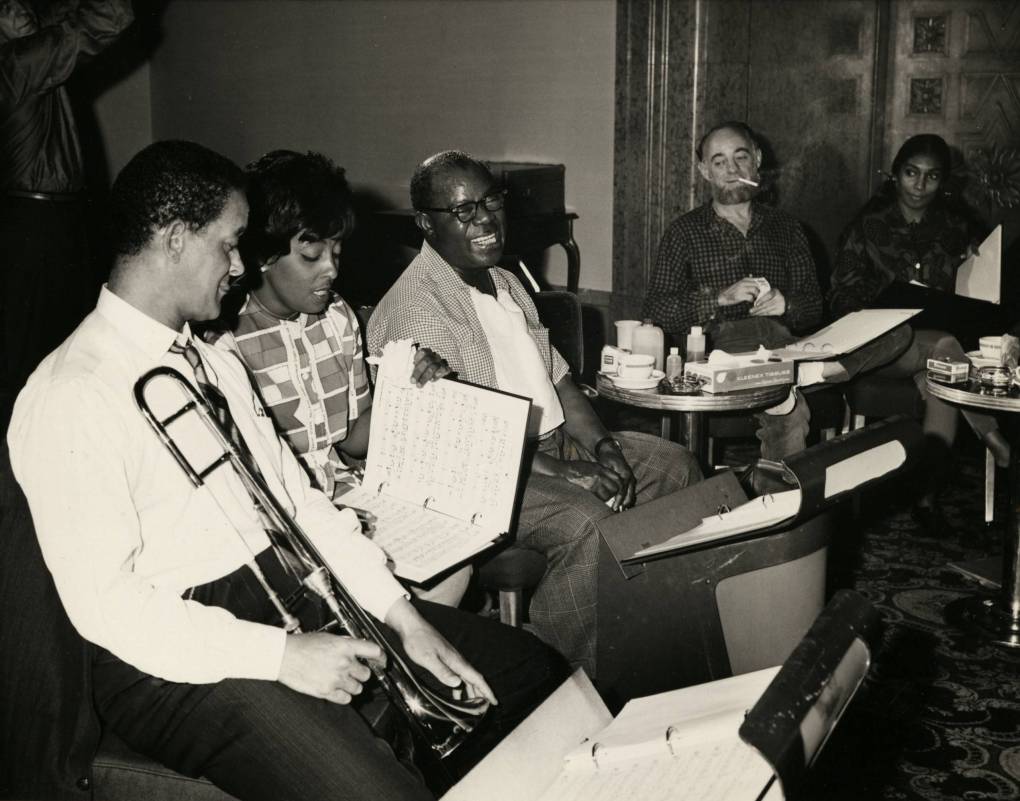
"caption": "Taking a break during their daylong rehearsal at the St. Francis Hotel in San Francisco a week before the premiere of 'The Real Ambassadors' are (left to right) Trummy Young, Carmen McRae, Louis Armstrong, Dave Lambert and Yolande Bavan.",
"description": null,
"title": "DBP62-35-scaled",
"credit": "VM Hanks, courtesy of Brubeck Collection, Wilton CT Public Library",
"status": "inherit",
"altTag": "black and white photo of a group of jazz legends seated, smiling, looking at sheet music while one man holds a trombone",
"isLoading": false,
"fetchFailed": false
},
"news_11925793": {
"type": "attachments",
"id": "news_11925793",
"meta": {
"index": "attachments_1716263798",
"site": "news",
"id": "11925793",
"found": true
},
"parent": 11925613,
"imgSizes": {
"twentyfourteen-full-width": {
"file": "https://ww2.kqed.org/app/uploads/sites/10/2022/09/GettyImages-517432114-1038x576.jpg",
"width": 1038,
"mimeType": "image/jpeg",
"height": 576
},
"thumbnail": {
"file": "https://ww2.kqed.org/app/uploads/sites/10/2022/09/GettyImages-517432114-160x206.jpg",
"width": 160,
"mimeType": "image/jpeg",
"height": 206
},
"post-thumbnail": {
"file": "https://ww2.kqed.org/app/uploads/sites/10/2022/09/GettyImages-517432114-672x372.jpg",
"width": 672,
"mimeType": "image/jpeg",
"height": 372
},
"kqedFullSize": {
"file": "https://ww2.kqed.org/app/uploads/sites/10/2022/09/GettyImages-517432114-scaled.jpg",
"width": 1987,
"height": 2560
},
"2048x2048": {
"file": "https://ww2.kqed.org/app/uploads/sites/10/2022/09/GettyImages-517432114-1589x2048.jpg",
"width": 1589,
"mimeType": "image/jpeg",
"height": 2048
},
"large": {
"file": "https://ww2.kqed.org/app/uploads/sites/10/2022/09/GettyImages-517432114-1020x1314.jpg",
"width": 1020,
"mimeType": "image/jpeg",
"height": 1314
},
"1536x1536": {
"file": "https://ww2.kqed.org/app/uploads/sites/10/2022/09/GettyImages-517432114-1192x1536.jpg",
"width": 1192,
"mimeType": "image/jpeg",
"height": 1536
},
"full-width": {
"file": "https://ww2.kqed.org/app/uploads/sites/10/2022/09/GettyImages-517432114-1920x2474.jpg",
"width": 1920,
"mimeType": "image/jpeg",
"height": 2474
},
"medium": {
"file": "https://ww2.kqed.org/app/uploads/sites/10/2022/09/GettyImages-517432114-800x1031.jpg",
"width": 800,
"mimeType": "image/jpeg",
"height": 1031
}
},
"publishDate": 1663270221,
"modified": 1663285996,
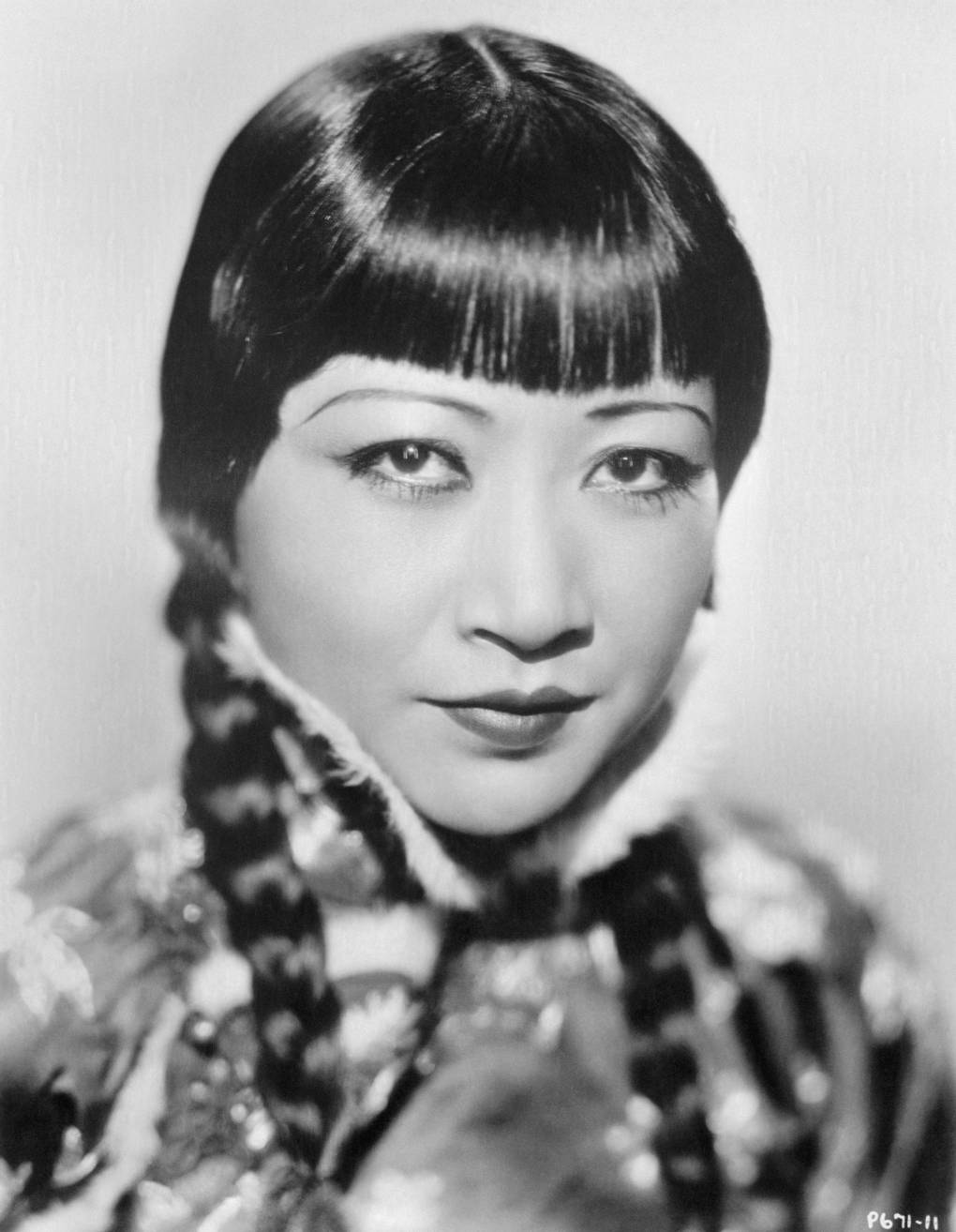
"caption": "After an absence of four years from Hollywood, during which time she was the toast of Europe, Anna May Wong was back to head the cast of 'Daughter of the Dragon,' Paramount's film version of a Sax Rohmer mystery-thriller.",
"description": " After an absence of four years from Hollywood, during which time she was the toast of Europe, Anna May Wong is back in the film capital to head the cast of Daughter of the Dragon, Paramount's filmization of a Sax Rohmer mystery thriller.",
"title": "Actress Anna May Wong",
"credit": "Bettman Collection via Getty Images",
"status": "inherit",
"altTag": "The image is a closeup of a Hollywood star in 1932. She has sleek black hair with bangs falling to just above her thin, arched eyebrows. Her hair is pulled back and one braid falls down her left side. Dark eyeliner and thick lashes frame her almond eyes, looking directly at the camera with a clear and penetrating gaze. Her face is in focus with her clothing blurred, although it's clear the clothing is elaborate, with beading and embroidery. Her collar is turned up and a soft white fur frames her jawline.",
"isLoading": false,
"fetchFailed": false
},
"news_11925855": {
"type": "attachments",
"id": "news_11925855",
"meta": {
"index": "attachments_1716263798",
"site": "news",
"id": "11925855",
"found": true
},
"parent": 11925851,
"imgSizes": {
"twentyfourteen-full-width": {
"file": "https://ww2.kqed.org/app/uploads/sites/10/2022/09/JSN-marquee-1038x576.jpg",
"width": 1038,
"mimeType": "image/jpeg",
"height": 576
},
"thumbnail": {
"file": "https://ww2.kqed.org/app/uploads/sites/10/2022/09/JSN-marquee-160x99.jpg",
"width": 160,
"mimeType": "image/jpeg",
"height": 99
},
"post-thumbnail": {
"file": "https://ww2.kqed.org/app/uploads/sites/10/2022/09/JSN-marquee-672x372.jpg",
"width": 672,
"mimeType": "image/jpeg",
"height": 372
},
"kqedFullSize": {
"file": "https://ww2.kqed.org/app/uploads/sites/10/2022/09/JSN-marquee.jpg",
"width": 1055,
"height": 650
},
"large": {
"file": "https://ww2.kqed.org/app/uploads/sites/10/2022/09/JSN-marquee-1020x628.jpg",
"width": 1020,
"mimeType": "image/jpeg",
"height": 628
},
"medium": {
"file": "https://ww2.kqed.org/app/uploads/sites/10/2022/09/JSN-marquee-800x493.jpg",
"width": 800,
"mimeType": "image/jpeg",
"height": 493
}
},
"publishDate": 1663282708,
"modified": 1663282708,
"caption": null,
"description": null,
"title": "JSN marquee",
"credit": null,
"status": "inherit",
"altTag": null,
"isLoading": false,
"fetchFailed": false
},
"news_11925946": {
"type": "attachments",
"id": "news_11925946",
"meta": {
"index": "attachments_1716263798",
"site": "news",
"id": "11925946",
"found": true
},
"parent": 11925859,
"imgSizes": {
"twentyfourteen-full-width": {
"file": "https://ww2.kqed.org/app/uploads/sites/10/2022/09/RS58619_23705908336_207948ee86_k-qut-1038x576.jpg",
"width": 1038,
"mimeType": "image/jpeg",
"height": 576
},
"thumbnail": {
"file": "https://ww2.kqed.org/app/uploads/sites/10/2022/09/RS58619_23705908336_207948ee86_k-qut-160x116.jpg",
"width": 160,
"mimeType": "image/jpeg",
"height": 116
},
"post-thumbnail": {
"file": "https://ww2.kqed.org/app/uploads/sites/10/2022/09/RS58619_23705908336_207948ee86_k-qut-672x372.jpg",
"width": 672,
"mimeType": "image/jpeg",
"height": 372
},
"kqedFullSize": {
"file": "https://ww2.kqed.org/app/uploads/sites/10/2022/09/RS58619_23705908336_207948ee86_k-qut.jpg",
"width": 1920,
"height": 1389
},
"large": {
"file": "https://ww2.kqed.org/app/uploads/sites/10/2022/09/RS58619_23705908336_207948ee86_k-qut-1020x738.jpg",
"width": 1020,
"mimeType": "image/jpeg",
"height": 738
},
"1536x1536": {
"file": "https://ww2.kqed.org/app/uploads/sites/10/2022/09/RS58619_23705908336_207948ee86_k-qut-1536x1111.jpg",
"width": 1536,
"mimeType": "image/jpeg",
"height": 1111
},
"medium": {
"file": "https://ww2.kqed.org/app/uploads/sites/10/2022/09/RS58619_23705908336_207948ee86_k-qut-800x579.jpg",
"width": 800,
"mimeType": "image/jpeg",
"height": 579
}
},
"publishDate": 1663346166,
"modified": 1663349711,
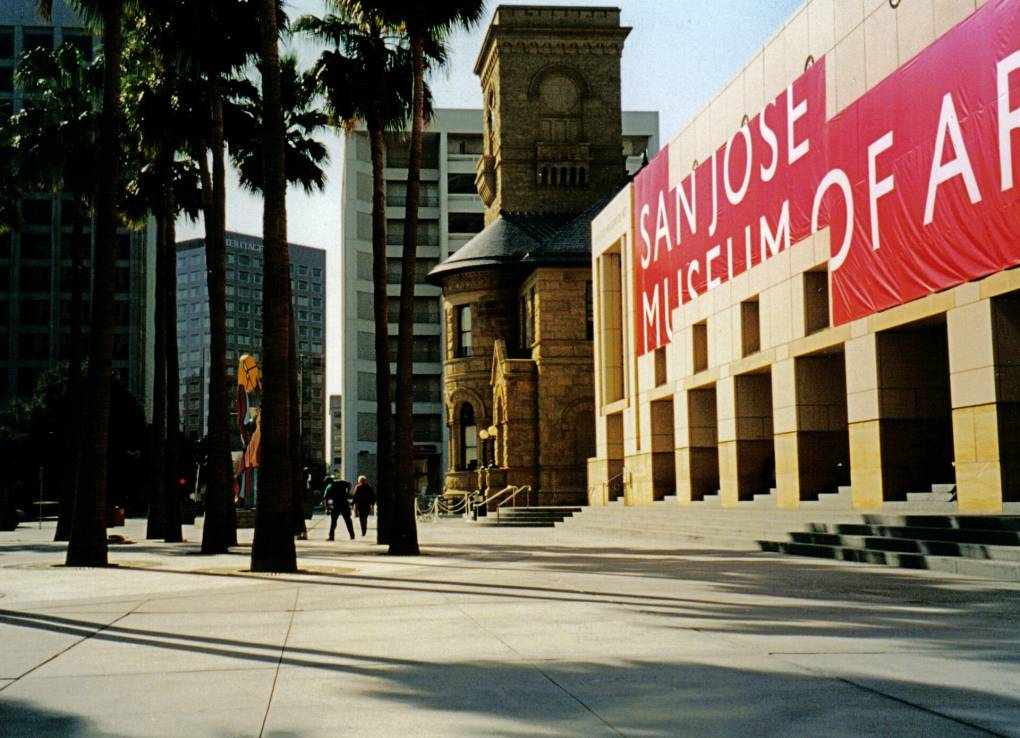
"caption": "The outside of the San José Museum of Art.",
"description": null,
"title": "RS58619_23705908336_207948ee86_k-qut",
"credit": "VV Nincic/Flickr",
"status": "inherit",
"altTag": null,
"isLoading": false,
"fetchFailed": false
},
"news_11923884": {
"type": "attachments",
"id": "news_11923884",
"meta": {
"index": "attachments_1716263798",
"site": "news",
"id": "11923884",
"found": true
},
"parent": 11923881,
"imgSizes": {
"twentyfourteen-full-width": {
"file": "https://ww2.kqed.org/app/uploads/sites/10/2022/08/ADA_GettyImages-1063395660-1038x576.jpg",
"width": 1038,
"mimeType": "image/jpeg",
"height": 576
},
"thumbnail": {
"file": "https://ww2.kqed.org/app/uploads/sites/10/2022/08/ADA_GettyImages-1063395660-160x90.jpg",
"width": 160,
"mimeType": "image/jpeg",
"height": 90
},
"post-thumbnail": {
"file": "https://ww2.kqed.org/app/uploads/sites/10/2022/08/ADA_GettyImages-1063395660-672x372.jpg",
"width": 672,
"mimeType": "image/jpeg",
"height": 372
},
"kqedFullSize": {
"file": "https://ww2.kqed.org/app/uploads/sites/10/2022/08/ADA_GettyImages-1063395660.jpg",
"width": 2088,
"height": 1174
},
"2048x2048": {
"file": "https://ww2.kqed.org/app/uploads/sites/10/2022/08/ADA_GettyImages-1063395660-2048x1152.jpg",
"width": 2048,
"mimeType": "image/jpeg",
"height": 1152
},
"large": {
"file": "https://ww2.kqed.org/app/uploads/sites/10/2022/08/ADA_GettyImages-1063395660-1020x574.jpg",
"width": 1020,
"mimeType": "image/jpeg",
"height": 574
},
"1536x1536": {
"file": "https://ww2.kqed.org/app/uploads/sites/10/2022/08/ADA_GettyImages-1063395660-1536x864.jpg",
"width": 1536,
"mimeType": "image/jpeg",
"height": 864
},
"full-width": {
"file": "https://ww2.kqed.org/app/uploads/sites/10/2022/08/ADA_GettyImages-1063395660-1920x1080.jpg",
"width": 1920,
"mimeType": "image/jpeg",
"height": 1080
},
"medium": {
"file": "https://ww2.kqed.org/app/uploads/sites/10/2022/08/ADA_GettyImages-1063395660-800x450.jpg",
"width": 800,
"mimeType": "image/jpeg",
"height": 450
}
},
"publishDate": 1661710808,
"modified": 1661966316,
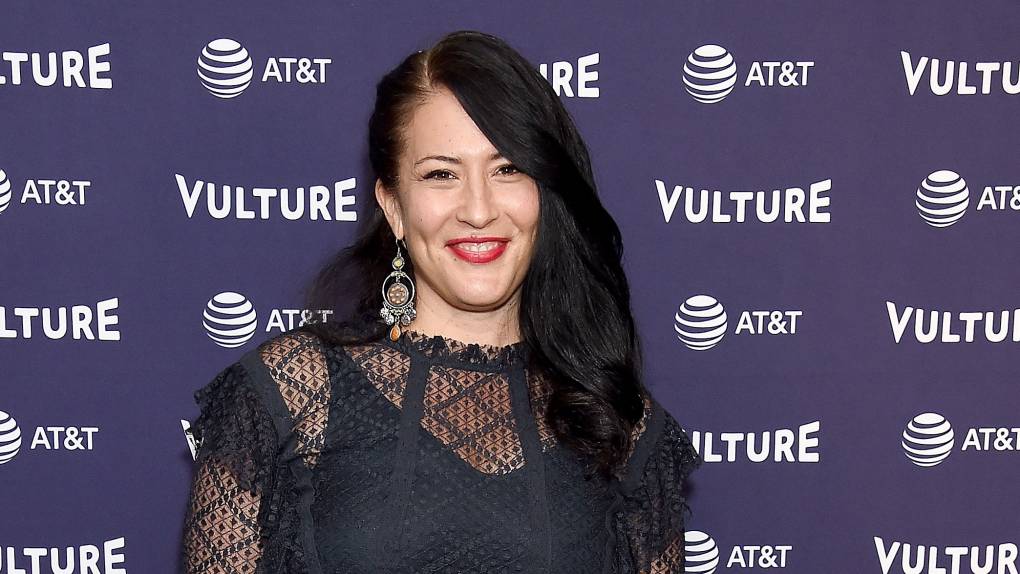
"caption": "Ada Limón attends Vulture Festival Los Angeles 2018 at The Hollywood Roosevelt Hotel on Nov. 18, 2018, in Los Angeles.",
"description": null,
"title": "Vulture Festival Los Angeles 2018",
"credit": "Gregg DeGuire/Getty Images",
"status": "inherit",
"altTag": "A woman with black hair and red lipstick stands against a dark purple background",
"isLoading": false,
"fetchFailed": false
},
"news_11629483": {
"type": "attachments",
"id": "news_11629483",
"meta": {
"index": "attachments_1716263798",
"site": "news",
"id": "11629483",
"found": true
},
"parent": 11629475,
"imgSizes": {
"small": {
"file": "https://ww2.kqed.org/app/uploads/sites/10/2017/11/RS27943_fred-in-his-studio-qut-520x390.jpg",
"width": 520,
"mimeType": "image/jpeg",
"height": 390
},
"twentyfourteen-full-width": {
"file": "https://ww2.kqed.org/app/uploads/sites/10/2017/11/RS27943_fred-in-his-studio-qut-1038x576.jpg",
"width": 1038,
"mimeType": "image/jpeg",
"height": 576
},
"thumbnail": {
"file": "https://ww2.kqed.org/app/uploads/sites/10/2017/11/RS27943_fred-in-his-studio-qut-160x120.jpg",
"width": 160,
"mimeType": "image/jpeg",
"height": 120
},
"fd-sm": {
"file": "https://ww2.kqed.org/app/uploads/sites/10/2017/11/RS27943_fred-in-his-studio-qut-960x720.jpg",
"width": 960,
"mimeType": "image/jpeg",
"height": 720
},
"post-thumbnail": {
"file": "https://ww2.kqed.org/app/uploads/sites/10/2017/11/RS27943_fred-in-his-studio-qut-672x372.jpg",
"width": 672,
"mimeType": "image/jpeg",
"height": 372
},
"xsmall": {
"file": "https://ww2.kqed.org/app/uploads/sites/10/2017/11/RS27943_fred-in-his-studio-qut-375x281.jpg",
"width": 375,
"mimeType": "image/jpeg",
"height": 281
},
"kqedFullSize": {
"file": "https://ww2.kqed.org/app/uploads/sites/10/2017/11/RS27943_fred-in-his-studio-qut.jpg",
"width": 1920,
"height": 1440
},
"large": {
"file": "https://ww2.kqed.org/app/uploads/sites/10/2017/11/RS27943_fred-in-his-studio-qut-1020x765.jpg",
"width": 1020,
"mimeType": "image/jpeg",
"height": 765
},
"xlarge": {
"file": "https://ww2.kqed.org/app/uploads/sites/10/2017/11/RS27943_fred-in-his-studio-qut-1180x885.jpg",
"width": 1180,
"mimeType": "image/jpeg",
"height": 885
},
"guest-author-50": {
"file": "https://ww2.kqed.org/app/uploads/sites/10/2017/11/RS27943_fred-in-his-studio-qut-50x50.jpg",
"width": 50,
"mimeType": "image/jpeg",
"height": 50
},
"guest-author-96": {
"file": "https://ww2.kqed.org/app/uploads/sites/10/2017/11/RS27943_fred-in-his-studio-qut-96x96.jpg",
"width": 96,
"mimeType": "image/jpeg",
"height": 96
},
"medium": {
"file": "https://ww2.kqed.org/app/uploads/sites/10/2017/11/RS27943_fred-in-his-studio-qut-800x600.jpg",
"width": 800,
"mimeType": "image/jpeg",
"height": 600
},
"guest-author-64": {
"file": "https://ww2.kqed.org/app/uploads/sites/10/2017/11/RS27943_fred-in-his-studio-qut-64x64.jpg",
"width": 64,
"mimeType": "image/jpeg",
"height": 64
},
"guest-author-32": {
"file": "https://ww2.kqed.org/app/uploads/sites/10/2017/11/RS27943_fred-in-his-studio-qut-32x32.jpg",
"width": 32,
"mimeType": "image/jpeg",
"height": 32
},
"fd-lrg": {
"file": "https://ww2.kqed.org/app/uploads/sites/10/2017/11/RS27943_fred-in-his-studio-qut-1920x1440.jpg",
"width": 1920,
"mimeType": "image/jpeg",
"height": 1440
},
"fd-med": {
"file": "https://ww2.kqed.org/app/uploads/sites/10/2017/11/RS27943_fred-in-his-studio-qut-1180x885.jpg",
"width": 1180,
"mimeType": "image/jpeg",
"height": 885
},
"full-width": {
"file": "https://ww2.kqed.org/app/uploads/sites/10/2017/11/RS27943_fred-in-his-studio-qut-1920x1440.jpg",
"width": 1920,
"mimeType": "image/jpeg",
"height": 1440
},
"detail": {
"file": "https://ww2.kqed.org/app/uploads/sites/10/2017/11/RS27943_fred-in-his-studio-qut-150x150.jpg",
"width": 150,
"mimeType": "image/jpeg",
"height": 150
},
"guest-author-128": {
"file": "https://ww2.kqed.org/app/uploads/sites/10/2017/11/RS27943_fred-in-his-studio-qut-128x128.jpg",
"width": 128,
"mimeType": "image/jpeg",
"height": 128
},
"xxsmall": {
"file": "https://ww2.kqed.org/app/uploads/sites/10/2017/11/RS27943_fred-in-his-studio-qut-240x180.jpg",
"width": 240,
"mimeType": "image/jpeg",
"height": 180
}
},
"publishDate": 1510243659,
"modified": 1661718994,
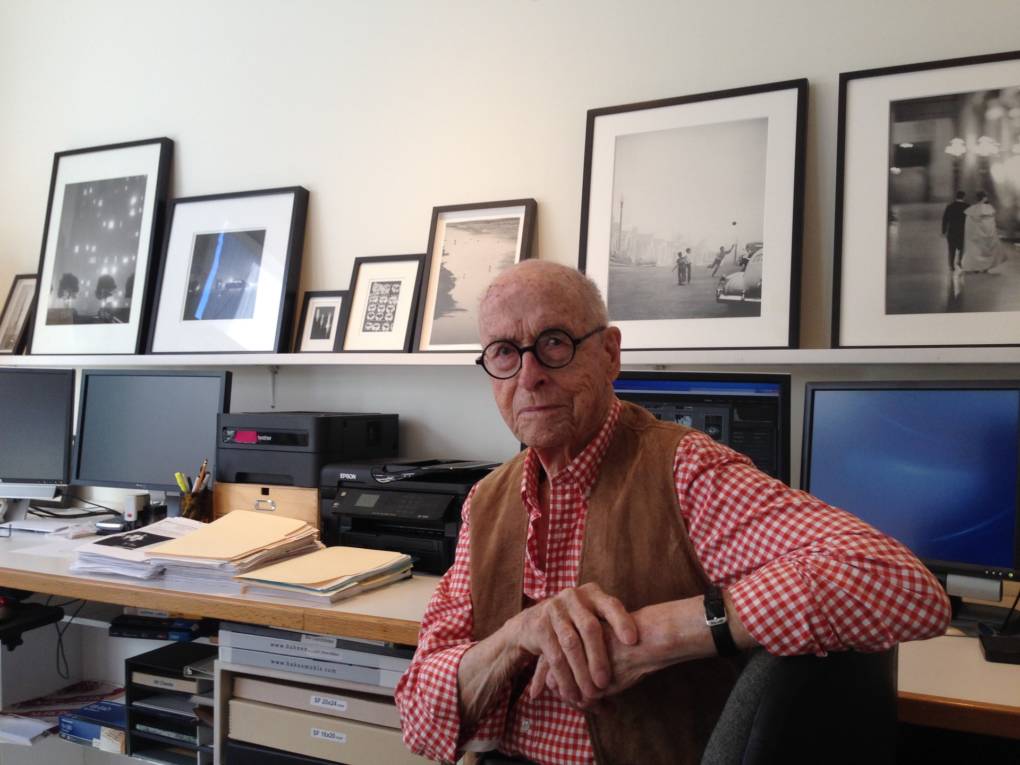
"caption": "'I am frequently seated here,' said photographer Fred Lyon, who put in long hours in the studio at his San Francisco home. This picture was taken on Oct. 25, 2017.",
"description": "'I am frequently seated here,' said photographer Fred Lyon, who put in long hours in the studio at his San Francisco home. This picture was taken on Oct. 25, 2017.",
"title": "Fred Lyon in his studio",
"credit": "Patricia Yollin/KQED",
"status": "inherit",
"altTag": "San Francisco photographer Fred Lyon seated in his studio.",
"isLoading": false,
"fetchFailed": false
},
"news_11923741": {
"type": "attachments",
"id": "news_11923741",
"meta": {
"index": "attachments_1716263798",
"site": "news",
"id": "11923741",
"found": true
},
"parent": 11923738,
"imgSizes": {
"twentyfourteen-full-width": {
"file": "https://ww2.kqed.org/app/uploads/sites/10/2022/08/Littlefeather_Moore-1038x576.png",
"width": 1038,
"mimeType": "image/png",
"height": 576
},
"thumbnail": {
"file": "https://ww2.kqed.org/app/uploads/sites/10/2022/08/Littlefeather_Moore-160x111.png",
"width": 160,
"mimeType": "image/png",
"height": 111
},
"post-thumbnail": {
"file": "https://ww2.kqed.org/app/uploads/sites/10/2022/08/Littlefeather_Moore-672x372.png",
"width": 672,
"mimeType": "image/png",
"height": 372
},
"kqedFullSize": {
"file": "https://ww2.kqed.org/app/uploads/sites/10/2022/08/Littlefeather_Moore.png",
"width": 1517,
"height": 1049
},
"large": {
"file": "https://ww2.kqed.org/app/uploads/sites/10/2022/08/Littlefeather_Moore-1020x705.png",
"width": 1020,
"mimeType": "image/png",
"height": 705
},
"medium": {
"file": "https://ww2.kqed.org/app/uploads/sites/10/2022/08/Littlefeather_Moore-800x553.png",
"width": 800,
"mimeType": "image/png",
"height": 553
}
},
"publishDate": 1661548797,
"modified": 1661555290,
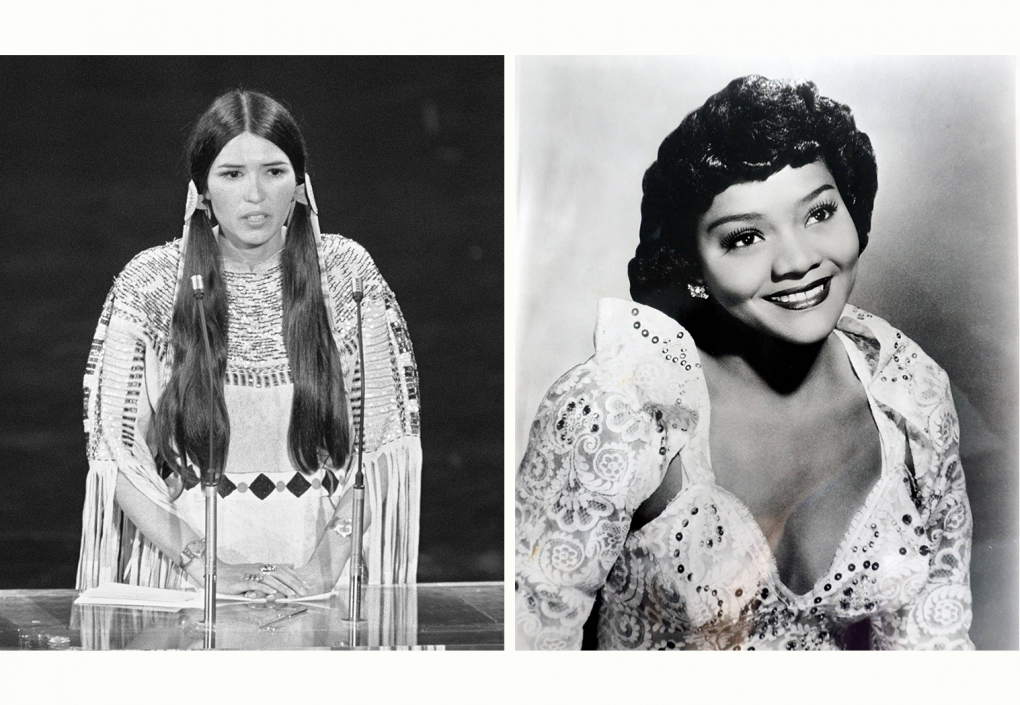
"caption": "Sacheen Littlefeather (left) speaking on behalf of Marlon Brando, at the 45th Academy Awards in 1973; Brando refused to accept the Best Actor award he received for his role in 'The Godfather' in protest over US treatment of Native Americans. Juanita Moore (left), who in 1959 became the fifth Black actor in moviemaking history to be nominated for an Oscar.",
"description": "Left: Actress Sacheen Littlefeather speaking on behalf of Marlon Brando, at the 45th Academy Awards in 1973. Brando refused to accept the Best Actor award he received for his role in Godfather in protest over U.S. treatment of Native Americans. Right: A portrait of actress Juanita Moore. In 1959, Moore became the fifth Black actor in movie-making history to be nominated for an Oscar.",
"title": "Littlefeather_Moore",
"credit": "Courtesy of Bettmann via Getty Images, and Arnett Moore",
"status": "inherit",
"altTag": "Two woman appear in the image. On the left is a Native American woman wearing a buckskin dress with elaborate beading around the collar and arms, her hair held clasped on each side of her head in two beaded bands. On the right is a Black woman with dark curly hair wearing a white gown with a sweetheart neckline, embroidered in patterns of spirals and petals and studded with jewels. Her face glows with a brilliant smile and her eyes sparkle.",
"isLoading": false,
"fetchFailed": false
},
"news_11922665": {
"type": "attachments",
"id": "news_11922665",
"meta": {
"index": "attachments_1716263798",
"site": "news",
"id": "11922665",
"found": true
},
"parent": 11922643,
"imgSizes": {
"twentyfourteen-full-width": {
"file": "https://ww2.kqed.org/app/uploads/sites/10/2022/08/RS57667_013_KQED_CastroTheatreInterior_08102022-qut-1038x576.jpg",
"width": 1038,
"mimeType": "image/jpeg",
"height": 576
},
"thumbnail": {
"file": "https://ww2.kqed.org/app/uploads/sites/10/2022/08/RS57667_013_KQED_CastroTheatreInterior_08102022-qut-160x107.jpg",
"width": 160,
"mimeType": "image/jpeg",
"height": 107
},
"post-thumbnail": {
"file": "https://ww2.kqed.org/app/uploads/sites/10/2022/08/RS57667_013_KQED_CastroTheatreInterior_08102022-qut-672x372.jpg",
"width": 672,
"mimeType": "image/jpeg",
"height": 372
},
"kqedFullSize": {
"file": "https://ww2.kqed.org/app/uploads/sites/10/2022/08/RS57667_013_KQED_CastroTheatreInterior_08102022-qut.jpg",
"width": 1920,
"height": 1280
},
"large": {
"file": "https://ww2.kqed.org/app/uploads/sites/10/2022/08/RS57667_013_KQED_CastroTheatreInterior_08102022-qut-1020x680.jpg",
"width": 1020,
"mimeType": "image/jpeg",
"height": 680
},
"1536x1536": {
"file": "https://ww2.kqed.org/app/uploads/sites/10/2022/08/RS57667_013_KQED_CastroTheatreInterior_08102022-qut-1536x1024.jpg",
"width": 1536,
"mimeType": "image/jpeg",
"height": 1024
},
"medium": {
"file": "https://ww2.kqed.org/app/uploads/sites/10/2022/08/RS57667_013_KQED_CastroTheatreInterior_08102022-qut-800x533.jpg",
"width": 800,
"mimeType": "image/jpeg",
"height": 533
}
},
"publishDate": 1660668399,
"modified": 1660668534,
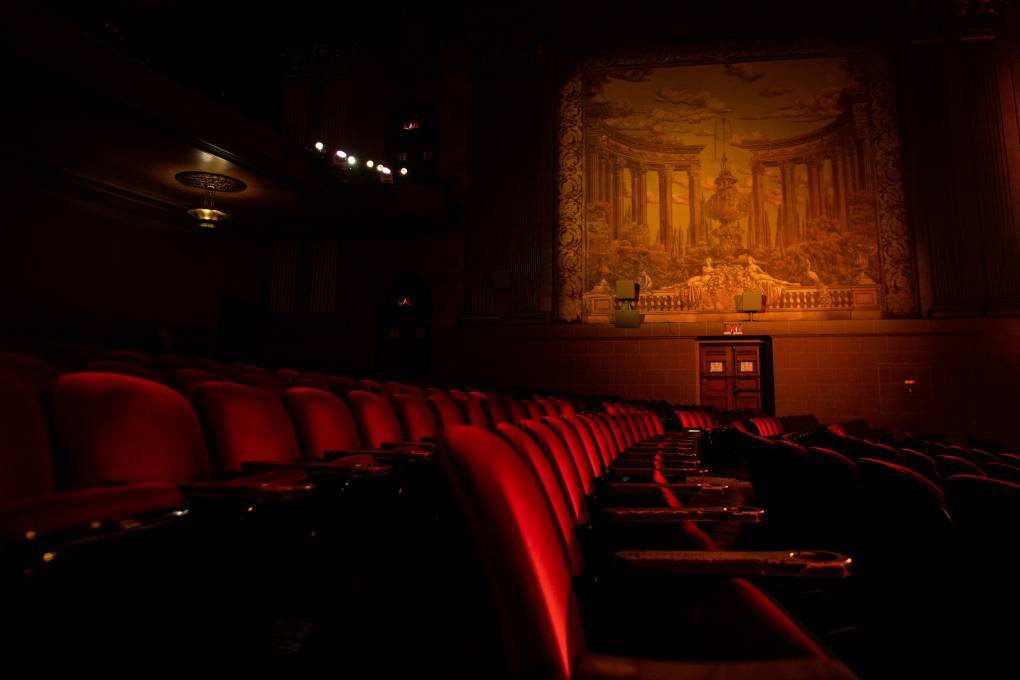
"caption": "A painting on the lower level of the Castro Theatre in San Francisco on Aug. 10, 2022.",
"description": null,
"title": "RS57667_013_KQED_CastroTheatreInterior_08102022-qut",
"credit": "Beth LaBerge/KQED",
"status": "inherit",
"altTag": "A dimly lit row of red velvet seats stretch away from the camera, leading towards an Art Deco painting or mural on the wall.",
"isLoading": false,
"fetchFailed": false
},
"news_11920780": {
"type": "attachments",
"id": "news_11920780",
"meta": {
"index": "attachments_1716263798",
"site": "news",
"id": "11920780",
"found": true
},
"parent": 11920772,
"imgSizes": {
"twentyfourteen-full-width": {
"file": "https://ww2.kqed.org/app/uploads/sites/10/2022/07/Bayview4-1038x576.jpg",
"width": 1038,
"mimeType": "image/jpeg",
"height": 576
},
"thumbnail": {
"file": "https://ww2.kqed.org/app/uploads/sites/10/2022/07/Bayview4-160x107.jpg",
"width": 160,
"mimeType": "image/jpeg",
"height": 107
},
"post-thumbnail": {
"file": "https://ww2.kqed.org/app/uploads/sites/10/2022/07/Bayview4-672x372.jpg",
"width": 672,
"mimeType": "image/jpeg",
"height": 372
},
"kqedFullSize": {
"file": "https://ww2.kqed.org/app/uploads/sites/10/2022/07/Bayview4.jpg",
"width": 1920,
"height": 1278
},
"large": {
"file": "https://ww2.kqed.org/app/uploads/sites/10/2022/07/Bayview4-1020x679.jpg",
"width": 1020,
"mimeType": "image/jpeg",
"height": 679
},
"1536x1536": {
"file": "https://ww2.kqed.org/app/uploads/sites/10/2022/07/Bayview4-1536x1022.jpg",
"width": 1536,
"mimeType": "image/jpeg",
"height": 1022
},
"medium": {
"file": "https://ww2.kqed.org/app/uploads/sites/10/2022/07/Bayview4-800x533.jpg",
"width": 800,
"mimeType": "image/jpeg",
"height": 533
}
},
"publishDate": 1659050134,
"modified": 1659050134,
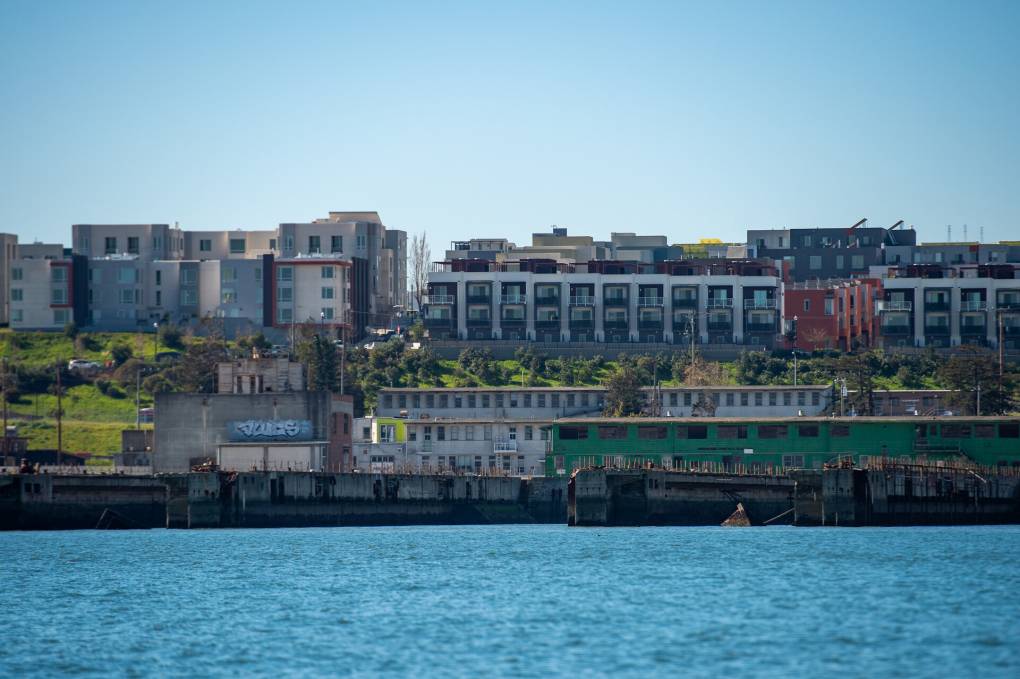
"caption": "Apartment buildings in the Bayview sit behind the Hunters Point Naval Shipyard in San Francisco on March 8, 2022.",
"description": null,
"title": "Bayview4",
"credit": null,
"status": "inherit",
"altTag": null,
"isLoading": false,
"fetchFailed": false
},
"news_11920324": {
"type": "attachments",
"id": "news_11920324",
"meta": {
"index": "attachments_1716263798",
"site": "news",
"id": "11920324",
"found": true
},
"parent": 11920323,
"imgSizes": {
"twentyfourteen-full-width": {
"file": "https://ww2.kqed.org/app/uploads/sites/10/2022/07/Shatz-VR-2_frame_17162-1038x576.jpeg",
"width": 1038,
"mimeType": "image/jpeg",
"height": 576
},
"thumbnail": {
"file": "https://ww2.kqed.org/app/uploads/sites/10/2022/07/Shatz-VR-2_frame_17162-160x90.jpeg",
"width": 160,
"mimeType": "image/jpeg",
"height": 90
},
"post-thumbnail": {
"file": "https://ww2.kqed.org/app/uploads/sites/10/2022/07/Shatz-VR-2_frame_17162-672x372.jpeg",
"width": 672,
"mimeType": "image/jpeg",
"height": 372
},
"kqedFullSize": {
"file": "https://ww2.kqed.org/app/uploads/sites/10/2022/07/Shatz-VR-2_frame_17162.jpeg",
"width": 1920,
"height": 1080
},
"large": {
"file": "https://ww2.kqed.org/app/uploads/sites/10/2022/07/Shatz-VR-2_frame_17162-1020x574.jpeg",
"width": 1020,
"mimeType": "image/jpeg",
"height": 574
},
"1536x1536": {
"file": "https://ww2.kqed.org/app/uploads/sites/10/2022/07/Shatz-VR-2_frame_17162-1536x864.jpeg",
"width": 1536,
"mimeType": "image/jpeg",
"height": 864
},
"medium": {
"file": "https://ww2.kqed.org/app/uploads/sites/10/2022/07/Shatz-VR-2_frame_17162-800x450.jpeg",
"width": 800,
"mimeType": "image/jpeg",
"height": 450
}
},
"publishDate": 1658533590,
"modified": 1658533590,
"caption": null,
"description": null,
"title": "Shatz VR 2_frame_17162",
"credit": null,
"status": "inherit",
"altTag": null,
"isLoading": false,
"fetchFailed": false
},
"news_11919713": {
"type": "attachments",
"id": "news_11919713",
"meta": {
"index": "attachments_1716263798",
"site": "news",
"id": "11919713",
"found": true
},
"parent": 11919649,
"imgSizes": {
"twentyfourteen-full-width": {
"file": "https://ww2.kqed.org/app/uploads/sites/10/2022/07/00080012OscarFeatured-1038x576.jpg",
"width": 1038,
"mimeType": "image/jpeg",
"height": 576
},
"thumbnail": {
"file": "https://ww2.kqed.org/app/uploads/sites/10/2022/07/00080012OscarFeatured-160x106.jpg",
"width": 160,
"mimeType": "image/jpeg",
"height": 106
},
"post-thumbnail": {
"file": "https://ww2.kqed.org/app/uploads/sites/10/2022/07/00080012OscarFeatured-672x372.jpg",
"width": 672,
"mimeType": "image/jpeg",
"height": 372
},
"kqedFullSize": {
"file": "https://ww2.kqed.org/app/uploads/sites/10/2022/07/00080012OscarFeatured.jpg",
"width": 1920,
"height": 1273
},
"large": {
"file": "https://ww2.kqed.org/app/uploads/sites/10/2022/07/00080012OscarFeatured-1020x676.jpg",
"width": 1020,
"mimeType": "image/jpeg",
"height": 676
},
"1536x1536": {
"file": "https://ww2.kqed.org/app/uploads/sites/10/2022/07/00080012OscarFeatured-1536x1018.jpg",
"width": 1536,
"mimeType": "image/jpeg",
"height": 1018
},
"medium": {
"file": "https://ww2.kqed.org/app/uploads/sites/10/2022/07/00080012OscarFeatured-800x530.jpg",
"width": 800,
"mimeType": "image/jpeg",
"height": 530
}
},
"publishDate": 1657925357,
"modified": 1657925481,
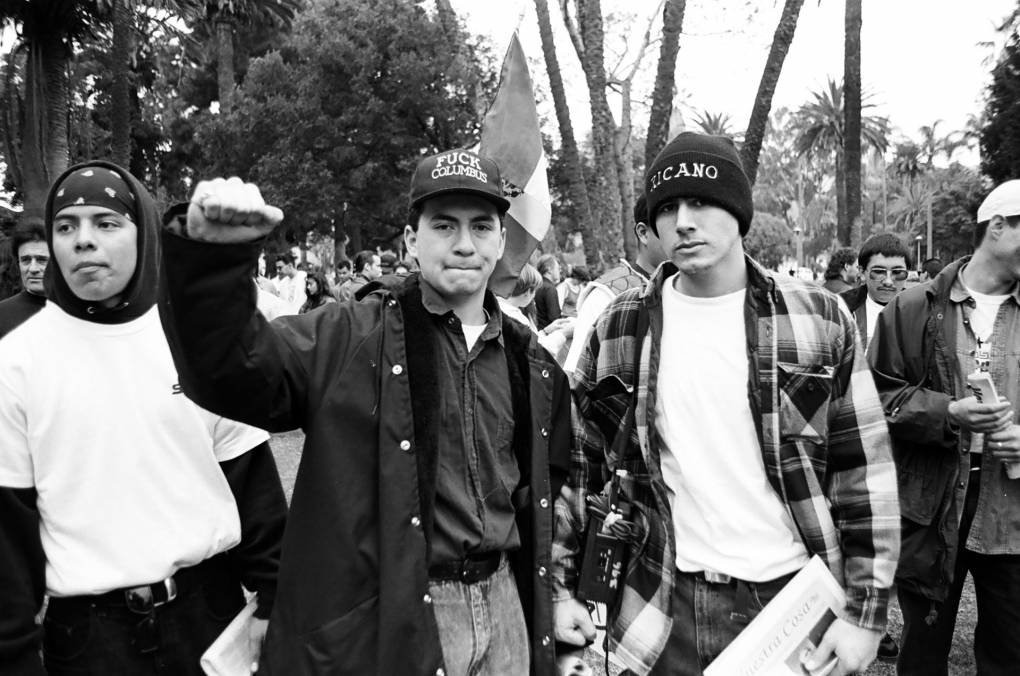
"caption": "Oscar Gomez (right) and his childhood friend Juan Gonzalez attend a protest in Santa Barbara on Feb. 1, 1992. The protest was in support of CSU Northridge Chicano studies scholar Rudy Acuña, who had been turned down for a faculty position at UC Santa Barbara and was challenging the decision.",
"description": null,
"title": "00080012OscarFeatured",
"credit": "Courtesy Gene Chavira",
"status": "inherit",
"altTag": "black and white photo showing two young men at a rally, one of them raising his fist in solidarity, wearing a black cap reading 'fuck Columbus'",
"isLoading": false,
"fetchFailed": false
}
},
"audioPlayerReducer": {
"postId": "stream_live",
"isPaused": true,
"isPlaying": false,
"pfsActive": false,
"pledgeModalIsOpen": true,
"playerDrawerIsOpen": false,
"liveAudioPlayStartedAt": 0,
"liveAudioPlayContext": ""
},
"authorsReducer": {
"byline_news_11925613": {
"type": "authors",
"id": "byline_news_11925613",
"meta": {
"override": true
},
"slug": "byline_news_11925613",
"name": "Jessica Kariisa",
"isLoading": false
},
"byline_news_11919649": {
"type": "authors",
"id": "byline_news_11919649",
"meta": {
"override": true
},
"slug": "byline_news_11919649",
"name": "\u003ca href=\"https://laist.com/people/adolfo-guzman-lopez\">Adolfo Guzman-Lopez\u003c/a>",
"isLoading": false
},
"danbrekke": {
"type": "authors",
"id": "222",
"meta": {
"index": "authors_1716337520",
"id": "222",
"found": true
},
"name": "Dan Brekke",
"firstName": "Dan",
"lastName": "Brekke",
"slug": "danbrekke",
"email": "dbrekke@kqed.org",
"display_author_email": true,
"staff_mastheads": [
"news",
"science"
],
"title": "KQED Editor and Reporter",
"bio": "Dan Brekke is a reporter and editor for KQED News, responsible for coverage of topics ranging from California water issues to the Bay Area's transportation challenges. In a newsroom career that began in Chicago in 1972, Dan has worked for \u003cem>The San Francisco Examiner,\u003c/em> Wired and TechTV and has been published in The New York Times, The New York Times Magazine, Business 2.0, Salon and elsewhere.\r\n\r\nSince joining KQED in 2007, Dan has reported, edited and produced both radio and online features and breaking news pieces. He has shared as both editor and reporter in four Society of Professional Journalists Norcal Excellence in Journalism awards and one Edward R. Murrow regional award. He was chosen for a spring 2017 residency at the Mesa Refuge to advance his research on California salmon.\r\n\r\nEmail Dan at: \u003ca href=\"mailto:dbrekke@kqed.org\">dbrekke@kqed.org\u003c/a>\r\n\r\n\u003cstrong>Twitter:\u003c/strong> \u003ca href=\"https://twitter.com/danbrekke\" rel=\"noopener noreferrer\">twitter.com/danbrekke\u003c/a>\r\n\u003cstrong>Facebook:\u003c/strong> \u003ca href=\"https://www.facebook.com/danbrekke\" rel=\"noopener noreferrer\">www.facebook.com/danbrekke\u003c/a>\r\n\u003cstrong>LinkedIn:\u003c/strong> \u003ca href=\"https://www.linkedin.com/in/danbrekke\" rel=\"noopener noreferrer\">www.linkedin.com/in/danbrekke\u003c/a>",
"avatar": "https://secure.gravatar.com/avatar/8f1f0d2a978fb3b23426c922c7e2af558fa36905b49c4ce76a97dc3c72d27226?s=600&d=mm&r=g",
"twitter": "danbrekke",
"bluesky": null,
"facebook": null,
"instagram": "https://www.instagram.com/dan.brekke/",
"linkedin": "https://www.linkedin.com/in/danbrekke/",
"sites": [
{
"site": "news",
"roles": [
"administrator",
"create_posts"
]
},
{
"site": "stateofhealth",
"roles": [
"editor"
]
},
{
"site": "science",
"roles": [
"editor"
]
},
{
"site": "quest",
"roles": [
"contributor"
]
},
{
"site": "food",
"roles": [
"contributor"
]
},
{
"site": "forum",
"roles": [
"contributor"
]
},
{
"site": "elections",
"roles": [
"editor"
]
},
{
"site": "liveblog",
"roles": [
"editor"
]
}
],
"headData": {
"title": "Dan Brekke | KQED",
"description": "KQED Editor and Reporter",
"ogImgSrc": "https://secure.gravatar.com/avatar/8f1f0d2a978fb3b23426c922c7e2af558fa36905b49c4ce76a97dc3c72d27226?s=600&d=mm&r=g",
"twImgSrc": "https://secure.gravatar.com/avatar/8f1f0d2a978fb3b23426c922c7e2af558fa36905b49c4ce76a97dc3c72d27226?s=600&d=mm&r=g"
},
"isLoading": false,
"link": "/author/danbrekke"
},
"kqed": {
"type": "authors",
"id": "236",
"meta": {
"index": "authors_1716337520",
"id": "236",
"found": true
},
"name": "KQED News Staff",
"firstName": "KQED News Staff",
"lastName": null,
"slug": "kqed",
"email": "faq@kqed.org",
"display_author_email": false,
"staff_mastheads": [],
"title": null,
"bio": null,
"avatar": "https://secure.gravatar.com/avatar/ef0e801a68c4c54afa9180db14084167?s=600&d=blank&r=g",
"twitter": null,
"facebook": null,
"instagram": null,
"linkedin": null,
"sites": [
{
"site": "arts",
"roles": [
"contributor"
]
},
{
"site": "news",
"roles": [
"editor"
]
},
{
"site": "futureofyou",
"roles": [
"author"
]
}
],
"headData": {
"title": "KQED News Staff | KQED",
"description": null,
"ogImgSrc": "https://secure.gravatar.com/avatar/ef0e801a68c4c54afa9180db14084167?s=600&d=blank&r=g",
"twImgSrc": "https://secure.gravatar.com/avatar/ef0e801a68c4c54afa9180db14084167?s=600&d=blank&r=g"
},
"isLoading": false,
"link": "/author/kqed"
},
"sasha-khokha": {
"type": "authors",
"id": "254",
"meta": {
"index": "authors_1716337520",
"id": "254",
"found": true
},
"name": "Sasha Khokha",
"firstName": "Sasha",
"lastName": "Khokha",
"slug": "sasha-khokha",
"email": "skhokha@kqed.org",
"display_author_email": true,
"staff_mastheads": [
"news"
],
"title": "Host, The California Report Magazine",
"bio": "Sasha Khokha is the host of \u003cem>The California Report's \u003c/em> weekly magazine program, which takes listeners on sound-rich excursions to meet the people that make the Golden State unique -- through audio documentaries and long-form stories. As \u003cem>The California Report's\u003c/em> Central Valley Bureau Chief based in Fresno for nearly a dozen years, Sasha brought the lives and concerns of rural Californians to listeners around the state. Her reporting helped expose the hidden price immigrant women janitors and farmworkers may pay to keep their jobs: sexual assault at work. It inspired two new California laws to protect them from sexual harassment. She was a key member of the reporting team for the Frontline film \u003cem>Rape on the Night Shift, \u003c/em>which was nominated for two national Emmys. Sasha has also won a national Edward R. Murrow and a national PRNDI award for investigative reporting, as well as multiple prizes from the Society for Professional Journalists. Sasha is a proud alum of the UC Berkeley Graduate School of Journalism and Brown University and a member of the South Asian Journalists Association.",
"avatar": "https://secure.gravatar.com/avatar/e4b5e1541aaeea2aa356aa1fb2a68950?s=600&d=blank&r=g",
"twitter": "KQEDSashaKhokha",
"facebook": null,
"instagram": null,
"linkedin": null,
"sites": [
{
"site": "news",
"roles": [
"editor"
]
},
{
"site": "stateofhealth",
"roles": [
"author"
]
},
{
"site": "science",
"roles": [
"author"
]
},
{
"site": "quest",
"roles": [
"subscriber"
]
}
],
"headData": {
"title": "Sasha Khokha | KQED",
"description": "Host, The California Report Magazine",
"ogImgSrc": "https://secure.gravatar.com/avatar/e4b5e1541aaeea2aa356aa1fb2a68950?s=600&d=blank&r=g",
"twImgSrc": "https://secure.gravatar.com/avatar/e4b5e1541aaeea2aa356aa1fb2a68950?s=600&d=blank&r=g"
},
"isLoading": false,
"link": "/author/sasha-khokha"
},
"ahall": {
"type": "authors",
"id": "11490",
"meta": {
"index": "authors_1716337520",
"id": "11490",
"found": true
},
"name": "Alex Hall",
"firstName": "Alex",
"lastName": "Hall",
"slug": "ahall",
"email": "ahall@kqed.org",
"display_author_email": false,
"staff_mastheads": [
"news"
],
"title": "KQED Enterprise & Accountability Reporter",
"bio": "Alex Hall is KQED's Enterprise and Accountability Reporter. She previously covered the Central Valley for five years from KQED's bureau in Fresno. Before joining KQED, Alex was an investigative reporting fellow at Wisconsin Public Radio and the Wisconsin Center for Investigative Journalism. She has also worked as a bilingual producer for NPR's investigative unit and freelance video producer for Reuters TV on the Latin America desk. She got her start in journalism in South America, where she worked as a radio producer and Spanish-English translator for CNN Chile. Her documentary and investigation into the series of deadly COVID-19 outbreaks at Foster Farms won a national Edward R. Murrow award and was named an Investigative Reporters & Editors award finalist. Alex's reporting for Reveal on the Wisconsin dairy industry's reliance on undocumented immigrant labor was made into a film, Los Lecheros, which won a regional Edward R. Murrow award for best news documentary.",
"avatar": "https://secure.gravatar.com/avatar/defcbeb88b0bf591ff9af41f22644051?s=600&d=blank&r=g",
"twitter": "@chalexhall",
"facebook": null,
"instagram": null,
"linkedin": null,
"sites": [
{
"site": "news",
"roles": [
"editor"
]
},
{
"site": "liveblog",
"roles": [
"author"
]
}
],
"headData": {
"title": "Alex Hall | KQED",
"description": "KQED Enterprise & Accountability Reporter",
"ogImgSrc": "https://secure.gravatar.com/avatar/defcbeb88b0bf591ff9af41f22644051?s=600&d=blank&r=g",
"twImgSrc": "https://secure.gravatar.com/avatar/defcbeb88b0bf591ff9af41f22644051?s=600&d=blank&r=g"
},
"isLoading": false,
"link": "/author/ahall"
},
"jasminegarnett": {
"type": "authors",
"id": "11530",
"meta": {
"index": "authors_1716337520",
"id": "11530",
"found": true
},
"name": "Jasmine Garnett",
"firstName": "Jasmine",
"lastName": "Garnett",
"slug": "jasminegarnett",
"email": "JGarnett@KQED.org",
"display_author_email": false,
"staff_mastheads": [
"news"
],
"title": "Senior Engagement Platforms Producer",
"bio": "Jasmine is a Senior Engagement Platforms Producer on the KQED News team. She is also a freelance writer, with work appearing in KQED, Bitch Media, and Kotaku among others. Jasmine graduated from UC Berkeley with a degree in Media Studies, where she was also an Arts and Entertainment reporter at the Daily Californian.",
"avatar": "https://secure.gravatar.com/avatar/a6ea8b0641874311533b7401bee15c8e?s=600&d=blank&r=g",
"twitter": "JFLGarnett",
"facebook": null,
"instagram": null,
"linkedin": null,
"sites": [
{
"site": "arts",
"roles": [
"author"
]
},
{
"site": "news",
"roles": [
"editor"
]
},
{
"site": "about",
"roles": [
"editor"
]
},
{
"site": "science",
"roles": [
"editor"
]
},
{
"site": "forum",
"roles": [
"editor"
]
},
{
"site": "pressroom",
"roles": [
"editor"
]
}
],
"headData": {
"title": "Jasmine Garnett | KQED",
"description": "Senior Engagement Platforms Producer",
"ogImgSrc": "https://secure.gravatar.com/avatar/a6ea8b0641874311533b7401bee15c8e?s=600&d=blank&r=g",
"twImgSrc": "https://secure.gravatar.com/avatar/a6ea8b0641874311533b7401bee15c8e?s=600&d=blank&r=g"
},
"isLoading": false,
"link": "/author/jasminegarnett"
},
"lsarah": {
"type": "authors",
"id": "11626",
"meta": {
"index": "authors_1716337520",
"id": "11626",
"found": true
},
"name": "Lakshmi Sarah",
"firstName": "Lakshmi",
"lastName": "Sarah",
"slug": "lsarah",
"email": "lsarah@kqed.org",
"display_author_email": false,
"staff_mastheads": [],
"title": "Digital Producer",
"bio": "Lakshmi Sarah is an educator, author and journalist with a focus on innovative storytelling. She has worked with newspapers, radio and magazines from Ahmedabad, India to Los Angeles, California. She has written and produced for Die Zeit, Global Voices, AJ+, KQED, Fusion Media Group and the New York Times.",
"avatar": "https://secure.gravatar.com/avatar/652dcaecd8b28826fc17a8b2d6bb4e93?s=600&d=blank&r=g",
"twitter": "lakitalki",
"facebook": null,
"instagram": "https://www.instagram.com/laki.talki/",
"linkedin": "https://www.linkedin.com/in/lakisarah/",
"sites": [
{
"site": "arts",
"roles": []
},
{
"site": "news",
"roles": []
},
{
"site": "bayareabites",
"roles": []
},
{
"site": "science",
"roles": []
}
],
"headData": {
"title": "Lakshmi Sarah | KQED",
"description": "Digital Producer",
"ogImgSrc": "https://secure.gravatar.com/avatar/652dcaecd8b28826fc17a8b2d6bb4e93?s=600&d=blank&r=g",
"twImgSrc": "https://secure.gravatar.com/avatar/652dcaecd8b28826fc17a8b2d6bb4e93?s=600&d=blank&r=g"
},
"isLoading": false,
"link": "/author/lsarah"
},
"smohamad": {
"type": "authors",
"id": "11631",
"meta": {
"index": "authors_1716337520",
"id": "11631",
"found": true
},
"name": "Sarah Mohamad",
"firstName": "Sarah",
"lastName": "Mohamad",
"slug": "smohamad",
"email": "smohamad@KQED.org",
"display_author_email": true,
"staff_mastheads": [],
"title": "Engagement Producer and Reporter, KQED Science",
"bio": "Sarah Mohamad is an audience engagement reporter and producer for KQED Science. She reports on audience-focused science and environment stories and manages the team's social media, newsletter, and engagement efforts. Prior to this role, she played a key role as project manager for NSF's \u003ca href=\"https://www.kqed.org/crackingthecode\">\u003cem>Cracking the Code: Influencing Millennial Science Engagement\u003c/em> \u003c/a>audience research.",
"avatar": "https://secure.gravatar.com/avatar/e6224957cd82d015183756ddde1f928013a563d7ca2e4565f8c4de1ec64886c5?s=600&d=blank&r=g",
"twitter": "sarahkmohamad",
"bluesky": null,
"facebook": null,
"instagram": null,
"linkedin": null,
"sites": [
{
"site": "",
"roles": [
"editor"
]
},
{
"site": "arts",
"roles": [
"editor"
]
},
{
"site": "news",
"roles": [
"editor"
]
},
{
"site": "about",
"roles": [
"editor"
]
},
{
"site": "science",
"roles": [
"editor"
]
}
],
"headData": {
"title": "Sarah Mohamad | KQED",
"description": "Engagement Producer and Reporter, KQED Science",
"ogImgSrc": "https://secure.gravatar.com/avatar/e6224957cd82d015183756ddde1f928013a563d7ca2e4565f8c4de1ec64886c5?s=600&d=blank&r=g",
"twImgSrc": "https://secure.gravatar.com/avatar/e6224957cd82d015183756ddde1f928013a563d7ca2e4565f8c4de1ec64886c5?s=600&d=blank&r=g"
},
"isLoading": false,
"link": "/author/smohamad"
},
"amadrigal": {
"type": "authors",
"id": "11757",
"meta": {
"index": "authors_1716337520",
"id": "11757",
"found": true
},
"name": "Alexis Madrigal",
"firstName": "Alexis",
"lastName": "Madrigal",
"slug": "amadrigal",
"email": "amadrigal@kqed.org",
"display_author_email": true,
"staff_mastheads": [],
"title": "Co-Host Forum",
"bio": "Alexis Madrigal is the co-host of Forum. He is also a contributing writer at \u003cem>The Atlantic \u003c/em>and the co-founder of the COVID Tracking Project. He's the creator of the podcast, \u003cem>Containers\u003c/em>, and has been a staff writer at \u003cem>Wired. \u003c/em>He was a visiting scholar at UC Berkeley's Information School, and is working on a book about Oakland and the Bay Area's revolutionary ideas.",
"avatar": "https://secure.gravatar.com/avatar/ffeee1fe99a3e31957381f377ca63502bdcc0c3dbccaaa701e579a10aa0c5e1f?s=600&d=blank&r=g",
"twitter": "alexismadrigal",
"bluesky": null,
"facebook": null,
"instagram": null,
"linkedin": null,
"sites": [
{
"site": "arts",
"roles": [
"editor"
]
},
{
"site": "news",
"roles": [
"editor"
]
},
{
"site": "forum",
"roles": [
"editor"
]
}
],
"headData": {
"title": "Alexis Madrigal | KQED",
"description": "Co-Host Forum",
"ogImgSrc": "https://secure.gravatar.com/avatar/ffeee1fe99a3e31957381f377ca63502bdcc0c3dbccaaa701e579a10aa0c5e1f?s=600&d=blank&r=g",
"twImgSrc": "https://secure.gravatar.com/avatar/ffeee1fe99a3e31957381f377ca63502bdcc0c3dbccaaa701e579a10aa0c5e1f?s=600&d=blank&r=g"
},
"isLoading": false,
"link": "/author/amadrigal"
}
},
"pagesReducer": {
"news_category_arts-and-culture": {
"type": "terms",
"id": "news_223",
"meta": {
"index": "terms_1716263798",
"site": "news",
"id": "223",
"score": 11.241959
},
"featImg": null,
"name": "Arts and Culture",
"description": null,
"taxonomy": "category",
"headData": {
"twImgId": null,
"twTitle": null,
"ogTitle": null,
"ogImgId": null,
"twDescription": null,
"description": null,
"title": "Arts and Culture Archives | KQED News",
"ogDescription": null
},
"ttid": 231,
"slug": "arts-and-culture",
"isLoading": false,
"title": "Arts and Culture",
"pageMeta": {
"site": "news",
"WpPageTemplate": "page-topic-editorial",
"currentPage": 29
},
"blocks": [
{
"blockName": "kqed/post-list",
"attrs": {
"layout": "cardArticle2",
"query": "posts/news?category=arts-and-culture",
"seeMore": false,
"paginated": true,
"page": 29
}
},
{
"blockName": "kqed/ad"
}
]
}
},
"pfsSessionReducer": {},
"postsReducer": {
"stream_live": {
"type": "live",
"id": "stream_live",
"audioUrl": "https://streams.kqed.org/kqedradio",
"title": "Live Stream",
"excerpt": "Live Stream information currently unavailable.",
"link": "/radio",
"featImg": "",
"label": {
"name": "KQED Live",
"link": "/"
}
},
"stream_kqedNewscast": {
"type": "posts",
"id": "stream_kqedNewscast",
"audioUrl": "https://www.kqed.org/.stream/anon/radio/RDnews/newscast.mp3?_=1",
"title": "KQED Newscast",
"featImg": "",
"label": {
"name": "88.5 FM",
"link": "/"
}
},
"news_11926610": {
"type": "posts",
"id": "news_11926610",
"meta": {
"index": "posts_1716263798",
"site": "news",
"id": "11926610",
"score": null,
"sort": [
1663980133000
]
},
"parent": 0,
"labelTerm": {},
"blocks": [],
"publishDate": 1663980133,
"format": "video",
"disqusTitle": "San Francisco Opera | Dreamforce, Inflation and the Gig Economy",
"title": "San Francisco Opera | Dreamforce, Inflation and the Gig Economy",
"headTitle": "KQED Newsroom | KQED News",
"content": "\u003cp>\u003cb>SF Opera Centennial Celebration\u003cbr>\n\u003c/b>\u003cspan style=\"font-weight: 400\">Nearly 100 years ago, the San Francisco Opera was born with a \u003c/span>performance of \"La Bohème\" in the city's Civic Auditorium. To celebrate its 100th birthday, the SFO has planned free activities and new performances designed to honor its past while also welcoming newcomers to the opera. We’ll hear about these plans, and about bringing the passionate love affair of \"Antony and Cleopatra\" to the stage.\u003c/p>\n\u003cp>\u003cspan style=\"font-weight: 400\">Guests:\u003c/span>\u003c/p>\n\u003cul>\n\u003cli style=\"font-weight: 400\">\u003cspan style=\"font-weight: 400\">Elkhanah Pulitzer, \"Antony and Cleopatra\" director\u003c/span>\u003c/li>\n\u003cli style=\"font-weight: 400\">\u003cspan style=\"font-weight: 400\">Matthew Shilvock, San Francisco Opera general director\u003c/span>\u003c/li>\n\u003c/ul>\n\u003cp>\u003cb>Dreamforce, Inflation and the Gig Economy\u003cbr>\n\u003c/b>\u003cspan style=\"font-weight: 400\">MarketWatch’s Levi Sumagaysay joins us to discuss how farmers and the Federal Reserve are adjusting to continuing inflation. Also, a look at Dreamforce’s return to San Francisco and how Prop. 22 is affecting gig economy workers two years after its passage.\u003c/span>\u003c/p>\n\u003cp>\u003cb>Something Beautiful: SFMOMA Diego Rivera Exhibit\u003cbr>\n\u003c/b>\u003cspan style=\"font-weight: 400\">San Francisco was a beloved city to renowned Mexican artist Diego Rivera. He painted his first murals in the city, and he and Frida Kahlo remarried here. San Francisco's Museum of Modern Art currently has a 150-piece collection of Rivera's work on display, focusing on his vision for the United States. This week’s Something Beautiful is the Diego Rivera exhibit at SFMOMA.\u003c/span>\u003c/p>\n\u003cp>[ad fullwidth]\u003c/p>\u003cp>\u003c/p>\n",
"disqusIdentifier": "11926610 https://ww2.kqed.org/news/?p=11926610",
"disqusUrl": "https://ww2.kqed.org/news/2022/09/23/san-francisco-opera-dreamforce-inflation-and-the-gig-economy/",
"stats": {
"hasVideo": false,
"hasChartOrMap": false,
"hasAudio": false,
"hasPolis": false,
"wordCount": 215,
"hasGoogleForm": false,
"hasGallery": false,
"hasHearkenModule": false,
"iframeSrcs": [],
"paragraphCount": 6
},
"modified": 1664211965,
"excerpt": null,
"headData": {
"twImgId": "",
"twTitle": "",
"ogTitle": "",
"ogImgId": "",
"twDescription": "",
"description": "SF Opera Centennial Celebration Nearly 100 years ago, the San Francisco Opera was born with a performance of "La Bohème" in the city's Civic Auditorium. To celebrate its 100th birthday, the SFO has planned free activities and new performances designed to honor its past while also welcoming newcomers to the opera. We’ll hear about these",
"title": "San Francisco Opera | Dreamforce, Inflation and the Gig Economy | KQED",
"ogDescription": "",
"schema": {
"@context": "https://schema.org",
"@type": "NewsArticle",
"headline": "San Francisco Opera | Dreamforce, Inflation and the Gig Economy",
"datePublished": "2022-09-23T17:42:13-07:00",
"dateModified": "2022-09-26T10:06:05-07:00",
"image": "https://cdn.kqed.org/wp-content/uploads/2020/02/KQED-OG-Image@1x.png",
"isAccessibleForFree": "True",
"publisher": {
"@type": "NewsMediaOrganization",
"@id": "https://www.kqed.org/#organization",
"name": "KQED",
"logo": "https://cdn.kqed.org/wp-content/uploads/2020/02/KQED-OG-Image@1x.png",
"url": "https://www.kqed.org",
"sameAs": [
"https://www.facebook.com/KQED",
"https://twitter.com/KQED",
"https://www.instagram.com/kqed/",
"https://www.tiktok.com/@kqedofficial",
"https://www.linkedin.com/company/kqed",
"https://www.youtube.com/channel/UCeC0IOo7i1P_61zVUWbJ4nw"
]
}
}
},
"guestAuthors": [],
"slug": "san-francisco-opera-dreamforce-inflation-and-the-gig-economy",
"status": "publish",
"sourceUrl": "/food/",
"templateType": "standard",
"videoEmbed": "https://youtu.be/YHRZCKsU6k0",
"excludeFromSiteSearch": "Include",
"featuredImageType": "standard",
"source": "Food",
"path": "/news/11926610/san-francisco-opera-dreamforce-inflation-and-the-gig-economy",
"audioTrackLength": null,
"parsedContent": [
{
"type": "contentString",
"content": "\u003cdiv class=\"post-body\">\u003cp>\u003cp>\u003cb>SF Opera Centennial Celebration\u003cbr>\n\u003c/b>\u003cspan style=\"font-weight: 400\">Nearly 100 years ago, the San Francisco Opera was born with a \u003c/span>performance of \"La Bohème\" in the city's Civic Auditorium. To celebrate its 100th birthday, the SFO has planned free activities and new performances designed to honor its past while also welcoming newcomers to the opera. We’ll hear about these plans, and about bringing the passionate love affair of \"Antony and Cleopatra\" to the stage.\u003c/p>\n\u003cp>\u003cspan style=\"font-weight: 400\">Guests:\u003c/span>\u003c/p>\n\u003cul>\n\u003cli style=\"font-weight: 400\">\u003cspan style=\"font-weight: 400\">Elkhanah Pulitzer, \"Antony and Cleopatra\" director\u003c/span>\u003c/li>\n\u003cli style=\"font-weight: 400\">\u003cspan style=\"font-weight: 400\">Matthew Shilvock, San Francisco Opera general director\u003c/span>\u003c/li>\n\u003c/ul>\n\u003cp>\u003cb>Dreamforce, Inflation and the Gig Economy\u003cbr>\n\u003c/b>\u003cspan style=\"font-weight: 400\">MarketWatch’s Levi Sumagaysay joins us to discuss how farmers and the Federal Reserve are adjusting to continuing inflation. Also, a look at Dreamforce’s return to San Francisco and how Prop. 22 is affecting gig economy workers two years after its passage.\u003c/span>\u003c/p>\n\u003cp>\u003cb>Something Beautiful: SFMOMA Diego Rivera Exhibit\u003cbr>\n\u003c/b>\u003cspan style=\"font-weight: 400\">San Francisco was a beloved city to renowned Mexican artist Diego Rivera. He painted his first murals in the city, and he and Frida Kahlo remarried here. San Francisco's Museum of Modern Art currently has a 150-piece collection of Rivera's work on display, focusing on his vision for the United States. This week’s Something Beautiful is the Diego Rivera exhibit at SFMOMA.\u003c/span>\u003c/p>\n\u003cp>\u003c/p>\u003c/div>",
"attributes": {
"named": {},
"numeric": []
}
},
{
"type": "component",
"content": "",
"name": "ad",
"attributes": {
"named": {
"label": "fullwidth"
},
"numeric": [
"fullwidth"
]
}
},
{
"type": "contentString",
"content": "\u003cdiv class=\"post-body\">\u003cp>\u003c/p>\u003cp>\u003c/p>\n\u003c/div>\u003c/p>",
"attributes": {
"named": {},
"numeric": []
}
}
],
"link": "/news/11926610/san-francisco-opera-dreamforce-inflation-and-the-gig-economy",
"authors": [
"236"
],
"programs": [
"news_7052"
],
"categories": [
"news_223",
"news_1758",
"news_19906",
"news_24114",
"news_248"
],
"tags": [
"news_20297",
"news_19177"
],
"featImg": "news_11926622",
"label": "source_news_11926610"
},
"news_11926473": {
"type": "posts",
"id": "news_11926473",
"meta": {
"index": "posts_1716263798",
"site": "news",
"id": "11926473",
"score": null,
"sort": [
1663970433000
]
},
"guestAuthors": [],
"slug": "the-civil-rights-musical-louis-armstrong-and-dave-brubeck-premiered-at-the-monterey-jazz-festival-60-years-ago",
"title": "Dave Brubeck, Louis Armstrong and the Story Behind a Groundbreaking 1962 Civil Rights Jazz Musical",
"publishDate": 1663970433,
"format": "standard",
"headTitle": "Dave Brubeck, Louis Armstrong and the Story Behind a Groundbreaking 1962 Civil Rights Jazz Musical | KQED",
"labelTerm": {},
"content": "\u003cp>As the \u003ca href=\"https://montereyjazzfestival.org/\">Monterey Jazz Festival\u003c/a> kicks off again this weekend, \u003ca href=\"https://www.kqed.org/californiareportmagazine\">The California Report Magazine\u003c/a> goes back in time to a chilly evening at the festival 60 years ago.\u003c/p>\n\u003cp>On Sept. 23, 1962, a groundbreaking musical premiered its first — and only — performance there.\u003c/p>\n\u003cp>[aside postID=arts_13916363 hero='https://ww2.kqed.org/app/uploads/sites/2/2022/07/DBP62-26-1-scaled-e1658457571798-1536x1202.jpeg']It was called “\u003ca href=\"https://www.kqed.org/arts/13916363/dave-and-iola-brubeck-louis-armstrong-and-the-civil-rights-musical-that-never-happened\">The Real Ambassadors\u003c/a>,” and it featured a glittering array of jazz titans, including Louis Armstrong.\u003c/p>\n\u003cp>This was the height of the civil rights movement, and the musical cast artists of different races, challenging racism and social injustice through jazz.\u003c/p>\n\u003cp>“The Real Ambassadors” was written by two Californians influential in moving jazz into the mainstream: Dave and Iola Brubeck. He grew up on a cattle ranch in Ione in Amador County; she, in Redding. They met in Stockton at College of the Pacific in 1945, and went on to become a couple and lifelong collaborators. They were living in the Oakland hills when they first came up with the idea of “The Real Ambassadors,” as a Broadway musical.\u003c/p>\n\u003cp>[ad fullwidth]\u003c/p>\n\u003cp>The musical gets its name from the “cultural ambassador” title bestowed on Brubeck, Armstrong and other jazz musicians the \u003ca href=\"https://eca.state.gov/jazzdiplomacy\">U.S. State Department began sending abroad in the 1950s\u003c/a> to share American music and culture.\u003c/p>\n\u003cp>Many of the Black musicians on the tour were treated as heroes abroad. But when returning home to segregation in the U.S., they were often forced to enter the venues they played through the service door. “The Real Ambassadors” questions this hypocrisy.\u003c/p>\n\u003cp>https://www.youtube.com/watch?v=YtTL-Z5EyEY&t=9s\u003c/p>\n\u003cp>The Brubecks’ musical was a chance for Louis Armstrong to speak out about his deep feelings about racism and segregation in this country — feelings he rarely expressed publicly.\u003c/p>\n\u003cp>“The Real Ambassadors” never made it to Broadway as intended, and there’s no recording of its one performance at the Monterey Jazz Festival. But Columbia Records did record the bulk of the score, with lyrics that, in the \u003ca href=\"https://www.kqed.org/arts/13916363/dave-and-iola-brubeck-louis-armstrong-and-the-civil-rights-musical-that-never-happened\">words of arts critic Andrew Gilbert\u003c/a>, “confronted Jim Crow segregation and racial prejudice with radical theology and a strikingly melodic score.”\u003c/p>\n\u003cp>\u003cem>Find the play button at the top of this page to listen to this audio journey, rich with original music, rare archival recorded letters back and forth between the Brubecks and Louis Armstrong about the project, and rehearsal recordings and interviews with Dave and Iola Brubeck. The documentary duo \u003ca href=\"https://kitchensisters.org/\">The Kitchen Sisters\u003c/a>, in collaboration with \u003ca href=\"http://theechochamberpodcast.com/about-us-2/\">Brandi Howell and the Echo Chamber podcast\u003c/a>, brought us this project. Other voices include: the Brubecks’ sons, Chris Brubeck and Dan Brubeck; Keith Hatschek, author of the newly released book “The Real Ambassadors”; Ricky Riccardi, director of research collections for the Louis Armstrong House Museum; and singer/actress Yolande Bavan, the last surviving performer involved in the project.\u003c/em>\u003c/p>\n\u003cp>\u003c/p>\n",
"blocks": [],
"excerpt": "A glittering cast of jazz titans put on 'The Real Ambassadors,' a musical challenging racism and social injustice through jazz at the 1962 Monterey Jazz Festival.",
"status": "publish",
"parent": 0,
"modified": 1721158723,
"stats": {
"hasAudio": false,
"hasVideo": true,
"hasChartOrMap": false,
"iframeSrcs": [],
"hasGoogleForm": false,
"hasGallery": false,
"hasHearkenModule": false,
"hasPolis": false,
"paragraphCount": 12,
"wordCount": 497
},
"headData": {
"title": "Dave Brubeck, Louis Armstrong and the Story Behind a Groundbreaking 1962 Civil Rights Jazz Musical | KQED",
"description": "A glittering cast of jazz titans put on 'The Real Ambassadors,' a musical challenging racism and social injustice through jazz at the 1962 Monterey Jazz Festival.",
"ogTitle": "",
"ogDescription": "",
"ogImgId": "",
"twTitle": "",
"twDescription": "",
"twImgId": "",
"schema": {
"@context": "https://schema.org",
"@type": "NewsArticle",
"headline": "Dave Brubeck, Louis Armstrong and the Story Behind a Groundbreaking 1962 Civil Rights Jazz Musical",
"datePublished": "2022-09-23T15:00:33-07:00",
"dateModified": "2024-07-16T12:38:43-07:00",
"image": "https://cdn.kqed.org/wp-content/uploads/2020/02/KQED-OG-Image@1x.png",
"isAccessibleForFree": "True",
"publisher": {
"@type": "NewsMediaOrganization",
"@id": "https://www.kqed.org/#organization",
"name": "KQED",
"logo": "https://cdn.kqed.org/wp-content/uploads/2020/02/KQED-OG-Image@1x.png",
"url": "https://www.kqed.org",
"sameAs": [
"https://www.facebook.com/KQED",
"https://twitter.com/KQED",
"https://www.instagram.com/kqed/",
"https://www.tiktok.com/@kqedofficial",
"https://www.linkedin.com/company/kqed",
"https://www.youtube.com/channel/UCeC0IOo7i1P_61zVUWbJ4nw"
]
}
}
},
"source": "The California Report Magazine",
"sourceUrl": "https://www.kqed.org/californiareportmagazine",
"audioUrl": "https://www.podtrac.com/pts/redirect.mp3/traffic.megaphone.fm/KQINC6782627615.mp3?updated=1663955400",
"sticky": false,
"excludeFromSiteSearch": "Include",
"path": "/news/11926473/the-civil-rights-musical-louis-armstrong-and-dave-brubeck-premiered-at-the-monterey-jazz-festival-60-years-ago",
"audioTrackLength": null,
"parsedContent": [
{
"type": "contentString",
"content": "\u003cdiv class=\"post-body\">\u003cp>\u003cp>As the \u003ca href=\"https://montereyjazzfestival.org/\">Monterey Jazz Festival\u003c/a> kicks off again this weekend, \u003ca href=\"https://www.kqed.org/californiareportmagazine\">The California Report Magazine\u003c/a> goes back in time to a chilly evening at the festival 60 years ago.\u003c/p>\n\u003cp>On Sept. 23, 1962, a groundbreaking musical premiered its first — and only — performance there.\u003c/p>\n\u003cp>\u003c/p>\u003c/div>",
"attributes": {
"named": {},
"numeric": []
}
},
{
"type": "component",
"content": "",
"name": "aside",
"attributes": {
"named": {
"postid": "arts_13916363",
"hero": "https://ww2.kqed.org/app/uploads/sites/2/2022/07/DBP62-26-1-scaled-e1658457571798-1536x1202.jpeg",
"label": ""
},
"numeric": []
}
},
{
"type": "contentString",
"content": "\u003cdiv class=\"post-body\">\u003cp>It was called “\u003ca href=\"https://www.kqed.org/arts/13916363/dave-and-iola-brubeck-louis-armstrong-and-the-civil-rights-musical-that-never-happened\">The Real Ambassadors\u003c/a>,” and it featured a glittering array of jazz titans, including Louis Armstrong.\u003c/p>\n\u003cp>This was the height of the civil rights movement, and the musical cast artists of different races, challenging racism and social injustice through jazz.\u003c/p>\n\u003cp>“The Real Ambassadors” was written by two Californians influential in moving jazz into the mainstream: Dave and Iola Brubeck. He grew up on a cattle ranch in Ione in Amador County; she, in Redding. They met in Stockton at College of the Pacific in 1945, and went on to become a couple and lifelong collaborators. They were living in the Oakland hills when they first came up with the idea of “The Real Ambassadors,” as a Broadway musical.\u003c/p>\n\u003cp>\u003c/p>\u003c/div>",
"attributes": {
"named": {},
"numeric": []
}
},
{
"type": "component",
"content": "",
"name": "ad",
"attributes": {
"named": {
"label": "fullwidth"
},
"numeric": [
"fullwidth"
]
}
},
{
"type": "contentString",
"content": "\u003cdiv class=\"post-body\">\u003cp>\u003c/p>\n\u003cp>The musical gets its name from the “cultural ambassador” title bestowed on Brubeck, Armstrong and other jazz musicians the \u003ca href=\"https://eca.state.gov/jazzdiplomacy\">U.S. State Department began sending abroad in the 1950s\u003c/a> to share American music and culture.\u003c/p>\n\u003cp>Many of the Black musicians on the tour were treated as heroes abroad. But when returning home to segregation in the U.S., they were often forced to enter the venues they played through the service door. “The Real Ambassadors” questions this hypocrisy.\u003c/p>\u003c/p>\u003cp>\u003cspan class='utils-parseShortcode-shortcodes-__youtubeShortcode__embedYoutube'>\n \u003cspan class='utils-parseShortcode-shortcodes-__youtubeShortcode__embedYoutubeInside'>\n \u003ciframe\n loading='lazy'\n class='utils-parseShortcode-shortcodes-__youtubeShortcode__youtubePlayer'\n type='text/html'\n src='//www.youtube.com/embed/YtTL-Z5EyEY'\n title='//www.youtube.com/embed/YtTL-Z5EyEY'\n allowfullscreen='true'\n style='border:0;'>\u003c/iframe>\n \u003c/span>\n \u003c/span>\u003c/p>\u003cp>\u003cp>The Brubecks’ musical was a chance for Louis Armstrong to speak out about his deep feelings about racism and segregation in this country — feelings he rarely expressed publicly.\u003c/p>\n\u003cp>“The Real Ambassadors” never made it to Broadway as intended, and there’s no recording of its one performance at the Monterey Jazz Festival. But Columbia Records did record the bulk of the score, with lyrics that, in the \u003ca href=\"https://www.kqed.org/arts/13916363/dave-and-iola-brubeck-louis-armstrong-and-the-civil-rights-musical-that-never-happened\">words of arts critic Andrew Gilbert\u003c/a>, “confronted Jim Crow segregation and racial prejudice with radical theology and a strikingly melodic score.”\u003c/p>\n\u003cp>\u003cem>Find the play button at the top of this page to listen to this audio journey, rich with original music, rare archival recorded letters back and forth between the Brubecks and Louis Armstrong about the project, and rehearsal recordings and interviews with Dave and Iola Brubeck. The documentary duo \u003ca href=\"https://kitchensisters.org/\">The Kitchen Sisters\u003c/a>, in collaboration with \u003ca href=\"http://theechochamberpodcast.com/about-us-2/\">Brandi Howell and the Echo Chamber podcast\u003c/a>, brought us this project. Other voices include: the Brubecks’ sons, Chris Brubeck and Dan Brubeck; Keith Hatschek, author of the newly released book “The Real Ambassadors”; Ricky Riccardi, director of research collections for the Louis Armstrong House Museum; and singer/actress Yolande Bavan, the last surviving performer involved in the project.\u003c/em>\u003c/p>\n\u003cp>\u003c/p>\n\u003c/div>\u003c/p>",
"attributes": {
"named": {},
"numeric": []
}
}
],
"link": "/news/11926473/the-civil-rights-musical-louis-armstrong-and-dave-brubeck-premiered-at-the-monterey-jazz-festival-60-years-ago",
"authors": [
"254"
],
"programs": [
"news_26731"
],
"categories": [
"news_223",
"news_8"
],
"tags": [
"news_19133",
"news_4750",
"news_3771",
"news_3788",
"news_19216"
],
"featImg": "news_11926530",
"label": "source_news_11926473"
},
"news_11925613": {
"type": "posts",
"id": "news_11925613",
"meta": {
"index": "posts_1716263798",
"site": "news",
"id": "11925613",
"score": null,
"sort": [
1663369242000
]
},
"guestAuthors": [],
"slug": "she-fought-racism-in-early-hollywood-now-shell-be-the-first-asian-american-on-us-currency",
"title": "She Fought Racism in Early Hollywood. Now She'll Be the First Asian American on US Currency",
"publishDate": 1663369242,
"format": "standard",
"headTitle": "She Fought Racism in Early Hollywood. Now She’ll Be the First Asian American on US Currency | KQED",
"labelTerm": {
"term": 26731,
"site": "news"
},
"content": "\u003cp>Picture this: It’s the 1910s in Los Angeles, and the motion picture industry has just relocated from New York to its new home: Hollywood. A young Chinese American girl, enamored by the glitz and glamor of the big screen, starts skipping school to sneak onto film sets.\u003c/p>\n\u003cp>It’s been said that movie executives, upon noticing her, gave her the alliterative nickname “the curious Chinese child.” While still young, she came up with another name for herself — Anna May Wong — and she would go on to become Hollywood’s first Chinese American film star.\u003c/p>\n\u003cp>Wong fought the ever-present obstacle of institutional racism in the film industry to forge a remarkable career that spanned 40 years. She contended with limited lead roles, stereotypical casting and vast pay inequities between her and her white counterparts.\u003c/p>\n\u003cp>While Wong was often relegated to clichéd roles in Hollywood, she also broke innumerable barriers for Asian American actors at the time, due to the longevity of her career. She would go on to appear in over 60 films throughout her life, and her career successfully weathered the transition from silent films to “talkies.”\u003c/p>\n\u003cfigure id=\"attachment_11925840\" class=\"wp-caption aligncenter\" style=\"max-width: 800px\">\u003ca href=\"https://ww2.kqed.org/app/uploads/sites/10/2022/09/GettyImages-3205581-scaled.jpg\">\u003cimg loading=\"lazy\" decoding=\"async\" class=\"size-medium wp-image-11925840\" src=\"https://ww2.kqed.org/app/uploads/sites/10/2022/09/GettyImages-3205581-800x570.jpg\" alt=\"\" width=\"800\" height=\"570\" srcset=\"https://cdn.kqed.org/wp-content/uploads/sites/10/2022/09/GettyImages-3205581-800x570.jpg 800w, https://cdn.kqed.org/wp-content/uploads/sites/10/2022/09/GettyImages-3205581-1020x727.jpg 1020w, https://cdn.kqed.org/wp-content/uploads/sites/10/2022/09/GettyImages-3205581-160x114.jpg 160w, https://cdn.kqed.org/wp-content/uploads/sites/10/2022/09/GettyImages-3205581-1536x1094.jpg 1536w, https://cdn.kqed.org/wp-content/uploads/sites/10/2022/09/GettyImages-3205581-2048x1459.jpg 2048w, https://cdn.kqed.org/wp-content/uploads/sites/10/2022/09/GettyImages-3205581-1920x1368.jpg 1920w\" sizes=\"(max-width: 800px) 100vw, 800px\">\u003c/a>\u003cfigcaption class=\"wp-caption-text\">Anna May Wong poses with a cut rose. \u003ccite>(General Photographic Agency/Getty Images)\u003c/cite>\u003c/figcaption>\u003c/figure>\n\u003cp>Sixty years after her death, Wong’s legacy lives on in film and fashion — her iconic looks helped popularize the flapper style of the 1920s. Now her contributions will be honored by one of the most quintessentially American symbols: the quarter.\u003c/p>\n\u003cp>[ad fullwidth]\u003c/p>\n\u003cp>This fall, the U.S. Mint is paying tribute to Anna May Wong by releasing a coin with her image. She’s one of five American women being recognized posthumously with the honor. Already released are \u003ca href=\"https://www.littletoncoin.com/shop/US-Women-Quarters-Release-Schedule?gclid=Cj0KCQjw94WZBhDtARIsAKxWG-_6m3TmVuY-4iP6NOvdrWRNMaXAWogQP4RLZepHADuMnsjf9exmZJcaAoPhEALw_wcB\">\u003cspan style=\"font-weight: 400\">quarters honoring author Maya Angelou, astronaut Sally Ride, Cherokee Chief Wilma Mankiller and suffragette and author Nina Otero-Warren\u003c/span>\u003c/a>.\u003c/p>\n\u003cp>Anna May Wong was born Wong Liu Tsong in Chinatown, Los Angeles, in 1905. A third-generation Chinese American, she grew up helping out at her father’s laundromat on North Figueroa Street. In 1922 she appeared in one of the first Technicolor films, “The Toll of the Sea,” a silent film in which she played a character named Lotus Flower who falls in love with an American man only to be abandoned by him. At the end of the film, Lotus Flower takes her own life.\u003c/p>\n\u003cp>[pullquote size='small' citation='Anna May Wong']‘Why is it that the screen Chinese is nearly always the villain of the piece, and so cruel a villain\u003cspan style=\"font-weight: 400\"> — \u003c/span>murderous, treacherous, a snake in the grass. We are not like that.’[/pullquote]The term “lotus flower” would go on to represent the stereotype of a disposable female Asian love interest. Another stereotype, “the dragon lady,” also stemmed from one of Wong’s most prominent roles, 1931’s “Daughter of the Dragon.”\u003c/p>\n\u003cp>“The idea of the ‘lotus blossom,’ the very meek yet still sexualized Asian woman, alongside the ‘dragon lady,’ the kind of very barbarous and villainous kind of seductress — that was pretty much started by Anna May Wong,’” said Nancy Wang Yuen, sociologist and author of the book “Reel Inequality: Hollywood Actors and Racism.”\u003c/p>\n\u003cp>“Because of her unique status as one of the first and only ethnically Chinese actresses to play Chinese characters,” Yuen said, “she personified these stereotypes though she was bothered by them.”\u003c/p>\n\u003cp>https://www.youtube.com/watch?v=A-vOqYC1-hg&ab_channel=ShockFilm\u003c/p>\n\u003cp>Wong was also vocal about her frustrations with Hollywood. \u003ca href=\"https://www.latimes.com/archives/la-xpm-1987-07-12-ca-3279-story.html\">\u003cspan style=\"font-weight: 400\">Constantly cast as a villain or an ill-fated love interest who would die before the end of the film\u003c/span>\u003c/a>, she worked against these limitations. In 1924, she started her own production company, Anna May Wong Productions, but it succumbed to financial woes.\u003c/p>\n\u003cp>“I was so tired of the parts I had to play,” she said in an interview with Film Weekly. “Why is it that the screen Chinese is nearly always the villain of the piece, and so cruel a villain — murderous, treacherous, a snake in the grass. We are not like that.”\u003c/p>\n\u003cp>In 1928, Wong went to Europe and starred in English, French and German roles on film and stage, playing the title role in a German operetta and impressing reviewers with her command of the language.\u003c/p>\n\u003cfigure id=\"attachment_11925838\" class=\"wp-caption aligncenter\" style=\"max-width: 800px\">\u003ca href=\"https://ww2.kqed.org/app/uploads/sites/10/2022/09/GettyImages-515607792-scaled.jpg\">\u003cimg loading=\"lazy\" decoding=\"async\" class=\"size-medium wp-image-11925838\" src=\"https://ww2.kqed.org/app/uploads/sites/10/2022/09/GettyImages-515607792-800x1134.jpg\" alt=\"A black-and-white photo of a Chinese-American woman standing in front of a hotel wall in Paris in 1935. She's wearing a narrow skirt with kick-pleats, a belted jacket, a cloche hat, and tasseled shoes with heels. She's holding a clutch bag and smiling with delight.\" width=\"800\" height=\"1134\" srcset=\"https://cdn.kqed.org/wp-content/uploads/sites/10/2022/09/GettyImages-515607792-800x1134.jpg 800w, https://cdn.kqed.org/wp-content/uploads/sites/10/2022/09/GettyImages-515607792-1020x1446.jpg 1020w, https://cdn.kqed.org/wp-content/uploads/sites/10/2022/09/GettyImages-515607792-160x227.jpg 160w, https://cdn.kqed.org/wp-content/uploads/sites/10/2022/09/GettyImages-515607792-1084x1536.jpg 1084w, https://cdn.kqed.org/wp-content/uploads/sites/10/2022/09/GettyImages-515607792-1445x2048.jpg 1445w, https://cdn.kqed.org/wp-content/uploads/sites/10/2022/09/GettyImages-515607792-1920x2721.jpg 1920w, https://cdn.kqed.org/wp-content/uploads/sites/10/2022/09/GettyImages-515607792-scaled.jpg 1806w\" sizes=\"(max-width: 800px) 100vw, 800px\">\u003c/a>\u003cfigcaption class=\"wp-caption-text\">Anna May Wong, popular Chinese American film star, pictured in front of the Hôtel de Crillon in Paris, shortly after her arrival at the French capital in 1935. \u003ccite>(Bettmann Collection via Getty Images)\u003c/cite>\u003c/figcaption>\u003c/figure>\n\u003cp>“She said publicly that she left America because she died so often,” Yuen said. “And so she went to Europe because there she was able to star in films where she didn’t die.”\u003c/p>\n\u003cp>Wong maintained her ties to the U.S., and starred in Broadway productions between films. Her disappointment with Hollywood came to a head in 1936 when MGM passed over her for the Chinese lead role in the film adaptation of Pearl S. Buck’s “The Good Earth.” The studio cast German actress Luise Rainer instead and offered Wong the role of the villain.\u003c/p>\n\u003cp>She rejected the role and is quoted as saying, \u003ca href=\"https://www.latimes.com/archives/la-xpm-1987-07-12-ca-3279-story.html\">“You’re asking me — with Chinese blood — to do the only unsympathetic role in the picture, featuring an all-American cast portraying Chinese characters?”\u003c/a>\u003c/p>\n\u003cp>Wong decided to visit China for the first time, creating a documentary of her travels entitled “My China Film.” In the film, she visits her father at their ancestral home and is surrounded by crowds of people who seem thrilled to be in her company. “We go to the village and people are curious and come from miles around to see what a movie star looks like,” she says in the film.\u003c/p>\n\u003cp>“She became an independent filmmaker and a memoirist of her own life,” said Yuen. “All this is pretty revolutionary.”\u003c/p>\n\u003cp>https://www.youtube.com/watch?v=9mDJDt2vD7w\u003c/p>\n\u003cp>In recent years, AAPI actors have made significant strides in Hollywood, but there remains a long way to go. Asian women especially are still vastly underrepresented as leads.\u003c/p>\n\u003cp>Yuen found this in her research analyzing the top films from 2007 to 2019. “In the top 100 films, there were only six leads or co-leads that were played by Asian women,” she says.\u003c/p>\n\u003cp>Still, the success of actresses like Gemma Chan, who will play Wong in an upcoming biopic and who recently played a superhero in Marvel’s “Eternals,” is a reminder of the trailblazing impact of Anna May Wong.\u003c/p>\n\u003cp>[ad floatright]\u003c/p>\n\u003cp>“I think Anna May Wong would be very proud to see an Asian woman superhero, because I am sure that she would love to play one,” said Yuen. “She saw herself that way, as able to play anything.”\u003c/p>\n\n",
"blocks": [],
"excerpt": null,
"status": "publish",
"parent": 0,
"modified": 1721158987,
"stats": {
"hasAudio": false,
"hasVideo": true,
"hasChartOrMap": false,
"iframeSrcs": [],
"hasGoogleForm": false,
"hasGallery": false,
"hasHearkenModule": false,
"hasPolis": false,
"paragraphCount": 24,
"wordCount": 1183
},
"headData": {
"title": "She Fought Racism in Early Hollywood. Now She'll Be the First Asian American on US Currency | KQED",
"description": "Picture this: It’s the 1910s in Los Angeles, and the motion picture industry has just relocated from New York to its new home: Hollywood. A young Chinese American girl, enamored by the glitz and glamor of the big screen, starts skipping school to sneak onto film sets. It’s been said that movie executives, upon noticing",
"ogTitle": "",
"ogDescription": "",
"ogImgId": "",
"twTitle": "",
"twDescription": "",
"twImgId": "",
"schema": {
"@context": "https://schema.org",
"@type": "NewsArticle",
"headline": "She Fought Racism in Early Hollywood. Now She'll Be the First Asian American on US Currency",
"datePublished": "2022-09-16T16:00:42-07:00",
"dateModified": "2024-07-16T12:43:07-07:00",
"image": "https://cdn.kqed.org/wp-content/uploads/2020/02/KQED-OG-Image@1x.png",
"isAccessibleForFree": "True",
"publisher": {
"@type": "NewsMediaOrganization",
"@id": "https://www.kqed.org/#organization",
"name": "KQED",
"logo": "https://cdn.kqed.org/wp-content/uploads/2020/02/KQED-OG-Image@1x.png",
"url": "https://www.kqed.org",
"sameAs": [
"https://www.facebook.com/KQED",
"https://twitter.com/KQED",
"https://www.instagram.com/kqed/",
"https://www.tiktok.com/@kqedofficial",
"https://www.linkedin.com/company/kqed",
"https://www.youtube.com/channel/UCeC0IOo7i1P_61zVUWbJ4nw"
]
}
}
},
"sourceUrl": "The California Report Magazine",
"audioUrl": "https://traffic.omny.fm/d/clips/0af137ef-751e-4b19-a055-aaef00d2d578/ffca7e9f-6831-41c5-bcaf-aaef00f5a073/a6124b66-91e2-41a5-9588-af120140c7e2/audio.mp3",
"sticky": false,
"nprByline": "Jessica Kariisa",
"excludeFromSiteSearch": "Include",
"showOnAuthorArchivePages": "No",
"path": "/news/11925613/she-fought-racism-in-early-hollywood-now-shell-be-the-first-asian-american-on-us-currency",
"audioTrackLength": null,
"parsedContent": [
{
"type": "contentString",
"content": "\u003cdiv class=\"post-body\">\u003cp>\u003cp>Picture this: It’s the 1910s in Los Angeles, and the motion picture industry has just relocated from New York to its new home: Hollywood. A young Chinese American girl, enamored by the glitz and glamor of the big screen, starts skipping school to sneak onto film sets.\u003c/p>\n\u003cp>It’s been said that movie executives, upon noticing her, gave her the alliterative nickname “the curious Chinese child.” While still young, she came up with another name for herself — Anna May Wong — and she would go on to become Hollywood’s first Chinese American film star.\u003c/p>\n\u003cp>Wong fought the ever-present obstacle of institutional racism in the film industry to forge a remarkable career that spanned 40 years. She contended with limited lead roles, stereotypical casting and vast pay inequities between her and her white counterparts.\u003c/p>\n\u003cp>While Wong was often relegated to clichéd roles in Hollywood, she also broke innumerable barriers for Asian American actors at the time, due to the longevity of her career. She would go on to appear in over 60 films throughout her life, and her career successfully weathered the transition from silent films to “talkies.”\u003c/p>\n\u003cfigure id=\"attachment_11925840\" class=\"wp-caption aligncenter\" style=\"max-width: 800px\">\u003ca href=\"https://ww2.kqed.org/app/uploads/sites/10/2022/09/GettyImages-3205581-scaled.jpg\">\u003cimg loading=\"lazy\" decoding=\"async\" class=\"size-medium wp-image-11925840\" src=\"https://ww2.kqed.org/app/uploads/sites/10/2022/09/GettyImages-3205581-800x570.jpg\" alt=\"\" width=\"800\" height=\"570\" srcset=\"https://cdn.kqed.org/wp-content/uploads/sites/10/2022/09/GettyImages-3205581-800x570.jpg 800w, https://cdn.kqed.org/wp-content/uploads/sites/10/2022/09/GettyImages-3205581-1020x727.jpg 1020w, https://cdn.kqed.org/wp-content/uploads/sites/10/2022/09/GettyImages-3205581-160x114.jpg 160w, https://cdn.kqed.org/wp-content/uploads/sites/10/2022/09/GettyImages-3205581-1536x1094.jpg 1536w, https://cdn.kqed.org/wp-content/uploads/sites/10/2022/09/GettyImages-3205581-2048x1459.jpg 2048w, https://cdn.kqed.org/wp-content/uploads/sites/10/2022/09/GettyImages-3205581-1920x1368.jpg 1920w\" sizes=\"(max-width: 800px) 100vw, 800px\">\u003c/a>\u003cfigcaption class=\"wp-caption-text\">Anna May Wong poses with a cut rose. \u003ccite>(General Photographic Agency/Getty Images)\u003c/cite>\u003c/figcaption>\u003c/figure>\n\u003cp>Sixty years after her death, Wong’s legacy lives on in film and fashion — her iconic looks helped popularize the flapper style of the 1920s. Now her contributions will be honored by one of the most quintessentially American symbols: the quarter.\u003c/p>\n\u003cp>\u003c/p>\u003c/div>",
"attributes": {
"named": {},
"numeric": []
}
},
{
"type": "component",
"content": "",
"name": "ad",
"attributes": {
"named": {
"label": "fullwidth"
},
"numeric": [
"fullwidth"
]
}
},
{
"type": "contentString",
"content": "\u003cdiv class=\"post-body\">\u003cp>\u003c/p>\n\u003cp>This fall, the U.S. Mint is paying tribute to Anna May Wong by releasing a coin with her image. She’s one of five American women being recognized posthumously with the honor. Already released are \u003ca href=\"https://www.littletoncoin.com/shop/US-Women-Quarters-Release-Schedule?gclid=Cj0KCQjw94WZBhDtARIsAKxWG-_6m3TmVuY-4iP6NOvdrWRNMaXAWogQP4RLZepHADuMnsjf9exmZJcaAoPhEALw_wcB\">\u003cspan style=\"font-weight: 400\">quarters honoring author Maya Angelou, astronaut Sally Ride, Cherokee Chief Wilma Mankiller and suffragette and author Nina Otero-Warren\u003c/span>\u003c/a>.\u003c/p>\n\u003cp>Anna May Wong was born Wong Liu Tsong in Chinatown, Los Angeles, in 1905. A third-generation Chinese American, she grew up helping out at her father’s laundromat on North Figueroa Street. In 1922 she appeared in one of the first Technicolor films, “The Toll of the Sea,” a silent film in which she played a character named Lotus Flower who falls in love with an American man only to be abandoned by him. At the end of the film, Lotus Flower takes her own life.\u003c/p>\n\u003cp>\u003c/p>\u003c/div>",
"attributes": {
"named": {},
"numeric": []
}
},
{
"type": "component",
"content": "‘Why is it that the screen Chinese is nearly always the villain of the piece, and so cruel a villain\u003cspan style=\"font-weight: 400\"> — \u003c/span>murderous, treacherous, a snake in the grass. We are not like that.’",
"name": "pullquote",
"attributes": {
"named": {
"size": "small",
"citation": "Anna May Wong",
"label": ""
},
"numeric": []
}
},
{
"type": "contentString",
"content": "\u003cdiv class=\"post-body\">\u003cp>The term “lotus flower” would go on to represent the stereotype of a disposable female Asian love interest. Another stereotype, “the dragon lady,” also stemmed from one of Wong’s most prominent roles, 1931’s “Daughter of the Dragon.”\u003c/p>\n\u003cp>“The idea of the ‘lotus blossom,’ the very meek yet still sexualized Asian woman, alongside the ‘dragon lady,’ the kind of very barbarous and villainous kind of seductress — that was pretty much started by Anna May Wong,’” said Nancy Wang Yuen, sociologist and author of the book “Reel Inequality: Hollywood Actors and Racism.”\u003c/p>\n\u003cp>“Because of her unique status as one of the first and only ethnically Chinese actresses to play Chinese characters,” Yuen said, “she personified these stereotypes though she was bothered by them.”\u003c/p>\u003c/p>\u003cp>\u003cspan class='utils-parseShortcode-shortcodes-__youtubeShortcode__embedYoutube'>\n \u003cspan class='utils-parseShortcode-shortcodes-__youtubeShortcode__embedYoutubeInside'>\n \u003ciframe\n loading='lazy'\n class='utils-parseShortcode-shortcodes-__youtubeShortcode__youtubePlayer'\n type='text/html'\n src='//www.youtube.com/embed/A-vOqYC1-hg'\n title='//www.youtube.com/embed/A-vOqYC1-hg'\n allowfullscreen='true'\n style='border:0;'>\u003c/iframe>\n \u003c/span>\n \u003c/span>\u003c/p>\u003cp>\u003cp>Wong was also vocal about her frustrations with Hollywood. \u003ca href=\"https://www.latimes.com/archives/la-xpm-1987-07-12-ca-3279-story.html\">\u003cspan style=\"font-weight: 400\">Constantly cast as a villain or an ill-fated love interest who would die before the end of the film\u003c/span>\u003c/a>, she worked against these limitations. In 1924, she started her own production company, Anna May Wong Productions, but it succumbed to financial woes.\u003c/p>\n\u003cp>“I was so tired of the parts I had to play,” she said in an interview with Film Weekly. “Why is it that the screen Chinese is nearly always the villain of the piece, and so cruel a villain — murderous, treacherous, a snake in the grass. We are not like that.”\u003c/p>\n\u003cp>In 1928, Wong went to Europe and starred in English, French and German roles on film and stage, playing the title role in a German operetta and impressing reviewers with her command of the language.\u003c/p>\n\u003cfigure id=\"attachment_11925838\" class=\"wp-caption aligncenter\" style=\"max-width: 800px\">\u003ca href=\"https://ww2.kqed.org/app/uploads/sites/10/2022/09/GettyImages-515607792-scaled.jpg\">\u003cimg loading=\"lazy\" decoding=\"async\" class=\"size-medium wp-image-11925838\" src=\"https://ww2.kqed.org/app/uploads/sites/10/2022/09/GettyImages-515607792-800x1134.jpg\" alt=\"A black-and-white photo of a Chinese-American woman standing in front of a hotel wall in Paris in 1935. She's wearing a narrow skirt with kick-pleats, a belted jacket, a cloche hat, and tasseled shoes with heels. She's holding a clutch bag and smiling with delight.\" width=\"800\" height=\"1134\" srcset=\"https://cdn.kqed.org/wp-content/uploads/sites/10/2022/09/GettyImages-515607792-800x1134.jpg 800w, https://cdn.kqed.org/wp-content/uploads/sites/10/2022/09/GettyImages-515607792-1020x1446.jpg 1020w, https://cdn.kqed.org/wp-content/uploads/sites/10/2022/09/GettyImages-515607792-160x227.jpg 160w, https://cdn.kqed.org/wp-content/uploads/sites/10/2022/09/GettyImages-515607792-1084x1536.jpg 1084w, https://cdn.kqed.org/wp-content/uploads/sites/10/2022/09/GettyImages-515607792-1445x2048.jpg 1445w, https://cdn.kqed.org/wp-content/uploads/sites/10/2022/09/GettyImages-515607792-1920x2721.jpg 1920w, https://cdn.kqed.org/wp-content/uploads/sites/10/2022/09/GettyImages-515607792-scaled.jpg 1806w\" sizes=\"(max-width: 800px) 100vw, 800px\">\u003c/a>\u003cfigcaption class=\"wp-caption-text\">Anna May Wong, popular Chinese American film star, pictured in front of the Hôtel de Crillon in Paris, shortly after her arrival at the French capital in 1935. \u003ccite>(Bettmann Collection via Getty Images)\u003c/cite>\u003c/figcaption>\u003c/figure>\n\u003cp>“She said publicly that she left America because she died so often,” Yuen said. “And so she went to Europe because there she was able to star in films where she didn’t die.”\u003c/p>\n\u003cp>Wong maintained her ties to the U.S., and starred in Broadway productions between films. Her disappointment with Hollywood came to a head in 1936 when MGM passed over her for the Chinese lead role in the film adaptation of Pearl S. Buck’s “The Good Earth.” The studio cast German actress Luise Rainer instead and offered Wong the role of the villain.\u003c/p>\n\u003cp>She rejected the role and is quoted as saying, \u003ca href=\"https://www.latimes.com/archives/la-xpm-1987-07-12-ca-3279-story.html\">“You’re asking me — with Chinese blood — to do the only unsympathetic role in the picture, featuring an all-American cast portraying Chinese characters?”\u003c/a>\u003c/p>\n\u003cp>Wong decided to visit China for the first time, creating a documentary of her travels entitled “My China Film.” In the film, she visits her father at their ancestral home and is surrounded by crowds of people who seem thrilled to be in her company. “We go to the village and people are curious and come from miles around to see what a movie star looks like,” she says in the film.\u003c/p>\n\u003cp>“She became an independent filmmaker and a memoirist of her own life,” said Yuen. “All this is pretty revolutionary.”\u003c/p>\u003c/p>\u003cp>\u003cspan class='utils-parseShortcode-shortcodes-__youtubeShortcode__embedYoutube'>\n \u003cspan class='utils-parseShortcode-shortcodes-__youtubeShortcode__embedYoutubeInside'>\n \u003ciframe\n loading='lazy'\n class='utils-parseShortcode-shortcodes-__youtubeShortcode__youtubePlayer'\n type='text/html'\n src='//www.youtube.com/embed/9mDJDt2vD7w'\n title='//www.youtube.com/embed/9mDJDt2vD7w'\n allowfullscreen='true'\n style='border:0;'>\u003c/iframe>\n \u003c/span>\n \u003c/span>\u003c/p>\u003cp>\u003cp>In recent years, AAPI actors have made significant strides in Hollywood, but there remains a long way to go. Asian women especially are still vastly underrepresented as leads.\u003c/p>\n\u003cp>Yuen found this in her research analyzing the top films from 2007 to 2019. “In the top 100 films, there were only six leads or co-leads that were played by Asian women,” she says.\u003c/p>\n\u003cp>Still, the success of actresses like Gemma Chan, who will play Wong in an upcoming biopic and who recently played a superhero in Marvel’s “Eternals,” is a reminder of the trailblazing impact of Anna May Wong.\u003c/p>\n\u003cp>\u003c/p>\u003c/div>",
"attributes": {
"named": {},
"numeric": []
}
},
{
"type": "component",
"content": "",
"name": "ad",
"attributes": {
"named": {
"label": "floatright"
},
"numeric": [
"floatright"
]
}
},
{
"type": "contentString",
"content": "\u003cdiv class=\"post-body\">\u003cp>\u003c/p>\n\u003cp>“I think Anna May Wong would be very proud to see an Asian woman superhero, because I am sure that she would love to play one,” said Yuen. “She saw herself that way, as able to play anything.”\u003c/p>\n\n\u003c/div>\u003c/p>",
"attributes": {
"named": {},
"numeric": []
}
}
],
"link": "/news/11925613/she-fought-racism-in-early-hollywood-now-shell-be-the-first-asian-american-on-us-currency",
"authors": [
"byline_news_11925613"
],
"programs": [
"news_72",
"news_26731"
],
"categories": [
"news_29992",
"news_223",
"news_8"
],
"tags": [
"news_20851",
"news_30162"
],
"featImg": "news_11925793",
"label": "news_26731"
},
"news_11925851": {
"type": "posts",
"id": "news_11925851",
"meta": {
"index": "posts_1716263798",
"site": "news",
"id": "11925851",
"score": null,
"sort": [
1663368862000
]
},
"guestAuthors": [],
"slug": "jennifer-siebel-newsom",
"title": "Jennifer Siebel Newsom",
"publishDate": 1663368862,
"format": "video",
"headTitle": "Jennifer Siebel Newsom | KQED",
"labelTerm": {
"term": 7052,
"site": "news"
},
"content": "\u003cp>\u003cb>Jennifer Siebel Newsom\u003cbr>\n\u003c/b>\u003cspan style=\"font-weight: 400\">We talk with California’s first partner and documentary filmmaker Jennifer Siebel Newsom, whose latest film, “Fair Play,” examines the division of labor in the home. We’ll talk about her work, her life and how she and her husband, Gov. Gavin Newsom, handle the chores in their household.\u003c/span>\u003c/p>\n\u003cp>\u003cb>Something Beautiful: Crissy Field\u003cbr>\n\u003c/b>\u003cspan style=\"font-weight: 400\">We visit one of Newsom’s favorite places in the Bay Area; Crissy Field was a former military airfield that has been converted since 2001 into a national park. Today you’ll find people picnicking and walking dogs at the beach with scenic views of the Bay and the Golden Gate Bridge.\u003c/span>\u003c/p>\n\u003cp>[ad fullwidth]\u003c/p>\u003cp>\u003c/p>\n",
"blocks": [],
"excerpt": null,
"status": "publish",
"parent": 0,
"modified": 1722644299,
"stats": {
"hasAudio": false,
"hasVideo": false,
"hasChartOrMap": false,
"iframeSrcs": [],
"hasGoogleForm": false,
"hasGallery": false,
"hasHearkenModule": false,
"hasPolis": false,
"paragraphCount": 4,
"wordCount": 116
},
"headData": {
"title": "Jennifer Siebel Newsom | KQED",
"description": "Jennifer Siebel Newsom We talk with California's first partner and documentary filmmaker Jennifer Siebel Newsom, whose latest film, "Fair Play," examines the division of labor in the home. We'll talk about her work, her life and how she and her husband, Gov. Gavin Newsom, handle the chores in their household. Something Beautiful: Crissy Field We visit one of Newsom's favorite places in the Bay Area; Crissy Field was a former military airfield that has been converted since 2001 into a national park. Today you'll find people picnicking and walking dogs at the beach with scenic views of the Bay and",
"ogTitle": "",
"ogDescription": "",
"ogImgId": "",
"twTitle": "",
"twDescription": "",
"twImgId": "",
"schema": {
"@context": "https://schema.org",
"@type": "NewsArticle",
"headline": "Jennifer Siebel Newsom",
"datePublished": "2022-09-16T15:54:22-07:00",
"dateModified": "2024-08-02T17:18:19-07:00",
"image": "https://cdn.kqed.org/wp-content/uploads/2020/02/KQED-OG-Image@1x.png",
"isAccessibleForFree": "True",
"publisher": {
"@type": "NewsMediaOrganization",
"@id": "https://www.kqed.org/#organization",
"name": "KQED",
"logo": "https://cdn.kqed.org/wp-content/uploads/2020/02/KQED-OG-Image@1x.png",
"url": "https://www.kqed.org",
"sameAs": [
"https://www.facebook.com/KQED",
"https://twitter.com/KQED",
"https://www.instagram.com/kqed/",
"https://www.tiktok.com/@kqedofficial",
"https://www.linkedin.com/company/kqed",
"https://www.youtube.com/channel/UCeC0IOo7i1P_61zVUWbJ4nw"
]
}
}
},
"videoEmbed": "https://youtu.be/0BVbjtu4SMc",
"sticky": false,
"templateType": "standard",
"featuredImageType": "standard",
"excludeFromSiteSearch": "Include",
"path": "/news/11925851/jennifer-siebel-newsom",
"audioTrackLength": null,
"parsedContent": [
{
"type": "contentString",
"content": "\u003cdiv class=\"post-body\">\u003cp>\u003cp>\u003cb>Jennifer Siebel Newsom\u003cbr>\n\u003c/b>\u003cspan style=\"font-weight: 400\">We talk with California’s first partner and documentary filmmaker Jennifer Siebel Newsom, whose latest film, “Fair Play,” examines the division of labor in the home. We’ll talk about her work, her life and how she and her husband, Gov. Gavin Newsom, handle the chores in their household.\u003c/span>\u003c/p>\n\u003cp>\u003cb>Something Beautiful: Crissy Field\u003cbr>\n\u003c/b>\u003cspan style=\"font-weight: 400\">We visit one of Newsom’s favorite places in the Bay Area; Crissy Field was a former military airfield that has been converted since 2001 into a national park. Today you’ll find people picnicking and walking dogs at the beach with scenic views of the Bay and the Golden Gate Bridge.\u003c/span>\u003c/p>\n\u003cp>\u003c/p>\u003c/div>",
"attributes": {
"named": {},
"numeric": []
}
},
{
"type": "component",
"content": "",
"name": "ad",
"attributes": {
"named": {
"label": "fullwidth"
},
"numeric": [
"fullwidth"
]
}
},
{
"type": "contentString",
"content": "\u003cdiv class=\"post-body\">\u003cp>\u003c/p>\u003cp>\u003c/p>\n\u003c/div>\u003c/p>",
"attributes": {
"named": {},
"numeric": []
}
}
],
"link": "/news/11925851/jennifer-siebel-newsom",
"authors": [
"236"
],
"programs": [
"news_7052"
],
"categories": [
"news_223",
"news_457",
"news_8",
"news_13"
],
"tags": [
"news_4867",
"news_16",
"news_17921",
"news_20297",
"news_19177",
"news_17968"
],
"featImg": "news_11925855",
"label": "news_7052"
},
"news_11925859": {
"type": "posts",
"id": "news_11925859",
"meta": {
"index": "posts_1716263798",
"site": "news",
"id": "11925859",
"score": null,
"sort": [
1663348545000
]
},
"parent": 0,
"labelTerm": {
"site": "news"
},
"blocks": [],
"publishDate": 1663348545,
"format": "standard",
"disqusTitle": "How to Get Free Museum Entry This Saturday Sept. 17",
"title": "How to Get Free Museum Entry This Saturday Sept. 17",
"headTitle": "KQED News",
"content": "\u003cp>The \u003ca href=\"https://www.smithsonianmag.com/museumday/search/?q=\">Smithsonian Magazine’s annual Museum Day is happening this Saturday, September 17\u003c/a>.\u003c/p>\n\u003cp>This means that you can get free entry to hundreds of participating museums across the country — including many in the Bay Area and beyond.\u003c/p>\n\u003cul>\n\u003cli>\u003cstrong>Jump straight to: \u003ca href=\"#museumsnearme\">Which museums near me are participating in Museum Day?\u003c/a>\u003c/strong>\u003c/li>\n\u003c/ul>\n\u003cp>Want to get free entry to a museum near you? All you need to do is \u003ca href=\"https://www.smithsonianmag.com/museumday/search/?q=&states=US::CA&\">download a Museum Day ticket for the museum you want to visit\u003c/a> from the Museum Day website, and present it to the participating museum on Saturday.\u003c/p>\n\u003cp>Be aware that you can download one ticket for two people, per email address — but you can only download one ticket to one museum for Museum Day, and once you select \"generate ticket,\" you won't be able to change your museum selection. The Smithsonian Magazine says that the offer is for United States residents only. Be aware that some museums may already have sold out of free Museum Day tickets.\u003c/p>\n\u003cp>For folks in the wider Bay Area looking to visit a museum for free this Saturday, keep reading for our list of just some of the participating museums. You can also see a full list of \u003ca href=\"https://www.smithsonianmag.com/museumday/search/?q=&states=US::CA&\">every museum in California that's participating in Museum Day\u003c/a>.\u003c/p>\n\u003cp>And if you miss out on Museum Day this year, remember: You can still get free or low-cost entry to many museums all year round if you use an EBT card. \u003ca href=\"https://www.kqed.org/news/11915329/how-to-get-free-or-low-cost-museum-entry-this-summer-with-your-ebt-card\">Read more about how to get reduced-cost museum tickets if you use CalFresh.\u003c/a>\u003c/p>\n\u003ch3>\u003ca id=\"museumsnearme\">\u003c/a>San Francisco\u003c/h3>\n\u003ch2>Museum of Craft and Design\u003c/h2>\n\u003cp>Entrance to the \u003ca href=\"https://sfmcd.org/\">Museum of Craft and Design\u003c/a>, open every day except Mondays and Tuesdays, in San Francisco is usually $10 for general admission. The museum offers free admission to members, children under 12, and active-duty military personnel (including National Guard). With the Museum Day ticket, you and another guest can get in for free this Saturday. \u003ca href=\"https://www.smithsonianmag.com/museumday/museum-day-2022/museum-of-craft-and-design/tickets/\">Download your Museum Day ticket to the Museum of Craft and Design here.\u003c/a>[aside postID=news_11915329 hero='https://ww2.kqed.org/app/uploads/sites/10/2022/05/RS47523_009_SanFrancisco_SkyStarWheel_03042021-qut-672x372.jpg']\u003c/p>\n\u003ch2>American Bookbinders Museum\u003c/h2>\n\u003cp>The \u003ca href=\"https://bookbindersmuseum.org/visit/\">American Bookbinders Museum\u003c/a> is regularly open Tuesday through Saturday, and entry is normally $15 for adults, $12 for seniors (62+) and youths (10-17), with children under 10 entering for free. \u003ca href=\"https://www.smithsonianmag.com/museumday/museum-day-2022/american-bookbinders-museum/tickets/\">Download your free Museum Day ticket for two for the American Bookbinders Museum.\u003c/a>\u003c/p>\n\u003cp>\u003cimg class=\"size-full wp-image-11925896\" src=\"https://ww2.kqed.org/app/uploads/sites/10/2022/09/pexels-scott-webb-111234-scaled.jpg\" alt=\"An image of a multicolored museum sign on a grassy surface during the day.\" width=\"2560\" height=\"1707\" srcset=\"https://ww2.kqed.org/app/uploads/sites/10/2022/09/pexels-scott-webb-111234-scaled.jpg 2560w, https://ww2.kqed.org/app/uploads/sites/10/2022/09/pexels-scott-webb-111234-800x533.jpg 800w, https://ww2.kqed.org/app/uploads/sites/10/2022/09/pexels-scott-webb-111234-1020x680.jpg 1020w, https://ww2.kqed.org/app/uploads/sites/10/2022/09/pexels-scott-webb-111234-160x107.jpg 160w, https://ww2.kqed.org/app/uploads/sites/10/2022/09/pexels-scott-webb-111234-1536x1024.jpg 1536w, https://ww2.kqed.org/app/uploads/sites/10/2022/09/pexels-scott-webb-111234-2048x1365.jpg 2048w, https://ww2.kqed.org/app/uploads/sites/10/2022/09/pexels-scott-webb-111234-1920x1280.jpg 1920w\" sizes=\"(max-width: 2560px) 100vw, 2560px\">\u003c/p>\n\u003ch3>South Bay\u003c/h3>\n\u003ch2>San José Museum of Art\u003c/h2>\n\u003cp>General admission to the \u003ca href=\"https://sjmusart.org/visit\">San José Museum of Art\u003c/a> is $10 and free for members, teachers, college students, and youth and children. They’re open from Thursday through Saturday and are located on South Market Street in San José. \u003ca href=\"https://www.smithsonianmag.com/museumday/venues/museum/san-jose-museum-of-art/\">Download your free Museum Day ticket to visit the San José Museum of Art this Saturday. \u003c/a>\u003c/p>\n\u003ch2>New Museum Los Gatos\u003c/h2>\n\u003cp>If you’re looking for another museum to visit for free in the South Bay this Saturday, check out the \u003ca href=\"https://www.numulosgatos.org/\">New Museum Los Gatos\u003c/a>. General admission is $10 and free for Los Gatos residents, youth under 18 years old, active-duty military personnel, and more. If you don’t fall within these categories, you can enjoy a free visit this Saturday through the \u003ca href=\"https://www.smithsonianmag.com/museumday/venues/museum/new-museum-los-gatos/\">Museum Day ticket for the New Museum Los Gatos, which can be downloaded here.\u003c/a>\u003c/p>\n\u003ch3>North Bay\u003c/h3>\n\u003ch2>The di Rosa Center for Contemporary Art\u003c/h2>\n\u003cp>The \u003ca href=\"https://www.dirosaart.org/\">di Rosa Center for Contemporary Art\u003c/a> is located on 217 acres nestled between Napa and Sonoma. So if you happen to be in the area, why not try visiting a museum? General admission is usually $20, but this Saturday, you can visit for free. \u003ca href=\"https://dirosaart.secure.force.com/ticket/?#/events/calendar\">Head over to di Rosa's website to get a free ticket\u003c/a>, or \u003ca href=\"https://www.smithsonianmag.com/museumday/venues/museum/di-rosa-center-for-contemporary-art-8WB/\">download a ticket to di Rosa directly from the Smithsonian Magazine website\u003c/a>.\u003c/p>\n\u003cp>[ad fullwidth]\u003c/p>\n\u003ch3>Sacramento\u003c/h3>\n\u003ch2>California Automobile Museum\u003c/h2>\n\u003cp>The \u003ca href=\"https://www.calautomuseum.org/\">California Automobile Museum\u003c/a> in Sacramento has over 130 vehicles in its exhibits, and they’re open Wednesday through Monday. General admission is $10 and children under 5 can get in for free. This Saturday, you and another guest can use the Museum Day ticket to enter for free. \u003ca href=\"https://www.smithsonianmag.com/museumday/venues/museum/california-automobile-museum-54U/\">Download your ticket to the California Automobile Museum here.\u003c/a>\u003c/p>\n\u003ch2>California State Railroad Museum\u003c/h2>\n\u003cp>Learn the history of the California railways at the California State Railroad Museum in Sacramento. General admission tickets are usually $12 and free for children under 5 and members of the museum. \u003ca href=\"https://www.smithsonianmag.com/museumday/museum-day-2022/california-state-railroad-museum/tickets/\">Download a Museum Day ticket and enjoy free admission for you and a guest to the California State Railroad Museum this Saturday.\u003c/a>\u003c/p>\n\u003ch2>Sacramento History Museum\u003c/h2>\n\u003cp>The \u003ca href=\"http://sachistorymuseum.org/visit/\">Sacramento History Museum\u003c/a> is located near the beautiful Sacramento River, and near the California State Railroad Museum. The museum is open seven days a week. General admission is $10, and children 5 and below can enter for free. \u003ca href=\"https://www.smithsonianmag.com/museumday/museum-day-2022/sacramento-history-museum/tickets/\">Download your free Museum Day ticket for free entrance to the Sacramento History Museum this Saturday.\u003c/a>\u003c/p>\n\u003cp>\u003c/p>\n",
"disqusIdentifier": "11925859 https://ww2.kqed.org/news/?p=11925859",
"disqusUrl": "https://ww2.kqed.org/news/2022/09/16/how-to-get-free-museum-entry-this-saturday-sept-17/",
"stats": {
"hasVideo": false,
"hasChartOrMap": false,
"hasAudio": false,
"hasPolis": false,
"wordCount": 812,
"hasGoogleForm": false,
"hasGallery": false,
"hasHearkenModule": false,
"iframeSrcs": [],
"paragraphCount": 17
},
"modified": 1663350076,
"excerpt": "The Smithsonian Magazine's annual Museum Day is happening this Saturday, September 17, which means you can get free entry to hundreds of participating museums across the country.",
"headData": {
"twImgId": "",
"twTitle": "",
"ogTitle": "",
"ogImgId": "",
"twDescription": "",
"description": "The Smithsonian Magazine's annual Museum Day is happening this Saturday, September 17, which means you can get free entry to hundreds of participating museums across the country.",
"title": "How to Get Free Museum Entry This Saturday Sept. 17 | KQED",
"ogDescription": "",
"schema": {
"@context": "https://schema.org",
"@type": "NewsArticle",
"headline": "How to Get Free Museum Entry This Saturday Sept. 17",
"datePublished": "2022-09-16T10:15:45-07:00",
"dateModified": "2022-09-16T10:41:16-07:00",
"image": "https://cdn.kqed.org/wp-content/uploads/2020/02/KQED-OG-Image@1x.png",
"isAccessibleForFree": "True",
"publisher": {
"@type": "NewsMediaOrganization",
"@id": "https://www.kqed.org/#organization",
"name": "KQED",
"logo": "https://cdn.kqed.org/wp-content/uploads/2020/02/KQED-OG-Image@1x.png",
"url": "https://www.kqed.org",
"sameAs": [
"https://www.facebook.com/KQED",
"https://twitter.com/KQED",
"https://www.instagram.com/kqed/",
"https://www.tiktok.com/@kqedofficial",
"https://www.linkedin.com/company/kqed",
"https://www.youtube.com/channel/UCeC0IOo7i1P_61zVUWbJ4nw"
]
}
}
},
"guestAuthors": [],
"slug": "how-to-get-free-museum-entry-this-saturday-sept-17",
"status": "publish",
"excludeFromSiteSearch": "Include",
"path": "/news/11925859/how-to-get-free-museum-entry-this-saturday-sept-17",
"audioTrackLength": null,
"parsedContent": [
{
"type": "contentString",
"content": "\u003cdiv class=\"post-body\">\u003cp>\u003cp>The \u003ca href=\"https://www.smithsonianmag.com/museumday/search/?q=\">Smithsonian Magazine’s annual Museum Day is happening this Saturday, September 17\u003c/a>.\u003c/p>\n\u003cp>This means that you can get free entry to hundreds of participating museums across the country — including many in the Bay Area and beyond.\u003c/p>\n\u003cul>\n\u003cli>\u003cstrong>Jump straight to: \u003ca href=\"#museumsnearme\">Which museums near me are participating in Museum Day?\u003c/a>\u003c/strong>\u003c/li>\n\u003c/ul>\n\u003cp>Want to get free entry to a museum near you? All you need to do is \u003ca href=\"https://www.smithsonianmag.com/museumday/search/?q=&states=US::CA&\">download a Museum Day ticket for the museum you want to visit\u003c/a> from the Museum Day website, and present it to the participating museum on Saturday.\u003c/p>\n\u003cp>Be aware that you can download one ticket for two people, per email address — but you can only download one ticket to one museum for Museum Day, and once you select \"generate ticket,\" you won't be able to change your museum selection. The Smithsonian Magazine says that the offer is for United States residents only. Be aware that some museums may already have sold out of free Museum Day tickets.\u003c/p>\n\u003cp>For folks in the wider Bay Area looking to visit a museum for free this Saturday, keep reading for our list of just some of the participating museums. You can also see a full list of \u003ca href=\"https://www.smithsonianmag.com/museumday/search/?q=&states=US::CA&\">every museum in California that's participating in Museum Day\u003c/a>.\u003c/p>\n\u003cp>And if you miss out on Museum Day this year, remember: You can still get free or low-cost entry to many museums all year round if you use an EBT card. \u003ca href=\"https://www.kqed.org/news/11915329/how-to-get-free-or-low-cost-museum-entry-this-summer-with-your-ebt-card\">Read more about how to get reduced-cost museum tickets if you use CalFresh.\u003c/a>\u003c/p>\n\u003ch3>\u003ca id=\"museumsnearme\">\u003c/a>San Francisco\u003c/h3>\n\u003ch2>Museum of Craft and Design\u003c/h2>\n\u003cp>Entrance to the \u003ca href=\"https://sfmcd.org/\">Museum of Craft and Design\u003c/a>, open every day except Mondays and Tuesdays, in San Francisco is usually $10 for general admission. The museum offers free admission to members, children under 12, and active-duty military personnel (including National Guard). With the Museum Day ticket, you and another guest can get in for free this Saturday. \u003ca href=\"https://www.smithsonianmag.com/museumday/museum-day-2022/museum-of-craft-and-design/tickets/\">Download your Museum Day ticket to the Museum of Craft and Design here.\u003c/a>\u003c/p>\u003c/div>",
"attributes": {
"named": {},
"numeric": []
}
},
{
"type": "component",
"content": "",
"name": "aside",
"attributes": {
"named": {
"postid": "news_11915329",
"hero": "https://ww2.kqed.org/app/uploads/sites/10/2022/05/RS47523_009_SanFrancisco_SkyStarWheel_03042021-qut-672x372.jpg",
"label": ""
},
"numeric": []
}
},
{
"type": "contentString",
"content": "\u003cdiv class=\"post-body\">\u003cp>\u003c/p>\n\u003ch2>American Bookbinders Museum\u003c/h2>\n\u003cp>The \u003ca href=\"https://bookbindersmuseum.org/visit/\">American Bookbinders Museum\u003c/a> is regularly open Tuesday through Saturday, and entry is normally $15 for adults, $12 for seniors (62+) and youths (10-17), with children under 10 entering for free. \u003ca href=\"https://www.smithsonianmag.com/museumday/museum-day-2022/american-bookbinders-museum/tickets/\">Download your free Museum Day ticket for two for the American Bookbinders Museum.\u003c/a>\u003c/p>\n\u003cp>\u003cimg class=\"size-full wp-image-11925896\" src=\"https://ww2.kqed.org/app/uploads/sites/10/2022/09/pexels-scott-webb-111234-scaled.jpg\" alt=\"An image of a multicolored museum sign on a grassy surface during the day.\" width=\"2560\" height=\"1707\" srcset=\"https://ww2.kqed.org/app/uploads/sites/10/2022/09/pexels-scott-webb-111234-scaled.jpg 2560w, https://ww2.kqed.org/app/uploads/sites/10/2022/09/pexels-scott-webb-111234-800x533.jpg 800w, https://ww2.kqed.org/app/uploads/sites/10/2022/09/pexels-scott-webb-111234-1020x680.jpg 1020w, https://ww2.kqed.org/app/uploads/sites/10/2022/09/pexels-scott-webb-111234-160x107.jpg 160w, https://ww2.kqed.org/app/uploads/sites/10/2022/09/pexels-scott-webb-111234-1536x1024.jpg 1536w, https://ww2.kqed.org/app/uploads/sites/10/2022/09/pexels-scott-webb-111234-2048x1365.jpg 2048w, https://ww2.kqed.org/app/uploads/sites/10/2022/09/pexels-scott-webb-111234-1920x1280.jpg 1920w\" sizes=\"(max-width: 2560px) 100vw, 2560px\">\u003c/p>\n\u003ch3>South Bay\u003c/h3>\n\u003ch2>San José Museum of Art\u003c/h2>\n\u003cp>General admission to the \u003ca href=\"https://sjmusart.org/visit\">San José Museum of Art\u003c/a> is $10 and free for members, teachers, college students, and youth and children. They’re open from Thursday through Saturday and are located on South Market Street in San José. \u003ca href=\"https://www.smithsonianmag.com/museumday/venues/museum/san-jose-museum-of-art/\">Download your free Museum Day ticket to visit the San José Museum of Art this Saturday. \u003c/a>\u003c/p>\n\u003ch2>New Museum Los Gatos\u003c/h2>\n\u003cp>If you’re looking for another museum to visit for free in the South Bay this Saturday, check out the \u003ca href=\"https://www.numulosgatos.org/\">New Museum Los Gatos\u003c/a>. General admission is $10 and free for Los Gatos residents, youth under 18 years old, active-duty military personnel, and more. If you don’t fall within these categories, you can enjoy a free visit this Saturday through the \u003ca href=\"https://www.smithsonianmag.com/museumday/venues/museum/new-museum-los-gatos/\">Museum Day ticket for the New Museum Los Gatos, which can be downloaded here.\u003c/a>\u003c/p>\n\u003ch3>North Bay\u003c/h3>\n\u003ch2>The di Rosa Center for Contemporary Art\u003c/h2>\n\u003cp>The \u003ca href=\"https://www.dirosaart.org/\">di Rosa Center for Contemporary Art\u003c/a> is located on 217 acres nestled between Napa and Sonoma. So if you happen to be in the area, why not try visiting a museum? General admission is usually $20, but this Saturday, you can visit for free. \u003ca href=\"https://dirosaart.secure.force.com/ticket/?#/events/calendar\">Head over to di Rosa's website to get a free ticket\u003c/a>, or \u003ca href=\"https://www.smithsonianmag.com/museumday/venues/museum/di-rosa-center-for-contemporary-art-8WB/\">download a ticket to di Rosa directly from the Smithsonian Magazine website\u003c/a>.\u003c/p>\n\u003cp>\u003c/p>\u003c/div>",
"attributes": {
"named": {},
"numeric": []
}
},
{
"type": "component",
"content": "",
"name": "ad",
"attributes": {
"named": {
"label": "fullwidth"
},
"numeric": [
"fullwidth"
]
}
},
{
"type": "contentString",
"content": "\u003cdiv class=\"post-body\">\u003cp>\u003c/p>\n\u003ch3>Sacramento\u003c/h3>\n\u003ch2>California Automobile Museum\u003c/h2>\n\u003cp>The \u003ca href=\"https://www.calautomuseum.org/\">California Automobile Museum\u003c/a> in Sacramento has over 130 vehicles in its exhibits, and they’re open Wednesday through Monday. General admission is $10 and children under 5 can get in for free. This Saturday, you and another guest can use the Museum Day ticket to enter for free. \u003ca href=\"https://www.smithsonianmag.com/museumday/venues/museum/california-automobile-museum-54U/\">Download your ticket to the California Automobile Museum here.\u003c/a>\u003c/p>\n\u003ch2>California State Railroad Museum\u003c/h2>\n\u003cp>Learn the history of the California railways at the California State Railroad Museum in Sacramento. General admission tickets are usually $12 and free for children under 5 and members of the museum. \u003ca href=\"https://www.smithsonianmag.com/museumday/museum-day-2022/california-state-railroad-museum/tickets/\">Download a Museum Day ticket and enjoy free admission for you and a guest to the California State Railroad Museum this Saturday.\u003c/a>\u003c/p>\n\u003ch2>Sacramento History Museum\u003c/h2>\n\u003cp>The \u003ca href=\"http://sachistorymuseum.org/visit/\">Sacramento History Museum\u003c/a> is located near the beautiful Sacramento River, and near the California State Railroad Museum. The museum is open seven days a week. General admission is $10, and children 5 and below can enter for free. \u003ca href=\"https://www.smithsonianmag.com/museumday/museum-day-2022/sacramento-history-museum/tickets/\">Download your free Museum Day ticket for free entrance to the Sacramento History Museum this Saturday.\u003c/a>\u003c/p>\n\u003cp>\u003c/p>\n\u003c/div>\u003c/p>",
"attributes": {
"named": {},
"numeric": []
}
}
],
"link": "/news/11925859/how-to-get-free-museum-entry-this-saturday-sept-17",
"authors": [
"11631"
],
"categories": [
"news_223",
"news_8"
],
"tags": [
"news_20257",
"news_639"
],
"featImg": "news_11925946",
"label": "news"
},
"news_11923881": {
"type": "posts",
"id": "news_11923881",
"meta": {
"index": "posts_1716263798",
"site": "news",
"id": "11923881",
"score": null,
"sort": [
1661900713000
]
},
"parent": 0,
"labelTerm": {
"site": "news"
},
"blocks": [],
"publishDate": 1661900713,
"format": "audio",
"disqusTitle": "US Poet Laureate and Sonoma Writer Ada Limón on Writing",
"title": "US Poet Laureate and Sonoma Writer Ada Limón on Writing",
"headTitle": "KQED News",
"content": "\u003cp>As the 24th poet laureate of the United States, Ada Limón is an ambassador to the world of beautiful words. Her poems use clear, everyday language. But they have as much literary heft as they do accessibility. Limón has written a half dozen books of poetry, and her most recent work is \"\u003ca href=\"https://www.npr.org/2022/05/09/1096005629/ada-limon-hurting-kind-review-poetry\" target=\"_blank\" rel=\"noopener noreferrer\">The Hurting Kind\u003c/a>.\" She's also the winner of the National Book Critics Circle Award for poetry and many other accolades.\u003c/p>\n\u003cp>Limón was born in Sonoma County, and now lives among the hills and horses of Kentucky. \u003ca href=\"https://www.kqed.org/forum/2010101890341/u-s-poet-laureate-ada-limon-on-elevating-and-promoting-poetry-when-america-needs-healing\" target=\"_blank\" rel=\"noopener noreferrer\">KQED Forum host Alexis Madrigal spoke with Limón\u003c/a> about her new post as poet laureate and how to read a poem.\u003c/p>\n\u003cp>\u003cem>The following excerpts have been edited for length and clarity.\u003c/em>\u003c/p>\n\u003cp>\u003cstrong>ALEXIS MADRIGAL: In a 2008 essay, you were living in New York and pondering regional poetry and asking if you were, in fact, a poet of Sonoma. And then you said, \"I think I would claim myself a California poet. This definition is too tight, and it smells like old wine.\" Do you see yourself now as a Sonoma poet? \u003c/strong>\u003c/p>\n\u003cp>\u003cstrong>ADA LIMÓN:\u003c/strong> To be honest, I think that the place I feel the most at home is in Sonoma. It does feel like a place where I deeply belong. But I also feel like there is a part of me that now that I've lived so many different places ... I do feel like there's this sort of sense that I belong to America. I think the landscape of the United States is something that I really feel connected to. And now that I've lived so many places in it, I feel like I can speak to that. But, Sonoma definitely still feels like home.\u003c/p>\n\u003cp>\u003cstrong>Do you feel coming from these different places, living in these different places, that contrasts stick out more?\u003c/strong>\u003c/p>\n\u003cp>I think that one of the things that I really love about being in different places, even just traveling, is that idea of getting to know the natural elements in each place. When I first arrived in Kentucky, I was really hoping to move back to California permanently, and then I fell madly in love and married my husband and I live in Kentucky and have learned to just love it.\u003c/p>\n\u003cp>But I think the way that I know to love something, or how I can figure that out, is to explore the natural landscape around me. A lot of the poems in the book are about me really figuring out the landscape around me and looking at the old barns and the incredible horse pastures everywhere. That was important to me to figure out — how to love a place, to name the plants and animals, that I'm surrounded by.\u003c/p>\n\u003cp>\u003cstrong>Let's have you read \"\u003ca href=\"https://www.oprahdaily.com/entertainment/books/a39654803/ada-limon-hurting-kind-poem-video/\" target=\"_blank\" rel=\"noopener noreferrer\">A Good Story\u003c/a>.\" This is from your most recent collection.\u003c/strong>\u003c/p>\n\u003cp>It's a poem that began for me at a place where I feel like there were so many poems that were dealing with trauma. And I think it's incredibly important that we write and read poems that are hard and that deal with the hard things. But I also really wanted to write about tenderness and be grateful for those moments that tenderness was offered to me. This is where that poem came from.\u003c/p>\n\u003cp>\u003cstrong>It made me think of a time my sister's ex-husband silently made me a bowl of macaroni and cheese, while I cried on my sister's lap. What is the literary infrastructure that makes that pack such a punch?\u003c/strong>\u003c/p>\n\u003cp>Thank you for that. The poem is in couplets and there are actually long lines in the poem that sort of allow for it to move a little faster.\u003c/p>\n\u003cp>The line length of a poem really determines the rhythm and speed of how the poem is read. A shorter line is going to be much slower if you think sort of Emily Dickinson, that's going to read much slower because it's got the breath in it.\u003c/p>\n\u003cp>That slight pause after the line break is going to make you read it slower and then a longer line is going to read a little faster.\u003c/p>\n\u003cp>You can think of Whitman and then sort of the mid-length line is more for conversation. You can think of Shakespeare. It's meant to be read a little fast, but then at the same time it's in couplets. So you're going to break after each of those couplets, which gives you that little moment of pause.\u003c/p>\n\u003cp>It has that sort of rhythm that goes back and forth.\u003c/p>\n\u003cp>The last line is then on its own, which kind of allows for it to stand out a little bit.\u003c/p>\n\u003cp>The other part of this poem is that it's dealing with time.\u003c/p>\n\u003cp>I had a student ask me, \"How is it that you can go from the present moment into the past or into the future so easily in your poems?\" And I said, well, this is going to sound weird, but I think time doesn't exist. I say my stepfather told me a story. And then he does this thing. But at the same time, it does feel like it's happening in the present moment because it begins with a hard day. And what does the hard day require? The hard day requires a good story and sometimes that good story isn't something that's happening now. But maybe it's a memory like you were talking about. The person that fed you macaroni and cheese.\u003cbr>\n[pullquote size=\"medium\" align=\"right\" citation=\"Ada Limón, 24th US poet laureate\"]'There's a real danger in living without feeling and swallowing everything to become sort of courageous and resilient ... sometimes I think we also need to be a mess.'[/pullquote]\u003c/p>\n\u003cp>\u003cstrong>We praise people so much for courage and bravery and strength and sometimes not for tenderness. In \"The Hurting Kind,\" how do you think about celebrating the ability to hold grief or the ability to hurt? How does one actually do that?\u003c/strong>\u003c/p>\n\u003cp>I've been thinking about this a lot, and I feel like oftentimes when we come to a poem, it's not even so much that we have to feel a certain thing, right? You don't have to feel exactly what I want you to feel after a poem I've read or a poem I've given you by somebody else.\u003c/p>\n\u003cp>Maybe the important thing is just that you feel period.\u003c/p>\n\u003cp>And maybe that is something that we need to tap into, because I know for me, this is true. We've just become so numb to so much because there's just so much chaos and crisis in the world that it feels like every one of us is being shoved from one emergency to the next.\u003c/p>\n\u003cp>We have to compartmentalize, and of course, we have to go numb a little bit. But I think that there is a real danger in that. There's a real danger in living without feeling and swallowing everything to become sort of courageous and resilient. And listen, I love the word \"resilience\" and I want to be resilient. But sometimes I think we also need to be a mess.[pullquote size=\"medium\" align=\"left\" citation=\"Ada Limón, 24th US poet laureate\"]'There is power in that moment when you break down, that moment when you feel all the feelings and it feels like too much.'[/pullquote]We need to feel and maybe have someone give us macaroni and cheese while we cry. I think those are really important moments. It's what makes us human. It also is what makes us able to find strength.\u003c/p>\n\u003cp>There is power in that moment when you break down, that moment when you feel all the feelings and it feels like too much. That's important because that's where we get the courage to go on, and maybe pursue the action that we need to see in the world. But I do think we need to make space for breathing, for falling apart, for crying. And for grieving those that we lost, because we just, we move on so quickly.\u003c/p>\n\u003cp>We're asked to move on so quickly. And I think sometimes we aren't supposed to.\u003c/p>\n\u003cp>\u003cstrong>It feels like the river you grew up by, the creek you grew up by in Sonoma, it raised you in some way, thinking about the poem you wrote about the raccoon decomposing in the water with its little hand eventually turning to bone.\u003c/strong>\u003c/p>\n\u003cp>That's the Calabazas Creek. That creek is really important to me. Someone asked me one time where my poems come from and that creek was my first thought: \"It's the Calabazas Creek.\" There's something about that area.\u003c/p>\n\u003cp>Sometimes with poetry, we're looking for the voice under the voice. It's not just the voice, but the thing underneath it. And that creek was underneath our life. The cars were going from the job and school and all of that. You could feel the rush. But there it was quiet. It was small. There were the little crawdads and little minnows. And there was all of this life happening. But it was like a secret life. And I think oftentimes my poems begin there.\u003c/p>\n\u003cp>\u003cstrong>In this new role as poet laureate, do you feel like you have to perform yourself and perform yourself in certain ways? How do you feel about being the first Latina poet laureate?\u003c/strong>\u003c/p>\n\u003cp>That's a great question. It's easy to feel that way, and I think that people will ask that of me. But I really hope I stay true to me and who I am as an authentic human being, full of complex emotions and identities and desires and needs and poems. If I want to perform anything, it's a poem and it's not an identity.\u003c/p>\n\u003cp>\u003cstrong>Through your life you've had a few different physical conditions that have conditioned you to think about pain in certain ways. How has that infused into your identity, to have been dealing with that since you were a child?\u003c/strong>\u003c/p>\n\u003cp>I have pretty intense scoliosis. And so, in fact, I just had an adjustment yesterday and I deal with it all the time. It is something that causes me quite a bit of pain. And I think a lot about mobility issues.\u003c/p>\n\u003cp>I'm trying to avoid some of the phrasing that makes me really uncomfortable. People will say, \"Oh, you were in chronic pain.\" And I'm like, the only problem with the word \"chronic pain\" is that I would like to leave space for it not to be chronic. I'd also like to leave space for maybe someday it will all magically disappear. I think a lot about language, and the language of the body, but also that sometimes when you practice meditation, which I do, a lot of the wonderful teachers and guides will say, \"Now return to the body.\" And I often think — what if the body is really not a happy place right now?[aside tag=\"poetry, writing\" label=\"More Related Stories\"]Sometimes the most free I feel is when I'm in the mind, and not in the body. That's an interesting thing for me to explore in my own writing.\u003c/p>\n\u003cp>\u003cstrong>I do love that in your poems, your garden is growing and changing. That has been a real salve for you — the world may have issues, but on your plot of land, things are beautiful and green.\u003c/strong>\u003c/p>\n\u003cp>Finding some refuge in the natural world is really essential to remembering that I am part of nature as well, and that even my own mortality is linked to the natural world and the cycles of things. It feels to me like nature is one of our greatest teachers, and if you're paying attention, you get all of those incredible lessons right there up front. I'm always trying to figure out my purpose, what is the point to all of the big questions that artists and human beings have been asking since the dawn of time? And I think sometimes the answers are there, just watching the natural world. And that answer is that cycle.\u003c/p>\n\u003cp>[ad fullwidth]\u003c/p>\n\u003cp>[ad floatright]\u003c/p>\n",
"disqusIdentifier": "11923881 https://ww2.kqed.org/news/?p=11923881",
"disqusUrl": "https://ww2.kqed.org/news/2022/08/30/us-poet-laureate-and-sonoma-writer-ada-limon-on-writing/",
"stats": {
"hasVideo": false,
"hasChartOrMap": false,
"hasAudio": false,
"hasPolis": false,
"wordCount": 2070,
"hasGoogleForm": false,
"hasGallery": false,
"hasHearkenModule": false,
"iframeSrcs": [],
"paragraphCount": 38
},
"modified": 1661966694,
"excerpt": "KQED Forum host Alexis Madrigal sat down with Ada Limón to talk poetry, writing and her most recent book, 'The Hurting Kind.'",
"headData": {
"twImgId": "",
"twTitle": "",
"ogTitle": "",
"ogImgId": "",
"twDescription": "",
"description": "KQED Forum host Alexis Madrigal sat down with Ada Limón to talk poetry, writing and her most recent book, 'The Hurting Kind.'",
"title": "US Poet Laureate and Sonoma Writer Ada Limón on Writing | KQED",
"ogDescription": "",
"schema": {
"@context": "https://schema.org",
"@type": "NewsArticle",
"headline": "US Poet Laureate and Sonoma Writer Ada Limón on Writing",
"datePublished": "2022-08-30T16:05:13-07:00",
"dateModified": "2022-08-31T10:24:54-07:00",
"image": "https://cdn.kqed.org/wp-content/uploads/2020/02/KQED-OG-Image@1x.png",
"isAccessibleForFree": "True",
"publisher": {
"@type": "NewsMediaOrganization",
"@id": "https://www.kqed.org/#organization",
"name": "KQED",
"logo": "https://cdn.kqed.org/wp-content/uploads/2020/02/KQED-OG-Image@1x.png",
"url": "https://www.kqed.org",
"sameAs": [
"https://www.facebook.com/KQED",
"https://twitter.com/KQED",
"https://www.instagram.com/kqed/",
"https://www.tiktok.com/@kqedofficial",
"https://www.linkedin.com/company/kqed",
"https://www.youtube.com/channel/UCeC0IOo7i1P_61zVUWbJ4nw"
]
}
}
},
"guestAuthors": [],
"slug": "us-poet-laureate-and-sonoma-writer-ada-limon-on-writing",
"status": "publish",
"audioUrl": "https://dcs.megaphone.fm/KQINC6324659107.mp3?key=7c9782f04b41d206d47eb4c51e325983",
"excludeFromSiteSearch": "Include",
"path": "/news/11923881/us-poet-laureate-and-sonoma-writer-ada-limon-on-writing",
"audioTrackLength": null,
"parsedContent": [
{
"type": "contentString",
"content": "\u003cdiv class=\"post-body\">\u003cp>\u003cp>As the 24th poet laureate of the United States, Ada Limón is an ambassador to the world of beautiful words. Her poems use clear, everyday language. But they have as much literary heft as they do accessibility. Limón has written a half dozen books of poetry, and her most recent work is \"\u003ca href=\"https://www.npr.org/2022/05/09/1096005629/ada-limon-hurting-kind-review-poetry\" target=\"_blank\" rel=\"noopener noreferrer\">The Hurting Kind\u003c/a>.\" She's also the winner of the National Book Critics Circle Award for poetry and many other accolades.\u003c/p>\n\u003cp>Limón was born in Sonoma County, and now lives among the hills and horses of Kentucky. \u003ca href=\"https://www.kqed.org/forum/2010101890341/u-s-poet-laureate-ada-limon-on-elevating-and-promoting-poetry-when-america-needs-healing\" target=\"_blank\" rel=\"noopener noreferrer\">KQED Forum host Alexis Madrigal spoke with Limón\u003c/a> about her new post as poet laureate and how to read a poem.\u003c/p>\n\u003cp>\u003cem>The following excerpts have been edited for length and clarity.\u003c/em>\u003c/p>\n\u003cp>\u003cstrong>ALEXIS MADRIGAL: In a 2008 essay, you were living in New York and pondering regional poetry and asking if you were, in fact, a poet of Sonoma. And then you said, \"I think I would claim myself a California poet. This definition is too tight, and it smells like old wine.\" Do you see yourself now as a Sonoma poet? \u003c/strong>\u003c/p>\n\u003cp>\u003cstrong>ADA LIMÓN:\u003c/strong> To be honest, I think that the place I feel the most at home is in Sonoma. It does feel like a place where I deeply belong. But I also feel like there is a part of me that now that I've lived so many different places ... I do feel like there's this sort of sense that I belong to America. I think the landscape of the United States is something that I really feel connected to. And now that I've lived so many places in it, I feel like I can speak to that. But, Sonoma definitely still feels like home.\u003c/p>\n\u003cp>\u003cstrong>Do you feel coming from these different places, living in these different places, that contrasts stick out more?\u003c/strong>\u003c/p>\n\u003cp>I think that one of the things that I really love about being in different places, even just traveling, is that idea of getting to know the natural elements in each place. When I first arrived in Kentucky, I was really hoping to move back to California permanently, and then I fell madly in love and married my husband and I live in Kentucky and have learned to just love it.\u003c/p>\n\u003cp>But I think the way that I know to love something, or how I can figure that out, is to explore the natural landscape around me. A lot of the poems in the book are about me really figuring out the landscape around me and looking at the old barns and the incredible horse pastures everywhere. That was important to me to figure out — how to love a place, to name the plants and animals, that I'm surrounded by.\u003c/p>\n\u003cp>\u003cstrong>Let's have you read \"\u003ca href=\"https://www.oprahdaily.com/entertainment/books/a39654803/ada-limon-hurting-kind-poem-video/\" target=\"_blank\" rel=\"noopener noreferrer\">A Good Story\u003c/a>.\" This is from your most recent collection.\u003c/strong>\u003c/p>\n\u003cp>It's a poem that began for me at a place where I feel like there were so many poems that were dealing with trauma. And I think it's incredibly important that we write and read poems that are hard and that deal with the hard things. But I also really wanted to write about tenderness and be grateful for those moments that tenderness was offered to me. This is where that poem came from.\u003c/p>\n\u003cp>\u003cstrong>It made me think of a time my sister's ex-husband silently made me a bowl of macaroni and cheese, while I cried on my sister's lap. What is the literary infrastructure that makes that pack such a punch?\u003c/strong>\u003c/p>\n\u003cp>Thank you for that. The poem is in couplets and there are actually long lines in the poem that sort of allow for it to move a little faster.\u003c/p>\n\u003cp>The line length of a poem really determines the rhythm and speed of how the poem is read. A shorter line is going to be much slower if you think sort of Emily Dickinson, that's going to read much slower because it's got the breath in it.\u003c/p>\n\u003cp>That slight pause after the line break is going to make you read it slower and then a longer line is going to read a little faster.\u003c/p>\n\u003cp>You can think of Whitman and then sort of the mid-length line is more for conversation. You can think of Shakespeare. It's meant to be read a little fast, but then at the same time it's in couplets. So you're going to break after each of those couplets, which gives you that little moment of pause.\u003c/p>\n\u003cp>It has that sort of rhythm that goes back and forth.\u003c/p>\n\u003cp>The last line is then on its own, which kind of allows for it to stand out a little bit.\u003c/p>\n\u003cp>The other part of this poem is that it's dealing with time.\u003c/p>\n\u003cp>I had a student ask me, \"How is it that you can go from the present moment into the past or into the future so easily in your poems?\" And I said, well, this is going to sound weird, but I think time doesn't exist. I say my stepfather told me a story. And then he does this thing. But at the same time, it does feel like it's happening in the present moment because it begins with a hard day. And what does the hard day require? The hard day requires a good story and sometimes that good story isn't something that's happening now. But maybe it's a memory like you were talking about. The person that fed you macaroni and cheese.\u003cbr>\n\u003c/p>\u003c/div>",
"attributes": {
"named": {},
"numeric": []
}
},
{
"type": "component",
"content": "'There's a real danger in living without feeling and swallowing everything to become sort of courageous and resilient ... sometimes I think we also need to be a mess.'",
"name": "pullquote",
"attributes": {
"named": {
"size": "medium",
"align": "right",
"citation": "Ada Limón, 24th US poet laureate",
"label": ""
},
"numeric": []
}
},
{
"type": "contentString",
"content": "\u003cdiv class=\"post-body\">\u003cp>\u003c/p>\n\u003cp>\u003cstrong>We praise people so much for courage and bravery and strength and sometimes not for tenderness. In \"The Hurting Kind,\" how do you think about celebrating the ability to hold grief or the ability to hurt? How does one actually do that?\u003c/strong>\u003c/p>\n\u003cp>I've been thinking about this a lot, and I feel like oftentimes when we come to a poem, it's not even so much that we have to feel a certain thing, right? You don't have to feel exactly what I want you to feel after a poem I've read or a poem I've given you by somebody else.\u003c/p>\n\u003cp>Maybe the important thing is just that you feel period.\u003c/p>\n\u003cp>And maybe that is something that we need to tap into, because I know for me, this is true. We've just become so numb to so much because there's just so much chaos and crisis in the world that it feels like every one of us is being shoved from one emergency to the next.\u003c/p>\n\u003cp>We have to compartmentalize, and of course, we have to go numb a little bit. But I think that there is a real danger in that. There's a real danger in living without feeling and swallowing everything to become sort of courageous and resilient. And listen, I love the word \"resilience\" and I want to be resilient. But sometimes I think we also need to be a mess.\u003c/p>\u003c/div>",
"attributes": {
"named": {},
"numeric": []
}
},
{
"type": "component",
"content": "'There is power in that moment when you break down, that moment when you feel all the feelings and it feels like too much.'",
"name": "pullquote",
"attributes": {
"named": {
"size": "medium",
"align": "left",
"citation": "Ada Limón, 24th US poet laureate",
"label": ""
},
"numeric": []
}
},
{
"type": "contentString",
"content": "\u003cdiv class=\"post-body\">\u003cp>We need to feel and maybe have someone give us macaroni and cheese while we cry. I think those are really important moments. It's what makes us human. It also is what makes us able to find strength.\u003c/p>\n\u003cp>There is power in that moment when you break down, that moment when you feel all the feelings and it feels like too much. That's important because that's where we get the courage to go on, and maybe pursue the action that we need to see in the world. But I do think we need to make space for breathing, for falling apart, for crying. And for grieving those that we lost, because we just, we move on so quickly.\u003c/p>\n\u003cp>We're asked to move on so quickly. And I think sometimes we aren't supposed to.\u003c/p>\n\u003cp>\u003cstrong>It feels like the river you grew up by, the creek you grew up by in Sonoma, it raised you in some way, thinking about the poem you wrote about the raccoon decomposing in the water with its little hand eventually turning to bone.\u003c/strong>\u003c/p>\n\u003cp>That's the Calabazas Creek. That creek is really important to me. Someone asked me one time where my poems come from and that creek was my first thought: \"It's the Calabazas Creek.\" There's something about that area.\u003c/p>\n\u003cp>Sometimes with poetry, we're looking for the voice under the voice. It's not just the voice, but the thing underneath it. And that creek was underneath our life. The cars were going from the job and school and all of that. You could feel the rush. But there it was quiet. It was small. There were the little crawdads and little minnows. And there was all of this life happening. But it was like a secret life. And I think oftentimes my poems begin there.\u003c/p>\n\u003cp>\u003cstrong>In this new role as poet laureate, do you feel like you have to perform yourself and perform yourself in certain ways? How do you feel about being the first Latina poet laureate?\u003c/strong>\u003c/p>\n\u003cp>That's a great question. It's easy to feel that way, and I think that people will ask that of me. But I really hope I stay true to me and who I am as an authentic human being, full of complex emotions and identities and desires and needs and poems. If I want to perform anything, it's a poem and it's not an identity.\u003c/p>\n\u003cp>\u003cstrong>Through your life you've had a few different physical conditions that have conditioned you to think about pain in certain ways. How has that infused into your identity, to have been dealing with that since you were a child?\u003c/strong>\u003c/p>\n\u003cp>I have pretty intense scoliosis. And so, in fact, I just had an adjustment yesterday and I deal with it all the time. It is something that causes me quite a bit of pain. And I think a lot about mobility issues.\u003c/p>\n\u003cp>I'm trying to avoid some of the phrasing that makes me really uncomfortable. People will say, \"Oh, you were in chronic pain.\" And I'm like, the only problem with the word \"chronic pain\" is that I would like to leave space for it not to be chronic. I'd also like to leave space for maybe someday it will all magically disappear. I think a lot about language, and the language of the body, but also that sometimes when you practice meditation, which I do, a lot of the wonderful teachers and guides will say, \"Now return to the body.\" And I often think — what if the body is really not a happy place right now?\u003c/p>\u003c/div>",
"attributes": {
"named": {},
"numeric": []
}
},
{
"type": "component",
"content": "",
"name": "aside",
"attributes": {
"named": {
"tag": "poetry, writing",
"label": "More Related Stories "
},
"numeric": []
}
},
{
"type": "contentString",
"content": "\u003cdiv class=\"post-body\">\u003cp>Sometimes the most free I feel is when I'm in the mind, and not in the body. That's an interesting thing for me to explore in my own writing.\u003c/p>\n\u003cp>\u003cstrong>I do love that in your poems, your garden is growing and changing. That has been a real salve for you — the world may have issues, but on your plot of land, things are beautiful and green.\u003c/strong>\u003c/p>\n\u003cp>Finding some refuge in the natural world is really essential to remembering that I am part of nature as well, and that even my own mortality is linked to the natural world and the cycles of things. It feels to me like nature is one of our greatest teachers, and if you're paying attention, you get all of those incredible lessons right there up front. I'm always trying to figure out my purpose, what is the point to all of the big questions that artists and human beings have been asking since the dawn of time? And I think sometimes the answers are there, just watching the natural world. And that answer is that cycle.\u003c/p>\n\u003cp>\u003c/p>\u003c/div>",
"attributes": {
"named": {},
"numeric": []
}
},
{
"type": "component",
"content": "",
"name": "ad",
"attributes": {
"named": {
"label": "fullwidth"
},
"numeric": [
"fullwidth"
]
}
},
{
"type": "contentString",
"content": "\u003cdiv class=\"post-body\">\u003cp>\u003c/p>\n\u003cp>\u003c/p>\u003c/div>",
"attributes": {
"named": {},
"numeric": []
}
},
{
"type": "component",
"content": "",
"name": "ad",
"attributes": {
"named": {
"label": "floatright"
},
"numeric": [
"floatright"
]
}
},
{
"type": "contentString",
"content": "\u003cdiv class=\"post-body\">\u003cp>\u003c/p>\n\u003c/div>\u003c/p>",
"attributes": {
"named": {},
"numeric": []
}
}
],
"link": "/news/11923881/us-poet-laureate-and-sonoma-writer-ada-limon-on-writing",
"authors": [
"11757",
"11626"
],
"categories": [
"news_29992",
"news_223",
"news_28250",
"news_8"
],
"tags": [
"news_31521",
"news_1222"
],
"featImg": "news_11923884",
"label": "news"
},
"news_11923869": {
"type": "posts",
"id": "news_11923869",
"meta": {
"index": "posts_1716263798",
"site": "news",
"id": "11923869",
"score": null,
"sort": [
1661725064000
]
},
"guestAuthors": [],
"slug": "fred-lyon-renowned-san-francisco-photographer-dies-at-age-97",
"title": "Fred Lyon, Renowned San Francisco Photographer, Dies at Age 97",
"publishDate": 1661725064,
"format": "standard",
"headTitle": "Fred Lyon, Renowned San Francisco Photographer, Dies at Age 97 | KQED",
"labelTerm": {
"site": "news"
},
"content": "\u003cp>[dropcap]F[/dropcap]red Lyon, one of the greatest of San Francisco photographers — and by some estimates one of the greatest anywhere, any time — has died at the age of 97.\u003c/p>\n\u003cp>Lyon, who built \u003ca href=\"https://www.fredlyon.com/gallery/Classic-Photography-for-Collectors/G0000mIS5.IPEWTU/\" target=\"_blank\" rel=\"noopener noreferrer\">an incomparable record\u003c/a> of his native city in a career that spanned more than seven decades, died last Monday, August 22. His wife, Penelope Whelan Rozis, told KQED the cause was lung cancer. [aside postID=\"news_11629475,news_11632348\" label=\"Related Posts\"]Peter Fetterman, a Santa Monica gallery owner who has represented the photographer and his iconic images of San Francisco for decades, described Lyon’s work as “a love poem to the city. He has such heart and warmth, and it shows through his photographs — his images of children, of just normal people,” Fetterman said in an interview Saturday. “He was one of the great humanist photographers.”\u003c/p>\n\u003cp>Rozis and Fetterman said a memorial is planned for sometime in October.\u003c/p>\n\u003cp>Lyon emerged as one of the most respected chroniclers of his long era in San Francisco from a career focused mostly on magazine and fashion photography.\u003c/p>\n\u003cp>“His career touched on every significant aspect of 20th-century photography,” said author Philip Meza, whose recent book “\u003ca href=\"https://www.penguinrandomhouse.ca/books/702187/inventing-the-california-look-by-philip-meza-photography-by-fred-lyon/9780847871520\" target=\"_blank\" rel=\"noopener noreferrer\">Inventing the California Look\u003c/a>” featured Lyon’s photography of interior decor. Lyon was a prolific contributor to national magazines including Life, Fortune, Holiday and Sports Illustrated and also worked as an ad agency photographer.\u003c/p>\n\u003cp>[pullquote size=\"medium\" align=\"right\" citation=\"Fred Lyon, photographer\"]‘Photography wasn’t really an honorable profession. It wasn’t a profession at all. When our family physician found out what I was doing, he said, ‘Oh Frederick, that’s no work for a man.’ But it’s the ideal pursuit for an inherently nosy person. You get to peek into everyone else’s life.’[/pullquote]“And then at the age of 80, he starts a career as a fine art photographer,” Meza said, referring to a career that was active right up until Lyon’s passing. “He died working on two book projects. And just this last April, he had two books out — mine, and he was the largest contributor to another book, “\u003ca href=\"https://www.taschen.com/pages/en/catalogue/photography/all/05346/facts.san_francisco_portrait_of_a_city.htm\" target=\"_blank\" rel=\"noopener noreferrer\">San Francisco: Portrait of a City\u003c/a>.”\u003c/p>\n\u003cp>Fetterman said he had not encountered Lyon’s work before seeing an image called “Foggy Night, Land’s End.”\u003c/p>\n\u003cp>“I thought I knew a lot about photographers and the history of photography,” Fetterman said. When he came across “Foggy Night,” he said, “I was totally blown away by it. I thought, ‘Why haven’t I heard of this man? Who is this man? This man is a giant — anyone who could make that kind of composition, I have to know more about him.'”\u003c/p>\n\u003cfigure id=\"attachment_11923891\" class=\"wp-caption alignnone\" style=\"max-width: 800px\">\u003ca href=\"https://ww2.kqed.org/app/uploads/sites/10/2022/08/FNLE-Lyon.jpg\">\u003cimg loading=\"lazy\" decoding=\"async\" class=\"size-medium wp-image-11923891\" src=\"https://ww2.kqed.org/app/uploads/sites/10/2022/08/FNLE-Lyon-800x799.jpg\" alt=\"Black and white night-time image with man, woman and car silhouetted in fog. \" width=\"800\" height=\"799\" srcset=\"https://cdn.kqed.org/wp-content/uploads/sites/10/2022/08/FNLE-Lyon-800x799.jpg 800w, https://cdn.kqed.org/wp-content/uploads/sites/10/2022/08/FNLE-Lyon-1020x1019.jpg 1020w, https://cdn.kqed.org/wp-content/uploads/sites/10/2022/08/FNLE-Lyon-160x160.jpg 160w, https://cdn.kqed.org/wp-content/uploads/sites/10/2022/08/FNLE-Lyon.jpg 1442w\" sizes=\"(max-width: 800px) 100vw, 800px\">\u003c/a>\u003cfigcaption class=\"wp-caption-text\">‘Foggy NIght, Land’s End,’ a 1953 image shot by San Francisco photographer Fred Lyon. \u003ccite>(Fred Lyon/Peter Fetterman Gallery)\u003c/cite>\u003c/figcaption>\u003c/figure>\n\u003cp>[dropcap]L[/dropcap]yon told KQED’s \u003ca href=\"https://www.kqed.org/author/patyollin\" target=\"_blank\" rel=\"noopener noreferrer\">Pat Yollin\u003c/a> in \u003ca href=\"https://www.kqed.org/news/11629475/photographer-fred-lyon-is-93-and-still-in-love-with-san-francisco?\" target=\"_blank\" rel=\"noopener noreferrer\">a 2017 profile\u003c/a> that he became fascinated with photography early in his teens.\u003c/p>\n\u003cp>“Cameras were shiny objects,” he said. “I knew a guy who had one and he always seemed to have a lot of cute girls around him. I thought that if I had a camera, maybe I’d get girls, too.”\u003c/p>\n\u003cp>Lyon skipped two grades, graduated from Burlingame High School, apprenticed at a San Francisco photography studio at age 14 and then, a year later, attended the Art Center School in Los Angeles, where Ansel Adams was a teacher.\u003c/p>\n\u003cp>In a 2020 interview with “California Look” collaborator Philip Meza, Lyon recalled how he joined Adams and a select handful of other students on a summer trip to Adams’ home in Yosemite. He said he took from Adams certain artistic tenets, such as Adams’ famous admonition, “There’s nothing worse than a very sharp image of a very fuzzy concept.” But even then, Lyon said, he knew he needed to become his own photographer.\u003c/p>\n\u003cp>“My feeling was that I could never learn all Ansel knew,” Lyon said. “I could never be more than a miniature Ansel Adams if I tried to be like him. I was never going to become a landscape photographer. I always seem to need to include some of the works of man in my work. Ansel was terrific and inspirational, but I didn’t want to emulate what he was doing.”\u003c/p>\n\u003cp>Lyon was a Navy photographer during World War II, an assignment that took him to the White House, where he took a Christmas portrait of President Franklin D. Roosevelt and his extended family in 1944. He photographed President Harry S. Truman on his first day in the Oval Office following Roosevelt’s death in April 1945.\u003c/p>\n\u003cp>After the war, Lyon shot fashion assignments in New York City before returning to the Bay Area in 1946, where his family’s thriving real estate business awaited him. But he had other ideas.\u003c/p>\n\u003cp>“Photography wasn’t really an honorable profession,” Lyon told KQED in 2017. “It wasn’t a profession at all. When our family physician found out what I was doing, he said, ‘Oh Frederick, that’s no work for a man.’ But it’s the ideal pursuit for an inherently nosy person. You get to peek into everyone else’s life.”\u003c/p>\n\u003cp>[dropcap]A[/dropcap]ll through his career, Lyon was very busy getting those glimpses into the lives of others.\u003c/p>\n\u003cp>“We looked at his work logs — he logged in every shoot he did from maybe 1940 on,” Rozis, who married Lyon 20 years ago, said Saturday. “There were all kinds of interesting people, from sports to fashion to architecture to films. It’s just amazing. He said, ‘When I look at these job logs, it makes me tired.’ Every day there were two or more shoots.”\u003c/p>\n\u003cp>Meza says that Lyon set out to become a working photographer, a mission at which he was fabulously successful, but did not consider himself an artist.\u003c/p>\n\u003cp>“Nevertheless, he did become one,” Meza said, the proof being the enduring attraction of the images he captured. “If it is a generation or more removed from the viewer, like some of Fred’s fine art photography, it retains these powers and is not just a curiosity because it is antique. I think his artistic sense was derived from his abundant empathy, curiosity and intelligence.”\u003c/p>\n\u003cfigure id=\"attachment_11923902\" class=\"wp-caption alignnone\" style=\"max-width: 800px\">\u003ca href=\"https://ww2.kqed.org/app/uploads/sites/10/2022/08/Screen-Shot-2022-08-28-at-1.43.49-PM.png\">\u003cimg loading=\"lazy\" decoding=\"async\" class=\"size-medium wp-image-11923902\" src=\"https://ww2.kqed.org/app/uploads/sites/10/2022/08/Screen-Shot-2022-08-28-at-1.43.49-PM-800x804.png\" alt=\"Two children sliding on cardboard down a steep street in San Francisco in 1952.\" width=\"800\" height=\"804\" srcset=\"https://cdn.kqed.org/wp-content/uploads/sites/10/2022/08/Screen-Shot-2022-08-28-at-1.43.49-PM-800x804.png 800w, https://cdn.kqed.org/wp-content/uploads/sites/10/2022/08/Screen-Shot-2022-08-28-at-1.43.49-PM-1020x1026.png 1020w, https://cdn.kqed.org/wp-content/uploads/sites/10/2022/08/Screen-Shot-2022-08-28-at-1.43.49-PM-160x161.png 160w, https://cdn.kqed.org/wp-content/uploads/sites/10/2022/08/Screen-Shot-2022-08-28-at-1.43.49-PM-1528x1536.png 1528w, https://cdn.kqed.org/wp-content/uploads/sites/10/2022/08/Screen-Shot-2022-08-28-at-1.43.49-PM.png 1846w\" sizes=\"(max-width: 800px) 100vw, 800px\">\u003c/a>\u003cfigcaption class=\"wp-caption-text\">Children street-sledding down steep hill, North Beach, San Francisco, 1952. \u003ccite>(Fred Lyon)\u003c/cite>\u003c/figcaption>\u003c/figure>\n\u003cp>Fetterman says that, beyond the quality of his work, Lyon stood out as someone who embraced life and other people.\u003c/p>\n\u003cp>“He was a joyous character,” Fetterman said. “He was like Cary Grant. He was from another era of charm and manners and gracefulness — all of it genuine.”[pullquote size=\"medium\" align=\"right\" citation=\"Fred Lyon, photographer\"]‘I see pictures I would like to take. I need another lifetime to photograph San Francisco. But my life has been so much fun I can’t believe it.’[/pullquote]Lyon’s personality — his dedication to craft, sense of wonder and joie de vivre — shine through in \u003ca href=\"https://www.kqed.org/news/11629475/photographer-fred-lyon-is-93-and-still-in-love-with-san-francisco\" target=\"_blank\" rel=\"noopener noreferrer\">KQED’s 2017 profile\u003c/a>.\u003c/p>\n\u003cp>The story noted that Lyon, “reduced to a shuffle” and accompanied by his wife “to keep me from being hit by motorists,” was still venturing out to shoot the city where he was born back in 1924. “I want to be wherever the composition is right, and it’s usually in the middle of traffic. I love the 500 Club (at Guerrero and 17th streets, in the Mission) because it has the cocktail glass and the neon sign.”\u003c/p>\n\u003cp>And Lyon made clear in the story that he bore a deep affection for both the old San Francisco and the city it has become:\u003c/p>\n\u003cblockquote>\u003cp>“Lyon has had neither the time nor inclination to embrace nostalgia, but there are things he misses about the old San Francisco: He used to swim at Sutro Baths. Kids played in the streets. People didn’t hurry and weren’t on ‘their damn iPhones all the time.’ There wasn’t much traffic or all those ‘killer buses.’ San Franciscans didn’t dress like they were camping, and didn’t wear baseball caps backward in good restaurants.\u003c/p>\n\u003cp>“‘Now that I’m officially an antique, I can say that I’m old-fashioned,’ Lyon said. …\u003c/p>\n\u003cp>” … But Lyon loves San Francisco in its current incarnation, especially certain things: The profusion of Thai restaurants. Bicycles everywhere. Fantastic fruits and vegetables. All the watercraft on the bay. A revitalized North Beach. The Lands End Lookout. And a lot more sidewalk trees, which ‘cover up some execrable architecture.'”\u003c/p>\u003c/blockquote>\n\u003cp>[dropcap]T[/dropcap]he 2017 piece had a sequel. It featured photographs from a just-published book of Lyon’s work, “\u003ca href=\"https://papress.com/products/san-francisco-noir\" target=\"_blank\" rel=\"noopener noreferrer\">San Francisco Noir\u003c/a>.” The piece included several images from the book, including an undated black-and-white image of a series of gabled houses with a hill full of more houses rising into the haze beyond.\u003c/p>\n\u003cfigure id=\"attachment_11629489\" class=\"wp-caption alignnone\" style=\"max-width: 800px\">\u003ca href=\"https://ww2.kqed.org/app/uploads/sites/10/2017/11/RS27942_houses-on-hill-qut.jpg\">\u003cimg loading=\"lazy\" decoding=\"async\" class=\"size-medium wp-image-11629489\" src=\"https://ww2.kqed.org/app/uploads/sites/10/2017/11/RS27942_houses-on-hill-qut-800x622.jpg\" alt=\"Fred Lyon has taken so many pictures that he doesn't always remember when or where they were shot. He and his wife have spent hours driving around San Francisco trying to figure out the neighborhood where "Houses on the Hills" is located.\" width=\"800\" height=\"622\" srcset=\"https://cdn.kqed.org/wp-content/uploads/sites/10/2017/11/RS27942_houses-on-hill-qut-800x622.jpg 800w, https://cdn.kqed.org/wp-content/uploads/sites/10/2017/11/RS27942_houses-on-hill-qut-160x124.jpg 160w, https://cdn.kqed.org/wp-content/uploads/sites/10/2017/11/RS27942_houses-on-hill-qut-1020x793.jpg 1020w, https://cdn.kqed.org/wp-content/uploads/sites/10/2017/11/RS27942_houses-on-hill-qut-1180x917.jpg 1180w, https://cdn.kqed.org/wp-content/uploads/sites/10/2017/11/RS27942_houses-on-hill-qut-960x746.jpg 960w, https://cdn.kqed.org/wp-content/uploads/sites/10/2017/11/RS27942_houses-on-hill-qut-240x187.jpg 240w, https://cdn.kqed.org/wp-content/uploads/sites/10/2017/11/RS27942_houses-on-hill-qut-375x292.jpg 375w, https://cdn.kqed.org/wp-content/uploads/sites/10/2017/11/RS27942_houses-on-hill-qut-520x404.jpg 520w, https://cdn.kqed.org/wp-content/uploads/sites/10/2017/11/RS27942_houses-on-hill-qut.jpg 1500w\" sizes=\"(max-width: 800px) 100vw, 800px\">\u003c/a>\u003cfigcaption class=\"wp-caption-text\">Fred Lyon took so many pictures that he didn’t always remember when or where they were shot. He and his wife spent hours driving around San Francisco trying to figure out where ‘Houses on the Hills’ was shot. \u003ccite>(Fred Lyon)\u003c/cite>\u003c/figcaption>\u003c/figure>\n\u003cp>The caption said: “Fred Lyon has taken so many pictures that he doesn’t always remember when or where they were shot. He and his wife have spent hours driving around San Francisco trying to figure out the neighborhood where ‘Houses on the Hills’ is located.”\u003c/p>\n\u003cp>The mystery of that photo’s location spawned a KQED social media challenge — to help find the spot where “Houses on the Hill” was shot. Two of our readers figured it out, and Yollin and Lyon visited the site with them. The result was another story, “\u003ca href=\"https://www.kqed.org/news/11632348/crowdsourcing-a-vanished-view-of-san-francisco\" target=\"_blank\" rel=\"noopener noreferrer\">Mystery Solved: Crowdsourcing a Vanished View of San Francisco\u003c/a>.”\u003c/p>\n\u003cp>“I can’t tell you how amazing I think it is that you identified this,” Lyon told the two readers, Robert Aranda Jr. and Eric Chesmar, who correctly identified the picture’s Noe Valley location.\u003c/p>\n\u003cp>Besides Rozis, Lyon is survived by two sons, Michael and Gordon, from his first marriage, to the late Anne Murray Lyon, who died in 1989.\u003c/p>\n\u003cp>As he approached his mid-90s, Lyon told Yollin, he felt there was still more work to do.\u003c/p>\n\u003cp>“I see pictures I would like to take,” he said. “I need another lifetime to photograph San Francisco. But my life has been so much fun I can’t believe it.”\u003c/p>\n\u003cp>[ad fullwidth]\u003c/p>\n\u003cp>[ad floatright]\u003c/p>\n",
"blocks": [],
"excerpt": "Remembering a craftsman and artist who built built an incomparable record of his native city in a career that spanned more than seven decades.",
"status": "publish",
"parent": 0,
"modified": 1721112939,
"stats": {
"hasAudio": false,
"hasVideo": false,
"hasChartOrMap": false,
"iframeSrcs": [],
"hasGoogleForm": false,
"hasGallery": false,
"hasHearkenModule": false,
"hasPolis": false,
"paragraphCount": 36,
"wordCount": 1866
},
"headData": {
"title": "Fred Lyon, Renowned San Francisco Photographer, Dies at Age 97 | KQED",
"description": "Remembering a craftsman and artist who built built an incomparable record of his native city in a career that spanned more than seven decades.",
"ogTitle": "",
"ogDescription": "",
"ogImgId": "",
"twTitle": "",
"twDescription": "",
"twImgId": "",
"schema": {
"@context": "https://schema.org",
"@type": "NewsArticle",
"headline": "Fred Lyon, Renowned San Francisco Photographer, Dies at Age 97",
"datePublished": "2022-08-28T15:17:44-07:00",
"dateModified": "2024-07-15T23:55:39-07:00",
"image": "https://cdn.kqed.org/wp-content/uploads/2020/02/KQED-OG-Image@1x.png",
"isAccessibleForFree": "True",
"publisher": {
"@type": "NewsMediaOrganization",
"@id": "https://www.kqed.org/#organization",
"name": "KQED",
"logo": "https://cdn.kqed.org/wp-content/uploads/2020/02/KQED-OG-Image@1x.png",
"url": "https://www.kqed.org",
"sameAs": [
"https://www.facebook.com/KQED",
"https://twitter.com/KQED",
"https://www.instagram.com/kqed/",
"https://www.tiktok.com/@kqedofficial",
"https://www.linkedin.com/company/kqed",
"https://www.youtube.com/channel/UCeC0IOo7i1P_61zVUWbJ4nw"
]
}
}
},
"sticky": false,
"nprStoryId": "kqed-11923869",
"excludeFromSiteSearch": "Include",
"articleAge": "0",
"path": "/news/11923869/fred-lyon-renowned-san-francisco-photographer-dies-at-age-97",
"audioTrackLength": null,
"parsedContent": [
{
"type": "contentString",
"content": "\u003cdiv class=\"post-body\">\u003cp>\u003cp>\u003c/p>\u003cp>\u003cspan class=\"utils-parseShortcode-shortcodes-__dropcapShortcode__dropcap\">F\u003c/span>\u003c/p>\u003cp>red Lyon, one of the greatest of San Francisco photographers — and by some estimates one of the greatest anywhere, any time — has died at the age of 97.\u003c/p>\n\u003cp>Lyon, who built \u003ca href=\"https://www.fredlyon.com/gallery/Classic-Photography-for-Collectors/G0000mIS5.IPEWTU/\" target=\"_blank\" rel=\"noopener noreferrer\">an incomparable record\u003c/a> of his native city in a career that spanned more than seven decades, died last Monday, August 22. His wife, Penelope Whelan Rozis, told KQED the cause was lung cancer. \u003c/p>\u003c/div>",
"attributes": {
"named": {},
"numeric": []
}
},
{
"type": "component",
"content": "",
"name": "aside",
"attributes": {
"named": {
"postid": "news_11629475,news_11632348",
"label": "Related Posts "
},
"numeric": []
}
},
{
"type": "contentString",
"content": "\u003cdiv class=\"post-body\">\u003cp>Peter Fetterman, a Santa Monica gallery owner who has represented the photographer and his iconic images of San Francisco for decades, described Lyon’s work as “a love poem to the city. He has such heart and warmth, and it shows through his photographs — his images of children, of just normal people,” Fetterman said in an interview Saturday. “He was one of the great humanist photographers.”\u003c/p>\n\u003cp>Rozis and Fetterman said a memorial is planned for sometime in October.\u003c/p>\n\u003cp>Lyon emerged as one of the most respected chroniclers of his long era in San Francisco from a career focused mostly on magazine and fashion photography.\u003c/p>\n\u003cp>“His career touched on every significant aspect of 20th-century photography,” said author Philip Meza, whose recent book “\u003ca href=\"https://www.penguinrandomhouse.ca/books/702187/inventing-the-california-look-by-philip-meza-photography-by-fred-lyon/9780847871520\" target=\"_blank\" rel=\"noopener noreferrer\">Inventing the California Look\u003c/a>” featured Lyon’s photography of interior decor. Lyon was a prolific contributor to national magazines including Life, Fortune, Holiday and Sports Illustrated and also worked as an ad agency photographer.\u003c/p>\n\u003cp>\u003c/p>\u003c/div>",
"attributes": {
"named": {},
"numeric": []
}
},
{
"type": "component",
"content": "‘Photography wasn’t really an honorable profession. It wasn’t a profession at all. When our family physician found out what I was doing, he said, ‘Oh Frederick, that’s no work for a man.’ But it’s the ideal pursuit for an inherently nosy person. You get to peek into everyone else’s life.’",
"name": "pullquote",
"attributes": {
"named": {
"size": "medium",
"align": "right",
"citation": "Fred Lyon, photographer",
"label": ""
},
"numeric": []
}
},
{
"type": "contentString",
"content": "\u003cdiv class=\"post-body\">\u003cp>“And then at the age of 80, he starts a career as a fine art photographer,” Meza said, referring to a career that was active right up until Lyon’s passing. “He died working on two book projects. And just this last April, he had two books out — mine, and he was the largest contributor to another book, “\u003ca href=\"https://www.taschen.com/pages/en/catalogue/photography/all/05346/facts.san_francisco_portrait_of_a_city.htm\" target=\"_blank\" rel=\"noopener noreferrer\">San Francisco: Portrait of a City\u003c/a>.”\u003c/p>\n\u003cp>Fetterman said he had not encountered Lyon’s work before seeing an image called “Foggy Night, Land’s End.”\u003c/p>\n\u003cp>“I thought I knew a lot about photographers and the history of photography,” Fetterman said. When he came across “Foggy Night,” he said, “I was totally blown away by it. I thought, ‘Why haven’t I heard of this man? Who is this man? This man is a giant — anyone who could make that kind of composition, I have to know more about him.'”\u003c/p>\n\u003cfigure id=\"attachment_11923891\" class=\"wp-caption alignnone\" style=\"max-width: 800px\">\u003ca href=\"https://ww2.kqed.org/app/uploads/sites/10/2022/08/FNLE-Lyon.jpg\">\u003cimg loading=\"lazy\" decoding=\"async\" class=\"size-medium wp-image-11923891\" src=\"https://ww2.kqed.org/app/uploads/sites/10/2022/08/FNLE-Lyon-800x799.jpg\" alt=\"Black and white night-time image with man, woman and car silhouetted in fog. \" width=\"800\" height=\"799\" srcset=\"https://cdn.kqed.org/wp-content/uploads/sites/10/2022/08/FNLE-Lyon-800x799.jpg 800w, https://cdn.kqed.org/wp-content/uploads/sites/10/2022/08/FNLE-Lyon-1020x1019.jpg 1020w, https://cdn.kqed.org/wp-content/uploads/sites/10/2022/08/FNLE-Lyon-160x160.jpg 160w, https://cdn.kqed.org/wp-content/uploads/sites/10/2022/08/FNLE-Lyon.jpg 1442w\" sizes=\"(max-width: 800px) 100vw, 800px\">\u003c/a>\u003cfigcaption class=\"wp-caption-text\">‘Foggy NIght, Land’s End,’ a 1953 image shot by San Francisco photographer Fred Lyon. \u003ccite>(Fred Lyon/Peter Fetterman Gallery)\u003c/cite>\u003c/figcaption>\u003c/figure>\n\u003cp>\u003c/p>\u003cp>\u003cspan class=\"utils-parseShortcode-shortcodes-__dropcapShortcode__dropcap\">L\u003c/span>\u003c/p>\u003cp>yon told KQED’s \u003ca href=\"https://www.kqed.org/author/patyollin\" target=\"_blank\" rel=\"noopener noreferrer\">Pat Yollin\u003c/a> in \u003ca href=\"https://www.kqed.org/news/11629475/photographer-fred-lyon-is-93-and-still-in-love-with-san-francisco?\" target=\"_blank\" rel=\"noopener noreferrer\">a 2017 profile\u003c/a> that he became fascinated with photography early in his teens.\u003c/p>\n\u003cp>“Cameras were shiny objects,” he said. “I knew a guy who had one and he always seemed to have a lot of cute girls around him. I thought that if I had a camera, maybe I’d get girls, too.”\u003c/p>\n\u003cp>Lyon skipped two grades, graduated from Burlingame High School, apprenticed at a San Francisco photography studio at age 14 and then, a year later, attended the Art Center School in Los Angeles, where Ansel Adams was a teacher.\u003c/p>\n\u003cp>In a 2020 interview with “California Look” collaborator Philip Meza, Lyon recalled how he joined Adams and a select handful of other students on a summer trip to Adams’ home in Yosemite. He said he took from Adams certain artistic tenets, such as Adams’ famous admonition, “There’s nothing worse than a very sharp image of a very fuzzy concept.” But even then, Lyon said, he knew he needed to become his own photographer.\u003c/p>\n\u003cp>“My feeling was that I could never learn all Ansel knew,” Lyon said. “I could never be more than a miniature Ansel Adams if I tried to be like him. I was never going to become a landscape photographer. I always seem to need to include some of the works of man in my work. Ansel was terrific and inspirational, but I didn’t want to emulate what he was doing.”\u003c/p>\n\u003cp>Lyon was a Navy photographer during World War II, an assignment that took him to the White House, where he took a Christmas portrait of President Franklin D. Roosevelt and his extended family in 1944. He photographed President Harry S. Truman on his first day in the Oval Office following Roosevelt’s death in April 1945.\u003c/p>\n\u003cp>After the war, Lyon shot fashion assignments in New York City before returning to the Bay Area in 1946, where his family’s thriving real estate business awaited him. But he had other ideas.\u003c/p>\n\u003cp>“Photography wasn’t really an honorable profession,” Lyon told KQED in 2017. “It wasn’t a profession at all. When our family physician found out what I was doing, he said, ‘Oh Frederick, that’s no work for a man.’ But it’s the ideal pursuit for an inherently nosy person. You get to peek into everyone else’s life.”\u003c/p>\n\u003cp>\u003c/p>\u003cp>\u003cspan class=\"utils-parseShortcode-shortcodes-__dropcapShortcode__dropcap\">A\u003c/span>\u003c/p>\u003cp>ll through his career, Lyon was very busy getting those glimpses into the lives of others.\u003c/p>\n\u003cp>“We looked at his work logs — he logged in every shoot he did from maybe 1940 on,” Rozis, who married Lyon 20 years ago, said Saturday. “There were all kinds of interesting people, from sports to fashion to architecture to films. It’s just amazing. He said, ‘When I look at these job logs, it makes me tired.’ Every day there were two or more shoots.”\u003c/p>\n\u003cp>Meza says that Lyon set out to become a working photographer, a mission at which he was fabulously successful, but did not consider himself an artist.\u003c/p>\n\u003cp>“Nevertheless, he did become one,” Meza said, the proof being the enduring attraction of the images he captured. “If it is a generation or more removed from the viewer, like some of Fred’s fine art photography, it retains these powers and is not just a curiosity because it is antique. I think his artistic sense was derived from his abundant empathy, curiosity and intelligence.”\u003c/p>\n\u003cfigure id=\"attachment_11923902\" class=\"wp-caption alignnone\" style=\"max-width: 800px\">\u003ca href=\"https://ww2.kqed.org/app/uploads/sites/10/2022/08/Screen-Shot-2022-08-28-at-1.43.49-PM.png\">\u003cimg loading=\"lazy\" decoding=\"async\" class=\"size-medium wp-image-11923902\" src=\"https://ww2.kqed.org/app/uploads/sites/10/2022/08/Screen-Shot-2022-08-28-at-1.43.49-PM-800x804.png\" alt=\"Two children sliding on cardboard down a steep street in San Francisco in 1952.\" width=\"800\" height=\"804\" srcset=\"https://cdn.kqed.org/wp-content/uploads/sites/10/2022/08/Screen-Shot-2022-08-28-at-1.43.49-PM-800x804.png 800w, https://cdn.kqed.org/wp-content/uploads/sites/10/2022/08/Screen-Shot-2022-08-28-at-1.43.49-PM-1020x1026.png 1020w, https://cdn.kqed.org/wp-content/uploads/sites/10/2022/08/Screen-Shot-2022-08-28-at-1.43.49-PM-160x161.png 160w, https://cdn.kqed.org/wp-content/uploads/sites/10/2022/08/Screen-Shot-2022-08-28-at-1.43.49-PM-1528x1536.png 1528w, https://cdn.kqed.org/wp-content/uploads/sites/10/2022/08/Screen-Shot-2022-08-28-at-1.43.49-PM.png 1846w\" sizes=\"(max-width: 800px) 100vw, 800px\">\u003c/a>\u003cfigcaption class=\"wp-caption-text\">Children street-sledding down steep hill, North Beach, San Francisco, 1952. \u003ccite>(Fred Lyon)\u003c/cite>\u003c/figcaption>\u003c/figure>\n\u003cp>Fetterman says that, beyond the quality of his work, Lyon stood out as someone who embraced life and other people.\u003c/p>\n\u003cp>“He was a joyous character,” Fetterman said. “He was like Cary Grant. He was from another era of charm and manners and gracefulness — all of it genuine.”\u003c/p>\u003c/div>",
"attributes": {
"named": {},
"numeric": []
}
},
{
"type": "component",
"content": "‘I see pictures I would like to take. I need another lifetime to photograph San Francisco. But my life has been so much fun I can’t believe it.’",
"name": "pullquote",
"attributes": {
"named": {
"size": "medium",
"align": "right",
"citation": "Fred Lyon, photographer",
"label": ""
},
"numeric": []
}
},
{
"type": "contentString",
"content": "\u003cdiv class=\"post-body\">\u003cp>Lyon’s personality — his dedication to craft, sense of wonder and joie de vivre — shine through in \u003ca href=\"https://www.kqed.org/news/11629475/photographer-fred-lyon-is-93-and-still-in-love-with-san-francisco\" target=\"_blank\" rel=\"noopener noreferrer\">KQED’s 2017 profile\u003c/a>.\u003c/p>\n\u003cp>The story noted that Lyon, “reduced to a shuffle” and accompanied by his wife “to keep me from being hit by motorists,” was still venturing out to shoot the city where he was born back in 1924. “I want to be wherever the composition is right, and it’s usually in the middle of traffic. I love the 500 Club (at Guerrero and 17th streets, in the Mission) because it has the cocktail glass and the neon sign.”\u003c/p>\n\u003cp>And Lyon made clear in the story that he bore a deep affection for both the old San Francisco and the city it has become:\u003c/p>\n\u003cblockquote>\u003cp>“Lyon has had neither the time nor inclination to embrace nostalgia, but there are things he misses about the old San Francisco: He used to swim at Sutro Baths. Kids played in the streets. People didn’t hurry and weren’t on ‘their damn iPhones all the time.’ There wasn’t much traffic or all those ‘killer buses.’ San Franciscans didn’t dress like they were camping, and didn’t wear baseball caps backward in good restaurants.\u003c/p>\n\u003cp>“‘Now that I’m officially an antique, I can say that I’m old-fashioned,’ Lyon said. …\u003c/p>\n\u003cp>” … But Lyon loves San Francisco in its current incarnation, especially certain things: The profusion of Thai restaurants. Bicycles everywhere. Fantastic fruits and vegetables. All the watercraft on the bay. A revitalized North Beach. The Lands End Lookout. And a lot more sidewalk trees, which ‘cover up some execrable architecture.'”\u003c/p>\u003c/blockquote>\n\u003cp>\u003c/p>\u003cp>\u003cspan class=\"utils-parseShortcode-shortcodes-__dropcapShortcode__dropcap\">T\u003c/span>\u003c/p>\u003cp>he 2017 piece had a sequel. It featured photographs from a just-published book of Lyon’s work, “\u003ca href=\"https://papress.com/products/san-francisco-noir\" target=\"_blank\" rel=\"noopener noreferrer\">San Francisco Noir\u003c/a>.” The piece included several images from the book, including an undated black-and-white image of a series of gabled houses with a hill full of more houses rising into the haze beyond.\u003c/p>\n\u003cfigure id=\"attachment_11629489\" class=\"wp-caption alignnone\" style=\"max-width: 800px\">\u003ca href=\"https://ww2.kqed.org/app/uploads/sites/10/2017/11/RS27942_houses-on-hill-qut.jpg\">\u003cimg loading=\"lazy\" decoding=\"async\" class=\"size-medium wp-image-11629489\" src=\"https://ww2.kqed.org/app/uploads/sites/10/2017/11/RS27942_houses-on-hill-qut-800x622.jpg\" alt=\"Fred Lyon has taken so many pictures that he doesn't always remember when or where they were shot. He and his wife have spent hours driving around San Francisco trying to figure out the neighborhood where "Houses on the Hills" is located.\" width=\"800\" height=\"622\" srcset=\"https://cdn.kqed.org/wp-content/uploads/sites/10/2017/11/RS27942_houses-on-hill-qut-800x622.jpg 800w, https://cdn.kqed.org/wp-content/uploads/sites/10/2017/11/RS27942_houses-on-hill-qut-160x124.jpg 160w, https://cdn.kqed.org/wp-content/uploads/sites/10/2017/11/RS27942_houses-on-hill-qut-1020x793.jpg 1020w, https://cdn.kqed.org/wp-content/uploads/sites/10/2017/11/RS27942_houses-on-hill-qut-1180x917.jpg 1180w, https://cdn.kqed.org/wp-content/uploads/sites/10/2017/11/RS27942_houses-on-hill-qut-960x746.jpg 960w, https://cdn.kqed.org/wp-content/uploads/sites/10/2017/11/RS27942_houses-on-hill-qut-240x187.jpg 240w, https://cdn.kqed.org/wp-content/uploads/sites/10/2017/11/RS27942_houses-on-hill-qut-375x292.jpg 375w, https://cdn.kqed.org/wp-content/uploads/sites/10/2017/11/RS27942_houses-on-hill-qut-520x404.jpg 520w, https://cdn.kqed.org/wp-content/uploads/sites/10/2017/11/RS27942_houses-on-hill-qut.jpg 1500w\" sizes=\"(max-width: 800px) 100vw, 800px\">\u003c/a>\u003cfigcaption class=\"wp-caption-text\">Fred Lyon took so many pictures that he didn’t always remember when or where they were shot. He and his wife spent hours driving around San Francisco trying to figure out where ‘Houses on the Hills’ was shot. \u003ccite>(Fred Lyon)\u003c/cite>\u003c/figcaption>\u003c/figure>\n\u003cp>The caption said: “Fred Lyon has taken so many pictures that he doesn’t always remember when or where they were shot. He and his wife have spent hours driving around San Francisco trying to figure out the neighborhood where ‘Houses on the Hills’ is located.”\u003c/p>\n\u003cp>The mystery of that photo’s location spawned a KQED social media challenge — to help find the spot where “Houses on the Hill” was shot. Two of our readers figured it out, and Yollin and Lyon visited the site with them. The result was another story, “\u003ca href=\"https://www.kqed.org/news/11632348/crowdsourcing-a-vanished-view-of-san-francisco\" target=\"_blank\" rel=\"noopener noreferrer\">Mystery Solved: Crowdsourcing a Vanished View of San Francisco\u003c/a>.”\u003c/p>\n\u003cp>“I can’t tell you how amazing I think it is that you identified this,” Lyon told the two readers, Robert Aranda Jr. and Eric Chesmar, who correctly identified the picture’s Noe Valley location.\u003c/p>\n\u003cp>Besides Rozis, Lyon is survived by two sons, Michael and Gordon, from his first marriage, to the late Anne Murray Lyon, who died in 1989.\u003c/p>\n\u003cp>As he approached his mid-90s, Lyon told Yollin, he felt there was still more work to do.\u003c/p>\n\u003cp>“I see pictures I would like to take,” he said. “I need another lifetime to photograph San Francisco. But my life has been so much fun I can’t believe it.”\u003c/p>\n\u003cp>\u003c/p>\u003c/div>",
"attributes": {
"named": {},
"numeric": []
}
},
{
"type": "component",
"content": "",
"name": "ad",
"attributes": {
"named": {
"label": "fullwidth"
},
"numeric": [
"fullwidth"
]
}
},
{
"type": "contentString",
"content": "\u003cdiv class=\"post-body\">\u003cp>\u003c/p>\n\u003cp>\u003c/p>\u003c/div>",
"attributes": {
"named": {},
"numeric": []
}
},
{
"type": "component",
"content": "",
"name": "ad",
"attributes": {
"named": {
"label": "floatright"
},
"numeric": [
"floatright"
]
}
},
{
"type": "contentString",
"content": "\u003cdiv class=\"post-body\">\u003cp>\u003c/p>\n\u003c/div>\u003c/p>",
"attributes": {
"named": {},
"numeric": []
}
}
],
"link": "/news/11923869/fred-lyon-renowned-san-francisco-photographer-dies-at-age-97",
"authors": [
"222"
],
"categories": [
"news_223",
"news_8"
],
"tags": [
"news_19133",
"news_27626"
],
"featImg": "news_11629483",
"label": "news"
},
"news_11923738": {
"type": "posts",
"id": "news_11923738",
"meta": {
"index": "posts_1716263798",
"site": "news",
"id": "11923738",
"score": null,
"sort": [
1661556175000
]
},
"guestAuthors": [],
"slug": "an-apology-and-a-star-belated-recognition-for-two-hollywood-women-of-color",
"title": "An Apology and a Star: Belated Recognition for Two Hollywood Women of Color",
"publishDate": 1661556175,
"format": "standard",
"headTitle": "An Apology and a Star: Belated Recognition for Two Hollywood Women of Color | KQED",
"labelTerm": {},
"content": "\u003cp>Two women of color who struggled for recognition in Hollywood have finally received it.\u003c/p>\n\u003cp>Native American actress Sacheen Littlefeather \u003ca href=\"https://www.oscars.org/news/academy-museum-welcomes-sacheen-littlefeather-evening-conversation-healing-and-celebration\">\u003cspan style=\"font-weight: 400\">received an official apology for harassment and the destruction of her career\u003c/span>\u003c/a>\u003cspan style=\"font-weight: 400\">, \u003c/span>and revolutionary Black actress Juanita Moore was granted a posthumous star on the iconic Hollywood Walk of Fame.\u003c/p>\n\u003cp>Littlefeather rocketed to fame during 60 seconds of the 1973 Academy Awards ceremony. That year, Marlon Brando was nominated for Best Actor for his portrayal of Don Vito Corleone in the 1972 film “The Godfather.” Littlefeather and Brando had planned that if he won, she would announce his refusal to accept the award in protest of the treatment of Native Americans.\u003c/p>\n\u003cp>Brando stayed away from the ceremony and Littlefeather, an Apache and president of the Native American Affirmative Image Committee, attended on his behalf. \u003ca href=\"https://www.youtube.com/watch?v=2QUacU0I4yU\">\u003cspan style=\"font-weight: 400\">When Brando’s win was announced, Littlefeather came to the stage \u003c/span>\u003c/a> in tribal dress, her long black hair held in beaded bands.\u003c/p>\n\u003cp>[aside postID='news_11800021,news_11874704']She did not take the Oscar, and said that Brando “very regretfully cannot accept this very generous award. And the reasons for this being, are the treatment of American Indians today by the film industry — excuse me,” Littlefeather paused as her speech was interrupted by boos — and applause.\u003c/p>\n\u003cp>\u003ca href=\"http://aaspeechesdb.oscars.org/link/045-1/\">\u003cspan style=\"font-weight: 400\">Littlefeather continued\u003c/span>\u003c/a>, “And on television in movie reruns, and also with recent happenings at Wounded Knee. I beg at this time that I have not intruded upon this evening and that we will in the future, our hearts and our understandings will meet with love and generosity. Thank you on behalf of Marlon Brando.”\u003c/p>\n\u003cp>After the Oscars, Littlefeather was boycotted and her TV and movie career floundered.\u003c/p>\n\u003cp>Almost 50 years later, in June of this year, Littlefeather was presented with a statement of apology, signed by former president of the Academy of Motion Picture Arts and Sciences David Rubin, stating that the abuse she experienced was “unwarranted and unjustified.”\u003c/p>\n\u003cp>“The emotional burden you have lived through and the cost to your own career in our industry are irreparable,” Rubin wrote. “For too long the courage you showed has been unacknowledged. For this, we offer both our deepest apologies and our sincere admiration.”\u003c/p>\n\u003cp>[aside postID='arts_13869074']Despite the damage caused by that night at the Oscars, Littlefeather’s work as an activist took off.\u003c/p>\n\u003cp>“The more that Native American Indian people like myself speak out, the more understanding that there becomes,” Littlefeather told KQED reporter Chloe Veltman two years ago from her home in Marin County. “The truth has got to win out above all the lies that have been told about us by the dominant society.”\u003c/p>\n\u003cp>The Academy Museum of Motion Picture will host a special event with Sacheen Littlefeather featuring a public apology and a celebration of Indigenous culture on September 17.\u003c/p>\n\u003cp>Also in June, the Walk of Fame Selection Panel of the Hollywood Chamber of Commerce announced that Juanita Moore, a revolutionary Black actor featured in bit parts, guest appearances and starring roles from the 1930s through the early 2000s, \u003ca href=\"https://walkoffame.com/press_releases/walkoffameclassof2023/\">\u003cspan style=\"font-weight: 400\">will be honored with a posthumous star on the Hollywood Walk of Fame\u003c/span>\u003c/a>.\u003c/p>\n\u003cp>Moore was a film, TV and stage actress who was born in Greenwood, Mississippi, and grew up in Los Angeles. Although she appeared in more than 80 films and TV shows, her name didn’t even appear in the credits for many of the movies she was in.\u003c/p>\n\u003cp>Her portrayal of Annie Johnson in the 1959 film “Imitation of Life” earned her an Oscar nomination for Best Supporting Actress, making her the fifth Black actor in moviemaking history to be nominated for an Academy Award. In the film, Annie is a mother whose light-skinned daughter, Sarah Jane, rejects her Black identity and tries to pass as white.\u003c/p>\n\u003cp>Following Juanita Moore’s death eight years ago, Moore’s nephew, Arnett Moore, began pushing for his aunt to be commemorated with a Hollywood star on the iconic Walk of Fame.\u003c/p>\n\u003cp>“She was a trailblazer. She opened doors and today, a lot of the actors of color are not having to deal with some of the things she dealt with,” Arnett Moore\u003cspan style=\"font-weight: 400\"> \u003c/span>\u003ca href=\"https://www.kqed.org/news/11874704/a-star-without-a-star-an-oakland-mans-mission-to-get-his-aunt-on-the-hollywood-walk-of-fame\">\u003cspan style=\"font-weight: 400\">told The California Report Magazine last year\u003c/span>\u003c/a>.\u003c/p>\n\u003cp>Moore also was recently \u003ca href=\"https://www.wtok.com/2022/02/06/juanita-moore-honored-by-max/\">\u003cspan style=\"font-weight: 400\">given a star on the \u003c/span>\u003cspan style=\"font-weight: 400\">The Mississippi Arts and Entertainment Experience (MAX) \u003c/span>\u003cspan style=\"font-weight: 400\">Walk of Fame\u003c/span>\u003c/a> in Meridian, Mississippi, which features performance artists born in that state.\u003c/p>\n\u003cp>Her star on the Hollywood Walk of Fame will be placed in October 2023.\u003c/p>\n\u003cp>[ad fullwidth]\u003c/p>\n\u003cp>\u003c/p>\n",
"blocks": [],
"excerpt": "Sacheen Littlefeather and Juanita Moore faced racism and dismissal in the film industry. Now executives are trying to right a wrong.",
"status": "publish",
"parent": 0,
"modified": 1721157276,
"stats": {
"hasAudio": false,
"hasVideo": false,
"hasChartOrMap": false,
"iframeSrcs": [],
"hasGoogleForm": false,
"hasGallery": false,
"hasHearkenModule": false,
"hasPolis": false,
"paragraphCount": 21,
"wordCount": 763
},
"headData": {
"title": "An Apology and a Star: Belated Recognition for Two Hollywood Women of Color | KQED",
"description": "Sacheen Littlefeather and Juanita Moore faced racism and dismissal in the film industry. Now executives are trying to right a wrong.",
"ogTitle": "",
"ogDescription": "",
"ogImgId": "",
"twTitle": "",
"twDescription": "",
"twImgId": "",
"schema": {
"@context": "https://schema.org",
"@type": "NewsArticle",
"headline": "An Apology and a Star: Belated Recognition for Two Hollywood Women of Color",
"datePublished": "2022-08-26T16:22:55-07:00",
"dateModified": "2024-07-16T12:14:36-07:00",
"image": "https://cdn.kqed.org/wp-content/uploads/2020/02/KQED-OG-Image@1x.png",
"isAccessibleForFree": "True",
"publisher": {
"@type": "NewsMediaOrganization",
"@id": "https://www.kqed.org/#organization",
"name": "KQED",
"logo": "https://cdn.kqed.org/wp-content/uploads/2020/02/KQED-OG-Image@1x.png",
"url": "https://www.kqed.org",
"sameAs": [
"https://www.facebook.com/KQED",
"https://twitter.com/KQED",
"https://www.instagram.com/kqed/",
"https://www.tiktok.com/@kqedofficial",
"https://www.linkedin.com/company/kqed",
"https://www.youtube.com/channel/UCeC0IOo7i1P_61zVUWbJ4nw"
]
}
}
},
"source": "The California Report Magazine",
"sticky": false,
"excludeFromSiteSearch": "Include",
"path": "/news/11923738/an-apology-and-a-star-belated-recognition-for-two-hollywood-women-of-color",
"audioTrackLength": null,
"parsedContent": [
{
"type": "contentString",
"content": "\u003cdiv class=\"post-body\">\u003cp>\u003cp>Two women of color who struggled for recognition in Hollywood have finally received it.\u003c/p>\n\u003cp>Native American actress Sacheen Littlefeather \u003ca href=\"https://www.oscars.org/news/academy-museum-welcomes-sacheen-littlefeather-evening-conversation-healing-and-celebration\">\u003cspan style=\"font-weight: 400\">received an official apology for harassment and the destruction of her career\u003c/span>\u003c/a>\u003cspan style=\"font-weight: 400\">, \u003c/span>and revolutionary Black actress Juanita Moore was granted a posthumous star on the iconic Hollywood Walk of Fame.\u003c/p>\n\u003cp>Littlefeather rocketed to fame during 60 seconds of the 1973 Academy Awards ceremony. That year, Marlon Brando was nominated for Best Actor for his portrayal of Don Vito Corleone in the 1972 film “The Godfather.” Littlefeather and Brando had planned that if he won, she would announce his refusal to accept the award in protest of the treatment of Native Americans.\u003c/p>\n\u003cp>Brando stayed away from the ceremony and Littlefeather, an Apache and president of the Native American Affirmative Image Committee, attended on his behalf. \u003ca href=\"https://www.youtube.com/watch?v=2QUacU0I4yU\">\u003cspan style=\"font-weight: 400\">When Brando’s win was announced, Littlefeather came to the stage \u003c/span>\u003c/a> in tribal dress, her long black hair held in beaded bands.\u003c/p>\n\u003cp>\u003c/p>\u003c/div>",
"attributes": {
"named": {},
"numeric": []
}
},
{
"type": "component",
"content": "",
"name": "aside",
"attributes": {
"named": {
"postid": "news_11800021,news_11874704",
"label": ""
},
"numeric": []
}
},
{
"type": "contentString",
"content": "\u003cdiv class=\"post-body\">\u003cp>She did not take the Oscar, and said that Brando “very regretfully cannot accept this very generous award. And the reasons for this being, are the treatment of American Indians today by the film industry — excuse me,” Littlefeather paused as her speech was interrupted by boos — and applause.\u003c/p>\n\u003cp>\u003ca href=\"http://aaspeechesdb.oscars.org/link/045-1/\">\u003cspan style=\"font-weight: 400\">Littlefeather continued\u003c/span>\u003c/a>, “And on television in movie reruns, and also with recent happenings at Wounded Knee. I beg at this time that I have not intruded upon this evening and that we will in the future, our hearts and our understandings will meet with love and generosity. Thank you on behalf of Marlon Brando.”\u003c/p>\n\u003cp>After the Oscars, Littlefeather was boycotted and her TV and movie career floundered.\u003c/p>\n\u003cp>Almost 50 years later, in June of this year, Littlefeather was presented with a statement of apology, signed by former president of the Academy of Motion Picture Arts and Sciences David Rubin, stating that the abuse she experienced was “unwarranted and unjustified.”\u003c/p>\n\u003cp>“The emotional burden you have lived through and the cost to your own career in our industry are irreparable,” Rubin wrote. “For too long the courage you showed has been unacknowledged. For this, we offer both our deepest apologies and our sincere admiration.”\u003c/p>\n\u003cp>\u003c/p>\u003c/div>",
"attributes": {
"named": {},
"numeric": []
}
},
{
"type": "component",
"content": "",
"name": "aside",
"attributes": {
"named": {
"postid": "arts_13869074",
"label": ""
},
"numeric": []
}
},
{
"type": "contentString",
"content": "\u003cdiv class=\"post-body\">\u003cp>Despite the damage caused by that night at the Oscars, Littlefeather’s work as an activist took off.\u003c/p>\n\u003cp>“The more that Native American Indian people like myself speak out, the more understanding that there becomes,” Littlefeather told KQED reporter Chloe Veltman two years ago from her home in Marin County. “The truth has got to win out above all the lies that have been told about us by the dominant society.”\u003c/p>\n\u003cp>The Academy Museum of Motion Picture will host a special event with Sacheen Littlefeather featuring a public apology and a celebration of Indigenous culture on September 17.\u003c/p>\n\u003cp>Also in June, the Walk of Fame Selection Panel of the Hollywood Chamber of Commerce announced that Juanita Moore, a revolutionary Black actor featured in bit parts, guest appearances and starring roles from the 1930s through the early 2000s, \u003ca href=\"https://walkoffame.com/press_releases/walkoffameclassof2023/\">\u003cspan style=\"font-weight: 400\">will be honored with a posthumous star on the Hollywood Walk of Fame\u003c/span>\u003c/a>.\u003c/p>\n\u003cp>Moore was a film, TV and stage actress who was born in Greenwood, Mississippi, and grew up in Los Angeles. Although she appeared in more than 80 films and TV shows, her name didn’t even appear in the credits for many of the movies she was in.\u003c/p>\n\u003cp>Her portrayal of Annie Johnson in the 1959 film “Imitation of Life” earned her an Oscar nomination for Best Supporting Actress, making her the fifth Black actor in moviemaking history to be nominated for an Academy Award. In the film, Annie is a mother whose light-skinned daughter, Sarah Jane, rejects her Black identity and tries to pass as white.\u003c/p>\n\u003cp>Following Juanita Moore’s death eight years ago, Moore’s nephew, Arnett Moore, began pushing for his aunt to be commemorated with a Hollywood star on the iconic Walk of Fame.\u003c/p>\n\u003cp>“She was a trailblazer. She opened doors and today, a lot of the actors of color are not having to deal with some of the things she dealt with,” Arnett Moore\u003cspan style=\"font-weight: 400\"> \u003c/span>\u003ca href=\"https://www.kqed.org/news/11874704/a-star-without-a-star-an-oakland-mans-mission-to-get-his-aunt-on-the-hollywood-walk-of-fame\">\u003cspan style=\"font-weight: 400\">told The California Report Magazine last year\u003c/span>\u003c/a>.\u003c/p>\n\u003cp>Moore also was recently \u003ca href=\"https://www.wtok.com/2022/02/06/juanita-moore-honored-by-max/\">\u003cspan style=\"font-weight: 400\">given a star on the \u003c/span>\u003cspan style=\"font-weight: 400\">The Mississippi Arts and Entertainment Experience (MAX) \u003c/span>\u003cspan style=\"font-weight: 400\">Walk of Fame\u003c/span>\u003c/a> in Meridian, Mississippi, which features performance artists born in that state.\u003c/p>\n\u003cp>Her star on the Hollywood Walk of Fame will be placed in October 2023.\u003c/p>\n\u003cp>\u003c/p>\u003c/div>",
"attributes": {
"named": {},
"numeric": []
}
},
{
"type": "component",
"content": "",
"name": "ad",
"attributes": {
"named": {
"label": "fullwidth"
},
"numeric": [
"fullwidth"
]
}
},
{
"type": "contentString",
"content": "\u003cdiv class=\"post-body\">\u003cp>\u003c/p>\n\u003cp>\u003c/p>\n\u003c/div>\u003c/p>",
"attributes": {
"named": {},
"numeric": []
}
}
],
"link": "/news/11923738/an-apology-and-a-star-belated-recognition-for-two-hollywood-women-of-color",
"authors": [
"11490"
],
"programs": [
"news_72",
"news_26731"
],
"categories": [
"news_223",
"news_8"
],
"tags": [
"news_917",
"news_19133",
"news_28519",
"news_1262"
],
"featImg": "news_11923741",
"label": "source_news_11923738"
},
"news_11922643": {
"type": "posts",
"id": "news_11922643",
"meta": {
"index": "posts_1716263798",
"site": "news",
"id": "11922643",
"score": null,
"sort": [
1660671130000
]
},
"parent": 0,
"labelTerm": {
"site": "news"
},
"blocks": [],
"publishDate": 1660671130,
"format": "standard",
"disqusTitle": "'Everyone Was in Tears': Your Memories of Movies, Joy and Community at the Castro Theatre",
"title": "'Everyone Was in Tears': Your Memories of Movies, Joy and Community at the Castro Theatre",
"headTitle": "KQED News",
"content": "\u003cp>There are big changes ahead for San Francisco’s legendary Castro Theatre.\u003c/p>\n\u003cp>Live music promoters \u003ca href=\"https://www.kqed.org/arts/13917362/castro-theatre-seating-renovation-town-hall\">Another Planet Entertainment have announced plans to renovate the venue\u003c/a>, part of which includes removing many of the theater’s iconic red velvet chairs. \u003ca href=\"https://www.kqed.org/arts/13917362/castro-theatre-seating-renovation-town-hall\">Read more about this complex saga from KQED Arts & Culture.\u003c/a>\u003c/p>\n\u003cp>Regardless of what the future holds, it’s the end of an era for the beloved Castro Theatre. So we wanted to create a space to highlight some of your memories.\u003c/p>\n\u003cp>We asked you: \u003ca href=\"https://www.kqed.org/arts/13917362/castro-theatre-seating-renovation-town-hall#castrotheatre\">What was your most memorable experience at the Castro?\u003c/a> From first dates and childhood memories to unforgettable movies and an overwhelming sense of community, you delivered.\u003c/p>\n\u003cp>Read on for some of the stories you sent us. And if you didn't get the chance to share your own memories and you want to do so, you can still \u003ca href=\"#castrotheatre\">send us your thoughts on the Castro Theatre here\u003c/a>.\u003c/p>\n\u003cp>\u003cem>These submissions have been lightly edited for length and clarity.\u003c/em>\u003c/p>\n\u003cp>Worked at the Castro from 1983-1986. Most memorable experience? \u003cstrong>Getting married on the mezzanine level in August 1986.\u003c/strong> Being broke, I approached my manager about getting married in the theater. He agreed as long as we were done before the Saturday matinee. — \u003cem>Linda Absher\u003c/em>\u003cspan style=\"font-weight: 400\">[aside postID=arts_13917362 hero='https://ww2.kqed.org/app/uploads/sites/2/2022/08/Castro.MAIN_-1020x680.jpg']\u003c/span>\u003c/p>\n\u003cp>\u003cstrong>Hayao Miyazaki’s \"Spirited Away\" at the Castro was the most amazing movie experience of my life.\u003c/strong> The energy was incredible, and I remember how Japanese speakers were laughing before people reading the subtitles caught up. A representative of Studio Ghibli was there, I think it was \u003ca href=\"https://en.wikipedia.org/wiki/Toshio_Suzuki_(producer)\">[Toshio] Suzuki\u003c/a>, and I hope he went back and told Miyazaki how much the audience loved his film. — \u003cem>Anonymous\u003c/em>\u003c/p>\n\u003cp>\u003cstrong>\"Fantasia,\" 1979. The organist played first, then the movie started, and my date brought out a joint!\u003c/strong> I had never tried marijuana before — I am sure that this \"altered\" my movie experience! — \u003cem>Anonymous \u003c/em>\u003c/p>\n\u003cfigure id=\"attachment_11922228\" class=\"wp-caption alignnone\" style=\"max-width: 1920px\">\u003cimg class=\"size-full wp-image-11922228\" src=\"https://ww2.kqed.org/app/uploads/sites/10/2022/08/015_KQED_CastroTheatreInterior_08102022.jpg\" alt=\"Rows of red velvet seats in a dimmed theater.\" width=\"1920\" height=\"1280\" srcset=\"https://ww2.kqed.org/app/uploads/sites/10/2022/08/015_KQED_CastroTheatreInterior_08102022.jpg 1920w, https://ww2.kqed.org/app/uploads/sites/10/2022/08/015_KQED_CastroTheatreInterior_08102022-800x533.jpg 800w, https://ww2.kqed.org/app/uploads/sites/10/2022/08/015_KQED_CastroTheatreInterior_08102022-1020x680.jpg 1020w, https://ww2.kqed.org/app/uploads/sites/10/2022/08/015_KQED_CastroTheatreInterior_08102022-160x107.jpg 160w, https://ww2.kqed.org/app/uploads/sites/10/2022/08/015_KQED_CastroTheatreInterior_08102022-1536x1024.jpg 1536w\" sizes=\"(max-width: 1920px) 100vw, 1920px\">\u003cfigcaption class=\"wp-caption-text\">The interior of the Castro Theatre in San Francisco on Aug. 10, 2022. \u003ccite>(Beth LaBerge/KQED)\u003c/cite>\u003c/figcaption>\u003c/figure>\n\u003cp>I've spent so many nights at the Castro over the decades, but one of the most memorable was a screening of \"Milk.\" Cleve Jones was there along with others from the production and those who informed it. Those of us who remembered Harvey Milk were in the audience wondering whether the Sean Penn portrayal would fit.\u003c/p>\n\u003cp>Toward the end of the film, there was a scene showing the candlelight march after the assassination moving down Market St. from the Castro.\u003cstrong> Everyone in the theater was in tears. Including myself.\u003c/strong>\u003c/p>\n\u003cp>A room full of strangers together in that space, feeling the same emotions. The Castro Theatre was the center of our experience. \u003cstrong>It was a moment for our community and in our lives that I will never forget.\u003c/strong> — \u003cem>Fred Bove\u003c/em>\u003c/p>\n\u003cp>When the \"Blade Runner\" director's cut [1992] came out, I went alone to see it at the Castro. Rain was just starting when I went into the red-and-gold, well-loved, slightly shabby Art Deco interior. I'd seen the original release and a couple of video versions; this cut's subtle changes made it that much more enthralling.\u003c/p>\n\u003cp>My head full of neon and rain, and the Bradbury building where Roy and Pris met their ends, I walked out of the theater to find the sky opened and pouring, light and reflections everywhere, water coursing down my trench coat as I walked up Castro Street. \u003cstrong>My favorite moment of immersive cinema ever.\u003c/strong> — \u003cem>Alana Dill\u003c/em>\u003c/p>\n\u003cfigure id=\"attachment_11922667\" class=\"wp-caption alignnone\" style=\"max-width: 1920px\">\u003cimg class=\"size-full wp-image-11922667\" src=\"https://ww2.kqed.org/app/uploads/sites/10/2022/08/RS57446_003_KQEDArts_CastroTheatre_07282022-qut.jpg\" alt=\"The frontage of the Castro Theatre, shot from a low angle below.\" width=\"1920\" height=\"1280\" srcset=\"https://ww2.kqed.org/app/uploads/sites/10/2022/08/RS57446_003_KQEDArts_CastroTheatre_07282022-qut.jpg 1920w, https://ww2.kqed.org/app/uploads/sites/10/2022/08/RS57446_003_KQEDArts_CastroTheatre_07282022-qut-800x533.jpg 800w, https://ww2.kqed.org/app/uploads/sites/10/2022/08/RS57446_003_KQEDArts_CastroTheatre_07282022-qut-1020x680.jpg 1020w, https://ww2.kqed.org/app/uploads/sites/10/2022/08/RS57446_003_KQEDArts_CastroTheatre_07282022-qut-160x107.jpg 160w, https://ww2.kqed.org/app/uploads/sites/10/2022/08/RS57446_003_KQEDArts_CastroTheatre_07282022-qut-1536x1024.jpg 1536w\" sizes=\"(max-width: 1920px) 100vw, 1920px\">\u003cfigcaption class=\"wp-caption-text\">The Castro Theatre in San Francisco's Castro District on July 28, 2022. \u003ccite>(Beth LaBerge/KQED)\u003c/cite>\u003c/figcaption>\u003c/figure>\n\u003cp>In the 1970s and '80s it was wondrous to sit in the Castro Theatre, enjoy the Art Deco artistry and listen to the organ player before the retro movies began. \u003cstrong>Most of all we relished the feeling of what it must have been like in gone-by eras. \u003c/strong>Seeing the stage intact below the screen, even though the stage was no longer used, allowed me to imagine what a burlesque hall must have felt like, and how audiences during the early days of film must have felt, experiencing the transition from burlesque to film entertainment.\u003c/p>\n\u003cp>In our current era we are transitioning yet again, but if we were to radically change the Castro Theatre we would never be able to truly preserve the full legacy of showbiz and we couldn’t physically relive its former eras. \u003cstrong>If the theater can’t be profitable, let’s establish a fund to subsidize it as we would any important museum or archive.\u003c/strong> — \u003cem>Marti Schoen\u003c/em>\u003c/p>\n\u003cp>Well. \u003cstrong>I don't remember which movie it was but I had sex in the balcony once, which I feel quite proud of now!\u003c/strong> Favorite movie experience was probably \"Wuthering Heights.\" And of course many rounds of Frameline. — \u003cem>Anonymous\u003c/em>\u003c/p>\n\u003cfigure id=\"attachment_11922668\" class=\"wp-caption alignnone\" style=\"max-width: 1920px\">\u003cimg class=\"size-full wp-image-11922668\" src=\"https://ww2.kqed.org/app/uploads/sites/10/2022/08/RS57670_014_KQED_CastroTheatreInterior_08102022-qut.jpg\" alt=\"The proscenium of the Castro Theatre, shot from below. The lighting is purple and gold.\" width=\"1920\" height=\"1280\" srcset=\"https://ww2.kqed.org/app/uploads/sites/10/2022/08/RS57670_014_KQED_CastroTheatreInterior_08102022-qut.jpg 1920w, https://ww2.kqed.org/app/uploads/sites/10/2022/08/RS57670_014_KQED_CastroTheatreInterior_08102022-qut-800x533.jpg 800w, https://ww2.kqed.org/app/uploads/sites/10/2022/08/RS57670_014_KQED_CastroTheatreInterior_08102022-qut-1020x680.jpg 1020w, https://ww2.kqed.org/app/uploads/sites/10/2022/08/RS57670_014_KQED_CastroTheatreInterior_08102022-qut-160x107.jpg 160w, https://ww2.kqed.org/app/uploads/sites/10/2022/08/RS57670_014_KQED_CastroTheatreInterior_08102022-qut-1536x1024.jpg 1536w\" sizes=\"(max-width: 1920px) 100vw, 1920px\">\u003cfigcaption class=\"wp-caption-text\">The proscenium of the Castro Theatre in San Francisco on Aug. 10, 2022. \u003ccite>(Beth LaBerge/KQED)\u003c/cite>\u003c/figcaption>\u003c/figure>\n\u003cp>As a kid growing up in the Castro (born in 1944) my wife spent Saturday in the theater. Twenty cents to get in, a nickel for candy and two movies, newsreel, serial, cartoons. \u003cstrong>A day’s worth of entertainment. Family nights in the balcony. Lots of memories, all good.\u003c/strong> — \u003cem>Rose Shuck \u003c/em>\u003c/p>\n\u003cp>Highlight: \"Nights of Cabiria,\" the great Fellini movie, with a beautiful print, maybe eight years ago. \u003cstrong>The whole, packed-house audience almost held its breath at the ending.\u003c/strong>\u003c/p>\n\u003cp>Community moments: Lost Landscapes of San Francisco. The first \"BAHFest\" (Bad Ad Hoc Hypotheses) in a science festival. Realizing in an \"aha!\" moment that the Jewish Film Festival was where I would run into \u003cem>all\u003c/em> my Jewish acquaintances and friends if I attended enough shows. — \u003cem>David Grosof\u003c/em>\u003c/p>\n\u003cp>[ad fullwidth]\u003c/p>\n\u003cp>\u003cstrong>Watching \"Miracle on 34th Street\" with a sold-out crowd of movie lovers.\u003c/strong> The way everyone booed the evil company psychiatrist, then the place erupted in cheers when the bags of letters to Santa were poured out on the judge’s desk!\u003c/p>\n\u003cp>I have been to rock concerts and weddings and whatever else they are thinking this absolutely historic movie theater will be used for, and \u003cstrong>I have never experienced a thrill like it or a greater sense of shared joy.\u003c/strong> This place is the heart of a great community and if they tear it up it will be a travesty. — \u003cem>Anonymous\u003c/em>\u003c/p>\n\u003cfigure id=\"attachment_11922669\" class=\"wp-caption alignnone\" style=\"max-width: 1920px\">\u003cimg class=\"size-full wp-image-11922669\" src=\"https://ww2.kqed.org/app/uploads/sites/10/2022/08/RS57731_013_KQED_CastroTheatreTownHall_08112022-qut.jpg\" alt=\"\" width=\"1920\" height=\"1280\" srcset=\"https://ww2.kqed.org/app/uploads/sites/10/2022/08/RS57731_013_KQED_CastroTheatreTownHall_08112022-qut.jpg 1920w, https://ww2.kqed.org/app/uploads/sites/10/2022/08/RS57731_013_KQED_CastroTheatreTownHall_08112022-qut-800x533.jpg 800w, https://ww2.kqed.org/app/uploads/sites/10/2022/08/RS57731_013_KQED_CastroTheatreTownHall_08112022-qut-1020x680.jpg 1020w, https://ww2.kqed.org/app/uploads/sites/10/2022/08/RS57731_013_KQED_CastroTheatreTownHall_08112022-qut-160x107.jpg 160w, https://ww2.kqed.org/app/uploads/sites/10/2022/08/RS57731_013_KQED_CastroTheatreTownHall_08112022-qut-1536x1024.jpg 1536w\" sizes=\"(max-width: 1920px) 100vw, 1920px\">\u003cfigcaption class=\"wp-caption-text\">Attendees pick up free sodas and popcorn before the town hall to discuss planned renovations at the theater on Aug. 11, 2022. \u003ccite>(Beth LaBerge/KQED)\u003c/cite>\u003c/figcaption>\u003c/figure>\n\u003cp>The first feature film I produced premiered at the Castro as part of the Frameline Film Festival. \u003cstrong>I will never forget my excitement as I watched the historic venue fill up with strangers coming to see my movie.\u003c/strong> My heart fills with joy thinking about it. — \u003cem>Ashley Hillis \u003c/em>\u003c/p>\n\u003cp>It was around 1992 and I had just begun a fiery relationship with a woman living in Oakland, while I was living in Berkeley. We met at the Castro Muni station and went to the theater to see the animated film version of \"Fritz the Cat,\" based on R. Crumb's comic strip.\u003c/p>\n\u003cp>\u003cstrong>It was my first time to the Castro Theatre and its breathtaking grandeur was matched by my ecstatic joy from having just fallen in love.\u003c/strong> Frankly, I remember almost nothing from the movie, but the way the theater was so romantic and such a conducive environment for us cuddling in our bliss is indelibly etched on my mind. That romance didn't last the summer, but even 30 years later I remember the magnificence of the Castro Theatre like it was yesterday. — \u003cem>Gifford Hartman \u003c/em>\u003c/p>\n\u003cp>Several years back, there was a minister in Oakland that announced the end of the world was on a certain upcoming date. Said date fell on the screening of George Cukor’s \"The Women\" at the Castro.\u003c/p>\n\u003cp>\u003cstrong>I thought to myself, \"If indeed it is the end of the world, I can think of no better place to be with my LGBT folk.\"\u003c/strong> — \u003cem>Carlos Chavarin\u003c/em>\u003c/p>\n\u003cfigure id=\"attachment_11922670\" class=\"wp-caption alignnone\" style=\"max-width: 1920px\">\u003cimg class=\"size-full wp-image-11922670\" src=\"https://ww2.kqed.org/app/uploads/sites/10/2022/08/RS57764_039_KQED_CastroTheatreTownHall_08112022-qut.jpg\" alt=\"\" width=\"1920\" height=\"1280\" srcset=\"https://ww2.kqed.org/app/uploads/sites/10/2022/08/RS57764_039_KQED_CastroTheatreTownHall_08112022-qut.jpg 1920w, https://ww2.kqed.org/app/uploads/sites/10/2022/08/RS57764_039_KQED_CastroTheatreTownHall_08112022-qut-800x533.jpg 800w, https://ww2.kqed.org/app/uploads/sites/10/2022/08/RS57764_039_KQED_CastroTheatreTownHall_08112022-qut-1020x680.jpg 1020w, https://ww2.kqed.org/app/uploads/sites/10/2022/08/RS57764_039_KQED_CastroTheatreTownHall_08112022-qut-160x107.jpg 160w, https://ww2.kqed.org/app/uploads/sites/10/2022/08/RS57764_039_KQED_CastroTheatreTownHall_08112022-qut-1536x1024.jpg 1536w\" sizes=\"(max-width: 1920px) 100vw, 1920px\">\u003cfigcaption class=\"wp-caption-text\">A group who identified themselves as queer youth from the Castro wear shirts that spell out 'Save the Seats' during a town hall meeting about planned renovations by Another Planet Entertainment at the theater on Aug. 11, 2022. \u003ccite>(Beth LaBerge)\u003c/cite>\u003c/figcaption>\u003c/figure>\n\u003ch2>\u003ca id=\"castrotheatre\">\u003c/a>Share your own thoughts\u003c/h2>\n\u003cp>[hearken id=\"9857\" src=\"https://modules.wearehearken.com/kqed/embed/9857.js\"]\u003c/p>\n\u003cp>[ad floatright]\u003c/p>\n",
"disqusIdentifier": "11922643 https://ww2.kqed.org/news/?p=11922643",
"disqusUrl": "https://ww2.kqed.org/news/2022/08/16/everyone-was-in-tears-your-memories-of-movies-joy-and-community-at-the-castro-theatre/",
"stats": {
"hasVideo": false,
"hasChartOrMap": false,
"hasAudio": false,
"hasPolis": false,
"wordCount": 1409,
"hasGoogleForm": false,
"hasGallery": false,
"hasHearkenModule": true,
"iframeSrcs": [],
"paragraphCount": 30
},
"modified": 1660685352,
"excerpt": "From memories of romances past to moments of togetherness in an iconic LGBTQ+ space, here are just a few of the stories you sent us about your favorite moviegoing experiences at the Castro Theatre.",
"headData": {
"twImgId": "",
"twTitle": "",
"ogTitle": "",
"ogImgId": "",
"twDescription": "",
"description": "From memories of romances past to moments of togetherness in an iconic LGBTQ+ space, here are just a few of the stories you sent us about your favorite moviegoing experiences at the Castro Theatre.",
"title": "'Everyone Was in Tears': Your Memories of Movies, Joy and Community at the Castro Theatre | KQED",
"ogDescription": "",
"schema": {
"@context": "https://schema.org",
"@type": "NewsArticle",
"headline": "'Everyone Was in Tears': Your Memories of Movies, Joy and Community at the Castro Theatre",
"datePublished": "2022-08-16T10:32:10-07:00",
"dateModified": "2022-08-16T14:29:12-07:00",
"image": "https://cdn.kqed.org/wp-content/uploads/2020/02/KQED-OG-Image@1x.png",
"isAccessibleForFree": "True",
"publisher": {
"@type": "NewsMediaOrganization",
"@id": "https://www.kqed.org/#organization",
"name": "KQED",
"logo": "https://cdn.kqed.org/wp-content/uploads/2020/02/KQED-OG-Image@1x.png",
"url": "https://www.kqed.org",
"sameAs": [
"https://www.facebook.com/KQED",
"https://twitter.com/KQED",
"https://www.instagram.com/kqed/",
"https://www.tiktok.com/@kqedofficial",
"https://www.linkedin.com/company/kqed",
"https://www.youtube.com/channel/UCeC0IOo7i1P_61zVUWbJ4nw"
]
}
}
},
"guestAuthors": [],
"slug": "everyone-was-in-tears-your-memories-of-movies-joy-and-community-at-the-castro-theatre",
"status": "publish",
"excludeFromSiteSearch": "Include",
"path": "/news/11922643/everyone-was-in-tears-your-memories-of-movies-joy-and-community-at-the-castro-theatre",
"audioTrackLength": null,
"parsedContent": [
{
"type": "contentString",
"content": "\u003cdiv class=\"post-body\">\u003cp>\u003cp>There are big changes ahead for San Francisco’s legendary Castro Theatre.\u003c/p>\n\u003cp>Live music promoters \u003ca href=\"https://www.kqed.org/arts/13917362/castro-theatre-seating-renovation-town-hall\">Another Planet Entertainment have announced plans to renovate the venue\u003c/a>, part of which includes removing many of the theater’s iconic red velvet chairs. \u003ca href=\"https://www.kqed.org/arts/13917362/castro-theatre-seating-renovation-town-hall\">Read more about this complex saga from KQED Arts & Culture.\u003c/a>\u003c/p>\n\u003cp>Regardless of what the future holds, it’s the end of an era for the beloved Castro Theatre. So we wanted to create a space to highlight some of your memories.\u003c/p>\n\u003cp>We asked you: \u003ca href=\"https://www.kqed.org/arts/13917362/castro-theatre-seating-renovation-town-hall#castrotheatre\">What was your most memorable experience at the Castro?\u003c/a> From first dates and childhood memories to unforgettable movies and an overwhelming sense of community, you delivered.\u003c/p>\n\u003cp>Read on for some of the stories you sent us. And if you didn't get the chance to share your own memories and you want to do so, you can still \u003ca href=\"#castrotheatre\">send us your thoughts on the Castro Theatre here\u003c/a>.\u003c/p>\n\u003cp>\u003cem>These submissions have been lightly edited for length and clarity.\u003c/em>\u003c/p>\n\u003cp>Worked at the Castro from 1983-1986. Most memorable experience? \u003cstrong>Getting married on the mezzanine level in August 1986.\u003c/strong> Being broke, I approached my manager about getting married in the theater. He agreed as long as we were done before the Saturday matinee. — \u003cem>Linda Absher\u003c/em>\u003cspan style=\"font-weight: 400\">\u003c/p>\u003c/div>",
"attributes": {
"named": {},
"numeric": []
}
},
{
"type": "component",
"content": "",
"name": "aside",
"attributes": {
"named": {
"postid": "arts_13917362",
"hero": "https://ww2.kqed.org/app/uploads/sites/2/2022/08/Castro.MAIN_-1020x680.jpg",
"label": ""
},
"numeric": []
}
},
{
"type": "contentString",
"content": "\u003cdiv class=\"post-body\">\u003cp>\u003c/span>\u003c/p>\n\u003cp>\u003cstrong>Hayao Miyazaki’s \"Spirited Away\" at the Castro was the most amazing movie experience of my life.\u003c/strong> The energy was incredible, and I remember how Japanese speakers were laughing before people reading the subtitles caught up. A representative of Studio Ghibli was there, I think it was \u003ca href=\"https://en.wikipedia.org/wiki/Toshio_Suzuki_(producer)\">[Toshio] Suzuki\u003c/a>, and I hope he went back and told Miyazaki how much the audience loved his film. — \u003cem>Anonymous\u003c/em>\u003c/p>\n\u003cp>\u003cstrong>\"Fantasia,\" 1979. The organist played first, then the movie started, and my date brought out a joint!\u003c/strong> I had never tried marijuana before — I am sure that this \"altered\" my movie experience! — \u003cem>Anonymous \u003c/em>\u003c/p>\n\u003cfigure id=\"attachment_11922228\" class=\"wp-caption alignnone\" style=\"max-width: 1920px\">\u003cimg class=\"size-full wp-image-11922228\" src=\"https://ww2.kqed.org/app/uploads/sites/10/2022/08/015_KQED_CastroTheatreInterior_08102022.jpg\" alt=\"Rows of red velvet seats in a dimmed theater.\" width=\"1920\" height=\"1280\" srcset=\"https://ww2.kqed.org/app/uploads/sites/10/2022/08/015_KQED_CastroTheatreInterior_08102022.jpg 1920w, https://ww2.kqed.org/app/uploads/sites/10/2022/08/015_KQED_CastroTheatreInterior_08102022-800x533.jpg 800w, https://ww2.kqed.org/app/uploads/sites/10/2022/08/015_KQED_CastroTheatreInterior_08102022-1020x680.jpg 1020w, https://ww2.kqed.org/app/uploads/sites/10/2022/08/015_KQED_CastroTheatreInterior_08102022-160x107.jpg 160w, https://ww2.kqed.org/app/uploads/sites/10/2022/08/015_KQED_CastroTheatreInterior_08102022-1536x1024.jpg 1536w\" sizes=\"(max-width: 1920px) 100vw, 1920px\">\u003cfigcaption class=\"wp-caption-text\">The interior of the Castro Theatre in San Francisco on Aug. 10, 2022. \u003ccite>(Beth LaBerge/KQED)\u003c/cite>\u003c/figcaption>\u003c/figure>\n\u003cp>I've spent so many nights at the Castro over the decades, but one of the most memorable was a screening of \"Milk.\" Cleve Jones was there along with others from the production and those who informed it. Those of us who remembered Harvey Milk were in the audience wondering whether the Sean Penn portrayal would fit.\u003c/p>\n\u003cp>Toward the end of the film, there was a scene showing the candlelight march after the assassination moving down Market St. from the Castro.\u003cstrong> Everyone in the theater was in tears. Including myself.\u003c/strong>\u003c/p>\n\u003cp>A room full of strangers together in that space, feeling the same emotions. The Castro Theatre was the center of our experience. \u003cstrong>It was a moment for our community and in our lives that I will never forget.\u003c/strong> — \u003cem>Fred Bove\u003c/em>\u003c/p>\n\u003cp>When the \"Blade Runner\" director's cut [1992] came out, I went alone to see it at the Castro. Rain was just starting when I went into the red-and-gold, well-loved, slightly shabby Art Deco interior. I'd seen the original release and a couple of video versions; this cut's subtle changes made it that much more enthralling.\u003c/p>\n\u003cp>My head full of neon and rain, and the Bradbury building where Roy and Pris met their ends, I walked out of the theater to find the sky opened and pouring, light and reflections everywhere, water coursing down my trench coat as I walked up Castro Street. \u003cstrong>My favorite moment of immersive cinema ever.\u003c/strong> — \u003cem>Alana Dill\u003c/em>\u003c/p>\n\u003cfigure id=\"attachment_11922667\" class=\"wp-caption alignnone\" style=\"max-width: 1920px\">\u003cimg class=\"size-full wp-image-11922667\" src=\"https://ww2.kqed.org/app/uploads/sites/10/2022/08/RS57446_003_KQEDArts_CastroTheatre_07282022-qut.jpg\" alt=\"The frontage of the Castro Theatre, shot from a low angle below.\" width=\"1920\" height=\"1280\" srcset=\"https://ww2.kqed.org/app/uploads/sites/10/2022/08/RS57446_003_KQEDArts_CastroTheatre_07282022-qut.jpg 1920w, https://ww2.kqed.org/app/uploads/sites/10/2022/08/RS57446_003_KQEDArts_CastroTheatre_07282022-qut-800x533.jpg 800w, https://ww2.kqed.org/app/uploads/sites/10/2022/08/RS57446_003_KQEDArts_CastroTheatre_07282022-qut-1020x680.jpg 1020w, https://ww2.kqed.org/app/uploads/sites/10/2022/08/RS57446_003_KQEDArts_CastroTheatre_07282022-qut-160x107.jpg 160w, https://ww2.kqed.org/app/uploads/sites/10/2022/08/RS57446_003_KQEDArts_CastroTheatre_07282022-qut-1536x1024.jpg 1536w\" sizes=\"(max-width: 1920px) 100vw, 1920px\">\u003cfigcaption class=\"wp-caption-text\">The Castro Theatre in San Francisco's Castro District on July 28, 2022. \u003ccite>(Beth LaBerge/KQED)\u003c/cite>\u003c/figcaption>\u003c/figure>\n\u003cp>In the 1970s and '80s it was wondrous to sit in the Castro Theatre, enjoy the Art Deco artistry and listen to the organ player before the retro movies began. \u003cstrong>Most of all we relished the feeling of what it must have been like in gone-by eras. \u003c/strong>Seeing the stage intact below the screen, even though the stage was no longer used, allowed me to imagine what a burlesque hall must have felt like, and how audiences during the early days of film must have felt, experiencing the transition from burlesque to film entertainment.\u003c/p>\n\u003cp>In our current era we are transitioning yet again, but if we were to radically change the Castro Theatre we would never be able to truly preserve the full legacy of showbiz and we couldn’t physically relive its former eras. \u003cstrong>If the theater can’t be profitable, let’s establish a fund to subsidize it as we would any important museum or archive.\u003c/strong> — \u003cem>Marti Schoen\u003c/em>\u003c/p>\n\u003cp>Well. \u003cstrong>I don't remember which movie it was but I had sex in the balcony once, which I feel quite proud of now!\u003c/strong> Favorite movie experience was probably \"Wuthering Heights.\" And of course many rounds of Frameline. — \u003cem>Anonymous\u003c/em>\u003c/p>\n\u003cfigure id=\"attachment_11922668\" class=\"wp-caption alignnone\" style=\"max-width: 1920px\">\u003cimg class=\"size-full wp-image-11922668\" src=\"https://ww2.kqed.org/app/uploads/sites/10/2022/08/RS57670_014_KQED_CastroTheatreInterior_08102022-qut.jpg\" alt=\"The proscenium of the Castro Theatre, shot from below. The lighting is purple and gold.\" width=\"1920\" height=\"1280\" srcset=\"https://ww2.kqed.org/app/uploads/sites/10/2022/08/RS57670_014_KQED_CastroTheatreInterior_08102022-qut.jpg 1920w, https://ww2.kqed.org/app/uploads/sites/10/2022/08/RS57670_014_KQED_CastroTheatreInterior_08102022-qut-800x533.jpg 800w, https://ww2.kqed.org/app/uploads/sites/10/2022/08/RS57670_014_KQED_CastroTheatreInterior_08102022-qut-1020x680.jpg 1020w, https://ww2.kqed.org/app/uploads/sites/10/2022/08/RS57670_014_KQED_CastroTheatreInterior_08102022-qut-160x107.jpg 160w, https://ww2.kqed.org/app/uploads/sites/10/2022/08/RS57670_014_KQED_CastroTheatreInterior_08102022-qut-1536x1024.jpg 1536w\" sizes=\"(max-width: 1920px) 100vw, 1920px\">\u003cfigcaption class=\"wp-caption-text\">The proscenium of the Castro Theatre in San Francisco on Aug. 10, 2022. \u003ccite>(Beth LaBerge/KQED)\u003c/cite>\u003c/figcaption>\u003c/figure>\n\u003cp>As a kid growing up in the Castro (born in 1944) my wife spent Saturday in the theater. Twenty cents to get in, a nickel for candy and two movies, newsreel, serial, cartoons. \u003cstrong>A day’s worth of entertainment. Family nights in the balcony. Lots of memories, all good.\u003c/strong> — \u003cem>Rose Shuck \u003c/em>\u003c/p>\n\u003cp>Highlight: \"Nights of Cabiria,\" the great Fellini movie, with a beautiful print, maybe eight years ago. \u003cstrong>The whole, packed-house audience almost held its breath at the ending.\u003c/strong>\u003c/p>\n\u003cp>Community moments: Lost Landscapes of San Francisco. The first \"BAHFest\" (Bad Ad Hoc Hypotheses) in a science festival. Realizing in an \"aha!\" moment that the Jewish Film Festival was where I would run into \u003cem>all\u003c/em> my Jewish acquaintances and friends if I attended enough shows. — \u003cem>David Grosof\u003c/em>\u003c/p>\n\u003cp>\u003c/p>\u003c/div>",
"attributes": {
"named": {},
"numeric": []
}
},
{
"type": "component",
"content": "",
"name": "ad",
"attributes": {
"named": {
"label": "fullwidth"
},
"numeric": [
"fullwidth"
]
}
},
{
"type": "contentString",
"content": "\u003cdiv class=\"post-body\">\u003cp>\u003c/p>\n\u003cp>\u003cstrong>Watching \"Miracle on 34th Street\" with a sold-out crowd of movie lovers.\u003c/strong> The way everyone booed the evil company psychiatrist, then the place erupted in cheers when the bags of letters to Santa were poured out on the judge’s desk!\u003c/p>\n\u003cp>I have been to rock concerts and weddings and whatever else they are thinking this absolutely historic movie theater will be used for, and \u003cstrong>I have never experienced a thrill like it or a greater sense of shared joy.\u003c/strong> This place is the heart of a great community and if they tear it up it will be a travesty. — \u003cem>Anonymous\u003c/em>\u003c/p>\n\u003cfigure id=\"attachment_11922669\" class=\"wp-caption alignnone\" style=\"max-width: 1920px\">\u003cimg class=\"size-full wp-image-11922669\" src=\"https://ww2.kqed.org/app/uploads/sites/10/2022/08/RS57731_013_KQED_CastroTheatreTownHall_08112022-qut.jpg\" alt=\"\" width=\"1920\" height=\"1280\" srcset=\"https://ww2.kqed.org/app/uploads/sites/10/2022/08/RS57731_013_KQED_CastroTheatreTownHall_08112022-qut.jpg 1920w, https://ww2.kqed.org/app/uploads/sites/10/2022/08/RS57731_013_KQED_CastroTheatreTownHall_08112022-qut-800x533.jpg 800w, https://ww2.kqed.org/app/uploads/sites/10/2022/08/RS57731_013_KQED_CastroTheatreTownHall_08112022-qut-1020x680.jpg 1020w, https://ww2.kqed.org/app/uploads/sites/10/2022/08/RS57731_013_KQED_CastroTheatreTownHall_08112022-qut-160x107.jpg 160w, https://ww2.kqed.org/app/uploads/sites/10/2022/08/RS57731_013_KQED_CastroTheatreTownHall_08112022-qut-1536x1024.jpg 1536w\" sizes=\"(max-width: 1920px) 100vw, 1920px\">\u003cfigcaption class=\"wp-caption-text\">Attendees pick up free sodas and popcorn before the town hall to discuss planned renovations at the theater on Aug. 11, 2022. \u003ccite>(Beth LaBerge/KQED)\u003c/cite>\u003c/figcaption>\u003c/figure>\n\u003cp>The first feature film I produced premiered at the Castro as part of the Frameline Film Festival. \u003cstrong>I will never forget my excitement as I watched the historic venue fill up with strangers coming to see my movie.\u003c/strong> My heart fills with joy thinking about it. — \u003cem>Ashley Hillis \u003c/em>\u003c/p>\n\u003cp>It was around 1992 and I had just begun a fiery relationship with a woman living in Oakland, while I was living in Berkeley. We met at the Castro Muni station and went to the theater to see the animated film version of \"Fritz the Cat,\" based on R. Crumb's comic strip.\u003c/p>\n\u003cp>\u003cstrong>It was my first time to the Castro Theatre and its breathtaking grandeur was matched by my ecstatic joy from having just fallen in love.\u003c/strong> Frankly, I remember almost nothing from the movie, but the way the theater was so romantic and such a conducive environment for us cuddling in our bliss is indelibly etched on my mind. That romance didn't last the summer, but even 30 years later I remember the magnificence of the Castro Theatre like it was yesterday. — \u003cem>Gifford Hartman \u003c/em>\u003c/p>\n\u003cp>Several years back, there was a minister in Oakland that announced the end of the world was on a certain upcoming date. Said date fell on the screening of George Cukor’s \"The Women\" at the Castro.\u003c/p>\n\u003cp>\u003cstrong>I thought to myself, \"If indeed it is the end of the world, I can think of no better place to be with my LGBT folk.\"\u003c/strong> — \u003cem>Carlos Chavarin\u003c/em>\u003c/p>\n\u003cfigure id=\"attachment_11922670\" class=\"wp-caption alignnone\" style=\"max-width: 1920px\">\u003cimg class=\"size-full wp-image-11922670\" src=\"https://ww2.kqed.org/app/uploads/sites/10/2022/08/RS57764_039_KQED_CastroTheatreTownHall_08112022-qut.jpg\" alt=\"\" width=\"1920\" height=\"1280\" srcset=\"https://ww2.kqed.org/app/uploads/sites/10/2022/08/RS57764_039_KQED_CastroTheatreTownHall_08112022-qut.jpg 1920w, https://ww2.kqed.org/app/uploads/sites/10/2022/08/RS57764_039_KQED_CastroTheatreTownHall_08112022-qut-800x533.jpg 800w, https://ww2.kqed.org/app/uploads/sites/10/2022/08/RS57764_039_KQED_CastroTheatreTownHall_08112022-qut-1020x680.jpg 1020w, https://ww2.kqed.org/app/uploads/sites/10/2022/08/RS57764_039_KQED_CastroTheatreTownHall_08112022-qut-160x107.jpg 160w, https://ww2.kqed.org/app/uploads/sites/10/2022/08/RS57764_039_KQED_CastroTheatreTownHall_08112022-qut-1536x1024.jpg 1536w\" sizes=\"(max-width: 1920px) 100vw, 1920px\">\u003cfigcaption class=\"wp-caption-text\">A group who identified themselves as queer youth from the Castro wear shirts that spell out 'Save the Seats' during a town hall meeting about planned renovations by Another Planet Entertainment at the theater on Aug. 11, 2022. \u003ccite>(Beth LaBerge)\u003c/cite>\u003c/figcaption>\u003c/figure>\n\u003ch2>\u003ca id=\"castrotheatre\">\u003c/a>Share your own thoughts\u003c/h2>\n\u003cp>\u003c/p>\u003c/div>",
"attributes": {
"named": {},
"numeric": []
}
},
{
"type": "component",
"content": "",
"name": "hearken",
"attributes": {
"named": {
"id": "9857",
"src": "https://modules.wearehearken.com/kqed/embed/9857.js",
"label": ""
},
"numeric": []
}
},
{
"type": "contentString",
"content": "\u003cdiv class=\"post-body\">\u003cp>\u003c/p>\n\u003cp>\u003c/p>\u003c/div>",
"attributes": {
"named": {},
"numeric": []
}
},
{
"type": "component",
"content": "",
"name": "ad",
"attributes": {
"named": {
"label": "floatright"
},
"numeric": [
"floatright"
]
}
},
{
"type": "contentString",
"content": "\u003cdiv class=\"post-body\">\u003cp>\u003c/p>\n\u003c/div>\u003c/p>",
"attributes": {
"named": {},
"numeric": []
}
}
],
"link": "/news/11922643/everyone-was-in-tears-your-memories-of-movies-joy-and-community-at-the-castro-theatre",
"authors": [
"11530"
],
"categories": [
"news_29992",
"news_223",
"news_8"
],
"tags": [
"news_3252",
"news_31456",
"news_27626",
"news_17719",
"news_20004",
"news_701",
"news_38"
],
"featImg": "news_11922665",
"label": "news"
},
"news_11920772": {
"type": "posts",
"id": "news_11920772",
"meta": {
"index": "posts_1716263798",
"site": "news",
"id": "11920772",
"score": null,
"sort": [
1659125615000
]
},
"guestAuthors": [],
"slug": "bay-area-sea-level-rise-monkeypox-update",
"title": "Bay Area Sea Level Rise | Monkeypox Update",
"publishDate": 1659125615,
"format": "video",
"headTitle": "Bay Area Sea Level Rise | Monkeypox Update | KQED",
"labelTerm": {
"term": 7052,
"site": "news"
},
"content": "\u003cp>\u003cb>Sea Level Rise and Environmental Justice\u003cbr>\n\u003c/b>\u003cspan style=\"font-weight: 400\">In the coming decades, rising sea levels will cause portions of the San Francisco Bay to flood. One worst-case scenario predicts that the bay could rise by 10 feet by the end of this century. Not only will that flood homes, but new research is focusing on the industrial sites that will be affected — from hazardous waste treatment facilities to landfills and refineries. \u003c/span>\u003c/p>\n\u003cp>\u003cspan style=\"font-weight: 400\">Guests:\u003c/span>\u003c/p>\n\u003cul>\n\u003cli style=\"font-weight: 400\">\u003cspan style=\"font-weight: 400\">Ezra David Romero, KQED climate reporter\u003c/span>\u003c/li>\n\u003cli style=\"font-weight: 400\">\u003cspan style=\"font-weight: 400\">Arieann Harrison, Marie Harrison Community Foundation founder and CEO\u003c/span>\u003c/li>\n\u003cli style=\"font-weight: 400\">\u003cspan style=\"font-weight: 400\">Eduardo Martinez, Richmond Vice Mayor (D)\u003c/span>\u003c/li>\n\u003c/ul>\n\u003cp>\u003cb>Bay Area Monkeypox Infections\u003cbr>\n\u003c/b>\u003cspan style=\"font-weight: 400\">Last week, the World Health Organization declared monkeypox a global emergency, and on Thursday, the city of San Francisco declared a state of emergency. The virus, which can cause a rash and lesions, has been endemic in Africa for decades, but it’s now spreading in Europe, Canada and the U.S. In California, health officials have recorded roughly 650 cases, with more than 300 in the Bay Area. We talk to KQED’s Senior Engagement Editor Carly Severn\u003c/span> \u003cspan style=\"font-weight: 400\">about what you need to know about the virus and how it spreads.\u003c/span>\u003c/p>\n\u003cp>\u003cb>Something Beautiful: AIDS Interfaith Memorial Chapel\u003cbr>\n\u003c/b>\u003cspan style=\"font-weight: 400\">Keith Haring and Grace Cathedral may not be an obvious association, but the chapel perched atop Nob Hill has brought the two together in a powerful tribute to those who have died of AIDS. Below the soaring arched ceilings of the cathedral, an intimate chapel in the North Tower hosts Haring’s final major artwork, a book of remembrance and a panel from the AIDS quilt. As this week’s Something Beautiful, the AIDS Interfaith Memorial chapel is an enduring reminder of the fragile yet beautiful world we live in.\u003c/span>\u003c/p>\n\u003cp>[ad fullwidth]\u003c/p>\u003cp>\u003c/p>\n",
"blocks": [],
"excerpt": null,
"status": "publish",
"parent": 0,
"modified": 1721158878,
"stats": {
"hasAudio": false,
"hasVideo": false,
"hasChartOrMap": false,
"iframeSrcs": [],
"hasGoogleForm": false,
"hasGallery": false,
"hasHearkenModule": false,
"hasPolis": false,
"paragraphCount": 6,
"wordCount": 292
},
"headData": {
"title": "Bay Area Sea Level Rise | Monkeypox Update | KQED",
"description": "Sea Level Rise and Environmental Justice In the coming decades, rising sea levels will cause portions of the San Francisco Bay to flood. One worst-case scenario predicts that the bay could rise by 10 feet by the end of this century. Not only will that flood homes, but new research is focusing on the industrial",
"ogTitle": "",
"ogDescription": "",
"ogImgId": "",
"twTitle": "",
"twDescription": "",
"twImgId": "",
"schema": {
"@context": "https://schema.org",
"@type": "NewsArticle",
"headline": "Bay Area Sea Level Rise | Monkeypox Update",
"datePublished": "2022-07-29T13:13:35-07:00",
"dateModified": "2024-07-16T12:41:18-07:00",
"image": "https://cdn.kqed.org/wp-content/uploads/2020/02/KQED-OG-Image@1x.png",
"isAccessibleForFree": "True",
"publisher": {
"@type": "NewsMediaOrganization",
"@id": "https://www.kqed.org/#organization",
"name": "KQED",
"logo": "https://cdn.kqed.org/wp-content/uploads/2020/02/KQED-OG-Image@1x.png",
"url": "https://www.kqed.org",
"sameAs": [
"https://www.facebook.com/KQED",
"https://twitter.com/KQED",
"https://www.instagram.com/kqed/",
"https://www.tiktok.com/@kqedofficial",
"https://www.linkedin.com/company/kqed",
"https://www.youtube.com/channel/UCeC0IOo7i1P_61zVUWbJ4nw"
]
}
}
},
"videoEmbed": "https://youtu.be/uFmtkOXZ_c8",
"sticky": false,
"excludeFromSiteSearch": "Include",
"path": "/news/11920772/bay-area-sea-level-rise-monkeypox-update",
"audioTrackLength": null,
"parsedContent": [
{
"type": "contentString",
"content": "\u003cdiv class=\"post-body\">\u003cp>\u003cp>\u003cb>Sea Level Rise and Environmental Justice\u003cbr>\n\u003c/b>\u003cspan style=\"font-weight: 400\">In the coming decades, rising sea levels will cause portions of the San Francisco Bay to flood. One worst-case scenario predicts that the bay could rise by 10 feet by the end of this century. Not only will that flood homes, but new research is focusing on the industrial sites that will be affected — from hazardous waste treatment facilities to landfills and refineries. \u003c/span>\u003c/p>\n\u003cp>\u003cspan style=\"font-weight: 400\">Guests:\u003c/span>\u003c/p>\n\u003cul>\n\u003cli style=\"font-weight: 400\">\u003cspan style=\"font-weight: 400\">Ezra David Romero, KQED climate reporter\u003c/span>\u003c/li>\n\u003cli style=\"font-weight: 400\">\u003cspan style=\"font-weight: 400\">Arieann Harrison, Marie Harrison Community Foundation founder and CEO\u003c/span>\u003c/li>\n\u003cli style=\"font-weight: 400\">\u003cspan style=\"font-weight: 400\">Eduardo Martinez, Richmond Vice Mayor (D)\u003c/span>\u003c/li>\n\u003c/ul>\n\u003cp>\u003cb>Bay Area Monkeypox Infections\u003cbr>\n\u003c/b>\u003cspan style=\"font-weight: 400\">Last week, the World Health Organization declared monkeypox a global emergency, and on Thursday, the city of San Francisco declared a state of emergency. The virus, which can cause a rash and lesions, has been endemic in Africa for decades, but it’s now spreading in Europe, Canada and the U.S. In California, health officials have recorded roughly 650 cases, with more than 300 in the Bay Area. We talk to KQED’s Senior Engagement Editor Carly Severn\u003c/span> \u003cspan style=\"font-weight: 400\">about what you need to know about the virus and how it spreads.\u003c/span>\u003c/p>\n\u003cp>\u003cb>Something Beautiful: AIDS Interfaith Memorial Chapel\u003cbr>\n\u003c/b>\u003cspan style=\"font-weight: 400\">Keith Haring and Grace Cathedral may not be an obvious association, but the chapel perched atop Nob Hill has brought the two together in a powerful tribute to those who have died of AIDS. Below the soaring arched ceilings of the cathedral, an intimate chapel in the North Tower hosts Haring’s final major artwork, a book of remembrance and a panel from the AIDS quilt. As this week’s Something Beautiful, the AIDS Interfaith Memorial chapel is an enduring reminder of the fragile yet beautiful world we live in.\u003c/span>\u003c/p>\n\u003cp>\u003c/p>\u003c/div>",
"attributes": {
"named": {},
"numeric": []
}
},
{
"type": "component",
"content": "",
"name": "ad",
"attributes": {
"named": {
"label": "fullwidth"
},
"numeric": [
"fullwidth"
]
}
},
{
"type": "contentString",
"content": "\u003cdiv class=\"post-body\">\u003cp>\u003c/p>\u003cp>\u003c/p>\n\u003c/div>\u003c/p>",
"attributes": {
"named": {},
"numeric": []
}
}
],
"link": "/news/11920772/bay-area-sea-level-rise-monkeypox-update",
"authors": [
"236"
],
"programs": [
"news_7052"
],
"categories": [
"news_223",
"news_19906",
"news_457",
"news_8",
"news_13",
"news_356"
],
"tags": [
"news_1700",
"news_30236",
"news_23289",
"news_20004",
"news_31133",
"news_579",
"news_2181"
],
"featImg": "news_11920780",
"label": "news_7052"
},
"news_11920323": {
"type": "posts",
"id": "news_11920323",
"meta": {
"index": "posts_1716263798",
"site": "news",
"id": "11920323",
"score": null,
"sort": [
1658534639000
]
},
"parent": 0,
"labelTerm": {
"site": "news",
"term": 7052
},
"blocks": [],
"publishDate": 1658534639,
"format": "video",
"disqusTitle": "\"DO THE WORK!\" with W. Kamau Bell and Kate Schatz",
"title": "\"DO THE WORK!\" with W. Kamau Bell and Kate Schatz",
"headTitle": "KQED Newsroom | KQED News",
"content": "\u003cp>\u003cb>Doing the Work with W. Kamau Bell and Kate Schatz\u003cbr>\n\u003c/b>\u003cspan style=\"font-weight: 400\">We’ve talked about racism again and again, particularly during the past few years. And yet, how many of us deeply understand both the root causes of racism and the reasons systemic racism persists today? And how many of us know what to do to change the power dynamics built into the fabric of our country and create more equitable systems and relationships? \u003c/span>\u003c/p>\n\u003cp>\u003cspan style=\"font-weight: 400\">Well, the co-authors of the new book “DO THE WORK! An Antiracist Activity Book” have some suggestions in their irreverent and thought-provoking book, which includes hands-on activities like the “Check Your Privilege” checklist and a Nina Simone coloring page.\u003c/span>\u003c/p>\n\u003cp>\u003cspan style=\"font-weight: 400\">Co-author \u003c/span>\u003cb>Kate Schatz\u003c/b>\u003cspan style=\"font-weight: 400\"> is the New York Times-bestselling author of the “Rad Women” book series, who describes herself as an educator, public speaker and left-handed vegetarian Bay Area-born-and-bred queer feminist activist mama. \u003c/span>\u003c/p>\n\u003cp>\u003cspan style=\"font-weight: 400\">Co-author \u003c/span>\u003cb>W. Kamau Bell\u003c/b>\u003cspan style=\"font-weight: 400\"> also hails from the Bay Area, and is a comedian, political commentator and TV host, whose CNN series United Shades of America just launched its seventh season. He’s also the director of the Showtime docuseries “We Need To Talk About Cosby.” \u003c/span>\u003c/p>\n\u003cp>\u003cb>Something Beautiful: Presidio Tunnel Tops Park\u003cbr>\n\u003c/b>\u003cspan style=\"font-weight: 400\">How do you create a new park in an already densely populated city? How about on top of the cars! Well, San Francisco has a new feather in its cap: 14 acres of national park created on top of the roofs of tunnels where traffic passes through on its way to the Golden Gate Bridge — that’s this week’s look at Something Beautiful.\u003c/span>\u003c/p>\n\u003cp>[ad fullwidth]\u003c/p>\u003cp>\u003c/p>\n",
"disqusIdentifier": "11920323 https://ww2.kqed.org/news/?p=11920323",
"disqusUrl": "https://ww2.kqed.org/news/2022/07/22/do-the-work-with-w-kamau-bell-and-kate-schatz/",
"stats": {
"hasVideo": false,
"hasChartOrMap": false,
"hasAudio": false,
"hasPolis": false,
"wordCount": 288,
"hasGoogleForm": false,
"hasGallery": false,
"hasHearkenModule": false,
"iframeSrcs": [],
"paragraphCount": 7
},
"modified": 1658534639,
"excerpt": null,
"headData": {
"twImgId": "",
"twTitle": "",
"ogTitle": "",
"ogImgId": "",
"twDescription": "",
"description": "Doing the Work with W. Kamau Bell and Kate Schatz We’ve talked about racism again and again, particularly during the past few years. And yet, how many of us deeply understand both the root causes of racism and the reasons systemic racism persists today? And how many of us know what to do to change",
"title": "\"DO THE WORK!\" with W. Kamau Bell and Kate Schatz | KQED",
"ogDescription": "",
"schema": {
"@context": "https://schema.org",
"@type": "NewsArticle",
"headline": "\"DO THE WORK!\" with W. Kamau Bell and Kate Schatz",
"datePublished": "2022-07-22T17:03:59-07:00",
"dateModified": "2022-07-22T17:03:59-07:00",
"image": "https://cdn.kqed.org/wp-content/uploads/2020/02/KQED-OG-Image@1x.png",
"isAccessibleForFree": "True",
"publisher": {
"@type": "NewsMediaOrganization",
"@id": "https://www.kqed.org/#organization",
"name": "KQED",
"logo": "https://cdn.kqed.org/wp-content/uploads/2020/02/KQED-OG-Image@1x.png",
"url": "https://www.kqed.org",
"sameAs": [
"https://www.facebook.com/KQED",
"https://twitter.com/KQED",
"https://www.instagram.com/kqed/",
"https://www.tiktok.com/@kqedofficial",
"https://www.linkedin.com/company/kqed",
"https://www.youtube.com/channel/UCeC0IOo7i1P_61zVUWbJ4nw"
]
}
}
},
"guestAuthors": [],
"slug": "do-the-work-with-w-kamau-bell-and-kate-schatz",
"status": "publish",
"videoEmbed": "https://youtu.be/rTruyArrwWY",
"excludeFromSiteSearch": "Include",
"path": "/news/11920323/do-the-work-with-w-kamau-bell-and-kate-schatz",
"audioTrackLength": null,
"parsedContent": [
{
"type": "contentString",
"content": "\u003cdiv class=\"post-body\">\u003cp>\u003cp>\u003cb>Doing the Work with W. Kamau Bell and Kate Schatz\u003cbr>\n\u003c/b>\u003cspan style=\"font-weight: 400\">We’ve talked about racism again and again, particularly during the past few years. And yet, how many of us deeply understand both the root causes of racism and the reasons systemic racism persists today? And how many of us know what to do to change the power dynamics built into the fabric of our country and create more equitable systems and relationships? \u003c/span>\u003c/p>\n\u003cp>\u003cspan style=\"font-weight: 400\">Well, the co-authors of the new book “DO THE WORK! An Antiracist Activity Book” have some suggestions in their irreverent and thought-provoking book, which includes hands-on activities like the “Check Your Privilege” checklist and a Nina Simone coloring page.\u003c/span>\u003c/p>\n\u003cp>\u003cspan style=\"font-weight: 400\">Co-author \u003c/span>\u003cb>Kate Schatz\u003c/b>\u003cspan style=\"font-weight: 400\"> is the New York Times-bestselling author of the “Rad Women” book series, who describes herself as an educator, public speaker and left-handed vegetarian Bay Area-born-and-bred queer feminist activist mama. \u003c/span>\u003c/p>\n\u003cp>\u003cspan style=\"font-weight: 400\">Co-author \u003c/span>\u003cb>W. Kamau Bell\u003c/b>\u003cspan style=\"font-weight: 400\"> also hails from the Bay Area, and is a comedian, political commentator and TV host, whose CNN series United Shades of America just launched its seventh season. He’s also the director of the Showtime docuseries “We Need To Talk About Cosby.” \u003c/span>\u003c/p>\n\u003cp>\u003cb>Something Beautiful: Presidio Tunnel Tops Park\u003cbr>\n\u003c/b>\u003cspan style=\"font-weight: 400\">How do you create a new park in an already densely populated city? How about on top of the cars! Well, San Francisco has a new feather in its cap: 14 acres of national park created on top of the roofs of tunnels where traffic passes through on its way to the Golden Gate Bridge — that’s this week’s look at Something Beautiful.\u003c/span>\u003c/p>\n\u003cp>\u003c/p>\u003c/div>",
"attributes": {
"named": {},
"numeric": []
}
},
{
"type": "component",
"content": "",
"name": "ad",
"attributes": {
"named": {
"label": "fullwidth"
},
"numeric": [
"fullwidth"
]
}
},
{
"type": "contentString",
"content": "\u003cdiv class=\"post-body\">\u003cp>\u003c/p>\u003cp>\u003c/p>\n\u003c/div>\u003c/p>",
"attributes": {
"named": {},
"numeric": []
}
}
],
"link": "/news/11920323/do-the-work-with-w-kamau-bell-and-kate-schatz",
"authors": [
"236"
],
"programs": [
"news_7052"
],
"categories": [
"news_223",
"news_18540",
"news_28250"
],
"tags": [
"news_31365",
"news_20013",
"news_31363",
"news_31364",
"news_2715",
"news_5663",
"news_31366",
"news_16988",
"news_17613"
],
"featImg": "news_11920324",
"label": "news_7052"
},
"news_11919649": {
"type": "posts",
"id": "news_11919649",
"meta": {
"index": "posts_1716263798",
"site": "news",
"id": "11919649",
"score": null,
"sort": [
1657930763000
]
},
"guestAuthors": [],
"slug": "i-told-the-story-of-a-forgotten-chicano-revolutionary-in-a-podcast-turns-out-it-was-my-story-too",
"title": "I Told the Story of a Forgotten Chicano Revolutionary in a Podcast. Turns Out It Was My Story, Too",
"publishDate": 1657930763,
"format": "standard",
"headTitle": "I Told the Story of a Forgotten Chicano Revolutionary in a Podcast. Turns Out It Was My Story, Too | KQED",
"labelTerm": {},
"content": "\u003cp>\u003cem>This week, \u003ca href=\"https://www.kqed.org/news/tag/tcrmag/\">The California Report Magazine\u003c/a> teamed up with LAist Studios to share an episode from the new season of their podcast “\u003ca href=\"https://podcasts.apple.com/us/podcast/1604648881\">Imperfect Paradise: The Forgotten Revolutionary\u003c/a>.” It’s the story of Oscar Gomez, a radio DJ and Chicano student leader during a time of explosive anti-immigrant political rhetoric in the early 1990s. Some people thought Gomez was going to be the next Cesar Chavez. But then he died near the UC Santa Barbara campus, under mysterious circumstances. \u003c/em>\u003c/p>\n\u003cp>\u003cem>KPCC reporter \u003ca href=\"https://laist.com/people/adolfo-guzman-lopez\">Adolfo Guzman-Lopez\u003c/a> first started digging into Gomez’s life and death back in 2019, when UC Davis awarded Gomez a posthumous degree. The new podcast investigates Gomez’s death and delves into his legacy — and reporting it prompted Guzman-Lopez to examine his own life, activism and journalism. \u003c/em>\u003c/p>\n\u003cp>[dropcap]I[/dropcap]n September of 2021, I and a team of producers set out to find answers to the mysterious death of a 1990s Chicano college activist and college radio DJ. Over the next 10 months, as we interviewed people and looked for documents, I came to the realization that three-decade-old activism fundamentally shaped my three-decade-long journalism career.\u003c/p>\n\u003cp>It’s certainly not what I expected to find when I first introduced our audience to Oscar Gomez in 2019. Oscar was a scholar-athlete at Baldwin Park High School who graduated in the spring of 1990, then enrolled at UC Davis that fall. In that same year California was entering a red-hot political climate driven by a backlash against increased immigration.\u003c/p>\n\u003cp>On Nov. 17, 1994, four years after Oscar’s freshman year, he was found dead on a Santa Barbara beach, apparently after a fall from a bluff near the UC Santa Barbara campus. My story \u003ca href=\"https://laist.com/news/25-years-after-his-tragic-death-oscar-gomez-gets-his-college-degree\">detailed how he was awarded a posthumous degree\u003c/a> by UC Davis 25 years after his death.\u003c/p>\n\u003cp>[pullquote size=\"medium\" align=\"right\" citation=\"Ralph Armbruster-Sandoval, professor of Chicana and Chicano studies, UCSB\"]‘I don’t think we’re at where we’re at today without these sacrifices and activism of the folks in the ’90s.’[/pullquote]I could have left the story there. I could have moved on. And I was about to move on. But the people I interviewed, Oscar’s activist friends, recounted stories of how Chicano college students resisted and reacted to the state’s politics, sometimes putting their own lives on the line, and that dislodged my own memories of my own activism in those years. In the past 30 years I’ve rarely talked publicly about how I was part of the early ’90s Chicano student movement, leading a student newspaper, producing a campus public affairs show and attending protests in California, some of the same protests that Oscar attended.\u003c/p>\n\u003cp>Those personal connections led me to dig deeper. I spent months searching for documents and engaging in a deep process of thinking about how the activist and journalism work I did back then affects me today. I similarly dug deep into Oscar’s college activism and found overlaps between Oscar’s work and mine. The results are in the eight-episode LAist Studios podcast “\u003ca href=\"https://laist.com/podcasts/imperfectparadise\">Imperfect Paradise: The Forgotten Revolutionary\u003c/a>.”\u003c/p>\n\u003ch2>Time traveling back to the early ’90s\u003c/h2>\n\u003cp>Doing this work has made me feel like I’ve been living in the years 1990-1994. Judith Segura-Mora was one of the people who triggered a waterfall of memories. She was the UC Davis student who recruited Oscar to a Chicano student organization on campus in 1990. We put two and two together and I recalled having seen her speak at the National Chicano Student Conference in Albuquerque in 1992. I paid my way there to write a story for Voz Fronteriza, the Chicano newspaper at UC San Diego. It was the first out-of-town reporting assignment in my fledgling reporting career.\u003c/p>\n\u003cp>I talked to Judith at a reception for the Gomez family a day before Oscar’s degree ceremony. She introduced me to Eddie Salas, who was DJing at the reception. He helped on Oscar’s Chicano public affairs radio show, “\u003ca href=\"https://soundcloud.com/user-532477086\">La Onda Xicana\u003c/a>” (also known as “La Onda Chicana”), and had many late-night conversations with Oscar about a variety of musicians. Hearing Eddie’s stories about “La Onda Chicana” took me back to my own public affairs college radio show, “Radio Califas.” My show sparked an interest in the new rock bands coming out of Mexico and Latin America, an interest that would lead me to write music and concert reviews for many years.\u003c/p>\n\u003cfigure id=\"attachment_11919735\" class=\"wp-caption aligncenter\" style=\"max-width: 1172px\">\u003cimg loading=\"lazy\" decoding=\"async\" class=\"size-full wp-image-11919735\" src=\"https://ww2.kqed.org/app/uploads/sites/10/2022/07/Adolfo-Guzman-Lopez-producing-Radio-Califas-at-UCSDs-station.jpg\" alt=\"young man behind a DJ booth wearing a leather jacket and glasses smiles into the camera as a record sits on a turntable in the foreground\" width=\"1172\" height=\"922\" srcset=\"https://cdn.kqed.org/wp-content/uploads/sites/10/2022/07/Adolfo-Guzman-Lopez-producing-Radio-Califas-at-UCSDs-station.jpg 1172w, https://cdn.kqed.org/wp-content/uploads/sites/10/2022/07/Adolfo-Guzman-Lopez-producing-Radio-Califas-at-UCSDs-station-800x629.jpg 800w, https://cdn.kqed.org/wp-content/uploads/sites/10/2022/07/Adolfo-Guzman-Lopez-producing-Radio-Califas-at-UCSDs-station-1020x802.jpg 1020w, https://cdn.kqed.org/wp-content/uploads/sites/10/2022/07/Adolfo-Guzman-Lopez-producing-Radio-Califas-at-UCSDs-station-160x126.jpg 160w\" sizes=\"(max-width: 1172px) 100vw, 1172px\">\u003cfigcaption class=\"wp-caption-text\">Adolfo Guzman-Lopez producing ‘Radio Califas’ at UCSD’s station, KSDT. \u003ccite>(Courtesy Adolfo Guzman-Lopez)\u003c/cite>\u003c/figcaption>\u003c/figure>\n\u003cp>I found a box of cassettes of my show. I was surprised at the list of interviews: the film director Robert Rodriguez talking about his first film, the LA poet Marisela Norte, the renowned Chicana journalist Elizabeth Martínez, ethnic studies scholar George Lipsitz guest-DJing while he talked about 1960s and ’70s music. And I remembered that I convinced UC San Diego ethnic studies professor Jorge Mariscal to give me and the other students working on the show academic credit for our efforts.\u003c/p>\n\u003cp>The class was Lit/Writing 121 Reportage. Its four units and the A grade I earned raised my grade-point average enough to allow me to graduate from UC San Diego in 1993. Looking at the diversity of Latino arts, culture and politics on the show, I’d say our Radio Califas production team delivered.\u003c/p>\n\u003cp>As the podcast production team and I tried to find out what happened to Oscar for “Forgotten Revolutionary,” we heard many more stories of 1990s activism.\u003c/p>\n\u003cp>[ad fullwidth]\u003cbr>\nValentino Gutierrez, now a high school teacher in Pico Rivera, told us of going on hunger strike to expand Chicano studies while he was an undergrad at UC Santa Barbara. Margarita Berta-Avila, a fellow student and friend of Oscar’s at UC Davis, told us how strongly she felt about the Chicano movement despite not being Mexican American (her parents are from El Salvador and Peru). Other friends of Oscar’s, like Sabrina Enrique, talked of the sexism of the 1990s movement that I believed then was a thing of the past.\u003c/p>\n\u003ch2>The emotional toll of activism\u003c/h2>\n\u003cp>I heard former activists, including Judith, talk about the emotional toll so much activism took on her and her fellow student activists. She said her grades and mental health suffered. Mining my own feelings and looking at my academic transcript, I remembered how mine did, too.\u003c/p>\n\u003cp>“I don’t think we’re at where we’re at today without these sacrifices and activism of the folks in the ’90s,” said Ralph Armbruster-Sandoval, a professor of Chicana and Chicano studies at UCSB.\u003c/p>\n\u003cp>“I don’t feel like they’ve always been properly recognized.”\u003c/p>\n\u003cp>The activism of 1990s college students survives in memories and on mostly analog platforms. These students’ newspapers, film print photographs and cassette audio recordings remain in dusty boxes in attics and garages, and in some university archives, if they’ve survived at all.\u003c/p>\n\u003cp>And that contributes, Ambruster-Sandoval said, to 1990s Chicano student activism being a “lost period.”\u003c/p>\n\u003cfigure id=\"attachment_11919727\" class=\"wp-caption aligncenter\" style=\"max-width: 1920px\">\u003cimg loading=\"lazy\" decoding=\"async\" class=\"size-full wp-image-11919727\" src=\"https://ww2.kqed.org/app/uploads/sites/10/2022/07/San-Ysidro-Anti-Columbus-protest-October-10-1992-Photo-by-Gene-Chavira.jpg\" alt=\"aerial black and white photo of young activists holding signs reading 'Columbus had no green card' and 'Chicano power' and 'brown is beautiful'\" width=\"1920\" height=\"1273\" srcset=\"https://cdn.kqed.org/wp-content/uploads/sites/10/2022/07/San-Ysidro-Anti-Columbus-protest-October-10-1992-Photo-by-Gene-Chavira.jpg 1920w, https://cdn.kqed.org/wp-content/uploads/sites/10/2022/07/San-Ysidro-Anti-Columbus-protest-October-10-1992-Photo-by-Gene-Chavira-800x530.jpg 800w, https://cdn.kqed.org/wp-content/uploads/sites/10/2022/07/San-Ysidro-Anti-Columbus-protest-October-10-1992-Photo-by-Gene-Chavira-1020x676.jpg 1020w, https://cdn.kqed.org/wp-content/uploads/sites/10/2022/07/San-Ysidro-Anti-Columbus-protest-October-10-1992-Photo-by-Gene-Chavira-160x106.jpg 160w, https://cdn.kqed.org/wp-content/uploads/sites/10/2022/07/San-Ysidro-Anti-Columbus-protest-October-10-1992-Photo-by-Gene-Chavira-1536x1018.jpg 1536w\" sizes=\"(max-width: 1920px) 100vw, 1920px\">\u003cfigcaption class=\"wp-caption-text\">Activists hold signs at an anti-Columbus protest on Oct. 10, 1992, in San Ysidro. \u003ccite>(Courtesy Gene Chavira)\u003c/cite>\u003c/figcaption>\u003c/figure>\n\u003cp>For about 25 years, that’s what the early 1990s college activist experience felt like to me. Every time I take out copies of the UC San Diego newspaper, Voz Fronteriza, that contain my writings, the pages seem to be more yellow and more brittle. I have cassette copies of my radio shows that need to be digitized before time erases their content.\u003c/p>\n\u003cp>As I began a mainstream journalism career in the late 1990s, I heard people in my first newsroom say journalism that came out of activism and even ethnic journalism fell into the category of “advocacy journalism.” There is some truth to that. But the comments left a chilling effect that led me to put away my college journalism experiences and lock them up in favor of a traditional “objective” approach. I was at the very beginning of a paid journalism career and I didn’t want another target on my back.\u003c/p>\n\u003cp>But to tell Oscar’s story for the podcast, I had to tell my own story as a 1990s activist because he and I moved in some of the same activist circles and attended some of the same marches, including the protest in downtown Santa Barbara to support Chicano Studies Professor Rudy Acuña on Feb. 1, 1992. Acuña had been turned down for a faculty position in Chicano studies at UC Santa Barbara the year before and \u003ca href=\"https://www.latimes.com/archives/la-xpm-1992-09-26-me-1047-story.html\">would sue the university\u003c/a>, alleging bias against him for his activism, race and age. Acuña’s 1972 book, “\u003ca href=\"https://www.zinnedproject.org/materials/occupied-america-history-of-chicanos\">Occupied America: A History of Chicanos\u003c/a>,” and subsequent scholarship led many to consider him a founder of Chicano studies.\u003c/p>\n\u003cp>That’s where I met Oscar and talked to him briefly.\u003c/p>\n\u003cp>California’s red-hot politics brought Oscar, me and thousands of other students to those Santa Barbara streets.\u003c/p>\n\u003cfigure id=\"attachment_11919724\" class=\"wp-caption aligncenter\" style=\"max-width: 1920px\">\u003cimg loading=\"lazy\" decoding=\"async\" class=\"size-full wp-image-11919724\" src=\"https://ww2.kqed.org/app/uploads/sites/10/2022/07/Adolfo-Guzman-Lopez-Voz.jpg\" alt=\"black and white photo of smiling students holding large banner reading 'voz fronteriza'\" width=\"1920\" height=\"1273\" srcset=\"https://cdn.kqed.org/wp-content/uploads/sites/10/2022/07/Adolfo-Guzman-Lopez-Voz.jpg 1920w, https://cdn.kqed.org/wp-content/uploads/sites/10/2022/07/Adolfo-Guzman-Lopez-Voz-800x530.jpg 800w, https://cdn.kqed.org/wp-content/uploads/sites/10/2022/07/Adolfo-Guzman-Lopez-Voz-1020x676.jpg 1020w, https://cdn.kqed.org/wp-content/uploads/sites/10/2022/07/Adolfo-Guzman-Lopez-Voz-160x106.jpg 160w, https://cdn.kqed.org/wp-content/uploads/sites/10/2022/07/Adolfo-Guzman-Lopez-Voz-1536x1018.jpg 1536w\" sizes=\"(max-width: 1920px) 100vw, 1920px\">\u003cfigcaption class=\"wp-caption-text\">Adolfo Guzman-Lopez (second from right, in vest) and other San Diego college students who collaborated on the UC San Diego Chicano student newspaper, Voz Fronteriza, attend a rally in Santa Barbara on Feb. 1, 1992. The tall man in the center is Arnulfo Casillas, a Chicano education and cultural activist in Los Angeles and Santa Barbara who had worked on Voz Fronteriza in the late 1970s. \u003ccite>(Courtesy Gene Chavira)\u003c/cite>\u003c/figcaption>\u003c/figure>\n\u003cp>The state’s institutions were being stretched to the limit after large numbers of people immigrated to the U.S. in the late 1980s to escape \u003ca href=\"https://www.federalreservehistory.org/essays/latin-american-debt-crisis#:~:text=The%20spark%20for%20the%20crisis,at%20that%20point%20totaled%20%2480\">economic crisis in Mexico\u003c/a> and violent civil wars in Central America, both situations stoked by U.S. policies. Anti-immigrant groups responded with nativist proposals to take away the civil rights of immigrants. They successfully proposed ballot measures like \u003ca href=\"https://laist.com/news/proposition-187-what-you-need-to-know\">Proposition 187\u003c/a> that targeted undocumented immigrants and their kids. (A federal judge ruled in 1997 that \u003ca href=\"https://www.latimes.com/archives/la-xpm-1997-nov-15-mn-54053-story.html\">Prop. 187 was unconstitutional\u003c/a>.)\u003c/p>\n\u003cp>Those anti-immigrant sentiments led me, Oscar and many other Chicano students to feel like we each had a target on our backs. And that environment spilled onto campuses, too, as Agustín Orozco, my friend from UC San Diego, describes\u003ca href=\"https://www.sandiegouniontribune.com/opinion/commentary/story/2022-07-07/opinion-agustin-orozco-activism?fbclid=IwAR1kOhMJRMLU5L0uLSdABE1qxNyIxZJLDV4d1B5wltj8F6De93gQORvBZwM\"> in this essay\u003c/a>.\u003c/p>\n\u003ch2>Our shared, yet different, backgrounds\u003c/h2>\n\u003cp>Oscar and I were both Chicanos but different in many ways. He was a middle-class U.S. citizen raised in the suburbs of LA County. My mother cleaned houses for a living. She and I moved to San Diego when I was 7 years old. We overstayed our tourist visas and only received the authorization to stay permanently about a decade later, when the Immigration Reform and Control Act of 1986, most often described as amnesty, became law in my senior year of high school.\u003c/p>\n\u003cp>Oscar responded to the xenophobia by joining the Chicano student organization on campus, then producing a weekly college radio show that mixed various types of music with in-studio interviews and field recordings from protests and marches he attended in different parts of the state.\u003c/p>\n\u003cp>Before this podcast, my identity as a Chicano felt stuck in the 1990s. But I’ve adopted a fuller understanding of what Chicano, Chicana, Chicanx, Latino and Latinx activism has led to. I now see how the student activism of the 1990s helped lead to the intersectional coalition building of current times, and the exploration of Indigenous philosophy.\u003c/p>\n\u003cp>“The more that we could find out about these people and what they went through and, you know, even in this case, how they passed away or were killed, you know, the more we can share truth with people,” said Israel Calderon, a history teacher at Oscar’s alma mater, Baldwin Park High School, and a childhood friend of Oscar.\u003c/p>\n\u003ch2>‘Liberate your mind’\u003c/h2>\n\u003cp>That’s one of the reasons Calderon and some of \u003ca href=\"https://www.facebook.com/luchascholar/\">Oscar’s friends and relatives created a foundation in Oscar’s name\u003c/a> to raise money and hand out scholarships to Baldwin Park area high school students.\u003c/p>\n\u003cp>They’re more interested in promoting Oscar’s message to “liberate your mind” and help those who need help than they are to mythologize Oscar.\u003c/p>\n\u003cfigure id=\"attachment_11919737\" class=\"wp-caption aligncenter\" style=\"max-width: 800px\">\u003cimg loading=\"lazy\" decoding=\"async\" class=\"size-full wp-image-11919737\" src=\"https://ww2.kqed.org/app/uploads/sites/10/2022/07/OscarGomezProfileCrouching.jpg\" alt=\"A black and white photo of a young man in a white shirt and black cap crouches on an empty roadway\" width=\"800\" height=\"559\" srcset=\"https://cdn.kqed.org/wp-content/uploads/sites/10/2022/07/OscarGomezProfileCrouching.jpg 800w, https://cdn.kqed.org/wp-content/uploads/sites/10/2022/07/OscarGomezProfileCrouching-160x112.jpg 160w\" sizes=\"(max-width: 800px) 100vw, 800px\">\u003cfigcaption class=\"wp-caption-text\">Oscar Gomez in an undated photo, circa 1992. \u003ccite>(Courtesy KCSB)\u003c/cite>\u003c/figcaption>\u003c/figure>\n\u003cp>A story that aired last year on NPR reminded me to keep my reporting focused on the human experience. It was a story about then-NPR host Lulu Garcia-Navarro leaving the network. The reporter described how Garcia-Navarro had \u003ca href=\"https://www.npr.org/sections/publiceditor/2006/06/05/5452082/are-npr-reporters-too-involved-in-their-stories\">defended her deeply personal interviewing and reporting approaches\u003c/a>.\u003c/p>\n\u003cp>“As journalists we do not check our humanity at the door. What we must do is try and give an accurate representation of what is happening before us to the best of our ability, leaving aside our prejudices,” she said.\u003c/p>\n\u003cp>How and whether I compartmentalize my humanity in the work I do is a question this podcast has raised for me and for others.\u003c/p>\n\u003cp>“Am I doing what we had set out to? Have I compromised?” said Margarita Berta-Avila, who’s now a leader with the California Faculty Association, the union for California State University professors.\u003c/p>\n\u003cp>She said thinking of Oscar, 28 years after his death, has been an opportunity to check her ideals from her college years and ask whether she’s become jaded.\u003c/p>\n\u003cp>I have spent 21 years telling people’s stories at Southern California Public Radio. I have, to the best of my ability, tried to tell stories about people living deep moments in their lives, and of policies that would affect people in one way or another.\u003c/p>\n\u003cp>I feel like I’ve kept a part of my humanity checked at the door at times, fearing that some kind of bias would creep in. There is no bias in connecting deeply with human experiences and letting my own humanity live in that moment, too.\u003c/p>\n\u003cp>For that insight, I have El Bandido de Aztlan, Oscar Gomez, to thank.\u003c/p>\n\u003cp>[ad floatright]\u003c/p>\n",
"blocks": [],
"excerpt": "Reporter Adolfo Guzman-Lopez first started digging into Oscar Gomez's life and death back in 2019, when UC Davis awarded Gomez a posthumous degree. Guzman-Lopez's reporting for the LAist podcast 'Imperfect Paradise: The Forgotten Revolutionary' prompted him to examine his own life, activism and journalism.",
"status": "publish",
"parent": 0,
"modified": 1721157604,
"stats": {
"hasAudio": false,
"hasVideo": false,
"hasChartOrMap": false,
"iframeSrcs": [],
"hasGoogleForm": false,
"hasGallery": false,
"hasHearkenModule": false,
"hasPolis": false,
"paragraphCount": 40,
"wordCount": 2406
},
"headData": {
"title": "I Told the Story of a Forgotten Chicano Revolutionary in a Podcast. Turns Out It Was My Story, Too | KQED",
"description": "Reporter Adolfo Guzman-Lopez first started digging into Oscar Gomez's life and death back in 2019, when UC Davis awarded Gomez a posthumous degree. Guzman-Lopez's reporting for the LAist podcast 'Imperfect Paradise: The Forgotten Revolutionary' prompted him to examine his own life, activism and journalism.",
"ogTitle": "",
"ogDescription": "",
"ogImgId": "",
"twTitle": "",
"twDescription": "",
"twImgId": "",
"schema": {
"@context": "https://schema.org",
"@type": "NewsArticle",
"headline": "I Told the Story of a Forgotten Chicano Revolutionary in a Podcast. Turns Out It Was My Story, Too",
"datePublished": "2022-07-15T17:19:23-07:00",
"dateModified": "2024-07-16T12:20:04-07:00",
"image": "https://cdn.kqed.org/wp-content/uploads/2020/02/KQED-OG-Image@1x.png",
"isAccessibleForFree": "True",
"publisher": {
"@type": "NewsMediaOrganization",
"@id": "https://www.kqed.org/#organization",
"name": "KQED",
"logo": "https://cdn.kqed.org/wp-content/uploads/2020/02/KQED-OG-Image@1x.png",
"url": "https://www.kqed.org",
"sameAs": [
"https://www.facebook.com/KQED",
"https://twitter.com/KQED",
"https://www.instagram.com/kqed/",
"https://www.tiktok.com/@kqedofficial",
"https://www.linkedin.com/company/kqed",
"https://www.youtube.com/channel/UCeC0IOo7i1P_61zVUWbJ4nw"
]
}
}
},
"source": "The California Report Magazine",
"sourceUrl": "https://www.kqed.org/californiareportmagazine",
"audioUrl": "https://www.podtrac.com/pts/redirect.mp3/traffic.megaphone.fm/KQINC6907931232.mp3?updated=1657838195",
"sticky": false,
"nprByline": "\u003ca href=\"https://laist.com/people/adolfo-guzman-lopez\">Adolfo Guzman-Lopez\u003c/a>",
"excludeFromSiteSearch": "Include",
"showOnAuthorArchivePages": "No",
"path": "/news/11919649/i-told-the-story-of-a-forgotten-chicano-revolutionary-in-a-podcast-turns-out-it-was-my-story-too",
"audioTrackLength": null,
"parsedContent": [
{
"type": "contentString",
"content": "\u003cdiv class=\"post-body\">\u003cp>\u003cp>\u003cem>This week, \u003ca href=\"https://www.kqed.org/news/tag/tcrmag/\">The California Report Magazine\u003c/a> teamed up with LAist Studios to share an episode from the new season of their podcast “\u003ca href=\"https://podcasts.apple.com/us/podcast/1604648881\">Imperfect Paradise: The Forgotten Revolutionary\u003c/a>.” It’s the story of Oscar Gomez, a radio DJ and Chicano student leader during a time of explosive anti-immigrant political rhetoric in the early 1990s. Some people thought Gomez was going to be the next Cesar Chavez. But then he died near the UC Santa Barbara campus, under mysterious circumstances. \u003c/em>\u003c/p>\n\u003cp>\u003cem>KPCC reporter \u003ca href=\"https://laist.com/people/adolfo-guzman-lopez\">Adolfo Guzman-Lopez\u003c/a> first started digging into Gomez’s life and death back in 2019, when UC Davis awarded Gomez a posthumous degree. The new podcast investigates Gomez’s death and delves into his legacy — and reporting it prompted Guzman-Lopez to examine his own life, activism and journalism. \u003c/em>\u003c/p>\n\u003cp>\u003c/p>\u003cp>\u003cspan class=\"utils-parseShortcode-shortcodes-__dropcapShortcode__dropcap\">I\u003c/span>\u003c/p>\u003cp>n September of 2021, I and a team of producers set out to find answers to the mysterious death of a 1990s Chicano college activist and college radio DJ. Over the next 10 months, as we interviewed people and looked for documents, I came to the realization that three-decade-old activism fundamentally shaped my three-decade-long journalism career.\u003c/p>\n\u003cp>It’s certainly not what I expected to find when I first introduced our audience to Oscar Gomez in 2019. Oscar was a scholar-athlete at Baldwin Park High School who graduated in the spring of 1990, then enrolled at UC Davis that fall. In that same year California was entering a red-hot political climate driven by a backlash against increased immigration.\u003c/p>\n\u003cp>On Nov. 17, 1994, four years after Oscar’s freshman year, he was found dead on a Santa Barbara beach, apparently after a fall from a bluff near the UC Santa Barbara campus. My story \u003ca href=\"https://laist.com/news/25-years-after-his-tragic-death-oscar-gomez-gets-his-college-degree\">detailed how he was awarded a posthumous degree\u003c/a> by UC Davis 25 years after his death.\u003c/p>\n\u003cp>\u003c/p>\u003c/div>",
"attributes": {
"named": {},
"numeric": []
}
},
{
"type": "component",
"content": "‘I don’t think we’re at where we’re at today without these sacrifices and activism of the folks in the ’90s.’",
"name": "pullquote",
"attributes": {
"named": {
"size": "medium",
"align": "right",
"citation": "Ralph Armbruster-Sandoval, professor of Chicana and Chicano studies, UCSB",
"label": ""
},
"numeric": []
}
},
{
"type": "contentString",
"content": "\u003cdiv class=\"post-body\">\u003cp>I could have left the story there. I could have moved on. And I was about to move on. But the people I interviewed, Oscar’s activist friends, recounted stories of how Chicano college students resisted and reacted to the state’s politics, sometimes putting their own lives on the line, and that dislodged my own memories of my own activism in those years. In the past 30 years I’ve rarely talked publicly about how I was part of the early ’90s Chicano student movement, leading a student newspaper, producing a campus public affairs show and attending protests in California, some of the same protests that Oscar attended.\u003c/p>\n\u003cp>Those personal connections led me to dig deeper. I spent months searching for documents and engaging in a deep process of thinking about how the activist and journalism work I did back then affects me today. I similarly dug deep into Oscar’s college activism and found overlaps between Oscar’s work and mine. The results are in the eight-episode LAist Studios podcast “\u003ca href=\"https://laist.com/podcasts/imperfectparadise\">Imperfect Paradise: The Forgotten Revolutionary\u003c/a>.”\u003c/p>\n\u003ch2>Time traveling back to the early ’90s\u003c/h2>\n\u003cp>Doing this work has made me feel like I’ve been living in the years 1990-1994. Judith Segura-Mora was one of the people who triggered a waterfall of memories. She was the UC Davis student who recruited Oscar to a Chicano student organization on campus in 1990. We put two and two together and I recalled having seen her speak at the National Chicano Student Conference in Albuquerque in 1992. I paid my way there to write a story for Voz Fronteriza, the Chicano newspaper at UC San Diego. It was the first out-of-town reporting assignment in my fledgling reporting career.\u003c/p>\n\u003cp>I talked to Judith at a reception for the Gomez family a day before Oscar’s degree ceremony. She introduced me to Eddie Salas, who was DJing at the reception. He helped on Oscar’s Chicano public affairs radio show, “\u003ca href=\"https://soundcloud.com/user-532477086\">La Onda Xicana\u003c/a>” (also known as “La Onda Chicana”), and had many late-night conversations with Oscar about a variety of musicians. Hearing Eddie’s stories about “La Onda Chicana” took me back to my own public affairs college radio show, “Radio Califas.” My show sparked an interest in the new rock bands coming out of Mexico and Latin America, an interest that would lead me to write music and concert reviews for many years.\u003c/p>\n\u003cfigure id=\"attachment_11919735\" class=\"wp-caption aligncenter\" style=\"max-width: 1172px\">\u003cimg loading=\"lazy\" decoding=\"async\" class=\"size-full wp-image-11919735\" src=\"https://ww2.kqed.org/app/uploads/sites/10/2022/07/Adolfo-Guzman-Lopez-producing-Radio-Califas-at-UCSDs-station.jpg\" alt=\"young man behind a DJ booth wearing a leather jacket and glasses smiles into the camera as a record sits on a turntable in the foreground\" width=\"1172\" height=\"922\" srcset=\"https://cdn.kqed.org/wp-content/uploads/sites/10/2022/07/Adolfo-Guzman-Lopez-producing-Radio-Califas-at-UCSDs-station.jpg 1172w, https://cdn.kqed.org/wp-content/uploads/sites/10/2022/07/Adolfo-Guzman-Lopez-producing-Radio-Califas-at-UCSDs-station-800x629.jpg 800w, https://cdn.kqed.org/wp-content/uploads/sites/10/2022/07/Adolfo-Guzman-Lopez-producing-Radio-Califas-at-UCSDs-station-1020x802.jpg 1020w, https://cdn.kqed.org/wp-content/uploads/sites/10/2022/07/Adolfo-Guzman-Lopez-producing-Radio-Califas-at-UCSDs-station-160x126.jpg 160w\" sizes=\"(max-width: 1172px) 100vw, 1172px\">\u003cfigcaption class=\"wp-caption-text\">Adolfo Guzman-Lopez producing ‘Radio Califas’ at UCSD’s station, KSDT. \u003ccite>(Courtesy Adolfo Guzman-Lopez)\u003c/cite>\u003c/figcaption>\u003c/figure>\n\u003cp>I found a box of cassettes of my show. I was surprised at the list of interviews: the film director Robert Rodriguez talking about his first film, the LA poet Marisela Norte, the renowned Chicana journalist Elizabeth Martínez, ethnic studies scholar George Lipsitz guest-DJing while he talked about 1960s and ’70s music. And I remembered that I convinced UC San Diego ethnic studies professor Jorge Mariscal to give me and the other students working on the show academic credit for our efforts.\u003c/p>\n\u003cp>The class was Lit/Writing 121 Reportage. Its four units and the A grade I earned raised my grade-point average enough to allow me to graduate from UC San Diego in 1993. Looking at the diversity of Latino arts, culture and politics on the show, I’d say our Radio Califas production team delivered.\u003c/p>\n\u003cp>As the podcast production team and I tried to find out what happened to Oscar for “Forgotten Revolutionary,” we heard many more stories of 1990s activism.\u003c/p>\n\u003cp>\u003c/p>\u003c/div>",
"attributes": {
"named": {},
"numeric": []
}
},
{
"type": "component",
"content": "",
"name": "ad",
"attributes": {
"named": {
"label": "fullwidth"
},
"numeric": [
"fullwidth"
]
}
},
{
"type": "contentString",
"content": "\u003cdiv class=\"post-body\">\u003cp>\u003cbr>\nValentino Gutierrez, now a high school teacher in Pico Rivera, told us of going on hunger strike to expand Chicano studies while he was an undergrad at UC Santa Barbara. Margarita Berta-Avila, a fellow student and friend of Oscar’s at UC Davis, told us how strongly she felt about the Chicano movement despite not being Mexican American (her parents are from El Salvador and Peru). Other friends of Oscar’s, like Sabrina Enrique, talked of the sexism of the 1990s movement that I believed then was a thing of the past.\u003c/p>\n\u003ch2>The emotional toll of activism\u003c/h2>\n\u003cp>I heard former activists, including Judith, talk about the emotional toll so much activism took on her and her fellow student activists. She said her grades and mental health suffered. Mining my own feelings and looking at my academic transcript, I remembered how mine did, too.\u003c/p>\n\u003cp>“I don’t think we’re at where we’re at today without these sacrifices and activism of the folks in the ’90s,” said Ralph Armbruster-Sandoval, a professor of Chicana and Chicano studies at UCSB.\u003c/p>\n\u003cp>“I don’t feel like they’ve always been properly recognized.”\u003c/p>\n\u003cp>The activism of 1990s college students survives in memories and on mostly analog platforms. These students’ newspapers, film print photographs and cassette audio recordings remain in dusty boxes in attics and garages, and in some university archives, if they’ve survived at all.\u003c/p>\n\u003cp>And that contributes, Ambruster-Sandoval said, to 1990s Chicano student activism being a “lost period.”\u003c/p>\n\u003cfigure id=\"attachment_11919727\" class=\"wp-caption aligncenter\" style=\"max-width: 1920px\">\u003cimg loading=\"lazy\" decoding=\"async\" class=\"size-full wp-image-11919727\" src=\"https://ww2.kqed.org/app/uploads/sites/10/2022/07/San-Ysidro-Anti-Columbus-protest-October-10-1992-Photo-by-Gene-Chavira.jpg\" alt=\"aerial black and white photo of young activists holding signs reading 'Columbus had no green card' and 'Chicano power' and 'brown is beautiful'\" width=\"1920\" height=\"1273\" srcset=\"https://cdn.kqed.org/wp-content/uploads/sites/10/2022/07/San-Ysidro-Anti-Columbus-protest-October-10-1992-Photo-by-Gene-Chavira.jpg 1920w, https://cdn.kqed.org/wp-content/uploads/sites/10/2022/07/San-Ysidro-Anti-Columbus-protest-October-10-1992-Photo-by-Gene-Chavira-800x530.jpg 800w, https://cdn.kqed.org/wp-content/uploads/sites/10/2022/07/San-Ysidro-Anti-Columbus-protest-October-10-1992-Photo-by-Gene-Chavira-1020x676.jpg 1020w, https://cdn.kqed.org/wp-content/uploads/sites/10/2022/07/San-Ysidro-Anti-Columbus-protest-October-10-1992-Photo-by-Gene-Chavira-160x106.jpg 160w, https://cdn.kqed.org/wp-content/uploads/sites/10/2022/07/San-Ysidro-Anti-Columbus-protest-October-10-1992-Photo-by-Gene-Chavira-1536x1018.jpg 1536w\" sizes=\"(max-width: 1920px) 100vw, 1920px\">\u003cfigcaption class=\"wp-caption-text\">Activists hold signs at an anti-Columbus protest on Oct. 10, 1992, in San Ysidro. \u003ccite>(Courtesy Gene Chavira)\u003c/cite>\u003c/figcaption>\u003c/figure>\n\u003cp>For about 25 years, that’s what the early 1990s college activist experience felt like to me. Every time I take out copies of the UC San Diego newspaper, Voz Fronteriza, that contain my writings, the pages seem to be more yellow and more brittle. I have cassette copies of my radio shows that need to be digitized before time erases their content.\u003c/p>\n\u003cp>As I began a mainstream journalism career in the late 1990s, I heard people in my first newsroom say journalism that came out of activism and even ethnic journalism fell into the category of “advocacy journalism.” There is some truth to that. But the comments left a chilling effect that led me to put away my college journalism experiences and lock them up in favor of a traditional “objective” approach. I was at the very beginning of a paid journalism career and I didn’t want another target on my back.\u003c/p>\n\u003cp>But to tell Oscar’s story for the podcast, I had to tell my own story as a 1990s activist because he and I moved in some of the same activist circles and attended some of the same marches, including the protest in downtown Santa Barbara to support Chicano Studies Professor Rudy Acuña on Feb. 1, 1992. Acuña had been turned down for a faculty position in Chicano studies at UC Santa Barbara the year before and \u003ca href=\"https://www.latimes.com/archives/la-xpm-1992-09-26-me-1047-story.html\">would sue the university\u003c/a>, alleging bias against him for his activism, race and age. Acuña’s 1972 book, “\u003ca href=\"https://www.zinnedproject.org/materials/occupied-america-history-of-chicanos\">Occupied America: A History of Chicanos\u003c/a>,” and subsequent scholarship led many to consider him a founder of Chicano studies.\u003c/p>\n\u003cp>That’s where I met Oscar and talked to him briefly.\u003c/p>\n\u003cp>California’s red-hot politics brought Oscar, me and thousands of other students to those Santa Barbara streets.\u003c/p>\n\u003cfigure id=\"attachment_11919724\" class=\"wp-caption aligncenter\" style=\"max-width: 1920px\">\u003cimg loading=\"lazy\" decoding=\"async\" class=\"size-full wp-image-11919724\" src=\"https://ww2.kqed.org/app/uploads/sites/10/2022/07/Adolfo-Guzman-Lopez-Voz.jpg\" alt=\"black and white photo of smiling students holding large banner reading 'voz fronteriza'\" width=\"1920\" height=\"1273\" srcset=\"https://cdn.kqed.org/wp-content/uploads/sites/10/2022/07/Adolfo-Guzman-Lopez-Voz.jpg 1920w, https://cdn.kqed.org/wp-content/uploads/sites/10/2022/07/Adolfo-Guzman-Lopez-Voz-800x530.jpg 800w, https://cdn.kqed.org/wp-content/uploads/sites/10/2022/07/Adolfo-Guzman-Lopez-Voz-1020x676.jpg 1020w, https://cdn.kqed.org/wp-content/uploads/sites/10/2022/07/Adolfo-Guzman-Lopez-Voz-160x106.jpg 160w, https://cdn.kqed.org/wp-content/uploads/sites/10/2022/07/Adolfo-Guzman-Lopez-Voz-1536x1018.jpg 1536w\" sizes=\"(max-width: 1920px) 100vw, 1920px\">\u003cfigcaption class=\"wp-caption-text\">Adolfo Guzman-Lopez (second from right, in vest) and other San Diego college students who collaborated on the UC San Diego Chicano student newspaper, Voz Fronteriza, attend a rally in Santa Barbara on Feb. 1, 1992. The tall man in the center is Arnulfo Casillas, a Chicano education and cultural activist in Los Angeles and Santa Barbara who had worked on Voz Fronteriza in the late 1970s. \u003ccite>(Courtesy Gene Chavira)\u003c/cite>\u003c/figcaption>\u003c/figure>\n\u003cp>The state’s institutions were being stretched to the limit after large numbers of people immigrated to the U.S. in the late 1980s to escape \u003ca href=\"https://www.federalreservehistory.org/essays/latin-american-debt-crisis#:~:text=The%20spark%20for%20the%20crisis,at%20that%20point%20totaled%20%2480\">economic crisis in Mexico\u003c/a> and violent civil wars in Central America, both situations stoked by U.S. policies. Anti-immigrant groups responded with nativist proposals to take away the civil rights of immigrants. They successfully proposed ballot measures like \u003ca href=\"https://laist.com/news/proposition-187-what-you-need-to-know\">Proposition 187\u003c/a> that targeted undocumented immigrants and their kids. (A federal judge ruled in 1997 that \u003ca href=\"https://www.latimes.com/archives/la-xpm-1997-nov-15-mn-54053-story.html\">Prop. 187 was unconstitutional\u003c/a>.)\u003c/p>\n\u003cp>Those anti-immigrant sentiments led me, Oscar and many other Chicano students to feel like we each had a target on our backs. And that environment spilled onto campuses, too, as Agustín Orozco, my friend from UC San Diego, describes\u003ca href=\"https://www.sandiegouniontribune.com/opinion/commentary/story/2022-07-07/opinion-agustin-orozco-activism?fbclid=IwAR1kOhMJRMLU5L0uLSdABE1qxNyIxZJLDV4d1B5wltj8F6De93gQORvBZwM\"> in this essay\u003c/a>.\u003c/p>\n\u003ch2>Our shared, yet different, backgrounds\u003c/h2>\n\u003cp>Oscar and I were both Chicanos but different in many ways. He was a middle-class U.S. citizen raised in the suburbs of LA County. My mother cleaned houses for a living. She and I moved to San Diego when I was 7 years old. We overstayed our tourist visas and only received the authorization to stay permanently about a decade later, when the Immigration Reform and Control Act of 1986, most often described as amnesty, became law in my senior year of high school.\u003c/p>\n\u003cp>Oscar responded to the xenophobia by joining the Chicano student organization on campus, then producing a weekly college radio show that mixed various types of music with in-studio interviews and field recordings from protests and marches he attended in different parts of the state.\u003c/p>\n\u003cp>Before this podcast, my identity as a Chicano felt stuck in the 1990s. But I’ve adopted a fuller understanding of what Chicano, Chicana, Chicanx, Latino and Latinx activism has led to. I now see how the student activism of the 1990s helped lead to the intersectional coalition building of current times, and the exploration of Indigenous philosophy.\u003c/p>\n\u003cp>“The more that we could find out about these people and what they went through and, you know, even in this case, how they passed away or were killed, you know, the more we can share truth with people,” said Israel Calderon, a history teacher at Oscar’s alma mater, Baldwin Park High School, and a childhood friend of Oscar.\u003c/p>\n\u003ch2>‘Liberate your mind’\u003c/h2>\n\u003cp>That’s one of the reasons Calderon and some of \u003ca href=\"https://www.facebook.com/luchascholar/\">Oscar’s friends and relatives created a foundation in Oscar’s name\u003c/a> to raise money and hand out scholarships to Baldwin Park area high school students.\u003c/p>\n\u003cp>They’re more interested in promoting Oscar’s message to “liberate your mind” and help those who need help than they are to mythologize Oscar.\u003c/p>\n\u003cfigure id=\"attachment_11919737\" class=\"wp-caption aligncenter\" style=\"max-width: 800px\">\u003cimg loading=\"lazy\" decoding=\"async\" class=\"size-full wp-image-11919737\" src=\"https://ww2.kqed.org/app/uploads/sites/10/2022/07/OscarGomezProfileCrouching.jpg\" alt=\"A black and white photo of a young man in a white shirt and black cap crouches on an empty roadway\" width=\"800\" height=\"559\" srcset=\"https://cdn.kqed.org/wp-content/uploads/sites/10/2022/07/OscarGomezProfileCrouching.jpg 800w, https://cdn.kqed.org/wp-content/uploads/sites/10/2022/07/OscarGomezProfileCrouching-160x112.jpg 160w\" sizes=\"(max-width: 800px) 100vw, 800px\">\u003cfigcaption class=\"wp-caption-text\">Oscar Gomez in an undated photo, circa 1992. \u003ccite>(Courtesy KCSB)\u003c/cite>\u003c/figcaption>\u003c/figure>\n\u003cp>A story that aired last year on NPR reminded me to keep my reporting focused on the human experience. It was a story about then-NPR host Lulu Garcia-Navarro leaving the network. The reporter described how Garcia-Navarro had \u003ca href=\"https://www.npr.org/sections/publiceditor/2006/06/05/5452082/are-npr-reporters-too-involved-in-their-stories\">defended her deeply personal interviewing and reporting approaches\u003c/a>.\u003c/p>\n\u003cp>“As journalists we do not check our humanity at the door. What we must do is try and give an accurate representation of what is happening before us to the best of our ability, leaving aside our prejudices,” she said.\u003c/p>\n\u003cp>How and whether I compartmentalize my humanity in the work I do is a question this podcast has raised for me and for others.\u003c/p>\n\u003cp>“Am I doing what we had set out to? Have I compromised?” said Margarita Berta-Avila, who’s now a leader with the California Faculty Association, the union for California State University professors.\u003c/p>\n\u003cp>She said thinking of Oscar, 28 years after his death, has been an opportunity to check her ideals from her college years and ask whether she’s become jaded.\u003c/p>\n\u003cp>I have spent 21 years telling people’s stories at Southern California Public Radio. I have, to the best of my ability, tried to tell stories about people living deep moments in their lives, and of policies that would affect people in one way or another.\u003c/p>\n\u003cp>I feel like I’ve kept a part of my humanity checked at the door at times, fearing that some kind of bias would creep in. There is no bias in connecting deeply with human experiences and letting my own humanity live in that moment, too.\u003c/p>\n\u003cp>For that insight, I have El Bandido de Aztlan, Oscar Gomez, to thank.\u003c/p>\n\u003cp>\u003c/p>\u003c/div>",
"attributes": {
"named": {},
"numeric": []
}
},
{
"type": "component",
"content": "",
"name": "ad",
"attributes": {
"named": {
"label": "floatright"
},
"numeric": [
"floatright"
]
}
},
{
"type": "contentString",
"content": "\u003cdiv class=\"post-body\">\u003cp>\u003c/p>\n\u003c/div>\u003c/p>",
"attributes": {
"named": {},
"numeric": []
}
}
],
"link": "/news/11919649/i-told-the-story-of-a-forgotten-chicano-revolutionary-in-a-podcast-turns-out-it-was-my-story-too",
"authors": [
"byline_news_11919649"
],
"programs": [
"news_72",
"news_26731"
],
"categories": [
"news_223",
"news_8"
],
"tags": [
"news_21077",
"news_18538",
"news_20397",
"news_20135",
"news_27626",
"news_160",
"news_20605",
"news_18142",
"news_25409",
"news_697"
],
"affiliates": [
"news_7055",
"news_24117"
],
"featImg": "news_11919713",
"label": "source_news_11919649"
}
},
"podcastsReducer": {
"isFetching": false,
"fetchFailed": false,
"hasFetched": false,
"podcasts": {}
},
"radioProgramsReducer": {
"isFetching": false,
"fetchFailed": false,
"hasFetched": false,
"radioPrograms": {}
},
"radioSearchSegmentsReducer": {},
"programsReducer": {
"all-things-considered": {
"id": "all-things-considered",
"title": "All Things Considered",
"info": "Every weekday, \u003cem>All Things Considered\u003c/em> hosts Robert Siegel, Audie Cornish, Ari Shapiro, and Kelly McEvers present the program's trademark mix of news, interviews, commentaries, reviews, and offbeat features. Michel Martin hosts on the weekends.",
"airtime": "MON-FRI 1pm-2pm, 4:30pm-6:30pm\u003cbr />SAT-SUN 5pm-6pm",
"imageSrc": "https://cdn.kqed.org/wp-content/uploads/2024/04/All-Things-Considered-Podcast-Tile-360x360-1.jpg",
"officialWebsiteLink": "https://www.npr.org/programs/all-things-considered/",
"meta": {
"site": "news",
"source": "npr"
},
"link": "/radio/program/all-things-considered"
},
"american-suburb-podcast": {
"id": "american-suburb-podcast",
"title": "American Suburb: The Podcast",
"tagline": "The flip side of gentrification, told through one town",
"info": "Gentrification is changing cities across America, forcing people from neighborhoods they have long called home. Call them the displaced. Now those priced out of the Bay Area are looking for a better life in an unlikely place. American Suburb follows this migration to one California town along the Delta, 45 miles from San Francisco. But is this once sleepy suburb ready for them?",
"imageSrc": "https://cdn.kqed.org/wp-content/uploads/2024/04/American-Suburb-Podcast-Tile-703x703-1.jpg",
"officialWebsiteLink": "/news/series/american-suburb-podcast",
"meta": {
"site": "news",
"source": "kqed",
"order": 19
},
"link": "/news/series/american-suburb-podcast/",
"subscribe": {
"npr": "https://rpb3r.app.goo.gl/RBrW",
"apple": "https://itunes.apple.com/WebObjects/MZStore.woa/wa/viewPodcast?mt=2&id=1287748328",
"tuneIn": "https://tunein.com/radio/American-Suburb-p1086805/",
"rss": "https://ww2.kqed.org/news/series/american-suburb-podcast/feed/podcast",
"google": "https://podcasts.google.com/feed/aHR0cHM6Ly9mZWVkcy5tZWdhcGhvbmUuZm0vS1FJTkMzMDExODgxNjA5"
}
},
"baycurious": {
"id": "baycurious",
"title": "Bay Curious",
"tagline": "Exploring the Bay Area, one question at a time",
"info": "KQED’s new podcast, Bay Curious, gets to the bottom of the mysteries — both profound and peculiar — that give the Bay Area its unique identity. And we’ll do it with your help! You ask the questions. You decide what Bay Curious investigates. And you join us on the journey to find the answers.",
"imageSrc": "https://cdn.kqed.org/wp-content/uploads/2024/04/Bay-Curious-Podcast-Tile-703x703-1.jpg",
"imageAlt": "KQED Bay Curious",
"officialWebsiteLink": "/news/series/baycurious",
"meta": {
"site": "news",
"source": "kqed",
"order": 3
},
"link": "/podcasts/baycurious",
"subscribe": {
"apple": "https://podcasts.apple.com/us/podcast/bay-curious/id1172473406",
"npr": "https://www.npr.org/podcasts/500557090/bay-curious",
"rss": "https://ww2.kqed.org/news/category/bay-curious-podcast/feed/podcast",
"amazon": "https://music.amazon.com/podcasts/9a90d476-aa04-455d-9a4c-0871ed6216d4/bay-curious",
"stitcher": "https://www.stitcher.com/podcast/kqed/bay-curious",
"spotify": "https://open.spotify.com/show/6O76IdmhixfijmhTZLIJ8k"
}
},
"bbc-world-service": {
"id": "bbc-world-service",
"title": "BBC World Service",
"info": "The day's top stories from BBC News compiled twice daily in the week, once at weekends.",
"airtime": "MON-FRI 9pm-10pm, TUE-FRI 1am-2am",
"imageSrc": "https://cdn.kqed.org/wp-content/uploads/2024/04/BBC-World-Service-Podcast-Tile-360x360-1.jpg",
"officialWebsiteLink": "https://www.bbc.co.uk/sounds/play/live:bbc_world_service",
"meta": {
"site": "news",
"source": "BBC World Service"
},
"link": "/radio/program/bbc-world-service",
"subscribe": {
"apple": "https://itunes.apple.com/us/podcast/global-news-podcast/id135067274?mt=2",
"tuneIn": "https://tunein.com/radio/BBC-World-Service-p455581/",
"rss": "https://podcasts.files.bbci.co.uk/p02nq0gn.rss"
}
},
"californiareport": {
"id": "californiareport",
"title": "The California Report",
"tagline": "California, day by day",
"info": "KQED’s statewide radio news program providing daily coverage of issues, trends and public policy decisions.",
"imageSrc": "https://cdn.kqed.org/wp-content/uploads/2024/04/The-California-Report-Podcast-Tile-703x703-1.jpg",
"imageAlt": "KQED The California Report",
"officialWebsiteLink": "/californiareport",
"meta": {
"site": "news",
"source": "kqed",
"order": 8
},
"link": "/californiareport",
"subscribe": {
"apple": "https://podcasts.apple.com/us/podcast/kqeds-the-california-report/id79681292",
"amazon": "https://music.amazon.com/podcasts/26099305-72af-4542-9dde-ac1807fe36d5/kqed-s-the-california-report",
"npr": "https://www.npr.org/podcasts/432285393/the-california-report",
"stitcher": "https://www.stitcher.com/podcast/kqedfm-kqeds-the-california-report-podcast-8838",
"rss": "https://ww2.kqed.org/news/tag/tcram/feed/podcast"
}
},
"californiareportmagazine": {
"id": "californiareportmagazine",
"title": "The California Report Magazine",
"tagline": "Your state, your stories",
"info": "Every week, The California Report Magazine takes you on a road trip for the ears: to visit the places and meet the people who make California unique. The in-depth storytelling podcast from the California Report.",
"airtime": "FRI 4:30pm-5pm, 6:30pm-7pm, 11pm-11:30pm",
"imageSrc": "https://cdn.kqed.org/wp-content/uploads/2024/04/The-California-Report-Magazine-Podcast-Tile-703x703-1.jpg",
"imageAlt": "KQED The California Report Magazine",
"officialWebsiteLink": "/californiareportmagazine",
"meta": {
"site": "news",
"source": "kqed",
"order": 10
},
"link": "/californiareportmagazine",
"subscribe": {
"apple": "https://podcasts.apple.com/us/podcast/the-california-report-magazine/id1314750545",
"google": "https://podcasts.google.com/feed/aHR0cHM6Ly9mZWVkcy5tZWdhcGhvbmUuZm0vS1FJTkM3NjkwNjk1OTAz",
"npr": "https://www.npr.org/podcasts/564733126/the-california-report-magazine",
"stitcher": "https://www.stitcher.com/podcast/kqed/the-california-report-magazine",
"rss": "https://ww2.kqed.org/news/tag/tcrmag/feed/podcast"
}
},
"city-arts": {
"id": "city-arts",
"title": "City Arts & Lectures",
"info": "A one-hour radio program to hear celebrated writers, artists and thinkers address contemporary ideas and values, often discussing the creative process. Please note: tapes or transcripts are not available",
"imageSrc": "https://ww2.kqed.org/radio/wp-content/uploads/sites/50/2018/05/cityartsandlecture-300x300.jpg",
"officialWebsiteLink": "https://www.cityarts.net/",
"airtime": "SUN 1pm-2pm, TUE 10pm, WED 1am",
"meta": {
"site": "news",
"source": "City Arts & Lectures"
},
"link": "https://www.cityarts.net",
"subscribe": {
"tuneIn": "https://tunein.com/radio/City-Arts-and-Lectures-p692/",
"rss": "https://www.cityarts.net/feed/"
}
},
"closealltabs": {
"id": "closealltabs",
"title": "Close All Tabs",
"tagline": "Your irreverent guide to the trends redefining our world",
"info": "Close All Tabs breaks down how digital culture shapes our world through thoughtful insights and irreverent humor.",
"imageSrc": "https://cdn.kqed.org/wp-content/uploads/2025/02/CAT_2_Tile-scaled.jpg",
"imageAlt": "KQED Close All Tabs",
"officialWebsiteLink": "/podcasts/closealltabs",
"meta": {
"site": "news",
"source": "kqed",
"order": 1
},
"link": "/podcasts/closealltabs",
"subscribe": {
"apple": "https://podcasts.apple.com/us/podcast/close-all-tabs/id214663465",
"rss": "https://feeds.megaphone.fm/KQINC6993880386",
"amazon": "https://music.amazon.com/podcasts/92d9d4ac-67a3-4eed-b10a-fb45d45b1ef2/close-all-tabs",
"spotify": "https://open.spotify.com/show/6LAJFHnGK1pYXYzv6SIol6?si=deb0cae19813417c"
}
},
"code-switch-life-kit": {
"id": "code-switch-life-kit",
"title": "Code Switch / Life Kit",
"info": "\u003cem>Code Switch\u003c/em>, which listeners will hear in the first part of the hour, has fearless and much-needed conversations about race. Hosted by journalists of color, the show tackles the subject of race head-on, exploring how it impacts every part of society — from politics and pop culture to history, sports and more.\u003cbr />\u003cbr />\u003cem>Life Kit\u003c/em>, which will be in the second part of the hour, guides you through spaces and feelings no one prepares you for — from finances to mental health, from workplace microaggressions to imposter syndrome, from relationships to parenting. The show features experts with real world experience and shares their knowledge. Because everyone needs a little help being human.\u003cbr />\u003cbr />\u003ca href=\"https://www.npr.org/podcasts/510312/codeswitch\">\u003cem>Code Switch\u003c/em> offical site and podcast\u003c/a>\u003cbr />\u003ca href=\"https://www.npr.org/lifekit\">\u003cem>Life Kit\u003c/em> offical site and podcast\u003c/a>\u003cbr />",
"airtime": "SUN 9pm-10pm",
"imageSrc": "https://cdn.kqed.org/wp-content/uploads/2024/04/Code-Switch-Life-Kit-Podcast-Tile-360x360-1.jpg",
"meta": {
"site": "radio",
"source": "npr"
},
"link": "/radio/program/code-switch-life-kit",
"subscribe": {
"apple": "https://podcasts.apple.com/podcast/1112190608?mt=2&at=11l79Y&ct=nprdirectory",
"google": "https://podcasts.google.com/feed/aHR0cHM6Ly93d3cubnByLm9yZy9yc3MvcG9kY2FzdC5waHA_aWQ9NTEwMzEy",
"spotify": "https://open.spotify.com/show/3bExJ9JQpkwNhoHvaIIuyV",
"rss": "https://feeds.npr.org/510312/podcast.xml"
}
},
"commonwealth-club": {
"id": "commonwealth-club",
"title": "Commonwealth Club of California Podcast",
"info": "The Commonwealth Club of California is the nation's oldest and largest public affairs forum. As a non-partisan forum, The Club brings to the public airwaves diverse viewpoints on important topics. The Club's weekly radio broadcast - the oldest in the U.S., dating back to 1924 - is carried across the nation on public radio stations and is now podcasting. Our website archive features audio of our recent programs, as well as selected speeches from our long and distinguished history. This podcast feed is usually updated twice a week and is always un-edited.",
"airtime": "THU 10pm, FRI 1am",
"imageSrc": "https://cdn.kqed.org/wp-content/uploads/2024/04/Commonwealth-Club-Podcast-Tile-360x360-1.jpg",
"officialWebsiteLink": "https://www.commonwealthclub.org/podcasts",
"meta": {
"site": "news",
"source": "Commonwealth Club of California"
},
"link": "/radio/program/commonwealth-club",
"subscribe": {
"apple": "https://itunes.apple.com/us/podcast/commonwealth-club-of-california-podcast/id976334034?mt=2",
"google": "https://podcasts.google.com/feed/aHR0cDovL3d3dy5jb21tb253ZWFsdGhjbHViLm9yZy9hdWRpby9wb2RjYXN0L3dlZWtseS54bWw",
"tuneIn": "https://tunein.com/radio/Commonwealth-Club-of-California-p1060/"
}
},
"forum": {
"id": "forum",
"title": "Forum",
"tagline": "The conversation starts here",
"info": "KQED’s live call-in program discussing local, state, national and international issues, as well as in-depth interviews.",
"airtime": "MON-FRI 9am-11am, 10pm-11pm",
"imageSrc": "https://cdn.kqed.org/wp-content/uploads/2024/04/Forum-Podcast-Tile-703x703-1.jpg",
"imageAlt": "KQED Forum with Mina Kim and Alexis Madrigal",
"officialWebsiteLink": "/forum",
"meta": {
"site": "news",
"source": "kqed",
"order": 9
},
"link": "/forum",
"subscribe": {
"apple": "https://podcasts.apple.com/us/podcast/kqeds-forum/id73329719",
"google": "https://podcasts.google.com/feed/aHR0cHM6Ly9mZWVkcy5tZWdhcGhvbmUuZm0vS1FJTkM5NTU3MzgxNjMz",
"npr": "https://www.npr.org/podcasts/432307980/forum",
"stitcher": "https://www.stitcher.com/podcast/kqedfm-kqeds-forum-podcast",
"rss": "https://feeds.megaphone.fm/KQINC9557381633"
}
},
"freakonomics-radio": {
"id": "freakonomics-radio",
"title": "Freakonomics Radio",
"info": "Freakonomics Radio is a one-hour award-winning podcast and public-radio project hosted by Stephen Dubner, with co-author Steve Levitt as a regular guest. It is produced in partnership with WNYC.",
"imageSrc": "https://ww2.kqed.org/news/wp-content/uploads/sites/10/2018/05/freakonomicsRadio.png",
"officialWebsiteLink": "http://freakonomics.com/",
"airtime": "SUN 1am-2am, SAT 3pm-4pm",
"meta": {
"site": "radio",
"source": "WNYC"
},
"link": "/radio/program/freakonomics-radio",
"subscribe": {
"npr": "https://rpb3r.app.goo.gl/4s8b",
"apple": "https://itunes.apple.com/us/podcast/freakonomics-radio/id354668519",
"tuneIn": "https://tunein.com/podcasts/WNYC-Podcasts/Freakonomics-Radio-p272293/",
"rss": "https://feeds.feedburner.com/freakonomicsradio"
}
},
"fresh-air": {
"id": "fresh-air",
"title": "Fresh Air",
"info": "Hosted by Terry Gross, \u003cem>Fresh Air from WHYY\u003c/em> is the Peabody Award-winning weekday magazine of contemporary arts and issues. One of public radio's most popular programs, Fresh Air features intimate conversations with today's biggest luminaries.",
"airtime": "MON-FRI 7pm-8pm",
"imageSrc": "https://cdn.kqed.org/wp-content/uploads/2024/04/Fresh-Air-Podcast-Tile-360x360-1.jpg",
"officialWebsiteLink": "https://www.npr.org/programs/fresh-air/",
"meta": {
"site": "radio",
"source": "npr"
},
"link": "/radio/program/fresh-air",
"subscribe": {
"npr": "https://rpb3r.app.goo.gl/4s8b",
"apple": "https://itunes.apple.com/WebObjects/MZStore.woa/wa/viewPodcast?s=143441&mt=2&id=214089682&at=11l79Y&ct=nprdirectory",
"tuneIn": "https://tunein.com/radio/Fresh-Air-p17/",
"rss": "https://feeds.npr.org/381444908/podcast.xml"
}
},
"here-and-now": {
"id": "here-and-now",
"title": "Here & Now",
"info": "A live production of NPR and WBUR Boston, in collaboration with stations across the country, Here & Now reflects the fluid world of news as it's happening in the middle of the day, with timely, in-depth news, interviews and conversation. Hosted by Robin Young, Jeremy Hobson and Tonya Mosley.",
"airtime": "MON-THU 11am-12pm",
"imageSrc": "https://cdn.kqed.org/wp-content/uploads/2024/04/Here-And-Now-Podcast-Tile-360x360-1.jpg",
"officialWebsiteLink": "http://www.wbur.org/hereandnow",
"meta": {
"site": "news",
"source": "npr"
},
"link": "/radio/program/here-and-now",
"subsdcribe": {
"apple": "https://itunes.apple.com/WebObjects/MZStore.woa/wa/viewPodcast?mt=2&id=426698661",
"tuneIn": "https://tunein.com/radio/Here--Now-p211/",
"rss": "https://feeds.npr.org/510051/podcast.xml"
}
},
"hidden-brain": {
"id": "hidden-brain",
"title": "Hidden Brain",
"info": "Shankar Vedantam uses science and storytelling to reveal the unconscious patterns that drive human behavior, shape our choices and direct our relationships.",
"imageSrc": "https://ww2.kqed.org/radio/wp-content/uploads/sites/50/2018/05/hiddenbrain.jpg",
"officialWebsiteLink": "https://www.npr.org/series/423302056/hidden-brain",
"airtime": "SUN 7pm-8pm",
"meta": {
"site": "news",
"source": "NPR"
},
"link": "/radio/program/hidden-brain",
"subscribe": {
"apple": "https://itunes.apple.com/us/podcast/hidden-brain/id1028908750?mt=2",
"tuneIn": "https://tunein.com/podcasts/Science-Podcasts/Hidden-Brain-p787503/",
"rss": "https://feeds.npr.org/510308/podcast.xml"
}
},
"how-i-built-this": {
"id": "how-i-built-this",
"title": "How I Built This with Guy Raz",
"info": "Guy Raz dives into the stories behind some of the world's best known companies. How I Built This weaves a narrative journey about innovators, entrepreneurs and idealists—and the movements they built.",
"imageSrc": "https://ww2.kqed.org/news/wp-content/uploads/sites/10/2018/05/howIBuiltThis.png",
"officialWebsiteLink": "https://www.npr.org/podcasts/510313/how-i-built-this",
"airtime": "SUN 7:30pm-8pm",
"meta": {
"site": "news",
"source": "npr"
},
"link": "/radio/program/how-i-built-this",
"subscribe": {
"npr": "https://rpb3r.app.goo.gl/3zxy",
"apple": "https://itunes.apple.com/us/podcast/how-i-built-this-with-guy-raz/id1150510297?mt=2",
"tuneIn": "https://tunein.com/podcasts/Arts--Culture-Podcasts/How-I-Built-This-p910896/",
"rss": "https://feeds.npr.org/510313/podcast.xml"
}
},
"hyphenacion": {
"id": "hyphenacion",
"title": "Hyphenación",
"tagline": "Where conversation and cultura meet",
"info": "What kind of no sabo word is Hyphenación? For us, it’s about living within a hyphenation. Like being a third-gen Mexican-American from the Texas border now living that Bay Area Chicano life. Like Xorje! Each week we bring together a couple of hyphenated Latinos to talk all about personal life choices: family, careers, relationships, belonging … everything is on the table. ",
"imageSrc": "https://cdn.kqed.org/wp-content/uploads/2025/03/Hyphenacion_FinalAssets_PodcastTile.png",
"imageAlt": "KQED Hyphenación",
"officialWebsiteLink": "/podcasts/hyphenacion",
"meta": {
"site": "news",
"source": "kqed",
"order": 15
},
"link": "/podcasts/hyphenacion",
"subscribe": {
"apple": "https://podcasts.apple.com/us/podcast/hyphenaci%C3%B3n/id1191591838",
"spotify": "https://open.spotify.com/show/2p3Fifq96nw9BPcmFdIq0o?si=39209f7b25774f38",
"youtube": "https://www.youtube.com/c/kqedarts",
"amazon": "https://music.amazon.com/podcasts/6c3dd23c-93fb-4aab-97ba-1725fa6315f1/hyphenaci%C3%B3n",
"rss": "https://feeds.megaphone.fm/KQINC2275451163"
}
},
"jerrybrown": {
"id": "jerrybrown",
"title": "The Political Mind of Jerry Brown",
"tagline": "Lessons from a lifetime in politics",
"info": "The Political Mind of Jerry Brown brings listeners the wisdom of the former Governor, Mayor, and presidential candidate. Scott Shafer interviewed Brown for more than 40 hours, covering the former governor's life and half-century in the political game – and Brown has some lessons he'd like to share. ",
"imageSrc": "https://cdn.kqed.org/wp-content/uploads/2024/04/The-Political-Mind-of-Jerry-Brown-Podcast-Tile-703x703-1.jpg",
"imageAlt": "KQED The Political Mind of Jerry Brown",
"officialWebsiteLink": "/podcasts/jerrybrown",
"meta": {
"site": "news",
"source": "kqed",
"order": 18
},
"link": "/podcasts/jerrybrown",
"subscribe": {
"npr": "https://www.npr.org/podcasts/790253322/the-political-mind-of-jerry-brown",
"apple": "https://itunes.apple.com/us/podcast/id1492194549",
"rss": "https://ww2.kqed.org/news/series/jerrybrown/feed/podcast/",
"tuneIn": "http://tun.in/pjGcK",
"stitcher": "https://www.stitcher.com/podcast/kqed/the-political-mind-of-jerry-brown",
"spotify": "https://open.spotify.com/show/54C1dmuyFyKMFttY6X2j6r?si=K8SgRCoISNK6ZbjpXrX5-w",
"amazon": "https://music.amazon.com/podcasts/44420f75-3b0e-4301-ab3b-16da6b09e543/the-political-mind-of-jerry-brown"
}
},
"latino-usa": {
"id": "latino-usa",
"title": "Latino USA",
"airtime": "MON 1am-2am, SUN 6pm-7pm",
"info": "Latino USA, the radio journal of news and culture, is the only national, English-language radio program produced from a Latino perspective.",
"imageSrc": "https://ww2.kqed.org/radio/wp-content/uploads/sites/50/2018/04/latinoUsa.jpg",
"officialWebsiteLink": "http://latinousa.org/",
"meta": {
"site": "news",
"source": "npr"
},
"link": "/radio/program/latino-usa",
"subscribe": {
"npr": "https://rpb3r.app.goo.gl/xtTd",
"apple": "https://itunes.apple.com/WebObjects/MZStore.woa/wa/viewPodcast?s=143441&mt=2&id=79681317&at=11l79Y&ct=nprdirectory",
"tuneIn": "https://tunein.com/radio/Latino-USA-p621/",
"rss": "https://feeds.npr.org/510016/podcast.xml"
}
},
"marketplace": {
"id": "marketplace",
"title": "Marketplace",
"info": "Our flagship program, helmed by Kai Ryssdal, examines what the day in money delivered, through stories, conversations, newsworthy numbers and more. Updated Monday through Friday at about 3:30 p.m. PT.",
"airtime": "MON-FRI 4pm-4:30pm, MON-WED 6:30pm-7pm",
"imageSrc": "https://cdn.kqed.org/wp-content/uploads/2024/04/Marketplace-Podcast-Tile-360x360-1.jpg",
"officialWebsiteLink": "https://www.marketplace.org/",
"meta": {
"site": "news",
"source": "American Public Media"
},
"link": "/radio/program/marketplace",
"subscribe": {
"apple": "https://itunes.apple.com/WebObjects/MZStore.woa/wa/viewPodcast?s=143441&mt=2&id=201853034&at=11l79Y&ct=nprdirectory",
"tuneIn": "https://tunein.com/radio/APM-Marketplace-p88/",
"rss": "https://feeds.publicradio.org/public_feeds/marketplace-pm/rss/rss"
}
},
"masters-of-scale": {
"id": "masters-of-scale",
"title": "Masters of Scale",
"info": "Masters of Scale is an original podcast in which LinkedIn co-founder and Greylock Partner Reid Hoffman sets out to describe and prove theories that explain how great entrepreneurs take their companies from zero to a gazillion in ingenious fashion.",
"airtime": "Every other Wednesday June 12 through October 16 at 8pm (repeats Thursdays at 2am)",
"imageSrc": "https://cdn.kqed.org/wp-content/uploads/2024/04/Masters-of-Scale-Podcast-Tile-360x360-1.jpg",
"officialWebsiteLink": "https://mastersofscale.com/",
"meta": {
"site": "radio",
"source": "WaitWhat"
},
"link": "/radio/program/masters-of-scale",
"subscribe": {
"apple": "http://mastersofscale.app.link/",
"rss": "https://rss.art19.com/masters-of-scale"
}
},
"mindshift": {
"id": "mindshift",
"title": "MindShift",
"tagline": "A podcast about the future of learning and how we raise our kids",
"info": "The MindShift podcast explores the innovations in education that are shaping how kids learn. Hosts Ki Sung and Katrina Schwartz introduce listeners to educators, researchers, parents and students who are developing effective ways to improve how kids learn. We cover topics like how fed-up administrators are developing surprising tactics to deal with classroom disruptions; how listening to podcasts are helping kids develop reading skills; the consequences of overparenting; and why interdisciplinary learning can engage students on all ends of the traditional achievement spectrum. This podcast is part of the MindShift education site, a division of KQED News. KQED is an NPR/PBS member station based in San Francisco. You can also visit the MindShift website for episodes and supplemental blog posts or tweet us \u003ca href=\"https://twitter.com/MindShiftKQED\">@MindShiftKQED\u003c/a> or visit us at \u003ca href=\"/mindshift\">MindShift.KQED.org\u003c/a>",
"imageSrc": "https://cdn.kqed.org/wp-content/uploads/2024/04/Mindshift-Podcast-Tile-703x703-1.jpg",
"imageAlt": "KQED MindShift: How We Will Learn",
"officialWebsiteLink": "/mindshift/",
"meta": {
"site": "news",
"source": "kqed",
"order": 12
},
"link": "/podcasts/mindshift",
"subscribe": {
"apple": "https://podcasts.apple.com/us/podcast/mindshift-podcast/id1078765985",
"google": "https://podcasts.google.com/feed/aHR0cHM6Ly9mZWVkcy5tZWdhcGhvbmUuZm0vS1FJTkM1NzY0NjAwNDI5",
"npr": "https://www.npr.org/podcasts/464615685/mind-shift-podcast",
"stitcher": "https://www.stitcher.com/podcast/kqed/stories-teachers-share",
"spotify": "https://open.spotify.com/show/0MxSpNYZKNprFLCl7eEtyx"
}
},
"morning-edition": {
"id": "morning-edition",
"title": "Morning Edition",
"info": "\u003cem>Morning Edition\u003c/em> takes listeners around the country and the world with multi-faceted stories and commentaries every weekday. Hosts Steve Inskeep, David Greene and Rachel Martin bring you the latest breaking news and features to prepare you for the day.",
"airtime": "MON-FRI 3am-9am",
"imageSrc": "https://cdn.kqed.org/wp-content/uploads/2024/04/Morning-Edition-Podcast-Tile-360x360-1.jpg",
"officialWebsiteLink": "https://www.npr.org/programs/morning-edition/",
"meta": {
"site": "news",
"source": "npr"
},
"link": "/radio/program/morning-edition"
},
"onourwatch": {
"id": "onourwatch",
"title": "On Our Watch",
"tagline": "Deeply-reported investigative journalism",
"info": "For decades, the process for how police police themselves has been inconsistent – if not opaque. In some states, like California, these proceedings were completely hidden. After a new police transparency law unsealed scores of internal affairs files, our reporters set out to examine these cases and the shadow world of police discipline. On Our Watch brings listeners into the rooms where officers are questioned and witnesses are interrogated to find out who this system is really protecting. Is it the officers, or the public they've sworn to serve?",
"imageSrc": "https://cdn.kqed.org/wp-content/uploads/2024/04/On-Our-Watch-Podcast-Tile-703x703-1.jpg",
"imageAlt": "On Our Watch from NPR and KQED",
"officialWebsiteLink": "/podcasts/onourwatch",
"meta": {
"site": "news",
"source": "kqed",
"order": 11
},
"link": "/podcasts/onourwatch",
"subscribe": {
"apple": "https://podcasts.apple.com/podcast/id1567098962",
"google": "https://podcasts.google.com/feed/aHR0cHM6Ly9mZWVkcy5ucHIub3JnLzUxMDM2MC9wb2RjYXN0LnhtbD9zYz1nb29nbGVwb2RjYXN0cw",
"npr": "https://rpb3r.app.goo.gl/onourwatch",
"spotify": "https://open.spotify.com/show/0OLWoyizopu6tY1XiuX70x",
"tuneIn": "https://tunein.com/radio/On-Our-Watch-p1436229/",
"stitcher": "https://www.stitcher.com/show/on-our-watch",
"rss": "https://feeds.npr.org/510360/podcast.xml"
}
},
"on-the-media": {
"id": "on-the-media",
"title": "On The Media",
"info": "Our weekly podcast explores how the media 'sausage' is made, casts an incisive eye on fluctuations in the marketplace of ideas, and examines threats to the freedom of information and expression in America and abroad. For one hour a week, the show tries to lift the veil from the process of \"making media,\" especially news media, because it's through that lens that we see the world and the world sees us",
"airtime": "SUN 2pm-3pm, MON 12am-1am",
"imageSrc": "https://ww2.kqed.org/radio/wp-content/uploads/sites/50/2018/04/onTheMedia.png",
"officialWebsiteLink": "https://www.wnycstudios.org/shows/otm",
"meta": {
"site": "news",
"source": "wnyc"
},
"link": "/radio/program/on-the-media",
"subscribe": {
"apple": "https://itunes.apple.com/us/podcast/on-the-media/id73330715?mt=2",
"tuneIn": "https://tunein.com/radio/On-the-Media-p69/",
"rss": "http://feeds.wnyc.org/onthemedia"
}
},
"pbs-newshour": {
"id": "pbs-newshour",
"title": "PBS NewsHour",
"info": "Analysis, background reports and updates from the PBS NewsHour putting today's news in context.",
"airtime": "MON-FRI 3pm-4pm",
"imageSrc": "https://cdn.kqed.org/wp-content/uploads/2024/04/PBS-News-Hour-Podcast-Tile-360x360-1.jpg",
"officialWebsiteLink": "https://www.pbs.org/newshour/",
"meta": {
"site": "news",
"source": "pbs"
},
"link": "/radio/program/pbs-newshour",
"subscribe": {
"apple": "https://itunes.apple.com/us/podcast/pbs-newshour-full-show/id394432287?mt=2",
"tuneIn": "https://tunein.com/radio/PBS-NewsHour---Full-Show-p425698/",
"rss": "https://www.pbs.org/newshour/feeds/rss/podcasts/show"
}
},
"perspectives": {
"id": "perspectives",
"title": "Perspectives",
"tagline": "KQED's series of daily listener commentaries since 1991",
"info": "KQED's series of daily listener commentaries since 1991.",
"imageSrc": "https://cdn.kqed.org/wp-content/uploads/2025/01/Perspectives_Tile_Final.jpg",
"imageAlt": "KQED Perspectives",
"officialWebsiteLink": "/perspectives/",
"meta": {
"site": "radio",
"source": "kqed",
"order": 14
},
"link": "/perspectives",
"subscribe": {
"apple": "https://podcasts.apple.com/us/podcast/id73801135",
"npr": "https://www.npr.org/podcasts/432309616/perspectives",
"rss": "https://ww2.kqed.org/perspectives/category/perspectives/feed/",
"google": "https://podcasts.google.com/feed/aHR0cHM6Ly93dzIua3FlZC5vcmcvcGVyc3BlY3RpdmVzL2NhdGVnb3J5L3BlcnNwZWN0aXZlcy9mZWVkLw"
}
},
"planet-money": {
"id": "planet-money",
"title": "Planet Money",
"info": "The economy explained. Imagine you could call up a friend and say, Meet me at the bar and tell me what's going on with the economy. Now imagine that's actually a fun evening.",
"airtime": "SUN 3pm-4pm",
"imageSrc": "https://ww2.kqed.org/radio/wp-content/uploads/sites/50/2018/04/planetmoney.jpg",
"officialWebsiteLink": "https://www.npr.org/sections/money/",
"meta": {
"site": "news",
"source": "npr"
},
"link": "/radio/program/planet-money",
"subscribe": {
"npr": "https://rpb3r.app.goo.gl/M4f5",
"apple": "https://itunes.apple.com/us/podcast/planet-money/id290783428?mt=2",
"tuneIn": "https://tunein.com/podcasts/Business--Economics-Podcasts/Planet-Money-p164680/",
"rss": "https://feeds.npr.org/510289/podcast.xml"
}
},
"politicalbreakdown": {
"id": "politicalbreakdown",
"title": "Political Breakdown",
"tagline": "Politics from a personal perspective",
"info": "Political Breakdown is a new series that explores the political intersection of California and the nation. Each week hosts Scott Shafer and Marisa Lagos are joined with a new special guest to unpack politics -- with personality — and offer an insider’s glimpse at how politics happens.",
"airtime": "THU 6:30pm-7pm",
"imageSrc": "https://cdn.kqed.org/wp-content/uploads/2024/04/Political-Breakdown-2024-Podcast-Tile-703x703-1.jpg",
"imageAlt": "KQED Political Breakdown",
"officialWebsiteLink": "/podcasts/politicalbreakdown",
"meta": {
"site": "radio",
"source": "kqed",
"order": 5
},
"link": "/podcasts/politicalbreakdown",
"subscribe": {
"apple": "https://podcasts.apple.com/us/podcast/political-breakdown/id1327641087",
"amazon": "https://music.amazon.com/podcasts/e0c2d153-ad36-4c8d-901d-f1da6a724824/political-breakdown",
"npr": "https://www.npr.org/podcasts/572155894/political-breakdown",
"stitcher": "https://www.stitcher.com/podcast/kqed/political-breakdown",
"spotify": "https://open.spotify.com/show/07RVyIjIdk2WDuVehvBMoN",
"rss": "https://ww2.kqed.org/news/tag/political-breakdown/feed/podcast"
}
},
"possible": {
"id": "possible",
"title": "Possible",
"info": "Possible is hosted by entrepreneur Reid Hoffman and writer Aria Finger. Together in Possible, Hoffman and Finger lead enlightening discussions about building a brighter collective future. The show features interviews with visionary guests like Trevor Noah, Sam Altman and Janette Sadik-Khan. Possible paints an optimistic portrait of the world we can create through science, policy, business, art and our shared humanity. It asks: What if everything goes right for once? How can we get there? Each episode also includes a short fiction story generated by advanced AI GPT-4, serving as a thought-provoking springboard to speculate how humanity could leverage technology for good.",
"airtime": "SUN 2pm",
"imageSrc": "https://cdn.kqed.org/wp-content/uploads/2024/04/Possible-Podcast-Tile-360x360-1.jpg",
"officialWebsiteLink": "https://www.possible.fm/",
"meta": {
"site": "news",
"source": "Possible"
},
"link": "/radio/program/possible",
"subscribe": {
"apple": "https://podcasts.apple.com/us/podcast/possible/id1677184070",
"spotify": "https://open.spotify.com/show/730YpdUSNlMyPQwNnyjp4k"
}
},
"pri-the-world": {
"id": "pri-the-world",
"title": "PRI's The World: Latest Edition",
"info": "Each weekday, host Marco Werman and his team of producers bring you the world's most interesting stories in an hour of radio that reminds us just how small our planet really is.",
"airtime": "MON-FRI 2pm-3pm",
"imageSrc": "https://cdn.kqed.org/wp-content/uploads/2024/04/The-World-Podcast-Tile-360x360-1.jpg",
"officialWebsiteLink": "https://www.pri.org/programs/the-world",
"meta": {
"site": "news",
"source": "PRI"
},
"link": "/radio/program/pri-the-world",
"subscribe": {
"apple": "https://itunes.apple.com/us/podcast/pris-the-world-latest-edition/id278196007?mt=2",
"tuneIn": "https://tunein.com/podcasts/News--Politics-Podcasts/PRIs-The-World-p24/",
"rss": "http://feeds.feedburner.com/pri/theworld"
}
},
"radiolab": {
"id": "radiolab",
"title": "Radiolab",
"info": "A two-time Peabody Award-winner, Radiolab is an investigation told through sounds and stories, and centered around one big idea. In the Radiolab world, information sounds like music and science and culture collide. Hosted by Jad Abumrad and Robert Krulwich, the show is designed for listeners who demand skepticism, but appreciate wonder. WNYC Studios is the producer of other leading podcasts including Freakonomics Radio, Death, Sex & Money, On the Media and many more.",
"airtime": "SUN 12am-1am, SAT 2pm-3pm",
"imageSrc": "https://ww2.kqed.org/radio/wp-content/uploads/sites/50/2018/04/radiolab1400.png",
"officialWebsiteLink": "https://www.wnycstudios.org/shows/radiolab/",
"meta": {
"site": "science",
"source": "WNYC"
},
"link": "/radio/program/radiolab",
"subscribe": {
"apple": "https://itunes.apple.com/us/podcast/radiolab/id152249110?mt=2",
"tuneIn": "https://tunein.com/radio/RadioLab-p68032/",
"rss": "https://feeds.wnyc.org/radiolab"
}
},
"reveal": {
"id": "reveal",
"title": "Reveal",
"info": "Created by The Center for Investigative Reporting and PRX, Reveal is public radios first one-hour weekly radio show and podcast dedicated to investigative reporting. Credible, fact based and without a partisan agenda, Reveal combines the power and artistry of driveway moment storytelling with data-rich reporting on critically important issues. The result is stories that inform and inspire, arming our listeners with information to right injustices, hold the powerful accountable and improve lives.Reveal is hosted by Al Letson and showcases the award-winning work of CIR and newsrooms large and small across the nation. In a radio and podcast market crowded with choices, Reveal focuses on important and often surprising stories that illuminate the world for our listeners.",
"airtime": "SAT 4pm-5pm",
"imageSrc": "https://ww2.kqed.org/radio/wp-content/uploads/sites/50/2018/04/reveal300px.png",
"officialWebsiteLink": "https://www.revealnews.org/episodes/",
"meta": {
"site": "news",
"source": "npr"
},
"link": "/radio/program/reveal",
"subscribe": {
"apple": "https://itunes.apple.com/us/podcast/reveal/id886009669",
"tuneIn": "https://tunein.com/radio/Reveal-p679597/",
"rss": "http://feeds.revealradio.org/revealpodcast"
}
},
"rightnowish": {
"id": "rightnowish",
"title": "Rightnowish",
"tagline": "Art is where you find it",
"info": "Rightnowish digs into life in the Bay Area right now… ish. Journalist Pendarvis Harshaw takes us to galleries painted on the sides of liquor stores in West Oakland. We'll dance in warehouses in the Bayview, make smoothies with kids in South Berkeley, and listen to classical music in a 1984 Cutlass Supreme in Richmond. Every week, Pen talks to movers and shakers about how the Bay Area shapes what they create, and how they shape the place we call home.",
"imageSrc": "https://cdn.kqed.org/wp-content/uploads/2024/04/Rightnowish-Podcast-Tile-500x500-1.jpg",
"imageAlt": "KQED Rightnowish with Pendarvis Harshaw",
"officialWebsiteLink": "/podcasts/rightnowish",
"meta": {
"site": "arts",
"source": "kqed",
"order": 16
},
"link": "/podcasts/rightnowish",
"subscribe": {
"npr": "https://www.npr.org/podcasts/721590300/rightnowish",
"rss": "https://ww2.kqed.org/arts/programs/rightnowish/feed/podcast",
"apple": "https://podcasts.apple.com/us/podcast/rightnowish/id1482187648",
"stitcher": "https://www.stitcher.com/podcast/kqed/rightnowish",
"google": "https://podcasts.google.com/feed/aHR0cHM6Ly9mZWVkcy5tZWdhcGhvbmUuZm0vS1FJTkMxMjU5MTY3NDc4",
"spotify": "https://open.spotify.com/show/7kEJuafTzTVan7B78ttz1I"
}
},
"science-friday": {
"id": "science-friday",
"title": "Science Friday",
"info": "Science Friday is a weekly science talk show, broadcast live over public radio stations nationwide. Each week, the show focuses on science topics that are in the news and tries to bring an educated, balanced discussion to bear on the scientific issues at hand. Panels of expert guests join host Ira Flatow, a veteran science journalist, to discuss science and to take questions from listeners during the call-in portion of the program.",
"airtime": "FRI 11am-1pm",
"imageSrc": "https://cdn.kqed.org/wp-content/uploads/2024/04/Science-Friday-Podcast-Tile-360x360-1.jpg",
"officialWebsiteLink": "https://www.wnycstudios.org/shows/science-friday",
"meta": {
"site": "news",
"source": "npr"
},
"link": "/radio/program/science-friday",
"subscribe": {
"apple": "https://itunes.apple.com/WebObjects/MZStore.woa/wa/viewPodcast?s=143441&mt=2&id=73329284&at=11l79Y&ct=nprdirectory",
"tuneIn": "https://tunein.com/radio/Science-Friday-p394/",
"rss": "http://feeds.wnyc.org/science-friday"
}
},
"snap-judgment": {
"id": "snap-judgment",
"title": "Snap Judgment",
"tagline": "Real stories with killer beats",
"info": "The Snap Judgment radio show and podcast mixes real stories with killer beats to produce cinematic, dramatic radio. Snap's musical brand of storytelling dares listeners to see the world through the eyes of another. This is storytelling... with a BEAT!! Snap first aired on public radio stations nationwide in July 2010. Today, Snap Judgment airs on over 450 public radio stations and is brought to the airwaves by KQED & PRX.",
"airtime": "SAT 1pm-2pm, 9pm-10pm",
"imageSrc": "https://cdn.kqed.org/wp-content/uploads/2024/05/Snap-Judgment-Podcast-Tile-703x703-1.jpg",
"imageAlt": "KQED Snap Judgment",
"officialWebsiteLink": "https://snapjudgment.org",
"meta": {
"site": "arts",
"source": "kqed",
"order": 4
},
"link": "https://snapjudgment.org",
"subscribe": {
"apple": "https://podcasts.apple.com/us/podcast/snap-judgment/id283657561",
"npr": "https://www.npr.org/podcasts/449018144/snap-judgment",
"stitcher": "https://www.pandora.com/podcast/snap-judgment/PC:241?source=stitcher-sunset",
"spotify": "https://open.spotify.com/show/3Cct7ZWmxHNAtLgBTqjC5v",
"rss": "https://snap.feed.snapjudgment.org/"
}
},
"soldout": {
"id": "soldout",
"title": "SOLD OUT: Rethinking Housing in America",
"tagline": "A new future for housing",
"info": "Sold Out: Rethinking Housing in America",
"imageSrc": "https://cdn.kqed.org/wp-content/uploads/2024/04/Sold-Out-Podcast-Tile-703x703-1.jpg",
"imageAlt": "KQED Sold Out: Rethinking Housing in America",
"officialWebsiteLink": "/podcasts/soldout",
"meta": {
"site": "news",
"source": "kqed",
"order": 13
},
"link": "/podcasts/soldout",
"subscribe": {
"npr": "https://www.npr.org/podcasts/911586047/s-o-l-d-o-u-t-a-new-future-for-housing",
"apple": "https://podcasts.apple.com/us/podcast/introducing-sold-out-rethinking-housing-in-america/id1531354937",
"rss": "https://feeds.megaphone.fm/soldout",
"spotify": "https://open.spotify.com/show/38dTBSk2ISFoPiyYNoKn1X",
"stitcher": "https://www.stitcher.com/podcast/kqed/sold-out-rethinking-housing-in-america",
"tunein": "https://tunein.com/radio/SOLD-OUT-Rethinking-Housing-in-America-p1365871/"
}
},
"spooked": {
"id": "spooked",
"title": "Spooked",
"tagline": "True-life supernatural stories",
"info": "",
"imageSrc": "https://cdn.kqed.org/wp-content/uploads/2024/10/Spooked-Podcast-Tile-703x703-1.jpg",
"imageAlt": "KQED Spooked",
"officialWebsiteLink": "https://spookedpodcast.org/",
"meta": {
"site": "news",
"source": "kqed",
"order": 7
},
"link": "https://spookedpodcast.org/",
"subscribe": {
"apple": "https://podcasts.apple.com/us/podcast/spooked/id1279361017",
"npr": "https://www.npr.org/podcasts/549547848/snap-judgment-presents-spooked",
"spotify": "https://open.spotify.com/show/76571Rfl3m7PLJQZKQIGCT",
"rss": "https://feeds.simplecast.com/TBotaapn"
}
},
"tech-nation": {
"id": "tech-nation",
"title": "Tech Nation Radio Podcast",
"info": "Tech Nation is a weekly public radio program, hosted by Dr. Moira Gunn. Founded in 1993, it has grown from a simple interview show to a multi-faceted production, featuring conversations with noted technology and science leaders, and a weekly science and technology-related commentary.",
"airtime": "FRI 10pm",
"imageSrc": "https://cdn.kqed.org/wp-content/uploads/2024/04/Tech-Nation-Radio-Podcast-Tile-360x360-1.jpg",
"officialWebsiteLink": "http://technation.podomatic.com/",
"meta": {
"site": "science",
"source": "Tech Nation Media"
},
"link": "/radio/program/tech-nation",
"subscribe": {
"rss": "https://technation.podomatic.com/rss2.xml"
}
},
"ted-radio-hour": {
"id": "ted-radio-hour",
"title": "TED Radio Hour",
"info": "The TED Radio Hour is a journey through fascinating ideas, astonishing inventions, fresh approaches to old problems, and new ways to think and create.",
"airtime": "SUN 3pm-4pm, SAT 10pm-11pm",
"imageSrc": "https://ww2.kqed.org/radio/wp-content/uploads/sites/50/2018/04/tedRadioHour.jpg",
"officialWebsiteLink": "https://www.npr.org/programs/ted-radio-hour/?showDate=2018-06-22",
"meta": {
"site": "news",
"source": "npr"
},
"link": "/radio/program/ted-radio-hour",
"subscribe": {
"npr": "https://rpb3r.app.goo.gl/8vsS",
"apple": "https://itunes.apple.com/WebObjects/MZStore.woa/wa/viewPodcast?s=143441&mt=2&id=523121474&at=11l79Y&ct=nprdirectory",
"tuneIn": "https://tunein.com/radio/TED-Radio-Hour-p418021/",
"rss": "https://feeds.npr.org/510298/podcast.xml"
}
},
"thebay": {
"id": "thebay",
"title": "The Bay",
"tagline": "Local news to keep you rooted",
"info": "Host Devin Katayama walks you through the biggest story of the day with reporters and newsmakers.",
"imageSrc": "https://cdn.kqed.org/wp-content/uploads/2024/04/The-Bay-Podcast-Tile-703x703-1.jpg",
"imageAlt": "KQED The Bay",
"officialWebsiteLink": "/podcasts/thebay",
"meta": {
"site": "radio",
"source": "kqed",
"order": 2
},
"link": "/podcasts/thebay",
"subscribe": {
"apple": "https://podcasts.apple.com/us/podcast/the-bay/id1350043452",
"amazon": "https://music.amazon.com/podcasts/d800ea4c-7a2c-42f2-b861-edaf78a5db0b/the-bay",
"npr": "https://www.npr.org/podcasts/586725995/the-bay",
"stitcher": "https://www.stitcher.com/podcast/kqed/the-bay",
"spotify": "https://open.spotify.com/show/4BIKBKIujizLHlIlBNaAqQ",
"rss": "https://feeds.megaphone.fm/KQINC8259786327"
}
},
"thelatest": {
"id": "thelatest",
"title": "The Latest",
"tagline": "Trusted local news in real time",
"info": "",
"imageSrc": "https://cdn.kqed.org/wp-content/uploads/2025/05/The-Latest-2025-Podcast-Tile-703x703-1.jpg",
"imageAlt": "KQED The Latest",
"officialWebsiteLink": "/thelatest",
"meta": {
"site": "news",
"source": "kqed",
"order": 6
},
"link": "/thelatest",
"subscribe": {
"apple": "https://podcasts.apple.com/us/podcast/the-latest-from-kqed/id1197721799",
"npr": "https://www.npr.org/podcasts/1257949365/the-latest-from-k-q-e-d",
"spotify": "https://open.spotify.com/show/5KIIXMgM9GTi5AepwOYvIZ?si=bd3053fec7244dba",
"rss": "https://feeds.megaphone.fm/KQINC9137121918"
}
},
"theleap": {
"id": "theleap",
"title": "The Leap",
"tagline": "What if you closed your eyes, and jumped?",
"info": "Stories about people making dramatic, risky changes, told by award-winning public radio reporter Judy Campbell.",
"imageSrc": "https://cdn.kqed.org/wp-content/uploads/2024/04/The-Leap-Podcast-Tile-703x703-1.jpg",
"imageAlt": "KQED The Leap",
"officialWebsiteLink": "/podcasts/theleap",
"meta": {
"site": "news",
"source": "kqed",
"order": 17
},
"link": "/podcasts/theleap",
"subscribe": {
"apple": "https://podcasts.apple.com/us/podcast/the-leap/id1046668171",
"npr": "https://www.npr.org/podcasts/447248267/the-leap",
"stitcher": "https://www.stitcher.com/podcast/kqed/the-leap",
"spotify": "https://open.spotify.com/show/3sSlVHHzU0ytLwuGs1SD1U",
"rss": "https://ww2.kqed.org/news/programs/the-leap/feed/podcast"
}
},
"the-moth-radio-hour": {
"id": "the-moth-radio-hour",
"title": "The Moth Radio Hour",
"info": "Since its launch in 1997, The Moth has presented thousands of true stories, told live and without notes, to standing-room-only crowds worldwide. Moth storytellers stand alone, under a spotlight, with only a microphone and a roomful of strangers. The storyteller and the audience embark on a high-wire act of shared experience which is both terrifying and exhilarating. Since 2008, The Moth podcast has featured many of our favorite stories told live on Moth stages around the country. For information on all of our programs and live events, visit themoth.org.",
"airtime": "SAT 8pm-9pm and SUN 11am-12pm",
"imageSrc": "https://ww2.kqed.org/radio/wp-content/uploads/sites/50/2018/04/theMoth.jpg",
"officialWebsiteLink": "https://themoth.org/",
"meta": {
"site": "arts",
"source": "prx"
},
"link": "/radio/program/the-moth-radio-hour",
"subscribe": {
"apple": "https://itunes.apple.com/us/podcast/the-moth-podcast/id275699983?mt=2",
"tuneIn": "https://tunein.com/radio/The-Moth-p273888/",
"rss": "http://feeds.themoth.org/themothpodcast"
}
},
"the-new-yorker-radio-hour": {
"id": "the-new-yorker-radio-hour",
"title": "The New Yorker Radio Hour",
"info": "The New Yorker Radio Hour is a weekly program presented by the magazine's editor, David Remnick, and produced by WNYC Studios and The New Yorker. Each episode features a diverse mix of interviews, profiles, storytelling, and an occasional burst of humor inspired by the magazine, and shaped by its writers, artists, and editors. This isn't a radio version of a magazine, but something all its own, reflecting the rich possibilities of audio storytelling and conversation. Theme music for the show was composed and performed by Merrill Garbus of tUnE-YArDs.",
"airtime": "SAT 10am-11am",
"imageSrc": "https://cdn.kqed.org/wp-content/uploads/2024/04/The-New-Yorker-Podcast-Tile-360x360-1.jpg",
"officialWebsiteLink": "https://www.wnycstudios.org/shows/tnyradiohour",
"meta": {
"site": "arts",
"source": "WNYC"
},
"link": "/radio/program/the-new-yorker-radio-hour",
"subscribe": {
"apple": "https://itunes.apple.com/us/podcast/id1050430296",
"tuneIn": "https://tunein.com/podcasts/WNYC-Podcasts/New-Yorker-Radio-Hour-p803804/",
"rss": "https://feeds.feedburner.com/newyorkerradiohour"
}
},
"the-sam-sanders-show": {
"id": "the-sam-sanders-show",
"title": "The Sam Sanders Show",
"info": "One of public radio's most dynamic voices, Sam Sanders helped launch The NPR Politics Podcast and hosted NPR's hit show It's Been A Minute. Now, the award-winning host returns with something brand new, The Sam Sanders Show. Every week, Sam Sanders and friends dig into the culture that shapes our lives: what's driving the biggest trends, how artists really think, and even the memes you can't stop scrolling past. Sam is beloved for his way of unpacking the world and bringing you up close to fresh currents and engaging conversations. The Sam Sanders Show is smart, funny and always a good time.",
"airtime": "FRI 12-1pm AND SAT 11am-12pm",
"imageSrc": "https://cdn.kqed.org/wp-content/uploads/2025/11/The-Sam-Sanders-Show-Podcast-Tile-400x400-1.jpg",
"officialWebsiteLink": "https://www.kcrw.com/shows/the-sam-sanders-show/latest",
"meta": {
"site": "arts",
"source": "KCRW"
},
"link": "https://www.kcrw.com/shows/the-sam-sanders-show/latest",
"subscribe": {
"rss": "https://feed.cdnstream1.com/zjb/feed/download/ac/28/59/ac28594c-e1d0-4231-8728-61865cdc80e8.xml"
}
},
"the-splendid-table": {
"id": "the-splendid-table",
"title": "The Splendid Table",
"info": "\u003cem>The Splendid Table\u003c/em> hosts our nation's conversations about cooking, sustainability and food culture.",
"imageSrc": "https://cdn.kqed.org/wp-content/uploads/2024/04/The-Splendid-Table-Podcast-Tile-360x360-1.jpg",
"officialWebsiteLink": "https://www.splendidtable.org/",
"airtime": "SUN 10-11 pm",
"meta": {
"site": "radio",
"source": "npr"
},
"link": "/radio/program/the-splendid-table"
},
"this-american-life": {
"id": "this-american-life",
"title": "This American Life",
"info": "This American Life is a weekly public radio show, heard by 2.2 million people on more than 500 stations. Another 2.5 million people download the weekly podcast. It is hosted by Ira Glass, produced in collaboration with Chicago Public Media, delivered to stations by PRX The Public Radio Exchange, and has won all of the major broadcasting awards.",
"airtime": "SAT 12pm-1pm, 7pm-8pm",
"imageSrc": "https://ww2.kqed.org/radio/wp-content/uploads/sites/50/2018/04/thisAmericanLife.png",
"officialWebsiteLink": "https://www.thisamericanlife.org/",
"meta": {
"site": "news",
"source": "wbez"
},
"link": "/radio/program/this-american-life",
"subscribe": {
"apple": "https://itunes.apple.com/WebObjects/MZStore.woa/wa/viewPodcast?s=143441&mt=2&id=201671138&at=11l79Y&ct=nprdirectory",
"rss": "https://www.thisamericanlife.org/podcast/rss.xml"
}
},
"tinydeskradio": {
"id": "tinydeskradio",
"title": "Tiny Desk Radio",
"info": "We're bringing the best of Tiny Desk to the airwaves, only on public radio.",
"airtime": "SUN 8pm and SAT 9pm",
"imageSrc": "https://cdn.kqed.org/wp-content/uploads/2025/04/300x300-For-Member-Station-Logo-Tiny-Desk-Radio-@2x.png",
"officialWebsiteLink": "https://www.npr.org/series/g-s1-52030/tiny-desk-radio",
"meta": {
"site": "news",
"source": "npr"
},
"link": "/radio/program/tinydeskradio",
"subscribe": {
"rss": "https://feeds.npr.org/g-s1-52030/rss.xml"
}
},
"wait-wait-dont-tell-me": {
"id": "wait-wait-dont-tell-me",
"title": "Wait Wait... Don't Tell Me!",
"info": "Peter Sagal and Bill Kurtis host the weekly NPR News quiz show alongside some of the best and brightest news and entertainment personalities.",
"airtime": "SUN 10am-11am, SAT 11am-12pm, SAT 6pm-7pm",
"imageSrc": "https://cdn.kqed.org/wp-content/uploads/2024/04/Wait-Wait-Podcast-Tile-300x300-1.jpg",
"officialWebsiteLink": "https://www.npr.org/programs/wait-wait-dont-tell-me/",
"meta": {
"site": "news",
"source": "npr"
},
"link": "/radio/program/wait-wait-dont-tell-me",
"subscribe": {
"npr": "https://rpb3r.app.goo.gl/Xogv",
"apple": "https://itunes.apple.com/WebObjects/MZStore.woa/wa/viewPodcast?s=143441&mt=2&id=121493804&at=11l79Y&ct=nprdirectory",
"tuneIn": "https://tunein.com/radio/Wait-Wait-Dont-Tell-Me-p46/",
"rss": "https://feeds.npr.org/344098539/podcast.xml"
}
},
"weekend-edition-saturday": {
"id": "weekend-edition-saturday",
"title": "Weekend Edition Saturday",
"info": "Weekend Edition Saturday wraps up the week's news and offers a mix of analysis and features on a wide range of topics, including arts, sports, entertainment, and human interest stories. The two-hour program is hosted by NPR's Peabody Award-winning Scott Simon.",
"airtime": "SAT 5am-10am",
"imageSrc": "https://cdn.kqed.org/wp-content/uploads/2024/04/Weekend-Edition-Podcast-Tile-360x360-1.jpg",
"officialWebsiteLink": "https://www.npr.org/programs/weekend-edition-saturday/",
"meta": {
"site": "news",
"source": "npr"
},
"link": "/radio/program/weekend-edition-saturday"
},
"weekend-edition-sunday": {
"id": "weekend-edition-sunday",
"title": "Weekend Edition Sunday",
"info": "Weekend Edition Sunday features interviews with newsmakers, artists, scientists, politicians, musicians, writers, theologians and historians. The program has covered news events from Nelson Mandela's 1990 release from a South African prison to the capture of Saddam Hussein.",
"airtime": "SUN 5am-10am",
"imageSrc": "https://cdn.kqed.org/wp-content/uploads/2024/04/Weekend-Edition-Podcast-Tile-360x360-1.jpg",
"officialWebsiteLink": "https://www.npr.org/programs/weekend-edition-sunday/",
"meta": {
"site": "news",
"source": "npr"
},
"link": "/radio/program/weekend-edition-sunday"
}
},
"racesReducer": {},
"racesGenElectionReducer": {},
"racesGenElection2026Reducer": {},
"radioSchedulesReducer": {},
"listsReducer": {
"posts/news?category=arts-and-culture": {
"isFetching": false,
"latestQuery": {
"from": 336,
"size": 12
},
"vitalsOnly": false,
"totalRequested": 12,
"isLoading": false,
"isLoadingMore": true,
"total": {
"value": 2196,
"relation": "eq"
},
"items": [
"news_11926610",
"news_11926473",
"news_11925613",
"news_11925851",
"news_11925859",
"news_11923881",
"news_11923869",
"news_11923738",
"news_11922643",
"news_11920772",
"news_11920323",
"news_11919649"
],
"complete": true
}
},
"recallGuideReducer": {
"intros": {},
"policy": {},
"candidates": {}
},
"savedArticleReducer": {
"articles": [],
"status": {}
},
"newslettersReducer": {
"isFetching": false,
"fetchFailed": false,
"hasFetched": false,
"newsletters": {},
"isSubscribing": false,
"isUnsubscribing": false,
"subscribedNewsletters": {}
},
"termsReducer": {
"about": {
"name": "About",
"type": "terms",
"id": "about",
"slug": "about",
"link": "/about",
"taxonomy": "site"
},
"arts": {
"name": "Arts & Culture",
"grouping": [
"arts",
"pop",
"trulyca"
],
"description": "KQED Arts provides daily in-depth coverage of the Bay Area's music, art, film, performing arts, literature and arts news, as well as cultural commentary and criticism.",
"type": "terms",
"id": "arts",
"slug": "arts",
"link": "/arts",
"taxonomy": "site"
},
"artschool": {
"name": "Art School",
"parent": "arts",
"type": "terms",
"id": "artschool",
"slug": "artschool",
"link": "/artschool",
"taxonomy": "site"
},
"bayareabites": {
"name": "KQED food",
"grouping": [
"food",
"bayareabites",
"checkplease"
],
"parent": "food",
"type": "terms",
"id": "bayareabites",
"slug": "bayareabites",
"link": "/food",
"taxonomy": "site"
},
"bayareahiphop": {
"name": "Bay Area Hiphop",
"type": "terms",
"id": "bayareahiphop",
"slug": "bayareahiphop",
"link": "/bayareahiphop",
"taxonomy": "site"
},
"campaign21": {
"name": "Campaign 21",
"type": "terms",
"id": "campaign21",
"slug": "campaign21",
"link": "/campaign21",
"taxonomy": "site"
},
"careers": {
"name": "Careers",
"type": "terms",
"id": "careers",
"slug": "careers",
"link": "/careers",
"taxonomy": "site"
},
"checkplease": {
"name": "KQED food",
"grouping": [
"food",
"bayareabites",
"checkplease"
],
"parent": "food",
"type": "terms",
"id": "checkplease",
"slug": "checkplease",
"link": "/food",
"taxonomy": "site"
},
"education": {
"name": "Education",
"grouping": [
"education"
],
"type": "terms",
"id": "education",
"slug": "education",
"link": "/education",
"taxonomy": "site"
},
"elections": {
"name": "Elections",
"type": "terms",
"id": "elections",
"slug": "elections",
"link": "/elections",
"taxonomy": "site"
},
"events": {
"name": "Events",
"type": "terms",
"id": "events",
"slug": "events",
"link": "/events",
"taxonomy": "site"
},
"event": {
"name": "Event",
"alias": "events",
"type": "terms",
"id": "event",
"slug": "event",
"link": "/event",
"taxonomy": "site"
},
"filmschoolshorts": {
"name": "Film School Shorts",
"type": "terms",
"id": "filmschoolshorts",
"slug": "filmschoolshorts",
"link": "/filmschoolshorts",
"taxonomy": "site"
},
"food": {
"name": "KQED food",
"grouping": [
"food",
"bayareabites",
"checkplease"
],
"type": "terms",
"id": "food",
"slug": "food",
"link": "/food",
"taxonomy": "site"
},
"forum": {
"name": "Forum",
"relatedContentQuery": "posts/forum?",
"parent": "news",
"type": "terms",
"id": "forum",
"slug": "forum",
"link": "/forum",
"taxonomy": "site"
},
"futureofyou": {
"name": "Future of You",
"grouping": [
"science",
"futureofyou"
],
"parent": "science",
"type": "terms",
"id": "futureofyou",
"slug": "futureofyou",
"link": "/futureofyou",
"taxonomy": "site"
},
"jpepinheart": {
"name": "KQED food",
"relatedContentQuery": "posts/food,bayareabites,checkplease",
"parent": "food",
"type": "terms",
"id": "jpepinheart",
"slug": "jpepinheart",
"link": "/food",
"taxonomy": "site"
},
"liveblog": {
"name": "Live Blog",
"type": "terms",
"id": "liveblog",
"slug": "liveblog",
"link": "/liveblog",
"taxonomy": "site"
},
"livetv": {
"name": "Live TV",
"parent": "tv",
"type": "terms",
"id": "livetv",
"slug": "livetv",
"link": "/livetv",
"taxonomy": "site"
},
"lowdown": {
"name": "The Lowdown",
"relatedContentQuery": "posts/lowdown?",
"parent": "news",
"type": "terms",
"id": "lowdown",
"slug": "lowdown",
"link": "/lowdown",
"taxonomy": "site"
},
"mindshift": {
"name": "Mindshift",
"parent": "news",
"description": "MindShift explores the future of education by highlighting the innovative – and sometimes counterintuitive – ways educators and parents are helping all children succeed.",
"type": "terms",
"id": "mindshift",
"slug": "mindshift",
"link": "/mindshift",
"taxonomy": "site"
},
"news": {
"name": "News",
"grouping": [
"news",
"forum"
],
"type": "terms",
"id": "news",
"slug": "news",
"link": "/news",
"taxonomy": "site"
},
"newsletters": {
"name": "newsletters",
"type": "terms",
"id": "newsletters",
"slug": "newsletters",
"link": "/newsletters",
"taxonomy": "site"
},
"perspectives": {
"name": "Perspectives",
"parent": "radio",
"type": "terms",
"id": "perspectives",
"slug": "perspectives",
"link": "/perspectives",
"taxonomy": "site"
},
"podcasts": {
"name": "Podcasts",
"type": "terms",
"id": "podcasts",
"slug": "podcasts",
"link": "/podcasts",
"taxonomy": "site"
},
"pop": {
"name": "Pop",
"parent": "arts",
"type": "terms",
"id": "pop",
"slug": "pop",
"link": "/pop",
"taxonomy": "site"
},
"pressroom": {
"name": "Pressroom",
"type": "terms",
"id": "pressroom",
"slug": "pressroom",
"link": "/pressroom",
"taxonomy": "site"
},
"quest": {
"name": "Quest",
"parent": "science",
"type": "terms",
"id": "quest",
"slug": "quest",
"link": "/quest",
"taxonomy": "site"
},
"radio": {
"name": "Radio",
"grouping": [
"forum",
"perspectives"
],
"description": "Listen to KQED Public Radio – home of Forum and The California Report – on 88.5 FM in San Francisco, 89.3 FM in Sacramento, 88.3 FM in Santa Rosa and 88.1 FM in Martinez.",
"type": "terms",
"id": "radio",
"slug": "radio",
"link": "/radio",
"taxonomy": "site"
},
"root": {
"name": "KQED",
"image": "https://ww2.kqed.org/app/uploads/2020/02/KQED-OG-Image@1x.png",
"imageWidth": 1200,
"imageHeight": 630,
"headData": {
"title": "KQED | News, Radio, Podcasts, TV | Public Media for Northern California",
"description": "KQED provides public radio, television, and independent reporting on issues that matter to the Bay Area. We’re the NPR and PBS member station for Northern California."
},
"type": "terms",
"id": "root",
"slug": "root",
"link": "/root",
"taxonomy": "site"
},
"science": {
"name": "Science",
"grouping": [
"science",
"futureofyou"
],
"description": "KQED Science brings you award-winning science and environment coverage from the Bay Area and beyond.",
"type": "terms",
"id": "science",
"slug": "science",
"link": "/science",
"taxonomy": "site"
},
"stateofhealth": {
"name": "State of Health",
"parent": "science",
"type": "terms",
"id": "stateofhealth",
"slug": "stateofhealth",
"link": "/stateofhealth",
"taxonomy": "site"
},
"support": {
"name": "Support",
"type": "terms",
"id": "support",
"slug": "support",
"link": "/support",
"taxonomy": "site"
},
"thedolist": {
"name": "The Do List",
"parent": "arts",
"type": "terms",
"id": "thedolist",
"slug": "thedolist",
"link": "/thedolist",
"taxonomy": "site"
},
"trulyca": {
"name": "Truly CA",
"grouping": [
"arts",
"pop",
"trulyca"
],
"parent": "arts",
"type": "terms",
"id": "trulyca",
"slug": "trulyca",
"link": "/trulyca",
"taxonomy": "site"
},
"tv": {
"name": "TV",
"type": "terms",
"id": "tv",
"slug": "tv",
"link": "/tv",
"taxonomy": "site"
},
"voterguide": {
"name": "Voter Guide",
"parent": "elections",
"alias": "elections",
"type": "terms",
"id": "voterguide",
"slug": "voterguide",
"link": "/voterguide",
"taxonomy": "site"
},
"guiaelectoral": {
"name": "Guia Electoral",
"parent": "elections",
"alias": "elections",
"type": "terms",
"id": "guiaelectoral",
"slug": "guiaelectoral",
"link": "/guiaelectoral",
"taxonomy": "site"
},
"news_category_arts-and-culture": {
"isLoading": true
},
"news_223": {
"type": "terms",
"id": "news_223",
"meta": {
"index": "terms_1716263798",
"site": "news",
"id": "223",
"found": true
},
"relationships": {},
"featImg": null,
"name": "Arts and Culture",
"description": null,
"taxonomy": "category",
"headData": {
"twImgId": null,
"twTitle": null,
"ogTitle": null,
"ogImgId": null,
"twDescription": null,
"description": null,
"title": "Arts and Culture Archives | KQED News",
"ogDescription": null
},
"ttid": 231,
"slug": "arts-and-culture",
"isLoading": false,
"link": "/news/category/arts-and-culture"
},
"source_news_11926610": {
"type": "terms",
"id": "source_news_11926610",
"meta": {
"override": true
},
"name": "Food",
"link": "/food/",
"isLoading": false
},
"source_news_11926473": {
"type": "terms",
"id": "source_news_11926473",
"meta": {
"override": true
},
"name": "The California Report Magazine",
"link": "https://www.kqed.org/californiareportmagazine",
"isLoading": false
},
"source_news_11923738": {
"type": "terms",
"id": "source_news_11923738",
"meta": {
"override": true
},
"name": "The California Report Magazine",
"isLoading": false
},
"source_news_11919649": {
"type": "terms",
"id": "source_news_11919649",
"meta": {
"override": true
},
"name": "The California Report Magazine",
"link": "https://www.kqed.org/californiareportmagazine",
"isLoading": false
},
"news_7052": {
"type": "terms",
"id": "news_7052",
"meta": {
"index": "terms_1716263798",
"site": "news",
"id": "7052",
"found": true
},
"relationships": {
"ogImgId": {
"data": {
"type": "attachments",
"id": "news_117396"
}
}
},
"featImg": "https://ww2.kqed.org/app/uploads/sites/10/2014/10/KQED-Newsroom-Logo-Web-Banners-051.png",
"name": "KQED Newsroom",
"description": null,
"taxonomy": "program",
"headData": {
"twImgId": null,
"twTitle": null,
"ogTitle": "KQED Newsroom",
"ogImgId": "news_117396",
"twDescription": null,
"description": "KQED Newsroom airs every Friday on KQED-9",
"title": "KQED Newsroom | KQED Arts",
"ogDescription": "KQED Newsroom is our weekly show highlighting the issues that matter most to the people of Northern California."
},
"ttid": 7078,
"slug": "kqed-newsroom",
"isLoading": false,
"link": "/news/program/kqed-newsroom"
},
"news_1758": {
"type": "terms",
"id": "news_1758",
"meta": {
"index": "terms_1716263798",
"site": "news",
"id": "1758",
"found": true
},
"relationships": {},
"featImg": null,
"name": "Economy",
"description": null,
"taxonomy": "category",
"headData": {
"twImgId": null,
"twTitle": null,
"ogTitle": null,
"ogImgId": null,
"twDescription": null,
"description": "Full coverage of the economy",
"title": "Economy Archives | KQED News",
"ogDescription": null
},
"ttid": 2648,
"slug": "economy",
"isLoading": false,
"link": "/news/category/economy"
},
"news_19906": {
"type": "terms",
"id": "news_19906",
"meta": {
"index": "terms_1716263798",
"site": "news",
"id": "19906",
"found": true
},
"relationships": {},
"featImg": null,
"name": "Environment",
"description": null,
"taxonomy": "category",
"headData": {
"twImgId": null,
"twTitle": null,
"ogTitle": null,
"ogImgId": null,
"twDescription": null,
"description": null,
"title": "Environment Archives | KQED News",
"ogDescription": null
},
"ttid": 19923,
"slug": "environment",
"isLoading": false,
"link": "/news/category/environment"
},
"news_24114": {
"type": "terms",
"id": "news_24114",
"meta": {
"index": "terms_1716263798",
"site": "news",
"id": "24114",
"found": true
},
"relationships": {},
"featImg": null,
"name": "Food",
"description": null,
"taxonomy": "category",
"headData": {
"twImgId": null,
"twTitle": null,
"ogTitle": null,
"ogImgId": null,
"twDescription": null,
"description": null,
"title": "Food Archives | KQED News",
"ogDescription": null
},
"ttid": 24131,
"slug": "food",
"isLoading": false,
"link": "/news/category/food"
},
"news_248": {
"type": "terms",
"id": "news_248",
"meta": {
"index": "terms_1716263798",
"site": "news",
"id": "248",
"found": true
},
"relationships": {},
"featImg": null,
"name": "Technology",
"description": null,
"taxonomy": "category",
"headData": {
"twImgId": null,
"twTitle": null,
"ogTitle": null,
"ogImgId": null,
"twDescription": null,
"description": null,
"title": "Technology Archives | KQED News",
"ogDescription": null
},
"ttid": 256,
"slug": "technology",
"isLoading": false,
"link": "/news/category/technology"
},
"news_20297": {
"type": "terms",
"id": "news_20297",
"meta": {
"index": "terms_1716263798",
"site": "news",
"id": "20297",
"found": true
},
"relationships": {},
"featImg": "https://ww2.kqed.org/app/uploads/sites/10/2014/10/KQED-Newsroom-Logo-Web-Banners-051.png",
"name": "KQED Newsroom Full Episodes",
"description": null,
"taxonomy": "tag",
"headData": {
"twImgId": null,
"twTitle": null,
"ogTitle": null,
"ogImgId": null,
"twDescription": null,
"description": null,
"title": "KQED Newsroom Full Episodes Archives | KQED News",
"ogDescription": null
},
"ttid": 20314,
"slug": "kqed-newsroom-episode",
"isLoading": false,
"link": "/news/tag/kqed-newsroom-episode"
},
"news_19177": {
"type": "terms",
"id": "news_19177",
"meta": {
"index": "terms_1716263798",
"site": "news",
"id": "19177",
"found": true
},
"relationships": {},
"featImg": null,
"name": "kqed-newsroom-featured",
"description": null,
"taxonomy": "tag",
"headData": {
"twImgId": null,
"twTitle": null,
"ogTitle": null,
"ogImgId": null,
"twDescription": null,
"description": null,
"title": "kqed-newsroom-featured Archives | KQED News",
"ogDescription": null
},
"ttid": 19194,
"slug": "kqed-newsroom-featured",
"isLoading": false,
"link": "/news/tag/kqed-newsroom-featured"
},
"news_26731": {
"type": "terms",
"id": "news_26731",
"meta": {
"index": "terms_1716263798",
"site": "news",
"id": "26731",
"found": true
},
"relationships": {},
"featImg": null,
"name": "The California Report Magazine",
"description": null,
"taxonomy": "program",
"headData": {
"twImgId": null,
"twTitle": null,
"ogTitle": null,
"ogImgId": null,
"twDescription": null,
"description": null,
"title": "The California Report Magazine Archives | KQED News",
"ogDescription": null
},
"ttid": 26748,
"slug": "the-california-report-magazine",
"isLoading": false,
"link": "/news/program/the-california-report-magazine"
},
"news_8": {
"type": "terms",
"id": "news_8",
"meta": {
"index": "terms_1716263798",
"site": "news",
"id": "8",
"found": true
},
"relationships": {},
"featImg": null,
"name": "News",
"description": null,
"taxonomy": "category",
"headData": {
"twImgId": null,
"twTitle": null,
"ogTitle": null,
"ogImgId": null,
"twDescription": null,
"description": null,
"title": "News Archives | KQED News",
"ogDescription": null
},
"ttid": 8,
"slug": "news",
"isLoading": false,
"link": "/news/category/news"
},
"news_19133": {
"type": "terms",
"id": "news_19133",
"meta": {
"index": "terms_1716263798",
"site": "news",
"id": "19133",
"found": true
},
"relationships": {},
"featImg": null,
"name": "Arts",
"description": null,
"taxonomy": "tag",
"headData": {
"twImgId": null,
"twTitle": null,
"ogTitle": null,
"ogImgId": null,
"twDescription": null,
"description": null,
"title": "Arts Archives | KQED News",
"ogDescription": null
},
"ttid": 19150,
"slug": "arts",
"isLoading": false,
"link": "/news/tag/arts"
},
"news_4750": {
"type": "terms",
"id": "news_4750",
"meta": {
"index": "terms_1716263798",
"site": "news",
"id": "4750",
"found": true
},
"relationships": {},
"featImg": null,
"name": "civil rights",
"description": null,
"taxonomy": "tag",
"headData": {
"twImgId": null,
"twTitle": null,
"ogTitle": null,
"ogImgId": null,
"twDescription": null,
"description": null,
"title": "civil rights Archives | KQED News",
"ogDescription": null
},
"ttid": 4769,
"slug": "civil-rights",
"isLoading": false,
"link": "/news/tag/civil-rights"
},
"news_3771": {
"type": "terms",
"id": "news_3771",
"meta": {
"index": "terms_1716263798",
"site": "news",
"id": "3771",
"found": true
},
"relationships": {},
"featImg": null,
"name": "jazz",
"description": null,
"taxonomy": "tag",
"headData": {
"twImgId": null,
"twTitle": null,
"ogTitle": null,
"ogImgId": null,
"twDescription": null,
"description": null,
"title": "jazz Archives | KQED News",
"ogDescription": null
},
"ttid": 3789,
"slug": "jazz",
"isLoading": false,
"link": "/news/tag/jazz"
},
"news_3788": {
"type": "terms",
"id": "news_3788",
"meta": {
"index": "terms_1716263798",
"site": "news",
"id": "3788",
"found": true
},
"relationships": {},
"featImg": null,
"name": "Monterey",
"description": null,
"taxonomy": "tag",
"headData": {
"twImgId": null,
"twTitle": null,
"ogTitle": null,
"ogImgId": null,
"twDescription": null,
"description": null,
"title": "Monterey Archives | KQED News",
"ogDescription": null
},
"ttid": 3806,
"slug": "monterey",
"isLoading": false,
"link": "/news/tag/monterey"
},
"news_19216": {
"type": "terms",
"id": "news_19216",
"meta": {
"index": "terms_1716263798",
"site": "news",
"id": "19216",
"found": true
},
"relationships": {},
"featImg": null,
"name": "racism",
"description": null,
"taxonomy": "tag",
"headData": {
"twImgId": null,
"twTitle": null,
"ogTitle": null,
"ogImgId": null,
"twDescription": null,
"description": null,
"title": "racism Archives | KQED News",
"ogDescription": null
},
"ttid": 19233,
"slug": "racism",
"isLoading": false,
"link": "/news/tag/racism"
},
"news_72": {
"type": "terms",
"id": "news_72",
"meta": {
"index": "terms_1716263798",
"site": "news",
"id": "72",
"found": true
},
"relationships": {},
"featImg": "https://ww2.kqed.org/app/uploads/sites/10/2014/10/TCR-2-Logo-Web-Banners-03.png",
"name": "The California Report",
"description": null,
"taxonomy": "program",
"headData": {
"twImgId": null,
"twTitle": null,
"ogTitle": null,
"ogImgId": null,
"twDescription": null,
"description": null,
"title": "The California Report Archives | KQED News",
"ogDescription": null
},
"ttid": 6969,
"slug": "the-california-report",
"isLoading": false,
"link": "/news/program/the-california-report"
},
"news_29992": {
"type": "terms",
"id": "news_29992",
"meta": {
"index": "terms_1716263798",
"site": "news",
"id": "29992",
"found": true
},
"relationships": {},
"featImg": null,
"name": "Arts",
"description": null,
"taxonomy": "category",
"headData": {
"twImgId": null,
"twTitle": null,
"ogTitle": null,
"ogImgId": null,
"twDescription": null,
"description": null,
"title": "Arts Archives | KQED News",
"ogDescription": null
},
"ttid": 30009,
"slug": "arts",
"isLoading": false,
"link": "/news/category/arts"
},
"news_20851": {
"type": "terms",
"id": "news_20851",
"meta": {
"index": "terms_1716263798",
"site": "news",
"id": "20851",
"found": true
},
"relationships": {},
"featImg": null,
"name": "The California Report",
"description": null,
"taxonomy": "tag",
"headData": {
"twImgId": null,
"twTitle": null,
"ogTitle": null,
"ogImgId": null,
"twDescription": null,
"description": null,
"title": "The California Report Archives | KQED News",
"ogDescription": null
},
"ttid": 20868,
"slug": "the-california-report",
"isLoading": false,
"link": "/news/tag/the-california-report"
},
"news_30162": {
"type": "terms",
"id": "news_30162",
"meta": {
"index": "terms_1716263798",
"site": "news",
"id": "30162",
"found": true
},
"relationships": {},
"featImg": null,
"name": "The California Report Magazine",
"description": null,
"taxonomy": "tag",
"headData": {
"twImgId": null,
"twTitle": null,
"ogTitle": null,
"ogImgId": null,
"twDescription": null,
"description": null,
"title": "The California Report Magazine Archives | KQED News",
"ogDescription": null
},
"ttid": 30179,
"slug": "the-california-report-magazine",
"isLoading": false,
"link": "/news/tag/the-california-report-magazine"
},
"news_457": {
"type": "terms",
"id": "news_457",
"meta": {
"index": "terms_1716263798",
"site": "news",
"id": "457",
"found": true
},
"relationships": {},
"featImg": null,
"name": "Health",
"description": null,
"taxonomy": "category",
"headData": {
"twImgId": null,
"twTitle": null,
"ogTitle": null,
"ogImgId": null,
"twDescription": null,
"description": null,
"title": "Health Archives | KQED News",
"ogDescription": null
},
"ttid": 16998,
"slug": "health",
"isLoading": false,
"link": "/news/category/health"
},
"news_13": {
"type": "terms",
"id": "news_13",
"meta": {
"index": "terms_1716263798",
"site": "news",
"id": "13",
"found": true
},
"relationships": {},
"name": "Politics",
"slug": "politics",
"taxonomy": "category",
"description": null,
"featImg": null,
"headData": {
"title": "Politics | KQED News",
"description": null,
"ogTitle": null,
"ogDescription": null,
"ogImgId": null,
"twTitle": null,
"twDescription": null,
"twImgId": null
},
"ttid": 13,
"isLoading": false,
"link": "/news/category/politics"
},
"news_4867": {
"type": "terms",
"id": "news_4867",
"meta": {
"index": "terms_1716263798",
"site": "news",
"id": "4867",
"found": true
},
"relationships": {},
"featImg": null,
"name": "Crissy Field",
"description": null,
"taxonomy": "tag",
"headData": {
"twImgId": null,
"twTitle": null,
"ogTitle": null,
"ogImgId": null,
"twDescription": null,
"description": null,
"title": "Crissy Field Archives | KQED News",
"ogDescription": null
},
"ttid": 4886,
"slug": "crissy-field",
"isLoading": false,
"link": "/news/tag/crissy-field"
},
"news_16": {
"type": "terms",
"id": "news_16",
"meta": {
"index": "terms_1716263798",
"site": "news",
"id": "16",
"found": true
},
"relationships": {},
"featImg": null,
"name": "Gavin Newsom",
"description": null,
"taxonomy": "tag",
"headData": {
"twImgId": null,
"twTitle": null,
"ogTitle": null,
"ogImgId": null,
"twDescription": null,
"description": null,
"title": "Gavin Newsom Archives | KQED News",
"ogDescription": null
},
"ttid": 16,
"slug": "gavin-newsom",
"isLoading": false,
"link": "/news/tag/gavin-newsom"
},
"news_17921": {
"type": "terms",
"id": "news_17921",
"meta": {
"index": "terms_1716263798",
"site": "news",
"id": "17921",
"found": true
},
"relationships": {},
"featImg": null,
"name": "gender equality",
"description": null,
"taxonomy": "tag",
"headData": {
"twImgId": null,
"twTitle": null,
"ogTitle": null,
"ogImgId": null,
"twDescription": null,
"description": null,
"title": "gender equality Archives | KQED News",
"ogDescription": null
},
"ttid": 17955,
"slug": "gender-equality",
"isLoading": false,
"link": "/news/tag/gender-equality"
},
"news_17968": {
"type": "terms",
"id": "news_17968",
"meta": {
"index": "terms_1716263798",
"site": "news",
"id": "17968",
"found": true
},
"relationships": {},
"name": "Politics",
"slug": "politics",
"taxonomy": "tag",
"description": null,
"featImg": null,
"headData": {
"title": "Politics | KQED News",
"description": null,
"ogTitle": null,
"ogDescription": null,
"ogImgId": null,
"twTitle": null,
"twDescription": null,
"twImgId": null
},
"ttid": 18002,
"isLoading": false,
"link": "/news/tag/politics"
},
"news_20257": {
"type": "terms",
"id": "news_20257",
"meta": {
"index": "terms_1716263798",
"site": "news",
"id": "20257",
"found": true
},
"relationships": {},
"featImg": null,
"name": "art",
"description": null,
"taxonomy": "tag",
"headData": {
"twImgId": null,
"twTitle": null,
"ogTitle": null,
"ogImgId": null,
"twDescription": null,
"description": null,
"title": "art Archives | KQED News",
"ogDescription": null
},
"ttid": 20274,
"slug": "art",
"isLoading": false,
"link": "/news/tag/art"
},
"news_639": {
"type": "terms",
"id": "news_639",
"meta": {
"index": "terms_1716263798",
"site": "news",
"id": "639",
"found": true
},
"relationships": {},
"featImg": null,
"name": "museums",
"description": null,
"taxonomy": "tag",
"headData": {
"twImgId": null,
"twTitle": null,
"ogTitle": null,
"ogImgId": null,
"twDescription": null,
"description": null,
"title": "museums Archives | KQED News",
"ogDescription": null
},
"ttid": 648,
"slug": "museums",
"isLoading": false,
"link": "/news/tag/museums"
},
"news_28250": {
"type": "terms",
"id": "news_28250",
"meta": {
"index": "terms_1716263798",
"site": "news",
"id": "28250",
"found": true
},
"relationships": {},
"featImg": null,
"name": "Local",
"description": null,
"taxonomy": "category",
"headData": {
"twImgId": null,
"twTitle": null,
"ogTitle": null,
"ogImgId": null,
"twDescription": null,
"description": null,
"title": "Local Archives | KQED News",
"ogDescription": null
},
"ttid": 28267,
"slug": "local",
"isLoading": false,
"link": "/news/category/local"
},
"news_1222": {
"type": "terms",
"id": "news_1222",
"meta": {
"index": "terms_1716263798",
"site": "news",
"id": "1222",
"found": true
},
"relationships": {},
"featImg": null,
"name": "poetry",
"description": null,
"taxonomy": "tag",
"headData": {
"twImgId": null,
"twTitle": null,
"ogTitle": null,
"ogImgId": null,
"twDescription": null,
"description": null,
"title": "poetry Archives | KQED News",
"ogDescription": null
},
"ttid": 1234,
"slug": "poetry",
"isLoading": false,
"link": "/news/tag/poetry"
},
"news_27626": {
"type": "terms",
"id": "news_27626",
"meta": {
"index": "terms_1716263798",
"site": "news",
"id": "27626",
"found": true
},
"relationships": {},
"featImg": null,
"name": "featured-news",
"description": null,
"taxonomy": "tag",
"headData": {
"twImgId": null,
"twTitle": null,
"ogTitle": null,
"ogImgId": null,
"twDescription": null,
"description": null,
"title": "featured-news Archives | KQED News",
"ogDescription": null
},
"ttid": 27643,
"slug": "featured-news",
"isLoading": false,
"link": "/news/tag/featured-news"
},
"news_917": {
"type": "terms",
"id": "news_917",
"meta": {
"index": "terms_1716263798",
"site": "news",
"id": "917",
"found": true
},
"relationships": {},
"name": "Academy Awards",
"slug": "academy-awards",
"taxonomy": "tag",
"description": null,
"featImg": null,
"headData": {
"title": "Academy Awards | KQED News",
"description": null,
"ogTitle": null,
"ogDescription": null,
"ogImgId": null,
"twTitle": null,
"twDescription": null,
"twImgId": null,
"metaRobotsNoIndex": "noindex"
},
"ttid": 927,
"isLoading": false,
"link": "/news/tag/academy-awards"
},
"news_28519": {
"type": "terms",
"id": "news_28519",
"meta": {
"index": "terms_1716263798",
"site": "news",
"id": "28519",
"found": true
},
"relationships": {},
"featImg": null,
"name": "California Report Magazine",
"description": null,
"taxonomy": "tag",
"headData": {
"twImgId": null,
"twTitle": null,
"ogTitle": null,
"ogImgId": null,
"twDescription": null,
"description": null,
"title": "California Report Magazine Archives | KQED News",
"ogDescription": null
},
"ttid": 28536,
"slug": "california-report-magazine",
"isLoading": false,
"link": "/news/tag/california-report-magazine"
},
"news_1262": {
"type": "terms",
"id": "news_1262",
"meta": {
"index": "terms_1716263798",
"site": "news",
"id": "1262",
"found": true
},
"relationships": {},
"featImg": null,
"name": "native americans",
"description": null,
"taxonomy": "tag",
"headData": {
"twImgId": null,
"twTitle": null,
"ogTitle": null,
"ogImgId": null,
"twDescription": null,
"description": null,
"title": "native americans Archives | KQED News",
"ogDescription": null
},
"ttid": 1274,
"slug": "native-americans",
"isLoading": false,
"link": "/news/tag/native-americans"
},
"news_3252": {
"type": "terms",
"id": "news_3252",
"meta": {
"index": "terms_1716263798",
"site": "news",
"id": "3252",
"found": true
},
"relationships": {},
"featImg": null,
"name": "Castro district",
"description": null,
"taxonomy": "tag",
"headData": {
"twImgId": null,
"twTitle": null,
"ogTitle": null,
"ogImgId": null,
"twDescription": null,
"description": null,
"title": "Castro district Archives | KQED News",
"ogDescription": null
},
"ttid": 3270,
"slug": "castro-district",
"isLoading": false,
"link": "/news/tag/castro-district"
},
"news_31456": {
"type": "terms",
"id": "news_31456",
"meta": {
"index": "terms_1716263798",
"site": "news",
"id": "31456",
"found": true
},
"relationships": {},
"name": "castro theatre",
"slug": "castro-theatre",
"taxonomy": "tag",
"description": null,
"featImg": null,
"headData": {
"title": "castro theatre | KQED News",
"description": null,
"ogTitle": null,
"ogDescription": null,
"ogImgId": null,
"twTitle": null,
"twDescription": null,
"twImgId": null,
"metaRobotsNoIndex": "noindex"
},
"ttid": 31473,
"isLoading": false,
"link": "/news/tag/castro-theatre"
},
"news_17719": {
"type": "terms",
"id": "news_17719",
"meta": {
"index": "terms_1716263798",
"site": "news",
"id": "17719",
"found": true
},
"relationships": {},
"featImg": null,
"name": "film",
"description": null,
"taxonomy": "tag",
"headData": {
"twImgId": null,
"twTitle": null,
"ogTitle": null,
"ogImgId": null,
"twDescription": null,
"description": null,
"title": "film Archives | KQED News",
"ogDescription": null
},
"ttid": 17753,
"slug": "film",
"isLoading": false,
"link": "/news/tag/film"
},
"news_20004": {
"type": "terms",
"id": "news_20004",
"meta": {
"index": "terms_1716263798",
"site": "news",
"id": "20004",
"found": true
},
"relationships": {},
"featImg": null,
"name": "LGBTQ",
"description": null,
"taxonomy": "tag",
"headData": {
"twImgId": null,
"twTitle": null,
"ogTitle": null,
"ogImgId": null,
"twDescription": null,
"description": null,
"title": "LGBTQ Archives | KQED News",
"ogDescription": null
},
"ttid": 20021,
"slug": "lgbtq",
"isLoading": false,
"link": "/news/tag/lgbtq"
},
"news_701": {
"type": "terms",
"id": "news_701",
"meta": {
"index": "terms_1716263798",
"site": "news",
"id": "701",
"found": true
},
"relationships": {},
"featImg": null,
"name": "movies",
"description": null,
"taxonomy": "tag",
"headData": {
"twImgId": null,
"twTitle": null,
"ogTitle": null,
"ogImgId": null,
"twDescription": null,
"description": null,
"title": "movies Archives | KQED News",
"ogDescription": null
},
"ttid": 710,
"slug": "movies",
"isLoading": false,
"link": "/news/tag/movies"
},
"news_38": {
"type": "terms",
"id": "news_38",
"meta": {
"index": "terms_1716263798",
"site": "news",
"id": "38",
"found": true
},
"relationships": {},
"featImg": null,
"name": "San Francisco",
"description": null,
"taxonomy": "tag",
"headData": {
"twImgId": null,
"twTitle": null,
"ogTitle": null,
"ogImgId": null,
"twDescription": null,
"description": null,
"title": "San Francisco Archives | KQED News",
"ogDescription": null
},
"ttid": 58,
"slug": "san-francisco",
"isLoading": false,
"link": "/news/tag/san-francisco"
},
"news_356": {
"type": "terms",
"id": "news_356",
"meta": {
"index": "terms_1716263798",
"site": "news",
"id": "356",
"found": true
},
"relationships": {},
"featImg": null,
"name": "Science",
"description": null,
"taxonomy": "category",
"headData": {
"twImgId": null,
"twTitle": null,
"ogTitle": null,
"ogImgId": null,
"twDescription": null,
"description": null,
"title": "Science Archives | KQED News",
"ogDescription": null
},
"ttid": 364,
"slug": "science",
"isLoading": false,
"link": "/news/category/science"
},
"news_1700": {
"type": "terms",
"id": "news_1700",
"meta": {
"index": "terms_1716263798",
"site": "news",
"id": "1700",
"found": true
},
"relationships": {},
"featImg": null,
"name": "Bayview Hunters Point",
"description": null,
"taxonomy": "tag",
"headData": {
"twImgId": null,
"twTitle": null,
"ogTitle": null,
"ogImgId": null,
"twDescription": null,
"description": null,
"title": "Bayview Hunters Point Archives | KQED News",
"ogDescription": null
},
"ttid": 1712,
"slug": "bayview-hunters-point",
"isLoading": false,
"link": "/news/tag/bayview-hunters-point"
},
"news_30236": {
"type": "terms",
"id": "news_30236",
"meta": {
"index": "terms_1716263798",
"site": "news",
"id": "30236",
"found": true
},
"relationships": {},
"name": "Grace Cathedral",
"slug": "grace-cathedral",
"taxonomy": "tag",
"description": null,
"featImg": null,
"headData": {
"title": "Grace Cathedral | KQED News",
"description": null,
"ogTitle": null,
"ogDescription": null,
"ogImgId": null,
"twTitle": null,
"twDescription": null,
"twImgId": null,
"metaRobotsNoIndex": "noindex"
},
"ttid": 30253,
"isLoading": false,
"link": "/news/tag/grace-cathedral"
},
"news_23289": {
"type": "terms",
"id": "news_23289",
"meta": {
"index": "terms_1716263798",
"site": "news",
"id": "23289",
"found": true
},
"relationships": {},
"featImg": null,
"name": "Guy Marzorati",
"description": null,
"taxonomy": "tag",
"headData": {
"twImgId": null,
"twTitle": null,
"ogTitle": null,
"ogImgId": null,
"twDescription": null,
"description": null,
"title": "Guy Marzorati Archives | KQED News",
"ogDescription": null
},
"ttid": 23306,
"slug": "guy-marzorati",
"isLoading": false,
"link": "/news/tag/guy-marzorati"
},
"news_31133": {
"type": "terms",
"id": "news_31133",
"meta": {
"index": "terms_1716263798",
"site": "news",
"id": "31133",
"found": true
},
"relationships": {},
"featImg": null,
"name": "Monkeypox",
"description": null,
"taxonomy": "tag",
"headData": {
"twImgId": null,
"twTitle": null,
"ogTitle": null,
"ogImgId": null,
"twDescription": null,
"description": null,
"title": "Monkeypox Archives | KQED News",
"ogDescription": null
},
"ttid": 31150,
"slug": "monkeypox",
"isLoading": false,
"link": "/news/tag/monkeypox"
},
"news_579": {
"type": "terms",
"id": "news_579",
"meta": {
"index": "terms_1716263798",
"site": "news",
"id": "579",
"found": true
},
"relationships": {},
"featImg": null,
"name": "Richmond",
"description": null,
"taxonomy": "tag",
"headData": {
"twImgId": null,
"twTitle": null,
"ogTitle": null,
"ogImgId": null,
"twDescription": null,
"description": null,
"title": "Richmond Archives | KQED News",
"ogDescription": null
},
"ttid": 2717,
"slug": "richmond",
"isLoading": false,
"link": "/news/tag/richmond"
},
"news_2181": {
"type": "terms",
"id": "news_2181",
"meta": {
"index": "terms_1716263798",
"site": "news",
"id": "2181",
"found": true
},
"relationships": {},
"featImg": null,
"name": "sea-level rise",
"description": null,
"taxonomy": "tag",
"headData": {
"twImgId": null,
"twTitle": null,
"ogTitle": null,
"ogImgId": null,
"twDescription": null,
"description": null,
"title": "sea-level rise Archives | KQED News",
"ogDescription": null
},
"ttid": 2196,
"slug": "sea-level-rise",
"isLoading": false,
"link": "/news/tag/sea-level-rise"
},
"news_18540": {
"type": "terms",
"id": "news_18540",
"meta": {
"index": "terms_1716263798",
"site": "news",
"id": "18540",
"found": true
},
"relationships": {},
"featImg": null,
"name": "Education",
"description": null,
"taxonomy": "category",
"headData": {
"twImgId": null,
"twTitle": null,
"ogTitle": null,
"ogImgId": null,
"twDescription": null,
"description": null,
"title": "Education Archives | KQED News",
"ogDescription": null
},
"ttid": 2595,
"slug": "education",
"isLoading": false,
"link": "/news/category/education"
},
"news_20013": {
"type": "terms",
"id": "news_20013",
"meta": {
"index": "terms_1716263798",
"site": "news",
"id": "20013",
"found": true
},
"relationships": {},
"featImg": null,
"name": "education",
"description": null,
"taxonomy": "tag",
"headData": {
"twImgId": null,
"twTitle": null,
"ogTitle": null,
"ogImgId": null,
"twDescription": null,
"description": null,
"title": "education Archives | KQED News",
"ogDescription": null
},
"ttid": 20030,
"slug": "education",
"isLoading": false,
"link": "/news/tag/education"
},
"news_2715": {
"type": "terms",
"id": "news_2715",
"meta": {
"index": "terms_1716263798",
"site": "news",
"id": "2715",
"found": true
},
"relationships": {},
"featImg": null,
"name": "national parks",
"description": null,
"taxonomy": "tag",
"headData": {
"twImgId": null,
"twTitle": null,
"ogTitle": null,
"ogImgId": null,
"twDescription": null,
"description": null,
"title": "national parks Archives | KQED News",
"ogDescription": null
},
"ttid": 2733,
"slug": "national-parks",
"isLoading": false,
"link": "/news/tag/national-parks"
},
"news_5663": {
"type": "terms",
"id": "news_5663",
"meta": {
"index": "terms_1716263798",
"site": "news",
"id": "5663",
"found": true
},
"relationships": {},
"featImg": null,
"name": "Presidio",
"description": null,
"taxonomy": "tag",
"headData": {
"twImgId": null,
"twTitle": null,
"ogTitle": null,
"ogImgId": null,
"twDescription": null,
"description": null,
"title": "Presidio Archives | KQED News",
"ogDescription": null
},
"ttid": 5687,
"slug": "presidio",
"isLoading": false,
"link": "/news/tag/presidio"
},
"news_16988": {
"type": "terms",
"id": "news_16988",
"meta": {
"index": "terms_1716263798",
"site": "news",
"id": "16988",
"found": true
},
"relationships": {},
"featImg": null,
"name": "social justice",
"description": null,
"taxonomy": "tag",
"headData": {
"twImgId": null,
"twTitle": null,
"ogTitle": null,
"ogImgId": null,
"twDescription": null,
"description": null,
"title": "social justice Archives | KQED News",
"ogDescription": null
},
"ttid": 17014,
"slug": "social-justice",
"isLoading": false,
"link": "/news/tag/social-justice"
},
"news_17613": {
"type": "terms",
"id": "news_17613",
"meta": {
"index": "terms_1716263798",
"site": "news",
"id": "17613",
"found": true
},
"relationships": {},
"featImg": null,
"name": "W. Kamau Bell",
"description": null,
"taxonomy": "tag",
"headData": {
"twImgId": null,
"twTitle": null,
"ogTitle": null,
"ogImgId": null,
"twDescription": null,
"description": null,
"title": "W. Kamau Bell Archives | KQED News",
"ogDescription": null
},
"ttid": 17647,
"slug": "w-kamau-bell",
"isLoading": false,
"link": "/news/tag/w-kamau-bell"
},
"news_21077": {
"type": "terms",
"id": "news_21077",
"meta": {
"index": "terms_1716263798",
"site": "news",
"id": "21077",
"found": true
},
"relationships": {},
"featImg": null,
"name": "activism",
"description": null,
"taxonomy": "tag",
"headData": {
"twImgId": null,
"twTitle": null,
"ogTitle": null,
"ogImgId": null,
"twDescription": null,
"description": null,
"title": "activism Archives | KQED News",
"ogDescription": null
},
"ttid": 21094,
"slug": "activism",
"isLoading": false,
"link": "/news/tag/activism"
},
"news_18538": {
"type": "terms",
"id": "news_18538",
"meta": {
"index": "terms_1716263798",
"site": "news",
"id": "18538",
"found": true
},
"relationships": {},
"featImg": null,
"name": "California",
"description": null,
"taxonomy": "tag",
"headData": {
"twImgId": null,
"twTitle": null,
"ogTitle": null,
"ogImgId": null,
"twDescription": null,
"description": null,
"title": "California Archives | KQED News",
"ogDescription": null
},
"ttid": 31,
"slug": "california",
"isLoading": false,
"link": "/news/tag/california"
},
"news_20397": {
"type": "terms",
"id": "news_20397",
"meta": {
"index": "terms_1716263798",
"site": "news",
"id": "20397",
"found": true
},
"relationships": {},
"featImg": null,
"name": "California history",
"description": null,
"taxonomy": "tag",
"headData": {
"twImgId": null,
"twTitle": null,
"ogTitle": null,
"ogImgId": null,
"twDescription": null,
"description": null,
"title": "California history Archives | KQED News",
"ogDescription": null
},
"ttid": 20414,
"slug": "california-history",
"isLoading": false,
"link": "/news/tag/california-history"
},
"news_20135": {
"type": "terms",
"id": "news_20135",
"meta": {
"index": "terms_1716263798",
"site": "news",
"id": "20135",
"found": true
},
"relationships": {},
"featImg": null,
"name": "Chicano",
"description": null,
"taxonomy": "tag",
"headData": {
"twImgId": null,
"twTitle": null,
"ogTitle": null,
"ogImgId": null,
"twDescription": null,
"description": null,
"title": "Chicano Archives | KQED News",
"ogDescription": null
},
"ttid": 20152,
"slug": "chicano",
"isLoading": false,
"link": "/news/tag/chicano"
},
"news_160": {
"type": "terms",
"id": "news_160",
"meta": {
"index": "terms_1716263798",
"site": "news",
"id": "160",
"found": true
},
"relationships": {},
"featImg": null,
"name": "history",
"description": null,
"taxonomy": "tag",
"headData": {
"twImgId": null,
"twTitle": null,
"ogTitle": null,
"ogImgId": null,
"twDescription": null,
"description": null,
"title": "history Archives | KQED News",
"ogDescription": null
},
"ttid": 167,
"slug": "history",
"isLoading": false,
"link": "/news/tag/history"
},
"news_20605": {
"type": "terms",
"id": "news_20605",
"meta": {
"index": "terms_1716263798",
"site": "news",
"id": "20605",
"found": true
},
"relationships": {},
"featImg": null,
"name": "Latino",
"description": null,
"taxonomy": "tag",
"headData": {
"twImgId": null,
"twTitle": null,
"ogTitle": null,
"ogImgId": null,
"twDescription": null,
"description": null,
"title": "Latino Archives | KQED News",
"ogDescription": null
},
"ttid": 20622,
"slug": "latino",
"isLoading": false,
"link": "/news/tag/latino"
},
"news_18142": {
"type": "terms",
"id": "news_18142",
"meta": {
"index": "terms_1716263798",
"site": "news",
"id": "18142",
"found": true
},
"relationships": {},
"featImg": null,
"name": "Latinos",
"description": null,
"taxonomy": "tag",
"headData": {
"twImgId": null,
"twTitle": null,
"ogTitle": null,
"ogImgId": null,
"twDescription": null,
"description": null,
"title": "Latinos Archives | KQED News",
"ogDescription": null
},
"ttid": 18176,
"slug": "latinos",
"isLoading": false,
"link": "/news/tag/latinos"
},
"news_25409": {
"type": "terms",
"id": "news_25409",
"meta": {
"index": "terms_1716263798",
"site": "news",
"id": "25409",
"found": true
},
"relationships": {},
"featImg": null,
"name": "Latinx",
"description": null,
"taxonomy": "tag",
"headData": {
"twImgId": null,
"twTitle": null,
"ogTitle": null,
"ogImgId": null,
"twDescription": null,
"description": null,
"title": "Latinx Archives | KQED News",
"ogDescription": null
},
"ttid": 25426,
"slug": "latinx",
"isLoading": false,
"link": "/news/tag/latinx"
},
"news_697": {
"type": "terms",
"id": "news_697",
"meta": {
"index": "terms_1716263798",
"site": "news",
"id": "697",
"found": true
},
"relationships": {},
"featImg": null,
"name": "UC Davis",
"description": null,
"taxonomy": "tag",
"headData": {
"twImgId": null,
"twTitle": null,
"ogTitle": null,
"ogImgId": null,
"twDescription": null,
"description": null,
"title": "UC Davis Archives | KQED News",
"ogDescription": null
},
"ttid": 706,
"slug": "uc-davis",
"isLoading": false,
"link": "/news/tag/uc-davis"
},
"news_7055": {
"type": "terms",
"id": "news_7055",
"meta": {
"index": "terms_1716263798",
"site": "news",
"id": "7055",
"found": true
},
"relationships": {},
"featImg": null,
"name": "KPCC",
"description": null,
"taxonomy": "affiliate",
"headData": {
"twImgId": null,
"twTitle": null,
"ogTitle": null,
"ogImgId": null,
"twDescription": null,
"description": null,
"title": "KPCC Archives | KQED Arts",
"ogDescription": null
},
"ttid": 7082,
"slug": "kpcc",
"isLoading": false,
"link": "/news/affiliate/kpcc"
},
"news_24117": {
"type": "terms",
"id": "news_24117",
"meta": {
"index": "terms_1716263798",
"site": "news",
"id": "24117",
"found": true
},
"relationships": {},
"featImg": null,
"name": "LAist",
"description": null,
"taxonomy": "affiliate",
"headData": {
"twImgId": null,
"twTitle": null,
"ogTitle": null,
"ogImgId": null,
"twDescription": null,
"description": null,
"title": "LAist Archives | KQED Arts",
"ogDescription": null
},
"ttid": 24134,
"slug": "laist",
"isLoading": false,
"link": "/news/affiliate/laist"
}
},
"userPermissionsReducer": {
"wpLoggedIn": false
},
"eventsReducer": {},
"fssReducer": {},
"tvDailyScheduleReducer": {},
"tvWeeklyScheduleReducer": {},
"tvPrimetimeScheduleReducer": {},
"tvMonthlyScheduleReducer": {},
"userAccountReducer": {
"user": {
"email": null,
"emailStatus": "EMAIL_UNVALIDATED",
"loggedStatus": "LOGGED_OUT",
"loggingChecked": false,
"articles": [],
"firstName": null,
"lastName": null,
"phoneNumber": null,
"fetchingMembership": false,
"membershipError": false,
"memberships": [
{
"id": null,
"startDate": null,
"firstName": null,
"lastName": null,
"familyNumber": null,
"memberNumber": null,
"memberSince": null,
"expirationDate": null,
"pfsEligible": false,
"isSustaining": false,
"membershipLevel": "Prospect",
"membershipStatus": "Non Member",
"lastGiftDate": null,
"renewalDate": null,
"lastDonationAmount": null
}
]
},
"authModal": {
"isOpen": false,
"view": "LANDING_VIEW"
},
"error": null
},
"youthMediaReducer": {},
"checkPleaseReducer": {
"filterData": {
"region": {
"key": "Restaurant Region",
"filters": [
"Any Region"
]
},
"cuisine": {
"key": "Restaurant Cuisine",
"filters": [
"Any Cuisine"
]
}
},
"restaurantDataById": {},
"restaurantIdsSorted": [],
"error": null
},
"userAgentReducer": {
"userAgent": "Mozilla/5.0 AppleWebKit/537.36 (KHTML, like Gecko; compatible; ClaudeBot/1.0; +claudebot@anthropic.com)",
"isBot": true
},
"requestOutcomesReducer": {
"notFound": []
}
}